5 Proven Reasons to Stop Trusting the Government Right Now

0

Anthony Gucciardi

From injecting citizens with plutonium just to see what happens to funneling your taxpayer dollars into mega banks that fund the illegal drug trade, here’s 5 openly admitted and proven reasons not to trust the United States government.

REASON 1: US GOVT PROGRAM SECRETLY INJECTED CITIZENS WITH PLUTONIUM

I write a lot about our disappearing civil liberties and the flagrant abuse of the Constitution by corrupt politicians, but the disturbing reality is that the crimes against the people at the hands of the United States government go much deeper. Coming from a long line of horrific human experimentation carried out by government heads, one of the most appalling acts centered around the injection of plutonium into unknowing citizens of the United States. Yes, the very people that politicians are supposed to ‘protect’.

What’s most nefarious, and I mean downright out of the pits of Satan, is that they carried out the injections on people who were seeking treatment in the hospital for broken bones and certain diseases. One example is a nuclear facility employee Ebb Cade, who went into the hospital with a broken arm and leg seeking treatment after he had some form of an accident. Doctors at the hospital, as instructed by the government, secretly injected the fifty-three-year-old man with 4.7 micrograms of plutonium on April 10th of 1945.

After injecting the innocent man who suffered from broken bones, they watched as Cade was blasted with extreme amounts of Plutonium. But that’s not all. Afterwards, they cut out a piece of his bone for sampling, pulled fifteen teeth in order to test the effects, and the torture was so bad that Cade escaped the hospital in the middle of the night. And while he did escape from the prolonged torture that was being directed from the US government, he eventually died of heart failure several years after the harsh experiments that left him with devastated health.

Cade was not the only victim. And it’s all openly admitted in released information. This is not conspiracy theory, the United States government authorized this and are likely conducting similar and far worse operations today. There is a deep history of medical testing by the US government, including one Obama was somewhat recently forced to go public over surrounding the purposeful infection of hundreds in Guatemala with sexually-transmitted diseases.

REASON 2: 45 YEAR US GOVT EUGENICS PROGRAM FORCIBLY STERILIZED 60,000

Here’s another piece of forgotten history that absolutely no one dares to discuss despite being 100% on the record and undisputed. From 1929 to 1974, the United States government ran a sterilization program that went around forcibly sterilizing those deemed to be ‘unfit’ to breed. We’re talking ‘break down your door’ sterilizations for anyone deemed mentally disabled, those with a criminal record, women who were raped, and minority groups that politicians said were ‘unfit’ to breed.

During the 45 year sterilization program that affected 60,000 people nationwide, black women were specifically targeted by insane minions on government orders to silence their ability to reproduce. Even the Associated Press writers that the program had direct ties to the eugenics movement of Nazi Germany, specifically when it came to the extremely harsh sterilization protocol of North Carolina. AP reports:

“North Carolina’s program stood out because it ramped up sterilizations after World War II despite associations between eugenics and Nazi Germany.”

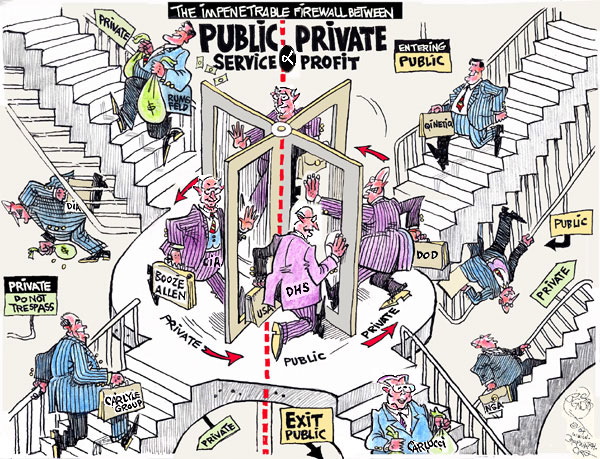
REASON 3: DHS HAS DECLARED PORTION OF US ‘CONSTITUTION FREE ZONE’

It’s not a joke, it’s not a conspiracy theory, it’s just plain reality that is not covered by the talking head script readers on MSNBC or CNN. The Department of Homeland Security has decided to override the United States Constitution for 197 million US citizens, declaring that anywhere within 100 miles of a US ‘border’ (oceans included, of course) is living in a Fourth Amendment free area. I addressed it in my article ‘Are You Living In A Fourth Amendment Free Zone‘ article, and the most amazing thing happened.

At first, the comments came rolling in criticizing me for ‘making it up’ and promoting ‘sensationalism’. Then, they actually clicked the links. They actually went to the ACLU website and read the documentation and saw the Wired article on the subject. Then, activism sprouted up and the article has several tens of thousands of shares on various social media platforms and has even been involved in a campaign to blast the media with the news. Once people realize these topics aren’t based in ‘conspiracy’ but all openly admitted, some amazing things happen.

REASON 4: OBAMA PROMISED TO STOP SPYING ON US IN 2007

It was of course the campaigning Obama who said in a 2007 speech, which became a staple push of his campaign, that he would immediately end the spying on US citizens that the Bush administration had been running with the Patriot Act. Here’s exactly what he said:

“This Administration also puts forward a false choice between the liberties we cherish and the security we demand…

That means no more illegal wire-tapping of American citizens. No more national security letters to spy on citizens who are not suspected of a crime. No more tracking citizens who do nothing more than protest a misguided war. No more ignoring the law when it is inconvenient. That is not who we are. And it is not what is necessary to defeat the terrorists… We will again set an example for the world that the law is not subject to the whims of stubborn rulers, and that justice is not arbitrary.”

If you want literal lies from your government, lies from your President who was apparently elected by a majority of voters who felt he was the man for the job (not that Romney was any better of course), there you have it. Obama has now gone on to rally for the exposed NSA spying that records all of your online chats, phone calls, and just about every online activity you can dream of.

REASON 5: US GOVT FUNDS MEGA BANKS WHO FINANCE DRUG TRADE, TERROR CELLS

Thanks to the taxpayers and the government’s complete backing of the mega banks that strip the economy raw, these mega banks are now generating $83 billion per year. But what are these bankers doing with their $83 in taxpayer-based greenbacks? Well for one thing, they’re funding known terror cells and the Mexican drug trade. But don’t believe me (after all, I’m not the honorable US government), just look at the 2012 NBC report on the subject that no one happened to noticed.

In the report, it details how not only were mega banks going in and literally fueling with Mexican drug trade that ends with countless innocent deaths each year and absolutely breeds violence for Mexico and the US combined, but they were also aiding known terror cells. As it turns out, that apparently does not warrant reconsideration of the $83 billion we allow them to rake in per year through taxpayer assistance.

This post originally appeared at Story Leak

Farhadi ‘Past’ hits Iran movie theaters

0

Argentine-French actress Bérénice Bejo (L) and Iranian actor Ali Mosaffa in a scene from ˜The Past™

Acclaimed Iranian director Asghar Farhadiâ„¢s Paris-set tale movie The Past has started its public screening in the home countryâ„¢s movie theaters.

Farhadiâ„¢s latest production went on a number of movie theaters screens in the capital city of Tehran as simultaneously hit some 2000 screens in the world.

Farhadi™s latest film The Past (Le Passé) received public screening licence from Iran™s Ministry of Culture and Islamic Guidance at the request of film distributing company, Filmiran, Iran Cinema Organization had earlier announced.

The Past is Farhadiâ„¢s sixth directorial experience and first one in a foreign country that was shot in the French capital, Paris.

Farhadiâ„¢s immigrant romantic drama depicts the story of an Iranian man who deserts his French wife and two children to return to his homeland. When he comes back to Paris upon his wife’s request for a divorce encounters with a complicated situation of the family there.

The film scooped two prizes at the 66th Cannes film festival including the Best Actress award that went to Argentine-French actress Berenice Bejo, and the Prize of the Ecumenical Jury (prix du Jury “cuménique).

The Prize of the Ecumenical Jury was conferred on Farhadi for his filmâ„¢s moral values, according to the statement of the jury.

FGP/FGP

This article originally appeared on: Press TV

Syria Is Becoming Obama’s Iraq

0

In perfect Bush-like fashion, President Obama has invented a bogus pretense for military intervention in yet another Middle East country. The president’s claim that the Syrian government has used chemical weapons – and thus crossed Obama’s imaginary “red line” – will likely fool very few Americans, who already distrust their president after the massive NSA spying scandal. Obama has officially started down a path that inevitably leads to full-scale war. At this point the Obama administration thinks it has already invested too much military, financial, and diplomatic capital into the Syrian conflict to turn back, and each step forward brings the U.S. closer to a direct military intervention.

Much like Obama’s spying program, few Americans knew that the United States was already involved, neck deep, with the mass killings occurring in Syria. For example, Obama has been directly arming the Syrian rebels for well over a year. The New York Times broke the story that the Obama administration has – through the CIA – been illegally trafficking thousands of tons of guns to the rebels from the dictatorships of Saudi Arabia and Qatar. If not for these Obama-trafficked guns, thousands of deaths would have been prevented and the Syrian conflict over.But even after the gun trafficking story broke, the mainstream media largely ignored it, and continued “reporting” that the U.S. has only been supplying the Syrian rebels with “non-lethal aid,” a meaningless term in a war setting, since all military aid directly assists in the business of killing.

The U.S. media also buried the truth behind the ridiculous chemical weapons claims by the Obama administration, which, like Bush’s WMDs, are based on absolutely no evidence. Having learned nothing from Iraq, the U.S. media again shamelessly regurgitates the “facts” as spoon-fed to them by the government, no questions asked. In reality, however, a number of independent chemical weapons experts have publicly spoken outagainst Obama’s accusations.The U.S. media also refuses to ask: on what authority does the United States have to determine the usage of chemical weapons in other countries? This is the job of the UN. What has the UN said on the matter?

Top UN rights investigator Carla del Ponte said:”According to the testimonies we have gathered, the [Syrian] rebels have used chemical weapons, making use of sarin gas.”

Again, the “rebels” have used chemical weapons, not the Syrian government, according to the UN representative. Many analysts have pointed out the obvious fact that the Syrian government would have zero military or political motive to use chemical weapons, especially when they have access to much more effective conventional weapons. Obama’s Bush-like lies are too familiar to the American public, who overwhelmingly do not support military intervention in Syria, or giving direct military aide to the Syrian rebels.

What has the UN said on giving military aid to the rebels? 
UN chief Ban Ki-moon has called the Obama’s decision “a bad idea” and “not helpful.” This is because pouring arms into any country where there is a conflict only increases the bloodshed and risks turning the conflict into a broader catastrophe.

But like Bush, Obama is ignoring the UN, and there’s a logic to his madness. Obama has invested too much of his foreign policy credibility in Syria. His administration has been the backbone of the Syrian rebels from the beginning, having handpicked a group of rich Syrian exiles and molded them into Obama’s “officially recognized” government of Syria, while pressuring other nations to also recognize these nobodies as the “legitimate Syrian government.” Assad’s iron grip on power is a humiliation to these diplomatic efforts of Obama, and has thus weakened the prestige and power of U.S. foreign policy abroad.

More importantly, Obama’s anti-Syria diplomacy required that diplomatic relations between Syria and its neighbors – like Jordan, Lebanon, and Turkey – be destroyed. These nations have peacefully co-existed for decades with Syria, but have now agreed – under immense U.S. pressure – to sever diplomatic relations while helping destroy the Syrian government by funneling guns and foreign fighters into the country, further destabilizing a region not yet recovered from the Iraq war. Obama’s Syria policy has turned an already-fragile region into a smoldering tinderbox.

If Obama were to suddenly tell his anti-Syria coalition that he’s realized his efforts at regime change have failed and that he would instead pursue a peaceful solution, his allies and Middle East lackeys would be less willing in the future to prostitute themselves for the foreign policy of the United States; and the U.S. would thus find it more difficult in the future to pursue “regime change” politics abroad. If Obama doesn’t back up his “Assad must go” demand, the U.S. will be unable to make such threats in the future; and U.S. foreign policy is heavily dependent on this type of political bullying.

Furthermore, Obama’s anti-Syria puppet coalition is taking tremendous political risks when it shamelessly follows in Obama’s footsteps, since the U.S. is terribly unpopular throughout the Arab world. This unpopularity is further proof that the “official” Syrian opposition that is asking for U.S. intervention has zero credibility in Syria, since very few Syrians would like to invite the U.S. military to “liberate” their country, especially after the “successful” liberations of Iraq, Afghanistan, and Libya.

Obama, too, is worried about domestic politics in his own country over Syria. He knows that Americans are sick of Middle East wars, while the American public is also worried that arming the Syrian rebels would mean giving guns to the very same people that America is supposedly fighting a “war on terror” against.

In response to this concern Obama has said that the U.S. will only give arms to “moderate” rebels. A European Union diplomat mockingly responded:  

“It would be the first conflict where we pretend we could create peace by delivering arms… If you pretend to know where the weapons will end up, then it would be the first war in history where this is possible. We have seen it in Bosnia, Afghanistan and Iraq. Weapons don’t disappear; they pop up where they are needed.”

In Syria U.S. weapons will thus end up in the hands of the extremists doing the majority of the fighting. These are the people who will be in power if Syria’s government falls, unless a full U.S. invasion and Iraq-style occupation occurs. It’s difficult to decide which outcome would be worse for the Syrian people.

It’s now obvious that President Obama is escalating the Syrian conflict because his prized rebels have been beaten on the battlefield. Obama has thus chosen the military tactic of brinksmanship, a risky strategy that involves intentionally escalating a conflict in the hopes that either your opponent gives in to your demands (regime change), or your opponent gives you an excuse to invade.

Here’s how former U.S. General Wesley Clark explains Obama’s brinkmanship tactic in a New York Times op-ed, which is worth quoting at length:

“President Obama’s decision to supply small arms and ammunition to the rebels is a step, possibly just the first, toward direct American intervention. It raises risks for all parties, and especially for Mr. Assad, who knows that he cannot prevail, even with Russian and Iranian military aid, if the United States becomes fully engaged. We used a similar strategy against the Serbian leader Slobodan Milosevic in Kosovo in 1999, where I commanded American forces, and showed that NATO had the resolve to escalate.

“The risk of going beyond lethal aid to establishing a no-fly zone to keep Mr. Assad’s planes grounded or safe zones to protect refugees – options under consideration in Washington – is that we would find it hard to pull back if our side began losing. Given the rebels’ major recent setbacks, can we rule out using air power or sending in ground troops?

“Yet the sum total of risks – higher oil prices, a widening war – also provide Syria (and its patrons, Iran and Russia) a motive to negotiate.” [emphasis added]

Clark’s innocent sounding “no-fly zone” is in fact a clever euphemism for all-out war, since no-fly zones require you destroy the enemy’s air force, surface to air missiles, and other infrastructure.

In Libya Obama swiftly turned a no-fly zone into a full-scale invasion and regime change, in violation of international law. A no-fly zone in Syria would also immediately turn into an invasion and “regime change,” with the possibility that the U.S. or Israel would exploit the “fog of war” to attack Iran.

All of this madness could be stopped immediately if Obama publicly announced that the Syrian rebels have lost the war – since they have – and will be cut off politically, financially, and militarily by the U.S. if they do not immediately proceed to negotiations with the Syrian government. But this peaceful approach will instead be ignored in favor of untold thousands more dead, millions more made refugees, and a broader regional fracturing of Middle East civilization.

Shamus Cooke is a social service worker, trade unionist, and writer for Workers Action (www.workerscompass.org). He can be reached at shamuscooke@gmail.com

Notes

http://www.nytimes.com/2013/03/25/world/middleeast/arms-airlift-to-syrian-rebels-expands-with-cia-aid.html?hp&_r=1&

http://www.mcclatchydc.com/2013/06/14/194016/chemical-weapons-experts-still.html#.UbyvDdiyESU

http://www.telegraph.co.uk/news/worldnews/middleeast/syria/10039672/UN-accuses-Syrian-rebels-of-chemical-weapons-use.html

http://news.yahoo.com/un-chief-opposes-us-arms-syrian-rebels-164606453.html

http://www.independent.co.uk/news/world/europe/divided-europe-imperils-syrian-arms-embargo-8632376.html

http://www.economist.com/blogs/graphicdetail/2013/05/daily-chart-12

http://www.nytimes.com/2013/06/18/opinion/to-get-a-truce-be-ready-to-escalate.html?_r=0

This article originally appeared on: Global Research

High Level Opposition to Obama’s Escalating Syria’s Conflict

0

Dozens of responsible world leaders oppose Washington’s war on Syria. They do so for good reason. They want peaceful conflict resolution. They’re against greater escalation. Few say so publicly.

On May 15, the UN General Assembly adopted an anti-Assad resolution. It’s non-binding. It was Arab League-led. Washington co-sponsored it. It followed four others since 2011.

It passed 107 — 12. Over 70 nations refused support. They endorse peace, not war. They oppose greater foreign intervention. Russia called the measure “counterproductive and irresponsible.”

Assad expressed views many other leaders share. Few air them publicly. He warned about longterm regional destabilization, saying:

“If the unrest in Syria leads to the partitioning of the country, or if the terrorist forces take control. the situation will inevitably spill over into neighboring countries and create a domino effect throughout the Middle East and beyond.”

Most Americans oppose greater intervention. Most polls consistently say so. Pew Research shows overwhelming Arab street unease. At issue is Syrian violence spreading cross-borders.

High-level Pentagon officials express concerns. Greater Syrian intervention’s much more daunting than Libya. Last March, Joint Chiefs Chairman General Martin Dempsey said “We can do anything” if asked.

At the same time, he repeatedly opposed greater US involvement. He’s against escalated conflict. Endgame consequences worry him most. Before acting, “we have to be prepared for what comes next,” he warns.

Attacking Syria won’t be easy, he added. Russian-supplied air defenses are formidable. They’re located close to major population centers.

Syrian opposition is splintered. Many insurgents are known terrorists. Hezbollah supports Syria. So does Iran. Russia may intervene supportively.

“Whether the military effect would produce the kind of outcome I think that not only members of Congress but all of us would desire — which is an end to the violence, some kind of political reconciliation among the parties, and a stable Syria — that’s the reason I’ve been cautious about the application of the military instrument of power…. It’s not clear to me that it would produce that outcome,” he said.

On June 17, Al Manar headlined “Russia: We Won’t Allow Imposing a no-Fly Zone in Syria,” saying:

Foreign Ministry spokesman Alexander Ocahevch said:

“We will not permit such scenarios, and these maneuvers on a fly-zone and humanitarian passages in Syria are caused by the lack of respect for the International Law.”

“We have seen how they imposed no-fly zones in Libya, so we will not allow repeating the same scenarios in Syria.”

“The Syrian crisis cannot be settled by double stances — refusing the military track on one hand and arming the militants on the other.”

A same day Al Manar article headlined “Putin: Russia Arming Legitimate Gov’t in Syria, West Arming Organ-Eaters,” saying:

“You will not deny that one does not really need to support the people who not only kill their enemies, but open up their bodies, eat their intestines in front of the public and cameras.”

“Are these the people you want to support? Is it them who you want to supply with weapons? Then this probably has little relation to humanitarian values that have been preached in Europe for hundreds of years.”

He unequivocal on Russian policy. He wants conflict ended. He wants it diplomatically resolved. He wants Syrians alone to decide who’ll govern them. Let them defeat foreign “extremists,” he stresses.

On June 17, Lebanon’s Daily Star quoted Assad saying:

“If the Europeans deliver weapons, the backyard of Europe will become terrorist and Europe will pay the price for it.”

At issue is exporting “terrorism” to Europe. “Terrorists will gain experience in combat and return with extremist ideologies,” he warned.

On June 16, London’s Telegraph headlined “Boris Johnson: Don’t arm the Syria maniacs,” saying:

London’s mayor warned David Cameron. Don’t use Syria for “political point-scoring or muscle-flexing.” Deputy Prime Minister Nick Clegg echoed similar sentiments.

So did former army head Lord Dannatt and Archbishop of York John Sentamu. Johnson urged “total ceasefire….This is the moment (to) end….the madness.”

Cameron faces growing internal opposition. Associates warn he faces a no-confidence defeat.

Clegg insists Britain won’t arm insurgents. “We’ve taken no decision to provide lethal assistance, so we clearly don’t think it is the right thing to do now, otherwise we would have decided to do it,” he said.

Tory MP Julian Lewis spoke for others saying arming insurgents would be “suicidal.” Cameron will “struggle” to get parliamentary approval.

Shadow foreign minister Douglas Alexander said MPs from all parties express unease.

“For months Labour has called on the government to answer basic questions about their approach, such as how the prime minister would ensure that weapons supplied did not fall into the wrong hands, and how this step would help to de-escalate the conflict rather than prolong it.”

Unnamed US defense officials warn that creating safe or protected areas inside Syria involve enormous complexities.

Thousands of US ground forces may be needed to enforce them. Deploying them involves invasion and occupation. A protracted quagmire may follow.

No-fly zone imposition is just as daunting. Justifiable Syrian responses will follow.

On June 14, Foreign Policy‘s Gordon Lubold headlined “Why the Pentagon really, really doesn’t want to get involved in Syria,” saying:

“Top Pentagon brass have been ambivalent in the extreme about getting involved in the Syrian crisis since it began more than two years ago.”

“And now, even as the Obama administration signals its intention to provide direct military aid to opponents of the Syrian regime, there remains deep skepticism across the military that it will work.”

Escalating conflict entails enormous risks. Success is unlikely. “(T)op brass is extremely reluctant to commit assets.”

According to an unnamed senior Pentagon commander:

“There is no way to ensure” that arming insurgents won’t make matters worse. Supplying heavier weapons, no-fly zone protection and safe areas sound good on paper.

Reality suggests otherwise. Failure’s more likely than success. Former head of US European Operation Command and Supreme Allied Commander, Europe General Philip Breedlove sees “no military value in no-fly zone imposition inside northern Syria.

Northern and Southern Watch over Iraq was operationally exhausting and expensive.

Military intervention entails unintended consequences. Afghanistan and Iraq are protracted quagmires. Libya’s a cauldron of violence.

Syria could be worse. Cross-border fallout could be disastrous. Escalated conflict affects Turkey, Iraq, Lebanon, Israel, Saudi Arabia, Iran, Egypt, and perhaps other regional countries.

On June 14, Politico headlined “DOD brass has long urged caution on Syria,” saying:

Obama’s planned greater involvement reflects what Pentagon brass warned against for months. At issue is another protracted quagmire.

“In hearings, speeches and interviews, Defense Secretary Chuck Hagel and Joint Chiefs Chairman Gen. Martin Dempsey have been deeply skeptical every time they’ve been asked about potential US involvement in Syria.”

Unintended consequences worry planners most. They’ve seen it all before. They’re loathe to repeat past mistakes. National security/military strategist Micah Zenko said:

“I’ve never spoken to anyone at the (military) O-5 level or above who thinks intervening in Syria is a good idea.”

Hagel warned that military intervention “could embroil the United States in a significant, lengthy, and uncertain military commitment.”

It could have “the unintended consequence of bringing the United States into a broader regional conflict or proxy war.”

“You better be damn sure, as sure as you can be, before you get into something, because once you’re into it, there isn’t any backing out, whether it’s a no-fly zone, safe zone, protect these — whatever it is.”

“Once you’re in, you can’t unwind it. You can’t just say, ‘Well, it’s not going as well as I thought it would go, so we’re going to get out.’ “

Dempsey said supplying insurgents heavier weapons won’t make a difference. “Not in my military judgment,” he stressed. Don’t expect Syria to take escalation lightly, he added.

“I have to assume, as the military member with responsibility for these kind of activities, that the potential adversary isn’t just going to sit back and allow us to impose our will on them, that they could in fact take exception . and act outside of their borders with long-range rockets and missiles and artillery and even asymmetrical threats.”

In other words, be careful what you wish for. Best laid plans often fail. US military history reflects failure. Quagmires more than victories result.

Stephen Lendman lives in Chicago. He can be reached at lendmanstephen@sbcglobal.net. 

His new book is titled “Banker Occupation: Waging Financial War on Humanity.”

http://www.claritypress.com/LendmanII.html

Visit his blog site at sjlendman.blogspot.com. 

Listen to cutting-edge discussions with distinguished guests on the Progressive Radio News Hour on the Progressive Radio Network.

It airs Fridays at 10AM US Central time and Saturdays and Sundays at noon. All programs are archived for easy listening.

http://www.progressiveradionetwork.com/the-progressive-news-hour

This article originally appeared on: Global Research

Yahoo gave 13,000 user data to US

0

Major US internet corporation Yahoo has announced that American law enforcement agencies had made between 12,000 and 13,000 demands for user data over past six months, in the latest case of tech firms admitting to their involvement in the massive US electronic spying bid.

In an effort to restore confidence in its users after revelations of the National Security Agencyâ„¢s (NSA) PRISM electronic surveillance program, Yahoo revealed the extent of its dealings with the US spy agency, RT reported Tuesday.

The California-based Internet corporation states that between December 1, 2012 and May 31, 2013, Å“we received between 12,000 and 13,000 requests, inclusive of criminal, Foreign Intelligence Surveillance Act (FISA), and other requests. The most common of these requests concerned fraud, homicides, kidnappings, and other criminal investigations,” according to a statement by Yahooâ„¢s CEO Marissa Mayer and General Counsel Ron Bell.

The company further complained that due to the classified nature of FISA requests, they would not be able to reveal the number of requests directly linked to Å“national security.”

“We strongly urge the federal government to reconsider its stance on this issue,” the statement added.

This is while the Apple Corporation announced that it had received between 4,000 and 5,000 demands for user data by US authorities over the same time period, adding that 9,000 to 10,000 accounts or devices were specified in the demands.

Moreover, Facebook and Microsoft had previously disclosed the number of demand for user data by US spying agencies for the second half of 2012.

Facebook said it received between 9,000 and 10,000 demands from all US entities, while Microsoft said it received between 6,000 and 7,000 Å“criminal and national security warrants, subpoenas and orders” affecting between 31,000 and 32,000 user accounts over the same period.

Former NSA contract employee Edward Snowden, the whistleblower who exposed two NSA data-collection programs, has insisted that the agency had unfettered, real-time access to the content on the servers of Google, Facebook Microsoft, Yahoo and five other major tech corporations.

The companies have denied the claims, stating the so-called FISA ‘gag order’ tied their hands when it came to providing greater transparency regarding government requests for customer information.

During a live Internet chat session with the Guardian on Sunday, Snowden repudiated the US tech firms efforts to downplay their role in the surveillance program.

Å“Their denials went through several revisions as it become more and more clear they were misleading and included identical, specific language across companies. As a result of these disclosures and the clout of these companies, we’re finally beginning to see more transparency and better details about these programs for the first time since their inception,” Snowden emphasized.

Snowden further stressed that legal pressures by the US government did not absolve the major tech corporations from broader ethical responsibilities.

Å“They are legally compelled to comply and maintain their silence in regard to specifics of the program, but that does not comply them from ethical obligation. If for example Facebook, Google, Microsoft, and Apple refused to provide this cooperation with the Intelligence Community, what do you think the government would do? Shut them down?”

Yahoo, meanwhile, said Å“Democracy demands accountability,” pledging the company would Å“continually evaluate whether further actions can be taken to protect the privacy of our users and our ability to defend it.”

MFB/MFB

This article originally appeared on: Press TV

Enough sleep averts type 2 diabetes risk

0

A new research has demonstrated that those men who get adequate sleep have more chance of lowering the risk of developing Type 2 diabetes.

The study conducted by the researchers of Los Angeles Biomedical Research Institute (LA BioMed) has tied sleep to the body’s use of insulin.

The findings prove that enough sleep can improve the body’s use of insulin, a hormone that regulates blood sugar level.

Å“Insulin sensitivity, the body’s ability to clear glucose (blood sugar) from the bloodstream, significantly improved after three nights of Ëœcatch-up sleepâ„¢ on the weekend in men with long-term, weekday sleep restrictions,” the lead researcher Peter Liu presented at the Endocrine Society’s 95th Annual Meeting in San Francisco.

He clarifies that in those people with Type 2 diabetes the body is not able to take the produced insulin or even becomes “resistant” to insulin.

Sleep extension of some hours in those ones who have sleep restriction can retain the body’s sensitivity to insulin and consequently reduce the risk of developing Type 2 diabetes, Liu suggests.

The study participants were provided with the same food intake during the research so that diet would not influence the results, Liu noted.

Å“When the men slept 10 hours a night on each of three nights of catch-up sleep, their insulin sensitivity was much better than when they had persistent sleep restriction,” the researchers reported in their result.

“The good news is that by extending the hours they sleep, adult men who over a long period of time do not get enough sleep during the working week can still improve their insulin sensitivity,” Liu and colleagues concluded.

FGP/FGP

This article originally appeared on: Press TV

‘Iran instrumental in settling ME crises’

0

Iranian Foreign Minister Ali Akbar Salehi has stressed the Islamic Republicâ„¢s key role in the region, saying regional crises cannot be settled without Iranâ„¢s cooperation.

Salehi made the remarks in an interview with Al-Mayadeen TV in reference to the ongoing crisis in Syria.

The unrest in Syria erupted over two years ago and many people, including large numbers of Syrian soldiers and security personnel, have been killed in the violence.

The top Iranian diplomat described the recent events in Syria as Å“foreign aggression,” adding that regional crises cannot be resolved without Iranâ„¢s engagement.

Iran has repeatedly expressed its opposition to any foreign intervention in Syria’s internal affairs, stressing that inclusive dialog and national reconciliation as well as free elections are the keys to resolving the unrest in the Arab country.

Salehi further said that Iran has been verbally invited to the Geneva conference on Syria.

On May 7, Russia and the United States agreed in Moscow to convene an international conference on Syria, which will serve as a follow-up to an earlier Geneva meeting held in June 2012.

Commenting on Egyptâ„¢s decision to cut off diplomatic relations with Syria, Salehi said, Å“Egypt could have played a great role in resolving the Syrian crisis.”

On June 16, Egyptian President Mohamed Morsi announced his governmentâ„¢s decision to sever ties with Damascus during a speech at a rally in the Egyptian capital, Cairo.

Salehi also announced Iranâ„¢s readiness to cooperate with Saudi Arabia in resolving regional issues.

YH/NN/HJL

This article originally appeared on: Press TV

Gunmen attack UN site in Mogadishu

0

A soldier with the African Union Mission in Somalia monitors traffic along a street during an operation aimed at improving security in Mogadishu, Somalia, May 25, 2013

Gunmen have attacked an office of the United Nations Development Programme (UNDP) in the Somali capital, Mogadishu, reports say.

The incident took place on Wednesday after a bomber blew himself up at the gate of the UNDP office. Armed men then went inside the office and opened fire on security guards, Reuters reported.

A UN source said that the staff were in a safe zone at the time of the attack.

The compound is near the capitalâ„¢s airport, serving as the main base for an African peacekeeping force fighting against fighters in Somalia.

Local al-Shabab fighters have claimed responsibility for the attack.

A senior al-Shabab official said, Å“Our commandos have attacked the UN compound… we set off an explosion and have entered the compound, where we are fighting with the infidel forces.”

Somalia has not had an effective central government since 1991, when warlords overthrew former dictator Mohamed Siad Barre.

However, MPs meeting in Mogadishu elected Hassan Sheikh Mohamud as the new president of Somalia with a big majority in September 2012.

SAB/PR/HJL

This article originally appeared on: Press TV

Israel violates Lebanese airspace

0

Lebanese army has said that an Israeli reconnaissance plane has breached the countryâ„¢s airspace in Riyak, Baalbek and Hermel regions in south Lebanon.

According to a statement released by the army, the Israeli reconnaissance war plane penetrated the countryâ„¢s airspace on Tuesday at 9:00 am.

There were reports that the enemy plane had carried out circular maneuvers over the regions before it left Lebanonâ„¢s airspace at 22:15 pm towards the occupied territories while flying over the town of Naqoura in South Lebanon.

Israel violates Lebanon’s airspace on an almost daily basis, claiming the flights serve surveillance purposes.

On June 14, the Lebanese military issued a statement that an unmanned aerial vehicle had entered Lebanese airspace over the southern village of al-Naqoura, situated 91 kilometers (57 miles) south of Beirut, at 8:30 a.m. local time (0530 GMT) and left Lebanonâ„¢s airspace at 6:30 p.m. local time (1530 GMT).

Lebanon’s government, the Hezbollah resistance movement, and the UN Interim Force in Lebanon, known as UNIFIL, have repeatedly condemned the overflights, saying they are in clear violation of UN Resolution 1701 and the country’s sovereignty.

UN Security Council Resolution 1701, which brokered a ceasefire in the war of aggression Israel launched against Lebanon in 2006, has called on Israel to respect Lebanon’s sovereignty and territorial integrity.

In 2009, Lebanon filed a complaint with the United Nations, presenting over 7,000 documents pertaining to Israeli violations of Lebanese territory.

IA/PR

This article originally appeared on: Press TV

Kabul suspends security talks with US

0

Afghanistan has suspended talks with the US regarding a strategic agreement, the so-called Bilateral Security Agreement (BSA) over Washingtonâ„¢s Ëœcontradictory approach.â„¢

Å“The president suspended the BSA talks with the US this morning,” Afghan President Hamid Karzai’s spokesman Amal Faizi said on Wednesday.

Under the strategic agreement, US-led soldiers would be allowed to remain in Afghanistan beyond the 2014 withdrawal deadline.

Å“There is a contradiction between what the US government says and what it does regarding Afghanistan peace talks,” the Afghan spokesman added.

This comes after reports of direct talks between US officials and the Taliban militants.

Faizi also said that the Afghan president has criticized the name given to the Talibanâ„¢s political office in the Qatari capital of Doha. The spokesman said that Karzai was not happy that Å“Islamic Emirate of Afghanistan” was chosen as the office’s name, because Å“such a thing doesn’t exist.”

On June 18, Taliban militants said they would hold talks with the US in order to find a political solution to the decade-long war in Afghanistan.

The United States and its allies invaded Afghanistan in 2001 as part of Washingtonâ„¢s so-called war on terror. The offensive removed the Taliban from power, but after more than 11 years, insecurity remains across the country.

The increasing number of military casualties in Afghanistan has caused widespread anger in the US and other NATO member states, undermining public support for the Afghan war.

Hundreds of civilians have been killed in US-led airstrikes and ground operations in various parts of Afghanistan over the past few months, with Afghans growing increasingly outraged over the seemingly endless number of deadly assaults.

SZH/PR/HJL

This article originally appeared on: Press TV

Russians evacuated after arms depot fire

0

In the distance, a fire is burning at an arms depot after a series of explosions in central Russian city Chapayevsk on June 18, 2013.

A series of massive explosions at an arms depot in central Russia has caused a large fire and forced the evacuation of more than 6,000 people from the area, the emergency situations ministry says.

The blasts began Tuesday night as workers were trying to dispose of the old ammunition shells near the city of Chapayevsk around 1,000 kilometers (620 miles) from Moscow.

According to the ministry, the evacuated residents came from the settlement of Nagorny located about five kilometers from the dept.

The residents saw their windows blast by the explosions. A total of 48 people have received medical treatment and 11 others were hospitalized due to sustained injuries.

Sources said explosions were heard every minute overnight while emergency situations ministry used aircraft to drop water on the fire.

The ministry reported on Wednesday morning that there were no additional explosions; however, fire continued to blaze at the depot, where over 1,500 firefighters were trying to combat the incident.

Å“It is still not possible to halt the self-destruction, or to enter the firing grounds,” said a local police spokesman.

The police official continued by saying that the shell shards are scattering in such a large area that there is no way the fire brigade could safely reach and extinguish the fire.

The regional Investigative Committee reported that the depot contained around 18 million shells.

Regional investigators have started a criminal probe into a breach of safety regulations.

Russia has experienced similar accidents previously such as in October 2012 when a depot containing 4,000 tons of munitions exploded in the Urals region, causing thousands to be evacuated.

Earlier in the same year in May, six soldiers died due to a depot blast in the Nizhny Novgorod region of central Russia.

CAH/PR

This article originally appeared on: Press TV

Whistleblower of US diplomats targeted

1

Whistleblower of misconduct by US diplomats intimidated by State Dept.

The US State Department investigator that has accused American diplomats of using drugs, soliciting prostitutes, and engaging in sexual abuse of minors has charged the department with an “intimidation” campaign against her.

Leaks reported last week by whistleblower and ex-inspector general of the State Department, Aurelia Fedenisn, shed light into alleged wrongdoing by American diplomatic staff around the globe, but reportedly led US police officers harassing her and attempting to incriminate the former investigator, Foreign Policy magazine reported Monday.

Fedenisnâ„¢s lawyer Cary Schulman is cited in the report as saying, “They had law enforcement officers camp out in front of her (Fedenisnâ„¢s) house, harass her children and attempt to incriminate herself.”

According to the report, the life of the former inspector general Å“changed dramatically” last Monday after she offered Å“documents and statements” to CBS News, alleging that senior State Department officials “influenced, manipulated, or simply called off” multiple probes by the department into misconduct.

The suppression of investigations by State Department authorities was Å“noted in an early draft of an Inspector General report, but softened in the final version,” the report further states.

The report cites Schulman as saying that after CBS News contacted the State Department with inquiries about the charges, investigators from the Department’s Inspector General promptly showed up at Fedenisn’s door. “They talked to both kids and never identified themselves,” he said. “First the older brother and then younger daughter, a minor, asking for their mom’s place of work and cell phone number … They camped out for four to five hours.”

Schulman further insisted that the purpose of the visit was to get Fedenisn Å“to sign a document admitting that she stole State Department materials, such as the memos leaked to CBS,” the report states.

He also charged that sending federal law enforcement officers to pressure Fedenisn into signing an agreement was heavy handed. “Why not simply mail it, courier it… or deliver it by any other normal means by which one delivers a demand letter? Why send two federal law enforcement agents?” he asked.

Meanwhile, Washington attorney Kel McClanahan, who has represented several agency whistleblowers, has described the action the State Departmentâ„¢s reaction against Fedenisn as intimidating, noting that the tactic is Å“all too common when an agency wants something… that it is not entirely confident it can get without your cooperation.”

MFB/MFB

This article originally appeared on: Press TV

Iran's Judiciary chief to meet with Rohani

0

Head of Iran’s Judiciary Ayatollah Sadeq Amoli Larijani is due to meet the countryâ„¢s President-elect Hojjatoleslam Hassan Rohani.

Amoli Larijani is scheduled to meet with Rohani on Wednesday, June 19, at the Expediency Council’s Center for Strategic Research.

Rohani emerged victorious in the presidential election of June 14, which was marked by a high voter turnout, winning 50.7 percent of a total of 36, 704, 156 ballots counted.

The voter turnout in the election was 72.7 percent, according to Iranâ„¢s Interior Ministry.

Iranâ„¢s president-elect represents Leader of the Islamic Revolution Ayatollah Seyyed Ali Khamenei in the Supreme National Security Council and is also a member of the Expediency Council and the Assembly of Experts. He is also the director of the Expediency Council’s Center for Strategic Research.

Members of the Presiding Board of Iranâ„¢s Majlis will also meet with the president-elect in the coming days to discuss with him a whole range of issues, including cooperation between the future administration and parliament as well as Rohaniâ„¢s possible picks for his cabinet.

Members of the Economic Committee of Iranâ„¢s Majlis are also scheduled to sit down with Iranâ„¢s president-elect next week to discuss the countryâ„¢s economic problems.

Å“We expect Mr. Rohani to resolve the problems and [remove] obstacles [in the way] of producers just as he earlier stressed,” Arsalan Fathipour, the chairman of the committee, said on Wednesday.

On Sunday, Majlis Speaker Ali Larijani and Hojjatoleslam Rohani held talks to exchange views on different issues.

Hojjatoleslam Rohani said after the meeting that the countryâ„¢s problems would not be resolved overnight, emphasizing that difficulties should be gradually settled through consultation with experts.

MYA/NN/HJL

This article originally appeared on: Press TV

‘Iran willing to improve ties with Italy’

0

Iranian Foreign Minister Ali Akbar Salehi says Tehran is prepared to further upgrade its mutual relations with Rome and discuss with the Italian government regional developments, including the crisis in Syria.

In a telephone conversation with his Italian counterpart Emma Bonino on Tuesday, Salehi discussed Iran-Italy relations.

The Iranian foreign minister pointed to Iranâ„¢s role in the Middle East, urging both Tehran and Rome to forge ahead with consultations on regional developments.

Salehi further thanked Italy for its stance on Iranâ„¢s 11th presidential election.

On June 16, Bonino sent a congratulatory message to Iranian President-elect Hojjatoleslam Hassan Rohani and expressed hope for the further expansion of Tehran-Rome relations under his presidency.

Also on Monday, Italian President Giorgio Napolitano extended his most sincere congratulations to Rohani, calling for stronger relations between Rome and Tehran.

Hojjatoleslam Rohani emerged victorious in the presidential election of June 14, which was marked by a high voter turnout, winning 50.7 percent of a total of 36,704,156 ballots counted.

The voter turnout in the election was 72.7 percent, according to Iranâ„¢s Interior Ministry.

Nearly 50.5 million Iranians, including more than 1.6 million first-time voters, were eligible to participate in the presidential, and city and village Islamic council elections.

YH/NN/HJL

This article originally appeared on: Press TV

Iran official begins tour of PG states

0

Iranâ„¢s Deputy Foreign Minister for Arab and African Affairs Hossein Amir-Abdollahian has set out on a three-nation tour of the Persian Gulf region for talks on bilateral and regional issues.

Hossein Amir-Abdollahian left Tehran on Tuesday for the United Arab Emirates on the first leg of his regional tour, which will also take him to Kuwait and Oman.

The Iranian diplomat is to discuss bilateral ties as well as regional developments, especially the crisis in Syria, during his trip.

Iran attaches importance to strengthening ties with Mideast countries in order to maintain security in the region.

Earlier in February 2013, Iranâ„¢s Foreign Minister Ali Akbar Salehi stressed the significance of close cooperation among the countries in the Persian Gulf in order to maintain regional security and stability.

YH/NN/HJL

This article originally appeared on: Press TV

Blast, shooting near UN site in Somalia

0

[unable to retrieve full-text content]A large blast and shootings have occurred near the United Nations’ compound in the Somali capital, Mogadishu, according to witnesses.

This article originally appeared on: Press TV

Anti-eviction protest to hit E London

0

Campaigners are planning to picket the Tower Hamlets Council Town Hall in London tonight to demand protection of families in the impoverished East London borough from eviction if they are forced into rent arrears due to benefit cuts.

The campaigners from the Tower Hamlets Benefits Justice will submit a petition to the councilors, asking them to challenge the government and refuse to evict tenants that cannot pay their rents.

Local residents say although the council is not responsible for the governmentâ„¢s austerity drive and the benefit cuts, they can stand up to the governmentâ„¢s Å“dirty work” and avoid signing the eviction orders.

Å“We calculate 10,000 households will be hit when further cuts come in next month,” a spokesman for the group said.

Å“Benefits are high in the East End because of the high rents in this expensive part of London”.

Tower Hamlets is the home to Londonâ„¢s financial hub, the Canary Wharf that houses major multinational banks and financial institutions.

However, the Ease London borough is a prime example of poor-rich divide in the British capital, as four out of ten children living there are in poverty.

It is estimated that one-in-five disability benefits claimants in Tower Hamlets could lose their entitlements, due to government cuts.

AMR/HE

This article originally appeared on: Press TV

Shooting kills 1, injures many in Lebanon

0

Lebanese army tanks deploy in the Bab al-Tabbaneh and Jabal Mohsen neighborhoods of the northern Lebanese city of Tripoli. (file photo)

Lebanese army and security sources report that one citizen has been killed and several others injured in a shooting spree by gunmen in the southern Lebanese town of Sidon.

There are reports that gunmen dedicated to a controversial Salafist sheikh, who is fiercely opposed to the Shiite Hezbollah movement, were behind the incident that occurred on Tuesday.

“The shooting by armed men led to the killing of a citizen and several others have been injured,” the Lebanese army said after deploying forces in Sidon after the incident.

The army added that by late Tuesday “the situation (in Sidon) was back to normal.”

In another incident on Wednesday, Lebanese security sources said two rockets fired from Syrian territories hit a Hezbollah stronghold in eastern Lebanonâ„¢s Bekaa region.

The Lebanese resistance movement Hezbollah is reportedly fighting the al-Qaeda-affiliated al-Nusra Front under the FSA umbrella in the northern part of Bekaa Valley.

On Sunday, Lebanese security sources said gunmen killed at least four Shia Muslims in eastern Lebanonâ„¢s Bekaa valley near the border with Syria.

“Gunmen killed three members of the Jaafar family and a man from the Amhaz family as they were passing through the Qaa area of the Bekaa,” the unnamed security source said.

Also, on June 5, the foreign-backed militants launched at least twelve Grad rockets on Baalbek, wounding at least one child.

Syria has been gripped by turmoil since March 2011 and the foreign-sponsored militancy has taken its toll on the lives of many people, including large numbers of Syrian soldiers and security personnel.

Damascus says the West and its regional allies, such as Qatar, Saudi Arabia, and Turkey, are supporting the militants.

In an interview broadcast on Turkish television in April, Syrian President Bashar al-Assad said if the militants take power in Syria, they could destabilize the entire Middle East region for decades.

Å“If the unrest in Syria leads to the partitioning of the country, or if the terrorist forces take control… the situation will inevitably spill over into neighboring countries and create a domino effect throughout the Middle East and beyond,” he stated.

IA/PR

This article originally appeared on: Press TV

UK army sacks 4,500 troops

0

Some 4,500 British soldiers are told they will be axed in the third and biggest round of army job cuts since the 2010 defense review.

The British Ministry of Defence (MoD) said the 4,480 redundancies are part of the government plans to cut the army by around 20 percent to 82,000 by 2018.

The ministry said the volunteers will be leaving in six months while compulsory redundancies will have to be complete within a year.

Å“It is with great regret that we have had to make redundancies to deliver the reduction in the size of the armed forces, but unfortunately they were unavoidable due to the size of the defence deficit that this government inherited,” Defense Secretary Philip Hammond said.

The cash-strapped MoD announced in its strategic defense review of 2010 that it will cut a total 17,000 posts from the armed forces including 5,000 from the Navy and the Royal Air Force as well as 7,000 from the Army.

Now the ministry says is forced to cut jobs to plug its multi-billion-dollar budget black hole with Hammond promising that there will be no further reductions in manpower during the next round of cuts.

AMR/HE

This article originally appeared on: Press TV

Iran female novelist Fahimeh Rahimi dies

0

Iranian woman fiction writer Fahimeh Rahimi has passed away due to gastric cancer at the age of 61 in the capital city of Tehran.

The novelist Rahimi who was staying at Tehranâ„¢s Mehr hospital, met her death there on Tuesday morning, June 18, 2013.

The author Rahimi was suffering from the disease for three years, said her son Babak Shirazi.

Born in Tehran, Rahimi gained national attention with her popular romance-suspense books during 1980s and 1990s.

Love and Superstition, A Tower in Fog, Autobus, The Lady of Jungle, Return to Happiness and Nights of Loneliness are among her better known works.

FGP/FGP

This article originally appeared on: Press TV

West to send more arms to Syria

0

Informed diplomats have said a plan for providing foreign-backed militants fighting against the Syrian government in the eastern city of Dara’a and on the northern boarders with Turkey with weapons has entered the implementation phase.

There are reports that armored vehicles including a shipment of t-62 and t-55 tanks, which are old armored Russian tanks collected in Libya and transferred to Syria, have reached foreign-backed militants through different secret ways.

The US and its allies are geared up to disturb the military balance, prolong the clashes and change the situation into a war of attrition in Syria, Al Quds Al Arabi reported.

There have been reports of a plan for training and organizing thousands of Syrian volunteers including those who had avoided military service or civilians capable of carrying weapons and taking military training.

A comprehensive reconnaissance mission is currently underway on the boarders of Syriaâ„¢s neighboring countries as a preparatory measure for launching arms to the foreign-backed militants.

The mission seems to be a good reason for the presence of 8000 American, Britain and French forces on the boarders of Syria with Turkey and Jordan to supervise the process of arming and delivering weapons to the foreign-backed militants.

There are also reports that opposition groups consisting of 650 military groups are equipped with new arms in Daraâ„¢a.

The process of arming the foreign-backed militants is expected to be carried out by training around 3000 Syrian Kurds who had failed to get Syrian residency in the past, numerous volunteer Syrian refugees including officers and those who had fled to Turkey, and thousands of people who had attempted to establish Å“awareness organization.”

The Syria crisis began in March 2011, and many people, including large numbers of government forces, have been killed.

Damascus says the chaos is being orchestrated from outside the country, and there are reports that a very large number of the militants are foreign nationals.

The Syrian government says the West and its regional allies — especially Qatar, Saudi Arabia, and Turkey — are supporting the militants.

In addition, several international human rights organizations say the militants operating in Syria have committed war crimes.

IA/PR

This article originally appeared on: Press TV

The U.S. Military and the Unraveling of Africa

0

http://www.truthdig.com/report/item/the_us_military_and_the_unraveling_of_africa_20130619/

Posted on Jun 19, 2013

This article originally appeared on: TruthDig

Greenland’s Great Melt Is Pinned On Climate Change

0

http://www.truthdig.com/report/item/greenlands_great_melt_is_pinned_on_climate_change_20130619/

Posted on Jun 19, 2013

This article originally appeared on: TruthDig

KSA, India, Tunisia congratulate Rohani

0

Saudi Arabia, India and Tunisia have extended congratulations to Iran’s President-elect Hojjatoleslam Hassan Rohani on his victory in the countryâ„¢s June 14 election.

Saudi Arabia’s Crown Prince Salman bin Abdulaziz Al Saud sent a congratulatory message to Hojjatoleslam Rohani, wishing him and the Iranian nation success and prosperity.

Meanwhile, Indian Prime Minister Manmohan Singh also congratulated President-elect Rohani on his victory in the Islamic Republic’s 11th presidential election.

In a Tuesday letter to Rohani, Singh noted that Iran and India enjoy historical bonds, which have laid the foundation for a broad-based and mutually beneficial relationship.

He expressed hope for the further enhancement of ties between Tehran and New Delhi.

In addition, Tunisian President Moncef Marzouki extended his congratulations to the Iranian president-elect on Tuesday, wishing the Iranian nation glory and further progress.

Hojjatoleslam Rohani emerged victorious in the presidential election of June 14, which was marked by a high voter turnout, winning 50.7 percent of a total of 36,704,156 ballots counted.

The voter turnout in the election was 72.7 percent, according to Iranâ„¢s Interior Ministry.

Nearly 50.5 million Iranians, including more than 1.6 million first-time voters, were eligible to participate in the presidential, and city and village Islamic council elections.

Hojjatoleslam Rohani currently represents Leader of the Islamic Revolution Ayatollah Seyyed Ali Khamenei in the Supreme National Security Council and is also a member of the Expediency Council and the Assembly of Experts. He is also the director of the Expediency Council’s Center for Strategic Research.

YH/NN/HJL

This article originally appeared on: Press TV

Child Exploitation Bonanza

0

Last night at the hotel lobby of an Arab Gulf country, a family walked in aiming for the westernized café that sells everything but Arabic coffee. The mother seemed distant as she pressed buttons on her smart phone. The father looked tired as he buffed away on his cigarette, and a whole band of children ran around in refreshing chaos that broke the monotony of the fancy but impersonal hotel setting.

Chasing behind the children for no other reason but to be constantly vigilant to any unexpected harm was a very skinny Indonesian teenager wearing a tightly wrapped headscarf, worn out blue jeans and a long shirt. She was the maid, or khadama as maids are called here, meaning a servant.

The girl was but a child, of the same build and overall demeanor of my 14-year-old daughter who is busy with her studies anticipating a very exciting summer ahead. If she is lucky, the Indonesian ‘khadama’ can only expect one day off per two weeks, as she spends all of her time toiling for numerous hours, has no rights, with little or no pay and cannot escape. In most Gulf countries, cheap foreign laborers are asked to hand over their passports in a scheme involving authorities, employment agencies and employers. This is done to ensure compliance and obedience of young men and women that are mostly from southeast Asian countries.

Some Arab countries have become a breeding ground for a form of modern slavery that capitalizes on existing miseries found elsewhere in order to feed the insatiable consumerism that permeates most societies. It is particularly disheartening considering that Islamic doctrines emphasized labor rights many centuries ago, leaving no room whatsoever for alternative interpretations to religious texts that people are created equal, deserving of respect, freedom and dignity.

The injustice doesn’t start and end there. Rich Arab countries are but a mere manifestation of a relentless global phenomenon that requires more than unbinding international conventions but a major shift in cultural attitude.

June 12 was World Day Against Child Labor, an occasion that barely warranted some habitual mentioning by some news media, but certainly not enough to compete with headlines pertaining to the latest gadgets and yet more revealing photos of one Kardashian woman or another. I wonder if we tend to avoid such topics because once they are truly discussed, to varied degrees, we all become culpable? From the brand name clothes we wear, the fancy gadgets we haul around to pretty much everything else we consume, there is surely to be found traces of the sweat and tears of some oppressed laborer or a child with much potential but little hope.

No, this is not a guilt trip, but a pressing issue than can no longer be ignored or lumped into some vague notions about the world at large, being unfair and such. Many forms of injustice are driven by conscious decisions made by all of us. They can also be reversed by conscious decisions made by some of us.

The International Labor Organization (ILO) has done much to delineate the problem and tried to engage various governments around the world to alleviate the suffering of laborers, especially the children amongst them. Most countries around the world ratified ILO Conventions into law, but most are yet to challenge the rooted exploitation in their own societies.

Browsing through the text of ILO’s fundamental child labor Conventions (namely No. 138. No. 182 and the more recently No. 189, adopted at the International Labor Conference of 2011), there is enough clarity regarding the minimum age of admission to employment, the ‘worst forms of child labor’ in domestic work and many other related issues. Yet while governments are giddily signing such Conventions — knowing that accountability is almost nonexistent — often time little changes on the ground.

In Burma, an activist, Hsu Hnget told Irrawaddy news, that child labor is “so deeply rooted in society that it had become a ‘tradition.’”

According to a survey conducted by Child Rights and You, and cited in the Huffington Post, “19 percent of people in South Delhi believe that an individual is a child if he or she is below the age of 10 and most did not know about the laws that prohibit child labor.”

In Indonesia, ILO estimates that almost 2.5 million children are toiling at work, while they should not be working in the first place. The Jakarta Post reported that 21 percent of them are domestic workers and 60 percent work in the tobacco industry. According to the ILO and other organizations, many of them work for no pay.

“The children in the tobacco fields worked three to seven hours per day, earning only Rp 15,000 (US$1.51) to Rp 25,000,” reported the Jakarta Post on June 15.

Bangladesh is particularly rife with such exploitation, the type that also involves many western companies seeking cheap labor and large profit margins. Many of those who perished under the rubble of the Rana Plaza building in Dhaka on April 24 were children, and of course, exploited adults. Since then two relevant anniversaries came and went with little change in work conditions: Labor Day events on May 1 and World Day Against Child Labor on June 12.

There are an estimated 215 million children classified as child labors. Amongst them, according to the International Labor Organization, “10.5 million kids are employed to cook and clean homes, where they’re often subjected to hazardous conditions and sexual abuse.”

In the Middle East, exploiting laborers is also a ‘tradition’, where there is no uproar, or even a slightly serious protest at the dismal work conditions, especially those involving children. This is not limited to foreign workers, but nationals as well. According to a global interactive map on ILO website, “an estimated 13.4 million, or about 15 percent of all children in the (Arab) region are child laborers.”

In a separate study, the ILO explains the types of exploitation in Arab countries. “Working children in this region are vulnerable to participation in illicit activities such as drug trafficking and the commercial sex industry, recruitment by religious extremists, poor health, exposure to unsafe working environments, and lack of access to skills training.”

Of course, the Syrian civil war is expectedly important to any discussion related to exploitation as its horrible consequences are now extending all over the region. Many Syrian children are being exploited in Lebanon and elsewhere as laborers and prostitutes, reported Al Akhbar on June 11. Similar reports are resurfacing elsewhere, throughout Arab countries, Turkey and Europe. “Not far from the Lebanese hot zones, media strategy expert Issam Azouri describes the situation of a child receiving $20 a day to throw a hand grenade or burn a tire,” according to Al Akhbar, which also reported on a 4-year-old boy that begs to survive.

In some tragic way, the Indonesian teenage ‘servant’ from the hotel lobby last night might not even qualify to be included under ‘worst forms of labors’ per ILO Convention No. 182 which defines the type of labor that is similar to slavery.

Regardless, we must not wait yet another year to make a passing mention of the tens of millions of exploited children, nod our heads in predictable tandem about how unfair the world is, and how lucky we are to be spared such injustice. Child laborers would not exist if it were not for the many more millions of willing exploiters, seeking khadamas, fine cigars and brand name garments. The world, after all, is made up by us, so we’d better take responsibility for it and its exploited children.

Ramzy Baroud is editor of PalestineChronicle.com. He is the author of The Second Palestinian Intifada: A Chronicle of a People’s Struggle  and  “My Father Was a Freedom Fighter: Gaza’s Untold Story” (Pluto Press, London).

This article originally appeared on: Counterpunch

Kabul halts security talks with US

0

[unable to retrieve full-text content]Afghanistan has suspended talks with the US regarding Bilateral Security Agreement, accusing Washington of having a “contradicting approach.”

This article originally appeared on: Press TV

Syria Is Becoming Obama’s Iraq

0

In perfect Bush-like fashion, President Obama has invented a bogus pretense for military intervention in yet another Middle East country. The president’s claim that the Syrian government has used chemical weapons – and thus crossed Obama’s imaginary “red line” – will likely fool very few Americans, who already distrust their president after the massive NSA spying scandal.

Obama has officially started down a path that inevitably leads to full-scale war. At this point the Obama administration thinks it has already invested too much military, financial, and diplomatic capital into the Syrian conflict to turn back, and each step forward brings the U.S. closer to a direct military intervention.

Much like Obama’s spying program, few Americans knew that the United States was already involved, neck deep, with the mass killings occurring in Syria. For example, Obama has been directly arming the Syrian rebels for well over a year. The New York Times broke the story that the Obama administration has – through the CIA – been illegally trafficking thousands of tons of guns to the rebels from the dictatorships of Saudi Arabia and Qatar. If not for these Obama-trafficked guns, thousands of deaths would have been prevented and the Syrian conflict over.

But even after the gun trafficking story broke, the mainstream media largely ignored it, and continued “reporting” that the U.S. has only been supplying the Syrian rebels with “non-lethal aid,” a meaningless term in a war setting, since all military aid directly assists in the business of killing.

The U.S. media also buried the truth behind the ridiculous chemical weapons claims by the Obama administration, which, like Bush’s WMDs, are based on absolutely no evidence. Having learned nothing from Iraq, the U.S. media again shamelessly regurgitates the “facts” as spoon-fed to them by the government, no questions asked. In reality, however, a number of independent chemical weapons experts have publicly spoken out against Obama’s accusations.

The U.S. media also refuses to ask: on what authority does the United States have to determine the usage of chemical weapons in other countries? This is the job of the UN. What has the UN said on the matter?

Top UN rights investigator Carla del Ponte said:

“According to the testimonies we have gathered, the [Syrian] rebels have used chemical weapons, making use of sarin gas.”

Again, the “rebels” have used chemical weapons, not the Syrian government, according to the UN representative. Many analysts have pointed out the obvious fact that the Syrian government would have zero military or political motive to use chemical weapons, especially when they have access to much more effective conventional weapons. Obama’s Bush-like lies are too familiar to the American public, who overwhelmingly do not support military intervention in Syria, or giving direct military aide to the Syrian rebels.

What has the UN said on giving military aid to the rebels?

UN chief Ban Ki-moon has called the Obama’s decision “a bad idea” and “not helpful.” This is because pouring arms into any country where there is a conflict only increases the bloodshed and risks turning the conflict into a broader catastrophe.

But like Bush, Obama is ignoring the UN, and there’s a logic to his madness. Obama has invested too much of his foreign policy credibility in Syria. His administration has been the backbone of the Syrian rebels from the beginning, having handpicked a group of rich Syrian exiles and molded them into Obama’s “officially recognized” government of Syria, while pressuring other nations to also recognize these nobodies as the “legitimate Syrian government.” Assad’s iron grip on power is a humiliation to these diplomatic efforts of Obama, and has thus weakened the prestige and power of U.S. foreign policy abroad.

More importantly, Obama’s anti-Syria diplomacy required that diplomatic relations between Syria and its neighbors – like Jordan, Lebanon, and Turkey – be destroyed. These nations have peacefully co-existed for decades with Syria, but have now agreed – under immense U.S. pressure – to sever diplomatic relations while helping destroy the Syrian government by funneling guns and foreign fighters into the country, further destabilizing a region not yet recovered from the Iraq war. Obama’s Syria policy has turned an already-fragile region into a smoldering tinderbox.

If Obama were to suddenly tell his anti-Syria coalition that he’s realized his efforts at regime change have failed and that he would instead pursue a peaceful solution, his allies and Middle East lackeys would be less willing in the future to prostitute themselves for the foreign policy of the United States; and the U.S. would thus find it more difficult in the future to pursue “regime change” politics abroad. If Obama doesn’t back up his “Assad must go” demand, the U.S. will be unable to make such threats in the future; and U.S. foreign policy is heavily dependent on this type of political bullying.

Furthermore, Obama’s anti-Syria puppet coalition is taking tremendous political risks when it shamelessly follows in Obama’s footsteps, since the U.S. is terribly unpopular throughout the Arab world. This unpopularity is further proof that the “official” Syrian opposition that is asking for U.S. intervention has zero credibility in Syria, since very few Syrians would like to invite the U.S. military to “liberate” their country, especially after the “successful” liberations of Iraq, Afghanistan, and Libya.

Obama, too, is worried about domestic politics in his own country over Syria. He knows that Americans are sick of Middle East wars, while the American public is also worried that arming the Syrian rebels would mean giving guns to the very same people that America is supposedly fighting a “war on terror” against.

In response to this concern Obama has said that the U.S. will only give arms to “moderate” rebels. A European Union diplomat mockingly responded:  

“It would be the first conflict where we pretend we could create peace by delivering arms… If you pretend to know where the weapons will end up, then it would be the first war in history where this is possible. We have seen it in Bosnia, Afghanistan and Iraq. Weapons don’t disappear; they pop up where they are needed.”

In Syria U.S. weapons will thus end up in the hands of the extremists doing the majority of the fighting. These are the people who will be in power if Syria’s government falls, unless a full U.S. invasion and Iraq-style occupation occurs. It’s difficult to decide which outcome would be worse for the Syrian people.

It’s now obvious that President Obama is escalating the Syrian conflict because his prized rebels have been beaten on the battlefield. Obama has thus chosen the military tactic of brinksmanship, a risky strategy that involves intentionally escalating a conflict in the hopes that either your opponent gives in to your demands (regime change), or your opponent gives you an excuse to invade.

Here’s how former U.S. General Wesley Clark explains Obama’s brinkmanship tactic in a New York Times op-ed, which is worth quoting at length:

“President Obama’s decision to supply small arms and ammunition to the rebels is a step, possibly just the first,toward direct American intervention. It raises risks for all parties, and especially for Mr. Assad, who knows that he cannot prevail, even with Russian and Iranian military aid, if the United States becomes fully engaged. We used a similar strategy against the Serbian leader Slobodan Milosevic in Kosovo in 1999, where I commanded American forces, and showed that NATO had the resolve to escalate.

“The risk of going beyond lethal aid to establishing a no-fly zone to keep Mr. Assad’s planes grounded or safe zones to protect refugees – options under consideration in Washington – is that we would find it hard to pull back if our side began losing. Given the rebels’ major recent setbacks, can we rule out using air power or sending in ground troops?

“Yet the sum total of risks – higher oil prices, a widening war – also provide Syria (and its patrons, Iran and Russia) a motive to negotiate.” [emphasis added]

Clark’s innocent sounding “no-fly zone” is in fact a clever euphemism for all-out war, since no-fly zones require you destroy the enemy’s air force, surface to air missiles, and other infrastructure.

In Libya Obama swiftly turned a no-fly zone into a full-scale invasion and regime change, in violation of international law. A no-fly zone in Syria would also immediately turn into an invasion and “regime change,” with the possibility that the U.S. or Israel would exploit the “fog of war” to attack Iran.

All of this madness could be stopped immediately if Obama publicly announced that the Syrian rebels have lost the war – since they have – and will be cut off politically, financially, and militarily by the U.S. if they do not immediately proceed to negotiations with the Syrian government. But this peaceful approach will instead be ignored in favor of untold thousands more dead, millions more made refugees, and a broader regional fracturing of Middle East civilization.

Shamus Cooke is a social service worker, trade unionist, and writer for Workers Action (www.workerscompass.org) He can be reached at shamuscooke@gmail.com

This article originally appeared on: Counterpunch

130 killed in monsoon floods in N India

0

Indian security personnel supervise residents and travelers as they stand on the remains of a flood damaged road in the northern Indian state of Uttarakhand on June 18, 2013.

At least 130 people have been killed and thousands of others displaced as flash flooding from early monsoon rains hit northern India, reports say.

Indiaâ„¢s private NDTV channel said on Wednesday that thousands of houses were destroyed in the devastating floods in the states of Uttarakhand and Himachal Pradesh, adding more than 70,000 people are left stranded in the regions.

Military helicopters were deployed to the flood-hit regions to help evacuate people and drop food supplies to stranded individuals.

A military statement said on Tuesday that five airbases had been activated to speed up the rescue operation.

“Indian air force helicopters carried out missions to airlift men, equipment, relief material and medical aid,” the statement also said.

Jaspal Arya, the disaster relief minister of Uttarakhand, said that some parts of Kedarnath temple were washed away on Tuesday and thousands of pilgrims were stranded near the submerged valleys and other Hindu shrines in the area.

Officials said that 200 cars and a parked helicopter were swept away by floods in the state. They also said that air force helicopters have rescued some 250 people from different parts of the state on Tuesday.

Floods destroyed some 500 houses and government buildings in Himachal Pradesh, and at least 10 people were reportedly killed in landslide.

The monsoon season, lasting from June to October, causes floods with widespread destruction. This year, India’s monsoon rains are a month ahead of schedule.

SAB/PR

This article originally appeared on: Press TV

Blast kills 3 Houthi in Yemen's Sa'ada

0

Yemenis protest the killing of Shia Houthis in Sanaâ„¢a. (file photo)

Three Houthis have been killed and 10 others injured in a blast that occurred in the northern city of Saâ„¢ada, Yemen.

The incident occurred on Wednesday as an attacker detonated a bomb-laden motorbike in a local market in Yemen’s Shiite city of Saada.

No group has claimed responsibility for the attack yet.

On Sunday, thousands of Houthi demonstrators gathered outside Yemenâ„¢s National Security Intelligence Agency headquarters under a rally called, ‘Loyalty to the Blood of Our Martyrs.’

The demonstrators urged Yemeni officials to exercise their rights and prosecute the culprits.

Å“We came out in support of our martyrs and to say that these demonstrations will be victorious because we will not let the blood of our martyrs go to waste. This is the message that we want to send to the criminals responsible for the killings,” a demonstrator said on condition of anonymity.

On June 9, Yemeni forces killed 13 Shia protesters and wounded 100 others during a demonstration outside the headquarters of the National Security Intelligence Agency in Sanaâ„¢a.

The protesters were demanding the dismantling of the agency services because of its involvement in suppression of political activists under ousted dictator Ali Abdullah Saleh.

The protesters were also demanding the release of the Houthis being held by the authorities.

Human Rights Watch has demanded an investigation into the killings.

Yemenâ„¢s Zaidi population, also known as Houthis, have long been protesting about oppression and discrimination by Yemenâ„¢s Saudi-backed government.

The Houthi movement draws its name from the tribe of its founding leader Hussein Badreddin al-Houthi.

IA/PR

This article originally appeared on: Press TV

UN chief Ban Ki-moon visits China

0

United Nations Secretary General Ban Ki-moon has met with UN peacekeeping troops in Beijing, ahead of the scheduled talks with Chinese officials.

Ban will meet with Chinese President Xi Jinping, Prime Minister Li Keqiang and senior foreign policy officials during his visit.

The UN chief is expected to discuss international and internal issues, including the situation in the Korean Peninsula, where tensions have been on the rise between the north and south since Seoul and the US started carrying out joint military drills.

“I would like to have more in-depth discussions with President Xi Jinping and other leaders on how China can contribute further to the reduction of tension on the Korean peninsula,” the UN chief said on Wednesday.

On March 30, North Korea declared that it is in a Å“state of war” with South Korea, warning that any provocation by Seoul and Washington will trigger an all-out nuclear war.

The two sides have so far failed to hold high-level talks.

The current situation in Democratic Republic of Congo and Mali are also to be discussed in the talks in China.

Ban also praised the high presence of Chinese peacekeeping troops in the UN.

“China provides more peacekeepers to the United Nations than all of the four other permanent members combined. I applaud this solidarity,” he added.

During the meeting, the leaders are also to discuss current events in Syria where foreign-backed militants are fighting the government of Bashar al-Assad.

In May, Assad said militants from as many as 29 different countries were fighting against the government in different parts of the country.

Since the conflict started in the Arab country in 2011, many people, including large numbers of government forces, have been killed.

SZH/PR

This article originally appeared on: Press TV

US senators question aid to Honduras

0

Director General of Honduran police forces Juan Carlos Bonilla has widely been cited for extrajudicial killings in the country (file photo).

A number of US senators have questioned Obama administrationâ„¢s foreign aid to Honduras, pointing to growing reports of human rights atrocities in the Central American country that has long been regarded as a US-client state.

In a Tuesday letter to US Secretary of State John Kerry, 21 US senators cited Å“numerous recent killings and threats targeting [labor] union leaders, opposition figures, farmers, students, journalist and others,” emphasizing that officials of the US-backed government have been implicated in such criminal acts, which often go unpunished, The Los Angeles Times reports Wednesday.

Å“As the November 2013 [Honduran presidential] elections draw near, we are particularly troubled by reports of corruption and extrajudicial killings,” the senators wrote in the letter.

The development comes nearly four years after a US-sponsored military coup in Honduras, ousted its popular and democratically-elected President Manuel Zelaya, despite objections by many South American heads of state.

This is while many military and civilian officials involved in the brutal military coup still remain in power in the impoverished country, whose wealth and resources are almost entirely controlled by American corporations that operate under the protection of the countryâ„¢s heavy-handed military and police forces, broadly trained by US instructors.

Honduras, according to the report, has one of the highest homicide rates in the Western Hemisphere due to a profound presence of drug traffickers, vicious gangs and brutal political killings in the country.

The growing violence has especially climbed since the US-backed military coup in the country, the report adds.

The ousted presidentâ„¢s wife, Xiomara Castro, was recently picked as an opposition candidate for president in the upcoming election, and Å“several people from her Free Party have been killed or attacked,” the report adds.

The senators further asked Kerry to submit to Congress a detailed analysis of whether the Honduran regime was doing something to Å“protect freedom of expression and association, the rule of law and due process” and to investigate death-squad-style killings involving government security forces.

According to the report, the United States suspended a portion of its aid to Honduras after the countryâ„¢s top police commander was linked to numerous killings.

Å“All but about $10 million was resumed, but the Honduran government is supposed to meet a set of criteria that includes ensuring free speech, due process and the prosecution of authorities who commit human rights crimes,” it adds.

In their letter to the Secretary of State, however, the senators expressed doubts that such conditions were being met, urging Kerry to Å“ensure that no US assistance is provided to police or military personnel or units credibly implicated in human rights violations.”

MFB/MFB

This article originally appeared on: Press TV

French jail guards protest overcrowding

0

Prison workers assemble in protest after setting fire to objects outside of a detention center in Orleans on June 18, 2013.

Franceâ„¢s prison guards have gathered in front of more than 100 jails in protest against overcrowding and safety concerns at the countryâ„¢s correctional facilities.

The action took place on Tuesday after official figures revealed that on June 1 a record number of nearly 68,000 inmates were incarcerated, giving a overcrowding rate of 19 percent.

The Ufap-Unsa prison guards union, whose members are banned from striking, said the prison staff gathered in front of œmore than 110 establishments including detention centers, low-security as well as high-security prisons.

They blocked deliveries and set fire to tires, wooden pallets and other objects.”

Ahead of the rally, union Secretary General Stephane Barraut said, Å“This is a shot across the bows, to make the powers be aware of the urgency of this situation.”

Å“This way, people will say to themselves, ËœWeâ„¢re really going to have to deal with the penitentiary system’,” added Barraut.

On June 14, a prison supervisor was taken hostage by an inmate in a high-security prison at Arles in southern France. The incident ended after a few hours when the prisoner convicted of murder gave himself up.

Just a day earlier, prison staff had assembled outside a prison in Fresnes, near Paris to protest against a drastic increase in violence directed towards guards by inmates.

CAH/PR

This article originally appeared on: Press TV

Seeds of Change in Ethiopia

0

Thousands march in the capital

The people of Ethiopia have been suppressed and controlled for generations. Under the current EPRDF government, freedom of expression has been curtailed and an atmosphere of fear and intimidation fostered. Peaceful assembly has not been allowed, contrary to the constitution, and all political dissent stamped on.

In 2005, after parliamentary elections that many, including the European observers, deemed to be unfair, students took to the streets in the capital Addis Ababa to demonstrate against what they saw as electoral fraud. The regime responded to this democratic display by deploying armed security personnel who killed, Human Rights Watch (14/06/2005) reported, “dozens of protesters and arbitrarily detained thousands of people across the country.” Some estimate that up to 200 people were killed by government forces.

Unsurprisingly, since then the streets of Addis Ababa and other major towns and cities have been quiet, and people have felt unable to protest, until Sunday 2nd June 2013, when the relatively new Smayawi (Blue) Party, to their credit, organized demonstrations at various sites across the capital. Reuters report that around 10,000 people participated, although local people put the figure much higher. Throngs of mainly young people marched through the city, demanding, The Guardian (2/06/2013) state, that the “government releases political leaders and journalists, and tackles corruption and economic problems”. Protesters carried banners reading “Justice! Justice! Justice!” Some held “pictures of imprisoned opposition figures,” others chanted: “We call for respect of the constitution.”

Members of opposition parties and journalists critical of the government are amongst those who have been falsely arrested and charged under the universally condemned Anti-Terrorism Proclamation. Human Rights Watch (HRW) report that “thirty journalists and opposition members were convicted” in 2012 under, the “vague” law introduced in 2009, granting the Ethiopian authorities what Amnesty International (7/07/2009) described as “unnecessarily far-reaching powers”. They went on to make clear that the legislation “restrict[s] freedom of expression, peaceful assembly and the right to fair trial.” It contains an easily distorted, ambiguous definition of terrorism, covering legitimate political dissent and “damage to property and disruption to any public service, for which an individual could be sentenced to 15 years in prison or even the death penalty.” (Ibid)

Under this draconian law that is being used, HRW says, “to target perceived opponents, stifle dissent, and silence journalists… freedom of expression, assembly, and association have been increasingly restricted.” Allied to the Charities and Societies Proclamation, which regulates nongovernmental organisations and “the government’s widespread and persistent harassment, threats, and intimidation of civil society activists, journalists, and others who comment on sensitive issues or express views critical of government policy”, a cocktail of suppression and fear has been created, the effects of which have “been severe”. Human rights workers have been forced to flee the country, groups have closed down and/or “scaled-down” their operations to exclude human rights work. Independent media have also been effected “more journalists have fled Ethiopia than any other country in the world due to threats and intimidation in the last decade–at least 79, according to the Committee to Protect Journalists (CPJ)”. Such unjust laws have been employed by the EPRDF government to control the people, who are at long last demanding such means of repression be repealed.

The time for change is now

 2011 saw the rise and pragmatic, peaceful expression of ‘people power’, as mainly young people across Northern Africa rose up against injustice, demanding freedom and an end to war. It was the year Time magazine named ‘The Protestor’ their person of the year, people they said, “dissented; they demanded… they embodied the idea that individual action can bring collective, colossal change.” Since what became known as the ‘Arab Spring’, Greece, Spain, Russia, Syria of course, currently Turkey, even Iran, have all seen popular uprisings against injustice, corruption and suppression. Unified actions, consistently spearheaded by young people, the occupy movement in America, Britain and elsewhere, calling for economic justice, sharing and social equality.

Extraordinary events, in what seems to be a unique time, “unlike anything in any of our lifetimes” as Time magazine described the historic happenings of 2011. A time in which it is not only possible to imagine the realisation of perennial ideals of old: the brotherhood of man, universal happiness and peace but a growing necessity. Such perennial jewels, held firmly within the hearts and minds of many throughout the world and dependent upon the inculcation of pure democratic principles: sharing, (social) justice and freedom, require new and inclusive political/economic/social forms to be built in order to accommodate the demands for change. The old structures, built on divisive foundations, are worn out and inadequate, and they do not serve the needs of the vast majority of people (“the 99.9%”). Governments like the EPRDF, that reinforce injustice, violate human rights and deny their citizens freedoms are out of step with the times and must be swept aside.

With over 65% of the population of Ethiopia under 25 years of age, and a median age of just 17, the young are an army; peaceful, unified and motivated, these young men and women are the great hope for the country. They know well that sharing and justice are the keys to peace and freedom, common-sense truths that the men of the past, acting from narrow ideological positions that distort and corrupt, do not understand. They cling to power and privilege, fearful of the changes that the people demand.

Unity is the key

The need for unity is a worldwide need; in a country where over 70 different ethnic tribal groups speaking dozens of dialects, make up a population of 85 million, unity is essential if there is to be fundamental social change in Ethiopia.

A single demonstration as seen in Addis Ababa on Sunday 2nd June, rightfully calling for justice — long overdue and the release of political prisoners, whilst highly significant and encouraging, will have little effect unless it serves as the beginning of a coordinated, strategic movement. Dictatorships such as the one enthroned in Addis do not suddenly renounce brutality and, seeing the light, embrace democratic ideals of freedom and participation. Relentless, orchestrated peaceful calls for liberty, for justice and the observation of human rights need to be made by the people of Ethiopia, establishing an unstoppable movement, a peoples tsunami, that will wash away all opposition to change. Let Meskel square in Addis Ababa become the Ethiopian Tahrir Square of Egypt’s protests. A unified, inspired response to the impulse for change is needed, led by the young people of Ethiopia, organised and determined, uniting under one banner; justice, freedom and peace for all.

Graham Peebles is director of the Create Trust. He can be reached at: graham@thecreatetrust.org

This article originally appeared on: Counterpunch

Meet America’s Most Shameless Defender of the 1 Percent, Harvard Economist Greg Mankiw

0

It’s not really news that America’s economics departments, particularly at elite institutions, are stuffed with people whose careers are founded on protecting monied interests. But it’s pretty rare when someone just comes straight out and announces the fact.

Meet Greg Mankiw, chairman and professor of economics at Harvard, one of the most influential economists in the country. As chairman of the Council of Economic Advisers, he guided the economic blundering of George W. Bush. Then in 2006, he became an adviser to Mitt Romney and steered Romney’s economic positions in 2012, which included some of the most shocking expressions of classism yet heard from a presidential candidate.

Mankiw’s name might not be a household word, but the tentacles of his power and influence extend into Washington, the blogosphere and the classroom, where he molds young minds through his ubiquitous textbooks and lectures (that is, when students are not walking out to protest his conservative bias and harmful agenda).

Above all, Mankiw is the self-appointed Defender in Chief of the 1 percent. How do we know this? Well, because he just published a 23-page paper called “ Defending the One Percent.” It’s helpful to understand the official propaganda line in the class war, and Mankiw has laid it out in a paper that purports to determine whether income inequality requires any intervention.

Professor Mankiw begins by asking the reader to imagine a perfectly egalitarian society where the economy is totally efficient and everybody has the same amount of money. What happens, he asks, when a Steve Jobs pops up? Somebody smarter, more creative than everybody else? Suddenly Mr. Entrepreneur makes amazing things that everybody wants to buy, and now economic inequality has entered the egalitarian utopia. Is it fair to intervene and restore equality by penalizing Mr. Entrepreneur?

It must be said that this opening sally, with its clumsily constructed straw man, would not pass muster with a high school debating coach. Most of Mankiw’s opponents do not ask for perfect income equality or imagine perfect efficiency, but rather envision a playing field in which everyone has a chance to succeed and Mr. Entrepreneur has incentives to conduct his business fairly and to share some of the rewards of his efforts with the community that made them possible. Instead of forming a cartel to hold down the wages of his young engineers, as Steve Jobs did. Or colluding to fix prices, as Steve Jobs is also accused of having done. Or backdating stock options to be sure he comes out in the money. And so on.

Mankiw’s writing displays the sensibility of a young person suddenly infatuated with the writings of Ayn Rand, and in the fine tradition of Randian entrepreneur worship, he pretends that economic inequality is mostly the result of certain people being smarter and more creative than others (one brief glance at the Forbes list of the richest Americans, which is populated by quite a few trust fund babies, destroys this illusion). In a nutshell, he argues that egalitarianism in antithetical to entrepreneurialism.

Not many people would actually argue that we don’t want smart people making cool things. We do. But we also recognize that sometimes Mr . Entrepreneur, heady with his economic success, becomes greedy and starts to try to arrange things so that other entrepreneurs will not be able to compete with him. He begins to cheat and bully and set his boot on the neck of his fellow residents of Utopialand. He may even channel his brilliance into making things that don’t help his neighbor, but actually do harm, like a complicated financial product rigged to drain the bank accounts of unsuspecting citizens.

This article originally appeared on: AlterNet

When Drones Guard the Pipeline: The Militarization of Our Fossil Fuels

0

Someone needs to explain to me why wanting clean drinking water makes you an activist, and why proposing to destroy water with chemical warfare doesn’t make a corporation a terrorist.

I’m in South Dakota today, sort of a ground zero for the XL Keystone Pipeline, that pipeline, owned by a Canadian Corporation which will export tar sands oil to the rest of the world. This is the heart of the North American continent here. Bwaan Akiing is what we call this land-Land of the Lakota. There are no pipelines across it, and beneath it is the Oglalla Aquifer wherein lies the vast majority of the water for this region. The Lakota understand that water is life, and that there is no new water. It turns out, tar sands carrying pipelines (otherwise called “dilbit”) are sixteen times more likely to break than a conventional pipeline, and it seems that some ranchers and Native people, in a new Cowboy and Indian Alliance, are intent upon protecting that water.

This community understands the price of protecting land. And, the use of military force upon a civilian community- carrying an acute memory of the over 133,000 rounds of ammunition fired by the National Guard upon Lakota people forty years ago in the Wounded Knee standoff. That experience is coming home again, this time in Mi’gmaq territory.

Militarization of North American Oil Fields

This past week in New Brunswick, the Canadian military came out to protect oil companies. In this case, seismic testing for potential natural gas reserves by Southwestern Energy Company(SWN), a Texas based company working in the province. It’s an image of extreme energy, and perhaps the times.

SWN exercised it’s permit to conduct preliminary testing to assess resource potential for shale gas exploitation. Canadian constitutional law requires the consultation with First Nations, and this has not occurred. That’s when Elsipogtog Mi’gmaq warrior chief, John Levi, seized a vehicle containing seismic testing equipment owned by SWN. Their claim is that fracking is illegal without their permission on their traditional territory. About 65 protesters, including women and children, seized the truck at a gas station and surrounded the vehicle so that it couldn’t be removed from the parking lot. Levi says that SWN broke the law when they first started fracking “in our traditional hunting grounds, medicine grounds, contaminating our waters.” according to reporter Jane Mundy in on line Lawyers and Settlements publication. This may be just the beginning.

On June 9, the Royal Canadian Mounted Police (RCMP) came out en masse, seemingly to protect SWN seismic exploration crews against peaceful protesters — both native and non-Native, blocking route 126 from seismic thumper trucks. Armed with guns, paddy wagons and twist tie restraints, peaceful protestors were arrested. Four days later the protesting continued, and this time drew the attention of local military personnel. As one Mi’gmag said, “Just who is calling the shots in New Brunswick when the value of the land and water take a backseat to the risks associated with shale gas development?”

The militarization of the energy fields is not new. It’s just more apparent when it’s in a first world country, albeit New Brunswick. New Brunswick is sort of the El Salvador of Canadian provinces, if one looks at the economy, run akin to an oligarchy. New Brunswick’s Irving family empire stretches from oil and gas to media, they are the largest employer in New Brunswick and the primary proponents of the Trans Canada West to East pipeline which will bring tar sands oil to the St. Johns refinery owned by the same family. Irving is the fourth wealthiest family in Canada, the largest employer, land holder and amasses that wealth in the relatively poor province. The Saint John refinery would be a beneficiary of any natural gas fracked in the province. In general, press coverage of Aboriginal issues is sparse there at best.

This article originally appeared on: AlterNet

Superman Is An Immigrant, Too – Luckily He's White

0

The costume worn by Christopher Reeve in the film “Superman IV” stands on display for auction in Beverly Hills on March 30, 2012 California.

In light of the of ongoing immigration reform debate, it would be rather convenient if a superhero could fly on in and save not only the day, but our stalling immigration reform. Unfortunately, though, we don’t live in the DC Comics world — which means Marco Rubio will continue to refuse answering questions about whether he supports his own immigration bill while also demanding increased border enforcement, and GOP Congressmen will continue to call immigrants “bank robbers.”

But Define America, an organization that seeks to bring new voices into the immigration reform dialogue, is connecting our disappointing, languished immigration reform debate and the DC Comics world. And they’re doing it by summoning one of America’s most cherished superheroes: Superman.

In the spirit of Superman’s internal struggle to understand who he is and where he has come, Define America is asking Americans to send in their ‘Superman’ story, a story the organization has dubbed “The American Way.”

The campaign’s Tumblr explains why:

Born on Krypton, he came to this country with the promise of Hope — the symbol he bears on his chest. Many of our families also have a history of immigration. We share Superman’s hope and we continue his fight for truth, justice and the American Way.

Even Google’s brief description of the newly realeased  movie Man of Steel highlights the same “American Way” story:

A young boy learns that he has extraordinary powers and is not of this Earth. As a young man, he journeys to discover where he came from and what he was sent here to do. But the hero in him must emerge if he is to save the world from annihilation and become the symbol of hope for all mankind.

Superman, clearly, is a fitting candidate for pro-immigration’s poster child. Even his last encounter with his parents, as their precious homeland ignites in flames, is reminiscent of the classic immigrant hope and dream: Placing him inside the small pod that will travel through space and to Earth, his parents say: “Goodbye my son, our hopes and dreams travel with you.”

“What is the hope of the immigrant than at core a promise that it would be better in America? That no matter what your situation is, it will be better [in America],” Comic-book writer Mark Waid told USA Today.

Superman’s good fortune, though, often goes unnoticed. He was extremely lucky to have landed on the predominately white-ruled U.S. as a white-skinned, human-looking alien. It would be an interesting conundrum to wonder what would have happened if the same man, with the same super-hero powers, had landed on Earth as a brown-skinned or black-skinned man, and whether he too would have been called an “illegal alien” (a term that fits white Superman much more accurately than it does undocumented immigrants).

(Oh, but of course, his writers never would have dreamt of that — it wouldn’t have made any money!)

Now imagine if this colored Superman were to land in the U.S. today. What would we think of him? My amateur guess is that there would be a serious problem with this colored man’s ‘potential terrorist’ powers (just like how so many government officials warn us of undocumented immigrants being “ potential terrorists”)

Then again, he could have been born a (colored) woman, and that would have been a whole another story. (Superwoman would have had an especially hard time getting legal status in the U.S. compared to his male counterpart according to a new report.)

But, as a white and handsome Clark Kent, Superman assimilates just fine. He doesn’t even have to think about applying for any sort of lawful residency, visa or citizenship (the lucky guy!) But, today, his fantastic powers might have granted him what the Immigration and Naturalization Services (INS) calls an “Alien of Extraordinary Ability,” a title that allows for an immediate priority visa for residency.

This article originally appeared on: AlterNet

Argentine Sex Workers Fight De-Humanizing Abuse with Legislation, Graffiti

0

Taken at the Dyke March in San Francisco, CA
Photo Credit: Caitlin Childs

June 17, 2013
 |

Like this article?

Join our email list:

Stay up to date with the latest headlines via email.

On a Buenos Aires street corner, a Banksy-style graffiti shows a scantily clad woman leaning provocatively towards the edge of the building. Round the corner, the woman’s hands reach out to a pushchair carrying a toddler. This, says the Argentine Prostitutes’ Association (Ammar), is the reality of the sex trade in Argentina, where 87% of sex workers are single mothers.

The graffiti is part of a campaign led by Ammar, the first de facto trade union for sex workers in Latin America. For the past 19 years the group has been fighting to change the way society looks upon prostitution and make sex workers aware of their rights.

Ammar helped draft a bill due to be presented in the senate that would class sex workers as self-employed. If it becomes law, it would enable them to register with labour authorities, pay tax and get a pension.

“We wanted to show we are first of all women, mothers and breadwinners and then sex workers and that we need laws to protect us. Some of us chose this work and there should be a legal framework for it. We need it to end marginalisation and to empower us,” Georgina Orellano, an Ammar activist and former sex worker said of the campaign.

Prostitution without pimps is legal in Argentina but Ammar activists believe the current legislation leaves sex workers exposed to police abuse because it does not establish any rights. Harassed by police officers at every corner, many women end up trapped by prostitution cartels that exploit them.

Given the growth of the illegal sex trade, Gustavo Vera, director of the Alameda Foundation, which campaigns against human trafficking, thinks such a law would be ineffective. In the past year, activists from his organisation have identified and closed down 140 brothels in Buenos Aires.

“Maybe a law like this would work in Sweden or Holland, but this is Argentina. Human trafficking is a serious issue and cartels are extremely powerful. I don’t think there can be such a thing as prostitution by choice here,” Vera said. “[Ammar] says prostitution can be a choice but is it really when financial circumstances push you into it?”

Orellano defends the right to choose because she considers herself and other women in the trade to be typical workers.

“There’s an entire class that doesn’t get to really choose. Does the maid or construction worker choose that job? Sex workers are no different. To put it bluntly, they use their hands to work, we use our body but we are all workers. It’s not an easy choice but it’s what we have to do.”

Freelance journalist based in Buenos Aires. Follow her on Twitter.

This article originally appeared on: AlterNet

Celebrate the Defeat of the Granny Bashers! Billionaire-backed Campaign Fails to Cut Social Security and Medicare

0

Photo Credit: Shutterstock

June 18, 2013
 |

Like this article?

Join our email list:

Stay up to date with the latest headlines via email.

It isn’t often that progressives in the United States have much to celebrate. After all, the news has swung between bad and worse for most of the last three decades. That is why we should be celebrating the victory over the Campaign to Fix the Debt and its efforts to cut Social Security and Medicare.

Just to remind everyone, the Campaign to Fix the Debt (CFD) is yet another Peter Peterson-inspired initiative that has as its main goal cutting and/or privatizing Social Security and Medicare. Peterson has used the billions of dollars he earned as a Wall Street investment banker and private equity fund manager to finance a whole slew of Washington-based outfits for this purpose over the last two decades.

The CFD was the biggest and boldest effort yet, incorporating funding and support from the heads of many of the largest corporations in America. It hoped to take advantage of the deficits that resulted from the collapse of the housing bubble.

The idea was to whip up hysteria over a deficit crisis. They wanted to paint a picture of out-of-control government spending that could only be addressed by major cuts to the country’s two most important and popular social programs. While they got the cooperation of much of the national media, who consistently put the CFD’s views and spokespeople at the center of the budget debate, the facts refused to cooperate.

First, the real scary projections of exploding deficits in the next two decades largely disappeared as the rate of health care cost growth slowed sharply. When the Congressional Budget Office and other official forecasters incorporated slower health care cost growth into their numbers, the deficits projections no longer provoked the same sort of hyper-ventilation. Slower projected health care cost growth eliminated almost 70 percent of the projected shortfall in Medicare.

Second, there were actually substantial cuts in the budget, both in 2011 and more recently as a result of the sequester. These cuts are not good news, they are hurting important programs. They also are slowing the economy and costing jobs, but they have lowered projected deficits to levels that fall within almost anyone’s acceptable range.

Finally, the intellectual case for a looming debt crisis got blown out of the water because of the famous Reinhart-Rogoff Excel spreadsheet error. The uncovering of this error led to a debate that showed conclusively that there is no debt cliff at 90 percent of GDP. Furthermore, the evidence that there is causation from high debt to slower growth (as opposed to the opposite) is weak to non-existent. The idea that we were about to raise our debt to levels that would lead to a sharp falloff in growth had no basis in reality.

As a result of this turn of events, the FTD crew seem prepared to abandon ship. Maya MacGuineas, the leading spokesperson for FTD, apparently having given up on Congress, was last seen calling on Silicon Valley to use its technological prowess to disrupt the political process. And the Washington Post, which has been an open CFD cheerleader, mournfully noted the improbability of a deal involving major cuts to Social Security and Medicare.

In this case the strong support of the public for these programs — which cuts across party and demographic lines — overcame the power of corporate money and the political elite. When push came to shove, not enough politicians were prepared to go against the strongly held views of their constituents. And it helped that the facts were on their side.

It would be great if we could switch from defense to offense. The Wall Street financial types who brought on this economic catastrophe are richer and more politically powerful than ever. They are laughing at the Dodd-Frank financial reforms, and looking to several more decades of free “too-big-to-fail” insurance from the government. In the same vein, other major industries such as the pharmaceutical companies, the health insurance industry, and the telecommunications industry, continue to rake in record profits due to their monopoly power and government protections.

This article originally appeared on: AlterNet

Big Lie: America Doesn't Have #1 Richest Middle-Class in the World…We're Ranked 27th!

0

June 18, 2013
 |

Like this article?

Join our email list:

Stay up to date with the latest headlines via email.

America is the richest country on Earth. We have the most millionaires, the most billionaires and our wealthiest citizens have garnered more of the planet’s riches than any other group in the world. We even have hedge fund managers who make in one hour as much as the average family makes in 21 years!

This opulence is supposed to trickle down to the rest of us, improving the lives of everyday Americans. At least that’s what free-market cheerleaders repeatedly promise us.

Unfortunately, it’s a lie, one of the biggest ever perpetrated on the American people.

Our middle class is falling further and further behind in comparison to the rest of the world. We keep hearing that America is number one. Well, when it comes to middle-class wealth, we’re number 27.

The most telling comparative measurement is median wealth (per adult). It describes the amount of wealth accumulated by the person precisely in the middle of the wealth distribution–50 percent of the adult population has more wealth, while 50 percent has less. You can’t get more middle than that.

Wealth is measured by the total sum of all our assets (homes, bank accounts, stocks, bonds etc.) minus our liabilities (outstanding loans and other debts). It the best indicator we have for individual and family prosperity. While the never-ending accumulation of wealth may be wrecking the planet, wealth also provides basic security, especially in a country like ours with such skimpy social programs. Wealth allows us to survive periods of economic turmoil. Wealth allows our children to go to college without incurring crippling debts, or to get help for the down payment on their first homes. As Billie Holiday sings, “God bless the child that’s got his own.”

Well, it’s a sad song. As the chart below shows, there are 26 other countries with a median wealth higher than ours (and the relative reduction of U.S. median wealth has done nothing to make our economy more sustainable).

Why?

Here’s a starter list:

  • Weak labor laws undermine unions and give large corporations more power to keep wages and benefits down. Unions now represent less than 7 percent of all private sector workers, the lowest ever recorded.

  • Our minimum wage is pathetic, especially in comparison to other developed nations. (We’re # 13.) Nobody can live decently on $7.25 an hour. Our poverty-level minimum wage puts downward pressure on the wages of all working people. And while we secure important victories for a few unpaid sick days, most other developed nations provide a month of guaranteed paid vacations as well as many paid sick days.

  • It’s hard to improve your station in life if you’re in prison, often due to drug-related charges that don’t even exist in other developed nations. In fact, we have the largest prison population in the entire world, and we have the highest percentage of minorities imprisoned. “In major cities across the country, 80% of young African Americans now have criminal records” (from Michelle Alexander’s 2010 book, The New Jim Crow: Mass Incarceration in the Age of Colorblindness).

This article originally appeared on: AlterNet

Gringos on the Ayahuasca Trail … Young Americans Are Flocking to S. America for Pychedelic Promise

0

June 18, 2013
 |

Like this article?

Join our email list:

Stay up to date with the latest headlines via email.

“What do you think the shaman will say if I tell him I just want to trip balls?” Stan is a 30-something English lad who has been strolling around the hostel drunk all day, wearing nothing but a gold thong.

In defense of Stan’s outfit, it is very hot in Rurrenabaque, a pocket-sized Bolivian town at the entrance to Madidi National Park, in the upper Amazon Basin. Mosquitos as big as gumdrops whine through the humid air, joining the symphony of  carimbo music and inebriated shouts pouring from the gringo bars. Rurrenabaque is at the epicenter of Bolivia’s burgeoning eco-tourism industry, with dozens of expeditions into the jungle leaving daily. But travelers often become intrigued by a different local offering: guided shamanic tours which use the hallucinogenic brew ayahuasca to prompt spiritual revelations.

Ayahuasca has featured prominently in indigenous rituals in this part of the world for centuries. It is brewed using infusions of several local plants, including the actual ayahuasca vine ( Banisteriopsis caapi), which activates the psychedelic compound DMT in the other main component, Chacruna ( Psychotria viridis). Additional ingredients are supposed to counteract the nausea that commonly accompanies use, but the exact mixture varies from shaman to shaman.

The process typically begins with a pre-interview, at which clients discuss their goals with the shaman. Some say they are looking for guidance, others for healing. Some, like Stan, just want to “trip balls.”

Dieter, 31, from Germany, tells me that he was seeking direction. “I wanted to know what the next step was. I waited for 10 years to try ayahuasca. Before, I wasn’t in the right ‘psychosis’.”

His trip was preceded by a cleansing period of several days. The length of this period and its restrictions varies widely from company to company. Some shamans require a week’s abstinence from alcohol, drugs, sugar, caffeine and processed flour. More fly-by-night outfits–particularly prevalent in party towns like Rurrenabaque–require much less.

On the day before the ritual, Dieter and his fellow participants went hiking in the jungle. They meditated. They met as a group and discussed their intentions. They were “purified” with tobacco smoke. Then, as the shaman chanted and played various musical instruments, they each drank from a gourd containing the brew.

The name ayahuasca comes from a native Quechua word meaning “vine of the dead.” It’s a fitting moniker, as DMT–its key psychoactive ingredient– is said to replicate near-death experiences.

Diarrhea and vomiting are common. Some participants report seeing “unnatural matter” flood from all the orifices of their bodies. They are told that it is toxins being flushed from their system. “It was the most beautiful diarrhea I’ve ever had in my life,” says Dieter. “I shit for what felt like hours. It was very cleansing.”

But did he get an answer to his question, the question of direction? While almost all users report their trips as life-changing, they also struggle to find the words to describe the experience. “I got a…foretaste of how the answer will feel,” says Dieter. “It was good. I’m not interested in the short term. I want a long-term change for my life.” He plans on doing another ritual soon.

Whether ayahuasca actually produces a long-term spiritual shift is a matter for debate. Companies touting its use say that it has helped their clients with severe issues such as drug addiction and grief. Its primary benefit, claim many, is a renewed sense of connection with the universe. “My clients come back full of love, ready to make a lasting change,” says Johanna Aftales, a representative at Etnika’s Ancient Shamanic Inca Technique in Cusco, Peru.

This article originally appeared on: AlterNet

Guys Actually Do Worry About Sex on the First Date

0

June 18, 2013
 |

Like this article?

Join our email list:

Stay up to date with the latest headlines via email.

It’s a question that decades of sexual liberation still hasn’t diminished: If you put out on the first date, are you just a big, relationship-dooming whore? Because, after all, the choice about whether to have sex is always up to the woman, and the responsibility for whether those initial dating actions bloom into true love or having your calls go straight to voice mail also belongs entirely to her. Hey, here’s a radical idea: Sexual consent applies to men too.

Give credit where it’s due in the latest example of this old trope — when the Cut ran a story on “Fucking on the First Date? How It Worked Out for 8 Women” Monday, it did at least include a few ladies whose entire lives were not ruined just because they were down for it right away. Inspired by a new book (called “It’s Okay to Sleep With Him on the First Date,” a title straight out of the Department of Things I Didn’t Know We Needed Permission For), author Alyssa Shelasky admits she’d never go all the way that soon. But she also cites women who managed to find their soul mates, who fondly assert relationships launched with “our pure and uncomplicated sexuality from the start.”

That’s at least an acknowledgment that heterosexual interaction is more than just a game women win by holding out for as long as possible. It’s a step up from Emma Wall’s Telegraph piece just last month lamenting about men who still secretly believe that women who have sex on the first date are “a little bit slutty” and that “women who don’t impose an arbitrary period of abstinence on new partners are seen as easy, unchallenging, unrespectable.” At least columnist Ian Douglas gamely refuted it, encouragingly writing that “The majority of men, I’ve found, are rather pleased when they find a woman who wants to have sex.”

That certainly seems to be the case, especially among men who are secure enough to not screw a woman and then judge her harshly for it. My friend Dawn says of the man she’s now living with, “We liked the fact that I jumped on him. Literally.” She adds, “And if a guy doesn’t respect you for getting it on when you both really want to? Then he isn’t someone I would want in my life anyway.” And my friend Colin describes his first date with his wife of 16 years by saying, “I made the first move, but it was completely unplanned and unexpected. Everything just seemed to click.”

Yet it’s important to remember that the ultimate goal of every single date in your entire life is not a successful relationship. You can go out with someone, have very nice sex, but because of your personalities or life circumstances, choose to not pursue it further. That’s actually OK here in the 21st century. More significantly, when you go beyond idiotic pop psychology books and the idea that dating is a military offensive to be mounted with strict strategy, you remember that the dynamics of dating are far more sophisticated than He’s Gotta Have It.

And it’s still far too commonly assumed that the question of whether to have sex on the first date is one only a woman gets to answer. The default setting for a man, meanwhile, is ready, willing and able. But the truth is subtler and more complex. My divorced friend Neil recalls that there have been times when “I felt uncomfortable and pulled back, so to speak. It wasn’t because I didn’t want to on a physical level, but it was, a reaction to previous dates with other women where we just charged ahead, but the day after it was like, what just happened? That first date is such a crap shoot.” He adds that when a man holds back it can be downright advantageous. “Not to be too tactical about it,” he says, “but a guy playing a little hard to get seems to be a turn-on.” And my friend Paul admits that sometimes, he’s just not that into it right at that moment. “There’s the belief that we’re obligated to engage because we’re masculine and it’s expected,” he confides. But, he says, “When I truly want something, I truly want it and it can be wonderfully powerful.”

This article originally appeared on: AlterNet

An American City Govt. Seeks the Cruel Power to Banish People from the Streets in… Vermont?

1

The story from Vermont, of all places, is breathtakingly simple: the elected city council, in a bi-partisan vote, has decided to keep its law-making process secret, rather than openly address the question of whether a draconian no-trespass law it passed last winter is patently unconstitutional.

That’s right, rather than explain why the law it passed is constitutional, the Burlington City Council is hiding behind lawyer-client privilege as if it – the council – were some private corporation rather than a democratically-elected local government.

The ordinance in question, the “Church Street Marketplace District Trespass Authority,” passed the City Council unanimously in February 2013. The council vote followed seven public hearings at which some concerns were raised and addressed, but no controversy arose. The ordinance allows the immediate and arbitrary banishment of people from public streets with no due process of law and no effective appeal process.

Councilors with doubts about this ordinance had them assuaged, in part, by an analysis of the proposed law written by Assistant City Attorney Greg Meyer in mid-2012, assuring the council that it was within its constitutional rights to ban people from public streets and without authority to do so from the state legislature. That analysis by the city attorney’s office was, and is, secret from the public.

Burlington city attorney Eileen Blackwood argues, according to Seven Days, that her office’s legal analysis is protected by attorney-client privilege, in a construct where both the attorney and the “client” work for the City of Burlington. Protected by privilege, she has asserted, the legal analysis “must thus be treated as confidential.”

Since the law went onto effect in March, Progressive Party members of the City Council began to have misgivings about its constitutionality. They requested – and received – permission from the city attorney to show the secret legal analysis to an outside counsel, John Franco, who served as a Burlington assistant city attorney from 1982 to 1989, when Bernie Sanders, who is now Vermont’s junior U.S. senator, was mayor.

Attorney Franco produced a five-page, single-spaced analysis dated June 4, in which he concluded that “this ordinance is neither lawful nor constitutional.” He has reinforced this conclusion with a three-page supplemental analysis.

Based on Franco’s analysis of the ordinance, the five Progressive Party members introduced a resolution at the June 10 council meeting seeking to make the secret city attorney’s office memo public.

Democrats fought the motion fiercely. Democrat Norm Blais, an attorney, made it personal, speculating irrelevantly that the resolution derived from “politicians’ remorse.” Blais went on to argue that “this is not a question of transparency … [there are] sound reasons for having privileged communications with an attorney.”

While attorney-client privilege is widely recognized in law, Blais made no effort to explain how it applied to this governmental situation, where Democratic mayor Miro Weinberger had made a campaign promise of greater governmental transparency.

Council member Chip Mason, also a Democrat and a lawyer, chaired the committee that held three non-controversial public hearings on the ordinance. At the council meeting he defended the “sanctity” of attorney-client privilege, calling it “not something we should be waiving.”

In response to an inquiry to explain how an elected government body could be the legal equivalent of a private corporate client, Mason wrote only that: “There is no dispute that it is protected by the attorney client privilege. The City Council is the client for whom the memorandum was prepared.”

The Progressives’ resolution to make the secret memo public lost in an 8-5 vote, with the majority comprising all six of the council’s Democrats, its only Republican, and its only Independent. The council then unanimously referred the issue to committee.

This article originally appeared on: AlterNet

70 Percent of Americans ‘Emotionally Disconnected’ at Work: Shocking Poll Reveals Workforce Zombieland

0

If you thought that Americans who kept their jobs during the Great Recession were glad to be working, you would be dead wrong. According to a Gallup.com report, 70 percent of American workers are “emotionally disconnected” at work, with nearly one in five employees “actively disengaged.”

It’s zombieland out there for the American workforce.

Gallup’s ongoing “State of the American Workforce” survey reveals that America is largely a nation of working automatons, with most people not feeling emotional ties to what they do and sizeable numbers actively seeking to sabotage their colleagues and managers.

“These latest findings indicate that 70 percent of American workers are ‘not engaged’ or ‘actively disengaged’ and are emotionally disconnected from their workplaces and less likely to be productive,” the pollers said. “Currently, 52 percent of workers are not engaged, and worse, another 18 percent are actively disengaged in their work.”

Which Americans hate their jobs the most? Educated young men appear to be the least committed to their employer, Gallup said, adding that lower-paying service sector jobs also have large percentages of alienated workers. In contrast, women are more loyal and attentive workers, as well as people who are at the beginning and end of their work lives.

“Millennials are most likely of all generations to say they will leave their jobs in the next 12 months if the job market improves,” Gallup found. “Employees with a college degree are not as likely as those with less education to report having a positive, engaging workplace experience.”

Gallup’s annual workplace survey is conducted as part of its effort to market its services to firms that are seeking to boost employee morale. Its findings haven’t changed over the past decade, with only 30 percent of Americans saying they are emotionally engaged at work. The recent Great Recession and spike in unemployment did not affect that trend.

Gallup read 12 statements to workers across the country about their work and asked for comments. The statements included, “I know what is expected of me at work,” “At work my opinions seem to count,” “I have the opportunity to do what I do best every day,” “In the last seven days, I have received recognition or praise,” “Someone at work seems to care about me as a person,” and “My associates… are committed to doing quality work.”

Gallup has surveyed 25 million workers in 189 countries since the late 1990s. It describes three kinds of employes: engaged, not engaged and actively disengaged.

“Engaged employees work with passion and feel a profound connection to their company. They drive innovation and move the organization forward,” Gallup said. “Not Engaged employees are essentially ‘checked out.’ They’re sleepwalking through their workday, putting time–but not energy or passion–into their work. Actively disengaged employees aren’t just unhappy at work; they’re busy acting out their unhappiness. Every day, these workers undermine what their engaged coworkers accomplish.”

Curiously, Gallup suggests that Americans in red states might be better employees than in blue states, because being emotionally engaged is key to better productivity.

Louisiana leads the country with the highest percentage of engaged workers, at 37 percent, followed closely by Oklahoma at 36 percent. South Dakota, Georgia, Arkansas, and South Carolina each have 34 percent of engaged workers. Thirty-three percent of workers are engaged in Texas, Nevada, Wyoming, Alabama, North Dakota, and Florida. At the far end of the range is Minnesota, which has the lowest number of engaged workers, at 26 percent.

“Gallup found that at the opposite end of the engagement spectrum, more than one in five (21 percent) workers in Rhode Island are actively disengaged, as are 20 percent of employees in New Jersey, Connecticut, Pennsylvania, New York, Michigan, Vermont, Kentucky, and Illinois. Wh en looking at the range of actively disengaged employees, Idaho had the lowest percentage of this type of worker, at 14 percent.”

As you might expect, Gallop places the blame for a nation of alienated workers squarely on the desks of managers and executives, who never learned basic people skills to make others feel good about themselves and their work.

“Gallup’s research has found that managers are primarily responsible for their employees’ engagement levels,” the report said. “Organizations should coach managers to take an active role in building engagement plans with their employees, hold managers accountable, track their progress, and ensure they continuously focus on emotionally engaging their employees.”

Intriguingly, people who work remotely seem to be more emotio nally connected to their work–or at least put in longer hours, Gallup said. “Despite not always having a manager nearby to monitor their productivity, remote workers actually log more hours at their primary job than do their on-site counterparts.”

Gallup also found that companies of less than 10 people, or teams within companies that size, have the most committed workers, “suggesting something unique and beneficial about working in a smaller, tight-knit work environment when it comes to engagement.”

The polling organization also found that employers tended to treat recent college graduates poorly, instead of making them feel valued. “Despite the benefits that the increasingly educated workforce is expected to bring to the U.S. economy, it appears that employers are doing too little to engage this influx of college graduates in their workplaces.”

Steven Rosenfeld covers democracy issues for AlterNet and is the author of “Count My Vote: A Citizen’s Guide to Voting” (AlterNet Books, 2008).

This article originally appeared on: AlterNet

Cyprus president slams bailout terms

0

Cypriot President Nicos Anastasiades has strongly criticized the terms of an international debt bailout in a letter to eurozone leaders, warning that the country might not be able to reach the current required targets.

In the leaked letter Anastasiades sent last week, he accused the eurozone leaders of treating Cyprus unfairly, saying the current terms has harmed the countryâ„¢s economy and banking system even more than expected.

“An alternative, longer-term, downsizing of the banking system away from publicity and without bank runs was a credible alternative that would not have produced such a deep recession and loss of confidence in the banking system,” said Anastasiades.

In return for a 10 billion-euro bailout (USD13 billion), the international troika of lenders demanded the restructuring and partial merger of Cyprusâ„¢ two largest banks, the Bank of Cyrus and Laiki bank, which account for 80 percent of the domestic banking sector.

In addition, it required the seizure of funds on deposits over 100,000 euros in Bank of Cyprus.

“No distinction was made between long-term deposits earning high returns and money flowing through current accounts, such as firms’ working capital,” said Anastasiades.

“This amounted to a significant loss of working capital for businesses,” he added.

The president also criticized that the imposed capital controls were “seriously hampering the conduct of business.”

“Rather than creating confidence in the banking system they are eroding it by the day,” said Anastasiades.

According to The Financial Times, the eurozone finance ministers are to discuss Anastasiadesâ„¢ letter at their next scheduled meeting on June 20.

CAH/PR

This article originally appeared on: Press TV

Israel backs US arming of Syria militants

0

Israeli President Shimon Peres has supported the United States plans to provide foreign-backed militants in Syria with weapons.

Washington announced last week that it would send arms to foreign-sponsored militants in Syria to oust President Bashar al-Assad from power after more than two years of uncertainty over the unrest in the Arab country.

In an interview with Reuters, Peres described the plan as Å“wise,” saying that the US government had no other choice but to supply arms to Syria militants.

On June 14, Obama ordered his administration to provide the militants with weapons, a day after the US claimed that the Syrian government has used chemical weapons against the militants and thus crossed Washingtonâ„¢s Å“red line.”

This comes while Damascus has rejected the allegation as Å“lies.”

The delivery of the weapons, which include assault rifles, shoulder-fired rocket-propelled grenades and antitank missiles, would be carried out through the CIA, reports say.

On June 15, Pentagon said that the US will keep its F-16 jets and patriot missile batteries in Jordan after the joint military exercises with the kingdom this month.

This is while reports say that the US government has been preparing to impose a no-fly zone over Syria.

Last week, a US defense official stated that Washington would keep a unit of US Marines on amphibious ships off the Red Sea coast after consultations with Jordan.

The US-based Wall Street Journal had earlier reported that the no-fly zone could be implemented from Jordan.

SAB/PR

This article originally appeared on: Press TV

Dubai festival honors Iranian artists

0

Two Iranian artists Abbas Akhavan and Kamrouz Aram have garnered awards at the 2014 annual festival of Abraaj Group Art Prize held in Dubai.

Akhavan and Aram along with three other artists including Anup Mathew Thomas from India, Basim Magdy from Egypt and Bouchra Khalili from Morocco were named the winners of the sixth edition of the event.

The winners were honored for their innovative artworks that will play significant role in artistic development projects in the region.

The selected artworks become permanent additions the collection of the leading private manager investing in global growth markets, Abraaj Group.

The winners are to collaborate with the festivalâ„¢s selected guest curator for 2014 Nada Raza from Pakistan in their works of art that will be displayed at Art Dubai on March 19 to 22, 2014.

Living in Toronto, Akhavan has created works in installation, drawing, video and performance art. His works have been exhibited in some countries such as Romania, Turkey, and the UK.

Aram who lives and works in the United States, has recently held solo and group exhibitions in the United States and Dubai.

Abraaj Group Art Prize is awarded annually to five artists from the Middle East and North Africa on the basis of proposals for new artworks.

FGP/FGP

This article originally appeared on: Press TV

Russia wants Iran, KSA in Geneva talks

0

Russian Foreign Minister Sergei Lavrov has described as significant the presence of Iran and Saudi Arabia in the international conference on Syria in Geneva.

Å“In the interests of the full involvement of interested influential sides, we believe in the necessity of the presence of delegations from Iran and Saudi Arabia. We continue contacts on the matter,” Lavrov said in an interview with the Kuwait News Agency (KUNA).

Å“On June 5, Geneva hosted the first round of trilateral consultations involving high-level representatives of Russia, the United States and the UN. The second round is slated for June 25,” he said.

Earlier on Tuesday, French President Francois Hollande said on the sidelines of the G-8 summit in Ireland that he would welcome the presence of Iranâ„¢s President-elect Hojjatoleslam Hassan Rohani in the Geneva conference on Syria Å“if he can be constructive.” This is while France had been opposing Iran’s participation in the conference earlier.

Russia has on various occasions stressed the importance of Iranâ„¢s participation in the Geneva talks. Å“The issue of Iran is key for us. Iran, without question, is one of the most important nations,” Lavrov said on May 28.

Iran has repeatedly expressed its opposition to any foreign intervention in Syria’s internal affairs, stressing that dialog, national reconciliation and free elections are the key to resolving the unrest.

Syria has been gripped by unrest since March 2011, and many people, including large numbers of Syrian army and security forces, have been killed in the violence.

Damascus says the chaos is being orchestrated from outside the country, and there are reports that a very large number of the militants are foreign nationals.

MYA/NN/HJL

This article originally appeared on: Press TV

Turkey warns UK of retaliation

0

Turkish Finance Minister Mehmet Simsek says his country could take measures against Britain after revelations that

London spied on G20 delegates, including Simsek himself, back in 2009.

“Our Foreign Ministry is taking necessary steps. If there are other steps to be taken, our Foreign Ministry needs to study them,” the Turkish minister said at a press conference held Tuesday in the capital Ankara.

Simsek had earlier stressed that Turkey would condemn the incident in “the strongest terms” if the revelations by The Guardian prove to be true.

Also on Monday, Turkish Foreign Ministry demanded that London provides an “official and satisfying explanation” on the allegations.

The British paper said in a report last week that Britainâ„¢s secret eavesdropping agency monitored communications between officials, especially those from Russia, Turkey and South Africa, during the two G20 meetings in April and September of 2009.

The spying was reportedly done under orders from a senior official of the government of the then British Prime Minister Gordon Brown with the tapped information sent directly to his ministers.

AMR/HE

This article originally appeared on: Press TV

Blast kills 3 Houthi in Yemen's Sa'ada

0

[unable to retrieve full-text content]Three Houthis have been killed and 10 others injured in a blast that occurred in the northern city of Sa’ada, Yemen.

This article originally appeared on: Press TV

Rockets fired from Syria hit Lebanon

0

Lebanese security sources say two rockets fired from Syrian territories have hit a Hezbollah stronghold in eastern Lebanonâ„¢s Bekaa region.

Å“Two rockets landed in the Brital countryside and the nearby Taybeh valley,” the Lebanese source said on condition of anonymity.

So far, no reports of casualties or damages have been made.

The Lebanese resistance movement Hezbollah is reportedly fighting the al-Qaeda-affiliated al-Nusra Front under the FSA umbrella in the northern part of Bekaa Valley.

Foreign-backed militants in Syria have been blamed for the rocket attacks on Lebanese border areas.

On June 12, Takfiri militants in Syria fired a number of rockets at the Lebanese border towns and villages of Bekaa Valley.

Last month, a girl lost her life and a women sustained injuries after three mortar rounds fired by militants in Syria struck near the eastern town of Hermel in Bekaa region.

Syria has been gripped by turmoil since March 2011 and the foreign-sponsored militancy has taken its toll on the lives of many people, including large numbers of Syrian soldiers and security personnel.

Damascus says the West and its regional allies, such as Qatar, Saudi Arabia, and Turkey, are supporting the militants.

In an interview broadcast on Turkish television in April, Syrian President Bashar al-Assad said if the militants take power in Syria, they could destabilize the entire Middle East region for decades.

Å“If the unrest in Syria leads to the partitioning of the country, or if the terrorist forces take control… the situation will inevitably spill over into neighboring countries and create a domino effect throughout the Middle East and beyond,” he stated.

SZH/PR

This article originally appeared on: Press TV

Security forces raid homes across Turkey as top officials threaten military crackdown

0


By
Thomas Gaist

19 June 2013

Turkish counterterrorism forces carried out mass arrests Tuesday morning, grabbing scores of people from private homes and offices during sweeps in 21 of the country’s provinces and the major cities of Ankara, Istanbul and Eskisehir.

The arrests targeted parties active in the ongoing protest movement, including the Socialist Party of the Oppressed (ESP) and the Marxist-Leninist Communist Party (MLKP), the Gulf Times reported. According to the Progressive Journalists Association (ÇGD), at least eight journalists were also taken and many more have been subject to police intimidation.

Two days earlier, police arrested over 500 protesters, deploying truncheons, rubber bullets, water cannon and tear gas indiscriminately against crowds that included many families and young children. Doctors reported that the water cannons were laced with chemical agents, leaving first degree burns on many of the victims.

In a further escalation of the repression, top Turkish officials vowed to mobilize the military to crush opposition should the current police actions prove insufficient. On Monday, Deputy Prime Minister Bulent Arinc told an interviewer, “Our police, our security forces are doing their jobs. If it’s not enough, then the gendarmes will do their jobs. If that’s not enough … we could even use elements of the Turkish Armed Forces.”

Arinc stated unequivocally that the “innocent protests had ended” and that any further street actions would be considered illegal.

In recent remarks to members of his ruling AKP [Justice and Development Party], Prime Minister Tayyip Erdogan celebrated the successes of the Turkish police in their repression of the protest movement: “In the face of a comprehensive and systematic movement of violence, the police displayed an unprecedented democratic stance and successfully passed the test of democracy.”

“The people and the AKP government have foiled the plot … hatched by traitors and their foreign accomplices,” Erdogan continued. In an obvious threat against further protests, he warned, “From now on, there will be no question of showing any tolerance to people or organisations who engage in violent acts.”

The “democratic stance” deployed against the demonstration in a series of vicious attacks beginning May 31 has resulted in 5 deaths and over 7,500 injuries, including the loss of eyes by 10 individuals due to rubber bullet impact.

Also on Monday, Turkey’s interior minister Muammer Güler announced new laws cracking down on social media users.

“We have a study of those who provoke the public via manipulations with false news and lead them to actions that would threaten the security of life and property by using Twitter, Facebook or other tools of social media,” Güler told the Hurriyet Daily News on Monday.

Prime Minister Erdogan referred to social media as a “troublemaker in societies.”

Hundreds of thousands of youth, workers, and professionals have taken to the streets during the past three weeks in opposition to the reactionary policies of the Turkish government, which have enriched the corporate and financial oligarchy at the expense of the working class.

While the protests were sparked by a confrontation over the planned redevelopment of Gezi Park, the root cause lies in the global economic crisis and enormous growth of social inequality it has generated. Turkey has the second highest level of income inequality of the 34 Organization of Economic Cooperation and Development countries, according to a 2011 study. Since 2008, the capitalist elite in Turkey has taken advantage of the global financial crisis to slash wages and lay off masses of workers.

The Erdogan regime is a loyal friend of American and European imperialism, which are striving to subjugate the entire region in pursuit of their financial and geopolitical interests. Indeed, Washington has promoted Erdogan’s “moderate Islamist” regime as a model for the entire Muslim world. During his visit to Washington in mid-May, Obama praised Erdogan as “a strong ally and partner in the region and around the world.”

Speaking in early June, White House spokesman Jay Carney made clear that the Obama administration was untroubled by the crackdown: “Turkey is a very important ally. And look, all democracies have issues that they need to work through … I think that we continue to work with Turkey on a range of issues–as a NATO ally and as a key player in the region–and we look forward to doing that.”

The CIA operates a major command and control center on Turkish soil, from which it coordinates the flow of weapons, supplies and billions of dollars in cash across the Turkish-Syrian border as part of the rapidly escalating US-led war against the Assad regime.

The vast majority of Turkey’s population opposes the use of their country as a staging area for imperialist conspiracies, and rightly fears the Al Qaeda-linked extremists promoted by the US, who appear to have been involved in the Reynahli bombings on May 11. The intensity of the protests against the regime reflects the growing hatred of the population for imperialism and its agents within the Turkish ruling elite.

Nevertheless, the protest movement is dominated by pseudo-left and nationalist forces–including the Kemalist Republican People’s Party (CHP), the Freedom and Solidarity party (ODP) and the (Maoist) Labour Party (EMEP)–who are hostile to the working class and incapable of rallying the vast majority of the population against Erdogan’s AKP.

The one-day strike and march action called by five major trade unions this week, including the Confederation of Public Workers’ Unions (KESK), the Confederation of Revolutionary Trade Unions (DİSK), the Turkish Doctors’ Union (TTB) and the Turkish Union of Engineers and Architects’ Chambers (TMMOB), exemplify the class collaborationist orientation of these forces. The real purpose of such limited strike actions is to “let off some steam” without posing any alternative or mounting any challenge to the status quo.

Turkey’s unions have strong institutional ties to the European Union and have already supported austerity policies in Greece and elsewhere. They are becoming discredited in the eyes of the population as a result of their efforts to cut a deal with the ruling elite. Like unions in every country around the world, they now act as police forces on behalf of capital.

Middle class protest politics, including the passive resistance of the “Standing Man” phenomenon, are insufficient to break the power of the Erdogan regime and the capitalist elite it serves. For this, the working class must be mobilized independently from and in opposition to the pseudo-left, Stalinist, nationalist and trade union leaders, as part of an international struggle for socialism.

The author also recommends:

Turkey at the crossroads
[6 June 2013]

Turkey, Syria and the hypocrisy of US imperialism
[14 June 2013]


‘
];
var html = htmlArray.join(”);
var pCount = $(‘#content’).children(‘p’).length;
var position = Math.floor(pCount*0.1);
$(‘#content’).children(‘p’).eq(position).before(html);
$(‘#inline-appeal’).children(‘form’).children(‘.more-options’).children(‘a’).click(function() {
$(‘#inline-appeal’).children(‘.initially-hidden’).show();
$(this).parent().hide();
return false;
});
}
}

function appendBottomAppeal() {
if (!$(‘#content’).is(‘.width72,.category’)) {
var htmlArray = [
‘

‘
];
var html = htmlArray.join(”);
if ($(‘#article-tools’).length > 0) {
$(‘#article-tools’).before(html);
} else {
$(‘#content’).append(html);
}
$(‘#inline-appeal’).children(‘form’).children(‘.more-options’).children(‘a’).click(function() {
$(‘#inline-appeal’).children(‘.initially-hidden’).show();
$(this).parent().hide();
return false;
});
}
}
$(document).ready(function(){
appendInlineAppeal();
appendBottomAppeal();
});

This article originally appeared on: World Socialist Web Site

Obama visits Berlin amidst mounting US-German tensions

0


By
Peter Schwarz

19 June 2013

In keeping with the protocol of such occasions, the first official visit to Germany by US President Barack Obama is being used to evoke historical memories and proclaim mutual friendship. The fact that 50 years ago this month President John F. Kennedy gave his famous “Ich bin ein Berliner” speech in front of Schöneberg Town Hall is being exploited to this end.

Behind the carefully maintained facade, however, the German-American relationship is far from harmonious. Tensions in the spheres of economic and foreign policy have been aggravated by the recent revelations of US National Security Agency (NSA) surveillance.

Obama’s public image has changed dramatically since his last visit to Berlin, in the summer of 2008. At that time, 200,000 people gathered in Berlin’s Tiergarten to cheer the Democratic presidential candidate, who they hoped would end the policies of war and torture of his reviled predecessor, George W. Bush.

This time, Obama is due to speak before a hand-picked audience of just 4,000 in front of the hermetically sealed-off Brandenburg Gate.

After four-and-a-half years in office, Obama is no longer seen by broad layers of the population as a beacon of hope, but rather as the man responsible for massive spying and illegal and violent measures. The fact that Guantanamo still holds 166 prisoners without charge or trial while thousands of alleged terrorists and innocent civilians have been killed by American drones in contravention of international law is seared into the public consciousness.

Accordingly, the organizers of the Obama visit are treating the inhabitants of Berlin as if they were the population of a hostile country. The German capital has been under a virtual state of siege since the president’s family flew in on Tuesday night.

The entire airspace of Berlin and Tegel Airport were closed during Obama’s approach, as were the streets through which the presidential convoy traveled to the city centre. Parked cars and chained bicycles were removed by the police at the expense of the owners. Since the exact travel times of the president were kept secret for security reasons, these measures lasted for hours.

Sections of the German media and official political circles are openly treating the Obama visit with suspicion and skepticism, although their reaction is driven by considerations entirely different from those motivating ordinary people. While the population is outraged by the undemocratic and illegal behavior of the US government, the German ruling elite increasingly regards the US as an economic and geopolitical rival.

This can be seen very clearly in the attitude of the German government towards the Syria conflict. Berlin and Washington are collaborating closely to overthrow the government of Bashar al-Assad and replace it with a puppet regime. Germany is playing a key role in organizing the exile Syrian opposition and enabling it to establish links with the armed militias inside the country.

At the same time, German Chancellor Angela Merkel opposes arming the Syrian opposition, as called for by Obama. She fears this will lead to a worsening of relations with Russia, which has close economic ties to Germany. Merkel also fears that a collapse of the Syrian state and an escalation of sectarian civil war will have broad repercussions in Germany, leading to a spread of terrorism and civil war to Europe.

It is noteworthy that the Frankfurter Allgemeine Zeitung, one of the main voices of the German ruling class, published a detailed and exclusive interview with Assad just two days before Obama’s visit. In the interview, the Syrian ruler appeared not as a bloodthirsty tyrant, but rather as a prudent bourgeois politician. He made clear he was ready to cooperate with the imperialist powers and strongly warned against the consequences of a policy that undermines existing borders and arms jihadist forces.

“Any playing around with the borders in the region means redrawing the map,” Assad said. “This has a domino effect that no one can control. It may be that one of the major powers initiates this process, but at a certain point no one will be able to stop it.”

He also warned of the danger of “exporting terrorism to Europe” should Europe arm terrorist forces in Syria.

The dispute over the NSA’s eavesdropping Prism program makes clear that Germany regards the US first and foremost as an economic rival. Chancellor Merkel has stated she will raise the surveillance issue in her discussions with Obama, but her interior minister, Hans-Peter Friedrich, has defended the US spying program. In the Welt am Sonntag, Friedrich confirmed that the German secret services benefit from the spying and are regularly supplied with information by the US. According to Der Spiegel, the German Intelligence Service plans to invest €100 million and recruit up to 100 new employees to expand its own monitoring of the Internet.

German reactions to the NSA bugging have less to do with democratic rights and defending privacy than the fear of political and economic espionage. “Only the very naive believe that Prism is really about terrorism,” the Frankfurter Allgemeine Zeitung writes, “given the billions of data records selected every month. The fact is, there are not potential terrorists lurking behind every tree, but it is a good excuse to dress up good old industrial espionage.”

Jakob Augstein sums up the anti-American sentiment in ruling circles when he writes in his regular column for Spiegel Online: “We are monitored. All the time and everywhere. And it is the Americans who watch us. On Tuesday, the head of the largest and most comprehensive control system ever invented by man is coming. If Barack Obama is our friend, then we really do not need to worry about our enemies.”

Behind the disputes over Syria and Prism are fundamental geo-strategic issues. For some time there have been fierce differences over financial policy between the US and Germany. Washington and American banks are exerting massive pressure on Berlin to abandon its commitment to austerity and pump large sums of money into the European financial system.

At the same time, Obama’s turn to Asia cuts directly across the economic interests of Germany, which is heavily dependent on trade with China.

The 20th century provided many examples of how such tensions can rapidly escalate and lead to military conflict.


‘
];
var html = htmlArray.join(”);
var pCount = $(‘#content’).children(‘p’).length;
var position = Math.floor(pCount*0.1);
$(‘#content’).children(‘p’).eq(position).before(html);
$(‘#inline-appeal’).children(‘form’).children(‘.more-options’).children(‘a’).click(function() {
$(‘#inline-appeal’).children(‘.initially-hidden’).show();
$(this).parent().hide();
return false;
});
}
}

function appendBottomAppeal() {
if (!$(‘#content’).is(‘.width72,.category’)) {
var htmlArray = [
‘

‘
];
var html = htmlArray.join(”);
if ($(‘#article-tools’).length > 0) {
$(‘#article-tools’).before(html);
} else {
$(‘#content’).append(html);
}
$(‘#inline-appeal’).children(‘form’).children(‘.more-options’).children(‘a’).click(function() {
$(‘#inline-appeal’).children(‘.initially-hidden’).show();
$(this).parent().hide();
return false;
});
}
}
$(document).ready(function(){
appendInlineAppeal();
appendBottomAppeal();
});

This article originally appeared on: World Socialist Web Site

Mass jobs losses as Greek state broadcaster ordered to reopen

0


By
Robert Stevens

19 June 2013

Late Monday, a ruling by Greece’s highest administrative court, the Council of State, cancelled the June 11 decision of the government to immediately close the Hellenic Broadcasting Corporation (ERT), with the loss of 2,700 jobs.

The provisional ruling is an attempt on behalf of the Greek ruling class to manage a crisis that has threatened to spiral out of control. It stated the decree last week shutting off ERT’s signal overnight was illegal and ordered it to be immediately switched back on. However, the ruling also says the New Democracy-led government was entirely within its rights to close ERT and cut workers’ jobs. It only refers to ERT’s TV, radio and Internet operations being restored while the service is restructured. The fate of its magazine operation and orchestras remains undecided.

On June 11, following the issuing of a presidential decree earlier that day closing ERT, Greek police cut the power supply to its antennas. All ERT transmitters were closed down around Greece, as was eventually the global ERT World feed. Workers were given just five minutes’ notice before being fired.

Broadcasting workers occupied the building and thousands of supporters converged en masse outside ERT’s Athens HQ and at ERT’s base in the second city, Thessaloniki.

The closure was the government’s response to demands by the “troika” of the European Commission, International Monetary Fund, and European Central Bank for 4,000 job losses to be imposed by the end of this month. It took place just one day after the arrival of troika officials in Athens, who still remain, monitoring the progress of previously agreed austerity measures. First and foremost among these is that the government imposes the necessary public sector job cuts this year, as part of 150,000 jobs to go by 2015.

Prime Minister Antonis Samaras’ decision to close ERT and sack thousands of workers had the support of the ruling elite throughout Europe. The New York Times noted Monday, “Mr. Samaras has won the sympathies, if not the outright backing, of Europe’s ruling class, including Chancellor Angela Merkel of Germany, who telephoned him on Sunday to urge him to stay the course.” Britain’s Financial Times described the closure as a “necessary evil”, before asserting, “ERT’s inefficiency is a prime example of what has gone wrong with the public sector in Greece.”

It bemoaned that previously, “Workers were hard to fire because of excessive protection”. The “troika of international lenders expects 4,000 jobs to go by the end of the year. Before this week’s decision to close down ERT, the cabinet had offered little detail of where the axe would fall.”

Congratulating the government for passing “structural reforms, including a shake-up of the labour market”, it concluded, “The troika is right to demand that Mr. Samaras deliver on what he has promised.”

The assault met with widespread public opposition, but those who came to the head of the movement attempted to separate out the fate of ERT from the broader austerity measures being forced through by the government and the EU. They complained that the closure of the state broadcasting company was an “embarrassment” for Greece and that its absence would undermine “social cohesion.”

In a letter June 11, the European Broadcasting Union (EBU) wrote to the Samaras government making clear it was not opposed in principle to cuts at ERT. It wrote, “The existence of public service media and their independence from Government lie at the heart of democratic societies, and therefore any far-reaching changes to the public media system should only be decided after an open and inclusive democratic debate in Parliament–and not through a simple agreement between two Government Ministers.”

The EBU added, “While we realise the need to make budgetary savings, national broadcasters are more important than ever at times of national difficulty. This is not to say that ERT need be managed less efficiently than a private company. Naturally, all public funds must be spent with the greatest of care.”

The pseudo-left SYRIZA (Coalition of the Radical Left), the main parliamentary opposition, was instrumental in efforts to divert opposition to ERT’s closure into safe, patriotic and class-collaborationist channels. Speaking at a rally outside ERT’s headquarters last week, SYRIZA leader Alexis Tsipras said, “We are appealing to all democrats, irrespective of which party they belong to, that the defence of democracy is a duty for all of us. It has nothing to do with petty party calculations.”

The defence of ERT was a matter of preserving “social cohesion”, Tsipras declared.

Tsipras’ entreaties were an appeal to New Democracy’s coalition partners–the social democratic PASOK and Democratic Left (DIMAR)–to help form a “government of national salvation” in the event that the government collapsed.

PASOK and DIMAR had publicly protested the manner in which ERT was closed, while defending plans for its restructuring–arguing that the necessary job losses should have been carried through while ERT remained on air.

The financial markets had reacted anxiously to the possibility that popular hostility to Samaras’ dictatorial decision could bring down the government. As the court delivered its ruling on ERT, talks were taking place between New Democracy, PASOK and DIMAR to avoid such a prospect, with Samaras saying he would accede to ERT being temporarily opened with a much smaller staff, ahead of major restructuring.

New Democracy welcomed the court ruling as a vindication of its policy. A party official commented, “ERT is shut, ERT is finished”. The Finance Ministry stated that the ruling “confirms the abolition of ERT and its board of directors and orders the Minister of Finance and relevant Deputy Minister to broadcast a programme from a public body until a new body is formed.”

ERT will still be closed down and replaced by a new broadcaster, Nerit, this summer, employing just 1,200 workers. Further talks are scheduled between the party leaders today. Moreover, the “saving” of ERT will do nothing to mitigate, let alone reverse the devastating social cuts imposed on Greece. Even more is to come. On Tuesday Finance Minister Yannis Stournaras and Samaras met troika officials to discuss its plans for ERT and the overall cuts agenda. Also discussed was the failure of EOPPY, Greece’s main health care provider, to achieve the targets demanded, and privatisations.


‘
];
var html = htmlArray.join(”);
var pCount = $(‘#content’).children(‘p’).length;
var position = Math.floor(pCount*0.1);
$(‘#content’).children(‘p’).eq(position).before(html);
$(‘#inline-appeal’).children(‘form’).children(‘.more-options’).children(‘a’).click(function() {
$(‘#inline-appeal’).children(‘.initially-hidden’).show();
$(this).parent().hide();
return false;
});
}
}

function appendBottomAppeal() {
if (!$(‘#content’).is(‘.width72,.category’)) {
var htmlArray = [
‘

‘
];
var html = htmlArray.join(”);
if ($(‘#article-tools’).length > 0) {
$(‘#article-tools’).before(html);
} else {
$(‘#content’).append(html);
}
$(‘#inline-appeal’).children(‘form’).children(‘.more-options’).children(‘a’).click(function() {
$(‘#inline-appeal’).children(‘.initially-hidden’).show();
$(this).parent().hide();
return false;
});
}
}
$(document).ready(function(){
appendInlineAppeal();
appendBottomAppeal();
});

This article originally appeared on: World Socialist Web Site

Hundreds of thousands protest throughout Brazil

0


By
Dorian Griscom

19 June 2013

On Monday, June 17 Brazil saw its largest protests in at least 20 years. Hundreds of thousands marched in Rio de Janeiro, São Paulo, Belo Horizonte and Brasilia, the country’s leading cities, while smaller demonstrations occurred in other cities around the country.

Estimates of the numbers who took to the streets nationwide ranged as high as nearly 1 million. In Sao Paulo, Brazil’s largest city and commercial capital, an estimated 250,000 demonstrated, and in Rio de Janeiro another 150,000 filled Avenida Rio Branco and much of the city’s downtown. In the capital of Brasilia, some 5,000 youth occupied the lobby of the National Congress, while hundreds of others climbed onto the building’s roof. There were also protests in Fortaleza, Vitoria, Maceio, Belem, Salvador, Curitiba, Porto Alegre and Recife.

Monday’s mass protests broadened and deepened a wave of smaller protests that were initially launched in response to transit fare hikes implemented by various city governments across the country, most notably in São Paulo.

These first demonstrations were staged in reaction to seemingly small price increases for use of public transportation, averaging between 5 and 10 cents (in US dollars) per ticket.

Much as in the events surrounding the protests in Turkey’s Taksim square, the brutal repression unleashed against these initial demonstrators by Brazil’s military police helped trigger nationwide anger. As a result the greatest number took to the streets since at least the 1992 demonstrations demanding the impeachment of then-President Fernando Collor de Mello and possibly since the 1984 mass movement demanding direct elections at the end of the military dictatorship.

The protests on Monday expressed far more general grievances, decrying rampant government corruption, lack of adequate basic services, widespread poverty and the squandering of billions in state funds on the construction of lavish stadiums for the Confederations Cup and World Cup soccer tournaments instead of investing in education and healthcare. At the heart of these grievances lies the immense gulf between the wealthy ruling class and the working population in this country of 200 million, which is one of the most socially polarized in the world.

Slogans in Monday’s protests expressed the profound divide which exists between the Brazilian working class and the political representatives of its corrupt ruling elite. One sign read, “You do not represent me.” Another much publicized slogan said: “We don’t need the world cup. We need money for hospitals and education.”

Brazil’s Military Police brutally cracked down on the first protests in São Paulo and Rio de Janeiro, firing rubber bullets and tear gas at demonstrators. Hundreds were arrested in last week’s demonstrations and at least 100 injured.

There were also violent police attacks on journalists in São Paulo. At least 15 journalists were injured by rubber bullets, police batons, tear gas and pepper spray over the weekend. They charged that they had been deliberately targeted by the Military Police. One journalist was reportedly hit by a police car, and another was blinded in one eye by a rubber bullet.

After it became clear that the police violence was helping fuel the growth of the protest movement, the police in both cities attempted a more hands-off approach to Monday’s mass demonstrations. Demonstrators took up the chant, “What a coincidence, no police, no violence.”

In Belo Horizonte, however, police Monday formed a blockade on a road leading to the Mineirão soccer stadium, where a match was in progress between Tahiti and Nigeria. Despite a pledge in advance not to use violence, the police used teargas and rubber bullets when protesters crossed the blockade. Before the police crackdown, the demonstration had gone on for five hours with no violence on the part of protesters.

The Partido dos Trabalhadores (PT) government which has run the country for the past ten years, first under Luiz Inácio Lula da Silva and now with Dilma Rousseff, who took office as president in January 2011, has sought to cover over Brazil’s sharp social tensions with minimal social assistance for the country’s poorest and the promise that the rise of Brazilian capitalism on the world stage would bring general prosperity to the population.

This myth has been dramatically undermined over the past year by economic stagnation combined with rampant inflation. With the country’s economic growth falling to 0.6 percent in the first quarter, industrial production has fallen, triggering layoffs. The official inflation rate has hit 6.5 percent, with many charging that the real increase in prices is double that. Interest rates are rising, and spending freezes are being put into place by state and local governments. There is a growing sense that the so-called Brazilian economic miracle is grinding to a halt.

The convening of the Confederations Cup, widely seen as something of a dry run for next year’s World Cup, which was meant to symbolize Brazil’s arrival as a “21st century power,” has brought the gulf between the self-serving narrative of the political establishment and the harsh reality of poverty, inadequate social services and a generally dysfunctional infrastructure which Brazilian youth and workers confront on a daily basis into sharp relief.

President Dilma Rousseff sought to project the image of a popular leader firmly in the saddle responding to dissent in a rational way by stating: “Brazil has woken up a stronger country. The size of [Monday’s] marches is evidence of the strength of our democracy.” In reality, the Brazilian ruling class and its political servants are terrified at the prospect of a mass movement from below expressing the genuine aspirations of Brazil’s working class.

This found expression Tuesday night. As tens of thousands of young demonstrators again took to the streets of Sao Paulo, laying siege to city hall, Rousseff was meeting at the nearby Congonhas airport with her predecessor, Lula da Silva, her principal political adviser, education minister Aloizio Mercadante, and Sao Paulo’s PT Mayor Fernando Haddad. There were unconfirmed reports that the well-known political consultant João Santana was also in attendance in what apparently were crisis talks over how to deal with the growing popular revolt.

The panic atmosphere within the ruling establishment finds reflection in the government’s confused reaction to the escalation of the demonstrations. While the city leaders responsible for fare hikes initially claimed the increases were non-negotiable and labeled the protesters as “vandals,” the federal government has since stepped in, with congress proposing a piece of legislation which would reduce public transportation fees across the country with the clear aim of diffusing popular anger.

As with other mass protest movements which have emerged over the past few years, the one in Brazil is at present without a political leadership or program. Initially the protests were called by the Movement for Free Fares, which advocates providing public transportation as a free public service and had organized demonstrations over the past several years with little public turnout. This year, however, intersecting with fare hikes and mounting discontent, it erupted into a massive spontaneous movement.

It is noteworthy that Brazil’s unions, which work to subordinate the working class to the PT government, have played no significant role in the mass protests.

There are already those who are seeking to make a virtue of the initial political confusion, calling for a movement “without a party.”

As Brazilian workers and youth come increasingly into struggle, it is inevitable that they turn with hostility against the corrupt ruling PT, which has falsely claimed to represent the working class, as well as the other right-wing parties in state and local governments, such as the Brazilian Social Democracy Party (Partido da Social Democracia Brasileira) and Brazilian Democratic Movement Party (Partido do Movimento Democrático Brasileiro), and the various pseudo-left forces that orbit around the PT.

However, a mass movement with no revolutionary political perspective and program will ultimately face only dispersion, co-option and defeat.

For the mass movement in Brazil to avoid such a fate requires the building of a new revolutionary leadership mobilizing the working class independently in the struggle for socialism. The entry of the Brazilian working class into struggle posed by these mass demonstrations carries with it profoundly revolutionary implications, whose reverberations will be felt not only throughout Latin America, but around the world.


‘
];
var html = htmlArray.join(”);
var pCount = $(‘#content’).children(‘p’).length;
var position = Math.floor(pCount*0.1);
$(‘#content’).children(‘p’).eq(position).before(html);
$(‘#inline-appeal’).children(‘form’).children(‘.more-options’).children(‘a’).click(function() {
$(‘#inline-appeal’).children(‘.initially-hidden’).show();
$(this).parent().hide();
return false;
});
}
}

function appendBottomAppeal() {
if (!$(‘#content’).is(‘.width72,.category’)) {
var htmlArray = [
‘

‘
];
var html = htmlArray.join(”);
if ($(‘#article-tools’).length > 0) {
$(‘#article-tools’).before(html);
} else {
$(‘#content’).append(html);
}
$(‘#inline-appeal’).children(‘form’).children(‘.more-options’).children(‘a’).click(function() {
$(‘#inline-appeal’).children(‘.initially-hidden’).show();
$(this).parent().hide();
return false;
});
}
}
$(document).ready(function(){
appendInlineAppeal();
appendBottomAppeal();
});

This article originally appeared on: World Socialist Web Site

Defend whistleblower Edward Snowden!

0


SEP election meetings

The socialist answer to the assault on democratic rights

19 June 2013

American whistleblower Edward Snowden has revealed to the world the extent of the spying operations being conducted by the Obama administration and its intelligence agencies, with the collaboration of major corporations such as Microsoft, Apple, Google, YouTube and Facebook.

The phone records, Internet activity, emails and other electronic communications of tens of millions of people, in the US and internationally, are being systematically monitored, recorded and entered into vast databases. Amid a deepening global economic crisis, this massive and illegal surveillance operation is aimed against US rivals abroad and the working class in America and globally. The financial aristocracy, terrified of the rising popular discontent over social inequality, mass unemployment and constant war, is establishing the framework for a police state.

Snowden, a 29-year-old former National Security Agency (NSA) contractor who has taken refuge in Hong Kong, faces grave dangers for his courageous actions. The Obama administration is preparing to file criminal charges and extradite him to stand trial. American politicians, both Democrat and Republican, are baying for his prosecution. The American media has joined the witch-hunt, with so-called liberal commentators denouncing him as a “traitor” and right-wing pundits calling for his execution.

The Gillard government is silent about Snowden’s exposures because the Australian state apparatus and intelligence agencies are directly involved in US spying operations and have undoubtedly accessed and used NSA information collected on Australian citizens. Just as the Labor government has aided and abetted the Obama administration’s vendetta against Julian Assange for exposing US war crimes and diplomatic intrigues, so it will collude with Washington in persecuting Snowden.

The Socialist Equality Party (SEP) calls on the working class and youth, in Australia and around the world, to defend Edward Snowden. Like Assange and alleged whistle-blower Bradley Manning, he is being persecuted for revealing the truth about the extent of the conspiracy against the democratic rights of working people. Support for him must be built up in workplaces, at universities and schools and in working-class suburbs.

The SEP meetings, which are part of our 2013 election campaign, will explain that the only social force that can defeat the threat of dictatorship is a mass political movement of the international working class, fighting for an internationalist and socialist perspective to abolish the profit system. We call on workers and youth, and all those concerned about democratic rights, to attend.

Details:

Clayton, VIC
Sunday, June 30, 2.30 p.m.
Clayton Hall Meeting Room
264 Clayton Road, Clayton
(50 metres north of Clayton Railway Station)
Melways: 79 C2

Tuggerah, NSW
Sunday, June 30, 2 p.m.
Tuggerah Community Hall
9 Anzac Road, Tuggerah
(2 minute walk from Tuggerah railway station)

Sydney, NSW
Sunday, July 7, 2 p.m.
Redfern Town Hall
73 Pitt Street, Redfern

Authorised by Nick Beams, 113/55 Flemington Rd, North Melbourne VIC 3051


‘
];
var html = htmlArray.join(”);
var pCount = $(‘#content’).children(‘p’).length;
var position = Math.floor(pCount*0.1);
$(‘#content’).children(‘p’).eq(position).before(html);
$(‘#inline-appeal’).children(‘form’).children(‘.more-options’).children(‘a’).click(function() {
$(‘#inline-appeal’).children(‘.initially-hidden’).show();
$(this).parent().hide();
return false;
});
}
}

function appendBottomAppeal() {
if (!$(‘#content’).is(‘.width72,.category’)) {
var htmlArray = [
‘

‘
];
var html = htmlArray.join(”);
if ($(‘#article-tools’).length > 0) {
$(‘#article-tools’).before(html);
} else {
$(‘#content’).append(html);
}
$(‘#inline-appeal’).children(‘form’).children(‘.more-options’).children(‘a’).click(function() {
$(‘#inline-appeal’).children(‘.initially-hidden’).show();
$(this).parent().hide();
return false;
});
}
}
$(document).ready(function(){
appendInlineAppeal();
appendBottomAppeal();
});

This article originally appeared on: World Socialist Web Site

Congress, intelligence officials, join in attacking NSA whistleblower Snowden

0

By Eric London

Government and intelligence officials appeared before Congress yesterday as part of the cover-up of the Obama administration’s massive international surveillance programs. The meeting was convened as a joint effort to attack whistleblower Edward Snowden and downplay the assault on democratic rights that he has made public.

The title of House Intelligence Committee hearing–“How Disclosed National Security Agency Programs Protect Americans, and Why Disclosure Aids Our Adversaries”–made clear its anti-democratic purpose and content.

The committee meeting came one day after Snowden issued a defiant response to the government threats, saying in an Q&A on the Guardian website that more revelations are in store, and that the “[t]ruth is coming and it cannot be stopped.”

Republican House Intelligence Committee Chairman Mike Rodgers responded by saying in his opening remarks: “It is at times like these when our enemies within become almost as damaging as the enemies outside.”

The testimonies provided by NSA head General Keith Alexander, FBI Deputy Director Sean Joyce, NSA Deputy Director Chris Inglis, General Counsel to the Office of the Director of National Intelligence Robert Litt, and Deputy Attorney General James Cole followed a similar script, consisting of unsubstantiated tales of thwarted terrorist attacks mixed with threats of future attacks.

Alexander claimed that the international spying campaign has helped “prevent potential terrorist events over fifty times since 9/11.”

Barack Obama recited the same talking points in a recent interview with PBS’s Charlie Rose. “The one thing people should understand about all these programs is they have disrupted plots,” the president said in an interview that aired Monday night.

Joyce repeated the claim that the PRISM program of Internet communications monitoring had thwarted an attempt to bomb the New York City subway. He also claimed that it fingered someone who had communicated with a “known extremist” in Yemen and was involved in “nascent plotting” to bomb the New York Stock Exchange.

All the supposed plots disrupted were described in the vaguest terms possible. In fact, the one factor that is common to many of the terror plots over the past decade–going back to the September 11 attack and extending through the Boston Marathon bombings–has been the involvement of individuals with connections to US intelligence.

The “war on terror” rationalizations are aimed at covering up the real purpose of the spying programs revealed by Snowden: the accumulation of massive stores of data on the population of the United States and the world.

Asked directly whether it was possible for NSA analysts to “flip a switch” to listen to phone calls or read emails of Americans, Alexander replied, “No.”

The question about “flipping a switch” was deliberately ambiguous, but the answer given by Alexander is meant to suggest that the NSA cannot access the content of the communications of Americans–a claim that has been contradicted by Snowden and other NSA whistleblowers.

During the proceedings, Alexander and his cross-agency team of attorneys were showered with so much praise by members of Congress that it was almost unclear who was testifying before whom.

“General Alexander,” said Republican Mike Rodgers in his opening remarks, “please convey our thanks to your team for continuing every day despite much misinformation about the quality of their work. … Thank you for continuing to serve to protect the United States,” Rodgers cooed. “Thank you on behalf of America for your service to your country.”

Rodger’s Democratic Party counterpart, Dutch Ruupersberger, was equally prostrated. “General Alexander…your leadership at the NSA has been outstanding,” he said.

“We are here today because of the brazen disclosure of critical classified information that keeps our country safe,” Ruppersberger went on. “This widespread leak by a 29 year-old American systems administrator put our country and our allies in danger by giving the terrorists a really good look at the playbook that we use to protect our country.

“The most important thing we can do here today,” Ruppersberger declared, “is let the public know the true facts … so the public can understand that this program is legal, why we’re doing this program, and how it protects us.”

Alexander and company are given center stage not to “let the public know the true facts,” but rather to peddle a series of lies in an attempt to quell widespread opposition to the international programs of government surveillance.

The hostility of the ruling class to democratic rights was perhaps voiced most poignantly by Democrat Jan Schakowsky, who asked Alexander: “Do you feel that this open hearing today jeopardizes in any way our national security?”

Though Congress is unanimous about the need to spy on the American people, its members disagree as to whether or not the surveillance programs should be discussed in public.

With the state and media scurrying to cover-up the revelations made public by Edward Snowden, Congress is showing once again that it is ready and able to rubber stamp the unconstitutional actions of the executive.

This article originally appeared on: World Socialist Web Site

Australian government wracked by further leadership infighting

0


By
Patrick O’Connor

19 June 2013

Australian Prime Minister Julia Gillard is facing renewed opposition to her leadership from within her own government, less than three months before the scheduled September election. Underlying the turmoil-wracked minority government is a wider crisis of the Labor Party and the entire parliamentary setup in Australia.

Labor parliamentarians yesterday met in Canberra for the final two-week session of the House of Representatives and Senate ahead of the election, regarded as the last opportunity for Gillard’s opponents to remove her as leader. Last week, supporters of former Prime Minister Kevin Rudd openly canvassed for support for yet another leadership spill, following unsuccessful challenges in February 2012 and March this year. Sections of the media, especially the Murdoch press, have fuelled the crisis atmosphere, suggesting that Gillard’s key allies and powerbrokers, cabinet minister Bill Shorten and Australian Workers Union secretary Paul Howes, were withdrawing support.

The Labor parliamentary caucus convened yesterday, without any challenge to Gillard, who has repeatedly insisted that she will not stand down. Tensions were so high, however, that a planned vote on changes to the way cabinet members are selected was postponed until after the election because Gillard’s backers feared any discussion could open the gates for an attack on the prime minister.

Gillard reportedly urged her colleagues to “put purpose before self-interest.” The internecine fighting is nevertheless continuing. Rudd has insisted that he will not take the leadership unless drafted by an overwhelming majority of the Labor caucus. Former Queensland Premier Peter Beattie unsuccessfully called on former Prime Minister Bob Hawke to intervene and somehow broker a resolution to the leadership impasse.

At least for now, Gillard retains powerful backing. Shorten and Howes insist that they remain her loyal supporters, part of the “praetorian guard” within the Labor and trade union apparatus that installed her in a June 2010 coup. These factional powerbrokers, most of them US embassy “protected sources,” ousted Rudd after Washington opposed his diplomatic efforts to mediate between the rival interests of China and US imperialism in East Asia and the Pacific. Gillard, by contrast, has unconditionally aligned Canberra with the Obama administration’s aggressive “pivot” to Asia, which is aimed at strategically and militarily containing Beijing. Her ability to retain the leadership to date is in large measure because she enjoys the support of Washington.

The 2010 coup reoriented Australian foreign policy, but at the same time triggered a crisis for Gillard that has never gone away. In the August 2010 election, the hostility among working people to Rudd’s anti-democratic removal was a major factor in producing the first hung parliament in 70 years and a Labor minority government, dependent on the Greens and “independent” MPs. Gillard’s pro-business policies, which have produced an avalanche of job cuts and plant closures, and deep cutbacks in public spending, have only intensified the hostility felt toward Labor within the working class.

Like other social democratic parties around the world, the Labor Party junked its previous national reformist program in the 1980s and became the most ruthless enforcer of the demands of the financial and corporate elite. Between 1983 and 1996, the Hawke-Keating governments carried out an unprecedented transfer of wealth from the working class to the rich. This lurch to the right has accelerated under Rudd and Gillard. The Labor Party has lost its former base of support in the working class and is widely regarded with hatred and contempt.

As a result, the September election is set to reduce Labor to rump status within the federal parliament, as has already happened in the Queensland and New South Wales state parliaments. Barry Cohen, a minister in the previous Labor government of Bob Hawke, last week urged that Rudd replace Gillard, to at least minimise the disaster. “If it’s as bad as some predict there won’t be an ALP, or at least not as presently constituted,” he warned.

With the party forecast to win as few as 24 of the 150 seats in the House of Representatives, there are growing fears within the ruling elite that the Labor Party could disintegrate.

For more than a century, the Labor Party has functioned as the main prop for bourgeois rule. At every crisis point–including World War I, the Great Depression, World War II, the collapse of the post-war boom in the early 1970s, and the turn to pro-market restructuring in the 1980s–the Labor Party has been installed in office to implement the economic and geostrategic shifts required by the ruling class, while subordinating the working class to the capitalist nation state and the parliamentary setup.

Now this political instrument is breaking up under conditions of the deepest global economic breakdown since the 1930s, as well as escalating geopolitical tensions in Asia driven by Washington’s “pivot.” The Australian economy is facing a sharp downward turn amid slowing demand for mineral exports, especially from China, and growing signs of slump in other sections of the economy. Coming on top of Ford’s announcement that it will end manufacturing in Australia, GM-Holden yesterday demanded huge cuts in labour costs in its auto plants.

Goldman Sachs issued a warning this week of a potential downturn early next year that would trigger demands for a US-style “quantitative easing,” that is, the printing of huge amounts of money, by the Reserve Bank. “The risk of recession is significant,” Shane Oliver, chief economist at AMP Capital Investors, told the Wall Street Journal. “We’re now at the point where the mining investment boom is sliding away and unfortunately the other parts of the economy have not picked up enough to fill the gap.”

Ruling circles are dominated by a profound sense of crisis and fears of a social explosion. While critical of the Labor government, they have little confidence in the ability of opposition leader Tony Abbott to impose their demands for social austerity on the working class if he were elected prime minister. In the first six months of 2013, the Business Council of Australia, the Minerals Council, right-wing think tanks, financial press commentators and economists such as Ross Garnaut all demanded a wholesale onslaught on every aspect of the social and economic life of the working class, whichever party comes to office. Acutely conscious of the overwhelming opposition among ordinary people toward such a social counter-revolution, Abbott has resisted making any public endorsement of this reactionary agenda.

As far as far as the ruling elite is concerned, there is no clear alternative to Gillard within the Labor Party. Editorials in the major newspapers have explicitly stated that Rudd must position himself even further to the right than Gillard if he wants any hope of returning as prime minister. The unstated assumption advanced by many that Rudd could somehow salvage the situation for Labor at the next election amounts to wishful thinking. The former prime minister’s touted public “popularity” is, in reality, a reflection of widespread opposition toward the anti-democratic way he was removed from office. A leadership change will do nothing to reverse the hostility within the working class toward Labor, which is the legacy of many, many decades of bitter experience.

The current impasse contains the seeds of a constitutional crisis. The minority government is propped up by two rural “independent” MPs, Tony Windsor and Rob Oakeshott, both of whom have insisted that their support for Gillard would not necessarily transfer to Rudd. If Gillard were to be removed and the two MPs withdrew their support, the government could lose its parliamentary majority. In the event of a parliamentary impasse, the Queen of England’s official representative in Australia, Governor General Quentin Bryce, could intervene and appoint Abbott as prime minister ahead of an early election. The precedent for such action was set when Governor General John Kerr ousted Gough Whitlam’s Labor government in the Canberra Coup of 1975.

While no challenge emerged in yesterday’s meeting of the Labor caucus, the deep-going political turmoil surrounding the government and the entire political establishment will only intensify in the weeks and months ahead.


‘
];
var html = htmlArray.join(”);
var pCount = $(‘#content’).children(‘p’).length;
var position = Math.floor(pCount*0.1);
$(‘#content’).children(‘p’).eq(position).before(html);
$(‘#inline-appeal’).children(‘form’).children(‘.more-options’).children(‘a’).click(function() {
$(‘#inline-appeal’).children(‘.initially-hidden’).show();
$(this).parent().hide();
return false;
});
}
}

function appendBottomAppeal() {
if (!$(‘#content’).is(‘.width72,.category’)) {
var htmlArray = [
‘

‘
];
var html = htmlArray.join(”);
if ($(‘#article-tools’).length > 0) {
$(‘#article-tools’).before(html);
} else {
$(‘#content’).append(html);
}
$(‘#inline-appeal’).children(‘form’).children(‘.more-options’).children(‘a’).click(function() {
$(‘#inline-appeal’).children(‘.initially-hidden’).show();
$(this).parent().hide();
return false;
});
}
}
$(document).ready(function(){
appendInlineAppeal();
appendBottomAppeal();
});

This article originally appeared on: World Socialist Web Site

G8 makes no breakthrough on Syria

0

G8 leaders had almost nothing new to say on Syria at the end of their two-day summit in Northern Ireland, only renewing calls for an unscheduled Geneva peace conference.

With deep divisions firmly in place between Russia and the west, the leaders only managed to promise efforts toward a transitional government in Syria that could include the renegade members of President Bashar al-Assadâ„¢s government.

British Prime Minister David Cameron, who chaired the summit, said Assad could not join a transitional administration but the final statement made no reference to the issue saying only that the transitional body should be “formed by mutual consent”.

They also set no timetable for the proposed second peace conference in Geneva and the outcome contributed little to the aims put forward at the first Geneva conference last year.

The split was also clear within the other G8 members as the US plan to arm foreign-backed Syrian militants was opposed by Germany and Italy while Britain and France, which supported the idea, are themselves holding back.

British Prime Minister David Cameron insisted the leaders had forged a strong agreement on Syria despite a split with Russian President Vladimir Putin, but the divides were showing through the final statement.

There were also two points of consensus on Syria.

The group pledged almost $1.5 billion in humanitarian aid for Syrian refugees inside and outside the country.

They also called for the United Nations investigation into the chemical weapons use in Syria, which the US and Britain claim were carried out by the Syrian army.

The allegations have been rejected by the Syrian government while the UN has said in an investigation that they have concrete, strong suspicion that foreign-backed forces carried out the chemical attacks.

AMR/HE

This article originally appeared on: Press TV

US federal agents raid 7-Eleven convenience stores

0


By
Jake Dean

19 June 2013

Agents from the Department of Homeland Security (DHS) and Immigration Custom Enforcement (ICE) raided 14 7-Eleven convenience stores early Monday morning throughout Long Island, New York and Virginia. Federal agents arrested nine owners and managers; they are being charged with human smuggling, harboring and hiring undocumented workers, using stolen Social Security numbers, and wire fraud.

Ten stores were raided in Long Island, New York and four in Virginia; five homes were also seized in New York.

The agents are also investigating 40 other 7-Eleven franchises located throughout New York City and across the nation. According to the New York Times, the investigation being led by the Justice Department and DHS is considered “one of the largest criminal immigrant employment investigations ever conducted.”

More than 50 undocumented workers, largely from Pakistan, were hired utilizing fraudulent Social Security numbers stolen from about two-dozen people, including children, the dead, and a Coast Guard cadet. Two of the employees, one in New York and one in Virginia, were using the same Social Security number.

The defendants being prosecuted are Farrukh and Bushra Baig–a married couple with dual Pakistani and US citizenship–who own and manage 12 7-Eleven stores in New York and Virginia. Bushra’s brothers, Zahid and Shannawaz, along with Malik Yousaf, Tariq Rana and Ramon Nanas, are also being charged.

Earning only between $300 and $500 per week, the Pakistani workers have been forced to work for more than 100 hours a week, being paid less than minimum wage in addition to having 75 percent of their earnings stolen by their employers. They have also been forced to live in substandard homes owned by Farrukh and Bushra Baig.

Commenting on the conditions facing the workers, Loretta E. Lynch, the United States attorney in Brooklyn, stated, “These defendants ruthlessly exploited their immigrant employees, stealing their wages and requiring them to live in unregulated boarding houses, in effect creating a modern-day plantation system.”

Conflicting reports have stated that the defendants were able to generate upwards of $182 million in assets, employing more than 50 immigrants since 2000. Without question, both the franchise owners and the 7-Eleven corporation itself have made huge sums of profit from the illegal operation.

With locations in 16 countries, including Japan (its largest market), Thailand, Canada, the Philippines, and Hong Kong, 7-Eleven’s revenues exceeded $16 billion in 2009, making it one of the top retailers in the US. According to Stores Magazine, it was ranked 22nd out of the top 100 retailers that year.

According to 7-Eleven’s “franchise application agreement,” the corporation and the franchisee split the gross profit 50-50. The owners are under pressure to lower wages and hire undocumented workers as a result of 7-Eleven’s business model, which requires the franchisees to cover payroll and payroll taxes, employee benefits, as well as local business taxes and licenses.

Furthermore, the agreement also states, “The Franchisee’s monthly gross income is reduced by [those] expenses. Any amount remaining each month is the Franchisee’s net income.” In other words, the 50 percent gross profit that goes to the franchise owner must also pay for some of the highest costs in running the store.

With a lack of oversight from the corporation and the pressure to ensure high profit margins, unscrupulous business owners turn to human smuggling and stealing the wages of immigrant workers left with no protections. Business owners are given a green light to exploit the most vulnerable layers of society without fear of retribution.

The raids have occurred during the debate on the so-called comprehensive immigration reform bill, officially titled “Border Security, Economic Opportunity, and Immigration Modernization Act.” The issue of democratic and legal rights for immigrant workers has been completely avoided during this debate.

The current immigration legislation does nothing to address the social needs of immigrant communities. The bill seeks to hire an additional 3,500 new agents as well as employ the use of drones along the border to pursue undocumented immigrants and those seeking entry at the border. The main aim is to step up deportations, not to protect immigrants’ rights.

The Socialist Equality Party fights for the defense of all immigrant workers, as stated in its program: “The working class as a whole must take up the defense of the rights of immigrant workers against the super-exploitation of the capitalist employers and the repression of the police and immigrant authorities.”

The author also recommends:

US Senate begins debate on right-wing immigration legislation

[18 June 2013]

Immigrant deaths rise with militarization of US-Mexican border

[13 June 2013]


‘
];
var html = htmlArray.join(”);
var pCount = $(‘#content’).children(‘p’).length;
var position = Math.floor(pCount*0.1);
$(‘#content’).children(‘p’).eq(position).before(html);
$(‘#inline-appeal’).children(‘form’).children(‘.more-options’).children(‘a’).click(function() {
$(‘#inline-appeal’).children(‘.initially-hidden’).show();
$(this).parent().hide();
return false;
});
}
}

function appendBottomAppeal() {
if (!$(‘#content’).is(‘.width72,.category’)) {
var htmlArray = [
‘

‘
];
var html = htmlArray.join(”);
if ($(‘#article-tools’).length > 0) {
$(‘#article-tools’).before(html);
} else {
$(‘#content’).append(html);
}
$(‘#inline-appeal’).children(‘form’).children(‘.more-options’).children(‘a’).click(function() {
$(‘#inline-appeal’).children(‘.initially-hidden’).show();
$(this).parent().hide();
return false;
});
}
}
$(document).ready(function(){
appendInlineAppeal();
appendBottomAppeal();
});

This article originally appeared on: World Socialist Web Site

US Supreme Court whittles down right to protection against self-incrimination

0


By
Ed Hightower

19 June 2013

On Monday, the Supreme Court made it more difficult for people suspected of a crime to invoke their Fifth Amendment right against self-incrimination and to remain silent. In the case of Salinas v. Texas, the court upheld the murder conviction of a man who became silent when police questioned him in an interview about shell casings found at a crime scene. At trial, the prosecutor was permitted to argue that the jurors hearing the case should interpret that silence as evidence of the defendant’s guilt, a fiercely anti-democratic notion that aims to penalize the invocation of constitutional rights.

Houston police officers investigated defendant Genovevo Salinas in 1993 as a suspect in the shooting death of two brothers. A description of a “dark colored” car leaving the scene led police to Salinas’s house, where his blue car was parked. Salinas cooperated with the police, giving them his shotgun for use in their investigation, and was not placed under arrest, though he was told he was a suspect.

Officers took Salinas to a police station “to take photographs and to clear him as a suspect.” He was questioned in an “interview room.” He was still not under arrest at the time of the interview, and therefore no police officer had informed him of his right to an attorney and to remain silent under the landmark case Miranda v. Arizona. Salinas reportedly answered all of the questions posed to him, but became silent when asked if the shell casings recovered from the crime scene would match his shotgun when ballistic analysis was completed. Police testified at Salinas’s murder trial that he became very nervous at this point, shifting his feet around and biting his lip, but saying nothing.

At the ensuing murder trial, the prosecutor referred to Salinas’s silence and “nervous” behavior in closing statements, telling the jury to consider this as evidence of guilt. Over the objection of Salinas’s attorney, the prosecutor was allowed to tell the jury, that “an innocent person” would have said, “‘What are you talking about? I didn’t do that. I wasn’t there.’”

Salinas was convicted and is serving a 22-year sentence.

The US Constitution’s Fifth Amendment provides that a criminal defendant cannot be forced to provide police or government officials with self-incriminating testimony. It also affords the defendant the right of due process of law. Nowhere does it require that the right against self-incrimination must be verbally invoked in order to take effect, nor has any Supreme Court ruling ever required that a specific formula be recited in order for the protection to apply.

It is also worth noting that a defendant’s choice not to testify in his own defense at trial cannot be considered as evidence of guilt, and a standard instruction makes this clear to jurors at trial.

Salinas’s attorney argued that the defendant’s silence could not be submitted as evidence of guilt because his silence, especially in light of the circumstance of being a suspect in a murder case, was in fact an invocation of his right to protection against self-incrimination.

The Supreme Court rejected this argument in a 5-4 decision.

Justice Samuel Alito wrote the opinion for a plurality of the court, joined by Chief Justice John Roberts and the “moderate” Justice Anthony Kennedy. Specifically, the opinion finds that Salinas failed to invoke his Fifth Amendment right against self-incrimination by simply remaining silent, as such silence is “insolubly ambiguous.” In other words, Salinas could have been silent for any number of reasons, so the silence does not necessarily reflect a desire to … remain silent. The plurality opinion also specifically rejected the notion that a defendant’s lack of legal education could be taken into account in considering whether silence or some other gesture was intended to invoke the right against self-incrimination.

Justice Clarence Thomas wrote a concurring opinion, joined by Justice Antonin Scalia, which went so far as to say that even if Salinas had unambiguously invoked his right against self-incrimination, his doing so, as well as his nervousness, shifting, and lip-biting, would be admissible in court as evidence of guilt. They would even have held that a prosecutor could infer at trial that the defendant’s invocation of the Fifth Amendment and refusal to testify was evidence of guilt. If such rules were in effect they would serve to penalize defendants for invoking their constitutional rights.

This seems to be precisely the reason the court granted review of the case. By simply refusing to hear the case, the high court would have left Salinas’s conviction untouched. Instead, the court’s right wing took the opportunity to “clarify” the application of the Fifth Amendment, that is, to further erode a basic democratic right.

Justice Stephen Breyer wrote a dissenting opinion, joined by Justices Sonia Sotomayor, Ruth Bader Ginsburg and Elena Kagan, which would have found that the defendant’s silence served to invoke the Fifth Amendment’s protection. The justices’ logic turned largely on the lack of any specifically required way of invoking the right to remain silent, as well as the fair implication, given the circumstances of a criminal investigation, the interview by police, etc., that Salinas intended to invoke his right.

Monday’s ruling in this case serves to bolster the legal position of the police, giving deference to their coercive procedures and credibility to their testimony in court.

Two other significant decisions came down on Monday: Maracich v. Spears and Arizona v. Inter Tribal Counsel of Arizona, which concern class action lawsuits and voting rights, respectively.

In a considerable blow to plaintiffs and their attorneys in class action lawsuits, the court in Maracich interpreted a federal statute authorizing the use of state driver license databases as prohibiting lawyers from soliciting prospective class members (clients) by accessing such databases. Attorneys can now be found liable for $2,400 per instance when contacting prospective clients by mass mailings based on driver license information.

The ruling will have the immediate effect of making it more difficult for plaintiffs and attorneys to aggregate their claims into class action suits, and will thus amount to a windfall for corporate defendants. Like the Supreme Court’s 2011 decision in Wal-Mart v. Dukes, this ruling diminishes the right to claim damages for corporate wrongdoing by severely limiting access to the federal courts.

Justice Scalia wrote a carefully worded but nonetheless transparently partisan opinion in Arizona. That case concerned a challenge to the state of Arizona’s law that forces prospective voters to prove their US citizenship in order to vote or even to register to vote. A federal voter registration form already required prospective voters to affirm their citizenship. Generally, federal law trumps state law when the two both seek to regulate a particular aspect of public policy, such as elections and voting.

In a 7-2 decision, the court found that the state of Arizona could not enforce the law in question, but Scalia’s opinion outlined a process by which it could seek permission from the federal government to require proof of citizenship in voting. Scalia insisted that the power to determine who gets to vote rests not with the federal government, but with the states. If a state sought permission from the federal government to require proof of citizenship to vote and was denied, then the case could come back to court, according to Scalia.

This paves the way for further litigation on the matter on terms that are much more favorable to states like Arizona, where suppressing likely democratic voters with modern-day poll taxes has become a normal part of political life. In the run-up to the 2012 presidential election, some 14 states passed “voter ID” laws aimed at limiting the franchise.

Last June, Republican Mike Turzai, the majority leader in Pennsylvania’s House of Representatives, boasted at a meeting of the Republican State Committee that the state’s new voter ID law would deliver the state to Mitt Romney in the November 2012 presidential elections, at a time when polls of likely voters showed Barack Obama with a double-digit lead.

Monday’s ruling in Arizona, as well as those in Salinas and Maracich, must be seen as a judicial green light for the further restriction of democratic rights.


‘
];
var html = htmlArray.join(”);
var pCount = $(‘#content’).children(‘p’).length;
var position = Math.floor(pCount*0.1);
$(‘#content’).children(‘p’).eq(position).before(html);
$(‘#inline-appeal’).children(‘form’).children(‘.more-options’).children(‘a’).click(function() {
$(‘#inline-appeal’).children(‘.initially-hidden’).show();
$(this).parent().hide();
return false;
});
}
}

function appendBottomAppeal() {
if (!$(‘#content’).is(‘.width72,.category’)) {
var htmlArray = [
‘

‘
];
var html = htmlArray.join(”);
if ($(‘#article-tools’).length > 0) {
$(‘#article-tools’).before(html);
} else {
$(‘#content’).append(html);
}
$(‘#inline-appeal’).children(‘form’).children(‘.more-options’).children(‘a’).click(function() {
$(‘#inline-appeal’).children(‘.initially-hidden’).show();
$(this).parent().hide();
return false;
});
}
}
$(document).ready(function(){
appendInlineAppeal();
appendBottomAppeal();
});

This article originally appeared on: World Socialist Web Site

SEP candidate in Detroit speaks with workers about attack on pensions

0


By
Bryan Dyne

19 June 2013

Detroit Emergency Manager Kevyn Orr has made it clear one of the primary targets of his plan to “restructure” Detroit” will be the decimation of city workers’ pensions. By insisting that pensions are no more than an “unsecured debt,” Orr is seeking to circumvent legal protections for pensions spelled out in the Michigan’s state constitution and Detroit’s city charter so he can drastically reduce or eliminate pension payments altogether.

Orr, and the banks and big bondholders he represents, has been seeking to eliminate these supposed “legacy costs” for some time. This culminated in a meeting last Friday with Detroit’s creditors and bond insurers where Orr said he would honor as little as 10 cents on every dollar owed to the pension trust funds that cover some 20,000 retired city workers.

Campaign teams for D’Artagnan Collier, the Socialist Equality Party candidate for Detroit mayor, went out over the weekend to speak to workers and young people about these attacks and to discuss a political strategy for the working class to fight back.

Ray was met at Eastern Market, the city’s largest open-air market. He spoke in outrage against the emergency manager, saying, “We have no rights anymore. We used to have them but they are gone. [Orr] doesn’t even take questions about his plan from the people.

“Look at the meeting last Friday. Why did they have it at the airport? Why not somewhere in the city? He doesn’t want to face everyone who lives in the city. Orr will just say he is doing something and do it. That’s why he’s selling off the water, sewerage and lighting systems. That’s why he’s selling off Belle Isle. The banks have wanted to sell these off for years, but only now with an emergency manager can they do it.

“They’re going to sell the Detroit Institute of Arts (DIA) and get private garbage men, which probably won’t ever pick up the trash. Everything is going to be given away.

“What I don’t get is this: every weekend, there is something going on like the Grand Prix or a music festival. Why not tax these? That’s the real revenue problem. Private events for the rich the city doesn’t tax.

“I’ve also heard on the news that the Griswold seniors and Cass Corridor residents are being evicted,” Ray said, referring to the tenants at the Griswold and Henry Street Apartments being evicted so that landlords can renovate the buildings and charge higher rent, reportedly as high as $3,000 per month. Henry Street residents have been given until June 20 to leave, while the Griswold tenants, all of them seniors, have been given until March 2014.

“My sister used to live on Henry Street. How can they kick those people out? I was reading one resident just moved in a month ago and wasn’t told everyone was being evicted. I doubt he was able to get his money back. Supposedly because of this, everyone was given two more months.

“With things like this, how do people live in the city anymore? You can’t afford gas or electricity. I’ve started getting charged for water once a month. It’s no wonder people are leaving Detroit. And it’s not a white versus black thing. It’s a rich thing. All the poor are leaving because they can’t afford the city. It’s not a race issue. It’s a ‘the rich want to take over’ issue.”

Deborah, a social worker for the state of Michigan, spoke to D’Artagnan Collier about the emergency manager’s policies. “There is no more impulse from the Civil War, of our old traditions. I see what is happening in Detroit as like going back to medieval Europe. The clock is turning backwards instead of forwards. Everything is being controlled by people who want to go back to that time.”

Collier explained that the attack on workers living standards went hand in hand with the destruction of fundamental democratic rights. “Here in Detroit,” he began, “the ruling class is testing out financial dictatorship. In Boston, they just tested out martial law. What the ruling elite is afraid of is a movement by workers, and to stop that, they are prepared to enact a police state, with these two cities as models.”

Deborah agreed, adding, “The news is so controlled too. You don’t hear what’s happening in Africa or Europe. The same things happening in Detroit happen there too, with governments cracking down on people who just want basic rights. The media also ignored what happened in Wisconsin in 2011. That’s because they all obey Wall Street.

“I think Obama is worse than Bush in some ways. Bush may have started a lot, but Obama just keeps going. He’s the one who is getting rid of our privacy. The Constitution isn’t even relevant now.

“We’re living in an Orwellian system. All the talk of terrorism is nonsense. The government just uses that as an excuse to crack down, militarize the local police forces and make SWAT teams more common. There are no more civil liberties. Boston was to increase repression.”

Collier explained that while the ruling class was dangerous it was not invincible. “The only reason governments get away with this is because the working class hasn’t been heard from yet,” he said, detailing how the unions and political parties that claim to speak for the working class had blocked any challenge to the economic and political dictatorship of the banks. “When we move, as a class, with a politically sharpened program and perspective, the ruling elite won’t be able to get away scot free anymore.”

Steve was going to the DIA to enjoy it in light of the threats by the emergency manager to sell the artwork. “I’m not for the selling of the artwork. Art is not seen as important lately, which is a shame. People should have culture. The banks see the money signs on the paintings, but that’s not the way it should be. I came here to enjoy it, and that’s why the art should stay, so the people can enjoy it.”


‘
];
var html = htmlArray.join(”);
var pCount = $(‘#content’).children(‘p’).length;
var position = Math.floor(pCount*0.1);
$(‘#content’).children(‘p’).eq(position).before(html);
$(‘#inline-appeal’).children(‘form’).children(‘.more-options’).children(‘a’).click(function() {
$(‘#inline-appeal’).children(‘.initially-hidden’).show();
$(this).parent().hide();
return false;
});
}
}

function appendBottomAppeal() {
if (!$(‘#content’).is(‘.width72,.category’)) {
var htmlArray = [
‘

‘
];
var html = htmlArray.join(”);
if ($(‘#article-tools’).length > 0) {
$(‘#article-tools’).before(html);
} else {
$(‘#content’).append(html);
}
$(‘#inline-appeal’).children(‘form’).children(‘.more-options’).children(‘a’).click(function() {
$(‘#inline-appeal’).children(‘.initially-hidden’).show();
$(this).parent().hide();
return false;
});
}
}
$(document).ready(function(){
appendInlineAppeal();
appendBottomAppeal();
});

This article originally appeared on: World Socialist Web Site

Pakistan’s new government delivers pro-business budget

0


By
Sampath Perera

19 June 2013

Pakistan’s newly-installed government of Nawaz Sharif’s Pakistan Muslim League (PML-N) announced its first budget amid slow economic growth, a massive fiscal deficit and dangerously depleted foreign reserves. The government also faces declining foreign investment, a chronic power crisis and double digit inflation. The budget is a desperate attempt to encourage investment, while cutting public spending and imposing huge new burdens on the toiling masses.

The budget presented to the National Assembly last Wednesday contains 3,591 billion rupees ($36.4 billion) in total outlays, of which 975 billion rupees is to be borrowed. Public spending has been slashed by a massive 373 billion rupees ($3.8 billion) in order to reduce the deficit from 8.8 percent of gross domestic product (GDP) to 6.3 percent. The government has pledged to lower the figure even further by 2016 to 4 percent of GDP.

Finance Minister Ishaq Dar blamed the previous government for the country’s “broken economy.” He pointed to the signs of economic stagnation, including a growth rate of less than 3 percent, inflation of 13 percent and a 2.5-fold increase in public debt over the past five years to 63.5 percent of GDP.

The austerity measures are in line with the demands of the International Monetary Fund (IMF), the largest sources of loans to Pakistan in recent years. An IMF team is due to arrive today in the country for what it called “post program monitoring” after its 2008 bailout. Many analysts suggest that it is only a matter of time before the Sharif government seeks another IMF loan. Although the government has made no formal request, at least publicly, the caretaker government that held office during the election campaign negotiated a “framework” agreement with the IMF.

The budget plans to increase tax revenue, a major IMF demand, from the current 9 percent of GDP to 15 percent by 2018. As an initial measure, the general sales tax is to rise from 16 to 17 percent. The effective sales tax for unregistered retailers–95 percent of the total–is even higher at 19 percent. Working people already face spiralling price hikes for commodities, beginning with petroleum products. At the same time, the budget gave new tax concessions to business–a 1 percent cut in the corporate tax rate to 30 percent over the next five years and an extension of tax holidays for Special Economic Zones from 5 years to 10 years.

Justifying the slashing of public spending, Dar declared: “The culture of exemptions and concessions must end to build a self-reliant economy.” He announced an overall cut of 34.5 percent in spending on price subsidies, which he condemned as a “burden” on the economy.

The deepest subsidy cuts are for electricity. The government has already announced an electricity tariff hike of 2.5 rupees a unit, which will bring in 150 billion rupees of additional income. The elimination of subsidies is in line with IMF’s demands to privatise the power sector, supposedly in order to solve the country’s chronic blackouts and electricity shortages. Any privatisation will further raise prices and put electricity, a basic social necessity, beyond the reach of even larger sections of the population.

The government also announced the adoption of another IMF demand: to eliminate borrowings from the State Bank of Pakistan, a decision that will have a serious impact on social services. Health and education, which are primarily funded by provincial governments, were allocated just 9.8 billion rupees and 59.2 billion rupees respectively. In the most populous province of Punjab, the provincial government, also run by the PML-N, has provided 44.6 billion rupees ($452 million) for health and 40.5 billion rupees ($410 million) for education. Overall, this represents an annual amount of less than $5 per person on health care.

The budget initially froze public sector wages, while raising pensions by 10 percent, which is still well below the inflation rate. But following a huge public outcry, the government was forced to announce that the wages of central government employees will also rise by 10 percent.

At the same time, the government increased the defence budget by 15 percent to 627 billion rupees ($6.3 billion) or 17 percent of total outlays, second only to debt servicing, which consumes 32 percent of government spending.

Dar boasted that the budget was “not a mere balancing of revenues and expenditures” but involved major pro-market “reforms.” His installation as finance minister was greeted with enthusiasm in business circles. Dar is a well-known World Bank and Asian Development Bank technocrat who imposed IMF measures during a previous term as finance minister.

Dar declared that he had laid out an agenda for an economy “based on competitive advantage and market considerations,” in which the private sector would be “the lynchpin of economic activities.” Dar said the government would “reinvigorate” the privatisation program, targetting the railways, international airlines and steel mills, as well as the energy sector.

The PML-N is known for right-wing, pro-market policies during its two earlier terms of office. Despite forming the government, the party won just over 32 percent of the votes cast, representing the support of only 17 percent of the total number of registered voters. Its “victory” was above all due to the overwhelming rejection of the previous coalition government led by the Pakistan People’s Party (PPP).

The hostility toward the PPP-led coalition was due to its support for the US-led occupation of Afghanistan and the extension of the war through drone strikes into the border areas of Pakistan. It was also the result of the PPP implementing IMF measures to boost investors’ profits at the expense of the jobs and living standards of working people.

According to World Bank figures, 60 percent of 180 million Pakistanis live in poverty. Yet the finance ministry’s annual Economic Survey, released just before the budget, made no mention of this statistic. Dar made only a passing reference to the need “to protect our weak and poor segments”–a completely empty phrase.

The IMF was highly critical of the PPP government for failing to deliver its entire “reform” agenda. In 2010, the IMF stopped the release of the remaining $1.3 billion from its 2008 bailout loan and persuaded other lenders to cut off funding. The caretaker government’s agreement to the framework for a new IMF loan was an indication of the extent of the crisis facing the Pakistani economy.

Last week’s budget is an attempt to place the government in the best possible position to negotiate with the IMF. However, economic restructuring alone will not secure an IMF bailout, which will need Washington’s final approval. The Sharif government will be required to prove its fidelity to the US by giving its continued support to the US-led occupation of Afghanistan and by suppressing anti-US militias operating from Pakistan’s border areas.


‘
];
var html = htmlArray.join(”);
var pCount = $(‘#content’).children(‘p’).length;
var position = Math.floor(pCount*0.1);
$(‘#content’).children(‘p’).eq(position).before(html);
$(‘#inline-appeal’).children(‘form’).children(‘.more-options’).children(‘a’).click(function() {
$(‘#inline-appeal’).children(‘.initially-hidden’).show();
$(this).parent().hide();
return false;
});
}
}

function appendBottomAppeal() {
if (!$(‘#content’).is(‘.width72,.category’)) {
var htmlArray = [
‘

‘
];
var html = htmlArray.join(”);
if ($(‘#article-tools’).length > 0) {
$(‘#article-tools’).before(html);
} else {
$(‘#content’).append(html);
}
$(‘#inline-appeal’).children(‘form’).children(‘.more-options’).children(‘a’).click(function() {
$(‘#inline-appeal’).children(‘.initially-hidden’).show();
$(this).parent().hide();
return false;
});
}
}
$(document).ready(function(){
appendInlineAppeal();
appendBottomAppeal();
});

This article originally appeared on: World Socialist Web Site

Obama, Cheney and Snowden’s revelations

0


19 June 2013

It was in November 1973 that President Richard M. Nixon, ensnared in the deepening Watergate scandal, uttered the phrase for which he will always be remembered: “I am not a crook.”

Nearly 40 years later, President Barack Obama used a Monday night television interview to give his own variation on the same theme, insisting to the American public that he is not Dick Cheney.

Obama gave the interview largely to counter revelations about crimes far more serious than those committed by Nixon and his co-conspirators. Over the past two weeks, documents leaked by former National Security Agency (NSA) contractor Edward Snowden have revealed state surveillance programs carried out behind the backs of the American people and in violation of basic constitutional rights that target millions of people in the US and around the world.

“Some people say, ‘Well, you know, Obama was this raving liberal before. Now he’s, you know, Dick Cheney,’” Obama said in a PBS interview. “Dick Cheney sometimes says, ‘Yeah, you know? He took it all lock, stock and barrel.’ My concern has always been not that we shouldn’t do intelligence gathering to prevent terrorism, but rather are we setting up a system of checks and balances?”

These “checks and balances”–a secret FISA (Foreign Intelligence Surveillance Act) court that rubber stamps every request from intelligence agencies–had made the spying programs “transparent,” Obama claimed. The only ones in the dark are the millions of Americans being spied upon and having their rights to privacy and free speech shredded by measures traditionally associated with a police state.

If the former candidate of “hope” and “change” fears that he is increasingly perceived among many who voted for him as the reincarnation of Dick Cheney, it is for good reason. The PRISM program exposed by Snowden, in which Yahoo, Google, Microsoft and other private information technology companies collaborate with the NSA in spying on hundreds of millions, in the US and internationally, is the successor of the Terrorist Surveillance Program (TSP), the warrantless spying operation with which Cheney was identified before a federal court found it unconstitutional and illegal.

The TSP, along with other spying programs, was continued under a new name and with the FISA court’s rubber stamp. It was passed on from the Bush to the Obama administration.

Snowden also exposed an NSA program that captures the telephone records of every US resident every day of the year.

Only a day before Obama’s interview, Cheney himself appeared on national television to defend his brainchild and vilify Snowden for daring to expose it to the people of the US and the world.

Asked what he thought of the 29-year-old former NSA contractor, Cheney responded: “I think he’s a traitor. I think he has committed crimes in effect by violating agreements given the position he had.” He added, “And I think it’s one of the worst occasions in my memory of somebody with access to classified information doing enormous damage to the national security interests of the United States.”

In a question and answer session conducted by the British daily Guardian, Snowden gave the appropriate response, noting Cheney’s role in implementing illegal spying operations and launching the war in Iraq. “Being called a traitor by Dick Cheney,” he said, “is the highest honor you can give an American, and the more panicked talk we hear from people like him, [Democratic Party Senator Dianne] Feinstein, and [Republican Representative Peter] King, the better off we all are. If they had taught a class on how to be the kind of citizen Dick Cheney worries about, I would have finished high school.”

Being indicted by Cheney–and by right-wing Democrats like Feinstein or Republicans like King–as a traitor and a criminal should be recognized as a badge of honor.

Cheney by all rights should be sitting in jail. He is able to show his face in public today only because of the systematic efforts of the Obama administration to cover up the crimes for which he and others in the Bush administration are responsible and assure that they enjoy undisturbed immunity.

Among the most hated figures in American political life–his popularity rating stood at 13 percent when he left office–Cheney’s influence stems from his intimate ties to the military and intelligence apparatus, the financial and corporate aristocracy, and the most right-wing elements of the Republican Party.

Cheney was among those most responsible for dragging the American people into the criminal war of aggression in Iraq based upon lies and fabricated intelligence about non-existent weapons of mass destruction and links between Baghdad and Al Qaeda. He fashioned his own intelligence program to produce the phony “evidence” he then used to tell the American public that Iraq posed an imminent threat of nuclear, biological or chemical attack. The results of his crime were the loss of up to a million Iraqi lives and the killing and maiming of thousands of US troops.

Cheney has publicly acknowledged and defended the pivotal role he played in the Bush administration’s going over to what he called “the dark side,” developing a systematic program of torture, extraordinary rendition and detention without charges that produced the horrific crimes of Guantanamo, Abu Ghraib and CIA black sites around the world.

The corrupt former CEO of Halliburton personifies a US ruling political establishment that operates as a perpetual criminal conspiracy against the American people and working people all over the planet.

What is most noteworthy, however, is that Cheney’s comments are not some aberration, but rather fully in line with those of senior Democrats and much of the ostensibly liberal media in attacking Snowden as a traitor for making the massive spying operations known to the people of the US and the world.

In his Q&A with the Guardian, Snowden voiced the hope that his exposure would give “Obama an opportunity to appeal for a return to sanity, constitutional policy, and the rule of law rather than men.”

Within hours, Obama made clear in his televised interview that he would do nothing of the sort. Rather, the domestic spying operations and the wholesale violations of the US Constitution that they entail will continue unabated.

Even more than Cheney before him, Obama personifies the consolidation of control over the US state by the military and intelligence apparatus, together with Wall Street’s financial oligarchy. Carrying out policies opposed by the vast majority of the population, including new wars of imperialist aggression, and fearing that social inequality and economic deprivation will produce a revolt from below, these forces are determined to maintain and expand the machinery of a police state dictatorship.

The defense of democratic rights can be waged only through the independent political mobilization of the working class in struggle against capitalism. At the forefront of this movement must be the fight to defend Edward Snowden, as well as Bradley Manning and Julian Assange, against the state’s attempt to exact vengeance for the exposure of its crimes.

Bill Van Auken


‘
];
var html = htmlArray.join(”);
var pCount = $(‘#content’).children(‘p’).length;
var position = Math.floor(pCount*0.1);
$(‘#content’).children(‘p’).eq(position).before(html);
$(‘#inline-appeal’).children(‘form’).children(‘.more-options’).children(‘a’).click(function() {
$(‘#inline-appeal’).children(‘.initially-hidden’).show();
$(this).parent().hide();
return false;
});
}
}

function appendBottomAppeal() {
if (!$(‘#content’).is(‘.width72,.category’)) {
var htmlArray = [
‘

‘
];
var html = htmlArray.join(”);
if ($(‘#article-tools’).length > 0) {
$(‘#article-tools’).before(html);
} else {
$(‘#content’).append(html);
}
$(‘#inline-appeal’).children(‘form’).children(‘.more-options’).children(‘a’).click(function() {
$(‘#inline-appeal’).children(‘.initially-hidden’).show();
$(this).parent().hide();
return false;
});
}
}
$(document).ready(function(){
appendInlineAppeal();
appendBottomAppeal();
});

This article originally appeared on: World Socialist Web Site

G8 calls for peace talks to provide cover for US war preparations against Syria

0


By
Chris Marsden

19 June 2013

The five-point plan for Syria drawn up for the G8 summit by British Prime Minister David Cameron ended up resembling a clock without a spring.

The 39th summit of the G8 gathered together US President Barack Obama, Russian President Vladimir Putin, German Chancellor Angela Merkel, Japanese Prime Minister Shinzo Abe, French President Francois Hollande, Italian Prime Minister Enrico Letta, Canadian Prime Minister Stephen Harper, European Union President Herman van Rompuy and EU Commission President Jose Manuel Barroso.

Cameron spent the entire two days seeking to put maximum pressure on Putin to sign up to the removal of Syrian President Bashar al-Assad as the precondition for a negotiated settlement of the country’s bloody civil war. This would be rejected by the Syrian regime and lead it to boycott a proposed summit in Geneva, which could then be used as the pretext for a full-scale military intervention.

The resolution, it was hoped, would also include denunciations of the use of chemical weapons, including the unproven assertion that Syrian forces had done so. The Obama administration has employed the “big lie” technique, citing Syria’s alleged use of such weapons to claim that Assad has crossed a “red line,” justifying Washington’s decision to begin openly supplying arms to the Syrian opposition.

Russia rejects the assertion that chemical weapons have been used and has demanded to see the evidence on which the US bases its charges. Another proposed point was a commitment to oppose the operations of Al Qaeda-linked elements in Syria, included so as to address concerns that the opposition is dominated by Islamist jihadist forces.

The plan in addition proposed “day one planning” for a transition to a new government with executive authority.

Putin’s refusal to accede to these demands frustrated the scheme that had been worked out by Cameron and Obama, but it will do nothing to halt the preparations for war now underway.

The G8 communiqué calls for peace talks to be held as soon as possible, but does not mention the fate of Assad. Bizarrely, it calls on both the Syrian authorities and the opposition to commit to destroying all organisations affiliated with Al Qaeda.

Prior to the summit, Cameron met with Putin at Number 10 Downing Street, where the Russian premier denounced the US decision to arm the Syrian opposition. A meeting with Obama was no less frosty.

The White House announced Friday evening it would supply arms to the Supreme Military Council of the Syrian opposition, having determined “with a high degree of certainty” that Assad’s fighters had used the nerve agent sarin. Before departing for the summit at Lough Erne, Northern Ireland, Obama gave television interviews to conceal the reality that the US will be arming Islamists affiliated to Al Qaeda and others perpetrating a brutal sectarian war in Syria.

Obama rejected comparisons with Iraq without explaining why, insisting instead that “the fact of the matter is that we’ve got serious interests there [in Syria]… we can’t have the situation of ongoing chaos in a major country that borders a country like Jordan, which in turn borders Israel. And we have a legitimate need to be engaged and to be involved.”

“We’re not taking sides in a religious war between Shia and Sunni,” he claimed.

In fact, the US is responsible for deliberately stoking up a sectarian civil war, and is now using the death and chaos it has caused as a pretext for intervening militarily.

Making an explicit criticism of Moscow, Obama added, “Assad, at this point–in part because of his support from Iran and from Russia–believes that he does not have to engage in a political transition, believes that he can continue to simply violently suppress over half of the population.”

The US president could not explain how Assad is to engage in a political transition when he is to be excluded from it.

Obama and Putin met for an hour Monday, their first face-to-face talks in a year, and held a press conference afterwards. “Of course, our opinions don’t coincide,” said Putin, while Obama noted that he and Putin had “differing perspectives” on Syria.

That evening, Cameron organised a private dinner attended by heads of government only, supposedly to allow everyone to speak freely. However, the atmosphere was doubtless clouded by revelations from the US National Security Agency whistleblower Edward Snowden that Britain systematically spies on all those attending such conferences.

Cameron had threatened that unless Putin signed up to his five-point plan, the other seven members of the G8 would issue their own statement. But Russian officials made clear there would be no substantive agreement.

Deputy Foreign Minister Sergei Ryabkov said earlier that Russia had refused to accept any mention of Assad’s fate in the communiqué. “This would be not just unacceptable for the Russian side, but we are convinced that it would be utterly wrong, harmful and would completely upset the political balance,” he said.

Foreign Minister Sergei Lavrov, speaking in Kuwait, said, “We are categorically against… assertions that the conference should be some kind of public act of capitulation by the [Syrian] government delegation followed by a handing over of power to the opposition.”

In an indication of how explosive the tensions became, Hollande stated publicly, “How can we allow that Russia continues to deliver arms to the Assad regime when the opposition receives very few–and is being massacred?”

After one final unscheduled session addressing Syria on Tuesday, on the pretext of discussing counter-terrorism, the watered-down final communiqué was released. Russia and the US have thus formally agreed to “peace” negotiations in Geneva next month, though most commentators said they now expect there will be no meeting until at least August.

The Guardian cited British sources as saying Putin privately had said he had no personal allegiance to Assad and would accept a transitional government without him, as long as there was no power vacuum and the new government included trusted representatives of the present regime and its military. Whatever Putin said or did not say, this is a tacit call for a coup to depose Assad while preserving the Ba’athist regime.

Regardless of what occurs next on the diplomatic front, things will proceed apace in the military arena. Washington will engage in a discussion about what type of arms and other measures are required to “shift the balance” in favour of Assad’s opponents.

Obama will portray arms shipments in the most anodyne terms–small arms that are “no match” for the Syrian army’s advanced weaponry, even as France colludes with Saudi Arabia to supply the so-called “rebels” with anti-aircraft surface-to-air Mistral-class MANPADS, as well as anti-tank weapons.

Obama will in addition continue to publicly query the effectiveness of a no-fly zone, even as one is being actively prepared.

The US is already studying setting up a no-fly zone in Syria, close to the southern border with Jordan, according to two senior Western diplomats in Turkey and a third regional diplomat. On Saturday, the US confirmed that Defence Secretary Chuck Hagel had approved a Jordanian request that F-16 fighters and Patriot missiles remain in the country after a joint military exercise this week. Batteries of Patriot missiles have already been stationed on the Turkish border.

For their part, the Cameron and Hollande governments will begin their own discussions on whether the UK and France will join the US in openly supplying weaponry to the opposition.

War against Syria is opposed by the vast majority of working people in the US and Europe. Fully 70 percent of Americans oppose arming the opposition, according to Pew Research, while in the UK only 17 percent support the US initiative. But war will continue to be planned behind closed doors so that the major powers can divide the oil riches of the Middle East between them.


‘
];
var html = htmlArray.join(”);
var pCount = $(‘#content’).children(‘p’).length;
var position = Math.floor(pCount*0.1);
$(‘#content’).children(‘p’).eq(position).before(html);
$(‘#inline-appeal’).children(‘form’).children(‘.more-options’).children(‘a’).click(function() {
$(‘#inline-appeal’).children(‘.initially-hidden’).show();
$(this).parent().hide();
return false;
});
}
}

function appendBottomAppeal() {
if (!$(‘#content’).is(‘.width72,.category’)) {
var htmlArray = [
‘

‘
];
var html = htmlArray.join(”);
if ($(‘#article-tools’).length > 0) {
$(‘#article-tools’).before(html);
} else {
$(‘#content’).append(html);
}
$(‘#inline-appeal’).children(‘form’).children(‘.more-options’).children(‘a’).click(function() {
$(‘#inline-appeal’).children(‘.initially-hidden’).show();
$(this).parent().hide();
return false;
});
}
}
$(document).ready(function(){
appendInlineAppeal();
appendBottomAppeal();
});

This article originally appeared on: World Socialist Web Site

Police, protesters clash again in Brazil

0

Brazilians protest in the city of Belo Horizonte, June 18, 2013.

Police in Brazil have once again clashed with demonstrators protesting against poor public services, government corruption, and police violence on the sixth consecutive night of demonstrations.

Nearly 200,000 people marched in several cities, including Sao Paulo and Rio de Janeiro on Tuesday.

In Rio de Janeiro, the protests turned violent when people hurled Molotov cocktails at police and torched cars. In Sao Paulo, similarly, a news van was burnt and a police booth vandalized.

Protesters in Sao Paulo vowed to stay in the streets until a recent 10-cent fare increase was reversed.

Brazilians also say they are angry at health and education services and the vast amount of public money being spent on preparations for hosting next yearâ„¢s World Cup.

They argue that the government should instead spend public funds on health, education and other public services.

On Monday, an estimated 240,000 people demonstrated across the nation, turning the protest into the largest in 20 years. Authorities reported that, in Rio de Janeiro, 20 officers and 10 demonstrators were injured in the Monday clashes.

The protests were triggered after authorities announced plans earlier this month to raise public transport prices. The demonstrations spread after police used rubber bullets, stink bombs, and pepper spray to disperse them.

CAH/PR/HJL

This article originally appeared on: Press TV

Bye-bye 5th Amendment! Supreme Court Decides: Anything You Don’t Say Can and Will Be Used Against You

1

burning-constitution

Everyone knows that when building a police state, it’s vital to strike a few Constitutional rights off the books.  Now, we can add the right to remain silent to the graveyard of the American justice system.  How can you expect the people to be properly subjugated with all those pesky freedoms that the Bill of Rights blathers on about?

The would-be totalitarians can chalk up another victory, because the Supreme Court has made the decision that if you opt to remain silent, that silence can (and will) be used against you in a court of law.

The Fifth Amendment to the Constitution guarantees our right against self-incrimination.

No person shall be held to answer for a capital, or otherwise infamous crime, unless on a presentment or indictment of a Grand Jury, except in cases arising in the land or naval forces, or in the Militia, when in actual service in time of War or public danger; nor shall any person be subject for the same offense to be twice put in jeopardy of life or limb; nor shall be compelled in any criminal case to be a witness against himself, nor be deprived of life, liberty, or property, without due process of law; nor shall private property be taken for public use, without just compensation.

The Supreme Court said that unless a person specifically asks for their Fifth Amendment right to remain silence, that your silence can be used as an indication of guilt.  The case was brought to court on  the basis of an unconstitutional prosecution against Genovevo Salinas.  Justice Alito, who has a history of excusing the most disturbing abuses in favor of the government, said,“[Salinas’] Fifth Amendment claim fails because he did not expressly invoke the privilege against self-incrimination in response to the officer’s question. It has long been settled that the privilege `generally is not self-executing’ and that a witness who desires its protection `must claim it.’”

So, the advice to sit there and keep your mouth shut, should you be unfortunate enough to have been accused of committing a crime, is no longer the best option.  If the police fail to read you your Miranda warning, you must explicitly say that you are claiming your Fifth Amendment right not to incriminate yourself.  In stating that, aren’t you, in fact, letting the police know that a crime, has indeed been committed by you?  The right to remain silent is supposed to mean just that — you can refuse to answer questions and your silence will not be used against you.

Justice Breyer said, in his dissent:

“The need to categorize Salinas’ silence as based on the Fifth Amendment is supported here by the presence, in full force, of the predicament I discussed earlier, namely that of not forcing Salinas to choose between incrimination through speech and incrimination through silence. That need is also supported by the absence of any special reason that the police had to know, with certainty, whether Salinas was, in fact, relying on the Fifth Amendment–such as whether to doubt that there really was a risk of self-incrimination, see Hoffman v. United States, 341 U. S. 479, 486 (1951), or whether to grant immunity, see Kastigar, 406 U. S., at 448. Given these circumstances, Salinas’ silence was “sufficient to put the [government] on notice of an apparent claim of the privilege.” Quinn, supra, at 164. That being so, for reasons similar to those given in Griffin, the Fifth Amendment bars the evidence of silence admitted against Salinas and mentioned by the prosecutor.”

In 2001, Ohio vs. Reiner, the Supreme Court ruled that “a witness may have a reasonable fear of prosecution and yet be innocent of any wrongdoing. The privilege serves to protect the innocent who otherwise might be ensnared by ambiguous circumstances.”

Apparently they have changed their minds.

As Justice Breyer said, you must now choose whether to incriminate yourself through speech and incriminate yourself  through silence.  I wasn’t there when they wrote it, but I really don’t think that “devil and the deep blue sea” decision is what the authors of the Fifth Amendment had in mind.

The “Supreme Court” is a joke.

Yesterday it was announced that they struck down the need to prove your citizenship in order to vote in the United States — all you have to do is say you’re an American, and then “poof — here’s a ballot!” They have decided again and again in favor of huge, evil corporations like Monsanto. They have decided in favor of Obamacare.  The conflicts of interest within the Supreme Court, large corporations, the banking industry, and the government are so blatant that they don’t even bother to defend themselves against accusations of such.

The checks and balances designed to be in place with the three branches of power are all leaning to one side — there is no balance.  We are collapsing into a police state, and the Judicial branch has just tipped us even further into that deep hole. It would be difficult to argue that this destruction of our freedom is not deliberate.

The Justices of the highest court in the land don their robes, they hear these cases, and they destroy the Constitution, amendment by amendment.


Please feel free to share any information from this article in part or in full, giving credit to the author and including a link to her website and the following bio.

Daisy Luther is a freelance writer and editor.  Her website, The Organic Prepper, offers information on healthy prepping, including premium nutritional choices, general wellness and non-tech solutions. You can follow Daisy on Facebook and Twitter, and you can email her at daisy@theorganicprepper.ca

This article originally appeared on: SHTF Plan

France changes tone on Iran over Syria

0

[unable to retrieve full-text content]French President Francois Hollande says he would welcome the presence of Iran’s President-elect Hojjatoleslam Hassan Rohani in the Geneva conference on Syria “if he can be constructive.”

This article originally appeared on: Press TV

Iran to hold 7th Cinema Vérité Filmfest

0

The 2013 edition of Iran™s Cinema Vérité International Documentary Film Festival is programmed to take place in the capital city of Tehran™s movie theaters.

The seventh edition of the festival will be presented in two sections of national and international competitions.

The films will compete in various categories including short documentaries, medium-length documentaries, and full-length documentaries, as well as Special section of international competitive and non-competitive section.

The participants in national section are required to focus on number Ëœsevenâ„¢ as a sacred number representing several symbolic meanings in the Iranian culture.

Iran™s 2013 Cinema Vérité International Documentary Film Festival is to screen a wide range of productions such as political, historical, ritualistic, religious, social, environmental, scientific, ethnological and war documentaries.

Cinema Vérité festival at this year™s edition is programmed to host a new section of Docudrama films in three categories of short, semi-length, full-length productions.

Some 89 Iranian and international documentary productions were screened in last yearâ„¢s edition of the festival.

Organized by Iranâ„¢s Documentary and Experimental Film Center (DEFC), the annual festival tries to express the relationship between reality and truth.

The seventh Cinema Vérité International Documentary Film Festival is scheduled to be held in November, 2013.

FGP/FGP

This article originally appeared on: Press TV

China calls for fresh Iran-P5+1 talks

0

Iran and the P5+1 held their latest round of talks in Almaty, Kazakhstan, February 2013.

China has called on Iran and the group of six major world powers of the P5+1 to hold another round of negotiations as soon as possible following the Islamic Republicâ„¢s presidential election.

During her weekly press conference on Tuesday, Chinese Foreign Ministry spokeswoman Hua Chunying said Beijing expects Iran and the P5+1 (Britain, China, France, Russia, and the US plus Germany) to continue dialog, urging both sides to hold a new round of negotiations Å“as soon as possible.”

Hua said Beijing would continue Å“constructive efforts” to facilitate talks over Iranâ„¢s nuclear energy program following Iranâ„¢s presidential poll.

Iranâ„¢s President-elect Hojjatoleslam Hassan Rohani emerged victorious in the presidential election of June 14, which was marked by a high voter turnout, winning 50.7 percent of a total of 36,704,156 ballots counted.

Hua described dialog as the only way to reach a Å“long-term and proper resolution” of the Western impasse over Iranâ„¢s nuclear energy program.

The Chinese official expressed hope that Iran and the P5+1 would settle their differences over the issue and find Å“practical and feasible resolutions.”

Iran and the P5+1 have held several rounds of talks on a range of issues, with the main focus being on Iran’s nuclear energy program.

The two sides wrapped up their latest round of negotiations on April 6 in the Kazakh city of Almaty. An earlier meeting had been held in Almaty on February 26-27.

The US, the Israeli regime and some of their allies falsely claim that Iran is pursuing non-civilian objectives in its nuclear energy program, with Washington and the European Union using the unfounded claim as a pretext to impose illegal sanctions on Iran.

Tehran strongly rejects the allegation over its nuclear energy activities, maintaining that as a committed signatory to the Non-Proliferation Treaty (NPT) and a member of the International Atomic Energy Agency (IAEA), it has the right to use nuclear technology for peaceful purposes.

MYA/NN/HJL

This article originally appeared on: Press TV

Gitmo inmates continue hunger strike

0

A hooded demonstrator is seen at a protest calling for the closure of the Guantanamo Bay prison in front of the White House, May 18, 2013.

A hunger strike by detainees at the USâ„¢s Guantanamo Bay prison in Cuba continues as some 150 doctors and other medical professionals demand access to the hunger-striking inmates.

Some 130 of the total 166 Guantanamo prisoners are currently on hunger strike to express their objection to their prison conditions and indefinite detention without any charges or the right to a legal trial.

The strike at the infamous US prison originally began in early February and has drastically surged in recent weeks.

Reports say that the prison officials are force-feeding the inmates via tubes snaked up their nose and into their stomach. The treatment is considered as torture by international rights groups.

Meanwhile, the US government has published a list of 48 prisoners it wants to keep in Guantanamo for an indefinite period of time. The list includes 26 Yemenis, 12 Afghans, three Saudis and nationals from Libya, Kenya, Morocco and Somalia.

On Tuesday, some 150 doctors and other medical professionals wrote an open letter to US President Barack Obama, asking him to allow them to treat Guantanamo hunger strikers.

Å“It is clear that they do not trust their military doctors. Without trust, safe and acceptable medical care of mentally competent patients is impossible. Since the detainees do not trust their military doctors, they are unlikely to comply with current medical advice,” read the letter published in the Lancet medical journal.

Around 13 of the hunger strikers sent a letter to their military doctors last month and demanded independent medical attention.

Å“I do not wish to die, but I am prepared to run the risk that I may end up doing so, because I am protesting the fact that I have been locked up for more than a decade, without a trial, subjected to inhuman and degrading treatment and denied access to justice,” read the inmatesâ„¢ letter.

SAB/PR/HJL

This article originally appeared on: Press TV

‘Arms for Syria can end up in Europe’

0

Russian President Vladimir Putin speaks to reporters at the end of the G8 summit in Enniskillen, Northern Ireland, June 18, 2013.

Russian President Vladimir Putin has warned Western states against providing weapons to Syrian militants who have committed war crimes and crimes against humanity, saying the arms could one day end up in Europe.

Putin made the remarks during a press conference at the end of a two-day Group of Eight summit on Tuesday in Enniskillen, a secluded golf resort in the center of Northern Ireland.

“There are many such criminals in the ranks of the (Syrian) opposition, such as those who committed the brutal murder in London,” the Russian president said, referring to the May 22 slaying of a British soldier in the southeast London district of Woolwich by ax- and knife-wielding assailants.

“Is it these people that the Europeans want to supply arms? What happens next with those weapons? Who will control in which hands they end up? They could possibly (end up) in Europe,” Putin added.

He also said that Moscow had abided by rules and norms when providing weapons to the government of Syrian President Bashar al-Assad.

“We are supplying weapons under legal contracts to the legal government. That is the government of President Assad. And if we are going to sign such contracts, we are going to deliver,” he stated.

On June 16, speaking at a joint press conference in London with British Prime Minister David Cameron, Putin said, Å“It is barely worth it (supplying arms) to support people who not only kill their enemies but open up their bodies and eat their internal organs in front of the public and the cameras.”

“Do you want to supply these people with arms? In that case this hardly has anything to do with the humanitarian values which have for centuries been preached in Europe,” he added. “At least in Russia we cannot imagine this.”

Putin was referring to video footage that surfaced on the internet last month of a militant eating what appeared to be the heart of a dead Syrian soldier.

In an interview with Time magazine on May 14, the cannibal terrorist, known by his nom de guerre Abu Sakkar, confirmed that the video was real and that he did indeed take a bite of the soldierâ„¢s lung. Human Rights Watch said it was a war crime.

Meanwhile, in the final G8 summit declaration, which was issued on Tuesday, participants promised to make diplomatic efforts to find a political solution to the two-year crisis in Syria.

“We remain committed to achieving a political solution to the crisis based on a vision for a united, inclusive and democratic Syria,” the communiqué read.

“We strongly endorse the decision to hold as soon as possible the Geneva conference on Syria,” the statement said.

However, the G8 leaders failed to reach consensus on the future of Assad. Putin frustrated US-UK efforts to win backing for the ouster of the Syrian president.

The Russian president argued that any decision on ending the crisis in Syria should be made by Syrians themselves and all parties should be included in the process.

However, US President Barack Obama and Cameron insisted that the rule of Assad must end.

“It is unthinkable that President Assad can play any part in the future of his country,” Cameron said.

The Syria crisis began in March 2011, and many people, including large numbers of government forces, have been killed.

Damascus says the chaos is being orchestrated from outside the country, and there are reports that a very large number of the militants are foreign nationals.

The Syrian government says the West and its regional allies — especially Qatar, Saudi Arabia, and Turkey — are supporting the militants.

In addition, several international human rights organizations say the militants operating in Syria have committed war crimes.

GJH/HGL

This article originally appeared on: Press TV

Rocket attack on Bagram kills 4 US GIs

0

Four US soldiers have been killed in Afghanistan in a rocket attack on Bagram Airbase, US military officials say.

The officials, who spoke on condition of anonymity because they were not authorized to provide details on the deaths, said on Tuesday that the troops were killed by indirect fire, likely a mortar or rocket.

No more details on the attack were provided, and no group has yet claimed responsibility for it.

Bagram Airbase is the main US base and largest detention facility in Afghanistan. It is located just outside of Kabul.

Earlier in the day, Washington removed a series of preconditions for talks with the Taliban to facilitate the first official negotiations with the militant group in Qatar.

According to the website icasualties.org, 2,238 US soldiers have been killed in Afghanistan since the US-led war began in 2001.

The increasing number of military casualties in Afghanistan has caused widespread anger in the US and other NATO member states, undermining public support for the Afghan war.

The offensive removed the Taliban from power, but insecurity continues to rise across Afghanistan, despite the presence of over 100,000 US-led troops.

NT/HGL

This article originally appeared on: Press TV

Obama urged to crush Syria’s air power

0

US senators have called on the White House to take out Syriaâ„¢s air forces, pledging their full support if President Barack Obama adopts Å“decisive military actions” against the Middle Eastern country.

In a letter to Obama on Tuesday, the chairmen of the Foreign Relations and Armed Forces panels, Senators Bob Menendez, Carl Levin and John McCain urged the president to immediately send weapons to the militants in Syria, The Hill reported.

Å“We must also degrade [Syrian President Bashar al-]Assadâ„¢s ability to use air power and ballistic missiles… Such actions could include the targeting of regime airfields, runways, and aircraft on the ground, which would also limit Assadâ„¢s ability to transport and resupply his ground forces and those of his allies by air,” the letter read.

As the last part of their plan, the senators called on Obama to help the militants create Å“safe zones” inside Syria to organize themselves better.

On Thursday, the White House said the US intelligence community concluded that the Syrian government had used chemical arms against the militants, crossing Washingtonâ„¢s red lines for taking action in Syria. Damascus rejected the claim as Å“lies.”

Based on the conclusion, White House officials said the US would send Å“military assistance” to the militants without specifying clearly what the aid would include.

The US announcement came after Syrian forces seized the strategic town of Qusayr from the militants and launched an offensive in the northern city of Aleppo to take full control of the city.

Israeli President Shimon Peres on Tuesday approved of the US decision to send arms to the militants, warning, however, that the crisis in Syria is turning into Å“a confrontation between two superpowers.”

On Tuesday, Russian Deputy Foreign Minister Sergei Ryabkov told reporters at the G8 summit in Northern Ireland that the West must consider the consequences of supplying weapons to anti-Syria militants, saying the move would be a major blow to the chances for peace.

Å“We cannot agree to biased interpretations and groundless claims that the government of Syria has used chemical weapons,” Ryabkov said.

MA/MHB

This article originally appeared on: Press TV

Erdogan says police will get more power

0

Turkish Prime Minister Recep Tayyip Erdogan has announced plans to increase the policeâ„¢s powers to deal with anti-government protests.

In an address to parliament in the capital Ankara on Tuesday, Erdogan said that riot police had acted with restraint against the violent demonstrators and that their powers would be increased.

“Our security forces put up a successful and extremely patient struggle against the acts of violence by remaining within the limits set by democracy and the law,” he stated.

Erdogan’s defiant stance came amid unrelenting demonstrations in Istanbul and Ankara.

The unrest in Turkey began on May 31 after the police broke up a sit-in held at Istanbul’s Taksim Square to protest against the proposal to demolish Gezi Park.

Over the next several days, tens of thousands of anti-government protesters held demonstrations in 78 cities across the country.

According to the Turkish Human Rights Foundation, five people have died, including a policeman, and about 7,800 people have been injured in the protests.

Six injured protesters are in critical condition and 11 people have lost their eyesight during the police crackdown.

The protesters say Gezi Park, which is a traditional gathering point for rallies and demonstrations as well as a popular tourist destination, is Istanbul’s last green public space.

Erdogan has been harshly criticized for the way he has handled the crisis, and Amnesty International has censured the Turkish police for using excessive force against peaceful protesters.

According to a number of political analysts, the popularity of the ruling AK Party — which has won three straight elections — could decline if Erdogan does not resolve the crisis in a way acceptable to the general public.

GJH/MHB

This article originally appeared on: Press TV

NYDP sued over spying on Muslims

0

Supporters of a lawsuit challenging the NYPD’s Muslim surveillance program, hold signs during a gathering on a plaza in front of New York City Police Department headquarters on June 18, 2013.

Civil rights lawyers in the United States plan to take the New York Police Department (NYPD) to court to urge the police to stop its spying programs on Muslims in the city.

The lawyers filed a lawsuit on Tuesday to declare that the NYPDâ„¢s surveillance of Muslims is unconstitutional and to have the federal court order the department to expunge all records in police files.

“Our mosque should be an open, religious, a spiritual sanctuary, but NYPD spying has turned it into a place of suspicion and censorship,” Hamid Hassan Raza, an imam named as a plaintiff, told a rally outside police headquarters shortly after the suit was filed in the federal court in Manhattan.

Raza said he would tape his sermons at a Brooklyn mosque for the fear that the NYDP might take his words out of context while monitoring him.

The Associated Press first revealed in 2011 that the NYDP was spying on Muslims in the city. Since then, it is the third legal action against the departmentâ„¢s surveillance programs on Muslims, which according to the lawsuit started after the September 11 attacks in 2001.

The California-based civil rights organization Muslim Advocates sued the NYPD over its counterterrorism programs in 2012 while in another action earlier this year civil rights lawyers urged a judge to stop the NYDP from watching Muslims in restaurants, bookstores and mosques.

Tuesdayâ„¢s lawsuit explains how Shamiur Rahman, an NYDP informant, had spied on 20-year-old Asad Dandia, a college student who ran a charitable organization called Muslims Giving Back.

In a statement on Tuesday, New York City’s law department defended the spying programs, with Celeste Koeleveld, a top city lawyer, saying the operations have helped the police Å“thwart several terrorist plots in recent years.”

A senior NYDP official said last year that the departmentâ„¢s Intelligence Division, the policeâ„¢s central unit in the spying program, had never triggered a terrorism investigation.

MA/MHB

This article originally appeared on: Press TV

N.Y. Gov. Andrew Cuomo's Radical Abortion Bill Fails

0

A bill pushed hard by Gov. Andrew Cuomo that would have given New York women the “right” to abort their babies after 24 weeks of pregnancy has failed in the State Senate, killing the measure for now. The measure was a central plank of Cuomo’s supposed “women’s equality” platform that he touted in his January 9 State of the State address and which he promised to push in the spring legislative session.

Bloomberg News reported that the state legislature’s Independent Democratic Conference (IDC), “a group of four Democrats who run the senate with Republicans, introduced nine of Cuomo’s 10 Women’s Equality Agenda (WEA) measures [June 16], including enhanced penalties for human traffickers and increased legal damages for women who aren’t paid equally.” But, added the report, the group of liberal lawmakers “left out the governor’s abortion plank.”

The abortion bill would have effectively legalized abortion in New York after 24 weeks in cases where a woman’s health is supposedly in danger. Pro-life leaders argued that the measure would have given abortionists de facto authority to perform abortions late into a pregnancy.

Cuomo, who is being mentioned as a potential 2016 Democratic presidential candidate, insisted that the measure would protect women from a possible Supreme Court reversal of the 1973 Roe v. Wade decision. But reporting before the bill was killed, World magazine noted that the measure would have gone further, “removing criminal penalties for abortion. It removes homicide charges for the baby if a murderer kills a pregnant woman. The proposal also would repeal the criminal code against second-degree abortion – a statute, for example, that resulted in a guilty plea for a man who attempted to abort a woman’s baby by putting a drug in her drink.”

An angry Cuomo said the IDC move was a mistake that could come back to haunt the lawmakers. “This is going to be an electoral decision, and it’s going to be in the re-election campaigns of these senators,” he warned.

Jeff Klein, a Bronx lawmaker who leads the IDC, insisted that his group supported the measure all along but recognized that there was too much opposition from a core of Republican legislators. “This legislative process is the art of negotiation,” Klein said in a statement. “The IDC would like nothing more than to bring this provision to the floor, but the votes just are not there.”

LifeSiteNews.com reported that after the measure was introduced as one of the 10 WEA points, Senate Republican Dean Skelos said that his party would stand firm against the abortion plank. “Skelos had added that Republicans support the rest of the bill’s other nine aims, which include increased measures to tackle human trafficking,” reported LifeSite.

Similarly, over the past several days New York’s Cardinal Timothy Dolan emphasized that Catholics also supported the rest of WEA, but would oppose the abortion plank. Dolan noted that the bill added “a broad and undefined ‘health’ exception for late-term abortion and would repeal the portion of the penal law that governs abortion policy, opening the door for non-doctors to perform abortions and potentially decriminalizing even forced or coerced abortions.”

Lori Kehoe of the New York State Right to Life Committee said the abortion provision amounted to “nothing more than a Trojan Horse – a beautifully gift-wrapped package of death and destruction.” Before the death of the bill she warned that the measure “involves enshrining a barbaric federal law from the last century. Under Roe v. Wade, abortionists like Kermit Gosnell can kill babies with a heartbeat, babies capable of feeling pain, babies who are full term and waiting to be born. Instead of protecting these children, the governor is dragging New York in the wrong direction. Current law states that only a duly licensed physician may perform an abortion. This bill repeals that section and allows anyone to perform an abortion.”

Charmaine Yoest of Americans United for Life added that “as the inhuman details of Kermit Gosnell’s ‘house of horrors’ trial continue to resonate, it is irresponsible for Governor Cuomo to advance a ‘Back-Alley Abortionist Empowerment Act’ seeking to remove all medically and legally appropriate protections for women and girls considering abortion. Why should women die through the misdeeds of New York abortionists unregulated, unmonitored, and free to provide horrific care?”

As reported in January by The New American, New York City’s health department announced that in 2010, 40 percent of all pregnancies in the city ended in abortion. In fact, the city’s abortion rate is twice the national average, with some 83,000 babies killed in 2010 via abortion. Among teen and black moms, the killing is particularly heavy. According to the city’s health department statistics, 63 percent of pregnant teens aborted their babies in 2010, and 60 percent of pregnancies in the city’s black community were ended through abortion.

Photo of Gov. Andrew Cuomo: AP Images

This article originally appeared on: The New American

People Die – Live With It

0

If there is one overlooked aspect of the current federal-government surveillance scandal, it’s modernist America’s attitude toward death. What do I mean? Well, if I said that the number of children who die in school shootings every year was statistically insignificant in a nation of 311 million people or that there is an acceptable level of death through terrorism, many would accuse me of being a cold, soulless bean counter. But don’t we in essence live this attitude all the time? Every year approximately 175,000 children die through drowning, but we haven’t yet outlawed swimming pools or called for exhaustive government surveillance of them; and about 42,000 people die yearly in traffic accidents – 115 a day and 13 every minute – but we haven’t yet mandated a five-mile-per-hour speed limit. Death is often accepted as the cost of doing business, and in this case the business is living.

That is, we accept death within certain contexts. But the context here isn’t “avoidable” deaths – it’s deaths that manage to avoid the news.

Just imagine if the media made showcasing juvenile drowning deaths a cause célèbre. Imagine they showed cute pictures of the now-deceased children; talked about their now dashed dreams, their hopes, their hobbies and happy natures; ran interviews with distraught loved ones and brought them before Congress. Wouldn’t there soon be a drumbeat to “do something” about this intolerable problem? Why, 175,000 children a year! Sen. Chuck Schumer would be on the air bloviating about how he pledges to take action and Barack Obama’s teleprompter would kick into high gear.

Of course, there already are regulations governing swimming pools and cars. The point, however, is that we’re still losing more than a million people to these two problems every half-decade, yet we don’t discuss them nearly as much as certain phenomena that cost far fewer lives. Clearly, the level of government intervention in an area doesn’t always correspond to the severity of the problem as much as to the intensity of news coverage.

Don’t get me wrong, shootings and bombings are surely quite newsworthy, yet there are other factors here that lead to disproportionate coverage. One is that the media, academia, and entertainment realm have an agenda – and, no, it has nothing do to with concern about children. Were that so, the media would actually talk about abortion and the Kermit Gosnells of the world; they would actually report on the child sexual abuse in government schools – which a Hofstra University study showed is 100 times as common (and is still occurring) as what happened in Catholic circles.

But while the media don’t hate swimming pools or cars, they despise guns; hence coverage that is disproportionate – and distorted. In fact, just imagine that the media covered traffic accidents the way it does firearms. We’d hear about high-powered assault cars and about how no one needs 200 hp and the ability to drive at the clip it enables, about how when autos were first created no one could imagine a Porsche with a top speed of 202 mph. Model Ts and flintlocks all around.

Another factor in this is conditioning. Life was short and brutal for most of history (it’s said the average lifespan in ancient Rome was 22), with high infant mortality rates and much suffering and death due to disease, starvation, and violence. In the 1950s, no one troubled over not having seatbelts or airbags, and there were few if any child safety-seat, bicycle-helmet, or anti-smoking laws even in the ‘70s. Yet now localities will go so far as to outlaw trans-fats, smoking in public parks, and large sodas.

And even within our time we see variation in risk acceptance. There are winding roads in West Virginia with 55-mph speed limits that are identical in terms of condition and width to roads in the Northeast with 35-mph limits. What’s the difference?

Mentality.

As life becomes more comfortable, people’s expectations for safety increase commensurately. The poor person may be closer to the earth and less insulated from its realities; he may be more likely to accept life’s transitory nature on an emotional level. And his tolerance for risk is greater because his whole existence is riskier, from his perhaps more dangerous job and/or neighborhood to his poorer healthcare to his lack of a safety net. But it seems that when people can have all the things of this world – when they can insure everything except their spiritual lives, where they’re sure of nothing – they may start to hold on to this world for dear life.

Another factor is the feminization of society. It’s well known that men tend to be risk takers while women tend to be more security oriented; this is why a father will tolerate a level of risk in a son’s recreation that will make the mother cringe. Yet there is a balance. We shouldn’t have a nation epitomized by the testosterone-oozing daredevil who just can’t live without the thrill of risking death. But we also shouldn’t descend into what the dominance of feminism and the emasculation of men have given us: a soccer-mom Harridan State, where Big Sister seeks to ensconce the children she doesn’t abort in the cold embrace of her bubble wrap – and where even adults are treated like children.

Then there is what, sadly, seems to correspond to wealth: godlessness. When people perceive no afterlife, they can become obsessed with staying in this life for as long as possible no matter the cost. Disproportionate fears – in this case, of death – make people act in disproportionate ways. Thus, it’s no surprise that our increasingly atheistic society has embraced the Cult of the Body, health-fascist laws and a security-über-alles mindset.

So it’s unusual for me to say this, but I have to give Barack Obama credit. When he recently said, “You cannot have 100 percent security and 100 percent privacy,” he was right. Darn right. What he didn’t say was that 100 percent security is not only unrealistic, it can be dangerous to pursue. As with everything else, security efforts reach a point of diminishing returns. You may gain 90 percent security with the sacrifice of 10 percent freedom (having police and even basic laws represent some loss of liberty), but realizing 90 percent of that last 10 percent security may require sacrificing 90 percent of your remaining 90 percent freedom. Is this not a security threat to the only kind of life worth living? It is not better to live 40 years unshackled than 80 in chains?

People are going to die in all sorts of ways, some hoary and some horrible, and this includes terrorist acts. A healthy people ponder death and how they will meet it and not just life and how they may extend it. Behaving as if one will live forever is a characteristic of the young – and the immature.

This article originally appeared on: The New American

UN rapporteur criticizes Iran election

0

UN Special Rapporteur for human rights in Iran Ahmed Shaheed has cast doubt about the legitimacy of last week’s Iranian presidential election, despite the fact that congratulatory messages poured in from across the world on the Iranian nation’s high turnout.

“Friday’s elections served as a lost opportunity for Iran to have its next administration enjoy great legitimacy,” Shaheed told Spain’s state television. “It was neither free, nor fair.”

Iranians elected reformist Hassan Rohani president on June 14 in what many analysts called a clear demonstration of democratic values by one of the world’s oldest civilizations. The turnout was an impressive 72.7 percent.

World leaders congratulated the Iranian nation and the president-elect, saying they respect the results of the election. The Israeli prime minister and the UN special rapporteur were the only high-profile critics of the election.

“Iranians vote for their president and elect him through direct vote, and the country still gets accused by the West, while people in pro-Western Arab states of the Persian Gulf region have no idea what elections look like and their leaders get away with it,” journalist and commentator Alireza Mohammadi told Press TV on Tuesday.

“The West needs to understand that Iran is different, Iranians are different, and… they cannot treat Iranians like they treat other nations. Iranians have something in their DNA that most others lack: they have over 6,000 years of documented history and the world’s first-ever charter of human rights,” he added.

Shaheed, who formerly served as the Maldivian foreign minister, has harshly criticized Iran’s human rights record since 2011, when he was appointed to the post of UN special rapporteur. Iran has rejected his allegations, saying Shaheed has largely based his information on testimony by members of organizations on international terrorist lists, such as the Mujahedin-e Khalq Organization (MKO).

“Mr. Shaheed has been taking revenge on Iran simply because he has not been allowed into the country, as Iran has exercised its right, under the UN rules and regulations, by rejecting him as special rapporteur,” Mohammadi noted.

GJH/HGL

This article originally appeared on: Press TV

Mali signs ceasefire deal with Tuaregs

0

Members of the Malian and the Tuareg delegations shake hands after signing a ceasefire agreement in Ouagadougou, the capital of Burkina Faso, on June 18, 2013.

Tuareg rebels in Mali have signed a ceasefire deal with the central government, paving the way for government forces to return to the northern city of Kidal.

The peace agreement — mediated by regional African powers, the United Nations and the European Union — was signed on Tuesday by Mali’s Territorial Administration Minister Colonel Moussa Sinko Coulibaly and representatives of two Tuareg movements in Ouagadougou, the capital of neighboring Burkina Faso.

The consensus was reached after nearly two weeks of relentless negotiations between all sides.

“The signing of this agreement represents a significant step in the stabilization process in Mali,” said UN Special Representative to Mali Bert Koenders, who attended the signing ceremony.

The Malian government has said that it wants its civilian administration officials and army troops reinstated in the north before a presidential election scheduled to take place on July 28.

EU foreign policy chief Catherine Ashton and French Foreign Minister Laurent Fabius both welcomed the agreement.

Ashton said the peace accord has “historical significance.”

Fabius said in a statement, “This agreement represents a major breakthrough in exiting the crisis in Mali.”

“I call on all sides in Mali, united by this deal, to implement this agreement in its entirety for the greater good of their country,” he added.

Meanwhile, UN Secretary General Ban Ki-moon said in a statement that he was “encouraged by the parties’ commitment to national reconciliation and the resolution of differences through dialogue. He urges them to begin implementation of the agreement at once.”

France launched a war in Mali on January 11 under the pretext of halting the advance of rebel fighters in the country.

On February 1, Amnesty International said Å“serious human rights breaches” — including the killing of children — were occurring in the French war in Mali.

Chaos broke out in the West African country after Malian President Amadou Toumani Toure was toppled in a military coup on March 22, 2012. The coup leaders said they mounted the coup in response to the government’s inability to contain the Tuareg rebellion in the north of the country, which had been going on for two months.

However, in the wake of the coup d™état, the Tuareg rebels took control of the entire northern desert region, but the Ansar Dine extremists then pushed them aside and took control of the region, which is larger than France or Texas.

GJH/MHB

This article originally appeared on: Press TV

Building Your SHTF Combat Overwatch Rifle

0

rifle_primary

After several years in the Liberty Movement working with various survivalists, you begin to realize that there are as many viewpoints and opinions on self defense tactics as there are people. This is because each individual survivalist’s environmental circumstances are a little different, and unique problems call for unique solutions. That said, there are certain universal elements that every survivalist should consider, and certain pieces of gear that can aid us greatly regardless of our particular situation. I believe the concept of the “overwatch rifle” is one of these universal elements, and an often overlooked combat necessity.

Preparing for a fight, in general terms, is about understanding one’s own weaknesses better than one’s opponent. This means rigorously examining your capabilities and rounding them out as much as possible. Are you strong in close quarters but terrible at a distance? Are you able to engage an enemy regardless of his position, or, do you have to risk closing the gap while he waits comfortably for you? Are you ready mentally and technically for surprises?

The overwatch rifle is not just a tool, it is also a strategy, and when I refer to “overwatch”, I am referring to a guerrilla methodology, not the standard military usage involving sniper support.

This strategy revolves around adaptability, movement, and creative offense. You have to be physically fit and ready to move quickly from one engagement to the next in a sequence that creates the utmost advantage for you and your team. You have to be willing to move from a rear supporting role to a forward scouting role at a moments notice. Sometimes, you have to operate at the very center of it all, coordinating supporting elements and removing obstacles in their path.

Not everyone can serve this role within their team. The overwatch rifle does not automatically make a survivalist overwatch ready. It is the man that makes the rifle effective, not the rifle that makes the man effective.

But before I discuss overwatch rifle design ideas, I want to address a question that ALWAYS comes up when I write an article dealing with any defensive measures:

“Who do you plan to fight?”

The question often insinuates that there is “no one” to fight and that such prepping articles are based in “paranoia”, or, that the enemy will be so technologically advanced that it is “foolish” of us to believe that we can fight them.

My answer is simple — I will fight anyone who attempts to undermine my individual freedom and safety, the individual freedom and safety of the people I care about, innocent citizens, and even future generations I will never meet. Anyone who suggests that such threats do not exist — foreign, domestic, and internationalist — must have been living under a rotting log for the past several years (or they’ve been mesmerized by Facebook and “reality” television, which is very similar). The superiority of these very real threats is irrelevant. I’ve been a fighter for most of my life, and I know well that the biggest and most intimidating opponents are often the easiest to topple in the end, as long as you have the will to press forward, and the intelligence to engage them in a way they cannot predict.

If you are an enemy of liberty and the constitutional philosophy of natural law, then you are my enemy, and if you push me, I will push back. Count on it…

This principle goes for tyrannical political systems as well. When a society loses its ability to regulate and restrict government, when all authority is derived through backroom brokered deals between the money elite and puppet politicians on both sides of the aisle, when individual liberties are deemed expendable in the name of illusory “collective safety”, and when the establishment proclaims that the only way for the public to be prosperous is for the bureaucracy to be prosperous, a war is soon at hand.

The elites will never walk away quietly and neither will we. There are Americans who still respect the virtues of freedom, and there are people in this world whose only goal is to dominate and enslave. We are at a dangerous impasse, and I believe there may be only one way left to fully resolve it…

Of course, when one discusses citizen armament and preparation for combat, the assumption is that every survivalist has already undertaken the correct prerequisite steps to make himself an effective fighter. Before anyone even considers combat preparedness, they should have already:

1) Stockpiled ample food and water.
2) Stockpiled proper medical and emergency first aid.
3) Stockpiled ample ammunition.
4) Chosen a retreat location and hardened their home for defense.
5) Been diligent in their personal health.
6) Trained their bodies for the most terrible rigors imaginable.
7) Trained their minds to be psychologically ready for combat.
8) Trained to control the jarring fight-or-flight response caused by the influx of adrenaline.
9) Fired hundreds if not thousands of rounds through each of the weapons they intend to use in combat until they know them intimately.
10) Studied the history of combat tactics and war strategy (especially asymmetric warfare).
11) Built up a community of like minded individuals who are also prepared.

If you have not at least begun to pursue all of these goals then you are not ready to pull the trigger. Period. If you don’t respect yourself enough to prepare in a practical way, the enemy certainly won’t respect you either, and why should he? You’ll be the punchline of a sad joke, the bullseye on the target, and just another notch in his rifle stock.

If you have at least initiated preparations in all of the above areas, THEN it is time to take a look at your rifle setup…

The Overwatch Concept In Asymmetric Warfare

The term “overwatch” is most often applied when a sniper team is placed in a supporting role during a major offensive. However, the concept has expanded into other areas, especially where guerrilla warfare is concerned, and I would like to use the broader definition here. A person on “overwatch” could be a sniper, or a general team member who is able to place precision fire almost anywhere on the battlefield at vectors difficult for the enemy to spot. This means being in a central position covering not one sector, but all sectors of fire, and striking the enemy from one angle while he is distracted by another.

Being in an overwatch role would mean a certain freedom of movement. You are often designating your own targets and your own fields of fire as you go, and as your teammates push forward. But, it also means you have to be highly adaptable, quick thinking, creative and imaginative in your strategy, and be willing to cause enough damage during a fight to sometimes draw the majority of enemy fire. You become the fulcrum of your team’s initiative.

Ideally, you would want every person you work with to be able to fill the overwatch position, and be able to think in terms of creative combat. The overwatch strategy is meant to stall an enemy advance, destroy enemy sniper positions, create openings in enemy lines, and thus, create targets of opportunity for other team members.

Designing Your Overwatch Rifle

The weapons system you use for overwatch will depend greatly on what you find works best for you as an individual. However, here are some issues you need to take into consideration before building your weapon:

Short Range, Medium Range, Long Range: Your overwatch rifle must be able to engage targets at almost any range (between 0 — 800 yards would be ideal). You must also be able to shift from medium and long range opponents to close range surprise attacks quickly and efficiently.

Penetration And Distance: The caliber you choose should not only be able to travel long distances, but also maintain strong penetration ability at those distances.

Precision: The rifle should fire consistent groups of less than 1 MOA (at least 1” groups at 100 yards).

Frequency Of Fire: 
The more fire you can put down range quickly and accurately, the better. This means semi-auto rather than bolt action.

Adaptable To Optics: 
The weapon should have a rail system that accommodates a number of optics, making it adaptable to almost any situation. Or, at least modifiable for a rail.

Rifle Systems 

I have found that the .308 military caliber tends to be the most practical for overwatch requirements. The bullet has long range capabilities and far greater penetration than the AR-15’s .223 caliber, or the AK-47’s 7.62 × 39 caliber. The AR and AK are great for close range, room-to-room fighting, and some medium range targets without cover, but they have many limitations and are not useful for overwatch. I have also chosen .308 rifles that are semi-automatic, and that can be fitted with comprehensive rail systems. A common complaint concerning .308 tactical rifles is that they are “too heavy” and slow to aim. All I can say is, if you can’t wield the weapon effectively, do some push-ups until you can.

Here is a short list of possible rifle platforms:

AR-10
FN FAL
Springfield M1A
FN SCAR
FNAR
Saiga .308
Heckler & Koch PTR-91

I’m sure there are few more that could be added here, and I recommend all readers carefully research and fire the weapon they are interested in before purchasing it (especially at today’s prices).

The above rifle is a Springfield M1A modified with a Troy BattleRail and a variable scope. To the right is a PVS-14 Night Vision Monocular and an Aimpoint T-1 Red Dot on a LaRue Tactical angle mount. I found this setup to work best for me, but it is only one of many options. Obviously, in a combat situation this entire weapon would be camouflaged according to the environment.

Optics

Next, you need to devise an optics system that allows you to engage at a distance AND up-close and personal.  There are many ways of setting up a rifle for this, but most involve a combination of a scope and red dot, or a scope and iron sights. Here are some ideas…

Variable Scope: A variable scope, as opposed to a fixed power, makes it possible to shift your focus from a wider field of view to narrow longer distance shot with a twist of a dial. But such a scope alone will not enable the kind of speed you will require for overwatch. Buying a cheap hunting variable is also not advised. Make sure the glass is good, and the body can take a beating. Spend the extra cash…

Mini-Red Dot / Variable Scope Combo: Mini-Red Dots are very versatile and new mounting systems make it possible to tie one to your scope at any angle you wish. Some mounts place the red dot directly above the scope, but this often forces the shooter to sacrifice his cheek weld in order to take aim. I prefer angled mounts to the side of the scope. A very quick shift of the rifle to the inside and you can immediately fire without ever taking your cheek away from the stock. Red dots have no magnification, and thus no vision box. Both eyes can be used to target the enemy, and your peripheral vision can be utilized to acquire the next target before firing at the first. My favorite mini-red dot sights are made by Trijicon and Aimpoint, because of their proven durability in the field.

Pre-Designed Multi-Mounts: Multi-railed ring systems like the Burris P.E.P.R. Mount create a solid platform for you to attach a scope and red dot package to your rifle quickly and easily. Many of these systems are meant for AR-15 enthusiasts, but I have seen them adapted for use on .308 caliber rifles.

Short Dot Variable Scope: Short dot scopes (or CQB scopes) usually come in the 1-4 or 1-6 power variety. The concept was to make a single optics system that combined the speed and wide field view of a red dot with the magnification of a variable scope. Some of the more affordable short dots are made by Burris, Leupold, Vortex, and SWFA, and even these models can be pricey. If you have the cash, they are an excellent investment. Many models include an illuminated reticle that can be used in combination with night vision. Short dot scopes are popular in 3-gun competitions because of their versatility, and are beginning to see more use in the military. They can be very effective for overwatch purposes. I recommend 1-6 scopes in second focal plane, which prevents the red dot reticle from being magnified as power is increased, causing a loss of precision.

Night Vision: Overwatch includes nighttime operations. The tactical rail on your rifle should be long enough to accommodate a scope and a night vision system. Or, a red dot and night vision combo. Quick-detach mounts like those produced by LaRue Tactical are perfect for switching out sights and scopes quickly without losing your zero.

The author training with his overwatch rifle near his retreat somewhere in the wilds of Montana.

In any lopsided contest to the death, the less technologically advanced opponent must inevitably turn to asymmetric warfare; meaning, he must fight smarter, and be more effective with fewer tools at his disposal. He has to turn his weaknesses into strengths, and make the smallest weapon devastating to his seemingly invincible enemy. Taking on the role of overwatch rifleman means you must understand all the intricacies of asymmetrics, and be able to apply them in real time in the midst of a battle frenzy. It is a very ugly mission.

Above all, you have to have the will and the courage to stand against what you know are incredible odds. You have to be unwavering. You have to have a clear understanding of why you picked up that rifle in the first place, and maintain a deep belief in your cause despite the seeming impossibility of the task before you. Otherwise, fear will be your guide, and the fearful can never provide adequate overwatch.

You can contact Brandon Smith at:  brandon@alt-market.com

Alt-Market is an organization designed to help you find like-minded activists and preppers in your local area so that you can network and construct communities for mutual aid and defense. Join Alt-Market.com today and learn what it means to step away from the system and build something better.

To contribute to the growth of the Safe Haven Project, and to help us help others in relocating, or to support the creation of barter networks across the country, visit our donate page here

This article originally appeared on: SHTF Plan

‘Pensions stronger in Scotland than UK’

0

Scottish pensioners would receive a stronger pension safeguards in Scotland than anywhere else in the UK if Scotland becomes independent, Scotlandâ„¢s Finance Secretary John Swinney has said.

Speaking ahead of the Institute of Chartered Accountants Scotland Pensions Conference in Glasgow, Swinney said the pensioners would be fully protected following a yes vote.

He said, “[pensions are] more affordable in Scotland than for the UK and as the Expert Working Group report made clear, Scotland already has the people and infrastructure to ensure a seamless transition for state pensions following a vote for independence”.

Moreover, he criticized the Westminster government over raids on the pension funds and cuts to public sector pension schemes and said a yes vote could finally put Å“Scotland’s pensions in Scotland’s hands”.

Earlier last week, Britainâ„¢s Treasury signaled major cuts to the Scottish budget for the 2015-16 financial year after six government departments agreed a combined reduction of 8 percent in their budgets.

The actual amount of cuts to each department and how they could impact Scotland is still not clear as the Treasury has delayed giving details until the Spending Review is unveiled.

MOS/HE

This article originally appeared on: Press TV

‘Pakistan seeks end to US drone strikes’

0

The aftermath of a US assassination drone attack in North Waziristan in June 2011

The Pakistani government says it is seeking to put an end to US assassination drone strikes on Pakistanâ„¢s tribal areas.

Advisor to Prime Minister on Foreign Affairs and National Security Sartaj Aziz told the countryâ„¢s parliament on Tuesday that a new policy was being developed to stop the drone attacks in the tribal regions.

A number of Pakistani lawmakers including Dr. Shireen Mazari raised questions regarding the new governmentâ„¢s policy against attacks by the US terror drones.

Å“US Secretary of State John Kerry is likely to visit Pakistan next month and the government will raise the issue with him and make him realize that drone strikes are counterproductive in war against terrorism,” Aziz said.

He added that the government had already expressed concerns to Washington over the strikes and that Islamabad considers the attacks as violation of its sovereignty and integrity.

The Pakistani advisor to Prime Minister Nawaz Sharif also stated that the government would continue bringing up the issues in all forums.

According to the London-based Bureau of Investigative Journalism, the United Statesâ„¢ drone strikes in Pakistan have killed up to 3,549 people since 2004.

Washington claims its drone strikes target militants, although casualty figures show that Pakistani civilians are often the victims of the non-UN-sanctioned attacks.

The slaughter of Pakistani civilians, including women and children, in US drone strikes has strained relations between Islamabad and Washington, and Pakistani officials have complained to the US administration on numerous occasions.

In September 2012, a report by the Stanford Law School and the New York University School of Law gave an alarming account of the effect that assassination drone strikes have on ordinary people in Pakistanâ„¢s tribal areas.

Å“The number of Ëœhigh-levelâ„¢ targets killed as a percentage of total casualties is extremely low — estimated at just 2%,” the report noted.

NT/MHB

This article originally appeared on: Press TV

British govt. warned on legal aid cuts

0

Legal aid cuts will drive out best lawyers, UK top judge warns.

The British governmentâ„¢s plans to slice a further £220 million from the criminal legal aid budget will drive out the best lawyers, Supreme Court president warns.

Lord Neuberger said the plans to slash legal aid spending will put access to justice for all people, particularly the most vulnerable, at risk.

The countryâ„¢s most senior judge said the plans would divide solicitors into two groups with one group serving the rich and the other serving ordinary people, adding that this is the latter which will be under intense pressure from legal aid cuts.

It is a mistake to have a new legal aid system with a costs structure “which will drive out the best lawyers”, he said.

Lord Neubergerâ„¢s comments comes after Justice Secretary, Chris Grayling introduced price-competitive tendering in contracts to represent defendants during criminal trials.

Earlier this month, several hundred British lawyers staged a protest outside the Ministry of Justice (MoJ) in central London. Barristers and solicitors condemned Graylingâ„¢s proposals, saying they would destroy Britain’s international reputation for justice and fair trials.

MOS/HE

This article originally appeared on: Press TV

US drops preconditions for Taliban talks

0

The United States has removed a series of preconditions for talks with the Taliban to facilitate resuming negotiations with the militant group in Qatar.

The Tuesday announcement by a US official, who spoke on condition of anonymity, for the talks with the Taliban came after the US agreed to drop the condition that the militant group renounce any ties with the al-Qaeda.

Washington says the rejection of al-Qaeda by the militant group is now a Å“negotiating aim” rather than a precondition of the talks.

In 2011, former Secretary of State Hillary Clinton set three preconditions for any probable talks with the Taliban.

“Over the past two years, we have laid out our unambiguous red lines for reconciliation with the insurgents: they must renounce violence; they must abandon their alliance with al-Qaida; and they must abide by the constitution of Afghanistan,” she said.

However, the US official said on Tuesday that they Å“don’t expect them to break ties with al-Qaida.”

Earlier in the day, the Taliban opened an office in the Qatari capital Doha. A spokesperson for the group said the move aims to “reach understanding and initiate talks with countries of the world for the purpose of improving relations with them” and to find a political solution to end the “occupation of Afghanistan.”

Afghan President Hamid Karzai, who had initially expressed opposition to holding the talks outside Afghanistan, visited the tiny Arab state twice this year, apparently preparing the ground for the negotiations. Karzai said on Tuesday that he hoped Å“our brothers the Taliban also understand that the process will move to our country soon.”

MA/MHB

This article originally appeared on: Press TV

U.S. Physician Shortage to Impact Rural, Poor Urban Areas

0

Despite already widespread shortages of U.S. primary care doctors, less than 25 percent of new physicians are entering the primary care field, while a small fraction, only 4.8 percent, of new doctors are practicing in rural areas. These findings come from a study by researchers at the George Washington University School of Public Health and Health Services (SPHHS), and were in a report published in the “Ahead-of-Print” section in Academic Medicine.

The report suggests that the country’s availability of primary care doctors will continue to wane, furthering the damage to rural and struggling urban areas where medical care has already become sparse. “If residency programs do not ramp up the training of these physicians the shortage in primary care, especially in remote areas, will get worse,” asserted Candice Chen, MD, MPH, lead author of the study and an Assistant Research Professor of Health Policy at SPHHS. “The study’s findings raise questions about whether federally funded graduate medical education institutions are meeting the nation’s need for more primary care physicians.”

From 2006 to 2008, Chen and her colleagues analyzed the career paths of 8,977 doctors who had graduated from 759 residency locations, hoping to find where the physicians practiced three to five years after graduation. Overall, a mere 25 percent of the doctors worked as primary care physicians, although this figure includes graduates who work in hospitals, and not those who have developed their own practices.

Further, the study found that 198 out of 759 residency sites produced not a single rural physician from this three-year period, while another 283 institutions produced no physicians practicing in healthcare clinics that offer care generally to low-income patients – often found in poor or remote urban areas. “About 66 million people in the United States live in rural areas or urban neighborhoods that have too few primary care physicians or access to primary care in clinics,” said Chen. “That’s about one in five Americans who lack adequate access to this kind of essential care and might develop more serious health conditions as a result.”

Chen also noted that these “abysmally low” figures will generate an even greater shortfall of physicians as healthcare reform measures boost demand for medical services. Rural and urban clinics in impoverished areas already labor to acquire and retain primary care doctors.

A SPHHS press release on the study offered its own insight on the physician shortage:

The graduate medical education system (GME) in the United States relies on public funding including nearly $10 billion in funds from the Medicare program and another $3 billion from Medicaid. Despite the large infusion of cash, experts have said that the federal government does not hold residency programs accountable for producing physicians trained to serve in rural or underserved parts of the country. Even though Medicare and Medicaid represent the largest public investment in the U.S. health workforce, there are still serious shortfalls in the number of primary care physicians in some geographical regions and in other high need specialties like general surgery.

While the SPHHS opines on the impotency of government-funded physician programs, it neglects to address the broad impact of ObamaCare, which has already ignited doctor shortages throughout the nation. With the healthcare law comes an influx of new patients, along with government regulations that will only inflate the rising costs of healthcare.

The Doctors Company, the largest physician-run medical malpractice insurer, conducted a survey in which some 5,000 doctors offered their assessment on the future of healthcare reform. Sixty percent of respondents asserted that increasing patient volumes will negatively impact the quality of care they can offer. About half of respondents indicated that the ability to develop and maintain patient relationships will be more difficult. And most startlingly, a whopping 90 percent are so cynical about the future of American healthcare that they actively discourage friends and family members from considering careers in the medical field.

Since 2008, when the SPHHS concluded its study, physician shortages have only worsened, a problem many healthcare experts attribute directly to ObamaCare. The New York Times previously reported that an economically depressed region in Southern California, the Inland Empire, is expecting widespread shortages, as the law will be extending health coverage in the area to over 300,000 people by 2014:

Other places around the country, including the Mississippi Delta, Detroit and suburban Phoenix, face similar problems. The Association of American Medical Colleges estimates that in 2015 the country will have 62,900 fewer doctors than needed. And that number will more than double by 2025, as the expansion of insurance coverage and the aging of baby boomers drive up demand for care. Even without the health care law, the shortfall of doctors in 2025 would still exceed 100,000.

Health experts acknowledge that there is no immediate fix for the problem, and there is virtually nothing the government or healthcare industry can do to fill the physician gap by 2014, when the law begins providing coverage to some 30 million uninsured Americans. “We have a shortage of every kind of doctor, except for plastic surgeons and dermatologists,” asserted Dr. Richard Olds, the dean of a recently-formed medical institution at the University of California, Riverside, established partly to address southern California’s looming doctor shortages. “We’ll have a 5,000-physician shortage in 10 years, no matter what anybody does.”

This article originally appeared on: The New American

Guardian Posts Live Chat with Edward Snowden

0

On Sunday, June 16, national newspaper, USA Today published an interview with three former National Security Agency (NSA) whistleblowers: Thomas Drake, William Binney, and J. Kirk Wiebe. The testimony of each fully corroborates the details of the surveillance apparatus revealed recently by the latest defector from the Panopticon – Edward Snowden.

Not surprisingly, the shorter version of the tale told by the trio is: We told you so. The article reports:

For years, the three whistle-blowers had told anyone who would listen that the NSA collects huge swaths of communications data from U.S. citizens. They had spent decades in the top ranks of the agency, designing and managing the very data-collection systems they say have been turned against Americans. When they became convinced that fundamental constitutional rights were being violated, they complained first to their superiors, then to federal investigators, congressional oversight committees and, finally, to the news media.

One of the three, Thomas Drake, was interviewed by The New American last May. In that interview, Drake recalled how within hours after the terrorist attacks of September 11, 2001, the federal government rapidly ramped up the unconstitutional surveillance of Americans on a wholesale level. Drake told The New American:

My first day on the job as an employee of the NSA was 9/11. At that time, many people were complaining that certain projects being conducted by the NSA were permitting the government to spy on Americans. I knew at that moment they had crossed the Rubicon, that a Pandora’s box had been opened. I also knew at that moment that if I remained silent, I would be complicit in the violation of the Constitution.

While working as a senior executive at the NSA, Drake disclosed to the Baltimore Sun that the NSA’s Trailblazer Project, a project intended to analyze data carried on in the United States and elsewhere through the internet, cellphones, and e-mails, not only violated the Fourth Amendment’s proscription against unwarranted searches and seizures, but it was a “billion-dollar computer boondoggle.”

All three men were persecuted and prosecuted by the federal government for their so-called betrayal. For his part, in April 2010, Drake was indicted by a federal grand jury of several crimes, including the violation of Espionage Act. If convicted of the charges against him, Drake faced up to 35 years in federal prison.

Jesselyn Radack, attorney for all three men and representative of the Government Accountability Project, reported to The New American that the government’s prosecution of Drake left him devastated. “His intelligence career is over, his finances are drained and he is personally spent,” Radack reported during the 2012 interview.

As a result of this witch hunt, Drake was forced out of his NSA job and was later found working at an Apple retail store in the Washington, D.C. area.

Early in the summer of 2011, after several exposes ran in newspapers and on television, the Obama administration dropped all of the charges against Drake in return for Drake’s guilty plea to a misdemeanor of misusing NSA computers. Drake was sentenced to one year of probation and community service.

Binney and Wiebe were treated equally as harshly and appallingly by a federal spying apparatus bent on protecting its secrets and quickly silencing any who dare break ranks with the watchers.

In a story that sounds substantially similar to Drake’s, Wiebe’s, and Snowden’s, Binney released information revealing that the U.S. government was collecting personal data from its citizens without warrant or probable cause. While working at the NSA, Binney oversaw the deployment of a secret surveillance software application called Thin Thread. Thin Thread was created to protect “national security” after September 11.

A story published by the Government Accountability Project in 2012 reports that in return for his service to the cause of liberty, Binney “had a gun pointed to his head as he stepped out of the shower.”

The FBI reportedly seized Wiebe’s computers.

Having survived the government’s attempts to deprive them of their property, defame their characters, and demoralize them, the three now feel “vindicated.” As USA Today reports:

They say the documents leaked by Edward Snowden, the 29-year-old former NSA contractor who worked as a systems administrator, proves their claims of sweeping government surveillance of millions of Americans not suspected of any wrongdoing. They say those revelations only hint at the programs’ reach.

Despite the mouthpiece media’s attempt to make Snowden the subject of the story, constitutionalists and civil libertarians recognize that the focus of any investigation should not be Snowden, but rather the federal government’s unrepentant abrogation of the fundamental rights protected by the Fourth Amendment.

With regard to the role played by Snowden, Thomas Drake sees him as a catalyst for necessary change. Drake told USA Today:

He’s [Snowden’s] an American who has been exposed to some incredible information regarding the deepest secrets of the United States government. And we are seeing the initial outlines and contours of a very systemic, very broad, a Leviathan surveillance state and much of it is in violation of the fundamental basis for our own country – in fact, the very reason we even had our own American Revolution. And the Fourth Amendment for all intents and purposes was revoked after 9/11.

September 11 was only the first step in a steadily accelerating descent toward constant surveillance. While President George W. Bush ordered the initiation of many of the Panopticon-like programs, his successor – the self-proclaimed champion of the whistleblower – has carried on the construction of the gulag.

On Monday, the Guardian (U.K.) held a live chat with a man the newspaper identified as Snowden. During the 90 minute question-and-answer session, Snowden lamented President Obama’s participation in and expansion of the sprawling surveillance apparatus.

In response to a question posed by a chat participant, Snowden praised Drake, Binney, Bradley Manning, and other whistleblowers for their courage in defense of the Constitution. The man the Guardian says was Snowden said:

Binney, Drake, Kiriakou, and Manning are all examples of how overly-harsh responses to public-interest whistle-blowing only escalate the scale, scope, and skill involved in future disclosures. Citizens with a conscience are not going to ignore wrong-doing simply because they’ll be destroyed for it: the conscience forbids it. Instead, these draconian responses simply build better whistleblowers. If the Obama administration responds with an even harsher hand against me, they can be assured that they’ll soon find themselves facing an equally harsh public response.

Referring to the effect of his leaks, the man put forth by the paper as Snowden explained, “This disclosure provides Obama an opportunity to appeal for a return to sanity, constitutional policy, and the rule of law rather than men.” “He still has plenty of time to go down in history as the president who looked into the abyss and stepped back, rather than leaping forward into it,” he added.

Despite Snowden’s vestigial optimism, history demonstrates that once the muscle of tyranny develops in the body politic, it never atrophies.

The NSA, the IRS, the Justice Department, the Department of Homeland Security, the FBI, and other executive branch agencies are being converted into a modern day Stasi – the notorious East German secret police.

With a scope and sophistication that their Cold War predecessor could only imagine, however, the contemporary domestic spy services are listening, labeling, and leveraging every call, text, e-mail, and electronic communication.

In 2013, telling the truth is treason, quoting the Constitution is quaint, and attempting to preserve fundamental liberty is tantamount to terrorism.

Photo of Hong Kong man participating in live chat with Edward Snowden: AP Images

Joe A. Wolverton, II, J.D. is a correspondent for The New American and travels frequently nationwide speaking on topics of nullification, the NDAA, and the surveillance state. He can be reached at
This email address is being protected from spambots. You need JavaScript enabled to view it.
.

This article originally appeared on: The New American

N.Y. Gov. Andrew Cuomo's Radical Abortion Bill Fails

0

A bill pushed hard by Gov. Andrew Cuomo that would have given New York women the “right” to abort their babies after 24 weeks of pregnancy has failed in the State Senate, killing the measure for now. The measure was a central plank of Cuomo’s supposed “women’s equality” platform that he touted in his January 9 State of the State address and which he promised to push in the spring legislative session.

Bloomberg News reported that the state legislature’s Independent Democratic Conference (IDC), “a group of four Democrats who run the senate with Republicans, introduced nine of Cuomo’s 10 Women’s Equality Agenda (WEA) measures [June 16], including enhanced penalties for human traffickers and increased legal damages for women who aren’t paid equally.” But, added the report, the group of liberal lawmakers “left out the governor’s abortion plank.”

The abortion bill would have effectively legalized abortion in New York after 24 weeks in cases where a woman’s health is supposedly in danger. Pro-life leaders argued that the measure would have given abortionists de facto authority to perform abortions late into a pregnancy.

Cuomo, who is being mentioned as a potential 2016 Democratic presidential candidate, insisted that the measure would protect women from a possible Supreme Court reversal of the 1973 Roe v. Wade decision. But reporting before the bill was killed, World magazine noted that the measure would have gone further, “removing criminal penalties for abortion. It removes homicide charges for the baby if a murderer kills a pregnant woman. The proposal also would repeal the criminal code against second-degree abortion – a statute, for example, that resulted in a guilty plea for a man who attempted to abort a woman’s baby by putting a drug in her drink.”

An angry Cuomo said the IDC move was a mistake that could come back to haunt the lawmakers. “This is going to be an electoral decision, and it’s going to be in the re-election campaigns of these senators,” he warned.

Jeff Klein, a Bronx lawmaker who leads the IDC, insisted that his group supported the measure all along but recognized that there was too much opposition from a core of Republican legislators. “This legislative process is the art of negotiation,” Klein said in a statement. “The IDC would like nothing more than to bring this provision to the floor, but the votes just are not there.”

LifeSiteNews.com reported that after the measure was introduced as one of the 10 WEA points, Senate Republican Dean Skelos said that his party would stand firm against the abortion plank. “Skelos had added that Republicans support the rest of the bill’s other nine aims, which include increased measures to tackle human trafficking,” reported LifeSite.

Similarly, over the past several days New York’s Cardinal Timothy Dolan emphasized that Catholics also supported the rest of WEA, but would oppose the abortion plank. Dolan noted that the bill added “a broad and undefined ‘health’ exception for late-term abortion and would repeal the portion of the penal law that governs abortion policy, opening the door for non-doctors to perform abortions and potentially decriminalizing even forced or coerced abortions.”

Lori Kehoe of the New York State Right to Life Committee said the abortion provision amounted to “nothing more than a Trojan Horse – a beautifully gift-wrapped package of death and destruction.” Before the death of the bill she warned that the measure “involves enshrining a barbaric federal law from the last century. Under Roe v. Wade, abortionists like Kermit Gosnell can kill babies with a heartbeat, babies capable of feeling pain, babies who are full term and waiting to be born. Instead of protecting these children, the governor is dragging New York in the wrong direction. Current law states that only a duly licensed physician may perform an abortion. This bill repeals that section and allows anyone to perform an abortion.”

Charmaine Yoest of Americans United for Life added that “as the inhuman details of Kermit Gosnell’s ‘house of horrors’ trial continue to resonate, it is irresponsible for Governor Cuomo to advance a ‘Back-Alley Abortionist Empowerment Act’ seeking to remove all medically and legally appropriate protections for women and girls considering abortion. Why should women die through the misdeeds of New York abortionists unregulated, unmonitored, and free to provide horrific care?”

As reported in January by The New American, New York City’s health department announced that in 2010, 40 percent of all pregnancies in the city ended in abortion. In fact, the city’s abortion rate is twice the national average, with some 83,000 babies killed in 2010 via abortion. Among teen and black moms, the killing is particularly heavy. According to the city’s health department statistics, 63 percent of pregnant teens aborted their babies in 2010, and 60 percent of pregnancies in the city’s black community were ended through abortion.

Photo of Gov. Andrew Cuomo: AP Images

This article originally appeared on: The New American

People Die – Live With It

0

If there is one overlooked aspect of the current federal-government surveillance scandal, it’s modernist America’s attitude toward death. What do I mean? Well, if I said that the number of children who die in school shootings every year was statistically insignificant in a nation of 311 million people or that there is an acceptable level of death through terrorism, many would accuse me of being a cold, soulless bean counter. But don’t we in essence live this attitude all the time? Every year approximately 175,000 children die through drowning, but we haven’t yet outlawed swimming pools or called for exhaustive government surveillance of them; and about 42,000 people die yearly in traffic accidents – 115 a day and 13 every minute – but we haven’t yet mandated a five-mile-per-hour speed limit. Death is often accepted as the cost of doing business, and in this case the business is living.

That is, we accept death within certain contexts. But the context here isn’t “avoidable” deaths – it’s deaths that manage to avoid the news.

Just imagine if the media made showcasing juvenile drowning deaths a cause célèbre. Imagine they showed cute pictures of the now-deceased children; talked about their now dashed dreams, their hopes, their hobbies and happy natures; ran interviews with distraught loved ones and brought them before Congress. Wouldn’t there soon be a drumbeat to “do something” about this intolerable problem? Why, 175,000 children a year! Sen. Chuck Schumer would be on the air bloviating about how he pledges to take action and Barack Obama’s teleprompter would kick into high gear.

Of course, there already are regulations governing swimming pools and cars. The point, however, is that we’re still losing more than a million people to these two problems every half-decade, yet we don’t discuss them nearly as much as certain phenomena that cost far fewer lives. Clearly, the level of government intervention in an area doesn’t always correspond to the severity of the problem as much as to the intensity of news coverage.

Don’t get me wrong, shootings and bombings are surely quite newsworthy, yet there are other factors here that lead to disproportionate coverage. One is that the media, academia, and entertainment realm have an agenda – and, no, it has nothing do to with concern about children. Were that so, the media would actually talk about abortion and the Kermit Gosnells of the world; they would actually report on the child sexual abuse in government schools – which a Hofstra University study showed is 100 times as common (and is still occurring) as what happened in Catholic circles.

But while the media don’t hate swimming pools or cars, they despise guns; hence coverage that is disproportionate – and distorted. In fact, just imagine that the media covered traffic accidents the way it does firearms. We’d hear about high-powered assault cars and about how no one needs 200 hp and the ability to drive at the clip it enables, about how when autos were first created no one could imagine a Porsche with a top speed of 202 mph. Model Ts and flintlocks all around.

Another factor in this is conditioning. Life was short and brutal for most of history (it’s said the average lifespan in ancient Rome was 22), with high infant mortality rates and much suffering and death due to disease, starvation, and violence. In the 1950s, no one troubled over not having seatbelts or airbags, and there were few if any child safety-seat, bicycle-helmet, or anti-smoking laws even in the ‘70s. Yet now localities will go so far as to outlaw trans-fats, smoking in public parks, and large sodas.

And even within our time we see variation in risk acceptance. There are winding roads in West Virginia with 55-mph speed limits that are identical in terms of condition and width to roads in the Northeast with 35-mph limits. What’s the difference?

Mentality.

As life becomes more comfortable, people’s expectations for safety increase commensurately. The poor person may be closer to the earth and less insulated from its realities; he may be more likely to accept life’s transitory nature on an emotional level. And his tolerance for risk is greater because his whole existence is riskier, from his perhaps more dangerous job and/or neighborhood to his poorer healthcare to his lack of a safety net. But it seems that when people can have all the things of this world – when they can insure everything except their spiritual lives, where they’re sure of nothing – they may start to hold on to this world for dear life.

Another factor is the feminization of society. It’s well known that men tend to be risk takers while women tend to be more security oriented; this is why a father will tolerate a level of risk in a son’s recreation that will make the mother cringe. Yet there is a balance. We shouldn’t have a nation epitomized by the testosterone-oozing daredevil who just can’t live without the thrill of risking death. But we also shouldn’t descend into what the dominance of feminism and the emasculation of men have given us: a soccer-mom Harridan State, where Big Sister seeks to ensconce the children she doesn’t abort in the cold embrace of her bubble wrap – and where even adults are treated like children.

Then there is what, sadly, seems to correspond to wealth: godlessness. When people perceive no afterlife, they can become obsessed with staying in this life for as long as possible no matter the cost. Disproportionate fears – in this case, of death – make people act in disproportionate ways. Thus, it’s no surprise that our increasingly atheistic society has embraced the Cult of the Body, health-fascist laws and a security-über-alles mindset.

So it’s unusual for me to say this, but I have to give Barack Obama credit. When he recently said, “You cannot have 100 percent security and 100 percent privacy,” he was right. Darn right. What he didn’t say was that 100 percent security is not only unrealistic, it can be dangerous to pursue. As with everything else, security efforts reach a point of diminishing returns. You may gain 90 percent security with the sacrifice of 10 percent freedom (having police and even basic laws represent some loss of liberty), but realizing 90 percent of that last 10 percent security may require sacrificing 90 percent of your remaining 90 percent freedom. Is this not a security threat to the only kind of life worth living? It is not better to live 40 years unshackled than 80 in chains?

People are going to die in all sorts of ways, some hoary and some horrible, and this includes terrorist acts. A healthy people ponder death and how they will meet it and not just life and how they may extend it. Behaving as if one will live forever is a characteristic of the young – and the immature.

This article originally appeared on: The New American

UK inflation rate soars in May

0

UK inflation rate soars in wake of air fare rises.

UK inflation has increased to 2.7 percent in May, up from 2.4 percent in April as air fares soared, new figures shows.

According to the Office for National Statistics (ONS), the rate of consumer price index (CPI) inflation rose by a higher-than-expected 2.7 percent in May as a result of increased transport costs, particularly an increase in airfares.

According to reports, the 22 percent rise in airfares between April and May, which is the highest increase since 2001, alone added 0.13 percentage points to the inflation figure.

Markit’s chief economist Chris Williamson said the May inflation data served as “a reminder that the ongoing erosion of spending power from rising prices will continue to act as a brake on economic recovery”.

Earlier this month, the Organization for Economic Co-operation and Development (OECD) revealed Britain has the highest food and energy inflation in Western Europe.

According to the OECD, food and energy prices in Britain are rising faster than anywhere else in Europe.

This comes as UK households are struggling with their biggest squeeze on living standards at a time of austerity.

MOS/HE

This article originally appeared on: Press TV

Iran, Indonesia to boost media ties

0

Iranian Deputy Foreign Minister Ramin Mehmanparast has stressed the importance of expanding cooperation with Indonesia in the media sector.

In a meeting with his Indonesian counterpart Abdulrahman Fakhir in Jakarta on Tuesday, Mehmanparast expressed readiness to invite Indonesian media and cultural delegations to Iran in order to establish closer ties between the two nations.

Mehmanparast, who is also the head of Foreign Ministryâ„¢s Center for Public and Media Diplomacy, emphasized on expanding the two countriesâ„¢ tourism industries and bolstering mutual media cooperation.

Mehmanparast further referred to the Islamic Republic of Iranâ„¢s presidency of the Non-Aligned Movement (NAM), saying the two countries can use the potential of their membership of NAM, the Group of Eight Developing Countries (D8), and the Organization of Islamic Cooperation (OIC), to help develop cooperation beneficial to Muslim countries.

The Iranian official also said Iran’s June 14 elections Å“were held in a perfect transparent atmosphere” despite the Western propaganda ahead of the elections.

Fakhir congratulated Iran on holding its 11th presidential election and he called for the expansion of bilateral ties between the media sectors of the two countries.

MT/NT/MHB

This article originally appeared on: Press TV

Rocket attack on Bagram kills 4 US troops

0

[unable to retrieve full-text content]Four US soldiers have been killed in Afghanistan in a rocket attack on Bagram Airbase, outside of Kabul, a Pentagon official says.

This article originally appeared on: Press TV

Boko Haram kills 22 in NE Nigeria: report

0

22 people have been killed in separate attacks by suspected members of the militant group Boko Haram in northeastern Nigeria, according to a report.

The deadly attacks targeted students and fishermen in Maiduguri, the capital and largest city of the state of Borno, Xinhua reported on Tuesday.

A military source said terrorists attacked a private school called Ansaruden Private Primary and Secondary School in Jajeri in the suburbs of Maiduguri, and opened fire on the students, who were taking a national exam.

“Nine of the students were shot dead by the insurgents, while many of them were injured,” a military officer, who spoke on condition of anonymity, stated.

One of the residents of the city said, Å“Thirteen fishermen and tea sellers have been killed at Alau River. Gunmen numbering about five stormed the river area and opened fire on fishermen at the river bank and two local tea sellers today.”

Sources at the State Specialists Hospital said 20 bodies with gunshot wounds were brought in on Monday evening.

On Sunday, suspected members of the Nigerian militant group stormed a school in the town of Damaturu, the capital of the state of Yobe, killing seven students and two teachers.

On May 15, the Nigerian army launched an offensive against Boko Haram, a day after President Goodluck Jonathan declared a state of emergency in the three northeastern states of Borno, Yobe, and Adamawa.

Boko Haram — whose name means Å“Western education is forbidden” — says its goal is to overthrow the Nigerian government.

The group has claimed responsibility for a number of deadly gun and bomb attacks in various parts of Nigeria since 2009.

Over the past four years, violence in the north of Africaâ„¢s most populous country has claimed the lives of 3,600 people, including killings by the security forces.

NT/HGL

This article originally appeared on: Press TV

U.S. Physician Shortage to Impact Rural, Poor Urban Areas

0

Despite already widespread shortages of U.S. primary care doctors, less than 25 percent of new physicians are entering the primary care field, while a small fraction, only 4.8 percent, of new doctors are practicing in rural areas. These findings come from a study by researchers at the George Washington University School of Public Health and Health Services (SPHHS), and were in a report published in the “Ahead-of-Print” section in Academic Medicine.

The report suggests that the country’s availability of primary care doctors will continue to wane, furthering the damage to rural and struggling urban areas where medical care has already become sparse. “If residency programs do not ramp up the training of these physicians the shortage in primary care, especially in remote areas, will get worse,” asserted Candice Chen, MD, MPH, lead author of the study and an Assistant Research Professor of Health Policy at SPHHS. “The study’s findings raise questions about whether federally funded graduate medical education institutions are meeting the nation’s need for more primary care physicians.”

From 2006 to 2008, Chen and her colleagues analyzed the career paths of 8,977 doctors who had graduated from 759 residency locations, hoping to find where the physicians practiced three to five years after graduation. Overall, a mere 25 percent of the doctors worked as primary care physicians, although this figure includes graduates who work in hospitals, and not those who have developed their own practices.

Further, the study found that 198 out of 759 residency sites produced not a single rural physician from this three-year period, while another 283 institutions produced no physicians practicing in healthcare clinics that offer care generally to low-income patients – often found in poor or remote urban areas. “About 66 million people in the United States live in rural areas or urban neighborhoods that have too few primary care physicians or access to primary care in clinics,” said Chen. “That’s about one in five Americans who lack adequate access to this kind of essential care and might develop more serious health conditions as a result.”

Chen also noted that these “abysmally low” figures will generate an even greater shortfall of physicians as healthcare reform measures boost demand for medical services. Rural and urban clinics in impoverished areas already labor to acquire and retain primary care doctors.

A SPHHS press release on the study offered its own insight on the physician shortage:

The graduate medical education system (GME) in the United States relies on public funding including nearly $10 billion in funds from the Medicare program and another $3 billion from Medicaid. Despite the large infusion of cash, experts have said that the federal government does not hold residency programs accountable for producing physicians trained to serve in rural or underserved parts of the country. Even though Medicare and Medicaid represent the largest public investment in the U.S. health workforce, there are still serious shortfalls in the number of primary care physicians in some geographical regions and in other high need specialties like general surgery.

While the SPHHS opines on the impotency of government-funded physician programs, it neglects to address the broad impact of ObamaCare, which has already ignited doctor shortages throughout the nation. With the healthcare law comes an influx of new patients, along with government regulations that will only inflate the rising costs of healthcare.

The Doctors Company, the largest physician-run medical malpractice insurer, conducted a survey in which some 5,000 doctors offered their assessment on the future of healthcare reform. Sixty percent of respondents asserted that increasing patient volumes will negatively impact the quality of care they can offer. About half of respondents indicated that the ability to develop and maintain patient relationships will be more difficult. And most startlingly, a whopping 90 percent are so cynical about the future of American healthcare that they actively discourage friends and family members from considering careers in the medical field.

Since 2008, when the SPHHS concluded its study, physician shortages have only worsened, a problem many healthcare experts attribute directly to ObamaCare. The New York Times previously reported that an economically depressed region in Southern California, the Inland Empire, is expecting widespread shortages, as the law will be extending health coverage in the area to over 300,000 people by 2014:

Other places around the country, including the Mississippi Delta, Detroit and suburban Phoenix, face similar problems. The Association of American Medical Colleges estimates that in 2015 the country will have 62,900 fewer doctors than needed. And that number will more than double by 2025, as the expansion of insurance coverage and the aging of baby boomers drive up demand for care. Even without the health care law, the shortfall of doctors in 2025 would still exceed 100,000.

Health experts acknowledge that there is no immediate fix for the problem, and there is virtually nothing the government or healthcare industry can do to fill the physician gap by 2014, when the law begins providing coverage to some 30 million uninsured Americans. “We have a shortage of every kind of doctor, except for plastic surgeons and dermatologists,” asserted Dr. Richard Olds, the dean of a recently-formed medical institution at the University of California, Riverside, established partly to address southern California’s looming doctor shortages. “We’ll have a 5,000-physician shortage in 10 years, no matter what anybody does.”

This article originally appeared on: The New American

Guardian Posts Live Chat with Edward Snowden

0

On Sunday, June 16, national newspaper, USA Today published an interview with three former National Security Agency (NSA) whistleblowers: Thomas Drake, William Binney, and J. Kirk Wiebe. The testimony of each fully corroborates the details of the surveillance apparatus revealed recently by the latest defector from the Panopticon – Edward Snowden.

Not surprisingly, the shorter version of the tale told by the trio is: We told you so. The article reports:

For years, the three whistle-blowers had told anyone who would listen that the NSA collects huge swaths of communications data from U.S. citizens. They had spent decades in the top ranks of the agency, designing and managing the very data-collection systems they say have been turned against Americans. When they became convinced that fundamental constitutional rights were being violated, they complained first to their superiors, then to federal investigators, congressional oversight committees and, finally, to the news media.

One of the three, Thomas Drake, was interviewed by The New American last May. In that interview, Drake recalled how within hours after the terrorist attacks of September 11, 2001, the federal government rapidly ramped up the unconstitutional surveillance of Americans on a wholesale level. Drake told The New American:

My first day on the job as an employee of the NSA was 9/11. At that time, many people were complaining that certain projects being conducted by the NSA were permitting the government to spy on Americans. I knew at that moment they had crossed the Rubicon, that a Pandora’s box had been opened. I also knew at that moment that if I remained silent, I would be complicit in the violation of the Constitution.

While working as a senior executive at the NSA, Drake disclosed to the Baltimore Sun that the NSA’s Trailblazer Project, a project intended to analyze data carried on in the United States and elsewhere through the internet, cellphones, and e-mails, not only violated the Fourth Amendment’s proscription against unwarranted searches and seizures, but it was a “billion-dollar computer boondoggle.”

All three men were persecuted and prosecuted by the federal government for their so-called betrayal. For his part, in April 2010, Drake was indicted by a federal grand jury of several crimes, including the violation of Espionage Act. If convicted of the charges against him, Drake faced up to 35 years in federal prison.

Jesselyn Radack, attorney for all three men and representative of the Government Accountability Project, reported to The New American that the government’s prosecution of Drake left him devastated. “His intelligence career is over, his finances are drained and he is personally spent,” Radack reported during the 2012 interview.

As a result of this witch hunt, Drake was forced out of his NSA job and was later found working at an Apple retail store in the Washington, D.C. area.

Early in the summer of 2011, after several exposes ran in newspapers and on television, the Obama administration dropped all of the charges against Drake in return for Drake’s guilty plea to a misdemeanor of misusing NSA computers. Drake was sentenced to one year of probation and community service.

Binney and Wiebe were treated equally as harshly and appallingly by a federal spying apparatus bent on protecting its secrets and quickly silencing any who dare break ranks with the watchers.

In a story that sounds substantially similar to Drake’s, Wiebe’s, and Snowden’s, Binney released information revealing that the U.S. government was collecting personal data from its citizens without warrant or probable cause. While working at the NSA, Binney oversaw the deployment of a secret surveillance software application called Thin Thread. Thin Thread was created to protect “national security” after September 11.

A story published by the Government Accountability Project in 2012 reports that in return for his service to the cause of liberty, Binney “had a gun pointed to his head as he stepped out of the shower.”

The FBI reportedly seized Wiebe’s computers.

Having survived the government’s attempts to deprive them of their property, defame their characters, and demoralize them, the three now feel “vindicated.” As USA Today reports:

They say the documents leaked by Edward Snowden, the 29-year-old former NSA contractor who worked as a systems administrator, proves their claims of sweeping government surveillance of millions of Americans not suspected of any wrongdoing. They say those revelations only hint at the programs’ reach.

Despite the mouthpiece media’s attempt to make Snowden the subject of the story, constitutionalists and civil libertarians recognize that the focus of any investigation should not be Snowden, but rather the federal government’s unrepentant abrogation of the fundamental rights protected by the Fourth Amendment.

With regard to the role played by Snowden, Thomas Drake sees him as a catalyst for necessary change. Drake told USA Today:

He’s [Snowden’s] an American who has been exposed to some incredible information regarding the deepest secrets of the United States government. And we are seeing the initial outlines and contours of a very systemic, very broad, a Leviathan surveillance state and much of it is in violation of the fundamental basis for our own country – in fact, the very reason we even had our own American Revolution. And the Fourth Amendment for all intents and purposes was revoked after 9/11.

September 11 was only the first step in a steadily accelerating descent toward constant surveillance. While President George W. Bush ordered the initiation of many of the Panopticon-like programs, his successor – the self-proclaimed champion of the whistleblower – has carried on the construction of the gulag.

On Monday, the Guardian (U.K.) held a live chat with a man the newspaper identified as Snowden. During the 90 minute question-and-answer session, Snowden lamented President Obama’s participation in and expansion of the sprawling surveillance apparatus.

In response to a question posed by a chat participant, Snowden praised Drake, Binney, Bradley Manning, and other whistleblowers for their courage in defense of the Constitution. The man the Guardian says was Snowden said:

Binney, Drake, Kiriakou, and Manning are all examples of how overly-harsh responses to public-interest whistle-blowing only escalate the scale, scope, and skill involved in future disclosures. Citizens with a conscience are not going to ignore wrong-doing simply because they’ll be destroyed for it: the conscience forbids it. Instead, these draconian responses simply build better whistleblowers. If the Obama administration responds with an even harsher hand against me, they can be assured that they’ll soon find themselves facing an equally harsh public response.

Referring to the effect of his leaks, the man put forth by the paper as Snowden explained, “This disclosure provides Obama an opportunity to appeal for a return to sanity, constitutional policy, and the rule of law rather than men.” “He still has plenty of time to go down in history as the president who looked into the abyss and stepped back, rather than leaping forward into it,” he added.

Despite Snowden’s vestigial optimism, history demonstrates that once the muscle of tyranny develops in the body politic, it never atrophies.

The NSA, the IRS, the Justice Department, the Department of Homeland Security, the FBI, and other executive branch agencies are being converted into a modern day Stasi – the notorious East German secret police.

With a scope and sophistication that their Cold War predecessor could only imagine, however, the contemporary domestic spy services are listening, labeling, and leveraging every call, text, e-mail, and electronic communication.

In 2013, telling the truth is treason, quoting the Constitution is quaint, and attempting to preserve fundamental liberty is tantamount to terrorism.

Photo of Hong Kong man participating in live chat with Edward Snowden: AP Images

Joe A. Wolverton, II, J.D. is a correspondent for The New American and travels frequently nationwide speaking on topics of nullification, the NDAA, and the surveillance state. He can be reached at
This email address is being protected from spambots. You need JavaScript enabled to view it.
.

This article originally appeared on: The New American

Palestinian writers refused UK visas

0

The British government has refused to issue an entry visa to two Palestinian writers.

The British government has refused to issue an entry visa to two Palestinian writers who have been invited to speak at a festival of contemporary Arab art in London.

The Gaza-based husband and wife writers, Ali Abukhattab and Samah al-Sheikh were due to talk about their work at the Shubbak festival on June 28, but were denied visas to attend the event.

Chairman of Shubbak festival Omar al-Qattan said two reasons were given for the visa denial. First, they did not have business reasons for their travel to the UK, which according to Qattan was not true as the couple were coming to do an evening in the festival. Second, the authorities said they were not sure the couple would go back to Gaza.

Qattan, however, said the visa refusal was Å“completely ridiculous”, noting that it would have been the first time for the couple to come to the country.

Å“It is very distressing. London is supposed to be an open city, a welcoming city, especially for artists, so this is very disappointing,” Qattan said.

Shubbak festival is a 15-day event from June 22 to July 6 with visual art shows, concerts, theatre, talks and debates on contemporary Arab Art.

MOS/HE

This article originally appeared on: Press TV

Montreal mayor resigns after arrest

0

[unable to retrieve full-text content]Embattled Montreal Mayor Michael Applebaum has resigned, one day after his arrest on 14 charges, including fraud.

This article originally appeared on: Press TV

NSA Head Plays on Fears to Justify Spying to Congress

0

[unable to retrieve full-text content]

NSA Director General Keith Alexander seems to think the only thing standing between the U.S. people and terrorist onslaught is secret spying.

Or at least that's what he told congress in a hearing on Tuesday.

As he shared a panel with top FBI and Justice Department officials, Alexander vigorously defended the agency's spying programs, insisting that controversial secret surveillance has warded off over 50 terrorist attacks internationally and ten within the United States.

[field_image_caption-raw]

read more

This article originally appeared on: Common Dreams

Big Government Is Watching the Watchdogs

0

The role of a free press, it is often said, is to act as a watchdog over public officials and to sound the alarm over abuses of power. The recent news that government officials seized rec­ords of two months of phone calls from Associated Press lines raises serious questions about who is watching whom in a legal house of mirrors.

In what the news service’s top executive called a “massive and unprecedented intrusion” into news-gathering activities, the AP learned on May 10 that Justice Department officials had seized the phone records of both office and personal phone numbers of individual reporters, and of general AP office numbers in New York; Washington; and Hartford, Conn.; in addition to the main number for the AP in the House of Representatives press gallery. Records for more than 20 different phone lines assigned to the AP and its journalists were seized for the months of April and May 2012. More than 100 journalists work in the offices where the phone lines were targeted, the news agency said.

In a letter of protest sent to Attorney General Eric Holder, AP President and Chief Executive Officer Gary Pruitt demanded the return of the phone records and the destruction of all copies.

“There can be no possible justification for such an overbroad collection of the telephone communications of The Associated Press and its reporters,” Pruitt wrote. “These records potentially reveal communications with confidential sources across all of the newsgathering activities undertaken by the AP during a two-month period, provide a road map to AP’s newsgathering operations and disclose information about AP’s activities and operations that the government has no conceivable right to know.”

Only days later Pruitt said there had already been evidence of the intimidating effect that news of the government inspection of AP’s phone records was having on news sources.

“Officials that would normally talk to us and people we talk to in the normal course of newsgathering are already saying to us that they’re a little reluctant to talk to us,” Pruitt said on CBS’s Face the Nation. “They fear that they will be monitored by the government.”

Endangering Security – or Spoiling a Press Conference?

The Associated Press learned about the action after the fact by a letter to the news agency from Ronald Machen, the U.S. attorney in Washington, D.C. The call records were obtained through Justice Department subpoenas, though it was not clear if a judge or grand jury authorized the subpoenas, the AP reported. The letter did not say why the search was made, but government officials had previously said publicly that the U.S. attorney in Washington was conducting a criminal investigation into who may have provided information for a May 7, 2012, AP story about a foiled terrorist plot to detonate a bomb on an airplane bound for the United States. Five reporters and an editor who worked on that story were among those whose phone records were seized, the AP said.

John Brennan, then the president’s counterterrorism advisor and currently head of the CIA, said in written testimony to the Senate that an “irresponsible and damaging leak of classified information was made … when someone informed The Associated Press that the U.S. government had intercepted an IED (improvised explosive device) that was supposed to be used in an attack and that the U.S. government currently had that IED in its possession and was analyzing it.”

Yet the secrecy of the undercover operation may have been compromised most critically by Brennan himself, according to a Reuters news account of a private teleconference the president’s advisor held with former counterterrorism officials who are frequent commentators on TV new shows. According to “five people familiar with the call,” Reuters reported, Brennan stressed that plot was never a threat to the United States or to air safety because Washington had “inside control” over it.

Richard Clarke, a counterterrorism official in the Clinton administration, said on ABC’s Nightline: “The U.S. government is saying it [the plot] never came close because they had insider information, insider control, which implies that they had somebody on the inside who wasn’t going to let it happen.” That “somebody on the inside” may have been a CIA agent posing as one of the plotters, a group known as the al-Qaeda of the Arabian Peninsula. Reuters reported, based on its own counterterrorism sources, that the British domestic and foreign intelligence services MI-5 and MI-6 were working with the CIA in penetrating the al-Qaeda group and foiling the plot. What was supposed to be a continuing covert operation had to shut down because of the leaks, officials said.

Yet the original AP story said nothing about an undercover informant or the “control” of the operation from inside the ranks of the terrorists, saying only that the fate of the would-be suicide bomber was unknown. AP said it held back on publishing the story at the request of government officials who said it might put the agents involved in danger. Once officials said that danger was passed, AP published the story, despite a request from the Obama administration to withhold publication until the administration could make an official announcement.

There remain a number of unanswered questions about the government’s response to the AP story. How were the U.S. and British agents able to apprehend or otherwise stop the alleged bomber carrying out the plot without giving themselves away as double agents? What did the May 7 news story reveal that the administration would not itself have said in its planned official announcement? And was the AP’s offense revealing state secrets, or spoiling a planned press conference?

Pruitt’s contention that the secret taking of the phone records was “overbroad” raises a constitutional issue that has at least as much to do with the Fourth Amendment ban on “unreasonable searches and seizures” as with the First Amendment guarantee of the freedom of the press. A lawful search is supposed to be supported by a warrant “particularly describing the place to be searched and the person or things to be seized.” Obtaining all the phone records from four news outlets and 20 phones for a two-month period sounds more like the type of fishing expedition commonly carried out under King George’s Writs of Assistance – the type of search the Fourth Amendment was written to prevent.

News of the search brought expected condemnations from various news organizations. The seizure of phone records is “a disturbing affront to a free press,” said Arnie Robbins, executive editor of the American Society of News Editors. “It’s also troubling because it is consistent with perhaps the most aggressive administration ever against reporters doing their jobs – providing information that citizens need to know about our government.” The Newspaper Association of America issued a statement saying the Justice Department actions “shock the American conscience and violate the critical freedom of the press protected by the U.S. Constitution and the Bill of Rights.”

E-mails Under Surveillance

A few days after the AP learned of the seizure of its phone records, the Washington Post reported the FBI had been reading the e-mails and tracking the movements of Fox News chief Washington correspondent James Rosen in connection with a criminal investigation into a 2009 news leak. Rosen had reported that intelligence officials expected North Korea to respond to a UN security council resolution condemning its nuclear and ballistic missile testing by launching another missile. The government has indicted the alleged source of the leak, government advisor Stephen Jin Woo Kim, for revealing classified national defense information, but has not charged Rosen with a crime. The FBI, however, in seeking a warrant to search Rosen’s e-mail account, described the reporter as “at the very least, either as an aider, abettor and/or co-conspirator.”

Here again, it’s not clear what secrets Rosen’s story violated. Certainly it was no surprise to North Korea that they were planning to conduct a missile test. “In Rosen’s case,” wrote Fred Kaplan in Slate, “the alarm bells went off not because he reported that North Korea was about to conduct a nuclear-weapons test but because he reported that the CIA learned of this fact from a source inside North Korea.” That couldn’t have been much of a surprise, either. How else would the CIA have obtained that information? It’s not the kind of news that agents would likely stumble across in a press release from Pyongyang.

The government has often investigated reporters in an effort to identify the source of news leaks, but allegations of criminal conduct have in the past been limited to charges against the leaker rather than the journalist reporting the story. The FBI hardly bolstered its charge against Rosen by accusing the reporter of “employing flattery and playing to Mr. Kim’s vanity and ego.” That’s standard practice for a journalist trying to elicit information from a potential source. Michael Clemente, executive vice president of Fox News, called it “downright chilling” that Rosen “was named a criminal co-conspirator for simply doing his job as a reporter.” Bruce Brown, the executive director of the Reporters Committee for Freedom of the Press, said treating “routine news-gathering efforts as evidence of criminality is extremely troubling and corrodes time-honored understandings between the public and the government about the role of the free press.”

Ironically, it was only a year ago that the Obama administration itself was accused of leaking classified national security information in order to enhance the president’s election-year stature in prosecuting the war against terrorism. Last June, 31 Republican senators, led by Obama’s 2008 opponent John McCain, signed a letter calling on Attorney General Eric Holder to appoint a special prosecutor to investigate the leaks. “This administration cannot be trusted to investigate itself,” Texas Sen. John Cornyn said at a news conference.

In August a group of former military and intelligence personnel, called the Special Operations OPSEC (for Operation Secrecy) Education Team, released a video accusing the president of leaking security secrets for the purpose of “politically capitalizing on U.S. national security operations and secrets.” The group claimed the administration turned the May 1, 2011 raid that killed Osama bin Laden into a “national security disaster” by releasing information that enabled Pakistani officials to find the doctor that helped U.S. troops, by briefing Hollywood filmmakers about the raid, and by using the raid as the subject of a campaign ad. The Obama campaign denied the charges and accused the OPSEC team of “swiftboating” the president, a reference to another group – Swiftboat Veterans of America – that attacked the military record of John Kerry when the Massachusetts senator was the Democratic nominee for president in 2004.

Espionage Act Revisited

Yet the current administration might be the most aggressive ever in efforts to stop news leaks and silence whistleblowers. It has prosecuted six cases under the 1917 Espionage Act, twice as many as all previous administrations combined. Enacted just two months after the United States entered World War I, the Espionage Act made it a crime to turn over classified information to someone not authorized to receive it or to assist in that transaction. A year later Congress met President Woodrow Wilson’s request for censorship power by passing the Sedition Act, criminalizing, among other things, “abusive language” about the government.

Socialist newspapers were barred from the U.S. mails. A filmmaker went to prison for making a movie about the Revolutionary War that was deemed to be offensive to our British allies. The Wilson administration even prosecuted a minister for claiming Jesus was a pacifist. Libraries banned German-language books, and German language newspapers were forced out of business. Eugene Debs received nearly a million votes as the Socialist Party candidate for president in 1920, while sitting in a federal prison in Atlanta for a speech he had made opposing the war. Charles Schenk went to prison for helping to print leaflets urging young men to resist the draft, and newspaperman Jacob Frohwerk was behind bars for accusing the government of committing murder for sending American troops to France.

Like the Alien and Sedition Acts of 1798, the 1918 version was written to shield the incumbent administration from criticism and was scheduled to expire in the year following the next election. A Republican Congress under President Warren Harding allowed the Sedition Act to expire in 1921, but the Espionage Act is still on the books. It was invoked by the Nixon administration in 1971 in an effort to prevent the New York Times from publishing documents about the Vietnam War that came to be known as the Pentagon Papers.

The United States was still fighting in Vietnam at the time, but the memos, classified “Top Secret,” that the Times received from an anonymous source (later revealed to be former Defense Department analyst Daniel Ellsburg) did not involve current troop locations or battle plans. What they did reveal was a history of behind-the-scenes decisions to send thousands of American foot soldiers and hundreds of pilots into combat under the guise of advisors to the South Vietnamese Army, plans for escalating the war, and the fact that neither the Johnson nor the Nixon administration had any plan or hope of winning the war, despite all public statements to the contrary.

Restraining the Press

The Times began publishing the memos in serial form, on June 13, 1971. A second installment followed the next day. On the evening of June 14, publisher Arthur Ochs Sulzberger received a telegram from Attorney General John Mitchell advising the publisher of the top-secret classification of the material.

“As such, publication of this information is directly prohibited by the provisions of the Espionage Law, title 18, United State Code, Section 793,” Mitchell said in requesting that the Times stop publishing the documents. The section cited by the attorney general states that not only the transmitter of the classified document, but anyone who “willfully retains the same and fails to deliver it to the officer or employee of the United States entitled to receive it … shall be fined not more than $10,000 or imprisoned not more than ten years, or both.”

The Times responded with a statement saying it would “respectfully decline” the attorney general’s request and continue publishing the series. A third installment appeared the next day. The Justice Department responded with a motion in the U.S. District Court for the Southern District of New York for a temporary restraining order and injunction against further publication. The court granted the restraining order and a preliminary injunction, pending further review. The Times complied with the order.

In arguing the case in District Court, attorney Alexander Bickel, representing the Times, noted that none of the documents in the newspaper’s possession was less than three years old and said there was no danger that their publication would result in a foreign government breaking a U.S. military code. “It is common knowledge that the security of codes is insured by their being changed with extreme rapidity in very short order,” he said. To the government’s argument that the publication violated the confidentiality of diplomatic exchanges and could further damage negotiations over the Vietnam War and other matters, Bickel argued there is no constitutional authority to prevent publication of information on the grounds that “the government may be discomfited” and “may be put in an unfavorable light with a foreign government as a result of internal political discussion.” That, he said, would be “a flagrant violation of the First Amendment, in our view.”

Judge Murray Gurfein left the case in limbo, refusing the government’s request for a permanent injunction, but also declining to lift the temporary restraining order on the Times. Meanwhile the Washington Post began publishing sections of the same documents the Times had been publishing and soon found itself under a restraining order from the Court of Appeals for the D.C. Circuit. Soon other newspapers around the country were publishing excerpts from the documents, while the Times and the Post were appealing their cases to the U.S. Supreme Court. The court consolidated the two appeals in New York Times v. United States.

“What the Founders Hoped … ”

Because of the urgency of the matter, the court met in a rare Saturday session to hear the oral arguments. Solicitor General Erwin Griswold said publication of the documents posed an immediate, grave danger to the security of the United States and further claimed it involved “the question of the integrity of the institution of the Presidency, whether that institution, one of the three great powers under the separation of powers, can function effectively.”

Attorney William Glendon, representing the Washington Post, noted that on some occasions the executive branch tries to defend the integrity of its classified information by preventing its disclosure. “On other occasions,” Glendon said, “the Government itself engages in leaks, because some official will feel that in the public interest it is well for the public to know, and that overrides any particular judgment of security or classification.”

The following Wednesday, June 30, 1971, the court announced its decision. By a vote of 6-3, the justices denied the government’s request for a permanent injunction and lifted the restraining orders on both newspapers. Chief Justice Warren Burger, along with Justices John Harlan and Harry Blackmun, dissented, deferring to the authority of the president to prevent the disclosure of confidential material affecting foreign policy. Justices Potter Stewart, William Brennan, and Byron White found nothing in the documents that posed a threat to the nation’s security or its armed forces. Justices Hugo Black, William Douglas, and Thurgood Marshall held that the First Amendment trumped the government’s security claims. Wrote Black:

Paramount among the responsibilities of a free press is the duty to prevent any part of the government from deceiving the people and sending them off to foreign lands to die of foreign fever and foreign shot and shell…. The New York Times, the Washington Post, and other newspapers should be commended for serving the purpose that the founding Fathers saw so clearly. In revealing the workings of government that led to the Vietnam War, the newspapers nobly did what the founders hoped and trusted they would do.

But the intention of the Founders appears less important to those in power than the ability to control the flow of information that reaches the American people. “From a civil-liberties perspective, Obama has carried forward nearly every one of the war-on-terror powers that led liberals to denounce George W. Bush as a goose-stepping fascist, and in fact has made many of them worse,” wrote A. Barton Hinkle on reason.com. Recalling that Obama once taught courses in constitutional law, Hinkle added: “When he retires from public life, perhaps he will return to teaching the Constitution. That should be much easier work – given how little of it there will be left.”

– Photo: AP Images

This article is an example of the exclusive content that’s only available by subscribing to our print magazine. Twice a month get in-depth features covering the political gamut: education, candidate profiles, immigration, healthcare, foreign policy, guns, etc. Digital as well as print options are available!

This article originally appeared on: The New American

Detroit Creditors’ Haircut: 90 Percent

0

At the conclusion of Friday’s two-hour meeting of more than 180 of Detroit’s creditors, unions, and pension trustees, Emergency Manager Kevyn Orr’s plan to rescue the city from bankruptcy was met with predictable responses: lawsuits and strikes.

It was an altar call to accept reality, but denial, anger, and threats were the response of many. One unnamed bond holder said, “It’s just too much. It is an unprecedented amount to ask.” Mike Mulholland, secretary of American Federation of State, County and Municipal Employees (AFSCME) Local #207, was equally blunt: “When you’re backed into a corner, the only thing you can do is fight and the only way we can fight is to strike.”

Orr was ready for them. In his 134-page proposal, he blamed “financial mismanagement, a shrinking population, [and] a dwindling tax base … over the past 45 years [which] have brought Detroit to the brink of financial and operational ruin.” Indeed, his proposal spelled out the denial of reality that Mayor Dave Bing and his city council had been enjoying for years when it showed that Bing’s people thought that the annual deficit for the city for Fiscal Year 2013 was just $47 million when the actual deficit is more than twice that, and for FY 2014 is estimated to approach $200 million. It’s no wonder that Michigan Governor Rick Snyder declared a financial emergency and appointed bankruptcy attorney Kevyn Orr to take over from the city council in March.

The task facing Orr is horrifying. Faced with more than $18 billion in debts and just $68 million in the bank, Orr started off the meeting by announcing that the city would not make a $40 million payment due that day on a $2.5 billion certificate of participation (COP). He announced further that the city wouldn’t be making $104 million in pension contributions that are currently due either. In addition, retirees hoping that the city would be providing them with healthcare and full payouts of their pension benefits also received the bad news: They too would be forced to rely on the state’s insurance exchanges to obtain health coverage under ObamaCare or Medicare, and could expect significant reductions in their retirement checks as well, approaching $800 a month in many cases. 

Orr’s report was equally blunt for those hoping for a miracle: “The City is Insolvent” (Page 7): “the city is not paying its bills,” the city’s infrastructure is deteriorating, “costs associated with unoccupied property” continue to mount, the city’s credit ratings were borderline “bankrupt” by all three agencies, and “Priority One” police response times had increased in just one year from 30 minutes in 2012 to 58 minutes in 2013. In 2012 Detroit “had the highest rate of violent crime of any U.S. city having a population over 200,000 [Detroit’s population is just over 700,000, 40 percent of what it was 1950], five times the national average.”

There are “approximately 78,000 abandoned and blighted structures in the City, nearly half of which are considered ‘dangerous’ [while there are] 66,000 blighted and vacant lots within the City limits.” There are between 11,000 and 12,000 fires in Detroit every year, most of them occurring in those blighted and abandoned buildings.

Orr’s plan, on the surface, is simple: If the creditors – pension trustees, unions, bond holders, and retirees – will sit still for these massive haircuts, then the city can, under a newly created facility, borrow $2 billion to pay off the $11 billion in unsecured creditors. Orr said that translates, after other demands on that new money, to about 10 cents on every dollar owed. Secured creditors will be slightly better off but they will be asked to take a haircut as well. If the proposal is accepted, lawsuits and strikes notwithstanding, then Orr can take this to court as a pre-packaged bankruptcy, giving him the power to enforce the agreement.

On the other hand, if his proposal can’t get sufficient agreement in the next 30 days from all interested (and now properly chastened) creditors, then he’ll ask the court to grant Detroit bankruptcy protection with himself as trustee. In essence, Orr is dealing from strength: Go along with me now and get the best deal possible, or push me and you’ll get less, it’ll cost more, and it’ll take longer. Said Orr: “I have a very powerful statute. I have an even more powerful Chapter 9. I don’t want to use it, but I am going to accomplish this job. That will happen.”

There’s a constitutional issue here as well. Under the Tenth Amendment, “powers not delegated to the federal government by the Constitution … are reserved to the states,” which means that guarantees in Michigan’s state constitution that protect pension and retirement benefits from federal bankruptcy rulings could be put at risk in a court battle. If a high court rules that federal bankruptcy laws override state protections, then every pension plan in the country thinking it has state protection will be affected negatively, with national and perhaps even international ramifications. The municipal bond market is nearly $4 trillion in size, and such a ruling could, at the very least, unnerve that market, raising the cost of borrowing significantly, forcing other cities bordering on bankruptcy over the edge.

Michael Sweet, an attorney at law firm Fox Rothschild who helped the city of Redmond, California, restructure its finances in order to avoid bankruptcy, noted: “The last thing [union pension funds] may want is for a judge to rule on that … because if the judge ruled on that against them, it would open the floodgates” for similar cases. 

Photo of Detroit skyline: AP Images

A graduate of Cornell University and a former investment advisor, Bob is a regular contributor to The New American magazine and blogs frequently at www.LightFromTheRight.com, primarily on economics and politics. He can be reached at
This email address is being protected from spambots. You need JavaScript enabled to view it.

This article originally appeared on: The New American

Supreme Court Strikes Down Arizona Voter ID Law

0

The Supreme Court ruled on Monday that an Arizona law requiring proof of citizenship for voters is illegal. According to the court’s decision, states cannot require voters to prove they are American citizens because it violates a 1993 federal law that allows people to register to vote through a single form accepted by all states in which voter’s “swear” they are citizens of the United States.

By a 7-2 vote, the justices determined that Arizona’s voter requirement that prospective voters document their United States citizenship in order to use the registration form under the federal “Motor Voter” voter registration law is illegal.

Fox News explains the issue at the heart of the case:

The federal “motor voter” law, enacted in 1993 to expand voter registration, requires states to offer voter registration when a resident applies for a driver’s license or certain benefits. Another provision of that law – the one at issue before the court – requires states to allow would-be voters to fill out mail-in registration cards and swear they are citizens under penalty of perjury, but it doesn’t require them to show proof. Under Proposition 200, Arizona officials require an Arizona driver’s license issued after 1996, a U.S. birth certificate, a passport or other similar document, or the state will reject the federal registration application form.

The court determined that while Arizona may ask the federal government to include extra documents as a state-specific requirement, the state cannot make such changes to voter laws on their own.

Federal law “precludes Arizona from requiring a federal form applicant to submit information beyond that required by the form itself,” Justice Antonin Scalia wrote for the court’s majority.

Arizona had appealed to the Supreme Court after the Ninth Circuit Court of Appeals had determined that the National Voter Registration Act of 1993 trumps Arizona’s 2004 Proposition 200, which required voters to document their citizenship.

Justices Clarence Thomas and Samuel Alito were the only two dissenters.

In his dissent, Thomas wrote that the Constitution “authorizes states to determine the qualifications of voters in federal elections, which necessarily includes the related power to determine whether those qualifications are satisfied.”

But those opposed to the law assert it is an assault on minority groups.

Following the Supreme Court ruling, Mexican American Legal Defense and Educational Fund vice president Nina Perales issued a celebratory declaration.

“Today’s decision sends a strong message that states cannot block their citizens from registering to vote by superimposing burdensome paperwork requirements on top of federal law,” said Perales, who served as the lead counsel in the challenge against Proposition 200. “The Supreme Court has affirmed that all U.S. citizens have the right to register to vote using the national postcard, regardless of the state in which they live.”

Barbara Arnwine, president and executive director of the Lawyer’s Committee for Civil Rights Under Law, contends, “The court has reaffirmed the essential American right to register to vote for federal election without the burdens of state voter suppression measures.”

But Arizona officials assert that states should be permitted to pass laws that would stop illegal immigrants from appearing on voting rolls.

Thomas Horne, a lawyer for Arizona, told the justices that the state has a right to ask for more information beyond the federal form, which Horne calls “extremely inadequate” because it virtually operates on an “honor system.”

As noted by Fox News, the ruling has implications for several other states – Alabama, Georgia, Kansas, and Tennessee – all of which have similar requirements. And 12 other states are in the process of considering similar legislation.

But Arizona retains the option of asking the federal government to include an extra document as a state-specific requirement, as was recently seen in Louisiana, where the Election Assistance Commission approved that Louisiana may require applicants who do not have a Louisiana driver’s license, ID card, or Social Security number to attach additional documentation.

In the majority opinion, Scalia agreed that the federal form wherein voters “swear” that they are in fact legal citizens does not properly serve as proof, but instead is a mere statement. He encouraged Arizona to pursue a state-specific requirement in order to assess voter eligibility.

Photo of U.S. Supreme Court

This article originally appeared on: The New American

Chinese Pro-Life Dissident Chen Booted From New York University

0

Chinese pro-life activist Chen Guangcheng, who was released by Beijing’s communist government a year ago and allowed to re-locate to the United States, is leaving New York University, and Chen claims the school is being pressured by China’s regime to boot him out. Chen, a blind, self-taught lawyer, escaped to the U.S. Embassy in Beijing last year after suffering years of abuse and imprisonment at the hands of the Chinese government over his efforts to expose the government’s repressive one-child policy that includes forced late-term abortions for women and forced sterilization for couples who challenge the system. He was later granted political amnesty in the United States and was invited to relocate to NYU and continue his law studies.

According to the BBC, NYU announced that Chen would leave this summer and that his tenure at the school was never meant to be open-ended. “We were pleased to offer Mr Chen and his family a place to come and study and support his transition to the U.S. when he first left China,” NYU spokesman John Beckman was quoted by BBC as saying. He added that “NYU and Mr Chen had discussions beginning last fall that NYU could not support him indefinitely.”

But the New York Times reported Sunday, June 16, that Chen accused NYU of bowing to pressure from the Chinese government to force him to leave. “In a statement released Sunday, Mr. Chen said university officials were worried that his outspoken criticism of the Chinese government might threaten academic cooperation,” reported the Times. “NYU recently opened a campus in Shanghai, and a number of professors are involved in programs and research projects here that could be harmed if they were denied Chinese visas.”

In his statement Chen said that the “work of the Chinese Communists within academic circles in the United States is far greater than what people imagine, and some scholars have no option but to hold themselves back. Academic independence and academic freedom in the United States are being greatly threatened by a totalitarian regime.”

Beckman said that NYU officials were “very discouraged to learn of Mr. Chen’s statement, which contains a number of speculations about the role of the Chinese government in NYU’s decision-making that are both false and contradicted by the well-established facts.” He added that the university was “puzzled and saddened” by Chen’s charges, but would continue to help him and his family transition to a new location and school.

Dr. Jerome Cohen, a NYU law professor who had helped secure Chen’s fellowship at the school, told BBC that NYU officials had always considered the arrangement a temporary one designed to help Chen and his family “get their feet on the ground and transition to a more permanent position.” Cohen insisted that “no political refugee, even Albert Einstein, has received better treatment by an American academic institution than that received by Mr. Chen from NYU.”

The New York Post, which first broke the story June 13 of Chen’s impending expulsion from NYU, reported that, according to an anonymous source, “Chen’s presence at the school didn’t sit well with the Chinese bureaucrats who signed off on the permits for NYU’s expansion there. ‘The big problem is that NYU is very compromised by the fact they are working very closely with the Chinese to establish a university [in China],’ according to one New York-based professor familiar with Chen’s situation, who spoke on the condition of anonymity. ‘That’s their liability,’ the source said. ‘Otherwise, they would be much less constrained on issues like freedom of speech.’”

But NYU spokesman Beckman countered, insisting to the Post that “if there were outside pressure, why would we have taken him in the first place when his plight was on every front page in the world?” Beckman claimed that the university got approval from the communist Chinese government for a NYU branch in Shanghai several months after Chen arrived in the United States.

According to the Post, however, “insiders said NYU has felt itself increasingly vulnerable to pressure from China as the Shanghai campus project moves forward. ‘Apart from the initial press hoopla, [Chen] really hasn’t had any kind of profile at NYU this year,’ said Andrew Ross, an NYU professor of social and cultural studies. Ordinarily, he noted, Chen ‘would have done seminars, he would have done panel discussions.’” But over the past year, noted the Post, the pro-life dissident “has had little communication with NYU President John Sexton, who has been spearheading the school’s expansion into Shanghai and Abu Dhabi, a source said.”

If what Chen alleges is true, he may have trouble transferring to a major U.S. university to continue his law studies. According to the New York Times, “many colleges have grown increasingly reliant on the tuition from the 194,000 Chinese students who enrolled at American universities last year, a 23 percent increase over the previous year. A number of universities, including Johns Hopkins, Yale, and Duke, have programs or satellite campuses in China or are planning them.”

Universities that have such partnerships with the communist regime may be reluctant to invite Chen, whose research into China’s forced abortion and one-child policies reaped revelations that have led to sullen, angry responses from a clearly embarrassed Chinese government.

Bob Fu of the Texas-based ChinaAid, a Christian group which has supported Chen and helped to increase exposure of his charges concerning the regime’s repressive abortion policies, “recounted a conversation in which Mr. Chen lamented what he perceived to be the Chinese government’s growing influence in the United States,” reported the Times. “’He felt a tremendous sadness knowing how academia was kowtowing to the Chinese government,’ Mr. Fu said.”

In a statement Fu said that “U.S. universities are out chasing the China dollar and are very reluctant to work with dissidents who have a strong voice in China. It does not always have to be direct pressure from Beijing. There is also self-censorship, particularly if a college president believes their China campus or the future enrollment of Chinese students will be sabotaged.”

Among the research that Chen has done over the past several years is a particularly damning report which documents at least 7,000 forced abortions by the Chinese regime, complete with the names and addresses of the women who were victimized under the government’s horrific one-child policy. Reggie Littlejohn, president of the organization Women’s Rights Without Frontiers, has released an English translation of Chen’s field notes documenting the horrors, which, noted LifeNews.com, “are shocking, even for those familiar with the forced abortion abuses that take place as a result of China’s one-child policy.”

Fox News reported that that since his relocation to the United States, Chen “has complained that Chinese authorities have reneged on assurances made to U.S. diplomats that his relatives would be treated according to the law. His nephew, Chen Kegui, was sentenced to 39 months in jail after he clashed with local officials who stormed into his parents’ house in the wake of the activist’s escape. Chen family supporters say the prosecution and sentence were retribution for the embarrassment the case has caused Chinese officials.”

And in May, continued the Fox report, Chen’s oldest brother “complained that he and his family were subject to constant harassment by local thugs who beat him, distributed flyers with insulting language, and tossed dead animals into the family yard.”

Photo of Chen Guangcheng: AP Images

This article originally appeared on: The New American

U.S. and Russia in Showdown Over Syria?

0

The civil war in Syria is a growing source of tension between the United States and Russia, a subject President Obama is expect to broach with his Russian counterpart, Vladimir Putin, during this week’s Group of Eight summit in Northern Ireland. As the United States prepares to send arms and ammunition to the rebel forces, Russia has disputed the claims of Western nations that the Syrian government has used chemical weapons, and Moscow appears unlikely to yield to U.S. urging that it cease its support of the Assad regime in Damascus.

“It’s in Russia’s interest to join us in applying pressure on Bashar al-Assad to come to the table in a way that relinquishes his power and his standing in Syria, because we don’t see any scenario where he restores his legitimacy to lead the country,” Deputy National Security Advisor Ben Rhodes told reporters at the White House.

The insistence that the Syrian president abdicate his office does not leave Assad much room for negotiation, however, and he is not likely to surrender at the conference table what he has not lost on the battlefield. The Russians clearly do not see it as in their interest to abandon a strategic ally in the Middle East. And while Moscow has not gone as far as the Syrian foreign ministry has in accusing Washington of issuing “a statement full of lies regarding the use of chemical weapons in Syria,” Putin’s foreign policy advisor, Yuri Ushakov, was quite blunt in calling the evidence unconvincing.

“I will say frankly that what was presented to us by the Americans does not look convincing,” Ushakov said.”It would be hard even to call them facts.”

The Obama administration announced last Thursday that evidence, including victims’ symptoms and intelligence reports, has confirmed the use of the poison gas sarin by the Syrian government. That crossing of the “red line” that Obama said last August would bring “enormous consequences” to the Assad regime is what triggered the decision to send arms to the rebels, according to the statement issued by Rhodes. It did not say what kind of weapons would be sent, but a number of reports, quoting anonymous White House and Defense Department sources, have said it would be small arms and ammunition. Military officials say no consideration is being given to sending U.S. ground forces into Syria, though some American troops are now in Jordan for a multinational military exercise in Jordan, and are likely to remain there to provide Syrian rebel units with combat training. That’s not enough, said Sen. John McCain (R-Ariz.), who has long advocated the creation and enforcement of a “no-fly” zone against the Syrian air force and a “safe zone” for the rebels.

“I know that we have the military capability to impose a ‘no-fly’ zone, to crater their runways and their fixed installations where fuel and parts are, and establish a ‘no-fly’ zone with Patriot missiles,” McCain said. “And if we can’t do that, then the question ought to be asked to the American taxpayer – to the Pentagon, ‘What in the world are we wasting tens of billions of dollars for defense for if we can’t even take care of this situation?'” South Carolina Republican Lindsey Graham joined his Arizona colleague in the call for a “no-fly” zone.

“The goal is to end the war. And the only way this war is going to end quickly and on our terms is to neutralize the air assets that Assad enjoys,” Graham said on the Senate floor last week. “There are four air bases he uses. We can stop the planes from flying. We can shoot planes down without having one boot on the ground.”

That would be more difficult than it might seem. According to Joseph Holliday, a fellow at the Institute for the Study of War, Syria has “one of the densest air defense systems in the world,” including 200 combat-capable aircraft and 650 surface-to-air missiles. At the end of May, Assad announced the arrival of S-300 anti-aircaft rockets from Russia, each with a range of 125 miles and the ability to track and target multiple objects simultaneously. Putin recently endorsed a Russian navy plan to maintain a fleet of 16 ships in the Mediterranean that will visit ports in Syria. The fleet will be the first permanent Russian military presence in the Mediterranean since the breakup of the Soviet Union, Bloomberg reported, and it will be modeled after the Soviet fleet stationed in the region during the Cold War, according to the Russian defense ministry. Syria is also host to the only Russian military base outside the old Soviet Union.

McCain, Graham, and other critics of Obama’s decision to arm the Syrian rebels say it’s a case of doing too little, too late, though they have failed to explain how intervening in Syria’s civil war at all enhances or protects the national security interests of the United States. Given the affiliation of many of the rebel units with al-Qaeda and other militant, anti-Western organizations, it seems possible, even likely, that the Obama administration will be supplying weapons used in future attacks on American people and institutions. It is also unclear how the United States, and possibly its NATO allies, would maintain a “safe zone” for rebels without the use of troops to defend it.

McCain and Graham apparently expect the Russians to sit passively on the sidelines while we bomb air fields, “crater their runways” and shoot down the planes of their ally in a country with whom we are not at war, absent a declaration of the same from Congress as the Constitution requires. A shooting war with Russia in the Mediterranean is a risk they seem willing to take. But even if their bold actions were to succeed, what would be the “up” side of replacing Assad’s dictatorship with one run by the kind of militant extremists who attacked the U.S. diplomatic outpost in Benghazi last September 11 or the twin towers and the Pentagon in 2001?

This article originally appeared on: The New American

Say Goodbye to Medical Privacy Under ObamaCare

0

If you’re planning on buying health insurance on an ObamaCare exchange next year, be forewarned: Your personal health information (PHI) will be made available to a variety of government agencies, quite possibly including the Internal Revenue Service (IRS).

According to the Washington Examiner, a proposed Department of Health and Human Services (HHS) regulation “requires state, federal and local agencies as well as health insurers to swap the protected personal health information of anybody seeking” insurance on an exchange. “PHI includes an individual’s medical history, test and laboratory results, insurance information and other data,” the paper explains.

Beginning in January, Americans not obtaining coverage via their employers will be required to purchase it on the individual market or pay a tax penalty. The exchanges – some run by the states, others by the federal government – are supposed to provide marketplaces for individuals to shop for the ObamaCare-compliant insurance that best suits their needs. Depending on their household income, individuals buying insurance on an exchange may be eligible for premium-assistance subsidies. They will also, under the new rule, find their medical history subject to bureaucrats’ – and possibly others’ – prying eyes.

If an individual applies for insurance on an exchange, says the rule, “the exchange would submit specific identifying information to HHS and HHS would verify applicant information with information from the federal and state agencies or programs that provide eligibility and enrollment information regarding minimum essential coverage.”

“HHS will work with the appropriate federal and state agencies to complete the appropriate computer matching agreements, data use agreements, and information exchange agreements which will comply with all appropriate federal privacy and security laws and regulations,” the rule adds. “The information obtained from federal and state agencies will be used and re-disclosed by HHS as part of the eligibility determination and information verification process.”

In other words, in order to obtain insurance on an exchange, an individual must surrender his PHI to the exchange, which will forward that information to HHS, which will then share it with other state and federal agencies. (The Examiner notes that the rule “does not mention any requirement that applicants first OK the release of their PHI.”) Since income is the main criterion for subsidy eligibility, this information will almost certainly be shared with the IRS, which is also tasked with enforcing the individual mandate.

The IRS’ enforcement role is cause for grave concern even for those not buying insurance on an exchange. Americans for Tax Reform has warned that every taxpayer will have to submit a new form with his annual income-tax return to prove that he is complying with the individual mandate. “This new tax information document,” the group argues, “must, at a minimum, contain: the name and health insurance identification number of the taxpayer; the name and tax identification number of the health insurance company; the number of months the taxpayer was covered by this insurance plan; and whether or not the plan was purchased in one of Obamacare’s ‘exchanges.’” From there, it would be child’s play for an IRS agent – perhaps at the behest of the party in control of the executive branch – to obtain anyone’s medical history and use it against him.

With Americans’ PHI traveling around computer networks, it would also be relatively simple for hackers to get hold of it and employ it for their own nefarious purposes, others have cautioned.

“Hackers stole millions of medical records from the Veterans Administration, and patients were at risk for identity theft,” observed Elizabeth Lee Vliet of the Association of American Physicians and Surgeons. “David Blumenthal, M.D., the President’s former ‘health information czar,’ admitted that ‘no infrastructure exists in most areas of the country for secure health information exchange among providers and between providers and consumers.’”

“Free” healthcare, it appears, comes at a price: the confidentiality of one’s medical records. How many Americans will be willing to make that trade?

This article originally appeared on: The New American

Obama, Cameron, Barroso Push EU-U.S. Merger at G8 Ireland Summit

0

President Barack Obama, in Lough Erne, Northern Ireland, for the G8 Summit, joined European leaders in pushing the proposed Transatlantic Trade and Investment Partnership (TTIP), a vast scheme for intertwining the economies and political structures of Europe and the United States. (See our detailed exposé of the TTIP, “Secretly Trading Away Our Independence.”)

British Prime Minister David Cameron opened the press conference with promises that the new “trade partnership” would “fire up our economies and drive growth and prosperity around the world,” a common claim that has accompanied virtually every so-called trade agreement; but the reality has never matched the hype. Likewise for the assertion that it would produce millions of new jobs.

Prime Minister Cameron (see video below) proclaimed:

Welcome to Lough Erne. I always said that the whole point of this meeting in Lough Erne is to fire up our economies and drive growth and prosperity around the world – to do things that make a real difference to people’s lives. And there is no more powerful way to achieve that than by boosting trade.

And there’s no better way than by launching these negotiations on a landmark deal between the European Union and the United States of America – a deal that could add as much as a £100 billion to the EU economy, £80 billion to the U.S. economy, and as much as £85 billion to the rest of the world.

And we should be clear about what these numbers could really mean: two million extra jobs, more choice and lower prices in our shops. We’re talking about what could be the biggest bilateral trade deal in history; a deal that will have a greater impact than all the other trade deals on the table put together.

“We intend to move forward fast.” – Barroso
European Commission President José Manuel Barroso followed in a similar vein, announcing, “We intend to move forward fast”:

Today is a special day for the relation between the European Union and the United States. Today we announce we will start negotiations of a comprehensive Transatlantic Trade and Investment Partnership agreement.

Very frankly, two years ago, very few would have bet that today we’d be in the position to launch negotiations of an ambitious European Union-United States free trade agreement. And when the teams of the European Commission and United States will meet for the first round on the negotiations next month, it will be the start of a joint undertaking of real strategic importance….

We intend to move forward fast. We can say that neither of us will give up content for the sake of speed, but we intend to make rapid progress. I’d rather see the core challenge, moving our regulatory regimes closer, and addressing the harmful effect of behind-the-border trade barriers….

President Obama (see video below) told reporters:

I’m pleased to join these leaders to announce the launch of negotiations on a new trade agreement that will help us do just that – the Transatlantic Trade and Investment Partnership, also known as TTIP…. I can tell you that it has been warmly received in the United States as well, both in our Congress and in our business community. And that broad support, on both sides of the Atlantic, will help us work through some of the tough issues that have already been mentioned…. 

So this Transatlantic Trade and Investment Partnership is going to be a priority of mine and my administration. It is important that we get it right – and that means resisting the temptation to downsize our ambitions or avoid tough issues just for the sake of getting a deal.

Selling “Interdependence”
European Council President Herman Van Rompuy called the G8’s TTIP deal a “special moment” in which seeds are being planted today for the jobs of tomorrow. According to Van Rompuy:

This is a special moment. At the last EU-U.S. summit with President Obama, we jointly decided to see if launching such historic negotiations would be possible. It was. And now we can already start the talks. A year and a half ago, we were not even sure the place had a door, and now we are entering the negotiating room together….

We both know there are no magic solutions. Recent economic turbulence underlines this. But we cannot expect to harvest new jobs today; we can plant the seeds for the jobs of tomorrow. And that’s exactly what the trade agreement is about.

The positive ramifications will even go beyond the economy as such. We are making our economies all over the world more interdependent, and this will make the world safer.

Van Rompuy did not explain how the “interdependence” he praises will “make the world safer.” The series of financial “contagions” that have caused the near implosion of the world financial market can be traced to the interdependence of the national central banks, the European Central Bank, the IMF and the global policies that these entities have pursued. Interdependence has allowed national and regional malfeasance and malpractice to mushroom into global threats, which are then cited as justification for still more centralization, globalization, and “interdependence.”

It is clear that the interdependence the G8 summiteers are promoting involves the same deceptive processes that have already destroyed the sovereign independence of the former nation states of Europe, which now find themselves trapped in an ever more oppressive regime dictated by shadowy EU bureaucrats in Brussels. As with the European Union, the TTIP plan is all about “integration” – economic and political integration and “convergence.”

President Bill Clinton’s Secretary of State Warren Christopher gave a pretty strong hint of this in 1995, when he announced the “Transatlantic Agenda for the 21st Century,” stating: “The long term objective is the integration of the economies of North America and Europe, consistent with the principles of the WTO.” This, he averred, “will align our efforts to promote transatlantic integration with the forces of integration around the world.”

Andrew Reding of the World Policy Institute is an avid internationalist who has publicly admitted that the “trade” side of NAFTA masks the real nature of NAFTA and other trade pacts. “With economic integration will come political integration,” he has acknowledged. And he has admitted further: “By whatever name, this is an incipient form of international government.”

Under any form of international or world government, Americans, of course, would have none of the protections against tyranny afforded by our Constitution and Bill of Rights.

Photo of Van Rompuy, Obama, Barroso, and Cameron at G8: AP Images

Related articles:

Secretly Trading Away Our Independence

United States of Europe

CFR Applauds European Union’s “Real Subversion of Sovereignty”

Obama Pushing Trans-Atlantic Union with EU

This article originally appeared on: The New American

Rand Paul Immigration Amendment Aims to Prevent Voter Fraud

0

On Monday, June 17, Senator Rand Paul (R-Ky., shown) once again stepped into the breach and tried to compensate for the failure of his colleagues to affect common sense, constitutional immigration reform.

Paul’s latest effort came in the form of the “Secure the Vote” amendment to the immigration bill currently pending before the Senate.

The amendment offered by Paul protects the sanctity of the ballot box by ensuring that those present in the United States on work visas or who receive immigration status under provisions of the larger legislation are prevented from voting until they become U.S. citizens.

As part of the process, new procedures will be established to assist states in assuring that those on work visas or who have gained status under the Gang of Eight’s woeful immigration package have not registered to vote illegally.

“Not only would this amendment prevent voter fraud, it would also clear up the problem created by today’s Supreme Court decision. My amendment requires states to check citizenship before registering people to vote in federal elections,” Senator Paul said.

The Supreme Court decision referred to by Paul struck down by a 7-2 vote an Arizona law requiring proof of citizenship for voters. The justices claim that states cannot constitutionally require voters to demonstrate proof of American citizenship.

The majority held that such requirements violate the 1993 federal law validating voter registration by a form wherein the person swears he or she is a citizen and thus legally qualified to vote.

A document released by Senator Paul’s office outlines how his proposal will prevent voter fraud:

– Federal Funding Conditions – Federal election funding is conditioned on states checking voters against a visa database to ensure legal voting. States that do not implement verification procedures in federal elections within one year will also lose ten percent of their federal highway funds.

The Department of Homeland Security must certify to Congress each year those states or the District of Columbia that have registered noncitizens to vote.

– Affidavit and Penalties – Registered Provisional Immigrants, temporary and employment-based visa holders, refugees and other visa holders must provide the following: An affidavit that they have not voted illegally in the past. Will not register to vote until they become citizens.

Registered Provisional Immigrants, temporary and employment-based visa holders, refugees and other visa holders are barred from receiving such status or visas if they registered to vote or voted in any prior federal election.

– Department of Homeland Security Verification – The DHS must verify that applicants have not registered or voted before granting status.

The DHS must immediately provide all states with access to its visa databases and other immigrant databases for verification of the status of registered voters and all individuals applying to register to vote.

– Bars to Legal Status – Registered Provisional Immigrants, temporary and employment-based visa holders, refugees and other visa holders who receive such status or visas and then illegally register to vote or vote in any federal elections will not be eligible to apply for permanent residence or citizenship.

Although Senator Paul’s proposal allows states to access federal visa databases, the libertarian-leaning conservative has come out against the issuing of any sort of national ID card.

Any attempt to create such a database or federal ID requirement for citizens is blocked by another amendment Paul plans to offer – Trust but Verify.

On May 24 Paul penned an op-ed in the Washington Times advocating an end to calls for a national ID, such as that proposed by the REAL ID Act. Paul wrote:

The controversial immigration-reform bill that passed the Senate Judiciary Committee this week is expected to be considered by the Senate in June. Many see measures contained in this bill, such as a strong E-Verify and a “photo tool,” as a means to control unlawful immigrants’ access to unlawful employment. I worry that they go too far.

I think there are better ideas that err on the side of individual privacy while still strengthening our borders. We should scrap a national identification database and pass immigration reform that secures the border, expands existing work-visa programs and prevents noncitizens from access to welfare. These simple ideas will eliminate the perceived need for an invasive worker-verification system and a government citizenship database.

I am against the idea that American citizens should be forced to carry around a National Identification Card as a condition of citizenship. I worry that the Senate is working to consider a series of little-noticed provisions in comprehensive immigration reform that may provide a pathway to a national ID card for all individuals present in the United States – citizens and noncitizens. These draconian ideas would simply give government too much power.

Such a forceful foreclosure of federal infringements of core civil rights is paramount. There is, however, room for Christian care for one’s neighbor.

In remarks on June 12 during a speech at a forum on immigration, organized by the National Hispanic Christian Leadership Conference and Latino Partnership for Conservative Principles, Senator Paul put a very personal and compassionate face on an issue that is often reduced to numbers and vitriol. Paul said:

We’re not talking about criminals; we’re talking about immigrant workers caught up in a failed government visa program. 

I think it’s always important that we put a human face on immigration and not just talk about numbers and statistics.

I can’t think about immigration without thinking about my own family.

My German great-grandparents didn’t speak much English when they came to America. They didn’t have much, but they also didn’t ask for much – all they wanted was an opportunity.

Senator Paul’s efforts to restore reason to the immigration debate are praiseworthy. Protecting the vote from fraud – by immigrants or anyone – is critical if the American people’s faith in elections is to be preserved.

Furthermore, there are few legislative endeavors more worthwhile than preventing even the first step toward a gulag state where citizens/suspects are required to carry papers with them at all times.

There is, however, one glaring constitutional issue that is being ignored, even by those such as Senator Paul who reliably ride to the defense of the Constitution.

Nearly the entire universe of authority delegated to the Congress of the United States is contained with Article I, Section 8 of the Constitution. Not one of the roughly 20 powers listed authorizes Congress at all, not to mention exclusively, to establish immigration policy.

The closest the Constitution comes to placing anything even incidentally related to immigration within the bailiwick of Congress is found in the clause of Article I, Section 8 that empowers Congress to “establish an uniform Rule of Naturalization.”

That’s it. There is no other mention of immigration in the text of the Constitution. Somehow, though, the enemies of state sovereignty and enumerated powers have extrapolated from that scant reference to “naturalization” the exclusive and unimpeachable right to legislate in the arena of immigration.

The difference between immigration and naturalization is one of definition. Immigration is the act of coming to a country of which one is not a native.

Naturalization, however, is defined as the conference upon an alien of the rights and privileges of a citizen. It is difficult to understand how so many lawyers, judges, and legislators (most of whom are/were lawyers) can innocently confuse these two terms.

Before the states sent delegates to a convention in Philadelphia in 1787 to amend the Articles of Confederation (the result of which was the Constitution), they had years of experience policing their sovereign borders, setting rules governing the means by which one could lawfully enter the state. That is to say, they were policing the immigration of aliens, an act undeniably within their right as a sovereign government.

On not one single occasion during that summer of 1787 did any one of the 55 (on and off) representatives of the 13 states suggest the endowment of the new federal government with the authority to set immigration policy for the entire nation. That is significant. Not even the most strident advocate of a powerful national government ever proposed granting the power in question to the central authority.

Again, Paul’s proposals are laudable and are necessary to thwart the federal assault on liberty contained in the immigration bill.

However, perhaps every member of the Senate and House should be required to take a refresher course on the Constitution, the concept of federalism, and the right of states to rule on matters not specifically placed within the narrow boundaries of federal power.

Photo of Sen. Rand Paul: AP Images

Joe A. Wolverton, II, J.D. is a correspondent for The New American and travels frequently nationwide speaking on topics of nullification, the NDAA, and the surveillance state. He can be reached at
This email address is being protected from spambots. You need JavaScript enabled to view it.

This article originally appeared on: The New American

Snowden’s Revelations Confirmed by Three Other Whistleblowers

0

In a wide-ranging interview arranged by USA Today last Friday, three National Security Agency (NSA) whistleblowers and their attorney were grilled about Edward Snowden’s revelations and their reactions to them. They uniformly exhibited a palpable sense of relief that finally someone had been able to break through and get their message into the public square, something they had failed to do on their own.

The three, Thomas Drake, William Binney and Kirk Wiebe, along with attorney Jesselyn Radack, the director of the non-profit public interest law firm Government Accountability Project, were asked pointedly about their reactions to what many are claiming were Snowden’s illegal and even traitorous acts of disclosure of the surveillance state constructed by the NSA. To a man, they supported Snowden:

Binney: We tried to stay for the better part of seven years inside the government trying to get the government to recognize the unconstitutional, illegal activity that they were doing and openly admit that and devise certain ways that would be constitutionally and legally acceptable to achieve the ends they were really after.

And that just failed totally because no one in Congress or – we couldn’t get anybody in the courts, and certainly the Department of Justice and inspector general’s office didn’t pay any attention to it.

All of the efforts we made just produced no change whatsoever. All it did was continue to get worse and expand.

The others agreed with Binney’s assessment and then Radack jumped in:

Radack: Not only did they go through multiple and all the proper internal channels and they failed, but more than that, it was turned against them….

The inspector general was the one who gave their names to the Justice Department for criminal prosecution under the Espionage Act. And they were all targets of a federal criminal investigation, and Tom [Drake] ended up being prosecuted … for blowing the whistle.

They were asked if Snowden was a hero or a traitor:

Binney: Certainly he performed a really great public service to begin with by exposing these programs and making the government in a sense publicly accountable for what they’re doing. At least now they are going to have some kind of open discussion like that.

Drake: He’s an American who has been exposed to some incredible information regarding the deepest secrets of the United States government. And we are seeing the initial outlines and contours of a very systemic, very broad, a Leviathan surveillance state and much of it is in violation of the fundamental basis for our own country….

He is by all definitions a classic whistle-blower and by all definitions he exposed information in the public interest. We’re now finally having the debate that we’ve never had since 9/11.

Under whistleblower laws, one who observes misconduct in violation of a law or which is perceived to represent a direct threat to the public interest (i.e., fraud, health or safety violations, or corruption) is protected from recriminations when he transmits such information to the U.S. Office of Special Counsel (OSC):

The Office of Special Counsel provides a secure channel through which current and former federal employees … make may confidential disclosures.

OSC evaluates the disclosures to determine whether there is a substantial likelihood that one of the categories [listed] has been disclosed.

If such a determination is made, OSC has the authority to require the head of the agency to investigate the matter.

But efforts to reveal corruption, waste, and gross mismanagement inside the NSA by these three over the years have been met with essentially no satisfaction. Instead, retaliations were meted out to them. When Binney and Wiebe blew the whistle on the clear and wasteful mismanagement related to the Trailblazer project, they were subjected to retaliation and recriminations. In its detailed review by the General Accountability Project, GAP explained:

After seeing no change at NSA, Binney, Wiebe, Diane Roark, and former NSA colleague Edward Loomis filed a complaint with [the Department of Defense Inspector General] in September 2002. The complaint accused the NSA of massive fraud, waste, and mismanagement in connection with NSA’s rejection of ThinThread and endorsement of the failing Trailblazer.

Two years later the Inspector General issued its final report, several hundred pages long, which substantiated the whistleblowers’ concerns. And that’s when the retaliations began. In July, 2007, the FBI began investigating the whistleblowers by conducting a coordinated raid on each of those who complained to the IG. Binney was arrested while taking a shower, with agents holding a gun to his head. He was pressured to implicate the others in the complaint (which he refused to do) and they seized his computer (which still hasn’t been returned).

Weibe and his family were subjected to a similar raid and a day-long interrogation which resulted in FBI agents confiscating his computer and other records, which he had to sue the NSA in order to retrieve.

Drake was charged in 2010 with 10 charges under the Espionage Act, with potential penalties of 35 years in jail, which were later dropped in favor of a plea bargain by Drake to a misdemeanor charge. The retaliation succeeded in devastating Drake financially, stripping him of all of his assets as well as his pension.

When the three were asked by USA Today about whether Snowden could face the same reprisals as they did, their responses were a warning:

USA Today: What should Edward Snowden expect now?

Binney: Well, first of all, I think he should expect to be treated just like Bradley Manning (an Army private now being court-martialed for leaking documents to WikiLeaks). [If] the U.S. government gets ahold of him, that’s exactly the way he will be treated.

USA Today: He’ll be prosecuted?

Binney: First [he’ll be] tortured … and then incarcerated and then tried and … even executed.

Wiebe was more optimistic:

Wiebe: Now there is another possibility, that a few of the good people on Capitol Hill – the ones who say the threat is much greater than what we thought it was – will step forward and say: give this man an honest day’s hearing.

You know what I mean. Let’s get him up here. Ask him to verify, because if he is right – and all pointers are that he was – all he did was point to law-breaking. What is the crime of that?

Drake’s experience with the government led him to give a more sober assessment of Snowden’s future:

Drake: But see, I am Exhibit No. 1…. You know, I was charged with 10 felony counts. I was facing 35 years in prison. This is how far the state will go to punish you out of retaliation and reprisal and retribution….

My life has been changed. It’s been turned inside, upside down. I lived on the blunt end of the surveillance bubble…. When you are faced essentially with the rest of your life in prison, you really begin to understand and appreciate more so than I ever have – in terms of four times I took the oath to support the Constitution – what those rights and freedoms really mean….

Believe me, they are going to [use] everything they have got to get [Snowden]. I think there really is a risk. There is a risk he will eventually be pulled off the street.

Near the close of the interview, Wiebe gave perhaps the best assessment of all. As a result of Snowden’s disclosures, regardless of whether he is treated as a hero or a villain:

Wiebe: We are going to find out what kind of country we are, what we have become, what we want to be.


A graduate of Cornell University and a former investment advisor, Bob is a regular contributor to The New American magazine and blogs frequently at www.LightFromTheRight.com, primarily on economics and politics. He can be reached at
This email address is being protected from spambots. You need JavaScript enabled to view it.
.

This article originally appeared on: The New American

Maine Town Moves to Block Back-Door Tar Sands Scheme

0

Victory for the environmentalists may be near in one of the more overlooked battles in the war against Canadian tar sands oil.

(Photo via Concerned Citizens of South Portland / Facebook) A backdoor plan by Canada’s Enbridge and the US-based ExxonMobil to establish an alternate tar sands pipeline has met fierce resistance in the small town of South Portland, Maine where the proposed export terminal would be built.

In a proactive initiative to block the scheme, a local citizens group has collected nearly 4,000 signatures–roughly 4 times the amount necessary–in support of a referendum to place the matter before voters on the November ballot. The question will ask whether the city should enact a zoning change to permanently restrict new development of petroleum-related industry on its waterfront.

“It’s clear the people of South Portland want this initiative in November,” said Carol Masterson, an organizer with the anti-pipeline group Concerned Citizens of South Portland.

According to the group, “any pumping of tar-sands oil through the city’s port would require construction of two smokestacks near [a local park] that would emit an unknown combination of volatile organic compounds and other harmful gases and particles.”

South Portland Mayor, Tom Blake, and his wife were the last to add their signatures to the list Monday, the Portland Press Herald reports.

“No amount of jobs are important (enough) if we can’t drink the water, breathe the air or work the soil we stand on,” he said.

The plan employs an existing pipeline that carries oil from freighters docked in South Portland’s harbor across northern New England to Montreal. The Oil Giants hope to connect this line to crude tar sands oil being mined in western Canada and reverse the direction of flow making the coastal Maine town an alternate export terminal for the heavily polluting bitumen.

In addition to concerns about the toxic byproducts of processing the oil or a potentially devastating spill or leak near vital water sources, such as in Mayflower, Ark. this spring, scientists have declared that the opening up of Canadian tar sands will spell ‘game over’ for the planet.

Below is a map of the Portland Montreal pipeline route:

_____________________

This work is licensed under a Creative Commons Attribution-Share Alike 3.0 License

This article originally appeared on: Common Dreams

G8 calls for urgent Syria peace conference

0

aljazeera.com
June 18, 2013

Leaders of the world’s most powerful nations have strongly endorsed calls for a peace conference on the Syria conflict “as soon as possible”, but failed to mention the fate of the Syrian President Bashar al-Assad in a final communique.

At the end of the two-day summit in Northern Ireland on Tuesday, the G8 leaders also called for an agreement on a Syrian transitional government “formed by mutual consent”, and said the military and security services “must be preserved and restored” in a future set-up.

“We remain committed to achieving a political solution to the crisis based on a vision for a united inclusive and democratic Syria,” according to the final communique.

Read more

<!–

–>

This article was posted: Tuesday, June 18, 2013 at 2:27 pm

Tags: ,


<!– this is where we need to show the related articles

–>

This article originally appeared on: Infowars

The veil comes off: Gang of Eight’s immigration reform bill = amnesty

0

Chad Groening
onenewsnow.com
June 18, 2013

An immigration enforcement advocacy organization says the scuttling of an amendment aimed at strong border enforcement removes any pretense that the current immigration reform legislation being debated in the U.S. Senate is anything but an amnesty bill.

Last week the Senate voted to kill the amendment from Senator Chuck Grassley (R-Iowa) that would have prevented illegal immigrants from being granted amnesty until the U.S.-Mexico border has been under control for six months. It was the first amendment voted on regarding S. 744 intended to remake the U.S. immigration system and effectively open the door to citizenship for millions of individuals who are in the U.S. illegally.

Supporters of the bill said the Grassley amendment would delay — possibly for years — the amnesty that is at the center of the bill. Ira Mehlman, who opposes the legislation and is a spokesman for the Federation for American Immigration Reform, says that argument is quite telling.

Read more

<!–

–>

This article was posted: Tuesday, June 18, 2013 at 2:17 pm

Tags:


<!– this is where we need to show the related articles

–>

This article originally appeared on: Infowars

Parents Say Taser Shot Made Son’s Car Explode

0

Rebekah Kearn
Courthouse News
June 18, 2013

A car exploded and burned a man to death after the Border Patrol Tasered the driver, who had been driving the wrong way down Interstate 8, the man’s parents claim in court.

Karen and Craig Martin sued the United States for the wrongful death of their son, Alex, who was 25 when he burned to death in the early morning of March 15, 2012.

Alex was driving west in Pine Valley, near San Diego, at around midnight when “Doe Defendants in unmarked cars” tried to pull him over, the parents say in the complaint.

The complaint continues: “According to the Border Patrol reports to the media, Alex was driving the wrong way on Interstate 8.

“Upon information and belief, Doe defendants were not equipped with the standard lights and siren in their unmarked cars.

“According to the Border Patrol reports, Alex failed to yield and Doe Defendants gave chase.

“After Alex’s car had driven over spike strips and stopped, Doe Defendant 1 shot Alex with a Taser.

“The Taser caused an explosion and set Alex’s car on fire.”

“Alex Martin burned to death.”

The parents claim the Border Patrol agent fired the Taser into Alex’s car despite the presence of “flammable liquids and fumes,” which were “a result of the spike strip’s effect on the car, including the sudden stopping after the tires blew out.”

“The deployment of the Taser set Alex Martin on fire,” the parents say in the complaint.

“Defendants Does 1 through 40 failed to pull Alex Martin out of the burning car or call the fire department.

“Defendants Does 1 through 40 allowed Alex Martin to burn to death.” [36]

The Martins claim the federal government failed to train the Border Patrol agents on how to use a Taser safely, and how to do a traffic stop without resorting to violence and excessive force.

They claim the government has “a widespread history of ratifying the use of excessive force by failing to conduct appropriate investigations into agent misconduct.”

“As a result of the defendants’ historical failure to properly investigate claims of misconduct, defendants were deliberately indifferent to the needs of plaintiff [Alex Martin]. The failure to investigate was the moving force behind the use of force on the plaintiff and the resulting pain and suffering,” the complaint states.

More than a year has passed since Alex died, the Martins say, but the Office of the Medical Examiner refuses to tell them the manner and cause of his death because “the case has been sealed by the investigators and until the directive is rescinded, the ME may not release any information regarding Alex’s death.”

The Martins seek punitive damages for assault and battery, excessive force and wrongful death, and funeral costs.

They are represented by Eugene G. Iredale with Iredale & Yoo.

Snowden’s Revelations Confirmed by Three Other Whistleblowers

0

In a wide-ranging interview arranged by USA Today last Friday, three National Security Agency (NSA) whistleblowers and their attorney were grilled about Edward Snowden’s revelations and their reactions to them. They uniformly exhibited a palpable sense of relief that finally someone had been able to break through and get their message into the public square, something they had failed to do on their own.

The three, Thomas Drake, William Binney and Kirk Wiebe, along with attorney Jesselyn Radack, the director of the non-profit public interest law firm Government Accountability Project, were asked pointedly about their reactions to what many are claiming were Snowden’s illegal and even traitorous acts of disclosure of the surveillance state constructed by the NSA. To a man, they supported Snowden:

Binney: We tried to stay for the better part of seven years inside the government trying to get the government to recognize the unconstitutional, illegal activity that they were doing and openly admit that and devise certain ways that would be constitutionally and legally acceptable to achieve the ends they were really after.

And that just failed totally because no one in Congress or – we couldn’t get anybody in the courts, and certainly the Department of Justice and inspector general’s office didn’t pay any attention to it.

All of the efforts we made just produced no change whatsoever. All it did was continue to get worse and expand.

The others agreed with Binney’s assessment and then Radack jumped in:

Radack: Not only did they go through multiple and all the proper internal channels and they failed, but more than that, it was turned against them….

The inspector general was the one who gave their names to the Justice Department for criminal prosecution under the Espionage Act. And they were all targets of a federal criminal investigation, and Tom [Drake] ended up being prosecuted … for blowing the whistle.

They were asked if Snowden was a hero or a traitor:

Binney: Certainly he performed a really great public service to begin with by exposing these programs and making the government in a sense publicly accountable for what they’re doing. At least now they are going to have some kind of open discussion like that.

Drake: He’s an American who has been exposed to some incredible information regarding the deepest secrets of the United States government. And we are seeing the initial outlines and contours of a very systemic, very broad, a Leviathan surveillance state and much of it is in violation of the fundamental basis for our own country….

He is by all definitions a classic whistle-blower and by all definitions he exposed information in the public interest. We’re now finally having the debate that we’ve never had since 9/11.

Under whistleblower laws, one who observes misconduct in violation of a law or which is perceived to represent a direct threat to the public interest (i.e., fraud, health or safety violations, or corruption) is protected from recriminations when he transmits such information to the U.S. Office of Special Counsel (OSC):

The Office of Special Counsel provides a secure channel through which current and former federal employees … make may confidential disclosures.

OSC evaluates the disclosures to determine whether there is a substantial likelihood that one of the categories [listed] has been disclosed.

If such a determination is made, OSC has the authority to require the head of the agency to investigate the matter.

But efforts to reveal corruption, waste, and gross mismanagement inside the NSA by these three over the years have been met with essentially no satisfaction. Instead, retaliations were meted out to them. When Binney and Wiebe blew the whistle on the clear and wasteful mismanagement related to the Trailblazer project, they were subjected to retaliation and recriminations. In its detailed review by the General Accountability Project, GAP explained:

After seeing no change at NSA, Binney, Wiebe, Diane Roark, and former NSA colleague Edward Loomis filed a complaint with [the Department of Defense Inspector General] in September 2002. The complaint accused the NSA of massive fraud, waste, and mismanagement in connection with NSA’s rejection of ThinThread and endorsement of the failing Trailblazer.

Two years later the Inspector General issued its final report, several hundred pages long, which substantiated the whistleblowers’ concerns. And that’s when the retaliations began. In July, 2007, the FBI began investigating the whistleblowers by conducting a coordinated raid on each of those who complained to the IG. Binney was arrested while taking a shower, with agents holding a gun to his head. He was pressured to implicate the others in the complaint (which he refused to do) and they seized his computer (which still hasn’t been returned).

Weibe and his family were subjected to a similar raid and a day-long interrogation which resulted in FBI agents confiscating his computer and other records, which he had to sue the NSA in order to retrieve.

Drake was charged in 2010 with 10 charges under the Espionage Act, with potential penalties of 35 years in jail, which were later dropped in favor of a plea bargain by Drake to a misdemeanor charge. The retaliation succeeded in devastating Drake financially, stripping him of all of his assets as well as his pension.

When the three were asked by USA Today about whether Snowden could face the same reprisals as they did, their responses were a warning:

USA Today: What should Edward Snowden expect now?

Binney: Well, first of all, I think he should expect to be treated just like Bradley Manning (an Army private now being court-martialed for leaking documents to WikiLeaks). [If] the U.S. government gets ahold of him, that’s exactly the way he will be treated.

USA Today: He’ll be prosecuted?

Binney: First [he’ll be] tortured … and then incarcerated and then tried and … even executed.

Wiebe was more optimistic:

Wiebe: Now there is another possibility, that a few of the good people on Capitol Hill – the ones who say the threat is much greater than what we thought it was – will step forward and say: give this man an honest day’s hearing.

You know what I mean. Let’s get him up here. Ask him to verify, because if he is right – and all pointers are that he was – all he did was point to law-breaking. What is the crime of that?

Drake’s experience with the government led him to give a more sober assessment of Snowden’s future:

Drake: But see, I am Exhibit No. 1…. You know, I was charged with 10 felony counts. I was facing 35 years in prison. This is how far the state will go to punish you out of retaliation and reprisal and retribution….

My life has been changed. It’s been turned inside, upside down. I lived on the blunt end of the surveillance bubble…. When you are faced essentially with the rest of your life in prison, you really begin to understand and appreciate more so than I ever have – in terms of four times I took the oath to support the Constitution – what those rights and freedoms really mean….

Believe me, they are going to [use] everything they have got to get [Snowden]. I think there really is a risk. There is a risk he will eventually be pulled off the street.

Near the close of the interview, Wiebe gave perhaps the best assessment of all. As a result of Snowden’s disclosures, regardless of whether he is treated as a hero or a villain:

Wiebe: We are going to find out what kind of country we are, what we have become, what we want to be.


A graduate of Cornell University and a former investment advisor, Bob is a regular contributor to The New American magazine and blogs frequently at www.LightFromTheRight.com, primarily on economics and politics. He can be reached at
This email address is being protected from spambots. You need JavaScript enabled to view it.
.

This article originally appeared on: The New American

Conditioning Creates Receptive Response to Tyranny

0

Kit Daniels
June 18, 2013

In this fitting example of the conditioning to never question authority which pervades popular culture and public schools, Miss Alabama, who holds a bachelor’s degree in public relations with a minor in communications, has this to say about Big Brother:

“I think that the society that we live in today, it’s sad that if we go to the movies, or to the airport, to even to the mall that we have to worry about our safety. So I would rather someone track my telephone messages and feel safe wherever I go, than feel like they’re, umm, encroaching on my privacy.”

The eventual winner of the pageant also has this to say about forcing suspects (not yet convicted of any crime) to provide DNA upon arrest:

“I would agree with this. I think that if somebody’s being prosecuted and is . . . committed a crime that’s that severe that they should have a DNA test. I think there are so many crimes going on in this world that if that’s one step closer to figuring out who has done it, I think we should absolutely do so.”

Authority that is just is defined through its restraints; the removal of such restraints leads to authority enslaving, rather than serving, the people. Always question authority to determine, rather than assume, that is it just.

<!–

–>

This article was posted: Tuesday, June 18, 2013 at 1:57 pm

Tags: , ,


<!– this is where we need to show the related articles

–>

This article originally appeared on: Infowars

The National Security Industrial Complex and NSA Spying: The Revolving Doors Between State Agencies and Private Contractors

0

When Edward Snowden, an employee of Booz Allen Hamilton — a military contractor based in McLean, Virginia – blew the whistle on the extent of U.S. global electronic surveillance, he unexpectedly shone a light on the world of contractors that consume some 70 percent of the $52 billion U.S. intelligence budget.

Some commentators have pounced on Snowden’s disclosures to denounce the role of private contractors in the world of government and national security, arguing that such work is best left to public servants. But their criticism misses the point.

It is no longer possible to determine the difference between employees of the U.S. National Security Agency (NSA) or the Central Intelligence Agency (CIA) and the employees of companies such as Booz Allen, who have integrated to the extent that they slip from one role in industry to another in government, cross-promoting each other and self-dealing in ways that make the fabled revolving door redundant, if not completely disorienting.

Snowden, who was employed by Booz Allen as a contract systems administrator at the NSA’s Threat Operations Centre in Hawaii for three months, had worked for the CIA andDell before getting his most recent job. But his rather obscure role pales in comparison to those of others.

Pushing for Expanded Surveillance

To best understand this tale, one must first turn to R. James Woolsey, a former director of CIA, who appeared before the U.S. Congress in the summer of 2004 to promote the idea of integrating U.S. domestic and foreign spying efforts to track “terrorists”.

One month later, he appeared on MSNBC television, where he spoke of the urgent need to create a new U.S. intelligence czar to help expand the post-9/11 national surveillance apparatus.

On neither occasion did Woolsey mention that he was employed as senior vice president for global strategic security at Booz Allen, a job he held from 2002 to 2008.

“The source of information about vulnerabilities of and potential attacks on the homeland will not be dominated by foreign intelligence, as was the case in the Cold War. The terrorists understood us well, and so they lived and planned where we did not spy (inside the U.S.),” said Woolsey in prepared remarks before the U.S. House Select Committee on Homeland Security on June 24, 2004.

In a prescient suggestion of what Snowden would later reveal, Woolsey went on to discuss expanding surveillance to cover domestic, as well as foreign sources.

“One source will be our vulnerability assessments, based on our own judgments about weak links in our society’s networks that can be exploited by terrorists,” he said. “A second source will be domestic intelligence. How to deal with such information is an extraordinarily difficult issue in our free society.”

In late July 2004, Woolsey appeared on MSNBC’s “Hardball”, a news-talk show hosted by Chris Matthews, and told Matthews that the federal government needed a new high-level office — a director of national intelligence — to straddle domestic and foreign intelligence. Until then, the director of the CIA served as the head of the entire U.S. intelligence community.

“The problem is that the intelligence community has grown so much since 1947, when the position of director of central intelligence was created, that it’s (become) impossible to do both jobs, running the CIA and managing the community,” he said.

Both these suggestions would lead to influential jobs and lucrative sources of income for Woolsey’s employer and colleagues.

The Director of National Intelligence

Fast forward to 2007. Vice Admiral Michael McConnell (retired), Booz Allen’s then-senior vice president of policy, transformation, homeland security and intelligence analytics, was hired as the second czar of the new “Office of the Director of National Intelligence” which was coincidentally located just three kilometers from the company’s corporate headquarters.

Upon retiring as DNI, McConnell returned to Booz Allen in 2009, where he serves as vice chairman to this day. In August 2010, Lieutenant General James Clapper (retired),  a former vice president for military intelligence at Booz Allen from 1997 to 1998, was hired as the fourth intelligence czar, a job he has held ever since. Indeed, one-time Booz Allenexecutives have filled the position five of the eight years of its existence.

When these two men took charge of the national-security state, they helped expand and privatize it as never before.

McConnell, for example, asked Congress to alter the Foreign Intelligence Surveillance Act to allow the NSA to spy on foreigners without a warrant if they were using Internet technology that routed through the United States.

“The resulting changes in both law and legal interpretations (… and the) new technologies created a flood of new work for the intelligence agencies — and huge opportunities for companies like Booz Allen,” wrote David Sanger and Nicole Perlroth in a profile of McConnell published in the New York Times this weekend.

Last week, Snowden revealed to the Guardian’s Glenn Greenwald that the NSA had created a secret system called “Prism” that allowed the agency to spy on electronic data of ordinary citizens around the world, both within and outside the United States.

Snowden’s job at Booz Allen’s offices in Hawaii was to maintain the NSA’s information technology systems. While he did not specify his precise connection to Prism, he told the South China Morning Post newspaper that the NSA hacked “network backbones — like huge Internet routers, basically — that give us access to the communications of hundreds of thousands of computers without having to hack every single one”.

Indeed Woolsey had argued in favor of such surveillance following the disclosure of the NSA’s warrantless wiretapping by the New York Times in December 2005.

“Unlike the Cold War, our intelligence requirements are not just overseas,” he told a Senate Judiciary Committee hearing on the NSA in February 2006. “Courts are not designed to deal with fast-moving battlefield electronic mapping in which an al Qaeda or a Hezbollah computer might be captured which contains a large number of email addresses and phone numbers which would have to be checked out very promptly.”

Propaganda Puppets

Roger Cressey, a senior vice president for cybersecurity and counter-terrorism atBooz Allen who is also a paid commentator for NBC News, went on air multiple times to explain how the government would pursue the Boston Marathon case in April 2013. “We always need to understand there are priority targets the counter-terrorism community is always looking at,” he told the TV station.

Cressey took a position “on one of the most controversial aspects of the government response to Boston that completely reflects the views of the government agencies — such as the FBI and the CIA — that their companies ultimately serve,” wrote Tim Shorrock, author of Spies for Hire, on Salon. “Their views, in turn, convinces NBC hosts of the wisdom of the policy, a stance which could easily sway an uncertain public about the legitimacy of the new face of state power that has emerged in the post-9/11 period. That is influence, yet it is not fully disclosed by NBC.”

This was not the first time that Cressey had been caught at this when speaking to NBC News. Cressey failed to disclose that his former employer — Good Harbor Consulting — had been paid for advice by the government of Yemen, when he went on air to criticize democracy protests in Yemen in March 2011. (Cressey has just been hired by Booz Allen at the time)

“What is not disclosed about Cressey in this segment where he scaremongers about a post-Saleh Yemen is that he has multiple conflicts of interest with the current regime there,” wrote Zaid Jilani of ThinkProgress at the time.

A Flood of New Contracts

Exactly what Booz Allen does for the NSA’s electronic surveillance system revealed by Snowden is classified, but one can make an educated guess from similar contracts it has in this field — a quarter of the company’s $5.86 billion in annual incomecomes from intelligence agencies.

The NSA, for example, hired Booz Allen in 2001 in an advisory role on the five-billion-dollar Project Groundbreaker to rebuild and operate the agency’s “nonmission-critical” internal telephone and computer networking systems.

Booz Allen also won a chunk of the Pentagon’s infamous Total Information Awareness contract in 2001 to collect information on potential terrorists in America from phone records, credit card receipts and other databases — a controversial program defunded by Congress in 2003 but whose spirit survived in Prism and other initiatives disclosed by Snowden.

The CIA pays a Booz Allen team led by William Wansley, a former U.S. Army intelligence officer, for “strategic and business planning” for its National Clandestine Service, which conducts covert operations and recruits foreign spies.

The company also provides a 120-person team, headed by a former U.S. Navy cryptology lieutenant commander and Booz Allen senior executive adviser Pamela Lentz, to support the National Reconnaissance Organization, the Pentagon agency that manages the nation’s military spy satellites.

In January, Booz Allen was one of 12 contractors to win a five-year contract with the Defense Intelligence Agency that could be worth up to $5.6 billion to focus on “computer network operations, emerging and disruptive technologies, and exercise and training activity”.

Last month, the U.S. Navy picked Booz Allen as part of a consortium to work on yet another billion-dollar project for “a new generation of intelligence, surveillance and combat operations”.

How does Booz Allen wins these contracts? Well, in addition to its connections with the DNI, the company boasts that half of its 25,000 employees are cleared for “top secret-sensitive compartmented intelligence” — one of the highest possible security ratings. (One third of the 1.4 million people with such clearances work for the private sector.)

A key figure at Booz Allen is Ralph Shrader, current chairman, CEO and president, who came to the company in 1974 after working at two telecommunications companies — RCA, where he served in the company’s government communications system division and Western Union, where he was national director of advanced systems planning.

In the 1970s, RCA and Western Union both took part in a secret surveillance program known as Minaret, where they agreed to give the NSA all their clients’ incoming and outgoing U.S. telephone calls and telegrams.

In an interview with the Financial Times in 1998, Shrader noted that the most relevant background for his new position of chief executive at Booz Allen was his experience working for telecommunications clients and doing classified military work for the US government.

Caught for Shoddy Work

How much value for money is the government getting? A review of some of Booz Allen’s public contracts suggests that much of this work has been of poor quality.
In February 2012, the U.S. Air Force suspended Booz Allen from seeking government contracts after it discovered that Joselito Meneses, a former deputy chief of information technology for the air force, had given Booz Allen a hard drive with confidential information about a competitor’s contracting on the first day that he went to work for the company in San Antonio, Texas.

“Booz Allen did not uncover indications and signals of broader systemic ethical issues within the firm,” wrote the U.S. Air Force legal counsel. ”These events caused the Air Force to have serious concerns regarding the responsibility of Booz Allen, specifically, its San Antonio office, including its business integrity and honesty, compliance with government contracting requirements, and the adequacy of its ethics program.”

It should be noted that Booz Allen reacted swiftly to the government investigation of the conflict of interest. In April that year, the Air Force lifted the suspension — but only after Booz Allen had accepted responsibility for the incident and fired Meneses, as well as agreeing to pay the air force $65,000 and reinforce the firm’s ethics policy.

Not everybody was convinced about the new regime. “Unethical behavior brought on by the revolving door created problems for Booz Allen, but now the revolving door may have come to the rescue,” wrote Scott Amey of the Project on Government Oversight, noting that noting that Del Eulberg, vice-president of the Booz Allen’s San Antonio office had served as chief engineer in the Air Force.

“It couldn’t hurt having (former Air Force people). Booz is likely exhaling a sigh of relief as it has received billions of dollars in air force contracts over the years.”

That very month, Booz Allen was hired to build a $10 million “Enhanced Secured Network” (ESN) for the U.S. Federal Communications Commission. An audit of the project released by the U.S. Government Accountability Office this past February showed that it was full of holes.

The ESN “left software and systems put in place misconfigured–even failing to take advantage of all the features of the malware protection the commission had selected, leaving its workstations still vulnerable to attack,” wrote Sean Gallagher, a computer reporter at ArsTechnica.

Booz Allen has also admitted to overbilling the National Aeronautics and Space Administration (NASA) “employees at higher job categories than would have been justified by their experience, inflating their monthly hours and submitting excessive billing at their off-site rate.” The company repaid the government $325,000 in May 2009 to settle the charges.

Nor was this the first time Booz Allen had been caught overbilling. In 2006, the company was one of four consulting firms that settled with the U.S. Department of Justice for fiddling expenses on an industrial scale. Booz Allen’s share of the $15 million settlement of a lawsuit under the False Claims Act was more than $3.3 million.

Incidentally, both the NASA and the Air Force incidents were brought to light by a company whistleblower who informed the government.

Investigate Booz Allen, Not Edward Snowden

When Snowden revealed the extent of the U.S. national surveillance program earlier this month, he was denounced immediately by Booz Allen and their former associates who called for an investigation of his leaks.

“For me, it is literally — not figuratively — literally gut-wrenching to see this happen because of the huge, grave damage it does to our intelligence capabilities,” Clapper toldNBC News’s Andrea Mitchell. “This is someone who, for whatever reason, has chosen to violate a sacred trust for this country. I think we all feel profoundly offended by that.”

“News reports that this individual has claimed to have leaked classified information are shocking, and if accurate, this action represents a grave violation of the code of conduct and core values of our firm,” Booz Allen said in a press statement.

Yet instead of shooting the messenger, Edward Snowden, it might be worth investigating Shrader and his company’s core values in the same way that the CIA and NSA were scrutinized for Minaret in the 1970s by the United States Senate Select Committee to Study Governmental Operations with Respect to Intelligence Activities, chaired by Frank Church of Idaho in 1975.

Congress would also do well to investigate Clapper, Booz Allen’s other famous former employee, for possible perjury when he replied: “No, sir” to Senator Ron Wyden of Oregon in March, when asked: “Does the NSA collect any type of data at all on millions or hundreds of millions of Americans?”

* Excerpts of this piece appeared on the Guardian’s Comment is Free and Inter Press Service. Jim Lobe contributed research.

This article originally appeared on: Global Research

When the Government Asks, Tech Companies Usually Turn Over User Information

0

Just how often do technology companies hand over user information to the government? That question has taken on renewed significance in the wake of former National Security Agency contractor Edward Snowden’s disclosures. A big problem, though, is that technology companies like Facebook and Google can’t reveal many specific details about the government requests, as Mother Jones’ Dana Liebelson points out.

Snowden disclosed the existence of a program called PRISM, which, according to an NSA slide detailing the program, allowed the government “direct access” to the servers of Microsoft, Yahoo, Google, Facebook, and more. But the companies say that the government requests information from the companies based on a Foreign Intelligence Surveillance Act request, and the data is then turned over.

In the wake of this revelation, companies including Google, Facebook, Microsoft, and Twitter asked the U.S. government to be allowed to release data on how much information they give over when asked. In response, the government said they could release information about the number of Foreign Intelligence Surveillance Act (FISA) requests–but only in conjunction with information about other government agencies’ requests. In practice, this means that the information released does not reveal a whole lot about FISA requests.

Microsoft and Facebook have now released the data they are allowed to, though Google and Twitter have not and are pressing to be allowed to disclose the specific amount of FISA requests, according to Mother Jones.

This new data is in addition to information already released over the past few years by some technology companies about government requests for user information. But they can only provided limited information about what are known as national security letters–a Patriot Act-authorized demand letter to organizations or companies related to a terrorism investigation. Liebelson notes that “Google could only report that it had received as many as 999 national security letters in 2012, targeting between 1,000 and 1,999 user accounts.” Companies can’t reveal a lot about the content contained in requests turned over as a result of national security letters.

Mother Jones has some more numbers:

Last year, Google “received over 16,400 requests covering more than 31,000 user accounts from federal, state, and local authorities.”

Microsoft received 6,000-7,000 government requests for information in the second half of last year that related to 32,000 accounts.

Facebook received 9,000-10,000 government requests in the second half of last year as well, which affected 19,000 accounts.

Twitter received 1,494 government requests last year, which affected 2,093 accounts.

Those numbers include FISA requests along with state and local government requests. The companies usually hand the information over. Google granted the information to government 89% of the time; Microsoft 79% of the time; and Twitter 72% of the time. Other companies besides those have not released new data incorporating FISA requests.

In total, 64,936 users of Facebook, Google, Twitter and Microsoft were affected by government requests from July-December 2012.

This article originally appeared on: AlterNet

Bank of America Lied to Homeowners and Rewarded Foreclosures, Ex-Employees Say

0

http://www.truthdig.com/report/item/bank_of_america_lied_to_homeowners_and_rewarded_foreclosures_ex-employees_s/

Posted on Jun 18, 2013

This article originally appeared on: TruthDig

Galloway MP lashes out at G8 agenda

0

British MP George Galloway slams the G8 summit agenda of tax avoidance and evasion.

British MP and founder of the Respect Party George Galloway has slammed the G8 summit agenda, saying they are Å“masters of tax avoidance and evasion”.

Gallowayâ„¢s comments came on an interview during an anti-G8 event as he explained why he opposes the G8â„¢s agenda, while also giving his opinion on the recent Bilderberg meeting.

Å“Itâ„¢s not their [G8] presence that Iâ„¢m opposed to. Itâ„¢s the agenda that theyâ„¢re following. They say that itâ„¢s going to be about tax, trade and transparency,” Galloway said in the interview, adding, Å“They are the masters of tax avoidance and evasion. They are the masters of some of the most notorious tax havens and shelters in the world”.

When asked about the recent secretive Bilderberg meeting that took place earlier this month in Watford, North-west London, Galloway agreed that if there was public money spent, there should have been transparency for the people of Britain to know what was done or said in the meeting.

Furthermore, Prime Minister David Cameron faced criticism for breaking his promise to lead a transparent government, after he refused to reveal what had been discussed at the shadowy Bilderberg meeting.

BGH/MOL/HE

This article originally appeared on: Press TV

UNESCO: Iran's Bam Citadel safe

0

The 37th session of UNESCO World Heritage Committee has removed Iranâ„¢s ancient Bam Citadel from its List of World Heritage in Danger.

The committee has recognized that remains of the historical citadel of Bam had been sufficiently stabilized and can be declared safe, AFP reported.

Å“The committee’s decision to remove it from the endangered list reflected a positive development in (Bam’s) safeguarding,” UNESCO spokesman Roni Amelan said.

“It is very good news indeed when problems that (are) threatening the outstanding universal value of a site are overcome,” he added.

Bam historical complex was registered on UNESCOâ„¢s World Heritage List in 2004 and at the same time it was added to UNESCOâ„¢s List of World Heritage in Danger due to the devastating earthquake in 2003.

The quake killed about 26,000 people and almost completely destroyed the worldâ„¢s largest adobe building, Bam Citadel.

Teams of Italian and German experts have carried out reconstruction projects on the enormous mud-built citadel over the past decade.

Iranâ„¢s two other sites including Imam Square and Friday Mosque in Isfahan are also in UNESCOâ„¢s list to be examined for their current situation.

This yearâ„¢s summit has been programmed to review the conflict situations of 102 registered spots in the world.

The committee is also slated to assess the files of Iranâ„¢s Golestan Palace and Meymand Cave Village along with 32 other submitted sites from around the world for a possible inscription on the World Heritage list.

Armenian monastic ensembles of Iran, Bam and its cultural landscape, Bisotoun, Naqsh-e Jahan Square, Pasargadae, Persepolis, Sheikh Safi al-din shrine, Shoushtar historical hydraulic system, Soltaniyeh, Tabriz historic bazaar complex, Takht-e Soleiman, Tchogha Zanbil and the Persian garden are among the Iranian historical heritage inscribed on UNESCOâ„¢s World Heritage List.

World Heritage site is a title that is given to the locations, which have “outstanding universal value” to all of humanity, according to the UNESCO description.

The 37th session of the World Heritage Committee kicked off in Phnom Penh, Cambodia, on June 16 and will run until June 27, 2013.

FGP/FGP

This article originally appeared on: Press TV

Russell Brand Lectures MSNBC on “Superficial” Media Agenda

0

Comedian terrifies corporate news anchors by acting like real person

Paul Joseph Watson
Infowars.com
June 18, 2013

Comedian Russell Brand terrified anchors on MSNBC’s Morning Joe program by lecturing them about how the media distracts from real news by obsessing about superficial distractions.

Brand almost immediately put host Mika Brzezinski on the back foot by describing his tour as an exploration of how Malcolm X, Gandhi, Che Guevara and Jesus Christ “are significant culturally and how icons are appropriated and used to designate consciousness and meaning….they’re all people that died for a cause, they’re all people whose icons are used to designate meaning, perhaps not in the manner in which they intended.”

Brand then poked fun at MSNBC’s army of “actors” in the back of the shot who were supposedly tweeting, noting that they were merely a gimmick to create the impression that the program was a hotbed of news.

The anchors began to get visibly uncomfortable when Brand made the point that mass media was an operation in changing information “so it suits a particular agenda” and that viewers were being manipulated.

Instead of addressing Brand’s point, the anchors instead obsessed about the comedian’s accent and his clothing.

“You’re talking about me as if I’m not here and as if I’m an extraterrestrial,” responded Brand, “thank you for your casual objectification.”

“I’m a little nervous,” retorted Brzezinski, presumably not used to entertaining guests on her program who act like real people.

When the conversation began to break down, Brand asked , “Is this what you all do for a living?” before hijacking the broadcast to talk about Edward Snowden, the NSA spying scandal and Bradley Manning.

“Look beyond the superficial, that’s the problem with current affairs, you forget about what’s important, you allow the agenda to be decided by superficial information — what am I saying — what am I talking about — don’t think about what I’m wearing, these things are redundant, superficial — don’t be distracted,” said Brand as Brzezinski physically cowered.

Brand, who is a close friend of David Icke and was the only celebrity of note to draw attention to the Bilderberg Group with a recent tweet, is known for broaching topics of conversation which firmly go against the establishment grain.

His Brand X show routinely features guests from the counter-culture as well as those with controversial political views.

*********************

Paul Joseph Watson is the editor and writer for Infowars.com and Prison Planet.com. He is the author of Order Out Of Chaos. Watson is also a host for Infowars Nightly News.

<!–

–>

This article was posted: Tuesday, June 18, 2013 at 1:04 pm

Tags: ,


<!– this is where we need to show the related articles

–>

This article originally appeared on: Infowars

Bill Ayers Says Obama is a Terrorist

0

Infowars.com
June 18, 2013

Bill Ayers, the Weather Underground domestic terrorist who was involved in the 1970 bombing of the New York City Police Department headquarters, the 1971 bombing of the United States Capitol building, and the 1972 bombing of the Pentagon, has declared Obama to be a war criminal.

Ayers collaborated with Obama when he was a foundation-based community organizer in Chicago. He was allegedly the ghost writer of his book, Dreams from My Father.

Ayers told Charlie Stone of Real Clear Politics that although he likes Obama, he gives him a failing grade.

“I’d give him a failing grade,” Ayers said during an interview. “I don’t at all feel that Obama has let anybody down. All through the 2008 campaign, he said consistently, ‘I am a middle-of-the-road, pragmatic politician.’”

“With all due respect, you hold Johnson with disdain. You hold Bush and Nixon with disdain. But isn’t Barack Obama – as the sole authority for drone use — engaged in terrorist activity?” he asked.

“Absolutely, absolutely,” Ayers said.

“Do you think Barack Obama should be put on trial for war crimes?”

“Absolutely,” Ayers replied. “Every president in this century should be put on trial. Every one of them.”

“In the Hague?”

“Absolutely. Every one of them goes into office, an office dripping with blood, and then adds to it. And, yes, I think that these are war crimes. I think they’re acts of terror.”

Ayers was the Education Secretary of the Weather Underground, the radical leftist group that called for exterminating millions of Americans in re-education camps, according to Larry Grathwohl, a former FBI informant who worked undercover in the group.

Alex Jones interviewed Grathwohl last August:

<!–

–>

This article was posted: Tuesday, June 18, 2013 at 1:13 pm

Tags: , ,


<!– this is where we need to show the related articles

–>

This article originally appeared on: Infowars

Big Brother alert: Cameras in the cable box to monitor TV viewers

0

Cheryl K. Chumley
Washington Times
June 18, 2013

It hardly gets more Orwellian than this. New technology would allow cable companies to peer directly into television watchers’ homes and monitor viewing habits and reactions to product advertisements.

The technology would come via the cable box, and at least one lawmaker on Capitol Hill is standing in opposition.

Mass. Democratic Rep. Michael Capuano has introduced a bill, the We Are Watching You Act, to prohibit the technology on boxes and collection of information absent consumer permission. The bill would also require companies that do use the data to show “we are watching you” messages on the screen and to explain just what kinds of information is being captured and for what reasons, AdWeek reported.

Read full article

<!–

–>

This article was posted: Tuesday, June 18, 2013 at 1:07 pm

Tags: , ,


<!– this is where we need to show the related articles

–>

This article originally appeared on: Infowars

Japan moves to boost influence in Asia

0


By
Ben McGrath

18 June 2013

The Japanese government is engaged in its own diplomatic offensive to cement relationships with countries in Asia, in line with the Obama administration’s efforts to undermine Chinese influence in the region. At the end of May, Prime Minister Shinzo Abe visited Burma (Myanmar) before hosting India Prime Minister Manmohan Singh in Tokyo.

In Burma, Abe met with President Thein Sein and unveiled a major financial aid and investment package to consolidate economic ties between the two countries. Japan’s influence has been growing rapidly since Burma’s military-backed government made a turn away from China and toward the US and its allies, leading to an easing of economic sanctions.

Japan’s new package includes 51 billion yen ($498.5 million) in loans to Burma, as well as 176.1 billion yen ($1.74 billion) in debt forgiveness, as part of a larger writing off of 300 billion yen in debts agreed in April last year. The deal was based on Burma carrying out pro-market “reforms,” including the passage of a foreign investment law in March that protects foreign companies doing business in the country.

Japan is also planning to build a cheap labour industrial zone in Thilawa for Japanese investors. Thilawa is a port city on the Indian Ocean, 25 kilometres south of Rangoon, encompassing nearly as much land as Macau in China.

The Burmese government allowed Abe to pay homage to the fallen Japanese troops who occupied the country during World War II in a bid by the Tokyo regime to cut the Allied supply lines to the Chinese wartime government in southwestern China.

Abe’s trip is in sync with the American efforts to draw Burma out of China’s orbit. Obama recently welcomed President Thein Sein in Washington, praising Burma’s so-called democratic reforms that allowed the pro-Western opposition led by Aung San Suu Kyi to take part in elections. (See: “White House welcomes Burmese president as new ally in ‘pivot to Asia’”)

China’s state-owned Global Times newspaper on June 6 pointed to Japan’s anti-Chinese motivations in Burma: “Japan’s intention to rope Myanmar in so as to counter China’s influence in Southeast Asia is obvious. Myanmar has a very important geopolitical location. Bordering on India, China, Bangladesh and Thailand, Myanmar is a hub that can connect South Asia and Southeast Asia.”

China remains Burma’s largest trading partner. It is building pipelines and transport in a corridor from Burma’s Indian Ocean coast to southern China as a means of importing vital energy and raw materials from Africa and the Middle East, while avoiding US-controlled shipping lanes through South East Asia, including the Malacca Straits.

After returning to Tokyo, Abe met with Indian Prime Minister Singh. The two agreed to several major infrastructure and defence technology deals, and pledged to conduct more joint-naval exercises following the first one last year.

Like Obama, Abe is seeking to tie India more closely into a web of strategic arrangements directed against China. During his first term as prime minister in 2006—07, Abe advocated the formation of a “quadrilateral” partnership, consisting of the US, Japan, Australia and India, which China denounced as “an Asian NATO.” While Australia effectively scuttled “the quad” as a formal arrangement, the US continued to encourage closer strategic ties between the four countries.

Last December, Abe rebranded the “quadrilateral” in an article entitled “Asia’s Democratic Security Diamond.” He emphasised the need for the four countries to maintain “freedom of navigation” for trading nations like Japan, South Korea, Australia and India, without naming China, the world’s largest trading nation. Abe even called for the return of the former European colonial powers–Britain and France–to the Asian region, to serve as a counter-balance against China.

During Singh’s visit, Abe maintained this line of thinking, stating that it was up to “India from the west, Japan from the east” to maintain peace in the region–a provocative strategy to “flank” China, which is in the middle.

The Abe government is aggressively pursuing its involvement in South East Asia, both diplomatically and economically. After coming to office in December, Abe made his first overseas trip to South East Asia, visiting Vietnam, Thailand and Indonesia. This reflects what Abe calls his “strategic diplomacy,” aimed at re-asserting Japan’s position as a great power.

First, as tensions rise between Japan and China over the disputed Senkaku/Diaoyu Islands, Abe is attempting to reduce Japan’s economic reliance on China. In a survey released by Reuters in October last year, 24 percent of Japanese companies were planning to delay or scale back investment in China.

Second, Abe is hoping that by expanding Japan’s long-standing economic ties with South East Asia, it can create a realignment of nations against China, including those with which it has not traditionally had close ties, such as Burma. In 2012, Japan committed $5.1 billion to Vietnam, double the previous year’s figure, including investments by Japanese banks to effectively bail out debt-stricken Vietnamese state banks.

Amid sharp tensions between China and the Philippines over the Scarborough Shoal last year, Japan agreed to supply 10 patrol boats to the Philippines. The two countries this month signed an agreement to fast-track the delivery of these ships to next April. A similar plan is in the works to provide patrol vessels to Vietnam.

India is also involved in the South China Sea, where the Indian petroleum company ONGC Videsh has signed a joint exploration deal with Vietnam in waters disputed by China. As Singh was visiting Japan, the Indian navy sent four ships to visit Malaysia, the Philippines and Vietnam in the South China Sea.

The US-based Diplomat magazine last month suggested that India was building ties with Japan, because it meant the “more resources China is forced to devote to Eastern Asia, the less it will have available to challenge India on its overland borders or project power in the Indian Ocean, which ultimately remain India’s primary concerns.”

All this manoeuvring by India and Japan has been encouraged by the Obama administration’s so-called “pivot to Asia”–a military and strategic re-alignment directed against China that has sharpened tensions throughout the region, dangerously inflamed flashpoints such as the South China Sea, and heightened the risk of conflict and war.


‘
];
var html = htmlArray.join(”);
var pCount = $(‘#content’).children(‘p’).length;
var position = Math.floor(pCount*0.1);
$(‘#content’).children(‘p’).eq(position).before(html);
$(‘#inline-appeal’).children(‘form’).children(‘.more-options’).children(‘a’).click(function() {
$(‘#inline-appeal’).children(‘.initially-hidden’).show();
$(this).parent().hide();
return false;
});
}
}

function appendBottomAppeal() {
if (!$(‘#content’).is(‘.width72,.category’)) {
var htmlArray = [
‘

‘
];
var html = htmlArray.join(”);
if ($(‘#article-tools’).length > 0) {
$(‘#article-tools’).before(html);
} else {
$(‘#content’).append(html);
}
$(‘#inline-appeal’).children(‘form’).children(‘.more-options’).children(‘a’).click(function() {
$(‘#inline-appeal’).children(‘.initially-hidden’).show();
$(this).parent().hide();
return false;
});
}
}
$(document).ready(function(){
appendInlineAppeal();
appendBottomAppeal();
});

This article originally appeared on: World Socialist Web Site

'The People Have Awakened': Hundreds of Thousands of Brazilians Rise Up Against the System

0

Over 100,000 people took to the streets of Rio de Janiero Monday night. (Photo: Felipe Dana/ AP)“The people have awakened,” was clearly the message as roughly 240,000 Brazilians railed ‘against the system’ in nearly a dozen largely-peaceful demonstrations in cities across the country Monday night.

Crowding the streets, protesters waved Brazilian flags, danced and chanted slogans such as “The people have awakened” and “Pardon the inconvenience, Brazil is changing,” Reuters reports.

Chaos reigned in some corners as police countered a number of the demonstrations with brute force. In Rio de Janiero, crowds swelled to roughly 100,000 people and police used tear gas, pepper spray and, as evidenced by an video posted on Brazil’s Extra 15, live rounds to disperse them.

In the political capital of Brasilia, demonstrators scaled the roof of Brazil’s Congress building before storming the interior.

And in the southeastern city of Belo Horizonte, over 20,000 protesters rallied outside of the Confederations Cup football tournament in the second day of protests against the event.

Other protests were reported in Sao Paulo, Curitiba, Vitoria, Fortaleza, Recife, Belem and Salvador and well as solidarity actions in…

Though the “back-breaking piece of straw,”as Nation editor Dave Zirin writes, that sparked the protests was a spike in transportation fares, the protests are largely against the billions of public funds being invested in tourist infrastructure and events such as the upcoming 2014 World Cup and 2016 Olympics while public services and the population continue to suffer.

According to government estimates, hosting the 2014 World Cup will cost the country–where almost one-fifty of the country lives in poverty–approximately $14.5bn. Some tickets are expected to cost more than the country’s minimum wage of $300.

“For many years the government has been feeding corruption. People are demonstrating against the system,” said Graciela Caçador who was protesting in Sao Paulo. “They spent billions of dollars building stadiums and nothing on education and health.”

Thus far, the demonstrations have spread to over 100 towns and cities despite mass police crackdowns. According to AP, more protests are being planned on social media sites for Tuesday in Sao Paulo and Brasilia.

This banner says, “Violencia e a fare,” loosely translated to, “The fares are the real violence.” (Photo: Alex Almeida/ Reuters)

Rio de Janiero:

A woman being pepper-sprayed at short range by police in Rio de Janiero Monday night. (Photo: Victor R. Caivano / AP)

This short video shows the scale of the demonstration in Rio de Janiero.

And this video, posted on Brazil’s news site Extra 15, reveals police shooting live rounds at protesters.

Brasilia:

This banner reads: “If your child is sick, take them to the stadium”. (Photo: Ueslei Marcelino/ Reuters)

Protesters on the roof of the Congress building in Brasilia. (Photo via Europeans Against the Political System via Facebook)

Belo Horizonte:

Thousands marched on the Mineirao Stadium to protest the soccer tournaments in Belo Horizonte. (Photo: Pedro Vilela/ Reuters)

This work is licensed under a Creative Commons Attribution-Share Alike 3.0 License

This article originally appeared on: Common Dreams

Australia: Apartment residents raise fire safety concerns with SEP campaigners

0


By
Mike Head–SEP Senate candidate for Queensland

18 June 2013

Residents of a major apartment complex in inner Brisbane, where fire gutted eight apartments on June 9, spoke to Socialist Equality Party (SEP) campaigners last week about the harrowing events of that day and the lack of essential fire safety facilities in the building where the blaze occurred.

No-one died in the disaster, but the fire in five-storey H block of the Cathedral Place complex, near the centre of the Queensland state capital, could easily have led to fatalities. Within less than half an hour, residents said, the fire raced from one top-floor apartment to eight units, trapping four people as thick smoke engulfed the building.

Residents described seeing three people screaming for help, trapped on the balcony of a top-floor unit, before they were rescued by firefighters. One of those rescued was a shift worker, who had been asleep when the fire alarms sounded. Another woman was carried unconscious down five flights of stairs.

Media coverage of the fire ceased within several days. Yet many questions remain unanswered about how the fire was able to spread so quickly in the eight-building complex, located in Fortitude Valley, on the edge of Brisbane’s downtown business district. About 200 apartment owners and tenants have been forced to find alternative accommodation, with the body corporate announcing that repairs are likely to take nine months.

Cathedral Place was designed to be a “showpiece” up-market development. Erected on former church land, it was personally opened in 1999 by Jim Soorley, then the Labor Party’s lord mayor of Brisbane. The complex mainly caters for professional workers in Brisbane city. The 1,600 or so residents also include short-term tenants, some of them young travellers from overseas. The rents are high–as much as $650 a week for a two-bedroom apartment with a view.

Yet it seems that Cathedral Place’s H block lacked some elementary fire safety protections, including firewalls in the ceiling cavities between apartments, which are necessary to isolate blazes. H block had no fire sprinklers and, as residents revealed, no fire extinguishers or fire hoses.

Dean and Gail, a couple living in H block, described the scene after the fire began at about 4.40 pm. “We just grabbed our keys and evacuated,” Dean said. “We thought it was just a drill. Then we watched as three people were caught on their balcony. They were screaming. The smoke was bellowing out.” Like other residents, the couple found themselves out on the street with no money and nowhere to stay. “Luckily, we were able to borrow some and book into a motel,” Dean explained.

Natalie, a young finance worker, was concerned by how rapidly the fire spread. “I’m just glad no one got hurt,” she said. “It could have been worse if the fire had been at night, when people were asleep, rather than in the late afternoon.” The blaze had started from something as a simple as a burning candle, but “the time between the alarm and the fire really going off was quite limited.” She added that some people might have initially thought the fire alarm was a false alert, because the alarms at the complex “go off frequently.”

John Telford, a property valuer who owns an H block unit, was horrified to discover that his building had no fire sprinklers, extinguishers or hoses. He pointed to the contrast between the standards in residential and commercial buildings. “I work in an office, on the eighth floor, and it has sprinklers, alarms and extinguishers. Why aren’t there even portable fire extinguishers in this building?”

Telford described how the fire expanded from one apartment, across the top floor units. “Once it got into the roof space, it just travelled horizontally from one end of H block to the other. It was like a roll of newspaper burning to its end. As it went through, each unit was set alight.”

Asked how such a safety flaw could have existed, Telford commented: “They probably just put a fire wall between the individual units, but only up to the ceilings.” He added: “The roof construction seems to be timber, with a metal membrane on top to stop water getting in. So once a fire gets up into that cavity it can just go right through all that timber, which can be really dried out because of the heat of the sun beating down on the roof. Once the fire gets up there, it’s like lighting a match.”

Residents were forced to flee the building so fast that many took no money or possessions with them, Telford explained. He spent the night of the fire at a nearby Salvation Army homeless mens’ hostel. “I went up there, saying I’m a homeless man,” he recalled.

Telford, who has considerable experience in the property industry, said he would not blame the developers for any safety defects. “Who approved this building?” he asked rhetorically. In his view, every development proposal had to meet the standards specified by legislation and regulations.

We discussed with Telford the SEP’s investigation into last September’s tragedy in the Sydney suburb of Bankstown, in which one young Chinese student was killed and another was seriously injured after they leapt out of a fifth-floor apartment window in a desperate bid to escape a raging fire.

In that case, relaxed fire safety requirements contributed to the disaster. Building codes and planning laws had been de-regulated over the past three decades, starting with the Hawke Labor government’s introduction of the Building Code of Australia in 1990, to permit “Alternative Solutions” and “innovative” measures to avoid detailed safety prescriptions.

Much remains unknown about how the Cathedral Place project was approved. The concerns voiced by residents, however, point to serious questions about basic fire safety. As with the Bankstown fire, broader political issues are also raised. The near-disaster in Brisbane again points to the incapacity of the corporate profit system, driven by the interests of the developers and banks, to provide safe, affordable and decent housing.

The author also recommends:

Building regulations and the Bankstown fire
[18 October 2012]

The Bankstown fire investigation

Authorised by Nick Beams, 113/55 Flemington Rd, North Melbourne, VIC 3051


‘
];
var html = htmlArray.join(”);
var pCount = $(‘#content’).children(‘p’).length;
var position = Math.floor(pCount*0.1);
$(‘#content’).children(‘p’).eq(position).before(html);
$(‘#inline-appeal’).children(‘form’).children(‘.more-options’).children(‘a’).click(function() {
$(‘#inline-appeal’).children(‘.initially-hidden’).show();
$(this).parent().hide();
return false;
});
}
}

function appendBottomAppeal() {
if (!$(‘#content’).is(‘.width72,.category’)) {
var htmlArray = [
‘

‘
];
var html = htmlArray.join(”);
if ($(‘#article-tools’).length > 0) {
$(‘#article-tools’).before(html);
} else {
$(‘#content’).append(html);
}
$(‘#inline-appeal’).children(‘form’).children(‘.more-options’).children(‘a’).click(function() {
$(‘#inline-appeal’).children(‘.initially-hidden’).show();
$(this).parent().hide();
return false;
});
}
}
$(document).ready(function(){
appendInlineAppeal();
appendBottomAppeal();
});

This article originally appeared on: World Socialist Web Site

Real Life Spy Drama On U.S. Bound Plane: “I’m Dead Already, They’re Gonna Kill Me” *VIDEO REPORT*

0

perry-escorted-off-plane
(Passenger Daniel Perry is escorted off of a United Flight originating in Hong Kong.
Is he a national intelligence asset?)

To add further drama and confusion to the story of Edward Snowden, NSA Spying and Central Intelligence Agency involvement, a passenger on a U.S. bound flight out of Hong Kong Monday claimed that intelligence agents had detained him, were going to kidnap him, take him to a safe house, and that they planned to kill him because of his knowledge about the recently released leaks.

According to witnesses, passenger Daniel M. Perry relayed to other passengers aboard the plane that he was a government worker, a claim that was later confirmed by sources.

According to law enforcement officials the man went on a “bizarre” rant. His actions were described by a CBS news report as an “erratic and disturbing anti-government rant.”

Read the eye witness accounts below and listen to some of the audio and decide for yourself.

Are these rantings of a madman? Or, given that Perry has been verified as a federal employee and was on his way to the United States from Hong Kong, where Edward Snowden is reportedly hiding out, could there be more to this story then just another deranged, unruly commercial airline traveler?

“He complained about being shot with darts during the entire flight,” passenger Jacques Roizen told CBS 2’s Tracee Carrasco.

“He never threatened any individual on the plane. He didn’t threaten to blow up the plane. He didn’t threaten to divert the plane. He was just saying he had information relating to Ed Snowden,” passenger Peter Jones added.

“He said he worked for the U.S. Embassy in Abu Dhabi and he was being detained by the CIA and was being transferred and his life was in danger,” Jones told Diamond.

The situation got pretty unnerving in a hurry, passengers said.

“All of a sudden, there’s a guy screaming about national security, CIA, covert operations,” said Roizen, of Manhattan.

Via NY CBS

…

A man who said he was on the same flight as the unruly passenger and recorded the incident with his phone played the audio for reporters. The passenger who recorded the clip did not wish to give his name.

On the recording the man who caused the incident screamed and repeated “I’m dead” 23 times.

“Snowden? No, he’s right! I know this now, I know this because of what just happened to me. He’s totally right,” the disruptive passenger said, then continued to rant about the NSA.

Jones said he never heard the man threaten passengers or the plane. While the plane was still in the air the FBI said the man had claimed everyone aboard the plane was being poisoned, but the agency later said it was working to clarify what the man said.

“He said something that people are going to poison him, that he was going to die,” Jones said.

On the recording the man claimed to work for the government.

“You work for the CIA! If you work for the National Reconnaissance Office, you will not get a trial by jury. You will not get a trial by jury. They think I’ve done something wrong, put me in front of a judge,” he said, “say I’m guilty.”

In the audio the man claimed to be “dead already, they’re gonna kill me.”

Via Washington Post

….

“Please God, somebody help me, please somebody help me, somebody help me,” the man is heard screaming on an audio clip that was recorded with a passenger’s smartphone.

“I’m dead, I’m dead, I’m dead!” the man repeats over and over again.

Roizen said he and several other passengers tackled the agitated man and helped flight attendants handcuff him. They helped keep him settled in place until the plane landed five hours later.

Via Fox NY

Who is Daniel Morgan Perry?

Is he really married to a Chinese spy?

What was he doing on a flight from Hong Kong to the United States, given that he is reportedly a mid east embassy employee?

And why did he freak out about being murdered by the NSA, FBI or CIA?

Some additional videos, reports and interviews follow.

He was screaming something to the effect that he had information about something Edward Snowden released, and that he had information for the U.S. but he was being hussled away by the CIA and being taken away to some safehouse, never to be seen again.

He did not seem excessively disturbed. He was not running up and down the aisles. He was not attempting to hurt anyone. He was not moving about in any agitated fashion.

He was just yelling in a loud voice to make certain that everyone heard him.

That eye witness report is a far cry from the erratic anti-government rant claimed by mainstream media.

Via Thomas Brinkley and Investment Watch Blog:

Hattip NinaO

This article originally appeared on: SHTF Plan

The Supreme Court Decided Your Silence Can Be Used Against You

0

Alexander Abad-Santos
Atlantic Wire
June 18, 2013

A nation continues to wait for final word on the Supreme Court’s Big Four cases this term – voting rights, affirmative action, DOMA, and Proposition 8 – but the justices’ closest decision arrived first on Monday, in a 5-4 ruling on Salinas v. Texas in which the conservative members of the Court and Anthony Kennedy determined that if you remain silent before police read your Miranda rights, that silence can and will be held against you. Here’s what that means.

Basically, if you’re ever in any trouble with police (no, we don’t condone breaking laws) and want to keep your mouth shut, you will need to announce that you’re invoking your Fifth Amendment right instead of, you know, just keeping your mouth shut. “Petitioner’s Fifth Amendment claim fails because he did not expressly invoke the privilege against self-incrimination in response to the officer’s question,” reads the opinion from Justice Samuel Alito, which Justice Kennedy and Chief Justice John Roberts backed. Justices Thomas and Scalia had a concurring opinion while the remaining four Supremes dissented.

Read full article

<!–

–>

This article was posted: Tuesday, June 18, 2013 at 12:40 pm

Tags: , ,


<!– this is where we need to show the related articles

–>

This article originally appeared on: Infowars

Russia nixes Arabs in Iran nuclear talks

0

[unable to retrieve full-text content]Russian Foreign Minister Sergei Lavrov has rejected the idea of participation of Persian Gulf littoral states in the next round of nuclear talks between Iran and the P5+1 group of world powers.

This article originally appeared on: Press TV

Pesticides slash water life by 42 percent: study

0

AFP
June 18, 2013

Pesticides may kill off water insects and other small aquatic life by as much as 42 percent, according to an analysis of German, French and Australian rivers and streams published on Monday.

The study in US journal the Proceedings of the National Academy of Sciences is the first to compare regional biodiversity in polluted versus less polluted water, said scientists at the Helmholtz Association of German Research Centres.

Freshwater invertebrates and aquatic insects were 42 percent less common in strongly contaminated areas in Europe compared to less polluted areas; and in Australia, a difference of 27 percent was found across regions.

Read full article

<!–

–>

This article was posted: Tuesday, June 18, 2013 at 12:35 pm

Tags: , ,


<!– this is where we need to show the related articles

–>

This article originally appeared on: Infowars

House to Consider Tax on New Flu Vaccines

0

John Matarese
News Net 5
June 18, 2013

The House of Representatives is scheduled Tuesday to consider a bipartisan bill to add new seasonal flu vaccines to the IRS definition of taxable vaccines. The Senate has already reached an agreement to vote on its version of the bill without further debate if the House passes an identical version. If passed into law, all new flu vaccines would become subject to the 75¢ per dose vaccine tax, and also become eligible to be included in the Vaccine Injury Compensation Program (VICP). A summary of the bill provided by the House Republican Conference explains:

Read more

<!–

–>

This article was posted: Tuesday, June 18, 2013 at 12:31 pm

Tags: , , ,


<!– this is where we need to show the related articles

–>

This article originally appeared on: Infowars

Human costs of UK cuts uncovered

0

Report unveils human cost of UK govt. spending cuts

The UKâ„¢s biggest trade union, has uncovered the human cost of the coalition’s spending cuts.

The UKâ„¢s biggest trade union, Unison, has uncovered the human cost of British Prime Minister David Cameronâ„¢s savage spending cuts in a criticizing report.

Revealing how the Conservative-led coalition is causing misery to millions of Britons, the report also showed the damage that will be inherited for communities across Britain.

The report, compiled by Unison, explains that Cameron and Chancellor George Osborneâ„¢s controversial plans caused Accident and Emergency (A&E) departments to close.

Other essential services including brain injury rehabilitation units have been axed.

Since Cameron came to power, almost 7,000 leading police officials have been lost.

Unison, which is expected to present the findings at its annual conference in Liverpool this week, says the UKâ„¢s poorest are being abandoned.

Unisonâ„¢s general secretary Dave Prentis said, Å“The dossier exposes the devastating human cost of the Coalitionâ„¢s cuts. Nothing is safe from the Chancellorâ„¢s axe,” adding, Å“Hundreds of thousands of public sector jobs are being lost when sacking workers is the last thing our economy needs to get back on its feet.”

The union is urging the UK government to recognize the evidence that spending cuts are not working.

BGH/MOL/HE

This article originally appeared on: Press TV

US, Russia sign 1st cyber-security pact

0

[unable to retrieve full-text content]The United States and Russia have signed a cyberspace communication pact to reduce the risk of conflict on issues including counterterrorism and weapons of mass destruction.

This article originally appeared on: Press TV

Pesticides slash water life by 42 percent: study

0

AFP
June 18, 2013

Pesticides may kill off water insects and other small aquatic life by as much as 42 percent, according to an analysis of German, French and Australian rivers and streams published on Monday.

The study in US journal the Proceedings of the National Academy of Sciences is the first to compare regional biodiversity in polluted versus less polluted water, said scientists at the Helmholtz Association of German Research Centres.

Freshwater invertebrates and aquatic insects were 42 percent less common in strongly contaminated areas in Europe compared to less polluted areas; and in Australia, a difference of 27 percent was found across regions.

Read full article

<!–

–>

This article was posted: Tuesday, June 18, 2013 at 12:35 pm

Tags: , ,


<!– this is where we need to show the related articles

–>

This article originally appeared on: Infowars

House to Consider Tax on New Flu Vaccines

0

John Matarese
News Net 5
June 18, 2013

The House of Representatives is scheduled Tuesday to consider a bipartisan bill to add new seasonal flu vaccines to the IRS definition of taxable vaccines. The Senate has already reached an agreement to vote on its version of the bill without further debate if the House passes an identical version. If passed into law, all new flu vaccines would become subject to the 75¢ per dose vaccine tax, and also become eligible to be included in the Vaccine Injury Compensation Program (VICP). A summary of the bill provided by the House Republican Conference explains:

Read more

<!–

–>

This article was posted: Tuesday, June 18, 2013 at 12:31 pm

Tags: , , ,


<!– this is where we need to show the related articles

–>

This article originally appeared on: Infowars

Human costs of UK cuts uncovered

0

Report unveils human cost of UK govt. spending cuts

The UKâ„¢s biggest trade union, has uncovered the human cost of the coalition’s spending cuts.

The UKâ„¢s biggest trade union, Unison, has uncovered the human cost of British Prime Minister David Cameronâ„¢s savage spending cuts in a criticizing report.

Revealing how the Conservative-led coalition is causing misery to millions of Britons, the report also showed the damage that will be inherited for communities across Britain.

The report, compiled by Unison, explains that Cameron and Chancellor George Osborneâ„¢s controversial plans caused Accident and Emergency (A&E) departments to close.

Other essential services including brain injury rehabilitation units have been axed.

Since Cameron came to power, almost 7,000 leading police officials have been lost.

Unison, which is expected to present the findings at its annual conference in Liverpool this week, says the UKâ„¢s poorest are being abandoned.

Unisonâ„¢s general secretary Dave Prentis said, Å“The dossier exposes the devastating human cost of the Coalitionâ„¢s cuts. Nothing is safe from the Chancellorâ„¢s axe,” adding, Å“Hundreds of thousands of public sector jobs are being lost when sacking workers is the last thing our economy needs to get back on its feet.”

The union is urging the UK government to recognize the evidence that spending cuts are not working.

BGH/MOL/HE

This article originally appeared on: Press TV

US, Russia sign 1st cyber-security pact

0

[unable to retrieve full-text content]The United States and Russia have signed a cyberspace communication pact to reduce the risk of conflict on issues including counterterrorism and weapons of mass destruction.

This article originally appeared on: Press TV

Privacy Experts Use Naked Body Scanner Ruling In Effort To Stop NSA Spying

0

“In simple terms, a line has been crossed”

Steve Watson
Infowars.com
June 18, 2013

A group of privacy experts under the banner of the Electronic Privacy Information Center is citing a 2011 federal court ruling on TSA body scanners in an effort to petition the NSA over warrantless spying.

The group, including former intelligence analyst James Bamford, and cryptographers Whitfield Diffie and Bruce Schneier, has petitioned the NSA, asserting that, as well as violating the Fourth Amendment, the domestic surveillance program is “unlawful” because the agency did not ever seek public comment on a program that directly affects the public.

“In simple terms, a line has been crossed,” Marc Rotenberg, executive director of the Electronic Privacy Information Center, told CNET. “The agency’s function has been transformed, and we think the public should have an opportunity to say something about that.”

EPIC is citing a July 2011 court ruling (PDF) by the U.S. Court of Appeals for the D.C. Circuit, which stated that the TSA flouted the law by neglecting to seek public comment on the mass roll out of body scanners in airports.

For months, the TSA ignored the ruling before it was forced by repeated efforts by EPIC to adhere to the court ruling.

EPIC hope that a similar tactic can be used to force more transparency where the NSA is concerned.

EPIC’s petition asserts that the program “substantively affects the public to a degree sufficient to implicate the policy interests” that require public comment, and that “NSA’s collection of domestic communications absent the opportunity for public comment is unlawful.”

“NSA’s collection of domestic communications contravenes the First and Fourth Amendments to the United States Constitution, and violates several federal privacy laws, including the Privacy Act of 1974, and the Foreign Intelligence Surveillance Act of 1978 as amended.” the petition also states.

In a statement on its website, the group said it intends to renew its request to NSA director Keith Alexander and Defense Secretary Chuck Hagel every week until the agency responds.

Adding their names to those of Bamford, Diffie, and Schneier on the petition are prominent computer scientists David Farber, Barbara Simons and Ronald Rivest.

–––––––––––––––––––––-

Steve Watson is the London based writer and editor for Alex Jones’ Infowars.com, and Prisonplanet.com. He has a Masters Degree in International Relations from the School of Politics at The University of Nottingham, and a Bachelor Of Arts Degree in Literature and Creative Writing from Nottingham Trent University.

<!–

–>

This article was posted: Tuesday, June 18, 2013 at 12:26 pm

Tags: ,


<!– this is where we need to show the related articles

–>

This article originally appeared on: Infowars

App pays you to snitch on illegally parked cars

0

Fox News
June 18, 2013

Becoming a bounty hunter may soon get a lot easier.

SpotSquad is a mobile phone application in the works that allows users to report illegally parked cars and get a cut of the fine paid as a reward.

Created by a technology startup in Winnipeg, Canada, the app aims to crowdsource parking enforcement at privately run lots and potentially on public streets.

The reporting process is as simple as taking a photo of the car, which is GPS tagged while optical character recognition reads and records the license plate number, then choosing from a list the type of infraction observed – everything from expired meters to unauthorized parking in a handicapped spot.

Read full article

<!–

–>

This article was posted: Tuesday, June 18, 2013 at 12:26 pm

Tags: ,


<!– this is where we need to show the related articles

–>

This article originally appeared on: Infowars

‘US to hold talks with Taliban in days’

0

The United States will hold talks with representatives of the Taliban within the coming days after the militant group opened an office in the Qatari capital, Doha, an official source says.

A senior US official, speaking on condition of anonymity, said on Tuesday that, Å“I think the US will have its first formal meeting with the Taliban, and the first meeting with the Taliban for several years, in a couple of days in Doha.”

The official added that he expected the talks to be followed by a meeting Å“between the Taliban and the High Peace Council, which is the structure that [Afghan] President [Hamid] Karzai has set up for talks of this nature.”

Karzai created the body in 2010 to broker peace with the Taliban militants.

The officialâ„¢s comments come as the Taliban militants opened their political office in the Qatari capital, Doha, earlier in the day. The office is officially called the Political Bureau of the Islamic Emirate of Afghanistan.

In this regard, Taliban spokesman Zabiullah Mujahid said the opening of the office is aimed at starting a Å“dialogue between the Taliban and the world.”

The Afghan president also announced that he would soon send representatives from the High Peace Council to Qatar to hold negotiations with the Taliban.

Å“We don’t have any immediate preconditions for talks between the Afghan peace council and the Taliban, but we have principles laid down,” Karzai said.

Sources close to the Taliban office in Qatar say a prisoner swap deal will be made in the future.

According to the secret accord, three Taliban commanders jailed in Guantanamo will be freed in return for release of American soldier, Bowe Beghdel, held by Taliban since 2009.

MKA/SS

This article originally appeared on: Press TV

Myanmar violence displaces thousands

0

File photo shows Muslim Rohingyas at the Say Thamagyi Internally Displaced Persons (IDP) camp, located on the outskirts of Sittwe, capital of Myanmar’s western Rakhine state.

A United Nations agency says thousands of people remain displaced in Myanmar a year after extremist Buddhists launched deadly attacks against Rohingya Muslims in the countryâ„¢s Rakhine State.

The UN Office for the Coordination of Humanitarian Affairs (OCHA) said on Tuesday that some over 140,000 people remain in camps with little hope of returning home.

The UN sources noted that the violence has claimed up to 167 lives and destroyed 10,000 buildings in the troubled region.

Myanmar Army forces allegedly provided the fanatics with containers of petrol for torching the houses of Muslim villagers, who were then forced to flee. Myanmarâ„¢s government has been repeatedly criticized for failing to protect the Muslim minority.

International and rights groups accuse Myanmarâ„¢s Buddhists of systematic attacks on Muslims, particularly the Rohingyas.

The international organizations also accuse the government of failing to protect the Muslim minority. Large numbers of Muslims have been killed, and tens of thousands displaced as a result of violence in recent years.

“The consequences of statelessness for Muslims in the Rakhine State continue to have a direct effect on the fundamental human rights, and social and economic development of Myanmar,” said Ashok Nigam, UN humanitarian coordinator for Myanmar on Tuesday.

The extremists frequently attack Rohingyas and have set fire to their homes in several villages in western state of Rakhine.

Rohingya Muslims have faced torture, neglect, and repression in Myanmar for many years.

Thousands of Rohingyas in Rakhine are deprived of citizenship rights, becoming vulnerable to acts of violence, expulsion, and displacement.

JR/KA

This article originally appeared on: Press TV

Yemeni's Gather to Protest Detention, Torture in Gitmo

0

Relatives of Yemeni detainees at the Guantanamo Bay prison shout slogans during a protest to demand the release of the detainees, outside the U.S. embassy in Sanaa June 17, 2013. (Reuters / Khaled Abdullah Ali Al Mahdi)Yemenis gathered in front of the U.S. Embassy in Sanaa on Monday to protest the continued indefinite detention of Yemeni civilians in Guantanamo Bay and the Obama administration’s continued failure to close the facility despite repeated promises to do so.

The protesters, demanding the immediate release of the 84 Yemeni prisoners still held in Guantanamo Bay who have never been charged with a crime, marched through Sanaa chanting “Freedom, freedom for the detainees!” Many wore orange jumpsuits similar to those warn by inmates in Guantanamo.

Fifty-six Yemenis have already been cleared for release, but the Obama administration is yet to make significant steps to free them.

Meanwhile, on Monday the Obama administration released a list of 46 detainees names in the prison camp who they consider “too dangerous” to release–while maintaining that the administration still lacks any evidence to prosecute them.

The men held in that particular limbo include 26 Yemenis, 12 Afghans, three Saudis, two Kuwaitis, two Libyans, a Kenyan, a Moroccan and a Somali.

In total, 100 of 166 detainees continued their hunger strike, which reached its 133rd day on Tuesday. Recent reports estimate that over forty of those participating prisoners are being force-fed by military personnel–a practice considered by many to be a form of torture.

The protesters, who included friends and family of the detainees, were also joined by activists from the US-based group CODEPINK.

The group has been Yemen since June 14th for an ongoing “peace delegation.”

“This past week, the US delegates heard heart-breaking stories from the Yemeni families,” CODEPINK writes. “Working with the Yemeni NGO Hood, they decided to organize the first ever Yemeni-American vigil in Sanaa. The Yemeni families will bring letters to US Ambassador Feierstein explaining their plight. The American delegation will be fasting in solidarity with the prisoners.”

“I spoke out during President Obama’s May 23 speech, asking him why he refuses to release the 86 cleared prisoners,” said CODEPINK cofounder Medea Benjamin. “Weeks later, the prisoners’ health continues to deteriorate but we still have no action from President Obama. That’s just unacceptable.”PProtesters outside the US embassy in Sanaa on June 17, 2013. (AFP Photo / Gamal Noman)

_______________________

This work is licensed under a Creative Commons Attribution-Share Alike 3.0 License

This article originally appeared on: Common Dreams

Yemeni's Gather to Protest Detention, Torture in Gitmo

0

Relatives of Yemeni detainees at the Guantanamo Bay prison shout slogans during a protest to demand the release of the detainees, outside the U.S. embassy in Sanaa June 17, 2013. (Reuters / Khaled Abdullah Ali Al Mahdi)Yemenis gathered in front of the U.S. Embassy in Sanaa on Monday to protest the continued indefinite detention of Yemeni civilians in Guantanamo Bay and the Obama administration’s continued failure to close the facility despite repeated promises to do so.

The protesters, demanding the immediate release of the 84 Yemeni prisoners still held in Guantanamo Bay who have never been charged with a crime, marched through Sanaa chanting “Freedom, freedom for the detainees!” Many wore orange jumpsuits similar to those warn by inmates in Guantanamo.

Fifty-six Yemenis have already been cleared for release, but the Obama administration is yet to make significant steps to free them.

Meanwhile, on Monday the Obama administration released a list of 46 detainees names in the prison camp who they consider “to dangerous” to release–while maintaining that the administration still lacks any evidence to prosecute them.

The men held in that particular limbo include 26 Yemenis, 12 Afghans, three Saudis, two Kuwaitis, two Libyans, a Kenyan, a Moroccan and a Somali.

In total, 100 of 166 detainees continued their hunger strike, which reached its 133rd day on Tuesday. Recent reports estimate that over forty of those participating prisoners are being force-fed by military personnel–a practice considered by many to be a form of torture.

The protesters, who included friends and family of the detainees, were also joined by activists from the U.S. based group CODEPINK.

The group has been Yemen since June 14th for an ongoing “peace delegation.”

“This past week, the US delegates heard heart-breaking stories from the Yemeni families, CODEPINK writes. “Working with the Yemeni NGO Hood, they decided to organize the first ever Yemeni-American vigil in Sanaa. The Yemeni families will bring letters to US Ambassador Feierstein explaining their plight. The American delegation will be fasting in solidarity with the prisoners.”

“I spoke out during President Obama’s May 23 speech, asking him why he refuses to release the 86 cleared prisoners,” said CODEPINK cofounder Medea Benjamin. “Weeks later, the prisoners’ health continues to deteriorate but we still have no action from President Obama. That’s just unacceptable.”PProtesters outside the US embassy in Sanaa on June 17, 2013. (AFP Photo / Gamal Noman)

This work is licensed under a Creative Commons Attribution-Share Alike 3.0 License

This article originally appeared on: Common Dreams

Most workers hate their jobs or have ‘checked out,’ Gallup says

0

L.A. Times
June 18, 2013

Seven out of 10 workers have “checked out” at work or are “actively disengaged,” according to a recent Gallup survey.

In its ongoing survey of the American workplace, Gallup found that only 30 percent of workers are “were engaged, or involved in, enthusiastic about, and committed to their workplace.” Although that equals the high in engagement since Gallup began studying the issue in 2000, it is overshadowed by the number of workers who aren’t committed to a performing at a high level – which Gallup says costs companies money.

The poll, released last week, examined worker engagement beginning in 2010 and ending in 2012. The previous poll period covered 2008 through 2010.

Read full article

<!–

–>

This article was posted: Tuesday, June 18, 2013 at 11:38 am

Tags:


<!– this is where we need to show the related articles

–>

This article originally appeared on: Infowars

Google begins launching Internet-beaming balloons

0

Martha Mendoza and Nick Perry
Associated Press
June 18, 2013

Google is launching Internet-beaming antennas into the stratosphere aboard giant, jellyfish-shaped balloons with the lofty goal of getting the entire planet online.

Eighteen months in the works, the top-secret project was announced Saturday in New Zealand, where up to 50 volunteer households are already beginning to receive the Internet briefly on their home computers via translucent helium balloons that sail by on the wind 12 miles above Earth.

While the project is still in the very early testing stages, Google hopes eventually to launch thousands of the thin, polyethylene-film inflatables and bring the Internet to some of the more remote parts of the globe, narrowing the digital divide between the 2.2 billion people who are online and the 4.8 billion who aren’t.

If successful, the technology might allow countries to leapfrog the expense of installing fiber-optic cable, dramatically increasing Internet usage in places such as Africa and Southeast Asia.

“It’s a huge moonshot, a really big goal to go after,” said project leader Mike Cassidy. “The power of the Internet is probably one of the most transformative technologies of our time.”

Read More

<!–

–>

This article was posted: Tuesday, June 18, 2013 at 11:51 am


<!– this is where we need to show the related articles

–>

This article originally appeared on: Infowars

Most workers hate their jobs or have ‘checked out,’ Gallup says

0

L.A. Times
June 18, 2013

Seven out of 10 workers have “checked out” at work or are “actively disengaged,” according to a recent Gallup survey.

In its ongoing survey of the American workplace, Gallup found that only 30 percent of workers are “were engaged, or involved in, enthusiastic about, and committed to their workplace.” Although that equals the high in engagement since Gallup began studying the issue in 2000, it is overshadowed by the number of workers who aren’t committed to a performing at a high level – which Gallup says costs companies money.

The poll, released last week, examined worker engagement beginning in 2010 and ending in 2012. The previous poll period covered 2008 through 2010.

Read full article

<!–

–>

This article was posted: Tuesday, June 18, 2013 at 11:38 am

Tags:


<!– this is where we need to show the related articles

–>

This article originally appeared on: Infowars

Powerful explosion kills three in Kabul

0

A powerful bomb explosion has killed at least three people and injured several others in the Afghan capital, Kabul, security sources say.

Afghan police officials said the blast happened in the Pul-i-Surkh area of the western part of the volatile city on Tuesday.

The explosion took place miles away from the site of the security handover ceremony attended by NATO chief Anders Fogh Rasmussen and Afghan President Hamid Karzai.

No group has yet claimed responsibility, but Taliban militants usually take the blame for similar attacks in the war-torn country.

Taliban militants have recently announced the start of their annual “spring offensive” against US-led and Afghan forces, vowing a new wave of attacks across Afghanistan.

Taliban said it would use “every possible tactic” to inflict casualties on Afghan and US-led forces.

Separately, the US-led foreign forces in Afghanistan launch deadly airstrikes in two provinces. Provincial officials in Logar have confirmed that an air raid left three teenagers dead.

According to witnesses, the victims were playing outside when they came under fire from a foreign helicopter.

Meanwhile, another NATO air strike has left eight people dead in Kandahar province.

Hundreds of civilians have been killed in US-led airstrikes and ground operations in various parts of Afghanistan over the past few months, with Afghans growing increasingly outraged over the seemingly endless number of deadly assaults.

The rising death toll for Afghan civilians as a result of NATO and US military operations in the country has increased tension between President Karzai and his Western allies.

The United States and its allies invaded Afghanistan in 2001 as part of Washingtonâ„¢s so-called war on terror. The offensive removed the Taliban from power, but after more than 11 years, insecurity remains across the country.

JR/KA

This article originally appeared on: Press TV

Leader felicitates footballers on victory

0

Leader of the Islamic Revolution Ayatollah Seyyed Ali Khamenei has congratulated the national Iranian football squad on their qualification for the FIFA 2014 World Cup in Brazil.

Å“The victory of the national soccer team made the public, sport enthusiasts in particular, happy. I express my gratitude to those who created this feeling of happiness,” the Leader said in a message on Tuesday.

Iranian President Mahmoud Ahmadinejad also congratulated the Iranian nation and athletes on the victory of the national football team against South Korea.

Ahmadinejad stated that the triumph once again attested to the capabilities of the Iranian youths and nation.

Also, president-elect Hassan Rohani extended his sincere felicitations to the Iranians, especially the sports community, on the victory.

On Tuesday, Iran secured its place at the FIFA 2014 World Cup after it registered a 1-0 victory against South Korea.

The 2014 tournament in Brazil will mark Iranâ„¢s fourth World Cup appearance.

MP/KA/SS

This article originally appeared on: Press TV

Conspiracy Theorist “Taken Down” On Hong Kong Flight

0

Philip Caulfield
nydailynews.com
June 18, 2013

Passengers on a flight from Hong Kong to Newark on Monday restrained a paranoid man after he erupted into an terrifying rant about National Security Agency leaker Edward Snowden, the CIA and people who were allegedly trying to poison him.

“My name is Daniel Morgan Perry, born March 12, 1978,” the man bellowed repeatedly as a handful of passengers and flight attendants aboard United Airlines Flight 116 struggled to restrain him.

Jacques Roizen, 44, a restructuring consultant from New York who tackled the crazed passenger in the aisle, said the man screamed that his life was in danger and claimed he’d been poisoned.


Read more

<!–

–>

This article was posted: Tuesday, June 18, 2013 at 11:23 am

Tags:


<!– this is where we need to show the related articles

–>

This article originally appeared on: Infowars

CNN Poll: Did White House order IRS targeting?

0

CNN Political
June 18, 2013

A growing number of Americans believe that senior White House officials ordered the Internal Revenue Service to target conservative political groups, according to a new national poll.

And a CNN/ORC International survey released Tuesday morning also indicates that a majority of the public says the controversy, which involves increased IRS scrutiny of tea party and other conservative groups seeking tax-exempt status, is very important to the nation.

Republicans argue that the Obama administration used the IRS to intimidate and harass political opponents. Democrats say poor management at the tax agency, rather than political bias, is to blame. Congressional sources on both sides say that interviews with IRS workers so far have found no evidence of political dealings by the White House. White House Press Secretary Jay Carney, touting an independent IRS inspector general report, has said the scrutiny appears to have originated with “IRS officials in Cincinnati,” where the agency’s tax exempt division is centered.

Last month only 37% of the public thought that the IRS controversy led to the White House, with 55% saying that agency officials acted on their own without direct orders from Washington. Now the number who say the White House directed that IRS program has increased 10 points, to 47%, virtually the same as the 49% who believe the IRS agents acted on their own.

“Younger Americans are much less likely than older Americans to believe in White House involvement, and there is, not surprisingly, a partisan divide as well,” says CNN Polling Director Keating Holland. “But the Obama administration may be losing independents on this matter. In May, only 36% felt the White House ordered the IRS to target conservative groups; now that number has crossed the 50% threshold.”

Read More

<!–

–>

This article was posted: Tuesday, June 18, 2013 at 11:30 am


<!– this is where we need to show the related articles

–>

This article originally appeared on: Infowars

'We Cannot Be Silenced': Moral Monday Arrests Approach 500

0

Republican Representative Michael Speciale ignores protesters, police, journalists, and legal observers who pass him in the NC State Legislative Building on Monday. (Photo: Travis Long/ The News and Observer)Demonstrating against the “cocktail of meanness” perpetuated by the North Carolina GOP, the seventh wave of the protests dubbed Moral Mondays resulted in 84 arrests this week, bringing the total to nearly 500 arrested since the actions began in April.

“…there’s too much at stake, and justice will always prevail. They can pretend not to listen, but we cannot be silenced.” – Elizabeth Benefield

According to the state chapter of the NAACP, this week’s action focused on the importance of health and environmental justice, with an emphasis on the dangers of hydraulic fracturing.

One of the estimated 1,000 protesters, Elizabeth Benefield, commented to local outlet The News & Observer that she was there because she wanted legislators to know her opposition to their policies. “[T]here’s too much at stake, and justice will always prevail,” she said. “They can pretend not to listen, but we cannot be silenced.” 

Another demonstrator, Jay O’Berski, said he was inspired by the “cocktail of meanness” occurring in the legislature. He expressed his concerns, noting that these harmful policies are “starting to branch out” and affect other areas.

What differentiates this action from previous gatherings was the presence of researchers from UNC-Chapel Hill who canvassed the crowd collecting demographic information. The move to collect this data was a result of Governor Pat McCrory’s earlier comment that the demonstrators are “outsiders,” implying that not enough support for the movement exists within the state.

Organizers told The News & Observer that they are anticipating an even larger crowd next week, which falls on the last Monday before unemployment benefits are set to be cut as part of a law signed by the Governor earlier this year.

Lucia Brown is a summer editorial intern at Common Dreams.
‪

_____________________

‬

This work is licensed under a Creative Commons Attribution-Share Alike 3.0 License

This article originally appeared on: Common Dreams

7 Things to Know About the Draconian GOP Bill That Would Force Women to Birth Babies Without Brains

0

June 18, 2013
 |

Like this article?

Join our email list:

Stay up to date with the latest headlines via email.

On Tuesday, the House of Representatives will vote on the Pain-Capable Unborn Child Protection Act, a measure spearheaded by Reps. Trent Franks (R-AZ) and Marsha Blackburn (R-TN) that would cut off legal access to abortion services at 20 weeks after fertilization. It represents the most restrictive abortion bill to come to a vote in either chamber over the past decade. Here’s what you need to know about this attack on women’s reproductive rights – and how it fits into a broader, coordinated nationwide campaign to slowly chip away at abortion access:

1. It’s based on the scientifically-disputed theory that fetuses can feel pain before the third trimester of pregnancy.

So-called “ fetal pain” measures are based on junk science that represents a minority position among medical professionals. Most doctors don’t believe that fetuses can feel pain until much later in pregnancy, after the point of viability (generally considered to be around 24 weeks), and scientific research has repeatedly confirmed this position. Nevertheless, abortion opponents have successfully stoked emotional outrage surrounding later-term abortion – particularly following the high-profile murder trial of illegal abortion provider Kermit Gosnell – by twisting the facts to make it appear that these abortions are always barbaric procedures.

2. It has sparked more controversy over Republicans’ attitudes toward rape.

The original version of Franks’ legislation did not include an exception for victims of rape or incest. Defending the lack of an exception in these cases, the Arizona congressman last week claimed that “the incidence of rape resulting in pregnancy are very low.” Franks is just the latest Republican to make an offensive comment about rape victims, and his comments inspired comparisons to former Rep. Todd Akin’s (R-MO) infamous assertion that women don’t often get pregnant from “legitimate rape” because the body “has ways of shutting that whole thing down.” Following the controversy that erupted from his statements, Franks revised the legislation at the last minute to include an exemption for survivors of rape and incest – but only if rape victims first report the sexual crime to the police, and if incest victims are minors.

3. Abortions after 20 weeks are already extremely rare, and the women who need them are usually in the most desperate of circumstances.

Although Franks claimed he didn’t need to legislate rape victims’ reproductive rights because the instances of pregnancies resulting from rape are “very low,” the instances of abortions after 20 weeks are actually much lower than that. Pregnancy results from rape an estimated 5 percent of the time, while abortions after 20 weeks represent just one percent of all abortions. The women who seek out this type of later abortion procedure tend to fall into one of two categories: the economically disadvantaged women who need to delay abortion until they can save up the money for it, and the women who discover serious fetal health issues only after their pregnancy has advanced. Criminalizing abortion after 20 weeks will force some women to give birth to fetuses with no brain function – or other types of fatal anomalies – and watch their children suffer outside of the womb during their short lives.

4. The national legislation initially started out as an abortion restriction for the women who live in Washington, DC.

Franks has repeatedly attempted to impose his anti-abortion agenda on the women living in the nation’s capitol. Because the District of Columbia does not have its own representation in Congress, lawmakers from other areas often use it as their legislative playground. Franks’ fetal pain measure failed last year, but that didn’t stop him from re-introducing it – and eventually expanding it to apply to women in every state. The Republican lawmaker said that Gosnell’s crimes compelled him to restrict abortion access not just for DC women, but for women across the entire country.

This article originally appeared on: AlterNet

Viral 'Standing Man' Protests Defy Turkish Gov't Raids

0

[unable to retrieve full-text content]

'Standing man' protests have gone viral across Turkey amidst violent government raids on the country's expanding protests.

It started with one man who stood silently in Turkey's embattled Taksim Square Monday, facing an image of Kemal Ataturk covering the Ataturk Cultural Center.

[field_image_caption-raw]

read more

This article originally appeared on: Common Dreams

Taliban Officially Opening Office in Qatar

0

The Taliban opened on 18 June 2013 an office in Doha (Qatar).

This is the first official Afghan representation since 2001.

In July 2001, the United States broke off their oil negotiations with the Taliban in Berlin and declared war. One month later, Washington and London relocated their expeditionary forces to the Gulf of Oman. In September, the Tajik leader Massoud was assassinated. Subsequently, President Bush accused the Taliban of harboring those responsible for the attacks that bereaved Americans. In October, the United States and the United Kingdom attacked Afghanistan in “self-defense“.

The opening of this office is the result of negotiations between Pakistan, Afghanistan and Qatar, that concluded on April 2. During these talks, the Taliban were represented by Pakistani clergyman Maulana Fazlur Rehman (photo).

Disclaimer: The contents of this article are of sole responsibility of the author(s). The Centre for Research on Globalization will not be responsible for any inaccurate or incorrect statement in this article. The Center of Research on Globalization grants permission to cross-post original Global Research articles on community internet sites as long as the text & title are not modified. The source and the author’s copyright must be displayed. For publication of Global Research articles in print or other forms including commercial internet sites, contact: publications@globalresearch.ca

www.globalresearch.ca contains copyrighted material the use of which has not always been specifically authorized by the copyright owner. We are making such material available to our readers under the provisions of “fair use” in an effort to advance a better understanding of political, economic and social issues. The material on this site is distributed without profit to those who have expressed a prior interest in receiving it for research and educational purposes. If you wish to use copyrighted material for purposes other than “fair use” you must request permission from the
copyright owner.

For media inquiries: publications@globalresearch.ca

This article originally appeared on: Global Research

British Speaker warns PM over Syria

0

British parliament speaker John Bercow has warned Prime Minister David Cameron against deciding to send heavy weaponry to terrorists in Syria, describing such a decision as Å“undemocratic”.

John Bercow told David Cameron that it would be “undemocratic” to arm terrorists fighting the Syrian government without giving parliament a vote, amid suspicions the government may try and bypass the Commons.

Bercow sought to reassure MPs that a vote was the only “democratic course”. He told the Commons any thoughts Cameron had of avoiding a vote should be “speedily expunged” from the prime minister’s mind as “undemocratic and inappropriate”.

However MPs from all parties have been suspicious the prime minister was deliberately leaving himself wiggle room to deliver weapons, or take other military action, before any debate or vote were held.

Former Labour Foreign Office minister Peter Hain told Foreign Secretary William Hague it should be made “crystal clear” that a vote should be held to authorise other actions that fell short of arming the rebels including participating in a no-fly zone or helping with training.

Pressed by unconvinced MPs further on whether there would be a vote, an exasperated Hague, replied: “Yes!”

It appears highly unlikely the government could win a Commons vote as military intervention is opposed by Labour, the Lib Dems as well as a substantial number of Tory backbenchers.

A senior Tory source told The Sunday Times: “The bottom line is that we will avoid at all costs a vote as we donâ„¢t think we can win it.”

MOL/HE

This article originally appeared on: Press TV

Iranian movie wins at Austrian Filmfest

0

Iran ËœFacing Mirrorsâ„¢ hailed at Vienna intl. film festival

Iranian filmmaker Negar Azarbaijani’s acclaimed movie Facing Mirrors has scooped top award at the 2013 Identities Queer Film Festival in Austria.

Facing Mirrors picked up the Audience Award of this yearâ„¢s festival held in the Austrian capital, Vienna.

Produced by Fereshte Taerpour, the movie weaves together the lives of two women with different social and cultural backgrounds.

Azarbaijani’s first directorial debut has been lauded at many international festivals as the film garnered numerous awards.

The film won the prize at the 2nd edition of Iranian Film Festival Australia held in five cities of Brisbane, Canberra, Adelaide, Melbourne and Sydney on October, 2012. One of the Australian festival directors, Anne Démy-Geroe, dedicated the award during a ceremony recently held in Tehran.

Azarbaijani’s well-praised movie was also hailed at the 8th edition of Syracuse International Film Festival held in the United States.

The movie received the Best Feature-length movie Award at the 2012 San Francisco International LGBT Film Festival as well as the Best Narrative Feature Award at the 2012 International Three Dollar Bill Cinema in Seattle.

The movie also opened the 9th IAWRT Asian Women’s Film Festival in India held in March, 2013.

Facing Mirrors is also slated to be screened at one of the Spanish Universities in next month and will be presented in the Iranian film festivals in Sweden in October.

This yearâ„¢s International Queer Film Festival in Vienna was held from June 6 to 16, 2013.

FGP/FGP

This article originally appeared on: Press TV

Drones for Jesus

0

Liberty University  in Lynchburg, Va., was founded by televangelist Jerry Falwell. Its publications carry the slogan “Training Champions for Christ since 1971.” Some of those champions are now being trained to pilot armed drones, and others to pilot more traditional aircraft, in U.S. wars. For Christ.

Liberty bills itself as “one of America’s top military-friendly schools.” It trains chaplains for the various branches of the military. And it trains pilots in its School of Aeronautics (SOA)–pilots who go up in planes and drone pilots who sit behind desks wearing pilot suits. The SOA, with more than 600 students, is not seen on campus, as it has recently moved to a building adjacent to Lynchburg Regional Airport.

Liberty’s campus looks new and attractive, large enough for some 12,000 students, swarming with blue campus buses, and heavy on sports facilities for the Liberty Flames. A campus bookstore prominently displays Resilient Warriors, a book by Associate Vice President for Military Outreach Maj. Gen. (Ret.) Robert F. Dees. There’s new construction everywhere you look: a $50 million library, a baseball stadium, new dorms, a tiny year-round artificial ski slope on the top of a hill. In fact, Liberty is sitting on more than $1 billion in net assets.

The major source of Liberty’s money is online education. There are some 60,000 Liberty students you don’t see on campus, because they study via the internet. They also make Liberty the largest university in Virginia, the fourth largest online university anywhere, and the largest Christian university in the world.

More than 23,000 online students are in the military–twice as many as students who live on campus. Liberty offers extra financial support to veterans and those on active duty, allowing them to be credited for knowledge learned in the military and to study online from a war zone.

Liberty has been turning out “Christ-centered aviators” for a decade. In fall 2011, Liberty added a concentration in Unmanned Aerial Systems (UAS, aka drones), making it one of the first handful of schools to do this. Now at least 14 universities and colleges in the U.S. have permits from the Federal Aviation Administration to fly drones, and many institutions, including community colleges, offer drone training.

If one chooses to concentrate studies on piloting drones, the load will include a half dozen courses on “intelligence.” Liberty students can also pick up a minor in strategic intelligence and take courses in terrorism and counterterrorism. (Liberty’s school of government brags that Newt Gingrich helped develop its course on “American exceptionalism.”)

Currently, the vast percentage of drone pilots are training for war, but that is widely expected to change in the next few years. Congress has instructed the FAA to integrate drones into U.S. domestic airspace by September 2015.

Liberty’s School of Aeronautics has six faculty members, five of whom have spent 15 to 30 years in the military–four in the Air Force, one in the Navy. Dave Young, dean of the SOA, spent 29 years in the Air Force and retired as a brigadier general. Last summer, Virginia Gov. Bob McDonnell appointed Young to serve on the Virginia Aviation Board.

“[Drones] are going to be a viable part of the aviation industry,” Young said in a Liberty Journal article last summer. “It offers a grand opportunity for employment during a time when college graduates are entering a highly competitive job market.” He also acknowledged that the technology could be misused. “Our mission is to produce graduates who are not only skilled, but who are going to go out in the world as strong Christians,” Young said.

John Marselus, SOA associate dean, concurred. “We want to have graduates serving the Lord in this area of aviation,” he said.

I exchanged emails with Young about Liberty’s drone program. He described it as a four-year degree program in Unmanned Aerial Systems and said that it includes “flying UAS vehicles in an authorized and controlled environment.” But, he added, “the focus on the program is not only on actual drone operations, but the command and control aspect, management of resources, and the various missions that UAS are capable of supporting.”

The Virginia legislature recently became the first in the nation to impose a moratorium on drone use–lasting two years. That might have been a concern for Liberty. But before he would sign the bill, Gov. McDonnell made some exceptions to the drone ban, including emphasizing quite strongly that educational drone programs, including Liberty’s, would not be affected.

“We very much appreciate the governor’s continuing support of the development of the Unmanned Aerial Systems presence in the Commonwealth,” Young wrote to me. “Particularly as it is a rather contentious issue due to the lack of understanding concerning the missions UAS can perform that aid the public at a much reduced cost.”

I asked Young about drones’ most common use today, namely war fighting. “Is that kind of drone use Christian?” I asked.

“I can only offer my perspective as a Christian,” he replied. “UAS are like any other aerial vehicle that can be used for a variety of missions including law enforcement, aerial surveillance, search and rescue, and crop spraying as well as for military reasons. As a former military combat aviator, I believe that UAS can be employed just like a manned aircraft and that there should not be a distinction between the two.”

A brochure promoting the Liberty School of Aeronautics features a photo of Dan McCready, First Lieutenant USAF, who is quoted, “Since I was very young, I’ve dreamed about becoming a pilot in the U.S. Air Force. Liberty’s aviation program gave me the opportunity to make my dream a reality, helping me to realize that I can do all things through Christ who strengthens me.”

Tim Carentz obtained his undergraduate degree from Liberty, works for the Air Force now, and is pursuing a master’s in divinity from Liberty. Carentz told me he could not speak for the Air Force, but as a Liberty student and a pastor he believes “it’s biblical to have a national pride.”

“I believe authorities are put in place with the approval of God,” Carentz assured me. “If he didn’t want them there, he could easily remove them.”

He also discussed how good members of the military can be and how there are opportunities for evangelism.

“If there were no Christians in the military, how would they instill love and discipline?” he said. “There are people pulled right from the ghetto who have nothing and who come into the military. And maybe their first supervisor is a Christian, and he takes them to the foot of the cross and leads them to Christianity, and they share that with their family, and you save generations.”

At Liberty, the military is considered a tool for Christian missionaries. But what, I asked, about killing people with drones?

“I can understand why some support [them], and I can understand why others don’t support [them]. Our job is to pray,” said Carentz, “and to understand that things will continue to get worse until Christ returns.”

Richard Emery obtained a bachelor’s in finance from Liberty and went to Afghanistan with the Air Force. But Emery left the military in 2010. He told me he was troubled by what he saw as a pursuit of vengeance rather than justice.

“I’ve thought about this a lot, how we’re supposed to be forgiving and yet fight wars against enemies,” he said. “We blame Osama bin Laden for what happened on Sept. 11; one time I was in Japan, and they had a picture of him in a urinal. You were supposed to pee on his face. I thought, ‘I don’t feel right about this.’ I’m not going after some kind of vendetta. I just want to bring justice. You’re supposed to be forgiving, but you’re supposed to do your job. I’m not going over there holding a grudge against Osama bin Laden. All the people we’re killing, you know, I’d like to see them get saved.”

“I have no problem taking another person’s life,” said Emery, “if it would promote peace and liberty and the interest of the country we’re in. I have no problem giving my life for it. I’d end up going to heaven, so it doesn’t really bother me. But it becomes a problem when I start to doubt what we’re there for.”

Emery proposed the nuclear bombing of Japan as a model for how Afghanistan should be handled. “It was painful, but we dropped a couple of atomic weapons and they quit fighting, and now Japan is one of our closest allies.”

Emery expressed general disagreement with President Obama on “moral issues” until I asked about drones, and then he praised him.

“They’re cheaper. They’re effective. They’re tiny,” he said. “The difference between an F-15 and a drone is just the cost. If a baby is killed by a drone or an F-15 or a gun, the problem is with the intelligence, not with the drone.”

Emery, however, was clear on one thing. He doesn’t want drones patrolling our own skies or listening in on our cell phone conversations. In the view of this graduate, and others at Liberty, that wouldn’t be a godly thing to do.

David Swanson is author of War is a Lie. He lives in Virginia.

This article originally appeared on: Counterpunch

Heavy Violence Rains Down on Turkish Protesters

0

The Turkish government launched violent raids, mass arrests, and torrents of tear gas and water cannon fire across the country Tuesday in an effort to quell the widespread uprisings against the ruling AKP party, now well into their third week. 

((AP Photo/Thanassis Stavrakis) Police are shooting water cannons filled with damaging chemicals, say Turkish protesters on a Wikileaks Forum showing photographs of demonstrators with burns across their legs and backs.

Prime Minister Recep Tayyip Erdogan announced Tuesday that the crackdown will only grow from here, and his administration has declared the uprisings illegal.

The most recent violence follows raids over the weekend that led to 441 arrests.

CBS reports that police are specifically going after left-wing and radical groups in Ankara and Istanbul, according to Turkey’s NTV television station.

Nearly 300 were arrested in in Taksim Square Monday night as they stood silently in a show of passive resistance, The Guardian reports.

The New York Times adds that the government is not just going after people in the streets, but also targeting users of social media:

On Monday, the interior minister, Muammer Guler, said that new regulations were being prepared to police social media outlets, aimed at people who use Twitter or Facebook, for “inciting people or coordinating and directing events that would cause social incidents or endanger material and physical public safety through manipulative, false news.”

Meanwhile, clashes in the streets are growing increasingly violent as riot police shoot tear gas, pepper spray, and rubber bullets at the protesters. 

This comes after five Turkish trade unions, representing 800,000 workers, launched a general strike on Monday.

Time Magazine reports that protesters are determined to stand their ground:

“People are raising their voices against the excessive use of police force,” said Koray Caliskan, a political science professor at Istanbul’s Bosphorus University. Demonstrators, he said, were showing they were no longer cowed by authorities, and “the fear threshold has been broken.”

The U.S.-backed PM’s use of excessive violence against protesters, that has left four people dead and over 7,500 injured according to the Turkish Medical Association, suggests the PM fears a serious threat to this rule. This is supported by a recent poll by the Ankara-based Metropoll Strategic and Social Research Center finds that the prime minster’s popularity is tanking.

_____________________

This work is licensed under a Creative Commons Attribution-Share Alike 3.0 License

This article originally appeared on: Common Dreams

'We Cannot Be Silenced': Moral Monday Arrests Approach 500

0

[unable to retrieve full-text content]

<img alt="" border="0" class="image-full" src="/sites/commondreams.org/files/imce-images/1abeug.aust_.156.jpg" style="width: 540px; height: 368px;" title="Republican Representative Michael Speciale ignores protesters, police, journalists, and legal observers who pass him in the NC State Legislative Building on Monday.

[field_image_caption-raw]

read more

This article originally appeared on: Common Dreams

US Court Decision to Speed Introduction of Generic Drugs

0

The Supreme Court pushed back Monday against a longstanding practise in the U.S. pharmaceuticals industry under which large-scale companies pay producers of generic copies to hold off introducing those low-cost drugs into the marketplace.

(Photo: Boots McKenzie/ Flickr) The practise, known as “reverse payments”, maintains a company’s lucrative monopoly over a drug, often resulting in significant extra income. Yet critics, including the U.S. government, have for years warned that the practise was both anti-competitive and harmful for consumers, who are forced to pay more for drugs.

While the decision did not declare reverse payments to be outright illegal, as the government had hoped, it does now allow the Federal Trade Commission (FTC) to move forward with court cases against these arrangements, known colloquially as “pay to delay”. The decision also reversed previous rulings by lower courts.

“[T]he specific restraint at issue has the ‘potential for genuine adverse effects on competition,’” Justice Stephen Breyer wrote for the majority in the 5-3 ruling. “Payment for staying out of the market keeps prices at patentee-set levels and divides the benefit between the patentee and the challenger, while the consumer loses.”

According to advocates of the changes, competition from generics can often lower drugs prices by up to 90 percent. The FTC, meanwhile, has estimated that agreements to push off such competition cost consumers some 3.5 billion dollars per year in the United States alone.

Beyond setting an important legal precedent, the ruling will likely have little immediate impact outside of the United States, as the patents in question likely do not extend overseas.

Brand-name drugs comprised just 18 percent of all U.S. prescriptions written in 2011, according to statistics from IMS Health, a research company. Yet they accounted for almost three quarters of revenue for the industry, worth some 320 billion dollars a year.

“The incentives to engage in research and development are already out there without these kinds of agreements,” Scott Nelson, an attorney with Public Citizen, a public interest watchdog, told IPS.

“Signing one of these agreements will mean you may have to fight the U.S. government. Hopefully, the impact will be that companies think twice before entering into these types of agreements, which are basically just arrangements to split up profits under which consumers lose out.”

Collusive agreements

The Supreme Court decision revolves around 1984 federal legislation, known as the Hatch-Waxman Act, that was meant specifically to push generic drugs onto the market more quickly. As Nelson noted, this law offers incentives for the development of new drugs such as decades-long patents.

But it also allowed generics manufacturers to challenge these patents for a variety of reasons. According to a study by the FTC, until the early 2000s, the generics companies prevailed in these challenges almost three quarters of the time.

Yet reverse payments arrangements offered a lucrative loophole in this process.

“Today, the court echoed what I, along with many other members of Congress, have repeatedly said:  the over-arching goal of Waxman-Hatch is to foster competition in the pharmaceutical industry,” Henry Waxman, a member of the House of Representatives and co-author on the 1984 bill, said Thursday.

“The type of collusive agreement at issue in this case represents a total perversion of the spirit of this law. This is a significant victory for consumers.”

Increasingly over the past decade, brand-name drugs manufacturers have moved to counter-sue generics companies following the filing of a challenge. Typically the companies would allege patent infringement and threaten a lengthy and costly court fight.

Thereafter, the two companies would arrive at a large cash settlement — the reverse payment — along with an agreement that the generics manufacturer would not introduce any related product into the marketplace for a set period of time.

The case before the court involved a type of synthetic testosterone, called AndroGel, used by cancer sufferers and others. The brand-name version of this drug cost around 379 dollars for a month’s supply.

While the introduction of a generic version could have knocked that price down to around 40 dollars, a deal between AndroGel’s manufacturer and a number of generics companies pushed off the introduction of a low-cost AndroGel until August 2015.

“These reverse payments are a win-win for both the brand-name and generic companies, as the latter essentially gets a share of the profits but the brand name gets to hold onto its monopoly for longer than,” Laura Etherton, a health policy analyst with U.S. PIRG, a consumer rights advocacy group, told IPS.

“The problem is these deals are lose-lose for consumers and taxpayers, as consumers end up paying billions more for these drugs, while taxpayers are forced to foot higher bills for [social safety-net programmes]. That’s the wrong way to go about making necessary medications available for the public.”

According to information provided by U.S. PIRG, such deals have delayed the introduction of generic drugs meant to fight AIDS, cancer and high blood pressure, among other diseases.

Legislative next step

Still, for advocates like Etherton, Monday’s decision did not go far enough.

“We are disappointed the court didn’t take the next step and outright outlaw this anti-competitive practice,” she said.

“But the silver lining in not taking that next step is that the case has really raised the profile of this issue. Our hope now is that Congress will give the issue the attention it deserves and end ‘pay for delay’ once and for all.”

Two pieces of legislation are currently pending in the U.S. Senate that would crack down further on reverse payments. One would seek to reduce the incentive for generic companies to enter into “pay for delay” agreements, by allowing a second generic company to circumvent such an arrangement and bring the drug to market.

A second proposal would outlaw such payments entirely. Federal auditors estimate that such a move would save the government some 11 billion dollars over a decade, in addition to consumer costs.

This work is licensed under a Creative Commons Attribution-Share Alike 3.0 License

This article originally appeared on: Common Dreams

'Standing Man' Protests Spread Amidst Turkish Gov't Raids

0

[unable to retrieve full-text content]

'Standing man' protests have gone viral across Turkey as the silent, living monuments to mass uprising met by government crackdown spread amidst violent raids.

It started with one man who stood silently in Turkey's embattled Taksim Square Monday, facing an image of Kemal Ataturk covering the Ataturk Cultural Center.

[field_image_caption-raw]

read more

This article originally appeared on: Common Dreams

‘US to train women for combat jobs’

0

Under a proposed military deal, women enrolled in the US Armed Forces could start training for combat and special operations jobs, a report says.

Defense Secretary Chuck Hagel has ordered the major branches of the military to move ahead with a program to start training women as Army Rangers by mid-2015 and as Navy SEALs in 2016, The Associated Press said on Tuesday.

The projected plan will include one common standard for men and women for each job, requiring changes to the physical and mental requirements that men and women will have to meet.

The changes will enable them to qualify for certain infantry, armor, commando and other front-line positions across the Army, Navy, Air Force and Marines, the report outlined.

The plan will require the approval of senior military leaders, with a push to bring in senior women into Special Forces to encourage the younger, lower-ranking women to enter the programs.

This is while Washington faces a crisis due to the rising number of sexual assaults in the countryâ„¢s armed forces.

Earlier this month, Senator John McCain told the top US military chiefs he could not advise women to join the service with a sexual-assault scourge the military has not contained.

Unwanted sexual contact complaints involving military personnel rose 37 percent to 26,000 cases in 2012 from 19,000 a year before, according to a newly-released report by the Pentagon.

GMA/KA

This article originally appeared on: Press TV

US Court Decision to Speed Introduction of Generic Drugs

0

The Supreme Court pushed back Monday against a longstanding practise in the U.S. pharmaceuticals industry under which large-scale companies pay producers of generic copies to hold off introducing those low-cost drugs into the marketplace.

(Photo: Boots McKenzie/ Flickr) The practise, known as “reverse payments”, maintains a company’s lucrative monopoly over a drug, often resulting in significant extra income. Yet critics, including the U.S. government, have for years warned that the practise was both anti-competitive and harmful for consumers, who are forced to pay more for drugs.

While the decision did not declare reverse payments to be outright illegal, as the government had hoped, it does now allow the Federal Trade Commission (FTC) to move forward with court cases against these arrangements, known colloquially as “pay to delay”. The decision also reversed previous rulings by lower courts.

“[T]he specific restraint at issue has the ‘potential for genuine adverse effects on competition,’” Justice Stephen Breyer wrote for the majority in the 5-3 ruling. “Payment for staying out of the market keeps prices at patentee-set levels and divides the benefit between the patentee and the challenger, while the consumer loses.”

According to advocates of the changes, competition from generics can often lower drugs prices by up to 90 percent. The FTC, meanwhile, has estimated that agreements to push off such competition cost consumers some 3.5 billion dollars per year in the United States alone.

Beyond setting an important legal precedent, the ruling will likely have little immediate impact outside of the United States, as the patents in question likely do not extend overseas.

Brand-name drugs comprised just 18 percent of all U.S. prescriptions written in 2011, according to statistics from IMS Health, a research company. Yet they accounted for almost three quarters of revenue for the industry, worth some 320 billion dollars a year.

“The incentives to engage in research and development are already out there without these kinds of agreements,” Scott Nelson, an attorney with Public Citizen, a public interest watchdog, told IPS.

“Signing one of these agreements will mean you may have to fight the U.S. government. Hopefully, the impact will be that companies think twice before entering into these types of agreements, which are basically just arrangements to split up profits under which consumers lose out.”

Collusive agreements

The Supreme Court decision revolves around 1984 federal legislation, known as the Hatch-Waxman Act, that was meant specifically to push generic drugs onto the market more quickly. As Nelson noted, this law offers incentives for the development of new drugs such as decades-long patents.

But it also allowed generics manufacturers to challenge these patents for a variety of reasons. According to a study by the FTC, until the early 2000s, the generics companies prevailed in these challenges almost three quarters of the time.

Yet reverse payments arrangements offered a lucrative loophole in this process.

“Today, the court echoed what I, along with many other members of Congress, have repeatedly said:  the over-arching goal of Waxman-Hatch is to foster competition in the pharmaceutical industry,” Henry Waxman, a member of the House of Representatives and co-author on the 1984 bill, said Thursday.

“The type of collusive agreement at issue in this case represents a total perversion of the spirit of this law. This is a significant victory for consumers.”

Increasingly over the past decade, brand-name drugs manufacturers have moved to counter-sue generics companies following the filing of a challenge. Typically the companies would allege patent infringement and threaten a lengthy and costly court fight.

Thereafter, the two companies would arrive at a large cash settlement — the reverse payment — along with an agreement that the generics manufacturer would not introduce any related product into the marketplace for a set period of time.

The case before the court involved a type of synthetic testosterone, called AndroGel, used by cancer sufferers and others. The brand-name version of this drug cost around 379 dollars for a month’s supply.

While the introduction of a generic version could have knocked that price down to around 40 dollars, a deal between AndroGel’s manufacturer and a number of generics companies pushed off the introduction of a low-cost AndroGel until August 2015.

“These reverse payments are a win-win for both the brand-name and generic companies, as the latter essentially gets a share of the profits but the brand name gets to hold onto its monopoly for longer than,” Laura Etherton, a health policy analyst with U.S. PIRG, a consumer rights advocacy group, told IPS.

“The problem is these deals are lose-lose for consumers and taxpayers, as consumers end up paying billions more for these drugs, while taxpayers are forced to foot higher bills for [social safety-net programmes]. That’s the wrong way to go about making necessary medications available for the public.”

According to information provided by U.S. PIRG, such deals have delayed the introduction of generic drugs meant to fight AIDS, cancer and high blood pressure, among other diseases.

Legislative next step

Still, for advocates like Etherton, Monday’s decision did not go far enough.

“We are disappointed the court didn’t take the next step and outright outlaw this anti-competitive practice,” she said.

“But the silver lining in not taking that next step is that the case has really raised the profile of this issue. Our hope now is that Congress will give the issue the attention it deserves and end ‘pay for delay’ once and for all.”

Two pieces of legislation are currently pending in the U.S. Senate that would crack down further on reverse payments. One would seek to reduce the incentive for generic companies to enter into “pay for delay” agreements, by allowing a second generic company to circumvent such an arrangement and bring the drug to market.

A second proposal would outlaw such payments entirely. Federal auditors estimate that such a move would save the government some 11 billion dollars over a decade, in addition to consumer costs.

This work is licensed under a Creative Commons Attribution-Share Alike 3.0 License

This article originally appeared on: Common Dreams

‘Syria opp. can’t condition peace talks’

0

Russian Foreign Minister Sergei Lavrov says Syriaâ„¢s foreign-backed opposition should not be permitted to set preconditions for participating in the upcoming Geneva 2 conference.

In remarks published on Russian Foreign Ministry website on Tuesday, Lavrov reiterated Moscowâ„¢s stance that the ouster of Syrian President Bashar al-Assad cannot be a precondition for the peace talks.

Russia and the United States agreed on May 7 in Moscow to convene an international conference on Syria, which will serve as a follow-up to an earlier Geneva meeting held in June 2012.

Later in May, Syria opposition bloc, known as the National Coalition, said it would not attend the Geneva 2 meeting unless a deadline is set to force President Bashar al-Assad to step down as a settlement to the Syrian issue.

The Russian minister further said, Å“We categorically oppose … affirmations that the conference should become a kind of public act of capitulation by the government delegation, with the subsequent handover of power in Syria to the opposition.”

He added that the Syrian government has agreed to attend the conference and formed a negotiating team, which will be headed by Foreign Minister Walid al-Muallem.

Å“With the opposition it is more difficult,” he said, adding that the oppositionâ„¢s calls for the removal of President Assad are not in line with efforts to reach a solution to the Syrian crisis.

UN-Arab League Special Representative for Syria Lakhdar Brahimi said on June 7 that the event might be held in July. The talks had originally been planned to be held in June.

Foreign-sponsored militancy in Syria has taken its toll on the lives of many people, including large numbers of Syrian soldiers and security personnel, since the turmoil erupted in March 2011.

MKA/SS

This article originally appeared on: Press TV

DWI Checkpoint Cops Fire Point-blank at On-coming Traffic

1

Rob Demetrious
wect.com
June 18, 2013

Jared and Rose Cleerdin found themselves right in the middle of a shootout at what should have been a routine DWI checkpoint. Days after the dramatic shootout in Brunswick County, they are still shaken by what they saw.

“Every cop turned around and started unloading like super trigger happy as if their training was coming into full effect and they were being able to utilize it,” said Cleerdin. “Everybody was just blasting this car to pieces. It was absolutely terrifying.”

They were stunned with what was happening, as officers reportedly shot dozens of rounds – in the direction on-coming traffic.

“Cops are shooting from the front of the car, back into the rest of the on-coming traffic to the check point, into the rest of the innocent civilians down the road,” said Cleerdin.

Cleerdin says he believes the officers acted with no regard for public safety.

“It was way beyond reckless,” said Cleerdin. “I couldn’t believe it. These are professional people, professional officers, and they’re training, they’re highly trained and they’re not supposed to do stuff like that.”

Officials with the sheriff’s office are keeping tight lipped about the incident. No one will tell us who shot the two suspects, or what even led up to the shooting.

“I could understand why they wouldn’t come out with an explanation as to what happened after seeing what we saw,” said Cleerdin. “It looked like every officer there did not follow protocol in any way, shape, or form.”

After surviving such a scary moment, both Jared and Rose are thankful to spend this Father’s Day with their girl Chloe.

“We’re so lucky and so happy that our child still has parents,” said Cleerdin. “That’s how we feel. We feel like we were inches from death.”

Seven officers – four from Brunswick and three from New Hanover – are on administrative duty. The SBI is investigating the incident.

Detroit Creditors’ Haircut: 90 Percent

0

At the conclusion of Friday’s two-hour meeting of more than 180 of Detroit’s creditors, unions, and pension trustees, Emergency Manager Kevyn Orr’s plan to rescue the city from bankruptcy was met with predictable responses: lawsuits and strikes.

It was an altar call to accept reality, but denial, anger, and threats were the response of many. One unnamed bond holder said, “It’s just too much. It is an unprecedented amount to ask.” Mike Mulholland, secretary of American Federation of State, County and Municipal Employees (AFSCME) Local #207, was equally blunt: “When you’re backed into a corner, the only thing you can do is fight and the only way we can fight is to strike.”

Orr was ready for them. In his 134-page proposal, he blamed “financial mismanagement, a shrinking population, [and] a dwindling tax base … over the past 45 years [which] have brought Detroit to the brink of financial and operational ruin.” Indeed, his proposal spelled out the denial of reality that Mayor Dave Bing and his city council had been enjoying for years when it showed that Bing’s people thought that the annual deficit for the city for Fiscal Year 2013 was just $47 million when the actual deficit is more than twice that, and for FY 2014 is estimated to approach $200 million. It’s no wonder that Michigan Governor Rick Snyder declared a financial emergency and appointed bankruptcy attorney Kevyn Orr to take over from the city council in March.

The task facing Orr is horrifying. Faced with more than $18 billion in debts and just $68 million in the bank, Orr started off the meeting by announcing that the city would not make a $40 million payment due that day on a $2.5 billion certificate of participation (COP). He announced further that the city wouldn’t be making $104 million in pension contributions that are currently due either. In addition, retirees hoping that the city would be providing them with healthcare and full payouts of their pension benefits also received the bad news: They too would be forced to rely on the state’s insurance exchanges to obtain health coverage under ObamaCare or Medicare, and could expect significant reductions in their retirement checks as well, approaching $800 a month in many cases. 

Orr’s report was equally blunt for those hoping for a miracle: “The City is Insolvent” (Page 7): “the city is not paying its bills,” the city’s infrastructure is deteriorating, “costs associated with unoccupied property” continue to mount, the city’s credit ratings were borderline “bankrupt” by all three agencies, and “Priority One” police response times had increased in just one year from 30 minutes in 2012 to 58 minutes in 2013. In 2012 Detroit “had the highest rate of violent crime of any U.S. city having a population over 200,000 [Detroit’s population is just over 700,000, 40 percent of what it was 1950], five times the national average.”

There are “approximately 78,000 abandoned and blighted structures in the City, nearly half of which are considered ‘dangerous’ [while there are] 66,000 blighted and vacant lots within the City limits.” There are between 11,000 and 12,000 fires in Detroit every year, most of them occurring in those blighted and abandoned buildings.

Orr’s plan, on the surface, is simple: If the creditors – pension trustees, unions, bond holders, and retirees – will sit still for these massive haircuts, then the city can, under a newly created facility, borrow $2 billion to pay off the $11 billion in unsecured creditors. Orr said that translates, after other demands on that new money, to about 10 cents on every dollar owed. Secured creditors will be slightly better off but they will be asked to take a haircut as well. If the proposal is accepted, lawsuits and strikes notwithstanding, then Orr can take this to court as a pre-packaged bankruptcy, giving him the power to enforce the agreement.

On the other hand, if his proposal can’t get sufficient agreement in the next 30 days from all interested (and now properly chastened) creditors, then he’ll ask the court to grant Detroit bankruptcy protection with himself as trustee. In essence, Orr is dealing from strength: Go along with me now and get the best deal possible, or push me and you’ll get less, it’ll cost more, and it’ll take longer. Said Orr: “I have a very powerful statute. I have an even more powerful Chapter 9. I don’t want to use it, but I am going to accomplish this job. That will happen.”

There’s a constitutional issue here as well. Under the Tenth Amendment, “powers not delegated to the federal government by the Constitution … are reserved to the states,” which means that guarantees in Michigan’s state constitution that protect pension and retirement benefits from federal bankruptcy rulings could be put at risk in a court battle. If a high court rules that federal bankruptcy laws override state protections, then every pension plan in the country thinking it has state protection will be affected negatively, with national and perhaps even international ramifications. The municipal bond market is nearly $4 trillion in size, and such a ruling could, at the very least, unnerve that market, raising the cost of borrowing significantly, forcing other cities bordering on bankruptcy over the edge.

Michael Sweet, an attorney at law firm Fox Rothschild who helped the city of Redmond, California, restructure its finances in order to avoid bankruptcy, noted: “The last thing [union pension funds] may want is for a judge to rule on that … because if the judge ruled on that against them, it would open the floodgates” for similar cases. 

Photo of Detroit skyline: AP Images

A graduate of Cornell University and a former investment advisor, Bob is a regular contributor to The New American magazine and blogs frequently at www.LightFromTheRight.com, primarily on economics and politics. He can be reached at
This email address is being protected from spambots. You need JavaScript enabled to view it.

This article originally appeared on: The New American

Iran books ticket for 2014 World Cup

0

Iranian striker Reza Qouchan-Nejad celebrates after scoring a goal against South Korea during a qualifying soccer match for the 2014 World Cup in Ulsan, South Korea, on June 18, 2013.

National Iranian soccer team has secured its place at the FIFA 2014 World Cup in Brazil, after it recorded a 1-0 victory against South Korea.

The hosts started the match – played at Ulsan World Cup Stadium on Tuesday – with vigor and valor, and dominated the first half. However, the Koreans were unable to break down a well-drilled Iranian defense.

In the second half, the match gained momentum after the break as Iranians started playing with much more purpose.

A mistake from South Korean football player Kim Young-Gwon allowed Iranâ„¢s striker Reza Qouchan-Nejad to break through, find the hostsâ„¢ net and sail the ball past South Koreaâ„¢s goalkeeper Jung Sung-Ryong in the 60th minute to ensure Iran top Group A of World Cup qualifying Asia and take one of the two places on offer.

South Koreans counter-attacked into Iran’s half of the pitch after the goal, but could not find the equalizer and level the score.

Despite the loss, the hosts qualified for the 2014 World Cup and edged group rivals Uzbekistan on goal difference.

Uzbekistan beat Qatar 5-1 in Tashkent on Tuesday, but needing to win by seven goals, failed to overhaul South Korea for the second automatic qualifying spot in Group A. It will now go into a play-off series.

The 2014 tournament in Brazil will mark Iranâ„¢s fourth World Cup appearance and a ninth for South Korea.

Meanwhile, Australia clinched the birth in the FIFA 2014 World Cup. Australia played Iraq at Sydney’s Olympic Stadium on Tuesday and recorded a 1-0 victory in front of 80,000 rain-soaked but euphoric fans.

The lone goal was scored by Australian forward Josh Kennedy, who scored the late goal via a header in the 83rd minute of the second half of the game.

MP/KA/SS

This article originally appeared on: Press TV

‘A Political Ploy’? The Guardian Editors Swallow US Claims On Syrian WMD

0

Last week, we reviewed the questions and doubts surrounding claims that the chemical weapon sarin has been used in Syria.

The Obama administration has since claimed that its ‘red line’ has indeed been crossed — it now has firm evidence that Syrian government forces have used chemical weapons. As a result, the US will begin supplying Syrian insurgents with small arms and ammunition. White House foreign policy adviser Benjamin Rhodes gave dates and locations for alleged sarin attacks but no details of the fighting or numbers of people killed.

In a subsequent article for McClatchy Washington Bureau, Matthew Schofield noted that chemical weapons experts remain ‘skeptical of U.S. claim that Syria used sarin’. Jean Pascal Zanders, a leading expert on chemical weapons, until recently a senior research fellow at the European Union’s Institute for Security Studies, commented:

‘It’s not just that we can’t prove a sarin attack; it’s that we’re not seeing what we would expect to see from a sarin attack. In a world where even the secret execution of Saddam Hussein was taped by someone, it doesn’t make sense that we don’t see videos, that we don’t see photos, showing bodies of the dead, and the reddened faces and the bluish extremities of the affected.’

Greg Thielmann, a senior fellow at the Washington-based Arms Control Association, said that ‘my guess is they [US officials] have it right’. But Thielmann noted that the White House statement on the crossing of the ‘red line’ in Syria was ‘carefully and prudentially worded’ and acknowledged the lack of a ‘continuous chain of custody for the physiological samples from those exposed to sarin’.

As we discussed last month, a secure chain of custody is vital for ensuring samples have not been contaminated. Alastair Hay, a toxicologist at the University of Leeds, commented:

‘To make a legal case — whether it’s against the Syrian government or opposition group — you need an ironclad chain of custody.’

Philip Coyle, a senior scientist at the Center for Arms Control and Non-Proliferation in Washington, said that the lack of hard, public evidence made it difficult for experts to assess the validity of the administration’s claims. What happened ‘doesn’t look like a series of sarin attacks to him’, Schofield reports of Coyle, who also commented: ‘Without blood samples, it’s hard to know. It does not eliminate all doubt in my mind.’

Anthony Cordesman, a security expert at the Center for Strategic and International Studies in Washington, argues that ‘the “discovery” that Syria used chemical weapons might be a political ploy… The real reasons [for US intervention] are the broader humanitarian issues involved and far more urgent U.S. strategic interests’.

Yuri Ushakov, Vladimir Putin’s top foreign policy adviser, said:

‘What was presented to us by the Americans does not look convincing. It would be hard to even call them facts.’

The Independent’s Robert Fisk again poured scorn on the claims:

‘Washington’s excuse for its new Middle East adventure — that it must arm Assad’s enemies because the Damascus regime has used sarin gas against them — convinces no-one in the Middle East. Final proof of the use of gas by either side in Syria remains almost as nebulous as President George W. Bush’s claim that Saddam’s Iraq possessed weapons of mass destruction.’

Despite all of this, a Guardian editorial offered a strikingly different judgement. Noting that Obama had decided to authorise military aid on the basis ‘that Bashar al-Assad had used chemical weapons against the opposition’, the editors commented:

‘That use is an outrage and is against international agreements. It adds to the charge sheet against the Assad regime.’

These are among the most shocking comments we have ever seen in the Guardian. Despite the indisputable fraudulence of US-UK claims regarding Iraqi WMD, an equally staggering litany of lies on Libya, and despite the existence of gaps and doubts so reminiscent of Iraq 2002-2003, the Guardian is willing to quietly endorse the latest claims on Syria — ‘Assad’ clearly has used chemical weapons and that use should be added to the charge sheet against him.

Once again, when it really matters, the Guardian editors are on-message, on-side and boosting war propaganda.

Unfortunately, the Guardian has form. On January 24, 2003, at a crucial time, leading Guardian reporter Martin Woollacott wrote of Saddam Hussein:

‘Among those knowledgeable about Iraq there are few, if any, who believe he is not hiding such weapons. It is a given.’ (Woollacott, ‘This drive to war is one of the mysteries of our time — We know Saddam is hiding weapons. That isn’t the argument,’ The Guardian, January 24, 2003)

In fact, this was not only false, it was a near-exact reversal of the truth. Hans Blix, former head of UNMOVIC arms inspections in Iraq (November 2002-March 2003), said in June 2003:

‘If anyone had cared… to study what UNSCOM [UN arms inspection team in Iraq, 1991-1998] was saying for quite a number of years, and what we were saying, they should not have assumed that they would stumble on weapons.’ (Miles Pomper and Paul Kerr, ‘An Interview With Hans Blix,’ Arms Control Today, June 16, 2003)

Ironically, in a leading article on the Chilcot inquiry into the Iraq disaster, the Guardian later observed:

‘What is already clear from the first week alone is that the decisions, secret or otherwise, that led to war were the product of systemic failure. Intelligence analysts, diplomats, in fact the entire machinery of the British government, proved supine against Washington’s will. Under that pressure, almost everyone buckled.’ (Leading Article: ‘Iraq inquiry: Dancing to American drums,’ The Guardian, November 28, 2009)

The press included!

Supposedly at the other end of the media ‘spectrum’, a leading article in The Times echoed the Guardian’s view:

‘Assad’s chemical attacks are a barbarous form of warfare intended to spread terror. Arming the rebels is a temperate response to try to force a political settlement.’ (Leading article, ‘Syria’s Red Line,’ The Times, June 15, 2013)

Suggested Action

The goal of Media Lens is to promote rationality, compassion and respect for others. If you do write to journalists, we strongly urge you to maintain a polite, non-aggressive and non-abusive tone.

Alan Rusbridger, Guardian editor
Email: alan.rusbridger@guardian.co.uk

Chris Elliott, Guardian readers’ editor
Email: reader@guardian.co.uk

Jonathan Marcus, BBC diplomatic editor
Email: jonathan.marcus@bbc.co.uk

This article originally appeared on: Global Research

“Radioactive-Looking” Sinkholes

0

Dan Stamm
NBC Philadelphia
June 18, 2013

A hole opens up in the street and a fluorescent green fluid appears inside.

What is that stuff?

It sounds like a scene from an episode of The Teenage Mutant Ninja Turtles, a Nickelodeon slime show or a toxic waste dump.

But this isn’t science fiction, this sinkhole filled with fluorescent green goo is reality and it’s located on a Philadelphia street. Steven Reitz can prove it. The Northern Liberties resident shot a photo of the ”radioactive-looking” sinkhole along Randolph Street near Girard Avenue last week.

Reitz’s photo was then shared around the world after he posted it to the social discussion site, Reddit. Since then, hundreds of Reddit users weighed in on what exactly was the green liquid in the sinkhole. More than a few mentioned the Ninja Turtles as a possibility.

There would be no “Splinter” in this story however even if there was still a mystery.

It seems the mystery of what caused the bright green water and who was responsible might be answered by Philadelphia Gas Works – since their name “PGW” is stamped on the traffic barricade – or the Streets Department – since this is a hole in the street — but a few phone calls revealed that the radioactive-looking water came from the Philadelphia Water Department.

Read More

<!–

–>

This article was posted: Tuesday, June 18, 2013 at 11:02 am


<!– this is where we need to show the related articles

–>

This article originally appeared on: Infowars

Tunisia nabs suspected Libya militant

0

Tunisian police patrol with dogs in a street that leads to Okba Ibn Nafaa mosque in the southern Tunisian city of Kairouan. (file photo)

Tunisian police have arrested a Libyan militant connected to terrorist groups in the southern part of the country.

Å“The competent units managed, after a security intelligence operation in south of Tunisia, to arrest a Libyan terrorist who entered Tunisian territory, as well as some terrorist elements from neighboring countries,” the Tunisian Ministry of Interior said on Monday.

The arrest comes after a bomb attack targeted an Army vehicle earlier this month and killed two Tunisian soldiers.

According to Tuniasâ„¢s Army spokesman Mokhtar Ben Nasr, at least two other soldiers were also injured in the attack which took place on June 6 in the area of Doghra of Mount Chaambi.

On June 1, three soldiers were injured in a similar attack in the same area, which is situated southwest of the capital Tunis.

No group has claimed responsibility for the attacks, but Tunisian officials lay the blame on Salafi terrorist groups.

On May 24, Tunisiaâ„¢s Prime Minister Ali Larayedh said the country made progress in dismantling terrorist cells.

Tunisian authorities arrested over 200 people, including supporters of the Ansar al-Sharia group on May 19, during clashes that erupted when the group called on its followers to assemble in the capitalâ„¢s suburb of Ettadhamen.

The Tunisian government recently banned Ansar al-Sharia from holding its annual congress in Kairouan, the capital of Kairouan Governorate, saying the group posed a Å“threat to public order.”

Tunisia has seen numerous clashes between the authorities and Salafists over the past few months.

MAM/KA

This article originally appeared on: Press TV

Supreme Court Overturns Arizona Law Requiring Voter Proof Of Citizenship

0

Donna Anderson
Infowars.com
June 18, 2013

Monday’s Supreme Court decision to overturn Arizona’s law requiring people to prove they’re in the U.S. legally before “motor voter” registration stirred up a hornet’s nest of debate across the nation. It would seem that the simple solution would be for states to stop issuing driver licenses to illegal aliens.

Arizona’s driver license identification requirements clearly state that applicants must submit satisfactory proof that their presence in the U.S. is authorized under federal law. At least one primary identification document must be submitted with the application and in order to obtain any one of these admissible documents the person would have had to provide proof they were in the country legally.

So Arizona, and any other state that requires proof of legality, wouldn’t have to worry about asking people for proof when they register to vote, so long as they require a valid driver license. Seems simple enough, but here’s the problem.

Driver license requirements vary from state to state and many states don’t require a Social Security number, which makes it easy for illegals alien to obtain a license. It also makes it easier for these illegals to obtain other documents and conduct business they wouldn’t ordinarily be allowed to conduct, such as setting up bank accounts, renting housing and boarding planes.

There are several states that willingly issue driver licenses to illegal aliens under the pretense that it reduces traffic accidents, including Alaska, Connecticut, Idaho, Louisiana, Montana, Nevada, New Mexico, North Carolina, Ohio, Rhode Island, Tennessee, Utah, Washington and West Virginia. Drivers who have a legal license to be behind the wheel are supposedly more responsible than their illegal counterparts.

Additionally, granting licenses to illegals increases state revenue from registration fees and car taxes, and helps them get car insurance.

Generally, if you look a little closer, you’ll see the real reason these states are issuing licenses to illegal aliens: They have a large Latino population and Democratic lawmakers are in the majority.

In most states you can obtain a valid driver license simply by showing a valid license from another state. With more than a dozen states to choose from it’s easy for any illegal alien to obtain a license and then transfer to any state of their choice.

And in every state there are plenty of people who, for whatever reason, don’t need or want a driver license. Instead, they carry state-issued IDs or some other legally acceptable form of identification, that may or may not have required proof that they’re in the United States legally.

Monday’s Supreme Court decision is a definite slap-in-the-face for folks in Arizona who want to keep illegal aliens away from the voting booth, and who have every right to decide how they want to handle the problem within their own state.

But if all states implemented stricter measures to prevent illegal aliens from obtaining a driver license or state ID, then Arizona wouldn’t have to worry about requiring proof that someone is in the country legally if they want to register to vote when they get a driver license — because they wouldn’t be able to get a license or ID to begin with.

<!–

–>

This article was posted: Tuesday, June 18, 2013 at 10:44 am

Tags:


<!– this is where we need to show the related articles

–>

This article originally appeared on: Infowars

Study: Home Births May Be Safer Than Hospital Births

0

CBS Atlanta
June 18, 2013

A new study has found that mothers experiencing low-risk pregnancies and who are planning home births may have an overall lower risk of birth complications than those who plan their births in hospitals.

LiveScience is reporting that just 1 in 1,000 of the mothers monitored for the study suffered from severe complications during their home births, as opposed to 2.3 in every 1,000 who gave birth in a hospital.

The study, conducted by researchers in the Netherlands, additionally noted a marked decrease in incidents of postpartum hemorrhage in mothers who gave birth at home — 19.6 out of 1,000 compared to 37.6 out of 1,000 respectively.

A reported 146,000 women took part in the study. Of those, 92,333 were said to be giving birth at home, while 54,419 chose the option of giving birth in a hospital.

Researchers told LiveScience that their findings likely only apply to regions where midwives are fully qualified to assist in a home birth.

Read More

<!–

–>

This article was posted: Tuesday, June 18, 2013 at 10:48 am


<!– this is where we need to show the related articles

–>

This article originally appeared on: Infowars

AT&T iPhones to Receive Obama Alerts

0

Joe Schoffstall
CNS News
June 18, 2013

Are you a customer of AT&T who owns an iPhone 4S or 5 using iOS 6.1 or higher? Well, the company began rolling out a software update that includes “Wireless Emergency Alerts” — one even dealing with President Obama known as “Presidential alerts.” But there’s a catch….

On June 14, the AT&T Consumer Blog announced the following:

“These are government-issued safety messages that include AMBER Alerts, emergency alerts — such as man-made or natural disasters, and Presidential alerts.

Read more

<!–

–>

This article was posted: Tuesday, June 18, 2013 at 10:43 am

Tags: , ,


<!– this is where we need to show the related articles

–>

This article originally appeared on: Infowars

Attack on funeral kills 28 in NW Pakistan

0

Pakistani police officials inspect the site of a bomb explosion in the city of Dera Ismail Khan in Khyber Pakhtunkhwa Province, November 25, 2012.

A powerful bomb explodes at a funeral in Pakistan’s troubled northwestern tribal region, killing at least 28 people and injuring several others.

The casualties come after powerful explosive devices ripped through the crowd near Mardan in the restive northwestern Khyber Pakhtunkhwa Province.

Security sources say the explosion happened at the funeral of a man named Abdullah, who was killed in a firing incident the previous day.

A prominent provincial lawmaker belonging to Pakistan Tehrik-i-Insaf (PTI) was also reported to be killed in the deadly incident.

About 50 other people were also injured in the fatal blast. Medical sources say the death toll is expected to rise as some of the injured are said to be in critical condition.

No group has yet claimed responsibility, but pro-Taliban militants usually take the blame for similar attacks in the violence-wracked country.

The blast is the worst such attack in the volatile region since the May national elections installed a new government.

The developments came days after heavily armed militants bombed a bus carrying female university students in southwestern city of Quetta, the capital of the Balochistan Province, on Saturday afternoon, leaving 14 students dead and 19 others wounded.

About 90 minutes later, the militants attacked the hospital in the city treating survivors from the bus bombing, killing 11 more citizens and injuring 17 people.

Thousands of Pakistanis have lost their lives in bombings and other militant attacks since 2001, when Pakistan entered an alliance with the US in the so-called war on terror.

Thousands more have been displaced by the wave of violence and militancy sweeping across the country.

JR/SS

This article originally appeared on: Press TV

Russia’s Duma backs gay adoption ban

0

File photo shows people in Moscow taking part in a rally in defense of Russian children.

Russian lawmakers have unanimously approved a bill which would place tough restrictions on adoption to countries having legalized same-sex marriages.

On Tuesday, the lower house of Russiaâ„¢s parliament voted 443 to none in a second reading for the ban of adoption by same-sex couples in countries that allow gay marriages.

The bill also includes a prohibition of adoption of Russian children by single people or unmarried couples from the same countries.

“Adoption of this bill de-facto eliminates the chance for foreign persons of so-called non-traditional sexual orientation to adopt Russian children,” said one of the bill’s authors Yelena Mizulina ahead of the vote.

It is reported that the bill will be swiftly passed in the third reading on Friday and later in the upper house Federation Council.

President Vladimir Putin has already promised to sign the bill into law.

Russiaâ„¢s ombudsman for childrenâ„¢s rights said on May 30 that a moratorium should be imposed on the adoption of Russian children by French citizens, following Franceâ„¢s approval of same-sex marriage and adoptions by the couples.

In April, Putin said that Russia was capable of changing its adoption agreements with countries that legalize gay marriage, which is against Å“traditional Russian values.”

Gay marriages are currently legal in 14 countries, including Canada, Belgium, Spain, Sweden and France.

CAH/KA

This article originally appeared on: Press TV

‘Gaddafi's son faces trial in August’

0

A top Libyan official says the trial for the second son of slain Libyan dictator Muammar Gaddafi will be held in August.

The announcement was made on Monday by Al-Seddik al-Sur of the state prosecutor’s office.

Saif al-Islam Gaddafi will stand trial along with other Gaddafi-era officials including former intelligence chief Abdullah al-Senuss, ex-premier al-Baghdadi al-Mahmoudi, and ex-spokesman Milad Daman.

Saif al-Islam is facing a string of charges, including threatening national security and escaping from prison.

Saif al-Islam is also wanted by the International Criminal Court (ICC) for crimes against humanity over the killing of civilian protesters during mass demonstrations against his father, who was toppled in 2011 after ruling the country for over forty years.

Earlier this month, a pre-trial chamber of the International Criminal Court (ICC) ruled that Libya must extradite Saif al-Islam to The Hague.

Since November 2011, the 40-year-old has been in the custody of a local militia in the western mountain city of Zintan, where the writ of the central government runs weakly.

Libyans rose up against Muammar Gaddafiâ„¢s four-decade rule in February 2011 and deposed him in August 2011. He was slain on October 20 of the same year.

MAM/KA

This article originally appeared on: Press TV

El contraproducente modelo minero canadiense

0

Las sociedades mineras del mundo encuentran en Canadá una legislación fiscal y judicial favorable para sus operaciones de explotación en todo el mundo.

Ciudadanos, ecologistas y organizaciones sociales están preocupados por los impactos sociales y medioambientales de la explotación minera que realizan las multinacionales canadienses en América Latina y África.

Las multinacionales encuentran en la Bolsa de Valores de Toronto una plataforma ideal para monitorear proyectos mineros que se realizan alrededor del mundo. Las operaciones mineras canadienses representan el 36 % del capital minero mundial.

La minería es una de las actividades productivas más contaminantes. El 60 % de las empresas mineras de exploración y explotación del planeta están registradas en el mercado financiero canadiense.

Jorge Zegarra, Montreal.

http://www.hispantv.com
http://www.facebook.com/Hispantv
http://plus.google.com/+hispantv
http://twitter.com/Hispantv
http://hispantv.com/

Disclaimer: The contents of this article are of sole responsibility of the author(s). The Centre for Research on Globalization will not be responsible for any inaccurate or incorrect statement in this article. The Center of Research on Globalization grants permission to cross-post original Global Research articles on community internet sites as long as the text & title are not modified. The source and the author’s copyright must be displayed. For publication of Global Research articles in print or other forms including commercial internet sites, contact: publications@globalresearch.ca

www.globalresearch.ca contains copyrighted material the use of which has not always been specifically authorized by the copyright owner. We are making such material available to our readers under the provisions of “fair use” in an effort to advance a better understanding of political, economic and social issues. The material on this site is distributed without profit to those who have expressed a prior interest in receiving it for research and educational purposes. If you wish to use copyrighted material for purposes other than “fair use” you must request permission from the
copyright owner.

For media inquiries: publications@globalresearch.ca

This article originally appeared on: Global Research

Egypt, Ethiopia to end tensions over dam

0

A picture taken on May 28, 2013 shows the Blue Nile in Guba, Ethiopia, during its diversion ceremony.

Ethiopia and Egypt have agreed on more dialogue to put an end to rising tensions over a dam project on the Nile River.

Last month, Ethiopia said it had begun diverting the flow of the Blue Nile for the construction of the Grand Ethiopian Renaissance dam – a USD 4.2-billion hydroelectric plant.

The issue of Ethiopian dam has sparked outrage in Egypt. The dam is feared to cause serious water shortage in the country.

On Tuesday, Ethiopia’s Tedros Adhanom met his Egyptian counterpart Kamel Amr saying that Å“We have two options, either to swim or sink together. I think Ethiopia chooses, and so does Egypt, to swim together.”

For his part, Egyptian foreign minister said, Å“We are embarking on a period of mutual cooperation. We’re looking to the future and I think the future will be very good for both of us.”

On June 6, a senior Egyptian government aide said Cairo would demand Addis Ababa stop the construction.

Egypt faces a water crisis as its population increases. In the 1960s, the average water share per person was 2,800 cubic meters. Now, the figure has dropped to 600 cubic meters, much below the poverty line, which is 1,000 cubic meters per person.

On June 2, Egyptians gathered outside the Ethiopian embassy in Cairo, calling for a halt to the construction of the dam.

The Nile, located in northeast Africa and the longest river in the world, supplies water to Egypt and Sudan. It is formed from two rivers: the Blue Nile and the White Nile. Egypt is dependent on the Blue Nile, which starts in Ethiopia.

MAM/KA

This article originally appeared on: Press TV

IAEA should avoid political stance: Iran

0

Iranian Foreign Ministry has called on the International Atomic Energy Agency (IAEA) chief to avoid politicizing Tehranâ„¢s nuclear issue.

Å“If the International Atomic Energy Agencyâ„¢s expectations are beyond Iranâ„¢s obligations [under the Non-proliferation Treaty], this will require the definition of a new framework which we are currently negotiating,” the ministry spokesman, Seyyed Abbas Araqchi, told reporters on Tuesday.

Araqchi further dismissed remarks made by IAEA Director General Yukiya Amano about lack of cooperation from the Iranian side.

Å“Iran adheres to its commitments within framework of the Non-Proliferation Treaty (NPT) and the Safeguards Agreement, and will continue its cooperation with the Agency,” he stated.

The Iranian official noted that Tehran has shown its Å“seriousness and goodwill” in negotiations with the IAEA, noting that it will be up to Amano to explain long-drawn-out talks.

The United States, Israel, and some of their allies have repeatedly accused Iran of pursuing non-civilian objectives in its nuclear energy program.

Iran rejects the allegation, arguing that as a committed signatory to the Non-Proliferation Treaty (NPT) and a member of the IAEA, it has the right to use nuclear technology for peaceful purposes.

Syria needless of Iran military aid

The Iranian Foreign Ministry spokesman rejected allegations of Tehran sending military forces and equipment to Syria.

Å“The Syrian government and Army do not need to receive weapons or fighters and they own enough power to counter terrorists and Takfiri groups,” Araqchi stated.

Å“We categorically deny any allegation regarding the dispatch of troops and arms from Iran to Syria,” he stressed.

Araqchi reiterated Tehranâ„¢s support for a political solution to the crisis in the Arab country and expressed hope that the upcoming Syria talks in Geneva will see the presence of all Syrian parties in view of a solution acceptable to all Syrian people.

He said Iran has been unofficially invited to the second round of talks in the Swiss capital, but Tehran is awaiting a formal invitation.

Å“If the Islamic Republic of Iran is invited to attend the Geneva conference, we will consider the invitation with a positive and constructive look,” he said.

The turmoil in Syria erupted in March 2011 and many people, including large numbers of Syrian soldiers and security personnel, have been killed in the violence.

Iran, Iraq discussing pilgrimsâ„¢ security

Araqchi also touched upon the recent death of a number of Iranian pilgrims in Iraq.

He said Iranian Foreign Minister Ali Akbar Salehi recently discussed the security of Iranian pilgrims in its neighboring state in a telephone conversation with his Iraqi counterpart, Hoshyar Zebari.

The remarks came after a rise in the number of Iranians killed in terrorist attacks that target Shia pilgrims in Iraq.

MRS/KA/SS

This article originally appeared on: Press TV

NFL to ‘Enhance Public Safety’ by Implementing ‘Clear Bag’ policy

0

NFL claims Boston Marathon Bombing factored into decision to implement

Adan Salazar
Infowars.com
June 18, 2013

Your belongings are permitted in one-gallon clear plastic freezer bags.

In an effort “to enhance public safety and improve stadium access for fans,” the National Football League is getting set to ban all bags or purses that are not see-through at all of its 32 stadiums across the U.S.

“To provide a safer environment for the public and significantly expedite fan entry into stadiums, NFL teams will implement an NFL policy this year that limits the size and type of bags that may be brought into stadiums,” a memo from the league dictates.

Beginning with preseason games, “Fans carrying bags that do not meet the criteria will be turned away from the stadium well before they reach the gates,” the FAQ section from the NFL’s rally point for the bag ban, “NFL.com/AllClear,” explains. The cynical play on the military term, which represents the signal given when a threat of danger has passed, is all too obvious.

Fans carrying bags that could endanger the safety of other patrons should be spotted even before approaching entry gates by a “buffer area” of bag police, the memo states. “There will be a secondary perimeter around the stadium where security personnel will check for prohibited items or bags being carried toward the stadium so those situations can be corrected immediately.”

The ban outlaws bags sold on the NFL’s own store. Screen capture taken from nflshop.com

The FAQ stops just short of accusing those who would dream of bringing a seat cushion to a football game of being a terrorist:

Are seat cushions allowed to be carried into the stadium?

No, they are not due to the large size and because the way seat cushions are constructed would allow them to be used to conceal a potential explosive device.

In case you were left wondering if this is yet another scheme worked up by your friends at the DHS, you’re correct. NFL.com/allclear reassures the measure “also supports the Department of Homeland Security’s ‘If You See Something, Say Something’ campaign,” the tax-funded national snitch campaign encouraging citizen spies to report suspicious activity anywhere.

The National Football League also says their plan is partly in response to the Boston Marathon bombings, in which backpacks were supposedly used to carry pressure cooker bombs.

A few sports writers believe the move can backfire on the NFL, not because it represents an affront to liberty and personal privacy, but because it could deter woman from going to games.

“We certainly understand the need to establish effective security parameters, but at a time when the NFL is looking for more ways to keep fans going to stadiums as opposed to staying home and watching RedZone or watching games on their phones and tablets, the new policies seem a bit short-sighted – especially in the ways they seem to inconvenience and exclude female fans,” wrote Doug Farrar for Yahoo! Sports blog Shutdown Corner.

Sports Grid writer Rick Chandler concurs: “A lot of women I know won’t go anywhere without a proper purse, and asking them to leave them behind, or transfer the contents to a clear plastic tote, is pretty much out of the question. They don’t want you seeing what’s in there, and frankly I don’t want to see it either. But rest assured everything in there is pretty much essential for human survival. If the NFL is trying to make the league more accessible to women, this is the PR goof of the decade so far.”

This is just the latest in a series of efforts by the NFL to acclimatize the public to accept the disintegration of privacy and the Fourth Amendment, which is supposed to protect Americans against unreasonable searches.

However, as early as 2011, the NFL was already shredding the idea of privacy by forcing the public to submit to intrusive bag searches and invasive TSA-style pat downs. “Such in-your-face control is instrumental to the effort by the government to get us to accept ever increasing intrusive behavior by brutish police goons and other authorities. It is part of an ongoing effort to convince you that the dictates of the state and its phony war on manufactured terrorism negate your private space and personal liberty,” we wrote at the time.

Despite its stated goal of enhancing security, the bag ban measure represents another layer of security theater to protect from terrorist threats that don’t actually exist. Studies have shown, in fact, that people are more likely to die from a bee sting or falling in the shower than from a terror related event.

Furthermore, it is another step in conditioning people to accept that they are guilty until proven innocent, and that giving up liberty can provide security.

If fans can’t bring bags into an American football game, doesn’t that mean the terrorists have already won?

<!–

–>

This article was posted: Tuesday, June 18, 2013 at 10:24 am

Tags: , ,


<!– this is where we need to show the related articles

–>

This article originally appeared on: Infowars

Coming to a store near you: GMO plants with synthetic biology that makes them glow

0

Ethan Huff
Natural News
June 18, 2013

A team of researchers from Stanford University in California wants you to donate your hard-earned money to them so they can continue to develop an unapproved genetically-modified (GM) plant that literally glows to generate light. The so-called “Glowing Plant Project” has already raised nearly half a million dollars from the online Kickstarter program, and researchers involved with the project hope to continue pulling in the dollars so they can one day unleash the technology on the commercial scale.

Originally hatched using what many are now referring to as “synthetic biology,” the GM glowing plant contains genes that have been artificially spliced from other species. In this case, fireflies and certain bacteria that glow are the sources from which the DNA strands that generate light were extracted and subsequently injected into the plants.

Antony Evans and his team of scientists also reportedly implanted their own synthetic DNA into the mix.

“More recently we have learnt (sic) how to make new sequences of DNA from scratch,” explains a section of the team’s informational page that addresses the issue of synthetic biology, and the use of completely unnatural DNA. “By combining these techniques with the principles of modern engineering, scientists can now use computers and laboratory chemicals to design organisms that do new things.”

5 killed in wave of violence in Karachi

0

Pakistani forces cordon off the site of a blast in the southern port city of Karachi. (file photo)

Separate incidents of violence and torture have left at least five people dead in the southern Pakistani port city of Karachi.

Local security officials said Tuesday the people were killed in incidents of firing and torture in different districts in Karachi. The attacks happened in Karimabad, Clifton, Usmanabad, Banaras and Liaquatabad districts of the volatile city.

Security forces have also recovered bodies bearing torture marks across the city. The deceased were abducted and tortured before being shot dead.

Police said they have launched an investigation into the violent incidents.

No group or person has yet claimed responsibility for the deadly attacks.

Karachi has experienced a fresh spate of violence and targeted killings over the past few months.

Sectarian, political and ethnic violence in Karachi has killed hundreds of people in Pakistanâ„¢s main commercial hub so far this year.

The city is home to numerous ethnic groups and has been hit by clashes between rival ethnic and political factions in the past two decades.

Since late 2009, there has been a surge in militant attacks in Pakistan and thousands more have been displaced by the wave of violence and militancy sweeping across the country.

Thousands of people have lost their lives in bombings and other militant attacks since 2001 when Pakistan entered an alliance with the US on the so-called war against terrorism, according to local media.

JR/KA

This article originally appeared on: Press TV

Italy exhibits Persian Gulf photos

0

A collection of various photos on Persian Gulf has been showcased during an exhibition held at the Caâ„¢ Foscari University of Venice in Italy.

Some 36 photos taken by the Italian artist Riccardo Zipoli have been displayed at the exhibition titled A Gulf, a Strait and a Sea.

Representing various subjects, the photos were taken in Iranâ„¢s Bandar Abbas, Chabahar port, Hormoz and Qeshm islands between the years of 1975 and 1995.

Å“They are photographs of a past that I have come to reconsider today and, as often happens in such situations, I find some things with which I still identify and others that now feel more remote,” Zipoli explained.

Born in the Italian city of Prato in 1952, Zipoli graduated in Persian language and literature from Venice University in 1975 and since then he has been teaching Persian language and literature there.

The exhibition also has provided programs during which the visitors can listen regional music and watch films centered on the region via computer.

A selection of Hafez poetry translated into Italian and old maps of Persia were presented on the sidelines of the show.

Zipoliâ„¢s exhibition has been organized by the Department of Asian and North African Studies in Caâ„¢ Foscari University of Venice in collaboration with the Culture Department of Venice.

The show is programmed to be continued until October 15, 2013.

FGP/FGP

This article originally appeared on: Press TV

Mali, Tuareg rebels to sign peace deal

0

Representatives of Maliâ„¢s Tuareg rebels including Mr. Dicko discuss as they arrive for Mali peace talks in Burkina Faso’s capital Ouagadougou on June 16, 2013.

Mali has agreed to sign a peace deal with the Tuareg rebels controlling the northern town of Kidal in the West African country.

The deal will be signed later Tuesday in Ouagadougou, where peace negotiations between representatives of the two sides have been taking place since last week, a statement from Burkina Faso’s government said.

.

Meanwhile, Mali’s chief negotiator Tiebile Drame said, Å“The accord is ready to be signed…The interim accord will be signed this afternoon.”

Å“We agreed that Malian forces will return to Kidal soon as possible, followed by the administration and technical services. Now what remains is to agree on the practical details of the deployment,” Drame said.

For his part, Moussa Ag Attaher, a spokesman for the Tuareg rebels, said that the group is ready to sign the accord.

The Tuaregs of National Movement for the Liberation of Azawad (MNLA) managed to seize a chunk of the region and still take control of the key town of Kidal.

France launched a war in the resource-rich West African country in January against local fighters seeking independence for the vast northern desert.

The French-led war on Mali has caused a serious humanitarian crisis in the northern areas of the country and has displaced thousands of people, who now live in deplorable conditions.

France began to withdraw some of its 4,000 troops in April. However, Franceâ„¢s Defense Minister Jean-Yves Le Drian reaffirmed in April that the country would keep 1,000 troops in Mali even after the arrival of more than 12,000 UN peacekeepers later this year.

MAM/KA

This article originally appeared on: Press TV

Iran boots indigenous missile precision

0

A high-ranking military commander says Iranian experts have enhanced the precision of domestically-designed and manufactured Khalij-e Fars (Persian Gulf) supersonic anti-ship ballistic missile to 8.5 meters.

Commander of the Aerospace Division of the Islamic Revolution Guards Corps (IRGC) Brigadier General Amir-Ali Hajizadeh said Iranian defense experts have increased the precision of the missile to less than 8.5 meters, down from the previous figure of 30 meters which was registered during its successful test in July 2012.

He noted that the delivery of Khalij-e Fars anti-ship ballistic missiles to the IRGC naval forces has prompted transregional countries to consider ending the mission of their warships in the Persian Gulf.

Khalij-e Fars supersonic anti-ship ballistic missile reportedly has a range of 300 kilometers (186 miles). It is equipped with a 650-kilogram explosive warhead, and benefits from a combination of guidance systems to evade interception.

While most cruise missiles travel at supersonic or high subsonic speeds, Khalij-e Fars missile is fired like other ballistic missiles, but is able to detect its targets and hit them in a vertical manner.

In recent years, Iran has made great achievements in its defense sector and has attained self-sufficiency in producing essential military equipment and systems.

Tehran has repeatedly assured other nations that its military might poses no threat to other countries, saying that the Islamic Republicâ„¢s defense doctrine is based entirely on deterrence.

MP/KA/SS

This article originally appeared on: Press TV

‘NSA should come clean about domestic spying’: Ray Kelly

0

Jennifer Bain
New York Post
June 18, 2013

Police Commissioner Ray Kelly launched a stinging rebuke to the federal government’s secret phone and Internet monitoring campaign – and suggested leaker Edward Snowden was right about privacy “abuse.”

“I don’t think it ever should have been made secret,” Kelly said today, breaking ranks with US law-enforcement officials.

His blast came days after the Obama administration and Attorney General Eric Holder outraged New York officials by endorsing a federal monitor for the NYPD.

Kelly appeared to firmly reject Holder’s claim that disclosure of the monitoring campaign seriously damaged efforts to fight terrorism.

“I think the American public can accept the fact if you tell them that every time you pick up the phone it’s going to be recorded and it goes to the government,” Kelly said. “I think the public can understand that. I see no reason why that program was placed in the secret category.”

“Secondly, I think if you listen to Snowden, he indicates that there’s some sort of malfeasance, people . . . sitting around and watching the data. So I think the question is: What sort of oversight is there inside the [National Security Agency] NSA to prevent that abuse, if it’s taking place?”

Read More

<!–

–>

This article was posted: Tuesday, June 18, 2013 at 10:07 am


<!– this is where we need to show the related articles

–>

This article originally appeared on: Infowars

Americans protest discrimination in US

0

US law enforcement officers and demonstrators have taken to the streets in Washington DC to protest the discriminatory treatment of minorities in the United States, Press TV reports.

The weekend protest coincided with the 40th anniversary of the so-called ËœWar on Drugsâ„¢, as activists detailed the failure of the governmentâ„¢s long battle against illegal drugs and its effects on minorities.

Å“We have more crime. We have more death. We have more disease than ever before. Drugs are more plentiful, theyâ„¢re cheaper than ever before. After four decades, itâ„¢s nonsense. Why would we even think of continuing such a policy?” said Neill Franklin, a member of the Law Enforcement Against Prohibition.

Activists condemned the governmentâ„¢s drug policies which they say target minorities and set them up for failure.

Å“These policies arenâ„¢t applied evenly. Theyâ„¢re applied more heavily on blacks because of racial profiling. So, if you have petty misdemeanors that have to do with drugs, then youâ„¢re put in the system, a prison system thatâ„¢s hard, that even when you get out of itâ„¢s hard to shake,” said Tiana Stowers Pearson, executive director of the Black Institute.

Over 60 percent of incarcerated people in prison are now racial and ethnic minorities, according to a report released by the Sentencing Project.

Experts have called on the government to divert resources from prisons into schools where there is a deeper racial disparity.

Å“Since this policy has been going on for forty years, itâ„¢s been very ineffective. Weâ„¢ve spent several billions of dollars in this policy but yet schools are closing throughout the nation,” said Pearson.

The Chicago Board of Education voted to close 50 public schools and fire 850 employees to help close an estimated USD 1 billion deficit in the coming fiscal year.

Over the past decade, at least 70 cities in the US have closed down public schools, averaging 11 per district, according to the National Education Association.

GMA/KA

This article originally appeared on: Press TV

Ecosystem and Food Supply Threatened by Gross Underestimate of Toxicity of Neonicotinoid Pesticides

0

Mercola.com
June 18, 2013

Research has shown that many pesticides are neurotoxic and can cause disruptions to your neurological system and your brain. The reason why neurotoxins still enjoy widespread use on our food supply is really more about the bottom line for farming operations than it is about the science of human health.

Research has clearly and consistently linked pesticide exposure to Parkinson’s disease. The Environmental Protection Agency (EPA) also considers 30 percent of insecticides to be carcinogenic.

All of these toxic chemicals are permitted on farms growing conventional and genetically engineered crops, and a large number of them can end up on your plate when you purchase conventionally-grown fruits and vegetables and/or processed foods.

But pesticides also have a dramatic impact on the health of our ecosystem. Neonicotinoids, such as Imidacloprid and Clothianidin, kill insects by attacking their nervous systems. These are known to get into pollen and nectar, and can damage beneficial insects such as bees.

These toxic chemicals have been implicated as one of the primary culprits in the mass die-offs of bees, and have subsequently been banned in some countries. The United States, however, is not among these countries…

But the effects of neonicotinoids do not end there. According to recent research by the American Bird Conservancy (ABC), the use of neonicotinoids in seed treatments is also responsible for the death of birds, terrestrial and aquatic invertebrates and other wildlife.

Read More

<!–

–>

This article was posted: Tuesday, June 18, 2013 at 9:56 am


<!– this is where we need to show the related articles

–>

This article originally appeared on: Infowars

Brazilians Protest Police Violence and Gov’t Corruption

0

Todd Benson and Asher Levine
Reuters
June 18, 2013

As many as 200,000 demonstrators marched through the streets of Brazil’s biggest cities on Monday in a swelling wave of protest tapping into widespread anger at poor public services, police violence and government corruption.

The marches, organized mostly through snowballing social media campaigns, blocked streets and halted traffic in more than a half-dozen cities, including Sao Paulo, Rio de Janeiro, Belo Horizonte and Brasilia, where demonstrators climbed onto the roof of Brazil’s Congress building and then stormed it.

Monday’s demonstrations were the latest in a flurry of protests in the past two weeks that have added to growing unease over Brazil’s sluggish economy, high inflation and a spurt in violent crime.

Read more

<!–

–>

This article was posted: Tuesday, June 18, 2013 at 10:02 am

Tags: , , ,


<!– this is where we need to show the related articles

–>

This article originally appeared on: Infowars

The Making of a Global Security State

0

http://www.truthdig.com/report/item/the_making_of_a_global_security_state_20130618/

Posted on Jun 18, 2013

This article originally appeared on: TruthDig

Scots shift in favour of independence

0

Research has found that more women and young people favour Scottish independence.

Yes Scotland campaign has identified a shift in favour of Scotland leaving the UK among growing numbers of young people and women, two groups believed to be mostly against the Scottish independence.

The shift was recorded by the same polling system that found the surge of support for the Scottish National Party (SNP) to a majority in the Holyrood (Scottish) elections in 2011.

The new research largely differs from other recent polls that show women are no more likely to vote No than men, signifying that men and women are equally likely to oppose Scottish independence.

It is estimated that women are more likely to be undecided, but the Yes camp says that as their minds are being made up more, they are supporting a Yes vote.

The other area of strong support found for Scottish independence was among young people aged between 16 and 24.

A Yes Scotland strategist said, “This new, robust research is based on a sample several times the size of a conventional poll.”

Scotlandâ„¢s pro-independence campaign considers that voter engagement is the key to success and that the more interested people are; the more open they are to being persuaded of the advantages of a Yes vote.

The survey found that 74 percent of Scots are interested in the debate and only 10 percent say they are not interested.

BGH/MOL/HE

This article originally appeared on: Press TV

Flames of Resistance and Hope in Turkey

0

Zeynep Bilgehan: You released a solidarity message for the protestors from Ankara. First of all how long have you been in Ankara and what’s the purpose of your visit?

Tariq Ali: I was in Ankara for three days to give a public lecture at the invitation of  the Cankaya municipality that had been agreed several months ago. Naturally I observed what was going on in the evenings. Unprovoked attacks on peaceful demonstrators, the constant use of tear gas and water visited the Park and talked to the young people there.

ZB: What do you think about the recent incidents as a whole? From your point of view what happened or is happening in Turkey?

Tariq Ali: The mixture of  a sharp intelligence, fearlessness and the rebirth of hope that I witnessed was very inspiring. It reminded me to a certain extent of Europe (Paris and Prague) in 1968, much more than the Arab spring. What is happening in Turkey is very clear. An elected authoritarian government, committed to neo-liberalisam and war, imagined that it could do anything it wanted because of its democratic status. This was a foolish mistake.

When I was in Istanbul a few months ago, it was difficult not to detect a pall of depression that had enveloped activists and oppositionists. The closure of one of the city’s oldest cinema on Istiklal had led to mild protestsd. So mild that the government imagined it could accelerate its select and destroy mission. They miscalculated badly. The Prime Minister, in particular, a veritable Sultan of the building industry refused to retreat and embarked on repression. This was the breaking point. People unconcerned with the proposed destruction of Gezi now came out to protest and in huge numbers. The more the repression, the more the protests grew, spreading to virtually the entire country apart from four Kurdish-dominated towns. A campaign to save a park had become a national uprising against an obstinate and thuggish regime.

ZB: You say, Turkish protestors ignited hope in Europe. In what sense did they ignite hope?

Tariq Ali: In the sense that what is happening in Turkey is part of the crisis of neo-liberal capitalism. In Spain, Greece, Portugal there have been general strikes, demonstrations, etc. Even as Erdogan was using the repressive machinery of the state  to promote the building industry, the Greek coalition had closed down State television and radio in order to sack journalists. The courageous Turkish citizens opened up a new front at an important time. And their example might well spread ro France and, who knows, perhaps even Britain and Germany in the months ahead.

ZB: What do you think will be the outcome of this protests?

Tariq Ali: What is crucial as I said in my solidarity message is that  the government has discredited itself with the help of a tame and servile Turkish media which ignored, underplayed and slandered the occupiers in Taksim during the first weeks. Journalists who collaborated should hang their hands in shame. As to how the new opposition regroups it is difficult to say. But if a new democratically structured political movement is formed (like, for instance, Syriza in Greece) it could give a permanent voice to the people from below.  A monthly public assembly in Istanbul, Ankara, Izmir, Bodrum, Antakiyya and other cities to discuss the situation at home and abroad and report on te building of a new movement would create something permanent and make the clearing and re-clearing of the squares a bit meaningless. This is my hope.

ZB: In your message you briefly mention that ‘In the long term the Turkish politics will be transformed” Could you elaborate this? What will happen? How will Turkey change?

Tariq Ali:  Turkey has changed. This is clear in what we are witnessing. As I said above the key now is how to institutionalise this change so that Turkish democracy is enhanced.  Real Democracy as opposed to actually-existing democracy is  a delicate flower. It has to be nurtured and cultivated but not with the blood of its citizens or regular surveillance (reminiscent of, but technologically on a higher–and therefore more debased– level than the former Stasi in the dead East Germany) or drones and torture or the imprisonment of those who speak the truth.  Neo-liberal capitalism is hollowing out democracy. Those who fight the capitalist onslaught are also strengthening democracy.

ZB: In our previous interview we had talked about the Arab Spring. You said “The spring has turned into winter”. Can you compare what’s happening in Turkey with Arab Spring? What is similar and in what sense it differs?

Tariq Ali:  The similarity is in the scale of the uprising, but otherwise the situation is different. As I’ve already said Turkey in its intellectual life and its political culture is far closer to Europe. One has only to look at the books translated from European languages, at the univerity and school curriculuums, etc to realise this and the style and instinct of the demonstrators confirm all this, at least, in my opinion. Military dictatorships have existed in  Spain, Portugal, Greece and Turkey. In the current period where the United States has moved away from dictatorships in its client states, Turkey has benefited. But the new regime and, in particular, the big bullying Prime Minister think they can rule in the same old way. Erdogan’s project is to build himself as the anti-Ataturk using the language of NATO in the garb of ‘moderate’ Islam. We have noted the ‘moderation” in recent weeks. The notion that Islamist conservatism can solve the real problems with Turkey as a model now appears like a sick joke in Turkey, leave alone Egypt and Tunisia.

ZB: Can we call this movement a Turkish Spring? Why?

Tariq Ali:  Why bother using that phrase. It has already turned sour.

ZB: Any chance this movement will also turn into a winter? What should be done to avoid this?

Tariq Ali:  History teaches that it is impossible to maintain a movement at the same level indefinitely. So one should not even accept such a possibility. The real question is how to move forward after the first phase. And here I have made a few suggestions already. Organisation from below to create a new politics. A broad  and united movement will need a political platform, something that can be fought for in the years ahead.

ZB: How will this movement effect the Middle East?

Tariq Ali:  When the Syrian Foreign Office recently advised its citizens not to visit Turkey because of the turbulence and repression, this was official satire at it best  and answers your question. In Ankara the personality cult of Erdogan reminded me a bit of Mubarek and Assad.

ZB: Finally in your message you say “Take the initiative to tone down the occupy but get together to show you’re stil there”. Could you elaborate this? How should the protestors continue?

Tariq Ali: What I meant was that its always better for the movement to decide on a temporary retreat which is not political but tactical.

ZB: Do you think a political movement can arise from this? Should it arise or should this movement stay as a civil resistance?

Tariq Ali: As I’ve said above, the birth of a new political movement would be the best way forward. Turkey is a land without a real opposition since both conservative Islamism and conservative nationalism are agreed on neo-liberalism, on NATO, on a tight control of the media, on imprisoning jouranlists (Turkey has the gold medal on this front), etc. So there is a vacuum. The time is auspicious. Erdogan’s demagogy has alienated some of his colleagues.

Socially conservative, politically unscrupulous, economically beholden to special industries and militarily NATO’s favourite Islamists, the party in power ignored  the voices on the street. The truths being shouted in city after city may be unpalatable to the government but they are worth more than the honeyed tones  of mercenary columnists, TV anchors of the official media. And whatever happened to the 60 ‘wise men’ chosen by the regime. Has their collective conscience died?

This interview was conducted by Zeynep Bilgehan on 18th June for the Turkish paper Hürriyet.

Tariq Ali is the author of The Obama Syndrome (Verso).

This article originally appeared on: Counterpunch

Russia slams West on arming Syria rebels

0

File photo shows Takfiri militants in Syria.

Russia has warned the United States and the European Union (EU) against their decision to supply arms to foreign-backed Takfiri militants in Syria, urging them to reconsider the move.

On Tuesday, Russian Deputy Foreign Minister Sergei Ryabkov told reporters at the G8 summit in Northern Ireland that the West must consider the consequences of supplying weapons to anti-Syria militants, saying the move would be a major blow to the chances for peace.

US President Obama ordered his administration on June 14 to provide the militants with weapons, a day after the US claimed that the Syrian government has used chemical weapons against the militants and thus crossed Washingtonâ„¢s Å“red line.” Damascus has rejected the allegation as Å“lies.”

Also on May 27, EU foreign ministers agreed, after lengthy talks among divided ministers in Brussels, to lift the arms embargo on the militants in Syria. France and Britain were the proponents of the move.

The Russian diplomat further dismissed Å“groundless” Western claims that the Syrian forces have used chemical weapons in their fight against Takfiri extremists, saying that a new investigation is needed to determine the validity of such claims.

Å“We cannot agree to biased interpretations and groundless claims that the government of Syria has used chemical weapons,” Ryabkov said.

On Monday, Syrian President Bashar al-Assad said European countries will Å“pay the price” if they send weapons to foreign-backed militants in the Arab country.

President Assad also rejected US, British and French claims that Syrian forces had used chemical weapons against the Takfiri militants fighting in the country.

Å“If Paris, London and Washington had even one piece of evidence for their claims, they would have presented it publicly,” he said.

The Syria crisis began in March 2011, and many people, including large numbers of government forces, have been killed so far.

MKA/SS

This article originally appeared on: Press TV

Russia slams UK for betraying values

0

(L) British Prime Minister David Cameron, (R) Russian President Vladimir Putin.

Russian President Vladimir Putin has accused British Prime Minister David Cameron of betraying humanitarian values because of his support for militant gangs in Syria.

Putin strongly slammed Cameron and his government along with other Western powers of attempting to arm terrorist gangs who Å“kill their enemies and eat their organs”.

Å“Is it them you want to supply with weapons? Then this probably has little relation to humanitarian values that have been preached in Europe for hundreds of years,” Putin said before the G8 summit in Northern Ireland.

The Russian president was referring to video footage on the internet, which showed an insurgent in Syria eating the heart of a government soldier.

Putin then insisted that Russia would continue to support the recognised Å“legitimate government” in Syria and called on other nations to respect the same regulations.

After an hour discussion with Cameron in London, Putinâ„¢s spokesman told The Independent newspaper that Britain and Russia remained as far apart as ever regarding Syria.

Other senior political figures in the UK also urged Cameron not to interfere in Syriaâ„¢s affairs.

Conservative MP Julian Lewis warned the British government not to get involved and predicted that Cameron would struggle to get MPs to agree to arm gangs in Syria.

Former head of the British army Lord Dannatt also cautioned against interfering with the unrest in Syria and insisted that the UK should not forget Å“those lessons of Iraq and Afghanistan”.

BGH/MOL/HE

This article originally appeared on: Press TV

The Terror Diaspora: The U.S. Military and Obama’s Scramble for Africa

0

The Gulf of Guinea. He said it without a hint of irony or embarrassment. This was one of U.S. Africa Command’s big success stories. The Gulf… of Guinea.

Never mind that most Americans couldn’t find it on a map and haven’t heard of the nations on its shores like Gabon, Benin, and Togo. Never mind that just five days before I talked with AFRICOM’s chief spokesman, the Economist had asked if the Gulf of Guinea was on the verge of becoming “another Somalia,” because piracy there had jumped 41% from 2011 to 2012 and was on track to be even worse in 2013.

The Gulf of Guinea was one of the primary areas in Africa where “stability,” the command spokesman assured me, had “improved significantly,” and the U.S. military had played a major role in bringing it about. But what did that say about so many other areas of the continent that, since AFRICOM was set up, had been wracked by coups, insurgencies, violence, and volatility?

A careful examination of the security situation in Africa suggests that it is in the process of becoming Ground Zero for a veritable terror diaspora set in motion in the wake of 9/11 that has only accelerated in the Obama years. Recent history indicates that as U.S. “stability” operations in Africa have increased, militancy has spread, insurgent groups have proliferated, allies have faltered or committed abuses, terrorism has increased, the number of failed states has risen, and the continent has become more unsettled.

The signal event in this tsunami of blowback was the U.S. participation in a war to fell Libyan autocrat Muammar Qaddafi that helped send neighboring Mali, a U.S.-supported bulwark against regional terrorism, into a downward spiral, prompting the intervention of the French military with U.S. backing. The situation could still worsen as the U.S. armed forces grow ever more involved. They are already expanding air operations across the continent, engaging in spy missions for the French military, and utilizing other previously undisclosed sites in Africa.

The Terror Diaspora

In 2000, a report prepared under the auspices of the U.S. Army War College’s Strategic Studies Institute examined the “African security environment.” While it touched on “internal separatist or rebel movements” in “weak states,” as well as non-state actors like militias and “warlord armies,” it made no mention of Islamic extremism or major transnational terrorist threats. In fact, prior to 2001, the United States did not recognize any terrorist organizations in sub-Saharan Africa.

Shortly after the 9/11 attacks, a senior Pentagon official claimed that the U.S. invasion of Afghanistan might drive “terrorists” out of that country and into African nations. “Terrorists associated with al Qaeda and indigenous terrorist groups have been and continue to be a presence in this region,” he said. “These terrorists will, of course, threaten U.S. personnel and facilities.”

When pressed about actual transnational dangers, the official pointed to Somali militants but eventually admitted that even the most extreme Islamists there “really have not engaged in acts of terrorism outside Somalia.” Similarly, when questioned about connections between Osama bin Laden’s core al-Qaeda group and African extremists, he offered only the most tenuous links, like bin Laden’s “salute” to Somali militants who killed U.S. troops during the infamous 1993 “Black Hawk Down” incident.

Despite this, the U.S. dispatched personnel to Africa as part of Combined Joint Task Force — Horn of Africa (CJTF-HOA) in 2002. The next year, CJTF-HOA took up residence at Camp Lemonnier in Djibouti, where it resides to this day on the only officially avowed U.S. base in Africa.

As CJTF-HOA was starting up, the State Department launched a multi-million-dollar counterterrorism program, known as the Pan-Sahel Initiative, to bolster the militaries of Mali, Niger, Chad, and Mauritania. In 2004, for example, Special Forces training teams were sent to Mali as part of the effort. In 2005, the program expanded to include Nigeria, Senegal, Morocco, Algeria, and Tunisia and was renamed the Trans-Saharan Counterterrorism Partnership.

Writing in the New York Times Magazine, Nicholas Schmidle noted that the program saw year-round deployments of Special Forces personnel “to train local armies at battling insurgencies and rebellions and to prevent bin Laden and his allies from expanding into the region.” The Trans-Saharan Counterterrorism Partnership and its Defense Department companion program, then known as Operation Enduring Freedom-Trans-Sahara, were, in turn, folded into U.S. Africa Command when it took over military responsibility for the continent in 2008.

As Schmidle noted, the effects of U.S. efforts in the region seemed at odds with AFRICOM’s stated goals. “Al Qaeda established sanctuaries in the Sahel, and in 2006 it acquired a North African franchise [Al-Qaeda in the Islamic Maghreb],” he wrote. “Terrorist attacks in the region increased in both number and lethality.”

In fact, a look at the official State Department list of terrorist organizations indicates a steady increase in Islamic radical groups in Africa alongside the growth of U.S. counterterrorism efforts there – with the addition of the Libyan Islamic Fighting Group in 2004, Somalia’s al-Shabaab in 2008, and Mali’s Ansar al-Dine in 2013. In 2012, General Carter Ham, then AFRICOM’s chief, added the Islamist militants of Boko Haram in Nigeria to his own list of extremist threats.

The overthrow of Qaddafi in Libya by an interventionist coalition including the U.S., France, and Britain similarly empowered a host of new militant Islamist groups such as the Omar Abdul Rahman Brigades, which have since carried out multiple attacks on Western interests, and the al-Qaeda-linked Ansar al-Sharia, whose fighters assaulted U.S. facilities in Benghazi, Libya, on September 11, 2012, killing Ambassador Christopher Stevens and three other Americans. In fact, just prior to that attack, according to the New York Times, the CIA was tracking “an array of armed militant groups in and around” that one city alone.

According to Frederic Wehrey, a senior policy analyst with the Carnegie Endowment for International Peace and an expert on Libya, that country is now “fertile ground” for militants arriving from the Arabian Peninsula and other places in the Middle East as well as elsewhere in Africa to recruit fighters, receive training, and recuperate. “It’s really become a new hub,” he told me.

Obama’s Scramble for Africa

The U.S.-backed war in Libya and the CIA’s efforts in its aftermath are just two of the many operations that have proliferated across the continent under President Obama. These include a multi-pronged military and CIA campaign against militants in Somalia, consisting of intelligence operations, a secret prison, helicopter attacks, drone strikes, and U.S. commando raids; a special ops expeditionary force (bolstered by State Department experts) dispatched to help capture or kill Lord’s Resistance Army (LRA) leader Joseph Kony and his top commanders in the jungles of the Central African Republic, South Sudan, and the Democratic Republic of Congo; a massive influx of funding for counterterrorism operations across East Africa; and, in just the last four years, hundreds of millions of dollars spent arming and training West African troops to serve as American proxies on the continent. From 2010-2012, AFRICOM itself burned through $836 million as it expanded its reach across the region, primarily via programs to mentor, advise, and tutor African militaries.

In recent years, the U.S. has trained and outfitted soldiers from Uganda, Burundi, and Kenya, among other nations, for missions like the hunt for Kony. They have also served as a proxy force for the U.S. in Somalia, part of the African Union Mission (AMISOM) protecting the U.S.-supported government in that country’s capital, Mogadishu. Since 2007, the State Department has anted up about $650 million in logistics support, equipment, and training for AMISOM troops. The Pentagon has kicked in an extra $100 million since 2011.

The U.S. also continues funding African armies through the Trans-Sahara Counter-Terrorism Partnership and its Pentagon analog, now known as Operation Juniper Shield, with increased support flowing to Mauritania and Niger in the wake of Mali’s collapse. In 2012, the State Department and the U.S. Agency for International Development poured approximately $52 million into the programs, while the Pentagon chipped in another $46 million.

In the Obama years, U.S. Africa Command has also built a sophisticated logistics system officially known as the AFRICOM Surface Distribution Network, but colloquially referred to as the “new spice route.” Its central nodes are in Manda Bay, Garissa, and Mombasa in Kenya; Kampala and Entebbe in Uganda; Bangui and Djema in Central African Republic; Nzara in South Sudan; Dire Dawa in Ethiopia; and the Pentagon’s showpiece African base, Camp Lemonnier.

In addition, the Pentagon has run a regional air campaign using drones and manned aircraft out of airports and bases across the continent including Camp Lemonnier, Arba Minch airport in Ethiopia, Niamey in Niger, and the Seychelles Islands in the Indian Ocean, while private contractor-operated surveillance aircraft have flown missions out of Entebbe, Uganda. Recently, Foreign Policy reported on the existence of a possible drone base in Lamu, Kenya.

Another critical location is Ouagadougou, the capital of Burkina Faso, home to a Joint Special Operations Air Detachment and the Trans-Sahara Short Take-Off and Landing Airlift Support initiative that, according to military documents, supports “high risk activities” carried out by elite forces from Joint Special Operations Task Force-Trans Sahara.  Lieutenant Colonel Scott Rawlinson, a spokesman for Special Operations Command Africa, told me that the initiative provides “emergency casualty evacuation support to small team engagements with partner nations throughout the Sahel,” although official documents note that such actions have historically accounted for just 10% of monthly flight hours.

While Rawlinson demurred from discussing the scope of the program, citing operational security concerns, military documents indicate that it is expanding rapidly. Between March and December of last year, for example, the Trans-Sahara Short Take-Off and Landing Airlift Support initiative flew 233 sorties. In just the first three months of this year, it carried out 193.

AFRICOM spokesman Benjamin Benson has confirmed to TomDispatch that U.S. air operations conducted from Base Aerienne 101 in Niamey, the capital of Niger, were providing “support for intelligence collection with French forces conducting operations in Mali and with other partners in the region.” Refusing to go into detail about mission specifics for reasons of “operational security,” he added that, “in partnership with Niger and other countries in the region, we are committed to supporting our allies… this decision allows for intelligence, surveillance, and reconnaissance operations within the region.”

Benson also confirmed that the U.S. military has used Léopold Sédar Senghor International Airport in Senegal for refueling stops as well as the “transportation of teams participating in security cooperation activities” like training missions. He confirmed a similar deal for the use of Addis Ababa Bole International Airport in Ethiopia. All told, the U.S. military now has agreements to use 29 international airports in Africa as refueling centers.

Benson was more tight-lipped about air operations from Nzara Landing Zone in the Republic of South Sudan, the site of one of several shadowy forward operating posts (including another in Djema in the Central Africa Republic and a third in Dungu in the Democratic Republic of Congo) that have been used by U.S. Special Operations forces. “We don’t want Kony and his folks to know… what kind of planes to look out for,” he said. It’s no secret, however, that U.S. air assets over Africa and its coastal waters include Predator, Global Hawk and Scan Eagle drones, MQ-8 unmanned helicopters, EP-3 Orion aircraft, Pilatus planes, and E-8 Joint Stars aircraft.

Last year, in its ever-expanding operations, AFRICOM planned 14 major joint-training exercises on the continent, including in Morocco, Uganda, Botswana, Lesotho, Senegal, and Nigeria. One of them, an annual event known as Atlas Accord, saw members of the U.S. Special Forces travel to Mali to conduct training with local forces. “The participants were very attentive, and we were able to show them our tactics and see theirs as well,” said Captain Bob Luther, a team leader with the 19th Special Forces Group.

The Collapse of Mali

As the U.S.-backed war in Libya was taking down Qaddafi, nomadic Tuareg fighters in his service looted the regime’s extensive weapons caches, crossed the border into their native Mali, and began to take over the northern part of that country. Anger within the country’s armed forces over the democratically elected government’s ineffective response to the rebellion resulted in a military coup. It was led by Amadou Sanogo, an officer who had received extensive training in the U.S. between 2004 and 2010 as part of the Pan-Sahel Initiative.  Having overthrown Malian democracy, he and his fellow officers proved even less effective in dealing with events in the north.

With the country in turmoil, the Tuareg fighters declared an independent state. Soon, however, heavily-armed Islamist rebels from homegrown Ansar al-Dine as well as Al Qaeda in the Islamic Maghreb, Libya’s Ansar al-Sharia, and Nigeria’s Boko Haram, among others, pushed out the Tuaregs, took over much of the north, instituted a harsh brand of Shariah law, and created a humanitarian crisis that caused widespread suffering, sending refugees streaming from their homes.

These developments raised serious questions about the efficacy of U.S. counterterrorism efforts.  “This spectacular failure reveals that the U.S. probably underestimated the complex socio-cultural peculiarities of the region, and misread the realities of the terrain,” Berny Sèbe, an expert on North and West Africa at the University of Birmingham in the United Kingdom, told me. “This led them to being grossly manipulated by local interests over which they had, in the end, very limited control.”

Following a further series of Islamist victories and widespread atrocities, the French military intervened at the head of a coalition of Chadian, Nigerian, and other African troops, with support from the U.S. and the British. The foreign-led forces beat back the Islamists, who then shifted from conventional to guerrilla tactics, including suicide bombings.

In April, after such an attack killed three Chadian soldiers, that country’s president announced that his forces, long supported by the U.S. through the Pan-Sahel Initiative, would withdraw from Mali.  “Chad’s army has no ability to face the kind of guerrilla fighting that is emerging,” he said. In the meantime, the remnants of the U.S.-backed Malian military fighting alongside the French were cited for gross human rights violations in their bid to retake control of their country.

After the French intervention in January, then-Secretary of Defense Leon Panetta said, “There is no consideration of putting any American boots on the ground at this time.” Not long after, 10 U.S. military personnel were deployed to assist French and African forces, while 12 others were assigned to the embassy in the Malian capital, Bamako.

While he’s quick to point out that Mali’s downward spiral had much to do with its corrupt government, weak military, and rising levels of ethnic discontent, the Carnegie Endowment’s Wehrey notes that the war in Libya was “a seismic event for the Sahel and the Sahara.” Just back from a fact-finding trip to Libya, he added that the effects of the revolution are already rippling far beyond the porous borders of Mali.

Wehrey cited recent findings by the United Nations Security Council’s Group of Experts, which monitors an arms embargo imposed on Libya in 2011. “In the past 12 months,” the panel reported, “the proliferation of weapons from Libya has continued at a worrying rate and has spread into new territory: West Africa, the Levant [the Eastern Mediterranean region], and potentially even the Horn of Africa. Illicit flows [of arms] from the country are fueling existing conflicts in Africa and the Levant and enriching the arsenals of a range of non-state actors, including terrorist groups.”

Growing Instability

The collapse of Mali after a coup by an American-trained officer and Chad’s flight from the fight in that country are just two indicators of how post-9/11 U.S. military efforts in Africa have fared. “In two of the three other Sahelian states involved in the Pentagon’s pan-Sahelian initiative, Mauritania and Niger, armies trained by the U.S., have also taken power in the past eight years,” observed journalist William Wallis in the Financial Times. “In the third, Chad, they came close in a 2006 attempt.” Still another coup plot involving members of the Chadian military was reportedly uncovered earlier this spring.

In March, Major General Patrick Donahue, the commander of U.S. Army Africa, told interviewer Gail McCabe that northwestern Africa was now becoming increasingly “problematic.” Al-Qaeda, he said, was at work destabilizing Algeria and Tunisia. Last September, in fact, hundreds of Islamist protesters attacked the U.S. embassy compound in Tunisia, setting it on fire. More recently, Camille Tawil in the CTC Sentinel, the official publication of the Combating Terrorism Center at the U.S. Military Academy at West Point, wrote that in Tunisia “jihadis are openly recruiting young militants and sending them to training camps in the mountains, especially along Algeria’s borders.”

The U.S.-backed French intervention in Mali also led to a January revenge terror attack on the Amenas gas plant in Algeria.  Carried out by the al-Mulathameen brigade, one of various new al-Qaeda in the Islamic Maghreb-linked militant groups emerging in the region, it led to the deaths of close to 40 hostages, including three Americans. Planned by Mokhtar Belmokhtar, a veteran of the U.S.-backed war against the Soviets in Afghanistan in the 1980s, it was only the first in a series of blowback responses to U.S. and Western interventions in Northern Africa that may have far-reaching implications.

Last month, Belmokhtar’s forces also teamed up with fighters from the Movement for Unity and Jihad in West Africa – yet another Islamist militant group of recent vintage – to carry out coordinated attacks on a French-run uranium mine and a nearby military base in Agadez, Niger, that killed at least 25 people. A recent attack on the French embassy in Libya by local militants is also seen as a reprisal for the French war in Mali.

According to the Carnegie Endowment’s Wehrey, the French military’s push there has had the additional effect of reversing the flow of militants, sending many back into Libya to recuperate and seek additional training. Nigerian Islamist fighters driven from Mali have returned to their native land with fresh training and innovative tactics as well as heavy weapons from Libya. Increasingly battle-hardened, extremist Islamist insurgents from two Nigerian groups, Boko Haram and the newer, even more radical Ansaru, have escalated a long simmering conflict in that West African oil giant.

For years, Nigerian forces have been trained and supported by the U.S. through the Africa Contingency Operations Training and Assistance program. The country has also been a beneficiary of U.S. Foreign Military Financing, which provides grants and loans to purchase U.S.-produced weaponry and equipment and funds military training. In recent years, however, brutal responses by Nigerian forces to what had been a fringe Islamist sect have transformed Boko Haram into a regional terrorist force.

The situation has grown so serious that President Goodluck Jonathan recently declared a state of emergency in northern Nigeria. Last month, Secretary of State John Kerry spoke out about “credible allegations that Nigerian security forces are committing gross human rights violations, which, in turn, only escalate the violence and fuel extremism.” After a Boko Haram militant killed a soldier in the town of Baga, for example, Nigerian troops attacked the town, destroying more than 2,000 homes and killing an estimated 183 people.

Similarly, according to a recent United Nations report, the Congolese army’s 391st Commando Battalion, formed with U.S. support and trained for eight months by U.S. Special Operations forces, later took part in mass rapes and other atrocities. Fleeing the advance of a recently formed, brutal (non-Islamic) rebel group known as M23, its troops joined with other Congolese soldiers in raping close to 100 women and more than 30 girls in November 2012.

“This magnificent battalion will set a new mark in this nation’s continuing transformation of an army dedicated and committed to professionalism, accountability, sustainability, and meaningful security,” said Brigadier General Christopher Haas, the head of U.S. Special Operations Command Africa at the time of the battalion’s graduation from training in 2010.

Earlier this year, incoming AFRICOM commander General David Rodriguez told the Senate Armed Services Committee that a review of the unit found its “officers and enlisted soldiers appear motivated, organized, and trained in small unit maneuver and tactics” even if there were “limited metrics to measure the battalion’s combat effectiveness and performance in protecting civilians.” The U.N. report tells a different story. For example, it describes “a 14 year old boy… shot dead on 25 November 2012 in the village of Kalungu, Kalehe territory, by a soldier of the 391 Battalion. The boy was returning from the fields when two soldiers tried to steal his goat. As he tried to resist and flee, one of the soldiers shot him.”

Despite years of U.S. military aid to the Democratic Republic of Congo, M23 has dealt its army heavy blows and, according to AFRICOM’s Rodriguez, is now destabilizing the region. But they haven’t done it alone. According to Rodriguez, M23 “would not be the threat it is today without external support including evidence of support from the Rwandan government.”

For years, the U.S. aided Rwanda through various programs, including the International Military Education and Training initiative and Foreign Military Financing.  Last year, the U.S. cut $200,000 in military assistance to Rwanda – a signal of its disapproval of that government’s support for M23. Still, as AFRICOM’s Rodriguez admitted to the Senate earlier this year, the U.S. continues to “support Rwanda’s participation in United Nations peacekeeping missions in Africa.”

After years of U.S. assistance, including support from Special Operations forces advisors, the Central African Republic’s military was recently defeated and the country’s president ousted by another newly formed (non-Islamist) rebel group known as Seleka. In short order, that country’s army chiefs pledged their allegiance to the leader of the coup, while hostility on the part of the rebels forced the U.S. and its allies to suspend their hunt for Joseph Kony.

A strategic partner and bulwark of U.S. counterterrorism efforts, Kenya receives around $1 billion in U.S. aid annually and elements of its military have been trained by U.S. Special Operations forces. But last September, Foreign Policy’s Jonathan Horowitz reported on allegations of “Kenyan counterterrorism death squads… killing and disappearing people.” Later, Human Rights Watch drew attention to the Kenyan military’s response to a November attack by an unknown gunman that killed three soldiers in the northern town of Garissa. The “Kenyan army surrounded the town, preventing anyone from leaving or entering, and started attacking residents and traders,” the group reported. “The witnesses said that the military shot at people, raped women, and assaulted anyone in sight.”

Another longtime recipient of U.S. support, the Ethiopian military, was also involved in abuses last year, following an attack by gunmen on a commercial farm. In response, according to Human Rights Watch, members of Ethiopia’s army raped, arbitrarily arrested, and assaulted local villagers.

The Ugandan military has been the primary U.S. proxy when it comes to policing Somalia. Its members were, however, implicated in the beating and even killing of citizens during domestic unrest in 2011.  Burundi has also received significant U.S. military support and high-ranking officers in its army have recently been linked to the illegal mineral trade, according to a report by the environmental watchdog group Global Witness. Despite years of cooperation with the U.S. military, Senegal now appears more vulnerable to extremism and increasingly unstable, according to a report by the Institute of Security Studies.

And so it goes across the continent.

Success Stories

In addition to the Gulf of Guinea, AFRICOM’s chief spokesman pointed to Somalia as another major U.S. success story on the continent. And it’s true that Somalia is more stable now than it has been in years, even if a weakened al-Shabaab continues to carry out attacks. The spokesman even pointed to a recent CNN report about a trickle of tourists entering the war-torn country and the construction of a luxury beach resort in the capital, Mogadishu.

I asked for other AFRICOM success stories, but only those two came to his mind – and no one should be surprised by that.

After all, in 2006, before AFRICOM came into existence, 11 African nations were among the top 20 in the Fund for Peace’s annual Failed States Index. Last year, that number had risen to 15 (or 16 if you count the new nation of South Sudan).

In 2001, according to the Global Terrorism Database from the National Consortium for the Study of Terrorism and Responses to Terrorism at the University of Maryland, there were 119 terrorist incidents in sub-Saharan Africa. By 2011, the last year for which numbers are available, there were close to 500. A recent report from the International Center for Terrorism Studies at the Potomac Institute for Policy Studies counted 21 terrorist attacks in the Maghreb and Sahel regions of northern Africa in 2001. During the Obama years, the figures have fluctuated between 144 and 204 annually.

Similarly, an analysis of 65,000 individual incidents of political violence in Africa from 1997 to 2012, assembled by researchers affiliated with the International Peace Research Institute, found that “violent Islamist activity has increased significantly in the past 15 years, with a particular[ly] sharp increase witnessed from 2010 onwards.” Additionally, according to researcher Caitriona Dowd, “there is also evidence for the geographic spread of violent Islamist activity both south- and east-ward on the continent.”

In fact, the trends appear stark and eerily mirror statements from AFRICOM’s leaders.

In March 2009, after years of training indigenous forces and hundreds of millions of dollars spent on counterterrorism activities, General William Ward, the first leader of U.S. Africa Command, gave its inaugural status report to the Senate Armed Services Committee. It was bleak. “Al-Qaeda,” he said, “increased its influence dramatically across north and east Africa over the past three years with the growth of East Africa Al-Qaeda, al Shabaab, and al-Qaeda in the Lands of the Islamic Maghreb (AQIM).”

This February, after four more years of military engagement, security assistance, training of indigenous armies, and hundreds of millions of dollars more in funding, AFRICOM’s incoming commander General David Rodriguez explained the current situation to the Senate in more ominous terms. “The command’s number one priority is East Africa with particular focus on al-Shabaab and al-Qaeda networks. This is followed by violent extremist [movements] and al-Qaeda in North and West Africa and the Islamic Maghreb. AFRICOM’s third priority is Counter-LRA [Lord’s Resistance Army] operations.”

Rodriguez warned that, “with the increasing threat of al-Qaeda in the Islamic Maghreb, I see a greater risk of regional instability if we do not engage aggressively.” In addition to that group, he declared al-Shabaab and Boko Haram major menaces. He also mentioned the problems posed by the Movement for Unity and Jihad in West Africa and Ansar al-Dine. Libya, he told them, was threatened by “hundreds of disparate militias,” while M23 was “destabilizing the entire Great Lakes region [of Central Africa].”

In West Africa, he admitted, there was also a major narcotics trafficking problem. Similarly, East Africa was “experiencing an increase in heroin trafficking across the Indian Ocean from Afghanistan and Pakistan.” In addition, “in the Sahel region of North Africa, cocaine and hashish trafficking is being facilitated by, and directly benefitting, organizations like al-Qaeda in the Islamic Maghreb leading to increased regional instability.”

In other words, 10 years after Washington began pouring taxpayer dollars into counterterrorism and stability efforts across Africa and its forces first began operating from Camp Lemonnier, the continent has experienced profound changes, just not those the U.S. sought. The University of Birmingham’s Berny Sèbe ticks off post-revolutionary Libya, the collapse of Mali, the rise of Boko Haram in Nigeria, the coup in the Central African Republic, and violence in Africa’s Great Lakes region as evidence of increasing volatility. “The continent is certainly more unstable today than it was in the early 2000s, when the U.S. started to intervene more directly,” he told me.

As the war in Afghanistan – a conflict born of blowback – winds down, there will be greater incentive and opportunity to project U.S. military power in Africa. However, even a cursory reading of recent history suggests that this impulse is unlikely to achieve U.S. goals. While correlation doesn’t equal causation, there is ample evidence to suggest the United States has facilitated a terror diaspora, imperiling nations and endangering peoples across Africa. In the wake of 9/11, Pentagon officials were hard-pressed to show evidence of a major African terror threat. Today, the continent is thick with militant groups that are increasingly crossing borders, sowing insecurity, and throwing the limits of U.S. power into broad relief. After 10 years of U.S. operations to promote stability by military means, the results have been the opposite. Africa has become blowback central.

Nick Turse is the managing editor of TomDispatch.com and a fellow at the Nation Institute. An award-winning journalist, his work has appeared in the Los Angeles Times, the Nation, and regularly at TomDispatch. He is the author most recently of the New York Times bestseller Kill Anything that Moves: The Real American War in Vietnam (The American Empire Project, Metropolitan Books). You can catch his conversation with Bill Moyers about that book by clicking here. His website is NickTurse.com. You can follow him on Tumblr and on Facebook.

This article originally appeared on: Global Research

Scammers Using So-called ‘Obamacare’ To Target Seniors

0

CBS Detroit
June 18, 2013

They say what you don’t know can’t hurt you. But, a new scam is banking on seniors having a limited knowledge of so-called “Obamacare.”

According to consumer watchdogs, scammers are trying to fool consumers, in many cases seniors, into giving up personal information by claiming they’ve been selected to be among the first to get insurance cards for “Obamacare.”

The solicitors, sometimes pretending to be federal government workers, tell people they can get all signed up by giving them their bank accountand Social Security numbers. Better Business Bureau officials say the fact that not many people know about the Affordable Care Act only helps the flimflammers.

Read more

<!–

–>

This article was posted: Tuesday, June 18, 2013 at 9:23 am


<!– this is where we need to show the related articles

–>

This article originally appeared on: Infowars

Climate Change Puts Lake Life at Risk

0

[unable to retrieve full-text content]

By Tim Radford, Climate News Network

Lakes are warming on both sides of the Atlantic—and this is bad news both for water quality and the fish.

Related Entries

This article originally appeared on: TruthDig

Police arrest man after UK mosque fire

0

British police have arrested a man after he tried to set on fire a mosque in Gloucester amid a rise in Islamophobic attacks across Britain, local media reported.

According to reports nobody was injured in the arson attack, but the mosqueâ„¢s door suffered light fire damage after the fire service was called to the scene in Ryecroft Street at around 12.50am local time and extinguished the fire.

Police forces reviewed CCTV images which showed a man pouring petrol around the door, then setting a rag on fire and using it to ignite the fuel.

The arsonist is described as a white man, of medium or large build.

“We think the man who did this would have been engulfed in flames when he set light to the door”, said Detective Chief Inspector Steve Bean, of Gloucestershire Police, who is leading the investigation.

“This could have resulted in burns to the face and singed eyebrows”, he added.

Chief Inspector Richard Burge said: “Gloucester has a wonderfully diverse and welcoming community and I know people will be upset and angry about this.

“In recent weeks I’ve been buoyed by the fact we haven’t seen any of the tensions there have been elsewhere in the country. I know now the community will come together, help us with our inquiries and show that it utterly rejects acts like this.”

MOL/HE

This article originally appeared on: Press TV

The Empire’s New Clothes: The Naked Imperialism of “Humanitarian Intervention”

1

Some critics from the left and the right characterized my recent article “Syria and the Sham of Humanitarian Intervention” as an unnecessarily harsh indictment of a policy that provides a necessary tool for the international community to protect human rights and save innocent lives.

But the recent decision by the Obama Administration to “up the ante” in Syria with more direct military involvement only confirmed my original thesis that humanitarian intervention has nothing to do with humanitarian concern, and is instead is a propaganda tool that affords “the U.S. State the perfect ideological cover and internal rationalization to continue as the global “gendarme” of the capitalist order.”

Look at the stage-managed drama leading up to the announcement on U.S. policy toward Syria that took place last week in Washington. In a surreal replay of the process leading to the illegal war on Iraq, it became clear that while everyone had been waiting to learn the results of meetings among high level officials of the Obama administration, who, we were told would be debating the next phase of U.S. policy on Syria, we learned instead that the decision to increase its open involvement with the civil war it fomented in Syria had been made weeks earlier. So the meetings last week were just political theater providing the Administration the stage to announce its’ “findings” on the use of Chemical weapons by the government in Syria. As an official said the chemical weapons findings offered “fresh justification to act.”

Revising the “weapons of mass destruction” deception, the government “confirmed” that Syrian forces used chemical weapons that caused the deaths of over a hundred people out of the over 90,000 estimated to have died in the conflict. With no evidence or independent confirmation, the Administration announced that it is now compelled to involved itself more directly in the conflict to save the Syrian people from their murderous government.

However, in a telling and hopefully positive sign of the times, significant segments of the U.S. public are not falling for this ploy, at least not for now. And perhaps because of the recent revelations of governmental attacks on the press, some U.S. media outlets are not serving as aggressively as mouthpieces for the government in the obsequious manner they did in the run-up to and subsequent attack on Iraq.

This might also explain why some mainstream media outlets in the U.S. are finally allowing some minimal information and analysis of the conflict in Syria to be presented to the U.S. public from a more critical perspective. This includes information that has been regularly covered throughout the world but barely receives a mention in the U.S. press, like, for example, the fact that the Syrian government still receives majority support, including from significant numbers of Sunni Muslims, who are terrified of the religious fanatics who have poured into their country to “liberate” them. Instead of the continuing framing of the ballooning numbers of people killed in the conflict as the result of genocidal government actions, some outlets have actually presented evidence indicating that Syrian soldiers and pro-government militias make up 43.2% of the deaths.

Another small but significant example of the slight change in the slant of information is a recent opinion piece that was allowed to run in the New York Times that was highly critical of Administration policy in Syria. In that piece, it was argued that President Obama, lacking a grand strategy for Syria and the Middle East, has become a victim of rhetorical entrapment “from calling on foreign leaders to leave (with no plan to forcibly remove them) to publicly drawing red lines on the use of chemical weapons, and then being obliged to fulfill the threat.”

However, as important as it is to have a more critical perspective in a major publication, it would be wrong to believe that the Administration lacks a specific strategy for Syria with concrete objectives. The implication that the Administration does not have an agenda in Syria and that misguided but benevolent rhetoric has trapped it into making the decisions it is making is a familiar claim of innocence that liberals often evoke.

More than rhetorical entrapment, the Obama Administration has consciously and consistently maneuvered from the very beginning of the Syrian crisis to reconfigure the reality on the ground to the advantage of its strategic objective. That objective is to alter the balance of forces in the region against Iran by either subordinating or destroying the Syrian state.

When the opportunity presented itself, it was this strategic objective, informed by the U.S. National Security strategy position for the Middle East region, that was embraced and executed with devastating effect by the Obama Administration in the form of the manufactured civil war in Syria. What the New York Times opinion piece confused and conflated is “absence of a strategy” with tactical decisions based on shifting conditions, like the decision to openly supply the “rebels.”

The U.S. saw a strategic opportunity to execute its plan for regime change in Syria using the fictions of the so-called Arab Spring, the “successful” Western war on Libya, and the ideological fig leaf of humanitarian intervention.

Unfortunately, anti-war, anti-imperialist and people-centered human rights activists have not developed effective strategies to counter the push for war. So today we confront a situation in which the Obama Administration has not only blown the dust off of what should be a completely discredited playbook from Iraq on how to manipulate the public into supporting war, it has also added the new play of humanitarian intervention to confuse opposition. Instead of the imminent threat argument, used to make the absurd charge that Saddam Hussein might turn over WMDs to Al-Qaeda, with Syria the need for intervention is strictly “altruistic.”

That is why the immediate priority for anti-war, anti-imperialist, human rights activists in the U.S., for countering the government’s effort to normalize war is to strip away the moral pretext of humanitarian intervention and expose its ugly, imperialist reality. No other group has the power and the responsibility other than us to do this. We must boldly point out that while strutting around the globe clothed in the fiction of humanitarian concern, imperialism is actually naked, and the sight is offensive.   

Ajamu Baraka was the founding Director of the US Human Rights Network (USHRN). Baraka is currently an Associate Fellow at the Institute for Policy Studies (IPS) and is editing a new book on human rights in the U.S. entitled: “The Struggle for a People-Centered Human Rights: Voices from the Field.”

He can be reached at Ajamubaraka.com

This article originally appeared on: Global Research

Ontario Gov’t Bills Couple $5,000 for Finding Centuries-Old Skeleton

0

James Armstrong and Cindy Pom
Global News
June 18, 2013

A Sarnia couple have been handed a $5,000 bill after unearthing the well-preserved skeleton of an aboriginal woman who may have died up to 400 years ago.

Ken Campbell and his wife Nicole Sauve found the skeleton two weeks ago while digging post holes in the backyard of their Sarnia home.

They originally though the bones belonged to an animal but quickly changed their mind after digging further and finding a well preserved human skull.

Read more

<!–

–>

This article was posted: Tuesday, June 18, 2013 at 9:10 am

Tags: ,


<!– this is where we need to show the related articles

–>

This article originally appeared on: Infowars

Divide and Rule in Africa

0

Divide and rule is a law of imperialism and western style “democracy” is how imperialism implements this law in neocolonial Africa. It’s called “elections” and with it’s winner take all diktats division, conflict, ethnic cleansing, mass murder and civil war are the results.

Traditionally in Africa’s villages decisions and conflict resolution takes place using a consensus system with no absolute winners and losers, with all parties agreeing to the final decision and honor bound to carry it out. Just the opposite of what happens after “elections” in “democratic Africa”.

The dishonor roll of “African Democracy” a.k.a. bought, rigged or stolen elections must begin with Ethiopia, where the ethnic minority regime declared themselves victors 12 hours after the polls closed with 99.6% of the seats in parliament.

Second place could go to Liberia, where the capital Monrovia has not had running water or electricity for the entire term of Eleanor Johnson’s Presidency, she who ran unopposed the last “election”, and won a Nobel Prize to boot.

In third place, maybe second place really, stands Somalia, where there simply was no voting done by the Somali people, the entire parliament which “elected” the President was hand picked by the previous President.

Fourth place? Maybe Libya where Al Queda militias run rampant and it doesn’t really matter who won the latest “election”, it is all about tribe and family and ties to the local warlords, sort of like Somalia really.

Fifth place is being reserved for the “victor” of the Malian “election”, scheduled to be held in the midst of an ongoing counterinsurgency with thousands of French troops still occupying the country.

Sixth place goes to Cote D’Ivoire where under the international communities supervision hundreds of thousands of non-Ivorians were allowed to vote (never mind the Ivorian Constitution) and then declared the World Banks local rep as the winner (again, never mind the Ivorian Constitutional Court who declared the incumbent President the winner). And when the incumbent wouldn’t cede power as demanded, rocket his Presidential residence courtesy of the French military and UN “peacekeepers” until shellshocked into surrender.

Nigeria, Chad, Niger, Burundi, Congo, Central African Republic…insurgencies and rebellions everywhere and the foremost demand of Pax Americana and its western vassals is “elections”.

Of course there is one country in Africa that doesn’t have elections. It is also the African country with the smallest debt to the IMF and World Bank and one of if not the fastest growing economies on the continent.

According to a nearly opaque World Bank report this country has tripled its GDP since expelling western aid organizations in 2004 and the UN “peacekeepers” in 2005. Can one even name another country in the world that expelled an entire UN “peacekeeping” army?

I am talking about Eritrea, 22 years independent and no elections. And you know what? When I raise the question of “elections” with my Eritrean family and friends, both at home and abroad, (I am the only one who raises this, I cant remember the last time an Eritrean I knew did so) they have little or no interest in the subject.

If I persist, the Eritreans will tell you that the thought of “elections” only brings with it visions of divisions and conflict. Most everyone here in Eritrea supports the President and the feeling is pretty clear we don’t need westerners telling us what’s best.

In other words  the only people calling for “elections” in Eritrea are not Eritrean.

Democracy is supposed to mean that the leaders of a nation do what their people want.

Most Africans will tell you what we most want is food, water, shelter, medical care and education for our children.

If a country’s leaders are providing these basic human rights to their people they are doing what their people want and practicing democracy. If they are not, if their people are hungry, cold, sick and illiterate then these leaders are not democratic no matter how many times they hold “elections”.

Democracy vs elections is how matters stand in Africa today, and it all boils down to who is cold, sick, hungry and illiterate and who has leaders taking care of their people, first and foremost, those most in need.

Elections in Africa means divide and rule, followed by crisis management, managing the western created crisis to better loot and plunder Africa’s resources, everyday more critical in a world ever more rapidly devouring such.

Thomas C. Mountain is the most widely distributed independent journalist in Africa, living and reporting from Eritrea since 2006. He can be reached at thomascmountain_at_yahoo_dot_com.

This article originally appeared on: Counterpunch

Mukhtar Army claims MKO base attack

0

A view of Camp Liberty in the Iraqi capital, which is home to members of the terrorist Mujahedin-e Khalq Organization

The Iraq-based militant group known as the Mukhtar Army has claimed responsibility for a recent rocket attack on Camp Liberty in the Iraqi capital that killed two members of the terrorist Mujahedin-e Khalq Organization (MKO).

Leader of the Mukhtar Army Wathiq al-Battat said on Monday that a total of 18 rockets were fired at the camp, vowing that his group would continue to attack the MKO members until they leave Iraq.

On June 15, Iraqi police sources reported that at least two MKO members were killed and more than 17 wounded after a number of mortars hit inside and near Camp Liberty in western Baghdad.

Battat further said, Å“We are giving them a 10-day deadline to leave; otherwise they will be attacked again.”

He also took credit for a previous attack on Camp Liberty that killed at least seven members of the MKO and injured more than 50 others on February 9.

Earlier this year, the Iraqi government transferred the fifth group of MKO terrorists from Camp New Iraq, formerly known as Camp Ashraf which is situated about 120 kilometers (74 miles) west of the border with Iran, to Camp Liberty.

The MKO is considered as a terrorist group in Iran since it has been behind many cases of bombings and assassinations against the Iranian officials and people.

The group also fought alongside the forces of former Iraqi dictator Saddam Hussein during the Iraqi-imposed eight-year war on Iran in the 1980s.

MKA/SS

This article originally appeared on: Press TV

Greek court orders state TV reopening

0

Greek protesters march to the building of ERT in the city Thessaloniki on June 17, 2013.

A Greek court has suspended the governmentâ„¢s decision to close state broadcaster ERT and ordered its immediate reopening.

Greeceâ„¢s top administrative court ordered on Monday for ERT to be switched back on until a new national media body is launched.

“The decision effectively agrees with what we said,” said Fotis Kouvelis, head of the small Democratic Left junior coalition partner. “That nobody had the right to close the national broadcaster, leaving blank screens in its place.”

The countryâ„¢s Finance Minister Yiannis Stournaras said broadcasts would be restarted “as soon as possible.”

The ruling came six days after the sudden closure, which triggered public outrage and destabilized the coalition government.

Three separate opinion polls on Sunday showed that 64-68 percent of Greeks opposed the shutdown of ERT.

Prime Minister Antonis Samarasâ„¢ New Democracy Party strongly opposed the closure of ERT and warned that the conservative-led coalition would collapse if he persisted to shut it down.

Samarasâ„¢ party accused its allies of Å“hypocrisy”, saying the closure was a part of austerity measures, which all three coalition parties had agreed on and was needed to keep access to the countryâ„¢s bailout loans.

The broadcaster’s television and radio stations were suddenly shut down late on June 11. The move, which is part of the Greek government’s unpopular austerity measures, left ERTâ„¢s nearly 2,700 staff suspended.

ERT began broadcasting in 1938, running three domestic TV channels, four national radio stations, as well as regional radio stations and an external service, Voice of Greece.

CAH/KA

This article originally appeared on: Press TV

Greed, Corruption and Big Coal

0

Check out this cast of characters.

Don Blankenship, the former CEO of Massey Energy. He lives in a big house.

Hugh Caperton, a mine owner, who alleges that Massey drove him out of business. He lives in a big house.

Scott Segal, one of the wealthiest trial lawyers in West Virginia. And his wife, Robin Jean Davis, Justice of the West Virginia Supreme Court. They live in one of the biggest houses in West Virginia.

Lawyers Bruce Stanley and David Fawcett. They have been suing Massey for over 14 years now. (The weird thing? Both Stanley and Fawcett work for big corporate law firms in Pittsburgh. Stanley for Reed Smith and Fawcett first for Buchanan Ingersoll and then for Reed Smith.)

Larry Starcher. He’s the former populist Justice of the West Virginia Supreme Court who turned over his diary to Laurence Leamer.

Based on that diary and on years of reporting, Leamer has written a remarkable book The Price of Justice: A Story of Greed and Corruption (Times Books, 2013.)

Lawyers are generally familiar with the nutshell version of this story.

Caperton alleges that Massey destroyed his mining business by reneging on a contract to buy coal.

A jury in West Virginia agrees with Caperton and awards him $50 million.

Blankenship vows he’s not going to pay and fights the verdict.

But the West Virginia Supreme Court is split. And so Blankenship takes it upon himself to elect the next West Virginia Supreme Court Justice Brent Benjamin.

He dumps $3 million into the campaign and gets Benjamin elected.

When Caperton’s case reaches the West Virginia Supreme Court, Benjamin sides with Massey and the Court overturns the verdict.

Caperton appeals to the U.S. Supreme Court which sends it back to West Virginia saying, in effect, you can’t buy a Justice’s seat and then have that Justice vote for you in a case.

Benjamin recuses himself. But even with that, the West Virginia Supreme Court overturns the Caperton verdict.
Caperton goes to Virginia (where his mine was located) and sues Massey there. The lower court leamerpricekicks Caperton out. But just recently after the book goes to press the Virginia Supreme Court overturns the lower court’s decision and rules that Caperton’s case can be heard in Virginia.

So, Caperton has life.

That’s the nutshell.

But then come the details.

Let’s start with Segal and Davis.

“Scott Segal is the most successful trial lawyer in West Virginia,” Leamer told Corporate Crime Reporter in an interview last week. “And his wife, Robin Jean Davis, is a Justice of the Supreme Court of West Virginia. They live in what probably is the biggest house in West Virginia. It’s 20,000 square feet.”

“If I were making a movie, I’d have a scene of her leaving this house. It doesn’t look like a house. It looks like an enormous hotel.”

By the way, we asked Leamer about whether the book will be made into a movie.

“I probably will sign an option later this week,” he said. “I have someone who is interested.

I know they are trying to approach Aaron Sorkin to do the screenplay. He would be the best.”

Even though the book’s focus is on Caperton and Blankenship, Segal and Davis are more than just supporting characters.

People thought that because her husband made his millions suing on behalf of union workers, she would side with the liberal majority on the court.

But Leamer based on Starcher’s diary and account implies that she flipped to Blankenship’s side and an alignment with the conservatives on the court for less than righteous reasons.

Leamer says that for some strange reason, one of those conservatives Elliot “Spike” Maynard who took a poorly timed vacation to Europe with Blankenship photos with women were leaked to the press — was siding with Segal almost every time the trial lawyer appeared before the Court.

“I asked Segal about that,” Leamer said. “And he said it was just happenstance.”

It’s a seedy story.

And it get seedier check out the part about Davis, Justice Warren McGraw (who Benjamin defeated) and a guy named Tony Arbaugh.

Seedy.

But not more seedy than the story of Blankenship, whose focus on getting the coal out at all costs led to much corruption, pollution and death in the mines.

Remarkably though, Blankenship’s nemesis Bruce Stanley grew up in the same area of southern West Virginia as Blankenship. They both grew up in houses without indoor plumbing. Both poor. According to Leamer, they even look alike.

Could the same actor play both Bruce Stanley and Don Blankenship?

“They look alike,” Leamer says. “They could be brothers.”

And they are both idealists.

But in polar opposite ways.

“Blankenship thinks of himself as a true patriot,” Leamer says. “He doesn’t think of himself as this selfish, uncaring person. Even in electing Benjamin, that wasn’t corporate money. That was his own money. And he’s given a lot of money to try, unsuccessfully, to elect Republicans to the state legislature. He’s done these public events where he spends only his money. He was a Tea Party guy before the Tea Party.”

“He thinks the United Mine Workers is evil. He thinks federal safety inspectors are evil. He doesn’t understand why people think he’s a bad guy.”

“Stanley is an idealist too, but it’s a different kind of idealism.”

“Stanley is a political liberal. He thinks government should help people. He thinks the corporate reality has been hurtful to most people. He believes in justice, he fights for justice. He’s not a corporate lawyer. He’s the only lawyer at Reed Smith who is quite like that.”

One possible unsung hero of Leamer’s story?

The U.S. Attorney for West Virginia Booth Goodwin.

“Goodwin is a different sort of U.S. Attorney,” Leamer says. “He has systematically gone after (Massey officials.) And I think Blankenship will be next in the next few weeks.”

What makes you think that?

“Well, the last person who was convicted was asked by the judge who ordered you to do this?” Leamer said. “And he said the CEO. And if this is a conspiracy, who heads the conspiracy?”

“In many of the mines, Massey had these DAD’s Root Beer cups. Except it stood for Do as Don Says. Do exactly what Don Blankenship says in these mines. And so if there is a conspiracy, Don’s at the head.”

Have you spoken with Goodwin?

“I have not,” Leamer said. “But I know quite a bit of what is going on. And the fact that there is silence now, and there are no rumors and no gossip coming out of the case, to me is a very good sign.”

“And Blankenship fears an indictment himself. A couple of weeks ago on his web site Blankenship said that if they put him behind bars it will be political.”

(For the complete q/a format transcript of the Interview with Laurence Leamer, see 27 Corporate Crime Reporter 24(11), print edition only.]

Russell Mokhiber edits the Corporate Crime Reporter.

This article originally appeared on: Counterpunch

Heavy Violence Rains Down on Turkish Protesters

0

The Turkish government launched violent raids, mass arrests, and torrents of tear gas and water cannon fire across the country Tuesday in an effort to quell the widespread uprisings against the ruling AKP party, now well into their third week. 

((AP Photo/Thanassis Stavrakis) Police are shooting water cannons filled with damaging chemicals, say Turkish protesters on a Wikileaks Forum showing photographs of demonstrators with burns across their legs and backs.

Prime Minister Recep Tayyip Erdogan announced Tuesday that the crackdown will only grow from here, and his administration has declared the uprisings illegal.

The most recent violence follows raids over the weekend that led to 441 arrests.

CBS reports that police are specifically going after left-wing and radical groups in Ankara and Istanbul, according to Turkey’s NTV television station.

Nearly 300 were arrested in in Taksim Square Monday night as they stood silently in a show of passive resistance, The Guardian reports.

The New York Times adds that the government is not just going after people in the streets, but also targeting users of social media:

On Monday, the interior minister, Muammer Guler, said that new regulations were being prepared to police social media outlets, aimed at people who use Twitter or Facebook, for “inciting people or coordinating and directing events that would cause social incidents or endanger material and physical public safety through manipulative, false news.”

Meanwhile, clashes in the streets are growing increasingly violent as riot police shoot tear gas, pepper spray, and rubber bullets at the protesters. 

This comes after five Turkish trade unions, representing 800,000 workers, launched a general strike on Monday.

Time Magazine reports that protesters are determined to stand their ground:

“People are raising their voices against the excessive use of police force,” said Koray Caliskan, a political science professor at Istanbul’s Bosphorus University. Demonstrators, he said, were showing they were no longer cowed by authorities, and “the fear threshold has been broken.”

The U.S.-backed PM’s use of excessive violence against protesters, that has left four people dead and over 7,500 injured according to the Turkish Medical Association, suggests the PM fears a serious threat to this rule. This is supported by a recent poll by the Ankara-based Metropoll Strategic and Social Research Center finds that the prime minster’s popularity is tanking.

_____________________

This work is licensed under a Creative Commons Attribution-Share Alike 3.0 License

This article originally appeared on: Common Dreams

Russian Advanced Weapons for Syria: Unrevealed Secrets of Vladimir Putin’s Recent Visit to London

0

by Dam-Press. (Translated from the Arabic)

During his recent visit to London and meeting with British Prime Minister Cameron, President Putin passed on a message to the US and France in response to their recent announcement that they will arm the [Al Nusrah] fighters in Syria.

As Russia is a sovereign nation dealing with the sovereign, legitimate government of Syria, some new arms which have never left Russia before [previously deployed in Syria] will be delivered to the Syrian military.

The Patriot Missiles will be hit and repealed with S 300 SAM [already installed in Syria]. Putin also threatened to deliver the more advanced S400 anti-aircraft missiles (see image above) far superior to the Patriot missiles and ranked as the World’s most advanced air defense system.

He added that Russia will also supply Syria with state-of —the-art 24-Barrell rocket launchers which have a range of 60 km ranked as the most developed artillery weapon of its kind.(see video below)

ТОС-1А Буратино на репетиции парада 4.5.2010.jpg

He added that Russia will supply 400 of these launchers which will be able to destroy all targets around Syria’s borders.

Barrel 24 Launchers

A British intelligence report stated that Putin went to London bringing his own Russian cooked food and did not consume anything from Britain including water as he even brought his own water with him reportedly because he had concerns of being poisoned.

The British intelligence site stated that Putin threatened to send other secret Russian made weapons to Syria which would tip the balance of power even further in favour of Syria and re-iterated that these weapons will not be used against Israel on condition that Israel will not participate in the war within Syria and neighbouring countries. {Lebanon, Jordan]

Reportedly, the British PM’s response was very weak in relation to Putin’s threats.

Putin’s response came just over 24 hours after Obama’s statement on Saturday that he was going to arm the Syrian resistance.

Putin clearly stated that the Middle East is going to witness a significant change. Syria will be armed with weapons that have never been seen before [in the Middle East] including computer guided smart missiles that never miss their target.

He also added that Russia will supply Syria with Skean 5 ground -to-sea missiles that are capable of hitting and sinking any target up to 250 km off the Syrian coast. 

This article originally appeared on: Global Research

Leamer Justice

0

leamerprice

This article originally appeared on: Counterpunch

Iran books ticket for 2014 World Cup

0

National Iranian soccer team has secured its place at the FIFA 2014 World Cup in Brazil, after recording a 1-0 victory against South Korea.

Iranian striker Reza Qouchan-Nejad found the hostsâ„¢ net 60 minutes into the match, and opened the scoring for the Persians.

The top two teams in Group A automatically qualify for the tournament while the third place side must compete against the AFC Group B third-place team.

MP/SS

This article originally appeared on: Press TV

Obama, Cameron, Barroso Push EU-US Merger at G8 Ireland Summit

0

President Barack Obama, in Lough Erne, Northern Ireland, for the G8 Summit, joined European leaders in pushing the proposed Transatlantic Trade and Investment Partnership (TTIP), a vast scheme for intertwining the economies and political structures of Europe and the United States. (See our detailed exposé of the TTIP, “Secretly Trading Away Our Independence.”)

British Prime Minister David Cameron opened the press conference with promises that the new “trade partnership” would “fire up our economies and drive growth and prosperity around the world,” a common claim that has accompanied virtually every so-called trade agreement; but the reality has never matched the hype. Likewise for the assertion that it would produce millions of new jobs.

Prime Minister Cameron proclaimed:

Welcome to Lough Erne. I always said that the whole point of this meeting in Lough Erne is to fire up our economies and drive growth and prosperity around the world – to do things that make a real difference to people’s lives. And there is no more powerful way to achieve that than by boosting trade.

And there’s no better way than by launching these negotiations on a landmark deal between the European Union and the United States of America – a deal that could add as much as a £100 billion to the EU economy, £80 billion to the U.S. economy, and as much as £85 billion to the rest of the world.

And we should be clear about what these numbers could really mean: two million extra jobs, more choice and lower prices in our shops. We’re talking about what could be the biggest bilateral trade deal in history; a deal that will have a greater impact than all the other trade deals on the table put together.

“We intend to move forward fast.” – Barroso
European Commission President José Manuel Barroso followed in a similar vein, announcing, “We intend to move forward fast”:

Today is a special day for the relation between the European Union and the United States. Today we announce we will start negotiations of a comprehensive Transatlantic Trade and Investment Partnership agreement.

Very frankly, two years ago, very few would have bet that today we’d be in the position to launch negotiations of an ambitious European Union-United States free trade agreement. And when the teams of the European Commission and United States will meet for the first round on the negotiations next month, it will be the start of a joint undertaking of real strategic importance….

We intend to move forward fast. We can say that neither of us will give up content for the sake of speed, but we intend to make rapid progress. I’d rather see the core challenge, moving our regulatory regimes closer, and addressing the harmful effect of behind-the-border trade barriers….

President Obama told reporters:

I’m pleased to join these leaders to announce the launch of negotiations on a new trade agreement that will help us do just that – the Transatlantic Trade and Investment Partnership, also known as TTIP…. I can tell you that it has been warmly received in the United States as well, both in our Congress and in our business community. And that broad support, on both sides of the Atlantic, will help us work through some of the tough issues that have already been mentioned…. 

So this Transatlantic Trade and Investment Partnership is going to be a priority of mine and my administration. It is important that we get it right – and that means resisting the temptation to downsize our ambitions or avoid tough issues just for the sake of getting a deal.

Selling “Interdependence”
European Council President Herman Van Rompuy called the G8’s TTIP deal a “special moment” in which seeds are being planted today for the jobs of tomorrow. According to Van Rompuy:

This is a special moment. At the last EU-U.S. summit with President Obama, we jointly decided to see if launching such historic negotiations would be possible. It was. And now we can already start the talks. A year and a half ago, we were not even sure the place had a door, and now we are entering the negotiating room together….

We both know there are no magic solutions. Recent economic turbulence underlines this. But we cannot expect to harvest new jobs today; we can plant the seeds for the jobs of tomorrow. And that’s exactly what the trade agreement is about.

The positive ramifications will even go beyond the economy as such. We are making our economies all over the world more interdependent, and this will make the world safer.

Van Rompuy did not explain how the “interdependence” he praises will “make the world safer.” The series of financial “contagions” that have caused the near implosion of the world financial market can be traced to the interdependence of the national central banks, the European Central Bank, the IMF and the global policies that these entities have pursued. Interdependence has allowed national and regional malfeasance and malpractice to mushroom into global threats, which are then cited as justification for still more centralization, globalization, and “interdependence.”

It is clear that the interdependence the G8 summiteers are promoting involves the same deceptive processes that have already destroyed the sovereign independence of the former nation states of Europe, which now find themselves trapped in an ever more oppressive regime dictated by shadowy EU bureaucrats in Brussels. As with the European Union, the TTIP plan is all about “integration” – economic and political integration and “convergence.”

President Bill Clinton’s Secretary of State Warren Christopher gave a pretty strong hint of this in 1995, when he announced the “Transatlantic Agenda for the 21st Century,” stating: “The long term objective is the integration of the economies of North America and Europe, consistent with the principles of the WTO.” This, he averred, “will align our efforts to promote transatlantic integration with the forces of integration around the world.”

Andrew Reding of the World Policy Institute is an avid internationalist who has publicly admitted that the “trade” side of NAFTA masks the real nature of NAFTA and other trade pacts. “With economic integration will come political integration,” he has acknowledged. And he has admitted further: “By whatever name, this is an incipient form of international government.”

Under any form of international or world government, Americans, of course, would have none of the protections against tyranny afforded by our Constitution and Bill of Rights.

Photo of Van Rompuy, Obama, Barroso, and Cameron at G8: AP Images

Related articles:

Secretly Trading Away Our Independence

United States of Europe

CFR Applauds European Union’s “Real Subversion of Sovereignty”

Obama Pushing Trans-Atlantic Union with EU

This article originally appeared on: The New American

Rand Paul Immigration Amendment Aims to Prevent Voter Fraud

0

On Monday, June 17, Senator Rand Paul (R-Ky., shown) once again stepped into the breach and tried to compensate for the failure of his colleagues to affect common sense, constitutional immigration reform.

Paul’s latest effort came in the form of the “Secure the Vote” amendment to the immigration bill currently pending before the Senate.

The amendment offered by Paul protects the sanctity of the ballot box by ensuring that those present in the United States on work visas or who receive immigration status under provisions of the larger legislation are prevented from voting until they become U.S. citizens.

As part of the process, new procedures will be established to assist states in assuring that those on work visas or who have gained status under the Gang of Eight’s woeful immigration package have not registered to vote illegally.

“Not only would this amendment prevent voter fraud, it would also clear up the problem created by today’s Supreme Court decision. My amendment requires states to check citizenship before registering people to vote in federal elections,” Senator Paul said.

The Supreme Court decision referred to by Paul struck down by a 7-2 vote an Arizona law requiring proof of citizenship for voters. The justices claim that states cannot constitutionally require voters to demonstrate proof of American citizenship.

The majority held that such requirements violate the 1993 federal law validating voter registration by a form wherein the person swears he or she is a citizen and thus legally qualified to vote.

A document released by Senator Paul’s office outlines how his proposal will prevent voter fraud:

– Federal Funding Conditions – Federal election funding is conditioned on states checking voters against a visa database to ensure legal voting. States that do not implement verification procedures in federal elections within one year will also lose ten percent of their federal highway funds.

The Department of Homeland Security must certify to Congress each year those states or the District of Columbia that have registered noncitizens to vote.

– Affidavit and Penalties – Registered Provisional Immigrants, temporary and employment-based visa holders, refugees and other visa holders must provide the following: An affidavit that they have not voted illegally in the past. Will not register to vote until they become citizens.

Registered Provisional Immigrants, temporary and employment-based visa holders, refugees and other visa holders are barred from receiving such status or visas if they registered to vote or voted in any prior federal election.

– Department of Homeland Security Verification – The DHS must verify that applicants have not registered or voted before granting status.

The DHS must immediately provide all states with access to its visa databases and other immigrant databases for verification of the status of registered voters and all individuals applying to register to vote.

– Bars to Legal Status – Registered Provisional Immigrants, temporary and employment-based visa holders, refugees and other visa holders who receive such status or visas and then illegally register to vote or vote in any federal elections will not be eligible to apply for permanent residence or citizenship.

Although Senator Paul’s proposal allows states to access federal visa databases, the libertarian-leaning conservative has come out against the issuing of any sort of national ID card.

Any attempt to create such a database or federal ID requirement for citizens is blocked by another amendment Paul plans to offer – Trust but Verify.

On May 24 Paul penned an op-ed in the Washington Times advocating an end to calls for a national ID, such as that proposed by the REAL ID Act. Paul wrote:

The controversial immigration-reform bill that passed the Senate Judiciary Committee this week is expected to be considered by the Senate in June. Many see measures contained in this bill, such as a strong E-Verify and a “photo tool,” as a means to control unlawful immigrants’ access to unlawful employment. I worry that they go too far.

I think there are better ideas that err on the side of individual privacy while still strengthening our borders. We should scrap a national identification database and pass immigration reform that secures the border, expands existing work-visa programs and prevents noncitizens from access to welfare. These simple ideas will eliminate the perceived need for an invasive worker-verification system and a government citizenship database.

I am against the idea that American citizens should be forced to carry around a National Identification Card as a condition of citizenship. I worry that the Senate is working to consider a series of little-noticed provisions in comprehensive immigration reform that may provide a pathway to a national ID card for all individuals present in the United States – citizens and noncitizens. These draconian ideas would simply give government too much power.

Such a forceful foreclosure of federal infringements of core civil rights is paramount. There is, however, room for Christian care for one’s neighbor.

In remarks on June 12 during a speech at a forum on immigration, organized by the National Hispanic Christian Leadership Conference and Latino Partnership for Conservative Principles, Senator Paul put a very personal and compassionate face on an issue that is often reduced to numbers and vitriol. Paul said:

We’re not talking about criminals; we’re talking about immigrant workers caught up in a failed government visa program. 

I think it’s always important that we put a human face on immigration and not just talk about numbers and statistics.

I can’t think about immigration without thinking about my own family.

My German great-grandparents didn’t speak much English when they came to America. They didn’t have much, but they also didn’t ask for much – all they wanted was an opportunity.

Senator Paul’s efforts to restore reason to the immigration debate are praiseworthy. Protecting the vote from fraud – by immigrants or anyone – is critical if the American people’s faith in elections is to be preserved.

Furthermore, there are few legislative endeavors more worthwhile than preventing even the first step toward a gulag state where citizens/suspects are required to carry papers with them at all times.

There is, however, one glaring constitutional issue that is being ignored, even by those such as Senator Paul who reliably ride to the defense of the Constitution.

Nearly the entire universe of authority delegated to the Congress of the United States is contained with Article I, Section 8 of the Constitution. Not one of the roughly 20 powers listed authorizes Congress at all, not to mention exclusively, to establish immigration policy.

The closest the Constitution comes to placing anything even incidentally related to immigration within the bailiwick of Congress is found in the clause of Article I, Section 8 that empowers Congress to “establish an uniform Rule of Naturalization.”

That’s it. There is no other mention of immigration in the text of the Constitution. Somehow, though, the enemies of state sovereignty and enumerated powers have extrapolated from that scant reference to “naturalization” the exclusive and unimpeachable right to legislate in the arena of immigration.

The difference between immigration and naturalization is one of definition. Immigration is the act of coming to a country of which one is not a native.

Naturalization, however, is defined as the conference upon an alien of the rights and privileges of a citizen. It is difficult to understand how so many lawyers, judges, and legislators (most of whom are/were lawyers) can innocently confuse these two terms.

Before the states sent delegates to a convention in Philadelphia in 1787 to amend the Articles of Confederation (the result of which was the Constitution), they had years of experience policing their sovereign borders, setting rules governing the means by which one could lawfully enter the state. That is to say, they were policing the immigration of aliens, an act undeniably within their right as a sovereign government.

On not one single occasion during that summer of 1787 did any one of the 55 (on and off) representatives of the 13 states suggest the endowment of the new federal government with the authority to set immigration policy for the entire nation. That is significant. Not even the most strident advocate of a powerful national government ever proposed granting the power in question to the central authority.

Again, Paul’s proposals are laudable and are necessary to thwart the federal assault on liberty contained in the immigration bill.

However, perhaps every member of the Senate and House should be required to take a refresher course on the Constitution, the concept of federalism, and the right of states to rule on matters not specifically placed within the narrow boundaries of federal power.

Photo of Sen. Rand Paul: AP Images

Joe A. Wolverton, II, J.D. is a correspondent for The New American and travels frequently nationwide speaking on topics of nullification, the NDAA, and the surveillance state. He can be reached at
This email address is being protected from spambots. You need JavaScript enabled to view it.

This article originally appeared on: The New American

NORAD’s Falcon Virgo Exercise Rolls Out in D.C. Today

0

Pentagon’s commitment to “rapid response” decimated by 9/11 stand down.

Kurt Nimmo
Infowars.com
June 18, 2013

Photo: 9/11 photos on Flickr

On June 17, the Office of the Assistant Secretary of Defense for Public Affairs announced a NORAD exercise for the Washington, D.C. area to be held between June 18 and June 19.

The Defense Department press release states:

Exercise Falcon Virgo is designed to hone NORAD’s intercept and identification operations as well as operationally test the NCR Visual Warning System and certify newly assigned command and control personnel at JADOC.  Civil Air Patrol aircraft, a U.S. Coast Guard MH-65 Dolphin helicopter and a Dover Air Force Base Aero Club Piper Seneca III will participate in the exercise.

These exercises are carefully planned and closely controlled to ensure CONR’s rapid response capability. NORAD has conducted exercise flights of this nature throughout the U.S. and Canada since the start of Operation Noble Eagle, the command’s response to the terrorist attacks on Sept. 11, 2001.

Previous Exercises Did Nothing to Prevent 9/11

Previous “carefully planned and closely controlled” exercises failed to protect the capitol and New York City on September 11, 2001. Because of this, it is reasonable to conclude current and future exercises will also fail to protect American cities.

The Pentagon has longed claimed that the FAA did not inform it that American Airlines Flight 11 was hijacked until 8:40 on the morning of September 11. Appearing before the Kean Commission, the FAA disputed the Pentagon’s assertion.

“The FAA claimed that regardless of the official notification times claimed by NORAD, phone bridges were established immediately after the initial attack (at 8:46). NORAD was informed in real time throughout of all developments, including about the plane that ultimately hit the Pentagon, the FAA said,” writes Nicholas Levis.

The Pentagon claim ignores the fact that the National Military Command Center, situated in the basement of the Pentagon, monitors the airspace over the northeastern seaboard and would have detected aircraft deviating from assigned flight patterns.

Additionally, military commanders would have also seen Flight 175 deviating from its flight pattern. It had done this in 1999 when it detected the Lear jet of pro golfer Payne Stewart suddenly depart from its flight path en route to Dallas.

“If NORAD had been as quick to scramble or divert airborne fighters on Sept. 11, two ‘anti-terrorist’ F-15′s on armed alert could have been sent south from Otis Air Force Base on Cape Cod,” notes William Thomas for 9-11 Visibility Project. “Flying at full afterburners without edging over the Atlantic to disperse their sonic footprint, two of the fastest fighters on the planet would have broken a few windows. But all the glass in the Twin Towers might have stayed intact had the ‘fast-movers’ intercepted Flight 11 over the Hudson River at least six minutes from Manhattan.”

In 2003, a Democrat senator from Minnesota, Mark Dayton, accused NORAD of lying. If the air defense timeline promoted in the Kean Commission book was correct, Dayton said, then the timeline presented by NORAD at the time was wrong.

“When the official story of 9/11 can be changed repeatedly without anyone ever being held accountable, we have no right to ever again expect honest government,” writes Levis.

The Pentagon’s failure to communicate excuse was put in doubt by former Secretary of Transportation Norman Mineta’s testimony before the National Commission On Terrorist Attacks Upon the United States on May 23, 2003. Mineta told the commission then vice president Dick Cheney had issued a stand-down order:

I was made aware of it during the time that the airplane coming into the Pentagon. There was a young man who had come in and said to the vice president, “The plane is 50 miles out. The plane is 30 miles out.” And when it got down to, “The plane is 10 miles out,” the young man also said to the vice president, “Do the orders still stand?” And the vice president turned and whipped his neck around and said, “Of course the orders still stand. Have you heard anything to the contrary?”

Mineta’s testimony was corroborated by counter-terrorism chief Richard Clarke. Reporter Bob Woodward also corroborated Mineta’s testimony and destroyed the government’s claim it could not track the allegedly hijacked plane because it had turned of its radar transponder.

Pentagon Drills: Window Dressing for Martial Law

In is reasonable to conclude that no number of “carefully planned and closely controlled” exercises will prevent another 9/11 attack, as the Pentagon claims, if NORAD is ordered to stand down as it obviously was on September 11, 2001.

Falcon Virgo is another post-9/11 window dressing event designed to make it appear the Pentagon is ready and able to defend America against terrorists. It is one in a large number of similar exercises that have become routine for the Pentagon and post-9/11 planners who have an agenda and plan for America.

As an Infowars.com resource page on martial law demonstrates, the Pentagon is far more interested in acclimating the public to the presence of troops on the street and destroying the remnants of Posse Comitatus than defending the nation from phantom terrorists.

<!–

–>

This article was posted: Tuesday, June 18, 2013 at 8:48 am

Tags: , , ,


<!– this is where we need to show the related articles

–>

This article originally appeared on: Infowars

Texas Republican Says He Wants to Ban Abortion Because … Fetuses Masturbate?

0

Congressional portrait of Congressman Michael C Burgess.
Photo Credit: U.S. Congress/Wikimedia Commons

June 18, 2013
 |

Like this article?

Join our email list:

Stay up to date with the latest headlines via email.

A Texas Congressman has come out in favor of an extreme abortion ban because, according to him, male fetuses masturbate.

RH Reality Check’s Adele Stan reports that Rep. Michael Burgess (R-TX) said that fetuses at 15-weeks “stroke their face. If they’re a male baby, they may have their hand between their legs. If they feel pleasure, why is it so hard to believe that they could feel pain?” Burgess is a former OB-GYN.

The comments came as the House of Representatives prepared to debate a bill that would outlaw all abortions past 20 weeks of pregnancy. Burgess would like to see an even earlier abortion ban, at 15 weeks.

Stan reports that the scientific study underlying the GOP’s insistence that abortions should be banned because fetuses could feel pain at 20 weeks is disputed. “Major medical bodies in the United States and the United Kingdom have refuted the claim of fetal pain before the third trimester,” Stan writes.

If it passes, the abortion bill would challenge Roe v. Wade, the Supreme Court decision that legalized abortion in the U.S. While the bill has no chance of becoming law, it is meant to appease the Republican Party’s right-wing base.

This article originally appeared on: AlterNet

Bank of America Whistle-blower Bombshell: “We Were Told to Lie” to Rip Off Borrowers

0

Bank of America whistle-blowers detail horrid schemes to fleece borrowers, reward staff for foreclosures.


Bank of America’s mortgage servicing unit systematically lied to homeowners, fraudulently denied loan modifications, and paid their staff bonuses for deliberately pushing people into foreclosure: Yes, these allegations were suspected by any homeowner who ever had to deal with the bank to try to get a loan modification — but now they come from six former employees and one contractor, whose sworn statements were added last week to a civil lawsuit filed in federal court in Massachusetts.

“Bank of America’s practice is to string homeowners along with no apparent intention of providing the permanent loan modifications it promises,” said Erika Brown, one of the former employees. The damning evidence would spur a series of criminal investigations of BofA executives, if we still had a rule of law in this country for Wall Street banks.

The government’s Home Affordable Modification Program (HAMP), which gave banks cash incentives to modify loans under certain standards, was supposed to streamline the process and help up to 4 million struggling homeowners (to date, active permanent modifications number about 870,000). In reality, Bank of America used it as a tool, say these former employees, to squeeze as much money as possible out of struggling borrowers before eventually foreclosing on them. Borrowers were supposed to make three trial payments before the loan modification became permanent; in actuality, many borrowers would make payments for a year or more, only to find themselves rejected for a permanent modification, and then owing the difference between the trial modification and their original payment. Former Treasury Secretary Timothy Geithner famously described HAMP as a means to “foam the runway” for the banks, spreading out foreclosures so banks could more readily absorb them.


These Bank of America employees offer the first glimpse into how they pulled it off. Employees, many of whom allege they were given no basic training on how to even use HAMP, were instructed to tell borrowers that documents were incomplete or missing when they were not, or that the file was “under review” when it hadn’t been accessed in months. Former loan-level representative Simone Gordon says flat-out in her affidavit that “we were told to lie to customers” about the receipt of documents and trial payments. She added that the bank would hold financial documents borrowers submitted for review for at least 30 days. “Once thirty days passed, Bank of America would consider many of these documents to be ‘stale’ and the homeowner would have to re-apply for a modification,” Gordon writes. Theresa Terrelonge, another ex-employee, said that the company would consistently tell homeowners to resubmit information, restarting the clock on the HAMP process.

Worse than this, Bank of America would simply throw out documents on a consistent basis. Former case management supervisor William Wilson alleged that, during bimonthly sessions called the “blitz,” case managers and underwriters would simply deny any file with financial documents that were more than 60 days old. “During a blitz, a single team would decline between 600 and 1,500 modification files at a time,” Wilson wrote. “I personally reviewed hundreds of files in which the computer systems showed that the homeowner had fulfilled a Trial Period Plan and was entitled to a permanent loan modification, but was nevertheless declined for a permanent modification during a blitz.” Employees were then instructed to make up a reason for the denial to submit to the Treasury Department, which monitored the program. Others say that bank employees falsified records in the computer system and removed documents from homeowner files to make it look like the borrower did not qualify for a permanent modification.

Senior managers provided carrots and sticks for employees to lie to customers and push them into foreclosure. Simone Gordon described meetings where managers created quotas for lower-level employees, and a bonus system for reaching those quotas. Employees “who placed ten or more accounts into foreclosure in a given month received a $500 bonus,” Gordon wrote. “Bank of America also gave employees gift cards to retail stores like Target or Bed Bath and Beyond as rewards for placing accounts into foreclosure.” Employees were closely monitored, and those who didn’t meet quotas, or who dared to give borrowers accurate information, were fired, as was anyone who “questioned the ethics … of declining loan modifications for false and fraudulent reasons,” according to William Wilson.

Bank of America characterized the affidavits as “rife with factual inaccuracies.” But they match complaints from borrowers having to resubmit documents multiple times, and getting denied for permanent modifications despite making all trial payments. And these statements come from all over the country from ex-employees without a relationship to one another. It did not result from one “rogue” bank branch.

Simply put, Bank of America didn’t want to hire enough staff to handle the crush of loan modification requests, and used these delaying tactics as a shortcut. They also pushed people into foreclosure to collect additional fees from them. And after rejecting borrowers for HAMP modifications, they would offer an in-house modification with a higher interest rate. This was all about profit maximization. “We were regularly drilled that it was our job to maximize fees for the Bank by fostering and extending delay of the HAMP modification process by any means we could,” wrote Simone Gordon in her affidavit.

It is a testament to the corruption of the federal regulatory and law enforcement apparatus that we’re only hearing evidence from inside Bank of America now, in a civil class-action lawsuit from wronged homeowners, when the behavior was so rampant for years. For example, the Treasury Department, charged with specific oversight for HAMP, didn’t sanction a single bank for failing to follow program guidelines for three years, and certainly did not uncover any of this criminal conduct. Steven Cupples, a former underwriter at Bank of America, explained in his statement how the bank falsified records to Treasury to make it look like they granted more modifications. But Treasury never investigated. Meanwhile, the Justice Department joined with state Attorneys General and other federal regulators to essentially bless this conduct in a series of weak settlements that incorporated other bank crimes as well, like “robo-signing” and submitting false documents to courts.

These affidavits, however, should return law enforcement to the case. William Wilson, the case management supervisor, alleges in his statement that this “ridiculous and immoral” conduct continued through August of 2012, when he was eventually fired for speaking up. That means Bank of America persisted with these activities for at least six months AFTER the main, $25 billion settlement to which they were a party. So state and federal regulators could sue Bank of America over this new criminal conduct, which post-dates the actions for which they released liability under the main settlement. Attorneys general in New York andFlorida have accused Bank of America of violating the terms of the settlement, but they could simply open new cases about these new deceptive practices.

They would have no shortage of evidence, in addition to the sworn affidavits. According to Theresa Terrelonge, most loan-level representatives conducted their business through email; in fact, various email communications have already been submitted under seal in the Massachusetts civil case. State Attorneys General or US Attorneys would have subpoena power to gather many more emails.

And they would have very specific targets: the ex-employees listed specific executives by name who authorized and directed the fraudulent process. “The delay and rejection programs were methodically carried out under the overall direction of Patrick Kerry, a Vice President who oversaw the entire eastern region’s loan modification process,” wrote William Wilson. Other executives mentioned by name include John Berens, Patricia Feltch and Rebecca Mairone (now at JPMorgan Chase, and already named in a separate financial fraud case). These are senior executives who, if this alleged conduct is true, should face criminal liability.

Bank accountability activists have already seized on the revelations. “This is not surprising, but absolutely sickening,” said Peggy Mears, organizer for the Home Defenders League. “Maybe finally our courts and elected officials will stand with communities over Wall Street and prosecute, and then lock up, these criminals.”

Sadly, it’s hard to raise hopes of that happening. Past experience shows that our top regulatory and law enforcement officials are primarily interested in covering for Wall Street’s crimes. These well-sourced allegations amount to an accusation of Bank of America stealing thousands of homes, and lying to the government about it. Homeowners who did everything asked of them were nevertheless pushed into foreclosure, all to fortify profits on Wall Street. There’s a clear path to punish Bank of America for this conduct. If it doesn’t result in prosecutions, it will once again confirm the sorry excuse for justice we have in America.

This article originally appeared on: AlterNet

Philadelphia Parents and Workers Launch Hunger Strike Against Mass School Firings

0

Philadelphia public school parents and workers launched a hunger strike today to protest city plans to gut the public school system by shuttering 23 schools and canning nearly 4,000 school workers.

(Photo: Unite Here) The mass firings, which were announced June 7, include the elimination of 1,200 aids tasked with responsibilities that include ensuring school safety and serving food to students. Schools on the ‘Persistently Dangerous Schools’ list are included in the number that will lose safety staff.

The group of four will fast until the district reinstates those 1,200 safety workers, who are represented by Unite Here Local 634, insisting that this is a fast for student safety.

They will go hungry at the doorstep of Governor Tom Corbett’s office until city and state authorities come up with the resources and will to save Philadelphia’s public schools.
Unite Here‘s website reports that hunger strikers hope to reverse the cuts whose burden will be borne by students placed in harm’s way:

“I am fasting for the children,” said faster Patricia Norris, a food service worker at Cayuga Elementary. “When the children won’t go to the principal, when they won’t go to their teacher, they go to the student safety staff. They give them love and knowledge. Without them, school would be a disaster waiting to happen.”

The mass closures and layoffs are decried by students, parents, teachers, and workers who declare it will lead to a human rights nightmare that disproportionately affects the poor people and people of color who use these public services. The Philadelphia Enquirer reports:

In six of the eight schools that either closed or began the closing process in June, at least 13 percent more African American students are enrolled than the district average, the group says. It says the white population is at least 11 percent below the district average at seven of the eight schools.

Citing budget shortfalls, the closures are part of sweeping plans to privatize the city’s school system through increased funding for charter schools. These private endeavors, funded by public dollars, have been assailed by critics for using students to turn a profit, deepening racial and economic disparities, forcing youth to travel far from their homes just to get an education (often across gang lines), and imposing unfair contracts on school workers.

Despite the city’s claims that it is too poor to protect public education, it is moving forward with plans to build a $400 million prison.

Philadelphia has seen massive protests and walkouts against the closures among the city’s students, workers, parents, and anti-mass incarceration activists.

_____________________

This work is licensed under a Creative Commons Attribution-Share Alike 3.0 License

This article originally appeared on: Common Dreams

The Conscience of Edward Snowden

0

As the revelations of mass NSA surveillance raised shock-waves around the globe, 29-year old Edward Snowden came forward to identify himself as the one behind the largest leak in NSA history. His video interview with the Guardian reporter Glenn Greenwald went viral and the the world saw and heard the man who left his life behind to expose this insidious global spying program. Snowdenspoke of the motives behind his action:

“I don’t want to live in a world where there’s no privacy and therefore no room for intellectual exploration and creativity…. My sole motive is to inform the public as to that which is done in their name and that which is done against them.”

As Snowden himself expected, the calls for aggressive prosecution quickly rolled out from Washington. Republican speaker of the House John Boehner called him a “traitor”. House Minority Leader Nancy Pelosi called for his prosecution. Diane Feinstein, head of the senate intelligence committee denounced him for what she called his ‘act of treason’.

The backdrop for this is incessant drumbeat of the war-on-whistleblowers that the Obama administration has engaged in constantly since he took office. This president has prosecuted more whistleblowers than all other administrations combined. The inevitable political and media backlash poured out from corporate media as they demonized him by painting him as narcissistic and grandiose. An article in the New Yorker characterized his deed as speaking more to his ego and depicted it as reckless dumping of necessary secrets, when in truth he had carefully examined what was to be released and shared that authority of judgment with responsible journalists. David Brooks of New York Times Op-Ed columnist described him as a “solitary naked individual and the gigantic and menacing state”. Distortion flows freely with character assassination just as it did with the personal attacks on Julian Assange and Bradley Manning.

Yet, the general public saw it differently. After the Guardian interview unmasked him, Snowden temporarily dropped out of sight. He then stepped out into the limelight in Hong Kong and spoke to a South China Morning Post reporter: “I’m neither traitor nor hero. I’m an American, …  “I believe in freedom of expression. I acted in good faith but it is only right that the public form its own opinion.”

According to Reuters/Ipsos poll, roughly one in three Americans sees this former security contractor behind the exposure of the NSA surveillance program as a patriot and feels he should not be prosecuted. Associate editor at Reason magazine reported a poll that shows more Americans approve of Snowden than approve of Congress.

The unprecedented and egregious erosion of civil liberties is ever more out in the open for all to see. More and more people are realizing how the stale government narrative of ‘national security’ is simply used to cover abuses of the Constitution and the right to privacy.

As of June 11, already over 30,000 people had signed a thank-you note to this young NSA whistleblower atSupportEdwardSnowden.org – a website set up by RootsAction.org. Right after Snowden emerged in public, protesters around the world rallied to show support for the whistleblower. In New York, people gathered in Union Square with the message “I stand with Edward Snowden”. In Hong Kong, hundreds of demonstrators took to the streets on Saturday to stand up against US surveillance policies and voice support for this former CIA employee.

Praises for this young man’s action came from older generations; those who remember a time when there were laws effectively protecting whistleblowers who revealed government crimes. Retired CIA analyst Ray McGovern noted Snowden’s “uncommon courage, uncommon devotion to the Constitution” and shared his hope for a future society:

“It’s very, very encouraging to see that young people like that have been able to do some of the things that have been very difficult for people of my generation to do because we have been so hidebound behind secrecy strictures.”

Daniel Ellsberg recently spoke at a panel discussion on “Our Vanishing Civil Liberties” in Berkeley. This former military analyst who leaked the Pentagon Papers during the Nixon administration, thus exposed the criminality of the Vietnam war spoke of how Snowden made him proud to be an American and that this NSA leak was worth risking one’s life, the same way Ellsberg felt when releasing the Pentagon papers 40 years ago.

In 2010, after the release of more than 91,000 classified military records on the war in Afghanistan, WikiLeaks founder Julian Assange spoke about the inspiration behind his work:

“What keeps us going is our sources. These are the people, presumably who are inside these organizations, who want change. They are both heroic figures taking much greater risks than I ever do, and they are pushing and showing that they want change in, in fact, an extremely effective way”. (July 28, 2010)

The WikiLeaks motto, “Courage is contagious” is showing itself to be true. Behind the NSA leaks are those who are infected by courage. In an interview on DemocracyNow!, Glenn Greenwald spoke of how he was inspired by Snowden’s deed:

“….To watch what he did, because he knows … because he knows exactly how the government treats whistleblowers, and yet he went forward and did it anyway. And what I really hope is that his courage is contagious, that people get inspired by his example, as I have been, and decide that they ought to demand that their rights not be abridged and that they have the full authority to stand up to the United States government without being afraid.”

This exposure of NSA abuse of power would not have been possible without the integrity and bravery of one woman. Award-winning documentary filmmaker, Laura Poitras was the first media contact on the story. She was behind the camera for Snowden’s interview at hotel in Hong Kong. When asked by a Salon reporter about whether she was concerned about becoming a target of government investigation, Poitras said:

“It’s not OK that we have a secret court that has secret interpretations of secret laws; what kind of democracy is that? I felt like, this is a fight worth having. If there’s fallout, if there’s blow back, I would absolutely do it again, because I think this information should be public. Whatever part I had in helping to do that I think is a service. People take risks. And I’m not the one who’s taking the most in this case”.

One man’s brave action leads to another. Before Snowden, there were four former National Security Agency analysts who were alarmed by widespread government surveillance: Thomas Drake, William Binney, J. Kirk Wiebe and Edward Loomis. Thomas Drake criticized the court that authorized the surveillance. In speaking of Snowden, he observed:

“We are seeing an unprecedented campaign against whistleblowers and truth-tellers: it’s now criminal to expose the crimes of the state. Under this relentless assault by the Obama administration, I am the only person who has held them off and preserved his freedom. All the other whistleblowers I know have served time in jail, are facing jail or are already incarcerated or in prison. That has been my burden. I’ve dedicated the rest of my life to defending life, liberty and pursuit of happiness. I didn’t want surveillance to take away my soul, and I don’t want anyone else to have to live it. For that, I paid a very high price. And Edward Snowden will, too. But I have my freedom, and what is the price for freedom? What future do we want to keep?”

John Kiriakou became the first CIA officer to confirm the use of torture and to face jail time for any reason relating to the U.S. torture program. Before going to jail, he spoke of his decision:

“I took my oath seriously. My oath was to the Constitution. On my first day in the CIA, I put my right hand up, and I swore to uphold the Constitution. And to me, torture is unconstitutional, and it’s something that we should not be in the business of doing … If you see waste, fraud, abuse or illegality, shout it from the rooftops, whether it’s internally or to Congress.”

Jeremy Hammond is another young man sitting behind bars for more than a year for revealing that this insidious network of corporate and government surveillance has been used on activists. When he recently plead guilty to one count of violating the Computer Fraud and Abuse Act (CFAA) for his role in Stratfor hack, he made a statement: “I did this because I believe people have a right to know what governments and corporations are doing behind closed doors. I did what I believe is right.”

On Monday, Edward Snowden appeared online to participate in a Q and A hosted by the Gurdian. Snowden spoke of how the Obama administration’s aggressive response to whistle-blowers will only encourage better whistle-blowers and how ones conscience is something that cannot be stopped:

“Binney, Drake, Kiriakou, and Manning are all examples of how overly-harsh responses to public-interest whistle-blowing only escalate the scale, scope, and skill involved in future disclosures. Citizens with a conscience are not going to ignore wrong-doing simply because they’ll be destroyed for it: the conscience forbids it. Instead, these draconian responses simply build better whistleblowers.”

These brave individuals were all driven by a common belief that the public always has a right to know about the wrongdoings of governments and corporations. These people stepped forward and sacrificed their safety to bring vital information into the light of day. This allegiance to ordinary people and their right to determine their future has motivated many whistleblowers to overcome fear and act out of conscience.

The only fear Snowden expressed in the aftermath of his disclosures was that he might fail to overcome public apathy and miss the chance to trigger a worldwide debate: “The great fear that I have regarding the outcome for America of these disclosures is that nothing will change.”

Snowden is not alone. This was also the primary wish expressed by another brave young whistleblower. Private Bradley Manning who is now being court marshaled, wrote in his chat log: “I want people to see the truth, because without information, you cannot make informed decisions as a public …  hopefully worldwide discussion, debates, and reforms…if not…than we’re doomed…as a species.”

In his speech to the military court in Ft. Meade about his motivations for leaking over 700,000 government documents to WikiLeaks, Manning made clear that he wanted to show the American public the true costs of war and spark a debate on the role of the military and foreign policies.

Glenn Greenwald’s follow-up article on June 14 on NSA story shared promising signs of how Snowden’s worst fears have so far not unfolded. It reports how Snowden’s revelations “are met with anything but the apathy he feared” as it sparked lively debate among the public, Congress and journalists.

Using documents evidencing the surveillance, the American Civil Liberties Union (ACLU) has filed suit over the NSA massive spying program. The revelations of the Obama administration transgression also sent an alarm internationally regarding this immediate global threat to freedom of speech and privacy. Concerns about possible US extradition of Snowden have caused countries to step forward to help the whistleblower. National Journal reports a variety of responses around the world to possible US retribution on Snowden. A Kremlin spokesman said Russia will consider asylum if he seeks it. The head of France’s far-right party, Marine Le Pen demanded France let Snowden immigrate into the country. The Iceland Pirate Party is also working to let him in. In regards to a possible asylum request for Snowden, Ecuadorian foreign minister Ricardo Patiño spoke of the possibility for a similar arrangement as they made with Assange and that the Ecuadorian government would certainly consider the request.

Protesters in Hong Kong handed over a letter criticizing the National Security Agency’s internet surveillance program and urged the Chinese government not to extradite the NSA whistleblower. The poll results that came after the protest in the Sunday Morning Postrevealed half of people in Hong Kong don’t want Snowden to be extradited to the US and that public sentiment in Hong Kong is growing against the US government.

Julian Assange warned in his book Cypherpunks of this ever increasing surveillance state. Hailing Snowden as a hero from the London Ecuadorian embassy, Assange noted that these waves of courage are changing the tide; “I think we are winning, and we are a part of a new international body politic that is developing, thanks to the internet,”.

Snowden’s noble deed was a clear-eyed attempt to uphold the Constitution. The highest law of the land that he followed is more than a rhetorical ideal. His conviction is based on the premise that the Constitution was written for the people. It starts out “We the People” -not We the Kings, or We the Presidents. It indicates that people are to be the authors of their own society. Snowden gave information to people in the world, especially to Americans to see what their own government is doing, because he believed people need to be informed. During the Guardian’s Q and A session, he noted how “the consent of the governed is not consent if it is not informed.”

After moving to Hong Kong, Snowden said in the interview with the South China Morning Post “I am not here to hide from justice; I am here to reveal criminality, … My intention is to ask the courts and people of Hong Kong to decide my fate.” His actions and words clearly speak of his faith in the people and that their conscience alone can determine justice and the direction of the future. Leaking the truth through courageous acts of these ordinary people is what stirs vital public debate.

We are standing at a truly significant moment in history. From Ellsberg to Manning to Snowden; whistleblowers that stand up for the public interest show how courage is contagious. We now have a great opportunity to open the court of public opinion. In the end, fear will never prevail.

Nozomi Hayase is a contributing writer to Culture Unplugged, and a global citizen blogger, at Journaling Between Worlds. She can be reached at: nozomimagine@gmail.com 

This article originally appeared on: Counterpunch

Iranian Tar maestro Jalil Shahnaz dies

0

The leading Iranian Tar maestro Jalil Shahnaz has passed away at the age of 92 due to natural causes in the capital city of Tehranâ„¢s Arad hospital.

The foremost classical virtuoso, Shahnaz died on June 17, 2013, after suffering from aging problems during last years of his life.

Born in 1921 in Isfahan, he was one of the greatest maestros of classical Persian music and the soloists of tar.

His training in music was under the supervision of Abdolhossein Shahnazi and his elder brother Hossein Shahnaz.

Shahnaz came to national attention in the 1957, after moving to Tehran and his collaboration with Radio Tehran as well as presenting numerous performances in different concerts in the capital.

All these years, he collaborated with great masters of music such as Mohammad Reza Shajarian, Homayoun Khorram, Parviz Yahaqqi, Mohammad Mousavi and Faramarz Payvar.

The late music player Shahnaz was also fond of playing other classical instruments such as violin, santur and tonbak.

In 2004, Shahnaz was honored as Iranâ„¢s eternal figure in the art and music category. He also received a Lifetime Achievement Award the same year.

In 2008, the traditional Persian vocalist Mohammad Reza Shajarian named his most recent musical ensemble “Shahnaz” in honor of the late maestro Jalil Shahnaz.

FGP/FGP

This article originally appeared on: Press TV

Bulgarians insist on PM resignation

0

Bulgarians shout anti-government slogans outside government headquarters in Sofia on June 16, 2013.

Thousands of Bulgarians have taken to the streets in a fourth day of protests calling for the resignation of Prime Minister Plamen Oresharski.

Some 7,000 people gathered anew on Monday outside the government headquarters in the capital Sofia to show their anger with Oresharski’s appointment of a controversial media mogul as national security chief.

The protesters said the appointment showed that Oresharski is controlled by powerful oligarchs behind the scenes.

Eight people were reportedly injured as stones and bottles flew between demonstrators and ultra-nationalists at the end of the rally.

Oresharski said again that he has no intention of resigning, noting that his departure will destabilize the country.

The protests were triggered on June 14, after the two-week-old Socialist-led government quickly approved Oresharskiâ„¢s nomination of Delyan Peevski as the chief of Bulgariaâ„¢s National Security Agency (DANS).

Shortly after the approval, President Rosen Plevneliev said he had lost confidence in the government and demanded an immediate review of the controversial appointment.

The appointment was controversial since Peevski runs one of the country’s major media groups and has no experience in national security.

In February, the countryâ„¢s previous conservative-led government was forced to resign after massive protests were held against high-energy bills and low salaries in the poorest EU member state.

Bulgaria, which joined the EU in 2007, is struggling with worsening poverty levels, rising unemployment and failing living standards as well as persistent crime and corruption.

CAH/KA

This article originally appeared on: Press TV

US politicians lie to Americans: Snowden

0

Former US National Security Agency (NSA) contractor Edward Snowden has accused senior politicians of continuously lying to Americans amid a massive US surveillance scandal.

The former CIA contractor said on Monday that he disclosed secret programs run by Washington to monitor telephone calls and Internet traffic, in order to expose the Å“continuing litany of lies” by senior members of the Obama administration and US elected officials.

Å“I imagine everyone’s experience is different, but for me, there was no single moment. It was seeing a continuing litany of lies from senior officials to Congress – and therefore the American people – and the realization that that Congress, specifically the Gang of Eight, wholly supported the lies that compelled me to act,” Snowden stated during a live chat on the website of The Guardian.

Å“Seeing someone in the position of James Clapper – the Director of National Intelligence – baldly lying to the public without repercussion is the evidence of a subverted democracy. The consent of the governed is not consent if it is not informed,” Snowden said.

The technical analyst also reacted to accusations from former Vice President Dick Cheney that he is a traitor, saying, Å“[Cheney] is a man who gave us the warrantless wiretapping scheme as a kind of atrocity warm-up on the way to deceitful engineering [of] a conflict that has killed over 4,400 and maimed nearly 32,000 Americans, as well as leaving over 100,000 Iraqis dead.”

In response to threats of prosecution by Washington, the American whistleblower defiantly vowed to expose more secrets about American electronic spying bids – describing them as Å“aggressively criminal.”

Snowdenâ„¢s revelations have led to a criminal investigation as US officials promised to hold Snowden responsible for leaking details of the surveillance to The Guardian and the Washington Post.

Snowden, who is reportedly seeking asylum in Hong Kong, said he does not expect to receive a fair trial in the US because the government is Å“openly declaring me guilty of treason.”

GMA/KA/SS

This article originally appeared on: Press TV

What Should be Expected From President Rowhani?

0

On June 15, 2013, Hassan Rowhani became Iran’s president-elect and raised expectations about the outcome of future meetings between Iran and the five permanent members of the UN Security Council plus Germany, collectively known as the P5+1. From 2003 to 2005 Rowhani headed a team that negotiated Iran’s nuclear program with France, Britain, and Germany (EU3). In these negotiations the EU3 made every effort to stop Iran’s enrichment activities. The result of was the November 2004 Paris Agreement, which asked Iran to suspend all enrichment-related and reprocessing activities voluntarily and temporarily in exchange for some vague and, for all practical purposes, undeliverable economic promises. In what appeared to be a kind of “good-cop, bad-cop arrangement”–where the Europeans and Americans were working together but playing different roles–the US gave this agreement guarded approval.

By 2005 there were reports that the US might support EU negotiations with Iran and accept the so-called carrot and stick approach. Even though this was no more than the bad cop joining the good cop, Israel and its lobby groups expressed opposition to any shift in US policy and waged a campaign against it. In Iran, too, there was opposition to the Paris Agreement, especially after the US gave the agreement its tacit blessing. The opposition became stronger with the election of Mahmoud Ahmadinejad as President of Iran, and Rowhani was removed as the head of the negotiating team. After protesting that the Paris Agreement was turning a voluntary and temporary halt in uranium enrichment activities into a permanent freeze and that the EU had not kept its part of the bargain, Iran ended the agreement.

In 2006, the US, Russia and China joined the talks between Iran and the EU3. The group became known as the P5+1. Ever since, the meetings between Iran and the P5+1 have continued on and off, but have produced no tangible results. The question is can Rowhani change the equation, reach an agreement with the P5+1, and mitigate the sanctions imposed on Iran.

As stated earlier, the P5+1 consists of the US, France, Britain, Germany, Russia and China. However, through proxies, there is also another power present at the meetings between Iran and the P5+1, i.e., Israel. Indeed, Israel is such a powerful factor that after every meeting between Iran and the P5+1, the US representative to the meeting briefs Israeli officials, sometimes even before briefing the US government. Thus, Iran is actually dealing with the P5+2.

The most import question is what these powers are trying to achieve by these meetings. Is their intention merely to end the nuclear program of Iran? Or are they ultimately trying to use these talks, and what appears to be Iran’s intransigence to end its nuclear program, to overthrow the government of the Islamic Republic of Iran and replace it with a US-Israel friendly government? In order to answer this question, we have to divide the P5+2 into two groups: Russia and China on one side and the rest, which we can call the P3+2, on the other.

In the meetings between Iran and the P5+2 Russia and China seem to be merely tagging along, fishing in muddy waters to see if they can find some political or economic advantage. For example, in exchange for agreeing to impose the fourth set of UN sanctions on Iran, Russia made a deal with the US on the expiring 1991 Strategic Arms Reduction Treaty and the US deployment of anti-missile system in Europe, and China received less pressure from the US for its alleged currency manipulations.

Russia and China are ideologically not close to the Islamic Republic of Iran; nevertheless, they don’t seem to have any intention of overthrowing its government. They have never had a close relation with Iran in the past and don’t expect to have one in the future. Moreover, they don’t seem to believe that Iran has a nuclear weapons program and are not opposed to Iran pursuing some limited civilian nuclear program. If Iran were to deal with Russia and China directly, a resolution of the nuclear issue could be reached relatively rapidly.

The story is different with the other 5 members of the P5+2. All five, particularly the US and Israel, used to have very close relations with the Shah of Iran; and ever since the downfall of the monarchy in 1979, they have been trying to restore such relations. Moreover, Israel sees Iran as a major impediment to its continued occupation of Palestine, and this makes its animosity toward the Islamic Republic of Iran even more intense.

The P3+2, particularly the US and Israel, have used every excuse to facilitate the overthrow of the post-revolutionary government of Iran, and sanctions have played a significant role in this attempt. Among the many excuses that they have used are Iran taking hostages at the US embassy in 1979, supporting terrorism, not supporting the Israeli-Palestinian peace process, developing weapons of mass destruction, destabilizing Afghanistan and Iraq, harboring Al-Qaeda, lacking democracy, being ruled by unelected individuals, violating human rights, not protecting the rights of women, not being forward-looking and modern and, of course, Iran developing nuclear weapons. The last one, developing nuclear weapons, is actually a relatively new excuse; it has been used as the rallying point since 2002.

In short, for 34 years sanctions have been levied against Iran, particularly by the US, even in the absence of any accusation that Iran is developing nuclear weapons. Thus, members of the P3+2 appear to have a different agenda than merely ending or limiting the nuclear program of Iran; the agenda seems to be the good old notion of “regime change.” The formal meetings are used to show that Iran is not giving up its nuclear program, to pile up more draconian sanctions, to create enormous economic crisis, and, if there is a mass revolt, to wage a military attack against Iran. As long as this agenda exists, there will be no resolution, regardless of who the Iranian president is. Even if Iran agrees to halt its nuclear programs, all other excuses will remain.

Let us suppose, however, that in the meetings Iran concedes to each and every possible demand of the P3+2, or that the P3+2 reaches the conclusion that after 34 years of sanctions and threats of war there is no prospect of overthrowing the government of the Islamic Republic of Iran. Moreover, let us suppose that the US is apprehensive about another costly military conflict in the Middle East. Can sanctions be removed?

There are currently four multilateral sanctions and numerous unilateral sanctions against Iran. The four multilateral sanctions are imposed by the United Nations and, if the UN Security Council decides, these sanctions could be annulled. Some of the unilateral sanctions are imposed by the Council of the European Union. Theoretically, these sanctions, too, could be annulled if the Council decides to do so.

The majority of sanctions, however, are imposed by the US government. These sanctions themselves fall into two broad categories, those imposed by the executive branch and those mandated by the US Congress. The sanctions imposed by the executive branch are in the form of executive orders; and they, in turn, allow imposition of numerous sanctions by such entities as the Department of State and Department of the Treasury. These sanctions could be removed if the US president decides to do so. However, the same cannot be said of the sanctions imposed by the US Congress and signed into law by the president. An example of these kinds of sanctions is the Comprehensive Iran Sanctions, Accountability and Divestment Act (CISADA), which was passed by the Congress on June 24, 2010, and signed by President Obama on July 1, 2010. These acts, which are usually much harsher and more sweeping than those imposed by the executive branch, cannot be annulled by the president at a stroke of a pen. They must be changed or removed by the Congress and this is technically very difficult. Moreover, it is hard to see how these sanctions can be removed given the fact that the underwriters of many of them are ultimately Israel and its lobby groups in the US, particularly the American Israel Public Affairs Committee (AIPAC). As along as Israel needs an “existential threat” to justify its occupation of Palestine, as long as the members of the Senate and the House of Representatives need the Israeli lobby groups to get elected–and would therefore sign just about every anti-Iran bill put in front of them–and, in general, as long as the US “military-Industrial complex” needs an “enemy” to continue its existence, removing Congressional sanctions is nearly impossible.

In sum, even if President Rowhani makes concessions on the issue of Iran’s nuclear program, the P3+2 will ask for more; and if the P3+2’s intention continues to be “regime change,” no concession from Iran will satisfy them. Moreover, the removal of draconian sanctions imposed by the US Congress on Iran is so difficult that we should not expect real “sanctions relief” any time soon. The best that can be expected from Rowhani is the appointment of a more competent team of negotiators who can make it difficult for the P3+2 to carry out its “regime change” plan.

Sasan Fayazmanesh is Professor Emeritus of Economics at California State University, Fresno. He can be reached at: sasan.fayazmanesh@gmail.com

This article originally appeared on: Counterpunch

Spying on the G20 Summit

0

Today’s news is yesterday’s news–release of additional details about a shocking international surveillance operation that took place in 2009. And the 2009 spy operation was a remake of a questionable international surveillance operation that took place in 2003.

The ultimate déjà vu.

It’s the infamous 2003 story of Katharine Gun, GCHQ whistleblower (or leaker, depending) all over again. It’s the story of a newly revealed cloak and dagger case well deserving worldwide outrage now flooding the media, the story of Edward Snowden, NSA whistleblower (or leaker, depending).

The outrage, of course, depends upon perspective. Is Snowden a hero or a traitor? Gun was labeled both at various times by various observers. Actor Sean Penn said of Gun that, “She will go down in history as a hero of the human spirit.” Angry Prime Minister Tony Blair cautioned at the time that people like her could put Great Britain “in a very dangerous situation.” Particularly, if they “could get away with it.”

In 2003, the target of secret government surveillance was the UN Security Council, with the London Observer breaking the Gun’s leak of the operation. In 2009, G20 participants were targeted, with the Guardian this week breaking Snowden’s detailed revelations about the case. Both newspapers took an enormous risk. Publishing classified information is a violation of the UK’s Official Secrets Act.  

The Gun/Snowden comparison is profoundly disturbing, and one must ask, “Do we never learn?” Or, more to the point, “Do intelligence agencies involved in this sort of espionage ever learn? Do they not understand that, sooner or later, someone with a troubled (or traitorous) conscience will let the electronic cat out of the bag?”

In both the 2003 and newly revealed 2009 cases, government spying was against friendly nations–not enemies. NSA’s operation in 2003 was against UNSC members whose votes were essential for passage of a Bush/Blair resolution specifically legitimizing war. It included as well non-Council members whose “perspectives” might be helpful. The 2009 surveillance against G20 participants, and Turkey in
spytriedparticular, has puzzled some observers. Turkey was a valued friend of the UK. The other nations were not threatening national security. Why was it necessary to eavesdrop on financial issues that could be discussed openly?

The “why” is always the big issue.

Hiding behind a shadowy cloak of “national security,” or “fighting terrorism,” America’s NSA and Great Britain’s GCHQ continue to spy upon other government officials for purposes having little or nothing to do with either threat. In Gun’s case, the NSA invited GCHQ to join in its spying on the Security Council in an effort “to obtain results favorable to US goals.” In this later misadventure, the purpose for spying on G20 summit meetings in 2009 was essentially the same–to collect intelligence “relevant to HMG’s desired outcomes.” In both cases, the objective was solely to obtain political advantage.

And that is why, in both cases, the operations were highly classified, and why, in both, the individuals who leaked information about them became targets themselves. Gun was arrested in 2003, weeks before the invasion of Iraq. Snowden, on the run, no doubt will be arrested before long.

The British–fiction’s ultimate master spies–are essentially (although not entirely) free to spy upon whomever they wish for whatever purpose, given provisions in their Intelligence Services Act. The NSA lacks this broad-based permission. Instead, from time to time, denials are issued declaring that the agency works only within the “confines of the law.” Others have questioned this claim.

Looking even farther back than the 2003 NSA spy operation against the UNSC, one finds another lesson in what happens when government indulges in illegal (or inappropriate) surveillance. In 1949, FBI agents tapped conversations between an accused Soviet spy, Judith Coplon, and her attorney. Initially, agents lied on the stand, denying the existence of illegal electronic surveillance. In the end, they admitted having listened in on conversations conducted between the defendant and her attorney, even during the course of her trial. Coplon, although convicted twice, did not serve prison time–principally because an appellate court found the government guilty of wrongdoing. The case began a debate about wiretapping and secret surveillance that continues more than sixty years later.

As noted, will they ever learn?

Marcia Mitchell is co-author of The Spy Who Tried to Stop a War: Katharine Gun and the Secret Plot to Sanction the Iraq Invasion

This article originally appeared on: Counterpunch

Iran invited to attend ATOMEXPO 2013

0

Russia has invited the head of the Atomic Energy Organization of Iran (AEOI), Fereydoun Abbasi, to attend the International Industry Forum ATOMEXPO 2013.

Abbasi will lead an Iranian delegation to participate in the meeting, which will be held June 26-28 in Saint Petersburg of Russia.

Participants in ATOMEXPO 2013, which will address nuclear power industry in the 21st century, will exchange views.

Abbasi is scheduled to meet Russian officials as well as his foreign counterparts attending the event which also hosts the International Atomic Energy Agency (IAEA) Director General Yukiya Amano.

ATOMEXPO 2013 is held ahead of an international conference dubbed Å“Nuclear Energy in XXI century”- organized by IAEA for June 27-29, 2013.

MT/KA

This article originally appeared on: Press TV

America: It’s Own Worst Enemy

0

America is at war. To be sure, the global and perpetual war on terror has not been declared–by Congress. The enemy the U.S. is fighting is neither a nation-state nor an empire but a largely spectral hydra-headed nebula without nerve center. Washington and its allies claim to be defending themselves against this anomalous non-state transnational actor which has neither sovereignty nor a government, nor an army. In Orwellian speak, the Defense Departments–not War Departments–of the First World, attuned to the Pentagon, are nonplussed in the face of an enemy beyond the reach of the full panoply of their modern and post-modern weapons of individual and mass destruction.

Henceforth the battle against the nebulous and elusive enemy, who is being relentlessly diabolized, is guided and fought by a seamless network of “intelligence” and counter-terrorist CIA-FBI-FSA work and listening stations and operatives in countless countries around the globe. The latest weapon of choice of the vastly overstretched American empire of military, “intelligence,” security, cyber and corporate bases: the remote-controlled unmanned aerial vehicle, insidiously dubbed drone, presumably to evoke the stingless male honeybee.

The Brothers Tsaraev, who perpetrated the horrendous Boston Marathon Massacre, succeeded beyond their wildest, not to say quixotic, dreams, which were fired by crosswired social, political, religious, and psychological pulsations. The detonation of their artisanal bombs packed with low-grade explosives and ball-bearings killed three people and wounded 260. Sixteen of the injured had limbs blown off by the blast or had to endure amputations. Although small beer in the annals of recent terrorist attacks, the unconscionably willful and indiscriminate Boston carnage resonated far and wide, in large measure thanks to its instrumentalization and exploitation by America’s political class and the mainline media, especially cable television. Indeed, they presented Greater Boston’s vast manhunt and mandatory lockdown by thousands of policemen and National Guardsmen reinforced by SWAT teams, SWAT tanks, and helicopters as a reality show, interspersed with advertisements for palliatives for erectile dysfunctions and facial wrinkles, for cut-rate vacations in the sun, and for the timely investment in gold and silver. The highlight of the Hollywoodian psychodrama came with the invasive and persecutorial interrogation of the sister, parents, and friends and acquaintances of–in Vice President Joe Biden’s carefully crafted words–“the two twisted, perverted, cowardly, knock-off jihadists.”

Presently President Obama set the tone for America’s deep-felt aggrievement and patriotic outrage. The opening sentence in his homily at the Interfaith Service in Boston’s Cathedral of the Holy Cross: “Scripture tells us to ‘run with endurance the race that is set before us’.” He led the congregation in prayer for the victims and for the recovery of the injured. The President commended Greater Boston, by then out from under martial law, for showing “us . . . that in the face of evil, Americans will lift up what’s good” and that “in the face of cruelty, we will choose compassion.” This was in keeping with “Scripture [that] teaches us, ‘God has not given us a spirit of fear and timidity, but of power, love, and self-discipline.”

But the President also spoke in another key. Addressing “those who carried this out and anyone who would do harm to our people: yes, we will find you. And you will face justice. (Applause) We will hold you accountable.” Indeed, the President asserted that if they knew “who we are . . . the perpetrators of such senseless violence–these small, stunted individuals” would know that “a bomb can’t beat us.”
Even or especially in moments like these “we come together to celebrate life, and to walk our cities, and to cheer for our teams.” In the spirit of late Republican and early Imperial Rome’s panem et circenses, or bread and circuses, President Obama averred that “when the Sox and Celtics and Patriots and Bruins are champions again . . . the crowds will gather and watch a parade go down Boylston Street.” (Applause) He concluded his homily with the same Biblical citation with which he had opened it, followed by the invocation “may God hold close those who’ve been taken from us too soon. May He comfort their families. And may He continue to watch over these United States of America.” (Applause) Following Cardinal O’Malley’s closing benediction the congregation rose to intone America the Beautiful, the national hymn on a par with The Star-Spangled Banner, America’s national anthem. This hymn invokes God in four out of seven verses, concordant with the tenor of the President’s address.

The unwritten text of the media frenzy and the hortatory Presidential address is that America is not only uniquely innocent and beautiful but, above all, virtuous, righteous, and powerful. The American peuple noble mourns and shows compassion for the victims of the heinous terrorist attack and mourns and iconizes the American servicemen and servicewomen who make the supreme sacrifice fighting the nebula in distant lands as well as from the high seas and the open skies. But Americans, writ large, are conditioned to be relatively blind and deaf–insensitive–to the innocent victims of the fallout and collateral damage of America’s direct or indirect anti-jihadist war, nay counter-crusade, in Iraq, Afghanistan, Pakistan, Lybia, Mali, Niger, Somalia, Yemen, Kenya, Syria–and counting.

To be sure, from 2003 to 2012 on the Iraqi battlefield close to 4,500 U. S. soldiers were killed; and from 2001 to 2013 in the Afghan theater of war over 2,200 U. S. soldiers sacrificed their lives. But whereas the number of American military casualties in these two theaters of the war without borders against terror is beyond dispute, there is not even remotely the same precision about the number of Iraqi and
Afghan casualties, both military and civilian. For Iraq, estimates range between 110,000 and 600,000, and though the estimates of civilian deaths among them vary widely, they most likely run into the tens of thousands. In Afghanistan, while a total of some 14,000 anti- and pro-government military combatants are estimated to have lost their lives, there are not even any ballpark body counts of civilian casualties. The media make little, if any, effort to inform and enlighten the American peuple about the incidence, nature, scale, and aftereffects of civilian casualties. This may be congruent with the near total neglect by American historians of civilian casualties and afflictions—including those of widows, orphans, and the elderly–in America’s own Civil War in which some 750,000 men died, out of a population of 30 million.

Presently the 11-page Federal complaint accuses Dzhokbar Tsarnaev, the younger and surviving terrorist, with having “used a weapon of mass destruction . . . against persons and property.” This (mis)use of the toxic term “weapon of mass destruction” for a ball-bearing-packed pressure-cooker bomb staggers belief. The U. S. holds the palm in the development, production, stockpiling, and deployment of weapons of mass destruction: nuclear, chemical, and biological. It also leads the world in delivery systems. To boot, America is the only country ever to have used a weapon of mass destruction: on August 6-9, 1945, the atomic bombing of Hiroshima and Nagasaki, which took a toll of an estimated 200,000 lives. That was five months after the “conventional” firebombing of Tokyo in which some 100,000 people are estimated to have died. To be sure, this air strike on the Japanese capital was one of the deadliest and most destructive of World War II. But it was the nuking of Hiroshima and Nagasaki, including the post-attack blight of sickness and death due to radiation-induced leukemia and other cancers that marked a radical qualitative “game-change” in military and diplomatic statecraft.

Of course, the pressure-cooker bombs and the jihadis are all the more terrifying because of that ominous Chechen connection. Just as in its anti-Soviet obsession Washington not so long ago partnered with Osama bin Laden and the Taliban in Afghanistan, so until only yesterday it extolled the Sunni Islamists–jihadis–of the Caucasus as valiant freedom fighters against an oppressive and repressive post-Soviet Russia. It is nothing short of reassuring that President Vladimir Putin, a tried and true ex-KGB operative, execrated and distrusted by America’s foreign-policy wonks, is now praised for ordering his anti-terrorist and security apparatus to lock arms with President Obama’s CIA and FBI–“intelligence” and security “community”–in tracking down that ominous Al-Qaeda trail that purportedly led to the Boston Marathon Massacre.

This is only the beginning of the reinflammation of the Sunni-Shiite fratricide reminiscent of the fratricide between Protestants and Catholics, and the attendant religious wars, in 16th-17th -century Europe. Judging by developments in the Greater Middle East, notably what the West hastened to label the “Arab Spring,” grosso modo, the United States and its allies tend to support the Sunnis, including the Sunni states, while the BRIC countries (Brazil, Russia, India, China) are inclined to support the Shiites, including the Shiite states. Needless to say, the interventions of both coalitions of powers are driven primarily by geopolitical and mercantile interests shrouded in ideological mist. In today’s non-Western precincts, Sunnis and Shiites, and their external backers, are equally close to or distant from Allah, just as the Protestants and Catholics in 16th-17th-century Europe were equally close to or distant from God.

Meanwhile the analogue of the Peace of Westphalia, which ended the Thirty Years’ War (1618-1648), might serve as a guide in thinking about the incipient general crisis and thirty years war in today’s Greater Middle East–and beyond. To be sure, the negotiations between May and October 1648 in Münster and Osnabrück resulted in peace treaties between and among the major belligerents which included territorial adjustments. But above all, in addition to ringing down the curtain on the Holy Roman Empire, Westphalia marked the triumph of national sovereignty and rule over the principle and practice of imperial ascendancy. Indeed, Westphalia articulated and warranted the emergent principle of the sovereignty of the state along with the equality of sovereign states in an embryonic European state system. Though implicit and unwrought, the Westphalian settlement also spawned not only the principle of non-intervention in the affairs of other states but also that of self-determination.

In its post-colonial and waning imperial era the Western World, not to say the First World, continues to approach the problems facing so many of the non-Western, not to say Third World political and civil societies in the spirit of Westphalia, leavened or exploded by a latter-day “orientalist” mission civilisatrice. To be sure, the states of the Greater Islamic Middle East, notably the Arab states, are sovereign, have frontiers, and have autonomous political regimes. But most of the borders were drawn and most of the regimes were invested by the colonial-imperial powers with little or no concern for the principle of cuius region (whose realm), cuius religio (whose religion), except perhaps with a view to play on religious divisions to better divide ut regnes (divide in order to rule).

Today especially the Western powers artlessly intervene, directly or indirectly, in the internal affairs of sovereign states to foster, weigh in the balance, or prevent regime change. Targeted drone and cyber strikes merely symbolize and facilitate such interventions, most of them in countries caught up in religiously, ethnically, tribally, and socially charged civil wars whose outcome will affect the ongoing regional geopolitical refiguration, including frontier revisions.

Of course, whereas the interventions by the West and its regional allies are cried up for legitimately and overtly promoting the cause of democratic governance, secularization, women’s emancipation, antiseptic free-market capitalism, those by the non-Western countries–most notably Iran and Russia–are decried for illegally and covertly encouraging and supporting the antithesis, or polar opposite.

The so-called Arab and kindred springs in the West’s far-flung bygone colonial-imperial realms are neither mere rebellions, nor popular uprisings, nor full-blown revolutions. Indeed, as yet there is no heuristic term or concept with which to characterize and capture their essence and thrust. Meanwhile it seems evident, however, that their course will be all but determined by the headlong global geopolitical realignment along with the major powers, trapped in globalizing corporate and finance capitalism, bent on pursuing neo-mercantilist policies in an emergent cut-throat competition for critical energy resources, rare metals, and commodities.

One can only hope–against hope?–that the current great transformation of the political and civil societies of the nation-states of the West’s ex-imperial realms will be less turbulent, violent, and interminable than the great transformation in early modern Europe. Specifically, that their civil and sectarian wars as well as foreign wars and internal political skullduggery will be less ferocious and bloody than in England in the time of Oliver Cromwell, in France in the time of the Saint Bartholomew’s Day massacre, and in Greater Europe during the General Crisis and Thirty Years War of the Twentieth Century.

In the Greater Middle East, given its tried statehood, governance, moderness, and national identity Israel may be said to be best steeled to weather the high winds of change were it not for its indeterminate and unrecognized borders, which make for a crying deficit of sovereignty compounded by a boundless expansion into Palestinian land. This will continue to feed a deep-felt hostility throughout the turbulent region and sap Israel’s ethnic coherence and nationhood. Indeed, governed by a hubristic and parochial political class Israel is a formidable wild card in a neighborhood of seething geopolitical and international power plays fraught with potentially grave, nay existential self-endangerment for a country which has been its own worst enemy all these years and can no longer claim to be “a light unto the nations.”

Arno J. Mayer is emeritus professor of history at Princeton University. He is the author of The Furies: Violence and Terror in the French and Russian Revolutions.and Plowshares Into Swords: From Zionism to Israel (Verso). 

This article originally appeared on: Counterpunch

Syria no-fly zone against intl. law: MP

0

Reports indicate that the US is preparing to impose a no-fly zone over Syria. (File photo)

An Iranian lawmaker says imposing a no-fly zone over Syria will amount to violation of international law and is part of the West’s attempts to prop up embattled dictators in the region.

Å“The strategy adopted by the Western states, the United States in particular, is [aimed at] disrupting the balance of power in the Middle East in favor of the Zionist regime [of Israel],” Mohammad-Saleh Jokar, a member of Iran Majlis National Security and Foreign Policy Committee, said on Tuesday.

Å“More than two years have passed since the [start of the wave of] Islamic Awakening in the Middle East and North Africa, and Western-backed dictators are falling one after the other. Hence the US is attempting to save the rest of its lackeys through any possible means,” Jokar added.

The Pentagon confirmed on Saturday that US F-16 warplanes and Patriot anti-aircraft missiles will remain in Jordan after the end of a joint drill this month, fuelling reports that Washington was preparing to impose a no-fly zone over Syria.

On June 14, US President Barack Obama also ordered his administration to provide Syria militants with new weapons, following Washingtonâ„¢s claim that Syrian President Bashar al-Assadâ„¢s government had used chemical weapons against the militants and thus crossed Washingtonâ„¢s Å“red line” – an allegation Damascus has rejected as Å“lies.”

Å“Whenever White House officials feel the terrorists they have dispatched to Syria from across the world to fight Assadâ„¢s government are in decline, they bring up empty allegations like the use of chemical weapons by the Assad government,” the Iranian legislator stated.

Jokar said unlike Libya, people in Syria have been supporting the government and joined the Army in its battle against Å“Takfiri terrorists,” adding that dialog between the government and the opposition is the key to ending the ongoing crisis in the Arab country.

Å“A military intervention will not only propel Syria into a new phase of crisis, but will also give rise to a serious challenge to the restive Middle East,” he warned.

The Syria crisis began in March 2011, and many people, including large numbers of government forces, have been killed.

Damascus says the chaos is being orchestrated from outside the country, and there are reports that a very large number of the militants are foreign nationals.

The Syrian government says the West and its regional allies, such as Qatar, Saudi Arabia, and Turkey, are supporting the militants.

MRS/KA/SS

This article originally appeared on: Press TV

Pharmaceutical Industry and Government lies about HPV vaccines — Part 2

2

Pharmaceutical Industry and Government lies about HPV vaccines – Part 2

Japan pulls vaccines over deep concerns

While Health Ministers Fiddle, Australians Are Harmed

Oz G4

The Oz G4

vaccines

The Japanese Government buckle under pressure from independent researchers

At last a nail in the coffin for the fraudulent pharmaceutical industry and our respective deceitful governments

Japan Suspends Recommendation for HPV Vaccines for 12 – 16 Year Old Girls

GardasilFrom SaneVax. Cevarixz

14 June 2013: Merck’s Gardasil and GlaxoSmithKline’s Cervarix took a hit as Japan’s Ministry of Health, Labor and Welfare told local governments to suspend their previous recommendation for HPV vaccine administration to the country’s 12 to 16 year old girls.

Mrs. Tomoko Saito, reporter for The Asahi Shimbun, emailed this front page news article to the SaneVax team the same day. According to the article, Health Ministry withdraws recommendation for cervical cancer vaccine:

Girls can still receive the vaccination for free, although medical institutions must now inform them beforehand that the ministry does not recommend it.

The Japanese government has subsidized the use of either Gardasil or Cervarix since 2010, but the HPV vaccines marketed to prevent cervical cancer did not come into widespread use until after revisions to Japan’s Preventive Vaccination Law took effect in April 2013. These changes also added pneumococcal vaccines and Japanese encephalitis vaccines to the country’s recommended schedule.

Side effect reports for each of the four newly approved vaccines are as follows:

Cervarix — 245.1 per 1 million vaccinations
Gardasil — 155.7 per 1 million vaccinations
Pneumococcal vaccines — 89.1 per million vaccinations
Japanese encephalitis vaccines — 67.4 per million vaccinations

After a special task force examined 43 cases of widespread pain after HPV vaccinations, the panel concluded that given the timing of symptoms they could not rule out a connection between the adverse events and HPV vaccines.

Because a direct cause and effect relationship could neither be established, nor ruled out, the task force concluded that their previous recommendation for administration of HPV vaccines should be withdrawn until appropriate information about the cause of the pain and numbness experienced by the girls can be determined and provided to the public.

Mariko Momoi, vice president of the International University of Health and Welfare and chairperson of the special task force stated:

It is necessary to gather information immediately to accurately grasp how often (these side effects) are occurring.

The task force concluded that:

…active recommendation of cervical cancer vaccinations should thus be halted until a more complete picture of their side effects can be attained.

This is the second time in the history of Japan’s vaccination program that a vaccine recommendation has been rescinded.

Mika Matsufuji’s daughter was vaccinated with Cervarix in 2011 and subsequently lost her ability to walk. She is now confined to a wheelchair. Mika represents an association of cervical cancer vaccination victims’ parents. Although this group wants to see HPV vaccinations halted, they see the health panel’s decision as a step in the right direction. Mrs. Matsufuji stated:

We welcome the decision not to recommend the vaccination even though it is a small step. Parents can decide whether their children should receive the vaccination or not.

The Sane Vax team would like to thank the health authorities in Japan for acting quickly and responsibly when a concern about HPV vaccine safety came to light. Health authorities around the globe could learn something from Japan’s demonstration of genuine concern for the health and well-being of their citizens.

——————————

The following is taken from Australian Vaccination Network Inc

This entry was posted on June 16, 2013

While Health Ministers Fiddle, Australians Are Harmed

Two months after initiating a campaign to vaccinate school girls against the Human Papillomavirus, the Japanese Government has suspended the active promotion of both Gardasil and Cervarix vaccines. Japanese health authorities have found these shots to be associated with rates of serious reactions which are more than twice that of other vaccines introduced at the same time.

Gardasil and Cervarix are currently administered to Australian women, girls and more recently, boys — to purportedly prevent cervical and other cancers thought to be associated with the Human Papillomavirus (HPV).

The Japanese experience mimics that of Australia where, after the introduction of the Gardasil vaccine, Australia experienced an 85% increase in the rate of reported reactions — a situation noted by the Commonwealth Department of Health in their Annual Report (CDI Vol 32 No 4 2008). In contrast to Japan however, whose government has acted quickly and responsibly to protect the health of its citizens, Australian health authorities have not taken any action to ensure the safety of its young people in regards to these vaccines.

Why is it that Japan will suspend promotion of a vaccination which has been shown to be harmful while Australia will ignore this evidence and push ahead with its attempts to force, coerce, threaten and penalise those who would like the freedom to choose what is best for their children? When will our health ministers realise that they are there to safeguard the health of Australians — not the health of our vaccination programme?

The AVN would like to call on the government to investigate how the Gardasil and Cervarix vaccines were approved by the TGA without the basic tests necessary to confirm or refute the contents of the shot, their safety profiles or any evidence that HPV vaccination would reduce the risk of cervical or other cancers in humans.

In addition, we would like the Australian government to demonstrate that it takes its duty of care seriously by following the example of Japan and immediately suspending the use of both Gardasil and Cervarix until the necessary safety and effectiveness studies are performed.

http://nocompulsoryvaccination.com/2013/06/16/while-health-ministers-fiddle-australians-are-harmed/

————————————-

This is the last email I have sent to the Australian Government with no response to date

Coat of Arms

From
            Prime Minister of Australia
To
Peter Eyre

Thank you for your message to the Prime Minister at www.pm.gov.au.

Below is a copy for your records.

Responses prepared to your message will generally be emailed to you. If you have supplied a postal address, a response may be sent to you via Australia Post. In some cases, your message may be forwarded to other Federal Ministers for their consideration.

This is an automatically generated email. Please do not reply to this email as this address is not monitored. If you have any problems with this service please contact the Web Administrator through the site feedback service at http://www.pm.gov.au/site-feedback
Submitted on Mon, 17 Jun 2013 12:04:22 +1000

Title: Mr
First name: Peter
Family name: Eyre
Email address:
Street address:
Street address:
Town / City:
State:
Postcode:
Country: Australia
Subject:
Comment:
Dear Prime Minister, Leader of the Opposion, Minister for Health, State Premiers and their associated Health Departments.

I would again like to remind you of the dangers associated with your promoted (unproven) HPV vaccine currently being given to both boys and girls of high school age.

The world’s top export on HPV, Dr. Harper, has over a long period of time expressed her deep concerns over this vaccination and has finally come out with those concerns.

When will you all accept that this programme serves no purpose whatsoever other than possible meeting your committemtn to UN/WHO Agenda 21 (Mass Depopulation?

This email is sent to you to put on record that you have all been repeatidly warned of the possible consequences and damage that this programme will have on our young boys and girls and in doing so again shows your total disregard for the well being of our children.

It is your duty of care as civil servants to protect not harm your citizens and accordingly you are in breach of your position and responsibility.

This email is thus sent to you for any class action that may be taken out against you all in allowing the HPV vaccination programme to be initiated without any proven data or facts and is thus recorded.

Peter Eyre — 17/6/2013

————————————-

I understand that India has now suspended the HPV programme with Spain having some concerns

How can a first world country such as Australia continue to push this fraudulent vaccine on to all our boys and girls and be embarrassed by a third world country such as India?

It is no wonder the Australian Government has now ceased to promote child birth in Australia by cancelling the financial incentives associated with attempting to expand the population and have now gone the other way in complying with the UN/WHO Agenda 21 of mass depopulation by whatever means………the HPV obviously causes infertility!!

—————————————

I again put on record to the Australian Prime Minister, Julia Gillard, the Leader of the Opposition, Tony Abbott, the Minister for Health, Tanya Plibersek and all State Premiers and their Ministers for Health that this current programme should be immediately stopped pending an inquiry.

I also wish to put on record the fact that should a class action be taken against those that initiated and approved this vaccination programme that you all will form part of such a case based on your own support for an unproven vaccination programme that does not even have any data to show its effectiveness or success……….that ladies and gentlemen is gross neglect and a crime!!  

Again I challenge all those listed above and all those State Health Directors who wrote those “Smart Arse” responses to my many question to debate this with me on live TV………..”Go one I dare you.”

—————————————-

Finally this email to the Australian Minister for Health

Dear Minister
I have exhausted almost all avenues in trying to advise you of not only the dangers of the (yet to be proven) HPV vaccine but also have provided you with significant forensic evidence all to no avail.
The world leading expert has finally come out and now other countries are being pressured by independent investigations and activist such as myself with the result that Japan and India have now ceased the programme with Spain possibly to follow.
I find it rather ironic that a third world country has taken such a bold step to protect its young females and yet our first world nation has pushed this fraudulent vaccine on not only girls but now boys.
Please fully understand the implications should you continue to ignore these warnings.
Kind Regards
Peter Eyre
—————————–

I would encourage all parents of any child that has been affected by the HPV to come forward to take a class action against those responsible for this programme and its lack of proven accurate data on its effectiveness and safety……….one would expect the results of infertility to show within the next few years when those teenagers who were first injected get married and attempt to have children………….this will be easily detected by the amount of women unable to have children and will also show in national statistics etc………….. I certainly hope to see these government con artists in court to meet their fate!!

Peter Eyre — Broadcaster — Investigative Journalist — Middle East Consultant — Political Analysis —19/6/2013

“Truth is coming and it cannot be stopped”: NSA Whistleblower Snowden Issues defiant Response to Government Threats and Media Lies

1

Whistleblower Edward Snowden spoke publicly yesterday for the first time in a week and issued a defiant response to denunciations of his actions by both corporate-controlled parties in the US. He declared, “All I can say right now is the US government is not going to be able to cover this up by jailing or murdering me. Truth is coming and it cannot be stopped.”

Since releasing documents exposing secret spying programs targeting Americans and non-Americans alike, Snowden has been the target of an increasingly vicious campaign in the media and from government officials. The Obama administration is preparing criminal charges, and Democrats and Republicans have denounced him as a “traitor.” Meanwhile, polls show broad public support for the 29-year-old former contractor for the National Security Agency (NSA).

In comments posted Monday on the web site of the British Guardian newspaper, Snowden maintained that he is not deterred by the political establishment’s slanderous campaign or the fact that he could be targeted for assassination by US intelligence agencies.

Snowden issued a stinging response to accusations from former Vice President Dick Cheney and others that he is a “traitor.” He said, “[I]t’s important to bear in mind that I’m being called a traitor by men like former Vice President Dick Cheney. This is a man who gave us the warrantless wiretapping scheme as a kind of atrocity warm-up on the way to deceitfully engineering a conflict that has killed over 4,400 and maimed nearly 32,000 Americans, as well as leaving over 100,000 Iraqis dead.

“Being called a traitor by Dick Cheney is the highest honor you can give an American, and the more panicked talk we hear from people like him, [Democratic Senator Dianne] Feinstein, and [Republican Representative Peter] King, the better off we all are. If they had taught a class on how to be the kind of citizen Dick Cheney worries about, I would have finished high school.”

Denouncing the role of the press, Snowden noted that the “mainstream media now seems far more interested in what I said when I was 17 or what my girlfriend looks like rather than, say, the largest program of suspicionless surveillance in human history.”

Asked whether analysts can listen to the content of calls without a warrant, Snowden refuted the lying denials of administration and intelligence officials and indicated that he has proof to the contrary.

“More detail on how direct NSA’s accesses are is coming, but, in general, the reality is this: if an NSA, FBI, CIA, DIA, etc. analyst has access to query raw SIGINT databases, they can enter and get results for anything they want. Phone number, email, user ID, cell phone handset ID (IMEI), and so on. It’s all the same…

“The reality is that due to the FISA Amendments Act and its section 702 authorities, Americans’ communications are collected and viewed on a daily basis on the certification of an analyst rather than a warrant. They excuse this as ‘incidental’ collection, but at the end of the day, someone at NSA still has the content of your communications.”

He added: “Even in the event of ‘warranted’ intercept, it’s important to understand the intelligence community doesn’t always deal with what you would consider a ‘real’ warrant like a police department would have to. The ‘warrant’ is more of a templated form they fill out and send to a reliable judge with a rubber stamp.”

Snowden sought to refute government attempts to downplay the profound illegality of the spying operation, as exemplified by President Obama’s interview yesterday with the Public Broadcasting System’s Charlie Rose. Obama claimed once again that if US intelligence agencies want to wiretap a phone, they have to “go to the FISA court with probable cause and ask for a warrant.” He made the absurd claim that the program as a whole “is transparent” because “we set up the FISA court”–a secret court that last year approved every surveillance request submitted by the government.

Obama’s dishonest, meandering words cannot diminish the significance of Snowden’s courageous and powerful statements.

The spying operations revealed by Snowden are global in scope, with hundreds of millions of people swept up in an international dragnet that involves the complicity of other intelligence agencies. As Snowden pointed out, the claim that the programs target only non-US persons–a false assertion–is “a distraction from the power and danger of this system.” He added, “Suspicionless surveillance does not become okay simply because it’s only victimizing 95 percent of the world instead of 100 percent. Our founders did not write, ‘We hold these truths to be self-evident, that all US persons are created equal.’”

Snowden wrote that with the campaign of denunciations against him, the US government has “immediately and predictably destroyed any possibility of a fair trial at home, openly declaring me guilty of treason, and that the disclosure of secret, criminal and even unconstitutional acts is an unforgivable crime.”

Responding to claims that the leaks had undermined the “war on terror,” Snowden replied: “Bathtub falls and police officers kill more Americans than terrorism…yet we’ve been asked to sacrifice our most sacred rights for fear of falling victim to it.”

Responding to an online question about the timing of the leaks, Snowden explained that he chose to wait to release the information because “Obama’s campaign promises and election gave me faith that he would lead us toward fixing the problems he outlined in his quest for votes.”

He continued: “Many Americans felt similarly. Unfortunately, shortly after assuming power, he closed the door on investigating systemic violations of law, deepened and expanded several abusive programs, and refused to spend the political capital to end the kind of human rights violations like we see in Guantanamo, where men still sit without charge.”

The hysterical lies of the ruling class over the past two weeks reflect its growing nervousness over the prospect of an entire generation of young people forming similar political conclusions.

Edward Snowden has dispensed more truth in a few paragraphs than the corporate media has in decades of twenty-four hour news cycles. His actions and words serve as a powerful refutation of the geyser of mud, endless lies and vacuity of the entire political and media apparatus.

This article originally appeared on: Global Research

Tony-Wendi alleged affair upsets Cherie

0

Wendi Deng (L) and Cherie Blair in Beijing in 2009.

Former British Prime Minister Tony Blairâ„¢s wife has angrily reacted to reports that her husband has had an affair with soon-to-be divorced wife of Rupert Murdoch.

Rumours about Tony Blairâ„¢s alleged affair swept the Internet after it was revealed media tycoon Murdoch is divorcing his third wife, the 44-year-old Wendi Deng.

The former premier is also accused of war crimes because of joining the illegal U.S.-led invasion of Iraq in March 2003, which left hundreds of thousands of Iraqis and hundreds of British troops dead in the course of the war.

However, sources close to barrister Cherie Blair – mum to Tony Blairâ„¢s four children – have told the Sunday People she is certain her husband was not intimate with Wendi.

Å“She trusts Tony implicitly and knows he wouldnâ„¢t do anything to hurt her or their kids. She is bemused and baffled by the whole thing”, said one source.

Cherie has been telling those close to her that she is upset that people would say such things.

œBoth the Blairs are close friends of the Murdochs.

And Tony is godfather to their daughter Grace”, said a spokesman on Friday after Blair, 60, was dragged into the divorce mystery surrounding billionaire Murdoch, 82, and Wendi.

Blair became close to Murdoch during his time as Labour Prime Minister from 1997 to 2007.

News Corp boss Murdoch revealed on Thursday that he and Wendi were divorcing after 14 years of marriage. Papers filed in New York said that their relationship had Ëœbroken down irretrievablyâ„¢.

MOL/HE

This article originally appeared on: Press TV

World leaders congratulate Rohani

0

Iranian president-elect Hassan Rohani attends a press conference in Tehran on June 17, 2013.

World leaders have sent messages to Iran president-elect Hassan Rohani congratulating him on his election victory on June 14.

In his message on Tuesday, Kazakh President Nursultan Nazarbayev wished Iranâ„¢s newly-elected president success in his job.

He expressed hope that the friendly relations and mutual cooperation between Astana and Tehran will grow during Rohaniâ„¢s term in office.

In a separate development, Acting Palestinian Authority Chief Mahmoud Abbas felicitated Rohani on Sunday on his victory in Iran’s presidential election.

Abbas wished Rohani luck and success in fulfilling his duties, adding that he looked forward to working together with him towards strengthening ties and serving shared interests of Iran and Palestine.

Iraqi Prime Minister Nouri al-Maliki also congratulated Rohani on his victory in the Islamic Republic’s 11th presidential election.

During a telephone conversation on Monday evening, Maliki expressed Baghdadâ„¢s readiness to further develop all-out ties with Tehran.

In addition, South African President Jacob Zuma extended his felicitations to Rohani on Monday.

“President Zuma extended his congratulations and best wishes to president-elect Rohani and the people of the Islamic Republic of Iran and expressed the hope that relations between South Africa and Iran would be consolidated under his leadership,” South Africaâ„¢s Department of International Relations and Cooperation said in a statement.

South Korea on Tuesday congratulated Rohani on winning Iran’s presidential election, expressing hope for the improvement of relations between the two nations.

Rohani won 50.7 percent of the vote to secure an outright victory on June 14. Nearly 50.5 million Iranians, including more than 1.6 million first-time voters, were eligible to participate in the presidential election. The Interior Ministry put the voter turnout at 72.7 percent.

Rohani currently represents Leader of the Islamic Revolution Ayatollah Seyyed Ali Khamenei in the Supreme National Security Council and is a member of the Expediency Council and the Assembly of Experts. He is also the president of the Expediency Council’s Center for Strategic Research.

MP/KA/SS

This article originally appeared on: Press TV

Twin blasts in Iraqi capital kill 29

0

File photo shows an Iraqi man looking at the site of a bomb attack in Kirkuk, 155 miles north of Baghdad.

At least 29 people have been killed in two coordinated bomb attacks inside and near a Shia Muslim mosque in the Iraqi capital, Baghdad.

According to Tuesday reports, a bomber detonated his charge at a checkpoint located around 100 meters from the mosque in the al-Qahira district of northern Baghdad.

A second bomber blew himself up inside the building minutes after the first explosion.

Furat Faleh, an Iraqi police officer near the incident scene, said the bomber inside the mosque Å“detonated himself among the worshippers, who were gathering after the call to prayer.”

No group has claimed responsibility for the deadly attacks so far.

There has recently been an upsurge in violence across Iraq, and the authorities say Qatar and Saudi Arabia have had a hand in some of the deadly incidents.

On June 16, at least 51 people lost their lives and many others were injured in a series of bomb attacks and a shooting across the violence-hit country.

The United Nations says a total of 1,045 people were killed and nearly 2,400 were injured in violent incidents across Iraq in May.

On Monday, UN Secretary-General Ban Ki-moonâ„¢s Special Representative for Iraq Martin Kobler called on the Iraqi leaders to Å“sit together” to address the countryâ„¢s problems, including car bomb attacks throughout Iraq.

Å“Nothing can justify such despicable and heinous crimes targeting innocent people going about their daily business,” Kobler said.

Iraqi Prime Minister Nouri al-Maliki has said that militant groups and the remnants of the former Baâ„¢athist regime are responsible for the latest wave of violence.

MKA/SS

This article originally appeared on: Press TV

US-led air raid kills 3 Afghan civilians

0

Afghan villagers search for dead bodies of persons who were killed in a NATO airstrike on a home in Sajawand Village in Logar Province south of Kabul on June 6, 2012.

At least three Afghan civilians have been killed in a US-led airstrike in eastern Logar Province, Press TV reports.

Provincial officials said on Tuesday that all victims of the air raid were adolescent Afghans.

NATO has not yet commented on the raid, but according to witnesses, the victims were playing outside when they came under fire from the US-led chopper.

The attack was carried out on the same day that President Hamid Karzai renewed his call on US-led forces to halt air raids on Afghans’ homes.

Afghan government has repeatedly warned NATO forces in the country to stop airstrikes against residential areas.

Washington claims that its airstrikes target militants, but local sources say civilians have been the main victims of the attacks.

Civilian casualties caused by foreign forces have been a major source of tension between Kabul and Washington.

The US-led war in Afghanistan, which has caused record-high civilian and military casualties, has become the longest military conflict in the American history.

DB/SS

This article originally appeared on: Press TV

Water and the Geopolitics of the Nile Valley: Egypt Confronts Ethiopia

0

Egyptian President Morsi Raises Concern in Diplomatic Row With Ethiopia

Addis Ababa is seeking to turn around a colonial-era law on the usage of the Nile River

Several African states have rejected statements made by Egyptian President Mohamed Morsi which have challenged the right of Ethiopia to utilize water from the Blue Nile in order to construct a hydro-electric dam. Ethiopia says that the Grand Ethiopian Renaissance Dam project is necessary to not only provide power for the several contiguous states but to also reverse a British colonial-era law that deliberately divides Egypt from other states through the allocation of water from the Nile.

Foreign ministers from both countries met on June 17 in Addis Ababa. The purpose of the visit was to resolve the diplomatic standoff which has led to war-related rhetoric from the Egyptian government over the plans for the development of this $US4.2 billion undertaking.

Dina Mufti, a spokesperson for the Ethiopian foreign ministry, said of the meeting with their Egyptian counterparts that “I cannot anticipate the outcome of the meeting. But our wish is that they would understand that the construction of the dam is not going to harm them in any way. We have always sought a win-win cooperation and relationship with Egypt.” (Associated Press, June 17)

Egyptian leaders under the Muslim Brotherhood dominated government has responded to the Ethiopian plan with threats of military action including sabotage. President Morsi said of the situation that “We do not want a war, but we are keeping all options open.” (DW, June 14)

The dispute between the two states is rooted in the legacy of British imperialism in North, Northeast and Central Africa during the 20th century. A declaration from 1929 by London granted the bulk of the water of this area of the Nile to Egypt and Sudan.

Another agreement between Egypt and Sudan was signed in 1959 prior to the independence of other Nile River states such as Burundi, Uganda, Kenya, Tanzania and Rwanda. Ethiopia, which was heavily-dominated by the United States and other western imperialist states, was not in a position at the time to effectively challenge the moves made by Britain and the-then governments of Sudan and Egypt.

According to Andrew Carlson, “the 1929 colonial document established Egypt’s right to 48 billion cubic meters of water flow, all dry season waters, and veto-power over any upriver water management projects; newly independent Sudan (1956) was accorded rights to 4 billion cubic meters of water. The Ethiopian monarch was not consulted–at least in part because no one understood how much Nile water actually came from Ethiopia. “ (Origins, March 2013)

This same article points out that “The signatories of the 1959 Agreement allocated Egypt 55.5 billion cubic meters of water annually while Sudan was allowed 18.5 billion cubic meters. These 79 billion cubic meters represented 99% of the calculated average annual river flow.

“The treaty also allowed for the construction of the Aswan High Dam (completed in 1971), the Roseires Dam (completed 1966 on the Blue Nile in Sudan), and the Khashm al-Girba Dam (completed in 1964 on the Atbara River in Sudan).”

The Republic of Tanzania’s first President Julius Nyerere spoke to the unjust character of such agreements proclaiming that African states should not be subjected to the colonial-era laws that the people had no impact in drafting and implementing. Ethiopian Emperor Haile Selassie I in 1959 was so offended by the exclusion of His Majesty’s government from the agreement signed by Egypt and Sudan that he broke ties between the Orthodox Christian Church and its counterpart in Alexandria severing a 1600-year relationship.

Ethiopia later commissioned a study to examine the feasibility of constructing dams around the Blue Nile. A report written by the U.S. Department of Reclamation extended for 17 volumes and was published in 1964 entitled “Land and Water Resources of the Blue Nile Basin: Ethiopia.”

Since this time period Ethiopia has sought to develop its hydro-electric power capacity in conjunction with neighboring states. During the 1980s a drought and famine hit Ethiopia and created the conditions for large-scale deaths and displacement.

In Egypt during the same time period the threat of drought and famine also loomed when Aswan Dam turbines nearly shut down raising the prospect of food and water shortages in the country. Nonetheless, by 1987 the governments of Egypt and Ethiopia began to hold serious discussions over the future of the Nile River and its usage by all connected states.

Morsi Accused of Diverting Attention From Domestic Ills

President Morsi’s first year in office has been plagued with controversy, mass demonstrations and rebellions. Many within Egypt are dissatisfied with his leadership and that of the Freedom and Justice Party (FJP) which is dominated by the Muslim Brotherhood.

In an article published by Tarek El-Tablawy, the writer notes that “By the end of his (Morsi) 11th month in office, 42 percent of respondents to a poll taken by the Egyptian Center for Public Opinion Research, or Baseera, voiced approval for him compared with 46 percent in the prior month. Of the 2,051 people surveyed, 54 percent said they supported early presidential elections, Baseera reported in a poll released on its website.”

This same journalist continues claiming that “Morsi’s critics argue the dam dispute is an example of the government’s inability to steer the country forward or safeguard its interests.” Egypt even under its current government which has maintained the fundamental foreign and domestic policy orientation as the ousted regime of former President Hosni Mubarak, has failed to secure a long-promised $US4 billion loan from the International Monetary Fund (IMF).

Recently Morsi broke relations with Syria and pledged support for the counter-revolutionary rebels that are fighting the government of President Bashar al-Assad. The Egyptian leader has also criticized the role of the Islamic Republic of Iran in defending the Syrian government from the western-backed war of aggression and regime-change that has been waged for over two years.

Recently the Republic of South Sudan expressed its support for the building of the Grand Ethiopian Renaissance Dam saying that the effort will help both Ethiopians and Egyptians for generations to come. South Sudan, which is newly-independent, has joined the Nile Basin countries and is concerned about its own economic development.

South Sudan Chief Negotiator Pagan Amum said of the present diplomatic row between Addis Ababa and Cairo that “Ethiopia has the right to use the Nile water in terms of generation of electricity, in terms of irrigation, and the way we see this development is that it is not affecting the interest of Sudan or Egypt”. (Sudan Tribune, June 14)

Ethiopian Communications Minister Bereket Simon down played any potential military threat from the government in Cairo. He stressed that “Egypt doesn’t have firm and justified reason to go to war with Ethiopia. Even if they have the willingness the question is do they have the capacity?’’ (Sudan Tribune, June 14)

The African Union (AU) has urged both Cairo and Addis Ababa to resolve the dispute diplomatically. Ethiopia and Egypt represent the second and third largest populated states on the continent with 84 million living in the former and 82 million in the latter.

AU Commission Chair Dr. Nkosazana Dlamini-Zuma said of the dispute that “It would be important to just have discussions that are open, that look at how we can have a win-win situation in a new context, not in the context of the colonial powers, but in the context of pan-Africanism and African renaissance.” (Reuters, June 12)

This article originally appeared on: Global Research

What’s Next After Blockupy Frankfurt? Mobilizing Against Austerity in the European Union

0

Catarina Principe and Anton Thun

Thousands of German activists converged on Frankfurt, one of Europe’s most important financial centers on May 31 and June 1. Their slogan “Blockupy Frankfurt!” was the rallying cry for a protest of the German and European Union (EU) governments’ ongoing austerity policies.

Thousands of activists came to Frankfurt for a second annual Blockupy protest (Strassenstriche).

Germany is in a unique position in Europe in that the economic crisis has yet to really hit — most people still don’t feel it, and public awareness of its consequences is relatively low. Statistics like 50 per cent youth unemployment are something people read about in the news about other countries. The crisis is something that we hear about taking place in Greece, Portugal or Italy, but for many Germans, it remains abstract.

This isn’t to say that German workers haven’t also suffered. Austerity policies in Germany, particularly labour market liberalization and balanced budget amendments, have led to an explosion in precarious and temporary employment. But the public doesn’t associate these developments with the economic crisis, and the trade unions have remained passive. Many German workers are simply relieved to have weathered the crisis and don’t see much of a connection between what is happening here and what is happening in the rest of the EU. These are the conditions under which the German left is operating.

Mobilizing Against Austerity

The German left has been trying to mobilize against austerity despite this difficult political climate, starting with a major anti-austerity demonstration in 2009 under the motto “We won’t pay for your crisis!” Though large, this and subsequent demonstrations were ultimately one-off events, isolated and restricted to the radical left.

It wasn’t until last year that a new coalition, inspired by the enthusiasm and militancy of the Occupy movement, attempted to coalesce a broader movement against austerity. Calling itself “Blockupy,” the coalition consists of both reformist and revolutionary currents — its annual protest was the biggest anti-capitalist demonstration of the year. The demonstration seeks to build solidarity with the peoples of southern Europe and channel opposition to Chancellor Angela Merkel and the ruling class she represents.

The Blockupy coalition, larger and broader than previous anti-austerity movements, sought to organize several days of action in Frankfurt, the financial center of Germany and seat of the European Central Bank (ECB). By blockading the bank on Friday, May 31, and organizing a mass international demonstration the next day, the coalition sought to carry anti-capitalism into the “belly of the beast.”

Last year, Frankfurt authorities banned all forms of protest in the city and sought to keep protesters out via coordinated road blocks and police actions. Organizers learned from this and began their preparations much earlier this year.

The actions in Frankfurt were a success. Despite pouring rain, thousands of activists began their march to the Central Bank at 5 a.m. and effectively blocked Frankfurt’s bankers from going to work that day.

After shutting down the bank, protesters streamed into the city to highlight economic exploitation and oppression in various locations. Hundreds organized a demonstration/blockade on Frankfurt’s main shopping street, denouncing the scandalous behavior of the clothing retailer Primark, which is guilty of using child labour and was one of the multinationals connected to the factory collapse in Bangladesh in April. But the protest also called attention to the degradation of workers’ rights in Germany, the downward pressure on wages, and the increase in temporary work, subcontracting companies and so-called “mini-jobs,” where workers work on a contract for as little as 10 hours a week.

The third important action was a demonstration against rising rents and gentrification in Germany’s cities. The question of housing has been a central issue, not only for migrants and local community organizations, but also for young workers and students who were clearly the main component of the Blockupy protests. Though the activists often failed to communicate what their demonstrations were about to passersby — a recurring problem for the German radical left — it was still an important experience for us in actively supporting workers and experimenting with new forms of protest.

Beyond the blockade, dozens of left groups congregated at the Blockupy protest camp, where 4,000-plus activists came together for meetings, debates, film screenings and a livestream of the democracy protests in Istanbul. Regrettably, Die Linke (the Left Party) was the only political party supporting the protests. Most of the trade unions were completely absent, as well as other large organizations of the reformist left. This meant that many of the activities of the Blockupy coalition were dominated by revolutionary and ultra-left groups, giving them a somewhat exclusive character.

Saturday’s demonstration was also a success. More than 15,000 protesters, mostly young people from a spectrum of the broad left, gathered to march to the European Central Bank. Die Linke had a large, active contingent on the demonstration, as did various autonomist groups.

The demonstration was colorful, loud and militant, and certainly one of the best in the last few years. Unfortunately, there was little presence of the organized working-class. The lack of trade union participation and the German radical left’s inexperience in communicating to working people meant that it remained by and large a protest of the organized left.

The big story of the demonstration, however, was not the protest itself, but the police reaction to it. After less than a kilometer, police blocked the march and demanded to check the identification of over 1,000 participants. A few protesters set off fireworks in protest, to which the police responded with pepper spray and swinging batons, resulting in around 300 injuries. Journalists from the mainstream media were attacked by police, and left-wing members of parliament were taken into police custody. The police did not allow the demonstration to finish and turned Frankfurt into a quasi-militarized zone for the rest of the day.

The police repression pushed the political message of Blockupy into the background, but made the movement a national focus in the following week. Dozens of solidarity demonstrations took place around the country, almost all of Germany’s main political parties condemned the police action, and the mainstream media began to take notice of how intolerant of protests the German government has become. To some extent, the German public is beginning to wake up to the increasing authoritarianism that the European ruling class is employing to enforce austerity.

Lessons Learned

Though the Blockupy demonstration was smaller than last year, there are some qualitative changes worth noting.

The actions on May 31 show that the German radical left is moving away from a vague, albeit important, systemic critique of the banks and financial capital to a focus on issues, such as low wages, high rents, etc., that allow a more sustained and organized intervention.

Moreover, these actions try to connect the dots by showing that German economic policies affect not only the countries in southern Europe, but also the population in Germany — and that precarious employment, the question of housing and the crisis are not separate issues, but rather should be seen as part of a broader policy.

The second important qualitative change was the Europe-wide protests on the same day as the Blockupy demonstration (June 1st). Activist coalitions in Portugal and Spain decided to call for a decentralized European day of action under the name “People United Against the Troika” — a reference to the three institutions supervising austerity, the EU, ECB and International Monetary Fund. There were demonstrations in 12 countries and 99 cities around Europe — with a concentration in Portugal and Spain, where geographical and cultural proximity allowed for a more coordinated day of action.

It is important to note that the protests were smaller than the last austerity demonstrations, showing that the necessity of coordinated international resistance is still not clear to many activists. Nevertheless, this is the next phase of coordinated, European protests after the Europe-wide strike call last November — itself a tactical maneuver by the trade unions, brought on by pressure from the social movements.

It is crucial to integrate Germany into a coordinated European fightback. The experience of coordinated international action helps to combat the dominant ruling class arguments about the crisis — namely, that German workers are paying for the economic mistakes of the southern Europeans.

Moreover, it helps to broaden people’s understanding that what is happening in each country in Europe is not a localized experience, but a rapid and brutal neoliberal assault on labour and social rights across all of Europe — and that the economic policies that push down wages in Germany are the same ones that shut down schools in Portugal or hospitals in Greece.

So even if the European demonstrations were smaller, they were a step forward in laying the groundwork for a resistance that is not atomized and national, but international and in solidarity with the workers in all of Europe. To use an expression of Occupy, they help to build the struggles of the 99 per cent against the 1 per cent of Europe.

Next year, Frankfurt will witness the grand opening of the European Central Bank’s new building. The German and European left is already planning major protests for the same day, involving a large European mobilization. This presents the opportunity to take the fight against austerity in Europe to the next level, with a genuinely international demonstration of solidarity between workers of all countries.

There remain two major obstacles to this struggle: Blockupy’s inability so far to mobilize forces to the right of Die Linke and the relative passivity of the German population compared to other countries. The first task is to pressure the unions and the Social Democrats to get involved, as they are able to mobilize a much broader layer of the population than Blockupy has been able to up until now.

Expanding these networks in Germany and bridging the political divide between the German working-class and the rest of Europe will be key for building European resistance. Die Linke has played a positive and constructive role in the movement so far, but will have to do a lot more if we are going to put up a serious fight against Angela Merkel and German capital. –

Catarina Principe and Anton Thun are members of the socialist student group Die Linke.SDS and supporters of the Marx21 current. This article first published on the Socialist Worker website.

This article originally appeared on: Global Research

Cross Purposes at the United Nations: Sabotaging Hope for a Negotiated Peace in Syria

2

United Nations General Assembly A/67/L.63, adopted by a slim majority on May 15, 2013, is a deliberate and pathological refusal to acknowledge reality, in an attempt to justify wanton militarism and obstruct efforts by both United Nations Representative Lakhdar Brahimi and by John Kerry and Sergei Lavrov to achieve a negotiated settlement ending the civil war between the government of Syrian President Bashar Assad and the motley group of terrorist infested opposition forces.


On April 27, 2013, Reuters reported:

“Syria’s Prime Minister survived a bomb attack on his convoy in Damascus on Monday as rebels struck in the heart of President Bashar al-Assad’s capital….As prime Minister, Wael al-Halki wields little power but the attack highlighted the rebel’s growing ability to target symbols of Assad’s authority in a civil war that, according to the United Nations has cost more than 70,000 lives….Assad picked Halki in August just weeks after a bombing killed four of the President’s top security advisers….One man accompanying Halki was killed as well as five passers-by…Mezze is part of a shrinking ‘Square of Security’ in central Damascus, where many government and military institutions are based and where senior officials live…it has been sucked into the destruction ravaging much of the rest of Syria…as rebel forces based to the east of the capital launch mortar attacks and carry out bombings in the center.”


May 16, 2013: ABC News, by Alexander Marquardt published the following:

“In recent days, the videos posted online from Syria have highlighted a deepening sectarianism and a brutality never before seen in this conflict…The execution of the three officers of the Syrian government took place in a public square in Raqqa, a northern city controlled by the Sunni, al Qaeda-linked extremist rebel group, Islamic State of Iraq and al-Sham. The slain men were Alawites, the sect of Shia Islam that President Al-Assad and his most loyal forces belong to…The Raqqa public execution clip surfaced just days after another grisly video was posted online of a Sunni rebel commander slicing open the body of a dead government soldier with a knife, removing his lung and biting into it. ‘I swear to God we will eat your hearts and your livers, you soldiers of Bashar the dog,’ the man says to the camera.’Hopefully we will slaughter all of them (Alawites)’ The commander Khalid-al-Hamad, later told Time magazine: ‘I have another video clip…in the clip I am sawing another shabiba (pro-government militiamen) with a saw. The saw we use to cut trees. I sawed him into small pieces and large ones.’”

United Nations High Commissioner of Human Rights Navi Pillay stated: 

“Mutilating or desecrating corpses during a conflict is a war crime. I urge the armed opposition groups in Syria to do everything in their power to halt such gross crimes.” Pillay called for a probe into other serious violations by the foreign-backed militants in Syria , such as acts of torture, summary execution and extra-judicial killings.

Against this backdrop of barbarous acts committed by the Syrian opposition, openly sabotaging prolonged efforts by UN Representative Lakhdar Brahimi to bring the Syrian government and opposition to the negotiating table, on May 15, 2013 Qatar introduced draft resolution A/67/L.63 to the United Nations General Assembly. Section 26 of this draft states:

“Welcomes the establishment of the National Coalition for Syrian Revolutionary and Opposition Forces on 11 November, 2012 in Doha as effective representative interlocutors needed for a political transition…and notes the wide international acknowledgement, notably at the fourth ministerial meeting of the Group of Friends of the Syrian People of the Coalition as the legitimate representative of the Syrian people.”

 This schizophrenic resolution was adopted by the UN General Assembly by a small majority of 107 out of the 192 nations holding seats in the General Assembly. The statements in opposition to the resolution follow:


Ambassador Sacha Sergio Lorenty of Bolivia stated that his position was “not informed by a desire to gain oil or mining concessions, or to find cheap labour… The resolution had been submitted at a strange time, just as the United States and the Russian Federation were jointly proposing a peace conference that offered a negotiated solution as a real prospect.’” “He said that the resolution did not seek to de-escalate violence, but was an attempt to put out a fire by putting gasoline on it.’ It also was biased and unbalanced, with no responsibility given to the coalition for atrocities committed. Instead, they had been afforded international legitimacy. Because the draft’s aims were part of a geostrategic effort to achieve hegemony over the region, its adoption would mean the triumph of interference over sovereignty and of militarism over politics.”


The Representative of Indonesia abstained, and said that “the draft’s implication of who constituted the legitimate representative of the Syrian people did not comply with his country’s beliefs.”


The Brazilian representative abstained, stating that “only the Syrian people and not the United Nations General Assembly could decide who should represent the Syrian opposition. She failed to see how the resolution aimed to improve conditions that would enable the parties to negotiate a positive outcome for a possible conference that moved beyond the Geneva Action Group Initiative last year.”


The Ambassador of India stated his abstention, declaring that “Although terrorist groups including Al-Qaeda had entrenched themselves in Syria , posing serious national, regional and international consequences, representation was for the Syrian people to decide, and not the United Nations General Assembly, which ran the risk of appearing as a facilitator of regime change.”


Syrian Ambassador Bashar Ja’afari stated: “This text sought to escalate violence by legitimizing the provision of weapons to terrorists in Syria…Al-Qaeda-linked terrorists, due to the involvement of intelligence agencies of well-known States are operating in Syria and committing unprecedented savage crimes….States claiming to work for democracy in Syria are the same ones preventing Syrians from choosing their own representatives and leadership…a certain group created in Doha has been pushed as the Syrian people’s ‘sole representative.’ Even the UN Special Representative Lakhdar Brahimi had warned of the risks that such a path posed to dialogue and negotiation.”


Russian Ambassador Alexander Pankin described the draft resolution as ‘harmful and destructive…the opposition had been reflected in the draft as the only representative of the Syrian people. That could be seen as encouraging the opposition to continue its armed fight…in spite of obvious facts recognized by the international community, there was not mention of external armed support…The conflict in Syria is a serious internal conflict, with the Government fighting terrorist groups, including Al-Qaeda. The draft is irresponsible and counterproductive, especially at a time when the United States and Russia held a meeting based on the Geneva Accords. ‘We don’t need destruction initiatives here at the UN’ he said.”

Obama Supports the Rebels with Weapons


Thursday, June 13, President Obama announced his decision to supply the Syrian rebel forces with weapons, claiming that chemical weapons have been used by Assad’s troops. According to The New York Times:

“A flurry of high-level meetings in Washington this week…were hastily arranged after Mr. Assad’s troops, joined by thousands of fighters from the Lebanese militant group Hezbollah claimed the strategic city of Qusayr and raised fears in Washington that large parts of the rebellion could be on the verge of collapse.”


Friday morning, June 14, Susan Rice, U.S. Ambassador to the UN, spoke at a Security Council stakeout, repeatedly asserting that “multiple streams of information” confirm that the Assad government had used chemical weapons, causing the deaths of at least 100-150 persons in Syria,” (out of 90,000 deaths), and that this prompted President Obama’s decision to send weapons to the Syrian opposition.


However, the authenticity and veracity of these “multiple streams of information” is dubious, prompting Yuri Ushakov, adviser to Russian President Putin to state: “Frankly, we thought the American intelligence is not convincing. We wouldn’t like to invoke references to the famous lab tubes that (former US) Secretary of State Colin Powell showed, but the facts don’t look too convincing in our eyes.” Russian Foreign Minister Sergei Lavrov stated that the United States ’ information fails to meet the standard of proof required by the independent organization for implementing the 1997 International Chemical Weapons Convention. The Organization for the Prohibition of Chemical Weapons requires that samples taken from blood, urine and clothing can be considered reliable evidence only if supervised by Organization experts from the time they are taken up to delivery to a laboratory.


At a press stake-out that same June 14 morning, United Nations Secretary-General Ban Ki-moon was asked:


Question: “Mr. Secretary-General, what do you believe is the impact on the peace process of the US decision to send military aid to Syria , and have you made any progress on getting the rebels to the Geneva proposed negotiations?”


Secretary-General: “The United Nations, and in particular I, have been making it consistently clear that providing arms to either side would not address this current situation. There is no such military solution. Only a political solution can address this issue sustainably; therefore increasing the flow of arms to either side would not be helpful. We are still working very hard with the concerned parties to facilitate this U.S.-Russia initiative to have a peace conference — the Geneva II conference — in Geneva as soon as possible. Another tri-lateral meeting will be held, as you know, on 25 June, and we will see; in between, we are continuing to discuss and consult with the parties concerned. “


Interestingly, according to The New York Times, June 15, Obama’s mentor, Zbigniew Brzezinski stated that he is ‘baffled’ by Mr. Obama’s decision to become more deeply involved. “What exactly is our objective,” he asked. “It’s not clear to me that every nondemocratic government in the world has to be removed by force. The Syria war is a struggle for power, not democracy. Is that something we should be engaged in?” Of course, Brzezinski may be concerned about the prospect of the United States being drawn into a proxy war with Iran . He has his own reasons for wanting to avoid the United States ’ further antagonizing and alienating Iran .


Although Obama’s June 13 decision may well be prelude to escalation of just such a proxy war, a proxy war which could ultimately spiral out of control and ignite a world war in one of the most unstable and combustible areas of the world, there are multiple possible explanations for such brinksmanship. Although it has been suggested that Obama’s decision has been triggered to divert attention away from the multiple scandals recently besetting his administration, scandals revealing anti-democratic policies in violation of the United States Constitution, there is another possible explanation for the bellicose thrust of this policy.


In the famous mantra of President Clinton’s campaign war room, prior to his election in 1992, it was constantly repeated: “It’s the economy, stupid!” And in the current case, as in previous eras, war is a profitable exit from economic crisis, regardless of the enormous number of human deaths inevitable in war. The United Nations Department of Economic and Social Affairs recently published the “2013 World Economic Situation and Prospects,” which states: 

“The world economy is on the brink of another major downturn. As foreseen in last year’s issue of this report, the world economy weakened considerably in 2012. A growing number of developed economies, especially in Europe , have already fallen into a double-dip recession, while those facing sovereign debt distress moved even deeper into recession. Many developed economies are caught in downward spiralling dynamics from high unemployment, weak aggregate demand compounded by fiscal austerity, high public debt burdens, and financial fragility. The economic woes of the developed countries are spilling over to developing countries and economies in transition through weaker demand for their exports and heightened volatility in capital flows and commodity prices.”

The US-NATO countries fiercely urging  military action against the Assad government of Syria are precisely those Western capitalist governments currently facing economic crisis and violently repressing their citizens’ resistance to the brutal and anti-democratic austerity measures they are forcing upon the majority of their populations. The “highest” stage of monopoly capitalism is fascism, which could account for the trend toward total surveillance and ultimate control over the citizens of the United States ,  recently revealed programs violating the privacy of US citizens, violating freedom of the press, and potentially crippling most of the institutions of civil society.


As the current crisis of capitalism grips Western Europe (not incidentally dragging down the global economy, as the United Nations Department of Economic and Social Affairs’ 2013 report describes) nazism is spreading in an ominous reprise of the events spawned by the great depression of the 1930’s.


The New York Times editorial on June 15 is entitled:

“Äfter Arming the Rebels, Then What?” and concludes: “Like most Americans, we are deeply uneasy about getting pulled into yet another war in the middle east. Those urging stronger action seemed to have learned nothing from the past decade of war in Afghanistan and Iraq , which has sapped the United States and has produced results that are ambiguous at best.” 

With all due respect to its wisdom, this New York Times editorial seems to be ignoring the engine which is fuelling the “past decade of war.”


“It’s the economy, stupid!”

This article originally appeared on: Global Research
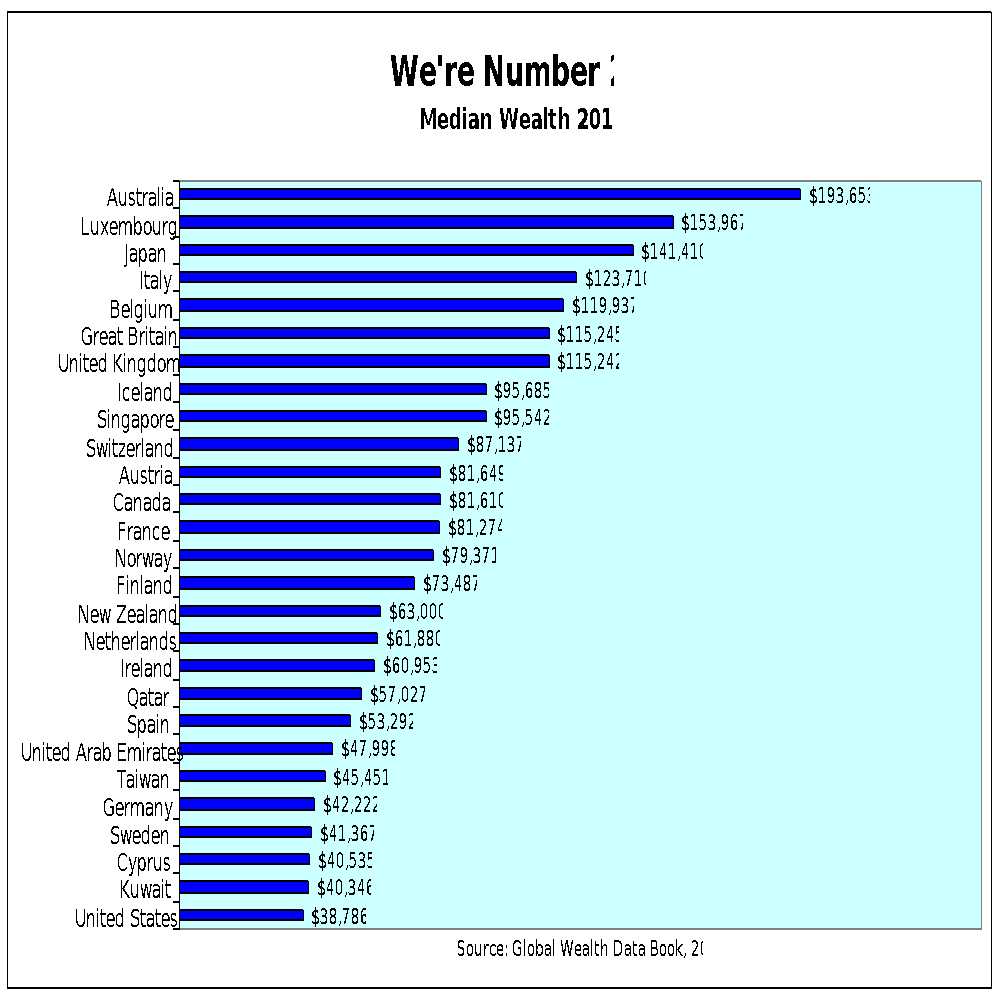
Iran’s Ahmadinejad, Rohani hold talks

0

Iran’s incumbent President Mahmoud Ahmadinejad (L) meets with president-elect Hassan Rohani on June 18, 2013.

Iran’s incumbent President Mahmoud Ahmadinejad has met with president-elect Hassan Rohani to discuss domestic issues, especially politics and economy.

During a Tuesday meeting, Ahmadinejad once again felicitated Rohani on his landslide victory in the 11th presidential election and wished him success.

Ahmadinejad had already issued a message on June 15, congratulating Leader of the Islamic Revolution Ayatollah Seyyed Ali Khamenei, the Iranian nation, and Hojjatoleslam Rohani.

In his message, President Ahmadinejad said he believed Iran was able to reach the peaks of glory and success by relying on the nationâ„¢s trust and respecting different interests and tastes.

Rohani emerged victorious in the presidential election of June 14, which was marked by a high voter turnout, winning 50.7 percent of a total of 36,704,156 ballots counted.

The voter turnout in the election was 72.7 percent according to Iranâ„¢s Interior Ministry.

Nearly 50.5 million Iranians, including more than 1.6 million first-time voters, were eligible to participate in the presidential, and city and village councils elections.

Rohani currently represents Ayatollah Khamenei in the Supreme National Security Council. He is also a member of the Expediency Council and the Assembly of Experts, and president of the Expediency Councilâ„¢s Center for Strategic Research.

YH/HSN/SS

This article originally appeared on: Press TV

Death toll in Iraq blasts reaches 29

0

[unable to retrieve full-text content]The death toll from twin bomb attacks inside and near a Shia Muslim mosque in the Iraqi capital, Baghdad, has risen to 29, medical sources say.

This article originally appeared on: Press TV

NYC Police Commissioner: “NSA Should Come Clean About Domestic Spying”

0

Top Cop Debunks Claim that Revealing the Program Harms Security

New York is the largest American city.

New York’s Police Commissioner — Ray Kelly — blasted the secret NSA spying program today.

The New York Post reports:

I don’t think it [the spying program] ever should have been made secret ….

I think the American public can accept the fact if you tell them that every time you pick up the phone it’s going to be recorded and it goes to the government. I think the public can understand that. I see no reason why that program was placed in the secret category.

Secondly, I think if you listen to Snowden, he indicates that there’s some sort of malfeasance, people . . . sitting around and watching the data. So I think the question is: What sort of oversight is there inside the [National Security Agency] NSA to prevent that abuse, if it’s taking place?

***

I think we can raise people’s comfort level if in fact information comes out as to that we have these controls and these protections inside the NSA ….

[Spying whistleblower Edward Snowden] tried to give the impression, it seems to me, that these system administrators had carte blanche to do what they wanted to do. I think it’s a problem if that’s in fact what’s happening.

Kelly joins America’s top national security experts in saying that the spying program has gone too far … and that revealing the nature and scope of the spying program does not harm national security.

Disclaimer: The contents of this article are of sole responsibility of the author(s). The Centre for Research on Globalization will not be responsible for any inaccurate or incorrect statement in this article. The Center of Research on Globalization grants permission to cross-post original Global Research articles on community internet sites as long as the text & title are not modified. The source and the author’s copyright must be displayed. For publication of Global Research articles in print or other forms including commercial internet sites, contact: publications@globalresearch.ca

www.globalresearch.ca contains copyrighted material the use of which has not always been specifically authorized by the copyright owner. We are making such material available to our readers under the provisions of “fair use” in an effort to advance a better understanding of political, economic and social issues. The material on this site is distributed without profit to those who have expressed a prior interest in receiving it for research and educational purposes. If you wish to use copyrighted material for purposes other than “fair use” you must request permission from the
copyright owner.

For media inquiries: publications@globalresearch.ca

This article originally appeared on: Global Research

Obama’s Humanitarianism as Window-Dressing for the US “Deep State” Agenda: The Case of Syria

1

This essay examines the connections between the foreign intervention crisis in Syria, the vast NSA surveillance program that has recently been exposed, and the sequence of events that begin with NSA program changes in February, 2001 – six months before 9/11. The connections are illuminating.

In mid June 2013 the Obama administration announced that it will start arming insurgents against the Syrian government because the regime crossed a “red line” by using chemical weapons – which it estimates have killed, over time, an estimated 100-150 rebels.[1]

What we are not being told is the history of President Bashar Assad, nor is he seen speaking in the American media.

 Assad is a medical doctor of mild personality who graduated in Damascus in 1988 and later began a four-year program of ophthalmology in London, England. When Hafez Assad, President of Syria, his father died in 2000, Bashar was elected President of Syria by a large popular majority, and again in 2007.

We are not given insight by the media into President Bashar Assad, the man.

He is married to British-educated Asma al-Assad, born in London, and a former investment banker. “She received the Gold Medal of the Presidency of The Italian Republic for humanitarian work in 2008 and won an honorary archaeology doctorate from La Sapienza university in Rome.”[2]

 Although seen in interviews by independent journalists to be mild-mannered, respectful, rationally articulate, and fluent in English, Assad is seldom seen speaking in the US mainstream media.  

 Thus it is poignant to watch his 18-minute interview with German reporter Jürgen Todenhöfe  in July 2012, and to hear his under-stated account of the foreign-backed insurgents whose violence has led to the deaths of thousands of Syrian state supporters.[3]

It is illuminating to watch the 5-minute interview Assad gave the Sunday Times, March 3, 2013, saying that as long as Britain arms the insurgents to save Syria from its repressive dictator, “the arsonist cannot be seen as the firefighter.”

In another recent German TV interview, Assad (whom we know is a medical doctor) discusses the alleged and contradictory use of chemical weapons – defined as “weapons of mass destruction” – in local ground combat. He goes on to describe external financial support to the insurgents as “stoking the fire.”[4]  

Indeed, Aron Lund, a Swedish observer of the Syrian opposition, has listed about a dozen rebel groups, the largest of which are funded by either the West, the Gulf states, or Turkey. The 80,000-strong Free Syrian Army (also known as the Supreme Military Council), “was created in December 2012 after pressure from Western and Gulf Arab nations, which seek to make it the military wing of Syria’s civilian exile group, the National Coalition.”[5]

To understand why the Western media, under heavy influence from the Pentagon, has demonized Mr. Assad as a vicious and indiscriminate murderer[6] of his own subjects, we can turn to a 2006 interview of  General Wesley Clark, a Rhodes scholar and the Supreme Allied Commander (Europe) of NATO, 1997-2000.

 Speaking on March 2, 2007 to Amy Goodman of Democracy Now, Clark said that about ten days after 9/11 he visited his former staff in the Pentagon. They told him, in astonished tones, that the US was going to go to war with Iraq – which they said had no demonstrated connection to 9/11, and they were at a complete loss to explain why.[7]

A few weeks later Clark went back to the Pentagon and was told that the US was going to “take out” seven Middle East countries in the next five years: Iraq, Syria, Lebanon, Libya, Somalia, Sudan and Iran.  He added, “Had there been no oil there it would be like Africa. Nobody is threatening to intervene in Africa.“[8]

 This early agenda for “take out,” said by Clark to have been in place immediately after 9/11, raises questions about the anthrax attacks, which started September 18, 2001.

The letters containing the lethal spores targeted, among others, Democratic Senators Tom Daschle (Senate Majority Leader) and Patrick Leahy. During this period of intense panic in Washington the 342-page Patriot Act was rushed through Congress October 24 and passed the Senate the next day.[9]

It has since been amply demonstrated that the highly weaponized spores contained in the anthrax letters originated from within a US military laboratory, and were too sophisticated to have been produced by a non-state laboratory or by an individual.[10]

Now if we look at the origins of the NSA super-surveillance program, which is generally believed to have begun right after 9/11 as a provision of the Patriot Act, we will see that in fact it began in February, 2001, within weeks after the swearing in of the Bush administration.

Mr. William Binney, a 40-year veteran of the NSA, explains that all communications companies were required at that time to collect data on their customers. One company, Qwest Communications, refused to do this, and its CEO, Joe Nacchio, is still in prison on false charges of insider trading.[11]

Mr. Binney emphasized that virtually no one in the country was exempt. Even judges were recorded, so that almost everyone in the United States could potentially be coerced, using selected personal data as leverage.[12] The implications are staggering. How many elected and bureaucratic officials could be – or have already been – brought to heel in this manner?

 Thus by 9/11 the “deep state” was already armed against its population in a manner that Binney referred to as “J. Edgar Hoover on super steroids.”[13]

Meanwhile, the mainstream media have increasingly accepted the US position that Middle East countries plagued by civil wars caused by repressive dictators must be saved by humanitarian intervention from enlightened Western democracies.

Indeed Reuters correspondent Mark Hosenball reported last August that “President Barack Obama has signed a secret order authorizing U.S. support for rebels seeking to depose Syrian President Bashar al-Assad and his government.”[14]

The Reuters article continued:

“Recent news reports from the region have suggested that the influence and numbers of Islamist militants, some of them connected to al Qaeda or its affiliates, have been growing among Assad’s opponents.”[15]

On June 17, 2013, CNN supported the al Qaeda connection:

“Al Qaeda’s affiliate inside Syria is now the best-equipped arm of the terror group in existence today, according to informal assessments by U.S. and Middle East intelligence agencies, a private sector analyst directly familiar with the information told CNN.”[16]  

In May, 2013, former FBI translator and whistle-blower[17] Sibel Edmonds had reported that “Bin Laden — and his number 2 Al Qaeda lieutenant — Ayman al-Zawahiri — worked with the U.S. government for 3 months after 9/11 to coordinate destablization in the Caucus region.”[18]

In light of the evidence above connecting al Qaeda to the U.S. government, it is imperative to go back to 9/11 – the trigger event for the global war on terror – and take a second look.

In fact this is being done.

A new source of evidence-based research is being developed by the academic 24-member 9/11 Consensus Panel,[19] which has developed 32 Consensus Points examining the official claims about how events unfolded that day. The Panel uses a standard medical model to evaluate its evidence, which is intended to provide confidence to the media and the public in reconsidering the events of 9/11.

The enormous cost in lives and dollars of the Middle East wars, coupled with the pervasive spying of domestic citizens now in progress, should prompt all those interested in democracy to look carefully at this evidence.

And regarding Syria at this moment, why is it the responsibility of the United States to intervene in the civil war of a sovereign country?

If humanitarian intervention is indeed desired, why is it not a peace-keeping initiative arranged by the United Nations?

Notes

[1]“Text: US Statement on Syria – Chemical Weapons,” ABC News, June 14, 2013 (http://abcnews.go.com/Politics/wireStory/text-us-statement-syria-chemical-weapons-19396269#.Ub9-PJzm-HQ ). To put the priority of this “red line” in perspective, note that 443,000 preventable deaths are caused each year in the USA by smoking, “Tobacco Use: Targeting the Nation’s Leading Killer at a Glance, 2011,” Centers for Disease Control and Prevention (http://www.cdc.gov/chronicdisease/resources/publications/aag/osh.htm).

[3]“Syria’s President Baschar al Assad gives Interview to German Television” (http://www.youtube.com/watch?v=hEh1VClsnFM).

[5]“Freedom Fighters? Cannibals? The Truth about Syria’s Rebels, The Independent, June 17, 2013 ( http://www.independent.co.uk/news/world/middle-east/freedom-fighters-cannibals-the-truth-about-syrias-rebels-8662618.html.) “Mr. Lund is a regular contributor to the Swedish Institute for International Affairs. He is considered one of the best informed observers of the Syrian opposition.”

[6]Google Images shows that so far the West has not managed to capture an angry or unpleasant photograph of Mr. Assad. He is consistently mild and patient.

[7]“General Wesley Clark: Wars Were Planned – Seven Countries In Five Years” (https://www.youtube.com/watch?v=9RC1Mepk_Sw). 

[8] Ibid.

[9] The Patriot Act is downloadable at http://www.gpo.gov/fdsys/pkg/PLAW-107publ56/pdf/PLAW-107publ56.pdf.

[10] Edward Jay Epstein, “The Anthrax Attacks Remain Unsolved,” The Wall Street Journal, January 24, 2010 (http://online.wsj.com/article/SB10001424052748704541004575011421223515284.html).

[11] William Binney interview: “Inside the NSA’s Domestic Surveillance Apparatus: Whistleblower William Binney Speaks Out,” Democracy Now, June 10, 2013 (http://www.democracynow.org/blog/2013/6/10/inside_the_nsas_domestic_surveillance_apparatus_whistleblower_william_binney_speaks_out), and Dave Hodges, “Before Edward Snowden, There Was Joseph Nacchio,” The Common Sense Show, June 13, 2013 (http://www.thecommonsenseshow.com/2013/06/13/before-edward-snowden-there-was-joseph-nacchio/).

[12] Binnie, Ibid.

[13] Ibid.

[14] “Exclusive: Obama authorizes secret U.S. support for Syrian rebels,” Reuters, August 1, 2012 (http://www.reuters.com/article/2012/08/01/us-usa-syria-obama-order-idUSBRE8701OK20120801).

[15] Ibid.

[16] Barbara Starr, “Analyst: Al Qaeda Affiliate in Syria now Best-Equipped of the Group,” CNN, June 17, 2013 (http://security.blogs.cnn.com/2013/06/17/analyst-al-qaeda-affiliate-in-syria-now-best-equipped-of-the-group/ ).

[17] Edmonds’ credibility was confirmed in a 2002 coalition letter to the U.S. House Committee on Oversight and Government Reform (http://web.archive.org/web/20071031085021/http://www.libertycoalition.net/state-secrets-privelage/coalition-letter-to-the-house-committee-on-oversight-and-government-reform-on-criminal-activities-by-the ).

[18] “Report: U.S. Government and NATO Worked with Bin Laden and His Top Lieutenant 3 Months AFTER 9/11,” Washington’s Blog, May 2, 2013 (http://www.washingtonsblog.com/2013/05/report-u-s-government-worked-with-bin-laden-and-his-top-lieutenant-2-months-after-911.html).

[19] See: http://www.consensus911.org. Note the Panel’s methodology, voting members, and honorary members.


This article originally appeared on: Global Research

The Integration of Canada into a U.S. Dominated North American Security Perimeter

0

Canada’s prime minister recently addressed the CFR, a globalist think tank who have been a driving force behind the push towards deeper North American integration. The U.S. and Canada are now further advancing this agenda through the Beyond the Border agreement. Both countries are increasing bilateral border transportation and infrastructure coordination. This includes a common approach to border management, security and control. They are also integrating an information sharing system that would be used to track everyone crossing the U.S.-Canada border and entering or leaving the continent. Without much fanfare and seemingly little resistance, Canada is being assimilated into a U.S. dominated North American security perimeter.

 In May, the Conservative government highlighted the benefits of the U.S.-Canada Beyond the Border action plan which was announced back in 2011. The deal, “focuses on addressing security threats at the earliest point possible and facilitating the lawful movement of people, goods, and services into Canada and the United States, and creates a long-term partnership to improve the management of our shared border.” The goal is to further increase, “security, economic competitiveness and prosperity through numerous measures, including reducing border wait times and improving infrastructure at key crossings to speed up legitimate trade and travel.” The Beyond the Border Executive Steering Committee recently met to discuss the objectives that have already been achieved and the work that still needs to be done. Another important facet of the economic and security perimeter agreement is the Regulatory Cooperation Council action plan. A stakeholder dialogue session is planned for June 20, which will review its implementation progress and will seek further input regarding the next stage of U.S.-Canada regulatory integration.
 Last month, the Canada Border Services Agency (CBSA) and the Department of Homeland Security (DHS) released a joint report on the findings of Phase I of the Entry/Exit Information System. The program included collecting and exchanging biographic information at four selected land border ports of entry. In a news release, U.S. Customs and Border Protection (CBP) Acting Commissioner Thomas Winkowski stated that, “The results of Phase I demonstrate the capacity of the United States and Canada to increase information sharing capabilities.” He added, “This kind of cooperation epitomizes the Beyond the Border Action Plan.” The next phase of the entry/exit initiative is set to begin at the end of this month. It will involve exchanging the biographic data collected from third-country nationals and permanent residents of Canada and the U. S. at all common ports of entry. Both countries are further merging databases and are expanding surveillance and intelligence gathering operations. In 2014, they will also start sharing biometric information at the border. This will further advance the creation of a North America security perimeter where all travellers will be tracked and traced in real time.
As part of the commitment made under the Beyond the Border deal, both countries have announced the Border Infrastructure Investment Plan which was, “developed to establish a mutual understanding of recent, ongoing and potential border infrastructure investments. It outlines the approach that Canada and the United States will take to coordinate plans for physical infrastructure upgrades.” In June 2012, Canada reached an agreement with the State of Michigan to build a second bridge between Detroit and Windsor, Ontario. This was followed by a presidential permit issued in April of this year that officially paved the way for construction of the project. A U.S. State Department press release explained that, “Consistent with the bilateral Beyond the Border Initiative, this permit contributes to ensuring that our border infrastructure supports increased competitiveness, job creation, and broad-based prosperity in the United States and Canada.” It went on to say that the new bridge, “will help to meet future capacity requirements in a critical travel corridor, promote cross-border trade and commerce, and advance our vital bilateral relationship with Canada.”
In March, DHS Secretary Janet Napolitano and Canada’s Minister of Public Safety Vic Toews signed a memorandum of understanding which established a truck cargo pre-inspection pilot project. The joint undertaking is another component of the Beyond the Border agreement and would shift inspections and clearances away from the actual border crossing. The first phase, “will test the concept of conducting U.S. CBP primary cargo inspection in Canada, and will be implemented at the Pacific Highway crossing between Surrey, British Columbia and Blaine, Washington.” The second phase, “will further test how pre-inspection could enhance border efficiency and reduce wait times to facilitate legitimate trade and travel, and will be implemented at the Peace Bridge crossing between Fort Erie, Ontario and Buffalo, New York.” The perimeter security deal is laying the foundation for a future U.S.-Canada binational organization that would jointly manage and control the border.
The CBSA is also testing additional technology at the Morses Line, Quebec and Piney, Manitoba ports of entry. Under the remote traveller pilot project, people entering either location after regular hours of service, “will be processed by a border services officer located at a remote processing centre through a two-way audio and one-way video kiosk. Cameras will be installed to provide the officer with the ability to see the traveller and the vehicle.” The program which could later be expanded to other areas , “is part of the Small and Remote Ports of Entry Initiative, one of the deliverables under the Beyond the Border Action Plan.” NAUNEWZ pointed out that, “Although a lot of this technology is already installed and being utilized in limited ways at most of the main Canada-U.S. border crossing points, these smaller border crossings are ideal testing grounds for their ‘no borders’/NAU agenda.”
On May 16, Canadian Prime Minister Stephen Harper participated in question and answer session before the Council on Foreign Relations (CFR). The conversation centered around economic growth, foreign investment and the role of the G20 with regards to global governance. Other issues focused on Canada-U.S. relations. Harper lobbied for approval of the controversial Keystone XL pipeline which would carry oil from western Canada to the Texas gulf coast. He dismissed environmental issues associated with the project and argued that it would be a step towards North American energy independence. The Obama administration is expected to make a final decision on the pipeline sometime this year. Harper also acknowledged the Beyond the Border and the Regulatory Cooperation Council action plans. He blamed sovereignty concerns and the continued negativity surrounding NAFTA as the main obstacles to even deeper continental integration. Prime Minister Harper used his audition in front of the CFR as an opportunity to demonstrate to the U.S. political and corporate elite that he is committed to defending the interests of big business and further pushing plans for a North American Union (NAU).

The Beyond the Border action plan is the most significant step forward in U.S.-Canada cooperation since NAFTA. It provides the framework for future North American integration. When fully implemented, the agreement can be expanded and updated. So far, the agenda has quietly slipped under the radar. By incrementally incorporating various pilot projects and excluding Mexico from the process, it has managed to avoid the controversy of past initiatives. The perimeter security deal is being sold as vital to improving the flow of trade and travel across the border. In order to appease U.S. fears, Canada has made numerous concessions with no guarantees that it will lessen border restrictions. As part of a North American security perimeter, Canada will always be at the mercy of any new U.S. security measures, regardless of the dangers they may pose to privacy and civil liberties.

This article originally appeared on: Global Research

Watch Your Cash: New BAIL-IN Rules Will Force “Failed Bank Losses on Investors”

0

Mac Slavo
SHTFPlan.com
June 18, 2013

When the Cypriot government forced account holders to cover bank losses earlier this year most of the world assumed this was a one-off event, limited only to the people of Cyprus.

Though warnings urging depositors to get their money out of banks spread across the world, few have taken them seriously.

Perhaps now they’ll reconsider.

We’re all familiar with bail-outs, as in the government rescuing failed institutions, namely banks, by injecting them with tens of billions of dollars to prevent collapse.

But have you ever heard of a bail-in?

Japan’s Financial Services Agency will enact new rules that will forced failed bank losses on investors, if needed, via a mechanism known as a “bail-in,” according to The Nikkei. Mitsubishi UFJ (MTU), Mizuho Financial (MFG) and Sumitomo Mitsui (SMFG) are among those proposing amendments to allow them to issue the types of preferred shares or subordinated bonds that would be used in such cases, the report noted.

Cyprus was a test run. It worked.

This is now the official policy of the country of Japan, and is a serious considerationthroughout the Eurozone and the United States.

Euro zone finance ministers will discuss on Thursday how to decide which creditors will lose money and in what order during future bank rescues by the bloc’s bailout fund, the European Stability Mechanism.

Just so we’re clear, we are all bank creditors by these definitions, thus the regulations being created apply not to just large bond holders, but every individual depositor.

Notice how they didn’t say “in case future bank rescues are necessary.” That’s because they know what’s coming.

The collapse of the global financial system is a foregone conclusion and it has just been confirmed by finance ministers around the world.

When the next banking crisis hits the United States you can be assured that creditors (i.e. individual depositors) will be forced to ‘bail them in.’

Given that that billionaire insiders are rapidly unloading millions of shares of financial stocks as we speak, there is a strong possibility that this scenario may soon unfold.

So, if you’ve got any significant amount of money at financial institutions, you’d better think twice about how safe it is.

Of course, this is the United States of America, where nothing of the sort could ever happen. According to Federal Reserve Chairman Ben Bernanke, here in the U.S. thecrisis is contained and poses no risks to the broader economy or financial markets.

So, you can probably just move along and ignore this warning.

Nothing to see here… It’s just Japan and Europe, after all, and they are all the way on the other side of the ocean.

Washington Is Insane

0

Paul Craig Roberts
Infowars.com
June 18, 2013

In the 21st century the two hundred year-old propaganda that the American people control their government has been completely shattered. Both the Bush and Obama regimes have made it unmistakenly clear that the American people don’t even influence, much less control, the government. As far as Washington is concerned, the people are nothing but chaff in the wind.

Polls demonstrate that 65% of the US population opposes US intervention in Syria. Despite this clear indication of the people’s will, the Obama regime is ramping up a propaganda case for more arming of Washington’s mercenaries sent to overthrow the secular Syrian government and for a “no-fly zone” over Syria, which, if Libya is the example, means US or NATO aircraft attacking the Syrian army on the ground, thus serving as the air force of Washington’s imported mercenaries, euphemistically called “the Syrian rebels.”

Washington declared some time ago that the “red line” that would bring Syria under Washington’s military attack was the Assad government’s use of chemical weapons of mass destruction against Washington’s mercenaries. Once this announcement was made, everyone with a brain immediately knew that Washington would fabricate false intelligence that Assad had used chemical weapons, just as Washington presented to the United Nations the intentional lie via Secretary of State Colin Powell that Saddam Hussein in Iraq had dangerous weapons of mass destruction. Remember National Security Advisor Condi Rice’s image of a “mushroom cloud over American cities?” Propagandistic lies were Washington’s orders of the day.

And they still are. Now Washington has fabricated the false intelligence, and president Obama has announced it with a straight face, that Syria’s Assad has used sarin gas on several occasions and that between 100 and 150 “of his own people,” a euphemism for the US supplied foreign mercenaries, have been killed by the weapon of mass destruction.

Think about that for a minute. As unfortunate as is any death from war, is 100-150 deaths “mass destruction?” According to low-ball estimates, the US-sponsored foreign mercenary invasion of Syria has cost 93,000 lives, of which 150 deaths amounts to 0.0016.

In other words, 92,850 of the deaths did not cross the “red line.” But 150 did, allegedly.

Yes, I know. Washington’s position makes no sense. But when has it ever made any sense?

  • A d v e r t i s e m e n t

Let’s stretch our minds just a tiny bit farther. Assad knows about Washington’s “red line.” It has been repeated over and over in order to create in the minds of the distracted American public that there is a real, valid reason for attacking Syria. Why would Assad use the proscribed weapons of mass destruction in order to kill a measly 100-150 mercenaries when his army is mopping up the US mercenaries without the use of gas and when Assad knows that the use of gas brings in the US military against him?

As the Russian government made clear, Washington’s accusation is not believable. No informed person could possibly believe it. No doubt, many Americans wearing patriotism on their sleeves will fall for Washington’s latest lie, but no one else in the world will. Even Washington’s NATO puppets calling for attacking Syria know that the justification for the attack is a lie. For the NATO puppets, Washington’s money overwhelms integrity, for which the rewards are low.

The Russians certainly know that Washington is lying. The Russian Foreign Minister Larov said: “The [Assad] government, as the opposition is saying openly, is enjoying military success on the ground. The [Assad] regime isn’t driven to the wall. What sense is there for the regime to use chemical arms—especially in such small amounts.”

Larov is a relatively civilized person in the role of Russia’s main diplomat. However, other Russian officials can be more pointed in their dismissal of Washington’s latest blatant lies. Yury Ushakov, an aide to Russian President Putin said: “The Americans tried to present us with information on the use of chemical weapons by the [Assad] regime, but frankly we thought that it was not convincing. We wouldn’t like to invoke references to [the infamous lies of] Secretary of State Powell [at the UN alleging Iraqi WMD], but the facts don’t look convincing in our eyes.” Aleksey Pushkov, the chairman of the Russian Duma’s Foreign Affairs Committee, cut to the chase. “The data about Assad’s use of chemical weapons is fabricated by the same facility that made up the lies about Saddam Hussein’s weapons of mass destruction. Obama is walking George W. Bush’s path.”

Here in America no one will ever hear straight talk like this from the US presstitutes.

Orwellian double-speak is now the language of the United States government. Secretary of State John Kerry condemned Assad for harming “peace talks” while the US arms its Syrian mercenaries.

Washington’s double-speak is now obvious to the world. Not only Assad, but also the Russians, Chinese, Iranians, and every US puppet state which includes all of NATO and Japan, are fully aware that Washington is again lying through its teeth. The Russians, Chinese, and Iranians are trying to avoid confrontation with Washington, as war with the modern nuclear weapons would destroy all life on planet earth. What is striking is that despite 24/7 brainwashing by the presstitutes, a large majority of the American population opposes Obama’s war on Syria.

This is good news. It means more Americans are developing the ability to think independently of the lies Washington feeds to them.

What the neocon nazis, the Bush/Obama regime, and the presstitute media have made
clear is that Washington is going to push its agenda of world hegemony to the point of
starting World War III, which, of course, means the end of life on earth.

Russia and China, either one of which can destroy the United States, have learned that the US government is a liar and cannot be trusted. The Libyan “no-fly” policy to which Russia and China agreed turned out to be a NATO air attack on the Libyan army so that the CIA-sponsored mercenaries could prevail.

Russia and China, having learned their lesson, are protesting Washington’s assault on Syria that Washington pretends is a “civil war.” If Syria falls, Russia and China know that Iran is next.

Iran is Russia’s underbelly, and for China Iran is 20% of its energy imports. Both Russian and Chinese governments know that after Iran falls, they are next. There is no other explanation for Washington surrounding Russia with missile bases and surrounding China with naval and air bases.

Both Russia and China are now preparing for the war that they see as inevitable. Washington’s crazed, demented drive for world hegemony is bringing unsuspecting Americans up against two countries with hydrogen bombs whose combined population is five times the US population. In such a conflict everyone dies.

Considering the utterly insane government ruling in Washington, if human life exists in 2020, it will be a miracle. All the worry about future Medicare and Social Security deficits is meaningless. There will be no one here to collect the benefits.

Addendum: If the report below from RT is accurate, it seems obvious that the ignorant and evil denizens of Washington, D.C., are driving the world to World War III. http://rt.com/news/iran-troop-deployment-syria-782/

Addendum: Russia says it will not allow Syria no-fly zones.http://www.informationclearinghouse.info/article35318.htm

Addendum: Once again Washington demonstrates that it is home to the most stupid people on earth:http://www.independent.co.uk/news/world/middle-east/iran-to-send-4000-troops-to-aid-president-assad-forces-in-syria-8660358.html?printService=print

Dr. Paul Craig Roberts is the father of Reaganomics and the former head of policy at the Department of Treasury. He is a columnist and was previously the editor of the Wall Street Journal. His latest book, “How the Economy Was Lost: The War of the Worlds,” details why America is disintegrating.

<!–

–>

This article was posted: Tuesday, June 18, 2013 at 5:58 am

Tags: , ,


<!– this is where we need to show the related articles

–>

This article originally appeared on: Infowars

Snow job: If government spying on all Americans is such a good thing, then why is it being conducted in secret?

0

Mike Adams
Natural News
June 18, 2013

In the run up to the 2012 election, why didn’t Obama campaign on the promise that he would keep Americans safe by spying on all our phone calls, emails and electronic communications? After all, Obama says he completely endorse the program, insisting that Americans will have to put up with a “little inconvenience” in order to be more secure.

So why not run on that platform? “Hey, America, I’m the SPY President! Vote for me and have all your emails read by caring government professionals who keep you safe!” Instead of being the “Hope and Change” candidate, Obama could have been an advocate for “Snoop and Chains!”

Obama didn’t run on that platform, of course, because he would have lost the election if he admitted the things he really supports: secret military prisons and illegal torture, secret kill lists of American citizens, unarmed drone strikes on women and children, the continued criminalization of pot and industrial hemp, the continued Big Pharma monopoly over medicine, the DHS arming against the American people, and of course the over-the-top NSA surveillance machine that listens to all your phone calls and reads all your emails.

A candidate who openly admitted to supporting all the things Obama is now doing would be ridiculed… laughed off the debate stage and maybe even run out of the country. But by lying to the American public about all these things, Obama got elected. And once elected, he pushed the expansion of these programs, blowing out trillions of dollars in federal spending while multiplying the power and reach of the Big Brother police state surveillance grid.

But it’s all okay, he says. You didn’t need to know about all these details because the government was keeping you safe. And yes, you can trust government as long as Obama is in charge, you see.

Besides, you don’t have anything to hide, do ya?

YOU have nothing to hide, but WE do!

  • A d v e r t i s e m e n t

The government’s logic on spying on you is that it’s okay since you have nothing to hide. But then why wouldn’t the same logic apply to the government? If they have nothing to hide, then why not come out and disclose the full extent of the phone tapping, the email scanning and electronic surveillance?

The government wants to have it both ways: YOU don’t need any secrets because you have nothing to hide, right? But WE (the government) need all sorts of secrets. And why? Because our secrets keep you safe!

The very idea that only guilty people have something to hide turns out to indict the government itself: the very fact that they are running all these surveillance activities in total secrecy practically guarantees they’re guilty. That’s the trick, you see: use their own logic against them. When the government says, “Trust us, we’re keeping you safe by keeping an eye on you,” your answer should be, “Well who’s keeping an eye on YOU?”

StopWatching.us

So now, in one of the most hilarious examples of hypocrisy we’ve yet seen from the world of high tech, Google is using its home page to promote the Stop Watching Us website which calls for Congress to “reveal the full extent of the NSA’s spying programs.”

The reason this is so hilarious is because Google was founded with help from the NSA and remains one of the NSA’s most important front-end psychological profiling tools. For Google to point the finger at the NSA and say, “how dare they spy on us!” should be met with obscene laughter.

Google calling for the NSA to stop spying on people would be like McDonald’s calling on the fast food industry to stop feeding fried foods to consumers.

Why Obama won’t demand progress

The StopWatching.US website itself is a project of the non-profit called Demand Progress (www.DemandProgress.org), which sounds like some sort of uber-liberal activist site but really isn’t. It’s actually a group that opposes CISPA, the NDAA and Hollywood monopolistic controls over the internet. They’re also helping promote the petition for President Obama to pardon Ed Snowden as well as demanding justice for internet activist Aaron Swartz.

I completely agree with Demand Progress on all these points, but Obama completely disagrees with everything the site stands for. Obama, despite what he says, actually stands for more secret prisons, more government spying on Americans, more secret kill lists and the continued destruction of the Bill of Rights in the name of “security.”

Interestingly, about half the democratic party has surrendered to the Obama police state and is idiotically backing nearly all of Bush’s favorite policies now that Obama is the new front man. To truly brain-damaged individuals like Sen. Al Franken and Bill Maher – both of whom smoked WAY too much weed to be believed on anything – government abuse of power was bad under Bush, but now it’s perfectly okay under Obama. I’m not sure how much pot, crack, smack or meth you have to smoke in order to come to that conclusion, but somebody in the democratic party seems to be handing all that out for free.

No, the only reasonable, rational response to all of this – regardless of your political leanings – is that secret government surveillance of the American people was criminal under Bush, and it’s still criminal under Obama. It can’t suddenly be morally okay just because a democrat sits in the Oval Office, and any democrat who attempts to argue this point is only discrediting themselves.

Because this brings us back to the original question of this article: if government spying on the American people is so great and dandy, then why wasn’t it announced with great fanfare as if it were some sort of amazing new “benefit” of compassionate government?

Why wasn’t government surveillance mentioned as a selling point in the presidential debates?

Why didn’t television ads brag about how much each candidate believed in domestic spying on everyday Americans?

So enough with the bullshit from Obama, Feinstein, Boehner, Cheney, McCain, Clapper, Franken and every other nitwit who’s now trying to say this is all a wonderful government program being run by honest people who would never abuse all these billions of secret files they’re gathering on you.

My message to those crooks and liars? Nobody believes you anymore. You’re finished. Your government is finished. Your credibility has been shattered and your false, flowery rhetoric makes people want to vomit.

As NSA whistleblower Edward Snowden recently said:

It’s important to bear in mind I’m being called a traitor by men like former Vice President Dick Cheney. This is a man who gave us the warrantless wiretapping scheme as a kind of atrocity warm-up on the way to deceitfully engineering a conflict that has killed over 4,400 and maimed nearly 32,000 Americans, as well as leaving over 100,000 Iraqis dead. Being called a traitor by Dick Cheney is the highest honor you can give an American, and the more panicked talk we hear from people like him, Feinstein, and King, the better off we all are.

I couldn’t agree more.

ACTION ITEM: Sign the petition to demand Obama pardon Snowden:
http://petitions.whitehouse.gov/petition/pardon-edward-snowden/Dp03vG…

<!–

–>

This article was posted: Tuesday, June 18, 2013 at 5:58 am

Tags: , ,


<!– this is where we need to show the related articles

–>

This article originally appeared on: Infowars

NSA Agent Caught SNOOPING on Video by Tom Mabe

0

Infowars.com
June 18, 2013

Government NSA Agent caught Redhanded eavesdropping on Cell Phone users.

<!–

–>

This article was posted: Tuesday, June 18, 2013 at 5:56 am

Tags: , , ,


<!– this is where we need to show the related articles

–>

This article originally appeared on: Infowars

Gallup Poll: Virtually No One Trusts the Mainstream Media

0

Anthony Gucciardi
Infowars.com
June 18, 2013

The results are in: virtually no one trusts the scripted mainstream media. We’ve known it for years, but a new Gallup poll shows that a whopping 77% of Americans distrust mainstream media television.

Only a bit more ‘trustworthy’ than Congress, which scored in at a record low of 90% saying they do not trust the government body, the Gallup poll details that only 23% of viewers actually trust the mainstream media television news. A reality that has been clear as day in light of blatant mainstream media blackouts on key events like the outrageous DHS ‘Fourth Amendment free‘ zones that stretch up to 100 miles out from every single border of the US, to the blackout over eyewitness reports at the Boston Marathon.

I recently spoke with the legendary Lew Rockwell on the decline of the mainstream media on his radio show, discussing how the media completely fears the power of the alternative news community:

A NEW ERA OF NEWS HAS ARRIVED

The mainstream media is on its last breath, and they are already scurrying to secure phony ‘alternative news’ websites in a bid to stay afloat, but the new era of news 2.0 is already here. And in this new paradigm of content consumption, reality is king. We’re talking about a model in which one person with a smart phone can generate millions of views on YouTube by filming a protest or civil rights violation. No longer are people required to tune into their nightly news programs to hear the ‘latest’ news.

Today, instant aggregation exists on platforms like Drudge Report, and exclusive news leaks are available here at Storyleak – many of which are exclusives that the mainstream media wishes they could get their hands on. One such example is the Boston Marathon bombing witness I referenced earlier, who happened to call me back over the multitudes of mainstream press agencies that had been desperately trying to get a hold of him. But what happened when I got the exclusive interview and offered them the ability to utilize the video? Well, they declined of course.

  • A d v e r t i s e m e n t

The mainstream media is afraid of the new media, they are afraid of you. If one man or woman will a smart phone can change history, that is a scary thought for the political control freaks who seek to censor you at every turn. The new era of news consumption has arrived, and it’s time to kick the mainstream media out for good.

mainstream-media-gallup-trust

This post originally appeared at Story Leak

<!–

–>

This article was posted: Tuesday, June 18, 2013 at 5:55 am

Tags: , ,


<!– this is where we need to show the related articles

–>

This article originally appeared on: Infowars

21 Facts About NSA Snooping That Every American Should Know

0

Michael Snyder
American Dream
June 18, 2013

There seems to be a lot of confusion about what the NSA is actually doing. Are they reading our emails? Are they listening to our telephone calls? Do they target American citizens or is it only foreigners that they are targeting? Unfortunately, the truth is that we aren’t going to get straight answers from our leaders about this. The folks running the NSA have already shown that they are willing to flat out lie to Congress, and Barack Obama doesn’t exactly have the greatest track record when it comes to telling the truth. These are men that play word games and tell lies for a living. So it would be unrealistic to expect them to come out and tell us the unvarnished truth about what is going on. That is why it is so important that whistleblowers such as Edward Snowden have come forward. Thanks to them and to the brave journalists that are willing to look into these things, we have been able to get some glimpses behind the curtain. And what we have learned is not very pretty. The following are 21 facts about NSA snooping that every American should know…

#1 According to CNET, the NSA told Congress during a recent classified briefing that it does not need court authorization to listen to domestic phone calls…

Rep. Jerrold Nadler, a New York Democrat, disclosed on Thursday that during a secret briefing to members of Congress, he was told that the contents of a phone call could be accessed “simply based on an analyst deciding that.”

If the NSA wants “to listen to the phone,” an analyst’s decision is sufficient, without any other legal authorization required, Nadler said he learned. “I was rather startled,” said Nadler, an attorney and congressman who serves on the House Judiciary committee.

#2 According to U.S. Representative Loretta Sanchez, members of Congress learned “significantly more than what is out in the media today” about NSA snooping during that classified briefing.

#3 The content of all of our phone calls is being recorded and stored. The following is a from a transcript of an exchange between Erin Burnett of CNN and former FBI counterterrorism agent Tim Clemente which took place just last month…

BURNETT: Tim, is there any way, obviously, there is a voice mail they can try to get the phone companies to give that up at this point. It’s not a voice mail. It’s just a conversation. There’s no way they actually can find out what happened, right, unless she tells them?

CLEMENTE: No, there is a way. We certainly have ways in national security investigations to find out exactly what was said in that conversation. It’s not necessarily something that the FBI is going to want to present in court, but it may help lead the investigation and/or lead to questioning of her. We certainly can find that out.

BURNETT: So they can actually get that? People are saying, look, that is incredible.

CLEMENTE: No, welcome to America. All of that stuff is being captured as we speak whether we know it or like it or not.

#4 The chief technology officer at the CIA, Gus Hunt, made the following statement back in March…

“We fundamentally try to collect everything and hang onto it forever.”

#5 During a Senate Judiciary Oversight Committee hearing in March 2011, FBI Director Robert Mueller admitted that the intelligence community has the ability to access emails “as they come in”…

“We put in place technological improvements relating to the capabilities of a database to pull together past emails and future ones as they come in so that it does not require an individualized search.”

#6 Back in 2007, Director of National Intelligence Michael McConnell told Congress that the president has the “constitutional authority” to authorize domestic spying without warrants no matter when the law says.

#7 The Director Of National Intelligence James Clapper recently told Congress that the NSA was not collecting any information about American citizens. When the media confronted him about his lie, he explained that he “responded in what I thought was the most truthful, or least untruthful manner“.

#8 The Washington Post is reporting that the NSA has four primary data collection systems…

Two of the four collection programs, one each for telephony and the Internet, process trillions of “metadata” records for storage and analysis in systems called MAINWAY and MARINA, respectively. Metadata includes highly revealing information about the times, places, devices and participants in electronic communication, but not its contents. The bulk collection of telephone call records from Verizon Business Services, disclosed this month by the British newspaper the Guardian, is one source of raw intelligence for MAINWAY.

The other two types of collection, which operate on a much smaller scale, are aimed at content. One of them intercepts telephone calls and routes the spoken words to a system called ­NUCLEON.

For Internet content, the most important source collection is the PRISM project reported on June 6 by The Washington Post and the Guardian. It draws from data held by Google, Yahoo, Microsoft and other Silicon Valley giants, collectively the richest depositories of personal information in history.

#9 The NSA knows pretty much everything that you are doing on the Internet. The following is a short excerpt from a recent Yahoo article…

Americans who disapprove of the government reading their emails have more to worry about from a different and largerNSA effort that snatches data as it passes through the fiber optic cables that make up the Internet’s backbone. That program, which has been known for years, copies Internet traffic as it enters and leaves the United States, then routes it to the NSA for analysis.

#10 The NSA is supposed to be prohibited from spying on the Internet activity of American citizens, but it is doing it anyway…

Despite that prohibition, shortly after the Sept. 11 terrorist attacks, President George W. Bush secretly authorized the NSA to plug into the fiber optic cables that enter and leave the United States, knowing it would give the government unprecedented, warrantless access to Americans’ private conversations.

Tapping into those cables allows the NSA access to monitor emails, telephone calls, video chats, websites, bank transactions and more. It takes powerful computers to decrypt, store and analyze all this information, but the information is all there, zipping by at the speed of light.

“You have to assume everything is being collected,” said Bruce Schneier, who has been studying and writing about cryptography and computer security for two decades.

#11 It has been estimated that the NSA gathers 2.1 million gigabytes of dataon all of us every single hour of every single day.

#12 In addition to collecting data on their own, a recent Bloomberg articleclaims that “thousands of firms” are giving your personal information directly to the NSA.

#13 Companies that share their data with the NSA are exempt from prosecution due to a law that Congress passed back in 2008…

AT&T and other telecommunications companies that allow the NSA to tap into their fiber links receive absolute immunity from civil liability or criminal prosecution, thanks to a law that Congress enacted in 2008 and renewed in 2012. It’s a series of amendments to the Foreign Intelligence Surveillance Act, also known as the FISA Amendments Act.

#14 The NSA is constructing the largest data center in the world out in Utah. It is going to have about a million square feet of storage space, it is going to cost about 2 billion dollars to build, and it is going to take about 40 million dollars a year just to pay for the energy needed to run the facility. It is also being reported that it will have the capability of storing 5 zettabytes of data.

#15 The NSA has a budget of about 10 billion dollars a year.

#16 Overall, the United States government spends more than 80 billion dollars a year on intelligence programs.

#17 According to NSA whistleblower William Binney, the NSA has a “target list” of somewhere between “500,000 to a million people“.

#18 Binney also claims that the NSA “has the capability to do individualized searches, similar to Google, for particular electronic communications in real time through such criteria as target addresses, locations, countries and phone numbers, as well as watch-listed names, keywords, and phrases in email.”

#19 According to a recent Rasmussen survey, 57 percent of all Americans believe that the government will use the information that it collects “to harass political opponents”.

#20 Benjamin Franklin once wrote the following…

“They who can give up essential liberty to obtain a little temporary safety, deserve neither liberty nor safety.”

#21 This is what the Fourth Amendment to the U.S. Constitution says…

“The right of the people to be secure in their persons, houses, papers, and effects, against unreasonable searches and seizures, shall not be violated, and no Warrants shall issue, but upon probable cause, supported by Oath or affirmation, and particularly describing the place to be searched, and the persons or things to be seized.”

Video: Syrian Teen-Rebels Hail 9/11 Attack

0

Al-Qaeda training camp recruits: “If they call me a terrorist, I will consider it an honor”

Paul Joseph Watson
Infowars.com
June 18, 2013

A new video has emerged of teens at an Al-Qaeda camp in Syria undergoing military training and indoctrination as they sing songs glorifying the 9/11 attacks while vowing to topple President Bashar Al-Assad.

The clip shows the teens being transported to Al-Qaeda’s “Khalifa Youth Camp” in Al Bukamal, Syria before they are seen being trained to fire rounds at an image of Assad while surrounded with distinctive black Al-Qaeda flags which proclaim “Allahu Akbar” and “Islamic State of Iraq & Sham,” which represents the union between Al-Qaeda in Iraq and Syria.

The video shows the teens on a bus vowing that the “state of Islam … will vanquish Bashar and Bushra (Assad’s sister), the lowlifes and the infidels.”

The teens are then filmed partaking in a ceremony during which they swear allegiance to Abu Bakr al Baghdadi (the head of al Qaeda in Iraq) as well as Al-Qaeda leader Ayman al Zawahiri.

“We destroyed America with a civilian airplane,” the young Syrian rebels sing. “The World Trade Center was turned into rubble. The World Trade Center was turned into rubble.”

“If they call me a terrorist, I will consider it an honor,” the teens sing. “Our terror is blessed, a divine call. Our terror is blessed, a divine call.”

The video serves as yet another reminder that the Obama administration is directly aiding terrorists with its decision to arm the rebels with heavy weaponry. Despite efforts to differentiate between FSA militants and Al-Qaeda terrorists, the two groups have clearly merged into a single force.

– Jabhat al-Nusra is now the leading front line fighting force in Syria and is commanding the other rebel groups.

– In April, the head of Jabhat al-Nusra pledged allegiance to al-Qaeda chief Ayman al-Zawahiri.

– FSA rebels are defecting to Jabhat al-Nusra in droves.

– Immediately after the State Department declared Jabhat al-Nusra a terrorist organization, 29 different FSA rebel outfits pledged allegiance to the Al-Qaeda group.

– FSA rebels have vowed to “fight the U.S.” once they finish with Bashar Al-Assad.

– FSA rebels have been filmed burning US and Israeli flags on more than one occasion.

– FSA rebels have been filmed on previous occasions singing songs that glorify Osama Bin Laden and the 9/11 attacks.

– One FSA group even calls its fighting unit the “Osama Bin Laden” brigade.

– Another video shows FSA rebels chanting, “We are all with Osama bin Laden!”

– FSA rebels have voiced their desire to see the Al-Qaeda flag fly over the White House once the rebels are victorious across the region.

– FSA rebels recently massacred an entire village of Christians while last week they slaughtered a 14-year-old boy for supposedly insulting Mohammed.

After being downplayed for well over a year, the reality that Al-Qaeda terrorists are leading the other rebel groups in Syria, and that the Obama administration is set to arm extremist radicals who will later pose a direct threat to American national security, is now widely accepted.

Even the Mayor of London Boris Johnson broke ranks with British Prime Minister David Cameron earlier this week to warn that there was no way to prevent such weapons reaching “Al-Qaeda-affiliated thugs” and that western powers would be “pressing weapons into the hands of maniacs”.

*********************

Paul Joseph Watson is the editor and writer for Infowars.com and Prison Planet.com. He is the author of Order Out Of Chaos. Watson is also a host for Infowars Nightly News.

<!–

–>

This article was posted: Tuesday, June 18, 2013 at 5:45 am

Tags: ,


<!– this is where we need to show the related articles

–>

This article originally appeared on: Infowars

US lawmaker blocks Afghan aid

0

Afghan President Hamid Karzai has confirmed receiving secret cash payments delivered by CIA operatives to his office.

A senior US Republican senator has blocked a 75-million-dollar American aid to Afghanistan pending assurances by the White House that the regular CIA cash payments to the Afghan government is not fueling the rampant corruption in the country.

Tennessee Senator Bob Corker, the top Republican member of the Senate Foreign Relations Committee announced on Monday that he was putting a hold on the US aid until the Obama administration provides Å“sufficient assurances” that the Å“bags of cash” secretly, though admittedly, delivered to Afghan President Hamid Karzai by CIA operatives Å“were not fueling the corruption that pervades the Afghan government,” The New York Times reports Tuesday.

Å“In recent months, I have repeatedly communicated directly to President Obama my concerns regarding alleged cash payments by the US government to President Karzai of Afghanistan,” Corker stated in a letter announcing the aid freeze. Å“Specifically, I highlighted the incoherence of a policy that at once seeks to root out corruption and establish the rule of law, while at the same time funneling secret cash payments to the president.”

One Afghan official, the report says, has described the cash delivered by CIA agents to the presidential palace as Å“ghost money,” underlining that the spy agency has delivered Å“tens of millions of dollars worth of secret cash payments” to President Karzaiâ„¢s office over the years, citing Afghan and American officials.

According to the daily, the USD75 million being withheld by Senator Corker was Å“intended to help Afghanistan organize elections” and is considered a tiny sum compared to the billions of dollars in development and military aid annually provided to Afghanistan as part of the US-led occupation of the war-torn country.

However, it notes, the aid cutoff marks Å“a rare moment of concrete Congressional pushback” on the Obama administrationâ„¢s Afghan strategy.

Å“I have repeatedly requested briefings and additional information on the nature and effect of this policy, classified and unclassified, as appropriate. The administrationâ„¢s lack of any response to these requests, its apparent decision to flout the Foreign Relations Committeeâ„¢s oversight, and its inability (or unwillingness) to explain such a policy is unacceptable,” Senator Corker further explained in his letter to the White House.

Å“As a consequence,” he added, Å“I have determined that the further commitment of taxpayer funds at this time toward such an incoherent governance strategy would not be in our national interest.”

The White House, according to the report, has so far refused to explain the secret CIA payments.

The US National Security Council spokeswoman Caitlin Hayden, however, said on Monday that the White House had been in Å“close touch” with Senator Corkerâ„¢s staff since he first demanded an explanation of the payments in early May, without elaborating.

This while the CIA payments have faced sharp criticism by many Afghan, American and European officials since they were first reported by The New York Times in April and following Karzaiâ„¢s confirmation that the secret payments continued.

These officials say in a bid to maintain influence over President Karzaiâ„¢s inner circle and Å“stabilize” the Afghan government, the CIA has for more than a decade financed a Å“slush fund used to pay off warlords, politicians, lawmakers and other powerful Afghans” upon whom Karzai depends for support, the report adds.

It further cites the officials as underlining that Å“some of those being paid have ties to the Taliban… others are involved in opium trafficking, but… the mere existence of the slush fund effectively undercuts a pillar of the American war strategy: the building of a clean and credible Afghan government.”

The US-led invasion of Afghanistan began in 2001 under the pretext of ousting the then-Taliban regime and rooting out terrorism, insecurity and narcotics production and trade, among other things. However, more than 11 years later, terrorism, insecurity and drug trade, in addition to mass displacement of the civilian population has drastically surged in the war-torn nation.

MFB/MFB

This article originally appeared on: Press TV

Ahmadinejad summoned on 'legal issues'

0

Iranâ„¢s Majlis Speaker Ali Larijani has dismissed as Å“mischief” recent reports implying that the court order recently issued to President Mahmoud Ahmadinejad to appear before court was based on personal issues between the two heads of government branches.

Larijani said on Monday that a number of media outlets reported the issue in a manner that implied the complaint had been filed on personal grounds.

IRNA reported on June 17 that Ahmadinejad has been summoned to appear before a criminal court in regard to a complaint Å“by Larijani,” Mohammad Ali Pour-Mokhtar, who is the chairman of the Article 90 Committee of the Majlis, and Yaghoub Khalilnejad.

Commenting on the same issue, Pour-Mokhtar said, Å“In 2010 and during the Eighth Majlis, three issues were reviewed by the Article 90 Committee in line with implementing Article 236 of Majlis Statute, and Majlis approved a bill that the president had committed violations.”

Pour-Mokhtar said these violations included refusing to provide Tehranâ„¢s Municipality with the budget for subway development despite a bill approved by Majlis; not preparing the Oil Ministryâ„¢s article of association; and a delay in introducing the minister of sports and youth.

The chairman of the Majlis Article 90 Committee said Majlis deemed two of the abovementioned issues as violations of Iranâ„¢s Constitution and forwarded the case to the Judiciary.

Å“When a violation is proved and approved [as such] in Majlis, it is referred to the Judiciary. It is natural that all Majlis [members] cannot sign the complaint, therefore the complaint is sent with the signature of the Majlis speaker. So the issue is not a personal complaint by the Majlis speaker,” Pour-Mokhtar stated.

The Article 90 Committee of Majlis is tasked with the execution of Article 90 of the Iranian Constitution.

Article 90 of the Constitution reads, Å“Anyone who has a complaint about Majlis, the executive branch or the Judiciary [of the Islamic Republic] may lodge a formal complaint with Majlis. Majlis is tasked with reviewing the complaints and providing sufficient responses…”

MYA/HSN/HJL

This article originally appeared on: Press TV

‘Italy introduces anti-crisis measures’

0

Italian Prime Minister Enrico Letta has introduced anti-crisis measures aimed at improving the countryâ„¢s struggling economy, Press TV reports.

The new package includes more than 80 measures, designed to fix problems such as the countryâ„¢s high unemployment.

The measures known as the Å“to do decree” by Italian media, will focus on reshuffling existing financial resources and putting aside some 3.0 billion euros for public works this year. The government says this will create some 30,000 temporary jobs.

During a summit in the Italian capital Rome last week, Letta told French, German, and Spanish finance and labor ministers that his country was running out of time to improve the growing jobless rate.

Italyâ„¢s jobless rate soared to 12 percent in April. About four in 10 people between the ages of 15 and 24 are unemployed.

Letta has also vowed to reduce electricity bills by a total of 500 million euros.

However, some analysts say that the measures do not offer real change in the countryâ„¢s economy.

Italy started to experience recession after its economy contracted by 0.2 percent in the third quarter of 2011 and by 0.7 percent in the fourth quarter of the same year.

Italians have been staging protests against high unemployment, economic adversity, and hardship over a series of government-imposed austerity packages in the recent years.

The government says the reforms are needed to create jobs, increase competition, and cut costs in the economy.

The European financial crisis began in early 2008. Insolvency now threatens heavily debt-ridden countries such as Greece, Portugal, Italy, Ireland, and Spain.

The worsening debt crisis has forced EU governments to adopt harsh austerity measures and tough economic reforms, which have triggered massive demonstrations in many European countries.

SZH/HN

This article originally appeared on: Press TV

7 killed in Iraq Shia mosque blast

0

[unable to retrieve full-text content]At least seven people have been killed in a blast that hit a Shia Muslim mosque in the Iraqi capital, Baghdad.

This article originally appeared on: Press TV

Iran dismisses Canada FM's poll remarks

0

Iranâ„¢s Foreign Ministry Spokesman Abbas Araqchi has dismissed the recent remarks by Canadian Foreign Minister John Baird on the June 14 presidential election in the Islamic Republic.

On June 16, Baird, who has a record of making rude interfering remarks, described Iranâ„¢s 11th presidential election as Å“effectively meaningless.”

Asked about the remarks by the Canadian foreign minister, Iranâ„¢s Foreign Ministry spokesman said during his weekly press conference on Tuesday, Å“I see no necessity to respond to these remarks.”

Å“Remarks of this type have been made several times by the Canadian foreign minister, and I have come to the conclusion that one should doubt his (Bairdâ„¢s) political judgment,” Araqchi noted.

Hojjatoleslam Hassan Rohani emerged victorious in Iran’s June 14 election, which was marked by a high voter turnout, winning 50.7 percent of a total of 36,704,156 ballots counted. The voter turnout in the election was 72.7 percent, according to Iranâ„¢s Interior Ministry.

Protests in Turkey

Commenting on the recent protests in Turkey, Araqchi called on both the Turkish people and the government to exercise restraint.

He rejected any foreign meddling in the internal developments in Turkey, and said Turkish Prime Minister Recep Tayyip Erdogan must meet the demands of the Turkish people.

The unrest in Turkey erupted after police broke up a sit-in staged at Istanbulâ„¢s Taksim Square on May 31 to protest against a government plan for the redevelopment of Gezi Park in the city.

The Turkish prime minister has faced international condemnation for his handling of the crisis. Turkish police have also been strongly criticized for using excessive force against the peaceful protests.

Five people, including a police officer, have reportedly been killed in the clashes and nearly 7,500 have been injured.

YH/HSN/HJL

This article originally appeared on: Press TV

Tehran City Council members announced

1

The final list of the elected members of Tehranâ„¢s Islamic City Council has been announced, Press TV reports.

Some 200,000 candidates ran in the fourth City and Village Islamic Council elections on June 14, concurrent with Iranâ„¢s 11th presidential election.

Mehdi Chamran, Alireza Dabir, Ahmad Masjed-Jamei, Hossein Rezazadeh, Habib Kashani, Hadi Saei, Morteza Talaei, Parviz Soroori, Reza Taqipour and Elahe Rastgoo have received the major votes.

Iranian Olympic gold medalist Rezazadeh was in the fourth place, with Iranâ„¢s former wrestling champion and Olympic gold medalist Alireza Dabir in the second place.

Iranâ„¢s former Taekwando Olympic gold medalist Saei and Abbas Jadidi, former wrestler, ranked the sixth and 29th in the list respectively.

Iranian singer Abdol-Hossein Mokhtabad also ranked 20th.

Tehran Islamic City Council is now made up of 19 principlists and 12 reformists.

Nearly three million ballots were cast for 31 seats of the Tehran Islamic City Council.

The City and Village Islamic Councils are local establishments that are elected by public vote in all cities and villages across Iran. The members are elected for a four-year term.

The Councils are tasked with helping the Islamic Republicâ„¢s social, economic, cultural and educational advancement by encouraging public cooperation.

YH/HSN

This article originally appeared on: Press TV

US-led air raid kills 3 Afghan civilians

0

[unable to retrieve full-text content]At least 3 Afghan civilians have been killed in a US-led airstrike in eastern Logar Province, Press TV reports.

This article originally appeared on: Press TV

UK, Ecuador fail to agree on Assange

0

Talks between British Foreign Secretary William Hague and his Ecuadorian counterpart Ricardo Patino have failed to end the year-long stand-off over WikiLeaks founder Julian Assange.

The London meeting was aimed at resolving Assangeâ„¢s year-long stay at the Ecuadorian embassy.

Assange has been trying to avoid extradition to Sweden in connection with a sexual assault case.

The embassy building is under 24-7 police watch to ensure Assange, who has been granted asylum by Ecuador government, is put on arrest the moment he leaves the building.

In their meeting, Patino and Hague only agreed to establish a working group to try to find a way out of the stalemate.

“Ministers agreed that officials should establish a working group to find a diplomatic solution to the issue of Julian Assange, but no substantive progress was made,” the British Foreign Office said in a statement.

On the other hand, the Ecuadorian side said that they see no change in Assangeâ„¢s circumstances and he can stay at the embassy for five years.

There are fears the extradition of Assange to Sweden is a cover to hand him to the US for a treason trial over WikiLeaks release of the US military and diplomatic cables that faced Washington with international embarrassment back in 2010.

AMR/HE

This article originally appeared on: Press TV

China, EU to talk trading issues

0

[unable to retrieve full-text content]China and the European Union are planning to negotiate this week over the solar panels dispute and other trading issues.

This article originally appeared on: Press TV

‘Taliban say they downed US-led chopper’

0

Afghan policemen stand at the site of a helicopter crash in Kabul on March 16, 2012.

Taliban claim that they have shot down a US-led helicopter and surveillance drone in west and south of Afghanistan, Press TV reports.

Taliban spokesman Qari Yousef Ahmadi said on Tuesday that the helicopter has been shot down in Bala buluk District of western Farah Province and “all foreign troops on board are dead.”

He added that the militant group has shot downed a surveillance plane belonging to foreign forces in southern Kandahar Province.

Afghan officials have confirmed to Press TV that a US drone crashed in Maruf District in Kandahar. They say Afghan forces handed over back the pieces of the unmanned aircraft to US troops stationed in the province.

The Taliban claim they have downed several US-led aircraft in different parts of Afghanistan over the past few months.

Attacks on foreign troops have increased recently as Taliban militants have announced the beginning of their spring offensive across Afghanistan.

The militant group said it would use “every possible tactic” to inflict casualties on Afghan and US-led forces, specifically mentioning insider and bomb attacks.

According to official figures released by the website icasualties.org, 87 US-led troops lost their lives in the country since the beginning of this year, most of them as a result of militant attacks and roadside bombs.

The rising death toll of US-led foreign forces in Afghanistan has also prompted growing opposition to the Afghan war in NATO member states and other countries that have contributed troops to the military occupation.

The US-led war in Afghanistan removed the Taliban from power in 2001, but insecurity continues to rise across Afghanistan, despite the presence of thousands of US-led troops.

AZA/DB/HN

This article originally appeared on: Press TV

Snowden to reveal more NSA secrets

0

Former US National Security Agency (NSA) Edward Snowden has reacted to threats of prosecution by Washington, defiantly vowing to expose more secrets about American electronic spying bids, describing them as Å“aggressively criminal.”

“All I can say right now is the U.S. government is not going to be able to cover this up by jailing or murdering me,” Snowden stated Monday in a written chat on the website of British Guardian newspaper.

“Truth is coming, and it cannot be stopped,” he added.

Snowden, who is reportedly seeking asylum in Hong Kong, further stated that NSA analysts regularly access emails and other Internet communications of Americans as part of the cyber-spying agency’s surveillance of global telecommunications and Web traffic.

The NSA whistleblower reiterated that US communications were “collected and viewed on a daily basis” by NSA analysts operating without a specific warrant. “They excuse this as ‘incidental’ collection, but at the end of the day, someone at NSA still has the content of your communications,” he said.

Internal audits that show the NSA is not spying on Americans, said Snowden, “are cursory, incomplete and easily fooled by fake justifications.”

Unbowed by repeated threats of prosecution by US officials, Snowden promised to reveal more NSA secrets, regardless of his fate.

US intelligence officials, meanwhile, did not respond to Snowden’s latest statements, but former NSA officials have been cited in press reports as claiming that the huge spy agency follows Å“strict procedures” to keep confidential any names of Americans caught up in monitoring efforts Å“aimed at foreign terrorists.”

Snowden identified himself on June 9 as the source for news reports that disclosed top-secret NSA operations to collect and store millions of telephone calling records, work with US Internet companies to obtain data on what they describe as Å“foreign terrorism suspects operating overseas.”

MFB/MFB

This article originally appeared on: Press TV

‘California rally protests low wages’

0

People in California have taken to the streets, protesting against working long hours for less pay and less protection, Press TV reports.

A group of people, including workers assembled in the street on June 18, to show their outrage over the unequal working conditions in the state.

The demonstrators demanded the amendment in labor laws, saying, Å“We need good jobs with increased wages and affordable healthcare.”

Å“They [the workers] struggle with wages that do not support their families and healthcare is not affordable to use,” Jacob Hay, working with United Service Workers West, told Press TV, talking about the inequality in working conditions.

High unemployment rate and escalating healthcare costs have triggered many protests across the United States.

The protesters blame the one percent for the current poor working conditions and sluggish economy.

Å“I believe in the power that the working people have in this country and it is time that working people were able to say building owners, you have a responsibility to allow this country to thrive,” a protester said.

Many giant corporations employ the low-waged workers by large and that returns billion of dollars to shareholders and hand out executive bonuses worth millions, according to a report from the National Employment Law Project.

Workers believe that going on demonstrations is the only way to have their voice heard, as they have nothing to lose.

Å“When you have a lot of people together to have nothing to lose… that is our weapon,” said another protester.

Mass rallies are being held in San Francisco and Sacramento as well.

Workers say they are encouraged by the success the Occupy movement has had in taking on corporate America.

They also credit their protests for helping thousands of workers across the state get new contracts with increased wages and benefits.

MM/HN

This article originally appeared on: Press TV

‘Turkey police conduct raids countrywide’

0

Police use water cannon against anti-government protesters during a demonstration in Ankara on June 17, 2013.

Turkish police have carried out multiple raids across the country and detained dozens of anti-government protesters, local media have reported.

Some 25 people were arrested in the capital, Ankara, 13 others in the northwestern city of Eskisehir and Å“many” in Istanbul, state media TRT said on Tuesday.

NTV television also said that police raids targeted left-wings groups in Ankara and Istanbul, which the government suspects were involved in violent clashes with police during the recent anti-government demonstrations.

Turkey has been the scene of protests that began in Istanbulâ„¢s Taksim Square on May 31 and turned violent after police tried to clear protesters from the iconic Square using tear gas and water cannon.

Clashes also erupted in several other cities across the country, with protesters calling on Prime Minister Recep Tayyip Erdogan to resign.

Five people, including a police officer, have reportedly died in the clashes and more than 7,500 have been injured.

Deputy Prime Minister Bulent Arinc said in a televised interview on Monday that Ankara may bring in the army to end the nationwide anti-government protests.

Police “will use all their powers” to end the unrest and “If this is not enough, we can even utilize the Turkish armed forces in cities,” he said.

Two of Turkey’s main trade unions began a nationwide strike on Monday in protest at a police raid on a protester camp in Istanbul’s Gezi Park.

The strike by Turkish union confederations, DISK and KESK, comes a day after Erdogan defended his crackdown on an Istanbul park protest.

SAB/HN

This article originally appeared on: Press TV

Montreal mayor facing 14 charges

0

Mayor of the Canadian city of Montreal Michael Applebaum is facing 14 charges including defrauding government, abuse of confidence, and corruption.

Canadian officials say the interim mayor of Quebecâ„¢s largest city is facing charges related to two real estate deals dating back to when he served as mayor from 2006 to 2011.

“The corruption and collusion will no longer be tolerated,” commissioner of the provincial anti-corruption force, UPAC, Robert Lafreniere said. “No one is above the law and you cannot hide from the law.”

Applebaum was arrested at his house early Monday.

Former city councilor Saul Zajdel and Jean-Yves Bisson, a municipal bureaucrat in charge of issuing permits, were also arrested.

The arrests come amid a wider investigation into corruption scandals in the province that led the previous mayor to resign last November.

In February, UPAC officials raided Montreal city hall as well as eight other locations including offices of various boroughs in search of incriminating documents against the Union Montreal political party.

Last November, Applebum, 50, was appointed interim amyor when the former mayor of Montreal, Gerald Tremblay, stepped down after published reports claimed that his party had received kickbacks from construction companies and that he was aware of illegal party financing and campaign spending.

Toronto Mayor Rob Ford is also facing resignation calls after allegations that he appeared in a video smoking crack cocaine.

The recent arrest comes a month after the former mayor of neighboring Laval, Gilles Vaillancourt was arrested over corruption charges.

SZH/HN

This article originally appeared on: Press TV

London mayor: use Iran help on Syria

0

London mayor Boris Johnson has dismissed plans of weapons deliveries to Syrian militants, calling for a multi-sided conference, involving Iran, to end the bloodshed.

Johnson, who was commenting after British Prime Minister David Cameron said sending arms to Syrian militants is vital, wrote in an article for the Daily Telegraph on Monday that such a move is Å“pressing weapons into the hands of maniacs”, stressing everyone should end the Å“madness” in Syria.

Å“This is the moment for a total ceasefire, an end to the madness,” Johnson wrote.

Å“It is time for the US, Russia, the EU, Turkey, Iran, Saudi and all the players to convene an intergovernmental conference to try to halt the carnage. We canâ„¢t use Syria as an arena for geopolitical point-scoring or muscle-flexing, and we wonâ„¢t get a ceasefire by pressing weapons into the hands of maniacs,” he added.

His comments come after Russian President Vladimir Putin warned that western governments should not provide weapons to foreign-backed militants, who have been committing war crimes and crimes against humanity.

“It is barely worth it (supplying arms) to support people who not only kill their enemies but open up their bodies and eat their internal organs in front of the public and the cameras,” Putin said, before almost clashing with Cameron at a Sunday press conference on Syria.

Back on May 12, a gruesome footage emerged on the internet showing a foreign-backed Syrian militant, later identified by Human Rights Watch as head of Farouq Brigade Abu Sakkar, cutting out the internal organs of a dead Syrian soldier and biting into it.

Farouq Brigade is one of the key groups that will receive the western arms deliveries through the foreign-backed Free Syrian Army.

The ghastly scene has not been the only proud show of savagery by the militants, going viral on the internet.

A picture posted online back in May showed a foreign-backed militant holding the severed head of a pro-Assad man over a barbecue as if to cook it while a footage showed a teenage militant hacking off the head of an apparent civilian captive in front of the camera.

The London mayor also warned the British government that it would be Å“impossible” to arm the foreign-backed militants and expect they do not end up in the hands of Å“al-Qaeda-affiliated thugs”.

Cameronâ„¢s move is also challenged by his Liberal Democrat coalition partner Nick Clegg, who has warned that it is not Å“the right thing to do” now.

AMR/HE

This article originally appeared on: Press TV

Taliban ‘down’ US-led helicopter, drone

0

[unable to retrieve full-text content]Taliban claim that they have shot down a US-led helicopter and drone in south and west Afghanistan, Press TV reports.

This article originally appeared on: Press TV

China extends congratulation to Rohani

0

China has congratulated Iranâ„¢s President-elect Hojjatoleslam Hassan Rohani on his victory in the Islamic Republicâ„¢s 11th presidential election.

Å“China congratulates Hassan Rouhani on his election as Iranian president,” Chinese Foreign Ministry spokeswoman Hua Chunying said at a regular press conference on Monday.

Å“China will seize this opportunity to promote the development of bilateral cooperation,” Hua added.

Meanwhile, Hojjatoleslam Rohani said during his first press conference on Monday that Iranâ„¢s good relations with China would continue in his administration.

Å“The new administration might consider [several] points with regards to this issue, and we will discuss these points in our negotiations with the Chinese officials,” the Iranian president-elect noted.

Hojjatoleslam Rohani emerged victorious in the presidential election of June 14, which was marked by a high voter turnout, winning 50.7 percent of a total of 36,704,156 ballots counted.

The voter turnout in the election was 72.7 percent, according to Iranâ„¢s Interior Ministry.

Nearly 50.5 million Iranians, including more than 1.6 million first-time voters, were eligible to participate in the presidential, and City and Village Islamic Council elections.

Rohani currently represents Leader of the Islamic Revolution Ayatollah Seyyed Ali Khamenei in the Supreme National Security Council and is also a member of the Expediency Council and the Assembly of Experts. He is also the director of the Expediency Council’s Center for Strategic Research.

MYA/HJL

This article originally appeared on: Press TV

The Terror Con

0

http://www.truthdig.com/report/item/the_terror_con_20130618/

Posted on Jun 18, 2013

This article originally appeared on: TruthDig

Nations react angrily to UK, US spying

0

Turkey, Russia and South Africa have reacted furiously to recent revelations that the British government joined USâ„¢s NSA and Canadaâ„¢s security agency to spy on their senior officials during Londonâ„¢s G20 summit in 2009.

Turkish foreign ministry described as Å“unacceptable” the British governmentâ„¢s interception of phone calls and monitoring of the computers of the countryâ„¢s Finance Minister Mehmet ÅžimŸek and nearly 15 members of his delegation to the London summit and added that the eavesdropping effort on a NATO ally would be Å“scandalous” if confirmed, media outlets reported on Monday and Tuesday.

The Foreign Ministry in Ankara further summoned the British ambassador to Turkey to convey the governmentâ„¢s angry reaction.

“The allegations in the Guardian are very worrying … If these allegations are true, this is going to be scandalous for the UK. At a time when international co-operation depends on mutual trust, respect and transparency, such behavior by an allied country is unacceptable,” said a foreign ministry spokesman in Ankara in an official statement.

The development comes as the UK-based Guardian newspaper revealed that the British secret wiretapping agency, GCHQ, targeted the Turkish finance minister during a G20 economics meeting hosted in London in September 2009. It also contemplated on bugging the communications of 15 named members of the ministerâ„¢s staff and of Turkey’s central bank.

The aim of the spying operation was to collect information about the Turkish position on the reform of the global financial infrastructure amid the world banking crisis.

Moreover, South Africaâ„¢s foreign ministry, which was targeted by the GCHQ hacking operation in 2005 as well, also voiced concern over the British spying effort, demanding an Å“investigation.”

“We do not yet have the full benefit of details reported on but in principle we would condemn the abuse of privacy and basic human rights particularly if it emanates from those who claim to be democrats,” said a foreign ministry statement in Pretoria.

“We have solid, strong and cordial relations with the United Kingdom and would call on their government to investigate this matter fully with a view to take strong and visible action against any perpetrators,” the statement reportedly added.

In Moscow, meanwhile, Russian authorities emphasized that the reported interception of top-secret communication of then-Russian President Dmitry Medvedev at Londonâ„¢s 2009 G20 summit by US spies would further damage the already tense US-Russia ties and cast a shadow over the on-going G8 summit in Northern Ireland.

Details of the spying operation, outlined in a briefing prepared by the American National Security Agency (NSA), were leaked to the press by the spy agencyâ„¢s whistleblower Edward Snowden and reported by the Guardian on Sunday.

The leaked documents demonstrated that American intelligence operatives in Britain spied on Medvedev, who was the Russian president at the time and is now the countryâ„¢s prime minister.

Some of the documents posted on the Guardianâ„¢s Web site contained the logos of the NSA and Canadaâ„¢s security agency, suggesting that at least a portion of the spying effort were part of joint or shared operations. The documents further show that the British were provided with intelligence by the NSA, which was reportedly conducting its own eavesdropping operation on Medvedev.

MFB/MFB

This article originally appeared on: Press TV

‘US deploys 1,500 Marines to Yemen’

0

US Marines install barbed wire in the vicinity of a hotel that is adjacent to the US embassy in the Yemeni capital, Sanaâ„¢a (fie photo)

The United States has deployed over a thousand Marines with advanced arms and military equipment to Yemen, says a Yemeni military official.

Some 1,500 Marines were deployed to a military base in the countryâ„¢s southern province of Lahij, the official said.

Another 200 also arrived in the capital, Sanaâ„¢a, to join the American forces already stationed there.

The official also said that American forces usually enter the country in small groups, but the recent large deployment could be in preparation for a possible imminent incident in the region.

The United States has stepped up its drone operations in Yemen over the past few years, killing many civilians in the Muslim country.

According to the Washington-based think tank, the New America Foundation, the US drone attacks in Yemen almost tripled in 2012.

SAB/HN/HJL

This article originally appeared on: Press TV

Turkey police crack down on protests

0

[unable to retrieve full-text content]Turkish police have carried out multiple raids across the country and detained dozens of anti-government protesters.

This article originally appeared on: Press TV

Zimbabwe: The Revolution Examined

0

As I sit down to write the second part of my series on Zimbabwe, I am struck by the difficulty of the task before me. In the first article, Zimbabwe: The Revolution Continues, I attempted to illustrate the political and economic policies that have made President Mugabe and ZANU-PF the hated enemies of Washington and London. In so doing, I attempted to position myself as a steadfast supporter of the revolution and unabashed enemy of the neoliberal capitalist counterrevolution personified by Morgan Tsvangirai and his MDC-T. The juxtaposition between these two opposing forces is critical in determining who is on the side of true independence, and who is on the side of the exploiters with their myriad, multi-colored masks.

However, it is important to note that I am both observer and partisan, analyst and revolutionary. As such, I write from that perspective. I make no pretense, as many so-called journalists seem to be fond of doing, to objectivity: itself a fabrication of self-serving sycophants who aim to justify their corporate-imperialist propaganda by calling it “objective”. In stating this at the outset, it is my desire to speak to those who, like me, support the decades-long revolutionary struggle and who understand that liberation is more than a cosmetic change of government. It is to these fellow revolutionaries and to the people of Zimbabwe that I write these words, hopefully outlining how I can be at once supporter and critic, advocate and counterpoint.

How does one position oneself as a critical supporter without alienating precisely those courageous revolutionaries who continue the liberation struggle in Zimbabwe and throughout the Diaspora? How does one address the inequities and mistakes while simultaneously countering the Western propaganda? These are questions that I cannot sufficiently answer. Rather, I defer to one of the greatest minds of modern civilization to answer for me:

It is clear what we have to accomplish at present: I am referring to ruthless criticism of all that exists, ruthless both in the sense of not being afraid of the results it arrives at and in the sense of being just as little afraid of conflict with the powers that be…

Nothing prevents us from making criticism of politics, participation in politics, and therefore real struggles, the starting point of our criticism, and from identifying our criticism with them. In that case we do not confront the world in a doctrinaire way with a new principle: Here is the truth, kneel down before it! We develop new principles for the world out of the world’s own principles. We do not say to the world: Cease your struggles, they are foolish; we will give you the true slogan of struggle. We merely show the world what it is really fighting for, and consciousness is something that it has to acquire, even if it does not want to.

The reform of consciousness consists only in making the world aware of its own consciousness, in awakening it out of its dream about itself, in explaining to it the meaning of its own actions…Hence, our motto must be: reform of consciousness not through dogmas, but by analysing the mystical consciousness that is unintelligible to itself…

It will become evident that it is not a question of drawing a great mental dividing line between past and future, but of realising the thoughts of the past. Lastly, it will become evident that mankind is not beginning a new work, but is consciously carrying into effect its old work.

In short, therefore, we can formulate [our] trend as being: self-clarification (critical philosophy) to be gained by the present time of its struggles and desires. This is a work for the world and for us. It can be only the work of united forces. It is a matter of a confession, and nothing more. In order to secure remission of its sins, mankind has only to declare them for what they actually are.

– Karl Marx, 1843

Mugabe and the Charge of Genocide

One of the most common attacks on Mugabe and ZANU-PF is the charge of mass killing and genocide. However, in order to examine these charges, they must first be placed into a political context. In doing so, one can begin to formulate a constructive critique rather than resorting to the usual Western propaganda: Mugabe is Hitler in African nationalist’s clothing.

The most often cited example of what is termed “genocide” at the hands of Mugabe is what is known as the Gukurahundi — an operation by Mugabe’s 5th Brigade, which sought to put an end to the domestic insurgency led by supporters of Mugabe’s rival Joshua Nkomo. Mugabe’s detractors, especially those in support of Western puppet Morgan Tsvangirai, are fond of referring to the violence which took place during this period (mid to late 1980s) as genocide and the repression of domestic opposition.

There can be no doubt that there was political motivation in carrying out the operation, however it is dishonest to pretend as if the entire operation were solely an effort by Mugabe to consolidate power. Rather, it must be understood that the offensive by Mugabe’s forces was part of a broader campaign to pacify a region that had been used both as a center for destabilization by the apartheid government of South Africa and as a base of operations of, what we might call today, domestic terrorists.

As Andrew Meldrum of the New York Times reported back in 1987:

Olive Tree and neighboring New Adam Farm, where eight other white Pentecostal missionaries or children died, were the scenes of massacres early Thursday by insurgents opposed to the Zimbabwe Government…The anti-government rebels have operated in the Matabeleland countryside surrounding this city since 1982, generally with violent protests against what they assert is Mugabe’s unfair treatment of the opposition leader Joshua Nkomo’s Zimbabwe African People’s Union and the Ndebele ethnic group supporting it.

This excerpt is telling because, contrary to the popular mythology constructed around this period, it shows that the killings that took place at the hands of the 5th Brigade were part of a larger political and military conflict that had its roots in the struggle for power in Zimbabwe after liberation. Rather than being clear evidence of genocide, reports from the ground at the time indicate that a complex political struggle was taking place, with various interested parties, including the apartheid government of South Africa, becoming involved.

In fact, the same New York Times article notes that, “Western diplomats in the region say the dissidents are believed to be receiving supplies and training from neighboring South Africa. Some weapons have been traced to South Africa, and Radio Truth, a station that supports the dissidents, is beamed into Zimbabwe from South Africa.” Essentially, the Matabeleland region had been made into ground zero of a regional destabilization campaign using political dissidents as proxies. This is, of course, the usual strategy of white imperialists in Africa who have long since used ethnic and tribal divisions to execute their political, economic, and military agendas.

Perhaps the most often cited study into what happened in the Gukurahundi is known as “Breaking the Silence, Building True Peace” conducted by the Catholic Commission for Justice and Peace in Zimbabwe (CCJPZ). In this study, the authors meticulously document many of the atrocities committed during the conflict. However, it mustn’t be forgotten that the study’s very first paragraph establishes the most important fact of all:

Zimbabwe was a seriously divided country at Independence in 1980. Ten years of war had not only served to liberate Zimbabwe, but had created divisions within it. South Africa was also a hostile neighbour who wanted to weaken Zimbabwe. There were problems between ZIPRA and ZANLA, and outbreaks of violence [that] spilled over, such as at Entumbane in 1981. By early 1982 there were groups of bandits in Matabeleland. Armed men were killing, robbing, and damaging property.

The Government responded by launching a double attack in Matabeleland. The first attack was on the dissidents…The second attack was on ZAPU and its unarmed civilian supporters, mainly in rural areas and at times in the cities…The Government’s attitude was that the two conflicts were one and the same, and that to support ZAPU meant to support dissidents. ZAPU denied it was supporting dissidents. Whatever the truth of this, it is clear that thousands of innocent civilians in Matabeleland were killed or beaten and had their houses burnt during these years, mostly at the hands of Government forces.ii

Many who have written about this period conveniently leave out the political and geopolitical context for the brutal violence in Matabeleland. This is of course because it is much easier, and more beneficial to Western propagandists who seek the destruction of Mugabe and ZANU-PF, to lay all the blame at the feet of Zimbabwe’s government. However, a more nuanced understanding is needed.

It should be noted that, given the chaotic nature of the conflict on the ground, undoubtedly atrocities were committed by both sides. Universally recognized war crimes such as collective punishment — a violation of Article 33 of the Fourth Geneva Convention — were committed and those responsible should be held to account. However, to equate the fact that war crimes may have occurred with the idea that only one side was engaged in these crimes, is a gross distortion of the historical record.

As we critically examine these crimes, we should keep in the forefront of our thinking, US-NATO’s imperialist war against Libya, a war waged under the cover of humanitarian intervention. Left liberals were sold the war narrative under the illusion that, were they not to support war, great atrocities and genocide would follow. Naturally, genocide did follow, but it was at the hands of the “freedom fighters” US-NATO supported and equipped. The same narrative is now being sold vis-à-vis Syria where we’re told Assad is Hitler and the opposition are merely “freedom fighters”. How will these stories be told 25 years from now and will the divide between reality and the narrative be as great as that in Zimbabwe?

Mugabe, because of his land redistribution, indigenization and self-sufficiency policies, has become the quintessential villain in the West, representing everything from brutal dictator to genocidal madman. As the demonization continues, one must begin asking the most important question: Do they hate Mugabe because of his crimes, or do they hate Mugabe because he didn’t commit the right crimes?

Zimbabwe and the Plunder of the Congo

Another often cited criticism of Mugabe and ZANU-PF is their participation in the looting and plunder of the mineral resources of the Democratic Republic of Congo. This is a charge that cannot be denied entirely, but must be understood in its larger, geopolitical context.

The ongoing war and consequent genocide in the Democratic Republic of Congo (DRC), which have been more or less ongoing since 1996, divided Africa along clear geopolitical lines. The major players involved in the plunder of the natural resources (especially mineral wealth) of DRC were Rwanda and Uganda (led by Paul Kagame and Yoweri Museveni), both clients of the United States. They, along with their junior partner in Burundi, using smaller proxy forces inside Congo, instigated a bloodbath that continues to this day. It is against this backdrop of US puppets exercising regional hegemony with the American bully on the block supporting them that Zimbabwe entered into the conflict.

Intervening initially on the side of current DRC President Joseph Kabila and against former President Mobutu Sese Seko, Mugabe’s Zimbabwean forces essentially formed part of the core group of military advisors and officers aiding the Congolese in their fight against Rwandan and Ugandan proxy forces. Seen in this way, the involvement of Harare should be understood as neither purely humanitarian nor entirely self-interested. On the one hand, Mugabe genuinely wanted to aid Kabila and prevent the imperialist exploitation of his northern neighbor by the puppets of Western finance capital. On the other hand, Mugabe wanted to ensure that his country, itself struggling through protracted economic difficulty, could secure access to vital resources and wealth, as well as the bargaining power that control of that wealth conferred.

As noted in the United Nations “Report of the Panel of Experts on the Illegal Exploitation of Natural Resources and Other Forms of Wealth of the Democratic Republic of the Congo”:

Zimbabwe has financed its involvement in the conflict in two different ways: (a) by using the defense budget — the bulk of Zimbabwe’s military expenses seem to be covered by the regular budget; (b) by indirect financing of the war through direct payment by some Congolese entities, mainly companies…the Panel has noted a practice [known as] “incentives for assistance” [in which] the former Government of the DRC used the potential of its vast resources in the Katanga and Kasai regions to secure assistance from its allies…Zimbabwean companies and some decision-makers have benefitted most from this scheme.

The involvement of Zimbabwe in the conflict in DRC is not as straightforward as some would have you believe. It’s true that Zimbabwe’s participation in the war was partially to enrich itself and certainly some of the elements within the leadership. This fact is quite clear when one examines the complex series of holding companies, subsidiaries and corporations with whom they were collaborating. Naturally, the enrichment wasn’t purely for the sake of accruing private wealth in the hands of party apparatchiks, but also to fund the ailing economy of Zimbabwe which, by the early part of last decade, was already the victim of a sustained campaign of economic warfare by the imperial Western powers.

However, what is also true about Zimbabwe’s participation in DRC is that, at a basic level, it was a defensive posture. Harare understood from the very beginning that the advances made by Rwandan and Ugandan proxies could represent an existential threat to Zimbabwe as they would be little more than US client regimes. Moreover, there is undoubtedly an element of realpolitik: Mugabe saw collaboration with capitalist financier elements as a necessary evil in order to leverage these relations to the ultimate benefit of Zimbabwe.

It must be noted that this not to apologize for Zimbabwe’s participation in a conflict that has been rightly called the worst holocaust since the Holocaust, the wholesale slaughter of more than six million innocent Congolese in the last 17 years or so. On the contrary, Mugabe and ZANU-PF must called to account for whatever dealings, dirty or otherwise, they have been involved with.

Despite all of this though, one must be careful not to fall into the trap of Western propagandists who make the case that Mugabe was intimately involved the actual genocide in DRC. My critique of that line of thinking would simply be that one must make a distinction between the real perpetrators of the genocide (Rwanda, Uganda, the US, European corporations, et al) and the minor actors such as Zimbabwe which was involved to a much lesser degree and had a real, strategic interest in maintaining stability on its border.

Domestic Repression & the Politics of Intolerance

Perhaps the most common criticism of Mugabe and ZANU-PF is that they have engaged in systematic repression of political opposition dating back to the early 1980s and the struggle for power between Mugabe’s ZANU and Nkomo’s ZAPU factions. Since then, as the political opposition has metamorphosed into the MDC-T of today, so too have the charges of intimidation, forced eviction, torture and more continued.

Leaving aside the conflicts surrounding the fast track land redistribution program, which are far too often cited as examples of Mugabe’s “crimes”, there are other examples that bear close scrutiny. A recent example of a program widely regarded by Western media and their so-called “experts” on Zimbabwe as domestic repression, is the program known as Operation Murambatsvina (OM) which, as Michael Bratton and Eldred Masunungure note was, “A massive ‘urban clean-up’ campaign that was justified as a strategy to eradicate illegal dwellings and eliminate informal trade…Analysts and observers inside and outside the country commented that the crackdown was performed in an indiscriminate manner and with excessive force.”

Such a program is not one that should be justified or apologized for. However, it must be understood in its proper context. When compared to the repression of the landless poor in South Africa, who have had their shacks and other dwellings demolished repeatedly by South Africa’s ruling ANC government, Operation Murambatsvina seems similar by comparison.v While the ANC has managed to maintain a squeaky clean image in the Western media despite the deadly violence visited upon the peaceful strikers at Marikana, Mugabe and ZANU-PF continue to be vilified for actions that, in many ways, pale in comparison. This is not to equate every situation in the two countries, as they are vastly different. Instead, this is merely to indicate the unbridled hypocrisy of the corporate media in the West which seeks to shape the narrative in the interests of finance capital.

Another important criticism that must be addressed is the complete marginalization and repression of the rights of gays and women. After a meeting with UN Human Rights Chief Navi Pillay in which she publicly stated that Africa required leadership that accepted the rights of women and gays, stated that “When a man says he wants to get married to a man, we in Zimbabwe do not accept it. In most Africa we do not accept it. We can’t talk of women’s rights anymore once we go in that direction.”

This and other anti-gay comments have been much trumpeted in Western media, especially in the so-called Left liberal media, as a means of further demonizing Mugabe. Now, it must be said that I personally find such anti-homosexual views to be antithetical to the spirit of equality and social justice. Therefore I reject such views. However, we must also be careful not to engage in our own form of cultural imperialism. Decisions about cultural norms should be left to the people of that society to decide, not to UN representatives with hands soaked in the blood of Libyan children. Remember that Ms. Pillay made those comments less than a year after being one of the principal players in the manufacturing of consent for the imperialist war on Libya which killed countless women and children. So, let’s not throw stones Ms. Pillay.

Zimbabwe, like the rest of the African continent, is awash in contradictions. While poverty and unemployment continue to plague the country, so too has Zimbabwe become an inspiration: that rare African country which undertook not only a liberation struggle, but a revolutionary struggle to fundamentally remake society. This process has been at times ugly, at times brutal, and often quite painful. It has resulted in civil strife and repression while simultaneously working to build a more equitable society in the shadow of one of the most oppressive, racist, and imperialist colonial projects anywhere in the world.

Anyone arguing that Mugabe is the devil incarnate can be understood to be a dupe of the MDC-T and the Western propaganda machine. Conversely, anyone denying the extreme hardships experienced by the people of Zimbabwe can be understood to be delusional and, in the words of Marx, incapable of “awakening out of his dream about himself.” The people of Zimbabwe have long since awoken out of their dreams of the MDC-T and Western neoliberal capitalism. So too have they awoken from their more than a century of oppression. It is time for the Zimbabwean people to speak…and for the rest of the world to finally listen.

*Editors’ Note: This article is the second in a three-part series of articles examining the political and economic landscape of Zimbabwe as elections approach. Look for the final installment of the series in the July issue of CounterPunch.

Eric Draitser is the founder of StopImperialism.com. He is an independent geopolitical analyst based in New York City. You can reach him at ericdraitser@gmail.com.

This article originally appeared on: Counterpunch

Lesser of Two Evils

0

The argument against government regulation of commerce goes something like this. These regulations are cumbersome, confusing, expensive, inefficient, vaguely “unconstitutional,” and, ultimately, counter-productive, because they hurt the very businesses and industries they were established to protect.

The argument in favor of regulation goes something like this. Our understanding of human nature, the laws of economics, the history of mankind, and a quick glance in the mirror tells us everything we need to know. In short, that so-called “self-policing” doctrine being peddled by free market zealots is a howling fraud.

Just consider other applications of “self-policing.” What if it were applied to our roads and highways? What if motorists were told that no more traffic tickets would be issued? Or what if college and professional athletes were told there would be no more tests for steroids and other performance-enhancing drugs? What if there were no more audits of our tax returns?

Even our vaunted “honor system” (where no proctors are present during test-taking) practiced at America’s military academies has been disgraced. West Point, Annapolis, and the Air Force Academy have all experienced embarrassing cheating scandals. And this moral lapse can’t be blamed on the spread of post-Vietnam rot. Way back in 1951, West Point was rocked by a cheating scandal that resulted in 90 cadets being expelled, including 37 members of Army’s celebrated football team.

It’s not a pretty picture. If the prototypical “officer and gentleman” (putatively, the finest, all-purpose human being this country is capable of producing) can’t be trusted not to cheat when the opportunity presents itself, then what can be expected of those money-grubbing, profit-driven businessmen who have one eye on the stock market, and the other eye on a vacation beach house?

One of the best examples of the need for stringent government regulation is the April 5, 2010, explosion at the Upper Big Branch coal mine (in Montcoal, West Virginia), which killed 29 miners. This non-union mine (unaffiliated with the United Mine Workers) was owned and operated by Massey Energy. The reason we mention its non-union status is because there is no way in hell this could have happened in a union mine.

Although the cause of the explosion was eventually traced back to unsafe, substandard mine conditions (the accumulation of flammable gas, among other things), federal investigators found evidence of something far more disturbing.

In order to thwart possible interference of government safety officials, Massey Energy was keeping two sets of books. One set contained all the beautiful, by-the-numbers stuff any federal safety official would rejoice in seeing during a routine mine inspection, and the other contained the actual, untampered-with data (which, in Massey’s case, was incriminating).

Even though Massey was found guilty of a felony and its CEO could still face jail time, give them credit for something you don’t see done much anymore this side of the Third World or Wall Street. While it’s common for companies to put a positive spin on their safety records, it’s a whole other deal when they resort to the naked criminality displayed here. This was more than self-aggrandizement; this was a Mafia-style play.

Yet, when I use Massey as an argument in favor of government regulations, these free market mavens strongly disagree. While lamenting the loss of 29 lives, and condemning what Massey executives did, they gleefully point out that it was done in spite of voluminous government regulations already on the books, proving that government regulations aren’t the answer.

With all due respect, boys, that’s one shitty argument. Massey refutes the “self-policing” doctrine. The issue isn’t that government regs failed to prevent an explosion; the issue is the lengths to which people will go to make money. If Massey did what they did even with regulations on the books, even with federal safety officials breathing down their necks, just think what they would do if they were “self-policing.”

David Macaray, an LA playwright and author (“It’s Never Been Easy: Essays on Modern Labor” 2nd edition), was a former union rep.  Dmacaray@earthlink.net

This article originally appeared on: Counterpunch

Will Legalizing Pot Destroy Humboldt Or Transform It into the Napa Valley of Weed?

0

June 15, 2013
 |

Like this article?

Join our email list:

Stay up to date with the latest headlines via email.

Excerpted from the book HUMBOLDT: Life on America’s Marijuana Frontier by Emily Brady. Copyright © 2013 by Emily Brady. Reprinted by permission of Grand Central Publishing. All rights reserved.

Mare Abidon had first heard about the event while listening to KMUD-FM, the community radio station. A local talk show host named Anna “Banana” Hamilton was organizing it. The flyers she posted around town advertised the event two ways: “The Post-Marijuana Prohibition Economy Forum,” and the shorthand version, which rolled off the tongue much easier: “What’s After Pot?” The accompanying art featured a pot leaf, two nude female figures wearing baseball caps, clumps of trimmed marijuana buds, and what appeared to be dollar bills with wings fluttering away.

The meeting was taking place at the Mateel Community Center in Southern Humboldt, an area of 1,200 square miles of sprawling wilderness in the far reaches of Northern California. The area used to be known as the Mateel, after the Mattole and Eel rivers that flow through it, but now, as if it were some Manhattan neighborhood, many people called it by the abbreviated term SoHum.

Over the years, SoHum, the rest of Humboldt, and neighboring Mendocino and Trinity counties had become known around the country as the Emerald Triangle, after the region’s brilliant green clandestine marijuana crop. Since the mid-1970s, outlaw farmers throughout the Triangle had been supplying America with its favorite illegal drug. What had started as a lark nearly forty years earlier had become the backbone to the county’s economy. Throughout the region, and particularly in SoHum, marijuana farming had become a way of life, one that transcended class and generations. “It’s what we do here,” people would say.

Mare herself had grown a half-dozen plants every year for decades.

But the code of silence surrounding the marijuana industry was such that, until one March evening in 2010, there had never been a public gathering in Southern Humboldt where what people did there was openly discussed.

Sure, for twenty years there was an annual hemp festival, where pot-related books and paraphernalia were sold, and for decades there had been meetings to discuss the actions of law enforcement in the community, but a public discussion about the dependence of the local economy on the black market marijuana crop had never happened before. Up until this moment, it was even considered bad form to ask what someone did for a living in the community. It was just understood.

Mare passed through the front doors of the Mateel Community Center and a giant wooden sculpture of an open hand. Inside, the stage where musicians from around the world came to play shows was empty, but the entire oak floor below was filled with a dozen long banquet tables and an army of folding chairs. On each table were handwritten place cards indicating who should sit there. There were tables for landowners, local government, medical marijuana patients, the press, “Growers,” and “Just Curious.” There was even a gray metal chair labeled “FBI.”

It was a large crowd for Southern Humboldt. Nearly two hundred people were milling about. Instead of picking a table, Mare headed for the fireplace in the back corner that was sculpted to resemble a giant redwood tree trunk and looked as though it should have a cauldron bubbling away inside it. There were other familiar faces in the crowd–neighbors and friends–and the unfamiliar. Seated at the landowners’ table was a woman with long, coppery red hair named Kym Kemp. A third-generation Humboldter, Kemp had been blogging about local marijuana culture since 2007, under the name Redheaded Blackbelt. Her blog posts ranged from photos of local wildflowers and quilts she helped stitch to links to stories about the marijuana industry and flyers of the occasional missing person. Sitting nearby was a man Mare knew named Charley Custer, who was dressed in his trademark Stetson hat and Jesus sandals. Custer had moved to Humboldt from Chicago in 1980 to write a book that he referred to as his “opus dopus.” It was, as of yet, incomplete.

This article originally appeared on: AlterNet

Permanent Washington’s Backlash to Edward Snowden

0

June 16, 2013
 |

Like this article?

Join our email list:

Stay up to date with the latest headlines via email.

Whether in celebrity culture or in our Facebook-mediated interactions, we live in the age of the human being as a public brand. So there’s nothing surprising about the reaction to this week’s disclosures about the National Security Agency’s unprecedented surveillance program. In our cult-of-personality society, that reaction has been predictably – and unfortunately – focused less on the agency’s possible crimes against the entire country than on Edward Snowden, the government contractor who disclosed the wrongdoing.

Almost universally, the government officials, pundits and reporters who comprise Permanent Washington have derided Snowden and those who helped him disseminate his disclosures. For instance, Sen. Dianne Feinstein, D-Calif., bashed him for committing “treason” while Rep. Peter King, R-N.Y., called for the arrest and prosecution of the journalists who broke the NSA snooping story. Likewise, establishment pundits from CNN’s Jeffrey Toobin to the New York Times David Brooks loyally defended government’s national security agencies by respectively assaulting Snowden as a “narcissist” and a loser who “could not successfully work his way through the institution of high school.” Meanwhile, plenty of Obama loyalists – many of whom criticized the Bush administration for much less invasive surveillance – took to Twitter to berate Snowden as an attention-seeking traitor.

Though they failed to show that Snowden’s disclosures endanger national security, these attacks do tell an important story – not about the whistleblower, but about America.

First and foremost, the backlash reveals that Permanent Washington doesn’t work for We the People – it works to protect itself. We know this because whereas Snowden is vilified for disclosing information that’s inconvenient to Permanent Washington, those who leak classified information that is advantageous to Permanent Washington are left alone.

Yes – most of those slamming Snowden expressed no outrage when the White House recently leaked Obama-glorifying information about the president’s assassinations of alleged terrorists.

Same thing when it came to John Brennan. As Reuters’ Jack Shafer notes, after the president’s counterterrorism adviser leaked administration-defending information about a terrorist attack, “instead of being prosecuted for leaking sensitive, classified intelligence, Brennan was promoted to director of the CIA” – and few of those now complaining about Snowden expressed any outrage.

“The willingness of the government to punish leakers is inversely proportional to the leakers’ rank and status, which is bad news for someone so lacking in those attributes as Edward Snowden,” Shafer correctly concludes.

Of course, Permanent Washington’s self-interested assaults on Snowden will inevitably find some support among the general public. The question is: why?

This gets to the second way that this week’s events expose far more ugly truths about us than about Snowden.

In a democratic society, as Guardian reporter Glenn Greenwald put it, “we’re supposed to know virtually everything about what (government officials) do: That’s why they’re called public servants.” That’s why, until given reason not to, we should naturally sympathize with – and support protections for – whistleblowers like Snowden.

But that’s the thing: Our core notions about transparency and self-governance have been under withering assault by Permanent Washington. Over time, that assault has succeeded in convincing many Americans to embrace the authoritarian view that says whistleblowers are a bigger problem than the government crimes they expose.

To understand what’s wrong with that attitude, consider the critics through the prism of history.

Those castigating Snowden probably would have insisted that the biggest crime of the Vietnam War was Daniel Ellsberg publishing the Pentagon Papers. They likely would have also said that the biggest crime of Watergate was Deep Throat blowing the whistle.

It is the same authoritarian argument against Snowden today – and until we wake up to the real agenda at work, Permanent Washington will continue undermining civil liberties and America’s democratic ideals in any way it can.

This article originally appeared on: AlterNet

U.S. Supreme Court Rejects GOP Voter Supression Tactic

0

Photo Credit: Shutterstock.com

June 17, 2013
 |

Like this article?

Join our email list:

Stay up to date with the latest headlines via email.

Another relic of the Republican Party’s voter suppression arsenal was struck down by the U.S. Supreme Court on Monday, when it ruled that Arizona could not require citizenship documents be added to the federal voter registration application–as opposed attesting to one’s citizenship by signing a legal oath.

The case stems from a GOP-sponsored ballot measure passed by Arizona voters in 2004 that was promoted as stopping so-called ‘voter fraud.’ Under this paranoid theory, people–usually Democrats–were fabricating voter registrations and repeatedly voting to steal elections. ‘Voter fraud’ was a cause célèbre among the GOP, especially during the George W. Bush administration, when the White House forced the Justice Department to fire federal prosecutors who would not vigorously pursue these cases.

Needless to say, the U.S. prosecutors found, and repeated academic studies confirmed, that this kind of tampering rarely occurred and was usually caught by election officials. Typically, it only happened in the most local races, where an overzealous family member tried to help a relative where a few dozen votes might alter the outcome.

However, the political attraction of ‘policing the polls’ appealed to Republicans in many states, who often believed that Democrats could only win by cheating. As a result, many GOP-dominated states have toughened their voter I.D. laws, creating new hurdles for millions of legal and eligible voters when voter umpersonation, where it exists, is very rare.

The larger GOP strategy has always been about discouraging likely Democratic voters, especially among young people and in communities of color. Arizona’s Republicans went further than any other state by requiring that would-be voters submit citizenship documents in addition to using the federal mail-in voter registration form, which one signs under penalty of perjury.

The case has been a priority among progressive voting rights groups for years, because the mail-in federal form is what’s used in grassroots drives. Had Arizona prevailed, it would have been a tremendous change in how elections are run–akin to Florida recently passing (and then having courts throw out) penalties that made groups like the League of Women Voters stop their registration efforts during the 2012 presidential election.

The Supreme Court ruled 7-2 that Arizona could not pre-empt the federal voter form by piling on additional requirements beyond those already needed to be an eligible voter: one’s age, residency, citizenship, and legal standing (not being a felon or judged by the court to be mentally unfit).   

“We conclude that the fairest reading of the statute is that a state-imposed requirement of evidence of citizenship not required by the Federal Form is ‘inconsistent with’ the NVRA’s [National Voter Registration Act] mandate that States ‘accept and use’ the Federal Form,” the Majority’s opinion said. “If this reading prevails, the Elections Clause requires that Arizona’s rule give way.”

Practically speaking, states only use one voter registration application even though they conduct a mix of federal and local elections. The Supreme Court said that states could cancel a registration if they had additonal information, which is what they do now when someone is convicted of a felony or judged to be mentally incompetent.

They also said Arizona could lobby the U.S. Election Assistance Commission to revise the federal registration form. Some election lawyers said that scenario points to a new strategy for Republicans, who might seek a court order to impose proof-of-citizenship requirements because there are currently no sitting EAC members. But that angle has not yet been tried.

The decision is a victory for voting rights groups who are awaiting a much more serious ruling from the Court. The GOP has also challenged the sections of the 1965 Voting Rights Act that allows the Justice Department to overrule changes in new election laws and procedures in states and counties with histories of racial discrimination.

This article originally appeared on: AlterNet

This Week in Poverty: Congress Turns Its Back on Rural America

0

Photo Credit: Shutterstock.com/Sean Bolt

June 17, 2013
 |

Like this article?

Join our email list:

Stay up to date with the latest headlines via email.

The following article first appeared on the Nation.com. For more great content from the Nation, sign up for their email newsletters here.

For fifteen years in Neodesha, Kansas (population 2,486) there were only two options for early childhood education services in town: a program for at-risk 4-year-olds operated by the school district, and a Head Start Center for children ages 0 through 5 run by the Southeast Kansas Community Action Program (SEK-CAP).

SEK-CAP offers a range of services to twelve counties, responding to the housing, utilities, transportation, employment, medical care, child care, education and nutrition needs of low-income people in Southeast Kansas. The counties have a combined population of approximately 192,000 people and the child poverty rate is nearly 26 percent–an increase of more than 13 percent in the past year. The past three years have also seen a rise in unemployment, food and housing insecurity, as well as agricultural and natural disasters.

Due to sequester cuts, SEK-CAP decided in May that it could no longer afford to operate the Head Start Center in Neodesha (pronounced “Nee-OH-duh-shay”), which served seventeen children and their families, and employed five staff members. The rental and maintenance costs of the building made this closure the obvious choice for the agency to find the savings forced upon it by Congress.

Gray said the affect of the cuts is far more significant than “it might appear on paper.”

“When you’re talking about people’s lives, and their ability to maintain gainful employment, or ensure that their children are receiving age-appropriate care and intellectual stimulation, then the cuts become incredibly deep and incredibly apparent,” said Gray.

In addition to instruction at the center, teachers made monthly home visits to work on family and education goals. Every child had an individualized education plan based on an assessment of his or her needs.

“My oldest son struggled with gross-motor skills for a while, so we focused on that and got him where he needs to be,” said Amanda Tompkins, chair of the SEK-CAP Policy Council and a Head Start parent who sent three children through the program. “My daughter was advanced in her speaking ability, so the teacher gave me tools so that I could [help] her grow that skill. The program has taught me how to be a mom and a teacher for my children.”

Linda Broyles, director of early childhood services for SEK-CAP, said that Tompkins’s experience is typical for a Head Start family.

“It’s more than just a preparation for the educational system, [it’s] comprehensive family services,” said Broyles. “That means working with the whole family to set and attain goals, increase positive behaviors, establish preventative health care and create a lifelong love of learning and education.”

“There are no other means of comprehensive family-centered services in the town,” said Kristie Groff, a teacher at the center for twelve years.

The sequestration cuts in Southeastern Kansas have had somewhat of a domino effect. SEK-CAP also offered home-based services to ten children and their families in the town of Parsons (pop. 10,454) in neighboring Labette County, where the child poverty rate for children under age 5 is over 31 percent. These home-based slots are now going to be moved to Neodesha–to partly compensate for the loss of the Head Start Center–because there are other early childhood education alternatives in Parsons.

“Some of those alternatives might be cost prohibitive for some families, but the fact is Neodesha needs the [home-based program] more now. It was just our best possible fix,” said Gray.

A teacher visited the ten families in Parsons once a week, for an hour and a half, to provide age-appropriate activities and referral services to address other family needs such as transportation difficulties or a desire to pursue continuing education. The program also offered “socialization opportunities” twice per month. These events usually included nutrition education and preparation of a healthy snack or meal, age-appropriate games and time for the adults to break off and hold a meeting.

This article originally appeared on: AlterNet

NYU’s Gilded Age: Students Struggle With Debt While Vacation Homes Are Lavished on the University’s Elite

0

Photo Credit: Shutterstock.com/Artisticco

June 17, 2013
 |

Like this article?

Join our email list:

Stay up to date with the latest headlines via email.

A review of deeds and mortgages in some of the toniest towns on the East Coast reveals that not only is New York University financing luxury Manhattan brownstones and high rise condos for its faculty and administrators out of its nonprofit coffers, it has also been secretly financing country homes for a select group. These extravagances have fallen directly on the shoulders of financially struggling students. NYU ranks fourth in Newsweek’s 2012 list of the least affordable colleges.

In September 2009, the New York Times published a remarkable exercise in inanity, profiling John Sexton, President of NYU, relaxing at his Fire Island beach house. Sexton calls his summer getaway a “rather large, wonderful house” in the interview. We learn what Sexton eats for breakfast (black coffee and yogurt), the name of his dog (Legs), how long it takes him to walk to church from the ferry (five minutes), how much weight he’s lost (30 pounds), and little else.

We don’t, for example, learn from the interview that his home on Fire Island has been financed since 1994 by several million dollars in loans from the NYU School of Law Foundation and NYU itself, according to the Suffolk County Clerk’s records.

This is not the only residence that NYU has made possible for its President. He has the use of two well appointed apartments owned by NYU in Manhattan. Sexton, who turned 70 in September, is also set to receive a length of service bonus of $2.5 million in 2015 and an annual pension of $800,000 when he retires. That pension is the equivalent of NYU taking $10 million of its assets and placing them in an immediate annuity for Sexton.  

Sexton has plenty of company when it comes to getting out of the city in the summer through the generosity of NYU. Richard Tsien, Director of the NYU Neuroscience Institute, bought a house in East Fishkill, New York, 76 miles from the university, for $1,125,000 in February 2012 with $500,000 in financing from NYU. According to an online description, it’s a stone house on 7 park-like acres with a flowing stream and a functioning 12-foot water wheel.

Numerous other NYU professors have country homes financed by the NYU School of Law Foundation or NYU. Between primary residences and vacation homes, NYU and its affiliated nonprofits have an estimated $72 million to $96 million outstanding in loans to faculty and administrators. The university has acknowledged 168 loans.

These revelations come on top of other recent outrages at the university, such as the purchase of a $6.15 million condo on East 70th Street to house Robert Grossman, Dean of the NYU Medical Center. Grossman’s combined compensation at NYU as of the fiscal year ending August 31, 2011 was $3,488,960. Five other doctors at the Medical Center receive a combined total of $10.5 million in compensation.

The excesses at NYU under the presidency of John Sexton came partially to light during the Senate confirmation hearings of Jack Lew, President Obama’s pick for Treasury Secretary. As NYU’s Chief Operating Officer, Lew had received a partially forgivable mortgage loan for $1.4 million to buy a luxury home in Riverdale and “severance pay” of $685,000 — even though he had voluntarily left to join Citigroup. In testimony to the Senate, Lew said NYU provided him with an annual payment equal to the interest paid on his mortgage.

Senator Chuck Grassley, ranking member of the Committee on the Judiciary, was part of Lew’s confirmation hearings and was deeply disturbed by Lew’s opaque and grudging release of the materials requested. As a result of what he had heard in the hearing, Grassley sent a March 15, 2013 letter to NYU requesting “all loan documents for loans made to individuals from 2000 to the present,” along with a demand to know the details about whose loans were forgiven, interest reimbursed, and so forth.

This article originally appeared on: AlterNet

The New Generation of American Patriots Are the Whistlebowers Who Came of Age After 9/11

1

When Darrell Anderson, 22, joined the US military he knew there was going to be a war, and he wanted to fight it. “I thought I was going to free Iraqi people,” he told me. “I thought I was going to do a good thing.”

Until, that is, he realised precisely what he had to do. While on patrol in Baghdad, he thought: “What are we doing here? Are we looking for weapons of mass destruction? No. Are we helping the people? No, they hate us. What are we working towards, apart from just staying alive? If this was my neighbourhood and foreign soldiers were doing this then what would I be doing?” Within a few months, he says, “I was cocking my weapon at innocent civilians without any sympathy or humanity”. While home on leave he realised he was not going to be able to lead a normal life if he went back. His mum drove him to Canada, where I met him in 2006 at a picnic for war resisters in Fort Erie.

Anderson’s trajectory, from uncritical patriotism to conscious disaffection and finally to conscientious dissent, is a familiar one among a generation of Americans who came of political age after 9/11. Over time, efforts to balance the myth of American freedom on which they were raised, with the reality of American power that they have been called on to monitor or operate, causes a profound dislocation in their world view. Like a meat eater in an abattoir, they are forced to confront the brutality of the world they are implicated in and recoil at their role in it — occasionally in dramatic fashion.

It is from this generation that the most recent prominent whistleblowers have emerged: Edward Snowden, 29, the former National Security Agency contractor, now on the run after passing evidence of mass snooping to the Guardian; Bradley Manning, who at 22 gave classified diplomatic and military information to WikiLeaks and now faces a court martial; the late Aaron Swartz, who by 24 was a veteran hacker when he was arrested for illegally downloading academic articles from Massachusetts Institute of Technology and later took his own life; and Jeremy Hammond, 28, who is facing federal criminal charges for allegedly publicising the internal files of a private spying agency.

Just as America’s military record abroad, complete with torture and “collateral damage”, has helped push a section of disaffected Muslim youth across the globe towards terrorism, so the violation of civil liberties and privatisation of information has driven a number of disillusioned Americans to law-breaking dissent at home.

In a 2008 book, The Way We’ll Be, US pollster John Zogby categorised this age cohort as First Globals. Tracking everything from views on gay marriage to propensity to travel, he described young Americans aged 18-29 as “the most outward-looking and accepting generation in American history”. Unfazed by social diversity at home, they held more open attitudes towards the rest of the world. They were far more likely to travel abroad than others, have friends or family overseas, and to be aware of international politics. “[They] might not be more able than other age cohorts to point to Darfur on a map,” argued Zogby, “but they at least know there is a Darfur, and they care what’s happening there.”

The perpetual war and accompanying “anti-terror” security structure after 9/11 is all this generation has ever known. And it has had a profound impact on shaping their views on US foreign policy.

In 2007, 63% (significantly higher than any other age group) disagreed with the statement “I support my country, right or wrong”. In 2004, 86% thought “an imperialist power that acts on its own regardless of what the rest of the world thinks” was improper or somewhat improper, while just 3% thought the opposite. On the latter question, Zogby wrote: “No other group we studied, not Democrats nor self-described progressives, not readers of the New York Times, had a greater spread between the two extremes.” It is in this context that the defiance and determination of these young people must be understood.

This article originally appeared on: AlterNet

Nigella Lawson Apparently Choked by Her Husband in the Middle of a Restaurant — and Nobody Stepped in to Stop It

0

June 17, 2013
 |

Like this article?

Join our email list:

Stay up to date with the latest headlines via email.

If ever there were a woman who represented the ideal of homey perfection, it’d be Nigella Lawson. This, after all, is the woman who jokingly titled one of her cookbooks “How to Be a Domestic Goddess,” a woman whose television show “Nigella Bites” frequently ended with her triumphantly feeding an eager crowd (or just her two children).

So it came as stunning news Sunday when the Mirror’s People page published a series of photographs showing the British food writer and television personality apparently being choked by her husband Charles Saatchi during a recent lunch at Scott’s restaurant in London. In the series of photographs, the man’s hand is seen extended across a table and around Lawson’s throat. As the Mirror sensationally describes it, “At first he used only his left hand, then both. At one stage he tweaked her nose then pushed both hands in her face. Twice Nigella jerked her head backwards as if in fear.” Strangely, soon after, she reportedly kissed him on the cheek. Another photo shows her apparently crying and visibly upset, leaving the restaurant. Police are now investigating the incident but have not launched a formal investigation.

Saatchi, a renowned advertising executive and art dealer, has insisted the photographs don’t tell the true story. In a conversation with the Evening Standard, he says, “About a week ago, we were sitting outside a restaurant having an intense debate about the children, and I held Nigella’s neck repeatedly while attempting to emphasize my point. There was no grip, it was a playful tiff. The pictures are horrific but give a far more drastic and violent impression of what took place. Nigella’s tears were because we both hate arguing, not because she had been hurt. We had made up by the time we were home. The paparazzi were congregated outside our house after the story broke yesterday morning, so I told Nigella to take the kids off till the dust settled.” Hint: If you can acknowledge that you were having an “intense” argument and that during it you put your hands around a woman’s throat “to make a point,” there’s going to be a whole lot of serious question as to how “playful” your actions were, sir. Next time you’re looking for “emphasis,” try it a little further away from an artery. The 53 year-old Lawson, meanwhile, has only confirmed via a spokesman that she and two her children by her late first husband John Diamond have moved out of their London home, with no further comment. Her rep told Us this week, “We will not be commenting on the images.”

Lawson has said in the past of her marriage that “I’ll go quiet when he explodes, and then I am a nest of horrible festeringness.” And last year, Saatchi was photographed at a restaurant conspicuously clamping his hand over his wife’s mouth. Lawson, who has lavishly recalled her late mother in her books and television shows, has admitted that she would threaten, “I’m going to hit you till you cry,” and once hit her brother so hard she hurt her hand.

What exactly led to that hand around Lawson’s throat — a moment captured by a photographer skulking outside — is unknown. What is known is the conservative MP and all around dirtbag Nick Griffin quickly took the opportunity to tweet that “If I had the opportunity to squeeze Nigella Lawson, her throat wouldn’t be my first choice.” What is known is that a member of the paparazzi made money selling the images. What is known is the unbylined Mirror staff were able to find onlookers who said the incident was “utterly shocking to watch,” that Lawson “had a real look of fear on her face,” and that “He was being intimidating, threatening” and “abusive, frightening and disrespectful” — and yet they couldn’t find a single person who’d intervened in the slightest while a woman was being “attacked” in broad daylight.

This article originally appeared on: AlterNet

Israel Is Stirs the Pot in Syria

0

Photo Credit: By Benjamin Netanyahu on September 14, 2010.jpg: US State Dept. derivative work: TheCuriousGnome (Benjamin Netanyahu on September 14, 2010.jpg) [Public domain or Public domain], via Wikimedia Commons

June 17, 2013
 |

Like this article?

Join our email list:

Stay up to date with the latest headlines via email.

Nazareth.

For much of the past two years Israel stood sphinx-like on the sidelines of Syria’s civil war. Did it want Bashar al-Assad’s regime toppled? Did it favour military intervention to help opposition forces? And what did it think of the increasing visibility of Islamist groups in Syria? It was difficult to guess.

In recent weeks, however, Israel has moved from relative inaction to a deepening involvement in Syrian affairs. It launched two air strikes on Syrian positions last month, and at the same time fomented claims that Damascus had used chemical weapons, in what looked suspiciously like an attempt to corner Washington into direct intervention.

Last week, based on renewed accusations of the use of the nerve agent sarin by Syria, the US said it would start giving military aid directly to the opposition.

With suspicions of Israeli meddling growing, prime minister Benjamin Netanyahu was finally forced last week to deny as ”nonsense” evidence that Israeli forces are operating secretly over the border.

Nonetheless, the aura of inscrutability has hardly lifted, stoked by a series of leaks from Israeli officials. Their statements have tacked wildly between threats to oust Assad one moment and denials that Israel has any interest in his departure the next.

Is Israel sending out contradictory signals to sow confusion, or is it simply confused itself?

The answer can be deduced in the unappealing outcomes before Israel whoever emerges triumphant. Israel stands to lose strategically if either Assad or the opposition wins decisively.

Assad, and before him his father, Hafez, ensured that for decades the so-called separation of forces line between Syria and Israel, after the latter occupied the Golan Heights in 1967, remained the quietest of all Israel’s borders.

A taste of what might happen should the Syrian regime fall was provided in 2011 when more than 1,000 Palestinians massed in the no man’s land next to the Golan, while Assad’s attention was directed to repressing popular demonstrations elsewhere. At least 100 Palestinians crossed into the Heights, with one even reaching Tel Aviv.

Last week, following intensified fighting between the rebels and the Syrian army over Quneitra, a town next to the only crossing between Israel and Syria, UN peacekeepers from Austria started pulling out because of the dangers.

Briefly the opposition forces captured Quneitra, offering a reminder that any void there would likely suck in Palestinian militants and jihadists keen to settle scores with Israel. That point was underlined by one Israeli official, who told the Times of London: “Better the devil we know than the demons we can only imagine if Syria falls into chaos, and the extremists from across the Arab world gain a foothold there.”

For that reason, the Israeli military is reported to considering two responses familiar from Lebanon: invading to establish a security zone on the other side of the demarcation line, or covertly training and arming Syrian proxies inside the same area.

Neither approach turned out well for Israel in Lebanon, but there are indications — despite Netanyahu’s denial — that Israel is already pursuing the second track.

According to the New York Times, Israel is working with Syrian villagers not allied to Assad or the opposition and offering “humanitarian aid” and “maintaining intense intelligence activity”. In an interview with the Argentinian media last month, Assad accused Israel of having gone further, “directly supporting” opposition groups inside Syria with “logistical support”, intelligence on potential targets and plans for attacking them.

If the future looks bleak for Israel with Assad gone, it looks no brighter if he entrenches his rule.

This article originally appeared on: AlterNet

Why America & China's Future Plans Are Totally Nuts

0

Photo Credit: Shutterstock.com/ Patrick Foto

June 17, 2013
 |

Like this article?

Join our email list:

Stay up to date with the latest headlines via email.

Societies periodically go insane. Fallacious memes sweep through a frightened and confused populace and bad things happen, bad choices get made. Two bad ideas in particular infect the American thought-o-sphere these days: 1) that non-cheap oil can keep all the rackets of consumerism going; 2) that we can offset all the quandaries of non-cheap oil with accounting fraud and debt creation.

These ideas present themselves in the places of greatest authority and influence. The president says “we have a hundred years of shale gas.” The Wall Street Journal says that an inflating Dow Jones index stands for a growing economy. My recent favorite came out of the increasingly demented New York Times on Saturday:  Even Pessimists Feel Optimistic About the American Economy. Quoting an econ professor named Tyler Cowen from George Mason University The Times said:

The recent surge in domestic oil and gas production signals “the start of a new era of cheap energy,” he said, while less expensive online education programs could open the door to millions of people who have been priced out of more traditional academics.

That was a two-fer of stupidities since A) it ought to be self-evident that $90-a-barrel oil is not cheap oil, and B) that because of A, there’s unlikely to be lucrative employment for people who learn double-entry book-keeping on their laptops. In fact, anyone who actually learns math over the Internet must conclude that $90-a-barrel oil will crash all the supposedly normal operations of a consumer society, including the ability of oil-and-gas companies to get the capital investment necessary for further oil production.

None of these accredited morons seems to get the basic equation between available cheap energy – e.g. oil with a high energy-return-on-investment – and capital formation – the accumulation of wealth that can be deployed to produce more wealth-producing activity. That was only possible on the way up Hubbert’s curve. On the way down, alas, the relationship enters a Ponzi unwind of too many claims on excessive promises to pay. The net result is a society with a lower standard of living. Personally, I think it will go way lower, and way sooner than later.

The idea that online education is a sovereign tonic for economic vitality is just another gloss on the inane belief that technology can take the place of energy in the equation above. Tom Friedman, grand poobah, of The New York Times Op-Ed page is the cheerleader-in-chief for that meme, but it is accepted by virtually all authorities in business and politics, and their handmaidens in the academic chairs. As the American economy dissolves in an acid bath of capital scarcity and grievance, these idiots will be waiting for the next iPhone app that can power the electric grid – and thus all the new iPhones streaming out of the Apple factories of China into the hot little hands of nineteen-year-olds in Michigan taking “Macroeconomics” on the Kahn Academy website.

Speaking of China, The New York Times ran another humdinger over the weekend: China’s Great Uprooting: Moving 250 Million Into Cities that illustrates how meshugga that society is. Such are the tragic sorrows of late-blooming techno-industrialism that China is doing exactly the opposite of what the future requires – namely, destroying the basis for small-scale local food production. But, not to put too fine a point on it, China is fucked. They are simply in the hopeless zone of population overshoot and resource scarcity. There was some loose talk in thatTimes story to the effect that China will offset all its problems by colonizing Africa (and, who knows, other lands with other resources), but it will be interesting to see how it goes on the slow boat back to Shanghai with all that bok choy rotting in the hold as it plies east out of Mombasa under an ever-hotter tropical sun.

This article originally appeared on: AlterNet

Chuck Todd, Syria, and the “Objective” View of U.S. Foreign Policy

0

Chuck Todd is NBC News’s political director and White House correspondent. He is presented as a straight reporter and analyst, not a commentator with opinions, even though he explicitly opposed prosecuting the torturers and killers of the Bush administration and openly professed to be “outraged” by the IRS “scandal” earlier this year. On Sunday, Todd appeared on The Chris Matthews Show (TCMS) — a truly amazing spectacle of the most trite Beltway chatter imaginable — and the first topic of discussion was the Syrian civil war and the Obama administration’s decision to send arms to rebel forces. What this “objective” correspondent said about the issue was quite revealing.

TCMS is (mercifully) ending its run this summer and its website does not appear to be regularly updated anymore; transcripts and video have not been posted for any episodes since May 19 (if for some reason either becomes available, I will update this post). Fortunately, Jason Linkins of the Huff Post live-blogged all of the Sunday shows, including TCMS, and he did capture the gist of what Todd said, after the latter started off by rightly mentioning that polling clearly indicates that the American public strongly opposes U.S. military involvement in Syria:

“There are a lot of reasons to be involved in Syria,” says Todd, whose involvement in Syria will be occasionally talking about it with dumb pundits between the “White House Soup Of The Day” segment and the pundit discussion on “What the White House soups tell us about the president’s messaging strategy.” Some of those reasons: we are lone superpower, humanitarian stuff, we are the world, cheeseburgers, flags.

“Assad could win,” says Chuck Todd, as if the most likely result of a civil war in Syria should somehow shock us into pantslessness.

Todd immediately throws his pro-war cards on the table, confidently declaring that “there are a lot of reasons to be involved in Syria.” He did not follow this by adding “and there are a lot of reasons not to be involved in Syria.” Viewers can reasonably conclude right off the bat, then, that Todd is, for all intents and purposes, supportive of U.S. military involvement in Syria — after all, he thinks there are “a lot of reasons” for it — and that he has, at least temporarily, dropped his “objective” correspondent shtick in order to convey his apparently pro-intervention views.

Todd then started rambling a bit and tried listing some of the “reasons” to which he referred — I won’t quote him directly until and unless a video or transcript becomes available, but Linkins is correct that he did specifically mention the terms “superpower” and “humanitarian” as representing just two of the whole “lot of reasons” that the U.S. military ought to intervene in a foreign country’s civil war. As Linkins writes, Todd wrapped up his elevator pitch for war by breathlessly warning us that “Assad could win.” Yeah, what’s wrong with everyone, all hesitant about jumping into a civil war in the Middle East and shipping arms to people we know virtually nothing about? Don’t they realize that ASSAD COULD WIN?

What is of interest here is not just that the ostensibly neutral Todd essentially came out in support for military invention, but his stated reasoning. The essence of his admittedly incoherent case was that the U.S. is the “lone superpower” in the world and, as such, it has a responsibility to intervene in Syria on “humanitarian” grounds.

This is a journalist, remember. A journalist who covers the White House. Typically, a journalist who covers the White House would want to spend most of his time questioning the White House and expressing skepticism at virtually everything the White House says that is not directly supported by evidence. Chuck Todd has a different conception of journalism, though. Chuck Todd evidently thinks covering the White House involves implicitly helping the White House make its case for military intervention by agreeing to, and promoting, several crucial premises on which the “humanitarian”/”superpower” case for war must rest.

First of all, no journalist should ever accept or agree to the manifestly dubious proposition that the U.S. government makes military decisions based on “humanitarian” concerns. Not only has that notion been redundantly discredited by history, but virtually every power in modern history has justified every military intervention on the grounds that it was for purely selfless, humanitarian reasons. It is entirely predictable, and thus effectively meaningless. The U.S. government, like all governments, is an amoral actor, and journalists should be the last people to accept the ludicrous notion that the highest officials and planners in the most powerful government on Earth are making decisions based not on perceived self-interest, but rather on the suffering of impoverished people on the other side of the world. This fatally undermines the skeptical, adversarial culture on which all serious journalism must depend. A skeptical approach does not, of course, preclude accepting that U.S. government policies, even military interventions, can theoretically have beneficial humanitarian effects, only that, just as a corporation makes decisions based on maximizing profit, the U.S. government makes decisions based on what aligns with U.S. government interests.

There is a second, rather weird premise that Chuck Todd evidently accepts a priori, namely, that U.S. military involvement (no matter the level) in Syria will, by definition, reduce the violence and alleviate this “humanitarian” crisis. This is an amazingly glib view on what exactly will happen if a Western superpower, despised in the Arab world, with a disastrous military record in the region, intervenes in Syria’s civil war on behalf of an opposition that includes elements the U.S. doesn’t even portend to know or understand (and which might include some genuinely dangerous elements). One need not be a pessimist by nature to understand the very clear and obvious risk that military intervention might, in fact, make the situation even worse.

No one with even a cursory knowledge of the history of allegedly humanitarian interventions would fail to consider the enormous possibility that, instead of facilitating peace, it could cause the situation to spiral even further out of control. Unfortunately, most of the people who can be found discussing this in the corporate media do not appear to have any interest in the messy details of these interventions or what happens after the intervening powers leave (see, for example, the lack of coverage in what has happened in Libya in the wake of Western intervention there), and are usually far more intrigued by “red lines” and other such fatuous nonsense.

One final imperial premise that Chuck Todd has evidently accepted lock, stock, and barrel: the idea that, out of all the countries in the world, the United States is the ideal candidate to intervene in Syria. In all the endless discussion about Syria and whether or not the United States should intervene in some fashion, what never arises is the question of why, exactly, out of all the countries in the world, the U.S. is the only serious candidate for intervention. Indeed, the question of whether or not an intervention is required is seemingly indistinguishable from the question of whether or not the United States should intervene. This is bizarre, considering that the United States is not in the same region (and virtually all of the populations in the region oppose U.S. involvement), possesses little or no understanding about Syrian history or culture, and is intensely disliked by substantial elements of the Syrian population.

Chuck Todd reasons that intervention must be carried out by the U.S. because its the “superpower” — an irrational platitude and non-sequitur that doesn’t even make any sense as anything other than shameless state propaganda. Actually, the U.S. might very well be the worst choice to carry out any kind of an intervention; American involvement in that region will always be toxic and will always produce blowback and unanticipated consequences on a unique scale. However, among the courtier press, the imperial mindset runs so deep that these questions usually don’t even arise. No one in polite circles dares to suggest that, yes, an intervention might be necessary, but that it should not be carried out by the U.S., and — gasp — the ideal choice might not be some beloved U.S. ally, either. That’s because it’s our world. Everyone else is just living in it.

It’s always interesting when an “objective” Beltway journalist reveals, intentionally or unintentionally, his or her political ideology or position on a high-profile issue, as Chuck Todd has done in expressing his support for military intervention in Syria. But what is often more interesting is the reasoning given. Chuck Todd just swallows whole the imperial assumptions that have formed the framework of what passes for foreign policy “debate” in this country for decades: we have the unique right to intervene anywhere in the world; we’re always the ideal choice to intervene; when we do intervene it’s invariably for selfless and humanitarian reasons; the fact that we’re the most powerful state, by some logic, means that we should always be the ones to intervene; and so on. There are many words to describe this kind of worldview, but “objective” is not among them. And there are many words to describe what Chuck Todd is doing, but “journalism” is not among them.

Justin Doolittle writes a political blog called Crimethink. He has an M.A. in public policy from Stony Brook University and a B.A. in political science from Coastal Carolina University.

This article originally appeared on: Counterpunch

An 18-Hole Crash Course in Race and Class

0

Newspaper sports sections are big on nostalgia. They like nothing better than to take readers down memory lane, with fabled rivalries recounted by gimpy survivors, and some “great moment in sports” captured in grainy old action shots. But the indispensable Nation columnist Dave Zirin often reminds us, the world of sports also involves work that can be boring, poorly compensated, and little noted or remembered. A few sports-related jobs have even fallen victim to automation: caddying on golf courses, for example, the money-making pursuit of my teenage years, was rendered nearly obsolete by the widespread use of motorized four-wheel vehicles and two-wheel pull carts.

Yet much to my surprise, caddying is making a comeback. Bill Morris’s recent New York Times story, “Polishing an Antique Notion, A Club Recruits Caddies,” instantly triggered old memories for me, as well as amazement at the modern form of caddy recruitment and career development. Morris describes an effort by private clubs in the New York metropolitan area “to attract and train new caddies”–reviving a trade he traces back to the “ambulatory valets” who began “carrying clusters of clubs through the seaside sand and gorse” for “men clubbing little balls on the eastern coast of Scotland some six centuries ago.” Over time, a good caddie became “a packhorse, a companion, a course expert, and a psychologist.” When good caddies weren’t juggling all those roles, writes Morris, they were “a tireless maintenance machine, replacing divots, raking sand traps, and repairing ball marks on greens–all chores many cart-riding golfers often forgo.”

But clubs can’t prevent golfers from motoring around like members of Rommel’s tank corps if there’s no one available to lug their forty-pound leather bags. That’s why private club managers, teaching pros, and surviving caddy masters are trolling local high schools, trying to raise a new model army of “ambulatory valets.” At one weekend training academy, raw recruits were “shown a video, given some instruction, then taken out on a course to watch a golfer and a caddie interact.” At the Lawrence Yacht and Country Club, where Peter Procops teaches golf, a caddy can make $30 for carrying a single bag for eighteen holes (a four or five hour tour of duty depending on how crowded the course is). Every year, about 200 caddies now benefit from a $1.5 million scholarship fund, set up by the golf associations of New Jersey, Westchester County, and Long Island as an additional fringe benefit.

To boost this precious supply of labor at his own club, Procops has enlisted the help of high school guidance counselors with this message:

“Caddying is very much a mirror of life. It teaches kids how to be around adults. It gets them out of their shells and they learn a trade. We’re taking kids and turning them into young adults.”

Rich Uva, president of the Metropolitan Caddie Masters Association, offers even more promising vistas to the “kids from the inner city, from the Bronx and Westchester” that he steers toward his Quaker Ridge Golf Club in Scarsdale:

“[No] matter who you are, there’s something beneficial about caddying. Money might be the main thing, but there’s the experience of meeting people. I can’t tell you how many times I’ve seen a golfer take a liking to a caddy and then hire him to come work for him. That’s priceless.”

These earnest revivers of the caddy shack are absolutely right that the job provides an opportunity for “meeting people” in a workplace that’s still a “mirror of life.” But, when I caddied at the Winged Foot Golf Club in the mid-1960s, what I saw in the “mirror” were the perks and privileges of the power elite and the hardscrabble world of my older coworkers, who caddied full-time.

Winged Foot is located in a Westchester suburb that could have been the setting for Mad Men or the fiction of John Cheever. Wealthy WASPS and their upscale Irish-Catholic neighbors took the “Stamford local” to Grand Central Station, worked in Manhattan, and played golf on weekends, while their wives stayed at home to look after the kids (or played golf on weekday mornings). African Americans were confined to a small neighborhood on the proverbial “other side of the tracks.” Working-class whites, mainly Italian American, staffed the local public safety departments, while their male relatives worked as gardeners or construction workers. There was some cross-class mingling and even a little racial integration at the local high school, where about 30 percent of the graduates were headed for military service, beauty school, or some blue-collar trade, instead of the Ivy League, the state university, or a community college.

Designed in 1921 by famous course architect A.W. Tillinghast and the scene of major championships like the U.S. Open and the PGA tournament, Winged Foot was strictly “invitation only.” When I worked there, no blacks, Jews, Asians, or Latinos–no matter how rich–had ever been admitted. Even moneyed Italian-Americans were in very short supply. Women got to play there only by virtue of their husbands’ membership.

My job at the club, along with a multi-racial crew of adult males and other kids my own age, lacked any regularly scheduled hours or hiring hall protections. At Winged Foot, you showed up when you wanted, sat in the caddy pen, and waited for the caddy master to call your name and send you out on a job. You could wait four minutes, forty minutes, or four hours–or, on a slow day, go home not having worked at all. It was a pure shape up system. Everything depended on the whim of the caddy master, including whether you got to carry one bag or two. If the caddy master didn’t like you, you spent a lot of time on the bench. For new caddies, there was no job training, testing, or instructional videos to watch; it was all trial and error on the job. If you were lucky, one of the “professionals”–a nomadic breed of drinkers, gamblers, and golf hustlers–would give you a tip or two about how not to fuck up and get fired.

These older full-timers in our midst were assured of more regular work and always went out “carrying doubles.” This meant that their minimum pay, before tips, totaled $10 for bag toting that could last four or five hours, depending on how busy the course was and how badly or slowly the members played. They were the only real “course experts” or “golf psychologists” in our ranks. They took pride in their work and actively discouraged their younger coworkers from engaging in the kind of juvenile delinquency (rifling a member’s bag, swinging one of his clubs, and stealing golf balls or cigarettes) that were firing offenses. They were always a much-respected source of elder wisdom about card playing, dice throwing, and the fine art of reading racing forms. Every winter, they migrated to Florida for caddying jobs at private clubs and only returned when the snow had melted and the fairways were dry enough for members to play again.

During my tenure at Winged Foot, the caddy master was a fat, gravel-voiced, cigar smoker named Gene Hayden. Gruff and unsmiling, Gene bore a striking resemblance to George Meany, then president of the AFL-CIO. He always showed up for work dressed like a club member, in white shoes, golf shirt, and pants that were some ridiculous shade of pink or yellow. He rarely removed his stogie from his mouth or strayed from his perch on a stool at the front of the caddy pen. He sweated profusely, even in the shade, wiped his brow often with a monogrammed handkerchief, and wielded absolute power with the help of a single microphone.

When a member alerted him that a particular foursome was ready to play and needed caddies to collect their bags and report to the first tee, Gene would bark out the last names of those getting the assignment into the mic, along with the names of the members whose bags were to be picked up. Unfortunately, his announcement of these two critical pieces of information was often inaudible due to his own growly delivery and the poor condition of the sound system. This frequently led to much confusion; more than one caddy popped up mistakenly thinking he had finally landed work for the day. You might show up up at the first tee with the wrong member’s bag, or the right bag at the wrong tee (The club had easily confused East and West courses.) Neither mistake was a good way to start the day.

Because there was no formal roster of caddies, our caddy master would sometimes have to waddle down to the end of the pen and back to his stool to determine which able bodies (and idle minds) were available. As Gene did this, all the usual joking, swearing, and general fooling around in the caddy pen immediately ceased. He would eye us all sitting quietly on the single benches on either side or hanging out where the professional caddies always gathered to smoke or play cards at the back of the pen. During these inspection tours, Gene would never give anyone the nod directly. Instead, he would return to his command post, slowly ponder his next member-caddy match up, and then bark out their names as indecipherably as ever.

There was more to life at Winged Foot than job insecurity and personal indignity, particularly for those of us not trying to make a living from caddying. The club had a much beloved (by us) featherbedding rule: every member who went out on the course had to have a caddy even if they used an electric cart. So the biggest cherry job Gene Hayden could dispense–if he liked you–was trotting along after a cart with two bags on it and getting the same $5 a piece you would have received if you trudged around for hours with a heavy bag on each shoulder.

My most memorable experience with this ideal arrangement (which still required paying attention to where the ball landed) involved Tommy Armour, a Winged Foot member known as “the Silver Scot.” A professional golf champion in the 1920s and ’30s, Armour was long retired and in his early seventies. He and Sandy, his even older Scottish immigrant brother, were still great ball strikers, but either due to advanced age or too much time at “the 19th hole” (the clubhouse bar) both suffered from the yips on the green. So, on most holes, they just hit their approach shots in that general direction and motored off to the next tee, leaving me to fetch the balls wherever they landed (usually near the pin) and catch up with them, on foot, as fast as I could.

Winged Foot had other celebrities, far more au courant than this pair of crusty old Scots. Where else could you rub elbows with big name sports and entertainment figures like Frank Gifford, recently retired from the Giants; Wellington Mara, co-owner of Gifford’s old football team; or Ed Sullivan, the variety show host who introduced the Beatles to primetime American audiences? The head pro at Winged Foot was the portly, always-tanned Claude Harmon, who regularly jetted off to give private lessons to the King of Morocco. Claude’s own royal family included several rather entitled sons, who had caddies their own age. One of them, Butch, later became a well-known golf teacher himself, working to improve the swing of Tiger Woods and other PGA stars. I caddied for all of these folks (except Tiger, the Beatles, and the King), yet none ever asked me to come to work for them. Ed Sullivan, at least, was a good tipper.

In my day, Winged Foot had no scholarship programs. Instead, the club sponsored a once-a-year golfing bacchanalia known as the “caddy feast.” As the name implies, the help was fed at this event– on the terrace behind Winged Foot’s huge stone clubhouse, never inside–and we were allowed to play all day long on both championship courses. This led to a mad dash up and down the fairways, accompanied by all kinds of wild betting, arguing, and club throwing as caddies, young and older, tried to play as many holes as they could before dark. The next day, everybody would be back in the caddy pen, under the baleful eye of Gene Hayden, allowed to eat only at the dingy little snack bar nearby.

The intersection of class and race at Winged Foot was pretty hard to miss. The experience of day laboring is consciousness raising in any setting, though not everyone reacts the same way I did to seeing grown men, without much money, functioning as beasts of burden for other guys, their own age or younger, with lots of dough. For me, it began to raise a few questions about how wealth and income is distributed in America and who, in the majestic equality of the law, gets to sleep under the stars and in sand traps after a bad night with the bottle.

Not long after my caddying career ended, I managed to exact a small measure of revenge for the injustices of the local private club system. In the summer of 1969, I organized other young people in the area to protest the blatant discrimination against non-whites reflected in both membership and guest policies. (Some Westchester clubs, in those days, were not embarrassed to inform the few members who hosted Fresh Air Program kids that their dark-skinned summer visitors from the city were not welcome at the pool.) Our picketing and leafleting at Winged Foot, the Larchmont Yacht Club, and similar targets was a faint suburban echo of real civil rights campaigning down south. But the New York Times covered our protest activity, along with several TV channels from the city. It gave me great personal pleasure to know that it ruffled a few feathers among the local nabobs–including some wealthy golfers whose bags I had carried, ball marks I had repaired, and divots I had replaced on the green fairways of Winged Foot just a few summers before.

A golf fanatic in his caddying days, Steve Early now believes that golf is the most boring game in the world. If you must play, he recommends using a lightweight bag, carrying it yourself, and walking rather than riding in a cart. Be your own caddy! He can be reached at Lsupport@aol.com

This article originally appeared on: Counterpunch

‘Afghan army to lead all military ops’

0

Foreign soldiers wrap a flag during the fourth phase of the transfer of authority from US-led troops to Afghan security forces in Jalalabad on December 5, 2012.

President Hamid Karzai says the Afghan national army will lead all military operations across Afghanistan as of June 19.

“Afghan National Security Forces (ANSF) will lead all military operations from tomorrow,” Karzai told a Tuesday ceremony in the capital, Kabul.

During the ceremony attended by high-ranking Afghan officials and the NATO Secretary General Anders Fogh Rasmussen, the US-led troops handed over responsibility for military operations in the country to the Afghan national army and police.

Karzai announced that Afghan forces are prepared to maintain security in Afghanistan.

The Afghan president also called for an end to the US-led air raids on Afghans’ homes.

The US-led NATO military forces will have a supporting role in the military operations.

The transition is a major milestone of the US-led war that removed the Taliban from power in 2001.

But insecurity continues to rise across the country, despite the presence of thousands of US-led troops in Afghanistan.

Foreign troops should leave Afghanistan by the end of 2014 according to a withdrawal timetable.

DB/HN

This article originally appeared on: Press TV

G8 summit security war game rapped

0

Campaigners have condemned the massive security arrangements for the ongoing G8 summit in Northern Ireland amid peaceful protests.

This comes as hundreds of complaints were filed by the public about police brutality and excessive use of violence, that led to the death of a protester during London’s G20 protests on April 1 and April 2, 2009.

On Monday, around 2,000 anti-G8 demonstrators held a peaceful march to a defensive fence around the venue of the G8 summit at Lough Erne Golf Resort.

The protest rally did not result in any physical confrontation or arrests but the police were there in their thousands with water cannons, patrol boats and riot gear fully ready to suppress any demonstrators who dared to engage officers to let their voices of protest be heard.

Eamonn McCann, of the People Before Profit campaign group, slammed the scale of the security arrangements.

“We are not negative, it is they who are negative, it’s them who have to have 7,000 armed personnel to defend them with a ring of steel. What a farce,” he told the demonstrators.

The police have set up a four-mile steel barrier at a two-mile distance from the resort with another barrier of razor wire surrounding the steel fence to defend the summit that will close on Tuesday.

The force have also laid aside 260 improvised prison cells for a potential surge in arrests keeping sixteen judges on standby during the summit to hold summary hearings for detained demonstrators.

However, amid the security war game, the gathering of anti-war, anti-capitalist, anti-globalization and anti-tax evasion groups went ahead without incident except for an episode when some 20 marchers passed the razor wire barrier to get closer to the summit venue though they withdrew when issued with verbal warnings by the police.

The protest rally featured placards, banners and a replica of a bomb carrying the words Å“Drop Debt Not Bombs”.

Protesters also chanted against the G8 leadersâ„¢ involvement in conflicts around the world, their hawkish policies in countries like Syria and their failure to hold major international corporations to account over tax evasion.

AMR/HE

This article originally appeared on: Press TV

‘Regional conflict to Israel's benefit’

0

Iranâ„¢s Ambassador to Lebanon Ghazanfar Roknabadi says the continuation of discord and conflicts in regional countries serve the interests of the Israeli regime.

In a meeting with Zuhair al-Khatib, a member of Lebanonâ„¢s parliament, on Monday, Roknabadi said enemies find the continuation of unrest in Syria beneficial to their own interests and therefore are not trying to resolve the crisis.

The Iranian envoy said the Å“continuation of conflict and disagreement among regional nations is the best option” for the Israeli regime.

Unrest has gripped Syria for over two years and many people, including large numbers of Syrian soldiers and security personnel, have lost their lives in the foreign-sponsored militancy.

Lebanonâ„¢s parliament member, Khatib, told Iranâ„¢s envoy to Beirut that since the victory of the Islamic Revolution, Iran has tried to resolve religious discord and has always supported Lebanonâ„¢s unity and solidarity.

The Lebanese lawmaker also commented on Iranâ„¢s presidential election of June 14, saying that the vote demonstrated the existence of real democracy in the Islamic Republic.

Iranâ„¢s President-elect Hojjatoleslam Hassan Rohani emerged victorious in the presidential election of June 14, which was marked by a high voter turnout, winning 50.7 percent of a total of 36,704,156 ballots counted.

The voter turnout in the election was 72.7 percent, according to Iranâ„¢s Interior Ministry.

Nearly 50.5 million Iranians, including more than 1.6 million first-time voters, were eligible to participate in the presidential, and City and Village Islamic Council elections.

MYA/HSN/HJL

This article originally appeared on: Press TV

This Will Not End Well

0

http://www.truthdig.com/report/item/this_will_not_end_well_20130617/

Posted on Jun 17, 2013

This article originally appeared on: TruthDig

Blast targets Afghan MP convoy, kills 3

0

Afghan policemen gather around a damaged vehicle at the site of a car bombing in Helmand Province, Afghanistan, June 17, 2013.

At least three people have been killed in a bomb blast targeting the convoy of an Afghan lawmaker near the Independent Human Commission Rights office in the capital, Kabul, Press TV reports.

Afghan officials said that senior lawmaker Mohmmad Mohaqiq escaped the Tuesday attack unharmed but three of his bodyguards were wounded.

Three civilian passersby were also killed and several others injured in the attack, which was carried out in Pol-e Sorkh area.

Troops were immediately deployed to cordon off the site. No group has claimed responsibility for the attack, but Taliban militants regularly target police and government officials across the country.

Last week, 15 civilians were killed in a bomb blast outside the Supreme Court in Kabul.

The Taliban attacks have been rampant since the militant group launched its annual offensive in April against Afghan government forces and US-led troops stationed in the country.

The US-led war in Afghanistan removed the Taliban from power in 2001, but insecurity continues to rise across the country, despite the presence of thousands of US-led troops there.

FKO/DB/HN/HJL

This article originally appeared on: Press TV

Turks hold ‘standing man’ protest

0

Erdem Gunduz (C) together with hundreds of protesters hold standing man protest In Istanbulâ„¢s Taksim square on June 17, 2013.

Turkish protesters find a new form to express their opposition to the government of Prime Minister Recep Tayyip Erdogan, standing still and staring straight ahead for hours.

The novel move began on Monday evening after a man, named Erdem Gunduz, started his one-man silent protest in Istanbulâ„¢s iconic Taksim Square.

He took up his position in the middle of the Square, which has been the scene of heavy clashes between police and protesters over tha past days. After five hours, the man was still there while his hands were in his pockets and a bag at his feet.

Reports about the Å“standing man” spread quickly on social media. He was then joined by hundreds of people who also stood still at the Square for hours.

Turkish police arrested 500 people during anti-government protests in the capital, Ankara, and Istanbul on Sunday and continued to spray tear gas and water at clusters of demonstrators.

Two of Turkey’s main trade unions began a nationwide strike on Monday in protest at a police raid on a protester camp in Istanbul’s Gezi Park.

The strike by Turkish union confederations, DISK and KESK, comes a day after Erdogan defended his crackdown on an Istanbul park protest.

The unrest in Turkey erupted after police broke up a sit-in staged at Taksim Square on May 31 to protest against a government plan for the redevelopment of Gezi Park.

Five people, including a police officer, have reportedly died in the clashes and nearly 7,500 have been injured.

SAB/HN

This article originally appeared on: Press TV

1000s protest in major Brazil cities

0

Protesters burning trash near the state legislative assembly in Rio de Janeiro, Brazil, June 17, 2013.

Thousands of demonstrators have gathered in major cities across Brazil in protest at poor living conditions and government corruption.

On Monday, as many as 100,000 Brazilians reportedly gathered in at least seven cities to protest against the countryâ„¢s poor public services, government corruption, and police violence. They also voiced anger over the high cost of staging the 2014 World Cup due in Brazil.

In the capital, Brasilia, demonstrators rallied toward the Congress building and the Presidential Palace. Reports say some protesters climbed to the roof of the National Congress building.

In Sao Paulo, peaceful protesters gathered at a plaza before breaking off into three directions. Similar protests were also held in Rio de Janeiro.

On June 15, police clashed with protesters in a similar demonstration during the opening of the Confederations Cup in the Brazilian capital.

The clashes ended with 39 people getting injured after police fired tear gas and rubber bullets to disperse the crowd.

The protests were triggered after authorities announced plans earlier this month to raise public transport prices by nearly 10 percent. The demonstrations spread after police used rubber bullets, stink bombs, and pepper spray against protesters.

On June 11, as many as 10,000 demonstrators took to the streets, setting fire to a bus and blocking the cityâ„¢s main road, Avenida Paulista.

SZH/HN/HJL

This article originally appeared on: Press TV

US ‘cautiously optimistic’ on Iran N-talks

0

US President Barack Obama (L) meets with Russian President Vladimir Putin in Enniskillen, Northern Ireland, June 17, 2013.

US President Barack Obama has expressed Å“cautious optimism” that the Western standoff over Iranâ„¢s nuclear energy program would be resolved under the future administration of Iran’s President-elect Hojjatoleslam Hassan Rohani.

In a Monday meeting with Russian President Vladimir Putin in Enniskillen, Northern Ireland, Obama Å“expressed cautious optimism that with a new election there, we may be able to move forward on a dialogue that allows us to resolve the problems with Iran’s nuclear program.”

Rohani emerged victorious in the presidential election of June 14, which was marked by a high voter turnout, winning 50.7 percent of a total of 36,704,156 ballots counted.

Russian President Putin, whose country, along with the US, is a partner in the P5+1 talks with Iran, also voiced Moscowâ„¢s readiness to contribute to the negotiation process over the Iranian nuclear energy program both on bilateral and international levels.

Tehran and the P5+1 group of world powers – Russia, China, the UK, France and the United States plus Germany – have held several rounds of talks on a range of issues, with the main focus being on Iranâ„¢s nuclear energy program. The two sides wrapped up their latest round of negotiations on April 6 in the Kazakh city of Almaty.

The United States, the Israeli regime, and some of their allies have repeatedly accused Iran of pursuing non-civilian objectives in its nuclear energy program.

Iran rejects the allegation, arguing that as a committed signatory to the Non-Proliferation Treaty (NPT) and a member of the International Atomic Energy Agency (IAEA), it has the right to use nuclear technology for peaceful purposes.

In addition, the IAEA has conducted numerous inspections of Iranian nuclear facilities, but has never found any evidence showing that Iranâ„¢s civilian nuclear program has been diverted toward non-civilian aspects.

YH/HSN/HJL

This article originally appeared on: Press TV

UK in dipl. storm over G20 spying

0

UK in dipl. storm over G20 spying

Britain is facing a diplomatic storm with Russia, Turkey and South Africa demanding explanations after revelations that British secret eavesdropping agency spied on foreign officials during a G20 summit in London back in 2009.

A report by The Guardian revealed on Sunday that the Government Communications Headquarters (GCHQ) monitored emails and phone calls between officials, especially those from Turkey and South Africa and were aware of the US spying on the Russian president Dmitry Medvedev during the summit.

However, British Prime Minister David Cameron refused to discuss the issue on Monday as leaders of the G8 countries converged in his country for another high-level summit.

Nikolai Kovalyov, a member of Russia’s State Duma’s Security Committee and a former head of the Federal Security Service, warned that the alleged spying on confidential communications by Medvedev could change the atmosphere of talks during the current G8 summit in Northern Ireland.

“Intelligence services are forbidden from doing such things to avoid a diplomatic and international scandal, and they usually don’t do them,” he said.

The Turkish Foreign Ministry also summoned the British ambassador saying London has trapped itself in a Å“scandal” if the spying report is true.

“The allegations in the Guardian are very worrying. … If these allegations are true, this is going to be scandalous for the U.K. At a time when international co-operation depends on mutual trust, respect and transparency, such behavior by an allied country is unacceptable,” a statement from Turkish Foreign Ministry said.

South African officials also expressed their concern, condemning the Å“abuse” by a country that claims to be a champion of democracy.

“We do not yet have the full benefit of details reported on but in principle we would condemn the abuse of privacy and basic human rights particularly if it emanates from those who claim to be democrats,” a statement from the South African Foreign Ministry said.

The spying was reportedly done under orders from a senior official of the government of the then British Prime Minister Gordon Brown with the tapped information sent to his ministers at the height of the financial crisis.

The documents have been among those revealed by the US whistleblower and former CIA members Edward Snowden.

His evidence showed the US government, especially the National Security Agency, has been conducting huge illegal surveillance globally.

AMR/HE

This article originally appeared on: Press TV

Canada pledges $100m in aid to Jordan

0

Canada has vowed to provide Jordan with an additional USD 100 million in aid amid ongoing crisis in the Arab countryâ„¢s neighboring Syria.

Canada Foreign Minister John Baird said in a statement on Monday that Ottawa offered another USD 98.4 million to the Jordanâ„¢s government to help the kingdom cope with the influx of Syrian refugees.

The aid followed Bairdâ„¢s visit to Jordan on Sunday and his meeting with Jordanian Foreign Minister Nasser Judeh over the Syria unrest.

Ottawaâ„¢s move came after Pentagon said on Saturday that the US will keep its F-16 jets and patriot missile batteries in Jordan after the joint military exercises with the kingdom this month.

This is while reports say that US government was preparing to impose a no-fly zone over Syria.

On June 14, Obama ordered his administration to provide the militants with weapons, a day after the US claimed that the Syrian government has used chemical weapons against the militants and thus crossed Washingtonâ„¢s Å“red line.” Damascus has rejected the allegation as Å“lies.”

The delivery of the weapons, which include assault rifles, shoulder-fired rocket-propelled grenades and antitank missiles, would be carried out through the CIA, reports say.

Last week, a US defense official also stated that Washington would keep a unit of US Marines on amphibious ships off the Red Sea coast after consultations with Jordan.

The US-based Wall Street Journal had earlier reported that the no-fly zone could be implemented from Jordan.

SAB/HN

This article originally appeared on: Press TV

Watch Your Cash: New BAIL-IN Rules Will Force “Failed Bank Losses on Investors”

0


Bank Error

When the Cypriot government forced account holders to cover bank losses earlier this year most of the world assumed this was a one-off event, limited only to the people of Cyprus.

Though warnings urging depositors to get their money out of banks spread across the world, few have taken them seriously.

Perhaps now they’ll reconsider.

We’re all familiar with bail-outs, as in the government rescuing failed institutions, namely banks, by injecting them with tens of billions of dollars to prevent collapse.

But have you ever heard of a bail-in?

Japan’s Financial Services Agency will enact new rules that will forced failed bank losses on investors, if needed, via a mechanism known as a “bail-in,” according to The Nikkei. Mitsubishi UFJ (MTU), Mizuho Financial (MFG) and Sumitomo Mitsui (SMFG) are among those proposing amendments to allow them to issue the types of preferred shares or subordinated bonds that would be used in such cases, the report noted.

Cyprus was a test run. It worked.

This is now the official policy of the country of Japan, and is a serious consideration throughout the Eurozone and the United States.

Euro zone finance ministers will discuss on Thursday how to decide which creditors will lose money and in what order during future bank rescues by the bloc’s bailout fund, the European Stability Mechanism.

Just so we’re clear, we are all bank creditors by these definitions, thus the regulations being created apply not to just large bond holders, but every individual depositor.

Notice how they didn’t say “in case future bank rescues are necessary.” That’s because they know what’s coming.

The collapse of the global financial system is a foregone conclusion and it has just been confirmed by finance ministers around the world.

When the next banking crisis hits the United States you can be assured that creditors (i.e. individual depositors) will be forced to ‘bail them in.’

Given that that billionaire insiders are rapidly unloading millions of shares of financial stocks  as we speak, there is a strong possibility that this scenario may soon unfold.

So, if you’ve got any significant amount of money at financial institutions, you’d better think twice about how safe it is.

Of course, this is the United States of America, where nothing of the sort could ever happen. According to Federal Reserve Chairman Ben Bernanke, here in the U.S. the crisis is contained and poses no risks to the broader economy or financial markets.

So, you can probably just move along and ignore this warning.

Nothing to see here… It’s just Japan and Europe, after all, and they are all the way on the other side of the ocean.

Please Spread The Word And Share This Post


Author:
Mac Slavo
Views:
Read by 247 people
Date: June 18th, 2013
Website: www.SHTFplan.com


Copyright Information: Copyright SHTFplan and Mac Slavo. This content may be freely reproduced in full or in part in digital form with full attribution to the author and a link to www.shtfplan.com. Please contact us for permission to reproduce this content in other media formats.

This article originally appeared on: SHTF Plan

‘Mozambican gunmen kill 6 soldiers’

0

This picture taken on March 8, 2012 shows the RENAMO (former Mozambican rebel movement) headquarters in the northern Mozambique city of Nampula,(file photo)

Mozambican gunmen have reportedly killed six soldiers in an attack on an arms depot in central city of Dondo in Sofala province.

Mozambican Socio Television reported the Monday assault left on-the-spot casualties who were transferred to Central Hospital of Beira.

Armed assailants also stole many arms and ammunition during their raid.

Soldiers in the government armory who witnessed the incident say the attack bore the hallmarks of the former Mozambican rebel movement (RENAMO), according to the local TV station.

RENAMO spokesman Fernando Mazango rejected the allegations, saying, Å“I cannot confirm yes or no due to communication problems with Sofala province.”

The latest assault came on the day when the heads of RENAMO and FRELIMO, the ruling party, resumed talks in the capital city of Maputo.

The two groups failed to reach an agreement on their differences during the six previous rounds of talks.

RENAMO led by Afonso Dhlakama, fought against the FRELIMO, Mozambican Liberation Front, during the countryâ„¢s 16-year deadly civil war that ended in 1992.

The rebel group has carried out several raids on military weapons depots to arm them. It has also sparked violence in its stronghold of Sofala province.

RENAMO has threatened to boycott the November local elections if the election laws are not revised.

MM/HN

This article originally appeared on: Press TV

India rains death toll hits 65

0

A local train stops in a flooded railway track as passengers wade through the water in Mumbai, India, June 16, 2013.

The death toll from seasonal rains that triggered massive floods in the northern India, including capital New Delhi, has risen to 65.

In hill state of Uttarakhand, flooding and landslides killed at least 40 people and forced hundreds more to leave their homes, Indian media said on Monday.

Flood-related incidents also claimed the lives of at least 25 people in the states of Himachal Pradesh, Haryana and Uttar Pradesh as well. Dozens of people also are unaccounted for in the region.

The monsoon rains have also caused heavy damage to houses, roads, bridges and farms in the flood-hit states.

Heavy downpours have been reported in vast parts of northern and western India, with Uttarakhand and Haryana among the worst-hit states.

At least 60,000 pilgrims have also been stranded in Hindu pilgrimage spots in Kedarnath Valley.

Army helicopters have been sent to Haryana State to rescue people stranded in remote villages.

The monsoon season, lasting from June to October, cause floods with widespread destruction. This year, India’s monsoon rains are a month ahead of schedule.

DB/HN

This article originally appeared on: Press TV

Afghan officials deny MP killed in blast

0

Afghan officials have denied that lawmaker Mohammad Mohaqiq has been killed in a bomb blast and a shooting carried out near Afghanistan’s parliament building in the capital, Kabul, Press TV reports.

They said three of Mohaqiq’s bodyguards were wounded in the Tuesday attack.

DB/HJL

This article originally appeared on: Press TV

‘Rohani win to hinder US military scenario’

0

A senior Russian lawmaker says the victory of Hojjatoleslam Hassan Rohani in Iranâ„¢s 11th presidential election will Å“greatly hinder” any attempt by the United States to push ahead with any potential military scenario against the Islamic Republic.

Alexei Pushkov, the head of the international affairs committee of Russiaâ„¢s lower house of parliament, said on Monday, Å“Rohaniâ„¢s victory in Iran will greatly hinder the US military scenario for Iran,” Russiaâ„¢s Ria Novosti reported.

Rohani emerged victorious in the presidential election of June 14, which was marked by a high voter turnout, winning 50.7 percent of a total of 36,704,156 ballots counted.

Iranâ„¢s Interior Ministry put the voter turnout at 72.7 percent.

Å“For those who donâ„¢t know: a military scenario for solving the Iranian problem has been prepared in the United States for six or seven years,” Pushkov stated.

The United States, the Israeli regime and some of their allies have repeatedly accused Iran of pursuing non-civilian objectives in its nuclear energy program, with Washington and Tel Aviv repeatedly threatening to resort to a military attack against Tehranâ„¢s nuclear facilities based on the unfounded allegation.

US President Barack Obama said in March that Å“all options are on the table” to stop Iran’s nuclear energy program, which he falsely claims is diverted to non-civilian purposes.

Iran rejects the allegation, arguing that as a committed signatory to the nuclear Non-Proliferation Treaty (NPT) and a member of the International Atomic Energy Agency (IAEA), it has the right to use nuclear technology for peaceful purposes.

Meanwhile, Iranâ„¢s President-elect Rohani said during his first press conference on Monday Iranâ„¢s nuclear energy program is completely transparent but we are ready to show more transparency and make clear for the whole world that the measures taken by the Islamic Republic of Iran are completely within international frameworks.

MYA/HSN/HJL

This article originally appeared on: Press TV

Afghan MP killed in blast near parl.

0

[unable to retrieve full-text content]Afghan Lawmaker Mohammad Mohaqqiq has been reportedly killed in a bomb blast and a shooting carried out near the parliament building in the capital, Kabul, Press TV reports.

This article originally appeared on: Press TV

Blast near Afghan parliament in Kabul

0

[unable to retrieve full-text content]A powerful bombing has been carried out near the parliament building in the Afghan capital, Kabul, Press TV reports.

This article originally appeared on: Press TV

US officials utilizing driver’s license databases to conduct police searches

0


By
Nick Barrickman

18 June 2013

On Monday, the Washington Post reported that photo identification records for over 120 million US citizens are being stored in government databases to be used for police investigations.

“Facial-recognition” technology is currently used in 37 states to supply police investigators with potential suspects. The Post states that “[t]he faces of more than 120 million people are in searchable photo databases that state officials assembled to prevent driver’s-license fraud but that increasingly are used by police to identify suspects, accomplices and even innocent bystanders in a wide range of criminal investigations.”

The massive trawling of US citizens’ biometric data is yet another fundamental attack on the Fourth Amendment prohibition against unreasonable searches and seizures. Such information is being accumulated by the state without any connection to individualized suspicion of criminal activity.

The police practice involves collecting an individual’s facial imagery, usually as presented on their photo ID, and cross-checking it against various databases where images may produce a match in a criminal case. The Post mentions that police have also made use of the social networking website Facebook so as to access images and submit them to a digital lineup.

There are very few legal oversights to such a process. In order for federal officials to get access to state databases, they merely have to announce that such a search is needed for “law enforcement purposes.”

The consequences of such technology are chilling. Participants at any mass protest, strike or demonstration could expect to have their photo taken and their identity determined by a cross-reference with drivers license databases.

The Post sited Laura Donohue, a law professor from Georgetown University: “As a society, do we want to have total surveillance? Do we want to give the government the ability to identify individuals wherever they are… without any immediate probable cause. A police state is exactly what this turns into if everybody who drives has to lodge their information with the police.”

Moreover, the programs’ own inexact capabilities make it possible for an individual to become falsely implicated if a search should match someone’s face to their own.

Though the technology is still relatively new and unable to identify an individual unless given a fairly clear photo capture, the program can assist in identifying a suspect from a variety of means, including variations of the iris, skin texture, or even one’s particular walking gait. Those pushing the program expect that it could soon be used for identifying individuals out of a crowd, raising the capability for mass policing.

Significantly, facial-recognition technology in its current form was first utilized in the Afghanistan and Iraq wars as a means to suppress mass opposition to the occupation of those countries. These methods are now being transferred back home to the US.

News of the program emerges in the aftermath of the recent Supreme Court decision, Maryland vs. King, which ruled that police have the right to collect DNA sample of anyone taken into custody, even before they are found guilty of any crime. This information is likewise stored in massive databases that can be used for other purposes.

The DNA collection program, CODIS (short for Combination DNA Index System), in turn emerged when details of massive illegal government spying on US citizens’ email and phone communications were made public by Edward Snowden, a former-NSA employee who is currently being witch-hunted by the political establishment. Essentially, authorities are creating a vast database of personal information through a nexus of security programs. From their physical appearance, communications, political affiliations, as well as how their days are spent; nothing is going unrecorded.

The author also recommends:

The Supreme Court’s DNA ruling

[10 June 2013]


‘
];
var html = htmlArray.join(”);
var pCount = $(‘#content’).children(‘p’).length;
var position = Math.floor(pCount*0.1);
$(‘#content’).children(‘p’).eq(position).before(html);
$(‘#inline-appeal’).children(‘form’).children(‘.more-options’).children(‘a’).click(function() {
$(‘#inline-appeal’).children(‘.initially-hidden’).show();
$(this).parent().hide();
return false;
});
}
}

function appendBottomAppeal() {
if (!$(‘#content’).is(‘.width72,.category’)) {
var htmlArray = [
‘

‘
];
var html = htmlArray.join(”);
if ($(‘#article-tools’).length > 0) {
$(‘#article-tools’).before(html);
} else {
$(‘#content’).append(html);
}
$(‘#inline-appeal’).children(‘form’).children(‘.more-options’).children(‘a’).click(function() {
$(‘#inline-appeal’).children(‘.initially-hidden’).show();
$(this).parent().hide();
return false;
});
}
}
$(document).ready(function(){
appendInlineAppeal();
appendBottomAppeal();
});

This article originally appeared on: World Socialist Web Site

US Senate begins debate on right-wing immigration legislation

0


By
Richard Vargas

18 June 2013

Last week the Senate began debating the 844-page comprehensive immigration reform bill being spearheaded by a bipartisan group of four Democrats and four Republicans, known as the “Gang of Eight.” The bill–officially titled “Border Security, Economic Opportunity, and Immigration Modernization Act”–is being presented as a progressive solution to deal with the over 11 million undocumented immigrants estimated to be living and working in the United States.

In reality, however, the bill is a thoroughly reactionary and pro-business piece of legislation. Prior to last Tuesday’s vote, which moved the bill to floor debate, the Senate Judiciary Committee had reviewed nearly 300 proposed amendments to the legislation.

Demands for “border security”–a euphemism for the complete militarization of the US-Mexico border–have come from both the Democrats and Republicans in relation to the proposed pathway to citizenship process. To this end, the bill calls for an additional $5.5 billion to be spent over the next 10 years on border enforcement mechanisms, setting a 90 percent capture rate for all illegal crossings. This would require “knowledge” and surveillance of every access point along the almost 2,000 mile US-Mexico border, including the use of drones.

Last year more than 21,000 border patrol agents were deployed along US borders with approximately 87 percent stationed along the Southwest border with Mexico. The current bill would see the hiring of about 3,500 new agents, as well as the use of National Guard forces.

The Obama administration has overseen the largest growth in border security operations and deportations in US history. An average of 33,000 deportations a month have occurred under the Obama administration, the most of any presidency.

According to a Migration Policy Institute (MPI) report published in January, in fiscal year 2012 the US government spent approximately $18 billion on border security, a figure that exceeds the budgets of all other federal law enforcement agencies combined by nearly 24 percent. This comes at a time when illegal crossings have dropped to their lowest levels in 40 years, a result of both the economic crisis and the efforts to militarize the border. In 2011 the US Border Patrol recorded 327,577 arrests, the lowest figure since 1972 when 321,326 arrests were made.

The centerpiece of the bill, the so-called pathway to citizenship, is in fact a fig leaf aimed at concealing the essentially right-wing character of the legislation. While the reactionary Immigration Reform and Control Act of 1986, which made it illegal to hire undocumented workers, included amnesty for nearly 2 million undocumented immigrants, the current immigration legislation will create a complicated 13-year pathway to citizenship process for the majority of the 11 million undocumented immigrants currently residing in the US.

The first stage in this process would be applying for “registered provisional immigrant” (RPI) status, a new legal classification that would be created six months after passage of the bill, contingent upon the border security mechanisms going into effect.

In order to qualify for RPI status, individuals would have to meet a host of strict anti-democratic requirements, including continuous physical presence in the US since December 31, 2011, a $500 fine and payment of all back taxes. In addition, RPI status can be denied on the grounds of past criminal convictions as well as “activities” deemed unacceptable by the Department of Homeland Security. Those granted RPI status would be deprived of federal benefits, including health care and welfare benefits, and have only limited legal rights.

According to the Associated Press, “After 10 years in provisional status, immigrants can seek a green card and lawful permanent resident status if they are current on their taxes and pay [an additional] $1,000 fine, have maintained continuous physical presence in the US, meet work requirements and learn English.” Even if these requirements were met, there is no guarantee of citizenship.

In addition, an anti-democratic E-Verify system would also be implemented within four years, requiring all employers to electronically verify the legal status of workers against a federal database, as well as match immigrant workers photo ID with those in the federal system.

“This bill isn’t perfect, it’s a compromise,” Barack Obama said in a press conference held before the Senate vote last week. “And going forward, nobody is going to get everything they want. Not Democrats, not Republicans, not me. But this is a bill that’s largely consistent with the principles that I and the people on this stage have laid out for common-sense reform.”

This is a boldfaced lie meant to deceive the American population and immigrant communities. The Democrats and Republicans, the two parties business, will get exactly what they want. Obama’s reference to “principles” and “common-sense reform” are without merit.

Under current immigration law, employment-based visas are capped at 140,000 a year, dividing them into five preferential categories based on skill level. The immigration reform bill will significantly raise the number of work visas issued in an attempt to boost profits for major industries and large corporations. High-skilled work visas could potentially triple to 180,000, and a new low-skilled work visa–known as a W visa–would be created to bring in as many as 200,000 immigrant workers in areas such as construction and hospitality.

No efforts have been made to deal with the jobs crisis in the US. The official unemployment rate stood at 7.6 percent in May, while the youth unemployment rate (16- to 24-year-olds) was more than double, at 16.2 percent. These measures are aimed at pitting various sections of workers against each other, driving down wages and boosting profits.

The actual purpose behind the supposed comprehensive immigration reform bill is threefold. It seeks to militarize the US-Mexico border even further, provide cheap labor to large corporations and major industries through the creation of a new legal immigrant status and work visa program, as well as attract high-skilled workers to the United States. There has been, and will not be, any discussion of the democratic rights of immigrant workers to live and work where they choose, with full citizenship rights guaranteed. Anything short of that cannot claim to be a “reform,” let alone “comprehensive.”

The author also recommends:

Immigrant deaths rise with militarization of US-Mexican border

[13 June 2013]

Tens of thousands rally in Washington for immigrant rights

[12 April 2013]


‘
];
var html = htmlArray.join(”);
var pCount = $(‘#content’).children(‘p’).length;
var position = Math.floor(pCount*0.1);
$(‘#content’).children(‘p’).eq(position).before(html);
$(‘#inline-appeal’).children(‘form’).children(‘.more-options’).children(‘a’).click(function() {
$(‘#inline-appeal’).children(‘.initially-hidden’).show();
$(this).parent().hide();
return false;
});
}
}

function appendBottomAppeal() {
if (!$(‘#content’).is(‘.width72,.category’)) {
var htmlArray = [
‘

‘
];
var html = htmlArray.join(”);
if ($(‘#article-tools’).length > 0) {
$(‘#article-tools’).before(html);
} else {
$(‘#content’).append(html);
}
$(‘#inline-appeal’).children(‘form’).children(‘.more-options’).children(‘a’).click(function() {
$(‘#inline-appeal’).children(‘.initially-hidden’).show();
$(this).parent().hide();
return false;
});
}
}
$(document).ready(function(){
appendInlineAppeal();
appendBottomAppeal();
});

This article originally appeared on: World Socialist Web Site