Larry Elder Blasts Piers Morgan on the Trayvon Martin Fiasco

0

Kurt Nimmo
Infowars.com
July 18, 2013

The Brit Piers Morgan tried to get radio talk show host Larry Elder to admit Rachel Jeantel is stupid after Elder tweeted a critical response to Morgan’s assertion that the key witness in the failed prosecution of George Zimmerman is a “smart cookie.”

Elder, visibly irritated by the corporate media’s endless Saint Trayvon mantra, bulldozed Morgan with disconcerting facts. “Seven thousand murders last year, Piers, of black people. Almost all of those were committed by black people.”

“Since Trayvon Martin had his unfortunate death, there have been 480 blacks killed in Chicago alone. Seventy-five percent of those crimes have been unsolved,” he said. “Where are the cameras? Where are the shows? It’s outrageous to act as if … black America should fear some non-black guy stalking some black kid at night. The likelihood of a black person being killed by a non-black person is extremely remote, which is why this is became a big national issue in the first place, Piers.”

“Half of the murders in this country are committed by black people, even though black people are 12 percent of the population, which means 6 percent of the population is committing almost half the murders,” Elder continued. “And you throw out the old people and the young people, Piers, you’re talking about 3 percent of the population committing almost 50 percent of the murders. … This is why people profile.”

Eric Peters hit the nail on the head today when he said basically the same thing. The only difference is that Peters is white and Elder is black, so the liberal media, if it bother to take notice of Peters’ commentary at all, will dismiss him as a racist.

“We’re supposed to be ‘concerned’ that Zimmerman would ‘profile’ a young black guy dressed in a hoodie wandering through his neighborhood,” Peters writes, “even though the odds of any given young black guy dressed in a hoodie (and so on) actually being a criminal are very high given that this demographic is disproportionately involved in criminal activity relative to its numbers. In other words, it is not “racist” (mindless, irrational prejudice) to be more suspicious of a young black male who looks and acts a certain way.”

“Saint Trayvon is dead not because George Zimmerman was an itchy-triggered racist but because Saint Trayvon was a belligerent thug with a hair-trigger temper and flying fists. Kids on a Skittles run don’t cold-cock adults who’ve done them no physical harm — much less bash their heads into the concrete,” Peters concludes.

Piers Morgan and the establishment media, of course, will ignore this undeniable reality and chant the “Saint Trayvon” mantra, not because of any sort of real racism per se, but because of the political agenda long ago put in motion by the liberal political elite. Racism is a near perfect political weapon. It is continually used to denigrate anybody who disagrees with Barack Obama.

<!–

–>

This article was posted: Thursday, July 18, 2013 at 11:06 am

Tags: ,


<!– this is where we need to show the related articles

–>

Republished with permission from: Infowars

Self-Defense in Florida

0

An intelligent, self-interested observer of this case, who happens to live in Florida, would not be wrong to do as George Zimmerman did — buy a gun, master the finer points of Florida self-defense law, and then wait.

Ta-Nehisi Coates, The Atlantic, Jul 14

Deliberations in the law court are one thing, often dull, often sterile. The result can be something else. George Zimmerman’s acquittal has unleashed a furious storm, though it is a complex one, riddled with overtones of race and legalism.

Among the great U.S. curses is that of race. Colour blind legal systems only belong to the land of Cockaigne. Policy makers race to the podium to call for “racial dialogue” after unpalatable decisions where the proverbial black man is deemed the devilish provocateur. U.S. Attorney General Eric Holder was quick off the mark. “This tragedy provides yet another opportunity for our nation to speak honestly about the complicated and emotionally-charged issues that this case has raised.”

Having been acquitted of killing Trayvon Martin under Florida’s expansive self-defence laws, Zimmerman has thrown a good deal of fuel on the fire. He has insisted from the start that his act of violence, perpetrated as a neighbourhood volunteer, was made in the name of self-defence.

Martin continues in some instances to be portrayed as a violent thug who got his comeuppance after he “weaponised” (odd choice of words) the street. He attacked Zimmerman. In true instinctive valour, the reaction followed. What else could he have done? Observing this reputational drubbing of the youngster, Geraldo Rivera contended that the jury that acquitted Zimmerman would have happily dispatched Martin, given the chance. In milder language, Jelani Cobb has suggested that the trial’s most “damning” feature was not Zimmerman’s acquittal but “that Trayvon Martin was found guilty” (New Yorker, Jul 13). Should not anyone be surprised? Hardly.

Zimmerman does have his supporters, not least of all the jury verdict itself in Sanford, Florida.   Commentators like Ta-Nehisi Coates feel that the jury did, for all the problems attending the case, get “it right”, if only “basically”. For Coates, “any violent confrontation ending in a disputed act of lethal self-defense, without eye-witnesses, the advantage goes to the living” (The Atlantic, Jul 14). The dead tell no tales.

As for the living, a study done by the Pew Research Centre for the People and the Press found that, while there was “relatively modest public interest overall”, black respondents were more likely to say they had followed the trial than white respondents (a 56 percent versus 20 percent reading).

The Justice Department, having been caught unawares by the verdict, claims it is “investigating” Zimmerman, though it is by no means clear whether the federal government can lay charges against him. The Obama administration evidently feels some official front of interest has to be maintained in the case. Ben Jealous of the NAACP has contacted Holder asking for formal federal charges to be laid.

The legal burden here will be a large one, a legacy of the Reconstruction Acts that arrogated power to the federal government in the context of civil rights violations. “It’s not enough if it’s just a fight that escalated,” argued Samuel Bagenstos, who formerly served as the principal deputy assistant attorney general in the U.S. department of Civil Rights Division. “The government has to prove beyond reasonable doubt that the defendant acted wilfully with a seriously culpable state of mind” in violating Martin’s rights. Not merely does the act have to be shown to be unjustified — it must also be proved that Martin was attacked because of his race, and that he was using the street — in other words, a public facility.

The court of public opinion is now in session, and the site is an ugly one. If one believes Andrew Cohen, trials “can never act as moral surrogates to resolve the national debates they trigger. In the end, they teach only what each of us as students are predisposed to learn” (The Atlantic, Jul 13). It is also fitting to recall that the case may never have gone to trial to begin with.

Legal trials are not all-seeing pursuits of truth, but exercises of weighing and consideration, judgment made on available evidence. That evidence itself is strictly controlled in terms of what is admitted. An imperfect legal system merely reflects an imperfect social order to begin with. Change and reform has to lie elsewhere. And it is not in Cockaigne.

Binoy Kampmark was a Commonwealth Scholar at Selwyn College, Cambridge. He lectures at RMIT University, Melbourne. Email: bkampmark@gmail.com

Republished with permission from: Counterpunch

Virginia Gubernatorial Candidate Wants to Outlaw Oral Sex–Yup, That Includes Between Married Couples

0

Photo Credit: ARTEKI/Shutterstock.com

July 18, 2013
 |

Like this article?

Join our email list:

Stay up to date with the latest headlines via email.

In an unusual move, Virginia Attorney General Ken Cuccinelli II (R), his party’s nominee for governor, launched a new campaign website Wednesday highlighting his efforts to reinstate Virginia’s unconstitutional Crimes Against Nature law. The rule, which makes felons out of even consenting married couples who engage in oral or anal sex in the privacy of their own homes, was struck down by federal courts after Cuccinelli blocked efforts to bring it in line with the Supreme Court’s 2003 Lawrence v. Texas ruling.

The new site, vachildpredators.com, highlights 90 people identified “sexual predators” in Virginia who have been charged under the law since the 2003 ruling, which held that states could not ban private, non-commercial sexual relations between consenting adults. Cuccinelli warns that these offenders “could come off Virginia’s sex offender registry if a Virginia law used to protect children is not upheld,” and identifies the sodomy law as only the “Anti-Child Predators Law.” While it is true that many sex offenders are charged under the Crimes Against Nature law, it is far from the only tool prosecutors have to punish child predators.

The law states, “If any person carnally knows in any manner any brute animal, or carnally knows any male or female person by the anus or by or with the mouth, or voluntarily submits to such carnal knowledge, he or she shall be guilty of a Class 6 felony…” Cuccinelli claims that the law “is only applied to sodomy committed against minors, against non-consenting adults, or in public,” but fails to mention that what he wants to keep on the books criminalizes the private behavior of consenting grownups.

In fact, Cuccinelli is a major reason that the provisions of this particular law governing non-consensual sex were left vulnerable to court challenge. In 2004, a bipartisan group in the Virginia General Assembly backed a bill that would have brought the law in line with the Supreme Court’s ruling. They proposed to eliminate the Crimes Against Nature law’s provisions dealing with consenting adults in private and leaving in place provisions relating to prostitution, public sex, and those other than consenting adults. Cuccinelli opposed the bill in committee and helped kill it on the Senate floor.

In 2009, he told a newspaper why he supported restrictions on the sexual behavior of consenting adults: “My view is that homosexual acts, not homosexuality, but homosexual acts are wrong. They’re intrinsically wrong. And I think in a natural law based country it’s appropriate to have policies that reflect that. … They don’t comport with natural law.” As a result of Cuccinelli’s homophobia, the law’s text remains unchanged a decade after the Supreme Court’s ruling.

While Cuccinelli tries to spin his efforts as “Virginia’s appeal to preserve a child-protection statute,” this amounts to little more than his attempt to restore the state’s unconstitutional ban on oral sex.


JOSH ISRAEL is a senior investigative reporter for ThinkProgress.org at the Center for American Progress Action Fund.

Republished with permission from: AlterNet

What’s So Scary About Rolling Stone’s Boston Bomber Dzokhar Tsarnaev Cover?

1

In a week filled with realizations that “wait, this country is still inherently racist from the moment it wakes up to the moment it sleeps”, perhaps the most complex and invisible bit of empirical evidence has thrown itself into the ring last minute, and somehow it’s related to print journalism–that dinosaur your parents talk about when they’ve had a little too much to drink.

In a move that has shocked people who don’t know what to do with dark features on magazine covers without the word Kardashian floating around, Rolling Stone has placed Boston Bomber Dzhokhar Tsarnaev on the cover image of its August 3 issue. The issue’s cover story, entitled “Jahar’s World,” is an investigative piece that purports to shed light on the man behind the terrorist, and how a “popular, promising student was failed by his family, fell into radical Islam and became a Monster.” So you know, light beach reading.

The reactions since Tuesday evening, when Rolling Stone put the cover online, have been emphatic, with many claiming that the cover glorifies Tsarnaev (and thus, terrorism) by making him look like a rock star (claims that are more a reflection on the context that comes with a rock magazine cover and with the way Tsarnaev’s hair flows like Jim Morrison’s, an uneasy sight that proves even terrorists are capable of getting good genes). Massachusetts Governor Deval Patrick has called the cover “out of taste,” while pharmacy and fluorescent-light mecca’s CVS and Walgreen’s have banned the issue “out of respect for the victims of the attack and their loved ones.” The Facebook thread that resulted when Rolling Stone uploaded the cover was filled with similar cries of boycott, with some even decrying, ” Rolling Stone is a music magazine, not the Taliban Times!” (Nailed it.)

Of course, Rolling Stone has dipped its toes in politics far more than critics are giving them credit. Just three years ago, RS journalist Michael Hasting’s scathing exposé on General McArthur lead to his forced resignation by the Obama administration. (Hastings was killed in a car accident earlier this year, though rumors of foul play as Hasting’s was apparently on the tip of another big story have been floating around ever since.) And Matt Taibbi has largely become the leading American journalist in all matters of the great financial collapse.

So no, Rolling Stone is not just a music magazine–has never been, should never be. Politics has always been a vital, at times overshadowing, beat that the publication has taken seriously. So take a big breath you guys, because there is nothing harder to tackle than the notion of being racist and not even realizing it a little bit. Because if something feels big, and it’s making you get loud, and somehow you’re not sure what you’re talking about exactly, chances are what you’re really talking about is race.(For appetizers, #NeverForget that The Week portrayed bother brothers as being about 50 shades darker than their actual skin tone.)

Reactions to the Rolling Stone cover image are undeniably tied to a host of big picture topics, like the role of the mainstream media or the time it takes to emotionally process a large-scale event, but what it really comes down to is that the most subversive way to present a monster is by humanizing him. Besides, if you want to pinpoint the most sickening bits of media coverage regarding the Boston bombing, look no further than the constant claims of breaking news during the actual 72 hours that comprised the event. Objective journalists clapping when Tsarnaev was savagely beaten, arrested and allegedly not read his Miranda Rights more ethically queasy than a cover that makes anyone look like a normal person (especially when that’s, you know, the entire thesis of the cover story itself).

Republished with permission from: AlterNet

Larry Elder Blasts Piers Morgan on the Trayvon Martin Fiasco

0

Kurt Nimmo
Infowars.com
July 18, 2013

The Brit Piers Morgan tried to get radio talk show host Larry Elder to admit Rachel Jeantel is stupid after Elder tweeted a critical response to Morgan’s assertion that the key witness in the failed prosecution of George Zimmerman is a “smart cookie.”

Elder, visibly irritated by the corporate media’s endless Saint Trayvon mantra, bulldozed Morgan with disconcerting facts. “Seven thousand murders last year, Piers, of black people. Almost all of those were committed by black people.”

“Since Trayvon Martin had his unfortunate death, there have been 480 blacks killed in Chicago alone. Seventy-five percent of those crimes have been unsolved,” he said. “Where are the cameras? Where are the shows? It’s outrageous to act as if … black America should fear some non-black guy stalking some black kid at night. The likelihood of a black person being killed by a non-black person is extremely remote, which is why this is became a big national issue in the first place, Piers.”

“Half of the murders in this country are committed by black people, even though black people are 12 percent of the population, which means 6 percent of the population is committing almost half the murders,” Elder continued. “And you throw out the old people and the young people, Piers, you’re talking about 3 percent of the population committing almost 50 percent of the murders. … This is why people profile.”

Eric Peters hit the nail on the head today when he said basically the same thing. The only difference is that Peters is white and Elder is black, so the liberal media, if it bother to take notice of Peters’ commentary at all, will dismiss him as a racist.

“We’re supposed to be ‘concerned’ that Zimmerman would ‘profile’ a young black guy dressed in a hoodie wandering through his neighborhood,” Peters writes, “even though the odds of any given young black guy dressed in a hoodie (and so on) actually being a criminal are very high given that this demographic is disproportionately involved in criminal activity relative to its numbers. In other words, it is not “racist” (mindless, irrational prejudice) to be more suspicious of a young black male who looks and acts a certain way.”

“Saint Trayvon is dead not because George Zimmerman was an itchy-triggered racist but because Saint Trayvon was a belligerent thug with a hair-trigger temper and flying fists. Kids on a Skittles run don’t cold-cock adults who’ve done them no physical harm — much less bash their heads into the concrete,” Peters concludes.

Piers Morgan and the establishment media, of course, will ignore this undeniable reality and chant the “Saint Trayvon” mantra, not because of any sort of real racism per se, but because of the political agenda long ago put in motion by the liberal political elite. Racism is a near perfect political weapon. It is continually used to denigrate anybody who disagrees with Barack Obama.

<!–

–>

This article was posted: Thursday, July 18, 2013 at 11:06 am

Tags: ,


<!– this is where we need to show the related articles

–>

Republished with permission from: Infowars

Self-Defense in Florida

0

An intelligent, self-interested observer of this case, who happens to live in Florida, would not be wrong to do as George Zimmerman did — buy a gun, master the finer points of Florida self-defense law, and then wait.

Ta-Nehisi Coates, The Atlantic, Jul 14

Deliberations in the law court are one thing, often dull, often sterile. The result can be something else. George Zimmerman’s acquittal has unleashed a furious storm, though it is a complex one, riddled with overtones of race and legalism.

Among the great U.S. curses is that of race. Colour blind legal systems only belong to the land of Cockaigne. Policy makers race to the podium to call for “racial dialogue” after unpalatable decisions where the proverbial black man is deemed the devilish provocateur. U.S. Attorney General Eric Holder was quick off the mark. “This tragedy provides yet another opportunity for our nation to speak honestly about the complicated and emotionally-charged issues that this case has raised.”

Having been acquitted of killing Trayvon Martin under Florida’s expansive self-defence laws, Zimmerman has thrown a good deal of fuel on the fire. He has insisted from the start that his act of violence, perpetrated as a neighbourhood volunteer, was made in the name of self-defence.

Martin continues in some instances to be portrayed as a violent thug who got his comeuppance after he “weaponised” (odd choice of words) the street. He attacked Zimmerman. In true instinctive valour, the reaction followed. What else could he have done? Observing this reputational drubbing of the youngster, Geraldo Rivera contended that the jury that acquitted Zimmerman would have happily dispatched Martin, given the chance. In milder language, Jelani Cobb has suggested that the trial’s most “damning” feature was not Zimmerman’s acquittal but “that Trayvon Martin was found guilty” (New Yorker, Jul 13). Should not anyone be surprised? Hardly.

Zimmerman does have his supporters, not least of all the jury verdict itself in Sanford, Florida.   Commentators like Ta-Nehisi Coates feel that the jury did, for all the problems attending the case, get “it right”, if only “basically”. For Coates, “any violent confrontation ending in a disputed act of lethal self-defense, without eye-witnesses, the advantage goes to the living” (The Atlantic, Jul 14). The dead tell no tales.

As for the living, a study done by the Pew Research Centre for the People and the Press found that, while there was “relatively modest public interest overall”, black respondents were more likely to say they had followed the trial than white respondents (a 56 percent versus 20 percent reading).

The Justice Department, having been caught unawares by the verdict, claims it is “investigating” Zimmerman, though it is by no means clear whether the federal government can lay charges against him. The Obama administration evidently feels some official front of interest has to be maintained in the case. Ben Jealous of the NAACP has contacted Holder asking for formal federal charges to be laid.

The legal burden here will be a large one, a legacy of the Reconstruction Acts that arrogated power to the federal government in the context of civil rights violations. “It’s not enough if it’s just a fight that escalated,” argued Samuel Bagenstos, who formerly served as the principal deputy assistant attorney general in the U.S. department of Civil Rights Division. “The government has to prove beyond reasonable doubt that the defendant acted wilfully with a seriously culpable state of mind” in violating Martin’s rights. Not merely does the act have to be shown to be unjustified — it must also be proved that Martin was attacked because of his race, and that he was using the street — in other words, a public facility.

The court of public opinion is now in session, and the site is an ugly one. If one believes Andrew Cohen, trials “can never act as moral surrogates to resolve the national debates they trigger. In the end, they teach only what each of us as students are predisposed to learn” (The Atlantic, Jul 13). It is also fitting to recall that the case may never have gone to trial to begin with.

Legal trials are not all-seeing pursuits of truth, but exercises of weighing and consideration, judgment made on available evidence. That evidence itself is strictly controlled in terms of what is admitted. An imperfect legal system merely reflects an imperfect social order to begin with. Change and reform has to lie elsewhere. And it is not in Cockaigne.

Binoy Kampmark was a Commonwealth Scholar at Selwyn College, Cambridge. He lectures at RMIT University, Melbourne. Email: bkampmark@gmail.com

Republished with permission from: Counterpunch

Virginia Gubernatorial Candidate Wants to Outlaw Oral Sex–Yup, That Includes Between Married Couples

0

Photo Credit: ARTEKI/Shutterstock.com

July 18, 2013
 |

Like this article?

Join our email list:

Stay up to date with the latest headlines via email.

In an unusual move, Virginia Attorney General Ken Cuccinelli II (R), his party’s nominee for governor, launched a new campaign website Wednesday highlighting his efforts to reinstate Virginia’s unconstitutional Crimes Against Nature law. The rule, which makes felons out of even consenting married couples who engage in oral or anal sex in the privacy of their own homes, was struck down by federal courts after Cuccinelli blocked efforts to bring it in line with the Supreme Court’s 2003 Lawrence v. Texas ruling.

The new site, vachildpredators.com, highlights 90 people identified “sexual predators” in Virginia who have been charged under the law since the 2003 ruling, which held that states could not ban private, non-commercial sexual relations between consenting adults. Cuccinelli warns that these offenders “could come off Virginia’s sex offender registry if a Virginia law used to protect children is not upheld,” and identifies the sodomy law as only the “Anti-Child Predators Law.” While it is true that many sex offenders are charged under the Crimes Against Nature law, it is far from the only tool prosecutors have to punish child predators.

The law states, “If any person carnally knows in any manner any brute animal, or carnally knows any male or female person by the anus or by or with the mouth, or voluntarily submits to such carnal knowledge, he or she shall be guilty of a Class 6 felony…” Cuccinelli claims that the law “is only applied to sodomy committed against minors, against non-consenting adults, or in public,” but fails to mention that what he wants to keep on the books criminalizes the private behavior of consenting grownups.

In fact, Cuccinelli is a major reason that the provisions of this particular law governing non-consensual sex were left vulnerable to court challenge. In 2004, a bipartisan group in the Virginia General Assembly backed a bill that would have brought the law in line with the Supreme Court’s ruling. They proposed to eliminate the Crimes Against Nature law’s provisions dealing with consenting adults in private and leaving in place provisions relating to prostitution, public sex, and those other than consenting adults. Cuccinelli opposed the bill in committee and helped kill it on the Senate floor.

In 2009, he told a newspaper why he supported restrictions on the sexual behavior of consenting adults: “My view is that homosexual acts, not homosexuality, but homosexual acts are wrong. They’re intrinsically wrong. And I think in a natural law based country it’s appropriate to have policies that reflect that. … They don’t comport with natural law.” As a result of Cuccinelli’s homophobia, the law’s text remains unchanged a decade after the Supreme Court’s ruling.

While Cuccinelli tries to spin his efforts as “Virginia’s appeal to preserve a child-protection statute,” this amounts to little more than his attempt to restore the state’s unconstitutional ban on oral sex.


JOSH ISRAEL is a senior investigative reporter for ThinkProgress.org at the Center for American Progress Action Fund.

Republished with permission from: AlterNet

UK hot weather claims 760 lives

0

The hot weather has claimed the lives of up to 760 people in the UK between July 6 and 15.

The hot weather has claimed the lives of up to 760 people in the UK between July 6 and 15, official calculations have revealed.

Research conducted for The Times by the London School of Hygiene and Tropical Medicine (LSHTM) estimated that the heatwave in the country has led to premature deaths of between 540 and 760 people as the soaring temperature shows no signs of dropping.

Å“The risk of death and risk of illness really concerns us,” said Professor Virginia Murray, head of extreme events and health protection at Public Health England (PHE).

According to reports, the number is likely to double as temperature set to remain high until at least the end of the next week.

The country experienced the hottest day of the year so far yesterday, with the mercury hitting 32.2C (90F). The Met office accordingly issued a health alert in London and South East, warning healthcare organization to focus on the elderly, the young, and those with chronic health conditions.

Extremely hot temperatures can cause heatstroke, which can result in brain damage and death.

MOS/HE

Republished with permission from: Press TV

As Greece Burns

0

London.

Amid much protest in the streets, the Greek government last night passed a law firing thousands of public sector workers.

Twenty five thousand public servants — mainly teachers and municipal police — will be placed in a layoff scheme by the end of 2013. They have eight months to find another position or get laid off.

Why? According to Reuters, ‘Greece’s public sector is widely seen as oversized, inefficient….’

Lazy journalism, once again. What are the facts? Greece’s public sector may well be relatively inefficient, although there is little reliable data on public sector productivity and the press rarely if ever quote hard evidence. But the charge that it is oversized is nonsense.

The number of state employees in Greece is below the EU average. Indeed, according to the OECD ‘Greece has one of the lowest rates of public employment’ among advanced economies, with general government employing just 7.9% of the total labour force in 2008. Across the OECD area, the share of government employment ranges from 6.7% to 29.3%, with an average of 15%.

This report also notes that compared to other OECD countries, the Greek government spends a much smaller portion of resources on education (8.3% vs. 13.1%), and only some of that is down to a smaller school-age population. So why are teachers targeted for lay-offs?

Of course there is waste in government expenditure. For example, Greece spends large amounts on defence. According to The Guardian, ‘No other area [of spending] has contributed as heavily to the country’s debt mountain. If Athens had cut defence spending to levels similar to other EU states over the past decade, economists claim it would have saved around €150bn — more than its last bailout. Instead, Greece dedicates up to €7bn a year to military expenditure — down from a high of €10bn in 2009.’

Germany, the world’s third largest arms exporter, has been profiting handsomely from a mini- arms race between Greece and Turkey. It also happens to be the ring leader within the EU-European Central Bank-IMF  ‘Troika’ offering international loans to pay this defence debt off — at the price of austerity measures such as these brutal cuts to the public sector workforce.

At a time when the private sector is not hiring but firing, this will add to total unemployment. This in turn will further hit the economy as in Greece which is heavily dependent on household spending — 74% as against 58% for Germany, according to the World Bank 

In short, more misery and self-perpetuating austerity, for a country now in its six year of recession and where unemployment is expected to rise to 28% by the end of next year, according to OECD forecasts published this week.

With help by from the media, the myths perpetuate, and Greece burns.

Tom Gill is a London-based writer and journalist. He blogs at www.revolting-europe.com on European affairs from a radical left perspective.

Republished with permission from: Counterpunch

Not Listening: What Republicans Could Learn From George W. Bush

0

http://www.truthdig.com/report/item/not_listening_what_republicans_could_learn_from_george_w_bush_20130718/

Posted on Jul 18, 2013

Republished with permission from: TruthDig

Why We Should Stop Subsidizing Sky-High CEO Pay

0

http://www.truthdig.com/report/item/why_we_should_stop_subsidizing_sky-high_ceo_pay_20130718/

Posted on Jul 18, 2013

Republished with permission from: TruthDig

U.S. Congress’ approval at 15 percent

2

Alyssa Brown
Gallup
July 18, 2013

Americans remain down on Congress, with 15% approving and 78% disapproving of the job it is doing. This approval rating is similar to the low levels seen this year, and is five percentage points above the all-time low of 10%, last recorded in August 2012.

Congress’ approval rating remains stagnant at the low end of Gallup’s historical trend. Approval has averaged 15% so far this year, far below the overall 33% average rating for the entire trend since 1974.

The average for 2013 to date ties with 2012 for the lowest annual average on record. More generally, Americans’ views of Congress have been depressed for the past few years, averaging 17% in 2011 and 19% in 2010. The highest yearly average was 56% in 2001, due to a spike in congressional approval after the 9/11 terrorist attacks.

Congress’ approval rating is at a dismal 15%, just five points above the all-time low. Some members of Congress are aware of the institution’s poor standing with the American public and say they are trying to address it. For instance, Senate Majority Leader Harry Reid in a speech earlier this week mentioned that partisan gridlock and not getting things done are driving Congress’ low approval — factors consistent with Gallup’s recent findings on the top reasons Americans disapprove of Congress. Reid cited these factors to bolster his argument for a “nuclear option,” which would have significantly reformed the ways in which Senate filibusters have delayed confirmation of President Barack Obama’s executive-branch nominees.

While the Senate reached a bipartisan agreement to avoid the nuclear option, Congress likely will need to reach many more bipartisan agreements in the months ahead to improve its approval rating. Congress’ approval rating could benefit if it passes immigration reform, which the public broadly supports. Additionally, Congress could boost its standing with the public by avoiding partisan acrimony this fall during the debate to raise the debt limit.

Democrats Give Congress a Slightly Higher Rating Than Republicans

Democrats are still slightly more likely than Republicans and independents to approve of Congress. Twenty-one percent of Democrats approve, compared with 12% of Republicans and 14% of independents.

More broadly, Americans in all three groups have been displeased with Congress since it came under divided control after the 2010 midterm elections, with the exception of a temporary spike in Democrats’ ratings prior to the 2012 elections.

Read more

Voting While Black

0

In the wake of the George Zimmerman verdict, when the racist contagion that permeates the US judicial, law enforcement and political systems was once again displayed without ambiguity on primetime, I thought it might be useful to take a painful excursion into our collective near past, back once more to Florida in the fall of 2000, and the revolting obstacles black Americans encountered when they merely tried to exercise the most basic right accorded to all citizens. – JSC

On the one hand, the calls for “closure”, “finality,” and “national unity”. On the other, Justice John Paul Stevens’ bitter summation: “in the interests of finality however the majority [of the U.S. Supreme Court] effectively orders the disenfranchisement of an unknown number of voters whose ballots reveal their intent, and are therefore legal votes under [Florida] state law, but were for some reason rejected by the ballot-counting machines. Although we may never know with complete certainty the identity of the winner of this year’s presidential election the identity of the loser is perfectly clear. It is the nation’s confidence in the judge as an impartial guardian of the law.”

Back in the 1980s, radicals used to write about “demonstration elections,” conducted in Central American countries such as El Salvador at the instigation of the U.S. government and micromanaged by the CIA. After the money was appropriately spread around, the opposition’s more tenacious and principled leaders either butchered by death squads or driven underground, and the unruly poor thoroughly intimidated, the election ritual would take place amid complacent orations about the democratic way from North American commentators.

We’ve just had a peaceful and non-lethal version of these “demonstration elections” in the state of Florida and no calls for closure will erase that national disgrace, least of all in the minds of those who were denied their democratic rights. Don’t forget, beyond those who made it to the polls in Florida, there were those denied even the dubious benefits of that access.

Beyond the obsession about defiant punch card machines, obstacle course ballots, and pregnant or hanging chads, there are more serious issues that, in the miles of print published about the election in Florida, have received barely a mention: the systematic intimidation of poor people, blacks, Hispanics, immigrants, and the disabled.

Consider this story from Ron Davis of Miami-Dade County. “Our family always votes together. This year it was my turn to drive. After work, my wife Lisa and I borrowed a van from a friend and picked up my brother, my parents, and my uncle and aunt. About a block away from the polling place, we were pulled over by a county sheriff. He looked in the van and asked me if I had a chauffeur’s license. I said, this is my family and we’re going to vote. He said, ‘You can’t take all those people to the polling place without a license. Go home and I won’t write you a ticket.’ I was tired of arguing. We went home and all tried to vote later. But it was too late.”

Or how about this account told to me by Dave Crawford of Broward County: “I showed up at the polling place with my 5- year-old daughter. I was stopped at the door by an election offi — cial. He asked me my name. I told him. He said, ‘Son, we’ve got a problem. You’re not allowed to vote.’ I asked him what the hell he was talking about. He said, ‘Son, says here you’re a convict. Convicts can’t vote.’ He had this list in his hand. And I told him that I’d never even been arrested in my life. I handed him my voter ID card. He just shook his head, smiled and pointed at a list. He never showed me my name. My daughter began to cry and I left in disgust.”

On November 7, 2000, blacks and Hispanics turned out to vote in record numbers. But tens of thousands were shunted away before they reached the polling booth. The scenes, many of them narrated during an extraordinary 5-hour hearing sponsored by the NAACP and the Lawyers Committee for Civil Rights Under Law, harked back to the pre-Voting Rights Act South, when black voters were denied the franchise through a variety of schemes, from the poll tax and character vouchers to loyalty oaths and literacy tests.

Across Florida, black voters were turned away from the polls by hostile election workers who demanded voter ID cards, even though those weren’t required from white voters. Police set up roadblocks in black precincts around Tallahassee. Other police intimidated voters by asking if they were felons. Polls in black precincts closed early, often with dozens of voters waiting in line.

Other polls were moved from their original locations without notice. Dozens of black college students who had registered in the summer weren’t permitted to vote. Other voters were told that their names weren’t on the voter rolls only to fi nd out later that they were. Haitian voters were often asked for two forms of identification.

Stacey Powers, a former cop who is now a news director at a Tampa radio station, spent the day visiting different polling places in Tampa’s black neighborhoods. She said dozens of black voters were turned
Hopeless-Barack-Obama-and-the-Politics-of-Illusion-Book-Jacket-photoaway after being told that their names didn’t appear on the voting registers. Powers said that when she reminded some voters that they could sign an affidavit and then vote, she was booted out of the polling place. “There were illegal poll watchers, threatening people, telling them: ‘I know where you work. You’re going to get fired,’ ” reported Charles Weaver, publisher of the Fort Myers-based Community Voice.

A catalogue of these accounts was assembled and shipped off to Janet Reno, who, as attorney general, is charged with enforcing the Voting Rights Act. The Clinton Justice Department didn’t take one step to investigate the charges. “This is a strange stance from the Justice Department,” said Kwesi Mfumi, head of the NAACP. “The Clinton administration just seems to get colder toward civil rights as the administration draws to a close.”

Then there were more than 12,000 largely black voters who were evicted from the Florida voter rolls in May, supposedly because they were ex-felons. In the Sunshine State, the system functioned in a particularly devious way. Nearly all of those purged from the rolls turned out not to have had criminal records. But nearly all of them were black. Some 8,000 went through the legal red tape to assert their voting rights. The remaining 4,000 didn’t bother. Nearly all of those votes would have gone to Gore. The list was prepared by a company known as Database Technologies, a firm picked by Secretary of State Katherine Harris. As the London Guardian reported, Database Techologies is a subsidiary of ChoicePoint, which is has been under investigation for misusing personal information gathered state computers. ChoicePoint’s beleaguered CEO, Rick Bozar, made a timely $100,000 contribution to the Republican National Committee in early 2000.

Even those who made it inside the polling booth found out later that their votes didn’t tally. While the press and the Gore PR machine raged about the injustices done to Jewish voters by the infamous Butterfl y ballot, the real story, even in Palm Beach County, was the effort to suppress the black vote. Democratic pollster Patrick Caddell, who speaks venomously of the Gore machine, was one of the first to point this out. “I looked at those precincts,” said Caddell. “And it struck me that most of them were in predominately black areas. Of course, they would be just as unlikely to vote for Buchanan as the Jewish retirees. But the Gore people made a deliberate effort to spin it as a case of 4,000 elderly Jewish Democrats being duped into voting for a Nazi.”

A similar point was made by Adora Ori, the president of the NAACP’s Florida chapter. “A closer examination has to be made. The precincts that have the most irregularities at this point seem to be black and minority.”

The Democratic Party has displayed a marked disinclination to make any political capital out of the denial of black and Haitian voting rights in Florida. After a couple of days hammering the issue, Jesse Jackson was evidently told to cool it.

In Duval County, a Republican stronghold, about 25,000 votes were tossed out by the canvassing board. More than 17,000 of those came from black precincts. “That so-called voter error rate raises real questions about what was going on up there,” says Kendrick Meek, a Florida state senator from Miami. Duval County has one of the highest illiteracy rates in the United States.

More than 47 per cent of the voting age population is considered functionally illiterate, making it nearly impossible for them to navigate Florida’s obscure ballot. To top it off, according to numerous accounts, election workers regularly demeaned as being “dumb and retarded” those voters who asked for help.

Throughout Florida, more than 187,000 votes were dismissed, more than half of them from black precincts. Nationally more than 2.8 million ballots were eliminated, often because of some trifling error by the voter. A disproportionate percentage of these discarded votes originated in black and Hispanic precincts.

Although more than 95 per cent of blacks supported Gore, election offices controlled by Democrats seemed just as determined to suppress the black vote as Republicans. Listen to this account from Palm Beach County resident Mary Didier. “My husband and I moved to Palm Beach from New York City eight months ago. We had just retired as public school teachers. We registered to vote at the motor vehicle department when I got my license. Months went by, and we never received our voter cards. About six weeks before the election I began to get nervous and called the DMV. They said it wasn’t their problem and that I should contact the election office. I drove down there. They had no record of us. I said, ‘I want to re-register now.’ The woman told me to wait a few weeks and see if the card came. We waited. It never came. The week before the election, I went in again. They said, ‘Do you have any proof of how long you’ve lived in Florida.’ I gave showed them my driver’s license. They said that wasn’t good enough. I got mad and left. Then I called the state election’s offi ce. They said they didn’t have time to deal with a minor issue like this. It was the first time I haven’t voted in 30 years.”

Didier was not alone. In West Palm Beach, the votes of more than 2,000 recent Haitian immigrants were rejected because of the maze-like ballot and the lack of Creole interpreters. “There were lots of Spanish translators to make sure all of the Cubans voted, but none who spoke Creole,” Ken Murtaugh, a poll watcher in West Palm Beach, told me. “Most of them were utterly confused. Others just walked away. It was pathetic. They were treated as being subhuman.”

In other counties, Haitians were harassed for their voter identification cards or told that their names couldn’t be found on the voter rolls. Others were threatened with deportation. In one precinct with Creole translators, election officials ordered the interpreters not to speak to Haitian voters or risk being tossed from the polling place.

There should be no closure on these outrages, even though it is hard to imagine George W. Bush’s Justice Department (or Obama’s, for that matter) exerting itself in this regard. Nor should there be closure on what Justice Stevens stigmatized as the refusal, endorsed by the 5-4 Supreme Court majority, to recognize the clear voting intentions of those who did manage to gain access to Florida’s dubious voting machines.

The saga of shenanigans in Florida has been a bracing civic education, not least because we have learned to appreciate yet again that judges’ politics weigh far more strongly upon their opinion-forming faculties than a thousand precedents in American constitutional law. A strict constructionist on states’ rights, like Justice Scalia, can become a federalist overnight, when the chips are down. This has been a year when some members of the U.S. Supreme Court have discredited themselves thoroughly. Justices Rehnquist, Kennedy, and Antonin Scalia all have sons who were involved in the Microsoft case, from which the justices nonetheless declined to recuse themselves.

So far as the Florida decisions are concerned, Scalia should certainly have recused himself since he had more than one conflict of interest. For example, on November 7, 2000 his son John joined the Miami law firm Greenberg, Traurig. The following day Barry Richard, a partner in that firm, said he was called to represent Bush in Florida.

Clarence Thomas’ wife had been working for the Heritage Foundation, which is putting forward resumés for appointments in the Bush administration. Section 455 of Title 28 of the United States Code requires recusal if a spouse has “an interest that could substantially be affected by the outcome of the proceedings.”

Other family relations, such as Scalia’s, can be cause for recusal. Scalia has leaked stories to the effect that if Gore were to be elected, he would leave the Court. Here’s a pewter lining for Al Gore. Paradoxically, the U.S. Supreme Court may have helped his political career. Despite a dismal campaign, he emerges as a man who can claim with some merit that he was the popular choice, winning nationally by nearly 300,000 votes; that he probably won the state of Florida, given the more than 30,000 votes in Duval and Palm Beach counties cast for him but disallowed because of double punching; that he may have well won the legal vote had it not been for the Republican strict obstructionists.

It is true that little in the way of substantive issues separated Bush from Gore. That is surely why the Florida imbroglio has been so mostly untroubling. Never has there been greater fuss over smaller stakes until we come to Justice Stevens’ bottom line. If this has been a constitutional crisis, the fates gave us the right time to have one.

Al Gore made his call for unity after the ruling, for the “coming together,” demanded on a nightly basis by Larry King and the others. It proves Ralph Nader’s point and once again vindicates his candidacy, one that in Florida and New Hampshire denied Al Gore conclusive victory on November 7.

The weeks that followed the 2000 election entirely proved the accuracy of Nader’s assault on the corruption of the two-party system.

We saw Republicans toss aside their supposed dedication to states’ rights, same as did Scalia as he bent his supposed principles to elect a president he hopes will make him Chief Justice. And we witnessed Democrats equally eager to assert states’ rights, while exhibiting absolutely no disquiet about the actual application of states’ rights in Florida, meaning the racist efforts described above to stop blacks and other minorities from voting at all.

Not a word from Gore on this. Honesty is divisive. It was a “demonstration election” in every sense of the word. It demonstrated how rotten the whole system is.

This article is excerpted from End Times: the Death of the Fourth Estate.

JEFFREY ST. CLAIR is the author of Been Brown So Long It Looked Like Green to Me: the Politics of Nature, Grand Theft Pentagon and Born Under a Bad Sky. His latest book is Hopeless: Barack Obama and the Politics of Illusion. He can be reached at: sitka@comcast.net. 

Republished with permission from: Counterpunch

Militants shell Syria school, 3 killed

0

Syria foreign-backed militants take position in a classroom at an empty school to observe the movement of government forces in the northern city of Aleppo. (file photo)

Foreign-backed militants in Syria have fired a mortar shell on a school in the western city of Homs, killing at least three civilians and injuring several others, Syrian media said.

The shell was fired on Thursday on Maysaloun School in al-Dablan neighborhood, where tens of displaced families were staying, official SANA news agency reported.

The injured people were taken to a nearby hospital in Homs.

SANA quoted an official source as saying that the attack caused extensive material damage to the school.

The foreign-sponsored militants also fired a mortar shell on the Radio and TV Center in Homs and injured two people, the agency said.

Another shell also fell on the vegetables market in al-Khder neighborhood, injuring one civilian and causing damage to cars and the nearby buildings.

Meanwhile, Syrian army soldiers confiscated weapons belonging to the foreign-backed Takfiri militants in the town of al-Haffah in Latakia province.

The weapons included sniper rifles, automatic weapons, ammunition, and communication devices.

Syrian government forces also destroyed terrorist hideouts in several areas in Homs, killing a number of militants and destroying their weapons and ammunition.

The Syrian army has conducted successful operations against the Takfiri militants over the past weeks.

Western powers and their regional allies including the Israeli regime, Turkey, Saudi Arabia and Qatar are supporting anti-Syria militant groups, including al-Qaeda-linked terrorists.

Foreign-sponsored militancy has taken its toll on the lives of many people, including large numbers of Syrian soldiers and security personnel, since March 2011.

SAB/KA

Republished with permission from: Press TV

US, Pakistan plot to split Afghanistan

0

This photo, taken on June 20, 2013, shows the new office of the Afghan Taliban in Doha.

A senior Afghan official says the opening of Talibanâ„¢s political office in Doha was a plot orchestrated by the United Sates and Pakistan to break up Afghanistan.

“The opening of the Qatar office, the way it happened was a plot and Afghanistan foiled that plot and this plot was aimed at splitting or breaking up Afghanistan,” Karim Khorram, who is President Hamid Karzai’s chief of staff, said on Thursday.

Khorram accused the US of trying to introduce Taliban as a legitimate representative of the whole Pashtun community. The majority of the Taliban are made up of Pashtun tribesmen.

The ‘good’ and Ëœfriendly Taliban’ have warned the Afghan government of the plot against the country, Khorram added.

The remarks from Karzaiâ„¢s top aide cast a spotlight on the depth of distrust between Kabul and Washington. The relations between Kabul and Islamabad are also traditionally mired in distrust. Afghanistan and Pakistan blame each other for the Taliban violence plaguing both countries.

The Islamabad government facilitated the ongoing controversial peace talks between the Taliban militants and the United States in Qatar.

Pakistani negotiators have been persuading the Taliban leadership in recent weeks to embark on peace talks with the Americans and the Afghan government.

Washington and London have supported peace talks with the Taliban after US-led forces lost ground against the militants in recent months across Afghanistan.

Senior Pakistani officials have welcomed the dialogue between Taliban and the United States in Doha, but the Afghan government has expressed serious concerns about the ongoing US-led peace process with Taliban in Qatar.

Senior Afghan officials say the move contradicts the US security guarantees, noting that the Taliban militants will be able to use their Doha office to raise funds for their campaign in Afghanistan.

The Kabul government has suspended strategic talks with Washington to discuss the nature of US presence after foreign troops withdraw in 2014.

The United States and its allies invaded Afghanistan in 2001 as part of Washingtonâ„¢s so-called war on terror. The offensive removed the Taliban from power, but after more than 11 years, insecurity remains across the country.

JR/KA

Republished with permission from: Press TV

EU commander seeks longer stay in Mali

0

EU military mission commander in Mali Gen. Francois Lecointre

The head of the European Union’s training mission to Mali has requested that the training group stay in the African country for at least one year longer than planned.

Current mission commander Gen. Francois Lecointre told EU member state officials on Wednesday that the foreign military presence should remain in the country beyond the May 2014 deadline, in order to train all eight units of the Malian army Å“for elementary military” operations.

Å“I think we need to add at least one year for us to be able to train” the other four units, the French commander said, adding that the extended stay would also provide better skills for local soldiers and their officers.

Lecointreâ„¢s proposal would require the support of the EUâ„¢s 28 member states who are due to review the current mission in the fall.

Mali plans presidential elections later this month – a first since the last year military coup overthrew democratically elected President Amadou Toumani Toure.

The coup leaders said they mounted the rebellion in response to the government’s inability to contain the Tuareg rebellion in the north of the country, which had been going on for two months.

France launched a war in the resource-rich West African country in January under the pretext of fighting al-Qaeda-linked extremists.

The French-led war on Mali has caused a serious humanitarian crisis in the northern areas of the country and has displaced thousands of people, who now live in deplorable conditions.

GMA/KA

Republished with permission from: Press TV

Federal Grant: $487K to Study Viking Clothing for Climate Change

0

Alissa Tabirian
CNS News
July 18, 2013

The taxpayer-funded National Science Foundation (NSF) has awarded a $487,049 grant to a Brown University archaeologist for her “three-year study exploring gender, textiles and society in Iceland from the Viking Age (ca. 874-1050) until the early 19th century.”

The “Rags to Riches” project “may also have practical applications in efforts to understand, and possibly mitigate for, the effects of changing climate in different areas of the world,” NSF spokesperson Peter West said in response to an inquiry from CNSNews.com.

Smith, a research scientist at Brown University’s Haffenreffer Museum of Anthropology, has been collaborating with other universities and archaeological laboratories in the U.S., as well as museums in Iceland.

Read more

<!–

–>

This article was posted: Thursday, July 18, 2013 at 10:17 am

Tags: ,


<!– this is where we need to show the related articles

–>

Republished with permission from: Infowars

India Student Death Toll Rises After Insecticide-Laced School Lunch

0

Mother holds her head while sitting next to her sick daughter at a hospital in the Eastern India city of Patna, July 17, 2013 (Reuters / Krishna Murari Kishan)At least 25 children have now been declared dead in eastern India after eating a school lunch that medical professionals say was laced with an insecticide.

As of Wednesday it was still unclear as to whether the insecticide was intentionally doused on the food or if the poisoning was the result of unwashed produce and a pesticide-heavy farming industry.

“We prepared antidotes and treated the children for organophosphorous poisoning,” said R.K. Singh, medical superintendent at the children’s hospital in state capital Patna. Organophosphate is an insecticide typically used on rice and wheat crops.

“It appears to be a case of poisoning but we will have to wait for forensic reports … Had it been a case of (natural) food poisoning, so many children would not have died,” Poonam Kumari, local government administrator at the village, told Reuters by phone from Mashrakh.

Reports vary on the total amount of deaths so far but dozens of the children, between the ages of four to twelve, remained hospitalized in the eastern state of Bihar on Wednesday after initially falling ill on Tuesday.

The school provides meals for the children through the world’s largest school feeding program, India’s decades-old Mid-Day Meal Scheme, which feeds roughly 120 million children across the country.

Protesters in the region along with parties in opposition to the Janata Dal party-led government reportedly took to the streets following the catastrophe, accusing the government of acting too slowly to hospitalize the children among other complaints of corruption.

Authorities have suspended an official in charge of the meal program in the school and have filed a charge of criminal negligence against the school headmaster.

The school headmaster, however, reportedly fled shortly after the children began to show signs of sickness.

_______________________

This work is licensed under a Creative Commons Attribution-Share Alike 3.0 License

Republished with permission from: Common Dreams

Military Industry Employee 'Throws Down Rifle' for 'Good of the World'

4

A five-year employee at private defense contracting corporation General Dynamics publicly resigned Tuesday in protest of the company’s arming of US-led wars, declaring: “I have always believed that if every foot soldier threw down his rifle war would end. I hereby throw mine down.”Brandon Toy’s General Dynamics employee badge (Photo: Brandon Toy)

Brandon Toy sent his resignation letter in an email to his immediate supervisors, coworkers, and the corporate chain of command, as well as to Common Dreams, who published the statement Tuesday.

The letter has since gone viral, racketing tens of thousands of views on social media sites as attention continues to climb.

Toy–who penned the letter in May and sat on it for months–says that when he pressed send and walked out of his office, he felt that a “giant weight had been lifted from [his] shoulders.”

“I feel fantastic,” he told Common Dreams. “I did the right thing. I am a little concerned about what I will do for work, but I know I will be working for the good of the world.”

Robert Doolittle, General Dynamics spokesperson, told Common Dreams he was aware of Toy’s resignation but had no comment.

The Detroit-based Army veteran, who had worked as an engineering project manager for General Dynamics, says that as a paper-pusher for this arms industry giant, he was ethically implicated in its role arming and fighting US-led wars.

“I felt a lot of cognitive dissonance for last two or three years,” he explains. “I knew what the truth was and what the consequences of our actions were. But I needed to make a living.”

One of the top ‘defense’ companies in the world, General Dynamics has been mired in controversy for its over 100 years of war profiteering, with profit windfalls from the US-led wars in Iraq and Afghanistan, thanks to extensive US contracts. The company has been met with harsh criticism for supplying weapons, including Stryker armored vehicles, tanks and guns, to the US-led wars in Iraq and Afghanistan while operating behind a veil of secrecy.

Yet, General Dynamics was not Toy’s first taste of US-led wars. He had formerly served in the Army as a military police machine gunner in Iraq during a 2004 deployment. Having joined as a fervent believer in the US-led war in Iraq, Toy says the experience turned him against a war that wasn’t helping anyone and was just “killing civilians” and “destroying cities.”

He became further disillusioned with the US role in the world when President Obama failed to bring the “hope and change everyone was hoping for.” He says that ‘courageous’ journalists and advocates, including Bradley Manning and WikiLeaks who exposed US war crimes, “showed him the truth” and filled him with anger as he worked his General Dynamics job following his honorable discharge from the Army.

Toy says that when Edward Snowden blew the whistle on NSA warrantless spying, he was deeply moved.

“When [Edward Snowden] talked about how he had believed in the mission, joined after the Iraq war, and found out it was false, it was like my words coming out,” he said. “It gave me hope that he took the chance and risked his life to do what he was doing.”

When asked if he has any advice for people in similar positions, he simply stated, “My actions speak louder than any words I could say. You don’t have to continue doing what you’re doing.”

_____________________

This work is licensed under a Creative Commons Attribution-Share Alike 3.0 License

Republished with permission from: Common Dreams

U.S. Mainstream Media Laughing at Snowden’s Asylum Requests

0

The mainstream U.S. news media has been chuckling over the “irony” of NSA leaker Edward Snowden asking asylum from Latin American countries purported to suppress press freedom. But the smugness misses both the complex realities abroad and the U.S. government’s own assaults on information, says a group of scholars.

An Open Letter to the Media:

The supposed “irony” of whistle-blower Edward Snowden seeking asylum in countries such as Ecuador and Venezuela has become a media meme. Numerous articles, op-eds, reports and editorials in outlets such as the New York Times, the Washington Post, the Wall Street Journal, NPR, and MSNBC have hammered on this idea since the news first broke that Snowden was seeking asylum in Ecuador.

It was a predictable retread of the same meme last year when Julian Assange took refuge in the Ecuadorian embassy in London and the Ecuadorian government deliberated his asylum request for months.

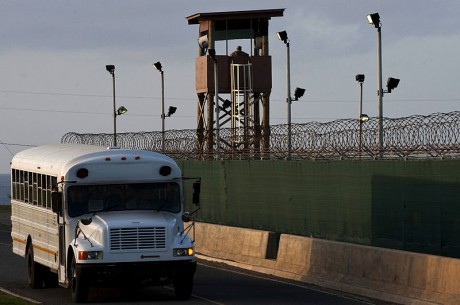
Of course, any such “ironies” would be irrelevant even if they were based on factual considerations. The media has never noted the “irony” of the many thousands of people who have taken refuge in the United States, which is currently torturing people in a secret prison at Guantanamo, and regularly kills civilians in drone strikes in Afghanistan, Pakistan, Yemen, and other countries. Nor has the press noted the “irony” of refugees who have fled here from terror that was actively funded and sponsored by the U.S. government, e.g. from Nicaragua, El Salvador, Chile, and other countries.

But in fact the “irony” that U.S. journalists mention is fantastically exaggerated. It is based on the notion that the governments of Venezuela under Chávez (and now Maduro) and Ecuador under Correa have clamped down on freedom of the press. Most consumers of the U.S. media unfortunately don’t know better, since they have not been to these countries and have not been able to see that the majority of media are overwhelmingly anti-government, and that it gets away with more than the U.S. media does here in criticizing the government.

Imagine if Rupert Murdoch controlled most U.S media outlets, rather than the minority share that his News Corp actually owns — then you’d start to have some idea what the media landscape in Ecuador, Venezuela and most of Latin America looks like.

The fact is that most media outlets in Ecuador and Venezuela are privately-owned, and oppositional in their orientation. Yes, the Venezuelan government’s communications authorities let the RCTV channel’s broadcast license expire in 2007. This was not a “shut down”; the channel was found to have violated numerous media regulations regarding explicit content and others — the same kind of regulations to which media outlets are subject in the U.S. and many other countries.

Even José Miguel Vivanco of Human Rights Watch — a fierce critic of Venezuela — has said that “lack of renewal of the contract [broadcast license], per se, is not a free speech issue.” Also rarely mentioned in U.S. reporting on the RCTV case is that the channel and its owner actively and openly supported the short-lived coup d’etat against the democratically-elected government in 2002.

A July 10th piece from the Washington Post’s editorial board — which has never hid its deep hatred of Venezuela, Ecuador and other left governments in Latin America — describes another supposed grave instance of the Venezuelan government clamping down on press freedoms. The editorial, which was given greater publicity through Boing Boing and others, describes the case of journalist Nelson Bocaranda, who is credited with breaking the news of Chávez’s cancer in June 2011. The Post champions Bocaranda as a “courage[ous]” “teller of truth” and dismisses the Venezuelan government’s “charges” against him as “patently absurd.”

In fact, Bocaranda has not been charged with anything; the Venezuelan government wants to know whether Bocaranda helped incite violence following the April 14 presidential elections, after which extreme sectors of the opposition attacked Cuban-run health clinics and homes and residences of governing party leaders, and in which some nine people were killed mostly chavistas.

The government cites a Tweet by Bocaranda in which he stated false information that ballot boxes were being hidden in a specific Cuban clinic in Gallo Verde, in Maracaibo state, and that the Cubans were refusing to let them be removed. Bocaranda later deleted the Tweet, but not before it was seen by hundreds of thousands.

So while the Post dismisses the case against Bocaranda as “absurd,” the question remains: why did Bocaranda state such specific information, if he had no evidence to support it? Indeed, any such evidence would be second hand unless Bocaranda had seen the supposed “hidden” ballot boxes and the actions by the Cubans himself.

The Venezuelan government’s summons for Bocaranda to explain himself is being characterized as a grave assault on press freedom, and perhaps it is an over-reaction — after all, many journalists report false information all the time. But wasn’t Bocaranda’s Tweet irresponsible, especially given the context of a volatile political situation?

In Ecuador, President Rafael Correa has been widely condemned in the U.S. media — in much reporting as well as commentary — for suing a prominent journalist, Emilio Palacio, for defamation. The defamatory content was, in fact, serious. It relates to a 2010 incident in which Correa was first assaulted and then later held captive by rebelling police in what many observers deemed an attempt at a coup d’etat.

Military forces ultimately rescued Correa. But in a February 2011 column referring to the episode, Palacio alleged that Correa had committed “crimes against humanity,” and that he had ordered the military forces to fire on the hospital where he was being held at the time. So Correa sued Palacio for defamation and won. What some U.S. media outlets have failed to mention is that he subsequently pardoned Palacio, and had made clear from the beginning that he would have dropped the lawsuit if Palacio ran a correction.

In other words, all that Correa did was exercise his right as a citizen under the law to sue someone who had printed an outrageous lie about him. This is a right that most elected officials have in most countries, including the United States. Former AP reporter Bart Jones has written:

“Would a network that aided and abetted a coup against the government be allowed to operate in the United States? The U.S. government probably would have shut down RCTV within five minutes after a failed coup attempt – and thrown its owners in jail. Chavez’s government allowed it to continue operating for five years, and then declined to renew its 20-year license to use the public airwaves.”

Considering the massive extent of “national security” overreach following the 9/11 attacks, it is almost incomprehensible to imagine what a U.S. administration’s reaction to a coup attempt would be, but it certainly would not be as restrained as in Ecuador or Venezuela, where a fiercely critical press not only exists, but thrives.

Many commentators have cited Reporters Without Borders [known as RSF, from its French initials] and other media watchdog groups’ criticisms of Ecuador’s proposed new “Organic Law of Communication.” In an example of true irony, such supposedly objective journalists have been more critical of Ecuador’s proposed media reforms than RSF itself has been, which noted that:

“…we think that other provisions conform to international legal standards. They include restrictions on broadcasting hours for the protection of minors, the prohibition of racist and discriminatory content and the prohibition of deliberate calls for violence. Finally, the provisions governing nationally-produced broadcasting content are broadly similar to those in force in most other countries.”

Organizations such as RSF and Freedom House are supposed to be impartial arbiters of press freedom around the world and are rarely subject to scrutiny. Yet both have taken funding from the U.S. government and/or U.S.-government supported organizations such as the National Endowment for Democracy (which was set up to conduct activities “much of [which]” the “CIA used to fund covertly,” as the Washington Post reported at the time, and which also provided funding and training to organizations involved in the afore-mentioned 2002 Venezuelan coup) and other “democracy promotion” groups.

The NED has spent millions of dollars in Venezuela and Ecuador in recent years to support groups opposed to the governments there. This conflict of interest is never noted in the press, and RSF and Freedom House, when they are cited, are invariably presented as noble defenders of press freedom, for whom ulterior motives are apparently unimaginable.

The true irony in the cases of Snowden, Assange, Manning and others is that the U.S. government, while claiming to defend freedom of the press, speech and information, has launched an assault on the media that is unprecedented in U.S. history.

The extreme lengths to which it has gone to apprehend (witness the forced downing of President Evo Morales’ plane in Austria) and punish (Bradley Manning being the most obvious example) whistle-blowers is clear. Apparently less understood by some U.S. journalists is that it is part of an assault on these very freedoms that the U.S. government pretends to uphold.

The U.S. government’s pursuit of Wikileaks — through grand jury and FBI investigations, and open condemnation of Julian Assange as a “terrorist” — is a blatant attack on the press. It seems too many journalists forget — or willingly overlook — that Wikileaks is a media organization, and that the leaks that have so infuriated the U.S. government, from the “Collateral Murder” video to “Cablegate”, Wikileaks published in partnership with major media outlets including the New York Times, The Guardian, Der Spiegel and others.

Now, as Edward Snowden’s leaks are published in The Guardian and other outlets, efforts have been launched to delegitimize journalist Glenn Greenwald, and some in the media have been all too willing to take part in attacking one of their own, simply for exposing government abuse — i.e. doing journalism.

There is a long history of partnership between traditional, corporate media outlets in the U.S. and those in Latin America. Due to a variety of reasons, including educational, class and often racial backgrounds, journalists throughout the hemisphere often tend to share certain biases. It is the journalist’s duty to be as objective as possible, however, and to let the media consumer decide where the truth lies.

Likewise, eagerly going along with double standards that reinforce paradigms of “American exceptionalism” and that overlook the U.S.’ long, checkered human rights history and minimize the importance of over a century of U.S. intervention and interference in Latin America does a great injustice to journalism and the public.

Likewise, media distortions of the state of democracy and press freedoms in countries that are routinely condemned by the U.S. government — such as Venezuela and Ecuador — contribute to a climate of demonization that enables U.S. aggression against those countries and damages relations between the people of the U.S. and our foreign neighbors.

Signed by:

Thomas Adams, Visiting Professor, Tulane University
Marc Becker, Professor, Department of History, Truman State University
Julia Buxton, Venezuela specialist
Barry Carr, Honorary Research Associate, La Trobe University, Australia
George Ciccariello-Maher, Assistant Professor, Drexel University
Aviva Chomsky, Professor of History and Coordinator of Latin American Studies, Salem State University

Luis Duno-Gottberg, Associate Professor, Caribbean and Film Studies, Rice University
Steve Ellner, Professor, Universidad de Oriente, Puerto La Cruz, Venezuela
Arturo Escobar, Professor, Department of Anthropology, University of North Carolina, Chapel Hill
Nicole Fabricant, Assistant Professor, Department of Sociology/Anthropology, Towson University
Sujatha Fernandes, Associate Professor, Department of Sociology, Queens College and the Graduate
Center, City University of New York
John French, Professor, Department of History, Duke University
Lesley Gill, Professor, Department of Anthropology, Vanderbilt University
Greg Grandin, Professor, Department of History, New York University
Daniel Hellinger, Professor, Department of Political Science, Webster University
Forrest Hylton, Lecturer, History and Literature, Harvard University
Chad Montrie, Professor, Department of History, UMASS-Lowell,
Deborah Poole, Professor, Department of Anthropology, Johns Hopkins University,
Margaret Power, Professor, Department of History, Illinois Institute of Technology
Adolph Reed, Jr., Professor, Department of Political Science, University of Pennsylvania
Gerardo Renique, Associate Professor, Department of History, City College of the City University of New
York
Suzana Sawyer, Associate Professor, Department of Anthropology, University of California
T.M. Scruggs, Professor Emeritus, School of Music, University of Iowa
Steve Striffler, Professor, Department of Anthropology, University of New Orleans
Miguel Tinker Salas, Professor, Department of History, Pomona College
Sinclair Thomson, Associate Professor, Department of History, New York University
Jeffery R. Webber, Lecturer, School of Politics and International Relations, Queen Mary, University of
London
Mark Weisbrot, Co-Director, Center for Economic and Policy Research

Republished with permission from: Global Research

India Student Death Toll Rises After Insecticide-Laced School Lunch

0

Mother holds her head while sitting next to her sick daughter at a hospital in the Eastern India city of Patna, July 17, 2013 (Reuters / Krishna Murari Kishan)At least 25 children have now been declared dead in eastern India after eating a school lunch that medical professionals say was laced with an insecticide.

As of Wednesday it was still unclear as to whether the insecticide was intentionally doused on the food or if the poisoning was the result of unwashed produce and a pesticide-heavy farming industry.

“We prepared antidotes and treated the children for organophosphorous poisoning,” said R.K. Singh, medical superintendent at the children’s hospital in state capital Patna. Organophosphate is an insecticide typically used on rice and wheat crops.

“It appears to be a case of poisoning but we will have to wait for forensic reports … Had it been a case of (natural) food poisoning, so many children would not have died,” Poonam Kumari, local government administrator at the village, told Reuters by phone from Mashrakh.

Reports vary on the total amount of deaths so far but dozens of the children, between the ages of four to twelve, remained hospitalized in the eastern state of Bihar on Wednesday after initially falling ill on Tuesday.

The school provides meals for the children through the world’s largest school feeding program, India’s decades-old Mid-Day Meal Scheme, which feeds roughly 120 million children across the country.

Protesters in the region along with parties in opposition to the Janata Dal party-led government reportedly took to the streets following the catastrophe, accusing the government of acting too slowly to hospitalize the children among other complaints of corruption.

Authorities have suspended an official in charge of the meal program in the school and have filed a charge of criminal negligence against the school headmaster.

The school headmaster, however, reportedly fled shortly after the children began to show signs of sickness.

_______________________

This work is licensed under a Creative Commons Attribution-Share Alike 3.0 License

Republished with permission from: Common Dreams

Military Industry Employee 'Throws Down Rifle' for 'Good of the World'

0

A five-year employee at private defense contracting corporation General Dynamics publicly resigned Tuesday in protest of the company’s arming of US-led wars, declaring: “I have always believed that if every foot soldier threw down his rifle war would end. I hereby throw mine down.”Brandon Toy’s General Dynamics employee badge (Photo: Brandon Toy)

Brandon Toy sent his resignation letter in an email to his immediate supervisors, coworkers, and the corporate chain of command, as well as to Common Dreams, who published the statement Tuesday.

The letter has since gone viral, racketing tens of thousands of views on social media sites as attention continues to climb.

Toy–who penned the letter in May and sat on it for months–says that when he pressed send and walked out of his office, he felt that a “giant weight had been lifted from [his] shoulders.”

“I feel fantastic,” he told Common Dreams. “I did the right thing. I am a little concerned about what I will do for work, but I know I will be working for the good of the world.”

Robert Doolittle, General Dynamics spokesperson, told Common Dreams he was aware of Toy’s resignation but had no comment.

The Detroit-based Army veteran, who had worked as an engineering project manager for General Dynamics, says that as a paper-pusher for this arms industry giant, he was ethically implicated in its role arming and fighting US-led wars.

“I felt a lot of cognitive dissonance for last two or three years,” he explains. “I knew what the truth was and what the consequences of our actions were. But I needed to make a living.”

One of the top ‘defense’ companies in the world, General Dynamics has been mired in controversy for its over 100 years of war profiteering, with profit windfalls from the US-led wars in Iraq and Afghanistan, thanks to extensive US contracts. The company has been met with harsh criticism for supplying weapons, including Stryker armored vehicles, tanks and guns, to the US-led wars in Iraq and Afghanistan while operating behind a veil of secrecy.

Yet, General Dynamics was not Toy’s first taste of US-led wars. He had formerly served in the Army as a military police machine gunner in Iraq during a 2004 deployment. Having joined as a fervent believer in the US-led war in Iraq, Toy says the experience turned him against a war that wasn’t helping anyone and was just “killing civilians” and “destroying cities.”

He became further disillusioned with the US role in the world when President Obama failed to bring the “hope and change everyone was hoping for.” He says that ‘courageous’ journalists and advocates, including Bradley Manning and WikiLeaks who exposed US war crimes, “showed him the truth” and filled him with anger as he worked his General Dynamics job following his honorable discharge from the Army.

Toy says that when Edward Snowden blew the whistle on NSA warrantless spying, he was deeply moved.

“When [Edward Snowden] talked about how he had believed in the mission, joined after the Iraq war, and found out it was false, it was like my words coming out,” he said. “It gave me hope that he took the chance and risked his life to do what he was doing.”

When asked if he has any advice for people in similar positions, he simply stated, “My actions speak louder than any words I could say. You don’t have to continue doing what you’re doing.”

_____________________

This work is licensed under a Creative Commons Attribution-Share Alike 3.0 License

Republished with permission from: Common Dreams

Leaders of Hunger Strike Against Solitary Punished With More Severe Solitary

0

Solitary Confinement (Photo: Kim Panian/Flickr Creative Commons)In a California prisoner hunger strike against solitary confinement, strike leaders are being retaliated against with further isolation.

At least 14 Pelican Bay State Prison inmates who are active in the hunger strike and signed a statement calling for prisoner unity–the Agreement to End Hostilities Among Racial Groups–were forcibly removed from their cells last Thursday and tossed into severe isolation units, the California-based Prisoner Hunger Strike Solidarity coalition reports.

“[On] July 11, 2013, we were placed in Administrative Segregation (Ad-Seg), where we are subjected to more torturous conditions than in the [solitary housing units],” declared the targeted prisoners in a statement released Wednesday morning. “Despite this diabolical act on the part of the [California Department of Corrections and Rehabilitation] intended to break our resolve and hasten our deaths, we remain strong and united!”

Furthermore, the prisoners are being cut off from news, communication, and even legal documents for a class-action lawsuit against solitary confinement.

Lawyers are being prevented from seeing their clients, the LA Times reports. Marilyn McMahon–lawyer with the group California Prisoner focus–was sent a letter from prison authorities notifying her that she is temporarily banned from all California state prisons.

“This is a clear attack against a non-violent protest,” says Anne Weills, attorney for several hunger strikers. “It is pathetic that in response to prisoners’ calls for basic human and civil rights, the CDCR responds by violating those rights.”

As the hunger strike enters its 11th day on Thursday, thousands are still participating, and the Prisoner Hunger Strike Solidarity coalition charges that the CDCR has consistently underestimated the numbers. Last week, over 30,000 prisoners went on hunger strike.

On Saturday, over 400 people from across California, including family members of those on the inside, rallied outside of the ‘maximum security’ Corcoran State Prison to show their support for the hunger strikers.

The hunger strike, which launched July 8 in Pelican Bay State Prison, is the third major prisoner hunger strike in the state since 2011.

In addition to calling for an end to solitary confinement, prisoners are demanding a halt to collective punishments and administrative abuses, harsh crackdowns under the auspices of ‘stopping gang activities,’ access to education, healthcare, and healthy food, and programs and basic rights for long-term single housing units, including phone calls, art supplies, and photographs once a year.

_____________________

This work is licensed under a Creative Commons Attribution-Share Alike 3.0 License

Republished with permission from: Common Dreams

Breaking: Judge Refuses to Drop 'Aiding the Enemy' From Manning Case

0

Judge Colonel Lind ruled to maintain Pfc. Bradley Manning’s most severe charge of ‘aiding the enemy’ on Thursday, July 18. (Image: C. Stoeckley)Developing…

The military judge presiding over the case of Pfc. Bradley Manning ruled Thursday to maintain Manning’s most severe charge of “aiding the enemy”–a charge critics are calling a major blow to the freedom of the press.

Firedoglake‘s Kevin Gosztola reports:

The judge has denied the defense motions for a finding of “not guilty” on the “aiding the enemy” charge and the charges alleging Manning exceeded authorized access on his computer. What is important to note about this ruling is that she was to consider all evidence presented to her in a “light most favorable to the prosecution.”

“Only in the absence of some evidence” that by reasonable inference could “reasonably tend to establish an offense charged” was she to rule that Manning was not guilty.

The move does not bode well for Manning’s fate. However, while the decision maintains the charges within the case, a final ruling of “guilty” or “not guilty” has not yet been decided.

Manning’s defense had motioned to drop the charge last week, among a slew of other charges being decided upon today. The “aiding the enemy” charge carries the possibility of life in prison.

“He was knowingly providing intelligence to the enemy,” said Judge Colonel Denise Lind, in rejecting Manning’s lawyer’s motion to dismiss that charge.

Follow more tweets from experts following the case below:

_____________________

This work is licensed under a Creative Commons Attribution-Share Alike 3.0 License

Republished with permission from: Common Dreams

India Student Death Toll Rises After Insecticide-Laced School Lunch

0

Mother holds her head while sitting next to her sick daughter at a hospital in the Eastern India city of Patna, July 17, 2013 (Reuters / Krishna Murari Kishan)At least 25 children have now been declared dead in eastern India after eating a school lunch that medical professionals say was laced with an insecticide.

As of Wednesday it was still unclear as to whether the insecticide was intentionally doused on the food or if the poisoning was the result of unwashed produce and a pesticide-heavy farming industry.

“We prepared antidotes and treated the children for organophosphorous poisoning,” said R.K. Singh, medical superintendent at the children’s hospital in state capital Patna. Organophosphate is an insecticide typically used on rice and wheat crops.

“It appears to be a case of poisoning but we will have to wait for forensic reports … Had it been a case of (natural) food poisoning, so many children would not have died,” Poonam Kumari, local government administrator at the village, told Reuters by phone from Mashrakh.

Reports vary on the total amount of deaths so far but dozens of the children, between the ages of four to twelve, remained hospitalized in the eastern state of Bihar on Wednesday after initially falling ill on Tuesday.

The school provides meals for the children through the world’s largest school feeding program, India’s decades-old Mid-Day Meal Scheme, which feeds roughly 120 million children across the country.

Protesters in the region along with parties in opposition to the Janata Dal party-led government reportedly took to the streets following the catastrophe, accusing the government of acting too slowly to hospitalize the children among other complaints of corruption.

Authorities have suspended an official in charge of the meal program in the school and have filed a charge of criminal negligence against the school headmaster.

The school headmaster, however, reportedly fled shortly after the children began to show signs of sickness.

_______________________

This work is licensed under a Creative Commons Attribution-Share Alike 3.0 License

Republished with permission from: Common Dreams

Leaders of Hunger Strike Against Solitary Punished With More Severe Solitary

0

Solitary Confinement (Photo: Kim Panian/Flickr Creative Commons)In a California prisoner hunger strike against solitary confinement, strike leaders are being retaliated against with further isolation.

At least 14 Pelican Bay State Prison inmates who are active in the hunger strike and signed a statement calling for prisoner unity–the Agreement to End Hostilities Among Racial Groups–were forcibly removed from their cells last Thursday and tossed into severe isolation units, the California-based Prisoner Hunger Strike Solidarity coalition reports.

“[On] July 11, 2013, we were placed in Administrative Segregation (Ad-Seg), where we are subjected to more torturous conditions than in the [solitary housing units],” declared the targeted prisoners in a statement released Wednesday morning. “Despite this diabolical act on the part of the [California Department of Corrections and Rehabilitation] intended to break our resolve and hasten our deaths, we remain strong and united!”

Furthermore, the prisoners are being cut off from news, communication, and even legal documents for a class-action lawsuit against solitary confinement.

Lawyers are being prevented from seeing their clients, the LA Times reports. Marilyn McMahon–lawyer with the group California Prisoner focus–was sent a letter from prison authorities notifying her that she is temporarily banned from all California state prisons.

“This is a clear attack against a non-violent protest,” says Anne Weills, attorney for several hunger strikers. “It is pathetic that in response to prisoners’ calls for basic human and civil rights, the CDCR responds by violating those rights.”

As the hunger strike enters its 11th day on Thursday, thousands are still participating, and the Prisoner Hunger Strike Solidarity coalition charges that the CDCR has consistently underestimated the numbers. Last week, over 30,000 prisoners went on hunger strike.

On Saturday, over 400 people from across California, including family members of those on the inside, rallied outside of the ‘maximum security’ Corcoran State Prison to show their support for the hunger strikers.

The hunger strike, which launched July 8 in Pelican Bay State Prison, is the third major prisoner hunger strike in the state since 2011.

In addition to calling for an end to solitary confinement, prisoners are demanding a halt to collective punishments and administrative abuses, harsh crackdowns under the auspices of ‘stopping gang activities,’ access to education, healthcare, and healthy food, and programs and basic rights for long-term single housing units, including phone calls, art supplies, and photographs once a year.

_____________________

This work is licensed under a Creative Commons Attribution-Share Alike 3.0 License

Republished with permission from: Common Dreams

Breaking: Judge Refuses to Drop 'Aiding the Enemy' From Manning Case

0

Judge Colonel Lind ruled to maintain Pfc. Bradley Manning’s most severe charge of ‘aiding the enemy’ on Thursday, July 18. (Image: C. Stoeckley)Developing…

The military judge presiding over the case of Pfc. Bradley Manning ruled Thursday to maintain Manning’s most severe charge of “aiding the enemy”–a charge critics are calling a major blow to the freedom of the press.

Firedoglake‘s Kevin Gosztola reports:

The judge has denied the defense motions for a finding of “not guilty” on the “aiding the enemy” charge and the charges alleging Manning exceeded authorized access on his computer. What is important to note about this ruling is that she was to consider all evidence presented to her in a “light most favorable to the prosecution.”

“Only in the absence of some evidence” that by reasonable inference could “reasonably tend to establish an offense charged” was she to rule that Manning was not guilty.

The move does not bode well for Manning’s fate. However, while the decision maintains the charges within the case, a final ruling of “guilty” or “not guilty” has not yet been decided.

Manning’s defense had motioned to drop the charge last week, among a slew of other charges being decided upon today. The “aiding the enemy” charge carries the possibility of life in prison.

“He was knowingly providing intelligence to the enemy,” said Judge Colonel Denise Lind, in rejecting Manning’s lawyer’s motion to dismiss that charge.

Follow more tweets from experts following the case below:

_____________________

This work is licensed under a Creative Commons Attribution-Share Alike 3.0 License

Republished with permission from: Common Dreams

Air Force drone crash closes remote Fla. highway

0

CBS News
July 18, 2013

An Air Force drone being tested at a nearby base crashed on takeoff Wednesday near a remote stretch of a Florida Panhandle highway. Officials say no one was injured but the road would be closed into Wednesday night.

The Air Force closed Highway 98 west of Panama City and east of Mexico Beach because of possible fires from the crash. Officials said the drone has a limited, 24-hour battery life and would be inactive after the battery depleted.

According to an Air Force fact sheet, the QF-4 is tested at nearby Tyndall Air Force Base and at Holloman Air Force Base in New Mexico. The plane is a modified F-4 Phantom aircraft, which has been in use since the 1950s.

Read More

<!–

–>

This article was posted: Thursday, July 18, 2013 at 9:51 am

Tags: , , ,


<!– this is where we need to show the related articles

–>

Republished with permission from: Infowars

Hernia Repair Vacation, Anyone?

0

Do you know anybody with a hernia problem who wants to repair it and have a vacation at the same time? Well, if you do, send them to Shouldice Hospital, right outside of Toronto, Canada, situated on 23 beautifully landscaped acres with greenhouses, walking paths, stables, a tennis court and putting greens.

Over four days and twelve meals, you’ll experience the finest, friendliest, safest, surgical and post-operative recovery experience in North America. You’ll pay from one-half to one-third less, with often far better outcomes, than you would for an outpatient operation for abdominal wall hernias in the U.S.

I know this and more from personal experience — one so pleasant that from time to time I visit Shouldice to see how they’re doing. They give me a quick, free examination. And this is not special treatment; this is standard care. Some years ago they annually invited their “alumni” for reunions where up to 1,500 patients came from all over Canada and other countries to honor the staff and the institution. In addition to dinner and entertainment, they provided a free hernia examination. Any former patient dropping by can receive the same special welcome.

The Shouldice Method is known worldwide as the ever-improving “gold standard.” Harvard Business School has a bestselling case study lauding its amazing efficiency while producing a superior performance. Patients give it an evaluation that would be the envy of the best clinics in the U.S.

Over your four days at Shouldice, you are with eighty-eight other hernia patients in various stages of recovery. You dine with them, walk specially inclined stairs and walkways and perform other exercises with them. You all have something in common to discuss. You are not immediately sent home to recover with only the help of your family, friends or home care services. You recover at Shouldice with good food, and new friends.

Shouldice, with very few exceptions, does not use general anesthesia and is proud of its dramatically lower recurrence and infection rates, compared with patients who are operated on at general hospitals. General surgeons do, on average, less than one-tenth the number of hernia surgeries per year than the surgeons at Shouldice.

The ten surgeons at Shouldice perform 7,500 operations a year. All they do is hernia procedures. In their spare time they publish peer-reviewed articles in medical journals advancing the state of the art. Unfortunately too many general surgeons and hospitals have on average over 10 times the rate of recurrence, four times the rate of infection, and often use expensive mesh both to replace lack of surgical skill and to speed up the operation. Plus they charge much more before they quickly say “sayonara.”

The Shouldice procedure is described by hospital officials as a “natural tissue repair that combines the surgical technique with the body’s natural ability to heal,” and takes, on average, forty-five minutes to complete. Except in rare circumstances, “the technique does not use artificial prosthetic material such as mesh because mesh can introduce unnecessary complications such as infections or migration, dramatically increasing the cost of the operation. Shouldice does not use laparoscopic technology because of the potential intestinal punctures and bladder and blood vessel injuries, which may lead to infection and peritonitis.” Shouldice staff note that laparoscopic surgery also requires general anesthesia and hugely higher costs for disposable items per surgery than is the case at their hospital.

There are about one million abdominal wall hernia operations yearly in the U.S. Hospitals and general surgeons for the most part do not use the Shouldice Procedure. Still the deplorable “quick and dirty” that invites overuse of mesh — about 80 percent of the patients — has become a perverse incentive for higher billings in the United States. Superior talent is needed for the more natural procedure used by Shouldice.

At its annual convention, the American Hernia Society is cool to the Shouldice model which has almost seventy years of experienced application. After all, at Shouldice, there is a no “fee for service” practice. Ten physicians (licensed by the College of Physicians and Surgeons) are on the staff and make less than $200,000 salary each year.

It is consumer-driven healthcare through superior competency, where, before discharge, patients participate more actively in their own healthcare in a facility specially designed for their condition.

Shouldice’s Director Daryl J.B. Urquhart makes a strong case for small, specialized hospitals that can deliver all-around superior outcomes. As Harvard Business School Professor, Earl Sasser says: “It’s more than an operation, it’s a total experience.”

In the U.S., the healthcare industry’s rocketing costs and inferior outcomes (especially for those without health insurance), its exclusion of tens of millions of Americans from coverage, its inability to learn from others, its gouging profiteering and frequent subordination of patient wellbeing by insurance and drug companies assure that superior procedures such as those used at Shouldice are largely ignored.

U.S. Medicare does not cover Americans who go to Ontario’s Shouldice, even though it would save money on all fronts. Still, for those of you with non-emergency hernias, sizable deductibles, or even those willing to go without Medicare coverage, who just want an enjoyable, economical respite without risking more recurring visits for infections or failures, consider Shouldice Hospital at 905.889.1125 or go to www.shouldice.com.

Ralph Nader is a consumer advocate, lawyer and author of Only the Super-Rich Can Save Us! He is a contributor to Hopeless: Barack Obama and the Politics of Illusion, published by AK Press. Hopeless is also available in a Kindle edition.

Republished with permission from: Counterpunch

Are “Professional” Politicians the Problem? Democracy v. Demarchy

1

Do we really need politicians?

Can’t we cut out the useless middlemen and do it ourselves?

Professional politicians just pimp their services out to the highest bidder.

And American democracy — once a glorious thing — has devolved into an oligarchy, according to two leading IMF officials, the former Vice President of the Dallas Federal Reserve, the the head of the Federal Reserve Bank of Kansas City, Moody’s chief economist and many others.

This is not how it was supposed to be. Thomas Jefferson envisioned “citizen farmers” who served in political office for a few years, and then went back to their normal jobs.

Reader Eric H. has a very interesting take on the whole question of politics and democracy:

“I was curious about Athenian democracy, and when I was poking around I was very surprised to find out that traditionally, a state in which the people voted for their public officials was known as an oligarchy. This was because that even if not at first, then eventually the government would devolve to a small, homogenous group that had enough political power to disregard the will of the people. Today we define oligarchy as simply “the rule of the few,” but that’s only the symptom; the Greeks understood that the disease was the delegation of political power through elections. Sounds radical, I know.

Today we call it representative democracy, but that’s just a euphemism (perhaps the most pervasive euphemism in history). It’s hard to understand how giving up the power to make the decisions that affect one’s life could be considered to be any kind of democracy. Even though the definitions have been changed, there is ample evidence to show that the ancients were correct, much of which has been chronicled on your site. And it’s an explanation that makes a lot of sense; rather than a secret conspiracy for world domination, maybe our problems are down to a deluded public repeatedly making the same mistakes.

I think a discussion about whether we should elect our public officials and lawmakers is important because:

1) It’s mind boggling to consider how many people (hundreds of millions? billions?) have been hoodwinked into thinking that because they might occasionally have some (extremely limited) political influence, they have some kind of political power

2) It’s heartbreaking when the first order of business of a people who wrest political power at a terrific cost is to give it away in the hope that this time they will choose the right oligarchs

3) It would make it possible to understand “the end of history” as the emergence of oligarchy as the dominant form of government in the world (great if you’re an oligarch, not so great for the rest of us)

4) It might mitigate the suffering caused by seeing the same often cretinous or senile career politicians year after year

5) The creeping feeling that by bothering less and less with the pretense of democracy, our ruling class feels almost secure enough to drop it altogether and take off the gloves.

The Athenians cured the disease of oligarchy by randomly choosing their public officials and submitting legislation to popular vote. There were other checks and balances, but those were the main features. I think that until we adopt some combination of those two processes, our political situation is unlikely to improve, even if the ills of oligarchy take a long time to manifest themselves. Quite a few people have actually given a lot of thought to how we might adopt aspects of the Athenian system; a web search on sortition and demarchy will yield a lot material.

We really need to challenge our most basic assumptions if we want things to change.”

Wikipedia explains:

Demarchy (or lottocracy) is a form of government in which the state is governed by randomly selected decision makers who have been selected by sortition (lot) from a broadly inclusive pool of eligible citizens. These groups, sometimes termed “policy juries”, “citizens’ juries”, or “consensus conferences”, deliberately make decisions about public policies in much the same way that juries decide criminal cases.

Demarchy, in theory, could overcome some of the functional problems of conventional representative democracy, which is widely subject to manipulation by special interests and a division between professional policymakers (politicians and lobbyists) vs. a largely passive, uninvolved and often uninformed electorate. According to Australian philosopher John Burnheim, who coined the term demarchy, random selection of policymakers would make it easier for everyday citizens to meaningfully participate, and harder for special interests to corrupt the process.

More generally, random selection of decision makers from a larger group is known as sortition (from the Latin base for lottery). The Athenian democracy made much use of sortition, with nearly all government offices filled by lottery (of full citizens) rather than by election. Candidates were almost always male, Greek, educated citizens holding a minimum of wealth and status.

In the Canadian provinces of British Columbia and Ontario, a group of citizens was randomly selected to create a Citizens’ Assembly on Electoral Reform to investigate and recommend changes to the provinces’ electoral systems. A similar system happened with the Dutch Burgerforum Kiesstelsel. The Old Order Amish use a combination of election and sortition to select church leaders; men receiving two or three nominations to fill a vacancy (the number varies by district) are then asked to select a psalm book containing a slip of paper, one of those slips being marked to indicate who will take on the burden of the position.

***

An attractive feature of demarchy is that if political leaders were replaced on a regular basis with randomly selected citizens, it would reduce institutionalised corruption, party apathy and complacency as well as a history of party led entitlement, lack of choice and variety in political ideas in platforms. It could be argued that replacing politicians in this way would solve such problems.

As people would be randomly selected to act as representatives it would be less likely that the person involved would be part of a “party political machine”.

The theory says that a randomly selected person as a representative would not have to compromise their own beliefs in order to make political alliances and gain support, nor fear political reprisals in implementing tough or controversial legislation. However, as theory goes, there is no inherent guarantee, nor anything a priori in demarchy which guarantees this.

There is no proven link that long term political representation equals a larger amount of monetary loss through political corruption nor could it be proven that random citizens in office would end or limit corruption nor that corruption would increase.

Research by the World Bank and others has shown that a form of citizens’ assembly called Participatory budgeting reduced corruption in several cities.

***

Politicians are often forced to make decisions which compromise their own beliefs and what they may think is best through the pressures of future elections, fitting into their party apparatus, pleasing those who funded their campaigns and vote sharing and voting compromise. The time lost in the voting process, image forming and maintenance and focusing on approval would be better suited to forming good law and policy. Demarchy would eliminate some of these pressures, however these pressures are likely to exist in any political office and there is no guarantee that a randomly selected citizen would adhere to his/her belief system or that he/she would have the political history, knowledge or courage to do so.

Demarchy, because it is based upon random selection, does not make a person’s career dependent upon popularity, and, because a demarchy is likely to remove the direct influence of political parties, there is no “party line” that the individual must adhere to. This is not to say that political alliances could not be formed after a person’s selection–but that the structure of demarchy is less suited to decision-making based upon politics.

One benefit of demarchy is that it is more suited to non-party politics. So some claim it is better able to build consensus or compromise.

***

No modern nation has attempted to use demarchy as a primary system for political decision making, so it is difficult to assess problems of transition or shortcomings of the system.

Wikipedia also notes:

Almost all Greek writers who mention democracy (including Aristotle, Plato and Herodotus) both emphasise the role of selection by lot or state outright that being allotted is more democratic than elections. For example Plato says:

“Democracy arises after the poor are victorious over their adversaries, some of whom they kill and others of whom they exile, then they share out equally with the rest of the population political offices and burdens; and in this regime public offices are usually allocated by lot.”

We see the same idea in the 18th century after the re-emergence of democracy in the writings of Charles de Secondat, baron de Montesquieu:

“The suffrage by lot is natural to democracy, as that by choice is to aristocracy”

***

[But] according to Xenophon (Memorabilia Book I, 2.9), this classical argument was offered by Socrates [against demarchy]:

[Socrates] taught his companions to despise the established laws by insisting on the folly of appointing public officials by lot, when none would choose a pilot or builder or flautist by lot, nor any other craftsman for work in which mistakes are far less disastrous than mistakes in statecraft.

Interesting stuff … what do you think?

Republished with permission from: Global Research

Ahmadinejad arrives in Iraq for talks

0

A file photo of Iranian President Mahmoud Ahmadinejad (R) meeting with Iraqi Prime Minister Nouri al-Maliki during a visit to the Iraqi capital, Baghdad

Iranian President Mahmoud Ahmadinejad has arrived in Iraq for an official visit aimed at further expansion of bilateral relations between the two neighboring countries.

Heading a high-ranking delegation, the Iranian president will hold two days of talks with senior Iraqi officials. He was officially welcomed upon his arrival in the Iraqi capital, Baghdad, by Vice President Khudayr al-Khuzai at Baghdad airport.

During his stay, the Iranian president will meet with Prime Minister Nouri al-Maliki and Khuzai to exchange views on common areas of interest between the two nations.

Ahead of his visit, Ahmadinejad hailed Tehran-Baghdad ties as Å“exceptional” and underlined the significance of his trip in further strengthening the ties between the two nations.

Å“Following the downfall of the former and dictatorial regime of Iraq [under Saddam Hussein], which had hindered the expansion of ties between the two countries for a long time, we are currently witnessing rapid and all-out expansion of brotherly relations.”

Pointing to different areas of collaboration between Tehran and Baghdad, Ahmadinejad noted, Å“In the energy sector, there are good grounds for cooperation between the two countries, but potentials for cooperation between the two sides are several times higher than the current level of Tehran-Baghdad relations.”

The outgoing Iranian president is also expected to pay a visit to the holy Iraqi cities of Karbala and Najaf.

On July 14, Malikiâ„¢s spokesman, Ali Mussawi, said the Iranian president had been invited by the Iraqi President Jalal Talabani, but he would be hosted by Khuzai, as Talabani is under medical treatment abroad.

The Iraqi president, who suffered a stroke in December 2012, has been absent from the countryâ„¢s political scene while he receives treatment in Germany.

MKA/SS/HMV

Republished with permission from: Press TV

Amnesty for Racists?

0

The headline asked the right question: “Are We Bigots?” But the story wasn’t about the George Zimmerman “stand your ground” trial, and it wasn’t even about Americans. It was in the July 18 KOREA TIMES here in Seoul and reflected on whether Koreans discriminate against people from other countries.

What struck me was that “Are we bigots?” is a question most Americans don’t ask themselves. Americans seem to have given up on introspection and concluded that they aren’t bigots, aren’t racists. The U.S. has moved beyond racism and its Jim Crow past, the thinking goes, and as the United States Supreme Court concluded in its recent case gutting part of the Voting Rights Act.

Merely suggest to an American that he might be racist, and you’ll get responses such as, “I’m sick of being called racist because I think Zimmerman is innocent! I’m sick of being called racist just because I hate Obama! I AM NOT A RACIST!!!!”

The strong denials come because we’ve been conditioned to recognize that racism is awful. It’s one of the worst things one can be in America 2013. If you admit to it, you’re cooked —just ask Paula Deen. Racism ranks among child molesting, cockfighting, and blowing second-hand smoke in a baby’s face.

No wonder Americans get so defensive and stand their ground so strongly when they feel attacked in this way.

The widespread attitude among Americans that racism is evil is a sign of great progress. But ironically, the strategy that made us see racism as so terrible is now keeping us from making further progress. We’re stuck, standing our ground in an America that refuses to recognize just how racist it is.

What’s happened is that our racism has been driven underground, into our unconscious minds. Many if not most Americans harbor some unconscious racism. As Michelle Alexander wrote in her stunning book about how our criminal justice system disproportionately targets blacks, “the fact that you may honestly believe that you are not biased against African Americans, and that you may have black friends or relatives, does not mean that you are free from unconscious bias. Implicit bias tests may still show that you hold negative attitudes and stereotypes about blacks even though you do not believe you do and do not want to” (The New Jim Crow: Mass Incarceration In The Age Of Colorblindness (2010), p. 107, emphasis added).

It’s already hard enough to recognize unconscious racism in yourself. It’s even harder if you refuse to look for it. After all, who wants to devote effort to finding out if he’s a racist, the lowest of scum, a monster?

So if we want make further progress against racism, especially unconscious racism, we have to adopt a new strategy. Strangely, we have to make racism less of a dirty word, not more. We’re going to have to denounce it less.

Because the more we denounce racism and racists, no matter how well-intentioned we are, the more difficult we make it for people to ask, “Am I racist?”

We need to make it widely understood that unconscious racism isn’t a reflection of a person’s evil character, that it isn’t a “choice”; it’s an affliction, a disease, an infection from the wider culture, including ghosts from the past.

Think alcoholism. The recent practice of seeing alcoholism as a disease rather than as a moral failing has made it easier for alcoholics to seek help. Support and understanding are more effective than denunciation in getting an alcoholic to take that first step: admitting he has a problem.

It’s time for an amnesty of sorts for racists, an attitude of truth and reconciliation such as helped South Africans begin to recover from apartheid. South Africans realized that denial would keep them stuck, so they brought the racism and all its consequences out in the open. Perpetrators faced their victims — and their own racism.

We may not have to do anything so drastic. Instead, we can start by making it acceptable and indeed laudable for Americans to admit they’re racists — and that they’re working to understand and overcome their racism. Why not create self-help materials and form support groups? Why not Racists Anonymous? If people are honest, the meetings will be crowded. That would be a sign of progress.

Making it OK to admit that we’re a nation of racists would be a huge step toward eradicating racism and fostering true justice. Let’s try this strategy and turn the tragic “stand your ground” case into an opportunity to move forward.

Brian J. Foley is living in Seoul this summer. He’s a law professor and author of the satirical financial self-help book, A New Financial You in 28 Days! A 37-Day Plan (Gegensatz Press 2011). Reach him at brianjfoleyinc@gmail.com

Republished with permission from: Counterpunch

Requiem for a Revolution that Never Was

0

“Sometimes people hold a core belief that is very strong. When they are presented with evidence that works against that belief, the new evidence cannot be accepted. It would create a feeling that is extremely uncomfortable, called cognitive dissonance. And because it is so important to protect the core belief, they will rationalize, ignore and even deny anything that doesn’t fit in with the core belief.”

– Frantz Fanon, The Wretched of the Earth

As the military in Egypt consolidates its putsch against the leadership and political structures of the Muslim Brotherhood, it should be obvious that the initial narrative rationalizing intervention by the military as a necessary corrective to a “revolutionary process” has lost all credibility. Yet many liberals and radicals appear united in a fanciful reading of the events in Egypt that not only legitimizes the coup but characterizes the collection of small-minded state-capitalists thugs who make up the top officer corps of the military as part of the people and the revolutionary process.

From bourgeois intellectual hacks like Isabel Coleman to venerable Marxist materialists like Samir Amin, who implied that the Egyptian army was a neutral class force, the emotional response to seeing hundreds of thousands of people on the streets seems to have created a case of temporary insanity, or as Frantz Fanon refers to it as — cognitive dissonance. This can be the only explanation for the theoretical and rhetorical acrobatics many are engaged in to reconcile their beliefs in democratic rights and revolutionary transformation with what is occurring right before their eyes in Egypt.

A revolution in name only 

The popular use and acceptance of the term revolution to describe the events in Egypt over the last two years demonstrates the effectiveness of global liberal discourse to “de-radicalize,” with the collusion of some radicals, even the term “revolution.”

Eschewing the romanticism associated with revolution and the sentimentality connected to seeing the “masses in motion,” it has to be concluded that between February 2011, when Mubarak was ousted, and July 3, 2013, when the military officially reassumed power, there was no revolutionary process at all, in the sense that there was no transfer of power away from the class forces that dominated Egyptian society. No restructuring of the state; no new democratic institutions and structures created to represent the will and interests of the new progressive social bloc of students, workers, farmers, women’s organizations etc.; and no deep social transformation. In fact, the rapes and sexual assaults that occurred during the recent mobilizations were a graphic reminder that sexist and patriarchal ideas still ruled, untouched by this so-called revolutionary process.

A revolutionary process is a process by which structures of power are created by a broad mass of people that allow them to eventually transform every aspect of their society – from the structure and role of the State and the organization of the economy to inter-personal relations – all with a view to eliminating all forms of oppression. There were some important organizational advances made by some elements of the labor movement in Egypt, including the creation of independent trade unions. However, the organizational imperative for revolutionary change that requires the building of popular structures to sustain mass struggle and represent dual power, was not as strong as it should have been in Egypt.

Early 2011 in Egypt saw mass agitation for social change and a mass rebellion against a dictatorship that galvanized previously disparate social forces and classes – Westernized secular liberals, labor rights activists, radical students, women’s rights activists and Islamic fundamentalists – into one oppositional social bloc. The initial demand was for the end of the Mubarak dictatorship and the creation of a democratic system that respected democratic rights – the essential component of an authentic national democratic revolutionary process. However, the maturation of this process was arrested due to three factors: (i) the seizure of power by the Supreme Council of Armed Forces (SCAF) on February 11, (ii) the channeling of mass dissent primarily into the electoral process, and (iii) the failure of the oppositional forces to organize sustainable mass structures to safeguard and consolidate the developing revolutionary situation.

The concern with characterizing the nature of mass struggle in Egypt and in Tunisia that eventually was branded as the “Arab spring,” is not driven by a desire for some kind of neat, categorical purity that abstracts complex social phenomenon from its historical context. But instead the concern is the need to differentiate politically and programmatically the specific political challenges and tasks between an insurrectionary phase of struggle and one that has entered a pre-revolutionary or revolutionary phase.

This is important because the liberal appropriation of the term “revolution” to describe everything from the events in Libya and Syria to the Green movement in Iran not only distorts social reality but also advances a dangerous narrative. That narrative suggests that revolutionary change takes place as a result of spectacle. It devalues organizing and building structures from the bottom up as unnecessary because it is the theater that is important; the episodic show; the display that refutes Gil Scott Heron’s admonition that “the revolution will not be televised!”

The perverted logic of this approach is reflected in both the failure of the opposition to organize itself beyond the spontaneous mobilizations of 2011 and the knowledge of Morsi’s opponents, the Tamarod – thanks to signals from their patrons in the U.S. – that if they demonstrated significant street opposition to President Morsi the U.S. would have the cover to support intervention by the military.

The military’s pre-emptive strike against revolution

To have a clearer view of the current situation in Egypt, we must debunk the nonsensical, a-historical gibberish that suggests that the Egyptian military is a neutral, grand mediator of contending social and political forces, and stepped into the political scene in January 2011 and again July 2nd as a national patriotic force allied with the interests of the “people.”

The reality is that what we have witnessed in Egypt is a lateral transfer of power, in class terms, from the civilians in the Mubarak government, representing capitalist interests tied to the State, to the military, which has similar economic interests, with their enterprises and retired officer corps populating companies connected to the State sector. In fact, under President Morsi, the military never really went away. It maintained an independent space in the Egyptian state and economy. Critical ministerial positions in the Morsi cabinet, such as the Interior Ministry, Defense and Suez Canal Authority, were given to individuals associated with the Mubarak regime that were allied with the military. And the Egyptian Supreme Constitutional Court, populated by Mubarak-era appointees, was the main instrument used by the military to limit and control any efforts to restructure the state or expand Morsi’s power.

For U.S. policy-makers, the Muslim Brotherhood and the Morsi government were never seen as an alternative to Hosni Mubarak. Despite the repression meted out to members of the Muslim Brotherhood by the Mubarak regime, it was well understood that the Brotherhood was part of the Egyptian economic elite and open to doing business with the West. Therefore, Morsi was seen as an acceptable and safe civilian face to replace Mubarak while the U.S. continued its influence behind the scenes through the military.

Both the U.S. government and the Egyptian military had objective interests in making sure that the power of the Morsi Presidency remained more symbolic than real. The military, working through the Constitutional Court and the bureaucracy, made sure that President Morsi and the Muslim Brotherhood only had nominal control of the State. Morsi did not control the intelligence or security apparatus, the police, the diplomatic corps, or the bureaucracy, which was still staffed with Mubarak holdovers.

In fact, one of the major sources of tension between the military and the Muslim Brotherhood was the threat – and real moves – made by the Morsi government to use their nominal state power to curtail the economic activity of the military, which holds interests controlling anything from 15 to 40 percent of the economy, in favor of the interests of the Muslim Brotherhood itself, representing sectors of the competitive capitalist class.

One way of looking at the assault on the Muslim Brotherhood is that it was nothing more than a militarized solution to an intra-bourgeois class struggle within the context of Egyptian society, and had nothing to do with the interests of the fragmented and institutionally-weak opposition.

So the idea that the military, as a neutral force, allied itself with “the people” and only stepped in to resolve a political crisis is nothing more than a petit-bourgeois fantasy.

The class-based, social and economic interests of the military mean that it will oppose any fundamental transformation of the Egyptian economy and society, the ostensible aim of the “revolution.” Significantly, this means that the power of the military is going to have to be broken if there is to be any prospect of revolutionary change in Egypt.

A National Democratic Revolution: One step forward, three steps back

This analysis, however, should not be read to suggest that the people were just bit-players in a drama directed by powers they had no control over. The mass rebellion in Egypt created a crisis of governance for the corrupt elite that were in power and their U.S. patron. The demand for the end of the dictatorship was an awesome demonstration of people-power that created the potential for revolutionary change. The problem was that the dictatorship had severely undermined the ability of alternative popular forces to develop and acquire the political experience and institutional foundations that would have positioned them to better push for progressive change and curtail the power of the military. Unfortunately for Egypt, the force that had the longest experience in political opposition and organizational development was the Muslim Brotherhood.

The call by a sector of the “people” for the Morsi government to step down was a legitimate demand that expressed the position of a portion of the population that was dissatisfied with the policies and direction of the country. Yet, when the Egyptian military – a military that has not demonstrated any propensity for supporting democratic reforms – intimated that it would step in, the mass position should have been “no to military intervention, change only by democratic means” – a position that a more mature and authentically independent movement might have assumed if it was not being manipulated by powerful elite forces internally and externally.

It was wishful thinking that bordered on the psychotic for liberal and radical forces in the country and their allies outside to believe that a democratic process could be developed that reflected the interests of the broad sectors of Egyptian society while disenfranchising the Muslim Brotherhood, a social force that many conservatively suggest still commands the support of at least a third of the Egyptian population, and is the largest political organization in the country. Liberals and some radicals that supported the coup did not understand that the construction of the “people” is a social/historical process that requires both struggle and engagement. Not understanding this basic principle has resulted in the killing of the national democratic revolution in its infancy.

The powerful national elites that bankrolled the anti-Morsi campaign and their external allies, including Saudi Arabia and the U.S., have successfully set in motion a counter-revolutionary process that will fragment the opposition and marginalize any radical elements. The Egyptian elite understood much more clearly than the Tamarod or the National Salvation Front that a revolutionary process would entail the development of a political program that has as its objectives the subordination of the military to the people, the public appropriation of state capitalist sector and the rejection of neoliberal capitalist development. Because of that understanding, they moved with textbook precision over the last year and a half to protect their interests.

Sadly, the liberal and radical collusion with the anti-democratic forces of the Egyptian military and economic elite has provided legitimacy for the same retrograde forces that dominated Egyptian society under Mubarak to continue that domination, but this time in the name of “revolution.”

Ajamu Baraka is a human rights activist and veteran of the Black Liberation Movement. He is currently a fellow at the Institute for Policy Studies. Baraka can be reached at www. Ajamubaraka.com 

Republished with permission from: Counterpunch

Prometheus Among the Cannibals

0

http://www.truthdig.com/report/item/prometheus_among_the_cannibals_20130718/

Posted on Jul 18, 2013

Republished with permission from: TruthDig

Rohani vows to expand Iran-Lebanon ties

0

Iranian president-elect Hassan Rohani has stressed the need for further development of bilateral relations between Iran and Lebanon, noting that diplomatic ties between Tehran and Beirut will expand in coming years.

The remarks were part of message conveyed by Iran’s Ambassador to Beirut Ghazanfar Roknabadi to Lebanese President Michel Sleiman during a meeting at Baabda Presidential Palace on Thursday.

In the message, the Iranian president-elect also expressed gratitude for Sleimanâ„¢s congratulatory message on Rohaniâ„¢s recent election to Iran’s presidency.

During the meeting, Roknabadi reiterated Iranâ„¢s policy to support the unity and stability of Lebanon, and maintain balanced relations with all Lebanese tribes and political factions.

He stated that Tehran throws its weight behind Sleimanâ„¢s efforts to promote national dialogue in Lebanon.

The Iranian ambassador also expressed hope that Iran-Lebanon ties, particularly in line with economic and trade agreements signed between the two countries, will further expand under the next Iranian administration.

Sleiman, for his part, stated that the region has entered a new stage following Rohaniâ„¢s presidential election win. He expressed hope that the new opportunity will open fresh avenues for the realization of the interests of the regional nations.

Rohani won over half of the votes in Iran’s June 14 election, which was marked by a 72.7 percent turnout, to secure an outright victory.

Rohani currently represents Leader of the Islamic Revolution Ayatollah Seyyed Ali Khamenei in the Supreme National Security Council and is also a member of the Expediency Council and the Assembly of Experts. He is also the president of the Expediency Council’s Center for Strategic Research.

MP/SS/HMV

Republished with permission from: Press TV

UK: Protesters Charged for Symbolic Breach of Secrecy on British Armed Drones

0

In April, around 400 peace campaigners marched from Lincoln to a rally at nearby RAF Waddington, to protest against armed drones being operated from Britain to conduct missions in Afghanistan. The drones were previously operated from a United States Air Force base in Nevada.

The first activists in Britain to be arrested and charged for anti-drones related offences will stand trial in October for damaging a fence during a June protest at RAF Waddington in Lincolnshire, from which unmanned drone aircraft are operated.

The action was timed to coincide with the fifth anniversary of the first UK drone strike and the activists were kept overnight at Lincoln police station after they broke into the RAF base, set up banners and planted a peace garden.

The Waddington Six are (clockwise in the picture):

Henrietta Cullinan, a teacher,
Keith Hebden, an Anglican priest,
Susan Clarkson, a Quaker,
Chris Cole, coordinator of the Drone Campaign Network,
Penny Walker, a campaigner for asylum seekers in Leicester,
and Martin Newell, a Catholic priest.

waddington six

A strange post on BBC Lincolnshire saw fit only to indicate the two priests in the pictures — labelled ‘mugshots’ — and gave each person’s home address. It is to be hoped this will not cause them problems.

raf fence breachedPilots based at RAF Waddington began operating Reaper aircraft based in Afghanistan earlier this year. The drones carry laser-guided weapons, including Hellfire missiles and GBU-12 bombs, but the Ministry of Defence states that they are mainly used for surveillance, though a number of precision weapons have been deployed.

The Fellowship of Reconciliation are urging people to write to their MP about the new inquiry into current and future use of Remotely Piloted Air Systems by the UK military and intelligence communities. The UK Defence Select Committee will examine six issues, including the ethics and legality of their use. The link shows several other ways in which a contribution to the consultation may be made.

Initial source: the Friend — Caroline Humphries, news@thefriend.org and additional linked material from two BBC websites, the Parliamentary website and the Guardian

Protesters march to the perimeter fence of RAF Waddington, Lincolnshire

Disclaimer: The contents of this article are of sole responsibility of the author(s). The Centre for Research on Globalization will not be responsible for any inaccurate or incorrect statement in this article. The Center of Research on Globalization grants permission to cross-post original Global Research articles on community internet sites as long as the text & title are not modified. The source and the author’s copyright must be displayed. For publication of Global Research articles in print or other forms including commercial internet sites, contact: publications@globalresearch.ca

www.globalresearch.ca contains copyrighted material the use of which has not always been specifically authorized by the copyright owner. We are making such material available to our readers under the provisions of “fair use” in an effort to advance a better understanding of political, economic and social issues. The material on this site is distributed without profit to those who have expressed a prior interest in receiving it for research and educational purposes. If you wish to use copyrighted material for purposes other than “fair use” you must request permission from the
copyright owner.

For media inquiries: publications@globalresearch.ca

Republished with permission from: Global Research

Ireland nears end of bailout term

0

Irelandâ„¢s foreign ministry says Dublin has met nearly all of its international bailout commitments, waiting to be the first country to exit the program.

Å“Ireland has successfully completed the 11th review mission and we continue to meet our targets,” Irelandâ„¢s foreign ministry said on Thursday, adding that the country has used about 91 percent of the 85 billion euro (USD 111 billion) bailout from the EU and the International Monetary Fund (IMF).

At the current rate and with all commitments fulfilled, Ireland would exit the international bailout program by the end of this year.

Dublin met nearly all its commitments by issuing debt periodically over the last year – in the form of a 10-year bond in March.

Meanwhile, the head of the country’s debt agency said it will not reveal terms for the next bond sale this year.

The EU-IMF supplied a EUR 85 billion bailout loan to Ireland in 2010, coming mostly from external loans and guarantees, which includes EUR 17.5 billion taken mostly from Ireland’s public pension fund.

Angry citizens accused the government of mishandling the country’s finances while imposing harsh austerity measures.

The move saw cuts to minimum wage, social spending and public sector jobs, while increasing taxes.

The worsening debt crisis forced EU governments to adopt harsh austerity measures and tough economic reforms, which have triggered incidents of social unrest and massive protests in many European countries including Portugal, Spain, Greece and Italy.

GMA/KA

Republished with permission from: Press TV

India: Contaminated school-meal kills 22 children

0


By
Kranti Kumara

18 July 2013

At least 22 school children, ranging in age from 5 to 12, have died as the result of eating a severely contaminated mid-day meal Tuesday in a government-run primary school in Dharmasati Gandaman–a village in the Bihar state sub-district of Mashrakh.

The meal was supplied under a national government program that provides lunches to all pupils attending a government-administered or -supported primary school.

There were scenes of anguish Tuesday evening and all through Wednesday, as parents and relatives claimed the bodies of the dead children and sought news of the two dozen children who remain in critical condition.

By Thursday morning some media sources were attributing 25 or more deaths to the contaminated meal. The Times of India reported that angry relatives have buried at least 27 bodies in front of the government school in Dharmasati Gandaman “as a mark of protest”. It added that those buried there do not include several children who were declared dead on their arrival late Tuesday in the state capital, Patna, which lies sixty kilometers to the south-east.

Yesterday villagers took to the streets to voice their anger against the state government, which took 15 hours to organize any serious effort to come to the aid of the poisoned children. They blocked roads and railway lines and attacked a police station, reportedly setting several vehicles ablaze. In Chhapra, the district capital, police used water cannon to quell protests.

The school’s headmistress, who doubled as one of its two teachers, reportedly fled the scene after the children began falling ill.

The cook had complained of a foul odour coming from the cooking-oil being used in preparing the meal, but was reportedly ordered by the headmistress to use it anyway.

These deaths are hardly the first from the Mid-Day Meal program, which is plagued by underfunding, poor hygiene standards, and corruption. In March of this year two children died in the northern state of Haryana after eating a tainted mid-day meal.

On Wednesday, the Indian Express reported that 50 children became ill in a government-school in another part of the Bihar. The children said they had fallen sick because the meal had a dead lizard in it. Also Wednesday, at least 31 children in the western state of Maharashtra were admitted to hospital for gastroenteritis after consuming a mid-day meal.

In a transparent attempt to deflect public anger away from Bihar’s JDU (Janata Dal-United) state government, the state education minister P.K. Shahi claimed the Dharmasati Gandaman deaths were likely a deliberate conspiracy to discredit the government. He alleged that the food used in preparing the meal had come from a store run by the headmistress’ husband, whom he alleged is an activist of a rival political party.

The Hindu-communalist Bharatiya Janata Party (BJP), which until last month had been in a governmental coalition with the JDU, accused Bihar Chief Minister Nitish Kumar of being “insensitive and callous” for failing to visit the grief-stricken villagers.

Kumar has announced that the families of the dead children will be paid 200,000 rupees ($US3,370) in “compensation”.

The Congress Party, which heads India’s national coalition government, for its part, made only the mildest criticisms of Bihar’s government. It is hoping that now that the JDU has quit the BJP-led National Democratic Alliance it can be induced to align with the Congress for the 2014 national elections.

Various political parties, including the BJP and the Rashtriya Janata Dal, a sometime Congress party ally, called for protests Wednesday. While anti-government sentiment was strong, the BBC says its local correspondent reported that in some places opposition “political leaders have been chased from the streets by enraged protesters.”

It has been widely reported in the press that one of the doctors treating the sick children suspects that the deaths may have been caused by food grains getting contaminated with Organophosphorus, a chemical compound that is used widely as a pesticide in agriculture and as a nerve agent in chemical warfare.

However, this has not been confirmed by forensic analysis and the relatives of the children noted that only those who ate a vegetable dish made of soybeans and potatoes fell ill. Not the ones who merely ate grains. In any case, only a comprehensive scientific analysis will be able to pinpoint the exact cause of this horrific tragedy.

The Mid-day School lunch program was launched nationwide in every state in 2001 after the Indian Supreme Court ordered that all children in government and government-assisted primary schools be given one hot meal daily. The court also mandated that each child should be given at least 300 calories per child with 8-10 grams of protein.

The court’s ruling was in response to numerous studies showing that hunger and disease stalk India. Malnutrition and undernourishment are rampant among both children and adults, contributing to high mortality rates and, among children, stunted physical and intellectual development. According to the World Bank, India is home to at least one third of the malnourished children in the world, with almost half of India’s children considered malnourished.

As with every endeavour launched by the Indian ruling elite in the name of alleviating widespread poverty and misery, the Mid-Day Meal program exhibits widespread official indifference, incompetence and thievery.

Neither the Indian nor the state governments have set up proper kitchens and hygienic facilities for preparing children’s meals.

Instead the state governments have given contracts to politically-connected NGOs and others to supply and prepare meals. Many times the meals are prepared in ramshackle off-school premises, brought to the schools during the course of the morning, and then left to sit in the open till lunch. By the time the food is served to the children, it has often gone bad due to the hot climate and lack of refrigeration.

Also, the facilities where food grains are stored are habitually infested with rats and other vermin. The Indian government itself has a notorious reputation for letting massive amounts of food grains rot every year–grains it refuses to distribute to the poor and hungry because, in the words of Prime Minister Manmohan Singh, it doesn’t want to “disrupt” the grain market.

Throughout India and especially in Bihar, which is one of India’s poorest states, children often refuse to eat the mid-day meals because they are so bad. Complaints of dead rats, lizards, snakes and insects being found in the food are quite common.

For the Indian ruling elite, this horrid social reality is quite acceptable. While there will be much finger-pointing among the politicians, the calls for greater attention and resources to be given to the Mid-Day Meal program and India’s dilapidated schools will soon be forgotten. Indeed a prevailing theme in discussions within the ruling class is the need to reduce social spending and the state budget deficit so as to make India more attractive to international investors.


‘
];
var html = htmlArray.join(”);
var pCount = $(‘#content’).children(‘p’).length;
var position = Math.floor(pCount*0.1);
$(‘#content’).children(‘p’).eq(position).before(html);
$(‘#inline-appeal’).children(‘form’).children(‘.more-options’).children(‘a’).click(function() {
$(‘#inline-appeal’).children(‘.initially-hidden’).show();
$(this).parent().hide();
return false;
});
}
}

function appendBottomAppeal() {
if (!$(‘#content’).is(‘.width72,.category’)) {
var htmlArray = [
‘

‘
];
var html = htmlArray.join(”);
if ($(‘#article-tools’).length > 0) {
$(‘#article-tools’).before(html);
} else {
$(‘#content’).append(html);
}
$(‘#inline-appeal’).children(‘form’).children(‘.more-options’).children(‘a’).click(function() {
$(‘#inline-appeal’).children(‘.initially-hidden’).show();
$(this).parent().hide();
return false;
});
}
}
$(document).ready(function(){
appendInlineAppeal();
appendBottomAppeal();
});

Republished with permission from: World Socialist Web Site

The EU Directive on the Occupied Territories

0

On July 16, the Israeli newspaper Ha’aretz reported on the publication of a binding European Union directive, to be effective from January 1, 2014, which a senior Israeli official described as an “earthquake”.

This directive forbids any form of EU funding or cooperation with any entity established or operating in “the territories occupied by Israel since 1967”, which “comprise the Golan Heights, the Gaza Strip and the West Bank, including East Jerusalem.” Furthermore, the directive requires that any future agreements between EU states and Israel or any Israeli entity must include a clause specifically asserting that those occupied territories are not part of the State of Israel.

This directive constitutes powerful evidence that European patience with Israeli intransigence and defiance of international law is running out and that the EU may now have embarked on a course of action which will lead to further and stronger initiatives consistent with international law and a more ethical foreign policy.

Two potential initiatives immediately come to mind.

In light of the clear and unambiguous EU position that Israel’s borders are exclusively those existing prior to the 1967 Six-Day War, there is no legal or logical reason for those EU states which are not yet among the 132 UN member states which have already extended diplomatic recognition to the State of Palestine within its full pre-1967 borders to continue to refrain from doing so. Those borders, as recognized in the UN General Assembly’s resolution of November 29, 2012, confirming Palestine’s state status, comprise precisely and exclusively that portion of the former Palestine Mandate which the EU does not recognize as Israel’s sovereign territory.

If all or almost all EU states were to recognize the State of Palestine within its full pre-1967 borders, notwithstanding its 46-year-long occupation by the State of Israel, the writing would be clearly on the wall and the end of the occupation and the transformation of the current two-state legality under international law into a decent two-state reality on the ground would become only a question of when, no longer of whether.

In addition, the EU should require all Israelis wishing to visit any EU country to obtain a visa for which documentary evidence of residence in Israel (or in another country other than occupied Palestine) would be required. Those Israelis resident in occupied Palestine would not be allowed to visit any EU country, and any such people travelling on other passports but known to be resident in occupied Palestine would be turned away at the EU’s borders.

Under both the Geneva Conventions and the Rome Statute establishing the International Criminal Court, settlement activity in occupied territory is a war crime. Surely, the EU should not wish to open its gates to and welcome war criminals and those complicit in war crimes.

it is also clear and important that most Israelis do not seek to integrate into their region but, rather, view their country as an oasis of European civilization in a jungle of primitive Arabs and Muslims. They take great pleasure in their participation as a European state in European football and basketball competitions and even in the annual Eurovision Song Contest. (Suspending Israeli participation in all these competitions would also be a hugely constructive step.) Some even aspire to EU membership for Israel.

Accordingly, such a visa policy would have profoundly constructive consequences on both practical and psychological levels.

Illegal settlers finding the gates of Europe closed to them would have a clear and compelling incentive to move back to the “right side” of the Green Line, and Israelis (and others) not yet on the “wrong side” of the Green Line would have a clear and compelling incentive not to move to an illegal settlement, which could only enhance the chances for peace.

Those Israelis living in Israel would be annoyed and inconvenienced by these new visa requirements, which would exact from them a practical and psychological “cost” for their government’s continuation of the occupation and which should increase the proportion of Israelis on the “right side” of the Green Line who believe that the occupation is having an adverse impact on the quality of their own lives and that the time has come to end it.

It was “pariah” status in the eyes of that portion of humanity with whom white South Africans personally identified which caused them to conclude that their own apartheid system was having an adverse impact on the quality of their lives and that the time had come to end it. Few white South Africans (or others) regret today the transformation of their country into a fully democratic, non-racist state.

Similar sustained and intensified “tough love” towards Israelis on the part of those with whom Israelis personally identify could produce a similar result, and, if it did, few Israelis (or others) would subsequently regret it.

It is often argued that American support is all that really matters to Israel, and it is true that blind American support has until now permitted Israel to continue on a self-destructive and ultimately suicidal path. However, Europe is geographically, economically and emotionally closer to Israel and Israelis than the United States is. Europe has the potential to play an enormously constructive role in ending the occupation and achieving peace with some measure of justice, in the best interests of both Israelis and Palestinians.

The EU’s new directive is a modest first step, but any journey must have a first step. One may hope that the best is yet to come.

John V. Whitbeck is an international lawyer who has advised the Palestinian negotiating team in negotiations with Israel.

Republished with permission from: Counterpunch

The Fight for Control at UPS

0

It is forty years ago, in November, since striking United Parcel (UPS) workers, roving pickets, crossed from Pennsylvania into Ohio, closing UPS hubs as they went, including the company’s big Northern Ohio center, Cleveland. It was an extraordinary episode, thinking back on it. Still, this event was in some ways not really so unusual; wildcat strikes were endemic in Ohio in 1973; in Cleveland, just three years earlier, truck drivers shut down the city’s then massive industrial center, “the flats.” The New York Times reported that the governor had responded by ordering 4,000 guardsmen (the145th infantry, redeployed soon after to Kent State University) to “combat” what he called “open warfare” on the state’s highways.

Just south, in the Ohio coalfields, miners were in open rebellion, the corrupt, cruel Tony Boyle regime having just been removed in 1972 by Miners for Democracy (MFD), the best known of the 1970s rank-and-file movements. That same year, to the east of Cleveland, half-way along the Interstate to Pittsburgh, young autoworkers, many with long hair, often unshaven, shut down General Motor’s gigantic new assembly plant at Lordstown, then home to the fastest assembly lines in the world. Gary Bryner, twenty-nine, the president of United Auto Workers local 1112 in 1972, told Studs Terkel that this rebellion represented “the Woodstock of the working man.” The average age of the Lordstown worker was 24.

I think, however, that the roving pickets from UPS still stand out — as does the reception they received in Cleveland that November morning; not a package moved, not one, this despite the threats of a small army of UPS supervisors, not to mention several carloads of baseball bat carrying officials from the union, International Brotherhood of Teamsters (IBT) Cleveland local 407. I’m not alone in this. Indeed these strikers remain quite properly commemorated in the late David Montgomery’s popular collection of essays, Workers Control in America (1979): “A 1973 strike of drivers and warehousemen of United Parcel Service in a dozen Pennsylvania and Ohio communities was well-coordinated by a council of delegates from the struck shipping centers, in open defiance of the threats and sanctions of the International Brotherhood of Teamsters. The strikers even forced the IBT to pay them strike benefits, by petitioning the NLRB for a decertification election — in a petition that was withdrawn when the union paid.” (173) He argued, moreover, that , in engaging in this conflict, these workers (as did so many others) sought alternatives both to the UPS regime and to its junior partners who managed the IBT and in doing so, they “cut away at the very roots of their employers power over them.”

Montgomery concluded that “American workers have never in the past fit into the mold which the captains of industry have cast over them,” looking to the day they will “regain mastery over collective and socialized production.” Too hopeful? Yes, one supposes; in the end the battles of the seventies were for the most part lost, at least in the most immediate sense. The “captains of industry” regrouped, then repulsed these rebellions, first under the compliant watch of the Carter administration, then, of course, with Reagan at the helm of state, and the crushing defeat of the air traffic controllers -clearing the path for a far from finished war on America’s working people.

Since, then, UPS has grown, and prospered, to say the least. It boasts, today, that it is the world’s largest shipping company; it delivers daily fifteen million packages to six million customers in 220 countries. UPS owns a chain of stores, an airline, and a freight division… among other things. It employs nearly 400,000 people, 250,000 of whom are members of the U.S. Teamsters union, the parcel division the largest single bargaining unit in the country.

UPS remains best known to the public for its fleets of brown trucks, on-time deliveries and hustling, courteous drivers. It is not, however, so well known, not to the public anyway, for its relentless pursuit of control, for its militaristic regime, and its punitive work rules and its armies of bullying supervisors. Nor that it is this pursuit that stands behind its constant innovations and its continuous introduction of new technologies. UPS has led the way in creating a part-time workforce (half its workers today), also for creating air freight and global operations. Just as important is its obsessive use of the stop watch, now the computer, GPS and other surveillance technologies, all for control of the labor process, and control of the workers — for its Taylorism, that is the system of industrial relations that is so commonplace today that it’s difficult to image there was ever anything else. UPS leads the industry in this, a “scientific management” that takes control of every detail of work, producing in the late Harry Braverman’s words “the disassociation of the labor process from the skill of the worker.” And, it seems, it’s all paid off. $4.5 billion in profits last year. Its assets — $34 billion this year. Its CEO, Scott Davis, receives a salary of $3.27 million, but the Associated Press tells us, “Most of his compensation comes in the form of stock options” — nearly $10 million.

Yes, success, an American success story. But not without a fight, and a fight that in fact continues. There are two sides to every story.

As I write, tens of thousands of UPS workers, members of the IBT, are contesting provisions of this year’s contract, just negotiated by UPS and their union. Their master (national) contract has been passed, just barely, 53% in favor. But in this industry, regional and local supplements (riders covering local conditions, agreements, etc.) can be just as important as national agreements. And here, in response to these agreements, 140,000 workers in eighteen regions have voted “No!” There was much to contest — UPS’s plans to cut full-time jobs, its institutionalized harassment and its forced overtime. But, you rebelcalguessed it, it’s healthcare costs that have broken the deal. UPS workers for the most part retain very good benefits, the legacy of bye-gone days plus a history of fierce defense of these benefits. The Teamsters International had promised no increases in health care costs, yet, sure enough, there they are, put into the supplements. The result, the largest union contract in the United States is now on hold, thanks to the tenacity of these workers; thanks also to the “Vote No” movement organized by dissident workers including those in the Teamsters for a Democratic Union (TDU), the rank-and-file-opposition movement itself nearly 40 years running now. (A separate national contract covering 15,000 TEAMSTERS AT UPS Freight was rejected by more than 2 to 1.) These contracts must be renegotiated, and then approved (voted on) by the members — before the national agreement can go into effect. TDU is now campaigning, “We’ll keep Voting No Until UPS Gets it Right!” with meetings, rallies and petition campaigns right across the country, a campaign aimed at getting the Teamsters back to the table, forcing them to negotiate a better contract.

One example is worth telling here. IBT local 89 in Louisville, KY, represents 10,000 UPS workers, the majority part-timers, and large numbers of whom work in the (very) early morning hours in the UPS air freight hub, most often at near minimum wage jobs. These workers, nevertheless, help account for the astonishing volume and speed with which UPS operates. Moreover, they occupy a strategic, highly sensitive position in this nation’s commerce, a vital link in the chains of distribution that promise on-time delivery. No wonder UPS offered these workers a $1000 bonus for a “yes” vote (no small deal for part-time wage workers); no wonder the International colluded in this campaign. (I’m told UPS management went so far as to phone the parents of these workers, many of who are students). The result? They rejected their local rider by an 8-1 margin. In the meantime, local 89 has let it be known that it is prepared to strike if a better contract is not on offer.

Where has this come from? Defiance in the face of this trucking behemoth? It’s a bit surprising, given today’s grim circumstances, all the more in a union with a record of docility in the face of aggressive employers.

Here’s some of the answer. The fact is that UPS workers have a long history of fighting; and Louisville has a long been a center of rank-and-file rebellion. It is, and has been a stronghold of Teamsters for a Democratic Union (TDU).

This history is worth repeating, even if space allows for an outline at best. It can be illustrated in two movements, these from the seventies. In 1976, Frank Fitzsimmons, then IBT president, under intense pressure from the rank and file, including the new organization, Teamsters for a Decent Contract (TDC, later TDU), called an official, nationwide strike of truckers in freight. The same spring, the IBT struck UPS in the Central States, this time pressured by UPSurge, the organization of the UPS rank and file, affiliated with TDC. The union’s settlement in freight was met with a wildcat strike in Detroit; the settlement at UPS by wildcat strikes in eight Midwestern cities. In the Teamsters, then, still the largest union in the country, against all the odds, these workers launched national rank-and-file movements within the union, from the bottom up. In an extraordinary moment, they set out to challenge the leadership of this deeply corrupt, often brutal union with close ties to organized crime.

UPSurge and TDU grew into a movements of thousands; in 1979 UPSurge merged with TDU, becoming in essence a division of the by then larger organization. TDU has since campaigned for better contracts, promoted solidarity in strikes and among jurisdictions, sponsored bye laws reforms and exposed corruption and criminality. Its greatest achievements came in the 1991 when it played a key role in the victory of Ron Carey, the New York UPS workers’ leader, in his contest for the union’s presidency. This in turn led to a successful challenge to the AFL-CIO old guard leadership in 1995.

TDU then was instrumental in the 1997 national strike at UPS. It spearheaded a grassroots movement, reminiscent of UPSurge, with many months of intensive education, discussion, and internal communication, all within the union’s newly-created “member-to-member networks.” The movement built a broad consensus about union’s bargaining goals and how best to articulate them.

The victory was unparalleled, the single most important strike of the last decades of the twentieth century. Carey called the victory an “historic turning point” saying that “American workers have shown they can stand up to corporate greed.” The union’s victory not only beat back the UPS’s demands for concessions, but also opened the way for the creation of more full-time jobs. It became a rallying point for everyone concerned about the impact of part-timing, and its accompanying erosion of workplace-based benefits. The strike also demonstrated how much broader the appeal of unions can be when they are seen to be fighting for the interests of all workers. AFL-CIO President John Sweeney observed soon after the settlement: “You could make a million house calls, run a thousand television commercials, stage a hundred strawberry rallies (for the United Farm Workers), and still not come close to doing what the UPS strike did for organizing.”

UPSurge, founded in Cleveland, also in 1975, was best known for its audacity in defiance of the company. Its initial focus was the 1976 central states contract negotiations. It began in Ohio but was built with roots in decades of militant activity. In the sixties and seventies there were continuous conflicts, strike, official and unofficial, including the traveling Pennsylvania wildcat pickets in 1973. In 1970, New York, in the midst of a strike wave, for example, UPS workers struck, in a curious challenge to the dress code, demanding that package drivers be allowed to wear American flag badges on their uniforms. The wildcat strike ended with the ban on flags overturned and 20 fired drivers reinstated. But before it was settled, Ron Carey, then president of the New York local, was forced to add another issue to arbitration — the demand of black drivers to wear black liberation badges. The New York City United Parcel workforce was about 35% black at that time. United Parcel led the trucking industry in hiring blacks and minorities, then women. Its workers were younger and more diverse than average in trucking.

The founding “convention” of UPSurge was held in Indianapolis on January 31, 1976; it was astonishing. 650 UPSers gathered in a Holiday Inn in the eastern suburbs of the city. The meeting was part business, part protest rally, part celebration — it was certainly unparalleled in UPS history. Workers came from as far as Portland, Oregon and Boston, Massachusetts, though overwhelmingly they came from the central states. The meeting elected a steering committee with representatives from eleven cities. Ten contract demands were chosen; they focused on the following areas: part-timers (same pay rates, first bid on openings); appearance standards (uniform but no further restrictions); supervisors working (none); grievance procedure (innocent until proven guilty); overtime (voluntary and at double time); health, welfare and maternity leave (length of leave set by doctor, not company); unsafe equipment (right to refuse to operate); sick days (12 days per year); holidays (day after Thanksgiving) and radios (no restrictions on CB’s and personal equipment). All these, directly and/or indirectly challenged management control. UPSurge made no economic demands but endorsed the appeal of Vince Meredith, the Louisville chief steward: “Vote the first (offer) down; the second one is always better!”

The conflict at UPS in 1975-1976 revealed the depth of rank-and-file unrest, this time in a powerful, national, highly profitable company. The UPSurge steering committee was in essence a central states’ shop stewards movement, that is, nearly every member was a working, elected, recallable, shop-floor leader. These were the everyday leaders, their work not so romantic, their role often invisible. UPSurge joined these leaders into an organization of activists, representing dozens of workplaces spread across thousands of miles — but from the bottom up, independent of the union’s leadership — in a remarkable display of workers’ democracy. The UPSurge campaign emphasized the inhumanity of the working conditions at UPS and exposed the company’s reliance on coercion in its drive for profits.

I saw much of this first-hand. I was called down to the 1973 picket line that morning by my friend Anne Mackie, then a package driver, one of the first women to wear the UPS brown. She (a former student, a feminist) became, in the years that followed, the charismatic leader of the UPS rebellion, symbolizing, in her person, the impact on workers of the sixties rebellions, including the vast enlargement these created in the fields of the possible. She was joined in leading UPSurge by Vince Meredith, the Louisville chief steward, blue-collar personified, a veteran of the Korean War; the fiery Meredith embodied the militant of an earlier generation — the steward as fighter, organizer, on the first line in the worker’s defense.

I knew them both fairly well, covering the campaign as a reporter and following them in meetings and rallies across the Midwest. Neither “fit into the mold which the captains of industry cast for them” (Montgomery again). Not at all. And neither do the dissenters of today.

Certainly, the struggle at UPS has had its ups and downs in these forty years; if it has not always lived up to its promises. What/who has? Still, these struggles remain of great interest and not just because of this or that victory. Rather they point to the inherent strength of workers, their capacity to organize, and the potential for democracy in their movements, that is, of a real, “participatory” democracy — in contrast to the passive, formal, cash democracy of our times. They emphasize the importance of the workplace — the heart of corporate capitalism — and the struggle there for control. More, it is important to stress, despite it all, that there have been victories, victories, we should add, in the face of political/corporate ruthlessness rarely rivaled in the industrial countries.

What, then, of the demand for “workers’ control”, the ownership and control of industry and its democratic management by the workers in the interest of all the people and the movements? It remains, partially, illusively, most often just below the surface. The fight today, indeed the ongoing struggle at UPS is illustrative of this. And it is just one link in that much longer chain of resistance, so eloquently recalled by David Montgomery. The fundamentals of this tradition, including the innovations of the seventies, ought not be erased, for they include (and these can be seen again and again in the demands thrown up by workers): the persistence of direct action, the assault on racism in the workplace, and the smashing down of barriers to women, the demand for dignity (“human rights”) on the job. They include the right of the rank and file to dissent, to challenge the leadership, to organize independently. They include the revival of workers’ councils and roving pickets. The shop steward, all too often reduced to the policeman on the beat, redefined as fighter, organizer and leader. The tradition of popular participation in the most basic of institutions, industry and the unions, is here. Also, I might add, the lived experience, however limited, of autonomy, self-government, and the taste of workers’ control. Is this of any significance? This can now seem utterly utopian. The fight for democratic unions, for unions capable of withstanding the corporate offensive, this too may seem utopian. Yet if this indeed the case, it is just as much a measure of the conservatism of our times time, and our capacity to silence the past, as it is a “realism.”

Back to the contract. Ken Paff is the Organizer of TDU. He too has roots in this history. Paff was a founder of TDU, one of that handful of Teamsters in 1976 who met at Kent State University. He’s another man who “does not fit the mold.” His take on today’s movement?

“Across the country, from LA to Ohio to New Jersey, UPS Teamsters are standing up to management greed and fighting to defend good family health benefits. The union leadership gave the corporation health care cuts… the members continue to fight back. They’re also demanding more full-time jobs, they want to combine low-wage part-time jobs, and an end to the forced overtime that is killing UPS drivers.

“They’re a good example to those who say workers won’t fight back in today’s political environment. TDU is providing members with the network and the tools. The workers themselves are leading the struggle.”

Much has changed today, but much remains the same. The work process, continuously revolutionized — in our shops, offices, hospitals, schools on the docks, in the fields – remains contested terrain. The struggle continues.

(Readers can follow this story at www.tdu.org)

Cal Winslow is the author of Labor’s Civil War in California, PM Press, 2012 (second edition, revised and expanded), an editor of Rebel Rank and File: Labor Militancy and Revolt From Below during the Long Seventies (Verso, 2010), and an editor of West of Eden, Communes and Utopia in Northern California (PM Press, 2012). He is a Fellow at UC Berkeley, Director of the Mendocino Institute and associated with the Bay Area collective, Retort. He can be reached at cwinslow@berkeley.edu

Republished with permission from: Counterpunch

Drone Hunting in Colorado: $100 Reward for Shooting a Federal Government Drone?

0

In the battle of states rights versus federal rights, nothing is more controversial than the concept of government agencies being allowed perform surveillance over the United States to monitor and track American citizens. However, one city in Colorado is taking their sovereign rights seriously as a new ordinance submitted to the town board would allow licenses to be issued, and even bounties to be paid, to hunters who shoot down government drones flying without cause over the confines of their municipality.

“A small town in Colorado is considering an ordinance that would create a license and bounty for hunters to shoot down drones.

The Town of Deer Trail shall issue a reward of $100 to any shooter who presents a valid hunting license and the following identifiable parts of an unmanned aerial vehicle whose markings and configuration are consistent with those used on any similar craft known to be owned or operated by the United States federal government.” — ABC 7 News, Denver

The 10th Amendment to the Constitution provides states the right to create and control all laws and regulations not directly given to the Federal government in the powers designated to them from the nation’s founding document. And while the fairly recent Patriot Act and NDAA have hinged upon curtailing the rights of American citizens deemed enemy combatants in the ideological war on terror, simply overflying states, cities, and towns without due cause is in direct violation to the same authority that curtails the NSA and CIA from direct surveillance on Americans without a court order.

The Oath of Allegiance, which is taken by nearly every civilian and military law enforcement body, specifically mandates these officials to defend the Constitution from all enemies, both foreign and domestic. However in recent years, members of several government agencies, including some local law enforcement, have blurred the lines between their primary mandate for protecting the public, and instead have become potential enemies through illegal actions taken which break one or more Constitutional rights of citizens such as illegal searches and seizures, and failure to provide the due process of law.

America fought one Civil War in its history, and contrary to the teachers of American education, the primary cause was not slavery, but instead state’s rights over Federalism. Since federalism won through the destruction of the confederacy, 150 years of change has led many states to forget they have vast Constitutional powers over a central government that continuously pushes the boundaries of their authority. And even if the passing of a new ordinance and license to shoot down government drones is passed and deemed only to be symbolic, it is one small step being made by a town who recognizes their power and authority to self sovereignty granted them under the 10th Amendment.

Kenneth Schortgen Jr is a writer for Secretsofthefed.com, Examiner.com, and hosts the popular web blog, The Daily Economist. Ken can also be heard Friday evenings giving an weekly economic report on the Angel Clark radio show.

Republished with permission from: Global Research

Scientists Still Puzzle Over Polar Ice

0

http://www.truthdig.com/report/item/scientists_still_puzzle_over_polar_ice_20130718/

Posted on Jul 18, 2013

Republished with permission from: TruthDig

Judge refuses to drop charge of aiding the enemy against Manning

3

Army Private first class Bradley Manning will continue to be tried for aiding the enemy, a military judge ruled Thursday morning, leaving open the possibility of life in prison for the admitted source of a major intelligence leak.

Despite an attempt from the defense to have the most serious of charges against Pfc. Manning dropped, Col. Denise Lind ruled from a Ft. Meade, Maryland courtroom early Thursday that the former Army intelligence analyst will continue to be tried for aiding the enemy.

Government prosecutors say Manning, 25, indirectly aided al-Qaeda in the Arabian Peninsula by sharing hundreds of thousands of classified documents with the anti-secrecy website WikiLeaks in late 2009 and early 2010. Earlier this year, Manning admitted to what’s been called the largest intelligence leak in US history and pleaded guilty to 10 lesser-included offenses in hopes of receiving a lighter sentencing when his military court-martial concludes later this summer.

When the prosecution wrapped up their case earlier this month, defense attorney David Coombs filed motions asking the court to dismiss the charge of aiding the enemy and another allegation against Manning that he violated section 1030 of the federal Computer Fraud and Abuse Act when collaborating with WikiLeaks. With Lind’s Thursday morning rejection, however, Manning will continue to stand trial against both of those counts and around 20 others.

The defense called 10 witnesses last week in only three day before resting their case. Next the government will begin its rebuttal case and soon the sentencing phase of the court-martial will commence. But although Col. Lind has refused to grant the defense’s request to drop the most serious of charges, she may elect later in the trial to find Manning not guilty of aiding the enemy.

Last week, Coombs called Harvard Law professor Yochai Benkler to the stand in order to testify about the role of WikiLeaks in twenty-first century journalism. In the wake of the government portraying WikiLeaks as an organization that facilitates the efforts of terrorist groups, Benkler warned that a guilty conviction of aiding the enemy could have major repercussions in the world of reporting.

Benkler told Lind that “the cost of finding Pfc. Manning guilty of aiding the enemy would impose” too great a burden on the “willingness of people of good conscience but not infinite courage to come forward,” and “would severely undermine the way in which leak-based investigative journalism has worked in the tradition of free press in the United States.”

“[I]f handing materials over to an organization that can be read by anyone with an internet connection, means that you are handing [it] over to the enemy – that essentially means that any leak to a media organization that can be read by any enemy anywhere in the world, becomes automatically aiding the enemy,” Benkler said.

Republished with permission from: RT

US to sit Israel on UN Security Council

1

US President Barack Obama’s UN nominee has vowed to fiercely back Israel and fight to help the regime win a nonpermanent seat on the UN Security Council.

Samantha Power made the pledge at her Wednesday confirmation hearing in the Senate. She is widely expected to replace US ambassador to the United Nations, Susan Rice.

Å“The United States has no greater friend in the world than … Israel. We share security interests, we share core values, and we have a special relationship with Israel,” Power told the Senate Foreign Relations Committee.

The longtime Obama confidante and the White House official even went on to attack the UN General Assembly and the UN Human Rights Council for supporting Palestinian people and condemning Israeli violations of their rights.

Å“And just as I have done as President Obama’s UN adviser at the White House, I will stand up for Israel and work tirelessly to defend it,” she said.

Power promised to support Israelâ„¢s bid for a seat on the UN Security Council, where Tel Aviv wants to be admitted as a representative of the Western European group of countries – due to its poor relations with its Middle Eastern neighbors.

Å“I commit to you wholeheartedly to go on offense, as well as playing defense on the legitimation of Israel, and we’ll make every effort to secure greater integration of Israeli public servants in the UN system,” she said.

She also pledged to oppose any efforts by the Palestinians to seek greater recognition in world bodies.

On November 29, 2012, Palestinians won a UN General Assembly vote, which earned the status of non-member observer state for Palestine at the world body.

Å“We need to deter the Palestinians in any way we can,” Power stressed.

The 42-year-old Power’s remarks at the hearing are expected to have distanced from her unflattering comments about Tel Aviv in the past, and many expect her to be easily confirmed by the Senate.

On one occasion, Power had confirmed “major human-rights abuses” against the Palestinians in 2002, and acknowledged that a US policy shift away from the support of Israel could mean angering the pro-Israel lobby.

MRS/SS/HMV

Republished with permission from: Press TV

Despite Participation in PRISM, Microsoft Warns of Threat to Constitution

0

“The Constitution is suffering.” That was the message sent July 16 by Microsoft general counsel Brad Smith in a letter to U.S. Attorney General Eric Holder.

The purpose of the letter was to ask Holder “to get involved personally in assessing the Constitutional issues raised by Microsoft and other companies that have repeatedly asked to share publicly more complete information about how we handle national security requests for customer information.”

The “requests for customer information” referred to by Smith are part of the PRISM program exposed in the cache of National Security Agency (NSA) documents leaked by whistleblower and former NSA contractor Edward Snowden.

Under PRISM, the NSA and the FBI are “tapping directly into the central servers of nine leading U.S. Internet companies, extracting audio, video, photographs, e-mails, documents, and connection logs that enable analysts to track a person’s movements and contacts over time,” as reported by the Washington Post.

Microsoft’s sudden concern for the health of the Constitution is curious given the substantial evidence of their covert collusion in the PRISM program.

Consider, for example, the information published by the Guardian (U.K.) on July 12:

Microsoft has collaborated closely with US intelligence services to allow users’ communications to be intercepted, including helping the National Security Agency to circumvent the company’s own encryption, according to top-secret documents obtained by the Guardian.

Following that claim, the paper then enumerates specific examples of Microsoft’s disregard for the very principles of liberty they purport to hold as “first and foremost” and that they seek protection of from Eric Holder. Here are some of the Guardian’s revelations:

The documents show that:

– Microsoft helped the NSA to circumvent its encryption to address concerns that the agency would be unable to intercept web chats on the new Outlook.com portal;

– The agency already had pre-encryption stage access to email on Outlook.com, including Hotmail;

– The company worked with the FBI this year to allow the NSA easier access via Prism to its cloud storage service SkyDrive, which now has more than 250 million users worldwide;

– Microsoft also worked with the FBI’s Data Intercept Unit to “understand” potential issues with a feature in Outlook.com that allows users to create email aliases;

– In July last year, nine months after Microsoft bought Skype, the NSA boasted that a new capability had tripled the amount of Skype video calls being collected through Prism;

– Material collected through Prism is routinely shared with the FBI and CIA, with one NSA document describing the program as a “team sport”.

In their own defense, the Microsoft missive to Holder insists that these disclosures have been “misinterpreted” in the media.

Then, Microsoft practically pleads with the Obama administration to allow it to publicly rend its garments and sit in sackcloth and ashes, demonstrating the sincerity of its repentance.

Should anyone disbelieve the length to which Microsoft is willing to go to deflect deeper inquiry by customers and journalists into the quantity and quality of personal information the Redmond, Washington, tech giant gave to federal snoops, consider the cloying tone in the following excerpt from the letter:

As I know you appreciate, the Constitution guarantees the fundamental freedom to engage in free expression unless silence is required by a narrowly tailored, compelling Government interest. It’s time to face some obvious facts. Numerous documents are now in the public domain. As a result, there is no longer a compelling Government interest in stopping those of us with knowledge from sharing more information, especially when this information is likely to help allay public concerns.

I feel very fortunate that we have both an Attorney General and a President with such longstanding knowledge of and appreciation for our Constitution. Put simply, we need you to step in to ensure that common sense and our Constitutional safeguards prevail.

The way, then, that Microsoft’s general counsel suggests for shoring up “Constitutional safeguards” is to go along for years with the government’s secret surveillance of its customers, then, when the heat is on, claim “the devil made me do it” and write letters lamenting their participation in the snooping and touting their love for liberty.

Then, to multiply the manifold embarrassments of its narrative, Microsoft betrays its sycophancy by praising the president’s commitment to the Constitution. This needs no elaboration in order to further prove the point.

In another section of the letter to Holder, Microsoft accuses the government of keeping the company from “making adequate progress” in its goal of complete disclosure of its dealing with the NSA. Then Microsoft hedges, applauding the “good faith in which the Government has dealt with us during this challenging period.”

One aspect of the purported “good faith” Microsoft (and many of its corporate colleagues) point to is the oversight of the FISA court, the secret court which rules on the legality of the federal government’s petitions for wiretapping warrants and other surveillance requests. The problem is that while in theory it functions as a check on unconstitutional surveillance, in reality the FISA court is its champion.

Documents obtained by the Guardian reveal that the court routinely grants the NSA and others the go-ahead to use data “inadvertently” collected during unwarranted surveillance of American citizens.

The newspaper that broke the story of the NSA’s activities as revealed by whistleblower Edward Snowden published on June 20 “two full documents submitted to the secret Foreign Intelligence Surveillance Court.” Both documents were signed by Attorney General Eric Holder and were issued in July 2009.

According to the article written by Glenn Greenwald and James Ball, the documents “detail the procedures the NSA is required to follow to target ‘non-US persons’ under its foreign intelligence powers and what the agency does to minimize data collected on US citizens and residents in the course of that surveillance.”

Not surprisingly, neither the Fourth Amendment nor the freedoms against tyranny that it protects are honored by Holder or the other architects and construction crews erecting the surveillance state.

As Greenwald and Ball report, the leaked documents demonstrate that when the NSA is conducting surveillance under the pretense of monitoring foreign targets, any U.S. communication caught in the dragnet is “collected, retained and used.”

Using Section 215 of the Patriot Act as justification, the NSA is now known to monitor and seize the phone records of millions of Americans who are not now or never have been suspected of any crime that would justify the issuing of a search warrant. This wholesale watching of the telephone activities of citizens was revealed by the Guardian a few weeks ago as part of Snowden’s release of information on his former employer.

With regard to the lack of oversight provided by the so-called FISA court, The New American reported in May that, as required by provisions of the Foreign Intelligence Surveillance Act Amendments of 2008 (FISA) and the Patriot Act (as amended in 2005), the Department of Justice revealed to Congress the number of applications for eavesdropping received and rejected by the FISA court.

The letter addressed to Senator Harry Reid (D-Nev.) reports that in 2012, of the 1,789 requests made by the government to monitor the electronic communications of citizens, not a single one was rejected.

That’s right. The court, established specifically to judge the merits of applications by the government to spy on citizens, gave a green light to every government request for surveillance.

All these activities violate the Fourth Amendment requirement that “no warrants shall issue, but upon probable cause, supported by oath or affirmation, and particularly describing the place to be searched, and the persons or things to be seized.” In practical terms, that means that the federal government cannot purposely monitor the phone or Internet communications carried on by an American or a person inside the United States without a qualifying warrant.

Of course, by tapping directly into the servers of the world’s most popular purveyors of Internet services – with the cooperation of those companies – the federal government bypasses all legal and constitutional restraints on its already immense power.

Joe A. Wolverton, II, J.D. is a correspondent for The New American and travels frequently nationwide speaking on topics of nullification, the NDAA, and the surveillance state. He can be reached at
This email address is being protected from spambots. You need JavaScript enabled to view it.

Republished with permission from: The New American

Safety or Statism: The Goal of the Surveillance State

If you have nothing to hide, why should you worry about the government’s goal of “collecting it all?”

Although nearly every law, regulation, or order issued by the federal government is almost indecipherable because of the amount of vague language, when it says it is collecting all information, it really means all information.

That three-word incriminating phrase first appeared in a Washington Post op-ed featured in a story published earlier this week by The New American. On July 16, Thomas R. Eddlem wrote:

The Washington Post ran a lengthy profile of NSA Director Keith B. Alexander on July 14, summarizing Alexander’s philosophy with the phrase, “Collect it all.” A July 15 op-ed by Washington Post editorial writer Charles Lane suggested that “the United States needs to engage in data collection on a wide scale, both at home and abroad.”

The original NSA profile piece explained the origins of Alexander’s unconstitutional surveillance state during the Iraq War, explaining that it began as an attempt to gather war-related intelligence from foreigners: “The NSA director, Gen. Keith B. Alexander, wanted more than mere snippets. He wanted everything: Every Iraqi text message, phone call and e-mail that could be vacuumed up by the agency’s powerful computers.”

In the original Washington Post piece, General Alexander trots out one of the surveillance state’s favorite tropes: Our snooping keeps you safe. Then, he points out that were it not for the powers granted to the government (unconstitutionally) by the slate of post-9/11 “laws,” Iraq wouldn’t be as safe as it is today.

It’s one thing to explain away his department’s disregard for the Constitution and the civil liberties it protects, but it is another degree of daring altogether to hold up Iraq as the epitome as safety.

In his defense, maybe General Alexander is too busy listening to private phone calls or snooping into Skype sessions to read this recent report fromthe Economist:

After a lull of nearly five years during which it seemed as if Iraq might be emerging from the legacy of its civil war, the country has been drawn back into a nightmare of spiralling attacks on a widening range of targets. The past four months have been among the bloodiest since 2008; nearly 3,000 people have been killed and over 7,000 injured. But the Islamic State of Iraq, the latest incarnation of al-Qaeda, now appears to have broadened its scope from its trademark attacks on security forces and Shia mosques and markets, to suicide-bombings of cafés and funeral gatherings.

Perhaps that’s what Alexander meant when he said, “If we give up a capability that is critical to the defense of this nation, people will die”: Thanks to the NSA’s dragnet surveillance of the electronic communications of millions of Americans who aren’t suspected of even the slightest criminal intent, the United States will soon be a venue of violence on par with Iraq.

Maybe. Maybe not. Regardless of the government’s guarantees of safety, the unavoidable fact is, as Ron Paul wrote, “If we give up our Constitution and its protections against a power-hungry government, the United States as we know it will die.”

Death by a thousand paper cuts seems to be the fate of this union. The “parchment barrier” is being shredded and the constitutional confetti that remains of the fundamental freedoms it was written to safeguard are tossed onto the heads of the heroes of the surveillance state.

What is the purpose of the wholesale collection of every electronic fingerprint left by Americans? Again, safety is the shield, but statism is the sword.

To understand the depth of the dilemma, one must begin with the threshold understanding that all the data collected by the NSA and its surveillance sisters will be stored indefinitely, so that the data can be analyzed by federal agents for signs of potential criminal behavior.

These sweeping powers resulted from a debate among Obama administration intelligence officials.

“The debate was a confrontation between some who viewed it as a matter of efficiency – how long to keep data, for instance, or where it should be stored – and others who saw it as granting authority for unprecedented government surveillance of U.S. citizens,” the Wall Street Journal reported, claiming that the newspaper received this insight into the process through Freedom of Information requests and interviews with representatives at several agencies familiar with the events.

In a historic and unconstitutional way, the new directives grant the NSA the power to place every American under the constant surveillance of the federal government, not because these people have ever merited the attention, but because someday they might.

Granting an agency of the federal government the power to place innocent citizens under surveillance is not only an unconscionable diminution of due process rights, but a complete regulatory nullification of the Bill of Rights.

Another equally intrusive aspect of the new regulations allows agents of the U.S. government to exchange the information gathered on citizens to be shared with their counterparts in other countries so that they can conduct their own analyses. Should any agent – foreign or domestic – find any hint of potential threats in these files, the individual will be marked for future surveillance so as to prevent commission of future crimes.

Beyond the Minority Report angle to this story, there are the possible violations on the prohibition of the enactment of ex post facto law. Article I Section 9 is the source of this constitutional restriction on congressional power. The Constitution mandates that no “ex post facto Law shall be passed.”

Turned on its head, the government now insists that that section does not mean that if monitored behavior is legal when the record of it is made, then the person committing the act may not thereafter be subject to prosecution if the act is subsequently outlawed.

The revised interpretation of ex post facto was explained by Robert Litt, general counsel in the Office of the Director of National Intelligence. He complained to the Washington Post that the former (read: constitutional) framework was “very limiting.” “On Day One, you may look at something and think that it has nothing to do with terrorism. Then six months later, all of a sudden, it becomes relevant,” Litt said.

Alexander Hamilton warned against this type of mercurial legislating: “The creation of crimes after the commission of the fact, or, in other words, the subjecting of men to punishment for things which, when they were done, were breaches of no law, and the practice of arbitrary imprisonments, have been, in all ages, the favorite and most formidable instruments of tyranny.”

In a response to the Post piece on Alexander and the “collecting it all” caption, Ron Paul echoed Hamilton’s warning of the approach of tyranny presaged by the appearance of an all-seeing, all-powerful federal government. In a post published by the Ron Paul Institute for Peace and Prosperity, the former congressman and constitutionalist icon wrote:

What “collecting it all” does mean is that our every electronic human interaction is stored indefinitely by the federal government for possible future use against us should we ever fall out of government favor by, for example, joining a pro-peace organization, joining a pro-gun organization, posting statements critical of government spying on our Facebook pages or elsewhere. This massive database will be used – and perhaps has already been used – to keep us in line. The absence of meaningful Congressional oversight – unless cheerleading counts as oversight – means that no one will put the brakes on people like Keith Alexander, whose “passion” to “protect” us is leading us into totalitarianism.

The key phrase in Paul’s commentary is “leading us into totalitarianism.” Although the hour is late, Americans zealous of liberty and committed to its preservation need not be led into that abyss.

Joe A. Wolverton, II, J.D. is a correspondent for The New American and travels frequently nationwide speaking on topics of nullification, the NDAA, and the surveillance state. He can be reached at
This email address is being protected from spambots. You need JavaScript enabled to view it.

Republished with permission from: The New American

Thoughts From a Libertarian Perspective About Saint Trayvon

0

Eric Peters
lewrockwell.com
July 18, 2013

The one-sided racialism and non-thought I hear endlessly about Saint Trayvon is literally boggling.

We’re supposed to accept that Zimmerman was a hater of blacks despite all the evidence to the contrary * — meanwhile, Saint Trayvon (and his acolytes) can openly refer to non-blacks as “crackers” — on live TV! — and receive polite attention from the likes of Piers Morgan, et al.

We’re supposed to be “concerned” that Zimmerman would “profile” a young black guy dressed in a hoodie wandering through his neighborhood… even though the odds of any given young black guy dressed in a hoodie (and so on) actually being a criminal are very high given that this demographic is disproportionately involved in criminal activity relative to its numbers. In other words, it is not “racist” (mindless, irrational prejudice) to be more suspicious of a young black male who looks and acts a certain way.

It is rational — and reasonable.

Just as it is rational and reasonable (i.e., to make inferences based on evidence) when one “profiles” two well-scrubbed young white guys in white dress shirts and black slacks riding their bicycles up your driveway. It’s a good bet they’re Mormon missionaries.

Read more

<!–

–>

This article was posted: Thursday, July 18, 2013 at 9:04 am

Tags:


<!– this is where we need to show the related articles

–>

Republished with permission from: Infowars

Leaders of Hunger Strike Against Solitary Thrown Into More Severe Solitary

0

Solitary Confinement (Photo: Kim Panian/Flickr Creative Commons)In a California prisoner hunger strike against solitary confinement, strike leaders are being retaliated against with further isolation.

At least 14 Pelican Bay State Prison inmates who are active in the hunger strike and signed a statement calling for prisoner unity–the Agreement to End Hostilities Among Racial Groups–were forcibly removed from their cells last Thursday and tossed into severe isolation units, the California-based Prisoner Hunger Strike Solidarity coalition reports.

“[On] July 11, 2013, we were placed in Administrative Segregation (Ad-Seg), where we are subjected to more torturous conditions than in the [solitary housing units],” declared the targeted prisoners in a statement released Wednesday morning. “Despite this diabolical act on the part of the [California Department of Corrections and Rehabilitation] intended to break our resolve and hasten our deaths, we remain strong and united!”

Furthermore, the prisoners are being cut off from news, communication, and even legal documents for a class-action lawsuit against solitary confinement.

Lawyers are being prevented from seeing their clients, the LA Times reports. Marilyn McMahon–lawyer with the group California Prisoner focus–was sent a letter from prison authorities notifying her that she is temporarily banned from all California state prisons.

“This is a clear attack against a non-violent protest,” says Anne Weills, attorney for several hunger strikers. “It is pathetic that in response to prisoners’ calls for basic human and civil rights, the CDCR responds by violating those rights.”

As the hunger strike enters its 11th day on Thursday, thousands are still participating, and the Prisoner Hunger Strike Solidarity charges that the CDCR has consistently underestimated the numbers. Last week, over 30,000 prisoners went on hunger strike.

On Saturday, over 400 people from across California, including family members of those on the inside, rallied outside of the ‘maximum security’ Corcoran State Prison to show their support for the hunger strikers.

The hunger strike, which launched July 8 in Pelican Bay State Prison, is the third major prisoner hunger strike in the state since 2011.

In addition to calling for an end to solitary confinement, prisoners are demanding a halt to collective punishments and administrative abuses, harsh crackdowns under the auspices of ‘stopping gang activities,’ access to education, healthcare, and healthy food, and programs and basic rights for long-term single housing units, including phone calls, art supplies, and photographs once a year.

_____________________

This work is licensed under a Creative Commons Attribution-Share Alike 3.0 License

Republished with permission from: Common Dreams

Robots Are Starting To Take Over Fast Food Jobs

0

Dan Fastenberg
businessinsider.com
July 18, 2013

In recent months, some fast food workers have been staging walk outs, complaining of low pay and the lack of benefits.

But a new trend suggests that they may face competition that doesn’t care what hours they work, or what they’re paid.

Fast food chains in Japan, China and Great Britain have begun piloting the use of robots to cook meals. And while robots have been emerging in recent years as a boon for completing menial tasks like dispensing medicines in hospitals, these fast food robots are capable of preparing full sushi rolls or noodle dishes for Asian food outlets. In many cases, customers complete their orders through a touchscreen, which then alerts the robot how to prepare the meal. No humans needed.

It stands to reason that American fast food companies will adopt the robots at some point. One new fast food robot is the noodle-slicing “Chef Cui” in China, which as the Associated Press reports, costs restauranteurs 30,000 Chinese Yuan to buy, or $2,000. Comparatively, a human noodle chef is paid about $4,700 a year in China, according to the AP.

For Liu Maohu, a noodle restaurant owner in Beijing, the choice of hiring a robot over a human is easy. “The robot chef can slice noodles better than human chefs,” he told the AP. “And it is much cheaper than a real human chef.”

This is just the beginning, too. A report by the McKinsey & Company consulting group says that robots will occupy about one out of every eight commercial service jobs by 2025. And for fields like manufacturing, packing, construction and maintenance, the figure is roughly one in four. To reach those numbers, companies will have to invest roughly $1.4 trillion, according to McKinsey.

Read more

UK involved in Afghanistan “kill list”

0

A UK court case has accused the British police of providing information for a secret military Å“kill list” in Afghanistan.

Documents with evidence of Britainâ„¢s Serious Organized Crime Agencyâ„¢s (SOCA) involvement in a targeted killing in the war-torn country were brought to the court on Wednesday, The Guardian reported.

“The UK’s involvement in the list is not limited to military or intelligence officials but includes civilians working for SOCA,” the papers said.

The documents pertain to the case of Habib Rahman, who lost five members of his family in a Western-led missile strike in 2010.

British lawyers representing the Afghan man has begun legal proceedings against the agency earlier in September last year, saying its contributions to NATOâ„¢s Joint Prioritized Effects List (JPEL), which contains names of people which military forces operating in Afghanistan consider to be targets, violates the organizationâ„¢s mandate and are not legal.

According to the United Nationâ„¢s 2012 report, at least 14,728 civilians have died since Britain and its western allies invaded Afghanistan in 2001 to allegedly take democracy and stability to the country.

Facts on the ground, however, show exactly the opposite with foreign forces whitewashing their continued massacre of civilians with terms such as “collateral damage” in the fight against terrorists.

BGH/MOS/HE

Republished with permission from: Press TV

Six killed in separate attacks in Iraq

0

An Iraqi soldier inspects the wreckage of a car bomb after it exploded in the military zone of the northern Iraqi city of Kirkuk on July 11, 2013.

At least six people have been killed in a fresh wave of attacks that rocked Iraqi cities, as the country struggles to contain the worst violence since 2008.

On Thursday, a bomb blew off in the Dujail area, about 65km north of Baghdad, killing two farmers, a man and his wife, the Iraqi officials said.

Another farmer was shot dead by armed men near Balad, a city 80km north of the Iraqi capital.

Four other people were injured after a roadside bomb exploded upon the arrival of police officers at the scene of the Balad attack.

Meanwhile, three young men were killed when a roadside bomb went off in the Wajihiyah town in northeast of Baquba, the capital of Diyala province.

On Wednesday, four people were also killed in Wajihiyah in a bomb blast near a popular swimming area.

On July 15, four people, including a 10-year-old boy, were killed and 11 others wounded in a mortar shelling near Samarra, about 95km north of Baghdad.

On July 14, some 45 people were killed in central eastern and southern Iraq in coordinated bombing, mostly targeting Shia Muslims.

According to AFP tally, the recent attacks bring to 430 the number of people killed in Iraq violence so far in July and more than 2,690 since the beginning of the year.

Iraq has seen a surge in violence since the start of the year, with the United Nations reporting that more than 2,500 people were killed from April through June, the highest level since 2008.

No group has claimed responsibility for the attacks, but officials say the main suspects are militants linked to al-Qaeda.

SAB/KA

Republished with permission from: Press TV

'Chabahar best choice for India transit'

0

A cargo ship docks at Chabahar Port in southeast Iran. (File photo)

Indian Ambassador to Kabul Amar Sinha has underlined the importance of the Iranian port of Chabahar for the transit of Indian goods to Afghanistan.

Sinha was quoted by Lemar TV as saying on Wednesday that his country is not willing to use Pakistan territory for transit, stressing that Chabahar Port is the best option for this purpose.

He added that New Delhi stands firmly committed to the development of Chabahar Port in cooperation with the Islamic Republic.

Sinha said the transit of Indian goods through the Iranian port will benefit India, Afghanistan and Iran.

Meanwhile, Afghan Minister of Commerce and Industry Anwar-ul-Haq Ahady has noted that Kabul cannot make complete use of Pakistani ports despite trade agreements signed between the two countries.

Chabahar port — located 72 kilometers (44 miles) west of Pakistan’s Gwadar Port — holds immense strategic and economic significance for India.

The port is already connected to the city of Zaranj in Afghanistan’s southwestern province of Nimruz and can serve as India’s entry point to Afghanistan, Central Asia and beyond.

India had already indicated its willingness to forge closer cooperation with the Islamic Republic of Iran and make investments in the southeastern Iranian port city of Chabahar in order to facilitate the transportation of commodities to Afghanistan.

India will reportedly invest over USD 100 million in Chabahar Port.

The Indian government also plans to improve the berthing facility of Chabahar Port and expand its container terminal.

MP/SS/HMV

Republished with permission from: Press TV

The World Without Qatar

0

The sudden political withdrawal of Qatar from the international scene was followed, a week later, by the overthrow of Mohamed Morsi in Egypt. Although these two events coincided, without cause and effect, their occurrence has radically changed the future of the Arab world.

Within two weeks, the Muslim Brotherhood, to which Washington was promising the leadership of the Arab world, have lost two of their main levers of power. Emir Hamad Al-Thani of Qatar was forced to abdicate on June 25th and with him his mentor and Prime Minister, HBJ. On July 3rd, President Mohamed Morsi was toppled by the Egyptian Army, while warrants were soon issued for the arrest of the main figures of the Egyptian movement, including the Supreme Guide of the Brotherhood, Mohammed Badie.It does not appear that, in pushing Emir Hamad towards the exit, Washington had anticipated another regime change in Egypt. The United States, which did not tolerate its political and financial shenanigans, decided to relegate Qatar to its rightful place as a micro-state. Washington did not question the assistance provided by the Emir to the Muslim Brotherhood, nor their role in Cairo, just the flamboyance of the emirate.

The role of the Brothers

In any case, the unexpected legal accession of the Brotherhood to power in Egypt, in June of 2012, foreshadowed the real purpose of the “Arab Spring“: to usher in a new era of colonization based on the secret deal between the Brothers, the United States and Israel. For the Brotherhood, the forced Islamization of North Africa and the Levant; for Washington, economic globalization, including massive privatization; and for Tel Aviv, the continuation of the separate Camp David peace.

It is important to understand that, as a consequence, “The Brotherhood has become the spearhead of Arab Zionism“, in the words of Lebanese thinker Hassan Hamade. This is confirmed, in his own way, by the “spiritual adviser” of Qatar’s Al-Jazeera, Sheikh Yusuf al-Qaradawi, when he preaches that if Muhammad were alive today, he would live in peace with the Israelis and he would support NATO.

The ideology of the Brotherhood

This stance was facilitated by the structure of the Muslim Brotherhood. Although it is coordinated internationally, the Brotherhood does not consist of a single organization, but of a multitude of distinct groups. In addition, there are different levels of membership, each with its own ideology. However, all rally around the same motto: “Allah is our goal, the Koran is our law, the Prophet our leader, Jihad our way and martyrdom our highest hope.” In addition, they all adhere to the teachings of Hassan al-Banna (1906-1949) and Said Qutb (1906-1966).

De facto, the Brotherhood is the matrix of all the Salafist movements (i.e., trying to emulate the companions of the Prophet) and Takfirist groups (i.e., fighting against the apostates) working with the CIA. Thus Ayman al-Zawahari, current leader of al-Qaeda, emerged from their ranks. A loyal U.S. agent, he instigated Hosni Mubarak’s ascendance to power by organizing the assassination of Anwar Sadat. He has now become the spiritual leader of the Syrian Contras.

The Brotherhood has always been a minority in all countries where it has developed, including in Egypt, where it owes its election victory at the polls solely to a boycot by two thirds of the population. It has therefore fomented, against dictatorships, all kinds of armed groups who tried to seize power by force or dissimulation. What characterizes its behavior is its creed that “The end justifies the means.” Therefore, it is difficult to distinguish within its ideological evolution, that which is authentic from that which springs from political seduction. Specifically, the Egyptian case showed that its democratic evolution was pure facade, just for the time of an election.

Above all –although initially a movement to fight against British imperialism– it came immediately into conflict with Arab nationalism, the main opponent of imperialism in the region. Understanding the use they could make of the Brothers, the British experts in handling sects, far from eliminating them, penetrated and sustained them to fight against the nationalists. Today still, the international coordination of the Brothers is based in London.

The “Arab Spring” (since December, 2010) is basically a revival of the old Franco-British “Arab Revolt” strategy against the Ottomans (1916-1918). Except this time, the goal was not to put pseudo-independent puppets in the place of the old Ottoman administration, but to replace worn-out allies with virgin and globalization-friendly puppets.

Qatar’s strategic retreat

Since the team change in Qatar, money stopped flowing freely to the Brothers, whether in Syria, Palestine, Egypt, Libya or elsewhere. The emirate is focusing on its domestic ambitions and plans to spend $ 200 billion to prepare for the World Cup in five years.

This sudden disappearance from the international scene has left the field open to the Saudis and Emiratis, both of which rushed in to support the new Egyptian regime.

On the other hand, the rivalry between Qatar and Saudi Arabia has led Iran to support Mohamed Morsi in Egypt while supporting Bashar al-Assad in Syria. Thus, Tehran found itself having more affinity with the Egyptian Brotherhood Project “to Islamize society” than with that of the Nasserists to liberate Palestine from colonial occupation.

Ultimately, the withdrawal of Qatar implies a rebalancing of forces in the Anglo-American world. Subsequently, the control commissions of the secret services of the United States Congress and of the British House of Commons opposed the sending of arms to the “rebels” in Syria.

The fall of the Muslim Brotherhood is not only a failure of the Brotherhood, but also a failure of those in London and Washington who thought they could reshape North Africa and the Middle East, and, failing that, prefer to allow chaos to reign rather than lose control.

Translation
Roger Lagassé

Republished with permission from: Global Research

MB condemns EU silence on Egypt coup

0

EU foreign policy chief Catherine Ashton (L) meets with interim President Adly Mansour in Cairo on July 17, 2013.

Egyptâ„¢s Muslim Brotherhood has condemned the European Union’s refusal to denounce the military coup that ousted President Mohamed Morsi.

Freedom and Justice Party (FJP), the Brotherhood’s political wing, expressed surprise in a Thursday statement over the official position of the EU on the ongoing turmoil in the North African country.

“The (FJP) delegation has expressed its surprise and condemnation of the official position of the European Union, which did not … condemn the military coup that denied the Egyptian people their right to choose their president, their parliament, and their constitution,” the statement read.

The statement comes a day after the bloc’s foreign policy chief Catherine Ashton visited Cairo and met Egyptâ„¢s new interim leaders as well as members of Tamarod, the grass-roots movement behind the mass protests that led to Morsi’s overthrow.

In Cairo, she said the EU wanted Egypt to move “swiftly” towards an inclusive democratic process that engaged all factions.

On Tuesday, Egyptâ„¢s new 34-member cabinet was sworn in by interim president Adly Mansour.

Tension has intensified since the Egyptian army pushed Morsi aside, suspended the constitution, dissolved the parliament on July 3 and declared the chief justice of Egyptâ„¢s Supreme Constitutional Court, Adly Mansour, as interim president the following day.

Dozens of people have since been killed in the wave of violent clashes between Morsi supporters, his opponents and security forces.

JR/KA

Republished with permission from: Press TV

ObamaCare Subsidies Free for the Asking, Administration Rules

0

In an effort to prevent an ObamaCare “train wreck” – as retiring Sen. Max Baucus (D-Mont.) described the law’s impending implementation – and forestall future repeal efforts, the Obama administration has just opened the door to potentially widespread fraud by making it possible for people to obtain health-insurance subsidies for which they are ineligible under the law.

It all started on July 2, when the administration announced that it would delay the employer mandate until 2015. That created a major problem for the state insurance exchanges. In order to qualify for a subsidy when buying insurance on an exchange, an individual must attest that his employer is not offering him “affordable” coverage – that is, coverage that costs him no more than 9.5 percent of his household income. But if employers are now released from the mandate and its reporting requirements next year, there will be no way for exchanges to verify that individuals applying for subsidies are actually eligible for them.

The administration solved this dilemma in the same way it has solved so many other problems with ObamaCare. Three days later, when even fewer people were paying attention, it quietly ruled that exchanges could simply dispense with the verification process and hand out subsidies based on applicants’ say-so.

“For eligibility determination for insurance affordability programs that are effective before January 1, 2015, … the Exchange may accept the applicant’s attestation regarding enrollment in an eligible employer-sponsored plan … without further verification,” reads the final rule.

On top of that, although the subsidies themselves are supposed to be tied to income, the administration also ruled that, for the most part, exchanges need not verify that applicants are earning the amount of money they claim. Exchanges now only have to audit a “statistically significant sample” of applicants; for everyone else, “the Exchange may accept the attestation of projected annual household income without further verification.”

In other words, pretty much anyone who asks for a subsidy will get one. “Those subsidies are expected to be worth some $5,000 per person annually, and before this … announcement were expected to total about $23 billion next year,” reported Reuters.

By virtually guaranteeing that all applicants will receive subsidies, the administration has almost certainly increased the number of people who will get them – and the consequent cost to taxpayers. As the Wall Street Journal observed, “21% to 25% of Earned Income Tax Credits flow to people who aren’t eligible, according to the Treasury inspector general. The same error rate for ObamaCare would amount to as much as $250 billion in improper payments in its first decade.”

The administration claims that it is relaxing the verification rules because of “legislative and operational barriers” and “a large amount of systems development … which cannot occur in time for October 1, 2013,” when enrollment in the exchanges is scheduled to commence. Translation: Centrally planning the entire U.S. healthcare system is a much bigger task than Democrats ever expected it would be, and so they are now being forced to scale back their plans to what is manageable at the present time – to go into “triage mode,” as Washington and Lee University law professor Timothy Jost told the Washington Post.

“They have tried to figure out what they need to do right now and what they can delay until later,” he elaborated. “And they are very low on resources.”

While there is undoubtedly some truth in the administration’s claim, it is probably not the whole story. ObamaCare mandates that insurers accept all applicants, provide them with a wide array of benefits, and charge them the same rates regardless of pre-existing conditions. This encourages the purchase of insurance by those who previously could not obtain or afford coverage because they present high risks to insurers. That, wrote National Review’s Yuval Levin, presents another problem:

If not enough people sign up for the exchanges, the system could end up with an insufficient and unsustainable insurance pool – too few healthy people to balance the sick ones and fund the cost of their care. The premium shock – that is, the fact that relatively healthy people will face much higher insurance premiums under the new system than they face today – that looks likely to be prevalent in the exchanges in almost every state could well drive younger and healthier people away, the penalty for remaining uninsured (the so-called “individual mandate”) may not be high enough at first to keep them in the system, and many people may also be inclined to wait and see how the exchanges shape up before they join.

This concern is very high on the agenda of those implementing the law. It is why they are investing in a huge PR effort to drive enrollment. It is surely part of the reason for delaying the employer mandate – allowing some large employers to dump their workers into the exchanges without a penalty. And it seems very likely also to be a key factor behind the decision to allow people access to the exchange subsidies without proving they actually qualify for them.

Then there are good, old-fashioned politics involved, argued Forbes’ Avik Roy:

The goal here is plain as day. The Obama administration is laser-focused on making sure that enough Americans enroll onto Obamacare-subsidized health insurance platforms, because if they do, it will be politically impossible for Republicans to repeal Obamacare in the future.

Politics ain’t beanbag, they say. But deliberately encouraging tens of billions of dollars of waste, fraud, and abuse in order to achieve a political objective is profoundly immoral. It’s a breach of faith with the hard-working taxpayers whose paychecks are being harnessed to a cause many of them don’t support.

Considering that the administration and its congressional allies disregarded the opinions of more than half of those “hard-working taxpayers” in passing ObamaCare in the first place – and continue to ignore them to this day despite poll after poll showing that Americans disapprove of the law and want it repealed – it would not appear that Democrats are much concerned about the immorality of their actions. Quite the opposite, remarked the Journal: “Now that they are discovering how difficult it is to remake one-sixth of the U.S. economy, they are rewriting the law as they go and telling Americans they have no choice but to live with the consequences.”

Republished with permission from: The New American

‘UK must stop public services reforms’

0

UK govt. must stop privatizing public services, IfG says

The IfG urges British government to slow down privatizing public services due to lack of skill and information.

British government has been urged to slow down its large-scale programs to privatize public services after the institute for government (IfG) warned the Whitehall lacks skill and information to insure such deals.

The IfGâ„¢s report comes a few days after an analysis of the governmentâ„¢s controversial £100 billion Å“outsourcing” programs found private firms, including G4S and Serco, have overcharged the taxpayer and the government by tens of millions of pounds.

The private firms are reportedly Å“gaming” the system by Å“creaming off” easy cases where they could make profits while Å“parking” service users with complex needs.

The leading think-tank urged the government to review its programs, saying it does not have the skills or information to design and manage complex contracts.

Å“The current pace and scale of reform is a clear risk and weâ„¢re calling for government to think carefully about how fast it is going,” said Tom Gash, the IfGâ„¢s director of research and lead author of the report.

The British government has accelerated the privatization of public services, in areas such as education, employment services and health since 2010.

MOS/HE

Republished with permission from: Press TV

‘EU loses billions of euros in fraud’

0

The European Union has lost billions of euros in taxpayer funds due to widespread fraud since the blocâ„¢s creation, with less than half of those responsible having been brought to justice, Press TV reports.

European Commissioner for Justice Viviane Reding said on July 15 that about 500 million euros are lost every year through crimes against the EU budget – worth hundreds of billions of euros – with only 42 percent of suspected cases prosecuted.

Å“Criminals, for instance, who deliberately provide false information to receive EU funding for agriculture, for regional development, or national officials who accept money in return for awarding public contracts in breach of procurement rules – some examples only; there are many, many, many,” Reding stated.

Reding has introduced a new bill aimed at curbing corruption and subsidy fraud through the creation of the European Public Prosecutorâ„¢s Office (EPPU).

The bill obliges EU prosecutors to pursue EU-wide cases, while national authorities would continue pursuing crimes based on their state laws.

Å“The European Public Prosecutorâ„¢s (EPPU) office will be entirely independent. As you will appreciate, this is crucial for impartial and professional investigations and prosecutions. However, independent does not mean unaccountable. The EPPU will be answerable for its investigative actions in national courts,” said Algirdas Semeta, the EU commissioner.

GMA/KA

Republished with permission from: Press TV

Saudis’ Unprecedented Break with Washington over Egypt

0

One of the least commented aspects of ousting Egypt’s Morsi is the defiant act of the Saudi Royal House in backing the ouster of the Brotherhood and supporting the military restoration. The Saudi move is unprecedented in its open defiance of White House declared backing for the Muslim Brotherhood. The implications of the split are huge.

Twilight in the desert?

Since the time in 1945 on his return from the fateful Yalta Conference, that USPresident Roosevelt met Saudi King Ibn Saud and won exclusive rights for US Rockefeller-group oil companies to Saudi Arabia’s vast oil wealth, the relationship between Saudi and USforeign policy has been one of almost satrapy status for the Saudis.[1] Following the Kissinger-orchestrated 1973 “oil shock” in which OPEC raised its price by some 400%, Washington extracted a pledge from the Saudis that they would insure that OPEC sold its oil only in dollars, thereby ensuring the continued dominance of the US dollar as world reserve currency. In return, Washington agreed to sell US arms including training the Saudi Air Force.[2]

And in 2010 just as Washingtonlaunched its Arab Spring “democracy” offensive in Tunisia, Egyptand across the Islamic arc of crisis, the Obama Administration announced the largest arms deal in UShistory. The USagreed to sell the Saudis 84 F-15s new and upgrade another 70 as part of a €46 billion deal, the biggest arms deal in US history, as it prepared to isolate Iran. [3]

As we reported in an earlier article, before the Egyptian military coup, the Saudis had given secret assurance to Defense Minister and Chief of the Army, General Abdul Fattah al-Sisi, that the Saudis along with other conservative Gulf oil states including Kuwait and UAE would guarantee financial support should the Obama Administration cut the €1 billion annual aid to Egypt’s military in retaliation for ousting their man, Morsi.[4]

On July 17, the newly-sworn-in Egyptian transitional government confirmed that it has received €6 billion in grants, loans and fuel fromSaudi Arabiaand the UAE.

Saudi Arabiaapproved €4 billion in aid to Egyptand the UAE has offered €2 billion in desperately needed support for the economy. The Saudi funds comprise a €1.5 billion central bank deposit, €1.5 billion in energy products, and €750 million in cash, Saudi Finance Minister Ibrahim Al-Assaf said. The UAE will make a €750 million grant to Egyptand a €1.5 billion loan in the form of an interest-free deposit with Egypt’s central bank. [5]

The news is a double slap-in-the-face to Washington who had insisted that Morsi’s government buckle under to harsh IMF conditionalities as precondition for financial help.

Qatar reacts dramatically

Conspicuously, one Gulf energy-rich state absent from the aid is Qatar whose Emir Hamad bin Khalifa al-Thani had poured more than €6 billion in Egypt since the revolution two-and-a-half years ago and perhaps another €7 billion to bankroll Islamists in Libya, Syria and Gaza, the Palestinian enclave run by Hamas, an offshoot of the Muslim Brotherhood. Qataris home to the US Central Command’s Forward Headquarters and the CombinedAirOperationsCenter. And, most notably, until the Saudi and UAE-backed military coup against Brotherhood rule in Egypt on July 3, Qatar was home to leading members of the Muslim Brotherhood and one of its major financial backers in Syria, Egypt, Libya, and across the Islamic world. [6]

Within minutes of the Saudi and UAE backed Egyptcoup, the Emir of Qatar took note of the implications and announced his abdication in favor of his son, Tamim. Hamad bin Jassem al-Thani, who had shaped Qatar’s pro-Muslim Brotherhood foreign policy, has been silenced, replaced by a military man who had been serving as deputy interior minister. The new Qatarleadership is now using words like “reassessment”, “recalibration” and “corrections” to discuss their foreign policy. In brief, they dare not risk total isolation within the Saudi-dominatedGulfArab states.[7]

The Saudi decision to take bold action to stop what it saw as a disastrous US Islamic strategy of backing Brotherhood revolutions across the Islamic world has dealt a blow to the mad US strategy of believing it can use the Brotherhood as a political force to control the Islamic world more tightly and use it to destabilize China, Russia and the Islamic parts of Central Asia.

The Saudi monarchy began to fear that the secretive Brotherhood would one day rise against their rule as well. They never forgave George W. Bush and Washington for toppling the Baath Party secular dictatorship of Saddam Hussein inIraqthat brought a majority Shi’ite to power there, nor theUSdecision to topple close Saudi ally Mubarak inEgypt. America’s dutiful “vassal state” in the Middle East, Saudi Arabia, revolted on July 3 by backing and supporting the military coup in Egypt.

Aside from loudly protesting the Egyptian generals’ coup against their Brotherhood allies, Washingtonso far has been able to do little, an indication of the declining US global power. The Pentagon has sent two amphibious assault ships carrying 2,600 Marines to the southern Egyptian Red Sea coast. The huge USS Kearsarge with 1,800 Marines and the USS San Antonio with 800 Marines, “moved up into the Red Sea and parked off Egypt, because we don’t know what’s going to happen,” stated General James Amos, commandant of the Marine Corps.

Washington is suddenly in a major foreign policy disarray as the new Egyptian interim government is sworn in. To be continued…

Notes

[1] F. William Engdahl, Gods of Money,2009, edition.engdahl,Wiesbaden, pp. 190-193.  

[2] F. William Engdahl, A Century of War, edition.engdahl, 2011, Wiesbaden, pp. 152-156.

Republished with permission from: Global Research

Iran calls for 'serious' P5+1 talks

0

A file photo of EU foreign policy chief Catherine Ashton in Iran-P5+1 talks in the Kazakh city of Almaty

Following the recent meeting between EU foreign policy chief and members of the P5+1 group of world powers to discuss the blocâ„¢s future talks with Iran, Tehran has reiterated that only Å“serious talks” based on mutual respect will lead to success.

Insisting that the Å“threat and sanction approach” has been proved unproductive, Iranâ„¢s Foreign Ministry Spokesman Abbas Araqchi said on Wednesday that the Islamic Republic has been a Å“committed member of the Non-Proliferation Treaty (NPT) and will continue to abide by its commitments under the treatyâ„¢s framework.”

Å“The only way to reach an understanding would be through serious talks based on goodwill and the approach of dialogue and cooperation,” Araqchi further emphasized.

He then announced that the Islamic Republic plans to participate in future negotiations with the International Atomic Energy Agency (IAEA) and the P5+1 group – comprising the US, UK, France, China, and Russia plus Germany – backed by the national resolve which was manifest in the recent presidential election.

The Iranian official added that the Islamic Republic in turn expects the opposite sides Å“to adopt a constructive and cooperative approach as well and return to the negotiating table with goodwill.”

In a statement on Tuesday after meeting with top officials from the P5+1 in Brussels, European Union’s Foreign Policy Chief Catherine Ashton expressed the eagerness of the P5+1 group to resume negotiations with Iran over its nuclear energy program “as soon as possible.”

She said the P5+1 group was waiting for Iran to nominate a negotiating team after the victory of Hassan Rohani as the countryâ„¢s next president. Rohani is due to take office on August 4.

Iran and the P5+1 have held several rounds of talks on a range of issues, with the main focus being Tehranâ„¢s nuclear energy program.

The latest round of negotiations between the two sides was held in Istanbul, Turkey, on May 16. Two earlier meetings had been held in the Kazakh city of Almaty on April 5-6 and February 26-27.

MFB/SS/HMV

Republished with permission from: Press TV

Bahrain opposition condemns Riffa blast

0

A photo of the wreckage of car following a bomb explosion near a mosque in Bahrain’s Riffa city on July 17, 2013

Bahrainâ„¢s opposition has condemned the recent bomb attack on a mosque in Riffa, the kingdomâ„¢s second largest city, dismissing allegations of involvement in the attack.

On Thursday, the opposition slammed the perpetrators of the blast, saying it rejects any efforts to terrorize people, particularly in places of worship.

A car exploded in the mosque parking lot late on Wednesday when worshipers were inside for evening prayers.

An investigation has been launched into the attack, which reportedly had no casualties.

The Bahraini government had earlier accused the opposition of having orchestrated the blast.

The opposition, however, said that the incident was part of a campaign by the Manama regime to tarnish the image of the opposition ahead of a planned anti-regime protest on August 14, the date marking the withdrawal of British forces from the Persian Gulf island back in 1971.

Bahrain has been the scene of demonstrations since mid-February 2011. Thousands of pro-democracy protesters have staged numerous demonstrations in the streets of Bahrain, calling for the Al Khalifa family to relinquish power.

Following the eruption of the protests, the Bahraini regime promptly launched a brutal crackdown on the peaceful protests and called in Saudi-led Arab forces from neighboring states to assist the suppression.

Dozens of Bahraini people have been killed in the crackdown, and the security forces have arrested hundreds, including doctors and nurses.

SAB/KA/HMV

Republished with permission from: Press TV

‘America has no functioning democracy’ — Jimmy Carter on NSA

0

Former US President Jimmy Carter lambasted US intelligence methods as undemocratic and described Edward Snowden’s NSA leak as “beneficial” for the country.

Carter lashed out at the US political system when the issue of
the previously top-secret NSA surveillance program was touched
upon at the Atlantic Bridge meeting on Tuesday in Atlanta,
Georgia.

“America has no functioning democracy at this moment,”
Carter said, according to Der Spiegel.

He also believes the spying-scandal is undermining democracy
around the world, as people become increasingly suspicious of US
internet platforms, such as Google and Facebook. While such
mediums have normally been associated with freedom of speech and
have recently become a major driving force behind emerging
democratic movements, fallout from the NSA spying scandal has
dented their credibility.

It’s not the first time Carter has criticized US intelligence
policies. In a previous interview with

CNN, he said the NSA leaks signified that “the invasion of
human rights and American privacy has gone too far
.” He added
that although Snowden violated US law, he may have ultimately
done good for the country.  

“I think that the secrecy that has been surrounding this
invasion of privacy has been excessive, so I think that the
bringing of it to the public notice has probably been, in the
long term, beneficial
.”


Jimmy Carter was President of the United States from 1977 to
1981. After leaving office, he founded the Carter Center, an NGO
advocating human rights. The ex-president’s human rights
credentials won him Nobel Peace Prize in 2002.

Carter has frequently criticized his successors in the White
House. Last year, he condemned the Obama administration for the use of
drone attacks
in his article “A Cruel and Unusual Record”
published in the New York Times.

Republished with permission from: RT

Russian Wargames Response to ‘Simulated US Attack’

0

Largest military exercise since cold war increases tensions

Paul Joseph Watson
Infowars.com
July 18, 2013

The largest Russian military exercise since the cold war was a simulated response to a “hypothetical attack by Japanese and US forces,” according to Konstantin Sivkov, a retired officer of the Russian military’s General Staff.

Image: Wikimedia Commons

The wargames, which involved 130 combat aircraft, 70 ships, 5,000 tanks, 160,000 troops and 320 tons of equipment took place in Russia’s Far East near the border with China. The drill was the result of a “snap order” given by Vladimir Putin on Friday which tasked the Russian military to achieve full “combat readiness” in a short time frame.

“The Sakhalin part of the maneuvers was intended to simulate a response to a hypothetical attack by Japanese and US forces,” Konstantin Sivkov told BBC News.

The fact that the exercises targeted Japan is interesting given that Japan’s Air Self-Defense Force was forced to scramble jets to track the movement of two Russian bear bombers that flew near Japanese airspace and over the disputed Kuril Islands on Monday.

Although Russia denied that the drills were also aimed at China, independent Moscow-based military analyst Alexander Khramchikhin said that “the land part of the exercise is directed at China, while the sea and island part of it is aimed at Japan.”

Vladimir Putin, who personally witnessed the exercises, said he was proud of the outcome and that the drill displayed a “high degree” of combat readiness.

The sudden order that the drills take place in addition to the fact that they represent the largest such wargames since Soviet times has garnered relatively little press attention considering the unprecedented nature of the exercise.

With the US and Russia on the verge of a proxy war in Syria following Israel’s bombing of Russian weapons supplies earlier this month, tensions between the two superpowers are once again starting to simmer. America’s support for jihadist rebels has angered Russia, which firmly backs the Assad government and has a huge geopolitical stake in preventing its collapse.

The wargames took place amidst a Russian military build-up that has accelerated in recent years.

While the US military budget fell by 15% in 2013, Russia’s military expenditure is expected to soar nearly 60% over the next two years.

Back in May, Russian Prime Minister Dmitry Medvedev called on the nation’s defense industry to provide “state-of-the-art weapons superior to their Western analogs.”

Russia is currently engaged in the largest military build-up since the cold war, including the development of a new missile defense radar in southern Russia designed to counter missiles launched from Europe, as part of maneuvers which pose, “a strategic threat to the United States and NATO allies,” according to US military officials.

Russia is also working on a new generation of nuclear intercontinental ballistic missiles called the Yars-M which “Russian officials say will be able to penetrate U.S. missile defenses.”

*********************

Paul Joseph Watson is the editor and writer for Infowars.com and Prison Planet.com. He is the author of Order Out Of Chaos. Watson is also a host for Infowars Nightly News.

Is The Safety Of The State Really Worth More Than The Truth?

Brandon Smith
Alt Market
July 18, 2013

It’s a strange and terrible tragedy when a culture forgets its own history and identity. It is even more tragic when that culture becomes deluded enough to think it can replace its heritage from scratch; that it can conjure political and social reformations out of thin air, and abandon the centuries upon centuries of accomplishment and failures of generations past. To think that one can live without the lessons and principles of one’s ancestors is a disease — a mental disorder of the highest caliber. It is an insanity that leads to terrifying catastrophe.

There is no such thing as “starting over” or “rising anew”. There is no such thing as pure and unadulterated “change”. All shifts in human civilization are a product of that which has come before, and therefore each of these shifts retains the ideas, accomplishments, and dreams of our forefathers. No matter how ingenious we think we are today, most grand schemes and wondrous plans for the world have already been discovered, rediscovered, and applied over and over again by industrious men, great men, and even nefarious men century after century.

Unique ideas are very rare. The American Republic, as a sociopolitical structure, is such an idea.

The concept of citizen self governance is extremely uncommon in the annals of humanity, namely because there has always been an establishment of elitists within any given epoch that have sought to destroy it. There have always been organizations of the power hungry who make it their mission to suppress free thought, and free peoples, and these organizations certainly exist today.

Though we have been given an astonishing guide-map in the form of the U.S. Constitution and the Bill of Rights, the establishment attempts to sell us on a very different value system. In their world, true self governance is impossible, because only the elect will ever receive the political and monetary support needed just to join the ranks of those who MIGHT be elected. The common man has no place within the halls of the federal oligarchy and the elite like it that way.

In their world, leaders do not owe allegiance to the citizenry. They do not answer to the public. They do as they wish, whenever they wish, and as long as they can wrap their tyranny in the costumes of so-called patriotism, justice, or safety of the masses, they can continue uninterrupted. The system is THIER playground, not ours.

Those people allowed to operate as government employees are treated as indentured servants of the state. Their first loyalties, the government claims, are not to Americans, but to the corporate apparatus that America has become. That is to say, they are supposed to protect the integrity of the system, before they protect the lives and liberties of the people.

Barack Obama’s new CIA director John Brennan’s “Honor the Oath” campaign makes this position clear. In Brennan’s words, the oath government employees take is not to the Constitution, but to the “corporate culture of secrecy”:

http://bigstory.ap.org/article/cia-cracks-down-its-own-stop-leaks

Sen. Dianne Feinstein’s response to the Snowden leaks on NSA mass surveillance are also rather revealing in regard to how the establishment views the exposure of truths, especially when those truths involve the governments systematic targeting of innocent Americans. Feinstein stated:

“I don’t look at this as being a whistleblower. I think it’s an act of treason,” the chairwoman of the Senate Intelligence Committee told reporters.

The California lawmaker went on to say that Snowden had violated his oath to defend the Constitution.

“He violated the oath, he violated the law. It’s treason.”

http://thehill.com/blogs/defcon-hill/policy-and-strategy/304573-sen-feinstein-snowdens-leaks-are-treason

I would also point out that this same twisted viewpoint has been expressed by politicians on both sides of the aisle. Top Democrats and top Republicans want Snowden’s head on a platter.

Now I can see a certain (but very selective) logic to the belief that defending the government structure from attack is the same as defending the American public from attack. Undoubtedly, an outside force seeking to undermine our safety and our freedoms should be stopped, and some out there believe we need watchmen to ensure this is done. However, what happens when the greatest threat to our way of life is coming from the watchmen themselves?

The federal government was created by the Founding Fathers, begrudgingly, to serve one primary purpose: The defense of individual liberty. But what happens when the federal government no longer pursues this function? What happens when the government becomes the very enemy it was designed to defend us against? Has it not then violated the charter that made it legal in the first place? And if so, should it not then be exposed and disbanded as a broken tool, a useless piece of hardware that no longer does any good for the people overall?

The problem is that the “watchmen” were institutionalized and bureaucratized. We were supposed to be the watchers and defenders, each and every one of us, but we handed over that power to elitist interests and secretive entities. We have handed over our eyes and our hands to men who care only for their own private societies, and not American society. We have fallen asleep on the job and dark minded doppelgangers have taken our place.

Even so, this does not mean our responsibilities have disappeared. As the actions of a handful of government whistleblowers including Edward Snowden and Bradley Manning have shown, the requirements of honor and conscience are not void simply because you now receive a government paycheck. In fact, for any government employee that considers themselves honest and principled, whistleblowing is not “treason”, as the White House would have us believe. Rather, it is a duty.

There are two kinds of law. The first is Natural Law, or laws that follow the dictates of our hearts and our inborn moral compass. The Constitution that our nation was built upon is a perfect written representation of natural law. The second is self-serving law, or the laws that one group of people in power use to control another group of people without power. Most legal structures that exist in writing today are sadly a product of self-serving law.

Legitimate treason is essentially the abandonment of the true well being of one’s culture in order to gain something for one’s self. Maybe the enticement is monetary, or maybe the enticement is to aid a foreign interest. Or, maybe it is to satisfy a dangerously selfish ideological ego. In any case, the end result is severe harm to one’s homeland.

The question is, is it “treason” to tell the truth to the American people? Is the truth harmful to our culture, or is it just harmful to the establishment? Is the survival of the establishment irreconcilably intertwined with the survival of our society, or, is that only what they want us to think? If the establishment dies because it is revealed as corrupt, do we all die with it, or, could we carry on without it?

As I pointed out before, without our heritage and our history, America fails to be. Without the lessons of the past, we are nothing. Our federal government today has separated itself from the people and elevated itself to a godlike position in our personal lives, as many despotic governments throughout history have done. Our leadership has formed alliances with private elitist interests and forsaken their responsibilities in an effort to cement their political dominance rather than protect the common good; the kind of action which has invariably led to the totalitarian monstrosities of the past. And, our government has deemed that which is moral “unimportant” or “dangerous”, and that which is immoral a matter of national security, and thus sacrosanct. We are now expected to maintain “faith” in the benevolence and good graces of government, and damn to hell the very voice within our souls. We are expected to pray for the continued longevity of the machine, and rage against anyone who might enlighten us to the evil within it.

Many people who now work for the machine are not necessarily like the machine. They are not bent on the destruction of free civilization. They are not the enemy of life or the deeper good of man. But under the long cast shadow of tyranny, the path they have chosen eventually ends, and it will end with an incalculably difficult decision — to do what is right, or to do what is safe. To remember what it is our government is supposed to stand for, or forget all that came before.

Loyalty is not and never has been unconditional — loyalty to government most of all. Loyalty to the system is dependent upon the nature of the system and the people who sit at its apex. The system must reflect the higher aspirations of the society it seeks to manage or protect. It must be held to the highest possible standard and be totally transparent in its nature. It is the job of government whistleblowers to make this possible. If they do not, then criminality will remain painfully felt but officially unconfirmed. Our country will continue to crumble into fascist oblivion, and all that will be left for the citizenry is revolution.

We must remember what we believe in, and allow that to be enough. Our fears, our biases, our superficial desires; all are irrelevant. In the end, the only thing that matters is what we leave behind. For those within government today, this could mean a legacy of desperation and sadness, or a legacy of strength, truth, and enduring peace. Time is running out.

Poll: 34% of Americans Say First Amendment Too Extreme

0

44% also favor the government forcing journalists to give up their news sources.

Kit Daniels
Infowars.com
July 18, 2013

A recent national poll shows that 34% of Americans believe the First Amendment “goes too far in the rights it guarantees.”

Credit: dbking courtesy of Wikimedia Commons

Credit: dbking courtesy of Wikimedia Commons

The Newseum Institute’s First Amendment Center, based at Vanderbilt University in Nashville, Tennessee, conducted the national survey of 1,006 American adults in May.

That belief is up 13% compared to the results of the same survey conducted last year, the largest single-year increase since the center started the annual surveys in 1997.

“It’s unsettling to see a third of Americans view the First Amendment as providing too much liberty,” said First Amendment Center President Ken Paulson in a press release. “This underscores the need for more First Amendment education.”

“If we truly understand the essential role of these freedoms in a democracy, we’re more likely to protect them.”

For reference, the text of the First Amendment reads:

Congress shall make no law respecting an establishment of religion, or prohibiting the free exercise thereof; or abridging the freedom of speech, or of the press; or the right of the people peaceably to assemble, and to petition the Government for a redress of grievances.

The survey also asked respondents other related questions:

– When asked to name the five specific rights guaranteed by the First Amendment, only the freedom of speech was named by the majority of the respondents at 59%. Less than a quarter of the respondents, 24%, named freedom of religion. 14% recalled the freedom of the press and 11% remembered the freedom of peaceful assembly. Only 4% knew of their guaranteed freedom to petition the government.

– 36% of respondents could not name any of the five specific rights listed in the First Amendment.

– 31% agreed that musicians should not be allowed to sing songs with lyrics that might offend others.

– 44% favor court orders requiring journalists to give up their news sources.

– 80% agreed that the news media act as an independent “watch dog” over government on behalf of the people.

“Americans remain generally supportive of First Amendment freedoms,” said Newseum Institute CEO Gene Policinski in a press release. “But the inability of most to even name the freedoms, combined with the increase of those who think the freedoms go too far, shows how quickly that support can erode.”

“As a nation, we must better prepare our fellow and future citizens for the hard decision of defending core freedoms against those who would damage or limit them by violence or by law.”

Unfortunately our core freedoms are already under attack.

We reported last month that police arrested a San Diego man, Jeff Olsen, for writing anti-bank messages in washable chalk on a public sidewalk.

Olsen said the messages he wrote, such as “Shame on Bank of America,” never used profanity.

In 2010, media analyst and political activist Mark Dice even convinced people to sign a petition repealing the First Amendment.

He followed up with even more satire last month when he asked beach goers to sign a petition banning Christian symbols from public view.

The First Amendment Center conducts the yearly surveys to gauge the public’s opinions and knowledge on issues affecting the First Amendment.

The sampling error for this year’s survey is +/- 3.2% at the 95% confidence level, meaning that when sampling another group of Americans using the same methodology, there is only a 1 in 20 chance the results would differ by more than 3.2% in either direction.

The Newseum Insitute operates a 250,000 square foot museum of news and journalism history, aptly called the Newseum, in Washington, D.C.

<!–

–>

This article was posted: Thursday, July 18, 2013 at 5:50 am

Tags: ,


<!– this is where we need to show the related articles

–>

Republished with permission from: Infowars

US Navy vet a real-life Jason Bourne; wakes up with no memory but speaks perfect Swedish

0

Mike Adams
Natural News
July 18, 2013

The fictional character Jason Bourne is a covert intelligence operative who survives an intense mind control “reprogramming” process to become a government assassin. After being shot while on an assassination mission, he forgets his identity and tries to rediscover his true past. That’s the storyline of the Bourne series of motion pictures.

Last week, a possible real-life Jason Bourne awoke in a motel room. While his I.D. revealed he was a U.S. Navy veteran named Michael Boatwright, he awoke without any memory of being able to speak English whatsoever. He now speaks Swedish and insists his name is Johan Ek.

When he looks in the mirror, he doesn’t recognize his own face, and he has no memory of his past.

“The guy Michael – it wasn’t me. I’m still Johan,” he said through a translator, as reported by MyDesert.com.

When Michael Boatright (picture on the right) was discovered in the hotel room, he had, “…a duffel bag of casual athletic clothes, a backpack, five tennis rackets, two cell phones, some cash, a set of old photos and four forms of identification: a passport, California identification card, veteran’s medical card and a Social Security card.”

Except for the tennis rackets, it already sounds a lot like Jason Bourne, doesn’t it? All the phone numbers in his phone were non-U.S. numbers, and when they were called, everyone disavowed any knowledge of who the man really was.

Medical workers eventually gave his condition the name, “Transient Global Amnesia” and said it must have been triggered by some sort of trauma. But Natural News readers probably share in my suspicion of that whitewashed diagnosis.

  • A d v e r t i s e m e n t

There’s quite possibly something far more mysterious at work here.

James Holmes and mind control

Take a look at James Holmes, the Colorado Batman theater shooter. He was a bright, high-IQ graduate student studying government-funded mind control technologies. And then one day he’s a crazed psychopathic shooter who allegedly shoots and kills a bunch of innocent people, then gets thrown onto so many tranquilizers and mind-numbing pills that he can’t even speak.

His apartment just happened to be set up with an astonishing maze of extremely high-end explosive devices rigged in an intricate way that no normal student could have possibly managed. His actions also set off a major push for the disarmament of the American people under the guise of “gun control.”

There is growing consensus among those who have really looked into the James Holmes story that Holmes was a victim of mind control. MK ULTRA-style mind control. Manchurian Candidate stuff. Even Holmes himself probably had no idea what he was doing when he stormed the theater in Colorado. It was all pre-programmed in his head, then triggered to set it off.

These mind control technologies really exist, by the way. They aren’t just Hollywood sci-fi. The highest levels of covert government really are involved in extreme mind control programming to create assassins that don’t even know they’re assassins. They’re “triggered” by a pre-programmed event to go on a killing rampage or to kill a specific target.

Other explanations for Boatwright’s total personality change

Michael Boatwright looks a whole lot like a mind-control subject who, for some reason, got dumped out of the program and left in a hotel room. This is conjecture, of course, but it’s more than just a wild guess, too. It’s informed conjecture based on all the astonishing revelations we’re now learning about government via the Snowden disclosures: the NSA covert surveillance spy state, the targeting of high-level government operatives for blackmail operations and so on.

Another explanation is that Boatwright could be suffering from some sort of intense multiple-personality disorder where he wakes up as Johan Ek for a few months before reverting back to Boatwright.

Yet another seemingly far-fetched possibility is that the body of Boatwright has somehow been taken over by the spirit of Johan Ek. Maybe this is some sort of grand cosmic “glitch in the Matrix,” where souls get mixed up due to a cosmic buffer overrun error. And maybe somewhere in Sweden there’s a guy who woke up and swears he’s Michael Boatwright!

A huge clue: flawless Swedish

What’s especially mysterious about all this is the fact that this man apparently speaks flawless Swedish. This is a tremendous clue that something beyond the norm is going on because even if a typical American learns to speak Swedish, he’s going to speak it with an American accent.

Boatwright apparently speaks it flawlessly. Like a native. This immediately limits the range of possible explanations for this phenomenon.

Medical staff have decided the man might be a danger to society, so they’ve secured him in the hospital until they can decide what to do with him. Their investigation is entirely centered on some sort of conventional neurological explanation, of course. Medical staff don’t believe in souls, spirits or government mind control programs, so they won’t even consider those as possible explanations for the facts right in front of their noses.

This doesn’t mean they’re wrong. There may very well be an entirely mundane explanation for this man’s experience and circumstances. Then again, he might be an ex-Jason Bourne whose mind was wiped clean so that he could exit the program.

And if you still think mind control doesn’t exist, go watch people at the grocery store sometime and notice how they all buy toxic brands of products that just happened to be advertised on television. That’s simple mind control on a consumer level, and it works like a charm. The military has far more advanced technology that’s used for strategic assassination purposes, and just as people long doubted the NSA was listening to everybody’s phone calls, there will still be people who doubt government spooks are running mind control programs for strategic purposes.

Read more details about this case at:
http://www.mydesert.com/article/20130706/LIFESTYLES03/307060025/Micha…

http://www.dailymail.co.uk/news/article-2366531/Michael-Boatwrights-s…

<!–

–>

This article was posted: Thursday, July 18, 2013 at 5:43 am

Tags: ,


<!– this is where we need to show the related articles

–>

Republished with permission from: Infowars

IRS Employees Ordered to Send Tea Party Cases to IRS’s Only Obama Political Appointee

0

Ryan Kierman and Michael W. Chapman
CNS News
July 18, 2013

IRS employees were ordered by their superiors—including Lois Lerner who pleaded the 5th Amendment against self-incrimination rather than testify in Congress—to send certain Tea Party tax-exemption applications to the office of the IRS’s Chief Counsel, which was headed by William Wilkins, who at that time was the only Obama political appointee at the IRS, according to a letter released today by the House Committee on Oversight and Government Reform.

“As a part of this ongoing investigation, the Committees have learned that the IRS Chief Counsel’s office in Washington, D.C. has been closely involved in some of the applications,” reads a letter released today by the House committees on Oversight and Government and Ways and Means.  “Its involvement and demands for information about political activity during the 2010 election cycle appear to have caused systematic delays in the processing of Tea Party applications.”

It further states, “[B]ased on his decades of experience, [career IRS official Carter Hull] determined he had enough facts to make recommendations whether to approve or deny the applications. … However, Mr. Hull’s recommendations were not carried out. Instead, according to Michael Seto, the head of Mr. Hull’s unit in Washington, Lois Lerner instructed that the Tea Party applications go through a multi-layer review that included her senior advisor and the Chief Counsel’s office.”

Wilkins, the IRS chief counsel, had been appointed by President Obama to his position in 2009, and was one of only two politically appointed officials at the IRS. The other employee was IRS Commissioner Douglas Shulman, a Bush appointee. Shulman was commissioner from March 2008 to November 2012. He was followed Steve Miller, who was appointed acting commissioner by Obama and served until May 2013. The current acting commissioner is Daniel Werfel, appointed by Obama in May.

The nine-page letter was sent to IRS Principal Deputy Commissioner Daniel Werfel and was signed by House Oversight Committee Chairman Darrel Issa (R-Calif.), Ways and Means Chairman Dave Camp (R-Mich.), Regulatory Affairs Subcommittee Chairman Jim Jordan (R-Ohio) and Way and Means Oversight Subcommittee Chairman Charles Boustany Jr. (R-La.).

Full article here

Former President and Commander-In-Chief: America Is No Longer a Democracy

3

Washington’s Blog
July 18, 2013

One of Germany’s biggest newspapers — Spiegel — reports:

Former U.S. President Jimmy Carter … in the wake of the NSA spying scandal criticized the American political system. “America has no functioning democracy,” Carter said Tuesday at a meeting of the “Atlantic Bridge” in Atlanta.

Many other high-level U.S. officials have also warned that the U.S. is no longer a democracy.

Carter also said that the moral authority of of the U.S. has sharply declined due to excessive restriction of civil rights.

And — like many other top American officials — Carter also said that Edward Snowden’s revelations do not harm our national security, but are “useful”.

Movie: Stand-Up Comedians Expose Government Lies With Laughter

0

Infowars.com
July 17, 2013

For over two-and-a-half years, comedian David Brinkman has traveled the American Midwest to spread truth through his stand-up routine.

“They’ve been telling us for years that they’ve been putting fluoride in our water to help us with our dental health,” he said in a skit. “Am I really supposed to believe that people who don’t brush their teeth are drinking water?”

From fluoride to fiat currency, the absurdity of the system offers plenty of material for Brinkman to poke fun at.

Brinkman realized that he wanted to shake out the status quo not by dividing the audience but by bringing them together.

The elite keeps us divided through faux issues, separating ourselves by minor differences so we can all be better controlled.

“The other illusion I see is this two party system,” said Brinkman. “It’s really just [a] one party system.”

“They both act in cahoots against us.”

Brinkman isn’t the only comedian on this path. Roy Haber also unplugs audiences from the fake left/right paradigm in this effective form of independent media.

WARNING: Strong language in video

All the entries for the Operation Paul Revere contest are in. Showcased videos are selected for general interest and their selection does not imply that they are finalists or have met all the contest requirements.

All of the views expressed in the films are not necessarily endorsed by Infowars.

<!–

–>

This article was posted: Thursday, July 18, 2013 at 5:30 am

Tags: ,


<!– this is where we need to show the related articles

–>

Republished with permission from: Infowars

Jannati reelected Guardian Council chair

0

Ayatollah Ahmad Jannati (shown) has been reelected as the chairman of Iran’s Guardian Council.

The Members of Iranâ„¢s Guardian Council have reelected Ayatollah Ahmad Jannati as the chairman of the legislative and electoral supervisory body.

Ayatollah Jannati was reelected at a meeting of the councilors on Wednesday, during which the 12-member body also voted for Mohammad Reza Alizadeh as the deputy chairman of the council.

Under the Iranian Constitution, the Guardian Council, a 12-member body consisting of six legal experts and six Islamic jurists, is tasked with vetting legislative and presidential candidates, supervising elections and overseeing the bills passed in Majlis for conformity with Islamic principles.

The development came a day after Leader of the Islamic Revolution Ayatollah Seyyed Ali Khamenei reappointed three Islamic jurist members of the Guardian Council and also appointed a new jurist to the key supervisory body.

In one decree, the Leader reappointed Ayatollah Mohammad Moâ„¢men, Ayatollah Mohammad Yazdi and Ayatollah Seyyed Mahmoud Hashemi Shahroudi to another six-year term as the Islamic jurist members of the council.

In a separate decree, Ayatollah Khamenei also appointed Hojjatoleslam Mehdi Shabzendedar as the newest jurist member of the body, replacing recently deceased member Ayatollah Gholamreza Rezvani.

Earlier this week, members of Iran’s Majlis elected three legal experts to the Guardian Council for a new six-year term.

Mohsen Esmaeili, Sam Savadkouhi, and Nejatollah Ebrahimian were the three legal experts elected to the Council on Saturday. Abbas Kadkhodaei, who had served at the Guardian Council for two consecutive terms, failed to win enough votes for a third term.

MFB/NN/HJL

Republished with permission from: Press TV

Baku ‘welcomes’ solutions on Karabakh

0

Azeri Foreign Minister Elmar Mammadyarov says Baku welcomes proposals from any country to help settle the Nagorno-Karabakh dispute between Azerbaijan and Armenia.

Mammadyarov made the remarks at a Wednesday joint press conference with his Turkish counterpart Ahmet Davutoglu in response to a question about Iranâ„¢s offers to mediate in the dispute.

He, however, said that Azerbaijan wants the resolution of the conflict Å“to start with the withdrawal of Armenian troops from the occupied territories,” Azerbaijan Press Agency (APA) reported.

Both Azerbaijan and Armenia claim the territory of Nagorno-Karabakh, which is largely populated by Armenians but located in Azerbaijan.

Ethnic Armenian forces took control over the enclave, which accounts for 16 percent of Azerbaijan, in the early 1990s during a six-year war with the country that took place from February 1988 to May 1994.

The conflict left an estimated 30,000 people dead and one million others displaced before the two sides agreed to a cease-fire in 1994. However, a peace accord has never been signed and the dispute still remains unsettled.

Iran has on several occasions offered to mediate in the dispute.

Å“We believe that the Karabakh issue will be resolved through dialog and the commitment of both sides to justice, and Tehran is ready to negotiate with them within this framework,” Iran’s President Mahmoud Ahmadinejad said in a joint press conference with his Azeri counterpart Ilham Aliyev in November, 2010.

On Wednesday, the Azeri foreign minister also expressed his countryâ„¢s dissatisfaction with the activity of the co-chairs of the OSCE Minsk Group, saying Azerbaijan saw no improvement in the process of the settlement.

Å“We would be so glad if any progress was achieved by the mediation of these countries (OSCE Minsk Group) during this period, but we do not see such a progress and surely are dissatisfied with the activity of the co-chairs,” he added.

The OSCE Minsk Group was created in 1992 by the Conference on Security and Cooperation in Europe (CSCE, now Organization for Security and Co-operation in Europe [OSCE]) to help find a solution to the Nagorno-Karabakh dispute between Azerbaijan and Armenia.

The Minsk Group is headed by a co-chairmanship consisting of France, Russia and the United States, but it also includes participating states of Belarus, Germany, Italy, Portugal, the Netherlands, Sweden, Finland, Turkey as well as Armenia and Azerbaijan.

AR/NN/HJL

Republished with permission from: Press TV

‘Syrian rockets hit eastern Lebanon’

0

Lebanese media say a Syrian military helicopter has fired a number of rockets into Lebanonâ„¢s eastern town of Arsal. (File photo)

A Syrian military helicopter has fired a number of rockets into Lebanonâ„¢s eastern town of Arsal, Lebanonâ„¢s National News Agency says.

Å“A military helicopter violated Lebanese airspace and fired four rockets at 01:30 am [local time on Thursday] (2230 GMT) in the Arsal area, two of which exploded, causing damage,” a Lebanese security source said on condition of anonymity.

No casualties have been reported.

The attack comes as Syria has already asked Lebanon to control its border and prevent the transfer of arms and militants into Syria.

Reports say the helicopter staged a mock raid, before firing a number of rockets into the border town.

Scores of foreign-backed Takfiri militants operating inside Syria have taken refuge in the eastern Lebanese border town.

Foreign-sponsored militancy in Syria has taken its toll on the lives of many people, including large numbers of Syrian soldiers and security personnel, since March 2011.

Western powers and their regional allies including the Israeli regime, Turkey, Saudi Arabia and Qatar are partners in supporting anti-Syria militant groups, including al-Qaeda-linked terrorists, to destabilize Syria and overthrow the Syrian government.

Syria has repeatedly reported the infiltration of militants from Lebanon across its border.

On July 16, gunmen assassinated Mohammed Darrar Jammo, the pro-Syria head of the political and international relations division of the International Organization for Arab Immigrants, in southern Lebanon.

According to the United Nations, more than 90,000 people have died and millions of others displaced in over two years of violence in Syria.

SZH/HSN

Republished with permission from: Press TV

Taliban seize villages in E Afghanistan

0

[unable to retrieve full-text content]Local officials in Afghanistan say Taliban militants have captured most villages in Rashidan District in the eastern province of Ghazni,Press TV reports.

Republished with permission from: Press TV

Russian court convicts activist Navalny

0

A court in Russia hands down a 5-year sentence to opposition activist Aleksey Navalny following his conviction in an embezzlement case.

Navalny, who had recently registered to run for the post of Moscowâ„¢s mayor, was found guilty in the case involving the Kirovles state timber company, Russia Today reported on Thursday.

Navalny has ten days to appeal the ruling.

The prosecution said Navalny, 37, ordered Russian business consultant Pyotr Ofitserov to establish an intermediary firm and then convinced the Kirovles director to ink a deal with the company on unfavorable terms.

According to a law enforcement estimate, the state-owned company, located in Russian Kirov Region, faced an overall damage of 16 million rubles (about USD 500,000) under the scheme.

Å“The court, having examined the case, has established that Navalny organized a crime and… the theft of property on a particularly large scale,” Judge Sergei Blinov told the court.

However, Navalny and his defense attorneys have denied the charges, saying that as a volunteer aide to Kirov Governor Nikita Belykh in 2009, he was not able to persuade state executives to make such significant decisions as claimed by the prosecutors.

The anti-corruption blogger further said that the court did not prove that he actually benefited from the scam.

The 37-year-old has repeatedly described the case against him as Å“fabricated and politically-motivated.” He has also claimed that the Russian authorities are using the Kirovles case as an act of revenge over his disclosure of alleged state corruption schemes as well as his participation in the Russian opposition movement.

He said the case, which had been previously closed due to a lack of evidence, was opened again after he accused Investigative Committee chief Aleksandr Bastrykin of being a foreign agent.

The Russian activist is known for openly criticizing the government of President Vladimir Putin and alleged corruption in the country.

He has also played an important role in organizing numerous protests in the Russian capital, Moscow, which led to his arrest as well as the detention of some of his supporters.

MR/HSN/HJL

Republished with permission from: Press TV

Iran slams Zimmerman's acquittal in US

0

George Zimmerman (shown) was acquitted of all charges in the case probing the murder of African American teenager Trayvon Martin. (File photo)

Iran has dismissed the recent court verdict exonerating the US security guard who killed unarmed African American teenager Trayvon Martin as a blatant example of racial discrimination.

Å“The acquittal of the murderer of the teenage African American once again clearly demonstrated the unwritten but systematic racial discrimination against racial, religious and ethnic minorities in US society,” said Foreign Ministry Spokesman Abbas Araqchi on Wednesday during a press conference.

The court ruling has also seriously put under question the fairness of the judicial process in the United States, Araqchi noted.

Å“Several months on since a probe was launched [into the murder], the public opinion in the US and across the world expects transparency, an accurate and fair judicial investigation [into the case], with due regard to human rights principles for American citizens and a ban on discrimination against minorities in the country,” he said.

The public views the court ruling as a follow-up to similar incidents such as the suspicious murder of the grandson of former African American Muslim leader Malcolm X, which the US judicial system failed to probe, Araqchi stated.

He said Tehran advises the US government and its judiciary to Å“seriously abide by” the countryâ„¢s international and human rights obligations, Å“particularly with respect to minorities,” and to take practical steps to put an end to its discriminatory conduct.

The contentious verdict on the case in the US was issued Saturday night after three weeks of testimony and 16 hours of jury deliberations, rejecting the prosecutionâ„¢s contention that George Zimmerman, a former volunteer neighborhood guard, had deliberately followed Martin as a suspected criminal and shot him to death.

Zimmerman claimed the fatal shooting, which took place on February 26, 2012, in a small Florida town, was in self-defense.

The controversial ruling sparked angry protest rallies across the US, during which protesters burned American flags and held signs reading, Å“We are all Trayvon Martin,” among other slogans.

Various forms of discrimination have remained particularly high and widespread against African Americans across the US, long after the nationâ„¢s Civil Rights Movement in the 1960s, in which open slavery and discrimination against black people were Å“officially” abolished.

MFB/NN/HJL

Republished with permission from: Press TV

Indian guards kill 6 civilians in Kashmir

0

Indian policemen stand guard near a grenade blast site in Srinagar, Indian-controlled Kashmir, July 17, 2013.

At least six civilians have been killed and several others wounded in a raid carried out by Indian border guards against protesters in Indian-administered Kashmir.

The incident took place at Dadam Village of Ramban District, south of Srinagar, on Thursday when the Indian troopers opened fire to disperse the protesters.

Reports say locals were protesting against an alleged desecration of the holy Qurâ„¢an by Border Security Forces.

Local authorities also have shut Jammu-Srinagar Highway amid growing concerns over the spread of unrest in the region.

Kashmir lies at the heart of more than 60 years of hostility between India and Pakistan. Both countries claim the region in full but each only has control over a section of the territory.

Over the past two decades, the conflict in Kashmir has left over 47,000 people dead by the official account, although other sources say the death toll could be as high as 90,000.

DB/HSN/HJL

Republished with permission from: Press TV

‘Syria rockets hit eastern Lebanon’

0

[unable to retrieve full-text content]A Syrian aircraft has fired a number of rockets into Lebanon’s eastern town of Arsal, Lebanon’s National News Agency says.

Republished with permission from: Press TV

On Those Protest Numbers in Egypt

0

Estimates of how many people demonstrated against Mohamed Morsi in Egypt at the end of June have varied by tens of millions of people. Is it really so hard to quantify such gigantic masses of human beings? The numbers are important because the size of the demonstrations was used to justify the military coup which followed them. If anyone had actually cared what these numbers were, the Egyptian military gave them a simple tool: aerial overhead videos of the demonstrations. Here is a reality check.

For a lot of Egyptians, the army’s move against the unpopular president and the Muslim Brothers was merely an exercise of the popular will, a new phase in the country’s revolution. They make wild claims about the number of demonstrators, declaring that there were more people calling for Morsi to step down than voted for him in the first place.

These claims seems to me to be ludicrously exaggerated, even if you ignore the conflation of the crowds’ calls for resignation with the military coup that followed, and even if you take as legitimate the idea of short-circuiting the electoral process via crowd action.

But let’s treat the idea of the “legitimacy of the crowd” seriously for a minute, nevertheless. Is there any possibility that the crowds in Tahrir really outweighed Morsi’s voters of last year?

Tahrir square, defined generously, is an irregular polygon taking in all of the empty space between the Mugamma and the Kentucky Fried Chicken franchise up near the corner of Talaat Harb Street, and from Qasr al-Aini street to the walls of the Arab Contractors construction site in front of the Egyptian Museum, about 160 meters by 250 meters. In addition, we should include open space in front of the Omar Makram mosque and all of the street surface area surrounding it, on Mohamed Mahmoud Street and Abd Al Qadir Hamza street; this adds another 60 by 120 meters of surface area to Tahrir Square, for a total of 47,200 square meters. Finally, we can throw in all 600 meters of Qasr al-Nil bridge, all the way from Tahrir and across the Nile to Opera Square, since there were frequently crowds on much or all of the bridge. At about 15 meters of pedestrian-usable width, that adds another nine thousand square meters. So we are looking at 56,200 square meters of space.

How many people can fit into a square meter? German scientific studies suggest that the maximum observed densities of large crowds are usually about 4 people per square meter, very rarely climbing above 5. Two people per square meter is the upper limit official guideline for most public events in the UK, and is a pretty dense crowd. Four people per square meter is the UK upper limit guideline for moving crowds (ie queues); 4.7 people per square meter is the maximum permitted crowd density at UK sporting events. I think we can safely take that as the upper limit for the overall density of the crowds at Tahrir two weeks ago. Assuming the crowds for the whole square and the bridge were packed equally densely, shoulder to shoulder, all the way to the Opera House, we are looking at a crowd of…264,140 people.

Typically crowds tend to thin out substantially toward the edges, meaning this is a very liberal estimate. I have here assumed 4.7 people per square meter; based on my view of the (Egyptian-Army provided) helicopter shots of the crowds, I think 2 people per square meter is a better estimate of average density, suggesting commensurately lower crowd figures.

There were simultaneous demonstrations in Heliopolis in front of the presidential palace. Let’s charitably say they packed the entire 45-meter wide Al Nadi Road, from Saleh Salem all the way to Mostafa Kemal intersection, a distance of over a kilometer. The videos of crowds I have seen at that demonstration did not appear to be more than 1 or 2 people per square meter (still a dense crowd), but let’s grant them 4.7 people per square meter as well, on the assumption that there was a point that they were packed like canned sardines, shoulder to shoulder for that entire kilometer. That gives us an additional crowd of 211,000 people. So in Cairo, the two biggest gatherings seem to me to have been of less, and possibly a lot less, than half a million people. Western news agency reports give vague figures for protests elsewhere, saying that ‘hundreds of thousands’ marched in Alexandria and other cities.

Morsi got nearly 3 million votes in Cairo and Giza, (and another 10 million elsewhere) in the June 2012 runoff election. The crowds two weeks ago were huge and exciting, but they were certainly a tiny fraction of the number of people who voted for Morsi. Even Morsi’s first-round votes, probably a better indication of his real support, (it subtracts the substantial anti-Shafiq vote of the second round), was well north of a million in Cairo and Giza.

The early sources for the crowd estimates of June 30…’millions’, seem to have been the military and the interior ministry (which remained under the military’s control despite the civilian government). Not terribly objective sources, since they were planning a coup based on the ‘legitimacy of the crowd.’

As time has gone by, estimates of the crowd sizes drifted into the realm of the improbable and then the absurd, born aloft, perhaps, by the opposition’s unconscious desire to justify the illegal seizure of power. We early on saw claims for 14 million demonstrators-a convenient number which is slightly more than the number of people who voted for Morsi last year. Later, a figure of 17 million was thrown around, suggesting that a crushing majority of last year’s voters were now on the street. Most recently, Nawal Sadawi has claimed that 34 million people demonstrated, another neat figure: a majority of the entire voting age population of Egypt. How convenient.

There is a much simpler way to play these numbers games, a way of establishing legitimacy that has worked well enough for 2,500 years of human history, and that is voting. Morsi should have been obliged to undergo an early referendum, perhaps timed to coincide with September’s parliamentary elections. A small deviation from constitutional norms, but a deviation I suspect he might have consented to. And given the impressive mobilization of the Egyptian people against his opaque and incompetent administration at the beginning of this month, that is a vote I suspect he might have lost.

What happened on June 30 must have been hallucinatory for Egypt’s liberal democracy activists: a vast uprising of the masses demanding that the state focus on bettering their lives, an uprising against a government of the Muslim Brothers. These are activists who have spent their lives in the shadow of the Muslim Brothers, openly belittled by Egypt’s mainstream Islamists as being out of touch with Egyptian society. As it turned out, it was the Brothers who were out of touch, pursuing a bland and ineffective social and economic agenda that conformed to their own social class, but not the Egyptian masses. Had there been true leadership among the opposition, this was a moment when a democratic alternative to the Brothers might well have emerged.

Tamarrud should have immediately and firmly rejected the army’s July 1 ‘ultimatum’ to Morsi. Instead, leaderless and disorganized, they fell into a well-laid trap, no doubt carefully planned by Al-Sisi and his grim little clique.

Jack Brown is co-editor of International Boulevard. He previously researched political repression in Egypt during the Mubarak regime.

Republished with permission from: Counterpunch

Morsi backers want return of legitimacy

0

The spokesman for Muslim Brotherhoodâ„¢s Freedom and Justice Party (FJP) in Egypt says the supporters of ousted President Mohamed Morsi demand the Å“return of legitimacy,” Press TV reports.

Å“You have seen millions of people are demonstrating for the return of legitimacy. Legitimacy means return of [ousted] President [Mohamed] Morsi, return of Shura Council (the Parliamentâ„¢s upper house), [and] return of the constitution. These are three demands, not our demands, not Islamistsâ„¢ demands, it is peopleâ„¢s demands and it will take place soon or later,” Hamza Zawbâ„¢aa told Press TV on Wednesday.

Å“They have to come back; we have to come back [to] the status before… the coup; we have to return to normal life. No military interference in our political life [is what] we are asking,” he added.

The comments come as the supporters of Morsi continue their protests against the army-backed interim government in Egypt.

On Wednesday, several hundred Morsi supporters gathered outside the cabinet headquarters in central Cairo and chanted slogans against the army and demanded the reinstatement of the ousted president.

Muslim Brotherhood supporters also accused the Egyptian military of having staged a coup against the countryâ„¢s first democratically-elected leader.

Sporadic scuffles were reported between Egyptian police and the protesters on Wednesday.

The clashes come two days after seven people were killed and more than 200 wounded in fighting between Morsi loyalists and security forces in and around Cairo.

The troubled North African countryâ„¢s new 34-member cabinet was recently sworn in.

Head of the Egyptian Armed Forces General Abdel Fattah al-Sisi is the first deputy prime minister in the new cabinet. Nabil Fahmy, who was Egyptâ„¢s ambassador to Washington from 1999 to 2008, was named foreign minister. The new cabinet also includes three women and three Christians.

There are no ministers from the Muslim Brotherhood or other Islamic parties.

Tension has intensified since the Egyptian army pushed Morsi aside, suspended the constitution, dissolved the parliament on July 3 and declared the chief justice of Egyptâ„¢s Supreme Constitutional Court, Adli Mansour, as interim president the next day.

DB/HSN/HJL

Republished with permission from: Press TV

Iran grabs gold at world taekwondo event

0

(L-R) Kim Hun of Korea, Behnam Asbaqi of Iran, Balla Dieye of Senegal and Jose Antonio Rosillo of Spain pose after men’s 68 kg combat at 2013 World Taekwondo Championships in Puebla, Mexico

Iranian athlete Behnam Asbaqi has won the countryâ„¢s first gold medal at the 2013 World Taekwondo Championships underway in Puebla, Mexico.

Asbaqi on Thursday beat his Korean rival Kim Hun 5-4 in the Menâ„¢s Under-68 kg final to grab the gold medal.

Balla Dieye from Senegal and Jose Antonio Rosillo from Spain both received bronze medals in the weight division.

The Iranian taekwondo fighter advanced to the final round by defeating his opponents from Gabon, Cuba, Azerbaijan, Mexico, Moldova and Spain.

Asbaqiâ„¢s victory brought the second medal for the Iranian team.

Hadi Mosta’an had won Iran’s first silver medal in the Menâ„¢s Under-58 kg category after suffering a close defeat of 9-8 against his South Korean rival Tae-Moon Cha in the final match.

The 2013 World Taekwondo Championships started on July 15 at Pueblaâ„¢s exhibition center, bringing together more than 870 athletes from 134 countries and regions. The competitions will run until July 21.

South Korea hosted the previous World Taekwondo Championships in 2011.

AR/NN

Republished with permission from: Press TV

UN officials to visit Syria: Nesirky

0

The UN says it is sending a team to Syria to investigate the use of chemical weapons in the Arab country, Press TV reports.

Martin Nesirky, spokesman for UN Secretary General Ban Ki-moon, said on Wednesday that Ake Sellstrom of Sweden and UN disarmament chief Angela Kane will visit Damascus next week at the invitation of the Syrian government.

Å“The purpose of the visit will be to complete the consultations on the modalities of cooperation required, the proper, safe, and efficient conduct of the mission,” the UN spokesman said.

The United States and its allies, such as the UK and France, have accused Damascus of using chemical weapons. Syria has denied the allegations, saying the militants have used chemical weapons on several occasions, including an attack in the region of Khan al-Assal in Aleppo Province on March 19, where over two dozen people died.

On July 8, Syrian Ambassador to the UN Bashar Jaâ„¢afari said the Swedish scientist and Kane were invited to visit Syria over the issue of chemical weapons.

Following Western allegations against Syria, on July 10, Russian Foreign Minister Sergei Lavrov said that Moscow had evidence showing that foreign-backed Takfiri militants have used chemical weapons containing shell and sarin.

Lavrov said that the weapons had been used in an attack near the northwestern city of Aleppo in March.

Foreign-sponsored militancy has taken its toll on the lives of many people, including large numbers of Syrian soldiers and security personnel, since March 2011.

SZH/HSN

Republished with permission from: Press TV

Indian guards kill 4 civilians in Kashmir

0

[unable to retrieve full-text content]At least four civilians have been killed and several others wounded in a raid carried out by Indian border guards against protesters in Indian-administered Kashmir.

Republished with permission from: Press TV

The United State’s Futile Search for ‘World Domination’

0

Those enchanted by pseudo-reality must have been at the edge of their seats as they watched ‘Zero Dark Thirty’, a Hollywood account of how US SEAL Team Six killed Osama Bin Laden on May 1, 2011.

But a recently leaked report shows that the ‘riveting’ Hollywood account of the ‘greatest manhunt of all time’ was hardly as glamorous as it was made to be. In fact, if it were not for the ‘shocking state of affairs’ in Pakistan itself, where local governance had ‘completely collapsed’, the raid would have been yet another botched attempt at killing a man that had been using primitive means — for example a ‘cowboy hat’  to evade drones —  as he had managed to survive for nearly nine years.

The 337-page report was the outcome of a thorough, but secret investigation by a commission set up by the Pakistan government following the US raid. It mainly aimed at answering the question of  how US forces, a supposed ally, infiltrated Pakistani airspace, killing Bin Laden and three Pakistanis, and then hovered away undetected. The answer had little to do with the prowess of the US military whose behavior was viewed by the commission as that of a ‘criminal thug’. Instead, the answer lies in Pakistani authorities’ own failure, or as page 87 of the report describes as ‘Governance Implosion Syndrome’.

Reporting for Al Jazeera, Asad Hashim summed up the commission’s findings: “Osama bin Laden, al-Qaeda’s chief, was able to evade detection in Pakistan for nine years due to the ‘collective failure’ of the Pakistani state’s military and intelligence authorities, and ‘routine’ incompetence at every level of the civil governance structure.”

Without that ‘collective failure’, there could have been no American success, the kind that is turned into riveting movies generating exuberant amounts of money which feed into the myth of the infallibility of the US military.

The timing of the leaked report was pretty interesting as well. It appeared shortly after Edward Snowden, a US National Security Agency (NSA) contractor, leaked damning information of the very shady and illegal behavior by the US government pertaining to its global surveillance program. Hundreds of millions of people in the US and around the world have fallen victim to the NSA spying program, whether through their telephone records, or through the PRISM program that grants the spying agency direct access to stored internet activity of nearly anyone, anywhere. It is “a global, ubiquitous surveillance system that has as its goal the elimination of privacy worldwide”, wrote Glenn Greenwald of the Guardian.

Even EU offices were bugged by the US, according to the leaked information. If America’s closest allies were bugged, then no one is safe. The Brazilian newspaper O Globo revealed in reports, based on information provided by Snowden that the US had tapped into telecoms infrastructure in Brazil to acquire massive volumes of communications and to spy on governments throughout the region.

While Al Jazeera’s leak translated into media debates regarding Pakistan’s own failures and its odd alliance with the US — which unabashedly continues to violate the country’s sovereignty — Snowden’s leaks are generating a global debate regarding the US’s persistent attempts at global meddling and domination despite its repeated setbacks in Iraq and Afghanistan, and its diminishing, once unchallenged role as a superpower.

While corporate US media continue to toe the line by doing everything in their power to focus on the least relevant parts of the Snowden story, US government apologists are trying to soften the blow. Jim Lewis, a former intelligence official — now at the Center for Strategic and International Studies in Washington — had this to stay, according to the Financial Times: “Great powers all engage in espionage. That includes China, Russia and the US. It’s not war, it’s not an attack, it’s not use of force, it’s not even coercion.”

Although there is an element of truth in Lewis’ remarks, there is no denial that the extent of that spying can also tell us a great deal about the nature of the spy and the use of the information. When the victims are hundreds of millions of people from every country in the world, then one cannot help but object to the illegality and magnitude of the act.

One knows that it’s not your everyday spying practice when Cristina Fernández, president of Argentina says, “It sends chills up my spine when we learn they are spying on all of us through their intelligence services in Brazil.”

Not even the most paranoid amongst us would have imagined the extent of the US government’s violation of the very privacy laws that itself helped draft, promote and swore to protect. The Snowden leak revealed aspects of the NSA’s unwarranted practices, but what else is still being concealed? And what is the ultimate goal of the US government when it spies potentially on every citizen and every government?

In some parts of the world, the spying scandal raised the above questions and more. “The revelations have revived a narrative about the dangers of a world dominated by an untrustworthy superpower that had been dormant as debate raged instead about American decline,” wrote Geoff Dyer in Washington.

But should the debate shift away from the palpable decline to something else? Hardly, as the supposedly gutsy raid that killed Bin Laden should by no means contribute to the Hollywood-fed myth of the infallibility of the US military. Global surveillance is merely an indication that President Barack Obama — as a representation of the US ruling class — was never sincere as he attempted to woo the world with an image of a more gentle and peaceful American government. The Bin Laden raid, per the conclusions of the Pakistani commission, told of a sorry state of affairs that afflicted all aspects of government and military, and how it was underhandedly used by the US to carry out its own policy agendas, even at the expense of a supposed ally. It is hard to believe that any government can genuinely trust the US administration after all of this.

Ramzy Baroud is editor of PalestineChronicle.com. He is the author of The Second Palestinian Intifada: A Chronicle of a People’s Struggle  and  “My Father Was a Freedom Fighter: Gaza’s Untold Story” (Pluto Press, London).

Republished with permission from: Counterpunch

‘Israel main foe of all Muslim nations’

0

Iran’s President Mahmoud Ahmadinejad addresses diplomats from Islamic countries at the Iranian Foreign Ministry, July 17, 2013.

Iran’s President Mahmoud Ahmadinejad says the Israeli regime and hegemonic powers are unquestionably the enemies of all Muslim nations.

Å“Enemies want to our countries in ruins, destroyed, underdeveloped, conflict-stricken and unstable,” said Ahmadinejad while addressing the ambassadors and representatives of Muslim countries to Tehran at an Iftar (fast-breaking) meal at the Foreign Ministry Wednesday evening.

The global hegemony wants to see all regional countries in tatters, said President Ahmadinejad, adding, Å“They want us to be under their domination, [they want] to take our wealth and rebuild something [else] in our countries.”

Å“To fix their bankrupt economies, the enemies want to destroy the economies of all of us,” he then underlined.

He further emphasized that whoever is in pursuit of social evolutions should be mindful of whether the Zionists may cash in on his actions.

He said the Islamic Republic is not biased toward any ethnic group or faction, and only maintains that peopleâ„¢s rights, dignity and welfare should be preserved.

President Ahmadinejad concluded his remarks by thanking the envoys of the Islamic states for their Å“friendship, kindness, brotherliness and honest cooperation” during his presidential tenure.

He further asked them to convey his special greetings to their respective heads of government and nations.

Outgoing President Ahmadinejad will be replaced next month by President-elect Hassan Rohani, who won outright in Iranâ„¢s presidential election in June.

MFB/NN/HJL

Republished with permission from: Press TV

N Korea urges Panama to release ship

0

A view of North Koreaâ„¢s Chong Chong Gang vessel at Manzanillo harbor in Colon, Panama, July 16, 2013

Pyongyang has called on Panama City to immediately release a North Korean ship that Panama seized, along with its crew, after weapons were discovered on board the vessel.

North Korea said Wednesday that the ship was sailing under a legitimate deal with Cuba.

Å“This cargo is nothing but ageing weapons, which are to be sent back to Cuba after overhauling them according to a legitimate contract,” the North Korean Foreign Ministry said.

Å“The Panamanian authorities should take a step to let the apprehended crewmen and ship leave without delay,” the ministry added.

On July 15, Panama said it had discovered the shipment after impounding the Chong Chon Gang and carrying out a drugs search. The country said the arms, which it said had been concealed under a sugar cargo, were undeclared.

Cuba said on July 16 that the stash of weapons found on board the ship were Å“obsolete” Soviet-era missiles and parts, which were being sent to North Korea for refurbishment.

The Cuban Foreign Ministry said in a statement that the ship was carrying 240 metric tons of Å“obsolete defensive weapons,” including two anti-aircraft missile systems, nine missiles in parts and spares, two MiG-21bis fighter planes and 15 MiG engines, all produced Å“in the mid-20th century” and Å“to be repaired and returned to Cuba.”

However, on July 17, Panama officially asked UN inspectors to inspect the cargo while Panamanian Security Minister Jose Raul Mulino said, Å“The cargo is illegal because it was not declared. Anything that is not logged, even if it is obsolete, is contraband.”

Following the seizure of the ship and the arrest of its crew, North Korea criticized Panama for the move over allegations that there were drugs on board, saying the Panamanian authorities Å“rashly attacked and detained the captain and crewmen of the ship on the plea of Ëœdrug investigationâ„¢ and searched its cargo but did not discover any drug.”

Å“Yet, they are justifying their violent action, taking issue with other kind of cargo aboard the ship,” Pyongyang stated.

MR/HSN/HJL

Republished with permission from: Press TV

New EU Guidelines on Israel

0

New EU Guidelines on Israel
by Stephen Lendman
A previous article discussed them. They pertain to illegal Israeli West Bank, East Jerusalem, and Golan settlements. They leave besieged Gaza unaddressed. 
It’s a glaring omission. It’s dismissive of 1.7 million Gazans. Their rights don’t matter. Israel’s suffocating them illegally. A humanitarian crisis persists. 
Dealing with it responsibly is urgent. EU nations don’t care. It’s off their radar. So is militarized occupation too horrific to tolerate. 
Long overdue Palestinian self-determination’s not recognized. Full EU affirmation awaits. It’s not forthcoming. Israeli lawlessness matters more. Palestinian rights don’t matter. 
Perhaps baby steps are better than none. They will be if implemented. Rhetoric most often belies policies. Will this time be different?
According to EU officials:
New guidelines “are in conformity with the EU’s longstanding position that Israeli settlements are illegal under international law and with the non-recognition by the EU of Israel’s sovereignty over the occupied territories, irrespective of their legal status under domestic Israeli law.”
Future EU/Israeli agreements will include a “territorial clause.” It requires Israel to say settlements are Palestinian territory. They’re not part of Israel. 
Nor is Golan. It’s stolen Syrian territory. Damascus rightfully wants it back. Israel remains hardline. It concedes nothing. 
It’s waging undeclared war on Syria. It’s doing it jointly with Washington, Turkey, other key NATO partners and rogue regional states.
EU guidelines reflect longstanding EU policy. It’s never been enforced. Measures without teeth lack credibility. Expect little difference this time. Perhaps later. Not now.
New guidelines are recommendations. They’re not binding policy. EU nations can go their own way. They can pick and choose what they wish, if anything. 
They can ignore measures at their discretion. They can say one thing and do another. Same old, same old persists.
Guidelines are effective January 1, 2014. They cover virtually all areas of cooperation. They include funding, business and scientific cooperation, scholarships, tourism, sports, youth exchanges, research funds, and other joint initiatives exploiting Occupied Palestine.
They exclude EU/Israeli trade. Doing so’s a huge omission. At most, Israel’s urged to label settlement products accordingly. 
More than mild pressure’s needed. Firm legal standards are key. They’re not imposed. Expect business as usual unless or until proved otherwise.
Netanyahu wants guidelines postponed. He rejects them. He’s pressuring European leaders for help. He told Germany’s Die Welt:
“For years the Europeans have been wining about the fact that the Americans are not involved enough” in so-called peace negotiations. 
“Now that they are involved, this action actually undermines the American efforts and undermines the negotiations.”
No process whatever exists. It never did. It doesn’t now. Talks were stillborn from inception. 
Israel doesn’t negotiate. It demands. Palestine’s legitimate government is excluded. It’s coup d’etat one’s involved. It collaborates with Israel. It does so shamelessly.
Talks are a convenient illusion. They’re worthless. If resumed, expect nothing different this time. Israeli terms are hardline. 
They demand a Palestinian Versailles. They got one at Oslo. Palestinians got nothing in return. 
Israel’s all take and no give. It’s always been that way. It’s more so today than ever. 
Israel’s government is its worst in history. Fascists run it. Militarized occupation yields nothing. 
Compromise is out of the question. Israeli deals are made to be broken. They’re not worth the paper they’re written on.
Guidelines exclude Occupied Palestine-based human rights groups. So are others promoting peace. 
They don’t apply to Israel’s government, ministries, national agencies or private individuals. In other words, built-in omissions are big enough to drive Israeli tanks through.
On July 17, Haaretz headlined “Diplomatic earthquake: How the EU caught Israel off guard with its new settlement guidelines.”
On Friday, they’re scheduled to be officially released. EU institutions, foundations, and financial organizations got copies about two weeks ago. So did all 28 EU member states.
An unnamed senior Foreign Ministry official said Israel was informed 10 days ago.
EU External Action Service Middle East Branch head Christian Berger notified Israel’s EU ambassador, David Walzer. He suggested advance talks on them prior to release.
According to Haaretz, an unnamed “high-ranking US administration official involved in attempts to resume peace talks between Israel and the Palestinians warned that if Secretary of State John Kerry’s efforts to restart talks (failed), the EU countries would take additional measures against (Israel’s) settlements…”
“The Europeans are giving us time to complete the efforts to resume the talks,” he said. “But if we don’t succeed, they’ll want to go in other directions and take measures. The Israelis know that very well.”
It bears repeating. EU rhetoric belies its policy. Challenging Israel’s verboten. It’s always been this way. Expect nothing more than cosmetic change now. If implemented, it’ll be too little to matter. It’ll be easily circumvented. It always was before.
At the same time, new guidelines shocked Netanyahu. Perhaps they’re a step in the right direction. They’re more detailed than previous efforts. Maybe they’ll encourage more.
According to one senior Israeli Foreign Ministry official, EU bureaucrats may have drafted new guidelines under the radar. It’s unknown if senior diplomatic officials were involved.
EU Foreign and Security Policy Representative Catherine Ashton met with Netanyahu three weeks ago. She said nothing at the time. It’s unclear what she knew.
On Tuesday evening, Netanyahu held an emergency meeting. Ministers Naftali Bennet, Tzipi Livni, and Ze’ev Elkin attended. So did Foreign, Economic and Justice Ministry experts.
They’re cautious. They can’t judge what impact, if any, Israeli public and private companies may face.
According to Haaretz, they believe potential damage could be severe. Many areas may be affected.
The main issue they addressed was “the indirect connections that Israeli companies, such as banks and large companies, have with the settlements.”
It’s feared new guidelines will preclude “cooperating with banks, supermarkets and large companies in Israel that have branches over the Green Line or that engage in projects in the settlements.” 
“Israeli construction and infrastructure companies could suffer the most harm.”
Ministers Bennett and Elkin want EU nations given an ultimatum. 
They want Netanyahu telling them if new guidelines are implemented, “Israel would stop the EU from operating in the West Bank, freeze its projects in Area C and not include it in the peace process in any way.”
Livni wants “sabotage” avoided. She wants nothing interfering with John Kerry’s peace initiative. “The only way to neutralize” EU measures is by resuming talks, she said.
Netanyahu opposes added toughness. “Don’t forget,” he said, “we need Europe for sensitive security issues and particularly Iran’s nuclear program.”
Consensus was reached. Israel will try to convince EU members to delay publishing guidelines. Efforts will be made to initiate talks before doing so. 
He’ll call Catherine Ashton. He’ll enlist her support. He’ll say publishing Friday assures internal pressure against Palestinian concessions. 
Peace talks will be harmed, he’ll claim. As explained above, Israel’s all take and no give. It doesn’t negotiate. It demands.
It yields nothing. It never did. It won’t now. Peace is a non-starter. Israel deplores it. It prioritizes violence and instability. It’s more true now than ever.
Ashton and other EU officials know it. They wink, nod, and bend. Expect nothing different this time.
Israel’s in full damage control. Science and Ministry officials claim implementation will force severe R & D cuts. They say by around 40%. They’ll say anything to continue business as usual. Don’t bet against it.
Halting settlement construction is fundamental. Netanyahu prioritizes it. He wants all valued Judea and Samaria areas Judaized. He wants Jerusalem as Israel’s exclusive capital. 
He wants business as usual more hardline than ever. Who’ll challenge him responsibly? Who’ll step up to the plate and do it? EU leaders never did before. They won’t now.
Israel’s Civil Administration Supreme Planning Council approved over 900 new West Bank homes. They’re planned on stolen Palestinian land. 
Will EU leaders object? At best rhetorically. Actionable follow-through’s excluded. It always was before. It won’t be different this time. 
Issues mattering most aren’t addressed. Others lack teeth. Business as usual persists. It’s been this way for decades.
EU Member State Guidelines
A third party sent them by email. They’re available ahead of official release. They’re titled:
Commission Notice
Guidelines on the eligibility of Israeli entities and their activities in the territories occupied by Israel since June 1967 for grants, prizes and financial instruments by the EU from 2014 onwards.
A Final Comment
Haaretz editors acted responsibly. They did so twice. On July 11, they denounced Israel’s assault on free expression. A previous article discussed it.
On July 17, they headlined “Israel’s moment of truth is approaching.” 
They addressed new EU guidelines. Israeli officials fear they could expand. Perhaps they could include Israeli proper. Defusing fears is simple.
“Israel’s government needs to decide if it is ready to continue to endanger the country’s future for the sake of continuing the occupation,” said Haaretz editors.
EU patience has limits. Expect eventual exhaustion. Expect most other countries to follow. Israel may end up isolated. Bad policies beget bad results. Sooner or later it happens. It won’t be different this time.
Israel must decide. Do the right thing or face consequences. The same goes for America. It’s on the slippery slope as Israel. Bad endings are certain. It’s just a matter of time.
Stephen Lendman lives in Chicago. He can be reached at lendmanstephen@sbcglobal.net. 
His new book is titled “Banker Occupation: Waging Financial War on Humanity.”
http://www.claritypress.com/LendmanII.html
Visit his blog site at sjlendman.blogspot.com. 
Listen to cutting-edge discussions with distinguished guests on the Progressive Radio News Hour on the Progressive Radio Network.
It airs Fridays at 10AM US Central time and Saturdays and Sundays at noon. All programs are archived for easy listening.
http://www.progressiveradionetwork.com/the-progressive-news-hour 
http://www.dailycensored.com/new-eu-guidelines-on-israel/

Republished with permission from: Stephen Lendman

Snowden: Nobel Peace Prize Nominee

0

Snowden: Nobel Peace Prize Nominee
by Stephen Lendman
Swedish Sociology Professor Stefan Svallfors nominated him. He praised his “heroic effort at great personal cost.”
He revealed NSA’s lawless global spying. He told millions worldwide what they need to know. He did so at great risk. 
He deserves high praise, not persecution. He showed “individuals can stand up for fundamental rights and freedoms,” said Svallfors. 
His nominating letter states:
“Best committee members!
I suggest that the 2013 Peace Prize (be) awarded to the American citizen Edward Snowden.
Edward Snowden has – in a heroic effort at great personal cost – revealed the existence and extent of the surveillance, the US government devotes electronic communications worldwide. 
By putting light on this monitoring program – conducted in contravention of national laws and international agreements – Edward Snowden has helped to make the world a little bit better and safer.”
Through his personal efforts, he has also shown that individuals can stand up for fundamental rights and freedoms. 
This example is important because since the Nuremberg trials in 1945 (it’s) been clear that the slogan ‘I was just following orders’ (rings hollow) as an excuse for acts contrary to human rights and freedoms.” 
Despite this, it is very rare that individual citizens have the insight of their personal responsibility and courage Edward Snowden showed in his revelation of the American surveillance program. 
For this reason, he is a highly (deserving) candidate.
The decision to award the 2013 prize to Edward Snowden would – in addition to being well justified in itself – also help to save Nobel (Committee members) from the(ir) disrepute (resulting from) the hasty and ill-conceived decision to award US President Barack Obama 2009 award. 
It would show (their) willingness to stand up in defense of civil liberties and human rights, even when such a defense (would) be viewed with disfavour by the world’s dominant military power.”
Sincerely,
Stefan Svallfors 
Professor of Sociology at Umea University
Honoring Obama wasn’t the first disgraceful award. Many others preceded it. More followed. Nobel hypocrisy is longstanding. Worthy recipients are rare. War criminals win often. 
Doing so mocks peace. It reflects gross injustice. Perhaps committee members believe war is peace. Don’t expect them to explain why scoundrels regularly win. Political expediency, not worthiness, matters most.
Russian Duma International Committee of the Russian State head Alexey Pushkov is right, saying:
“Not in a million years will the United States allow Snowden to get the Peace Prize. But his nomination is significant. Many in the West see him as a champion of democracy.”
Millions do worldwide. This type support is reward enough. It’s priceless. It can’t be bought. It can’t be denied. It can’t be ignored. It has meaning. It’s what Nobel scoundrels lack – integrity to do what’s right regardless of risks involved.
Svallfors is credentialed to submit nominations. Qualified individuals include: 
  • members of national assemblies and governments; 
  • international courts members; 
  • university rectors; 
  • social sciences, history, philosophy, law and theology professors; 
  • peace research organizations; 
  • foreign policy institutes; 
  • former Nobel recipients;
  • board members of organizations awarded the prize; 
  • active Nobel Committee members; and
  • former Committee advisors. 
Annual awards are supposed to be given to “person(s) who shall have done the most or the best work for fraternity between nations, for the abolition or reduction of standing armies, and for the holding and promotion of peace congresses.”
Nobel words ring hollow. Awards reflect polar opposite principles. They’re not what members claim. It happens with disturbing regularity. It doesn’t surprise.
Snowden’s eligible for the December 2014 award. The deadline for this year’s nominations ended in February. Winners are invited to Oslo to receive it. Snowden can’t come.
Norway rejected his asylum request. Washington pressured its decision. Aftenposten is Norway’s largest circulation broadsheet. 
It said granting him asylum’s the diplomatic equivalent of war on America. It’s why most countries reject him. They cravenly support what’s wrong.
Norway’s a NATO country. The North Atlantic Alliance is America’s imperial tool. It’s a killing machine. It’s for offense, not defense. 
It advances Washington’s imperium. It does so destructively. Norway’s one of 12 founding members. It’s been one since April 4, 1949.
Imagine if China, Russia, Venezuela, Iran, or other independent countries pressured Norway and other Western countries not to grant one of their citizens asylum. 
Their request would be denied. Their ambassadors would be called on the carpet. Perhaps they’d be expelled. Western hypocrisy is longstanding. Double standards are common practice.
Washington rules apply. Rule of law principles are spurned. Democratic values are mocked. Honor and integrity don’t matter. It doesn’t surprise.
On July 16, Russia Today headlined “Russia receives Snowden temporary asylum request,” saying:
Russia’s Federal Migration Service(FMS) confirmed receipt. Processing may take several months. In the meantime, he’ll either be transferred temporarily to a refugee center or allowed to choose his own accommodations.
A previous article said he’ll be given freedom of movement. He’ll get special permit permission to do so. He’ll have it in a matter of days.
According to Kremlin spokesman Dmitry Peskov, Putin’s apprised of what’s happening. He abstained from the process.
“If we are talking about temporary asylum, then this issue is not for the president, but the FMS, where it is not even reviewed on a chief’s level,” said Peskov.
On Tuesday, human rights lawyer Anatoly Kucherena said Snowden “handed over his application to Sheremetyevo’s (FMS) staff.”
“I told him about all the intricacies of the procedure.” 
“It was decided that a staff member from the FMS office will come to the airport to accept Snowden’s temporary asylum request, as he is not allowed to leave Sheremetyevo’s transit zone.”
“He is being pursued by the US government. That’s what he wrote.” 
“I am quoting – and he fears for his life, safety, that he will be tortured or receive the death penalty.”
His situation is very difficult. He’s a man without a country. He’s wrongly pursued for doing the right thing. He’s no criminal.
He’s undecided whether to remain in Russia or move to a permanent safe haven. If granted temporary asylum, he may decide to say if permitted to do so.
“Talking to me,” said Kucherena, “he did not mention that he was going to move to another country after he receives asylum. It looks to me like he has not made a final decision.”
He had a choice. He could have applied for political or temporary asylum. He chose the latter because review time is months shorter. 
He’s tired of living in airport transit zone limbo. Temporary asylum grants humanitarian status. It postpones or avoids deportation.
If approved, he can stay in Russia 12 months. He can be granted another year and a third. Perhaps longer with FMS approval. According to FMS’ Public Chamber head Vladimir Volokh:
For the next several days, Snowden will either remain in Sheremetyevo’s transit zone or move temporarily to an asylum center.
“Right now we are beginning the first stage – the definition of (his) legal status,” Volokh said.
He “would have to be in the transit area, or FMS can transfer him to the temporary accommodation for refugees for internally displaced persons.”
Russia Today interviewed Anatoly Kucherena. He explained the complexities of Russia’s asylum process.
It’s decision to review his request is based on human rights considerations.
“In terms of his legal status,” said Kucherena, “receiving political asylum or temporary asylum would not change status. In terms of receiving political asylum status, the procedure is quite long – 6 months.” 
“Receiving temporary asylum will only take up to 3 months. He chose this option.”
He’s tired of transit zone limbo. He wants resolution soon as possible. If FMS “rules in favor of his petition, he will be issued a refugee ID.”
It permits free movement anywhere for a year. He’ll have “full rights and privileges of a Russian citizen.”
He’ll make his own accommodation arrangements. Kucherena agreed to represent him.
“Russia’s humane approach in resolving this issue, without a doubt bears witness to the fact that no matter who or which country the individual comes from, in times of such difficult personal troubles, we have to act humanely toward that individual,” he said.
“I believe that under such circumstances and his written petition, it is necessary for him to be granted temporary asylum.” 
“I think it will be a humane step, and since Russia is acting humanly, the US government cannot view it as a hostile step or hostile behavior toward the US.”
Kucherena believes Snowden’s a man of his word. He’s morally and legally right. His fears are credible.
He’s ideologically driven. He calls it “unacceptable to violate universal human rights on such a large scale.”
He may decide to stay in Russia. He told Kucherena he’d like to stay. If granted permission he’ll “become a citizen with all rights and privileges.”
For now, Russia’s his safest option. Travel outside its borders is too hazardous to risk. He may decide to stay permanently. 
He’s got plenty of time to resolve his final status. He’ll get competent help doing so.
A Final Comment
The Movement of the Icelandic Parliament, EU Pirate parties, and former Tunisian Secretary of State for Sport & Youth nominated Bradley Manning for the 2013 Nobel Peace Prize.
So did past award winner Mairead Maguire, saying:
“I have chosen to nominate US Army Pfc Bradley Manning, for I can think of no one more deserving.” 
“His incredible disclosure of secret documents to Wikileaks helped end the Iraq War, and may have helped prevent further conflicts elsewhere.” 
Manning connected important dots. He did so for millions. He exposed war horrors graphically. He did so at great risk. He suffered horrendously for doing the right thing.
Maguire’s right. No one’s more deserving. Let America try explaining why it plans imprisoning a peace prize honoree. Lift the bar beyond its reach. Show its ugly face. Make it answerable for gross injustice. Let the whole world know better than before.
Eugene Debs should have won. In 1924, he was nominated. Nobel Committee members rejected him. On April 13, 1919, he was imprisoned. He opposed WW I. He was against America’s involvement. 
Woodrow Wilson called him a traitor. He urged draft resistance. He faced 10 sedition counts. His trial defense called no witnesses. He alone addressed the court.
He spoke for two hours. He was convicted. At sentencing, he spoke again. Journalist Heywood Broun called his speech “one of the most beautiful and moving passages in the English language.” 
“He was for that one afternoon touched with inspiration. If anyone told me that tongues of fire danced upon his shoulders as he spoke, I would believe it.”
In part, he said:
“Your honor, I have stated in this court that I am opposed to the form of our present government; that I am opposed to the social system in which we live; that I believe in the change of both but by perfectly peaceable and orderly means….”
“I am thinking this morning of the men in the mills and factories. I am thinking of the women who, for a paltry wage, are compelled to work out their lives; of the little children who, in this system, are robbed of their childhood, and in their early, tender years, are seized in the remorseless grasp of Mammon, and forced into the industrial dungeons, there to feed the machines while they themselves are being starved body and soul….”
“Your honor, I ask no mercy. I plead for no immunity. I realize that finally the right must prevail.” 
“I never more fully comprehended than now the great struggle between the powers of greed on the one hand and upon the other the rising hosts of freedom.” 
“I can see the dawn of a better day of humanity. The people are awakening. In due course of time they will come into their own.”
Your Honor, years ago I recognized my kinship with all living beings, and I made up my mind that I was not one bit better than the meanest on earth.” 
“I said then, and I say now, that while there is a lower class, I am in it, and while there is a criminal element, I am of it, and while there is a soul in prison, I am not free.”
He appealed his conviction to the Supreme Court. It rejected him. In 1920, he ran for president in Atlanta, GA prison. He got 919,799 write-in votes.
On December 23, 1921, Warren Harding commuted his sentence to time served. He wasn’t pardoned. He returned to Terre Haute, IN. Thousands greeted him.
In 1924, Finish socialist Kark Wiik nominated him for the Nobel Peace Prize. He did so because Debs “work(ed) actively for peace during WW 1.” He considered it waged for “the interest(s) of capitalism.”
No award was granted that year. On October 20, 1926, heart failure took him. On October 26, a supporter said his epitaph should read:
“He who labored incessantly for others, at last found rest. He who waged ceaseless strife on behalf of his brothers has entered into the eternal peace.”
Stephen Lendman lives in Chicago. He can be reached at lendmanstephen@sbcglobal.net. 
His new book is titled “Banker Occupation: Waging Financial War on Humanity.”
http://www.claritypress.com/LendmanII.html
Visit his blog site at sjlendman.blogspot.com. 
Listen to cutting-edge discussions with distinguished guests on the Progressive Radio News Hour on the Progressive Radio Network.
It airs Fridays at 10AM US Central time and Saturdays and Sundays at noon. All programs are archived for easy listening.
http://www.progressiveradionetwork.com/the-progressive-news-hour 
http://www.dailycensored.com/snowden-nobel-peace-prize-nominee/

Republished with permission from: Stephen Lendman

How the FBI Uses Rapists and Child Molesters to Entrap Gullible People in Terror Stings

0

July 17, 2013
 |

Like this article?

Join our email list:

Stay up to date with the latest headlines via email.

The following is an excerpt from The Terror Factory: Inside the FBI’s Manufactured War on Terrorism by Trevor Aaronson (Ig Publishing, 2013). 

The FBI’s search for would-be terrorists is so all-consuming that agents are willing to partner with the most heinous of criminals if they appear able to deliver targets. That’s what happened in Seattle, Washington, in the summer of 2011, when agents chose to put on the government payroll a convicted rapist and child molester.

The investigation began on June 3, 2011, when a man contacted the Seattle Police Department and told them that he had a friend named Abu Khalid Abdul-Latif who was interested in attacking Joint Base Lewis-McChord in Tacoma, Washington. The tipster told police that Abdul-Latif had already recruited an associate, a man named Walli Mujahidh. Seattle police referred the caller to the FBI, whose agents quickly enlisted him as an informant and launched a full investigation of Abdul-Latif and Mujahidh.

Based on these initial actions, it was clear that the FBI believed it was dealing with two dangerous potential terrorists. But in reality, what it had were two financially troubled men with histories of mental problems. Abdul-Latif, whose birth name was Joseph Anthony Davis, had spent his teenage years huffing gasoline and once told a psychologist he heard voices and saw things that weren’t there. When he was twenty-three, he tried to commit suicide by overdosing on pills intended to treat seizure disorders, later telling a psychologist that he “felt lonely and had no use to live.” His partner in the supposed terrorist plot, thirty-one-year-old Mujahidh, whose name was Frederick Domingue Jr. before his conversion to Islam, had been diagnosed with schizoaffective disorder, which causes mood swings and abnormal thoughts. Dorothy Howard, who met Mujahidh through her daughter when they lived in Pomona, California, remembered him as sweet-natured but gullible, someone who was trying hard to get a handle on his mental problems but wasn’t always successful. “Sometimes he would call me and say, ‘Mrs. Howard, I really need my medications. Can you take me to the clinic?’” Howard recalled. “Sometimes they would keep him three or four days.”

The FBI’s informant, whose name was not revealed, was the only source claiming that Abdul-Latif and Mujahidh were terrorists on the make. And the informant came with an outrageous story of his own. In addition to being a convicted rapist and child molester, according to government records, he had stolen thousands of dollars from Abdul-Latif in the past and had tried, but failed, to steal Abdul-Latif ’s wife as well. The state of Washington had also classified the informant as a high-risk sex offender, and while working for the FBI, he was caught sending sexual text messages in violation of his parole–something he attempted to hide from agents by trying to delete the messages. Despite what were obvious problems with the investigation from the start, the FBI gave the informant recording equipment and instructed him to move forward with the sting.

As Abdul-Latif and the informant discussed possible targets–after growing concerned that attacking a military base would be too difficult, given the armed guards and fortification–it became clear that the Seattle man had no capacity to carry out a terrorist attack. In fact, Abdul-Latif had little capacity for anything, since he had only $800 to his name, and his only asset was a 1995 Honda Passport with 162,000 miles. In addition, his supposed accomplice, Mujahidh, was still in Southern California. But his friend, the informant, said he could provide everything they would need for the attack, including M13 assault rifles, rocket-propelled grenades, and bulletproof vests. That Abdul-Latif didn’t have much money and didn’t know anyone who could provide him with weapons strongly suggested that the plot was nothing more than talk, and would have stayed that way had the FBI not gotten involved.

Republished with permission from: AlterNet

10 Most Absurd Things Conservatives Have Said About Sex Around Texas Abortion Battles

0

Texas Governor Rick Perry speaks during an address to the 39th Conservative Political Action Committee February 9, 2012 in Washington, DC. Perry announced Monday he will not seek re-election next year, while leaving open the prospect of launching a second presidential bid.

July 17, 2013
 |

Like this article?

Join our email list:

Stay up to date with the latest headlines via email.

The horrible battle over abortion in Texas, which most recently resulted in the legislature passing a bill that would close down 37 out of 42 clinics, has revealed to the nation just how serious conservatives are when they say they want to eradicate safe, legal abortion. It has also exposed, in a way that may even surpass the faux-pas-a-thon that was the 2012 campaign, how incredibly nutty Republicans are when it comes to their beliefs about women, sex and how reproduction works. Here’s just 10 of the most baffling statements to come out of right-wing mouths, inspired by the goings-on in Texas.

1) Rick Perry mansplains to women how they should feel about their own rights. State senator Wendy Davis, with assistance from pro-choice protesters, managed to shut down the first anti-abortion bill by conducting a filibuster that ran out the clock on the vote. In retaliation, Gov. Rick Perry put on his best “little ladies just don’t know their own minds” voice and explained that he knows better than Wendy Davis how Wendy Davis should think. After noting that Davis and her own mother were both teenage moms, Perry said, “It’s just unfortunate that she hasn’t learned from her own example, that every life must be given a chance to realize its full potential and that every life matters.” The possibility that her own struggles might actually inform her belief that women need to have full reproductive autonomy didn’t even cross his condescending mind.

Perry also misunderstands the realities of abortion. His comment invoked a common anti-choice stereotype of the abortion-seeker as a young, naïve teenager who just doesn’t know any better. In reality, women in their 20s account for most abortions, and teens only make up 18% of total overall abortions. Most women who have abortions are also mothers, like Davis, so really, they know what they’re doing.

2) Peggy Noonan calls 50-year-old woman a “young woman.” Perry wasn’t the only anti-choicer trying to paint Davis as a silly, naïve child who doesn’t understand the issue of abortion. Peggy Noonan also went on TV and played as if she were a clucking grandmother talking about her adorable but wrong-headed teenage granddaughter, calling Davis a “young woman” who is “so spirited.” Davis is 50 years old, which makes her only 12 years younger than Noonan. Perhaps Noonan’s people become grandparents in junior high school, but it’s a safer bet to assume she was disingenuously trying to use ageist stereotypes to discredit pro-choicers.

3) Speaking out for women makes you a terrorist. Rounding out the “crazy statements about Wendy Davis” list comes this one from state representative Bill Zedler (R), who responded to Davis’s filibuster by saying, “We had terrorist in the Texas State Senate opposing SB5.”

His poor grammar does make one wonder if he meant “a terrorist”, i.e. Davis, or “terrorists,” plural, which would mean the involved citizens who had the nerve to show up and participate in their democracy by protesting this bill. Either way, he has it backwards. Only one side of the abortion debate regularly produces terrorists, and it’s not the anti-choice side.

4) They Roto-Rooter rape victims at the hospital, because that’s an appropriate way to treat a trauma victim. Rep. Jodie Laubenberg, who introduced the bill, denied that the ban on abortions after 20 weeks needed a rape exception. Her reasoning? Because they “clean you out” at the emergency room during your rape kit. No, really: “In the emergency room they have what’s called rape kits, where a woman can get cleaned out.”

In reality, they do not stick any device up a woman’s vagina to suck or clean anything out. It’s mostly about evidence collection, and in most cases, women should be offered a pill to prevent ovulation. Laubenberg’s comments suggest she thinks they perform some kind of emergency abortion right then and there, but as anyone who knows the basics of human biology should know, women don’t actually get pregnant in the hours or even days after a man ejaculated inside of them. You can’t abort, er, “clean out” a pregnancy that hasn’t started yet.

Republished with permission from: AlterNet

Why Are Some Women So Ashamed of Their Vaginas They Go Under the Knife?

0

Remember the movie “Dirty Dancing”? OK, so maybe I just dated myself, but even if you haven’t seen it, you might be familiar with its leading lady, Jennifer Grey, or “Baby.” But whether you remember her face or not, you’ll never see it again. That’s because shortly after that performance, Grey emerged with a whole different face, one in which her once-prominent nose was replaced with a demure little button. Cute? Sure. The problem is, without “the nose,” she suddenly looked liked someone else, someone her fans no longer recognized.

“I went into the operating room a celebrity and came out anonymous,” Grey told The Daily Mirror in 2012.

So why am I going on about the surgically altered appearance of a 1980s actress? Well, because noses aren’t the only thing many women are altering these days, all for the purpose of fitting a supposed ideal. You know what I’m talking about: Your vagina (or vulva, for you nerds). Well, not yours specifically perhaps. I’m sure it’s perfectly lovely. But even if it is, you probably think it’s a little too uneven, or too fat, or the wrong color … or something. There’s surgery for that. If you’re really dissatisfied with what you’re packing below the belt, maybe you’ll opt for it. Or maybe you’ll do what the rest of us do and go on hating what you assume is your ugly vagina.

But here’s the thing: It isn’t ugly. It just looks that way.

Different Isn’t Ugly

In order to assume that you’re ugly, there has to be a standard to compare yourself against, right? If you check out the websites for cosmetic surgeries like labiaplasty, the “down-there” ideal for women looks something like what Barbie’s got going on under that ruffled miniskirt: All tucked up neat and tidy. And completely smooth and whiskerless, of course, like one of those weird hairless cats. If that’s what you’ve got in your panties, more power to you, but there’s something to be said for diversity, especially since the vagina is such an amazingly diverse structure.

In fact, I’d be willing to bet that no two vaginas are alike. It’s a little hard to prove it in the locker room, but there’s an amazing art exhibit ( The Great Wall of Vagina!) by U.K. artist Jamie McCartney. He’s created plaster casts of more than 400 real-life vaginas and displayed them all, side by side, in 10 panels. What you’ll notice right away is how astoundingly different each vagina is from the one next to it; one is a simple cleft, another an orchid. In some, the labia hang down, or the inner labia open out like butterfly wings, or fold gracefully to one side.

“For many women their genital appearance is a source of anxiety and I was in a unique position to do something about that,” McCartney said.

<img data-cke-saved-src=" http://www.kinkly.com/images/uploads/5b4fbbe7890944b0a94025c9f5ab1923.jp… src=” http://www.kinkly.com/images/uploads/5b4fbbe7890944b0a94025c9f5ab1923.jp… great=”” wall=”” of=”” vagina=”” by=”” jamie=”” mccartney”=”” style=”max-width: 100%; height: auto; vertical-align: middle; border: 0px; “>
Panel No.1 of 10 from the Great Wall of Vagina by Jamie McCartney . 

So many vaginas, and they’re all curious, captivating, unique and unexpectedly interesting. But ugly? Not a chance.

It’s Just a Vagina, People

Of course, the reason that many women struggle to love their vaginas isn’t just about how they look. All those various flaps and folds are probably just something we fixate on because we really have some other, bigger problems with what’s going on down there.

Like shame.

Perhaps you’ve been told that that part of your body is “private,” or even “dirty.” At the very least, it’s generally unmentionable in “polite conversation.” Your vagina, just like your hands or mouth or heart, is just a part of your body, one that, like any other, we all need to learn to accept, and even love. But boy does it get a bad rap.

Case in point: A Michigan mother recently made news for trying to get the unedited version of “The Diary of a Young Girl” by Anne Frank banned from schools for being too “pornographic.” Here’s one of the offending passages:

“Until I was eleven or twelve, I didn’t realize there was a second set of labia on the inside, since you couldn’t see them. What’s even funnier is that I thought urine came out of the clitoris … When you’re standing up, all you see from the front is hair. Between your legs there are two soft, cushiony things, also covered with hair, which press together when you’re standing, so you can’t see what’s inside. They separate when you sit down and they’re very red and quite fleshy on the inside. In the upper part, between the outer labia, there’s a fold of skin that, on second thought, looks like a kind of blister. That’s the clitoris.”

It’s pretty easy to forgive Anne Frank’s father, Otto, for removing that and other personal sections from her diary when he published it after she perished in a concentration camp in 1945. It’s a little harder to identify with the mother from Michigan, who said the passage “disturbed” her 12-year-old daughter. Apparently, the rest of the story wasn’t disturbing at all.

The problem is, if we can’t even discuss our vaginas in an anatomical way, looking at them, liking them and, heaven forbid, playing with them, probably isn’t going to go too well. (And playing is a big part of sexual health. Read more in 5 Reasons Why Masturbation Is the Greatest.)

It’s Totally Normal

Your vagina looks great. Its shape is just fine. Its smell and taste is totally and utterly normal. And don’t go looking to Google for confirmation on this, ya’ll. It’s filled with waxed, airbrushed and surgically altered bits that (while perfectly lovely), just don’t represent what most ladies have tucked into their skirts and pants. If your labia hang low, that’s cool. If your inner labia hang below the outer ones, you’re beautiful (the same goes for if they don’t!). And no matter what color, shape, size or configuration your parts are arranged in, unless they’re causing you pain rather than pleasure, you can rest assured that you’re perfectly normal. ( “The Big Coloring Book of Vaginas” calls the vagina “a fingerprint.” It’s also a great way to spend a rainy afternoon.)

When you think about it, your vagina is kinda like a face for your undercarriage. Now, I know that a whole lot of people get plastic surgery on their faces. And maybe they emerge from the operating room as more beautiful versions of themselves. Maybe. But when you think about, there are two ways to look at your so-called “flaws”: You could see them as something that’ll turn some people off your looks … or you could see them as something that will turn some other people on. 

Plus, when it comes to the vagina’s many curves and colors, we all seem to be a bit biased. After all, there are a whole lot of things in the world that look just like a vagina – like seashells (see above), and flowers, and trees, and geology and everything on this site – and we call many of those things beautiful without a second thought. But a vagina is ugly? Maybe we just don’t always recognize what we’ve got going for us.

Plus, just as people might be attracted to you for your delicate lips or prominent chin or a good, strong Jennifer-Grey kinda nose, they might just be gaga for what you’ve got going on below the waist too. Not because you “fixed” it, but because the way it is totally suits you. So, if your vagina isn’t a tiny, tucked in, nondescript little slit, that’s totally fine. It isn’t ugly. It just looks that way. Take my word for it. Because sometimes it’s hard to recognize something beautiful, even when it’s as plain as the nose on your face. (Read more about labiaplasty and other surgery in Can Plastic Surgery Lead to Better Sex?)

Republished with permission from: AlterNet

How a Libertarian Used Ayn Rand's Crazy Philosophy to Drive Sears Into the Ground

0

Photo Credit: Flikr / Jeff Pearce

July 17, 2013
 |

Like this article?

Join our email list:

Stay up to date with the latest headlines via email.

Eddie Lampert, the legendary hedge fund manager, was once hailed as the “ Steve Jobs of the investment world” and the second coming of Warren Buffett. These days, he claims the number 2 spot on Forbes’ list of America’s worst CEOs. He has destroyed Sears, the iconic retail giant founded in 1886, which used to be known as the place “Where America Shops.”

America now avoids Sears at all costs, thanks largely to Mr. Lampert and his love of twisted economic logic.

A bit of background: Lampert cut his teeth on Wall Street at the risk-arbitrage desk of Goldman Sachs under Robert Rubin, who later became U.S. Treasury Secretary and now serves as vice chairman at Citigroup. In 1988, Lampert founded ESL Investments and joined the billionaire’s club at age 41. He rose to fame in the early 2000s for seizing control of Kmart during bankruptcy and then using it to take over Sears. Along the way he was kidnapped and deposited on a motel toilet in handcuffs for nearly 40 hours, and lived to tell the tale. Lampert is known for his touchiness and odd habits, such as conducting meetings from a bare bones room to Sears executives forced to tune in by videoconference. He hates flying.

You might say that Lampert is the distillation of the fervent market worship and wrong-headed economic approaches that came to dominate the U.S. in the 1980s and have yet to run their fatal course. He adores Ayn Rand, and is reported to have given out copies of Atlas Shrugged during an ESL annual dinner. Lampert is also a fan of Friedrich von Hayek, the Austrian economist beloved by conservatives and libertarians. As a Robert Rubin protégé, he absorbed the lessons of a man whose discredited economic focus on budget deficits ended up starving the country’s infrastructure, education and alternative energy.

Looking at what Lampert has done to Sears, we can see what happens when the lessons of his mentors are actually applied in the real world. It isn’t pretty.

1. Myth: Bigger is better

William Lazonick, an expert on the American business corporations, has written about the rise of the conglomerate movement of the 1960s. At the time, shareholders were clamoring for rapid growth, so they pushed for big mergers and acquisitions. Once-successful firms were pressured to move away from their core businesses, often to terrible effects. In an email to me, Lazonick noted that “the ideology was that a good manager could manage anything, and that all the central office needed was performance statistics so that it could ‘manage by the numbers’.” This foolishness “imploded,” as Lazonick put it, in the 1970s .”

Evidently Lampert didn’t get the memo. In the 1980s, as deregulation got the casino games rolling on Wall Street, mergers and acquisition fever once again took hold. This time around, mergers more often involved acquisitions in the same industry, like Bristol Meyers’ acquisition of Squibb. Two new terms entered the American vocabulary, the “hostile takeover” and the “corporate raider.” Oliver Stone made a movie about this episode called Wall Street.

Some refer to Lampert as a corporate raider. He prefers the term “active investor.” It must be admitted that Lampert wasn’t only interested in stripping the assets of his retail giant to make a fortune off it right away. He thought he could increase profits, too. After making a nice wad of cash from Kmart by selling off the valuable real estate sitting under dozens of stores, shutting down 600 stores and laying off tens of thousands of workers in the name of cost-cutting and thereby jacking up the stock price, he got bigger ideas. He would use Kmart to take over another ginormous retailer, Sears.

Republished with permission from: AlterNet

Florida's Racist Legacy: Man Was Arrested for Having a Stroke While Black, Left to Die on Jail Floor

0

Just when I thought Florida could not possibly surprise me with anything as awful as the Trayvon Martin travesty of justice; I come across this story that left me speechless. This poor man appears to have been arrested for having a stroke while being Black. I would warn you not to watch the video if you are sensitive to triggers (editor’s note: the arrest occured in May of 2012).

I also wonder at the title of the article. The use of the word “inmate” to try and minimize the awfulness of what really happened? He was a man having a stroke and he was arrested and left to die on the floor of a jail cell because the officers assumed he was just a trouble maker instead of someone having a medical emergency; Not a goddamned “inmate”. Why did the arresting officers not recognize obvious stroke symptoms? Why was he arrested instead of given medical care at the scene of the accident? And in Florida? Accidents caused by medical emergencies are not that uncommon down here with the millions of retirees driving around.

Allen Daniel Hicks Sr., 51, was found stopped in his car on the side of Interstate 275 by a sheriff’s deputy and a Florida Highway Patrol trooper the morning of May 11, 2012. Passers-by had called 911 after they saw Hicks’ Chevy Cavalier swerving west into a guardrail, records of the incident show.

Speaking incoherently and unable to move his left arm, Hicks was arrested on a charge of obstructing a law enforcement officer when he did not respond to commands to exit his car. Just after noon, he was booked into the Orient Road Jail.

Hicks did not receive a medical screening, but was put in a cell where he lay facedown on the floor or tried to crawl using the one working side of his body. On the night of May 12, soaked in his own urine, his brain choked of blood, he was at last taken to Tampa General Hospital and diagnosed with an ischemic stroke. He slipped into a coma and died within three months.

This is simply outrageous! There are two systems in this country and until such time as this is addressed we cannot move forward as a society. To continue to pretend that we are somehow a “post racial” society is non-productive and absurd. I’m sure there will be people right here on this site that will somehow try and excuse the behavior or pretend it would have happened had he been a White guy. The same people that just can’t understand why Black folks are bit angry at the treatment they receive in our “post racial” society.

Lunsford noted that he “did not detect the odor of any alcoholic beverages” on Hicks and that he was “behaving in an erratic state … when asked for his driver’s license he picked up the lid to the center console and dropped it closed.” Hicks continued to claw at the console until Guzman reached inside it for him and retrieved his wallet.

Lunsford and Guzman became worried when Hicks did not obey commands to show his hands and exit the car. Seeing that Hicks’ left hand was drooping into the side pocket of the driver’s door, the officers pulled their handguns.

Hicks still acted befuddled, saying to Lunsford, “that’s a 9-millimeter semiautomatic gun that you have,” the report states. After ascertaining Hicks was unarmed, Lunsford and Guzman pulled him out of the car through the passenger door and handcuffed him.

Florida is rapidly becoming a third world police state whose blood lust and fever for slave labor has made it dangerous to be poor or Black or female or anything other than old and White and male. I wish I had an answer but until such time as we start a conversation I don’t see one coming anytime soon. But yeah, just an “inmate” so nothing to see here, move along. Victimized first by law enforcement, medical staff and finally by the newspaper after death. What have we become?As an exchange student, I was terrified when I got a painful eye infection during my summer in England. I didn’t have British insurance. Surely, I couldn’t afford a doctor visit.

Republished with permission from: AlterNet

Last Week in Poverty: Confronting Congressional Hunger Games

0

July 17, 2013
 |

Like this article?

Join our email list:

Stay up to date with the latest headlines via email.

The following article first appeared on the Nation.com. For more great content from the Nation, sign up for their email newsletters here.

The congressional hunger games began when Senate Democrats voted to cut $4.1 billion from food stamps, or SNAP. Senate Agriculture Committee Chairwoman Debbie Stabenow said it was a matter of slicing “ waste, fraud and abuse” from the program.

Except that’s not what they were doing.

They were cutting about $90 a month in benefits for 500,000 households–more than a week’s worth of assistance for a typical family, at a time when an individual’s average benefit is about $4.45 per day. (It’s worth noting too that just one cent on every dollar of SNAP spending is lost to fraud.)

House Republicans then tried to up the ante and slash $20 billion from the program–to reduce both the deficit and welfare dependence, they claimed.

Except that’s not what they were doing.

Food stamp spending is projected by the Congressional Budget Office to amount to just 1.7 percent of federal spending over the next ten years–and people with access to food stamps when they are young have better health outcomes and less dependence on welfare assistance over the long-term. In fact, what the Republicans were attempting to do was toss 2 million people off of SNAP and prevent 210,000 low-income children from receiving free school meals. The bill failed because many Republicans wanted even deeper cuts.

Finally, on Thursday, House Republicans took these hunger games to a new level of violence: they passed a farm bill stripped of any food stamp provision.

There were appropriate expressions of outrage that this occurred at a moment when nearly 50 million Americans aren’t sure, at times, where their next meal is coming from. But beyond the outrage is a key question: why is it so easy for both parties to play games with the lives of the one in seven Americans–including nearly one in three children–who are in need of food assistance? And what can be done to change this dynamic?

A friend of mine suggested that a representative group of food stamp recipients storm the House floor.

“So about half of them would be children, and about 10 percent elderly, and a lot in wheelchairs, with oxygen tanks, crutches, etc.,” she said. “It would make the fools in the House look even more trivial and foolish than they already look.”

My friend wasn’t being literal, but she makes an important point–we shouldn’t permit our legislators to continue making these decisions in a vacuum, isolated from the very people whose lives they are toying with.

In a recent interview with Bill Moyers, Dr. Mariana Chilton, director of the Center for Hunger-Free Communities and co-principal investigator at Children’s HealthWatch, said, “There’s just not enough people who are poor who have an opportunity to speak out…to really engage in our democracy. I think that they’re actively shut out.”

At the very least, during the umpteen farm bill hearings, Democrats–and there are still many on the right side of this fight–should noisily work to ensure that we hear from real people about their real experiences. Make those who would malign the poor tell them to their faces that they are lazy for working a low-wage job or two, trying to take care of their kids and needing SNAP’s $1.50 per person, per meal to help them make ends meet. Senators and Congressmen can also try to explain to people how taking their food away–while also opposing a raise in the minimum wage–is somehow going to reduce their poverty and hunger.

Republished with permission from: AlterNet

Another Trayvon Martin Is Killed Every 28 Hours in This Country

0

The following is a transcript of Democracy Now! 

AMY GOODMAN: We’re going to Columbus, Ohio, where we’re joined by Michelle Alexander, civil rights advocate, attorney, author of the best-selling book The New Jim Crow: Mass Incarceration in the Age of Colorblindness. Michelle Alexander recently wrote, “It is the Zimmerman mindset that must be found guilty–far more than the man himself. It is a mindset that views black men and boys as nothing but a threat, good for nothing, up to no good no matter who they are or what they are doing. It is the Zimmerman mindset that has birthed a penal system unprecedented in world history, and relegated millions to a permanent undercaste.”

Michelle Alexander, welcome back to Democracy Now! Let’s look at the big picture here.

MICHELLE ALEXANDER: Well, I think it’s clear that George Zimmerman not only killed an innocent man, but that Trayvon Martin would be alive today if he had been born white. If Trayvon had been white, it is beyond any reasonable doubt that he would not have been stalked by Zimmerman, and he would not have found himself in a fight with George Zimmerman. There would have been no fight, no trial, no verdict, no dead boy.

And as we reflect on what this moment means for our democracy and our racial present, I think it’s critically important that we not allow ourselves to get bogged down in the details of who said what when, but rather step back and consider what this Zimmerman mindset, a mindset that views a boy walking in his neighborhood carrying nothing but Skittles and iced tea as a threat, this mindset that views black men and boys as a perpetual problem to be dealt with. This mindset has infected our criminal justice system, has infected our schools, has infected our politics, in ways that have had disastrous consequences, birthing a prison system unprecedented in world history and stripping millions of basic civil, human–millions of people of basic civil and human rights once they’ve been branded criminals and felons. It’s this mindset that some of us, defined largely by race and class, are unworthy of our basic care and concern, and can be dealt with harshly, written off with impunity, that has led to the birth of the prison-industrial complex and, I think, a great deal of indifference to the plight of those who are locked up in cages in prisons, but also locked out of jobs and opportunity, and find themselves trapped in ghettoized communities.

NERMEEN SHAIKH: Michelle Alexander, you’ve also suggested that if Zimmerman were actually a police officer, we would not be having this conversation. Could you explain what you mean by that and what the implications of it are?

MICHELLE ALEXANDER: Absolutely. You know, there has been an outpouring of anger and concern because of the actions of George Zimmerman, a private citizen who profiled a young boy and pursued him and tried to confront him, perhaps. But what George Zimmerman did is no different than what police officers do every day as a matter of standard operating procedure. We have tolerated this kind of police profiling and the stopping and frisking of young black and brown men. We have tolerated this kind of conduct for years and years, recognizing that it violates basic civil rights but allowing it to go on.

You know, the reality is, is that it is a crime for a private person to go up to another private person, armed with, you know, a loaded weapon, and confront them, stalk them, perhaps search all over their body to see what they may have on them. That is a crime. It’s an assault with a deadly weapon, aggravated battery or aggravated assault. But when a police officer does precisely the same thing, it’s called “stop and frisk.”

Republished with permission from: AlterNet

McDonalds' Budget For Employees: Get a Second Job, Turn Off Your Heat

0

July 17, 2013
 |

Like this article?

Join our email list:

Stay up to date with the latest headlines via email.

McDonalds has partnered with Visa to launch a website to help its low-wage workers making an average $8.25 an hour to budget. But while the site is clearly meant to illustrate that McDonalds workers should be able to live on their meager wages, it actually underscores exactly how hard it is for a low-paid fast food worker to get by.

The site includes a sample “ budget journal” for McDonalds’ employees that offers a laughably inaccurate view of what it’s like to budget on a minimum wage job. Not only does the budget leave a spot open for “second job,” it also gives wholly unreasonable estimates for employees’ costs: $20 a month for health care, $0 for heating, and $600 a month for rent. It does not include any budgeted money for food or clothing.

Basically every facet of this budget is unachievable. For an uninsured person to independently buy health care, he or she must shell out on average $215 a month – just for an individual plan. While some full-time McDonald’s workers do qualify for the company’s $14 a week health plan, that offer caps coverage at $10,000 a year and is often insufficient. If that person wants to eat, “moderate” spending will run them $32 a week for themselves, and $867 a month to feed a family of four. And if a fast food worker is living in a city? Well, New York City rents just reached an average of $3,000 a month.

The sample budget is also available in Spanish. On another section of the site, it concludes, “You can have almost anything you want as long as you plan ahead and save for it.”

Neither McDonalds nor Visa returned requests for comment by the time of publication.

Last year, Bloomberg News found that it would take the average McDonalds employee one million hours of work to earn as much money as the company’s CEO. This immense wage disparity in the fast food industry has sparked a series of protests and walk-outsby low-wage workers working at fast food chains around the country – in New York,Chicago, Washington, and Seattle, to name a few cities, workers from chains including KFC, McDonalds, Burger King, and Taco Bell have spoken publicly about the need for serious wage increases across the industry.

(HT: Low Pay Is Not Okay)

UPDATE

A McDonalds spokesperson provided this statement to ThinkProgress:

“In an effort to provide free, comprehensive money management tools, McDonald’s first used the Wealth Watchers International budgeting journal when this financial literacy program launched in 2008.

As part of this program, several resources were developed including a sample budgeting guide, an instructional video and a web resource center that had additional tools and information.

The samples that are on this site are generic examples and are intended to help provide a general outline of what an individual budget may look like.”

UPDATE

By Tuesday, it appears that McDonalds has quietly gone in and changed its sample budget slightly. It now includes $50 spending on heat – money taken from the monthly spending.

Republished with permission from: AlterNet

They’re Watching Us Drive Now

0

July 17, 2013
 |

Like this article?

Join our email list:

Stay up to date with the latest headlines via email.

A new report by the ACLU finds that state and local law enforcement officials have compiled a sweeping database of records on vehicles and their movements, using automated scanners.

“Mounted on patrol cars or stationary objects like bridges, they snap photos of every passing car, recording their plate numbers, times, and locations,” writes the ACLU. “At first the captured plate data was used just to check against lists of cars law enforcement hoped to locate for various reasons (to act on arrest warrants, find stolen cars, etc.). But increasingly, all of this data is being fed into massive databases that contain the location information of many millions of innocent Americans stretching back for months or even years.”

According to the ACLU, only five states have laws that monitor or ban the use of these scanners, so, for the most part, police departments aren’t doing anything illegal. Law enforcement says the information is usually used to assist in drug cases or track other suspicious looking cars.

From the Associated Press:


The ACLU study, based on 26,000 pages of responses from 293 police departments and state agencies across the country, also found that license plate scanners produced a small fraction of “hits,” or alerts to police that a suspicious vehicle has been found. In Maryland, for example, the state reported reading about 29 million plates between January and May of last year. Of that amount, about 60,000 – or roughly 1 in every 500 license plates – were suspicious. The No. 1 crime? A suspended or revoked registration, or a violation of the state’s emissions inspection program accounted for 97 percent of all alerts.

Jillian Rayfield is an Assistant News Editor for Salon, focusing on politics. Follow her on Twitter at @jillrayfield or email her at jrayfield@salon.com.

Republished with permission from: AlterNet

How the FBI Uses Rapists and Child Molesters to Entrap Gullible People in Terror Stings

0

July 17, 2013
 |

Like this article?

Join our email list:

Stay up to date with the latest headlines via email.

The following is an excerpt from The Terror Factory: Inside the FBI’s Manufactured War on Terrorism by Trevor Aaronson (Ig Publishing, 2013). 

The FBI’s search for would-be terrorists is so all-consuming that agents are willing to partner with the most heinous of criminals if they appear able to deliver targets. That’s what happened in Seattle, Washington, in the summer of 2011, when agents chose to put on the government payroll a convicted rapist and child molester.

The investigation began on June 3, 2011, when a man contacted the Seattle Police Department and told them that he had a friend named Abu Khalid Abdul-Latif who was interested in attacking Joint Base Lewis-McChord in Tacoma, Washington. The tipster told police that Abdul-Latif had already recruited an associate, a man named Walli Mujahidh. Seattle police referred the caller to the FBI, whose agents quickly enlisted him as an informant and launched a full investigation of Abdul-Latif and Mujahidh.

Based on these initial actions, it was clear that the FBI believed it was dealing with two dangerous potential terrorists. But in reality, what it had were two financially troubled men with histories of mental problems. Abdul-Latif, whose birth name was Joseph Anthony Davis, had spent his teenage years huffing gasoline and once told a psychologist he heard voices and saw things that weren’t there. When he was twenty-three, he tried to commit suicide by overdosing on pills intended to treat seizure disorders, later telling a psychologist that he “felt lonely and had no use to live.” His partner in the supposed terrorist plot, thirty-one-year-old Mujahidh, whose name was Frederick Domingue Jr. before his conversion to Islam, had been diagnosed with schizoaffective disorder, which causes mood swings and abnormal thoughts. Dorothy Howard, who met Mujahidh through her daughter when they lived in Pomona, California, remembered him as sweet-natured but gullible, someone who was trying hard to get a handle on his mental problems but wasn’t always successful. “Sometimes he would call me and say, ‘Mrs. Howard, I really need my medications. Can you take me to the clinic?’” Howard recalled. “Sometimes they would keep him three or four days.”

The FBI’s informant, whose name was not revealed, was the only source claiming that Abdul-Latif and Mujahidh were terrorists on the make. And the informant came with an outrageous story of his own. In addition to being a convicted rapist and child molester, according to government records, he had stolen thousands of dollars from Abdul-Latif in the past and had tried, but failed, to steal Abdul-Latif ’s wife as well. The state of Washington had also classified the informant as a high-risk sex offender, and while working for the FBI, he was caught sending sexual text messages in violation of his parole–something he attempted to hide from agents by trying to delete the messages. Despite what were obvious problems with the investigation from the start, the FBI gave the informant recording equipment and instructed him to move forward with the sting.

As Abdul-Latif and the informant discussed possible targets–after growing concerned that attacking a military base would be too difficult, given the armed guards and fortification–it became clear that the Seattle man had no capacity to carry out a terrorist attack. In fact, Abdul-Latif had little capacity for anything, since he had only $800 to his name, and his only asset was a 1995 Honda Passport with 162,000 miles. In addition, his supposed accomplice, Mujahidh, was still in Southern California. But his friend, the informant, said he could provide everything they would need for the attack, including M13 assault rifles, rocket-propelled grenades, and bulletproof vests. That Abdul-Latif didn’t have much money and didn’t know anyone who could provide him with weapons strongly suggested that the plot was nothing more than talk, and would have stayed that way had the FBI not gotten involved.

Republished with permission from: AlterNet

10 Most Absurd Things Conservatives Have Said About Sex Around Texas Abortion Battles

0

Texas Governor Rick Perry speaks during an address to the 39th Conservative Political Action Committee February 9, 2012 in Washington, DC. Perry announced Monday he will not seek re-election next year, while leaving open the prospect of launching a second presidential bid.

July 17, 2013
 |

Like this article?

Join our email list:

Stay up to date with the latest headlines via email.

The horrible battle over abortion in Texas, which most recently resulted in the legislature passing a bill that would close down 37 out of 42 clinics, has revealed to the nation just how serious conservatives are when they say they want to eradicate safe, legal abortion. It has also exposed, in a way that may even surpass the faux-pas-a-thon that was the 2012 campaign, how incredibly nutty Republicans are when it comes to their beliefs about women, sex and how reproduction works. Here’s just 10 of the most baffling statements to come out of right-wing mouths, inspired by the goings-on in Texas.

1) Rick Perry mansplains to women how they should feel about their own rights. State senator Wendy Davis, with assistance from pro-choice protesters, managed to shut down the first anti-abortion bill by conducting a filibuster that ran out the clock on the vote. In retaliation, Gov. Rick Perry put on his best “little ladies just don’t know their own minds” voice and explained that he knows better than Wendy Davis how Wendy Davis should think. After noting that Davis and her own mother were both teenage moms, Perry said, “It’s just unfortunate that she hasn’t learned from her own example, that every life must be given a chance to realize its full potential and that every life matters.” The possibility that her own struggles might actually inform her belief that women need to have full reproductive autonomy didn’t even cross his condescending mind.

Perry also misunderstands the realities of abortion. His comment invoked a common anti-choice stereotype of the abortion-seeker as a young, naïve teenager who just doesn’t know any better. In reality, women in their 20s account for most abortions, and teens only make up 18% of total overall abortions. Most women who have abortions are also mothers, like Davis, so really, they know what they’re doing.

2) Peggy Noonan calls 50-year-old woman a “young woman.” Perry wasn’t the only anti-choicer trying to paint Davis as a silly, naïve child who doesn’t understand the issue of abortion. Peggy Noonan also went on TV and played as if she were a clucking grandmother talking about her adorable but wrong-headed teenage granddaughter, calling Davis a “young woman” who is “so spirited.” Davis is 50 years old, which makes her only 12 years younger than Noonan. Perhaps Noonan’s people become grandparents in junior high school, but it’s a safer bet to assume she was disingenuously trying to use ageist stereotypes to discredit pro-choicers.

3) Speaking out for women makes you a terrorist. Rounding out the “crazy statements about Wendy Davis” list comes this one from state representative Bill Zedler (R), who responded to Davis’s filibuster by saying, “We had terrorist in the Texas State Senate opposing SB5.”

His poor grammar does make one wonder if he meant “a terrorist”, i.e. Davis, or “terrorists,” plural, which would mean the involved citizens who had the nerve to show up and participate in their democracy by protesting this bill. Either way, he has it backwards. Only one side of the abortion debate regularly produces terrorists, and it’s not the anti-choice side.

4) They Roto-Rooter rape victims at the hospital, because that’s an appropriate way to treat a trauma victim. Rep. Jodie Laubenberg, who introduced the bill, denied that the ban on abortions after 20 weeks needed a rape exception. Her reasoning? Because they “clean you out” at the emergency room during your rape kit. No, really: “In the emergency room they have what’s called rape kits, where a woman can get cleaned out.”

In reality, they do not stick any device up a woman’s vagina to suck or clean anything out. It’s mostly about evidence collection, and in most cases, women should be offered a pill to prevent ovulation. Laubenberg’s comments suggest she thinks they perform some kind of emergency abortion right then and there, but as anyone who knows the basics of human biology should know, women don’t actually get pregnant in the hours or even days after a man ejaculated inside of them. You can’t abort, er, “clean out” a pregnancy that hasn’t started yet.

Republished with permission from: AlterNet

Salt Sugar Fat: How the Food Giants Hooked Us on Deadly Junk

0

July 17, 2013
 |

Like this article?

Join our email list:

Stay up to date with the latest headlines via email.

Bet you can’t read just one page of  Salt Sugar Fat: How the Food Giants Hooked Us, the unapologetically unsugarcoated exposé of the processed food industry’s tricks to spur addiction. Although you may not immediately recognize the name of author Michael Moss, you’re probably familiar with his investigative report on pink slime, the controversial ammonia-treated beef trimmings that meat producers are legally allowed to add as cheap filler to lean ground beef. Moss won the Pulitzer Prize for his New York Times series on beef contamination and safety, and his scoop on pink slime started a chain reaction of public concern and outrage that led to a reduction or discontinuation of its use by several companies.

But that story is only part of the larger one that Moss has to tell us about the corporate competition for our taste buds and our resulting ever-expanding tummies. His narrative in Salt Sugar Fat is as gripping as it is unappetizing, describing how the food industry has meticulously researched and orchestrated our cravings for food. In essence, the more sugar, salt, and fat you eat, the more the hedonist part of your brain insists you want. This cycle has contributed to our current, and concurrent, epidemics of obesity, diabetes, and heart disease, yet there’s a potential health benefit to discovering these grisly truths about how our taste buds–and our brains’ reward centers–have been systematically studied and manipulated. Put Moss’s volume in your shopping cart, and the next time you travel down the snack-food aisle, those seemingly innocent bags of “light” potato chips will look downright insidious.

Moss opens his chronicle in 1999, at a top-secret meeting of the CEOs of some of the food industry’s largest companies: Nestlé, Kraft, Nabisco, General Mills, Procter & Gamble, Coca-Cola, and Mars. Pillsbury executive James Behnke had convened the summit as nothing less than a public health intervention, an attempt to persuade the industry to look at–and moderate–its role in the growing obesity epidemic. After all, the industry’s formula for corporate success involved aggressive marketing of high-calorie, processed convenience foods and sugary beverages whose recipes had been fine-tuned to hook customers on overconsuming.

To be sure, self-interest drove the proposal put forth at this meeting for an industrywide code to tone down advertising, especially to children, and lead a campaign to promote exercise. By playing the “good guys,” these companies could deflect growing public criticism of the sugary cereals marketed to children and head off the possibility of government regulation by regulating themselves. But within minutes of the start of the meeting, it became clear that among its participants, the competitive desire for ever-greater revenue trumped worries over the health dangers of ever-larger waistlines. In the end, the intervention fell flatter than a day-old open can of soda, and the companies returned to business as usual.

That business, Moss shows, relies on three chief ingredients, and they’re as tasty to the palate as they’re pleasingly cheap to the corporate bottom line: salt, sugar, and fat. When served separately and in moderation, none of them is harmful. The difficulty, for health-conscious consumers, arises from the industry practice of heaping on copious amounts in felicitous combinations designed to reach what’s known in the business as the bliss point. According to a food psychologist quoted by Moss, the bliss point is the “optimum concentration at which the sensory pleasure is maximal. . . . [It] dictates that we eat and drink more than we realize.”

To demonstrate how the bliss point can be calculated and computed, Moss takes us inside a taste-testing room at the Monell Chemical Senses Center in Philadelphia. There, a charming 6-year-old girl is presented with serving after serving of vanilla puddings, each with a different level of sweetness, and asked to choose which she prefers. Of the two-dozen puddings she tasted, the most mouthwatering to her contained 24 percent sugar. However, other child tasters chose puddings with as much as 36 percent sugar.

Republished with permission from: AlterNet

Florida's Racist Legacy: Man Was Arrested for Having a Stroke While Black, Left to Die on Jail Floor

0

Just when I thought Florida could not possibly surprise me with anything as awful as the Trayvon Martin travesty of justice; I come across this story that left me speechless. This poor man appears to have been arrested for having a stroke while being Black. I would warn you not to watch the video if you are sensitive to triggers (editor’s note: the arrest occured in May of 2012).

I also wonder at the title of the article. The use of the word “inmate” to try and minimize the awfulness of what really happened? He was a man having a stroke and he was arrested and left to die on the floor of a jail cell because the officers assumed he was just a trouble maker instead of someone having a medical emergency; Not a goddamned “inmate”. Why did the arresting officers not recognize obvious stroke symptoms? Why was he arrested instead of given medical care at the scene of the accident? And in Florida? Accidents caused by medical emergencies are not that uncommon down here with the millions of retirees driving around.

Allen Daniel Hicks Sr., 51, was found stopped in his car on the side of Interstate 275 by a sheriff’s deputy and a Florida Highway Patrol trooper the morning of May 11, 2012. Passers-by had called 911 after they saw Hicks’ Chevy Cavalier swerving west into a guardrail, records of the incident show.

Speaking incoherently and unable to move his left arm, Hicks was arrested on a charge of obstructing a law enforcement officer when he did not respond to commands to exit his car. Just after noon, he was booked into the Orient Road Jail.

Hicks did not receive a medical screening, but was put in a cell where he lay facedown on the floor or tried to crawl using the one working side of his body. On the night of May 12, soaked in his own urine, his brain choked of blood, he was at last taken to Tampa General Hospital and diagnosed with an ischemic stroke. He slipped into a coma and died within three months.

This is simply outrageous! There are two systems in this country and until such time as this is addressed we cannot move forward as a society. To continue to pretend that we are somehow a “post racial” society is non-productive and absurd. I’m sure there will be people right here on this site that will somehow try and excuse the behavior or pretend it would have happened had he been a White guy. The same people that just can’t understand why Black folks are bit angry at the treatment they receive in our “post racial” society.

Lunsford noted that he “did not detect the odor of any alcoholic beverages” on Hicks and that he was “behaving in an erratic state … when asked for his driver’s license he picked up the lid to the center console and dropped it closed.” Hicks continued to claw at the console until Guzman reached inside it for him and retrieved his wallet.

Lunsford and Guzman became worried when Hicks did not obey commands to show his hands and exit the car. Seeing that Hicks’ left hand was drooping into the side pocket of the driver’s door, the officers pulled their handguns.

Hicks still acted befuddled, saying to Lunsford, “that’s a 9-millimeter semiautomatic gun that you have,” the report states. After ascertaining Hicks was unarmed, Lunsford and Guzman pulled him out of the car through the passenger door and handcuffed him.

Florida is rapidly becoming a third world police state whose blood lust and fever for slave labor has made it dangerous to be poor or Black or female or anything other than old and White and male. I wish I had an answer but until such time as we start a conversation I don’t see one coming anytime soon. But yeah, just an “inmate” so nothing to see here, move along. Victimized first by law enforcement, medical staff and finally by the newspaper after death. What have we become?As an exchange student, I was terrified when I got a painful eye infection during my summer in England. I didn’t have British insurance. Surely, I couldn’t afford a doctor visit.

Republished with permission from: AlterNet

Last Week in Poverty: Confronting Congressional Hunger Games

0

July 17, 2013
 |

Like this article?

Join our email list:

Stay up to date with the latest headlines via email.

The following article first appeared on the Nation.com. For more great content from the Nation, sign up for their email newsletters here.

The congressional hunger games began when Senate Democrats voted to cut $4.1 billion from food stamps, or SNAP. Senate Agriculture Committee Chairwoman Debbie Stabenow said it was a matter of slicing “ waste, fraud and abuse” from the program.

Except that’s not what they were doing.

They were cutting about $90 a month in benefits for 500,000 households–more than a week’s worth of assistance for a typical family, at a time when an individual’s average benefit is about $4.45 per day. (It’s worth noting too that just one cent on every dollar of SNAP spending is lost to fraud.)

House Republicans then tried to up the ante and slash $20 billion from the program–to reduce both the deficit and welfare dependence, they claimed.

Except that’s not what they were doing.

Food stamp spending is projected by the Congressional Budget Office to amount to just 1.7 percent of federal spending over the next ten years–and people with access to food stamps when they are young have better health outcomes and less dependence on welfare assistance over the long-term. In fact, what the Republicans were attempting to do was toss 2 million people off of SNAP and prevent 210,000 low-income children from receiving free school meals. The bill failed because many Republicans wanted even deeper cuts.

Finally, on Thursday, House Republicans took these hunger games to a new level of violence: they passed a farm bill stripped of any food stamp provision.

There were appropriate expressions of outrage that this occurred at a moment when nearly 50 million Americans aren’t sure, at times, where their next meal is coming from. But beyond the outrage is a key question: why is it so easy for both parties to play games with the lives of the one in seven Americans–including nearly one in three children–who are in need of food assistance? And what can be done to change this dynamic?

A friend of mine suggested that a representative group of food stamp recipients storm the House floor.

“So about half of them would be children, and about 10 percent elderly, and a lot in wheelchairs, with oxygen tanks, crutches, etc.,” she said. “It would make the fools in the House look even more trivial and foolish than they already look.”

My friend wasn’t being literal, but she makes an important point–we shouldn’t permit our legislators to continue making these decisions in a vacuum, isolated from the very people whose lives they are toying with.

In a recent interview with Bill Moyers, Dr. Mariana Chilton, director of the Center for Hunger-Free Communities and co-principal investigator at Children’s HealthWatch, said, “There’s just not enough people who are poor who have an opportunity to speak out…to really engage in our democracy. I think that they’re actively shut out.”

At the very least, during the umpteen farm bill hearings, Democrats–and there are still many on the right side of this fight–should noisily work to ensure that we hear from real people about their real experiences. Make those who would malign the poor tell them to their faces that they are lazy for working a low-wage job or two, trying to take care of their kids and needing SNAP’s $1.50 per person, per meal to help them make ends meet. Senators and Congressmen can also try to explain to people how taking their food away–while also opposing a raise in the minimum wage–is somehow going to reduce their poverty and hunger.

Republished with permission from: AlterNet

Another Trayvon Martin Is Killed Every 28 Hours in This Country

0

The following is a transcript of Democracy Now! 

AMY GOODMAN: We’re going to Columbus, Ohio, where we’re joined by Michelle Alexander, civil rights advocate, attorney, author of the best-selling book The New Jim Crow: Mass Incarceration in the Age of Colorblindness. Michelle Alexander recently wrote, “It is the Zimmerman mindset that must be found guilty–far more than the man himself. It is a mindset that views black men and boys as nothing but a threat, good for nothing, up to no good no matter who they are or what they are doing. It is the Zimmerman mindset that has birthed a penal system unprecedented in world history, and relegated millions to a permanent undercaste.”

Michelle Alexander, welcome back to Democracy Now! Let’s look at the big picture here.

MICHELLE ALEXANDER: Well, I think it’s clear that George Zimmerman not only killed an innocent man, but that Trayvon Martin would be alive today if he had been born white. If Trayvon had been white, it is beyond any reasonable doubt that he would not have been stalked by Zimmerman, and he would not have found himself in a fight with George Zimmerman. There would have been no fight, no trial, no verdict, no dead boy.

And as we reflect on what this moment means for our democracy and our racial present, I think it’s critically important that we not allow ourselves to get bogged down in the details of who said what when, but rather step back and consider what this Zimmerman mindset, a mindset that views a boy walking in his neighborhood carrying nothing but Skittles and iced tea as a threat, this mindset that views black men and boys as a perpetual problem to be dealt with. This mindset has infected our criminal justice system, has infected our schools, has infected our politics, in ways that have had disastrous consequences, birthing a prison system unprecedented in world history and stripping millions of basic civil, human–millions of people of basic civil and human rights once they’ve been branded criminals and felons. It’s this mindset that some of us, defined largely by race and class, are unworthy of our basic care and concern, and can be dealt with harshly, written off with impunity, that has led to the birth of the prison-industrial complex and, I think, a great deal of indifference to the plight of those who are locked up in cages in prisons, but also locked out of jobs and opportunity, and find themselves trapped in ghettoized communities.

NERMEEN SHAIKH: Michelle Alexander, you’ve also suggested that if Zimmerman were actually a police officer, we would not be having this conversation. Could you explain what you mean by that and what the implications of it are?

MICHELLE ALEXANDER: Absolutely. You know, there has been an outpouring of anger and concern because of the actions of George Zimmerman, a private citizen who profiled a young boy and pursued him and tried to confront him, perhaps. But what George Zimmerman did is no different than what police officers do every day as a matter of standard operating procedure. We have tolerated this kind of police profiling and the stopping and frisking of young black and brown men. We have tolerated this kind of conduct for years and years, recognizing that it violates basic civil rights but allowing it to go on.

You know, the reality is, is that it is a crime for a private person to go up to another private person, armed with, you know, a loaded weapon, and confront them, stalk them, perhaps search all over their body to see what they may have on them. That is a crime. It’s an assault with a deadly weapon, aggravated battery or aggravated assault. But when a police officer does precisely the same thing, it’s called “stop and frisk.”

Republished with permission from: AlterNet

McDonalds' Budget For Employees: Get a Second Job, Turn Off Your Heat

0

July 17, 2013
 |

Like this article?

Join our email list:

Stay up to date with the latest headlines via email.

McDonalds has partnered with Visa to launch a website to help its low-wage workers making an average $8.25 an hour to budget. But while the site is clearly meant to illustrate that McDonalds workers should be able to live on their meager wages, it actually underscores exactly how hard it is for a low-paid fast food worker to get by.

The site includes a sample “ budget journal” for McDonalds’ employees that offers a laughably inaccurate view of what it’s like to budget on a minimum wage job. Not only does the budget leave a spot open for “second job,” it also gives wholly unreasonable estimates for employees’ costs: $20 a month for health care, $0 for heating, and $600 a month for rent. It does not include any budgeted money for food or clothing.

Basically every facet of this budget is unachievable. For an uninsured person to independently buy health care, he or she must shell out on average $215 a month – just for an individual plan. While some full-time McDonald’s workers do qualify for the company’s $14 a week health plan, that offer caps coverage at $10,000 a year and is often insufficient. If that person wants to eat, “moderate” spending will run them $32 a week for themselves, and $867 a month to feed a family of four. And if a fast food worker is living in a city? Well, New York City rents just reached an average of $3,000 a month.

The sample budget is also available in Spanish. On another section of the site, it concludes, “You can have almost anything you want as long as you plan ahead and save for it.”

Neither McDonalds nor Visa returned requests for comment by the time of publication.

Last year, Bloomberg News found that it would take the average McDonalds employee one million hours of work to earn as much money as the company’s CEO. This immense wage disparity in the fast food industry has sparked a series of protests and walk-outsby low-wage workers working at fast food chains around the country – in New York,Chicago, Washington, and Seattle, to name a few cities, workers from chains including KFC, McDonalds, Burger King, and Taco Bell have spoken publicly about the need for serious wage increases across the industry.

(HT: Low Pay Is Not Okay)

UPDATE

A McDonalds spokesperson provided this statement to ThinkProgress:

“In an effort to provide free, comprehensive money management tools, McDonald’s first used the Wealth Watchers International budgeting journal when this financial literacy program launched in 2008.

As part of this program, several resources were developed including a sample budgeting guide, an instructional video and a web resource center that had additional tools and information.

The samples that are on this site are generic examples and are intended to help provide a general outline of what an individual budget may look like.”

UPDATE

By Tuesday, it appears that McDonalds has quietly gone in and changed its sample budget slightly. It now includes $50 spending on heat – money taken from the monthly spending.

Republished with permission from: AlterNet

They’re Watching Us Drive Now

0

July 17, 2013
 |

Like this article?

Join our email list:

Stay up to date with the latest headlines via email.

A new report by the ACLU finds that state and local law enforcement officials have compiled a sweeping database of records on vehicles and their movements, using automated scanners.

“Mounted on patrol cars or stationary objects like bridges, they snap photos of every passing car, recording their plate numbers, times, and locations,” writes the ACLU. “At first the captured plate data was used just to check against lists of cars law enforcement hoped to locate for various reasons (to act on arrest warrants, find stolen cars, etc.). But increasingly, all of this data is being fed into massive databases that contain the location information of many millions of innocent Americans stretching back for months or even years.”

According to the ACLU, only five states have laws that monitor or ban the use of these scanners, so, for the most part, police departments aren’t doing anything illegal. Law enforcement says the information is usually used to assist in drug cases or track other suspicious looking cars.

From the Associated Press:


The ACLU study, based on 26,000 pages of responses from 293 police departments and state agencies across the country, also found that license plate scanners produced a small fraction of “hits,” or alerts to police that a suspicious vehicle has been found. In Maryland, for example, the state reported reading about 29 million plates between January and May of last year. Of that amount, about 60,000 – or roughly 1 in every 500 license plates – were suspicious. The No. 1 crime? A suspended or revoked registration, or a violation of the state’s emissions inspection program accounted for 97 percent of all alerts.

Jillian Rayfield is an Assistant News Editor for Salon, focusing on politics. Follow her on Twitter at @jillrayfield or email her at jrayfield@salon.com.

Republished with permission from: AlterNet

‘Iran strategic partner for Tajikistan’

0

Tajikistan’s Foreign Minister says Iran is a strategic partner for his country, adding that both sides should continue to work together closely on various fronts.

Addressing a press conference in the Tajik capital of Dushanbe on Wednesday, Hamrokhon Zarifi said Iran is a strategic partner for Tajikistan as the two countries share the commonalities of language, religion and culture.

He said Tehran-Tajikistan ties will continue to develop in political, economic and cultural arenas.

Trade transactions between the two countries reached USD 210 in 2012, said the top diplomat, adding the Islamic Republic was Tajikistanâ„¢s third largest economic partner after Russia and China.

Over the past 20 years, Iran and Tajikistan have signed more than 150 memoranda of understanding on economic, trade and cultural cooperation, most of which have been implemented, he said.

The Tajik official underlined that Tehran-Dushanbe economic and cultural cooperation has witnessed a growth, particularly over the past eight years during Iranian President Mahmoud Ahmadinejadâ„¢s tenure.

He also hailed the high voter turnout in Iranâ„¢s June 14 presidential poll and said the election was held in a totally transparent and democratic climate.

Hassan Rohani won the election in Iran with 18,613,329 votes, or 50.7 percent of a total of 36,704,156 ballots counted. Nearly 50.5 million Iranians, including more than 1.6 million first-time voters, were eligible to participate in the presidential election. The voter turnout in the election was 72.7 percent, according to the Interior Ministry.

AR/NN/HJL

Republished with permission from: Press TV

Remember Lac-Mégantic!

0

There are several port terminals projected for the Pacific Northwest, each hotly contested in their own right. The LNG Palomar Pipeline was shunted off track by environmentalists last year, while the coal terminals are finding road blocks in public meetings. However, the most controversial plan today is perhaps the oil shipment terminal that would be the biggest in the Pacific Northwest.

The terminal in the Port of Vancouver, Washington, would handle oil by the hundreds of thousands of barrels–more than half a million a year–coming in from coal trains. The plan was on track to get the OK next week, but then an oil train capsized in Lac-Mégantic, Quebec, vaporizing a massive section of the downtown area and killing 50 people.

So the public is getting heated in the Pacific Northwest, and the corporations that want the terminal put in ASAP are getting creative.

There is a general rhyme and reason to the way that corporations subvert or commander the public process these days. A new body of literature surrounding what Brenner calls “New State Spaces” or post-neoliberal planning suggests that companies are taking a new “horizontal” approach to public policy. The public-private partnerships pushing fossil fuel corridors down the throats of North America are key operatives.

Most of the work being done is very unsexy–it has to do with corporations engendering community outreach programs alongside what they call “government relations plans.” Today, for instance, The Columbian came out with a “statement of interest” released from oil companies trying to build the largest oil terminal in the Pacific Northwest in Vancouver, Washington, which reads: “We will develop (with involvement from Port management) a comprehensive community outreach and government relations plan that would be implemented prior to, and in anticipation of, environmental and land use permitting and the (State Environmental Policy Act) process.”

The bifurcation of “public relations” into outreach to the citizenry and planning with the government is key, because it shows the disconnect between the two things we ordinarily think of as “the public”–the government and the people. Instead of going directly to the people to get a plan put into place, corporations develop these two-pronged approaches, because they know that the citizens and local governments have different, often competing interests.

It’s divide and conquer.

In order to get permits, corporations have to work through the red tape and grease the wheels. That’s easy enough–environmental agencies like the Department of Environmental Quality in Portland, Oregon, are notorious for attempting to rubber-stamp corporate projects like coal export terminals. In fact, in the latest hearing, in which more than 500 citizens showed up to give comments directly to the DEQ, the department allegedly suffered a “microphone failure,” and has claimed that they have lost some of the testimony. While they have followed up with those who left their email addresses, explaining that comments might as well be submitted through email, the irony is not lost that the state is listening into phone calls and snooping around emails in the Prism Program, whilst having a “microphone malfunction” when citizens actually try to confront the departments in the public process.
Corporations pray before they go to sleep at night that 500 people won’t show up at any hearings about their projects. They want to make sure that, while they grease the political wheels, the public sits idly by. The Port of Vancouver might as well be called the Port of Tesoro-Savage. In a recent statement, higher ups in the Port claimed they were ”really nervous about losing” the oil terminal. Yet the terminal is the most controversial project the Port has seen in recent years, and the louder the outcry, the more difficult it becomes to quietly shove the project through.

According to the aforementioned “state of interest” about the oil terminal that would facilitate over 350,000 barrels of oil shipped out of the Port of Vancouver, “Implementation of this plan will occur prior to any public notice or the filing of permit applications in order to encourage early collaborative stakeholder communication, garner support for the Project, and reduce the risk of potential opposition.”

Garnering support for the Project is a complicated procedure, and this is where the natural gas industry got into trouble for suggesting that their cronies read the US Military’s Counterinsurgency Field Manual written by Patreus, Nagl, et al. Basically, according to the gurus of Counterinsurgency, popular support is absolutely necessary to facilitate the enfranchisement of a peaceable state–ie, a corporatist state based on extraction. Hence, they deploy “grass roots” (astroturfed) initiatives led by “small-scale investors, drillers, and small business people” (funded heavily by the biggest multinational corporations) to disseminate propaganda in major news sources while smearing high profile activists (journalists, university professors, etc.).

“Reducing the risk of potential opposition” is a slightly more chilling euphemism. Bear in mind that the “statement of interest” in question, according to The Columbian, is a “collaborative strategy between the publicly owned port and Tesoro-Savage.” In other words, we are dealing with a public-private partnership that has not only the tools of industry’s propaganda wing, but also the long arm of the state.

What this has panned out to in other places, namely Pennsylvania, is that the energy industry was hiring Psy Ops professionals to find out the best ways of gaining popular support at the same time as the Department of Homeland Security was commissioning private intelligence corporations to check in on activists. By intimidating activists and surveilling the population, public-private partnerships have successfully altered residential zoning ordinances to frack in peoples’ back yards. We are starting to see this sort of thing happening in the Pacific Northwest, as well, as FBI agents as recently as earlier this month began targeting climate justice activists. The intimidation likely comes due to Seattle’s climate justice activists asserting themselves in these and other issues.

In the case of the Port of Vancouver, executive director Todd Coleman wrote to commissioners in an email that ”It is absolutely critical that we not ‘make public’ any announcements before the Tesoro/Savage group. These sensitivities are crucial when dealing with publicly traded companies.” The PoV wants to hide their communications from the public, not only because they don’t want the public to know, but also because they don’t want to be seen “making things public.” Generally, the port and oil companies are flying under the radar, but the explosion in Quebec dropped a bomb that has given away their position.

According to The Columbian, “Commissioner Jerry Oliver, president of the port’s board, is generally favorable to approving a lease with Tesoro and Savage. But he also ticked off several questions he wants answered after the catastrophe in Quebec. What safeguards do operators build into trains parked in Clark County communities? And what type of rail cars would Tesoro use to haul oil? Canadian officials have said they’re examining the soundness of the oil-bearing cars the train was hauling before the explosion in Quebec.”

Bill McKibben is at the oil terminal sight right now, and is speaking at Clark College tonight. On July 27, the Summer Heat action is expected to draw hundreds into the streets (and rivers) to bring attention to the stealth flow of business as usual. They don’t want to talk about Lac-Mégantic, Quebec. They don’t want to “make public” their secret workings.  It’s time to make our presence known, and move against the Great Extraction.

Sasha Ross is a moderator of the Earth First! Newswire, the coordinator of the Earth First! Journal–Cascadia Field Office, and an activist with Bark. His recent writings can be found in continent., The Singapore Review of Books, and Life During Wartime (AK Press 2013). He is also the editor of the forthcoming anthology, Grabbing Back: Resistance Against the Global Land Grab (AK Press 2014). This article is also being published at newswire.earthfirstjournal.org.

Republished with permission from: Counterpunch

Syria confiscates militant weapons

0

Syrian forces have confiscated weapons belonging to foreign-backed Takfiri militants in Latakia Province.

The weapons, including sniper rifles, automatic weapons, ammunition, and communication devices, were stored in a house in the town of al-Haffah.

The Syrian army has not yet disclosed further information regarding the weapons. It is not yet known which country the supplies came from.

Western powers and their regional allies including the Israeli regime, Turkey, Saudi Arabia and Qatar are supporting anti-Syria militant groups, including al-Qaeda-linked terrorists.

The militants have also on several occasions announced that they have received weaponry from foreign countries.

Syrian army forces have confiscated weapons belonging to the militants several times over the past months.

Earlier this month, Syria seized a shipment of Israeli-made weapons in the western city of Hama.

On July 16, Syrian army troops carried out a series of mop-up operations in the Syrian capital, Damascus.

Syrian soldiers have also discovered a tunnel with 400m length in al-Qaboun area under the Damascus-Homs highway that connects al-Qaboun and Jobar.

According to Syrian military sources, the tunnel was used by the militants to transfer weapons and ammunitions and to attack civilians.

Syria has been gripped by deadly unrest since March 2011. According to the United Nations, more than 90,000 people have died and millions of others displaced in the violence.

On July 16, United Nations Assistant Secretary General for human rights Ivan Simonovic said that around 5,000 people are dying every month as a result of the turmoil in Syria.

SZH/HSN

Republished with permission from: Press TV

Mandela health ‘steadily improving’

0

South Africaâ„¢s then-President Nelson Mandela is shown in Toronto on September 25, 1998, addressing some 40,000 youths at the launching of Å“Canadian Friends of the Nelson Mandela Childrenâ„¢s Fund”.

South Africaâ„¢s presidency says Nelson Mandelaâ„¢s health condition is Å“steadily improving” as the country celebrates the anti-apartheid legendâ„¢s 95th birthday.

Å“Madiba remains in hospital in Pretoria, but his doctors have confirmed that his health is steadily improving,” the government said in a Thursday statement, using Mandelaâ„¢s clan name.

President Jacob Zuma wished Mandela a Å“joyous” birthday and added that his health was improving.

Å“We are proud to call this international icon our own as South Africans and wish him good health,” he said in the statement.

Children in schools will sing Happy Birthday to Mandela to launch the celebration ceremonies across the country.

Mandelaâ„¢s daughter, Zindzi, also said on Wednesday that the former president had made Å“dramatic progress.”

Å“I should think he will be going home anytime soon,” she said.

The 95-year-old African hero was transferred to a hospital in Pretoria in the northern province of Gauteng on June 8 as his lung infection deteriorated.

Mandela has a history of lung problems dating back to when he contracted tuberculosis as a political prisoner.

The anti-apartheid hero suffered from respiratory disease during 27 years in prison. He was released in 1990 and then he made peacemaking efforts in the country. He was elected as president in 1994.

The former South African president has received more than 250 awards over four decades, including the 1993 Nobel Peace Prize. In recent years, Mandelaâ„¢s health problems have worried his supporters.

DB/HSN

Republished with permission from: Press TV

Germany leads attacks on far-right group

0

Neo-Nazis and their sympathizers march with torches in the German city of Dresden. (File photo)

German prosecutors say police have attacked several buildings in Germany, Switzerland and the Netherlands in search of evidence of intended terrorist assaults by the ËœWerewolf Squadâ„¢ far-right group.

According to the Spiegel Online website, the group was suspected of planning bomb attacks. The website also said the group modeled itself on the Å“Werewolf” commandos whom the Nazis wanted to dispatch behind enemy lines towards the end of World War II.

German Federal Prosecutorâ„¢s Office said on Wednesday that the group apparently aimed to weaken Germanyâ„¢s political system. Å“It is suspected they wanted to carry out terrorist acts of violence to this end.”

During Wednesdayâ„¢s attacks, which were started by Germany, officers explored flats and offices in the northern states of Lower Saxony, Mecklenburg-Vorpommern and Hamburg.

Police in Switzerland also searched two suspectsâ„¢ prison cells.

Computers, memory cards as well as documents in the apartments and offices of four individuals in the three countries were confiscated. However, a spokesman for German prosecutors said no concrete evidence of an attack plan had been discovered so far.

The spokesman added that no one was arrested, but police in the Netherlands said one arrest was made near The Hague.

Meanwhile, the Federal Prosecutorâ„¢s Office said the far-right group seemed to have developed an electronic encryption program.

Authorities in Germany have come under pressure to increase their response to threats from far-right groups following the 2011 discovery of a neo-Nazi cell called the National Socialist Underground (NSU).

The NSU is suspected of killing 10 people including eight Turks, a Greek and a German policewoman between 2000 and 2007.

Germanyâ„¢s police and the domestic intelligence agency in particular have faced accusations of being blind to far-right militancy.

MR/HSN

Republished with permission from: Press TV

Top Taliban militant writes to Malala

0

A Pakistani Taliban leader has written a letter, deemed as a Ëœdamage control attemptâ„¢, to Pakistani activist Malala Yousafzai, claiming he was Å“shocked” when the schoolgirl was shot in the head last year by the militant group.

In a letter to Malala published on Wednesday, Adnan Rasheed said, Å“When you were attacked it was shocking for me, I wished it would never happen, and I had advised you before.”

The Taliban leader said he had tried to Å“write to you, to advise you to refrain from anti-Taliban activities you were involved in, but I could not find your address and I was thinking how to approach you with real or pseudo name, my all emotions were brotherly for you because we belong to same Yousafzai tribe.”

Å“First of all please mind that Taliban never attacked you because of going to school or you were education lover, also please mind that Taliban or Mujahideen are not against the education of any men or women or girl. Taliban believe that you were intentionally writing against them and running a smearing campaign to malign their efforts to establish Islamic system in swat and your writings were provocative,” Rasheed stated.

A friend of the Yousafzai family told the BBC that the sending of the letter was a Ëœconfused and belated attempt at damage controlâ„¢ by the Taliban in light of a passionate speech by Malala at the UN headquarters in New York on July 12.

Malala said in the speech, which coincided with her 16th birthday, that books and pens scare extremists.

Å“Let us pick up our books and pens. They are our most powerful weapons. One child, one teacher, one pen and one book can change the world. Education is the only solution,” she said in an address to UN Secretary General Ban Ki-moon and about 1,000 youth leaders from over 100 countries attending an international Youth Assembly at the UN.

On October 9, 2012, Malala was shot by Tehrik-i-Taliban Pakistan (TTP) militants in the town of Mingora for speaking out against the fanatics and promoting education for girls and women in her home region, the Swat Valley of Khyber Pakhtunkhwa Province.

The UN speech was her first public address since the incident. She has been credited with bringing the issue of Pakistani womenâ„¢s education to global attention.

Å“They shot my friends too. They thought that the bullets would silence us. But they failed and out of that silence came thousands of voices,” Malala said.

Å“The terrorists thought they would change my aims and stop my ambitions, but nothing changed in my life except this: weakness, fear and hopelessness died. Strength, power and courage was born.”

The Pakistani schoolgirl, who set up the Malala Fund following the attack, presented the UN chief a petition demanding education for all, which was signed by about four million people.

Malala, who has been nominated for the 2013 Nobel Peace Prize, said she was fighting for the rights of women because Å“they are the ones who suffer the most.”

DB/HSN

Republished with permission from: Press TV

Iran reacts to Hague remarks on ties

0

Iranian Foreign Ministry Spokesman Abbas Araqchi says Tehran pursues a policy of expanding relations with all European Union (EU) countries, including the UK, based on mutual interests and respect.

Araqchiâ„¢s comments came in response to earlier remarks by UK Foreign Secretary William Hague on the British governmentâ„¢s willingness to improve ties with Iran.

Addressing the House of Commonsâ„¢ Foreign Affairs Committee in the British capital, London, on Wednesday, Hague had said Britain was ready to improve its relations with Iran Å“on a step-by-step basis.”

The Iranian Foreign Ministry spokesman referred to statements by Iranian President-elect Hassan Rohani about the enhancement of ties with other countries and said Iranâ„¢s foreign policy is to Å“enhance all-out relations with all EU member states, including Britain” based on Å“mutual cooperation and respect.”

Å“The president-elect has stressed constructive interaction with the world on an equal footing and based on mutual interests and respect as well as the removal of tensions and reciprocal confidence-building,” Araqchi said.

The Iranian official added that the Islamic Republic will reciprocate Å“positive steps marked by goodwill.”

Earlier on July 4, former British Foreign Secretary Jack Straw welcomed the election of Rohani as Iranâ„¢s new president and said, Å“What I have been urging the government is that we do our best to reengage with Iranians, because there is a chance now that we can.” He also expressed willingness to travel to Iran to help restore Tehran-London ties.

Rohani won Iranâ„¢s June 14 presidential election with 18,613,329 votes, or 50.7 percent of a total of 36,704,156 ballots counted.

The Iranian president-elect has pledged to seek Å“constructive interaction” with the world through a moderate policy.

AR/NN/HJL

Republished with permission from: Press TV

Taliban kill eight Afghan workers

0

[unable to retrieve full-text content]Police in Afghanistan say Taliban militants have killed eight Afghan workers while they were en route to a US base south of the capital, Kabul.

Republished with permission from: Press TV

Taliban kill eight Afghan workers

0

[unable to retrieve full-text content]Police in Afghanistan say Taliban militants have killed eight Afghan workers while they were en route to a US base south of the capital, Kabul.

Republished with permission from: Press TV

Taliban kill eight Afghan workers

0

[unable to retrieve full-text content]Police in Afghanistan say Taliban militants have killed eight Afghan workers while they were en route to a US base south of the capital, Kabul.

Republished with permission from: Press TV

US government using license plates to track movements of millions

0


By
Eric London

18 July 2013

A report issued by the American Civil Liberties Union (ACLU) on Wednesday [ http://www.aclu.org/alpr ] details an immense operation through which nearly 1 billion license plate records of hundreds of millions of drivers are tracked and huge databases are amassed, providing the American government with access to the history and recent whereabouts of the majority of the US population.

For years, a network of federal security agencies, local police departments and private companies have been using automatic license plate readers on police cruisers, in parking lots, at traffic intersections–even through smartphone apps–to photograph cars and their drivers and to record license plate numbers with the matching time, date and location.

“More and more cameras, longer retention periods, and widespread sharing allow law enforcement agents to assemble the individual puzzle pieces of where we have been over time into a single, high-resolution image of our lives,” the report says.

“The systems can also plot all vehicles at a particular location, such as the location where a crime–or a political protest–took place” through a procedure called “geofencing,” whereby “law enforcement or private companies can construct a virtual fence around a designated geographical area, to identify each vehicle entering that space.”

The use of this technology for such authoritarian procedures gives the lie to the claims of the government and security apparatus that the purpose of the license-tracking program is to stop crime.

In Maryland, for example, where license plate trackers stored over 85 million license plate reads in 2012 alone, only 0.2 percent of those license plates were matched to any suspected unlawful activity. Of the 0.2 percent, 97 percent of those were for violation of state registration or smog check programs.

However, the data on the whereabouts of all 85 million plates in Maryland is stored in a state fusion center, the Maryland Coordination and Analysis Center (MCAC), which is then shared with a regional database called the National Capital Region License Plate Reader Project (NCR). According to the NCR, “any law enforcement agency” can take license plate data and “retain it indefinitely.”

Regional databases similar to the NCR exist across the country to help circumvent individual state limitations on the length of time for which license plate and travel data can be held. Though not referenced in the ACLU report, the aggregated license plate data from all state and regional databases are likely compiled and stored indefinitely by the National Security Agency alongside the DNA and ID photograph records and Internet and phone communications of the vast majority of people in the US.

The depth of the involvement of the national security apparatus is evidenced by the “billions of dollars in grants” that the Department of Homeland Security (DHS) has provided through the DHS Security Grant Program and the Infrastructure Protection Program. Remarkably, license plate tracker manufacturers claim that the DHS is outdone by the Justice Department, which is the “lead Federal funding agency” for the license-tracking program.

License plate readers are also increasingly used to militarize the US-Mexico and US-Canada borders.

According to DHS reports, license plate readers are also used by the Customs and Border Protection agency to scan “nearly 100 percent of land border traffic.” In addition, Immigration and Customs Enforcement has admitted to routinely using license plate readers, as has the Drug Enforcement Agency.

In collaboration with the national security apparatus, local police departments are being mobilized to build massive databases at the grassroots level.

In 2011, the license plate tracking program was used by 75 percent of police agencies, with an additional 10 percent stating they planned to increase use of license plate readers in the near future.

And the program is not limited to use in the US. Two license plate reader manufacturers, ELSAG and PIPS Technology, claim they have sold readers to thousands of agencies abroad as well as to police agencies in all 50 states.

In addition to use by local and federal security agencies, the ACLU reports that private companies have created “numerous privately owned databases containing the location information of vast numbers of Americans” by “scan[ning] thousands of plates each day and stor[ing] information indefinitely, creating huge databases of Americans’ movements.”

The ACLU writes that “MVTrac, one of the biggest companies in this industry, claims to have photographs and location data on ‘a large majority’ of registered vehicles in the United States, while the Digital Recognition Network (DRN) boasts of ‘a national network of more than 550 affiliates’ ” that are “located in every major metropolitan area of the United States.”

“DRN affiliates,” the ACLU report continues, “feed location data on up to 50 million vehicles each month…into DRN’s national database. This database now contains over 700 million datapoints on where American drivers have been.”

Data collected from law enforcement, at parking lots, and by other private access control monitoring systems have been aggregated into the National Vehicle Location Service (NVLS), run by Vigilant Solutions, a partner of DRN. According to Vigilant Solutions, the NVLS “is the largest [license plate] data sharing initiative in the United States.”

The amassing of such an immense database is a blatant violation of the Fourth Amendment of the US Constitution, which states:

“The right of the people to be secure in their persons, houses, papers, and effects, against unreasonable searches and seizures, shall not be violated.…”

In its 2012 ruling in United States v. Jones, a five-justice majority of the Supreme Court agreed that a police department’s warrantless, month-long monitoring of the defendant’s whereabouts through a GPS monitoring device constituted an unconstitutional search because “[f]or such offenses, society’s [reasonable] expectation [of privacy] has been that law enforcement agents and others would not–and indeed, in the main, simply could not–secretly monitor and catalogue every single movement of an individual’s car, for a very long period.”

But local law enforcement agencies use plate readers without limitation and in blatant violation of the US constitution. The ACLU report describes the practice of the Pittsburg Police Department in California as “typical.” Pittsburg police claim that “[r]easonable suspicion or probable cause is not required,” for use of license plate readers, which can be operated during “any routine patrol operation.”

In setting up these vast databases, the US government has mobilized the private sector and local law enforcement to set up a police-state mechanism whereby it is possible to track the whereabouts of a majority of people in close to real time and to monitor political dissidents by tracking attendance at meetings and rallies.


‘
];
var html = htmlArray.join(”);
var pCount = $(‘#content’).children(‘p’).length;
var position = Math.floor(pCount*0.1);
$(‘#content’).children(‘p’).eq(position).before(html);
$(‘#inline-appeal’).children(‘form’).children(‘.more-options’).children(‘a’).click(function() {
$(‘#inline-appeal’).children(‘.initially-hidden’).show();
$(this).parent().hide();
return false;
});
}
}

function appendBottomAppeal() {
if (!$(‘#content’).is(‘.width72,.category’)) {
var htmlArray = [
‘

‘
];
var html = htmlArray.join(”);
if ($(‘#article-tools’).length > 0) {
$(‘#article-tools’).before(html);
} else {
$(‘#content’).append(html);
}
$(‘#inline-appeal’).children(‘form’).children(‘.more-options’).children(‘a’).click(function() {
$(‘#inline-appeal’).children(‘.initially-hidden’).show();
$(this).parent().hide();
return false;
});
}
}
$(document).ready(function(){
appendInlineAppeal();
appendBottomAppeal();
});

Republished with permission from: World Socialist Web Site

The social devastation of Detroit

0


18 July 2013

A vast social crime is being carried out in Detroit. Emergency Manager Kevyn Orr, appointed by Michigan Governor Rick Snyder to exercise a dictatorship over the city’s finances, is implementing an historic attack on the working class that will have devastating consequences for hundreds of thousands of people.

The destruction of Detroit workers’ pensions and health benefits, along with the gutting of fire protection, street lighting, sanitation and other elementary services, marks a new stage in the restructuring of American class relations that began with the financial collapse in 2008 and the multi-trillion-dollar bailout of the banks. The devastation of working class Detroit is setting a precedent for the entire country.

Bankers, bondholders and politicians are debating among themselves whether this operation can best be carried out through the bankruptcy courts, or whether greater reliance should be placed on the unions, which are more than willing to help impose these attacks on Detroit workers. A decision is expected this week. If Detroit declares bankruptcy, it will be the largest city to do so in US history.

Regardless of the tactic employed, the basic strategy is the same. Under Orr’s plan, pension trust funds will receive as little as 10 cents for every dollar owed by the city to retirees. Cost-of-living adjustments will be eliminated, future pension payments frozen, and retirees shifted to Medicare or privately controlled health care exchanges under Obama’s health care “reform.”

As a result, 30,000 active and retired workers will see their income and health coverage drastically reduced. These measures go well beyond the savage austerity cuts imposed on workers in Greece and other heavily indebted European countries.

It is of no consequence to the financial elite that Michigan’s constitution says public pensions are a “contractual obligation,” which “shall not be diminished or impaired.” Brushing this aside, Orr argues that federal bankruptcy laws trump state constitutional protections.

The only “contractual obligations” that will be honored are the billions of dollars in principle and interest demanded by the biggest Wall Street banks and bondholders. Orr has already made a settlement with UBS, Bank of America and Merrill Lynch Capital Services on $340 million in credit default swaps, giving these institutions 75 cents on the dollar.

According to some estimates, state and local governments nationwide have $1 trillion to $3 trillion in unfunded pension liabilities. If Wall Street is successful in robbing the workers of Detroit, the floodgates will be opened for the destruction of pension and health care benefits for tens of millions of teachers, firefighters, hospital workers and other state and municipal employees around the country.

The financial plan outlined by Orr for Detroit redefines the very structure of a modern city. Large portions of Detroit’s physical infrastructure–long neglected and allowed to decay–will be shut down.

Orr, a Wall Street bankruptcy lawyer, has approved a corporate-backed plan to cease services to areas of the city deemed too poor or under-populated for profitable investment. Meanwhile, hundreds of millions of dollars in public resources are being made available to subsidize the development of an upscale housing and entertainment district that will cover only 7.2 out of the city’s 139 square miles.

Transportation, garbage collection, street lighting and other essential services will be privatized, and public treasures, ranging from the masterpieces at the Detroit Institute of Art to the animals at the Detroit Zoo, may be put up for sale to private speculators and investors.

The dismantling of Detroit is the result of the protracted decay of American capitalism. The rise of the Motor City in the first half of the 20th century coincided with the growth of American industry and its global ascendancy. Its collapse follows decades of deindustrialization, the rise of the most parasitic forms of financial speculation, and the explosive growth of social inequality.

The first half of the last century also saw convulsive class struggles, the formation of industrial unions, and the attainment by American workers of significant social gains.

From the late 1970s onwards, however, the ruling class has waged unrelenting class war, carried out with particular vengeance in Detroit. As one congressional report during the Chrysler bailout of 1980 put it, the city was “known to have some of the most inefficient and troublesome workforces available.”

This war on the working class of Detroit was carried out with the collusion of the United Auto Workers. The UAW and other unions responded to the global integration of capitalist production by collaborating with the employers to suppress opposition to a drastic lowering of labor costs and the downsizing of industry. While workers have been driven back to conditions not seen since the 1930s, the UAW has integrated itself into the structure of corporate management and become a major shareholder and partner in the exploitation of workers.

At the head of the financial aristocracy that stands to benefit from the social counterrevolution which finds its sharpest expression in Detroit is the Obama administration. It oversaw the forced bankruptcy of Chrysler and General Motors, under which auto workers’ wages were cut in half and their benefits slashed, providing a model for what is now being carried out in Detroit. The Obama White House, which has from day one served as an instrument of Wall Street, sees the financial meltdown of the city as an opportunity to launch a new stage in its assault on the working class.

Social opposition by the working class in Detroit, as in countries around the world, is growing. The powerful traditions of social solidarity and class struggle have not disappeared. But this opposition must take a conscious political form.

The Socialist Equality Party and its mayoral candidate, D’Artagnan Collier, are fighting to mobilize the working class of Detroit to force out financial dictator Orr and replace the bankers’ City Council with a Council of Workers. This is part of the struggle to unite the working class and arm it with a revolutionary program to end the outmoded capitalist system and replace it with socialism.

Jerry White


‘
];
var html = htmlArray.join(”);
var pCount = $(‘#content’).children(‘p’).length;
var position = Math.floor(pCount*0.1);
$(‘#content’).children(‘p’).eq(position).before(html);
$(‘#inline-appeal’).children(‘form’).children(‘.more-options’).children(‘a’).click(function() {
$(‘#inline-appeal’).children(‘.initially-hidden’).show();
$(this).parent().hide();
return false;
});
}
}

function appendBottomAppeal() {
if (!$(‘#content’).is(‘.width72,.category’)) {
var htmlArray = [
‘

‘
];
var html = htmlArray.join(”);
if ($(‘#article-tools’).length > 0) {
$(‘#article-tools’).before(html);
} else {
$(‘#content’).append(html);
}
$(‘#inline-appeal’).children(‘form’).children(‘.more-options’).children(‘a’).click(function() {
$(‘#inline-appeal’).children(‘.initially-hidden’).show();
$(this).parent().hide();
return false;
});
}
}
$(document).ready(function(){
appendInlineAppeal();
appendBottomAppeal();
});

Republished with permission from: World Socialist Web Site

NSA deputy director admits to broader spying

0


By
Eric London and Joseph Kishore

18 July 2013

At a hearing before the House Judiciary Committee yesterday, Deputy Director of the National Security Agency John Inglis admitted that the depth of the NSA surveillance program goes far beyond what the government had previously admitted.

The testimony concerns the agency’s ability to access phone and Internet records seized from the major telecommunications companies. The first revelation from Edward Snowden concerned this program, exposing the fact that Verizon and other telecommunications companies are handing over to the government detailed “metadata” of phone communications of all their customers. This allows the government to construct social and political networks for nearly every individual.

Another program, revealed later in June, has allowed the government to collect similar records on Internet usage, including, according to a Guardian report, “the accounts to which Americans sent emails and from which they received emails” as well as “the Internet protocol addressees (IP) used by people inside the United States when sending emails–information which can reflect their physical location.” The Obama administration claims to have ended this program in 2011.

While these phone and Internet records were effectively collected on all Americans, the NSA claimed it looked at the records only of individuals who were “two degrees of separation” from a target of investigation. That is, they looked at the records of all individuals who communicated with a target, or who communicated with someone who communicated with a target.

In testimony on Wednesday, however, Inglis said that the Foreign Intelligence Surveillance Court “has also given permission to do not just first hop analysis, meaning what numbers are in contact with that selector, but to then from those numbers go out two or three hops,” Inglis said.

The additional “hop” adds an order of magnitude to those whose records have been examined–it covers the target, anyone who has communicated with that person (potentially hundreds of people), anyone who has communicated with any of those people (hundreds more), and anyone who has communicated with them. By a conservative estimate, any single target could generate one million people whose data could be accessed.

As an example, say the NSA selects as a “target” an individual at Guantanamo Bay. This person may have contacted his lawyer at a civil liberties organization (one hop), the lawyer may have received an email from, for example, an ACLU mail list address (two hops), and this mail list may go out to hundreds of thousands of people (three hops). All of these people would then be subject to having their phone and Internet activity monitored by the NSA.

The selection of targets is itself entirely arbitrary and subject to the whims of NSA officials. It can involve anyone who the NSA–without any oversight–declares to itself that it has a “reasonable, articulable suspicion” of a connection to terrorism.

The FISA court granted 1,789 surveillance warrants in 2012 alone. At least these many individuals will fall under the “articulable” standard for the NSA to access metadata records.

In effect, this means that the NSA has declared the ability to review the phone and Internet records of nearly everyone.

Inglis’ comments have vindicated whistleblower Edward Snowden’s original statement, made to the Guardian in mid-June:

“[T]he NSA specifically, targets the communications of everyone. It ingests them by default. It collects them in its system and it filters them and it analyses them and it measures them and it stores them for periods of time… So while they may be intending to target someone associated with a foreign government or someone they suspect of terrorism, they’re collecting your communications to do so. Any analyst at any time can target anyone, any selector, anywhere.”

Inglis’ acknowledgement adds to the growing pile of evidence that could be used to indict leading Obama administration and congressional officials for perjury.

NSA Director Keith Alexander told the Senate on June 12 that Snowden’s allegations were “false … I know of no way to do that.”

Republican Chairman of the House Intelligence Committee Michael Rogers said that “[Snowden] was lying,” and that “[h]e clearly has over-inflated his position… It’s impossible for him to do what he was saying he could do.”

When asked during the hearing whether or not the NSA had effectively been given a general warrant to spy on the American people, Deputy Attorney General James Cole said that the Fourth Amendment does not apply “because the phone data, according to the Supreme Court, is not something within which citizens have a reasonable expectation of privacy, it belongs to the phone company.”

“These are the kinds of records that under longstanding Supreme Court precedent are not protected by the Fourth Amendment,” Cole said.

According to the Obama administration, the surveillance program does not violate the First Amendment right of freedom of association, either. “These are issues that are looked at by the court in determining whether any constitutional rights are involved,” Cole said.

For the representatives of the national security apparatus, the past six weeks have been marked by a series of revelations detailing their deceitfulness. When asked if he thought it was possible to keep the domestic surveillance program from the public, Director of National Intelligence counsel Robert Litt said, “Well–um–we tried.”


‘
];
var html = htmlArray.join(”);
var pCount = $(‘#content’).children(‘p’).length;
var position = Math.floor(pCount*0.1);
$(‘#content’).children(‘p’).eq(position).before(html);
$(‘#inline-appeal’).children(‘form’).children(‘.more-options’).children(‘a’).click(function() {
$(‘#inline-appeal’).children(‘.initially-hidden’).show();
$(this).parent().hide();
return false;
});
}
}

function appendBottomAppeal() {
if (!$(‘#content’).is(‘.width72,.category’)) {
var htmlArray = [
‘

‘
];
var html = htmlArray.join(”);
if ($(‘#article-tools’).length > 0) {
$(‘#article-tools’).before(html);
} else {
$(‘#content’).append(html);
}
$(‘#inline-appeal’).children(‘form’).children(‘.more-options’).children(‘a’).click(function() {
$(‘#inline-appeal’).children(‘.initially-hidden’).show();
$(this).parent().hide();
return false;
});
}
}
$(document).ready(function(){
appendInlineAppeal();
appendBottomAppeal();
});

Republished with permission from: World Socialist Web Site

Labour-controlled Welsh Assembly carries out massive attack on the National Health Service

0


By
Mark Blackwood and Ajanta Silva

18 July 2013

The Labour Party-controlled Welsh Assembly has carried out a massive attack on the National Health Service (NHS), entirely in line with the UK Conservative-Liberal Democrat government’s austerity agenda.

Over the last three years Labour has cut an unprecedented £500 million from the NHS budget. Further huge cuts to jobs and services are in the pipeline even though many services are already in a critical state. Earlier this year a letter from the Royal College of Emergency Medicine signed by 24 consultants at hospitals across Wales warned that “emergency departments are at the point of meltdown” and that most days “they are seriously overcrowded” jeopardising patient care and safety.

Cardiff and Vale University Health Board (UHB) is one of the largest NHS organizations in Wales, providing health services to around 472,400 people living in the Welsh capital Cardiff and the Vale of Glamorgan. On June 28, it began a 90 day consultation process over plans to issue redundancy notices to 385 health workers. A UHB spokeswoman said, “These proposals have been discussed with local trade union leaders prior to launching and we are now entering a period of formal consultation.”

The job cuts are a result of the measures UHB approved in March to slash its spending by £90 million, including a £35 million cut to the wage bill. UHB Chief Executive Adam Cairns stated, “Services must change to meet current, and future, demand and this work needs to start quickly.”

The public service union Unison has been collaborating with the Welsh Government in implementing attacks on NHS workers and services for years. It proclaimed that it is seeking “urgent discussions” with the Minister for Health in the Welsh Government Mark Drakeford over the latest cuts.

The real purpose of any discussions will be over how best Unison can ensure they go through. A recently published Unison Cymru/Wales document, “A Future of Wales,” states that “Unison Wales recognizes the challenges facing the sector and appreciates the need for sensible, considered reform. This is why we have committed to working with the Welsh Government in the NHS, for instance, on helping to make that organisation more efficient and cost-effective while encouraging a more skilled and flexible workforce.”

“It should be evident that highly specialist and costly services cannot be provided at every hospital,” it continued. “Rationalization and centralization can bring benefits for patients, as long as this–rather than expense alone–is the driving principle for reorganization, while taking proper account of financial realities.”

To save face the British Medical Association (BMA) Cymru/Wales has pulled out of a strategic union-management pay task force designed to identify “efficiency savings” following UHB’s announcement of the job cuts.

In an attempt to cover up the Labour Party’s role, BMA Welsh Secretary Richard Lewis said, “I recognize the Welsh Government’s good intentions in fostering debate between NHS employers and the health service trades unions, but Cardiff and Vale Health Board’s actions are a betrayal of the trust necessary for those discussions to bear fruit.”

Other health boards are introducing similar proposals to those at UHB. There are cuts of almost 10 percent (£93million) to the 2013/14 budget at the Betsi Cadwaladr University Health Board, the largest health organisation in Wales, providing services mainly in north Wales to around 676,000 people. Around 800 job cuts are being proposed including frontline doctors and nurses. Last month the health board was severely criticised for delays to operations, growing waiting lists and the handling of a Clostridium difficile infection which had contributed to seven patient deaths. Last week consultants expressed concerns about the board’s ability to provide patient care and safety.

Abertawe Bro Morgannwg University Health Board which provides health services to 500,000 people in Swansea, Neath Port Talbot and Bridgend has to cut its budget by £56 million before next April. It is already more than £5 million in the red just two months into the new financial year.

No opposition to these latest cuts can be expected from the unions, as their record shows.

In 2009, the Labour-Plaid Cymru coalition Welsh government instigated a restructuring of the health service parallel to that carried out by Labour at Westminster. The number of NHS Trusts and Health Boards were slashed, leading to thousands of workers losing their jobs while thousands more were re-located, re-deployed to other jobs or re-graded.

In 2010, the coalition began to reduce the number of Band 5 and above staff, including frontline staff such as nurses, midwives, paramedics, pharmacists and physiotherapists, by three percent every year for three years–regardless of the devastating impact it had on frontline services and patient care.

In 2011, NHS Confederation Director Helen Birtwhistle stressed the “pressing need for changes” and for people to stop thinking about hospitals as the “be all and end all” of the NHS. Health Boards were forced to find “efficiency savings” of at least five percent per year.

According to a Wales Audit Office report issued in 2011, the NHS in Wales will have a projected cash shortfall of up to £570 million by 2013/14. The Welsh government justified its attacks on the working class by attempting to shift the blame onto the national Westminster government, saying that an “unprecedented level of financial pressure means we have had to take tough decisions on public spending.”

As elsewhere in the UK, it has been the working class that has been forced to bear the brunt of the global economic collapse that started in 2008. Public sector workers in Wales and the UK are in their third year of pay freeze, reducing their real pay by 13 percent, and have seen their pensions slashed. Some 17,000 public sector workers in Wales have lost their jobs.

This is just the start. The Conservative-Liberal Democrat government has escalated its plans to dismantle and privatise the NHS in England under the Health and Social Care Act, which came into effect in April this year. Scotland, Northern Ireland and Wales are following suit.


‘
];
var html = htmlArray.join(”);
var pCount = $(‘#content’).children(‘p’).length;
var position = Math.floor(pCount*0.1);
$(‘#content’).children(‘p’).eq(position).before(html);
$(‘#inline-appeal’).children(‘form’).children(‘.more-options’).children(‘a’).click(function() {
$(‘#inline-appeal’).children(‘.initially-hidden’).show();
$(this).parent().hide();
return false;
});
}
}

function appendBottomAppeal() {
if (!$(‘#content’).is(‘.width72,.category’)) {
var htmlArray = [
‘

‘
];
var html = htmlArray.join(”);
if ($(‘#article-tools’).length > 0) {
$(‘#article-tools’).before(html);
} else {
$(‘#content’).append(html);
}
$(‘#inline-appeal’).children(‘form’).children(‘.more-options’).children(‘a’).click(function() {
$(‘#inline-appeal’).children(‘.initially-hidden’).show();
$(this).parent().hide();
return false;
});
}
}
$(document).ready(function(){
appendInlineAppeal();
appendBottomAppeal();
});

Republished with permission from: World Socialist Web Site

Germany: New revelations on state links to far-right NSU

0


By
Sven Heymann

18 July 2013

Largely unreported in the media, many new facts and details have come to light in recent weeks about the involvement of various state bodies in the far-right National Socialist Underground (NSU) terror network. These confirm that, early on, significant parts of the state apparatus were active in the immediate environs of the terrorist group.

The NSU is alleged to have murdered nine foreign small businessmen and a policewoman between September 2000 and April 2007.

Beate Zschäpe, the only survivor of the so-called terrorist trio, and some alleged supporters are currently on trial before the Munich Higher Regional Court. But there is to be no examination of how state agencies were involved in the murders. On the contrary, the trial serves to shift the focus onto a handful of neo-Nazis, while downplaying the role of the secret services and police.

The committees of investigation of various state legislatures, however, are producing regular and new revelations of deep state involvement with the NSU–even if the political parties in the committees want to prevent their disclosure.

In June, a previously unknown source of the Thuringia state secret service (LfV) was revealed in the immediate milieu of the NSU. Plainclothes police officer Sven Wunderlich testified that the former girlfriend of the accused Ralf Wohlleben, on trial in Munich, gave the LfV information more than a dozen times over a six-month period between 1998 and 1999. Receiving 100 to 200 deutschemarks each time, Juliane W., alias “Jule”, reported from inside the far-right scene.

The Thuringia LfV told Neues Deutschland that the relevant files had been given unredacted to the investigation committees of the Bundestag (federal parliament) and the Thuringian state parliament more than a year ago. However, this explosive information was not publicised.

“Jule” was certainly not the only state agent operating in the milieu surrounding the NSU. This environment was known to consist of at least 129 supporters, of whom more than 20 were on the payroll of the police and intelligence agencies.

Juliane W. supported the trio directly when they went underground in early 1998. She was given the keys to the homes of two of the gang–Beate Zschäpe and Uwe Mundlos–so she could get them clothing. In February of the same year, she held a power of attorney signed by Zschäpe, using it to demand the return of confiscated property from police.

The new findings fit seamlessly with earlier revelations, proving that the authorities were well informed about the circumstances of the NSU trio when they went to ground. It can be assumed that the Thuringia LfV also spoke to Juliane W. about the fugitives’ possible whereabouts.

The authorities in Thuringia are not the only ones that seem to be hiding something. The testimony of Detective Chief Commissioner Conrad Pitz to the investigating committee of the Bavarian state parliament last June was also of great significance. According to this, the authorities have known about the NSU’s existence since at least 2007.

In 2007, Pitz was a member of the “Bosphorus” special commission, tasked with investigating the murders of nine small business operators of foreign origin that year. The term “NSU” was used at that time in a staff meeting of his unit, he said. It was even explained what this abbreviation stood for–namely, the “National Socialist Underground”. In addition, it was said that it was a “right-terrorist group” and that it could be linked with the murders that the special commission was investigating.

Someone from the unit’s leadership had made these remarks, according to Pitz. It had concerned evidence from the Saxon or Thuringia state secret service, which one he was no longer sure.

A few weeks later, a colleague, Chief Inspector Karl Richter, had told Pitz they wouldn’t be pursuing these lines of enquiry. “The trail has gone cold,” Richter reportedly told Pitz.

Before the committee, Richter himself denied ever hearing about the “NSU” before 2011. In cross-examination, both Pitz and Richter insisted on their own presentation of the events.

Pitz had previously turned to the Green Party faction in the Bavarian state parliament, seeking a hearing for his report. When he was asked by some parliamentary deputies why he had not turned to his superiors in the police, he said, they would “finish you off out good and proper.” According to newspaper reports, he was removed from the special commission, banned from having any contact with his colleague, and finally he was transferred.

There is also new evidence concerning the June 2004 nail-bomb attack in Cologne’s Keupstraße, in which more than 20 people were injured, some seriously, showing the involvement of various state bodies.

Shortly after the attack, local resident Ali Demir presented himself to the police as a witness, and stated that he had seen two armed plainclothes police officers on the scene long before the arrival of uniformed police and rescue workers. Demir also told neighbours and journalists about his observations.

The police ignored his testimony for years. Questioned by broadcaster WDR, the North Rhine-Westphalia state interior ministry and the Cologne police declared in November 2012 that no police officers had been at the scene.

Only following an official request by the Bundestag committee of investigation did the authorities declare–more than eight years after the attack–that there actually had been two officers in Keupstraße. In May of this year, they supposedly gave testimony to the committee in Berlin.

But Demir denies these were the same police officers. He was never shown any photos of the alleged police officers by the authorities, let alone saw them presented in a line-up, so WDR journalists took the matter into their own hands. They showed Demir video recordings of the men who had appeared before the investigation committee.

“The men I saw were smaller and more powerful than the two police officers who attended the committee. These were not the two men outside my door in Keupstraße”, he was certain. Moreover, the two men told the committee they had been in uniform while at Keupstraße.

Apparently, the police are not only concealing essential information but seeking to completely obscure it. The Federal Criminal Police Office had previously held back video material from the busy Cologne shopping street, recorded in the area around the attack. Only when one of the victim’s lawyers in the NSU trial was able to gain access to some of the material could it be established that in addition to Uwe Böhnhardt and Uwe Mundlos, the neo-Nazi Ronny W. could also be found on the list of 129 NSU supporters.


‘
];
var html = htmlArray.join(”);
var pCount = $(‘#content’).children(‘p’).length;
var position = Math.floor(pCount*0.1);
$(‘#content’).children(‘p’).eq(position).before(html);
$(‘#inline-appeal’).children(‘form’).children(‘.more-options’).children(‘a’).click(function() {
$(‘#inline-appeal’).children(‘.initially-hidden’).show();
$(this).parent().hide();
return false;
});
}
}

function appendBottomAppeal() {
if (!$(‘#content’).is(‘.width72,.category’)) {
var htmlArray = [
‘

‘
];
var html = htmlArray.join(”);
if ($(‘#article-tools’).length > 0) {
$(‘#article-tools’).before(html);
} else {
$(‘#content’).append(html);
}
$(‘#inline-appeal’).children(‘form’).children(‘.more-options’).children(‘a’).click(function() {
$(‘#inline-appeal’).children(‘.initially-hidden’).show();
$(this).parent().hide();
return false;
});
}
}
$(document).ready(function(){
appendInlineAppeal();
appendBottomAppeal();
});

Republished with permission from: World Socialist Web Site

Federal judge backs force-feeding at Guantanamo

0


By
Fred Mazelis

18 July 2013

A US District Judge in Washington, DC rejected the attempt of three Guantanamo Bay detainees who are on hunger strike to block the coercive and painful force-feeding that dozens of detainees have been subjected to in recent months.

Judge Rosemary Collyer’s 15-page opinion, handed down on July 16, dripped with contempt for the scores of detainees who remain at the prison camp at Guantanamo, many of them for more than a decade. The vast majority have never been charged and many have languished at the prison camp for years although they are clearly innocent of even any charge of taking up arms against US troops, having been handed over to the US military in Afghanistan and elsewhere in exchange for bounties.

“There is nothing so shocking or inhumane in the treatment of petitioners–which they can avoid at will–to raise a constitutional concern that might otherwise necessitate review,” the judge stated. “Although framed as a motion to stop feeding via nasogastric tube, Petitioners’ real complaint is that the United States is not allowing them to commit suicide by starvation.”

This ruling, upholding the official line of the military authorities and the Obama administration, arrogantly declares that the prisoners have no right to engage in fasting as a means of political protest.

Collyer’s ruling is no different in legal effect from one issued on July 10 by Judge Gladys Kessler, of the same federal court, on a separate petition from Guantanamo detainees. Kessler declared that Congress had passed a law that removed conditions at Guantanamo from the jurisdiction of the federal courts.

At the same time, however, Judge Kessler acknowledged that force-feeding is “painful, humiliating and degrading.” Voicing the disquiet of a section of the judiciary and the broader political establishment, she said that President Barack Obama was “the one individual who does have the authority to address the issue.”

The prisoners at Guantanamo have endured conditions that, in terms of length of imprisonment and the stripping of habeas corpus and virtually all other legal rights, are almost without precedent. They began their hunger strike in February. While it was originally triggered by the handling of Korans and other abusive treatment, it has become a means of protesting their indefinite confinement under appalling conditions, including the fact that, entrapped in the endless US “war on terror,” they have been given almost no hope of release.

One hundred sixty-six detainees remain at Guantanamo, hundreds having been repatriated to their home countries or elsewhere after years and years of imprisonment without trial and without, of course, a word of apology or a penny of reparations. In the recent period, however, inmate releases have virtually stopped. Of the remaining detainees, 86 have been cleared for transfer, mostly to Yemen, but they remain trapped because of what the Obama administration claims is political instability in that country.

Jon Eisenberg, an attorney representing the detainees whose latest request has been summarily rejected, refuted the charge that they seek to kill themselves. “Judge Collyer has misunderstood what the hunger-striking detainees want,” he said, according to the Politico web site. “They don’t want to commit suicide. They want to protest their indefinite detention, and hunger-striking is the only means they have to do so.”

Military authorities claim that the number of hunger strikers has begun to fall, from a peak of 106 last week to 80 as of this Tuesday. Eisenberg said there was no weakening of resolve by the prisoners, however. “The government is denying the detainees the right to perform communal Ramadan prayers unless they eat,” he explained. “That’s why the numbers of hunger-strikers are going down. They want to pray.”

The role of the White House in relation to the hunger strikers is particularly hypocritical and contemptuous. On May 23, Barack Obama gave a speech in which he repeated his vow to shut Guantanamo, calling it “a symbol around the world for an America that flouts the rule of law.” Two months later, absolutely nothing has been done to close the facility or even to release those detainees who have supposedly been cleared to leave. It is difficult to believe that the president feels his occasional “human rights” rhetoric is fooling anyone, in the US or around the world.

In another ruling handed down by a district court judge last week that at least partly exposed the brutality of conditions at Guantanamo, Judge Royce C. Lamberth barred US guards from continuing groin searches. As reported by Walter Pincus in the Washington Post, Lamberth explained that for the last several months guards were required to use a flat hand “to press against the groin to detect anything foreign attached to the body.”

Lamberth declared that this and some related actions were “religiously and culturally abhorrent” to Muslim detainees. The judge rejected government arguments that the invasive searches of detainees when they leave and return to their cells were necessary to find contraband, declaring that they were an “exaggerated response” to security concerns.


‘
];
var html = htmlArray.join(”);
var pCount = $(‘#content’).children(‘p’).length;
var position = Math.floor(pCount*0.1);
$(‘#content’).children(‘p’).eq(position).before(html);
$(‘#inline-appeal’).children(‘form’).children(‘.more-options’).children(‘a’).click(function() {
$(‘#inline-appeal’).children(‘.initially-hidden’).show();
$(this).parent().hide();
return false;
});
}
}

function appendBottomAppeal() {
if (!$(‘#content’).is(‘.width72,.category’)) {
var htmlArray = [
‘

‘
];
var html = htmlArray.join(”);
if ($(‘#article-tools’).length > 0) {
$(‘#article-tools’).before(html);
} else {
$(‘#content’).append(html);
}
$(‘#inline-appeal’).children(‘form’).children(‘.more-options’).children(‘a’).click(function() {
$(‘#inline-appeal’).children(‘.initially-hidden’).show();
$(this).parent().hide();
return false;
});
}
}
$(document).ready(function(){
appendInlineAppeal();
appendBottomAppeal();
});

Republished with permission from: World Socialist Web Site

Fed chairman reassures Wall Street on flow of cheap credit

0


By
Andre Damon

18 July 2013

In his semi-annual report to Congress, US Federal Reserve Chairman Ben Bernanke on Wednesday sought to reassure Wall Street that he remains committed to the Fed’s near-zero interest rate policy and will not curtail the central bank’s asset purchasing program earlier than expected.

Appearing before the House Financial Services Committee, Bernanke stressed that the Federal Reserve’s plan to rein in its bond-buying program later this year or next was not on a “preset course.” Since last December, in the third round of the Fed’s “quantitative easing” program, the US central bank has been pumping $85 billion a month into the financial markets, fueling a record-breaking rise in stock prices and Wall Street profits.

The Fed chairman will testify Thursday before the Senate Banking Committee.

“We’re going to be responding to the data,” Bernanke told the House committee, adding that if economic figures “don’t meet the kinds of expectations we have about where the economy’s going, then we would delay that process or potentially increase purchases for a time.”

“With unemployment still high and declining only gradually, and with inflation running below the [Federal Reserve’s] longer-run objective, a highly accommodative monetary policy will remain appropriate for the foreseeable future,” Bernanke said in his prepared remarks.

Bernanke’s testimony Wednesday and a speech he gave last week before the National Bureau of Economic Research were aimed at calming US and global financial and currency markets, which became highly volatile and suffered major sell-offs in June following the Fed chief’s suggestions of a coming pullback in the flow of cheap credit to the banks.

Bernanke told the House Financial Services Committee that the stock and bond sell-off was “unwelcome,” but he suggested it had the positive effect of diminishing “excessively risky or leveraged positions.” This was an allusion to growing fears of an implosion of the asset bubble fueled by the Fed’s money-printing operation.

“Clearly what happened in the markets after June was well beyond what they intended, and they’re trying to pull it back,” Julia Coronado, a former Federal Reserve staff economist, told Bloomberg News.

Bond prices slumped sharply in May and June and bond yields rose in anticipation of a cutback in the flow of cheap credit from the Fed. The interest rate on ten-year US Treasury notes shot up by a percentage point. But Bernanke’s remarks Wednesday sent the yields on ten-year Treasury notes down by 0.4 percent from the start of the day, to 2.49 percent, compared to a yield of 2.69 percent a week ago. “I think the markets are beginning to understand our message and, you know, the volatility has obviously moderated,” Bernanke told the committee.

The Fed chairman placed emphasis on the depressed state of the real economy, in large part to boost the financial markets, which generally react negatively to signs of more rapid economic growth out of fear of an earlier-than-expected pullback in quantitative easing.

“The unemployment rate remains well above its longer-run normal level and rates of underemployment and long-term unemployment are still much too high,” he told the committee. He also stressed that the continuation of low inflation levels in the United States would prompt the Fed to keep interest rates extremely low.

Bernanke’s second and final term as Federal Reserve chairman is set to end in January, and the members of the House Financial Services Committee took the opportunity to lavish praise on him–the Democrats, if anything, more slavishly than the Republicans. Nearly every panel member’s remarks began with effusive praise for Bernanke, prompting the Wall Street Journal to note, “The hearing … generated more praise than we could tally.” The newspaper speculated that Bernanke “might have been blushing underneath that beard.”

On the few occasions when a committee member asked Bernanke a pointed question, the Fed chief merely sidestepped it. When one panel member asked if the Federal Reserve’s policies increased social inequality, Bernanke replied, “No, I don’t think so. It maintains employment.” With that, the questioner moved on.

Some of the Republicans took the opportunity to denounce business and bank regulations, others to grandstand about “unsustainable” government spending. The Democrats, aside from scattered and cynical references to “Main Street,” used the opportunity of Bernanke’s appearance to praise the Obama administration’s handling of the economy and the financial crisis.

The hearing reflected the bipartisan support that exists for the multi-trillion-dollar bailout of the American financial elite over which Bernanke has presided, and which is being paid for through the destruction of workers’ jobs, wages, pensions and basic social programs upon which millions of working people depend.


‘
];
var html = htmlArray.join(”);
var pCount = $(‘#content’).children(‘p’).length;
var position = Math.floor(pCount*0.1);
$(‘#content’).children(‘p’).eq(position).before(html);
$(‘#inline-appeal’).children(‘form’).children(‘.more-options’).children(‘a’).click(function() {
$(‘#inline-appeal’).children(‘.initially-hidden’).show();
$(this).parent().hide();
return false;
});
}
}

function appendBottomAppeal() {
if (!$(‘#content’).is(‘.width72,.category’)) {
var htmlArray = [
‘

‘
];
var html = htmlArray.join(”);
if ($(‘#article-tools’).length > 0) {
$(‘#article-tools’).before(html);
} else {
$(‘#content’).append(html);
}
$(‘#inline-appeal’).children(‘form’).children(‘.more-options’).children(‘a’).click(function() {
$(‘#inline-appeal’).children(‘.initially-hidden’).show();
$(this).parent().hide();
return false;
});
}
}
$(document).ready(function(){
appendInlineAppeal();
appendBottomAppeal();
});

Republished with permission from: World Socialist Web Site

FBI blocks release of Ibragim Todashev autopsy report

0


By
Thomas Gaist

18 July 2013

The Federal Bureau of Investigation (FBI) has blocked Florida officials from releasing the autopsy report on Ibragim Todashev, the 27-year-old Chechen and associate of Tamerlan Tsarnaev who was killed by federal agents during an interrogation on May 22.

The FBI claims that the autopsy report cannot be released because it is conducting an “internal probe” of the incident. As the Boston Globe reported on Tuesday, the FBI and the Justice department have enveloped the killing in a “blanket of secrecy.”

“Although the autopsy report on Ibragim Todashev was finalized on July 8th, and ready for release, the FBI has informed this office that the case is still under active investigation and thus not to release the document,” said Tony Miranda, forensic records coordinator for the medical examiner’s office in Orlando.

To say that Todashev’s death at the hands of FBI agents was “suspicious” would be a colossal understatement.

On May 29 the Washington Post reported that immediately prior to the murder, after hours of interrogation, all of the other interrogators withdrew and left the FBI agent who fired the shots alone with Todashev. The Post offered no explanation for the agents withdrawal, and the agent who fired the shots has not been named publicly. None of the agents present at Todashev’s home have been detained or questioned in connection with Todashev’s death.

Meanwhile, the US government has detained and is preparing to deport Todashe’s roommate, Tatiana Gruzdeva.

Asked about Gruzdeva, Hassan Shibly of the Council of American-Islamic Relation’s (CAIR) Florida office told the World Socialist Web Site, “There is a lot of mystery around the detention. There appears to be some sort of cover-up going on.”

In the wake of the killing, an avalanche of evidence has surfaced pointing to the fact Todashev’s killing was ordered by state officials because the young man possessed sensitive information relating to the Boston bombing.

After the killing, US media issued numerous contradictory reports, with the New York Times initially claiming that Todashev went “off the deep end” and pulled a knife on the agents. The official story then mutated to a “samurai sword,” and then to a “metal pole” that “might have been a broom stick.” Finally, the Washington Post reported that Todashev was unarmed.

The FBI report, released on the day of Todashev’s death, included no such details, stating simply that “violent confrontation was initiated by the individual.”

Within a week of the killing, Todashev’s father publicly claimed that autopsy photos proved his son was shot while on the ground, and received a mafia-style, point-blank “control shot” to the head.

Todashev had been interrogated by FBI agents in his Florida home during the hours preceding his death. Before the interrogation began, he told his roommate that he feared for his life.

Todashev had previously cooperated with the FBI investigation on three separate occasions, according to CAIR. The Boston Globe reported that Todashev postponed a trip to Chechnya to speak with the agents.

The New York Times reported last week that Todashev admitted to the FBI, just prior to his death, that he and Tsarnaev were the perpetrators of an unsolved 2011 triple homicide in Waltham, Massachusetts. (See, “Questions surrounding 2011 triple murder point to government cover-up in Boston Marathon bombing”)

As the Times article illustrated, Tamerlan Tsarnaev was not investigated in connection with the murder despite his close relationship with one of the victims. Brendan Mess, whose throat was cut on September 11, 2001, was reportedly one of Tsarnaev’s closest friends. The pair were known to frequent a martial arts gym and a lunch counter together. Neither of these locations were visited by investigators.

Tsarnaev was a frequent visitor to Mess’s apartment, where the killing occurred, and investigators determined that the killers must have been trusted by the victims, as they gained entrance without resistance and remained for hours before the murders took place. Multiple associates of Tsarnaev, including his wife, commented to the media that he seemed totally unaffected emotionally by Mess’s death, and even joked about it with the owner of the martial arts gym.

In March of 2011, months before the murders occurred, the US government had already received warnings from Russian intelligence that Tsarnaev had connections with radical Islamist militants. In late May, the Russian Federal Security Service claimed that this information could have prevented the bombings in Boston.

After the murders, in January of 2012, Tsarnaev travelled to Dagestan for six months, where he affiliated with Islamist terrorist and separatist groups. Tsarnaev then reentered the United States unhindered, despite his name being on two terrorist watch lists. US authorities have not explained why he was allowed to travel to the volatile region.

Why was Tamerlan Tsarnaev not investigated in connection with the murders? What information about the case did Todashev possess which made his killing necessary?

The most plausible explanation is that Tsarnaev was an intelligence asset, and that Todashev knew about Tsarnaev’s intelligence connections and the role they played in covering up the murders.

As such, Todashev could have exposed the fact that both the Boston Marathon bombing and the triple homicide in Waltham, Massachusetts were likely carried out by a man with close connections to US intelligence and the machinations of US imperialism, and that all of this was concealed from the public.

What other details Todashev may have possessed regarding the criminal activities of US intelligence, we may never know. We do know, however, that US intelligence has cultivated ties with extremist militants for decades. Currently, US imperialism is utilizing Islamist militias, including a significant component of Chechen fighters, to advance its hegemonic agenda in Syria. American facilitation of Tsarnaev’s activities in the North Caucasus may well have been linked to similar plans for destabilization in that area.


‘
];
var html = htmlArray.join(”);
var pCount = $(‘#content’).children(‘p’).length;
var position = Math.floor(pCount*0.1);
$(‘#content’).children(‘p’).eq(position).before(html);
$(‘#inline-appeal’).children(‘form’).children(‘.more-options’).children(‘a’).click(function() {
$(‘#inline-appeal’).children(‘.initially-hidden’).show();
$(this).parent().hide();
return false;
});
}
}

function appendBottomAppeal() {
if (!$(‘#content’).is(‘.width72,.category’)) {
var htmlArray = [
‘

‘
];
var html = htmlArray.join(”);
if ($(‘#article-tools’).length > 0) {
$(‘#article-tools’).before(html);
} else {
$(‘#content’).append(html);
}
$(‘#inline-appeal’).children(‘form’).children(‘.more-options’).children(‘a’).click(function() {
$(‘#inline-appeal’).children(‘.initially-hidden’).show();
$(this).parent().hide();
return false;
});
}
}
$(document).ready(function(){
appendInlineAppeal();
appendBottomAppeal();
});

Republished with permission from: World Socialist Web Site

Communal tensions in Burma continue

0


By
John Roberts

18 July 2013

Anti-Muslim violence in Burma (Myanmar) that first erupted in June last year against ethnic Rohingyas in the western Rakhine state and spread to other areas has displaced tens of thousands of people and created a poisonous communal atmosphere throughout much of the country.

The major clashes in Rakhine in June and November last year left 168 people dead, mostly Rohingya, and drove another 120,000 from their homes. Attacks on the Muslim population of Meiktila in central Burma in March resulted in another 40 dead. In May in Lashio, capital of the eastern Shan state, mosques, schools and dozens of homes were torched by Burmese Buddhist thugs, including monks in saffron robes.

An Asia Times Online article on July 1 outlined the pattern: “A recurring theme from locals is that ‘outsiders’ are bussed in by trucks and nearly all of them are armed with sticks, swords and machetes. An incident soon happens between a Muslim and a Buddhist that provides the spark and then the gangs swing into action, agitating and enlisting locals to join the ensuing riot. Muslim homes and shops are demolished and along with them previous inter-communal and religious harmony.”

Many victims now live in camps or are imprisoned in ghettoes such as suburban Aung Mingalar in the Rakhine capital of Sittwe. Associated Press reported on June 30 that officials in Rakhine stated that they did not know when, or if, the Rohingya in the Aung Mingalar ghetto would be permitted to leave.

Rangoon (Yangon), Burma’s largest city, has so far not had large-scale communal violence. It has long been home to a heterogeneous population of Burmese, ethnic Indians and a range of religions–Buddhists, Muslims, Hindus and Christians. Tensions are rising, however.

The New York Times on July 2 reported that Muslims in one of the city’s neighbourhoods have set up a self-defence watch. A Muslim used-car salesman, U Aye, told the newspaper: “We are losing trust with each other. Any business transaction between a Buddhist and a Muslim can turn into an incident.”

Sections of the Buddhist clergy, colluding with layers of the military, are directly responsible for whipping up anti-Muslim communalism. The most prominent organisation is the chauvinist “969” movement, led by Mandalay monk U Wirathu who has called for a boycott of Muslim-owned businesses and backed the violent pogrom in Meiktila. He lectures around the country denouncing Islam as a threat to Buddhism and Burma.

On June 27, a meeting of 1,500 Buddhist monks near Rangoon considered a draft law, authored by U Wirathu, restricting marriages between Muslims and Buddhists.

Neither the military-backed government of President Then Sein nor the opposition National League for Democracy (NLD) led by Aung San Suu Kyi, have challenged the 969 movement because they are mired in the same Buddhist chauvinism and sympathise with U Wirathu’s objectives.

Facing international criticism over the persecution of Muslims, Thein Sein and Suu Kyi have timidly criticised the Buddhist chauvinists’ proposed marriage laws and their calls to limit the number of children permitted to Rakhine Muslim families. Last week, the courts handed down sentences on more than 20 Buddhists involved in sectarian violence in March. Previous convictions have been mainly of Muslims, even though they have been overwhelmingly the victims of the violence.

However, when the July 1 issue of Time magazine featured a cover picture of U Wirathu under the caption “The Face of Buddhist Terror”, Thein Sein banned it in Burma and declared that Wirathu was “a son of Lord Buddha”. Suu Kyi has not criticised the government’s handling of the anti-Muslim violence or the 969 movement and has refused to call for the granting of citizenship to the Rohingya, who are treated as illegal immigrants in Burma.

Anti-Muslim and anti-Indian chauvinism has its origins in the divide-and-rule policy of British colonialism in Burma. Britain administered Burma as part of India until 1937, bringing in police, soldiers and administrators from other areas of the subcontinent. Indian traders, shopkeepers, workers and professionals also came to Burma.

Burmese bourgeois nationalists promoted communal politics as a means of dividing the emerging working class and ensuring their dominance over the anti-colonial movement. There were anti-Muslim pogroms in 1930 and 1938, the latter under the banner of the Burma for Burmese Only Campaign.

Prior to the establishment of military rule in 1962, Prime Minister U Nu made Buddhism the state religion. After the military took power, the Rohingya population were singled out for discrimination as a means of trying to win support for the junta. In 1978, the army attempted to drive the Rohingya into Bangladesh.

Following the mass protests and strikes in 1988 that shook the regime to its core, the military, following its brutal crackdown on demonstrators, set up a Department for the Promotion and Propagation of the Sasana [Buddhist clergy]. Again in 1991, the army attempted to forcibly remove the Rohingya. There were anti-Muslim pogroms, led by monks, in Mandalay in 1997 and in Taungoo in 2001. The latter left 200 Muslims dead and 11 mosques destroyed.

The Burmese political establishment is once again stirring up Buddhist supremacism in order to divide working people and shore up bourgeois rule, amid deepening economic difficulties and a turn towards the US and its allies.

The junta’s previous reliance on Chinese investment in resources extraction and infrastructure had created major imbalances in the economy, causing deep social unrest over questions of land use, jobs and living standards. The military carried out cosmetic “democratic” reforms in 2012, endorsed by Suu Kyi and the NLD, as a means of securing the lifting of Western economic sanctions and attracting foreign investment, especially in labour intensive industries.

Most Western investment plans, however, have been oriented to resource projects, especially oil and natural gas. Government figures show that in the fiscal year to March, foreign direct investment was five times that of the previous year, but still amounted to just $US1.4 billion. When combined with local investment of $1.3 billion, the plans have the potential to support just over 82,000 jobs.

Social tensions are rising. Official unemployment is put at 5.4 percent of the 33.4 million workforce, but when underemployment and low productivity subsistence farming are taken into account, some analysts estimate the figure at more than 30 percent. Annual per capita income was just $US1,300 in 2011, the lowest of any country in the Association of South East Asian Nations (ASEAN).


‘
];
var html = htmlArray.join(”);
var pCount = $(‘#content’).children(‘p’).length;
var position = Math.floor(pCount*0.1);
$(‘#content’).children(‘p’).eq(position).before(html);
$(‘#inline-appeal’).children(‘form’).children(‘.more-options’).children(‘a’).click(function() {
$(‘#inline-appeal’).children(‘.initially-hidden’).show();
$(this).parent().hide();
return false;
});
}
}

function appendBottomAppeal() {
if (!$(‘#content’).is(‘.width72,.category’)) {
var htmlArray = [
‘

‘
];
var html = htmlArray.join(”);
if ($(‘#article-tools’).length > 0) {
$(‘#article-tools’).before(html);
} else {
$(‘#content’).append(html);
}
$(‘#inline-appeal’).children(‘form’).children(‘.more-options’).children(‘a’).click(function() {
$(‘#inline-appeal’).children(‘.initially-hidden’).show();
$(this).parent().hide();
return false;
});
}
}
$(document).ready(function(){
appendInlineAppeal();
appendBottomAppeal();
});

Republished with permission from: World Socialist Web Site

Algerian party slams Saudi regime

0

Algeriaâ„¢s Islamic Salvation Front (FIS) has slammed the Saudi regime and its religious leaders, holding them responsible for promoting corruption in the region.

Deputy leader of the FIS Ali Belhadj said during the Friday prayer sermon on July 12 that the Saudi regime was promoting corruption and inciting uprisings in countries it opposes through its support for specific television channels.

He added that these very networks avoid broadcasting anti-government protests taking place in Saudi Arabia and remain silent regarding the Saudi crackdown on demonstrators.

Belhadj further accused the Saudi spy agency of being involved in the ouster of Egyptian President Mohamed Morsi.

On July 3, General Abdel Fattah al-Sisi, the head of Egyptâ„¢s army, announced that President Morsi was no longer in office. Sisi also dissolved the Egyptian constitution.

The army declared chief justice of Egyptâ„¢s Supreme Constitutional Court, Adly Mansour, as interim president on July 4.

The FIS deputy leader said Saudi Arabia was also taking advantage of the Islamic faith and the holy Kaâ„¢aba, located in the city of Mecca, to serve its own purposes.

Saudi Arabia, mainly its Eastern Province, has been witnessing anti-regime protests on an almost daily basis since February 2011.

The primary demands of the protesters were the release of all political prisoners, freedom of expression and assembly, and an end to widespread discrimination.

However, the demonstrations turned into protests against the repressive Al Saud regime, especially after November 2011, when Saudi security forces killed five protesters and injured many others in the province.

Saudi Arabia is the worldâ„¢s largest oil exporter, with the black gold accounting for 90 percent of the countryâ„¢s exports, but it struggles with problems such as poverty and unemployment.

SZH/HSN

Republished with permission from: Press TV

US threatens Russia with “long-term problems” as Snowden applies for temporary asylum

0


By
Eric London

7 June 2014

Edward Snowden has formally applied for temporary asylum in Russia, according to statements made by his attorney on Tuesday. The whistleblower has been stranded at Sheremetyevo airport in Moscow for weeks after the Obama administration unleashed an international bullying operation to isolate, extradite, and possibly kill the young man.

He “will leave [the airport transit area] in the next few days because some legal papers are still required to be formalized,” said his lawyer, Anatoly Kucherena. It remains unclear whether Russian officials will accept Snowden’s request, which would allow him to remain in Russia for up to one year. Snowden has indicated that he would use temporary asylum to facilitate travel to countries in Latin America that have offered him asylum.

“He is surely concerned about what would happen to him if he was denied temporary asylum in Russia,” Kucherena said. “He is also afraid of torture, and that he could get executed. And what he says sounds quite convincing, because the US still administers capital punishment and torture.”

The reports that Russia may grant Snowden temporary asylum have been met with indignation by Democratic and Republican officials in the United States.

Republican Senator Lindsey Graham, who is close to the military-intelligence apparatus, was apoplectic. He called Russia’s actions “outrageous” and voicing his support for a boycott of the 2014 Winter Olympics in Russia.

“I would send the Russians the most unequivocal signal I could send them,” he sputtered. “We certainly haven’t reset our relationship with Russia in a positive way. At the end of the day, if they grant this guy asylum it’s a breach of the rule of law as we know it and is a slap in the face to the United States.”

Graham’s hypocritical references to “the rule of law” have been echoed on numerous occasions by the Obama administration, which escalated a series of threats directed at Russia.

“The Russian government has an opportunity here to work with us,” said Press Secretary Jay Carney on Tuesday. “This should not be something that causes long-term problems for US-Russian relations.”

Carney indicated that if Russia would turn Snowden over, they could “resolve this situation that they have been dealing with now for three weeks.”

“Our interest has always been in seeing him expelled from Russia and returned to the United States,” Carney said. “He should not be allowed to engage in further international travel except as necessary to the United States,” where he will be “afforded every bit of due process.”

This is a bold-faced lie. The Obama administration has gone further in effacing the constitutional right to due process than any other presidency. Carney speaks for an administration that kills American citizens without a warrant or a trial, has declared the right to indefinitely detain anyone without a warrant or a trial, continues to force-feed prisoners at Guantanamo Bay, has kept Bradley Manning locked up under conditions that constitute cruel and unusual punishment, and has organized an illegal international witch-hunt to prevent Snowden from seeking asylum.

The treatment awaiting Snowden upon his capture was made clear in Carney’s characterization of the young whistleblower as a spy: “He is not a human rights activist, he is not a dissident. He is accused of leaking classified information, he’s been charged with three felony counts related to the leaking of classified information. And for those reasons he should be returned to the United States.”

Carney also alluded to the possibility of canceling upcoming talks between President Obama and Russian President Vladimir Putin.

“The president intends to travel to Russia in September for the G-20 Summit, and I don’t have any further announcements with regard to that travel,” Carney said. When pressed on whether this should be taken as an indication of meeting cancellation plans, Carney said that he would speak no more on “previous announcements on presidential travel… I don’t have anything to add.”

For his part, Putin has responded to the American threats by leveling a threat of his own at Edward Snowden.

“We have warned Mr. Snowden that any actions by him connected with harming Russian-American relations are unacceptable,” the Russian president said Wednesday. “Bilateral relations, in my opinion, are far more important than squabbles about the activities of the secret services.”

These comments further show the Putin regime’s hostility to Edward Snowden. To the Russian ruling class, anger over the US government’s assault on democratic rights are mere “squabbles.” In effect, Snowden’s life will be weighed against the benefits and detriments that may come to the Russian ruling class in its relations with American imperialism.


‘
];
var html = htmlArray.join(”);
var pCount = $(‘#content’).children(‘p’).length;
var position = Math.floor(pCount*0.1);
$(‘#content’).children(‘p’).eq(position).before(html);
$(‘#inline-appeal’).children(‘form’).children(‘.more-options’).children(‘a’).click(function() {
$(‘#inline-appeal’).children(‘.initially-hidden’).show();
$(this).parent().hide();
return false;
});
}
}

function appendBottomAppeal() {
if (!$(‘#content’).is(‘.width72,.category’)) {
var htmlArray = [
‘

‘
];
var html = htmlArray.join(”);
if ($(‘#article-tools’).length > 0) {
$(‘#article-tools’).before(html);
} else {
$(‘#content’).append(html);
}
$(‘#inline-appeal’).children(‘form’).children(‘.more-options’).children(‘a’).click(function() {
$(‘#inline-appeal’).children(‘.initially-hidden’).show();
$(this).parent().hide();
return false;
});
}
}
$(document).ready(function(){
appendInlineAppeal();
appendBottomAppeal();
});

Republished with permission from: World Socialist Web Site

‘Russia likely to give asylum to Snowden’

0

A demonstrator holds up a picture of Edward Snowden during a demonstration in support of him in Paris on July 7, 2013.

Russia will most likely give temporary asylum to Edward Snowden, says a lawyer who has helped the former CIA contractor complete his application.

The American whistleblower submitted a request for temporary asylum in Russia on June 16. He is wanted in the United States for leaking classified data about the espionage activities of the US National Security Agency (NSA).

Å“The reasons indicated in his application filed with the Federal Migration Service… make it unlikely he will be refused asylum,” Russian news agency RIA Novosti on Wednesday quoted lawyer Anatoly Kucherena as saying in Moscow.

Kucherena added that the NSA leaker mentioned in his application that he was being persecuted by the US government and that he was Å“scared that he will be tortured or executed.”

According to the lawyer, the 30-year-old should get an official document within seven days, which certifies that his application has been received and is being considered. Snowden can then leave Moscowâ„¢s Sheremetyevo Airport transit zone, where he has been staying since June 23.

Kucherena further said Snowden was considering a possible application for Russian citizenship among a variety of options for his future.

He also noted that he did not think Moscowâ„¢s relations with Washington would be affected over Snowden, saying, Å“Russia and the United States are two great powers, and I do not think our humane attitude toward a US citizen will damage relations between the two countries.”

However, on the same day Russian President Vladimir Putin said, Å“International relations, in my opinion, are more important than the special services’ hassles,” referring to Snowdenâ„¢s case.

Meanwhile, the US Olympic Committee (USOC) has dismissed a call to boycott the Sochi Winter Olympics if Russia gives asylum to Snowden.

In a statement released on Wednesday, USOC spokesman Patrick Sandusky expressed the committeeâ„¢s opposition to any political boycott of the games.

MR/HSN

Republished with permission from: Press TV

A Portrait of Edward Snowden and the Heroism of Betraying the National Security State

0

[unable to retrieve full-text content]

Artist and author Robert Shetterly—best known for his work depicting and sharing the stories of progressive luminaries from throughout US history—has released the most recent work in his Americans Who Tell the Truth series with this portrait of NSA whistleblower Edward Snowden:

[field_image_caption-raw]

read more

Republished with permission from: Common Dreams

A Portrait Edward Snowden and the Heroism of Betraying the National Security State

0

[unable to retrieve full-text content]

Artist and author Robert Shetterly—best known for his work depicting and sharing the stories of progressive luminaries from throughout US history—has released the most recent work in his Americans Who Tell the Truth series with this portrait of NSA whistleblower Edward Snowden:

[field_image_caption-raw]

read more

Republished with permission from: Common Dreams

‘US bans to cause disaster in N Korea’

0

This file photo shows North Korean children having meals provided by the UN World Food Program at a nursery in Yomju County, North Pyongan Province.

A non-governmental international aid agency has warned that the latest round of sanctions imposed by the United States against North Korea over its nuclear activities would create a humanitarian disaster in the country by disrupting relief efforts.

Kim Hartzner, the managing director of the Danish NGO Mission East, said on Wednesday, Å“I do not want the poor and the worst-off of North Korea becoming the victims of the political crisis. It is very difficult to operate at the moment, and yes there have been problems in terms of bank transfers, procuring goods and whatnot.”

In March, the United States imposed new sanctions on North Koreaâ„¢s Foreign Trade Bank, claiming that the bank had helped fund the countryâ„¢s nuclear weapons program.

The anti-Pyongyang measures prohibit bank dealings by US entities or individuals with North Korea.

Referring to the harshly restrictive US measures, Hartzner said, Å“It is a state of extreme vulnerability, it is a state of extreme need, and if the aid agencies are not let in, if the aid agencies are not giving assistance, if there is a blockade that is going to be expanded, not only the US, if the EU were also to not provide assistance, then the conclusion is that it could have some dramatic effects on the children.”

Some aid groups in Europe have stopped providing financial aid to North Korea in the wake of the US sanctions.

The United Nations says that 2.8 million North Koreans are in need of regular food assistance and that levels of chronic malnutrition in North Korea are worrisome.

The UN itself has also imposed sanctions on Pyongyang over its nuclear and missile tests, but the sanctions do not target humanitarian aid.

DB/HSN/HJL

Republished with permission from: Press TV

Supreme Court Justice Alito's worth surges past $2 million

0

US Supreme Court Justice Samuel Alito’s financial disclosure statement reveals that the seventh-most tenured justice’s net worth has surpassed two million dollars, thanks in part to connections with corporations including AT&T and Verizon Wireless.

The 23-page-report released Wednesday indicates that Alito, who
was appointed by President George W. Bush in 2006, is actually
only the fifth-wealthiest among the nine justices. However,
Alito’s previous filing was a mere eight pages long and ranked
him as the eighth-wealthiest judge with a 2011 income between
$380,000 and $1.1 million.

His 2012 filing revealed a net worth between $2.3 and $6.2
million. At least six and possibly as many as eight of the
justices are millionaires, according to the Center for Public
Integrity, with Justice Anthony Kennedy the only judge known to
have a net worth of less than one million dollars.

US Supreme Court Associate Justice Samuel Alito Jr. (AFP Photo)

Alito’s colleagues on the bench turned in their 2012 financial
disclosures by June, although he was granted and extension for
undisclosed reasons.

Alito lists trusts and investments with Pepsico, Abbott
Laboratories, Boeing, Caterpillar Inc. and Proctor and Gamble
among his holdings, along with the aforementioned and other
companies.

His financial interests have caused a conflict of interest in
multiple cases, excusing Alito from the bench several times over
the past year.

Alito did not hear Chevron v. Naranjo last year, when Ecuadorian
natives sought damages against the Chevron oil, gas and energy
company for pollution. Wednesday’s disclosure shows that Alito
received a dividend of less than $1,000 in Chevron, which is now
worth between $15,001 and $50,000.

He was also recused from the October ruling in Hepting v.
AT&T, when the Electronic frontier Foundation sued the
telecommunications giant over claims that it had cooperated with
the government to monitor customer communications.

Alito is consistently ranked among the most conservative justices
on the Supreme Court and, in recent years, has made headlines for
rolling his eyes as Justice Ruth Bader Ginsburg read her decision
and mouthing “Not true” during President Obama’s 2010
State of the Union address.

Republished with permission from: RT

BP looks to minimize liability from 2010 Gulf spill, citing 'irreparable injustices'

0

Oil giant BP is looking to reduce its liability by billions of dollars in its massive 2010 spill in the Gulf of Mexico, pointing to what it claims is a coordinated effort by Gulf-area businesses and residents to exaggerate and even make up damage claims.

The federal government currently estimates that 4.9 million
barrels of crude oil were discharged following the explosion of
the Deepwater Horizon rig, which was pumping oil out of BP’s
Macondo well over a mile below the surface 50 miles off the coast
of Louisiana, with a total of 4.1 million barrels entering the
Gulf.

However, in a report released last month, an expert on BP’s
payroll asserts that only 3.26 million barrels of oil were
discharged by the blown-out well, releasing 2.46 million barrels
into the surrounding water, reports Fuelfix.

According to the government’s present calculation, BP is facing
Clean Water Act fines to the tune of $17.6 billion, assuming that
the company is found grossly negligent by a district court. If
BP’s newest calculations are accepted instead, the company’s
maximum exposure would fall to $10.6 billion. BP made $11.8
billion in profits on $388.3 billion in revenue last year.

The latest move by BP comes at a time when the company is also
disputing settlement claims made by Gulf businesses, telling a
federal appeals court that it was incurring losses due to
exaggerated and at times fictitious damage claims.

Last week, BP attorney Theodore Olson told an appeals court that
“irreparable injustices”
were taking place, and warned of the “hemorrhaging of possibly billions of
dollars”
due to a miscalculation of business losses made
by the administrator of a multi-billion dollar settlement reached
in 2012.

On Tuesday attorneys for BP asked US District Judge Carl Barbier
to place a preliminary injunction to suspend payments on private
claims until an investigation into alleged misconduct by the
office overseeing the payment program was completed.

AFP Photo / Chris Graythen


That request came a day after BP launched a hotline for tips on
allegations of fraud in connection to the claims program. In
June, the oil company placed full-page ads in The New York Times,
The Wall Street Journal and The Washington Post accusing
“trial lawyers and some
politicians”
of encouraging claims for inflated or
fictitious damages caused by the Gulf oil spill.

“Whatever you think about BP,
we can all agree that it’s wrong for anyone to take money they
don’t deserve,”
the ad read. “And it’s unfair to everyone in the Gulf –
commercial fishermen, restaurant and hotel owners, and all the
other hard-working people who’ve filed legitimate claims for real
losses.”

In seeking to curtail what it believes to be unfair individual
claims, BP is aiming to cap what is currently an incalculable
amount of money as the 2012 settlement did not cap the total
settlements, and the administrator of the program can continue
accepting new claims until April of next year.

So far, nearly $4 billion has been paid out over 44,000 eligible
claims, reports The New York Times. BP originally believed that
compensation to Gulf businesses would run it $7.8 billion, but
has increased that estimate to $8.2 billion.

Though BP has been forced to divest itself of some of its assets
since the almost ruinous 2010 spill, between 2010 and 2012 its
sale of oil and gas fields raised about $38 billion, and as of
March the company reported some $28 billion in cash.

In September a federal court will determine how much oil was
spilled in the three months that it took to cap the Macondo well,
determining what fines BP will face under the penalties of the
Clean Water Act.

Though the oil giant now argues that the chemical dispersants it
used on the Gulf spill prevented oil from reaching the surface, a
2012 study published in the scientific journal Environmental
Pollution found that the use of the Corexit 9500A dispersant
agent, when mixed with oil, made the resulting mixture 52 times
more toxic to the surrounding environment.

Томас Каллахан

Republished with permission from: RT

Codex Update from Rome: How One Small African Country Made A Brave Stand

0

Codex Update from Rome: How One Small African Country Made A Brave Stand

A BRAVE BENIN

How one small African country made a brave stand at Codex

By Scott C. Tips

© 2013 Scott Tips


FAO Building and Codex Meeting Place — July 2013


“There is no wealth but life.” – John Ruskin

           Monday morning in Rome began as only summer mornings in that city begin, with cerulean blue skies blemished only by the merest wisps of clouds. An early, cooling breeze swept the streets as I made my way to the opening day of the 36th session of the Codex Alimentarius Commission meeting in Rome, this first week of July 2013, held once again in the Food and Agriculture Organization (FAO) building.

Vitamin and Mineral Values

           Those who have been following the National Health Federation’s efforts at Codex since the mid-1990s already know that at the Codex Nutrition Committee meeting in Dusseldorf, Germany in 2009, the NHF singlehandedly launched the opposition that stopped the Australian delegation and others from “dumbing down” these Nutrient Reference Values (NRVs).[i]

           Australia and its supporters had wrongly proposed that lower NRVs be adopted for certain important vitamins and minerals, including Vitamin C. For example, the “Proposed Draft Additional or Revised NRVs for Labelling Purposes in the Codex Guidelines on Nutrition Labelling” suggested reducing the Vitamin A NRV from 800 micrograms down to 550 micrograms, Vitamin C down from an already abysmally low 60 milligrams to 45 milligrams, Thiamin down from 1.4 milligrams to 1.2 milligrams, Niacin from 18 milligrams down to 15 milligrams, Magnesium down from 300 milligrams to 240 milligrams, and so forth.[ii]

           These values are already at subsistence levels; and in order to enjoy optimal and robust health, most consumers need far more than the miserable amounts that Codex would parsimoniously dole out to them. Yet Australia and its supporters are so fixated on reducing the values even more that they have blinded themselves to the real science showing the absolute need for more nutrient intake, not less.

Fortunately, thanks to NHF and its key supporters India and Iraq at the 2009 meeting, the Committee wisely chose not to move forward with any of those proposed NRVs and instead held the work back for further review and study. Nearly four years have passed since we first stopped these NRVs from being adopted, and each year of non-adoption has been a victory for NHF, and for you. Unfortunately, that winning streak has come to a dead stop.

           It started with last year’s Nutrition Committee meeting in December 2012, where three women (the Chairwoman and the Australian and U.S. delegates) decided to split the vitamins and minerals into two groups: One that was considered “suitable” for adoption; and a second group that was considered “unsuitable” and would need further work.[iii] The Chairwoman ignored the strong objections of five delegations (Malaysia, Iran, South Africa, the International Dairy Federation, and the NHF) to decide that “consensus” existed and the “suitable” list could go to the Commission for approval.[iv]

Seven Months Later

           It has continued with the Commission meeting this first week of July. The cooling breeze that had helped propel me on my way to the meeting became instead a steady stream of hot air as Codex delegates discussed the “suitable” NRV standards for vitamins and minerals. It was one of many such standards and guidelines being considered for adoption by the Commission, but it became one of the most contentious.

           This time Australia was completely silent. In a kind of hidden tag-team maneuver, it was now the United States’ and the European Union’s turn to push forward the worthless NRV standard. The U.S. delegate said that it was in favor of the standard being adopted at Step 5/8 (i.e., just short of final adoption at Step 8), the EU said it supported the United States, as did the ever-eager American lapdogs Chile and Costa Rica. The Chairwoman of the Codex Committee on Nutrition and Foods for Special Dietary Uses (CCNFSDU), Pia Noble, was asked her opinion and of course said that the CCNFSDU had carefully considered the science and recommended its adoption. This was a lie. Seven months earlier, three women had pushed the standard forward while three women (and NHF and IDF) had opposed it, all while the rest of the Committee sat on their hands. Hardly “careful consideration.”

           The NHF naturally spoke up in opposition to approval of the NRVs, arguing that they called for a reduction across the board of 20% to 66% of the B vitamin NRVs, increased Calcium NRVs in the face of a reduction in Magnesium NRVs (the exact opposite of what modern nutrition tells us should be done), and promotes, at best, subsistence nutrition when optimal nutrition is called for here. “These are standards that would only allow consumers to put one foot before the other, barely avoiding slipping into the grave, as they shuffle through life. Consumers deserve better, they deserve optimal nutrition that allows them to maximize their potential and quality of life,” I said to the delegates.

           Only the International Dairy Federation (IDF)[v] spoke up alongside the NHF against advancing the NRV standard, based primarily upon the increase in the calcium NRV to 1000 milligrams, which would result, IDF argued, in the curious paradox of milk no longer being able to be promoted as a “rich source of calcium.” The delegates seemed unmoved by this argument.

           So, seeing no country delegations supporting the NHF and IDF position, Chairman Sanjay Dave (pronounced “Dah-vey”) was on the verge of declaring the vitamin-and-mineral NRVs adopted at Step 5/8 when NHF interrupted with a request for the floor.

           “Mr. Chairman, NHF would propose that since the Commission seems determined to advance the NRV standard here at least the calcium portion of the standard be withheld and sent back to the Committee to be considered along with magnesium. Magnesium and calcium are twin minerals and it is absurd to determine one value without determining the other at the same time. They should not be separated like this.“

           When Chairman Dave asked if there were any country delegations supporting NHF’s proposal, there was a long silence as he slowly looked around the room. Papers rustled and stirred as some delegates shifted uncomfortably in their seats. I looked around the room too and wondered what had happened to our previous supporters.

           Malaysia? Silence.

           Russia? Nyet.

           Iran? More silence.

           South Africa?  Nothing.

           India? अनध

           Anybody? I could hear crickets chirping, as I slowly twisted in the wind, unsupported.

Dr. Yacouboutoure to the Rescue

           “Benin please.”

           My head snapped around to see where the delegation of Benin was seated. The Chairman had just recognized Benin’s request for the floor. What were they going to say?

“Benin supports the previous delegation, NHF. We agree with them that Codex cannot consider calcium alone without taking into account magnesium levels, as these two minerals go together. Calcium should be withheld from the standard here and sent back to the Committee.”

It was Dr. Idrissou Yacouboutoure, the smartly dressed and well-spoken head of delegation and Director of Benin’s Ministre Agriculture, Elevage et Pêche. Out of all of the delegations with whom I had spoken about this issue, here was one with whom I had not. NHF’s sole supporter among the country delegations. Talking good sense.

But no one was listening …. Dr. Yacouboutoure spoke good sense, but minds were already made up — mostly to sit on the sidelines. That is what really decides most issues at Codex, unfortunately: the Uninterested Majority. Or, maybe some are interested but the debate at Codex is proceeding too quickly for them to stop and check with their bosses as to which way side they may take on an issue. Fortunately, Dr. Yacouboutoure was his own boss and could decide on the spot what was the right thing to do.

“Do you want to reserve your objection for the Report?” the Chairman asked Benin, clearly signaling that Benin and NHF’s effort to at least cut calcium from the herd had failed.

“Oui, Monsieur Président,” replied Dr. Yacouboutoure, clearly signaling in return his country’s displeasure with the result.[vi]

Scott Tips and Dr. Yacouboutoure, July 3, 2013

The worthless NRV standard was, in this typical Codex fashion, advanced to the next rung without any real consideration of what was being done or the ill effects that it would visit upon consumers. A very few co-conspirators — who had orchestrated amongst themselves their plan to mislead consumers worldwide by foisting upon them worthless vitamin levels as the “recommended daily requirement” — had succeeded, thanks largely to those who stood by and did nothing while consumers were mugged and left for near dead. The EU, which had been so steadfast at protecting consumers from the dangers of ractopamine residues, aluminum, and GM foods at previous Codex meetings, went Broken Arrow at this meeting, miserably deserting the best health interests of its 500 million citizens without even an explanation.

What delegations such as the EU fail to understand is that there are two main ways to harm human health. One is to flood our bodies with toxins and other contaminants, such as ractopamine, aluminum, and GM foods; the other way is to weaken the body and its immune system through sub-optimal nutrition, thereby making humans much more vulnerable to lower levels of toxins and contaminants. It is merely two sides of the same coin; but in the EU’s one-dimensional world, they are blind to the coin’s flip side.

The fight over these NRVs will go on, at this November’s CCNFSDU meeting. As long as there are intelligent, outspoken delegations such as Benin’s, there will be strong obstacles to adopting any standards that will harm consumers.

Saturated Fats vs. Polyunsaturated Fats

           Immediately prior to the vitamin-and-mineral NRV fight, the Commission debated adopting a Nutrient Reference Value for saturated fatty acids that would limit them to supplying no more than ten percent of the consumer’s daily energy needs. Trapped as they are in 1970s nutritional science, many Codex delegates think saturated fats are nothing but heart attacks waiting to happen. Such ignorance has pushed Codex into adopting this limited dietary role for saturated fats while favoring more dangerous vegetable oils.

           Malaysia, the Philippines, IDF, and the NHF all opposed setting too low of an NRV for saturated fats, with NHF arguing that more strokes and nervous-system disorders would result. The Commission, however, adopted the NRV over our objections.

The Codex Strategic Plan

           After much discussion, the Commission adopted a new six-year strategic plan for the years 2014-2019, which emphasizes more food controls, standards and guidelines for “consumer protection.” Nowhere appear the words “optimal health” or even “promoting nutritious food.” With the collective power of its bureaucratic mindset having already laid waste to consumer nutrition like Attila the Hun descending upon Europe, Codex anticipates continuing the tradition for the next six years.

           Fortunately, just when it seems as if the dimmest light is about to go out, Codex startles and surprises us. At one point, the Latin American countries gathered together and sallied forth in an attempt to limit consumer concerns only to matters of protection of their health. They were sharply routed and defeated. So, the new strategic plan retains at least some consumer-friendly breadth to it.

“Keep Doing God’s Work”

           The week-long session of the Codex Alimentarius Commission ended Friday evening at 8:30 p.m.; and as I wearily shut down my laptop and was putting away my piles of papers and writings, many delegates filed past me on their way home. One, a former Chairperson, came up to me, took my hand, and kindly encouraged me with the hortatory words, “Keep doing God’s work.”

           Since the Codex meeting ended, I have had ample time to reflect upon those simple but powerful words of encouragement. At the same time, playing in the background, the mainstream media trumpets the many health successes of Codex during its 50 years. And to be fair, there have been some. But any Codex successes have been eclipsed by the failures — such as the NRV standard that reduces vitamin-and-mineral levels from ridiculous levels to worthless levels.

           As it celebrates its 50th year of existence, Codex focuses upon its structure and its output, the abundant standards and guidelines that it has created and disseminated. It forgets, however, that its most important structural underpinnings are the delegates themselves. Without adequate awareness and knowledge of health, and a true desire for health, by the delegates, all the standards and guidelines in the World will be worthless because they will have sprung forth out of ignorance and disinterest.

           Sadly, with the exception of Benin and a few precious others, the delegates simply do not “live” nutrition. And as the jazz saxophonist Bird once said, “If you don’t live it, it won’t come out your horn.”


[i] Not to be confused with Maximum Upper Permitted Limits, NRVs are nothing more than souped-up RDAs. These are numerical values assigned to specified nutrients that will supposedly cover 98% of the population’s nutritional needs for that nutrient. By referring to the NRV for a vitamin or mineral, the consumer is supposed to know whether he or she is getting an adequate intake of that nutrient, even if, as in the case of Vitamin C, 100% of the NRV is defined as 45 milligrams! These values are claimed to be set according to rigorous scientific evidence; but, in reality, “science” at Codex levels is often nothing more than a flimsy set of assumptions and erroneous conclusions cobbled together to justify keeping consumers “safe” from “dangerous” vitamins and minerals.

[ii] The proposed Codex NRVs are: Vitamin A (dropped from 800 mcg to 550 mcg); Vitamin D (5 mcg or 200 IUs); Vitamin E (8.8 mg); Vitamin K (60 mcg); Vitamin C (dropped from 60 mg to 45 mg); Thiamin (dropped from 1.4 to 1.2 mg); Riboflavin (dropped from 1.6 mg to 1.2 mg); Niacin (dropped from 18 mg to 15 mg); Vitamin B6 (dropped from 2 mg to 1.3 mg); Folate (raised to 400 mcg); Vitamin B12 (2.4 mcg); Pantothenate (5 mg); Biotin (30 mcg); Calcium (raised from 800 mg to 1000 mg); Magnesium (dropped from 300 mg to 240 mg); Iodine (150 mcg); Iron (14.3-43.1 mg depending upon bioavailability); Zinc (dropped from 15 mg to 3.6-11.9, depending upon bioavailability); Selenium (30 mcg); Phosphorus (700 mg); Chloride (2.3 grams); Copper (900 mcg); Fluoride (3.5 mg); Manganese (2.1 mg); Chromium (30 mcg); and Molybdenum (45 mcg).

[iii] See CCNFSDU document number CX/NFSDU 12/34/8.

[iv] Note that in 2009, CCNFSDU Chairman Grossklaus had found a lack of consensus with only four delegations opposed, as compared with five here.

[v] In my opinion, the IDF is one of the good industry groups in frequent attendance at Codex meetings. While of course promoting its industry’s interests, as it should, IDF has never been known to be untruthful or to take unfair advantage. In fact, in many instances, IDF has spoken up for consumer interests as well as the dairy industry’s.

[vi] For those of you who actually read the endnotes, and who care, I would encourage you to convey your thanks to Dr. Yacouboutoure (preferably in French, but if not, English will suffice) by writing him a brief thank you e-mail at iyacouboutoure@yahoo.fr.

Disclaimer: This article is not intended to provide medical advice, diagnosis or treatment. Views expressed here do not necessarily reflect those of GreenMedInfo or its staff.

Republished with permission from: Green Med Info

The “Unnatural Death” of David Kelly, Ten Years On: A Spectacular Failure of Political Accountability

0

Ironically, those calling for an inquest into David Kelly’s death — ten years on today — base their arguments on precisely the values held so dear by professional journalists: the need for a full, impartial appraisal of the facts without fear or favour.

Ten years after the death of intelligence analyst David Kelly, the campaign for a formal inquest wages on. Shortly before his unnatural death in 2003, Kelly was outed as the BBC news source for a controversial report suggesting the government had lied in building its case for war with Iraq earlier that year. The fact that key questions remain unasked about an official investigation into a controversial death is nothing unheard of in British politics. But the Kelly case is unique because the most vociferous opponents of due process are not officials or politicians, but journalists.

This is even more odd because the journalists who are most outspoken against campaigners hail not from the predominantly conservative red tops, but from the so-called “liberal” media comprised of the broadsheets and broadcast newsrooms. It is respected columnists and opinion editorialists — not government spokespeople — who are routinely called on to make the case against campaigners. These are not journalists who tend to shy away from attacking the government or challenging established viewpoints. Indeed, they are journalists who predicate their life’s work on the unfettered scrutiny of power; who place the utmost professional value on evidence, impartiality and accuracy.Yet in relation to the cause of Kelly’s death, even the evidence presented at the widely discredited Hutton Inquiry was, by the most conservative measure, conflicting. According to the official verdict, Kelly bled to death after cutting the ulnar artery in his left wrist. Yet paramedic Vanessa Hunt, the first medically trained professional to examine his body, told Hutton that

the amount of blood that was around the scene seemed relatively minimal and there was a small patch on his right knee, but no obvious arterial bleeding. There was no spraying of blood or huge blood loss or any obvious loss on the clothing […] His jacket was pulled to sort of mid forearm area and from that area down towards the hand there was dried blood, but no obvious sign of a wound or anything, it was just dried blood.

A secondary cause of death, according to the official verdict, was that Kelly had died from a lethal overdose of painkillers. But the toxicology report showed that the level of coproximal in Kelly’s blood was less than a third of what would normally be considered fatal and less than one pill was actually found in his stomach contents. Yet this kind of evidence remains elusive to journalists who continue to circulate assumptions disguised as facts: namely that Kelly swallowed 29 tablets based solely on a blister pack of 30 found on his person with only one tablet left (and incidentally, none of Kelly’s fingerprints).

What about Kelly’s state of mind? At the Hutton Inquiry, we heard expert witness testimony that he was acutely depressed over a supposed life’s work in ruins and ravaged by the shame of having breached the civil service code. But that testimony was provided by a consultant psychiatrist who had never actually met Kelly, let alone interacted with him during his final days and hours. It was based in large part on that of other witnesses, including Kelly’s close family. While they had spoken of him as “withdrawn” and “subdued”, this was primarily in the context of the period leading up to his appearance before the Foreign Affairs Select Committee on 14 July 2003. Following that, Kelly’s daughter and son-in-law, with whom he was staying at the time, described his demeanour repeatedly as “normal”, “calm”, “relaxed”, “relieved”, and eating and sleeping “very well” right up to the day of his disappearance. According to his sister (pdf), Sarah Pape, who spoke to Kelly by telephone two days before his death:

In my line of work I do deal with people who may have suicidal thoughts and I ought to be able to spot those, even on a telephone conversation. But I have gone over and over in my mind the two conversations we had and he certainly did not betray to me any impression that he was anything other than tired. He certainly did not convey to me that he was feeling depressed; and absolutely nothing that would have alerted me to the fact that he might have been considering suicide.

Of course, such testimony does not prove that Kelly did not commit suicide, any more than conflicting testimony proves that he did. But in the week following Hutton’s report, BBC and ITN journalists cited evidence that Kelly was suicidal no less than seven times in news reports without any qualification or caveat and without once mentioning evidence to the contrary.

For any journalist genuinely concerned with ‘the facts’, it would have been clear from the outset that the only thing we know in relation to this case is that we don’t know how Kelly died. It is possible that he did die in the way Hutton said he died (albeit extremely unlikely according to mainstream medical opinion), and that conflicting evidence was the result of random anomalies; just as it is possible that Kelly was murdered, with or without the connivance of elements within the British state. The point is that no cause of death has been established on the basis of likely probability, let alone beyond reasonable doubt.

But there is something else we know which is that there has been unprecedented misinformation, obstruction of justice and on-going suppression of information in relation to this case. Only around a quarter of the police documents submitted to Hutton have been published and much of the remaining evidence has been sealed under an extraordinarily high level of classification for 70 years. It includes medical reports, photographs of the body and supplementary witness statements. The justification for this enduring secrecy is to prevent undue distress to the bereaved. But David Kelly was a public servant who suffered an unnatural death in extremely controversial circumstances. In far less controversial cases, the interests of the bereaved never outweigh that of the public interest in having a formal coroner’s inquest into an unnatural death.

With occasional and notable exceptions, journalists’ persistent refusal to engage with the substance of this controversy reveals a blind spot in our system of democratic accountability, encapsulated by the label of “conspiracy theory”. This taboo, which operates within journalist and academic circles alike, has some sound basis. It discriminates against conjecture often associated with tabloid sensationalism or internet subcultures that respond to secrecy or uncertainty with unfounded reasoning. This kind of theorizing has also provided the foundation for racist and extremist ideology upon which acts of terror, genocide and ethnic cleansing have been predicated.

Such a cautionary approach, however, has led to an outright rejection of the idea that particular groups of powerful people might make, in the words of terrorism expert Jeffrey Bale, “a concerted effort to keep an illegal or unethical act or situation from being made public”. Yet both historical precedent and contemporary events suggest that such instances are a regular feature of real-world politics. The Chilcott Inquiry into the Iraq War, for instance, has surfaced considerable evidence that the decision to invade Iraq was taken in secret and long before it was publicly announced and justified on what turned out to be false intelligence. The problem amounts to an “intellectual resistance” with the result that “an entire dimension of political history and contemporary politics has been consistently neglected” (Bale 1995).

Ironically, those calling for an inquest into David Kelly’s death — ten years on today — base their arguments on precisely the values held so dear by professional journalists: the need for a full, impartial appraisal of the facts without fear or favour. The baseless conjecture associated with conspiracy theory, on the other hand, characterizes precisely the way in which most journalists have approached this case. Above all, it is the enduring silence of newsrooms which has shielded successive governments from pressure for an inquest or from challenge to their persistent refusals to hold one.

The fires of injustice rage unabated. It took a lot longer than ten years for the relatives of Stephen Lawrence, Bloody Sunday and Hillsborough victims to get some semblance of accountability from the state. For the relatives of Daniel Morgan, the victims of the Iraq War, Lockerbie, secret rendition and torture, the struggle continues. If nothing else, campaigners for an inquest into David Kelly’s death have succeeded in drawing some attention to yet another spectacular failure of British justice.

Justin Schlosberg is a media activist, researcher and lecturer at Birkbeck, University of London. He is the author of Power Beyond Scrutiny: Media, Justice and Accountability

Copyright Justin Schlosberg , The New Statesman, 2013

Republished with permission from: Global Research

West Virginia Dismisses False Flag Allegations

1

Julie Wilson
Infowars.com
July 17, 2013

West Virginia Public Broadcasting has issued a statement on the communities’ Beckley’s Best Facebook page, assuring the public (and conspiracy theorists) that the National Guard training exercises taking place at the same time and location as the National Boy Scout Jamboree, are not indicative of a false flag event.

As we reported last month, the 2013 Boy Scout Jamboree has been receiving loads of attention after Nevada governor candidate David Lory VanDerBeerk announced that he has inside information regarding the event. That information has led him to believe that the Jamboree could be the scene of the next false flag event carried out by the US government.

The Jamboree was reassigned from its original location of 30 years at Fort A.P. Hill, Virginia to the Summit at Bechtel Family National Scout Reserve in West Virginia.

According to the state’s website, Maj. Gen. James Hoyer, West Virginia’s adjutant general says, “There’s no truth to the rumor that the National Guard and Department of Homeland Security planned the training exercise to disguise an attempt by the government to use the Jamboree as a vehicle to expand its power.”

In response to VanDerBeek’s statement about the government staging false flag events to expand their power, Hoyer says, “They don’t know what they’re talking about and they don’t know the relationship that we the National Guard have with the citizens of this state both in good times and times of disaster and our opportunities that we try to create, to create jobs for West Virginians.”

On July 12, the Beckley’s Best Facebook page posted a warning titled “Public Health Notice” that was released by the WV Bureau for Public Health and the Raleigh County Health Department.

The document explains that the National Boy Scout Jamboree will be taking place in the area and advises the public to be prepared for 50 thousand scouts, volunteers, and staff and an additional 200-300 thousand family members and visitors.

The document says, “The WV Bureau for Public Health and the Raleigh County Health Department are working with the community to conduct active surveillance and prevent the spread of communicable diseases.”

A communicable disease is defined as an infectious disease that can be transferred through direct contact with an infected individual.

The document asks for the public’s help in reporting unusual illnesses, injuries or health conditions during the Jamboree.

The notice asks residents and businesses to report any of the following:

“Any cases of possible food borne illness among your customers or guests. Multiple complaints of any similar illnesses by customers or guests. For example, five guests with rashes or four people complaining of vomiting.”

In addition to assisting with the Jamboree at the Summit Bechtel Reserve, the National Guard says it will be involved with at least three training exercises during the event, which is scheduled to last from July 14-July 24.

“There are actually additional training events that are going on in addition to our support of the Jamboree, they’re running simultaneously but they’re not associated,” says Hoyer.

“You have Air Guard exercise, SENTRY STORM, Army exercise, Ridge Runner, and a disaster response training exercise that we haven’t given a specific name to that is going on at the tunnel and at Camp Dawson.”

Hoyer says SENTRY STORM will take place in 10 counties across the state which includes some reclaimed mine sites.

“In those particular cases we’ve got units from five different states practicing parachute operations and supply drops and short field take off and landing,” said the general.

Hoyer expressed that one of the state’s main objectives is to “showcase the state’s ability to provide military and national security training.”

Local news stations seem to be aware of the training exercises as well.

WCHS TV reports, that the state is “highlighting its unique military training areas and opportunities under a training event being led by the Air National Guard’s 130th Airlift Wing.”

According to a news release from the National Guard, “Training events for ‘Sentry Storm’ began Monday and will run through Friday and will include Air National Guard units from five states and Army National Guard and Army Reserve units.”

The local station further reports that the training “will include aircraft incident search and recovery, base defense training, tactical aircraft approach and landings and aircraft formation flights with low level aerial navigation and air drops.”

Officials estimate that over 450 airman and soldiers will be on the ground during the 5-day event.

<!–

–>

This article was posted: Wednesday, July 17, 2013 at 9:57 pm

Tags: , , , ,


<!– this is where we need to show the related articles

–>

Republished with permission from: Infowars

Fruit Restriction Advice for Type 2 Diabetics Proven WRONG

0

Fruit Restriction Advice for Type 2 Diabetics Proven WRONG

Danish hospital researchers have proven that the typical recommendation among conventional doctors and nutritionists to type 2 diabetics to lay off the fruit is quite simply wrong.

The research comes from the Department of Nutrition of Denmark’s West Jutland Regional Hospital. The researchers tested fruit consumption on 63 men and women who had been recently diagnosed with type 2 diabetes. The researchers randomized the participants into two groups. One group was given the advice to eat at least two fruits a day, while the other was given the more common conventional medicine advice to eat no more than two fruits a day. This advice accompanied the other typical medical and nutritional advice typically given to diabetics.

The participants then recorded their fruit consumption each day for three months. Before and after the trial began the patients were tested for HbA1c status, body weight and waist circumference. Because many of the patients were overweight, their diet plan also included strategies for weight loss.

The HbA1c test shows the mean glucose levels over the past three months. It illustrates glucose control among diabetics. Less than 5.6% or lower is considered normal, while 5.7 to 6.5 is considered pre-diabetic, and more than 6.5% is considered diabetic. The patients studied were all over 6.5%.

After the three months on their new diets, the patients were all re-tested, and their fruit consumption was analyzed together with their HbA1c results, weight and waist size.

The researchers found that those on the high fruit diet had little difference in their relative HbA1c levels, amount of weight loss or waist size as compared to the group that consumed less fruit.

The researchers concluded that:

A recommendation to reduce fruit intake as part of standard medical nutrition therapy in overweight patients with newly diagnosed type 2 diabetes resulted in eating less fruit. It [consuming less fruit] had however no effect on HbA1c, weight loss or waist circumference. We recommend that the intake of fruit should not be restricted in patients with type 2 diabetes.”

In fact, when the data is looked at more closely, those who ate more fruit had slightly more weight loss and lower ending waist circumference than those who ate less fruit.

The high-fruit diet group had an average weight reduction of 2.5 kilos while the low-fruit diet group had a 1.7 kilogram average loss in weight. Meanwhile, the high-fruit diet group had an average waistline shrinkage of 4.3 centimeters, while the low-fruit diet had an average shrinkage of 3.0 centimeters.

The reason why this nutritional advice of lower fruit consumption has been erroneous is that conventional medicine has failed to understand the importance of consuming the fibers within fruits: They have assumed the sugar levels of fruit without the fiber. Whole fruits contain a number of long-chain polysaccharides — such as pectin and others — which have been shown to reduce glycemic levels and balance blood sugar.

This reality – that fruits pose no threat to type 2 diabetics – has been in front of conventional medicine for over two decades. Research at the Veterans Affairs Medical Center in Minneapolis in the early nineties – published in the Journal of the American College of Nutrition – tested seven diabetic men with bananas of various ripeness. Their testing illustrated that the ripeness of the bananas had no effects upon the patients’ levels of glucose, insulin, C-peptide and glucagon. This should have led to the immediate abandonment of this notion that fruit is not advisable for diabetics.

In fact, the precisely opposite is true.

Just about every whole fruit will contain both soluble and insoluble fiber – often at precisely the perfect levels for our digestive tract. Fiber levels among popular fruits range from a low of about three grams for every 100 calories to a high of seven to over eight grams per 100 calories – among raspberries, blackberries (about a cup), prunes and figs. An apple or pear will contain close to four grams each.

Fruit juices, on the other hand, present the sugar of fruits without their fiber. Thus fruit juices are a quite different thing altogether.

Most health-oriented nutritionists suggest that between 30 and 40 grams a day of fiber is best, while some suggest as low as 25 is okay. Most Americans eat between 10 and 15 grams per day. Fiber is critical to maintaining blood sugar balance.

Soluble fiber – also called water-soluble – has been shown to lower cholesterol because it prevents bile from reabsorption – as bile acids are produced from cholesterol. Fiber will attach bile acids and escort them out of the body. Soluble fiber also slows carbohydrate absorption and decreases insulin requirements. These together help balance blood sugar levels. Insoluble fiber attaches to toxins and waste material in the digestive tract and escorts them out of the intestines.

Fruits make up one of the best ways to get both soluble and insoluble fiber. Other ways include whole grains and seeds.

REFERENCES:

Christensen AS, Viggers L, Hasselström K, Gregersen S. Effect of fruit restriction on glycemic control in patients with type 2 diabetes–a randomized trial. Nutr J. 2013 Mar 5;12:29.

Ercan N, Nuttall FQ, Gannon MC, Lane JT, Burmeister LA, Westphal SA. Plasma glucose and insulin responses to bananas of varying ripeness in persons with noninsulin-dependent diabetes mellitus. J Am Coll Nutr. 1993 Dec;12(6):703-9.

Disclaimer: This article is not intended to provide medical advice, diagnosis or treatment. Views expressed here do not necessarily reflect those of GreenMedInfo or its staff.

Republished with permission from: Green Med Info

Spain PM urged to testify in scandal

0

Plaintiffs in a corruption investigation in Spain have demanded Prime Minister Mariano Rajoy testify before a judge over allegations of receiving illegal payments.

“If a person as relevant as the prime minister gets implicated in undeclared payments in cash, it is necessary for him to testify before the judge,” as a witness, lawyers’ association ADADE said in a statement on Wednesday.

The far-right Manos Limpias, another civil party in the case, made a similar call in a separate statement.

This comes two days after Luis Barcenas, a former treasurer of the premierâ„¢s Popular Party, revealed he channeled payments to Rajoy and other party leaders.

On Monday, Barcenas, who is under investigation over corruption allegations, told the court that he had handed Rajoy 25,000 euros ($33,000) in cash in 2010.

Rajoy has denied any wrongdoing and rejected calls to step down over the issue. He dismissed calls by opposition lawmakers to answer questions on the scandal in parliament.

Under Spanish law, members of the government have the right to submit testimony in writing instead of appearing in court if summoned as witnesses.

MRS/MHB

Republished with permission from: Press TV

Nationwide banks sit-ins planned in UK

1

Anti-cuts campaigners will occupy branches of one of the leading British banks and set up fake food banks there to highlight the massive rich and poor divide and the huge hunger crisis in Britain.

The UK Uncut campaign group said they are targeting branches of HSBS multinational banking group to draw attentions to their role in the past yearsâ„¢ banking crisis, their rescue by the government using taxpayer money and the governmentâ„¢s continued tolerance of their tax-evasion.

A recent report by two leading British charities, Church Action Poverty and Oxfam, found that 500,000 people now rely on food banks to survive in Britain.

Å“There are now over half a million people in the UK going hungry, forced by our government to make the choice between paying the bills or eating, feeding themselves or feeding their children,” UK Uncut said.

Å“Thatâ„¢s why on Saturday 20th July UK Uncut will be setting up our own UK Uncut style food banks inside branches of HSBC – shutting down the UKâ„¢s biggest, bonus-munching, crisis-causing, tax-dodging bank,” it added.

The group said they want the government to stop Å“propping up” the people who caused the current crisis to put an end to the need for food banks.

Å“The banks got us into this mess, but this cabinet of millionaire men are forcing us to pay the price. And thatâ„¢s not all – banks are some of the biggest tax dodgers out there,” UK Uncut said.

The group said the occupations will be staged nationwide.

AMR/HE

Republished with permission from: Press TV

Don’t Judge a Magazine By Its Cover

0

http://www.truthdig.com/report/item/dont_judge_a_magazine_by_its_cover_20130717/

Posted on Jul 17, 2013

Republished with permission from: TruthDig

40 Stats That Prove The U.S. Economy Has Already Been Collapsing Over The Past Decade

2

40The “coming economic collapse” has already been happening. You see, the truth is that the economic collapse is not a single event.

It has already started, it is happening right now, and it will accelerate during the years ahead. The statistics in this article show very clearly that the U.S. economy has fallen dramatically over the past ten years or so.

Unfortunately, there are lots of mockers out there that love to mock the idea of an economic collapse even though one is happening right in front of our eyes. They love to say stuff like this (and I am paraphrasing):

“An economic collapse is never going to happen. We can consume far more wealth than we produce forever. We can pile up gigantic mountains of debt forever.

There is no way that the party is over. In fact, the party is just getting started. Woo-hoo!” That sounds absolutely ridiculous, but “economists” and “journalists” actually write things that reflect these kinds of sentiments every single day.

They do not seem alarmed about the fact that our national debt is nearly 17 times larger than it was 30 years ago. They do not seem alarmed about the fact that the total amount of debt in our country is more than 28 times larger than it was 40 years ago. They do not seem alarmed about the fact that our economic infrastructure is being absolutely gutted and we are steadily becoming poorer as a nation. They just think that the magic formula of print, borrow, spend and consume can go on indefinitely. Unfortunately, the truth is that a massive economic disaster has already started to unfold.

We inherited the greatest economic machine in the history of the world, but we totally wrecked it. We have been able to live far, far beyond our means for the last couple of decades thanks to the greatest debt bubble in the history of the planet, but now that debt bubble is getting ready to burst. Anyone with half a brain should be able to see what is coming. Just open your eyes and look at the facts. The following are 40 stats that prove the U.S. economy has already been collapsing over the past decade…

#1 According to the World Bank, U.S. GDP accounted for 31.8 percent of all global economic activity in 2001. That number dropped to 21.6 percent in 2011.

#2 The United States was once ranked #1 in the world in GDP per capita. Today we have slipped to #14.

#3 The United States has fallen in the global economic competitiveness rankings compiled by the World Economic Forum for four years in a row.

#4 Since the year 2000, the size of the U.S. national debt has grown by more than 11 trillion dollars.

#5 Back in the year 2000, our trade deficit with China was 83 billion dollars. Last year, it was 315 billion dollars.

#6 In the year 2000, about 17 million Americans were employed in manufacturing. Today, only about 12 million Americans are employed in manufacturing.

#7 The United States has lost more than 56,000 manufacturing facilities since 2001.

#8 The United States has lost a staggering 32 percent of its manufacturing jobs since the year 2000.

#9 Between December 2000 and December 2010, 38 percent of the manufacturing jobs in Ohio were lost, 42 percent of the manufacturing jobs in North Carolina were lost and 48 percent of the manufacturing jobs in Michigan were lost.

#10 Back in 1998, the United States had 25 percent of the world’s high-tech export market and China had just 10 percent. Today, China’s high-tech exports are more than twice the size of U.S. high-tech exports.

#11 In 2002, the United States had a trade deficit in “advanced technology products” of $16 billion with the rest of the world. In 2010, that number skyrocketed to $82 billion.

#12 The United States has lost more than a quarter of all of its high-tech manufacturing jobs since the year 2000.

#13 The number of full-time workers in the United States is nearly 6 million below the old record that was set back in 2007.

#14 The average duration of unemployment in the United States is nearly three times as long as it was back in the year 2000.

#15 Throughout the year 2000, more than 64 percent of all working age Americans had a job. Today, only 58.7 percent of all working age Americans have a job.

#16 The official unemployment rate has been at 7.5 percent or higher for 54 months in a row. That is the longest stretch in U.S. history.

#17 The U.S. government says that the number of Americans “not in the labor force” rose by 17.9 million between 2000 and 2011. During the entire decade of the 1980s, the number of Americans “not in the labor force” rose by only 1.7 million.

#18 The average number of hours worked per employed person per year has fallen by about 100 since the year 2000.

#19 The U.S. economy continues to trade good paying jobs for low paying jobs. 60 percent of the jobs lost during the last recession were mid-wage jobs, but 58 percent of the jobs created since then have been low wage jobs.

#20 The U.S. economy lost more than 220,000 small businesses during the recent recession.

#21 The percentage of Americans that are self-employed has steadily declined over the past decade and is now at an all-time low.

#22 According to economist Tim Kane, the following is how the number of startup jobs per 1000 Americans breaks down by presidential administration…

Bush Sr.: 11.3

Clinton: 11.2

Bush Jr.: 10.8

Obama: 7.8

#23 In the year 2000, there were only 17 million Americans on food stamps. Today, there are more than 47 million Americans on food stamps.

#24 In the year 2000, the ratio of social welfare benefits to salaries and wages was approximately 21 percent. Today, the ratio of social welfare benefits to salaries and wages is approximately 35 percent.

#25 Since Barack Obama entered the White House, the average price of a gallon of gasoline in the United States has risen from $1.85 to $3.64.

#26 More than twice as many new homes were sold in the United States in 2005 as will be sold in 2013.

#27 Right now there are 20.2 million Americans that spend more than half of their incomes on housing. That represents a 46 percent increase from 2001.

#28 The price of ground beef increased by 61 percent between 2002 and 2012.

#29 According to USA Today, water bills have actually tripled over the past 12 years in some areas of the country.

#30 In 1999, 64.1 percent of all Americans were covered by employment-based health insurance. Today, only 55.1 percent are covered by employment-based health insurance.

#31 Median household income in the United States has fallen for four years in a row.

#32 As I mentioned recently, the homeownership rate in America is now at its lowest level in nearly 18 years.

#33 Back in the year 2000, the mortgage delinquency rate was about 2 percent. Today, it is nearly 10 percent.

#34 Median household income for families with children dropped by a whopping $6,300 between 2001 and 2011.

#35 Back in 2007, about 28 percent of all working families were considered to be among “the working poor”. Today, that number is up to 32 percent even though our politicians tell us that the economy is supposedly recovering.

#36 According to the Federal Reserve, the median net worth of families in the United States declined “from $126,400 in 2007 to $77,300 in 2010“.

#37 According to the New York Times, the average debt burden for U.S. households that earn $20,000 a year or less “more than doubled to $26,000 between 2001 and 2010“.

#38 Medicare spending increased by 138 percent between 1999 and 2010.

#39 During Obama’s first term, the federal government accumulated more debt than it did under the first 42 U.S presidents combined.

#40 Today, more than a million public school students in the United States are homeless. This is the first time that has ever happened in our history. That number has risen by 57 percent since the 2006-2007 school year.

Are there any other items that you would add to this list? Please feel free to join the discussion by posting a comment below…

Crushed Car By UCFFool

Republished with permission from: The Economic Collapse

Colorado town considers hunting licenses, bounties for drones

0

A small town in the state of Colorado is currently weighing a new ordinance that would allow the issuance of hunting licenses for unmanned aerial vehicles, and even offer bounties for their successful takedown.

Deer Trail, a town of some 540 residents that lies 55 miles east
of Denver, has drafted what might be described as hostile
regulation aimed at drones, outlining the weapons, ammunition,
rules of engagement and bounties involved with drone hunting,
reports Denver broadcaster ABC 7News.

“The Town of Deer Trail shall
issue a reward of $100 to any shooter who presents a valid
hunting license and the following identifiable parts of an
unmanned aerial vehicle whose markings and configuration are
consistent with those used on any similar craft known to be owned
or operated by the United States federal government,”

reads the ordinance draft.

Though the legislation from the small rural town might seem
unusual, Deer Trail resident Phillip Steel admits that the move
is purely symbolic.

“Basically, I do not believe in
the idea of a surveillance society, and I believe we are heading
that way,”
says Steel.

“We do not want drones in town.
They fly in town, they get shot down,”
he adds.

Though the ramifications of issuing licenses to damage or destroy
private or possibly federal property in the form of flying drones
seem unclear, the ordinance might ultimately not go beyond a
novelty.

AFP Photo / John Moore

Kim Oldfield, the town clerk, tells 7News that the so-called
drone hunt is not likely to take the form of local vigilantism.

“I can see it as a benefit,
monetarily speaking, because of the novelty of the
ordinance,”
says Oldfield.

“Possibly hunting drones in a
skeet, fun-filled festival. We’re the home of the world’s first
rodeo, so we could home of the world’s first drone hunt. If they
were to read it for the title alone and not for the novelty and
what it really is, it sounds scary, and it sounds super vigilante
and frightening,”
adds Oldfield.

Though the town might think of the drone hunting ordinance as
tongue-in-cheek, it could well also attain a serious political
connotation. Debate over the use of drones on US soil is already
contentious, with the federal government already deploying
military grade drones to patrol borders, and police precincts
around the country looking to use unarmed variants to assist with
surveillance.

Currently, the town’s ordinance outlines the type of weapons that
could be used for the engagement of drones, limited to
“any shotgun, 12 gauge or
smaller, having a barrel length of 18 inches or greater.”

Licenses to shoot down drones, or at least take a shot at one,
would be issued anonymously and without a background check.
Applicants would also need to be at least 21 years old and
capable of reading and understanding English.

Deer Trail mayor Franks Fields has not yet decided how he feels
about the potential drone hunting legislation.

“I haven’t made my decision
yet. It’s all novelty. Do a little drone fest, get people to come
out, have fun,”
Fields tells 7News.

The town board is scheduled to consider the ordinance on August
6.

Republished with permission from: RT

Let The Light of Mandela Shine on U.S. Injustice

0

http://www.truthdig.com/report/item/let_the_light_of_mandela_shine_on_us_injustice_20130717/

Posted on Jul 17, 2013

Republished with permission from: TruthDig

‘Israel breaks law in occupied lands’

1

Israeli bodies in occupied Palestine do not respect their own rules: Israeli official

A top Israeli official says Israeli bodies operating in the occupied Palestinian territories have failed to heed even their own rules.

In his annual report, comptroller Yosef Shapira said on Wednesday that this is because of a culture of impunity.

Shapira focused on the expansion of Israeli settlements in his report, saying there is no authority in the West Bank to respect the rule of law.

Shapira added that the settlement projects are rapidly expanding without any permission.

Anti-settlement group Peace Now reacted to the report, calling the situation in the West Bank Å“intolerable.”

Israeli human rights group B’Tselem also said the report shows that “Israel’s entire law enforcement system in the West Bank is enslaved to the settlement project.”

“Any allocation of West Bank land to Israeli settlements is illegal and unacceptable,” B’Tselem added.

The presence and continued expansion of Israeli settlements in occupied Palestine has created a major obstacle for the efforts to establish peace in the Middle East.

More than half a million Israelis live in over 120 illegal settlements built since Israelâ„¢s occupation of the Palestinian territories of the West Bank and East al-Quds in 1967.

The UN and most countries regard the Israeli settlements as illegal because the territories were captured by Israel in a war in 1967 and are hence subject to the Geneva Convention, which forbids construction on occupied lands.

NT/MHB

Republished with permission from: Press TV

‘(P)GCC states to expel MB affiliates’

0

Supporters of ousted Egyptian President Mohamed Morsi stage a demonstration in Egypt. (file photo)

The member states of the (Persian) Gulf Cooperation Council ([P]GCC) have agreed to expel members of Egypt’s Muslim Brotherhood, a report says.

The Fars news agency recently cited a report by Kuwaiti newspaper al-Seyassa as saying that the countries had reached a security agreement to expel elements affiliated with the Muslim Brotherhood.

The report said that intelligence organizations of the (P)GCC countries had begun compiling a list of the Muslim Brotherhood elements, who work for governmental and private institutions in the states.

It added that the intelligence organizations had developed a mechanism to monitor all transactions and financial transfers carried out by the elements.

According to the report, a committee of security and financial experts was established to prevent the Muslim Brotherhood from investing in the countries.

The Brotherhood supporters have been holding demonstrations in Egypt against what they call a military coup against ousted Egyptian President Mohamed Morsi.

In a televised speech late on July 3 night, Egyptian army chief General Abdel Fattah al-Sisi announced that Morsi, a former leading member of the Muslim Brotherhood, was no longer in office and declared that the head of the Supreme Constitutional Court, Adly Mahmoud Mansour, had been appointed as the new interim president of Egypt. The army also suspended the constitution.

At least 100 people have been killed in an unrelenting wave of violent clashes between Morsi supporters, his opponents and security forces since the ouster of the president.

NT/MHB

Republished with permission from: Press TV

Battle for Goma enters 4th day

0

The army of the Democratic Republic of Congo has continued its slow advance against the March 23 movement (M23) rebels in the eastern province of North Kivu.

On Wednesday, the army said the troops, backed by tanks, mortars and heavy machine guns mounted on gun carriages, pounded M23 positions north of the flashpoint city of Goma, the capital of North Kivu, AFP reported.

Army officials said front-line units had moved forward 300 meters by mid-afternoon.

The rebels appeared to offer little resistance, claiming that the army and the United Nations Organization Stabilization Mission in the Democratic Republic of Congo (MONUSCO) were setting a “trap” for them.

“There’s a risk of drawing MONUSCO (into the conflict). I think that’s the trap that the FARDC (DR Congo army) and MONUSCO want to set for us,” said Bertrand Bisimwa, M23’s political chief.

On Tuesday, Congolese army spokesman Colonel Olivier said that Congoâ„¢s forces were gaining ground in the battle near Goma.

However, Colonel Youssouf Boneza, the commander of M23 operations in the area, said, “M23 is holding its positions in spite of heavy shelling.”

On Monday, Congolese government spokesman Lambert Mende said the army had Å“inflicted very heavy losses on the M23 fighters, 120 have been killed and 12 captured,” while 10 government soldiers were killed in the fighting.

Hundreds of people have been forced to flee their homes since the fighting began on Sunday.

“This recurrence of fighting close to inhabited areas poses a serious protection issue for thousands of people and could trigger some drastic humanitarian consequences,” said Moustapha Soumare, the United Nations humanitarian coordinator in Congo.

The Congolese government said at least 130 people, including 10 soldiers, were killed in Sunday’s fighting.

UN forces in Goma, which have been on high alert, have begun patrols but are not yet engaged in combat.

The United Nations has announced that it is ready to use “lethal force” to protect civilians in Goma if the M23 rebels advance toward the city.

UN peacekeepers Å“stand ready to take any necessary measures, including the use of lethal force, in order to protect civilians,” MONUSCO said in statement issued on July 15.

The M23 rebels seized Goma on November 20, 2012 after UN peacekeepers gave up the battle for the frontier city, which is home to about one million people. The rebels withdrew from the city on December 1 under a ceasefire accord.

Several armed groups, including the M23 rebels, are active in the eastern Congo and are fighting for control of the countryâ„¢s vast mineral resources, such as gold, the main tin ore cassiterite, and coltan (columbite-tantalite), which is used to make many electronic devices, including cell phones.

The M23 rebels defected from the Congolese army in April 2012 in protest over alleged mistreatment in the Armed Forces of the Democratic Republic of Congo (FARDC). They had previously been integrated into the Congolese army under a peace deal signed in 2009.

Since early May 2012, more than three million people have fled their homes in the eastern Congo. About 2.5 million have resettled in Congo, but some 500,000 have crossed into neighboring Rwanda and Uganda.

Congo has faced numerous problems over the past few decades, such as grinding poverty, crumbling infrastructure, and a war in the east of the country that has dragged on since 1998 and left over 5.5 million people dead.

MN/MHB

Republished with permission from: Press TV

Iran asks ME govts. respect people's will

0

Iran advises ME govts. to meet people’s demands

Iranian Foreign Minister Ali Akbar Salehi speaks during a meeting with foreign diplomats from Muslim countries in Tehran on July 17, 2013.

Iranian Foreign Minister Ali Akbar Salehi has called on Middle Eastern governments to meet their peopleâ„¢s demands through dialogue free from foreign military intervention.

Å“Middle Eastern nations are experiencing a strategic and sensitive course in determining their future based on democracy and their religious and national values,” Salehi said at a meeting with diplomats from Muslim countries in Tehran late on Wednesday.

Å“Thus… once again we emphasize the significance of respecting the will of the public and the need for meeting popular demands within the framework of true political negotiations and preventing the interference of foreign militaries,” he stated.

The Iranian foreign minister further called for solidarity and cooperation among regional countries in order to establish permanent calm in the Middle East.

Å“The Iranian government and people have always… welcomed the deepening and strengthening of friendly ties based on justice, friendship, equality and mutual respect,” Salehi stressed.

He said Tehran has exhausted all its potentials to promote stability, peace and cooperation in the region.

MRS/MHB

Republished with permission from: Press TV

UK sells arms to own listed despots

0

The British parliamentâ„¢s report on arms exports licenses has pointed to the inherent paradox of government listing countries such as Saudi Arabia and Libya as human rights abusers while encouraging weapons sales to them.

The report by the House of Commonsâ„¢ Committee on Arms Export Control (CAEC) said it is Å“fundamentally anomalous” that countries named by the Foreign Office as having questionable human rights records have been listed by the governmentâ„¢s arms export agency, UK Trade and Investment Defence and Security Organisation (UKTI DSO), as top priority markets.

Å“[There is] an inherent conflict between strongly promoting arms exports to authoritarian regimes whilst strongly criticizing their lack of human rights at the same time,” CAEC said.

The report comes ahead of the worldâ„¢s leading arms exhibition DSEi 2013, which is held in London every two years.

UKTI DSO is responsible for sending invitations to the arms fair and its invitations went to five of the Foreign Officeâ„¢s Å“countries of concern”, including Saudi Arabia, Bahrain and Egypt, in the last DSEI event in 2011.

It is expected that that UKTI DSO will also extend invitations to Myanmar and Libya, which are two other Å“countries of concern”.

AMR/

Republished with permission from: Press TV

Google experimenting with anti-NSA encryption – report

3

Google is considering encrypting users’ data generated on its Google Drive as a protection from the US government’s invasive meta data collection policies revealed just over a month ago, according to a new report.

The privacy protection initiative remains in the experimental
phase, but could comfort customers shaken by the revelation that
the National Security Agency has a policy of indiscriminately
pulling millions of communication records. Google, according to
the CNET report that first revealed the testing, already encrypts
a small percentage of Google Drive files.

The current testing is reportedly examining whether it would be
possible to encrypt data stored in the Google cloud service as
well as Google Drive.

“There are lots of things this could mean: if Google encrypts
the files but retains the keys, it would mean that any government
spying would be more visible within the company, since it would
require the government requesting access to the keys before it
could snoop on users
,” wrote technology journalist Cory
Doctorow.

“On the other hand, it might mean that Google would encrypt
its files in a way that even it can’t encrypt it – called
‘zero-knowledge encryption’ – which would be much more robust
against spying
.”

The company, like others in Silicon Valley, has come under harsh
public scrutiny for the perception that it not only participated
in the secret government surveillance program PRISM, but profited
off it as well.

An earlier report indicated that Verizon and AT&T each charge
the NSA hundreds of dollars to install a single wiretap and,
while Google’s fees were not disclosed, documents obtained by the
American Civil Liberties Union showed that complete email
transcripts were often sold for as little as $25.

The Foreign Intelligence Surveillance Court authorizes the
disclosures in decisions that are shielded from public oversight.
Companies are forced to provide that data unless its encrypted.
While Google has attempted to protect customers’ privacy in the
past – including a longstanding battle against government
National Security Letters – it may be possible for the NSA to
step in and demand the search giant intercept encrypted messages.

“This is an unanswered legal question,” Jennifer Granick,
the director of civil liberties at Stanford University’s Center
for Internet and Society, told CNET. “I think the answer would
depend in part on whether decryption could be called a current
capability of the provider – or requires a re-engineering of the
service
.”

Republished with permission from: RT

We Are Governed By Consent

0

“Truth replaced money as the core of my human existence”

Infowars.com
July 17, 2013

Below is brilliant depiction of how the federal government is nothing more than a company. That company forces us to comply with their rules by requiring citizens to register themselves through documents like the photo-ID and government granted birth certificates.

Through these documents we voluntary submit our consent to taxation, surveillance, laws and statutes and other forms of obedience that benefits only the state and federal government.

At a young age, the author Steve Bates realized that society instills the idea that earning money is the purpose for our existence.

Money is the driving force of life and the people are nothing but employees of a company that uses them for the profits they can produce.

Part 2:

<!–

–>

This article was posted: Wednesday, July 17, 2013 at 5:22 pm


<!– this is where we need to show the related articles

–>

Republished with permission from: Infowars

Jesse Jackson Calls for United Nations Investigation of Trayvon Martin Shooting

0

Infowars.com
July 17, 2013

Jesse Jackson, the founder of Rainbow/PUSH, has called for the United Nations to investigate the death of Trayvon Martin.

According to Jackson, the acquittal of George Zimmerman contradicts international human rights laws and treaties.

Jackson’s call follows demands that the Obama Justice Department prosecute Zimmerman for allegedly violating Martin’s civil rights.

In addition, Representative Luis Gutierrez, an Illinois Democrat, has called for the House Judiciary Committee to hold hearings on the Martin-Zimmerman case.

“We need a national investigation of the racial context that led to Trayvon Martin’s slaying,” Jackson wrote in an article published by the Chicago Sun-Times and posted on the Rainbow/PUSH website. “Congress must act. And it’s time to call on the United Nations Human Rights Commission for an in-depth investigation of whether the U.S. is upholding its obligations under international human rights laws and treaties. Trayvon Martin’s death demands much more than a jury’s verdict on George Zimmerman. It calls for us to hear the evidence and render a verdict on the racial reality that never had its day in court at the trial.”

<!–

–>

This article was posted: Wednesday, July 17, 2013 at 5:19 pm

Tags:


<!– this is where we need to show the related articles

–>

Republished with permission from: Infowars

VIDEO: Was Journalist Michael Hastings Murdered? Police and Firefighters on the Scene Told not to Comment

3

The Political Blind Spot reports:

Mercedes Benz debunks the theory that the car of Wikileaking journalist Michael Hastings “just blew up” upon impact. Journalists have consulted leading University Physics professors in the Los Angeles area, who all agreed that the placement of the engine defied expectations of a normal crash scenario.

Police and reporters on the scene confirm there were NO skid marks, both explaining the videos of the speeding car. (Gag order issued for Police and Firefighters responders to scene of Wikileaking Journalist assassination,  The Political Blind Spot July 11, 2013)

The crime scene has made investigative journalists as well as former military doubt Hastings’ car crash was an accident and claim that Michael Hasting’s car could have been manipulated through remote control. Adding to the murder suspicions is an email Hastings wrote to his coworkers only a few hours before he died:

Subject: FBI Investigation, re: NSA Hey (redacted names) – the Feds are interviewing my “close friends and associates.” Perhaps if the authorities arrive “BuzzFeed GQ,” er HQ, may be wise to immediately request legal counsel before any conversations or interviews about our news-gathering practices or related journalism issues.

Also: I’m onto a big story, and need to go off the rada[r] for a bit.

All the best, and hope to see you all soon. (Melissa Jeltsen,  Michael Hastings Sent Email About FBI Probe Hours Before Death, Huffington Post, June 23, 2013)

WhoWhatWhy published a lengthy article on July 14 in which author Michael Krikorian quotes ”Terry Hopkins, a former U.S. Navy military policeman who served in Afghanistan”:

“I’ve never seen an explosion like that… I’ve seen military vehicles explode, but never quite like that. Look, here’s a reporter who brought down a general. He’s sending out emails saying he’s being watched. It’s four in the morning and his car explodes? Come on, you have to be naïve not to at least consider it wasn’t an accident.” (Michael Krikorian and David J. Krajicek, The Michael Hastings Wreck—Video Evidence Only Deepens the Mystery, WhoWhatWhy, July 14, 2013)

The Political Blind Spot states further:

The most traditional explanation is that the breaks were cut, but the “remote control” hacking of the vehicle has proven exceedingly easy in recent years.

More disturbing still, perhaps is that a gag order has also been placed on cops and firefighters who both responded to and investigated the crash, which occurred in the early hours of June 18 in the Hancock Park neighborhood of Los Angeles.

‘Police and firefighters in Los Angeles have been ordered not to speak to the media about the deadly crash involving Rolling Stone journalist Michael Hastings, fueling speculation that some form of cover-up could be underway.’

Find out more in the video report below…

Republished with permission from: Global Research

10 Ways That The Iron Grip Of The Big Brother Prison Grid Is Tightening On All Of Our Lives

0

Trapped - Spider And WebDo you ever feel trapped in an invisible control grid that is slowly but surely closing in all around you? Do you ever feel like virtually everything that you do is being watched, tracked, monitored and recorded? If so, unfortunately it is not just your imagination. Our society is rapidly being transformed into a Big Brother prison grid by a government that is seemingly obsessed with knowing everything that we do. They want a record of all of our phone calls, all of our Internet activity and all of our financial transactions. They even want our DNA. They put chips in our passports, they are starting to scan the eyes of our children in our schools, and they have declared our border areas to be “Constitution-free zones” where they can do just about anything to us that they want. The Bill of Rights has already been eroded so badly that many would argue that it is already dead. The assault against our most basic freedoms and liberties never seems to end. The following are 10 ways that the iron grip of the Big Brother prison grid is tightening on all of our lives…

#1 Automated License Plate Scanners

All over the United States automated license plate scanners are being installed. Sometimes they are mounted on police vehicles, and other times they are put on stationary locations like bridges and road signs. These automated license plate scanners are collecting a staggering amount of information about the travel patterns of millions of innocent American citizens every single day…

Police are recording and storing information on millions of license plates that aren’t related to suspected violation of the law or any known activity of interest to law enforcement, according to data collected by the American Civil Liberties Union through Freedom of Information requests in 38 states.

According to the Washington Post, automated license plate scanners recorded the locations of vehicle plates 85 million times in the state of Maryland in 2012.

And as more of these scanners get installed around the nation, the amount of information that the government collects about the movements of our vehicles will continue to increase.

#2 Government Workers Ordered To Spy On The “Lifestyles, Attitudes And Behaviors” Of Their Fellow Workers

Did you know that the Obama administration has ordered federal workers to spy on one another?…

Federal employees and contractors are asked to pay particular attention to the lifestyles, attitudes and behaviors — like financial troubles, odd working hours or unexplained travel — of co-workers as a way to predict whether they might do “harm to the United States.” Managers of special insider threat offices will have “regular, timely, and, if possible, electronic, access” to employees’ personnel, payroll, disciplinary and “personal contact” files, as well as records of their use of classified and unclassified computer networks, polygraph results, travel reports and financial disclosure forms.

If you do not spy on your fellow workers and something goes wrong, you could lose your job or potentially even be prosecuted yourself.

#3 Eye Scanners In Our Schools

According to CNN, iris scanners are already going into schools all over the country, and soon they will be used in banks, at airports and at ATM machines…

In the next year, industry insiders say the technology will be available all over— from banks to airports. That means instead of entering your pin number, you can gain access to an ATM in a blink. Used in an airport, the system will analyze your iris as you pass through security, identifying and welcoming you by name.

Will we soon live in a world where we no longer use passwords and instead use our eyeballs?…

“Imagine a world where you’re no longer reliant on user names and passwords,” Eyelock CMO Anthony Antolino told CNNMoney. “If we’re going through a turnstile and you have authorization to go beyond that, it’ll open the turnstile for you, if you embed it into a tablet or PC, it will unlock your phone or your tablet or it will log you into your email account.”

#4 Biometric Chips In Our Passports

Did you know that all U.S. passports contain biometric identity chips? The following is from a recent CNSNews.com article…

According to the website, the Enhanced Border Security and Visa Entry Reform Act of 2002 required foreigners participating in the Visa Waiver Program—which permits entry into the United States without a VISA for a limited period of time—to have these integrated circuits or chips on their passport.

“As a security measure, Congress has legislated that all countries participating in the Visa Waiver Program with the United States must issue passports with integrated circuits (chips), to permit storage of at least a digital image of the passport photograph for use with face recognition technology,” the website states.

The website also says that since 2007 the State Department has been issuing U.S. passports bearing the chips. The department did this on its own authority, and not in response to any statutory mandate enacted by Congress.

#5 All Your Financial Transactions Tracked By The Government?

Most Americans have never even heard of the Consumer Financial Protection Bureau, but one U.S. Senator is warning that this agency wants to keep a record of all of your financial transactions…

The Consumer Financial Protection Bureau (CFPB) is looking to create a “Google Earth” of every financial transaction of every American, Sen. Mike Enzi (R-WY) warned today in a Senate speech opposing confirmation of Richard Cordray as CFPB director.

“This bill (creating the CFPB) was supposed to be about regulating Wall Street. Instead, it’s creating a Google Earth on every financial transaction. That’s right: the government will be able to see every detail of your finances. Your permission — not needed,” Sen. Enzi said.

#6 Complaining About The Tap Water Makes You A Terrorist?

Have you ever complained about the water?

If so, you might be a terrorist.

The following is a brief excerpt from a recent article by Anthony Gucciardi…

Concerned about the high levels of arsenic in your water, or perhaps the known levels of radioactive contamination? Well you must be a terrorist, according to the Tennessee Department of Environment and Conservation (TDEC) and Homeland Security, who consider issuing such complaints to be classified under terrorist activity.

It all started when Tennessee residents in Maury County recorded an exchange with the deputy director from the state’s environmental entity TDEC, who issued a warning that complaining about low quality tap water could put you in Guantanamo.

#7 DNA Databases

The United States already has a database that contains the DNA of approximately 11 million criminals…

The biggest database is in the United States – the FBI’s Combined DNA Index System, or CODIS, which holds information on more than 11 million people suspected of or convicted of crimes.

It is set to grow following a May Supreme Court ruling that upheld the right of police forces to take DNA swabs without a warrant from people who are arrested, not just those who are convicted. (Policies on DNA collection vary by state; more than half of the states and the federal government currently take DNA swabs after arrests.)

But of course authorities will never be satisfied until they have all of our DNA. And we are definitely moving in that direction. The following comes from my recent article entitled “The Coming National DNA Database“…

A national DNA database is coming. Barack Obama has already said that he wants one. A major Supreme Court decision last month paved the way for one. The DNA of those that commit “serious crimes” is already being routinely collected all over the nation. Some states (such as New Jersey) are now passing laws that will require DNA collection from those charged with committing “low level crimes”. And a law that was passed under George W. Bush allows the federal government to screen the DNA of all newborn babies in the United States. So how long will it be before we are all required to give DNA samples to the authorities?

#8 Copying Your Hard Drive At The Border

How would you feel if you went to cross the U.S. border and officials grabbed your computer and made a copy of the hard drive?

As incredible as that sounds, it is happening all the time. As I wrote about recently, if they do take your computer, you might not get it back for an extended period of time…

Two years ago The Constitution Project issued a report on the issue, “Suspicionless Border Searches of Electronic Devices: Legal and Privacy Concerns with the Department of Homeland Security’s Policy.”

The group explained: Customs and Border Protection and Immigration and Customs Enforcement “officers may detain electronic devices for significant periods of time. For CBP, detentions can be extended well beyond the minimum five-day guideline with supervisory approval. If the device is detained by ICE, the detention can last for ‘a reasonable time,’ which according to its Directive can last 30 days or more.” Neither agency sets any firm time limit.

#9 NSA Snooping

Thanks to Edward Snowden, we now know much more about NSA snooping. Sadly, the NSA seems to want to collect every piece of data about everyone in the world that they possibly can.

And right now the NSA is building a place to store all of that data. It is being constructed out in Utah, and it will be the largest data center in the history of the world. It is going to have approximately a million square feet of storage space, it is going to cost nearly 2 billion dollars to build, and it is going to take about 40 million dollars a year just to pay for the energy needed to run it. For much more on this, please see my previous article entitled “21 Facts About NSA Snooping That Every American Should Know“.

#10 Obama Now Has The Power To Seize Control Of The Internet?

Why does Barack Obama keep releasing very important executive orders very late on Friday afternoons?

Is he trying to sneak things through that nobody will notice?

For example, it is being reported that Barack Obama has just signed an executive order that will allow him to seize control of the Internet during a national emergency…

Another late-Friday afternoon release from the White House – this one on how agencies should communicate with the public in emergencies – has Internet privacy advocates crying foul over a possible power grab.

The executive order – “Assignment of National Security and Emergency Preparedness Communications Functions” – was released last Friday in the late afternoon.

This executive order is apparently worded so vaguely that it would allow Obama to do just about anything he wanted to as far as the Internet is concerned…

Essentially, it says the government can take control of private telecommunications technology, presumably including those used for the Internet, for government communications in an emergency.

“Under the Executive Order the White House has … granted the Department [of Homeland Security] the authority to seize private facilities when necessary, effectively shutting down or limiting civilian communications,” wrote the Electronic Privacy Information Center in a blog post.

Are you alarmed by all of this?

You should be.

Sadly, most Americans don’t even realize what is going on. Most Americans are just working really hard to make it in this very difficult economic environment, and when they turn on their televisions the mainstream media doesn’t warn them that they are rapidly losing their freedoms and liberties.

Please share this article with as many people as you can. We need people to get educated about what is happening. What we are experiencing right now is kind of like “death by a thousand paper cuts”. The Big Brother control grid is closing in on us in hundreds of different ways, but it is often happening so gradually that people don’t really feel it.

Prison Camp

Republished with permission from: The American Dream

Greek parliament passes austerity bill

0

[unable to retrieve full-text content]Greek lawmakers have passed a deeply resented austerity bill tied to the country’s next tranche of EU-IMF loans.

Republished with permission from: Press TV

Gunmen kill policeman in Egypt’s Sinai

0

[unable to retrieve full-text content]Unidentified gunmen have killed a police officer in Egypt’s volatile Sinai Peninsula, medical sources say.

Republished with permission from: Press TV

Black Leaders Rally in D.C. Against “Gang of Eight” Immigration Bill

0

It has been called a jobs bill for the millions of illegal immigrants who have streamed into America through its porous borders. It’s S. 744, euphemistically called the “Gang of Eight” immigration bill after the “bipartisan” team that introduced it last April and arranged for its Senate passage in late June. The measure, which the House has thus far held at arms-length, would grant amnesty to some 12 million illegal aliens in the United States, dramatically increase legal immigration, and offer a path to citizenship for many of these millions – all while doing nothing to shore up the nation’s nearly open borders and improve border security. Most crucially, warn members of the Black American Leadership Alliance (BALA), the immigration “reform” bill would effectively take jobs out of hands of America’s disadvantaged and low-skill workers – particularly those in the African-American community – and give them to the millions of immigrants who would gain instant legal status.

On July 15 members of BALA joined conservative legislators and other leaders in Washington, D.C. for a rally designed to send a strong signal that a core of Americans are standing against the immigration “reform” bill. Among the legislators speaking at the BALA-sponsored event were U.S. Senators Ted Cruz (R-Tex.) and Jeff Sessions (R-Ala.), U.S. Representative Steve King (R-Iowa), and former Congressman Allen West (R-Fla).

Rally organizer Leah Durant, founder of BALA, said that the purpose of the event,which drew an estimated 3,000 participants, was to demonstrate the strong opposition to the Senate-passed immigration bill, particularly among black leaders, who argue that giving amnesty to millions of illegal aliens now in the United States will effectively flood the job market with a labor force that will take jobs that have traditionally been filled by low-skilled American workers, particularly those in the black community.

“It is our strong belief that now is not time to permit another amnesty that adds millions more workers to swamp our labor markets and dramatically increase competition for scare U.S. jobs,” Durant told Breitbart News in an interview before the event. She added that those at the rally were concerned about “making sure that America’s jobs are preserved for American workers at a time when nearly 22 million Americans are either out of work or underemployed.”

The BALA website promoting the rally noted that while “labor participation in the U.S. is at its lowest rate in over 30 years,” S. 744 would “increase legal immigration levels by 50 percent and provide amnesty to over 11 million people who have entered the country illegally. We stand against these proposals, as they will result in adding millions more to the U.S. labor force, putting millions of American citizens out of work.”

In addition to Durant, a number of other black leaders from around the nation spoke at the rally, emphasizing the need to stop the bill in order to protect the interests of the millions of Americans who would be harmed by it. Representative of their collective voice was that of the Rev. Stephan Broden, a Dallas pastor who traveled to Washington, D.C. to speak and stand with the other leaders in solidarity against the bill.

The Rev. Broden told The New American that S. 744 effectively supports illegal immigrants while “working against the best interest of natural-born citizen of these United States.” He said that the “pathway to citizenship connected with this bill will adversely impact the millions of Americans currently unemployed.”

Broden emphasized the message, made by a number of the black leaders who spoke at the rally, that through the bill entry-level jobs that have traditionally been easily available to low-skilled workers “will now go to those illegals who will become citizen and will more likely work for minimum wage or below. The business community will make these aliens a priority hire above American workers.”

He noted that under the bill businesses could even be fined if they don’t higher an immigrant with a Registered Provisional Immigrant (RPI) designation over a U.S. citizen or a legal immigrant. “This is not an America-friendly bill,” he said. “It is an assault on our system, and especially the rule of law which is a founding principle in our Constitution.”

“The first duty of our elected officials is to serve the interest of ‘we the people,’” emphasized the black pastor. “It is clear that S. 744 is designed to aid and support illegal aliens above the best interest of Americans.” He noted that with America’s 14 percent black unemployment – including a whopping 33 percent unemployment among black youth – the jobs picture among the poor and minority community is not good. “The penalty clause against businesses is anti-American, and the economic impact to low-skilled workers – especially the black community – will be devastating,” he said.

In addition to sponsoring the rally, members of BALA signed and sent an open letter to the Senate’s “Gang of Eight” who drafted the legislation, along with the Congressional Black Caucus and “senators from those states having the highest rates of black unemployment.”

The letter stated in part: “Each Member of Congress must consider the disastrous effects that Senate Bill 744 would have on low-skill workers of all races, while paying particular attention to the potential harm to African Americans. Credible research indicates that black workers will suffer the greatest harm if this legislation were to be passed. We are asking that you oppose Senate Bill 744 because of the dramatic effect it will have on the availability of employment for African-American workers.”

The letter also noted that many low-income black Americans “compete with immigrants, particularly illegal immigrants, for low skilled jobs due to skill level and geography, and there are simply not enough of these jobs to go around.” The black leaders pointed out that “nearly 51% of African Americans do not have a higher education. In 2011, 24.6% of blacks without a high school diploma were unemployed. Even blacks with a high school diploma were unemployed at a rate of 15.5% that same year. Passing legislation to add additional workers to an already swamped labor market will only exacerbate these statistics.”

The black leaders concluded their epistle by imploring the senators “to recognize the devastating effects amnesty and mass immigration has on low-skilled workers, particularly those in the black community,” to oppose S. 744 when it next comes up for a vote in the Senate, and to instead support common-sense policies that will “reduce overall levels of legal and illegal immigration.”

Photo source: http://www.dcmarchforjobs.com

Republished with permission from: The New American

Securing the Canadian border?

0

Theo Caldwell
dailycaller.com
July 13, 2013

America’s recent obsession with border security provides politicians with plenty of opportunities to engage in populist rhubarb. Most often, Republican lawmakers clamor for robust policing of the U.S.-Mexico demarcation, as they have done throughout the current immigration debate in Congress.

Sometimes, however, a legislator opts to be contrarian, for political or pecuniary reasons. One of these is Sen. Jon Tester (D-MT), who recently enthused to the Canadian Broadcasting Corporation about the prospect of deploying “low-level radar” and in-ground security defenses to secure America’s northern border.

Alas, the proposition that America’s borders with Canada and Mexico are equally problematic is dunderheaded political correctness. We were inured to this sort of thing by the outgoing Secretary of Homeland Security, the breathtakingly ignorant Janet Napolitano, who entered that disgraceful office claiming the 9/11 hijackers came through Canada.

Read more

<!–

–>

This article was posted: Wednesday, July 17, 2013 at 4:29 pm

Tags:


<!– this is where we need to show the related articles

–>

Republished with permission from: Infowars

Obama wins back the right to indefinitely detain under NDAA

0

The Obama administration has won the latest battle in their fight to indefinitely detain US citizens and foreigners suspected of being affiliated with terrorists under the National Defense Authorization Act of 2012.

Congress granted the president the authority to arrest and hold
individuals accused of terrorism without due process under the
NDAA, but Mr. Obama said in an accompanying
signing statement that he will not abuse
these privileges to keep American citizens imprisoned
indefinitely. These assurances, however, were not enough to keep
a group of journalists and human rights activists from filing a
federal lawsuit last year, which contested the
constitutionality of Section 1021, the particular provision that
provides for such broad power.

A federal judge sided with the plaintiffs originally by granting an
injunction against Section 1021, prompting the Obama
administration to request an appeal last year. On Wednesday this week, an
appeals court in New York ruled in favor of the government and
once again allowed the White House to legally indefinitely detain
persons that fit in the category of enemy combatants or merely
provide them with support.

Now with this week’s appellate decision, plaintiffs intend on
taking their case to the Supreme Court. Should the high court
agree to hear their argument, the top justices in the US may
finally weigh in on the controversial counterterrorism law.

The so-called “indefinite detention” provision of last year’s
National Defense Authorization Act has been at the center of
debate since before President Barack Obama autographed the bill
in December 2011, but a federal lawsuit filed by Pulitzer
Prize-winning war correspondent Chris Hedges and others only two
weeks after it went into effect remains as relevant as ever in
light of a decision delivered Wednesday by the US Court of
Appeals for the Second Circuit.

Chris Hedges, former New York Times reporter and current Truthdig columnist (Reuters / Shannon Stapleton)

The plaintiffs in case had previously been successful in
convincing a federal district judge to keep Section 1021 from
being put on the books, but the latest ruling negates an earlier
injunction and once again reestablished the government’s right to
indefinitely detain people under the NDAA.

Tangerine Bolen, a co-plaintiff in the case alongside Hedges,
told RT, “Losing one battle is not losing the war. This war is
an assault on truth itself. It flaunts reason, sanity and basic
decency. We will not stand down in the face of these egregious
assaults on our rights and liberties
.”

In a statement published to TruthDig, Hedges called the ruling
“distressing” and said, “It means there is no recourse
now either within the Executive, Legislative or Judicial branches
of government to halt the steady assault on our civil liberties
and most basic Constitutional rights
.”

Section 1021 of the NDAA reads in part that the president of the
US can indefinitely imprison any person who was part of or
substantially supported al-Qaeda, the Taliban or associated
forces engaged in hostilities against the US or its coalition
partners, as well as anyone who commits a “belligerent
act
” against the US under the law of war, “without trial,
until the end of the hostilities
.” The power to do as much
was allegedly granted to the commander-in-chief after the
Authorization to Use Military Force was signed into law shortly
after the September 11, 2001 terrorist attacks, but a team of
plaintiffs have argued that Section 1021 provides the White House
with broad, sweeping powers that put the First
Amendment-guaranteed rights to free speech and assembly at risk
while also opening the door for the unlawful prosecution of
anyone who can be linked to an enemy of the state.

Only two weeks after the 2012 NDAA was signed into law, Hedges
filed a lawsuit against the Obama administration challenging the
constitutional validity of Section 1021.

“I have had dinner more times than I can count with people
whom this country brands as terrorists … but that does not make
me one
,” he said at the time.

Naomi Wolf, an American author, told the Guardian last year that
she has skipped meetings with individuals and dropped stories
that she believed are newsworthy “for no other reason than to
avoid potential repercussions under the bill
.”

Author and political consultant Naomi Wolf (Reuters / Mike Segar)

Hedges first filed suit on Jan 13, 2012, and was eventually
joined by a number of activists, reporters and human rights
workers from both the US and abroad, including Pentagon Papers
leaker Daniel Ellsberg, journalist Alexa O’Brien, Revolution
Truth founder Bolen and Icelandic PM Birgitta Jónsdóttir.
District Court Judge Katherine Forrest granted the plaintiffs a
preliminary injunction against Section 1021 that May, only to
make that decision permanent four months later. The Obama
administration filed a stay against that injunction just days
after, though, and the appeals court ruled this week that Judge
Forrest’s decision must be vacated.

Carl Mayer, an attorney for the plaintiffs, previously told RT that he expected the White House
to lose the appeal. “The Obama administration has now lost
three times. They lost the temporary injunction, they lost the
motion for reconsideration and they lost the hearing for
permanent injunction. I say three strikes and you’re out
,” he
said.

But with the court’s 3-0 ruling this week, a federal panel
concluded that the plaintiffs involved in the suit do not have
standing to challenge Section 1021. In doing so, however, they
offered what is the most official interpretation yet of a law
that has continuously attracted criticism for nearly two years
now.

After years of debate, the appeals court said once and for all
that the NDAA does not apply to American citizens, and rehashed
the Obama administration’s insistence that it simply reaffirmed
rights afforded to the government through the AUMF.

“Section 1021(e) provides that Section 1021 just does not
speak – one way or the other – to the government’s authority to
detain citizens, lawful resident aliens or any other persons
captured or arrested in the United States
,” the court ruled.

“We thus conclude, consistent with the text and buttressed in
part by the legislative history, that Section 1021 means this:
With respect to individuals who are not citizens, are not lawful
resident aliens and are not captured or arrested within the
United States, the President’s AUMF authority includes the
authority to detain those responsible for 9/11 as well as those
who were a part of, or substantially supported, al-Qaeda, the
Taliban or associated forces that are engaged in hostilities
against the United States or its coalition partners – a detention
authority that Section 1021 concludes was granted by the original
AUMF
.”

“But with respect to citizens, lawful resident aliens, or
individuals captured or arrested in the United States, Section
1021 simply says nothing at all
,” it concluded.

The AUMF, however, is still open to interpretation. An earlier
legal ruling concluded that the AUMF “clearly and
unmistakable
” authorized detaining those who were “part of
or supporting forces hostile to the US
.” Then a memo issued
in March 2009 just weeks’ into Pres. Obama’s first term even
added that the government has the authority “to detain persons
who were part of or substantially supported
” anyone engaged
in hostilities against US or its partners.

“In any event, the March 2009 Memo took the view that ‘the
AUMF is not limited to persons captured on the battlefields of
Afghanistan’ nor to those ‘directly participating in
hostilities
,’” the appeals court noted. When the DC Circuit
weighed in further down the road, it determined that the AUMF
authorized detention for those who “purposefully and
materially support
” those hostile forces, although this
week’s ruling makes note that the Circuit Court has failed to
ever figure out what “support” exactly means.

“The government contends that Section 1021 simply reaffirms
authority that the government already had under the AUMF,
suggesting at times that the statute does next to nothing at all.
Plaintiffs take a different view
,” wrote the court this week.

Definitions aside, however, the appeals court wrote that Hedges
and his American co-plaintiffs lack standing to challenge the
indefinite detention provisions since a subsection of that rule,
1021(e), frees US citizens from detention under the NDAA.

“We recognize that Section 1021 perhaps could have been
drafted in a way that would have made this clearer and that the
absence of any reference to American citizens in Section 1021(b)
led the district court astray in this case. Perhaps the
last-minute inclusion of Section 1021(e) as an amendment
introduced on the floor of the Senate explains the somewhat
awkward construction
,” wrote the court. “But that is
neither here nor there. It is only our construction, just
described, that properly gives effect to the text of all of the
parts of Section 1021 and thus reflects congressional
intent
.”

At the same time, though, the appeals court acknowledged that
Iceland’s Jónsdóttir, co-plaintiff Kai Wargalla of Germany and
other foreign persons could be detained indefinitely under the
NDAA. Although Jónsdóttir has argued that her well-documented
affiliation with the anti-secrecy group WikiLeaks – particularly
with regards to classified material its published much to the
chagrin of the US government – is enough to land her in hot
water, the court said indefinite imprisonment in a military jail
cell is an unrealistic fear and she therefore lacks standing.

Jónsdóttir, 46, has been a member of the Iceland parliament since
2009, the same year that US Army Private first class Bradley
Manning began supplying materials to WikiLeaks. Jónsdóttir and
WikiLeaks founder Julian Assange worked directly with raw video
footage supplied by Manning showing a US helicopter fatally
wounding innocent civilians and journalists, which the website
later released under the name “Collateral Murder.” And although
Pfc. Manning is currently on trial for “aiding the enemy” by
supplying WikiLeaks – and indirectly al-Qaeda – with that
intelligence, the court said Jónsdóttir herself has nothing to
fear.

“The claims of Jónsdóttir and Wargalla stand differently.
Whereas Section 1021 says nothing about the government’s
authority to detain citizens, it does have real meaning regarding
the authority to detain individuals who are not citizens or
lawful resident aliens and are apprehended abroad
,” the court
ruled.

Elsewhere, the judges wrote that the government insists that
WikiLeaks and Manning provided “some support” to hostile
forces by publishing classified intelligence, and that the
25-year-old Army private is indeed facing prosecution for such
that could put him away for life.

“One perhaps might fear that Jónsdóttir’s and Wargalla’s
efforts on behalf of WikiLeaks could be construed as making them
indirect supporters of al-Qaeda and the Taliban as well
,”
wrote the court. “The government rejoins that the term
‘substantial support’ cannot be construed so in this particular
context. Rather, it contends that the term must be understood –
and limited – by reference to who would be detainable in
analogous circumstances under the laws of war
.”

Because “plaintiffs have provided no basis for believing that
the government will place Jónsdóttir and Wargalla in military
detention for their supposed substantial support
,” the court
has rejected their lawsuit.

“In sum, Hedges and O’Brien do not have Article III standing
to challenge the statute because Section 1021 simply says nothing
about the government’s authority to detain citizens
,”
concluded the court. “While Section 1021 does have meaningful
effect regarding the authority to detain individuals who are not
citizens or lawful resident aliens and are apprehended abroad,
Jónsdóttir and Wargalla have not established standing on this
record. We vacate the permanent injunction and remand for further
proceedings consistent with this opinion
.”

Meanwhile, the court’s decision did little to resolve what
actually is allowed under the AUMF. In fact, the court said
Section 1021 “does not foreclose the possibility that previous
‘existing law’ may permit the detention of American
citizens
,” making note of American Yaser Esam Hamdi and a
three-year ordeal that left him without the right to habeas
corpus or an attorney after he was picked up in post-9/11
Afghanistan on suspicion of terroristic ties. Instead, it
confirmed that foreign citizens engaged with substantially
supporting hostile forces– neither of which term is still
properly defined – can be locked up in military jails.

Hedges previously said that he thought that the US was
already using the NDAA to put some people away.

“If the Obama administration simply appealed it, as we
expected, it would have raised this red flag
,” Hedges said
during an online Q-and-A session on Reddit when the White House
last fought back. “But since they were so aggressive it means
that once Judge Forrest declared the law invalid, if they were
using it, as we expect, they could be held in contempt of court.
This was quite disturbing, for it means, I suspect, that US
citizens, probably dual nationals, are being held in military
detention facilities almost certainly overseas and maybe at
home
.”

In a statement published to TruthDig on Wednesday, Hedges said
that he plans to appeal. If accepted, the case of Hedges v
Obama
may go all the way to the Supreme Court. That’s a
decision that will weigh with the justices, however, and Hedges
said they are by no means required to hear their request.

“It is a black day for those who care about liberty,”
wrote Hedges.

In her statement to RT, Bolen rejected the notion that she and
others lack standing to challenge a law that plaintiffs believe
is being used in secrecy.

“Good people have come forward to challenge the madness of the
US government in the wake of 9/11 – people who have every reason
to fear this atrocious panoply of laws and policies that are
fundamentally eroding guaranteed liberties and basic human
rights
,” she said.

“The United States Government itself is behaving as a terror.
Through indefinite detention of innocent civilians at Guantanamo,
secret rendition, torture, murder of hundreds of thousands of
innocent civilians in Iraq and illegal drone bombings – it is
fundamentally eroding the rule of law while harming national
security. Courts are contradicting themselves on whether the
government has the right to indefinitely detain even its own
citizens, Congress has supported dragnet surveillance and other
assaults on everything we were founded on, and yet somehow, our
fears are only ‘speculation
,’” she said.

Republished with permission from: RT

Be afraid: DARPA unveils Terminator-like Atlas robot

0

Tim Hornyak
Cnet
July 17, 2013

If you’re short of nightmare fuel, say hello to Atlas.

On Thursday, DARPA unveiled this hulking, 6-foot robot developed by Boston Dynamics, creator of the infamous BigDog and other scary creatures. Surprisingly, the 330-pound terror is designed to help us meatsacks.

Atlas is a testbed humanoid for disaster response, but it looks like it knows its way around a phased plasma rifle in the 40-watt range. Fortunately, it comes from Massachusetts, not the future.

Read more

<!–

–>

This article was posted: Wednesday, July 17, 2013 at 4:19 pm

Tags: ,


<!– this is where we need to show the related articles

–>

Republished with permission from: Infowars

Immigration bill dying a ‘painful death’

0

indiatribune.com
July 17, 2013

US Pre-sident Barack Obama’s cherished dream of comprehensive immigration reform was said to be in danger of dying a “slow, painful death” in Congress especially after the Republican-controlled House of Representatives on July 10 inched closer to rejecting key elements of a Senate-passed proposal and incurring the wrath of the politically significant Latino community.

Emerging from a two-hour caucus on how to break the logjam over whether to give the 11 million undocumented workers in the country a pathway to eventual citizenship, Republican Congress-men said their party had a “50-50 split” on the issue.

Congress’ boxing match over the immigration bill is being closely watched in India too, especially as the “Gang of Eight” Senators, who pulled together the initial reform proposals included hikes in the application fee for H-1B visas that India leads other nations in. Along with other measures to tighten the screws on the grant of such visas the Senate proposal, if passed, may have a negative impact on firms hiring foreign nationals.

Read more

<!–

–>

This article was posted: Wednesday, July 17, 2013 at 4:17 pm

Tags:


<!– this is where we need to show the related articles

–>

Republished with permission from: Infowars

Blue Exoplanet Where The Rain Is Made Of Molten Glass

0

Planetsave.com
July 17, 2013

HD 189733b – an exoplanet located about 63 light-years away – has now had its actual visible-light color deduced, thanks to new research done with NASA’s Hubble Space Telescope. If seen directly the exoplanet would appear as a ‘deep blue dot’ – looking a lot like the way that the Earth appears from space. That’s where the similarities end though – HD 189733b is an enormous gas-giant with day time temperatures that soar as high as 2000 degrees Fahrenheit, and winds that howl around the planet at speeds of up to 4500-miles-per-hour. It also seems likely – according to the researchers – that the planet rains molten glass.

The deep cobalt blue color of the planet isn’t the result of a world covered in water like it is on the Earth – HD 189733b is blue as the result of its hazy blow-torched atmosphere and also possibly as a result of high clouds laced with silicate particles. “The condensation temperature of silicates could form very small drops of glass that would scatter blue light more than red light.”

Read more

<!–

–>

This article was posted: Wednesday, July 17, 2013 at 4:10 pm

Tags:


<!– this is where we need to show the related articles

–>

Republished with permission from: Infowars

Teargas causes injuries in Turkey: HRW

0

Turkish riot police fires tear gas in a clash with demonstrators. (file photo)

Human Rights Watch (HRW) says teargas used by Turkish police in recent anti-government demonstrations has seriously injured protesters.

On Wednesday, HRW published a report, condemning the use of teargas Å“in huge quantities into confined spaces,” against the protesters, who have been holding demonstrations over a proposal to demolish Gezi Park near Istanbulâ„¢s Taksim Square.

Å“Teargas canisters can inflict serious — even life threatening — wounds when fired directly at demonstrators, and that happened over and over again at Gezi Park,” said Emma Sinclair-Webb, a senior Turkey researcher at HRW on Wednesday.

Å“The police and their commanders who used these canisters in such an irresponsible way should be held to account for inflicting unnecessary harm and endangering lives.”

HRW also denounced the use of plastic bullets and pepper sprays against the demonstrators.

The rights group said the Medical Association documented 11 cases up to June 27 in which Å“people lost an eye as a result of being hit by plastic bullets or a teargas canister.”

The unrest in Turkey began on May 31 after police broke up a sit-in held at Taksim Square to protest against the demolition of the park.

Over the past couple of weeks, tens of thousands of anti-government protesters held demonstrations in tens of cities across the country.

The protesters say Gezi Park, which is a traditional gathering point for rallies and demonstrations as well as a popular tourist destination, is one of Istanbul’s last green public spaces.

Five people, including a police officer, have died in the clashes and more than 5,000 protesters and 600 police officers have been injured.

Turkish Prime Minister Recep Tayyip Erdogan has been harshly criticized for the way he has handled the crisis.

According to a number of political analysts, the popularity of the ruling AK Party — which has won three straight elections — could decline if Erdogan does not resolve the crisis in a way acceptable to the general public

NT/AS

Republished with permission from: Press TV

Israel’s “New Army” Will Use “Technological Advantages” Including More Drones in Future Middle East Wars

0

Recently the Jerusalem Post reported that new budget cuts for the Israeli Defense Forces (IDF) are expected to create a “New Army” according to Israeli Defense Minister Moshe ‘Bogie’ Ya’alon. This means that Israel’s defense establishment will focus on new technology to fight its future war’s. Israel is developing advanced technologies that include the use of drones that eventually will become standard for the IDF.  “We are not enslaved to technology — we are using it and adapting it to the new reality wherein the army vs army conflicts that we last saw 40 years ago in the Yom Kippur War are becoming less and less relevant.” He states that they are not enslaved to technology even though Israel has just launched a “National Biometric Data Base” system for its citizens to prevent “Fraud and Identity Theft.” The new “National Biometric Identification Card” will be available for all citizens. It is a step towards high tech slavery for both the Israeli’s and Arabs alike although the Israeli government says it is only for a two-year trial period. After the trial period ends, they will make a decision whether or not to further implement the program based on the results. Ya’alon also said that the reforms “will help fighters operate with greater efficiency, while at the same time exploiting their human and technological advantages that will allow them to achieve victory in battle swiftly and decisively.”  Drone warfare was used in the Gaza Strip in 2012. Last month the International Business Times, an online global news publication reported on a story called ‘Drones, Warriors Or Robots? Israel Debates Tomorrow’s Conflicts’ stated what Israel’s new direction is headed:

Last November, when Israel launched Operation Pillar of Defense to stop rockets fired by Palestinian militants, it did not put a single boot on the ground in Gaza. It flew drones instead. The unmanned aerial vehicles, or UAVs, initially developed for surveillance purposes, played a major offensive part during the eight-day campaign consisting of air and sea strikes. The remotely controlled aircraft fired weapons on military targets, in addition to those from Israel’s jet fighters and gunboats. 

With no Israeli soldiers in the streets, unlike during the previous military campaign four years earlier, the buzz of the flying drones was a constant nightmare for people in Gaza. Around the world, that buzzing noise is not going away. Drones as war machines are here to stay, and Israel, together with the United States, is at the forefront of armed UAV development and use. In the last decade, U.S. drones have been sent on deadly missions to fight the war on terror worldwide, from Pakistan to Africa – and that’s only one aspect of the new, nonconventional way of fighting conflicts. 

Israel will launch drone strikes against Hezbollah, Hamas and Syria as escalating tensions rise in the coming months ahead. As Ya’alon stated the IDF’s position on the matter:

“Due to the changing threats around us and the capabilities that the IDF has developed, we have concluded that we must lead a meaningful reform and not one that shall enslave the future for the sake of the present,” he said. “The foreseeable future is leading us to battles which will be determined by superior IDF technology, in the air, land and sea, with less heavy tools and through more and increasing use of sophisticated and unmanned technology which give us a significant advantage over any enemy.”

Israel is a leader in advanced military technology in the Middle East. According to a United Press International (UPI) report last April “Israel, which has the most advanced defense industry in the Middle East, is in the forefront of the rapidly expanding drone business that’s changing the way wars will be fought for decades to come.”  With defense spending cuts, the Israeli government  will be “firing 3,000 to 5,000 career soldiers and downsizing and closing flight squadrons , armored and artillery units, and naval deployments” according to the Jerusalem Post. Producing drones has proved to be a profitable industry for Israeli state-owned corporations according to UPI: “With state-owned Israel Aircraft Industries, Elbit Systems and Aeronautics Defense Systems developing new and more agile unmanned aerial vehicles, as well as ground and seaborne drones, the Jewish state seems well-placed to corner a big slice of a market valued at around $50 billion a year.” The drone industry is a major export for Israel according the Stockholm International Peace Research Institute (SIPRI) as reported by the UPI:

“The Stockholm International Peace Research Institute said Israeli companies were behind 41 percent of all UAVs exported in 2001-11. Those Israeli exports went to 24 countries, including the United States. That volume’s expected to expand as production costs are relatively low. Israeli industry officials boast that it’s significantly cheaper to buy an advanced UAV than it is to train an air force pilot”

Even an army reserve brigadier general who heads the Defense Ministry’s Research and Development division known as Mafat admitted how the IDF has been transformed: “In recent years, there have been more pilotless sorties than piloted ones in the Israeli air force.” Israel is producing enough drones in preparation for a Middle East conflict. Drones will eventually target innocent civilians that would include women and children as the world witnessed with the United States military’s drone wars in Pakistan, Yemen and Somalia. It is a form of warfare that would become barbaric, regardless of the technological advances Israel claims to have.

Republished with permission from: Global Research

Nation's Farmworkers Demand Protections From Toxic Pesticides

0

Fruit pickers in Oxnard, California. (Photo: Alex Proimos/cc/flickr) Farmworkers and their advocates from across the nation descended on Washington, DC this week to demand better protection from the pesticides they’re exposed to while picking the nation’s produce.

Their specific target, the Center for Public Integrity reports, is

The Worker Protection Standard, a set of EPA rules meant to reduce the risk of pesticide-related injuries for some 2.5 million agricultural workers and pesticide handlers at 600,000 agricultural establishments nationwide.

Yet, even as the perils of pesticides have become better known, EPA protections have not been seriously updated in 20 years.

“Each year pesticide exposure poisons as many as 20,000 farmworkers,” stated Virginia Ruiz, Director of Occupational and Environmental Health for the advocacy group Farmworker Justice.  “These injuries, illnesses, and deaths are preventable by taking the necessary steps to protect our farmworkers and their families,” she continued.

Farmworker Justice profiles some of these dangers in their new report, Exposed and Ignored: How Pesticides are Endangering Our Nation’s Farmworkers. In it, they list a frightening number health problems from pesticide exposure:

Short-term (acute) effects may include stinging eyes, rashes, blisters, blindness, nausea, dizziness, headaches, coma, and even death. Some long-term health impacts are delayed or not immediately apparent such as, infertility, birth defects, endocrine disruption, neurological disorders, and cancer.

In an op-ed in The Hill this week, Bruce Goldstein, president of Farmworker Justice, writes:

The nature of working with crops likely always will involve some occupational danger. But farmworkers deserve more than the meager set of protections we offer them now. Simple revisions to the Worker Protection Standard should require more frequent and thorough safety training on farms, ensure that workers receive information about the specific pesticides used in their work, and require medical monitoring of workers handling toxic pesticides.

Moreover, it’s time to require Spanish translation of pesticide labels and implement buffer zones around schools and residential areas to protect farmworker communities from aerial drift. These basic protections are hardly unwarranted for the men and women who put food on our tables every day.

“People seem to care if their tennis shoes are produced by exploited child labor in Asia,” said Tom Thornburg, managing attorney for Farmworker Legal Services of Michigan. “They should also be concerned whether their blueberries are being produced in situations that are causing workers to become poisoned.”

___________________

This work is licensed under a Creative Commons Attribution-Share Alike 3.0 License

Republished with permission from: Common Dreams

NSA Comments Disclose Ever-Expanding Surveillance Web

0

NSA officials hint at increasingly expansive web of surveillance before a House judiciary committee Wednesday. (Photo: J Scott Applewhite/AP)Not unlike the infamous ‘six degrees of Kevin Bacon‘ game, representatives from the National Security Agency revealed before a House panel Wednesday that they are permitted under secret court rule to analyze the phone data and internet records of an individual “three hops” away from a terrorism suspect.

Testifying before the House judiciary committee, NSA deputy director John C. Inglis said that the agency’s analysts can perform “a second or third hop query” through its massive store of telephone and internet records in order to find connections to terrorist organizations.

“Hops” are a technical term indicating connections between people, the Guardian’s Spencer Ackerman explains. “A three-hop query means that the NSA can look at data not only from a suspected terrorist, but from everyone that suspect communicated with, and then from everyone those people communicated with, and then from everyone all of those people communicated with.”

According to Inglis, this spying web is permitted under rules set by the secret Foreign Intelligence Surveillance Court, or FISA court. However, those justifications remain unknown due to the Department of Justice’s insistence that, because of the classified content of their dealings, the court’s interpretation of the law must also be kept secret.

Documents leaked by NSA whistleblower Edward Snowden and released by the Guardian previously exposed the practice of “contact chaining,” or analyzing networks with two degrees of separation from the “target.” Wednesday’s hearing disclosures go another step further in revealing the true extent of the seemingly endless web of surveillance.

_____________________

This work is licensed under a Creative Commons Attribution-Share Alike 3.0 License

Republished with permission from: Common Dreams

GCHQ eavesdropping legal: UK parliament

1

Britain’s communications spying agency has not violated the law by using the American data-espionage program PRISM, the British parliament says.

The conclusion was drawn by the parliament’s intelligence and security committee that was leading an investigation into allegations that the Government Communications Headquarters used PRISM to illegally access private communications data of British citizens.

“From the evidence we have seen, we have concluded that this is unfounded,” said the committee.

However, it added that it is “proper” to review the laws governing electronic eavesdropping by spy agencies to see whether they are strong enough.

The lawmakers said the GCHQâ„¢s eavesdropping was legal because it had permits from government ministers each time it tapped Britonsâ„¢ communications.

The revelations of the possible GCHQ abuse were made by American whistle blower Edward Snowden.

He leaked secret documents from GCHQâ„¢s American counterpart the National Security Agency that showed the British spying agency had used PRISM to eavesdrop on British public.

The documents also showed that GCHQ spied on foreign delegations during the G20 summit in London in 2009.

AMR/HE

Republished with permission from: Press TV

MB warns of plan to trap Morsi supporters

0

Egyptian riot police stand guard during a demonstration by supporters of deposed President Mohamed Morsi near Tahrir Square in Cairo on July, 17, 2013.

A senior member of Egyptâ„¢s Muslim Brotherhood says that the countryâ„¢s security forces plan to carry out bombings in various places in Cairo and Giza and blame the supporters of deposed President Mohamed Morsi for them.

Essam el-Erian, the deputy head of the Brotherhood’s Freedom and Justice Party (FJP), wrote on his Facebook on Tuesday that the security forces plan to use the bombings as an excuse to break up the peaceful pro-Moris demonstrations that have been going on for the past several weeks.

The Brotherhood supporters have been holding demonstrations against what they call a military coup against Egyptâ„¢s first democratically elected president, demanding the reinstatement of Morsi.

In a televised speech late on July 3 night, Egyptian army chief General Abdel Fattah al-Sisi announced that Morsi, a former leading member of the Muslim Brotherhood, was no longer in office and declared that the head of the Supreme Constitutional Court, Adly Mahmoud Mansour, had been appointed as the new interim president of Egypt. The army also suspended the constitution.

Army officials said ousted President Morsi, who took office in June 2012, was being held Å“preventively” by the military.

On July 4, Mansour was sworn in as interim president. Next day, he dissolved the Shura Council by decree.

On July 5, Muslim Brotherhood supreme leader Mohammed Badie said the coup against Morsi is illegal and millions will remain on the street until he is reinstated as president.

Badie vowed to “complete the revolution” that toppled the Western-backed regime of former Egyptian dictator Hosni Mubarak in 2011.

At least 100 people have been killed in an unrelenting wave of violent clashes between Morsi supporters, his opponents and security forces since the president was ousted by the military.

The Egyptians launched the revolution against the pro-Israeli regime on January 25, 2011, which eventually brought an end to the 30-year dictatorship of Mubarak on February 11, 2011.

MN/MHB

Republished with permission from: Press TV

NSA Comments Disclose Ever-Expanding Surveillance Web

0

NSA officials hint at increasingly expansive web of surveillance before a House judiciary committee Wednesday. (Photo: J Scott Applewhite/AP)Not unlike the infamous ‘six degrees of Kevin Bacon‘ game, representatives from the National Security Agency revealed before a House panel Wednesday that they are permitted under secret court rule to analyze the phone data and internet records of an individual “three hops” away from a terrorism suspect.

Testifying before the House judiciary committee, NSA deputy director John C. Inglis said that the agency’s analysts can perform “a second or third hop query” through its massive store of telephone and internet records in order to find connections to terrorist organizations.

“Hops” are a technical term indicating connections between people, the Guardian’s Spencer Ackerman explains. “A three-hop query means that the NSA can look at data not only from a suspected terrorist, but from everyone that suspect communicated with, and then from everyone those people communicated with, and then from everyone all of those people communicated with.”

According to Inglis, this spying web is permitted under rules set by the secret Foreign Intelligence Surveillance Court, or FISA court. However, those justifications remain unknown due to the Department of Justice’s insistence that, because of the classified content of their dealings, the court’s interpretation of the law must also be kept secret.

Documents leaked by NSA whistleblower Edward Snowden and released by the Guardian previously exposed the practice of “contact chaining,” or analyzing networks with two degrees of separation from the “target.” Wednesday’s hearing disclosures go another step further in revealing the true extent of the seemingly endless web of surveillance.

_____________________

This work is licensed under a Creative Commons Attribution-Share Alike 3.0 License

Republished with permission from: Common Dreams

Defense Contractor quits in Protest

0

[unable to retrieve full-text content]

A five year employee at private 'defense' contractor General Dynamics publicly resigned Tuesday in protest of the company's arming of US-led wars, declaring: “I have always believed that if every foot soldier threw down his rifle war would end. I hereby throw mine down.”Brandon Toy’ General Dynamics employee badge (Photo: Brandon Toy)

[field_image_caption-raw]

read more

Republished with permission from: Common Dreams

Rohani downplays Israel war threats

0

Iranian President-elect Hassan Rohani speaks during a meeting with a group of war veterans in Tehran on July 16, 2013.

Iran’s President-elect Hassan Rohani has scoffed at Israeli saber rattling, saying Tel Aviv is in no position to act on its war threats against Tehran.

Addressing a gathering of war veterans on Tuesday in Tehran, Rohani said when it comes to Iran, the notion of all options being on the table is ridiculous.

The enemy is well aware that in case of a military action, Iran will stand up, more forcefully and bolder than its adversaries, he stressed.

Rohani made the remarks after Israeli Prime Minister Benjamin Netanyahu repeated war threats against the Islamic Republic on Sunday, and urged world leaders to intensify sanctions against Iran.

Speaking on CBS News’s Face the Nation, Netanyahu said Tehran is edging toward Israelâ„¢s Å“Red Line,” and threatened that Israel would unilaterally take a military action if Tehran does not give in to pressure.

Å“Weâ„¢re closer than the United States. We’re more vulnerable. And therefore, we’ll have to address this question of how to stop Iran, perhaps before the United States does,” he said.

On September 2, 2012, the hawkish Israeli leader called on the international community to set a Å“clear red line” for Iran over its nuclear energy program.

The US and Israel have repeatedly threatened to take military action against Iran in order to force the Islamic Republic to halt its uranium enrichment program, which Washington and Tel Aviv claim includes a military component.

Iran rejects the allegations, arguing that as a committed signatory to the nuclear Non-Proliferation Treaty and a member of the International Atomic Energy Agency (IAEA), it has the right to use nuclear technology for peaceful purposes.

In addition, the IAEA has conducted numerous inspections of Iran’s nuclear facilities but has never found any evidence showing that Iran’s civilian nuclear program has been diverted to nuclear weapons production.

Hassan Rohani won an outright victory in Iran’s June 14 presidential election, which was marked by a high voter turnout. He is expected to succeed outgoing Mahmoud Ahmadinejad as Iran’s president on August 3.

MRS/AS

Republished with permission from: Press TV

The “McDonald’s Budget”: Laughably Unrealistic But Also Deeply Tragic

0

The McDonald's BudgetCan you support a family on $2,000 a month? Recently, McDonald’s and Visa teamed up to launch a website that is intended to help employees of McDonald’s manage their money. The aspect of the website that is getting a tremendous amount of national attention is the “McDonald’s Budget” which is a sample monthly budget which is designed to help workers plan their spending. You can see a copy of it for yourself right here. This budget is laughably unrealistic, but it is also deeply tragic, because there are tens of millions of American workers that are actually trying to raise families on this kind of an income.

The first thing that you will notice about the McDonald’s Budget is that it expects workers to have two jobs. It is an open admission that working at McDonald’s is not enough to survive. So this budget assumes that the worker will take on a second job which will pay nearly as much as the first one does. Assuming that both jobs pay about the minimum wage, the budget will require about 70 to 80 hours of work every week.

People can put in those kind of hours for a time, but after a while your body starts to break down. I have been there, and I have known many others that have been there.

But let’s assume that the hypothetical worker that this budget is for can work that many hours indefinitely. The budget assumes a yearly income of about $24,000 after taxes, and that would make it a fairly typical budget for a typical working class American.

In the United States today, 47 percent of all U.S. workers make less than $25,000 a year before taxes. So millions upon millions of U.S. workers are trying to make ends meet each month on very limited incomes.

Does the “McDonald’s Budget” provide any solutions for those workers?

Well, this budget allocates $0 for food, so if you plan on following this budget you might want to anticipate fasting a lot each month.

This budget also allocates $0 for gasoline. So either you will have to ride a bicycle or walk everywhere you go.

This budget does not allocate any money for clothing either. If you really need something to wear, perhaps you can take some cash from the “monthly spending money” category and go down to the local thrift store and get something.

In addition, this budget has no money for water, no money for child care and you might as well forget about saving for retirement. But if you work yourself 70 to 80 hours a week, you probably won’t even make it to retirement age anyway.

So what are some of the things that actually are in the budget?

Well, it allocates $20 a month for health insurance.

Wow – where can I sign up for that health insurance plan?

As the Washington Post noted, nobody is going to be able to get health insurance that cheaply…

Low-income individuals receive assistance from Medicaid, but an after-tax income of $24,720 would put Medicaid out of reach in most states. The same point will likely apply to the subsidies offered by Obamacare: An individual with an income of $17,000 in California will be able to get a basic health insurance plan at no cost, but an individual making $28,000 will have to pay at least $137 per month.

So even a young, healthy person will have to pay $100 or more for an individual health insurance policy in most circumstances. Perhaps McDonalds is tacitly admitting that many low-income workers, including McDonalds employees, can’t afford health insurance and simply make do without it.

The original version of the budget also assumed that the worker would spend zero dollars a month on “heating”.

Perhaps McDonald’s just expects their workers to freeze all winter.

The new version of the budget now allocates $50 a month for heating. Perhaps that may work for the state of Florida, but anyone that lives in a northern state knows that it takes a whole lot more than that just to heat up your home to a level that is barely livable during the winter.

This budget is absolutely crazy. But perhaps even more patronizing then the budget itself is the following statement that is made on the website: “You can have almost anything you want as long as you plan ahead and save for it.”

Oh really?

Do they expect anyone to actually fall for that line?

Don’t get me wrong. Working at McDonald’s is great for some people. I worked there myself when I was in high school. But the vast majority of adult Americans need jobs that will enable them to take care of their families. And those kinds of jobs are rapidly disappearing.

Last month, the U.S. economy lost 240,000 full-time jobs. We are about 6 million full-time jobs below the all-time record that was set back in 2007. For much more on this, please see my previous article entitled: “The Decline Of Breadwinner Jobs Has Resulted In The Longest Bread Lines In American History“.

Today, one out of every four American workers has a job that pays $10 an hour or less. A lot of very talented people are cutting hair, flipping burgers or working for temp agencies. Those people should be doing something that takes advantage of their skills and abilities, but the U.S. economy is not producing enough of those kinds of jobs anymore.

Unfortunately, this is only just the beginning. The next major wave of the economic collapse is rapidly approaching, and when it strikes unemployment in this country is going to get much worse.

So don’t put all of your faith in the system, because the system is failing. Even if you do have a good job right now, you could lose it at any moment.

Whatever you can do to become more independent of the system is a good thing. For example, starting up a side business is a wonderful thing. It takes a tremendous amount of effort, but nobody can fire you if you are the boss.

So what do you think of the “McDonald’s Budget”? Please feel free to share your opinion by posting a comment below…

McDonald's

Republished with permission from: The Economic Collapse

Snowden Asks Russia to Grant Him Asylum

0

Paul Sonne
Wall Street Journal
July 17, 2013

National Security Agency leaker Edward Snowden handed in his application for “temporary asylum” to Russian authorities on Tuesday, citing reasons Moscow should grant the 30-year-old former security contractor protection.

He gave the application to a special Russian migration official in the transit zone of Moscow’s Sheremetyevo Airport, where he has been for more than three weeks, Anatoly Kucherena, a Kremlin-connected lawyer who is advising the U.S. fugitive, said in an interview on Rossiya-24 state television.

The lawyer said he spent hours at the airport late Monday and Tuesday helping Mr. Snowden prepare the 15-to-20 page application.

Read more

<!–

–>

This article was posted: Wednesday, July 17, 2013 at 3:47 pm

Tags: , , , ,


<!– this is where we need to show the related articles

–>

Republished with permission from: Infowars

A Big Tragedy and a Big Story: Race, Guns and Television

0

http://www.truthdig.com/report/item/a_big_tragedy_and_a_big_story_race_guns_and_television_20130717/

Posted on Jul 17, 2013

Republished with permission from: TruthDig

Iran Army to unveil new military vehicles

0

Commander of the Iranian Armyâ„¢s Ground Forces Brigadier General Ahmad-Reza Pourdastan

A senior Iranian commander says the Army is set to unveil optimized Scorpion armored personnel carriers and simulation systems in the Iranian calendar month of Azar (November 22 – December 21, 2013).

Commander of the Iranian Armyâ„¢s Ground Forces Brigadier General Ahmad-Reza Pourdastan made the remarks on the sidelines of a Wednesday ceremony to commemorate Lieutenant General Ali Sayyad-Shirazi.

The Iranian commander further stated that the Iranian Armyâ„¢s Ground Forces plan to stage drills involving infantry and artillery regiments in the southeastern part of the country in the Iranian month of Aban (October 23 – November 21, 2013).

Over the past years, Iran has made important breakthroughs in its defense sector and attained self-sufficiency in producing important military equipment and systems.

The Islamic Republic has repeatedly assured other nations, especially its neighbors, that its military might poses no threat to other countries, insisting that its defense doctrine is based on deterrence.

MKA/AS

Republished with permission from: Press TV

The Waking Nightmare: A Chilling Orwellian Dystopia

RINF Alternative News

When the National Security Agency’s disclosures became known to the public — thanks to Edward Snowden — most people realized that privacy means absolutely nothing.

The governments’ capabilities regarding mass surveillance is jaw dropping and so is their complexity. If you toss in a controlling governance and financial catastrophe, the combined effect is the chilling Orwellian dystopia we see today.

A Look At Greek’s Surveillance and Wiretapping

The figures from the Greek Statistics Agency details — in depth – the scale of the country’s surveillance and wiretapping for the past five years (ever since the beginning of the economic crisis in 2008). Statistics show the country’s wiretaps have increased nearly 1,050 percent during this timeframe.

And, in 2008, the country attained two superbugs that allow Greece’s counter-terrorism and secret police units to listen in on the conversations of its countrymen on a scale that’s unprecedented.

As it stands currently, Internet service providers are not being forced to follow the security standards, meaning browsing histories and emails can be used… all in the name of national security.

One doesn’t have to speculate too hard on who it is the Greek government is they want to “spy” on: governments are ardent to link squatters, anarchists and activists to terrorist groups, property damage and bank robberies. The best way, countries have claimed, is listening in on the private conversations of the whole country.

Spain and Italy’s Wiretapping Trends

Spain and Italy have reported similar trends. In Italy, there was a 22 percent increase in wiretapping from 2006 to 2010. More than 100,000 people in 2010 were wiretapped. No doubt it’s a sensitive topic and hotly-debated discussion in the country. There have been instances where the wiretapping has exposed political corruption.

A new law, which was passed and signed by the Monti government in January, permits the secret service to review the databases of various companies without getting a warrant for the sake of national security. In the last six months, the secret service has accessed the databases about 300,000 times.

In Spain, the National Intelligence Centre, Guardian Civil and National Police have used the SITEL, a wiretapping system that began in 2001 and used against Anonymous and various activist groups.

Arrests Of Hacktivist Group and Anarchists

On June 10, 2011, the Technological Investigation Brigade of the National Police Chief said the department was able to dismantle the Spanish hacktivist branch, arresting three men who were responsible for attacks on various organizations — Sony, Enel, BBVA and more.

Last May, another five anarchists were arrested for exalting terrorism, with their arrest made on evidence from the Facebook comments they made as well as their participation in several Facebook groups. Freedom for the Five of Barcelona blog detailed the charges saying state and regional police forces consider the five to be involved with terrorist gangs although there is no proof outside the social networks of their involvement. It goes on to say that the prosecution feels all material seized from the suspects’ homes reinforce their accusations — books, anarchist themed flags and shirts, etc.

While it may not be wiretapping, it’s certainly a surveillance of the social media networks… in a less sophisticated form. However, it’s still quite telling of how states are using the tools to keep an eye on activists and others who would bring disharmony to the country. It’s not just about terrorists or criminals anymore.

The line is hazy between the words “activists” and “terrorists”, which is something all governments have tried to do for decades. The surveillance methods various governments have used in the name of national security should be held accountable to the public.

Fired Florida State Attorney's Employee to Sue Zimmerman Prosecutors

0

The George Zimmerman case may have been decided, but the ramifications of that decision continue to reverberate. Following the jury’s acquittal of George Zimmerman for second degree murder in the shooting of Travyon Martin, a former employee at the Florida State Attorney’s office has indicated that he will be filing a whistleblower suit against George Zimmerman’s prosecutors.

Ben Kruidbos (shown), a former director of information technology at Florida State Attorney Angela Corey’s office, was fired after testifying at a pre-trial hearing on June 6 that the prosecution had failed to provide all evidence extracted from Trayvon Martin’s cellphone to the defense, evidence that included significant items such as images and text messages.

As The New American reported last week, “Included among the photos were pictures of a hand holding a gun and a plant that looked like marijuana. He also recovered deleted text messages that described a transaction for a firearm, where Trayvon Martin appeared to be trying to buy or sell a gun. None of this information had been given to George Zimmerman’s defense team.”

While printing out a 900-page Florida Department of Law Enforcement report from Martin’s cellphone, Kruidbos noticed that a great deal of information was missing. The original report he had generated was three times larger than the size of the one that was handed over to Zimmerman’s attorneys. According to Kruidbos, the report he created contained 4,275 photos, while there were just 2,958 photos in the one provided to the defense team.

When it came to Kruidbos’ attention that all of the extracted information had not been provided, he hired a lawyer to contact Zimmerman’s defense team. Kruidbos also reported his concern to a state attorney’s office investigator and to prosecutor Bernie de le Rionda.

On July 12, Kruidbos was fired from the state attorney’s office, an act that he perceives as retaliation for his testifying that prosecutors had withheld evidence from Zimmerman’s defense.

State Attorney Angela Corey’s office had sent a letter to Ben Kruidbos’ home notifying him that his employment was terminated, citing the following reasons:

It has come to our attention that you violated numerous State Attorney’s Office (SAO) policies and procedures and have engaged in deliberate misconduct that is especially egregious in light of your position as Director of Information Technology (IT).

Your egregious lack of regard for the sensitive nature of the information handled by this office is completely abhorrent. You have proven to be completely untrustworthy. Because of your deliberate, willful and unscrupulous actions, you can never again be trusted to step foot in this office.

The letter alleged that Kruidbos’ intent “was not pursuant to any pure motive or genuine concern,” and continued:

Your feigned and spurious claim of possible liability was nothing more than shameful manipulation in a shallow, but obvious, attempt to cloak yourself in the protection of the whistleblower law.

The letter alludes to Florida’s whistleblower law that prohibits retaliation against state employees who reveal information that was intended to be protected.

Now that George Zimmerman has been acquitted, Ben Kruidbos seeks action against the State Attorney’s office.

“We will be filing a whistleblower action in (Florida’s Fourth Judicial District) Circuit Court,” said Kruidbos’ attorney Wesley White, who states that the suit will be filed within 30 days.

White asserts that Kruidbos’ termination was intended to instill a message of fear against potential whistleblowers.

“If they do speak to an attorney, then they are dead,” White said. “The State Attorney’s Office will do whatever is necessary to not only terminate them, but destroy their reputations in the process.”

Judge Debra Nelson has not yet ruled on whether the prosecution violated the Brady disclosure, which requires prosecutors to share evidence with defense attorneys, particularly if the information helps to vindicate defendants.

Zimmerman’s attorneys note that it took months to acquire the pertinent information from the State Attorney’s Office. Attorney Mark O’Mara said, “The only way that we really found out about it … and the only way that we really found out about the intensity of the failure to give us information was when a person from their own office, a whistle-blower, came forward and said, ‘I gave them that information in the middle to end of January’ and we didn’t get it until June 4th. It could have derailed the trial.”

When O’Mara filed a request to delay the Zimmerman trial to allow the defense team the appropriate amount of time to sift through the records pertaining to Martin’s cellphone, it was denied.

But Corey contends the prosecution engaged in “the highest standards of ethical behavior.”

Photo of Ben Kruidbos: AP Images

Republished with permission from: The New American

The Psychotic Militarization of Law Enforcement

0

Sartre
batr.org
July 17, 2013

KImXt

How did it ever come down to abandoning peace keeping and accepting law enforcement by any means? Even the New York Times expresses alarm in, When the Police Go Military.

“The Posse Comitatus Act of 1878 generally bars the military from law enforcement activities within the United States. But today, some local and city police forces have rendered the law rather moot. They have tanks — yes, tanks, often from military surplus, for use in hostage situations or drug raids — not to mention the sort of equipment and training one would need to deter a Mumbai-style guerrilla assault.”

World Net Daily offers a sad chronicle in the essay, The growing militarization of U.S. police.

“The SWAT concept was popularized by Los Angeles Police Chief Darryl Gates in the late 1960s in response to large-scale incidents for which the police were ill-prepared. But the use of SWAT teams has since exploded. Massive SWAT raids using military-style equipment are becoming routine methods for executing search warrants. One study estimates 40,000 such raids per year nationwide:

“These increasingly frequent raids… are needlessly subjecting nonviolent drug offenders, bystanders, and wrongly targeted civilians to the terror of having their homes invaded while they’re sleeping, usually by teams of heavily armed paramilitary units dressed not as police officers but as soldiers.”

John W. Whitehead writes in the Huffington Post that “it appears to have less to do with increases in violent crime and more to do with law enforcement bureaucracy and a police state mentality.”

Mr. Whitehead is correct as usual. Unfortunately, few other constitutional conservatives seem to have the courage to criticize the thin blue line of establishment regulators.

In a rare moment of real civil liberties concern, the ACLU in The Militarization of Policing in America, initiates a worthwhile project.

“American neighborhoods are increasingly being policed by cops armed with the weapons and tactics of war. Federal funding in the billions of dollars has allowed state and local police departments to gain access to weapons and tactics created for overseas combat theaters — and yet very little is known about exactly how many police departments have military weapons and training, how militarized the police have become, and how extensively federal money is incentivizing this trend. It’s time to understand the true scope of the militarization of policing in America and the impact it is having in our neighborhoods. Since March 6th, ACLU affiliates in 25 states filed over 260 public records requests with law enforcement agencies and National Guard offices to determine the extent to which federal funding and support has fueled the militarization of state and local police departments.”

One of the “so called” unintended consequences of the Iraq and Afghanistan wars is the intentional indoctrination of troops into the culture of excessive force, citizen combatant threats and indiscriminate brutality. The suppression of common law natural rights is the ultimate causality of this deranged and profane mind control.

The study Can a Veteran go into Law Enforcement after a PTSD Diagnosis?, inquiry provides a useful comparison chart of several police agencies. The summary concludes that several agencies stated that they had hired individuals with histories of PTSD and most agencies did not have specific protocols for evaluating PTSD.If military training becomes instinctive and reactive, treating civilians as expected terrorists, why would society presume that stateside transition into a police academy course will purge the damaging traits of urban warfare?

Behind the curtain of “public safety” the real controllers adopt and practice their perverse version of, The Psychopathic Influence, that dominates the domestic police mentality.

Both the financial elite and their servants who maintain this system, appear to exhibit behavior that is consistent with symptoms associated with a medical disorder known as psychopathy.(*) Psychopaths, also called sociopaths, are categorized as those who exhibit superficial charm and intelligence, and are absent of delusions or nervousness. Their traits include:

– Unreliability

– Frequent lying

– Deceitful and manipulative behavior (either goal-oriented or for the delight of the act itself)

– Lack of remorse or shame

– Antisocial behavior

– Poor judgment and failure to learn by experience

– Incapacity for love

– Poverty of general emotions

– Loss of insight

– Unresponsiveness in personal relations

– A frequent need for excitement

– An inflated self-worth

– An ability to rationalize their behavior

– A need for complete power

– A need to dominate others

Often candidates with such a Napoleonic complex, demonstrate that they really are “little men”, when it comes to their desire to become goons. The Police Are Paramilitary Thugs, makes a valid point.

“In America, our cops are becoming less and less distinguishable from the security apparati of 1970s-era petty dictatorships in Central and South America. Where once they wore uniforms which were appropriate to civil servants, albeit ones with guns, they now don the habiliments of what more closely resembles a paramilitary organization, and they have the bullying, menacing, we’re-above-the-law attitudes to go along with them. These attitudes are demonstrated in this video, which unambiguously shows one such paramilitary – what point is there in referring to them any longer as “cops” since that term suggests a civil role? — Seizing a video recording device from an innocuous bystander. The transparently absurd justification for the seizure was that the device contained evidence that the person being arrested was “resisting”, and therefore, they were entitled to take it.”

The destructive role of federal involvement in local police functions is discussed in How Cops Became Soldiers: An Interview with Police Militarization Expert Radley Balko.How did 9/11 alter the domestic relationship between the military and police?

“It really just accelerated a process that had already been in motion for 20 years. The main effect of 9/11 on domestic policing is the DHS grant program, which writes huge checks to local police departments across the country to purchase machine guns, helicopters, tanks, and armored personnel carriers. The Pentagon had already been giving away the same weapons and equipment for about a decade, but the DHS grants make that program look tiny.

But probably of more concern is the ancillary effect of those grants. DHS grants are lucrative enough that many defense contractors are now turning their attention to police agencies – and some companies have sprung up solely to sell military-grade weaponry to police agencies who get those grants. That means we’re now building a new industry whose sole function is to militarize domestic police departments. Which means it won’t be long before we see pro-militarization lobbying and pressure groups with lots of (taxpayer) money to spend to fight reform. That’s a corner it will be difficult to un-turn. We’re probably there already. Say hello to the police-industrial complex.”

The predictable consequences of the dominance from DC, is that the district of criminals impose a system that inevitably results in Botched Paramilitary Police Raids. An interactive map of botched SWAT and paramilitary police raids, released in conjunction with the Cato policy paper “Overkill: The Rise of Paramilitary Police Raids,” by Radley Balko, illustrates his contention.”To Protect and Serve” is now an euphemism for breaking heads. Police Thugs Claim They’re Here to “Serve” wants you to believe that “police are basically the same all over the world: they describe their role of carrying out the force and coercion required by those wanting to control others as being a role of “serving the people.” Those who are at the receiving end of the force and coercion are usually submissive and question nothing.” Tell that to Adam Kokesh.

The “Code of Silence” enables The Militarization of American Police, to blow smoke on a gullible public. Accountability and recourse is a myth. The SWAT system whacks the public as if they were nuisance flies.

“Police supporters claim the public already has plenty of oversight. But observers always find the same pattern: The internal investigations are not public, and the deputies stay on the force with no obvious punishment. The DA exonerates the deputies. The grand jury only gets involved in the most highly publicized cases, and such juries are controlled by the DA and represent a narrow, conservative demographic. (Around here, it’s mostly retired government workers who can afford to spend half their day working at the court for virtually no pay.) When a member of the public files a complaint with a police or sheriff’s department, it typically takes months to hear anything back. Then the only legal requirement is for the agency to say whether the complaint was “sustained” or “not sustained.” Such complaints are rarely sustained.”

The psychotic statists that have no problem with the militarization of law enforcement are enemies of the people. How far has this country fallen . . . Listen to the fateful words of the nature of the police by the original Godfather of the Chicago Gestapo. The demented and mentally deranged oligarchy, who is at war with the American public, is the true terrorist. Police need to examine, recite and act upon the Oath Keepers — Declaration Of Orders We Will Not Obey.

Presidential ‘Blank Check for War’ Wielded Thirty Times, and Counting

0

Together Presidents Bush and Obama have wielded the Authorization for the Use of Military Force (AUMF) 30 times against an alleged “nation, person, or organization” affiliated with the attacks of September 11, according to new public disclosures.

The memorandum–which provides the first, full public accounting of times the AUMF has been cited–was compiled by the Congressional Research Service and released by Congresswoman Barbara Lee (D-Calif.).

“I have been deeply concerned about this overly-broad blank check for war,” said Lee, who was the only member of Congress to vote against the AUMF following September 11. “[I]t gives any president the nearly unlimited authority to wage limitless war at anytime, anywhere, for any reason, in perpetuity.”

The report falls short, however, in that it only indicates occasions which were publicly reported and not those that the US government may have deemed ‘covert’ or ‘classified.’

“We don’t know the further, full extent, including the ongoing use of lethal drones, surveillance, unlimited detention, and other actions where the AUMF has been used as justification,” Lee continues.

The text of section two of the AUMF reads as follows:

(a) In General– That the President is authorized to use all necessary and appropriate force against those nations, organizations, or persons he determines planned, authorized, committed, or aided the terrorist attacks that occurred on September 11, 2001, or harbored such organizations or persons, in order to prevent any future acts of international terrorism against the United States by such nations, organizations or persons.


Man dies of heart attack in JFK airport after security doors delay responders

1

A 50-year-old man died of a heart attack at John F. Kennedy International Airport on Monday because emergency responders were stuck behind secure doors and unable to open them with their ID cards.

Gunseye Adekunle, a New Jersey resident, died of cardiac arrest
shortly after two separate teams of paramedics struggled with the
locked airport doors, the New York Post writes in an exclusive
report. Their ID cards failed at the Delta terminal, even though
the $1.4 billion terminal had been newly renovated.

A police operator received the 911 call around 6:30
a.m.
, and was told that the victim was breathing, but
unresponsive. A Port Authority Police Department (PAPD) ambulance
was quickly dispatched, but unable to enter the terminal doors
from the street. The fire department (FDNY) also responded
to the scene, but was likewise denied entry when the security
system failed to recognize the ID card of the police officer who
was escorting them.

FDNY responders were denied entry at 7:10 a.m.,
about 40 minutes after the 911 call had been made. At that point,
each passing minute without medical care put the heart attack
victim at greater risk of death.

“Seconds are critical when responding to a cardiac event,”
an anonymous source familiar with the incident told the Post.
“And unfortunately, unnecessary obstacles take away those
critical seconds and possibly a patient’s fighting chance.”

Reuters / Joshua Lott

Emergency medical responders from the Port Authority dispatch
were eventually able to enter the building through another route,
but they were delayed by two minutes. The PAPD EMTs lacked the
required medical equipment and training to help the victim, but
the FDNY team was still stuck outside.

Responders then decided to bring the patient down to the
ambulance. They placed Adekunle into the vehicle and transported
him to Jamaica Hospital. But the 50-year-old man died in the
ambulance. It is unclear if he received medical treatment in the
vehicle.

A Port Authority dispatcher later told the Post that there was a
“delay in patient contact due to elevator/SIDA card denied
access in T-4,”
thereby suggesting that the delay contributed
to the man’s death.

The newly expanded and renovated Delta Terminal was completed in
May at the cost of $1.4 billion. It features 16 lanes and boasts
having a consolidated security checkpoint and more efficient
screening procedures. The JFK Airport website describes the new
terminal as “modern, efficient, spacious and unique,” and
calls it a “successful paradigm for air terminal
management.”

But the error in the security system that denied EMTs crucial
access to the terminal was a fatal flaw that may have cost one
man his life. A Delta spokeswoman denied any fault and told the
Post that the company was not responsible for the error.

Republished with permission from: RT

Holder: Time to Question "Stand Your Ground" Laws

0

When Attorney General Eric Holder (shown) told his audience at the NAACP’s annual convention on Tuesday, “It’s time to question laws that senselessly expand the concept of self-defense and sow dangerous conflict in our neighborhoods,” he was either ignorant of, or didn’t want to consider, the precedents the Supreme Court has used for nearly 100 years to defend the “stand your ground” laws to which he was referring. Twenty-five states have adopted some form of those laws, including the State of Florida. Simply stated, those laws provide that an individual may be justified in using deadly force to defend himself against an unlawful threat without an obligation to retreat first.

In the Zimmerman case just concluded, Florida’s “stand your ground” law was never considered, as Zimmerman had no option of retreat. But Holder used that case nevertheless to open a discussion that has been largely closed for decades.

Back in 2000, Second Amendment scholar and Research Director of the Independence Institute David Kopel published his analysis of a dozen self-defense cases brought before the Supreme Court in the 1890s. These cases laid the legal groundwork for a decision in 1921 that “became the most important armed self-defense case in American legal history, upholding and extending the right to armed self-defense,” according to Kopel. Calling them “The Self-Defense Cases,” Kopel examined each of them in turn, including the primary case – Beard v. United States – which led inevitably and directly to the 1921 decision, Brown v. United States, that has served as the touchstone that Holder now wants to “question.”

The opinion in the 1895 Beard case was succinct:

A man assailed on his own grounds, without provocation, by a person armed with a deadly weapon and apparently seeking his life is not obliged to retreat, but may stand his ground and defend himself with such means as are within his control; and so long as there is no intent on his part to kill his antagonist, and no purpose of doing anything beyond what is necessary to save his own life, is not guilty of murder or manslaughter if death results to his antagonist from a blow given him under such circumstances. [Emphasis added.]

In the above mentioned case, three brothers went to a farm belonging to one Mr. Beard seeking to retrieve a cow that he possessed. He drove them away but they returned later and attacked Beard, who struck one of the brothers on the head with his shotgun, inflicting a fatal injury. The opinion made it clear that Beard was not obligated to retreat:

The defendant was where he had the right to be, when the deceased advanced upon him in a threatening manner and with a deadly weapon, and if the accused did not provoke the assault, and had at the time reasonable grounds to believe, and in good faith believed, that the deceased intended to take his life, or do him great bodily harm, he was not obliged to retreat nor to consider whether he could safely retreat, but was entitled to stand his ground and meet any attack made upon him with a deadly weapon in such way and with such force as, under all the circumstances, he at the moment, honestly believed, and had reasonable grounds to believe, were necessary to save his own life or to protect himself from great bodily injury. [Emphasis added.]

In 1921 the Supreme Court had an opportunity to consider the Brown case in which a man named Hermes, who had twice assaulted Brown with a knife and warned him that he would kill him in his third attempt, did in fact attack Brown. Brown ran to his coat where he kept a pistol, drew it on Hermes, and shot him dead. The decision was written by Justice Oliver Wendell Holmes, Jr. who said:

The right of a man to stand his ground and defend himself when attacked with a deadly weapon, even to the extent of taking his assailant’s life, depends upon whether he reasonably believes that he is in immediate danger of death or grievous bodily harm from his assailant, and not upon the detached test whether a man of reasonable prudence, so situated, might not think it possible to fly with safety or to disable his assailant, rather than kill him.…

Many respectable writers agree that, if a man reasonably believes that he is in immediate danger of death or grievous bodily harm from his assailant, he may stand his ground, and that, if he kills him, he has not succeeded the bounds of lawful self-defense. That has been the decision of this Court [in] Beard v. United States.

Detached reflection cannot be demanded in the presence of an uplifted knife. [Emphasis added.]

As Kopel noted, the “detached reflection” comment from Holmes “has become part of American folk wisdom, further influencing the tendency of the American mind against retreat.”

Historian Richard Maxwell Brown, the author of No Duty to Retreat and professor of history at the University of Oregon, said that history is on the side of the “stand your ground” laws that Holder wants to question:

To Holmes – as to so many other Americans – the right to stand one’s ground and kill in self-defense was as great a civil liberty as, for example, freedom of speech.

It may not be possible to let Holder off the hook by suggesting that he doesn’t know his history or these legal precedents that have guided the court for 92 years. If he does know, then he can be charged with trying to delegitimize the law by questioning it. As Kopel so eloquently put it back in 2000:

The same moral imperative which is reflected in laws against murder requires that victims be able to use whatever force is necessary to defend themselves and their families from murder attempts. If the state ignores the moral imperative of self-defense, the state loses its moral authority.

Photo of Attorney General Eric Holder at NAACP convention in Orlando, Fla.: AP Images


A graduate of Cornell University and a former investment advisor, Bob is a regular contributor to The New American magazine and blogs frequently at www.LightFromTheRight.com, primarily on economics and politics. He can be reached at
This email address is being protected from spambots. You need JavaScript enabled to view it.
.

Republished with permission from: The New American

Former U.S. Senator Sends Message of Support to NSA Whistleblower Snowden

2

Former U.S. Senator Gordon Humphrey of New Hampshire sent an e-mail to Edward Snowden expressing his support of the former National Security Agency contract worker’s action in exposing the NSA’s massive data collection program through the release of classified documents.

“Provided you have not leaked information that would put in harms way any intelligence agent, I believe you have done the right thing in exposing what I regard as massive violation of the United States Constitution,” Humphrey, who served two terms as Senator from New Hampshire, wrote in an e-mail to Snowden, who is in Moscow seeking asylum as a political refugee. Snowden faces charges of espionage and theft of government property in the United States as a result of his leaking classified information.

“Having served in the United States Senate for twelve years as a member of the Foreign Relations Committee, the Armed Services Committee and the Judiciary Committee, I think I have a good grounding to reach my conclusion,” wrote Humphrey, who served in the Senate from 1979-1990. “I wish you well in your efforts to secure asylum and encourage you to persevere.”

“Thank you for your words of support,” Snowden replied in an e-mail. “I only wish more of our lawmakers shared your principles – the actions I’ve taken would not have been necessary.”

The correspondence was published Tuesday by the Guardian, the British publication that, along with the Washington Post, broke the story of the NSA collection and storage of billions of e-mails and telephone messages daily. After turning classified documents about the program over to the publications, Snowden fled from his Hawaiian home to a secret location in Hong Kong, where he publicly acknowledged in an interview with the Guardian that he was the whistleblower. He flew from Hong Kong to Moscow on June 23 and has been there ever since. Venezuela, Bolivia, and Nicaragua have offered him asylum, but his flight is complicated by the fact that the United States has revoked his passport. He applied Tuesday for temporary asylum in Russia. Russian President Vladimir Putin Monday described Snowden as an unwelcome present from the United States and accused Washington of intimidating other countries into refusing to receive the fugitive. 

Glenn Greenwald, the reporter/columnist who broke the NSA-Snowden story for the Guardian, contacted Humphrey to verify that the e-mail to Snowden was actually from the former senator.

“Yes. It was I who sent the email message to Edward Snowden, thanking him for exposing astonishing violations of the US Constitution and encouraging him to persevere in the search for asylum,” Humphrey wrote. “To my knowledge, Mr. Snowden has disclosed only the existence of a program and not details that would place any person in harm’s way. I regard him as a courageous whistle-blower.”

The debate over whether Snowden is a “whistle-blower” or a “traitor” has been ongoing since the former system administrator with NSA contractor Booz Allen Hamilton disclosed the agency’s worldwide surveillance program in early June. Much of Washington officialdom has claimed the former intelligence worker betrayed his country with the unauthorized disclosure. House Speaker John Boehner (R-Ohio), Senate Intelligence Committee Chairman Dianne Feinstein (D-Calif.), and former Vice President Dick Cheney are among those who have accused Snowden of treason. Secretary of State John Kerry has claimed Snowden’s information puts lives at risk.

“People may die as a consequence to what this man did,” Kerry said in a June 24 interview with CNN News. “It is possible that the United States would be attacked because terrorists may now know how to protect themselves in some way or another that they didn’t know before. This is a very dangerous act.”

Snowden’s intention has been “to inform the public as to that which is done in their name and that which is done against them,” he said in his e-mail to Humphrey. “I remain committed to that. Though reporters and officials may never believe it, I have not provided any information that would harm our people – agent or not – and I have no intention to do so.”

Humphrey, a conservative Republican who chose not to seek a third Senate term in 1990, said in his message to Greenwald that he regards the NSA’s massive data collection unconstitutional and the government’s efforts against Snowden “monumentally disproportionate.”

“I object to the monumentally disproportionate campaign being waged by the U.S. Government against Edward Snowden, while no effort is being made to identify, remove from office and bring to justice those officials who have abused power, seriously and repeatedly violating the Constitution of the United States and the rights of millions of unsuspecting citizens,” the former senator wrote.

“Americans concerned about the growing arrogance of our government and its increasingly menacing nature should be working to help Mr. Snowden find asylum,” Humphrey said. “Former Members of Congress, especially, should step forward and speak out.”

Republished with permission from: The New American

Niece: Dr. Martin Luther King, Jr. Would Not Wear A Hoodie

0

Niece of the slain civil rights leader says we need to stop dividing ourselves by race.

Kit Daniels
Infowars.com
July 17, 2013

Dr. Alveda King, niece of Dr. Martin Luther King, Jr., rejected the now-viral image showing the late civil rights leader wearing a hoodie just like the one Travyon Martin wore the night of his death.

MLK Hoodie — April 4th, 1968 by Nikkolas Smith courtesy of Deviant Art

“Dr. Martin Luther King, Jr. would very likely not wear a hoodie,” she said. “I can assure you he would not wear sagging pants.”

Dr. King made this statement on the Andrea Tantaros Radio Show on Tuesday after being asked what she thought of the image entitled MLK Hoodie — April 4th, 1968.

“I can almost promise you Dr. Martin Luther King, Jr. would not wear a hoodie,” she further emphasized later in the interview.

Dr. King also said that people need to think with grace rather than emotions in reference to the image and the overall backlash to the George Zimmerman verdict.

“There was a reasonable doubt in that case,” she said. “So the case went the ways of the laws of this land, but now we need to go further and look at the human heart.”

Dr. King also called out the mongers in the media and elsewhere who are trying to spin the verdict into racial tensions between Caucasians and African-Americans.

“As far as trying to fit the Caucasians against African-Americans, Mr. Zimmerman is a Hispanic,” she said. “Although we are one blood, one human family, one human race, there’s a lot of deception and emotion in these things are being spurred.”

“Mr. Zimmerman is not a Caucasian. He’s not.”

Even when her uncle was assassinated in 1968, Dr. King said that it wasn’t fair to blame it on Caucasians.

Right before her father left home in order to retrieve the body of the slain civil rights leader, she said she stood in the kitchen ranting, “I hate white people!”

“Alveda, white people did not kill your uncle,” Dr. King’s father said to her as he held her in his arms. “The devil did.”

From that experience, Dr. King learned to answer violent tragedies with love, not hate.

“We answer with reason,” she said. “We answer with sanity.”

Other people have also rejected the image, which was originally posted at Deviant Art.

“It seems over the years, people have forgotten what exactly he (Dr. MLK, Jr.) was fighting for: equality,” one commenter said.


Republished with permission from: Infowars

Patients become too heavy for medical emergency helicopters

2

An estimated 5,000 US patients requiring medical treatment are denied helicopter transport each year because they are too heavy or large to fit in an aircraft.

To accommodate the nation’s super-sized patients, emergency
medical providers are now being forced to purchase larger
helicopters and fixed-wing planes. More than two-thirds
of American adults are overweight or obese, which has caused a
dilemma for air transport providers.

“It’s an issue for sure,” Craig Yale, vice president of
corporate development for Air Methods, told NBC. “We can get
to a scene and find that the patient is too heavy to be able to
go.”

Emergency medical providers use helicopters in dire instances
where a patient needs the fastest possible transportation to
survive. But if a patient is too large or heavy to fit in the
helicopter, they may not be able to receive the urgent care they
need in a fast enough manner.

About 5,000 obese patients are denied helicopter transportation
each year in the US. In some cases, their weight or size exceeds
the aircraft’s capacity, but in other cases, these patients
simply cannot fit through the doors. Even if heavy patients fit
into the aircraft, their weight can sometimes prevent a
helicopter from lifting off the ground.

Transporting a patient that exceeds a helicopter’s weight
capacity can also pose a dangerous risk to all on board: a
helicopter that crashed in New York’s East River in October 2011
went down because it was over capacity by 250 pounds.

“It is definitely becoming more of a problem,” Dr. David
Thomson, a professor of emergency medicine at East Carolina
University, told NBC. “The whole spectrum of ER
services, from flying to ground services, gets affected when
you’ve got these huge folks.”

The ability for a helicopter to lift heavy patients also depends
on the air density, and obese patients are more likely to weigh
down the aircraft when the air becomes thinner during the summer
months.

“If you have a really hot, humid day, we can’t lift nearly as
much as on a day when it’s cold and crisp,”
Thomson said.

This spring, a 460-pound patient from Texas, a 444-pound patient
from Arizona, and a 225-pount patient from Arizona were all too
large to fit in a responding helicopter. The patients were
suffering from breathing problems, severe abscesses and a
flesh-eating bacterial infection, respectively. After emergency
responders were unable to fit them in a helicopter, the patients
had to travel by ambulance and their chances of survival were
severely hindered.

Some emergency helicopters are unable to carry patients weighing
more than 250 pounds, and others are able to accommodate patients
weighing up to 650 pounds. As a result, emergency medical
providers have been forced to expand their fleets and purchase
larger air ambulances, which can be costly.

The Duke University Medical Center has recently purchased two
large helicopters at the cost of $10 million each. And unless
two-thirds of all Americans shed their extra weight, medical care
providers will need to drop the extra cash to accommodate the
growing girths.

Republished with permission from: RT

AG Holder Attacks Natural Right of Self Defense

0

Kurt Nimmo
Infowars.com
July 17, 2013

Obama’s Attorney General, Eric Holder, went before the NAACP on Tuesday and called for examining the idea that individuals have a natural right to self defense. He said government must work to eliminate “Stand Your Ground” laws in states like Florida.

In defense of self defense and open carry.

“It’s time to question laws that senselessly expand the concept of self-defense and sow dangerous conflict in our neighborhoods,” the nation’s top cop said.

“We must examine laws that take this further by eliminating the common-sense and age-old requirement that people who feel threatened have a duty to retreat, outside their home, if they can do so safely. By allowing and perhaps encouraging violent situations to escalate in public, such laws undermine public safety,” a clear reference to the trial of George Zimmerman.

“George Zimmerman is not guilty of murder,” said George Zimmerman’s attorney, Don West, during the trial. “He shot Trayvon Martin in self-defense after being viciously attacked. The evidence will show you how and why it happened the way he did.”

The jury agreed and acquitted Zimmerman.

The NAACP and other civil rights groups have lobbied, so far without success, to have “stand your ground” laws repealed. “Stand Your Ground laws license vigilantism,” Ben Jealous, the president of the National Association for the Advancement of Colored People, said following Holder’s speech.

On Wednesday, the Rev. Al Sharpton told NAACP attendees he will lobby against Florida’s “Stand Your Ground” law prior to next month’s 50th anniversary of the 1963 march on Washington, D.C. He characterized the self defense law as the “worst violation of civil rights in the country.”

“Until we can overturn ‘Stand Your Ground,’ we risk more Trayvon Martins,” Sharpton said. “We cannot have our sons’ and daughters’ lives on the line for anybody who wants to pursue them and shoot them and say it was self-defense.”

In addition to rolling back laws permitting self defense, the NAACP and other liberal groups, including the Soros-funded MoveOn.org, are pushing to have Zimmerman retried on civil rights charges.

“Everywhere you go, people are talking about this,” said Curley Clark, leader of an NAACP chapter in Pascagoula, Mississippi. “We are hoping the Department of Justice will take up the cause. A lot of the rights the NAACP fought for and won years ago are now being lost.”

<!–

–>

This article was posted: Wednesday, July 17, 2013 at 1:26 pm

Tags: , ,


<!– this is where we need to show the related articles

–>

Republished with permission from: Infowars

4 Unhinged, Offensive Reactions to the Zimmerman Verdict

0

Right-wing nut job Ted Nugent had plenty of company with his offensive post-Zimmerman acquittal commentary.
Photo Credit: Doug James/Shutterstock.com

July 17, 2013
 |

Like this article?

Join our email list:

Stay up to date with the latest headlines via email.

Following a six-person, all-female jury’s acquittal of Trayvon Martin’s klller George Zimmerman this weekend, media and individuals on the both the right and left have responded with a hail storm of insensitivity that amounts to an outright white-supremacist defense of the racial profiling that killed not just one, but countless Black teenagers presumed guilty by racist enforcers of “justice.” While families across America are grieving and worrying about the safety of their Black sons, plenty of other Americans are showing up to make sure they know they damn well should be afraid, because stereotypes about Black criminality are not going anywhere soon.

1. Ted Nugent

Known racist and gun advocate Ted Nugent took some time away from his “Black Power” tour to smear Black America’s reactions to George Zimmerman’s acquittal. Ranting on the right-wing site Rare, Nugent writes that Trayvon Martin was a “dope smoking, racist gangsta wannabe” who deserved the bullet Zimmerman shot into his chest.

Here’s what the bigoted country star wrote in full:

“The race-baiting industry saw an opportunity to further the racist careers of Al Sharpton, Jesse Jackson, the Black Panthers, President Obama and Attorney General Eric Holder, et al, who then swept down on the Florida community refusing to admit that the 17-year-old dope smoking, racist gangsta wannabe Trayvon Martin was at all responsible for his bad decisions and standard modus operendi of always taking the violent route.”

Martin had trace amounts of marijuana in his system at the time of his death, which neuroscientist Dr. Carl Hart pointed out could not possibly have contributed to any aggression (not that marijuana use is linked to as much, anyway) the night he was killed. Rather than acknowledge this reality (and that whites use marijuana at much higher rates), Nugent peddles the racism-fueled myth linking drug use to bad behavior in Black people.

Putting aside that there is no evidence Martin was a “gangsta wannabe,” Nugent also senselessly links Martin’s death to tragic, unrelated gun violence in Chicago.  “Trayvon had no reason not to attack, because it was the standard thug thing to do. See Chicago any day of the week,” said Nugent. This callous statement suggests that Blacks are inherently violent, intentionally denying the grave circumstances that cause the so-called “black-on-black”crime to which he is alluding. The American Prospect explains the flaws and narrow-mindedness of this kind of “Black crime” rhetoric here. 

Clearly, Nugent is not concerned with Zimmerman’s antagonistic behavior — stalking a teenager — or Martin’s own sense of fear.  Zimmerman always had the upper-hand when it comes to force, a reality of which he must have been made aware by the weight of the weapon at his side. If anyone acted aggressively and is responsible for Martin’s death, it is the armed man who went out looking for trouble, and initiated the interaction by racially profiling, stalking, and shooting a teenager in the heart simply because of a hunch he was “up to no good.”

2. Washington Post

Think Progress points out that the Washington Post ran two articles defending the racial profiling that caused Trayvon Martin’s death in just two days. On Monday, the Post ran a colum asserting that George Zimmerman “understandably suspected” Trayvon Martin were a criminal “because he was black”. One day later, a different writer also argued that Zimmerman was right to assume that, simply because Martin was Black, he were probably committing a crime. “African Americans are right to perceive that Martin was followed because he was black, but it is wrong to presume that recognizing a racial characteristic is necessarily racist,” writes Kathleen Parker, because “It has been established that several burglaries in Zimmerman’s neighborhood primarily involved young black males.”

Republished with permission from: AlterNet

'You Are Being Tracked': License Plate Readers Capture Millions of Innocent Americans' Data

0

[unable to retrieve full-text content]

(Image: ACLU)Tens of millions of innocent American's are being tracked by the police through a vast license plate scanning system, according to new documents obtained by the ACLU.

[field_image_caption-raw]

read more

Republished with permission from: Common Dreams

Turkish police tear gas injures demos

0

[unable to retrieve full-text content]Human Rights Watch (HRW) says tear gas used by Turkish police during recent anti-government demonstrations has seriously injured protesters.

Republished with permission from: Press TV

Colorado town considers licensing bounty hunters to shoot down drones

0

The Daily Mail
July 17, 2013

The tiny town of Deer Trail, Colo. – barely more than a wide spot on Interstate 70 about 55 miles east of Denver, population 546 – is considering an ordinance that would authorize licensed bounty hunters to shoot down unmanned aircraft violating its “sovereign airspace.”

A six-page petition circulated by a resident says that the threat of surveillance from drones – regardless of who is piloting them – is a threat to “traditional American ideas of Liberty and Freedom” enjoyed by Deer Trail’s “ranchers, farmers, cowboys and Indians, as well as contemporary citizens.”

Therefore, drone incursions are to be seen as acts of war.

Read More

<!–

–>

This article was posted: Wednesday, July 17, 2013 at 12:46 pm

Tags: , ,


<!– this is where we need to show the related articles

–>

Republished with permission from: Infowars

Thawing the Senate’s ‘Deep Freeze’

0

http://www.truthdig.com/report/item/thawing_the_senates_deep_freeze_20130717/

Posted on Jul 17, 2013

Republished with permission from: TruthDig

Attack in Sinai leaves eight wounded

0

An Egyptian military tank is deployed in the northern Sinai town of Al-Arish on July 16, 2013.

At least eight people have been wounded in a militant attack on an Egyptian army checkpoint in the Sinai border town of Rafah, security sources say.

Heavily-armed assailants fired rocket-propelled grenades at the checkpoint located in a residential area on Wednesday.

At least six soldiers and two civilians were reportedly wounded in the attack.

No group has claimed responsibility for the incident.

Egypt’s military is preparing to launch an offensive against militants operating in the restive northern province.

Since the ouster of President Mohamed Morsi on July 3, militant groups have launched almost daily attacks there, killing several members of security forces.

Militant groups and criminals have exploited a security vacuum that developed in the Sinai since the 2011 uprising against the countryâ„¢s former dictator Hosni Mubarak.

Occasionally, tribal Bedouins in the increasingly lawless peninsula would briefly kidnap foreigners to use them as bargaining chips with authorities, urging them to release imprisoned relatives.

In August 2012, at least 15 Egyptian policemen were killed in an assault on a police station at the border between Egypt and Israel. It was the deadliest incident in Egypt’s Sinai in decades.

In response, Cairo launched an offensive against terrorists in Sinai, sending thousands of troops backed by tanks and heavy equipment into the region.

JR/KA

Republished with permission from: Press TV

Iran denies sending arms to Syria

0

Iran Foreign Ministry Spokesman Abbas Araqchi has dismissed reports quoting Iraqi Foreign Minister Hoshyar Zebari as saying that Tehran may be sending weapons to Syria through Iraqâ„¢s airspace.

Å“So far, the Iraqi government has conducted intrusive inspections of some Iranian planes bound for Syria, and in all cases it was officially announced that these planes were not carrying military equipment, while in some cases they [Iraqi officials] said [the planes] were carrying food and medicine,” Araqchi said on Wednesday.

Araqchi said high-ranking Iraqi officials and the inspection team have repeatedly said the same thing about Iranian planes heading for Syria.

In an interview published by the London-based Asharq al-Awsat on June 13, the Iraqi minister said Baghdad started to inspect Iranian and Syrian planes at random last September, adding, Å“We have found non-lethal materials, like equipment, medicine and food.”

However, Zebari claimed, Å“Those planes might be carrying other stuff, but we have neither the deterrent means, nor the air defenses and fighter jets to prevent … arms shipments.”

Under pressure from the United States, Baghdad has searched several Syria-bound Iranian planes.

In April, Baghdad checked Iranian aircrafts for three consecutive days. The searches, however, found nothing but humanitarian aid and commercial goods.

In October 2012, Iraq forced a Damascus-bound IranAir cargo plane from Tehran to land and searched it for weapons, but allowed it to continue as no prohibited items were found onboard.

The foreign-sponsored unrest in Syria has taken its toll on the lives of many people, including large numbers of Syrian soldiers and security personnel, since March 2011.

MKA/HGH/SS

Republished with permission from: Press TV

Tosan field MDP complete in August

0

Managing director of the Iranian Offshore Oil Company (IOOC) says the major development plan (MDP) for Tosan oil field in southern Iran will be finalized in August.

Å“We project oil production from the field to reach 25,000 barrels per day (bpd), though we have concluded an agreement with the contractor for the production of 7,000-10,000 bpd in the first stage,” Mahmoud Zirakchianzadeh said on Tuesday.

He added that the IOOC and Khatam al-Owsia Headquarters have reached a USD 450-million deal for the development of Tosan oil field.

Zirakchianzadeh further noted that Kish Oil Company and Research Institute of Petroleum Industry are currently working on the MDP of the field, which will be ready in August.

He stated that the development of Tosan oil field will be completed in 36 months under a buyback contract signed between the IOOC and Khatam al-Owsia Headquarters, with Sazeh Company being in charge of designing the project.

Managing director of the IOOC also stated that four wells are projected to be drilled in Tosan field and an offshore platform will be also installed.

A pipeline, which runs 30 kilometers (18 miles) through the sea, will carry oil from the field to onshore treatment facilities, Zirakchianzadeh pointed out.

Located southeast of Qeshm Island in the Persian Gulf, in-place reserves of Tosan oil field have been estimated at about 411 million barrels. Recoverable reserves have been put at 53-70 million barrels before and 107 million barrels after water injection.

MP/SS

Republished with permission from: Press TV

Texas Police Officer Shoots Unarmed 14-Year Old Hiding in Shed

2

Bonnie Baron
AlterNet.org
July 17, 2013

A police officer for a Texas school district may have used excessive force in fatally shooting a teenager who fled the scene of a fistfight, a federal judge ruled.

Denys Lopez Moreno sued Officer Daniel Alvarado, Police Chief John Page and the Northside Independent School District in September 2011 for the death of her 14-year-old son, Derek Lopez.

The incident unfolded on Nov. 12, 2010, when Lopez allegedly exited a school bus and, in view of Alvardo, punched another student.

Lopez ignored Alvarado’s order to freeze and fled the scene with the school officer tailing him in a patrol car, according to the amended complaint.

With Lopez hiding in a shed at a nearby home, Alvarado drove back to the scene of the fight but allegedly refused to give up the search.

“Ignoring his supervisor’s orders to ‘stay with the victim and get the information from him,’ Alvarado placed the second boy into the patrol car and sped into the neighborhood to search for Derek,” the complaint states.

Local homeowners then directed Alvarado to the shed, Moreno claimed.

“In violation of NISD police department procedures, Alvarado drew his weapon immediately after exiting the patrol car,” the complaint states. “With his gun drawn, he rushed through the gate and into the back yard. Within seconds from arriving at the residence, Alvarado shot and killed the unarmed boy hiding in the shed.”

Moreno said the officer had a history of disregarding orders.

“In approximately a four (4) year period leading up to the shooting, defendant Alvarado had been reprimanded sixteen (16) times,” according to the complaint. “Specifically, he had been reprimanded for insubordination and failure to follow supervisors’ directives seven (7) times. Due to his poor service record, Alvarado was suspended without pay on five (5) occasions. On May 21, 2008, Alvarado was recommended for termination by Page. Despite being recommended for termination for insubordination and for refusal to follow supervisor directives, Alvarado remained on the force without remedial training.”

U.S. District Judge Xavier Rodriguez granted the school district and Page summary judgment on Friday, but he refused to dismiss the claims of excessive force and negligence against Alvarado.

“In this case Alvarado testified that he saw an individual (later identified as Derek) strike another (later identified as Chris Avilez) about three times at a bus stop,” the orderstates (parentheses and brackets in original).

“He testified that he thought a misdemeanor assault had taken place. He placed the victim in his patrol car. A fact issue exists as to whether Alvarado was able to determine Derek’s age and the age of the victim, while that person was in his patrol car. When Alvarado arrived at the house where the shed was located, Alvarado testified that Derek posed no threat to the homeowner; that if he thought Derek was violent it would have been prudent for him to wait for backup; that at the moment he unholstered his weapon Derek posed no threat to him; and he drew his weapon because he thought that Derek could pose a threat by using some object in the shed as a weapon.

Alvarado testified that at no time did he see Derek with any gun or knife. Alvarado further testified that after the shed door hit his face, he ‘felt that [Derek] was coming after me, so I — I took the shot.’ Alvarado never saw Derek grab for any weapon.

“An officer cannot use deadly force without an immediate serious threat to himself or others. Here, genuine issues of material fact exist as to whether there was such an immediate threat.”

Northside ISD is the fourth largest district in Texas and encompasses the northwest section of San Antonio, according to its website.

The school district attracted national attention last year when a father challenged its program for tracking students with chip-embedded identification badges. The San Antonio Express-News reported on Monday that the district has ditched the program.

Martin Family Attorney Says It’s Her Duty to Be a “Social Engineer”

0

Infowars.com
July 17, 2013

Jasmine Rand, the Martin family attorney, told Fox’s Greta Van Susteren that her role as a “social engineer” is more important than following the rule of law and respecting the verdict reached by a jury in the Trayvon Martin murder case in Florida.

“We’re still obviously disappointed at the outcome of not guilty, and I’d like to point out that not guilty does not necessarily mean that George Zimmerman was innocent, and we still maintain that position,” she told Van Susteren.

“The prosecution picked that jury with the defense, the prosecution agreed to that jury with the defense, the jury heard all the evidence, the prosecution didn’t get shut down for presenting any evidence as far as I know, and the jury then decided the case, and everybody was happy with that jury, and then suddenly, after the jury renders its verdict, suddenly everyone’s dissatisfied, or at least not everyone, but some are dissatisfied with the jury as though they did a lousy job or heard a different trial or didn’t listen to the case,” Van Susteren pointed out.

After attempting to defend her comments that the trial was unfair, Rand said: “I have a greater duty beyond being an attorney, and that’s to be a social engineer.”

“Just like Miami-Dade School Superintendent, Alberto Carvalho; Just like Miami-Dade School Police Chief Charles Hurley; Just like DOJ Attorney General, Eric Holder, and just like President Obama, former community organizer, the greater goal ‘beyond the law’ is to be a social engineer,” notes a blogger on the Conservative Tree House.

“What more can be said? We are not a nation of laws, we are now a nation of social engineers — so sayeth the constructionists. No wonder the exhibited Justice for Trayvon means take to the streets and attack your adversary, coast to coast.”

<!–

–>

This article was posted: Wednesday, July 17, 2013 at 12:17 pm

Tags: ,


<!– this is where we need to show the related articles

–>

Republished with permission from: Infowars

Federal Court Overturns Block on NDAA Indefinite Detention

1

Americans can legally be kidnapped and held without trial

Paul Joseph Watson
Infowars.com
July 17, 2013

The Second Circuit court has overturned a temporary injunction which had blocked the indefinite detention provision of the National Defense Authorization Act (NDAA) — meaning Americans can now once again be kidnapped and held without trial.

Image: Indefinite Detention

In September 2012, United States District Court Judge Katherine B. Forrest ruled that the indefinite detention provision of the NDAA was unconstitutional and blocked it permanently. However, within 24 hours of the ruling the Obama administration appealed lodged an appeal and the law has been under temporary injunction until now.

Americans can once again “legally” be snatched off the street and detained without trial based on the mere claim that they provided aid or support to terrorists, despite this being a total violation of habeas corpus.

The Tenth Amendment Center has a detailed breakdown of the ruling;

“In layman’s terms, Forrest put a stop to indefinite detention, and the Second Circuit overturned that. It also permanently prohibited Forrest from attempting to do so again, ordering her to proceed with the case consistent with their opinion. NDAA “indefinite detention” powers are alive and well.”

The group points out that the new Second Circuit ruling is completely incorrect because it claims that Section 1021 of the 2012 NDAA says nothing about the government’s ability to detain citizens.

In reality, section 1021 states, “Congress affirms that the authority of the President to use all necessary and appropriate force pursuant to the Authorization for Use of Military Force . . . includes the authority for the Armed Forces of the United States to detain covered persons . . . pending disposition under the law of war.”

The ruling stems out of Hedges v. Obama, a lawsuit filed in January 2012. Pulitzer Prize-winning journalist Chris Hedges and several other high profile figures brought the case in order to protest against the potential that the law could be used to harass outspoken journalists and political activists.

“Sadly, the “victory” lasted about 10 months. Today, US totalitarianism wins again,” laments Zero Hedge.

*********************

Paul Joseph Watson is the editor and writer for Infowars.com and Prison Planet.com. He is the author of Order Out Of Chaos. Watson is also a host for Infowars Nightly News.

<!–

–>

This article was posted: Wednesday, July 17, 2013 at 12:12 pm

Tags: , ,


<!– this is where we need to show the related articles

–>

Republished with permission from: Infowars

Big Sis 2.0: Congressional Pick For New DHS Head Supports Mass Surveillance

0

Ranking Democrat favorite supported CISPA spying bill

Steve Watson
Infowars.com
July 17, 2013

A congressional pick for new head of the Department of Homeland Security has a track record of supporting mass surveillance initiatives similar to the NSA PRISM program.

Next Gov.com is reporting that ranking House Homeland Security Committee Democrat Rep. Bennie Thompson, D-Tenn, has recommended Rep. Loretta Sanchez, D-Calif. in a letter to the president.

According to minority committee aides, Thompson wants Sanchez to replace the current DHS head, Janet Napolitano, who announced recently that she is to step down in September after five years at the federal agency, in favor of a senior position at the University of California.

Sanchez is a DHS committee member who supported the controversial Cyber Intelligence Sharing and Protection Act, (CISPA), a “cybersecurity” bill which would allow the intelligence community to monitor the metadata of private emails, in order to supposedly weed out malicious software and threat signatures.

The NSA PRISM program works in a similar way, scouring metadata on communications of millions of everyday Americans. The Department of Justice has argued that the process is legal under the PATRIOT Act.

Sanchez recently said that she believed that the NSA spying revelations were just “the tip of the iceberg”.

Sanchez successfully introduced into the CISPA House bill, an amendment to have DHS officials report directly to Congress on the impact of the legislation.

According to Bennie Thompson, this classifies Sanchez as someone with “a demonstrated record of respecting privacy and civil rights.”

However, as well as supporting CISPA, Sanchez also voted in favour of the National Defense Authorization Act (NDAA), which authorizes the indefinite military detention of civilians, including U.S. citizens.

Were Sanchez to take up the position at the DHS, she would instantly inherit the moniker ‘Big Sis’, bestowed upon Napolitano by The Drudge Report, one of the most visited news websites in the world.

Drudge coined the term to describe Napolitano’s disregard for privacy and civil liberties in favor of Orwellian schemes such as the DHS “See something, say something” campaign.

The name has stuck, and Napolitano herself even joked in 2011 that “I knew I’d actually made it when I had my own name in the Drudge Report. You know, that’s the standard.”

Will Loretta Sanchez become ‘Big Sis 2.0′?

Sanchez would also inherit an agency mired in controversy over a slew of discrimination lawsuits, most notably involving allegations of sexual harassment.

Other Congressional recommendations for DHS head, according to Next Gov’s sources, include New York City Police Commissioner Raymond Kelly, who has long advocated the rollout of surveillance cameras, and the mass collection of data in an attempt to predict crime before it happens. Kelly is also a huge fan of draconian stop and frisk policies, as well as strict gun control.

According to reports, Barack Obama thinks Kelly has done an “extraordinary job” as NYC police commissioner, and would consider him as a candidate.

Another Thompson pick is reportedly Massachusetts Governor Deval Patrick, who defended “federal information sharing practices” or increased domestic spying to you and me, in the aftermath of the Boston bombings.

It must be comforting to federal spy-masters to know that whoever does get the job will continue to prioritise their power to circumnavigate the law over the privacy and freedom of Americans.

–––––––––––––––––––––-

Steve Watson is the London based writer and editor for Alex Jones’ Infowars.com, and Prisonplanet.com. He has a Masters Degree in International Relations from the School of Politics at The University of Nottingham, and a Bachelor Of Arts Degree in Literature and Creative Writing from Nottingham Trent University.

<!–

–>

This article was posted: Wednesday, July 17, 2013 at 12:21 pm

Tags: ,


<!– this is where we need to show the related articles

–>

Republished with permission from: Infowars

American offshore accounts in foreign banks with more than $50,000 have to be reported

0

Merco Press
July 17, 2013

The Foreign Account Tax Compliance Act, or FATCA, requires foreign banks and other institutions to supply information to the U.S. Internal Revenue Service about Americans’ offshore accounts worth more than $50,000.

The law, approved by Congress in 2010, stipulates that foreign financial institutions that fail to comply can effectively be frozen out of U.S. capital markets.

Since the law was passed, foreign banks and other businesses have complained about the costs of FATCA and its scope, saying in some cases that it conflicts with home-country banking laws that shield account holder information.

Read full article

<!–

–>

This article was posted: Wednesday, July 17, 2013 at 12:14 pm

Tags: , ,


<!– this is where we need to show the related articles

–>

Republished with permission from: Infowars

Obama hints NYPD Commissioner Kelly could head Homeland Security

0

President Barack Obama hasn’t officially endorsed anyone just yet to be the next head of the Department of Homeland Security, but he isn’t ruling out New York City Police Commissioner Ray Kelly.

Less than a week after Sen. Chuck Schumer (D-New York) suggested
that Kelly could fill the shoes of outgoing DHS Secretary Janet
Napolitano, President Obama said in an interview Tuesday with New
York’s Univision affiliate that he doesn’t disagree.

Following praise from Sen. Schumer, Mr. Obama said Kelly would be
“well-qualified” to head the Homeland Security department
and “is one of the best there is” and “an outstanding
leader in New York
.”

The president stopped short of saying he’d be doing Kelly any
favors, though, adding that the commissioner “might be very
happy where he is
.” Kelly, 71, has been commissioner of the
New York City Police Department under Mayor Michael Bloomberg
since 2002 and previously held that role for two years in the
early 90s. A Vietnam War vet, Kelly also spent two years in the
administration of former president Bill Clinton as undersecretary
of the Treasury for Terrorism and Financial Intelligence.

The position of Homeland Security secretary has been held by
Janet Napolitano since 2009, but last week she announced that she is leaving that role to
take on a new position as the head of the University of
California school system.

“The opportunity to work with the dedicated men and women of
the Department of Homeland Security, who serve on the frontlines
of our nation’s efforts to protect our communities and families
from harm, has been the highlight of my professional career
,”
she said upon announcing her resignation.

Days after Napolitano’s statement, Sen. Schumer issued a
statement saying, “Ray Kelly is the man for the job — New
York’s loss would be [the] nation’s gain
.”

“There is no doubt Ray Kelly would be a great DHS Secretary,
and I have urged the White House to very seriously consider his
candidacy
,” Schumer said. “While it would be New York’s
loss, Commissioner Kelly’s appointment as the head of DHS would
be a great boon for the entire country. Janet Napolitano
has done an outstanding job, and if I had to give her a grade on
her tenure, it would be ‘A+’. We need someone just as good
who can fill her shoes
,” Schumer added.

Kelly has not announced any intentions to throw his hat in the
ring, but the president’s latest comments suggest an application
filed by the current NYPD commissioner at DHS headquarters
wouldn’t go unnoticed. Meanwhile, Kelly has also garnered the
support of another longtime lawmaker, Rep. Peter King (R-New
York).

“The NYPD has more than 50,000 officers and civilians, he has
the largest counter terrorism force in the country, he previously
worked in Washington as the head of customs which is an integral
part of Homeland Security
,” Rep. King said of Kelly.

Kelly would be bringing with him to Washington a lifetime of
public service which began with a stint as a combat soldier in
the Vietnam War in the early 60s. He’s received a number of
accolades offered by the NYPD and the city itself, but his tenure
hasn’t gone without criticism either. During the Occupy Wall
Street protests that occurred in late 2011, residents of the Big
Apple made a number of calls asking for Kelly to resign amid violent clashes between NYPD officers
and peaceful demonstrators. He has also been at the center of
scandals involving the department’s questionable surveillance
practices used to target Muslim citizens and the stop-and-frisk program that has brought a
handful of lawsuits to the city over the years.

Should Kelly want to stay in New York, there might be options for him there as well. Last year former
Staten Island Borough President Guy Molinari said, “We would
like to see him think more seriously about running for top
office
,” and urged Kelly to seek to replace Bloomberg with
his third and final term as mayor expires early next year.

Republished with permission from: RT

‘Iran-Oman ties serve regional stability’

0

Iranâ„¢s Majlis Speaker Ali Larijani (R) meets Omani Ambassador to Tehran Sheikh Yahya Abdullah Salim al-Fana al-Araimy on July 17, 2013.

Iranâ„¢s Majlis Speaker Ali Larijani has underlined the importance of close relations between Iran and Oman, noting that ties between the two countries in diverse areas influence regional stability.

In a meeting with Omani Ambassador to Iran Sheikh Yahya Abdullah Salim al-Fana al-Araimy on Wednesday, Larijani praised Tehran-Muscat relations as very good and strong.

Å“Relations between Iran and Oman are improving in various political, parliamentary and economic domains, and such ties can affect stability in the region,” the senior Iranian official stated.

The Omani ambassador, for his part, said that Sultan Qaboos attaches great importance to developing relations and cooperation with Iran.

Director of Iran Trade Promotion Organization for Persian Gulf, Farzad Piltan, said on June 16 that the volume of trade transactions between Tehran and Muscat stands at $250 million.

He added that Iranâ„¢s exports to the Persian Gulf kingdom stand at $170 million, while imports from the Arab state are worth $80 million.

Piltan also lauded the current level of Iran-Oman trade ties, calling on businessmen and trade companies to make efforts and further enhance economic relations between the two countries.

Iran and Oman commemorated the 40th anniversary of the establishment of bilateral relations during a ceremony at the Iranian Foreign Ministry in Tehran on May 28.

Iranian Foreign Minister Ali Akbar Salehi, Under-Secretary of the Omani Foreign Ministry for Diplomatic Affairs Ahmed bin Yousef bin Obaid al-Harthy, Iranian Deputy Foreign Minister for Arab and African Affairs Hossein Amir-Abdollahian, and a number of other Iranian and Omani officials attended the event.

MP/HGH

Republished with permission from: Press TV

Judge Rules Cop Who Shot and Killed Unarmed 14-year-old Hiding in a Woodshed After a Fistfight May Have Used Excessive Force

0

Photo Credit: Bikeriderlondon/Shutterstock.com

July 17, 2013
 |

Like this article?

Join our email list:

Stay up to date with the latest headlines via email.

SAN ANTONIO, Texas (CN) – A police officer for a Texas school district may have used excessive force in fatally shooting a teenager who fled the scene of a fistfight, a federal judge ruled.
     Denys Lopez Moreno sued Officer Daniel Alvarado, Police Chief John Page and the Northside Independent School District in September 2011 for the death of her 14-year-old son, Derek Lopez.
     The incident unfolded on Nov. 12, 2010, when Lopez allegedly exited a school bus and, in view of Alvardo, punched another student.
     Lopez ignored Alvarado’s order to freeze and fled the scene with the school officer tailing him in a patrol car, according to the amended complaint.
     With Lopez hiding in a shed at a nearby home, Alvarado drove back to the scene of the fight but allegedly refused to give up the search.
     “Ignoring his supervisor’s orders to ‘stay with the victim and get the information from him,’ Alvarado placed the second boy into the patrol car and sped into the neighborhood to search for Derek,” the complaint states.
     Local homeowners then directed Alvarado to the shed, Moreno claimed.
     “In violation of NISD police department procedures, Alvarado drew his weapon immediately after exiting the patrol car,” the complaint states. “With his gun drawn, he rushed through the gate and into the back yard. Within seconds from arriving at the residence, Alvarado shot and killed the unarmed boy hiding in the shed.”
     Moreno said the officer had a history of disregarding orders.
     “In approximately a four (4) year period leading up to the shooting, defendant Alvarado had been reprimanded sixteen (16) times,” according to the complaint. “Specifically, he had been reprimanded for insubordination and failure to follow supervisors’ directives seven (7) times. Due to his poor service record, Alvarado was suspended without pay on five (5) occasions. On May 21, 2008, Alvarado was recommended for termination by Page. Despite being recommended for termination for insubordination and for refusal to follow supervisor directives, Alvarado remained on the force without remedial training.”
     U.S. District Judge Xavier Rodriguez granted the school district and Page summary judgment on Friday, but he refused to dismiss the claims of excessive force and negligence against Alvarado.
     “In this case Alvarado testified that he saw an individual (later identified as Derek) strike another (later identified as Chris Avilez) about three times at a bus stop,” the orderstates (parentheses and brackets in original). “He testified that he thought a misdemeanor assault had taken place. He placed the victim in his patrol car. A fact issue exists as to whether Alvarado was able to determine Derek’s age and the age of the victim, while that person was in his patrol car. When Alvarado arrived at the house where the shed was located, Alvarado testified that Derek posed no threat to the homeowner; that if he thought Derek was violent it would have been prudent for him to wait for backup; that at the moment he unholstered his weapon Derek posed no threat to him; and he drew his weapon because he thought that Derek could pose a threat by using some object in the shed as a weapon. Alvarado testified that at no time did he see Derek with any gun or knife. Alvarado further testified that after the shed door hit his face, he ‘felt that [Derek] was coming after me, so I – I took the shot.’ Alvarado never saw Derek grab for any weapon.
     “An officer cannot use deadly force without an immediate serious threat to himself or others. Here, genuine issues of material fact exist as to whether there was such an immediate threat.”
     Northside ISD is the fourth largest district in Texas and encompasses the northwest section of San Antonio, according to its website.
     The school district attracted national attention last year when a father challenged its program for tracking students with chip-embedded identification badges. The San Antonio Express-News reported on Monday that the district has ditched the program.

Republished with permission from: AlterNet

German Paper: EU Plans to Drop Net Neutrality

0

The EU is about to drop its policy on net neutrality,  Deutsche Welle (DW) reports on Wednesday, citing information from the German business paper Handelsblatt.

(Photo: Lourdes Muñoz Santamaria/cc/flickr)As the U.S.-based organization Free Press describes it,

Net Neutrality means that Internet service providers [ISPs] may not discriminate between different kinds of online content and apps. It guarantees a level playing field for all websites and Internet technologies.

Net Neutrality is the reason the Internet has driven online economic innovation, democratic participation and free speech. It protects our right to use any equipment, content, application or service without interference from the network provider. With Net Neutrality, the network’s only job is to move data – not choose which data to privilege with higher-quality service and which to demote to a slower lane.

According to the reporting by the German papers, the EU had a policy that prevented ISPs from such data privileging, but the EU Commission appears to be about to backtrack on that with a new policy that would leave ISPs and content providers “free to negotiate agreements on volume tariffs and different qualities of data transmission for Internet users.”

_______________________

This work is licensed under a Creative Commons Attribution-Share Alike 3.0 License

Republished with permission from: Common Dreams

India Student Death Toll Rises After Insecticide Laced School Lunch

0

[unable to retrieve full-text content]

Mother holds her head while sitting next to her sick doughter at a hospital in the Eastern India city of Patna, July 17, 2013 (Reuters / Krishna Murari Kishan)At least 25 children have now been declared dead in eastern India after eating a school lunch that medical professionals say wa

[field_image_caption-raw]

read more

Republished with permission from: Common Dreams

'West anti-Syria plots failing on all levels'

0

Syrian army forces celebrate after cleaning the Damascus suburb of Midan of foreign-backed militants. (File photo)

The Westâ„¢s campaign to overthrow the Syrian government is losing ground both in its military aspect and propaganda scenario, says a political analyst on the Press TV website.

Å“Not only are the US, Britain and France losing their criminal covert military war for regime change in Syria, these state terrorists are also caving in on the propaganda front,” Finian Cunningham wrote in a Wednesday article.

The analyst pointed to the military defeats of the Western-backed mercenaries in Damascus, Aleppo, Homs and Idlib and, at the same time, reports of murderous infighting between the militants themselves and said that the Westâ„¢s Å“lies and propaganda are unraveling as rapidly as the defeats being inflicted on their proxy death squads who have been operating in Syria for the past two years.”

The Syrian army has recently conducted successful clean-up operations in the country, destroying terrorist hideouts and large amounts of heavy machineguns and inflicting heavy losses on Takfiri extremists.

Cunningham slammed the Å“eerie silence” by Western media vis-à-vis the Syrian armyâ„¢s success in recapturing more villages, districts and cities, asking, Å“Where are the reports of Syrian army reprisals against civilians? Where are the claims of Syrian civilians crying out for the Å“heroic” militants to return and save them?”

The analyst pointed to video footage and reports emerging from areas of Aleppo still under siege from the Western-backed terrorists, showing civilians protesting against their captors.

Å“Again, this is a narrative that destroys the Western manufactured propaganda image of a population rebelling against an oppressive state. It is rather a scenario of the civilian population having had to endure the imposition of mercenaries, criminals and psychopaths,” he wrote.

The foreign-sponsored militancy in Syria has taken its toll on the lives of many people, including large numbers of Syrian soldiers and security personnel, since March 2011.

Western powers and their regional allies including the Israeli regime, Turkey, Saudi Arabia and Qatar are supporting the anti-Syria militant groups, including al-Qaeda-linked terrorists, to overthrow the Syrian government.

ASH/HGH

Republished with permission from: Press TV

'Time to Celebrate, Not Discriminate': Britain Legalizes Gay Marriage

0

[unable to retrieve full-text content]

(Photo: Andrew Cowie/AFP/Getty Images)Britons celebrated the legalization of same-sex marriage on Wednesday as Queen Elizabeth II granted her royal stamp of approval, a ceremonial action that signals wide-spread support for the law.

[field_image_caption-raw]

read more

Republished with permission from: Common Dreams

Reporter Blows Whistle on Reuters' Climate Change Denial

0

[unable to retrieve full-text content]

Former Reuters climate change reporter David Fogarty blew the whistle Monday on the global media giant's growing hostility to reporting on the climate change crisis, including a company-wide 'climate of fear,' in which Fogarty was given explicit instructions—and faced bureaucratic pressures—to avoid the topic.(Photo: Reuters)

[field_image_caption-raw]

read more

Republished with permission from: Common Dreams

UK sees longest wage cuts in 140 years

0

Britainâ„¢s society has become even more uneven with the latest inflation figures showing a soar in prices, affecting workers with the longest phase of wage cuts in 140 years.

Official statistics released on Tuesday, exposed that the retail price index reached 3.3 percent in June, a rise since the previous month at 3.1 percent.

This means that people have far less money on them, since the pay rises given to most workers in the past year.

The opposition Labour Party stated that salaries had fallen £1,300 on average since the Conservative-led coalition government took office in 2010.

Shadow Treasury Minister Catherine McKinnell said, “Millionaires have got a huge tax cut, but millions of people on middle and low incomes are worse off under the Tories”.

While the Trades Union Congress (TUC) said the figures prove the Å“shallowness” of the UK economyâ„¢s recovery, warning that the drop in spending threatens to bump off any hopes of an economic come back.

Moreover, the Bank of England (BoE) has pumped an enormous £375 billion into the economy through quantitative easing, which has caused the spending of the pound in Britain to degrade.

With pay freezes and worthless pay awards, ordinary working people have been left worse off.

BGH/MOL/HE

Republished with permission from: Press TV

EU orders Spain shipyards to repay aid

0

Shipyard workers gather to discuss the EU ruling in port city of Vigo on July 17, 2013.

The European Union’s competition watchdog has ruled that Spanish shipyards must repay state aid they have received, saying the measure has given them an unfair advantage over rivals.

The Wednesday decision covers nearly 2.8 billion euros (USD 3.7 billion) of aid paid out between 2007 and 2011.

“Economic interest groupings and their investors have benefited unlawfully from tax advantages which they must now repay to the Spanish state,” European Competition Commissioner Joaquin Almunia said in a statement.

Spanish unions have warned that the ruling would crush the shipbuilding sector and could destroy some 87,000 jobs, as investors would turn elsewhere.

However, the commissioner expressed hope that the impact on the industry would be minimal since only the investors have to repay the aid given to them.

Almunia added the future of the industry depended on the ability of shipyards to be innovative and attract investors.

It is now up to the Spanish government is to decide how much the investors must pay back and to set a deadline for the repayment.

The shipyard industry is undergoing similar investigation by EU competition regulatory body in the Netherlands, France, Greece and Malta.

CAH/KA

Republished with permission from: Press TV

Pro-Morsi protesters hold mass rally

0

Thousands of Morsiâ„¢s supporters demonstrate for his reinstatement close to the Egyptian cabinet headquarters in Cairo on July 17, 2013.

Supporters of Egyptâ„¢s deposed president, Mohamed Morsi, have staged a mass protest rally in Cairo against the country’s new interim government.

Several hundred supporters of Morsi massed outside the cabinet headquarters in central Cairo on Wednesday evening.

Carrying posters of the ousted president and chanting slogans against the army, the angry demonstrators denounced the country’s new military-backed interim government and demanded Morsiâ„¢s reinstatement.

The supporters of Morsi’s Muslim Brotherhood also accused the military of having staged a coup against the countryâ„¢s first democratically elected leader.

Sporadic scuffles were reported between the Egyptian police and the protestors.

The fresh clashes come two days after seven people were killed and more than 200 wounded in fighting between Morsi loyalists and security forces in and around Cairo.

Meanwhile, EU foreign policy chief Catherine Ashton has travelled to Egypt to discuss the countryâ„¢s crisis. Her visit to the troubled North African country comes a day after Egypt’s new 34-member cabinet was sworn in.

Head of the armed forces General Abdel Fattah al-Sisi is the first deputy prime minister in the new cabinet. Nabil Fahmy, Egyptâ„¢s ambassador to Washington from 1999 to 2008, was named foreign minister. The new cabinet also includes three women and three Christians.

There are no ministers from Muslim Brotherhood or other Islamic parties.

Tension has intensified since the Egyptian army pushed Morsi aside, suspended the constitution, dissolved the parliament on July 3 and declared the chief justice of Egyptâ„¢s Supreme Constitutional Court, Adly Mansour, as interim president the next day.

Dozens of people have since been killed in the wave of violent clashes between Morsi supporters, his opponents and security forces.

JR/KA/SS

Republished with permission from: Press TV

Iran, Venezuela to up economic ties

0

Head of Iran-Venezuela Parliamentary Friendship Group Abdolreza Mesri and Venezuelaâ„¢s Ambassador to Iran Amenhotep Zambrano meet in Tehran, on July 17, 2013.

Head of the Iran-Venezuela Parliamentary Friendship Group Abdolreza Mesri has underscored the importance of enhancing economic ties between the two countries as a means to promote the global status of both states.

At a Wednesday meeting with Venezuelan Ambassador to Iran Amenhotep Zambrano in the Iranian capital city, Tehran, Mesri denounced the sanctions imposed by Western powers against Iran and Venezuela as Å“fruitless.”

Å“Mutual economic and commercial cooperation between the two countries can meet the interests of the two nations and improve their international position,” he added.

He also expressed the full preparedness of Iranâ„¢s Majlis and the members of the Iran-Venezuela Parliamentary Friendship Group to promote bilateral ties with the Venezuelan parliament.

Zambrano, for his part, expressed Caracasâ„¢ willingness to cement ties with Tehran in all economic, industrial and commercial fields and described the two countriesâ„¢ scientific achievements.

The Venezuelan ambassador also praised the high turnout in Iranâ„¢s June 14th presidential election as Ëœunparalleled in the worldâ„¢ and described Iran as a stable country with enormous political power.

Nearly 50.5 million Iranians, including more than 1.6 million first-time voters, were eligible to participate in the June 14 presidential election. The Interior Ministry put the voter turnout at 72.7 percent.

Hassan Rohani, who won 50.7 percent of the vote to secure an outright victory in the election, will succeed Iranian President Mahmoud Ahmadinejad.

ASH/HGH

Republished with permission from: Press TV

UK border cops rob cellphones of data

0

The UK government has allowed its border police to grab mobile phone data from anyone entering Britain without any justification, under a so-called anti-terror law.

Tesa Arcilla, Correspondent for the Russia Today (RT) news channel, reported that the UK police can take mobile phones from anyone they want and go through Å“their private data; download and store them”, under a so-called anti-terror law.

Arcilla also reported that the police officers donâ„¢t even have to have a reason of suspicion to take peopleâ„¢s mobile phones and then keep them for as long as they feel is essential.

Freedom Association director Dia Chakravarty denounced the rule stating that there has to be a good enough reason for the state to Å“intrude” on peopleâ„¢s right to privacy in a democracy.

She added that police officers holding peopleâ„¢s information for as long as they Å“deem necessary, really isnâ„¢t acceptable”.

This comes as the law also allows UK police officials to detain citizens for up to nine hours and hold on to their possessions for up to a week.

A report from Her Majestyâ„¢s Inspectorate of Constabulary (HMIC), stresses that out of the one million people stopped every year, less than 10 percent of them are actually arrested.

BGH/MOL/HE

Republished with permission from: Press TV

Army fights to contain radiation in Fort Bliss military base

0

The Army and the FBI have detected radiation in a former nuclear weapons bunker in Texas and have launched an investigation to determine the extent of the contamination. About 30 people who work in the bunker are undergoing radiation tests.

Investigators have discovered radiation at a former nuclear
weapons bunker at Fort Bliss, Texas. The above-ground concrete
bunker sits in a desert area and is covered in dirt. A sign
posted at its entrance warns of radiation danger inside the
former weapons storage facility.

The bunker was used to store nuclear weapons during the 1950s and
1960s, when Cold War tensions were at their peak. Items
containing contaminated residue, such as rags, were buried
underground in sealed containers. The Air Force transferred the
bunker to the Army in 1966, but did not warn officials about a
potential radiation risk.

“It has come to our attention that the Air Force stored
radioactive material during the 1950s and 1960s at a remote
limited access building,”
Maj. Joe Buccino, the public
affairs officer at Fort Bloss, told KFOX TV. The Army first heard
about the buried materials when a retired man who once worked in
the bunker expressed his concerns and said that uranium residue
may be contaminating the weapons stored in the bunker. He also
expressed concern new housing projects at the military post could
dig up the contaminated objects.

After launching a probe two months ago, investigators found alpha
and beta particles on the floor of the bunker.

The storage facility contains nearly 100 rifles and machine guns
used by soldiers. If these weapons are contaminated, it may be
possible that US soldiers were exposed to radiation.

Buccino said that the bunker was once covered with epoxy paint to
contain radioactivity, but that the paint has gradually chipped
off the walls and potentially allowed radiation to seep through
its surfaces. Additionally, possible ingestion of these chips
could be dangerous. An assessment conducted by post experts
showed that “there is some low level of contamination that
could be transferred to personnel.”

It remains unclear if anyone was affected by the radiation, but
the 30 people who regularly work in the bunker are currently
being tested for contamination.

“We don’t know the scope of the issue, we don’t know, again,
if it’s nothing or fairly substantial,”
Mark Cauthers, Fort
Bliss deputy garrison commander, told KFOX TV. But “we are
being cautious. Weapons aren’t being utilized, and we’ll just
lock the facility until we know more from the experts.”

The investigation is still in its early stages.

The nearest town is about a mile and a half away, and Fort Bliss
is home to more than 32,000 soldiers and 11,000 civilian
employees. The base is the nation’s second-largest military
installation after Fort Hood. Buccino does not believe nearby
homes were affected by the radiation, and Rep. Pete Gallego
of the House Armed Services Committee is warning the public not
to panic.

“It is important that we be guided by facts and not fear,”
he said. “The safety and well-being of our servicemen and
women is the top priority.”

Republished with permission from: RT

New York Genitals Fight for Office … While Snowden Fights the Forces of Stupid

0

By Greg Palast for Vice Magazine

Go ahead and shoot me. It’s hopeless. My War on Stupid is facing defeat on every front.

I open up the New York Times and there’s a page one story about Anthony Weiner, who is now ahead in the race for Mayor of New York.

The article is 17 column inches long. I measured. The entire profile of the candidate — every bumpy, veined inch of it — is about Mr Weiner’s penis.

It is, I admit, a really famous penis. Weiner was a Congressman until two years ago when he resigned because he sent a 21-year-old woman photos of his wiener (modestly bulging from his underpants) via Twitter. Weiner was forced to resign from Congress.

Now he’s back, with a front-runner status conferred by the name-recognition care of the exposure of his jockey shorts.

New York’s school system, with one million students, is desperately screwed up. What is Weiner’s position on privatizing the schools through the “charter” system? The Times won’t tell us. It’s all about Weiner’s weenie. The Times only asks voters if they will forgive him for showing young ladies his Congressional junk.

I do know this (not from the Times story): Weiner said, if elected, his first act would be to remove New York’s new bicycle lanes.

So I didn’t need to see Weiner’s underpants to know that he’s a dick.

Does this mean that I’m endorsing his main opponent, Councilwoman Christine Quinn? No. I don’t endorse candidates, but I do like to learn their positions on the issues. The Times, America’s self-proclaimed “paper of record”, had a story on Quinn yesterday. We learned all about her father, a city cop who they portray as one of those loveable, cartoonish Irish schmucks who dispenses a lot of blarney. But what is Quinn’s position on charter schools? You won’t get that from the Times.

Of course, the Times had other stories about Madame Quinn: a big story about her recent marriage to another woman. If she wins the election, she’ll be New York’s first lesbian mayor.

In other words, she would not be in the least interested in Congressman Anthony’s wiener.

So there we have it: the newspaper of America’s intelligentsia has brought the race for the biggest city in the Land of the Free down to a choice of genitalia.

Yes, they are trying to make us stupid. I’m beginning to believe those conspiracy freaks who think the Illuminati are stealing all our useful brainwaves for their reptile overlords from another dimension.

Of course, stupid leads to deadly.

*  *  *  *  *

New evidence is mounting that one of the accused Boston Marathon bombers, the deceased Mr Tamerlan Tsarnaev, had previously murdered three former friends of his on the tenth anniversary of the September 11th World Trade Center attacks.

Do the math: the prior murders happened two years before the Boston bombings.

Tsarnaev’s co-killer in the 2011 murders confessed to their bad behaviour when questioned recently by the FBI. While the agents put six bullets in him before he signed the official confession, we are left with the nagging question: Are the cops really that stupid?

It turns out that the local constabulary in Waltham, a suburb of Boston, never questioned Tsarnaev, despite the fact that several of the victims’ friends told the cops there was good reason to do so.

But the cops blew off the leads and let the killer go on to kill again, this time with three dead and 264 injured victims, at the Boston Marathon.

So what does this have to do with Edward Snowden? Everything.

One pinhead official said that Snowden’s revelation of the National Security Agency spying on worldwide internet traffic “could have prevented another Boston” Marathon massacre.

But, of course, it didn’t prevent the first Boston massacre.

And that’s the point.

Snowden has been called a “traitor” and charged with crimes regarding the revelation of a private contractor analyzing “metadata” from internet traffic.

As a former professor of statistics, I should explain that “metadata” is defined by experts as, “A big load of bullshit used by consulting firms to get hundred-million-dollar no-bid contracts from government pinheads.”

What Snowden uncovered is not some massive spying operation that could expose terrorist plots, but a massive invasion of the taxpayer’s wallet by connected consultants.

In the meantime, the guys who could have stopped the Boston Marathon attack by using what the FBI called, “old-fashioned police methods”, were too short on of both budget and brain cells to capture the killers.

Instead, they’re hunting Snowden and reading European embassy emails. Terrorists worldwide want to thank the US government for this colossal act of stupid.

* * * * * * * *

Greg Palast is the author of the New York Times bestsellers Billionaires & Ballot Bandits: How to Steal an Election in 9 Easy Steps, The Best Democracy Money Can Buy, Armed Madhouse and the highly acclaimed Vultures’ Picnic, just named Book of the Year on BBC Newsnight Review.

Visit the Palast Investigative Fund’s store or simply make a contribution to keep our work alive!

Subscribe to Palast’s Newsletter and podcasts.
Follow Palast on Facebook and Twitter.

www.GregPalast.com

ShareThis

Driving somewhere? There’s a gov’t record of that

0

Yahoo News
July 17, 2013

Chances are, your local or state police departments have photographs of your car in their files, noting where you were driving on a particular day, even if you never did anything wrong.

Using automated scanners, law enforcement agencies across the country have amassed millions of digital records on the location and movement of every vehicle with a license plate, according to a study published Wednesday by the American Civil Liberties Union. Affixed to police cars, bridges or buildings, the scanners capture images of passing or parked vehicles and note their location, uploading that information into police databases. Departments keep the records for weeks or years, sometimes indefinitely.

As the technology becomes cheaper and more ubiquitous, and federal grants focus on aiding local terrorist detection, even small police agencies are able to deploy more sophisticated surveillance systems. While the Supreme Court ruled in 2012 that a judge’s approval is needed to track a car with GPS, networks of plate scanners allow police effectively to track a driver’s location, sometimes several times every day, with few legal restrictions. The ACLU says the scanners assemble what it calls a “single, high-resolution image of our lives.”

Read More

<!–

–>

This article was posted: Wednesday, July 17, 2013 at 11:04 am

Tags: , , , ,


<!– this is where we need to show the related articles

–>

Republished with permission from: Infowars

Long-term joblessness hits record in UK

1

British govt. welfare revolution collapses; long-term joblessness at 17-year high

Fresh figures show long-term unemployment in Britain is now at its highest level in almost two decades, with around 915,000 Britons been unemployed for a year or more, media reports said.

The number is up 32,000 as compared with the previous year, making it the highest number of long-term jobless since 1996.

This is while that over half of these, or 474,000 have been out of work for at least two years.

“It’s now clear the government’s so-called welfare revolution has collapsed. Three years into this Parliament, there are now more people unemployed long term than at any time since 1996”, said Liam Byrne MP, shadow work and pensions secretary.

“No wonder George Osborne says the Work Programme is underperforming. The jury is in. The government’s welfare reform has failed. We have nearly a million young people out of work and nearly a million people locked out of work long term – half of those for two years or more”, he added.

Some 87,000 more 16-64-year-olds are economically inactive – meaning they are not in work and have not actively looked for a job in the last month, taking the total to more than 9 million.

Overall, however, the number of people claiming Jobseeker’s Allowance has fallen by 72,000 in the last year, to 2.51 m. The total number of people claiming the benefit is now lower than in May 2010.

There were 29.71 million people in employment aged 16 and over, up 336,000 from last year. This was accompanied by a fall in unemployment of 57,000 on the quarter – a figure which included 20,000 fewer unemployed young people.

MOL/HE

Republished with permission from: Press TV

Evangelical Fuller Seminary Says “Yes” to Homosexual Campus Club

0

Fuller Theological Seminary, one of the most esteemed evangelical theology training schools in the nation, has given its nod to a new campus club for homosexuals. CBN News reported that the California-based seminary has approved as an official student organization an LGBTQ (lesbian, gay, bisexual, transgender, queer) group calling itself One Table. The homosexual group explains on its website that it exists to support the “LGBTQ community at Fuller Seminary,” while also offering “a safe place for dialogue between LGBTQ students and the wider Fuller community.” CBN noted that the group formed last fall and now boasts some three dozen members.

The news, which many conservative evangelical Christians find troubling, came to light via an Associated Press article that highlighted the group’s founder, Nick Palacios. The article recalled how Palacios, a Fuller student, “struggled to get his conservative Pentecostal parents to accept him as a gay evangelical Christian for nearly a decade before his family found a common ground through faith.” Now, continued AP, the homosexual seminarian “hopes to carve out a similar acceptance for other gays in the broader evangelical community through his role as president of the nation’s first LGBT student club sanctioned by a major evangelical seminary.”

In spite of overwhelming scriptural evidence condemning homosexual behavior, Palacios came to the conclusion that he would not have to give up his gay lifestyle to be a Christian. “It quickly became apparent to me that I was going to be OK and that I wasn’t going to have to forsake my faith for my sexuality,” Palacios told AP. He said he hoped to expand that attitude into the Fuller community. “I really hope that people will see Fuller and OneTable as a model of what the body of the church is supposed to do in this situation,” he said.

While a few other Christian schools have taken Fuller’s approach toward tolerating homosexual expression on campus, others have stuck to biblical principles. AP recalled that last year “a group called the Biola Queer Underground was quashed by Biola University, a small, conservative Christian school” not far from Fuller.

Juan Martinez, who oversees the approval of Fuller’s student groups, insisted that allowing One Table to have a presence on campus does not equate into acceptance of homosexuality by the seminary. Fuller told AP that as long as One Table members adhere to Fuller’s standards there are no problems with the group meeting at Fuller. Those standards include the stipulation that unmarried students remain celibate, and that only traditional marriage between a man and a woman is acceptable. Additionally, homosexual students may not advocate politically for their lifestyle of choice.

“If you are ready to make that kind of commitment, then we’re ready to walk with you,” Martinez said. “We’re not going to turn around and say, ‘No, you can’t be here because you like girls or you like guys as opposed to the opposite sex.’”

The Christian News Network noted that in years past the 66-year-old evangelical seminary was more intentional in making a distinction about what constitutes behavior that accords with biblical principles. “In 1983, [Fuller] leaders published a document titled ‘Mission Beyond the Mission,’” noted the Christian website, “which outlines several of the school’s key priorities and beliefs. While the document does not express unequivocal opposition to homosexuality, it does mention several ‘concerns that rightly evoke the attention of many Christians,’ including alcoholism, drug abuse, abortion, pornography, and – notably – ‘the promotion of homosexuality as an acceptable alternative lifestyle.’”

Presently the seminary’s website specifies that under “the authority of Scripture we seek to fulfill our commitment to ministry through graduate education, professional development, and spiritual formation. In all of our activities … Fuller Theological Seminary strives for excellence in the service of Jesus Christ, under the guidance and power of the Holy Spirit, to the glory of the Father.”

Richard Flory of the University of Southern California’s Center for Religion and Civic Culture took a mildly critical stab at Fuller’s attempt at tolerance, noting that it is little more than experimentation. “It sounds like they want to have it both ways,” Flory offered: “Jesus loves you as you are, however there are limitations to what you can be. It’s like sticking your toe in the deep end of the water to see what happens.”

Not surprisingly, a few conservative Christian leaders have stepped forward to criticize Fuller’s approach, warning that the school is dealing in compromise. For example, Peter Sprigg of the conservative Christian Family Research Council said that Fuller should be encouraging students who identify as homosexual to separate from the lifestyle. “It’s possible to change any or all of these attractions,” he insisted.

Such comments prompted Fuller’s new president, Mark Labberton, to issue a statement in an attempt to clarify the school’s somewhat muddied position on homosexuality. “Fuller’s position on same-sex marriage and behavior, reflective of our evangelical tradition’s reliance on the scriptures, affirms that every student, faculty member, administrator, and staff person at Fuller is expected to abide by the Community Standards that ‘premarital, extramarital, and homosexual forms of explicit sexual conduct (are) inconsistent with the teaching of Scripture,’” Labberton explained, insisting, “This position is clear.”

Labberton then mouthed One Table’s own slogan, that the homosexual group exists to provide “a safe place to discuss issues related to sexuality and gender – issues that are vitally important, personal, and fraught with debate that is frequently divisive and contentious, not least in an evangelical context.” Ignoring that One Table was formed by a confirmed homosexual who is convinced he can embrace the Christian faith without rejecting what the Bible clearly says is sin, Labberton nonetheless insisted that the gay club “is not an advocacy group to alter seminary policy nor to direct any efforts in that direction.”

The Fuller president said that in welcoming the homosexual club, the erstwhile conservative evangelical seminary “hopes to be a context in which many of the significant issues of our day can be discussed in relation to the Bible’s teaching for the life and witness of the church.”

Photo of Payton Hall on the Pasadena campus of Fuller Theological Seminary

Republished with permission from: The New American

'Italy registers growing poverty rate'

0

Italians receive a free meal at a soup kitchen in Rome. (File photo)

The number of Italians living in absolute and relative poverty soared in 2012 with families in southern Italy hit the hardest, Italyâ„¢s national statistics office says in a report.

The Wednesday report, citing a study conducted by ISTAT, revealed that about 4.8 million people, or 8 percent of the population, are grappling with absolute poverty, meaning they are unable to afford the minimum acceptable living standard.

In 2011, 3.4 million people were reported to be living in poverty.

An additional 9.56 million people, or 15.8 percent of the population, are relatively poor, up from 8.17 million people in 2011.

The worst-affected region is the south, where almost one in three Italians lives in relative poverty and an additional 11 percent face absolute poverty.

ISTAT said the poverty level increased particularly among families with several children.

In May, ISTAT published another report, which showed that millions of Italians cannot afford to heat their homes properly, go on vacation or eat meat.

In April, the United Nations Children’s Fund (UNICEF) reported that 17 percent of children in Italy live under the poverty line, meaning 1.8 million kids do not have regular access to basic necessities such as food.

CAH/KA/SS

Republished with permission from: Press TV

‘You are being tracked’: ACLU reveals docs of mass license plate reader surveillance

0

RT
July 17, 2013

The American Civil Liberties Union has released documents confirming that police license plate readers capture vast amounts of data on innocent people, and in many instances this intelligence is kept forever.

According to documents obtained through a number of Freedom of Information Act requests filed by ACLU offices across the United States, law enforcement agencies are tracking the whereabouts of innocent persons en masse by utilizing a still up-and-coming technology.

License place readers are among the latest items being regularly added to the arsenal of law enforcement gizmos and gadgets, but documents obtained through the FOIA requests have prompted the ACLU to acknowledge that safeguards that would properly protect the privacy of Americans are largely absent.

When a police department deploys license plate readers on top of patrol cars or at fixed locations, it lets officers see a snapshot of every vehicle that passes by a particular point. From there, that information can be matched against a database that contains automobiles involved in criminal investigations or cars whose owners may already be in trouble with the law. According to the ACLU, though, the data that’s collected and routinely stored reveal much more than the location of suspected scofflaws.

aclucops

“At first the captured plate data was used just to check against lists of cars law enforcement hoped to locate for various reasons,” ACLU staff attorney Catherine Crump wrote on the non-profit group’s website Wednesday morning. “But increasingly, all of this data is being fed into massive databases that contain the location information of many millions of innocent Americans stretching back for months or even years.”

Crump and company filed FOIA requests to agencies in 38 states and Washington, DC compelling police departments there to provide them with information detailing their use of license plate readers. In response, the ACLU received 26,000 pages of information that it has analyzed and now made public.

aclucops3

Texas Police Officer Knocks Teeth Out of Female Pedestrian

4

Julie Wilson
Infowars.com
July 17, 2013

A Texas police officer has been jailed after he assaulted a woman who had the audacity to walk by the scene of his traffic stop.

San Marcos, Texas Cpl. James Angelo Palermo

San Marcos, Texas Cpl. James Angelo Palermo

The confrontation with the officer left the woman with a concussion and several missing teeth, an ordeal that is sure to leave her traumatized for a lifetime.

During a midnight shift, 40-year old Corporal James Angelo Palermo, pulled over a Toyota Prius on May 29 around 1:00a.m. for traveling the wrong way down a one-way street.

When a female pedestrian passed by his traffic stop, Cpl. Palermo questioned the woman, asking why she was walking by his stop. He then insisted she provide her identification.

After the woman pronounced her innocence, Cpl. Palermo took immediate action and slammed her against the Prius and onto the concrete.

He then arrested her for obstruction.

Once Cpl. Palermo’s supervisors reviewed the case, the woman was released.

Cpl. Palermo, who had been with the San Marcos Police Department (SMPD) for 13 years, was arrested on July 16 for aggravated assault by a public servant.

In a statement issued by the SMPD, “Cpl. James Palermo was charged with aggravated assault with serious bodily injury by a public servant, a first degree felony, in connection with an incident that occurred May 29 in which a woman suffered serious injuries during an arrest.”

The incident took place in San Marcos, Texas, a popular college town just twenty miles south of Austin, home to Texas State University.

Police Chief Howard Williams ordered an internal investigation on the veteran officer a few days after the incident occurred.

Since June 10, Cpl. Palermo had been placed on administrative leave while an investigation was conducted by the Hays County District Attorney’s Office and by a prosecutor with the Texas Attorney General’s Office.

Cpl. Palermo is currently sitting in the Hays County Jail while he awaits his sentencing.


Republished with permission from: Infowars

Gov’t Agency Wants to Geolocate Every Single Financial Transaction

0

Craig Bannister
CNS News
July 17, 2013

The Consumer Financial Protection Bureau (CFPB) is looking to create a “Google Earth” of every financial transaction of every American, Sen. Mike Enzi (R-WY) warned today in a Senate speech opposing confirmation of Richard Cordray as CFPB director.

“This bill (creating the CFPB) was supposed to be about regulating Wall Street. Instead, it’s creating a Google Earth on every financial transaction. That’s right: the government will be able to see every detail of your finances. Your permission — not needed,” Sen. Enzi said.

“They can look right down to the tiny details of the time and place where you pulled cash out of an ATM,” Enzi warned.

And, there’s nothing you can do about, since Americans don’t have the ability to “opt out” or prohibit the government from collecting their personal financial data, Enzi said:

“You can’t tell ’em to stay out of your records. It’s not possible. If your data is being collected, you do not have the option to opt out. Nor, does the CFPD need any kind of permission from you to gather your personal information.”

Enzi called for greater congressional oversight authority to ensure the CFPB does not abuse its power, but Republican still dropped plans to filibuster the nomination, caving to threats by Senate Majority Leader Harry Reid (D-Nev.) to change the filibuster rules.

Read more

‘Expulsion of UAE Iranians on decline’

0

An Iranian lawmaker says after the Foreign Ministryâ„¢s launched an investigation into the expulsion of Iranian nationals from the United Arab Emirates (UAE), the rate of expulsion has decreased.

Å“In recent weeks and following the Foreign Ministryâ„¢s looking into [the case], the rate of Iranian extraditions from the UAE has reduced,” spokesman for Iran Majlis National Security and Foreign Policy Committee Hossein Naqavi Hosseini, said on Wednesday.

The Iranian lawmaker further stated that the Majlis committee and Iranian Foreign Minister Ali Akbar Salehi held talks over the issue in a Tuesday meeting.

According to a report published by ISNA on July 6, over the recent months the UAE has revoked the residency permits of dozens of Iranians, some of whom had lived in the country for as long as 25 years, and forced them to leave the Arab country without providing any reason.

Iranâ„¢s Foreign Ministry Spokesman Abbas Araqchi said a day after the report was published that the Ministry and the Iranian Embassy in Abu Dhabi were seriously following up on the case.

According to Naqavi Hosseini, the UAE has established a series of rules for non-Emirati nationals to protect its national security as there are many foreign nationals living in the country.

Unlike what some media outlets tried to suggest, the expulsions from the UAE have not been linked to any particular nationality or religion and were due to the Emirati rules, which had been applied to all foreign nationals in the country, Naqavi Hosseini noted.

Pointing to Salehiâ„¢s recent telephone conversation with his Emirati counterpart, Sheikh Abdullah Bin Zayed al-Nahyan, Naqavi Hosseini said, Å“The Emirati foreign minister has promised to solve the problem.”

MKA/HGH/SS

Republished with permission from: Press TV

Anyone Traveling Into The UK Can Have Their Phones Seized And Data Downloaded Without Cause

0

Tim Cushing
Tech Dirt
July 17, 2013

An independent review of the UK’s anti-terrorism laws has found that the British “border patrol” functions much like ours when it comes to electronics. If you’re bringing it across the border, it can be seized, searched and the data retained indefinitely.

Officers use counter-terrorism laws to remove a mobile phone from any passenger they wish coming through UK air, sea and international rail ports and then scour their data.

The blanket power is so broad they do not even have to show reasonable suspicion for seizing the device and can retain the information for “as long as is necessary”.

Data can include call history, contact books, photos and who the person is texting or emailing, although not the contents of messages.

Read full article

<!–

–>

This article was posted: Wednesday, July 17, 2013 at 10:20 am

Tags: , ,


<!– this is where we need to show the related articles

–>

Republished with permission from: Infowars

Death of Rolling Stone “Muckracker”: The Michael Hastings Wreck—Video Evidence Only Deepens the Mystery

1

Michael Krikorian, an essayist and former Los Angeles Times crime reporter, happened upon the scene a few hours after journalist Michael Hastings’s speeding car slammed into a palm tree and burst into a fireball.

Krikorian has seen his share of fatal car wrecks. But this one was different. As he put it, “This demands a closer examination.”

In accident-investigation parlance, it was a roadway departure—a non-intersection crash in which a vehicle leaves the traveled way for some reason.

But how and why did Hastings’s Mercedes depart the traveled way, and why was it traveling so perilously fast?

In a city where there seem to be as many car wrecks as cars, North Highland Avenue in L.A.’s Hancock Park neighborhood is not exactly Dead Man’s Curve. A fatal car accident there is rare.

Highland is a four-lane neighborhood artery as straight as a laser, with a narrow, grassy median lined with towering Washingtonia robusta palms. In the two miles between Wilshire and Santa Monica boulevards, not a single traffic fatality was recorded on Highland from 2001 to 2009, according to National Highway Traffic Safety Administration data. http://map.itoworld.com/road-casualties-usa#fullscreen [1]

In the final moments of Michael Hastings’s life, the car he was operating accelerated to a treacherous speed before swerving off the pavement, mounting the median and slamming into one of the palms. There were no skid marks–no apparent attempt to brake before the collision.

Image: Courtesy of Blue Rider Press/Penguin

Hastings, 33, covered the Iraq War as a young correspondent for Newsweek. But he made front-page news (and won the prestigious George Polk journalism prize) for his 2010 Rolling Stone magazine profile of “The Runaway General,” Stanley McChrystal, commander of NATO’s security force in Afghanistan. Hastings’s story portrayed the dismissive contempt with which McChrystal and his staff viewed President Obama and Vice President Biden. The general apologized, calling the profile “a mistake reflecting poor judgment.” But he was forced to resign.

Michael Hastings was carving out a journalism niche as a muckraker, and some see nefarious forces at work in his death.

We asked Michael Krikorian for his take on the curious accident, which happened in his hometown on a block he visits several times a week. He provides the details of new video evidence that offers a few clues about the seemingly inexplicable fatality.–David J. Krajicek

This article was originally published by WhoWhatWhy

By Michael Krikorian

Shortly before 9 a.m. on Tuesday, June 18, I was walking with my girlfriend, Nancy Silverton, to get my car, which I had left the night before at her restaurant, Pizzeria Mozza, at Highland and Melrose avenues. Walking west on Melrose, we noticed crime scene tape as we arrived at Highland. Just to the south, a wrecked and charred car was being pulled away from a palm tree in the median.

We lifted the yellow tape and walked down the sidewalk to get access to the alley leading to the lot where my car was parked. A Los Angeles police officer stopped us. Nancy explained she owned the restaurant and I identified myself as a reporter. The officer let us walk on and gave a quick rundown: A man had driven into the tree at 4:30 that morning. He was dead.

My first thought was that another early morning L.A. drunk had killed himself. I told the officer that a security camera located outside the front door of the pizzeria probably captured the crash.

As we talked to the police, a Mozza employee named Gary, who has been staying at a small apartment above the restaurant, approached us to say that he had heard the crash.

“I heard a ‘whoosh,’ then what sounded like a bump and then an explosion,” he said. “I thought the building had been hit.”

He said he rushed down and saw the car ablaze. Gary listened as two men who claimed to have witnessed the crash told police the car had sped through a red light at Melrose.

Later, when the pizzeria manager arrived at work, we watched the security camera footage. There’s no wonder it was a fatality. The crash ended with a hellish explosion and fire. The officer, watching the video with us, was as stunned as we were. He said, “I have never seen a car explode like that.”

Soon, a flatbed truck with the burned Mercedes CL 250 aboard drove slowly by, going north in the southbound lanes of Highland. The front of the car, particularly on the driver’s side, was badly damaged. I snapped a couple of poor photos with my iPhone.

The Man Who Brought Down General McChrystal

Nancy and I got in my car and went home. I went on to Watts to do some reporting on another story and later to Gardena. That afternoon, I got an email from a friend to whom I had mentioned the crash. It included a link to an L.A. Times story about the wreck. My friend wrote, “The driver was a well-known journalist: Michael Hastings. What a drag. Obviously a talented guy. Wonder why he was driving so fast?”

I went online and read about Michael Hastings, the guy who brought down General McChrystal. The conspiracy theories were already being spun on the web: that a bomb had been planted in the car, or that its controls had been hacked and the crash was engineered remotely by an unseen hand.

For nearly five years, McChrystal served as chief of the Joint Special Operations Command, which oversees the military’s commando units, including the Army Delta Force and the Navy Seals. This was not a paper-pushing general. McChrystal was a soldier’s general who would go on raids with his men. A reporter brings him down–and then dies in a mysterious crash three years later. If this had happened in Russia, wouldn’t we all figure it was some dark military conspiracy?

I’m not a conspiracy guy, but my reporter’s instincts told me that this demands a closer examination. So I snooped around.

Mysteries on the Video Tape

“I’ve never seen an explosion like that,” said Terry Hopkins, 46, a former U.S. Navy military policeman who served in Afghanistan, told me. “I’ve seen military vehicles explode, but never quite like that. Look, here’s a reporter who brought down a general. He’s sending out emails saying he’s being watched. It’s four in the morning and his car explodes? Come on, you have to be naïve not to at least consider it wasn’t an accident.”

I turned to the one piece of evidence I had: the security camera footage.

The camera shows the view from near the entrance of Pizzeria Mozza.

Four seconds into the start of the tape, a minivan or SUV goes by the front of restaurant. Three seconds later, another vehicle goes by, traveling from the restaurant front door to the crash site in about seven seconds. At 35 seconds into the tape, a car is seen driving northbound and appears to slow, probably for the light at Melrose.

Then at 79 seconds, the camera catches a very brief flash of light in the reflection of the glass of the pizzeria. Traveling at least twice as fast as the other cars on the tape, Hastings’s Mercedes C250 coupe suddenly whizzes by. (This is probably the “whoosh” that Gary, the Mozza employee, heard.)

The car swerves and then explodes in a brilliant flash as it hits a palm tree in the median. Viewed at normal speed, it is a shocking scene–reminiscent of fireballs from “Shock and Awe” images from Baghdad in 2003.

I have heard and read a wide range of guessed speeds, up to as much as 130 mph. I think it’s safe to say the car was doing at least 80.

Driving 80 on Highland is flying. Over 100 is absolute recklessness.

Highland has a very slight rise and fall at its intersection with Melrose. It’s difficult to tell by the film, but based on tire marks–which were not brake skid marks, by the way–chalked by the traffic investigators, it seems that the Mercedes may have been airborne briefly as it crossed the intersection, then landed hard. Tire marks were left about 10 feet east of the restaurant’s valet stand.

(Later, I drove the intersection at just 45 mph, and my car rose up significantly.)

About 100 feet after the car zooms by on the tape, it starts to swerve. At about 195 feet from the camera, the car jumps the curb of the center median, heading toward a palm tree 56 feet away.

About halfway between the curb and the tree, the car hits a metal protrusion–perhaps 30 inches tall and 2 feet wide–that gives access to city water mains below. This is where the first small flash occurs. This pipe may have damaged the undercarriage of the car, perhaps rupturing a fuel line.

I looked at the tape frame by frame. A second flash immediately follows the first. It might be the brake lights, but it’s hard to tell. The next frame is dark. Then comes the first explosion, followed immediately by a large fireball.

I showed the video to a number of people. Everyone had the same reaction: essentially, “Wow!”

“This Was Not a Bomb”

I showed the video to Scott E. Anderson, an Academy Award-winning visual effects supervisor with Digital Sandbox who has engineered explosions for many films.

He viewed the footage more than 20 times at various speeds, including frame by frame. Anderson concluded, “This was not a bomb.”

He said a bomb would have propelled the car upward, not forward.

“It’s very hard to blow up stuff well,” Anderson said. “I think too many things would have to go right. Luck would be involved. Good and bad. Does someone doing this to Hastings want to rely on luck? Too many things have to go right. It would have to be perfect. And that’s almost impossible.”

He continued, “It comes down to physics. A bomb would have lifted the car and the engine up. Based on this video, the car doesn’t go up, and the engine goes forward, which makes sense since the car apparently did not hit the tree head on.”

He said the fireball may be enhanced by the recording device.

“That type of surveillance camera has auto exposure so it can change what it sees based by the ambient exposure day or night,” Anderson explained. “This camera is set at night and anything that happens very quickly, be it a flash light or a big ball of fire, the camera won’t react fast enough, so the first flash of light is going to appear much bigger in the viewing. So the initial explosion would always look bigger than it is.”

He suggested a simple demonstration using a cellphone video app: Strike a match in a dark room and it will flare up on camera much more than in reality.

Why Was He Driving So Fast?

The pizzeria video is compelling, but it fails to answer the key question: Why was Michael Hastings traveling so fast?

As Anderson put it, “None of this happens without the speed.”

Some theorize that the car was hacked–operated remotely (like a drone, for example) by someone who wished to harm Hastings.

That may be technologically possible, but is it plausible?

Hastings ran at least two red lights, and possibly a third. Could a hacker have planned for no cross traffic, which might have derailed the mission? If the flash before the dark frame was indeed brakes, that would indicate the brake light was functional. If the car were hurtling along out of his control, wouldn’t Hastings have been plying the brake pedal all along, not merely in the last second before the crash?

And even if the brakes and accelerator were rigged, the steering must have been functional, according to a Los Angeles Police Department officer, speaking on the condition of anonymity. “For nearly a half a mile, that car must have been going straight,” the officer said. “That can’t be done at that speed for that long, even with the best alignment.”

“Stanley Got Him”

The day after the crash, I found myself in the homicide squad room in South Los Angeles. The Hastings topic came up, and one of the detectives said, “Stanley got him. Took his time, but got him. That wasn’t an accident.” (Meaning General Stanley McChrystal.)

On cue, a sign showed up the next day on the now-singed Hasting’s Palm: “This was not an accident.” By nightfall, someone had replaced it with another message: “Go to sleep people. This was an accident.”

Hastings’s death was national news briefly, but it was soon pushed aside by subjects deemed more pressing to the mainstream media. The George Zimmerman homicide trial was gearing up in Florida. Edward Snowden, the National Security Agency leaker, was playing Tom Hanks at a Moscow Airport. Istanbul had erupted in the biggest anti-government protests in its history, and political strife in Cairo was taking center stage.

Michael Hastings was put on the mainstream media’s back burner–or perhaps on an unlit hibachi behind the garage.

But on YouTube the conspiracy thrived. One video that has received over 8,500 views proclaimed that the plot was so over-the-top that the culprits had removed the bombed car, and in the process, placed another car in front of different trees. It also stated there was no damage to the front of the car.

I saw the car being towed away. It was absolutely mangled on the front, particularly the driver’s side. I’ve lived in Los Angeles most of my life and have seen the aftermath of many car crashes. This was one of the worst. There was no way a driver could have survived.

LAPD Traffic Bureau: ‘No Foul Play’

Two days after the crash, the LAPD announced that there appeared to be no “foul play” in the single-car fatal crash. That ignited even more conspiracy talk: The “feds” had gotten to the LAPD and were hushing it up.

A week after that statement, the lead investigator on the case, Detective Connie White from LAPD’s West Traffic Bureau, contradicted that. When I asked her if “foul play” had indeed been ruled out, she replied, “No. Nothing has been ruled out.”

White said the investigation was nearly complete, but she refused to give details. She said an official report, including toxicology results on Hastings’s remains, may be weeks away.

As far as a bomb or car-hacking, White said, “At this point there is nothing that leads us in that direction.”

When asked if any explosive materials had been discovered on the car or at the crash scene, White sounded like she chuckled.

She said, “Oh, boy. Hold on.”

I thought maybe I had asked a touchy question, and I expected a “no comment.” But she returned to the phone and said, “No.” The way she said it, I wondered if she had shared a laugh with other detectives about my question.

She added, “If this were anything other than an accident, other departments would have been brought in to investigate,” alluding to homicide, the bomb squad or a terrorism unit. (Though one might think “other departments” would have been needed in any case—simply to determine whether it was an accident or not.)

On TV, Hastings Provokes another General

I’ve seen a number of people use the word “fearless” to describe Hastings. The word has different meanings to different people. To some, it might be how well someone held up in the second battle of Fallujah.

I have no idea how Hasting was in the trenches. But I watched him in action on Piers Morgan’s CNN show last November against retired General David Kimmit, an admirer of General David Petraeus. At one point, Kimmit told Hastings that his impressions about Iraq after Petraeus were wrong. Kimmit added that he knew this because he has been back to Iraq, working in the private sector.

Exasperated, Hasting threw up his hands, gave his unique smirk and proclaimed, “I’ve spent more time in Iraq than you have, man.”

Hastings went on to chide Kimmit for profiting off the war in the private sector. “I’m glad the general was able to make money off his services,” he said.

In that TV vignette, I could see why a guy like Hastings would piss off the military brass and would be so admired by fellow journalists.

I hope that someone will be able to explain why Hastings’s Mercedes was speeding like a silver bullet. Maybe the answer will show up in the toxicology results. I know this much: American journalism has lost a pit bull of an investigative reporter.

Republished with permission from: Global Research

Air Force drone crashes in Florida

0


 Keep up with the news by installing RT’s extension for . Never miss a story with this clean and simple app that delivers the latest headlines to you.


A United States military drone presumed to be a QF-4 crashed, exploded and sent up a large black cloud of smoke Wednesday morning at Tyndall Air Force Base.

Local news outlets from the Florida panhandle region reported
Wednesday morning that an unmanned aerial vehicle crashed on the
drone runway at Tyndall AFB during take-off at 8:20 a.m. EST that
morning.

Following the crash, the UAV reportedly went up in flames and
started a ground fire, prompting authorities to close nearby
Highway 98.

Eyewitnesses told WJHG News that the drone “came in hard and
fast” before it crashed.

“This closure is being done strictly as a precautionary measure
due to fires resulting from the crash and a small self-destruct
charge carried on board the drone,” officials from Tyndall said
in a statement. “The status of this device is unknown, however it
is powered by a short-life battery which will be fully depleted
in 24 hours.”

Republished with permission from: RT

BBC fails to cover Scotland properly

0

A survey has found that the British Broadcasting Corporation (BBC) does not properly cover Scottish issues in its news, online services, as well as programming which needs to be informative of what goes on in Scotland.

Less than half of Scots (48 percent) think the BBC is good at representing their lives though news and current affairs.

The figure was compared with 58 percent of viewers south of the border, who believe the BBC was good at reflecting matters in England.

The figures come in a report by an organisation that represents the interests of television viewers. It warned the BBC risks falling short of informing audiences properly by presenting too many reports that have nothing to do with Scotland.

The Audience Council Scotland, which examined the issue of whether the corporation is balancing the Scottish news agenda, said, “The council believes that in carrying too many stories that do not apply in Scotland there is a risk the BBC is not informing audiences about important policy issues as well as it might.”

On the BBC website, the council said there is an uneven coverage of Å“England-only stories on the UK page.”

BGH/MOL/HE

Republished with permission from: Press TV

Video Shows Journalist Being Attacked During On-Camera Interview At Zimmerman Protests

0

CBS2/KCAL9
July 17, 2013

“While covering the disturbances in the Crenshaw District Monday night, a CBS2/KCAL9 news crew was assaulted by a lone assailant…The suspect then ran away. The crew was treated for minor injuries.”

Full article here

<!–

–>

This article was posted: Wednesday, July 17, 2013 at 5:42 am

Tags:


<!– this is where we need to show the related articles

–>

Republished with permission from: Infowars

Snowden in Moscow

0

Moscow.

In the midst of its short summer, Moscow is balmy and relaxed. Sidewalks brim with tables and merry customers, even traffic jams are less severe due to holiday season. The only danger for men is the girls’ dresses, they are precariously short.

In a few days, perhaps even tomorrow, the charms and dangers of the city will be available to Edward Snowden, who is about to receive a refugee ID, allowing him to roam freely the whole length and breadth of Russia and to socialise with its folk.

It will be a nice change from Sheremetyevo International Airport, where he was marooned for quite a while. The airport is vast; some unfortunates, mainly paperless refugees, live in its transit area for ten years or more. For a while, it was felt that our hero would remain stuck forever in limbo. The Russians and the intrepid Snowden sat on the fence, getting used to each other while keeping their distance. At long last, the ice was broken. Snowden had gotten to meet with representatives of the Russian public: a few members of Parliament (called Duma, in Russian), some human rights folks, leading lawyers.

He reminded them that he “had the capability without any warrant to search for, seize, and read your communications… [and] change people’s fates”. He invoked the US Constitution transgressed by the spooks, for the Constitution “forbids such systems of massive, pervasive surveillance”. He rightly rejected the legal ruse of Obama’s secret courts, for no secrecy can purify the impure. He recalled the Nuremberg ruling: “Individual citizens have the duty to violate domestic laws to prevent crimes against peace and humanity from occurring.” And this system of total surveillance is indeed a crime against humanity, the cornerstone of the Iron Heel regime they plan to establish on the planet. When his declaration was interrupted by the airport’s routine announcements over the loudspeaker, he charmingly smiled and said “I’ve heard it so many times during the last week”.

The Russians loved him; the whole attitude to Snowden changed for better, as I expected when I called for this meeting on the pages of the leading Russian newspaper, the KP (Komsomolskaya Pravda). Now we’ve learned that the Russians have decided to issue him a refugee ID and grant him freedom of movement.

Why did they hesitate for so long?

Snowden is an American, and the Americans, like the British, are quite prejudiced against Russia, their common Cold War enemy. For them, it is the country of the Gulag and the KGB. Though both menaces vanished decades ago, traditions die hard, if at all. Even the Gulag and the KGB were only a modernised version of the Tsar, knout and serfdom horror of the 19th century, to be eventually superseded by the Brutal New Russian Mafia State as updated by Luke Harding. For an average American, the prospect of befriending Russia is nigh unto impossible. Even more so for an American who served in the CIA and NSA, as Snowden did. He felt that by embracing Russia he would lose his whistle-blower status and be regarded as an enemy agent, a totally different kettle of fish.

This was the case for Julian Assange, as well. When it was proposed that the head of Wikileaks flee to Russia (it was technically possible), he procrastinated, dragged his feet and remained in England, unable, in the end, to cross the great East/West divide.

Snowden was not seeking limelight, quite the opposite! He wished to stop the crimes being committed by No Such Agency in the name of American people, no more, no less. He hoped to become a new Deep Throat, whose identity would never be revealed. His first profound revelations were made by correspondence; he flew to Hong Kong as he was familiar with the place, spoke fluent Chinese, and planned to return home to Hawaii. It appears that the Guardian Newspaper pushed him into revealing his identity. Even then he thought himself safe, for Hong Kong is under Chinese sovereignty, and China is a mighty state, not an easy pushover.

The Chinese used Snowden’s revelations to defuse American accusations of electronic espionage, but they weren’t going to spoil relations with the US for his sake — the hot potato was tossed. As a final courtesy they gave him 24 hours warning of his impending arrest. He had to flee, and he boarded the Aeroflot flight to Moscow in company of charming English lady, a Wikileaks executive Sarah Harrison.

Snowden landed in Moscow, but he never considered taking refuge in Russia. For him, this was just a transit point to a neutral country, be it Iceland or Venezuela, some part of the West. He planned to fly to Havana and change planes there for Caracas. He did not take into account the lengths to which the US Deep State would go to seize and punish him.

At first, the Americans put enormous pressure on Cuba to refuse transit for Snowden. They threatened Cuba with invasion and blockade, and Castro asked Snowden to look for another route. No airline but Aeroflot would fly Snowden out of Russia, and Aeroflot flies via Havana only. So the first plan got unstuck.

The gas summit in Moscow offered another opportunity for escape: the summit was attended by the presidents of Bolivia and Venezuela, both came with their private planes able to make the long flight. Bolivian president Evo Morales had left Moscow first; his plane was forced down and searched, setting a historical precedent. This served as a warning to the Venezuelan President Nicolas Maduro; he flew away from Moscow Snowden-less.

This was an important discovery for Ed Snowden: he learned by this experience that there is just one country on the planet that is outside of the US grasp. Just one country that is a real alternative to the Empire; the only country Navy Seals are not likely to raid nor Obama drones to bomb, the only country whose planes can’t be scrambled and searched. He understood that Moscow is the only safe place on the globe for an identified enemy of the Empire. Now he was ready to contact the Russians; he resumed his temporary refuge request, which will probably be granted.

The Russians also hesitated. They were not keen on angering the US, they were aware that Snowden did not intend to come to them and just happened to get stuck in transit. He was a hot potato, and many people were convinced it’s better to follow the Chinese example and toss him.

The US Lobby pulled out all the stops trying to have him extradited. There were human rights activists and NGO members in the employ of the US State Department. Such people and organisations are promoted by the Americans, a Fifth Column of sorts. Lyudmila Alexeeva is a leading Russian activist of this kind; she was an anti-Soviet dissident, acquired US citizenship, came back to Russia and resumed her fight for human rights and against the Russian state. She is on record as saying that Snowden is a traitor to the service, neither a whistle-blower nor a human rights defender. He should be surrendered to the US, she averred. Other notorious dissidents and fighters against Putin’s regime agreed with her, unmasking their true colours.

Some siloviki were also against Snowden. These are members and ex-members of Russian intelligence community, who embraced the concept of convergence of security services and collaborated with the Americans and other services, notably the Israelis. They said that loyalty to one’s service is the most important virtue, and a traitor can’t be trusted. They pooh-poohed Snowden’s revelations saying they had known it all along. They said he is not worth quarrelling with Washington about. This was also the line of Konstantin Remchukov, an important Russian media lord, the owner of Nezavisimaya Gazeta, who added that Snowden was a Chinese spy.

And finally there were conspiracy freaks, who said that Snowden is a Trojan Horse, sent to pry open Russian secrets. He was actually a CIA double agent, they said. No, he was an agent of Mossad, others argued. Return him to the US, they asserted. This bottom line has exposed many American agents, whether faux human rights defenders or equally false siloviki, security personnel.

Among supporters of Snowden in Russia, there was my friend, the poet Eduard Limonov, who called Snowden the harbinger of Unipolar World collapse. My newspaper KP supported the cause as well. The state-owned TV took a cautious approach, and was rather dismissive of Snowden’s discoveries.

President Putin, too, played a cautious game. Initially, he stopped talk of surrendering Snowden with a laconic statement: “Russia never ever extradites anybody to any state.” Then he offered Snowden refuge on condition that he would not act against the US. This is a usual condition for a political refuge. He added that probably Snowden would not accept it as he wants to continue his struggle “just like Professor Sakharov”, a renown dissident of Soviet days. He also tried to dissuade America from pursuing Snowden, comparing this pursuit with “shearing a piglet”, producing more screams than wool. This cautious game paid well: Snowden accepted his precondition and applied for temporary refuge until the road to Latin America opens up for him, while the President saved face and did his best to avoid quarrelling with the US and with the mighty pro-American lobby in Moscow. I should say that despite his autocratic macho image, Putin does not control free Russian media, which are usually owned by pro-Western media lords. His positions in the national discourse get limited exposure.

The Russian leader was not confrontational. He does not look for trouble, as a rule. He comes off as rather a cautious, prudent, conservative ruler. He would probably prefer that Snowden fly away, especially as Snowden, an American patriot, would not share his stolen crown jewels with the Russians. His granting permission for Snowden to meet with the Russian public was withheld for a long while. However, during this period, the US added many more names to the secret Magnitsky List of Russians whose properties and accounts were to be snatched (“frozen” is the technical term) by the US and its allies. Members of Congress freely vituperated against Putin and referred to Russia in abusive terms. Just wait – Obama will call Putin tonight and he will send Snowden packing, said the White House spokesman. Meanwhile, the US continued its build-up against Syria in the Middle East, and Israel bombed Syrian positions, presumably with American support. Instead of showing any consideration, Obama tried to bully Putin. This was the wrong tactic, and it backfired.

At the same time, Russia carried out a sudden check of its military preparedness, apparently keeping all options open. This great country is not looking for trouble, but it does not shrink from it either. Snowden is safe here in Moscow, where nobody can harm him, so he will be able to tell the world about the crimes against humanity committed by the American secret services. And Moscow is a great place to be, especially in summer.

Israel Shamir reports from Moscow; his email adam@israelshamir.net

Republished with permission from: Counterpunch

The Brave New World of Big Data

0

The Snowden leaks and ensuing debates about our government, big data, and privacy have led to more Orwell allusions than I’ve heard in all of my (admittedly post-1984) life. It’s hard not to compare the constant surveillance of twenty-first-century America to the ubiquitous presence of Big Brother in the prescient 1949 novel. And that’s not to mention the doublethink involved in our never-ending war with an ever-shifting enemy to keep the homeland safe (war is peace), our ballooning prison population, up 790% since 1980 (freedom is slavery), and the current administration’s brutal crackdown on truth-tellers and public education (ignorance is strength).

But big data has another side, better predicted by Aldous Huxley’s very different 1932 dystopia Brave New World. In that version of the future, consumer desire, and not thought-policing, keeps the citizens of the World State in line in a year defined not by A.D. but by A.F., or “After Ford.” Sex-hormone chewing gum, the ecstasy-inducing drug soma (“one cubic centimeter cures ten gloomy sentiments,”) and recreational sex are all encouraged, as is attending the popular “feelies,” which combine sight, smell, and touch to create the ultimate entertainment experience.

In many ways we are living out some bizarre combination of 1984’s total surveillance and perception management and Brave New World’s post-Fordist corporatocracy, in which our actions are monitored and our perceptions managed just as much to shape our desires and then fulfill them as to root out dissidents and quash dissent. It is, after all, corporations like Booz Allen that conduct most of the government surveillance in our brave, deregulated, new world. Although one function of all that data is “security,” which is a lucrative enough industry on its own, an even more profitable function is the better understanding of consumer decision-making that can be assembled from the over 2.8 zettabytes of data that exists in the world.

Like the characters in Huxley’s dystopia (most of whom believed they lived in a utopia), we exist in an entertainment-saturated society. Much of that entertainment is delivered to us through one company: Netflix, which caters to approximately 30 million viewers and is more watched than cable television. I thought of feelies, and of Huxley’s broader vision, when I heard about Netflix’s new strategy for creating original content, employed for the first time with “House of Cards” this past February–one that involves using billions of data points to better understand what its viewers want to see.

Netflix, much like the NSA, knows a lot about us. Think about what your viewing patterns (what you watch, when you watch it, how often you pause it, etc.) expose about you. It was concern over privacy in video renting that brought about the 1988 Video Privacy Protection Act, after Supreme Court nominee Robert Bork’s video rental records were published a newspaper. Congress was outraged that such personal information could be made public (consider it the “meta data” of the time), but the bill hasn’t been updated since, despite certain developments, including the invention of the Internet.

Consider just how much Netflix must know about you given that, according to GigaOm, it also collects geo-location data, device information, metadata from third-parties such as Nielson, and social media data from Facebook and Twitter, in addition to the more obvious “data events”: over 30 million plays per day, 4 million ratings, 3 million searches, and all pauses, fast-forwards, rewinds, and replays. (Nielson is the original market research company, founded in 1923 by Arthur Nielson who coined the term “market share.” It tracks global information on what consumers watch and buy for advertisers and corporate clients including Coca-Cola, Nestle, Procter & Gamble, Unilever, Walmart, CBS, NBC, News Corp., and Disney.)

This information has long dictated what content Netflix decides to license and recommend to different viewers, but “House of Cards” was the first time any company had ever used such data in the creative production process for a T.V. show. It started when Netflix noticed that there was significant overlap between the circles of viewers who watched movies starring Kevin Spacey and movies directed by David Fincher from beginning to end, and viewers who loved the original 1990 BBC miniseries “House of Cards.” Subscribers were shown one of ten different trailers for the series based on their consumer profiles. The producers also knew, from studying viewers’ watching patterns, that releasing all thirteen episodes at once would promote and reward the binge-like behavior demonstrated by their target audience. The new strategy paid off, with ten percent of Netflix subscribers watching the series within two weeks of its debut, and 80% of viewers rating it “good” or “exceptional.”

On the heels of its “House of Cards” success, Netflix premiered a new series, “Orange is the New Black,” on Thursday, July 11. Described as a “hilarious, heartbreaking, and critically acclaimed series based on the true story of Piper, an upper-class New Yorker who finds herself sentenced to fifteen months in a women’s correctional facility for a crime she committed long ago,” the show has indeed already garnered critical acclaim. The San Francisco Chronicle reported that it achieves a “new definition of television excellence.”

Just as retail companies like Target can know when a teenager is pregnant before her own parents through the mining of extensive data sets, entertainment producers across industries are becoming savvier about the potential of big data to transform the creative process, and to meet consumer demand in unprecedented ways. The idea of computer algorithms displaying what we would normally think of as uniquely human creativity is relatively new, but it’s rapidly spreading. Algorithms that sift through and crunch the exponentially-growing pool of data can now grade essays, compose music that imitates Bach so well many can’t tell the difference, and write news articles on events no journalist attended. (See “Can Creativity Be Automated?”)

“We know what people watch on Netflix and we’re able with a high degree of confidence to understand how big a likely audience is for a given show based on people’s viewing habits,” Netflix communications director Jonathan Friedland told Wired in 2012. “We want to continue to have something for everybody. But as time goes on, we get better at selecting what that something for everybody is that gets high engagement.”

Maybe it’s a stretch to compare this new entertainment environment to the feelies and obstacle golf of Brave New World, but it’s hard not to be a little skeptical of an industry so in tune with consumer preferences that it can use an algorithm to create The Ultimate Television Program. Despite the reality that we face crises of drastic proportion–environmentally, economically, socially, and politically–we are overwhelmingly marketed a very different reality. In over 3,000 advertisements a day, we are presented with a world in which the consumer is sovereign, freedom of choice reigns, and painless, constant pleasure is possible. Art and entertainment that fail to constantly please, however socially valuable it might be, represents a smaller and smaller proportion of what most Americans consume.

As technology advances, corporations are developing both more precise ways to monitor our behavior and smarter algorithms to crunch that data. Last year, Verizon applied for a patent for a type of monitoring technology that uses infrared cameras and microphones to track and collect consumer behavior–such as eating, exercising, reading, and sleeping–in the vicinity of a TV or mobile device. Embedded in cable boxes in living rooms across America, this Orwellian tool would presumably help companies get to know us just a little bit better. Marketing firms use eye tracking to measure how elements of advertisements are perceived, retained and recalled, and corporations use facial recognition on billboards’ hidden cameras to detect age and gender brackets to display targeted ads. Surely these developments raise many of the same privacy concerns as the U.S. intelligence community’s blanket spying programs. When did we agree to give all this personal data away for free? And do we even know it’s happening?

As founder and CEO of Netflix Reed Hastings told Businessweek, “We’re able to do more and more calculations and big-data statistics so that what we do is represent Netflix more and more as a place where you come for relaxation, escape.” Sounds almost as good as a hangover-free soma holiday.

Kate Epstein is a lawyer and activist who manages the blog The Lone Pamphleteer. She can be reached at katepstein@gmail.com.

Republished with permission from: Counterpunch

Syria stray bullets kill 2 in Turkey

0

The file photo shows a border crossing between Turkey and Syria.

Two teenagers have been killed after stray bullets from Syria hit a police station and several homes in Turkey’s southern province of Sanliurfa near the border with Syria.

According to a report in Turkeyâ„¢s Hurriyet Daily News website on Wednesday, the teenagers killed in the attack in the border town of Ceylanpinar were identified as Ahmet Gunduz,15, and Ahmet Ertugrul, 17.

The Turkish Army issued a statement saying it has Å“responded to the fire from Syrian territory as part of engagement rules.”

On February 15, a shell fired from Syria hit the Turkish town of Yayladag in Hatay Province near the Syrian border without causing any casualties.

On February 11, 13 people were killed and dozens injured when a Syrian mini-bus exploded at a crossing on Turkey’s border with Syria.

In October 2012, a mortar strike from Syria killed five people in the southeastern Turkish town of Akcakale in Sanliurfa Province.

Following the October attack, the Turkish parliament authorized cross-border military action against Syria Å“when deemed right.”

Ankara has openly voiced support for the militants fighting against Damascus.

Syria has been gripped by deadly unrest since 2011. According to the United Nations, more than 90,000 people have been killed and millions of others displaced in the violence.

Damascus says the chaos is being orchestrated from outside the country, and there are reports that a very large number of the militants are foreign nationals.

The Syrian government says the West and its regional allies — especially Qatar, Saudi Arabia, and Turkey — are supporting the militants.

MAM/KA

Republished with permission from: Press TV

‘US envoy key player in Egypt crisis’

0

US Ambassador to Egypt Anne Patterson has been a key player behind the ongoing crisis in Egypt, a political analyst tells Press TV.

In a Tuesday interview, Mohamed Sharaf pointed to the political crisis in Egypt since the ouster of former Egyptian president, Mohamed Morsi, by the military and said, Å“The American ambassador in Cairo had been a key player since November.”

Å“We have been seeing her inciting the opposition to stage demonstrations and asking them if you reach certain numbers we would be on your side,” he noted, adding, Å“She had been staging all that and she had been part with the military in the last moment.”

Sharaf argued that the US seeks to intervene in Egyptâ„¢s developments in an attempt to ensure Israelâ„¢s security and uphold its interests in the Middle East.

Å“The United States had been a key player from the very first moment and not just right now, right after the revolution. They had been intervening to shape the fluid state in Egypt,” he said, adding, Å“Their main cause is to guarantee the security of Israel and to guarantee their interests and to make sure that Egypt is subservient to their causes in the Middle East and remains subservient to them just to serve Israel,” the analyst pointed out.

Egypt plunged into a fresh wave of unrest after General Abdel Fattah al-Sisi, the head of the Egyptian Army, declared on July 3 that Morsi was no longer in office as president, and announced the suspension of the countryâ„¢s constitution after days of massive anti-government protests across Egypt.

One day later, Chief Justice of Egyptâ„¢s Supreme Constitutional Court Adly Mansour, was sworn in as the interim president of the country. The Egyptian military said Morsi was being held Å“preventively.”

Since the ouster of Morsi, Egypt has been the scene of rival rallies and clashes between thousands of his supporters and opponents.

ASH/HGH/SS

Republished with permission from: Press TV

Sex and the Syrian Revolution

0

Damascus.

It took her a long time to take the decision to talk and when she did, she would only meet in a public place.

She was an ordinary Damascene, dressed in a long coat and a scarf that completely covered her hair. Light skinned and brown eyed, there was nothing outstanding about her — nothing outstanding until she told her story.

Lina is not her real name, but this is the name she wants to be called in this tale. Thirty-eight-years old, divorced and a mother of three, she lived at her parent’s house and worked for a meager salary, so when a sheikh broached the subject of marriage and introduced her to a man near her age, she snapped at the opportunity in the desperate hope that her life would change for the better. In true Damascene style the engagement period lasted for one month, during which she was only allowed to meet her fiancée in her parent’s house.

She married and they moved to Jaramana a large mixed suburb of Damascus. However, Lina’s husband came from Ain Tarma, an eastern suburb of Damascus now in the hands of the Islamic fundamentalists. One day he asked her to accompany him there. It proved to be  a visit that changed many things in her life and altered many of what she had thought were rocklike beliefs.

When Lina entered Ain Tarma, it was like walking into a ghost city with no water, no electricity and the complete destruction of private and public property. It was inhabited by men who looked different to most Syrians. They wore knee-length robes and hennaed hair. They carried machetes, knives and handcuffs. She saw cars with no license plate numbers and a hospital

ambulance that had obviously been stolen. Even worse,  she felt as if she were dressed in a bikini, as all the other women there were completely covered from head to toe and wore long gloves.

It was in Ain Tarma that Lina had a heart-to-heart conversation with her husband and it was that conversation which made her reconsider the very essence of her core beliefs — her vey faith.  For Lina, Islam had always been there for her — to fall back on in times of need — to follow and be guided by in times of anguish and despair. It served as her protective clothing and the heart of her hearts.

But she heard a different Islam from her husband, one that was alien, dark and perverted. The sheikh, who lived in Ain Tarma had urged everyone to Jihad, her husband told her, but Jihad apparently took on many faces.  One could take arms and fight or one could help finance the fight and if neither were possible, then one could still do Jihad —”Jihad Al  Nikah,” which translates roughly into English as sexual Jihad. One could and indeed should (for it was a God-ordained duty) marry the young widows of all the men who had lost their lives in the fight. In “Jihad Al Nikah” a man must marry up to four women. He could then divorce them in a short time, only to marry others! The divorced women , would also in turn, marry different men and so on and so on…

Lina listened aghast to her husband’s explanation of Jihad and then she asked him a question which had irked her from the beginning, “What about Al Adeh?’’ she asked. Al Adeh is a period of approximately four months, where a divorced or widowed women isn’t allowed to marry in case she is pregnant with child. “Oh,” replied her husband flippantly. “The sheikh will find a fatwa for this.”

It was very clear , that in this case of Jihad Al Nikah, the husband didn’t have to provide any financial assistance to his wives,

the armed groups did that.  They all received large amounts of sugar, rice and cooking oil — complements of Turkey.

So what is the point of Jihad Al Nikah and why has it come to light suddenly and particularly in Syria? In the case of Ain Tarma, Lina was able to offer an answer. The people who lived in Ain Tarma belonged to the armed groups or were their families and supporters nearly everyone else had fled. It was very important to keep the population of Ain Tarma stable, for it not to decrease. Turning Ain Tarma into a “hot spot ‘’ where free sex  was not only legalized but was given a holy cloth to wear was one way of insuring that its people did not leave it.

Lina’s conviction about this was further confirmed when after one month of her marriage  her husband  decided to fulfill his obligation in Jihad Al Nikah and take on a young women, freshly widowed . She heard

them talk on the phone, one day prior to their marriage and the bride to be had only one condition for her groom:  he must prove his stamina and endurance, not in the battlefield , but in the bedroom!

It seemed to Lina that the “revolution” was based more on sexual needs and desires rather than the need and desire to bring true reforms.  Slowly , Lina’s life became intolerable . Her husband’s strange new “Islamic” values tore her apart. He forbade her to smoke because smoking, according to him, was “haram” or sinful;  yet he also told her how one day  he was about to kidnap a man simply because the soldier was in the army and what saved the soldier was pure good luck.  The armed groups of Ain Tarma who were to okay the kidnapping  were simply too busy to pick up the phone when Lina’s husband called them.  How,  Lina asked her husband is it haram to smoke, but not haram to kidnap and kill a soldier? His answer came strong and clear: everyone in the Syrian Army, the president and Hezbollah were sinners and were in secret liaison with the Israelis.

The seeds of this idea had long been planted in the minds of some Syrians. Those who frequented particular mosques and felt an affinity to a particular way of thinking — that of radical Islam. This way of thinking was one that fears the rise of any sect in Islam, except that of the majority, Sunni Islam. Therefore, Hezbollah’s ability to hold their own in the summer of 2006 against Israel was viewed  not as an Arab or Lebanese victory but rather as Shi’a victory.  This led to fears about the rise of the Shia’ in the Levant. Slowly and insidiously there started in Syria and only in particular mosques and areas a wave of sectarianism and in particular against Shi’as. The idea was to spread distrust and fear amongst the Sunni majority of the Shia’ , who were depicted as sinners and in liaison with Israel, their victory of 2006 considered a sham and their rhetoric of resistance considered a ploy to gain popularity.

However, in must be made clear that this happened only on a small level and that the vast majority of Syrians, Sunni or otherwise, viewed Hezbollah’s victory as one of the most honorable phases in the history of the Arab Israeli struggle.

Many of those who adopted the theory that Shia’s were in liaison with Israel did that with a clear political agenda in mind. It was to empower the gulf countries and particularly Saudi Arabia at the expense of the more secular countries in the area! With the present crisis in Syria and other Arab countries it seems that those people succeeded to a certain point.

Lina’s experience with her second husband, left her a broken women spiritually for it destroyed her faith in some of her countrymen and the way they perceived Islam. It is true that up till now only a minority of Syrians think the way that Lina’s husband thinks but she had the bad luck to marry one of them.

Lina divorced her husband after two months of marriage.

Reem Haddad can be reached at reem.haddad@gmail.com

Republished with permission from: Counterpunch

Why Hispanics Should Support Trayvon Martin

0

Why should Latinos support Justice for Trayvon Martin? It is not the first time that I have been asked that question about another group. Take care of the family first.

Through the years, people have questioned why I was against capital punishment and supported cases such as that of Mumia Abu-Jamal, a black journalist originally sentenced to death in 1981 for the murder of Philadelphia police officer Daniel Faulkner.

I got involved in the case through my friend attorney Elliot Grossman who enlisted me during his appeal of the conviction of Manuel Salazar, a young Chicano artist on death row in Illinois, who had been sentenced for the 1984 murder of a white Joliet police officer. Salazar was freed after Republican Governor of Illinois George Ryan declared a moratorium on executions in January 2000. Ryan’s action led to the exoneration of 13 death-row inmates – the most prominent was  Rolando Cruz, whom the state freed after 12 years on the Illinois death row for the 1983 murder and rape of a 10-year-old girl. A repeated sex offender and murderer named Brian Dugan confessed to the crime. It was collaborated by DNA testing that linked Dugan to the crime. Elliot for a time was Mumia’s attorney.

When people asked me why we were supporting a black instead of concentrating on Chicanas/os, my first reaction was flippant (porque me da la chingada gana) but after thinking my response changed and ir was similar to that that I have toward the Trayman Martin case: “It is not only Trayvon Martin who was wronged, it was society. The law is bad and encourages this behavior toward people who look different. Look at the attacks and murders of undocumented immigrants.” In supporting Mumia or Trayvon Martin, we are insuring that this injustice will not spread.

I also reject the argument that George Zimmerman should be supported because he is Latino. Incidentally, he never identified as a Latino, and he obviously identified as white. The Huffington Post’s Gene Demby dug into his past and came up with an old MySpace page belonging to Zimmerman. In it, he made disparaging comments about Mexicans, and he bragged about a 2005 criminal case against him.

The prosecution was so afraid of the issue of race that to my knowledge it was not brought up.

In Myspace Zimmerman he discussed his hatred toward Mexicans, saying why he did not miss his former home in Manassas, Virginia:

I dont miss driving around scared to hit mexicans walkin on the side of the street, soft ass wanna be thugs messin with peoples cars when they aint around (what are you provin, that you can dent a car when no ones watchin) dont make you a man in my book. Workin 96 hours to get a decent pay check, gettin knifes pulled on you by every mexican you run into!”

In that same year, he was arrested and charged after an altercation with a police officer and his fiancé at the time got a restraining order against him.

It doesn’t take a genius to recognize that Mexicans and other Latinos are also profiled by police agencies.  Florida’s “Stand Your Ground” gun laws encourage rampant racial profiling. The postings take on many levels. Even so  Zimmerman’s supporters try portray him as the victim and a peace loving citizen who was trying to protect his neighborhood, forgetting that Trayvon’s father was also a neighbor.

I feel almost certain if Trayvon did not look different he would be alive today.

Now the jurors will write their books and Zimmerman will turn whiter, and appear as a guest of honor at right wing functions. His claim to fame is that he murdered a 17-year old kid who looked different.

The facts say that Zimmerman was a racist before he killed and when he killed Trayvon Martin.

So why are people taking to the streets? It is too hot to be walking around in the sun. The simple answer is “Sometimes You Have to Shout To be Heard!”

Henry David Thoreau in Civil Disobedience and Other Essays wrote

Unjust laws exist; shall we be content to obey them, or shall we endeavor to amend them, and obey them until we have succeeded, or shall we transgress them at once? Men generally, under such a government as this, think that they ought to wait until they have persuaded the majority to alter them. They think that, if they should resist, the remedy would be worse than the evil. But it is the fault of the government itself that the remedy is worse than the evil. It makes it worse. Why is it not more apt to anticipate and provide for reform? Why does it not cherish its wise minority? Why does it cry and resist before it is hurt? Why does it not encourage its citizens to be on the alert to point out its faults, and do better than it would have them?

Because of civil disobedience injustice such as slavery were kept in the public view and consciousness.

Just in my lifetime I have seen countless examples inter-racial solidarity and the effectiveness of civil disobedience: the civil rights movement, the anti-war movements, stopping the U.S. from the use of nuclear weapons, the movements for Chicana/o studies, the middle-eastern wars, the LBGT movements just to name a few. People were not quiet in those instances and we are a better society because people shouted.

Unfortunately, I think many of us are forgetting history. Nothing comes without struggle. As  Thoreau wrote:

Must the citizen ever for a moment, or in the least degree, resign his conscience to the legislator? Why has every man a conscience then? I think that we should be men first, and subjects afterward. It is not desirable to cultivate a respect for the law, so much as for the right. The only obligation which I have a right to assume is to do at any time what I think right.

Trayvon Martin was a 17-year old kid who is no more because Zimmerman saw him as different.

RODOLFO ACUÑA, a professor emeritus at California State University Northridge, has published 20 books and over 200 public and scholarly articles. He is the founding chair of the first Chicano Studies Dept which today offers 166 sections per semester in Chicano Studies. His history book Occupied America has been banned in Arizona. In solidarity with Mexican Americans in Tucson, he has organized fundraisers and support groups to ground zero and written over two dozen articles exposing efforts there to nullify the U.S. Constitution.

Republished with permission from: Counterpunch

Iran set to launch new petro-refineries

0

File photo shows Shazand Imam Khomeini Refinery near the central Iranian city of Arak.

Iranâ„¢s National Petrochemical Company (NPC) is to inaugurate two new petro-refineries in the Abadan and Tabriz facilities to produce benzene and butylene.

NPC Director for Planning and Development Ramezan Owladi said Wednesday, Å“There is the possibility of producing benzene at Tabriz Oil Refinery and butylene at Abadan Oil Refinery.”

Owladi stated that the National Iranian Oil Refining and Distribution Company (NIORDC) and the countryâ„¢s petrochemical sector have also discussed the projects, which are aimed at integrating Iranâ„¢s oil refineries and petrochemical complexes to enhance profitability and reduce costs.

Å“Currently, the construction and commissioning of oil refineries are less profitable compared to petro-refinery projects,” Oladi said, adding, Å“Countries like China and Saudi Arabia have also moved toward petro-refinery projects.”

On March 14, Iran commissioned its biggest gasoline production hub with a daily production capacity of 16 million liters near the central city of Shazand. The countryâ„¢s first petro-refinery at Shazand Oil Refinery can also produce an average of about one million liters of propylene per day.

Iran has expanded the range and volume of its petrochemical production significantly over the past few years, and the NPC has become the second largest producer and exporter of petrochemicals in the Middle East.

The country exported a total of 18.2 million tons of petrochemical and polymer products, worth about 14.2 billion dollars, to more than 60 countries in the previous Iranian calendar year (ended March 20, 2012).

The Islamic Republic attained self-sufficiency in fuel production after its international suppliers stopped selling gasoline to Tehran under US pressure.

MKA/HGH/SS

Republished with permission from: Press TV

“War Criminals are Us”. British Government Supports Prosection of War Criminals “Whoever They are.”

1

UK Foreign Secretary Supports Prosecution of  War Crimes: “ Whoever they are.”


On 16th July, Foreign Secretary William Hague answered questions in the British Parliament, from the Foreign Affairs Committee on Developments on UK Foreign Policy.

Ann Clwyd (Labour,  Cynon Valley) whose cheer-leading and misleading for the invasion of Iraq and whose numerous visits to Iraqi Kurdistan and alleged close friendship with Kurdish war lord, Jalal Talabani, led Iraqis and Iraq watchers to dub her “Mrs Talabani”, is seemingly on the war path again.

She asked the Foreign Secretary: “

… to what extent the UK government is prepared to hold the (Syrian) opposition to account, as well as Assad, for serious human rights abuses, war crimes, crimes against humanity and so on?” 

Never mind that she is seemingly ignorant of the correct form of address to the President of a nation whose ”sovereignty and territorial integrity” is enshrined in fine legalese at the UN — as was Iraq’s prior to the illegal invasion.

The usually slithery Mr Hague’s answer, however, was surprisingly  illuminating:

“I think this is a very important point, and we must be prepared to do so … But this country will always have a position that war crimes and crimes against humanity must be rooted out, their perpetrators prosecuted, and it doesn’t matter who did it.”

Surely then, immediate steps will be taken to deliver Tony Blair; former Defence Secretary Geoff Hoon; former Foreign Secretary Jack Straw and former Attorney General, Lord Goldsmith to the International Criminal Court at the Hague for the plotting of the illegal invasion, occupation and decimation of Iraq based on a pack of lies.

I have to hand a copy of Lord Goldmith’s legal advice to then Prime Minister Tony Blair, of 30th January 2003. Paragraph 4 states: “I remain of the view that the correct legal interpretation of (UN Security Council Resolution 1441) does not authorize the use of force without a further determination by the Security Council …”

Against this paragraph Blair has scrawled: “I just don’t understand this.” Goldsmith meekly changed his advice. 

“Crimes and crimes against humanity” must indeed be “rooted out” and “perpetrators prosecuted.” 


I await with hope, the sound of a few dawn raids and splintered doors. Hopefully one will be in the Cynon Valley for just one of Ms Clwyd’s outrageous untruths. She had seen personally the shredding machines, through which Saddam Hussein fed live human bodies, feet first, she told the House of Commons, in a voice-breaking Oscar performance. They did not, of course, exist.

Republished with permission from: Global Research

‘Iran to stage N-contamination drills’

0

Head of Iranâ„¢s Passive Defense Organization Brigadier General Gholam Reza Jalali

Head of Iranâ„¢s Passive Defense Organization says the Islamic Republic plans to hold exercises in the near future to increase its preparedness for any possible nuclear contamination scenario.

Brigadier General Gholam Reza Jalali said on Wednesday that the drills on nuclear contamination and its hazards will be staged for 20 days in August and September.

Speaking at the Å“International Conference on Nuclear Security: Enhancing Global Efforts” in Vienna, Austria, on July 2, the Iranian ambassador to the International Atomic Energy Agency (IAEA) noted that the Islamic Republic of Iran is determined to benefit from peaceful nuclear energy in a safe and secure manner.

Å“Iran has established nuclear regulatory frameworks based on the three key areas of nuclear security, nuclear safeguards and nuclear safety,” Ali Asghar Soltanieh said.

The top diplomat stressed that Iran is implementing stringent measures in the area of physical protection of its nuclear facilities.

He also pointed to cyber attacks against nuclear facilities as a serious security concern, warning that such assaults jeopardize the health and safety of the people and the environment.

Soltanieh called upon the UN nuclear agency to enhance its efforts and raise awareness about the growing threat of cyber attacks and their potential impact on the nuclear security.

MP/HGH/SS

Republished with permission from: Press TV

UK to spend £650,000 providing Syrian rebel fighters with hoods that protect against chemical weapons

0

Independent.co.uk
July 17, 2013

The British government is to spend £650,000 providing Syrian rebel fighters with hoods that protect against chemical weapons.

William Hague said the so-called escape hoods would be sent to “moderate forces” within the opposition, along with tablets that combat the symptoms of nerve agents and a type of paper that can detect chemical weapons.

The Foreign Secretary said the hoods protected against Sarin attacks for up to 20 minutes, meaning those wearing are able to move away from an affected area but cannot continue to fight. The tablets also provide those under a chemical weapons attack enough time to get to a medical centre to receive atropine, the drug needed to overcome Sarin.

Read full article

<!–

–>

This article was posted: Wednesday, July 17, 2013 at 5:00 am

Tags: ,


<!– this is where we need to show the related articles

–>

Republished with permission from: Infowars

Sebelius: Obamacare Opponents Like Those Who Opposed Civil Rights

0

Susan Jones
CNS News
July 17, 2013

Addressing the annual NAACP convention in Orlando, Fla., Health and Human Services Secretary Kathleen Sebelius said that opponents of Obamacare are the same kind of people who opposed civil rights legislation in the 1960s.

Her comments on Tuesday came one day before the Republican-led House votes to delay key provisions of the law.

“The Affordable Care Act is the most powerful law for reducing health disparities since Medicare and Medicaid were created in 1965, the same year the Voting Rights Act was also enacted,” Sebelius said. “That significance hits especially close to home. My father was a congressman from Cincinnati who voted for each of those critical civil rights laws, and who represented a district near where the late Reverend Fred Shuttlesworth lived and preached.

Read more

<!–

–>

This article was posted: Wednesday, July 17, 2013 at 9:04 am

Tags: , ,


<!– this is where we need to show the related articles

–>

Republished with permission from: Infowars

Report: Michael Hastings’ Body Cremated Against Family’s Wishes

0

Journalist feared big story could make him a target

Paul Joseph Watson
Infowars.com
July 17, 2013

Rolling Stone journalist Michael Hastings’ body was cremated against his family’s wishes, destroying potential evidence that could have contradicted the explanation that he died as a result of an accident, according to San Diego 6 reporter Kimberly Dvorak.

Hastings was killed in the early hours of June 18 in the Hancock Park neighborhood of Los Angeles when his Mercedes crashed into a tree at high speed and exploded into flames, sparking theories that the journalist, who was working on a major exposé of the CIA, could have been assassinated.

Stating that she had spoken with several close friends of the family, including Alex Jones Show guest Staff Sergeant Joe Biggs, Dvorak said, “A close family friend did confirm that Michael’s body was sent home in an urn, meaning he was cremated and it wasn’t the request of the family….in fact the family wanted Michael’s body to go home.”

Dvorak said the decision to cremate Hastings against his family’s wishes was “shocking” because it ensured that evidence of any substance (or indeed the absence of any substance) inside his body was lost. According to Hastings’ family, the journalist had not drunk alcohol for five years.

Dvorak added that Hastings had spoken with an attorney before his death who has all the details about the story Hastings was working on. Hastings refrained from telling his wife about the story “because he said he wanted to protect her from knowing anything so if anything were to happen to him nothing could happen to her,” said Dvorak.

Hastings wife has now hired a private investigator to look into the writer’s death, according to Dvorak.

Dvorak also revealed that she had personally been threatened as a result of her efforts to investigate Hastings’ death on behalf of San Diego 6. Aside from Infowars, the news channel is the only media organization asking questions about what happened.

“Despite the LAPD’s categorization of the Hasting fatal accident as a “no (evidence of) foul play,” LAPD continues to ignore FOIA (CPRA in Calif.) requests made by San Diego 6 News for the police report, 9/11 call, autopsy, bomb squad and toxicology reports, or make the Mercedes available for inspection which only fuels conjecture,” writes Dvorak.

As we reported earlier this month, Dvorak’s investigation also uncovered the fact that police and firefighters in the area have been given a gag order and told not to talk to the media about Hastings’ death.

Although the LAPD ruled out foul play days after the incident, automotive experts questioned why Hastings’ brand new Mercedes exploded into flames with such ferocity and why the engine was found 150 feet behind the vehicle.

Former counter-terror czar Richard Clarke reacted to the news by telling the Huffington Post that the fatal crash was “consistent with a car cyber attack.” Academic studies show that it is relatively easy to hack and remote control a modern day vehicle.

Hastings sent out an email to friends and colleagues 15 hours before his car crash stating he was “onto a big story” and needed “to go off the rada[r] for a bit.”

According to colleagues, Hastings was “incredibly tense and very worried, and was concerned that the government was looking in on his material,” and also a “nervous wreck” in response to the surveillance of journalists revealed by the AP phone tapping scandal and the NSA PRISM scandal.

After Wikileaks reported that Hastings had contacted them a few hours before his death complaining that he was under FBI investigation, other friends confirmed that the journalist was “very paranoid” about the feds watching him.

Hastings routinely received death threats as a result of his hard-hitting journalism, particularly in relation to his 2010 exposé of Gen. Stanley A. McChrystal.

Hastings’ close friend Staff Sergeant Joe Biggs, who told Fox News that the journalist “drove like a grandma” and was working on “the biggest story yet” about the CIA before his death, joined Alex Jones yesterday to discuss latest developments and his plans to personally investigate Hastings’ death on behalf of Infowars.

*********************

Paul Joseph Watson is the editor and writer for Infowars.com and Prison Planet.com. He is the author of Order Out Of Chaos. Watson is also a host for Infowars Nightly News.

<!–

–>

This article was posted: Wednesday, July 17, 2013 at 5:52 am

Tags:


<!– this is where we need to show the related articles

–>

Republished with permission from: Infowars

Professor Who Said ‘Black People Can’t be Racist’ Spews Racism

0

Dyson just disproved his own ridiculous claim

Paul Joseph Watson
Infowars.com
July 17, 2013

MSNBC pundit and professor Michael Eric Dyson, who previously argued that it is impossible for black people to be racist, illustrated why so many viewers are abandoning the beleaguered network when he said that Americans would not understand racism until white kids were being killed in the same numbers as blacks.

During a segment discussing the George Zimmerman verdict, Dyson, a professor of sociology at Georgetown University, remarked, “White Americans and others will feel that this was a justifiable verdict, this is how things happen. Not until, and unless, the number of white kids die that approximate the numbers of black and other kids who die, will America see.”

Dyson also called on Barack Obama and Attorney General Eric Holder to take unspecified “bold” and courageous” action.

Dyson’s argument is not only racist and offensive, it completely ignores the reality that black on black crime accounts for the vast majority of murders of black people in the United States.

According to the Justice Department, 94 per cent of all black murder victims in the United States are killed by other black people. More blacks are murdered in Chicago every weekend than the Ku Klux Klan killed over a period of 50 years.

Dyson’s attempt to play the race card by arguing that white Americans think the Zimmerman verdict was justifiable simply because whites are not being murdered at the same ratio as blacks makes absolutely no sense whatsoever given that the vast majority of blacks are killed by other blacks, not by whites or hispanics.

The high murder rate of young black men has virtually nothing to do with the actions of white people, so why is Dyson making such a spurious correlation? His rhetoric is the very definition of racism.

Dyson is also not so animated about the fact that 1,300 black babies are killed every day in America through abortion.

The MSNBC pundit’s convoluted logic, disguised as it is by high-brow yet ultimately nonsensical academic rhetoric, is no surprise given that he has previously argued that it is impossible for black people to be racist. Dyson just disproved his own ridiculous claim.

Is it really any wonder that MSNBC’s ratings recently plunged to a 6 year low when people like Dyson are their caliber of pundit?

*********************

Paul Joseph Watson is the editor and writer for Infowars.com and Prison Planet.com. He is the author of Order Out Of Chaos. Watson is also a host for Infowars Nightly News.

<!–

–>

This article was posted: Wednesday, July 17, 2013 at 8:43 am


<!– this is where we need to show the related articles

–>

Republished with permission from: Infowars

MSNBC Guest: More White Kids Have to Die

0

Kurt Nimmo
Infowars.com
July 17, 2013

Appearing on the “progressive” cable network owned by death merchant General Electric, MSNBC, a regular guest at globalist forums held at the Aspen Institute and funded by the Rockefeller Brothers and the Ford Foundation, Michael Dyson, said white people will not understand racism until their children are murdered.

“Not until, and unless, the number of white kids die that approximate the numbers of black and other kids who have died will America see it is beyond logic, it is beyond rationality, its about let’s get something done,” Dyson said.

So, what’s to be done? First, Eric Holder’s Justice Department has to re-prosecute George Zimmerman and, second, white Americans have to admit they are racist. After that, more money can be confiscated from the racists (many white people will gladly allow this fleecing to assuage their guilt) and the expropriated money can then be given to the victim class, but not before the government squanders most of it. Money does not “cure” racism, of course, but it sure makes those on the receiving end feel a little better about their vastly exaggerated victimhood, especially when it is hyped up on national television.

“As for Eric Holder, look the reality is you gotta act now,” Dydon said. “The president, you won the second term, you’re in office, you are ensconced. Do something courageous, bold, and helpful, not only to African-American people, but to America, because unless we do this [subject Zimmerman to double jeopardy] white Americans and others will feel this was a justifiable verdict.”

Like so many “progressive” academics, Dyson believes Eric Holder and Barack Obama actually control something and they can take “courageous, bold” action, are capable of reversing a jury verdict, and are permitted to engage in other magical activity that will eliminate racism through government coercion and violence.

It should be painfully obvious by now, as we limp through Obama’s second term as chief teleprompter reader, that he cannot do anything, he is not permitted to do anything beyond read scripts, scrape and bow before monarchs, and take lavishly expensive vacations. Obama was not appointed to eradicate racism. He was ensconced, as Dyson rightly observed, to fool people into thinking he is the “Dad of the country” and “our boss,” as Chris Rock said.

Obama will do nothing about the acquittal of George Zimmerman except deliver speeches. The racial and social division rankling America is designed to divide and conquer. If America woke up tomorrow and realized the enemy is not racism, but the economic racket perpetuated by a cartel of globalist banksters, we’d be on our way to restoring a once cherished republic where Life, Liberty and the pursuit of Happiness are realized and men and women will not be judged by the color of their skin but by the content of their character.

<!–

–>

This article was posted: Wednesday, July 17, 2013 at 8:57 am

Tags: ,


<!– this is where we need to show the related articles

–>

Republished with permission from: Infowars

Boston Marathon Bombings Suspect Featured On Rolling Stone Cover

0

CBS Boston
July 17, 2013

Rolling Stone is stirring up controversy with its new cover.

The August issue of the music magazine features a photo of Boston Marathon bombings suspect Dzhokhar Tsarnaev on the cover.

The magazine did a feature story on Tsarnaev with a headline of “The Bomber.”

Read More

<!–

–>

This article was posted: Wednesday, July 17, 2013 at 9:51 am

Tags: , , , ,


<!– this is where we need to show the related articles

–>

Republished with permission from: Infowars

Blacks benefit from Florida ‘Stand Your Ground’ law at disproportionate rate

0

Patrick Howley
Daily Caller
July 17, 2013

African Americans benefit from Florida’s “Stand Your Ground” self-defense law at a rate far out of proportion to their presence in the state’s population, despite an assertion by Attorney General Eric Holder that repealing “Stand Your Ground” would help African Americans.

Black Floridians have made about a third of the state’s total “Stand Your Ground” claims in homicide cases, a rate nearly double the black percentage of Florida’s population. The majority of those claims have been successful, a success rate that exceeds that for Florida whites.

Nonetheless, prominent African Americans including Holder and “Ebony and Ivory” singer Stevie Wonder, who has vowed not to perform in the Sunshine State until the law is revoked, have made “Stand Your Ground” a central part of the Trayvon Martin controversy.

Holder, who was pressured by the National Association for the Advancement of Colored People (NAACP) and other progressive groups to open a civil rights case against acquitted neighborhood watchman George Zimmerman in the 2012 shooting death of 17-year-old Martin, criticized Florida’s “Stand Your Ground” self-defense law in a speech Tuesday before the NAACP.

Full article here

<!–

–>

This article was posted: Wednesday, July 17, 2013 at 5:43 am

Tags:


<!– this is where we need to show the related articles

–>

Republished with permission from: Infowars

UK to spend £650,000 providing Syrian rebel fighters with hoods that protect against chemical weapons

0

Independent.co.uk
July 17, 2013

The British government is to spend £650,000 providing Syrian rebel fighters with hoods that protect against chemical weapons.

William Hague said the so-called escape hoods would be sent to “moderate forces” within the opposition, along with tablets that combat the symptoms of nerve agents and a type of paper that can detect chemical weapons.

The Foreign Secretary said the hoods protected against Sarin attacks for up to 20 minutes, meaning those wearing are able to move away from an affected area but cannot continue to fight. The tablets also provide those under a chemical weapons attack enough time to get to a medical centre to receive atropine, the drug needed to overcome Sarin.

Read full article

<!–

–>

This article was posted: Wednesday, July 17, 2013 at 5:00 am

Tags: ,


<!– this is where we need to show the related articles

–>

Republished with permission from: Infowars

Sebelius: Obamacare Opponents Like Those Who Opposed Civil Rights

0

Susan Jones
CNS News
July 17, 2013

Addressing the annual NAACP convention in Orlando, Fla., Health and Human Services Secretary Kathleen Sebelius said that opponents of Obamacare are the same kind of people who opposed civil rights legislation in the 1960s.

Her comments on Tuesday came one day before the Republican-led House votes to delay key provisions of the law.

“The Affordable Care Act is the most powerful law for reducing health disparities since Medicare and Medicaid were created in 1965, the same year the Voting Rights Act was also enacted,” Sebelius said. “That significance hits especially close to home. My father was a congressman from Cincinnati who voted for each of those critical civil rights laws, and who represented a district near where the late Reverend Fred Shuttlesworth lived and preached.

Read more

<!–

–>

This article was posted: Wednesday, July 17, 2013 at 9:04 am

Tags: , ,


<!– this is where we need to show the related articles

–>

Republished with permission from: Infowars

Report: Michael Hastings’ Body Cremated Against Family’s Wishes

0

Journalist feared big story could make him a target

Paul Joseph Watson
Infowars.com
July 17, 2013

Rolling Stone journalist Michael Hastings’ body was cremated against his family’s wishes, destroying potential evidence that could have contradicted the explanation that he died as a result of an accident, according to San Diego 6 reporter Kimberly Dvorak.

Hastings was killed in the early hours of June 18 in the Hancock Park neighborhood of Los Angeles when his Mercedes crashed into a tree at high speed and exploded into flames, sparking theories that the journalist, who was working on a major exposé of the CIA, could have been assassinated.

Stating that she had spoken with several close friends of the family, including Alex Jones Show guest Staff Sergeant Joe Biggs, Dvorak said, “A close family friend did confirm that Michael’s body was sent home in an urn, meaning he was cremated and it wasn’t the request of the family….in fact the family wanted Michael’s body to go home.”

Dvorak said the decision to cremate Hastings against his family’s wishes was “shocking” because it ensured that evidence of any substance (or indeed the absence of any substance) inside his body was lost. According to Hastings’ family, the journalist had not drunk alcohol for five years.

Dvorak added that Hastings had spoken with an attorney before his death who has all the details about the story Hastings was working on. Hastings refrained from telling his wife about the story “because he said he wanted to protect her from knowing anything so if anything were to happen to him nothing could happen to her,” said Dvorak.

Hastings wife has now hired a private investigator to look into the writer’s death, according to Dvorak.

Dvorak also revealed that she had personally been threatened as a result of her efforts to investigate Hastings’ death on behalf of San Diego 6. Aside from Infowars, the news channel is the only media organization asking questions about what happened.

“Despite the LAPD’s categorization of the Hasting fatal accident as a “no (evidence of) foul play,” LAPD continues to ignore FOIA (CPRA in Calif.) requests made by San Diego 6 News for the police report, 9/11 call, autopsy, bomb squad and toxicology reports, or make the Mercedes available for inspection which only fuels conjecture,” writes Dvorak.

As we reported earlier this month, Dvorak’s investigation also uncovered the fact that police and firefighters in the area have been given a gag order and told not to talk to the media about Hastings’ death.

Although the LAPD ruled out foul play days after the incident, automotive experts questioned why Hastings’ brand new Mercedes exploded into flames with such ferocity and why the engine was found 150 feet behind the vehicle.

Former counter-terror czar Richard Clarke reacted to the news by telling the Huffington Post that the fatal crash was “consistent with a car cyber attack.” Academic studies show that it is relatively easy to hack and remote control a modern day vehicle.

Hastings sent out an email to friends and colleagues 15 hours before his car crash stating he was “onto a big story” and needed “to go off the rada[r] for a bit.”

According to colleagues, Hastings was “incredibly tense and very worried, and was concerned that the government was looking in on his material,” and also a “nervous wreck” in response to the surveillance of journalists revealed by the AP phone tapping scandal and the NSA PRISM scandal.

After Wikileaks reported that Hastings had contacted them a few hours before his death complaining that he was under FBI investigation, other friends confirmed that the journalist was “very paranoid” about the feds watching him.

Hastings routinely received death threats as a result of his hard-hitting journalism, particularly in relation to his 2010 exposé of Gen. Stanley A. McChrystal.

Hastings’ close friend Staff Sergeant Joe Biggs, who told Fox News that the journalist “drove like a grandma” and was working on “the biggest story yet” about the CIA before his death, joined Alex Jones yesterday to discuss latest developments and his plans to personally investigate Hastings’ death on behalf of Infowars.

*********************

Paul Joseph Watson is the editor and writer for Infowars.com and Prison Planet.com. He is the author of Order Out Of Chaos. Watson is also a host for Infowars Nightly News.

<!–

–>

This article was posted: Wednesday, July 17, 2013 at 5:52 am

Tags:


<!– this is where we need to show the related articles

–>

Republished with permission from: Infowars

Rand Paul Questions Liz Cheney’s Wyoming Residency

0

Alexander Burns
Politico
July 17, 2013

Kentucky Sen. Rand Paul mocked Liz Cheney’s newly announced Senate campaign Tuesday, questioning her Wyoming residency in a barbed statement.

“When I heard Liz Cheney was running for Senate I wondered if she was running in her home state of Virginia,” Paul said.

Cheney declared this afternoon that she would run in Wyoming’s GOP primary against incumbent Sen. Mike Enzi.

Read more

<!–

–>

This article was posted: Wednesday, July 17, 2013 at 9:36 am

Tags:


<!– this is where we need to show the related articles

–>

Republished with permission from: Infowars

Mobs of Hollywood Looters Not Connected to Trayvon Protest, Claims Media

0

Hollywood hit by roaming band of robbers, police say

Joel Rubin, Andrew Blankstein and Emily Alpert
LA Times
July 17, 2013

At least 14 people were taken into custody Tuesday night and many more remained at large after marauding bands of young people conducted a string of robberies, assaults and acts of vandalism along Hollywood Boulevard, Los Angeles police said late Tuesday.

The crimes did not appear to be related to the protests over the George Zimmerman acquittal in the slaying of Trayvon Martin.

Incident commander Dennis Kato said police were inundated with phone calls beginning about 9 p.m., reporting that packs of young people were roaming along Hollywood and attacking people. Public information officer Rosario Herrera said at least one of the attacks was near Hollywood and Highland.

The robbers knocked down tourists and grabbed their phones, Kato said. In at least one incident, they hauled off a cash register from a business. There were no reports of weapons involved in the attacks.

Full article here

<!–

–>

This article was posted: Wednesday, July 17, 2013 at 5:44 am

Tags:


<!– this is where we need to show the related articles

–>

Republished with permission from: Infowars

FBI bars release of autopsy info for Boston bombing suspect’s acquaintance

0

Friends of the slain man say “he wasn’t close friends” with Tamerlan Tsarnaev

Adan Salazar
Infowars.com
July 17, 2013

The FBI has barred a Florida medical examiner from publicly releasing autopsy information that would shed light on the death of 27-year-old Ibragim Todashev, the acquaintance of Boston Marathon bombing suspect Tamerlan Tsarvaev, who was shot at least six times by an FBI agent in his Orlando apartment during a routine interrogation on May 20 earlier this year.

27-year-old Ibragim Todashev

27-year-old Ibragim Todashev

“’The FBI has informed this office that the case is still under active investigation and thus not to release the document,’ Tony Miranda, forensic records coordinator for Orange and Osceola counties in Orlando, said in a letter to the media today,” reports the Boston Globe.

According to USA Today, Miranda’s statement cites a Florida statute which bars the release of autopsy reports during criminal investigations. The autopsy was completed July 8 and was reportedly “ready for release.”

CNN reported Todashev was killed “during questioning about a 2011 triple homicide in Waltham, Massachusetts, as well as his relationship with deceased Boston Marathon bombings suspect Tamerlan Tsarnaev.”

Two people with direct knowledge of the case told ABC News that Todashev was ready to sign a confession to the 2011 murders, but apparently decided to attack armed officers instead.

Besides claiming that the “violent confrontation was initiated by the individual,” the FBI has yet to release an official explanation regarding Todashev’s murder.

According to an interview with one Todashev’s friends, Todashev may have been wanted for questioning because of a conversation he had had with Tamerlan a month earlier over Skype. The friend also said Todashev had met the older Tsarnaev brother in Boston when he lived there, but “he wasn’t close friends with him, he just happened to know him.”

Prior to the interrogation, Todashev told his friend Khusn Taramiv he felt he would be shot by the FBI. “He felt inside he was going to get shot,” Taramiv said. “I told him, ‘Everything is going to be fine, don’t worry about it.’ He said, ‘I have a really bad feeling.’”

The FBI struggled to get their story straight in the immediate aftermath of the shooting. The narrative of which weapon Todashev used, and the manner in which he supposedly used it, to attack agents changed multiple times, from a knife, to a steel rod, then to a chair, a samurai sword and also a broom stick. Finally law enforcement officials were forced to admit that Todashev was unarmed when he was killed.

Todashev’s father, Abdulbaki Todashev, has maintained his son’s innocence since day one, saying he wasn’t “crazy” and wouldn’t try to attack armed men. After examining autopsy photos of his son’s body sent to him by one of Todashev’s friends, he claims his son was shot “execution style” six times in the torso and once in the back of the head.

“They were torturing the man for eight hours. There was no lawyer, no witnesses, nobody. Until we get the results of the official investigation, we can only guess what was going on there,” Abdulbaki Todashev told CNN.

The strange circumstances surrounding Todashev’s death convinced even liberal talking head, MSNBC host and Rhodes Scholar Rachel Maddow that something was awry, although she made a special effort to stay far away from mentioning that evil word “conspiracy.”

Todashev’s suspicious death does nothing to extinguish theories that the Boston Marathon bombings may have been a staged drill, and that he was killed as “collateral damage” for possibly knowing too much about the Tsarnaev brothers, including information that could have possibly helped clear their names.

<!–

–>

This article was posted: Wednesday, July 17, 2013 at 8:59 am

Tags: , , ,


<!– this is where we need to show the related articles

–>

Republished with permission from: Infowars

Blacks benefit from Florida ‘Stand Your Ground’ law at disproportionate rate

0

Patrick Howley
Daily Caller
July 17, 2013

African Americans benefit from Florida’s “Stand Your Ground” self-defense law at a rate far out of proportion to their presence in the state’s population, despite an assertion by Attorney General Eric Holder that repealing “Stand Your Ground” would help African Americans.

Black Floridians have made about a third of the state’s total “Stand Your Ground” claims in homicide cases, a rate nearly double the black percentage of Florida’s population. The majority of those claims have been successful, a success rate that exceeds that for Florida whites.

Nonetheless, prominent African Americans including Holder and “Ebony and Ivory” singer Stevie Wonder, who has vowed not to perform in the Sunshine State until the law is revoked, have made “Stand Your Ground” a central part of the Trayvon Martin controversy.

Holder, who was pressured by the National Association for the Advancement of Colored People (NAACP) and other progressive groups to open a civil rights case against acquitted neighborhood watchman George Zimmerman in the 2012 shooting death of 17-year-old Martin, criticized Florida’s “Stand Your Ground” self-defense law in a speech Tuesday before the NAACP.

Full article here

<!–

–>

This article was posted: Wednesday, July 17, 2013 at 5:43 am

Tags:


<!– this is where we need to show the related articles

–>

Republished with permission from: Infowars

‘US must pay for crimes against Iran’

0

US must pay for crimes against Iran: Cmdr.

A senior Iranian commander says the US must compensate Iran for the numerous criminal acts it has committed against the country since the 1979 Islamic Revolution.

In a Wednesday interview, Iranâ„¢s Armed Forces Deputy Chief of Staff Brigadier General Massoud Jazayeri pointed to recent remarks by former US officials about holding direct negotiations with Iran and said, Å“The US owes a lot to Iran and it has no choice but to pay its debt (to Iran).”

He pointed to Washingtonâ„¢s engineering of the eight-year Iraqi-imposed war against Iran under Saddam Hussein and the 1988 downing of an Iranian passenger plane, which left 290 people dead, as instances of American crimes committed against Iran.

Å“During the entire period following the Islamic Revolution and after the establishment of the Islamic Republic, the Great Satan (US) has not missed a single moment to hurt our country, and our people will never forget the problems caused by the White House,” Jazayeri said.

A group of former US policymakers and dozens of lawmakers have called on President Barack Obama to consider diplomacy with Tehran after Hassan Rohani is sworn in as Iranâ„¢s new president in early August.

In the letter to Obama, the ex-policymakers said the election of Rohani Å“presents a major potential opportunity” for holding talks with Iran.

The letter has been signed by 29 former officials including the former US ambassador to the United Nations, Thomas Pickering, Anne-Marie Slaughter, a top aide to former Secretary of State Hillary Clinton, and Larry Wilkerson, the Chief of Staff to former Secretary of State Colin Powell.

Touching on the Syrian crisis, Jazayeri expressed optimism that the resistance of the Syrian nation would yield result, noting, Å“The militants will have no choice but withdrawal.”

Syria has been gripped by deadly unrest since 2011. According to the United Nations, more than 90,000 people have been killed and millions of others displaced in the violence.

Damascus says the chaos is being orchestrated from outside the country, and there are reports that a very large number of the militants are foreign nationals.

ASH/HGH/SS

Republished with permission from: Press TV

'You are being tracked': ACLU reveals docs of mass license plate reader surveillance

0


 Keep up with the news by installing RT’s extension for . Never miss a story with this clean and simple app that delivers the latest headlines to you.


The American Civil Liberties Union has released documents confirming that police license plate readers capture vast amounts of data on innocent people, and in many instances this intelligence is kept forever.

DETAILS TO FOLLOW

Republished with permission from: RT

British govt. legalizes gay marriage

0

British members of parliament (MPs) have clinched a new law aimed at legalizing gay marriage after the initial bill was amended in the House of Lords.

After the Marriage (Same Sex Couples) Bill was amended in the Lords, MPs at the House of Commons decided not to oppose a number of minor changes to it, British media reported.

During the two-hour debate in the Commons, Tory former defence minister Sir Gerald Howarth accused the government of bulldozing the “wretched” legislation through parliament despite it offending large swathes of the Conservative Party.

“I have to say that it is astonishing that a Bill for which there is absolutely no mandate, and against which a majority of Conservatives voted, has been bulldozed through both Houses and just two hours of debate tonight is an absolute parliamentary disgrace. I think the government should think very carefully in future if they want the support of these benches, offending large swathes of the Conservative Party is not a good way of going about it”, said Sir Gerald.

“I do advise the House to be very careful. There are lots of people out there now who despite all that’s been said here will feel unable or inhibited from expressing their true opinions that marriage can only be between a man and a woman. Because we live in a politically correct society and it’s going to be very interesting to see what happens to teachers. How many teachers will feel able to express their views even in denominational schools for fear of upsetting their political masters and might lose their jobs? I hope the government is serious about moving swiftly to prevent that from happening and the Opposition will also support the government should it decide to do that”, he added.

The Bill is now expected to receive Royal Assent later this week, and it will then become law in time for the first gay marriages to take place by next summer.

Among the changes agreed by peers were protections for transgender couples which will allow people to change sex and remain married.

There will also be a review of whether belief organisations such as the Humanists will be allowed to carry out marriages, while ministers said they were prepared to look at eliminating any difference in the treatment of gay couples when it came to pension schemes.

MOL/HE

Republished with permission from: Press TV

Antarctic Ice Loss Alters Ocean Ecology

0

http://www.truthdig.com/report/item/antarctic_ice_loss_alters_ocean_ecology_20130717/

Posted on Jul 17, 2013

Republished with permission from: TruthDig

‘Germany military knew of US spying’

0

German Major General Joerg Vollmer welcomed Chancellor Angela Merkel in Mazar-i-Sharif, Afghanistan on May 10, 2013.

A German newspaper has revealed that the German military has for years been aware of US spying program PRISM despite Berlinâ„¢s claim that it did not know of the surveillance operations.

The German daily Bild revealed on Wednesday a 2011 document written by the International Security Assistance Force (ISAF) headquarters in Kabul, Afghanistan to regional commands including the northern Mazar-i-Sharif, led by the German army Bundeswehr.

In the letter, ISAF gave detailed instructions on working together with the foreign data surveillance program. It also specifically referred to the US PRISM program at least three times.

Chancellor Angela Merkel’s center-right coalition can “no longer claim it didn’t know anything about PRISM,” parliamentarian Omid Nouripour said in response to the report.

Earlier in the week, the newspaper reported that Germanyâ„¢s foreign intelligence service (BND) had in the past requested PRISM communication data in searches for German kidnap victims abroad.

Previous details leaked by former CIA contractor Edward Snowden showed that on an average day, the NSA monitored in Germany about 10 million internet datasets and 20 million phone connections, rising up to 60 million calls on busy days.

The latest reports add pressure on Merkel ahead of September 22 elections since she claims that she only learnt about the US surveillance programs through the media.

The spying scandal has outraged Germans, who are sensitive about data protection, in part because of memories of repression by East Germany’s Stasi and the Gestapo under the Nazis.

CAH/KA

Republished with permission from: Press TV

4 killed in Iraq bomb blast

0

Iraqis fire fighters douse the remains of a vehicle at the scene of a car bomb in the city of Nasiriyah, south of the Iraqi capital Baghdad, on July 15, 2013.

At least four people have been killed in a bomb blast near a popular swimming area in the Iraqi province of Diyala, officials say.

According to police officials, who spoke on condition of anonymity, the explosion occurred on Wednesday in the town of Wajihiya, some 80 kilometers (50 miles) northeast of the capital Baghdad.

Two swimmers and two passers-by lost their lives in the explosion.

Earlier this week, a mortar shelling on swimmers in the Tigris River near Samarra, about 95 kilometers (60 miles) north of Baghdad, killed four people including a 10-year-old boy.

Iraq has seen a surge in violence since the start of the year, with the United Nations reporting that more than 2,500 people were killed from April through June, the highest level since 2008.

No group has claimed responsibility for the attacks, but officials say the main suspects are militants linked to al-Qaeda.

Earlier this month, UN Special Representative to Iraq Martin Kobler advised Iraqi leaders to hold meetings to address the countryâ„¢s problems, including the recent wave of car bomb attacks.

Iraqi officials say the violence is part of a foreign-backed plot to provoke sectarian strife in the country.

Iraqi Prime Minister Nouri al-Maliki has also said that militant groups and the remnants of the former Baâ„¢athist regime are responsible for the latest wave of violence in the country.

MAM/KA

Republished with permission from: Press TV

Pathetic Fellow, My Country

0

In my naïve years–and they lasted until much more recently than I’d like to admit–I could always rely on moral superiority. We’re better than other countries. We’re democratic. We do things openly. For the greater good. We’re all in this together. Not all of our elected leaders will do the right thing, but most will, and their side will prevail. And the biggest whopper of them all: in a crisis, we come together, we fix the problem. The only truism that still applies? We have the ability (including the economic might) to alleviate our long-term problems. Full stop. The sentence ends there because we probably will not do so.

Global warming:  The deniers of climate change are cut from the same cloth as Holocaust deniers. They’ve never been to the death camps, Auschwitz and Birkenau, so what they haven’t seen does not exist. The global warming deniers–the Koch brothers, for example–see only what they want to see. Call it corporate myopia. Massive floods, huge forest fires, glacial melts, and the rising temperatures of the past few years? Nothing to worry about; these events are simply manifestations of natural cycles. Which really means that they have seen no way to make a profit from these changes. Why confront a problem if you can’t convert the solution into money? If you have as much money as some of the deniers, you’re essentially living inside a protective bubble. Why worry about people outside? If you have that much money, you probably have convinced yourself that you need more.  Addressing climate change would no doubt make that complicated, reduce profits. So that’s it for climate change. The deniers will buy another house and move to higher ground.

Crumbling Infrastructure:  This is again a problem of sight and economics. Why fix things that aren’t broken? Wait until a bridge collapses, until a highway becomes so pot-holed that cars can’t drive over it, until water mains and electric grids give out and require massive Band-Aids and massive disruption of people’s lives and comfort. President Obama’s (and others’) call for an Infrastructure Bank ought to be a no-brainer, especially because it would create so many new jobs, but why throw that sop to an African-American President who would get all (or most) of the credit? Let the infrastructure and the country fall apart instead of appropriating money that might reflect positively on the party in office. Call it infrastructure gridlock. That’s the only thing that’s going to win.

Tax the poor: Skew the tax code so that corporations and the rich pay a smaller percent of their income on taxes than those at the bottom and in the middle. We’ve read these analyses. Some of the biggest corporations pay no taxes at all. (How do they think they made their money? Selling products to whom? Whatever happened to social responsibility?) Ditto too many people in the top one percent–sometimes no taxes or smaller percentages than everyone else. And those in the bottom 90% keep losing purchasing power, living from paycheck to paycheck, struggling to get by. Of course they need food stamps, health care and, eventually, Social Security and Medicare. But the corporations and the rich say these people are lazy, the minimum wage shouldn’t be raised but reduced (so people will work harder), and businesses should only pay people for part time work so they don’t have to pay any benefits.

Health care:  Have you purchased a bottle of Tylenol lately? Bought some drops for your eyes? Nasal spray? You don’t need a prescription for any of these items, but they are no longer inexpensive, unless you can buy them only when they are on sale, and most people can’t do that. If you cut your finger, you need anti-bacterial ointment and something to cover the cut. Not inexpensive and these aren’t even major health issues. So let’s say something more complicated happens and you end up in a hospital  emergency ward. We’re talking hundreds, sometimes thousands, of dollars. We all know that the American health system is the most expensive in the world. $37,000 is now the nationwide average of billed charges for bringing a child from conception to birth. How do parents pay for that if they don’t have health insurance and the cost of services is more than their annual income? What’s next on the conservative agenda–social engineering? A zero child policy for those without insurance? Don’t even mention Obamacare, since it might actually be more inclusive.

Guns and more guns. Am I going to be the last American who doesn’t own a gun?  I don’t even know anyone who owns a gun. So who are all these people who do? You get the feeling from NRA hysteria that everyone out there packs a gun and you’ll only be safe if you do as well. I can assure you that following that logic, I’d be long gone. If students had been permitted to bring guns into the classes I taught for more than fifty years, I would have been shot by a student who didn’t like the grade on a paper I handed back. But isn’t that the real objective of the gun lunatics? Shoot to kill if you don’t like how things are going. If you don’t like your grade. If someone looks at you the wrong way. If you have a bad hair day. Feel better by killing someone. Note that I said “gun lunatics,” because there are people who own guns who are perfectly sane. So why is the dialogue still controlled by those on the fringe? Why do they continue to dominate any rational conversation, even trumping the overwhelming majority who agree that minimal controls on guns are necessary?

The war on terrorism. Another no-brainer. Except for 9/11, more people die from guns or automobile accidents each day than from acts of terrorism. Yet we have spent trillions (yes, trillions) of dollars attempting to thwart terrorist attacks. Was that money well spent? Of course not. If we can tolerate the daily carnage by guns or by automobile accidents, why can’t we tolerate low-figure acts of terrorism? Even large-scale acts, such as 9/11, amount to only a fraction of the yearly carnage of deaths by autos or guns–or even the monthly casualty list. Forget other life shorteners: smoking, diabetes, alcohol–all bigger contributors to mortality than terrorism. I’m not saying we need to stop preventing terrorism, but has it really been worth the trillions of dollars we’ve spent? If we can tolerate the daily deaths by cars and guns, why can’t we tolerate an occasional bomb going off?

The economic collapse. Twice, American greed–American financial roulette–has led to worldwide economic instability: 1928 and 2008. Self-made catastrophes brought to all of us by the abuse of a few. And yet who pays for the errors of the few? The masters of our most recent economic collapse (and I’d go right to the top where the buck stopped and mention Alan Greenspan) are still giving interviews, writing op-ed justifications, and getting richer and richer, but they are not in jail (as are drug abusers). They’ve been economically rewarded, as if they are rock stars, as if there is no correlation between their greedy decisions and the results. Bankers, stock brokers, mortgage charlatans are still permitted to run wild, begging the obvious question: When will they do it again? My guess is much sooner than 2008 came after 1928.

Race: I’ve studied and written about race relations in the United States for most of my lifetime, which is why it is obvious to me that much of the anger about Barack Obama is because he is black. Birth certificates, coded language, the rise of white supremacy groups–and much of the intolerance of Tea Party types and talk radio demagogues. Obama’s failures (and they are enormous) are his own, but they have been exacerbated by covert racism that is alive and well in the United States. In fact, it is growing. There are plenty of white men (including those in the Congress) who want Obama to fail simply because he is black. That’s the dirty little unspoken secret about his presidency. How could these crypto racists let a black man actually get credit for fixing some of the country’s problems? He can’t go down in history for his achievements, so better see that he fails at every noble undertaking he attempts.

Immigration. Unlike in the past, immigration today is also largely a matter of pigment. If the Latinos who are illegal in the United States were of European origin, there would be little outcry or attempts to thwart their citizenship. That’s the first issue here. The second is that they’re smarter than most Republicans want to admit because they’ve already figured out which party wants to break down racial barriers and which one wants to increase them. So the absurd drama of conservative hostility towards immigration continues to unfold, and a man like Marco Rubio is considered enlightened because he has realized that his own people in the United States might actually have something to offer the country. If I were a Latino, I’d want to run as far away from Rubio as possible, but we rarely think clearly when we talk about politics in America.

Politics. I say to our elected representatives, forget that your obligation is to fix problems rather than to create new ones. Forget that you have obligations to anyone but yourself. You have been elected to increase your own personal image (and income), to thwart any program that would be for the greater good, to stay in office forever and make it impossible for anyone to replace you. Do not read or familiarize yourself with legislation presented to you, do not read opinion pieces in the media, do not read anything that might provide you with an opinion that is contrary to your own. Stay the course–your course. You are all that matters.

Austerity. The real dichotomy between austerity and spending is not fear of inflation but fear that money spent on the 47%, or the poor, or the middle class, is money that cannot come to you.  You earned your money by privilege (skin color, education, inheritance) so no matter how hard others work, they do not deserve a penny of what you pay in taxes. The county–you profess–is running out of money so quickly that its debt is all that matters. Forget that we were paying off that debt before the Bush tax cuts. Don’t consider any new taxes because we all know it’s government waste that is the issue and no amount of additional money will fix that. So hunker down to that first Bush budget after the tax cuts, which is more than ample to pay the country’s bills. The population hasn’t increased since then. The bills for extreme weather are all a mirage and likely to go away. Band-Aids are always cheaper than repairing anything. Above all, foget the people who haven’t had jobs in years and have given up looking–absolute proof that they are dispensable. Bury your head in the sand and always remember that if you can continue to yell and shout loud enough, you can dominate the dialogue in the country: America’s best years are still ahead of us.

An American Spring. Don’t count on it. The Occupy movement fizzled out. The people who hate America (Conservatives, mostly, but not exclusively), have already figured out that they have little to worry about. People have been kept uninformed by lousy education. They’re more interested in their local Little League team, the lives of celebrities, and Facebook than understanding the serious issues that plague the country. They’re exhausted from figuring out how to pay for food, gasoline, and other necessities. So they aren’t going to rise up and protest, and they’ll continue voting for their local representatives because it’s the other politicians they need to worry about, not the ones they’ve kept in office forever.

Charles R. Larson is Emeritus Professor of Literature at American University in Washington, D.C. Email: clarson@american.edu.


Republished with permission from: Counterpunch

Civilians die in Syria bomb blast

0

Syrian security agents carry a body following a huge explosion that shook central Damascus. (File photo)

Several people including women and children have been killed in a car bomb attack in the Syrian town of Kanaker.

According to a report by Syria state television on Wednesday, the car was parked near a mosque in the town, south of the capital Damascus.

Several days ago, another Damascus suburb was targeted by a deadly bomb attack.

The latest attack comes as Syrian forces have stepped up their offensive against foreign-sponsored militants in Damascus and other cities.

On Wednesday, the Syrian government forces managed to kill and injure several foreign-backed militants in al-Khalediyeh neighborhood of the western city of Homs.

The army soldiers also clashed with militants in al-Dana, Bsamis, Deir Sunbul, Khan al-Subil, al-Bara, Eblin, Mar’ian and Hass in Idlib countryside and killed a number of them as well as destroying their weapons and ammunition.

Syria has been gripped by deadly unrest since 2011. According to the United Nations, more than 90,000 people have been killed and millions of others displaced in the violence.

Damascus says the chaos is being orchestrated from outside the country, and there are reports that a very large number of the militants are foreign nationals.

The regime of Israel, along with the West and its other regional allies, are partners in supporting over two years of deadly militancy in Syria.

Several international human rights organizations say the foreign-sponsored militants have committed war crimes in Syria.

MAM/KA/SS

Republished with permission from: Press TV

Bangladesh Muslim leader gets death

0

Secretary General of Jamaat-e-Islami, Ali Ahsan Mohammad Mojaheedd (L) waves from a police vehicle as he is transported to the central jail following his court verdict in Dhaka, Bangladesh, July 17, 2013.

A Bangladesh tribunal has sentenced to death a top leader of Jamaat-e-Islami party for his role in the mass killings during the country’s 1971 independence war.

The death penalty was handed down to Ali Ahsan Mohammad Mojaheed, who is secretary general of the party, in Dhaka on Wednesday.

Mojaheed was given the capital punishment in connection with his role in the kidnapping and killing of people during the war.

Å“He will be hanged by neck till he is dead,” Justice Obaidul Hassa, the chairman of the three-member panel of judges pronounced.

Mojaheed has denied the charges which his supporters say are politically motivated.

Ahead of the verdict by the Bangladesh International Crimes Tribunal (ICT), clashes erupted between police forces and supporters of Mojaheed.

A couple of days ago, the International Crimes Tribunal sentenced the partyâ„¢s 90-year-old former leader, Ghulam Azam to 90 years in prison.

Several human rights groups and organizations say the tribunal which tried Mojaheed did not observe international standards.

The special tribunal has already issued several verdicts against the party members, including death sentences for the partyâ„¢s vice president and a former member.

The opposition accuses the government of seeking to intimidate them by putting on trial their leaders for alleged war crimes committed more than 40 years ago.

Previous verdicts have sparked widespread violence across Bangladesh.

People took to the streets of Dhaka and some other cities several times to protest against the controversial trials of opposition activists and leaders.

Around 150 people have been killed in the unrest, including seven this week.

Bangladesh remains shut down for a third straight day after Jamaat Party enforced a nationwide strike on Monday.

The mainstream opposition group, Bangladesh Nationalist Party (BNP), and several Islamic groups have staged several nationwide strikes to strongly condemn the ‘mass killing’ of protesters in a crackdown by security forces over the past few months.

JR/KA

Republished with permission from: Press TV

Greeks protest before vote on job cut

0

Greek public workers protest ahead of a parliamentary vote on new job cuts in Athens on July 17, 2013.

Tens of thousands of Greek public sector workers have staged a new day of protest ahead of a parliamentary vote that would facilitate the layoff of thousands of workers.

The Wednesday protest gathered municipal workers and mayors in Athens just before lawmakers sit to vote a bill that will put 4,200 civil servants under so-called redeployment, subjecting them to involuntary transfers and possible dismissals.

The protesters called on lawmakers to drop the bill.

Greece has been required by its international lenders, including the European Union and the International Monetary Fund (IMF) to undertake certain measures in order to receive EUR 6.8 billion (USD 8.9 billion) in fresh aid.

By the end of this year, some 25,000 civil servants must be redeployed overall and an additional 4,000 fired in order for the country to receive the tranche in bailout rescue loans.

The Wednesday protest came a day after a general strike which shut down municipal service, including public transport and medical work.

Greece is experiencing its sixth year of recession, which has forced it to impose harsh austerity measures over the past four years in return for multi-billion-euro international bailouts to avoid defaulting on its debt.

The measures are deeply unpopular among the population as citizens have seen their pensions cut and their salaries reduced by up to 40 percent.

Furthermore, the countryâ„¢s overall unemployment rate has reached a level not seen in its modern history as it stands at 27 percent; the rate is at a shocking 64 percent among the youth.

CAH/KA/SS

Republished with permission from: Press TV

Egypt’s ‘Democratic’ Coup

0

Recent events in Egypt mark a new phase in the country’s turbulent politics. President Mohamed Morsi’s overthrow by the armed forces in early July was decisive in the immediate run, ending a brief democratic experiment with a Muslim Brotherhood politician in power. Beyond the immediate outcome, the military takeover has thrown Egypt’s future into uncertainty and caused further splits in society. While the Brotherhood insists on Morsi’s reinstatement, an unlikely prospect, the anti-Morsi coalition of liberals, secularists and Mubarak-era elites is determined to move on. More than promises to hold elections, the military’s future course of action is vague at best.

The coup would have been inconceivable without millions of anti-Morsi Egyptians pouring out into the streets of Cairo and other cities. The protests offered the generals a justification to intervene on “behalf of the people.” To many, Morsi was his own worst enemy. In his short presidential tenure since winning the election by a wafer-thin majority a year ago, Morsi had alienated large sections of Egyptian society that had either not voted for him, or had supported him reluctantly.

Egypt’s Christian minority, about 10 percent of the 85 million population, felt threatened by the new constitution pushed through by President Morsi, who was viewed as too Islamist and who had amassed too much power in the presidency. Liberal and women’s groups were deeply unhappy. The Morsi administration was unable to tackle the worsening economy, betraying the hopes of many imperialdesignsEgyptians. For them, the revolution that toppled Hosni Mubarak was far from over. So, amid renewed demonstrations against Egypt’s elected head of state, the military removed President Morsi on “behalf of the people.”

There are problems with this narrative, however. The truth is that the Egyptian people are bitterly divided into the Morsi camp and the opposition, which in itself is fragmented. That Morsi and the Muslim Brotherhood still enjoy substantial support among the poorest sections, especially in the countryside, is not in doubt. In the wake of the military coup, large demonstrations in support of the deposed president cannot be disregarded. And then the military crackdown against the Brotherhood leadership.

In one of the bloodiest incidents in Egypt’s recent history, more than 50 Morsi supporters were killed when soldiers shot at a crowd, said to be praying outside the headquarters of the Republican Guards. Bloodshed continues on a daily basis. Morsi and other senior figures of the Brotherhood are either in custody or at large. He is under investigation for “spying, inciting violence and ruining the economy.” The leaders’ assets have been frozen.

These events do not bode well for Egypt and the wider Middle East. The military is back in power, and the most significant political movement, with grassroots support, is the target of repression. Leading opponents of the Muslim Brotherhood are collaborating with the military. This draconian political experiment has failed decade after decade in Egypt, and the record of military coups leading to a smooth transition to real democracy is poor. The same educated liberal-secular middle classes that were in opposition to Morsi’s rule will soon be opposing the military regime. It is only a matter of time.

The two greatest risks for Egypt and the region are further radicalization and volatility. There are credible reports that the military overthrow of President Morsi happened under the Obama administration’s close watch. On July 6, the New York Times published an account of the final hours of Morsi’s presidency, written by David D. Kirkpatrick and Mayy El Sheikh. According to their account, the United States, through an Arab foreign minister acting as emissary, made a final offer which would avoid a military coup: the appointment of a new prime minister and cabinet that would take over all legislative powers and replace Morsi’s chosen provincial governors.

For Morsi, it was a coup in all but name, and he refused. A telephone call between President Morsi’s top adviser, Essam el-Haddad, and President Obama’s national security adviser, Susan Rice, followed. Rice informed him that a military takeover was to begin. The State Department had no comment on America’s role.

Washington’s response in the aftermath, and the announcement that the United States would go ahead with the supply of F16 aircraft to the military, suggest that Washington’s priority is to see “controlled change” in Egypt. In President Obama’s preferred scenario, any

change will be under the supervision of the army, with a lesser role at best for the Muslim Brotherhood in governance in future. Washington’s latest remedy, in its fundamentals, is no different from the past, since President Anwar Sadat broke with the Soviet Union in the 1970s, and subsequently joined the U.S. alliance.

Deepak Tripathi is a British historian of the Cold War, the Middle East and the United States in the post-Soviet world. His latest books Imperial Designs: War, Humiliation and the Making of History (Potomac Books, imprint of the University of Nebraska Press) and A Journey Through Turbulence (Dignity University Press), have just been published. His works can be found at: http://deepaktripathi.wordpress.com and he can be reached at: deepak.tripathi.writer@gmail.com.

Republished with permission from: Counterpunch

Syria stray bullets kill 1 in Turkey

0

[unable to retrieve full-text content]A teenager has been killed when he was hit by stray bullets from Syria in the Turkish border town of Ceylanpinar.

Republished with permission from: Press TV

Shades of Dred Scott

1

“Southern trees bear a strange fruit

Blood on the vines and blood at the root

Black bodies swinging in the southern breeze

Strange fruit hanging from the poplar tree

Pastoral scene of the gallant south

The bulging eyes and the twisted mouth

Scent of magnolias, sweet and fresh

Then the sudden smell of burning flesh”

— “Strange Fruit” by Abel Meeropol / Billie Holiday

I was quite dismayed by the George Zimmerman acquittal. It’s almost as if nothing has changed in the 5 years since Obama was elected, in the 50 years since Dr. Martin Luther King’s “I Have a Dream” speech, or even over the 150 years since the Emancipation Proclamation.

The Martin family’s attorney Benjamin Crump compared Trayvon to a couple of civil rights martyrs, Medgar Evers and Emmett Till. But he might have been better served highlighting the parallels between his client’s case and that of Dred Scott.

Scott was an escaped slave who had settled in a free state before being captured and re-enslaved by a bounty hunter ironically named John Sanford. Scott subsequently sued his new master in state and then federal court, losing both times on technical interpretations of the law, despite the fairly obvious fact that he had established his residency in Illinois, a state which prohibited slavery.

With the help of abolitionists, he took the matter all the way to the U.S. Supreme Court, reasonably expecting to prevail on appeal. Meanwhile, the publicity stirred up by the controversy divided the country to the point that President Buchanan got involved, pressuring the court to affirm the earlier rulings.

Sure enough, on March 6, 1857, Chief Justice Taney handed down his landmark decision, relying on the Constitution itself to declare blacks “beings of an inferior order, and altogether unfit to associate with the white race, either in social or political relations,” going so far as saying African-Americans were “so far inferior that they had no rights which the white man was bound to respect.”

And exactly how did America get out from under such a patently racist interpretation of the supposedly sacrosanct Constitution? On January 1st, 1863, Abraham Lincoln singlehandedly ended slavery by executive decree via the Emancipation Proclamation. He didn’t ask Congress to pass a law or wait for permission from a bi-partisan team of rivals, but he simply outlawed the evil institution and conferred full-citizenship upon former slaves.

Today, President Obama has no more loyal a constituency than African-Americans. The black community‘s psychic pain as a consequence of the Zimmerman verdict is palpable because the facts leading up to the avoidable tragedy are so easy to establish.

17 year-old Trayvon Martin was talking on the phone while walking home from a convenience store after purchasing Skittles and iced tea when he suddenly found himself being stalked by a scary stranger who had profiled him as a perpetrator. The whole world, by now, has heard the phone call on which Zimmerman was clearly ordered by the police operator to stay in his car.

Yet, he ignored those instructions, and a couple of minutes later, Trayvon lay dead from a bullet to the heart. His inconsolable parents patiently waited for the criminal justice system to work, but a jury let Zimmerman off scot-free, despite overwhelming evidence that he was the aggressor.

Is there really any doubt about who had to defend himself? Or that the outcome would’ve been the opposite if a black man with a gun had tailed and then killed a white kid under similar circumstances? Thanks to the proliferation of “Stand Your Ground” laws, America is in danger of turning back into a country where no black person has any civil rights which any armed white racist vigilante feels bound to respect.

Therefore, my fervent prayer is that President Obama will soon summon up the gumption to rise to the occasion and use his executive powers to rectify the situation, including the miscarriage of justice in the Zimmerman case. Otherwise, a sense of being relegated to second-class citizenship might deleteriously affect the hearts and minds of an impressionable generation of black youngsters in a way unlikely ever to be undone.

This is your moment, Mr. President. And the world is watching.

Lloyd Williams is an attorney and a member of the New York State bar.


Republished with permission from: Counterpunch

The EU Has Never Been a European Solidarity Organisation. The European Peoples Must Create their Own Unity

0

Interview by Monique Van Dieren and Claudia Benedetto for Contrastes magazine |1|.

The EU and the Eurozone were created solely to favour capital and apply its principles: total liberty of movement for capital, free circulation of goods and services, unrestricted commercial competition and the undermining of the very principle of public services, among others.

Capital is given a free rein to maximise its profits, wrongly supposing that if private initiative is favoured all will be well. In following this principle and in reducing state intervention to a minimum in terms of regulations and budgets, we now have a Europe which costs only 1% of its GDP whereas the budgets of the most industrialised countries are at about 40% to 50% of their GDP! This 1% is scrawny and nearly half of it goes to the Common Agricultural Policy. In consequence Europe has not developed the means to reduce the differences between its strongest economies and the others. When these economies are put onto the same playing field their differences are aggravated.

Are there other points of division?

Not only do we have opposition between, on the one hand, countries like Greece, Ireland , Portugal, Spain and the East European countries, and on the other hand, the strongest EU countries, but also inside each of these countries, where income disparities have increased following reforms of the labour markets.

The policies that have been applied by the EU member states have contributed to these inequalities. A prime example is Germany, where counter-reforms, that aim to create a greater variety of employment models, have been put into place. There are currently 7 million full time employees earning less than 400 euros a month!

Tax policy is known to be at the heart of the European problem and of the indebtedness of member states. How can the fact that most European countries are maintaining internal competition be explained?

Europe has refused fiscal harmonisation. The result is that there is enormous disparity between systems of taxation. In Cyprus, corporation tax is 10%. That should change with the present crisis. In Ireland corporation tax is 12.5% and in Belgium, 33.99%. These differences allow companies to declare their revenues where the tax bite is the least. Current European fiscal policy protects tax evasion. Tax havens exist within the European Union — notably the City of London — and the Eurozone, with the Grand Duchy of Luxemburg.

It is quite possible to implement measures of fiscal justice at a national level. The common belief that “being in the Eurozone it is impossible to apply major fiscal measures” is false. We are told there are no alternatives. Those who invoke these arguments are protecting the fraudsters. We can see that solutions previously considered impossible are being imagined in the “case” of Cyprus: bank deposits of over 100,000 euros are to be taxed; controls of capital movements are being put into place. I am against the plan imposed on Cyprus by the Troika because the goals are to impose global antisocial policies; but certain measures show the clear possibility of controlling capital flows and of greatly increasing tax-rates above a given level of wealth.

In spite of EU regulations, it is perfectly possible for countries to refuse the policies of the commission and impose renegotiations at the European level. Europe must be reconstructed democratically. In the meantime the left-wing governments must break ranks. If François Hollande really represented the will of the French people that elected him he would have insisted on renegotiating the European Fiscal Compact with Angela Merkel and if she refused he could have refused to vote it in. This would have prevented its adoption.

The euro crisis is clearly the result of an absence of sound political governance (lack of coherent economic, financial, fiscal and social policies). The lack of real European support for Greece in the face of its debt problems shows the fragility of a union that is not based on solidarity. Does this euro crisis toll the bell for European solidarity? Is the dream of European federalism dead and buried?

The EU as it exists has never hinged on solidarity, unless it be in favour of the big European companies. The European governments have continually applied measures that favour them and the European banks. When it comes to helping the weaker people and the weaker economies, there is no solidarity. One could say that there is one kind of solidarity: a class solidarity, a solidarity between capitalists.

Federalism is possible but it must be constituted by the peoples. Guy Verhofstadt and Daniel Cohn-Bendit advocate a federalism imposed from above. We need a federalism that arises from the will of the people.

Federation is possible and necessary, but that implies that the solution to the European crisis should come from the base. That does not mean a withdrawal behind national frontiers, but solidarity between European peoples and a European constitution decided by the people themselves.

What must be done to make the European institutions more democratic?

The existing non democratic institutions must be taken apart and replaced by new ones, created by a peoples’ constituent assembly! The legislative power (the European Parliament) is extremely weak, too much in the thrall of the Executive.

Awaiting this miracle remedy, do you have a concrete idea of how to reconcile Europe’s citizens with Europe?

Within national frontiers, initiatives must be taken by the social movements and corresponding left-wing organisations towards defining common objectives. At the European level, through the Alter Summit movement, we are trying to create a maximum of convergence between citizens’ movements, social movements and European trade unions |2|. It is not easy, up to now it has been too slow, but a coalition of European social movements must nevertheless be created. Relaunching the “Indignés” movement must be encouraged if it is possible, supporting Blockupy in Frankfurt against the ECB. |3| Also, feminist movements and actions against austerity programmes in Europe must be given all possible support |4|.

Along with this, other European initiatives must be reinforced, such as the the European and Mediterranean citizens’ audits networks (ICAN) |5|, the European network against the privatisation of health services |6| and the efforts to create a European anti-fascist movement |7|, the ” European peoples against the Troika”, which organised actions in dozens of towns and cities across Europe on 1st June 2013 |8|.

Europe has a purpose because…

Solidarity between the peoples is necessary and undoubtedly possible.

Europe has a purpose on condition that…

The process comes from the people. A constituent assembly of the European peoples must found a completely new Europe!

It is time to abandon the dominant ideology that has reigned for so long. There are several possible ways to resolve the crisis. The austerity measures currently applied can only make it worse. We are facing 10 to 15 years of crisis and very limited growth. Unless, that is, the social movements manage to put structural reforms into place, such as the socialisation of the banks; the consolidation of public services; the reconstruction of a Europe based on a peoples’constituent assembly; a Europe in solidarity with the rest of the World. Illegitimate public debt must also be abolished by developing initiatives of citizens’ audits as is the case in Belgium today |9|. This solution presupposes that the social movements and the radical left are capable of proposing real alternatives, with a coherent programme that goes beyond neo-Keynesianism. I would be disappointed if this capitalist crisis were to achieve no more than slightly better discipline. Regulated green capitalism is not a solution to the fundamental problem of climate change. We must abolish the capitalist system.

Translated by Vickie Briault and Mike Krolikowski

Republished with permission from: Global Research

Court Rules to Declassify NSA Justification for Spying

0

A slide depicting the top-secret PRISM program.The United States’ secret Foreign Intelligence Surveillance Court, or FISA court, has ruled to declassify a series of key documents intended to disclose the government’s legal justification for their widespread, covert data collection program, PRISM.

FISA Court Judge Reggie Walton issued the ruling Monday in response to a challenge by internet giant Yahoo, who filed court papers last month in an effort to prove how “vehemently [Yahoo] had objected to government requests to hand over data,” BBC reports.

The exposed documents include the transcript from a “key 2008 court case” which, according to BBC, was “widely seen as pivotal in letting the [National Security Administration (NSA)] establish PRISM and start gathering data on web use.”

According to a series of slides revealed by NSA whistleblower Edward Snowden and reported on by the Guardian, under the data collection program, internet companies are compelled to grant the NSA access to materials including search history, the content of emails, file transfers and live chats.

As Guardian reporters Glenn Greenwald and Ewan MacAskill wrote at the time of the disclosure,

Companies are legally obliged to comply with requests for users’ communications under US law, but the PRISM program allows the intelligence services direct access to the companies’ servers. The NSA document notes the operations have “assistance of communications providers in the US.”

“It remains to be seen how forthcoming (the government) will be,” said Mark Rumold, a staff attorney at the Electronic Frontier Foundation, which on Tuesday also filed suit against the NSA on behalf of a broad coalition for violating the plaintiff’s First, Fourth and Fifth Amendment rights.

“The administration has said they want a debate about the propriety of the surveillance, but they haven’t really provided information to inform that debate. So declassifying these opinions is a very important place to start,” he added.

“Once those documents are made public, we believe they will contribute constructively to the ongoing public discussion around online privacy,” Yahoo said in a statement following the ruling.

The order requires the government to review which portions of the opinion, briefs and arguments can be declassified and report back to the court by July 29, AP reports.

_____________________

This work is licensed under a Creative Commons Attribution-Share Alike 3.0 License

Republished with permission from: Common Dreams

UK grants £12bn arms to cruel regimes

0

The British Foreign Office has approved more than £12 billion worth of current export licenses for arms and military gear to countries with a bad human rights record.

According to a cross-party group of MPs, 3,000 current export licences for arms and military equipment have been approved for 27 regimes on the Foreign Officeâ„¢s list of human rights violators that include Saudi Arabia, Bahrain and Israel.

“The government should apply significantly more cautious judgments when considering arms export licence applications for goods to authoritarian regimesÅ¡ which might be used to facilitate internal repressionÅ¡ in contravention of the government’s stated policy”, said the former Conservative defence minister Sir John Stanley.

The agreement of almost 400 arms export licences for the Israeli regime and the Occupied Palestinian Territories, for equipment worth nearly £8billion, includes sections for body armour, parts for Å“all-wheel drive vehicles with ballistic protection”, assault rifles, pistols, military support vehicles, and small arms ammunition.

The existence of one licence to Israeli regime and the Occupied Palestinian Territories has not been made public until Wednesday. Worth £7.7bn, it relates to cryptographic equipment, which has dual defence and civilian use.

Over 400 current export licences to the Saudi regime include vehicles, components for military communications equipment, crowd-control ammunition, hand grenades, smoke/pyrotechnic ammunition and teargas.

Å“It would be hard not to conclude that the UK government’s arms sales practices are at odds with its stated policy not to send weapons to anywhere that poses a clear risk that they could be used for human rights violations,” Amnesty Intl.’s arms control expert Oliver Sprague said.

The scale and detail of the deals emerged after a forensic investigation by a committee of MPs, who also discovered that strategically controlled items have been sent to Belarus, Zimbabwe, China, Sri Lanka and Russia, – all of which feature prominently on the Foreign Officeâ„¢s list of states with worrying civil rights records.

There are even three existing contracts for Syria, notwithstanding the fact that the UK is sending equipment to foreign-backed terrorists fighting the popular government of President Bashar al-Assad regime and is considering arming them. There are also 57 for Argentina, which is not on the list, but which remains in confrontation with Britain over the Falklands.

The countries for which the largest numbers of licences have been issued include China with 1,163 with individual licences worth £1.4 billion, Saudi Arabia with 417 licences and a value of £1.8 billion, and Israel and the Occupied Palestinian Territories with 381 licences and a value of £7.8 billion.

Labour MP Richard Burden, who chairs the Britain-Palestine All Party Parliamentary Group, said: “Many of the countries on the list are in the Middle East and North Africa. But what is most striking is that over half of the total is going to ‘Israel and the Occupied Palestinian Territories’. Look a little closer and you see that almost all of those exports are going to Israel, with only £5,539 going to the Occupied Territories. Look closer still and you see something utterly astonishing – 380 different licences have been granted for exports of arms and military equipment to Israel”.

The total cost of the exports remains unknown as some of them are approved with unlimited licenses.

BGH/MOL/HE

Republished with permission from: Press TV

Tahrir turbulence: Washington & SCAF as obstacles to change in Egypt

0

As figures in Egypt’s powerful military collude with the political opposition to form a civilian interim government, what kind of political and economic solutions will the new regime offer, and is Washington’s hidden hand at play?

Political polarization has reached new heights in Egypt following the dramatic overthrow of Mohamed Morsi, the country’s first democratically elected leader. Recent polls taken before the June 30 protests showed that SCAF’s approval rating had reached 94 percent while the Muslim Brotherhood’s rating was at 28 percent and the opposition’s at 38 percent. It’s strange that Egypt’s anti-Morsi activists would place their trust in SCAF given its extensive crackdown on civilian protesters since the revolution began, and certainly no one can deny that the Muslim Brotherhood was isolated during its final days. It is highly unlikely that Morsi would ever be reinstated at this point, and the interim government can be expected to pursue austerity measures, economic restructuring, and a foreign policy in step with Western-Gulf states. Morsi had something that the current rulers of Egypt do not — democratic legitimacy — and despite that only 34 percent of Egyptians took part in the vote, the result should have been respected by the military. Morsi was by no means a democrat, but the Muslim Brotherhood captured the majority in parliament, and their persecution and total exclusion from the interim government is unacceptable.

After sweeping away two presidents since 2011, the original goals of the revolution, embodied in the popular slogan “Bread, Freedom, Social Justice and Human Dignity,” haven’t come close to materializing. For all intents and purposes, life for the average Egyptian is more difficult now than under Hosni Mubarak, and although Morsi’s shortcomings may not have justified a military coup, his tenure was a spectacular failure. Although many perceive Morsi and Egypt’s Supreme Council of the Armed Forces (SCAF) as being hijackers of the 2011 revolution, the bottom line is that the revolutionary fervor emanating from Tahrir Square is not directed against one party or political figure, but against economic conditions and neo-liberal tendencies that have largely remained unchanged throughout the ebb and flow of Egyptian politics in recent times.

Read the full story on RT.com

Nile Bowie is a Malaysia-based political analyst and a columnist with Russia Today. He also contributes to PressTV, Global Research, and CounterPunch. He can be reached at nilebowie@gmail.com.

‘Iran nuclear activities irreversible’

0

An Iranian lawmaker says Tehranâ„¢s nuclear energy activities are irreversible, stressing that the next Iranian administration will use transparency to disambiguate the issue.

Member of Majlis National Security and Foreign Policy Committee Mohammad Esmaili said on Wednesday that the main issue in talks between Iran and the P5+1 group – China, Russia, France, Britain and the US plus Germany – is that acquiring peaceful nuclear energy is Iranâ„¢s inalienable right.

Å“The era of forbidding Iran from achieving [nuclear] energy is past,” he added.

The lawmaker said all countries have a right to use nuclear technology and no one can prevent its use by different countries.

“If the negotiating group and other Western states recognize Iran’s inalienable right to acquire nuclear energy, negotiations will yield acceptable results,” Esmaili pointed out.

Iran and the P5+1 group have held several rounds of talks on a range of issues, with the main focus being on Iranâ„¢s nuclear energy program. The two sides wrapped up their latest round of negotiations on April 6 in the Kazakh city of Almaty. An earlier meeting had been held in Almaty on February 26-27.

On Monday, Russian Deputy Ambassador to the United Nations Pyotr Ilyichov and China’s Deputy Permanent Representative to the world body, Wang Min, called for the resumption of Iran-P5+1 talks as soon as possible.

The United States, Israel, and some of their allies have repeatedly accused Iran of pursuing non-civilian objectives in its nuclear energy program.

Iran rejects the allegation, arguing that as a committed signatory to the Non-Proliferation Treaty and a member of the International Atomic Energy Agency (IAEA) it has the right to use nuclear technology for peaceful purposes.

In addition, the IAEA has conducted numerous inspections of Iran’s nuclear facilities but has never found any evidence showing that the Iranian nuclear program has been diverted toward military objectives.

MP/HGH/SS

Republished with permission from: Press TV

Alabama Adopts Race-based Standards for School Students

0

Parents of black or Hispanic students in Alabama’s public schools, be forewarned: The state, with the backing of the Obama administration, doesn’t think your children can – or will, for the foreseeable future – perform as well as white or Asian kids. In fact, these governments are so sure your kids are inferior that they’re setting achievement standards for them far below those of other students.

“Beginning this fall,” reported the Tuscaloosa News, “Alabama public schools will be under a new state-created academic accountability system that sets different goals for students in math and reading based on their race, economic status, ability to speak English and disabilities.”

The new system, called Plan 2020, “sets a different standard for students in each of several subgroups – American Indian, Asian/Pacific Islander, black, English language learners, Hispanic, multirace, poverty, special education and white,” the paper explained.

“In math, reading and graduation rates – the categories Plan 2020 examines – students who are special needs, in poverty, Hispanic, black and English language-learners have the lowest starting achievement goals of all subgroups in every grade.”

For instance, for a school to meet state standards, 93.6 percent of its third-graders classified as Asian/Pacific Islander must pass mathematics. White students are not too far behind; the state requires 91.5 percent of them to pass.

It’s all downhill from there. Only 90.3 percent of American Indian students, 89.4 percent of multiracial students, and 85.5 percent of Hispanic students must pass math. Then come students in poverty (82.6 percent) and students who are still learning English (79.6 percent). Blacks come in next-to-last, with the state requiring a mere 79 percent of them to make the grade; only special-needs students are expected to perform worse.

“Some parents and community activists say Plan 2020’s ‘race-based’ standards unfairly set low expectations for black, Hispanic, English language-learner, impoverished and special needs students,” wrote the News.

The Alabama Federation of Republican Women (AFRW) also voiced its opposition to the standards. In a statement, AFRW president Elois Zeanah said, “Isn’t this discrimination? Doesn’t this imply that some students are not as smart as others depending on their genetic and economic backgrounds?”

The AFRW noted that Plan 2020 is “part of Common Core,” the national education standards being pushed by the Obama administration. Alabama agreed to adopt Common Core in exchange for getting a waiver from the No Child Left Behind Act’s requirements. (As is often the case, a Democratic power grab was preceded by a similar Republican one: Passed by a Republican Congress and signed by President George W. Bush, No Child Left Behind imposed federal standards on schools and divided students into racial and economic subgroups, though it required the same performance of all subgroups.)

Race-based academic standards seem to be a common theme among these waivers, the American Interest’s Walter Russell Mead observed:

In an effort to escape the No Child Left Behind Act’s stringent standards for schools, a number of states applied for a waiver, which would allow states to keep federal funding if their schools met a limited number of benchmarks. Of the 33 states granted a waiver last year, 27 now have different achievement goals for different groups of students. And the Obama administration fully supports this measure, “as long as the low-performing students are required to make greater rates of progress, so that the gap between struggling students and high-achieving students is cut in half over six years.”

“Ironically,” Mead added, “not only are the liberal Democrats of the Obama administration not raising red flags when states ask to do this; they are actively supporting racial profiling in schools.”

Proponents of Plan 2020 argue that it would be unfair to expect lower-performing subgroups to achieve the same levels of proficiency as higher-performing subgroups at the outset. “Shanthia Washington, education administrator for the Alabama Department of Education, said the reason they set lower goals for some student subgroups is because they weren’t performing as well as others based on 2012’s standardized test data,” according to the News.

Supporters further claim that even though the expectations for the groups are widely disparate at the start and do not converge for the next several years, more is being asked of those in the less proficient subgroups because they are required to improve at a faster rate than those in the more proficient subgroups. “Black third-graders,” said the News, “are expected to go from 79 percent passing in math in 2013 to 88.5 percent in 2018, while whites are expected to go from 91.5 percent in 2013 to 95.4 percent in 2018.”

“It’s fair because in the ideal world it shows what we want our children to be doing, which are those end goals,” Tuscaloosa City School System superintendent Paul McKendrick told the newspaper. “It’s fair because it’s helping every child to achieve, instead of pockets of them. This is trying to shrink the (achievement) gap, but you don’t do that just by going from 79 to 90 percent. You do it by going to 85 percent, 87 percent and then 90 percent.”

Others remain unconvinced.

“There is something repulsive, to me at least, in saying that schools will set targets based on the color of children’s skin, their parents’ income, or other factors,” wrote former U.S. assistant secretary of education Diane Ravitch. “We know that not all kids will end up at the same point by the end of each year, but we should not predetermine what we expect. I think the goal should be to treat each child as a unique human being and be sure they have the opportunity and resources they need to get a sound education.”

Common Core, of course, does just the opposite. It treats every child as a statistic to be measured by standardized tests – and ignored as long as enough other members of his designated subgroup are passing. It also presents “numerous” other problems, blogged Lindsey Burke of the Heritage Foundation: “The loss of classic literature, the mediocre mathematics standards, the significant costs to taxpayers, the elimination of competitive pressure to increase standards of excellence, and, most troubling, the massive federal intervention and further disenfranchisement of parents.”

On top of all that, it divides students into somewhat arbitrary subgroups and announces that those in certain subgroups are expected to perform poorly – and this, former Tuscaloosa City school board member John Gordon told the News, is “unacceptable.”

“Set the same goals for everyone, because if you don’t, teachers will go into the classrooms with a preconceived notion and a self-fulfilling prophecy that these black kids aren’t going to learn and these white kids are going to learn,” he maintained.

Or, as Tim Robinson, the father of two black children in Alabama public schools, put it in his remarks to the paper, “I think it’s dumbing our race down and preparing our boys for prison.”

“The teachers aren’t even going to teach all of them anymore. Not the black boys and girls.”

He intimated, however, that all is not lost if only parents and other concerned citizens let their elected officials know they won’t stand for such shenanigans. But, he added, “if we sit by and let this happen, it’s on us.”

Republished with permission from: The New American

Broad Coalition Sues NSA Over Unconstitutional Surveillance

The NSA’s unconstitutional warrantless wiretapping program PRISM has succeeded in uniting much of the political spectrum in a new California-based lawsuit designed to protect civil liberties from the National Security Agency (NSA). The July 16 lawsuit against the NSA joins liberal groups such as People for the American Way and Greenpeace with three California-based Second Amendment groups, the Council on American-Islamic Relations, and libertarian organizations such as NORML (National Organization for the Reform of Marijuana Laws) and the Free Software Foundation.

The dangers of such wiretapping have hit home in recent days. The U.S. Internal Revenue Service’s inspector general has informed Congress that IRS agents have already improperly accessed tax records in order to provide extra scrutiny for political candidates and donors. The IRS inspector general told Senator Chuck Grassley (R-Iowa) in a July 3 letter that in one case “we presented evidence of a willful unauthorized access to the Department of Justice, but the case was declined for prosecution,” and the IG is investigating two other cases of broader targeting of political candidates.

If the federal government can misuse tax returns for political purposes, plaintiffs in the lawsuit might argue, what greater damage could be done with a far wider and more private assortment of personal information?

The lawsuit claims violations of the First, Fourth, and Fifth Amendments to the U.S. Constitution by the NSA surveillance program, in addition to statutory violations of federal law enacted by Congress:

Defendants’ searching of the telephone communications information of Plaintiffs is done (a) without probable cause or reasonable suspicion to believe that Plaintiffs, their members, or their staffs, have committed or are about to commit any crime or engage in any international terrorist activity; (b) without probable cause or reasonable suspicion to believe that Plaintiffs, their members, or their staffs are foreign powers or agents of foreign powers; and (c) without probable cause or reasonable suspicion to believe that Plaintiffs’, their members’, or their staffs’ communications contain or pertain to foreign intelligence information or relate to an investigation to obtain foreign intelligence information.

The phrases “probable cause” and “reasonable suspicion” are terms of art, legally. “Probable cause” is one of the requirements for a proper search by a federal officer under the Fourth Amendment to the U.S. Constitution, while “reasonable suspicion” – a lower threshold of evidence – is a vague term used by government lawyers since passage of the USA Patriot Act for an acceptable federal search. In the case of the NSA, the agency has insisted that it needs no suspicion whatsoever to conduct searches of Americans’ telephone and Internet traffic, permanently storing its data in huge warehouses located at Ft. Meade, Maryland; San Antonio, Texas; and suburban Salt Lake City, Utah.

The addition to the lawsuit of groups that defend the right to keep and bear arms indicates there is a threat to the Second Amendment in NSA surveillance as well, with NSA data collection amounting to a de facto national gun registry. Infringement of the Second Amendment to the U.S. Constitution is not mentioned in the coalition’s lawsuit, however.

In related news, Yahoo, Inc. won a lawsuit against the NSA on July 16 to make information public related to its 2008 lawsuit against the federal spy agency. The NSA had required Yahoo and other Internet service providers to turn over all data that flows over their networks, and handed the companies a gag order preventing them from disclosing the surveillance to their customers. The ruling allows Yahoo to disclose the release of their data to the public, though it will hardly be news to customers after former NSA contractor Edward Snowden already made the information public back in June.

Republished with permission from: The New American

Damavand destroyer to join Iran fleet

0

Damavand destroyer to join Iran naval fleet: Navy Cmdr.

File photo shows the Iranian Sabalan destroyer.

Iranian Navy Commander Rear Admiral Habibollah Sayyari says the Navy will launch its new indigenous destroyer, Damavand, in the near future.

Å“The destroyer will join the Islamic Republic of Iranâ„¢s naval fleet in the Caspian Sea in a ceremony in the near future,” Sayyari said on Wednesday.

Among the achievements of the Iranian Navy are its manufacturing of submarines, presence on the high seas, and the ability to ensure security along shipping lines in international waters, said the senior commander.

He further referred to the dispatch of an Iranian naval fleet to the Russian port city of Astrakhan, adding that the move was aimed at sending a message of peace and friendship to, and consolidating relations with Russia.

On Jun 26, Deputy Commander of the Iranian Navy Rear Admiral Siavash Jarreh said, Å“Two missile-launching warships, which were manufactured by young Iranian specialists and joined the naval forces in 2003 and 2006, have been dispatched for the first time to Russiaâ„¢s Astrakhan Port in the form of a naval group.”

In recent years, Iran Navy has been increasing its presence in international waters to protect naval routes and provide security for merchant vessels and tankers.

The Islamic Republic has repeatedly asserted that its overseas naval presence is meant to convey a message of peace and friendship to other countries.

YH/NN/SS

Republished with permission from: Press TV

Several injured by Syria bomb blast

0

[unable to retrieve full-text content]Several people have been injured in a car bomb blast in the countryside of the Syrian capital, Damascus.

Republished with permission from: Press TV

Cashing in on Kids: 139 ALEC Bills in 2013 Promote a Private, For-Profit Education Model

0

Despite widespread public opposition to the education privatization agenda, at least 139 bills or state budget provisions reflecting American Legislative Exchange Council (ALEC) education bills have been introduced in 43 states and the District of Columbia in just the first six months of 2013, according to an analysis by the Center for Media and Democracy, publishers of ALECexposed.org. Thirty-one have become law.

News Corp CEO Rupert Murdoch has called public education a “a $500 billion sector in the U.S. alone that is waiting desperately to be transformed.”

But this “transformation” of public education — from an institution that serves the public into one that serves private for-profit interests — has been in progress for decades, thanks in large part to ALEC.

ALEC boasts on the “history” section of its website that it first started promoting “such ‘radical’ ideas as a [educational] voucher system” in 1983 — the same year as the Reagan administration’s “Nation At Risk” report — taking up ideas first articulated decades earlier by ALEC supporter Milton Friedman.

In 1990, Milwaukee was the first city in the nation to implement a school voucher program, under then-governor (and ALEC alum) Tommy Thompson. ALEC quickly embraced the legislation, and that same year offered model bills based on the Wisconsin plan. For-profit schools in Wisconsin now receive up to $6,442 per voucher student, and by the end of the next school year taxpayers in the state will have transferred an estimated $1.8 billion to for-profit, religious, and online schools. The “pricetag” for students in other states is even higher.

In the years since, programs to divert taxpayer money from public to private schools have spread across the country. In the 2012-2013 school year, it is estimated that nearly 246,000 students will participate in various iterations of so-called “choice” programs in 16 states and the District of Columbia — draining the public school system of critically-needed funds, and in some cases covering private school tuition for students whose parents are able and willing to pay. 

But promised improvements in educational outcomes have not followed. “If vouchers are designed to create better educational outcomes, research has not borne out that result,” says Julie Mead, chair of Educational Leadership and Policy Analysis at the University of Wisconsin. “If vouchers are such a great idea,” after twenty years in effect, “they would have borne fruit by now.” 

The ALEC education agenda also fits into the organization’s broader attack on unions: by lowering teacher certification standards and funnelling public money to non-unionized private schools, ALEC undermines teachers unions, which guarantee fair wages and working conditions and are a major political force that have traditionally backed the Democratic Party.

ALEC Education Bills Undermine Free, Universal Public Education

ALEC-influenced bills introduced in 2013 include legislation to:

  • Create or expand taxpayer-funded voucher programs, using bills such as the “Parental Choice Scholarship Act” (introduced in three states). Under many state constitutions, the use of public dollars to fund religious institutions has been rejected on separation-of-powers grounds, but the ALEC Great Schools Tax Credit Act, introduced in ten states in 2013, bypasses state constitutional provisions and offers a form of private school tuition tax credits that funnel taxpayer dollars to private schools with even less public accountability than with regular vouchers.
  • Carve-out vouchers for students with special needs, regardless of family income, through the “Special Needs Scholarship Program Act” (introduced in twelve states), which sends vulnerable children to for-profit schools not bound by federal and state legal requirements to meet a student’s special needs, as public schools must. A proposal in Wisconsin would have allocated up to $14,658 to a for-profit school for each special needs student.
  • Send taxpayer dollars to unaccountable online school providers through the “Virtual Schools Act,” introduced in three states, where a single teacher remotely teaches a “class” of hundreds of isolated students working from home. The low overhead for virtual schools certainly raises company profits, but it is a model few educators think is a appropriate for young children.
  • Offer teaching credentials to individuals with subject-matter experience but no education background with the Alternative Certification Act, introduced in seven states. The bill is part of ALEC’s ongoing effort to undermine unionized workers and promote a race to the bottom in wages and benefits for American workers.
  • Require that educators “teach the controversy” when it comes to topics like climate change — where the only disagreement is political, not scientific — through the Environmental Literacy Improvement Act, introduced in five states.
  • Create opportunities to privatize public schools or fire teachers and principals via referendum with the controversial Parent Trigger Act (glorified in the flop film “Won’t Back Down”), introduced in twelve states. First passed in California, a modified Parent Trigger bill was brought to ALEC in 2010 by the Illinois-based Heartland Institute, which is perhaps best known for controversial billboards comparing people who believe in climate change to mass murderers like the Unabomber Ted Kaczynski.
  • Create an appointed, state-level charter school authorizing board through the Next Generation Charter Schools Act, introduced in seven states, which effectively shields charters from democratic accountability. The legislation “would wrest control from school boards, and likewise from the community that elects those school boards,” Mead says, since it takes away their power to authorize charters in the community.


ALEC Corporations Reap the Rewards

Some of the for-profit corporations profiting from the ALEC Education privatization agenda include:

“Amplify,” the newly-created education division of Rupert Murdoch’s News Corp, parent company of Fox News. News Corp is on the ALEC Education Task Force. In 2010, News Corp hired former New York City chancellor Joel Klein to run its education division, which includes the for-profit education company formerly known as Wireless Generation. The firm has big plans for a specialized “Amplify Tablet” that would provide lesson plans, textbooks and testing to cash-in on new “Common Core” required state standards.

K12 Inc., the nation’s largest provider of online charter schools, where low-paid teachers manage as many as 250 students at a time and communicate with their pupils only through email and phone. The corporation, whose CEO Ron Packard received $5 million in total compensation in 2011, is on the ALEC Education Task Force and its lobbyist Lisa Gillis has Chaired ALEC’s Special Needs Subcommittee. According to a report in the New York Times, students in K12, Inc. schools often perform very poorly, and some K12 teachers claim that they have been encouraged to pass failing students so that the company can receive more reimbursement from states. K12 receives an average of between $5,500 and $6,000 for every student on its rosters — the same amount that would be spent for students attending a brick-and-mortar school, despite K12 not having to pay for cafeteria, gyms, busing, or heat and air conditioning — and much of K12’s profits are spent on advertising targeted at increasing enrollment, rather than on investments in education. At K12’s Agora Cyber Charter School, which produces more than 10% of the company’s revenue, nearly 60% of students are behind grade level in math, nearly 50% are behind in reading, and a third do not graduate on time.

Corinthian Colleges is a for-profit college chain that operates campuses under names like Everest, Heald, and WyoTech, in addition to offering degrees online. It has become notorious for aggressive recruiting practices and leaving students unprepared for the job market and saddled with massive student loan debts. In Milwaukee, for example, where a Corinthian Everest campus was financed with $11 million in city bonds, just 25% of students found jobs and over half dropped out; the campus closed two years after it opened. Nationally, over 40 percent of Corinthian’s students default on their loans, and only 60% of students complete their coursework. In June, Corinthian disclosed that it is under investigation by the Securities and Exchange Commission (SEC) and has been subpoenaed by California’s Attorney General for its recruiting practices and financial responsibility.

Ideological Interests Lift the ALEC Agenda

An array of right-wing nonprofits also promote the school privatization agenda in ALEC.

The 501(c)(4) American Federation for Children and its 501(c)(3) wing the Alliance for Children, for example, have brought an array of privatization bills to ALEC and promoted the legislation across the country. The groups were organized and are funded by the billionaire DeVos family (heirs to the Amway fortune); Richard DeVos has received the ALEC “Adam Smith Free Enterprise Award.” AFC’s top lobbyist is disgraced former Wisconsin Assembly Speaker Scott Jensen, who was convicted of three felonies for misuse of his office for political purposes and banned from the state Capitol for five years (though the charges were later reversed and dropped as part of a plea agreement). Jensen represents the organization on the ALEC Education Task Force and has brought AFC bills to ALEC for adoption as “model” legislation. AFC spent at least $7 million electing privatization-friendly state legislators across the country in 2012, but reported far less to state election authorities.

In addition to the DeVos family foundations, the Milwaukee-based Bradley Foundation is one of the top school privatization funders in the country, spending over $31 million over the past eleven years promoting “school choice” nationwide, according to One Wisconsin Now; for decades, Bradley has also been a major ALEC funder. The foundation has over $600 million in assets and is headed by Michael Grebe, Scott Walker’s campaign co-chair.

Before Milwaukee became the first city in the nation to implement a school voucher program, Bradley bankrolled the groups that laid the groundwork. When the plan was challenged in Wisconsin courts, Bradley funded its legal defense, which included hiring Kenneth Starr — later known for pursuing Bill Clinton over Whitewater and Monica Lewinsky — to represent the state.

Average Americans Pay the Price

Originally promoted as a program for Milwaukee’s low-income students of color to have access to private education, the initial voucher program gained support from some African-American leaders and was pushed by State Representative Polly Williams, a Milwaukee Democrat. But last session, Wisconsin Governor Scott Walker broadened vouchers to families with higher incomes, and in the 2013-2015 budget further expanded the program. “They have hijacked the program,” Williams says. “As soon as the doors open for the low income children, they’re trampled by the high income,” she said. “Now the upper crust have taken over.”

The laws have been sold to poor and minority communities as a way to close achievement gaps, but there is little evidence of success: in Wisconsin, data shows that students receiving vouchers perform no better, and in some cases worse than those attending public schools. Cash-for-kids programs have shown similar results in school districts across the country.

Reports have also emerged in Milwaukee and elsewhere of for-profit schools registering students, keeping them in class until just after the date where enrollment is counted for funding purposes, and then sending them back to public schools. In many cases those students have special needs the voucher schools claimed they could not satisfy.

Six-year-old Trinity Fitzer, who has anxiety and gastrointentinal problems, was attending Milwaukee’s Northwestern Catholic School in the 2011-2012 term on a voucher. After a few months, Northwestern Catholic informed Trinity’s mother that she was being “withdrawn” from the school for “continuing behavioral issues.” The school claimed that “withdrawal is the decision of the parent,” but Trinity’s mother said it was not her decision and “she didn’t have an option.”

Jane Audette, a social worker at Hawthorne Elementary, a public school in Milwaukee, said the school receives several “cast-off” students every year from private schools like Northwestern Catholic. “What has happened over and over with Milwaukee’s Northwest Catholic is they will tell a parent, ‘Your child needs more than we can give your child, so we suggest you go down the street to Hawthorne.’”

And vouchers, testing, and school privatization have in many cases been offered as a substitute for grappling with the persistent structural issues that perpetuate achievement gaps.

“What has been forced on our communities is not reform at all: they are mediocre interventions,” said Jitu Brown, an education organizer for the Kenwood Oakland Community Organization who spoke at Netroots Nation in June. “The only reason that mediocrity is accepted is because of the race of the children being served.“

Privatizing Schools and Other Government Services

Brown puts the education reforms in the context of broader community disinvestment and austerity measures: cutting social programs and closing schools, police stations, hospitals, and other institutions that serve as commmunity anchors, while cherry picking and selling off the better institutions to private players.

And ALEC has played a key role in promoting this agenda. ALEC has sought to shrink the size of goverment by starving states of revenue, voucherizing critical programs like Medicare and Medicaid, and privatizing all aspects of government, from education to foster care to pensions to prisons.

When the ALEC’s cash-for-kids model is put before the voters, it is resoundingly rejected. In 27 statewide referenda on the topic, voters rejected vouchers on average 2-1. But as long as ALEC “models” continue to garner bipartisan support facilitated by corporate campaign contributions or are slipped into state budgets in the dead of night — ALEC will have continued success with the “transformation” of the American educational system into a profit-driven enterprise.

The ALEC Education agenda not only “converts a public good into something private,” says Mead, but private schools “don’t have the same responsibility [as public schools] to serve everybody, which diminishes public access, oversight and accountability.”

“There is that saying, ‘democracy is the worst form of government, except for all the others.’ The public school system is the same way,” Mead says. “It has problems, and can be better, but has served us pretty well for 150 years.”

View the full list of 2013 ALEC education bills here.

State ALEC Bill State Bill
AL Founding Principles Act SB 443
AL The Innovation Schools and School Districts Act HB 84
AK Founding Principles Act HB 31
AZ District and School Freedom Act HB 2496
AZ Environmental Literacy Improvement Act SB 1213
AZ Parent Trigger Act SB 1409
AZ Founding Principles Act SB 1212
AZ Resolution Supporting Private Scholarship Tax Credits HB 2617
AZ The Great Schools Tax Credit (Scholarship Tax Credit) Act HB 2617
AZ The Next Generation Charter Schools Act HB 2494
AZ The Virtual Public Schools Act HB 2493
AR Founding Principles Act SB 1017
AR Resolution Supporting Private Scholarship Tax Credits SB 740
AR The Foster Child Scholarship Program Act HB 1788
AR The Great Schools Tax Credit (Scholarship Tax Credit) Act SB 740
AR The Innovation Schools and School Districts Act SB 66
AR The Next Generation Charter Schools Act HB 1040
AR The Open Enrollment Act HB 1507
AR The Special Needs Scholarship Program Act HB 1897, HB 2260
CA The Open Enrollment Act AB 1279
CO Environmental Literacy Improvement Act HB 13-1089
CT The Lifelong Learning Accounts Act SB 769
DE The Charter Schools Act HB 165
DC The Innovation Schools and School Districts Act B 20-0310
FL Alternative Certification Act SB 1664, SB 1238
FL Education Savings Account HB 1251
FL The Innovation Schools and School Districts Act SB 1390
FL The Special Needs Scholarship Program Act SB 172
FL Parent Trigger Act HB 867, SB 862
ID The Great Schools Tax Credit (Scholarship Tax Credit) Act HB 227, HB 286
IL Alternative Certification Act HB 513, HB 1868
IN Parental Choice Scholarship Program Act HB 1003, HB 1001
IN Parental Rights Amendment SB 332
IN The Smart Start Scholarship Program HB 1003
IN The Special Needs Scholarship Program Act HB 1003
IA Parent Trigger Act SF 2
IA The Great Schools Tax Credit (Scholarship Tax Credit) Act HB 225
KS Environmental Literacy Improvement Act HB 2306
KS Parental Rights Amendment HR 6010
KS Public Employee Freedom Act HB 2123
KS The Great Schools Tax Credit (Scholarship Tax Credit) Act HB 2400
KS The Next Generation Charter Schools Act SB 196
KS The Special Needs Scholarship Program Act HB 2263
KY Environmental Literacy Improvement Act HB 269
KY The Great Schools Tax Credit (Scholarship Tax Credit) Act HB 66
KY The Next Generation Charter Schools Act HB 76
KY The Special Needs Scholarship Program Act HB 155
LA Parental Choice Scholarship Program Act HB 597
ME Alternative Certification Act SP 461
ME The Next Generation Charter Schools Act HP 967
ME The Virtual Public Schools Act HP 331, SP 391
MD Parent Trigger Act HB 875
MA Alternative Certification Act H 418
MA Founding Principles Act H 513
MA Parent Trigger Act H 429
MI Founding Principles Act SB 121
MI The Virtual Public Schools Act HB 4228, SB 182
MN The Charter Schools Act SF 978
MS Parental Rights Amendment HC 90, HC 96, HB 496
MS The Great Schools Tax Credit (Scholarship Tax Credit) Act SB 2132, HB 1095
MS The Innovation Schools and School Districts Act SB 2716, HB 118, HB 787
MS The Next Generation Charter Schools Act SB 2189
MS The Special Needs Scholarship Program Act HB 1004
MO Parent Trigger Act SB 311
MO Teacher Choice Compensation Act SB 408
MO The Next Generation Charter Schools Act HB 315
MT Resolution Calling for Greater Productivity in American Higher Education SJ 13
MT Education Savings Account Act HB 357
MT The Charter Schools Act SB 374, HB 315
MT The Great Schools Tax Credit (Scholarship Tax Credit) Act HB 213
MT The Special Needs Scholarship Program Act HB 390
NE Parental Rights Amendment LR 42
NV Founding Principles Act SB 163
NV Great Teachers and Leaders Act SB 407
NV Parent Trigger Act AB 254
NV Parental Rights Amendment SB 314
NV The Charter Schools Act AB 205
NJ The Charter Schools Act A 4177
NJ The Family Education Savings Account Act A 3959
NM Local Government Transparency Act SB 63
NY Common Sense in Medication Students Act A 2972
NY Founding Principles Act S 2134
NY Parent Trigger Act A 3826
NY Quality Education and Teacher and Principal Protection Act A 3110
NY The Special Needs Scholarship Program Act S 788
NC Parental Choice Scholarship Program Act HB 944
NC Parental Rights Amendment H 711
NC The 140 Credit Hour Act HB 255
NC The Innovation Schools and School Districts Act H 960
OH Founding Principles Act SB 96
OK Alternative Certification Act SB 877
OK Environmental Literacy Improvement Act HB 1674
OK Founding Principles Act SB 154
OK Parent Trigger Act HB 1385
OK Parental Rights Amendment HB 1384
OR Parent Trigger Act HB 2881
PA The Great Schools Tax Credit Program Act (Scholarship Tax Credits) SB 51
RI The Special Needs Scholarship Program Act H6131
SC Parent Trigger Act S 556
SC Parental Rights Amendment S 628
SC The Charter Schools Act S 3853
SC The Open Enrollment Act S 313
SD Founding Principles Act SCR 2
TN Founding Principles Act HB 1129
TN Local Government Transparency Act SB 2832
TN Parent Trigger Act HB 77
TN The Special Needs Scholarship Program Act HB 387, SB 486
TX Parental Rights Amendment HCR 38
TX Statewide Online Education Act SB 1298
TX Taxpayers Savings Grants Act SB 29
TX The Education Enterprise Zone Act HB 300
TX The Special Needs Scholarship Program Act SB 17
VA Parental Rights Amendment HB 1642, SB 908
VA Resolution Supporting Private Scholarship Tax Credits SB 1227, HB 1996
VA The Great Schools Tax Credit (Scholarship Tax Credit) Act HB 1996, SB 1227
WA A-Plus Literacy Act SB 5328
WV The Charter Schools Act HB 2808
WV Alternative Certification Act SB 359
WV Resolution Adopting the 10 Elements of High-Quality Digital Learning SB 37
WV Founding Principles Act HB 2594
WI The Family Education Savings Account Act SB 111
WI The Special Needs Scholarship Program Act AB 40

© 2013 Center for Media & Democracy

Republished with permission from: Common Dreams

1 dies in Lebanon bomb attack

0

A massive explosion hits Bir Al-Abed region in the southern suburb of the Lebanese capital Beirut. (file photo)

At least one person has been killed in the July 16 bomb attack on a convoy of Lebanonâ„¢s Hezbollah resistance movement in eastern Lebanon, a security source says.

The source, who spoke on condition of anonymity on Wednesday, said the man who lost his life was travelling on board the vehicle which was gutted by a roadside bomb near the Lebanese-Syrian border.

The source did not disclose whether the victim was a member of Hezbollah resistance movement. AFP said.

The bomb hit the vehicle on a road linking Lebanon’s capital Beirut to the Syrian capital Damascus near the Al Masnaa crossing point on Tuesday.

Lebanon was last hit by bombing on July 9.

In January, two people were injured in a bomb explosion in the capital’s suburb of al-Selloum. The bomb was planted underneath a car belonging to a Hezbollah member.

In December 2012, a car bomb attack in Beirut claimed the life of the intelligence chief of Lebanon’s Internal Security Forces, General Wissam al-Hassan.

MAM/KA

Republished with permission from: Press TV

“The United States of Zimmerman”. The American Legal System is only about Law, not about Justice

0

The most important thing about the Zimmerman verdict is that it’s a clear demonstration of how the American legal system is only about law.

It is not about justice. It is not even about the consequences of killing another person.

The verdict demonstrates that, despite the protestations of the law that it is about justice, that’s only a pretense to cover the reality: that when the law produces justice, it’s a fluke, an accident, a surprise.

The law is only about the law.

And it’s no wonder, when you stop to think about who makes laws and why. Justice is one of the last things on the legislative mind, if it ever gets there at all.

And so the Zimmerman verdict can be seen as a metaphor for the American way of life and death these days, a psychic rorschach blot of our culture, a measure of the zeitgeist in the United States of Zimmerman, the US of Z.

In the distorting mirror of the Zimmerman verdict we glimpse all too much of who we are today as a nation — not what each of us is, nor what all of us are, but an inescapable collage of how exceptional we are in so many ways of which we should be ashamed. Here’s a sampling of those reflections.

 A Rough Guide to Life in the United States of Zimmerman, the US of Z

In the US of Z the law allows people to hunt each other.

In the Us of Z you can be a self-appointed volunteer vigilante, and you have permission to decide a person is up to no good based solely on the color of his skin, and maybe the time of day and your own bigotry.

you may racial profile to your heart’s content and the judge won’t let it be used against you in court.

you don’t have to feel remorse if you kill someone, even if that person did nothing wrong, even if you went out of your way to get to kill him. You can just believe it was God’s plan.

there is confusion about whether Trayvon Martin is another Medgar Evers or Emmett Till. He might have grown up to be a Medgar Evers. He died an Emmett Till.

the acquittal of someone who stalked and killed a young black man comes as no surprise. But it’s still surprising that Zimmerman’s defense attorney asserted, in all apparent seriousness, that in the same circumstances, Zimmerman would not even have been charged if he was black

it be no surprise for a black man to go uncharged when he does not survive his arrest. That’s not what the defense attorney meant, because in the US of Z, it’s the killer Zimmerman who is somehow the victim.
there are white people who believe that black people don’t care about dead black boys except when whites kill them.

Is it Ever Fair to Arrest a Judge’s Son? 

In his US of Z people still think it’s unfair that Zimmerman was even arrested 44 days after the killing. They don’t believe that George Zimmerman’s father, Robert Zimmerman, a retired Virginia Supreme Court magistrate, reportedly talked the police out of arresting George the night he killed Trayvon.

In the US of Z the Zimmerman verdict no doubt gives some hope to Michael David Dunn, 45, a Florida white man who killed an unarmed black teenager in the back seat of a car for having the music too loud, shooting him at least eight times.  Dunn has pled not guilty, saying he felt threatened and acted in self defense, and besides the law gives him the right to stand his ground.

In the US of Z having rap music too loud for the guy who drives up beside you in the parking lot is an even worse offense than walking home in the rain with Skittles and iced tea while black.

In the US of Z, WWB — Walking While Black — is risky behavior that sensible people avoid. So is SITBSWB — Sitting in the Back Seat While Black.

“Healing Dialogue” for the Zimmermans Starts with “Blacks Are Bad”

In the US of Z your older brother can go on TV (CNN) and trash talk your victim and pretend he’s starting a healing dialogue and the news people will just nod.

your brother’s behavior doesn’t seem so odd because your father, the retired Virginia magistrate decided to publish an e-book right before your trial started, with the title: “Florida v. Zimmerman — Uncovering the Malicious Prosecution of My Son George.”

 In the US of Z, Judge Zimmerman makes clear, among other things, that in his view the “True Racists” in the US of Z are all African-American. And the judge names names, including: the Congressional Black Caucus, the NAACP, the Black Chamber of Commerce, the United Negro College Fund, and Trayvon Martin’s undertaker.

 someone puts up a “Kill Zimmerman” page on Facebook that gets more than 7,000 “likes” in just a few hours, gets reported by an unknown number of people, and doesn’t get taken down right away.

 perhaps counter-intuitively till you think about it, the Zimmerman verdict, like the O.J. verdict, went to the money side.

In the US of Z there is little appreciation of the dark irony that the Zimmerman verdict was delivered in Seminole County.

Republished with permission from: Global Research

Zimmerman Case Is No Grounds for Gun Control

0

From the beginning, people who would ban all private guns if they could have used the George Zimmerman case to push their agenda. They push on two fronts: First, they argue that Zimmerman’s 2012 fatal shooting of Trayvon Martin, who had no gun, demonstrates that guns are an unmitigated evil. Second, the anti-gun lobby is using the case to agitate for the repeal of “stand your ground” laws, which are on the books in many states.
 
It is hard to see how this case, in which Zimmerman was acquitted of murder and manslaughter, condemns gun ownership or concealed carry. Zimmerman claims he shot Martin in self-defense. The prosecution was unable to impeach that claim. It’s true that Martin had no gun and Zimmerman did. For many people, this in itself proves that Zimmerman used his gun unjustifiably, hence demonstrating that guns are bad per se.
 
But that makes no sense. Are we to believe that a gun is the only means of threatening a person with death or serious injury? People were killed by a variety of means before guns existed, including fists. So there is no prima facie case that a gun was used improperly merely because the person shot had no firearm. (In the murder case, the jurors apparently believed Zimmerman’s account that Martin knocked him down with a sucker punch to the face, then sat on his chest, banging his head against the pavement.)
 
Thus the Zimmerman case furnishes no ammunition – pun intended – for gun controllers. How could a justifiable homicide – the jury’s finding – provide evidence for banning or restricting guns?
 
We may go further and note that even a guilty verdict would have been no grounds for gun control. No matter what gun laws are on the books, bad guys will always get firearms. Gunrunning is as old as guns themselves. It is only the innocent who would be without guns, and that means more murders, more rapes, more assaults. The answer to gun violence is not to deprive the innocent of guns.
 
Let’s move on to “stand your ground” laws. Many states have passed these laws to clarify the law of self-defense. It is an old principle that one may use deadly force to defend one’s life (or other innocent life) in one’s own home. In other words, one has no “duty to retreat.” Elsewhere, however, there is a general duty to retreat. If you are threatened but can get away safely, the law requires you to do so rather than confronting the threat. This rule presumably evolved to prevent escalation of violence and to preserve the peace. The “stand your ground” principle clarifies things by holding that if one cannot retreat safely from a deadly or other serious threat when away from home, one may use deadly force to counter the threat. That’s all it does. It does not permit one to shoot someone else casually with impunity.
 
You may be asking what this has to do with George Zimmerman. The answer is – nothing. Zimmerman did not invoke “stand your ground” after the shooting last year. He could have asked for a hearing on the matter, but he did not. (Had he prevailed in that hearing, there would have been no murder trial.) The reason Zimmerman did not invoke the principle is obvious: His account of events rules out “stand your ground.” Remember, he claims that Martin knocked him down with a blow and then sat on his chest beating him. If you’re on the ground, you can’t stand your ground.
 
Ironically, Martin’s actions look more like a case of “stand your ground.” The prosecution’s account is that Martin saw Zimmerman following him. The residence to which Martin was walking was a short distance away, but instead of retreating for protection, he ended up in the deadly altercation. Why? If he felt he could not retreat safely, then he was standing his ground when he confronted Zimmerman.
 
“Stand your ground” is reasonable law. The Zimmerman case provides no reason to repeal it.

 
Sheldon Richman is vice president and editor at The Future of Freedom Foundation in Fairfax, Va.

Republished with permission from: The New American

What Egyptians Need

0

What Egyptian citizens must recognize is that political liberty thrives best where there’s a large measure of economic liberty. The Egyptian people are not the problem; it’s the environment they’re forced to live in. Why is it that Egyptians do well in the U.S. but not Egypt? We could make the same observation about Nigerians, Cambodians, Jamaicans and many other people who leave their homeland and immigrate to the U.S. For example, Indians in India suffer great poverty. But that’s not true of Indians who immigrate to the U.S. They manage to start more Silicon Valley companies than any other immigrant group, and they do the same in Massachusetts, Texas, Florida, New York and New Jersey.

According to various reports, about 50 percent of Egypt’s 83 million people live on or below the $2-per-day poverty line set by the World Bank. Overall, unemployment is 13 percent, and among youths, it’s 25 percent. Those are the official numbers. The true rates are estimated to be twice as high.

Much of Egypt’s economic problems are directly related to government intervention and control, which have resulted in weak institutions so vital for prosperity. As Hernando de Soto, president of Peru’s Institute for Liberty and Democracy, wrote in his Wall Street Journal article titled “Egypt’s Economic Apartheid” (Feb. 3, 2011), more than 90 percent of Egyptians hold their property without legal title. De Soto said: “Without clear legal title to their assets and real estate, in short, these entrepreneurs own what I have called ‘dead capital’ – property that cannot be leveraged as collateral for loans, to obtain investment capital, or as security for long-term contractual deals. And so the majority of these Egyptian enterprises remain small and relatively poor.”

Egypt’s legal private sector employs 6.8 million people, and the public sector has 5.9 million. More than 9 million people work in the extralegal sector, making Egypt’s underground economy the nation’s biggest employer. Why are so many Egyptians in the underground economy? De Soto answered by giving a typical example: “To open a small bakery, our investigators found, would take more than 500 days. To get legal title to a vacant piece of land would take more than 10 years of dealing with red tape. To do business in Egypt, an aspiring poor entrepreneur would have to deal with 56 government agencies and repetitive government inspections.” According to the World Bank, in terms of the difficulty of doing business, Egypt ranks 109th out of 185 countries.

What needs to be done? Although it shouldn’t be seen as a general strategy, there is at least one notable case in which a military coup and subsequent rule worked to the great benefit of a nation. A July 5 Investor’s Business Daily editorial was about Chile’s 1973 coup, which toppled the democratically elected Salvador Allende government and put Chilean military commander Augusto Pinochet in charge. Pinochet used his military dictatorship to create free market reforms by eliminating thousands of restrictive laws governing labor, mining, fishing, vineyards, startups and banking that were choking Chile’s economy. As a result, Chile became Latin America’s best economy and today has Latin America’s most durable democracy. That’s the upside to Pinochet’s rule. The downside was the regime’s corruption and atrocities.

Western intellectuals, pundits and politicians are mistakenly calling for democracy in Egypt. But there’s a problem. In most countries in the Arab world, what we know as personal liberty is virtually nonexistent. Freedom House’s 2011 “Freedom in the World” survey and Amnesty International’s annual report for 2011 labeled most North African and Middle Eastern countries as either “repressive” or “not free.” These nations do not share the philosophical foundations that delivered the West from its history of barbarism, such as the Magna Carta (1215) and later the teachings of such philosophers as Francis Bacon, John Locke, Thomas Hobbes, David Hume, Montesquieu and Voltaire.

Personal liberty is important, but the best route to that goal is what Egypt needs most – reforms that create economic liberty.

Walter E. Williams is a professor of economics at George Mason University. To find out more about Walter E. Williams and read features by other Creators Syndicate writers and cartoonists, visit the Creators Syndicate Web page at www.creators.com.

COPYRIGHT 2013 CREATORS.COM

Republished with permission from: The New American

Nelson Mandela: Beyond Prisoner, Beyond President

0

Disclaimer: The contents of this article are of sole responsibility of the author(s). The Centre for Research on Globalization will not be responsible for any inaccurate or incorrect statement in this article. The Center of Research on Globalization grants permission to cross-post original Global Research articles on community internet sites as long as the text & title are not modified. The source and the author’s copyright must be displayed. For publication of Global Research articles in print or other forms including commercial internet sites, contact: publications@globalresearch.ca

www.globalresearch.ca contains copyrighted material the use of which has not always been specifically authorized by the copyright owner. We are making such material available to our readers under the provisions of “fair use” in an effort to advance a better understanding of political, economic and social issues. The material on this site is distributed without profit to those who have expressed a prior interest in receiving it for research and educational purposes. If you wish to use copyrighted material for purposes other than “fair use” you must request permission from the
copyright owner.

For media inquiries: publications@globalresearch.ca

Republished with permission from: Global Research

Israel required to recognize occupations

3

The European Union (EU) has issued a directive requiring Israel to acknowledge the occupation of settlements in the West Bank, Golan Heights and East Jerusalem (al-Quds).

According to a statement released on Tuesday, the move will forbid the issuance of grants, funding, prizes or scholarships unless a settlement exclusion clause is included.

The directive is reportedly part of the 2014-20 financial frameworks which incorporate all sectors of cooperation between the EU and Israel, including economics, science, culture, sports and academia.

In reaction, Israeli Prime Minister Benjamin Netanyahu said, Å“We will not accept any external diktats about our borders.”

After the release of the statement, an emergency meeting was organized in the office of the prime minister where Ze’ev Elkin, Israel’s rightwing deputy foreign minister, and other ministers called for a strict reaction, an ultimatum to Europe and the suspension of all relations with the EU.

It was finally decided that Netanyahu contact EU Foreign Policy Chief Catherine Ashton to ask her to delay the official announcement of the decision.

A senior Israeli foreign ministry official said that Netanyahu would have told Ashton that in case of the promulgation of the directive he would face internal pressure not to give any concessions to the Palestinian side, driving peace talks to impasse.

The Tel Aviv regime continues expanding its illegal settlements in the occupied Palestinian territories.

More than half a million Israelis live in over 120 illegal settlements built since Israelâ„¢s occupation of the Palestinian territories of the West Bank and East al-Quds in 1967.

On June 26, Israel approved final plans to construct nearly 70 new settler units in East al-Quds.

The units will be built in Har Homa, an illegal settlement neighborhood in the southern sector of the city.

The settlements are considered illegal by the international community because the territories were captured by Israel and are hence subject to the Geneva Conventions, which forbid construction on occupied land.

The continued expansion of the Israeli settlements has also created a major obstacle for the efforts to establish peace in the Middle East.

IA/MAM/KA

Republished with permission from: Press TV

Putin extols US-Russia ties amid scandal

0

Russian President Vladimir Putin has extolled his countryâ„¢s relations with the United States, describing them as more important than any intelligence controversy.

Å“International relations, in my opinion, are more important than the special services’ hassles,” Putin said Wednesday, quoted in a report filed by Russia-based RIA Novosti.

The Russian president, according to the report, was referring to the case of former contract employee of US spy agencies Edward Snowden, who is being vigorously sought by American authorities on espionage charges and currently seeking a political asylum in Russia.

Putin further told reporters on Wednesday that Russia has Å“warned Snowden” that he should not Å“damage Russian-American relations,” while in Russia, the report adds.

The Russian president also repeated his previous assertions that Snowden is not planning to remain in Russia for long, citing the NSA whistleblower, who was earlier reported as saying that he plans to seek asylum from Moscow.

Å“He is a young man, as a matter of fact, we donâ„¢t quite understand how he made his decision and how he is going to shape his life in future,” Putin is further quoted as saying in the report, which does not indicate where and under what circumstances he made the remarks.

Snowden submitted a request for asylum in Russia Wednesday, after being stranded at Moscow’s Sheremetyevo Airport transit area following his arrival there from Hong Kong on June 23.

There has been conflicting report in recent days on whether Snowden plans to seek asylum in Russia or elsewhere.

US authorities, meanwhile, have revoked Snowdenâ„¢s passport and charged him with Å“espionage” and Å“theft of government property.” He has in turn accused the American government of violating international law by blocking him from traveling to Latin America, where Venezuela, Bolivia and Nicaragua have offered to grant him political asylum.

Russian Presidential spokesman Dmitri Peskov has reportedly told the local press that the countryâ„¢s Migration Service was handling Snowdenâ„¢s asylum application.

This is while Snowden said on Friday that he would request a temporary asylum in Russia but ultimately plans to travel to Latin America.

The United States has been pressing Russia not to grant asylum to Snowden. The White House said on Friday that US President Barack Obama spoke to Putin about the NSA leaker without elaborating on the content of the conversation.

Guardian reporter Glenn Greenwald, who first broke the news about the US electronic surveillance programs based on Snowdenâ„¢s documents, said earlier this week that the whistleblower has sensitive Å“blueprints” containing information on how the National Security Agency runs its operations.

Snowden has Å“literally thousands of documents” that comprise Å“basically the instruction manual for how the NSA is built,” he said.

MFB/MFB

Republished with permission from: Press TV

UK drops no-travel advice on Iran

0

The British government has dropped its no-travel recommendation on Iran, voicing willingness to improve ties with Tehran on a Å“step-by-step basis.”

The British Foreign Office on Wednesday modified its travel advice on Iran on its website, removing a recommendation that warned against travelling to Iran.

The new advice only warns British nationals to avoid travelling to Å“eastern Iran, including the Afghan and Pakistani borders.”

UK Foreign Secretary William Hague also announced the modification in the travel recommendation while addressing the House of Commonsâ„¢ Foreign Affairs Committee in the British capital, London, on Wednesday.

Hague also said, Å“We will respond in good faith to positive action by Iran,” adding, Å“We are ready to improve our relations on a step-by-step basis.”

Earlier on July 4, former British Foreign Secretary Jack Straw welcomed the election of Hassan Rohani as Iranâ„¢s new president and said, Å“What I have been urging the government is that we do our best to reengage with Iranians, because there is a chance now that we can.”

He also expressed willingness to travel to Iran to help restore Tehran-London ties.

Rohani won Iranâ„¢s June 14 presidential election, garnering 50.7 percent of a total of 36,704,156 ballots.

Rohani, who will be inaugurated as Iranâ„¢s new president on August 4, said last month he will seek Å“constructive interaction” with the world through a moderate policy after he takes office.

Commenting on the remarks by Straw, Iranâ„¢s Foreign Ministry Spokesman Abbas Araqchi said on Tuesday that Å“Mr. Straw has not submitted an official request; but, since Iranians are famous for hospitality, we would be glad to receive anyone interested in travelling to Iran.”

Stating that Iran had not favored the severance of diplomatic relations with the UK, Araqchi said London should be the side to take the initiative in resuming relations with Tehran if measures are to be taken to reestablish bilateral ties.

YH/NN/HJL

Republished with permission from: Press TV

US-led operations kill 13 in Afghanistan

0

Afghan bystanders gather at the scene of a bomb blast in Umarzai village, Laghman province, on June 27, 2013.

At least thirteen people have been killed in two separate operations by the US-led forces in eastern Afghanistan, Press TV reports.

An Afghan woman was shot dead on Wednesday in a US-led military operation in the Gillan district in the countryâ„¢s Ghazni province, local officials said.

A probe has been launched into the US forcesâ„¢ civilian killing.

Meanwhile, reports said at least 12 people were killed in a US airstrike on a village in Logar province last night.

The airstrike came after a similar attack by US-led forces killed ten people in the Khogiani district of Ghazni province on Monday.

On Sunday night, 12 people were also been killed in an airstrike on Zarmat city in Paktia province.

At least two people were killed and one more injured on July 6, when US forces launched an airborne assault on the city of Gardez, situated some 100 kilometers (62 miles) south of Kabul.

Reports say many people in Kunar Province of eastern Afghanistan have left their villages and sought refuge in other provinces due to the rise in the number of airstrikes by US-led forces.

The United States and its allies invaded Afghanistan in October 2001 as part of Washingtonâ„¢s so-called war on terror.

The offensive removed the Taliban from power, but insecurity continues to rise across the country, despite the presence of thousands of US-led troops.

SAB/PR

Republished with permission from: Press TV

‘Israeli rudeness should be no surprise’

0

Iran says the recent insulting remarks by Israeli Prime Minister Benjamin Netanyahu against the Islamic Republic were the result of his fury over the high voter turnout in Iranâ„¢s June 14 presidential election and should come as no surprise.

Å“The fact that he (Netanyahu) is furious over the creation of a magnificent epic and an election with a massive turnout in our country is understandable,” said Iranian Foreign Ministry Spokesman Abbas Araqchi in reference to the Iranian presidential election.

Å“Of course, insulting comments from the regime the entire life of which has been replete with crimes and savagery against the defenseless Palestinian people did not surprise us at all,” Araqchi added.

Speaking on CBS News on Sunday, hawkish Netanyahu made insulting comments about Iran’s President-elect Hassan Rohani, who won the countryâ„¢s June 14 presidential election with 50.7 percent of a total of 36,704,156 ballots.

The prime minister of the Israeli regime rehashed the unfounded accusation that Iran pursues non-civilian purposes in its nuclear energy program, a claim categorically rejected by the Islamic Republic. Netanyahu said President-elect Rohani will seek to Å“build a bomb.”

He also hinted at the possibility that his regime may attack Iran Å“perhaps before the United States does.”

The fact that Netanyahu insults the Iranian president-elect in talks with other coutnries shows the Israeli regime’s interference in the relations between Iran and other states and an attempt to negatively affect those ties, Araqchi said.

The US, Israel, and some of their allies have repeatedly charged that Iran may intend to acquire nuclear-weapons capability in the future.

Tehran has categorically rejected the accusation, arguing that as a signatory to the Non-Proliferation Treaty (NPT) and a member of the International Atomic Energy Agency (IAEA), it is entitled to develop nuclear technology for peaceful purposes.

In addition, the IAEA has conducted numerous inspections of Iranâ„¢s nuclear facilities but has never found any evidence showing that Tehranâ„¢s nuclear energy program has been diverted toward non-civilian objectives.

MYA/NN/HJL

Republished with permission from: Press TV

Al Jazeera staff quit over Egypt coverage

0

Staff members of Qatarâ„¢s state-run broadcaster al Jazeera have quit their jobs over the channelâ„¢s Å“biased coverage” of events unfolding in Egypt, a former employee says.

According to former Al Jazeera news producer Hamed Mahmoud, the staff members were given specific orders on how to cover events in Egypt, as well as Middle Eastern countries, including Qatar.

Å“In addition, like other resigned colleagues said before, such as Fatemah Nabil, they had to focus on specific incidents and figures. They were not allowed to criticize some leaders.”

Mahmoud added that he and his former colleagues had on numerous occasions, posed questions regarding the angle they were ordered to report a specific incident.

Å“Unfortunately, we were not convinced by their answers of finding a solution for such a problem.”

Back in March, a number of Al Jazeera employees resigned, accusing the network of failing to properly cover events taking place in the Middle East.

Al-Jazeera has been accused of blowing the opposition movement in Syria out of proportion and covering up the truth in the country.

The network has also been criticized for its silence on Bahrainâ„¢s brutal crackdown on anti-government protesters.

It has been accused of fabricating stories about Libya and Syria and even staging its own footage at undisclosed locations. Al-Jazeera is also said to be forcing editors to give the stories a twist to benefit the state of Qatar’s political views.

It is widely believed that the Emir of Qatar has a direct influence on the nature of Al-Jazeera programs.

SZH/PR

Republished with permission from: Press TV

Syria rebels capture Israeli army post

0

Foreign-backed militants in Syria have captured an unmanned post of the Israeli army in south Golan Heights by crossing the disengagement line between Syria and Israel.

Two armed militants reportedly crossed into the Israeli occupied area of Tel Faris and captured an empty post on Tuesday.

Israeli forces patrolling the area detected militants which led to an exchange of fire between them.

The militants, however, fled the area before enforcement troops arrived at the scene. The clash did not have any casualties.

Earlier on Tuesday, mortar shells fired from inside Syria hit northern parts of the Golan Heights Å“without causing any casualties,” an Israeli army spokeswoman said.

Israel captured the Golan Heights from Syria during the Six-Day War of 1967, when it also took control of the West Bank and the Gaza Strip.

It annexed the Golan Heights in 1981, although the move was never recognized by the international community and was considered a violation of international law.

Meanwhile, the Tel Aviv regime has recently increased its military activities in the occupied Syrian territory.

On June 6, Takfiri militants in Syria briefly took over the Quneitra crossing between Syria and the Golan Heights. However, the Syrian army later moved in and retook the area. The incident prompted Austria to announce it would withdraw from a UN observer force deployed to the heights.

Syria has been gripped by deadly unrest since 2011. According to the United Nations, more than 90,000 people have been killed and millions of others displaced in the violence.

Damascus says the chaos is being orchestrated from outside the country, and there are reports that a very large number of the militants are foreign nationals.

The regime of Israel, along with the West and its other regional allies, are partners in supporting over two years of deadly militancy in Syria.

MYA/NN

Republished with permission from: Press TV

Panama grabs N Korea ship for arms cargo

0

A Panamanian presidential security detail walks on the deck of North Korean-flagged ship at the Manzanillo International container terminal in Panama on July 16, 2013.

Panamanian officials have announced detaining a North Korean flagged ship at the Panama Canal, alleging that the vessel, which departed from Cuba, was engaged in arms trafficking.

Panamaâ„¢s President Ricardo Martinelli said on Tuesday that the ship was carrying Å“undeclared weapons of war” to North Korea, accusing it of violating UN resolutions prohibiting arms tracking.

Martinelli further stated that the undeclared military cargo appeared to include missiles and non-conventional arms that were found hidden in containers of brown sugar after Panamanian authorities stopped the ship, suspecting that it was transporting drugs, local media reported.

“We’re going to keep unloading the ship and figure out exactly what was inside,” he told the national television in Panama, whose government is closely allied with and heavily influenced by the US.

“You cannot go around shipping undeclared weapons of war through the Panama Canal,” Martinelli added.

He further asserted that 35 North Koreans were on the vessel and resisted police efforts to take the ship to Manzanillo, adding that the eventually were taken into custody.

Martinelli also claimed the captain of the vessel had a heart attack while adding that he tried to commit suicide after his ship was stopped.

Following an initial silence on the case, Cuba announced on Tuesday that the missile parts found in the North Korean cargo ship was part of a stash of aging military equipment in need of repair.

According to Cubaâ„¢s Exterior Relations Ministry, the North Korean ship was transporting 240 metric tons of Å“obsolete defensive armaments” to North Korea for repairs and eventual return to Cuba.

The ministry further added that the vessel was also hauling 10,000 tons of sugar.

Among the military hardware, the ministry statement said, were two antiaircraft missile systems, nine missiles “in parts and pieces,” two MIG-21s and 15 engines for such aircraft.

“The agreements signed by Cuba in this area are based on the need to maintain our defense capability to protect national sovereignty,” the statement also added. “The Republic of Cuba reiterates its firm and irrevocable commitment to peace, disarmament, including nuclear disarmament, and respect for international law.”

However, it remains unclear whether the shipment of the military items would constitutes a violation of the United Nations Security Council resolutions that have targeted North Korea for continuing to develop its nuclear weapons program.

Resolution 1718, passed in 2006, prohibits the solicitation of “services or assistance” from North Korea for a range of military items, including missile systems and combat aircraft, among other things.

MFB/MFB

Republished with permission from: Press TV

FBI blocks slain Tsarnaev associate’s autopsy release

0

The FBI has ordered a Florida medical examiner’s office not to release the autopsy report of a Chechen man who was killed during an FBI interview in May over his ties to one of the suspected Boston Marathon bombers.

The autopsy report for Ibragim Todashev, 27, killed by an FBI agent during
an interrogation which took place in his apartment on May 22 was
ready for release on July 8. However, the FBI barred its
publication, saying an internal probe into his death is ongoing.
 

“The FBI has informed this office that the case is still under
active investigation and thus not to release the document
,”
according to statement by Tony Miranda, forensic records
coordinator for Orange and Osceola counties in Orlando.

The medical examiner’s office promised to check on a monthly
basis whether the FBI is ready to grant permission for release of
the autopsy report.

Todashev was interrogated by the FBI several times following the
Boston Marathon bombings, with the final interview resulting in a
fatal altercation. He was supposedly questioned over his alleged
role in an unsolved 2011 triple homicide in Waltham,
Massachusetts, which bombing suspects Tamerlan and Dzhokhar
Tsarnaev have been implicated in. Todashev was reportedly about
to sign a written statement which would have tied him to the
murders when he allegedly attacked an FBI agent.

The Bureau’s statement issued on the day of the incident provided
no details of what transpired, saying only that the person being
interviewed was killed when a “violent confrontation was
initiated by the individual.” 

Reniya Manukyan seen with her husband, Ibragim Todashev. (Image from vk.com)

Investigators, most of them
speaking anonymously, would later offer conflicting accounts of
what happened in Todashev’s final minutes, with some claiming the
man brandished a knife and others insisting
he was
unarmed
. 

Ibragim Todashev’s father showed pictures of
his dead son’s body at a press conference in Moscow. The
photographs revealed he had been shot six times, including once
in the crown of his head. His father suspected the head wound
could indicate a kill shot.

Despite the FBI’s promise to look into the case, civil rights
activists have called for an independent investigation.

The US Department of Justice Civil Rights Division announced on
Monday it was overseeing a federal inquiry into the shooting
incident.

“Federal prosecutors will review the evidence and make an
independent determination whether a federal criminal
investigation is warranted
,” the Boston Herald cites a letter
by US Deputy Assistant Attorney General Roy L. Austin as saying.
 

Todashev’s widow, Reniya Manukyan, welcomed news of the federal
inquiry.

 “We are glad that DOJ started. Hopefully it will bring
more attention of the public and everybody will question the FBI
and why they are not releasing anything
,” she said.

Republished with permission from: RT

Will the People Decide? What’s Next For the Egyptian Revolution

0
Egyptians are making history at a frantic pace. After the largest protests in Egypt’s history initiated the downfall of the first Muslim Brotherhood government, a military-led massacre of Muslim Brotherhood faithful quickly altered the political dynamic. Everything is in flux.The people of Egypt have now deposed of two governments amid one of world history’s strongest revolutionary movements. But the massive showcase of Egyptian people-power has been met with gloom and cynicism from many progressive-minded people, who lament the loss of “democracy” in Egypt as they painfully watch the Egyptian military re-assert itself into power. ”Nothing has changed,” they moan, “the same ruling class under Mubarak rules again.”

This criticism – although partially true  – completely misses the point.

The flaw lies in viewing the Egyptian military as omnipotent and the Egyptian people as powerless. Yes, the military is a powerful institution –especially in light of U.S. military aid – but ignoring the crucial role of the Egyptian people in the process is a profound oversight and a lack of political depth perception.

Some key questions to ask are: Do the recent events in Egypt push general political consciousness forward or backwards? And are the people nearer or further away from taking power for themselves? The answer is unquestionably “forward.”

The people of Egypt have learned a thousand political lessons since the overthrow of Mubarak. They have now successfully disposed of two heads of state, and will not be so easily deceived by a U.S.-backed Mubarak clone. The situation has changed in a profound way, most notably because the people have twice exercised and felt their massive power. This is key!

The most astute revolutionaries in Egypt – and there are many – have zero trust in the army. The whole country has become politicized and is learning incredibly fast from direct experience. To only see the power of the Egyptian military in this dynamic is to be color blind to the vibrant shades of revolution.

It’s true that many Egyptians have a semi-idealized view of the Egyptian military; but this is not a sheepish bow to authority, but a uniquely Egyptian perspective based on real history. Former Presidents Nasser and Sadat were military-linked heads of state who played a progressive role in many arenas of Egyptian life, especially in economics and national independence (in recent polls Sadat and Nasser remained the two most popular Egyptian politicians to date, regardless of both having died decades ago).

This bygone era of romance with the Egyptian military was partially rekindled when the military seemed to fulfill the demands of Egyptians by removing Morsi. The largest protests in Egyptian history were based on one solid demand – Morsi must go. The military, it appeared to some, listened to the people and acted accordingly. Of course the military never wanted the Muslim Brotherhood in power; the military also pursued its own interests while play-acting on behalf of the people.Although the military was also looking out for itself, it was the massive anti-Morsi protests that acted as a smashing democratic veto to the elections that brought Morsi to power. These elections offered no real alternative to Egyptians: A Muslim Brother versus a stooge from the previous dictatorship. This especially fake form of democracy was not suited for a nation that just used revolution to destroy a dictatorship; a higher form of direct democracy thus delivered the immediate impeachment of Morsi.

The people of Egypt again delivered a revolution while the military again attempted to act as a midwife – after the revolutionary contractions already began. It’s true that only the military had the organizational abilities to care for the baby post-delivery, but it’s the Egyptian people who gave life to and still demand parental oversight over their historic offspring. The people of Egypt have no doubt who the real parents of this revolutionary newborn are, and neither does the military.

This is why the military is immediately trying to appease the Egyptian masses by getting governmental power into the hands of a civilian caretaker government that has the trust of the people. The liberals who are accepting these posts – such as U.S.-backed Mohamed ElBaradei – will be the next to expose themselves as poor parental guardians of the revolution, as did the Muslim Brotherhood before them.

The Muslim Brotherhood’s ascension to the position of revolutionary caretaker acted as an enormous barrier to the revolution’s progress, and surmounting this barrier has pushed the revolution into a whole new political territory. Now only the weakling liberals remain as brakes to the Egyptian revolution, along with the military behind the scenes and the Mubarak forces. But the people have proved themselves capable of steamrolling anything it views as a threat to its revolutionary offspring, liberals, reactionaries, and military alike.

In reality the Egyptian military’s power is overstated, easily shredded if it attempted to repress the broader revolution. The army’s rank-and-file soldier – if ordered to shoot on the revolutionary public – would rather turn its guns on the officers and generals ordering the repression.  Revolutions excel at this form of redefining power – the powerful quickly become powerless. Once omnipotent dictators find themselves – as Mubarak did – literally in a cage, discarded.

After the Egyptian liberals are exposed as poor guardians of the revolution, a giant political void will open up. In politics – especially revolutionary politics – voids are quickly filled by those most organizationally ready to fill them.

Speaking to this idea, Cihan Tugal’s essay, “The End of the ‘Leaderless’ Revolution,” makes many excellent points about Egypt’s revolution suffering from an inability to organize itself sufficiently to receive the gains of the revolution. Tugal argues:”…it is not sufficient for the system to fall. What will replace it? We have been avoiding an answer…We now have to wake up and realize that if we do not develop solid alternatives (and organizations and institutions that will implement them), the downfall of the system will not mean the making of a better world.”

In short, if the Egyptian people are not properly organized, the power will return to the army, as it has post-Morsi.

Tugal is of course correct. The Egyptian people must organize to ensure it is they who are able to care for their creation, not simply a handful of elites. Organization begins with common beliefs and interests, which in political language quickly get translated into political demands and broader social goals.The Egyptian people do not need abstract notions of democracy, but food, jobs, social services, etc., while striving towards equality and a deeper sense of direct democracy than is offered by the stale, uninspiring U.S.-modeled electoral system.

The most modest demands in Egypt – food, jobs, public services, etc. – are at the moment the most revolutionary demands, since the majority of Egyptians will unite to fight for them in the streets, while the U.S.-backed military and its liberal coalition government are incapable of delivering them, since doing so would violate the sacred laws of neo-liberalism/capitalism.

Once these demands are properly articulated and organized around, the situation in Egypt will have changed, since the people in Egypt will have found their collective voice towards what they aspire to, as opposed to the present day rejecting what they are against.But many pundits see only tragedy in the recent events of Egypt, rejecting any optimistic possibility. They argue that the recent events in Egypt are purely the machinations of foreign powers – again, there is evidence to partially legitimize this claim. But this analysis ignores the revolutionary X factor – the Egyptian people and the continuation of the revolution.

The essence of revolution is that the overwhelming majority of people directly intervene into politics in a way that fundamentally changes existing politics. This is opposed to a “normal” democracy, where average people mark a ballot every four or so years – if they vote at all. In non-revolutionary times people are passive and disengaged from the political process, focusing on themselves and their families; they don’t view themselves as agents of change, but victims of larger more-powerful forces. A revolution creates the exact opposite dynamic.

Most political pundits only understood the masses in states of non-revolutionary political passivity. The Egyptian people have proved this perspective wrong on two historic occasions and still this outdated narrative is clung to by observers.

To the average political pundit the motor of history freezes in place after every political uprising. The situation is not evolving but stagnant; the group that presently is in power will remain in power. Nothing will really change. The people were used as puppets for more powerful interests, and in the post uprising period the puppets will be cut from their strings, lifeless and exploitable.

This is a popular explanation of the events in Egypt, which view the downfall of Morsi as purely a pre-planned coup, and again, there is legitimate evidence of coup plotting. 

But again, the bigger picture is lost by narrowing the focus here. The ruling class of any country is extremely hesitant to attempt to use the broader population as weapons against their ruling class political adversaries, since doing so is akin to steering a tiger by grabbing its tail.

In times of revolution the masses are less tame than any tiger, and have a greater capacity to think. They cannot be so easily led by the tail – or the leash – back into the cage.

Vijay Prashad writes about the dynamic aspect of revolution in his excellent book “Arab Spring, Libyan Winter.” The following passage refers to the Arab Spring in general:

“More will be demanded… The Arab lands will not be the same again…In Egypt, where the appetite for the possibilities of the future are greatest, the people continue to assert themselves into Tahrir Square and other places, pushing to reinvigorate a Revolution that must not die. They do not want to allow it to settle back into the possible forms, the neoliberal security state…They want something more. For them the slogan is simple: down with the present: Long Live the Future.”

The future of Egypt depends on several factors, though ultimately it’s a race between the Egyptian people and the elites: the people must quickly organize themselves towards an independent political path, while the ruling class frantically attempts to cajole the tiger back into its cage by a mixture of repression, political maneuvering, and religious/ethnic divide and conquer tactics.This race is more sprint than marathon; the Egyptian people don’t have forever to solve this problem, since revolutions are by nature temporary exceptions to the historic norm. Even the mightiest tiger eventually exhausts itself in struggle, becoming more vulnerable to the zookeeper.

Yes, it’s possible that the revolution may fail. But let’s not assume its failure, but encourage it to victory. Let’s criticize its weaknesses, not fetishise them. Let’s analyze its strength in order to strengthen it yet more.

It’s possible – and even likely – that the Egyptian people will rediscover their pan-Arabic, socialist roots. But this won’t be based on a stale Soviet-era vision, but a higher historic level, opening up new political vistas that gaze upon unseen social horizons, capable of inspiring the broader Middle East towards a new political project. And possibly the world beyond it.

Republished with permission from: Truth Out

State Dept Contractor ERM Lied About TransCanada Ties, Another Fatal Flaw of Environmental Review

0

The contractor the Obama U.S. State Department hired for the Supplemental Environmental Impact Statement (SEIS)of the northern half of TransCanada’sKeystone XL (KXL) tar sands export pipeline overtly lied on its conflict-of-interest disclosure form that it signed and handed to State in June 2012.

A major research dossier unfurled today by Friends of the Earth-U.S. (FOE-U.S.) and The Checks & Balances Project (CBP) shows that Environmental Resources Management, Inc. (ERM Group) played “Pinocchio” in explaining its ties – or as they say, lack thereof – to Big Oil, tar sands and TransCanada in particular on its conflict-of-interest form.

The two groups dug deep and revealed State’s contractor ERM and its subsidiary Oasis Environmental both have ongoing contractual relationships with the Alaska Gas Project – now known as the South Central LNG Project – co-owned by TransCanada, ExxonMobil, ConocoPhillips and BP. Further, ERM’s Socioeconomic Advisor Mark Jennings served as a “Consultant to ExxonMobil Development Company for the Alaska Pipeline Project, according to his now-scrubbed LinkedIn profile. 

ERM’s own documents – FOE-U.S. and CBP further explain – also reveal the multinational firm has business ties with over a dozen companies active in the Alberta tar sands, including Exxon, Shell, Chevron, Conoco Phillips, Total and Syncrude.

On its conflict-of-interest form, ERM said it had no “direct or indirect relationship … with any business entity that could be affected in any way by the proposed work.” Clearly, that’s far from the case. 

In March, ERM Group – a City of London-based dues-paying member of the American Petroleum Institute (API) with a history of rubber-stamping ecologically hazardous oil and gas infrastructure projects – said KXL’s northern half “is unlikely to have a substantial impact on the rate of development” of the tar sands in its SEIS. Thus, it will also have little impact on climate change, according to ERM’s SEIS, contracted out by TransCanada on behalf of the State Department.

FOE-U.S. says these most recent developments further call the entire SEIS into question, and that doesn’t include the fact that State recently revealed it’s clueless as to the exact route of the Keystone XL.

“From the beginning, the State Department’s review of Keystone has been plagued by influence peddling and conflicts of interest,” said FOE-U.S.’s Ross Hammond in a press statement.

“This is more serious: If ERM lied about its relationship with TransCanada, how can Secretary Kerry, President Obama or the American people believe anything the company says about the pipeline’s environmental impact?”

As PLATFORM London explains, ERM Group – alsodues-paying member of fracking industry lobbying force Marcellus Shale Coalition up until Oct. 2011 – is part of the “Carbon Web.” That’s shorthand for “the network of relationships between oil and gas companies and the government departments, regulators, cultural institutions, banks and other institutions that surround them.” 

Given the state of play, both FOE-U.S. and CBP have called for State’s Office of the Inspector General to conduct a thorough investigation, examining how and why ERM was chosen. They’ve also called for a complete halt in the KXL review process until that transpires. 

“Secretary Kerry must halt this flawed review process and direct the State Department to conduct a full, unbiased review of the Keystone XL pipeline’s impact,” Gabe Elsner, director of CBP said in a press statement.

“In addition, the State Department Inspector General should pursue a full investigation into how a contractor with clear conflicts of interest was allowed to write the U.S. government’s assessment of Keystone XL and why the State Department failed to bring those conflicts of interest to light. Finally, the State Department should determine appropriate disciplinary actions for ERM to discourage contractors from lying to the federal government in the future.” 

Friends of the Earth U.S. has set up an action page where concerned citizens can send letters to State Secretary John Kerry calling for an investigation into the many conflicts of interest scandals within the environmental review process.

Republished with permission from: Truth Out

NAACP Leads Push for Federal Civil Rights Charges Against Zimmerman After Race Kept Out of Trial

0

As protests against the acquittal of George Zimmerman continue in Los Angeles, Oakland and other cities, the NAACP is calling on the U.S. Department of Justice to file civil rights charges against Zimmerman for killing 17-year-old Trayvon Martin. On Monday, Attorney General Eric Holder described the killing of Martin as “tragic” and “unnecessary,” but he did not indicate whether he intended to bring a federal case. “The reality is that it’s not clear that Trayvon Martin had any peers on that jury,” says NAACP President Benjamin Jealous. “And it does appear that there may have been a racial dynamic, and that some of the racial dynamics in the community – which is a very racially divided community historically – have come into play.” Jealous also criticized the judge for inhibited discussion about racial profiling. “We went through this kind of surreal trial where the judge blocked all discussion of racism of racial profiling,” Jealous says. Nearly one million people have signed an online NAACP petition asking for the DOJ to pursue a case.

TRANSCRIPT

This is a rush transcript. Copy may not be in its final form.

Aaron Mate: Protests are continuing across the country over the acquittal of George Zimmerman in the shooting death of 17-year-old Trayvon Martin last year in Florida. In Los Angeles, at least 13 people were arrested overnight after a tense evening in the Crenshaw neighborhood. Police accused protesters of vandalizing cars, breaking windows and setting fires. Meanwhile in Oakland, hundreds of protesters blocked traffic Interstate 880 on Monday. At least six people were arrested.

Amy Goodman: Earlier Monday, Attorney General Eric Holder described the killing of Trayvon Martin as tragic and unnecessary, but he did not indicate whether he intended to bring a federal case.

We’re joined now by NAACP President Ben Jealous. He has been leading the push for the Justice Department to file civil rights charges against George Zimmerman. Ben Jealous joins us from Orlando, Florida, where the NAACP is holding its annual convention.

Welcome, Ben, to Democracy Now! What would it mean for the Justice Department to bring civil charges?

Ben Jealous: To being criminal charges. We are actually looking for them to being criminal charges under the Matthew Shepard-James Byrd hate crime law. And part of the standard for that, the kind of, if you will, the high bar aspect of it, is that you have to prove that race was a factor and that bodily injury was done. And we believe that both can be proved here.

You know, because we went through this kind of surreal trial where the judge blocked all discussion of racism, of racial profiling, we haven’t focused in a long time, for instance, on witness number nine, who was George Zimmerman’s own cousin, who called the police just a few days later and said that that witness believed that their cousin, George, had done this out of racial motivation, racial hatred, if you will. And we haven’t talked much about those young boys who lived in his neighborhood, who felt like they were targeted by him because of their color. And so, there’s actually a lot here.

And the DOJ has been looking into this. They suspended things. They put things on hold during the trial. They have assured us that they have renewed their look into this case, that it is ongoing. And, frankly, it is likely that it will continue to be ongoing as things continue to move through the courts here in Florida. They don’t always, but they often wait until things are done in the state courts, and there may a civil trial here, as well.

Aaron Mate: Ben, what about Zimmerman’s phone calls in the years before the Trayvon incident? Do you think he showed a pattern of profiling?

Ben Jealous: Oh, yeah. Look, I mean, it’s pretty clear that he primarily called the cops about a young man of color that he was worried about. And when you put that together with the young men of color who lived in his own neighborhood who felt like he was stalking them and harassing them, you know, well, there you go. It seems that every time he was worried, there wasn’t something to be worried about.

And the reality is that if an officer said, “Hey, I followed that young, innocent black kid, and I confronted him, and I taunted him, and then I–and then, you know, I was in plain clothes so he didn’t know I was an officer, and we tussled, and then I shot and killed him,” we would say, you know–and if we said, “Why?” and he said, “Well, you know, because there had been a lot of break-ins in the neighborhood done by young black men, and he was a young black man,” that’s not good enough. We don’t accept racial profiling as grounds for our officers when they do something like this, and we shouldn’t accept it from citizens, either. And that’s why we pushed so hard to pass the Matthew Shepard-James Byrd hate crime law, because the reality is that when citizens target each other because of their race and someone gets killed, that person should be held accountable.

Amy Goodman: Ben Jealous, what about Eric Holder, the attorney general of the United States, saying it takes a very high bar to bring these charges?

Ben Jealous: Look, it does take a high bar, but the reality is that that high bar can be met. I mean, whenever criminal charges are brought, it should take a high bar. And the reality is, here, again, we have a young man whose parents will never even hear him breathe again. We have a boy, really, who was 17, who did nothing wrong, who was targeted by somebody who, frankly, appeared to be fixated on young men of color, overly fearful of young men of color. And we know that this boy was telling his friend, “This guy is creeping me out, I’m trying to get away from him,” and the guy kept tracking, kept–you know, we know that he got out of the car and confronted him: “What are you doing around here?” And we know that he sought to engage him, even though a cop said, “Stay in your car.” And then he pulled out a gun that he had intentionally selected because it had no safety, and he shot and killed him through the heart.

Aaron Mate: Ben, on Monday–

Ben Jealous: And the reality is, is that if that happens to one of our sons of any color in this country, we expect somebody to be held accountable. And it shouldn’t, you know–and that’s why we have federal law. And some people are saying, “Hey, you know, the courts have ruled. Let that be it.” Well, you know what? We encourage people to put their faith in the justice system, but that means that you have to go through the entire sentence. You can’t stop at the comma. And the full sentence includes federal options, and those federal options should be utilized in this case, too.

Aaron Mate: Well, on Monday, CNN’s Anderson Cooper did the first interview with one of the six women jurors from the trial. She was seated in darkness and identified only as “Juror B37.” Anderson Cooper talked about Trayvon Martin’s friend, Rachel Jeantel, who appeared as a witness during the trial. She was on the phone with Martin just before he was shot dead. Cooper asked the juror specifically what she thought of Jeantel’s testimony.

Juror B37: I didn’t think it was very credible, but I felt very sorry for her. She didn’t ask to be in this place. She didn’t ask–she wanted to go. She wanted to leave. She didn’t want to be any part of this–this jury. I think she felt inadequate toward everyone because of her education and her communication skill–skills. I just felt sadness for her.

Anderson Cooper: You felt like, what? She was in over her head?

Juror B37: Well, not over her head. She just didn’t want to be there, and she was embarrassed by being there because of her education and her communication skills, that she just wasn’t a good witness.

Anderson Cooper: Did you find it hard at times to understand what she was saying?

Juror B37: A lot of the times, because a lot of the times she was using phrases I had never heard before, and what they meant.

Anderson Cooper: So, that term “creepyass cracker” that Rachel Jeantel said Trayvon had used and that–you’re saying that’s simply how Trayvon and Rachel talked to each other.Juror B37: Sure. That’s the way they talk.

Anderson Cooper: And did you see that as a negative statement or a racial statement, as the defense suggested?

Juror B37: I don’t think it’s really racial; I just think it’s just everyday life, the type of life that they live and how they’re living in the environment that they’re living in.

Anderson Cooper: So you didn’t find her credible as a witness?

Juror B37: No.

Amy Goodman: That’s Juror B37 speaking about Rachel Jeantel. Ben Jealous, your response?

Ben Jealous: Yeah, look, what we’re hearing, what we’re finding out about this jury is cause for concern. It appears that the five white jurors made up their mind, and the one juror of color tried to resist and ultimately went with them. You know, the reality is that we’re all guaranteed a jury of our peers, and all the men were struck, and all the–you know, and certainly all the black men were struck, and perhaps all of the black jurors were struck. We haven’t heard from the one juror of color. Some people say she’s Latino. Some people say that she’s some other race. But the reality is that it’s not clear that Trayvon Martin had any peers on that jury. And it does appear that there may have been a racial dynamic and that some of the racial dynamics in the community, which is a very racially divided community historically, have come into play. So, you know, it’s–when I saw her on the show last night, frankly, it just raised more concern.

Amy Goodman: Ben Jealous, it was quite astounding to see this, the first time a juror spoke, and there were six women, five of them white, one of them Latina. She said when they went into the jury room, they were equally divided–three for acquittal and three to charge, two manslaughter, one second-degree murder. That one second-degree murder had to now go down to acquittal, which ultimately happened, right? That was pretty astounding. Now, this is another clip of this Juror B37. CNN’s Anderson Cooper asks her if she feels sorry for Trayvon Martin.

Anderson Cooper: Do you feel sorry for Trayvon Martin?

Juror B37: I feel sorry for both of them. I feel sorry for Trayvon and the situation he was in, and I feel sorry for George because of the situation he got himself in.

Amy Goodman: That’s pretty astounding, that her immediate response to “Did you feel sorry for Trayvon Martin?” Ben Jealous, was, “I felt sorry for both,” and then talking about George Zimmerman.

Ben Jealous: Yeah, look, the reality is, I think that the defense did a very good job of moving the goal post really into the middle of the struggle, not beginning it with, you know, George Zimmerman’s state of mind, why it was that he was doing what he was doing, but actually getting it into the place where he had already tracked and taunted and confronted a young man for no apparent reason other than his race and the fact that George was concerned about young men of color in his community. And they got it past all of that and then into this struggle where this young man was defending himself from this man with a gun. And it was all–seemed to be about that, about, you know, wrestling on the concrete. And the judge, quite frankly, I think, kept at least half of reality out of this trial by not letting folks talk about racial profiling. And the reality is that there’s reason to believe that that was–

Amy Goodman: Only allowing them to use the word “profiling.”

Ben Jealous: Right. And, quite frankly, those are two very different things. Criminal profiling is based on behavior. Racial profiling is based on color and on race. And the reality is that it appears that George Zimmerman had a pattern of confusing color with grounds for suspicion.

Amy Goodman: But would you say this was just a failure of the prosecution? I mean, you could say that there was a racist response of the jury, or you could say failure of prosecution. One of the things this juror said was she was most impressed by seeing the video of George Zimmerman, you know, replaying what happened as he walked through the scene. That wasn’t introduced by the defense; that was introduced by the prosecution.

Ben Jealous: You know, look, I think we can Monday morning quarterback this all day long. What’s most important is that George Zimmerman needs to be brought to justice, and the justice system needs to move forward. There are other options here on the table, and we have to continue to move forward as a movement and make this country safer for our children. We’ve already succeeded. I mean, whether it’s in Sanford, where they have a new chief, who was actually working to hold his department accountable to every community in that deeply divided city and pulling folks together in that process, or whether it’s New York City, where we’ve passed powerful anti-racial profiling legislation and we have an IG for the first time for the NYPD, you know, none of that would have happened without Trayvon Martin’s family standing up and millions of people standing up with them.

And in the last–you know, since this verdict came down, even though our servers were shut down for 12 hours, apparently because of the volume coming in, we have signed up almost one million people across this country calling on DOJ to finish their job, to look seriously into this case and to bring charges. And that’s where we’ve got to stay focused. We’ve got to stay focused on getting justice for Trayvon and making sure, most importantly, at this point, there are no more Trayvon Martins.

Amy Goodman: Ben Jealous, CNN’s Anderson Cooper also asked the unidentified juror if she would want George Zimmerman as a neighborhood watch.

Anderson Cooper: Is George Zimmerman somebody you would like to have on a neighborhood watch in your community?

Juror B37: If he didn’t go too far. I mean, you can always go too far. He just didn’t stop at the limitations that he should have stopped at. I would feel comfortable having George, but I think he’s learned a good lesson.

Anderson Cooper: So you would feel comfortable having him now, because you think he’s learned a lesson from all of this?

Juror B37: Mm-hmm, exactly. I think he just didn’t know when to stop. He was frustrated, and things just got out of hand.

Anderson Cooper: People have now remarked subsequently that he gets his gun back, and there are some people who said the idea that he gets his–can have a gun worries them. Does that worry you?

Juror B37: That doesn’t worry me. I think he’d be more responsible than anybody else on this planet right now.

Amy Goodman: That is Juror B37. And, Ben, I know you have to go in just a minute, but this key point, George Zimmerman gets his gun back–his brother, Robert Zimmerman, his lawyer, O’Mara, have both said, “And he needs it more than ever.”

Ben Jealous: Yeah, look, we can’t afford to give George Zimmerman the right to go patrol any community. Our young people aren’t safe. And that’s just been proven, because a young person is dead. And, you know, I think our young people who were at the NAACP convention this week are, frankly, entitled to ask questions, like “How is it that Michael Vick got two-and-a-half years for killing a dog, and George Zimmerman walks free? How is it that a black woman up in Jacksonville shot warning shots over the head of her–of the man who had beaten her several times at home and she feared was about to kill her, and she got 20 years, and George Zimmerman walked free?” And that’s why it’s so important that the justice system continue to look into this case and, hopefully, finally, file charges that will stick, because, no, we do not need George Zimmerman in any community where anybody’s child of any color lives, when he’s already killed one.

Amy Goodman: And that was a case, that you’re describing, the woman who got 20 years in prison, that was prosecuted–

Ben Jealous: Yeah.

Amy Goodman: –by Angela Corey herself, the special prosecutor in this case–

Ben Jealous: That’s correct.

Amy Goodman: –where she shot into a wall. She didn’t kill anyone.

Ben Jealous: Yes.

Amy Goodman: She got 20 years, African-American woman.

Ben Jealous: Yeah, it was–yeah, it was the ceiling, yes.

Amy Goodman: Marissa Alexander.

Ben Jealous: That’s exactly right. That’s exactly right. And the reality is, is that Angela Corey can be a very effective prosecutor, and it is–and it is disappointing that in this instance–and, look, this is the way that the justice system works: You have a chance at justice; you don’t have a guarantee.

Amy Goodman: What do you say–

Ben Jealous: But it is–it is disappointing [inaudible].

Amy Goodman: Ben Jealous, what do you say to the protesters around the country? Tens of thousands have marched around the country. There have been a number of arrests, a handful of arrests, and the protests keep on happening. What is your message to–

Ben Jealous: And we say, look, please, keep on doing the right thing. Keep on getting out there, lifting up your voice, peacefully, you know, gathering, mourning, expressing outrage, but, most importantly, commitment with your friends, commitment to make this world safer for our kids. And even if you don’t have kids yet, or you don’t have kids in your house, safer for all kids, because the reality is that it is we, it is the people, we, the people, who make this country better. And our country has a long way to go. But by coming together, by signing petitions, by going to press–by going to protests and lifting our voices peacefully, in the tradition of Dr. King and so many others, we can make this country better yet for our kids.

Amy Goodman: Ben Jealous, we want to thank you very much for being with us, president of the NAACP at the annual meeting of the NAACP in Orlando, Florida, not that far from Sanford. Thanks so much, Ben Jealous. This is Democracy Now!, democracynow.org, The War and Peace Report. Back in a minute.

Republished with permission from: Truth Out

Chris Hedges: Urban Poverty in America Made Me Question Everything

Paul Jay is CEO and Senior Editor of The Real News Network. As Senior Editor of TRNN Paul has overseen the production of over 4,500 news stories and is the Host of our news analysis programming. As Executive Producer of CBC Newsworld’s independent flagship debate show counterSpin he produced over 2,000 shows during its 10 yrs on air. He is an award-winning documentary filmmaker with over 20 films under his belt and was founding Chair of Hot Docs!, the Canadian International Documentary Film Festival (now the largest in North America).

Republished with permission from: Truth Out

Peaceful Revolution? Gandhi’s Four Paths to Get There

0

Gandhi lived Ahimsa as a daily practice, waging peace to stop war and violence. His lifelong “experiments” with truth proved that truth force is more powerful than brute force.

Ahimsa reveals forms of peace that extend far beyond mere absence of war. For Gandhi, peace means walking with truth and justice, patience and compassion, courage and loving-kindness. Ahimsa actively promotes universal well-being and encourages the flourishing of all life, not just humans. It is the art of living in the present and opening our imaginations to a good life for all.

Gandhi offers four sustaining pillars for Ahimsa.

1. Sarvodaya: Justice for all creatures

This is Gandhi’s central pillar: the practice of economic, political, and moral justice. All creatures are included in a quest for universal well-being; all take their just share of the abundance of our Mother Earth.

Sarvodaya means the end of injustice and hunger. There is enough for every being’s needs and not enough for even a single person’s greed. Sarvodaya societies and communities ensure that all enjoy the dignity of sharing their skills and talents.

Sarvodaya serves to remind us, moment by moment, of our entire Earth family–interdependent, made of each other, inextricably interconnected.

2. Swaraj: Self-rule

Gandhi’s idea of self-rule celebrates the freedoms born of the self-discipline necessary for Sarvodaya.

Swaraj demands maximum power for self-organization and self-rule by people within their families, neighborhoods, villages, and bioregions, and minimal intervention by national governments. We assume full responsibility for our own behavior and for our decisions, made with others, on how to organize our communities.

Swaraj celebrates personal freedom from poverty and all forms of domination. No one rules others, and no state imposes its laws without the free consent of the governed. Rather than human rights, Swaraj sees human duties: to Mother Earth and to our neighbors, both near and distant.

3. Swadeshi: The Genius of the Local

At the heart of Swadeshi is honoring and celebrating local economy, with people enjoying a right livelihood from the gifts of the natural resources of their own bioregions. The bread labor of each place, drawing on the genius of local knowledge and skills, generates a surplus to share with others. Swadeshi is people-centered economics–the soul of “small is beautiful.”

4. Satyagraha: Nonviolent revolution

Satyagraha radically transforms political or economic systems through nonviolent resistance. It does not seek to inflict upon the violent a taste of their own medicine but instead transforms foe into friend and intolerance into hospitality. Satyagraha encourages us to cultivate the same compassion for strangers that we have for kin.

Satyagrahis refuse to comply with unjust laws and voluntarily accept the resulting suffering. They call for patient, continual, small actions performed by common men and women looking for a more decent life. They produce profound, radical transformation without the cataclysmic revolutions that frequently impose their own violent power structures.

Satyagrahis seek to live oneness in thought, speech, and actions: They walk the talk. Actively resisting oppression, Satyagrahis recognize that there are wrongs to die for, yet not a single one to kill for.

Republished with permission from: Truth Out

Travesty in "Post-Racial" America: the Zimmerman Verdict

0

Black America and people of good will of all races watched in utter dismay as the jury in the George Zimmerman Trial issued its verdict of not guilty in the murder of Trayvon Martin. Once the case finally surfaced (after inexplicably being buried with no arrest of the killer for weeks), it was absolutely clear that Trayvon Martin was “racially” profiled as a “dangerous looking” Black man by a wannabe cop turned self-appointed vigilante named George Zimmerman. However, in “post-racial” America, apparently this was not at all clear to the policing authorities in Sanford, Florida, who would have never arrested and charged Zimmerman had it not been for the massive national outcry and protests. There is absolutely no doubt in the minds of the vast majority of Africans in America that if a 28-year-old Black man had pursued, confronted and killed an unarmed 17-year-old White teenager, who was simply returning home after shopping at the local convenience store, that Black man would have been arrested, charged and eventually found guilty. Such is the state of race relations and racial justice in what far too many people would like to conveniently believe is “post-racial” America.

From the outset, I expressed serious doubt about the prospects of Trayvon Martin’s family receiving justice because Sanford, Florida, is a bastion of White Republican conservatism. The selection of an all-White, female jury (one of whom was a Latina) from a jury pool in this community compounded my concerns. Moreover, the prosecution and the Martin family legal team were reluctant to introduce racial profiling as a key element in the case, choosing instead the more subtle tact of saying that Trayvon was “criminally” profiled. Virtually no one in Black America doubts that young Black boys/men are profiled as suspects simply because of their race. This is precisely why Trayvon’s murder resonated with Black mothers, fathers and young people all across this country. Indeed, we must not forget that the “Stand Your Ground Law,” which Zimmerman initially used in his defense, was created to defend “decent, law-abiding citizens” (White people) against the “criminal elements” in our society (dangerous Black men). These specious laws propagated by the American Legislative Exchange Council (ALEC) with the backing of the right-wing, billionaire Koch brothers have spread to several states. They are part of a calculated strategy to guard against the menacing criminal hordes.

Racial profiling and Martin’s right to “stand his ground” to defend himself from a “creepy looking cracker” who was following him, despite being told by the 911 police dispatcher not to do so, should have been the heart of the case against Zimmerman. Instead, the prosecution chose to take race off the table and focus on whose voice was heard screaming on the tapes and who was on top in what should have been characterized as a “fistfight” where the aggressor had a gun. It is entirely possible that a frightened Martin defended himself against a “creepy cracker” and was frantically administering a good old-fashioned whipping on Zimmerman before he pulled his gun and killed Trayvon. How is it that in a fistfight, which was precipitated by Zimmerman’s unnecessary and unauthorized pursuit of Trayvon, Zimmerman can claim the right to use deadly force in self-defense? An all-White jury drawn from a predominantly White, Republican, conservative locale concluded that Zimmerman was the victim who feared for his life and therefore was not guilty of murdering Martin.

Defense attorney Don West even declared that it was a tragedy that could have become a travesty if Zimmerman had been convicted. In an awkward attempt to empathize with the Martin Family, lead defense attorney Mark O’Mara equated Trayvon’s murder to a family’s loss of a son in a car accident or to cancer! The Zimmerman verdict and the post-trial gloating by the defense team demonstrate that the idea of a post-racial America is delusional. Substantial sectors of White America have no clue about what it means to be a young Black man in America, whether rich, middle-class or poor. The negative portrayals of Black men in the media, some of which are attributable to the War on Drugs, crime, violence and fratricide in America’s “dark ghettos,” has reduced all Black men to suspects. The Zimmerman verdict was a travesty that did little to engender faith in the criminal justice system.

 Recent Supreme Court verdicts further limiting Affirmative Action and gutting the Voting Rights Act of 1965 illustrate the degree to which conservatives and a fair number of Whites of all political persuasions are convinced that race no longer matters as a major impediment to Black progress. These decisions coupled with the Zimmerman verdict have produced widespread frustration and anger in Black America. But, this frustration and anger will be for naught unless Blacks and people of good will mobilize and organize to advance an agenda to finish the unfinished civil rights/human rights agenda for equality and opportunity in this nation. Those systems and institutions that commit injustices against our people must feel some pain! For example, the Stand Your Ground Law in Florida must be changed. That will require that Blacks, Latinos, Asians and progressive Whites register and march on ballot boxes with a vengeance to change the composition of the state legislature. Simultaneously, perhaps, a National Coalition of Conscience should declare an economic boycott against Florida (the NAACP National Convention is occurring in Orlando at this very moment, pumping millions of dollars into Florida’s economy) until the Stand Your Ground Law is changed — Green Power will produce policy change. The highly successful Moral Mondays organized by the Rev. Dr. William J. Barber, NAACP state president in North Carolina, are also an excellent model of resistance that should be examined for possible adoption in other states.

The point is that anger without action is just anger. There are still millions of Blacks across the country who are not registered or who do not vote. Those who are frustrated by the Zimmerman verdict can take it out by registering and voting to rid this nation of the scourge of radical conservatism. We can use Black dollars as a weapon to advance an inclusive, progressive Black agenda by boycotting those states that adopt voter identification laws or Stand Your Ground Laws one at a time. As we gather for the 50th anniversary of the march on Washington, hopefully, our national leaders will offer a concrete plan for resisting the “intolerable acts” that are being heaped on Africans in America. Frederick Douglass put it best when he said: “Find out just what any people will quietly submit to and you have found out the exact measure of injustice and wrong which will be imposed upon them, and these will continue till they are resisted with either words or blows, or with both. The limits of tyrants are prescribed by the endurance of those whom they oppress.”

Republished with permission from: Truth Out

On the News With Thom Hartmann: Senate Majority Leader Harry Reid Had a Closed-Door Meeting With the Entire Senate Last Night, and More

0

In today’s On the News segment: After weeks of threatening filibuster reform, Senate Majority Leader Harry Reid had a closed-door meeting with the entire Senate last night; As if getting paid minimum wage wasn’t bad enough, now McDonalds wants to tell employees how they should budget their own money; The University of Michigan isn’t waiting for Congress to do something about immigration; and More.

Thom Hartmann here — on the news…

You need to know this. After weeks of threatening filibuster reform, Senate Majority Leader Harry Reid had a closed-door meeting with the entire Senate last night. Lawmakers met for nearly four hours to resolve the stalemate over presidential nominees, but expressed a mix of opinions after that meeting. This morning, Senator Reid announced that lawmakers had reached a tentative deal to avoid a filibuster showdown. The plan requires GOP Senators allow votes on most of President Obama’s nominees, in exchange for Democrats replacing two of the nominees for the National Labor Relations Board. Essentially, Republicans demanded that the President give up his constitutional right to make appointments, in order to get the GOP to agree to do their jobs. After agreeing to this so-called compromise this morning, lawmakers finally began the process of considering stalled confirmations. They started off by advancing the consideration of Richard Cordray, the nominee for director of the Consumer Financial Protection Bureau. Later today, the full Senate will finally vote on Cordray’s appointment, which Republicans have filibustered since 2011. Majority Leader Reid is expected to call for votes on several other controversial nominees, but it is uncertain if those votes will be blocked by the GOP. Senator Reid had previously pledged to employ the nuclear option, which would bar Republicans from blocking presidential appointments, if they continue to delay confirmations. However, it is unclear if he will keep that promise after giving in to Republican demands on two NLRB appointments earlier today. Many Americans around our nation are fed up with the GOP’s refusal to confirm the President’s nominees. They’re watching this fight closely, and hoping that Majority Leader Harry Reid won’t concede to more Republican demands just get these appointments confirmed.

In screwed news… As if getting paid minimum wage wasn’t bad enough, now McDonalds wants to tell employees how they should budget their own money. The fast-food giant has partnered with Visa to create a new website, to convince workers that they should be able to get by on fast food poverty wages. The site presents a sample “budget journal” that suggests how workers should pay for rent, electric, phone and other expenses. In addition to being grossly unrealistic, like suggesting a $150 car payment and a $90 electric bill, the site also factors in income from a second job — because even the ridiculously low budget isn’t possible for someone who works for minimum wage. And, the budget even low-balls expenses, like health insurance, at less than half the price a worker can get through a McDonalds coverage plan. The site reads, “You can have almost anything you want as long as you plan ahead and save for it.” Apparently, it leaves out “as long as you work two jobs and spend no more than $600 on your monthly rent.” Also, the budget suggests that their employees freeze during the winter — the budget for heating is zero dollars. A McDonalds spokesperson defended the budget journal, and said the example is intended to help workers. However, most would argue that the real purpose of the site is to imply that if workers are struggling to make ends meet on their meager wages, they’re just not budgeting correctly.

In the best of the rest of the news…

The University of Michigan isn’t waiting for Congress to do something about immigration. Yesterday, the university proposed “significant revisions” to their eligibility requirements, to allow undocumented students to pay in-state tuition rates. As it stands now, undocumented students are forced to pay out-of-state rates, which are three times as high, even if they grew up in Michigan. And, these students don’t qualify for financial aid or education grants. University officials want to change these tuition requirements, so that anyone who attended Michigan middle and high schools is eligible for the less expensive rates. Although Congress may be considering immigration reform, it’s unlikely that the college tuition issue will be addressed in a final bill. Students are hopeful that more schools will follow the University of Michigan’s lead, and make college more affordable for everyone.

The government of Bangladesh has made it easier for workers to form unions. A new law passed in that nation on Monday, requires companies contribute to a central fund to improve living standards for workers. The law also requires that factory owners deposit 5 percent of yearly profits into an employee welfare fund, and assure workers they won’t be transferred to different factories because they joined a union. Many activists argue that the new law doesn’t go far enough to protect workers, and say it was rushed through to appease foreign governments. But, the chairman of the parliamentary sub-committee on labor reforms said, “the aim was to ensure workers’ rights are strengthened and we have done that.” The new law may not offer enough protections yet, but as domestic and international pressure continues, workers in Bangladesh may have more rights before long.

And finally… They say a small act of kindness goes a long way, and customers at a doughnut shop in Massachusetts proved just that. When Eileen Taylor paid for the customer behind her in line at the drive through, she set off a long chain of good deeds. The customer she paid for picked up the tab for the following car, and the car after that did the same. The chain of kindness continued for all 55 cars that came through the drive through that morning, with each one paying for the next customer in line. Employees said that the only reason the chain broke was that there were no more cars in line behind the last customer. The story was picked up by several local news agencies, who asked Miss Taylor how she felt about setting off the chain of good deeds. She said, “It was the best $12 dollars I ever spent.”

And that’s the way it is today — Tuesday, July 16, 2013. I’m Thom Hartmann — on the news.

Republished with permission from: Truth Out

Telecomm Companies Implicated in NSA Spying Unite to Lobby Congress on Digital Privacy

0

The biggest names in telecommunications industry have launched a new lobbying group headed by two Washington insiders to advocate for privacy policies that could affect millions of consumers nationwide.

Dubbed the 21st Century Privacy Coalition, the group will represent AT&T, Verizon, DirectTV, Comcast, Time Warner Cable and CITA-The Wireless Association. The group is led by Jon Leibowitz, the recently departed chairman of the Federal Trade Commission (FTC) and former lobbyist, and former Rep. Mary Bono Mack, a California Republican who raked in thousands of dollars of donations from the telecomm industry before leaving Congress last year.

The coalition received some brief media coverage in late June [http://www.politico.com/politicoinfluence/0613/politicoinfluence11022.html] thanks in part to Edward Snowden, the whistleblower who remains exiled from the United States after revealing to the world that the National Security Agency (NSA) operates massive global surveillance programs that include the collecting of millions of phone records from Verizon and other major US phone service providers.

Surveillance of American’s phone records has occurred under the Bush and Obama administrations. The NSA illegally sought records from telecomm companies as early as February 2001, about seven months before the 9/11 terrorist attacks that prompted heightened surveillance and security measures nationwide, according to recent statements made by the former CEO of the communications firm Qwest.[http://digitaljournal.com/article/352455]

Coalition spokesman Jeff Mortier told Truthout that the 21st Century Privacy Coalition started to come together before the Snowden leaks and it was simply “interesting timing.” He said the group is interested in advocating for uniform “data breach and data security” regulations across the telecomm industry.

Telecomm watchdogs, however, already are warning about the power that the 21st Century Privacy Coalition could wield in Washington at a time when privacy in the digital age is up for national debate.

Tim Karr, a policy analyst at the communications watchdog group Free Press,[www.freepress.net] tweeted [https://twitter.com/TimKarr/statuses/350270553552207876] after the coalition went public that AT&T launching a privacy coalition is like “Ted Nugent” launching “wildlife coalition.” Later, Karr told Truthout that the lobbying group is likely to fight for profit margins before consumer rights.

“The reality is that AT&T, Verizon, and Comcast have never put consumers first, and their interests are in serving their bottom line,” Karr said. ” … If that just so happens to help consumers, then maybe it will have the appearance of that.”

In the 2011-12 campaign season, Comcast, AT&T and Time Warner Cable each donated $10,000 to Mack’s campaign committee, according to the Center for Responsive Politics.[www.opensecrets.org] AT&T gave Mack a total of $80,250 of donations during her time in Congress and ranks second on her overall list of donors.

In 2005, another whistleblower, Mark Klein, revealed that AT&T was handing over communications records of millions of Americans to the NSA.

A spokeswoman for the FaegreBD group, Mack’s consulting firm, told Truthout that the former congresswoman did not want to comment on what kind of digital privacy policies the coalition will be advocating for.

Before leading the FTC, the powerful anti-trust agency, Leibowitz lobbied for the Motion Picture Association of America, another long-time donor to Mack’s campaigns.

“So they’ve identified a very powerful and experienced Washington player … to lead this effort, so that telecommunications companies can lobby on behalf of themselves as more and more people in Washington start to address privacy concerns,” Karr said.

Mortier said the 21st Century Privacy Coalition already is preparing to advocate in Congress and will participate in a House Energy and Commerce Committee hearing on privacy and digital security issues on Thursday. Consumers are accessing the Internet on a variety of platforms, Mortier said, and the coalition will advocate for rules and regulations that apply uniformly to broadcasters, Internet and wireless providers.

The coalition has registered two lobbyists with the House of Representatives, according to the Sunlight Foundation.[http://reporting.sunlightfoundation.com/lobbying/client/21st-century-privacy-coalition]

Republished with permission from: Truth Out

What It Feels Like to be Black in America

0

Seminole County, Florida ~ named for the Seminole people who once lived throughout the area. The term Seminole comes from the Creek word ‘semino le’, which means ‘runaway’ and the Spanish word cimarrón which means “runaway slave.” While the logo of the Florida State University Seminoles is that of a white man, Thomas Wright a longtime music professor at the school with a free lifetime pass to all athletic events, Seminole is the collective name given to the amalgamation/intermixing of various groups of native Americans and runaway- ex-enslaved Africans who settled in Florida in the early 18th century and fought three wars against the United States. The 1st Seminole War was from 1814 to 1819, the 2nd from 1835 to 1842, and the 3rd from 1855 to 1858. In 1817, future U.S. President Andrew Jackson, called the “Extermination President” for his savagery in profiling and annihilating the Native population, invaded then-Spanish Florida and defeated the Seminoles in the 1st war. And after defeating U.S. forces in early battles of the 2nd War, Seminole leader Chief Osceola was tricked, then captured on Oct. 20, 1837, when U.S. troops said they wanted a truce to talk peace. In 1946, Jackie Robinson, in Sanford at a Brooklyn Dodgers’ baseball training camp, couldn’t stay in a white-owned hotel with teammates and was forced to flee the town in the middle of the night to avoid being lynched by local whites opposed to desegregation of the team. Fast forward to Christmas 1952, in an atmosphere of race terror and state indifference, NAACP leader Harry T. Moore and his wife Harriette were killed when the Ku Klux Klan blew up their’ home on Christmas night. The closest hospital was 35 miles away in Sanford. There was a delay in getting the couple to the hospital and getting a black doctor to attend to them. They both died in Sanford. No one spent a day in jail for his or her murders. Today the racial makeup of the county is 82.41% White, 9.52% Black, 11.15% Hispanic, or Latino, 0.30% Native American 2.50% Asian, 0.04% Pacific Islander, 3.06% from other races, and 2.18% from two or more races. Out of a population of 54,000, about 57 percent of Sanford City residents are white and 31 percent are black.

A friend asked me if I’d been keeping up with the George Zimmerman trial. My immediate answer was, “Not really. Watching it was really angering me.” But then I admitted I was lying. I had hedged to temper my anger. I also didn’t want to try to explain to the white person on the other end of the phone how it feels being black in the USA these days.

Like many others, I believe that Zimmerman is a liar, a racist and a murderer (with the understanding that ‘murder’ is a legal term).

I believe that Zimmerman profiled Martin.

And I believe that Martin had every right, even a greater right, to fight for his life with all the strength he could muster. He lost the fight for his life because his killer had a gun, and Martin had only a can of Arizona iced tea and a bag of Skittles.

Yet if you didn’t know any better you’d think Trayvon Benjamin Martin was on trial, and George Zimmerman the victim.

After the five white, one Latina all female jury female found Zimmerman not guilty it occurred to me that Martin has been subjected to worse treatment over the airwaves than Adam Lanza, the perpetrator of the Newtown killings.

I was disappointed with the verdict. I think my disappointment is related to the reason why blacks are so overwhelmingly in support of Barack Obama. Because, with all the unfairness that comes with living in an environment with pervasive racism and white skin entitlement, blacks still consciously and subconsciously desire white acceptance. To many blacks Obama represents that acceptance.  So, though my experience told me it was a done deal from the very start of the trial, I had hoped that a white judge, white prosecutors and for the most, a white jury would be just.

I make no apology for my bias against racist and racism. Oftentimes when I’m speaking to a crowd I’ll introduce myself as a father and a grandfather followed by “they can take your car, house, job, a spouse can kick you to the curb, but being a parent and grandparent is something they can’t take from you.” I was a young black boy at one time and I’ve raised black boys. I know what they face. I know that white supremacy does take us out at will.

When I was coming up, I would hear a young white man proclaim that “he’s free, white and 21,” and that meant the world was his. For black males the benchmark age is “35 and still alive.”

So in all honesty, I despise Zimmerman and every racist thing he and his supporters stand for. That’s the feeling I get by just seeing his image online or in the courtroom or even hearing his voice. I’ve seen too many victims of raw, racist power wielded by fools. No court proceeding or verdict is going to change that feeling in me or that reality for black males.

My friend, knowing me as well as she does, never took my “not really” seriously and pressed on until I told her that I had watched most of prosecution’s case, including Don West and Mark O’Mara’s cross-examination of prosecution witnesses. I watched most if not all of Martin’s mother and father, Sabrina Fulton and Tracy Martin, and his brother Jahvaris Fulton’s testimonies. I saw a good deal of the medical examiner, Dr. Shiping Bao, who conducted Martin’s autopsy. I watched Alexis Carter, the instructor who taught Zimmerman’s criminal litigation class and instructed him on Florida’s self-defense laws. And I watched prosecutors Richard Mantei, Bernie de la Rionda and John Guy. I saw very little of the defense’s case other than a couple of minutes of Zimmerman’s mother Gladys’s testimony and O’Mara’s closing. I didn’t waste time or emotional capital watching much of the defense. I saw some. But basically, I saw what I expected to see in their cross-examinations. To me, any witness they put up only served to bolster Zimmerman’s lies.

Even so, I went on to tell my friend how excruciating it was to hear the defense argue that Zimmerman, against the instructions of the police, initiated a pursuit of a stranger who was not committing a crime, and that Zimmerman had a greater right of self-defense than his victim.

That Martin’s fists and the concrete sidewalk were his “deadly weapons.”

That Martin was basically a “homicidal maniac.”

But for all Trayvon Martin knew Zimmerman could have been a Jeffrey Dahmer-type.

Yet many Zimmerman supporters will only ever see black boys and men as “dope smoking,” “gang-banging” “thugs” and “low-lifes” with no right to exist.

That’s what Zimmerman’s father, brother and backers were saying before the start of the trial. They hired attorneys to advance their racism and assert their demand for white privilege. They even found Chana Lloyd, a young, black, attractive female third-year law student to sit behind them in court. Lloyd claimed in an interview that she asked O’Mara, “Is George a racist?” to which he responded, “I wouldn’t work for him if he was.” I won’t be surprised to see Lloyd land a spot on Fox News, where Zimmerman has said he also hopes to be.

Obviously, knowing history is not a requirement for a law degree. If it were Lloyd would have had to recognize O’Mara’s Klan defense strategy. That Zimmerman was protecting white womanhood.  That’s why in his closing argument he showed the jury of six women, five of whom were white, a picture of Zimmerman’s white woman neighbor, defense witness Olivia Bertalan. The defense invoked the same justification for the killing of Martin that the Ku Klux Klan used to lynch black men in the past.

O’Mara held up a picture of a “thugged-out version” of Martin, shirtless and wearing his gold “gangsta grill” in his teeth. The implicit message: “George Zimmerman was protecting, not just himself, but white womanhood from this vicious, black thug.” When he held up a big chunk of concrete all I could think about was the old racist joke where the white sheriff and his deputies pull the body of a black man killed by the Klan out of the lake wrapped in chains and his response is: “See boys! Just like a nigger. Stole more chains than he could carry.”

In the months leading up to the trial, Robert Zimmerman Sr., the father of the accused, said, “Racism is flourishing at the insistence of some in the African-American community.” He called the Congressional Black Caucus “a pathetic, self-serving group of racists… advancing their purely racist agenda.” And that “all members of Congress should be ashamed of the Congressional Black Caucus, as should be their constituents,” adding, “They are truly a disgrace to all Americans.” He called NAACP President Benjamin Jealous “a racist” and said his organization “simply promotes racism and hatred for their own, primarily financial, interests” and “without prejudice and racial divide, the NAACP would simply cease to exist.”

Like father, like son, Robert Zimmerman Jr., the defendant’s brother, sent out a series of racist Tweets and photos before the trial. He compared Trayvon Martin with De’Marquise Elkins, a 17-year-old detained in the murder of a Georgia infant. Both pictures feature the young men “flipping the bird” at the camera, with the caption: “A picture speaks a thousand words…Any questions?” He also posted several Tweets saying that “blacks” are worthy of others’ fear, including: “Lib media shld ask if what these2 black teens did 2 a woman&baby is the reason ppl think blacks mightB risky.”

Frank Taaffe, outspoken defender of Zimmerman, has been all over the media spewing just about any racist thing he wants to spew. Such as: “The stage was already set. It was a perfect storm.” In one CNN interview he let loose, “Neighbor-hood (emphasizing ‘hood’), that’s a great word. “We had eight burglaries in our neighborhood, all perpetrated by young black males in the 15 months prior to Trayvon being shot…You know, there’s an old saying that if you plant corn, you get corn.” So in Taaffe’s white supremacist world black people should expect to take a bullet for another black person’s actions even if there’s no connection between them.

Then there’s Fox News where it seems that the only thing blacks can do to make them happy (unless you’re against Obama, a hawk, fundamentalist Christian xenophobe, Republican, quasi-libertarian or into self-hate for the money) is to somehow move to another planet or solar system. One of their news hosts, Gregg Jarrett, suggested on air that Zimmerman might have been justified in killing Martin because the teen “may have been violent” from smoking marijuana. I thought, the 18 states and the District of Columbia where medical marijuana is legal must not have gotten the memo. Ironically, for the most, it’s whites leading marijuana legalization efforts and smoking more pot than blacks. Yet whites, and white youth in particular, are not criminalized like blacks kids in the ongoing war on drugs.

When Judge Debra Nelson allowed Martin’s drug test in was a “tell” on the way the trial was going to unfold. How could the prosecutors wholeheartedly argue against the ridiculous claim that pot makes a person violent when the majority of the people that they prosecute and imprison are for marijuana possession charges? Pot arrests and adjudications are the feeding trough of the criminal justice system. It’s the essence of what Michelle Alexander and others call “the new Jim Crow.”

The police, prosecutors, judges and defense lawyers are all complicit in a system that regularly jails young black drug offenders, the majority of which are non-violent offenses. They are not going to contradict one another.

Early on in the trial, before Nelson allowed Martin’s drug test results into evidence, my wife, who works at one of the big department stores, was in the break room on her job. The news played in the background on the television set as she chitchatted with about 5 co-workers, all black of various ages,
most either mothers or grandmothers. Into the room comes a middle-aged, 50-ish white female employee who just starts up talking about the trial. There was no invitation for her to strike up a conversation, nor care or awareness as to whom she was talking to. Just her arrogant, know-it-all, intrusive whiteness sucking the air out the room. Or as my wife put it, “She was talkin’ at us.”

From the beginning, the white woman goes in on Martin saying, “Well you know he smoked that marijuana!” At that point, so I’m told, nobody responded to her. The black women all got up and left the room. And as they got out of the cussing-the-woman-out range, the conversation went:

“White people think they can say and do anything.”

“He (Zimmerman) had no business following that boy.”

“What’s smoking pot got to do with anything?”

“He had no right to shoot that boy.”

“I was about to lose my job.”

“Me too!”

“Me too!”

“Me too!”

As I told that story to my friend she became quiet. I joked; didn’t that white woman know she was talking to a group of black mothers? Then I mentioned Trayvon’s mother, Sabrina. I went on to say how many blacks are extremely proud of the way she and her ex-husband, Tracy Martin, have taken the high road throughout this ordeal. “Dignified” is the word most often used, although I see it as one of those words that mean they didn’t cuss white folks out. For the most, the parents have let attorney Crump do the attacking. Crump has repeatedly expressed what most blacks feel, “If Zimmerman had been killed, Trayvon Martin would have been drug-tested, immediately jailed without bond and put on trial for 1st degree murder facing the death penalty.” Tracy Martin may have let down his guard once in the courthouse if one believes Zimmerman’s crew. On the first day of the trial, Zimmerman supporter Tim Tuchalski claimed Martin called him a “motherfucker.” If it happened, he lucky that’s all he was called.

Even so, I went on to say to my friend that Sabrina Martin was becoming somewhat of an icon to many black people, much like what happened with Mamie Till, the mother of Emmett Till, who died at the hands of racists. I told her that for many blacks, Sabrina represents how they view black mothers and wives. And I said that many black women view themselves going through hell or high water for their kids, as she has don. That her strong bearing, dark-skin, motherly but attractive and sensual look, was the kind of woman that most southern black men married. That women like her had our kids and raise our families. For those who would denigrate dark-skinned women the response has long been “the blacker the berry the sweeter the juice.”

In addition, Tracy Martin, though divorced, maintained a close relationship with his son and a respectful relationship with his ex-lover, ex-wife and mother of his child. He wasn’t an absentee father. He seemed to be a good parent. But you just knew that a white man was going to play the irresponsible black parent game. Kind of like Obama does from time to time even though a Boston College study done a couple of years back revealed — surprisingly to some — that black fathers not living in the same domicile as their children are more likely to have a relationship with their kids than white fathers in similar circumstances.

I found myself posting photos of the parents and their sons on social media throughout the trial. Many others did as well. I did it because I wanted to remind myself and others what the trial was really about. And instead of getting angry at the mere sight of Zimmerman, I wanted to focus instead on the strength of Trayvon Martin’s parents. I used words like “respect” and “strength” as captions to cut through efforts to dehumanize and denigrate the family and their slain son.

Zimmerman’s defense team wanted words like “gang,” “gang-related,” “gun” or “drug-related” added to the story because they know that most of the time it strips “the accused” (who are usually black) of their human rights and humanity. They know that if some black kid’s face on the news and the word gun or drug is mentioned, even blacks, unless they’re family members, most often don’t really care what happens to them. The defense’s goal was to flip the script and make Martin the accused.

And the defense couldn’t put the gun in Martin’s hands so they did the next best thing — they tried to bring drugs into the game by advancing the old “Reefer Madness” myth arguing that “marijuana makes one violent.” Back in the 80s and 90s, usually after a cop shot someone, they’d say the shooting victim was on PCP (angel dust) or crack and that the drug gave them super-human strength. I’ve haven’t seen many super-strong crack heads in my lifetime but I’ve seen a lot of them wasting away to little or nothing. I’ve haven’t seen all that many super-strong potheads either.

Painful as it was at times, I watched defense attorney West attempt to tar prosecution witness, 19-year-old Rachel Jeantel, as a stupid liar. Jeantel was on the phone with Martin the night Zimmerman killed him. She was the last person Trayvon spoke to. He told Jeantel he was being followed by a “creepy-ass cracker.” Her testimony sparked a courtroom, online and television argument and a trumped-up controversy with the premise that Martin calling Zimmerman a “cracker” made Trayvon the racist.

Then Jeantel came under attack from the ‘”Precious”-ghetto-big-black (dark-skinned) girl-“mammy”-bashing crowd … both black and white.

On the side of white privilege against Jeantel was Don West’s daughter Molly, who posted an Instagram photo showing the family enjoying ice cream after West’s contentious and contemptuous cross-examination of Jeantel. Molly West’s picture is accompanied with the description, “We beat stupidity celebration cones … #dadkilledit.” Kind of reminds me of a lynching afterparty.

In response to the smearing of Jeantel, someone posted online a quote by James Baldwin that read: “It is not the black child’s language that is in question; it is not their language that is despised: It is their experience.”

On the black side of the attack — perhaps unknowingly injecting “light-skin” “high-yella” privilege” into the mix—was Olympian Lolo Jones, who’s had past public problems with “dark-skinned” black women who are more talented runners but ignored by media for reason of their complexion. Jones compared Jeantel to Tyler Perry’s character “Madea,” tweeting: “Rachel Jeantel looked so irritated during the cross-examination that I burned it on DVD and I’m going to sell it as Madea goes to court.” Like many others I went to her website, Twitter and Facebook pages to post — Shame!

Coming on the heels of the Paula Deen “n-word” blow-up, CNN devoted airtime to debate “Does cracker = nigger?”

I laughed sardonically as I told my friend, “A cracker cracks the whip that some poor nigger is at the business end of.”

I posted the Last Poet’s “Niggers are Scared of Revolution” to CNN’s Don Lemon’s Facebook page as an example of one “appropriate” use of the word. I added: Why should blacks (or whites or any other racial or ethnic group for that matter) buy into the idea that there’s a word that has so much “power” that when said by ‘anyone’ of another racial-ethnic group it causes one to take leave of their senses or become out of control? Why should a word be a prelude to fight? Have the power to make people act against their interest? Provoke a response that empowers the stereotype “These people are guided by emotion versus reason”? How can a word be an excuse to forgive violence? It can and does signal bigotry and if the bigot is one’s employer, it can signal and unveil discriminatory employment practices. For the racist, that word is tantamount to “sub-human” or “having no rights anyone is bound to respect.” You wanna talk about power? That word has power. Banning it just gives it more power. I think it’s better to teach, “Sticks and stones may break my bones but words can never hurt me.” That’s what I’ve told my kids through the years.

There are some who disagreed with me. One person suggested to me that there are such things as “fighting words” that ought to be banned or prohibited or a hate speech code of conduct. On Lemon’s show Columbia University professor Marc Lamont Hill said it is perfectly fine for black people to use the word but not whites. He said, “You just have to accept that there are some things in the world, just, at least one thing, that you can’t do that black people can! That just might be okay.”

I was listening to my young neighbor’s (twenty-something) music the other night: the song “My Nigga” by YG, Young Jeezy & Rich Homie Quan (three southern rappers out of Atlanta). To me, the use of the term “my nigger” among black people can mean: “I love (or regard) you even though others think you’re nothing.” It’s solidarity between “the damned & despised.” Obviously, for whites, it’s hard to be in “the damned & despised” group when you’re doing all the damning & despising, thus whites using the word has been culturally verboten. Still, there are plenty of whites, often in the same socio-economic class, who grew up around blacks in an intimate way, who faced similar experiences as their black neighbors and are called ‘nigger’ (to their faces) by blacks. They take the moniker as a badge of acceptance, though they rarely reciprocate. It was even that way when I was growing up. That said, “My nigger” can also have a slavery connotation, as in “My boy.”

Late in the evening on the 4th of July I went outside to sit on the front porch. I was drinking a little rum, puffing on a birthday joint, just thinking about things. Things like the trial, “creepy-ass cracker(s),” the n-word, the announced death of the Voting Rights Act, the split decision on affirmative action, Paula Deen, politicians talking about building a higher, longer wall on the border with Mexico and sending a “surge” of 20 or 30 thousand additional troops to guard it— no talk about a northern surge—the black unemployment rate continuing to rise and what it was doing to those around me. Just a host of things. It all seemed bad. Just a ton of bullshit, poison and ill will, all aimed at black people and people of color in the “colorblind,” post-racial” “new normal.” It had rained on and off most of the day but it cleared up around 9ish. Fireworks and gunshots rang out continuously for more than an hour or so. I took it all in from my perch in the middle of a very black southern neighborhood. I could hear a helicopter in the distance. Folks were back on the grills they had abandoned earlier due to the rain. Across the railroad tracks from me (maybe 200 yards thru the woods and what’s left of an old cemetery where blacks committed to the state mental asylum were buried) someone had their music turned up really, really loud. Cutting thru the smoke, dampness and fog of the night was “My Nigga.” I’m sitting and laughing out loud thinking the “sweet smelling” black folks and white people would love this scene. BBQ and marijuana smells mixed together, gunshots, helicopter, black neighborhood, music. I’m also thinking that CNN and Don Lemon need to come talk to the folk back in the cut. And then some older person must have taken over the DJ duties. Frankie Beverly and Maze singing “Happy Feelings’ took over the air and played for long while.

I go back in the house, jump online to see what’s in my news feed and I saw a New York Times headline on the trial, “Race is an undertone of trial…” “Undertone!” Wow. How about “White supremacy and race privilege is everything America is?”

People, such as that headline writer, substituting the word “race” for “racism” to soften its true meaning and meanness always gets to me.

Drug testing Martin after the killing and not testing Zimmerman is just one of many privileges of racism and white supremacy granted to Zimmerman before a single charge was filed against him. I watched trial video of Zimmerman riding in a cop car after the killing and taking the detective on a tour of the crime scene while crafting his lies. No handcuffs. Front seat. I’m thinking, “Wow, they’d never let a black person to do such a thing.”

I believe the Zimmerman trial is of greater racial and civil significance for blacks than the O.J. Simpson trial.

First of all, there’s no epidemic of aging black ex-football player movie stars (allegedly) killing their young white wives and their boyfriends.

But there has been a dramatic increase in the number of black males killed by whites under “stand your ground” laws. White defendants who assert “stand your ground” as a justification for their acts of violence are more likely to prevail if the victim is black. Seventy-three percent of those who killed a black person faced no penalty compared to 59 percent of those who killed a white.

Yet in all likelihood, when a black person in Florida claims ‘stand your ground’ as a defense there’s a good chance that that police, prosecutors and jury don’t buy it. Not only did it not apply to Trayvon Martin, if you buy the jury’s verdict, there’s the story of Marissa Alexander, the 31-year-old Florida woman, charged and tried by State Attorney Angela Corey, the very same prosecutor who had jurisdiction over the Martin case.  Alexander is serving a 20-year sentence following her conviction on three counts of aggravated assault with a deadly weapon for firing a single shot into a wall near her abusive ex-husband and his two young children at their Jacksonville home in 2010. Alexander says she wasn’t trying to hurt anyone and that she was standing her ground against a man who had beat her on several different occasions. She said that she believed she was protected that day under the state’s Stand Your Ground Law. Corey offered a plea bargain that would have sent her to prison for three years, but she rejected it, hoping to convince a jury that she simply had been defending herself. It took a jury 12 minutes to find her guilty. If Alexander’s future appeals are unsuccessful, and she serves her full 20-year term in prison, her twins will be 31-years-old when she is released. Her youngest will be 22.

Years ago someone said to me: “White folk believe that most blacks are criminals even if they’ve haven’t ever been charged with a crime or haven’t done time in jail.” As my lawyer friend Efia Nwangaza put it: “To a racist, the average cop, and even the courts, most blacks are either busted or bustable. They just haven’t been caught.” In a nutshell, racial profiling takes away the “benefit of a doubt.”

It’s not so hard to imagine that Zimmerman’s not guilty verdict might just give any white stranger the ammunition (pun intended), or gumption to approach any stranger black man on the street and ask them anything they want. Blacks now face a civilian version of the NYPD’s dreaded “stop and frisk” in states with “Stand Your Ground” laws. it’s tantamount to deputizing the six million conceal carry permit holders.

It doesn’t take much to imagine questions like: “What are you doing? Where are you going? Why are you here? Let’s see some id?” And what if the stranger black man tells his stranger white inquisitor to “back off” – with or without vulgarities, and the white man he doesn’t know responds in a menacing way or tries to detain him or attempts to lay hands on him, and the black fellow fights for his life or something other than surrender himself to the stranger, how is it that he becomes the criminal and the stranger white man has the right to take his life?

It’s nullification of the social contract — “you go your way, I’ll go my way” between blacks and whites, especially men–that was established after Jim Crow.

It’s also really not so far-fetched that this nation is publicly ruminating that there are some people within its borders, that can do nothing more than completely surrender themselves to an entitled stranger or the stranger becomes “the victim” and has the right to take their lives.

Sounds a lot like how the United States has treated the Iraqis and those it has labeled “terrorists.” But then again, as someone said to me as we talked about the war on people of color, here and abroad, “To call a nigger a terrorist is redundant.”

It’s reminiscent of slavery and Jim Crow days whereby if a white man was walking on a sidewalk and a black person was walking towards him on the same sidewalk, the black person had to step into the ditch or road and give the white man the whole sidewalk to pass. It was a time when “blacks had no rights that any white man was bound to respect.” But as Vernon Johns, the preacher who preceded Martin Luther King at Dexter Avenue Church in Montgomery, once said, “You have to have a license to hunt rabbits in the state of Alabama, but niggers are always in season.”

I’ve also spoken with some black folks at various points during this tragedy who are quite open about protecting their children, homes and themselves. They say, “We got guns, too.” They aren’t gangbangers. Most are working-class, homeowners, prior military, rural, many sort of in the vein of Robert Williams, Jr., former president of the North Carolina NAACP, who wrote a book called Negroes With Guns about the right of self-defense for black families in the south.

One young family man, who is not suppose to have a gun or be around one either because he happens to have a couple of drug felonies on his record, told me something often said by 2nd Amendment supporters: “Look, if it’s about protecting myself or my family and I need or have to use a gun I’d rather be judged by 12 of my peers than carried by six.”

One other thing that makes the Zimmerman case far more significant than Simpson’s is that what Zimmerman is accused of, and the police are often guilty of, is denying people of color due process and equal treatment with their disparate use of official violence. And they’re often willing to use deadly force even when their lives are not in danger and their victims are unarmed. According to the Malcolm X Grassroots Movement, a black man, woman, or child died at the trigger of law enforcement or “the color of law” every 28 hours in 2012. And in most cases, had the alleged perpetrator been adjudicated and found guilty of a crime the sentence wouldn’t have been the death penalty.

That’s not to ignore the fact that black people kill other black people. According to the Justice Department, 93 percent of black victims were killed by other black people, and about 85 percent of white victims were slain by other white people. A majority – 51 percent – of the black murder victims are young – between 17 and 29. Comparatively, just over a third – 37 percent – of white people murdered are between the ages of 17 and 29. That tells us a couple of things. First, blacks don’t kill whites and vice-versa, but laws like “stand your ground” might change that. And second, we need to deal with the issues that create the conditions for societal violence. Approximately 46 murders are committed each day in the U.S. and 27 of those will be killed by a gun. That’s a total of about 16,700 each year. What we don’t need are laws like “Stand Your Ground” that will only increase that number.

As I was talking to some young brothers the other night, they joked that “If Zimmerman had killed a white man, they’d drop the ‘white’ from the ‘white Hispanic’ description of him and he’d be just another mistreated ‘Hispanic’ instead of being able to pimp off playing white.”

If Martin been a female teen of the same age that laid dead in the grass (the race of the victim would have also played a part), Zimmerman would have been charged with a crime on the spot.

Despite my contempt for Zimmerman — I still supported the idea that he was ‘innocent until proven guilty’ or as the jury decided ‘not guilty.’ Especially in the face of a criminal justice process that is routinely and institutionally unfair to people of color.

Protecting the theory is a good thing. From a progressive framework, the system should protect the rights of the accused whether we like the defendant or not. And it shouldn’t be a system of revenge.

Revenge is the final, worrisome reaction to this trial. All one has to do is check out the comments in almost any article about Zimmerman posted on black-oriented media outlets and it’s clear  that a lot of people wish him dead and many have stupidly and publicly offered to kill him. Back in the period between the shooting and arrest, former heavy weight boxing champ Mike Tyson (who in 1992, was convicted of raping Desiree Washington, a beauty pageant contestant, and served 3 years in an Indiana prison) offered a death wish for Zimmerman: “…It’s a disgrace that man hasn’t been dragged out of his house and tied to a car and taken away. That’s the only kind of retribution that people like that understand. It’s a disgrace that man hasn’t been shot yet. Forget about him being arrested—the fact that he hasn’t been shot yet is a disgrace. That’s how I feel personally about it.”

Most of the death threats are probably not serious but a few very well might be.

A young brother was trying to convince me that had it been his child murdered, he’d would have gone up in the courtroom after Zimmerman. I told him he was talking nonsense and asked was he willing to harm or kill people that did him no harm just to get Zimmerman? I suggested that it would make him as bad or worse than Zimmerman. Someone else asked about the New Black Panthers. I said: “What they gonna do? Provocative pictures with members wearing bulletproof vest standing face-to-face with police? What can they do beyond pose?”

One Zimmerman hater wrote: “He (Zimmerman) has proven that he fears blacks and will kill them because of that fear. He’s a danger to black people and blacks would be within their right to shoot him in self-defense.”

After the verdict Atlanta Falcons wide receiver Roddy White Tweeted the jurors should “kill themselves.” Doubtless he backtracked the next day, as did many other players who in anger expressed violent sentiments. Which is pretty much what one would expect from employees in the “soft-core” (as compared to war or policing) violence industry.

I think Zimmerman should be in jail. Though that would be a very dangerous place for him. Still, I do have the compassion to fear for his life. I don’t support the death penalty by the government or by revenge seekers. To me, that’s one of the things that being ‘civilized’ is all about.

It’s very easy to kill a person. As Michael Corleone said to Tom Hagen in the movie “Godfather II:” “…If anything in this life is certain — if history has taught us anything — it’s that you can kill anybody.”

Worldwide an estimated 520,000 people are murdered each year. That’s an average of 1,477 per day per day. Two-fifths of them are young people between the ages of 10 and 29, killed by other young people.  That doesn’t even include those killed in war. Like those murdered by U.S. soldiers in Iraq. And the deaths of those like 16-year-old Abdulrahman al-Awlaki, the son of Anwar al-Awlaki, an American al Qaeda propagandist killed by an Obama ordered drone in 2011 isn’t recorded as a murder. Not so ironically Robert Gibbs, former White House press secretary, sounded a lot like the Zimmerman defense attorney’s attack on Tracy Martin in a failed attempt to paint al-Awlaki as another “irresponsible black father.” Gibbs said the Colorado-born teen should have had a “more responsible father.” Some might think I’m off topic here, but to me, but I mentioned Abdulrahman al-Awlaki only to remind people that Obama did the same thing to him as Zimmerman did to Trayvon Martin. For me, he lacks the moral credibility to condemn Zimmerman and the outcome of the trial because he condemns strangers to death every Tuesday.

It’s easy to kill, but to be civilized is to help people live and to seek ways to end animosity and needless killing. And it’s a parent and adult’s duty to help young people get through the dangerous and stupid periods of their lives, where little things can become life altering or ending events. One can’t fall into the trap of criminalizing youth or youthful behaviors and fads. Or using blanket stereotypes. Or fearing and wanting to kill someone because they don’t look like you.

On the night prior to the verdict my friend Tony dropped by and the television was on with the trial coverage playing in the background. Tony, who manages a gospel radio network here in South Carolina, has twin 13-year-old sons. He relays to me that his sons have kind of followed the trial as kids tend to do. I mean, they’re not glued to the tube but they’re watching the process. So Tony says, “Andrew asked me ‘Dad, what’s happening with Zimmerman?’ And I say it’s with the jury. He responds, ‘We gotta wait?’” Tony continued, “It was then I realized that this was shaping their (his sons) reality. They have white friends that they hang out with and now all this goes into their mix.”

A number of people have called or emailed or stopped by or asked me to stop by to help them sort out what they feel. Black kids have had their world shaken up by this verdict. They understand it wasn’t just a court case but a referendum on their value as human beings, and they lost.

I was talking to my son as his neighbor was walking up the street with his daughter. They heard our conversation on the decision and stopped. He said he had to talk to his daughter, who couldn’t have been more than 10 or 11. She was visibly sad. Yet it was beautiful to see a young father walking with his young daughter talking about something important albeit tragic. And their stopping to share their experience with my son and me was cool as well. That’s been the positive thing coming out of this tragedy. People are talking to one another in a different way. Children facing the prospect of early mortality. Parents responding in lots of ways, but having to respond. And this doesn’t just apply to blacks. Yet for the most, blacks are unified on the wrongness of it all. It’s white people who are divided.

As I struggled to finish this record of observations, a young father stopped by my house late in the evening. His 14-year-old son in response to the verdict said, “Daddy that’s messed up. What we gonna do?” The young father said he was trying to figure out a way to make his boy feel more secure and able to take care of himself. He says he is putting his son in a self-defense class and enrolling him in a gun training and safety class.

As I said from the start, I have a rock hard bias against Zimmerman. But my anger isn’t just about him. It’s about the repulsive and dangerous swirl of racism that is in the air right now in America. It’s shaping future generations in a very bad way.

Fulton and Martin plan to file a wrongful death civil case. I did a radio show with their attorney Benjamin Crump after the verdict in which he reminded listeners that the case would be heard in Seminole County, in the very same courthouse. In the meantime, as Zimmerman supporters scream about double jeopardy, the NAACP and others are pressing the Department of Justice to bring a federal civil rights case against the freed killer. Al Sharpton is trying to corral the rage over the verdict in support of the 50th Anniversary March on Washington in late August. I hope this isn’t more of ‘the best way to control the opposition is to lead it…” The last Trayvon Martin rally I attended in Columbia was organized by black Tea Partiers and the main speakers were a black democratic representative who supported stand your ground and a young wannabe politician who at the time was running for office and using Martin’s death as a platform for his own aims.

Stevie Wonder has said he’ll no longer play states with stand your ground laws but that will mean he’ll be mostly playing in Europe . At least thirty-three other states in addition to Florida (and counting) now have the same law (also called ‘Line In The Sand,’ ‘Make My Day,’ ‘Kill at Will’ or ‘No Duty To Retreat’) language and all. Those other states are — Alabama, Arizona, Connecticut, Georgia, Hawaii, Idaho, Illinois, Indiana, Iowa, Kansas, Kentucky, Louisiana, Michigan, Mississippi, Montana, Missouri, Nevada, New Hampshire, North Carolina, North Dakota, Ohio, Oklahoma, Oregon, Pennsylvania, Rhode Island, South Carolina, South Dakota, Tennessee, Texas, Utah, Washington, West Virginia and Wisconsin. So instead of not going to the states, he ought to come in and help mobilize against the law — not as an entertainer but as a citizen.

Doubtless, racism is a hard nut to crack. Yet at the very least, maybe the groundswell of public pressure in support of Trayvon’s parents Sybrina Fulton and Tracy Martin that forced Zimmerman’s indictment will spread beyond his trial into a grassroots state-by-state movement to repeal “Stand Your Ground” laws. And as people organize against stand your ground, maybe they’ll stay organized to take on what happening with voting rights, Medicaid funding, aid to the poor and a host of issues that we should have been fighting off or fighting for.

One can hope.

And right on cue. The day after the verdict, hundreds of miles away from Florida at Benny’s Burritos on Greenwich Avenue and 12th in New York City. It was reported that a drunken, white, Goldman Sachs employee, “angry at both his job and his dissolving marriage” was passing a black couple eating at a burrito shop when he stumbled into their table. Douglas Reddish, 25, tried to help the man regain his balance, when the drunken man lashed out at him. “This nigger wants to fight me!” And, “You niggers are why I lost my job.” Shortly after that, Reddish punched the white guy in the face, knocked him out cold. The man hit his head on the curb. Paramedics arrived and rushed the man to Beth Israel Medical Center with brain trauma. Reddish took off after the assault, but was later arrested. He was arraigned in Manhattan Criminal Court for misdemeanor assault. He was released on his own recognizance. The man remains in critical condition—as does America.

Kevin Alexander Gray is a civil rights organizer in South Carolina and author of Waiting for Lightning to Strike! The Fundamentals of Black Politics (CounterPunch/AK Press) and a contributor to Hopeless: Barack Obama and the Politics of Illusion. He can be reached at kagamba@bellsouth.net.

Republished with permission from: Counterpunch

US airstrike kills 12 in Afghanistan

0

[unable to retrieve full-text content]At least 12 people have been killed in a US airstrike in eastern Afghanistan’s Logar Province, Press reports.

Republished with permission from: Press TV

US-led operation kills Afghan woman

0

[unable to retrieve full-text content]An Afghan woman has been killed in a US-led military operation in Afghanistan’s eastern Ghazni province.

Republished with permission from: Press TV

'Turkey journalists abused by police'

0

A Turkish riot policeman fires tear gas to disperse some 3,000 demonstrators who tried to enter flashpoint protest spot Taksim Square in Istanbul on July 6, 2013.

Two female journalists say they were subjected to sexual, verbal and physical abuse by Turkish police for their coverage of nation-wide demonstrations against the government of Recep Tayyip Erdogan, local media says.

Derya Oktan, 32, and Arzu Demir, 39, said that police raided the Etkin News Agency (ETHA) bureau on June 18 as part of its operations during last monthâ„¢s nationwide protests, Turkeyâ„¢s Hurriyet Daily News reported on Wednesday.

Otkan said police officers entered the building at 4:30 a.m., taking photograph archives, press cards, recorders, and even the kitchen equipment.

She also said that a female officer took her to the bathroom and took off her clothes and hand-searched her.

Å“When I objected, she said, ËœWhat did I do? Did I torture you? Did I put handcuffs on you?â„¢ as if nothing happened,” Otkan added.

Similar things happened to Demir, who said, Å“The police took off my T-shirt, hand-searched between my breasts, my genitalia. When I said, ËœYou cannot do that, I am a journalist,â„¢ she told me, ËœYou are wolves in journalistsâ„¢ clothing.”

The two women said the search continued until 6 p.m.

Demonstrations erupted in late May after police broke up a sit-in at Istanbul’s Taksim Square in protest against a proposal to demolish Gezi Park.

The violence turned into nationwide demonstrations against the ruling Justice and Development Party and Prime Minister Recep Tayyip Erdogan, with police using water cannons, tear gas and rubber bullets against demonstrators.

Erdogan, whose government is the main target of protests, has described the demonstrators as foreign-backed extremists and terrorists.

Earlier reports said that plainclothesmen have attacked anti-government protesters with knives, machetes and sticks in several Turkish cities.

SAB/PR

Republished with permission from: Press TV

Sports and Drugs

0

What do Marion Jones (American Olympic track and field champion and disgraced drug-user) and Lance Armstrong (American multiple Tour de France winner and disgraced drug-user) have in common? Neither of them ever failed a drug test.

As a life-long track fan (and a former high school and college distance runner), I can vividly recall seeing Marion Jones perched in front of a microphone, defiantly lashing out at the media for even hinting that she was dirty. Looking back on it, her martyred performance that day was worthy of an Oscar. She wearily noted the countless times she had been tested and retested, and how every single test had come up negative.

Enough is enough, she pleaded. What do I have to do to prove my innocence? I sympathized with this woman. I believed her. I defended her. Then I saw the subsequent press conference where she broke down and cried, admitting that she’d been as doped up as a damned racehorse. She was forced to return all her Olympic medals.

And we all recall the saga of Lance Armstrong, cancer survivor, bicycle phenom, and poster boy for courage and hope. Not only did Lance, like Marion, repeatedly deny using performance-enhancing drugs, he took it a step further. He attacked his accusers. He threatened to sue people. He threatened to sue the media for even suggesting he was dirty. Then, of course, it all fell apart for him. He was revealed to be an habitual drug-user, a liar, a bully, an instigator, and a spectacular fraud.

On July 13, Tyson Gay, America’s premiere 100-meter sprinter, admitted he had failed a drug test. What made the admission so heart-breaking was that Gay had more or less come to be regarded as the face of clean, drug-free competition. In fact, Gay was cleaner than clean; he was an anti-drug zealot. Because he deplored what performance-enhancing drugs had done to the sport’s credibility, he’d become something of an anti-drug crusader. And then he himself admits to being juiced. A sad day for track and field.

Of course, Gay isn’t the first track champion to be caught using drugs. The practice goes back decades, to even before Ben Johnson, the Canadian sprinter (a contemporary of Carl Lewis) who scandalously tested positive for steroids. There have been literally scores of world-class male and female track and field athletes–Americans as well as international stars–who’ve been found guilty of using illegal drugs.

The problem (one of them at least) with the newest generation of ultra-sophisticated performance-enhancing drugs is that they’re all but impossible to detect. What makes them so difficult to identify is that the testers often have no idea what they’re even looking for. The purveyors of these drugs are light-years ahead of the drug police. Anabolic steroids are yesterday’s news. Even HGH (human growth hormones) have become passé.

Although the testing agencies are getting better at detecting this exotic stuff, they still lag far behind the purveyors and users. Jones and Armstrong were caught by old-fashioned detective work, the evidence from which was overwhelming. Just consider: If the evidence hadn’t been so incriminating, neither of these world-class athletes, in the absence of a single positive drug test, would ever have confessed to it.

How important is drug use among track athletes? It largely depends on whom you talk to. While some people believe the proliferation of chemically-altered performances marks the end of civilization as we know it, other people couldn’t care less. You tell them that some resourceful runners, prior to a foot race, had ingested speed-juice, and they’ll say, So what? Who cares? What’s some silly track meet have to do with world poverty or climate change?

Still, this raises an awkward question. If it’s a fact that HGH and other compounds make you run faster, and if it’s a fact that many big-time sprinters (Gay, Justin Gatlin, Asafa Powell, et al) have used them, how does Usain Bolt continue to beat these guys? Is he simply “fast,” or have the investigators not yet discovered what he’s taking?

Clearly, it’s an inflammatory question, but we’d be naive not to ask it.

David Macaray, an LA playwright and author (“It’s Never Been Easy: Essays on Modern Labor” 2nd edition), was a former union rep.  Dmacaray@earthlink.net

Republished with permission from: Counterpunch