A True Survival Story: “Taking Their Possessions and Some Seeds, They Had Retreated Ever Deeper Into the Forest”

0

When Josef Stalin instituted a campaign of purging dissidents in the 1930′s, some 17 million people were left dead or missing by the time it was all said and done.

Had you been targeted for extermination during this Great Purge, your chances of survival very rapidly approached zero.

Most became victims when their government classified them as enemies of the state.

Some, however, and against all odds, found a way to survive.

This forest [Russian Taiga] is the last and greatest of Earth’s wildernesses. It stretches from the furthest tip of Russia’s arctic regions as far south as Mongolia, and east from the Urals to the Pacific: five million square miles of nothingness, with a population, outside a handful of towns, that amounts to only a few thousand people.

…

Thus it was in the remote south of the forest in the summer of 1978. A helicopter sent to find a safe spot to land a party of geologists was skimming the treeline a hundred or so miles from the Mongolian border when it dropped into the thickly wooded valley of an unnamed tributary of the Abakan, a seething ribbon of water rushing through dangerous terrain. The valley walls were narrow, with sides that were close to vertical in places, and the skinny pine and birch trees swaying in the rotors’ downdraft were so thickly clustered that there was no chance of finding a spot to set the aircraft down. But, peering intently through his windscreen in search of a landing place, the pilot saw something that should not have been there. It was a clearing, 6,000 feet up a mountainside, wedged between the pine and larch and scored with what looked like long, dark furrows. The baffled helicopter crew made several passes before reluctantly concluding that this was evidence of human habitation–a garden that, from the size and shape of the clearing, must have been there for a long time.

It was an astounding discovery. The mountain was more than 150 miles from the nearest settlement, in a spot that had never been explored. The Soviet authorities had no records of anyone living in the district.

…

As the intruders scrambled up the mountain, heading for the spot pinpointed by their pilots, they began to come across signs of human activity: a rough path, a staff, a log laid across a stream, and finally a small shed filled with birch-bark containers of cut-up dried potatoes.

…

The sight that greeted the geologists as they entered the cabin was like something from the middle ages. Jerry-built from whatever materials came to hand, the dwelling was not much more than a burrow–”a low, soot-blackened log kennel that was as cold as a cellar,” with a floor consisting of potato peel and pine-nut shells. Looking around in the dim light, the visitors saw that it consisted of a single room. It was cramped, musty and indescribably filthy, propped up by sagging joists–and, astonishingly, home to a family of five.

lykovs-homeThe Lykovs lived in this hand-built log cabin, lit by a single window “the size of a backpack pocket” and warmed by a smoky wood-fired stove.

Led by Pismenskaya, the scientists backed hurriedly out of the hut and retreated to a spot a few yards away, where they took out some provisions and began to eat. After about half an hour, the door of the cabin creaked open, and the old man and his two daughters emerged–no longer hysterical and, though still obviously frightened, “frankly curious.” Warily, the three strange figures approached and sat down with their visitors, rejecting everything that they were offered–jam, tea, bread–with a muttered, “We are not allowed that!” When Pismenskaya asked, “Have you ever eaten bread?” the old man answered: “I have. But they have not. They have never seen it.” At least he was intelligible. The daughters spoke a language distorted by a lifetime of isolation. “When the sisters talked to each other, it sounded like a slow, blurred cooing.”

…

Slowly, over several visits, the full story of the family emerged. The old man’s name was Karp Lykov, and he was an Old Believer–a member of a fundamentalist Russian Orthodox sect, worshiping in a style unchanged since the 17th century. Old Believers had been persecuted since the days of Peter the Great, and Lykov talked about it as though it had happened only yesterday; for him, Peter was a personal enemy and “the anti-Christ in human form”–a point he insisted had been amply proved by Tsar’s campaign to modernize Russia by forcibly “chopping off the beards of Christians.” But these centuries-old hatreds were conflated with more recent grievances; Karp was prone to complain in the same breath about a merchant who had refused to make a gift of 26poods [940 pounds] of potatoes to the Old Believers sometime around 1900.

Things had only got worse for the Lykov family when the atheist Bolsheviks took power. Under the Soviets, isolated Old Believer communities that had fled to Siberia to escape persecution began to retreat ever further from civilization. During the purges of the 1930s, with Christianity itself under assault, a Communist patrol had shot Lykov’s brother on the outskirts of their village while Lykov knelt working beside him. He had responded by scooping up his family and bolting into forest.

…

That was in 1936, and there were only four Lykovs then–Karp; his wife, Akulina; a son named Savin, 9 years old, and Natalia, a daughter who was only 2. Taking their possessions and some seeds, they had retreated ever deeper into the taiga, building themselves a succession of crude dwelling places, until at last they had fetched up in this desolate spot. Two more children had been born in the wild–Dmitry in 1940 and Agafia in 1943–and neither of the youngest Lykov children had ever seen a human being who was not a member of their family. All that Agafia and Dmitry knew of the outside world they learned entirely from their parents’ stories. The family’s principal entertainment, the Russian journalist Vasily Peskov noted, “was for everyone to recount their dreams.”

The Lykov children knew there were places called cities where humans lived crammed together in tall buildings. They had heard there were countries other than Russia. But such concepts were no more than abstractions to them. Their only reading matter was prayer books and an ancient family Bible. Akulina had used the gospels to teach her children to read and write, using sharpened birch sticks dipped into honeysuckle juice as pen and ink.

lykovs-dmitry-savin
Dmitry (left) and Savin in the Siberian summer

lykovs-sistersAgafia Lykova (left) with her sister, Natalia.

Isolation made survival in the wilderness close to impossible. Dependent solely on their own resources, the Lykovs struggled to replace the few things they had brought into the taiga with them. They fashioned birch-bark galoshes in place of shoes. Clothes were patched and repatched until they fell apart, then replaced with hemp cloth grown from seed.

…

The Lykovs had carried a crude spinning wheel and, incredibly, the components of a loom into the taiga with them–moving these from place to place as they gradually went further into the wilderness must have required many long and arduous journeys–but they had no technology for replacing metal. A couple of kettles served them well for many years, but when rust finally overcame them, the only replacements they could fashion came from birch bark. Since these could not be placed in a fire, it became far harder to cook. By the time the Lykovs were discovered, their staple diet was potato patties mixed with ground rye and hemp seeds.

In some respects, Peskov makes clear, the taiga did offer some abundance: “Beside the dwelling ran a clear, cold stream. Stands of larch, spruce, pine and birch yielded all that anyone could take…. Bilberries and raspberries were close to hand, firewood as well, and pine nuts fell right on the roof.”

lykov-homesteadThe Lykovs’ homestead seen from a Soviet reconnaissance plane, 1980.

Yet the Lykovs lived permanently on the edge of famine. It was not until the late 1950s, when Dmitry reached manhood, that they first trapped animals for their meat and skins. Lacking guns and even bows, they could hunt only by digging traps or pursuing prey across the mountains until the animals collapsed from exhaustion. Dmitry built up astonishing endurance, and could hunt barefoot in winter, sometimes returning to the hut after several days, having slept in the open in 40 degrees of frost, a young elk across his shoulders. More often than not, though, there was no meat, and their diet gradually became more monotonous. Wild animals destroyed their crop of carrots, and Agafia recalled the late 1950s as “the hungry years.” “We ate the rowanberry leaf,” she said,

roots, grass, mushrooms, potato tops, and bark, We were hungry all the time. Every year we held a council to decide whether to eat everything up or leave some for seed.

Famine was an ever-present danger in these circumstances, and in 1961 it snowed in June. The hard frost killed everything growing in their garden, and by spring the family had been reduced to eating shoes and bark. Akulina chose to see her children fed, and that year she died of starvation. The rest of the family were saved by what they regarded as a miracle: a single grain of rye sprouted in their pea patch. The Lykovs put up a fence around the shoot and guarded it zealously night and day to keep off mice and squirrels. At harvest time, the solitary spike yielded 18 grains, and from this they painstakingly rebuilt their rye crop.

…

Perhaps the saddest aspect of the Lykovs’ strange story was the rapidity with which the family went into decline after they re-established contact with the outside world. In the fall of 1981, three of the four children followed their mother to the grave within a few days of one another. According to Peskov, their deaths were not, as might have been expected, the result of exposure to diseases to which they had no immunity. Both Savin and Natalia suffered from kidney failure, most likely a result of their harsh diet. But Dmitry died of pneumonia, which might have begun as an infection he acquired from his new friends.

His death shook the geologists, who tried desperately to save him. They offered to call in a helicopter and have him evacuated to a hospital. But Dmitry, in extremis, would abandon neither his family nor the religion he had practiced all his life. “We are not allowed that,” he whispered just before he died. “A man lives for howsoever God grants.”

When all three Lykovs had been buried, the geologists attempted to talk Karp and Agafia into leaving the forest and returning to be with relatives who had survived the persecutions of the purge years, and who still lived on in the same old villages. But neither of the survivors would hear of it. They rebuilt their old cabin, but stayed close to their old home.

Source: These excerpts have been made available by The Smithsonian Institution and shared for the increase and diffusion of knowledge

The Lykovs had the clothes on their backs, some personal possessions, and some basic supplies when they fled the Purge.

They made it in one of the most inhospitable regions in the world for forty years.

Despite the challenges and regardless of the odds, humans are built to survive.

NATO to continue Europe missile plan

0

NATO says it will continue to install a missile system in Europe despite Russia’s opposition.

NATO Secretary General Anders Fogh Rasmussen made the announcement on the sidelines of the Munich Security Conference on Saturday.

“We have made clear from the outset that NATO has made the decision to establish a NATO missile defense system because it’s our obligation to ensure effective defense of our populations… Having said that, we have invited Russia to cooperate and… now it’s up to Russia to engage in that,” Rasmussen said.

Russian Foreign Minister Sergei Lavrov said earlier that the missile program was reminiscent of the Cold War.

“Officially, we have abandoned the mindset of the Cold War,” Lavrov said.

On January 27, Russian Prime Minister Dmitry Medvedev said he saw “no flexibility” in the ongoing dispute.

“If we talk about the subject itself, it is extremely difficult. And so far we don’t see any flexibility… There is no flexibility,” Medvedev added.

NT/HGL

‘Iran is now a global cyber power’

0

A high-ranking Iranian military commander has lauded the Islamic Revolution Guards Corps (IRGC) for its cybernetics capabilities and stated that Iran is now one of the major cyber powers of the world.

Speaking in Arak in central Iran on Saturday, Brigadier General Mohammad Hossein Sepehr said the IRGC has managed to access state-of-the-art technology, despite all the pressure and sanctions imposed on Iran, particularly in the defense sector.

The IRGC has made outstanding achievements and has become a thorn in the enemies’ side, he noted.

“The Islamic Republic of Iran, given its effective deterrence capabilities, is fully surveilling US and Israeli interests in the region,” Sepehr said.

On December 5, 2012, the IRGC issued a statement announcing that it had fully extracted the data of a US ScanEagle drone captured over the Persian Gulf after it intruded into Iranian airspace.

“Yes, we have fully extracted the drone’s data,” the IRGC Public Relations Department statement added.

The ScanEagle drone is a long-endurance aircraft, built by Insitu, a subsidiary of Boeing.

MP/HGL

2 Years in Jail for Sitting on a Milk Crate? The Shocking Ways America Punishes Poor People Living on the Street (Hard Times, USA)

0

Laws all over the country are designed solely to target the homeless, a glaring example of the criminalization of poverty in America. There are better solutions.

February 2, 2013  |  

Like this article?

Join our email list:

Stay up to date with the latest headlines via email.

Editor’s note: There are more than one million homeless people in America and 138 million people who live paycheck to paycheck. Many more are struggling, wondering how they’ll make rent or get enough food. Those numbers are astounding. This is America. Many proudly think our society is fair, but the evidence overwhelmingly shows that fairness in America is a myth. In the weeks and months ahead, AlterNet will shine more light on America’s economic injustice in an ongoing series, Hard Times USA. Since many have chosen to look aside, or think the traditional ways of doing politics will fix things, there is still much to learn about how this problem will be solved, or not solved.

We are launching our ongoing series with two articles today: Part 1, below, looks at how America punishes poor people living on the street, part of a larger pattern of dealing with poverty through criminalization rather than social and policy fixes that have been shown to work better. Part 2  addresses the growing apathy toward the plight of the poor, after decades of conservative demonization. As the gap between the wealthy and the poor keeps growing, there is a sense that more and more people don’t want to deal with the poor. Is that how you want our society to be? What’s your role? It’s time to rethink poverty. Part 3 in our series, running on Wednesday, looks at copper theft as a means of survival in California’s poorest city. Part 4 will look into the psychology of how people react when they encounter street homeless. Much more to come. — Don Hazen, executive editor of AlterNet

In 2008, Atlanta police orchestrated an unusual sting: officers shed their uniforms to go undercover as tourists and office workers, a stunt designed to entrap beggars in the city’s tourist areas. Forty-four people were arrested for panhandling in one month. The best part about the sting, police officials said at the time, according to the  Atlanta Journal Constitution, was that while actual tourists rarely bothered to come back to testify about their terrible abuse at the hands of the city’s beggars, the undercover cops would make for enthusiastic witnesses. At the time, Atlanta had banned panhandling within 15 feet of an ATM, bus stop, taxi stand, payphone, public toilet — and anywhere after dark. 

Laws that restrict panhandling are designed to target poor people living on the street. Other examples of laws that apply almost exclusively to the unhoused include bans on sitting or lying down on the sidewalk, eating in public, setting up camp or sleeping in a park or other public places. Advocates say these laws are used as a tool to drive the homeless out of sight. 

Take the case of Gary Williams. Williams just spent 30 days in jail, because on two occasions a San Francisco police officer found him slumped over, asleep, on a milk crate. He did not have any camping gear with him — not even a blanket — yet he found himself charged with public nuisance, unauthorized lodging, and obstructing the sidewalk, his lawyer, Andrea Lindsay, tells AlterNet. The first two are misdemeanors, which carry up to a year of jail time each. On Monday, Williams pled guilty to one count of unauthorized lodging after the judge warned him that he could end up in jail for two years. The plea deal Williams opted for means he’s banned from the two blocks where he used to reside and will be on probation for three years. 

“This is a dude who ended up in jail for the heinous crime of sitting,” Paul Boden, organizing director for the Western Regional Advocacy Project (WRAP) tells AlterNet. “When poor people stand for their rights, they sit in jail.” 

Marxist Group Claims It Bombed U.S. Embassy in Turkey

0

Marxist Group Claims It Bombed U.S. Embassy in Turkey

Email this item Email   Print this item Print   Share this item... Share
Posted on Feb 2, 2013
AP/NTV

In this image taken from video footage, emergency personnel stand in front of a side entrance to the U.S. Embassy after a suspected suicide bomber detonated an explosive device at the entryway of the building in the Turkish capital of Ankara on Friday.

A Marxist group called the Revolutionary People’s Liberation Party-Front claimed responsibility Saturday for a suicide bombing the previous day at the U.S. Embassy in Ankara, Turkey. An embassy guard was killed in the blast along with the attacker, who has been identified by Turkish authorities as 40-year-old Alisan Sanli.

In a statement released Saturday by the organization, the Revolutionary People’s Liberation Party-Front condemned the United States as “the murderer of the peoples of the world.”

–Posted by Kasia Anderson.

The New York Times:

The statement, which also denounced American foreign policy, was released by the Revolutionary People’s Liberation Party-Front, and a translation was distributed by the SITE Intelligence Group, which monitors the communications of extremist groups. The message, which was posted on a Web site that has previously carried statements from the group, condemned Turkey for its cooperation with the United States and for its policy of supporting Syrian rebels fighting the government of President Bashar al-Assad.

[…] The attack, coming in the wake of the attack on an American diplomatic mission in Benghazi, Libya, by Islamic extremists in September, initially raised fears that it was the work of jihadists. That the bomber has ties to a relatively minor Marxist group is likely to challenge assumptions about the nature of international terrorism and the risks to American interests abroad. American officials, however, have not confirmed the identity of the attacker or a motive, and the United States plans to investigate.

Read more

More Below the Ad

Get truth delivered to
your inbox every week.

Previous item: Gay Marriage Gets a Boost in French Parliament


New and Improved Comments

If you have trouble leaving a comment, review this help page. Still having problems? Let us know. If you find yourself moderated, take a moment to review our comment policy.

Please enable JavaScript to view the comments powered by Disqus.

Syrian militants suffer heavy losses

0

Syrian soldiers enter a village near the town of Jisr al-Shughour, Idlib governorate. (file photo)

The Syrian Army says it has inflicted heavy losses on foreign-backed militants who are fighting against the government in different parts of the country.

Syrian soldiers killed a number of militants in the Damascus suburbs of Douma, Harasta, Erbeen, and Beit Sahem, the army stated on Saturday.

Automatic rifles, machine guns, RPG rounds, and ammunition were seized in Douma and Harasta.

In the west, government forces inflicted heavy losses on armed groups in the Hula area of Homs province, while the army continues clearing operations in the southwestern city of Dara’a.

Syrian troops also killed and injured a number of armed men in operations that targeted militant hideouts and gatherings in the eastern city of Deir Ezzor and the city of Aleppo in the north.

Syria has been experiencing unrest since mid-March 2011. Many people, including large numbers of security personnel, have been killed in the violence.

Several international human rights organizations say the foreign-sponsored militants have committed war crimes.

The Syrian government says the chaos is being orchestrated from outside the country, and there are reports that a very large number of the militants fighting the Syrian government are foreign nationals.

MRS/HGL

Hollande gets the hump in Mali, but he’s happy about it! (VIDEO)

0

France’s President Francois Hollande (C) and France’s Foreign Affairs Minister Laurent Fabius (L) stand as Mali’s interim president Dioncounda Traore (R) speaks to a crowd at Independence Plaza in Bamako, Mali February 2, 2013.(Reuters / Joe Penney)

(3.9Mb) embed video

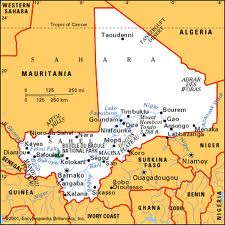
French president Francois Hollande has been given a baby camel by government of Mali as token of gratitude for the French military helping rid the north of the country of Islamist rebels.

Hollande was also given a whip to master the animal. The President noted the symbolism of the gift and promised the French would continue to fight tyranny.

“Terrorism has been pushed back, it has been chased away, but it has not been defeated yet,” stressing that France was not there to oppress the local population. “France will stay by your side as long as necessary, as long as it takes for Africans themselves… to replace us,” he told a large crowd in the capital, Bamako, at a monument commemorating Mali’s independence from France.

In three weeks of field operations which started on January 11, French and Malian troops have recaptured most of the territory held by Islamist extremists who took over a number of key cities in the north of the country last year.

Russians remember Battle of Stalingrad

0

People watch fireworks exploding over the giant Mother Motherland statue at the Stalingrad Battle memorial in Volgograd on February 2, 2013.

Russians have held a ceremony to commemorate the 70th anniversary of the Soviet victory in the Battle of Stalingrad.

Hundreds of war veterans attended a parade held in Volgograd, whose old name, Stalingrad, was readopted for a few hours on Saturday.

“I saw cities in Europe that were practically untouched by the war, countries that capitulated to the more powerful enemies even before war was declared,” Deputy Prime Minister Dmitry Rogozin said in a speech at the parade.

“But we are not like that. Our grandfathers, our fathers, our older generation, our great leaders, fought here for each building, for each street,” Rogozin added.

Russian President Vladimir Putin did not attend the parade but flew to the city, 900 kilometers (600 miles) south of Moscow.

“Using this example, we have to consolidate our society and our country. And we will do information technology… Historical knowledge is very essential from the point of view of preserving our statehood… Patriotism is the love for the motherland. Without it, this love will just melt as a piece of sugar in this tea,” Putin told veterans and young activists at a war museum in Volgograd.

The Battle of Stalingrad, which took place between August 23, 1942 and February 2, 1943, was one of the decisive battles of World War II.

The Germans attacked the strategically important city, known as Stalingrad from 1925 until 1961, because its capture would have enabled them to occupy the south of Russia and take control of the Caucasus oilfields.

However, after nearly six months of fighting, Soviets troops won the Battle of Stalingrad, which was one of the bloodiest battles in modern history. At least 1.2 million people died in the battle according to most sources, although some historians put the death toll at between 1.4 and 1.5 million.

NT/HGL

Britain probes VIP paedophiles case

0

Operation Fairbank was set up following claims by Labour Party politician Tom Watson in the House of Commons.

British police have launched an investigation into allegations that members of an organized paedophile ring have been abusing vulnerable underage boys in council care for years.

The organized criminal ring included former ministers, senior lawmakers, top police officers, judges, bishops, members of the royal family, and show-business celebrities. They are all alleged to have indecently assaulted vulnerable, under-age males between 1979 and 1982.

According to reports, the inquiry will focus on boys who were living at Grafton Close children’s home in Richmond, South-West London, in the 1980s.

It is claimed the boys were taken from Grafton Close to Elm Guest House in Rocks Lane, a suburban street in nearby Barnes where they were subjected to appalling sexual abuse.

One source is said to have suggested that Anthony Blunt, former Keeper of the Queen’s Pictures and an exposed Soviet spy, used to go to sordid parties at the guest house. Others are said to have spoken of two High Court judges and a Foreign Office official attending.

Detectives launched the probe, codenamed Operation Fernbridge, after they obtained a list of ‘prominent people’ who allegedly stayed at the guest house in the 1980s.

At these parties, young boys, specially brought over from several children’s homes would be plied with drugs and alcohol.

A party at the Elm Guest House was raided by police in 1982, following which 12 boys gave evidence that they had been abused by men.
German born Carole Kasir was convicted for running a gay brothel disorderly house.

Following the sudden death of 47-year-old Kasir in 1990 from an insulin overdose, two social worker friends of her gave some worrying evidence to the inquest. Mary Moss and Christopher Fay made allegations of the sexual abuse of children at the Elm Guest House. However, the allegations of sexual abuse against children by the rich and powerful were not pursued.

The claims are now being re-investigated by the Metropolitan Police, decades after they were first made. Attempts have been made by care workers to lay bare the secrets of Rocks Lane but to no avail.

Operation Fairbank is a police investigation into alleged sexual abuse, predominantly the abuse of children, by British politicians in the 1980s.

The investigation, led by the Metropolitan Police Service, started in late 2012. The investigation is currently a “scoping exercise” aimed at a “preliminary assessment of the evidence rather than a formal inquiry”. The existence of the operation was confirmed on 12 December 2012, after operating in secret for several weeks. Five officers are currently working on the inquiry.

Operation Fairbank was set up following claims by Labour Party politician Tom Watson in the House of Commons that the police should look afresh at claims of a “powerful paedophile network linked to Parliament and No 10?.

Watson raised the issue at Prime Minister’s Questions on 24 October 2012. He suggested that such a network may have existed in the past at a high level, protected by connections to Parliament and involving a close aide to a former Prime Minister; neither the aide nor the former Prime Minister were named.

Watson referred to Peter Righton, a former consultant to the National Children’s Bureau, who was convicted of importing and possessing illegal homosexual pornographic material in 1992.

Watson said that files on Peter Righton contained “clear intelligence of a widespread paedophile ring…One of its members boasts of a link to a senior aide of a former Prime Minister, who says he could smuggle indecent images of children from abroad.”

Nine officers raided the North London home of former child protection worker Mary Moss after she initially declined to co-operate with the investigation.

Documents and a laptop were seized. Ms Moss later handed over a further 19 files she had hidden in a neighbour’s shed.

The papers include a list of men who went to sex parties in the 80s at the Elm Guest House, Barnes, South West London.

Among the names are two former Conservative Cabinet ministers and four other senior Tories.

There is also a Labour MP, a prominent Irish republican and a leading National Front member.

Others on the handwritten note are two members of the royal household – one a former Buckingham Palace employee – plus the owner of a multinational company and two pop stars.

One of those is a best-selling musician, but like some others on the list he is not suspected of being involved in the child abuse.

The list was taken at meetings in 1988 between the guest house’s manager Carole Kasir and child protection officials.

Other documents seized are believed to identify 16 boys who were allegedly trafficked to the guest house from local care homes. Police have asked Richmond Council for a full list of children in care at the time.

Officers will also be examining copies of cash receipts and ­the guest house’s visitor records.
Operation Fernbridge is investigating claims that boys who were in council care were brought to the Elm to be sexually abused by bigwigs and VIPs.

Police have allegedly taken boxes of documents from the London home of Mary Moss, who worked as an advocate for abused children at the now defunct National Association for Young People in Care.

Mary Moss said the documents contained evidence that senior figures from a number of political parties had abused children at Elm Guest House and elsewhere.

The documents allegedly identify: Carol Kazir as guest house owner, “X” a top person in charge of MI5, “Y” MI5 officer; Two former Conservative cabinet ministers; 7 Further MPs – four Other Tories, two Labour, one Liberal Democrat; Several figures with links to the right wing Conservative Monday Club; A leading figure in the National Front, who is now dead; A Sinn Fein member; two Buckingham Palace Officials; two Pop Stars, and Anthony Blunt said to have used the name ‘Antony Goldstein’.

Rocks Lane is a conspiracy theorist’s dream, taking in allegations of the grooming of young boys in care for sex, elaborate gay parties involving senior public figures including members of the Conservative Party, charges of a police cover-up and even the suggestion of murder.

The police believe that in the context of the Jimmy Savile scandal and renewed claims over the treatment of boys in care in North Wales, there is every reason to look again at an extremely murky saga.

What is known is that in the late 1970s, the Elm Guest House on Rocks Lane was a safe, unthreatening meeting place for homosexual men free from the stigma of a sexual orientation legalised barely a decade earlier.

According to a former friend of Carole Kasir, the guest house’s German-born manager, she initially regarded herself as offering gay men an opportunity to “be themselves” without fear.

Rocks Lane, which overlooks a playing field, was known to homosexual men as it is close to Barnes Common, itself popular with gay men for cruising.

But Elm Guest House’s willingness to accommodate a small industry (“It became a convenient place for rent boys to take their clients,” says one person familiar with the place), began to attract the attentions of the local police force.

One neighbour remembers a months-long police stakeout: “They were there all the time. Police hiding behind the trees to look at the property was a running joke with the neighbours.”

In 1982, the police learned that one of the guest house’s parties was to take place, and the Met’s notorious Special Patrol Group, the precursor of the Territorial Support Group, duly raided the property, resulting in a number of charges being brought against Kasir. The fact that two police officers were in the house at the time of the raid has fed the speculation.

The IoS has established that, according to an officer closely involved at the time, two officers were embedded as guests in the property for two or three days, one even pretending to have a broken arm, hiding a police radio in a plaster cast to make secret recordings.

As many as 12 boys gave evidence to the police to the effect that they had been abused by men at the house, The IoS has established, but the only conviction was the comparatively minor one of running a disorderly house (ie, a brothel).

“Abused boys do not always make the most impressive of witnesses once they get into the witness box,” someone involved in the case said. “The real unlawful activity was underage sex. The police should have been able to make the other charges stick, but the boys were only ever interviewed with a view to them being witnesses against Carole, not as kids who were abused themselves.”

Chris Fay, a social worker who worked for a small charity, the National Association for Young People in Care (Naypic), has alleged that a terrified Kasir had shown him about 20 photographs of middle-aged men with young boys, taken at what he said were kings and queens fancy-dress parties, attended by a number of powerful and well-known people.

One, Mr Fay alleged, featured a well-known public figure wearing nothing but a French maid’s apron alongside a young boy nude apart from a tiara.

In 1990, at the age of 47, Kasir was found dead in her flat. The coroner’s inquest concluded that, a diabetic, she had suffered an insulin overdose. Two Naypic employees told the coroner they believed that because she seemingly had not had an insulin injection for three days, she had been murdered, the victim of powerful people who feared she knew too much. Nonetheless, she was found to have committed suicide, worn down by an eight-year battle to have her son, who was taken into care after her conviction, returned to her.

The alleged presence of household names adds to the intrigue, but in a celeb-obsessed age, there is a danger that, should such names not materialise, Rocks Lane will be seen as “just another” child abuse case. Yet police sources fear that dozens of boys were either taken or on the run from care homes to be abused. By any standards, that should be a big story.

Peter Hatton-Bornshin killed himself six days after his 28th birthday. He had taken an overdose of codeine and choked to death. ‘The tragic end to a tragic life,’ is how the coroner summed up the stark facts presented to the inquest.

And who at the time would disagree? Peter was only a baby when his father died in an accident. He was orphaned at 13 when his mother threw herself in front of a train. His stepfather then handed Peter and his older brother to social services.

And that is how Peter ended up at the Grafton Close Children’s Home, which was run by Richmond borough council in South-West London. Truly, he was a lost soul.

When his life finally came to an end in a Kingston-upon-Thames bedsit, he left a note which explained that he feared he would be unable to control his violent fantasies against women if he remained alive.

This personality disorder had caused him briefly to be a patient at Broadmoor mental hospital. His case worker said that while he did not consider Peter to be a danger to society, his mental problems were partly a result of the abuse he had suffered while in local authority care. One line in his suicide note seemed to refer to this. It read: ‘I will get those bastards.’

But while it was the ‘tragic end to a tragic life’, his story does not finish there.

Eighteen years after his death, the police are again looking at the Peter Hatton-Bornshin case, as part of a wider investigation, launched last month, into allegations that in the early Eighties a paedophile ring of VIPs preyed on boys from the Grafton Close Children’s Home

If the historic allegations at the heart of Operation Fernbridge are proved, they would represent one of the more sensational and disturbing Establishment sex scandals of the modern era.

Cyril Smith, the late Liberal MP for Rochdale, has already been named as a regular at the guest house, where he allegedly met teenage rent boys when the homosexual age of consent was 21.

The guest house has also been linked to a now-defunct Tory fringe group that promoted homosexual rights.

Operation Fernbridge detectives are also believed to be on the trail of almost two dozen photographs that are supposed to have been taken by the guest-house owner – which place a number of these figures from the worlds of politics, show-business and national security at her establishment.

Some pictures are said to show these men in the company of under-age boys.

New police interest in the Elm Guest House allegations stems from October last year, when the campaigning Labour MP Tom Watson called for an investigation into the political links of one Peter Righton, a notorious paedophile who had first been exposed 20 years before.

In September 1992, Righton pleaded guilty to three charges of importing or possessing obscene material – paedophile gay porn – after customs officers at Dover intercepted two packages addressed to him.

It was a squalid case that in other circumstances might have warranted only local interest.

But Righton, then aged 66, was no ordinary child sex offender. He had been a very senior and respected figure in the field of residential child care, and a former consultant to the charity the National Children’s Bureau, whose patrons included the then Health Minister, Virginia Bottomley.

After his conviction, it emerged that Righton was a founder member of the Paedophile Information Exchange – a contact group for men interested in sex with children. He is now believed to be dead.

Westminster sources say that following his intervention in the House, Mr Watson received more than 200 phone calls, many of them from alleged victims of paedophile abuse by public figures unconnected with Righton. The MP passed the information on to the police.

Righton’s links to figures in the Thatcher government are still being assessed by detectives.

The Mail understands that no formal decision has been taken yet on whether Watson’s allegations will be formally probed.
However, one person who contacted Watson had specific information about boys from Grafton Close Children’s Home being abused at the Elm Guest House.

Run by Indian-born Haroon Kasir and his German wife Carole, the guest house was openly advertised in the gay press of the time as nothing more sinister than a place where homosexual men could meet.

MOL/HE

Why Are Suicides Climbing in the Military? Let’s Look at the Drugs Being Prescribed

0

Photo Credit: Martha Rosenberg

Why does the suicide rate among military personnel continue to climb–even among those who never saw combat? This week the Pentagon announced there were more suicides among active-duty members of the armed services in 2012 than combat deaths–a staggering 349. Eighty-five percent had not even seen combat, reported Bloomberg.

The  suicide rate rose similarly last year and also included troops who had not faced combat. There were 38 Army suicides in July of 2012 compared with 32 suicides in July of 2011. In a 2010 Army report called Health Promotion, Risk Reduction and Suicide Prevention Report, 36 percent of the troops who killed themselves had never even deployed. The suicide rate increased by more than 150 percent in the Army and more than 50 percent in the Marine Corps between 2001 to 2009, reported Military Times in a series of in-depth articles.

One in six service members was on a psychoactive drug in 2010 and “many troops are taking more than one kind, mixing several pills in daily ‘cocktails’ for example, an antidepressant with an antipsychotic to prevent nightmares, plus an anti-epileptic to reduce headaches–despite minimal clinical research testing such combinations,” said Military Times.

The pills and pill cocktails many troops are prescribed are clearly linked to suicidal thoughts and behavior. Antidepressants like Prozac and Paxil, antipsychotics like Seroquel and Zyprexa and anti-seizure drugs like Lyrica and Neurontin all carry clear suicide warnings and all are widely used in the military. Almost 5,000 newspaper reports link antidepressants to suicide, homicide and bizarre behavior on the website SSRIstories.com. The malaria drug Lariam is also highly correlated with suicide and its use actually increased in the Navy and Marine Corps in 2011, according to the Associated Press.

Eighty-nine percent of troops with post traumatic stress disorder (PTSD) are now given psychoactive drugs and between 2005 and 2009, half of all TRICARE (the military health plan) prescriptions for people between 18 and 34 were for antidepressants. During the same time period, epilepsy drugs like Topamax and Neurontin, increasingly given off-label for mental conditions, increased 56 percent, reports Military Times. In 2008 , 578,000 epilepsy pills and 89,000 antipsychotics were prescribed to deploying troops.

Both the increase in the overall suicide rate in the US (rising to 36,000 a year after falling in the 1990s according to USA Today) and in the military coincide with the debut of direct-to-consumer drug advertising in the late 1990s. They are also correlated with the FDA’s approval of many drugs with suicide links and a population that is increasingly taking psychoactive drugs for minor problems and symptoms. Several powerful military psychiatrists and administrators are also consultants to Big Pharma who shamelessly enroll veterans in drug studies and promote the pills that drug companies pay them to promote. Who can say conflict of interest?

When concerns about the rise in the general suicide rate in the US surfaced last fall, US Surgeon General Regina Benjamin announced federal grants for suicide hotlines, more mental health workers, better depression screening and Facebook tracking of suicidal messages. Nowhere, did she mention examining the role of suicide-linked drugs on, ahem, suicide. The Pentagon is apparently in similar denial.

More information about overmedication of troops and suicide-linked drugs is found in Martha Rosenberg’s recently publishedBorn With a Junk Food Deficiency: How Flaks, Quacks and Hacks Pimp The Public Health.

‘Russian mafia’ carves ‘thief’ on kidnapped Irish tycoon’s forehead over debts

0

Businessman Kevin Michael McGeever.(Screenshot from YouTube user allbitsofegg)

Businessman Kevin Michael McGeever.(Screenshot from YouTube user allbitsofegg)

An Irish real estate tycoon suddenly released after eight months being held hostage has accused Russian mafia and the IRA of kidnapping, torturing and carving “thief” on his forehead over the debts he owes to the criminals.

­Kevin McGeever appeared to have the word “thief” carved into his forehead. During interviews with the police, the 68-year-old revealed that he was seized and kept in a “darkened container” because of his debt to Russian gangsters and the IRA.

Mr McGeever told the detectives that he was kidnapped from the garden of his £2.5million mansion by three masked men. The abductors had demanded a ransom but he did not know if it was delivered. 

McGeever also told the officers that his captors gave him a mobile phone when he was freed and told him to keep it with him at all times.

The KMM Properties developer was found by a couple in Ballinamore, on a remote country road on Tuesday night with serious injury to his forehead and in a malnourished state. He was wrapped in a plastic bag and wasn’t wearing shoes.

Catherine Vallely, who found him told the Daily Mail, that the developer was “skin and bones” with three-inch finger nails and a long beard.

McGeever went missing in June 2012. Prior to his disappearance, he had been involved in a property development company dealing primarily with real estate in Dubai. During the economic boom, he sold luxury homes to wealthy Irish and British clients.

Police are looking into the debt claims related to property transactions, including some in Dubai. So far, law enforcement is yet to confirm any of Mr McGeever’s claims.

 “It may be some time before a clearer picture emerges but we are sceptical that this was the work of foreign-based criminals,” a police source has revealed to the Irish Herald. 

McGeever is being guarded at Mulligar Hospital where he is receiving treatment for malnutrition and dehydration.

Iran to unveil upgraded indigenous tanks

0

The Islamic Republic of Iran will be unveiling upgraded versions of two domestically designed and manufactured battle tanks this week.

The Zolfaqar and Samsam tanks will be put on display on Monday as part of the Ten-Day Dawn celebrations commemorating the victory of Iran’s Islamic Revolution in 1979.

The commander of the Iranian Army, Brigadier General Ahmad Reza Pourdastan, and a number of other high-ranking military officials will be attending the unveiling ceremony.

On January 15, Pourdastan said that the fire control system and the stabilizer of the new version of the Zolfaqar tank have been upgraded, adding that the tank will be mass-produced after receiving the approval of the office of the chief of the general staff of the armed forces.

Iran’s Zolfaqar tank has a distinctive box-shaped, steel-welded turret and is operated by a crew of three.

The tank is armed with a 125mm smoothbore 2A46 gun, which is fitted with a fume extractor. Its secondary armament consists of a 7.62mm coaxial machine gun and a 12.7mm machine gun.

The Samsam tank is said to be an upgrade of the M-60A1 battle tank.

In recent years, Iran has made great achievements in its defense sector and attained self-sufficiency in producing essential military equipment and systems.

Tehran has repeatedly assured other nations that its military might poses no threat to other countries, saying that the Islamic Republic’s defense doctrine is entirely based on deterrence.

MP/HGL

The Super Bowl Ad That Coke And Pepsi Desperately Don’t Want You To See

0

Pressure from the mammoth corporations led CBS to take an ad down from its programming.

Photo Credit: Shutterstock.com/Tiago M Nunes

February 2, 2013  |  

Like this article?

Join our email list:

Stay up to date with the latest headlines via email.

This Sunday’s Super Bowl will be punctuated by dozens of ads featuring everything from adorable puppies to kids in Star Wars outfits. But one commercial you won’t see is a provocative ad by the carbonated beverage company SodaStream – an Israeli company that is no stranger to controversy – that takes on soda giants Coca Cola and Pepsi.

That’s because the ad has been pulled after pressure from the mammoth corporations led Super Bowl host CBS to take it down from its programming. Reportedly, Coke and Pepsi were upset with the commercials’ implied criticism of the soda industry’s use of plastic bottles and the subsequent harmful effects on the environment:

CBS rejected the ad, reportedly because of its direct assault on the big two carbonated-beverage makers (CBS didn’t return calls for comment). As the music from the movie Deliverance trills, deliverymen from Coke and Pepsi show up at a supermarket and rush to deliver their products. But the bottles pop and disappear, creating a mess. The ad then pans to a shot of a guy using SodaStream. The implication is that SodaStream will make bottled sodas irrelevant. […]

Like many upstarts, SodaStream has taken an in-your-face, hyperbolic approach to marketing. The company doesn’t just suggest that SodaStream is a money-saving artisanal device. Rather, it suggests that some of the world’s popular brands (and biggest advertisers) are effectively evil forces. Why? They promote the production of polluting bottles and cans.

“SodaStream empowers consumers to make their own fresh soda at home in seconds, without the devastating environmental impact of plastic soda bottles and cans, which litter our parks and oceans,” said Daniel Birnbaum, the chief executive officer of SodaStream International, in a statement. “ Our ad confronts the beverage industry and its arguably out-dated business model by showing people that there exists a smarter way to enjoy soft drinks. One day we will look back on plastic soda bottles the way we now view cigarettes; as a dangerous vice, not as an easily-accepted feature of everyday life.”

Watch the ad here:

Americans throw away enough trash every year to cover the state of Texas – twice. And this isn’t the first time that beverage giants have found themselves in hot water over public health issues. Just last month, Coca Cola launched a deceptive new ad campaign attempting to mask the harmful effects of calorie-laden sodas on America’s obesity and diabetes epidemics.

Israeli soldiers use tear gas, stun grenades to evict Palestinian camp (PHOTOS)

0

An Israeli border police officer throws a tear gas canister during clashes with stone throwing Palestinians protesting against a nearby Jewish settlement in the West Bank village of Burin, south of Nablus February 2, 2013.(Reuters / Ammar Awad)

An Israeli border police officer throws a tear gas canister during clashes with stone throwing Palestinians protesting against a nearby Jewish settlement in the West Bank village of Burin, south of Nablus February 2, 2013.(Reuters / Ammar Awad)

Israeli soldiers have used tear-gas and stun grenades against a group of rock-throwing Palestinians trying prevent the dismantlement of a Palestinian camp in the disputed West bank territories. Both sides sustained injuries as the IDF managed to remove do

­The violence initially erupted after Palestinian protesters erected a new camp called “Al Manatir” in the village of Burin, some 70 kilometers away from Jerusalem. The camp consisted of four tents and five metal shacks.

The Israeli army claimed that five Palestinians were arrested after the soldiers of Israeli Defense Forces (IDF) entered the village and began firing tear gas and live ammunition into the air. According to other estimates, eight people were detained. An Israeli military spokeswoman said troops only used non-lethal riot dispersal means after Palestinians started throwing stones at them.

The spokesperson added that the protest in the village included some 150 people and was illegal.

Palestinians activists claimed Israeli soldiers slightly wounded a 16-year old, who was taken to the hospital in Nablus, and reportedly a mosque was set alight by a tear-gas canister.

Locals accused the IDF of uprooting 100 olive trees.

A large IDF force deployed to the area surrounded the protest camp and closed off the eastern entrance to the village, preventing more activists and supporters from arriving.

An Israeli border police officer uses pepper spray to disperse Palestinian activists after the group set up tents and makeshift structures in protest against a nearby Jewish settlement in the West Bank village of Burin, south of Nablus February 2, 2013.(Reuters / Mohamad Torokman)

­There have also been reports suggesting that confrontation was provoked by nearby Jewish settlers who arrived at the scene with the IDF soldiers. The village of Burin has reportedly come under frequent attack by Israelis who live in settlements scattered throughout the West Bank and around east Jerusalem.

The “Al Manatir” camp was a part of a larger movement started early January when Palestinian activists set up the Bab al Shams (Gate of the Sun) outpost in the area known as the E1 settlement site to protest Israel’s plans to build settlements there.

The E1 sector remains a highly disputed area between of the West bank located just outside East Jerusalem. Palestinians demand the area for an independent Palestinian state, while Israelis see it as land for its future settlements. 

The violence in Burin comes hours after the Civil Administration in the West Bank ordered an evacuation of another Palestinian protest camp set up over the weekend near the village of Beit Iksa, northwest of Jerusalem.

The building of Israeli settlements in the occupied West Bank has been fiercely criticized by many international powers which say the move undermines prospects for securing a lasting Israeli-Palestinian peace deal. Direct peace talks between Israel and Palestine broke down in 2010.

Israel froze building in E1 for many years, after coming under pressure from then US President George W. Bush.

However, Netanyahu announced the resumption of settlement building after the Palestinians won de-facto state recognition at the UN General Assembly last year. Those plans involve building around 4,000 housing units in the area.

Around 500,000 Israelis and 2.5 million Palestinians live in the West Bank and East Jerusalem.

A Palestinian activist walks through teargas after Israeli police broke up a protest against a nearby Jewish settlement in the West Bank village of Burin, south of Nablus February 2, 2013.(Reuters / Mohamad Torokman)

Israeli border police detain a Palestinian man after a group of activists set up tents and makeshift structures in protest against a nearby Jewish settlement in the West Bank village of Burin, south of Nablus February 2, 2013.(Reuters / Mohamad Torokman)

A Palestinian activist runs from teargas after Israeli police broke up a protest against a nearby Jewish settlement in the West Bank village of Burin, south of Nablus February 2, 2013.(Reuters / Mohamad Torokman)

Israeli border police detain a Palestinian man after a group of activists set up tents and makeshift structures in protest against a nearby Jewish settlement in the West Bank village of Burin, south of Nablus February 2, 2013.(Reuters / Mohamad Torokman)

The Path to the Next American Economy: The Cult of Scale

0

An obsession with the largest economic players distracts us from the smaller companies that should drive our future economy.

Both Richard Fisher, the president of the Dallas Federal Reserve Bank, and Alan Blinder, arch-economist and former vice-chair of the Federal Reserve Board, had fascinating commentaries last week on “too big to fail,” the big banks, and financial stability. Fisher’s was a reform proposal; Blinder’s a set of lessons to remember. Both dealt explicitly or implicitly with our cult of scale. 

The business, popular, political, think tank, and NGO cultures of America are all infatuated with big enterprise and its leaders. As a society, we pay ritual and theoretical attention to small business and entrepreneurs, but with a very few exceptions we court big company CEOs almost exclusively. Every presidential economic statement or study has its requisite CEO centerpiece. When presidents (of all political persuasions) want to show that they are really, really serious about the economy, they have pictures taken of themselves with big company CEOs. The most frequently quoted business organization, the one whose policy pronouncements are taken as the last word in economic wisdom, is the Business Roundtable — the insiders club for big business CEOs. The big news talk shows always have big business CEOs as their private sector representatives. The lobbyists whom congresses and governments pay attention to are from the biggest businesses. The same set of CEOs are always invited to presidential state dinners for visiting heads of state. The board development committees of think tanks, NGOs, and foundations covet the same set of CEOs. 

Why? 

Certainly not because big businesses play an actual dominant and dynamic role in our economy. Essentially 100 percent of all new jobs in America are created by new medium and small businesses. Even though large companies dominate R&D spending, revolutionary breakthroughs come almost exclusively from small entrepreneurial companies. If you look back just at the business history of the last 20 years, the pathbreaking innovations were always driven by small and medium companies — never by the giant incumbents of an industry. 

So what benefits does scale bring us? Richard Fisher raises this question dramatically in the case of banking. Banks with less than $10 billion in assets — 98 percent of all banks — held only 12 percent of total bank assets in America but they made 51 percent of all small and medium business loans. Banks with less than $10 billion in assets continued lending to these businesses during the financial debacle; the big banks stopped. Lending, I’ll remind you, is basically what banks are supposed to do.

And of course big banks are the riskiest and most costly part of the banking sector. Their failures or near failures nearly cratered our economy, they received the vast bulk of the bailout money, and they continue to hold the riskiest assets. The five largest banks in America hold $4 trillion in non-deposit liabilities, 26 percent of U.S. GDP. Among other problems posed by these liabilities — for example, that virtually no one understands them — they are the reason for the excess leverage of the big banks.

Blinder usefully underlines 10 commandments for avoiding the next financial crisis. They all make sense. But when you look closely at his commandments, at least eight out of 10 are directly linked to unavoidable problems of scale and complexity. Consider this: the five biggest banks operated through over 19,000 subsidiaries in a minimum of 50 countries each. The simple fact is that Blinder’s very intelligent commandments can’t work in this world. I begin with a prejudice: compared to the directors of the five giants (and these are highly sought after and highly compensated directorships), directors of America’s smaller community banks are every bit as smart,  know more about the banks they direct, hold the CEOs of their banks in far less awe, are much more likely to discipline their management effectively, and are closer to the customers. None of this is just a role of the dice. According to Richard Fisher, J.P.Morgan Chase has about 5,000 subsidiaries. I’ll grant that many of these are meaningless. But no set of directors on earth can really understand or guide well an entity with thousands of subsidiaries. In these circumstances, the amount of arbitrary, mostly unchecked authority given to senior management and the CEO is enormous. A single director is rarely going to risk either losing his or her directorship or simply being humiliated in the club by challenging the CEO on anything.

Which gets me back to the general problems of mega scale in business. While the biggest banks pose particular problems and the biggest dangers, all the evidence seems to say that as businesses get very, very big, four developments are inevitable. The businesses become sclerotic and bureaucratic. The businesses lose the creativity and dynamism that initially drove them. The businesses become extraordinarily complex. The businesses become less market-driven and more dominated by CEOs with a fair amount of arbitrary power. Some businesses and some extraordinary leaders — Steve Jobs — delay all of this, but the trends are inevitable. 

So once again, why the fascination with big companies and their chiefs? Awe, power, and money. The heads of the biggest companies are the real masters of our universe. They are treated like heads of sovereign states. A lot of them think of themselves that way and, in fact, a heck of a lot of big company CEOs have more actual power than the heads of government of all but 30 to 50 countries. And within a range the power is fairly arbitrary. The biggest companies have the widest range of choices about products, locations, suppliers, public and community relations money, and foundation money. There is lots of economic “rent” buried among all those choices and everyone wants a little bit of it. I think the resources most big companies allocate through these choices mostly do an enormous amount of good and have a significant function in our strange society, but that’s not the same thing as believing these companies are the future of our economy.

To be clear, big companies play big, real, valuable roles in our economy. We need a mix. But the balance has gone too far in our infatuation with bigness. The true path to the Next American Economy does not go in that direction. We will not grow as fast as we must with an increasingly big company economy. Equity and social mobility won’t increase that way. We will need more breakthrough innovation, more new companies creating good jobs, more highly specialized value-added products and services, and more diversity and localization of businesses. The dream should be an economy driven by thousands of companies growing from dozens of very different urban platforms, not by a few dozen giants. But achieving that dream will be much harder if our political and intellectual culture is perpetually fascinated and seduced by the non-economic glamor of the wrong part of the private sector.

Halal Prison Food Found To Contain Pork DNA

0

A company which supplies Halal meat to prisons has had its contract suspended, after traces of pork DNA were found in pies and pasties.

The Ministry of Justice said it had withdrawn the products immediately, while justice minister Jeremy Wright said the Prison Service was investigating “as a matter of urgency”.

It comes after traces of horsemeat were found in burgers sold by some UK supermarkets , including Tesco.

“All prisons have been informed about this very regrettable incident and we reported this issue to the Food Standards Agency immediately,” a spokesman for the Ministry of Justice said.

“We are taking immediate steps to suspend the contract with the relevant sub-contractor.”

Justice minister Jeremy Wright said: “This is an absolutely unacceptable situation and one which we regret greatly.

“This must be distressing for those affected and they can be reassured we are doing everything we can to resolve the situation. The Prison Service is investigating this as a matter of urgency.”

The company involved has not been named and it is not known where the firm is based.

Islamic law forbids the consumption of pork and prison rules dictate that Halal meat must be offered to inmates.

Juliet Lyon, director of the Prison Reform Trust, said: “This lapse will have offended and distressed high numbers of Muslim prisoners and their families so apologising, suspending the supplier and investigating the incident are the right steps for the Ministry of Justice to take.”

A spokesman for the Food Standards Agency said a local authority investigation would look into the cause of the contamination and determine where the products had been sent.

It is due to meet with retailers and suppliers to remind them of their responsibilities surrounding food labelling after the recent horsemeat scandal.

Burger King has dropped the Irish food processing plant which supplied the contaminated burgers.

The Silvercrest plant in Co Monaghan, which is part of the ABP Food Group, has also lost contracts with Tesco, Aldi and the Co-operative Group.

A sample of Tesco’s Everyday Value Beef Burgers was found to contain 29% horsemeat.

Beats, Rhymes and Laughs: Culture as a Tool for Racial Justice

0

Artists and creative people have always used culture as a tool for social change. On this edition, excerpts from a panel on racial justice, culture and politics featuring some of today’s most insightful and outspoken artists. “Culture Trumps Politics: or Does It?” took place at the Facing Race conference in November 2012 and was moderated by Applied Research Center’s Rinku Sen.

On the panel are Pulitzer-Prize-winning journalist and filmmaker Jose Antonio Vargas, comedian Negin Farsad, recently named one of the 50 funniest women by the Huffington Post; Lolis Eric Elie, a documentary filmmaker and writer for the HBO show Treme; and Jeff Chang, award-winning author of Can’t Stop, Won’t Stop: A History of the Hip-Hop Generation.

Special thanks to Applied Research Center, Colorlines and the Facing Race Conference 2012.

Featuring:

Rinku Sen, Applied Research Center executive director; Jose Antonio Vargas, Define American founder; Negin Farsad, comedian; Jeff Chang, Writer; Lolis Eric Elie, writer and documentary filmmaker.

How Whole Foods and the Biggest Organic Foods Distributor Are Screwing Workers

0

United Natural Foods Incorporated, the largest wholesale distributor of organic and “natural” foods in the US, is currently under investigation for 45 violations of federal labor law.

This article was published in partnership with GlobalPossibilities.org.

“The union is like having herpes. It doesn’t kill you, but it’s unpleasant and inconvenient, and it stops a lot of people from becoming your lover.” — John Mackey, CEO of Whole Foods Market

Whole Foods Market (WFM) CEO John Mackey has done a brilliant job of creating the illusion that his empire is all about abundance, bounty and the good life. But there’s nothing bountiful or good about the way the second-largest non-unionized food retailer exploits workers.

United Natural Foods Incorporated (UNFI), the largest multi-billion dollar wholesale distributor of organic and “natural” foods in the U.S., is currently under investigation for 45 violations of federal labor law, including physically threatening immigrant workers in California who were trying to form a union.

The company recently fired its underpaid and overworked unionized workers at its Auburn, Wash., distribution center for going on strike, and illegally hired non-union replacement workers.

What happens when companies like WFM and UNFI, which have carefully cultivated their public progressive images, start acting like Walmart? When union-busting and labor exploitation are accepted as “business-as-usual” in the green economy, it makes us all look bad. It discredits organics and Fair Trade by creating the impression that consumers don’t really care how their healthy organic food was produced. That the entire industry cares only about profits. Ethics and workers be damned.

When flagship organic companies take a Walmart approach to workers’ rights, it sends negative and conflicting signals to core organic consumers, making it look like leaders in the organic community are concerned about the plight of endangered species and Third World coffee growers or cacao producers, but oblivious to the economic pain and stresses of working class Americans or hardworking immigrants who plant and harvest our organic fruits and vegetables and then pack and deliver them to our neighborhood co-ops and natural food markets.

Isn’t it time we ask the same of WFM and UNFI that we demand of ourselves: that they walk their talk, prioritize organic food and products, practice Fair Trade and social justice, and wake up to the fact that “business as usual” is a bitter recipe for injustice?

The demand for organic and fairly traded food, apparel and body care products has grown exponentially over the past two decades. Millions of consumers are demanding products that not only are organic and healthy, but also embody Fair Trade principles, whereby the workers involved in producing these products are treated fairly and paid equitably.

Under the USDA’s National Organic Program (NOP), organic products are certified by third-party certifiers and regulated under federal law. But no such federal standards exist for Fair Trade labor practices, including the right of workers, especially in large businesses, to form trade unions and engage in collective bargaining with their employers. As a consequence many consumers look for the “Fair Trade” label on imported goods, but pay little attention to the domestic supply chain. Here in the U.S., most consumers naively believe that organics and Fair Trade practices go hand in hand. They are surprised to learn that most family farmers and farm workers, as well as many supply chain workers, struggle to make a living. But the truth is, labor exploitation is rampant in the fields, factories and warehouses where organic products are grown, processed and housed. And this is especially true when small, alternative businesses are bought out by corporate investors.

WFM is one of the biggest offenders in the U.S. The company’s Whole Trade Guarantee, through a third-party verified program, supposedly ensures that producers and laborers in developing countries get an equitable price for their goods in a safe and healthy working environment. But here in the U.S., WFM. the second largest union-free food retailer behind Walmart,  has taken the position that unions are not valid. The company even gives its workers a pamphlet titled “Beyond Unions.” In the company’s 27-year history, only one of its stores, in Madison, Wis., successfully unionized. The chain has also fended off unionizing attempts in Berkeley, Calif.; St. Paul, Minn.; and Falls Church, Va.

As for UNFI, the company’s recent record on workers’ rights is abysmal. The National Labor Relations Board investigation includes allegations that UNFI engaged in worker surveillance, intimidation and retaliation; that it refused to bargain in good faith; and that it illegally reassigned bargaining unit work. UNFI workers and drivers at UNFI’s Auburn, Wash., distribution center went on strike for better pay and better working conditions Dec. 10, after rejecting UNFI’s latest contract offer. In retaliation UNFI fired them and illegally hired non-union replacement workers.

WFM and UNFI like to brag about how their workers are part of their “family,” and how well management treats them. But what about the thousands of non-unionized and exploited farm workers in California, Texas, Florida, Mexico, Latin America and Asia who supply many of their premium-priced products? What about the immigrant feedlot workers across the country? What about the truck drivers, food processing workers and warehouse staff who are threatened and intimidated whenever they try to organize themselves for collective bargaining? Are we all one family?

It’s time for WFM and UNFI to publicly acknowledge that Fair Trade principles and practices need to be implemented as part of their entire US/North American/global supply chain for food and organic and natural products, not just for the minority of products produced overseas and certified as Fair Trade. And of course, supporting domestic Fair Trade means that WFM and UNFI must stop their union busting and start recognizing the rights of workers, especially workers in large for-profit corporations, to freely organize themselves into unions for collective bargaining.

Until they do, as conscientious consumers we have to pressure UNFI and its largest customer, WFM. In response to UNFI’s actions in Washington State, the Organic Consumers Association (OCA) has called for a boycott of UNFI’s brand name products, Woodstock Foods and Blue Marble, until the company rehires its fired workers in Auburn, stops harassing and intimidating workers and drivers who want to form a union, and sits down to sign a fair contract. We’re also asking organic food stores to look for alternative wholesalers to supply their stores, as a number of coops in Seattle and Olympia Washington, have already begun to do.  

In addition to boycotting UNFI’s Woodstock Foods and Blue Marble products, we encourage consumers to:

  • Sign the online petition in support of the striking workers at UNFI.
  • Call UNFI Manager Hank Heatherly at (253) 333-6769. Tell him to rehire the fired workers and return to the bargaining table immediately.
  • If you live in Washington State, and are willing to join in informational leafleting at Whole Foods Markets, sign up here.

Suspect device found at church

0

A suspect device has been discovered at a Catholic church in Co Antrim.

The bomb disposal team was sent to the scene at St Mary’s Star of the Sea on the Shore Road in Newtownabbey.

The Police Service of Northern Ireland was also at the scene.

The Shore Road has been closed at Doagh Road and at the main Shore Road roundabout.

Marriage Tax Breaks: Cameron Faces Revolt

0

Tax breaks for married couples will not be part of next month’s Budget, a senior Government source has said.

The news is likely to upset many Conservative backbenchers who have suggested the change should be included in Chancellor George Osborne’s next Budget in return for their supporting plans to introduce gay marriage.

The Conservative general election manifesto pledged to introduce a marriage tax break, and the commitment was included in the coalition agreement.

It is expected that one member of a married couple or civil partnership would be allowed to transfer £750 of their tax-free personal allowance to their partner, reducing their tax bill. This would be worth around £150 a year to basic-rate taxpayers.

But the senior Government source flatly rejected the idea of a “quid pro quo” deal, and ruled out a marriage tax break featuring in the Budget.

“It won’t be in the Budget but it will be in this Parliament,” the source said. “This Budget obviously, with all that has happened in recent weeks and months, will be very much focused on growth in the economy”.

Mr Cameron views the introduction of same-sex marriage – which is expected to split his MPs when it is put to a Commons vote next week – as the “Conservative Party delivering the promise it made”.

“This is a difficult issue for some in the Conservative Party and he understands the strong feelings that people have, and of course it’s a free vote,” the source said.

“He is proud of the fact that it’s a coalition Government with strong Conservative participation that is bringing forward a modern and progressive change.

“It is good to encourage people to come together and stay together.”

The source also said Mr Osborne had the “full confidence” of the Prime Minister – insisting he will still be Chancellor at the 2015 general election.

It came as some MPs are said to be circulating a letter demanding that Mr Osborne is replaced as the economy continues to falter.

“He is an extremely successful Chancellor. He is battling very difficult economic circumstances,” the source said.

“George Osborne will be Chancellor at the next general election.”

The issue of gay marriage is causing Conservative party members to quit in significant numbers, according to The Times.

Backbenchers insist the issue has sparked “serious unrest” among the party’s rank and file and are claiming some constituencies have lost as many as 100 card-carrying Tories each.

Conservative headquarters, however, does not hold up-to-date membership records, the newspaper said.

Tory MP David Burrowes told The Times: “There’s serious unrest in the grassroots. You cannot avoid the fact that the troops are unhappy. People are drifting away.”

IMF censures Argentina for dodgy economic data, threatens sanctions

0

International Monetary Fund (IMF) Managing Director Christine Lagarde attends a session of the World Economic Forum Annual Meeting (WEF) on January 26, 2013 at the Swiss resort of Davos.(AFP Photo / Johannes Eisele)

International Monetary Fund (IMF) Managing Director Christine Lagarde attends a session of the World Economic Forum Annual Meeting (WEF) on January 26, 2013 at the Swiss resort of Davos.(AFP Photo / Johannes Eisele)

The International Monetary Fund (IMF) has issued Argentina with a ‘declaration of censure’ for providing inaccurate inflation and GDP data and has given it until September 29th to amend the problems or will impose sanctions.

The IMF Friday called on Argentina to fix its statistics “without further delay”

“The fund has issued a declaration of censure against Argentina in connection with its breach of obligation to the fund,” The IMF said in a statement.

The IMF said it would review Argentina’s progress in November and warned that if the problems are not sorted then it could impose sanctions on the country. This would bar one of South America’s biggest economies from voting on IMF policies and accessing financing.

Relations between the South American country and the IMF have been steadily deteriorating since Argentina’s 2001-2002 debt crisis, which many in Buenos Aires blame on IMF policies.

Argentina’s Economy Ministry slammed the IMF for unfair treatment and accused them of double standards.

The Friday declaration was “not only a new IMF error but a clear example of unequal treatment and the double standards with which this organization treats certain members. This is the same fund that showed itself to be complacent about the inexact data and failed policies that led to the global financial crisis,” the statement said.

The ministry pointed out the IMF hailed Argentinian economic policies of the 1990’s as a success, the same policies that resulted in Argentina’s economic meltdown and debt default. The ministry also asked for an extraordinary meeting of the IMF board to discuss the lender’s decisions and policy.

Christine Lagarde, the IMF Managing Director, warned Argentina in September last year that it could be penalized unless it sorted out its data problems. Previous IMF chiefs, including Dominque Strauss-Khan and Rodrigo Rato, unsuccessfully tried to mend ties with Argentina, while other officials have avoided commenting on the country.

Economic analysts have accused the government in Buenos Aires of underreporting inflation since 2007 in order to reduce payments on inflation indexed debt and for political gain.

Inflation in Argentina is estimated by private economists to be at 25% a year and rising but the government reported it at 11% or less for last year, according to the Financial Times.

“This is a very serious step by the IMF, the situation in Argentina is deteriorating very quickly…and there is no sign that the government has any interest or willingness to even try to address some of the basic concerns of the fund,” Biorden Roett, director of Western Hemisphere Studies at John Hopkins’ Paul H Bitze School of Advanced International Studies in Washington told Reuters.

RBS Told To Pay Libor Fine From Bonus Pot

0

Chancellor George Osborne wants any fine paid by the Royal Bank of Scotland over the Libor scandal to come out of its bankers’ bonuses.

RBS, which is majority-owned by the taxpayer, is expected to agree a fine of £400-500m next week with US and British authorities.

It is accused of attempting to rig benchmark interest rates.

Sky’s City Editor Mark Kleinman said: “A Treasury source has told Sky News that the money that the US regulators will fine RBS will have to come out of the bank’s bonus pot.

“It’s very important politically, I think, for the Chancellor to be able to say that the taxpayer is not bearing the financial cost of misconduct by bankers who work for a company that is majority-owned by the taxpayer.

“The Treasury is obviously playing hardball on this, and we’ll find out exactly how much RBS is going to be paying in fines in the coming days.”

The Treasury expects the fines to be paid not just from the bonus pot for 2012 — likely to be around £250m — but money from future years’ bonus pots as well.

RBS – which is 81% owned by taxpayers – is also looking to claw back up to £100m from pay deals previously awarded to executives in its investment bank.

The bank’s remuneration committee, which is chaired by Penny Hughes, a non-executive director, is assessing plans for a “flat tax” on the pay packets of hundreds of directors and managing directors in its markets business.

The idea would involve about 15% of prior-year pay awards to the relevant individuals being clawed back, netting a total of as much as £100m.

Barclays was fined £300m last year for its role in the scandal.

A BuLL SKeeTeR AND A BaLLBuSTeR…

0

BANZAI7 NEWS–When the Brother From Another Ponzi Planet mentioned last week that he had picked up a new hobby – skeet shooting at Camp Indebted – it was a surprising disclosure by a TOTUS whose main identification with guns these days is his effort to ban assault rifles and high-capacity magazines.

To some, the Debt Brother’s newfound enthusiasm for blasting clay pigeons – he said in an interview that he did it “all the time” at his retreat in the Maryland mountains – also seemed a bit suspicious.

So on Saturday, the White House tried to silence the skeptics by officially releasing photos of Debt Brother’s shooting retreat on the range at Camp Indebted in August.

SKEET SHOOTING AT CAMP INDEBTED

.
CAMP DAVID BULLSKEET RANGE
.

Meanwhile…

DHLS BALL BUSTER

Your rating: None Average: 5 (1 vote)

Youth in Revolt

0

Youth in Revolt

Email this item Email   Print this item Print   Share this item... Share
Posted on Feb 2, 2013
Paradigm Publishers

This following is the introduction to Henry A. Giroux’s new book, “Youth in Revolt” (Paradigm Publishers, 2012). It is reprinted here with permission from the author.

Military-style command and control systems are now be­ing established to support “zero tolerance” policing and urban surveillance practices designed to exclude failed consumers or undesirable persons from the new enclaves of urban consumption and leisure.
–Stephen Graham

Young people are demonstrating all over the world against a variety of issues ranging from economic injustice and massive inequality to drastic cuts in education and public services.[1] In the fall of 2011, on the tenth anniversary of September 11, as the United States revisited the tragic loss and celebrated the courage displayed on that torturous day, another kind of commemoration took place. The Occupy movement shone out like flame in the darkness–a beacon of the irrepressible spirit of democracy and a humane desire for justice. Unfortunately, the peacefully organized protests across America have often been met with derogatory commentaries in the mainstream media and, increasingly, state-sanctioned violence. The war against society has become a war against youthful protesters and in­creasingly bears a striking resemblance to the violence waged against Occupy movement protesters and the violence associ­ated with the contemporary war zone.[2] Missing from both the dominant media and state and national politics is an attempt to critically engage the issues the protesters are raising, not to mention any attempt to dialogue with them over their strate­gies, tactics, and political concerns. That many young people have become “a new class of stateless individuals … cast into a threatening and faceless mass whose identities collapse into the language of debt, survival, and disposability” appears to have escaped the attention of the mainstream media.[3] Matters of justice, human dignity, and social responsibility have given way to a double gesture that seeks to undercut democratic public spheres through the criminalization of dissent while also resorting to crude and violent forms of punishment as the only mediating tools to use with young people who are at­tempting to open a new conversation about politics, inequality, and social justice.

In the United States, the state monopoly on the use of violence has intensified since the 1980s and in the process has been di­rected disproportionately against young people, poor minorities, immigrants, women, and the elderly. Guided by the notion that unregulated, market-driven values and relations should shape every domain of human life, a business model of governance has eviscerated any viable notion of social responsibility and conscience, thereby furthering the dismissal of social problems and expanding cutbacks in basic social services.[4] The examples are endless, but one in particular stands out. In March 2012, Texas governor Rick Perry joined eight other states in passing legislation to ban funding for clinics, including Planned Parent­hood facilities, affiliated with abortion services for women.[5] As a result, the federal government has stopped funding the Texas Women’s Health Program. Unfortunately, this attempt by Perry to punish all women because of his antiabortion stance means that more than 130,000 women in Texas will not have access to vital services ranging from mammograms to health care for their children. There is more at work here than a resurgent war on women and their children or “an insane bout of mass misogyny.”[6] There is also a deep-seated religious and political authoritarianism that has become one of the fundamental pil­lars of what I call a neoliberal culture of cruelty. As the welfare state is hollowed out. a culture of compassion is replaced by a culture of violence, cruelty, waste, and disposability.[7] Banks, hedge funds, and finance capital as the contemporary registers of class power have a new visibility, and their spokespersons are unabashedly blunt in supporting a corporate culture in which “ruthlessness is prized and money is the ultimate measure.”[8] Collective insurance policies and social protections have given way to the forces of economic deregulation, the transformation of the welfare state into punitive workfare programs, the privatiza­tion of public goods, and an appeal to individual culpability as a substitute for civic responsibility. At the same time, violence–or what Anne-Marie Cusac calls “American punishment”–travels from our prisons and schools to various aspects of our daily lives, “becoming omnipresent … [from] the shows we watch on television, [to] the way many of us treat children [to] some influential religious practices.”[9]

David Harvey has argued that neoliberalism is “a political proj­ect to re-establish the conditions for capital accumulation and to restore the power of economic elites” through the implementation of “an institutional framework characterized by strong private property rights, free markets, and free trade.”[10] Neoliberalism is also a pedagogical project designed to create particular subjects, desires, and values defined largely by market considerations. National destiny becomes linked to a market-driven logic in which freedom is stripped down to freedom from government regulation, freedom to consume, and freedom to say anything one wants, regardless of how racist or toxic the consequences might be. This neoliberal notion of freedom is abstracted from any sense of civic responsibility or social cost. In fact, “neoliberalism is grounded in the idea of the ‘free, possessive individual,’” with the state cast “as tyrannical and oppressive.”[11] The welfare state, in particular, becomes the archenemy of freedom. As Stuart Hall points out, according to apostles of free-market fundamentalism, ‘The state must never govern society, dictate to free individuals how to dispose of their private property, regulate a free-market economy or interfere with the God-given right to make profits and amass personal wealth.”[12]

Paradoxically, neoliberalism severely proscribes any vestige of social and civic agency through the figure of the isolated automaton for whom choice is reduced to the practice of end­less shopping, fleeing from any sense of civic obligation, and safeguarding a radically individualized existence. Neoliberal governance translates into a state that attempts to substitute individual security for social welfare but in doing so offers only the protection of gated communities for the privileged and incarceration for those considered flawed consumers or threats to the mythic ideal of a white Christian nation. Neoliberalism refuses to recognize how private troubles are connected to broader systemic issues, legitimating instead an ode to self-reliance in which the experience of personal misfortune becomes merely the just desserts delivered by the righteous hand of the free market–not a pernicious outcome of the social order being hijacked by an antisocial ruling elite and forced to serve a narrow set of interests. Critical thought and human agency are rendered impotent as neoliberal rationality “substitutes emotional and personal vocabularies for political ones in formulating solutions to political problems.”[13] Within such a depoliticized discourse, youths are told that there is no dream of the collective, no viable social bonds, only the ac­tions of autonomous individuals who must rely on their own resources and who bear sole responsibility for the effects of larger systemic political and economic problems.

Under the regime of neoliberalism, no claims are recognized that call for compassion, justice, and social responsibility. No claims are recognized that demand youths have a future better than the present, and no claims are recognized in which young people assert the need to narrate themselves as part of a broader struggle for global justice and radical democracy. Parading as a species of democracy, neoliberal economics and ideology cancel out democracy “as the incommensurable sharing of existence that makes the political possible.”[14] Symptoms of ethical, politi­cal, and economic impoverishment are all around us. And, as if that were not enough, at the current moment in history we are witnessing the merging of violence and governance along with a systemic disinvestment in and breakdown of institutions and public spheres that have provided the minimal conditions for democracy and the principles of communal responsibil­ity. Young people are particularly vulnerable. As Jean-Marie Durand points out, “Youth is no longer considered the world’s future, but as a threat to its present. [For] youth, there is no longer any political discourse except for a disciplinary one.”[15]

As young people make diverse claims on the promise of a radical democracy in the streets, on campuses, and at other occupied sites, articulating what a fair and just world might be, they are treated as criminal populations–rogue groups incapable of toeing the line, “prone to irrational, intemperate and unpredictable” behavior.[16] Moreover, they are increasingly subjected to orchestrated modes of control and containment, if not police violence. Such youths are now viewed as the enemy by the political and corporate establishment because they make visible the repressed images of the common good and the impor­tance of democratic public spheres, public services, the social state, and a society shaped by democratic values rather than market values. Youthful protesters and others are reclaiming the repressed memories of the Good Society and a social state that once, as Zygmunt Bauman has pointed out, “endorsed collective insurance against individual misfortune and its consequences.”[17] Bauman explains that such a state “lifts members of society to the status of citizens–that is, makes them stake-holders in addition to being stock-holders, beneficiaries but also actors responsible for the benefits’ creation and availability, individuals with acute interest in the common good understood as the shared institutions that can be trusted to assure solidity and reliability of the state-issued ‘collective insurance policy.’”[18] In an attempt to excavate the repressed memories of the welfare state, David Theo Goldberg spells out in detail the specific mechanisms and policies it produced in the name of the general welfare between the 1930s and 1970s in the United States. He writes,

From the 1930s through the 1970s, the liberal democratic state had offered a more or less robust set of institutional appara­tuses concerned in principle at least to advance the welfare of its citizens. This was the period of advancing social security, welfare safety nets, various forms of national health system, the expansion of and investment in public education, including higher education, in some states to the exclusion of private and religiously sponsored educational institutions. It saw the emer­gence of state bureaucracies as major employers especially in later years of historically excluded groups. And all this, in turn, offered optimism among a growing proportion of the populace for access to middle-class amenities, including those previously racially excluded within the state and new immigrants from the global south.[19]

Young people today are protesting against a strengthening global capitalist project that erases the benefits of the welfare state and the possibility of a radical notion of democracy. They are protesting against a neoliberal project of accumulation, dispossession, deregulation, privatization, and commodification that leaves them out of any viable notion of the future. They are rejecting and resisting a form of casino capitalism that has ushered in a permanent revolution marked by a massive project of depoliticization, on the one hand, and an aggressive, if not savage, practice of distributing upward wealth, income, and op­portunity for the 1 percent on the other. Under neoliberalism, every moment, space, practice, and social relation offers the possibility of financial investment, or what Ernst Bloch once called the “swindle of fulfillment.”[20] Goods, services, and targeted human beings are ingested into its waste machine and dismissed and disposed of as excess. Flawed consumers are now assigned the status of damaged and defective human beings. Resistance to such oppressive policies and practices does not come easily, and many young people are paying a price for such resistance. According to OccupyArrests.com, “there have been at least 6705 arrests in over 112 different cities as of March 6, 2012.”[21]

Occupy movement protests and state-sponsored violence “have become a mirror”–and I would add a defining feature–“of the contemporary state.”[22] Abandoned by the existing political system, young people in Oakland, California, New York City, and numerous other cities have placed their bodies on the line, protesting peacefully while trying to produce a new language, politics, and “community that manifests the values of equality and mutual respect that they see missing in a world that is structured by neoliberal principles.”[23] Well aware that the spaces, sites, and spheres for the representation of their voices, desires, and concerns have collapsed, they have occupied a number of spaces ranging from public parks to college campuses in an effort to create a public forum where they can narrate themselves and their visions of the future while representing the misfortunes, suffering, and hopes of the unemployed, poor, incarcerated, and marginalized. This movement is not simply about reclaiming space but also about producing new ideas, generating a new conversation, and introducing a new political language.

Rejecting the notion that democracy and markets are the same, young people are calling for the termination of corporate control over the commanding institutions of politics, culture, and economics, an end to the suppression of dissent, and a shutting down of the permanent warfare state. Richard Lichtman is right to insist that the Occupy movement should be praised for its embrace of communal democracy as well as an emerging set of shared concerns, principles, and values articulated “by a demand for equality, or, at the very least, for a significant lessening of the horrid extent of inequality; for a working democracy; for the elimination of the moneyed foun­dation of politics; for the abolition of political domination by a dehumanized plutocracy; for the replacement of ubiquitous commodification by the reciprocal recognition of humanity in the actions of its agents.”[24] As Arundhati Roy points out, what connects the protests in the United States to resistance move­ments all over the globe is that young people “know that their being excluded from the obscene amassing of wealth of U.S. corporations is part of the same system of the exclusion and war that is being waged by these corporations in places like India, Africa, and the Middle East.”[25] Of course, Lichtman, Roy, and others believe that this is just the beginning of a movement and that much needs to be done, as Staughton Lynd argues, to build new strategies, a vast network of new institutions and public spheres, a community of trust, and political organiza­tion that invites poor people into its ranks.[26] Stanley Aronowitz goes further and insists that the Occupy movement needs to bring together the fight for economic equality and security with the task of reshaping American institutions along genuinely democratic lines.[27]

1 2 3 4 5 NEXT PAGE >>>

More Below the Ad

Get truth delivered to
your inbox every week.

Previous item: The Making of Global Capitalism


New and Improved Comments

If you have trouble leaving a comment, review this help page. Still having problems? Let us know. If you find yourself moderated, take a moment to review our comment policy.

Please enable JavaScript to view the comments powered by Disqus.

Barack Obama, Drone Ranger

0

If you’ve seen the movie Zero Dark Thirty, you know why it has triggered a new debate over our government’s use of torture after 9/11.

The movie’s up for an Oscar as best motion picture. We’ll know later this month if it wins. Some people leave the theater claiming the film endorses and even glorifies the use of torture to obtain information that finally led to finding and killing Osama bin Laden. Not true, say the filmmakers, but others argue the world is better off without bin Laden in it, no matter how we had to get him. What’s more, they say, there hasn’t been a major terrorist attack on American soil since 9/1 – if we have to use an otherwise immoral practice to defend ourselves against such atrocities, we’re okay with it. Or so the argument goes.

The story of bin Laden’s death is just one aspect of the international manhunt the United States has pursued, a worldwide dragnet of detention and death that has raised troubling questions and fervent debate over the fight against terrorism. What about the undermining of civil liberties here at home? The rights of suspects? The secret surveillance of American citizens? The swollen executive powers first claimed by George W. Bush and now by Barack Obama? 

Soon after he succeeded Bush, President Obama announced he would not permit torture and would close down the detention camp at Guantanamo Bay. He also said:

“The orders that I sign today should send an unmistakable signal that our actions in defense of liberty will be just as our cause. And that we the people will uphold our fundamental values as vigilantly as we protect our security. Once again, America’s moral example must be the bedrock and the beacon of our global leadership”

Four years later, Guantanamo remains open. In fact, just a few days ago, the State Department announced it was eliminating the office assigned to close the prison and move its detainees.

Because of logjams in the process of military justice, alleged 9/11 mastermind Khalid Sheikh Mohammed and others have yet to come to trial. And there’s continuing controversy about the lack of oversight and transparency surrounding the detention and interrogation of suspects both here and abroad.

Meanwhile, President Obama has stepped up the use of unmanned drones against suspected terrorists abroad, not only in Afghanistan but in countries where we’re not at war, including Pakistan, Yemen and Somalia. As the Brookings Institution’s Peter Singer wrote in The New York Times a year ago, “… A new technology is short-circuiting the decision-making process for what used to be the most important choice a democracy could make. Something that would have previously been viewed as a war is simply not being treated like a war.”

Just last week, as reports came of more deaths by drone – including three attacks in Yemen, with 13 dead – the United Nations announced an investigation into the legality of drones and their deadly toll on the innocent. According to UN special rapporteur Ben Emmerson:

“The central objective of the investigation… is to look at the evidence that drone strikes and other forms of remote targeted killing have caused disproportionate civilian casualties in some instances… It’s both right as a matter of principle, and inevitable as a matter of political reality, that the international community should now be focusing attention on the standards applicable to this technological development.”

Since Barack Obama took office, the aerial assaults also have killed three U.S. citizens, raising additional arguments as to whether the president has the right to order the death of Americans suspected of terrorism without due process of law. One of those controversial drone attacks involved the killing of Anwar al-Awalki, an American citizen and radical Muslim cleric who had moved to Yemen with his family. He was said to be the brains behind repeated attempts to attack the U.S., including the Christmas day underwear bomber plot in 2009 that would have blown up a passenger jet over Detroit. Also dead was American citizen Samir Khan, editor of “Inspire,” al Qaeda ‘s online propaganda magazine, and two weeks later, in a separate drone attack, al-Awalki’s 16-year-old son, born in Denver.

A key player in our government’s current drone program is John Brennan, who during the Bush presidency was a senior official at the Central Intelligence Agency and head of the National Counterterrorism Center. Reportedly, Barack Obama considered offering him the top job at the CIA in 2008, but public opposition – in reaction to the charges that the Bush White House had approved torture – caused Brennan to withdraw his name from consideration. Nonetheless, Obama kept him on as an adviser, and now, despite Brennan’s past notoriety, Obama officially has chosen him to head the CIA. This time, there’s been little criticism of the decision.

We hope Brennan’s upcoming confirmation hearings on February 7 will offer Congressional critics the chance to press him on drone attacks and whether the Obama administration in its fight against terror is functioning within the rule of law – or abusing presidential power when there has been no formal declaration of war.

Man kills wife, 2 kids, then self in Tennessee

0

AFP Photo / Bill Pugliano

AFP Photo / Bill Pugliano

A man has shot dead his wife and two children before turning the gun on himself in Erwin, Tennessee, the local police chief said.

Police received a phone call after 2:00 a.m. on Saturday and dispatched police to the apartment complex in the town. The call came from a“wounded person,” News Channel 11 reports.

Erwin Police Chief Reagan Tilson said it appeared to be “a domestic related incident.”

“There will be no further release from this agency as to the identities of those involved until all next of kin can be notified,” Tilson continued. “Any inquiries about this case should be directed to the Tennessee Bureau of Investigation.”

Gold Leasing: The Case Of The Disappearing Gold

0

From Jeff Thomas Of International Man

The Disappearing Gold

During the Cold War, Germany moved much of its gold to New York in case the USSR invaded Germany. It was assumed at that time that the US would be a safer storage location, and of course, they could always ask to have it returned if they wished.

But German citizens have become increasingly worried about the security of the 1,536 tonnes of German gold reputedly held at the Federal Reserve in New York. This has resulted in the Bundesbank pursuing repatriation of the gold, beginning with a request to view it in the basement of the Federal Reserve Building, where it is claimed to reside.

Of course, the German government had received periodic assurances from the Fed that the gold is there; however, the issue began to get a bit sticky recently, when the Fed refused a request for inspection.

The world then raised a collective eyebrow, and, whilst not panicking over this development just yet, closer attention has come to bear, not only on the Fed, but on any institution that is entrusted with the storage of gold for other parties.

Concern spread to Austria, where a question arose in Parliament as to where Austria’s gold is stored. The answer provided was that 80% of it (224.4 tonnes) is in the UK. (It was claimed that the reason for this is that, if a crisis of some kind were to occur, it could be more easily traded from London than from Vienna.)

Seems reasonable enough, except that the return of the gold to Austria, if it were requested, may be a bit difficult, as the gold seems to have been leased out by the UK.

To many, a second eyebrow might go up at this point. Lease out the wealth of another nation? Isn’t this a bit… irresponsible?

The New Gold Shuffle

Not to worry, it’s done all the time. In fact, the practice has been endorsed by none other than Alan Greenspan, former Chairman of the Fed. The gold is leased to a bullion bank, which typically pays one percent interest to the Fed, with a promise to return it on a specified date. The bullion bank then sells the gold on the open market and uses the proceeds to buy Treasury bonds, which will net a three to four percent return.

The nicest thing about such an arrangement is that the lessor continues to claim it on his balance sheet as a line item: “gold and gold receivables.” After all, an asset that we have leased out is still an asset, even if it has now been sold by the lessee.

In effect, this means that, if you bought a gold bar today, it is possible that it is a bar that was shipped from the Bundesbank to the Federal Reserve decades ago and is presently listed by the Fed on its balance sheet as “gold and gold receivables.”

Both you and the Fed are claiming to possess the same gold bar. The fly in the ointment, of course, is that only one bar can be the actual bar. The other is a receivable and therefore is an asset on paper only. This, of course, means that there is less gold in the world than has been claimed. How much less? That’s anyone’s guess.

The New Risks

But even if it became generally known that the Fed (and others) are holding paper, rather than physical gold, couldn’t we carry on as before? What could go wrong? Here are some immediate possibilities:

  • If there were a dramatic rise in the price of gold and the lessor were to call in the return of the gold by the bullion bank, the bullion bank could easily lose far more than the small two to three percent margin it had been enjoying.
  • If there were a crash in the bond market and hyperinflation set in, the bonds that the bullion bank had purchased could become worthless.
  • If the nations who shipped their gold to London and New York for safekeeping were to request their return, the storage banks could only deliver if they were to purchase gold at the current rate. If that rate were significantly above the rate at which the gold had been leased to the bullion banks, the storage banks would sustain a significant, possibly unsustainable, loss.

That’s quite a bit of risk.

In the present market, there are any number of possible triggers that could cause the people of Germany, Austria, or a host of other nations to demand that their gold be returned home. Indeed, pressure is on the increase. The governments who have shipped out their gold for “safekeeping” would have a lot of explaining to do to their constituents, if the storage banks are not forthcoming.

So, is it time for the odiferous effluvium to hit the fan? Not quite yet. Before that occurs, there will still be some dancing around by the Fed and others.

The Fed has already stated, in so many words, “We’re sorry, but we can’t let you have all your gold at one time, but we’d be prepared to send it to you over a period of years.”

For many observers, the present situation should be well beyond the point of the raised eyebrow. It should be glaringly apparent that the amount of gold presently claimed to be in storage in the world’s banks is, to a greater or lesser extent, overstated.

Continuing the Charade

The Bundesbank should, of course, now say, “I’m afraid that’s not good enough. It’s our gold. We’ve advised you how much of it we want back now, and we must insist that you produce it immediately.”

If they were to take this perfectly logical step and the Fed refused, there could be a run on the banks, and, very possibly, within as short a period as twenty-four hours, a worldwide bank holiday might be declared with regard to gold.

However, this is not what will transpire. Neither logic nor sound banking practices are the object here. The object is to maintain the charade that exists within the banking community. The Bundesbank is just as fearful of a run as the Fed and will be only too willing to accept the Fed’s terms.

What must be borne in mind is the root cause of the request. It was not the Bundesbank itself that originally wanted the transfer to take place; it was the German people who, quite rightly, have become distrustful of the fact that their gold has been in New York for so long and want to see it repatriated. It is not the banks who wish to correct the situation. Not one bank wishes to expose the inappropriate practices of any other bank. Their loyalty is to each other and not to their depositors.

So, is that it? Have we heard the last of this issue? I think not. The cat is out of the bag at this point, and the depositors’ distrust and uncertainty will not be quelled by the counter-offer. Tension will continue to mount amongst depositors, and, at some point, the situation will reach an impasse.

All those who presently have gold in a banking institution would be prudent to keep an eye on the present situation. We might consider taking delivery of any gold we have in a bank, wherever it may be. Regardless of what form it is in, from ETFs to allocated gold, we would do well to assess the degree to which we feel our gold is at risk. In doing so, we may determine that a gold account is more at risk in, say, a New York or London bank than a Swiss bank. (Not all banks will be equal in terms of risk.)

If we do resolve to divest ourselves of bank-related precious metal holdings, it would be prudent to take action soon. (Clearly, those who attempt to remove their wealth the day after a run has occurred tend to do less well than those who attempt to remove their wealth the day before the run.)

We might also consider whether a possible run may become systemic, causing a bank holiday on all the bank’s activities, thus freezing any currency that we may have on deposit. We may conclude that it is prudent to only retain in our bank enough money to allow cheques to clear — an amount sufficient to cover a few months’ expenses.

In the near future, we may well find that a significant amount of gold that is claimed to exist in the world will “disappear.” Whilst we cannot control this eventuality, we may be able to save the gold that is being held in our names from disappearing.

Your rating: None Average: 4.6 (5 votes)

Tretiakov becomes first Russian to win skeleton world champs

0

Aleksandr Tretiakov (RIA Novosti / Vasily Ponomarev)

Aleksandr Tretiakov (RIA Novosti / Vasily Ponomarev)

Vancouver bronze medalist Aleksandr Tretiakov has won the world skeleton championships in Switzerland’s St. Moritz, claiming the first-ever gold for Russia in the sport’s history.

The 27 year old was 0.46 seconds ahead of two-time defending champion Martins Dukurs after three runs but a poor final attempt almost cost him the gold as he edged the Latvian by only 0.03 seconds.

Another Russian Sergey Chudinov came third trailing the winner by more than 2 seconds, which was enough though to claim his first world championship medal.

Reigning Olympic champion Jon Montgomery of Canada finished seventh, trailing by more than three seconds.

Friday saw the women’s event where Britain’s Shelley Rudman dominated throughout to win gold. She held off a challenge from Noelle Pikus-Pace of the United States and Sarah Reid of Canada.

George Osborne Backs Bank Break-Up Powers

0

Misbehaving banks could be forcibly broken up, George Osborne is expected to warn the industry, in a move that will pave the way for a further fundamental shake-up of Britain’s banking sector.

I understand that the Chancellor is preparing to back a call by the Parliamentary Commission on Banking Standards for regulators to have powers to split so-called universal banks such as Barclays and Royal Bank of Scotland (RBS) into their separate retail and investment banking components.

An announcement by Mr Osborne, which could come as soon as next week, will lay the foundations for arguably the most radical overhaul ever of British banking.

It would potentially go much further than a plan currently passing through legislation for a ring-fence to artificially separate retail and investment banks but allow both to exist within the same corporate entity.

A senior Treasury source has told me that Mr Osborne and Vince Cable, the Business Secretary, agreed in recent weeks that the Government should back the Parliamentary Commission’s blueprint for ‘electrifying’ the ring-fence. Mr Cable is also expected to publicly support the move next week.

The news will delight Andrew Tyrie, chairman of the Parliamentary Commission, which was set up last summer by Mr Osborne and David Cameron in the wake of Barclays’ £290m fine for rigging Libor benchmark interest rates.

The Chancellor is expected to outline his views in the same week that RBS settles with regulators for its role in the Libor scandal. RBS, which is 82 per cent-owned by the taxpayer, is likely to pay more than £400m in fines and is fighting to avoid a criminal prosecution by the US Department of Justice.

In the last few days, the industry’s reputation has again been dragged through the mire when the City regulator ruled there had been widespread mis-selling of products designed to help small businesses manage the financial impact of sharp rises in interest rates.

“The Coalition is totally joined-up on this,” one source said.

The precise detail of how Mr Osborne would want the new reserve powers to operate was unclear on Saturday.

However, he is likely to back the judgement of Mr Tyrie and his colleagues on the Commission that the industry regulator should have the ability to identify individual banks which are abusing the ring-fencing framework and pursue — subject to a veto from the Treasury — full separation of that banking group’s high street and investment (or “casino”, as Mr Cable has dubbed it) divisions.

The Chancellor is also expected to endorse the idea put forward by Mr Tyrie that there should be periodic reviews of the effectiveness of the ring-fence across the banking industry, with the first independent review taking place four years after the new structure is in operation.

Mr Osborne has already set in process far-reaching reforms of bank regulation. The Financial Services Authority, which was created by Gordon Brown in 1997, is to be abolished, and its powers are to be divided between two new bodies: The Financial Conduct Authority and the Prudential Regulatory Authority, which will sit within the Bank of England.

In its interim report last month, the Parliamentary Commission warned that banks were likely to attempt to manipulate the ring-fencing system for their own benefit. Mr Tyrie said the current banking reform proposals “fall well short of what is required”.

“Over time, the ring-fence will be tested and challenged by the banks. Politicians, too, could succumb to lobbying from banks and others, adding to pressure to put holes in the ring-fence,” he said when the report was published in December.

“For the ring-fence to succeed, banks need to be discouraged from gaming the rules. All history tells us they will do this unless incentivised not to. That’s why we recommend electrification. The legislation needs to set out a reserve power for separation – the regulator needs to know he can use it. Furthermore, we need periodic reviews of the sector to reassure us that the ring-fence as a whole is working.”

The banking industry has lobbied furiously against the electrification move, claiming that the existence of such reserve powers to break them up will deter big City investors from buying their equity and debt.

A powerful City lobbying group, the Association of British Insurers, recently published a report on the investment case for the major UK banks in which it argued that regulatory uncertainty was among a number of factors preventing investors from being able to commit their money to the industry confident that they would secure a commercial return.

That message will have sting in the tail for Mr Osborne, who is responsible for tens of billions of pounds-worth of taxpayers’ investments in Lloyds Banking Group and RBS. If the investor groups are correct, and the electrification proposal exacerbates that uncertainty, it risks permanently impairing the value of those shareholdings and denting the chances of ever recovering the money injected during the 2008 financial crisis.

Whitehall insiders said that the endorsement of the Parliamentary Commission’s report by Sir John Vickers, whose Independent Commission on Banking (ICB) came up with the ring-fencing proposals in 2011, had “tipped the argument in favour of backing Tyrie”.

Mr Osborne’s move will contain a silver lining for the big banks in that he will not be endorsing the most Draconian approach to policing the industry, which would have meant implementing full and immediate separation of each group’s retail and investment banking operations.

The Treasury declined to comment on Saturday.

Climate Action ‘Could Halve Energy Firms’ Worth’

0

Climate Action ‘Could Halve Energy Firms’ Worth’

Email this item Email   Print this item Print   Share this item... Share
Posted on Feb 2, 2013
Tax Credits (CC BY 2.0)

By Alex Kirby, Climate News Network

This piece originally appeared at Climate News Network.

LONDON–Oil and gas multinationals could lose up to 60% of their market value if the world cuts its carbon emissions to limit climate change, according to the world’s second-largest bank.

This is the first time the financial sector has been warned by one of its own that shares could plummet if the necessary action is taken to prevent disaster.

The study, Oil and Carbon revisited: Value at risk from ‘unburnable’ reserves, is published by HSBC Global Research.

The International Energy Agency (IEA) said in its 2012 World Energy Outlook that in order to have a 50% chance of limiting the rise in global temperatures to 2°C, only a third of current fossil fuel reserves can be burned before 2050.

Staying within the 2°C limit would mean keeping carbon dioxide concentrations in the atmosphere to 450 parts per million (ppm). They are already at 390 ppm, and are increasing by about 2 ppm a year.

To stop them crossing the 450 ppm boundary, scientists say the world can emit only around 1,440 gigatonnes (Gt) of carbon between now and mid-century. It has already emitted 400 Gt, leaving only around 1,000 Gt in the budget — one-third of current proven oil and gas reserves.

The 2°C target has been the goal of many policymakers for years, although there is a growing scientific consensus that it is already out of reach.

The World Bank has said that the Earth may warm by as much as 4°C, and some predictions suggest that even a 6°C rise is possible — a prospect whose impacts would be devastating.

The HSBC study says the economic impact on parts of the hydrocarbon industry of exploiting only a third of fossil fuel reserves would also be devastating.

The Norwegian company Statoil would be hardest hit, with 17% of its reserves unburnable. The study says about 6% of BP’s reserves are at risk, 5% of Total’s and 2% of Shell’s.

But it says a bigger risk is that reduced demand for fossil fuels could force down oil and gas prices, meaning that between 40 and 60% of leading fossil fuel firms’ current market capitalisation — essentially their net worth — could be at risk.

The study’s authors say: “We believe that investors have yet to price in such a risk, perhaps because it seems so long-term.

“And we accept that our scenario probably exaggerates the risk as we assume a low-carbon world today rather than beyond 2020.”

They advise investors to focus on companies with low-cost projects, and say they think capital intensive, high-cost projects like heavy oil and oil sands will be the riskiest.

The HSBC authors’ argument that much of the world’s fossil fuel reserves cannot be used if climate change is to be tackled seriously is not new: it has been advanced by scientists and conservationists for years.

What is striking is that this appears to be the first time the argument has been made by the financial sector itself. James Leaton of the NGO Carbon Tracker told the Climate News Network: “The question this raises for investors is this: is this investment compatible with a 2°C world?”

Andrew Simms, a fellow of the new economics foundation, said: “I wonder whether this will wake us up from the strange spellbound state that has persisted since the Copenhagen climate summit in 2009?

“We haven’t forgotten climate change, but we have forgotten that we have to do something about it.”

Get truth delivered to
your inbox every week.

Previous item: Santa Clausifying Martin Luther King, Jr.


New and Improved Comments

If you have trouble leaving a comment, review this help page. Still having problems? Let us know. If you find yourself moderated, take a moment to review our comment policy.

Please enable JavaScript to view the comments powered by Disqus.

On the News With Thom Hartmann: The Obama Administration Is on Track to Deport More Than 2 Million Undocumented Immigrants by 2014, and More

0

In today’s On the News segment: The Obama administration is on track to deport more than 2 million undocumented immigrants by 2014;New Jersey Governor Chris Christie continues to screw over working people in his state; 234 college campuses around the US have taken up the fossil fuel divestment campaign; and more.

TRANSCRIPT:

Jim Javinsky here – in for Thom Hartmann — on the news…

You need to know this. New jobs numbers show the economy added 157,000 jobs in January, but the unemployment rate still ticked up to 7.9% as more people entered the workforce. Today’s jobs report came in slightly below expectations — and follows a GDP report this week showing that our economy contracted .1% in the fourth quarter of 2012, thanks in large part to government austerity. However, revised jobs numbers from last year show the economy did better than previously thought, with an average of 181,000 jobs created each month. But, with trillions of dollars in spending cuts looming, and the same sort of austerity that’s plaguing Europe set to soon take hold here in the United States, 2013 may not be nearly as rosy of a year for jobs. Buckle up for a bumpy ride.

New Jersey Governor Chris Christie continues to screw over working people in his state. Earlier this week — he vetoed legislation to increase the minimum wage to $8.50 an hour. But, that’s not the only way Christie has denied help to the middle class. He also vetoed two key housing assistance bills, which would have brought much needed relief to struggling homeowners. One bill would give the state authority to purchase foreclosed homes, and transform them into affordable housing for people who lost their homes in the Bush Great Recession. The other bill would have provided assistance to unemployed, and underemployed, homeowners to make mortgage payments. In 2012, New Jersey outpaced every other state in the nation, when it came to homeowners falling behind on their mortgage payments — meaning while the housing situation may be slowly improving around the nation — it’s getting worse in New Jersey. And in just one week, Governor Christie has slammed the door on millions of residents in his state, who could have used higher wages, and a little help staying in their homes.

In the best of the rest of the news…

One way to stop Big Oil from running roughshod over our economy, is to just stop investing in them. That’s the goal of a national divestment campaign, launched by organizations like 350.org, that is trying to fight off global warming by encouraging schools and cities to shift their investments away from fossil fuels. Already, over 234 college campuses around the nation have taken up this divestment campaign — and the city of Seattle is poised to become the first city in the nation to divest of fossil fuels, too. Right now, the city’s public worker retirement system holds huge investments in oil giants, like ExxonMobil and Chevron, but the city’s mayor, Mike McGinn, wants to change that. In a letter, McGinn wrote, “Climate change is one of the most important challenges we currently face, as a city and as a society…I believe that Seattle ought to discourage these companies from extracting that fossil fuel, and divesting the pension funds from these companies is one way we can do that.”

Congress kicked the can down the road again on Thursday — passing a three-month extension to the debt ceiling. That means this fight will resume again in the three months. Meanwhile, Congress now turns its attention to another can that was kicked down the road last month — the “sequester” of $1.2 trillion in spending cuts, that Congress pushed backward a few months at the beginning of the year. It’s difficult to run a government effectively when you’re constantly up against 3-month deadlines — and it might be one reason why Congress has seen its lowest approval rating ever, since Republicans took control of the House in 2010.

Congress will soon take up immigration reform — but President Obama is on track to hit an ominous milestone when it comes to deportations. A new report out of the University of California-Merced, shows that the Obama administration is on track to deport more than 2 million undocumented immigrants by 2014. That would be more deportations under President Obama than occurred under all the Presidents, from 1892 to 1997 combined! This strict deportation policy is breaking up families, and condemning thousands of American children to life in foster care. This is why comprehensive immigration reform is desperately needed.

And finally…today is the 10th anniversary of the break-up of the space shuttle Columbia, as it re-entered the atmosphere. And a former NASA flight director has come forward, stating that personnel on the ground knew the shuttle, and crew, would not survive re-entry, yet decided to not inform them. According to Wayne Hale, personnel knew the shuttles heat shield sustained significant damage on takeoff, that would likely lead to a disaster upon re-entry. But rather than informing the crew, Hale claims NASA personnel made the decision to allow the shuttle to come back to Earth, instead of orbiting in space indefinitely until the crew ran out of oxygen. Hale’s revelations were published in his blog on Thursday. Children of the deceased astronauts will be commemorated in a ceremony today, to recognize the 10th anniversary of the tragedy.

And that’s the way it is today — Friday, February 1st, 2013. I’m Jim Javinsky – in for Thom Hartmann — on the news.

On Her Last Day, Hillary Clinton Stresses Gender Equality For Progress

0

Wow. When was the last time you heard anyone applaud like that for their boss? Hillary Clinton said goodbye to the men and women of the State Department yesterday, stressing that gender equality can change the world for the better:

Then there’s human rights and our support for democracy and the rule of law, levers of power and values we cannot afford to ignore. In the last century, the United States led the world in recognizing that universal rights exist and that governments are obligated to protect them. Now we have placed ourselves at the frontlines of today’s emerging battles, like the fight to defend the human rights of the LGBT communities around the world and religious minorities wherever and whoever they are. But it’s not a coincidence that virtually every country that threatens regional and global peace is a place where human rights are in peril or the rule of law is weak.

More specifically, places where women and girls are treated as second-class, marginal human beings. Just ask young Malala from Pakistan. Ask the women of northern Mali who live in fear and can no longer go to school. Ask the women of the Eastern Congo who endure rape as a weapon of war.

And that is the final lever that I want to highlight briefly. Because the jury is in, the evidence is absolutely indisputable: If women and girls everywhere were treated as equal to men in rights, dignity, and opportunity, we would see political and economic progress everywhere. So this is not only a moral issue, which, of course, it is. It is an economic issue and a security issue, and it is the unfinished business of the 21st century. It therefore must be central to U.S. foreign policy.

One of the first things I did as Secretary was to elevate the Office of Global Women’s Issues under the first Ambassador-at-Large, Melanne Verveer. And I’m very pleased that yesterday, the President signed a memorandum making that office permanent.

In the past four years, we’ve made — (applause) — thank you. In the past four years, we’ve made a major push at the United Nations to integrate women in peace and security-building worldwide, and we’ve seen successes in places like Liberia. We’ve urged leaders in Egypt, Tunisia, and Libya to recognize women as equal citizens with important contributions to make. We are supporting women entrepreneurs around the world who are creating jobs and driving growth.

So technology, development, human rights, women. Now, I know that a lot of pundits hear that list and they say: Isn’t that all a bit soft? What about the hard stuff? Well, that is a false choice. We need both, and no one should think otherwise.

Sadly, we’ve seen the erosion of women’s equality right here in the United States, thanks to the warped priorities of the Republican party. Maybe we can do something about that.

Armed and Dangerous: The Gun Debate

0

Gun Control.(Photo: Jonathan Hinkle / Flickr)Twenty years ago, in a letter to The Washington Post, Gun Owners of America Director Larry Pratt made the argument that the only thing separating Americans from the oppressed peoples of China and the Baltic States was their access to weapons. “When the police have all the guns,” he wrote,”brutal attacks against defenseless citizens will become as common here as in other oppressed regimes. This is why gun owners oppose the banning of so-called assault rifles.”    Does this sound familiar? It should. The same argument is being made today by that organization and other pro-gun groups. The only way to prevent a police state, which many people claim is in the works — in secret, is to allow the wide and unregulated distribution of all sorts of weapons.

This logic, which assumes that any regulation is the first step toward confiscation, represents the paranoid and individualist mentality that for decades has dominated debate about gun violence in the US. We are free, the argument goes, only as long as we can defend ourselves with guns not only against criminals but also against the law and the State.

A related argument is that the federal government should not be allowed to regulate guns; this is a matter best left to states. And if a state wants to do nothing, perhaps because the gun lobby can defeat candidates who back even modern reforms, or because the crime rate isn’t soaring or no mass shootings have recently occurred, people in neighboring states must simply spend more money to crack down on crime and violence. It’s simply the price of freedom.

Such arguments are based on the notion that government should not meddle in the affairs of individuals. Guns are not the problem, opponents add, it’s people — in other words, human nature. But most homicides in the US are committed with guns; in other words, people with guns kill more people than those without them. There are 270 million privately owned firearms in this country. Use by children has increased in recent years, as has the stockpiling of exotic weapons by extreme groups and criminal organizations.

Considering this context, it seems reasonable to ask what is more threatening to freedom and security, unrestrained gun ownership or some government oversight? The arguments against regulation tend to fall into three categories: 1) the right to bear arms is constitutionally protected, 2) gun control won’t reduce violence in society, and 3) gun laws are a serious threat to freedom.

Do these assertions hold up to scrutiny?

Arms and the Law

The roots of US ideas about the relationship between weapons and society go back to the Florentine political philosopher Niccolo Machiavelli, who noted that military service should be the responsibility of every citizen, but soldiering the professional of none. Basing his ideas on the Roman suspicion of professional soldiers, he concluded that military force should only be used to assure the common good. This idea of citizens bearing arms in defense of the State, to avoid the potential tyranny of a standing army, was translated by the authors of the Bill of Rights into the Second Amendments and helps to explain its unusual wording:

“A well-regulated militia, being necessary to the security of a free State, the right of the people to keep and bear arms, shall not be infringed.”

Many libertarians have interpreted this sentence to mean that individuals are guaranteed the right to possess firearms for their personal defense or for any other use they choose. What this fails to acknowledge is the meaning of citizenship as it was understood two centuries ago. In the 18th century, citizenship directly involved militia service for men, which was part of the commitment to the greater public good. An armed citizenry did not mean an armed population. In fact, even then it was clearly understood that access to weapons was a communal rather than an individual right.

This dynamic was made clear in various declarations of rights predating the Bill of Rights. For example, Virginia’s Declaration of Rights, adopted on June 12, 1776, said that a well-regulated militia, trained to arm, was the safe defense of a free State. That and subsequent variations adopted by other states made it clear that the idea was trained citizens, organized in militias, providing for a common defense. The word “people” refers to this collective role, contrasting a militia to a standing army.

Article 17 of Vermont’s Declaration of Rights, adopted in 1777, followed this logic by proclaiming:

“That the people have a right to bear arms for the defense of themselves and the State; and as standing armies in time of peace are dangerous to liberty, they ought not to be kept up; and that the military ought to be kept under strict subordination to and governed by the civil power.”

Vermont’s Article 9, which dealt with the matter of conscientious objection to military service, made it clear that “bearing arms” meant military service. It said that no one could be compelled to carry or use a gun, even though rights also involved personal service. The solution was that those who chose not to serve would pay an appropriate sum on money. Bearing arms was directly linked to the collective responsibility for defense.

Several states specifically said that criminals or people involved in rebellion could be disarmed. In other words, the security of society took precedence over an individual’s right to have weapons. Thus, when early Americans spoke or an armed citizenry’s role in preserving freedom, they were talking about a militia linked to the classical idea of citizenship. There is no record of anyone arguing, during the passage of the Bill of Rights, that individuals had a right to bear arms outside the ranks of a militia. On the contrary, that provoked fear for the stability of the new Republic.

The great constitutional commentator of the period, Justice Joseph Story, noted that what the Second Amendment actually guaranteed was a “well-regulated militia.” The fear was that without one the country might be vulnerable to invasion, domestic insurrection, or a military takeover by some ruler. We needed a militia, Story said, because it was impractical to keep people armed without some organization.

The fear of a militarized society or a federal government monopoly on force is not, by definition, a form of paranoia. On the other hand, it is an overreach to claim that individuals have a fundamental right to protect themselves by stockpiling weapons. For those who want a counter-force to our national military, the direction to look is greater autonomy of organized local or state militias, not the right of people to become self-appointed guardians or vigilantes.

Legal Precedents

Despite the endless repetition of claims that individuals have a constitutional right to be armed, this is not consistent with the weight of legal opinion. In fact, a series of US Supreme Court cases have made the situation quite clear. In U.S. v. Cruikshank (1876), the Court ruled that the right “of bearing arms for a lawful purpose is not a right granted by the Constitution.” Ten years later, inPresser v. Illinois, the Court noted that although states have the right to form militias, they are also free to regulate the circumstances under which citizens can carry weapons. This view was upheld in an 1894 case, Miller v. Texas.

In 1939, federal gun regulations established by the National Firearms Act of 1934 were challenged. The decision in that case was unanimous. The federal government has the right, the Court ruled, to regulate the transportation and possession of firearms, and individuals only have a right to be armed in connection with military service. In 1980, Justice Harry Blackmun commented that this case represented the Courts’ basic thinking on gun control.

On June 8, 1981, the Village of Morton Grove, Illinois passed an ordinance banning the possession of handguns, except by police, prison officials, members of the military, recognized collectors and those who needed them for their work. Predictably, the National Rifle Association challenged the law. Both the Federal District Court and a Federal Appeals Court rejected their argument, saying that there is no individual right to bear arms, the ordinance was reasonable, and the right to have weapons applies only to well-regulated militias.

The US Supreme Court refused to even hear the case.

Guns and Crime

Sentiment in favor on some form of gun control fluctuates, but has tended to grow for decades. In 1968 71 percent were in favor, peaking at more than 90 percent in 1981. In one Gallop Poll the Brady Bill won 95 percent support. Most people obviously see some connection between the availability of firearms and the rate of crimes involving guns, and a variety of studies support these views. Nevertheless, opponents insist that stronger laws won’t have an impact.

Interstate trafficking of weapons is an enormous problem, undercutting the argument sometimes heard that the only reason for gun control is a high murder rate in a specific state. This provincial argument ignores interdependence, our responsibility to our neighbors, and basic facts. The only effective way to control the black market for guns, through gun shows and private sales, is a national registry of all purchasers, along with tracing and prosecution of the interstate traffickers. This does not involve rounding up handguns, but it does mean acknowledging that the situation is out of control and that saving lives takes priority over protecting a form of free enterprise that has turned monstrous.

Leaving the matter in the hands of individual communities or states may sound appropriately populous. But it avoids the issue. In 2011 guns were involved in more than 32,000 US deaths, 11,100 of them murders, as well as thousands of rapes, hundreds of thousands of robberies, and about a half million assaults. The vast majority of people convicted of violent crimes obtained their weapons either at a gun shows or on the black market. That suggests, of course, that background checks alone will not make a huge dent in the problem. But a reduction of twenty percent would significant; perhaps one less child killed every day and fewer rapes and murders.

Many crimes involving guns are impulsive, suggesting that a waiting period could help in some cases. Of course, the underlying causes of violence and crime must also be addressed. But for those among the 20 percent who might be saved by modest reforms that would be more meaningful than any statistic or slogan.

The NRA is fond of saying that “guns don’t kill people, people kill people.” It’s a tidy little argument but let’s get real: people with guns can kill people far more effortlessly than people with knives, deadly fighting skills or poison. The FBI has assembled evidence on whether stricter laws make a difference. For example, after Massachusetts passed a law requiring a mandatory jail sentence for carrying a handgun without a license murders involving handguns dropped by almost 50 percent. Robberies went down 35 percent. After South Carolina tightened its handgun purchase requirement in the 1990s, the murder rate dropped 28 percent.

Registration and background checks are no panacea. However, they do keep weapons out of the hands of some criminals, addicts and kids. They can also reduce the number of murder and suicides that result from being able to buy a gun in state of rage or depression. Drivers licenses and automobile registration do not prevent all auto accidents — but they help. To drive a car, a potentially dangerous vehicle, we agree that people need to be properly trained and meet minimum standards. Similar requirements, in the form of gun safety programs and practical tests for the owners of lethal weapons, would be a step toward national sanity.

Weapons and freedom

No freedom is absolute. Even in the most decentralized and self-managed society, people must accept some social responsibilities and limits in exchange for liberty.

Ideally, in a free society citizens participate directly in making the rules governing their social contract.But even Michael Bakunin, an anarchist philosopher who took the practice of liberty to a place some might consider extreme, did not ignore than importance of social responsibility. Human beings can only fulfill their free individuality by complementing it through all the individuals around them, he argued. Bakunin was contemptuous of the type of individualism that asserts the well-being on one person or group to the detriment of others.

“Total isolation is intellectual, moral and material death.” he wrote.

When a disturbed teenager or disgruntled adult commits mass murder it has nothing to do with liberty. People obviously do not have the right to abuse or destroy the lives and liberties of others. Yet, when the issue is guns, many Americans essentially argue that the freedom to be armed is more important that the right to be safe. Actually, many say that being armed is the only way to be safe, and therefore any restriction on the access to weapons is a profound threat to freedom.

Allowing the government to take any step, argue the opponents of gun regulation, is the beginning of tyranny. From this vantage point government is the enemy. It would be naive to argument that the government always uses its power wisely. The political system cries out for change, if not transformation, if we are ever to have a society that promotes real equality, justice, respect for diversity, and self-management. Yet achieving this, empowering people and making step-by-step progress, requires an appeal to hope rather than fear. Arguing that the only way to be free is to oppose and resist government, in other words knee-jerk rejection, plays into the hands of the most reactionary forces in society.

Suspicion of centralized power was clearly a concern of those who created the country. It is still justified and relevant. But the form that most threatens freedom in the 21st century is the power of powerful, unaccountable institutions, most of them private, that can influence elections and shaped government policies. Many of these same interests aggressively argue that freedom means “freedom from government.” Such appeals are a convenient way to prevent intrusions into the private “right” to profit and pollute at the expense of the general health and well-being — to exploit in the name of freedom.

In the 1970s a Trilateral Commission study candidly concluded that a central objective of corporate planning in the coming era would be to lower expectations. People needed to be convinced to expect less, to accept a reduced standard of living and stop demanding that government solve all their problems. Reagan was not a Trilateralist, but he was an effective spokesman for the same position. The Clinton administration, although committed rhetorically to “activist” government, embraced a similar social and economic agenda.

The bottom line is this: Effective regulation, combined with a comprehensive national database and a training program for gun users, would establish over time that less access to guns leads to less violent crime. This has been the case in Europe and some US states. Success would help shatter the myth that government is the problem, and that people are better off armed to the teeth and on their own.

The debate over guns is not about restricting rights. That’s the cover story, an assumption promoted by the gun lobby to shape public perceptions. It’s not even about “control,” any more than the fight for affordable housing is secretly a fight for rent control. The goal is security, freedom from the fear and anxiety sweeping across this over-armed society.

A well-regulated militia is a altruistic idea, certainly preferable to the military-industrial complex. But almost 300 million guns in private hands is —pardon the expression — overkill.

In Switzerland, most adult between 20 and 30 males become members of a militia. They receive training, rifles and ammunition from the government that are kept in homes. However, handguns are tightly controlled and anyone who wants one must have a background check and obtain a permit.

In 2010 there were 40 Swiss homicides involving firearms, for a rate of 0.70 per 100,000. The US rate was 3.6, or five times as high.

‘Iran to help Syria withstand plots’

0

Secretary of Iran Supreme National Security Council Saeed Jalili says the Islamic Republic will help Syria to stand against plots by global arrogance.

Addressing reporters in Syria’s capital, Damascus, on Saturday, Jalili said Iran would continue supporting the Syrian government.

The Iranian official added that Muslim and Arab countries should do everything in their power to alleviate the suffering of the Syrian people as Syria is the front line in the fight against Israel.

Jalili arrived in Damascus on Saturday to hold talks with the senior Syrian officials regarding recent developments in the Arab country.

Condemning Tel Aviv’s recent attack on the Arab country, Jalili said, “Israel tried to exact revenge on people who have stood against aggressors by [launching] aerial attack on Syria.”

On Wednesday, the Syrian army said in a statement that two people were killed and five others injured in an Israeli airstrike on a research center in Jamraya, near the capital, Damascus. Israel declined to comment on the issue.

Following the assault, Iran’s Foreign Minister Ali Akbar Salehi warned of an international plot in Syria and urged a serious reaction to Israel’s strike.

Syria has been experiencing unrest since mid-March 2011. Many people, including large numbers of security personnel, have been killed in the violence.

The Syrian government says the chaos is being orchestrated from outside the country, and there are reports that a very large number of the militants fighting the Syrian government are foreign nationals.

MYA/SS

‘Israel seeks to overthrow Assad Govt.’

0

A political analyst says the recent Israeli aerial assault on Syria reveals Tel Aviv’s agenda to overthrow President Bashar al-Assad for being against Israeli interests in the Middle East.

“Well, I think the Israelis want to see Assad out of power because it doesn’t benefit Israel to have Assad’s regime in place…,” New York-based freelance journalist and blogger Michael Santomauro said in an interview with Press TV.

Commenting on US support for the Israeli assault, the analyst said that the Israeli lobby in Washington has become so strong that maintaining support for Tel Aviv’s aggressions is a “domestic issue, it has nothing to do with foreign policy interests for the United States.”

“Sixty percent of the fund-raising for the Democratic Party, the Obama administration got their monies from Jewish pact organizations and that’s decisive decisions making that happen in the United States. It’s been happening that way since the 1960s,” he added.

Santomauro called on Washington to condemn Israel’s aggression on Syria for being against international law.

On Wednesday, the Syrian army said two people were killed and five others injured in an Israeli airstrike on a research center in Jamraya, near the capital, Damascus. Israel declined to comment on the issue.

Syria has been experiencing unrest since mid-March 2011. Many people, including large numbers of security personnel, have been killed in the violence.

The Syrian government says the chaos is being orchestrated from outside the country, and there are reports that a very large number of the militants fighting the Syrian government are foreign nationals.

PG/HGH/SL

Activists censure G4S role in torture

0

Human rights activists protest at G4S firm’s role in human rights abuses outside London Stock Exchange on June 7, 2012.

British activists have staged a protest outside the London headquarters of security company G4S over its complicity in the illegal detention and torture of Palestinian children in the Israeli regime’s prisons.

Pro-Palestine activists took park in the demonstration on Friday, which was organized by the Islamic Human Rights Commission (IHRC) and Inminds, to condemn the private company’s provision of expertise and security systems to Israeli jails.

A big placard written “Free All Palestinian Political Prisoners” was hanging from the wall outside the G4S office in London and some protesters were hanging posters on their neck reading “G4S Complicit Israeli Torture of Palestinian children”.

Shireen Issawi, a former prisoner, whose brother Samer has rejected food for more than six months, said, “Deliver the voice of the oppressed prisoners and hold this company G4S accountable for its responsibility towards these prisoners and its partnership to the occupation in its inhumane practices.”

The protest was also in solidarity with Palestinians on hunger strike. Ayman Sharawna and Samer Issawi have both been without food for over six months whilst Yousef Yassin, Jafar Azzidine and Tarek Qa’adan have each been without food and liquid nutrients for more than two months.

G4S has been heavily criticized for its cooperation with the Israeli regime, including providing equipment and services to Israeli checkpoints, illegal settlements, the apartheid wall and jails where Palestinian political prisoners, including children, are held in violation of international law and subjected to mistreatment and torture.

SSM/HGH/HE

‘SNSC must decide on Iran, US talks’

0

A senior Iranian lawmaker says the decision about direct negotiations between Iran and the US over Tehran’s nuclear energy program should be made by Iran’s Supreme National Security Council (SNSC).

“Iran Supreme National Security Council is responsible for the decision about direct negotiations with the US over the nuclear issue, but the Islamic Republic will definitely decide on this issue based on its national interests,” Chairman of Iran Majlis National Security and Foreign Policy Committee Alaeddin Boroujerdi said on Saturday.

US Vice President Joe Biden said earlier on Saturday that Washington is ready to hold direct talks with Iran over the country’s nuclear energy program.

Boroujerdi said Iran and the US have already held several rounds of talks over issues such as crisis in Iraq, adding that, “However, this issue (nuclear energy program) is different from general negotiations over bilateral ties.”

The Iranian lawmaker said one of the reasons that Tehran never welcomed the US proposal for direct talks was Washington’s lack of honesty.

“The US vice president’s proposal for direct talks with Iran comes at a time when the US Congress seeks to impose more sanctions [on Iran] and these two approaches are not compatible,” Boroujerdi added.

The United States, Israel and some of their allies have repeatedly accused Iran of pursuing non-civilian objectives in its nuclear energy program.

Over the false allegation, Washington and the European Union have imposed illegal unilateral sanctions against the Islamic Republic.

Iran refutes the allegation and argues that as a signatory to the Non-Proliferation Treaty and a member of the International Atomic Energy Agency, it is entitled to develop and acquire nuclear technology for peaceful purposes.

MYA/SS

6.9-magnitude earthquake hits northern Japan

0

A 6.9-magnitude earthquake has hit the coast of Hokkaido, Japan, the US Geological Service reports. Two nuclear power plants are in the affected area.

­The quake that occurred at 11:17 pm (14:17 GMT) was marked 5 upper at JMA Seismic Intensity in several places in Hokkaido.
According to the USGC, the epicenter of the earthquake was located at a depth of 120 kilometers.

­The Japan Meteorological Agency (JMA) seismic intensity scale is used to measure earthquake strength in Japan and Taiwan and runs from 0 to 7. Starting in 1995, after the Great Hanshin earthquake, levels 5 and 6 are usually divided in ‘lower’ and ‘upper’ referring to ‘weak’ and ‘strong’.

­Shaking could be felt near Hokkaido’s capital Sapporo as well as in some regions of Tokyo, which is located down the island.  

No tsunami warning has been issued, and no damage or injuries have been reported.

Local public broadcaster NHK said nearby nuclear plants, Tomari and Higashidori, were not observing any abnormalities.

Seismic activity in the region has increased in the past few days, and several smaller quakes have rattled the region.

Back in December a powerful 7.3-magnitude undersea quake off the northeast coast of Japan triggered a one-metre-high tsunami, but it caused no major damage.

One of the most devastating earthquakes and tsunamis in history hit Japan in March 2011 when 19,000 people died or were reported missing. The disaster damaged the Fukushima nuclear power plant leading to the world’s worst atomic incident for 25 years.

“The Winners Of The New World”, Circa February 2000

0

Because humor is always the best and only cure to pervasive central planning that has made a mockery of traditional investing and capital allocation, and because nobody delivers unlimited sheer, unadulterated humor quite as well as one James J. Cramer when he is “recommending” stocks, here is the full text of Jim Cramer’s “The Winners of the New World” speech delivered in February 2000. Because it really never is different this time.

James J. Cramer is the keynote speaker at the 6th Annual Internet and Electronic Commerce Conference and Exposition, held at the Jacob Javits Center in New York City. From TheStreet.com

February 29, 2000

The Winners of the New World

You want winners? You want me to put my Cramer Berkowitz hedge fund hat on and just discuss what my fund is buying today to try to make money tomorrow and the next day and the next? You want my top 10 stocks for who is going to make it in the New World? You know what? I am going to give them to you. Right here. Right now.

OK. Here goes. Write them down — no handouts here!: 724 Solutions, Ariba, Digital Island, Exodus, InfoSpace.com, Inktomi, Mercury Interactive, Sonera, VeriSign and Veritas Software.

 We are buying some of every one of these this morning as I give this speech. We buy them every day, particularly if they are down, which, no surprise given what they do, is very rare. And we will keep doing so until this period is over — and it is very far from ending. Heck, people are just learning these stories on Wall Street, and the more they come to learn, the more they love and own! Most of these companies don’t even have earnings per share, so we won’t have to be constrained by that methodology for quarters to come.

There, now that that’s done with, can we talk about the methodology that produced those top 10 so that you can understand how, in a universe of a gazillion stocks, we arrived at those, so you too can figure it out? I hope we can because I have another 10 and still another 10 and another. They all do the same thing: They make the Web faster, cheaper, better and easier to access anywhere, anytime. They allow you to get on the Web securely anywhere in the world. They make the Web economy the only economy that matters. That’s all they do.

We try to own every one of them. Every single one. And if I had my druthers, I wouldn’t own any other stocks in the year 2000. Because these are the only ones worth owning right now in this extremely difficult, extremely narrow stock market. They are the only ones that are going higher consistently in good days and bad. I love every one of them, just as I loathe the rest of the stock universe.

How did this stock market get like this, to where the only people who can make a dime in it are the people who are interested in the most arcane subject, the moving of data from one space to another, via strange new machines and software? How did it get to the point where nothing else matters, most particularly the 90% of the stock market I have studied for the last 20 years? How did all of that knowledge become totally irrelevant and the only stocks that work are the stocks of companies that didn’t exist five years ago and came public in the last two or three years?

Let’s start with the world in the early 21st century, a world where capital is abundant for a chosen few and nonexistent for just about everybody else. It is a world where the whole of Wall Street and Silicon Valley is at your fingertips if you are creating the infrastructure for the New Economy, and a world where neither Wall Street nor Silicon Valley could give a darn about you if you are using that infrastructure.

Or in other words, we don’t care if General Motors (GM_) and Ford (F_) are going with Oracle (ORCL_) or with i2 (ITWO_) for their new parts procurement process. We don’t want to own GM or Ford on any occasion. In fact, we would rather own the loser in that tech bake-off than the winner in nontech, because in this new world, there is so much business to be done for the i2s and the Oracles that the capital will remain plentiful for them, win or lose a particular piece of business.

Just yesterday I found myself wishing I had bought i2 when it lost out to Oracle for the giant business-to-business contract for the Big Three automakers. Others had the same idea because i2, the loser Friday, was up much more Monday than GM and Ford could be this year. i2 can own the world because the company with the access to cheap capital always wins. And the companies with no access have to lose.

Or, closer to home. We in the stock market don’t care that The Street.com Inc., a company I helped create, has built a compelling new brand, has more than 100,000 paid subscribers and has $100 million in the bank. We just want to know which companies TheStreet.com employs to publish each day. We want to know who the host is, which publishing tool works best, which wireless strategy TheStreet.com is adopting and how does it automate its email? (By the way, the answers are Exodus, Vignette, Motorola and Kana — all at or near their 52-week highs as TheStreet.com languishes at its 52-week low, a triumph of the arms merchants over the combatants if there ever were one.)

How did this bizarro world where nine-tenths of the companies I have followed as a stock picker for the last 20 years are losers and one-tenth are winners? To answer that question, you have to throw out all of the matrices and formulas and texts that existed before the Web. You have to throw them away because they can’t make money for you anymore, and that is all that matters. We don’t use price-to-earnings multiples anymore at Cramer Berkowitz. If we talk about price-to-book, we have already gone astray. If we use any of what Graham and Dodd teach us, we wouldn’t have a dime under management.

So how do we sort through which stocks get bought and which stocks get assigned to the waste bin?

We have a phrase on Wall Street. It’s called raising the bar. If you can raise the bar, or brighten the outlook for your company, if you can see your growth accelerating, your stock will go higher and you will be given the currency to expand, acquire and do whatever you want. That’s the secret of the quintessential New Economy stock: Cisco (CSCO_). This giant networker has the ability to control its own destiny. It can, as my colleague Adam Lashinsky says at TSC, buy any company it wants to. It can pay any price. Because it has a currency that it better than U.S. dollars: It has Cisco stock. It can do that because it raises the bar every quarter!

But what about the Old Economy stocks? Can Merck raise the bar? Can Pfizer? Can U.S. Steel? Or Phelps Dodge? Union Pacific? No, no, no, no, no and no. So what happens to them? Despite the billions in buybacks and the plethora of strong buys that the Street has put out about these companies, their stocks have no traction. They just stumble along, rising and falling haphazardly with every whim and quizzical speech of the Federal Reserve chairman that still controls their destiny. If Greenspan indicates that there is more tightening ahead, these traditional companies, the ones that you measure with traditional matrices, get pole-axed as we worry about where the capital will ultimately come from if credit gets choked off, while the arms merchants in the Web war, with capital to burn, just go higher.

It is no secret that the Dow, made up principally of companies that can’t raise the bar, is down 12% while the Nasdaq, which is made up of companies that can raise the bar, is up 12%. And in the self-fulfilling jungle that is Wall Street, only growth can maintain growth!

So how do we find what are the great growth companies, knowing that growth and not cheapness of stock to company is what matters? We have to look for the fastest-growing industries and then select the companies that can make the infrastructure happen the fastest and the cheapest in those industries. The growth must be positively organic, if not viral. There must be heavy technological barriers to entry. And there must be an ability to scale without any thought to human cost. These companies must be able to dominate their businesses or be willing to become part of a larger institution that dominates.

So, whom does that eliminate? First, any company that is a commodity producer simply can’t be owned, no matter what. The New Economy makes those be simply a function of low-cost producer with no ability ever to raise price. This, of course, is the crying shame of the way the Fed is trying to break the economy because the only place that could stand for a little inflation is in the deflationary commodity industries. But their inflation revolves around the ability to build inventory to anticipate future price hikes and the Fed is taking short rates to a height that makes it uneconomic to stockpile.

Second, it eliminates any bricks-and-mortar company that doesn’t embrace the Net. To not embrace the Net is to give a cost edge to a competitor who does. It does so because the Net removes the middleman that was a product of the regional economy. There is $4 trillion worth of wholesaling that gets instantly eliminated by the Net. Before only the largest orders could be processed by the biggest companies because it was too expensive otherwise. Now all orders can be processed by the biggest companies through the Web. There is no need for the jobber or the wholesaler. Obviously, if you are still using that old distribution network, you can’t compete against those who do.

Third, it eliminates any industry that does not have a proprietary brand. This is one of those weird features of the Web that people haven’t woken up to yet, but it will seem obvious a few months from now. In the New World’s economy, the desire to “name your own price” is too great to squelch. An outfit like priceline will change the very nature of brands in this country. It won’t destroy the premium brand, but it will force everyone else out of the market. Why? Because the way priceline works is that we are trying to buy the premium brand for the price of the off-price brand. That means the off-price brands, whether they be Colgate or Dial or Hunt’s or Ralston, are simply doomed by the Web. Why would you ever buy the second- or third-best when you can get the best via priceline for the same price as the lower tier? Ahh, that’s a real killer. It leaves only the top brands to vie for supermarket space. The others won’t be worth carrying. They won’t move! Oh yeah, same goes for the airlines and the hotels and just about everybody else.

Fourth, it just destroys retail as we know it. Why? Because the companies that embrace the Web more vigorously will eventually be pitted against other companies that embrace the Web more vigorously, creating a virtual constant price war, the kind of war that Marx, of all, actually predicted would happen to capitalism. It will happen to retail once everyone realizes that Amazon recreated Wal-Mart online because it will forever have access to cheap capital. Why do I say forever? Because at a certain point, it will be done with its buildout and will effectively be able to cherry-pick whomever it wants to destroy while having it be subsidized by other areas. It will be Home Depot vs. Wal-Mart vs. Amazon in the end. Nobody else. And that’s only if Home Depot figures out it better get on the Web and fast.

Fifth, it wipes out everybody who straddles the Old and New Worlds. Let’s take the brokerage industry. If you are trying to preserve a price point, because you need those margins, you can’t and you become roadkill. Same with journalism. If you are free online and cost offline, you will eventually not be able to charge offline. Why not? Because the Hewlett-Packards and Intels and Ciscos are bent on making the online version far superior to the offline version. And they will do it. They, too, have the access to capital to make it happen.

I can tell you from TheStreet.com that we have substantial cost advantages over our printed cousins. We can come out around the clock. We don’t require paper, ink, delivery people or trucks. In that sense, we are much more like television, personal television, which is why we were wrong initially to think we could charge for basic news, and right to think we can charge a huge amount for proprietary analysis that can make you money.

The struggle between the offliners and the onliners in banking will also pan out just like these other industries, with huge wins for those with a fresh online culture and hideous losses for those who don’t see it coming or are slow to adjust. If you have to preserve your giant branch network and the costs that come with it while someone else perfects secure wireless Internet transactions, you can forget about it. You can’t afford to compete. How can Bank of America compete with Nokia as a way to bank? How can Goldman Sachs compete with Yahoo! as a way to invest? Isn’t Nokia, with its wireless machine that goes everywhere a better bank than one that needs branches? Isn’t Yahoo!, with its access to all of the information and quotes in the financial world a better place to buy stocks than Goldman?

Of course they are.

So, if you can’t own the retailers, and you can’t own transports, and you can’t own banks and brokers and financials and you can’t own commodity makers and you can’t own the newspapers, and you can’t own the machinery stocks, what can you own?

A-ha, that just leaves us with tech. That’s why we keep coming back to it. That’s why, despite the 80% increase in the Nasdaq last year, we are looking at another record year now. It is by that process of elimination that I have picked my top 10. And my next 10 and my next 10 after. Only those companies are worth owning. The rest?

You can have them.

Thank you.

Your rating: None

Blackpool Burning Body: Teen Stabbed To Death

0

A 16-year-old girl whose body was found burning in an alley was stabbed to death, a post-mortem examination has found.

Sasha Marsden’s body was set on fire after she had died from stab wounds to the head and face, police said.

Police cordoned off the area in South Shore, Blackpool, after her body was discovered at 9pm on Thursday.

A 22-year-old man was arrested nearby and police have been granted a further 36 hours to question him.

A woman aged 20 was also held but later released without charge.

A police spokesman said: “Following the death of Sasha Marsden, a Home Office post-mortem examination has been carried out and has found that Sasha died as a result of receiving significant stab wounds to the head and face.

“It also showed that attempts were made to set the body on fire and this was after Sasha had died.

“The results have been shared with the family, and specially trained officers are continuing to support them.”

On Friday, specialist crime scene investigators carried out forensic searches of the alley behind Kirby Road and at the Grafton House bed-and-breakfast hotel on the same road, which is a few streets off the Promenade.

Carl Evans, owner of the nearby Kimber Guest House, told Sky News he spotted the fire when he walked out into his back garden on Thursday evening.

“I heard the alarms going and saw the smoke, but I thought it was just someone burning rubbish,” he said.

He added that some residents had attempted to put out the flames before realising it was a body on fire.

“The lass two doors up said someone seemed to have put something out – like a mannequin – but it turned out to be the body of a 16-year-old girl.”

Sasha was in the first year of a childcare course at Blackpool and The Fylde College and lived with her parents in Staining, near Blackpool.

In a tribute to her, Mandy Pritchard, head of the college’s school for society, health and childhood, said she was “a friendly, considerate individual who cared about her fellow students”.

Numerous tributes were paid to the youngster on a Facebook page set up in her memory.

Spain PM denies corruption allegations

0

Spanish Prime Minister Mariano Rajoy denies media claims that he and other leaders of the ruling Popular Party received secret payments for years.

Rajoy said Saturday that the allegations were “false,” vowing not to resign despite the publication of documents showing secret payments to him.

“I have never received nor distributed undeclared money,” the PM said, adding he would publish on the Internet “statements of income, patrimony and any information necessary” to prove the claims false.

Center-left newspaper El Pais on Thursday published account ledgers showing donations were channeled into secret payments to Rajoy and other party leaders.

The newspaper claimed the premier received 25,200 euros a year between 1997 and 2008. It also said that the fund was collected mostly from construction firms, adding that such payments would be legal if they were fully declared to the taxman.

The allegations sparked anger among people who have been asked to accept harsh austerity measures as the government tried to prevent an international bailout.

Protesters gathered outside the ruling party headquarters on Saturday while Rajoy was speaking at an emergency party meeting, asking him to step down.

Protesters blamed the politicians for the country’s economic crisis, and yelled “thieves” while demonstrating outside the building.

“My sister is on the verge of being evicted and I didn’t get my Christmas bonus, while those ladies and gentlemen not only got their Christmas bonuses but have also been robbing our money,” said Maxi Sanchez Pizarro, who was among the protesters.

“They are shameless crooks and thieves. I hope they have the honor to resign and call an election,” he added.

Battered by the global financial downturn, the Spanish economy collapsed into recession in the second half of 2008, taking millions of jobs with it.

SAB/HGH/SL

Dan Loeb Sells 15% Of Yahoo Stake In Past Two Days

0

While the initial response to last week’s YHOO earnings was afterhours euphoria all of which fizzled in the first hours of trading, sentiment on the firm which has yet to do more than merely promise may sour in the coming days even more following news late on Friday that the company’s formerly staunchest advocate, Third Point’s Dan Loeb sold some 15% of his stake, or 11 million of 73 million shares on Thursday and Friday at a price between $19.68 and $19.70. The remaining stake is now 62 million shares, which means Third Point is now longer the firm’s largest institutional holder with a 6.17% stake, but drops to 4th place behind Capital Group and above Vanguard, who own 67 and 48.9 million shares respectively. The reason given for these opportunistic sales is that they were “motivated by Third Point`s desire to maintain a roughly consistent percentage holding of Yahoo`s outstanding shares as the company pursues its $5 billion buy-back authorization.” Of course considering the $1.5 billion in shares that YHOO has actually bought back represent some 6.5% of the outstanding, one is a little confused how a 15% stake reduction is hedged relative to an actual buyback that is some 60% smaller. Does this mean another 15% stake cut in Q1 when YHOO, supposedly, buys back another $1.5 billion?

But even that question pales in comparison to that other one: why on earth would Dan Loeb want to sell shares in a company that none other than Jim Cramer had this to say about as recently as 2000:

How can Goldman Sachs compete with Yahoo! as a way to invest? Isn’t Nokia, with its wireless machine that goes everywhere a better bank than one that needs branches? Isn’t Yahoo!, with its access to all of the information and quotes in the financial world a better place to buy stocks than Goldman?

Of course they are.

Why whatever is Third Point thinking.

Your rating: None

French National Assembly approves gay marriage law

0

The French National Assembly has approved the most important article in a bill to legalize same-sex marriage, despite huge protests earlier in the month that saw hundreds of thousands of people mass in Paris to oppose the measure.

Deputies voted 249-97 in favor of redefining marriage as an agreement between two people, rather than between a man and a woman. The measure was backed by President Françoise Hollande’s socialist party and their left-wing supporters, and was opposed by the UMP — the party of former President Nicholas Sarkozy — and many centrists MPs.

The draft bill is one of the biggest social reforms proposed in France since the abolition of the death penalty in 1982, and also includes provisions on gay adoption. The proposal has created a storm of protest both for and against gay marriage for months, with opinion polls suggesting that about 60 percent of France supports it, though only half support gay adoption.

The debate is expected to last two weeks, as more than 5,000 amendments have been proposed to the reform. Originally, a clause was included on assisted reproduction techniques for lesbians, but it was scrapped for being too controversial, as it threatened to derail the wider issue of marriage reform.

People take part in a demonstration for the legalisation of gay marriage and LGBT (lesbian, gay, bisexual, and transgender) parenting, in Paris on January 27, 2013 (AFP Photo / Thomas Samson)

‘Anarchists of love’

While opponents to the bill may be in the minority, they have been vocal about their feelings on the issue. According to police, some 340,000 people marched through Paris last month in opposition to gay marriage, in what because known as the ‘manif pour tous’ movement.

Those against the law have run a media-savvy campaign with no formal links to politicians or the church, in an effort not to be seen as homophobic bigots.

Their spokesperson is 50-year old Frigide Barjot, who describes herself as an “anarchist of love,” and argues that her views are not directed against gay people but against the way the proposed law is framed.

She claims that the law proposed by Hollande will “de-structure” society by “destroying the concept in law of a mother and a father.” However, “If what was on offer were a law that further enshrined rights for gay couples, and got rid of the discriminations and injustices that undoubtedly still exist — then I would support it,” she said.

Those against the legislation have also argued that giving gay couples the right to adopt will remove the fundamental right of a child to have a mother and a father.

Another reason for the fierce debate on the issue, and why those in opposition have been able to garner such a broad base of support, is the nature of French institutions. In France, couples who marry must first do so in a civil ceremony; only then may they have a religious wedding. In most other countries, a wedding conducted in church, synagogue or mosque is formally recognized by law.

In Spain and Portugal, which have recently adopted gay marriage legislation, while the state is duty-bound to marry homosexual partners, the church is not obliged to do so, meaning that many people opposed to the idea of gay marriage can still be content that a ‘proper’ marriage in a church protects traditional values.

However, a study by the liberal French think tank the Thomas Moore Foundation, found that in France there is no such separation and a feeling persists that the proposed change in the law will affect everyone, regardless of their views.

But the simple fact remains that gay marriage is supported by the majority of the French.

‘The family today is not the same as the family yesterday’

Supporters of gay marriage have staged their own demonstrations, 125,000 took to the Paris streets last weekend.

“When I see the people who protest against gay marriage, I am so disappointed for France. They talk about family first, but they should see that society has changed. The family today is not the same as the family yesterday. We have to rethink the whole concept of family,” one of the demonstrators, who called herself Magali, told the BBC.

Hollande was clear in his election manifesto last May that the legislation would go through, and political pundits have said that he has pushed hard for it as a way of reaffirming his progressive left-wing credentials.

Meanwhile, in the UK, it was reported by the Times that Prime Minster David Cameron is facing a revolt by members of his Conservative party over his plans to allow gay marriages in church in Britain.

British MPs will vote on it on Tuesday in a free, cross-party vote; even in the event of a Tory rebellion, Cameron can rely on getting it through the house with support from the Liberal Democrats and Labor.

A man holds a placard reading "A father and a mother, nothing it′s better for a child !" as he takes part in a rally to protest against same-sex marriage on February 02, 2013 in Paris (AFP Photo / Francois Guillot)
A man holds a placard reading “A father and a mother, nothing it’s better for a child !” as he takes part in a rally to protest against same-sex marriage on February 02, 2013 in Paris (AFP Photo / Francois Guillot)

SNS Nationalized

0

Hi folks,

Some have probably heard that the Dutch Govt took over the 4th largest bank, SNS, for euro 3.7 billion. Nu.nl reports that DNB has what amounts to a cap gun at its disposal to intervene in certain situations. Lex Hoogduin asks if DNB reported this to Min Fin to ask for further powers. Then they could have intervened last summer when they first found out about the troubles. The question was if the MinFin was informed and what did he do. Maybe he was away at a meeting and missed the message, noone seems to know. Since the bank is brought under in a holding company, DNB was powerless. The cap gun was issued after the events of 2008. Or something like that.

http://www.nu.nl/economie/3081259/interventiewet-slechts-klappertjespist…

http://www.bloomberg.com/news/2013-02-02/sns-nationalized-in-netherlands…

http://www.bloomberg.com/news/2013-02-01/dutch-deficit-to-widen-0-6-poin…

Your rating: None Average: 1 (1 vote)

‘Iran, Turkey bolster regional security’

0

A senior Iranian lawmaker says cooperation between Tehran and Ankara plays a major role in promoting peace and security and resolving crises in the Middle East.

Gholam-Ali Haddad-Adel made the remark in a meeting with the Turkish Ambassador to Iran Umit Yardim on Saturday.

“Political, economic and cultural relations between Tehran and Ankara are at the highest level at the moment and the resolve of the two countries’ officials for the promotion and development of mutual ties is strong,” he added.

Haddad-Adel went on to say that Iran and Turkey as two important countries in the region have worked side by side on the basis of mutual respect as well as cultural and religious commonalities.

The Iranian lawmaker also stressed the importance and crucial role of the two countries’ legislative bodies, adding that continued consultations between the two countries’ parliaments will further strengthen the friendly ties between Tehran and Ankara.

Yardim, for his part, described the relations between Iran and Turkey as good and developing, saying that the Turkish officials are determined to promote ties with the Islamic Republic in all areas.

The Turkish envoy also pointed out that Iran is a major player in the region adding that economic, political and cultural cooperation between Tehran and Ankara will lay the ground for strengthening ties between the two nations.

TNP/SS

Three people caught in avalanche

0

Three people have been airlifted to hospital after being caught up in an avalanche in the Scottish mountains, police said.

The avalanche happened shortly before 11.30am in the Coire an t-Sneachda area of the Cairngorms.

Northern Constabulary said the three were taken to Raigmore Hospital in Inverness by air.

They are not believed to have suffered serious injuries. It is not thought that anyone else was caught up in the avalanche.

Police who responded to the incident said they were assisted by members of Cairngorm Mountain Rescue Team, an RAF helicopter and a Strathclyde Police mountain rescue team, who were carrying out training in the area.

Details of the casualties’ injuries have not yet been revealed. Police have yet to reveal whether the three were male or female.

The incident comes two weeks after a killer avalanche claimed four lives in the Highlands.

Egypt on edge after riot police beat naked protester

0

Images of an Egyptian protester who was stripped naked, dragged through the street and beaten with batons by helmeted riot police have inflamed passions in a country already at the boiling point.

­Over a dozen police officers can be seen swarming around Hamada Saber, 50, as the battered protester is violently dragged to an armored vehicle not far from the Presidential Palace in Cairo.

In the pictures, Saber was then placed prostrate on the ground before being flipped over and pummeled by a half-dozen baton-wielding police officers. He is currently undergoing treatment in a police hospital in Cairo.

Footage of the incident was broadcast live on television during Friday night protests against Islamist President Mohamed Morsi, sending shockwaves throughout a country already beleaguered by mounting unrest.

Riot police were deployed around the Presidential Palace on Saturday as Egyptian authorities anticipated violence would flare up in the wake of the incendiary footage.

On Saturday, protesters lobbed stones and bottles at a motorcade carrying Prime Minister Hisham Qandil as he attempted to enter Cairo’s Tahrir Square.

The office of President Morsi condemned the “inhumane” beating in a statement released on Saturday: “The presidency was pained by the shocking footage of some policemen treating a protester in a manner that does not accord with human dignity and human rights,” Al Arabiya quoted the statement as saying.

Interior Minister Mohammed Ibrahim has ordered an investigation to “hold accountable” the officers involved, whose conduct he described as “regrettable” and “unacceptable.”

The opposition National Salvation Front (NSF) were not placated by Ibrahim’s response, and demanded that he step down.

“The horrible and degrading images showing the central security officers and police beating and dragging a naked man near the presidential palace should lead to the interior minister’s immediate resignation,” said Khalid Dawoud, spokesperson for the National Salvation Front (NSF), according to Gulf News.

Such a case “cannot be resolved by a simple apology from the minister,” Dawoud added.

Morsi, who had previously warned that security forces would handle violent protesters with “utmost decisiveness,” blamed the demonstrators for inciting the violent response by attempting to level the palace gates and scale its walls.

Another protester was shot dead on Friday and more than 100 were injured, many seriously, amid running street battles between police and demonstrators, who attacked the presidential palace with Molotov cocktails.

The image of the prone man being beaten have particular resonance with Egyptians, as it bore a painful resemblance to the ‘girl in the blue bra’ beating in December 20011.

The veil-covered woman had her hands raised above her head as three soldiers subdued her and opened her black abaya cloak, stomping on her naked torso. The images came to epitomize the battle between pro-democracy protesters and the doomed regime of former President Hosni Mubarak. 

The recent disturbances in Egypt followed the second anniversary of the January 25 revolution that ousted Mubarak. Dozens have been killed and hundreds injured in eight days of violence.

Stewart Mocks NRA’s LaPierre: Let’s Only Pass Laws Criminals Will Follow

0

Jon Stewart had a field day with the clown show that was the Senate’s hearing on gun violence this week. Whether it was NRA head Wayne LaPierre opining that background checks won’t work because criminals won’t submit to them, the fact that he’s done a complete 180 on his stance in 1999 — or Lindsey Graham and his fearmongering that people are going to be running wild in the streets, looting and raping.

He also gave the IWF’s Gayle Trotter the treatment she deserves for her ridiculous fairy tale about mothers needing to fend off hoards of intruders with AR-15’s and then telling Sen. Sheldon Whitehouse she couldn’t remember what type of gun the woman in the real life case she was citing as an example actually used.

Here’s more from Raw Story on Stewart’s take down of LaPierre: Jon Stewart mocks NRA chief: Lets only pass laws that criminals will follow:

At a Senate hearing on gun violence, LaPierre explained that citizens of the United States needed high-power firearms to both defend themselves from an overbearing government and protect themselves from being abandoned by the government.

“I’m lost,” Stewart remarked.

LaPierre also argued that requiring universal background checks for gun purchases was a flawed policy because criminals didn’t follow the law. The argument is one often used by gun advocates.

“Good point,” Stewart mockingly retorted. “Let’s pass laws that only criminals will obey. Let’s do that. Hey, what’s this ‘thou shalt not kill,’ you know, murders are just going to bypass that. They’ll find a way around it.”

BRussells Tribunal Awards for Resistance and Solidarity

0

 The BRussells Tribunal and several partner organisations have organised a peace prize, the “BRussells Awards for Resistance and Solidarity”.

The prize for resistance goes to Uday al Zaidi, a leading organizer of the Arab spring in Iraq, and the prize for solidarity to Ayse Berktay, one of the pivotal founders of the World Tribunal on Iraq . See the newsletter underneath for more info. You can greatly contribute to the success of this event, by helping us turning it into an instrument for action! We call upon all of you!

* Please, send or e-mail a letter to the Turkish ambassador in your country (you can add our press release in one of the five languages of our newsletter — a Turkish translation will be on our website soon!) with the request to set Ayse free so see can come and collect the prize (is not impossible as professor Ersanli and published Ragip Zarakolu were released — but still on trial). Please do it now. You can also make a local petition and hand it over to the ambassador. But an open letter that you publish is a good option too. You can do it as an organisation or even as an individual. If ambassadors of all the countries receive the request it will make an impression, be sure. Please cc us, so we can keep track and document it on our website!

* In your letter you can refer to the fact that the award has gotten some attention already in the Turkish press. Here are the links:

http://www.imc-tv.com/haber-politik-mahpus-ayse-berktaya-brussells-dayanisma-odulu-verildi-6573.html

and http://www.bianet.org/bianet/ifade-ozgurlugu/143931-ayse-berktaya-dayanisma-odulu,

(please check our website for updates on this).

* Send photo’s of Ayse Berktay speaking at your session of the WTI or another activity, with place and date if possible, so we can make an album on our website. But it is more than just a family album, as her travels are held against her as illegal activities. It is also a protest against the complete ridicule of this accusation.

* Post us a message we can can post on our website and/or read during the ceremony on March 19 th. With felicitations, or a memory of Ayse, some we might already post on the website.

* Send her a letter to congratulate her, and send us a copy. It will make her so happy and give her courage to face her ordeal. She is one of us, and she is now almost one year and a half in jail.

Ayse Hacımirzaoglu

Bakirkoy Kadin Kapali Cezaevi

Kogus B-5

Zuhuratbaba, Bakirkoy

Istanbul/Turkey

* For Uday Al Zaidi, our other award winner, who was arrested on January 21 and set free again — the events have to be monitored (check our website for updates!). Of course here also photos and felicitations we can read or post on the website are more than welcome.

* If your organisation wants to be listed as an endorser, please send us a logo (see list of endorser logo‘s under this letter — don’t forget to cc Ward Treunen, our coordinator).

* Contribute what you can spare, as an organisation or as an individual. The events commemorating the 10 anniversary of the invasion (for the program see on our website) will cost us a lot, and we are extremely poor (as an organisation I mean). You can support the BRussells Award via a bank transfer to the BRussells Tribunal. Our account number is: 132-5251479-37 (IBAN: BE35 1325 2514 7937 — BIC: BNAGBEBB) Reference: “the BRussells Awards”. You can also contribute via paypal. Just click here — Reference: “the BRussells Awards”

Thank you very much!

In solidarity

Lieven De Cauter

Ward Treunen

Dirk Adriaensens

For the BRussells Tribunal

Deadly Impacts of US Sponsored Sanctions on Iran

0

iranus

by Farid Marjai and Mehrnaz Shahabi

“Iranian Mothers for Peace,” in an open letter of January 2013 to Mr. Ban Ki-moon, the UN Secretary General, and Dr. Margaret Chan, the Director General of the World Heath Organization, have alerted the responsible world bodies and human rights organizations to the critical shortage of vital medication due to the US/EU-led sanctions on Iran and their deadly impact on the lives and health of the Iranian population.

“Iranian Mothers for Peace” is a non-profit forum, well known and respected in Iran’s civil society. In 2006 a number of social activists came together to form this forum. “Mothers for Peace” is not a political party and organizationally it has a flexible structure. “Mothers for Peace” takes pride that its 700 participants come from very diverse political backgrounds and different social classes. It affirmatively celebrates diversity which it considers a reflection of the tolerance the group espouses.

With the ideal of peace in mind, “Mothers for Peace” is open to all participants who take a stand against any form of violence, poverty, and oppression.

“In our campaigns to protect the environment, we encourage measures that reduce the impact of human violence against it. We take solid steps to eliminate and mitigate gender inequality. Over the years, our projects have focused on welfare of addicts and prisoners, and publicizing their rights.

The scope of our vision and work is to achieve social security and permanent peace. Hence, this non-profit institution has a wider definition of the concept of ‘peace’; it refutes the narrow perspective of ‘peace’ as mere absence of external military violence and confrontation. And it is precisely in this context that we view the Western-imposed crippling sanctions on the people of Iran as a form of structural violence – a silent, yet a predatory war.

The everyday reality we observe on the ground in Iran has convinced us that the draconian sanctions are victimizing the very fabric of the society we intend to strengthen.

Presently, a number of the core group members of ‘Mothers for Peace’ are suffering from cancer. Sadly, they are having a difficult time obtaining the medicines needed for their treatment, and like many of their compatriots they suffer from unnecessary additional anxiety that might further deteriorates their precarious health condition.”

Below is the text of the open letter (published at mothersofpeace-iran.com/?p=1049) in English.


January, 26, 20013

Dr. Margaret Chan
Director General
World Health Organization
Avenue Appia 20
1211 Geneva 27
Switzerland

Dear Dr. Margaret Chan

As you know, the illegal and inhumane actions led by the US and the EU, targeting the country and the population of Iran, with the stated intention to put pressure on the government of Iran, have intensified in the past two years and increasingly harsher sanctions are imposed almost on a monthly basis. The regulations governing these inhumane and arbitrary sanctions are executed with such strict inflexibility that Iran is now excluded from the Society for Worldwide Interbank Financial Telecommunications (SWIFT) and the sanctions on banking transactions are preventing Iran from even purchasing its needed medical supplies and instruments. On the other hand, to avoid suspicion for dealing with Iran, the European banks are fearful not to engage in any kind of financial transactions with Iran and, therefore, in practice, refuse any transfer of payment for medical and health-related items and raw materials needed for the production of domestic pharmaceutical drugs, even payment for well-recognized drugs for the treatment of Special Diseases, which are not of dual use.

Madam Director,

Are you aware that while American and European soldiers’ lives in Afghanistan are being saved by Iranian anti-snake venom potions and medication, Iranian hemophilic children, cancer patients, and those suffering diabetes, under the pretext of the execution of ‘smart sanctions’, are being deprived of their lifeline medication and face death or irreversible disability? We ask you: What could possibly be the intended target of the wealthy and powerful US and European statesmen’s ‘targeted’ and ‘smart’ sanctions but to destroy the physical and psychological health of the population through the increase of disease and disability?

Madam Director,

We respectfully request from you and from all the relevant international bodies, specially, the World Health Organization and human rights organizations, to act according to their humanitarian and legal responsibilities, and demand the American and European countries leading sanctions on Iran to urgently create the necessary mechanism for opening financial transactions and letters of credit to facilitate the purchase of medicine for Iranian patients.

The right to health and access to medical treatment and medication is one of the fundamental human rights anywhere in the world. Please do not allow the killing of our sick children, beloved families, and fellow Iranians from the lack of medicine, caught in instrumental policies of coercion and power.

Iranian Mothers for Peace


Farid Marjai is a writer and activist. Mehrnaz Shahabi is an anti-war activist and independent researcher.

The Complete And Unabridged Works Of Dylan Grice

0

Dylan Grice may no longer work at SocGen, and, as we reported previously, has finally put his mouth where his money is and opted to replace his desk at a government subsidized, undercapitalized French megabank with a hedge fund invested 60% in precious metals, but his wisdom remains. And while we are confident that we have covered all of his prior reports over the years, we now provide one handy, 244-page compendium covering the bulk of Grice’s work over the past 4 years. Covering the financial gamut: from Valuation, to the Euro Crisis, to Japan, to Asia, to Gold and commodities, all the way to the Philosophically arcane, we are confident that the attached presentation will provide countless hours of reading pleasure for all.

Your rating: None

RBS Told To Pay Libor Fine From Bonus Pot

0

Chancellor George Osborne wants any fine paid by the Royal Bank of Scotland over the Libor scandal to come out of its bankers’ bonuses.

RBS, which is majority-owned by the taxpayer, is expected to agree a fine of £400-500m next week with US and British authorities.

It is accused of attempting to rig benchmark interest rates.

Sky’s City Editor Mark Kleinman said: “A Treasury source has told Sky News that the money that the US regulators will fine RBS will have to come out of the bank’s bonus pot.

“It’s very important politically, I think, for the Chancellor to be able to say that the taxpayer is not bearing the financial cost of misconduct by bankers who work for a company that is majority-owned by the taxpayer.

“The Treasury is obviously playing hardball on this, and we’ll find out exactly how much RBS is going to be paying in fines in the coming days.”

The Treasury expects the fines to be paid not just from the bonus pot for 2012 — likely to be around £250m — but money from future years’ bonus pots as well.

RBS – which is 81% owned by taxpayers – is also looking to claw back up to £100m from pay deals previously awarded to executives in its investment bank.

The bank’s remuneration committee, which is chaired by Penny Hughes, a non-executive director, is assessing plans for a “flat tax” on the pay packets of hundreds of directors and managing directors in its markets business.

The idea would involve about 15% of prior-year pay awards to the relevant individuals being clawed back, netting a total of as much as £100m.

Barclays was fined £300m last year for its role in the scandal.

Merkel’s Walking a Tightrope… If She Falls, the EU Could Implode

0

The single most important issue for Europe today remains Germany on both an economic and political front.

German Chancellor Angela Merkel has walked a tightrope over the last few years of keeping the EU together without infuriating the German populace to the point of having to abandon ship.

To do this, Merkel has maintained a firm stance of “we’ll write the check provided conditions are met” much as a parent would give a child his or her allowance provided the child performed its chores satisfactorily. In the case of German, the “chores” are required conditions of austerity measures and budgetary requirements in exchange for bailout funds.

By doing this, Merkel is able to play hardball on an economic front (having failed to meet its German-required financial targets Greece had to wait an additional six months to receive another installment of its Second bailout) without appear too hard-nosed on a political front (she continually pushes to keep the Euro together, expressing a willingness to help other nations… as long as they meet her budgetary requirements).

The policy has thus far been a success with Merkel’s approval rating soaring to its highest level since 2009 (before her re-election bid). However, the latest state election in Germany might upset this situation.

Germany’s center-left opposition won a wafer-thin victory over Chancellor Angela Merkel’s coalition in a major state election Sunday, dealing a setback as she seeks a third term at the helm of Europe’s biggest economy later this year.


The opposition Social Democrats and Greens won a single-seat majority in the state legislature in Lower Saxony, ousting the coalition of Merkel’s conservative Christian Democratic Union and the pro-market Free Democrats that has run the northwestern region for 10 years. The same parties form the national government.


The 58-year-old Merkel will seek another four-year term in a national parliamentary election expected in September. She and her party are riding high in national polls, but the opposition hoped the Lower Saxony vote would show she is vulnerable.


The outcome could boost what so far has been a sputtering campaign by Merkel’s Social Democratic challenger, Peer Steinbrueck.


“This evening gives us real tailwind for the national election,” said Katrin Goering-Eckardt, a leader of Steinbrueck’s allies, the Greens. “We can and will manage to replace the (center-right) coalition.”


However, the close outcome also underscores the possibility of a messy result in September, with no clear winner.


http://bigstory.ap.org/article/merkel-risks-election-year-setback-state-vote


To understand the significance of this, you need to understand a key difference between the US and Europe. In the US, the economy often drives politics (often but not always). In Europe, politics drives everything.

You will never hear a discussion of “how involved should the Government be in the economy?” in most of Europe; it is just assumed that the Government should always be involved to a significant degree. The question is whether it should be a lot (the public sector accounts for 30% of jobs in Germany) or almost entirely (the public sector accounts for 56% of jobs in France).

With that in mind, Merkel is up for re-election in the fall of this year (likely in September). Her bid for re-election will be a major issue for the future of the EU and the Euro in 2013.

The other two candidates for the job are Peer Steinbrück, former Finance Minister to Merkel who has been extremely critical of Merkel’s handling of the EU Crisis and Rainer Brüderle who believes that Greece leaving the EU would not be a “calamity.”

Obviously whoever wins this election will change the political landscape for Europe significantly. As a result, the run up to this election will have a significant impact on the markets for 2013, much as the Obama-Romney Presidential campaigns had significant impacts on the US markets in 2012.

An important issue for this campaign will be the German economy. Germany is the second largest exporter of goods in the world behind China. And the German economy is getting slammed due to:

  1. The EU economy collapsing.
  2. The ECB’s interventions have pushed the Euro higher hurting export profits.

By most counts Europe is an economic disaster. Southern countries such as Spain and Greece have begun to resemble third world countries with commensurate poverty and malnutrition. However, even when we include stronger economies such as Germany, the EU as a whole is back in recession as of September 2012. With 71% of German exports going to the EU, this is a real problem for the German economy.

Regarding #2, every tick higher in the Euro means less profits for Germany. And the Euro has been rising dramatically since July when the ECB first hinted at providing unlimited bond buying to backstop the EU banking system.

As a result of this, the German economy is estimated to have shrunken 0.5% in the fourth quarter of 2012. If things continue to worsen here, Germany’s population will grow increasingly unhappy with the prospect of more EU bailouts. And with Merkel battling for re-election this year, this could potentially upset her high wire act of balancing German voter sentiment with a pro-EU agenda.

With that in mind, the recent state election loss is a bad omen for Merkel. True, the loss occurred by a razor thin margin. But as we mentioned before, politics is everything in Europe. The more energy Merkel has to devote to wooing German voters the less energy she will have to focus on maintaining her “we’ll backstop the EU” policy.

This will make for a very volatile year in European markets as the markets will be hinging on German officials’ statements throughout the campaign trail. With that in mind, the German economy will be an absolutely critical issue both for the German Federal elections and the solidarity of the EU as a whole in 2013.

We have produced a FREE Special Report available to all investors titled What Europe’s Collapse Means For You and Your Savings.

This report features ten pages of material outlining our independent analysis real debt situation in Europe (numbers far worse than is publicly admitted), the true nature of the EU banking system, and the systemic risks Europe poses to investors around the world.

It also outlines a number of investments to profit from this; investments that anyone can use to take advantage of the European Debt Crisis.

Best of all, this report is 100% FREE. You can pick up a copy today at:

http://gainspainscapital.com/eu-report/

Best

Phoenix Capital Research

Your rating: None Average: 1 (1 vote)

Do As We Say, Congress Says, Then Does What It Wants

0

congress

By Theodoric Meyer, ProPublica

When CBS News reported in 2011 that members of Congress weren’t prohibited from insider trading, Congress moved swiftly.President Obama signed a law banning it within six months of the broadcast.

But Congress is still exempt from portions of a number of federal laws, including provisions that protect workers in the private sector but don’t apply to the legislative branch’s approximately 30,000 employees.

Here’s our rundown of measures Congress exempts itself from:

  • Whistleblower Protections: Congress passed the Whistleblower Protection Act in 1989, which protects workers in the executive branch from retaliation for reporting waste, mismanagement or lawbreaking. The Sarbanes-Oxley Act gives similar protections to private-sectors workers. But legislative-branch workers – a category that includes congressional staffers as well as employees of the Library of Congress, the Architect of the Capitol and other offices –don’t get the same protections.
  • Subpoenas for Health and Safety Probes:  The Occupational Health and Safety Act empowers the U.S. Department of Labor to investigate health and safety violations in private-sector workplaces. If an employer doesn’t cooperate, the agency can subpoena the records it needs. The Office of Compliance, the independent agency that investigates such violations in the legislative branch, doesn’t have the power to issue those subpoenas.
  • Keeping Workplace Records: A number of workplace-rights laws – the Age Discrimination in Employment Act, the Americans with Disabilities Act and others – require employers to retain personnel records for a certain period of time. But as a recent report on the congressional workplace notes, “Congress has exempted itself from all of these requirements.” Congress is also exempt from keeping records of injuries and illness the way private-sector employers are.
  • Prosecution for Retaliating Against Employees: If a private-sector employer retaliates against a worker for reporting health or safety hazards, the Department of Labor can investigate and, if necessary, sue the employer. Congress’ Office of Compliance doesn’t have that power – legislative-branch employees must file suit personally and pay their own legal fees.
  • Posting Notices of Workers’ Rights: Workplace-rights laws require employers to post notices of those rights, which often appear in office lunchrooms. Congress is exempt from this requirement, though this has little real-world impact. The Office of Compliance sends legislative employees the same information each year, formatted “in a manner suitable for posting.”
  • Anti-Discrimination and Anti-Retaliation Training: The No Fear Act requires agencies in the executive branch to provide such training to employees, but the legislative branch is exempt.
  • The Freedom of Information Act: The public can request information from federal agencies, but Congress, the federal courts and some parts of the Executive Office of the President are exempt.

In addition to sparing itself from complying with measures it has made mandatory for others, Congress is violating of some of the laws that do apply to it, according to a recent report from the Office of Compliance. (The pint-sized agency, created by Congress in 1995, is responsible for enforcing a number of workplace-rights laws in the legislative branch.) The sidewalks surrounding the three House office buildings, the report noted, don’t comply with the Americans with Disabilities Act. Neither do the restrooms in the House and Senate office buildings and the Library of Congress’ James Madison Building.

The Office of Compliance cites certain congressional exemptions as particularly problematic. The agency’s inability to subpoena information regarding some legislative workers’ complaints about health and safety often means the office must negotiate with congressional offices to gather the facts it needs.  

“It can tie our hands sometimes,” said Barbara J. Sapin, the office’s executive director.

The Office of Compliance has urged Congress to apply the laws listed above to itself – except the Freedom of Information Act – with little result. Eleanor Holmes Norton, the non-voting delegate who represents the District of Columbia, introduced a bill in 2011 to do this, but it died in committee.

The number of complaints of discrimination and harassment filed by legislative-branch workers with the Office of Compliance has nearly doubled in the last two years, from 102 in the 2009 fiscal year to 196 in the 2011 fiscal year. Workers’ complaints about retaliation or intimidation have risen even more sharply, from 36 in fiscal year 2009 to 108 in fiscal year 2011.

Even so, Debra Katz, a Washington lawyer who specializes in workplace-rights law, said some Capitol Hill employees might be holding back from filing complaints. House and Senate staffers, she said, are often reluctant to speak up about harassment or discrimination for fear of jeopardizing their careers.

“People are very loath to burn bridges by filing a complaint or going to the Office of Compliance,” she said. “They don’t want to go forward with bringing a claim, even when it’s covered under the law.”

Clashes kill four in southern Senegal

0

Four people, including a French citizen, have been killed during clashes between suspected separatist rebels and security forces in southern Senegal, military sources say.

MKA/SS

I Empirically Show Facebook Getting “My Space[d]” As They Actually Lose Users With Not A Single Analyst Noticing!!!!

0

This is an update to our first three Facebook forensic analyses, two of which released before the actual Facebook IPO (search the :downloads section for the first two documents). The updated valuation for Facebook (which has actually has an increase in terms of value now that we have more information to deal with) is available to download for all paying subscribers (FB Q4-2012 Analysis & Valuation Note – update with per share valuation). I’m available to discuss this with professional and institutional subscribers via phone or Google+. Click here to subscribe or upgrade.

As of the writing of this addendum, Facebook is trading at $31.10, not even a year after debuting at $38.This utter disappointment and gutting of the Muppets is exactly what our research has anticipated. Facebook has fell as low as $17.xx, and is now on the rebound towards its IPO price. Notwithstanding the massive capital losses suffered by those who bought into the over hyped IPO against my admonitions, or the losses suffered by those who bought in the Sell Side powered private offerings which was actually valued higher than the majority of trading time as a public company, the argument is being made that Facebook has finally got the mobile thing and can’t be valued using conventional metrics due to its status as a high growth company.

Wait a minute! Facebook as a high growth company is actually growing revenue SLOWER than its biggest and better capitalized competitor — Google! Considerably slower! While it’s perfectly prudent for the management of a high growth company challenged for market share in a fast moving industry undergoing a paradigm shift, results must result from said efforts. Google is out Facebooking Facebook. Reference I Don’t Think Facebook Investors Will “Like” This!!! Google Has Already Caught Up In Terms Of Active Users…

In my previous warnings of Facebook euphoria, I brought up the topic of growth many times, particularly active user growth. Reference The World’s First Phenomenally Forensic Facebook Analysis – This Is What You Need Before You Invest, Pt 1, while remaining cognizant that this was written exactly 1 year ago:

Thus, it is highly unlikely one can legitimately factor in the type of growth needed to justify the current Goldman $50B valuation – particularly when you consider that Facebook’s growth is already slowing!

Well, let’s see if I had a valid point now that we have clear and convincing historical evidence from which to base our analysis… (click any of these graphics to enlarge to print quality size)c

thumb image008 copythumb image008 copy

thumb image014 copythumb image014 copy

At this point, I can’t help myself. I MUST point out the literal rippoff that Goldman Sachs pushed as a once in a life time investment a year and a half ago. As excerpted from Facebook Registers The WHOLE WORLD! Or At Least They Would Have To In Order To Justify Goldman’s Pricing: Here’s What $2 Billion Or So Worth Of Goldman HNW Clients Probably Wish They Read This Time Last Week! while remaining cognizant that this was written exactly 1 year ago:

Goldman warns, ‘We’re probably going to dump this load, but we may also need you to remain behind to hold the bag!’

In its offer for the $1.5bn stock sale of privately held social-networking company Facebook,Goldman Sachs disclosed that it might sell or hedge its own $375m investment without warning clients. Under the deal, private wealth-management clients would be subject to “significant restrictions” limiting their ability to sell stakes while Goldman Sachs own holding can be sold or hedged at any time, and without warning. One would hope that astute clients and investors would be put on guard by such conflicting and restrictive liquidity measures! In addition, it appears as if Goldman Sachs failed to disclose its clients that it had offered Facebook shares to its internal investment group, Goldman Sachs Capital Partners, headed by one of its star fund managers, Richard A. Friedman.

So, this begs the question, “Has the easy money already been made Facebook???” Well, let’s take an empirical look now that we have some hard data to steer us throught that sell side fog, that very same fog that people pay me to clear…. (click to enlarge to printer size)

 thumb image005 copy copythumb image005 copy copy

I’m available to discuss this in detail with all professional and institutional subscribers via Google+, or phone.

It’s official, the mainstream media has turned on those “doing God’s work” and come to the side of BoomBustBlog.

I must admit, I was shocked when I first read this headline and saw the accompanying cover. After all, Bloomberg was the organization that published a story lavishing adulation upon a young Goldman analyst that had a 38% win rate throughout the credit crisis and (faux) recovery. I see those results as mediocre at best, and downright horrible from a realistic perspective. To make matters even worse, I believe I ran circles not only around that analyst, but the entire firm, see Did Reggie Middleton, a Blogger at BoomBustBlog, Best Wall Streets Best of the Best?

Your rating: None Average: 5 (1 vote)

UN Mission Condemns Israeli Settlements

0
On January 31, the UN International Fact-Finding Mission on Israeli Settlements in the Occupied Palestinian Territory published damning findings.
Access them in full through the following link.They revealed multiple international law violations. Settlements compromise fundamental Palestinian human rights.

Violations are “interrelated.” They comprise “part of an overall pattern of breaches.”

They’re “characterized principally by the denial of the right to self-determination and systemic discrimination against the Palestinian people which occur on a daily basis.”

“Since 1967, Israeli governments have openly led, directly participated in, and had full control of the planning, construction, development, consolidation and encouragement of settlements.”

Christine Chanet headed the UN mission. She’s a consummate French government insider. From 1992 — 1996, she was Paris Court of Appeals advocate-general.

Since 1996, she’s been a Court of Cassation judge. It’s France’s civil/criminal court of last resort. It’s the equivalent of America’s Supreme Court.

She represents the UN Human Rights Committee. She’s held various other government positions.

They include Ecole Nationale de la Magistrature junior magistrate (1970), Ministry of Justice Central Administration magistrate (1970), Secretariat of State for Women’s Affairs technical advisor and special assistant (1974), and Secretary of State for Culture special assistant (1976).

They also include Ministry of External Affairs Legal Affairs Directorate special assistant (1981), French Foreign Affairs Ministry International Civil and Criminal Affairs and Human Rights Department head (1983), and French Office of Minister of Justice technical advisor (1988).

Since 1996, she served on the UN Human Rights Committee. Twice she was chairperson.

She was a member of the UN Committee against Torture (1988 — 1990). She’s Personal Representative of the UN High Commissioner for Human Rights on Cuba.

In 2003, she was elected a member of the International Commission of Jurists.

She chairs the committee in charge of reviewing criminal law decisions following European Court of Human Rights criminal law decisions.

She’s a French National Consultative Commission on Human Rights member.

Her UN Mission findings cited Fourth Geneva’s Article 49.

It prohibits “Individuals or mass forcible transfers, as well as deportations of protected persons from occupied territory to the territory of the Occupying Power or to that of any other country, occupied or not….regardless of their motive.”

They said “Israel must cease all settlement activities without preconditions.” They benefit Jews exclusively. They institutionalize racist segregation. Military occupation enforces policies contrary to international law.

Mission member Asma Jahangir “call(ed) on the government of Israel to ensure full accountability for all violations.” She said it must “put an end to the policy of impunity and to ensure justice for all victims.”

Mission member Unity Dow added:

“The magnitude of violations relating to Israel’s policies of dispossessions, evictions, demolitions and displacements from land shows the widespread nature of these breaches of human rights.”

“The motivation behind violence and intimidation against the Palestinians and their properties is to drive the local populations away from their lands, allowing the settlements to expand.”

Mission members interviews dozens of people. They testified about confiscated land, damaged property, and lost livelihoods, as well as security force and settler violence.

The report describes “creeping annexation that prevents the establishment of a contiguous and viable Palestinian state and undermines the right of the Palestinian people to self-determination.”

It covers Israel’s colonization history. It discusses restrictions on Palestinian free movement, expression, assembly, religious rights, living standards, access to water and other resources, institutionalized inequality, discrimination, and intimidation, dispossession, and overall Israeli lawlessness.

It said “facts brought to the attention of the Mission indicate that the State of Israel has had full control of the settlements in the OPT since 1967 and continues to promote and sustain them through infrastructure and security measures.”

 ”The Mission notes that despite all the pertinent United Nations resolutions declaring that the existence of the settlements is illegal and calling for their cessation, the planning and growth of the settlements continues both of existing as well as new structures.”

It wants settlement activities halted without preconditions. It calls for “immediately initiat(ing) a process of withdrawal of all settlers from the OPT.”

It wants companies and governments to “assess the human rights impact of their activities.” It wants them to “cease all connections to settlements.”

It wants them to consider economic and political sanctions.

PLO member Hanan Ashrawi called the report “principled,” “candid,” and “incredible.”

PA spokesperson Nour Adeh said it “confirms and deepens the application of international law and shows that the law applies to all, and no one is above it.”

Israel’s Foreign Ministry condemned the report. It called it “one-sided, biased, counterproductive and unfortunate.”

Former Foreign Minister/convicted felon Avigdor Lieberman called for severing Israeli/UN Human Rights Council relations. Israel boycotted it deliberations. It refused cooperation when asked.

Haaretz called the report the UN’s “harshest condemnation of Israeli policy in the West Bank since 1967.” It’s the first UN report calling for economic and political sanctions.

Haaretz discussed the findings in detail. It provided a link to the full report. It deserves careful reading and discussion.

 A Final Comment

From January 21 — February 1, the UN Human Rights Council (HRC) held its 15th session Universal Periodic Review (UPR) Working Group.

On January 29, Israel’s assessment was scheduled. It was its first since December 2008. It failed to show up. It boycotted the session. Doing so was unprecedented.

The Palestinian Center for Human Rights (PCHR) condemned Israel’s refusal to participate.

It said its boycott reflects “another demonstration of its contempt for international human rights norms, and is made possible by the complacency of the international community.”

 ”The failure to hold Israel to account for its violations of international human rights and humanitarian law has further deepened the culture of impunity which allows such violations to occur.”

Fifteen Israeli and Palestinian human rights organizations called on HRC “to take a firm stand consistent with the seriousness of Israel’s obstructive actions to date.”

They warned that Israel’s unprecedented move is “one that could be followed by other States refusing to engage with the UN in order to avoid critical appraisals.”

They added that Israel’s “move to suspend cooperation with the Council and the OHCHR (Office of the High Commissioner for Human Rights) must be viewed within the context of its ongoing refusal to respect the decisions, resolutions and mechanisms of the UN.”

 ”Consecutive Israeli governments have refused to recognize the State’s obligations under international human rights law with regard to the Palestinian population of the occupied Palestinian territory, obligations repeatedly reaffirmed in statements by UN treaty bodies.”

UNC postponed its review until October. Last year, Israel reduced relations with the organization. It did so following its decision to investigate settlement activities. It threatens severing relations entirely. Rogue states operate that way. Israel’s one of the worst.

Stephen Lendman lives in Chicago and can be reached at lendmanstephen@sbcglobal.net. 

His new book is titled “Banker Occupation: Waging Financial War on Humanity.”

http://www.claritypress.com/LendmanII.html

Visit his blog site at sjlendman.blogspot.com and listen to cutting-edge discussions with distinguished guests on the Progressive Radio News Hour on the Progressive Radio Network Thursdays at 10AM US Central time and Saturdays and Sundays at noon. All programs are archived for easy listening.

http://www.progressiveradionetwork.com/the-progressive-news-hour

Egypt police deploy near pres. palace

0

Egyptian police have been deployed near President Mohamed Morsi’s palace in the capital, Cairo, following overnight clashes between anti-government protesters and security forces.

MKA/SS

Iran military might no threat: Cmdr.

0

Iran military might not a threat to other countries: Iran cmdr.

Second-in-Command of the Iranian Army Brigadier General Abdolrahim Mousavi (file photo)

The Second-in-Command of the Iranian Army Brigadier General Abdolrahim Mousavi says the Islamic Republic’s military might is not a threat to other countries.

“Iran’s military power and capability is not a threat to any country except to aggressor countries,” Mousavi said on Saturday.

The commander added that by relying on valuable experiences gained during past three decades, particularly during the war with Iraq, the Islamic Republic’s armed forces are ready to defend the country against the aggressors with all their might.

In recent years, Iran has broken great grounds in defense sector and gained self-sufficiency in essential military hardware and defense systems.

Earlier on Saturday, Iran President Mahmoud Ahmadinejad unveiled the country’s new domestically-designed and developed fighter jet, Qaher-313 (Conqueror-313).

The newly-unveiled Iranian military aircraft is said to be similar to the US-built F/A-18, although its appearance is like F-5E/F Tiger II.

Iran’s Defense Ministry plans to unveil a number of military achievements during the Ten-Day Dawn celebrations which mark the anniversary of the Islamic Revolution in 1979.

Tehran has repeatedly announced that its military might poses no threat to other countries, insisting that the Islamic Republic’s defense doctrine is entirely based on deterrence.

MYA/SS

US Embassy bomber in Ankara had terror conviction, brain disorder

0

People stand outside the entrance of the US Embassy in Ankara just after a blast killed two security guards and wounded several other people on February 1, 2013 (AFP Photo / Yavuz Ozden / Milliyet Newspaper)

People stand outside the entrance of the US Embassy in Ankara just after a blast killed two security guards and wounded several other people on February 1, 2013 (AFP Photo / Yavuz Ozden / Milliyet Newspaper)

The suicide bomber who struck the US embassy in Ankara, killing himself and one security guard, had previously spent five years in prison on terrorism charges. He was later released after being diagnosed with a hunger-strike-induced brain disorder.

The bomber, identified as leftist militant Ecevit Sanli, used six kilograms of TNT and also detonated a hand grenade during his attack on the highly-fortified embassy in the Turkish capital on Friday.

Along with the guard who was killed while manning a checkpoint, Turkish TV journalist Didem Tuncay received serious head wounds and remains in critical condition. Two other guards suffered less serious injuries in the blast. The motives for the attack remain unknown.

Sanli, formerly a member of the outlawed Revolutionary People’s Liberation Party-Front (DHKP-C), was arrested in 1997 on suspicions of being involved in an assault on a police headquarters and military guesthouse in Istanbul, the Associated Press reports. He was subsequently charged with being a member of an illegal group.

While awaiting trial, Sanli took part in a mass hunger strike protesting the prison’s conditions, resulting in the death of dozens of inmates.

Sanli was then released in 2002 after being diagnosed with Wernicke-Korsakoff syndrome, a malnutrition-related brain illness that causes vision changes, impairs memory, affects muscle coordination and can cause hallucinations. Sanli fled Turkey upon his release and was convicted in absentia the same year.

While the Turkish Prime Minister blamed the DHKP-C hours after the attack, it is yet to be proven that Sanli was operating on their behalf.

Turkey launched a nationwide crackdown on the DHKP-C after the group claimed responsibility for a suicide bombing that killed a police officer in Istanbul on September 11.

The Marxist group is virulently anti-US and anti-NATO, and strongly opposes the Turkish government. The group, which was responsible for a string of assassinations and bombings since its inception in the 1970s, has been far less active in recent years.

Security forces have de-prioritized the DHKP-C following the ascendence of Al-Qaeda as the primary terrorist threat.

Friday’s attack was summarily condemned by Turkey, the US and other NATO allies. NATO Secretary General Anders Fogh Rasmussen said the bombing demonstrated “a reckless disregard for human life and for the inviolability of diplomatic staff.”

Similar attacks endangering the 70,000 diplomats currently operating in Turkey have happened sporadically in recent years. In July 2008, three gunmen and three Turkish policemen were killed in a brazen assault outside the US consulate in Istanbul.

In November 2003, several suicide car bombings targeted the British consulate, as well as two synagogues and a branch of UK bank HSBC. Sixty-three people, including Britain’s consul general, were killed. An Al-Qaeda cell claimed responsibility for the attack.

Obama’s Geopolitical China ‘Pivot’: The Pentagon Targets China

0

Obama’s Geopolitical China ‘Pivot’: The Pentagon Targets China

Since the collapse of the Soviet Union and the nominal end of the Cold War some twenty years back, rather than reducing the size of its mammoth defense spending, the US Congress and all US Presidents have enormously expanded spending for new weapons systems, increased permanent military bases around the world and expansion of NATO not only to former Warsaw Pact countries on Russia’s immediate periphery; it also has expanded NATO and US military presence deep into Asia on the perimeters of China through its conduct of the Afghan war and related campaigns.

Part I The Pentagon Targets China

On the basis of simple dollar outlays for military spending, the US Pentagon combined budget, leaving aside the huge budgets for such national security and defense-related agencies of US Government as the Department of Energy and US Treasury and other agencies, the US Department of Defense spent some $739 billion in 2011 on its military requirements. Were all other spending that is tied to US defense and national security included, the London-based International Institute for Strategic Studies estimates an annual military spending of over $1 trillion by the United States. That is an amount greater than the total defense-related spending of the next 42 nations combined, and more than the Gross Domestic Product of most nations.

China officially spent barely 10% of the US outlay on its defense, some $90 billions, or, if certain defense-related arms import and other costs are included, perhaps $111 billion a year. Even if the Chinese authorities do not publish complete data on such sensitive areas, it is clear China spends a mere fraction of the USA and is starting from a military-technology base far behind the USA.

China today, because of its dynamic economic growth and its determination to pursue sovereign Chinese national interests, merely because China exists, is becoming the Pentagon new “enemy image,” now replacing the earlier “enemy image” of Islam used after September 2001 by the Bush-Cheney Administration to justify the Pentagon’s global power pursuit, or that of Soviet Communism during the Cold War. The new US military posture against China has nothing to do with any aggressive threat from the side of China. The Pentagon has decided to escalate its aggressive military posture to China merely because China has become a strong vibrant independent pole in world economics and geopolitics. Only vassal states need apply to Washington’s globalized world.

Obama Doctrine: China is the new ‘enemy image’

After almost two decades of neglect of its interests in East Asia, in 2011, the Obama Administration announced that the US would make “a strategic pivot” in its foreign policy to focus its military and political attention on the Asia-Pacific, particularly Southeast Asia, that is, China. The term “strategic pivot” is a page out of the classic textbook from the father of British geopolitics, Sir Halford Mackinder, who spoke at various times of Russia and later China as “pivot powers” whose geographical and geopolitical position posed unique challenges toAnglo-Saxon and after 1945, to American hegemony.

During the final months of 2011 the Obama Administration clearly defined a new public military threat doctrine for US military readiness in the wake of the US military failures in Iraq and Afghanistan. During a Presidential trip to the Far East, while in Australia, the US President unveiled what is being termed the Obama Doctrine.[1]

Obama told the Australians then:

With most of the world’s nuclear power and some half of humanity, Asia will largely define whether the century ahead will be marked by conflict or cooperation…As President, I have, therefore, made a deliberate and strategic decision – as a Pacific nation, the United States will play a larger and long-term role in shaping this region and its future…I have directed my national security team to make our presence and mission in the Asia Pacific a top priority…As we plan and budget for the future, we will allocate the resources necessary to maintain our strong military presence in this region. We will preserve our unique ability to project power and deter threats to peace…Our enduring interests in the region demand our enduring presence in the region.

The United States is a Pacific power, and we are here to stay. Indeed, we are already modernizing America’s defense posture across the Asia Pacific. It will be more broadly distributed – maintaining our strong presence in Japan and the Korean Peninsula, while enhancing our presence in Southeast Asia. Our posture will be more flexible – with new capabilities to ensure that our forces can operate freely .. I believe we can address shared challenges, such as proliferation and maritime security, including cooperation in the South China Sea.[2]

The centerpiece of Obama’s visit was the announcement that at least 2,500 elite US Marines will be stationed in Darwin in Australia’s Northern Territory. In addition, in a series of significant parallel agreements, discussions with Washington were underway to fly long-range American surveillance drones from the remote Cocos Islands – an Australian territory in the Indian Ocean. Also the US will gain greater use of Australian Air Force bases for American aircraft and increased ship and submarine visits to the Indian Ocean through a naval base outside Perth, on the country’s west coast.

The Pentagon’s target is China.

To make the point clear to European members of NATO, in remarks to fellow NATO members in Washington in July 2012, Phillip Hammond, the UK Secretary of State for Defense declared explicitly that the new US defense shift to the Asia-Pacific region was aimed squarely at China. Hammond said that, “the rising strategic importance of the Asia-Pacific region requires all countries, but particularly the United States, to reflect in their strategic posture the emergence of China as a global power. Far from being concerned about the tilt to Asia-Pacific, the European NATO powers should welcome the fact that the US is willing to engage in this new strategic challenge on behalf of the alliance.” [3]

As with many of its operations, the Pentagon deployment is far deeper than the relatively small number of 2,500 new US soldiers might suggest.

In August 2011 the Pentagon presented its annual report on China’s military. It stated that China had closed key technological gaps. Deputy Assistant Secretary of Defence for East Asia, Michael Schiffer, said that the pace and scope of China’s military investments had “allowed China to pursue capabilities that we believe are potentially destabilizing to regional military balances, increase the risk of misunderstanding and miscalculation and may contribute to regional tensions and anxieties.” [4] He cited Chinese refurbishing of a Soviet-era aircraft carrier and China’s development of its J20 Stealth Fighter as indications of the new capability requiring a more active US military response. Schiffer also cited China’s space and cyber operations, saying it was “developing a multi-dimensional program to improve its capabilities to limit or prevent the use of space-based assets by adversaries during times of crisis or conflict.” [5]

Part II: Pentagon’s ‘Air-Sea Battle’

The Pentagon strategy to defeat China in a coming war, details of which have filtered into the US press, is called “Air-Sea Battle.” This calls for an aggressive coordinated US attack. US stealth bombers and submarines would knock out China’s long-range surveillance radar and precision missile systems deep inside the country. This initial “blinding campaign” would be followed by a larger air and naval assault on China itself.[6] Crucial to the advanced pentagon strategy, deployment of which has already quietly begun, is US military navy and air presence in Japan, Taiwan, Philippines, Vietnam and across the South China Sea and Indian Ocean. Australian troop and naval deployment is aimed at accessing the strategic Chinese South China Sea as well as the Indian Ocean. The stated motive is to “protect freedom of navigation” in the Malacca Straits and the South China Sea. In reality it is to be positioned to cut China’s strategic oil routes in event of full conflict.

Air-Sea Battle’s goal is to help US forces withstand an initial Chinese assault and counterattack to destroy sophisticated Chinese radar and missile systems built to keep US ships away from China’s coastline.[7]

US ‘Air-Sea Battle’ against China

In addition to the stationing of the US Marines in the north of Australia, Washington plans to fly long-range American surveillance drones from the remote Cocos Islands – an Australian territory in the strategically vital Indian Ocean. Also it will have use of Australian Air Force bases for American military aircraft and increased ship and submarine visits to the Indian Ocean through a naval base outside Perth, on Australia’s west coast.[8]

The architect of the Pentagon anti-China strategy of Air-Sea battle is Andrew Marshall, the man who has shaped Pentagon advanced warfare strategy for more than 40 years and among whose pupils were Dick Cheney and Donald Rumsfeld. [9] Since the 1980s Marshall has been a promoter of an idea first posited in 1982 by Marshal Nikolai Ogarkov, then chief of the Soviet general staff, called RMA, or ‘Revolution in Military Affairs.’ Marshall, today at the ripe age of 91, still holds his desk and evidently very much influence inside the Pentagon.

The best definition of RMA was the one provided by Marshall himself: “A Revolution in Military Affairs (RMA) is a major change in the nature of warfare brought about by the innovative application of new technologies which, combined with dramatic changes in military doctrine and operational and organizational concepts, fundamentally alters the character and conduct of military operations.” [10]

It was also Andrew Marshall who convinced US Defense Secretary Donald Rumsfeld and his successor Robert Gates to deploy the Ballistic Missile “defense” Shield in Poland, the Czech Republic, Turkey and Japan as a strategy to minimize any potential nuclear threat from Russia and, in the case of Japan’s BMD, any potential nuclear threat from China.

PART III: ‘String of Pearls’ Strategy of Pentagon

In January 2005, Andrew Marshall issued a classified internal report to Defense Secretary Donald Rumsfeld titled “Energy Futures in Asia.” The Marshall report, which was leaked in full to a Washington newspaper, invented the term “string of pearls” strategy to describe what it called the growing Chinese military threat to “US strategic interests” in the Asian space.[11]

The internal Pentagon report claimed that “China is building strategic relationships along the sea lanes from the Middle East to the South China Sea in ways that suggest defensive and offensive positioning to protect China’s energy interests, but also to serve broad security objectives.”

In the Pentagon Andrew Marshall report, the term China’s “String of Pearls” Strategy was used for the first time. It is a Pentagon term and not a Chinese term.

The report stated that China was adopting a “string of pearls” strategy of bases and diplomatic ties stretching from the Middle East to southern China that includes a new naval base under construction at the Pakistani port of Gwadar. It claimed that “Beijing already has set up electronic eavesdropping posts at Gwadar in the country’s southwest corner, the part nearest the Persian Gulf. The post is monitoring ship traffic through the Strait of Hormuz and the Arabian Sea.” [12]

The Marshall internal report went on to warn of other “pearls” in the sea-lane strategy of China:

– Bangladesh: China is strengthening its ties to the government and building a container port facility at Chittagong. The Chinese are “seeking much more extensive naval and commercial access” in Bangladesh.

– Burma: China has developed close ties to the military regime in Rangoon and turned a nation wary of China into a “satellite” of Beijing close to the Strait of Malacca, through which 80 percent of China’s imported oil passes. China is building naval bases in Burma and has electronic intelligence gathering facilities on islands in the Bay of Bengal and near the Strait of Malacca. Beijing also supplied Burma with “billions of dollars in military assistance to support a de facto military alliance,” the report said.

– Cambodia: China signed a military agreement in November 2003 to provide training and equipment. Cambodia is helping Beijing build a railway line from southern China to the sea.

– South China Sea: Chinese activities in the region are less about territorial claims than “protecting or denying the transit of tankers through the South China Sea,” the report said. China also is building up its military forces in the region to be able to “project air and sea power” from the mainland and Hainan Island. China recently upgraded a military airstrip on Woody Island and increased its presence through oil drilling platforms and ocean survey ships.

– Thailand: China is considering funding construction of a $20 billion canal across the Kra Isthmus that would allow ships to bypass the Strait of Malacca. The canal project would give China port facilities, warehouses and other infrastructure in Thailand aimed at enhancing Chinese influence in the region, the report said… The U.S. military’s Southern Command produced a similar classified report in the late 1990s that warned that China was seeking to use commercial port facilities around the world to control strategic “chokepoints.” [13]

Breaking the String of Pearls

Significant Pentagon and US actions since that 2005 report have been aimed to counter China’s attempts to defend its energy security via that “String of Pearls.” The US interventions since 2007 into Burma/Myanmar have had two phases.

The first was the so-called Saffron Revolution, a US State Department and CIA-backed destabilization in 2007 aimed at putting the international spotlight on the Myanmar military dictatorship’s human rights practices. The aim was to further isolate the strategically located country internationally from all economic relations, aside from China. The background to the US actions was China’s construction of oil and gas pipelines from Kunming in China’s southwest Yunnan Province, across the old Burma Road across Myanmar to the Bay of Bengal across from India and Bangladesh in the northern Indian Ocean.

Forcing Burma’s military leaders into tighter dependency on China was one of the factors triggering the decision of the Myanmar military to open up economically to the West. They declared that the tightening of US economic sanctions had done the country great harm and President Thein Sein made his major liberalization opening, as well as allowing US-backed dissident, Aung San Suu Kyi, to be free and to run for elective office with her party, in return for promises from US Secretary of State Hillary Clinton of US investment in the country and possible easing of US economic sanctions. [14]

The US corporations approaching Burma are hand-picked by Washington to introduce the most destructive “free market” reforms that will open Myanmar to instability. The United States will not allow investment in entities owned by Myanmar’s armed forces or its Ministry of Defense. It also is able to place sanctions on “those who undermine the reform process, engage in human rights abuses, contribute to ethnic conflict or participate in military trade with North Korea.” The United States will block businesses or individuals from making transactions with any “specially designated nationals” or businesses that they control – allowing Washington, for example, to stop money from flowing to groups “disrupting the reform process.” It’s the classic “carrot and stick” approach, dangling the carrot of untold riches if Burma opens its economy to US corporations and punishing those who try to resist the takeover of the country’s prize assets. Oil and gas, vital to China, will be a special target of US intervention. American companies and people will be allowed to invest in the state-owned Myanma Oil and Gas Enterprise.[15]

Obama also created a new power for the government to impose “blocking sanctions” on any individual threatening peace in Myanmar. Businesses with more than $500,000 in investment in the country will need to file an annual report with the State Department, with details on workers’ rights, land acquisitions and any payments of more than $10,000 to government entities, including Myanmar’s state-owned enterprises.

American companies and people will be allowed to invest in the state-owned Myanma Oil and Gas Enterprise, but any investors will need to notify the State Department within 60 days.

As well, US “human rights” NGOs, many closely associated with or believed to be associated with US State Department geopolitical designs, including Freedom House, Human Rights Watch, Institute for Asian Democracy, Open Society Foundations, Physicians for Human Rights, U.S. Campaign for Burma, United to End Genocide– will now be allowed to operate inside Myanmar according to a decision by State Secretary Clinton in April 2012.[16]

Thailand, another key in China’s defensive String of Pearl Strategy has also been subject of intense destabilization over the past several years. Now with the sister of a corrupt former Prime Minister in office, US-Thai relations have significantly improved.

After months of bloody clashes, the US-backed billionaire, Former Thai Prime Minister Thaksin Shinawatra , managed to buy the way to put his sister, Yingluck Shinawatra in as Prime Minister, with him reportedly pulling the policy strings from abroad. Thaksin himself was enjoying comfortable status in the US as of this writing, in summer 2012.

US relations with Thaksin’s sister, Yingluck Shinawatra, are moving in direct fulfillment of the Obama “strategic pivot” to focus on the “China threat.” In June 2012, General Martin E. Dempsey, chairman of the US Joint Chiefs of Staff, after returning from a visit this month to Thailand, the Philippines and Singapore stated: “We want to be out there partnered with nations and have a rotational presence that would allow us to build up common capabilities for common interests.” This is precisely key beads in what the Pentagon calls the String of Pearls.

The Pentagon is now quietly negotiating to return to bases abandoned after the Vietnam War. It is negotiating with the Thai government to create a new “disaster relief” hub at the Royal Thai Navy Air Field at U-Tapao, 90 miles south of Bangkok.

The US military built the two mile long runway there, one of Asia’s longest, in the 1960s as a major staging and refueling base during the Vietnam War.

The Pentagon is also working to secure more rights to US Navy visits to Thai ports and joint surveillance flights to monitor trade routes and military movements. The US Navy will soon base four of its newest warships – Littoral Combat Ships – in Singapore and would rotate them periodically to Thailand and other southeast Asian countries. The Navy is pursuing options to conduct joint airborne surveillance missions from Thailand.[17]

In addition, Deputy Defense Secretary Ashton Carter went to Thailand in July 2012 and the Thai government has invited Defense Secretary Leon Panetta, who met with the Thai minister of defense at a conference in Singapore in June.[18]

In 2014, the US Navy is scheduled to begin deploying new P-8A Poseidon reconnaissance and anti-submarine aircraft to the Pacific, replacing the P-3C Orion surveillance planes. The Navy is also preparing to deploy new high-altitude surveillance drones to the Asia-Pacific region around the same time. [19]

PART IV: India-US Defense ‘Look East Policy’

US Secretary of Defense Leon Panetta was in India in June of this year where he proclaimed that defence cooperation with India is the lynchpin of US security strategy in Asia. He pledged to help develop India’s military capabilities and to engage with India in joint production of defence “articles” of high technology. Panetta was thr fifth Obama Cabinet secretary to visit India this year. The message that they have all brought is that, for the US, India will be the major relationship of the 21st century. The reason is China’s emergence. [20]

Several years ago during the Bush Administration, Washington made a major move to lock India in as a military ally of the US against the emerging Chinese presence in Asia. India calls it India’s “Look East Policy.” In reality, despite all claims to the contrary, it is a “look at China” military policy.

In comments in August 2012, Deputy Secretary of defense Ashton Carter stated, “India is also key part of our rebalance to the Asia-Pacific, and, we believe, to the broader security and prosperity of the 21st century. The US-India relationship is global in scope, like the reach and influence of both countries.” [21] In 2011, the US military conducted more than 50 significant military activities with India.

Carter continued in remarks following a trip to New Delhi, “Our security interests converge: on maritime security, across the Indian Ocean region; in Afghanistan, where India has done so much for economic development and the Afghan security forces; and on broader regional issues, where we share long-term interests. I went to India at the request of Secretary Panetta and with a high-level delegation of U S technical and policy experts.” [22]

Indian Ocean

The Pentagon “String of pearls” strategy against China in effect is not one of beautiful pearls, but a hangman’s noose around the perimeter of China, designed in the event of major conflict to completely cut China off from its access to vital raw materials, most especially oil from the Persian Gulf and Africa.

Former Pentagon adviser Robert D. Kaplan, now with Stratfor, has noted that the Indian Ocean is becoming the world’s “strategic center of gravity” and who controls that center, controls Eurasia, including China. The Ocean is the vital waterway passage for energy and trade flows between the Middle East and China and Far Eastern countries. More strategically, it is the heart of a developing south-south economic axis between China and Africa and Latin America.

Since 1997 trade between China and Africa has risen more than twenty-fold and trade with Latin America, including Brazil, has risen fourteen fold in only ten years. This dynamic, if allowed to continue, will eclipse the economic size of the European Union as well as the declining North American industrial economies in less than a decade. That is a development that Washington circles and Wall Street are determined to prevent at all costs.

Straddled by the Islamic Arch—which stretches from Somalia to Indonesia, passing through the countries of the Gulf and Central Asia— the region surrounding the Indian Ocean has certainly become the world’s new strategic center of gravity.[23]

No rival economic bloc can be allowed to challenge American hegemony. Former Obama geopolitical adviser Zbigniew Brzezinski, a student of Mackinder geopolitics and still today along with Henry Kissinger one of the most influential persons in the US power establishment, summed up the position as seen from Washington in his 1997 book, The Grand Chessboard: American Primacy and It’s Geostrategic Imperatives:

It is imperative that no Eurasian challenger emerges, capable of dominating Eurasia and thus of also challenging America. The formulation of a comprehensive and integrated Eurasian geo-strategy is therefore the purpose of this book. [24]

For America, the chief geopolitical prize is Eurasia…. America’s global primacy is directly dependent on how long and how effectively its preponderance on the Eurasian continent is sustained. [25]

In that context, how America ‘manages’ Eurasia is critical. Eurasia is the globe’s largest continent and is geopolitically axial. A power that dominates Eurasia would control two of the world’s three most advanced and economically productive regions. A mere glance at the map also suggests that control over Eurasia would almost automatically entail Africa’s subordination, rendering the Western Hemisphere and Oceania geopolitically peripheral to the world’s central continent. About 75 per cent of the world’s people live in Eurasia, and most of the world’s physical wealth is there as well, both in its enterprises and underneath its soil. Eurasia accounts for 60 per cent of the world’s GNP and about three-fourths of the world’s known energy resources. [26]

The Indian Ocean is crowned by what some call an Islamic Arch of countries stretching from East Africa to Indonesia by way of the Persian Gulf countries and Central Asia. The emergence of China and other much smaller Asian powers over the past two decades since the end of the Cold war has challenged US hegemony over the Indian Ocean for the first time since the beginning of the Cold War. Especially in the past years as American economic influence has precipitously declined globally and that of China has risen spectacularly, the Pentagon has begun to rethink its strategic presence in the Indian Ocean. The Obama ‘Asian Pivot’ is centered on asserting decisive Pentagon control over the sea lanes of the Indian Ocean and the waters of the South China Sea.

The US military base at Okinawa, Japan is being rebuilt as a major center to project US military power towards China. As of 2010 there were over 35,000 US military personnel stationed in Japan and another 5,500 American civilians employed there by the United States Department of Defense. The United States Seventh Fleet is based in Yokosuka. The 3rd Marine Expeditionary Force in Okinawa. 130 USAF fighters are stationed in the Misawa Air Base and Kadena Air Base.

The Japanese government in 2011 began an armament program designed to counter the perceived growing Chinese threat. The Japanese command has urged their leaders to petition the United States to allow the sale of F-22A Raptor fighter jets, currently illegal under U.S law. South Korean and American military have deepened their strategic alliance and over 45,000 American soldiers are now stationed in South Korea. The South Koreans and Americans claim this is due to the North Korean military’s modernization. China and North Korea denounce it as needlessly provocative.[27]

Under the cover of the US war on Terrorism, the US has developed major military agreements with the Philippines as well as with Indonesia’s army.

The military base on Diego Garcia is the lynchpin of US control over the Indian Ocean. In 1971 the US military depopulated the citizens of Diego Garcia to build a major military installation there to carry out missions against Iraq and Afghanistan.

China has two Achilles heels–the Straits of Hormuz at the mouth of the Persian Gulf and the Strait of Malacca near Singapore. Some 20% of China oil passes through the Straits of Hormuz. And some 80% of Chinese oil imports pass through the Strait of Malacca as well as major freight trade.

To prevent China from emerging successfully as the major economic competitor of the United States in the world, Washington launched the so-called Arab Spring in late 2010. While the aspirations of millions of ordinary Arab citizens in Tunisia, Libya, Egypt and elsewhere for freedom and democracy was real, they were in effect used as unwitting cannon fodder to unleash a US strategy of chaos and intra-islamic wars and conflicts across the entire oil-rich Islamic world from Libya in North Africa across to Syria and ultimately Iran in the Middle East. [28]

The US strategy within the Islamic Arch countries straddling the Indian Ocean is, as Mohamed Hassan, a strategic analyst put it thus:

The US is…seeking to control these resources to prevent them reaching China. This was a major objective of the wars in Iraq and Afghanistan, but these have turned into a fiasco. The US destroyed these countries in order to set up governments there which would be docile, but they have failed. The icing on the cake is that the new Iraqi and Afghan government trade with China! Beijing has therefore not needed to spend billions of dollars on an illegal war in order to get its hands on Iraq’s black gold: Chinese companies simply bought up oil concessions at auction totally within the rules.

[T]he USA’s…strategy has failed all along the line. There is nevertheless one option still open to the US: maintaining chaos in order to prevent these countries from attaining stability for the benefit of China. This means continuing the war in Iraq and Afghanistan and extending it to countries such as Iran, Yemen or Somalia.[29]

PART V: South China Sea

The completion of the Pentagon “String of Pearls” hangman’s noose around China to cut off vital energy and other imports in event of war by 2012 was centered around the increased US manipulation of events in the South China Sea. The Ministry of Geological Resources and Mining of the People’s Republic of China estimated that the South China Sea may contain 18 billion tons of crude oil (compared to Kuwait with 13 billion tons). The most optimistic estimate suggested that potential oil resources (not proved reserves) of the Spratly and Paracel Islands in the South China Sea could be as high as 105 billion barrels of oil, and that the total for the South China Sea could be as high as 213 billion barrels. [30]

The presence of such vast energy reserves has not surprisingly become a major energy security issue for China. Washington has made a calculated intervention in the past several years to sabotage those Chinese interests, using especially Vietnam as a wedge against Chinese oil exploration there. In July 2012 the National Assembly of Vietnam passed a law demarcating Vietnamese sea borders to include the Spratly and Paracel islands. US influence in Vietnam since the country opened to economic liberalization has become decisive.

In 2011 the US military began cooperation with Vietnam, including joint “peaceful” military exercises. Washington has backed both The Philippines and Vietnam in their territorial claims over Chinese-claimed territories in the South China Sea, emboldening those small countries not to seek a diplomatic resolution.[31]

In 2010 US and UK oil majors entered the bidding for exploration in the South China Sea. The bid by Chevron and BP added to the presence of US-based Anadarko Petroleum Corporation in the region. That move is essential to give Washington the pretext to “defend us oil interests” in the area. [32]

In April 2012, the Philippine warship Gregorio del Pilar was involved in a standoff with two Chinese surveillance vessels in the Scarborough Shoal, an area claimed by both nations. The Philippine navy had been trying to arrest Chinese fishermen who were allegedly taking government-protected marine species from the area, but the surveillance boats prevented them. On April 14, 2012, U.S. and the Philippines held their yearly exercises in Palawan, Philippines. On May 7, 2012, Chinese Vice Foreign Minister Fu Ying called a meeting with Alex Chua, Charge D’affaires of the Philippine Embassy in China, to make a serious representation over the incident at the Scarborough Shoal.

From South Korea to Philippines to Vietnam, the Pentagon and US State Department is fanning the clash over rights to the South China Sea to stealthily insert US military presence there to “defend” Vietnamese, Japanese, Korean or Philippine interests. The military hangman’s noose around China is being slowly drawn tighter.

While China’s access to vast resources of offshore conventional oil and gas were being restricted, Washington was actively trying to lure China into massive pursuit of exploitation of shale gas inside China. The reasons had nothing to do with US goodwill towards China. It was in fact another major weapon in the destruction of China, now through a form of environmental warfare.

F. William Engdahl author of, Es klebt Blut an Euren Händen  (FinanzBuchVerlag)

Notes:

[1] President Barack Obama, Remarks By President Obama to the Australian Parliament, November 17, 2011, accessed in
http://www.whitehouse.gov/the-press-office/2011/11/17/remarks-president-obama-australian-parliament.

[2] Ibid.

[3] Otto Kreisher, UK Defense Chief to NATO: Pull Your Weight in Europe While US Handles China, July 22, 2012, accessed in
http://defense.aol.com/2012/07/19/uk-defense-chief-to-nato-pull-your-weight-in-europe-while-us-ha/?icid=related4 .

[4] BBC, China military ‘closing key gaps’, says Pentagon, 25 August 2011, accessed in http://www.bbc.co.uk/news/world-asia-pacific-14661027 .

[5] Ibid.

[6] Greg Jaffe , US Model for a Future War Fans Tensions with China and inside Pentagon, Washington Post, August 2, 2012, accessed in
http://www.turkishweekly.net/news/139681/us-model-for-a-future-war-fans-tensions-with-china-and-inside-pentagon.html.

[7] Ibid.

[8] Matt Siegel, As Part of Pact, U.S. Marines Arrive in Australia, in China’s Strategic Backyard, The New York Times,

April 4, 2012, accessed in http://www.nytimes.com/2012/04/05/world/asia/us-marines-arrive-darwin-australia.html.

[9] Greg Jaffe, op. cit.

[10] F. William Engdahl, Full Spectrum Dominance: Totallitarian democracy in the New World Order, Wiesbaden, 2009, edition.engdahl, p. 190.

[11] The Washington Times, China Builds up Strategic Sea Lanes, January 17, 2005, accessed in http://www.washingtontimes.com/news/2005/jan/17/20050117-115550-1929r/?page=all#pagebreak

[12] Ibid.

[13] Ibid.

[14] Wall Street Journal, An Opening in Burma: The regime’s tentative liberalization is worth testing for sincerity,

Wall Street Journal, November 22, 2011, accessed in
http://online.wsj.com/article/SB10001424052970204443404577049964259425018.html

[15] Radio Free Asia, US to Invest in Burma’s Oil, 7 November, 2011, accessed in
http://www.rfa.org/english/news/burma/sanctions-07112012185817.html

[16] Shaun Tandon, US eases Myanmar restrictions for NGOs, AFP, April 17, 2012, accessed in
http://www.google.com/hostednews/afp/article/ALeqM5jmwmJ3e0yIjyD-7N52GAFISnweAA?docId=CNG.a8c1c3e2edf92a30cc1b3c9bd5ed11c1.131

[17] Craig Whitlock, U.S. eyes return to some Southeast Asia military bases, Washington Post, June 23, 2012, accessed in
http://www.washingtonpost.com/world/national-security/us-seeks-return-to-se-asian-bases/2012/06/22/gJQAKP83vV_story.html

[18] Ibid.

[19] Ibid.

[20] Premvir Das, Taking US-India defence links to the next level, June 18, 2012, accessed in http://www.rediff.com/news/slide-show/slide-show-1-taking-us-india-defence-links-to-the-next-level/20120618.htm

[21] Zeenews, US-India ties are global in scope: Pentagon, August 02, 2012, accessed in
http://zeenews.india.com/news/world/us-india-ties-are-global-in-scope-pentagon_791212.html

[22] Ibid.

[23] Gregoire Lalieu, Michael Collon, Is the Fate of the World Being Decided Today in the Indian Ocean?, November 3, 2010, accessed in
http://www.michelcollon.info/Is-the-fate-of-the-world-being.html?lang=fr

[24] Zbigniew Brzezinski, The Grand Chessboard: American Primacy And It’s Geostrategic Imperatives, 1997, Basic Books, p. xiv.

[25] Ibid., p. 30.

[26] Ibid., p. 31.

[27] Cas Group, Background on the South China Sea Crisis, accessed in
http://casgroup.fiu.edu/pages/docs/3907/1326143354_South_China_Sea_Guide.pdf

[28] Gregoire Lalieu,, et al, op. cit.

[29] Ibid.

[30] GlobalSecurity.org, South China Sea Oil and Natural Gas, accessed in
http://www.globalsecurity.org/military/world/war/spratly-oil.htm

[31] Agence France Presse, US, Vietnam Start Military Relationship, August 1, 2011, accessed in
http://www.defensenews.com/article/20110801/DEFSECT03/108010307/U-S-Vietnam-Start-Military-Relationship

[32] Zacks Equity Research, Oil Majors Eye South China Sea, June 24, 2010, accessed in www.zacks.com/stock/news/36056/Oil+Majors+Eye+South…

How Washington helped Foster the Islamist Uprising in Mali

0

mali

by Jeremy Keenan

As the French-led military operation begins, Jeremy Keenan reveals how the US and Algeria have been sponsoring terror in the Sahara.

On 12 October 2012, the UN Security Council voted unanimously in favour of a French-drafted resolution asking Mali’s government to draw up plans for a military mission to re-establish control over the northern part of Mali, an area of the Sahara bigger than France. Known as Azawad by local Tuareg people, northern Mali has been under the control of Islamist extremists following a Tuareg rebellion at the beginning of the year. For several months, the international media have been referring to northern Mali as ‘Africa’s Afghanistan’, with calls for international military intervention becoming inexorable.

Alfred de Montesquiou

Calling the shots: a US Special Forces soldier training Malian troops in Kita, May 2010. Alfred de Montesquiou (right)

While the media have provided abundant descriptive coverage of the course of events and atrocities committed in Azawad since the outbreak in January of what was ostensibly just another Tuareg rebellion, some pretty basic questions have not been addressed. No journalist has asked, or at least answered satisfactorily, how this latest Tuareg rebellion was hijacked, almost as soon as it started, by a few hundred Islamist extremists.

In short, the world’s media have failed to explain the situation in Azawad. That is because the real story of what has been going on there borders on the incredible, taking us deep into the murky reaches of Western intelligence and its hook-up with Algeria’s secret service.

The real story of what has been going on borders on the incredible, taking us deep into the murky reaches of Western intelligence

Azawad’s current nightmare is generally explained as the unintended outcome of the overthrow of Libya’s Muammar al-Qadafi. That is true in so far as his downfall precipitated the return to the Sahel (Niger and Mali) of thousands of angry, disillusioned and well-armed Tuareg fighters who had gone to seek their metaphorical fortunes by serving the Qadafi regime. But this was merely the last straw in a decade of increasing exploitation, repression and marginalization that has underpinned an ongoing cycle of Tuareg protest, unrest and rebellion. In that respect, Libya was the catalyst for the Azawad rebellion, not its underlying cause. Rather, the catastrophe now being played out in Mali is the inevitable outcome of the way in which the Global War On Terror has been inserted into the Sahara-Sahel by the US, in concert with Algerian intelligence operatives, since 2002.

Why Algeria and the US needed terrorism

When Abdelaziz Bouteflika took over as Algeria’s President in 1999, the country was faced with two major problems. One was its standing in the world. The role of the army and the DRS (the Algerian intelligence service, see box Algeria’s ‘state terrorism’) in the ‘Dirty War’ had made Algeria a pariah state. The other was that the army, the core institution of the state, was lacking modern high-tech weaponry as a result of international sanctions and arms embargoes.

The solution to both these problems lay in Washington. During the Clinton era, relations between the US and Algeria had fallen to a particularly low level. However, with a Republican victory in the November 2000 election, Algeria’s President Bouteflika, an experienced former Foreign Minister, quickly made his sentiments known to the new US administration and was invited in July 2001 to a summit meeting in Washington with President Bush. Bush listened sympathetically to Bouteflika’s account of how his country had dealt with the fight against terrorists and to his request for specific military equipment that would enable his army to maintain peace, security and stability in Algeria.

At that moment, Algeria had a greater need for US support than vice-versa. But that was soon to change. The 9/11 terrorist attacks precipitated a whole new era in US-Algerian relations. Over the next four years, Bush and Bouteflika met six more times to develop a largely covert and highly duplicitous alliance.

Algeria’s ‘state terrorism’

In January 1992, legislative elections in Algeria were on the point of being won by the Front Islamique du Salut, which would have resulted in the world’s first democratically elected Islamist government. With a ‘green light’ from the US and France, Algeria’s generals annulled the elections in what was effectively a military coup d’état. It led almost immediately to a ‘civil war’ (known as the ‘Dirty War’) that continued through the 1990s, allegedly between the Islamists and the army, in which an estimated 200,000 people were killed.

By 1994, the Algerian regime’s secret intelligence service, the Département du Renseignement et de la Sécurité (DRS), had succeeded in infiltrating the main armed Islamist groups, the Groupes Islamiques Armées (GIA), to the extent that even the GIA leader, Djamel Zitouni, was a DRS agent. Indeed, many of the killings and civilian massacres were either undertaken by the DRS masquerading as Islamists or by GIA elements tipped off and protected by the DRS.

John Schindler, a former high-ranking US intelligence officer and member of the National Security Council and now the Professor of National Security Affairs at the US Naval War College, recently ‘blew the whistle’ on Algeria’s creation of terrorists and use of ‘state terrorism’. Writing about the 1990s, he said:

‘The GIA was the creation of the DRS. Using proven Soviet methods of penetration and provocation, the agency assembled it to discredit the extremists. Much of [the] GIA’s leadership consisted of DRS agents, who drove the group into the dead end of mass murder, a ruthless tactic that thoroughly discredited GIA Islamists among nearly all Algerians. Most of its major operations were the handiwork of the DRS, including the 1995 wave of bombings in France. Some of the most notorious massacres of civilians were perpetrated by military special units masquerading as Mujahedin, or by GIA squads under DRS control.’ 1

By 1998, the killing had become so bad that many Islamists abandoned the GIA to form the Groupe Salafiste pour le Prédication et le combat (GSPC) but it soon became evident that it too had been infiltrated by the DRS.

Although the ‘Dirty War’ began winding down after 1998, it has never really ended. The GSPC, which changed its name to Al Qaeda in the Islamic Maghreb in 2006, is still operative both in northern Algeria and the Sahara-Sahel.

In many respects, little has changed since the 1990s in that the DRS is still creating terrorists and using ‘false flag’ incidents and ‘state terrorism’ as fundamental means of control. The DRS has certainly not changed: its head, General Mohamed Mediène, who was trained by the KGB and once referred to himself as ‘The God of Algeria’,2 was appointed in 1990 and is still in post. He is regarded as the most powerful man in Algeria.

As for Al Qaeda in the Islamic Maghreb, its leaders in the Sahara and Sahel regions, namely Abdelhamid Abou Zaid, Mokhtar ben Mokhtar and Yahia Djouadi (all have many aliases) are either agents of the DRS or closely connected to it.

  1. John Schindler, ‘The ugly truth about Algeria, The National Interest, 10 Jul 2012.
  2. Jeremy Keenan, ‘General Toufik: “God of Algeria”’, Al Jazeera, 29 Sep 2010.

My first book on the Global War On Terror in the Sahara, The Dark Sahara (Pluto 2009), described and explained the development of this extraordinary relationship. It revealed why it was that the Bush administration and the regime in Algiers both needed a ‘little more terrorism’ in the region. The Algerians wanted more terrorism to legitimize their need for more high-tech and up-to-date weaponry. The Bush administration, meanwhile, saw the development of such terrorism as providing the justification for launching a new Saharan front in the Global War On Terror. Such a ‘second front’ would legitimize America’s increased militarization of Africa so as better to secure the continent’s natural resources, notably oil. This, in turn, was soon to lead to the creation in 2008 of a new US combat command for Africa — AFRICOM.

The first US-Algerian ‘false flag’ terrorist operation in the Sahara-Sahel was undertaken in 2003 when a group led by an ‘infiltrated’ DRS agent, Amari Saifi (aka Abderrazak Lamari and ‘El Para’), took 32 European tourists hostage in the Algerian Sahara. The Bush administration immediately branded El Para as ‘Osama bin Laden’s man in the Sahara’.

Rumsfeld’s Cuban blueprint

The US government has a long history of using false flag incidents to justify military intervention. The thinking behind the El Para operation in 2003 can actually be traced directly to a similar plan conceived by the US Joint Chiefs of Staff 40 years earlier.

In the wake of the 1961 Bay of Pigs disaster — when a CIA-trained force of Cuban exiles, supported by US armed forces, attempted unsuccessfully to invade Cuba and overthrow the government of Fidel Castro — the US Department of Defense and the Joint Chiefs of Staff drew up plans, codenamed Operation Northwoods, to justify a US military invasion of Cuba. The plan was presented to President John F Kennedy’s Defense Secretary, Robert McNamara, on 13 March 1962. Entitled ‘Justification for US Military Intervention in Cuba (Top Secret),’ the Northwoods Operation proposed launching a secret and bloody war of terrorism against their own country in order to trick the American public into supporting an ill-conceived war that the Joint Chiefs of Staff intended to launch against Cuba. It called on the CIA and other operatives to undertake a range of atrocities. As US investigative journalist James Bamford described it: ‘Innocent civilians were to be shot on American streets; boats carrying refugees fleeing Cuba were to be sunk on the high seas; a wave of violent terrorism was to be launched in Washington DC, Miami and elsewhere. People would be framed for bombings they did not commit; planes would be hijacked. Using phony evidence, all of it would be blamed on Castro, thus giving Lemnitzer [Chair of US Joint Chiefs of Staff] and his cabal the excuse, as well as the public and international backing, they needed to launch their war against Fidel Castro’s Cuba.’

The first US-Algerian ‘false flag’ terrorist operation in the Sahara-Sahel was undertaken in 2003

The plan was ultimately rejected by President Kennedy. Operation Northwoods remained ‘classified’ and unknown to the American public until declassified by the National Security Archive and revealed by Bamford in April 2001. In 2002, a not dissimilar plan was presented to US Defense Secretary Donald Rumsfeld by his Defense Science Board. Excerpts from its ‘Summer Study on Special Operations and Joint Forces in Support of Countering Terrorism’ were revealed on 16 August 2002, with Pamela Hess, William Arkin and David Isenberg, amongst others, publishing further details and analysis of the plan. The plan recommended the creation of a ‘Proactive, Preemptive Operations Group’ (P20G as it became known), a covert organization that would carry out secret missions to ‘stimulate reactions’ among terrorist groups by provoking them into undertaking violent acts that would expose them to ‘counter-attack’ by US forces.

Al Qaeda in the Islamic Maghreb

My new book on the Global War On Terror in the Sahara (The Dying Sahara, Pluto 2013) will present strong evidence that the El Para operation was the first ‘test run’ of Rumsfeld’s decision, made in 2002, to operationalize the P20G plan. In his recent investigation of false flag operations, Nafeez Ahmed states that the US investigative journalist Seymour Hersh was told by a Pentagon advisor that the Algerian [El Para] operation was a pilot for the new Pentagon covert P20G programme.

Win McNamee / Reuters

So happy together: Algeria’s then president Abdelaziz Bouteflika with George W Bush in 2001. Win McNamee / Reuters

The Sahara-Sahel front is not the only case of such fabricated incidents in the Global War On Terror. In May 2008, President George W Bush requested some $400 million in covert funding for terrorist groups across much of the Middle East-Afghanistan region in a covert offensive directed ultimately against the Iranian regime. An initial outlay of $300 million was approved by Congress.

Since the El Para operation, Algeria’s DRS, with the complicity of the US and the knowledge of other Western intelligence agencies, has used Al Qaeda in the Islamic Maghreb, through the almost complete infiltration of its leadership, to create a terrorist scenario. Much of the terrorist landscape that Algeria and its Western allies have painted in the Sahara-Sahel region is completely false.

The Dying Sahara analyzes every supposed ‘terrorism’ incident in the region over this last, terrible decade. It shows that a few are genuine, but that the vast majority were fabricated or orchestrated by the DRS. Some incidents, such as the widely reported Al Qaeda in the Islamic Maghreb attack on Algeria’s Djanet airport in 2007, simply didn’t happen. What actually transpired was that a demonstration against the Algerian administration over unemployment by local Tuareg youths ended with the youths firing shots at the airport. It was nothing to do with Al Qaeda in the Islamic Maghreb.

Much of the terrorist landscape that Algeria and its Western allies have painted in the Sahara-Sahel region is completely false

In order to justify or increase what I have called their ‘terrorism rents’ from Washington, the governments of Mali, Niger and Algeria have been responsible on at least five occasions since 2004 for provoking Tuareg into taking up arms, as in 2004 (Niger), 2005 (Tamanrasset, Algeria), 2006 (Mali), 2007-09 (Niger and Mali). In July 2005, for example, Tuareg youths rioted in the southern Algerian city of Tamanrasset, setting ablaze some 40 government and commercial buildings. It was finally proven in court that the riots and arson attacks had been led by Algeria’s police as agents provocateurs. The matter was hushed up and some 80 youths freed and compensated. But the object of the exercise had been achieved: the DRS’s allies in Washington were able to talk of ‘putative terrorism’ among the Tuareg of Tamanrasset, thus lending more justification to George Bush’s Trans-Saharan Counter-Terrorism Initiative and the Pentagon’s almost concurrent ‘Operation Flintlock’ military exercise across the Sahara.

Around the time of the El Para operation, the Pentagon produced a series of maps of Africa, depicting most of the Sahara-Sahel region as a ‘Terror Zone’ or ‘Terror Corridor’. That has now become a self-fulfilled prophecy. In addition, the region has also become one of the world’s main drug conduits. In the last few years, cocaine trafficking from South America through Azawad to Europe, under the protection of the region’s political and military élites, notably Mali’s former president and security forces and Algeria’s DRS, has burgeoned. The UN Office of Drugs Control recently estimated that 60 per cent of Europe’s cocaine passed through the region. It put its value, at Paris street prices, at some $11 billion, with an estimated $2 billion remaining in the region.

Reuters / Stringer

Halos of power: Malian coup leader Captain Amadou Sanogo (right) with interim president Dioncounda Traoré in April 2012. Reuters / Stringer

The impact of Washington’s machinations on the peoples of the Sahara-Sahel has been devastating, not least for the regional economy. More than 60 kidnappings of Westerners have led to the collapse of the tourism industry through which Tuareg communities in Mali, Niger and Algeria previously acquired much of their cash income. For example, the killing of four French tourists in Mauritania, in addition to subsequent kidnappings, resulted in only 173 tourists visiting Mauritania in 2011, compared with 72,500 in 2007. The loss of tourism has deprived the region of tens of millions of dollars and forced more and more Tuareg (and others), especially young men, into the ‘criminality’ of banditry and drug trafficking.

Mali’s current mess

While it will be clear from all this that Mali’s latest Tuareg rebellion had a complex background, the rebellion that began in January 2012 was different from all previous Tuareg rebellions in that there was a very real likelihood that it would succeed, at least in taking control of the whole of northern Mali. The creation of the rebel MNLA in October 2011 (see box below) was therefore not only a potentially serious threat to Algeria, but one which appears to have taken the Algerian regime by surprise. Algeria has always been a little fearful of the Tuareg, both domestically and in the neighbouring Sahel countries. The distinct possibility of a militarily successful Tuareg nationalist movement in northern Mali, which Algeria has always regarded as its own backyard, could not be countenanced.

The impact of Washington’s machinations on the peoples of the Sahara-Sahel has been devastating

The Algerian intelligence agency’s strategy to remove this threat was to use its control of Al Qaeda in the Islamic Maghreb to weaken and then destroy the credibility and political effectiveness of the MNLA. This is precisely what we have seen happening in northern Mali over the last nine months.

Although the Algerian government has denied doing so, it sent some 200 Special Forces into Azawad on 20 December 2011. Their purpose appears to have been to:

  • protect Al Qaeda in the Islamic Maghreb, which had moved from its training base(s) in southern Algeria into northern Mali around 2008
  • assess the strengths and intentions of the MNLA, and
  • help establish two ‘new’ salafist-jihadist terrorist groups in the region — Ansar al-Din and MUJAO.

The leaders of these new groups — Ansar al-Din’s Iyad ag Ghaly, and MUJAO’s Sultan Ould Badi — are both closely associated with the Algerian intelligence agency, the DRS. Although Ansar al-Din and MUJAO both started out as few in number, they were immediately supported with personpower in the form of seasoned, well-trained killers from the DRS’s Al Qaeda in the Islamic Maghreb brigades. This explains why the Islamists were able to expand so quickly and dominate the MNLA both politically and militarily.

Although Algeria’s strategy has been effective, at least so far, in achieving its object of weakening and discrediting the MNLA, it has already turned the region into a human catastrophe. Foreign military intervention now looks increasingly likely. That is something to which Algeria has always been strongly opposed in that it regards itself, not France, as the hegemonic power in the Sahel. The UN Security Council’s 12 October Resolution effectively gave Algeria a last window of opportunity to ‘rein in its dogs’ and engineer a peaceful political solution. But, as anger against the Islamists mounts and the desire for revenge from Mali’s civil society grows ever stronger, a peaceful solution is looking increasingly unlikely.

Mali’s Tuareg rebellions

The Tuareg people number approximately 2-3 million and are the indigenous population of much of the Central Sahara and Sahel. Their largest number, estimated at 800,000, live in Mali, followed by Niger, with smaller populations in Algeria, Burkina Faso and Libya.

There have been five Tuareg rebellions in Mali since Independence, in addition to three in Niger and sporadic unrest in Algeria. The latest Tuareg rebellion in Mali, by the Mouvement National de Libération de l’Azawad (MNLA), began in January 2012. The MNLA comprised Tuareg who had returned from Libya around October 2011, rebels who had not laid down arms after the 2007-09 uprising and others who had defected from the Malian army. Their number was estimated at around 3,000. By mid-March, they had driven Mali’s ill-equipped and ill-led forces out of most of northern Mali (Azawad), meeting little resistance.

Following this humiliation of Mali’s army, soldiers in the Kati barracks near Bamako mutinied on 22 March, an incident that led to a junta of junior officers taking power in the country. Within a week, the three northern provincial capitals of Kidal, Gao and Timbuktu were in rebel hands, and on 5 April the MNLA declared Azawad an independent state.

The declaration of Azawad’s independence received no international support. One reason for this was because of the alliance between the MNLA and Ansar al-Din, a newly created jihadist movement led by a Tuareg notable, Iyad ag Ghaly, and another jihadist group, Jamat Tawhid Wal Jihad Fi Garbi Afriqqiya (Movement for Oneness and Jihad in West Africa — MUJAO). Both Ansar al-Din and MUJAO were connected to and supported by Al Qaeda in the Islamic Maghreb (AQIM). By May, it was these Islamist groups, not the MNLA, who were calling the political and military shots in Azawad.

By the end of June, tension between the MNLA and the Islamists broke into open fighting, resulting in the MNLA being driven out of Gao and becoming increasingly marginalized politically. Since then, the Islamists have imposed strict sharia law in Azawad, especially in Gao, Timbuktu and Kidal. Summary executions, amputations, stonings and other such atrocities, as well as the destruction of holy shrines in Timbuktu — UNESCO world heritage sites — are currently being investigated by the International Criminal Court. By August, nearly half a million people had fled or been displaced.

I have warned on numerous occasions in the past decade that the way in which terrorism was being fabricated and orchestrated in the Sahara-Sahel by the Algerian DRS, with the knowledge of the US and other Western powers, would inevitably result in a catastrophic outcome, quite possibly in the form of region-wide conflagration. Unless something fairly miraculous can be achieved by around the turn of the year, northern Mali looks like becoming the site for the start of just such a conflagration.

Having said that, there is the prospect of one appalling scenario that is being raised by some of the local, mostly Tuareg, militia commanders. They are postulating as to whether Algeria’s DRS and its Western allies have been using the Azawad situation to encourage the concentration of ‘salafist-jihadists’ into the region — in the form of the long-talked about ‘Saharan emirate’ — before ‘eradicating’ them. In that instance, Algeria’s DRS would pluck out its ‘agents’ and leave the foot-soldiers — the Islamist fanatics — to face the bombardment.

But whatever dire scenario develops in Mali, when you hear the news stories related to it, do not by any means think: ‘oh, just another war in Africa’. Remember this murky, squalid background and how Washington’s Global War On Terror has come home to roost for the peoples of the Sahara.

Notes

‘Iran to help Syria withstand plots’

0

Secretary of Iran Supreme National Security Council Saeed Jalili says the Islamic Republic will help Syria to stand against plots hatched by global arrogance.

MYA/SS

Larijani to visit Pakistan for ECO meeting

0

Iran Majlis Speaker Ali Larijani will visit Pakistan later this month to attend a meeting of parliament speakers of the Economic Cooperation Organization (ECO), a senior advisor says.

Hossein Sheikholeslam, Larijani’s adviser on international affairs, said on Saturday that the meeting will explore ways of establishing an inter-parliamentary forum of ECO member states.

He added that Larijani’s three-day official visit will begin on February 11 at the invitation of the Speaker of Pakistan’s National Assembly Fahmida Mirza.

Sheikholeslam stated that during his stay in Pakistan, Larijani will hold talks with his counterparts from other ECO member states.

He further noted that Iranian lawmaker Mehdi Sanaei has already attended preliminary meeting as the Islamic Republic’s representative.

ECO is an intergovernmental regional organization established in 1985 by Iran, Pakistan and Turkey for the purpose of promoting economic, technical and cultural cooperation among member states.

The organization was expanded in 1992 to include seven new members, namely Afghanistan, Azerbaijan, Kazakhstan, Kyrgyzstan, Tajikistan, Turkmenistan and Uzbekistan.

ECO provides its members with a platform to discuss ways of improving economic development, and promoting trade and investment opportunities.

AR/SS

Russia opposes humanitarian corridor in Syria, citing int’l air intervention fears

0

Sergei Lavrov (L) and Joe Biden (Reuters / Michael Dalder)

(15.0Mb) embed video

Military intervention in Syria is unacceptable even if it aims to create an air-protected humanitarian corridor, Russian FM Sergey Lavrov has said. Syria is one of most hotly debated topics at an annual Security Conference taking place in Germany.

­”Russia does not support the idea of a humanitarian corridor in Syria. Any use of military power is unacceptable, and not just because we still remember what it lead to in Libya,” Lavrov said while addressing the Munich Security Conference. “We need to see the world the way it is. We need to recognize that military operations bring more chaos into the international matters and can send off waves of instability that will be impossible to hide from in any of what we may think as an island of security.”

Lavrov confirmed that the Syrian chemical weapons arsenal is under full control of the country’s government, and poses no danger as long as it does not fall into the hands of the rebels. Such an event would be a “red line” nobody wishes to see crossed, he said.

Despite the worsening situation in the region, peace is still within reach, Lavrov explained: “The war in Syria could be over if all sides stuck honestly and loyally to the principles of the June 30 Geneva conference.”

A Free Syrian Army fighter walks in a building destroyed during clashes in the Haresta neighbourhood of Damascus February 1, 2013 (Reuters / Goran Tomasevic)

But US Vice President Joe Biden expressed a different view of how peace could be brought to Syria. “President Assad, a tyrant hellbent on clinging to power, is not longer fit to lead the Syrian people and must go,” Biden said in his Munich speech.

Lavrov, however, expressed doubts about the right of the US to decide the legitimacy of the Syrian government: “We have many questions as to the policies of our western colleagues. Can you justify terror methods for the purposes of regime change? Can you fight same enemies in one conflict if you ally with them in another? How do you make sure the illegally supplied weapons don’t turn against yourself?”

“Who of the leaders are legitimate, who is not?” Lavrov said. “When you can cooperate with the authoritarian regimes, whether secular or not, or when you can sponsor fights against them? In which cases do you recognize democratic choices of a nation or cut all ties with them? What criteria or standards do you use for that?”

Lavrov also said that countries involved in brokering peace in the troubled region “could agree to support democratic reforms in countries on the path for changes, but not impose on them a whatever scale of values, accepting there exist multiple models for development.”

The Syrian conflict has wracked the country since March of 2011, when thousands took to the streets to demand the resignation of Syrian President Bashar Al-Assad, whose family has been in power for decades. The country is currently embroiled in a full-scale civil war, with rebels and the army fighting for control of every town and refugees spilling across the country’s borders. Assad has refused to step down, and said he is a legitimate leader who is fighting against a well-armed insurgency sponsored from abroad.

The Munich Security Conference is an annual gathering of top security officials that focuses on issues surrounding European-Atlantic security, the situation in Syria and Mali, as well as non-proliferation and arms control.

Mike’s Blog Round Up

0

Good morning, campers! Bring your bowl of cereal up to the monitor, just like when you watched cartoons as a kid!

First Draft has a nomination for Worst Performance.

Vox Verax reminds us that governments are not households.

Channel Surfing looks at New Jersey’s deep GOP bench.

Bonus track: Welcome Back to Pottersville watches Erick Erickson float away.

Round-up by Tengrain of Mock, Paper, Scissors who also blogs at Dependable Renegade. Send tips to: mbru@crooksandliars.com

‘Iran’s fighter jet can evade radars’

0

Iran’s domestically-designed and developed fighter jet Qaher-313 (shown) was unveiled in Tehran on February 2, 2013.

Iranian Defense Minister Ahmad Vahidi says Iran’s new domestically-designed and developed fighter jet, Qaher-313 (Conqueror-313), is ‘super advanced’ and capable of ‘evading radars.’

Speaking on the sidelines of its unveiling ceremony on Saturday, Vahidi said the aircraft had a “very low radar cross section” and was capable of conducting operations at low altitudes.

The Iranian defense minister noted that highly-advanced materials and electro-ionic systems had been used in the structure of Qaher-313, adding that the aircraft was capable of carrying advanced armaments.

Qaher-313 can take off and land on short runways and it has easy maintenance, Vahidi said.

The newly-unveiled Iranian military aircraft is said to be similar to the US-built F/A-18, although its appearance is like F-5E/F Tiger II.

The new single-seat bomber has been manufactured based on state-of-the-art technologies and modern defense achievements.

In recent years, Iran has made great achievements in its defense sector and gained self-sufficiency in essential military hardware and defense systems.

Azarakhsh (Lightning) is Iran’s first domestically-manufactured combat jet.

Saeqeh (Thunderbolt) fighter jet is a follow-up aircraft, derived from Azarakhsh. Iran unveiled its first squadron of Saeqeh fighter bombers in an air show in September 2010.

ASH/HSN/MA

SKA proves best in KHL’s regular season

0

SKA players celebrate a goal scored in the Kontinental Hockey League regular season match between HC SKA St. Petersburg and HC Dynamo Moscow (RIA Novosti / Alexey Danichev)

SKA players celebrate a goal scored in the Kontinental Hockey League regular season match between HC SKA St. Petersburg and HC Dynamo Moscow (RIA Novosti / Alexey Danichev)

SKA St. Petersburg has become KHL’s regular-season champions with three games left before the playoffs after beating reigning Gagarin Cup holders Dynamo Moscow, 3-1.

SKA is the first team from the Western Conference to lift the so-called Continental Cup. But the prestigious award hasn’t helped its holders so far, as regular champions have never reached the playoff final in the KHL history — a trend which the league’s richest team will try to reverse this year.

No stranger to the playoffs, Dynamo Moscow and Lokomotiv Yaroslav will try to prevent them from doing it, as well as this year’s conference runner-up CSKA Moscow.

With Slovan Bratislava and Severstal Cherepovets also having their playoff tickets booked, there are only two lucky slots remaining in the West.

Settling scores eastwards will be five superpowers: Avangard Omsk, Ak Bars Kazan, Metallurg Magnitogorsk, Salavat Yulaev Ufa and Traktor Chelyabinsk. Joining them are Barys Astana and Sibir Novosibirsk, with the last remaining playoff slot still vacant.

The regular season concludes on February 17, leaving space for a knockout round to be played in a traditional best-of-seven format.

Iran rolls out bold design for homemade fighter jets (VIDEO)

0

Qaher-313 (‘Conqueror’), image from image from http://www.kaskus.co.id

(3.2Mb) embed video

Iran has presented its first domestically designed defense fighter-bomber jet with limited stealth capabilities. Iranian President Mahmoud Ahmadinejad stressed that the plane was designed for defense purposes, and will not be used for aggression.

Codenamed Qaher-313 (‘Conqueror’), the jet is an advanced single-seat single-engine military plane. It is reportedly capable of engaging targets on the ground, as well as achieving air superiority in dogfights.

According to photos published by Fars news agency, the jet boasts impressive technical specifications, with a ‘stealth’ design similar to that of the US F-22 and Russian T-50. The large wingspan and inclined outward tail fins resembles the F-35, as well as the unusual-looking wings and modern seamless canopy. The jet may have been constructed using composite materials.

image from image from http://www.kaskus.co.id

Iranian engineers have claimed that the Qaher is capable of short take-offs and landings, and can be repaired easily.

Video of the jet suggests that is already undergoing flight tests, and Iranian pilots have reportedly said they are fully satisfied with the new aircraft.

Iranian Defense Minister Ahmad Vahidi said the Qaher is a “fully indigenous” aircraft, designed and constructed solely by Iranian aerospace experts.

“This advanced fighter jet with unique physical characteristics has a very low radar cross section and therefore is capable of operating at low altitudes,” Vahidi told Mehr news agency

image from image from http://www.kaskus.co.id

The presentation of the fighter jet coincided with Iran’s ‘Ten-Day Dawn’ celebrations commemorating the 39th anniversary of the end of country’s 1979 Islamic Revolution. The ceremony was attended by Iran’s top brass and President Mahmoud Ahmadinejad, who claimed the Qaher is one of the most advanced aircraft in the world, and insisted that the jet is intended for defensive deterrence.

In his speech, Ahmadinejad reiterated that “Iran’s defense might does not serve purposes of expansionism and aggression against other countries,” Press-TV quoted him as saying.

“This project carries the message of brotherhood, peace, and security and it doesn’t pose any threat to anyone. There is no intention to interfere in any other country’s affairs.”

AFP Photo / Mehr News / Younes Khani

Ahmadinejad also boasted that the Qaher is a vivid example of Iran’s growing technological self-sufficiency.

“Now the speed of Iran’s development in science and technology does not depend on circumstances, it depends on our will,” Ahmadinejad said on state television on Saturday. “We should set higher targets. We see that it is possible, we have the capabilities.”

Iran unveiled its first domestically manufactured fighter jet Azarakhsh (‘Lightning’) in 2007. An advanced version of the jet, Saeqeh (‘Thunder’), was presented in 2010.

Iran desperately needs new military fighter jets due to an international arms embargo imposed on the country immediately after the 1979 revolution; the country’s air force is composed mostly of outdated US and Russian jets. Many foreign-made aircraft in Iran’s possession are inoperable due to the impossibility of buying spare parts.

Iranian President Mahmoud Ahmadinejad walks to talk with the pilot of the domestically designed and built Qaher (Conqueror) F-313 fighter jet during a ceremony to unveil it in a warehouse in Tehran on February 2, 2013 (AFP Photo / ISNA / Amir Pourmand)

Awful weather, poor cuisine: Romanian newspaper launches prank anti-UK ad campaign

0

image from http://www.gandul.info

image from http://www.gandul.info

Public fears in the UK over mass immigration by Eastern Europeans has prompted a peculiar response from Romania: One newspaper published a series of ads playing on British cultural stereotypes, and saying why people should move to Romania instead.

­“Our draft beer is less expensive than your bottled water,” one of the ads proudly states, hinting at the high costs of living in the UK. Another ad made fun of British cuisine: “We serve more food groups than pies, sausage, fish and chips.”

Other ads touched upon politics, weather and even women: “Half of our women look like Kate. The other half, like her sister.”

The ‘Why don`t you come over?’ ad campaign was designed by the online Romanian newspaper Gandul and GMP Advertising firm in response to numerous reports in the British media about a possible government initiative to launch a negative ad campaign discouraging Romanians and Bulgarians from coming to work in Britain.

“I wouldn’t say we were deeply offended by the British initiative, but we felt it deserved an answer that tackles this ridiculous fear of us invading the UK. The solution was to turn this [false] problem on its head and invite the British to invade us instead,” said Mihai Gongu, Creative Director at GMP Advertising.

Gandul added that the campaign is also a sincere call for British people to visit Romania and to see that “Romania is a much better country and Romanians a more decent people than the negative image painted by some recent stories in British and international media.”

image from http://www.gandul.info

Romanians welcomed the ads with widespread enthusiasm, and quickly began to design their own posters with a special application launched by the newspaper.

Gandul’s prank campaign comes amid hype in the British media predicting that hundreds of thousands of Romanians and Bulgarians will come to the UK for work after immigration restrictions are lifted at the end of the year. Some of the government measures circulated by the media included an advertising campaign painting a negative portrait of the island in order to decrease the number of immigrants.

The UK has also recently introduced changes to the citizenship test. The ‘Life in the United Kingdom’ test and handbook are aimed at immigrants who want to settle permanently in the UK. The test will now include many cultural questions, while overlooking a lot of practical issues.

image from http://www.gandul.info

image from http://www.gandul.info (Autor: Lee Jackson)

Lies, damned lies, and newspaper reporting… (Op-Ed)

0

Where to start with this tangled skein of media spin, mis­rep­res­ent­a­tion and out­right hypocrisy?

Last week the Sam Adams Asso­ci­ates for Integ­rity in Intel­li­gence presen­ted this year’s award to Dr Tom Fin­gar at a cere­mony jointly hos­ted by the pres­ti­gi­ous Oxford Union Soci­ety.

Dr Fin­gar, cur­rently a vis­it­ing lec­turer at Oxford, had in 2007 co-ordinated the pro­duc­tion of the US National Intel­li­gence Estim­ate – the com­bined ana­lysis of all 16 of America’s intel­li­gence agen­cies – which assessed that the Ira­nian nuc­lear weapon­isa­tion pro­gramme had ceased in 2003. This con­sidered and author­it­at­ive Estim­ate dir­ectly thwarted the 2008 US drive towards war against Iran, and has been reaf­firmed every year since then.

By the very fact of doing his job of provid­ing dis­pas­sion­ate and object­ive assess­ments and res­ist­ing any pres­sure to politi­cise the intel­li­gence (à la Down­ing Street Memo), Dr Fingar’s work is out­stand­ing and he is the win­ner of Sam Adams Award, 2012. This may say some­thing about the par­lous state of our intel­li­gence agen­cies gen­er­ally, but don’t get me star­ted on that…

Any­way, as I said, the award cere­mony was co-hosted by the Oxford Union Soci­ety last week, and many Sam Adams Asso­ci­ates atten­ded, often trav­el­ling long dis­tances to do so. Former win­ners were asked to speak at the cere­mony, such as FBI Coleen Row­ley, GCHQ Kath­er­ine Gun, NSA Thomas Drake, and former UK Ambas­sador Craig Mur­ray. Other asso­ci­ates, includ­ing CIA Ray McGov­ern, dip­lo­mats Ann Wright and Brady Kiesling and myself also said a few words. As former insiders and whis­tleblowers, we recog­nised the vitally import­ant work that Dr Fin­gar had done and all spoke about the import­ance of integ­rity in intelligence.

One other pre­vi­ous win­ner of the Sam Adams Award was also invited to speak – Julian Assange of Wikileaks. He spoke elo­quently about the need for integ­rity and was gra­cious in prais­ing the work of Dr Fingar.

All the national and inter­na­tional media were invited to attend what was an his­toric gath­er­ing of inter­na­tional whis­lteblowers and cover an award given to someone who, by doing their job with integ­rity, pre­ven­ted yet fur­ther ruin­ous war and blood­shed in the Middle East.

Few atten­ded, still fewer repor­ted on the event, and the prom­ised live stream­ing on You­tube was blocked by shad­owy powers at the very last minute – an irony con­sid­er­ing the Oxford Union is renowned as a free speech society.

But worse was to come. The next day The Guard­ian news­pa­per, which his­tor­ic­ally fell out with Wikileaks, pub­lished a myopic hit-piece about the event. No men­tion of all the whis­tleblowers who atten­ded and what they said, no men­tion of the award to Dr Fin­gar, no men­tion of the fact that his work saved the Ira­nian people from need­less war.

Oh no, the entire piece focused on the taw­dry alleg­a­tions eman­at­ing from Sweden about Julian Assange’s extra­di­tion case. Dis­count­ing the 450 stu­dents who applauded all the speeches, dis­count­ing all the ser­i­ous points raised by Julian Assange dur­ing his present­a­tion, and dis­count­ing the speeches of all the other inter­na­tion­ally renowned whis­tleblowers present that even­ing, The Guardian’s reporter, Amelia Hill, focused on the small demo out­side the event and the only three attendees she could appar­ently find to cri­ti­cise the fact that a plat­form, any plat­form, had been given to Assange from his polit­ical asylum at the Ecuadorian Embassy.

So this is where we arrive at the deep, really deep, hypo­crisy of the even­ing. Amelia Hill is, I’m assum­ing, the same Guard­ian journ­al­ist who was threatened in 2011 with pro­sec­u­tion under the Offi­cial Secrets Act. She had allegedly been receiv­ing leaks from the Met­ro­pol­itan Police about the on-going invest­ig­a­tion into the News of the World phone-hacking scandal.

At the time Fleet Street was up in arms – how dare the police threaten one of their own with pro­sec­u­tion under the OSA for expos­ing insti­tu­tional cor­rup­tion? Shades of the Shayler case were used in her defence. As I wrote at the time, it’s a shame the UK media could not have been more con­sist­ently robust in con­demning the chilling effects of the OSA on the free-flow of inform­a­tion and pro­tect all the Poor Bloody Whis­tleblowers, and not just come out fight­ing when it is one of their own being threatened. Such is the way of the world.…

But really, Ms Hill – if you are indeed the same reporter who was threatened with pro­sec­u­tion in 2011 under the OSA – exam­ine your conscience.

How can you write a hit-piece focus­ing purely on Assange – a man who has designed a pub­lish­ing sys­tem to pro­tect poten­tial whis­tleblowers from pre­cisely such dra­conian secrecy laws as you were hyper­bol­ic­ally threatened with? And how could you, at the same time, air­brush out of his­tory the testi­mony of so many whis­tleblowers gathered together, many of whom have indeed been arres­ted and have faced pro­sec­u­tion under the terms of the OSA or US secrecy legislation?

Have you no shame? You know how fright­en­ing it is to be faced with such a prosecution.

Your hypo­crisy is breath-taking.

The offence was com­poun­ded when the Sam Adams Asso­ci­ates all wrote a let­ter to The Guard­ian to set the record straight. The ori­ginal let­ter is repro­duced below, and this is what was pub­lished. Of course, The Guard­ian has a per­fect right under its Terms and Con­di­tions to edit the let­ter, but I would like every­one to see how this can be used and abused.

And the old media won­ders why it is in decline?

Let­ter to The Guard­ian, 29 Janu­ary 2013:

Dear Sir

With regard to the 24 Janu­ary art­icle in The Guard­ian entitled “Julian Assange Finds No Allies and Tough Quer­ies in Oxford Uni­ver­sity Talk,” we ques­tion whether the newspaper’s reporter was actu­ally present at the event, since the account con­tains so many false and mis­lead­ing statements.

If The Guard­ian could “find no allies” of Mr. Assange, it did not look very hard! They could be found among the appre­ci­at­ive audi­ence of the packed Oxford Union Debate Hall, and – in case you missed us – in the group seated right at the front of the Hall: the Sam Adams Asso­ci­ates for Integ­rity in Intelligence.

Many in our group – which, you might be inter­ested to know co-sponsored the event with Oxford Union – had traveled con­sid­er­able dis­tances at our own expense to con­fer the 10th annual Sam Adams award to Dr. Thomas Fin­gar for his work on over­see­ing the 2007 National Intel­li­gence Estim­ate that revealed the lack of an Ira­nian nuc­lear weapon­iz­a­tion program.

Many of us spoke in turn about the need for integ­rity in intel­li­gence, describ­ing the ter­rible eth­ical dilemma that con­fronts gov­ern­ment employ­ees who wit­ness illegal activ­ity includ­ing ser­i­ous threats to pub­lic safety and fraud, waste and abuse.

But none of this made it into what was sup­posed to pass for a news art­icle; neither did any aspect of the accept­ance speech delivered by Dr. Fin­gar. Also, why did The Guard­ian fail to provide even one sali­ent quote from Mr Assange’s sub­stan­tial twenty-minute address?

By cen­sor­ing the con­tri­bu­tions of the Sam Adams Asso­ci­ates and the speeches by Dr. Fin­gar and Mr. Assange, and by focus­ing exclus­ively on taw­dry and unproven alleg­a­tions against Mr. Assange, rather than on the import­ance of expos­ing war crimes and main­tain­ing integ­rity in intel­li­gence pro­cesses, The Guard­ian has suc­ceeded in dimin­ish­ing none but itself.

Sin­cerely,

The Sam Adams Asso­ci­ates for Integ­rity in Intelligence:

Ann Wright (retired Army Col­onel and For­eign Ser­vice Officer of US State Depart­ment), Ray McGov­ern (retired CIA ana­lyst), Eliza­beth Mur­ray (retired CIA ana­lyst), Coleen Row­ley (retired FBI agent), Annie Machon (former MI5 intel­li­gence officer), Thomas Drake (former NSA offi­cial), Craig Mur­ray (former Brit­ish Ambas­sador), David MacMi­chael (retired CIA ana­lyst), Brady Kiesling (former For­eign Ser­vice Officer of US State Depart­ment), and Todd Pierce (retired U.S. Army Major, Judge Advoc­ate, Guantanamo Defense Counsel).

­Annie Machon for RT

­Annie Machon is a former intelligence officer for MI5, the UK Security Service, who resigned in 1996 to blow the whistle on the spies’ incompetence and crimes. Drawing on her varied experiences, she is now a media pundit, author, journalist, international tour and event organiser, political campaigner, and PR consultant.

The article was first published at anniemachon.ch

The statements, views and opinions expressed in this column are solely those of the author and do not necessarily represent those of RT.

Twitter Hacked: Up To 250,000 Passwords Taken

0

Around 250,000 Twitter users may have had their accounts compromised by computer hackers.

The social networking site said usernames, email addresses and encrypted passwords may have been taken during an “extremely sophisticated” attack on its systems.

It said one attack was shut down moments after it was detected, adding that the passwords of users who may have been affected had been reset.

In a blog postin g , Bob Lord, director of information security at Twitter, said there had been “a recent uptick in large-scale security attacks aimed at US technology and media companies”, with the New York Times among those targeted.

He said: “Our investigation has indicated the attackers may have had access to limited user information – usernames, email addresses, session tokens and encrypted/salted versions of passwords – for approximately 250,000 users.

“As a precautionary security measure, we have reset passwords and revoked session tokens for these accounts.”

“This attack was not the work of amateurs and we do not believe it was an isolated incident,” he added. “The attackers were extremely sophisticated and we believe other companies and organisations have also been recently similarly attacked.”

One expert said the hackers may have gained access through an employee’s home or work computer by exploiting vulnerabilities in Java, a widely-used computing language.

Ashkan Soltani, an independent privacy and security researcher, said such a move would give attackers “a toehold” in Twitter’s internal network, potentially allowing them to track user information as it travelled across the company’s systems or break into specific areas, such as the authentication servers that process users’ passwords.

Although the hackers are unlikely to have gained any confidential information, Mr Soltani said the stolen credentials could be used to access other services for which a person has signed up using the same username and password.

Mr Lord said that although “only a very small percentage” of users were potentially affected, everyone who uses the site should ensure their password is secure.

He said passwords should be at least 10 characters long, contain upper and lowercase letters, numbers and symbols, and be different to passwords used for other online accounts.

Cameron Faces Revolt Over Marriage Tax Breaks

0

David Cameron is facing further pressure from Tory backbenchers after it was confirmed that marriage tax breaks will not be included in next month’s Budget.

It had been planned that one member of a married couple or civil partnership would be allowed to transfer £750 of their tax-free personal allowance to their partner, reducing their tax bill. This would be worth around £150 a year to basic-rate taxpayers.

There had been speculation that the Government was planning to introduce the tax break in an attempt to appease backbenchers angry over same-sex marriage legislation.

In 2010, the Conservative general election manifesto pledged to introduce the marriage tax break, and the commitment was also included in the coalition agreement with the Lib Dems.

But the government is yet to bring in the tax break, angering sections on the right of the party.

Senior Government sources have also had to dismiss calls for George Osborne to be sacked – instead insisting Osborne will remain as Chancellor through to the 2015 general election.

Amid fevered speculation over plots against the Prime Minister – currently in Liberia ahead of a UN meeting – there have been rumours that rebels have set a deadline of summer 2014 for the party’s electoral fortunes to turn around.

cameron osborne

Cameron stood by his close friend and Chancellor Osborne this week

A number of backbenchers have suggested the change should be included in Osborne’s Budget next month in return for their supporting controversial plans to introduce gay marriage.

However, a senior Government source flatly rejected the idea of a “quid pro quo” deal, and ruled out a marriage tax break featuring in this Budget.

“It won’t be in the Budget but it will be in this Parliament,” the source told the Press Association. “This Budget obviously, with all that has happened in recent weeks and months, will be very much focused on growth in the economy.”

The source also made clear that Osborne had the “full confidence” of the Prime Minister.

“He is an extremely successful Chancellor. He is battling very difficult economic circumstances,” the source said.

“George Osborne will be Chancellor at the next general election.”

According to the Times, the issue of gay marriage is causing Conservative members to leave the party in significant numbers.

The newspaper claimed that as many as 100 members had revoked their affiliation in some constituencies.

Tory MP David Burrowes is quoted as saying: “There’s serious unrest in the grassroots. You cannot avoid the fact that the troops are unhappy. People are drifting away.”

READ MORE:

Earlier on HuffPost:

Kids Given Lessons On Dangers Of Social Media

0

The danger of posting personal information online is being taught to children as part of a pilot project to keep them safe from criminals.

Pupils at a primary school in Shropshire and a high school in Cambridge have been taking part in the trial launched by the Information Commissioner’s Office.

The Information Commissioner, Christopher Graham, said: “I think the danger is of jigsaw identification. You can put little bits of information out there and somebody can piece it all together.

“So the name of the game with the primary school kids is to explain to them how the online world works and how there are organisations who make money by getting a hold of your information and selling it on to someone else.”

Between January and October 2012, 35 million pieces of personal information were illegally traded online – up from 19 million during the whole of 2011.

As much as 90% of that trade was in the form of login and password details.

It helps to explain why 24% of UK residents have been the victim of identity fraud.

And the need to teach children early in life became even more evident after an expert at the London School of Economics recently estimated a million nine to 12-year-olds already use Facebook, despite the fact they are meant to be 13 before becoming members.

Mark Neighbour has been leading the pilot project at St Bede’s School in Cambridge with year nine pupils.

He said: “We want them to think about what type of information could be used by a third party … Why do they need to know their age for instance? Why do they need to know where they live? Why do they need to know where they shop?

“What we want them to do is question themselves before they put pen to paper or finger to a keyboard because once the information is gone, once they hit return, it’s out there and anyone can get to it and use it.”

Many children are also unaware that what may be quickly posted on the internet can potentially still be seen by universities or employers checking up on candidates years later.

Melissa, 14, was one of the pupils who attended the lessons.

“The internet is really scary and you should think twice before you start posting things. What you tweet, talk about on Facebook, pictures, things like that … it’s out there forever.”

Rebecca, who is 13, thinks all pupils would benefit from the classes.

“It’s actually helped everyone understand what we need to be aware of using the internet and what people can do.”

Schools already warn children about online safety as part of the IT curriculum but these lessons are said to go into more detail about the importance of protecting personal data on the internet and in everyday life.

If the pilot proves a success, it will be rolled out in schools nationwide.

Egypt presidential palace clashes kill 1

0

Egyptian riot policemen set fire to the tents of protesters in front of the gate of the presidential palace in Cairo on February 1, 2013.

At least one person has been killed in clashes between protesters and security forces outside Egypt’s presidential palace, as President Mohamed Morsi vows “decisive” police action.

Medics say the 23-year-old died of a gunshot wound in Cairo late on Friday after police fired birdshot at the protesters, who are seeking to overthrow the president.

The police said they arrested 20 protesters, while the Interior Ministry said five of its men were wounded by birdshot.

Clashes erupted outside the presidential palace on Friday after demonstrators attacked the premises with stones and petrol bombs.

Security forces have blocked off most of the roads with concrete walls to prevent protesters from approaching government offices.

Earlier, the presidency said security forces would deal with violent protests with “utmost decisiveness” and that it would hold opposition groups found to have incited the clashes “politically accountable.”

Morsi said protesters had tried to break down the Presidential Palace gates and scale its walls and demanded that opposition groups denounce the violence and call on their followers to withdraw.

On Friday, there were also demonstrations in several other major Egyptian cities, with protesters accusing Morsi of monopolizing power and betraying the ideals of the 2011 revolution that toppled former dictator Hosni Mubarak.

The protesters in Port Said are angry that people from their city were found guilty of murdering 74 people, who were killed in a riot that broke out in their town after Port Said-based Al-Masry defeated Cairo’s Al-Ahly 3-1 in a football match.

On January 27, a judge sentenced 21 local people to death for their roles in the February 1, 2012 riot, in which 1,000 people were also injured.

Officials say more than 50 people have been injured across the country, mostly in Cairo.

PG/HGL

250,000 Twitter accounts compromised in sophisticated cyber attack

0

AFP Photo / Lionel Bonaventure

AFP Photo / Lionel Bonaventure

Twitter has become the latest target of a sophisticated cyber attack, with around 250,000 accounts exposed. The breach appears to be the latest in a string of attacks on news content sites that’s being blamed on Chinese hackers.

­In its blog, Twitter has announced that it has detected “unusual access” patterns to user’s data and one live attack, which the company has successfully disabled. However, the company states that quarter of a million users have had their information hacked.

“This attack was not the work of amateurs, and we do not believe it was an isolated incident. The attackers were extremely sophisticated, and we believe other companies and organizations have also been recently similarly attacked,” statement explained.

As a precautionary security measure, Twitter has reset passwords and revoked session tokens for those accounts it believes were compromised. The company also warns of increased cyber-attack activity throughout the internet and encourages strengthening one’s account passwords.

The social media giant, which arguably revolutionized the news world with immediate access to information, concurs with the recent US Department of Homeland Security warning to disable Java on internet browsers. The company is also “helping government and federal law enforcement in their effort to find and prosecute these attackers to make the Internet safer for all users.”

Twitter fell short of accusing anyone of the attack, but indirectly indicated that it followed a pattern previously reported by the Wall Street Journal and the New York Times.

On Wednesday, the NYT have announced that passwords and accounts of their staff have been infiltrated for four months by hackers from China.

The timing of the attacks coincided with an investigative report into the wealth of Wen Jiabao, China’s prime minister. 

The Times hired an expert to determine the source of the attack who concluded that “the attacks started from the same university computers used by the Chinese military to attack United States military contractors in the past.”

China’s Ministry of National Defense responded to the accusations “Chinese laws prohibit any action including hacking that damages Internet security.” It added that “to accuse the Chinese military of launching cyberattacks without solid proof is unprofessional and baseless,” NYT quotes.

On Thursday, the Wall Street Journal made similar accusations, “Chinese hackers believed to have government links have been conducting wide-ranging electronic surveillance of media companies including The Wall Street Journal.”

Chinese Foreign Ministry spokesman Hong Lei was quoted by the WSJ as saying “Cyber-attacks are transnational and anonymous. It’s very hard to track the source of attack,” he said. “To presume the source of a hacking attack based on speculation is irresponsible and unprofessional.” He added that “Chinese authorities make serious efforts in fighting cyber-attacks.”

Also on Thursday, Bloomberg announced that unsuccessful attempts had been made to access its system.

Kenya airstrike kills dozens of al-Shabab

0

The Kenya Defense Forces (KDF) say they have killed dozens of al-Shabab militants in an airstrike on the militia’s logistical base in southern Somalia.

According to the KDF, two vehicles and three trucks loaded with ammunition were also destroyed on Thursday during an airstrike that targeted the militants’ base in the Garbaharey area.

“Among the dead include the al-Shabaab Buurdub Region Commander Sheikh Nuur Dhere. It is believed that Nuur Dhere had been behind most of the IED [improvised explosive device] attacks in the region,” KDF spokesman Colonel Cyrus Oguna said on Friday.

The KDF, which has supplied troops to the UN-backed AU peacekeeping mission in Somalia (AMISOM) assisting the Somali National Army (SNA), regularly carries out airstrikes in the northern, central, and southern regions.

“Several members of the militia groups perished with many others injured,” Oguna added.

Kenya has beefed up security along its border with Somalia since it dispatched soldiers into the country in October 2012 to chase al-Shabab militants, who it accuses of being behind the kidnapping of several foreigners in Kenyan territory. However, al-Shabab has denied involvement in the kidnappings.

Somalia has not had an effective central government since 1991, when warlords overthrew former dictator Mohamed Siad Barre.

The weak Western-backed transitional government in Mogadishu has been battling al-Shabab for the past five years and is propped up by a 10,000-strong African Union force from Uganda, Burundi, Kenya, and Djibouti.

PG/HGL

Mystery As Irish Tycoon Missing Months Turns Up

0

An Irish property developer has been found wandering along a country road in a confused state eight months after he went missing – apparently with an insult scrawled across his head.

Multimillionaire Kevin McGeever, 68, was injured, had a long beard, long fingernails and had lost a lot of weight when he was picked up near Ballinamore, on the border of County Leitrim and County Cavan.

He had been reported missing in June last year from County Galway in the west of Ireland, about 100 miles from where he was found.

Catherine Vallely – who claims to have found Mr McGeever – told Irish newspapers that she initially thought he was a traffic cone when she and her husband came across him in the dark because he was wearing red trousers.

She described him as “very well educated, well-spoken and polite”.

Mrs Vallely told the Irish Examiner: “I was surprised. I thought he might have Alzheimer’s or something like that. The man said his name was Kevin and he didn’t realise he was in Co Leitrim. He didn’t even know the month, the day or the time.”

As well as his dishevelled clothing, he was wearing no shoes.

They say they took him to a local police station where he was given tea and biscuits.

Mr McGeever has been interviewed and given a statement to officers, claiming that he was kidnapped at gunpoint. His attackers also reportedly wrote insults on his face.

Irish police have said there is no question that Mr McGeever was held for an extended period of months based on his appearance.

He was treated for dehydration and malnutrition at hospital, where he is still recovering.

Before the economic downturn, Mr McGeever sold luxury homes to expats in Dubai.

He made a fortune building houses, first in his native county and then further afield, before making big investments abroad. He fronted a company called KMM Commercial Properties.

The developer lives in a gated mansion outside the village of Craughwell near Galway city, built on the back of his fortune.

Martin Kenny, a Sinn Fein councillor who knows the couple who claim to have found Mr McGeever, told Sky News: “He was quite a high flying businessman, in international business and it’s quite unusual that he would go missing but there didn’t seem to be a huge scale search for him or anything like that.

“The only thing he did tell them was that a number of men had dropped him off there along the road and that he had been taken quite a long way.”

Police have confirmed they are investigating whether he had been abducted, but refused to comment further about his condition.

A Garda spokesman said: “We are investigating reports that an injured man, in his late 60s, was found at the side of the road at 9.45pm on January 29.

“He was taken to Mullingar Hospital for treatment. We are investigating allegations that he was abducted from Craughwell.”

The Shard Opens Viewing Deck To Visitors

0

Thousands of tourists with a head for heights have scaled one of Europe’s tallest skyscrapers for the first time.

Among the visitors to The View from The Shard on its opening day were James Episcopou, who proposed to his girlfriend Laura Taylor more than 240m above the ground.

The 22-year-old got down on one knee moments after the Mayor of London officially opened the panoramic viewing platform on level 72 of the 310m (1,016ft) tower.

He said he had “no idea” Boris Johnson – and a host of journalists and photographers – would be there to share the moment.

“I’ve had it planned since July last year,” he said. “When tickets first came out I thought I had to buy them. It’s the perfect place to propose.

“Laura means everything to me and I wanted to make her feel on top of the world.

“We had no idea the media were going to be there, but when we arrived we saw Boris Johnson and there were cameras everywhere.

“When people plan a proposal they think ‘how can I make it special?’ I managed to do quite a good job.”

Mr Johnson described The Shard’s observation deck as “a most amazing place”.

He said: “I don’t think there’s anything in London like this. It’s the closest thing to being in an aeroplane and looking down on London.

“You can see all the bends in the river, you can see my office, you can see Buckingham Palace, you can see the whole (city) for 40 miles around.”

Some 4,800 people visited The Shard on its opening day, paying up to £24.95 for a ticket.

On a clear day, visitors are promised spectacular views of the capital – but visibility has been hampered by wet and cloudy weather so far.

Syria opposition soft on Israel air raid

0

Israeli jets conducted an airstrike on a research center in Jamraya, near the Syrian capital Damascus, on January 30, 2013.

Foreign-backed opposition in Syria has stopped short of throwing its weight behind the Syrian government’s possible retaliation for the Israeli airstrike on a research center near the capital Damascus.

On Friday, the opposition contented itself with promising the Syrians to use political and diplomatic means to bring a halt to such attacks by the Israeli regime.

In a letter to United Nations Secretary General Ban Ki-moon, the Syrian Foreign Ministry said on Thursday that “Israel and those who protect it at the [UN] Security Council are fully responsible for the repercussions of this aggression.”

According to a statement issued by the Syrian Army on Wednesday, Israeli fighter jets “carried out a direct strike” on the research center in Jamraya in the early hours of the day, killing two people and injuring five others.

Syrian Ambassador to Lebanon Ali Abdul Karim Ali said on Thursday that his country had the option to respond to the Israeli airstrike.

He said Damascus was likely to take “a surprise decision to respond to the aggression of the Israeli warplanes.”

Also on Thursday, Syria called on the Security Council to issue a “clear condemnation of the flagrant Israeli attack on the territories of a sovereign state and the Israeli violation of the UN Charter, the international law, the [Agreement on] Disengagement… in 1974 and the relevant UNSC resolutions.”

KA/MHB

Brian de Palma tells RT: ‘We have all been lied to by our government’

0

Brian De Palma (AFP Photo / Gabriel Bouys)

(84.1Mb) embed video

Film director Brian de Palma has become an expert in voicing people’s frustration with the shortcomings of the US government. RT caught up with the celebrated Hollywood filmmaker and screenwriter to ask him political and apolitical questions.

­Known best for his suspense and crime thriller movies, such as Scarface, The Untouchables, and Mission: Impossible, de Palma has also made a number of films that challenge the political establishment such as Casualties of War.

In his 2007 picture, Redacted, de Palma tells a story of a US soldier in the Iraq War trying to shoot an amateur documentary. Through the eyes of this soldier de Palma exposes what he considers to be the hypocrisy inherent in the US war machine.

“I think our foreign policy is incorrect” the director told RT’s Valeria Paikova, “we should have not been in Iraq at all. We have all been lied to by our government.”

The reason behind making Redacted and Casualties of War de Palma claimed was because “these wars make no sense.”

It was profit driven US foreign policy with the largest military spending and export in the world, screewriter argues, that was responsible for the deaths around the globe and even on the domestic front.

“Why do we have guns all over the place? We are slaughtering children and people think-well-oh- maybe we need more policemen in the schoolrooms. It’s crazy but guns are big business. They like to sell guns.”

But on a lighter note, Brian de Palma shared his affection for the opposite sex, “I like women. I have worked with women my whole life,” he said, yet he revealed he was comfortable being in“large groups of women.”

“I love to shoot women. I love to dress them up. I want to make them look beautiful. I want to follow them around with cameras because they’re appealing to my eye,” the director concluded. 

The NRA Has an Enemies List and It’s Really Long

0

The NRA Has an Enemies List and It’s Really Long

Email this item Email   Print this item Print   Share this item... Share
Posted on Feb 1, 2013
Jordan Strauss/Invision/AP

George Clooney is among those on the NRA’s list.

The National Rifle Association sure has a lot of enemies, according to a recent “National Organizations With Anti-Gun Policies” list posted by the powerful gun lobby’s political arm. The list, available on the NRA’s website, seeks to expose those who have “have lent monetary, grassroots or some other type of direct support to anti-gun organizations” and “have officially endorsed anti-gun positions.”

There are 506 organizations and people named, which, as Wonkette points out, means that “it’s virtually impossible not to find something on that list that represents you or something you believe in.”

The Week:

The rogues’ gallery includes some unsurprising entries, such as the American Civil Liberties Union. But it seems almost no organization or person has escaped the NRA’s gaze, including the AARP, the Congress of Neurological Surgeons, the National Association of Public Hospitals, and the Police Foundation.

Then there are the “individuals and celebrities,” which include Boyz II Men, Sean Connery, Geraldo Rivera, Doug Flutie, Barry Manilow, and Sting. There is a long list of Americans who are members of the Brady Campaign’s National Committee, as well as journalists who “editorialize in favor of gun control laws.”

The companies listed, with addresses included, feature the Kansas City Chiefs, Blue Cross Blue Shield, Hallmark, Sprint, and Time Warner. Publication and media outlets that “have assisted in the attack on Second Amendment rights” include pretty much every mainstream media outlet, with the notable exceptions of Fox News and The Wall Street Journal.

Read more

–Posted by Tracy Bloom.

More Below the Ad

Get truth delivered to
your inbox every week.

Previous item: A Successor to David Attenborough?


New and Improved Comments

If you have trouble leaving a comment, review this help page. Still having problems? Let us know. If you find yourself moderated, take a moment to review our comment policy.

Please enable JavaScript to view the comments powered by Disqus.

Enjoy The Super Bowl! After All, You’re Footing The Bill

0

David Cay Johnston on how sports are used as a tool to steal from taxpayers.

Even if you like football (I don’t — as far as I’m concerned, this week’s game should be called the Concussion Bowl), you have to wonder why the owners get to make obscene amounts of money while taxpayers foot the bill for their cash-cow stadiums. Professional sports are the perfect illustration of the “socialize losses, privatize gains” principle so beloved of corporatists!

The tenth Super Bowl played in New Orleans, and the first since Hurricane Katrina devastated the city in 2005, will kickoff in a stadium that has received more than $470 million in public support since the storm, as taxpayers have footed the bill for renovations and upgrades in the face of threats from ownership and the National Football League to move the team to another city.

In the aftermath of Katrina, New Orleans was desperate to keep the Saints from skipping town. The NFL and Saints owner Tom Benson seem to have taken advantage of that desperation, leveraging it into hundreds of millions of dollars in public support – from the city, state, and federal governments – for renovations to the decimated Superdome, which housed Katrina refugees during and after the storm. In 2009, the state committed $85 million more to keep the Saints in town and attempt to woo another Super Bowl, all while signing a lease worth $153 million in a nearby building owned by Benson.

While investors and Benson have profited from the deals, taxpayers haven’t been as lucky, Bloomberg reports:

Talks headed by then-NFL Commissioner Paul Tagliabue led to a plan to fix and renovate the Superdome with $121 million from the state, $44 million from the Louisiana Stadium and Exposition District, which oversees the facility, $156 million from the Federal Emergency Management Agency and $15 million from the league. Blanco said a rushed bond deal followed.

Ultimately, the financing cost the district more than three times its $44 million commitment, according to data compiled by Bloomberg from state documents and interviews. […]In April 2009, Louisiana negotiated a new lease to secure Benson’s promise to keep the team in New Orleans through 2025. The state made $85 million in fresh Superdome improvements, adding luxury seating and moving the press box. A company owned by Benson, Zelia LLC, bought the 26-story tower next to the stadium that had stood mostly vacant since Katrina and renovated it. At the time, Benson put the total cost at about $85 million. The state then signed a $153 million, 20-year lease for office space in the building, which now houses 51 state agencies, according to the Louisiana Administration Division.

[…]“A lot of folks in New York made a ton of money,” [former state Treasurer John] Kennedy said.
“Louisiana taxpayers didn’t do so well.”

The Superdome certainly needed renovations following Katrina. But its original construction was financed solely by taxpayers, and Benson, who is worth roughly $1.6 billion, didn’t contribute and repeatedly hinted that the Saints would move to San Antonio, Los Angeles, or another city unless taxpayers ponied up. Kennedy, the state treasurer, told Bloomberg he went into negotiations with the NFL and Benson “with a gun against my head.”

Benson isn’t alone. Minnesota Vikings owner Zygi Wylf used the threat of relocation to helpsecure public funding for a new stadium, and owners across the NFL are doing the same. Owners of the Miami Dolphins are using the promise of future Super Bowls (even though the event rarely provides the promised economic boost) to lure more money from taxpayers who are already on the hook for the city’s new baseball stadium.

‘Left, Right & Center’: Blah Jobs, Grilling Hagel and Immigration Reform

0

‘Left, Right & Center’: Blah Jobs, Grilling Hagel and Immigration Reform

Email this item Email   Print this item Print   Share this item... Share
Posted on Feb 1, 2013
kcrw.com

Truthdig Editor-in-Chief Robert Scheer and the other “Left, Right & Center” panelists discuss the unemployment rates stalling at 7.9 percent while the economy added 335,000 more jobs than originally estimated. Also, Senate Republicans come down hard on Chuck Hagel, defense secretary nominee and former colleague.

They criticized Hagel for positions he had taken on Israel, the Iraq War and the nuclear threat from Iran. Is he too liberal for the Republicans? Obama pledges to put an immigration bill before lawmakers if they don’t come up with one themselves. Will immigration reform finally happen?

Joining Scheer and host Matt Miller is the Washington Examiner’s Philip Klein on the right.

–Adapted from KCRW by Alexander Reed Kelly.

KCRW:

Get truth delivered to
your inbox every week.

Previous item: Ed Koch’s ‘Last Word’


New and Improved Comments

If you have trouble leaving a comment, review this help page. Still having problems? Let us know. If you find yourself moderated, take a moment to review our comment policy.

Please enable JavaScript to view the comments powered by Disqus.

NRA Outrageously Pushes Assault Rifles on Young Teens and Grade Schoolers

0

There are scary consequences to thinking of kids as a ripe gun market.

February 1, 2013  |  

Like this article?

Join our email list:

Stay up to date with the latest headlines via email.

If you go to the “clubs” page on the JuniorShooters.net Web site, the first thing you’ll see is a striking young woman with sandy blonde hair, bright blue eyes, manicured nails and a fashionable jacket peering through the scope of a futuristic-looking Anschutz 8002 air rifle, costing $2,500. She easily could be the envy of other young teens.  

That is exactly the hope of America’s gun manufacturers, which have underwritten a litany of youth shooting initiatives across the country in recent years to entice a new generation of gun buyers by turning to the strongest forces in teenage lives–peer pressure and a desire to act like a grownup.

But the sleek descendants of old-fashioned, single-shot rifles are not the only weapons being put into young hands to cultivate America’s next generation of gun users and buyers. On Junior Shooters’ “Cool Stuff” page are videos, starting with one of another pony-tailed girl hoisting and firing a military-style rifle from the back of a moving pickup truck in an early stage of a firearms obstacle-course contest.

“You got a lot of gun there for a little girl,” an unseen person next to the cameraman blurts out as the truck speeds away. “Ah–yup,” replies a voice.

The girl is seen breaking down doors, shooting at moving targets with handguns and rifles, pulling two guns from holsters on her legs, and jumping from a tower and firing away as she rides a cable and sling carrying her for 50 yards. As she finishes the gauntlet, a small crowd of middle-aged men clap and cheer.

These vistas are windows into a frontline in America’s gun culture that is not before Congress–even as it begins its debate on banning the military-style weapons used in the Sandy Hook school shooting that killed 20 first-graders and six adults. In Congress, one hears the gun lobby’s same talking points that have killed or watered down bills for decades. But inside America’s gun culture, where manufacturers know that young people’s interest in guns is waning (as confirmed by their polling), new and eyebrow-raising efforts are being made to market guns to young teens and children.

“In a saturated market of durable goods, how do you get more buyers?” asked Joan Burbick, author of Gun Show Nation: Gun Culture and American Democracy, stating the industry’s quandry. “This new emphasis, which really started around 2007, to go rather aggressively after young people, pre-18-year-olds, is something new. They have all these problems with their demographics going down, the popularity of sport shooting going down, so where is the next generation going to come from?”

The answer, of course, is to try to make shooting more attractive to young people. But what’s different today is the range of sophisticated weaponry being put in young hands. While the rhetoric of teaching “responsibility, citizenship, marksmanship” is akin to what pro-gun groups like the Boy Scouts espoused for decades, what’s gone mostly unnoticed outside of gun circles is that kids today are not being taught with their dad’s old .22 rifle. Indeed, the Newtown shooter used a mix of handguns and modern rifles, not very different from guns in the videos on JuniorShooters.net’s Cool Stuff page. 

“They are using children to introduce them to a range of weapons as a potential future customer,” said Burbick. “They really have operated as if they have no restraints in the domestic market.”

Beyond the Reach of Law

If you only listened to the National Rifle Association, you would think the gun world was among the most heavily regulated industries. But the opposite is true. Gun makers have not been regulated by any federal agency, consumer or law enforcement, for decades.

A Successor to David Attenborough?

0

A Successor to David Attenborough?

Email this item Email   Print this item Print   Share this item... Share
Posted on Feb 1, 2013
AP/Dan Peled

Sir David Attenborough.

The impending retirement of longtime BBC science personality David Attenborough is prompting discussion over who could replace him in presenting the mysteries and delights of the natural world to the public.

Attenborough nominated fellow Brit and physics professor turned presenter Brian Cox, who declared himself “lost for words” at the compliment. Other suggested candidates include naturalist and photographer Chris Packham, documentary cameraman Simon King, wildlife filmmaker Gordon Buchanan and entomologist and author George McGavin.

TV producer and naturalist Stephen Moss credits the nature of broadcasting during the early decades of Attenborough’s career with making possible a rounded and respected personality like the one he became.

–Posted by Alexander Reed Kelly.

The Guardian:

“In my view it’s very simple,” says the TV producer and naturalist Stephen Moss. “There’s no successor to David Attenborough, because it’s impossible. When he started there was one channel, and for most of his career there were only three. So you could be ‘David Attenborough’, and command huge audiences. He’s the last survivor of that.”

Read more

More Below the Ad


New and Improved Comments

If you have trouble leaving a comment, review this help page. Still having problems? Let us know. If you find yourself moderated, take a moment to review our comment policy.

Please enable JavaScript to view the comments powered by Disqus.

Brazil shuts 100s of unsafe social venues

0

An undated photo of the Kiss nightclub in the Brazilian town of Santa Maria after a fire at the site on January 27, 2013, killed 236 people.

Brazilian authorities have closed over 150 unsafe social venues after 236 people died in a nightclub in the southern city of Santa Maria.

On Friday, the lower house of parliament announced plans to set minimum safety standards for nightclubs, restaurants and bars across the country.

Local governments have temporarily shutdown establishments in the capital Brasilia as well as Rio de Janeiro and Sao Paulo, the country’s two biggest cities in the southwest.

The death toll from the fire, which occurred in Santa Maria’s Kiss nightclub on Sunday, has risen to 236 with the latest victim being a 20 year-old-man who died in hospital on Friday.

Authorities in Rio de Janeiro found 199 venues with irregularities and closed 127 of them. Police gave club owners 30 days to meet safety standards.

Sixteen nightclubs in Brasilia have also been closed over invalid licenses.

Other Latin American countries, including Venezuela, Nicaragua and Mexico, have followed Brazil’s example, carrying out safety checks on their nightclubs.

Brazil intends to strengthen safety regulations in time for next year’s World Cup that is to be hosted in 12 Brazilian cities.

GVN/MHB

‘45,000 Syrians in appalling conditions’

0

A Syrian youth pushes a wheelbarrow past a mosque that was destroyed during fighting in the Azaz area. (file photo)

The UN refugee agency says nearly 45,000 displaced Syrians are living in “appalling” conditions in an area of the north of the country held by foreign-backed militants.

The Office of the United Nations High Commissioner for Refugees (UNHCR) said on Friday that the displaced people were battling subzero temperatures in makeshift camps in the Azaz area, which is located between the northern city of Aleppo and the border with Turkey.

The agency added that it had delivered 15,000 blankets and 3,000 tents to the displaced Syrians earlier this week within the framework of the “first delivery of winter emergency relief.”

“It is increasingly difficult for people to live in that area because of the low temperatures — winter is very severe,” the BBC quoted UNHCR Director for the Middle East and North Africa Yacoub el-Hillo as saying.

Hillo noted that the delivery of tents and blankets “could not have happened without the Syrian government.”

On January 11, the UNHCR said 100,000 Syrians had left the country over the previous 30 days, and the total number of refugees had topped the 600,000 mark.

It added that a total of 612,134 Syrians had been registered or were in the process of being registered as refugees in neighboring countries and North Africa.

Syria has been experiencing unrest since mid-March 2011. Many people, including large numbers of security personnel, have been killed in the violence.

The Syrian government says that the chaos is being orchestrated from outside the country, and there are reports that a very large number of the militants fighting the Syrian government are foreign nationals.

And several international human rights organizations say the foreign-sponsored militants have committed war crimes.

KA/HGL

The Post War II New World Order Map: A Proposal to Re-arrange the World after an Allied Victory

0

The Post War II New World Order Map: A Proposal to Re-arrange the World after an Allied Victory

Published in Philadelphia in early 1942, this ‘Outline of (the) Post-War New World Map’, created by Maurice Gomberg, shows a proposal to re-arrange the world after an Allied victory against the Axis forces. Its title refers to a ‘New World Order’, a vague concept, its many definitions often contradicting each other.

At the core of the NWO, however, is always the notion that a small group of powerful individuals, institutions, industries and/or nations must lead the world in the right direction (i.e. towards ‘unification’). This may be against the world’s own will (and therefore done covertly, at least in some versions of the NWO-story), but ultimately it is for its own good.

CLICK TO ENLARGE

http://www.globalresearch.ca/articlePictures/map1942world1600.jpg

http://strangemaps. files.wordpress. com/2008/ 06/1942world1600 .jpg

One of the most recent references to the NWO by a major political figure was made by US president George Bush (Sr), who explicitly used the NWO to refer to US objectives in a Post-Cold War world. The term has a pedigree much older than the Cold War, or even both World Wars. Some might even say — and now we’re straying somewhat prematurely into the field of conspiracy theory — that it goes all the way back to Roman times, as is attested by the (modified) quote of the Roman poet Virgil on the revers of the US Great Seal and (significantly or not, since 1935) on the back of the dollar bill: Novus Ordo Seclorum — literally: ‘A New Order for the Ages’.

In a modern context, it was the British imperialist Cecil Rhodes (who gave his name to Rhodesia) who first proposed a federal world government to be imposed by the US and the British Empire. US President Woodrow Wilson was inspired by a similar concept to draw up his plans for a League of Nations in the aftermath of World War I. Most fascist regimes in the 20s, 30s and 40s of the twentieth century also proposed some sort of NWO — in fact, most styled themselves to be a ‘New Order’. H.G. Wells — he of ‘War of the Worlds’ — wrote ‘The Open Conspiracy’ (1928) in which he describes his efforts to get intellectuals to back the idea of a World Social Democracy and ‘The New World Order’ (1940), in which he details how a generation of struggle will be necessary to overcome the opponents of such a global government.

The footer of the above map reads as follows:

-The United States of America (USA): the US, Canada, all Central American and Carribean states, most Atlantic islands (including Greenland and Iceland), most Pacific islands, Taiwan, Hainan, the Philippines and several now Indonesian islands, including Sulawesi. This was to be the dominant power in the world, military and otherwise.

-The Union of Soviet Socialist Republics (USSR): the Soviets were to be rewarded with Persia (Iran), Mongolia, Manchuria, Finland, and all of Eastern Europe, which subsequently would form part of the Eastern Bloc (excluding Albania, but including the real-life maverick state of Yugoslavia, socialist but anti-Soviet) . All of theses states were simply to become member-states of the USSR. Austria and most of Germany, although ‘quarantained’ are shown within the Soviet sphere.

-The United States of South America (USSA): including all South American states, with the three Guianas as a single constituent state and the Falkland Islands part of the USSA.

-The Union of African Republics (UAR): All of Africa as a federation of republics.

-The Arabian Federated Republics (AFR): covering Saudi and all other states now occupying the Arabian Peninsula, plus present-day Iraq and Syria.

-The Federated Republics of India (FRI): Present-day Afghanistan, Pakistan, India, Nepal, Bhutan, Bangladesh and Birma (Myanmar).

-The United Republics of China (URC): A federation including all parts of present-day China, Korea, the erstwhile French colony of Indochina (now Vietnam, Laos and Cambodia), Thailand and Malaya.

-The United States of Scandinavia (USS): Norway, Sweden, Denmark.

-The United States of Europe (USE): the Benelux countries, the German Rhineland, France, Switzerland, Spain, Portugal and Italy.

-And finally the British Commonwealth of Nations (BCN), including Great Britain, Australia, New Zealand, Sri Lanka, Madagascar and most of Indonesia.

Smaller entities include Eire (the whole of Ireland), Greece (including Albania), Turkey (excluding European Turkey), Hebrewland (the Holy Land plus Jordan) and Japan. The three axis states (Germany, Italy and Japan) were to be ‘quarantained’ until they could be readmitted in the family of nations.

Mr Gomberg possibly took his cue for this map from US president Franklin D. Roosevelt, whose speech about Four Freedoms and a Moral Order (from his State of the Union to the 77-th Congress) he quotes, before outlining his own vision (at the bottom of the map):

“As the USA with the cooperation of the Democracies of Latin-America, the British Commonwealth of Nations and the Union of Soviet Socialist Republics, assumes world leadership for the establishment of a New World Moral Order for permanent peace, justice, security and world reconstruction.”

“OUR POLICY SHALL BE THIS:

1. We, the U.S.A., in cooperation with our allies, for reasons of our national safety and in the interests of international morality, are determined to crush and completely destroy the military power of the Axis aggressors, and their satellites regardless of cost, effort and time necessary to accomplish this task.

2. The old world order of colonial oppression, exploitation of dominions, rival imperialism and mercenary balance of power diplomacy; of majesties, dictators, privileged minorities, plutocratic monopolists and similar social parasites; the corrupted order responsible for the present world cataclysm, endangering our national safety and peaceful process, shall never rise again.

3. A New World Moral Order for permanent peace and freedom shall be established at the successful conclusion of the present war.

4. For reasons of history, economic structure, favorable geography and the welfare of mankind, the U.S.A. must, altruistically, assume the leadership of the newly established, democratic world order.

5. To reduce the burden and criminal waste of armaments expenditures everywhere in the world, the U.S.A., with the cooperation of Latin-America, the British Commonwealth of Nations, and the U.S.S.R. shall undertake to guarantee peace to the nations which will be permanently disarmed and demilitarized after the conclusion of the present war.

6. In order to be able, in the fulfillment of our obligations, to effectively prevent the possibility of a recurrence of another world cataclysm, the invincibility of the U.S.A. as a military, naval and air power, shall be the major prerequisite.

7. For realistic considerations of strategy and our invulnerability, it is imperative that the U.S.A. shall obtain relinquishment of controls of their possessions from all foreign Powers in the entire Western Hemisphere, it’s surrounding waters and strategic island outposts as outlined on accompanying map.

8. For considerations of hemispheric defense and in the spirit and tradition of the new Monroe Doctrine of hemispheric solidarity and the “Good Neighbor” policy, the U.S.A. with the consent of the Latin-American Republics, shall obtain control and protectorate rights of the relinquished territories.

9. To strengthen our position in the Caribbean area which is of obvious importance to hemispheric defense, all possible inducements shall be offered to our neighbors of Central America and the West Indies to facilitate their entrance as equal states of the U.S.A. as outlined on map.

10. To fortify the politico-economic unity of the Western Hemisphere, the U.S.A. shall promote and assist the unification of South America into a well organized, democratic, federated “United States of South America.”

11. The liberated British, French and Netherlands Guiana shall be reorganized as one state of the U.S.S.A.

12. All Powers shall relinquish their controls of their colonial, mandate and strategic island possessions everywhere in the world.

13. The British Commonwealth of Nations, the second military and naval Power of importance cooperating in a binding compact with the U.S.A. as a Power for freedom, shall retain and acquire control such territories, peace-security bases and strategic islands outposts essential for the maintenance of world peace and freedom as outlines on the map.

14. The U.S.S.R., the third military Power of importance cooperating with the U.S.A. as a Power for freedom and the maintenance of world peace, shall acquire control of the liberated, disorganized adjacent areas and those of Germany-Austria to be re-educated and eventually incorporated as equal republics of the U.S.S.R., as approximately outlined on map.

15. A world League of Nationalities with arbitration and supervision powers shall be organized.

16. A World Court with punitive powers of absolute boycott, quarantine, blockade and occupation by international police, against lawbreakers of international morality shall be organized.

17. The U.S.A. with the close cooperation of the United States of South America, the British Commonwealth of Nations, the U.S.S.R. and the World League of Nationalities, shall promote and assist in the unification of the relinquished territories and the areas at present unsoundly divided into well organized democratic and absolutely demilitarized republics as approximately on the map.

18. The areas known as Netherlands, Belgium, Luxemburg, Switzerland, France, Spain, Portugal, the island of Corsica, and eventually Italy and the islands of Sardinia and Sicily shall be unified as a demilitarized, federated “United States of Europe.”

19. The areas known as Sweden, Norway, Denmark and the Spitsbergen islands shall be unified as a demilitarized, federated “United States of Scandinavia.”

20. The continent of Africa shall be reorganized and unified as a demilitarized, federated “Union of African Republics.”

21. The areas of Saudi Arabia, Syria, Lebanon, Iraq, Hejas, Aden and Oman, shall be unified as a demilitarized union of “Arabian Federated Republics.”

22. The areas known as India, including Afghanistan, Baluchistan, Nepal, Bhutan and Burma shall be unified as a demilitarized “federated Republics of India.”

23. The areas known as China, Inner Mongolia, Tibet, Thailand, Malaya, Indo-China and Korea, shall be unified as a demilitarized, federated “United Republics of China.”

24. The areas known as Greece, Macedonia, Albania, Crete, Dodecanese and adjacent islands in the Aegean sea shall be unified as a demilitarized “Federal Republic of Greece.”

25. The areas known as Eire and Northern Ireland shall be unified as a demilitarized independent republic of “Eire.”

26. The area of the Holy Land of the ancient Hebrews, at present known as Palestine and Trans-Jordan, and the adjacent requisite regions as outlined on map, for considerations of history and the imperative necessity to alleviate a post war refugee problem, shall be unified as a demilitarized republic of “Hebrewland.”

27. The area known as European Turkey, adjacent to the Dardanelles, sea of Marmora and Bosporus, for considerations of realistic peace strategy shall be placed under joint control of the U.S.S.R. and Turkey.

28. The area known as Turkey shall be a demilitarized independent republic of “Turkey.”

29. All problems of exchange, transfer and repatriation of populations shall be administered by the World League of Nationalities.

30. The criminal perpetrators and their partners in guilt of this hideous war shall be brought to justice and unforgettable punishment administered.

31. All subjects of Japan and all persons of Japanese origin of doubtful loyalty shall be expelled from the entire Western Hemisphere, U.S.A. protectorates and strategic island outposts and their property confiscated for post-war reconstruction needs.

32. All subjects of Germany and Italy and all persons of German and Italian origin known as active supporters of Nazi and fascist ideologies shall be treated similarly.

33. German, Italian, Japanese immigration to the Western Hemisphere, its protectorates and island outposts shall be indefinitely stopped.

34. All persons of German origin in East Prussia and the Rhineland shall be transferred to inner Germany and the regions permanently de-Prussianized.

35. All persons of German, Italian and Japanese origin shall be permanently expelled from their now conquered territories and their property confiscated for post-war construction needs.

36. To cleanse the populations of the defeated Axis aggressors of the intoxication of military chauvinism; to effectuate the removal and destruction of their potential military establishments; to recover the accumulated loot and to re-educate them for their eventual membership in the Family of Nations, the areas of Germany-Austria, Italy and Japan shall be hermetically and indefinitely quarantined and administered by appointed Governors subject to supervision by the world League of Nationalities.

37. All resources, industrial and labor capacity of quarantined areas shall be employed for the post war restoration and reconstruction needs.

38. To reduce the numerical power of the aggressor nations, as a potential military advantage, a Population Control Policy shall be elaborated and applied in the quarantined area.

39. In the New World Moral Order which we seek to establish, besides the essential political freedoms, the following fundamental economic changes are imperative:

(a) Nationalization of all natural resources and equitable distribution of same to all nations…everywhere in the world;

(b) Nationalization of international banking, foreign investments, railroads and power plants….everywhere in the world;

(c) Nationalization of all armaments producing establishments by all military powers;

(d) Federal control of foreign commerce and shipping;

(e) The establishment of a world common monetary system;

(f) World wide limitations of interest rates to a maximum of two percent;

40. To retain the victory and leadership of our united democratic effort….the aim of which is not vengeance or exploitation, but freedom and security to all nations for peaceful progress….the unified “Supreme War Command of the United Nations” at the conclusion of the present war, shall be recognized and transformed into a permanent “Supreme Military and Economic Council” collaborating with the World League of Nationalities in post war construction and to enforce world peace.

41. The “Supreme Military and Economic Council” shall appoint the Governors to administer the quarantined areas until their eventual parole.

For this purposeful beginning we must fight until absolute victory.”

from:
http://strangemaps. wordpress. com/2008/ 06/06/286- the-new-world- moral-map/
1941 Map predicted future …
http://forum. prisonplanet. com/index. php?topic= 57864.msg289305# msg289305

Compare the 1942 Map to the US Commands, which reflect America’s deployment of military might and wars of conquest (Editor of Global Research)

“Smart Cards” in a Surveillance Society: The Implanted Radio-Frequency Identification Chip

0

The Implanted Radio-Frequency Identification Chip: "Smart Cards" in a Surveillance Society

If incorporating personal details into an RFID (radio-frequency identification) chip implanted into a passport or driver’s license may sound like a “smart” alternative to endless lines at the airport and intrusive questioning by securocrats, think again.

Since the late 1990s, corporate grifters have touted the “benefits” of the devilish transmitters as a “convenient” and “cheap” way to tag individual commodities, one that would “revolutionize” inventory management and theft prevention. Indeed, everything from paper towels to shoes, pets to underwear have been “tagged” with the chips. “Savings” would be “passed on” to the consumer. Call it the Wal-Martization of everyday life.

RFID tags are small computer chips connected to miniature antennae that can be fixed to or implanted within physical objects, including human beings. The RFID chip itself contains an Electronic Product Code that can be “read” when a RFID reader emits a radio signal. The chips are divided into two categories, passive or active. A “passive” tag doesn’t contain a battery and its “read” range is variable, from less than an inch to twenty or thirty feet. An “active” tag on the other hand, is self-powered and has a much longer range. The data from an “active” tag can be sent directly to a computer system involved in inventory control—or surveillance.

But as Consumers Against Supermarket Privacy Invasion and Numbering (CASPIAN), the American Civil Liberties Union (ACLU), the Electronic Frontier Foundation (EFF) and the Electronic Privacy Information Center (EPIC) state in a joint position paper, “RFID has the potential to jeopardize consumer privacy, reduce or eliminate purchasing anonymity, and threaten civil liberties.” As these organizations noted:

While there are beneficial uses of RFID, some attributes of the technology could be deployed in ways that threaten privacy and civil liberties:

* Hidden placement of tags. RFID tags can be embedded into/onto objects and documents without the knowledge of the individual who obtains those items. As radio waves travel easily and silently through fabric, plastic, and other materials, it is possible to read RFID tags sewn into clothing or affixed to objects contained in purses, shopping bags, suitcases, and more.

* Unique identifiers for all objects worldwide. The Electronic Product Code potentially enables every object on earth to have its own unique ID. The use of unique ID numbers could lead to the creation of a global item registration system in which every physical object is identified and linked to its purchaser or owner at the point of sale or transfer.

* Massive data aggregation. RFID deployment requires the creation of massive databases containing unique tag data. These records could be linked with personal identifying data, especially as computer memory and processing capacities expand.

* Hidden readers. Tags can be read from a distance, not restricted to line of sight, by readers that can be incorporated invisibly into nearly any environment where human beings or items congregate. RFID readers have already been experimentally embedded into floor tiles, woven into carpeting and floor mats, hidden in doorways, and seamlessly incorporated into retail shelving and counters, making it virtually impossible for a consumer to know when or if he or she was being “scanned.”

* Individual tracking and profiling. If personal identity were linked with unique RFID tag numbers, individuals could be profiled and tracked without their knowledge or consent. For example, a tag embedded in a shoe could serve as a de facto identifier for the person wearing it. Even if item-level information remains generic, identifying items people wear or carry could associate them with, for example, particular events like political rallies. (“Position Statement on the Use of RFID on Consumer Products,” Privacy Rights Clearinghouse, November 14, 2003)

RFID under the skin

As the corporatist police state unfurls its murderous tentacles here in the United States, it should come as no surprise that securocrats breathlessly tout the “benefits” of RFID in the area of “homeland security.” When linked to massive commercial databases as well as those compiled by the 16 separate agencies of the “intelligence community,” such as the Terrorist Identities Datamart Environment (TIDE) that feeds the federal government’s surveillance Leviathan with the names of suspected “terrorists,” it doesn’t take a genius to conclude that the architecture for a vast totalitarian enterprise is off the drawing board and onto the streets.

As last week’s mass repression of peaceful protest at the Republican National Convention in St. Paul amply demonstrated, the Bush regime’s “preemptive war” strategy has been rolled out in the heimat. As the World Socialist Web Site reports,

On Wednesday eight members of the anarchist protest group the Republican National Convention Welcoming Committee (RNCWC) were charged under provisions of the Minnesota state version of the Patriot Act with “Conspiracy to Riot in Furtherance of Terrorism.”

The eight charged are all young, and could face up to seven-and-a-half years in prison under a provision that allows the enhancement of charges related to terrorism by 50 percent. …

Among other things, the youth, who were arrested last weekend even prior to the start of the convention, are charged with plotting to kidnap delegates to the RNC, assault police officers and attack airports. Almost all of the charges listed are based upon the testimony of police infiltrators, one an officer, the other a paid informant. (Tom Eley, “RNC in Twin Cities: Eight protesters charged with terrorism under Patriot Act,” World Socialist Web Site, 6 September 2008)

As the ACLU pointed out, “These charges are an effort to equate publicly stated plans to blockade traffic and disrupt the RNC as being the same as acts of terrorism. This both trivializes real violence and attempts to place the stated political views of the defendants on trial,” said Bruce Nestor, president of the Minnesota Chapter of the National Lawyers Guild. “The charges represent an abuse of the criminal justice system and seek to intimidate any person organizing large scale public demonstrations potentially involving civil disobedience,” he said.

An affidavit filed by the cops in order to allow the preemptive police raid and subsequent arrests declared that the RNCWC is a “criminal enterprise” strongly implying that the group of anarchist youth were members of a “terrorist organization.”

Which, as we have learned over these last seven and a half years of darkness, is precisely the point: keep ‘em scared and passive. And when they’re neither scared nor passive, resort to police state tactics of mass repression. While the cops beat and arrested demonstrators and journalists outside the Xcel Energy Center, neanderthal-like Republican mobs chanted “USA! USA!” while the execrable theocratic fascist, Sarah Palin, basked in the limelight. But I digress…

Likened to barcodes that scan items at the grocery store check-out line, what industry flacks such as the Association for Automatic Identification and Mobility (AIM) fail to mention in their propaganda about RFID is that the information stored on a passport or driver’s license is readily stolen by anyone with a reader device—marketers, security agents, criminals or stalkers—without the card holder even being remotely aware that they are being tracked and their allegedly “secure” information plundered. According to a blurb on the AIM website,

Automatic Identification and Mobility (AIM) technologies are a diverse family of technologies that share the common purpose of identifying, tracking, recording, storing and communicating essential business, personal, or product data. In most cases, AIM technologies serve as the front end of enterprise software systems, providing fast and accurate collection and entry of data. (“Technologies,” Association for Automatic Identification and Mobility, no date)

Among the “diverse family of technologies” touted by AIM, many are rife with “dual-use” potential, that is, the same technology that can keep track of a pallet of soft drinks can also keep track of human beings.

Indeed, the Association touts biometric identification as “an automated method of recognizing a person based on a physiological or behavioral characteristic.” This is especially important since “the need” for biometrics “can be found in federal, state and local governments, in the military, and in commercial applications.” When used as a stand-alone or in conjunction with RFID-chipped “smart cards” biometrics, according to the industry “are set to pervade nearly all aspects of the economy and our daily lives.”

Some “revolution.”

The industry received a powerful incentive from the state when the Government Services Administration (GSA), a Bushist satrapy, issued a 2004 memo that urged the heads of all federal agencies “to consider action that can be taken to advance the [RFID] industry.”

An example of capitalist “ingenuity” or another insidious invasion of our right to privacy? In 2006, IBM obtained a patent that will be used for tracking and profiling consumers as they move around a store, even if access to commercial databases are strictly limited.

And when it comes tracking and profiling human beings, say for mass extermination at the behest of crazed Nazi ideologues, IBM stands alone. In his groundbreaking 2001 exploration of the enabling technologies for the mass murder of Jews, communists, Roma and gays and lesbians, investigative journalist Edwin Black described in IBM and the Holocaust how, beginning in 1933, IBM and their subsidiaries created technological “solutions” that streamlined the identification of “undesirables” for quick and efficient asset confiscation, deportation, slave labor and eventual annihilation.

In an eerie echo of polices being enacted today against Muslims and left-wing “extremists” by the corrupt Bush regime in their quixotic quest to “keep America safe” in furtherance of capitalist and imperialist goals of global domination, Black writes:

In the upside-down world of the Holocaust, dignified professionals were Hitler’s advance troops. Police officials disregarded their duty in favor of protecting villains and persecuting victims. Lawyers perverted concepts of justice to create anti-Jewish laws. Doctors defiled the art of medicine to perpetrate ghastly experiments and even choose who was healthy enough to be worked to death—and who could be cost-effectively sent to the gas chamber. Scientists and engineers debased their higher calling to devise the instruments and rationales of destruction. And statisticians used their little known but powerful discipline to identify the victims, project and rationalize the benefits of their destruction, organize their persecution, and even audit the efficiency of genocide. Enter IBM and its overseas subsidiaries. (IBM and the Holocaust: The Strategic Alliance Between Nazi Germany and America’s Most Powerful Corporation, New York: Crown Publishers, 2001, pp. 7-8)

As security and privacy analyst Katherine Albrecht writes describing IBM’s patented “Identification and Tracking of Persons Using RFID-Tagged Items in Store Environments,”

…chillingly details RFID’s potential for surveillance in a world where networked RFID readers called “person tracking units” would be incorporated virtually everywhere people go—in “shopping malls, airports, train stations, bus stations, elevators, trains, airplanes, restrooms, sports arenas, libraries, theaters, [and] museums”—to closely monitor people’s movements. (“How RFID Tags Could Be Used to Track Unsuspecting People,” Scientific American, August 21, 2008)

According to the patent cited by Albrecht, as an individual moves around a store, or a city center, an “RFID tag scanner located [in the desired tracking location]… scans the RFID tags on [a] person…. As that person moves around the store, different RFID tag scanners located throughout the store can pick up radio signals from the RFID tags carried on that person and the movement of that person is tracked based on these detections…. The person tracking unit may keep records of different locations where the person has visited, as well as the visitation times.”

Even if no personal data are stored in the RFID tag, this doesn’t present a problem IBM explains, because “the personal information will be obtained when the person uses his or her credit card, bank card, shopper card or the like.” As Albrecht avers, the link between the unique RFID number and a person’s identity “needs to be made only once for the card to serve as a proxy for the person thereafter.” With the wholesale introduction of RFID chipped passports and driver’s licenses, the capitalist panoptic state is quickly—and quietly—falling into place.

If America’s main trading partner and sometime geopolitical rival in the looting of world resources, China, is any indication of the direction near future surveillance technologies are being driven by the “miracle of the market,” the curtain on privacy and individual rights is rapidly drawing to a close. Albrecht writes,

China’s national ID cards, for instance, are encoded with what most people would consider a shocking amount of personal information, including health and reproductive history, employment status, religion, ethnicity and even the name and phone number of each cardholder’s landlord. More ominous still, the cards are part of a larger project to blanket Chinese cities with state-of-the-art surveillance technologies. Michael Lin, a vice president for China Public Security Technology, a private company providing the RFID cards for the program, unflinchingly described them to the New York Times as “a way for the government to control the population in the future.” And even if other governments do not take advantage of the surveillance potential inherent in the new ID cards, ample evidence suggests that data-hungry corporations will.

I would disagree with Albrecht on one salient point: governments, particularly the crazed, corporate-controlled grifters holding down the fort in Washington, most certainly will take advantage of RFID’s surveillance potential.

In 2005 for example, the Senate Republican High Tech Task force praised RFID applications as “exciting new technologies” with “tremendous promise for our economy.” In this spirit, they vowed to “protect” RFID from regulation and legislation. Needless to say, the track record of timid Democrats is hardly any better when it comes to defending privacy rights or something as “quaint” as the Constitution.

Under conditions of a looming economic meltdown, rising unemployment, staggering debt, the collapse of financial markets and continuing wars and occupations in Iraq and Afghanistan, U.S. imperialism, in order to shore up its crumbling empire, will continue to import totalitarian methods of rule employed in its “global war on terror” onto the home front.

The introduction of RFID-chipped passports and driver’s licenses for the mass surveillance and political repression of the American people arises within this context.

Tom Burghardt is a researcher and activist based in the San Francisco Bay Area. In addition to publishing in Covert Action Quarterly, Love & Rage and Antifa Forum, he is the editor of Police State America: U.S. Military “Civil Disturbance” Planning, distributed by AK Press.

Gayle Trotter Should Reconsider Armed Guards In Schools

0

[h/t David at VideoCafe]

On Wednesday, Gayle Trotter of the Independent Women’s Forum gave some bizarre testimony about how young moms just love AR-15s because they’re scary and serve a great purpose when five or six gunmen burst in the house with malevolent intentions.

As it turns out, Trotter has made other statements since the Newtown massacre as well, mostly in support of the NRA’s contention that more guards in schools will somehow magically solve the problem.

Her editorial for Fox News chides people for having any objection to armed guards in schools. “Gun-rights opponents have begun scoffing at the notion of armed guards in our children’s schools,” she writes, and then goes on to say that “doesn’t prevent the gun-rights opponent-in-chief from relying on a government-provided security detail to protect his own children.”

Yes, well. This is all very easy for Trotter to say, because she doesn’t send her six children to public school. No, her children go to to Beauvoir School in Washington DC, where tuition is $31,250 per year, per child. (I hope there’s a group discount.) One of the “perks” of attending Beauvoir School? Armed guards patrolling the grounds, evidently.

Ms. Trotter really chose an unfortunate cause to champion alongside her hero, Wayne LaPierre, because that particular school had a terrible experience with an armed guard who was responsible for guarding that school and others in the area. This shooting did not happen on school grounds, but it does remind us that an armed guard isn’t any more mentally and emotionally stable than anyone else.

A police standoff involving an armed man and a hostage, who was a teacher at the Beauvoir School in the District and apparently his estranged girlfriend, ended with the two of them fatally shot in her Montgomery Village home this weekend, Montgomery County police said yesterday.

[…]The assailant was identified as Michael K. Wilson of Hagerstown, a private security guard employed by Washington National Cathedral in Northwest Washington. The woman, who had recently purchased the house on Vineyard Haven, was identified as Catherine Brown, a first-grade teacher at the Beauvoir School, an elementary school on the cathedral grounds. Brown was to have begun her second year at the school tomorrow.

Beauvoir was one of the facilities Wilson patrolled, according to cathedral officials, along with St. Albans School for Boys and the National Cathedral School for Girls.

“He’s been a highly regarded employee of our police department for about four years,” said Kathleen Cullen, spokeswoman for the Protestant Episcopal Cathedral Foundation. “This is a shock for everybody.”

Tragic. And as we’ve seen again and again, guns (and the people who carry them) often cause more problems than they prevent.

Take Ecstasy, Save Your Relationship

0

An Oxford ethicist argues taking “love-enhancing” drugs could be a moral imperative for modern parents.

Photo Credit: © Peter Bernik/ Shutterstock.com

February 1, 2013  |  

Like this article?

Join our email list:

Stay up to date with the latest headlines via email.

The divorce rate is high. Internet dating has killed romance. And we are all going to die alone.

But it might not have to be that way, says Oxford ethicist Brian Earp and colleagues Anders Sandberg and Julian Savulescu. Not if couples start taking ecstasy, that is. So-called love-inducing drugs like oxytocin and MDMA could be the answer to a commitment-averse culture, Earp tells Ross Andersen at the Atlantic:

If you look at this in the context of evolutionary biology, you realize that in order to maximize the survival of their genes, parents need to have emotional systems that keep them together until their children are sufficiently grown… [but] since we now outlive our ancestors by decades, the evolved pair-bonding instincts upon which modern relationships are built often break down or dissolve long before “death do us part.”

We see this in the high divorce rates and long term relationship break up rates in countries where both partners enjoy freedom – especially economic freedom. We are simply not built to pull off decades-long relationships in the modern world.

If a lasting, drug-induced commitment to a lackluster partner doesn’t sound personally appealing, do it for the kids, Earp argues. Despite ample evidence that suggests couples who separate amicably can go on to raise healthy, happy kids in single-parent households, Earp still favors the two-parent model:

Imagine a couple that is thinking about breaking up or getting a divorce, but they have young children who would likely be harmed by their parents’ separation. In this situation, there are vulnerable third parties involved, and we have argued that parents have a responsibility – all else being equal – to preserve and enhance their relationships for the sake of their children, at least until the children have matured and can take care of themselves…

If love drugs ever become safely and cheaply available; if they could be shown to improve love, commitment, and marital well-being – and thereby lessen the chance (or the need) for divorce; if other interventions had been tried and failed; and if side-effects or other complications could be minimized, then we think that some couples might have an obligation to give them a try.

And if propping up an otherwise failing relationship through pharmacology sounds ethically dubious to you, Earp has an answer ready. He is an ethicist, after all:

As it is the parent taking the drug, voluntarily and under conditions of informed consent, and so long as this drug-based treatment had a reasonable chance of improving her ability to care for her own offspring, there would seem to be little to worry about in terms of ethics. Some people might be concerned that this drug-induced “love” would be inauthentic in some way — but it depends on what you take as your baseline. Perhaps the authentic situation is the one in which feelings of love and contentment occur naturally between the parent and the child, and it is only a disordered biochemical state that brought about the apathy actually felt by the mother…

It’s often said that you don’t have an obligation to love someone, usually based on the idea that it is impossible to voluntarily control our emotions. But if love drugs make such control more possible, then there might be some loves that should be felt.

America Is Far from #1

0

The latest Global Competitiveness Report comparing 144 countries shows the sorry state of our country’s development.

February 1, 2013  |  

Like this article?

Join our email list:

Stay up to date with the latest headlines via email.

“The Global Competitiveness Report 2012-2013,”  by the World Economic Forum, is t he latest annual ranking of 144 countries, on a wide range of factors related to global economic competitiveness .

On each of their many rankings, #1 represents the best nation, and #144 represents the worst nation.

Gross Domestic Product is the only factor where the U.S. ranks as #1, which we do both on “GDP” and on “GDP as a Share of World GDP.”

Health Care has the U.S. ranking #34 on “Life Expectancy,” and #41 on “Infant Mortality.”

Education in the U.S. is also mediocre. On “Quality of Primary Education,” we are #38. On “Primary Education Enrollment Rate,” we are #58. On “Quality of the Educational System,” we are #28. On “Quality of Math and Science Education,” we are #47. On “Quality of Scientific Research Institutions,” we are #6. On “PCT [Patent Cooperation Treaty] Patent Applications [per-capita],” we are #12. On “Firm-Level Technology Absorption” (which is an indicator of business-acceptance of inventions), we are #14.

Trust is likewise only moderately high in the U.S. We rank #10 on “Willingness to Delegate Authority,” #42 on “Cooperation in Labor-Management Relations,” and #18 in “Degree of Customer Orientation” of firms.

Corruption is apparently a rather pervasive problem in the U.S.

On “Diversion of Public Funds [due to corruption],” the U.S. ranks #34. On “Public Trust in Politicians,” we are #54. On “Irregular Payments and Bribes,” we are #42. On “Judicial Independence,” we are #38. On “Favoritism in Decisions of Government Officials” (otherwise known as governmental cronyism), we are #59.

On “Organized Crime,” we are #87. On “Ethical Behavior of Firms,” we are #29. On “Reliability of Police Services,” we are #30. On “Transparency of Governmental Policymaking,” we are #56. On “Efficiency of Legal Framework in Challenging Regulations,” we are #37. On “Efficiency of Legal Framework in Settling Disputes,” we are #35. On “Burden of Government Regulation,” we are #76. On “Wastefulness of Government Spending,” we are also #76. On “Property Rights” protection (the basic law-and-order measure), we are #42.

Investors find somewhat shaky ground in the U.S.

On “Strength of Investor Protection,” we are #5. On “Protection of Minority Shareholders’ Interests,” we are #33. On “Efficacy of Corporate Boards,” we are #23. On “Reliance on Professional Management,” we are #19. On “Strength of Auditing and Reporting Standards,” we are #37. On “Venture Capital Availability,” we are #10. On “Intellectual Property Protection,” we are #29. On “Soundness of Banks,” we are #80. On “Regulation of Securities Exchanges,” we are #39. On “Country Credit Rating,” we are #11. On “Government Debt [as a % of GDP],” we are #136. On “Effectiveness of Anti-Monopoly Policy,” we are #17. On “Extent of Market Dominance,” we are #9.

Technology is moderately good here. The U.S. ranks #14 on “Availability of Latest Technologies,” #24 on “Internet Access in Schools,” #20 on “Internet Users [%],” #33 on “Internet Bandwidth [per user],” and #8 on “Mobile Broadband Subscriptions [%].”

Infrastructure is fairly good in the U.S. We rank #25 on “Quality of Overall Infrastructure,” #33 on “Quality of Electricity Supply,” #30 on “Quality of Air Transport Infrastructure,” #19 on “Quality of Port Infrastructure,” and #20 on “Quality of Roads.”

Taxes also definitely don’t qualify as being good in the U.S. We rank #69 on “Extent and Effect of Taxation,” in which the “Effect” that’s considered is reducing the “incentives to work or invest.” We are #103 on “Total Tax Rate,” #47 on “Number of Procedures Required to Start a Business” (which is an indirect tax), and #50 on “Prevalence of Trade Barriers” (both tariff and non-tariff).

Is the U.S. #1, or #What?

0

The latest Global Competitiveness Report comparing 144 countries shows the sorry state of our country’s development.

February 1, 2013  |  

Like this article?

Join our email list:

Stay up to date with the latest headlines via email.

“The Global Competitiveness Report 2012-2013,”  by the World Economic Forum, is t he latest annual ranking of 144 countries, on a wide range of factors related to global economic competitiveness .

On each of their many rankings, #1 represents the best nation, and #144 represents the worst nation.

Gross Domestic Product is the only factor where the U.S. ranks as #1, which we do both on “GDP” and on “GDP as a Share of World GDP.”

Health Care has the U.S. ranking #34 on “Life Expectancy,” and #41 on “Infant Mortality.”

Education in the U.S. is also mediocre. On “Quality of Primary Education,” we are #38. On “Primary Education Enrollment Rate,” we are #58. On “Quality of the Educational System,” we are #28. On “Quality of Math and Science Education,” we are #47. On “Quality of Scientific Research Institutions,” we are #6. On “PCT [Patent Cooperation Treaty] Patent Applications [per-capita],” we are #12. On “Firm-Level Technology Absorption” (which is an indicator of business-acceptance of inventions), we are #14.

Trust is likewise only moderately high in the U.S. We rank #10 on “Willingness to Delegate Authority,” #42 on “Cooperation in Labor-Management Relations,” and #18 in “Degree of Customer Orientation” of firms.

Corruption is apparently a rather pervasive problem in the U.S.

On “Diversion of Public Funds [due to corruption],” the U.S. ranks #34. On “Public Trust in Politicians,” we are #54. On “Irregular Payments and Bribes,” we are #42. On “Judicial Independence,” we are #38. On “Favoritism in Decisions of Government Officials” (otherwise known as governmental cronyism), we are #59.

On “Organized Crime,” we are #87. On “Ethical Behavior of Firms,” we are #29. On “Reliability of Police Services,” we are #30. On “Transparency of Governmental Policymaking,” we are #56. On “Efficiency of Legal Framework in Challenging Regulations,” we are #37. On “Efficiency of Legal Framework in Settling Disputes,” we are #35. On “Burden of Government Regulation,” we are #76. On “Wastefulness of Government Spending,” we are also #76. On “Property Rights” protection (the basic law-and-order measure), we are #42.

Investors find somewhat shaky ground in the U.S.

On “Strength of Investor Protection,” we are #5. On “Protection of Minority Shareholders’ Interests,” we are #33. On “Efficacy of Corporate Boards,” we are #23. On “Reliance on Professional Management,” we are #19. On “Strength of Auditing and Reporting Standards,” we are #37. On “Venture Capital Availability,” we are #10. On “Intellectual Property Protection,” we are #29. On “Soundness of Banks,” we are #80. On “Regulation of Securities Exchanges,” we are #39. On “Country Credit Rating,” we are #11. On “Government Debt [as a % of GDP],” we are #136. On “Effectiveness of Anti-Monopoly Policy,” we are #17. On “Extent of Market Dominance,” we are #9.

Technology is moderately good here. The U.S. ranks #14 on “Availability of Latest Technologies,” #24 on “Internet Access in Schools,” #20 on “Internet Users [%],” #33 on “Internet Bandwidth [per user],” and #8 on “Mobile Broadband Subscriptions [%].”

Infrastructure is fairly good in the U.S. We rank #25 on “Quality of Overall Infrastructure,” #33 on “Quality of Electricity Supply,” #30 on “Quality of Air Transport Infrastructure,” #19 on “Quality of Port Infrastructure,” and #20 on “Quality of Roads.”

Taxes also definitely don’t qualify as being good in the U.S. We rank #69 on “Extent and Effect of Taxation,” in which the “Effect” that’s considered is reducing the “incentives to work or invest.” We are #103 on “Total Tax Rate,” #47 on “Number of Procedures Required to Start a Business” (which is an indirect tax), and #50 on “Prevalence of Trade Barriers” (both tariff and non-tariff).

Japan’s Demographic Disaster

0

Submitted by John W. Traphagan via The Diplomat,

Japan is faced with an unprecedented population challenge that will have social, economic, and political consequences for years to come.

Last August, I wrote an article for The Diplomat  that discussed some of the issues Japan is facing in relation to population decline. As I noted, the population has dropped for three years in a row. Recently, the Japanese government announced that the population decrease for 2012 is expected to be 212,000–a new record–while the number of births is expected to have fallen by 18,000 to 1,033,000–also a record low. Projections by the Japanese government indicate that if the current trend continues, the population of Japan will decline from its current 127.5 million to 116.6 million in 2030, and 97 million in 2050. This is truly astonishing and puts Japan at the forefront of uncharted demographic territory; but it is territory that many other industrial countries also are beginning to enter as well. 

Predicting the consequences of Japan’s demographic shift is difficult.  And it is important to remember that these are projections; it seems to me unlikely that this trend will continue for the next century without some sort of intervening political, cultural, or economic factors that generate increased immigration or more robust fertility rates. Indeed, there have been modest–very modest–increases in the number of foreign residents in Japan over the past twenty years, with a little over twice the number today (2,134,151) as compared to 1990 (1,075,317). Many towns have developed international centers where opportunities are developed and supported, creating contexts for interactions between local residents and foreigners such as a monthly English dinner hosted in the town where I have done fieldwork for several years. 

Government officials have often explained to me that one of the goals of these initiatives is to create contexts in which Japanese people can interact, and thus become more comfortable with, foreigners. The widespread presence of foreign English teachers supported through the JET program and other English language programs has also meant that, unlike forty for fifty years ago, most younger Japanese have grown up regularly interacting with individuals from other countries.  At the same time, there has been some immigration of women from other Asian countries, such as the Philippines, into rural parts of Japan for the purpose of marrying men who otherwise would have had difficulties finding a wife among the native population. These developments may allow for increased openness to immigration in the future, although for the most part, the Japanese government has remained lukewarm, at best, when it comes to allowing any significant increase in the number of permanent residents or immigrants. Naturalized Japanese citizenship remains difficult to obtain. 

While predicting the future of these demographic trends is difficult, the causes are at least somewhat decipherable.  The proximate cause of population decline in Japan are fairly clear: a low fertility combined with increased life expectancy has led to a population structure that is increasingly weighted towards older members of society. Currently there are significantly fewer people under 30 than there are between the ages of 30 and 60. As the population of middle-aged individuals grows older and dies, there will be far fewer people remaining behind.  In other words, the current middle-aged generation of Japanese has failed to replace itself. The question, of course, is why?

Various studies of demographic change in Japan have linked declining fertility to other changing social factors such as increased education, delayed marriage age, more economic opportunities for women, and the expense of raising children in modern, urban societies.  All of these have played a role in reducing fertility over the past few decades. In addition, beyond delayed marriage many Japanese have chosen not to marry and, as a result, not have children. According to the 2010 census, 30% of all households in Japan were single, representing the largest category of household composition in the country. A significant portion of these households were widows over the age of 65. At the same time, a not insignificant portion were women and men in both early adulthood and middle-age who have simply chosen to not get married. In a society like Japan where child-birth out of wedlock is stigmatized, the decision not to marry also normally means that one has chosen not to have children.

Indeed, there are many women in Japan today in their forties and fifties who have opted for a career over marriage and child-rearing. In Japan, social pressures make it difficult for women to manage a career while also raising a family. Furthermore, recent trends suggest that both men and women are increasingly uncertain about the value of marriage and having a family. A government survey of people between the ages of 18 and 34 in 2011 showed that over 61% of unmarried men among those surveyed lacked a girlfriend and 49.5% unmarried women had no boyfriend, the latter being a new record. Forty percent of respondents indicated that there was no need to marry and 45% of men showed no interest in These results, which represented significant increases over the same type of survey conducted in previous years, have raised concerns that the population problem Japan is facing will not change in the foreseeable future. 

The consequences of changing attitudes about marriage and gender roles and associated low fertility are considerable. One problem that has arisen is that many single women are living on very low incomes and have joined the ranks of the poor. Recent research has shown that 1 in 3 single women of working age in Japan qualify as poor and that the number of poor women in Japan is likely to increase; by 2030 it is projected that 1 in 5 women in Japan will be single. Many of these women may well be living in some level of poverty. 

Another problem Japan faces is that the general low fertility rate means there are not enough younger people paying into the national pension program, and this will cause increasing strain on government coffers as the proportion of elderly (currently about 23% of the population is over 65) continues to grow. 

Finally, the decline of the population over the next few decades, and the shortage of young people in particular, will have a significant impact on the Japanese labor force. Questions related to how to maintain economic growth–an issue that has been at the forefront of thinking about the country for the past twenty years, due to a generally sluggish economy–with a decreasing population are both complex and on the minds of policymakers. One obvious solution to this would be for Japan to relax immigration policies and allow for more workers, particularly healthcare workers, to enter the country. As noted above, to date this has not been a particularly palatable solution, but this may well change as younger Japanese, with regular experience and interactions with foreigners, move into positions of power and guide policy.

An alternative to this social-centered solution of increased immigration has been raised in recent years.  Rather than relaxing immigration laws, some have proposed increasing investment in robotics as a means of addressing the conflict of a shortfall of labor with the need for workers. This idea has been raised particularly in relation to elder care, where demand for workers has increased rapidly with the promulgation of the longer term care insurance program in 2001 and the continued growth of the elderly population. It may well be that a technological solution to Japan’s population problem will be seen as preferable to other possible solutions.

Obviously, only time will tell. But Japan is faced with an unprecedented population challenge that will have social, economic, and political consequences over the next century–consequences that will not only affect Japan, but also influence Japan’s trading partners as well as its political and military allies. 

There is, perhaps, no single variable in the complex web of East Asian politics more uncertain in terms of how it may influence future relations throughout the region than the fate of Japan’s population, because the manner in which that population changes over the next several decades is both difficult to predict and likely to have a profound influence in shaping the regional role Japan is able to play as a political, cultural, and economic power.

Your rating: None Average: 3 (2 votes)

Muslim holy site magically transformed into King Solomon’s Temple in Jerusalem tourism ad

0

Screenshot from YouTube user DannyAyalon

Screenshot from YouTube user DannyAyalon

A tourism advertisement produced by the Israeli Foreign Ministry was banned before it could be released, as it showed the CGI destruction of the Dome of the Rock, a Muslim holy site.

­The video features Deputy Foreign Minister Danny Ayalon speaking in front of the mosque, when it collapses — and from its ruins rises King Solomon’s Temple, meant to postulate the presence of Judaism in the region before Islam.

The ad was aimed to promote tourism in Jerusalem, which Israel considers to be its capital despite international near-consensus that the country’s capital is Tel Aviv. In the clip, Ayalon describes the Jewish history of the city and shows off its cultural sights.

It is the fourth in a series of films publicized by the deputy foreign minister and the Foreign Ministry’s public outreach department.

In the original version, Ayalon attempts to show Jerusalem’s ancient Jewish roots by placing a virtual temple atop the crumbling mosque, the Times of Israel reports.

Foreign Ministry officials decided to replace the scene with a dissolving rather than destroyed mosque, expressing fears that a depiction of the mosque’s destruction could cause discontent among Muslims.

The film was banned from official release and was uploaded only onto Ayalon’s Youtube Channel.

However, the film was denounced as part of the Israeli government’s agenda of destroying the Arab-Islamic identity of Jerusalem.

Ikrima Sabri, the head of the Supreme Islamic Council in Jerusalem, said in a press statement that the ad is “a part of the [Israeli] occupation plans to reveal its hostile intentions towards the holy shrine,” Al Arabiya reports. 

According to Sabri, “the ad film shows that targeting the shrine is no longer limited to the extremist Jewish groups and that it is now vulnerable to many threats.”

It’s not the first time Palestinians have voiced concerns about about Israel’s policy towards Muslim cultural heritage in Jerusalem.

The Dome of the Rock is a highly revered shrine for Muslims, among whom it is also known Haram al-Sharif or Noble Sanctuary. Located on the Temple Mount in the Old City of Jerusalem, Muslims believe it commemorates the Prophet Mohammed’s miraculous night journey into heaven.

It was constructed on the site of the First Temple built under Solomon, King of the Israelites, which was replaced by the Second Temple, destroyed during the siege of Jerusalem by the Romans in 70 AD. Jewish eschatology includes a belief that the Second Temple will in turn be replaced by a future Third Temple.

Previously there have been other scandals connected with the mosque. There were allegations during the Israeli elections earlier in the year that Knesset candidate Jeremy Gimpel publicly called for the destruction of the Dome of the Rock.

The Dome of the Rock (screenshot from YouTube user DannyAyalon)

 King Solomon’s Temple (screenshot from YouTube user DannyAyalon)
King Solomon’s Temple (screenshot from YouTube user DannyAyalon)

Egypt: Protester Killed Amid Fresh Clashes

0

One person has been killed and dozens injured during clashes between police and protesters in the Egyptian capital of Cairo.

Egypt’s health ministry said a 23-year-old man died after being shot in the chest and forehead on Friday. Some 53 people were wounded in protests that took place across the country, mainly in Cairo.

Demonstrators are demanding the overthrow of Egyptian President Mohamed Morsi.

Youths threw petrol bombs and shot fireworks at the outer wall of President Morsi’s Cairo presidential compound as night fell.

Police responded by firing water cannon and tear gas leading to skirmishes in the surrounding streets.

The president has warned his security forces will act with “utmost decisiveness” to protect state buildings following the clashes outside the presidential palace.

The trouble there follows anger on the streets of Port Said where thousands protested to mark the first anniversary of a football stadium riot that left 74 people dead.

The renewed violence brought an end to a few days of calm after the deadliest week of Mr Morsi’s seven months in power.

Protests marking the second anniversary of the uprising that toppled autocrat Hosni Mubarak have killed nearly 60 people since January 25, prompting the head of the army to warn this week that the state was on the verge of collapse.

There were also scuffles earlier near Cairo’s central Tahrir Square, where police fired tear gas at stone-throwing youths. In Alexandria, protesters blocked roads, staged a sit-in on the railway and tried to break into the TV and radio building.

The protesters accuse President Morsi of betraying the spirit of the revolution by concentrating too much power in his own hands and those of his Muslim Brotherhood.

The Brotherhood accuses the opposition of trying to overthrow the first democratically elected leader in Egypt’s 5,000-year history.

5% Correction Sell Signal Triggered… Just Like In January 2011

0

We previously explained the obvious similarities (with stocks, bonds, and leveraged positions) with the current period in the market and the end of 2010 and start of 2011 period. Much is once again being made of the ‘flows’ as $18.8bn (the 3rd largest on record – since 1992) pushed into equities. Retail also bought long-only equities for the fourth straight week ($2.7bn), and $12.2bn was added via ETFs, but the significance of the flows has triggered a “sell” signal for the traders at BofAML. The last time such a sell-signal was triggered was, ironically, late January 2011 – which was followed by an 8% correction. Their Global Flow Trading Rule (based on flows breaking 0.5% of AUM) on average has led to a 5% correction in global stocks over the subsequent 4-5 weeks. Different, this time?

Your rating: None Average: 3.7 (3 votes)

First-ever dive into mysterious ‘Russian Loch Ness’ in one of Earth’s Poles of Cold (PHOTOS)

0

Photo by Russian Geographical Society (www.rgo.ru)

Photo by Russian Geographical Society (www.rgo.ru)

Russian researchers have reached the bottom of Labynkyr, one of the coldest lakes on Earth, popularly known as the Russian Loch Ness for the legend of it being inhabited by a cryptozoological monster. Guinness World Records took note of unique dive.

­-71 Celsius (-96 F) is how low temperatures can get in the Siberian village of Oymyakon in Yakutia, home to lake Labynkyr. Located in a ‘Pole of Cold’, one of three places on Earth with the coldest air temperatures, it welcomed the expedition of the Russian Geographical Society with a relatively ‘mild’ -45 C (-49 F).

One of the crew of ten, Viktor Ozarenko, optimistically noted in his FB: “It’s warm in Oymyakon, just -45 C, can’t wait to swim”.

The man who actually carried out the historic plunge was, however, the leader of the group, Dmitry Shiller. The diving pioneer gave his reasons for wanting to go: “By now almost all the land on earth has been studied, but terra firma is only 30% of the planet! I’m sure there are a lot of secrets under water, so that’s where all of the science will go in the near future”.

Photo by Russian Geographical Society (www.rgo.ru)

Labynkyr has long been a research attraction for its anomalies. It freezes much slower than other lakes nearby and it has a huge crack at the bottom, where the lake’s average depth of 52 meters increases to 75-80.

That’s where Dmitry eventually went. Water in the lake was -2 C (-28 F), much warmer than -45 C of the air, which was nevertheless little relief to the diver, who also had to carry out some scientific work under water.

Dmitry managed to take footage of the lake bottom, took samples of water, flora and fauna, something no one has ever done there before. Previous attempts to explore Labynkyr were only made with the help of robots or echo sounders.

There’s also a mysterious side to the lake. Popular legend says it’s inhabited by a monster nicknamed ‘the Labynkyr devil’. The 1953 Soviet expedition to Oymyakon contributed to the myth of Nessie’s Russian brother, after Viktor Tverdokhlebov, the head of the Siberia geological unit of the USSR’s Academy of Science, said he saw the creature. He described the episode in his diary: “…There was some kind of an animal….

As it approached, I grew overwhelmed by a strange consternation, freezing me inside. A dark grey oval bulk was seen in the water. On it were two symmetrical white spots, looking like eyes of an animal, and something like a stick poked out of it… Maybe a fin? We only saw a little part of the animal, but could guess a huge solid body under water. No doubt, that was a predator, one of the strongest in the world”. 

Researchers of the Russian Geographical Society did not encounter the legendary monster though. But still what they did see was unique, and according to the expedition supervisor Tatiana Nefyodova, the Guinness World Records is interested. Evidence for registering “the first ever winter aqualung dive in a cold pole natural body of water (Oymyakon, Yakutia)” is now being gathered.

Photo by Russian Geographical Society (www.rgo.ru)

Photo by Russian Geographical Society (www.rgo.ru)

Photo by Russian Geographical Society (www.rgo.ru)

The Koch Brothers Donated Big Bucks to the Corporate Front-Group ALEC and the Climate-Change-Denying Heartland Institute

0

According to financial disclosures, the Kochs donated $24 million to conservative foundations in 2011.

Photo Credit: Suzanne Tucker / Shutterstock.com

February 1, 2013  |  

Like this article?

Join our email list:

Stay up to date with the latest headlines via email.

Tax filings obtained by the Center For Public Integrity show that the billionaire brothers Charles and David Koch donated a combined $24 million to various conservative organizations and think tanks in 2011, through the four foundations that they run.

From CPI:

A $4.5 million grant to the George Mason University Foundation makes up nearly 15 percent of the university foundation’s revenue for 2011. The school is the largest recipient of Koch foundation money since 1985, and it houses several free-market and libertarian research centers including the Institute for Humane Studies, which received $3.7 million from the Koch foundations.

The D.C.-based American Legislative Exchange Council received $150,000 to help finance its activities, including meetings where corporate representatives draft model legislation with state legislators. The Koch brothers have decades-long connections with ALEC, which gave the brothers the Adam Smith Free Enterprise Award in 1994.

Among the other groups the Koch brothers donated to were the Heartland Institute, the climate change-skeptical think tank, which received $25,000; the Federalist Society, which got $260,000; and the Ayn Rand Institute, which took in $100,000.

  • submit to reddit
Liked this article? Join our email list
Stay up to date with the latest headlines via email

Iran hopes Kerry will change US policies

0

Iranian Foreign Minister Ali Akbar Salehi has expressed hope that new US Secretary of State John Kerry would contribute to softening Washington’s policies towards Iran.

“I hope that … he (Kerry) would at least rectify part of the US government’s anti-Iranian stance and policies,” Salehi said on Friday.

The Iranian minister also called on Kerry to “reform oppressive, incorrect and costly approaches by the US government” in a bid to “contribute to reducing human and financial costs inflicted by the US foreign policy on the American and regional nations.”

Salehi noted that Kerry is a veteran US politician with a good knowledge of the Middle East region.

“I wish he would understand the facts and realities [about Iran] in his new responsibility,” the Iranian minister said.

On Tuesday, the US Senate approved John Kerry as the next secretary of state by a wide majority.

Kerry, who assumed office on Friday, had represented Massachusetts in the US Senate since 1985 after being elected to five terms.

Kerry, who is a Vietnam War veteran, has been a member on the Senate Foreign Relations Committee for 28 years and chaired it for four years.

On January 25, he said diplomacy remained a viable option with the Islamic Republic.

He promised to give diplomacy every effort to settle the ongoing dispute over Iran’s peaceful nuclear energy program.

The United States, Israel, and some of their allies have repeatedly accused Iran of pursuing non-civilian objectives in its nuclear energy program.

Iran rejects the allegations, arguing that as a committed signatory to the nuclear Non-Proliferation Treaty (NPT) and a member of the International Atomic Energy Agency (IAEA), it is entitled to develop and acquire nuclear technology for peaceful purposes.

In addition, the IAEA has conducted numerous inspections of Iran’s nuclear facilities but has never found any evidence showing that the Iranian nuclear program has been diverted to nuclear weapons production.

KA/MHB

Ed Koch’s ‘Last Word’

0

Ed Koch’s ‘Last Word’

Email this item Email   Print this item Print   Share this item... Share
Posted on Feb 1, 2013
Screenshot via The New York Times

Former New York City Mayor Edward I. Koch, who has been referred to as “the quintessential New Yorker,” died of congestive heart failure early Friday morning at a Manhattan hospital. He was 88.

The New York Times:

His political odyssey took him from independent-minded liberal to pragmatic conservative, from street-corner hustings with a little band of reform Democrats in Greenwich Village to the pinnacle of power as the city’s 105th mayor from Jan. 1, 1978, to Dec. 31, 1989. Along the way, he put an end to the career of the Tammany boss Carmine G. De Sapio and served two years as a councilman and nine more in Congress representing, with distinction, the East Side of Manhattan.

With his trademark – “How’m I doin’?” – Mr. Koch stood at subway entrances on countless mornings wringing the hands and votes of constituents, who elected him 21 times in 26 years, with only three defeats: a forgettable 1962 state Assembly race; a memorable 1982 primary in a race for governor won by Mario Cuomo; and a last Koch hurrah, a Democratic primary in 1989 won by David Dinkins, who would be his one-term successor.

Read more

After Koch’s death, The New York Times released a candid interview conducted in 2007 that was “not meant to be made public” until he died. In the interview, the three-term mayor discussed his life, his political career and how he hoped to be remembered.

Among the topics Koch talked about was the ugly 1977 mayoral campaign between himself and Mario Cuomo. Koch, who ultimately won the race, said he had never forgiven his political rival for posters featuring the slogan, “Vote for Cuomo, Not the Homo,” which were put up all along Queens Boulevard.

In fact, 30 years after the fact Koch still had some pretty harsh words for Cuomo. “Even though social relationships when we meet in public are good, underneath, he knows that I know what I’m thinking–‘you prick,’ ” Koch told The New York Times. 

–Posted by Tracy Bloom.


New and Improved Comments

If you have trouble leaving a comment, review this help page. Still having problems? Let us know. If you find yourself moderated, take a moment to review our comment policy.

Please enable JavaScript to view the comments powered by Disqus.

How the Anti-Defamation League Fuels Islamophobia

0

The ADL’s anti-Arab, pro-Israel mindset has led the group to perpetuate an anti-Muslim worldview.

Abraham Foxman, the head of the Anti-Defamation League, at a Hudson Union Society event in January 2011.
Photo Credit: Justin Hoch/Wikimedia Commons

February 1, 2013  |  

Like this article?

Join our email list:

Stay up to date with the latest headlines via email.

The Anti-Defamation League bills itself, and is typically seen by many in the mainstream Jewish community and beyond, as the “nation’s premier civil rights/human relations agency.”[1] In fact, the ADL’s conduct over the years is at odds with this one-dimensional view of the group as a long-time champion of civil liberties. The ADL mission statement, for instance, describes it as a group that “fights all forms of bigotry, defends democratic ideals and protects civil rights for all.”[2] Yet, a record going back decades shows something very different, including a shift “from civil rights monitoring to espionage and intelligence gathering.”[3] Mistrust of the ADL among those concerned about civil and human rights has deep roots.

In the 1970s, the ADL, which had been tracking neo-Nazis and other right-wing U.S. groups, began to also focus on critics of Israeli policies.[4] Since the 1970s, the ADL and its chapters have issued numerous publications to expose alleged “Arab propaganda” on university campuses and to silence and intimidate Arab Americans and others who did not share their perspective on Israel.[5] Branding any criticism of Israel as “anti-Semitism,” ADL publications like Pro-Arab Propaganda in America: Vehicles and Voices, a Handbook (1983) effectively developed a “ blacklist” of faculty, staff, and campus groups.[6] The Middle East Studies Association singled out “the New England Regional Office of the ADL for circulating a document on college campuses ‘listing factually inaccurate and unsubstantiated assertions that defame specific students, teachers, and researchers as ‘pro Arab propagandists.’”[7]

Front-page investigative reports in the San Francisco Examiner during the winter and spring of 1993 revealed that the ADL had been carrying out surveillance of almost 10,000 people and 950 organizations.[8] The Examiner reported that the ADL particularly targeted Arab Americans and Arab American organizations and also spied on such groups as the ACLU, ACT UP, Artists Against Apartheid, Americans for Peace Now, Asian Law Caucus, Greenpeace, NAACP, New Jewish Agenda, and the United Farm Workers, as well as three current or past members of Congress.[9] The FBI had also found that the ADL had been sending surveillance information on U.S. anti-apartheid groups to South Africa (which was an ally of Israel).[10]

The San Francisco Examiner exposé revealed that the ADL’s domestic spying involved a San Francisco police officer and a “full-time salaried undercover investigator,” who had been working for the ADL for 32 years.[11] Running “a public/private spying ring,” the ADL received aid from local police and federal agencies.[12] The Examiner reported that “FBI documents released through the Freedom of Information Act show that special agents in charge of FBI field offices throughout the nation were explicitly ordered by Bureau headquarters in Washington, D.C. during the 1980s to cooperate with the ADL.”[13] Six years after the filing of a class action suit coordinated by the American-Arab Anti-Discrimination Committee (ADC), the ADL was fined in 1999 and “under the permanent injunction issued by Federal Judge Richard Paez . . . [was] permanently enjoined from engaging in any further illegal spying against Arab-American and other civil rights groups.”[14] As Nabeel Abraham has written in “Anti-Arab Racism and Violence in the United States,” “The overall effect of the ADL’s practices is to reinforce the image of Arabs as terrorists and security threats, thereby creating a climate of fear, suspicion, and hostility toward Arab-Americans and others who espouse critical views of Israel, possibly leading to death threats and bodily harm.”[15]

*****

The ADL’s anti-Arab, staunchly pro-Israel mindset, which was behind decades of illegal spying, enabled it to easily incorporate an anti-Muslim worldview that has become increasingly pervasive after 9/11.[16] This has been a period of growing popularity for the “clash of civilizations theory,” which characterizes the causes of conflict in the post-Cold War world as fundamental “cultural” differences between Islamic and Western civilizations, rather than history, politics, imperialism, neo-colonialism, struggles over natural resources, or other factors.[17] Further, the Islamophobic belief that all Muslims were responsible for the 9/11 attacks and that all Muslims, as well as Arabs and South Asians, should be targeted provides a dominant U.S. narrative that brands all members of these groups as “terrorists,” “potential terrorists,” or “terrorist-sympathizers.”[18] Like others within and outside the Jewish community, the ADL views the U.S. focus on the domestic and global “war on terror” as integral to ensuring Israeli security and maintaining the United States’ “special” relationship with Israel.

Captured Islamists say Malian military tortured them

0

French soldiers patrol outside Djinguereber mosque after Friday prayers in the centre of Timbuktu February 1, 2013.(Reuters / Benoit Tessier)

French soldiers patrol outside Djinguereber mosque after Friday prayers in the centre of Timbuktu February 1, 2013.(Reuters / Benoit Tessier)

Three suspected Jihadists who were arrested in the liberation of Timbuktu have said they were tortured by Malian soldiers who used a method similar to waterboarding. There are also reports of child soldiers being used by the Malian army.

­The three suspected militants were being held in an earthen cell in the remains of a military camp in Timbuktu, according to journalists from AP who spoke to the men.

Timbuktu was freed last weekend by Malian and French soldiers after 10 months under the rule of radical Islamists, who had imposed Sharia law in the town.

The men, tied together in the cell with one handcuff and a turban, all admitted to the journalists to having been members of Ansar Dine, which has links to Al-Qaeda.

“To force me to talk they poured 40 liters of water in my mouth and over my nostrils, which made it so that I could not breathe anymore. For a moment I thought I was actually going to die,” said one of the men who said he was from the central Malian town of Niono.

The other two soldiers spoke of similar treatment, although their account could not be independently verified.

A Malian army colonel, Mamary Camara, told reporters that Malian forces arrested the men in the town of Lere and that one of them was from Libya and had been wearing a foreign military uniform and said he had a wristwatch with a memory card that he allegedly used to communicate with other jihadists.

The Islamist who was allegedly from Libya gave AP contradictory information about his origin. First he said he was born in Mali but was of Libyan dissent and then said he was from Tripoli but had lived in Mali for years. He also initially denied being part of Ansar Dine, but then admitted to belonging to the movement. He was visibly frightened; cowering in his cell, according to AP.

There are also reports emerging from Mali of child soldiers being used by the army. A freelance journalist in Mali, Gonzalo Wancha, told RT that in the town of Diabli many of the military forces were heavily armed child soldiers.

“My brother was attacked by a group of militants. There were children among them. One of the children fired at him. My brother fell and was riddled with bullets,” Mohamed Kandanku, a local, told Wancha.

The exact number of underage youths or their exact age could not be verified.

Both allegations come as both Human Rights Watch (HRW) and Amnesty International issued reports Friday of misconduct against the Islamists by the Malian army.

Wancha said that civilians had been killed by the Malian army in Sevare, in the center of the country, and had dumped their bodies in a well.

Human Rights Watch also reported that witnesses had seen Malian soldiers interrogate passengers at a bus station in Sevare, who they suspected of having links with Islamic extremist groups.

“Before the soldiers marched them off, many of the detained men frantically tried to find someone in the crowd who could vouch for them and verify their identity. They were driven or marched to a nearby field, where they were shot and their bodies dumped into one of four wells,” the HRW report said.

The Friday reports also stated that human rights abuses have been committed by the Islamists, who reportedly executed at least seven Malian soldiers, five of whom were wounded during the battle for the town of Konna.

France has said that it wants to hand over responsibility for the mission to the Malian army and the armies of other West African countries.

The Malian government has promised to investigate allegations of torture and other human rights abuses by its military.

The State Of World ‘Macro’ At A Glance

0

As you shuffle from cocktail party to cocktail party and reminisce on holding NFLX all month and being short AAPL, perhaps the following ‘simple’ table should be tucked in your pocket. Since everyone is now a genius stock-picking market guru, sometimes seeing the forest for the trees in macro land is useful… note, red is bad…

Source: Barclays

Your rating: None Average: 5 (1 vote)

Santa Clausifying Martin Luther King, Jr.

0

Santa Clausifying Martin Luther King, Jr.

Email this item Email   Print this item Print   Share this item... Share
Posted on Feb 1, 2013
King statue
Kelly Branan

By David Sirota

Every year, right around the time between Martin Luther King Day and the beginning of Black History Month, the effort to distort Dr. King’s life and legacy seems to intensify. Some years, we see conservatives preposterously assert that if Dr. King were alive today, he would join today’s neo-confederate Republican Party. Other years, it is deception via omission–we see replays of Dr. King’s 1963 “I Have a Dream” speech, but do not see any of his speeches about war and poverty.
 
Princeton professor Cornel West accurately labels all this the “Santa Clausification” of Dr. King, and if you have ever heard or read a snippet of King’s 1967 Riverside Church speech, you will understand how apt the label is. You will also understand why this year’s most grotesque attempt to Santa Clausify Dr. King’s life is at once abhorrent and yet somewhat encouraging.
 
As The Guardian’s Glenn Greenwald first reported, the United States Air Force’s Global Strike Command last week posted an online essay saying that Dr. King would cheer on soldiers “ensuring the most powerful weapons in the U.S. arsenal remain the credible bedrock of our national defense.” Further, claimed the Air Force, “maintaining our commitment to our Global Strike team … is a fitting tribute to Dr. King.”
 
At the same time, the U.S. Marines commemorated Martin Luther King Day by tweeting out a famous King line–“a man who won’t die for something is not fit to live”–in a not-so-subtle attempt to depict him as a war supporter. That was a follow-up to a 2011 article posted on the Defense Department’s website with the headline: “King Might Understand Today’s Wars, Pentagon Lawyer Says.”
 
That gets us to the special relevance of the Riverside Church speech–the one that the Santa Clausifying Pentagon so obviously wants suppressed.
 
In that oratory, America’s most famous preacher of nonviolence deplored “a nation that continues year after year to spend more money on military defense than on programs of social uplift is approaching spiritual death.” He argued that militarism is not the way to protect America and decried “the greatest purveyor of violence in the world today–my own government.” And he insisted that “there is nothing except a tragic death wish to prevent us from reordering our priorities so that the pursuit of peace will take precedence over the pursuit of war.”
 
Comparing the Pentagon’s historical revisionism with King’s words, Greenwald says: “The U.S. military is actually publicly claiming that the 1964 Nobel Peace Prize winner and steadfast critic of U.S. imperialism would be an admirer of its massive stockpile of nuclear weapons, its global assassination programs and its covert use of violence in multiple countries around the world, including where no wars are declared. Merely to describe this agitprop is to illustrate its repulsiveness.”
 
He’s absolutely right, but in that repulsiveness there is a promising revelation from a political system in which lies signal desperation.
 
In this particular case, the Pentagon’s willingness to so boldly lie about Dr. King betrays its desperation to reverse accelerating public opinion trends. Specifically, Pentagon spinmeisters seem to realize that, according to polls, more Americans are raising King-like questions about our government’s profligate defense spending and its attempts to preference militarism over other priorities.
 
This suggests that for all the propaganda attempting to Santa Clausify Dr. King and make us forget what he was all about, we may, in fact, be starting to honor Dr. King’s legacy.
 
That’s no excuse for the propaganda, of course–but it is a promising sign that we may actually be closer than ever to realizing Dr. King’s dream.

David Sirota is the best-selling author of the books “Hostile Takeover,” “The Uprising” and “Back to Our Future.” Email him at ds@davidsirota.com, follow him on Twitter @davidsirota or visit his website at www.davidsirota.com.

© 2013 CREATORS.COM

Get truth delivered to
your inbox every week.

Previous item: Peacemaking on Birth Control


New and Improved Comments

If you have trouble leaving a comment, review this help page. Still having problems? Let us know. If you find yourself moderated, take a moment to review our comment policy.

Please enable JavaScript to view the comments powered by Disqus.

Los Angeles cardinal stripped of duties over sex abuse accusations

0

Cardinal Roger Mahony leads Christmas mass at The Cathedral of Our Lady of the Angels.(AFP Photo / Eric Thayer)

Cardinal Roger Mahony leads Christmas mass at The Cathedral of Our Lady of the Angels.(AFP Photo / Eric Thayer)

Los Angeles Archbishop Jose Gomez has relieved his predecessor, Cardinal Roger M. Mahony, from any and all public duties as a result of his mishandling of the decades-long clergy sex abuse that victimized 10,000 children since the early 1950s.

Mahony served as the LA Archbishop from 1985-2011, after which he reached the mandatory retirement age of 75. In response to a court order, Gomez on Thursday released files documenting the abuses that happened decades ago, naming 14 of the Catholic priests who sexually abused children — mostly boys — for decades. Around 200 priests were tied to allegations of sexual abuse in the state of California in 2007, resulting in a $660 million settlement to 500 victims who claimed they were abused.

“I find these files to be brutal and painful reading,” Gomez said in a statement, describing the 12,000 pages of documents that were unsealed as part of the case. “The behavior described in these files is terribly sad and evil.”

But beyond describing the actions of the abusive priests, the files also indicate that Mahony made attempts to cover up the sexual abuse that he knew was happening, mainly during the 1980s.

As a result of Mahony’s cover-up attempts, he is now barred from speaking publicly or exercising any responsibilities normally reserved for a bishop — including administering confirmations.

“My predecessor, retired Cardinal Roger Mahony, has expressed his sorrow for his failure to fully protect young people entrusted to his care,” Gomez wrote in a statement announcing his decision. “Effective immediately, I have informed Cardinal Mahony that he will no longer have any administrative or public duties.”

This unprecedented action is an unusual punishment that demonstrates the severity of Mahony’s past actions.

“To tell a cardinal he can’t do confirmations, can’t do things in public, that’s extraordinary,” Jesuit scholar the Reverend Thomas Reese told the LA Times.

But Gomez is also coming under scrutiny for making the decision too late. The Archbishop had access to the files for years and did not relieve his predecessor of his duties until after the court forced him to publicize the findings this week.

“There’s nothing that Archbishop Gomez knew today that he did not know when he took office or two weeks ago,” lawyer Anthony DeMarco told the New York Times. “They are doing this to try to control their image, but none of this would have happened without the courage of the victims coming forward and the immense public pressure.”

Peacemaking on Birth Control

0

Peacemaking on Birth Control

Email this item Email   Print this item Print   Share this item... Share
Posted on Feb 1, 2013
Flickr/UC Irvine

By E.J. Dionne, Jr.

WASHINGTON–America’s Big Religious War ended Friday. Or at least it ought to.

A little more than a year ago, the Obama administration set off a bitter and unnecessary clash with the Roman Catholic Church over rules mandating broad contraception coverage under the Affordable Care Act. The Department of Health and Human Services’ announcement of new regulations is a clear statement that President Obama never wanted this fight.

The decision ought to be taken by the nation’s Catholic bishops as a victory, because it is. Many in their ranks, including some of the country’s most prominent prelates, are inclined to do just that–even if the most conservative bishops seem to want to keep the battle raging.

But more importantly, the final HHS rules are the product of a genuine and heartfelt struggle over the meaning of religious liberty in a pluralistic society. The contraception dispute was difficult because legitimate claims and interests were in conflict.

The vast majority of Americans believe that health insurance should cover contraception. At the same time, the Catholic Church has a theological objection to contraception, even if most Catholics (including regular churchgoers) disagree with its position. The church insisted that its vast array of charitable, educational and medical institutions should be exempt from the contraception requirement.

The church made a mistake in arguing its case on the grounds of “religious liberty.” By inflating their legitimate desire for accommodation into a liberty claim, the bishops implied that the freedom not to pay for birth control rose to the same level, as say, the freedoms to worship or to preach the faith. This led to wild rhetorical excesses, including a comparison of Obama to Hitler and Stalin by one bishop, and an analogy between the president’s approach and the Soviet constitution by another.

But the church had good reason to object to the narrowness of the HHS’ original definition of what constituted a religious organization entitled to exemptions from the contraception requirement. If a religious organization did not have “the inculcation of religious values” as its purpose and did not primarily employ or serve those who shared the faith, it got no exclusion at all.

The problem is that the vast charitable work done by religious organizations to help millions, regardless of their faith, is manifestly inspired by religion. The church could not abide the implicit reduction of its role merely to private expressions of faith. Don’t most Americans devoutly wish that religious people will be moved by their beliefs to works of charity and justice?

The HHS rules announced Friday scrapped this offensive definition in favor of long-established language in the IRS code. In an interview, HHS Secretary Kathleen Sebelius showed a becoming humility, and it would be nice if this encouraged the same among her critics. However defensible the original rules might have been, she said, “they really caused more anxiety and conflict than was appropriate.”

“What we’ve learned,” she said, “is that there are issues to balance in this area. There were issues of religious freedom on two sides of the ledger”–the freedom of the religious institutions and the freedom of their employees who might not share their objections to contraception.

This is where the other accommodation kicked in: Many Catholic institutions self-insure. While the administration wants hospital workers, teachers and others to have full access to contraception, it also seeks to keep religious organizations from having “to contract, arrange, pay or refer for any contraception coverage to which they object on religious grounds.”

Under the new rules, employees who want it will be able to get stand-alone coverage from a third party. Some of the costs will be covered by small offsets in the fees insurers will have to pay to participate in the new exchanges where their policies will be on sale. It’s an elegant fix.

There are two reasons for hope here, particularly for Catholic progressives. First, the administration recognized the problem it had created and resolved it. Vice President Biden, among others, kept lines of communication with the church open.

Second, many bishops have come to realize that the appearance of a state of war with Obama not only troubled many of the faithful–Obama, after all, narrowly carried the Catholic vote–but also threatened to cast a church with strong commitments to immigrants, social justice and nonviolence as a partisan, even right-wing organization.

This war has been bad for everyone involved. Obama has moved to end it. Here’s a prayer the bishops will also be instruments of peace.

E.J. Dionne’s e-mail address is ejdionne(at)washpost.com.
 
© 2013, Washington Post Writers Group


New and Improved Comments

If you have trouble leaving a comment, review this help page. Still having problems? Let us know. If you find yourself moderated, take a moment to review our comment policy.

Please enable JavaScript to view the comments powered by Disqus.

Bearish VIX Positioning Near Record, As Russell 2000 Non-Commercial Longs At All Time High

0

There were two quite notable pieces of information in today’s Committment of Traders weekly update: on one hand, the net non-commercial spec position in VIX futures just plunged by 16,222 contracts to 104,284. This was just shy of the all time low net VIX spec position hit in early December, and means bets that the VIX will continue plunging lower will likely set a new record next week. It could also mean that courtesy of the reflexivity of the market, in which the underlying is driven by its synthetic derivative (for a detailed explanation of how that works just ask Bruno Iskil and how massively mispriced various IG credits were thanks to his whale trade in IG9), the VIX itself is being pushed around by the VIX futures itself. That the dramatic move lower in the VIX futures began with the appointment of Simon Potter as head of the NY Fed’s trading desk is perhaps not surprising.

The other notable point of data is that net non-commercial specs in the Russell 2000 Mini contract just hit an all time high. Using comedy financial channel logic this means they can only go much higher.

Source: CTFC

Your rating: None Average: 5 (1 vote)

The Latest Jobs Report and Why the Recovery Has Stalled

0

The Latest Jobs Report and Why the Recovery Has Stalled

Email this item Email   Print this item Print   Share this item... Share
Posted on Feb 1, 2013
Flickr / edEx

By Robert Reich

This post originally ran on Robert Reich’s Web page, www.robertreich.org

We are in the most anemic recovery in modern history, yet our political leaders in Washington aren’t doing squat about it.

In fact, apart from the Fed — which continues to hold interest rates down in the quixotic hope that banks will begin lending again to average people — the government is heading in exactly the wrong direction: raising taxes on the middle class, and cutting spending.

The Bureau of Labor Statistics reported Friday that American employers added only 157,000 jobs in January. That’s fewer than they added in December (196,000 jobs, as revised by the Bureau of Labor Statistics). The overall unemployment rate remains stuck at 7.9 percent, just about where it’s been since September.

The share of people of working age either who are working or looking for jobs also remains dismal — close to a 30-year low. (Yes, older boomers are retiring, but the major cause for this near-record low is simply the lack of jobs.)

And the long-term unemployed, about 40 percent of all jobless workers, remain trapped. Most have few if any job prospects, and their unemployment benefits have run out, or will run out shortly.

Close to 20 million Americans remain unemployed or underemployed.

It would be one thing if we didn’t know what to do about all this. But we do know. It’s not rocket science.

The only reason for employers to hire more workers is if they have more customers. But American employers have not had enough customers to justify much new hiring.

There are essentially two sources of customers: individual consumers and the government. (Forget exports for now; Europe is contracting, Japan is a basket case, China is slowing, and the rest of the world is in economic limbo.)

American consumers — whose purchases constitute about 70 percent of all economic activity — still can’t buy much, and their purchasing power is declining. The median wage continues to drop, adjusted for inflation. Most can’t borrow because they don’t have a credit record sufficient to allow them to borrow much.

And now their Social Security taxes have increased, leaving the typical worker with about $1,000 less this year than last.

The Conference Board reported last Tuesday consumer confidence in January fell its lowest level in more than a year. The last time consumers were this glum was October 2011, when there was widespread talk of a double-dip recession.

The only people doing well are at the top — but they save a large part of what they earn instead of spending it.

Overall personal income soared by 8 percent in the final three months of 2012 compared to an increase of just over 2 percent in the third quarter, but this income didn’t go into the pockets of the middle class. It went into the pockets of people at the top.

Wages and salaries grew a measly six-tenths of one percent.

Most of the rise in personal income in the last quarter was from companies rushing to pay dividends before taxes were hiked in 2013, and from an upturn in personal interest income. Both these sources of income went mostly to the well-to-do.

This explains why consumer spending is dropping. The Commerce Department said Thursday consumers’ spending rose 0.2 percent last month. That’s slower than the 0.4 percent increase in November.

So if we can’t rely on consumers to stoke the economy, what about government? No chance. Government spending is dropping, too.

The major reason the economy contracted between the start of October and end of December 2012 was a major reduction in government spending in the fourth quarter.

Government spending has declined in nine of the last ten quarters, but it took a precipitous drop in the last quarter. This was mainly because military spending fell 22.2 percent. That’s the largest fall-off since 1972 (mainly due to reduced spending on the war in Afghanistan, and worries by military contractors about further pending cuts). State and local spending also continued to fall.

Personally, I’m glad we’re spending less on the military. It’s the most bloated part of the government. Major cuts are long overdue. But the military is America’s only major jobs program. Cutting the military without increasing spending on roads, bridges, schools, and everything else we need to do simply means fewer jobs.

What’s ahead? More of the same. So what possible reason do we have to suspect the recovery will pick up speed? None.

Don’t count on consumer spending. Wages and benefits continue to drop for most people, adjusted for inflation. States are hiking sales taxes, which will hit the middle class and the poor hardest. Deficit hawks in Washington are contemplating additional tax hikes on the middle class.

Housing prices are stabilizing, thankfully. But one out of five homeowners is still underwater, and the ranks of people renting rather than owning are rising. Health-care costs are also rising for most people in the form of higher co-payments, deductibles, and premiums.

Don’t count on government, either. Government spending continues to head downward. The White House has already agreed to major spending cuts, some to go into effect this year. Coming showdowns over the next fiscal cliff, appropriations to fund government operations, and the debt ceiling will likely result in more cuts.

More jobs and faster growth should be the most important objectives now. With them, everything else will be easier to achieve — protection against climate change, immigration reform, long-term budget reform. Without them, everything will be harder.

Yet we’re moving in the opposite direction – following Europe’s sorry example of failed austerity economics.

Robert B. Reich, chancellor’s professor of public policy at UC Berkeley, was secretary of labor in the Clinton administration. Time magazine named him one of the 10 most effective Cabinet secretaries of the last century. He has written 13 books, including the best-sellers “Aftershock” and “The Work of Nations.” His latest, “Beyond Outrage,” is now out in paperback. He is also a founding editor of The American Prospect magazine and chairman of Common Cause.


New and Improved Comments

If you have trouble leaving a comment, review this help page. Still having problems? Let us know. If you find yourself moderated, take a moment to review our comment policy.

Please enable JavaScript to view the comments powered by Disqus.

M23 ready to sign peace deal with DRC

0

A group of M23 rebels walk through the jungle in North Kivu province. (file photo)

The March 23 movement (M23) rebels say they plan to sign a peace deal with the government of the Democratic Republic of Congo by the end of February, ending their 10-month revolt.

“We still have a lot of business to cover, but if we keep this speed, I think it’s possible by end of February we’ll have finished talks and signed an agreement,” M23 spokesperson Bertrand Bisimwa said on Friday.

However, the Congolese government is less optimistic about the outcome of the peace talks, which are being held in the Ugandan capital Kampala.

“We were hoping to have things finished by the end of February but M23 have made lots of capricious extra demands, which is slowing down the process,” government spokesman Lambert Mende said.

Peace talks between the DRC government and the M23 rebels were suspended on December 21, nearly two weeks after they began.

Both sides, however, agreed to resume negotiations in January on a wide range of economic, political, and security issues dividing the two sides, including amnesty for “war and insurgency acts,” the release of political prisoners, and war reparations.

The M23 rebels defected from the Congolese army in April in protest over alleged mistreatment in the Armed Forces of the Democratic Republic of Congo (FARDC). They had previously been integrated into the Congolese army under a peace deal signed in 2009.

Since early May, over 900,000 people have fled their homes in the eastern Congo. Most of them have resettled in Congo, but tens of thousands have crossed into neighboring Rwanda and Uganda.

Congo has faced numerous problems over the past few decades, such as grinding poverty, crumbling infrastructure, and a war in the east of the country that has dragged on since 1998 and left over 5.5 million people dead.

PG/HGL

Blackpool Murder: Burning Body Found In Alley

0

Two people have been arrested after the body of a 16-year-old girl was found burning in an alley in Blackpool.

Police have cordoned off the alley off Kirby Road, South Shore where the body was found and specialist forensic officers are searching a nearby hotel.

A 22-year-old man and a 20-year-old woman were arrested nearby and are now being questioned by police.

Lancashire Police said the victim was believed to be Sasha Marsden, a student at Blackpool and Fylde College who lived in the Staining area with her parents.

Senior Investigating Officer, Detective Superintendent Andy Murphy from the Force Major Investigation Team said: “This is an incredibly difficult and complex enquiry and we are working to try and build up a picture of what happened.

“From examining the body, it appears to us that someone has attempted to set fire to Sasha and this is a line of enquiry that we are looking into.

“This is an incredibly difficult time for the family and we are keeping them informed of our investigation. Our officers will be supporting them as they attempt to come to terms with what has happened.”

A port mortem is planned for Friday evening.

Carl Evans, owner of the Kimber Guest House told Sky News he spotted the fire when he walked out into his back garden on Thursday evening.

“I heard the alarms going and saw the smoke, but I thought it was just someone burning rubbish,” he said.

He added that some residents had attempted to put out the flames before realising it was a body on fire.

“The lass two doors up said someone seemed to have put something out – like a mannequin – but it turned out to be the body of a 16-year-old girl.”

Friends paid tribute to the victim on a Facebook page called RIP Sasha Marsden.

Jordan Silkstone wrote: “Way too young, what this town coming too.. R.I.p huni x.”

Emma James wrote: “R.I.P Sasha. I didn’t know you very long but you was such a good mate.

“I will miss our little facebook chats. You always knew how to cheer me up when I was down. I hope the people who did this to you get what they deserve. Miss you always beautiful. Xxx.”

Anyone with information is asked to call the Major Incident Room at Blackpool on 101 or Crimestoppers anonymously on 0800 555 111.

It’s Deja Vu, All Over Again: This Time Is… Completely The Same

0

It was the deep of winter… CNBC was talking about “animal spirits”, had just touted “the best January in 14 years“, was quoting Raymond James’ Jeff Saut as saying that “The market “is amazingly resilient, and is no longer overbought” and desperately doing everything it could to get retail back into stocks, and was succeeding: retail inflows into stocks were surging and seemed unstoppable… The Chicago PMI had just printed at its highest level in decades… the VIX was dropping fast… Stocks were soaring… Bonds were sliding… NYSE margin debt had just risen to the highest level since 2008… A few brief months earlier the Fed had unleased a new, massive round of unsterilized bond buying… Bank of America was blaring about the “great rotation” for stocks, and yes – just shortly prior “global currency warfare” had broken out. Name the year?

If you said 2013, you would be right. And wrong.

Because the right answer is… 2011.

That’s right: with institutional and trader memories so short, everyone has (again) forgotten that it truly is deja vu, all over again.

To wit:

Stock performance in the winter of 2011 and the winter of 2013:

Bond performance in the winter of 2011 and the winter of 2013:

NYSE margin debt – euphoria and leverage upon leverage was contagious… in January 2011 and January 2013:

Fund Flows into equities were unstoppable. Yes – that was 7 consecutive weeks of major equity inflows into stocks… back in January 2011.

CNBC: Monday 31, 2011:

Stocks End Up; Dow’s Best January in 14 Years

The Dow Jones Industrial Average rose 68.23 points, or 0.6 percent, to close at about 11891.93, after falling 1.4 percent on Friday. For the month, the Dow gained 314.42 points or 2.72 percent, its best January performance since 1997 and its first January gain in four years.

The market “is amazingly resilient,” Jeffrey Saut, chief market strategist at Raymond James, told CNBC.com. “After what happened on Friday you would have expected a second shoe to fall.”

But, Saut said, the markets had been due for a correction for sometime, and had been indicating one was on the way. After the sell-off, however, the market is no longer “overbought,” he said.

Saut remains bullish and one of his favored sectors are banks, which he had not bought for 10 years until last November. Since then, banks, as measured by the Financial Select SPDR Fund , have risen more than the S&P 500 on a relative basis.

“I think that is extraordinarily positive for the equity markets and the economy,” he said.

The great rotation was rotating… and rotating… and rotating:

Currency war had just broken out… in late 2010

“An “international currency war” has broken out, according to Guido Mantega, Brazil’s finance minister, as governments around the globe compete to lower their exchange rates to boost competitiveness.” Welcome to the new frontline. It is being played out at every 500x levered FX trade station. No prisoners are taken as those wounded are immediately shot. And the incursions have now entered stocks and bonds. Trading any assets is now retaliation against a central bank somewhere (most typically at Liberty 33 or at the Marriner Eccles building) which is engaged in open warfare against the world’s middle class. And yes, the Brazil Central Bank earlier announced that it was heading unto the breach, buying yet more dollars for 1.7094 reais at auction, and has bought as much as $1 billion USD each day for the past two weeks, putting the Japanese intervention from two weeks ago to shame.

The economy was “recovering” and yet the Fed just announced it would inject $75 billion into the market each month:

To promote a stronger pace of economic recovery and to help ensure that inflation, over time, is at levels consistent with its mandate, the Committee decided today to expand its holdings of securities. The Committee will maintain its existing policy of reinvesting principal payments from its securities holdings. In addition, the Committee intends to purchase a further $600 billion of longer-term Treasury securities by the end of the second quarter of 2011, a pace of about $75 billion per month. The Committee will regularly review the pace of its securities purchases and the overall size of the asset-purchase program in light of incoming information and will adjust the program as needed to best foster maximum employment and price stability.

So why is 2013 nothing but a verbatim, carbon copy of 2011?

Simple: between the Fed, the propaganda of “great rotations” and “massive” inflows into stocks, despite the endless decoupling of fundamentals with the market, all that the status quo was desperate to accomplish was to push the responsibility of keeping the market afloat away from the Fed and on the shoulders of retail investors.

What the Fed did not realize then, and does not realize now, is that the US consumer no longer has the disposable cash to push stocks any higher because while to some 1% of the economy the wealth is indeed tied to stocks, for the balance unless the economy, the jobs, the wages and all those other conventional things that determine inbound cash pick up as well, which they did not in 2011 and they certainly have not in 2013, the US consumer simply will not be able to pick up where the Fed leave off.

Which is why the Fed failed in 2011. It will fail again this time. But yes, the market is higher now than it was in 2011, why? Here’s why.

Finally, how did the market close in 2011? Flat.

Your rating: None Average: 5 (3 votes)

What does one TRILLION dollars look like?

0

What does one TRILLION dollars look like?

All this talk about “stimulus packages” and “bailouts”…

A billion dollars…

A hundred billion dollars…

Eight hundred billion dollars…

One TRILLION dollars…

What does that look like? I mean, these various numbers are tossed around like so many doggie treats, so I thought I’d take Google Sketchup out for a test drive and try to get a sense of what exactly a trillion dollars looks like.

We’ll start with a $100 dollar bill. Currently the largest U.S. denomination in general circulation. Most everyone has seen them, slighty fewer have owned them. Guaranteed to make friends wherever they go.

A packet of one hundred $100 bills is less than 1/2″ thick and contains $10,000. Fits in your pocket easily and is more than enough for week or two of shamefully decadent fun.

Believe it or not, this next little pile is $1 million dollars (100 packets of $10,000). You could stuff that into a grocery bag and walk around with it.

$1,000,000 (one million dollars)

While a measly $1 million looked a little unimpressive, $100 million is a little more respectable. It fits neatly on a standard pallet…

$100,000,000 (one hundred million dollars)

And $1 BILLION dollars… now we’re really getting somewhere…

$1,000,000,000 (one billion dollars)

Next we’ll look at ONE TRILLION dollars. This is that number we’ve been hearing so much about. What is a trillion dollars? Well, it’s a million million. It’s a thousand billion. It’s a one followed by 12 zeros.

You ready for this?

It’s pretty surprising.

Go ahead…

Scroll down…

Ladies and gentlemen… I give you $1 trillion dollars…

$1,000,000,000,000 (one trillion dollars)

(And notice those pallets are double stacked.)

So the next time you hear someone toss around the phrase “trillion dollars”… that’s what they’re talking about

‘I give God 10%, why do you get 18?’ – pastor’s message to waitress goes viral

0

Alois Bell.(Screenshot from YouTube user hjh1972)

Alois Bell.(Screenshot from YouTube user hjh1972)

The American chain restaurant Applebee’s has fired a waitress who posted a note on the Internet from a pastor that refused to tip her, which said “I give God 10%, why do you get 18?”

The waitress posted the receipt on the social news and entertainment website Reddit, where it quickly went viral in the atheist section of the site.

“My mistake sir, I’m sure Jesus will pay for my rent and groceries,” the waitress, Chelsea Welch, wrote in the headline of her post. The Applebee’s receipt indicated that an 18 percent gratuity had been added to the check, since the dinner party included eight or more people.

But the angry customer scratched out the $6.29 top and wrote “0” instead, arguing that she should not tip the waitress more than she pays God.

“I originally posted the note as a lighthearted joke,” Welch told The Consumerist. “I thought the note was insulting, but it was also comical. I posted it to Reddit because I thought other users would find it entertaining.”

Photo from thesmokinggun.com

Welch said she did her best to conceal any identifying information and even gave an inaccurate description of the pastor. The picture she posted did not include the pastor’s name or the restaurant’s information and the signature at the bottom of the receipt did not appear to be legible. But due to the popularity of the post on Reddit, which acquired more than 4,000 comments in just three days, Internet users quickly worked to determine the identity of the pastor.

By the time Welch posted a version of the receipt that did not contain a signature, it was too late to stop the flurry of attempts.

“I had already started receiving messages containing Facebook profile links and blogs and websites, asking me to confirm the identity of the customer,” she said. “I refused to confirm any of them, and all of them were incorrect. I worked with the website moderators to remove any personal information. I wanted to protect the identity of both my fellow server and the customer. I had no intention of starting a witch hunt or hurting anyone — I just wanted to share a picture I found interesting.”

But once the pastor, 37-year-old Alois Bell, caught wind of the viral receipt, she called Applebee’s and demanded that everyone — including the waitress and the managers — be fired. Shortly thereafter, Welch lost her job — despite allegedly being one of their most beloved waitresses.

“When I posted this, I didn’t represent Applebee’s in a bad light. In fact, I didn’t represent them at all. I did my best to protect the identity of all parties involved. I didn’t break any specific guidelines in the company handbook — I checked,” Welch said. “But because this person got embarrassed that their selfishness was made public, Applebee’s has made it clear that they would rather lose a dedicated employee than lose an angry customer. That’s a policy I can’t understand.”

When questioned by the New York Daily News, Applebee’s spokesman Dan Smith confirmed that an employee had been terminated, but declined to specify which one.

The Smoking Gun also tracked down the pastor, who said her note was a “lapse in my character and judgment” and that it “has been blown out of proportion.”

“My heart is really broken,” she said. “I’ve brought embarrassment to my church and ministry.”

Dow Closes Over 14,000 – Highest Close Since October 2007

0

While the close was not exactly bullish (just look at HY credit, volatility, and homebuilders), the only thing that matters is – Dow 14,000. The highest close since 10/12/2007. Since that time, 10Y Treasury yields have dropped from 4.68% to today’s 2.03% – the first close above 2.00% since early April 2012. Risk-assets spent the day catching up to equity’s early lead and recoupled into the close. Some modest after-hours weakness to the shine off an otherwise exuberant day as Treasuries snapped lower in yield on NFP and spent the rest of the day surging higher in yield to end the week +6 to 8bps. Silver gained 2% on the week – beating stocks, as the USD dropped 0.7% (almost equal to Gold’s gain). With stocks unch from Oct 07, perhaps it is worth reflecting on Gas prices being up 58% since then… but that would spoil the party…

A little context for today’s exuberance – cross-asset class performance from 10/12/2007…Bonds +28.5%, Stocks Unch.

Since October 2007…’wealth’ has changed…

Gold

Gasoline…

and the rest…

and today…

and the sectors…(homebuilders ugly but Utes winning?)

Now that was a crazy day in Treasuries!!!

Stocks led the risk-off move as the rest of risk-assets in general did not play along initially – but mysteriously perfectly recoupled into the close…

Gold and Silver had a good week – outperforming stocks – as the USD lost 0.7%…

Source: Bloomberg and Capital Context

Capital Context (@CapitalContext) LLC is the leader in integrating credit-market data to actively trade equity markets. From our world-renowned intraday ‘CONTEXT’ and ‘SPY Arb’ models to the daily long-short equity portfolio, sector-weight updates and tactical asset-allocation strategies, Capital Context offers sophisticated hedge-fund strategies to the active trading community.

Your rating: None Average: 5 (1 vote)

Hagel Hearings Lessons: Iraq “Surge”; Israel’s Primacy

0

WASHINGTON – February 1 – ROBERT PARRY, [email]
Parry is editor of Consortiumnews.com and his most recent book is America’s Stolen Narrative. He recently wrote the piece “The Iraq War ‘Surge’ Myth Returns,” which states: “At confirmation hearings for Defense Secretary-designate Chuck Hagel, Official Washington will reprise one of its favorite myths, the story of the ‘successful surge’ in Iraq. Politicians and pundits have made clear that the Senate Armed Services Committee should hector Hagel over his opposition to President George W. Bush’s 2007 ‘surge’ of 30,000 troops into that failed war. …

“Any serious analysis of what happened in Iraq in 2007-08 would trace the decline in Iraqi sectarian violence mostly to strategies that predated the ‘surge’ and were implemented by the U.S. commanding generals in 2006, George Casey and John Abizaid, who wanted as small a U.S. ‘footprint’ as possible to tamp down Iraqi nationalism. …

“The hard truth is that this bloody folly was not ‘salvaged’ by the ‘surge’ despite what the likes of Michael O’Hanlon, George F. Will and John McCain claim. The “surge” simply extended the killing for a few more years and bought Bush and Cheney their ‘decent interval.’” Hagel was indeed forcefully questioned about the “surge” by Sen. John McCain.

PHILIP WEISS, [email]
Late Thursday, Rajiv Chandrasekaran of the Washington Post tweeted: “At Hagel hearing, 136 mentions of Israel and 135 of Iran. Only 27 refs to Afghanistan. 2 for Al Qaida. 1 for Mali.”

Weiss is co-editor of MondoWeiss.net, and just wrote the piece “Hagel Offers Himself as Secretary of Israel’s Defense,” which states: “The most urgent questions were about Israel, and many came from liberal Democrats insisting that Hagel is pledged to going to war against Iran if it acquires a nuclear weapon.

“Hagel was suitably craven. ‘I’ve said that I’m a strong supporter of Israel. .. I’ve said that we have a special relationship with Israel. … I’ve never voted against Israel in my career. … I’ve been to Israel many times,’ he told Jack Reed of Rhode Island.

“While Kirsten Gillibrand of New York made no bones about ‘the most urgent issues – Israel and Israel’s security issues. … We are fundamentally tied to [Israel].” Then Gillibrand demanded that if there has to be a continuing resolution in the event of a budget crunch, Hagel’s Pentagon will take pains to keep money going to Israel for its Iron Dome missile defense.

“Does she believe this or is this just now the religion of Washington?

“Hagel repeatedly asserted that he regards Hezbollah, Hamas, and the Revolutionary Guard of Iran as terrorist organizations. He abandoned every bold stand he has taken on Israel. …

“But the most revealing part of the spectacle was watching Hagel stand up to John McCain when McCain said he had been wrong to oppose the Iraq surge in 2007 and the Afghanistan surge in 2009 – and then watching Hagel fold pathetically when Lindsey Graham asked him to condemn Israeli settlements.”

Also yesterday, Reuters reported: “U.N. human rights investigators called on Israel on Thursday to halt settlement expansion and withdraw all half a million Jewish settlers from the occupied West Bank, saying that its practices could be subject to prosecution as possible war crimes.”

Americans United Issues Statement On Obama Contraceptive Rule

0

WASHINGTON – February 1 – The Obama administration’s proposed rule on access to birth control for employees at religious institutions appears to preserve women’s access to contraception while bending over backward to address religious objections to the prior rules, according to Americans United for Separation of Church and State.

“Birth control is a fact of modern life,” said the Rev. Barry W. Lynn, Americans United executive director. “This proposed rule acknowledges that reality while going out of its way to accommodate religious groups. This should more than satisfy religiously affiliated institutions that have objected to the birth control mandate.”

“The rule strikes a balance between guaranteeing access for birth control consistent with a woman’s conscience and the objection of some religious providers,” Lynn continued. “It aims to ensure that Americans can get access to the birth control they need and want yet shields religiously affiliated institutions from paying for it directly or indirectly.”

The proposed rule, issued today, is intended to cover employees at religiously affiliated institutions such as church colleges, hospitals and charities.

Lynn said the proposed accommodation goes beyond what the Constitution requires and Americans United looks forward to commenting on the proposed regulations in more detail in the coming weeks.

Americans United is a religious liberty watchdog group based in Washington, D.C. Founded in 1947, the organization educates Americans about the importance of church-state separation in safeguarding religious freedom.

Michigan Reverses Policy, Issues Driver’s Licenses to DREAMers

0

WASHINGTON – February 1 – A coalition of civil rights organizations welcomed Michigan Secretary of State’s decision today to drop an unlawful policy that prevented young immigrants brought to the country as children — commonly known as DREAMers — from receiving driver’s licenses and identification cards in the state.

The coalition, which includes the American Civil Liberties Union and the National Immigration Law Center, filed a federal lawsuit in December asking a court to rule that recipients of the Deferred Action for Childhood Arrivals (DACA) program are legally authorized to be in the United States and, therefore, are eligible for licenses. Today’s decision comes just two weeks after the federal government issued guidance confirming that DREAMers are authorized to live and work in the country.

Miriam Aukerman, staff attorney with the ACLU of Michigan, said: “Today’s announcement is a tremendous victory for the thousands of young people who may not have been born here, however have only known this country to be home. They have the same dreams as other young Americans — contribute to their communities and make a difference in the world. Last June, the federal government gave them a chance to fulfill these dreams. Today, Secretary of State Ruth Johnson is helping to make their dreams a reality. We look forward to dismissing our lawsuit and turning the page to a more welcoming and inclusive Michigan.”

Michael Tan, staff attorney with the ACLU Immigrants’ Rights Project, said: “We’re thrilled that DREAMers in Michigan will now be able to get driver’s licenses, so they can continue going to classes, keep their jobs and help their families. The small fraction of states that are still considering banning DREAMers from the roads should do the same. Our national leaders have acknowledged the need to enact a common-sense, humane immigration plan, and what better way for states to move in that direction than by passing policies that welcome, rather than marginalize, our hard-working immigrant youth.”

Tanya Broder, senior attorney with the National Immigration Law Center, said: “Michigan today reached a decision that is legally and morally sound. Their decision provides DREAMers with deferred action the opportunity to contribute more fully to their communities and to their families. Arizona and Nebraska, which continue to deny driver’s licenses to DREAMers, should take note: they are among a dwindling number of states that stand on the wrong side of history and the law.”

The ACLU, NILC and other partners have also filed a lawsuit against Arizona’s unlawful policy prohibiting youth from getting driver’s licenses. While the vast majority of states are issuing licenses to DREAMers, Arizona and Nebraska have barred DACA recipients from obtaining licenses. In addition to Michigan, Iowa recently agreed that DACA recipients are eligible for licenses, and Illinois made licenses available to all residents regardless of immigration status. The Attorney General of North Carolina has also clarified that DACA recipients are eligible for driver’s licenses, but DMV officials in that state have yet to confirm that they will be making licenses available.

An estimated 1.76 million youth in the United States are eligible for the DACA program, including about 15,000 in Michigan.

To read more about the Michigan case, go to: www.aclu.org/immigrants-rights/one-michigan-v-ruth-johnson

To read more about the Arizona case, go to: www.aclu.org/immigrants-rights/arizona-dream-act-coalition-et-al-v-brewer

Two Palestinian teens injured in Gaza

0

A young boy is seen in a room damaged by an Israeli airstrike on Jabaliya, northern Gaza Strip. (file photo)

Israeli soldiers have shot and injured two Palestinian teenagers in northern Gaza Strip, in another violation of a truce signed in November 2012.

Gaza Health Ministry spokesman Ashraf Al-Qudra said both teenagers were shot in the leg on Friday as they were walking towards a security fence in the northern town of Jabaliya.

The injured Palestinians were taken to a hospital in Beit Lahiya for treatment, the ministry spokesman added.

Friday’s shooting brings to 51 the total number of Palestinians injured since the 2012 truce.

At least four Palestinians have also been killed since then.

On Tuesday, a Palestinian teenager was injured by Israeli soldiers near the city of Beit Hanoun in northern Gaza Strip.

The victim was reportedly collecting old metal scraps when he came under Israeli gunfire.

The November ceasefire came into effect following an eight-day Israeli offensive that killed more than 170 Palestinians in the besieged Gaza Strip.

Under the truce agreement, Israel is required to allow Palestinians to enter what it had previously declared as a 300-meter deep no-go zone on the Gaza side of the border.

Farmers have been allowed to move up to 100 meters from the border, but Israeli troops open fire at the Palestinians they claim have gone further than that.

KA/MHB

AL Kidnapper Beat A Dog To Death, Shot At Neighbors

0

There is no hell quite like living with a crazy, menacing neighbor. Maybe the most sensible thing we can do about this type of gun threat is to allow something like a grand jury panel to assess confidential complaints and testimony, and render a decision whether someone has forfeited the right to their weapons. (Here in Philly, they can take your car if you’re driving without insurance. You think people are emotionally attached to their guns? Watch what happens when you take their wheels!) Of course, the hard part is getting them to give up their guns, but better to have the cops and a mental health team deal with a volatile situation than the neighbors.

I mean, look at this guy. He beat a dog to death with a pipe? He shot at his neighbors over a speed bump? Clearly out of control. There needs to be a more timely solution than a distant court hearing. There should be at least an interim surrender of weapons for anyone charged with violence or a gun crime. Maybe this school bus driver would be alive right now:

The retired Alabama trucker who shot a school bus driver and is now holding a kindergarten student in an underground bunker was scheduled to be in court Wednesday to answer for allegedly shooting at his neighbors in a dispute over a damaged speed bump.

Jimmy Lee Dykes, 65, has been holed up in a 6 by 8 foot bunker 4 feet underground with a 5-year-old autistic boy named Ethan since Tuesday, when he boarded a school bus and asked for two 6 to 8 year old boys. School bus driver Charles Albert Poland Jr., 66, was shot several times by Dykes, and died trying to protect the children.

Police said that they do not think that Dykes had any connection to Ethan, and that SWAT teams and police are negotiating with Dykes.

“I could tell you that negotiators continue to communicate with the suspect and that there’s no reason to believe the child has been harmed,” Sheriff Wally Olson said late Thursday.

Dykes’ neighbor Claudia Davis told The Associated Press that he had yelled at her and fired his gun at her, her son James Davis, Jr. and her baby grandson after he claimed their truck caused damage to a speed bump in the dirt road near his property. No one was hurt, but Davis, Jr. told the AP that he believes the shooting and kidnapping are connected to the scheduled court hearing.

“I believe he thought I was going to be in court and he was going to get more charges than the menacing, which he deserved, and he had a bunch of stuff to hide and that’s why he did it,” he said.

This was not Dykes’ only run-in with people in the neighborhood, where he had come to be known as a menacing figure. Neighbor Ronda Wilbur told the AP that Dykes beat her 120-pound dog with a lead pipe when it entered the side of the dirt rode his trailer sits on. Wilbur said her dog died a week later.

Early last year, two pit bulls belonging to neighbors Mike and Patricia Smith escaped and got into his yard. Patricia Smith said that Dykes threatened to shoot her children when they went to retrieve them.

Weekly Bull/Bear Recap: Jan. 28-Feb. 1, 2013

0

From Rodrigo Serrano of Rational Capitalist Speculator,

This objective report concisely summarizes important macro events over the past week. It is not geared to push an agenda. Impartiality is necessary to avoid costly psychological traps, which all investors are prone to, such as confirmation, conservatism, and endowment biases.

Bull

U.S. Economic Activity is beginning to reaccelerate:

+  The global economy is set to reaccelerate in the coming months according to JP Morgan’s Global Manufacturing PMI, led by a reacceleration in China (due to domestic demand) and firming U.S. activity.  Improvement in these countries is spilling over into Europe…

+  …Germany’s Markit Manufacturing PMI is now just a smidgen below 50, which delineates between contraction and expansion, at 49.8 (an 11-month high).  Furthermore, Consumer climate, reported by the Gesellschaft für Konsumforschung (Gfk) group, reveals an improving state of confidence.  Perhaps this is due to a recovering job market.  Meanwhile, while still contracting, the majority of country-specific PMIs (Spain, Italy, Hungary, and Czech Republic) indicate the worse is over of the region’s recession.  The improvement in the global economy can also be seen in Brazil, where the unemployment rate has fallen to a record low.

image

(Source: Markit Economics) 


Bear

– Investors have piled into bullish bets (but earnings have flatlined since Q2 2011), economists all agree that the economy is poised to expand, the VIX is at 2007 levels before the crisis struck, and the bears are capitulating.  All are signs of extreme complacency in the face of festering bearish macro trends……  

image

(Weekly Readings –– Solid Line = 32-week average)

– …..and why are investors giddy?  Because stocks keep on rising.  But smart investors know to use REAL, not Nominal gains to correctly value wealth.  “Zimbabwe’s stock market was the best performer this decade – but your entire portfolio now buys you 3 eggs.” – Kyle Bass

– The U.S. Economy is extremely vulnerable and is on the cusp of recession: 

  • Bull are doused with a bucket of cold water as 4th quarter U.S. GDPprints negative for the first time since Q2 2009.  The negative print is a crystal clear indication of how weak and vulnerable this recovery is.  Curtailing government expenditures, higher taxes, and rising gas prices as the summer approaches will be too much for the economy to bear.
  • U.S. Consumer confidence, as per the Conference Board Consumer Confidence survey, plunges again in January, erasing all of 2012’s gains.  Furthermore, the Bloomberg Consumer Comfort Index falls for the fourth straight week.  Weekly sales metrics, such as Goldman ICSCand Redbook, reveal weakening consumption trends.  This ongoing trend casts a cloud over the direction of consumer spending as worries over reduced incomes due to the expiring 2-yr payroll tax holiday ferment.
  • The Household Survey, embedded beneath the widely touted headline jobs number this morning, has not confirmed the improving job market for the third successive month.  
  • The FOMC meeting reveals that Fed officials are worried about a stalling economy (confirmed by Q4 numbers) as well as creeping disinflation.  Monetary policy is powerless to arrest continued sluggish in the economy; worse, as investors appreciate the negative impact of reduced consumer incomes, there will be a crisis of confidence.  ”Don’t Fight the Fed” will be a maxim of the past.  

– Europe’s troubles lurk in the background, receiving very little press.  The budget scandal in Spain is quietly picking steam and Retail Sales in the country fell for the 30th consecutive month in December.  Spanish 10-yr borrowing costs advance roughly 5% this week.  Looking at a 3-month view, we now see a higher high.  Meanwhile, car sales throughout the periphery remain in a distinguishable downtrend and retail sales throughout the region signal consumer retrenchment.  Moreover, Italian Consumer Confidence slumps to a 17-yr low and Business Confidence unexpectedly falls.

– If China has really bottomed and is on the brink of a sustainable recovery, try telling that to the Australians.  Straya’s mining-based economy is signaling a red flag for global recovery enthusiasts.

Your rating: None Average: 1 (1 vote)

Senator Menendez accused of soliciting underage prostitutes

0

US Senator Robert Menendez.(AFP Photo / Saul Loeb)

US Senator Robert Menendez.(AFP Photo / Saul Loeb)

A letter allegedly written by a Dominican woman claims that Sen. Bob Menendez had sexual relations with prostitutes, attended sex parties, and may have even slept with minors.

In an e-mail written nine months ago but published Jan. 31 by the Citizens for Responsibility and Ethics in Washington (CREW), a young Dominican woman claims she slept with 59-year-old Menendez at a number of sex parties organized in the Dominican Republic by his campaign donor, Dr. Salomon Melgen. She claims she had sex with the senator “three times at least” in 2009.

“The first one in February, and then in May and June. I recall his visit in June so well because that month was my 17th birthday,” allegedly wrote the prostitute.

“That senator also likes the youngest and newest girls,” the woman added. “In the beginning he seemed so serious, because he never spoke to anyone, but he is just like the others and has just about the same tastes as the doctor, very refined. I think they were taking us more often to get us checked [medically] because of him.”

Those who translated the letter from Spanish to English say the writing indicates that the woman could be very young and unsophisticated and may indeed have been a minor when she started engaging in sexual intercourse with Menendez.

Since November, Menendez has been suspected of soliciting prostitutes, but the letter from the Dominican girl presents the most detailed allegations so far. The senator on Thursday denied the allegations against him, despite the new evidence. The FBI on Thursday raided the office of Melgen, who also denies the claims.

The Dominican prostitute claims the senator and Dr. Melgen took numerous trips to the Dominican Republic by private plane and then paid multiple prostitutes to attend their organized sex parties. The girl provided detailed descriptions of the pimp and the houses where she slept with the guests. But she also expressed fear of revealing herself.

“The thing that worries me the most is that if they know that I spoke with someone they will find me,” she wrote. CREW released her name, but most media outlets citing the letter have decided to withhold it, since she may have been a minor at the time of her relations with Menendez.

Prostitution is legal in the Dominican Republic, but Menendez has heavily condemned the Cuban government for creating economic conditions that led to widespread prostitution.

In a 2009 Senate floor speech — the same year he allegedly slept with the Dominican prostitute — he denounced the Cuban government for failing to address poverty in a country where the average worker was living on an income of less than $1 a day.

“The widespread desperation of families has forced far too many young girls and boys into becoming sex workers, even though defenders of the Revolution constantly cite the elimination of prostitution as one of its supposed accomplishments,” Menendez said. In a separate speech, he criticized a congressman for trying to lift travel restrictions to Cuba, claiming that foreign tourists would take advantage of Cuban women.

But that’s exactly what Menendez may have done himself — except in the Dominican Republic instead of Cuba. The Daily Caller on Friday discovered that Menendez wrote Melgen a check on Jan. 4 to cover the cost of private jet travel to the Dominican Republic. Melgen had long been suspected of providing the senator with free trips, but the senator reimbursed him this month with a $58,500 check for two trips that were taken in 2010. The checks confirm that Mendendez took trips to the Dominican Republic, but may also protect him from legal trouble.

The Senate Ethics Committee only allows senators to accept job-related perks or gifts, including free travel, if they are reported to the committee and approved. Menendez’s check to his campaign donor was written two years after the trips, indicating that recent media coverage about the scandal may have prompted him to do so to prevent legal problems regarding his finances, since he did not report his travels to the committee.

But in wake of a flurry of evidence against him, the senator continues to deny all allegations. After speaking at a New Jersey Chamber of Commerce dinner on Thursday, Menendez ignored reporters who tried to question him after the event.

Menendez and his ex-wife, whom he has two children with, divorced in 2005 — four years before he allegedly began to attend the sex parties.

All In: North Dakota Anti-Choicers Seek Heartbeat Bans, Human Life Amendments, TRAP Laws, and More

0

The North Dakota legislature only meets every other year, so in its “on” year it has a lot of business to accomplish. Sadly, it looks like the major focus this year will be banning abortion any way they can.The last clinic in North Dakota that provides abortions. (NRL News.)

With just one clinic left–the Red River Women’s Clinic has recently become the face of abortion limits in this post-Casey world of abortion restrictions–any new law meant to interfere with a woman’s right to access an abortion can be devastating. Now, with four different laws being proposed, limited access may quickly turn into no access at all.

State Concurrent Resolution 4009 would add a “Human Life Amendment” to the state constitution, an action that anti-choice advocates have been trying to do nationally since Roe v. Wade was decided 40 years ago. Ballot initiatives to eliminate access to safe abortion care in the state have been a series of failures in the Dakotas, but with a cheap media market pursue a campaign through, anti-choice activists can’t seem to take no for an answer.

But at least an amendment would be up for a vote. SB 2302 would enact a so-called “personhood” bill banning abortions, stem-cell research, and possibly birth control and IVF, depending on what the state decides is or is not birth control that “kills a person.”

Nothing in this section may be construed to prohibit the sale, use, prescription, or
administration of a contraceptive measure, drug, or chemical. Only birth control
that can be clinically proven to kill a person shall be affected by this section. In
the interest of protecting the health and safety of the people of North Dakota, the
state department of health shall provide a list of birth control products along with
their clinically proven effects upon women and preborn human beings at every
stage of development.

Also clearly stated in the ban? No abortions allowed for victims of sexual assault. “The state of North Dakota does not punish the crime of sexual assault with the
death penalty, and neither shall persons conceived through a sexual assault be
punished with the loss of life.”

SB 2303 reiterates much of the “fertilized eggs are people” legalese presented in SB 2302, but clarifies more how IVF would be affected. Once an embryo is created, the family and doctor have 36 hours to discard of it, or it must either be implanted or kept frozen, unless a doctor is willing to certify that after testing the embryo would not progress to a live birth if it were implanted. Criminal penalties for destroying a fertilized egg do not apply to:

The screening, collecting, preparing, transferring, or cryopreserving of a human
being created through in vitro fertilization for the purpose of being transferred to a
human uterus.
c. The disposal or destruction of a fertilized human ovum, zygote, or embryo,
created through in vitro fertilization, which has been subject to medical testing
and analysis, and in the reasonable judgment of a medical professional, if
transferred to a human uterus, would not produce a live birth.
d. The disposal or destruction of a fertilized human ovum, zygote, or embryo,
created through in vitro fertilization which has not progressed in development for
thirty – six hours in culture .

After that 36 hours, however, it looks like your options are implant it somewhere, or keep it frozen indefinitely.

As if the multiple attempts to ban abortion all together weren’t enough, the state will also take a swing at closing down the sole clinic by introducing the same TRAP law that has now put Jackson Women’s Health Organization in jeopardy. A combination of admitting privileges to a local hospital and a requirement that the doctor performing the abortion be a board certified OB-Gyn is likely expected to have the same effect for Red River as it is currently having down south. Even more daunting for the North Dakota clinic, however, is the fact that for many women in the state, if that clinic closes their next nearest option is the Planned Parenthood Clinic in South Dakota, which may have a 72-hour waiting period and potentially a mandatory crisis pregnancy center counseling session in effect as well.

Even without actually closing down the clinic or giving fertilized eggs legal rights, the legislature still has a backup plan to eliminate almost all abortions–a heartbeat ban. If all other bills fail, the state may still just eliminate abortions as soon as a heartbeat can be detected, sometimes less than 28 days post conception. Not a coincidence is this language, which makes it a crime to perform an abortion without first checking for a heartbeat.

Except when a medical emergency exists that prevents compliance with this subsection, an individual may not perform an abortion on a pregnant woman before determining, in accordance with standard medical practice, if the unborn child the pregnant woman is carrying has a detectable heartbeat. Any individual who performs an abortion on a pregnant woman based on the exception in this subsection shall note in the pregnant woman’s medical records that a medical emergency necessitating the abortion existed.

Red River Clinic states that they have no equipment to listen for a heartbeat at this time.

“Anti-choice politicians in North Dakota have undertaken an all-out assault on women’s constitutionally protected rights, introducing not one, but five bills that would end safe and legal abortion in the state,” Nancy Northup, President and CEO of the Center for Reproductive Rights said via email statement. The CRR is representing Red River Clinic in a lawsuit over a 2011 medication abortion restriction bill.

“Whether through tactics that outright ban abortion or backdoor efforts to block women’s access to reproductive health care providers, the end result is the same: women will be gravely harmed,” continued Northup. “We strongly urge the members of these legislative committees to support women’s access to basic health care and reject these extreme measures that are both unconstitutional and dangerous for North Dakota women.”

All of the bills were heatedly debated in testemony at the state capital, where opponents of abortion called it murder, and said that TRAP laws that could close the only clinic were “safety” issues that no one could oppose “except those with a vested financial interest,” according to the Bismark Tribune.

Also testifying, a woman who noted that with the new limits of “personhood” that would be put in place on invitro fertilization, her own existence never would have occurred. “I strongly believe my parents and the doctors are not abortionists, but rather miracle workers who brought life when there was none,” said Alexis Grabinger, High School senior and daughter of state Senator James Grabiner.

© 2012 RH Reality Check

Santelli & Bianco Crush Conventional Wisdom

0

With Dow at 14,000 and rates rising, those that need to take commissions and get their ratings up are seeing the ‘conventional wisdom’ seemingly proved right. However, Rick Santelli does not see it quite as clearly. Bianco Research’s James Bianco joins Santelli for what they call ‘mythbusting’ as the two skeptics rightfully expose the unreality of the ‘fiscal cliff’ fears, the untruth that is the ‘Great Rotation’ due to tax concerns ahead of the fiscal cliff, and dismal performance of the Fed’s failed forecast ranges. As extreme monetary policy continues (crisis-mode) – seemingly in absolute opposition to what the talking heads will say about jobs and the economy – Santelli and Bianco conclude that “right now the market is not bothered by [the Fed setting rates], but at some point it might be, Trust Capitalism” as they reiterate the need for Market Forces to be allowed to act. 3 minutes well spent.

Your rating: None Average: 3.7 (3 votes)

Willian’s transfer to Anzhi makes Russian Top 3

0

Anzhi's rookie, Willian of Brazil (RIA Novosti / Anton Denisov)

Anzhi’s rookie, Willian of Brazil (RIA Novosti / Anton Denisov)

The transfer of Shakhtar Donetsk attacking midfielder Willian to Anzhi Makhachkala has become the third most expensive in the history of Russian football.

­According to Sport-Express newspaper, Anzhi have parted with €35 million to lure Willian away from the Ukrainian champions.

The Brazilian has signed a four-year deal with the side from Russia’s republic of Dagestan with a salary of €2.5 million per season.

Shakhtar’s coach, Mircea Lucescu, informed the press that English giants Chelsea were also interested in Willian’s services, but he “chose money” by opting for Anzhi.

The 24-year-old arrived in Donetsk in 2007 from Brazilian side, Corinthians, scoring 20 goals in 140 games for the Miners since then.

The player, who has two caps for the Brazilian national team, has contributed to Shakhatr winning four Ukrainian champion’s titles and the UEFA Cup 2008-09.

Willian is expected to arrive at Anzhi’s training camp in Marbella, Spain on Saturday.   

Meanwhile, the two the most expensive players in Russia compete for Zenit Saint Petersburg, who paid €100mln for Porto’s Hulk and Axel Witsel of Benfica last autumn.

From left: Arsenal′s midfielder Emmanuel Eboue against Shakhtar Donetsk′s midfielders Willian and Douglas Costa in the UEFA Champions League′s group stage match.(RIA Novosti / Anton Denisov)
From left: Arsenal’s midfielder Emmanuel Eboue against Shakhtar Donetsk’s midfielders Willian and Douglas Costa in the UEFA Champions League’s group stage match.(RIA Novosti / Anton Denisov)

Should Taxpayers Be Funding Private Schools That Teach Creationism?

0

Should Taxpayers Be Funding Private Schools That Teach Creationism?

Email this item Email   Print this item Print   Share this item... Share
Posted on Feb 1, 2013
John Scalzi (CC BY 2.0)

Part of an exhibit at the Creation Museum in Petersburg, Ky.

By Zack Kopplin

According to so-called education reform advocates like former Florida Gov. Jeb Bush and his Foundation for Excellence in Education, school vouchers, which allow parents to direct state money to private schools of their choice, are essential because “families need the financial freedom to attend schools that meet their needs.” From Louisiana Gov. Bobby Jindal, a Republican, to Newark, N.J.’s Democratic Mayor Cory Booker, these programs are backed by politicians on both sides of the aisle, and they enjoy the support of powerful interest groups such as the Friedman Foundation for Educational Choice and the American Federation for Children.

Voucher programs have been established in 12 states and the District of Columbia, and they are spreading as Texas and Tennessee attempt to create ones of their own. As the use of vouchers has expanded across the country in recent years, new questions have arisen that extend beyond concerns about their appropriateness and legality. We’ve pushed standards, testing and accountability for public schools, so why shouldn’t private institutions receiving vouchers have to meet those same requirements? Should private institutions be allowed to ignore state science standards and teach their students creationism while receiving taxpayer money? Does learning about biblical creation, rather than evolution, really help to meet students’ needs?

I first investigated the relationship between creationism and voucher programs after reading an AlterNet article in June about Eternity Christian Academy in Louisiana. Now removed from the state’s voucher program, the school was using the Accelerated Christian Education curriculum to teach students that the mythical Loch Ness Monster existed and somehow disproved evolution. As I looked further into Louisiana’s program, I found that there wasn’t just one school but at least 20 private ones getting vouchers and thus receiving millions of taxpayer dollars. After reviewing my research, New Orleans Times-Picayune columnist James Gill wrote that “vouchers have turned out to be the answer to a creationist’s prayer.”

This isn’t just a Louisiana problem. It seems clear that the U.S. is facing a national creationism epidemic. In an exposé I wrote posted by MSNBC host Melissa Harris-Perry, I identified hundreds of additional voucher schools in nine states and the District of Columbia using dozens of different creationist curriculums. These schools are receiving tens of millions of dollars, and maybe even hundreds of millions, to teach religious beliefs in violation of state science standards. With 164 such campuses, Florida’s John M. McKay Scholarships for Students With Disabilities Program contained the highest concentration of creationist voucher schools I was able to uncover. Indiana, which has been marketed as the “gold standard” for voucher accountability, has at least 37 such schools teaching creationism. A couple of its campuses proudly advertise that their students are taken to the Creation Museum on field trips. So far, I’ve discovered 311 creationist voucher schools across the country.

Those 311 schools are not the only taxpayer funded institutions teaching creationism. There are likely hundreds more. Although many are difficult to find, either because they don’t have websites or don’t advertise their creationist curriculum, lots of voucher schools fit the profile of creationist campuses that are already known. On top of this, two states, Arizona and Mississippi, have voucher programs but don’t release the names of participating schools. Officials with the Arizona Department of Education confirmed to me that every private school in the state is eligible to participate in the program, and since I’ve identified private creationist schools there that could be involved, there is little doubt that Arizona is funding some of them. I believe it’s a safe bet that every school voucher program in the country is financing creationism.

These campuses would be shut if they were subject to the same standards as public institutions. The courts have shot down the teaching of creationism and intelligent design with public money over and over again, so why are we letting taxpayer funded private voucher schools teach them? The scientists and educators who devised both state science standards and the national common core standards knew creationism was pseudo-science that would not help American students get the education they need to succeed in a global, 21st century economy. That’s why we don’t teach creationism in public schools. Taxpayers should be outraged that their hard-earned dollars are enabling the mis-education of private school students.

1 2 NEXT PAGE >>>

Get truth delivered to
your inbox every week.

Previous item: Europe’s Climate Forecast: Unsettling


New and Improved Comments

If you have trouble leaving a comment, review this help page. Still having problems? Let us know. If you find yourself moderated, take a moment to review our comment policy.

Please enable JavaScript to view the comments powered by Disqus.

Scott Brown Is Out!

0

Sally Quinn: First of all Scott brown is a hunk. And I think that the fact that he posed semi-nude in a magazine gave him a huge advantage in terms of public recognition.

Sally Quinn made these statements when Brown got the teabaggers upset with his vote on the Financial Reform bill. Even BillO laughed at Quinn’s description of Brown, but apparently he is stroke material for Republicans. This was back in 2010 when Scott was the flavor of the tea party.

Flashing back to the present, Scott Brown will not run for John Kerry’s seat.

Former Massachusetts Republican senator Scott Brown announced Friday that he will not run in the special election for outgoing Democratic Sen. John Kerry’s seat. Brown’s decision means Kerry’s seat is likely to remain in Democratic hands.

“…I was not at all certain that a third Senate campaign in less than four years, and the prospect of returning to a Congress even more partisan than the one I left, was really the best way for me to continue in public service at this time,” Brown said in a statement.

“And I know it’s not the only way for me to advance the ideals and causes that matter most to me.“That is why I am announcing today that I will not be a candidate for the United States Senate in the upcoming special election.”

That’s another Republican pin-up gone. Good riddance to you. sir. Does he have eyes on running for governor? We shall see, but this is excellent news for Democrats and Ed Markley. Anti-choice conservaDem Steve Lynch is now running for the job and Howie has some info on him.

The almost universal favorite for the Democratic nomination, with endorsements from the DSCC and from Kerry, is progressive champion Ed Markey, the dean of the Massachusetts delegation, who has a stupendous record in the House, not just as a dependable voter but as a leader on some of the most important issues facing the country, particularly around Climate Change and the environment. His lifetime ProgressivePunch crucial issues score is 94.70, a fraction better than Jerry Nadler and Barbara Lee and a just bit below fellow Massachusetts Reps Jim McGovern and John Tierney.

But Markey isn’t the only congressman looking for the promotion to the Senate. Way down at the other end of the political spectrum, conservative Democrat– and anti-Choice fanatic– Stephen Lynch would also like to run. His lifetime Progressive Punch crucial vote score is a dismal 78.72. (This session Markey has a 100 rating so far and Lynch has a 33.33 rating, one of the lowest of any Democrat in Congress.) This afternoon, at Iron Worker’s Hall in Boston, Lynch announced he would challenge Markey for the nomination (after campaigning at diners in Springfield and Worcester all morning). The primary is set for April 30 and the general election will be June 25. Markey has around $3,000,000 on hand for the challenge, while Lynch has something like $800,000 in his campaign warchest.

As a state legislator Lynch had a 100 percent voting record from Massachusetts Citizens for Life, a group usually associated with Republicans.

We’ve added Ed Markey to our Blue America page so please donate if you can. He’s a real progressive and we need more of them in Congress.

These 10 Companies Have Contributed Over 90% Of The S&P 500 Earnings Beat Upside

0

While Q4 earnings are sagging notably (as we pointed out here – 8% lower than pre-earnings-season expectations), the incessant ratcheting down of the expectations as the season progresses enables an ever-more-desperate sell-side to opine on the eventual ‘beat’ that evolves from a lower and lower bar. As Morgan Stanley’s Adam Parker notes, however, the results have been massively top-heavy as the largest 10 earnings beats have contributed over 90% of the S&P 500 uspide in aggregate earnings. MSFT and JPM alone account for 50% of that beat. But with guidance plunging, Parker sees 2013 consensus estimates of $112 massively out of line with reality.

Your rating: None Average: 5 (3 votes)

IPCC Chief Makes Pledge To Hillsborough Families

0

The head of the police watchdog has written to Hillsborough survivors and relatives to reassure them it well get to the bottom of allegations of a cover up.

It follows a scathing report by the Home Affairs Select Committee, which described the Independent Police Complaints Commission (IPCC) as “woefully under-equipped and hamstrung”, and lacking the public’s confidence.

The IPCC is investigating claims there was a coordinated cover up by South Yorkshire police to blame the Liverpool supporters for the tragedy in 1989, which left 96 people dead.

The IPCC has described the probe as its biggest test, yet questions are already being asked about whether it is up to the job.

The report by MPs found the body does not have the power or resources to get to the truth, has a backlog of appeals and often fails to take immediate control of a potential crime scene during the crucial “golden hours” of an investigation.

The MPs also found it may not be independent enough as it has so many former police officers working for it.

IPCC chair Dame Anne Owers admits it is stretched. “We do not have the resources and the powers to do all the things that the public expect of us, and and in some cases that the public needs us to be able to do. And I think this report reinforces that,” she said.

One family that feels let down by the IPCC is that of Olaseni Lewis, 23.

The post-graduate student returned home to Croydon from a night out feeling agitated and unwell in August 2010.

His parents persuaded him to go to A and E to get checked out. Within hours he was on life support having been restrained by up to 11 police officers, but the circumstances are still unclear.

His father, Conrad Lewis, says the memory haunts him: “You wake up in the morning, it hits you, you read the news item about another kid or you talk to somebody.

“You wonder where did you go wrong, what did I do wrong, shouldn’t I have taken him to the hospital? You know, you beat up yourself.”

The IPCC admitted “confusion” and “oversights” in its initial investigation, which it is now reviewing. It has meant the inquest into his death has been delayed, which distresses Olaseni’s mother, Ajibola.

“He was a gentle giant. He stood up for people. He hated injustice. He didn’t like bullies, and I don’t know.. we just don’t know until we have the inquest the exact facts, so we’re just waiting,” she said.

For the relatives of the Hillsborough victims, and the survivors, there is also an anxious wait. Ms Owers has emailed them to tell them extra funding has been promised by the Home Office for its inquiry.

Lord Falconer, who is acting as an adviser to the Hillsborough Families Support Group, says it is crucial the IPCC gets the investigation right.

“To see a state body mess up again would be absolutely appalling,” he said. “And to entrust an investigation of this difficulty and this intenstiy to an organisation that has performed so badly in the past seems to us to be a big mistake.”

China’s Geely buys maker of London black cabs

0

Chinese auto giant Geely bought financially troubled Manganese Bronze Holdings (MBH), manufacturer of the iconic London Black Taxi. The cost of the deal is 11.04 million British pounds ($ 17.44 million).

­British company hasn’t seen a profit since 2007. The company, which used to have a monopoly in its business niche, has faced tough competition with German Mercedes and Japanese Nissan on London streets. In the past year MB’s shares fell 70 percent to 10 pounds, valuing it at 3 million pounds. Five years ago, they were trading at more than 800 pounds each.

Last October the Coventry carmaker, which has been producing cars since 1948, had to recall 400 cars because of defective Chinese-built steering boxes. The incident almost finished the respected company and it was forced to go into administration, PricewaterhouseCoopers took over the running of the firm in order to protect its creditors.

Geely, which was Manganese’s largest lender, now owns 80 percent of the company including plant, property, trade-marks and stock of unsold vehicles. It has also received MBH’s 48 percent stake in the joint venture manufacturing company in Shanghai.

In its press release the Chinese company says it plans to continue to assemble the famous TX 4 taxicabs in Coventry.

“We are determined to restore the fortunes of this totemic marque which is known, recognized and admired all around the world,” said Li Shufu, Zhejiang Geely Holding Group chairman. “We will use our extensive knowledge and experience in the automotive sector to maximize synergies and develop commercial opportunities for the London taxi.”

Asian automotive companies have purchased famous British car manufacturers before. In 2008 Indian Tata Motors acquired Jaguar Land Rover. Chinese Nanjing Automobile Group bought MG. In 2010 Geely acquired premium Swedish carmaker Volvo.

Is the Russia Prison System Working Pussy Riot Member to Death?

0

A band member’s hospitalization offers a harrowing glimpse into Russia’s brutal prison system.

February 1, 2013  |  

Like this article?

Join our email list:

Stay up to date with the latest headlines via email.

An incarcerated member of the Russian punk band Pussy Riot has been hospitalized for illnesses related to prison work , reports the Associated Press . Nadezhda Tolokonnikova has reportedly been suffering severe headaches since last spring, when the 23-year-old began serving her two-year sentence on hooliganism charges.

Fellow band member Yekaterina Samutsevich, who was released on appeal in October, told the independent Russian news service Rain TV, “They don’t allow [Tolokonnikova] to have any rest; she works nearly round the clock … She said she feels tired, extremely tired.”

Tolokonnikova’s conditions offer a window into Russia’s brutal modern prison system, which have been described as “ Gulag lite ,” referring to the notorious labor camps of the Soviet Union under Stalin.

In November, a haunting, six-minute video showing prison guards mercilessly beating an inmate went viral, giving many outsiders a look into the kinds of abuse Russian prisoners face everyday. The Guardian reports that the video took off shortly after hundreds of prisoners in Kopeysk protested torture and horrible conditions in their jail.

Russian women face especially harrowing conditions, as documented by several Russian sociologists in the recent book, Before and After Prison: Women’s Stories . The report on women’s prison colonies, gathered from 35 interviews, reveals a horrible lack of privacy and wretched treatment for inmates. One notable section describes women being punished for menstruating onto their bed sheets.

“Lawlessness, despair, devastation, hopelessness are the key words that describe the incarceration of our interviewees,” co-author Gyuzel Sabirova told The Moscow Times .

Russia has the world’s third largest prison population with nearly 800,000 inmates. But before Americans denounce Russian authoritarianism, they may want to take a look in their own backyard. The United States, with less five percent of the world’s population, imprisons almost a quarter of the world’s prison population–the majority of inmates being racial or ethnic minorities. And while U.S. prisons aren’t mandatory work camps, the U.S. Supreme Court recently ruled that the overcrowded conditions inside California’s prison system constituted cruel and unusual punishment.

Both countries, meanwhile, have a penchant for incarcerating activists, and Russia’s crackdown on dissenters continues to draw attention from international human rights groups. Human Rights Watch latest report, released Thursday, says Russia’s record under Prime Minister Vladimir Putin has reached its worst level since the Soviet Union.

“Since Putin’s return … not only has the tentative shift towards liberalisation of the Medvedev era been totally reversed, but also authoritarianism in Russia has reached a level unknown in recent history,” Rachel Denber, deputy director of the group’s Europe and Central Asia Division, told Reuters .

Since the group’s arrest in October, Pussy Riot has become an international symbol for Russia’s horrid human rights record. Nadezhda Tolokonnikova, Yekaterina Samutsevich, and Maria Alekhina defied Putin’s regime when they performed a “punk protest” at the Christ the Saviour Cathedral in St. Petersburg–a performance that landed all three in prison. (Samutsevich was subsequently released)

The treatment of Tolokonnikova is disturbing enough, but it’s certainly worst for prisoners who don’t have the privilege of fame.

Steven Hsieh is a writer based in Broooklyn.

Prisons’ meat supplier suspended

0

The Ministry of Justice is suspending one of the suppliers of meat to prisons after it discovered that Halal pies and pasties sourced from a properly Halal certificated supplier may contain traces of non-Halal meat, it said.

The products concerned have been withdrawn immediately, a spokesman said.

He added: “All prisons have been informed about this very regrettable incident and we reported this issue to the Food Standards Agency immediately.

“We are taking immediate steps to suspend the contract with the relevant subcontractor.”

Justice minister Jeremy Wright said: “This is an absolutely unacceptable situation and one which we regret greatly. Clearly this must be distressing for those affected and they can be reassured we are doing everything we can to resolve the situation. The Prison Service is investigating this as a matter of urgency.”

US energy secretary tenders resignation

0

US Energy Secretary Steven Chu has offered his resignation to President Barack Obama, becoming the latest member of the cabinet to leave office.

“While I will always remain dedicated to the missions of the Department, I informed the president of my decision a few days after the election,” the Nobel prize-winning scientist wrote in his resignation letter.

“I would like to return to an academic life of teaching and research, but will still work to advance the missions that we have been working on together for the last four years.”

Obama issued a statement on Chu’s resignation on Friday, praising him for “his dedicated service on behalf of the American people.”

Chu who has served under president Obama since 2009, is the latest of the president’s cabinet members to resign, after Secretary of State Hillary Clinton, Defense Secretary Leon Panetta, Treasury Secretary Timothy Geithner, Labor Secretary Hilda Solis, and Transportation Secretary Ray LaHood.

Last week, Obama named his former principal deputy national security adviser Denis McDonough as his new White House chief of staff, widely viewed as the closest advisor to the US president and “the gatekeeper to the Oval Office.”

On Tuesday, the US Senate approved Senator John Kerry as the next secretary of state by a wide majority. Former Republican Nebraska Senator Chuck Hagel has also been nominated to replace Leon Panetta as the next US Defense Secretary.

TE/HMV

‘Justice done’ in bungled hit case

0

The devastated family of a schoolboy murdered in a bungled Mafia-style hit have said they did not want revenge for his death.

Iqbal and Parveen Siddiqi said they were content to see “justice done” as the men responsible for hacking down their son were found guilty.

Ben Hope and Jason Richards displayed no emotion as the verdict was read out at Swansea Crown Court. Both were found guilty of murdering 17-year-old Aamir Siddiqi and attempting to murder his parents when they intervened. Aamir’s family let out a small whoop of joy as the guilty verdicts were read out.

Hope and Richards will be jailed for life at the same court next Friday when judge Mr Justice Royce will set the “substantial” minimum term they will serve.

The attack, which happened when the men went to the wrong address, took place on a quiet Sunday afternoon in Roath, Cardiff, South Wales, in April 2010.

Balaclava-clad Hope, 39, and Richards, 38, both from Cardiff, were each paid £1,000 in “blood money” to murder a middle-aged family man, who owed money to a shady businessman. But the hitmen murdered the teenager instead when they visited the wrong address. The intended target escaped with his life as a result.

“I think that they have done something very sinister,” Mr Siddiqi said. “Since these verdicts we feel that justice has been done. We do not want revenge, or to feel bad towards anybody, but when someone has done something so bad they should be punished.”

Mr Siddiqi added: “With his departure life has become very empty and somewhat meaningless. Aamir was everything in my life.”

His wife Parveen Siddiqi said: “Aamir was a boy that everybody thought well of. He was bright and polite. The day Aamir was murdered he had just asked if I wanted tea.”

Umbareen Siddiqi, 33, the teenager’s sister, paid tribute to her brother outside court, describing the attack on him as “callous and vicious”. She said: “Today’s guilty verdict is the right one and as a family we are both delighted and relieved.”

Charles Pierce: Republican Tactics During Hagel Hearing ‘Straight Out of the Cold War 1950s’

0

Esquire’s Charles Pierce hit the nail on the head with his assessment of this Thursday’s confirmation hearing of Chuck Hagel for Secretary of Defense — and you can watch part of Sen. Lindsey Graham’s petulant display during the hearing in the clip above.

Today In Hagel Bashing:

It was a bizarre, devotional exercise. Hagel was not being asked for his qualifications to lead the Department Of Defense – which, it should be noted, is largely an administrative one when it comes to the country’s foreign relations. He was being asked to engage in a vague kind of theological debate. He was not being asked to profess his faith to Israel so much as to recant his heresies against the policies of the United States that were produced by adherents of a certain sect. He wasn’t being asked to endorse Bibi Netanyahu so much as he was being asked to recant his unorthodox opinions as regarding the good works of Bill Kristol or John McCain. He was being asked, en ensemble, by Republicans old and young, essentially the same question John McCain spent six minutes hollering into the wind.

Please admit that we were right.

No. You were wrong. You were wrong in 2003 and you were wrong in 2006 and the Iraq war was a murderous cock-up from start to finish and Hagel, at least, figured that out in midstream.

The whole hearing was nothing more than a show, and we all know that the easiest shows to sell are revivals. The Republican opposition decided to re-litigate the failures of the Bush administration in the context of the world view of Dean Acheson. It was a weird performance.

It was like watching Rent performed on the set of Show Boat. And very little of it had anything to do with Hagel’s qualifications to be Secretary Of Defense. Most of the questioning would seem to have been more suited to the hearings earlier this week, when John Kerry sailed through the confirmation process to become Secretary Of State. Hagel’s not running to be a diplomat and, frankly, given our experience with that steaming hunk of neocon man-meat, Don Rumsfeld, I’d just as soon not have the Defense Secretary involved in the formulation of foreign policy as much as he is in making sure the grunts who have to carry it out have sufficient body armor.

That, by all accounts, is what Hagel sees the job as being about. What some mullah may have mumbled about him may echo loudly among the stalagmites in Jim Inhofe’s brain, but it has absolutely no relevance to the rest of us as far as Hagel’s ability to run a Defense department. There is some criticism rising that Hagel was not properly prepared for his testimony. I’m not sure anybody could have been. How could anyone be properly prepared for Jim Inhofe and Ted Cruz in the same day? Those kind of mushrooms are still illegal.

Amen to that. More there, so go read the rest. I’m with Charlie. What a disgusting display we were treated to during this hearing yesterday. Sadly, I’m sure this performance and the others will be rewarded by the lot of them being handed a microphone on Sunday to spew more bile.

Morsi warns opposition demonstrators

0

Egyptian protesters smash the gate of the Presidential Palace as they try to enter the palace grounds in Cairo, February 1, 2013.

Egyptian President Mohamed Morsi says his administration will take “decisive” measures to protect state buildings as opposition protesters clash with security forces outside government offices.

Security forces will “act with utmost decisiveness” to protect state buildings, Morsi said in a statement posted on his Facebook page on Friday.

The presidency will hold “politically accountable” opposition groups behind the violence, the statement added.

Morsi said protesters had tried to break down the Presidential Palace gates and scale its walls, and demanded that opposition groups denounce the violence and call on their followers to withdraw.

The opposition National Salvation Front, which called for mass rallies on Friday, denied any connection with “the trouble that erupted suddenly in front of the Presidential Palace.”

The group condemned all acts of violence and urged security forces to exercise “utmost restraint” with the protesters.

MRS/HMV

Cardinal Relieved of Duties Amid Catholic Church Scandal Exposure

0

Cardinal Relieved of Duties Amid Catholic Church Scandal Exposure

Email this item Email   Print this item Print   Share this item... Share
Posted on Feb 1, 2013
AP/Reed Saxon

Cardinal Roger Mahony in 2007.

Finally, the Catholic Archdiocese of Los Angeles has removed Cardinal Roger Mahony, a top clergyman linked to efforts to conceal child abuse, “as it released thousands [of] files [on] priests accused of molesting children,” The Guardian reports.

The 12,000 pages of files were made public more than a week after church records pertaining to 14 priests were released as part of another civil suit revealing that church officials worked to hide the abuse from law enforcement as late as 1987.

“I find these files to be brutal and painful reading,” Archbishop Jose Gomez said after relieving Mahony, his predecessor, of all public and administrative duties. “The behavior described in these files is terribly sad and evil,” Gomez said in a statement.

“There is no excuse, no explaining away what happened to these children. The priests involved had the duty to be their spiritual fathers and they failed,” he said.

Mahony’s former top aide, Thomas Curry, stepped down from his position as bishop of Santa Barbara as well.

–Posted by Alexander Reed Kelly.

The Guardian:

The documents showed that Mahony, 76, and Curry, 70, both worked to send priests accused of abuse out of the state to shield them from scrutiny.

A spokesman for a victims’ support group said that the removal of Mahony and Curry was long overdue and a small step after the church spent years fighting to protect them.

“Hand-slapping Mahony is a nearly meaningless gesture,” said David Clohessy, the director of the Survivors Network of Those Abused by Priests, or SNAP. “When he had real power, and abused it horribly, he should have been demoted or disciplined by the church hierarchy, in Rome and in the US. But not a single Catholic cleric anywhere had the courage to even denounce him. Shame on them,” he said.

Mahony and Curry also tried to keep priests sent away to a church-run paedophile treatment centre from later revealing their misconduct to private therapists who would be obliged to report the crimes to police, the documents showed.

Read more

More Below the Ad

Get truth delivered to
your inbox every week.

Previous item: Drama Over Including Gays in Immigration Reform


New and Improved Comments

If you have trouble leaving a comment, review this help page. Still having problems? Let us know. If you find yourself moderated, take a moment to review our comment policy.

Please enable JavaScript to view the comments powered by Disqus.

Aamir Siddiqi: Hitmen Guilty Of Teen’s Murder

0

Two hitmen who managed to kill the wrong person have been found guilty of murder.

Ben Hope, 39, and Jason Richards, 38, were convicted of the murder of talented student Aamir Siddiqi.

Aamir, 17, was savagely stabbed to death by the pair after opening the door of his family home in Roath, Cardiff.

Prosecutors said drug users Hope and Richards had been paid £1,000 each to kill a local businessman who was involved in a property dispute.

They planned to carry out the “hit” at lunchtime on Sunday, April 11, 2010 and went to the house they believed belonged to the businessman.

Their intended target lived on Shirley Road in an affluent part of the city, instead they went to Ninian Road – the adjacent street. 

As he was expecting his Koran teacher to call Aamir opened the door of his parents’ home. Within seconds the masked men started attacking him with a knife.

They said nothing during the attack and the court heard how they made strange “howling noises”.

Aamir’s parents rushed to the front door and desperately tried to pull the men off their son.

Both parents were injured in the attack but they could not save their son, who had suffered fatal injuries.

Shortly after the killing both defendants went shopping with their blood money.

Richards bought a new pair of trainers and a laptop computer.

Outside the court, Aamir’s sister Miriam read a statement from her family.

“We are pleased today that justice has finally been done and we can finally start to deal with the reality of losing Aamir,” she said.

South Wales Police scoured an enormous amount of CCTV in their murder investigation.

If officers had viewed every frame they collected it would have taken eight years to watch.

A man who is still wanted in connection with the investigation is still waiting to be extradited from India.

Disaster Capitalism in the Maghreb: War, Refugees and Profit in West Africa

0

The British security firm G4S is set to rake in massive profits thanks to crises in Mali, Libya and Algeria. Recognized as the world’s biggest security firm, the group’s brand plummeted during the London Olympics last year due to its failure to satisfy conditions of a government contract. But with growing unrest in North and West Africa, G4S is expected to make a speedy recovery.French legionnaires in Mali, which used to be part of France’s African empire. (Photograph: Eric Feferberg/AFP/Getty Images)

The January 16th hostage crisis at Algeria’s Ain Amenas gas plant, where 38 hostages were killed, ushered in the return of al-Qaeda not as extremists on the run, but as well-prepared militants with the ability to strike deeply into enemy territories and cause serious damage. For G4S and other security firms, this also translates into growing demands. “The British group (..) is seeing a rise in work ranging from electronic surveillance to protecting travelers,” the company’s regional president for Africa told Reuters. “Demand has been very high across Africa,” Andy Baker said. “The nature of our business is such that in high-risk environments the need for our services increases.”

If Algeria’s deadly encounter with al-Qaeda was enough to add then north African country to private security companies emerging African market, Libya must be a private security firm paradise. Following NATO’s toppling of the regime of Libyan leader Muammar Gaddafi and his brutal assassination in Sirte on October 20, 2011, numerous militias sprung up throughout Libya, some armed with heavy weapons, courtesy of western countries. Initially, such disturbing scenes of armed militias setting up checkpoints at every corner were dismissed as an inevitable post-revolution reality. However, when westerners became targets themselves, ‘security’ in Libya finally became high on the agenda.

Many private security firms already operate in Libya; some were even present in the country before the former Libyan government was officially overthrown. Some of these firms were virtually unknown before the war, including a small private British firm, Blue Mountain Group. The latter was responsible for guarding the US diplomatic mission in Benghazi, which was torched on Sep 11 last year. It later emerged that the attack on the embassy was preplanned and well-coordinated, resulting in the death of four Americans, including Ambassador J. Christopher Stevens. It remains unclear why the State Department opted to hire Blue Mountain Group, as opposed to a larger security firm as is usually the case with other western embassies and large companies that now vie to reconstruct the very country that their governments conspired to destroy.

The lucrative business of destroying, rebuilding and securing has been witnessed in other wars and conflicts spurred on by western interventions. Private security firms are the middlemen that keep local irritants from getting in the way of post-war ‘diplomacy’ and the work business giants.

When a country eventually collapses under the pressure of bunker busters and other advanced weapons, security firms move in to secure the realm as western diplomats start their bargaining with the emerging local elites over the future of the country’s wealth. In Libya, those who contributed the biggest guns were the ones that received the largest contracts. Of course, while the destroyed country is being robbed blind, it is the local population that suffers the consequences of having brute foreigners with guns watching their neighborhoods in the name of security.

It must be said that the new Libyan government has specifically rejected Blackwater-style armed contractors — as in having boots on the ground — fearing provocations similar to those that occurred in Baghdad’s Nisour Square and similar killing throughout Afghanistan. The aim in Libya is to allow smooth business transactions without occasional protests provoked by trigger-happy foreigners. But considering the deteriorating security in Libya which has been created by the systematic destruction of the central government and its entire military apparatus, a solution to the security vacuum remains a major topic of discussion.

Private security firms are essentially mercenaries who offer services to spare western governments the political cost of incurring too many casualties. While they are often based in western cities, many of their employees come from so-called Third World countries. For all involved, it’s much safer this way, for when Asian, African or Arab security personnel are wounded or killed on duty, the matter tends to register, if ever, as a mere news item, with little political consequence, Senate hearings or government enquiries.

Mali, a west African country that is suffering multiple crises — military coups, civil war, famine and finally an all-out French-led war — is the likely next victim or opportunity for the deadly trio: western governments, large corporations and of course, private security firms.

In fact, Mali is the perfect ground for such opportunists, who will spare no effort to exploit its massive economic potential and strategic location. For years, the west African country has fallen under political and military western influences. The year 2012 represented a text-book scenario that ultimately and predictably lead to western intervention that finally took place on January 11, when France launched a military operation supposedly aimed at ousting armed Islamic extremists. The military operations will last “as long as necessary,” declared French President Francois Hollande, echoing the same logic of the Bush administration when it first declared its ‘war on terror.’

But as inviting as the Malian setting may seem, it is equally intricate and unpredictable. No linear timeline can possibly unravel in simple terms the crisis at hand. However, all arrows point to large caches of weapons that made their way from Libya to Mali following the NATO war. A new balance of power took hold, empowering the ever-oppressed Tuareg and flooding the country with desert-hardened militants belonging to various Islamic groups. Two symmetrical lines of upheavals developed at the same time in both the north and south parts of the country. On one hand, Tuareg’s National Movement for the Liberation of Azawad (MNLA) declared independence in the north and was quickly joined by Ansar Dine, Al-Qaida in the Islamic Maghreb (AQIM) and the Movement for Oneness and Jihad in West Africa (MOJWA). On the other hand, US-trained army captain Amadou Haya Sanogo made his move in the southern part of the country in March, overthrowing President Amadou Toumani Touré.

The Malian storyline developed so rapidly, giving the impression that there was no other option but imminent confrontation between the south and the north. France, Mali’s old colonial master, was quick to wave the military card and worked diligently to enlist west African countries in its war efforts. The plan was for the intervention to appear as if it’s purely an African effort, with mere logistical support and political backing by their western benefactors. Indeed, on Dec 21, the UN Security Council approved the sending in of an African-led force (of 3,000 soldiers) from the Economic Community of West African States (ECOWAS) to chase after northern militants in the vast Malian desert.

That war was scheduled for Sep. 2013, however, to allow France to form a united western front and to train fragmented Malian forces. But the militants’ capture of the town of Konna, close to the capital Bamako, has reportedly forced France’s hand to intervene in Mali and without UN consent. The war which was waged in the name of human rights and Mali’s territorial integrity, has already sparked outcries from major human rights organizations regarding crimes committed by foreign forces and their Malian army partners. However, what seems thus far as an easy French conquest has left other western powers licking their chops over the potential of having access to Mali, which is unlikely to have a strong central government anytime soon.

On Jan 25, the African Press Agency’s page on Mali was filled with news items about eager western involvement in solidarity with the French war buildup. It ranged from “Italy to send aircraft to help transport troops to Mali” to “Germany pledge aid to Africa for Mali intervention.” All calls for political dialogue, especially as ethnic strife is likely to devastate the country for years to come, seem to fall on deaf ears. Meanwhile, according to APA, the UK is offering help to Mali in finding a ‘political roadmap’ aimed at security the ‘political future of the West African country.’

As France, the US and EU countries determine the future of Mali through military efforts and political roadmaps, the country itself is so weakened and politically disfigured beyond any possibility of confronting outside designs. For G4S and other security firms, Mali now tops the list in Africa’s emerging security market. Nigeria and Kenya follow closely, with possibilities emerging elsewhere.

From Libya to Mali a typical story is forming, coupled with lucrative contracts and massive opportunities of all sorts. When private security firms speak of an emerging market in Africa, one is to safely assume that the continent is once more falling prey to growing military ambitions and unfair business conduct. While G4S is likely to polish its tarnished brand, hundreds of thousands of African refugees (800,000 in Mali alone) will continue their endless journeys into unfamiliar borders and unforgiving deserts. Their security matters to no one, for private security firms have no room for penniless refugees.

Italy convicts ex-CIA chief of kidnapping

0

Milan’s appeals court has sentenced a former Central Intelligence Agency chief to seven years in prison for kidnapping an Egyptian Muslim cleric.

Jeff Castelli was found guilty along with two other agents, who were each given six years for abducting Osama Moustafa Hassan Nasr, also known as Abu Omar, as part of the CIA’s ‘extraordinary rendition’ program in 2003.

The trio had been acquitted at their first trial in 2009 due to diplomatic immunity but prosecutors had appealed against the verdict.

Abu Omar, who was kidnapped in a joint operation by the CIA and the Italian military intelligence agency SISMI, enjoyed political asylum in Italy at the time.

He was allegedly taken to a US air base in northeast Italy and then transferred to a US base in Germany and subsequently to Cairo.

The Muslim Cleric, who was released in 2007, claims he was tortured in prison by his kidnappers.

Last year, Italy’s Court of Cassation upheld the convictions of 23 CIA agents over the same incident and ordered new appeals trials for five Italian intelligence agents, including Italy’s top two former military intelligence officers, Nicola Pollari and his ex-deputy Marco Mancini.

The Italian Supreme Court ordered the 23 CIA agents to pay one million euros in damages to Abu Omar and 500,000 euros to his wife.

The ‘extraordinary rendition’ program was launched by former US president George W. Bush after the 9/11 attacks as an operation for the global apprehension and incarceration of suspected terrorists.

TE/HMV

‘Just the Beginning’: US Drought Kills Hundreds of Thousands of Trees

0

The historic drought of 2012, which continues to ravage over half of the contiguous US, has a new legacy: the death of hundreds of thousands of trees across the Midwest.

An Iowa tree waits for rain. (Photo: iowa_spirit_walker via Flickr) “This is just beginning,” said Purdue University plant pathologist Janna Beckerman. “I suspect we’ll see trees still dying for the next two or three years.” According to Beckerman, “Indiana’s white cedar and Florida cypress trees began dying in late summer […] and Alberta and Colorado blue spruce are succumbing now.”

The latest Drought Monitor shows that 58% of the contiguous US remains in moderate or greater drought, with this past January month considered “the worst” since the Monitor began 13 years ago, said climatologist Mark Svoboda.

“We are going to be talking about drought for much of 2013 as little relief is being projected,” seconded Brian Fuchs, climatologist with the National Drought Mitigation Center at the University of Nebraska. “A lot of areas are going to go into this spring planting season with a deficit. We are seeing it already with winter wheat, and it is going to continue unless we see changes.”

‘Diplomacy only solution to Syria crisis’

0

Militants walk along a deserted street at the front line as they battle Syrian troops in the Salahuddin district of the northern Syrian city of Aleppo, on October 30, 2012.

Iranian lawmaker Mohammad-Saleh Jokar says the ongoing conflict in Syria should only be settled through diplomatic solution and negotiation.

“Continuation of the conflict in Syria is not in the interest of any of the sides involved in the [conflict in the] country and efforts must be made to quickly resolve this crisis diplomatically,” Jokar said on Friday.

He added that foreign countries must end financial and military support for the conflict in Syria and should not prevent diplomatic settlement.

The lawmaker stated that international organizations which have kept silent with regards to the crimes committed by armed opposition forces in Syria betray humanity.

Jokar also called on the international community to pressure armed opposition groups in Syria in order to make them enter into negotiations without setting precondition.

The Syria crisis began in March 2011, and many people, including large numbers of army and security personnel, have been killed since.

The Syrian government says the chaos is being orchestrated from outside the country, and there are reports that a very large number of the militants are foreign nationals.

Damascus blames the West and its regional allies Qatar, Saudi Arabia, and Turkey for supporting the armed groups.

In addition, several international human rights organizations have accused the militants fighting the Syrian government of committing war crimes.

TNP/HGH/SS

Ex-Gitmo Prosecutor: Obama’s Drone Surge as Damaging as Bush Torture Program

0

Retired Air Force Col. Morris “Moe” Davis, once the lead government prosecutor for terrorism suspects at the US detention facility at Guantanamo Bay, says that the US torture regime under Bush and now the drone assassination program run by the Obama administration have combined to make the world less safe and called both programs–whether they could be legally justified or not–”immoral.”

US Air Force Col. Morris Davis (Ret.), who says: “If we’re the country we claim to be, we’ve got to get back to the values we claim to represent.” (Photo: US Air Force) “We are not the shining city on the hill,” Davis told the small crowd gathered at Johnston Community College in North Carolina on Thursday night. “If we’re the country we claim to be, we’ve got to get back to the values we claim to represent. Regardless of whether it’s illegal, it’s immoral.”

“War is hell. But the rule of law makes it a little less hellish,” Davis added.

The talk was part of a series given by Davis this week in which he lectured at several North Carolina colleges with the message that the United States’ use of torture, secret detention and extraordinary rendition imperils the reputation of the country while also putting its own soldiers at increased risk of mistreatment in the future.

Not only have the practices harmed us abroad, Davis argues, but more than a decade of war has left a generation of Americans vulnerable to the idea that such policies are moral and correct.

As the local Fayetteville Observer reports:

Morris lamented that the majority of Americans accept torture. He attributes the statistics to young adults who have grown up in a post-9/11 world.

He argued that torture does not elicit information that can be used in the court of law and said the practice has damaged the nation’s image.

The group that sponsored the evening’s lecture, North Carolina Stop Torture Now, noted that Col. Davis’ appearances come on the heels of reports by the Washington Post and European human rights advocates that the Obama administration continues to secretly detain suspected terrorists captured abroad.

Comparing Bush’s torture regime to Obama’s escalated use of drones to carry out attacks in Pakistan, Yemen, and elsewhere Davis said it was “six of one and half a dozen of another.”

Davis retired from active duty in 2008 and subsequently took a job at the Library of Congress. He was fired from that position, however, after writing this op-ed in the Wall Street Journal which took a mild, but critical, stance against the Obama administration’s approach to the ongoing Military Commission trials at Guantanamo Bay.

The US Economy in Crisis: Recovery is an Illusion

0

economy

Headlines flashed warning signs. Commentaries downplayed them. A Wall Street Journal editorial headlined “As Contractions Go….”

US Q IV GDP shrank, “but not to worry. The report is better than it sounds, the stock market is rocking, and (the Fed will) keep both feet pressed firmly on the monetary accelerator.”

The Financial Times headlined “US outlook still clear despite shower,” saying:

Predicting recession “based on (-0.1% GDP decline) “is a bit like expecting rain because somebody threw a bucket of water out the window.”

The wildcard is “if Congress decides to dump water out the window every month, via across-the-board ‘sequester’ cuts” expected soon.

According to Bloomberg, “R-Word For US Economy in 2013 is Rebound Not Recession.”

According to JP Morgan Chase, Bank of America, and Morgan Stanley economists, America’s economy “will bounce back in (Q I) after plunging defense spending and dwindling inventory growth” hurt Q IV.

Not according to economist John Williams. Recovery is illusory, he says. It’s fake. Phony government numbers conceal weakness. Growth hasn’t occurred since 2006/2007.

Earlier Williams said:

“Indeed, the ‘recovery’ is an illusion that has been created as a direct result of methodological changes in government inflation reporting of recent decades.”

They “resulted in an artificial lowering of official rates of inflation.  The faux growth problem is in the use of understated inflation estimates in deflating a number of economic series.”

“Major economic series that have no underlying pricing base — such as housing starts, payroll employment and consumer confidence — correspondingly do not require inflation adjustment to put them on a consistent theoretical basis with the concept of real (inflation-adjusted) GDP.”

“Those series confirm a history of business activity in recent years that shows a plunge in the economy from 2006/2007 into late-2008/mid-2009, followed by a period of protracted, low-level stagnation, or bottom-bouncing, instead of ‘recovery.’ ”

Williams expects double-dip recession in 2013. It likely began in 2012 Q II or III, he believes.

Last August, market analyst Marc Faber rated odds for global recession at 100%. Little or nothing ahead looks promising. Corporate profits will disappoint.

The Fed can do so much and no more. Money printing has limits. It’s not magic. On January 31, Faber repeated earlier warnings.

“When you print money,” he said, it “doesn’t flow evenly into an economy. It flows to some people or to sectors first, and in this case, it flowed into equities, and until about five months ago into bonds.”

“I believe that markets will punish central banks at some state through an accident.”

Stocks could hit bubble levels and pop. Rising interest rates could collapse bonds.

“For the first time in four years, since the lows in March 2009, I love this market because the higher it goes, the more likely we will have a nice crash, a big time crash.”

He thinks weak global growth and disappointing corporate profits will trigger trouble.

Fed governors are cautious. On January 3, FOMC minutes said:

“With regard to the possible costs and risks of purchases, a number of participants expressed the concern that additional purchases could complicate the Committee’s efforts to eventually withdraw monetary policy accommodation, for example, by potentially causing inflation expectations to rise or by impairing the future implementation of monetary policy.”

“Participants also discussed the implications of continued asset purchases for the size of the Federal Reserve’s balance sheet. Depending on the path for the balance sheet and interest rates, the Federal Reserve’s net income and its remittances to the Treasury could be significantly affected during the period of policy normalization.”

“Participants noted that the Committee would need to continue to assess whether large purchases were having adverse effects on market functioning and financial stability.” ”

“They expressed a range of views on the appropriate pace of purchases, both now and as the outlook evolved. It was agreed that both the efficacy and the costs would need to be carefully monitored and taken into account in determining the size, pace, and composition of asset purchases.”

Governors are conflicted. They have reason to worry. They’re questioning excessive longterm money printing benefits. Artificial schemes don’t work. They cause more harm than good.

Eventually they end. What can’t go on forever won’t. They’ll have to decide when. Economic and market consequences will follow.

Newly released Q IV GDP data showed growth contracted 0.1%. Sequestered deficit cutting suggests further declines. Consumer confidence is low for good reason. Europe, China, Japan, and other major world economies show weakness.

Is America on track for double dip trouble? In Q IV, government and business inventory spending declined. Auto sales alone drove consumer spending gains. Deep discounts, near zero interest rates, and Hurricane Sandy affected purchases stimulated sales.

Exports were down. Weak global manufacturing and trade affected them. Healthcare spending slowed noticeably. US economic growth ground to a halt. Doing so suggests weakness going forward.

Artificial stimulus works only so long. Q III included record defense spending. It accounted for over a third of GDP growth. It followed two years of reduced government spending.

Q III data were released days before November elections. Good news benefited Obama.

True Q III GDP growth was misreported. It wasn’t 3%. When accurately adjusted, it was 1 — 1.5%. It’s been that way for two years. Day of reckoning signs appeared in Q IV.

Multiple quantitative easing rounds barely held economic growth above water. Money printing madness substituted for stimulative growth. Central bank intervention repeated what hasn’t before worked.

European economies are troubled. America shows weakness. Force-fed austerity doesn’t work. Decline replaces prosperity. Living standards deteriorate. Households have less to spend.

Production and consumption suffer. So does the real economy. Financial war helps speculators alone benefit. Eventually expect systemic crisis. It could take months or years to arrive.

Market manipulation delays day of reckoning time. It can’t prevent it. Q IV GDP suggests 2013 weakness. Headwinds may be stiffer than expected.

Payroll tax increases cuts $100 billion from GDP. It does so when stimulus is needed. Consumer sentiment and spending are weak.

Expect sequestered/largely discretionary $1.2 trillion cuts by end of March. Stiff 10 — 20% health insurance premium hikes impact healthcare spending.

Business spending spiked in Q IV. It did so ahead of expected tax law changes. Expect it to slow in Q I. Manufacturing is weak. Housing remains troubled. So is America’s economy. Odds favor double-dip trouble.

Five years after economic collapse, virtually zero growth was achieved. Wall Street was bailed out. Main Street was sold out. Ellen Brown does some of the best financial writing.

Last September, she said America’s economy needs “a good dose of ‘aggregate demand.’ ” It needs money put in people’s pockets.

QE for Wall Street won’t jumpstart the economy. It won’t “reduce unemployment.” It’s stuck at 23%. It’s the highest since Great Depression levels.

QE puts no “money in the pockets of consumers.” It doesn’t “reflate the money supply.”

“(S)ignificantly lower interest rates for homeowners” aren’t achieved. Other consumer purchases don’t benefit.

QE helps bankers, other speculators and investors. Ordinary people are harmed. Economic growth is taxed. It’s monetary poison. It’s harming the dollar.

Finance is a new form of warfare. Money printing madness is based on the wrong-headed notion that Fed-supplied liquidity encourages bank lending to stimulate growth.

Despite multi-trillions of dollars in free zero interest rate money, bank lending to small/medium sized businesses and households is too little to help.

No loans mean no investment, no hiring, and no money in people’s pockets. At the same time, US corporate giants hoard enormous amounts of cash. Estimates range up to $5 trillion.

Fed reports downplay what’s held. Their data include only domestic cash reserves, Treasuries, other bonds, and bank accounts.

Foreign holdings aren’t included. Global trillions aren’t invested. They’re used for salaries, huge bonuses, dividends, stock buybacks, and speculation.

At the same time, inflation-adjusted consumer disposable income declined for decades. Post-9/11, it’s been especially hard hit.

Spending growth is largely credit driven. Insufficient income retards it. Households are debt-entrapped. Eventually they’ll be unable to assume more.

Progressive Radio News Hour regular Jack Rasmus discusses America’s “epic recession.” For five years, its economy “bumped along the bottom.” Conditions ahead look worse, not better.

Fed gamesmanship puts international finance at risk. Economies haven’t been healed. They’ve been wrecked. QE is a zero sum game. It’s financial terrorism.

It sacrifices growth for Wall Street. It hangs ordinary people out to dry. It promises protracted hard times. It leaves growing millions on their own sink or swim.

Let-eat-cake economics doesn’t work. It never did. It doesn’t now. It sparks decline and revolutions, not growth and prosperity.

Stephen Lendman lives in Chicago and can be reached at lendmanstephen@sbcglobal.net. 

His new book is titled “Banker Occupation: Waging Financial War on Humanity.”

http://www.claritypress.com/LendmanII.html

Visit his blog site at sjlendman.blogspot.com and listen to cutting-edge discussions with distinguished guests on the Progressive Radio News Hour on the Progressive Radio Network Thursdays at 10AM US Central time and Saturdays and Sundays at noon. All programs are archived for easy listening.

http://www.progressiveradionetwork.com/the-progressive-news-hour

http://www.dailycensored.com/us-economy-troubled-or-alls-well/

Media Hate Fest for Venezuela Keeps on Keepin’ On

0

Last week there was a real media hate-fest for Venezuelan president Hugo Chavez, with some of the more influential publications on both sides of the Atlantic really hating on the guy. Even by the hate-filled standards to which we have become accustomed, it was impressive.Spanish flagship newspaper El Pais – known to be hostile to Venezuelan President Hugo Chavez – retracted its online and print editions after publishing on its front page a fake photo of Chavez using a breathing tube. (Reuters)

It’s interesting, since this is one of the only countries in the world where the reporting of the more liberal media – NPR or even the New Yorker – is hardly different from that of Fox News or other right-wing media (more on that below).

The funniest episode came from El País, which on Thursday ran a front page picture of a man that they claimed was Chavez, lying on his back in a hospital bed, looking pretty messed-up with tubes in his mouth. The picture was soon revealed as completely fake. Oops! The paper, which is Spain’s most influential publication (and with a lot of clout in Latin America, too), had to pull its newspapers off the stands and issue a public apology. Although, as the Venezuelans complained, there was no apology to Chavez or his family. Not surprisingly, since El Pais really hates Chavez. For a really funny pictorial response to El Pais, click here. 

The New York Times, for its part, ran yet another hate piece on its op-ed page. Dog bites man. Nothing new here, they have doing this for almost 14 years – most recently just three months ago. This one was remarkably unoriginal, comparing the Chavez government to a Latin American magical realist novel. It contained very little information – but being fact-free allowed the authors to claim that the country had “dwindling productivity” and “an enormous foreign debt load”. Productivity has not “dwindled” under Chavez; in fact real GDP per capita, which is mostly driven by productivity growth, expanded by 24 percent since 2004 (for an explanation of why 2004 is a reasonable starting point, see here). In the 20 years prior to Chavez, real GDP per person actually fell. As for the “enormous foreign debt load”, Venezuela’s foreign public debt is about 28 percent of GDP, and the interest on it is about 2 percent of GDP. If this is enormous – well let’s just say these people don’t have a good sense of quantity.

The authors were probably just following a general rule, which is that you can say almost anything you want about Venezuela, so long as it is bad – and it usually goes unquestioned. Statistics and data count for very little when the media is presenting its ugly picture. 

This is especially true for Jon Lee Anderson, writing in the January 28 issue of the New Yorker (“Slumlord: What has Hugo Chávez wrought in Venezuela?“). He mentions in passing that “the poorest Venezuelans are marginally better off these days”. Marginally? From 2004-2011, extreme poverty was reduced by about two-thirds. Poverty was reduced by about one-half. And this measures only cash income. It does not count the access to health care that millions now have, or the doubling of college enrollment – with free tuition for many. Access to public pensions tripled. Unemployment is half of what it was when Chavez took office.

I shouldn’t have to emphasise that Venezuela’s poverty reduction, real (inflation-adjusted) income growth, and other basic data in the Chavez era are not in dispute among experts, including international statistical agencies such as the World Bank or UN. Even opposition economists use the same data in making their case against the government. It is only journalists like Anderson who avoid letting commonly agreed upon facts and numbers get in the way of their story.

Anderson devotes many thousands of words, in one of America’s leading literary magazines, to portraying the dark underside of life in Venezuela – ex-cons and squatters, horrible prisons: “A thick black line of human excrement ran down an exterior wall, and in the yard below was a sea of sludge and garbage several feet deep.” He draws on more than a decade of visits to Venezuela to shower the reader with his most foul memories of the society and the government. The article is accompanied by a series of grim, depressing black-and-white photos of unhappy-looking people in ugly surroundings (I couldn’t help thinking of all those international surveys that keep finding Venezuelans to be among the happiest people in Latin America and the world – did Anderson never meet even one of these Venezuelans?).

I am all in favour of journalism that exposes the worst aspects of any society. But what makes this piece just another cheap political hack job is the conclusions that the author draws from his narrow, intentionally chosen slice of Venezuelan reality. For example:  

They [Venezuelans] are the victims of their affection for a charismatic man… After nearly a generation, Chavez leaves his countrymen with many unanswered questions, but only one certainty: the revolution that he tried to bring about never really took place. It began with Chavez, and with him, most likely it will end.

Really? It sure doesn’t look that way. Even Chavez’s opponent in the October presidential election, Henrique Capriles, had to promise voters [SP] that he would preserve and actually expand the Chavez-era social programmes that had increased Venezuelans’ access to health care and education. And after Chavez beat him by a wide margin of eleven percentage points, Chavez’s party increased its share of governorships from 15 to 20 of 23 states, in the December elections that followed. In those elections, Chavez was not even in the country.

But it’s the one-sidedness of the New Yorker‘s reporting that is most overwhelming. Imagine, for example, writing an article about the United States at the end of President Clinton’s eight years – interviewing the homeless and the destitute, the people tortured in our prisons, the unemployed and the poor single mothers struggling to feed their children. Could you get away with pretending that this is all of “What Clinton has wrought in America?” Without mentioning that unemployment hit record lows not seen since the 1960s, that poverty was sharply reduced, that it was the longest-running business cycle expansion in US history?

This is an imperfect analogy, since many people outside the US know something about the country, and wouldn’t buy such a one-sided story line. And also because the improvements of the Clinton years didn’t last that long: the stock market bubble burst and caused a recession in 2001; the gains from the recovery that followed went mostly to the richest one percent of the population; and then the housing bubble burst, causing the worst recession since the Great Depression – from which we are still recovering. Unemployment today is considerably above the level of Clinton’s first year in office, and poverty has rebounded dramatically; and we could take another decade to get back to full employment. Whereas in Venezuela, progress has not been reversed; there really is no going back now that the majority of the country has gotten used to sharing in the country’s oil wealth – not just through government programmes but primarily through a higher level of employment and income in the private sector. Maybe that’s not “revolutionary” enough for Anderson, but it’s enough for Venezuelans to keep re-electing their president and his party.

As for the media, it is a remarkable phenomenon, this outpouring of animosity towards Chavez and his government, from across the western media spectrum. How is it that this democratically elected president who hasn’t killed anyone or invaded any countries gets more bad press than Saddam Hussein did (aside from the months immediately preceding invasions of Iraq)? Even when he is fighting for his own life?

The western media reporting has been effective. It has convinced most people outside of Venezuela that the country is run by some kind of dictatorship that has ruined it. Fortunately for Venezuelans, they have access to more information about their country than the foreigners who are relying on one-sided and often inaccurate media. So they keep re-electing the president and the party that has improved their lives – much to the annoyance of the major media and its friends.

© 2012 Al-Jazeera

Turkey: Americans Warned After Embassy Attack

0

At least one person has reportedly been killed and several hurt in a suspected suicide bomb attack at the US embassy in the Turkish capital Ankara.

An Associated Press journalist reported seeing a body in the street at a side entrance.

It was not immediately clear what the cause of the blast was.

Another journalist Ilnur Cevik told Sky News: “There was a huge bang which really shook everywhere.”

He was in his car about 400 metres away from the US embassy when the reported blast happened.

Mr Cevik said he thought there were “a lot of injuries” as he “saw lots of ambulances and I thought there was something really serious”.

More follows…

The Srebrenica Massacre was a Gigantic Political Fraud

0

edward_herman

Renowned author Dr. Edward Herman spoke with the Voice of Russia regarding the facts surrounding the Srebrenica Massacre, the pretext for the “humanitarian” invasion of the former Yugoslavia, and takes apart the “official” ; version that has always been promoted by the West.

Dr. Herman reveals that there were in fact multiple massacres at Srebrenica, and that the killing of Bosnian-Muslim soldiers at Srebrenica (the West’s pretext) was in response to the killing of over 2,000 Serb civilians, mostly women and children, at the location.

Robles: My first question is about “The Srebrenica massacre” and the way that the establishment manipulated the media. Can you tell us, or give us some insights, on that?

Herman: The Srebrenica massacre, actually I always put it in quote marks, because actually there were lots of massacres in the Srebrenica area, the one before July 1995 there were vast numbers of Serbs killed by Muslim, Bosnian Muslim, forces who went out of Srebrenica.

One estimate is that there were more than 150 Serbs villages that were totally wiped out and one study gives actually gives the names of 2,383 Serb civilians who were killed between 1992 and July, 1995. So then we’d call that “the first Srebrenica massacre”. Then in July 1995…

Robles: Just to be very clear, these were Serbs, that were being killed.

Herman: Yes! We’re talking about 2,383 Serb civilians killed before July 1995. And the Bosnian Serb Army took over Srebrenica in July, 1995, and there were deaths and executions after that. That’s what’s called in the West “the Srebrenica massacre”, but, in fact, that’s really mainly a political construct.

The numbers executed there were probably in the order of between 500 and 1,000. In other words, less than half of the number of Serbs civilians killed before July, 1995.

And the Western claim is that 8,000 men and boys were executed in the quote Srebrenica massacre, but notice these were men, always men, all men, they were all soldiers, whereas those 2,383 civilians killed included very large numbers of women and children.

We’re talking about the execution in the second massacre of essentially army people. And of course they had never proved that there were 7,000 or 8,000, even men and boys killed. The bodies in the graves added up to something like 2,500.

A lot of those bodies were combat deaths. One of the beauties of the Western propaganda system is that all the bodies they found after July, 1995, they count as executed, even though we know very well that a large number were killed in combat.

Reminder

Herman: Also another important fact about the Srebrenica massacre is that all those killings of Serbs took place coming out of an area that was supposed to be a “safe haven”. Srebrenica was a safe place, a safe haven. It was supposed to be demilitarized, but it never was.

So the Bosnian Muslim soldiers would come out to Srebrenica and they would kill Serb civilians. This is all completely ignored in the Western media. It’s as if the Serbs came in July and started to kill arbitrarily.

In fact, the U.N. military in that area, a French offical name Phillip Movion, was asked by the Yugoslav tribunal, “Why the Serbs did it?”

He said he’s absolutely convinced that they did it because of what the commander of Srebrenica’s Bosnian Muslims did to the Serbs before July 1995.

This is the UN Army head, but you won’t see that in the Western press!

In other words, the first massacre is what led to the lesser second massacre of namely military aged people.

The whole business of the Srebrenica massacre is a gigantic political fraud. There was a massacre, but it was a responsive vengeance massacre, women and children were not killed.

One of the features of the “quote” Srebrenica massacre, that is the second one, is that 20,000 Srebrenica women and children were bussed to safety by the Serb army. Women and children were not killed, only military aged people and a very large fraction of those that did die, died in combat.

So my own estimate, as I said, is that maybe there were 500 to 1,000 executions. Vengeance executions.

Robles: I’m sorry. How many?

Herman: 500 to 1,000 I would say.

Robles: 500 to 1,000.

Herman: Yes. So there was a significant massacre, but put it in its context! This was a war, this was an army that had seen their own civilians massacred on a much larger scale. That is completely suppressed in the West, as if the Serbs came in to Srebrenica and started to kill because of a blood lust! It’s absolutely a fraud!

So, I regard the Srebrenica massacre as a tremendous propaganda triumph. The West wanted to go after Serbia and they avoided peace. They needed this massacre.

Robles: You said, about 2,380 civilians, women and children mainly…

Herman: Serbian women and children, yes.

Robles: … were killed initially. This was the Srebrenica…

Herman: The first massacre between 1992 and July 1995. These were Serb civilians. There were also hundreds of Serb military killed in that period, I am just talking about civilians!

Robles: The civilians, right! And then in retaliation approximately 2,500 Muslim… Bosnian Muslims soldiers were killed.

That’s misleading, because the thrust of the 8,000 claim is that they were executed but those 2000-plus that were killed, a very large fraction were killed in combat.

Robles: In combat. Okay, I see. I see.

Herman: Yes, and the executions were, as I say probably in the order of 500 to 1,000.

Robles: Okay. So those were Bosnian Muslims who were found to be directly responsible for killing massive numbers of Serbian civilians. Right?

Herman: The Serbs actually had lists of Bosnian Muslim soldiers they wanted to get, but I can’t honestly say they were the only ones who were executed. But certainly, a significant number of those executed were on those lists, those vengeance lists.

Edward S. Herman is an American economist and media analyst with a specialty in corporate and regulatory issues as well as political economy and the media.

He’s a Professor Emeritus of Finance at the Wharton School at the University of Pennsylvania. He’s also the author of several books, namely “Manufacturing Consent” which he wrote with Noam Chomsky and “The Srebrenica Massacre: Evidence, Context and Politics”.

Stop NATO e-mail list home page with archives and search engine:
http://groups. yahoo.com/ group/stopnato/ messages

Stop NATO website and articles:
http://rickrozoff. wordpress. com

No charges over hoax royal call

0

The DJs behind a prank call to a hospital about the Duchess of Cambridge will not face charges in connection with the death of a nurse who took the call, prosecutors have announced.

But the family of Jacintha Saldanha, who transferred the hoax call to a colleague who then gave out information about Kate’s condition, said there were still “many unanswered questions”.

Ms Saldanha, a nurse at the private King Edward VII’s hospital in central London, where Kate was being treated for a rare form of pregnancy sickness, took the call from Australian DJs Mel Greig and Michael Christian in December.

She transferred the pair, who were posing as the Queen and Prince of Wales, to a colleague, who then described Kate’s condition to them in detail. Ms Saldanha, 46, a mother of two from Bristol, was found dead in her nurses’ quarters three days later.

Her death sparked a worldwide backlash against the 2Day FM DJs, with some calling for them to be charged. But on Friday the Crown Prosecution Service said no charges will be brought over the prank and there was no evidence to support a manslaughter charge. Malcolm McHaffie, deputy head of special crime at the CPS, said that although misguided, the call was intended as a “harmless prank”.

Ms Saldanha’s family said they still had many unanswered questions about the events that led to her death. Labour MP Keith Vaz, who has supported Ms Saldanha’s family since the death, spoke to the family after the announcement by the CPS.

He said: “The family of Jacintha have been left devastated by her death. They are struggling to come to terms with the events that led to it, especially the hoax call. The family still have many unanswered questions and now await the inquest due to start on March 26.”

Announcing the CPS decision, Mr McHaffie said there was no evidence to support a manslaughter charge and that any potential prosecution would not be in the public interest. He said: “As is well known, on December 4 2012 Mel Greig and Michael Christian, both radio presenters in Australia, made a telephone call to the King Edward VII’s Hospital in London, where the Duchess of Cambridge was receiving treatment, in which they pretended to be members of the Royal Family.

“During the course of the call, private information about the Duchess’s health was given, in good faith, to Ms Greig and Mr Christian and the call was later played on a radio station in Australia. Subsequently, Jacintha Saldanha, a nurse at the hospital who had initially taken the call but who had not herself passed on the information, tragically took her own life.”

He said: “Having carefully reviewed the evidence currently available, we have concluded that there is no evidence to support a charge of manslaughter and that, although there is some evidence to warrant further investigation of offences under the Data Protection Act 1998, the Malicious Communications Act 1988 and the Communications Act 2003, no further investigation is required because any potential prosecution would not be in the public interest.”

How Republicans Think: ‘Video Games Are A Bigger Problem Than Guns’

0

Ok, so not all Republicans think like this, but then again not all of them are U.S. Senators from Tennessee like Lamar Alexander. Here’s his verbatim quote to Chuck Todd yesterday morning:

LAMAR ALEXANDER: “I think video games is a bigger problem than guns, because video games affect people.”

Five Possibilities for the Next Great Progressive Push

0

Obama’s second inaugural address opened some hope of a brighter progressive future, yet virtually all the critical economic and distributional issues were off the table–and the pain is likely to continue. Paradoxically, the failings of traditional politics–and the anger that is already building up–suggest strategic possibilities that focus on critical institutions, along with opportunities for the step by step “evolutionary reconstruction” of basic ownership of the economy at different levels.We must move beyond tired ideas of ‘state capitalism’ vs. ‘state socialism,’ say Alperovitz and Dubb, who advocate for new systemic ideas which are quite ‘America in content’ but imbued with radical and visionary thinking. (Image: BALLE)

1. People’s Banks

At the height of the financial crisis in early 2009, some kind of nationalization of the banks seemed possible. It was a moment, President Obama told banking CEOs, when his administration was “the only thing between you and the pitchforks.” When the next financial crisis occurs–as many experts think certain–a different resolution may well prove necessary. As Willem Buiter, the chief economist of Citigroup, argued: if the public underwrites the costs of bailouts, “banks should be in public ownership.”

The fact is America has had a large number of public banking institutions for some time, and more are likely. The federal government today operates 140 banks and quasi-banks that provide loans and loan guarantees for an extraordinary range of domestic and international economic activities. The Bank of North Dakota, a highly successful state-owned bank founded in 1919, returned $340 million in profits to the public purse between 1996 and 2008. Legislative proposals to establish banks patterned in whole or part on the North Dakota model have been already introduced in more than a dozen states in response to the growing economic pain.

2. State by State Moves to Universal Healthcare

Healthcare is projected to consume nearly 20% of GDP by 2019. It has long been clear that the only serious way to control costs is through some form of single-payer system.

A slow state-by-state build-up suggests that an evolutionary reconstruction of the healthcare system is already under way. In Vermont, Governor Peter Shumlin signed legislation in May 2011 creating “Green Mountain Care.” Universal coverage, dependent on a federal waiver, would begin in 2017 and possibly as early as 2014. In Connecticut, the legislature in 2011 authorized a “SustiNet” non-profit public health insurance program, which it aims to launch in 2014. In all, bills to create universal healthcare have been introduced in nearly 20 states.

3.  Building Community Wealth

There are now more than 10,000 businesses owned in whole or part by their employees; nearly 3 million more individuals are owners of these enterprises than are members of private sector unions. Another 130 million Americans are members of various urban, agricultural and credit union cooperatives. In many cities, “land trusts” are using an institutional form of nonprofit or municipal ownership that develops and maintains low- and moderate-income housing.

In Cleveland, Ohio, an integrated group of worker-owned companies has been developed, supported in part by the purchasing power of large hospitals and universities, and partly modeled on the 85,000-person Mondragón cooperative network, based in the Basque region of Spain. Linked by a community-serving non-profit corporation and a revolving fund, the companies return 10 percent of profits to finance additional firms. As traditional strategies falter, many other cities are now exploring efforts of this kind, including Atlanta; Pittsburgh; Amarillo, Texas; and Washington, DC.

4. Municipal Change

There is also municipal development. By maintaining ownership of areas surrounding transit station exits, public agencies in Washington, DC, Atlanta and elsewhere earn millions, capturing the increased land values their transit investments create. The town of Riverview, Michigan has been a national leader in trapping methane from its landfills and using it to generate electricity, thereby providing both revenue and jobs. There are roughly 500 similar projects nationwide. There are also nearly 2,000 publicly owned utilities that provide power (and often broadband) to more than 45 million Americans, generating $50 billion in annual revenue.

5:  Democratizing the Corporation

To deal with economic and ecological challenges, we must also come to terms with corporate power dynamics. Public corporations are subject to Wall Street’s first commandment: “Grow or die!” You can’t just wish or regulate that idea away.

We nationalized GM, AIG and implicitly Chrysler in the last big crisis. What will happen in the next? If some of the most important corporations have a massively disruptive and costly impact on the economy and environment–and if they are likely to subvert regulation and anti-trust laws–a public takeover becomes the only logical answer. This general argument was put forward most forcefully not by liberals, but by the founders of the Chicago School of economics! Henry C. Simons, Milton Friedman’s mentor, was quite clear that the state “should face the necessity of actually taking over, owning, and managing directly…industries in which it is impossible to maintain effectively competitive conditions.”

The Pre-History of the Next Progressive Direction

The slow buildup of democratizing strategies could well be laying groundwork for the pre-history of the next big progressive push–the critical developmental work needed to clarify new principles for larger scale application. As in the decades before the New Deal, state and local experiments suggest new larger scale approaches.

For decades, to many the only longer term choices have seemed to be state socialism or corporate capitalism. But new approaches may also begin to pose new systemic ideas for a longer term progressive structural change that is both quite American in content, and quite radical in its vision of a system beyond the traditional models.

PM demands answers over ‘Plebgate’

0

The so-called “plebgate” affair has gained momentum after two arrests were made in as many days and the Prime Minister demanded “proper answers” from the investigation.

A 46-year-old Metropolitan Police officer became the fourth to be arrested under the inquiry when she was held over alleged leaks to the media concerning the row that triggered former chief whip Andrew Mitchell’s resignation.

A 46-year-old male colleague in the Diplomatic Protection Group (DPG) was bailed and suspended after he was arrested on Thursday on suspicion of the same offence – misconduct in a public office.

As Operation Alice picked up pace, David Cameron repeated his desire for a “thorough” investigation into the Downing Street altercation, during which it was claimed Mr Mitchell labelled serving officers “plebs”.

Speaking in Liberia, where he is attending a UN meeting on international development, Mr Cameron said: “There is an ongoing police investigation, so it wouldn’t be right for me to comment. All I would say is it is very important that this investigation is thoroughly carried out and proper answers are delivered.”

The plebgate row ignited when Mr Mitchell was accused of a heated rant against officers as he left Downing Street on September 19.

Pressure intensified after The Daily Telegraph published a police log of the incident, which claimed he called officers “plebs” and swore at them repeatedly. He insisted he did not use the words attributed to him, and later said he was the victim of a deliberate attempt to “toxify” the Tories and ruin his career. An email from a civilian witness backing up the police account of events has also since been called into question.

Some 30 detectives have taken statements from all 800 officers in the DPG, which is tasked with protecting government officials. By January 16, Operation Alice, which has around 30 detectives working on it, had cost £82,500 since it was set up in December.

Two other men have been arrested so far, both of whom have been released on bail until February. A 52-year-old Pc, who is also from the DPG and currently suspended, was held on suspicion of misconduct in public office, while a 23-year-old was arrested on suspicion of intentionally encouraging or assisting the commission of an indictable offence.

Four other constables in the unit, which is responsible for protecting government officials and diplomats, have been placed on restricted duty over misconduct claims.

Government drags heels on flood protection – MPs

0

LONDON (Reuters) – The government came under fire on Friday from a committee of MPs for dragging its heels on flood protection, after 2012 went down as the second wettest year since records began and floods wreaked havoc across the country.

The Environment, Food and Rural Affairs Select Committee criticised the government’s approach to tackling flooding in a review of the government’s draft water bill which proposes market reform among water utilities.

“The government has been too slow to implement changes that would protect homes and businesses from the shattering effects of flooding,” said the committee’s chairwoman Anne McIntosh.

“New laws will increase competition in the retail water market and while we welcome those changes, government must get on with implementing changes that would reduce flooding, many of which were recommended nearly five years ago,” she added.

McIntosh noted that solutions existed to reduce the impact of flooding, which is set to be Britain’s biggest climate risk this century according to government-funded research last year.

“Successive governments have not had the mettle to put them (solutions) into practice,” McIntosh said in a statement.

The UK Environment Agency said this week that 1.3 million people were at risk of coastal flooding in England and Wales.

Damage is seen costing as much as 12 billion pounds a year by the 2080s if nothing is done to adapt to extreme weather.

The government outlined plans last year to make it easier for water companies in England and Wales to merge, new players to enter the market and businesses to switch suppliers.

It said the reform of the water industry could save the economy 2 billion pounds over the next 30 years.

However, the committee said the draft bill was too vague and recommends better protection for consumers to be included in the legislation proposals.

The lack of detail could result in higher water bills for customers as well as higher financing costs for water companies, such as United Utilities and Severn Trent.

“We want to see provisions in the legislation that protect consumers and we do not accept the government’s arguments that those protections would undermine investors’ confidence in the water industry,” said McIntosh.

Overseas infrastructure funds have snapped up investments in British water companies in recent years, lured by their reliable income streams.

But recent regulatory uncertainty may have taken the glow off the sector, with Britain’s water regulator Ofwat forced to make a u-turn in its proposals to make water company licences more flexible at the end of last year.

(Editing by Nina Chestney and James Jukwey)

‘Syria entitled to respond to Israel’

0

An Iranian lawmaker has censured Israel’s recent airstrike on a military research center near the Syrian capital, Damascus, saying that responding to the attack is the legitimate right of Syrian government.

Deputy head of the Majlis National Security and Foreign Policy Committee Mansour Haqiqatpour said on Friday that the attack pointed to the failure of plots devised to topple the Damascus government

The Iranian legislator added that the aerial attack proved that Israel, together with the US and certain Arab and regional countries, are seeking to unseat President Bashar al-Assad’s government.

The Israeli regime decided to try and hurt the Syrian government after the failure of its allies to overthrow the government in Damascus, Haqiqatpour stated.

He added that the recent Israeli airstrike on a Syrian scientific center flagrantly violated international law given the fact that Israel’s fighter jets violated Syrian airspace.

Haqiqatpour further highlighted that it is up to the Syrian nation and government to decide whether to respond to the Israeli aggression politically, legally or militarily.

He also criticized the UN for its refusal to condemn the Israeli attack, calling on international organizations to adopt punitive measures against Israel and force Tel Aviv to pay Damascus compensation for its latest raid on the country.

The Syrian Army said in a statement on Wednesday that two people were killed and five others injured in an Israeli airstrike on a scientific center in Jamraya, located 25 kilometers (15 miles) northwest of the capital Damascus.

Syria has been experiencing unrest since March 2011. Many people, including large numbers of security forces, have been killed in the turmoil.

The Syrian government says the chaos is being orchestrated from outside the country, and there are reports that a very large number of the militants are foreign nationals.

MP/HGH/SS

Judge Furious Over Mysterious Censors at Guantanamo Bay Trials

0

A military judge presiding over a pretrial hearing at the Guantanamo Bay US Naval Base ordered an end to a secretive U.S. government agency’s censorship of what the media can and can’t hear in the courtroom, following an unexpected blackout of hearings earlier this week.

Observers watch the Sept. 11 hearings from a viewing gallery at the U.S. Naval Base at Guantanamo Bay, Cuba. (Janet Hamlin, AFP/Getty Images) On Monday, sound from the courtroom that feeds into a soundproof media booth and through a feed to journalists in closed-circuit viewing sites on the US East Coast, was mysteriously cut during a discussion of a secret CIA prison–where the suspects of the 9/11 case, Khalid Sheikh Mohammed and four co-defendants, were held and potentially tortured before transport to Guantánamo–leaving reporters and other observers in the dark for several key minutes of the discussion.

The judge, Army Colonel James Pohl, said the the information that had been blacked out was not officially confidential, and thus should not have been censored.

Pohl said earlier that he did not previously know there was anyone outside of the court that could censor the proceedings.

“The cutting of the feed revealed for the first time that a still unidentified entity outside the courtroom was listening in to proceedings with a finger on the kill switch,” Al Jazeera reports.

The mysterious censor, who has had control over what reporters can and can’t hear in the courtroom, is said to come from an Original Classification Authority, a term that could refer to a number of government agencies, Democracy Now! reports.

Kevin Gosztola at FireDogLake adds that the OCA, “likely works in cooperation with the CIA and is tasked with ensuring that even the tiniest amount of information on the CIA’s Rendition, Detainee & Interrogation (RDI) program is not heard by the press.”

“The episode shows the OCA may censor unclassified language,” he added.

In Pohl’s angry rebuke of the episode, he insisted that “this is the last time … any other third party will be permitted to unilaterally decide that the broadcast should be suspended.”

However, Pohl added emphatically that he and the court security officer were the only ones with authority to suspend the broadcast coming out of the courtroom, implying censorship in and of itself is not the problem, but who has the power to censor.

Defense lawyer James Connell said many questions still remain:

The judge ordered that the prosecution must disconnect that censorship authority of the OCA. The extent to which monitoring has taken place and will continue, however, is an open question. An emergency motion was filed today which addresses that issue after it came up this week and the judge has said that will be the first issue to take up on February 11. I hope that we will take a preliminary baby step towards finding out the truth of what is going on in the military commission but events so far may say that that hope is unfounded.

Pohl is also considering halting the entire case over allegations from defense lawyers that the same censors have been using technology to eavesdrop on the lawyers’ private conversations with defendants in both the courtroom and in other parts of the detainee compound.

Navy Lt. Commander Walter Ruiz, attorney for one of the defendants, criticized the anonymous government monitoring system for curtailing the tribunal process.

“Who is the invisible hand?” Ruiz asked. “Who is pulling the strings? Who is the master of puppets?”

Mexico blast death toll reaches 32

0

Soldiers, Federal policemen and firefighter remove debris, and look for victims of a blast at the headquarters of state-owned Mexican oil giant Pemex in Mexico City, February 1, 2013.

The death toll from a powerful explosion, which had hit the headquarters of Mexico’s state-run oil company Pemex in Mexico City, has risen to 32 from an earlier figure of 25.

According to a statement released by Pemex’s chief executive officer, Emilio Lozoya, on Friday, at least 32 people including 20 women were killed and more than 121 others injured in the explosion.

The blast, which took place on Thursday in a power supply room, inflicted heavy damage on three floors of the 52-story building of Petroleos Mexicanos.

“It was an explosion, a shock, the lights went out and suddenly there was a lot of debris,” employee Cristian Obele said minutes after the blast.

Another worker said the “strong explosion” shattered windows, leaving a large number of people in shock.

Following the incident, Mexican President Enrique Pena Nieto issued a statement, saying that the police had launched an investigation into the incident.

“We have no conclusive report on the reason,” Nieto said. “We will work to get to the bottom of the investigation to find out, first, what happened … and if there are people responsible in this case, that we apply the full weight of the law against them.”

MAM/HMV

6 Leb. troops killed near Syria border

0

At least six Lebanese soldiers have been killed in clashes with militants fighting against the Syrian government in eastern Lebanon near the border with Syria.

The fighting broke out in the town of Arsal in Bekka Valley on Friday after a Lebanese army unit entered the area to arrest a member of an extremist group known as the Al-Nusra Front.

According to a security official, several other soldiers were also wounded in the fighting. The wanted gunman is also reported to have been killed in the clashes.

Al-Nusra, which is fighting against the government of Syrian President Bashar al-Assad, has been accused of smuggling weapons into Syria from Lebanon. The group is also said to be involved in many atrocities committed in Syria.

The group has been blacklisted as a terrorist group by many countries including the US.

On Wednesday, the Syrian government said the group had killed at least 80 civilians in the northern city of Aleppo.

Syria has been experiencing unrest since March 2011. Many people, including large numbers of army and security personnel, have been killed in the turmoil.

The Syrian government has repeatedly said that the chaos is being orchestrated from outside the country, and that a very large number of the militants operating in the country are foreign nationals.

A recent UN report has revealed that militants from 29 countries have infiltrated into Syria to fight against the Damascus government.

HM/HMV/SS

With Keystone XL in Limelight, Enbridge Plans ‘Aggressive’ Pipeline Push

0

As Transcanada’s Keystone XL pipeline project has become the subject of increasing protests and scrutiny, the Edmonton Journal reports that Enbridge has quietly amassed a comprehensive network of pipelines capable of moving more than one million barrels of toxic tar sands per day (bpd).

An Enbridge pipeline, which will soon be able to carry over 1 million barrels per day of toxic tar sands, snakes through pristine wilderness. (Photo: CBC) According to the reporting, Enbridge’s total “combination of line expansions and new construction represents more capacity than TransCanada’s 830,000 bpd Keystone XL pipeline.”

Thus far, environmentalists and critics of tar sands have primarily focused their efforts on the Keystone XL pipeline, with tentative success. Increasing protests and awareness of tar sands’ calamitous effects have temporarily curtailed Transcanada’s pipeline project and, according to an “unnamed US official,” the Obama administration has further postponed the final decision “to sometime at the beginning of the summer.”

According to Enbridge chief executive Al Monaco, the oil giant has been working “aggressively” to counter the resultant and growing bottleneck of tar sands by developing their own network of pipelines in an effort to move oil from Alberta, Montana and North Dakota to markets on the Gulf Coast and eastern seaboard.

“Over the next three years we’re investing $15 billion in three initiatives that can provide additional markets for about one million barrels of Alberta production. And that is in addition to all the regional pipeline development we’re undertaking in the oilsands and elsewhere.”

_____________________

Last week, representatives from over 25 US and Canadian First Nations tribes met on Yankton Sioux land in South Dakota to craft and sign a mutual-support treaty calling on governments to halt all pipeline projects and put an end Alberta tar sands development.

“Oil sands projects present unacceptable risks to the soil, the waters, the air, sacred sites, and our ways of life,” the treaty states. Signers pledged “mutual and collective opposition to the XL pipeline, Enbridge’s Northern Gateway pipelines through British Columbia, and the Kinder Morgan trans-mountain pipeline and tanker projects that are being reviewed by the Canadian government.”

(Source: Canadian Association of Petroleum Producers)

Revealed: The NRA’s Top 10 Enemies

0

According to the NRA, Maya Angelou, Hallmark and the Kansas City Chiefs all hate American freedom.

February 1, 2013  |  

Like this article?

Join our email list:

Stay up to date with the latest headlines via email.

It’s no secret that the NRA suffers from extreme paranoia, but a massive list of enemies posted on the organization’s site takes crazy to another level. A statement preceding the list describes your typical, gun-stealing boogeyman:

The following organizations have lent monetary, grassroots or some other type of direct support to anti-gun organizations. In many instances, these organizations lent their name in support of specific campaigns to pass anti-gun legislation such as the March 1995 HCI “Campaign to Protect Sane Gun Laws.” Many of these organizations were listed as “Campaign Partners,” for having pledged to fight any efforts to repeal the Brady Act and the Clinton “assault weapons” ban. All have officially endorsed anti-gun positions.

Take a look at some of the groups who, according to the NRA, are enemies of freedom:

1. Doctors

Medical-related organizations make up a healthy portion of the NRA’s list. The American Medical Association, American Academy of Pediatrics, Congress of Neurological Surgeons, National Spinal Cord Injury Association and many more groups, for some reason, all support gun control legislation.

One can only imagine doctors’ incentive for restricting guns, though the 47 percent increase in reported gunshot wounds from 2001 to 2011 might be relevant. While advances in medical technology aided a significant drop in homicide rates, doctors are scrambling now, more than ever, to treat victims of gun violence. In 2011 alone, 30,759 people suffered serious gunshot wounds.

2. Poets

In 2010, after 15 people were shot in as many hours in Chicago’s South Side, the poet Maya Angelou had the nerve to suggest that the widespread availability of guns contributes to gun violence:

“I know that the children are being murdered,” Angelou said at St. Sabina Catholic Church. “It’s happening in Chicago. It’s also happening in St. Louis, in New York and Savannah.”

3. Women

Gun nuts claim women need high-power assault rifles to protect themselves from dangerous men. But, statistics tell a different story. As Slate’s Amanda Marcotte reported, “the Harvard Injury Control has found that states with more guns have more female violent deaths.”

It’s no surprise then, that the League of Women Voters of the United States, National Organization for Women, Women`s National Democratic Club and National Council of Negro Women all support legislation that put them in the NRA’s crosshairs.

4. 90s Boy Bands

According to the NRA, Boyz II Men, whose members grew up in Philadelphia, threaten the basis of freedom in America. In December 2012 alone, more than 100 people were shot in Philadelphia.

5. Greeting Card Companies

Hallmark just wants to wish you a happy birthday! Now hand over your guns!

6. Churches

The NRA also hates God. Church of the Brethren, the Congress of National Black Churches, the Evangelical Lutheran Church in America, the National Council of the Churches of Christ in the USA and many more all get a spot on their “enemies” list.

7. Pro Football Teams

Even America’s favorite sport can’t catch a break from the NRA. Apparently, the St. Louis Rams and Kansas City Chiefs are an enemy of gun owners. St. Louis officials reported the second highest rate of child gun deaths in their city between 2006 and 2007. Between 2002 and 2010, Kansas City saw 2,300 people treated in emergency rooms for gun violence.

8. Actors

According to the NRA, the following actors hate freedom: Krista Allen, Alec Baldwin, Kevin Bacon, Drew Barrymore, Albert Brooks, James Brolin, Steve Buscemi, Kate Capshaw, Stockard Channing, George Clooney, Sean Connery, Matt Damon, Danny DeVito, Richard Dreyfus, Jodie Foster, Richard Gere, Dustin Hoffman, Helen Hunt, Diane Keaton, Lisa Kudrow, Rob Lowe, Kyle MacLachlan, Mary Tyler Moore, Sarah Jessica Parker, Dennis Quaid, Julia Roberts, Tim Roth, Meg Ryan, Meryl Streep, Trudie Styler, Uma Thurman, Joanne Woodward, and Catherine Zeta-Jones.

Meet the NRA’s Top 10 Enemies

0

According to the NRA, Maya Angelou, Hallmark and the Kansas City Chiefs all hate American freedom.

February 1, 2013  |  

Like this article?

Join our email list:

Stay up to date with the latest headlines via email.

It’s no secret that the NRA suffers from extreme paranoia, but a massive list of enemies posted on the organization’s site takes crazy to another level. A statement preceding the list describes your typical, gun-stealing boogeyman:

The following organizations have lent monetary, grassroots or some other type of direct support to anti-gun organizations. In many instances, these organizations lent their name in support of specific campaigns to pass anti-gun legislation such as the March 1995 HCI “Campaign to Protect Sane Gun Laws.” Many of these organizations were listed as “Campaign Partners,” for having pledged to fight any efforts to repeal the Brady Act and the Clinton “assault weapons” ban. All have officially endorsed anti-gun positions.

Take a look at some of the groups who, according to the NRA, are enemies of freedom:

1. Doctors

Medical-related organizations make up a healthy portion of the NRA’s list. The American Medical Association, American Academy of Pediatrics, Congress of Neurological Surgeons, National Spinal Cord Injury Association and many more groups, for some reason, all support gun control legislation.

One can only imagine doctors’ incentive for restricting guns, though the 47 percent increase in reported gunshot wounds from 2001 to 2011 might be relevant. While advances in medical technology aided a significant drop in homicide rates, doctors are scrambling now, more than ever, to treat victims of gun violence. In 2011 alone, 30,759 people suffered serious gunshot wounds.

2. Poets

In 2010, after 15 people were shot in as many hours in Chicago’s South Side, the poet Maya Angelou had the nerve to suggest that the widespread availability of guns contributes to gun violence:

“I know that the children are being murdered,” Angelou said at St. Sabina Catholic Church. “It’s happening in Chicago. It’s also happening in St. Louis, in New York and Savannah.”

3. Women

Gun nuts claim women need high-power assault rifles to protect themselves from dangerous men. But, statistics tell a different story. As Slate’s Amanda Marcotte reported, “the Harvard Injury Control has found that states with more guns have more female violent deaths.”

It’s no surprise then, that the League of Women Voters of the United States, National Organization for Women, Women`s National Democratic Club and National Council of Negro Women all support legislation that put them in the NRA’s crosshairs.

4. 90s Boy Bands

According to the NRA, Boyz II Men, whose members grew up in Philadelphia, threaten the basis of freedom in America. In December 2012 alone, more than 100 people were shot in Philadelphia.

5. Greeting Card Companies

Hallmark just wants to wish you a happy birthday! Now hand over your guns!

6. Churches

The NRA also hates God. Church of the Brethren, the Congress of National Black Churches, the Evangelical Lutheran Church in America, the National Council of the Churches of Christ in the USA and many more all get a spot on their “enemies” list.

7. Pro Football Teams

Even America’s favorite sport can’t catch a break from the NRA. Apparently, the St. Louis Rams and Kansas City Chiefs are an enemy of gun owners. St. Louis officials reported the second highest rate of child gun deaths in their city between 2006 and 2007. Between 2002 and 2010, Kansas City saw 2,300 people treated in emergency rooms for gun violence.

8. Actors

According to the NRA, the following actors hate freedom: Krista Allen, Alec Baldwin, Kevin Bacon, Drew Barrymore, Albert Brooks, James Brolin, Steve Buscemi, Kate Capshaw, Stockard Channing, George Clooney, Sean Connery, Matt Damon, Danny DeVito, Richard Dreyfus, Jodie Foster, Richard Gere, Dustin Hoffman, Helen Hunt, Diane Keaton, Lisa Kudrow, Rob Lowe, Kyle MacLachlan, Mary Tyler Moore, Sarah Jessica Parker, Dennis Quaid, Julia Roberts, Tim Roth, Meg Ryan, Meryl Streep, Trudie Styler, Uma Thurman, Joanne Woodward, and Catherine Zeta-Jones.

Clashes erupt at Cairo Pres. Palace

0

Egypt’s security forces have clashed with opposition protesters at the Presidential Palace in Cairo, after demonstrators attacked the palace with petrol bombs.

MRS/SS

Globalization

0

Globalization

Email this item Email   Print this item Print   Share this item... Share
Posted on Feb 1, 2013

Milt Priggee, Cagle Cartoons, http://www.miltpriggee.com

Click to see more Truthdig Cartoons

The Measure of Chuck Hagel

Today’s News

Blackberry 10

Air Pollution in China

More Below the Ad


New and Improved Comments

If you have trouble leaving a comment, review this help page. Still having problems? Let us know. If you find yourself moderated, take a moment to review our comment policy.

Please enable JavaScript to view the comments powered by Disqus.

Violence flares in Cairo as thousands protest Morsi regime throughout Egypt

0

Egyptian protesters march to the presidential palace in Cairo on February 1, 2013 (AFP Photo / Khaled Desouki)

Egyptian protesters march to the presidential palace in Cairo on February 1, 2013 (AFP Photo / Khaled Desouki)

Protests turn violent in key Egyptian cities again on Friday, as thousands take to the streets to demand the end of Morsi’s government.

Protesters threw petrol bombs and stones at the British Embassy in Cairo, Al-Arabiya reported.

Several thousand people have gathered in Tahrir square, RT’s Bel Trew said.

Al-Arabiya said there were sporadic clashes with the police in Cairo earlier, and several protesters were injured by rubber bullets.

Protesters dressed in black marched through the streets of Port Said, Alexandria and Ismailia chanting anti-Morsi slogans and proclaiming their anger over the nearly 60 victims of the recent civil unrest.

The Suez Canal city of Port Said saw crowds of protesters shouting, shaking their fists and carrying portraits of those shot in fierce clashes with police last weekend.

“We will die like they did, to get justice!” the protesters chanted according to Reuters. Recent unrest in the Suez Canal area has prompted the Egyptian government to deploy the army and impose a curfew, as the head of the armed forces warned the state was on the verge of “collapse.”

In Alexandria hundreds of marching protesters blocked a major traffic intersection, Reuters said.

Egyptian members of the Black Bloc group, who present themselves as the defenders of protesters opposed to President Mohamed Morsi′s rule, attend a march to the presidential palace in Cairo on February 1, 2013, as thousands of Egyptians flooded the streets in a show of opposition to the Islamist President and his Muslim Brotherhood (AFP Photo / Khaled Desouki)
Egyptian members of the Black Bloc group, who present themselves as the defenders of protesters opposed to President Mohamed Morsi’s rule, attend a march to the presidential palace in Cairo on February 1, 2013, as thousands of Egyptians flooded the streets in a show of opposition to the Islamist President and his Muslim Brotherhood (AFP Photo / Khaled Desouki)

Egyptian members of the Black Bloc group (bottom), who present themselves as the defenders of protesters opposed to President Mohamed Morsi′s rule, attend a march to the presidential palace in Cairo on February 1, 2013, as thousands of Egyptians flooded the streets in a show of opposition to the Islamist President and his Muslim Brotherhood (AFP Photo / Khaled Desouki)
Egyptian members of the Black Bloc group (bottom), who present themselves as the defenders of protesters opposed to President Mohamed Morsi’s rule, attend a march to the presidential palace in Cairo on February 1, 2013, as thousands of Egyptians flooded the streets in a show of opposition to the Islamist President and his Muslim Brotherhood (AFP Photo / Khaled Desouki)

Egyptian members of the Black Bloc group, who present themselves as the defenders of protesters opposed to President Mohamed Morsi′s rule, attend a march to the presidential palace in Cairo on February 1, 2013, as thousands of Egyptians flooded the streets in a show of opposition to the Islamist President and his Muslim Brotherhood (AFP Photo / Khaled Desouki)
Egyptian members of the Black Bloc group, who present themselves as the defenders of protesters opposed to President Mohamed Morsi’s rule, attend a march to the presidential palace in Cairo on February 1, 2013, as thousands of Egyptians flooded the streets in a show of opposition to the Islamist President and his Muslim Brotherhood (AFP Photo / Khaled Desouki)

In Egypt: ‘Presidential Palace Protest Grows Tense’

0

Anti-Mursi protesters chant anti-government slogans at Tahrir Square in Cairo February 1, 2013. (REUTERS/Mohamed Abd El Ghany)Thousands of Egyptians opposed to President Mohamed Morsi who took to the streets again on Friday were met with vollies of tear gas from throngs of state security forces as they called for an overthrow of the government amid renewed calls that the revolution that started two years ago remains unfinished.

As evening fell in the country, the Egypt Independent reports the atmosphere was growing “tense” outside the presidential palace in Cairo. Large protests were also reported in Alexandria and in the Suez Canal cities, including Port Said.

RT has a live video feed from Cairo.

Follow events and updates on Twitter:

Blackberry 10

0

Blackberry 10

Email this item Email   Print this item Print   Share this item... Share
Posted on Feb 1, 2013

Cam Cardow, Cagle Cartoons, The Ottawa Citizen

Click to see more Truthdig Cartoons

The Measure of Chuck Hagel

Today’s News

Globalization

Air Pollution in China

More Below the Ad


New and Improved Comments

If you have trouble leaving a comment, review this help page. Still having problems? Let us know. If you find yourself moderated, take a moment to review our comment policy.

Please enable JavaScript to view the comments powered by Disqus.

Second Term: Immigration, Climate, Foreclosures

0

Immigration reform, climate change, the foreclosure crisis: with some disappointment over limited progress on these issues over the past four years, local activists hope more will be done in President Obama’s second term.

While support for comprehensive immigration reform has broadened noticeably since the November election, immigrant rights groups are concerned over dramatically stepped-up deportations under Obama, which reached 409,000 last year.

They’ll march on Inauguration Day (Monday, January 21, starting at 11 a.m. at the Daley Plaza and rallying at 12 noon at the Federal Plaza) calling on Obama to declare a moratorium on deporations.

A moratorium would be a first step toward comprehensive reform, said Eric Rodriguez, executive director of the Latino Union of Chicago.

“We want the president to be on the right side of history,” he said. “His second term will define his legacy. Will he be the president who deported more people than any other in history, or the president responsible for championing inclusion and equality?”

Immigration raids are a constant threat in Chicago communities today, said Tania Unzueta of the Immigant Youth Justice League; just last week scores of local residents were picked up in raids on a factory and two gathering places for day laborers. IYJL is working to support several families who have members in detention, she said.

“Obama says he wants to do the right thing and keep families together, but we aren’t seeing it in our communities,” she said.

What should reform look like? It should be comprehensive rather than piecemeal, and it should include a path to citizenship – not some kind of extended residency – that does not exclude large numbers of people, said Fred Tsao of the Illinois Coalition for Immigrant and Refugee Rights.

“It needs to fix the current legal immigration system, so people aren’t waiting in line for ten or twenty years,” he said. Reform should extend to enforcement policies, which have been cited for human rights violations, for impairing community safety, and most recently for exorbitant costs, with immigration enforcement spending outpacing the combined budgets of the FBI, DEA, Secret Service, and BATF.

Immigration reform should also include measures aimed at integrating immigrants, including English language education and citizenship training, Tsao said, pointing at Illinois’s New Americans Initiative as a model.

He adds that the support of Republican leaders in Springfield for a measure providing drivers licenses for undocumented residents during the recent veto sessions offers another model for politicians in Washington.

(For more, Colorlines has a guide to immigration reform.)

Chicagoans will be among thousands of protestors in Washington D.C. on February 17 for Forward on Climate, called by 350.org, the Sierra Club, and the Hip Hop Caucus, urging Obama to reject the Keystone XL tar sands pipeline as “the first step in putting our country on the path for addressing the climate crisis.”

After 15,000 protestors circled the White House a year ago, Obama postponed a decision of approval for the pipeline. Tar sands oil emits far more carbon than conventional oil, and a new study points out that the use of a refinery byproduct as a coal substitute — even more carbon-intensive than coal — will add dramatically to climate damage.

“We’re trying to start the new session of Congress and President Obama’s second term by showing that the public is beyond ready for serious action on climate and clean energy,” said Jack Darin, executive director of the Illinois Sierra Club.

On clean energy, “we need to level the playing field; it’s been titled toward fossil fuels for decades,” he said. “If we give the market a clear signal we’re going to support and buy clean energy, it will respond.”

Darin praised departing EPA administrator Lisa Jackson and several initiatives in the administration’s first term, including raising mileage standards for cars – “the single largest reduction of pollution ever” — and regulations on toxic emissions from coal plants and on carbon emissions from new sources. “The key now is finding ways to reduce carbon from existing sources,” he said.

Obama’s “all-of-the-above” energy policy, which seeks development of renewable energy along with oil, coal, and natural gas, came in for criticism from Len Richart of the Eco-Justice Collaborative.

He points out that destructive new “extreme” technologies like fracking and tar sands extraction are making additional sources of fossil fuels available, adding to carbon emissions when we should be reducing them.

“We really need a transitional plan,” Richart said. “We’re going to be dependent on fossil fuels for the foreseeable future, but there’s a big difference if we agree on a transition to renewables.”

He’s particularly skeptical of the “clean coal” technology that Obama supports. “They talk about it as if it’s up and running, and that’s not the case at all.” In the meantime, he said, coal continues to be mined and burned, contributing a third of the nation’s carbon emissions.

Working with the Heartland Coalfield Alliance, EJC sends delegations of local activists to learn about the impact of coal mining in central and southern Illinois, which includes destruction of farmland, natural areas, and entire communities, and groundwater pollution from coal slurry and unlined pools of coal ash and sludge.

Like tar sands oil, much of Illinois’s high-sulfur coal is being exported to developing countries — which Richart argues should put to rest the argument that “all-of-the-above” development is needed for “energy independence.”

Housing advocates seem unanimous in their top priority for Obama’s second term: replacing Edward DeMarco as interim director of the Federal Housing Finance Authority. “We need someone there who’s looking out for homeowners and communities and not the bottom lines of banks,” said Liz Ryan Murray, policy director for National Peoples Action.

DeMarco has blocked Fannie Mae and Freddie Mac, which FHFA regulates and which control a huge chunk of the nation’s mortgages, from carrying out loan modifications with principal reductions to reflect the collapse of housing prices.   That’s a key step if the foreclosure crisis is to be stemmed.

In the Chicago area, the foreclosure rate has been up and down, said Katie Buitrago of the Woodstock Institute. Last year several poor communities where foreclosures had been dropping saw sharp increases: up 60 percent in West Pullman, 25 percent in Englewood, she said.

If the employment situation doesn’t improve — and if long-term unemployment benefits are cut — foreclosures could continue at high levels, she said.

Obama tried to replace DeMarco, a Bush administration holdover, two years ago, but the appointment was held up in Congress. If Congress won’t approve a replacement, Obama should made a recess appointment, Murray said.

Principal reduction has been a key proposal for housing groups since the start of the crisis, when they pushed for bankruptcy reform, a proposal that Obama supported and then backed away from.

The administration’s early efforts at foreclosure prevention were largely ineffective, in part because they sought voluntary participation by banks. Mortgage services seemed to lack both the capacity and the interest to address the crisis on their own.

Recent settlements by state attorney generals and federal regulators have improved the framework, though according to Murray, “legal aid attorneys say the on-the-ground experience hasn’t changed dramatically.”

New servicer regulations by the Consumer Financial Protection Bureau may help, establishing strict timetables for servicers to act on modification requests and ending “dual tracking,” in which homeowners on trial modifications were simultaneously foreclosed on.

The future of Fannie and Freddie, now in government receivership after being bailed out, is under debate. The agencies should be reformed “in a way that maintains wealth building opportunities for the low-wealth communities of color that were targeted by predatory lending and really hurt by foreclosures,” Buitrago said.

“Completely privatizing the housing market and handing it all back to Wall Street couldn’t be a worse idea,” Murray said. “We’ve already seen what that would mean.”

Heavily armed child soldiers fighting in Mali conflict — reports

0

Malian child soldiers are fighting in the country’s conflict, journalists on the ground have reported. While French troops have boasted of the successful retaking of northern Mali from Islamist fighters, sectarian violence is worsening.

The three-week-long intervention has created havoc and misery, reporter Gonzalo Wancha said, adding that the scars of the conflict will likely last a lifetime. 

“The war became a real nightmare for the Malians,” Wancha told RT. “The French intervention left a pile of debris and ashes, but that’s just the visible traces of the war they left.”

Reporters have witnessed scores of armed children fighting in Mali. Local resident Mohamed Kandanku, shared his story of losing his brother to the armed youth:

“My brother was attacked by a group of militants,” Kandanku said. “There were children among them. He started running and got back into our house. But they followed him. One of the children fired at him, but missed. And then another insurgent shot him inside the house. My brother fell and was riddled with bullets. We laid his body in the house. We couldn’t bury him, because we were afraid to go outside.”

In Diabali, Wancha described how the majority of the military forces were heavily armed child soldiers, which does not surprise the locals or the Malian army.

Reporters have also found evidence of war crimes committed by Malian troops. In the town of Sevare, the military allegedly killed civilians and dumped their bodies into a drinking water well; the bodies are still there.

Locals told Wancha that Malians who are even remotely connected to the rebels are now being persecuted. He interviewed a woman who was treated as a terrorist for having worked in a rebel household, doing mundane tasks like cooking.

“After I stopped working as a cook in the town of Douentza, I went to Sevare,” Adama Draba said. “There I met an old man and asked him for a drink of water. He said that he won’t share water with terrorists. I said that I wasn’t a terrorist and I was just thirsty. Then I was put into prison. I am no terrorist, I didn’t even know that I was working with militants. I only realized that through the rumors I started hearing, and then when everyone went on to the frontline. I was just cooking food for them, no one even talked to me. And in the end, they didn’t even pay us the money they promised us.”

Ethnic persecution is also becoming increasingly widespread in the area, Wancha said. Arabs and Tuaregs are reportedly persecuted on charges of collaborating with the militants whom the government and the French troops are fighting against. There are also reports of shops belonging to Arabs being looted.

Spain’s 2nd biggest bank posts net loss

0

The file photo shows the entrance to the Madrid branch of Spain’s Number 2 bank, BBVA.

The second-biggest Spanish bank by assets, BBVA, has reported a 44.2-percent drop in its 2012 net profit as the European country continues to grapple with economic problems.

According to a statement released by BBVA on Friday, the bank’s net profit last year contracted to 1.676 billion euros (USD 2.283 billion).

This comes after the Bank of Spain announced that the country’s economy had shrank by 1.3 percent in 2012.

According to a report released by the bank on January 23, Spain’s gross domestic product (GDP) also slumped 0.6 percent in the final quarter of 2012 from the previous quarter.

Battered by the global financial downturn, the Spanish economy collapsed into recession in the second half of 2008, taking millions of jobs with it.

The eurozone’s fourth-largest economy must lower its deficit to 4.5 percent in 2013 and 2.8 percent in 2014. However, economists say those targets will be difficult to meet amid poor prospects for the country’s economic recovery.

The Spanish government has also been sharply criticized over the austerity policies that are hitting the middle and working classes the hardest.

Europe plunged into financial crisis in early 2008. Insolvency now threatens heavily debt-ridden countries such as Greece, Portugal, and Spain.

The worsening debt crisis has forced EU governments to adopt harsh austerity measures and tough economic reforms, which have triggered incidents of social unrest and massive protests in many European countries.

MAM/HMV

Citizens United Repeal Amendment Goes Viral Via Reddit

0

This is really interesting news. Is this the future? Can we effectively work around the corporate media and the political establishment by going directly to social media? Go post this on your Facebook page or Twitter, see what we can do to help it along. (And email it to your relatives.) I gotta say, this sure looks promising:

Democratic Massachusetts Rep. Jim McGovern last Tuesday proposed two Constitutional amendments on the House floor that would overturn the Supreme Court’s Citizens United decision, which lifted limits on political spending and unleashed a flood of funding into political organizations starting in 2010.

Speaking with HuffPost Live on Wednesday, McGovern said his two amendments received an outpouring of attention after his staff posted them on the social media site Reddit.

“We’re trying to reach out in different ways to communicate with people and posting it on Reddit was suggested to me by my staff as a way to reach a whole new audience,” McGovern told HuffPost Live’s Jacob Soboroff. “We did it and the response was incredible — we’ve gotten calls from all over the country.”

McGovern’s first proposed amendment would tackle campaign finance reform, while the second would overturn Citizens United outright.

From McGovern’s press release announcing the proposed amendments:

The first amendment, HJ Res 20, advances the fundamental principle of political equality for all by empowering Congress and the States to regulate political spending. It will allow Congress to pass campaign finance reform legislation that will withstand Constitutional challenges.

The second amendment, HJ Res 21 , would overturn Citizens United and put a stop to the growing trend of corporations claiming first amendment rights. This “People’s Rights Amendment” not only addresses corporate rights as they pertain to campaign finance, but is broader in scope to clarify that corporations are not people with Constitutional rights. Importantly, the amendment clearly protects the people’s rights of freedom of speech, freedom of the press, free exercise of religion, freedom of association, and all other such rights of the people.

Don’t forget, spread it around!

LTRO Post-Mortem: Who Repaid What, As European Excess Cash Is Now Reabsorbed

0

Before today’s NFP number, the biggest news of the day was the substantial slowdown in European LTRO repayments, which ground to a halt from last week’s repayment of €137 billion, to only €3 billion. Whether this is because banks decided that there is no more need to telegraph their health by keeping “excess liquidity”, or because they actually did need to €878 billion in additional LTRO funding is unclear for now, although the overnight nationalization of a Dutch bank coupled with a return of Italian bank problems where Monte Paschi is next on the nationalization conveyer indicates that as always, nothing has been fixed in Europe. A full post-mortem of today’s second LTRO repayment comes from Goldman, which concludes that as of the two repayments, the excess cash in the European financial sector is now in tune with the open market operations’ reduction. When the next scramble for liquidity hits, it means that banks in the continent will once again start crawling to the ECB for incremental cash.

From Goldman Sachs:

€3 bn in the second putback, €878 bn left

Today (February 1) at 11:00 GMT, the ECB announced the LTRO funds returned to it through the (second) weekly put-back option. Banks repaid €3 bn, leaving €878 bn outstanding. The scope of this week repayment‘s is close to nil. Last week, banks used the initial repayment option to send a “health signal” and repaid €137 bn. Going forward, our expectation is for repayments to track today’s tempo, as banks carefully weigh funding costs achievable through market bond issuance with those of the ECB.

Spanish banks repay €41 bn…

Spanish banks under our coverage will repay €41 bn of LTRO in January, or c.1/3 of the initial take-up. This is essentially due to Santander and BBVA (€32 bn), for which funding conditions have improved most. Domestic banks will repay a total of €9 bn or 12% of initial take-up. While a positive from a signaling perspective, we view the Spanish repayments as earnings dilutive, and risky. We believe it would have been preferable for Spanish banks to have held onto the ECB funds for longer.

… some core banks exited LTRO all together

Core banks are likely to be the largest source of repayments. Commerzbank and KBC have announced their LTRO return to the ECB, and we expect further similar announcements together with the results season.

Signaling and maturity are crucial

Without time pressure, a putback decision is driven by economics. We believe that for peripheral banks, LTRO money continues to offer an attractive reinvestment proposition.

Moreover, we believe the banks will use 4Q2012 results to outline a longer-term path of repayments, in order to signal their ‘resilience’.

Finally, with two years remaining, LTRO remains an attractive facility for the majority of banks, which cannot achieve comparable terms in the funding market. But in a year’s time, this is unlikely to be the case. We believe a longer-term exit path will be the most likely outcome.

And the accompanying charts.

Your rating: None Average: 5 (1 vote)

Harnessing Rebel Energy: Making Green a Threat Again

0

“The climate movement needs to have one hell of a comeback.”

—Naomi Klein

The energy was there. It was an overcast spring morning in April 2011 in the nation’s capita1. Thousands had shown up to take action on climate change. The earlier march led us to the Chamber of Commerce, BP’s Washington D.C. offices, the American Petroleum Institute and other office buildings associated with oil spills, coal mining, carbon emissions and more. We heard speakers. We saw street theater. It was all very tame and managed. It lacked confrontation.

It was almost a year to the day after the Gulf oil spill, yet offshore drilling continued as usual with little consequence for oil giant British Petroleum. Out west, the Obama administration had just opened up thousands of acres for coal mining in the Powder River Basin. Appalachia’s mountains were still under attack by the coal industry. Natural gas extraction, also known as “fracking,” was spreading like an epidemic through the countryside.

Over 15,000 youth, students and climate activists had gathered at Powershift for weekend of education, networking and keynote speakers. There were keynote speeches by Al Gore and Bill McKibben, yet little was offered in the way of taking action against Big Oil and Big Coal. We are faced with the greatest crisis in the history of the world, so we were told, yet the Beltway green groups had only produced failure in Copenhagen and Washington.

Globally, we had watched the Arab Spring throw out dictators; anti-austerity movements in Iceland and Greece rise up against corrupted regimes and massive protests in the Wisconsin state house fighting for labor rights. We were only a few months away from Occupy Wall Street.

Needless to say, the North American climate movements wanted in on the action.

As the morning march ended that day at Lafayette Park, the unofficial march, spearheaded by Rising Tide North America, formed and headed into the streets of Washington D.C. Tim DeChristopher of Salt Lake City, who had become something of a folk hero to climate activists after derailing a federal land auction and protecting thousands of acres of southern Utah wilderness, announced on the microphone that it was time for more drastic action. Anyone that wanted to take that step should join the Rising Tide march that was heading down 17th St NW to the Dept. of Interior.

The crowd quickly swelled to over a thousand, both singing “We Shall Overcome” and chanting “Keep It in the Ground” and “Our Climate is Under Attack, What’ll We Do? Act Up, Fight Back!”

As we approached the Dept. of Interior, the small group of twenty that had been pre-organized to occupy the lobby began to more towards the doors. Then to much our surprise and shock, a crowd of over 300 stormed in after them and joined the sit-in. As they sat in, they chanted “We’ve got power! We’ve got power!” It was scary. It was exhilarating. It was powerful.

Direct action is supposed to push a person’s comfort zone, but even veteran direct action organizers felt their comfort zones pushed when many in the march joined the occupation.

In the end, 21 were arrested as part of the sit-in. The Dept. of Interior action began a shift for the youth and grassroots activists with the North American climate movements. Soon, they would become a force to be reckoned with.

Corporations and Politicians Stall, Nature Doesn’t

The clock is ticking and the science is not just a theory, its science. Yet, corporate and political decision-makers continue to ignore these warnings for short term profit.

A new scientific report put out by the United Nations on the second day of the 18th Conference of the Parties to the UNFCCC (COP18) in Doha this week reports that thawing of the Arctic permafrost will “significantly amplify global warming.” Permafrost emission spurred by rising global temperature will contribute up to 39% of global emissions. On the third day of COP18 negotiations, the World Meteorological Organization warned the delegates that the Arctic ice melt had reached an alarming rate and that “far-reaching changes” would from climate change would impact the Earth.

Despite these dire warnings from the scientific community, wealthy industrialized nations continue to stall any sort of climate progress in Doha. The top topic at COP18 has been an extension of the Kyoto Protocol —up for renewal this year–to 2020. The Associated Press reports, a number of wealthy nations including Japan, Russia and Canada have joined the ranks of the U.S. and “refused to endorse the extension.” The U.S. has never endorsed Kyoto and continues to block any progress on agreements to reduce global emissions or pass legislation to regulate its own emissions.

Not surprisingly, the fossil fuel holds a chokehold on the American political system. In 2012, oil and gas industries combined with Big Coal to spend over $150 million elections to both parties.

U.S. deputy climate envoy Jonathan Pershing told the media in Doha that the Obama administration plans to stick to its 2009 goal of reducing emissions by 17% by 2020. Pershing went on to say that U.S. efforts to curb emissions are “enormous.”

Yet, Obama recently signed into law a bipartisan bill to shield the U.S. airline industry from a European Union carbon tax. Furthermore, Obama’s top candidate to replace Hillary Clinton at the State Dept., UN Ambassador Susan Rice, has been revealed to be a major investor in companies developing Canadian tar sands and building the Keystone XL pipeline.

While the politicians in Doha and Washington stall, Mother Nature has thoughts of her own. Global warming is no longer an abstract notion. Rising temperatures and extreme weather are spreading at unprecedented levels. 11 of the past 12 years are among the hottest since 1850. This summer in Colorado, wildfires brought on by scorching heat, high winds and drought conditions killed four people, displaced thousands and destroyed hundreds of homes.

In late Oct., Hurricane Sandy battered the Atlantic seaboard from the Caribbean to New England. It took over 100 lives and cost tens of billions of dollars in damage. Millions were displaced while politicians scrambled for photo ops and New York Mayor Michael Bloomberg’s finance network declared “It’s Global Warming, Stupid.”

Harnessing Rebel Energy

Presented with these stark facts, it begs the question: Why haven’t governments and corporations been forced to act on climate change?

To begin with, the mainstream strategy, which controls large portions of resources to fight climate change, is too rooted in working within the existing political and economic system. In 2009, the environmental establishment comprised of small grouping of donors and environmental non-profits primarily based in Washington D.C. (aka the Beltway Greens) placed its faith in the Obama administration. They hoped that his ability to regulate emissions through the Environmental Protection Agency, combined with lobbing Congress to pass meaningful climate legislation in 2010 and pressuring world governments to secure a unilateral agreement on climate at the 15th Conference of the Parties to the UNFCCC (COP15) in Copenhagen would turn the tide on global emissions. These strategies are fraught with compromise on a global crisis that pays no heed to politics as usual.

Second, the environmental establishment was completely unprepared for the power that Corporate America, particularly Big Oil and Big Coal, wielded in Washington D.C. In 2009, oil and gas companies spent $121 million to dispatch 745 lobbyists to Congress in 2009 to influence the climate bill. Before the 2010 election, Big Oil put $19,588,091 into the U.S. election cycle. Big Coal put in $10,423,347. The Beltway Greens were outgunned, outspent and outmatched.

Finally, turning the tide on the most powerful industry in history requires more than lobbyists and policy people. It requires rebel energy fueling people power and non-violent direct action. In the 1970’s when activists were doing battle to end the war in Vietnam and stop the proliferation of nuclear power, author and activist George Lakey wrote in the pamphlet “The Sword that Heals:”

“You can’t pull off powerful nonviolent direct action without rebel energy. You’ve run this campaign as a conventional lobbying operation and you can’t – at the last minute – switch gears and become a nonviolent protest movement!”

Political parties and non-profits did not drive the uprisings in Egypt, Tunisia or Iceland; it was People Power that had been organized for decades. In Egypt, the established opposition groups only joined in after the masses took over the streets in Cairo, Alexandria and Suez calling for President Hosni Mubarak’s ouster. In North America, Corporate America, the political establishment and the media has convinced us that national politicians and well paid non-profit staff are the change agents we’ve been waiting for. Thus far, they’ve only delivered epic failures in Copenhagen and Washington D.C. We mustn’t let the priorities of big well-resourced institutions trump planetary or community survival.

The momentum to stop climate change is going to come from the rebel energy that challenges not only the established order, but the established opposition as well.

Know Your History

As daunting as it sounds, climate rebels wouldn’t be re-inventing the environmental movement’s wheel in building a grassroots mass climate movement. Far from it, in fact, greens have threatened corporate power with non-violent direct action and people power for decades.

During the 1970’s and early 1980’s, emerging from the anti-war and burgeoning environmental movement, the anti-nuclear, or “No Nukes,” movement rose up to challenge the Nixon administration’s plant to build 100 new nuclear power plants by the year 2000. In 1976 and 1977, thousands with the Clamshell Alliance used non-violent direct action to occupy the site of a proposed nuclear plant in Seabook, NH. Similar mass actions followed Seabrook. The Three Mile Island disaster was a watershed event that by the early 1980’s put millions into the streets against U.S. nuclear power. While Seabrook and few other plants were built, the vast majority of plants proposed remain halted.

Similarly, in the early 1980’s, a group of disgruntled redneck tree-huggers fed up with constant compromise on wilderness protection in western states by the Beltway Greens formed the radical ecological movement known as “Earth First!” Their politics of “No Compromise in Defense of Mother Earth” manifested into the direct action tactics of road blockades and tree-sits that strengthened and emboldened the environmental movement. Their campaigns and tactics targeted corporate logging and development companies, but also created much needed political space for grassroots activists on environmental issues

Former Sierra Club director and Friends of the Earth founder David Brower remarked “I thank God for the arrival of Earth First!, they make me look moderate.”

A third movement that challenged corporate power for the betterment of the environment was the global justice movement. This grassroots street wing of anti-austerity, human rights and environmental movements emerged from the World Trade Organization (WTO) protests in Seattle in 1999. Rooted in direct action, direct democracy and anti-capitalism of movements both in the U.S. and abroad, the global justice movement undermined global trade talks set to privatize labor, environmental and human rights protections across the globe.

In the laboratory of resistance we call “social change,” the “No Nukes” movement, Earth First! and the global justice movement all had at least one strategy that set them apart from the establishment: they did their most important work out of Washington D.C. The anti-nuclear movement didn’t organize their massive rallies in Washington until they had built power on the highways and byways of the country. Likewise Earth First! and the organizers coming out of the WTO protests rejected Beltway politics as usual to build and embolden their own anti-establishment movements.

Hope & Climate Change

Fortunately, the rebel energy is alive and well in today’s climate movement. Outside of Washington D.C., grassroots activists, direct action organizers, smaller environmental, faith-based and student groups, rank and file Sierra Club members and environmental and climate justice groups have mobilized a very different climate movement from the air conditioned offices of the Beltway Greens.

Climate activists, the youth climate movement in particular, are fed up and hungry to make some real change and take real action. Just this summer, numerous actions from a mass civil disobedience in West Virginia at the Hobet Mine to a week of civil disobediences opposing the western coal exports in the Montana state capitol to community-led direct actions against fracking in New York, Ohio and Pennsylvania have created space for groups to make meaningful progress both on their issues and internally within the movement. While this work has been complimentary and cumulative, it’s not always necessarily collaborative, nor should it be.

The fight over tar sands development and the Keystone XL pipeline has galvanized climate activists of all ages. Over the past year, we have witnessed people from the Lakota nation in South Dakota and from Moscow, Idaho putting their bodies in roads and highways blocking large transport trucks carrying oil refining equipment to develop further tar sands extraction.

In Texas a young marine veteran named Ben Kessler returned from the war in Afghanistan to witness oil and gas companies ravaging North and East Texas with fracking and the southern leg of the Keystone XL pipeline. He got involved in environmental and climate organizing, and with friends, formed a student environmental group at the University of North Texas. In April 2011, some of them attended Powershift in Washington D.C. At the Dept. of Interior, Kessler took his first civil disobedience arrest. But more importantly the group went back to Denton, TX and transformed their group into an anchor for a grassroots direct action campaign called the Tar Sands Blockade. The Tar Sands Blockade joined with Texas landowners to form the Tar Sands Blockade which has organized dozens of actions and a two month old tree blockade to stop the construction of the southern leg of the Keystone XL pipeline.

People are hungry for climate action that does more than asks you to send emails to your climate denying congressperson or update your Facebook status with some clever message about fossil fuels. Now, a new anti-establishment movement has broken with Washington’s embedded elites and has energized a new generation to stand in front of the bulldozers and coal trucks and, in the words of Naomi Klein to make “one hell of a comeback.”

US unemployment rate rises to 7.9%

0

The US Labor Department says the country’s unemployment rate has increased to 7.9 percent. (File photo)

A new report released by the US Labor Department shows an increase in the country’s unemployment rate, especially in the transportation and warehousing sectors.

The department said on Friday that the unemployment rate rose to 7.9 percent in January 2013, from 7.8 percent in December 2012.

“The rise in the unemployment rate was a disappointment,” said Jim O’Sullivan of economics consultancy High Frequency Economics.

New figures released by the official Bureau of Economic Analysis on Wednesday, revealed that the US economy shrank at an annual rate of 0.1 percent in the last quarter of 2012, reportedly the worst three months in as many years for the country.

The US Federal Reserve has also stated in a separate assessment that economic activity in the nation had “paused” in recent months.

This is while major government spending cuts are due to become effective in a month, on March 1.

TE/HMV

Unemployment Edges Up to 7.9 Percent as Economy Adds 157,000 Jobs

0

Help Wanted.(Photo: Jason Taellious / Flickr)Fiscal cliff concerns appear to have no impact whatsoever on hiring.

The unemployment rate edged up slightly to 7.9 percent in January as the economy added 157,000 jobs in the month. The unemployment rate has essentially been unchanged the last five months. The January job growth was pretty much in line with expectations, but growth for the prior two months was revised up by 127,000. This brings the average rate of job growth over the last three months to 200,000, considerably better than the average of 168,000 over the last year.

There were few noteworthy changes in the household data. There was a 0.4 percentage point rise in the unemployment rate for white men to 6.6 percent due to an influx of people looking for work. This could be a sign of the unemployed being more optimistic about their job prospects, but it may also just be an erratic fluctuation in the data. The participation rate for white men had fallen by 0.2 percentage points from October to December. The employment-population ratio for workers with just a high school degree fell by 0.3 percentage points to 54.0 percent, a new low for the downturn.

All the duration measures of unemployment fell sharply in January. The average duration of unemployment spells fell by 2.8 weeks, the largest drop ever. The median duration fell by 2 weeks and the share of long-term unemployed fell by 1.0 percentage points. This decline undoubtedly reflects the shortening of the period of extended benefits after the fiscal cliff deal. Since workers are required to look for jobs to get benefits, it appears that many of the unemployed stopped looking for work when their benefits expired and therefore are no longer counted as unemployed.

With the upward revisions to the November and December data, the picture in the establishment survey looks somewhat brighter. However, it is likely that these numbers are at least somewhat inflated due to unusually warm weather. There was a similar story last year with the winter months showing relatively good job growth. The result was that hiring was moved forward and the spring months then looked exceptionally weak. We may see the same story this year.  

Retail trade, construction, and health care were the big job gainers in December, adding 32,000, 28,000, and 22,000 jobs, respectively. Retail has added an average of 37,000 jobs a month over the last three months. Health care has added an average of 31,000 jobs over this period.

Construction has added an average of 27,000 jobs a months since October. This rise is also in part attributable to unusually warm weather as well as repairs after Hurricane Sandy. However it may also be partly attributable to the bounce back in housing construction.

020113-5 chart

It is worth noting the divergence in construction employment as measured in the household survey and jobs as measured in the establishment survey. The former rose considerably more during the boom in the last decade and fell somewhat more in the downturn. This likely reflects undocumented workers in the industry who are likely working off the books.

Other sectors generally showed weak growth in January. Manufacturing added just 4,000 jobs. With downward revisions to the prior month’s data (the December report showed manufacturing adding 25,000 jobs), job growth in the sector has averaged just 6,000 since October. Temp sector employment fell by 8,000, almost completely reversing the gain in December. Restaurant employment rose by 17,000, roughly in line with its growth over the prior two months.

Government employment edged down by 9,000, roughly the same as its pace over the last year. Average weekly hours were unchanged in January, while average hours for production workers were down by 0.1 hours. Compared with year-ago levels, average hours for production workers are down by 0.2 hours, while average hours for all workers are down by 0.1 hour. Average hourly wage growth has picked up somewhat recently, rising at a 2.7 percent annual rate over the last three months. However, the data are sufficiently erratic, so this could be an aberration.

This report shows a picture of an economy that is growing slightly more rapidly than its potential. While this growth pace is consistent with modest declines in unemployment, that may not be true when the effects of deficit reduction are felt.

In UK’s Heated Debate Over Immigration, Ministers Avoid Using The A-Word

0

LONDON — Will President Obama’s plans for “comprehensive immigration reform,” centred on a “pathway” to “earned citizenship” for 11 million undocumented immigrants, inspire British politicians to unveil similar proposals here?

In the UK, the number of undocumented immigrants has been estimated to be anywhere between 500,000 and 1.1 million. The much-maligned UK Border Agency is attempting to clear a massive backlog of cases of some 320,000 people — the equivalent of the population of Iceland.

Yet ministers studiously refuse to talk of reform, which has been criticized as “amnesty”: to be seen as “soft” on immigration, illegal or otherwise, is considered the kiss of death in modern British politics.

Here, the debate over immigration reform revolves around devising new and ingenious ways of keeping people out of the country — for example, the government’s “cap” on the number of immigrants allowed into the UK from outside the European Union, or the ongoing war on “bogus” foreign students from the Indian subcontinent —- rather than legalising the status of undocumented people who are inside the country (a process known as “regularisation”).

And Fortress Britain is, of course, part of Fortress Europe; across the continent, governments have erected an increasing number of hurdles and barriers to try and limit immigration into the EU from North Africa and the Middle East while far-right parties have exploited a growing fear of foreigners to make substantive electoral gains.

“Globally, European countries stand out as having a negative attitude towards immigration (and Britain especially so),” wrote Ben Page, chief executive of pollsters Ipsos MORI, earlier this year, “and this appears to be linked to economic stagnation, high unemployment and public-sector cuts providing a framework in which immigrants are likely to be seen as a drain on limited resources and a threat to limited opportunities.”

Nonetheless, there have been a few attempts to buck the trend. In December 2011, the Polish government announced a relief for an estimated 7,000 undocumented immigrants.

Here in the UK, Liberal Democrat leader Nick Clegg —- prior to entering into coalition with the Conservatives and being elevated to deputy prime minister —- said he wanted to “regularise” the status of undocumented immigrants and bring them “out of the shadows”; his party’s 2010 manifesto pledged to “allow people who have been in Britain without the correct papers for ten years … to earn their citizenship.”

Influential Labour MP Jon Cruddas, now in charge of his party’s policy review, is also on record backing deportation relief for undocumented foreign workers who have been in the UK for a long time.

Remarkably, so too is the Conservative mayor of London, Boris Johnson. “If an immigrant has been here for a long time and there is no realistic prospect of returning them, then I do think that person’s condition should be regularised so that they can pay taxes and join the rest of society,” he has said in the past. (The capital is thought to be home to more than two-thirds of the country’s undocumented immigrants.)

But it would be a mistake to assume that relief for undocumented in the UK is around the corner. “In the U.S., ‘comprehensive immigration reform’ brings together a broad alliance of business and unions, human rights and race advocates and universities; and advocates have built an argument that two-thirds of Americans back by putting effective borders, a path to citizenship, and enforcement of labour market standards together,” says Sunder Katwala, founder and director of the British Future think tank. This contrasts with the UK, he explains, where “advocacy is fragmented.”

Reform is also deeply unpopular —- hence the reluctance of most mainstream politicians to utter the A-word. Poll after poll shows the public supports deportation of undocumented immigrants, no matter how expensive or impractical such measures may be, rather than “amnesties” or “regularisation.” As Katwala observes, “The 2010 election, where the LibDems came under fire over amnesty, showed that there is a very long way to go to build public support and consent, and to offer credible reassurance that it would be a one-off to sort an effective system out, not the first in a series of amnesties seeming to create an open door policy for all.”

Few would pretend that there is anything resembling a “liberal” majority on immigration in the UK: A recent YouGov poll for the Sunday Times revealed that 67 percent of the public thinks immigration has been “a bad thing for Britain” and 80 percent support the Conservative-led coalition government’s pledge to reduce net immigration into the UK from the hundreds of thousands to the “tens of thousands.”

Consider, however, the results of YouGov’s latest “issues” poll. When asked which two or three issues were the “most important … facing the country at this time,” the economy came first, cited by 79 percent of the public, while immigration was second, cited by 49 percent. But when asked to rank “the most important issues facing you and your family,” the economy still came first (67 percent) while immigration plummeted to sixth (14 percent), behind health (33 percent), pensions (31 percent) tax (27 percent) and family life (16 percent).

The YouGov poll, incidentally, backs the findings of a recent “State of the Nation” survey conducted by British Future, which found that 19 percent of the public picked immigration as their top local concern while 30 percent put immigration first when asked to think about the tensions facing “British society as a whole.”

As YouGov chairman Peter Kellner points out, “there is a huge gulf between people’s perception of immigration as a national issue, and one that affects their own lives.”

It is this “gulf” that the advocates of deportation relief, and a less draconian approach to immigration as a whole, will have to try and turn to their advantage if they are to secure popular support in the near future. In the meantime, the UK’s undocumented immigrants will continue to remain in the shadows, watching the unfolding debate across the Atlantic with envy.

999 Calls Tweeted By West Midlands Police

0

Police will today be live tweeting details of 999 calls made by the public – after a barrage of bizarre requests to the emergency line.

West Midlands Police is staging a 24-hour tweetathon to show the array of calls it receives – from the life-threatening to the “ridiculous”.

The tweetathon – which can be followed here – has been prompted by a string of bizarre 999 calls made by members of the public.

One caller rang to report trouble being served at McDonald’s, while another called for advice about a lost laptop password.

Others called to ask for directions or to say they had lost property and another dialled the emergency number to inform officers about being denied entrance to a nightclub.

Chief Inspector Sally Holmes, of West Midlands Police, said: “These calls are ridiculous and it doesn’t end just there.

“We regularly receive calls about lost property, people asking for directions and from people who have been denied entry to a nightclub.

“We are launching a 24-hour tweetathon to show the array of calls made, from serious and life-threatening to bizarre.

“It’s astonishing listening to them but they hide a serious truth.

“Each call often takes minutes to deal with as staff have to clarify the situation. It might not sound like much but, if someone is trying to get through to report a genuine life or death emergency, then a minute is a very long time to wait.

“I cannot stress enough that the 999 number is for emergencies only, for guidance this is defined as: a crime is in progress, someone suspected of a crime is nearby, when there is danger to life or when violence is being used or threatened.

“To contact police for any other reason, call 101.”

Typically West Midlands Police receives over 1,500 calls a day to the 999 number.

Morsi Slams New Lid on Labor Rights

0

Cairo – Workers played a pivotal role in the mass uprising that led to former Egyptian president Hosni Mubarak’s downfall. Now, two years on, the same labor movement that helped topple the Arab dictator is locked in a stalemate with the government and employers over long-denied labor rights and untenable working conditions.

In recent months, thousands of disenfranchised workers across Egypt have taken collective action to secure better wages and working conditions, paralysing sectors of an economy still recovering from the 2011 uprising. The country’s new Islamist-led government has promised to resolve labor disputes quickly and equitably, but faces formidable challenges as it grapples with restive workers, unyielding employers, and depleted state coffers.

The Muslim Brotherhood, the conservative Islamic movement that dominated last year’s parliamentary and presidential polls, ran on a platform that emphasised social justice. Yet the once-outlawed group has a poor track record on worker rights, and a history of anti-union activities.

“We had a revolution but the only change is from (Mubarak’s) National Democratic Party to the Muslim Brotherhood,” says labor activist Kareem El-Beheiry. “The Brotherhood has never done anything for the labour movement, and never supported workers or independent unions.”

President Mohamed Morsi, a former Brotherhood leader, has faced a number of tests since taking office last June. There were over 2,000 labor protests in 2012, with the rate of protests more than doubling during the second half of the year, according to a new study by the Egyptian Centre for Economic and Social Rights (ECESR).

“We cannot but notice the clear failure of Morsi’s administration to resolve these protests or even set a clear plan for dealing with their demands. Rather, the administration has continued to adopt the same old policies, which only aggravates the matter,” the ECESR report said.

Labour Minister Khaled El-Azhary, a prominent Brotherhood member, has repeatedly urged striking workers to return to work while the government considers their demands. He says Egypt’s fragile economy cannot afford any more loss of production and must be given a chance to recover from the 2011 revolution.

Egypt is struggling to plug deficits in the state budget and balance of payments as it burns through its last remaining foreign reserves. Tourism, a key foreign revenue earner, plummeted after the uprising and is still off by 20 percent. Foreign investment has retreated, and many projects remain on hold due to ongoing political and economic uncertainty.

While the government has generally tried to avoid confrontations with striking workers, it has taken a tough stand on those who “obstruct the wheels of production.” In the months following Morsi’s appointment, riot police broke up labor protests and arrested local strike organisers, while public sector employees found engaging in collective actions were fired, transferred or referred to disciplinary hearings.

“More than 200 employees and workers were individually sacked during the first three months of Morsi’s term, and more than 100 others were subjected to investigation after they were arrested while peacefully protesting…In addition, many employees and workers were physically assaulted during their sit-ins by thugs hired by (their) employers and businessmen,” the ECESR report said.

Morsi’s government has also borrowed the old regime’s tactic of using state media outlets to smear labor movements and intimidate their leaders, says Hadeer Hassan, a local labor journalist.

“The Muslim Brotherhood views strikes as undermining the economy and Morsi’s rule,” she says. “Rather than addressing workers’ demands, it has tried to turn public opinion against striking workers by using the press to portray them as traitors and thugs.”

And where that fails, she adds, the same “lies and false accusations of worker sabotage” are fed to sympathetic courts.

At least a dozen workers have been convicted under legislation passed by Egypt’s military-run transitional government in March 2011 that criminalises “economically disruptive” strikes. President Morsi has yet to strike down the controversial law or overturn the sentences, though he has the power to do so.

Meanwhile, the government is formulating new legislation that labor activists fear will restrict freedom of association and re-establish the state’s dominance over syndical activities. An early draft of the Trade Union Liberties Law, intended to replace antiquated and restrictive legislation on union organisation, would have enshrined the right to strike and legally recognised the hundreds of independent unions that have sprung up since Mubarak’s fall.

The draft law was scrapped, however, in favour of a new bill drawn up by labour minister Khaled El-Azhary and other prominent Brotherhood figures. Their version proposes stiff penalties for striking workers who disrupt production. It also curtails union pluralism by requiring each enterprise to select just one trade union to represent its workers.

The bill would complement “anti-union” articles in Egypt’s new constitution, which was passed last month in a highly divisive referendum. Article 52 affirms the right of workers to form syndicates, but another article stipulates that each profession can have only one trade union.

The new legal framework threatens to eliminate many of the more than 1,000 independent trade unions that exist alongside their larger and more established state-controlled counterparts.

That’s the point, says Hassan. “The Muslim Brotherhood only wants unions it can control.”

The Lessons Of ‘Catch-Fools’

0

Via Mark J. Grant, author of Out of the Box,

Spain
 
Events are rapidly unfolding in Europe which may bring something more than the “blink, wink and nod” of the famous children’s poem to the forefront of everyone’s thinking. The Prime Minister of Spain and his band of merry men are under investigation on charges of graft. Each time they respond to the charges the responses are louder, higher pitched and stronger in their denial which is leading me to the conclusion that there might be something there. This is often the way of it in politics and when the dial gets turned up to the present level of decibels then there are likely some grains of truth in the allegations. If much more comes to the public attention then Mr. Rajoy’s government could come under a suspicion that is so prevalent that it may topple, first as set-off by the corruption and then as a result of the economic conditions that are now present in Spain. If you paid attention to the equity and bond markets then you would think that the economy is improving but this is, without question, not the case. Spain’s unemployment has hit 26% and is vying with Greece as being the highest in Europe. Catalonia and several other provinces are eyeing succession while the Spanish economy is deteriorating at a remarkable pace given the projections of the IMF and the European Union. Of course betting upon the projections of these two entities during the last four years would have bankrupted any money manager in Europe or America but they keep on with the fantasies none-the-less as political considerations overshadow common sense by a wide margin.
 
It is not just the Don Quixote game of windmills now in Spain that many truths, if discovered, would lead to the downfall of this government. The Spanish banks, by their own admission, deal in “dynamic provisioning” where capital reserves are surely moved by political will and not economic principles so that when you look at the financial condition of any of their banks, any of them, suspicion is high that funny accounting is the normal course of business in Spain and so the huge and real fear that if the IMF/EU/ECB showed up and did an actual inspection of not just the banks’ books but the sovereign’s records that all kinds of charades might become unmasked. I suspect that the EU is fully aware of the issue which is why they do not wish to come in either as they prefer the blind eye to finding out what they do not wish to know. Capital flows from the central banks, yields drop, reliefs are sighed but it can be no more than a temporary position as actual economic statistics may not only cause social unrest in the spring but have a way of catching up with the perpetrator at some point. It may well be that the leaders in Madrid, Brussels and Berlin think that they are fighting with windmills, it certainly is true that the printing of small pieces of green and blue paper with wild abandon has overshadowed financial fundamentals and that the Draghi promise of unlimited funds has lulled the markets into a restful state where no “unsettling event” will ever happen again but never fear, reality will eventually raise her thorn-pocked head, and then we will all stare once again into the brutish light of a glaring sun. There will be consequences; there are always consequences!
 
Italy
 
The olive oil is flowing, elections are coming and the slope is looking increasingly slippery. “Bunga-Bunga” is echoed once again in the marbled hallways of Florence and Rome, rather remarkable antics may be preferable to the bowing to Berlin that was the hallmark of the Monti administration. There is a general rebellion against austerity by parties of the left and the right and the Italians, with an unemployment rate of 11.1% are, one could state accurately I think; are dissatisfied. The polls are turning rapidly from the hopes of the policy makers in the EU and there is now a general concern in the capitals of Europe. Of course it may be just like Spain where debt limits are ignored, where economic policies have no more value than the paper on which they are written and where extensions are granted as a matter of course because no one has the stomach to do anything else. The debt grows, everything is fine and getting better and the fairy tales increase in grandeur and in number. Cinderella’s foot fits the glass slipper, Sleeping Beauty is resting comfortably and Carlo Collodi’s 1886 famous character, Pinocchio’s, nose is growing in a remarkable fashion but then the Italians are fond of distinctive noses.
 
There is great wisdom in Pinocchio actually beyond what is generally known. At one point the puppet heads into the “Field of Miracles” where he plants his gold and waits for it to grow. There is some disappointment with this outcome in the book as he returns to garner his gold and finds that it has disappeared. Pinocchio then heads off to “Catch-fools” which is a place where everyone has done something exceedingly foolish and suffers as a result. The puppet pleads for restitution with the citizens of “Catchfools” but receiving none; departs. You may recall that later Pinocchio ends up turning into a donkey in Toyland where “everyone plays all day and never works” which is, as the squirrel said in the book, what happens to boys who behave in this manner. Then you may further recall that it wasn’t until the end of the story, after many unpleasant adventures, that Pinocchio was reunited with Geppetto after escaping from the stomach of the “The Terrible Shark.” I fear that this fiction may be foretelling events once again as we appear to be leaving “Catchfools” now and heading into our own rather unpleasant adventures that I believe are to come. You may not have read this book since your childhood but you may wish to review it once again.
 
Events
 
The world presently believes that there is no “event risk” and upon this foothold and the money poured into the streets by the central banks the markets rest in peace. Roads do not go on forever, the day eventually fades into the night and the peace of the morning is often shattered by the shrill cry of the dove being attacked by the falcon. The Great Game is not “Toyland” and great care is now called for before we awaken to find that we have turned into donkeys, or worse, ourselves.
 
“You know, my dear, it isn’t safe for a little girl to walk through these woods alone.”
 
                      -The Big Bad Wolf

Your rating: None

Syrian Left Opposition Groups Propose Plan to End an Endless War

0

Omar Dahi: Israel and US want to weaken Assad but don’t trust opposition to take power creating conditions for a perpetual civil war.

TRANSCRIPT:

PAUL JAY, SENIOR EDITOR, TRNN: Welcome to The Real News. I’m Paul Jay.

Israel has been accused of bombing inside of Syria. According to the Associated Press, Israel bombed a convoy, perhaps–the accusations say–carrying arms from Syria to Lebanon. But the Syrian government say that’s not what happened at all. They say a defense installation near Damascus was hit. Of course, the Israeli army is saying nothing, as they usually do in such situations.

But it suggests a broader question facing Israel: what is their attitude towards Syria? They’re concerned about arms going to Hezbollah in Lebanon, in which case they would like to weaken the Syrian government of Assad. On the other hand, they’re perhaps even more concerned about the fall of Assad and what comes next.

Now joining us to discuss Israel’s attitude towards Syria is Omar Dahi. He’s an assistant professor of economics at Hampshire College in Amherst, Massachusetts. He’s also an editor at The Middle East Report.

Thanks very much for joining us, Omar.

OMAR DAHI, ASSISTANT PROF. ECONOMICS, HAMPSHIRE COLLEGE: Thanks for having me.

JAY: So what do you make of Israel’s posture? Their rhetoric still more or less is about the downfall of Assad. But do they really want that?

DAHI: I don’t think so. And from the beginning of the Syrian uprising, they’ve actually been very measured and careful in what they said. And I believe, although it’s hard to tell for sure, that there’s close coordination between the U.S. and Israel on this subject, as there is on most subjects that relate to U.S. foreign policy in the Middle East, specifically those that might relate to Israel.

And I think over the years there are many things that the Syrian regime does that Israel doesn’t like. It provides support to Hezbollah, a resistance organization that has been very effective in fighting Israel in Lebanon and resisting Israeli attacks against Lebanon. They provide support, up until very recently, they provide a base for a political bureau for Hamas inside Syria. So they provide support for oppositional groups, Palestinian oppositional groups.

At the same time, they’ve been very pragmatic and practical and have had a de facto peace agreement with Israel since the 1973 War, even though it’s not an official peace agreement. But they have been very effective in maintaining calm over the Israeli border and essentially trying to rein in any groups that might try to destabilize this peace agreement.

And I think from the beginning of the uprising, what they had in mind seeing was Syria getting weaker, Syria being destroyed, Syria being subjected to more sanctions and under siege globally. So in many ways the status quo still very much serves Israeli interests.

The danger is that the Assad regime might actually collapse and you suddenly find the northern border of Israel, after being silent for 30 years, be filled with all sorts of heterogeneous groups from the Free Syrian Army, but other groups related to al-Qaeda, that might use it as a springboard for launching attacks against Israel. And I think that’s the most preoccupying concern from their perspective.

JAY: It seems to me Israel’s, you know, quote-unquote “interest”, if you–based on the mindset of the current leadership of Israel, at any rate, would be a civil war that never ends. As long as you keep Syria in mostly chaos, but not enough where Assad actually falls, then you can do what they’re accused of doing yesterday, which is you can take out military installations you don’t like, or you could bomb convoys going to Lebanon, stuff they couldn’t have done prior to all the chaos. On the other hand, as you’re suggesting, they don’t want Assad to actually fall, because what may come next may be al-Qaeda forces or whatever kinds of forces that might be much more active against Israel. And by extension, this seems to be what the Americans want, which is a complete disaster for the Syrian people, which is a civil war that never ends. It’s almost like, you know, Lebanon at its worst.

DAHI: Exactly. And over the past two years there’s been a lot of weapons going from Lebanon into Syria that obviously haven’t been attacked by Israel. They don’t mind that, as long as it’s going into Syria, that it’s going to be–being used to fight inside the civil war. But weapons going from east to west into Lebanon that may be used by Hezbollah in a war perhaps with Israel, that’s a problem to them.

In addition to what you just said, another goal that comes out of weakening Syria is weakening the link between Iran and Hezbollah, further isolating Iran, further sort of removing that link that strengthened Hezbollah and strengthened Iran together. And as you know, over the past several years Israel has made isolating and even bombing Iran a foreign-policy priority.

JAY: And I wonder if isolating Hezbollah isn’t even a more urgent priority, in the sense that, you know, is Israel really going to get into a war with Iran? It’s–one wonders. But the possibility of another war with Hezbollah is quite real.

DAHI: Absolutely. And I think they can–they’ve been watching this situation carefully and they can take what they can get. If they can–if they have a chance to strike at Syria, to further weaken Syrian infrastructure, particularly military infrastructure, they’re likely to do so. We’re not exactly sure what they hit.

But the general trend seems to be that the regime needs to be strong enough to contain the uprising. And I think you see the pressure from the U.S. and the agreement between the U.S. and Russia to come to a sort of political settlement heading in that direction. The political settlement will likely keep elements of the regime in power, specifically the army, and then include members of the opposition as part of a transitional government.

JAY: So if Russia, the United States–and you throw in the other powers, you know, Israel, but even Turkey, Qatar, the Saudis–seem to just want to keep fueling this thing, if it’s in all of their interests, more or less, to let this war just keep going, is there any sense of a response from the Syrian people that this is a completely no-win situation for the Syrians?

DAHI: I think so. And over the past week you’ve seen two very interesting initiatives that are meant to counter this sort of endless war. The first was that there was two oppositional group summits, one that took place in Paris and one that took place in Geneva.

The one that took place in Paris was the national coalition of Syrian revolutionary forces, which is the new umbrella group that is supported by the West and which is mainly composed of Islamists and Liberal forces.

The one that took place in Geneva are the oppositional groups that are called the forces for democratic change, and they include mostly left-wing groups, and independent Kurdish groups as well, who have been more independent of Western patronage and who have been calling for dialog, or at least negotiations, with the regime. Their final goal was negotiations with the regime to achieve a political settlement.

But the interesting thing was that the head of the Syrian National Coalition came out yesterday and called for negotiations with the regime to end the bloodshed out of concern for the total destruction that’s happening in the country. And he was attacked by some, but there was an overwhelming response of people who thought that now the time has finally come to enter into negotiations with the Syrian regime.

Now, of course, it’s not been simply the opposition that’s been rejecting negotiations. The Syrian regime has been calling for dialog, but they want dialog on their own terms that preserve the regime.

But the point is, there has to be something that breaks the stalemate. And you see for the first time real direction from the political leadership of the opposition groups towards that end.

JAY: So is there any sense of a negotiation with Assad still there? That’s always been the position, that there’s no talking as long as Assad’s still there. But there seems to be no break on the side of the Syrian elite that they’re going to hang tough with Assad. And what was the speech he made recently? I think it was at an opera house where he sort of laid out a plan for what a resolution might look like.

DAHI: Yeah. The speech, he called for a plan where there’d be a dialog or negotiations with some opposition groups that he said are not out for the destruction of the country, and that they would form a committee that would then lay a new constitution.

But I think aside from the speech that he gave, which is mostly a condemnation of the opposition and mostly, basically, a promise that Syria’s going to be stronger and that the regime is winning and so forth, there are other changes that are happening in the position of Russia. So you see a change in the Russian position over the last couple of months saying that we are not committed to Assad himself, that we are not particularly wedded to the Syrian regime remaining the way it is forever.

And from the other hand, you see the U.S. stopping to blame Russia. If you noticed last year, all of the U.S. pronouncements was taking advantage of the Syrian situation to blame Russia and China for everything that’s happening. That has stopped, and you’ve seen much more condemnation of the regime itself and increasing awareness of what the U.S. says are terrorist groups and jihadis among the Syrian opposition.

JAY: But if the obstacle to any kind of negotiation has been Assad has to go, the meeting in Geneva, did they take any different position on that? I mean, are they willing to talk to an Assad-led regime?

DAHI: What they’re proposing is a transitional government with full powers (what that means remains to be seen) that removes the powers of the presidency. So they will be a transitional government. The president’s powers will be stripped of him. He might remain ceremonial for a period of six months, and then there’ll be fresh elections. So the idea is that he’s not–he doesn’t step down first, that he steps down at the end of the transitional period.

Now, of course, any of these scenarios, for them to happen there has to be a willingness by the parties fighting on the ground to accept this. Otherwise, this is all a moot point.

JAY: And to what extent are the people in Geneva representing people fighting on the ground?

DAHI: The people in Geneva don’t really represent the people fighting on the ground. The people in Paris, the Syrian National Coalition of revolutionary forces claim to have the representation of the people on the ground. They can’t force them to immediately drop their weapons. But in the end, the increasing tendency has been by the supporters of those rebel groups, the ones who supply them with weapons, on putting the squeeze on. Over the last period of several months, you’ve seen increasingly the rebel groups, the Free Syrian Army complaining that all the arms, the equipment, is basically trickling down, and they’re being squeezed by their funders, many of whom are in the Gulf, to basically unify under one command that can be controlled more easily.

JAY: I’m reading that the Saudis are continuing to really fuel the jihadist forces and are not interested in any kind of negotiation or resolution, and as long as–and the jihadist forces, I understand, are not feeling very represented by the people that were in the Western-recognized coalition that they’ve now–that the Americans and others have recognized. So if it turns out that most of the fighting is kind of being pushed by the jihadists, it sounds like the only ones the jihadists are answering to are the Saudis.

DAHI: That’s true, although I don’t know and it’s not clear that most of the fighting’s being fueled by them. They’re certainly strong enough to do a lot of damage, and they’re certainly capable of fighting the Syrian regime for a long time. But if other segments of Syrian society, ones such as the Free Syrian Army groups that have not been directly controlled by the Saudis, if you can slowly isolate those groups, I think you can come to a resolution.

Expecting the violence to just end until a resolution happens is impossible in my view. We have to have the start of a political process and then try to isolate or marginalize the groups that are simply refusing entering into any negotiations.

You’re absolutely right. The Saudi Arabian officials have come out in the last week and called for more armament of the rebels. And you see here a split between Qatar and Saudi Arabia on that front.

JAY: And if Assad were to agree with this, which I–so far there’s no indication, but a kind of dignified way out is more or less what the Geneva proposal is. But if he was to agree with it, do the people that met in Geneva have enough popular support to be able to have this process without being called traitors and this and that?

DAHI: It’s tough. It depends on how the process unfolds. I think if there’s a clear change on the ground–for example, one of the conditions that the head of the Syrian National Coalition asked for was the release of over 160,000 prisoners. If those prisoners are released, that’s a real, tangible sign of progress. You have tens of thousands of people in areas that don’t have any humanitarian access. If the regime pulls back, stops bombing these areas, and allows humanitarian aid to enter them, that’s a tangible sign of progress.

I think in order for people to jump on the bandwagon of a solution, they have to see some tangible steps. And I think these small steps may restore the trust of the political oppositional leadership, may allow people to put their trust in their political oppositional leadership that will allow them to enter into serious negotiations with the regime. If [unintel.] enter negotiations without any change in the behavior of the regime, that’s not going to actually be considered legitimate.

JAY: Alright. Thanks very much for joining us, Omar.

DAHI: Thank you.

JAY: And thank you for joining us on The Real News Network.

Female Police Officer Arrested Over Andrew Mitchell ‘Plebgate’ Affair

0

A female police officer tasked with protecting Government officials was today arrested over alleged leaks to the press about the so-called “plebgate affair”.

The 46-year-old, who works in the Diplomatic Protection Group at the Metropolitan Police Service, was arrested at her workplace in central London on suspicion of misconduct in a public office.

She was arrested over alleged leaks to the media linked to the row which led former Tory chief whip Andrew Mitchell to quit his Cabinet post following claims he called officers “plebs”.

The officer arrested was present at Downing Street during the incident in September, Scotland Yard confirmed. This was the fourth arrest in the investigation, which is known as Operation Alice.

A 46-year-old male officer arrested yesterday has been bailed to return on a date in March and has been suspended from duty, the Met Police said.

Three weeks ago Metropolitan Police commissioner Sir Bernard Hogan-Howe said that a file of evidence on the case could be handed to prosecutors by the end of January.

But Scotland Yard yesterday said that because of “ongoing developments” no interim report had yet been submitted to the Crown Prosecution Service.

Investigators have taken statements from all 800 officers in the Diplomatic Protection Group (DPG) as part of the inquiry.

Two other men have been arrested so far, both of whom have been released on bail until February.

A 52-year-old Pc who is also from the DPG and currently suspended was held on suspicion of misconduct in public office, while a 23-year-old was arrested on suspicion of intentionally encouraging or assisting the commission of an indictable offence.

Four other constables in the unit, which is responsible for protecting government officials and diplomats, have been placed on restricted duty over misconduct claims.

The plebgate row began after Mr Mitchell was accused of a heated rant against officers as he left Downing Street.

Pressure on him intensified after The Daily Telegraph published a police log of the incident, which claimed he called officers “plebs” and swore at them repeatedly.

He insisted he did not use the words attributed to him, and later said he was the victim of a deliberate attempt to “toxify” the Tories and ruin his career.

An email from a civilian witness backing up the police account of events was also called into question.

By January 16, Operation Alice, which has around 30 detectives working on it, had cost £82,500 since it was set up in December.

The figure, which related to staffing costs, was disclosed in a letter from deputy assistant commissioner Patricia Gallan to Keith Vaz MP, chairman of the Home Affairs Select Committee.

Sir Bernard last month told the committee he would “pursue the evidence”.

He told MPs that part of the investigation was to identify the source of the leaked police log, which recounted the altercation with Mr Mitchell.

Sir Bernard criticised public statements made by Police Federation representatives in the wake of the initial allegations against Mr Mitchell.

Local Federation branches organised protests by members wearing “PC Pleb” T-shirts and demanded Mr Mitchell’s sacking.

PM vows to protect OAPs’ benefits

0

Universal benefits for pensioners are to be protected for the financial year 2015/16, the Prime Minister’s official spokesman has said.

The statement effectively extends David Cameron’s pledge not to cut the benefits during this Parliament for a further 11 months to April 2016.

With Chancellor George Osborne seeking an additional £10 billion in savings as he negotiates spending settlements for 2015/16, Mr Cameron had been coming under intense pressure to means-test benefits such as the winter fuel allowance and free TV licences, bus passes, eye tests and prescriptions for pensioners, to save money for other priorities.

There was speculation that some kind of cut might be under consideration, after a Downing Street spokeswoman said the payments were only protected until the general election scheduled for May 7 2015 – around a month after the start of the financial year.

But the PM’s official spokesman told reporters: “As regards pensioner benefits, the Prime Minister has very clearly set out his promises on this. He stands fully behind them. Pensioner benefits are fully protected for the entirety of this Parliament – including for the year 2015/16.”

With health, schools and overseas aid already protected from reductions in the spending review, the move to put pensioner benefits off-limits restricts even further Mr Osborne’s room for manoeuvre when looking for cuts in departmental spending.

He is thought to be coming under intense pressure to demand that the bulk of the savings come from the welfare bill, in order to avoid further cuts to areas like defence, criminal justice, the police, local government and transport.

Mr Cameron’s pledge to preserve pensioners’ benefits was first made during the 2010 general election campaign and confirmed in the 2010 Coalition Agreement, which sets out the Government’s policy framework to the end of this Parliament.

But some Cabinet minister are thought to believe that the payments should be means-tested to save money, and Deputy Prime Minister Nick Clegg has publicly suggested that wealthier pensioners can afford to “sacrifice” some of their benefits.

Mr Cameron made clear last month he intended to keep his word, saying: “I made a very clear promise at the election that we would keep the winter fuel payments alongside the other pensioner benefits as they were, and that’s a promise I’m keeping.”

JPMorgan Sees Gold At $1,800 By Mid 2013 As South Africa “In Crisis” And “Escalating Instability” In Middle East

0

Gold fell $11.70 or 0.7% in New York yesterday and closed at $1,664.80/oz. Silver slipped to a low of $31.09 and finished with a loss of 1.66%.


Gold Spot $/oz, 60 Days, 30 Minutes — (Bloomberg)

For the month, the falls yesterday led to gold being 0.4% lower in dollar terms in January. It was also lower in euro terms but eked out strong gains against the pound and Japanese yen both of which saw falls on international markets.

On the week, while gold is lower today it looks set for a small weekly rise in dollar terms and by more in other currencies. It is currently 0.45% higher in dollar terms and 0.35% higher in sterling terms but has seen stronger gains in other paper currencies, 1.1% higher in euro terms, 1.9% higher in yen terms and 2% higher in Swiss franc terms. 

While the euro has strengthened against the dollar and pushed the dollar index to its lowest level since the end of December — both currencies look vulnerable to further falls against gold in 2013.


Gold Spot $/oz, 5 Days, Tick — (Bloomberg)

A higher close this week may help the negative technical and overall sentiment towards gold due to the recent price weakness.

U.S. nonfarm payrolls are published at 1330 GMT and a negative number should see more safe haven gold buying as was seen after the poor GDP number this week. 

The CME Group said it will add platinum and palladium options onto its Globex electronic platform starting towards the end of February. They intend to cater for the increasing investor interest in platinum group metals. 

New research confirms that having gold in a portfolio acts as a currency hedge and will protect investors from currency volatility in emerging markets.

The World Gold Council, examined eight periods of “crisis conditions” and found returns from portfolios that included gold in hedging were 2.4% higher than investments lacking measures to counter exchange-rate risk. Gold beat currency hedges by 1%, according to the Council.

Economic growth in emerging markets, along with “aggressive” monetary policies in developed countries, led to increases in interest-rates disparities and more expensive exchange-rate hedging costs, they noted.  

The World Gold Council has long been at the forefront of providing excellent research showing gold’s importance as a hedge, diversification and store of wealth for investors and savers.

JPMorgan Sees Gold At $1,800 By Mid 2013 As South Africa “In Crisis” And “Escalating Instability” In Middle East  
J.P. Morgan Chase & Co. said gold will rise to $1,800 an ounce by the middle of 2013, with the mining industry in South Africa “in crisis,” according to Bloomberg.

South Africa, once the largest gold producer, faces industrial unrest, high wage inflation and adverse regulatory changes for local mines, Allan Cooke, an analyst at the bank, said in a report dated today.

Gold will get a boost from prospects of more stimuli from the U.S., Japan and Europe, the potential for escalating instability in the Middle East and low interest rates, according to the report.

Geopolitical risk from the Middle East and the risk of war between Israel and Syria and Iran remains seriously underestimated by market participants and will provide support for both oil and gold. 

Only yesterday the crisis intensified after Israel stepped into the Syrian conflict by bombing the outskirts of Damascus. Russia condemned the attack and Syria has threatened retaliation.

GoldCore’s Webinar on Gold and Silver in 2013
Dominic Frisby, Money Week’s gold expert, and GoldCore’s Head of Research, Mark O’Byrne conducted a one hour webinar on Wednesday which discussed the outlook for gold and silver in 2013 and beyond.


Central Bank Gold Buying May Lead To Higher Prices in 2013 — GoldCore Webinar Slide

Frisby and O’Byrne presented a series of interesting slides. Both remain bullish in the long term but were cautious about the short term — primarily due to the poor recent technical action.

The webinar was extremely well attended and question and answers were again increasingly popular. Some of the interesting and important questions posed to both Frisby and O’Byrne included the following:

>> What is your opinion of the reasons for the German gold repatriation & why do you think it is going to take 7 years to do so?

>> What is your opinion regarding tungsten gold bars?

>> Do you believe the gold market is manipulated by bullion banks and central bankers who do not want to see gold going up? 

>>  If metals are going so high why only recommend 5, 10, 15% allocation in portfolio?

The  webinar can be watched and listened to by registering to view the recording at this link

NEWS
Gold headed for weekly rise; US jobs data in focus – Reuters

Gold futures rise ahead of U.S. jobs data — Market Watch

COMMODITIES – Profit taking hits grains, gold; index up 3% in January — Reuters

LBMA, IGE urged to end Iran-Turkey Gold trade — Bullion Street

Gold Seen Countering Emerging Market Currency Risk – Bloomberg

COMMENTARY
Gold mitigates foreign-exchange risk when investing in emerging markets — World Gold Council

A Wager on Metal’s Silver Lining — The Wall Street Journal

Forget the slowdown in the US — the UK is the real worry — Money Week

The 10 Minute Gold Standard: It’s Much Easier Than You Think – Forbes

Rush To Safety: Americans Buy Nearly Half a Billion Dollars Of Gold and Silver In January — 24H Gold

Video: Should You Buy Precious Metals? – CNBC

For breaking news and commentary on financial markets and gold, follow us onTwitter.

Your rating: None

“Redemption”: Oscar-Nominated Doc Follows the Working Poor Who Survive on Collecting Bottles and Cans

0

The HBO documentary Redemption examines New York City’s canners – the largely invisible people who survive by redeeming bottles and cans they collect from curbs, garbage cans and apartment complexes. Many have quietly slipped into poverty after losing their jobs, now living on the margins of society. The film has been nominated in the documentary shorts category at this year’s Academy Awards. We’re joined by co-directors Jon Alpert and Matt O’Neill, both of the Downtown Community Television Center, a community media center based in NYC’s Chinatown.

JUAN GONZÁLEZ: We end today’s show with a new documentary that looks at those who have quietly slipped into poverty and now live on the margins of society. The film is called Redemption, and it’s nominated for an Academy Award in the documentary shorts category this year. It’s about New York City’s canners, the largely invisible people who survive by redeeming bottles and cans they collect from curbs, garbage cans and apartment complexes. This is a clip from the film.

CANNER: I’m not against the rich; I’m against injustice, greed and injustice. That’s what I’m against. There are more people here than ever before. They’re all over the place, all over the place, trying to make a dollar, you know? This is like everybody is down on their luck, man, just about, you know?

AMY GOODMAN: A clip from the film Redemption.

Well, for more, we’re joined by the film’s directors, our colleagues, Jon Alpert and Matt O’Neill. In 2010, they were nominated for an Academy Award for their film China’s Unnatural Disaster. They won four Emmys for the 2006 film Baghdad ER and were on the Oscar short list last year for In Tahrir Square. They work together at Downtown Community Television Center; that’s DCTV, a community media center based in New York City’s Chinatown, where Democracy Now! used to broadcast. Jon Alpert is the founder and executive director of the organization, which has won 15 Emmys, three Columbia-duPont Awards and a Peabody Award, among many other accolades.

Jon Alpert and Matt O’Neill, both, welcome to Democracy Now! Tell us about Redemption, Jon.

JON ALPERT: Well, you live in New York City. I think we all tend to walk on the street, and the people who are going through our garbage sort of blend in, and we don’t look them in the eye, we don’t talk to them. And one day, Sheila Nevins of HBO was walking past her garbage and saw–really early in the morning, and saw somebody who was up earlier than she was, working harder than she was, and she wondered who these people were.

JUAN GONZÁLEZ: And, you know, it is amazing, because where the Daily News used to be on 33rd Street, it’s almost like a–around 11th Avenue, is a Grand Central for the redeemers. They all get together. There’s huge numbers of people every day are there. And it’s–you’re right: Most New Yorkers never really pay much attention at all to the lives of the people involved or how they got there.

JON ALPERT: But it’s growing every day. I mean, it’s an army on our streets, because all the jobs that they used to have–remember when you were down in our firehouse, all the surrounding buildings in Chinatown were full of sweatshops, and people made things. All those factories are gone.

AMY GOODMAN: I want to turn to one of the can collectors you feature in your film. Her name is Susan. She’s a former computer sales executive with a college degree. She explains how she was once one of IBM’s top salespeople. Well, that was in 1990.

SUSAN: I’m slow at this. When I first started, I hoped that nobody saw me that I knew.

Hey, how you doing?

In this area, there’s a lot of young people, young people with good jobs. They’re the guys with the money. I received a bachelor of science, and then I got into the computer industry. I’ve worked with Microsoft. I’ve worked with Compaq. I won what was considered the most prestigious award in the industry at the time. In 1990, I won the–I was one of the winners of the IBM Winner’s Circle, which was given to 20 of the top sales and marketing people in the country. And now I’m helping keep the city clean.

AMY GOODMAN: A clip from Redemption, an Oscar-nominated short documentary. Matt O’Neill, tell us where Susan is today and some of the other people you profile?

MATTHEW O’NEILL: Sure. Most of the redeemers are still working on the street collecting cans. Susan is lucky enough to be living in Atlantic City right now. She’s in housing down there. That was her goal. She just got priced out of New York, a New Yorker all her life. And without some sort of subsidy, she wasn’t able to afford to stay here.

You know, you earlier played a clip from President Obama saying, “Before we were “us,” we were “them,” and I think that’s something we have to pay attention to in this film, is recognizing that the men and women collecting bottles and cans are just like you and me. And they slip through the cracks. Juan, you said they were invisible. As we were making this film, and you see it, the men and women on the street who aren’t collecting cans never make eye contact with the men and women collecting cans, walk right by, time after time, in every shot. They never engage. And these are our fellow New Yorkers. These are our fellow citizens. And it’s not just happening here; it’s happening all around the country. And we have to pay attention to it.

AMY GOODMAN: And there are a lot of immigrants, as well, that you profile. Families are collecting bottles. And talk about the whole process, the stage, and also where people live.

MATTHEW O’NEILL: So, when I started this, I thought that it was mostly going to be homeless people who were working on the streets. And it turns out that most of our can collectors have homes. They are the working poor. So you have Nuve, who is supporting four kids in Sunnyside, Queens, with her can collecting. And she’s dropping the kids off at school before she heads out to collect cans, picking them up, and then spending the entire night sorting cans with her husband.

You have Lilly, who used to have a job in Chinatown. And Chinatown is still suffering from the effects of the World Trade Center. All those restaurant jobs are still gone. Lilly used to work in a restaurant. Now Lilly is on the street 20 hours a day working. I think that you couldn’t find a boss in this country who wouldn’t love to have an employee like Lilly who’s willing to put in that sort of work ethic and those sorts of hours. I mean, she never stops. She outran Jon and I consistently when we were trying to film her.

AMY GOODMAN: I mean, it’s a science how you balance–how the bags of massive number, hundreds of cans, are balanced on shopping carts as they walk through the streets. And then, where do they bring them to, Jon?

JON ALPERT: Well, they bring them to recycling centers. Any place that sells a bottle is supposed to redeem them. But a lot of places aren’t happy to have lots of people dragging clinking, clanking bags through there while other people are trying to buy toothpaste, and so it’s very difficult for people to redeem. That’s actually the hardest part of their job. And the main redemption center in Chinatown got destroyed by Hurricane Sandy, and it’s really put a lot of pressure on these very marginal, vulnerable people, and some of them have become homeless as a result of it. They don’t have any place to bring their cans.

JUAN GONZÁLEZ: And the–and their viewpoint of how the rest of the city treats them, especially the owners of these buildings, and when they go into–in front of private–it’s one thing, a public can, but when you go into the trash of a private building, sometimes you can end up with conflicts with the landowners or the supers.

JON ALPERT: You can, and so there’s a diplomatic aspect, too. They have to be very friendly, especially with the supers, because if you can basically score a big building and get access to that before the other canners can, that’s money in your pocket. So that’s also part of their job. It’s competitive, too. You have to protect your route. If they’re collecting cans from Democracy Now!, and they’re sick one day, somebody else is coming to take those cans away.

AMY GOODMAN: What were you most surprised about?

JON ALPERT: What was really surprising to me is that–as a documentary filmmaker, I’ve gone all over the world. And one of the first places–it’s almost a cliché–where we go and where reporters go is you head to the dump. And there’s the documentary, Garbage Dreams, that’s been made about the dump in Egypt; it’s a really great documentary. I went to Smokey Mountain in the Philippines, and those reports were part of the pushing of the Marcos regime out, because of inequities that they showed. And to see this in my own country shocked me, that we have an army of people who glean through the garbage. I still get chills when I think about them.

AMY GOODMAN: Jon Alpert and Matt O’Neill, we want to thank you very much for being with us, the award-winning directing duo. Their latest film, Redemption, is Academy Award-nominated in the documentary short division.

Iranian Oops: US may have broken own sanctions by buying Tehran’s oil

0

There is a high probability that US sanctions against Iran have been violated by its own army. Part of the $1.55 billion in fuel the US bought from Turkmenistan for the Afghan army in the last five years may have originated in Iran.

A report by the Special Inspector General for Afghanistan Reconstruction (SIGAR) suggested that “despite actions taken by DOD to prevent the purchase of Iranian fuel with US funds, risks remain that US economic sanctions could [have been] violated” from 2007 to 2012.

Most of the fuel for domestic Afghan consumption comes from neighboring Iran. Because of the US sanctions on Tehran restricting the trade of Iranian oil and petroleum products, the ISAF has been required to abide by the regulations and buy petrol from eight Afghan-owned companies that deliver petroleum from Turkmenistan, which borders both Iran and Afghanistan.

The SIGAR report also acknowledged there are no plausible oversight mechanisms to make sure Iranian petroleum products are not included in future fuel purchases.

Turkmenistan is a major regional oil producer, which also trades for petroleum products made in Kazakhstan, Uzbekistan, Russia and Iran. Petrol vendors in Turkmenistan use flexible supply schemes, meaning that fuel of various origins could potentially be blended together.

In response to a draft of SIGAR report, the US Embassy in Kabul stated that “it is possible that if blending is taking place in Turkmenistan it could contain some Iranian fuel,” but refused to admit that fuel imported from Russia could also be blended with Iranian fuel prior to its import into Afghanistan.

“All fuel imports carry a ‘verified Fuel Passport’ from the refinery, which provides information on the origin, quantity, quality, and specifications of the fuel,” the embassy explained.

“Suppliers are unlikely to blend Iranian fuel, or any other product, with other sourced fuel because of the potential that blending could cause product deviation from specification standards and potentially cause a rejection of the entire shipment,” the embassy said.

In 2012, the Pentagon reportedly spent over $800 million on imports from Turkmenistan, most likely for fuel purchases.

Iran escaping sanctions

Western sanctions have taken their toll on Iran: Tehran was formerly OPEC’s second-largest oil producer, exporting 2.2 million barrels of oil daily. The sanctions more than halved that figure, to 890,000 barrels of oil exported a day by September 2012.

The Iranian economy has lost billions of dollars in revenue, plunging to decades-low figures. The value of the national currency, the rial, has taken a kamikaze dive; the Iranian leadership, including incendiary President Mahmoud Ahmadinejad, was forced to publicly admit the sanctions were having an effect.

But Tehran has quickly recovered from the US-EU sanctions imposed on its oil trade. By the end of last year, Iranian crude oil exports rose again to 1.4 million barrels per day. Most of the Iranian oil is sold to Asian countries such as China, India and Japan, where demand for energy is growing. The expansion of Iran’s tanker fleet also helped the Islamic Republic circumvent the sanctions.

The US believes that the most common trick Iran uses to dodge sanctions is ship-to-ship transfers (STS), in which large tankers leaving Iran’s ports offload Iranian oil to smaller vessels. Then, the Iranian oil is blended with that of another country to disguise it. After that, new shipping documents are issued, giving the blended oil shipment a new identity, Reuters reported.

The US has scrambled to enact countermeasures on the news that its sanctions are being skirted. Reuters reported on Thursday that the US State Department is planning to target companies that deliberately disguise Iranian oil shipments to evade Western sanctions.

Also, an unnamed US official said that the US authorities are “increasingly aware of this STS issue,” and that companies involved in covert deals for Iranian oil will be punished. Sanctions violators could be prohibited from trading with the US companies, for example.

FCC Chairman’s Legacy: Ignoring Diversity

0

Federal Communications Commission Chairman Julius Genachowski’s plan to allow greater media consolidation in local markets could wipe out many of the remaining TV station owners of color left in the country.

According to the latest data, people of color own just over 3 percent of all full-power TV stations – just 43 of the nation’s 1,348 stations – despite making up close to 40 percent of the U.S. population. African Americans own just five stations. That’s only 0.4 percent of all commercial TV stations. And Latinos own 1.6 percent of all TV stations, despite making up close to 17 percent of the U.S. population.

But the FCC chairman doesn’t plan to deal with this media inequality. Instead, he wants to adopt rules that will make things worse.

This situation didn’t arise by accident. Decades ago, the FCC distributed our nation’s first radio and TV licenses predominantly to white men or big corporations. And the agency has resisted efforts through the years to democratize our nation’s media system or address its inequalities in any meaningful way. This has prevented people of color from being able to tell their own stories; instead, they’ve been marginalized in both news and entertainment programming.

Genachowski, a friend of President Obama from their days in law school, has shown no interest in ownership diversity. Indeed, Genachowski plans to adopt many of the same rules then-Sen. Obama and other Democratic congressional leaders voted to throw out when the Bush-era FCC tried to push them through in 2007.

For example, Genachowski wants to relax the TV-newspaper cross-ownership ban in the top 20 media markets. This would allow one company to own both the leading daily newspaper and a TV station ranked outside the top four in the same market. It’s a change that would allow News Corp.’s Rupert Murdoch to buy the Los Angeles Times and the Chicago Tribune in cities where he already owns Fox stations.

Nearly half of the 43 stations currently owned by people of color nationwide are located in the top 20 markets, and all of those are rated outside the top four. The rule change would make these stations prime targets for acquisition – meaning that the percentage of TV station owners of color could decline even further.

We’re already moving in the wrong direction. According to Free Press’ latest analysis:

– African Americans own three fewer TV stations than they did in October 2011. Overall there are now six fewer stations owned by people of color than there were in 2011.

– The percentage of African-American-owned TV stations has declined by 74 percent in just six years.

– The number of TV stations owned by people of color has declined by 20 percent since 2006.

– In the last six years, 26 full-power TV stations owned by people of color were sold to “non-minority” owners. All but one was sold under “financial distress.”

This last point is critical. Media consolidation places tremendous financial pressure on broadcast owners of color in local markets because they have a hard time competing with larger corporations for advertising and programming.

The federal court that has twice in the past decade rejected the FCC’s attempts to loosen ownership rules ordered the agency to study the impact of any rule changes on ownership diversity before adopting new rules.

But Genachowski has resisted such an effort, even as the abysmally low levels of broadcast ownership for women and people of color have gotten even worse during his tenure.

The chairman has also ignored calls from more than 60 members of Congress and all of the leading civil rights, public interest and media justice groups to shelve his plan until the FCC conducts such a study.

His refusal to deal with diversity is all the more inexplicable given that just a couple of months ago voters of color played a primary role in President Obama’s re-election – an election that allowed Genachowski to keep his job.

Though perhaps the chairman is more concerned about his next job, as numerous press reports indicate Genachowski plans to leave the FCC soon.

But Genachowski does seem to care about his legacy: In recent interviews, the chairman has tried to convince reporters that his tenure was historic because he guided our nation through a transformative time in our communications industry.

But the FCC’s broken policies and Genachowski’s closed-door approach should really be relics of the past. And if Genachowski is remembered at all, it will be for consistently placing corporate interests ahead of the public interest and for failing to address the growing racial and ethnic disparities that deepen our nation’s media inequality.

No matter how hard Genachowski tries to convince us that he’s a transformative figure, he seems stuck on the wrong side of history.

ISM Beats Expectations On Surge In Inventories

0

While the baffle with BS theme was strong earlier, when the UMich consumer confidence soared, rejecting the plunge in the consumer confidence tracked by the Conference Board, contrary to our expectations, the manufacturing ISM did not do a “China”, which last night was reported to have grown and ungrown at the same time, did not drop to disprove yesterday’s Chicago PMI and instead soared to 53.1 from 50.2, well above the expectations of a 50.7 print, and above the highest Wall Street estimate. This was the biggest beat of expectations in 16 months, and was driven by virtually every series rising except for Exports and Deliveries, but mostly by a surge in Inventories, which soared from 43 to 51.

From the report:

“The PMIâ„¢ registered 53.1 percent, an increase of 2.9 percentage points from December’s seasonally adjusted reading of 50.2 percent, indicating expansion in manufacturing for the second consecutive month. The New Orders Index registered 53.3 percent, an increase of 3.6 percent over December’s seasonally adjusted reading of 49.7 percent, indicating growth in new orders. Manufacturing is starting out the year on a positive note, with all five of the PMIâ„¢’s component indexes – new orders, production, employment, supplier deliveries and inventories – registering above 50 percent in January.”

Visualizing the move:

Summary of the January report:

The ISM respondents are at best unclear on what the future holds:

  • “Fiscal cliff, uncertainty in general and EU economic weakness are factors causing our customers to be very tentative with commitments for product purchases in 2013.” (Machinery)
  • “Midwest drought impact will be felt at least through midyear, impacting protein, sweeteners, eggs, oils, emulsifiers, etc.” (Food, Beverage & Tobacco Products)
  • “Slowing interest in high-dollar purchases reflects continuing economic uncertainty.” (Miscellaneous Manufacturing)
  • “Expenditure and investment are expected to remain high in North America in Q1 and Q2, 2013.” (Petroleum & Coal Products)
  • “Housing sales are trending upward in light of overall market uncertainty, translating to improving optimism in appliance market.” (Electrical Equipment, Appliances & Components)
  • “Still waiting for reaction to consumer tax increases.” (Fabricated Metal Products)
  • “Government spending is very low, probably due to the fiscal cliff and the looming debt ceiling.” (Transportation Equipment)
  • “Business is improving.” (Furniture & Related Products)
  • “The general theme developing in our industry is that we can move suitable volumes. However, profit margin is elusive.” (Wood Products)
  • “Overall production volume decreasing. Decrease is led by decline in exports of 10 percent.” (Chemical Products)

Your rating: None Average: 5 (2 votes)

Dow 14,000

0

Presented with one comment… ‘wealth’

and what drove us here fromthe 10/17/07 last time we passed 14,000

Your rating: None Average: 5 (1 vote)

Car Thieves Dump Children By Birmingham Road

0

Police in Birmingham are searching for two car thieves who drove off with two young children still strapped into the back of the vehicle.

The 23-year-old mother of the children was pulled from behind the wheel of her white Vauxhall Astra in Erdington on Wednesday night by two men who then stole the car, West Midlands Police said.

Her two children, aged five years and 18 months, were driven for about half a mile before being left, unhurt, at the side of the road.

A passer-by found them and they were quickly reunited with their mother.

West Midlands Police Detective Sergeant Julie Woods, said: “The car is a white Vauxhall Astra, registration KV60 BNX, and had blacked-out windows; we want to know where this car is and are asking for anyone who believes they may have spotted it to contact us.

“This was a frightening ordeal for the mum who saw her young children being driven off by the car thieves, but thankfully they were back with her unhurt in just a matter of minutes. The mum was also unhurt.”

Police are going through CCTV footage from the area in an attempt to work out where the stolen Astra was taken.

Anyone with information about the robbery or has seen the car is asked to call the 101 police non-emergency number or contact Crimestoppers anonymously on 0800 555111.

RBS Eyes £100m Bonus Clawback Over Libor Fine

0

Royal Bank of Scotland (RBS) is examining proposals to claw back up to £100m from pay deals previously awarded to executives in its investment bank as it prepares to settle allegations that it played a key role in the Libor rate-rigging conspiracy.

I understand that the bank’s remuneration committee, which is chaired by Penny Hughes, a non-executive director, is assessing plans for a “flat tax” on the pay packets of hundreds of directors and managing directors in its markets business.

The idea would involve about 15% of prior-year pay awards to the relevant individuals being clawed back, netting a total of as much as £100m.

The proposal is one of several being scrutinised by the pay committee as it attempts to demonstrate that RBS staff are being held sufficiently accountable for the latest in a series of scandals involving the state-backed lender.

No decisions have been taken yet about the precise structure of the plan to reclaim bonuses previously awarded to staff, but if the RBS board gives the new proposal the green light, it would mean a far larger number of the bank’s employees having their bonuses docked than was previously thought.

RBS is expected to pay between £250m and £300m to staff in its Markets and International Banking (M&IB) unit for their work in 2012, a figure that has also been reduced in anticipation of the imminent Libor settlement.

People close to the bank said that an announcement of its penalties for rigging Libor had been provisionally scheduled for February 7, although the date has already been moved several times because the negotiations between RBS and regulators in the UK and US are not yet finalised.

Regulatory sources said that the FSA was continuing to push for a tougher settlement with RBS, while the bank had “all but” reached an agreement with the Commodity Futures Trading Commission, one of the leading US authorities. Talks with the Department of Justice are continuing.

Insiders said the total amount that RBS would pay to regulators could be as low as £400m, 20% lower than the figure suggested by recent media speculation.

John Hourican, chief executive of the M&IB business, is to leave RBS as part of a restructuring of the unit. He is owed £4m in deferred share awards but faces pressure from the Treasury to give them up despite the fact that he was not aware of, or involved in, any Libor-related abuse.

RBS declined to comment on its remuneration plans.

Texas Assistant DA Assassinated, Possible Aryan Brotherhood Link

0

Mark-Hasse.jpeg

For Assistant District Attorney Mark Hasse, Thursday was just another day at the office. He parked his car, got out, and was gunned down.

CNN:

Mark Hasse “had an absolute passion for putting away bad guys, and he enjoyed nothing better,” his boss said.

Now investigators are looking into whether that passion led to Hasse being gunned down outside his office in Kaufman, Texas, where he was an assistant district attorney. Hasse was killed in the parking lot of the Kaufman County courthouse Thursday morning, shot several times after “a very small, very short confrontation,” Police Chief Chris Aulbaugh said.

“It was apparent that he was not expecting to have anything happen,” Aulbaugh said. “He was on his way to his office.”

It’s very sad, but there’s also more to the story. A couple of months ago, the Department of Justice indicted 34 members of the Texas Aryan Brotherhood in connection with a joint task force that involved just about every county in Texas. Previous to that, they had two members of the Aryan Brotherhood plea-bargain to federal racketeering charges.

According to DallasNews.com, Hasse was involved in recent investigations of the Aryan Brotherhood, which would explain why the ATF, FBI, and Texas Rangers are all involved in the investigation of his shooting.

The Aryan Brotherhood is a criminal gang. Their activities transcend your run-of-the-mill white supremacist type. From the DOJ press release regarding the indictments of 34 members:

Court documents allege that the ABT enforced its rules and promoted discipline among its members, prospects and associates through murder, attempted murder, conspiracy to murder, arson, assault, robbery and threats against those who violate the rules or pose a threat to the enterprise. Members, and oftentimes associates, were required to follow the orders of higher-ranking members, often referred to as “direct orders.”

District Attorney Mike McClellan has promised to “pull [the murderer] out of whatever hole you’re in, we’re going to bring you back and we’re going to let the people of Kaufman County prosecute you to the fullest extent of the law.”

I have a feeling they won’t be the only ones to throw the book at whoever did this, with all of those federal agencies involved.

Do as We Say, Congress Says, Then Does What It Wants

0

Don’t let the forces of regression dominate the media in 2013 – click here to support brave, independent reporting today by making a contribution to Truthout.

When CBS News reported in 2011 that members of Congress weren’t prohibited from insider trading, Congress moved swiftly.President Obama signed a law banning it within six months of the broadcast.

But Congress is still exempt from portions of a number of federal laws, including provisions that protect workers in the private sector but don’t apply to the legislative branch’s approximately 30,000 employees.

Here’s our rundown of measures Congress exempts itself from:

  • Whistleblower Protections: Congress passed the Whistleblower Protection Act in 1989, which protects workers in the executive branch from retaliation for reporting waste, mismanagement or lawbreaking. The Sarbanes-Oxley Act gives similar protections to private-sectors workers. But legislative-branch workers – a category that includes congressional staffers as well as employees of the Library of Congress, the Architect of the Capitol and other offices –don’t get the same protections.
  • Subpoenas for Health and Safety Probes:  The Occupational Health and Safety Act empowers the U.S. Department of Labor to investigate health and safety violations in private-sector workplaces. If an employer doesn’t cooperate, the agency can subpoena the records it needs. The Office of Compliance, the independent agency that investigates such violations in the legislative branch, doesn’t have the power to issue those subpoenas.
  • Keeping Workplace Records: A number of workplace-rights laws – the Age Discrimination in Employment Act, the Americans with Disabilities Act and others – require employers to retain personnel records for a certain period of time. But as arecent report on the congressional workplace notes, “Congress has exempted itself from all of these requirements.” Congress is also exempt from keeping records of injuries and illness the way private-sector employers are.
  • Prosecution for Retaliating Against Employees: If a private-sector employer retaliates against a worker for reporting health or safety hazards, the Department of Labor can investigate and, if necessary, sue the employer. Congress’ Office of Compliance doesn’t have that power – legislative-branch employees must file suit personally and pay their own legal fees.
  • Posting Notices of Workers’ Rights: Workplace-rights laws require employers to post notices of those rights, which often appear in office lunchrooms. Congress is exempt from this requirement, though this has little real-world impact. The Office of Compliance sends legislative employees the same information each year, formatted “in a manner suitable for posting.”
  • Anti-Discrimination and Anti-Retaliation Training: The No Fear Act requires agencies in the executive branch to provide such training to employees, but the legislative branch is exempt.
  • The Freedom of Information Act: The public can request information from federal agencies, but Congress, the federal courts and some parts of the Executive Office of the President are exempt.

In addition to sparing itself from complying with measures it has made mandatory for others, Congress is violating of some of the laws that do apply to it, according to a recent report from the Office of Compliance. (The pint-sized agency, created by Congress in 1995, is responsible for enforcing a number of workplace-rights laws in the legislative branch.) The sidewalks surrounding the three House office buildings, the report noted, don’t complywith the Americans with Disabilities Act. Neither do the restrooms in the House and Senate office buildings and the Library of Congress’ James Madison Building.

The Office of Compliance cites certain congressional exemptions as particularly problematic. The agency’s inability to subpoena information regarding some legislative workers’ complaints about health and safety often means the office must negotiate with congressional offices to gather the facts it needs.  

“It can tie our hands sometimes,” said Barbara J. Sapin, the office’s executive director.

The Office of Compliance has urged Congress to apply the laws listed above to itself – except the Freedom of Information Act – with little result. Eleanor Holmes Norton, the non-voting delegate who represents the District of Columbia, introduced a bill in 2011 to do this, but it died in committee.

The number of complaints of discrimination and harassment filed by legislative-branch workers with the Office of Compliance has nearly doubled in the last two years, from 102 in the 2009 fiscal year to 196 in the 2011 fiscal year. Workers’ complaints about retaliation or intimidation have risen even more sharply, from 36 in fiscal year 2009 to 108 in fiscal year 2011.

Even so, Debra Katz, a Washington lawyer who specializes in workplace-rights law, said some Capitol Hill employees might be holding back from filing complaints. House and Senate staffers, she said, are often reluctant to speak up about harassment or discrimination for fear of jeopardizing their careers.

“People are very loath to burn bridges by filing a complaint or going to the Office of Compliance,” she said. “They don’t want to go forward with bringing a claim, even when it’s covered under the law.”

Taxpayers Punished Over Jimmy Savile Investigation

0

Thomas James
rinf.com

A rise in council tax in  Norfolk has been blamed at least in part, on the police probe into sexual abuse allegations made against Jimmy Savile.

Taxpayers in a Band D household will be forced to pay an extra £200 a year towards policing as a result.

Stephen Bett,  who was elected as Norfolk’s first police and crime commissioner in November,  said: “I plan to give the chief constable discretion to retain up to 10 more essential frontline personnel to meet the challenges in the vulnerable people’s directorate where we face unprecedented pressure.”

He claims the reason that extra funding  is needed is due to the repercussions from the Jimmy Savile allegations, which put pressure on the force’s vulnerable people’s unit, as more people reported abuse.

Not all are in favor of the increase.

Councillor Brian Long, representing West Norfolk Council, proposed a veto on the increase.

He said: “It sits very hard with me that we would continue to take more and more from the public purse. I propose we veto it on the basis that the increase is too high.”

The vote to veto was lost.

The Market’s Schizophrenic Reaction To Payrolls

0

The markets cannot make up their mind what to make of the Payrolls data this morning. Gold (and Silver) spiked and are holding gains; Treasury yields plunged and are trading lower in yield on the week now; EURUSD spiked then faded rapidly (not helped by Italian banking fraud); and stocks surged and are (for now) holding gains through the US open…as it awaits UMich confidence…

Your rating: None Average: 5 (1 vote)

How Today’s “Strong” Jobs Report Led To 115,000 Job Losses

0

While it is enticing to fall for the same old trick of reading the “quantitative”, or headline, jobs data, driven entirely by the Establishment Survey, which as the BLS itself showed today, is nothing but mere noise based on seasonal adjustments and population estimates which is revised at least once a year based on new and improved exit assumptions, below we show the actual unvarnished truth contained in today’s jobs reports.

Recall that in our pre-NFP post we pointed out something critical: “an even more disturbing trend is the conversion of America into a gerontocratic worker society, where the bulk of jobs are handed out to those 55 and over, which puts all young workers, not to mention college graduates, at a major disadvantage relative to far more experienced older workers.” And sure enough, a quick update of the jobs by age-group change in January based on Household Survey data, the same data that showed that the unemployment rate actually rose from 7.8% to 7.9% (to give Bernanke more runway for QEternity as we predicted in December) shows that in the past month, 115,000 jobs were…. lost?

Indeed, as the chart below demonstrates, based on BLS data which breaks down jobs gains and losses granularly by age group, in January there was a total of 115,000 jobs losses, with the biggest losses once again concentrated in the 20-24, and 25-54 age groups, a total of 205,000 job losses, offset purely by job gains in the 16-19 age category: hardly the “quality” of jobs worth writing home about.

And another perspective: in January jobs in the 16-54 age group declined by a total of -99K, while even America’s aged workers, those 55 and over, saw their first sequential jobs loss of 16,000 jobs, since July 2012. In Total, some 2.8 million jobs in the 26-54 age group have been lost since january 2009, offset by 3.95 million gains in the 55-69 age group.

Good jobs report indeed.

Source: BLS

Your rating: None Average: 5 (7 votes)

‘Muslims should not become enemy tools’

0

Tehran Interim Friday Prayers Leader Hojjatoleslam Kazem Seddiqi says Muslims should remain vigilant about the plots hatched by the US and its allies and do not allow enemies to manipulate them.

“All Muslims should be united against the enemies and their plots as any effort to create division in the Muslim community and intensify differences is against public interests,” the senior Iranian cleric added.

Ayatollah Seddiqi further pointed out that the United States and its allies are hatching plots to hinder the progress of Muslims by forming phony groups which stand against the real Islam.

Referring to the situation in Syria, the senior cleric said some regional governments encourage fratricide, fan the flames of violence in Syria, and have become tools in the hands of the enemy to hurt Islam instead of uniting Muslims to stand against Western arrogant powers.

Syria has been experiencing unrest since mid-March 2011. Many people, including large numbers of security personnel, have been killed in the violence.

The Syrian government says the chaos is being orchestrated from outside the country, and there are reports that a very large number of the militants fighting the Syrian government are foreign nationals.

TNP/HGH/SS

A Call to Action for Our Internet

0

The Internet is no longer a child. It was conceived by the defense department in the 1960s, nurtured by academics and engineers in the 1970s and adopted by billions of people in the years since.

Susan Crawford’s new book, Captive Audience, details a host of challenges for the Internet and its users as this network enters middle age.

Many of its recent growing pains come at the hands of network providers like AT&T, Comcast and Verizon that sell access to the global network.

While these companies don’t own the Internet, they often act like they do, and are pursuing polices to wrest control over Internet content away from its many users.

Crawford’s basic argument is this: Internet users can no longer take the network for granted, or stand by as monopoly-minded companies encroach on our rights.

“Truly high-speed wired Internet access is as basic to innovation, economic growth, social communication, and the country’s competitiveness as electricity was a century ago,” Crawford writes, “but a limited number of Americans have access to it, many can’t afford it, and the country has handed control of it over to Comcast and a few other companies.”

Captive Audience illustrates how federal bureaucrats have allowed phone and cable companies to dictate Internet policy. FCC regulators who roll over for these powerful incumbents are often rewarded at the end of their tenure with plum jobs at these same companies.

The result is a corrupted system that puts profits before the public interest. For proof, just look at the international rankings for broadband access and services, which show the United States falling far behind other developed nations. The failures of American broadband are directly linked to policies that favored a handful of network providers.

The tendency among the many PR operatives who work for the likes of Comcast and AT&T (and who have been especially active this month denouncing Crawford’s book on Amazon and in other media) is to fault excessive regulations: If only we unchained the invisible hand of the marketplace, they argue, then the American Internet would be numero uno.

The truth, as Crawford points out, lies somewhere else. Lobbying powerhouses like AT&T, Comcast and Verizon have flexed their financial muscle in Washington to ensure that the billion-dollar spoils of the Internet access business are shared among only a few corporations. The policies resulting from this largesse have destroyed a once-competitive marketplace.

Most Americans buying home Internet access today have just two choices: the local monopoly phone company or the local monopoly cable provider. AT&T and Verizon dominate the wireless Internet access market and also control the critical infrastructure that smaller and increasingly irrelevant competitors like Sprint need.

We have no choice but to do business with these dominant companies. If we think they’re ripping us off, we can’t vote with our feet — there’s nowhere else to go.

This concentration of power among a handful of digital gatekeepers has very real — and very negative — consequences for the rest of us.

According to Crawford and other public advocates, including Free Press, cable and telecom giants are concerned only with maximizing their shareholders’ profits. As a result Americans pay far more for far less than people in developed countries whose policymakers have promoted competition over dividends. Crawford rightly notes that it’s time our leaders in Washington, D.C., did the same.

Market choice drives down prices while increasing options for consumers. The absence of affordable options is the main reason nearly 20 million people in the U.S., mostly in rural and low-income communities, lack access to affordable broadband service.

To remedy this, we need to confront the market power of phone and cable companies and open the way for alternatives, like the municipal broadband networks communities are trying to build across the country.

The good news is that in 2012 Internet users rose up en masse to protect their rights and keep the network open. When the entertainment industry tried to push an Internet-crippling copyright bill, more than 15 million people urged Congress to stop it. When governments used a U.N. telecommunications conference last December to propose new powers to censor the Web, Internet freedom advocates worldwide joined forces to scuttle the plan.

Politicians need to follow the lead of the netroots and people like Crawford — to stop listening only to corporate lobbyists and start representing Internet users.

Crawford says there will be dire consequences if we continue on the current path: Millions of children will not have the tools they need to succeed in the modern world. Tomorrow’s innovative companies will set their roots in foreign soil, in countries whose leaders recognize the importance of public interest-driven Internet policies.

As our Internet grows up, we need to look to the future and figure out ways to make it better. There is a role for activism and advocacy, but also one for our government to promote the public interest by ensuring that every American can participate in a free and fair communications market.

Crawford’s book is our call to action.

© 2013 Free Press

Americans see US govt. as threat: Poll

0

This file photo shows Occupy Wall Street members staging a protest march near Wall Street in New York, October 12, 2011.

Results of a recent survey suggest that more than half of the Americans consider the US government a threat to their personal rights and freedoms.

According to a poll released by Pew Research on Thursday, 53 percent of the respondents cited their sense of threat and nearly three-quarters of Americans said they only sometimes or never trust the federal government to do the right thing.

This is the first time that a majority of respondents have described the US government as a threat against their freedoms since Pew began polling on the question in 1995.

The survey was conducted on 1,502 adults, who also identified their political affiliations in telephone interviews between January 9 and 13, 2013.

Three-quarters of Conservative Republicans said the government was a threat during President Barack Obama’s time in office, which shows an increase from 62 percent in 2010.

Democrats did not change their views much compared to the 2010 poll, with 38 percent considering the government a threat.

Gun-owning family members are more likely to see the government as a threat, but the gap between them and those living in non-gun owner households has remained constant over the past three years.

According to Pew, anger and frustration continue to spike among Liberal Democrats and more recently among Conservative Republicans.

A recent Gallup survey also showed that Americans’ satisfaction with how things are going in their country has been low over the past seven years, with levels below the historical average.

TE/HMV

5 Leb. soldiers killed near Syria border

0

At least five Lebanese soldiers have been killed in clashes with suspected militants fighting against the Syrian government in Lebanon’s Bekaa Valley near Syria border.

HM/SS

Italian Bank Scandal Spreads To Other Banks: Berlusconi Big Winner

0

As we warned last week when the BMPS fraud story broke, this is highly likely to be the canary in the Italian banking system coalmine; and sure enough today, Reuters reports that:

  • ITALIAN PROSECUTORS INVESTIGATING MONTE PASCHI, BNL, UNICREDIT, INTESA SAN PAOLO
    AND CREDEM – JUDICIAL SOURCE

Italian bank stocks (still under short-selling bans) are plunging (and the EUR is dropping) but, as Reuters notes, the winner in this growing debacle is Berlusconi as Italians blame the Democratic Party for the problems at the banks. Most pollsters, however, still think it unlikely that Berlusconi can overtake Bersani with little more than three weeks to go – after being more than 15 points behind in early December. And just as a reminder Mario Draghi was running the Bank of Italy during this era of evasion.

Today in Italian Banks…

and YTD…

Charts: Bloomberg

Your rating: None Average: 5 (1 vote)

Movements Making Noise

0

American political history is usually told as the story of what political elites say and do. The twists and turns, advances and setbacks, wars, A Zapatista army. disasters and recoveries, are said to be the work of the founders, or of the presidents, or of the courts, or of the influence of a handful of great people who somehow emerge from the mass.

But this history can also be told as the story of the great protest movements that periodically well up from the bottom of American society and the impact these movements have on American institutions. There would be no founders to memorialize without the Revolutionary-era mobs who provided the foot soldiers to fight the British; no films about the quandaries of Abe Lincoln during the Civil War without the abolitionists and the thousands of runaway slaves; no Labor Day to celebrate without the sit-down strikers; no Martin Luther King to beatify without a movement of poor blacks who defied the Southern terror system.

When historians look back at the decades of the transition to the twenty-first century, I think they will see a distinctive era of tumult and protest, in the United States and across the globe. The perspective gained by the passage of time will show the broad similarities of these protests–both in their scale and in the societal upheavals they reflect and foretell–to the popular insurgencies of the nineteenth century that accompanied the spread of capitalist industrialization. In both periods, dramatic changes in the economy meant new hardships, broken compacts, and the uprooting of peoples from familiar places and accustomed ways of life. In the nineteenth century, some named the new system driving these developments “capitalism” or “industrialism.” Now we name the monster machine propelling diverse local disasters “neoliberal globalization.”

It is not easy to fix the exact moment that this era of popular protest against neoliberalism began. Maybe it was with the rise of the indigenous Zapatista movement in the early 1990s. Peasants from the Lacandon jungle armed themselves with wooden rifles (as well as real guns) and proclaimed neoliberal globalization as the target of their protests. Remarkably, they found an eager worldwide audience, and their uprising helped to give energy and élan to the emerging global justice movement. Soon after, in the wake of the imposition of austerity policies by the IMF and international finance, popular insurgencies spread across Latin America, toppling governments and challenging American domination of the hemisphere, with consequences that are still unfolding. Other uprisings spread across North Africa, from Tunisia and Egypt to Libya and Syria. Meanwhile, youthful insurgents mounted protests against austerity policies across Europe. In England, groups like UK Uncut targeted austerity policies, which were also the backdrop for the huge street riots in 2011; in Spain, there were the Indignados; in France, the riots by young people from the banlieues; in Greece, anarchist youths mounted continuous street protests against the austerity measures imposed by the Greek government and European financial overlords; and students in Canada, the UK, Chile and elsewhere mobilized campaigns against higher fees and mounting student debts. In Quebec, a large and tenacious student movement even won its main demands.

This worldwide upheaval is also unfolding in the United States. True, there was an interregnum after the Battle of Seattle in 1999, when not much seemed to be happening, even as inequality soared, wages stagnated, and public programs were slashed. Then, in the face of growing anti-immigrant fervor, the immigrants’ rights protests erupted, followed by the activism of immigrant youths over the Dream Act. New attacks on public-sector worker rights in states where Republicans made gains in 2010 led to huge and sustained protest rallies in Madison and elsewhere, and in Ohio the attack was beaten back. In Chicago, the teachers union took on Mayor Rahm Emanuel and together with mobilized parents won a contract fight that highlighted not only job security but educational quality. And in recent weeks, small-scale actions by Walmart warehouse and retail workers associated with OUR Walmart have raised hopes for a union breakthrough at the world’s retail giant. And of course there is Occupy, the chameleon-like movement that is the master of the spectacle and the message.

In fact, it is spectacles and messages, parades and banners and exultant crowds, that usually come to mind when we think of movements. Those images do indeed convey part of what movements do: they use the drama of the street spectacle to raise issues that political elites paper over and to recruit new adherents to the movement. Sometimes movement drama and spectacle even succeed in dispelling some of the rhetorical fog and complexity that obscure what is actually happening in government.

But the great movements that changed the course of our history accomplished more than spectacle and communication: they actually exercised power. They forced elites to inaugurate reforms that they otherwise would have avoided, as when the writers of the Constitution bent to popular enthusiasm for direct democracy and ceded to voters the right to elect representatives to the lower house, or when the Thirteenth Amendment was passed during the Civil War ending chattel slavery. Or, later in the nineteenth century, when Congress responded to widespread agitation among farmers and workers with legislation to curb monopolies. Or in the 1930s, when the national government finally granted workers the right to organize and inaugurated the first government income-support programs. Or when the Southern apartheid system was struck down in response to the civil rights movement. Or when the antiwar movement helped to force the withdrawal of American forces from Southeast Asia.

None of these reforms were as far-reaching or complete as movement activists had hoped, but neither would any of them have occurred without those movements. So just what is it that movements do that sometimes gives them power, at least so long as the movement is surging?

© 2013 The Nation

Visualizing The BLS’ Establishment Survey Revisions

0

As part of today’s non-farm payroll release, the BLS also issued its revision to the Establishment Survey as a result of updated population estimates, which, as the name implies, adjusted monthly data to the Establishment Survey which is the actual headline print that moves the market, not the data in the household survey which is what the unemployment rate is based on. In short: of the 12 monthly revisions, there were just 2 months in which the post-revision data was adjusted downward, July and August, with all other months supposedly adding jobs to the cumulative total, which as of December stood at 134,668 jobs as revised, compared to 134,021 pre-revision. So for those curious how the sequential change in jobs would have looked on a pre vs post-revision basis, we summarize the 2012 data in the chart below. In short: the revision would have added a total 335,000 jobs to the Establishment Survey headlines over the 2012 NFP headlines. The point of the chart is to show just how variable the actual monthly swing is based on exit assumptions, yet this is precisely the data that the kneejerk collocated algos trade on.

Source: BLS

Your rating: None

Lawsuit: Google Secretly Tracking Users

0

Mick Meaney
rinf.com

Yet again Google finds itself at the center of a lawsuit over privacy breaches.

Over 100 Brits are taking landmark action against the company over the way it tracked their online habits.

Google allegedly sidestepped security settings on the iPhone, iPad and desktop versions of its Safari web browser to monitor users behaviour.

Over 500 people have joined an official facebook group who oppose Google’s actions.

In a press release from Olswang, the legal firm handling the claims in the UK, they said: “The volume of requests to take action against Google should be no surprise given its reach within our society.

“Consumers tell us they are determined to hold Google to account. Anyone who used the Safari browser between September 2011 and February 2012 may have a claim.”

The lawsuit has attracted interest from others in Europe.

“The firm [Olswang] has also received requests from claimants in other European jurisdictions asking whether similar claims can be brought in other countries,” the press release states.

“Google can no longer be unaware of the strength of feeling about its secret tracking but continues to refuse to explain its conduct to consumers,” said 74-year-old Judith Vidal-Hall, the first claimant to join the legal action against Google.

“People are quite rightly outraged that a global company is treating them in this way. We hope anyone who used Safari and who was covertly targeted by tailored advertising joins this action.”

Google is of course no stranger to privacy violations.

Morsi opponents hold demos after talks

0

Egyptian protesters shout slogans against Egypt’s President Mohamed Morsi during a demonstration after Friday prayers in Port Said, February 1, 2013.

Opponents of Egyptian President Mohamed Morsi take to streets a day after Egyptian politicians reached an agreement to condemn violence and support national dialog.

On Friday, protesters marched to Cairo’s iconic Liberation Square and the presidential palace, while similar protests were held in other provinces.

The opposition National Salvation Front, which called for the demonstrations, is calling for the formation of a new national salvation government and the amendment of the Constitution.

The latest rallies come after Thursday’s meeting between the Muslim Brotherhood, the liberal opposition and youth groups at the headquarters of Al-Azhar Mosque.

The participants denounced the violence that has gripped the country for a week and has so far left 56 people dead, pledging support for national dialog.

The opposition accuses Morsi of betraying the 2011 revolution that ousted longtime dictator Hosni Mubarak, and of “managing the country in the interest of the Brotherhood.” But the Brotherhood rejects the claim and accuses Morsi’s adversaries of seeking to topple Egypt’s first democratically elected leader.

MRS/HMV

Land Grabs and Human Rights Violations Exposed in LIberia Ahead of Global Development Summit

0

MONROVIA, LIBERIA – February 1 – Palm oil companies are grabbing more than 1.5 million acres of land in Liberia and are violating human rights of local communities, warn Liberian NGOs including Friends of the Earth Liberia (SDI – Sustainable Development Institute), Save My Future Foundation (SAMFU) and Social Entrepreneurs for Sustainable Development (SESDev).

On the eve of a United Nations meeting in Liberia, that will discuss a new global development framework, Friends of the Earth International is backing the local NGOs’ demands – including renegotiation of contracts for land concessions and a reassessment of the Liberian agricultural development strategy on which these concessions are based. [1] [2]

Malaysian palm oil giant Sime Darby and Indonesian Golden Veloreum have entered into long term land leases with the Liberian Government. Investigations into Sime Darby’s operations reveal that communities located in the areas allocated to the company had little warning or consultation of this land grab. Many of the inhabitants, especially women, say they have lost their farms and food sources, livelihoods, as well as culturally sacred sites to oil palm plantations. [3] [4]

An analysis of the contracts between the Liberian Government and the Asian companies demonstrates they are likely to be violating several Human Rights conventions ratified by Liberia. [5]

“Giving away land for large scale plantations is hailed as promoting the economic recovery of Liberia but in reality these plantations undermine Liberia’s basic food security and cause poverty when livelihoods are lost. Therefore allowing these plantations contradicts the Liberian Government’s own policies on reducing poverty and preventing hunger”, says SDI campaigner Silas Kpanan’Ayoung Siakor.

“Allocating large swathes of fertile agricultural land to foreign companies for several decades will push people further into poverty, as local income generating activities are curtailed and peoples’ earning capacities become limited”, he adds

Civil society organisations are also concerned about large scale conversion of primary and secondary forest to palm oil plantations as Sime Darby expands into Gbarpolu county. They are demanding a halt to any further planting and further deforestation and environmental degradation in any of the concession areas.

“Forests have environmental benefits and provide multiple livelihood sources for the people, which they have now lost. Employment from the plantations is insecure; low- paid and does not contribute to sustaining livelihoods in the long term. Instead, local communities want the Liberian government and the palm oil companies to recognise their ownership of community land”, says SAMFU campaigner Robert Nyahn.

The UN High Level panel meeting in Monrovia brings together political leaders from around the world, including British Prime Minister David Cameron, to discuss development goals especially in Africa. Friends of the Earth Liberia will be present at this meeting to question the suitability of large scale land concessions as a development strategy in Liberia.

Sime Darby claims that it upholds international human rights standards and voluntary guidelines such as the UN Global Compact of which the company is a signatory. However, in its operations in Liberia, Sime Darby is violating several principles of the Global Compact as well as OECD Guidelines for Multinational Companies.

FOR MORE INFORMATION CONTACT

Silas Kpanan’Ayoung Siakor, Campaigner, Sustainable Development Institute (Liberia) Phone: 00 35383 148 4210 (Ireland mobile) Email: ssiakor@sdiliberia.org

Maarten Van Den Berg, Communications Coordinator, Friends of the Earth International, Phone: +31 20 622 1369 Email: media@foei.org

Detailed press information, a fact sheet about the case and supporting documents, as well as a selection of rights free images is available online at http://www.foei.org/simedarby

NOTES TO EDITORS:

[1] In a statement released today, the three Liberian NGOs are demanding a comprehensive reform program for the agriculture sector which takes into account community livelihoods and recognizes their rights to use and benefit from community resources, to kick-start genuine development in Liberia. See statement at foei.org/simedarby

[2] Liberian president Ellen Johnson Sirleaf, UK Prime Minister David Cameron and Indonesian President Susilo Bambang Yudhoyono will convene a high Level Panel meeting on 1st February to discuss global Sustainable Development Goals. See more information on the meeting at http://www.un.org/sg/management/hlppost2015.shtml

[3] A fact sheet with about the operations of Sime Darby in Liberia is online at http://www.foei.org/simedarby

[4] In November 2012, 150 affected community representatives met in Liberia to discuss the impacts of palm oil. See their statement at http://www.foei.org/simedarby

[5] A human rights-based analysis of the agricultural concession agreements between Sime Darby and Golden Veroleum and the Government of Liberia, Forest Peoples Programme 2012, available at http://www.foei.org/simedarby

David Cameron Told Off For ‘Misleading’ Debt Claim

0

David Cameron received a ticking-off from the official statistics watchdog today over his claim that the Government was “paying down Britain’s debts”.

The Prime Minister’s assertion in last week’s Conservative Party political broadcast sparked a furious complaint by Labour, which described his comments as “deliberately misleading” as the debt was actually rising.

Chair of the UK Statistics Authority Andrew Dilnot confirmed today that public sector net debt has risen from £811 billion in 2010 when the coalition took office to £1.1 trillion at the end of last year.

Responding to Labour‘s complaint, Mr Dilnot said it was important that politicians distinguished correctly between accumulated and annual public sector borrowing – which has come down under the coalition.

“It is clearly important for all parties to public debate in this area to understand the relevant statistical definitions and to distinguish changes in the level of debt outstanding from changes in borrowing per period, and to reflect these in their communication of the statistical trends involved,” he wrote.

“Public sector net debt is a measure of how much the UK public sector owes at a given time. Public sector net borrowing is the difference between total accrued receipts and total accrued (current and capital) expenditure over a specified period; this measure is frequently used by commentators to summarise the extent of any public sector ‘deficit’.”

He added that he was sending a copy of the letter – with accompanying graphs setting out the relevant data – to Mr Cameron’s chief of staff, Ed Llewellyn.

For Labour, shadow chief secretary Rachel Reeves said: “It is hugely embarrassing for David Cameron that he has had to have the difference between borrowing and debt explained to him by the chair of the UK Statistics Authority.

“Now that his false claims have been exposed, it’s time the Prime Minister stopped deliberately misleading people about his economic record.”

Looking for Mister Goodpain: The Hopelss Search for an Austerity Success Story

0

Three years ago, a terrible thing happened to economic policy, both here and in Europe. Although the worst of the financial crisis was over, economies on both sides of the Atlantic remained deeply depressed, with very high unemployment. Yet the Western world’s policy elite somehow decided en masse that unemployment was no longer a crucial concern, and that reducing budget deficits should be the overriding priority.European workers and trade union representatives take part in the ”No to austerity” protest in Brussels September 29, 2010. Despite looking bravely, Krugman finds no credible example of where austerity measures have delivered on what proponents promise. (Credit: Reuters/Thierry Roge)

In recent columns, I’ve argued that worries about the deficit are, in fact, greatly exaggerated – and have documented the increasingly desperate efforts of the deficit scolds to keep fear alive. Today, however, I’d like to talk about a different but related kind of desperation: the frantic effort to find some example, somewhere, of austerity policies that succeeded. For the advocates of fiscal austerity – the austerians – made promises as well as threats: austerity, they claimed, would both avert crisis and lead to prosperity.

And let nobody accuse the austerians of lacking a sense of romance; in fact, they’ve spent years looking for Mr. Goodpain.

The search began with a passionate fling between the austerians and the Republic of Ireland, which turned to harsh spending cuts soon after its real estate bubble burst, and which for a while was held up as the ultimate exemplar of economic virtue. Ireland, said Jean-Claude Trichet of the European Central Bank, was the role model for all of Europe’s debtor nations. American conservatives went even further. For example, Alan Reynolds, a senior fellow at the Cato Institute, declared that Ireland’s policies showed the way forward for the United States, too.

Read the full story at the New York Times.

© 2012 The New York Times

The Very Risky Bet of Hollande in Mali: The Probable Long-Term Disaster

0

On January 11, France’s President François Hollande sent in troops to Mali, a few immediately but then 3500, a sizeable (Photo: Philippe Wojazer/Reuters)number. The stated objective was to fight against the various Islamic fundamentalists who had taken control of northern Mali. It was what the French would call a gageure – a word that derives from gage in the sense of a bet. It basically means undertaking something very difficult to achieve. I think one might best translate it as a “risky bet” and in this case, I would say it was a very risky bet.

What did Hollande bet, and why did he do it? It is easy to see his reasoning as to why it was a good idea. He received a formal request from the President of Mali to send in troops immediately. The basic justification offered by both presidents was that the Malian army was in more or less full retreat and it seemed quite possible that, within a very short time, the Islamic fundamentalists might be able to take control of Mali’s capital, Bamako, and govern the whole country. It seemed now or never.

Furthermore, Hollande felt he had considerable backing throughout the world to undertake this. The United Nations had passed a resolution unanimously, offering political support to the Malian government and authorizing the entry of African troops from neighboring countries to assist them. However, these troops were not considered “ready” yet and urgently needed some training. It had been anticipated that they would be ready in midyear 2013. Hollande felt France couldn’t wait that long.

Furthermore, France got virtual support from Algeria, which had previously opposed military action even by African troops, but now authorized overflights. This support was seconded by Tunisia, which said it “understood” what France was doing. All of France’s NATO allies – in particular, the United Kingdom, Germany, Italy, and Spain, and slightly less enthusiastically, the United States – said France was doing the right thing, and that they would give support: not sending troops, but offering some transport planes, and trainers for the various African armies.

Finally, there seemed to be other pluses for Hollande. The move strengthened the hand of the civilian president of Mali vis-à-vis the putschist leader of the Malian army, something France and all its allies wanted to do. And the move seemed to transform Hollande’s image internally in France, changing it overnight from that of an indecisive, weak president to a bold wartime leader.

So then what was the risk in the bet? Hollande bet that he could send in a limited number of troops and planes, arrange that the north of Mali be reconquered by the Malian government with the aid perhaps of other African troops, and more or less permanently dislodge the Islamic fundamentalists. And he hoped to accomplish all this in a very short time – a month or so.

It is already clear after less than a month that he has probably lost the risky bet and that France is in another of those long-term quagmires in which the entire Western world seems to be specializing these days. Before France sent in the troops, there was lots of discussion about why France and the western world in general should not create “another Afghanistan,” which many persons thought would happen if troops were sent in. And while every situation is a bit different, it is another Afghanistan that seems to be in the process of happening. Already French politicians opposed to Hollande, who had initially endorsed his decision unequivocally, are beginning to “take their distance.” And none of the NATO allies seems too anxious to give truly substantial assistance, about which the French government is grumbling privately while publicly applauding the wonderful assistance they are getting.

As of this writing, French and Malian troops have already reconquered the three main urban centers of northern Mali (Gao, Timbuktu, and Kidal). And there are even already some African troops (primarily from Chad) involved in the military effort. So, on the surface, it looks good. But just below the surface it doesn’t look the least bit good for Hollande or the western world.

First of all, what does it mean to “retake” an urban center? It means that the various fundamentalist military groups (there are several different ones) have withdrawn their men and trucks from the towns, or at least from most of the town. The Islamic fundamentalists clearly intend to fight a guerilla war, not one of direct confrontation, for which they are too weak.

And withdraw to where? In part, it seems, they have withdrawn to being an underground force within the towns. And in part, probably in greater part, they have withdrawn to the desert sands (in which they are more proficient fighters) and ultimately to the cavernous mountainsides of northern Mali from where it will be very difficult to dislodge them.

But then at least, you say, life in the towns can “return to normal.” Well, not quite. First of all, the towns, like most towns, are a complex medley of groups. There are Tuareg in the towns to be sure. And the struggle for Tuareg rights, for autonomy or independence, is what started the whole Malian imbroglio.

There are also local Saharan Arabs, and Peul – almost all Muslims. And a large number of the Muslims are Sufi, which means they don’t appreciate at all the super-sharia version of Islam propagated by the fundamentalist groups. In addition, there are both light-skinned Malians (largely the Tuareg and the Saharan Arabs) and darker-skinned ones. And, in terms of the politics of the struggle, there were some locals who welcomed the Islamic fundamentalists, many more who opposed them (or fled), and still more who tried to keep out of the struggle.

One problem is that the Malian army, composed largely of dark-skinned (often non-Muslim) southerners, does not understand or care much about this complexity. They don’t even like or trust the Chadians fighting with them, because they are largely Muslim. So, the Malian army takes its revenge a bit indiscriminately. And the human rights observers are already condemning them for engaging in the same kind of arbitrary slaughter that had been the complaint about the Islamic fundamentalists. And this of course is highly embarrassing for Hollande and the French in general. At this point, one reason the French give privately for staying in the battle is to serve as a restraint on the Malian army.

Where do we go from here? Anyone’s guess. One can already see the same debate in France about withdrawal from Mali that one finds in the United States about withdrawal from Afghanistan. If we turn everything over to the local government whom we are supporting, will everything fall apart again? And are the ones we’re supporting really “good guys”?

As has been shown time and time again, it is easy to send troops in. It is very difficult to get them out. And when one does, are things better or worse than they would have been, had troops never gone in initially? This counsel is what the Algerian government was proffering a month ago, until they too seemed to have changed their mind. Hollande’s “courageous decision” may well turn out to be “Hollande’s disastrous decision.”

© 2013 I.W.

Challenging evolution: 4 US states consider controversial educational bills

0

Consequences of evolution

Consequences of evolution

Four US states have put forward bills encouraging the teaching of theories of the origins of life other than evolution. Montana, Missouri, Oklahoma and Colorado are advancing curricula that have been dubbed a creationist plot by many scientists.

Six so-called ‘anti-evolution’ bills have been introduced in the four states since the beginning of the year, reported the National Center for Science Education, a group monitoring the teaching of science in the US.

One of the bills presented to the Missouri House of Representatives suggested that evolution and Intelligent Design should be treated equally in Missouri’s public elementary and secondary schools, as well as in introductory science courses in public institutions of higher education.

The theory of Intelligent Design is a form of creationism that implies that certain features of the universe are best explained by a creator or higher power. The term was adopted as a replacement for ‘creation science,’ which was ruled by the Supreme Court in 1987 to represent a particular religious belief after it outlawed creationism.

The National Center for Science Education (NCSE) asserts that “creationism isn’t science,” and strongly defends the teaching of evolution as the only theory of the origins of life. Although the so-called ‘Academic Freedom’ bills do not emphasize religion, NCSE scientists believe that it is a disguised attempt by creationists to insert their beliefs into school curricula.

The Missouri bill features a glossary defining the legislation’s main terms, such as ‘analogous naturalistic processes,’ ‘biological evolution’ and ‘biological intelligent design.’ This part of the bill closely resembles a bill authored in 2004 that also called for the equal treatment of evolution and Intelligent Design in public schools. The 2004 legislation was widely criticized by scientists, and did not pass.

Another bill written in Missouri has dubbed biological and chemical evolution ‘controversial,’ stating that no education administrative staff should prohibit public school instructors from teaching students objectively about the supposed scientific strengths and weaknesses of the competing theories.

Oklahoma legislators have also authored two bills challenging the teaching of evolution in schools. One bill, pre-filed with the state senate, encourages teachers to “find more effective ways to represent the science curriculum where it addresses scientific controversies.” Another, pre-filed with the state house, specifically cites “biological evolution, the chemical origins of life, global warming, and human cloning” as being scientifically controversial.

A Colorado bill mentions “biological and chemical evolution, global warming, and human cloning” as alleged controversies, which need to be approached “intelligently and respectfully.”

Montana, the last state of those considering so-called ‘Academic Freedom Acts,’ is drafting a bill which will require the teaching of ‘Biological Intelligent Design’ alongside evolution in public schools.

The battle between creationists and those who support Darwinian evolution has a long history in the US. Private schools have no restrictions in how they teach science, while public schools must follow state-defined curriculum.

A June 2012 Gallup poll asked some 1,000 Americans nationwide about their thoughts on the origin of human life. The survey revealed that 46 percent of Americans believe God created human beings. Numerous creation science advocates continue to hope that the Intelligent Design theory will make its way into US public schools, though they have not been very successful so far.

Controversy erupted in 2011 when the state of Texas said it would discourage the teaching of evolution in classrooms, following the 2009 approval of new education standards ordering schools to consider ‘all sides’ of the debate. However, the state’s Board of Education approved school material favoring Darwinian evolution.

In 2004, Intelligent Design was taught alongside Darwinian evolution in one school in Pennsylvania, but the district court ruled the ‘ID policy’ unconstitutional, and ordered the school not to teach it in science classes.

Iran to unveil new indigenous fighter jet

0

The Iranian Defense Ministry has announced that the country will unveil a new advanced fighter aircraft.

The domestically-designed and developed fighter jet, codenamed Qaher-313 (Conqueror-313), will be put on display on Saturday on the occasion of the Ten-Day Dawn celebrations commemorating the victory of 1979 Islamic Revolution.

Iranian President Mahmoud Ahmadinejad and a number of high-ranking military officials will attend the unveiling ceremony.

Brigadier General Mohammad-Reza Karshki said in February 2011 that the Islamic Republic of Iran Air Force was collaborating with the Defense Ministry on an extensive project to design and build an advanced fighter jet.

The fighter jet is said to be similar to the US-built F/A-18, although its appearance looks similar to F-5E/F Tiger II. The new single-seat bomber will have the ability to track down enemy aircraft, engage in combat, target locations on the ground, and carry a payload of assorted weapons and ammunition.

In recent years, Iran has made great achievements in the defense sector and gained self-sufficiency in essential military hardware and defense systems.

Azarakhsh (lightning) is Iran’s first domestically-manufactured combat jet.

Saeqeh (Thunderbolt) fighter jet is a follow up aircraft, derived from the Azarakhsh. Iran unveiled its first squadron of Saeqeh fighter-bombers in an air show in September 2010.

Tehran has repeatedly assured other nations, especially regional neighbors, that its military might poses no threat to other countries, stating that its defense doctrine is merely based on deterrence.

MP/HGH/SS

The Hagel Hearings

0

Context: As yet there are no context links for this item.

Transcript

NAT –

THE QUESTION I WOULD ASK SEN. HAGEL IS WHY TEH FOREIGN MINSTER OF IRAN IS IN FAVOR OF YOUR NOMINATIONI WOULD BE HAPPY TO RESPOND FURTHER FOR THE RECORDJessica Desvarieux:THAT WAS THE START OF THE EIGHT HOUR PLUS CONFIRMATION HEARING FOR FORMER NEBRASKA SENATOR CHUCK HAGEL. THE REPUBLICAN SENATOR WAS NOMINATED BY PRESIDENT OBAMA TO BE THE COUNTRY’S NEXT SECRETARY OF DEFENSE. HAGEL HAS COME UNDER FIRE FROM HIS FELLOW REPUBLICANS. AND IN THIS JANUARY 31ST SESSION SENATE HEARING, REPUBLICANS QUESTIONED HAGEL ABOUT ISSUES RANGING FROM IRAN POLICY TO CEASING NUCLEAR PROLIFERATION.THERE WAS ONE PARTICULARLY CONTENTIOUS BACK AND FORTH BETWEEN HAGEL AND REPUBLICAN ARIZONA SENATOR JOHN MCCAIN ABOUT WHETHER OR NOT THE TROOP SURGE IN IRAQ WAS THE RIGHT DECISION.THE REAL NEWS SPOKE WITH INTER-PRESS SERVICE WASHINGTON BUREAU CHIEF JIM LOBE TO GET HIS TAKE ON THE HEARING.Jim Lobe, Washington Bureau Chief – IPS: Hagel came to see early on int eh invasion of Iraq that this was a catastrophic mistake…. It did reduce the violence but it didnt’ national SOUTH CAROLINA SENATOR LINDSEY GRAHAM ALSO QUESTIONED HAGEL ABOUT HIS COMMENTS WHERE HE REFERRED TO JEWISH LOBBY HAVING STRONG INFLUENCE ON CAPITOL HILL.HAGEL SAID IN 2008 “The Jewish lobby intimidates a lot of people up here. I’m not an Israeli senator. I’m a United States senator. This pressure makes us do dumb things at times.”Lindsay Graham: Name one person who is intimidated by the Israeli lobbyHagel: Yes, I do. I’ve already said thatLobe: I think Lindsay Graham is a perfect example of the pressure of the Israel lobby. He is often a sponsor of whatever Netanyahu believes what US policy – if not identical to Israel.. therefore it’s un-American that something Prime Minister Netanyanhu wants us to do. That sentiment prevails in the US Congress. That’s why you hav e99 – to nothin votes or 100- votes that adopt that are contray to Obama administrations influence. They give money to the Republican party, also to the Democratic party – campaign money will be rewarded to the most powerful institution. IRAN CAME UP SEVERAL TIMES DURING THE HEARING. HAGEL WAS IN STRONG SUPPORT OF CONTINUING SANCTIONS AND MADE CLEAR THAT A MILITARY OPTION WOULD BE THE LAST OPTION.BUT JIM LOBE SAYS THAT DURING AN INTERVIEW WITH HAGEL HE ASKED HIM IF THERE WERE TO BE AN AN ATTACK ON IRAN WHAT IS THE LIKELIHOOD YOU WILL HAVE TO PUT TROOPS ON TEH GROUND.He said that it was a good question The other point that he was making at there’s too much loose talk of war when it comes to Iran – if you’re going to talk – all option on are on the table – you can YOu wil have the obligation to really think through the consequences. Jessica Desvarieux, Capitol Hill Correspondent: DURING SENATOR HAGEL’S CONFIRMATION HEARING, THE BACK AND FORTH FOCUSED ON THE MIDDLE EAST MOSTLY. BUT FOR ALL THAT WAS SAID, THERE WAS MUCH THAT WAS LEFT UNSAID, SPECIFICALLY LOOKING AT PRESIDENT OBAMA’S DEFENSE STRATEGY IN ASIA KNOWN AS THE ASIA PIVOT.Lobe: I think the Aisa region you thought – this hearing is abotu his psitions in Middle East – they want to talk … I just don’t think that it’s something that has concerned him as muchTHROUGHOUT THE HEARING, DEMOCRATS EXPRESSED GRATITUDE TO SENATOR HAGEL FOR HIS SERVICE IN VIETNAM. HE WOUDL BE THE FIRST COMBAT VETERAN TO OCCUPY THE SECRETARY OF DEFENSE IF HE WINS CONFIRMATION. WITH 55 SENATE DEMOCRATS ALL APPEARING TO BE IN CONSENSUS WITH THE NOMINATION, HAGEL SHOULD HAVE ENOUGH SUPPORT TO WIN APPROVAL.REPUBLICANS COULD FILIBUSTER HIS NOMINATION – A MOVE THAT WOULD BE HISTORICALLY UNPRECEDENTED FOR A CABINET NOMINEE.THE SENATE IS EXPECTED TO VOTE ON HAGEL’S NOMINATION NEXT WEEK.


Comments

Our automatic spam filter blocks comments with multiple links and multiple users using the same IP address. Please make thoughtful comments with minimal links using only one user name. If you think your comment has been mistakenly removed please email us at contact@therealnews.com

Please enable JavaScript to view the comments powered by Disqus.

Sean Hannity and Liz Cheney Praise Ted Cruz’ Deceptive Attack on Chuck Hagel

0

Color me not shocked that Fox is carrying water for wingnut Sen. Ted Cruz and his dishonest attack on former Sen. Chuck Hagel during yesterday’s confirmation hearing for Secretary of Defense. Sean Hannity opened up his show by replaying part of Cruz’ cheap shot at Hagel earlier that day.

Fox’s Hannity Lauds Sen. Cruz’ Deceptive Attack On Chuck Hagel:

Fox News host Sean Hannity applauded Sen. Ted Cruz (R-TX) for his attack on Secretary of Defense nominee Chuck Hagel, claiming that Cruz’ questioning during the Hagel’s hearing demonstrated that he had made anti-American and anti-Semitic comments. But Cruz’ claim that Hagel had accused Israel of a “sickening slaughter” was based on distorted quotes from heavily-cropped sound clips.

On the January 31 edition of his Fox News program, Hannity aired a portion of Hagel’s confirmation hearing in which Cruz referenced an Israeli attack on Hezbollah and claimed that Hagel described Israel’s actions as a “sickening slaughter.” Cruz went on to ask, “Do you think it’s right that Israel was committing, quote, a ‘sickening slaughter,’ as you said on the floor of the Senate?”: […]

Despite Hannity’s approval of Cruz’ line of questioning, Hagel was not accusing Israel of engaging in a “sickening slaughter” of Lebanon, he was decrying the escalation of violence by all parties in the region. As Slate’s Dave Weigel points out, Hagel “described the conflict that way–a sickening slaughter was occurring –blaming both sides, and quickly following up by criticizing Iran and invoking the ‘special relationship.’ Cruz’s truncation of the quote completely changed the meaning.” […]

Hannity also applauded a portion of the hearings in which Cruz used deceptively edited footage again to claim Hagel called the U.S. the bullies of the world after playing edited sound clips of an interview Hagel conducted in 2009. Hannity aired Cruz dismissing Hagel’s denials, and called Cruz’ questioning a “checkmate” on Hagel: […]

In fact, the full context of the statements made by Hagel were not presented during the hearing, nor later on Hannity’s show.

And who did Hannity follow up with to continue his dishonest attack on Hagel? None other than Liz Cheney — because God knows we can’t have a discussion on national security or foreign policy on Fox without getting the neocon point of view.

Hannity and Cheney called Hagel about every name in the book and implied that he was feckless after hearing his testimony today. That’s pretty rich coming from Bush administration cheerleader Hannity and the daughter of someone who likely qualifies as one of, if not the worst Vice Presidents — someone who dishonored the office in which he served. Both of them actually believe that Donald Rumsfeld did a good job as Secretary of Defense.

Meanwhile In Spain…

0

Spain’s IBEX stock market index has plunged by around 6% this week – the biggest weekly drop in six months. Spanish sovereign bond spreads are flat-lining, entirely ignorant of this devastation; and of course, EURUSD continues to surge. The EUR surge and IBEX plunge coincidentally began at the same time (Wednesday) as Rajoy’s alleged kickback scheme was uncovered… oh yeah, and Spain lifted its short-selling ban (oops). Spanish stocks are now red for 2013…

Worst drop in IBEX in six months…

as IBEX plunges on the week…

and a total disconnect from bonds and EURUSD…

Charts: Bloomberg

Your rating: None Average: 5 (1 vote)

Global manufacturing is on the rise in January, but optimism muted

0

Manufactures in key world economies including Russia have enjoyed an improved start of the year says an HSBC report. However, market experts remain restrained about the results, seeking further evidence a turnaround is here.

Business conditions for manufacturers in Russia, the Eurozone, China and the UK were better in January, as the HSBC Purchasing Managers’ Index (PMI) went up from their December figures. The PMI is a composite indicator designed to give a single-figure snapshot of operating conditions in the manufacturing economy.

In Russia, the PMI reading came up to 52 points in January, which compares to December 15-month low of 50.0. The improvement came on the back of increased new orders, that grew at the pace almost the same as before the 2008 crisis.

Readings above 50.0 indicate an overall improvement in business conditions, below 50.0 an overall deterioration.

Though looking quite optimistic at first glance, Russia’s performance shouldn’t be overestimated, Alexander Morozov, Chief Economist (Russia and CIS) at HSBC, commented.

“…the improved performance in January against the low December base does not tell much about the sustainability of this improvement,” Morozov added.

The crisis struck eurozone also performed better in January, though remaining in “contraction territory.” Eurozone PMI was at 47.9 in January, up from a December reading of 46.1. The reading marked its highest level in 11 months, but shows the contraction has lasted for 18 months.

Germany was a key trigger for the improvement in Europe, where output grew the strongest among all the other states in the area.Rising exports, in turn, helped to revive manufacturing in other countries, for example in struggling economies such as Spain and Italy.

“The Eurozone economic picture continues to brighten,” which may unfold into a recovery, should no other shocks arrive, says Chris Williamson, Chief Economist at Markit, a global financial information service that partners HSBC for PMI reports.

“…the PMI provides hope that the first quarter could mark the start of a turnaround. Providing there are no further set-backs to the region’s debt crisis, this data adds to the expectation that the eurozone is on course to return to growth by mid-2013,” Williamson added.

Manufacturers in China also boasted a better work environment in January, with its PMI figure remaining one of the strongest among the countries surveyed by HSBC. China PMI stood at 52.3 last month, which is up from a December reading of 51.5.

“We see increasing signals of a sustained growth recovery in the coming months: the steady investment growth led by infrastructure projects, the improving labour market conditions boosting consumer spending, and the ongoing re-stocking process to lift production growth,” Hongbin Qu, Chief Economist, China & Co-Head of Asian Economic Research at HSBC, said in his upbeat comment.

Reject Nuclear Power — Here’s Why

0

radiation4

Citizens do not want nuclear power1. They know it is both far too dangerous and far too expensive.

Politicians want nuclear power because they know it puts Power in their hands. This is exactly paralleled by politicians embracing nuclear weapons. They think it gives them power and this is what they want above all else.

Citizens do not want nuclear weapons because they know they are insanely dangerous and what they want is to live without the threat of sudden and complete annihilation hanging over them and their children at all times. As we will see there is a close relationship between the weapons and the power in every sense of the word.

Politicians have different agendas to the people on these issues. The remedy is for us to wise up, get organised and then instruct them to do what we want — or join the job market.

The main objections to nuclear power are outlined below under the following headings:

  • Nuclear power stations are prohibitively dangerous
  • Nuclear power stations are prohibitively expensive
  • Nuclear power stations use the same technology as that required to manufacture nuclear weapons
  • The resulting nuclear waste will be dangerous for thousands of years
  • Plant and waste deposit storage are vulnerable to terrorist attack
  • Nuclear power stations epitomise the centralisation of power
  • Poor countries are made dependent on rich ones
  • These plants draw funds away from the development of sustainable energy
  • The uranium fuel will become increasingly scarce.
  • The support of nuclear power by government results from special pleading lobbying by the industry.

These aspects are briefly expanded upon below.

Nuclear power stations are prohibitively dangerous

There have now been four grave nuclear reactor accidents: Windscale in Britain in 1957 (the one that is never mentioned), Three Mile Island in the United States in 1979, Chernobyl in the Soviet Union in 1986, and now Fukushima. Each accident was unique, and each was supposed to be impossible.

A recent book, Chernobyl: Consequences of the Catastrophe for People and the Environment, concludes that, based on records now available, some 985,000 people died between 1986 and 2004, mainly of cancer, as a result of the Chernobyl accident.

Alice Slater, New York representative of the Nuclear Age Peace Foundation, comments:

“The tragic news uncovered by comprehensive new research that almost one million people died in the toxic aftermath of Chernobyl should be a wake-up call to people all over the world to petition their governments to put a halt to the current industry-driven ’nuclear renaissance.’ Aided by a corrupt IAEA, the world has been subjected to a massive cover-up and deception about the true damages caused by Chernobyl.”

At Fukushima we have the worst industrial disaster ever. Three simultaneous ongoing complete meltdowns have proven impossible to stop or contain since they started almost 2 years ago. These meltdowns are still pouring radiation pollution across the Japanese landscape.

International experts agree that there will continue to be disastrous failures at nuclear power stations and that this cannot be avoided2.

As Edward Teller, the great nuclear physicist, said, ‘If you [try to] construct something foolproof, there will always be a fool greater than the proof,’

 Nuclear power stations are prohibitively expensive

Nuclear power stations are so expensive that they are never built without substantial contribution to their costs from citizens in the form of subsidies.

The UK government has said it will not subsidies new nuclear power stations. However this seems to refer to the most overt form of subsidies and not to ‘hidden ‘ subsidies.

Nuclear power stations are so dangerous that no insurance company will undertake to pay the total costs of a disaster or a terrorist attack. So in order to get them built the government has to limit liability. This is a subsidy.

The cost of decommissioning will be an enormous sum and the final total is unknown.

Any limitation to liability for decommissioning costs will be a subsidy. If the industry does not pay the total costs of disposing of nuclear waste and ensuring it is safe for thousand of years then this is a subsidy. The industry does not pay the total costs of all research into nuclear energy .This is a subsidy.

 Nuclear power stations use the same technology as that required to manufacture nuclear weapons

Any country which purifies uranium for use in nuclear power stations can also use its purification plant to manufacture weapons grade fissile material.

Already nuclear power development has been used repeatedly as a cover for developing nuclear weapons. Of the 10 nations which have developed nuclear weapons ‘six did so with political cover and/or technical support from their supposedly peaceful nuclear program — India, Pakistan, Israel, South Africa, North Korea and France’ 3.

 The resulting nuclear waste will be dangerous for thousands for years

Since nuclear waste will be dangerous for thousands of years4 we are dumping our energy problems on future generations instead of using the benign methods of creating energy which are available to us.

The currently favoured ‘solution’ of burying the waste in bedrock and sealing off access for ever is desperate and irresponsible.

 The plants and waste deposit storage are vulnerable to terrorist attack

Because of their destructive potential nuclear power stations are a major target for terrorists. The 9/11 atrocity would be tiny by comparison. If a large plane were flown into a nuclear power station the disaster would be immeasurably worse than Chernobyl.

John Large, an international expert on nuclear power, has said that if a plane was flown into the nuclear waste storage tanks at Sellafield the whole of the English Midlands could be catastrophically contaminated.

Safety studies of Sellafield carried out for local authorities tell us that a direct hit by a passenger jet on the Sellafield nuclear reprocessing plant would contaminate Britain with two and a half times more radioactivity than the amount that escaped during the Chernobyl disaster5.

The studies also inform us that up to 2,646lb of the highly radioactive and long-lasting isotope caesium-137 would be released into the atmosphere, contaminating Britain, Ireland, continental Europe and beyond, making swathes of the country uninhabitable and causing more than two million cancers.

In the light of the twin towers atrocity this is a completely unacceptable risk.

They epitomise the centralisation of power

There is a burgeoning awareness among citizens that they are more free and more in control of their lives if facilities and decision-making occur at local level; that Big Government should only control those matters which cannot be dealt with locally. Nuclear power is the ultimate way of centralising power, putting it in the hands of experts, multi-national corporations and Big Government. In complete contrast to this, benign methods of supplying power such as wind and water turbines, solar energy, and heat pumps can be in the control of local communities and even, for some provisions, households.

 Poor countries are made dependent on rich ones

Poor countries do not have the knowledge and facilities to design, build, maintain and run their own nuclear power stations. This puts them at the mercy of the rich and more technically advanced states if they go down the nuclear power route.

Technically less advanced countries with nuclear power stations increases the safety risks. As Professor Peter Bradford writes

‘A world more reliant on nuclear power would involve many plants in countries that have little experience with nuclear energy, no regulatory background in the field, and some questionable records on quality control, safety and corruption’6.

By adopting benign forms of power supply the UK could help to promote the people-friendly way forward.

These plants draw funds away from the development of sustainable energy

Research undertaken and funds spent on nuclear power are highly detrimental to bringing forward sustainable energy supplies.

Each nuclear power plant costs around £5 billion to build. With such sums available we could quickly realise our sustainable energy potential. As Friends of the Earth tell us ‘With some of the windiest weather in Europe and almost 8.000 miles of coastline, the UK is a power house waiting to be switched on7.

The uranium fuel will become increasingly scarce.

The quantity of available uranium is limited and will reduce. The price will go up. If the world adopts nuclear power as a major source of energy there will be uranium wars just as there are now oil wars. There are unlikely to be wars fought over sustainable locally generated, solar, wind or wave power.

Thomas Neff, a research affiliate at MIT’s Center for International Studies writes

‘..shortage of uranium and of processing facilities worldwide leaves a gap between the potential increase in demand for nuclear energy and the ability to supply fuel for it’8

The support of nuclear power by government results from special pleading lobbying by the industry.

The adoption of nuclear power is favoured by the government but in a referendum would be rejected by citizens as being too dangerous and too expensive. A major reason that government favours this form seems to be due to vast amounts of money and effort being put into lobbying by the power companies. Their profits are huge so they have the funds for lobbying whereas the NGOs and citizens at large who are against nuclear power and have overwhelming arguments do not make the same impact because they lack the funds for effective lobbying.

This is one tendency which we are trying to help counter by this article!

Notes

1 ‘Nuclear power ‘gets little public support worldwide’ — http://www.bbc.co.uk/news/science-environment-15864806

2. Charles Perrow, ‘Normal Accidents’, Basic Books, 1984.

3. Article ‘Nuclear power and nuclear weapons are two sides of the same coin’ — article republished from Chain Reaction #115, August 2012 by Jim Green — the national nuclear campaigner with Friends of the Earth, Australia.

4.http://www.foe.co.uk/resource/briefings/nuclear_power_answer_climate_change.pdf

5. http://www.telegraph.co.uk/news/worldnews/northamerica/usa/1359081/Passenger-jet-hit-on-Sellafield-would-dwarf-Chernobyl-fall-out.html

A report by The Independent’s Technology Correspondent, Robert Uhlig,
Published: 12:01AM BST 11 Oct 2001) was headed Passenger jet hit on Sellafield ‘would dwarf Chernobyl fall-out’

6.’ Nuclear Power — Costly and Dangerous’ By Peter A. Bradford, an adjunct professor at the Vermont Law School and former commissioner of the U.S. Nuclear Regulatory Commission

7. http://www.foe.co.uk/resource/factsheets/renewable_energy.pdf

8. http://web.mit.edu/newsoffice/2007/fuel-supply.html

A New $VIX Regime? Or Just the Same Old Thing?

0

An article appeared at ZeroHedge last week entitled, “Are We in A New VIX Regime?” The article was highlighting research by Goldman Sachs suggesting that the markets have entered into a new period or dynamic, which they called the “great moderation”. This article coincided with the $VIX breaking to its lowest weekly close since 2007. I think the gist of the article was that the new low in the $VIX represented a new dynamic that would last a long time. Goldman had identified 7 prior periods where the $VIX wasn’t necessarily low but traveled within a certain range. So I guess the break to a new 5 year low represented a new range that should be with us for a long time, and if so, then we should have a complacent market that is rising.

It was the words “new regime” that went off like a light bulb in my head as very often bull or bear markets in any asset will typically start with a close above or below three pivot points. In essence, bull and bear markets are “new regimes” as what used to be no longer exists. So this article got me to thinking about quantifying these breakdowns in the $VIX, so I applied my expertise to the $VIX. How I look at prices and the markets is through pivot points or areas of support and resistance, which are quantfiable. These aren’t squishy trendlines drawn by chartists but real points that have shown to be consistent with buying and selling pressure. So I will quantify these “new regimes” in the $VIX; that is, when the $VIX breaks below three pivot points. See figure 1, a weekly chart of the $VIX.

Figure 1. $VIX/ weekly

The red dots are the key pivot points, and you can see the close below those 3 key pivot points as the $VIX broke to a “new regime”. Now let’s put a chart of the SP500 on the graph, and identify some other new regimes and how price in the SP500 actually fared under these “new regimes” as I have defined them. See figure 2.

Figure 2. $VIX v. SP500/ weekly

As can be seen in the chart, the break below 3 pivots by the $VIX was a “new regime” in 2009 (and the start of a cyclical bull market). However, when the $VIX broke below 3 key pivot points in 2011 and 2012, these were market tops. But let’s look at this more critically, and in figure 3, I will construct an indicator that tells us when the $VIX is below 3 key pivot points; the indicator will be at its highest value (see ovals on indicator). The price chart is the SP500 and the $VIX data is hidden.

Figure 3. $VIX v. SP500/ weekly

The indicator shows the “new regime” in 2009, yet when the indicator got to extreme levels of complacency in 2011 and 2012 (twice) by breaking below 3 key pivots, the SP500 tended to top out within several weeks. But several things come out when looking at the data. The $VIX works like most oscillatory indicators. At the start of bull markets, old extremes often give way to a new paradigm. This is your “new regime”. As bull markets mature, the $VIX will work like we expect it too. Extremes in fear should be bought and extremes in complacency should be sold. I don’t believe the $VIX is forecasting any great moderation, and in the end I think it boils down to the economy and the pace of growth. If you believe that the economy is on the cusp of accelerated growth –like that seen coming off of the 2003 and 2008 market bottoms and like that seen in 1995 after the market had been consolidating for 3 years — then a new bull market or period of great moderation will make sense. Otherwise, I don’t see why this time should be different.

Lastly, I will suggest a good time to sell is when the $VIX actually closes back above the lowest of the most recent 3 key pivot points. If the $VIX closes above 14.19 on a weekly closing basis, then the “great moderation” has likely ended.

Did you know that TheTechnicalTake is now TacticalBeta?

TacticalBeta offers a Free Email Newsletter

Your rating: None

Russian Foreign Ministry denies Syrian talks

0

Russian Foreign Minister Sergei Lavrov (AFP Photo / Kirill Kudryavtsev)

Russian Foreign Minister Sergei Lavrov (AFP Photo / Kirill Kudryavtsev)

Moscow has officially denied reports claiming that talks are being organized at the Munich Security Conference between Russia, the United States, the UN/Arab league and the Syrian opposition.

­Reuters reported on Friday that a “leading Syrian opposition source” said Syrian opposition members were scheduled to meet officials from the United States, Russia and the United Nations in Munich on Saturday to discuss “a political transition for Syria.”

The Russia Foreign Ministry said the report was false.

“Reports that talks are being prepared in Munich between Lavrov, Biden, Brahimi and a Syrian opposition representative are untrue,” Russian Deputy Foreign Minister Gennady Gatilov tweeted on Friday.

Gatilov’s message was in reference to Foreign Minister Sergey Lavrov, the US Vice President Joseph Biden, UN/Arab League special envoy Lakhdar Brahimi and leader of the national Syrian opposition coalition Ahmed Moaz al-Khatib.

Lavrov is in Germany to attend the Munich Security Conference, which will focus on issues surrounding Euro-Atlantic security, the situation in Syria and Mali, non-proliferation and arms control, Foreign Ministry spokesman Alexander Lukashevich told a press conference in Moscow on Thursday.

Russia and the United States have been working on coming up with a plan to end the violence in Syria, where forces loyal to President Assad have been engaged in a protracted struggle against a militant rebel opposition.

Moscow favors an approach to the crisis that requires both sides to honor a ceasefire and enter into negotiations; the United States, meanwhile, has taken sides with the Syrian opposition in its demands that Assad be kept out of any settlement plans. Such an approach goes against the conditions set forth in the Geneva Communique for a Syrian peace settlement, Moscow argues.

The 49th International Munich Conference on Security Policy will bring together some 400 political leaders, including heads of state and government, 50 foreign and defense ministers, as well as representatives of the business, academic and other organizations from around the world.

The annual security conference has become the primary security policy conference in the world. Since 1962 has been bringing together leading figures from around the world to engage in a series of debates on security challenges.

At the 2007 Munich conference, President Putin delivered a speech in which he criticized the United States for exerting what he called “a hyper-inflated use of force” around the world.

Robert Bridge, RT

Chinese highway collapses after fireworks truck explodes, 9 killed (PHOTOS, VIDEO)

0

Rescuers try to move a car at the scene of the collapsed Yichang bridge near the city of Sanmenxia, central China’s Henan province, on February 1, 2013 after a fireworks-laden truck exploded as it crossed the bridge killing 26 people as the structure collapsed and vehicles plummeted to the ground, state-run media reported (AFP Photo / China Out)

(7.3Mb) embed video

A truck laden with fireworks exploded on an elevated highway in central China, killing at least nine people and injuring 13. The force of the blast sent several vehicles plummeting off the road, destroying an 80-meter section of the highway.

­Salvage teams are currently at the scene of the incident on the G30 expressway in China’s Henan province. Nine people died in the blast, which took place at 8:52am local time (00:52 GMT), Chinese state news outlet Xinhua reported, citing local officials. At least 13 people are now in hospital after the incident.

The massive explosion threw six vehicles into a ravine 30 meters below the raised highway; the survivors were retrieved by emergency teams.

Accidents involving fireworks are relatively commonplace in China around the run up to the Chinese New Year, which will take place on February 10. Enormous quantities of fireworks are transported throughout China, often under unsafe conditions to meet public demand in preparation for the public holiday.

The Ministry of Public Security dispatched a team to the site of the explosion to establish the cause of the blast, Xinhua reported.

In 2006, a fireworks storeroom exploded in Henan province, killing 36 people.

The highway accident has once again drawn attention to Chinese road safety, which has recently been under discussion. Earlier this month, the Chinese government delayed plans to introduce harsher punishments for traffic violations after complaints from the public.

Fatal road accidents are quite common in China. In 2011, over 60,000 people died on China’s roads in accidents that were largely attributed to lax safety regulations.

Rescuers work under the collapsed Yichang bridge near the city of Sanmenxia, central China′s Henan province, on February 1, 2013 (AFP Photo / China Out)
Rescuers work under the collapsed Yichang bridge near the city of Sanmenxia, central China’s Henan province, on February 1, 2013 (AFP Photo / China Out)

 Rescuers work at the scene of the collapsed Yichang bridge near the city of Sanmenxia, central China′s Henan province, on February 1, 2013 after a fireworks-laden truck exploded as it crossed the bridge killing 26 people as the structure collapsed and vehicles plummeted to the ground, state-run media reported (AFP Photo / China Out)
Rescuers work at the scene of the collapsed Yichang bridge near the city of Sanmenxia, central China’s Henan province, on February 1, 2013 after a fireworks-laden truck exploded as it crossed the bridge killing 26 people as the structure collapsed and vehicles plummeted to the ground, state-run media reported (AFP Photo / China Out)

A rescuer (C) looks for survivors with a dog (C) at the scene of the collapsed Yichang bridge near the city of Sanmenxia, central China′s Henan province, on February 1, 2013 after a fireworks-laden truck exploded as it crossed the bridge killing 26 people as the structure collapsed and vehicles plummeted to the ground, state-run media reported (AFP Photo / China Out)
A rescuer (C) looks for survivors with a dog (C) at the scene of the collapsed Yichang bridge near the city of Sanmenxia, central China’s Henan province, on February 1, 2013 after a fireworks-laden truck exploded as it crossed the bridge killing 26 people as the structure collapsed and vehicles plummeted to the ground, state-run media reported (AFP Photo / China Out)

Rescuers work at the scene of the collapsed Yichang bridge near the city of Sanmenxia, central China′s Henan province, on February 1, 2013 after a fireworks-laden truck exploded as it crossed the bridge killing 26 people as the structure collapsed and vehicles plummeted to the ground, state-run media reported (AFP Photo / China Out)
Rescuers work at the scene of the collapsed Yichang bridge near the city of Sanmenxia, central China’s Henan province, on February 1, 2013 after a fireworks-laden truck exploded as it crossed the bridge killing 26 people as the structure collapsed and vehicles plummeted to the ground, state-run media reported (AFP Photo / China Out)

escuers pull a damaged car at the scene of the collapsed Yichang bridge near the city of Sanmenxia, central China′s Henan province, on February 1, 2013 after a fireworks-laden truck exploded as it crossed the bridge killing 26 people as the structure collapsed and vehicles plummeted to the ground, state-run media reported (AFP Photo / China Out)
escuers pull a damaged car at the scene of the collapsed Yichang bridge near the city of Sanmenxia, central China’s Henan province, on February 1, 2013 after a fireworks-laden truck exploded as it crossed the bridge killing 26 people as the structure collapsed and vehicles plummeted to the ground, state-run media reported (AFP Photo / China Out)

The Extermination of Truth

0

Paul Craig Roberts
rinf.com

In the 21st century Americans have experienced an extraordinary collapse in the rule of law and in their constitutional protections. Today American citizens, once a free people protected by law, can be assassinated and detained in prison indefinitely without any evidence being presented to a court of their guilt, and they can be sentenced to prison on the basis of secret testimony by anonymous witnesses not subject to cross examination. The US “justice system” has been transformed by the Bush/Obama regime into the ”justice system” of Gestapo Germany and Stalinist Russia. There is no difference.

In an article available here: http://www.wrmea.org/wrmea-archives/541-washington-report-archives-2011-2015/january-february-2013/11611-why-all-americans-should-care-about-the-holy-land-foundation-case.html Stephen Downs, formerly Chief Attorney with the New York State Commission on Judicial Conduct and Kathy Manley, a criminal defense attorney and member of the New York Civil Liberties Union, report on how the US government destroyed a charity, the Holy Land Foundation, which provided money for feeding the poor and for building schools and hospitals in Palestine.

The charity, aware of the perils of being based in the US and doing anything for Palestinians, relied on the US State Department and the US Department of Justice (sic) for guidance on where to send humanitarian aid. The charity sent its aid to the same aid committees in Palestine that the US Agency for International Development and the UN used to distribute aid to the Palestinians.

In the first trial of the Holy Land Foundation, the US government admitted that none of the charity’s donations had gone to terrorist organizations, and the federal prosecutors failed to achieve a conviction. So the prosecutors tried the charity again.

In the second trial, the judge permitted the prosecutors to call an “anonymous expert” to tell the jury that some of the committees used by USAID and the UN and approved by the US Department of State were controlled by Hamas, the elected government of Palestine that Israel requires the US government to brand as “terrorist.”

As Downs and Manley point out, an “anonymous expert” cannot “be challenged because he is unknown.” There cannot be a cross examination. The “expert” could be anyone—someone paid to lie to the jury, a Jew who believes all help to Palestinians comprises “aid to terrorists,” or a member of Mossad, the Israeli intelligence service that has throughly infiltrated the US according to US intelligence experts.

Injustices are everywhere, the authors admit, so why is this important to you? The answer is that the due process clause of the US Constitution requires that criminal laws give fair notice as to what conduct is prohibited. According to Downs and Manley, the Holy Land Foundation followed the US State Department’s list of designated terrorist organizations and avoided all contact with organizations on the list, but were indicted and convicted regardless. This tells us that federal prosecutors are viciously corrupt and that jurors are so inept and propagandized that they are useless to defendants.

The US Supreme Court refused to review this most blatant case of wrongful conviction. By so doing, the US Supreme Court established that the court, like the US House of Representatives, the US Senate, and the executive branch, is not only a servant of the police state but also a servant of Israel and supports the destruction of the Palestinians by designating aid to Palestine as an act of terrorism.

What this means for you is that your involvement in legal transactions or associations can be declared ex post facto by secret witnesses to be criminal involvements. The criminality of your past behavior can now be established, according to Downs and Manley, by “anonymous experts,” mouthpieces for the government prosecutors who cannot “be confronted or cross-examined within the meaning of the 6th Amendment.”

Downs and Manley write: “The implications are enormous. The government can now criminalize political, religious and social ideology and speech. Donating to peace groups, participating in protests, attending church, mosque or synagogue, entertaining friends, and posting material on the Internet, for example, could later be found to be illegal because of ‘associations,’ manufactured by anonymous experts, which in some way allegedly support designated terrorist organizations one has never heard of.”

The authors could have added that if the government wants to get you, all it has to do is to declare that someone or some organization somewhere in your past was connected in a vague undefined way with terrorism. The government’s assertion suffices. No proof is needed. The brainwashed jury will not protect you.

Be prepared in the next year or two for all criticism of “our freedom and democracy” government to be shut down. In Amerika, truth is about to be exterminated.

US Economy: Troubled or All’s Well?

0

Stephen Lendman
rinf.com

Headlines flashed warning signs. Commentaries downplayed them. A Wall Street Journal editorial headlined “As Contractions Go….”

US Q IV GDP shrank, “but not to worry. The report is better than it sounds, the stock market is rocking, and (the Fed will) keep both feet pressed firmly on the monetary accelerator.”

The Financial Times headlined “US outlook still clear despite shower,” saying:

Predicting recession “based on (-0.1% GDP decline) “is a bit like expecting rain because somebody threw a bucket of water out the window.”

The wildcard is “if Congress decides to dump water out the window every month, via across-the-board ‘sequester’ cuts” expected soon.

According to Bloomberg, “R-Word For US Economy in 2013 is Rebound Not Recession.”

According to JP Morgan Chase, Bank of America, and Morgan Stanley economists, America’s economy “will bounce back in (Q I) after plunging defense spending and dwindling inventory growth” hurt Q IV.

Not according to economist John Williams. Recovery is illusory, he says. It’s fake. Phony government numbers conceal weakness. Growth hasn’t occurred since 2006/2007.

Earlier Williams said:

“Indeed, the ‘recovery’ is an illusion that has been created as a direct result of methodological changes in government inflation reporting of recent decades.”

They “resulted in an artificial lowering of official rates of inflation. The faux growth problem is in the use of understated inflation estimates in deflating a number of economic series.”

“Major economic series that have no underlying pricing base – such as housing starts, payroll employment and consumer confidence – correspondingly do not require inflation adjustment to put them on a consistent theoretical basis with the concept of real (inflation-adjusted) GDP.”

“Those series confirm a history of business activity in recent years that shows a plunge in the economy from 2006/2007 into late-2008/mid-2009, followed by a period of protracted, low-level stagnation, or bottom-bouncing, instead of ‘recovery.’ ”

Williams expects double-dip recession in 2013. It likely began in 2012 Q II or III, he believes.

Last August, market analyst Marc Faber rated odds for global recession at 100%. Little or nothing ahead looks promising. Corporate profits will disappoint.

The Fed can do so much and no more. Money printing has limits. It’s not magic. On January 31, Faber repeated earlier warnings.

“When you print money,” he said, it “doesn’t flow evenly into an economy. It flows to some people or to sectors first, and in this case, it flowed into equities, and until about five months ago into bonds.”

“I believe that markets will punish central banks at some state through an accident.”

Stocks could hit bubble levels and pop. Rising interest rates could collapse bonds.

“For the first time in four years, since the lows in March 2009, I love this market because the higher it goes, the more likely we will have a nice crash, a big time crash.”

He thinks weak global growth and disappointing corporate profits will trigger trouble.

Fed governors are cautious. On January 3, FOMC minutes said:

“With regard to the possible costs and risks of purchases, a number of participants expressed the concern that additional purchases could complicate the Committee’s efforts to eventually withdraw monetary policy accommodation, for example, by potentially causing inflation expectations to rise or by impairing the future implementation of monetary policy.”

“Participants also discussed the implications of continued asset purchases for the size of the Federal Reserve’s balance sheet. Depending on the path for the balance sheet and interest rates, the Federal Reserve’s net income and its remittances to the Treasury could be significantly affected during the period of policy normalization.”

“Participants noted that the Committee would need to continue to assess whether large purchases were having adverse effects on market functioning and financial stability.” ”

“They expressed a range of views on the appropriate pace of purchases, both now and as the outlook evolved. It was agreed that both the efficacy and the costs would need to be carefully monitored and taken into account in determining the size, pace, and composition of asset purchases.”

Governors are conflicted. They have reason to worry. They’re questioning excessive longterm money printing benefits. Artificial schemes don’t work. They cause more harm than good.

Eventually they end. What can’t go on forever won’t. They’ll have to decide when. Economic and market consequences will follow.

Newly released Q IV GDP data showed growth contracted 0.1%. Sequestered deficit cutting suggests further declines. Consumer confidence is low for good reason. Europe, China, Japan, and other major world economies show weakness.

Is America on track for double dip trouble? In Q IV, government and business inventory spending declined. Auto sales alone drove consumer spending gains. Deep discounts, near zero interest rates, and Hurricane Sandy affected purchases stimulated sales.

Exports were down. Weak global manufacturing and trade affected them. Healthcare spending slowed noticeably. US economic growth ground to a halt. Doing so suggests weakness going forward.

Artificial stimulus works only so long. Q III included record defense spending. It accounted for over a third of GDP growth. It followed two years of reduced government spending.

Q III data were released days before November elections. Good news benefitted Obama.

True Q III GDP growth was misreported. It wasn’t 3%. When accurately adjusted, it was 1 – 1.5%. It’s been that way for two years. Day of reckoning signs appeared in Q IV.

Multiple quantitative easing rounds barely held economic growth above water. Money printing madness substituted for stimulative growth. Central bank intervention repeated what hasn’t before worked.

European economies are troubled. America shows weakness. Force-fed austerity doesn’t work. Decline replaces prosperity. Living standards deteriorate. Households have less to spend.

Production and consumption suffer. So does the real economy. Financial war helps speculators alone benefit. Eventually expect systemic crisis. It could take months or years to arrive.

Market manipulation delays day of reckoning time. It can’t prevent it. Q IV GDP suggests 2013 weakness. Headwinds may be stiffer than expected.

Payroll tax increases cuts $100 billion from GDP. It does so when stimulus is needed. Consumer sentiment and spending are weak.

Expect sequestered/largely discretionary $1.2 trillion cuts by end of March. Stiff 10 – 20% health insurance premium hikes impact healthcare spending.

Business spending spiked in Q IV. It did so ahead of expected tax law changes. Expect it to slow in Q I. Manufacturing is weak. Housing remains troubled. So is America’s economy. Odds favor double-dip trouble.

Five years after economic collapse, virtually zero growth was achieved. Wall Street was bailed out. Main Street was sold out. Ellen Brown does some of the best financial writing.

Last September, she said America’s economy needs “a good dose of ‘aggregate demand.’ ” It needs money put in people’s pockets.

QE for Wall Street won’t jumpstart the economy. It won’t “reduce unemployment.” It’s stuck at 23%. It’s the highest since Great Depression levels.

QE puts no “money in the pockets of consumers.” It doesn’t “reflate the money supply.”

“(S)ignificantly lower interest rates for homeowners” aren’t achieved. Other consumer purchases don’t benefit.

QE helps bankers, other speculators and investors. Ordinary people are harmed. Economic growth is taxed. It’s monetary poison. It’s harming the dollar.

Finance is a new form of warfare. Money printing madness is based on the wrong-headed notion that Fed-supplied liquidity encourages bank lending to stimulate growth.

Despite multi-trillions of dollars in free zero interest rate money, bank lending to small/medium sized businesses and households is too little to help.

No loans mean no investment, no hiring, and no money in people’s pockets. At the same time, US corporate giants hoard enormous amounts of cash. Estimates range up to $5 trillion.

Fed reports downplay what’s held. Their data include only domestic cash reserves, Treasuries, other bonds, and bank accounts.

Foreign holdings aren’t included. Global trillions aren’t invested. They’re used for salaries, huge bonuses, dividends, stock buybacks, and speculation.

At the same time, inflation-adjusted consumer disposable income declined for decades. Post-9/11, it’s been especially hard hit.

Spending growth is largely credit driven. Insufficient income retards it. Households are debt-entrapped. Eventually they’ll be unable to assume more.

Progressive Radio News Hour regular Jack Rasmus discusses America’s “epic recession.” For five years, its economy “bumped along the bottom.” Conditions ahead look worse, not better.

Fed gamesmanship puts international finance at risk. Economies haven’t been healed. They’ve been wrecked. QE is a zero sum game. It’s financial terrorism.

It sacrifices growth for Wall Street. It hangs ordinary people out to dry. It promises protracted hard times. It leaves growing millions on their own sink or swim.

Let-eat-cake economics doesn’t work. It never did. It doesn’t now. It sparks decline and revolutions, not growth and prosperity.

Stephen Lendman lives in Chicago and can be reached at lendmanstephen@sbcglobal.net.

His new book is titled “Banker Occupation: Waging Financial War on Humanity.”

http://www.claritypress.com/LendmanII.html

Hagel-ography and the Tired, Destructive Thinking of Washington, DC

0

Former senator Chuck Hagel, Obama’s pick to be the next defense chief, faced many of his old senate colleagues Thursday. (Photo: Reuters)Think of it as the Great Obama Shuffle. When U.N. ambassador Susan Rice went down in flames as the president’s nominee for secretary of state, he turned to ally, former presidential candidate, and chairman of the Senate Foreign Relations Committee John Kerry (who had essentially been traveling the world as a second secretary of state during Obama’s first term). Next, he nominated his counterterrorism “tsar” and right-hand man in the White House-directed drone wars to be the next head of the CIA, which dominates those drone wars. Then he picked White House chief of staff (and former Citigroup exec) Jack Lew to head the Treasury Department. Meanwhile, he tapped his key foreign policy advisor and West Wing aide Denis McDonough to replace Lew as chief of staff.

He also renominated Richard Cordray, whose recess appointment as director of the Consumer Financial Protection Bureau was recently endangered by a federal appeals court, to the same position, and picked B. Todd Jones, the acting director of the Bureau of Alcohol, Tobacco, Firearms, and Explosives, as the man to reinvigorate that agency. Otherwise, Tom Donilon will remain his national security advisor and James Clapper, his director of national intelligence. And so it goes in Obama’s Washington where new faces and fresh air are evidently not an operative concept.

In such an atmosphere, the nomination of retired Republican Senator Chuck Hagel, the co-chairman of the president’s Intelligence Advisory Board, as secretary of defense was the equivalent of a thunderbolt from the blue. Republicans, in particular, reacted as if the president had just picked Noam Chomsky to run the Pentagon, as if, that is, Hagel were the outsider’s outsider. When it comes to military and foreign policy, the former Nebraska senator remains the sole breath of fresh air in today’s Washington. That’s because he has expressed the most modest of doubts about the U.S.-Israeli relationship, as well as the efficacy of the U.S. sanctions program against Iran and a possible attack on that country’s nuclear facilities, and because he has spoken, again in mild terms, of “paring” a Pentagon budget that has experienced year after year of what he’s called “bloat.”

Of course, what little fresh space might exist between the Obama I and Obama II years (not to speak of the George W. Bush II years) has been rapidly closed. Hagel was soon forced to mouth the pieties of present-day Washington, offering an ever friendlier take on Israel and an ever-tougher set of positions on Iran, while assuring everyone in sight that his previous positions had been sorely misunderstood. This should be a healthy reminder that, at least when it comes to war and national security policy, debate in Washington can be fierce and bitter (as over the Benghazi affair), even as what Andrew Bacevich calls “the Washington Rules” ensure that not a genuine new thought, nor a genuinely different position, can be tolerated, no less seriously discussed in that town.

Barack Obama arrived in Washington in 2009 buoyed by the slogan “change we can believe in.” The bitter Hagel hearings will be a fierce reminder that, when it comes to foreign policy, old is new, and the words “change” and “Washington” don’t belong in the same sentence. It remains something of an irony that, whether it’s John Kerry or Chuck Hagel, what little breathing room exists in the corridors of power can be credited to a now-ancient war whose realities, as Nick Turse, author of the new book, Kill Anything that Moves, reminds us in his latest piece, most Americans — Chuck Hagel evidently among them — could never truly face or take in.

© 2012 TomDispatch.com

Did Israel attack Mexican Pemex headquaters?

0

Front Toward Enemy

Now I know the shrills will start on me but there’s only one country that would figure that a false flag attack of the state owned Mexican oil company, Pemex’s headquarters for would result in Mexico selling oil to the US cheap in return for protection.  This is the MOSSAD attempting to source non Middle Eastern oil so it can continue provoking its neighbours without the negative side effects that will get U.S. citizens off side, namely escalating fuel prices and possible fuel shortages.

What evidence do I have leading me to believe that zionist Israelis carried out this false flag terrorist attack?  None.  I simply apply critical thinking to Israel.  The last time the Israelis tried this they targeted the Mexican Congress building and were caught red handed with firearms, grenades, explosives and all the makings of a false flag operation including carrying foreign passports.

Remember the assassination of Mahmoud Al-Mabhouh, 19 January 2010?  The MOSSAD used Australian Passports, as well as other passports from Europe and New Zealand to implicate Australia and other countries in this act of war.

Ask yourself this;  What is stored in the basement of a high rise building that has that explosive force?  Was it diesel fuel used for backup generators?  No, diesel doesn’t explode like that.  Was it a gas build up as the media will soon imply?  No, gas doesn’t release its energy like that and measures are in place to ensure that doesn’t happen.  Was it an electrical fault as is already being suggested, well that just falls outside of the realms of possibility.

No, this was carried out by the cowards that brought us the terrorist bombing of the King David Hotel,  stole hundreds of kilograms of weapon-grade nuclear materials to manufacture its first atomic bombs, attempted to sink the USS Liberty, had foreknowledge of the 9/11 attacks and failed to inform the Americans, attempted to blow up the Mexican democratic seat of power and more recently carried out the false flag assassination of Mahmoud Al-Mabhouh.

Jon Stewart Eviscerates Republicans’ Logic During Gun Violence Hearings

0

Stewart revisits Wednesday’s four-hour carnival of conservative contradictions.

February 1, 2013  |  

Like this article?

Join our email list:

Stay up to date with the latest headlines via email.

Republicans invoked all kinds of insane logic during the Senate hearing on gun violence Wednesday. For Jon Stewart, the four-hour carnival was a gold mine for conservative contradictions. Wayne LaPierre invoked both governmental “tyranny” and “abandonment” as strong cases for second amendment rights, two scenarios completely at odds with one another. As Stewart put it, our government seems to be on “the verge of both fascism and impotence.”

Stewart also took on Gayle Trotter, of the Independent Woman’s Forum, who hilariously claimed that “the AR-15 is women’s weapon of choice.” Trotter used an anecdote about a young women who protected herself from intruders with a gun she kept at home. What she failed to mention was that her weapon, a Remington shotgun, would not be banned under the proposed gun control statute.

  • submit to reddit
Liked this article? Join our email list
Stay up to date with the latest headlines via email

Caterham door shut on Petrov

0

Russian F1 driver, Viatly Petrov (RIA Novosti / Mikhail Mokrushin)

Russian F1 driver, Viatly Petrov (RIA Novosti / Mikhail Mokrushin)

Caterham F1 has dropped Russian driver Vitaly Petrov and signed Dutchman Giedo van der Garde for the remaining spot on the team for the 2013 season.

­According De Telegraaf newspaper paper, the official announcement on the deal will be made on Friday.

27-year old Van der Garde was Caterham’s reserve driver last season and also compete in the GP2 series where he finished six overall.

The Dutchman will be joining Charles Pic in the Malaysian team, who was also recruited from Marussia this winter.

This means Petrov, whose 11th place finish in the final race in Brazil bagged the much-desired 10th place in the Constructors Cup, is out of the team.

The Russian driver’s manager, Oksana Kosachenko, perilously, named Caterham as the primary option to prolong the Formula 1 career for her client.  

But now she has to search for other solutions — and do it fast as the new season starts on March 17.

The only two teams still with vacant driver spots are Force India and Marussia.

­

Renewed International Fight to Prevent Nuclear Detonation Doomsday

0

The atomic bomb detonated by the United States in August 1945 above Hiroshima killed 145,000. Several hundreds of thousands of other inhabitants of the city have suffered severe injuries and chronic disease in the past six decades. (Credit: ICAN.)ISTANBUL – The International Campaign to Abolish Nuclear Weapons (ICAN) has adopted a new strategy to involve citizens and politicians more actively to push for a global ban on nuclear weapons.

The strategy was emphasised at an ICAN conference in Istanbul last week.

The new strategy by ICAN, a coalition of 286 non-governmental organisations (NGOs) in 68 countries which jointly campaign against the proliferation of nuclear weapons and aim to ultimately have them banned, aims to do more to sensitise both public opinion and state authorities to the consequences of a nuclear detonation.

ICAN intends to go beyond rhetoric and propose, with the involvement of states sensitive to the issue, concrete measures to cope with a nuclear disaster event. It will be hosting an international civil society forum in Oslo on March 2-3 this year, which will be followed by an experts conference on military nuclear threats organised by the government of Norway with the support of 16 other nations.

“We are constantly told by nuclear weapons states officials that putting into effect the Non-Proliferation Treaty (NPT) is not possible, not conceivable in practical terms,” Arielle Denis, ICAN Europe, Middle East and Africa coordinator told IPS. “Our position is that there is record of international treaties which have led to the prohibition of other lethal weapons. If the international community succeeded in banning land mines and cluster bombs, it can certainly ban the ownership of nuclear arms.”

The coalition of NGOs argues that any country, even a nuclear weapons state, could be the target of a nuclear attack in the new geopolitical environment, which it says encourages the proliferation of rogue states and terrorist organisations. “Although no nuclear weapons have been used since 1945, cyber-terrorism makes today the explosion of an atomic warhead realistic,” said Denis.

Core to this strategy is the humanitarian aspect of a nuclear detonation, even of a single device. ICAN published a report in 2012 which identifies immediate and long-term damage to local populations. Blast shockwaves travelling at hundreds of kilometres an hour, are lethal to all those in the proximity of ground zero of the detonation, who often just vaporise due to the intense pressure and heat. Further away, victims suffer from oxygen shortage and carbon monoxide excess, lung and ear damage, and internal bleeding.

But the consequences due to radiation are felt even at greater distances. This affects most organs of the body with effects lasting decades and with genetic alterations suffered by the victims and their descendants.

Such claims are corroborated by studies by the U.S. government and by research institutions between the 1970s and last decade. In a scenario of a nuclear attack involving three medium power warheads against an intercontinental ballistic missiles base in the “farm belt” of the U.S., which covers primarily the northern mid-west, it was calculated that the number of dead could reach 7.5 to 15 million, with 10 to 20 million being severely injured.

The humanitarian aspect of the surviving population would be practically impossible to manage, as the presence of radioactivity would force 40 million people to relocate as far away as possible. Relocation would take from several weeks to years, it was estimated.

The “farm belt” in the U.S. is a rural area. Europe is three times more densely populated than the U.S., and a nuclear detonation would have a more catastrophic humanitarian impact on European locations.

ICAN, formed in 2007, operates through an international steering group of personalities and experts on nuclear armaments and a small staff in Geneva, which coordinates international campaigns and events. Member NGOs provide support to regional activities.

ICAN’s main argument for its activism is based on the non-proliferation treaty (NPT), signed on July 1, 1968 in New York and gradually ratified by 189 states, excluding India, Pakistan and Israel. Its validity was extended indefinitely in May 1995.

Signatories to the NPT are distinguished between the nuclear weapon states and the non-nuclear weapon states. The former group is composed of Britain, China, France, Russia, and the United States (U.S.), the same nations which form the United Nations Security Council (UNSC).

Article VI of the NPT requires signatory states to pursue “negotiations in good faith on effective measures relating to cessation of the nuclear arms race at an early date and to nuclear disarmament,” and towards a “treaty on general and complete disarmament under strict and effective international control.”

“Disarmament must be general and complete,” said Denis. “There was in the 1990s some ambiguity about the Treaty text in this respect, but this has been clarified in international law and all nuclear weapon states must begin negotiations for dismantling all their nuclear weapons.”

The U.S. has traditionally interpreted Article VI as having no mandatory effect on the parties. But the International Court of Justice (ICJ) in an advisory opinion, dated Jul. 8, 1996 stated that “there exists an obligation to pursue in good faith and bring to a conclusion negotiations leading to nuclear disarmament in all its aspects under strict and effective international control.”

The lack of visible willingness by nuclear weapon states to get around the negotiations table has fuelled the determination of the NGOs which form ICAN to systematically make citizens and politicians around the globe aware of the threats of maintaining an arsenal of nuclear weapons.

Although the number of nuclear warheads was drastically reduced after the end of the Cold War in the early 1990s from 60,000 to 19,000, ICAN is concerned about the continuing technology updates of such weapons by the nuclear weapon states.

Nuclear weapon spending in the U.S. reached 61.3 billion dollars in 2011, a ten percent increase over the previous year. The nine countries that are known, or suspected, to have nuclear military power increased in the same period their spending by 15 percent to 105 billion dollars. Israel has since 1958 adopted a non-confirmation, non-denial policy in respect to having a nuclear arsenal.

“This level of expenditure is a strong indication that nations which hold nuclear weapons have no intention to get rid of them any time soon,” said Denis. “The governments of such states say that they will dismantle their stocks as soon as the other nuclear weapon states do the same. It is a vicious, endless circle.”

© 2013 IPS North America

Joe Biden To Meet David Cameron At Downing Street On Tuesday

0
  • Mr. President

    U.S. President Barack Obama waves as the presidential inaugural parade winds through the nation’s capital January 21, 2013 in Washington, D.C. (Photo by Mark Wilson/Getty Images)

  • Mr. Vice President

    U.S. Vice President Joe Biden and his wife Dr. Jill Biden walk along Pennsylvania Avenue during the parade following Obama’s second inauguration as the 44th U.S. president on January 21, 2013 in Washington, D.C. (JOE KLAMAR/AFP/Getty Images)

  • The First Couple

    President and Michelle Obama wave to onlookers as the presidential inaugural parade winds through the nation’s capital January 21, 2013 in Washington, D.C. (Photo by Chip Somodevilla/Getty Images)

  • Right In Our Backyard

    U.S. President Barack Obama and First lady Michelle Obama walk past the reviewing stand as the presidential inaugural parade winds through the nation’s capital January 21, 2013 in Washington, D.C. (Photo by Mark Wilson/Getty Images)

  • Parade Pandemonium

    U.S. President Barack Obama drives down Pennsylvania avenue in his vehicle during the Inauguration Parade on January 21, 2013 in Washington, D.C. (Photo by Joe Raedle/Getty Images)

  • Secret Service Security

    A U.S. Secret Service vehicle escorts President Barack Obama and First Lady Michelle Obama’s motorcade during the inauguration parade on January 21, 2013 in Washington, D.C. (Photo by John Moore/Getty Images)

  • Obama’s Wheels

    WASHINGTON, DC – JANUARY 21: U.S. President Barack Obama drives down Pennsylvania avenue in his vehicle during the Inauguration Parade on January 21, 2013 in Washington, DC. The President was sworn in for second term. (Photo by Joe Raedle/Getty Images)

  • Awaiting Obama’s Arrival

    People watch as the presidential inaugural parade winds through the nation’s capital January 21, 2013 in Washington, D.C. (Photo by Justin Sullivan/Getty Images)

  • Showtime

    U.S. President Barack Obama exits his limousine to walk during a portion of the presidential inaugural parade in the nation’s capital January 21, 2013 in Washington, D.C. (Photo by Win McNamee/Getty Images)

  • A Walk Back In Time

    Men in traditional colonial garb perform as U.S. President Barack Obama and First Lady Michelle Obama walk along Pennsylvania Avenue during the parade following Obama’s second inauguration as the 44th US president on January 21, 2013 in Washington, D.C.(MLADEN ANTONOV/AFP/Getty Images)

  • A Hearty Thank You

    President Barack Obama waves after taking the oath of office during the 57th Presidential Inauguration ceremonial swearing-in at the U.S. Capitol on January 21, 2013 in Washington, D.C. (JEWEL SAMAD/AFP/Getty Images)

  • The President’s Pen

    U.S. President Barack Obama (4R) is surrounded by (L-R) Senate Majority Leader Sen. Harry Reid (D-NV), Sen. Lamar Alexander (R-TN), Sen. Chuck Schumer (D-NY), Vice President Joe Biden, House Speaker Rep. John Boehner (R-OH), House Majority Leader Rep. Eric Cantor (R-VA) and House Minority Leader Rep. Nancy Pelosi (D-CA) while signing a proclamation to commemorate the inauguration, entitled a National Day of Hope and Resolve, directly after swearing-in ceremonies in the U.S. Capitol on January 21, 2013 in Washington, D.C. (Photo by Jonathan Ernst-Pool/Getty Images)

  • Putting It In Writing

    President Barack Obama (2L) signs a proclamation to commemorate the inauguration, entitled a National Day of Hope and Resolve, as (L-R) Vice President Joe Biden, House Speaker Rep. John Boehner (R-OH), and House Majority Leader Rep. Eric Cantor (R-VA) look on directly after swearing-in ceremonies in the U.S Capitol on January 21, 2013 in Washington, D.C. (Photo by Jonathan Ernst-Pool/Getty Images)

  • It’s Official

    President Barack Obama is sworn by Chief Justice John Roberts at the ceremonial swearing-in at the U.S. Capitol during the 57th Presidential Inauguration in Washington, Monday, Jan. 21, 2013.

  • The National Anthem

    President Barack Obama, surrounded by members of his family, listens to the National Anthem during the 57th Presidential Inauguration ceremonial swearing-in at the U.S. Capitol on January 21, 2013 in Washington, D.C. (JEWEL SAMAD/AFP/Getty Images)

  • The Winning Ticket

    U.S. President Barack Obama (L) talks with U.S. Vice President Joe Biden on the reviewing stand as the presidential inaugural parade winds through the nation’s capital January 21, 2013 in Washington, D.C. (Photo by Mark Wilson/Getty Images)

  • Husband And Wife

    President Barack Obama takes the oath of office during the 57th Presidential Inauguration ceremonial swearing-in at the U.S. Capitol on January 21, 2013 in Washington, D.C. (JEWEL SAMAD/AFP/Getty Images)

  • Father And Daughters

    President Barack Obama is greeted by daughter Sasha as Malia looks on at the beginning of the 57th Presidential Inauguration ceremonial swearing-in at the US Capitol on January 21, 2013 in Washington, D.C. (JEWEL SAMAD/AFP/Getty Images)

  • Sister, Sister

    First daughters Sasha (L) and Malia arrive for the 57th Presidential Inauguration ceremonial swearing-in of President Barack Obama at the U.S. Capitol on January 21, 2013 in Washington, D.C. (JEWEL SAMAD/AFP/Getty Images)

  • The Second Family

    Vice President Joe Biden and his wife Dr. Jill Biden attend the Inaugural Luncheon in Statuary Hall on Inauguration day at the U.S. Capitol building January 21, 2013 in Washington D.C. (Photo by Allison Shelley/Getty Images)

  • Bill & Hillary

    Former president Bill Clinton and the current U.S. Secretary of State Hillary Clinton arrive for the 57th Presidential Inauguration ceremonial swearing-in of President Barack Obama at the U.S. Capitol on January 21, 2013 in Washington, D.C. (JEWEL SAMAD/AFP/Getty Images)

  • Hillary & Harry

    Former U.S. President Bill Clinton, Secretary of State Hillary Clinton and Senate Majority Leader Harry Reid, applaud during the Inaugural Luncheon in Statuary Hall on inauguration day at the U.S. Capitol building January 21, 2013 in Washington D.C. (Photo by Allison Shelley/Getty Images)

  • The Supreme Court

    U.S. Supreme Court Justices (L-R) Anthony Kennedy, Supreme Court Chief Justice John Roberts, Clarence Thomas, Sonia Sotomayor Elena Kegan, Samuel A. Alito, and Stephen G. Breyer attend the presidential inauguration on the West Front of the U.S. Capitol January 21, 2013 in Washington, D.C. (Photo by John Moore/Getty Images)

  • Let’s Do Lunch

    President Barack Obama shakes hands as he and first lady Michelle Obama arrive at the Inaugural Luncheon in Statuary Hall on Inauguration day at the U.S. Capitol building January 21, 2013 in Washington D.C. (Photo by Allison Shelley/Getty Images)

  • Fine Dining

    The place card for U.S. President Barack Obama sits ready for the Inaugural Luncheon in Statuary Hall on inauguration day at the U.S. Capitol building January 21, 2013 in Washington D.C. (Photo by Allison Shelley/Getty Images)

  • Neatly-Folded Napkins

    Rocio Saucedo of Design Cuisine folds napkins in preparation for the Inaugural Luncheon in Statuary Hall on Inauguration day at the U.S. Capitol building January 21, 2013 in Washington D.C. (Photo by Allison Shelley/Getty Images)

  • Time To Eat

    Caterers set up for the Inaugural Luncheon in Statuary Hall on Inauguration day at the U.S. Capitol building January 21, 2013 in Washington D.C. (Photo by Allison Shelley/Getty Images)

  • Crystal Clear

    U.S. Sen. Chuck Schumer (D-NY), chairman of the Joint Congressional Committee on Inaugural Ceremonies, holds a crystal vase during a media briefing at the U.S. Capitol January 18, 2013 in Washington, D.C. (Photo by Mark Wilson/Getty Images)

  • A Toast

    U.S. Vice President Joe Biden toasts with Sen. Charles Schumer, Chairman of the Joint Congressional Committee on Inaugural Ceremonies, at the Inaugural Luncheon in Statuary Hall on inauguration day at the U.S. Capitol building January 21, 2013 in Washington D.C. (Photo by Allison Shelley/Getty Images)

  • Capitol Pomp And Circumstance

    President Barack Obama gives his speech after taking the oath of office during the 57th Presidential Inauguration ceremonial swearing-in at the U.S. Capitol on January 21, 2013 in Washington, D.C. (JEWEL SAMAD/AFP/Getty Images)

  • The National Mall

    People crowd the National Mall to view U.S. President Barack Obama taking the oath of office during the 57th Presidential Inauguration ceremonial swearing-in at the U.S. Capitol on January 21, 2013 in Washington, D.C. (SAUL LOEB/AFP/Getty Images)

  • The Presidential Motorcade

    The presidential motorcade travels down Pennsylvania Ave. during the presidential inauguration January 21, 2013 in Washington, D.C. (Photo by John Moore/Getty Images)

  • Take Your Seats

    Reserved seats for guests to view U.S. President Barack Obama taking the oath of office during the 57th Presidential Inauguration ceremonial swearing-in at the US Capitol on January 21, 2013 in Washington, D.C. (SAUL LOEB/AFP/Getty Images)

  • The Podium

    Placemarks are set for the Obama and Biden families before the presidential inauguration on the West Front of the U.S. Capitol January 21, 2013 in Washington, D.C. (Photo by Win McNamee/Getty Images)

  • Places, Please!

    Placemarks are set for the Obama and Biden families before the presidential inauguration on the West Front of the U.S. Capitol January 21, 2013 in Washington, D.C. (Photo by Win McNamee/Getty Images)

  • A Special Sunrise

    American flags are waved as people gather near the U.S. Capitol building on the National Mall for the Inauguration ceremony on January 21, 2013 in Washington, D.C. (Photo by Joe Raedle/Getty Images)

  • The Gingrich Family

    Former House Speaker Newt Gingrich and wife Callista Gingrich arrive during the presidential inauguration on the West Front of the U.S. Capitol January 21, 2013 in Washington, D.C. (Photo by John Moore/Getty Images)

  • You Go, Joe

    President Barack Obama, center and Beau Biden, Attorney of Deleware, right, watch as his father Joe Biden is sworn in at the ceremonial swearing-in at the U.S. Capitol during the 57th Presidential Inauguration in Washington, Monday, Jan. 21, 2013.

  • Any Minute Now

    President Barack Obama and Vice President Joe Biden look behind them on the West Front of the Capitol in Washington, Monday, Jan. 21, 2013, before their ceremonial swearing-in ceremony during the 57th Presidential Inauguration.

  • A Room With A View

    Vice President Joe Biden, left and President Barack Obama wait for their ceremonial swearing-in at the U.S. Capitol during the 57th Presidential Inauguration in Washington, Monday, Jan. 21, 2013.

  • I’m Here

    Caption contest, Anyone? Vice President Joe Biden, followed by House Minority Leader Nancy Pelosi of Calif., arrives on the West Front of the Capitol in Washington, Monday, Jan. 21, 2013, for the Presidential Barack Obama’s ceremonial swearing-in ceremony during the 57th Presidential Inauguration.

  • All Smiles

    Flanked by Sen. Charles Schumer, D-N.Y., President Barack Obama and Vice President Joe Biden arrive at the ceremonial swearing-in at the U.S. Capitol during the 57th Presidential Inauguration in Washington, Monday, Jan. 21, 2013.

  • The Team

    President Barack Obama greets Vice President Joe Biden at the ceremonial swearing-in at the U.S. Capitol during the 57th Presidential Inauguration in Washington, Monday, Jan. 21, 2013.

  • Hillary Greets President Obama

    President Barack Obama is greeted by Secretary of State Hillary Clinton and former President Bill Clinton for his ceremonial swearing-in at the U.S. Capitol during the 57th Presidential Inauguration in Washington, Monday, Jan. 21, 2013.

  • The President Arrives

    President Barack Obama arrives for his ceremonial swearing-in at the U.S. Capitol during the 57th Presidential Inauguration in Washington, Monday, Jan. 21, 2013.

  • Bill ‘Photo Bombs’ Joe

    Vice President Joe Biden arrives at the ceremonial swearing-in of President Barack Obama at the U.S. Capitol during the 57th Presidential Inauguration in Washington, Monday, Jan. 21, 2013. Right is former President Bill Clinton.

  • Thumbs Up

    President Barack Obama flashes a thumbs up at the ceremonial swearing-in at the U.S. Capitol during the 57th Presidential Inauguration in Washington, Monday, Jan. 21, 2013.

  • President Obama Salutes

    This handout photo provided by NASA shows President Barack Obama saluting as he and Sen. Charles Schumer, D-N.Y., chairman of the Joint Congressional Committee on Inaugural Ceremonies, depart the White House for Capitol Hill in Washington, Monday, Jan. 21, 2013, and Obama’s ceremonial swearing-in ceremony during the 57th Presidential Inauguration.

  • Hillary & Bill Arrive On The West Front

    Secretary of State Hillary Rodham Clinton and former President Bill Clinton arrive on the West Front of the Capitol in Washington, Monday, Jan. 21, 2013, for the Presidential Barack Obama’s ceremonial swearing-in ceremony during the 57th Presidential Inauguration.

  • Even McCain Is Fired Up

    Sen. John McCain, R-Ariz. arrives on the West Front of the Capitol in Washington, Monday, Jan. 21, 2013, for the Presidential Barack Obama’s ceremonial swearing-in ceremony during the 57th Presidential Inauguration.

  • Leon Panetta Arrives

    Defense Secretary Leon Panetta and Transportation Secretary Ray LaHood arrive on the West Front of the Capitol in Washington, Monday, Jan. 21, 2013, for the Presidential Barack Obama’s ceremonial swearing-in ceremony during the 57th Presidential Inauguration.

  • Obama’s Immigration Reform Sets Punitive Obstacles to Citizenship

    0

    Context: As yet there are no context links for this item.

    Bio

    Isabel Garcia is the co-chair of the human rights organization Derechos Humanos in Tucson, Arizona. She’s a criminal defense and immigration lawyer, and she is on the board of the National Network For Immigrant and Refugee Rights.

    Transcript

    PAUL JAY, SENIOR EDITOR, TRNN: Welcome to The Real News Network. I’m Paul Jay.

    On Wednesday, the White House released details of President Obama’s proposal on immigration reform. Here are the four main headlines. Number one, continue to strengthen border security. Cracking down on employers hiring undocumented workers. Earn citizenship. And streamlining legal immigration.Now joining us to discuss President Obama’s proposal is Isabelle Garcia. She’s the cochair of the human rights organization Derechos Humanos in Tucson, Arizona. She’s a criminal defense and immigration lawyer, and she’s on the board of the National Network for Immigrant and Refugee Rights. And she joins us from Tucson.Thanks for joining us again, Isabel.ISABEL GARCIA, COCHAIR, DERECHOS HUMANOS: You’re welcome. Thank you so much.JAY: So let’s work our way through these notes that came from the White House, President Obama’s proposal. But just before we do, just give me an overall impression of what you think of what he’s suggesting.GARCIA: Well, I think it’s pretty unfortunate that President Obama has not chosen to take a stronger, more honest approach to immigration reform, that he has given in still to, you know, quote, security hawks. And so that’s initially my impression, that this is going to be very limited, with huge costs.JAY: Okay. Well, let’s go through the proposal. And we’ll start with the first thing, “Continuing to Strengthen Border Security”. And here’s a bit of what they say: “by enhancing our infrastructure and technology, the President’s proposal continues to strengthen our ability to remove criminals and apprehend and prosecute national security threats.” So I guess most people hearing that will say, well, what’s wrong with that.GARCIA: People would say that only because there’s been a lot of fear, especially since 9/11.People need to understand in this country that migration from Mexico has been ongoing ever since we took half of Mexico, but in very specific intentional terms since the beginning of the century. In the early 1900s, they decided they needed to bring in Mexicans to build. And we have kept up that practice for a long time. We don’t have 11 million people just out of accident or because we’re humane. We have 11 million people here undocumented because our economy depends on them. And so to characterize this as national security threats on the border is absolutely wrong. Migration worldwide, and not just here, is a socioeconomic-political phenomenon that we have contributed to. We have made the call for Mexicans to come to work in the United States for over 100 years. That really has not changed.JAY: I’ve told this story before on The Real News, but in ’91, I was researching a film. I was on the Tijuana border–I was on the Mexican side of the Tijuana border, and the sun was going down, and people were ready to go into California when it got dark. And there must have been 400–300, 400 people lined up on either side of me ready to cross, completely out in the open. In fact, there was like a fest, that people were selling popcorn and other kinds of food there. And on the other side waiting to stop people from coming in was nobody, because it was harvest season in California and they wanted all this labor to come in. And they were treating it like a valve, to let labor in when they wanted it, and then they could threaten people once they got there.GARCIA: That’s absolutely correct. But migration has gone down to the lowest it’s been in 40 years, so we’ve got to keep that in mind as well.JAY: Well, these days, enforcement, I think, has gotten–is much stiffer than when I was there. But I guess the point I’m making is many of the people that are undocumented that are here are here ’cause there were jobs for them and employers wanted them, and there was no real security at the border to stop it, precisely for those reasons.GARCIA: Absolutely. We’ve used border, you know, security when our economy demands it. We’re restrictive at those times. Otherwise, we’ve been–the secret that nobody wants to say is that we’ve had an open border with Mexico in a lot of ways. In other words, it’s not militarized. If we militarize this border, I mean, people have to understand what the economic cost is: 18 billion just last year, more than all the combined budgets of the rest of the federal law enforcement agencies combined. And now we’re asking for even more, while we don’t have, you know, jobs and schools and health care and bad roads. We’re building this other arm that really doesn’t relate or respond to the issue at hand.JAY: What do you make of people who argue that if you do create this path to citizenship, which is later in the proposal, and you do regularize anyone who’s here who’s undocumented, and if the border isn’t “secure”, quote-unquote, then why wouldn’t tens of thousands or more people from not just Mexico but from all over Latin America make their way up and come to the United States?GARCIA: A couple of things. First of all, that’s a failure of this alleged comprehensive immigration reform. If we were comprehensive about it, we would look immediately to why people are coming. And no one–not the Democrats, not the Republicans–want to look at that. So, yes, I agree with people that if we’re wondering, wait a minute, is this a one-time thing, what is it that we need to do to fix it, I think we have to look at what our policies are. I mean, NAFTA has propelled 6 million workers out of agriculture in Mexico, and they crossed unlawfully into the United States. We had a boom, right? Right now we’re at a low, but we had a massive crossing. You described it in what you saw in Tijuana. So why don’t we deal with policies that the United States has that is causing mass migration from the sending countries? I think–let me tell you, I’ve been involved in this issue since ’76. People don’t necessarily want to come. People have asked me, please, not only fight for humans’ right to migrate, but why don’t you fight for the right for us to remain home, that you don’t enact policies that impact our livelihood?And that’s what we’ve done. We’ve allowed Monsanto to do away with, you know, corn producing in Mexico. And so I agree with what they’re saying. But on the other hand, people need to understand that we’ve never had immigration laws that reflect the reality. The reality is what? That we’ve invited almost 11 million people to come here. We also have to acknowledge that families must be unified, that a border cannot keep families separated and that we should not do that. And thirdly, we should look at other policies, such as our alleged war on drugs, that is causing more and more migration into the United States.I think if we’re going to talk about comprehensive, that’s what we need to deal with, not enforcement at the border. Even Napolitano herself said, if we build a 50-foot wall, people will build a 51-foot ladder. I mean, that is not what we’re talking about. This is not a law enforcement or a national security issue. I beg to differ.JAY: I mean, I guess the argument would be, if you’re going to have a free-trade agreement with Mexico, then, one, even some people on the right have argued in favor of this, that there should be also free coming and going of people in free trade zone countries. And number two, the free trade agreement actually has to be good for the economies of all the countries involved, and it clearly hasn’t been good for Mexico.Alright. Let’s move on to the next part of President Obama’s proposal, “Cracking Down on Employers Hiring Undocumented Workers”. The notes say, “Our businesses should only employ people legally authorized to work in the United States. Businesses that knowingly employ undocumented workers are exploiting the system to gain an advantage over businesses that play by the rules.” So they’re going to crack down on employers, which they never have. They’ve always allowed employers to more or less hire undocumented workers at will. What do you make of this proposal? Because–I’m going to get to a point, ’cause something I don’t get about all of this is, if they really crack down on employers, then what’s supposed to happen to all these people that are going to get fired now?GARCIA: Well, I’d like to begin with the observation that the premise is absolutely faulty. If we want immigration reform and they’re responding to the issue that, you know, elected people here, it’s not employer sanctions, it is not more immigration enforcement that we want. What we want is a full legalization. Cracking down on employers just sounds great, right? We all say, oh, yeah, those employers, those terrible employers that crack down. However, do we question what we pay for fruit and vegetables here, the clothes that I wear, the housing I have? To a large part, immigrants have impoverished their lives to enrich our lives. And so, to say that they’re going to crack down on employers is ridiculous. We already have employer sanctions right on the books, which we fought in 1986. But we know that there’s not enough enforcement. And I don’t believe that our tax money should go for enforcement at the work site.JAY: Well, that’s what the proposal–the proposal is about a new big electronic system with social security cards that are more verified, and then a onus on employers to use this electronic verification program. And if they–.GARCIA: Do we want that? Do we want those violations of privacy? I knew a United States of America where people who–said, hey, you know, I’m a tramp and I go across the country and I don’t have to have an ID and nobody’s going to have my information. We have a very strong privacy sentiment in this country. And because of 9/11, everybody’s giving in. And as the world globalizes, that we have no borders, they say, for capital and intellectual property and such, and yet now we’re going to police ourselves to the point of each of us having this verifiable national ID. I think it’s absolutely wrongheaded. It’s absolutely wrongheaded, goes for surveillance of all of our community, between the employment of surveillance and along the community, because here in Tucson, everybody’s afraid of the police department. With SB 1070 the law on the books here, we’re all under a police state. So I think it’s wrong.JAY: But don’t you think a country has a right to tell employers that people have to be in the country legally documented before you can hire them? If you take this issue aside, that–so many people are here undocumented because they were more or less invited here, really. But if you separate that question as a principle, don’t you think a country can say to its employers, you can only hire people that are legally here?GARCIA: I don’t think–it depends on the problem you’re trying to address. And in this particular situation, no, I think it’s wrong. I think when you say the government, well, yes, the government can–you know, we have a government. Is it wrong? I think it’s absolutely wrong. Why aren’t we having a government say to the corporate interests that are going into Mexico and, you know, doing away and displacing Mexican workers that in the end cross over to the United States–why aren’t we doing that? Why aren’t we cracking down on Wall Street? People say, oh, well, the people crossed unlawfully. We’ve invited them. For generations, Mexico has entire towns that–where their young men of working age are all in the United States or Canada, but mainly in the United States, and behind are the women, the grandparents, and the children. We’ve established this pattern with Mexico for a long time, and I think it’s time that we acknowledge that and legalize everybody and not go back to what we’ve done. We’ve had a thriving workforce without having employer sanctions, without having employer verification system. Do you know what that does as well? It institutionalizes racism or racial profiling, because as we discuss this issue, even at a societal level, we’re having an impact on our children and everybody else and employers saying, boy, I wonder if this employee has papers? You know, she speaks Spanish and doesn’t speak–.JAY: Well, let’s look at that next part of the proposal, then, “Earned Citizenship”. It says, “It is just not practical to deport 11 million undocumented immigrants living within our borders.” It’s interesting it says “not practical.” It doesn’t say it’d be morally wrong; it just says it’s impractical. “The President’s proposal provides undocumented immigrants a legal way to earn citizenship that will encourage them to come out of the shadows so they can pay their taxes and play by the same rules as everyone else. Immigrants living here illegally must be held responsible for their actions by passing national security and criminal background checks, paying taxes and a penalty, going to the back of the line, and learning English before they can earn their citizenship. There will be no uncertainty about their ability to become U.S. citizens if they meet these eligibility criteria.” What do you make of that?GARCIA: I see it as almost a very rough obstacle course for people. In other words, these limitations are meant to diminish the number of people who can successfully get on this famous path for citizenship. Remember, it’s not–we don’t go after citizenship. The first thing you have to do is become a permanent lawful resident. In the Senate, of course, they want to condition it to border security, but the president is still creating such a tough road. Who’s going to determine back taxes? And I’m telling you, I object from the very tone of what he’s saying, because it’s basically saying that they’ve done wrong, that if it were practical to deport 11 million people, we should. It’s not only not practical; it’s immoral, it’s the unfair thing to do when we have millions of people, again, that have been enriching our lives while impoverishing their own. Just ask the auditor of the Social Security suspense fund. He will tell you that the over $220 billion that will pay for my Social Security comes from the earnings and the taxes paid by undocumented workers. Why should they pay a fine? They’ve been paying taxes, they’ve been subsidizing us in so many ways. And all the credible studies will verify. And so that’s why I’m upset.JAY: The politics of all this is that Latinos, Hispanic-speaking people voted in large numbers for President Obama. It was one of the things that helped him swing the last elections. And everyone’s talking about the future of American elections to a large extent are going to be decided by Hispanics and Latinos. Is this going to please people or not, these proposals?GARCIA: Well, I’ll tell you, the sound of it is already pleasing some people, just because they’re so hungry for reform. But once they learn the details of this immigration reform, I think the Latino voter is not going to be that superficial. I think the Latino voter is going to actually see what this reform really results in. Remember, when we had amnesty, we only legalized half of the undocumented worker force at that time in ’86; we didn’t have all of these tough requirements, and yet legalized only half. The good thing back then is that we didn’t have this huge enforcement apparatus that we now have.JAY: In the next part of our interview, I’m going to ask Isabel Garcia what her immigration reform would look like. So please join us for part two of the interview on The Real News Network.

    End

    DISCLAIMER: Please note that transcripts for The Real News Network are typed from a recording of the program. TRNN cannot guarantee their complete accuracy.


    Comments

    Our automatic spam filter blocks comments with multiple links and multiple users using the same IP address. Please make thoughtful comments with minimal links using only one user name. If you think your comment has been mistakenly removed please email us at contact@therealnews.com

    Please enable JavaScript to view the comments powered by Disqus.

    Mike’s Blog Round Up

    0

    As The Cure once said, it’s Friday I’m in Love.

    Scarabus was deeply moved by Gabby Gifford’s statement on Wednesday, and it reminds him of something.

    Demeur looks at the Dow.
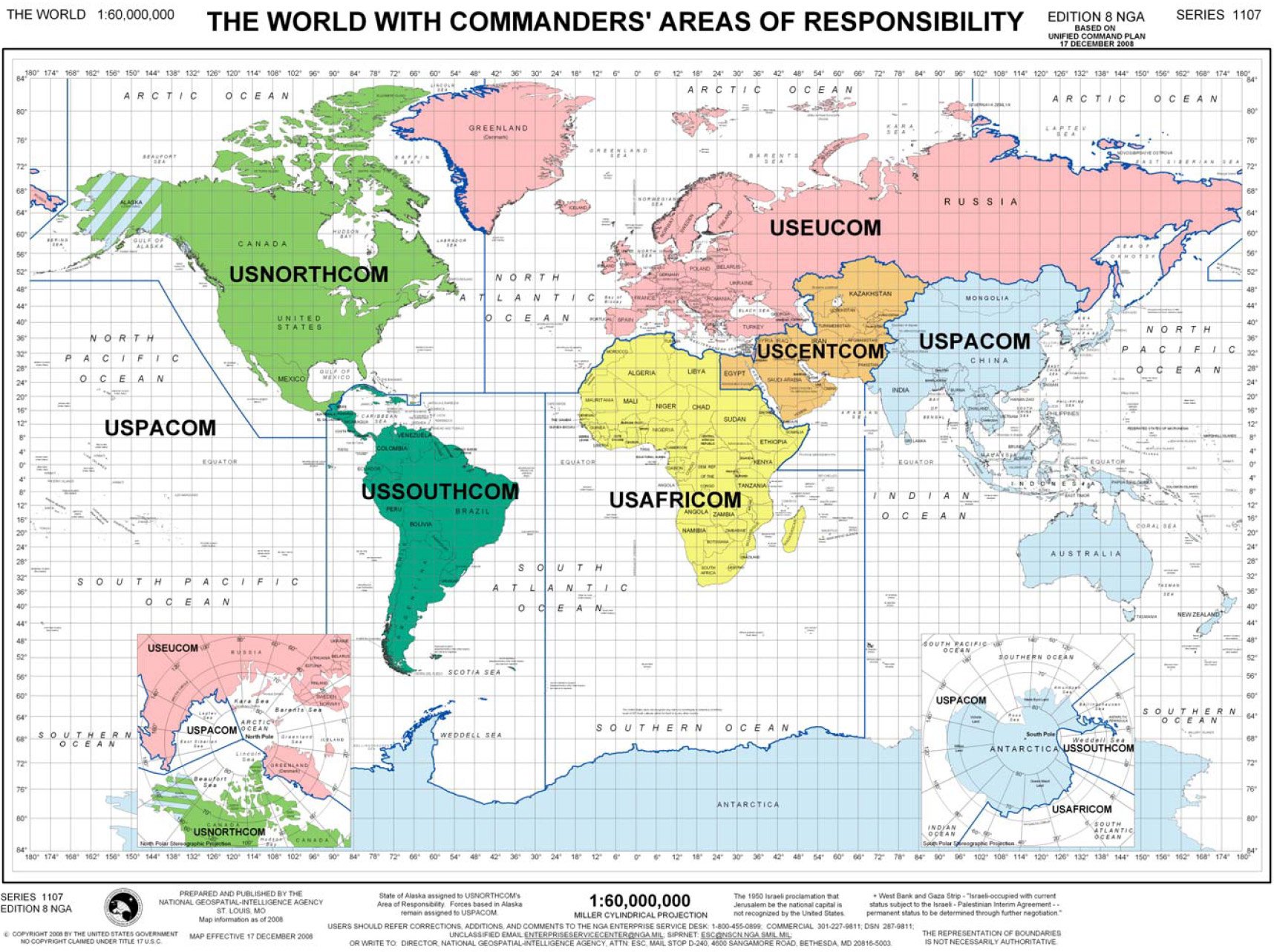
    Meanwhile, Naked Capitalism looks at the hobgoblin mind of the IMF.

    Bonus track: The Lester and Charlie Review want to keep hope alive.

    Round-up by Tengrain of Mock, Paper, Scissors who also blogs at Dependable Renegade. Send tips to: mbru AT crooksandliars DOT com

    US Embassy Target of Suicide Bombing in Turkey

    0

    In this image made from video, emergency personnel are seen in front of a side entrance to the U.S. Embassy following a blast, Ankara, Turkey, Friday, Feb. 1, 2013. Turkish news reports say an explosion in front of the U.S. Embassy in the Turkish capital Ankara has injured several people. (AP Photo/NTV)The US Embassy in the Turkish capitol of Ankara was the apparent target of a bomb blast Friday, with early reports from the Associated Press saying that two people have been killed after an explosion near the front entrance.

    “An Associated Press journalist saw a body in the street in front of an embassy side entrance,” the report reads. “The bomb appeared to have exploded inside the security checkpoint at the entrance of the visa section of the embassy.”

    Turkish television station NTV said two security guards at the entrance were killed.

    There has been no official word from the US State Department at this time.

    And Reuters says that a witness on the scene

    saw one wounded person being lifted into an ambulance as police cordoned off the area following the explosion, which sent smoke and debris flying into the street.

    Television footage showed a door blown out and masonry from the wall around it scattered in front of the entrance, although there did not appear to be any more significant structural damage.

    ________________________

    Detective Jailed Over Murdoch Tabloid Leak Offer

    0

    LONDON (Reuters) – A senior British counter-terrorism police officer was jailed on Friday after becoming the first person to be convicted following a massive police investigation into alleged phone-hacking centred on Rupert Murdoch’s British newspapers.

    Detective Chief Inspector April Casburn, 53, was jailed for 15 months for misconduct in a public office after she was found guilty last month of offering to sell details about the phone-hacking inquiry to Murdoch’s News of the World tabloid.

    “It was … a corrupt attempt to make money out of sensitive and potentially very damaging information,” said Justice Adrian Fulford.

    Casburn called the News of the World on September 11, 2010, when police were at the early stages of examining claims journalists from the paper had illegally accessed the voicemails of mobile phones in a bid to find stories.

    Prosecutors said she had phoned asking for money in an attempt to undermine the investigation because of her perception that she had been wronged and sidelined by police colleagues.

    She denied asking for payment, and said her intention was to raise the alarm over what she viewed as a waste of counter-terrorism resources on hacking, when they should have been concentrating on preventing attacks in the run-up to the anniversary of the September 11, 2001, attacks on the United States.

    Casburn, head of a counter-terrorism financial investigations unit at the time, testified that she had been incensed by the attitude of senior officers, who regarded the hacking probe as “a bit of a jolly” and a chance to interview celebrity hacking victims like the actress Sienna Miller.

    ADOPTION PLANNED

    However the judge said her actions could not be described as that of a whistle-blower, adding if she was not in the process of adopting a child, he would have jailed her for three years.

    “If the News of the World had accepted her offer, it’s clear, in my view, that Ms Casburn would have taken the money and, as a result, she posed a significant threat to the integrity of this important police investigation,” Fulford said.

    Detectives are now not only investigating these allegations, but also whether journalists paid cash to public officials, including police officers, for information.

    Casburn is the first person to be convicted in a scandal which escalated into a much wider crisis embroiling the top echelons of the British establishment, media, and police, and led to Murdoch closing down the News of the World in July 2011.

    Rebekah Brooks, the former boss of News Corp’s British newspaper business and a close confidante of Murdoch, and Prime Minister David Cameron’s former media chief Andy Coulson, are among those who have also been charged with criminal offences relating to their inquiries.

    The hacking scandal prompted Cameron to launch a wide-ranging public inquiry into the press, which exposed cosy relations between politicians and journalists and delivered an excoriating verdict on newspaper practices last November.

    It also called for the often unruly press to be overseen by a regulator enshrined in law, but Cameron rejected this to the delight of many in his Conservative party but to the dismay of the Lib Dems, the junior coalition partner.

    However, he ordered editors to come up with an effective independent system of self-regulation urgently but as yet the industry is still working on proposals.

    (Editing by Jon Boyle)

    An Economic Alternative to Exploitative Free Market Capitalism

    0

    In 1649, a group of English communists started fighting the notion of private property in what became known as the commons movement. They were using the unstable period in England’s history to introduce a new economy, one that would see land, wells and other means of wealth as shared resources. This group would prevent a small class of people from collecting and consolidating the rights to basic human life, such as water and food. In an annual celebration that doubled as a protest, they would circle the village commons and level or dig up any hedges and fences that designated spots of private ownership. They became known as the “levelers” or “diggers.”(Illustration by Jac Depczyk)

    The movement, which was subsequently quelled in 1651 by landowners and the Council of State, has seen a revival in the past decade. It remained dormant for so many years because of its fundamental threat to modern economics, putting community needs at the center of society rather than those of the individual. 

    The commons protects large resources from privatization, such as the lobster fisheries in Maine or grassland management in Mongolia, and allows collectives to regulate extraction. Exploitation is avoided because no one individual has more of a right to the source than any other.

    “[The commons]” is “an intellectually coherent way of talking about inalienable value, which we don’t have a vocabulary for,” David Bollier, author of “The Wealth of the Commons” said in a conference Tuesday at the Heinrich Böll Foundation in Washington, D.C.

    It is a way, Bollier says, of formally introducing the “political, public policy, cultural, social, personal, even spiritual” aspects of life into our economic system, which now, he says, can deal only with monetary value.

    “You could say that it’s a different metaphysics than that of the modern liberal state,” he says, “which looks at the individual as the sole agent.”

    The commons movement is a reaction to exploitative free market capitalism. It rejects the notion that resources, spaces and other assets are purely a means to wealth. It condemns the privatization of public works, such as the parking meters in Chicago, which allows the sovereign wealth fund that controls it to increase the rates.

    When an economy allocates wealth to private entities, Bollier says, those property rights inevitably get consolidated until a few large institutions control its means.

    The commons movement is a reaction to exploitative free market capitalism. It rejects the notion that resources, spaces and other assets are purely a means to wealth.

    Instead, he says, we need to protect the commons with rules that bar individual ownership of that property. It is not, however, a space that is left as a free-for-all; it still has regulations and state recognition that prevent private groups from exploiting it.

    The commons introduces a “role for organized self-governance as opposed to government,” Bollier says, “although they can be made complimentary.” The community manages the resource and has an involved interest in keeping others from decreasing its supply, he says, because the license belongs to the public.

    But the commons is not restricted to natural resources–it extends to the Web, science and other technologies.

    The Internet has become the setting for a fierce battle between public advocates that would like to designate forums as open and free, and companies that seek to control more of its content through bills like the Stop Online Piracy Act (SOPA) and the Protect IP Act (PIPA). Many programmers have handed over their copyright ownership to the public in the form of General Public Licenses and Creative Commons licenses, which allow the public to use and contribute to forums without having to pay for usage. It also keeps companies from using personal information, as with Facebook, to target potential consumers.

    Additionally, one-fifth of the human genome is privately owned through patents. Salt Lake City-based Myriad Genetics, for example, owns the breast cancer susceptibility gene, which guarantees monopoly control over research into cancer. It discourages many other researchers from exploring treatment, something that could ultimately stunt our capacity for medical advances.

    The issue extends further: Monsanto uses Genetically Modified Organisms to displace natural seeds, multinational water bottle companies are privatizing groundwater, and software companies retain copyrights on mathematical algorithms that others then cannot use.

    “Enclosure,” Bollier says about patents and private ownership, “is about dispossession. It’s a process by which the powerful convert a shared community resource into a market commodity … This is known as development.

    “The strange thing about the commons is that it’s invisible because it’s outside of the market and the state,” Bollier says. “It’s not seen as valuable and isn’t recognized because it has little to do with property rights for markets or geopolitical power … but there’s an estimated 2 billion people around the world whose lives depend upon commons like fisheries, forests, irrigation water and so forth.”

    The neoliberal market does not, paradoxically, grasp the purpose behind the commons. Our current system is one-dimensional, Bollier says, and is designed to attach a price to everything.

    For years, sustainability experts have sought ways to incorporate moderation and conservation into the neoliberal model through such incentives as cap and trade. But companies, Bollier says, will pay the extra fees until it is no longer economically viable, proving that in a system of privatization, people are willing to shell out penalty payments as long as they do not disrupt their profits.

    “There’s an allure in trying to meet microeconomics and neoliberal economics on its own ground,” says Carroll Muffett, moderator of the discussion and president of the Center for International Environmental Law, “to say ‘if you want to put a price on everything, here’s the price for this and look how massive the price is,’ whether it’s access to water or it’s pollination … but for me the danger is: Is meeting them on their own ground what we should be doing? Is there an inherent compromise in there that risks giving up something that ultimately cannot have a value put on it?”

    Until recently, Bollier and Muffett say, there has been much wiggle room for the free market to expand. But as the basic needs of fresh water, energy and food are being overproduced or vanishing because of climate change, companies are finding that their only options are to draw from the scant resources of Third World communities to meet their profit margins. It is a test to see what, in the end, neoliberalism holds higher in value: money or life.

    Muffett says that question has already been answered in the building of the coal-fired Medupi Power Station in South Africa. An assessment of the power station projected that there wouldn’t be enough water to keep the plant operating and meet the needs of the local community. The watershed adjacent to the plant is already so overtaxed that it doesn’t reach the sea. The company, Eskom, proposed to reroute water from another watershed for its main operation and use the local supply for its filtration system. It would raise the price of water for the community to keep “poachers” from draining the source.

    “The water that’s being poached,” Muffett says, “is to give people access to fresh water and to water their crops for subsistence living.

    “Putting a price on that for a community is ultimately missing the point. The water isn’t fungible. If I give you my gallon of water and you give me $1,000, I can’t drink the thousand dollars.”

    Both Bollier and Muffett say this is the result of an economy based on the philosophies of Thomas Malthus and John Locke, whose models do not guarantee the right of existence. To exist, one must have money. It becomes the defining characteristic of life.

    “That’s the risk in the natural capital approach,” Muffett says. “It’s saying ‘if you give me a thousand dollars, that’s a substitute for my bees, my pollinators, for the land where my ancestors are buried.’ And there is no substitute for that.”

    This article was made possible by the Center for Study of Responsive Law.

    © 2012 TruthDig.com

    Frontrunning: February 1

    0
    • ‘London Whale’ Sounded an Alarm on Risky Bets (WSJ)
    • Deadly Blast Strikes U.S. Embassy in Turkey (WSJ)
    • Abe Shortens List for BOJ Chief as Japan Faces Monetary Overhaul (BBG)
    • Endowment Returns Fail to Keep Pace with College Spending (BBG) – More student loans
    • Mexico rescue workers search for survivors after Pemex blast kills 25 (Reuters)
    • Lingering Bad Debts Stifle Europe Recovery (WSJ)
    • Peregrine Founder Hit With 50 Years (WSJ) – there is hope Corzine will get pardoned yet
    • Deutsche Bank to Limit Immediate Bonuses to 300,000 Euros
    • France’s Hollande to visit Mali Saturday (Reuters)
    • France, Africa face tough Sahara phase of Mali war (Reuters)
    • Barclays CEO refuses bonus (Barclays)
    • Edward Koch, Brash New York Mayor During 1980s Boom, Dies at 88 (BBG)
    • Samsung Doubles Tablet PC Market Share Amid Apple’s Lead (BBG)
    • Hagel Endures Republican Criticism as Levin Sees Approval (BBG)
    • U.S. sues to stop beer deal to unite Bud and Corona (Reuters)

    Overnight Media Digest

    WSJ

    * The JP Morgan Chase & Co trader known as the “London whale” tried to alert others at the bank to mounting risks months before his bets ballooned into more than $6 billion in losses, according to people familiar with emails reviewed by J.P. Morgan and a U.S. Senate panel.

    * The U.S. government filed suit to block Anheuser-Busch InBev’s $20.1 billion deal to buy the rest of Grupo Modelo, saying it would reduce competition.

    * Chinese hackers believed to have government links have been conducting wide-ranging electronic surveillance of media companies including The Wall Street Journal, apparently to spy on reporters covering China and other issues, people familiar with incidents said.

    * President Barack Obama let his jobs council disband Thursday as its two-year charter expired, sparking criticism among Republicans and conservative economists that the group had provided more show than substantive policy.

    * Morgan Stanley said it would increase the salaries of Chairman and Chief Executive James Gorman and other top executives to make their pay more competitive.

    * AirAsia Bhd’s chief executive hopes to list the group’s Indonesia arm on the Jakarta stock exchange in the third quarter as the budget carrier seeks to expand its foothold in Southeast Asia’s largest air travel market.

    * Roomy Khan, one of the first cooperating witnesses who helped build the U.S. government’s case against convicted hedge-fund manager Raj Rajaratnam, was sentenced to one year in prison Thursday.

    * Animal-medicine maker Zoetis Inc, which is being carved into a standalone company by drug maker Pfizer Inc, raised about $2.2 billion in an initial public offering, a strong showing for the largest IPO deal from a U.S. company since Facebook Inc debuted last May.

    * Best Buy Co is closing 15 of its 75 big-box stores in Canada as its new chief executive tries to stem slumping sales and profits at the consumer electronics chain.

    FT

    BARCLAYS IN QATAR LOAN PROBE – UK authorities are looking into an allegation that Barclays lent Qatar money to invest in the bank during the height of the 2008 financial crisis, allowing it to avoid a government bailout, according to unnamed sources cited by the newspaper.

    SEYMOUR PIERCE’S FUTURE UP IN THE AIR – The board of Seymour Pierce held talks on Thursday night over the future of the stockbroker, with an unnamed source saying this has come about due to the FSA previously blocking funding from Ukrainian backers.

    AB INBEV’S 20 BILLION DOLLAR DEAL THREATENED BY US SUIT – The United States moved to block Anheuser-Busch InBev in its 20 billion dollar acquisition of Grupo Modelo , the Mexican brewer, saying it would lead to an increase in prices and deter competition.

    BERTELSMANN SEEKS BUYER FOR TWO BILLION EURO RTL STAKE – German media group Bertelsmann said it intends to sell a stake in broadcasting subsidiary RTL, aiming to raise up to 2 billion euros

    LAWSON URGES FULL NATIONALISATION OF RBS – Former Conservative finance minister, Nigel Lawson said the UK government should nationalise RBS and there was a case for no bonuses to paid this year.

    DEUTSCHE BANK RISES ON CAPITAL STRENGTH – The bank offered good news to investors reporting a capital base above expectations, bolstering its share price.

    CHINA’S WORKERS ENDURE UNHAPPY NEW YEAR – An austerity drive by the new Chinese leadership of Xi Jinping has led government departments and state-owned enterprises to cut back or cancel new year festivities.

    US BANKS SQUEEZED AS MORTGAGE PROFITS HIT – Bonanza profits at US banks from mortgages are being squeezed, raising doubts about earnings at lenders such as Wells Fargo, Bank of America and others.

    WASENDORF GETS 50 YEARS JAIL FOR FRAUD – A federal court in the United States sentenced the ex head of collapsed future broker Peregrine Financial Group, Russell Wasendorf Sr., to 50 years in prison.

    NYT

    * The Justice Department has sued to block Anheuser-Busch InBev’s proposed $20.1 billion deal to buy control of Grupo Modelo, the first major roadblock in a decade of consolidation by brewers around the world.

    * A bankruptcy court judge approved a broad settlement deal on Thursday that paves the way for MF Global customers to recover much of the $1.6 billion that disappeared when the brokerage firm blew up in 2011.

    * European antitrust officials on Thursday accused drug giants Johnson & Johnson and Novartis of colluding to delay the availability of a less expensive generic version of a powerful medication often used to ease severe pain in cancer patients.

    * James Gorman, chief executive of Morgan Stanley, will receive a huge raise in his base salary this year, but his overall pay package for 2012 was down from 2011, according to a regulatory filing.

    * Pfizer Inc’s animal health unit, known as Zoetis, raised $2.2 billion in its initial public offering on Thursday, exceeding expectations by pricing its stock at $26 a share, above the expected range of $22 to $25 a share. The sale values the company at about $13 billion.

    * Roomy Khan, a central figure in the investigation that led to the conviction of hedge fund manager Raj Rajaratnam, was sentenced to one year in prison on Thursday for illegally passing inside information and obstructing justice.

    * Fabrice Tourre, the Goldman Sachs trader accused of misleading clients over a controversial mortgage deal, is no longer working at the firm.

    Canada

    THE GLOBE AND MAIL

    * Canada will begin a two-year stint at the helm of the eight-nation Arctic Council amid a clamor of competing calls for leadership, as the ice recedes and the race heats up to extract resource riches while protecting a fragile and now-exposed environment.

    * Toronto Mayor Rob Ford is publicly at odds with a key member of his team again, this time in a he-said, she-said spat with the Toronto Transit Commission chair.

    The verbal tussle over the approval last week by the transit commission of a 15-year sole-source contract is the latest example of Ford’s difficulty seeing eye to eye with even fiscal conservatives on council.

    Reports in the business section:

    * The Canadian economy expanded at its fastest pace in more than half a year, but the bigger picture is still one of slow growth. The country’s gross domestic product rose 0.3 percent in November, Statistics Canada said Thursday, its strongest showing in seven months as auto makers and oil firms ramped up activity.

    NATIONAL POST

    * Prime Minister Stephen Harper says while some of his Conservative Members of Parliament may not agree, abortion is legal in Canada. Harper made the comments while under questioning in the House of Commons over a letter written by three Tory MPs who want the Royal Canadian Mounted Police to investigate hundreds of abortions as possible homicides.

    FINANCIAL POST

    * Two of Canada’s biggest retailers, Best Buy Canada and Sears Canada Inc, announced layoffs Thursday in what is shaping up to be a turbulent and competitive year for the country’s retail sector.

    China

    PEOPLE’S DAILY

    — Premier Wen Jiabao pledged that China would continue its opening up policy during a meeting with foreign experts on Monday.

    SHANGHAI SECURITIES NEWS

    — The People’s Bank of China (PBOC) drained a net 300 billion yuan ($48 billion) via reverse bond repurchase agreements in its open market operations in January as the country’s interbank market was flooded with cash.

    — The recent serious pollution in Beijing has given rise to suspicion of the quality of China’s fuel and gasoline.

    CHINA SECURITIES JOURNAL

    — Sources say Chinese authorities have suspended a plan to expand an experimental property tax now levied in a few cities including Shanghai and Chongqing.

    — A monthly index issued by China’s national fund for protecting stock investors shows that in January, investor confidence in the domestic equity market reached its highest since April 2011 as the main Shanghai Composite Index began a sharp rebound since early December.

    CHINA BUSINESS NEWS

    — High costs and bureaucracy have made 78 percent of Chinese firms feel it is difficult to operate in the European Union, according to a survey by the European Union Chamber of Commerce in China.

    CHINA DAILY (www.chinadaily.com.cn)

    — In a move aimed at strengthening personal data protection, companies will be instructed to delete customer information after use, according to new guidelines implemented on Friday.

    Fly On The Wall 7:00 AM Market Snapshot

    ANALYST RESEARCH

    Upgrades

    AB InBev (BUD) upgraded to Outperform from Market Perform at Bernstein
    Arthur J. Gallagher (AJG) upgraded to Outperform from Market Perform at William Blair
    Audience (ADNC) upgraded to Hold from Sell at Deutsche Bank
    Chubb (CB) upgraded to Buy from Hold at Deutsche Bank
    Deutsche Bank (DB) upgraded to Buy from Neutral at Citigroup
    Ericsson (ERIC) upgraded to Neutral from Underperform at Credit Suisse
    GameStop (GME) upgraded to Overweight from Neutral at Piper Jaffray
    Greenway Medical (GWAY) upgraded to Strong Buy from Market Perform at Raymond James
    Neutral Tandem (IQNT) upgraded to Market Perform from Underperform at Raymond James
    Oracle (ORCL) upgraded to Outperform from Market Perform at BMO Capital
    PACCAR (PCAR) upgraded to Outperform from Market Perform at Wells Fargo
    Verizon (VZ) upgraded to Overweight from Neutral at Piper Jaffray
    W. R. Berkley (WRB) upgraded to Hold from Sell at Deutsche Bank
    WMS Industries (WMS) upgraded to Neutral from Sell at Goldman
    Wynn Resorts (WYNN) upgraded to Buy from Neutral at Janney Capital

    Downgrades

    AB InBev (BUD) downgraded to Hold from Buy at Societe Generale
    ARMOUR Residential (ARR) downgraded to Neutral from Buy at BofA/Merrill
    Alkermes (ALKS) downgraded to Neutral from Buy at BofA/Merrill
    Amerseco (AMRC) downgraded to Perform from Outperform at Oppenheimer
    Bob Evans (BOBE) downgraded to Hold from Buy at KeyBanc
    Brightcove (BCOV) downgraded to Outperform from Top Pick at RBC Capital
    Colfax (CFX) downgraded to Hold from Buy at KeyBanc
    Constellation Brands (STZ) downgraded to Neutral from Buy at BofA/Merrill
    Constellation Brands (STZ) downgraded to Neutral from Buy at Goldman
    Copart (CPRT) downgraded to Hold from Buy at BB&T
    Edison International (EIX) downgraded to Neutral from Buy at SunTrust
    HSBC (HBC) downgraded to Neutral from Buy at Citigroup
    Harris Teeter (HTSI) downgraded to Hold from Buy at BB&T
    Harris Teeter (HTSI) downgraded to Market Perform from Outperform at BMO Capital
    HealthSouth (HLS) downgraded to Hold from Buy at Deutsche Bank
    Hologic (HOLX) downgraded to Reduce from Neutral at SunTrust
    Life Time Fitness (LTM) downgraded to Market Perform from Outperform at William Blair
    MasterCard (MA) downgraded to Market Perform from Outperform at Wells Fargo
    Quiksilver (ZQK) downgraded to Neutral from Outperform at RW Baird
    Royal Dutch Shell (RDS.A) downgraded to Underperform from Neutral at BofA/Merrill
    Time Warner Cable (TWC) downgraded to Hold from Buy at Deutsche Bank
    Time Warner Cable (TWC) downgraded to Market Perform from Outperform at Wells Fargo
    UPS (UPS) downgraded to Neutral from Buy at Citigroup
    Viacom (VIAB) downgraded to Neutral from Overweight at Piper Jaffray
    Whirlpool (WHR) downgraded to Outperform from Strong Buy at Raymond James

    Initiations

    Blue Nile (NILE) initiated with an Outperform at Wells Fargo
    Edwards Lifesciences (EW) initiated with a Buy at Janney Capital
    Helmerich & Payne (HP) initiated with a Neutral at Credit Suisse
    NCI Building Systems (NCS) initiated with a Buy at BB&T
    Nabors Industries (NBR) initiated with an Underperform at Credit Suisse
    National Oilwell (NOV) initiated with a Neutral at Credit Suisse
    Oceaneering (OII) initiated with a Neutral at Credit Suisse
    Oil States (OIS) initiated with an Outperform at Credit Suisse
    Patterson-UTI Energy (PTEN) initiated with a Neutral at Credit Suisse
    Precision Drilling (PDS) initiated with a Neutral at Credit Suisse
    Shutterfly (SFLY) initiated with a Market Perform at Wells Fargo
    Sunshine Heart (SSH) initiated with an Overweight at Piper Jaffray
    Zoetis (ZTS) initiated with a Buy at ISI Group

    HOT STOCKS

    Sprint (S): DISH (DISH) proposal for Clearwire (CLWR) is “illusory”
    Moody’s said DOJ suit is credit negative for AB InBev (BUD) but doesn’t change rating
    Barrick (ABX) considering sale of Barrick Energy unit, other assets, Bloomberg reports
    Chubb (CB) announced new $1.3B share repurchase plan
    Sees FY13 net written premiums up 2% to 4%
    Goodyear Tire (GT) to exit farm tire business in Europe, Middle East and Africa region
    OCZ Technology (OCZ) sees 20%-30% company growth year-over-year
    Brink’s (BCO) to divest cash-in-transit operations in Germany
    Said will be “very difficult” to match 2012 earnings
    Viad (VVI) sees FY13 revenue decreasing “at a low to mid single-digit rate”
    Newell Rubbermaid (NWL) sees FY13 net sales up 1% to 3%

    EARNINGS

    Companies that beat consensus earnings expectations last night and today include:
    Viad (VVI), Chubb (CB), C.R. Bard (BCR), Fortune Brands (FBHS), Bally Technologies (BYI), Affymetrix (AFFX), Principal Financial (PFG)

    Companies that missed consensus earnings expectations include:
    Brink’s (BCO), Consolidated Edison (ED), McKesson (MCK), Wynn Resorts (WYNN), bebe stores (BEBE)

    Companies that matched consensus earnings expectations include:
    Eastman Chemical (EMN), Reinsurance Group (RGA), PerkinElmer (PKI)

    NEWSPAPERS/WEBSITES

    The JPMorgan Chase (JPM) trader known as the “London whale”–Bruno Iksil–tried to alert others at the bank to mounting risks months before his bets ballooned into more than $6B in losses, sources say, the Wall Street Journal reports
    Asian manufacturing data today suggested the region’s economic recovery is continuing. HSBC’s China PMI reached a two-year high of 52.3 from December’s 51.5, while the official PFLP number fell to 50.4 from December’s 50.6, the Wall Street Journal reports
    Dell (DELL) is close to an agreement to sell itself to a buyout consortium led by its founder and CEO Michael Dell and private equity firm Silver Lake Partners, with a deal coming as soon as Monday, sources say, Reuters reports
    Airbus (EADSY) studied alternatives to lithium-ion batteries for its next jet, the A350, and has time to adapt to any rule changes prompted by the problems that have grounded Boeing’s (BA) 787 Dreamliner, says CEO Fabrice Bregier, Reuters reports
    Anheuser-Bush InBev (BUD) may have to give up more control of U.S. beer distribution or sell a brewery to settle an antitrust lawsuit by the U.S. to block its $20.1B takeover of the rest of Grupo Modelo SAB (GPMCF), Bloomberg reports
    Equity funds attracted six times the money that went into bonds in the week ended January 30, according to a Citigroup (C) report that cited EPFR Global data. Stock funds drew $18.8B, exceeding the $3B that went into bonds, as 58% of the equity inflows went into North American funds, with exchange-traded funds being the largest beneficiaries, the analysts wrote, Bloomberg reports

    SYNDICATE

    Bonanza Creek (BCEI) 11.5M share Secondary priced at $29.50
    Chesapeake Lodging (CHSP) files to sell 6.25M shares of common stock
    Echo Therapeutics (ECTE) 13.33M share Spot Secondary priced at 75c
    Navios Maritime Partners (NMM) files to sell 4.25M shares of common stock
    Penn National (PENN) files to sell convertible preferreds and stock for REIT structure
    United Insurance (UIHC) files to sell 717K shares of common stock for holders
    Zoetis (ZTS) 86.1M share IPO priced at $26.00

    Your rating: None

    David Cameron Backs George Osborne Amid Rumours Of Tory Plots To Oust Leadership

    0

    David Cameron has said he has “full confidence” in George Osborne, amid reports of backbench Tory plots to oust the chancellor or even the prime minister himself.

    On Friday the Daily Mail reported that Tory MPs plotting against the leadership intend to send a letter to the prime minister calling on him to sack the chancellor if the economy fails to improve after the Budget in March.

    Asked whether Cameron had confidence in Osborne, a Downing Street spokeswoman told reporters: “Yes … the Prime Minister has full confidence in the chancellor.”

    She added: “We have a plan to deal with a record deficit and we are sticking to that plan.”

    And according to The Guardian, Cameron risks facing a insurrection against his leadership in the summer of 2014 if he fails to improve his party’s poll rating.

    The paper reports that enough MPs are believed to be prepared to trigger a vote of no confidence in the prime minister if he does not start to do better.

    Under Conservative Party rules a leadership contest is triggered if 46 MPs sign letters calling for a vote. It is believed some of Cameron’s harshest critics have already submitted their own letters.

    The rumours of plots emerged after little known backbencher Adam Afriyie was accused of running a not-so-secretive campaign to succeed Cameron should the Tories lose the election in 2015.

    Cameron made fun of the stories during prime minister’s question time on Wednesday, when a Labour MP asked if there were “traces of stalking horse” in the Conservative Party.

    Cambodian Workers Wait for Wages in the Street, Shaming H&M and Wal-Mart

    0

    The women of the Kingsland clothing factory in Phnom Penh have been losing sleep over their jobs. It’s not the grueling hours and poverty wages that keep them awake, nor the threat of violent retaliation they’ve endured for trying to organize, nor even the unsanitary, dangerous working conditions they’ve often complained about. They’re used to all that; what they can’t stand is not being paid for their work.Since early January, workers have maintained a 24-hour vigil in front of a Phnom Penh clothing factory to demand owed wages. (Still from Warehouse Workers United video.)

    Since the factory shut down weeks ago, workers have held a 24-hour vigil on the street to demand back wages and severance pay. The encampment marks their desperation to make their plight visible and to expose the open secret behind the underwear Kingsland has exported for years: that their cheap labor supplied the global retail empires of Wal-Mart and H&M.

    Heoun Rapi, one of about 200 protesting workers, stated in a public declaration:

    I am 6 months pregnant. It was difficult to work while I’m pregnant but even though it’s hard I need to struggle. I don’t know what to do. I can’t survive with the salary cut. I will protest like this until there is a solution. I want the factory and Wal-Mart to rush to give us our severance pay.

    The factory reportedly laid off workers in September due to a lack of work orders, but promised to pay partial wages until work resumed in January. In December, the company union announced the factory had closed and that the owners had declared bankruptcy and apparently left the country. Though the details are still murky, it seems the factory may well be reopened at some point–potentially, advocates say, under even more precarious conditions than the already-miserable working environment prior to the closure.

    In the meantime, workers remain in limbo, with no resolution over the question of legally entitled back wages or severance pay. The advocacy groups Community Legal Education Center (CLEC) and the Workers Information Center (WIC) are now pressuring Wal-Mart and H&M “to ensure that Kingsland owners pay all wages and indemnity and comply fully with Cambodian Labor Law.” The International Labor Rights Forum, which has long campaigned against Wal-Mart and other retail giants’ exploitation of factory workers in the Global South, has been tracking labor disputes at Kingsland since 2007, when workers tried to form an independent union and were violently attacked. According to the workers’ account of one clash in February 2008, after an independent workers’ group launched a strike outside the factory:

    [Workers] were forced to wait an hour and a half past their usual payment time when the police came and argued with the workers about public security issues. The situation escalated when police began to beat workers, also allowing company cars to crush the waiting workers. Because of this, 15 workers were hurt, five sustaining serious injuries, including five leg injuries and one broken hand.

    The conflict drew the attention of global labor watchdogs, including the International Labour Organization (ILO) but despite attempts at intervention, mediation of the dispute foundered.

    The current crisis at Kingsland continues to test multinational giants’ claims of deniability. Wal-Mart did not respond to an inquiry from Working In These Times, but in statements published via CLEC and WIC, the megaretailer claimed it stopped contracting with Kingsland in October 2011 and had “paid in full for all merchandise.” H&M offered a more elaborate explanation, arguing that the factory was “not an approved supplier of H&M” but acknowledging previous unauthorized work, and that “the last H&M unauthorized production of garments in Kingsland was completed by July 2012.” With no official affiliation with Kingsland, the company stated, “Unfortunately as H&M does not have any business relation with this factory we are not in a position of exerting any pressure on the factory owner.”

    The CLEC and WIC have condemned the companies and cited workers’ testimonies that, in contrast to the companies’ claims, “Wal-Mart production continued until the first week of September, 2012” and that “H&M alterations and quality checks continued until the first week of September, 2012.”

    Whatever date production actually ended, neither company seems interested in taking responsibility for the abandoned workers whose livelihoods had long depended on orders from their brands. The denials echo the claims of Wal-Mart late last year when it denied official connection to the Tazreen garment factory in Bangladesh after a horrific fire incinerated more than 100 workers and left several foreign labels, including Wal-Mart’s, in the ashes. Whether these multinationals are truly that ignorant about their subcontractors in Asia is debatable, but clearly, at the very least, malign neglect permeates every link in the supply chain. CLEC and WIC say the companies’ damage control tactics blatantly contradict the ethical sourcing principles touted in the corporations’ “social responsibility” policies.

    As in other Asian export economies, Cambodia’s garment sector as a whole–the country’s critical, but volatile low-wage export industry–has been plagued by safety hazards and labor abuses. Joel Preston, an activist working with CLEC, tells Working In These Times: “Conditions at Kingsland were similar to those throughout the garment industry; poverty wage, forced labor of 12 hours per day, discrimination and violence against union leaders, fainting workers, etc.” On that last point, Preston was referring to spates of sudden faintings linked to hazardous and exhausting working conditions at several industrial facilities in recent months, including workplaces tied to brands like WalMart, Target, Reebok, and Urban Outfitters.

    Anti-sweatshop groups have pushed for tighter regulation of the convoluted export supply chain and greater corporate accountability. Yet the business model of suppressing wages and labor conditions at the expense of equity and safety prevails. When they have no truly independent garment workers union, just the company or partisan unions that have long dominated Cambodian workplaces, Preston says consumer pressure is key for garment workers’ struggles:

    With the state of the rule of law in Cambodia, the fate of these workers often rests in the hands of consumers, observers and trade unions. … Will international trade unions and advocates stand behind these marginalized workers? In this case, the answer is yes. The international network is building and Walmart and H&M will be held to account.

    In a country where people are worked until they fall unconscious, how long will it take for multinationals to wake up to their complicity in the horrific conditions of the industry status quo?

    Royal Hoax Call DJs Will Not Face Charges

    0

    The Australian DJs who made a prank call to the hospital treating the Duchess of Cambridge will not be prosecuted.

    No charges will be brought against Mel Greig and Michael Christian over the hoax, the Crown Prosecution Service said.

    Details of the Duchess’ rare form of morning sickness were revealed on air on December 4, 2012, when the pair made the prank call to King Edward VII’s Hospital in central London, posing as the Queen and Prince Charles.

    Nurse Jacintha Saldanha, who transferred them to a colleague, who then described Kate Middleton’s condition in detail, was found hanged three days later in her living quarters at the hospital, sparking a backlash against the 2Day FM DJs.

    Malcolm McHaffie, deputy head of special crime at the CPS, said there was no evidence to support a manslaughter charge and any potential prosecution would not be in the public interest.

    Scotland Yard provided the CPS with a file of evidence on December 19 and asked advice on whether a prosecution should be brought.

    Mr McHaffie said the CPS had taken into account, among other matters, that it is not possible to extradite people from Australia on the potential offences in question.

    He also said it considered that “however misguided, the telephone call was intended as a harmless prank”.

    “The consequences in this case were very sad. We send our sincere condolences to Jacintha Saldanha’s family,” he added.

    The funeral of mother-of-two Ms Saldanha was held in the Catholic parish church Our Lady of Health in Shirva, near Mangalore, in India.

    Memorial services were also held at the hospital where Ms Saldanha worked and in Bristol where her husband and children live.

    John Lofthouse, chief executive at King Edward VII’s Hospital, said it would not be commenting on the matter.

    He added: “The consequences of that hoax call are well-known, and tragic. We will continue to support the family of our much-loved nurse Jacintha Saldanha during what continues to be a very sad time.”

    Earlier this week, Southern Cross Austereo, the parent company of the radio station 2Day FM, announced the DJs would be keeping their jobs and returning to the air soon “in roles that make full use of their talents”.

    The DJs apologised and expressed their regrets in emotional television interviews after Ms Saldanha’s death, saying they never expected their call would be put through.

    Hot 30 – the show they hosted, was taken off air and later cancelled.

    The End of the Farm Bill? And the Beginning of Better Food System

    0

    “There is absolutely no way to explain this other than agriculture is just not a priority,” said Senate Agriculture Committee Chairwoman Debbie Stabenow on the Senate Floor on New Year’s Day.(Photo: Justin Russell/Flickr)

    She was describing the bare-bones Farm Bill extension agreed to as part of the stop-gap budget deal.

    Most astonishing was how Congress and the White House seemed to ignore the longstanding importance of this legislation when they failed to provide mandatory funding for a whole host of programs in the absence of its full renewal.

    The Farm Bill is the nation’s largest piece of agricultural legislation. It’s the usual vehicle for far-reaching programs to boost crop production, protect farmers, advance rural development, conserve energy, provide for international food aid, and, notably, run nutrition assistance programs. And it’s in limbo.

    This stripped-down extension came just after the House allowed the Farm Bill to expire, never even calling for a vote. House Speaker John Boehner simply didn’t bother. He clearly didn’t pay any political cost for that – he was overwhelmingly reelected as House Speaker shortly thereafter.

    Is this the end of the Farm Bill? Collin Peterson, the ranking Democrat on the House Agriculture Committee, seems to think so.

    The Minnesota lawmaker has written House leadership asking for an agreement to bring a Farm Bill to a vote if it comes out of committee – otherwise, he just won’t bother writing one. As importantly, he asks whether their plan is simply to renew the Farm Bill (rather than actually writing the traditional five-year bill) and look for ways to scale back the bill each year.

    The reality is that this key legislation has drifted a long way from its original form passed during the Great Depression. Back then, it was called the Agricultural Adjustment Act. Originally, it was designed to address the oversupply of agricultural commodities while ensuring that the marketplace paid farmers a fair price.

    Now, managing supply and stabilizing prices for farmers and consumers – despite evidence of enormous taxpayer savings – isn’t a priority in Washington. The modern-day Farm Bill, while having many good programs, virtually ignores the biggest and most pressing challenges in agriculture: wild market volatility that threatens financial stability for farmers and access for consumers, climate-induced droughts and floods, and the increasing monopoly power of corporations. Nor does it address major problems of the food system as a whole, such as the health crisis associated with childhood obesity or the exploitation of workers all along the food chain.

    Instead of acting as a vehicle for real reform, Congress has made it clear that the Farm Bill will be, in essence, a step down from the status quo. The skeletal structure stays in place as it’s bled by a thousand budget cuts.

    It’s time we pay attention to the messages Congress is sending and begin to look beyond the Farm Bill to build a new policy framework for a fair, sustainable, and healthy food system.

    We need policies – many of which are starting to appear at the community and state level, rather than out of the bumbling federal framework – that get to the heart of the challenges farmers face. We need fair and transparent pricing, adequate insurance programs, financing options for farmers or food business operators, and fair competition in the marketplace. We need our labor laws to catch up with the challenges of farm workers, food processing workers, and those working in restaurants and supermarkets.

    In the short term, we can’t forget the important programs the Farm Bill funds. But real change will require a new approach that values the needs of farmers and society as a whole over the demands of corporations.

    This work is licensed under a Creative Commons License

    Field Work’s Dirty Decret: Agribusiness Exploitation of Undocumented Labor

    0

    This week, a bipartisan group of senators and the president unveiled their respective plans for much needed and long overdue immigration reform. For the 11 million or so undocumented immigrants who have settled in this country, the path to citizenship being paved for them looks like it will be more tough than fair.An Economic Policy Institute report found that increasing farm workers’ wages by 40% would increase US households’ food bills by just $16 a year. (Photograph: David Levene)

    While we don’t yet know how this will all play out, at least there will be a path. For one group of immigrants, however — the farm workers who sustain our food supply — there is reason to fear that what awaits them is not a path to citizenship, but their cemented status as indentured servants.

    Most farm work in America is performed by immigrants, most of whom are undocumented and therefore exploitable. The big agribusinesses that hire these immigrants will tell you that they need an unfettered supply of cheap foreign labor, because they cannot find Americans willing to do these jobs.

    When you consider what these jobs entail — hours of backbreaking work in terrible and often dangerous conditions, subsistence wages with little or no time off, and none of the protections or perks that most of us enjoy (like paid sick days, for instance) — it’s hard to see why anyone with other options would subject themselves to a life that is barely a step above slavery.

    In the 1980s, President Ronald Reagan signed a bill into law which introduced some protections for these imported serfs, under what has become known as the guest-worker program. These protections include a minimum wage guarantee, housing that meets an acceptable standard for the duration of the contract, and a guarantee that the worker be paid three-quarters of their full pay should should a season end early.

    Most employers would be delighted to get away with all this: being able to hire low-wage workers at will, without the hassle of paying disability insurance or other niceties. But agribusinesses find the guest-worker program’s pitiful protections such a burden that they have mounted a relentless campaign to undermine them, and for the most part, work around them anyway; they hire undocumented workers instead.

    According to a report compiled by Eric Ruark (pdf), the director of research at the Federation for American Immigration Reform (Fair), as of 2006, only 27% of workers hired by agribusinesses are American citizens, 21% are green card holders, around 1% are part of the guest worker program … and a whopping 51% are unauthorized immigrants.

    It’s agriculture‘s worst kept secret that farm owners routinely break the law by hiring undocumented workers, but the crime receives tacit approval from lawmakers sympathetic to the plight of major agribusinesses, which seem to consider cheap labor their right. In South Carolina, for instance, lawmakers passed their version of Arizona’s draconian bill, and have mandated that employers use an e-verify system to check the immigration status of employees. Farm workers, however, were exempted from verification.

    The agribusiness sector has gotten away with exploitative and illegal practices because of ridiculous threats, like the suggestion that should the supply of cheap labor dry up in the US, they will outsource our food production to China. This idle threat is based on the absurd notion that if they have to pay workers higher wages, somehow there will be fewer people willing to do the jobs. The other scare tactic is spreading talk that if they have to increase their expenditure on labor, those costs will have to be passed on to the American consumer.

    Several studies have been conducted, however, that expose these hollow threats for the nonsense that they are. A report by the Congressional Research Service (pdf) found no evidence of a labor shortage in the agricultural sector. On the contrary, it found that between 1994 and 2008, the unemployment rate for farm workers was consistently higher than for all other occupations. In other words, agriculture has had a surplus of available workers for decades.

    During this period, the agricultural industry has recorded a nearly 80% average annual increase in profits — more than all other major industries. No doubt, these record profits have something to do with the fact that real wages for farm workers have remained stagnant throughout this time. Finally, a 2011 report by the Economic Policy Institute found that an increase in farm workers’ wages of 40% would result in an annual rise in household spending by the American consumer of just $16.

    Clearly, the economic argument for allowing one industry a workforce of virtually indentured labor does not hold water. But there is a humanitarian argument to be made, as well, that should be enough to put an end to this exploitative practice immediately. In 2009, the New York Times’ Bob Herbert wrote an article about the horrible treatment of farm workers in upstate New York — in this case, hired to feed and care for ducks farmed to be slaughtered for foie gras.

    “The routine is brutal and not very sanitary. Each feeding takes about four hours and once the birds are assigned a feeder, no one else can be substituted during the 22 day force feeding period that leads up to the slaughter … Not only do the feeders get no days off during that long stretch, and no overtime for any of the long hours, but they get very little time even to sleep each day. The feeding schedule for the ducks must be rigidly observed.

    “When I asked one of the owners, Izzy Yanay, about the lack of a day of rest, he said of the workers: ‘This notion that they need to rest is completely futile. They don’t like to rest. They want to work seven days.'”

    Herbert went on to make the point that we are much more likely to hear complaints about cruelty to ducks by force-feeding than we are about the cruelty to the people hired to feed them. Consumers have long since showed a willingness to pay more for organic meat or chicken because they don’t like the idea of animal cruelty.

    Are we really not willing to pay a few cents more for farm produce so that human beings are not treated like animals?

    It remains to be seen what the bipartisan “gang of eight” senators have in mind specifically for farm workers in any future immigration bill. But one can only hope that they will not give in to bullying by the spoiled agricultural industry, which continues to deny these workers the same rights and protections every other worker in America enjoys.

    Dutch SNS Bank Fails On Real Estate Losses: First “Too Big To Fail” Nationalization In Five Years

    0

    Earlier today we got one hint that not all is well in the European banking system, as far less than the expected €200 billion was tendered back to the ECB in the second LTRO repayment operation, when just 27 banks paid back some €3.5 billion. Another, perhaps far bigger one, comes courtesy of AAA-rated Netherlands, which just experienced its first bank failure since 2008 following the nationalization of SNS Reall NV, as the previously announced bad loan writedown finally claimed the bank. As a reminder, half a month ago we got news that “SNS Reaal NV (SR), a Dutch bank and insurer struggling to wind down a money-losing real estate lending unit, fell the most in more than two months after a report said it may have to post a 1.8 billion-euro ($2.4 billion) writedown on property-finance loans.” Today we got the inevitable conclusion: nationalization, one which will cost taxpayers about $5 billion to avoid contagion to what many see as Europe’s “strongest” banking system.

    From Bloomberg:

    The move, aimed “at stabilizing the SNS Reaal group,” will cost taxpayers 3.7 billion euros ($5 billion), the Dutch Finance Ministry said in a statement today. SNS’s property- finance unit will be separated from the company.

    “I scrutinized all alternative solutions involving market parties,” Finance Minister Jeroen Dijsselbloem said. “Yesterday night I found myself compelled to conclude no acceptable total solution was offered. I therefore had to use the instrument of last resort, which is nationalization.”

    The lender, which acquired ABN Amro Holding NV’s property- finance unit in 2006, has been hurt by losses on real estate loans that have left it struggling to repay a government bailout before next year’s deadline and bolster capital buffers. The nationalization includes all issued shares, core tier 1 capital securities and subordinated bonds, the ministry said.

    SNS shares were suspended in Amsterdam. They last traded yesterday at 84 cents, valuing the company at 242 million euros, and have declined 57 percent in the past year.

    …

    The state will inject 2.2 billion euros of capital into SNS Reaal, write down 800 million euros on its earlier aid package and use 700 million euros to put the real estate portfolio at arm’s length.

    “Nationalization would safeguard financial stability and prevent serious damage to the economy,” Dijsselbloem said. “I want the private sector to contribute as much as possible.”

    SNS Reaal is the smallest of four Dutch banks designated as “systemically important,” or too big to fail, by the Dutch central bank. It had 32.5 billion euros in savings at the end of the third quarter, according to a Nov. 15 presentation. ING, Rabobank Groep and ABN Amro are its three largest competitors.

    So if one of the most stable banking systems in Europe is not quite as stable as expected, one can only imagine what is going on in Spain and Italy, and how many hundreds of billions more in taxpayer aid will have to be shelved out once the soaring bad loans in these two countries can no longer be swept under the rug. 

    Your rating: None Average: 5 (5 votes)

    It’s Good to Be a Goldman

    0

    Here’s a get-out-of-jail-free card, and while we’re at it, take this obscenely huge bonus for having wrecked the economy. As the inspector general for the Troubled Asset Relief Program pointed out in a devastating report this week, “excessive” compensation was approved by the Treasury Department for the executives of the three companies that required the largest taxpayer bailouts to survive. Goldman Sachs chairman and chief executive officer Lloyd Blankfein testifies before the Senate Subcommittee on Investigations hearing on Wall Street investment banks and the financial crisis. (Photo: AP/Charles Dharapak)

    In a stinging rebuke of Timothy Geithner’s Treasury Department, the report “found that once again, in 2012, Treasury failed to rein in excessive pay.” Whopping pay packages of $5 million or more were allowed by the Treasury Department for a quarter of the top executives at AIG, General Motors and Ally Financial, the former financial arm of GM.

    But that’s nothing compared with the $21 million for last year’s work garnered by Lloyd Blankfein, CEO of Goldman Sachs, which is now free of TARP supervision. In addition to his paltry $2 million in salary, Blankfein received a $19 million bonus for his efforts. Not quite the $67.9 million bonus he got in 2007 before the market crash that his firm did so much to engineer, but times are still hard.

    Goldman was the training ground for Robert Rubin and Henry Paulson, the two Treasury secretaries who did their best to grease the skids for Wall Street hustlers. It was Rubin under President Bill Clinton who pushed to get the law changed to allow investment banks like Goldman to become commercial banks, and it was Paulson under President George W. Bush who permitted Goldman to take advantage of that loophole and partake in the low interest Fed money available to the commercial banks. Throw in the AIG bailout that allowed the passage of billions of dollars to Goldman, and you get the picture.

    What you may not know, and file this in the gallery of the terminally shameless, is the role of James A. Johnson, the longest serving director of Goldman Sachs and chairman of its compensation committee that awarded Blankfein his outrageous bonuses. Before being named a director at Goldman, Johnson served as the CEO of Fannie Mae when the once public-spirited federal housing agency joined forces with Countrywide CEO Angelo Mozilo and other mortgage scam artists in initiating the great housing bubble.

    Back in 1996, Johnson had named Mozilo to be chair of Fannie Mae’s National Advisory Council, and together they cooked up a deal in which Fannie Mae came to rely on Countrywide’s proprietary CLUES software for short-circuiting the mortgage qualification process. Thus was born the housing mortgage debacle that to this day has haunted the economy. 

    Countrywide announced its “Strategic Agreement with Fannie Mae” in a press release that all but predicted the subsequent housing crisis: “The objective is to expand markets to accommodate more customers and streamline loan processing in order to reduce the upfront cost of homeownership. This entails increased acceptance of Countrywide’s proprietary CLUES underwriting technology, greater usage of short form appraisals, expansion of streamlined loan products, flow sales for expanded criteria loans, and guideline waivers.”

    That history became inconvenient back in 2008, when Democratic candidate Barack Obama picked Johnson, a lifelong Democrat, to head the search for a vice presidential candidate. Turns out Johnson was one of the beneficiaries of the new streamlined loan processing system, being what was known inside Countrywide as a “friend of Angelo,” entitled to fast-track approval on loans. As a result, Obama had to drop him, but not so Goldman Sachs, where Johnson had landed as a director and remains today as the chairman of the firm’s compensation committee.

    They do flock together, and so it makes perfect sense that Johnson would approve the enormous bonus for Blankfein. In the end, it doesn’t matter whether these folks are Democrats or Republicans, nor whether they are operating at the highest levels of government or banking–they take care of their own. It is the new model of crony capitalism that must have Adam Smith turning in his grave, for it has nothing to do with free-market performance.

    The invisible hand of that primitive and pure free market so celebrated in the folklore of capitalism as the essence of efficiency and productivity has been replaced by the all too visible hand of the fixer, who can combine government power and corporate profits to game the system. Yes, visible. Just observe how easily folks such as Rubin, Paulson and Johnson move through the revolving door between corporate and government power undeterred by critical media notice. And now it is Geithner’s turn.

    © 2012 TruthDig.com

    ‘Our Children Just Want To Be Pop Stars And Footballers’

    0

    David Cameron has joked that in contrast to the perhaps more noble ambitions youngsters in poverty stricken west Africa, British children simply want to become famous.

    The prime minister is in Liberia to attend a UN meeting as part of a mini-tour of Africa that took in Algeria as well as a surprise visit to Libya.

    During a visit to a school with the Liberian president on Friday, Cameron asked children what they would do if they were in charge.

    One child replied: “Open a library.”

    A clearly impressed Cameron joked: “If you ask children in the UK, all they want to be is pop stars and footballers.”

    Cameron used his visit to call for the next wave of international development targets to focus on extreme poverty.

    “Liberia is a country that was absolutely devastated by conflict and civil war,” he said. “It is now recovering but there is still desperate poverty.

    “I think it is very important we keep a focus on eradicating extreme poverty. Here in Liberia, one in 10 children do not make it to the age of five.

    “But I also think it is important we look at those things that keep countries poor. Conflict, corruption, lack of justice, lack of the rule of law. These things matter as well as money.”

    pa15684774

    The coalition has committed itself to raise spending on development aid to 0.7% of UK GDP – a targe that irritates many Conservative MPs who want to see the money spent elsewhere.

    Cameron has strongly defended the aid spending despite the austerity being imposed to balance the country’s books.

    However, the Government has yet to fulfil its commitment to enshrine the GDP ratio in law.

    The next round of development goals are due to run from 2015 to 2030. Cameron favours targets that focus on eradicating absolute poverty over the period.

    Here are some pop stars British children may want to be:

    Related on HuffPost:

    Key Acronyms Of The Overnight Session: PMI, LTRO, USDJPY And EURUSD

    0

    After two consecutive down days in the market, it was time to get real, and like clockwork the dollar and yen devastation started right out of the gate in overnight trading, when first the USDJPY exploded higher, followed promptly by the EURUSD, both of which hit new period highs, of over 92, and just why of 1.37 respectively. And with not one funding currency around to push risk higher, but two, futures have ramped enough to undo all of yesterday’s losses and then some. Bad news was either promptly ignored, such as China’s official PMI coming in at 50.4, below expectations of the 50.6 print, or offset by conflicting data, with the HSBC China PMI print moments after at 52.3, higher than the 52.0 expected, taking us back to early 2012 when the Chinese PMI was contracting and expending at the same time.

    Speaking of PMIs, it was Europe’s turn to release its final PMIs, which came in line with expectations, with Spain and Italy posting yet another modest increase, Germany rising from 48.8 to 49.8, and above the expectations of an unchanged number, and the consolidated Eurozone Manufacturing PMI printing at 47.9, up from the previous and expected 47.5: an 11 month high. Then again all these gains took place under a weak Euro regime – it now remains to be seen how European manufacturing operates when the EURUSD is on its way to 1.40, and when both Germany and France are now warning about the inevitable hit to their exports. Concluding the economic picture in Europe was the unemployment print which remained flat at 11.7%, the same as the revised prior number.

    And then, under an hour ago, we had the star event of the day, the second 3 Year LTRO repayment announcement, which was a dud. With expectations soaring, and some expecting as much as €200 billion to be repaid following last week’s €137 billion repayment, the ECB shocked the market when it reported that just €3.484 billion would be repaid by 27 banks on February 6, which in turn means a far less than expected contraction in the ECB balance sheet, and a dip in the EURUSD from overnight highs. This has immediately prompted questions of just how healthy are the European banks if they are now repaying less on a total blended basis than had been expected previously.

    On the other hand, how one can talk about ECB balance sheet “contraction” when Draghi has pledged unlimited balance sheet support should Europe need it, still boggles the mind, and is precisely that it is unquantifiable that the algos tracking the relative sizes of the European and US balance sheets are unable to parse this in terms of the EURUSD pair. Of course, sooner or later even the ECB will have to enter the global currency war and grow its own balance sheet. At that point the unlimited off-balance sheet support will have to shit to very limited on-balance sheet, and the cycle will repeat anew as the two biggest currency pairs resume their dance, only this time with the USD getting stronger for an indefinite amount of time.

    Finally, in the “not all is great news” category, and confirming the LTRO perspective that European banks are far from out of the woods, Dutch bank SNS Reaal NV was nationalized overnight, the country’s second banking nationalization since 2008, as real-estate losses brought the bank to the brink of collapse.

    “I scrutinized all alternative solutions involving market parties,” Finance Minister Jeroen Dijsselbloem said. “Yesterday night I found myself compelled to conclude no acceptable total solution was offered. I therefore had to use the instrument of last resort, which is nationalization.”

    The lender, which acquired ABN Amro Holding NV’s property- finance unit in 2006, has been hurt by losses on real estate loans that have left it struggling to repay a government bailout before next year’s deadline and bolster capital buffers. The nationalization includes all issued shares, core tier 1 capital securities and subordinated bonds, the ministry said.

    SNS shares were suspended in Amsterdam. They last traded yesterday at 84 cents, valuing the company at 242 million euros, and have declined 57 percent in the past year.

    And with Europe largely out of the way, it is now the US’ turn, where all eyes turn to the non-farm payrolls number to be released at 8:30 am, which will be great if it is bad, as it means much more unlimited QE, and greater if it is good, as it means the “recovery” is sustainable, and the manufacturing ISM just after.

    Some more on the overnight action from DB

    The first payrolls report of 2012 is expected to deliver a modestly better headline number than the one in December. Indeed the market consensus is for a headline of +165k versus +155k previously. Private payrolls and the unemployment rate are expected to remain broadly steady at +168k and 7.8% though. One interesting theme to watch in 2013 is if the seasonals again dominate the data and indeed payrolls. Joe LaVorgna pointed out that in each of the last two years, employment started the year on a strong note only to weaken noticeably by the third quarter.

    There has been talk of the financial crisis distorting seasonal adjustments. Payroll reports are obviously now going to be watched even more closely in 2013 given the current Fed’s policy in linking QE to labour market conditions. This does leave the rates market vulnerable to strong prints. Volatility on payrolls Friday could be significant this year.

    Employment data aside the US ISM manufacturing is expected (Bloomberg) to remain largely steady in January versus last month (50.6 v 50.7) but the stronger than-expected Chicago PMI yesterday (55.6 v 50.5) might raise some hopes. In Europe, Italy’s PMI manufacturing is expected (Bloomberg) to rise modestly to 47.4 from 46.7 last month while Spain’s is expected to also improve a smidgen to 45.5 from 45.3. Steady improvements in these two countries is needed. The problems will arise if we start to plateau before we get close to 50.

    In terms of markets, the highest Chicago PMI print since April with solid improvement in the underlying details did little to enthuse month end trading. The S&P 500 traded down to close -0.26% lower on the day. A fairly downbeat outlook from UPS and a higher-than-expected initial jobless claims data (368k v 350k) probably didn’t help although it was a mixed day for data watchers. Personal income rose more than expected (+2.6% v +0.8%) in December largely driven by dividend income ahead of scheduled tax increases although Personal Spending stats were a little below expectations (+0.2% v +0.3%). UPS’s shares fell 2.4% on the day despite announcing a larger share buyback programme this year which was viewed as a credit negative by the rating agencies. In other markets the CDX IG pulled back from its recent wides to outperform equities for the first time in many days. The index closed 1.5bp tighter while HY credit also saw some support yesterday.

    Asian equities are mixed overnight. Gains are being led by the Shanghai Composite (+0.5%) and the ASX200 (+0.87%), while the Hang Seng (-0.3%) and KOSPI (-0.2%) lag. The official Chinese manufacturing PMI for January fell short of market consensus (50.4 v 51.0) and also down from the 50.6 print seen in both December and November. Meanwhile, the final HSBC version (52.3 v 52.0
    expected) came in stronger…

    The Nikkei (+0.3%) is also outperforming helped by further JPY weakness (92.2). The US Treasury 10-year yield added 2bp and is currently trading a shade over 2.00%.So all eyes will be on Payrolls and the ISM/PMI numbers and crucially the reaction in the rates market.

    Your rating: None

    #132 Mexican Student Movement Confronts New President

    0
    RealNewsNetwork.com, Real News Network, Real News, Real News For Real People, IWT are trademarks and service marks of IWT.TV inc. “The Real News” is the flagship show of IWT and Real News Network.

    All original content on this site is copyright of The Real News Network. Click here for more

    Problems with this site? Please let us know

    Linux VPS Hosting by Star Dot Hosting

    Two dead in blast outside US Embassy

    0

    An explosion outside the US Embassy in the Turkish capital, Ankara, has left several people injured and at least two dead.

    According to media reports, the two dead are security guards.

    MA/MA/HGH

    Obama’s Russia visit unlikely before September – Pushkov

    0

    US President Barack Obama (AFP Photo / Brendan Smialovsky)

    US President Barack Obama (AFP Photo / Brendan Smialovsky)

    Alexei Pushkov, the head of the State Duma committee on international affairs, believes US President Barack Obama will delay his trip to Russia until later in the year.

    ­“Obama is unlikely to visit Russia before [the] G20 [summit] in September because there is a lot of dispute, but no issues for breakthrough,” Pushkov commented on Twitter. “There is no program for a new reset.” 

    There had been hope that following the US elections Obama would have more flexibility in working for a political breakthrough with President Vladimir Putin, a slew of diplomatic setbacks have cooled those aspirations.

    Moscow and Washington are presently engaged in a diplomatic tug-of-war struggle, which seems to have its roots over US plans to build a sea-based missile defense system in Eastern Europe. 

    US and NATO officials, originally indicating their willingness to bring Russia on board the ambitious project, have now balked on their offer. This has forced Russia to not only view the so-called ‘reset’ with Washington differently, but to warn of another arms race unless some sort of bilateral agreement is reached.

    Indeed, a missile defense system on Russia’s doorstep would throw a monkey wrench into the fragile strategic balance. Yet, instead of Washington looking to resolve this thorny issue, it may try to sell Moscow on the idea of further reducing their nuclear stockpile.

    According to Foreign Policy journal, US Vice President Joseph Biden will introduce this proposal at a meeting with Russian Foreign Minister Sergey Lavrov at a session of the Munich Security Conference.

    US National Security Adviser Tom Donilon, who will visit Moscow in February and will meet with President Putin, may also advocate on behalf of Obama’s ambitious plan to rid the world of nuclear weapons, a plan dubbed “global zero” by supporters.

    According to the New START Treaty, signed by Russia and the United States in 2010, the signatories can have no more than 1,550 deployed strategic warheads by February 2018. 

    Putin has stated that any further reduction of Russia’s nuclear stockpile is possible only if the missile defense problem is settled.
    The debate over missile defense, however, is just the tip of the iceberg concerning the deterioration of US-Russia relations.

    Moscow and Washington are presently engaged in a series of diplomatic tit-for-tat reprisals that make an Obama visit at the present time increasingly unlikely.

    Robert Bridge, RT

    Super-zeppelin: Revolutionary airship may become cargo-carrying champion (VIDEO)

    0

    A functioning prototype of revolutionary airship is undergoing tests south of Los Angeles. A US company is developing a series of gigantic heavy-payload dirigibles with an innovative ballast system that mimics that of a submarine.

    ­The ‘Aeroscraft’ — developed by Worldwide Aeros — more resembles a spaceship from the 1986 sci-fi movie ‘Flight of the Navigator,’ instead of a classic 20th-century zeppelin. Though the Aeroscraft uses the same basic principles as blimps did 100 years ago, it’s as different from its ancestor as a Boeing 787 Dreamliner if from the Wright brothers’ plane.

    According to the engineers who developed Aeroscraft, the airship is a considerable advance in aviation technology. The new airship has potential to carry cargo more efficiently than any other aircraft, and could revolutionize long-range hauling in near-future.

    Aeroscraft features a rigid 70-meter skeleton made of aluminum and carbon fiber, with 365-horsepower piston engines, automatic buoyancy control systems and high-tech electronics and fuel systems. The US Department of Defense and NASA have invested $35 million in the prototype.

    The internal ballast management controls the Aeroscraft’s buoyancy. The airship functions like a submarine, releasing air to rise and taking in air to descend. The craft is brought to the ground by compressing the helium inside its containment tanks and replacing it with external air. The airship can rise by re-releasing the compressed helium into its tanks, and then using its turbo-prop engines to control its direction.

    Image from aeroscraft.com
    Image from aeroscraft.com

    ­This internal system for managing ballast challenges the previous cargo-airships, which were held back by the need to weigh them down or tie them up while cargo is unloaded, and were unable to withstand high winds and other extreme weather conditions.

    Developer Worldwide Aeros finished construction of the airship in December of last year. In January 2013, the company launched a series of system check tests of the airship in a 17-story-tall World War II-era military hangar at the former Tustin Marine Corps Air Station.

    The airship’s maiden flight is set to take place in March.

    If the Aeroscraft’s test flights prove to be a success, Worldwide Aeros is hopeful that the US Department of Defense will again step in as an investor for the next round of testing.

    In just three years’ time, Worldwide Aeros is set to construct a 137-meter-long airship — nearly twice as long as the Aeroscraft — which could fly at 220 kph, with a hefty payload of 66 tons and a range of 3,100 nautical miles (5,700 kilometers).

    But these specifications still fall short of the capabilities of modern cargo plans. Lockheed’s C-5 Galaxy can carry 118 tons, while latest modification of the Antonov An-124-100М-150 has a 150-ton payload.

    But over the long term, Worldwide Aeros says it could eventually build an airship capable of carrying 500 tons, with a range of 5,300 nautical miles (9,800 kilometers) — double the 250-ton payload of the world’s biggest cargo aircraft, the Antonov An-225 Mria.

    The travel speed of the Aeroscraft might be much slower than that of a cargo plane, but it is anticipated to have unprecedented payload efficiency.

    Image from aeroscraft.com
    Image from aeroscraft.com

    Within years, everything now transported across the planet’s surface by boat, train or truck could be shipped through the skies, Worldwide Aeros claimed.

    But the real advantages of an airship are not just in payload. In theory, it would not require expensive ground infrastructure like an airstrip — a valuable feature, whether for the delivery of heavy equipment to a remote oil rig, bringing team of rescuers with supplies to a natural disaster zone, or deploying several hundred marines somewhere high in the mountains.

    “You could take this vehicle and go to destinations that have been destroyed, where there’s no ports, no runways, stuff like that. This vehicle could go in there, offload the cargo even if there’s no infrastructure, no landing site for it to land on, this vehicle can unload its whole payload,” Aeros mechanical engineer Tim Kenny said.

    Though the golden age of airships ended in mid-20th Century after a series of catastrophes like the explosion of the Hindenburg zeppelin in 1937, the legend never died. No modern airships have approached the sheer grandeur and extensive use of the zeppelins in the past, when zeppelins plied the skies of Europe and the Americas, even making trans-Atlantic passenger flights.

    Picture of German giant zeppelin "Hindenburg", in Lakehurst, USA, in May 1936 (AFP Photo)
    Picture of German giant zeppelin “Hindenburg”, in Lakehurst, USA, in May 1936 (AFP Photo)

    Heavy-payload airships are currently being developed by engineering teams in several countries. The biggest stumbling block in such projects is that such projects need considerable investment capital — for small companies, it is hard to find a wealthy investor ready to pay millions, if not billions, of dollars to finance an operable airship. 

    But the US Military does have a huge budget, even in the midst of a global financial crisis, and is still ready to invest in somewhat risky, but potentially highly promising, technology.

    Image from aeroscraft.com
    Image from aeroscraft.com

    Vladimir Putin Enlists Boyz II Men To Raise Russia’s Birth Rate

    0

    Russian President Vladimir Putin has enlisted the help of R&B group Boyz II Men to boost his country’s birth rate.

    This is according The Moscow Times, which interviewed the trio ahead of their concert in the capital this month.

    The newspaper reports: “The stylish trio of Boyz II Men, the most successful R&B group of all time, is coming to Moscow on February 6.

    boyz ii men

    R&B group Boyz II Men will perform in Moscow on February 6

    “The group will perform a selection of their classic and new romantic ballads, hopefully giving Russian men some inspiration ahead of St. Valentine’s Day.”

    It says the band will be lending their “powerful voices” to the President’s “crusade”.

    The band, responsible for hits such as I’ll Make Love To You, A Song For Mama and Uhh Ahh, say their Russian audiences “have always shown us a lot of love”

    They added: “Our Russian fans always bring their A-game. They always look sharp and definitely know how to keep warm!”

    As The Telegraph points out: “Whether or not the Russian kingpin personally got on the phone, tracked down their agent and demanded that they ‘do the show right here’ is pure speculation on the newspaper’s part. It’s a little hard to believe…but it’s also not impossible to imagine.”

    vladimir putin

    Butch: President Vladimir Putin is keen to raise the birth rate of Russia

    Boyz II Men’s impending visit comes a month after Putin urged Russian families to have three children, having already praised measures to give cash and benefits to mothers who have a second child.

    In a speech reported by The Telegraph he said: “Demographers affirm that choosing to have a second child is already a potential choice in favour of a third.

    “It’s important that families make that step…I am convinced that the norm in Russia should become a family with three children.”

    He used the same speech to announce the country’s birth rate was “at last above the mortality rate”.

    Current birth rates in Russia show an average of 1.7 children born to each woman.

    In 2007 workers in the Russian region of Ulyanovsk were given the day off to have sex in a bid to boost the birth rate.

    Dubbed the Day of Conception, the “Give Birth to a Patriot” scheme promised cash and prizes to those who gave birth on June 12, a date marked as Russia Day.

    The Guardian reports the scheme has been successful in increasing the region’s birth rate.

    Loading Slideshow...

    • Putin Does The Butterfly

      Russian Prime Minister Vladimir Putin swims the butterfly during his vacation outside the town of Kyzyl in Southern Siberia on August 3, 2009.

    • Putin Goes Fishing

      Russian Prime Minister Vladimir Putin fishes during his vacation outside the town of Kyzyl in Southern Siberia on August 3, 2009.

    • Putin With His Pony

      Russian Prime Minister Vladimir Putin is pictured with a horse during his vacation outside the town of Kyzyl in Southern Siberia on August 3, 2009.

    • Putin Goes For A Ride

      Russian Prime Minister Vladimir Putin rides a horse during his vacation outside the town of Kyzyl in Southern Siberia on August 3, 2009.

    • Putin Makes A Fire

      Russian Prime Minister Vladimir Putin (C) makes a fire, as Emergency Situations Minister Sergei Shoigu (R) looks at him, during Putin’s vacation outside the town of Kyzyl in Southern Siberia on August 3, 2009.

    • Putin Takes A Rest

      Russian Prime Minister Vladimir Putin (L) speaks with Ecology and Evolution Institute senior researcher Andrei Subbotin during his vacation outside the town of Kyzyl in Southern Siberia on August 3, 2009.

    • Putin Takes Out The Motorboat

      Russian Prime Minister Vladimir Putin drives an outboard motorboat during his vacation outside the town of Kyzyl in Southern Siberia on August 3, 2009.

    • Putin Strikes A Pose

      Russian Prime Minister Vladimir Putin poses during his vacation outside the town of Kyzyl in Southern Siberia on August 3, 2009.

    Suicide bomber behind US Embassy attack in Turkey — Ankara governor

    0

    Explosion outside US ambassy in Ankara

    Explosion outside US ambassy in Ankara

    Witnesses report hearing a blast outside the US Embassy in Ankara. Several people have reportedly been injured, as dozens of ambulances and firefighters have been dispatched to the site.

    ­DETAILS TO FOLLOW

    Data Strengthens Current Drivers

    0

    The latest developments are serving to strengthen existing forces driving the foreign exchange market and producing a clear divergence of performances against the US dollar. 

    The firmness in the US 10-year yield near 2%, the lack of much push back from G7 officials about the yen’s weakness,a nd soft Japanese economic data (unexpected rise in unemployment and larger than expected decline in household spending) provided the latest incentives to encourage the push the dollar to new highs against the yen to JPY92.30. 

    The euro is posting strong gains that began in Asia even before the favorable euro area economic data and is poised to challenge the $1.37 area.  The PMI data supports ideas that the worst of the recent economic downturn is over. The final manufacturing PMI was reported at 47.9, which compares with the 47,5 flash reading and 46.1 reading in Dec. This is the highest in nearly a year.

    There are a few high-level take aways. First, the Germany recovery appears to be gaining momentum at the start of Q1. The manufacturing PMI rose to 49.8 from the 48.8 flash. Output and orders are back above the 50 boom/bust level. Second, the weakness of the French economy and its divergence from Germany, which we think is a critical development in the euro area, continued. France confirmed its 42.9 flash reading, a four month low.  Third, while Italy and Spain readings remain below 50, they are at there highest levels (47.8 and 46.1 respectively) since mid-2011. Fourth, Ireland surprised on the downside, slipping to 49.5 from 50.9 in December and is worth monitoring to see if it is signaling a broader economic weakness. 

    The euro area also reported an unchanged unemployment rate for December at 11.7%, after the Nov figure was revised down. The consensus had been for an increase to 11.9%.  Taken together with the PMI data, the market may conclude that the ECB is unlikely to lean against the passive tightening of financial conditions that has seen Euribor rise around 25 bp since early December. That passive tightening continued as the ECB announced that banks will return another 3.5 bln euros from the LTRO.

    Another theme that the market has been following is the weakness of the UK economy and sterling’s move out of the euro-orbit to some extent. The CIPS manufacturing survey was disappointing and the Dec report was revised lower. The Jan reading of 50.8 compares with 51.2 in Dec, which was revised from 51.4. Sterling fell to session lows on the news, just above $1.58. However, we suspect the market may be a bit too negative. It is the first back-to-back reading above 50 since March-April last year. Output itself rose to 54.2 from 53.4, which is the highest since Nov 2011. New orders rose for the third consecutive month. 

    A case can be made that the weakness in Q4 GDP was also a bit of a fluke (like the US, though for different reasons). For example, without the closure of two North Sea oil platforms, GDP would have been positive. The talk of a triple-dip seems a to misconstrue the recoveries. The UK economy has not recovered. US and German GDP, in contrast, is above pre-crisis levels. That is not true of the UK. The economy is broadly stagnant in a trough. The government insists on its austerity agenda and the BOE is currently saying that there is little more than it can do.

    Doubts about the recovery of the Chinese economy were sparked by a unexpected decline in the official PMI and this contributed to the extension of the Australian dollar to new lows for the year near $1.0360.

    The US jobs and PMI will be the economic highlights of the North American session. In some ways, given the Fed’s commitment on QE3+, the data needs to be significantly different from expectations to alter the forces at work.   US jobs growth is expected to be steady around the 3 and 6 month averages of 150-160k, which is shy of the 200k thought to be needed/desired. The US manufacturing sector remains a bright spot of the economy and this should be reflected in the ISM reading. The consensus is for a 50.6 reading after a revised 50.2 in December. 

    Your rating: None

    Pakistan Shia mosque bombing kills 19

    0

    A Pakistani policeman walks past the wreckage of a police truck after a bomb attack near a mosque in northwest Pakistan. (File photo)

    Nineteen people have been killed and dozens wounded in a bomb attack carried out near a Shia mosque in northwestern Pakistan.

    Pakistani officials said the bombing was carried out on Friday, when a motorcycle packed with explosives exploded near the mosque in the town of Hangu in Khyber Pakhtunkhwa Province.

    Police said the bomb detonated as worshipers were leaving the mosque after the Friday prayers.

    Local police chief Mian Mohammad Saeed said the bomb was placed at one of the exits of the mosque that led to the Pat Bazaar.

    No group or individual has claimed responsibility for the attack so far.

    Thousands of Pakistanis have lost their lives in bombings and other militant attacks since 2001, when Pakistan entered an alliance with the United States in the so-called war on terror.

    Thousands more have also been displaced by the wave of violence and militancy in the country.

    On Thursday, two polio vaccination workers were killed in upper Kurram tribal region when an improvised explosive device planted along the roadside detonated.

    Two people were also killed and six others wounded in two separate bomb attacks in Pakistan’s financial capital, Karachi, on January 30.

    SAB/HSN

    Glencore to become key Russian oil trader

    0

    AFP Photo / Sebastian Derungs

    AFP Photo / Sebastian Derungs

    Rosneft ‘deal of the century’ could turn the world biggest commodity trader Glencore into one of the top suppliers of Russian oil. This would be a major breakthrough for an outsider to become a Russian market heavyweight.

    A deal with cash hungry Rosneft to pre-pay $10bn for future Russian oil has helped Glencore skyrocket in the country’s market in just over a year, Reuters reports.

    “A year ago it would all have seemed impossible. But having seen Glencore’s rise over the past year, I’m now pretty confident they will be around and play big for many years,” a trader with a rival told the news agency.

    In late December 2012 Rosneft secured an estimated $10bn in advance payment from trading companies Vitol and Glencore, with the entire deal estimated at about $50 -$55bn. That’s to pay for the Rosneft megadeal to acquire TNK-BP, which will turn the Russian company into the world’s biggest traded entity.

    Under the agreement with oil traders, Rosneft agreed to ship up to 67 million tonnes of oil over 5 years, and Glenore will be responsible for about 47mln tonnes.

    Until recently, Glencore’s biggest investment in Russia’s oil was a minority stake in mid-sized company Russneft, which was jeopardized after Mikhail Gutseriyev, the oil company’s founder, fell out with the Kremlin. The trader’s earlier attempts to cooperate with Rosneft failed, with rumours saying then it was due to tensions between Igor Sechin, Rosneft Chairman, and a close ally of President Vladimir Putin, and tycoon Oleg Deripaska, who has links to Glencore through the aluminium trade.

    The sentiment changed when Sechin left the government in May and was appointed Rosneft chief executive. Unlike a previous role as chairman, the new position meant deep involvement in operations. Igor Sechin took a course of industry consolidation and sealed a $55bn deal to buy out the Russian — British oil consortium TNK — BP.

    “Rosneft was looking to finance the deal and Glencore has good relations with a large number of banks. The company was prepared to step up to the plate and quickly arrange pre-financing for Rosneft,” the high-level source concluded.

    Israeli jets in ‘mission’ over Lebanon

    0

    Israeli warplanes have entered the Lebanese airspace and conducted ‘imaging missions’ in the country, according to Lebanese and Israeli media.

    The jets flew at low altitudes over the southern regions of Hasbaya and Marjayoun Friday morning and then headed to the eastern Bekaa Valley, security sources told the Lebanese paper Daily Star.

    The Lebanese sources added the violation of the country’s airspace lasted for an hour.

    Israel Radio reported that the warplanes carried out imaging missions in the south of Lebanon.

    The flights violate the United Nations Security Council Resolution 1701, a measure the Israeli regime has frequently breached since its endorsement in 2006.

    The development comes two days after Israeli jets attacked a scientific research center near the Syrian capital, killing two people and wounding five others.

    MA/MA

    French workers protest against Hollande

    0

    Tens of thousands of civil servants have launched their first nationwide protest against austerity measures by the socialist administration of President Francois Hollande in 120 cities across France, Press TV reports.

    According to CGT Equipment-Environment labor union, around 150,000 people participated in the Thursday protests nationwide.

    Hollande’s government has refused to lift a public sector pay freeze, which was imposed by his predecessor Nicolas Sarkozy in 2010, in an attempt to curb spending and reduce the national debt burden.

    “We are not ignorant of our nation’s bad economic situation and budget constraints. But the unions have a very clear idea about how to distribute our nation’s wealth and we are waiting for the socialists to act,” said Nicolas Baille from the CGT Equipment-Environment Union.

    “[President] Francois Hollande has continued to cut jobs. He hasn’t increased our spending power. He gave 20 billion euros to corporate bosses with no strings attached. There are many things he promised to change, but he hasn’t changed anything.”

    Nearly 25 percent of civil servants are only paid the minimum wage but the French government says there is no money for even a slight increase in payments.

    The low salaries have led to an 11-percent drop in purchasing power since 2000.

    In May 2012, two-thirds of civil servants voted for Hollande, making them a key voter demographic.

    Since taking office, Hollande’s approval ratings have plummeted from 61 percent to a current 44 percent.

    ASH/HSN

    Lebanon slams Israeli attack in Syria

    0

    File photo shows smoke billowing over Damascus after a bomb ripped through the city.

    Lebanese President Michel Sleiman has denounced the Israeli attack on a research center in Syria, accusing the Tel Aviv regime of using the turmoil in the Arab country to carry out its ‘aggressive policies.’

    “Israel is exploiting the current situation in Syria to implement its aggressive policies, flouting international treaties and humanitarian rights and norms,” said the Lebanese president in a Thursday statement released by his office.

    On January 30, the Syrian army said two people were killed and five others injured in an Israeli airstrike on a research center in Jamraya, near the capital. The Israeli regime declined to comment on the issue.

    Lebanese Foreign Minister Adnan Mansour also called for a firm stance by Arab countries to confront the Israeli assault.

    Mansour said the aggression again confirms the reality of the Israeli regime’s conduct by which it has been characterized since 1948.

    On Thursday, Lebanese resistance movement Hezbollah strongly condemned the Israeli attack and said it was “barbaric aggression.”

    Russia also said if the information on the Israeli attack was confirmed, “Then we are dealing with unprovoked strikes against targets located on the territory of a sovereign state, which brazenly infringes on the UN Charter and is unacceptable, no matter the motive used for its justification.”

    MKA/HSN

    OIC raps Israel attack near Damascus

    0

    Ekmeleddin Ihsanoglu, secretary general of the Organization of Islamic Cooperation

    The Organization of Islamic Cooperation (OIC) has condemned a recent Israeli airstrike on a research center near the Syrian capital, Damascus.

    Turkish media reported that OIC Secretary General Ekmeleddin Ihsanoglu denounced the Israeli attack on Thursday.

    “Israeli attack on a Syrian target will increase the imbalance in the Middle East,” Ihsanoglu said.

    On January 30, the Syrian army said two people were killed and five others injured in an Israeli airstrike on a research center in Jamraya, near the capital. The Israeli regime declined to comment on the issue.

    On Thursday, Lebanese resistance movement Hezbollah strongly condemned the Israeli attack and said it was “barbaric aggression.”

    Russia also said if the information on the Israeli attack was confirmed, “Then we are dealing with unprovoked strikes against targets located on the territory of a sovereign state, which brazenly infringes on the UN Charter and is unacceptable, no matter the motive used for its justification.”

    MKA/HSN

    Russian rights watchdog accuses police of provocations during anti-Putin rally – report

    0

    Smoke blanket over the March-of-Millions rally in Bolotnaya Square (RIA Novosti / Ramil Sitdikov)

    Smoke blanket over the March-of-Millions rally in Bolotnaya Square (RIA Novosti / Ramil Sitdikov)

    Russia’s Presidential Council for Human Rights has urged the release of protesters arrested during last year’s protest clashes in Moscow’s Bolotnaya Square, and blamed the police for provoking the unrest.

    “Neither before, nor after the May 6 [rally] have police created such unbearably incendiary conditions for protesters,” the council’s statement read, Izvestia daily reported.

    Several members of the body were present as public monitors at the protest held on May 6, 2012 — the day before President Vladimir Putin’s third inauguration. The demonstration was organized by the opposition in protest against the results of the presidential and parliamentary elections, which they claimed were rigged. The event was marred by violence between the riot police and demonstrators. Over 400 people were detained and dozens were injured.

    Rights advocates claimed that the clashes started because there were too many police cordons on the way to the site approved for the protest. As a result of congestion, many protesters were forced to travel down side streets. The council members therefore insisted that the demonstrators’ actions cannot be considered ‘mass disorder,’ of which several protesters are currently being accused.

    In its statement, the Human Rights Council called on judicial authorities to “manifest fairness and humanity,” and to improve protective measures for those arrested in the Bolotnaya Square case. The document’s authors also said that law enforcers should be held responsible for the clashes.

    The March of Millions protest rally on Bolotnaya Square (RIA Novosti / Ramil Sitdikov)
    The March of Millions protest rally on Bolotnaya Square (RIA Novosti / Ramil Sitdikov)

    So far, the document has been signed by about a half of the institution’s 62 members, Izvestia reported. The statement will be officially adopted and published within the next few days.

    However, some members of the council disagreed with their colleagues, and said that the document was not objective.

    “TV reports both on state and opposition channels clearly show that participants of the rally were resisting to law enforcers and throwing smoke bombs at police,” said Aleksandr Brod, the head of Moscow Bureau for Human Rights.

    Vladimir Markin, the official spokesperson of the Russian Investigative Committee, also argued that the court had previously ruled that the arrests were justified.

    Currently, 16 participants of the protest march are under investigation. Only one verdict has been delivered in the case so far: Maxim Luzyanin was sentenced to four-and-a-half years in jail.

    Maxim Luzyanin, suspected of involvement in the riots at Bolotnaya Square on May 6, in Moscow′s Basmanny District Court (RIA Novosti / Andrey Stenin)
    Maxim Luzyanin, suspected of involvement in the riots at Bolotnaya Square on May 6, in Moscow’s Basmanny District Court (RIA Novosti / Andrey Stenin)

    ‘Anzhi departure was for family reasons’ — Samba

    0

    Anzhi's Christopher Samba in Russian Premier League clash against Lokomotiv Moscow (RIA Novosti / Iliya Pitalev)

    Anzhi’s Christopher Samba in Russian Premier League clash against Lokomotiv Moscow (RIA Novosti / Iliya Pitalev)

    Congolese defender, Christopher Samba, says he was happy at Anzhi Makhachkal, but the desire to be with his family made him move to English side Queens Park Rangers.

    ­“To be honest, I do not know what to say,” Samba told Sport-Express newspaper. “I feel very strange, very strange. Everything happened so fast that I’m still in shock. I must be happy as I returned home to my family because my wife and kids live not far from London. But just a couple of days ago, I couldn’t imagine myself leaving Anzhi.”

    Samba left Anzhi’s camp in Spain, without speaking to anybody on the team on Wednesday and signed a 4.5-year deal with QPR the next day.   

    According to the British media, the Makhachkala side received £12.5 million transfer fee.

    “I didn’t want to leave. To be more precise, I wanted not to leave, but to be closer to my family,”
    the 28-year-old explained. “They missed me, you know? We saw each other very rarely. When I had free time I wrote to them immediately, but that’s not enough, you know? I wasn’t around. And because of some small family troubles I had to return.”

    Samba, who arrived in Makhachkala from Blackburn last winter, says he really enjoyed the time spent in Russia.  

    “Everything was great,” the powerful defender stressed. “I can only say good things about your country, the Russian league and my former team. I’m very thankful for the year I spent in Anzhi. In Russia, I was surrounded by great people and made many friends. I can’t even select the best. Our whole team was like one big family. I was appreciated. I worked hard.

    “We often won and set the highest targets. I am confident that Anzhi will be able to reach them without me,” he added.

    Sportbox.ru reported that Anzhi are now eying Lokomotiv Moscow’s young center back Taras Burlak as a replacement for Samba.

    Mexico: Pemex Oil Company HQ Blast Kills 25

    0

    Fourteen people are dead and 80 injured after an explosion at the headquarters of Mexican oil company Pemex.

    Injured workers were seen being evacuated after the blast at the state-owned firm blew out windows and damaged three floors of the tower in Mexico City’s commercial centre.

    There are reports that as many as 30 people could be trapped in the debris from the explosion, which occurred in the basement of an administrative building next to the iconic, 52-storey skyscraper.

    Television images showed people being carried out of the building on office chairs and gurneys. Most of them showed injuries likely to have been caused by falling debris.

    “We have 13 dead at the scene and one more at the hospital. there are more than 80 wounded and we continue to look for survivors in the debris,” Interior Minister Miguel Angel Osorio Chong told reporters.

    Petroleos Mexicanos, or Pemex, said in a Tweet that several workers were injured in the blast but no one answered at its offices.

    There was no immediate cause given for the blast, but in an earlier Tweet, the company said it had evacuated the building because of problems with the electricity.

    “It was an explosion, a shock, the lights went out and suddenly there was a lot of debris,” employee Cristian Obele told Milenio television, adding that he had been injured in the leg. “Co-workers helped us get out of the building.”

    The tower, where several thousand people work, was evacuated. The main floor and the mezzanine of the auxiliary building, where the explosion occurred, were heavily damaged, along with windows as far as three floors up.

    “Right now they’re conducting a tour of the building and the area adjacent to the blast site to verify if there are any still trapped so they can be rescued immediately,” Interior Ministry spokesman Eduardo Sanchez told Milenio.

    “We were talking and all of sudden we heard an explosion with white smoke and glass falling from the windows,” said Maria Concepcion Andrade, 42, who lives on the block of Pemex building.

    “People started running from the building covered in dust. A lot of pieces were flying.”

    Police landed four rescue helicopters to remove the dead or injured. About a dozen tow trucks were furiously moving cars to make more landing room for the helicopters.

    Streets surrounding the building were closed as evacuees wandered around, and rescue crews loaded the injured into ambulances.

    “I profoundly lament the death of our fellow workers at Pemex. My condolences to their families,” President Enrique Pena Nieto said via his Twitter account.

    Shortly before the explosion, Operations Director Carlos Murrieta reported via Twitter that the company had reduced its accident rate in recent years. Most Pemex accidents have occurred at pipeline and refinery installations.

    A fire at a pipeline metering center in northeast Mexico near the Texas border killed 30 workers in September, the largest-single toll in at least a decade for the company.

    Lord Lawson Says RBS Should Be Nationalised, As Cameron Urges Bonus ‘Restraint’

    0

    Former Conservative chancellor Lord Lawson has said George Osborne should nationalise the Royal Bank of Scotland.

    In an interview with the Financial Times, the peer who is a member of the parliamentary commission on banking standards said RBS, which is 82% owned by the taxpayer, should be taken over entirely and used to increase lending to business.

    And the Tory peer who served in Margaret Thatcher‘s cabinet, said the government should not worry about bankers moving overseas if bonuses are cut.

    “These are not particularly impressive individuals,” he said of young bankers in the City. “They’re all of them easily replaced, particularly in today’s labour market.”

    On Friday it was reported that RBS was hoping to claw back £100m in bonus payments to its staff as it prepares for a hefty fine over the Libor rigging scandal.

    According to Sky News the bank is expected to pay up to £300m to staff in its Markets and International Banking (M&IB) unit for their work in 2012.

    Downing Street has said all banks should “follow a policy of restraint” when awarding bonuses.

    Barclays chief executive Antony Jenkins is to waive his bonus for 2012 after a “very difficult” year for the scandal-hit bank.

    Jenkins, who took on the role last August, said it was “only right that I bear an appropriate degree of accountability” following a year of devastating reputational blows for the group, including its £290 million settlement for Libor rate rigging.

    The move follows reports that Barclays was preparing to pay Jenkins a bonus worth at least £1 million for 2012.

    The maximum bonus he was entitled to was £2.75 million – or 250% of his £1.1 million salary.

    Related on HuffPost:

    150 skulls from human sacrifice discovered in Mexico, stunning experts

    0

    The skulls of around 150 human sacrifice victims have been unearthed in a field in central Mexico. It’s one of the first times such a large discovery has been made outside a major pyramid or temple complex.

    ­“The interesting question is, why are we seeing this kind of sacrificial act that we often associate with something like Teotihuacan or a big center. Why do we see this … in a place that’s not associated with these cities?” Georgia State University archaeologist Christopher Morehart told AP. He found the skulls in Xaltocan, a farming village north of Mexico City.

    According to Morehart, the Xaltocan mound “is like a bump in the landscape that you could really easily walk over and not know you’re standing on it.”

    The heads appeared to be carefully deposited in rows or in small mounds, mostly facing east toward the rising sun, sometime between 660 and 860 A.D.

    Physical anthropologist Abigail Meza Penaloza of the Institute of Anthropology at Mexico’s National University, whose team was cleaning and assembling the skulls, also reportedly confirmed that it was the first find of its kind, both in terms of the location, and the kind of decapitations carried out. She told AP mass sacrifices had been documented at temple inaugurations of temple closings, but not in the middle of fields.

    She says it was unusual that the skulls came from a varied population, including people who practiced cranial deformation and others who did not, as opposed to more homogenous groups of sacrifice victims found in the past.

    Syrian Left Opposition Groups Propose Plan to End an Endless War

    0

    Context: As yet there are no context links for this item.

    Bio

    Omar S. Dahi is an assistant professor of economics. He received his B.A. in economics from California State University at Long Beach, and his M.A. and Ph.D. in economics from the University of Notre Dame, Indiana. His research and teaching interests are in the areas of economic development and international trade, with a special focus on South-South economic cooperation, and on the political economy of the Middle East and North Africa.

    Transcript

    PAUL JAY, SENIOR EDITOR, TRNN: Welcome to The Real News. I’m Paul Jay.

    Israel has been accused of bombing inside of Syria. According to the Associated Press, Israel bombed a convoy, perhaps–the accusations say–carrying arms from Syria to Lebanon. But the Syrian government say that’s not what happened at all. They say a defense installation near Damascus was hit. Of course, the Israeli army is saying nothing, as they usually do in such situations. But it suggests a broader question facing Israel: what is their attitude towards Syria? They’re concerned about arms going to Hezbollah in Lebanon, in which case they would like to weaken the Syrian government of Assad. On the other hand, they’re perhaps even more concerned about the fall of Assad and what comes next. Now joining us to discuss Israel’s attitude towards Syria is Omar Dahi. He’s an assistant professor of economics at Hampshire College in Amherst, Massachusetts. He’s also an editor at The Middle East Report.Thanks very much for joining us, Omar.OMAR DAHI, ASSISTANT PROF. ECONOMICS, HAMPSHIRE COLLEGE: Thanks for having me.JAY: So what do you make of Israel’s posture? Their rhetoric still more or less is about the downfall of Assad. But do they really want that?DAHI: I don’t think so. And from the beginning of the Syrian uprising, they’ve actually been very measured and careful in what they said. And I believe, although it’s hard to tell for sure, that there’s close coordination between the U.S. and Israel on this subject, as there is on most subjects that relate to U.S. foreign policy in the Middle East, specifically those that might relate to Israel.And I think over the years there are many things that the Syrian regime does that Israel doesn’t like. It provides support to Hezbollah, a resistance organization that has been very effective in fighting Israel in Lebanon and resisting Israeli attacks against Lebanon. They provide support, up until very recently, they provide a base for a political bureau for Hamas inside Syria. So they provide support for oppositional groups, Palestinian oppositional groups.At the same time, they’ve been very pragmatic and practical and have had a de facto peace agreement with Israel since the 1973 War, even though it’s not an official peace agreement. But they have been very effective in maintaining calm over the Israeli border and essentially trying to rein in any groups that might try to destabilize this peace agreement. And I think from the beginning of the uprising, what they had in mind seeing was Syria getting weaker, Syria being destroyed, Syria being subjected to more sanctions and under siege globally. So in many ways the status quo still very much serves Israeli interests. The danger is that the Assad regime might actually collapse and you suddenly find the northern border of Israel, after being silent for 30 years, be filled with all sorts of heterogeneous groups from the Free Syrian Army, but other groups related to al-Qaeda, that might use it as a springboard for launching attacks against Israel. And I think that’s the most preoccupying concern from their perspective.JAY: It seems to me Israel’s, you know, quote-unquote “interest”, if you–based on the mindset of the current leadership of Israel, at any rate, would be a civil war that never ends. As long as you keep Syria in mostly chaos, but not enough where Assad actually falls, then you can do what they’re accused of doing yesterday, which is you can take out military installations you don’t like, or you could bomb convoys going to Lebanon, stuff they couldn’t have done prior to all the chaos. On the other hand, as you’re suggesting, they don’t want Assad to actually fall, because what may come next may be al-Qaeda forces or whatever kinds of forces that might be much more active against Israel. And by extension, this seems to be what the Americans want, which is a complete disaster for the Syrian people, which is a civil war that never ends. It’s almost like, you know, Lebanon at its worst.DAHI: Exactly. And over the past two years there’s been a lot of weapons going from Lebanon into Syria that obviously haven’t been attacked by Israel. They don’t mind that, as long as it’s going into Syria, that it’s going to be–being used to fight inside the civil war. But weapons going from east to west into Lebanon that may be used by Hezbollah in a war perhaps with Israel, that’s a problem to them.In addition to what you just said, another goal that comes out of weakening Syria is weakening the link between Iran and Hezbollah, further isolating Iran, further sort of removing that link that strengthened Hezbollah and strengthened Iran together. And as you know, over the past several years Israel has made isolating and even bombing Iran a foreign-policy priority.JAY: And I wonder if isolating Hezbollah isn’t even a more urgent priority, in the sense that, you know, is Israel really going to get into a war with Iran? It’s–one wonders. But the possibility of another war with Hezbollah is quite real.DAHI: Absolutely. And I think they can–they’ve been watching this situation carefully and they can take what they can get. If they can–if they have a chance to strike at Syria, to further weaken Syrian infrastructure, particularly military infrastructure, they’re likely to do so. We’re not exactly sure what they hit.But the general trend seems to be that the regime needs to be strong enough to contain the uprising. And I think you see the pressure from the U.S. and the agreement between the U.S. and Russia to come to a sort of political settlement heading in that direction. The political settlement will likely keep elements of the regime in power, specifically the army, and then include members of the opposition as part of a transitional government.JAY: So if Russia, the United States–and you throw in the other powers, you know, Israel, but even Turkey, Qatar, the Saudis–seem to just want to keep fueling this thing, if it’s in all of their interests, more or less, to let this war just keep going, is there any sense of a response from the Syrian people that this is a completely no-win situation for the Syrians?DAHI: I think so. And over the past week you’ve seen two very interesting initiatives that are meant to counter this sort of endless war. The first was that there was two oppositional group summits, one that took place in Paris and one that took place in Geneva.The one that took place in Paris was the national coalition of Syrian revolutionary forces, which is the new umbrella group that is supported by the West and which is mainly composed of Islamists and Liberal forces. The one that took place in Geneva are the oppositional groups that are called the forces for democratic change, and they include mostly left-wing groups, and independent Kurdish groups as well, who have been more independent of Western patronage and who have been calling for dialog, or at least negotiations, with the regime. Their final goal was negotiations with the regime to achieve a political settlement.But the interesting thing was that the head of the Syrian National Coalition came out yesterday and called for negotiations with the regime to end the bloodshed out of concern for the total destruction that’s happening in the country. And he was attacked by some, but there was an overwhelming response of people who thought that now the time has finally come to enter into negotiations with the Syrian regime.Now, of course, it’s not been simply the opposition that’s been rejecting negotiations. The Syrian regime has been calling for dialog, but they want dialog on their own terms that preserve the regime.But the point is, there has to be something that breaks the stalemate. And you see for the first time real direction from the political leadership of the opposition groups towards that end.JAY: So is there any sense of a negotiation with Assad still there? That’s always been the position, that there’s no talking as long as Assad’s still there. But there seems to be no break on the side of the Syrian elite that they’re going to hang tough with Assad. And what was the speech he made recently? I think it was at an opera house where he sort of laid out a plan for what a resolution might look like.DAHI: Yeah. The speech, he called for a plan where there’d be a dialog or negotiations with some opposition groups that he said are not out for the destruction of the country, and that they would form a committee that would then lay a new constitution.But I think aside from the speech that he gave, which is mostly a condemnation of the opposition and mostly, basically, a promise that Syria’s going to be stronger and that the regime is winning and so forth, there are other changes that are happening in the position of Russia. So you see a change in the Russian position over the last couple of months saying that we are not committed to Assad himself, that we are not particularly wedded to the Syrian regime remaining the way it is forever. And from the other hand, you see the U.S. stopping to blame Russia. If you noticed last year, all of the U.S. pronouncements was taking advantage of the Syrian situation to blame Russia and China for everything that’s happening. That has stopped, and you’ve seen much more condemnation of the regime itself and increasing awareness of what the U.S. says are terrorist groups and jihadis among the Syrian opposition.JAY: But if the obstacle to any kind of negotiation has been Assad has to go, the meeting in Geneva, did they take any different position on that? I mean, are they willing to talk to an Assad-led regime?DAHI: What they’re proposing is a transitional government with full powers (what that means remains to be seen) that removes the powers of the presidency. So they will be a transitional government. The president’s powers will be stripped of him. He might remain ceremonial for a period of six months, and then there’ll be fresh elections. So the idea is that he’s not–he doesn’t step down first, that he steps down at the end of the transitional period. Now, of course, any of these scenarios, for them to happen there has to be a willingness by the parties fighting on the ground to accept this. Otherwise, this is all a moot point.JAY: And to what extent are the people in Geneva representing people fighting on the ground?DAHI: The people in Geneva don’t really represent the people fighting on the ground. The people in Paris, the Syrian National Coalition of revolutionary forces claim to have the representation of the people on the ground. They can’t force them to immediately drop their weapons. But in the end, the increasing tendency has been by the supporters of those rebel groups, the ones who supply them with weapons, on putting the squeeze on. Over the last period of several months, you’ve seen increasingly the rebel groups, the Free Syrian Army complaining that all the arms, the equipment, is basically trickling down, and they’re being squeezed by their funders, many of whom are in the Gulf, to basically unify under one command that can be controlled more easily.JAY: I’m reading that the Saudis are continuing to really fuel the jihadist forces and are not interested in any kind of negotiation or resolution, and as long as–and the jihadist forces, I understand, are not feeling very represented by the people that were in the Western-recognized coalition that they’ve now–that the Americans and others have recognized. So if it turns out that most of the fighting is kind of being pushed by the jihadists, it sounds like the only ones the jihadists are answering to are the Saudis.DAHI: That’s true, although I don’t know and it’s not clear that most of the fighting’s being fueled by them. They’re certainly strong enough to do a lot of damage, and they’re certainly capable of fighting the Syrian regime for a long time. But if other segments of Syrian society, ones such as the Free Syrian Army groups that have not been directly controlled by the Saudis, if you can slowly isolate those groups, I think you can come to a resolution. Expecting the violence to just end until a resolution happens is impossible in my view. We have to have the start of a political process and then try to isolate or marginalize the groups that are simply refusing entering into any negotiations. You’re absolutely right. The Saudi Arabian officials have come out in the last week and called for more armament of the rebels. And you see here a split between Qatar and Saudi Arabia on that front. JAY: And if Assad were to agree with this, which I–so far there’s no indication, but a kind of dignified way out is more or less what the Geneva proposal is. But if he was to agree with it, do the people that met in Geneva have enough popular support to be able to have this process without being called traitors and this and that?DAHI: It’s tough. It depends on how the process unfolds. I think if there’s a clear change on the ground–for example, one of the conditions that the head of the Syrian National Coalition asked for was the release of over 160,000 prisoners. If those prisoners are released, that’s a real, tangible sign of progress. You have tens of thousands of people in areas that don’t have any humanitarian access. If the regime pulls back, stops bombing these areas, and allows humanitarian aid to enter them, that’s a tangible sign of progress. I think in order for people to jump on the bandwagon of a solution, they have to see some tangible steps. And I think these small steps may restore the trust of the political oppositional leadership, may allow people to put their trust in their political oppositional leadership that will allow them to enter into serious negotiations with the regime. If [unintel.] enter negotiations without any change in the behavior of the regime, that’s not going to actually be considered legitimate.JAY: Alright. Thanks very much for joining us, Omar.DAHI: Thank you.JAY: And thank you for joining us on The Real News Network.

    End

    DISCLAIMER: Please note that transcripts for The Real News Network are typed from a recording of the program. TRNN cannot guarantee their complete accuracy.


    Comments

    Our automatic spam filter blocks comments with multiple links and multiple users using the same IP address. Please make thoughtful comments with minimal links using only one user name. If you think your comment has been mistakenly removed please email us at contact@therealnews.com

    Please enable JavaScript to view the comments powered by Disqus.

    Death penalty for murdering journalists eyed in Russia

    0

    Kazbek Gekkiyev (AFP Photo / Vesti KBR)

    Kazbek Gekkiyev (AFP Photo / Vesti KBR)

    MPs in the South Russian Region of Kabardino-Balkaria have suggested the federal parliament re-introduce the death penalty for those convicted of killing reporters.

    Currently the Russian Criminal Code has an article against creating obstacles to journalists’ work — this is punishable with up to six years in prison. Kabardino-Balkaria politicians want to amend the article with a paragraph that describes attempts on a journalist’s life aimed which prevents them from carrying out their profession, as well as in revenge for such activities. Legislators consider it fair that such an offence is punishable by 12 to 20 years in prison or life in prison or even capital punishment.

    Russia currently has a moratorium on the death penalty introduced in 1996 in order to comply with the regulations of the Council of Europe.

    Khamid Bashorov of the Kabardino Balkaria Public Security Committee told the Interfax news agency that the move was prompted by the need to increase the level of protection for Russian journalists, and to secure additional legal guarantees for their work. “Pressuring reporters to the point of attacks on their lives remain the most acute everyday problem in our life,” the official said.

    The move comes after the killing of Kazbek Gekkiyev — a correspondent who worked for the state television company Vesti KBR. Gekkiyev was gunned down on December 5, about 6 months after he started anchoring a news program at Vesti KBR. Before that the journalist and his colleagues had repeatedly received threats over their coverage of counter-terrorist operations in the republic.

    Police established the identities of Gekkiyev’s two attackers by studying CCTV records and put the men on a wanted list. One of the criminals was killed by police on January 22.

    According to the Russian NGO Glasnost Defense Foundation four journalists and media workers were killed throughout Russia in 2012 and over 90 reporters became victims of attacks while at work.

    David Cameron Says ‘Plebgate’ Investigation Must Deliver ‘Proper Answers’

    0

    The police probe into the “plebgate” affair must deliver “proper answers”, David Cameron insisted today.

    The prime minister repeated his desire for a “thorough” investigation into the row that forced the resignation of chief whip, Andrew Mitchell, after another Scotland Yard officer was arrested.

    The 46-year-old from the Diplomatic Protection Group was held at his workplace in central London on suspicion of misconduct in public office.

    plebgate investigation

    Andrew Mitchell was forced to resign over the affair

    The man was not present at the time of the spat between Mitchell and officers on duty outside Downing Street last September, disputed details of which were subsequently leaked.

    Speaking in Liberia, where he is attending a UN meeting on international development, Cameron said: “There is an ongoing police investigation, so it wouldn’t be right for me to comment.

    “All I would say is it is very important that this investigation is thoroughly carried out and proper answers are delivered.”

    Three weeks ago Metropolitan Police commissioner Sir Bernard Hogan-Howe said that a file of evidence on the case could be handed to the Crown Prosecution Service by the end of this month.

    However, the force said yesterday that “ongoing developments” had delayed an interim report.

    Investigators have taken statements from all 800 officers in the Diplomatic Protection Group (DPG) as part of the inquiry.

    Two other men have been arrested so far. A 52-year-old Pc who is also from the DPG was held on suspicion of misconduct in public office and bailed until a date in February.

    A 23-year-old was arrested on suspicion of intentionally encouraging or assisting the commission of an indictable offence and also released on bail.

    Four other constables in the unit, which is responsible for protecting Government officials and diplomats, have been placed on restricted duty over misconduct claims.

    Mitchell has admitted swearing at police, but denied calling them “plebs”. He has claimed to be the victim of a deliberate attempt to “toxify” the Tories and ruin his career.

    A report from the Commons Home Affairs Committee today suggested that the IPCC should be investigating the “plebgate” allegations.

    Asked on BBC Radio 4’s Today programme whether it should be investigating, the watchdog’s chair Dame Anne Owers said: “If we had been able to get involved at the right time, yes.”

    But she said that the decision was taken not to launch an independent investigation because “there was already a police investigation under way”.

    Flooding: Government ‘Too Slow To Act’

    0

    The Government has been too slow bringing in measures that will protect homes and businesses from the “shattering” impact of flooding, say MPs.

    The Commons Environment, Food and Rural Affairs committee said the draft Water Bill would help increase competition in the provision of water supplies for customers.

    But ministers are not showing enough urgency in implementing measures that will improve the country’s resilience to flooding and drought, the MPs said.

    A report from the committee criticised the failure to create sustainable drainage systems to prevent flooding from surface water.

    This should be achieved through measures such as stopping people laying impermeable surfaces in back gardens and businesses.

    And ministers are taking too long over moves to improve the safety of reservoirs at risk of flooding, the report on the draft Bill said.

    Concerns were also raised that local authorities and the Environment Agency are not paying enough attention to dredging and maintaining water courses, which can have a major impact on flood risk.

    The MPs also called on ministers to provide more information on the solutions being considered to ensure homeowners at high risk of flooding continue to have access to affordable insurance after a deal on the issue expires later this year.

    After a year that contained both drought and repeated flooding, the committee said more progress was needed on water efficiency.

    Rules for abstracting water from the environment should be reformed and people encouraged to use water meters, the MPs said.

    They also warned that the lack of detail in the Water Bill risked uncertainty for investors which could push up costs and lead to higher water bills for customers.

    Bill-payers should not have to bear the costs of those who do not pay up, and they should be legally protected from bad debt in the water industry, the MPs added.

    Cameron’s Aid Targets Risk Angering Tory Backbenchers

    0

    David Cameron risked angering Tory backbenchers on Friday by backing ambitious tagets for UK aid spending.

    Speaking in Liberia where he is to attend a UN meeting, Cameron called for the next wave of international development targets to focus on extreme poverty.

    The prime minister also insisted bolstering security and civil structures was crucial, alongside aid measures.

    cameron uk aid

    Cameron was speaking after a surprise visit to Libya

    The high-level panel, which Cameron is jointly chairing with the country’s president Ellen Johnson-Sirleaf, is part of the process to decide what targets to bring in after the Millennium Development Goals expire in 2015.

    Speaking to reporters this morning, Cameron said: “Liberia is a country that was absolutely devastated by conflict and civil war.

    “It is now recovering but there is still desperate poverty. I think it is very important we keep a focus on eradicating extreme poverty.

    “Here in Liberia, one in 10 children do not make it to the age of five. But I also think it is important we look at those things that keep countries poor.

    “Conflict, corruption, lack of justice, lack of the rule of law. These things matter as well as money.”

    Cameron intends to raise aid spending to 0.7% of UK GDP at a time when other government departments are facing heavy cuts.

    Last year he was urged to scrap the “arbitrary” target by members of his own party.

    Gerald Howarth, a defence minister until the reshuffle, said diverting money to aid from the defence budget would have a serious effect on Britain’s influence in the world and claimed the policy was only being implemented to “mollify” the Lib Dems.

    Former chancellor Lord Lawson, Tory funder Lord Ashcroft and former defence secretary, Dr Liam Fox, have also spoken out against the target.

    The prime minister was forced to concede yesterday that the defence budget could face more cuts in 2015-16, while the international development budget is protected.

    Horse DNA: Burger King Dumps Irish Supplier

    0

    Burger King has issued full page newspaper apologies after discovering horse DNA in patties from its supplier in Ireland.

    The fast food chain said sorry to customers as it confirmed it was cutting ties with Silvercrest, the food processing plant that supplied contaminated burgers to UK supermarkets.

    Burger King said its own tests for equine DNA in its burgers had come back negative and that four samples from the Silvercrest plant that did test positive were from a product that did not make it into restaurants.

    The Miami-based chain said the failure to deliver 100% British and Irish beef patties was a violation of contracts.

    The UK newspaper ads include a statement from Diego Beamonte, Burger King Corporation’s vice president for global quality, who said: “While the Food Safety Authority of Ireland has stated that this is not a food safety issue, we are deeply troubled by the findings of our investigation and apologise to our guests, who trust us to source only the highest quality 100% beef burgers.

    “Our supplier has failed us and in turn we have failed you. We are committed to ensuring that this does not happen again.”

    The Irish authorities said that their investigations had traced filler product used in the burger processing facility to a supplier in Poland.

    It contained a mixture of beef and horse offcuts.

    Experts from the Food Standards Agency (FSA) yesterday told the Commons Environment Committee that they could not be sure whether the contaminated burgers were being sold for more than a year.

    Bosses at the Food Safety Authority of Ireland (FSAI), who identified and publicised the controversy, or Department of Agriculture chiefs have yet to be questioned at a similar level in Dublin.

    At least 10 million burgers were put into storage following the scandal. Silvercrest’s parent company ABP Food Group initially said they would be destroyed.

    Silvercrest had a contract to supply Burger King in the UK, Ireland and Denmark. It is understood the deals with the fast food chain and Tesco were worth in the region of £39m.

    The Ballybay processing factory, closed since the scandal broke two weeks ago, employed 112 people.

    Burger King said it had carried out its own internal investigation including scientific tests, inspection of the Silvercrest facility and scrutiny of traceability records over the last fortnight.

    It has been using approved suppliers from Germany and Italy as a precaution since.

    Burger King’s apology came after Aldi suspended its contract with beefburger supplier Dalepak, having found small traces of horsemeat DNA in its products.

    The supermarket withdrew three beefburger lines earlier this month after traces of pig meat and horsemeat were discovered, and launched an investigation.

    “Aldi UK’s customers are our absolute priority,” a spokesman said. “This is why we immediately withdrew these products until such a time that we could verify that there was no risk to our customers.

    “We are deeply angry and feel let down by our supplier and we are pursuing more tests until we are certain that we understand how the production line was contaminated.”

    David Cameron Warned By Tories To Do Better By 2014, Or Face Revolt

    0

    Downing Street has been warned that David Cameron risks facing a confidence vote over his leadership in the summer of 2014 if his poll ratings fail to improve and the party performs poorly in the local elections.

    Read the whole story at The Guardian

    Tory Election Chances ‘Not Boosted By Cameron’s EU Speech’

    0

    David Cameron‘s high-profile speech on Europe has cheered Conservative supporters, but done little to improve the party’s chances of success at the next general election, according to polling by major Tory donor Lord Ashcroft.

    The peer, who until 2010 was Conservative deputy chairman, said that Cameron’s promise of an in/out referendum following renegotiation of the UK’s EU membership after the 2015 election “has not unleashed a desire for an overall Conservative majority”.

    And the upsurge in debate about the EU in advance of the high-profile speech appears to have bolstered pro-European sentiments, with numbers saying they feel positive about British membership increasing from 18% to 22% and those thinking the UK would be better off out falling from 34% to 26%.

    Lord Ashcroft‘s poll – in common with most of those taken since last week’s speech – showed a small increase in support for Tories, but left Labour in the lead on 38%, against the Conservatives’ 33% and Liberal Democrats‘ 11%. The avowedly pro-withdrawal UK Independence Party was on 9%.

    However, Lord Ashcroft said that the change largely resulted from people who voted Tory in 2010 saying they would be more likely to do so again, as well as existing Conservative supporters becoming more likely to turn out and vote.

    Writing on the ConservativeHome website, the Tory peer said: “If anyone expected an immediate leap in the Conservative Party’s popularity, the evidence should by now have disabused them of the notion.

    “The speech, and more importantly the policy it articulated, has made Tories feel better about being Tories. This is not to be sneezed at – but let’s not confuse it with having changed anybody’s mind.”

    Cameron enjoyed a small increase in his leadership ratings in the poll, but the Conservatives were no more likely to be seen as united or having clear plans to deal with Britain’s problems.

    While the coalition remained more trusted to run the economy than Labour, Tory leads on traditionally strong policy areas like welfare reform and immigration had narrowed.

    “Not surprisingly, given all this, the promise of an EU referendum has not unleashed a desire for an overall Conservative majority,” said Lord Ashcroft.

    “Just under a third (32%) of voters told us last weekend that this would be their preferred outcome of the next election – a proportion unchanged since last November.

    “A Labour government remains the most popular choice, with 38%; 17% would rather have a Labour-Lib Dem coalition. Another round of what we have now is the least popular choice, with 13%.”

    He warned the party that it must not give voters the impression that it is obsessed with Europe.

    “In debating the question in the coming years we must remember that there is only so much oxygen in the room,” said Lord Ashcroft.

    “Most people do not pay much attention to politics at all; when they do, let’s make sure they hear something that changes their view of the Conservative Party, not just of Europe.”

    Some 1,008 adults were interviewed by phone for Lord Ashcroft’s poll between January 25 and 27

    16 Escape Fire At Kent Restaurant And Flats

    0

    Residents have been evacuated after a fire at a restaurant and a number of flats in Kent.

    Sixteen people escaped the three-storey building in St James Way, Sidcup, before fire crews arrived. 

    Everyone in the building was accounted for and there were no reports of any injuries, London Fire Brigade (LFB) said.

    The fire has been contained and is under control, LFB said.

    The building is believed to have a restaurant on the ground floor with a number of flats on two floors above it.

    An LFB spokeswoman said when firefighters arrived the ground floor of the building was “100% alight”, while the first floor was “50% alight”.

    Eight fire engines went to the scene and firefighters used thermal imaging cameras, LFB said.

    Argentina Rejects Meeting With Hague Over Falklands

    0

    Argentina’s foreign minister has turned down the offer of talks with William Hague over the future of the Falklands, after the Foreign Secretary insisted that islanders should also be present.

    Representatives of the Falkland Islands government were flying to London this weekend to tell Hector Timerman that Buenos Aires should respect islanders’ rights and leave them in peace.

    timerman

    Timerman: ‘You cannot meet without the supervision of the colonists’

    But Timerman, who had initially asked for a one-to-one meeting with the Foreign Secretary, last night said he would not accept the offer of a meeting involving the Port Stanley government, which Argentina does not recognise as legitimate.

    The United Nations regards the dispute over the islands, which Argentina knows as the Malvinas, as a bilateral issue between Buenos Aires and London, he said.

    In an open letter to Hague, Timerman said: “I lament your letter of yesterday stating you cannot meet without the supervision of the colonists from the Malvinas,” using the Argentine term for the islands.

    Timerman invited Hague to meet with him in Buenos Aires, where he said “my fellow foreign ministers can freely meet with whomever they wish without being pressured or having their presence conditioned on meetings that they haven’t asked for and don’t interest them”.

    Argentine president Cristina Fernandez de Kirchner has in recent years strongly asserted her country’s demands for the Falklands to come under its sovereignty despite the opposition of the islanders.

    Earlier this month, she had an advert published in British newspapers claiming that Argentina had been stripped of the islands in “a blatant exercise of 19th century colonialism”.

    Prime Minister David Cameron has repeatedly insisted the residents of the Falklands must decide their own future and a referendum on the islands’ political status is to be held in March.

    In a statement released before Timerman turned down the meeting, the Legislative Assembly of the Falkland Islands stressed that their representatives, Dick Sawle and Jan Cheek, would not be “negotiating any deal”.

    “Rather we are anticipating a full and frank exchange of views,” the assembly said.

    “Indeed we look forward to giving Timerman some very direct messages on the unacceptability of Argentina’s actions against the Falkland Islands in recent years.

    “We demand that our rights be respected, and that we be left in peace to choose our own future and to develop our country for our children and generations to come.

    “It is only right that he should hear this directly from us, as well as from Hague.”

    falklands

    A cemetery that holds the remains of combatants killed during the 1982 war

    In its statement, the Falklands assembly cited Britain’s opposition to “any negotiations over the sovereignty of the Falkland Islands unless and until the Falkland Islanders so wish”.

    “The Falkland Islands Legislative Assembly believes that the result of the forthcoming referendum will demonstrate definitively that we do not. Should the issue of sovereignty be raised at the meeting, it will not be discussed,” it said.

    “Members of the Legislative Assembly made it clear in their letter of 2012 to President Fernandez de Kirchner… that the Falkland Islands Government is willing to meet with the Government of Argentina in order to make our views clear, and to discuss matters of mutual interest including fisheries and communication.”

    A Foreign Office spokeswoman said: “We are aware that Argentine foreign minister Hector Timerman is due in the UK next week, and have invited him to come to the Foreign Office to meet the Foreign Secretary and representatives of the UK Government and the Falkland Islands Government.”

    Britain and Argentina fought a three-month conflict in 1982 over the sovereignty of the islands.

    Police Watchdog ‘Woefully’ Inadequate, Say MPs

    0

    The police watchdog is “woefully under-equipped and hamstrung” and does not have the power or resources to get to the truth, a scathing report reveals.

    The Independent Police Complaints Commission (IPCC) should be given a statutory power to require a force to implement its findings, the Home Affairs Select Committee said.

    The watchdog is currently investigating the Hillsborough Disaster in the UK’s biggest ever inquiry into police misconduct.

    And more cases should be investigated independently by the IPCC instead of being referred back to the original police force on a “complaints roundabout”.

    The watchdog, which was established in 2004 and is chaired by Dame Anne Owers, investigates the most serious complaints against the police.

    It also investigates allegations against the Serious Organised Crime Agency, Her Majesty’s Revenue and Customs and the UK Border Agency.

    A total of 31,771 officers were subject to a complaint during 2011/2012.

    Committee chairman Keith Vaz MP said: “When public trust in the police is tested by complaints of negligence, misconduct and corruption, a strong watchdog is vital to get to the truth – but the IPCC leaves the public frustrated and faithless.”

    He added: “Nearly a quarter of officers were subject to a complaint last year.

    “Many were trivial, but some were extremely serious, involving deaths in custody or corruption – it is an insult to all concerned to do no more than scratch the surface of these alleged abuses.

    “The IPCC investigated just a handful and often arrived at the scene late, when the trail had gone cold. The Commission is on the brink of letting grave misconduct go uninvestigated.”

    The watchdog should have a statutory power to force implementation of its findings, the commitee said.

    In the most serious cases it should instigate a “year on review” to ensure that its recommendations have been properly carried out, the MPs added.

    Any failure to do so would result in an investigation by Her Majesty’s Inspectorate of Constabulary and the local Police and Crime Commissioner, as a professional conduct matter relating to the chief constable.

    The IPCC told the committee that a backlog of appeals had begun to build since the need to make financial savings had obliged it to reduce its complement of temporary staff.

    Shadow home secretary Yvette Cooper said: “The Home Affairs Select Committee is right that the IPCC is not strong enough to tackle the problem when policing goes wrong.

    “That is why I called for radical reform of police accountability last year, including replacing the IPCC with a new Police Standards Authority.”

    Scores of police officers including a serving chief constable are being investigated by the IPCC over the Hillsborough disaster.

    The deputy chairwoman of the IPCC, Deborah Glass said that “without a shadow of a doubt” the probe would be the biggest investigation carried out into police behaviour in the UK.

    C&L’s Late Night Music Club With The Congos

    0

    Title: Don’t Blame It On I

    I’m in the mood for some rasta music. What you got?

    Arkology
    Arkology

    Artist: Lee Perry

    Price: $24.00

    (As of 01/31/13 06:26 pm details)

    Chevron Whacked By Record Fine, But Might Not Notice

    0

    Wolf Richter  www.testosteronepit.com  www.amazon.com/author/wolfrichter

    The California Division of Occupational Safety & Health just slammed Chevron with massive, record-breaking penalties related to the refinery in Richmond, California–the one that ended up in a fireball last August.

    It started when a severely corroded pipe began leaking. Rather than shutting down the unit to fix it properly–and forgoing some revenues–managers decided to rig it. So they told workers to remove the insulation. It might have sounded like a good idea at the time. But it didn’t help. Not at all. The pipe ruptured, and mayhem broke out. The people in Richmond were told to stay indoors and keep their doors and windows closed. A reported 15,000 people sought treatment after inhaling the toxic airborne gunk. And gas prices jumped.

    Cal/OSHA investigated, and now it broadsided Chevron with 23 citations for “serious” violations–serious “due to the realistic possibility of worker injuries and deaths in the fire.” Of these violations, 11 were also classified “willful” because “Chevron did not take reasonable actions to eliminate refinery conditions that it knew posed hazards to employees, and because it intentionally and knowingly failed to comply with state safety standards.”

    One of the “willful serious” violations: “Investigators identified leaks in pipes that Chevron had clamped as a temporary fix. In some cases the clamps remained in place for years,” and the pipes were never replaced. More generally, Cal/OSHA determined that Chevron:

    • Did not follow the recommendations of its own inspectors and metallurgical scientists to replace the corroded pipe that ultimately ruptured and caused the fire. Those recommendations dated back to 2002.
    • Did not follow its own emergency shutdown procedures when the leak was identified, and did not protect its employees and employees of Brand Scaffolding who were working at the leak site.

    To punish Chevron and teach the mega-company an excruciatingly painful lesson, Cal/OSHA whacked it forcefully with the largest penalty it had ever imposed, and “the highest allowed under state law”: 963,200 dollars and no cents.

    Chevron isn’t ready just yet to throw in the towel. That would be against its corporate warrior spirit. It would appeal. “Although we acknowledge that we failed to live up to our own expectations in this incident,” Chevron said soothingly in a statement, “we do not agree with several of the Cal/OSHA findings and its characterization of some of the alleged violations as ‘willful.’“

    Chevron will get over it. The fine, if it is ever paid, won’t even be a rounding error on the income statement. It certainly won’t impact executive compensation. The refinery, which used to process 245,000 barrels of crude oil a day, will be all fixed up and ready to go again by the end of March. Eventually, Chevron will be able to brush off its remaining legal issues related to the fire. And the other two Cal/OSHA investigations–one into Chevron’s El Segundo refinery near LA and the other into its Lost Hills oilfield near Bakersfield? The company will handle them–and whatever deterrent value they should have–with its usual aplomb.

    But in other places, Chevron wasn’t so lucky. The same day, an appeals court in Buenos Aires, Argentina, upheld a freeze on up to $19 billion in Chevron assets. Targeted are two of its subsidiaries there, Chevron Argentina and Ing. Norberto Priu–which are worth only about $2 billion. The aftermath of a 20-year legal battle in Ecuador where Texaco, which Chevron later acquired, was accused of contaminating the rainforest in the Amazon watershed for nearly 30 years, sickening tribal people and farmers. Chevron has been fighting back with all its might, refusing to make payments, and counter-accusing the Ecuadorian court of “judicial fraud.” Allegations and admissions of bribes are swirling wildly. It’s a mess.

    Chevron pulled up its stakes in Ecuador long ago, so plaintiffs are chasing down whatever they can find within reach elsewhere. The company, after years of fighting it, isn’t going to kneel down suddenly. Instead, it would “pursue all available legal remedies to reverse the interim measure.” But if that judgment does eventually trickle down to the income statement–as an analyst-ignored non-cash adjustment, of course–it might be more than just a rounding error.

    Oil and gas is a risky business, just about anywhere. Particularly in Libya. Awash with roving militias and undergoing a near-total evacuation of Westerners from oil-producing Benghazi, it is doing its best to make cosmetic security changes in an atmosphere of growing uncertainty. But much of the country’s south and half of its border regions are not even under government control. Read… Libya, An Energy Asset Security Nightmare.

    Your rating: None

    Behind the scenes: Undercover shareholder pushes for transparency at Monsanto

    0

    Safe food activists protested a shareholder meeting at Monsanto’s HQ, calling for more transparency in the company’s actions. Adam Eidinger, who bought shares only to have a say, revealed what they discussed behind the scenes.

    ­About a dozen protesters calling themselves Occupy Monsanto spent several hours near Monsanto’s headquarters in Creve Coeur as shareholders voted on members for the company’s Board of Directors.

    The protesters called for more transparency in the multinational company’s operations especially in labeling, research and business practices.

    Adam Eidinger who owns 75 Monsanto shares read his speech to the protesters before heading to the meeting to address shareholders with a statement on behalf of Pesticide Action Network, the company, which submitted the study on potential risks of using GMOs.

    RT: You are a Monsanto shareholder, so you’re obviously interested in the company making a profit. But you are planning to speak on behalf of the company which submitted the study on the potential risks of Monsanto products. Why are you doing this?

    AE: Well the resolution we had would have required a report to be written that could be shared with researchers and scientists across the globe about the risks that they know — the company knows already — about their genetically modified crops. Which many safe food activists believe make us more reliant on herbicides and chemicals that the company also sells. And these chemicals may be what’s causing higher rates of cancer in industrialized nations across the globe.

    We know how it caused tumors in rats that were fed in long term studies last year. Dr. Seralini’s study was a topic during this shareholder meeting, I brought it up. I was able to speak during the meeting.

    And this meeting was closed to the public, as you said. And one of the things we are asking for is in the future this to be live-streamed. People around the world care about what’s going into the food. They may not want to own Monsanto stock.

    I only bought the stock so I could speak at this shareholder meeting.

    RT: A Chinese economist has criticized Monsanto for controlling the country’s soybean market and trying to do the same with corn and cotton in the country. How is this impacting local farmers?

    AE: It devastates local farmers time and time again. We’ve seen countries where Monsanto has introduced ‘patented’ technologies, I like to call it. And they only provide hybrid seeds to farmers who then loose bio-diversity, loose varieties that have actually adapted to that area.

    What we need on this planet is better distribution of food and we need better organic methods to be shared with farmers, not more reliance on chemicals and pesticides.

    And now, it was quite alarming at this shareholder meeting, there are these new technologies where they are going to be modifying insects and viruses and introducing these novel viruses into the environment to handle pests, to kill pests.

    We wonder why bee populations around the world are plummeting — it’s because of these chemicals and possibly because of this new technology.

    RT: In 2009, Monsanto was accused by the US Justice Department of breaking anti-trust rules. But in 2012 the inquiry was closed without taking any enforcement action. Why?

    AE: I think Monsanto is a perfect example of regulatory capture where an industry captures the levers of government, levers of our democracy that are supposed to protect us from companies that would profit over our health being impacted in a really negative way. I mean people may be allergic to these crops, to the chemicals that are used on them, and they are trying to avoid them. And in America they have no right to know if the food has been genetically modified or not. And that is something I brought up at the meeting, if you want to be transparent you ought to label the food. 

    So yes, you have people at the FDA like Michael Taylor who is the head of food safety who also was the vice-president of Monsanto for a decade and prior to that worked at the FDA as well. So it’s a revolving door, he was at the FDA, went to work for Monsanto and now he’s back at the FDA. It’s clear that secretary of state Clinton, she emphasized giving these hybrid seeds to Africa, yet there’s no proof this is going to help African farmers. I think quite the contrary — they are going to become dependent on buying seeds from the United States when they should be able to save their seeds and develop their own varieties in Africa.

    New Report Calls for More Grants to Low-Income Students, End to Federal Parent Loan Program

    0

    admissions.jpg

    By Marian Wang, ProPublica

    The federal government must double down on grants to low-income students and dramatically simplify the system of student loans, says a new report by the non-partisan New America Foundation.

    The report, released on Tuesday, lays out more than 30 recommendations for fixing the nation’s increasingly strained system of paying for college, chief among them a more substantial and permanent investment in direct aid to students through Pell grants. The government should make the funding for the Pell program an entitlement in the federal budget, shielding it from annual wrangling, and should boost the maximum amount of individual grants, the report says.

    It also proposes that the government create a system of incentives aimed at realigning how college use institutional aid dollars: Those with few low-income students and high tuition after discounts would be required to match a portion of Pell dollars with institutional aid; schools with many low-income students that meet a required graduation rate would get bonuses.

    The New America Foundation’s report was funded by the Bill & Melinda Gates Foundation as part of a larger initiative to explore policy recommendations on ways to restructure and reform the financial aid system.

    Beyond its recommendations on grants, the report suggests a wholesale overhaul of programs for student loans.

    We’ve reported on the federal Parent Plus loan program, and how the lack of loan limits allows families to borrow more than they can reasonably afford to cover ever-increasing college costs. The government should end the Plus program, the report argues, as it “can encourage families to over-borrow and provides colleges with a convenient source of funds if they wish to raise their prices.”

    The federal government should stick to one loan program — the main federal loan program known as the Stafford loan, the report suggests. It also suggests that the many different repayment plans currently available be replaced with one that bases monthly payments on a percentage of income — a modified version of some existing plans. 

    The report also offers ideas to reform day-to-day handling of student loan payments. Errors in the servicing of student loans often frustrate borrowers and exacerbate the difficulties of repayment, especially for those whose loans were shuffled to a group of new nonprofit servicing companies.

    As we’ve noted, these companies won a carve-out from Congress in 2010 that guaranteed them an opportunity to get in on servicing federal student loans. The report advocates ending this carve-out, arguing it “has made the federal student loan program more complicated and costly than it should be,” and that all servicing contracts should be awarded through competitive bidding.

    See the full report for more details.

    The Vulnerability Of The Elites

    0

    In a post-financial crisis world, the lack of viable international leadership is potentially troubling. In 2013, the WEF believes, this breakdown of international coordination will go increasingly local: in such a world, governments will focus more on their domestic agendas, which will create new risks in and of itself. Most importantly, the growing vulnerability of elites makes effective public and private leadership that much more difficult to sustain. Leaders of all kinds are becoming more vulnerable to their constituents, generating more reactive and short-term governance. Whether one looks at the dismal approval ratings of the U.S. Congress or the impact that more open flows of information is having on the Chinese ruling elite, it is clear that people are becoming more and more uninspired by their governments. When it comes to unemployment, the widening disparity of wealth, or environmental degradation, highly complex or even intractable issues set politicians up for failure in the eyes of their constituents. Underperformance erodes elites’ legitimacy, making it that much harder for them to lead effectively. Against this backdrop, a host of key 2013 risks and opportunities takes shape.

    Vulnerability Of The Elites by

    Your rating: None

    When Zionists and “Jihadists” Join Hands: Syria Accuses Israel of Supporting Al Nusra Rebels

    0

    DAMASCUS, (SANA) — Foreign and Expatriates Ministry sent two identical letters to President of UN Security Council (UNSC) and UN Secretary-General on the Israeli attack which targeted the Scientific Research Center in Jamraya in Damascus Countryside.

    The Ministry said that Israeli warplanes violated the Syrian airspace on Wednesday dawn, January 30th, 2013 sneaking from the north of Al-Sheikh Mountain, flying at a low altitude and below radars, and heading to Jamraya in Damascus Countryside where a branch of a scientific research center is located and bombarded the location.

    The letters added that the bombardment resulted in the martyrdom of two personnel and the injury of five others, causing huge material damage and destruction to the building, in addition to a vehicular development center and a garage before sneaking away in the same way.

    The Ministry stressed that the reports aired by some media outlets claiming that the Israeli warplanes targeted a convoy heading from Syria to Lebanon are baseless.

    It stressed that this aggression comes after the failed attempts of the armed terrorist groups for months to seize the location and after Israel in cooperation with the enemies of the Syrian people used their tools to strike vital and military selected sites in the Syrian state as those tools, and Jabhat al-Nusra on top, managed to attack some of these sites which included air defenses and vital points during the past months and failed to attack many others.

    The Ministry added these attempts and the direct aggression which followed carried out by Israeli aircrafts on the scientific research center prove that Israel is the motive, beneficiary and sometimes the perpetrator of the terrorist attacks taking place in Syria.

    The Ministry added that the Syrian Arab Republic requests that the UNSC issues a clear condemnation of the flagrant Israeli attack on the territories of a sovereign state and the Israeli violation of the UN Charter, the international law, the Disengagement of Forces Agreement in 1974 and the relevant UNSC resolutions.

    The Ministry added that abstention of the UNSC from shouldering its responsibilities in deterring these dangerous Israeli attacks will be considered as a failure of the Council to play the role it was tasked with by the UN Charter in maintaining international peace and security in the region, and will constitute a source for destabilization of international security and peace in the region.

    The Ministry concluded that Syria holds Israel and its protectors at the UNSC fully responsible for this aggression, stressing Syria’s right to defend itself, territories and sovereignty.

    Foreign Ministry Summons UNDOF Commander to Officially Condemn Israeli Aggression

    In a relevant context, the Foreign Ministry summoned Commander of the United Nations Disengagement Observer Force in the occupied Golan (UNDOF), Major-General Iqbal Singha, informing him of its official condemnation of the Israeli violation of the Israeli-Syria 1974 Disengagement of Forces Agreement and its obligations, after an Israeli warplane violated the Syrian airspace and attacked a scientific research center in Jamraya in Damascus countryside.

    The Ministry demanded that the Chief take necessary measures to put the parties concerned at the UN in the image of this grave violation and ensure that it not be repeated.

    Guest Post: Is Germany Preparing For Future Capital Controls?

    0

    Submitted by Jeff Clark via Casey Research,

    The best indicator of a chess player’s form is his ability to sense the climax of the game.

    —Boris Spassky, World Chess Champion, 1969-1972

    You’ve likely heard that the German central bank announced it will begin withdrawing part of its massive gold holdings from the United States as well as all its holdings from France. By 2020, Bundesbank says it wants half its gold reserves stored in its own vault in Germany.

    Why would it want to physically move the metal from New York? It’s not as if US vaults are not secure, and since Germany already owns the gold, does it really matter where it sits?

    You may recall that Hugo Chávez did the same thing in late 2011, repatriating much of his country’s gold reserves from London. However, this isn’t a third-world dictatorship; Germany is a major ally of the US. So what’s going on?

    Pawn to A3

    On the surface, it may seem innocuous for Germany to move some pallets of gold closer to home. Some observers note that since Russia isn’t likely to be invading Germany anytime soon — one of the original reasons Germany had for storing its gold outside the country — the move is only natural and no big deal. But Germany’s gold stash represents roughly 10% of the world’s gold reserves, and the cost of moving it is not trivial, so we see greater import in the move.

    The Bundesbank said the purpose of the move was to “build trust and confidence domestically, and the ability to exchange gold for foreign currencies at gold-trading centers abroad within a short space of time.” It’s just satisfying the worries of the commoners, in the mainstream view, as well as giving themselves the ability to complete transactions faster. As evidence that it’s nothing more than this, Bundesbank points out that half of Germany’s gold will remain in New York and London (the US portion of reserves will only be reduced from 45% to 37%).

    Sounds reasonable. But these economists remind me of the analysts who every year claim the price of gold will fall — they can’t see the bigger implications and frequently miss the forest for the trees.

    Check

    What your friendly government economist doesn’t reveal and the mainstream journalist doesn’t report (or doesn’t understand) is that in the event of a US bankruptcy, euro implosion, or similar financial catastrophe, access to gold would almost certainly be limited. If Germany were to actually need its gold, regardless of the reason, any request for transfer or sale would be… difficult. There would be, at the very least, delays. At worst such requests could be denied, depending on the circumstances at the time. That’s not just bad — it defeats the purpose of owning gold.

    But this still doesn’t capture the greater significance of this action. First, it reinforces the growing recognition that gold is money. Physical bullion isn’t just a commodity, a day-trading vehicle, or even an investment. It’s a store of value, a physical hedge against monetary dislocations. In the ultimate extreme, it’s something you can use to pay for goods or services when all other means fail. It is precisely those who don’t recognize this historical fact who stand to lose the most in an adverse monetary event. (Hello, government economist.)

    Second, here’s the quote that reveals the ultimate, backstop reason for the move: Bundesbank stated it is a “pre-emptive” measure “in case of a currency crisis.”

    Germany’s central bank thinks a currency crisis is really possible. That’s a very sobering fact.

    We agree, of course: history is very clear on this. No fiat currency has lasted forever. Eventually they all fail. Whether the dollar goes to zero or merely becomes a second-class currency in the global arena, the root cause for failure is universal and inevitable: continual and perpetual dilution of the currency.

    Some level of currency crisis is inescapable at this point because absolutely nothing has changed with worldwide debt levels, deficit spending, and currency printing, except that they all continue to increase. While many economists and politicians claim these actions are necessary and are leading us to recovery, it’s clear we have yet to experience the fallout from spending more than we have and printing the difference. There will be serious and painful consequences, sooner or later of an inflationary nature, and the average person’s standard of living will be greatly reduced.

    And now there are rumblings that the Netherlands and Azerbaijan may move their gold back home. If this trend gathers steam, we could easily see a “gold run” in the same manner history has seen bank runs. Add in high inflation or a major currency event and a very ugly vicious cycle could ignite.

    Checkmate

    If other countries follow Germany’s path or the mistrust between central bankers grows, the next logical step would be to clamp down on gold exports. It would be the beginning of the kind of stringent capital controls Doug Casey and a few others have warned about for years. Think about it: is it really so far-fetched to think politicians wouldn’t somehow restrict the movement of gold if their currencies and/or economies were failing?

    Remember, India keeps tinkering with ideas like this already.

    What this means for you and me is that moving gold outside your country — especially if you’re a US citizen — could be banned. Fuel would be added to the fire by blaming gold for the dollar’s ongoing weakness. Don’t think you need to store gold outside your country? The metal you attempt to buy, sell, or trade within your borders could be severely regulated, taxed, tracked, or even frozen in such a crisis environment. You’d have easier access to foreign-held bullion, depending on the country and the specific events.

    None of this would take place in a vacuum. Transferring dollars internationally would certainly be tightly restricted as well. Moving almost any asset across borders could be declared illegal. Even your movement outside your country could come under increased scrutiny and restriction.

    The hint that all this is about to take place would be when politicians publicly declare they would do no such a thing. You could quite literally have 24 hours to make a move. If your resources were not already in place, even the most nimble of us would have a very hard time making arrangements.

    Once the door is closed, attempting to move restricted assets across international borders would come with serious penalties, almost certainly including jail time. In such a tense atmosphere, you could easily be labeled an enemy of the state just for trying to remove yourself from harm’s way.

    The message is clear: storing some gold outside your country of residence is critical at this point, and the window of time for doing so is getting smaller. Don’t just hope for the best; do something about it while you still can. The minor effort made now could pay major dividends in the future. Besides, you won’t be any worse off for having some precious metals stored elsewhere.

    The best chess players in the world aren’t that way because they can see the next move. They’re champions because they can see the next 14 moves.

    You only have to see the government’s next two moves to “win” this game. I suggest learning what countermoves you can take now are, before your government declares checkmate.

    Your rating: None Average: 4 (3 votes)

    Fox News Gang Clings To That ‘Torture A-Go-Go’ Dream

    0

    Fox & Friends welcomed author Howard Wasdin as the latest in their series of pre-emptive strikes against a Hillary Clinton candidacy — in this case, to argue that Benghazi is Clinton’s “Black Hawk Down.” Of course, the attack on an American outpost in Benghazi was nothing like the mission in Somalia that led to the Black Hawk Down incident. Still, it made for a neat way of tying Hillary to Bill and tarring them both in one segment. But the Curvy Couch Crew got more than it bargained for when Wasdin began preaching the benefits of “two to the body, one to the head.”

    Wasdin said it looked like Hillary Clinton “took a page from her husband’s playbook, which is not to give what’s asked for.” Nobody pointed out that Hillary Clinton has recently testified before Congress that she never saw the request for increased security in Benghazi, nor that she said, “Obviously, it’s something we’re fixing.”

    Meanwhile, a banner reading “A CASE OF DEJA VU: IS BENGHAZI THIS PRESIDENT’S BLACK HAWK DOWN?” hit the screen.

    But Wasdin wasn’t about to let his 15 minutes go by without holding forth on the evils of the liberal media and President Obama, too.

    I watched appallingly on 60 Minutes the other day and found out that we live in a dangerous and complicated world. But what the Clintons or the Obamas will never understand is, my dangerous, complicated world is different from theirs.

    Wasdin did make a point, which is that he, his friends and his family know what it’s like to be “in harm’s way,” unlike most of the leaders who send them there. But Presidents Obama and Clinton have been a lot more cautious and measured about putting troops in harm’s way than the chickenhawks in the Bush administration who started these wars. Not that any of the “fair and balanced” hosts brought that up.

    Wasdin continued:

    Why the American people, why CNN, why the mainstream media is not picking up on this, why they’re not asking the tough questions really surprises me because here’s something you won’t hear in the mainstream media. Here’s how you defeat terrorism, America: you take a hard stance on it. If you’re not killed by Americans, you will be brought here — not given three hots and a cot, not given an attorney, not allowed to lawyer up.

    You’ll be brought here and somebody like me WILL waterboard you. And I’m gonna get the information and I’m gonna defeat you at your grassroots so that you can’t recruit. Becaues it’s a lot less appealing to the people being recruited if they know they got somebody like me that’s waiting for ’em when they get to America. Otherwise, they’re gonna be recruited because you’ve got a president saying we need to retake our moral high ground. Here’s what I say: two to the body, one to the head and then if you do survive, we’re gonna torture you — I’m sorry, ‘enhanced interrogate’ you — until we get our answers. That’s how you defeat terrorism.

    Doocy responded, “Well put, Howard.”

    Fox liked this so much, they repeated the rant later in the show.

    UK cost agency rejects drugs from AstraZeneca, Bristol and Roche

    0

    LONDON (Reuters) – Britain’s healthcare cost watchdog NICE said on Friday it was not able to recommend a new diabetes drug from Bristol-Myers Squibb and AstraZeneca, and has asked for more information from the companies.

    The National Institute for Health and Clinical Excellence (NICE) has been considering Forxiga, or dapagliflozin, as an add-on therapy for use with other medicines, including insulin.

    NICE, which decides if drugs should be paid for on the state health service, also said it had issued draft guidance not recommending Roche’s Avastin for ovarian cancer. The agency has already rejected Avastin in other tumour types.

    (Reporting by Ben Hirschler; Editing by Elaine Hardcastle)

    Burger King UK finds horse DNA in patties

    0

    LONDON (Reuters) – Fast food chain Burger King said traces of horse DNA were found in samples of patties from a food-processing plant in Ireland but that the meat never reached its eateries.

    “Four samples recently taken from the Silvercrest plant have shown the presence of very small trace levels of equine DNA. This product was never sold to our restaurants,” the company said in a statement on Thursday.

    “They promised to deliver 100 percent British and Irish beef patties and have not done so.”

    Burger King previously dropped the firm, which had been approved to supply burgers to its restaurants in Britain, Ireland and Denmark.

    Traces of horse DNA were found in beef burgers sold by supermarkets Tesco, Lidl, Aldi and Iceland.

    “We are deeply troubled by the findings of our investigation and apologise to our guests, who trust us to source only the highest quality 100 percent beef burgers. Our supplier has failed us and in turn we have failed you.” said Burger King’s vice president of global quality, Diego Beamonte.

    The Miami-based chain said its investigation showed the source of the Silvercrest contamination was the same non-approved Polish supplier identified by the Irish department of agriculture.

    Food safety experts said horse meat poses no added health risks to consumers, but the discovery has raised concerns about the food supply chain and the ability to trace meat ingredients.

    (Reporting By Costas Pitas)

    The Consolidated “Currency Wars” Chart

    0

    While we have pointed out various divergences among risk assets, the deterioration in macro fundamentals, the dismal earnings picture, and the potential for various geopolitical hotspots to ignite, there appears to be only one chart that the US equity market is willing to pay any attention to, for now – that of global central bank balance sheet size. The ongoing competitive devaluations of developed market currencies is a by-product of policymakers’ attempts to (repress) lower real bond yields and, as Credit Suisse notes, has an important (and potentially vicious) element of contagion to it (as Europe is finding out currently): currency appreciation continues until the deflationary pressures associated with an overly strong currency become too large and the country is forced to join in the trend of central bank balance sheet expansion. For now, it appears stocks are ‘allowed’ to rise, gold is suppressed, and balance sheets are expanding, but as we saw in Q4 2012, there comes a time when reality interjects (albeit briefly).

    Thanks to the Fed and the BoJ most recently, the USD-rebased balance of the world’s largest central banks (Fed+BoE+ECB+PBoC+BoJ) has begun to expand – and sure enough Bernanke’s policy tool – the Russell 2000 – has recoupled…

    but gold, in whatever way you believe (via leases or direct manipulation) appears to be held back (for now)…

    and Europe is now under pressure once again as its currency rises strongly, impacting its competitiveness (as we warned here and here) – and with its ‘easing’ off-balance-sheet, will it be forced to bring it back on balance-sheet?

    As to when this ‘repression’ ends… Credit Suisse notes,

    We do not see an end to this process until real bond yields fall to a level that stabilizes government debt to GDP and the unemployment rate in developed world. On our calculations, this implies a real bond yields of around minus 1½% to 2%, compared with the current US 10-year TIPS yield of around minus 0.6%

    But, markets do not go up forever, just as occurred in Q4 2012, there are times when not even the man behind the curtain can maintain investor interest amid political uncertainty (Europe in 2013), valuations (earnings drop in 2013 pushing P/Es notably higher), macro deterioration (US starting the year in the red), and unilateral currency wars…

    Your rating: None Average: 3 (2 votes)

    14 killed in Mexico oil company HQ blast

    0

    Firefighters belonging to the Tacubaya sector and workers dig for survivors after an explosion at an adjacent building to the executive tower of Mexico’s state-owned oil company PEMEX, in Mexico City, Thursday Jan. 31, 2013.

    As many as 14 people have been killed after a powerful explosion at the headquarters of Mexico’s state-run oil company Pemex in Mexico City.

    “We have 13 dead at the scene and one more at the hospital. There are more than 80 wounded and we continue to look for survivors in the debris,” AFP quoted Interior Minister Miguel Angel Osorio Chong as saying on Thursday.

    The blast, which was reportedly caused by “an accumulation of gas” in a power supply room, inflicted heavy damage on three floors of the 52-story building of Petroleos Mexicanos.

    “It was an explosion, a shock, the lights went out and suddenly there was a lot of debris,” employee Cristian Obele was quoted as saying.

    Another worker said the “strong explosion” shattered windows, leaving a large number of people in shock.

    President Enrique Pena Nieto and Mexico City’s Mayor Miguel Angel Mancera rushed to the scene.

    KA/HN

    How The Stock Market Became The “Food Stamps” for the 1%

    0

    Via Michael Krieger of Liberty Blitzkrieg blog,

    The price of anything is the amount of life you exchange for it.
    – Henry David Thoreau

    Society is like a stew. If you don’t stir it up every once in a while then a layer of scum floats to the top.
    – Edward Abbey

    When the rich wage war, it’s the poor who die.
    – Jean-Paul Sartre

    The Stock Market: Food Stamps for the 1%
    For most of the past four or five years, I have spent the majority of my time studying the dominant forces that fuel the power structure that exists in these Unites States today, and indeed throughout the world. My education began quite suddenly and unexpectedly in the middle of the last decade when I started understanding fiat money, Central Banking and the global monetary system. Since then, I have expanded my understanding to mainstream media brainwashing, the military-industrial complex, the role of the political oligarchs in Washington D.C., the corruption of the food industry under the complicity of the FDA itself and much more. The more I peered under the curtain, no matter what the industry, the clearer it became that the system had no chance of survival under its current form. What’s worse, it became obvious that the very small 0.01% of the population that I call oligarchs (financial and political), who are actively gaming the system for their own pleasure, are well aware of the system’s terminal nature. That’s why they are rapidly putting in place the police state grid.

    That said, this article is not about the implementation of the surveillance state. I cover that pretty much daily these days. This post is more of a philosophical stream of consciousness; a guilty pleasure that I have not engaged in as of late.

    I have mentioned many times in the past that food stamps are just a payoff to the poor. While I think a permanent and expanding welfare state is completely and utterly destructive to an economy and culture, I do not demonize these folks. The vast majority of them would like to work and be productive. They are victims and this is being done to them quite intentionally. It creates dependency. It keeps them off the streets. It’s an unspoken bribe plain and simple. The oligarchs do not want angry, roving, hungry masses on the streets while they strip mine what’s left of the economy. Food stamps, disability and all sorts of other freebies take care of this segment of the population as the oligarchs continue on with their crimes and prepare for the day of reckoning (hence the surveillance grid).

    However, the oligarchs have another problem to deal with. This problem is the huge group of people that resides in between them and the poor. Ideally, they would like to shove all of them into the poverty category and keep them barely alive and on dole of the government. That way, the politically connected large corporations that do not pay taxes and receive bailouts can continue to pay them peasant wages while the government takes care of the rest. It’s a win-win. The situation I just described is exactly what is happening as we speak and has been occurring at an ever frequent pace since the coup of 2008. This is exactly why people are buying guns, gold and are extremely negative on the economy and the future of the United States. I recently discussed this in my post Gallup Poll: Americans Most Negative on the Nation and Economy in 30 Years. If you read the Gallup data in detail you will see that this level of negative readings only occur during very bad economic times. The average person can feel themselves getting poorer despite the nonsense spewed by the mainstream media. Their standards of living don’t lie and no amount of false statistics can change that. As John Adams famously said: Facts are stubborn things.

    Stubborn indeed; and this is where the stock market comes into play. Banana Ben Bernanke has not made it a secret that he is directly targeting a higher stock market with his purchasing power destroying money printing. He has made that clear from pretty much the beginning. The idea is that a higher market will improve the balance sheets of pensions, individual retirement accounts and also create a psychological impact that will make people feel confident and thus boost the economy. It is the last point that is of course most important. If the latter does not happen then the boost in stock prices is merely an unsustainable bubble that will burst and all the “good” that was done to balance sheets will be undone with a vengeance at some point in the future. The latter did not happen.

    As much as people like to talk about the 1% versus the 99%, the real winners since 2008 have been the oligarchs. The 0.01% have benefited much more than any other class in terms of both money and power. It’s the 0.01% versus everyone else and the quicker we recognize that, stop fighting amongst ourselves, and push them aside the better it will be for our species.

    As I have repeatedly stated, the oligarchs are using the current period in between financial panics to put in place the surveillance grid they plan to use on the population once the SHTF. It is of extreme importance that the masses stay apathetic and obedient in the process. Hence food stamps for the poor and the stock market for the 1%.

    I grew up around the 1%. It’s my socioeconomic class. I know the 1% intimately. There’s nothing special about the 1%. Most of them are very average and very lucky. Of course there are many, many exceptions but there are exception in all classes. Sure they are slightly more educated than the rest of the population, but on average are not any more intellectually curious than the 99% and are just as easily manipulated by propaganda and more importantly money.

    More than any other group, the 1% has been convinced that the stock market represents some sort of leading indicator of wealth and prosperity.  Nothing could be further from the truth. Sure, the stock market can function as such an indicator. It is such an indicator when the rising stock market reflects a dynamic, capitalist economy where new industries and companies are rising to the top and improving standards of living for the populace. It represents the opposite indicator when it merely reflects the ownership interests of the oligarchs in a crony-capitalist, fascist economy that is picking away at the dying carcass of what little economic freedom still remains. This is what a rising stock market actually represents today. When people look at it they should understand it is merely a measure of the oligarchs getting wealthier and more powerful and you becoming more of a debt slave.  It represents their interests in multinational corporations with record profit margins because they refuse to pay their employees a living wage. A rising stock market today is actually a leading indicator of the destruction of the middle class, cultural destitution and a society in collapse.

    The stock market is like slop in a pigpen. It is a key instrument used to keep the 1% from getting antsy.  Unlike the middle class (a group that isn’t falling for any of the tricks), many of the 1% work on Wall Street or related industries and own stocks. Many of the people in the 1% are at least wealthy and connected enough to still cause serious problems for the oligarchs. They must be kept quiet as the coup that started in 2008 is brought to fruition. Then they will be left high and dry like everyone else. This is the role that the stock market is playing at the moment.

    So as the 1% sits around analyzing a casino, the poor collect food stamps and the middle class dies. Many in the 1% look upon the poor on food stamps with disdain, yet little do they realize they are on food stamps as well. It’s called the stock market.

    Your rating: None Average: 5 (2 votes)

    5 Power Brokers Who’ll Determine the Fate of the Keystone XL Pipeline and Our Future

    0

    These are the people who may be holding our future in their hands.

    Photo Credit: Will Wysong / Flickr

    January 31, 2013  |  

    Like this article?

    Join our email list:

    Stay up to date with the latest headlines via email.

    This article was published in partnership with  GlobalPossibilities.org.

    On Thursday, visitors to the PipeTech Americas Summit got a speech they weren’t planning on hearing. As employees from pipeline construction companies gathered to discuss new technology and listen to Tom Hamilton, Manager of Quality and Compliance for TransCanada’s Keystone XL Pipeline, talk about safety, Tar Sands Blockader Ramsey Sprague jumped up from the crowd and chained himself to the audio equipment next to the projection screen. 

    While security tried to figure out how to get him unchained, Sprague gave the crowd an earful of a different sort about TransCanada and pipeline safety. He told them:

    TransCanada’s safety record is beyond deplorable …TransCanada’s wanton disregard for the health of our communities is clear from it’s reckless construction practices. I’m taking action today to set the record straight: TransCanada cannot be trusted. There is now clear evidence that Keystone XL is not safe, and I will not stand aside while a multinational corporation poisons Texas communities.

    And so the saga continues. Each day it seems, there is another skirmish between opponents and proponents of the pipeline. The date for a final decision on whether or not the pipeline will be allowed to cross the United States’ northern border (construction has already begun on the southern portion of the pipeline), looks like it will still be a few months down the road.

    Already some important players are lining up to take sides as more information comes in about TransCanada and the effect of tar sands mining. “Moving to tar sands, one of the dirtiest, most carbon-intensive fuels on the planet, is a step in exactly the opposite direction, indicating either that governments don’t understand the situation or that they just don’t give a damn,” one of the country’s leading climatologists, James Hansen, told Scientific American. “People who care should draw the line.”  

    The Keystone XL Pipeline will be a definitive line, if allowed to be built. Here’s a look at the people who can influence the decision and may be holding our future in their hands.

    1. Nebraska Governor Dave Heineman

    The Keystone XL pipeline route through Nebraska has been contentious from the start, in part, John M. Broder wrote for the New York Times, “because of the ecological value of the Sand Hills and in part because residents organized early to oppose the land acquisitions required for the rights of way.” 

    The pipeline’s course through the state has been “slightly revised” – enough anyway that Nebraska’s Governor Heineman finally gave the project the nod – a major victory for pipeline proponents. A citizens action group, Bold Nebraska, which has been fighting the project, called it one of “the biggest flip-flops in Nebraska political history.” The group released a statement saying:

    Heineman turned his back on landowners and citizens who asked for an unbiased review of the risks of this pipeline. It is a shame when a politician these days can’t cross party lines even to stand up for our water and family farmers and ranchers.

    The economic figures Heineman cites in his approval of the route are incorrect, misleading and refuted by journalists and economic experts. Additionally, Bold Nebraska requested a pipeline expert to review economic portions of the DEQ report and found the numbers to be biased and on very shaky ground.

    Heineman’s stance definitely increases the political pressure in Washington. Are there any Republican politicians left that can stand up to Big Oil?

    2. Secretary of State (to be) John Kerry

    And are there any Democrats that can stand up to Big Oil? We shall see.

    Mehdi’s Morning Memo: In Pole Position

    0

    The ten things you need to know on Friday 1 February 2013…

    1) IN POLE POSITION

    The German foreign minister took to the comment pages of yesterday’s Times to warn our prime minister that renegotiating Britain’s membership of the EU might not be as easy as David Cameron suggested in his Bloomberg speech last month.

    The Poles, however, seem to want to give the PM a bit of a boost – my colleague Ned Simons has been speaking to the Polish ambassador:

    “Poland is willing to let the UK renegotiate its relationship with the EU in an attempt to stop David Cameron leading Britain out of the union, the Polish ambassador has said.

    “In an interview with The HuffingtonPost UK, ambassador Witold Sobkow said Warsaw was willing to ‘accommodate’ some British demands.

    “Asked if Poland would be willing to allow Cameron to substantially change Britain’s relationship with Brussels ahead of a in/out referendum, he said: ‘Yes. We see a lot of room for manoeuvre.’

    “‘We all want a better functioning EU, respecting subsidiarity, and reducing its bureaucratic burden.’

    “‘…There is no appetite for such far reaching changes now, but, who knows, in 2-3 years,’ he said. ‘The EU is changing, as we can see, for example, in the case of new banking supervision arrangements.'”

    Dave will be delighted. Good ol’ Poles, eh?

    2) WATCH YER BACKS, DAVE AND GIDEON…

    The Guardian and the Daily Mail both have some pretty worrying news for the PM and his chancellor. The Guardian splashes on news that:

    “Downing Street has been warned that David Cameron risks facing a confidence vote over his leadership in the summer of 2014 if his poll ratings fail to improve and the party performs poorly in the local elections.

    “A diehard group of party rebels, who would like to remove the prime minister immediately, will significantly grow in numbers over the next 17 months if the Tories fail to achieve a breakthrough, according to MPs inside and outside the government.”

    The Mail says that Osborne is the real target of the rebels’ ire:

    “The Tories were facing fresh turmoil last night as plotters prepared to demand the sacking of Chancellor George Osborne after failing to oust David Cameron.

    “Rebel MPs intend to whip up support for a letter to the Prime Minister, calling on him to move Mr Osborne from the Treasury if the UK plunges into a triple dip recession.

    “… The possibility of a job swap between the Chancellor and Foreign Secretary William Hague has been floated privately before by senior Tories.”

    Oh dear. Plots, plots and more plots – the Tory party reverts to type…

    3) THE WAR ON WELFARE, PART 66

    “Ministers: spare our budgets for more welfare cuts,” screams the splash headline in the i.

    It’s sister paper, the Independent, reports:

    “Conservative Cabinet ministers are pressing for another round of cuts in the welfare budget in an attempt to protect their own departments from the Treasury’s demand for a further £10bn of savings.

    “Defence Secretary, Philip Hammond, Education Secretary, Michael Gove, and Home Secretary, Theresa May, are among senior Tories arguing for another squeeze on welfare.”

    To ‘squeeze’ another £10bn out of the welfare budget in the midst of the slowest economic recovery in living memory, and after slashing the top rate of income tax on millionaires, is, frankly, immoral and callous.

    The truth about this government is that it isn’t in favour of austerity per se, just austerity for the ‘undeserving’ poor. Forget taxing bank bonuses – CUT BENEFITS!

    4) DEFENSIVE DAVE

    The Telegraph continues its (front page) crusade against defence cuts while Cameron (and Osborne) wish Coulson was back in Downing Street running ‘the grid’:

    “Amid accusations that defence policy is now a shambles, Downing Street attempted to ‘clarify’ an apparent promise by David Cameron that overall spending on the military would rise in 2015-16.

    “On Wednesday Mr Cameron said that he would stand by a pledge he made in 2010 to provide “year-on-year real-terms growth in the defence budget in the years beyond 2015.”

    “However, the Government’s position descended into confusion on Thursday as No  10 attempted to argue that Mr Cameron’s commitment to increase spending ‘beyond 2015’ does not apply to the 2015-16 financial year.”

    Dave’s defence secretary isn’t onboard either:

    “Philip Hammond, the Defence Secretary, on Thursday confirmed that he would fight the Treasury for increases in defence spending in the coming spending review.”

    5) ‘HALF OF OUR WOMEN LOOK LIKE KATE. THE OTHER HALF, LIKE HER SISTER’

    That’s the slogan on a new Romanian ad, featuring Kate and Pippa Middleton, plugging the attractions of Romania – to Brits! The Independent explains:

    “Romania has hit back at British fears of a sudden influx of immigrants, launching its own tongue-in-cheek advertising campaign to persuade disillusioned Britons to travel east and swap Bognor for Bucharest.

    “‘You have bad weather, no jobs, no houses? That sounds bad. Why don’t you come live here instead?’ reads one poster on the Romanian news website Gandul, which is behind the humorous campaign, entitled ‘Why don’t you come over? – We may not like Britain, but you’ll love Romania.'”

    I never knew the Romanians had such a great sense of humour. Can’t wait to meet them when they all arrive here en masse…

    BECAUSE YOU’VE READ THIS FAR…

    Watch this video of a ginger kitten attacking a large potato. Go on…

    6) BRITS OUT, BRITISH PM IN

    Just a week ago, British citizens in Benghazi were told to get out of the country; yesterday, the British PM flew into Libya on a ‘surprise’ visit. The Times reports:

    “The Prime Minister went ahead with the visit despite the detection of a ‘potential threat’ to Britain’s embassy in Tripoli only days ago… During his one-day trip, Mr Cameron said that securing the country would be even more important than toppling the regime of Colonel Gaddafi. In a concerted diplomatic drive, Britain will increase the assistance it is giving to police and to military training, with new advisers being dispatched to Tripoli.”

    Dave announced he’d done with Libyan authorities, which will allow British police to continue their investigation into the Lockerbie bombing:

    “A team from Dumfries and Galloway Police has been cleared to go out to Tripoli as they attempt to hunt down those behind the bombing of Pan Am flight 103, which killed 270 people… They will be able to talk to officials there next month about the questions that remain about the bombing.”

    7) ‘WOEFULLY UNDEREQUIPPED AND HAMSTRUNG’

    From the i:

    “The existing system to root out police wrongdoing is being undermined by poor-quality investigations and lacks the powers and resources to get to the bottom of serious cases of corruption and misconduct, according to a damning report published today.

    “IPCC inquiries into alleged police wrongdoing start too late and take too long, according to the Home Affairs Select Committee. It is ‘woefully underequipped and hamstrung’ in achieving its objectives, with less funding than the professional standards department of the Metropolitan Police.”

    8) BASHING BARCLAYS

    I still chuckle when I remember how City apologists used to jump to Barclays’ defence in 2008/2009: ‘They didn’t take any taxpayers’ cash,’ they’d whine.

    Today’s FT front-page story is worth a look:

    “UK authorities are probing an allegation that Barclays loaned Qatar money to invest in the bank as part of its cash call at the height of the financial crisis in 2008, which enabled the bank to avoid a UK government bailout.

    “… If confirmed, such an arrangement could contravene market regulations if it was not properly disclosed at the time, legal and industry experts warned. ‘The concept of lending money to any investor to purchase your own shares raises a series of immediate questions about disclosure and other regulatory issues,’ said Peter Hahn, a former banker at Citi now at Cass Business School.

    “The revelation is yet another blow for attempts by Antony Jenkins, Barclays’ chief executive, to clean up the bank’s image that has been tarnished by high-profile scandals ranging from Libor manipulation to the mis-selling of payment protection insurance.”

    You can that again.

    9) NO THANKS, WILLIAM

    Yet another diplomatic spat over the Falklands, reports the Times:

    “Buenos Aires Argentina’s Foreign Minister has rejected an invitation from William Hague to meet members of the Falkland Islands government on his visit to London next week. Hector Timerman said the islands were not a matter for a ‘third party’.”

    10) ‘THE FABULOUS EMANUEL BROTHERS’

    That’s the headline to a fascinating feature in the Independent about a trio of high-achieving US brothers from the worlds of medicine, politics and entertainment:

    “Dr Ezekiel “Zeke” Emanuel… [is] a professor at the University of Pennsylvania, where he heads the Department of Medical Ethics and Health Policy; a fellow at non-profit research institute The Hastings Center; an oncologist; a bioethicist; and an expert in end-of-life care, who writes frequently for the New York Times.

    “And yet, remarkably, Ezekiel, 55, has a lower profile than his two younger brothers. That’s because they are the Mayor of Chicago, 53-year-old Rahm Emanuel; and Ari Emanuel, 51, the co-CEO of William Morris Endeavor, Hollywood’s biggest talent agency.

    “… There are celebrated families of doctors, politicians and entertainment professionals, but it’s almost unheard-of for siblings to rise to such prominence in three such varied fields.”

    QUOTE UNQUOTE

    “I have been involved in Conservative politics for 20 years. The Conservative party is never not plotting,” says an unnamed minister, speaking to the Guardian’s Nick Watt.

    PUBLIC OPINION WATCH

    From today’s Sun/YouGov poll:

    Labour 44
    Conservatives 32
    Lib Dems 10
    Ukip 8

    That would give Labour a majority of 120.

    140 CHARACTERS OR LESS

    @tnewtondunn RT @Sun_Politics Sun/YouGov poll tonight: CON 32, LAB 44, LDEM 10, UKIP 8. Lab’s 12 point lead back. Cam’s EU bounce dead after just a week?

    @TimMontgomerie Lord Ashcroft on @ConHome: We need to change perceptions of the Tory Party and the Europe speech hasn’t done that

    @TomHarrisMP The SNP are bitching about HS2 not reaching Scotland. So they expect Scotland to be “independent” by then, but for UK Govt to finance it?

    900 WORDS OR MORE

    Fraser Nelson, writing in the Telegraph, says: “If the Prime Minister truly wants to confront the threat from Islamists in Africa, he must find the money to increase the defence budget.”

    Jonathan Steele, writing in the Guardian, says: “Israel’s attack on Syria shows how volatile this conflict is. A political solution is now urgent.”

    Philip Collins, writing in the Times, says: “For Cameron aid is not a badge. It’s a mission.”

    Got something you want to share? Please send any stories/tips/quotes/pix/plugs/gossip to Mehdi Hasan (mehdi.hasan@huffingtonpost.com) or Ned Simons (ned.simons@huffingtonpost.com). You can also follow us on Twitter: @mehdirhasan, @nedsimons and @huffpostukpol