Survellience Buses Could Breach Privacy Laws

RINF Alternative News

tagecoach-and-LOOK-CCTV-contract

The use of external CCTV cameras on UK buses could be in breach of privacy laws, according to a Data Protection Supervisor.

Iain McDonald revealed his office has issued an enforcement notice against the Manchester Department of Community, Culture and Leisure (DCCL), with an initial hearing before the Data Protection Tribunal scheduled for late April.

Mr McDonald said that cameras can capture images as far as 45 metres away on either side of the bus, which can result in the illegal recording of people on their own property.

He said that:

“These extensive recordings of the Manchester public as they go about their daily business’ contravened people’s fundamental right to know who is processing their personal data, and why.”

However, the DCCL claims that the use of CCTV is vital for public and passenger safety. It states that the footage is destroyed after 56 days and is only viewed in response to specific incidents.

In an attempt to justify the use of these invasive surveillance devices, Michael Cartwright, Head of Operations for Public Transport, said:

“Buses are generally fitted with internal and external CCTV, it’s standard these days. Any built in the last 10 years will have them installed, anywhere in the world.It’s hard to buy a bus in today’s market without them. They are fitted for crime detection purposes, and for insurance claims, insurance companies like to see the footage.

“The hearing centres around our compliance with data protection. Quite clearly we need to comply with the act and put in the public domain the fact that the buses have external CCTV.”

The DCCL said that it will continue to use the cameras until the issue is resolved.

Globally, the growth of surveillance on public transport has steadily increased.
This week police in Mumbia requested that CCTV cameras be installed on all four thousand of its city buses.

In Dehli, authorities want to install CCTV and GPS tracking systems on over five thousand buses.

Also last year cities across America began using video AND audio recording devices on their public transport systems that can potentially store every word spoken by passenger. Rights activists slammed the use of the devices and said the surveillance plan, by far, exceeds what is necessary for security.

Last month the city of Sheffield in the uk introduced plans to install CCTV cameras in every taxi cab in the city. The council wants to make use of cameras mandatory, against the wishes of the taxi drivers.

It seems that big brother continues to know best, whether you like it or not, despite the fact that figures show CCTV surveillance to be ineffective.

What we’ve seen is the emergence of global big brother state, where the information obtained by these surveillance systems allow the authorities to build up a profile of a person’s movements, their routine, who they socialise with and is ultimately a threat to our freedom.


Afghan bombing injures 2 US-led troops

0

Two Italian soldiers with the US-led forces in Afghanistan have been injured in a bomb attack in western Afghan Province of Farah, Press TV reports.

The Italian military announced on Wednesday that two of its soldiers have been “slightly wounded” following an attack on their patrol by a roadside bomb in the Farah province.

The statement added that efforts are underway to find more details about the incident.

The injured foreign soldiers have reportedly been airlifted to a facility near where American troops are stationed in the area.

No group has yet claimed responsibility for the move.

Casualties in the US-led war in Afghanistan commonly drop to a relative low during winter months, when snow and bitter conditions make fighting more difficult. A hike in armed violence, however, is expected starting the spring season.

Roadside bombs and improvised explosive devices (IEDs) are by far the most lethal weapon used by Taliban militants against US-led and Afghan troops, as well as civilians.

The United States and its allies invaded Afghanistan in 2001 under the pretext of fighting terrorism. While the US-led invasion removed the Taliban from power, insecurity remains rampant across the war-torn nation.

The US-led war in Afghanistan, which has caused record-high civilian and military casualties, has become the longest military conflict in the American history.

MFB/MFB

The Monarchy Part 10

0

The Monarchy program is aimed at shedding light on the dark corners of British internal affairs, foreign affairs, and of course, the UK economy.

BGH/SSM/HE

US may use drone raids inside America

0

The US attorney general has refused to rule out the possibility that drone strikes may be used inside the United States to kill an American citizen.

Eric Holder said a drone strike within the borders of the US and against an American citizen may be carried out in what he called an extraordinary circumstance.

He made the remarks in a statement in a response to an inquiry by Republican Senator Rand Paul, who had questioned the Justice Department on Tuesday if it believed that President Barack Obama had the legal authority to order an assassination drone strike on an American while present on US soil.

Paul said the administration’s “refusal to rule out the possibility of drone strikes on American citizens and on American soil is more than frightening — it is an affront the Constitutional due process rights of all Americans.”

At least three Americans have been reportedly killed by US drone strikes in Yemen, including Anwar al-Awlaki, his 16-year-old son Abdul-Rahman and Samir Khan.

Washington uses assassination drones in several countries, claiming that they target “terrorists.” According to witnesses, however, the attacks have mostly led to massive civilian casualties.

In September 2012, a report by the Stanford Law School and the New York University School of Law gave an alarming account of the effect that assassination drone strikes have on ordinary people in Pakistan’s tribal areas.

The report noted, “The number of ‘high-level’ targets killed as a percentage of total casualties is extremely low – estimated at just two percent.”

CAH/PKH/HJL

S Korea warns North against provocation

0

South Korea has warned the North that it would take retaliatory measures against any ‘provocation’ by Pyongyang following a reported threat by North Korea to invalidate a truce that ended the Korean War.

“If North Korea carries out provocations that threaten the lives and safety of South Koreans, our military will carry out strong and resolute retaliations,” said South Korean Army General Kim Yong-Hyun in a press briefing on Wednesday, reacting to a call by Pyongyang to nullify the 1953 armistice between the two neighbors, AFC reported.

North Korea announced on Tuesday that it would “completely declare invalid” the truce agreement between the two nations in case the United Nations moves ahead with efforts to impose additional sanctions on the country following its recent nuclear test.

The latest exchange of threats, however, occurs at a time of newly intensified tensions between the two Koreas after the North’s successful launch of a long range rocket in December and its nuclear test last month.

North Korea’s military statement on Tuesday, according to the report, further mentioned its possession of “lighter and smaller nukes” than before.

The UN Security Council is expected this week to decide on even harsher sanctions on the North, further inciting a reaction from Pyongyang, which is also fuming about a series of joint military maneuvers by US and South Korean in the region.

In his press briefing in Seoul, General Kim, who is director general of operations of the Joint Chiefs of Staff, further announced that a South Korean retaliation would not only target the “origin of provocation” but also the North’s commanding forces, according to the report.

The yearly US-South Korea military drills, known as Foal Eagle, involves over 10,000 American troops and a much larger South Korean force that began on March 1 and scheduled to continue through April 30.

Additionally, says the report, a largely computer-simulated joint exercise, named ‘Key Resolve,’ is due to be held by the two military forces from March 11-21.

Meanwhile, the recent North Korean statement condemned the joint military drills as the “most dangerous nuclear war maneuvers… and the most undisguised military provocation.”

“This land is neither the Balkans nor Iraq and Libya,” said the statement, warning the launch “diversified precision nuclear strikes” by North Korea in response.

MFB/MFB

UN raps Israeli abuse of minor prisoners

0

Israeli soldiers stand near Palestinian children arrested in the West Bank. (File photo)

The United Nations says the ill treatment of Palestinian minor inmates within the Israeli military detention system is “widespread, systematic and institutionalized.”

The UN children’s fund, UNICEF, said in a 22-page report on Wednesday that it has examined the Tel Aviv regime’s military court system for holding Palestinian children and found evidence of “cruel, inhuman and degrading treatment or punishment.”

Some 7,000 Palestinian children, aged between 12 and 17, have been arrested, interrogated and prosecuted by Israeli forces, the report said, adding that the majority of them were boys.

“In no other country are children systematically tried by juvenile military courts that, by definition, fall short of providing the necessary guarantees to ensure respect for their rights,” the report stated.

UNICEF analyzed the procedure employed by Israeli forces from arrest to trial of the children. It said many children were “aggressively awakened in the middle of the night by many armed soldiers and being forcibly brought to an interrogation centre tied and blindfolded, sleep deprived and in a state of extreme fear.”

Many of them faced mistreatment during the transfer process and forced to lie down on the floor of a vehicle for one day in some cases. They were also subjected to verbal or physical abuse, the report also noted.

“The interrogation mixes intimidation, threats and physical violence, with the clear purpose of forcing the child to confess,” the international body said, adding they were not accompanied by a lawyer or a family member during the interrogation.

“Children have been threatened with death, physical violence, solitary confinement and sexual assault, against themselves or a family member,” it said, adding that they were restrained during the questioning even for extended periods of time.

The maximum penalty for minor inmates, aged 12 to 13, is six months. However, it could be extended to 20 years for those who are over 14. The vast majority of Palestinian children have been arrested for throwing stones.

“The principal evidence against the child is the child’s own confession, in most cases extracted under duress during the interrogation,” the UNICEF report further said, saying they have to sign confession forms in Hebrew which they barely understand.

“Ultimately, almost all children plead guilty in order to reduce the length of their pretrial detention. Pleading guilty is the quickest way to be released. In short, the system does not allow children to defend themselves,” the report concluded.

SAB/PKH/HJL

Iran voices opposition to nuclear arms

0

The Iranian delegation to the Conference on the Humanitarian Impact of Nuclear Weapons has expressed Iran’s objection to any possession or use of nuclear weapons across the world, Press TV reports.

“The Islamic Republic of Iran does not see any glory, pride or power in nuclear weapons,” said Iran’s Ambassador to Norway Seyyed Hossein Rezvani at the forum in the Norwegian capital, Oslo, on Tuesday.

“Quite the opposite, based on the religious decree issued by our Leader [of the Islamic Revolution Ayatollah Seyyed Ali Khamenei], which is rooted in the humanitarian impact of nuclear weapons and founded on the high values of our beliefs in preserving human safety, security and dignity, the production, possession, use or threat of use of nuclear weapons are illegitimate, futile, harmful, dangerous and prohibited as a great sin,” Rezvani added.

Delegates from more than 130 countries came together in Oslo on March 4 and 5 to discuss the humanitarian and environmental consequences of nuclear weapons.

Several UN bodies, NGOs and representatives of civil society were also present at the conference.

The Israeli regime, the five permanent members of the UN Security Council and North Korea refused to participate at the conference, while India and Pakistan were the only nuclear powers represented at the event.

The United States, which is the only country that has ever used atomic bombs against human beings, has conducted over 1,030 nuclear tests since 1945, according to statistics by the UN.

Meanwhile, Israel, the only possessor of nuclear weapons in the Middle East, is widely known to have between 200 and 400 nuclear warheads.

Meanwhile, Norwegian Foreign Minister Espen Barth Eide told the conference, “We can’t force anyone to come. We have a vast majority of the states on the planet present and I think it is important to underline that these questions are questions for humanity and not the exclusive rights of the nuclear power states.”

Mohammad Hassan Daryai, a member of the Iranian delegation, also told Press TV, “Lack of participation of these nuclear-weapon states and those who have the capability to produce nuclear weapons outside the NPT (Non-Proliferation Treaty) shows that they are not faithful in fulfilling their commitment on disarmament.”

ASH/HSN

More Controversial Obama Appointments

Stephen Lendman
RINF Alternative News

OBAMA_SHUTDOWN

Throughout his tenure, he ignored the best, brightest, most honorable and well qualified. He chose cabinet and other top picks he should have spurned.

He did again. He addressed reporters in the White House East Room. He “announc(ed nominations for) three outstanding individuals to help us tackle some of our most important challenges.”

He chose Sylvia Burwell as new Office of Management and Budget (OMB) director. She replaces Jeffrey Zients. She’s president of the Walmart Foundation.

Previously she was Bill & Melinda Gates Foundation Global Development Program president. She prioritized profit making over good will.

In 2001, she joined the Gates Foundation. From 2002 – 2006, she was executive vice president, CEO and executive director.

Earlier she was Clinton’s OMB deputy director, assistant to the president, and deputy chief of staff. She served Treasury Secretary Robert Rubin in the same capacity.

Prior to entering government, she did financial consulting. She did so for McKinsey & Company.

She’s a Trilateralist. She’s a Council on Foreign Relations member. She serves on MetLife’s board of directors. She belongs to the Nike Foundation Advisory Group.

She’s an Aspen Institute member. She serves on its Strategy Group. It’s an elitist club. It’s international and influential. It’s comprised of businessmen, politicians, bureaucrats, and likeminded figures. They’re up to no good.

Center for Economic Policy & Research economist Dean Baker called her appointment “cause for concern.”

Author and filmmaker Kenneth Harvey said it’s “unnerving to suddenly find (Obama) in bed with Walmart.”

Nation magazine said it “wielded (the foundation’s) massive budget to expand the retail giant’s influence at all levels of government and to pave the way for store expansions.”

The Nation obtained a previously unreported document. It’s titled “Recognizing the Walmart Foundation For Its Good Works.”

It tells organizations “we are looking to the grantees that turn to the Walmart Foundation for funding to help us spread the word.”

Expect Burwell to sail through confirmation easily.

Obama chose Ernie Moniz as new Energy Secretary. He replaces Steven Chu.

He was Clinton’s Energy Department Under Secretary. He advised on overseas and DOE research and development, energy and environment technologies, national security, and various science issues.

He oversaw the national laboratory system. Doing so included national security programs, stockpile stewardship, and non-proliferation.

Earlier he was MIT Professor of Physics. He was its Institute of Technology’s Energy Initiative director. It’s funded by corporate heavyweights. They include BP, Chevron and Saudi Aramco.

Moniz directed research on coal’s future, nuclear energy and natural gas. He sought corporate backing to do so. He’s in bed with powerful interests he’s beholden to.

Expect them to take full advantage. Expect him to comply willingly.

Environmental groups are concerned. On February 21, Inside Climate News headlined “Moniz: Shale Gas Boom a Low-Carbon Solution – for Now,” saying:

He drew lots of fire for being “pro-industry.” It made him Obama’s top choice.

A Food and Water Watch statement said “His appointment to the DOE could set renewable energy development back years.” It’s circulating a petition against him.

He doesn’t return requests for interviews. Perhaps he’ll feel otherwise now. He believes natural gas is “part of our energy solution for some time.”

He calls hydraulic fracking a “game-changer.” No politician in his view will “walk away from this,” he said.

He calls environmental risks manageable. They “can be mitigated to acceptable levels through appropriate regulation and oversight.” He said it knowing not to expect it.

Big Oil gets what it wants. He’s comfortable working with energy giants. He believes doing so will influence America’s energy future positively.

Earlier Moniz was Clinton’s Associate Director for Science in the Office of Science and Technology Policy.

His research interests include theoretical nuclear physics. He was MIT’s Bates Linear Accelerator Center director.

He served numerous universities, national laboratories, professional societies, and government agencies. He did so in advisory roles. Expect easy confirmation.

Obama chose Gina McCarthy EPA head. She’s an air quality expert. She’s EPA’s Office of Air and Radiation assistant administrator. She’ll replace Lisa Jackson if confirmed.

She’ll be involved in the Keystone XL Pipeline construction project. It’s a controversial 1,661-mile Alberta, Canada to Port Arthur, TX initiative.

Environmental groups strongly oppose it. They do so for good reason.

If completed, it’ll carry toxic tar sands oil from Western Canada to refineries on America’s Gulf coast. It’ll pass through environmentally sensitive areas.

They’re in six states. They include waterways and the Oballala Aquifer. It’s one of the world’s largest. In America, it supplies about 30% of the nation’s irrigation ground water.

Friends of the Earth says Keystone XL “will carry one of the world’s dirtiest fuels: tar sands oil.” Its route “could devastate ecosystems and pollute water sources, and would jeopardize public health.”

If completed, it’ll double America’s dirty tar sands oil supply. It’ll increase environmental toxicity.

Big Oil wants it. So do Republicans and conservative Democrats. Expect Obama to go along. He always does. McCarthy’s job is facilitating it. He chose her for that purpose. She’s got other corporate priorities to serve.

Her rhetoric has no bearing on policy. She’s beholden to powerful interests. Earlier she was Connecticut Department of Environment Protection commissioner. She served from 2004 – 2009.

From 1999 – 2003, she was Massachusetts Office of Commonwealth Development deputy secretary of operations. She served five state governors. Mitt Romney was one.

Environmentalists hope she’ll address their concerns more responsibly. She wasn’t chosen to do so. She’s beholden to energy giant interests. So are Burwell and Moniz.

What corporate America wants, it gets. It’s in good hand with all three.

Stephen Lendman lives in Chicago. He can be reached at lendmanstephen@sbcglobal.net.

His new book is titled “Banker Occupation: Waging Financial War on Humanity.”

http://www.claritypress.com/LendmanII.html

Visit his blog site at sjlendman.blogspot.com.

Vicar Admits Secretly Filming Children – And Walks Free

1

RINF Alternative News

RichardLee

A vicar arrested for secretly filming intimate pictures of a woman and three young girls has walked free from court.

Reverend Richard Lee, 49, admitted eight counts of voyeurism and 18 counts of making indecent images over a ten-year period, in Weston-super-Mare.

Lee was arrested in July last year, when he was caught using secret cameras to spy on his victims after the pictures were spotted on his laptop.

He also used the Internet to search for images of child abuse.

Police found 400  category one images on a number of computers and hard drives, fifty one category two images, three category three and four images and one category four movie.

Here is the severity of each category.

Level one: Images of erotic posing, with no sexual activity;

Level two: Non-penetrative sexual activities between children, or solo masturbation by a child;

Level three: Non-penetrative sexual activity between adults and children;

Level four: Penetrative sexual activity involving a child or children, or both children and adults;

Level five: Sadism or involving the penetration of, or by, an animal.

Outlining the case, prosecutor Richard Posner said:

“For ten years, Richard Lee has been watching young girls. This was at a time when they believed, thought and trusted they had privacy.

“This was all for his sexual gratification. He breached the trust… and undermined the faith his community had in him.

“He filmed a number of images all for his own sexual gratification and also searched for images of child abuse and made copies of these images. He was a pillar of the community.”

Crown Court Judge Neil Ford, QC, sentenced Lee to an eight-month jail term suspended for two years because of Lee’s previous “good character”, saying:

“I have agonised about my public duty in this case and have come to this conclusion — that while sentences of imprisonment must be imposed they can be suspended.

“I am able to do this because of all I know about you and your positive good character.

“It is right to say that nothing I can do by way of punishment will come close to the dreadful loss that you have brought upon yourself.

“You have lost your family and your calling as a clergyman.”

Although Lee walked free, he was told to sign the Sexual Offenders Register for ten years and was disqualified from working with children indefinitely.

ISAF to stop counting Taliban attacks amid data scandal

0

Published time: March 06, 2013 06:57

AFP Photo/ Shah Marai

US-led forces in Afghanistan are set to stop counting the number of Taliban attacks they encounter, after an investigation found their calculations severely flawed, providing incorrect data for 2012.

The International Security Assistance Force (ISAF) made the decision to not keep track of further attacks after announcing that it had been mistaken when reporting a 7 per cent drop in Taliban attacks in 2012 compared with the previous year. The about turn came on the back of an Associated Press investigation into the figured reported, with ISAF officials later confirming that there was actually no decline in attacks.

The error was said to be clerical, but nevertheless cast a shadow on repeated statements by ISAF officials that the Taliban was on its last legs.

“Over the last year it has become clearer and clearer that not only was the measurement meaningless, but it became embarrassing because there weren’t any [ISAF and Afghan] gains,” war analyst Anthony Cordesman of the Center for Strategic and International Studies told AP, noting that there were more Taliban attacks in 2012 than in 2009 – that is, before the Obama administration sent an additional 30,000 troops into combat in Afghanistan.

The ISAF has acknowledged that its system is seriously flawed, stating Tuesday that coalition officials have lost faith in reporting those which are solely deemed “enemy-initiated” attacks.

“We have come to realize that a simple tally of [attacks] is not the most complete measure of the campaign’s progress,” said ISAF spokesman Jamie Graybeal in the Tuesday statement. “At a time when more than 80 per cent of the [attacks] are happening in areas where less than 20 per cent of Afghans live, this single facet of the campaign is not particularly accurate in describing the complete effect of the insurgency’s violence on the people of Afghanistan.”

After the ‘clerical error’ came to light, the ISAF initially stated that it would correct its numbers and post them to its website. However, Graybeal said, the corrected 2012 statistics will not be published.

Coalition forces are scheduled to leave Afghanistan in 2014, with the Taliban expected to pose a serious test to Afghan security forces.

With Minimum Wage Bill, Congress Is Just Trying to Keep Up With Inflation

0

With Minimum Wage Bill, Congress Is Just Trying to Keep Up With Inflation

Email this item Email   Print this item Print   Share this item... Share
Posted on Mar 5, 2013
AP/Mike Groll

By Thomas Hedges, Center for Study of Responsive Law

Sen. Tom Harkin, D-Iowa, and Rep. George Miller, D-Calif., held a news conference Tuesday afternoon to announce that they had introduced a bill in Congress to raise the federal minimum wage from the current $7.25 an hour to $10.10 over three years. The legislation would ensure that the minimum wage is indexed so that it would keep up with inflation rates every year.

“Every time we’ve raised the minimum wage,” Harkin said, “the economy gets stronger–every single time.”

The bill “would give a raise to 30 million American workers,” he said. “More than half of these are women and nine out of 10 are adult workers, not teenagers.”

About 120 million Americans make less today than the minimum wage standard in 1968, when workers were making $10.50 an hour adjusting for inflation.

Since 2002, the poverty rate among U.S. children, almost all of who have at least one parent making the minimum wage, has risen from 16 to almost 22 percent.

The current minimum wage “is immoral and it is economically dangerous,” Miller said at the news conference Tuesday. “We know that businesses can afford to raise the minimum wage. The New York Times just yesterday called it the golden age of corporate profits, even while workers’ wages remain stuck in quicksand.”

Harkin noted that “with an increase in minimum, wage workers have more to spend locally and not overseas. This is just basic economics. Increased demand means increased economic activity … [and] a boost to Main Street.”

Harkin and Miller said they would like to see the minimum wage hiked even higher than what they have proposed.

“We have to be realistic though,” Harkin said. “We want it to pass through Congress.”

Opponents of the legislation argue that boosting the minimum wage would push companies to lay off more of their workers. It is the nature, they say, of running a business in a competitive market.

But average CEO pay, Miller pointed out, is 900 percent higher than it was in 1985 and is 360 times the salary of the average–not the lowest paid–worker.

Middle-class income has dropped almost 10 percent over the last 23 years as a result, the congressman said.

Amy Crawford, who traveled from Illinois to Washington, D.C., to speak at the news conference, illustrates today’s minimum wage job holder. For more than 30 years, she worked as a designer and considered herself a member of the middle class. But since moving to Chicago 14 months ago, she has not been able to find commensurate work and now her temporary job at a fast food restaurant is looking more and more permanent.

“I used to think minimum wage jobs were for other people, people who worked where I stopped to get doughnuts or burgers,” the 56-year-old Crawford said. “They weren’t me. They had less education and fewer skills. They didn’t work as hard as I had or try as hard.

“I couldn’t have been more wrong,” she acknowledged. “The truth is that in today’s economy anyone can wind up in a minimum wage job.”

This article was made possible by the Center for Study of Responsive Law.

Get truth delivered to
your inbox every week.

Previous item: Swiss Curb Executive Greed; Will Anyone Follow?


New and Improved Comments

If you have trouble leaving a comment, review this help page. Still having problems? Let us know. If you find yourself moderated, take a moment to review our comment policy.

Please enable JavaScript to view the comments powered by Disqus.

US Attorney General Gives the Go-Ahead on Domestic Drone Strikes: May Be Necessary Under “Extraordinary Circumstances”

0

drone-strikes-authorized

When Congress authorized the deployment of some 30,000 drones over U.S. skies with the passage of the FAA Air Transportation Modernization and Safety Improvement Act in 2012 many civil liberties groups, privacy advocates and Americans expressed their concerns about the possibility that these surveillance tools could be used within the borders of the United States much like they are on the battlefields of the middle east where scores of innocent civilians are killed almost every day as collateral damage in direct strikes against alleged terrorists.

Those fears are very quickly being realized not as possibilities, but actualities.

In response to questions recently voiced by Senator Rand Paul about drone strikes being used against American citizens on American soil without charge or trial, Attorney General Eric Holder issued a public statement indicating that the government has the right to use armed unmanned aerial vehicles should “extraordinary circumstances” arise.

Holder writes:

On February 20, 2013, you wrote to John Brennan requesting additional information concerning the Administration’s views about whether “the President has the power to authorize lethal force, such as a drone strike, against a U.S. citizen on U.S. soil, without a trial.”

As members of this administration have previously indicated, the US government has not carried out drone strikes in the United States and has no intention of doing so. As a policy matter moreover, we reject the use of military force where well-established law enforcement authorities in this country provide the best means for incapacitating a terrorist threat. We have a long history of using the criminal justice system to incapacitate individuals located in our country who pose a threat to the United States and its interests abroad. Hundreds of individuals have been arrested and convicted of terrorism-related offenses in our federal courts. 

The question you have posed is therefore entirely hypothetical, unlikely to occur, and one we hope no president will ever have to confront.

It is possible, I suppose, to imagine an extraordinary circumstance in which it would be necessary and appropriate under the Constitution and applicable laws of the United States for the President to authorize the military to use lethal force within the territory of the United States.

For example, the president could conceivably have no choice but to authorize the military to use such force if necessary to protect the homeland in the circumstances like a catastrophic attack like the ones suffered on December 7, 1941, and September 11, 2001.

Full Text (PDF)

The official position of the United States government is that a drone, or any military asset for that matter, can be deployed by the President of the United States or his surrogates without regard to the sixth amendment of the US Constitution, which requires that citizens be afforded the right of facing their accusers, to call witnesses and to be tried by a jury of their peers.

Senator Paul responded to the Attorney General’s comments and warned of the dangers of the new policy:

“The U.S. Attorney General’s refusal to rule out the possibility of drone strikes on American citizens and on American soil is more than frightening — it is an affront the Constitutional due process rights of all Americans.”

Last month President Obama responded to questions about domestic drone strikes:

First of all… there’s never been a drone used on an American citizen, on American soil.

We respect and have a whole bunch of safeguards in terms of how we conduct counter-terrorism operations outside of the United States. The rules outside of the United States are going to be different than the rules inside of the United States.

…

I am not somebody who believes that the President has the authority to do whatever he wants or whatever she wants, whenever they want,  just under the guise of  counter-terrorism.

There have to be checks and balances on it.

Based on Eric Holder’s memo, the President, and therefore agencies under his control, do believe that they have the authority to use lethal force against those identified as “terrorists.”

As the Attorney General noted in his letter to Senator Paul, there are hundreds of Americans that have been tried and convicted as terrorists, and thousands more that have been identified as terrorists by government officials.

U.S. attorney Anne Tompkins recently prosecuted Bernard Von Nothaus for minting silver coins he branded as “liberty dollars.” After Vot Nothaus was convicted, Tompkins referred to his actions as a unique form of domestic terrorism.

Local law enforcement officials attending DHS sponsored training events have widely reported that the definitions for “terrorist” activity are becoming very broad, as outlined by one police officer at James Rawles’ Survival Blog:

During the past several years, I have witnessed a dramatic shift in the focus of law enforcement training.  Law enforcement courses have moved away from a local community focus to a federally dominated model of complete social control. Most training I have attended over the past two years have been sponsored by Department of Homeland Security (DHS), namely the Transportation Security Administration (TSA) and Federal Emergency Management Agency (FEMA).

No matter what topic the training session concerns, every DHS sponsored course I have attended over the past few years never fails to branch off into warnings about potential domestic terrorists in the community.

…

So how does a person qualify as a potential domestic terrorist?  Based on the training I have attended, here are characteristics that qualify:

  • Expressions of libertarian philosophies (statements, bumper stickers)
  • Second Amendment-oriented views (NRA or gun club membership, holding a CCW permit)
  • Survivalist literature (fictional books such as “Patriots” and “One Second After” are mentioned by name)
  • Self-sufficiency (stockpiling food, ammo, hand tools, medical supplies)
  • Fear of economic collapse (buying gold and barter items)
  • Religious views concerning the book of Revelation (apocalypse, anti-Christ)
  • Expressed fears of Big Brother or big government
  • Homeschooling
  • Declarations of Constitutional rights and civil liberties
  • Belief in a New World Order conspiracy

Earlier this year a kindergarten student was suspended from school after officials reported that she made a terrorist threat utilizing a Hello Kitty bubble gun.

The Attorney General of the United States of America just gave the President the go-ahead on domestic drone strikes.

Under the Patriot Act and the National Defense Authorization Act, no Constitutional protections need be afforded to American citizens, thus, anyone can be classified as a domestic terrorist at the President’s discretion.

If you mint a silver coin, stockpile food, refuse to turn in your high capacity magazine, voice beliefs that may be considered subversive to the government, or have a toy resembling a gun, you maybe labeled a terrorist.

As such, you can also be targeted for extermination.

Venezuelan President Hugo Chavez dies

0

Published time: March 06, 2013 02:01

Hugo Chavez (AFP Photo / Prensa Miraflores – Marcelo Garcia)

Download video(311.54 MB)

Venezuelan President Hugo Chavez has passed away at the age of 58 following a two-year fight against cancer and a severe respiratory infection. His untimely demise raises serious questions about the future of the oil-rich Latin American power.

The president of Venezuela died on Tuesday afternoon, Vice President Nicolas Maduro has announced. “It’s a moment of deep pain,” he said, accompanied by senior ministers.

Foreign Minister Elias Jaua has announced in televised comments that Maduro will assume the interim presidency. Elections are to be held in 30 days, he added.

The country’s military chiefs appeared live on state television to pledge their loyalty to Maduro, whom Chavez had named as his preferred successor.

Supporters of Venezuela's President Hugo Chavez react to the announcement of his death outside Miraflores Palace in Caracas, March 5, 2013 (Reuters / Jorge Silva)

Venezuela will observe seven days of mourning after the leader’s passing. Thousands of Chavez supporters have taken to the streets across the country to mourn their late president.

The news comes weeks after Chavez returned from Cuba, where he underwent the fourth cancer operation. His ‘delicate condition’ had recently worsened due to complications from a respiratory infection, with official reports stating he was breathing through a tracheal tube and unable to speak.

Venezuelan opposition leader Henrique Capriles, whom Chavez defeated in last year’s elections, has called for national unity in the wake of the president’s death.

“My solidarity is with the entire family and followers of President Hugo Chavez, we call for Venezuelan unity at this moment,” Capriles wrote on Twitter.

Supporters of Venezuela's President Hugo Chavez react to the announcement of his death outside the hospital where he was being treated, in Caracas March 5, 2013 (Reuters / Carlos Garcia Rawlins)

In the US, crowds of Venezuelan immigrants took to the streets cheering while waving their country’s flag. Dozens of members of the anti-Chavez community took to the streets in Doral, Florida, wearing national colors and chanting “He is gone!”

“We are not celebrating death,” Ana San Jorge, a 37-year-old Venezuelan immigrant explained, “We are celebrating the opening of a new door, of hope and change.”

There are currently some 190,000 Venezuelan immigrants in the United States.

A crowd sings and waves the Venezuelan flag at a local restaurant following the death of Venezuelan President Hugo Chavez, in Doral, Florida, March 5, 2013 (Reuters / Robert Sullivan)

Russian Ambassador to the UN Vitaly Churkin has described Chavez’s passing as “

a tragedy

.” “

He was a great politician for his country, for Latin America and for the world and of course he played a very important role in the development of relations between Venezuela and Russia, so we feel very badly about it,

” he told reporters in New York.

One of the world’s best-known socialist leaders and a staunch critic of the United States, Chavez had been battling the disease for nearly two years, undergoing four surgeries and several sessions of chemotherapy in Havana.

Despite his ailing health, Chavez was reelected in November 2012 to a fourth term. However, he was not able to attend his January 10 inauguration ceremony, which cast doubt on the succession of power in the country. Prior to his death, the Venezuelan opposition called for a new election should Chavez be unfit to take office.

Supporters of Venezuelan President Hugo Chavez gather in front of Miraflores presidential palace in Caracas on March 5, 2013 (AFP Photo / Leo Ramirez)

‘We are all Chavez’

Chavez’s allies across Latin America have joined in an expression of grievance. A teary-eyed Bolivian President Evo Morales declared that “Chavez is more alive than ever.”

“We are all Chavez,” said Rosario Murillo, the wife and spokeswoman of Nicaraguan President Daniel Ortega, adding that the deceased Venezuelan president is “one of the dead who never die.”

The Cuban government declared two days of national mourning and ordered the flag to be flown at half-mast. “The Cuban people view him as one of their most outstanding sons,” President Raul Castro’s office said in a statement.

Argentina also announced three days of mourning nationwide as the country’s President Cristina Fernandez and the President of neighboring Uruguay Jose Mujica prepare to travel to Venezuela for the funeral.

Another of Chavez’s close allies, Ecuadorian President Rafael Ortega, praised the legacy of the Venezuelan president.

Supporters of Venezuela's President Hugo Chavez react to the announcement of his death outside the hospital where he was being treated in Caracas, March 5, 2013 (Reuters / Carlos Garcia Rawlins)

“We have lost a revolutionary, but millions of us remain inspired,”

he said.

Chavez’s popularity extended much further than Latin America, James Petras, professor of sociology from Binghamton University, told RT.

“In fact President Chavez was loved not only by Venezuelans but throughout Latin America. And even in the US, outside of very limited circles, like Miami and some other immigrant places,” he said.

Outside of US media reports Chavez was seen as a good leader and reformer, Petras asserted.

“Working people in Europe, the US, Asia and certainly in the Middle East looked up to Chavez as someone who represented developing welfare program in the face of the Western countries reducing the welfare expenditures, cutting pensions and eliminating medical coverage,”
he explained.

Friend or tyrant? US reaction is mixed

Reacting to Chavez’s death, US President Barack Obama said the US was interested in a “constructive” future relationship with Venezuela.

“At this challenging time of President Hugo Chavez’s passing, the United States reaffirms its support for the Venezuelan people and its interest in developing a constructive relationship with the Venezuelan government,” Obama said in a brief written statement.

Former US President Jimmy Carter praised Chavez for his strive for independence and influence in the region.

“President Chavez will be remembered for his bold assertion of autonomy and independence for Latin American governments and for his formidable communication skills and personal connection with supporters in his country and abroad to whom he gave hope and empowerment,” he said in a statement.

But some US politicians sharply disagreed with this estimate of Chavez’s policies.

“Hugo Chavez was a tyrant who forced the people of Venezuela to live in fear. His death dents the alliance of anti-US leftist leaders in South America. Good riddance to this dictator,” US Representative Ed Royce, Republican chairman of the House Foreign Affairs Committee said.

Meanwhile, US actor Sean Penn, a good friend of Chavez, said the US “lost a friend it never knew it had.”

“Poor people around the world lost a champion. I lost a friend I was blessed to have. My thoughts are with the family of President Chavez and the people of Venezuela,” Penn said in a statement.

Venezuelan President Hugo Chavez (L) jokes with US actor Sean Penn during his visit to Miraflores presidential palace in Caracas, on February 16, 2012 (AFP Photo / Leo Ramirez)

Watch Hugo Chavez tribute video on RT YouTube channel

Swiss Curb Executive Greed; Will Anyone Follow?

0

Swiss Curb Executive Greed, Will Anyone Follow?

Email this item Email   Print this item Print   Share this item... Share
Posted on Mar 5, 2013

By William Pfaff

Switzerland just had a referendum in which it voted to give company and bank shareholders veto rights over the salaries, bonuses and overall compensation packages of senior executives and board directors.

Bonuses will be prohibited for executives being hired, those leaving, and for those present when a company is taken over. Pension funds holding stock in a company will be required to take part in these compensation votes. Violation of the new rules can be punished by fines worth up to six years of salary and prison sentences of up to three years. These requirements will be written into the Swiss constitution. In short, the Swiss want revolutionary change in the manner by which the modern European (and implicitly, American) corporation is managed, and in how it distributes its funds. This is a demand based on morality.

A majority of 68 percent of those voting in all the Swiss cantons approved this initiative. The Swiss citizenry, in short, is very angry about the current practices of Swiss corporations and financial institutions, even though the country is scarcely noted for past criticism of high finance and the practices prevailing in the international economy.

The Swiss are not the only ones angry at the pay practices of globalized capitalism. The European Union’s Commission, executive agency of the 27-member EU–whose combined economy is the largest and potentially most powerful in the world, dominating world trade–has just delivered a second staggering blow to international finance and the practices of bankers.

The Commission has ruled that all bankers and banking institutions anywhere within the EU, and also–here comes the knockout punch–all those executives working for EU-based banks worldwide, must have the bonuses they pay or receive capped at no more than existing annual salaries. This limit can be waived only if the bank’s shareholders agree, and then only to the level of double the executive’s current salary.

For a normal human being working in a normal enterprise, bonuses are usually connected to meritorious service. They are not a plutocratic competition in ego-display by a limited number of the very rich.

Today’s rich, though, are different from you and me. An executive’s pay sheet may identify bonuses as merited supplements to salaries, and stock option assignments and other monetary and material rewards as essential to keeping an immensely important individual in the company, preventing him or her from taking their invaluable talents elsewhere, but this is part of the game played by the new corporate rich. (The individual may actually be getting fired, and the money greases the exit.)

You can imagine how this draft EU law on banker compensation has been received in the City of London, the British Conservative Party and the community of New York-based executives of London and Scottish banks.

It is difficult to see how Britain can remain a member-state of the EU if this law is approved by finance ministers and the European Parliament–which will happen. Prime Minister David Cameron has already, for purely party-political and electoral reasons, promised the British electorate a referendum before the next national election on the U.K.‘s remaining in the Union (on what he assured them would be revised terms–but scarcely this revision).

The conventional political and journalists’ judgment today is that Britain is on the way out of Europe, for better or for worse. But wait–we have not yet counted in the weight of moral opinion not only in Britain and even, just possibly, in the United States, which now will become the only great business center in the world which practices this kind of mind-blasting greed. Interesting enough, though, the greedy lost the 2012 national election in America.

This greed has caused moral revulsion throughout the Western world–including in the United States, which started it all, and as a result now experiences radical inequality between rich and poor. Just since 2008, American disposable personal income has risen by 1.4 percent per year. Corporate profit has increased by 20 percent per year. The Barclays Bank’s chief American economist says nothing like this has been seen in 50 years.

America’s Puritan forefathers were Calvinist; their “errand into the wilderness” had been conceived as a re-enactment of the exodus of the Hebrews from Egyptian bondage and their Biblical covenant with God was understood as to build a new heaven and new earth. Until the American Revolution, their Presbyterian church, with its millenarian theology, provided the only organized link among the separate colonies.

However, the austere and frightening theology of Calvinist predestination and “irresistible grace” changed in America due to the influence of the Dutch theologian Jacobus Arminius (1560-1609). He argued that for hard-working men and women, predestination could be bestowed, and success and riches be seen as evidence of Heavenly Election. American Protestantism has always respected business success and wealth.

But this? The tea party movement, whatever its ideological aberrations, was seen in 2010 as a people’s revolt against big and intrusive American government, supposed “free riders,” welfare queens, Mitt Romney’s “47 percent” who would vote against him (or wouldn’t vote at all), and against academics, intellectuals and the mainstream media.

It was much more. It was a protest against secular and cosmopolitan forces in America and an affirmation of a traditional American religious culture. But what was not seen then was that it was an upsurge by America’s outsiders or abandoned: the precarious or jobless American poor and lower middle class, protesting globalization, American industry shipped abroad, American deindustrialization, American employment shipped to China, foreign immigrants living on American welfare rolls–and dead American towns, working farmers reduced to living in shabby house-trailers, their children facing perpetual debt in order to get an education.

All this while the rich get greedier.

Visit William Pfaff’s Web site for more on his latest book, “The Irony of Manifest Destiny: The Tragedy of America’s Foreign Policy” (Walker & Co., $25), at www.williampfaff.com.

© 2013 Tribune Media Services, Inc.

Get truth delivered to
your inbox every week.

Previous item: What Obama Should Do Now


New and Improved Comments

If you have trouble leaving a comment, review this help page. Still having problems? Let us know. If you find yourself moderated, take a moment to review our comment policy.

Please enable JavaScript to view the comments powered by Disqus.

Britain will release parts of secret report on rendition flights

0

Published time: March 06, 2013 01:24

Reuters / Gary Cameron

The UK will publish parts of a confidential report on its role in the US rendition of foreign suspected terrorists, the British envoy to the United National Human Rights Council (UNHCR) said on Tuesday.

The British announcement came after a demand from the UN investigator that the US and Britain reveal their finding on rendition, according to Reuters.

The counter terrorism investigator at the UNHCR, Ben Emerson, said that they must hold all states to account, “including the most powerful”.

“The exposure of the criminal matrix organized by the Bush-era CIA, from the heart of the world’s most powerful democracy, now calls for an unequivocal response from all of the states that took part in the program,” said Emerson.

The ‘war on terror’ waged after the al Qaeda attacks on the United States on September 11th 2001, allegedly led to systematic violations of human rights where Islamic militant suspects were transferred on clandestine flights to secret prisons where they were tortured.

President W. Bush even admitted in his memoirs that he had ordered the use of ‘waterboarding’, a simulation of drowning, which is considered a form of torture and banned by international law.

Karen Price, the British ambassador to the UN told the UNHCR, that the UK would publish at least some of the conclusions of an inquiry by Judge Peter Gibson, whose 2012 report examined whether British agents had been involved in rendition but has not to date been published.

Pearce said the results of the inquiry would not be made public until police investigations related to the incident were concluded.

A similar American report by a Senate select committee on intelligence chaired by Dianne Feinstein, a Democratic Senator, which investigated the secret rendition program including the use of waterboarding, was concluded in December 2011, but has never published its findings.

Jamil Dakwar, from the American Civil Liberties Union has said the report must be released.

While the Obama administration has disavowed torture, it has shielded former bush administration officials from accountability and despite initial promises Guantanamo remains open.

Numerous reports in the UK media and a book published last year by Ian Cobain, an award winning investigative journalist, revealed that the British security services new exactly what was going on during the secret rendition flights, many of which used British airports on their way to the US.

Sequestration

0
Most Read

We Are Bradley Manning

Whiny Billionaires in Need of Sequestration

Watch: The Staggering Extent of Wealth Inequality in the U.S.

Jon Stewart Taking Hiatus From ‘Daily Show’ to Direct Movie

Christie Slams Congress, Krugman Debates Scarborough, and More

Most Comments

Most Emailed

Better Read Than Dead

Corporate Super Model

Spitting Image

Nonsense Squared

With Minimum Wage Bill, Congress Is Just Trying to Keep Up With Inflation

Reports
 * NEW! * With Minimum Wage Bill, Congress Is Just Trying to Keep Up With Inflation
 * NEW! * Where Is Everybody on Climate Change?
Ear to the Ground
A/V Booth
Arts & Culture
Rosa Parks: A Life
Digs
Truthdig Bazaar

The Bulldozer and the Big Tent

The Bulldozer and the Big Tent

Todd Gitlin
$ 17.13

more items

Cartoons

Sequestration

Email this item Email   Print this item Print   Share this item... Share
Posted on Mar 5, 2013

By Clay Bennett

Click to see more Truthdig Cartoons

Nonsense Squared

Reality Show

HIV Cure

Scalia Entitlement

More Below the Ad


New and Improved Comments

If you have trouble leaving a comment, review this help page. Still having problems? Let us know. If you find yourself moderated, take a moment to review our comment policy.

Please enable JavaScript to view the comments powered by Disqus.

Christie Slams Congress, Krugman Debates Scarborough, and More

0

Christie Slams Congress, Krugman Debates Scarborough, and More

Email this item Email   Print this item Print   Share this item... Share
Posted on Mar 5, 2013

On His Way: The Senate Intelligence Committee has voted to confirm John Brennan to become the next director of the Central Intelligence Agency. The 12-3 vote came after the White House released to the panel all highly classified legal opinions justifying its controversial use of drone strikes to kill U.S. citizens suspected of being terrorists. “I am pleased the administration has made this information available. It is important for the committee to do its work and will pave the way for the confirmation of John Brennan to be CIA director,” Sen. Dianne Feinstein, the committee’s chairwoman, said in an email announcing that the memos had been made available. (Read more)

All Over the Place: Jeb Bush is switching positions on immigration reform yet again! The former Florida governor at first supported a path to citizenship for undocumented immigrants but then reversed course in a book he wrote that was released Tuesday. He publicly revealed the switch Monday during an interview on NBC’s “Today,” which raised some eyebrows because the well-known pro-immigration Republican had previously backed such a position. Bush now says he’s open to letting undocumented immigrants become citizens so long as the route to citizenship doesn’t encourage future illegal immigration. To recap what happened: Jeb Bush basically did a complete 360 on the issue of immigration reform. (Read more)

Easy Does It: New Jersey Gov. Chris Christie has no love for Washington, D.C., something that should be interesting if he ever does decide to run for president. On Monday, the Republican slammed Congress and President Obama for failing to avoid the sequester which, in the governor’s mind, is something that the two sides should have dealt with quickly. “I don’t have the first damn idea of what they’re doing down there,” Christie said of what’s going on in D.C. “So I don’t understand it. I don’t understand why they haven’t fixed it already. Seems to me it should be pretty easy to fix. Real leadership would get this fixed.” (Read more)

No Room for Visitors: Planning on taking a tour of the White House in the near future? Think again. Thanks to the sequestration cuts, you will soon no longer be able to look around the president’s official residence. On Tuesday, the White House sent out an email saying it would be cancelling all tours beginning this weekend. According to the notice, “Due to staffing reductions resulting from sequestration, we regret to inform you that White House Tours will be canceled effective Saturday, March 9, 2013, until further notice. Unfortunately, we will not be able to reschedule affected tours. We very much regret having to take this action, particularly during the popular Spring touring season.” (Read more)

Video of the Day: New York Times columnist Paul Krugman admits he was not on his “A” game on Monday when he debated MSNBC host Joe Scarborough on a topic the Nobel Prize-winning economist should have excelled at–the economy. Krugman, who appeared alongside the former GOP congressman on “Charlie Rose” to continue a weeks-long argument about the country’s budget woes, compared his performance to that of Barack Obama during his first presidential debate against Mitt Romney. Here’s a couple of clips.

–Posted by Tracy Bloom.

More Below the Ad

Get truth delivered to
your inbox every week.

Previous item: Hugo Chavez Dead


New and Improved Comments

If you have trouble leaving a comment, review this help page. Still having problems? Let us know. If you find yourself moderated, take a moment to review our comment policy.

Please enable JavaScript to view the comments powered by Disqus.

CIA and FBI Had Planned to Assassinate Hugo Chávez

0

chavez3

Article originally published by Global Research in 2005, which points to previous attempts to assassinate President Hugo Chavez

This empire, unlike any other in the history of the world, has been built primarily through economic manipulation. “How do we know that the CIA was behind the coup that overthrew Hugo Chávez?” asked historian William Blum in 2002.

“Same way we know that the sun will rise tomorrow morning. That’s what it’s always done and there’s no reason to think that tomorrow morning will be any different.”

Now we have a bit more evidence the CIA and the FBI connived with reactionary elements to not only briefly overthrow Chávez, abolish the constitution and the National Assembly, but later assassinate the Venezuelan State Prosecutor, Danilo Anderson. He was killed by a car bomb in Caracas on November 18, 2004, while investigating those who were behind the coup. Giovani Jose Vasquez De Armas, a member of Colombia’s right wing paramilitary group called the United Self-Defense Forces of Colombia, claims he was in charge of logistics for the plot to kill Danilo Anderson. Vasquez De Armas told the Attorney General’s office that those planning the killing, “all discussed the plan with the help of the FBI and CIA.”

And the sun will rise tomorrow.

“According to the Attorney General, Vasquez De Armas said that during a meeting in Darien, Panama, on September 4 and 6, 2003, an FBI Officer called ‘Pesquera’ and a CIA agent called ‘Morrinson,’ attended a meeting along with two of the plot’s alleged organizers, Patricia Poleo and Salvador Romani, as well as two of those who actually did the killing, Rolando and Otoniel Guevera,” writes Alessandro Parma. “An official from the Attorney General’s office, speaking on behalf of Vasquez De Armas, said that in Panama the FBI and the plotting Venezuelans agreed, ‘to take out Chavez and the Government.’ He said, ‘the meeting’s final objective was to kill President Chavez and the Attorney General.’”

None of this is new or particularly revelatory. Steve Kangas writes:

“CIA operations follow the same recurring script. First, American business interests abroad are threatened by a popular or democratically elected leader. The people support their leader because he intends to conduct land reform, strengthen unions, redistribute wealth, nationalize foreign-owned industry, and regulate business to protect workers, consumers and the environment. So, on behalf of American business, and often with their help, the CIA mobilizes the opposition. First it identifies right-wing groups within the country (usually the military), and offers them a deal: “We’ll put you in power if you maintain a favorable business climate for us.” The Agency then hires, trains and works with them to overthrow the existing government (usually a democracy). It uses every trick in the book: propaganda, stuffed ballot boxes, purchased elections, extortion, blackmail, sexual intrigue, false stories about opponents in the local media, infiltration and disruption of opposing political parties, kidnapping, beating, torture, intimidation, economic sabotage, death squads and even assassination. These efforts culminate in a military coup, which installs a right-wing dictator. The CIA trains the dictator’s security apparatus to crack down on the traditional enemies of big business, using interrogation, torture and murder. The victims are said to be “communists,” but almost always they are just peasants, liberals, moderates, labor union leaders, political opponents and advocates of free speech and democracy. Widespread human rights abuses follow.”

Examples include the coup to overthrow the democratically elected leader Mohammed Mossadegh in Iran, the ouster of democratically elected Jacob Arbenz in Guatemala, one coup per year (between 1957-1973) in Laos, the installation of the murderous “Papa Doc” Duvalier in Haiti, the assassination of Rafael Trujillo in the Dominican Republic, the overthrow of Jose Velasco in Ecuador, the assassination of the democratically elected Patrice Lumumba in the Congo (later Zaire), the overthrow of the democratically elected Juan Bosch in the Dominican Republic, the overthrow of the democratically elected government of Joao Goulart in Brazil, the overthrow of the democratically elected Sukarno government in Indonesia, a military coup in Greece designed to install the “reign of the colonels” (when the Greek ambassador complained about CIA plans for Cypress, Johnson told him: “F– your parliament and your constitution”), the overthrow of the popular Prince Sahounek in Cambodia, the overthrow of Juan Torres in Bolivia, the overthrow and assassination of Salvador Allende in Chile, the assassination of archbishop Oscar Romero in El Salvador, and dozens of other incidents rarely if ever taught in American school history lessons.

As John Perkins (author of Confessions of an Economic Hit Man), as a former respected member of the international banking community and National Security Agency economist, told Amy Goodman: “Basically what we were trained to do and what our job is to do is to build up the American empire. To bring–to create situations where as many resources as possible flow into this country, to our corporations, and our government…. This empire, unlike any other in the history of the world, has been built primarily through economic manipulation, through cheating, through fraud, through seducing people into our way of life, through the economic hit men.” Perkins’ job was “deal-making”:

It was giving loans to other countries, huge loans, much bigger than they could possibly repay. One of the conditions of the loan–let’s say a $1 billion to a country like Indonesia or Ecuador–and this country would then have to give ninety percent of that loan back to a U.S. company, or U.S. companies, to build the infrastructure–a Halliburton or a Bechtel. These were big ones. Those companies would then go in and build an electrical system or ports or highways, and these would basically serve just a few of the very wealthiest families in those countries. The poor people in those countries would be stuck ultimately with this amazing debt that they couldn’t possibly repay. A country today like Ecuador owes over fifty percent of its national budget just to pay down its debt. And it really can’t do it. So, we literally have them over a barrel. So, when we want more oil, we go to Ecuador and say, “Look, you’re not able to repay your debts, therefore give our oil companies your Amazon rain forest, which are filled with oil.” And today we’re going in and destroying Amazonian rain forests, forcing Ecuador to give them to us because they’ve accumulated all this debt. So we make this big loan, most of it comes back to the United States, the country is left with the debt plus lots of interest, and they basically become our servants, our slaves. It’s an empire. There’s no two ways about it. It’s a huge empire. It’s been extremely successful.

Most of the money for these loans, according to Perkins, is provided by the World Bank and the International Monetary Fund, the two premier neolib loan sharking operations (it is important to note that the Straussian neocon, Paul Wolfowitz, is now president of the World Bank, thus demonstrating how closely related the neocons and traditional neolibs are).

If the loan sharks are unable to steal natural resources (oil, minerals, rainforests, water) as a condition of repaying this immense debt, “the next step is what we call the jackals.”

Jackals are CIA-sanctioned people that come in and try to foment a coup or revolution. If that doesn’t work, they perform assassinations–or try to. In the case of Iraq, they weren’t able to get through to Saddam Hussein… His bodyguards were too good. He had doubles. They couldn’t get through to him. So the third line of defense, if the economic hit men and the jackals fail, the next line of defense is our young men and women, who are sent in to die and kill, which is what we’ve obviously done in Iraq.

Hugo Chávez is now between the assassination point of this neolib plan and invasion, when “our young men and women” will be “sent in to die and kill” Venezuelan peasants the same way they are now killing poor Iraqis. Of course, it remains to be seen if Bush can actually invade Venezuela–the neocon roster is teeming with targets, from Syria to Iran–and so we can expect the Bushcons and their jackals to continue efforts to assassinate Chávez, as Giovani Jose Vasquez De Armas reveals the CIA and the FBI are attempting to do, with little success. One notable failure by the jackals is Fidel Castro in Cuba, who experienced numerous assassination attempts and CIA counterinsurgency specialist Edward Lansdale’s Operation Mongoose (consisting of sabotage and political warfare), also known as the ‘’Cuba Project.’‘

As Blum notes, we know all of this is happening, same as we know the sun will come up tomorrow.

Kurt Nimmo is a photographer, multimedia artist and writer. You can visit his blog “Another Day in the Empire” at www.kurtnimmo.com/blog.

Hugo Chávez Kept His Promise to the People of Venezuela

0

He wrote, he read, and mostly he spoke. Hugo Chávez, whose death has been announced, was devoted to the word. He spoke publicly an average of 40 hours per week. As president, he didn’t hold regular cabinet meetings; he’d bring the many to a weekly meeting, broadcast live on radio and television. Aló, Presidente, the programme in which policies were outlined and discussed, had no time limits, no script and no teleprompter. One session included an open discussion of healthcare in the slums of Caracas, rap, a self-critical examination of Venezuelans being accustomed to the politics of oil money and expecting the president to be a magician, a friendly exchange with a delegation from Nicaragua and a less friendly one with a foreign journalist.

Nicaragua is one of Venezuela’s allies in Alba, the organisation constituted at Chávez’s initiative to counter neoliberalism in the region, alongside Cuba, Ecuador and Bolivia. It has now acquired a life of its own having invited a number of Caribbean countries and Mexico to join, with Vietnam as an observer. It will be a most enduring legacy, a concrete embodiment of Chávez’s words and historical vision. The Bolívarian revolution has been crucial to the wider philosophy shared and applied by many Latin American governments. Its aim is to overcome global problems through local and regional interventions by engaging with democracy and the state in order to transform the relation between these and the people, rather than withdrawing from the state or trying to destroy it.

Because of this shared view Brazilians, Uruguayans and Argentinians perceived Chávez as an ally, not an anomaly, and supported the inclusion of Venezuela in their Mercosur alliance. Chávez’s Social Missions, providing healthcare and literacy to formerly excluded people while changing their life and political outlook, have proven the extent of such a transformative view. It could be compared to the levelling spirit of a kind of new New Deal combined with a model of social change based on popular and communal organisation.

The facts speak for themselves: the percentage of households in poverty fell from 55% in 1995 to 26.4% in 2009. When Chávez was sworn into office unemployment was 15%, in June 2009 it was 7.8%. Compare that to current unemployment figures in Europe.

The facts speak for themselves: the percentage of households in poverty fell from 55% in 1995 to 26.4% in 2009. When Chávez was sworn into office unemployment was 15%, in June 2009 it was 7.8%. Compare that to current unemployment figures in Europe. In that period Chávez won 56% of the vote in 1998, 60% in 2000, survived a coup d’état in 2002, got over 7m votes in 2006 and secured 54.4% of the vote last October. He was a rare thing, almost incomprehensible to those in the US and Europe who continue to see the world through the Manichean prism of the cold war: an avowed Marxist who was also an avowed democrat. To those who think the expression of the masses should have limited or no place in the serious business of politics all the talking and goings on in Chávez’s meetings were anathema, proof that he was both fake and a populist. But to the people who tuned in and participated en masse, it was politics and true democracy not only for the sophisticated, the propertied or the lettered.

All this talking and direct contact meant the constant reaffirmation of a promise between Chávez and the people of Venezuela. Chávez had discovered himself not by looking within, but by looking outside into the shameful conditions of Latin Americans and their past. He discovered himself in the promise of liberation made by Bolívar. “On August 1805,” wrote Chávez, Bolívar “climbed the Monte Sacro near Rome and made a solemn oath.” Like Bolívar, Chávez swore to break the chains binding Latin Americans to the will of the mighty. Within his lifetime, the ties of dependency and indirect empire have loosened. From the river Plate to the mouths of the Orinoco river, Latin America is no longer somebody else’s backyard. That project of liberation has involved thousands of men and women pitched into one dramatic battle after another, like the coup d’état in 2002 or the confrontation with the US-proposed Free Trade Zone of the Americas. These were won, others were lost.

Like Bolívar, Chávez swore to break the chains binding Latin Americans to the will of the mighty. Within his lifetime, the ties of dependency and indirect empire have loosened.

The project remains incomplete. It may be eternal and thus the struggle will continue after Chávez is gone. But whatever the future may hold, the peoples of the Americas will fight to salvage the present in which they have regained a voice. In Venezuela, they put Chávez back into the presidency after the coup. This was the key event in Chávez’s political life, not the military rebellion or the first electoral victory. Something changed within him at that point: his discipline became ironclad, his patience invincible and his politics clearer. For all the attention paid to the relation between Chávez and Castro, the lesser known fact is that Chávez’s political education owes more to another Marxist president who was also an avowed democrat: Chile’s Salvador Allende. “Like Allende, we’re pacifists and democrats,” he once said. “Unlike Allende, we’re armed.”

The lesson drawn by Chávez from the defeat of Allende in 1973 is crucial. Some, like the far right and the state-linked paramilitary of Colombia would love to see Chavismo implode, and wouldn’t hesitate to sow chaos across borders. The support of the army and the masses of Venezuela will decide the fate of the Bolívarian revolution, and the solidarity of powerful and sympathetic neighbours like Brazil. Nobody wants instability now that Latin America is finally standing up for itself. In his final days Chávez emphasised the need to build communal power and promoted some of his former critics associated with the journal Comuna. The revolution will not be rolled back. Unlike his admired Bolívar, Chávez did not plough the seas.

S. Arabia delays execution of 7 young men amid condemnation from rights groups

0

Published time: March 05, 2013 23:24

Saudi King Abdullah, who ratified the death sentences of the seven men in February, will now reportedly review them. (AFP Photo / Joseph Eid)

Seven men sentenced to death for crimes committed whilst underage, have had their executions postponed by Saudi Arabia’s royal family. Their cases are being reviewed following claims the men were tortured, threatened and their trial was unfair.

Saudi King Abdullah’s eldest son ordered a one-month postponement on the executions that were scheduled for Tuesday, also promising a new investigation and a new trial to be carried out, one of 200 relatives and friends of the young men who gathered near the royal court told Reuters.

The seven men were facing a firing squad, with one to be publicly crucified for three days thereafter.

According to a Saudi security official cited by AP, King Abdullah met with families of the seven accused on Sunday and later said he would review the sentences.

The group of seven men was arrested as part of 23-member ring for stealing from jewelry stores in 2004 and 2005 and has spent eight years in custody.

A call for help telling of threats and tortures of then-underage robbers has sparked international reaction. One of the men to be executed managed to smuggle a phone into a prison cell and talk to AP, saying he was well under 18 when arrested and claiming to have been tortured into confessing.

“I killed no one. I didn’t have weapons while robbing the store, but the police tortured me, beat me up and threatened to assault my mother to extract confessions that I had a weapon with me while I was only 15,” the man named Nasser al-Qahtani told AP. “We don’t deserve death,” he added, implying that other members of the convicted group have a similar story to tell.

All the seven were between 16 and 20 at the time of arrest, according to Human Rights Watch. They reportedly released a statement to be distributed online by rights activists where they claimed torture, threats of violence and intimidation during the court trial to be used by their interrogators.

On Tuesday, Human Rights Watch and Amnesty International urged Saudi King Abdullah and the country’s interior minister to intervene and halt the executions.

“There is strong evidence suggesting that the trials of all seven men violated basic principles of the right to a fair trial,” the Human Rights Watch stated.

Deera Square, central Riyadh. Known locally as "Chop-chop square", it is the location of public beheadings. (Image from en.wikipedia.org)

“They have since said they were severely beaten, denied food and water, deprived of sleep, forced to remain standing for 24 hours and then forced to sign ‘confessions’,” Amnesty International also said in a statement.

Eric Goldstein, HRW’s Deputy Middle East Director said it will be “outrageous” if the Saudi authorities proceed with executions in a statement on Tuesday.

“It is high time for the Saudis to stop executing child offenders and start observing their obligations under international human rights law,” the human rights activist added.

Following the calls, Saudi authorities reportedly delayed executions of the seven men. The royal court of Saudi Arabia said it will look into a request for a retrial, relatives and family friends of the seven convicted told Reuters. There was no immediate confirmation of the news by Saudi authorities, nor was it clear if such decision was connected with the human rights groups’ efforts.

According to HRW report, Saudi Arabia is one of only three countries in the world known to have executed people for crimes committed when they were children in the past two years.

Seventeen people have already been executed this year alone in the country whose legislation is based on a strict Islamic Sharia law. According to the Saudi law, murder, rape, armed robbery and drug trafficking are crimes punishable by death. Sorcery and witchcraft also figured among the recent grounds for death sentences in the kingdom.

Varying reports say from 69 to 76 people were executed in Saudi Arabia in 2012, and at least 82 the previous year.

Jon Stewart Taking Hiatus From ‘Daily Show’ to Direct Movie

0

Jon Stewart Taking Hiatus From ‘Daily Show’ to Direct Movie

Email this item Email   Print this item Print   Share this item... Share
Posted on Mar 5, 2013
Flickr/drquoz

Funnyman Jon Stewart is taking a turn at a more serious project than he’s normally accustomed to, one that will require him to be behind the camera instead of in front of it.

“The Daily Show” host announced Tuesday that he would be taking a 12-week hiatus from the Comedy Central program this summer in order to direct his first film, a drama called “Rosewater.” Stewart also penned the screenplay for the movie, which is based on the 2011 book “And Then They Came For Me: A Family’s Story of Love, Captivity and Survival” by Maziar Bahari and Aimee Molloy.

The New York Times:

Mr. Bahari’s ordeal is familiar to “Daily Show” fans — in fact, the comedy program played a role in it.

A Canadian-Iranian journalist and documentarian, Mr. Bahari was jailed in Tehran in 2009 for four months, accused of plotting to stage a revolution against the government. Shortly before his arrest, Mr. Bahari had participated in a “Daily Show” sketch, conducted by one of the show’s correspondents, Jason Jones, who was pretending to be a spy. Mr. Bahari’s captors used the footage against him.

“You can imagine how upset we were,” Mr. Stewart said, “and I struck up a friendship with him afterward.”

Mr. Stewart said he eventually read Mr. Bahari’s book and “because I’m naïve about the movie business” started to think about a film. He said he did not intend to also adapt the screenplay. “It just kind of happened,” he said.

Read more

“Daily Show” correspondent John Oliver will fill in at the anchor desk for eight of the 12 weeks that Stewart is working on the movie. 

–Posted by Tracy Bloom.

More Below the Ad

Get truth delivered to
your inbox every week.

Previous item: Rosa Parks: A Life


New and Improved Comments

If you have trouble leaving a comment, review this help page. Still having problems? Let us know. If you find yourself moderated, take a moment to review our comment policy.

Please enable JavaScript to view the comments powered by Disqus.

Venezuela expels two US embassy officials amid Chavez cancer conspiracy

0

Published time: March 05, 2013 22:52

Nicolas Maduro speaking of a minister, governor and military council held to discuss the political path for Venezuela in Caracas on March 5, 2013 (AFP Photo / Telesur)

Vice President Nicolas Maduro said President Hugo Chavez’s enemies had poisoned him with cancer before announcing that two US Air Force officials would be expelled from the country for spying on the military and plotting to destabilize the country.

Maduro identified one American as the Air Force attaché and said he had 24 hours to leave the country.

“We are aware of the allegations made by Venezuelan Vice President Maduro over state-run television in Caracas, and can confirm that our Air Attache, Col. David Delmonico, is en route back to the United States,” spokesman Lieutenant Colonel Todd Breasseale said in a statement.

Foreign Minister Elias Jaua later announced that two Air Force officials in total had been named “persona non grata” and were being kicked out of Venezuela, AFP reports.

Maduro also accused President Hugo Chavez’s enemies of poisoning him with the cancer he has been battling for nearly two years.

“Behind all of [the plots] are the enemies of the fatherland,” he said on state television.

Maduro spoke just hours after the government announced Chavez was in “very delicate” health after undergoing cancer surgery in December. Maduro said the president was suffering through the “most difficult hours” since the operation.

In December 2011, Chavez speculated that the United States could be infecting the regions leaders with cancer after Argentine President Cristina Fernandez de Kirchner was diagnosed with thyroid cancer.

Hugo Chavez (AFP Photo / Presidencia)

“I don’t want to make any reckless accusations,” Chavez said in light of something he found to be “very, very strange.”

“Would it be strange if [the United States] had developed a technology to induce cancer, and for no one to know it?” he asked.

In June 2011 Chavez confirmed in a televised address that he was recovering from an operation to remove an abscessed tumor with cancerous cells from his pelvic region. The following month, he returned to Cuba to receive further treatment.

In July 2012, Chavez declared that he had fully recovered from cancer just three months before the presidential poll. Chavez won a fourth term in the October election, only to return to Cuba the following month to receive more treatment.

In December, Chávez announced he would undergo a new operation after doctors in Cuba detected malignant cells. Chavez suffered a series of complications following the surgery which had caused respiratory failures.

Chavez was unable to attend his inauguration in January due to poor health, and only returned to Venezuela the following month.

On Friday, Maduro announced for the first time that Chavez had been receiving chemotherapy in Venezuela and was continuing to “battle for his life.”

The Vice President’s comments come as the Venezuelan government and senior army officials are said to be holding an emergency meeting, according to the local state TV. The report did not mention the planned agenda of the meeting, which sparked media speculation as to whether Chavez was soon leaving his post. Rumors of Chavez possibly returning to Cuba to continue his cancer treatment spread after unnamed Venezuelan sources reported it to ABC.

Hugo Chávez Dies of Cancer

0

Death comes 18 months after news of pelvic tumor.

A man walks past a mural portraying President Hugo Chavez and South American liberator Simon Bolivar at the 23 de Enero neighbourhood, in Caracas on March 5, 2013.

March 5, 2013  |  

Like this article?

Join our email list:

Stay up to date with the latest headlines via email.

Hugo Chavéz, the president of Venezuela, has died in a military hospital after a long battle against cancer, Reuters has reported, prompting a wave of mourning in the country he ruled since 1999 with a globally distinctive and influential style of leadership.

The symbol of Latin American socialism succumbed to a respiratory infection on Tuesday evening, 21 months after he first revealed he had a tumour. He had not been seen in public for three months since undergoing emergency surgery in Cuba on 11 December.

He will be given a state funeral in Caracas, likely to be attended by millions of supporters and leftwing leaders from across the globe who have been inspired by Chavéz’s doctrine of “Bolivarian 21st-century socialism”, grateful for the subsidised energy he provided or simply impressed by his charisma.

His death will also trigger a presidential election, which must be held within 30 days, to decide who controls the world’s greatest untapped reserves of oil. Chavéz’s designated successor is vice-president Nicolás Maduro, who is likely to face Henrique Capriles, the losing opposition candidate in the most recent presidential election. Until then, according to the constitution, the interim president should be the head of the national assembly, Diosdado Cabello.

Replacing one of most colourful figures on the global political landscape will be an immense challenge. Born to a poor family on the plains, Chavéz became a tank commander and a devotee of South America’s liberator, Simón Bolívar. A failed coup in 1992 propelled him into the limelight but it was his ballot box triumphs that made him a inspiration for the resurgent Latin American left and the most outspoken — and often humorous — critic of the US, the war in Iraq and former president George W Bush, whom he described as a “donkey” and a “devil”.

Formerly one of the most dynamic political leaders in the world with a globe-trotting schedule and a weekly, unscripted TV broadcast that usually went on for hours, Chavéz shocked his countrymen in June 2011 when he revealed that Cuban surgeons had removed a baseball-sized tumour from his pelvic region,

After that, he underwent several rounds of chemotherapy and two more operations in what he described as a “battle for health and for life”. His medical records were never made public, prompting widespread speculation about his imminent demise, but he and his supporters insisted he was recovering. Before the presidential election in October 2012, aides claimed he was well enough to complete a full term of office.

During that campaign, Chávez was clearly affected by his illness. But although he made fewer and shorter appearances, he won more votes than in any of his earlier election battles, prompting him to proclaim victory in a “perfect battle”.

Fears about his health escalated after he rushed to Cuba for hyperbaric oxygen treatment on 27 November. Less than a fortnight later, he made a televised address in which he said that doctors had discovered malignant cells that required surgery and urged Venezuelans to vote for Maduro if he was incapacitated.

Since his operation in December, Chávez has been visited by family members and several of his closest political allies, including Fidel and Raul Castro of Cuba, Ecuadorean president Rafael Correa and Bolivian president Evo Morales.

Beyond a set of four photographs released last month that showed a remarkably hearty looking Chavez smiling in a hospital bed and flanked by his daughters, the president has not been seen or heard for three months. This prompted frequent rumours that the president was dead or on life support. The government denied this and said he continued to run the country by writing down his orders.

“Obama’s Department of Fracking and Nukes”

0

WASHINGTON – March 5 – KARL GROSSMAN, [email]
Author of Cover Up: What You Are Not Supposed to Know About Nuclear Power, Grossman just wrote the piece “Obama’s Department of Fracking and Nukes,” which states: “With the nomination of Ernest Moniz to be the next U.S. Secretary of Energy, President Barack Obama has selected a man who is not only a booster of nuclear power but a big proponent of fracking, too. …

“Moniz, a physicist and director of the MIT Energy Initiative, which is heavily financed by energy industry giants including BP and Chevron, has long advocated nuclear power. He has continued arguing for it despite the multiple meltdowns at the Fukushima Daiichi nuclear plant complex, maintaining that the disaster in Japan should not cause a stop in nuclear power development. …

“Obama’s stance as president on nuclear power has been a change from his position as candidate Obama. ‘I start off with the premise that nuclear energy is not optimal and so I am not a nuclear energy proponent,’ Obama said campaigning in Iowa on 2007. He went on that unless the ‘nuclear industry can show that they can produce clean, safe energy without enormous subsidies from the U.S. government, I don’t think that’s the best option. I am much more interested in solar and wind and bio-diesel and strategies [for] alternative fuels.’ As he told the editorial board of the Keene Sentinel in New Hampshire that year: ‘I don’t think there’s anything that we inevitably dislike about nuclear power. We just dislike the fact that it might blow up and irradiate us and kill us. That’s the problem.’”

Grossman said today: “It is outrageous that President Obama has selected Moniz – who despite the Chernobyl and Fukushima disasters is still zealously promoting nuclear power while pushing the toxic process of fracking as well – as energy secretary. And this a week before the second anniversary of the Fukushima catastrophe. What happened to Obama’s call in his recent State of the Union address for ‘clean’ energy?”

See Grossman’s TV program “Chernobyl: A Million Casualties” and his Huffington Post piece, “Fracking and Radium, the Silvery-White Monster,” Grossman is the host of the TV program “Enviro Close-Up,” a professor of journalism at the State University of New York/College at Old Westbury, and the recipient of numerous awards for journalism, including the George Polk Award.

52 Members of Congress Urge Continued Federal Protections for Wolves in Lower 48 States

0

PORTLAND, Ore. – March 5 – In an effort championed by Reps. Peter DeFazio (D-Ore.) and Ed Markey (D-Mass.), 52 House members sent a letter today to the director of the U.S. Fish and Wildlife Service urging an about-face on the agency’s anticipated proposal to remove federal protections for wolves across most of the lower 48 United States.

“We are grateful that these 52 representatives are standing strong for continued federal protections for wolves,” said Noah Greenwald, endangered species director at the Center for Biological Diversity. “With wolves only just beginning to recover in the Pacific Northwest, California, southern Rocky Mountains and Northeast, now’s not the time for the Fish and Wildlife Service to turn its back on wolf recovery.”

An estimated 2 million wolves once roamed freely across North America, including most of the United States. But bounties, a federal extermination program and human settlement drove the species to near extinction in most of the lower 48. While protected by the Endangered Species Act, wolf populations in the northern Rocky Mountains and the Western Great Lakes states increased; but these regions amount to a mere 5 percent of the wolf’s original range, and in other regions wolves are only just beginning to return.

“The job of wolf recovery is far from over and the members of Congress who have written to the Service are asking that science, not politics, guide federal wolf management,” said Josh Laughlin of Cascadia Wildlands. “Maintaining federal protections is critical in allowing wolves to assume their valuable ecological role across the American landscape.”

Since the original wolf recovery plans were written in the 1980s, scientists have learned much more about wolves’ behavior, ecology and needs. Research has shown that returning wolves to ecosystems sets off a chain of events that benefits many species, including songbirds and beavers that gain from a return of streamside vegetation, which thrives in the absence of browsing elk that must move more often to avoid wolves. And pronghorn and foxes are aided by wolves’ control of coyote populations. Protecting ecosystems upon which species depend is a specific goal of the Endangered Species Act – all the more reason for expanded, rather than diminished, wolf recovery efforts.

Bowing to political pressure from wolf opponents, the Service has no plans for wolf recovery in areas beyond those regions it has deemed recovered (the northern Rockies and western Great Lakes). In states where federal delisting has occurred, there are insufficient protections from local pressures to hunt or “control” wolves back to the brink of extinction. In the 18 months since federal delisting began in 2011, more than 1,700 of the 5,000-6,000 recovered wolves in the lower 48 have been killed.

Conservation organizations are hopeful that Interior Secretary nominee Sally Jewell will be a stronger advocate for wolves than outgoing Secretary Ken Salazar, who never called for comprehensive gray wolf recovery across the country.

At the Center for Biological Diversity, we believe that the welfare of human beings is deeply linked to nature – to the existence in our world of a vast diversity of wild animals and plants. Because diversity has intrinsic value, and because its loss impoverishes society, we work to secure a future for all species, great and small, hovering on the brink of extinction. We do so through science, law, and creative media, with a focus on protecting the lands, waters, and climate that species need to survive.

Maryland One Year Closer to Fracking

0

WASHINGTON – March 5 – “The death of the bill to ban fracking in Maryland, Senate Bill 514, today brings Maryland one year closer to fracking.

“It’s outrageous that Maryland officials continue to believe that we can study fracking and somehow make it safe. By killing the bill, the Senate leadership just gave a huge gift to the oil and gas industry, which is waiting on Maryland’s doorstep.

“We’ll continue to work to ban fracking in Maryland and support policies that lead to development of renewables over environmentally damaging fossil fuels.”

Food & Water Watch is a nonprofit consumer organization that works to ensure clean water and safe food. We challenge the corporate control and abuse of our food and water resources by empowering people to take action and by transforming the public consciousness about what we eat and drink.

Magnitsky boss accused of Gazprom stock theft

0

Published time: March 05, 2013 19:34

Hermitage Capital investment fund CEO William Browder. (AFP Photo / Bertrand Guay)

Russia is to probe the head of UK-based Hermitage Capital, William Browder, over alleged misappropriation of stock in Russian gas giant Gazprom, which inflicted at least 3 billion rubles ($US 98 million) in damages.

Browder will be put on the international wanted list immediately after criminal charges are officially brought against him, said Russian Interior Ministry official Mikhail Aleksandrov.

The US-born businessman who holds British citizenship is the former boss of Sergey Magnitsky — who died in a Moscow prison in 2009. The Russian lawyer worked for Browder’s Hermitage Capital, once a minority shareholder in Gazprom.

Russian investigators are probing circumstances in which companies employing mainly foreign nationals and “managed by William Browder” had “illegally” bought shares in the state-owned Gazprom.

It is alleged that the Hermitage Capital CEO was using a complicated scheme: foreign companies – on behalf of Russian firms registered in tax havens – were purchasing “most lucrative assets.”

At the same time, under a Russian law which was in force between 1999 and 2004, foreigners were allowed to purchase Gazprom shares only if they had permission from the country’s federal commission on stocks. Alternatively, they could do so through foreign securities depositories, but that was much more expensive. 

To get around the law, Browder allegedly used several such subsidiaries, the Interior Ministry’s representative said on Tuesday. As a result of around 30 illegal deals by just one such company, Russia lost “at least 3 billion rubles.”

In 2006, after the ban on assets’ purchases for foreigners was lifted, Browder sold “illegally bought shares.” Russian law enforcers are now working to find out the details of what happened to those shares afterwards.

Sergey Magnitsky ( AFP Photo / HO / Hermitage Capital Management) )

It is also suspected that William Browder was attempting to gain access to financial reports of Russian strategically important gas monopoly.

“We’re talking about not only personal enrichment with the violation of Russian laws…, but it’s about attempts to impose their own rules on the company,” the official stated. Between 2001 and 2004, Browder demanded that Gazprom change its charter, as well as its board of directors and the composition of the board, Aleksandrov noted.

The Russian side hopes for cooperation on the case with the law enforcement agencies in the UK, EU and the US, the official added.

Meanwhile, Hermitage Capital states that Gazprom shares were purchased legally and that the legality of the procedure was confirmed by the Russian Commission on Stocks. All accusations that those deals caused any damages to Gazprom “are absurd,” said the investment fund’s press service.

The Interior Ministry, in response, noted that the Hermitage Capital representatives’ denial is a misunderstanding, “or they deliberately conceal information.”

“If the deal to buy Gazprom shares is to be legal, the government’s permission was needed to buy them, which was not officially given,” the ministry’s press center told Interfax. “If there had been permission, no criminal case would have been started,” they added.

The group’s representative also stated that the latest charges are an attempt “by Russian officials to hamper the adoption of a Magnitsky bill in Europe.”

Last year, the US introduced the so-called Magnitsky list — a law imposing asset freeze and entry ban on Russian officials implicated in the lawyer’s death. Russia slammed the move as an attempt to interfere into its internal affairs and fired back with a blacklist of Americans who allegedly violated human rights.

Bill Browder has been charged in absentia of alleged tax evasion as part of a separate criminal case opened back in 2008 against himself and lawyer Magnitsky. The next hearing into the case is to be held in a Moscow court later this month.

Hermitage Capital Management was founded by William Browder in partnership with the late Edmond Safra back in 1996. By 2004 it became one of the biggest foreign investors in Russia, managing over $US 3.5 billion. The company was making a fortune, bringing Browder millions in revenue, but in 2006 it sold its Russian shares. Browder later explained the move was due to concerns about the fate of the fund and its employees. He stated that he did not want them to follow the footsteps of Mikhail Khodorkovsky. In 2005, the former Yukos CEO was sentenced to time in prison for fraud and tax evasion. However, he has been depicted as “a political prisoner” by many outside Russia.

REINS Bill Would Dismantle America’s Public Health and Consumer Protections

0

WASHINGTON – March 5 – Statement of Nasima Hossain, U.S. PIRG public health advocate, on today’s Judiciary subcommittee hearing on the REINS Act:

“The REINS Act (H.R. 367) would block enforcement of existing health and safety laws by creating new bureaucratic hurdles and impossibly short timelines for approval of critical rules. This bill poses a grave threat to the health and safety of the American people.

“Our food safety system is an example of a public health program that would be crippled by the REINS Act. Due to numerous high profile food recalls, Congress updated food safety practices by passing the Food Safety Modernization Act (FSMA) in 2011. This law has already helped protect public health by identifying and recalling 2.5 million pounds of E. coli-contaminated meat from Canada, as well as Salmonella-contaminated papayas from Mexico. However, if the REINS Act had been in place, the food safety rules created by the FSMA would have be blocked or delayed, leaving the safety of our food supply in jeopardy.

“As a nation, we have made significant progress toward ensuring a safe and healthy marketplace for consumers. Congress should continue in that proud tradition and oppose the REINS Act, to protect the health and safety of the American people.”

U.S. PIRG, the federation of state Public Interest Research Groups (PIRGs), stands up to powerful special interests on behalf of the American public, working to win concrete results for our health and our well-being. With a strong network of researchers, advocates, organizers and students in state capitols across the country, we take on the special interests on issues, such as product safety,political corruption, prescription drugs and voting rights,where these interests stand in the way of reform and progress.

“First Baby Step” Toward Oversight Over Targeted Killing Program, But Not Enough, ACLU Says

0

WASHINGTON – March 5 – In a win for congressional oversight over the government’s vast killing program, the Obama administration has shown an additional but undisclosed number of Office of Legal Counsel memos justifying the program to the Senate and House Intelligence Committees, but has continued to withhold some of its legal opinions from the Intelligence Committees and has not provided any of the legal opinions to the rest of Congress or to the American public. The legal opinions focused on non-citizens continue to be hidden from the Intelligence Committees.

“This is an important first baby step towards restoring the checks and balances between Congress and the president, but it isn’t enough. Amazingly, the Obama administration continues to hide at least some of its legal opinions, even from the intelligence committees. The intelligence committees should have been given all of the legal opinions years ago, particularly when the Obama administration has claimed broad authority to kill people, including American citizens, far from any battlefield,” said Senior Legislative Counsel Christopher Anders. “The legal opinions also shouldn’t stay hidden with the few dozen members of the intelligence committees, but should be available to all members of Congress and minimally redacted copies should be made public. It makes a mockery of the rule of law when the government hides the rules, or makes them up as they go along. It is time to come clean with Congress and the American people.”

Previously, only four memos were briefly shown to the Senate and House Intelligence Committees, which prompted some Senate committee members to stall the confirmation of John Brennan–the architect of the targeted-killing program and President Obama’s choice to run the Central Intelligence Agency. In response, the government sent additional materials to the Intelligence Committees, but has not shown the committees all 11 legal opinions sought by several committee members, and also has not provided the legal opinions to other senators or made them public. This afternoon, the Senate Intelligence Committee will vote on whether to send John Brennan’s nomination to the full Senate.

More information on the ACLU’s work on targeted killing can be found here:
www.aclu.org/national-security/targeted-killings

Israel Above Sequestration Cuts?

0

WASHINGTON – March 5 – JOSH RUEBNER, [email]
National advocacy director of the U.S. Campaign to End the Israeli Occupation, Ruebner’s piece “‘Israel Lobby’ to Push for Aid Despite Sequestration Cuts” was just published by The Hill. It states: “The long-dreaded sequestration has arrived, bringing with it potentially catastrophic consequences for governmental programs designed to benefit those most in need. The NAACP estimates these across-the-board cuts will result in 100,000 fewer low-income children being prepared for school through Head Start, 17 million fewer ‘Meals-on-Wheels’ delivered to seniors suffering from food insecurity, and 1.6 million fewer unemployed Americans served through job training, education, and employment services.

“Yet, as thousands of ‘Israel-first’ citizen lobbyists descend on Capitol Hill [Tuesday] as part of the annual policy conference of the American Israel Public Affairs Committee – the largest and most influential of the many groups comprising the ‘Israel lobby’ – concern for these millions of Americans will not be on its legislative agenda. 

Instead, AIPAC will be lobbying to avert the impact of sequestration on record-breaking levels of U.S. military aid to Israel. It will also be pushing for legislation to boost the U.S.-Israel ‘strategic alliance’ and green light an Israeli attack on Iran, measures which will both inevitably entail demands for additional U.S. taxpayer-funded weapons to Israel.

“Israel stands to lose approximately $250 million of its $3.1 billion military aid package from the United States under the terms of the sequestration. The Jewish Week calls AIPAC’s gambit to exempt these cuts a ‘very risky strategy at a time when millions of Americans will be feeling the bite of the sequestration debacle,’ which ‘could easily backfire and damage Israel far more than any cuts in its very generous grant aid program.’ …

“AIPAC demands that the United States underwrite approximately 20 percent of the Israeli military budget. Beyond the fiscal absurdity of this policy, what makes it even more galling is that U.S. taxpayers are thereby made complicit in Israel’s systematic violation of Palestinian human rights, its military occupation and illegal colonization of Palestinian land, and its apartheid policies toward Palestinians which deny them freedom and self-determination.” Ruebner is author of the forthcoming Shattered Hopes: Why Obama Failed to Broker Israeli-Palestinian Peace.

Note: President Obama is currently scheduled to visit Israeli on March 20, though there have been reports that may be delayed.

Florida Walmart Shopper Pulls Out Gun After Her Coupon Is Rejected

0

How can the NRA keep arguing that more guns make us safer?

March 5, 2013  |  

Like this article?

Join our email list:

Stay up to date with the latest headlines via email.

A 61-year-old woman in Crawfordville, Florida was arrested last week after threatening a Wal Mart employee with a gun, according to the Wakulla County Sheriff’s office. The altercation began when the staffer refused to accept Mary Frances Alday’s Internet coupon. Alday attacked them with a shopping cart, prompting others to escort her out of the store. But Alday wasn’t done. According to the Sherriff’s office:

Alday went to her vehicle and retrieved a firearm in a holster. She removed the firearm from the holster and began waving it at the victim and three other store employees who had joined the investigation.

Alday was arrested during a traffic stop at East Ivan Road and Wakulla Arran Road. During the arrest process, Alday refused to follow the commands of Sgt. Danny Harrell during the traffic stop. Sgt. Harrell was forced to use his Taser to get Alday to comply with commands to get out of the vehicle. During the arrest process, Sgt. Harrell was struck several times by Alday and she was also charged with battery on a law enforcement officer and resisting arrest with violence. Deputy Sean Wheeler, Detective Rachel Wheeler, Deputy Clint Beam and Sgt. Danny Harrell investigated.

The NRA and its supporters have improbably argued that arming teachers and school staff could prevent tragic school shootings like the mass killing in Newton. Next up, arming Wal Mart staffers to protect them from pissed-off customers?

h/t Daily Kos. 

  • submit to reddit
Liked this article? Join our email list
Stay up to date with the latest headlines via email

Christian Megachurch in Foreclosure After Preacher Paid Himself Millions in Donated Cash

0

Talk about a Prosperity Gospel.

March 5, 2013  |  

Like this article?

Join our email list:

Stay up to date with the latest headlines via email.

A headline caught my eye this morning: “ Indiana’s Largest Megachurch Faces New Foreclosure Proceedings.” It made me think of Steve Munsey, an Indiana prosperity preacher I watched in a Decatur, Georgia television studio in 2007, pleading for audience members and viewers to give their money to the Trinity Broadcasting Network.

As it turns out, the story is about Munsey’s church, Family Christian Center, which claims to have a weekly attendance of 15,000, making it one of the largest churches in the country. According to an investigation by the NWITimes.com, a paper covering northwestern Indiana, the judge presiding over the foreclosure proceedings told attorneys in court, “When I saw some of the expenditures being made in this church when there was a mortgage not being paid, I was astounded.” NWITimes reports that even as the church owed close to $100,000 a month in mortgage payments (not to mention mortgage payments on condos the church claimed to use for visiting clergy, and other unspecified bills in excess of half a million dollars), Munsey and his wife Melodye raked in “$2.9 million in total compensation from 2008 through 2011 from organizations connected to Family Christian Center, IRS records show.” In all, “The church annually spent $3.5 million in leadership compensation and had a $900,000 budget for travel and meals, a $500,000 housing allowance and $500,000 for jet fuel and other expenditures, according to the transcript. In 2010, the church paid $1 million for property in Illinois, the transcript states.” There’s more: an IRS investigation and tax liens, for starters. You can read the whole investigative story, for which Munsey declined to be interviewed, here.

Count me as not astounded–well, not surprised, anyway. This is an old story in the prosperity gospel world. Lavish spending, compensation through a web of for-profit and non-profit entities connected with a church–these are only some of the factors that provoked a Senate Finance Committee investigation, launched by Sen. Chuck Grassley, in 2007. The investigation took more than three years but ultimately produced nothing in terms of government oversight. Instead, after pressure from the religious right, the Committee opted for “self-reform” within churches. How has that worked out?

I first became acquainted with Munsey’s shtick in that little Georgia studio when I was working on my book, when he was the opening act for another later-fallen prosperity preacher, Eddie Long. It was the TBN “Praise-A-Thon,” and Munsey was playing a prominent role in trying to rake in the bucks for network, which, along with its founders Paul and Jan Crouch, has been embroiled in its own controversies. Here’s an excerpt:

Munsey, a middle-aged man (an “empty suit,” as described to me later by someone disenchanted with the movement) with a flop of a hairpiece that looks like straw, is imploring the audience not just to make a donation but to make a “Passover offering.” Seven is a biblically significant number, the number of completion and perfection, and in this spring of 2007 the Praise-a-thon began on Easter Sunday, the seventh day of Passover. If you make the Passover offering, Munsey claims, God will give you seven blessings: God will dispatch an angel to lead miracles; rid you of your enemies; bless you with prosperity; heal you; give you longevity; give you an inheritance you knew nothing about; and give you back everything the devil has stolen from you. In other words, these are the ways in which the TBN Praise-a-thon is about you and not about Paul and Jan Crouch or Steve Munsey or Benny Hinn or Eddie Long or anybody else making more money. Instead, if you give, you will be blessed in miraculous ways.

‘You’re Not Allowed to Use Public Transportation At All’: A Report from Israel’s Segregated Buses

0

Mondoweiss Editor’s Note: The following report is from February 28, 2013. Although it was reported that Israel would begin segregating bus service in the West Bank starting March 4, the practice has been in effect for much longer. Yeshua-Lyth explained in an email: “The practice of banning Palestinians from public buses has been in evidence for months. News of plans for ‘Palestinian only’ buses were in the Israeli press already in November. It seems that the coercing and harassment have the purpose of ‘educating’ Palestinians about the way to choose public transport. The announcement yesterday coincided with my Thursday report by coincidence, or perhaps it was rushed following the considerable uproar this report has managed to create. I have been listening to blatant lies on Israeli radio about the new buses being a ‘helpful measure’ for the workers all day yesterday. The fact remains that public transport is a system based on a grid serving people who should be able to choose their own routes. If you live in London you do not wish to be allowed on buses from Paddington to Oxford only..”Palestinian workers with Israeli work permit wait in line to broad a Palestinian-only bus after crossing the Eyal checkpoint, near the West Bank city of Qalqilya, March 4, 2012. (Photo: Oren Ziv/ Activestills.org)

1 March 2013

I arrived at 4 PM at the bus terminal (near what is called the “Shomron Gate Junction”). Until five it looked like nothing was going to happen. Blessed boredom. Travellers get on and get off, including some who look like Palestinians. A military vehicle behind the bus honked with pointless violence and suddenly activated a siren, surely that was nothing more than the simple boorishness of the soldiers who are the lords of the land.

At five o’clock sharp the action begins: a policeman, First Sergeant Shai Zecharia, portentiously boards Bus 286, which is stopped at the station. Soldiers order all the Palestinians to get off. Right away they collect their ID cards upon their exit from the bus. That way they can’t go anywhere until they get permission. Nearly thirty workers, ages 30-50, obediently file out. The soldier/officer roars: “Udrub!” (Move!) And then: “Sit on your butts! On your butts!” They are then marched to the terminal fence and made to stand along it in a line, then to sit on the cold ground and wait. The soldiers check the green IDs (Arabic: hawwiye) and demand to see their “tasrih” (work permits). A lucky few get their IDs back and board another bus — complaining only about having to pay twice for the same trip. But our forces immediately block this channel: one by one the workers are told to leave the terminal and walk to the Azoun-Atme checkpoint, 2.5 kilometres from the Shomron Gate junction. By now it’s cold; the sun has set. Most of them got up at three in the morning for the trip to work. Their homes are only a few kilometres from nearby Ariel. All they ask is to be allowed to ride the bus for another two or three stops. They paid for the trip. And by the way, a “tasrih” costs 8,000 shekels. You have to work hard to cover that sum before you earn your first shekel.

IMG 1135

The soldiers nabbed four workers who had dared to work without a “tasrih”. The short one venomously says, “They can spend some time in the Yoav fortress.” Then the next consignment arrives, about another 25 workers. The armed and heroic little guy is soon shoving them with both hands. The procedure is repeated: “Udrub”, on your butts, hawiyye, tasrih. Now move it to Azoun-Atme. Within half an hour about eighty men have been subjected to this humiliation by a few armed soldiers and one policeman. They all responded with restraint and dismay, at most asking the obvious questions and now and then getting enlightening replies, such as:

“You’re not allowed to be on Highway 5.” At long last: official confirmation that there are apartheid highways in Israel, despite all the denials.

“You’re not allowed to use public transportation at all.”

First Sergeant Zecharia provided the following crucial information to one of the older Palestinians: It’s better to travel in the special vans and not in Israeli buses. Palestinians claim that there has been an unwritten commercial alliance between some in the security forces and the Bedouins who operate the vans, which cost five times as much as the buses for short trips. For a trip of a few minutes, each one of them pays one or two hour’s wages.

I should note that the First Sergeant answered my questions as the law requires when I asked his name and rank, but he immediately declared that my questions were “causing agitation” and that “pretty soon” I too would find myself spending a few hours in the nearby police station.

On the way back, via the Ayalon Highway, my heart goes out to the thousands of Israelis who are delayed on the way home in Thursday evening traffic jams.

Questions and thoughts:

How many hundreds of Palestinians gone through this permanent institutionalized harassment this evening, at the end of a work week during which they cleaned, built, plastered and paved our Homeland?

What is the idea behind this harassment? How is it that workers represent no “security risk” in Tel Aviv and Rishon LeZion from morning to evening, but their presence on a bus on the way home is a matter that requires the armed intervention of the soldiers of the “Israel Defence Force”?

Should not those who are constantly warning us that the Third Intifada will break out any moment have an interest in obedient and industrious workers being allowed to get home in peace? (Incidentally, I have heard this observation from the workers, who may be poor but are by no means stupid)

And furthermore: when a woman is told to “sit in the back” of a bus full of Haredim, Israeli society responds with anger and revulsion and we demand that the instigators of this obscurantist discrimination be stopped. But Palestinian workers are forbidden to travel in “our” buses — even in the back, and standing. And that is quite all right legally — unless something is very, very wrong with the law.

How fitting it is this evening to excoriate the unknown judge who beat his unfortunate children, and the judicial system that did not deal with him severely. Because, as everybody knows, civilization, progress, human rights, the rights of the child and equality before the law are our guiding principles.

Happy Apartheid Week to *all* of you!

This post originally appeared on Facebook. It has been translated from Hebrew by Mark Marshall

© 2013 Mondoweiss

Noam Chomsky: Can Civilization Survive Capitalism?

0

Capitalism as it exists today is radically incompatible with democracy.

March 5, 2013  |  

Like this article?

Join our email list:

Stay up to date with the latest headlines via email.

There is “capitalism” and then there is “really existing capitalism.”

The term “capitalism” is commonly used to refer to the U.S. economic system, with substantial state intervention ranging from subsidies for creative innovation to the “too-big-to-fail” government insurance policy for banks.

The system is highly monopolized, further limiting reliance on the market, and increasingly so: In the past 20 years the share of profits of the 200 largest enterprises has risen sharply, reports scholar Robert W. McChesney in his new book “Digital Disconnect.”

“Capitalism” is a term now commonly used to describe systems in which there are no capitalists: for example, the worker-owned Mondragon conglomerate in the Basque region of Spain, or the worker-owned enterprises expanding in northern Ohio, often with conservative support — both are discussed in important work by the scholar Gar Alperovitz.

Some might even use the term “capitalism” to refer to the industrial democracy advocated by John Dewey, America’s leading social philosopher, in the late 19th century and early 20th century.

Dewey called for workers to be “masters of their own industrial fate” and for all institutions to be brought under public control, including the means of production, exchange, publicity, transportation and communication. Short of this, Dewey argued, politics will remain “the shadow cast on society by big business.”

The truncated democracy that Dewey condemned has been left in tatters in recent years. Now control of government is narrowly concentrated at the peak of the income scale, while the large majority “down below” has been virtually disenfranchised. The current political-economic system is a form of plutocracy, diverging sharply from democracy, if by that concept we mean political arrangements in which policy is significantly influenced by the public will.

There have been serious debates over the years about whether capitalism is compatible with democracy. If we keep to really existing capitalist democracy — RECD for short — the question is effectively answered: They are radically incompatible.

It seems to me unlikely that civilization can survive RECD and the sharply attenuated democracy that goes along with it. But could functioning democracy make a difference?

Let’s keep to the most critical immediate problem that civilization faces: environmental catastrophe. Policies and public attitudes diverge sharply, as is often the case under RECD. The nature of the gap is examined in several articles in the current issue of Daedalus, the journal of the American Academy of Arts and Sciences.

Researcher Kelly Sims Gallagher finds that “One hundred and nine countries have enacted some form of policy regarding renewable power, and 118 countries have set targets for renewable energy. In contrast, the United States has not adopted any consistent and stable set of policies at the national level to foster the use of renewable energy.”

It is not public opinion that drives American policy off the international spectrum. Quite the opposite. Opinion is much closer to the global norm than the U.S. government’s policies reflect, and much more supportive of actions needed to confront the likely environmental disaster predicted by an overwhelming scientific consensus — and one that’s not too far off; affecting the lives of our grandchildren, very likely.

As Jon A. Krosnick and Bo MacInnis report in Daedalus: “Huge majorities have favored steps by the federal government to reduce the amount of greenhouse gas emissions generated when utilities produce electricity. In 2006, 86 percent of respondents favored requiring utilities, or encouraging them with tax breaks, to reduce the amount of greenhouse gases they emit. Also in that year, 87 percent favored tax breaks for utilities that produce more electricity from water, wind or sunlight  [ These majorities were maintained between 2006 and 2010 and shrank somewhat after that.

Clean Air, Safe Communities, and Good Jobs? It’s Ours If We Want It.

0

Throughout history, nearly all of the progress we’ve made toward a more just and peaceful world has started with seeds of discomfort with the status quo, and the growing sense that a better way is possible.  That feeling is what gave birth to bold, audacious visions that have fueled our greatest gains over the past century–from child labor laws to the Civil Rights Movement.

Today, there is a growing dissatisfaction in America–and concerns about our economy and our health and safety are among the biggest sources. More and more of us find ourselves sharing the same fears–even when our daily lives couldn’t be more different. The out-of-work veteran coal miner in Pennsylvania knows the anxiety of the 22-year-old debt-laden college grad who can’t find a decent job. Just as the Hurricane Katrina survivor knows the agony and loss of the super storm Sandy victim.

When times are hard, we’re often backed into a corner and forced to make tough choices. And too often, special interest groups take advantage of this. They create false choices, pitting our concerns about the economy and the environment against one another. They’ll say that any job–even a job that will do irreparable harm to our air and water or fuel climate change-induced super storms–is a good job.

As the “us” against “them” debates play out in the media, in Congress, and across the country, the sad outcome is that sometimes the people who know our struggles the best seem to be pitted against us.

It doesn’t have to be this way. We don’t have to choose between protecting our kids’ health and making a living. We need our leaders to set a new course for America’s economy. And it has to start with the will to tackle joblessness and climate change. Just like those who came before us, we have a moral obligation to future generations. We have a duty to protect our air and water, and build new pathways to prosperity. We have a responsibility to expand economic opportunity for all Americans — especially those who’ve been left farthest behind.

One of the best ways to shift the odds for America’s struggling families and slash pollution at the same time is by expanding clean energy innovation and infrastructure improvements. By doing so, we can create pathways out of poverty, fight climate change, and get America back on its feet. And we have to act now–we don’t have any time to lose.

Here’s what we need to do:

1.     Ask our leaders to accelerate America’s clean energy and energy efficiency efforts. When it comes to getting Americans working, clean energy is a smart choice–the sector creates three times as many jobs per dollar invested as fossil fuels. A single 250-megawatt wind farm employs 1,000 people. We can create 500,000 good jobs just by transitioning to producing 20 percent of our total power from wind–an achievable goal. And if we made energy efficiency upgrades to just 40 percent of America’s residential and commercial buildings, we would create 625,000 long-term, full-time jobs. Even better, the materials used for upgrades, like sheet metal and insulation, are by and large made in America, so expanding energy efficiency also gives our manufacturing sector a much-needed shot in the arm.

2.     Call for investments in infrastructure and community resilience. If we want to jumpstart our economy and restore American leadership, the first thing we need to do is fix our crumbling infrastructure. By modernizing our water and transportation systems using 21st century green technology, we can put Americans to work and make vulnerable communities more resilient in the face of superstorms and other climate change disasters. Fixing our broken stormwater infrastructure alone would create 2 million new jobs–and safer, healthier, more prosperous communities.

3.     Demand an end to handouts and giveaways for polluters. We can’t move forward while we’re still locked to the dirty energy of the past. We need to stop allowing construction of harmful projects like the Keystone XL oil pipeline. And at a time when American families are struggling, it’s hard to imagine why we would give handouts to some of the wealthiest and most polluting companies in the world. We can save taxpayers at least $8 billion a year by ending subsidies to oil companies, which consistently rake in record profits while saddling the rest of us with toxic air and water. By demanding that polluters to pay their fair share through a smart tax on carbon pollution, we can save the programs that keep America running–like schools, emergency services, and important infrastructure. A $20 per ton tax on carbon could raise $1.25 trillion over ten years.

4. Call on state, local, and federal leaders to make sure vulnerable Americans have access to opportunities in the green economy. It’s not enough just to speed the transition to a clean energy economy. We need to make sure that more of us have access to the jobs and opportunities that are created.

One of the best ways to build a more inclusive economy is through High Road Strategies, which ensure that new green projects employ local and disadvantaged workers. We also need to invest in job training. By preparing more Americans to work in industries like clean power, energy efficiency, and green infrastructure, we support technological innovation and expansion that will help make us a global leader.

And as we end loopholes for polluters and transition to a clean energy economy, we need to make sure workers in industries like coal and oil aren’t left behind. These workers have dedicated their lives, and in many cases risked their safety, in their jobs. They must be among the winners in the new economy.

The challenges our country faces have never been more daunting. With nearly 50 million Americans struggling just to get by, it’s time to take a different economic route.  And the way forward begins with finding common ground and a path that will benefit all of us–not just a few.

We can do it by investing in clean energy innovation, green infrastructure, and community resilience. We can stand up to big polluters–and stand up for our vulnerable neighbors. Together, we can restore American leadership and create a healthier, brighter, more prosperous future for all of our children and grandchildren.

© 2013 Green For All

New Calls For Bush War Criminals To Face Justice

RINF Alternative News

Bush-and-Cheney-at-war-crimes-trial

A UN investigator has requested that the United States reveal its findings on the CIA’s Bush-era programme of the rendition and secret detention of terrorism suspects, which has the potential to lead to high level officials being prosecuted for crimes against humanity.

A US Senate select committee on intelligence investigated the CIA’s secret detention and interrogation programme and examined use of highly controversial torture methods including waterboarding.

The panel is believed to have been given unrestricted access to classified information, and completed its review in December 2011.

Ben Emmerson, UN special rapporteur on the promotion and protection of human rights, has urged the Senate to publish the report “without delay, and to the fullest extent possible”. He also airs concern over the fact that there have been no prosecutions despite the “gross or systematic” violation of human rights. He said:

“Despite this clear repudiation of the unlawful actions carried out by the Bush-era CIA, many of the facts remain classified, and no public official has so far been brought to justice in the United States.”

The Department of Justice has so far protected Bush era war criminals by refusing to prosecute any official “who acted in good faith and within the scope of legal guidance given by its Office of Legal Counsel”, according to US Attorney General Eric Holder.

Emmerson regards this as:

“Perpetuating impunity for the public officials implicated in these crimes.

“Any public officials who may have authorised or helped in setting up such facilities should be held accountable.”

He also draws attention to the use of clandestine sites where suspects were taken for detention without any extradition procedures, charges laid or access to a lawyer:

“There is now credible evidence to show that CIA ‘black sites’ were located on the territory of Lithuania, Morocco, Poland, Romania and Thailand, and that the officials of at least 49 other States allowed their airspace or airports to be used for rendition flights.”

Shadow Lives: How the War on Terror in England Became a War on Women and Children

0

Once, as a reporter, I covered wars, conflicts, civil wars, and even a genocide in places like Vietnam, Angola, Eritrea, Rwanda, and the Democratic Republic of Congo, keeping away from official briefings and listening to the people who were living the war. In the years since the Bush administration launched its Global War on Terror, I’ve done the same thing without ever leaving home.

In the last decade, I didn’t travel to distant refugee camps in Pakistan or destroyed villages in Afghanistan, nor did I spend time in besieged cities like Iraq’s Fallujah or Libya’s Misrata. I stayed in Great Britain. There, my government, in close conjunction with Washington, was pursuing its own version of what, whether anyone cared to say it or not, was essentially a war against Islam. Somehow, by a series of chance events, I found myself inside it, spending time with families transformed into enemies.

I hadn’t planned to write about the war on terror, but driven by curiosity about lives most of us never see and a few lucky coincidences, I stumbled into a world of Muslim women in London, Manchester, and Birmingham. Some of them were British, others from Arab and African countries, but their husbands or sons had been swept up in Washington’s war. Some were in Guantanamo, some were among the dozen Muslim foreigners who did not know each other, and who were surprised to find themselves imprisoned together in Britain on suspicion of links to al-Qaeda. Later, some of these families would find themselves under house arrest.

In the process, I came to know women and children who were living in almost complete isolation and with the stigma of a supposed link to terrorism. They had few friends, and were cut off from the wider world. Those with a husband under house arrest were allowed no visitors who had not been vetted for “security,” nor could they have computers, even for their children to do their homework. Other lonely women had husbands or sons who had sometimes spent a decade or more in prison without charges in the United Kingdom, and were fighting deportation or extradition.

Gradually, they came to accept me into their isolated lives and talked to me about their children, their mothers, their childhoods — but seldom, at first, about the grim situations of their husbands, which seemed too intimate, too raw, too frightening, too unknowable to be put into words.

In the early years, it was a steep learning curve for me, spending time in homes where faith was the primary reality, Allah was constantly invoked, English was a second language, and privacy and reticence were givens. Facebook culture had not come to most of these families. The reticence faded over the years, especially when the children were not there, or in the face of the kind of desolation that came from a failed court appeal to lift the restrictions on their lives, an unexpected police raid on the house, a husband’s suicide attempt, or the coming of a new torture report from Washington’s then-expanding global gulag of black sites and, of course, Guantanamo.

In these years, I met some of their husbands and sons as well. The first was a British man from Birmingham, Moazzam Begg. He had been held for three years in Washington’s notorious offshore prison at Guantanamo Bay, Cuba, only to be released without charges.  When he came home, through his lawyer, he asked me to help write his memoir, the first to come out of Guantanamo. We worked long months on Enemy Combatant. It was hard for him to relive his nightmare days and nights in American custody in Kandahar and in the U.S. prison at Bagram Air Base in Afghanistan and then those limbo years in Cuba. It was even harder for him to visit the women whose absent husbands he had known in prison and who, unlike him, were still there.

Was My Husband Tortured?

In these homes he visited, there was always one great unspoken question: Was my husband or son tortured? It was the single question no one could bear to ask a survivor of that nightmare, even for reassurance. When working on his book, I deliberately left the chapter on his experiences in American hands in Bagram prison for last, as I sensed how difficult it would be for both of us to speak about the worst of the torture I knew he had experienced.

Through Moazzam, I met other men who had been swept up in the post-9/11 dragnet for Muslims in Great Britain, refugees who sought him out as an Arabic speaker and a British citizen to help them negotiate Britain’s newly hostile atmosphere in the post-9/11 years.  Soon, I began to visit some of their wives, too.

In time, I found myself deep inside a world of civilian women who were being warred upon (after a fashion) in my own country, which was how I came upon a locked-down hospital ward with a man determined to starve himself to death unless he was given refugee documents to leave Britain, children who cried in terror in response to a knock on the door, wives faced with a husband changed beyond words by prison.

I found myself deep inside a world of civilian women who were being warred upon (after a fashion) in my own country, which was how I came upon a locked-down hospital ward with a man determined to starve himself to death, children who cried in terror in response to a knock on the door, wives faced with a husband changed beyond words by prison.

I was halfway through working on Moazzam’s book when London was struck by our 9/11, which we call 7/7. The July 7, 2005, suicide bombings, in three parts of the London underground and a bus, killed 52 civilians and injured more than 700. The four bombers were all young British men between 18 and 30, two of them married with children, and one of them a mentor at a primary school. In video statements left behind they described themselves as “soldiers” whose aim was to force the British government to pull its troops out of Iraq and Afghanistan. Just three weeks later, there were four more coordinated bomb attacks on the London subway system. (All failed to detonate.) The four men responsible, longterm British residents originally from the Horn of Africa, were captured, tried, and sentenced to life imprisonment. In this way, the whole country was traumatised in 2005, and that particularly includes the various strands of the Muslim community in Great Britain.

The British security services quickly returned to a post-9/11 stance on overdrive. The same MI5 intelligence agents who had interrogated Moazzam while he was in U.S. custody asked to meet him again to get his thoughts on who might be behind the attacks. However, three years in U.S. custody and five months at home occupied with his family and his book had not made him a likely source of information on current strains of thought in the British Muslim community.

At the same time, the dozen foreign Muslim refugees detained in the aftermath of 9/11 and held without trial for two years before being released on the orders of the House of Lords were rearrested. In the summer of 2005, the government prepared to deport them to countries they had originally fled as refugees.

All of them had been made anonymous by court order and in legal documents were referred to as Mr. G, Mr. U, and so on. This was no doubt intended to safeguard their privacy, but in a sense it also condemned them. It made them faceless, inhuman, and their families experienced it just that way. “They even took my husband’s name away, why?” one wife asked me.

The women I was meeting in these years were mostly from this small group, as well as the relatives of a handful of British residents — Arabs — who were not initially returned from Guantanamo with the nine British citizens that the Americans finally released without charges in 2004 and 2005.

Perhaps no one in the country was, in the end, more terrorised than them, thanks to the various terror plots by British nationals that followed. And they were right to be fearful. The pressure on them was overwhelming. Some of them simply gave up and went home voluntarily because they could not bear house arrest, though they risked being sent to prison in their native lands; others went through years of house arrest and court appeals against deportation, all of which continues to this day.

Among the plots that unnerved them were one in 2006 against transatlantic aircraft, for which a total of 12 Britons were jailed for life in 2009, and the 2007 attempt to blow up a London nightclub and Glasgow International Airport, in which one bomber died and the second was jailed for 32 years. In the post-9/11 decade, 237 people were convicted of terror-related offences in Britain.

Though all of this was going on, much of it remained remote from the world of the refugee women I came to know who, in the larger world, were mainly preoccupied with the wars in Iraq and Afghanistan that, with Palestinian developments, filled their TV screens tuned only to Arabic stations.

These women did not tend to dwell on their own private nightmares, but for anyone in their company there was no mistaking them: a wife prevented from taking her baby into the hospital to visit her hunger-striking husband and get him to eat before he starved to death; another, with several small children, turned back from a prison visit, despite a long journey, because her husband was being punished that day; children whose toys were taken in a police raid and never given back; midnight visits from a private security company to check on a man already electronically tagged.

These women did not tend to dwell on their own private nightmares: a wife prevented from taking her baby into the hospital to visit her hunger-striking husband and get him to eat before he starved to death; another turned back from a prison visit because her husband was being punished that day; children whose toys were taken in a police raid and never given back; midnight visits from a private security company to check on a man already electronically tagged.

Here was the texture of a hidden war of continual harassment against a largely helpless population. This was how some of the most vulnerable people in British society — often already traumatised refugees and torture survivors — were made permanent scapegoats for our post-9/11, and then post-7/7 fears.

So powerful is the stigma of “terrorism” today that, in the name of “our security,” whether in Great Britain or the United States, just about anything now goes, and ever fewer people ask questions about what that “anything” might actually be. Here in London, repeated attempts to get influential religious or political figures simply to visit one of these officially locked-down families and see these lives for themselves have failed. In the present political climate, such a personal, fact-finding visit proved to be anything but a priority for such people.

A Legal System of Secret Evidence, House Arrest, and Financial Sanctions

Against this captive population, in such an anything-goes atmosphere, all sorts of experimental perversions of the legal system were tried out. As a result, the British system of post-9/11 justice contains many features which should frighten us all but are completely unfamiliar to the vast majority of people in the United Kingdom.

Key aspects for the families I have been concerned with include the use of secret evidence in cases involving deportation, bail conditions, and imprisonment without trial. In addition, most of their cases have been heard in a special court known as the Special Immigration Appeals Commission or SIAC, which is housed in an anonymous basement set of rooms in central London.

One of SIAC’s innovative features is the use of “special advocates,” senior barristers who have security clearance to see secret evidence on behalf of their clients, but without being allowed to disclose it or discuss it, even with the client or his or her own lawyer. The resignation on principle of a highly respected barrister, Ian Macdonald, as a special advocate in November 2004 exposed this process to the public for the first time — but almost no one took any interest.

And a sense of the injustice in this arcane system was never sufficiently sparked by such voices, which found little echo in the media. Nor was there a wide audience for reports from a team of top psychiatrists about the devastating psychological impact on the men and their families of indefinite detention without trial, and of a house-arrest system framed by “control orders” that allow the government to place restrictions of almost any sort on the lives of those it designates.

An even less noted aspect of the anti-terror legal system brought into existence after 9/11 was the financial sanctions that could freeze the assets of designated individuals. First ordered by the United Nations, the financial-sanctions regime was consolidated here through a European Union list of designated people. The few lawyers who specialized in this area were scathing about the draconian measures involved and the utter lack of transparency when it came to which governments had put which names on which list.

The effect on the listed families was draconian. Marriages collapsed under the strain. The listed men were barred from working and only allowed £10 a week for personal expenses. Their wives — often from conservative cultures where all dealings with the outside world had been left to husbands — suddenly were the families’ faces to the world, responsible for everything from shopping to accounting monthly to the government’s Home Office for every item the family purchased, right down to a bottle of milk or a pencil for a child. It was humiliating for the men, who lost their family role overnight, and exhausting and frustrating for the women, while in some cases the rest of their families shunned them because of the taint of alleged terrorism. Almost no one except specialist lawyers even knew that such financial sanctions existed in Britain.

In the country’s High Court, the first judicial challenge to the financial-sanctions regime was brought in 2008 by five British Muslim men known only as G, K, A, M, and Q. In response, Justice Andrew Collins said he found it “totally unacceptable” that, to take an especially absurd example, a man should have to get a license for legal advice about the sanctions from the very body that was imposing them. The man in question had waited three months for a “basic expense” license permitting funds for food and rent, and six months for a license to obtain legal advice about the situation he found himself in.

In a related case before the judicial committee of the House of Lords, Justice Leonard Hoffman expressed incredulity at the “meanness and squalor” of a regime that “monitored who had what for lunch.” More recently, the United Kingdom’s Supreme Court endorsed the comments of Lord Justice Stephen Sedley who described those subject to the regime as being akin to “prisoners of the state.”

Among senior lawyers concerned about this hidden world of punishment was Ben Emmerson, the U.N. Special Rapporteur on the Promotion and Protection of Human Rights and Fundamental Freedoms While Countering Terrorism. He devoted one of his official U.N. reports to the financial sanctions issue. His recommendations included significantly more transparency from governments who put people on such a list, the explicit exclusion of evidence obtained by torture, and the obligation of governments to give reasons when they refuse to remove individuals from the list. Of course, no one who mattered was paying the slightest attention.

Against ideological governments obsessed by terrorism on both sides of the Atlantic and a culture numbed by violent anti-terrorist tales like “24” and Zero Dark Thirty, such complicated and technical initiatives on behalf of individuals who have been given the tag, implicitly if not explicitly, of “terrorist” stand little chance of getting attention.

“Each Time It’s Worse”

Nearly a decade ago, at the New York opening night of Guantanamo: Honour Bound to Defend Freedom, the play Gillian Slovo and I wrote using only the words of the relatives of prisoners in that jail, their lawyers, and Secretary of Defense Donald Rumsfeld, an elderly man approached Moazzam Begg’s father and me. He introduced himself as a former foreign policy adviser to President John Kennedy. “It could never have happened in our time,” he said.

When the Global War on Terror was still relatively new, it was common for audiences to react similarly and with shock to a play in which fathers and brothers describe their bewilderment over the way their relation had disappeared into the legal black hole of Guantanamo Bay. In the years since, we have become numb to the destruction of lives, livelihoods, futures, childhoods, legal systems, and trust by Washington’s and London’s never-ending war on terror.

In that time, I have seen children grow from toddlers to teenagers locked inside this particular war machine. What they say today should startle us out of such numbness. Here, for instance, are the words of two teenagers, a girl and a boy whose fathers had been imprisoned or under house arrest in Britain for 10 years and whose lives in those same years were filled with indignities and humiliations:

“People seem to think that we get used to things being how they are for us, so we don’t feel the injustices so much now. They are quite wrong: it was painful the first time, more painful the second, even more so the third. In fact, each time it’s worse, if you can believe that. There isn’t a limit on how much pain you can feel.”

The boy added this:

“There is never one day when I feel safe. It can be the authorities, it can be ordinary people, they can do something bad for us. Only like now when we are all in the house together can I stop worrying about my mum and my sisters, and even me, what might happen to us. On the tube [subway], in class at university, people look at my beard.  I see them looking and I know they are thinking bad things about me. I would like to be a normal guy who no one looks at. You know, other boys, some of my friends, they cut corners, things like driving without a current license, everyone does it. But I can’t, I can’t ever, ever, take even a small risk. I have to always be cautious, be responsible… for my family.”

These children have been brought up by women who, against all odds, have often preserved their dignity and kept at least a modicum of joy in their families’ lives, and so, however despised, however unnoticed, however locked away, made themselves an inspiration to others. They are not victims to be pitied, but women our societies should embrace.

South African Archbishop Desmond Tutu’s response to recent proposals that Washington establish a secret court to oversee the targeting of terrorist suspects for death-by-drone and President Obama’s expanding executive power to kill, speak for the world beyond the West. They offer a different perspective on the war on terror that Washington and Great Britain continue to pursue with no end in sight:

“Do the United States and its people really want to tell those of us who live in the rest of the world that our lives are not of the same value as yours? That President Obama can sign off on a decision to kill us with less worry about judicial scrutiny than if the target is an American? Would your Supreme Court really want to tell humankind that we, like the slave Dred Scott in the nineteenth century, are not as human as you are? I cannot believe it. I used to say of apartheid that it dehumanized its perpetrators as much as, if not more than, its victims. Your response as a society to Osama bin Laden and his followers threatens to undermine your moral standards and your humanity.”

© 2013 Victoria Brittain

Our Current Economic Mess, Explained With Headlines

0

I was doing research, gathering headlines for a post. But the headlines told a story of their own. So here they are:

2010

November 2010, Corporate Profits Hit New Record, U.S. Workers Still Struggling

2011

January 2011, Profits Are Booming. Why Aren’t Jobs?

May 2011, Corporate Profits At All-Time High As Recovery Stumbles

June 2011, Since 2009, 88 Percent Of Income Growth Went To Corporate Profits, Just One Percent Went To Wages

July 2011, Corporate profits’ share of pie most in 60 years

July 2011, A Boom in Corporate Profits, a Bust in Jobs, Wages

August 2011, Companies near record profits amid high unemployment

October 2011, While Corporate Profits Are At 60-Year High, Main Street Businesses Continue To Struggle

November 2011, GDP revised downward; corporate profits up

2012

February 2012, Corporate Margins And Profits Are Increasing, But Workers’ Wages Aren’t

May 2012, Corporate Profits Return To Prerecession Levels, But Job Growth And Investment Remain Weak

June 2012, Corporate Profits Just Hit An All-Time High, Wages Just Hit An All-Time Low

July 2012, The Economy Stinks, but at Least Corporate Profits Are at 60-Year Highs!

December 2012, Corporate profits hit all-time high as wages drop to record low

2013

March 4, 2013, Corporate Profits Have Risen Almost 20 Times Faster Than Workers’ Incomes Since 2008

© 2013 Campaign for America’s Future

It’s Time to Tax Financial Transactions

0

On Friday at midnight, the sequester kicked in, triggering $85 billion in deep, dumb budget cuts that sent “nonessential personnel”– such as air traffic controllers – packing.

Not to worry, though: Wall Street’s day was pretty much like any other. Billions of dollars in profits were made off of trillions of dollars in financial transactions. And the vast majority of those transactions were conducted tax-free.

Moral of the story: What else is new?

Crash the economy? Free pass. Prevent planes from crashing? Pink slip.

We don’t need a team of policymakers to tell us this isn’t good policy, or that it needs changing. But on Thursday, we heard policymakers propose exactly that: a change.

Sens. Tom Harkin (D-Iowa) and Sheldon Whitehouse (D-R.I.), along with Rep. Pete DeFazio (D-Ore.), unveiled a bill that would place a light tax on all financial transactions – three pennies on every $100 traded.

The good news is that it’s a tax so small it could be mistaken for a rounding error. It’s so small, Wall Street could easily afford it and the average E-Trade investor would barely notice it. If this were a tax on coffee, it would cost you $1 for every 800 cups you bought at Starbucks.

But there’s even better news. This insignificant tax raises a significant amount of revenue – $352 billion over the next 10 years, or enough to refund about one-third of what the sequester will slash from the federal budget. It’s also enough to put many air traffic controllers back to work, Head Start teachers back in preschools, and crucial government programs back in business.

As the saying goes, “Nothing can resist an idea whose time has come.”

And after years of Wall Street excess, and at a moment when new revenues are badly needed, the time has surely come for a financial transaction tax .

Indeed, support for such a tax has never been stronger – or broader. Many on the progressive left have long favored it . Now, though, another group of bleeding-heart liberals, otherwise known as the American people, is on board. When it comes to cutting the deficit, 6 in 10 Americans prefer taxing the financial industry to cutting social spending.

But this idea doesn’t just have the masses on its side; it has the elites, and even some Republican elites. Once championed by the granddaddy of liberal economics, John Maynard Keynes, the banner of a financial transactions tax has been picked up by conservative economists including Sheila Bair, George W. Bush’s appointee to the Federal Deposit Insurance Corp.

After all, the tax isn’t just a good revenue raiser. It’s smart regulatory reform.

The high-frequency traders that now dominate our markets would be hardest-hit by the tax. A top economist recently concluded that their lightning speed, algorithm-driven trading drains profits from traditional investors. And analysts fear that such mass trading strategies could lead to disaster if markets behave unexpectedly.

The new tax would discourage these kinds of trades, which would be a good thing.

Europe, at least, seems to agree. Eleven nations, led by the conservative German government, are on track to start collecting the tax by January 2014. Expected revenues: $50 billion per year.

Of course, we’re talking about a tax on Wall Street.

It’s no wonder that, over the past few weeks, K Street appears to have upped the financial sector’s retainer. Their lobbying effort against the tax – here and in Europe – is in full swing.

Even the Obama administration has been convinced to come out against the tax in the United States. And they’re pressuring Europeans to water down their version by insulating American banks. What’s the logic driving this opposition?

Some have argued that, historically, these taxes have been ineffective because of widespread evasion. But they’re cherry-picking a few badly designed examples, such as Sweden’s lemon of a tax from nearly 30 years ago. This is like saying cars don’t work because you bought a Datsun in the ’70s.

Many countries have implemented such taxes effectively. The United Kingdom, for example, manages to raise more than $5 billion per year on a 0.5 percent tax on stock trades alone.

Another common argument is that the tax will be passed on to mom-and-pop investors. The just-introduced U.S. legislation addresses these concerns by providing tax credits for contributions to typical middle-class investment accounts, including 401(k)s. Investment funds would still be taxed on their trades, but this could encourage longer-term productive investment instead of the short-term speculation that adds little to no value to the real economy.

If the Obama administration is serious about fair taxation and a smart approach to the deficit, it should change its position. Rather than trying to derail Europe’s efforts, it should cooperate with Europe to ensure that the tax there is effectively enforced. And the administration should build support in Congress, including among Republicans.

Yes, we’ve all heard House Speaker John Boehner’s line that the debate over revenue raising is over. We also remember former President George H.W. Bush’s line, “Read my lips, no new taxes,” and how quickly his lips starting saying something else.

For tea partyers, wouldn’t a tax on Wall Street, the beneficiaries of the bailout they so reviled, be less objectionable than most other revenue options?

Sequestration is a septic wound, self-inflicted by lawmakers who can’t agree on anything. Here, at last, we have a smart idea with widespread support – Americans and Europeans, populists and economists, progressives and conservatives.

After Friday’s dumb budget cuts, a little smart policymaking would be nice for a change.

© 2013 The Washington Post

Shadow Justice in the UK: Britain’s “Secret Courts”

0

Civil liberties campaigners vowed to continue fighting Government plans for secret court hearings in sensitive national security cases after MPs rejected stronger safeguards.

Ministers comfortably saw off a bid to reinstate amendments made by the House of Lords despite Labour securing the support of a number of Conservative and Liberal Democrat MPs.

Several prominent Labour ex-ministers defied their own party’s position to back the Government in last night’s vote on controversial elements of the Justice and Security Bill.

An attempt to make judges balance national security against the public interest of open justice was defeated by 297 votes to 226, majority 71, in what opponents called a “dark night for British justice”.

Minister Kenneth Clarke insisted the measures were essential to enable sensitive intelligence material to be introduced in a small number of civil cases where the state is being sued.

The alternative, he said, was that the Government would be unable defend the action and could be forced to pay out millions in compensation — as happened with a series of former Guantanamo Bay detainees.

The defeated changes, originally passed in the House of Lords only to be reversed by the Government in the Commons committee going through the Bill line-by-line, would have made the legislation impossible to operate, he said.

The vote came after former Lord Chief Justice Lord Woolf said the legislation already ensured the operation of closed material proceedings was under the “complete control” of the judge in any case.

Critics complain though that CMPs undermine the principle of open justice and allow the security services to cover up involvement in abuse and torture.

Shadow justice secretary Sadiq Khan told the Commons that while he accepted the difficulty of “reconciling the issues of justice and security” the legislation was not “proportionate to the scale of the problem”.

Among prominent Tories backing the amendments was Andrew Tyrie who said they were “about whether people can get to hear the case made against them, and whether we can keep legal safeguards we have had for generations”.

Analysis of division lists revealed seven Liberal Democrats rebelled to support the public interest test amendment, including party president Tim Farron, deputy leader Simon Hughes and former minister Sarah Teather.

The issue is set to provide a renewed confrontation this weekend between Deputy Prime Minister Nick Clegg and his party activists — who last year voted overwhelmingly to oppose the legislation — at the Lib Dem spring conference in Brighton.

Labour former foreign secretary Jack Straw backed the legislation, however, telling MPs it was about “how you protect the sources of information on which intelligence depends”.

Party colleague Hazel Blears, a former counter terrorism minister, also gave her support.

Shami Chakrabarti, director of Liberty, said last night: “History teaches that politicians abandon ancient legal principles at their peril. Today’s cover-up is tomorrow’s scandal.

“The opposition to turning British courts into secret commissions continues. Once again, we look to the House of Lords to defeat Secret Courts and defend the Rule of Law.”

Clare Algar, executive director of Reprieve, said: “This has been a dark night for British justice.

“These plans for secret courts were always dangerous and unnecessary, but the failure of even minor attempts to modify the Bill means that it is even worse than when it first reached the House of Commons.

“MPs must now vote against the Bill altogether if they want to defend British justice.

“Should that fail, the House of Lords will be the only thing standing in the way of plans which would mean the end of the right to a fair trial in a vast range of civil cases.”

Speaking after the vote, Mr Khan said: “It’s disappointing that Labour’s attempts to reintroduce checks and balances into the Government’s plans for closed material proceedings have been defeated by the Tories and Lib Dems.

“This had the support of the Government’s own Independent Reviewer of Terrorism and the Joint Committee of Human Rights. We will be looking to our colleagues in the House of Lords to once again bring some balance to the Government’s plans over the coming weeks”

A Conservative Party source said: “By opposing this Bill, Labour are prepared to accept the possibility of millions of pounds going without challenge to individuals who could be terrorists.

“This raises the appalling prospect of taxpayers’ cash funding jihadist groups.”

Pointing to the presence of former Labour home office ministers Paul Goggins and George Howarth among those voting with Mr Straw against the amendments, they said: “This shows that under Ed Miliband the Labour Party is more interested in playing politics than acting as a serious alternative government.”

Internet Censorship: Youtube Takes Down Videos Depicting Atrocities Committed by Syria Opposition Rebels

0

internet1

An activist tells Press TV that the video-sharing site, Youtube, deliberately takes down videos depicting the war crimes perpetrated by the FSA terrorists against the people of Syria but ironically provides those terrorists with space to wage their propaganda war against the Syrian nation.

The move comes as the Youtube owners refused to take down an insulting video against the prophet of Islam [PBUH] claiming that taking down such an insulting video would be against the principles of freedom of speech.

Press TV has conducted an interview with Mimi Laham, activist from the Persian Gulf littoral city of Dubai to shed more light on the topic of the program. What follows is an approximate transcription of the interview.

Press TV: Ms. Laham let us look at what do you think is the main reason for what we are seeing as a censorship, this attack on freedom of speech and dealing with the Iranian media?

Laham: I think, you, know, it is really across the board, any media that is taking an anti-Syrian insurgent line, in particular, is getting harassed.

Your journalist Maya Nasser was, actually, assassinated in Syria and of course there are too many journalists who mentioned that have experienced kidnapping and execution at the hands of the insurgents in order to suppress their word of decent against insurgency and even Youtube has been taking down many anti-Syrian channels that have been documenting the war crimes of the FSA in Syria, the FSA being the Syrian insurgents.

I mean I have a play list of 60 videos that documented the war crimes and 30 of those videos are now gone along with their channels and this was within six months. Ironically Youtube publicly apologized for mistakenly shutting down a pro-rebel channel and reinstated that channel. That channel being the Syrian Observatory for Human Rights.

So there is a clear double standard here.

Press TV: Have you been given an explanation by Youtube why your videos have been taken down?

Laham: Well, for one thing, one of the videos taken down was accused of copyright infringement but it was a video of a security mercenary firm Aegis gunning down civilians in Iraq.

Now this Aegis, which is similar to Blackwater but the British version, claimed copyright on a video of themselves shooting civilians in Iraq and Youtube accepted this as an excuse to take down the video and flag my channel and this is one excuse.

Another flag was given to me because I posted videos of war crimes conducted by the FSA and they said that, you know, this is shocking, do they took it down even though their guideline says that you should not remove videos that document war crimes.
So clearly Youtube is taking part in covering up war crimes for mercenary firms such as Aegis and for the Syrian insurgents.

Press TV: There is only a minute left Ms. Laham, but I want to look at in general, what do you think can be done with these attacks of freedom of speech?

Because as you said, for example like Youtube, obviously you were saying that they are taking these measures against you, so what other forms can be used? We see for the Iranian TV the satellite operators are taking off.

So what is the answer in order to make sure that free speech is out there and that we can stop them from stopping the free speech?

Laham: Well I just want to say that Youtube itself has admitted that it takes down videos upon request of governments internationally, in particular the US and the UK. So they admit that they censor videos.

Now what some people have been doing is that just pumping out videos on many, many channels at a time this is something that Syriantube does and in case one gets shut down, there will be like hundreds to take its place.

Another way is to set up your own website and put your own videos up there, as Press TV has done, and we need an alternative to Youtube and there is a new one coming out called Truetube but what we really need is something that is not controlled and that is a difficult feat but I think that is what the world is needing.

Italians Rejects Austerity

0
Stephen Lendman
RINF Alternative News
It’s high time voters somewhere did. It transfers wealth to bankers, other corporate favorites and rich elites.
It wrecks economies. It creates poverty, unemployment and human misery. It turns countries into dystopian backwaters.
Italian voters said no more. They rejected Mario Monti extremism. He represents unelected technocrat government. They did so overwhelmingly.
Over 90% spurned him. Economist Paul Krugman calls him “a proconsul imposed by Germany.” Goldman Sachs installed him. He’s a Trilateralist. He’s a Bilderberg member in good standing. Some call him “Three-card Monti” for good reason.
He belongs to the right wing Atlantic Council. He’s a member of its Business and Economics Advisors Group.
Money power drives his agenda. He prioritizes enriching bankers. Doing so force-feeds austerity.
Where things go from here remains unclear. Progressive Radio News Hour (PRNH) regular Ellen Brown discussed Beppe Grillo on air.
He’s a comedian. He emerged from nowhere. His Five Star Movement won over about 25% of Italy’s electorate.
It’s the dominant lower house Chamber of Deputies party. It achieved 54 of 308 Senate seats. Achieving it was unprecedented.
It stands for publicly owned water, sustainable mobility, development, connectivity, and environmental protection.
Grillo’s its nominal head. He has clout. His campaign struck important nerves. Traditional Italian politics is corrupt, he said. It’s rotten to the core.
Italians need no convincing. Grillo’s campaign stressed it. He was effective doing so. He scorned Italy’s entrenched system. He called it irresponsible, incompetent, and extravagant. “They must all go,” he demanded.
Brown discussed him. He rejects traditional politics. He wants QE going to people. He wants populism replacing neoliberal harshness.
He wants treaties, free trade agreements, Eurozone membership, and other major issues decided by national referenda. He deplores NATO. Let Italians decide if they want out. They get nothing by staying in.
Unilaterally default on public debt, he urges. Argentina, Iceland and other countries did it successfully. Nationalize Italy’s banks. Guarantee 1,000 euros a month “citizenship” income. Reduce or eliminate poverty by doing so.
He wants Italian sovereignty restored. He wants it freed from Eurozone straightjacket rules. They impose financial tyranny. Back to the lire, he suggests. Let people decide.
Uniting 17 dissimilar countries requires surrendering monetary and fiscal control. An unelected central power has it. It force-feeds policy ruthlessly.
Debt entrapment and banker occupation follow. Troika power decides everything. The EU, ECB and IMF have final say.
Rules empower bankers. They require neoliberal harshness, robbing poor Peter to pay rich Paul, lowering living standards, sacking public workers, and selling off state assets at fire sale prices.
Italian voters spoke. They had enough. Non piu (no more), they said. They want populism for the people. Is Grillo up to the challenge?
Questions remain unanswered. He’s neither right wing or left, he says. Hopefully he represents refreshing change. He welcomes people of all political persuasions. He risks ending up with more than he can handle.
He reflects public anger across Europe. Perhaps other Grillos await in the wings. A legion of them are needed. It matters if they’re real.
There’s no way to know. Opportunists turn up most often. True blue populists are rare. Realpolitik corrupts them. Good ones get co-opted. Grillo may be one of the crowd.
He may be more pseudo-populist than real. Perhaps he’s capitalizing on public pain. His agenda may be hidden. If real, he may cave under pressure. The fullness of time will tell.
Without majority control, there’s only so much he can do. At the same time, he’s up against powerful entrenched interests. South Africa under Mandela is instructive.
Two weeks before his prison harshness ended, he said:
“The nationalization of the mines, banks and monopoly industries is the policy of the ANC. (Changing) our views….is inconceivable.”
“Black economic empowerment is a goal we fully support and encourage, but in our situation state control of certain sectors of the economy is unavoidable.”
Post-apartheid, change was possible. Who better than Mandela to lead it. He sold out to power instead. He capitulated on all fronts.
Predatory capitalism became policy. Apartheid didn’t die. It lives in shadows. It political/economic incarnation affirmed it. Conditions are worse than ever.
Mandela embraced what rhetorically he spurned. Thatcherism is policy, he said. “You can put any label on it you like,” he added. “You can call it Thatcherite, but for this country, privatization is the fundamental policy.”
Human suffering followed. It continues to this day. Black poverty, unemployment, and inequality are extreme. Women and children suffer most. Two-thirds of them are impoverished.
Structural problems go unaddressed. One in five children under age five die from preventable diseases. HIV/AIDS, intestinal flu and pneumonia are the main killers.
Over 20% of infant deaths occur in the first month of life. Poor neonatal care bears main responsibility.
Child survival and maternal health are two sides of the same coin. Children need healthy mothers. Maternal mortality is high.
Many social services are lacking. Neoliberal harshness spurns them. Business priorities matter most. Nothing in sight suggests change.
Will Italy turn out better? Will change spread elsewhere? Will people power defeat entrenched interests? Will doing the right thing prevail?
Change never comes easily or quickly. Major struggles aren’t won short-term. Social justice ones are the mother of them all.
At issue is whether they have legs. Better times are possible. People power matters most. Grassroots activism takes time to grow.
Leadership is vital. If committed, it makes a difference. Today’s stakes are too high for failure. Sustained resistance works. Organized people can beat organized money. Success depends on staying the course.
Soon enough we’ll know if Grillo’s real. Millions of Five Star Movement supporters hope so.
They depend on him following through. He made promises they want kept. In the fullness of time we’ll know.
Stephen Lendman lives in Chicago. He can be reached at lendmanstephen@sbcglobal.net.
His new book is titled “Banker Occupation: Waging Financial War on Humanity.”
http://www.claritypress.com/LendmanII.html
Visit his blog site at sjlendman.blogspot.com.

AIPAC Conference Promotes War

0

Stephen Lendman
RINF Alternative News

aipac

On March 3, AIPAC’s 2013 conference began. It “Celebrat(es) 65 Years of Friendship.” It’s nothing to be admired.

It supports war, occupation, exploitation and dominance. It deplores peace, equity and justice.

It’s contemptuous of fundamental human rights. It believes Jews are God’s chosen people. It thinks Arabs are subhumans. It favors eliminating them altogether. War is its instrument of choice.

Washington again was venue. A rogue’s gallery of participants attended. Warmongering speeches were featured. AIPAC does it annually.

It disseminates disinformation, lies and hate. It viciously attacks opponents. It maliciously calls Iran “the world’s leading state sponsor of terrorism and is racing toward a nuclear weapons capability.”

It lied saying so. No nation tops US and Israeli state terrorism. They menace humanity.

AIPAC lobbied successfully to impose lawless sanctions on Iran. It wants Tehran’s government toppled. It manufactures threats to promote fear.

It wants unchallenged Israeli regional dominance. It favors no-holds-barred belligerence to achieve it.

Expose AIPAC for what it is. It menaces freedom and peace. It embraces war. Its conferences glorify it.

US legislators are heavily pressured. AIPAC wants Washington’s diplomatic, military and economic support if Israel attacks Iran preemptively.

AIPAC wants war. Doing so is lawless, madness and self-destructive.

“America must make clear that it will act to prevent Iran from achieving the capability to build a nuclear weapon at a time of its choosing,” it says.

“Contain(ing) a nuclear Iran” is inadequate. US policy must reject any possibility of Tehran developing nuclear weapons. All options must be considered, including “military action.”

Economic sanctions must be “accelerated” and “crippling.” Washington should do whatever it takes to prevent a nuclear Iran.

AIPAC’s a destructive, malevolent, evil force. It’s heading Washington for war. Hawkish speakers had their say.

AIPAC president Michael Kassen welcomed participants. He lied saying Israel is threatened. He called America its most reliable ally.

“Today, that relationship is more important than ever before,” he said. “Are we doing everything we can to ensure that America will stand by the side of Israel now and always?”

“For the sake of the United States; for the sake of Israel, our only answer can be and must be ‘Yes!’ ”

He’s concerned about America’s “growing allure of isolationism.” It threatens US/Israeli relations. It’s “extremely dangerous” for Israel’s security and well-being.

America’s leadership is changing, he warned. Over 40% of US legislators in recent years are new. Many never visited Israel. Many others never travelled abroad.

Many on congressional committees have no foreign policy experience. He stressed reaching beyond AIPAC’s traditional Jewish base of support.

Silence greeted his warnings. Standing ovations followed his affirmation of US support.

Michael Oren is Israel’s US ambassador. He deplores peace. He prioritizes war. He disgraces himself in the process. He opened AIPAC’s conference. He addressed its plenary session.

He lied saying “diplomacy hasn’t worked and sanctions haven’t stopped the Iranian nuclear program.”

“We seem to be negotiating with ourselves,” he added. “What is the price of inaction,” he asked?

He wants Israel declared a “major strategic ally.” AIPAC prioritizes it. Getting it will be unique. No other nation has it. It may exempt Israel from sequestration cuts. It advance the ball for war.

In Foreign Policy’s May/June 2011 edition, Oren headlined “The Ultimate Ally,” saying:

Washington “has no better friend in the world than Israel.” Roots are longstanding. Most Americans support it.

“America needs Israel now more than ever.”

“Israel has always sided with the United States on major global issues.”

Former Secretary of State Alexander Haig called Israel “the largest American aircraft carrier in the world that cannot be sunk, does not carry even one American soldier, and is located in a critical region for American national security.”

“Israel not only enhances America’s defenses – it also saves American lives,” said Oren.

“In return for its aid to Israel, the United States receives not only an armed but an innovative ally, enhancing America’s military edge.”

“ISRAEL IS AMONG THE FEW COUNTRIES in the world – and the only Middle Eastern state – to consistently stand alongside the United States on strategic issues. ”

“A nuclear-armed Iran will imperil every pro-Western Middle Eastern state and ignite a nuclear arms race in an inherently unstable region.”

“Israel remains the region’s only credible foil to Iran.”

“Israel is the only Middle Eastern state never to oppose America on major international issues.”

Its benefits are “incalculable.” They “outweigh any price.” It’s a “partner par excellence.” It’s “America’s ultimate ally.”

Washington needs Israel now more than ever, said Oren. He’s instructed to repeat it ad nauseam. He wants “major strategic ally” status.

He wants America’s support for war. He wants its independent government toppled. He wants its major regional rival eliminated. He wants a subservient pro-Western vassal state replacing it.

Netanyahu’s home in Israel. He repeated a familiar theme. He said Iran uses nuclear talks to buy time. It “continue(s) enriching nuclear material for an atomic bomb and is indeed getting closer to this goal.”

“(I)n the coming days, I will continue my efforts to unify and galvanize forces ahead of the major national and international challenges that we face.”

Dennis Ross and Eliot Abrams participated in a Sunday AIPAC panel discussion. They’re hawkish pro-Israeli flacks. They’re unindicted war criminals. They claimed Iran deceived P5+1 countries.

Ross called its strategy “rope-a-dope.” It’s buying time. He urged P5+1 countries to “go for an endgame strategy.”

He wants Iran made an offer it can’t refuse. He wants an alternative stressed if it does. He wants Washington and other P5+1 countries to be more aggressive. He has war in mind.

When Netanyahu and Obama meet, they’ll define “prevention.” They want “better understanding of when (it) fails and force becomes inevitable.”

Abrams favors it. He accused Iran of advancing its nuclear weapons program. No evidence whatever suggests it. Abrams knows it. He lied.

He added more. He said Tehran helps Assad in Syria and Hezbollah in Lebanon. He ignored Washington’s support for anti-Syrian government terrorists. He said nothing about its regional menace. He focused on belligerence and bald-faced lies.

Outgoing Israeli Defense Minister Ehud Barak spoke. He keynoted the conference. He called for Washington to establish a “regional security framework.”

He wants one able to unite regional countries around the “joint challenges of radical Islamic terror, border security, missile defense and Iran.”

He suggested anti-Iranian sanctions and diplomacy failed. He doesn’t believe they’ll produce “a moment of truth in which the ayatollahs will give up their nuclear program.”

He wants all options considered. “(A)nd we expect all who say it to mean it,” he stressed. We in Israel, he added, “mean it. Let me repeat – we mean it.”

He left little ambiguity where he stands. Netanyahu is likeminded. So is AIPAC. It’s openly stated priority is obtaining “major strategic ally” status. Its equally clear one is war on Iran.

Stephen Lendman lives in Chicago. He can be reached at lendmanstephen@sbcglobal.net.

His new book is titled “Banker Occupation: Waging Financial War on Humanity.”

http://www.claritypress.com/LendmanII.html

Visit his blog site at sjlendman.blogspot.com.

National ID Cards To Make A Come Back?

RINF Alternative News

resist

After spending £5 billion on a controversial national ID card scheme that was eventually scrapped, it appears that ID cards could be making a come back.

This time under the guise of stamping out ‘benefits tourism’ in the NHS, ID cards could be used introduced via the back door to restrict access to free healthcare for immigrants who have been in the UK for less than a year.

According to the Daily Mail, a source close to Mr Hunt said there was concern that the NHS was being exploited by:

“More and more people from overseas, putting a strain on services.

“The National Health Service is becoming the global health service,’ the source said. ‘We are looking at the way in which services are open to people. You have to be ordinarily resident to access healthcare.

“We have to have a look at that and whether there is a prospect of changing that. We are looking in a bit more detail at the contributions you need [to have paid] to be entitled to free healthcare.”

In 2008 at the peak of the ID card debate, 25% of Brits were strongly opposed and civil liberties campaigners will not allow the introduction of the cards without a fight.

London radio show host, Duncan Barkes, also slammed the idea:

“I think the idea is an atrocity. I’m very hacked off. I believe as soon as you put that card around your neck you loose a little bit of your civil liberty.

“I do think the government needs to do something about health tourism but in my opinion this is not the answer because it puts the onus of responsibility on us to have to prove our own identity.”

We Must Not Fail Wikileaks Whistleblower Bradley Manning

0
As I sat in court last Thursday at Fort Meade, watching Bradley Manning take responsibility as the Wikileaks whistleblower, two things struck me: (1) his thorough intelligence fueled by intellectual curiosity and (2) his empathy for other people when so many in war had lost their humanity.

This was the second time I had heard Manning testify. The first was his testimony about the abusive pre-trial incarceration he suffered for one year while being held in a cage in Kuwait and in solitary confinement in the Quantico Brig. I’ve now seen him testify for a total of 15 hours.

Bradley Manning, sketched by Clark Stoeckley of the Bradley Manning Support Netowrk

Bradley Manning testifying, sketched by Clark Stoeckley of the Bradley Manning Support Network

His testimony leads me to wonder: what would have happened to Bradley Manning if we had a decent educational system that included affordable, preferably free, college education so that young people weren’t driven to the military for economic reasons? What could Bradley Manning have given the country if he had been able to pursue his interests and natural talents? Would Manning have joined the military if the country was honest about how the US Empire operates around the world?

But, that was not to be. The country failed Bradley Manning.

I hope we do not fail him again.

Bradley Manning reading his plea statement in court, sketched by Clark Stoeckley of the Bradley Manning Support Network.

Bradley Manning reading his plea statement in court, sketched by Clark Stoeckley of the Bradley Manning Support Network.

Manning made it clear last Thursday that he leaked the documents to Wikileaks because he saw serious problems in US foreign policy. Problems which are as serious as they can be: war crimes, criminal behavior at the highest levels up to Secretary of State Clinton, unethical behavior and bullying of other nations.

Manning’s sole purpose was to “spark a domestic debate on the role of the military and our foreign policy in general.”* He hoped the debate “might cause society to reevaluate the need or even the desire to engage in counterterrorism and counterinsurgency operations that ignore the complex dynamics of the people living in the effected environment every day.”

Regarding the collateral murder video which showed civilians, including two Reuters journalists being massacred, he said “I hoped that the public would be as alarmed as me about the conduct of the aerial weapons team crew members. I wanted the American public to know that not everyone in Iraq and Afghanistan are targets that needed to be neutralized, but rather people who were struggling to live in the pressure cooker environment of what we call asymmetric warfare.”

When discussing the State Department cables Manning saw that the US was not behaving the way the “de facto leader of the free world” should act as the cables “documented backdoor deals and seemingly criminal activity.” Again, he hoped for a change in policy as the “cables were a prime example of a need for a more open diplomacy” that would avoid conflict and save lives.

In some of these statements you get a hint of Manning’s empathy for fellow human beings. The incident that really showed it was his comments on David Frankel’s book “The Good Soldier,” where Frankel describes a seriously injured Iraqi civilian on the ground at the end of the Collateral Murder video. He lifts two fingers toward the soldier, a well-known sign of friendship, as he asks for help. The US soldier responds lifting his middle finger as the Iraqi died. Manning puts himself in the place of the Iraqi thinking his final act was an act of friendship only to be returned by a crude obscenity of unfriendliness. Manning acknowledges that this “burdens me emotionally.”

Manning was clear that he was solely responsible for his actions saying “The decisions that I made to send documents and information to the WLO [Wikileaks Organization] and website were my own decisions, and I take full responsibility for my actions.” He described his conversations with an anonymous person at Wikileaks but made it quite clear there was no espionage conspiracy between Manning and Julian Assange. His statement made it much more difficult for the US to prosecute Assange under the Espionage Act.

There is no question that Manning will spend years in jail. The ten charges he pled guilty to last week each carry two years for a total potential of 20 years incarceration. The government has announced it will still prosecute the espionage and aiding the enemy charges which could lead to a life sentence. This is an abuse of government power. They may be able to prove their case, but that does not mean he is truly guilty of those crimes, if convicted it will be another example of laws written to favor the prosecution; another example of injustice in today’s United States.

Judge Denise Lind. Sketch by Clark Stoeckley, Bradley Manning Support Network.

Judge Denise Lind. Sketch by Clark Stoeckley, Bradley Manning Support Network.

Judge Denise Lind has beautiful judicial decorum in court and shows she is on top of the details of the proceedings and the law. She is an impressive judicial figure but so far when there have been disputes between Manning and the government she has tended to split the difference, always giving a little more to the government. She has served in the Judge Advocate General’s Corps for 25 years, four as a judge. She is a product of a system that does not blow the whistle, does not go outside the chain of command and views following orders as a way of life. She will do what she thinks is just when she considers Manning’s case, but I doubt it will seem like justice to those of us who support Manning.

How can we avoid failing Bradley Manning? Ongoing support through the Bradley Manning Support Network continues to be essential but more than that, we need to do what we can to disseminate the information he leaked and work to create a national debate on a foreign policy that is seriously off-track.

This will be a long term effort, and as we pursue that work, we should never forget the young man who put his life and liberty on the line to give the world a glimpse of US foreign policy, a person who was failed by a country that talks about its concern for the young but does not do enough for them. Now, it is our job to pick up the materials Bradley has provided and work to create the better world we urgently need and he sought in his own patriotic way.

* All quotations are taken from the transcript of Manning’s testimony prepared by Alexa O’Brien as the court has not release his written statement to the public.

Kevin Zeese is an attorney who serves on the steering committee of the Bradley Manning Support Network. He also serves a co-director of It’s Our Economy. His twitter is @KBZeese.

UN Demands Prosecution of Bush-era CIA Crimes

0

bushcriminal

 A United Nations investigator has demanded that the US publish classified documents regarding the CIA’s human rights violations under former President George W. Bush, with hopes that the documents will lead to the prosecution of public officials.

Documents about the CIA’s program of rendition and secret detention of suspected terrorists have remained classified, even though President Obama’s administration has publicly condemned the use of these “enhanced interrogation techniques”. The US has not prosecuted any of its agents for human rights violations.

UN investigator Ben Emmerson, the UN special rapporteur on the promotion and protection of human rights while countering terrorism, said that the classified documents protect the names of individuals who are responsible for serious human rights violations.

“Despite this clear repudiation of the unlawful actions carried out by the Bush-era CIA, many of the facts remain classified, and no public official has so far been brought to justice in the United States,” Emmerson said in a report to the UN Human Rights Council, according to Reuters.

Kept in secret prisons around the world, the CIA’s detainees were subjected to torture including waterboarding, sleep deprivation and various other interrogation techniques that violate human rights. The detainees were often subjected to clandestine transfers to secret prisons known as CIA ‘black sites’.

“There is now credible evidence to show that CIA ‘black sites’ were located on the territory of Lithuania, Morocco, Poland, Romania and Thailand, and that the officials of at least 49 other states allowed their airspace or airports to be used for rendition flights,” Emmerson said, describing how suspected terrorists were often detained without being charged for any crimes, receiving extradition procedures or having access to lawyers.

Emmerson has urged the US to prosecute any public official who was involved in setting up the CIA “black sites” at which human rights or legal violations occurred. Even though the Obama administration has condemned those who promoted the use of such facilities for inhumane procedures, the administration has taken no steps to punish any of its public officials. Attorney General Eric Holder has said that the Justice Department would not take legal actions against those who “acted in good faith” and followed the guidelines provided by the Office of Legal Counsel during the Bush era.

But without names and details about the involvement of US officials at CIA black sites, the government is maintaining a level of secrecy and “perpetuating impunity for the public officials implicated in these crimes,” Emmerson said.  A Senate committee led by Sen. Dianne Feinstein (D-Calif.) previously investigated the CIA’s interrogation program and may have had complete access to classified information about it.

Emmerson has called for this information to be published “without delay, and to the fullest extent possible.”

While the UN special rapporteur lacks the power to force the Obama administration to release this information, his report puts further pressure on the US government to expose a practice it publicly condemns, but continues to keep secret.

Who Wants War on Iran?

0
 There are those who would have bombed or invaded Iran years ago to make sure there would be no Iranian Bomb, and their voices are getting louder again as another day of high level talks approaches. Even though Iran’s Supreme Leader has spent years forswearing nuclear weapons, which he calls a “crime against humanity,” skeptics demand proof that there’s nothing to worry about. 

The Iranian nuclear program, whatever it may be, was the only item on the agenda for the seven-nation discussion in Almaty, Kazakhstan, on February 26, and cautious optimism has been expressed by participants including the United States, Russia, and Iran. Known as the P5+1 because the group includes the five permanent members of the United Nations Security Council (China, France, Russia, United Kingdom, United States) plus Germany, the group is called the E3+3 in Europe.

Perhaps the clearest framework for understanding what the Iranian nuclear development program might or might not be is to keep in mind that the most intense claims that Iran is building nuclear weapons comes from the region’s undisputed nuclear-armed state, Israel. Much like Iraq’s Saddam Hussein playing cat-and-mouse with WMDs he didn’t have, Iran has cooperated with weapons inspectors only to a point of uncertainty as to whether the program is or is not military.

Iran is one of the 190 countries that have signed the nuclear Non-Proliferation Treaty, which allows for non-military development of nuclear power, nuclear medicine, and other nuclear applications. Iran claims it has the legal right to enrich uranium as part of its civilian nuclear energy program.

Iran also claims that it has met its obligations to the United Nations’ International Atomic Energy Agency (IAEA), although in 2005 the IAEA, in a vote with 12 abstentions, found Iran in non-compliance over its enrichment program (but even the Congressional Research Service was uncertain whether “non-compliance” constituted a “violation” of the treaty). The dispute had continued ever since, with IAEA inspectors getting inconsistent access to Iran’s nuclear infrastructure. During 2012, four IAEA reports continued to provide inconclusive indications of a possible Iranian nuclear weapons program.

Israel Rejects Nuclear Transparency 

Israel has not signed the Non-Proliferation Treaty and is a presumed nuclear power along with other non-signatories who have nuclear weapons: India, Pakistan, and

North Korea. In 2010, the IAEA sought to bring Israeli nuclear facilities within the safeguards of IAEA, with only limited success, as Israel did not reveal all its facilities and has not yet does so.   Estimates of the Israeli nuclear stockpile vary from75 to 400 warheads, with 200 thought most likely, which Israel could deliver by missile, aircraft, or submarine.

Israeli Prime Minister Benjamin Netanyahu has suggested more than once that Israeli might act alone against the perceived Iranian nuclear threat, telling the New York Times in November:

“If someone sits here as the prime minister of Israel and he can’t take action on matters that are cardinal to the existence of this country, its future and its security, and he is totally dependent on receiving approval from others, then he is not worthy of leading… 

 “I am not eager to go to war…. I have been creating very heavy pressure, and part of this pressure comes from the knowledge some of the most powerful nations in the world have that we are serious. This isn’t a show, this is not false.”

Netanyahu first called for an attack on Iran at least as early as 1992, when he said the Iranians were only three to five years from producing a nuclear weapon.  But warnings like that are much older, going back to the 1970s and concerns that the Shah of Iran might arm his police state with nuclear weapons.

In Jerusalem on February 12, Netanyahu again threatened Iran:

“They have to know that if the sanctions and diplomacy fall, they will face a credible military threat. That is essential, and nothing else will do the job, and it is getting closer…. This has to be stopped for the interest of peace and security for the entire world.”              

Iran Denies Nuclear Weapons, Rejects Transparency

Iran’s President Mahmoud Ahmadinejad has often denied the existence of an Iranian nuclear weapons program, as he did in 2008 during an interview with NBC anchor Brian Williams, when he also questioned the utility of nuclear weapons as a source of security:

“Again, did nuclear arms help the Soviet Union from falling and disintegrating? For that matter, did a nuclear bomb help the U.S. to prevail inside Iraq or Afghanistan, for that matter? Nuclear bombs belong to the 20th century. We are living in a new century … Nuclear energy must not be equaled to a nuclear bomb. This is a disservice to the society of man….”  

On February 10, Ahmadinejad, whose term as president ends in a few months, indicated Iran’s willingness to discuss its nuclear program in bi-lateral talks with the U.S., adding that: “You pull away the gun from the face of the Iranian nation, and I myself will enter the talks with you.”

Ahmadinejad’s superior, Iran’s clerical Supreme Leader Ali Khamenei gave a foreign policy speech in February 2012 in which he said much the same thing about nuclear weapons that he had said before:

 “The Iranian nation has never pursued and will never pursue nuclear weapons. There is no doubt that the decision makers in the countries opposing us know well that Iran is not after nuclear weapons because the Islamic Republic, logically, religiously and theoretically, considers the possession of nuclear weapons a grave sin and believes the proliferation of such weapons is senseless, destructive and dangerous.”

Not being able to confirm reality, in either Israel or Iran, American and Europeam policy makers tend, unquestioningly in public, to trust the former and demonize the latter. And now as the world enters the fourth decade of fear-mongering about Iran’s “nuclear weapons program,” some are ratcheting it up again in advance of the Kazakhstan meering, with front page stories that start like this from the February 13 Washington Post:

“Iran recently sought to acquire tens of thousands of highly specialized magnets used in centrifuge machines, according to experts and diplomats, a sign that the country may be planning a major expansion of its nuclear program that could shorten the path to an atomic weapons capability.” 

If that assertion seems to have a familiar ring, perhaps it’s because it’s so similar in structure and content to what then-President Bush falsely stated, in his 2003 state of the union speech, know known as the infamous “Sixteen Words”:

“The British government has learned that Saddam Hussein recently sought significant quantities of uranium from Africa.”   

Washington Post Works to Create Crisis 

On February 14, under a headline about “the Iranian nuclear crisis,” the Post re-hyped the apparent 2011 order of “ring-shaped magnets” from China as a setback to the “Western-led effort to slow or halt Iran’s nuclear development.” Even though the Post had no idea if the magnets were ever delivered or whether they were actually for centrifuges with a benign purpose.

Taking the Post reports apart on Consortiumnews.com, Robert Parry drew attention to details buried in the story that contradicted the breathless lead — that the centrifuges were old and that Iran had long since told the IAEA of its plans to build 50,000 of them and not some “major expansion of nuclear capacity.”

Parry notes that the sole source for the magnet story was a private entity called the Institute for Science and International Security (ISIS) whose head is David Albright and that

 “Though Albright insists that he is an objective professional, ISIS has published hundreds of articles about Iran, which has not produced a single nuclear bomb, while barely mentioning Israel’s rogue nuclear arsenal…. 

“The articles not only hype developments in Iran but also attack U.S. media critics who question the fear-mongering about Iran.” 

Albright has hyped the threat of weapons of mass destruction before. In 2002 when the Bush administration was lying the country into a war against Iraq, claiming that Iraq had “a clandestine nuclear weapons effort” as well as “chemical and biological weapons” — none of which was true. As Parry sums it up,

 “A decade ago, Albright and the ISIS were key figures in stoking the hysteria for invading Iraq around the false allegations of its WMD program. In recent years, Albright and his institute have adopted a similar role regarding Iran and its purported pursuit of a nuclear weapon, even though U.S. intelligence agencies say Iran terminated that weapons project in 2003.” 

 And Who Decides What Is Necessary? 

In his 2013 state of the union, President Obama dealt with Iran in a single, misleading, and threatening sentence:

“Likewise, the leaders of Iran must recognize that now is the time for a diplomatic solution, because a coalition stands united in demanding that they meet their obligations, and we will do what is necessary to prevent them from getting a nuclear weapon.”  

Since 1979, the United States has waged a long twilight war against its former puppet state with no apparent understanding of why Iran may still resent the U.S. for overthrowing Iran’s elected government in 1953 and imposing one of the world’s nastier police state on 70 million people. There is credible evidence that the U.S. has not only imposed for economic sanctions that are tantamount to acts of war on Iran, but has also colluded in assassinations of at least five Iranian nuclear scientists as well as cyber attacks on the country’s infrastructure.

Secretary of State John Kerry suggested on Valentine’s Day that if Iran’s nuclear program is peaceful, Iran should have no trouble proving it. He urged the Iranians to make “real offers and engage in real dialogue.”

Both the President and the Secretary of State are lawyers, and is aware, most likely, that they don’t have enough evidence of Iran’s “nuclear weapons program” to show probable cause for a get a search warrant from any fair court, never mind an indictment.

That suggests, to use Obama’s words, that perhaps “what is necessary to prevent them from getting a nuclear weapon” might be to stop attacking them.

 William Boardman  panthers007@comcast.net

The Privatization of War: Mercenaries, Private Military and Security Companies (PMSC)

0

The Privatization of War: Mercenaries, Private Military and Security Companies (PMSC)

Private military and security companies (PMSC) are the modern reincarnation of a long lineage of private providers of physical force: corsairs, privateers and mercenaries. Mercenaries, which had practically disappeared during the XIXth and XXth centuries, reappeared in the 1960’s during the decolonization period operating mainly in Africa and Asia. Under the United Nations a convention was adopted which outlaws and criminalizes their activities. Additional Protocol I of the Geneva Conventions also contains a definition of mercenary.

These non-state entities of the XXIst century operate in extremely blurred situations where the frontiers are difficult to separate. The new security industry of private companies moves large quantities of weapons and military equipment. It provides services for military operations recruiting former militaries as civilians to carry out passive or defensive security.

However, these individuals cannot be considered as civilians, given that they often carry and use weapons, interrogate prisoners, load bombs, drive military trucks and fulfill other essential military functions. Those who are armed can easily switch from a passive/defensive to an active/offensive role and can commit human rights violations and even destabilize governments. They cannot be considered soldiers or supporting militias under international humanitarian law either, since they are not part of the army or in the chain of command, and often belong to a large number of different nationalities.

PMSC personnel cannot usually be considered to be mercenaries for the definition of mercenaries as stipulated in the international conventions dealing with this issue does not generally apply to the personnel of PMSCs which are legally operating in foreign countries under contracts of legally registered companies.

Private military and security companies operate in a legal vacuum: they pose a threat to civilians and to international human rights law. The UN Human Rights Council has entrusted the UN Working Group on the use of mercenaries, principally, with the mandate: “To monitor and study the effects of the activities of private companies offering military assistance, consultancy and security services on the international market on the enjoyment of human Rights (…) and to prepare draft international basic principles that encourage respect for human rights on the part of those companies in their activities”.

During the past five years, the Working Group has been studying emerging issues, manifestations and trends regarding private military and security companies. In our reports we have informed the Human Rights Council and the General Assembly about these issues. Of particular importance are the reports of the Working Group to the last session of the Human Rights Council, held in September 2010, on the Mission to the United States of America (20 July to 3 August 2009), Document A/HRC/15/25/Add.3; on the Mission to Afghanistan (4-9 April 2009), Document A/HRC/15/25/Add.2, and the general report of the Working Group containing the Draft of a possible Convention on Private Military and Security Companies (PMSCs) for consideration and action by the Human Rights Council, Document A/HRC/15/25.

In the course of our research, since 2006, we have collected ample information which indicate the negative impact of the activities of “private contractors”, “private soldiers” or “guns for hire”, whatever denomination we may choose to name the individuals employed by private military and security companies as civilians but in general heavily armed. In the cluster of human rights violations allegedly perpetrated by employees of these companies, which the Working Group has examined one can find: summary executions, acts of torture, cases of arbitrary detention; of trafficking of persons; serious health damages caused by their activities; as well as attempts against the right of self-determination. It also appears that PMSCs, in their search for profit, neglect security and do not provide their employees with their basic rights, and often put their staff in situations of danger and vulnerability.

Summary executions

On 16 September 2007 in Baghdad, employees of the US-based firm Blackwater[1] were involved in a shooting incident in Nisoor Square in which 17 civilians were killed and more than 20 other persons were wounded including women and children. Local eyewitness accounts indicate the use of arms from vehicles and rocket fire from a helicopter belonging to this company.

There are also concerns over the activities and approach of PMSC personnel, their convoys of armored vehicles and their conduct in traffic, in particular their use of lethal force. This particular incident was not the first of its kind, neither the first involving Blackwater.

According to a congressional report on the behaviour of Xe/Blackwater in Iraq, Xe/Blackwater guards were found to have been involved in nearly 200 escalation-of-force incidents that involved the firing of shots since 2005. Despite the terms of the contracts which provided that the company could engage only in defensive use of force, the company reported that in over 80 per cent of the shooting incidents, its forces fired the first shots.

In Najaf in April 2004 and on several other occasions, employees of this company took part in direct hostilities, as well as in May 2007, where another incident involving the same company reportedly occurred involving guards belonging to the company and forces belonging to the Iraqi Ministry of the Interior allegedly exchanged gunfire in a sector of Baghdad.

Also in central Baghdad the shooting of employees of the PMSC, Unity Resources Group (URG)[2], protecting a convoy, left two Armenian women, Genevia Antranick and Mary Awanis dead on 9 October 2007 when their car came too close to a protected convoy. The family of Genevia Antranick was offered no compensation and has begun court proceedings against URG in the United States.

This company was also involved in the shooting of 72-year-old Australian Kays Juma. Professor Juma was shot in March 2006 as he approached an intersection being blockaded for a convoy URG was protecting. Professor Juma, a 25-year resident of Baghdad who drove through the city every day, allegedly sped up his vehicle as he approached the guards and did not heed warnings to stop, including hand signals, flares, warning shots into the body of his car and floodlights. The incident occurred at 10am[3].

Torture

Two United States-based corporations, CACI and L-3 Services (formerly Titan Corporation), were involved in the torture of Iraqi detainees at Abu Ghraib. CACI and L-3 Services, contracted by the Government of the United States, were responsible for interrogation and translation services, respectively, at Abu Ghraib prison and other facilities in Iraq.

Seventy two Iraqi citizens who were formerly detained at military prisons in Iraq, have sued L-3 Services, Inc. (“L-3”), a military private contractor which provided civilian translators for United States military forces in Iraq and Adel Nakhla, a former employee of L-3 who served as one of its translators there under the Alien Tort Statute. They allege having been tortured and physically and mentally abused during their detention and that they should be held liable in damages for their actions. The plaintiffs assert 20 causes of action, among which: torture; cruel, inhuman, or degrading treatment; assault and battery; intentional infliction of emotional distress[4].

Arbitrary detention 

A number of reports indicate that private security guards have played central roles in some of the most sensitive activities of the Central Intelligence Agency (CIA) such as the arbitrary detention and clandestine raids against alleged insurgents in Iraq and Afghanistan[5] and the involvement in CIA rendition flights[6] as well as joint covert operations[7]. Employees of PMSC would have been involved in the taking of detainees, from “pick up points” (such as Tuzla, Islamabad or Skopje) transporting them in rendition flights and delivering them to drop off points (such as Cairo, Rabat, Bucharest, Amman or Guantanamo) as well as in the construction, equipping and staffing of CIA’s “black sites”.

Within this context, the American Civil Liberties Union has filed a lawsuit in May 2007 against Jeppesen DataPlan Inc. (a subsidiary company of Boeing) on behalf of five persons who were kidnapped by the CIA disappearing in overseas prisons kept by USA secret services. Jeppesen would have participated in the rendition by providing flight planning and logistical support. The five persons were tortured during their arbitrary detention[8].

Health

The 2009 annual report of DynCorp International refers to four lawsuits concerning the spraying of narcotic plant crops along the Colombian border adjacent to Ecuador on behalf of 3 Ecuadorian Providences and 3266 plaintiffs[9].

From 1991, the United States Department of State contracted the private company DynCorp to supply services for this air-spraying program against narcotics in the Andean region. In accordance with the subscribed contract of 30 January 1998, DynCorp provides the essential logistics to the anti-drug Office of activities of Colombia, in conformity with three main objectives: eradication of cultivations of illicit drugs, training of the army and of personnel of the country, and dismantling of illicit drug laboratories and illicit drug-trafficking networks.

An NGO report indicated the consequences of the spraying carried out within the Plan Colombia had on persons living in the frontier region[10]. One third of the 47 women in the study exposed to the spraying showed cells with some genetic damage. The study established the relationship of the air fumigations of the Plan Colombia with damages in the genetic material. The study demonstrates that when the population is subjected to fumigations “the risk of cellular damage can increase and that, once permanent, the cases of cancerous mutations and important embryonic alterations are increased that prompt among other possibilities the rise in abortions in the area.

This example is particularly important given that Plan Colombia has served as the model for the arrangements that the United States would apply later to Iraq and Afghanistan. Plan Colombia provides immunity to the employees of the PMSC contracted (DynCorp) the same as Order 14 of the Coalition Provisional Authority did in Iraq.

Self-determination

The 2004 attempted coup d’état, which was perpetrated in Equatorial Guinea is a clear example of the link between the phenomenon of mercenaries and PMSCs as a means of violating the sovereignty of States. In this particular case, the mercenaries involved were mostly former directors and personnel of Executive Outcomes, a PMSC that had become famous for its operations in Angola and Sierra Leone. The team of mercenaries also included security guards who were still employed by PMSCs as was the case of two employees of the company Meteoric Tactical Systems providing security to diplomats of Western Embassies in Baghdad-among which to the Ambassador of Switzerland. It also included a security guard who had previously worked for the PMSC “Steele Foundation” and had given protection to President Aristide of Haiti and conducted him to the plane who took him to exile[11].

Trafficking in persons

In 2005, 105 Chileans were providing/or undergoing military training in the former army base of Lepaterique in Honduras. The instruction consisted in anti‐guerrilla tactics such as possible ambushes and deactivation of explosives and mortars how to avoid them. The Chileans had entered Honduras as tourists and were illegally in Honduras. They used high‐caliber weapons such as M‐16 rifles or light machine guns. They had been contracted by a subsidiary of Triple Canopy.

They were part of a group, which included also 189 Hondurans recruited and trained in Honduras. Triple Canopy had been awarded a contract by the United States Department of State. The strong contingent left the country by air from San Pedro Sula, Honduras, in several groups with a stopover in Iceland. Then reached the Middle East and were smuggled into Iraq[12].

The majority of the Chileans and Hondurans were engaged as security guards at fixed facilities in Iraq. They had been contracted by Your Solutions Honduras SRL, a local agent of Your Solutions Incorporated, registered in Illinois, United States of America, which in turn had been subcontracted by Triple Canopy, based in Chicago, United States of America. Some of the Chileans are presently working in Baghdad providing security to the Embassy of Australia under a contract by Unity Resources Group (URG).

Human rights violations committed by PMSC to their employees

PMSC often put the contracted private guards in situations of danger and vulnerability, such as the ‘private contractors’ of Blackwater, killed in Fallujah in 2004 allegedly due to the lack of the necessary safety means that Blackwater was supposed to provide in order to carry out the mission.

It should not be forgotten that this incident changed dramatically the course of the war and the occupation by the United States in Iraq. It may be considered as the turning point in the occupation of Iraq. This led to an abortive US operation to recapture control of the city and a successful recapture operation in the city in November 2004, called Operation Phantom Fury, which resulted in the death of over 1,350 insurgent fighters. Approximately 95 America troops were killed, and 560 wounded.

The U.S. military first denied that it has use white phosphorus as an anti-personnel weapon in Fallujah, but later retracted that denial, and admitted to using the incendiary in the city as an offensive weapon. Reports following the events of November 2004 have alleged war crimes, and a massacre by U.S. personnel, including indiscriminate violence against civilians and children.http://en.wikipedia.org/wiki/Fallujah — cite_note-17 This point of view is presented in the 2005 documentary film, “Fallujah, the Hidden Massacre”. In 2010, the International Journal of Environmental Research and Public Health, a leading medical journal, published a study, which shows that the rates of cancer, infant mortality and leukemia exceed those reported in Hiroshima and Nagasaki[13].

The over 300 000 classified military documents made public by Wikileaks show that the “Use of Contractors Added to War’s Chaos in Iraq”, as has been widely reported by the international media recently.

The United States has relied and continues to rely heavily on private military and security contractors in conducting its military operations. The United States used private security contractors to conduct narcotics intervention operations in Colombia in the 1990s and recently signed a supplemental agreement that authorizes it to deploy troops and contractors in seven Colombian military bases. During the conflict in the Balkans, the United States used a private security contractor to train Croat troops to conduct operations against Serbian troops. Nowadays, it is in the context of its operations in Iraq and Afghanistan in particular that the State is massively contracting out security functions to private firms.

In 2009, the Department of Defense employed 218,000 private contractors (all types) while there were 195,000 uniformed personnel. According to the figures, about 8 per cent of these contractors are armed security contractors, i.e. about 20,000 armed guards. If one includes other theatres of operations, the figure rises to 242,657, with 54,387 United States citizens, 94,260 third country nationals and 94,010 host-country nationals.

The State Department relies on about 2,000 private security contractors to provide United States personnel and facilities with personal protective and guard services in Afghanistan, Iraq, Israel and Pakistan, and aviation services in Iraq. The contracts for protective services were awarded in 2005 to three PMSCs, namely, Triple Canopy, DynCorp International and the U.S. Training Center, part of the Xe (then Blackwater) group of companies. These three companies still hold the State Department protective services contracts today.

Lack of transparency

The information accessible to the public on the scope and type of contracts between the Government of the United States and PMSCs is scarce and opaque. The lack of transparency is particularly significant when companies subcontract to others. Often, the contracts with PMSCs are not disclosed to the public despite extensive freedom of information rules in the United States, either because they contain confidential commercial information or on the argument that non-disclosure is in the interest of national defense or foreign policy. The situation is particularly opaque when United States intelligence agencies contract PMSCs.

Lack of accountability

Despite the fact of their involvement in grave human rights violations, not a single PMSC or employee of these companies has been sanctioned.

In the course of litigation, several recurring legal arguments have been used in the defense of PMSCs and their personnel, including the Government contractor defense, the political question doctrine and derivative immunity arguments. PMSCs are using the Government contractor defense to argue that they were operating under the exclusive control of the Government of the United States when the alleged acts were committed and therefore cannot be held liable for their actions.

It looks as if when the acts are committed by agents of the government they are considered human rights violations but when these same acts are perpetrated by PMSC it is “business as usual”.

The human rights violation perpetrated by private military and security companies are indications of the threat posed to the foundations of democracy itself by the privatization of inherently public functions such as the monopoly of the legitimate use of force. In this connection I cannot help but to refer to the final speech of President Eisenhower.

In 1961, President Eisenhower warned the American public opinion against the growing danger of a military industrial complex stating: “(…) we must guard against the acquisition of unwarranted influence, whether sought or unsought, by the military industrial complex. The potential for the disastrous rise of misplaced power exists and will persist. We must never let the weight of this combination endanger our liberties or democratic processes. We should take nothing for granted. Only an alert and knowledgeable citizenry can compel the proper meshing of the huge industrial and military machinery of defence with our peaceful methods and goals, so that security and liberty may prosper together”.

Fifty years later, on 8 September 2001, Donald Rumsfeld in his speech in the Department of Defence warned the militaries of the Pentagon against “an adversary that poses a threat, a serious threat, to the security of the United States of America (…) Let’s make no mistake: The modernization of the Department of Defense is (…) a matter of life and death, ultimately, every American’s. (…) The adversary. (…) It’s the Pentagon bureaucracy. (…)That’s why we’re here today challenging us all to wage an all-out campaign to shift Pentagon’s resources from bureaucracy to the battlefield, from tail to the tooth. We know the adversary. We know the threat. And with the same firmness of purpose that any effort against a determined adversary demands, we must get at it and stay at it. Some might ask, how in the world could the Secretary of Defense attack the Pentagon in front of its people? To them I reply, I have no desire to attack the Pentagon; I want to liberate it. We need to save it from itself.”

Rumsfeld should have said the shift from the Pentagon’s resources from bureaucracy to the private sector. Indeed, that shift had been accelerated by the Bush Administration: the number of persons employed by contract which had been outsourced (privatized) by the Pentagon was already four times more than at the Department of Defense.

It is not anymore a military industrial complex but as Noam Chomsky has indicated “it’s just the industrial system operating under one or another pretext”.

The articles of the Washington Post “Top Secret America: A hidden world, growing beyond control”, by Dana Priest and William M. Arkin (19 July 2010) show the extent that “The top-secret world the government created in response to the terrorist attacks of Sept. 11, 2001, has become so large, so unwieldy and so secretive that no one knows how much money it costs, how many people it employs, how many programs exist within it or exactly how many agencies do the same work”.

The investigation’s findings include that some 1,271 government organizations and 1,931 private companies work on programs related to counterterrorism, homeland security and intelligence in about 10,000 locations across the United States; and that an estimated 854,000 people, nearly 1.5 times as many people as live in Washington, D.C., hold top-secret security clearances. A number of private military and security companies are among the security and intelligence agencies mentioned in the report of the Washington Post.

The Working Group received information from several sources that up to 70 per cent of the budget of United States intelligence is spent on contractors. These contracts are classified and very little information is available to the public on the nature of the activities carried out by these contractors.

The privatization of war has created a structural dynamic, which responds to a commercial logic of the industry.

A short look at the careers of the current managers of BAE Systems, as well as on their address-books, confirms we are not any longer dealing with a normal corporation, but with a cartel uniting high tech weaponry (BAE Systems, United Defence Industries, Lockheed Martin), with speculative financiers (Lazard Frères, Goldman Sachs, Deutsche Bank), together with raw material cartels (British Petroleum, Shell Oil) with on the ground, private military and security companies[14].

The majority of the private military and security companies has been created or are managed by former militaries or ex-policemen for whom it is big business. Just to give an example MPRI (Military Professional Resources Incorporation) was created by four former generals of the United States Army when they were due for retirement[15]. The same is true for Blackwater and its affiliate companies or subsidiaries, which employ former directors of the C.I.A.[16]. Social Scientists refer to this phenomenon as the Rotating Door Syndrome.

The use of security contractors is expected to grow as American forces shrink. A July report by the Commission on Wartime Contracting, a panel established by Congress, estimated that the State Department alone would need more than double the number of contractors it had protecting the American Embassy and consulates in Iraq.

“Without contractors: (1) the military engagement would have had to be smaller—a strategically problematic alternative; (2) the United States would have had to deploy its finite number of active personnel for even longer tours of duty -a politically dicey and short-sighted option; (3) the United States would have had to consider a civilian draft or boost retention and recruitment by raising military pay significantly—two politically untenable options; or (4) the need for greater commitments from other nations would have arisen and with it, the United States would have had to make more concessions to build and sustain a truly multinational effort. Thus, the tangible differences in the type of war waged, the effect on military personnel, and the need for coalition partners are greatly magnified when the government has the option to supplement its troops with contractors”[17].

The military cannot do without them. There are more contractors over all than actual members of the military serving in the worsening war in Afghanistan.

CONCLUSIONS OF THE SENATE ARMED SERVICES COMMITTEE impact of Private Security Contracting on U.S. Goals in Afghanistan[18]

Conclusion I: The proliferation of private security personnel in Afghanistan is inconsistent with the counterinsurgency strategy. In May 2010 the U.S. Central Command’s Armed Contractor Oversight Directorate reported that there were more than 26,000 private security contractor personnel operating in Afghanistan. Many of those private security personnel are associated with armed groups that operate outside government control.

Conclusion 2: Afghan warlords and strongmen operating as force providers to private security contractors have acted against U.S. and Afghan government interests. Warlords and strongmen associated with U.S.-funded security contractors have been linked to anti Coalition activities, murder, bribery, and kidnapping. The Committee’s examination of the U.S. funded security contract with ArmorGroup at Shindand Airbase in Afghanistan revealed that ArmorGroup relied on a series of warlords to provide armed men to act as security, guards at the Airbase.

Open-ended intergovernmental working group established by the HR Council

Because of their impact in the enjoyment of human rights the Working Group on mercenaries in its 2010 reports to the UN Human Rights Council and General Assembly has recommended a legally binding instrument regulating and monitoring their activities at the national and international level.

The motion to create an open ended intergovernmental working group has been the object of lengthy negotiations, in the Human Rights Council, led by South Africa in order to accommodate the concerns of the Western Group, but primarily those of the United States and the United Kingdom and of a lot a pressure exerted in the capitals of African countries supporting the draft resolution. The text of the resolution was weakened in order to pass the resolution by consensus. But even so the position of the Western States has been a “fin de non recevoir”.

The resolution was adopted by a majority of 32 in favour, 12 against and 3 abstentions. Among the supporters of this initiative are four out of the five members of BRICS (Brazil, Russia, China and South Africa) in addition to the African Group, the Organization of the Islamic Conference and the Arab Group.

The adoption of this resolution opens an interesting process in the UN Human Rights Council where civil society can participate in the elaboration of an international framework on the regulation, monitoring and oversight of the activities of private military and security companies. The new open ended intergovernmental working group will be the forum for all stakeholders to receive inputs, not only the draft text of a possible convention and the elements elaborated by the UN Working Group on mercenaries but also of other initiatives such as the proposal submitted to the Parliamentary Assembly of the Council of Europe, the Montreux Document and the international code of conduct being elaborated under the Swiss Initiative.

However, the negative vote of the delegations of the Western Group indicates that the interests of the new staggering security industry — its annual market revenue is estimated to be over USD one hundred billion — have been quite well defended as was the case in a number of other occasions. It also shows that Western governments will be absent from the start in a full in-depth discussion of the issues raised by the activities of PMSC.

We urge all States to support the process initiated by the Council by designating their representatives to the new open-ended intergovernmental working group, which will hold its first session in 2011, and to continue a process of discussions regarding a legally binding instrument.

The participation of the UK and USA main exporters of these activities (it is estimated at 70% the industry of security in these two countries) as well as other Western countries where the new industry is expanding is of particular importance.

The Working Group also urges the United States Government to implement the recommendations we made, in particular, to:

support the Congress Stop Outsourcing Security (SOS) Act, which clearly defines the functions which are inherently governmental and that cannot be outsourced to the private sector;

rescind immunity to contractors carrying out activities in other countries under bilateral agreements;

carry out prompt and effective investigation of human rights violations committed by PMSCs and prosecute alleged perpetrators;

ensure that the oversight of private military and security contractors is not outsourced to PMSCs;
establish a specific system of federal licensing of PMSCs for their activities abroad;

set up a vetting procedure for awarding contracts to PMSCs;

ensure that United States criminal jurisdiction applies to private military and security companies contracted by the Government to carry out activities abroad; and

respond to pending communications from the Working Group.

The United Nations Human Rights Council, under the Universal Periodic Review, initiated a review in November 2010 in Geneva, focussing on the human rights record of the United States. The above article is an edited version of the presentation given by Jose L. Gomez del Prado in Geneva on 3 November 2010 at a parallel meeting at the UN Palais des Nations on that occasion.

Notes

[1] Blackwater Worldwide abandoned its tarnished brand name in order to shake its reputation battered by its criticized work in Iraq, renaming its family of two-dozen businesses under the name Xe’, see Mike Baker, ‘Blackwater dumps tarnished brand name’, AP News Break, 13 February 2009.

[2] URG, an Australian private military and security company, uses a number of ex military Chileans to provide security to the Australian Embassy in Baghdad. Recently one of those “private guards” shot himself, ABC News, reported by La Tercera, Chile, 16 September 2010.

[3]J.Mendes & S Mitchell, “Who is Unity Resources Group?”, ABC News Australia, 16 September 2010.

[4] Case 8:08-cv-01696-PJM, Document 103, Filed 07/29/10. Defendants have filed Motions to Dismiss on a number of grounds. They argue, among others, that the suit must be dismissed in its entirety because they are immune under the laws of war, because the suit raises non-justiciable political questions, and because they possess derivative sovereign immunity. They seek dismissal of the state law claims on the basis of government contractor immunity, premised on the notion that Plaintiffs cannot proceed on state law claims, which arise out of combatant activities of the military. The United States District Court for the district of Maryland Greenbelt Division has decided to proceed with the case against L-3 Services, Inc. It has not accepted the motions to dismiss allowing the case to go forward.

[5] Mission to the United States of America, Report of the Working Group on the use of mercenaries, United Nations document, A/HRC/15/25/Add.3, paragraphs 22.

[6] James Risen and Mark Mazzetti, “Blackwater guards tied to secret C.I.A. raids ”, New York Times, 10

December 2009.

[7] Adam Ciralsky, “Tycoon, contractor, soldier, spy”, Vanity Fair, January 2010. See also Claim No. HQ08X02800 in the High Court of Justice, Queen’s Bench Division, Binyam Mohamed v. Jeppesen UK Ltd, report of James Gavin Simpson, 26 May 2009.

[8]ACLU Press Release, UN Report Underscores Lack of Accountability and Oversight for Military and Security Contractors, New York, 14 September 2010.

[9] The reports also indicates that the Revenues of DynCorp for 2006 were of USD 1 966 993 and for 2009 USD 3 101 093

[10] Mission to Ecuador, Report of the Working Group on the use of mercenaries, United Nations document, A/HRC/4/42/Add.2

[11] A number of the persons involved in the attempted coup were arrested in Zimbabwe, other in Equatorial Guinea itself the place where the coup was intended to take place to overthrow the government and put another in its place in order to get the rich resources in oil. In 2004 and 2008 the trials took place in Equatorial Guinea of those arrested in connection with this coup attempt, including of the British citizen Simon Mann and the South African Nick du Toit. The President of Equatorial Guinea pardoned all foreigners linked to this coup attempt in November 2009 by. A number of reports indicated that trials failed to comply with international human rights standards and that some of the accused had been subjected to torture and ill-treatment. The government of Equatorial Guinea has three ongoing trials in the United Kingdom, Spain and Lebanon against the persons who were behind the attempted coup.
[12] Report of the Working Group on the use of mercenaries, Mission to Honduras, United Nations document A/HRC/4/42/Add.1.
[13] Wikipedia
[14] Mercenaries without borders by Karel Vereycken, Friday Sep 21st, 2007
[15] Among which General Carl E. Vuono, Chief of the Army during the Gulf War and the invasion of Panama; General Crosbie E. Saint, former Commander in Chief of the  USA Army in Europe and General Ron Griffith. The President of MPRI is General Bantant J. Craddock.

[16] Such as Cofer Black, former Chief of the Counter Terrorism Center; Enrique Prado, former Chief of Operations and Rof Richter, second in command of the Clandestine Services of the Company
[17] Article published in the Spring 2010 issue of the University of Chicago Law Review, titled “Privatization’s Pretensions” by Jon D. Michaels, Acting Professor of Law at the UCLA School of Law
[18] INQUIRY INTO THE ROLE AND OVERSIGHT OF PRIVATE SECURITY CONTRACTORS IN AFGHANISTAN, R E P O R T TOGETHER WITH ADDITIONAL VIEWS OF THE COMMITTEE ON ARMED SERVICES UNITED STATES SENATE, 28 September 2010

Zionism on verge of collapse: Iran pres.

0

Iranian President Mahmoud Ahmadinejad (R) meets with the deputy head of Hamas political bureau, Moussa Abu Marzouk (L), Monday, March 4, 2013.

Iranian President Mahmoud Ahmadinejad says Zionism is on the verge of collapse as developments in the region move in line with the aspirations of regional nations.

“Today, the trend of circumstances is making headway to the benefit of nations and in line with the materialization of their cause and a glance at the 50-year history of the presence of Zionists in the region suggests that they are on the downward course of collapse,” Ahmadinejad said.

The Iranian president made the remarks during a meeting with the deputy head of Hamas political bureau, Moussa Abu Marzouk, on Monday.

President Ahmadinejad said that Palestine has been a “decisive issue for the entire region and the world and today the fate of the whole region has been tied to the liberation of the holy al-Quds (Jerusalem).”

The Iranian chief executive further reiterated the Islamic Republic’s support for the oppressed Palestinian nation and their efforts to liberate the occupied territories.

Marzouk, for his part, said that resistance is the sole way to achieve victory against the Zionist regime.

YH/MA/HJL

The New World Order Dietitians

0

Here is a chance to see what goes on at a global dietitians conference. A walk through the 16th International Congress of Dietetics located in Sydney, Australia. I was astounded by the amount of sponsors from multinational corporations that support GMO foods.

210 more billionaires amid rising poor

0

A newly released list of richest people in the world points to the climbing number of billionaires that have control over even more amount of wealth.

Amid the surging poverty across the globe, a newly released list of richest people in the world points to the climbing number of billionaires that have control over even more amount of wealth.

The Monday release of the newest list of “the world’s billionaires” in 2013, the US-based Forbes magazine indicates that the number of global billionaires has again registered a record high of 1,426, pointing to an increase of 210 compared to the previous year.

According to the report, these billionaires across the globe have “an aggregate net worth of USD5.4 trillion, up from USD4.6 trillion” in the past year.

The financial magazine further reveals that the US leads the richest people list with 442 billionaires.

East Asia ranks next in the list with 386 billionaires, followed by Europe with 366, the Americas with 129 and the Middle East and Africa with 103 super rich individuals.

The richest person on the list remains to be Mexico’s Carlos Slim Helu, with a reported net worth of USD73 billion, followed by American executive of Microsoft Corporation Bill Gates with reported net worth of USD67 billion.

The report further indicates that the number of female billionaires in the world have also climbed from 104 to 138 within the past year.

The news comes as latest figures on global poverty indicates that at least 80 percent of people across the world live on less than USD10 per day with persistently widening income differentials.

MFB/MFB

TRT Awards nominates Iranian films

0

The national Turkish Radio and Television (TRT) Corporation has nominated two Iranian screen productions for its International Documentary Awards.

Reza Razavi’s Seconds of Lead and Arash Lahouti’s Trucker and the Fox have been selected to vie at the competition.

Seconds of Lead features the efforts of an Iranian author Narges Abyar on the particular issue of the massacre of demonstrators during the reign of Iran’s last monarch, in 1978.

Lahouti’s Trucker and the Fox screens the life of a truck driver who is a documentarian as well and works on wildlife.

Iranian filmmaker Mohammed-Ali Hashemzehi’s Mokan won the Special Prize of Ministry of Culture and Tourism of Turkey at the 2012 edition of the annual TRT.

The 2013 winners are scheduled to be hailed during a ceremony that will be held in Istanbul on May 13.

Established in 1964, TRT has more than 10 television channels as well as over 10 radio channels.

As the national public broadcaster of Turkey, TRT Corporation organized National Documentary Awards in 2009 and then added the international category in 2010.

TRT International Documentary Film Competition aims to support amateur and professional documentary filmmakers, and to contribute to the development and prevalence of the documentary film genre.

FGP/FGP

‘Iran optimistic about future P5+1 talks’

0

Secretary of Iran’s Supreme National Security Council (SNSC) Saeed Jalili (R) poses with European Union’s foreign policy chief Catherine Ashton before a meeting in the Kazakh city of Almaty, February 26.

Iran’s Foreign Ministry spokesman says if the P5+1 group of six major world powers continues its logical approach, future talks over Tehran’s nuclear energy program can yield results acceptable to both sides.

“The negotiations held between the representatives of our country and the P5+1 (Britain, China, France, Russia, and the United States plus Germany) faced a new positive atmosphere,” Ramin Mehmanparast said on Tuesday.

The continuation of this atmosphere could create an acceptable future for mutual understanding on the issue, he added.

The latest round of the talks between Iran and the P5+1 was held in the Kazakh city of Almaty on February 27-28. The two sides agreed to convene again in the city on April 5-6 to continue the talks after holding “expert-level” talks in the Turkish city of Istanbul on March 17-18.

The Iranian official said if Iran’s right to peaceful nuclear activities is recognized, Tehran will allay concerns over the issue in accordance with agreements.

When asked about a request by the UN nuclear chief Yukiya Amano to visit Parchin military site, Mehmanparast said the issue had been raised during the talks between Iran and the International Atomic Energy Agency (IAEA).

“Based on the rights that Iran is entitled to as a committed member of the agency, we should be provided with enough facilities for the continuation of our work, and alongside that, we will pursue the necessary measures to eliminate worries in the form of mutual agreements,” he added.

The United States, Israel and some of their allies have repeatedly accused Iran of pursuing non-civilian objectives in its nuclear energy program, with the United States and the EU using this pretext to impose several rounds of illegal unilateral sanctions against Tehran.

Tehran rejects the allegation and maintains that as a signatory to the nuclear Non-Proliferation Treaty (NPT) and a member of the International Atomic Energy Agency (IAEA), it has the right to use nuclear technology for peaceful purposes.

MYA/MA/HJL

Iran slams UN human rights report

0

The Iranian Judiciary’s Human Rights Committee (HRC) has dismissed a recent report by the United Nations Special Rapporteur on the situation of human rights in Iran, saying the report aims at intensifying pressure on the Islamic Republic.

This report has been drafted under the influence of certain hostile Western governments to mount psychological and propaganda pressure on Iran and lacks legal credibility, read a Tuesday statement issued by the committee.

In his fourth report in late February, Shaheed once again accused Iran of ‘violations of human rights.’

The report indicates that taking advantage of the weak and flawed structure of the UN for illegitimate and political purposes such as spreading Islamophobia and promoting Western-Zionist unilateralism are still on agenda in the West.

The HRC expressed regret that the UN investigator has failed to even mention the US-led unilateral sanctions against the Iranian nation.

The statement went on to ask if this meaningful silence of the UN rapporteur can be interpreted as consent to the violation of the rights of all Iranians that have been the main target of the illegal sanctions.

The statement added that any reliable report must ensure a transparent, impartial, and logical methodology.

The Islamic Republic of Iran has a transparent constitution, comprehensive laws and a valuable civil framework that will not be distorted by such propagandist tactics under the title of “reporting on human rights” and through abusing the international media, the statement concluded.

On June 17, 2011, the UN Human Rights Council, under pressure from the United States and its allies, named former Maldivian Foreign Minister Ahmed Shaheed as its human rights investigator on Iran.

YH/MA/HJL

Suspect in acid attack on Bolshoi Theater Ballet director detained

0

Published time: March 05, 2013 10:10

Bolshoi ballet director S.Filin discharged from Moscow's Hospital. (RIA Novosti / Syisoev)

Moscow police have arrested a suspect in an acid splash attack on the ballet director of Russia’s Bolshoi Theater. The 32-year-old suspect, whose name has not been disclosed, has been transferred to police facilities for questioning.

The suspect was arrested outside of Moscow after police had analyzed all the mobile calls made around the time of the attack in the area of Filin’s home, where the assault took place.

According to police the suspect has no connections with the theater, but was just a hired actor.

“There is a hope that there is a trace. If they found a perpetrator, there is hope they can find the person who ordered it,” said the theater’s press secretary Katerina Novikova.

State Academic Bolshoi Theater company artistic director Sergei Filin before the ballet rehearsal during an International Festival, June 28, 2012. (RIA Novosti / Vladimir Fedorenko)

In January Sergey Filin, artistic director of the Bolshoi Theater, was attacked by a masked assailant who splashed acid into his face.

Filin suffered third degree burns to his face and neck and was immediately hospitalized. He underwent surgery in Germany to restore his eyesight.

Shortly after the incident, Filin announced that he knew who was behind the attack, but did not name the assailant publicly, explaining that this may disrupt police investigation.

Sergei Filin speaks to journalists as he leaves a hospital accompanied by his wife Maria (L) in Moscow, on February 4, 2013. (AFP Photo)

Also on Tuesday police have searched the apartment of a leading dancer of the Bolshoi Theater, Pavel Dmitrichenko, LifeNews tabloid reported.

A woman who rents the apartment told the tabloid that police apparently did not find what they were looking for and left. It was also reported that the dancer had not lived in the apartment for a long time, as it is being rented out.

Dmitrichenko himself could not be reached for comment.

Whiny Billionaires in Need of Sequestration

0

Whiny Billionaires in Need of Sequestration

Email this item Email   Print this item Print   Share this item... Share
Posted on Mar 5, 2013
AP/Osamu Honda

In this March 10, 2009 photo, Stephen A Schwarzman, Chairman & CEO, The Blackstone Group discusses “The Global Impact of the Financial Crisis.”

By Robert Scheer

Where is the Occupy movement now that the depravity of the super rich is on full display? 

The suddenly increased national debt is primarily the result of a deep recession caused by the top bankers and hedge fund hustlers of Wall Street, saved from their folly by massive and costly federal intervention. The result has been a season of obscene profit for them, while the rest of the nation has floundered. But instead of making the rich pay, ordinary citizens will be visited with job furloughs and a savaging of public services that often are lifesaving.

Consider two stories this week that make Karl Marx look prescient: one, in The Wall Street Journal, concerns the payout of $1 billion in bonuses to nine private equity executives; the other, under a New York Times headline, states that the jobless recovery has been a boondoggle for corporate profits. “Recovery in U.S. Is Lifting Profits, but Not Adding Jobs,” the headline reads, by way of explaining why the stock market is nearing its unprecedented high while the unemployment picture remains so dismally bleak.

But whenever a politician dares to hold those “fat cats” accountable, as Barack Obama once did, he or she is branded by apologists for the super rich as a socialist engaging in class warfare. The outrage of the entitled as opposed to the despair of the dispossessed is the cultural norm, as evidenced by Stephen Schwarzman, one of the more egregious of those private equity billionaires.

What is truly outrageous about Schwarzman is not the $213.3 million he got last year from Blackstone, the private equity company where he has long been the CEO. Heck, he “earned” that much the previous year and has been raking it in since he co-founded the company back in 1985. What is startling, and it goes to the hubris of America’s most wealthy at the heart of the current sequester impasse, is that he thinks the more than $1 billion he and eight other private equity executives got in compensation last year should continue to be taxed at the “carried interest” rate of 15 percent, rather than the 35 percent reserved for ordinary income. 

When President Obama first threatened to end that weird tax break for the top strata of the super rich back in 2010, it sent Schwarzman into a tizzy, complaining “It’s a war. … It’s like when Hitler invaded Poland in 1939.” At the time, Schwarzman had accumulated a fortune of $4.7 billion–now a cool $2 billion more, according to Forbes–hardly the fate of those occupied by Hitler. 

His is a company that invested heavily in the distressed housing market, exploiting the pain of those losing their homes to foreclosure, as he crowed in a conference call with investors, reported on the Blackstone website, about “still seeing attractive opportunities in many places in the world including … distressed and over-leveraged real estate. … ” Wallowing in that sad world of the foreclosed, Schwarzman bragged “we’re the largest in the world.” 

Last year Blackstone spent about $1.5 billion purchasing 10,000 foreclosed homes. “This is the kind of thing that happens once, every once in a while, where you see something that’s a market-turning trend and we are loading the boat,” Schwarzman said in an earnings call Oct. 18. Those foreclosed homes are typical of the “alternative assets” in which Blackstone has specialized.

For private equity companies like Blackstone, the economic crisis and the federal government’s response to it have ushered in unprecedented boom times that dwarfed the ill gotten gains of their counterparts in the much more regulated commercial banking world. “In contrast,” The Wall Street Journal reported, “private-equity firms have rebounded strongly in the last couple of years, helped by low interest rates and more appetite for risk among big investors who pour money into deals with the firms.”

But the other fat cats in the corporate world are doing quite well in comparison to the fate of regular Americans. Although corporate earnings have jumped at an annual rate of 20.1 percent since 2008, The New York Times reported, the disposable income of America’s wage earners increased yearly by a scant 1.4 percent after allowing for inflation. Corporations’ profits as a share of national income are now at their highest point in more than 60 years, while the income of their employees is at a 45-year low.

While the country now debates the causes and cures for the enormous public debt runup since the onset of the Great Recession, it is quite clear that a national bipartisan policy of bailing out Wall Street has succeeded splendidly, but at the expense of the average citizen.

It is brutally immoral that the proposed cuts in federal spending now be imposed on the victims of the meltdown rather than the perpetrators of their financial ruin. Occupy Wall Street is gone, but the headline in Monday’s WSJ states “New York City Leads Jump in Homeless.”

Click here to check out Robert Scheer’s new book,
“The Great American Stickup: How Reagan Republicans and Clinton Democrats Enriched Wall Street While Mugging Main Street.”

Keep up with Robert Scheer’s latest columns, interviews, tour dates and more at www.truthdig.com/robert_scheer.

Get truth delivered to
your inbox every week.

Previous item: Sequester, Held in Contempt


New and Improved Comments

If you have trouble leaving a comment, review this help page. Still having problems? Let us know. If you find yourself moderated, take a moment to review our comment policy.

Please enable JavaScript to view the comments powered by Disqus.

Sequester, Held in Contempt

0

Sequester, Held in Contempt

Email this item Email   Print this item Print   Share this item... Share
Posted on Mar 4, 2013

By Eugene Robinson

I hate the sequester, beginning with its name. “Sequester” is a verb, not a noun. This ridiculous exercise is not just unwise and unproductive, but ungrammatical as well.

I hate the way the sequester diverts attention from issues that actually matter, like unemployment, gun violence, climate change, failing schools and the need to spur economic growth. I hate the way it heightens our insularity at a time when we really ought to be paying attention to the rest of the world. Remember Syria? Dictator Bashar al-Assad is still slaughtering civilians left and right. Wasn’t he supposed to be gone by now?

I hate the sequester’s artificiality. With all the nation’s problems, our leaders created a new one for political reasons–and then, for those same political reasons, they didn’t even try to solve it. 

I hate the sequester’s essential ambiguity, its Janus-faced dual nature. It is punishing, cruel and counterproductive, as the White House insists; and it is also no big deal, as Republicans contend.

President Obama is correct when he says that the sequester’s blunt-instrument cuts will cause needless hardship, even if the administration has been alarmist and flat-out wrong with some of its warnings.

The president’s claim that janitors at the U.S. Capitol would receive a pay cut and Education Secretary Arne Duncan’s report that some teachers have already gotten “pink slips” both were awarded Four Pinocchios by The Washington Post’s “Fact Checker” columnist, Glenn Kessler. This roughly translates as “not even remotely true.”

But the administration’s dire warnings of airport congestion and flight delays are plausible, Kessler found, and perhaps inevitable. And while there have been no immediate furloughs or layoffs–in schools, government agencies or firms dependent on government contracts–the math suggests there will be.

However, Republicans are correct when they say: Come on, get real, we’re talking about an across-the-board cut of $85 billion, just 2 percent of the budget. While they’re wrong to claim that a cut of this magnitude will be painless, they’re right to point out that the republic will not crumble into dust.

Medicare will see no more than a 2 percent cut, while Medicaid and Social Security will be untouched. Since these programs are so big and costly, other parts of the budget will have to face much deeper cuts to make up the total $85 billion savings. Defense spending is slated to be hit hardest, with an annualized budget reduction of nearly 10 percent.

Republicans would be right to note that the Pentagon will still eat up about half of all “discretionary” federal spending–and that the United States’ position as the world’s leading military power would remain unchallenged. But they don’t want to point this out because the GOP is supposed to be the strong-on-defense party that never met a gazillion-dollar weapons system it didn’t like.

Which brings me to another thing I hate about the sequester: the political incompetence and miscalculation that produced it. To quote baseball legend Casey Stengel: Can’t anybody here play this game?

Obama figured that Republicans would be so horrified at the prospect of deep defense cuts that they would make a deal on his terms, even after being forced to accept a humiliating defeat–and a modest tax increase for the wealthy–in the “fiscal cliff” negotiations two months ago. 

The president apparently didn’t foresee that the Republican Party’s activist base would approach the sequester deadline full of outrage, not resignation. And neither he nor the GOP leadership seems to have fully grasped how opinion within the party has shifted on defense spending. On shrinking the Pentagon, many tea party Republicans are closer to the progressive wing of the Democratic Party than to their own party’s establishment.

To review: Entitlement spending is largely untouched, and defense spending isn’t the sacred cow it once was. Thus neither party has an incentive to make concessions, at least until the true impact of the cuts is felt. Which will take time.

What I really hate about the sequester is the way it confirms the conventional wisdom that “both sides are wrong.” This is usually the kind of lazy pseudoanalysis that drives me up the wall. But it took both Obama and the Republicans to get us into this mess–and nobody has a clue how to get us out of it.

Eugene Robinson’s e-mail address is eugenerobinson(at)washpost.com.
 
© 2013, Washington Post Writers Group


New and Improved Comments

If you have trouble leaving a comment, review this help page. Still having problems? Let us know. If you find yourself moderated, take a moment to review our comment policy.

Please enable JavaScript to view the comments powered by Disqus.

Any port in a storm: Pirate Bay relocates to N. Korea?

0

Published time: March 05, 2013 06:13

Pirate Bay

After being forced out of Sweden, the file-sharing website Pirate Bay has announced a new and rather surprising location for its servers: North Korea. Pyongyang has not confirmed the report.

The website claimed in a statement published on its blog that Supreme Leader Kim Jong-un invited it to North Korea.

“This is truly an ironic situation. We have been fighting for a free world, and our opponents are mostly huge corporations from the United States of America, a place where freedom and freedom of speech is said to be held high,” the Pirate Bay said. “And to our help comes a government famous in our part of the world for locking people up for their thoughts and forbidding access to information.”

A Pirate Bay insider told website TorrentFreak that they had been working for a while to get connectivity in North Korea. “We’ve been in talks with them for about two weeks, since they opened access for foreigners to use 3G in the country,” the source said.

Last week anti-piracy groups forced the Swedish Pirate Party to deny service to The Pirate Bay. It was then offered refuge by the pirate parties of Norway and Catalonia, but the Norwegian party apparently dropped the site earlier on Monday.

Despite TorrentFreak confirming “the site does indeed route through North Korea at the moment,” many experts have expressed doubts the report is true.

The Guardian quoted analysis conducted by The Next Web suggesting that The Pirate Bay was most likely still being routed through Europe. “The individuals behind the Pirate Bay are unlikely to trade speed for the chance to say the site is hosted in North Korea. They are more likely to hack around and can claim it regardless of whether it’s true.”

Fracking our Future: the Corrosive Influence of Extreme Energy

0

fracking

by Frack Off

Following in the wake of shale gas and coal-bed methane (CBM) extraction is the spectre of underground coal gasification (UCG). But if we adopt these wholesale we could close off any hope of stepping back from the climate change brink, says campaign group Frack Off

The earthquakes caused by the first attempt to frack a shale gas well in the UK, almost two years ago, were a wake up call that has implications far beyond the damage caused to Cuadrilla’s well-bore. When your plan for getting gas is fracturing rock two miles under the Lancashire countryside, you know the cheap and easy energy is long gone.

The signs have been there for many years, from oil rigs pushing out into deeper and deeper water to the vast tar sands mining operations in Alberta, getting energy is taking increasing amounts of effort. People have been slow to connect the dots but now with the exploitation of unconventional gas threatening to spread thousands of wells, pipelines and other industrial infrastructure across the country, the issue of this relentless rise in energy extraction effort is finally beginning to get the attention that it deserves.

Like yeast growing in a vat, the fundamental question has always been whether industrial society will be poisoned by it’s own waste (alcohol in the case of yeast) before it runs out of resources (sugar). While significant attention has been paid to the relentless build-up of carbon dioxide in the atmosphere, worrying about running out fossil fuels has been very much a fringe activity.

The answer to this question has now become somewhat clearer, though it is much more nuanced than most people would expect. Rather than destruction by environmental crisis (“climate change”) or economic crisis (“peak oil”) we face an intricately linked combination of the two (“extreme energy”). This is not to deny the importance of either climate change or peak oil, but they not only have the same cause but are happening in the context of each other, so neither can be viewed in isolation.

Unsustainable energy

As our society’s unsustainable consumption of energy depletes easier to extract resources, it is driving the exploitation of evermore extreme and damaging energy sources. From fracking to the push to build a string of new biomass power stations which will devour the world’s remaining forests and the plans for a wave of new, more dangerous, nuclear power stations, energy extraction is becoming much more destructive.

In the past the dominant environmental impact of exploiting fossil fuels was the impact of the carbon emissions associated with burning them but as the effort required for energy extraction has grown, so have the environmental consequences of the extraction processes themselves. The poster child for this effect are the Athabasca tar sands in Alberta, but across the globe, from the Arctic Ocean to the rainforests of Borneo, energy extraction is driving increasing environmental destruction.

A common propaganda tool is to portray such concerns as a stark choice between economic growth and environmental preservation, but in reality extreme energy is as damaging to people’s economic well-being as it is to the environment.

As extraction effort grows, a greater fraction of economic activity must be allocated to the energy sector. In a market economy the mechanism by which this is achieved is, of course, rising energy prices, which will have the effect of diverting resources away from other activities.

In the last decade the fraction of the global economy devoted to energy extraction has almost tripled, to over 10 percent of GDP. If the use of more extreme extraction methods increases then an even greater proportion of the worlds resources must be sacrificed to these efforts.

This path leads to a world where energy extraction dominates the economy, and the majority of the population lives in its shadow. Look at the Niger Delta to see what such a world looks like.

The greatest threat

In the UK unconventional gas is by far the greatest threat. Despite the North Sea in terminal decline and increasing pressure on imports there is an insidious push to increase our dependence on gas. Fracking is seen as the way to achieve this but even if is feasible, it would require drilling of tens of thousands of wells and the devastation of the huge swathes of countryside. This will result in toxic and radioactive water contamination, air pollution, severe health effects in human and animals and increased greenhouse gas emissions all for a very short term hit of extremely expensive gas.

Following in the wake of shale gas and coal-bed methane (CBM) is the even more dire spectre of underground coal gasification (UCG) which involves partially burning coal underground and bringing the resulting gases to the surface. UCG has an even worse record of environmental contamination and could potentially emit enough carbon to raise global temperatures by up to 10 degrees Celsius.

A wholesale adoption of fracking and associated methods would close off perhaps our last chance to step back from the brink. Extreme energy requires a dedication to energy production to the exclusion of all else, which would radically alter the structure of our society.

Increasingly, more expensive energy infrastructure must be built, which will divert huge amounts resources away from worthwhile activities. It will quickly become the case that the largest single consumer of the energy produced will be energy extraction processes themselves. We will end up on a treadmill running faster and faster just to stand still as everything falls apart around us.

The decision we face is between prioritising abstract notions of profit and growth or the real well-being of communities and ecosystems. The two can no longer pretend to coexist.

Useful Links

Frack Off: www.frack-off.org.uk

Gun Lobby Sponsors NASCAR Race

0

Gun Lobby Sponsors NASCAR Race

Email this item Email   Print this item Print   Share this item... Share
Posted on Mar 4, 2013
Texas Motor Speedway

It’s hard to believe NASCAR didn’t already have a race named after the NRA. Get ready for the NRA 500. Seriously, that’s what it’s called.

It used to be the Texas 500, before it was the Samsung Mobile 500. Now it’s sponsored by the National Rifle Association for somewhere, it is estimated, “in the high six- to low seven-figure range.”

The Verge explains:

Samsung, the race’s sponsor since 2002, elected not to renew its sponsorship, according to The Sporting News. The NRA’s sponsorship agreement with Texas Motor Speedway runs for one year with an option to renew; NASCAR has final approval of all sponsorship deals on its circuits.

The NRA’s sponsorship of NASCAR’s Texas 500 comes at an uncomfortable moment for both organizations. After the massacre in Newtown, Connecticut, the NRA briefly retreated from public view, before roaring back with a seemingly-unhinged defense from its executive vice president and CEO Wayne LaPierre. LaPierre has blamed popular video games, books, and movies for creating a culture of violence in America – but crucially, not crash-filled racing events that intermittently cause injury and death for everyone from drivers to spectators. Meanwhile, NASCAR, which co-sponsored Michael Waltrip’s Sandy Hook School Support Toyota car at Daytona in honor of the elementary school students killed by a man with an assault rifle in Newtown, is now in bed with the leading defender of gun rights in the world.

–Posted by Peter Z. Scheer. Follow him on Twitter: @peesch.

More Below the Ad


New and Improved Comments

If you have trouble leaving a comment, review this help page. Still having problems? Let us know. If you find yourself moderated, take a moment to review our comment policy.

Please enable JavaScript to view the comments powered by Disqus.

How California Turned Its Own Sequester Into Higher Taxes and Economic Growth

0

How California Turned Its Own Sequester Into Higher Taxes and Economic Growth

Email this item Email   Print this item Print   Share this item... Share
Posted on Mar 4, 2013
Neon Tommy

California Gov. Jerry Brown.

If President Obama follows the example of Gov. Jerry Brown in California, he can use devastating budget cuts to deal conservatives a crushing blow, argues David Sirota.

Although Democrats have a tight grip on the Golden State, Republican lawmakers have historically been able to keep taxes low thanks to a hocus pocus budgeting process and the anti-tax fervor of residents.

Gov. Jerry Brown, who campaigned on the promise to restore adult supervision to the budget, was faced with the choice of making tough cuts or papering over California’s shortfalls. Brown made the cuts, but he also made the case that Republicans were to blame, and he used austerity as a teaching moment (at the expense of the most vulnerable Californians, it must be said) and was able to persuade voters to pass their own tax increases to help fund popular programs like education.

The results are in, writes Sirota:

Last month, California budget officials reported a surplus. Meanwhile, following the tax hikes, Reuters reports that the state’s “job growth tops the national average, unemployment has fallen to below double-digit levels for the first time in nearly four years.” Meanwhile, Bloomberg reports that “California’s credit rating on its general-obligation bonds was raised by Standard & Poor’s for the first time since 2006.”

These results, if they hold, come with the prospect of tectonic political change because they so clearly counter the standard GOP talking points about budgets and taxes. Yes, rather than tax hikes harming the economy, the tax hikes and California economic recovery are happening simultaneously (and Brown’s poll numbers have hit a record high).

The Salon scribe (and syndicated columnist) says President Obama now faces his Jerry Brown moment: “Will Obama and congressional Democrats follow the Brown model? Will they cite the cuts to fundamentally challenge the anti-tax zeitgeist that has dominated American politics since the 1980s? Will they, in short, maximize the opportunity?”

–Posted by Peter Z. Scheer. Follow him on Twitter: @peesch.

More Below the Ad


New and Improved Comments

If you have trouble leaving a comment, review this help page. Still having problems? Let us know. If you find yourself moderated, take a moment to review our comment policy.

Please enable JavaScript to view the comments powered by Disqus.

Jeb Bush Reverses Immigration Stance, Brian Williams ‘Disappointed’ With U.S., and More

0

Jeb Bush Reverses Immigration Stance, Brian Williams ‘Disappointed’ With U.S., and More

Email this item Email   Print this item Print   Share this item... Share
Posted on Mar 4, 2013

White House Makes Call: Responding to a petition on the White House site We the People, the Obama administration Monday said it should be legal for users to unlock their cellphones without getting carrier permission first. The petition, titled “Make Unlocking Cell Phones Legal” was posted in late January, just two days before it became illegal for Americans to unlock their phones without first getting the consent of their phone service provider. In the response, R. David Edelman, a White house senior adviser on Internet issues, wrote that neither “criminal law nor technological locks should prevent consumers from switching carriers when they are no longer bound by a service agreement or other obligation.” (Read more)

Filling the Cabinet: On Monday, President Obama announced nominees to head two crucial departments in his administration, energy and the Environmental Protection Agency. Obama nominated nuclear physicist Ernest Monizair to become the next energy secretary, and air quality expert Gina McCarthy to lead the EPA. If confirmed, they will replace Steven Chu and Lisa Jackson–both of whom decided not to serve another term in the administration–respectively. Obama hopes his two nominees, along with interior secretary pick Sally Jewell, will enact his second term energy agenda. (Read more)

Yearn to Earn: A pair of Democratic congressional lawmakers, Iowa Sen. Tom Harkin and California Rep. George Miller, are planning to introduce legislation that would raise the federal minimum wage from $7.75 an hour to $10.10. That’s a bigger increase than the one President Obama called for in last month’s State of the Union speech. The federal minimum wage is definitely due for an increase; the last time it was boosted was in 2007. (Read more)

Going Backward: Former Florida Gov. Jeb Bush has made a major flip on the hot button issue of immigration reform. Bush, who once said he supported a pathway to citizenship or legal residency, argues in his new book that creating such a route would only encourage more immigrants to come into this country illegally. “It is absolutely vital to the integrity of our immigration system that actions have consequences–in this case, that those who violated the law can remain but cannot obtain the cherished fruits of citizenship,” Bush and his co-author, conservative attorney Clint Bolick, write in “Immigration Wars: Forging an American Solution.” “To do otherwise would signal once again that people who circumvent the system can still obtain the full benefits of American citizenship.” The book is due out Tuesday. (Read more)

Not Stepping Down: Ruth Bader Ginsburg, a liberal stalwart on the Supreme Court, has no plans to step down in the near future, the longtime justice told The New Yorker’s Jeffrey Toobin. Ginsburg, who turns 80 this month, says she intends to stay on the high court for as long as she “can do the job full steam.” She added, “as long as I think I have the candlepower, I will do it. And I figure next year for certain. After that, who knows?” (Read more)

Audio of the Day: NBC Nightly News anchor Brian Williams isn’t always shy when expressing his viewpoint, even if they end up raising some eyebrows. Appearing on Alec Baldwin’s podcast, “Here’s the Thing,” the oft-candid newsman definitely made one such remark. When asked by the “30 Rock” star if he had political opinions. Williams responded: “I sometimes don’t know. I have the same disappointments. In my patriotism, as a great man once said, I yield to no one. I love this country. I love the American idea. I have profound disappointments in my country.”

–Posted by Tracy Bloom.

More Below the Ad

Get truth delivered to
your inbox every week.

Previous item: Happy Birthday: Apple Is Making a Watch


New and Improved Comments

If you have trouble leaving a comment, review this help page. Still having problems? Let us know. If you find yourself moderated, take a moment to review our comment policy.

Please enable JavaScript to view the comments powered by Disqus.

Cleanliness is next to godliness: Finnish toilet-roll company draws religious ire

0

Published time: March 05, 2013 01:04

AFP Photo / Getty Images

A Finnish hygiene company that “inadvertently” printed quotes from the Bible on its toilet rolls has drawn outrage from several clerics who found the creative idea unwitty and disrespectful.

The company, Metsa Tissue, had to apologize for the mishap and remove lines from the Gospel of Matthew and First Corinthians it accidentally placed on its toilet paper. The manufacturer says that it did not mean to insult anyone. On the contrary, it tried to spread “love and joy.”

Back in spring the firm, which produces the Lambi brand, asked its customers via Facebook to send short texts about love to their page on the popular networking service.

The company then picked best lines — including Jesus’ “For where your treasure is, there your heart will be also” – and published them on toilet tissues sold in Norway, Denmark and Sweden. “Love bears all things, believes all things, hopes all things, endures all things,” was also approved as suitable to make TP users happy before being flushed away.

The new product appeared to be quite a success in Scandinavia, writes Vart Land newspaper’s website.

The manufacturers only realized their mistake when feedback from some displeased ‘readers’ followed. 

“People like to read small, happy messages while sitting on the toilet,” Christina von Trampe, a spokeswoman for Metsa Tissue told Reuters. She underlined that the “vast majority of the feedback” was positive adding that the company’s intention was to “spread love and joy, not religious messages.”

However, Laila Riksaasen Dahl, the Bishop of Tunsberg in protestant Norway, did not appreciate the idea of placing lines from the Holy book on toilet tissues.

“This is bad taste and shows a lack of respect,” she told Vart Land. 

Metsa Tissue’s von Trampe apologized to believers and noted that had they known where quotes come from, they would not have printed them.

Meanwhile, some say that the very possibility of the God’s words being placed on toilet rolls is a positive sign: it shows that the society is free. And to a large extent that is thanks to Christianity, believes Morten Thomsen Højsgaard, the head of the Danish Bible Society. He underlined though that freedom “must be used with responsibility.”

Happy Birthday: Apple Is Making a Watch

0

Happy Birthday: Apple Is Making a Watch

Email this item Email   Print this item Print   Share this item... Share
Posted on Mar 4, 2013
Ruben Schade

The old iPod Nano being used as a watch.

Apple reportedly has 100 designers trying to figure out the most profitable and elegant way to colonize your wrist.

The watch project is said to be a personal fetish of Apple’s famed chief designer Jony Ive and will reportedly run a version of the same mobile operating system that powers the iPhone and iPad.

Bloomberg first reported the story, which has since been confirmed by The Verge.

The idea of an Apple watch has captured consumer imagination since the company released a Nano music player small enough to be worn on the wrist. Since then, the Nano has been redesigned and Apple watchers have been more focused on the company’s often-rumored television. But, as Bloomberg points out, the watch business is more profitable than the TV business, and mobile computing is something Apple already does well.

Impatient shoppers with $150 to spend on nerdy wristwear can already buy the Pebble watch, which uses an e-Paper screen and got its start on crowdsourcing site Kickstarter.

–Posted by Peter Z. Scheer. Follow him on Twitter: @peesch.

More Below the Ad

Get truth delivered to
your inbox every week.

Previous item: Scarborough, Krugman to Face Off on ‘Charlie Rose’


New and Improved Comments

If you have trouble leaving a comment, review this help page. Still having problems? Let us know. If you find yourself moderated, take a moment to review our comment policy.

Please enable JavaScript to view the comments powered by Disqus.

UK inquiry into Iraqi prisoner deaths reveals evidence of ‘torture’

0

Published time: March 05, 2013 00:59

A public inquiry into allegations that British soldiers in Iraq murdered 20 unarmed prisoners and tortured 5 others has begun in London, with further legal arguments expected to slow the inquiry in the deaths of the Iraqi men nine years ago.

The Al-Sweady inquiry will examine claims that Iraqi prisoners were tortured by British soldiers following the Battle of Danny Boy in Maysan province, southern Iraq in the summer of 2004.

Evidence has also come to light that several of the corpses suffered severe mutilation. Iraqi death certificates recorded that one man had allegedly had his penis removed while another two bodies were missing eyes.

Several of the corpses were also said to have signs of torture when they were handed back to their families by British personnel at Camp Abu Naji. 

However, there is major dispute between the British Ministry of Defense (MoD) and the families of the dead Iraqi men over the way in which the deaths occurred.

“The Iraqi witnesses say that the evidence points to there having been a number of Iraqi men having been taken into camp Abu Naji alive by the British military on 14th May, and who were handed back to their families dead the next day,” said Jonathan Acton Davis QC, counsel to the inquiry.

“The military say the evidence points to 20 Iraqi dead having been recovered from the battle and handed back to their families the next day,” he added, continuing that the two sides couldn’t even agree about the number of those killed or captured, or their identities.

On May 14th 2004, the troops embroiled in the allegations were involved in a fierce battle known as Danny Boy, the name of a permanent vehicle check point, which was on route six in Iraq. 

A group of insurgents launched an attack against vehicles of the Argyll and Sutherland Highlanders. It soon developed into a fierce firefight, which also involved soldiers from the Princess of Wales Royal Regiment, with many Iraqis shot dead and two British soldiers being wounded.

The Iraqi dead would normally have been left on the battlefield but British soldiers were allegedly told to try and identify an insurgent thought to be involved in the murder of 6 British soldiers a year earlier in 2003.

One of the first jobs of the inquiry is to try and establish whether the 20 Iraqis were killed in battle as the MoD claims or if in fact they were captured alive and then unlawfully killed.

The inquiry will also try to determine if five men taken prisoner following the battle of Danny Boy were mistreated at a second British base in Shaibah, near Basara, between 14 May and 23 September 2004.

The al-Sweady inquiry as it is known is named after Hamid al-Sweady, a 19 year old alleged victim.

The inquiry was set up after former prisoners and relatives of the dead men took their case to the High Court in London in February 2008. They are entitled to an independent inquiry because the UK is a signatory of the European convention on human rights.

But even as the enquiry opened on Monday, there were signs of legal disagreements to come. Lawyers for the relatives of the dead Iraqis are saying that its terms of reference are too narrow, while the MoD is arguing that it should be limited to allegations of mistreatment that were already decided in previous High Court rulings.

This is potentially the most embarrassing inquiry since the killing of 26-year-old Iraqi citizen Baha Mousa while in British custody in Basara in 2003. He was severely beaten on suspicion of being an insurgent. The Ministry of Defense never accepted any liability for Mousa’s death.

According to Christpher Stanley of the UK-based Rights Watch group, “today [the MoD] is trying to manage it and put a cap on it. These are people getting away with grave human rights violations — including killing — without punishment or due process of law. “

So far the MoD has not come out well in the proceedings. The inquiry was ordered by then defense secretary Bob Ainsworth, after high court judges found that the MoD had made “serious breaches” of its duty.

Furthermore, British Foreign Minister William Hague has written a private memo to other ministers on March 1, urging them not to discuss Iraq and its legality in the run-up to the tenth anniversary of the NATO-led invasion.

Investigators have faced problems trying to access MoD documents concerning events covering the battle of Danny Boy and at Camp Abu Naj.

In 2010 investigators found in files of the Royal Military Police a number of relevant papers which had been entirely absent from evidence disclosed by the MoD in previous court proceedings. While another 9 files were handed over by the MoD in 2011, a six week search by investigators of MoD archives found 600 documents that were relevant to the case.

Last week the inquiry was still waiting to receive emails from the MoD about a visit to the Shaibah base by the International Committee of the Red Cross (ICRC).

The inquiry has already cost the taxpayer £15 million and that is expected to double. Up to 200 military witnesses will be called and 45 Iraqis will give evidence through a video link from Beirut.

The Globalization of “Fast Food”. Behind the Brand: McDonald’s

0

The Globalization of "Fast Food". Behind the Brand: McDonald’s

The Above image of the McDonald label, Copyright McDonald’s 2011

This article was first published in The Ecologist

In the first of a major new series following on from the ground breaking Behind the Label, Peter Salisbury takes a look at one of the biggest brands in the world — McDonald’s — and asks: has the burger giant done enough to clean-up its act?

Chances are that you have had a McDonald’s meal in the past or if not, you certainly know a lot of people who have. It’s the biggest fast food chain in the world, with 32,000 outlets in 117 countries. The clown-fronted burger outfit employs a staggering 1.7 million people, and in the first three months of 2011 alone it made $1.2bn in profits on the back of revenues of $6.1bn. The company has come in for huge amounts of criticism over the past 20 years, for the impact it has on the diets of people worldwide, its labour practices and the impact its business has had on the environment. From Fast Food Nation to Supersize Me by the way of the McLibel trials of the 1990s, plenty has been written and broadcast to tarnish the golden arches’ shine.

Declining sales in the early 2000s, which saw franchises being shut for the first time in the company’s history, caused a major rethink of the way McDonald’s operates, and its recent rhetoric has been that of a firm with a newly discovered zeal for ethical end eco-friendly practices, garnering praise from champions as unlikely as Greenpeace and the Carbon Trust. But is this just marketing hype or has McDonald’s had a genuine change of heart?

The answer is yes and no. First of all, because of the way the company is run, it’s hard to generalise. Around 80 per cent of McDonald’s outlets are run by franchisees who have to meet standards set by the company, but who can — and do — go above and beyond them. Further, McDonald’s branches are run by country and regional offices, each of which are subject to domestic standards. The production of much of the raw products which go into McDonald’s meals, from burger patties to sauces, is subcontracted to different suppliers, making it impossible to assess the company in terms of a single golden standard. Its sole global supplier (for soft drinks) is Coca-Cola.

The UK branch of the company has certainly made great strides since the 1990s, when it became embroiled in the 1997 McLibel court case, in which McDonald’s Corporation and McDonald’s Restaurants Limited sued Helen Steel and Dave Morris, a former gardener and a postman, for libel after they published a series of leaflets denouncing the company.

Exploitation

The judge overseeing the case decided that, although the pair could not prove some of their accusations — that McDonald’s destroyed rainforests, caused starvation in the third world or disease and cancer in developed countries — it could be agreed that the company exploited children, falsely advertised their food as nutritious, indirectly sponsored cruelty to animals and paid their workers low wages: a major blow to the brand in an age of increasing consumer-consciousness.

Since then, the UK branch has committed to a number of initiatives to improve its image, running an aggressive marketing campaign at the same time to portray itself as an ethical employer which is both farmer and eco-friendly. It has also moved to become more transparent, putting ingredients lists for all of its products on its website and setting up another website, Make Up Your Own Mind, inviting customers to voice concerns and publishing accounts of critics’ visits to its production sites.

All of this should be taken with a grain of salt however. It’s not surprising that a multibillion-dollar corporation, which has been hurt in the past by concerns over its practices, will do its utmost to sell itself as a reformed character. And it’s suspicious that any web search of the company brings up a hit list of sites almost exclusively maintained by the company.

Yet research conducted by the Ecologist shows that in many areas the company has improved its record of ethical and environmental awareness over the last decade. The company’s burgers, for example, are now 100 per cent beef, and contain no preservatives or added flavours whatsoever. All of McDonald’s UK’s burgers are provided by Germany’s Esca Food Solutions, which claims to maintain rigorous standards at its abattoirs and production plants, and which works closely with 16,000 independent farmers in the UK and Ireland to maintain high standards.

‘No GM’

Since the early 2000s, McDonald’s UK has maintained that none of its beef, bacon or chicken is fed genetically modified grain. Farmers working for McDonald’s have independently confirmed to the Ecologist and Esca that they have a ‘decent’ working relationship with the company.

In 2007, Esca won the UK Food Manufacturing Excellence Awards for its burgers, and in 2010 McDonald’s announced that it was launching a three-year study into reducing the carbon emissions caused by the cattle used in its burgers (cattle account for four per cent of the UK’s emissions). Meanwhile, all of the fish used in Filet-O-Fish and Fish Finger meals in Europe are sourced from sustainable fisheries certified by the Marine Stewardship Council. Fries are largely sourced from McCain’s, the world’s biggest potato supplier, and McDonald’s claims that the vast majority are produced in the UK, again by independent farmers. The fries are prepared in-store and are cooked in vegetable oil containing no hydrogenated fats. At the beginning of the potato-growing season, dextrose — a form of glucose — is added as a sweetener, and salt is added after cooking (the company claims to have reduced the amount of salt used by 23 per cent since 2008).

The bread for McDonald’s buns and muffins is sourced from a single unnamed supplier based in Heywood, Manchester, and Banbury, Oxfordshire. McDonald’s would not comment on where it sources the grain for the bakeries but says once more that it does not buy genetically modified crops. Meanwhile, the company has been working with its suppliers and franchise-holders to make sure that they are as energy efficient as possible. In 2010, The Carbon Trust awarded McDonald’s its Carbon Trust Standard for reducing its overall carbon emissions by 4.5 per cent between 2007 and 2009. The company is currently experimenting with a series of energy initiatives based around turning its waste, from packaging — which is 80 per cent recycled — to vegetable oil into energy.

Certification

Since 2007, the company — which is one of the world’s biggest coffee retailers — has committed to selling only Rainforest Alliance certified coffee. Although the certification body has certainly been responsible for improving conditions and practices in many farming operations worldwide, it has been the subject of controversy — most recently after an undercover investigation by the Ecologist revealed allegations of sexual harassment and poor conditions for some workers at its certified Kericho tea plantation in Kenya which supplies the PG Tips brand.

Certification issues aside, McDonald’s has undoubtedly become considerably better at taking criticism. In 2006, Greenpeace activists stormed McDonald’s restaurants across the world dressed in chicken suits in protest at the destruction of the Amazon rainforest, which they attributed to greedy soy producers — who in turn were selling their produce to chicken farms, of whom McDonald’s was a major customer. They subsequently praised the fast food chain for leading a unified response among soy buyers, pressuring producers to adopt a ‘zero destruction’ approach to growing their crops. Despite praise from Greenpeace, the Carbon Trust and personalities such as Jamie Oliver who have praised the company for its ethical stance on meat and buying its produce locally, the firm is by no means perfect.

One of the biggest incongruencies in its newly discovered zeal for ethical practices comes from its seemingly differing approaches to the conditions chickens live in depending on whether they produce eggs or are used as meat in Chicken McNuggets and similar meals. The firm proudly trumpets that its UK branch only buys eggs from Lion-certified free-range producers, a laudable effort from a huge buyer of eggs, and that the meat in each nugget is 100 per cent chicken breast (the final product is around 65:35 meat and batter).

Factory farming

Yet by the same token, the company buys most of its chicken from two suppliers, Sun Valley in the UK and Moy Park in Northern Ireland, who are in turn owned by the controversial American firm, Cargill, and Brazil’s Marfrig. Sun Valley has been accused of using intensive chicken farming methods to produce their meat, which campaigners say can typically involve birds being cooped up in giant warehouses for much of their natural lives with barely any space to move. Sun Valley was embroiled in a scandal in 2008 when the activist group Compassion in World Farming secretly filmed poor conditions at its supplier Uphampton Farm near Leominster.

Furthermore, although McDonald’s is happy to advertise the provenance of its beef, dairy products and eggs, it is more circumspect about chicken meat. This may be because up to 90 per cent of the meat it uses in the UK is sourced from Cargill and Marfrag facilities in Thailand and Brazil, where regulations in the farming sector are perhaps less stringent than in the UK.

Meanwhile, the fact remains that despite attempts in recent years to cultivate a more healthy image, McDonald’s primary sales come from fast food in a time when there is increasing recognition that obesity has reached epidemic proportions in the UK and the US. Although the European, and in particular the UK arm of the company, have become increasingly ethically aware, the same cannot be said for the US arm, which uses livestock farmed using intensive methods and fed in some cases on GM crops. And by buying McDonald’s in the UK, you are still buying from the same clown.

Useful links:

McDonalds: www.mcdonalds.co.uk

Greenpeace: www.greenpeace.org.uk

Compassion in World Farming: www.ciwf.org.uk

The Carbon Trust: www.carbontrust.co.uk

Lava river: Volcano erupts in Russia’s Kamchatka (VIDEO, PHOTOS)

0

Published time: March 05, 2013 02:25

Volcano erupts on Kamchatka Peninsula (RIA Novosti)

Torrents of lava are coming down the magnificent slopes of Plosky Tolbachik, one of the biggest volcanoes in Russia’s Far East region. The volcano “woke up” in November last year – after more than thirty-five years of being dormant.

The 3,085-meter-high Plosky Tolbachik has emitted two streams of lava one of which has traveled down more than 6 kilometers while the other one made 18 kilometers. The fiery river has been setting trees on its way ablaze while turning ice and snow into clouds of steam.

The nearest settlement is located 60 km away, so there seems to be no direct threat, according to Kamchtka’s geophysical service of the Russian Academy of Science.

Plosky Tolbachik (Flat Tolbachik) is the lower volcano in the Tolbachik volcanic complex on the Kamchatka Peninsula. Its sister, Ostry Tolbachik (Sharp Tolbachik) rises 3,682 meters above sea level.

At the same time activity was also detected in the Kizimen and Shiveluch volcanoes in the Kamchatka region. Since January, Shiveluch has spewed several eruptions of gases, steam and ash, the highest of which reached the 4,900 meters. There have also been frequent earth tremors that sent avalanches down its slopes.

The Kamchatka Peninsula in the Russian Far East is one of the most various and active volcanic areas in the world. It is located in the ‘Ring of Fire’, an area where a large number of earthquakes and volcanic eruptions occur in the basin of the Pacific Ocean, together with territories of Japan, Alaska, Philippines, Fiji Islands, New Zealand and many other active regions.

Eruption of Volcano Plosky Tolbachik in Kamchatka (RIA Novosti / Yuri Deyanchuk)

Eruption of Volcano Plosky Tolbachik in Kamchatka (RIA Novosti / Yuri Deyanchuk)

2

Eruption of Volcano Plosky Tolbachik in Kamchatka (RIA Novosti / Yuri Deyanchuk)

Guantanamo Prisoners Have Been on Hunger Strike for Three Weeks, Lawyers Announce

0

Prisoners at Guantanamo Bay’s Camp 6 have been on hunger strike for roughly three weeks in protest of their treatment by guards and military officials there, the prisoners’ lawyers announced Monday.

Detainee looks through fencing inside Guantanamo Bay U.S. Naval Base, Cuba, June 26, 2006 (AP Photo/Brennan Linsley) The prisoners’ lawyers from the Center for Constitutional Rights and habeas counsel sent a letter to military officials at Guantanamo requesting they take immediate action to improve the situation.

CCR released the following statement Monday:

After more than 11 years of indefinite detention and abuse, humiliation and reprisals, the military appears to be arbitrarily cracking down on the men detained at Guantanamo, going so far as to search their Qur’ans and confiscate family photos. In response, the men have felt that their only option to protest peacefully was to go on hunger strike, which has continued for more than three weeks and is now endangering their lives and health. Its failure to close Guantanamo aside, this administration should be far beyond such cruelties, particularly given how many of the men still trapped there have been unanimously cleared for transfer.

The letter notes:

Since approximately February 6, 2013, camp authorities have been confiscating detainees’ personal items, including blankets, sheets, towels, mats, razors, toothbrushes, books, family photos, religious CDs, and letters, including legal mail; and restricting their exercise, seemingly without provocation or cause. […]

Arabic interpreters employed by the prison have been searching the men’s Qur’ans in ways that constitute desecration according to their religious beliefs, and that guards have been disrespectful during prayer times. […]

These actions, and the fact that they have affected so many men, indicate a significant departure from the way in which the rules have been formulated and implemented over the past few years. […]

As a result of these practices, we understand that the men are suffering greatly and that a large number have gone on a hunger strike, which is now in its third week. As their health has deteriorated, we have received reports of men coughing up blood, being hospitalized, losing consciousness, becoming weak and fatigued, and being moved to Camp V for observation. Detainees have also expressed feeling increased stress, fear, and despair. It is clear that their health will only worsen unless and until the hunger strike ends, which requires taking immediate steps to address the reasons for their protest…

Read the full letter here.

Kevin Gosztola at FireDogLake adds:

Detainees first began to engage in hunger strikes in 2002. The hunger strikes had a definite impact. The strikes from 2002 to 2005 effectively changed the dynamics in the prison. Former detainee Binyam Mohamed said there was no law and a colonel was saying, “’I do what I like’ but after the hunger strike — the big hunger strike of 2005 — they actually started implementing some kind of law that we knew about.” But, come 2006, the prison began to force feed detainees that were striking and force tubes down detainees’ throats in a manner that successfully convinced many of the detainees to end their resistance.

In March 2011, Jason Leopold of Truthout reported detainees continued to participate in hunger strikes with the hope that the conditions of their detention would improve or so they would no longer have their basic due process rights violated.

The tenth anniversary of the opening of the prison in January 2012 reportedly saw prisoners mark the anniversary by engaging in three days of protest that included hunger striking. […]

When considering the fact that 166 prisoners remain in confinement and 86 of them have been cleared for release by a review task force authorized by President Barack Obama, it would seem fulfilling these two demands would be the least the military or government could do. […]

When considering the fact that 166 prisoners remain in confinement and 86 of them have been cleared for release by a review task force authorized by President Barack Obama, it would seem fulfilling these two demands would be the least the military or government could do.

_______________________

This work is licensed under a Creative Commons Attribution-Share Alike 3.0 License

‘War weary’ Taliban may form political party

0

Published time: March 04, 2013 20:52

Members of the Taliban (Reuters/Parwiz)

The Afghan Taliban are considering a political solution to the decade long conflict, a senior Taliban leader has said, amid speculation that the Taliban may be becoming war weary.

“We must launch a political movement to achieve the goals for which we have made so many sacrifices. The Taliban leaders whose names have been removed from the UN black list will play an important role in the political process,” Mullah Agha Jan Mutasim, a close confident of the militant groups elusive leader Mullah Omar and the former head of the Taliban Political Commission, told the Pakistani newspaper the Express Tribune. 

However, he added that the warring faction was a “vital part of the Taliban”.

The Taliban have said numerous times that they will not talk to the administration of Afghan president Hamid Karzai, who they’ve said was a US puppet. But political analysts believe that the Taliban are tired of waging war.

“The Taliban are tired of war and it will be a step in the right direction if they launch a political movement,” Rashid Waziri, an advisor at the Regional Studies Center of Afghanistan, told the Express Tribune on Sunday.

Pakistan, which has some influence over the Afghan Taliban, recently sent Maulana Rehman, an influential political-religious leader, to meet Taliban representatives in Qatar to help broker peace talks between the militants and the Karzai administration, although officially both sides denied the meeting.

Mullah Agha Jan Mutasim (AFP Photo / STR)

The unofficial talks in Doha, mark the latest efforts at a negotiated settlement with the Taliban.

As 2014 approaches — the date when most NATO troops will leave Afghanistan — the US is pushing for an Afghan led solution and for peace talks between the Afghan government and the insurgency. 

They also want to get Pakistan on board with any eventual settlement. Pakistan has long been a negative influence on the situation, enabling Taliban groups to operate from its territory while at the same time refusing to support negotiations.

Tony Gosling, an investigative journalist based in Bristol in the UK, believes the Taliban are serious about a political solution and that they have more influence in the country than the Karzai government.

“The Taliban have more influence than Karzai does. If elections in Afghanistan were free and fair, the Taliban might well do very well,” he told RT.

He also said that the west is trying to bring them into the political arena, as it now has little other option.

“We know that this has been going on behind the scenes since the beginning of the occupation. As the cost of the war gets higher and higher and cuts to the defense budget begin to bite, other options are being considered by the occupying powers,” said Gosling.

American military commanders concluded some time ago that the Afghan war could only end in a negotiated settlement with the Taliban and not an outright military victory. However talks between the Taliban and the US in 2012 ended in failure.

The talks stalled because the US administration could not complete a proposed prisoner swap for five Taliban members in Guantanamo to be exchanged for the one US soldier in captivity in Afghanistan, Sergeant Bowe Bergdhal.

The swap, which was scuppered by opposition from both parties in Congress, has made more serious talks difficult to envisage.

Reuters / Mohammad Shoib

The Taliban are also internally divided particularly between their political wing and their military commanders, who were critical of the existence of talks.

They are also unwilling to meet Washington’s demands to sever ties with Al Qaida, renounce violence and accept the commitments to political and human rights in Afghanistan’s Constitution.

But despite all these setbacks the Qataris remain willing to host the talks and one of the Taliban negotiators who is still in Doha has said that talks could restart as soon as the prisoner swap takes place and the insurgents are allowed to open an office in Doha.

If this happens “and practical steps are taken by the United States of America, talks will resume. There is no other obstruction,” Sohail Shaheen, a Taliban negotiator, told Japan’s NHK World TV last month.

Gosling believes that when NATO troops have gone and negotiations are underway between the Taliban and the Afghan government, there is a chance of peace in the country, although there may be problems in the short term.

“What’s happening in Pakistan and Iraq with frequent sectarian bombings, there is a likelihood of this happening in Afghanistan. But ultimately, if Afghanistan were left alone, it may turn into a more peaceful regime,” he said.

‘Survival of Great Apes’ Imperiled as 3,000 Lost to Illegal Trade Each Year

0

Roughly 3,000 great apes are stolen, traded, or killed each year, according to a new report by the UN Environment Program, which warns that the vast disappearance of primates will do great harm to the forest ecosystems of Africa and South-east Asia.

(Photo: Corbis) The report “Stolen Apes: The Illicit Trade in Chimpanzees, Gorillas, Bonobos and Orangutans” says traders within an organized trans-boundary network trade the apes in “the same ways as drugs, arms and laundered money,” which has amounted to over 22,000 stolen apes since 2005.

“This trade is thriving and extremely dangerous to the long term survival of great apes,” said Doug Cress, coordinator for the Great Apes Survival Partnership (GRASP).

“At this rate, apes will disappear very quickly,” Cress stated. “Great apes are extremely important for the health of forests in Africa and Asia, and even the loss of 10 or 20 at a time can have a deep impact on biodiversity.”

The majority of the apes traded are chimpanzees but also include bonobos, gorillas and orangutans. They are commonly killed during the hunt or die in captivity.

Those who survive are sold as exotic pets for wealthy individuals, zoos, and the entertainment and tourist industries, the report stated.

“Great apes are used to attract tourists to entertainment facilities such as amusement parks and circuses. They are even used in tourist photo sessions on Mediterranean beaches and clumsy boxing matches in Asian safari parks,” it said.

The report coincides with the UN-backed Convention on International Trade in Endangered Species of Wild Fauna and Flora (CITES) currently underway in Bangkok, Thailand.

_______________________

This work is licensed under a Creative Commons Attribution-Share Alike 3.0 License

Third Maine Town Passes ‘No Tar Sands’ Resolution to Fight Pipeline

0

The small town of Waterford, Maine over the weekend became the third town in the state to pass a resolution declaring opposition to a plan aimed at bringing Canadian tar sands oil through an existing oil pipeline running from Montreal to the New England coast.

“This project is about money,” said pipeline opponent and town resident Paula Easton ahead of the vote. The risks to the local environment–including the Crooked River watershed that provides drinking water to a huge portion of southern Maine–were “unacceptable and irreversible” she said.

According to the Lewiston (Maine) Sun Journal, Easton was in the majority who ultimately voted for the resolution in a 56-34 split at the open town meeting on Saturday. Paula Easton of Clean Water for Waterford kicks off the Tar Sands discussion at the March 2 town meeting held in the fire station. A dozen people from both sides spoke on the resolution, which passed 56-34. About 115 attended the meeting. (Photo: town of Waterford)Residents were especially concerned about the possibility of a spill and remained unconvinced by industry executives present at the meeting.

“The 7.8 mile Waterford section of the pipeline holds nearly one million gallons of oil. From the Raymond shut-off valve to the Waterford shut off valve the 25 miles holds over 3 million gallons of oil,” says Waterford resident and retired scientist and educator Earl Morse. “If this antiquated, 62 year old pipeline carries tar sands and ruptures like what happened in Kalamazoo, Michigan in July 2010, the Crooked River watershed and Sebago Lake would be devastated.”

In addition to concerns about protecting local waterways and drinking water, the resolution stated concern for larger environmental and public health hazards of tar sands in the context of a town and region heavily dependent on a clean environment for recreation, tourism, and the economy at large.

“We congratulate the town and citizens of Waterford on passing this important resolution,” said Todd Martin, Outreach Coordinator for the Natural Resources Council of Maine. “Once you learn about tar sands and pipelines, it’s not hard to see that it would be a bad deal for Maine. We expect dozens of other towns along the pipeline to speak out in the coming months.”

The current pipeline, owned by the Exxon Mobil subsidiary Portland-Montreal Pipeline Company is a pipeline system for conventional oil that begins at a coastal terminal in the city of South Portland and carries the fuel 236 miles to Montreal.

As part of a quiet yet controversial push by those trying to find export outlets for Alberta tar sands, the PMPC said it would welcome an opportunity to reverse the flow of its pipeline, even though tar sands is much more corrosive than its conventional cousin and despite the fact that the pipeline is over sixty years old.

“After hearing from experts on both sides, and after more than an hour of discussion, the people of Waterford have spoken,” said Waterford Select Board Chair Randy Lessard. “We feel as a town that transporting tar sands oil through the Portland-Montreal pipeline poses unpredictable risks to the health, safety, natural resources, property and economic welfare of Waterford residents.”

President of the PMPC Larry Wilson spoke ahead of the vote as well, saying that once residents “heard the truth,” they wouldn’t oppose the pipeline. He tried to calm fears of a spill by saying, “Spills are difficult; they’re challenging. Companies don’t have the option of devastating the environment and walking away. You have to clean up the spill.”

It’s possible he had not yet read this report from Michigan, where the Enbridge pipeline company continues to fight even its obligation to fund independent studies designed to determine the ongoing impacts of an oil spill that spewed nearly one million gallons of Canadian tar sands into the Kalamazoo River 2010. Regardless, Wilson was not successful in his attempt to persuade the majority, including town resident Bart Hague.

“As a landowner of 480 acres along the Crooked River and a mile of land that the pipeline traverses in Waterford, my land would be directly affected should tar sands be pumped through the Portland Montreal Pipeline,” said Hague. “A tar sands oil spill in the wetland habitat along the Crooked River would be nearly impossible to clean up since tar sands is heavier and thicker than conventional oil.”

In January, thousands of people from all over New England converged in the city of Portland to voice their opposition to the pipeline. An upcoming town forum in South Portland, where new pumping stations would have to be built, is scheduled for next week.

The complete language of the Waterford municipal resolution follows:

WE, the citizens of Waterford Maine, have come to understand that the Portland-Montreal Pipeline which runs through our town is being considered for the transport of tar sands oil from Montreal to South Portland, which would be a reversal of flow and change from its original use.
a) We are opposed to any change in either the flow direction or the type product pumped for any of the current crude oil pipelines that flow through Waterford and cross the Crooked River it’s tributaries, wetlands and aquifer.
b) Through the adoption of this resolution, the Town of Waterford expresses its opposition to the transport of tar sands through our town via the existing Public Utility Easement. We feel that such transport is of no benefit to Waterford and entails unacceptable risk to our river, our public health and safety, property values, recreation resources, water quality, and the pristine natural resources upon which our community depends.
c) Through the adoption of this resolution, the town of Waterford calls upon the Maine State Legislature, United States Congress, US Environmental Protection Agency (EPA), and State Departments to require thorough environmental impact reviews of all tar sands pipeline proposals, including a complete evaluation of the health, safety and environmental risks.
d.) Through the adoption of this resolution, the town of Waterford supports the creation of clear Federal and State guidelines for tracking the chemical composition of pipeline transported fuels so that local governments, citizens, and first responders can better understand, and plan for, the risks associated with the specific type of fuel flowing through or to their communities.
e.) Through the adoption of this resolution, the town of Waterford encourages the State of Maine and other states in the northeast to support policies that help develop and shift fuel use away from high impact fuels such as tar sands.
f.) Through the adoption of this resolution, the town of Waterford will transmit a copy of this resolution to the Maine State Congressional delegation, Maine State Representative of Waterford, and the Maine State Senator representing Waterford, the US EPA and State Departments. 

______________________________

This work is licensed under a Creative Commons Attribution-Share Alike 3.0 License

Is Copyright Infringement Now Seen As Terrorism? Government Uses Law As a Sword Against Dissent

0

policestate

We reported last year:

The government treats copyright infringers as terrorists, and swat teams have been deployed against them. See this, this, this and this.

As the executive director of the Information Society Project at Yale Law School notes:

This administration … publishes a newsletter about its efforts with language that compares copyright infringement to terrorism.

The American government is using copyright laws to crack down on political dissent just like China and Russia.

We noted last month that the “cyber-security” laws have very little to do with security.

The Verge reported last month:

In the State of the Union address Tuesday, President Obama announced a sweepingexecutive order implementing new national cybersecurity measures, opening the door for intelligence agencies to share more information about suspected “cyber threats” with private companies that oversee the nation’s “critical infrastructure.” The order is voluntary, giving companies the choice of whether or not they want to receive the information, and takes effect in four months, by June 12.

***

“Cyber threats cover a wide range of malicious activity that can occur through cyberspace,” wrote Caitlin Hayden, spokeswoman for the White House National Security Council, in an email to The Verge. “Such threats include web site defacement, espionage,theft of intellectual property, denial of service attacks, and destructive malware.”

***

“The EO [executive order] relies on the definition of critical infrastructure found in the Homeland Security Act of 2002,” Hayden wrote.

The Homeland Security Act of 2002 (PDF), passed in the wake of the September 11, 2001 terror attacks, was what created the Department of Homeland Security. At that time, the US was still reeling from the attacks and Congress sought to rapidly bolster the nation’s defenses, including “critical infrastructure” as part of its definition of “terrorism.” As the act states: “The term ‘terrorism’ means any activity that involves an act that is dangerous to human life or potentially destructive of critical infrastructure or key resources…”

But again, that act doesn’t exactly spell out which infrastructure is considered “critical,” instead pointing to the definition as outlined in a 2001 bill, also passed in response to September 11, which reads:

“The term “critical infrastructure” means systems and assets, whether physical or virtual, so vital to the United States that the incapacity or destruction of such systems and assets would have a debilitating impact on security, national economic security, national public health or safety, or any combination of those matters.”

This is the same exact definition that was originally provided in the president’s cybersecurity order as originally published on Tuesday, meaning that the White House appears to be relying to some degree on circular reasoning when it comes to that definition. Some in Washington, including the right-leaning think tank The Heritage Foundation, are worried that the definition is too broad and “could be understood to include systems normally considered outside the cybersecurity conversation, such as agriculture.”

In fact, the Department of Homeland Security, which is one of the agencies that will be sharing information on cyber threats thanks to the order, includes 18 different industriesin its own label of “critical infrastructure,” from agriculture to banking to national monuments. There’s an argument to be made that including such a broad and diverse swath of industries under the blanket term “critical” is reasonable given the overall increasing dependence of virtually all businesses on the internet for core functions. But even in that case, its unclear how casting such a wide net would be helpful in defending against cyber threats, especially as there is a limited pool of those with the expertise and ability to do so.

It’s not just intellectual property. The government is widely using anti-terror laws to help giant businesses … and to crush those who speak out against their abusive practices, labeling anyone who speaks out as a potential bad guy.

Dead Fish, Banksters and the Sherman Act … Oh My!

0

For two hundred years, before Ronald Reagan came to Washington, small business in America was booming.

All across the country, small mom-and-pop shops were the name of the game. When people needed food, they went to their local grocer, bakery, or butcher. When they needed supplies to fix up their house, they went to the local hardware store. Clothing and even furniture, while manufactured by hundreds of companies all over America, were sold at retail by locally-owned stores. And while customer loyalty played a huge role in the success of these mom and pop shops, they had something else in their arsenal: The Sherman Anti-Trust Act.

The Sherman Ant-Trust Act was passed by Congress in 1890. In its heyday, the law prevented businesses from reducing competition in the market place, and even required the federal government to investigate any company that was in violation of the law. The Sherman Act was the first federal law to seriously limit monopolies in the workplace.

It was famously used by President Theodore Roosevelt to break up Standard Oil, and helped keep this nation’s early corporate tycoons, like John D. Rockefeller and Andrew Carnegie, in check. Thanks to the Sherman Act, small businesses were able to thrive, without the fear of having all their competitors bought out by large corporations and thus being pushed out of the market.

Unfortunately, all that changed with Reagan.

As soon as Reagan became President, the era of deregulation in America began. Within a few years of taking office, Reagan’s assault on small business was in full gear as he essentially stopped enforcing the Sherman Act. “M&A Artists” and “LBO Guys” and all manner of mergers, acquisitions, and leveraged buy-out hustlers rose to prominence, dominating the headlines through the 1980s.

As a result, all across the country, local businesses were being put out of business, as large corporations took over and dominated industry after industry. Giant megastores like Walmart and Target replaced local convenience and hardware stores. The local malt shop and burger joint was replaced by A&W and McDonalds. Large companies got even larger, and Main Street USA began thirty-year disintegration.

Capitalism without competition always leads to monopolies and oligarchies, and thanks to Reagan’s refusal to maintain competition in our markets by enforcing the Sherman Act, these formed in every major industry in America, from telecom to food and even the media.

Today, the Sherman Act is never used against the big boys. Big banks have grown out of control. Megastores like Walmart have wreaked havoc on local businesses, while telecom and cable companies like Comcast and AT&T have all of us in economic chains. Even our media has been consolidated.

Look at some of the companies that dominate the marketplace today. Google has 90% market share of internet search engines. Facebook has a 64% market share of social media sites. And Sirius/XM Radio has an astonishing 100% market share of satellite radio in this country.

In the rare instances when the Sherman Act is enforced, it’s a hollow pale shell of enforcement at best.

Unless you’re a small business.

Consider the story of James Bordinaro.

In 1991, Bordinaro was found guilty of conspiracy to restrain, suppress, and eliminate competition in violation of the Sherman Act. Bordinaro and a competitor were conspiring to rig bids on frozen seafood contracts for the Pentagon. He and his competitor would decide every week which of their two companies was going to be the high- or low-bidder on certain types of seafood, ensuring they both stayed in business and both made a profit. And, because of their anti-competitive collusion, they both kept other companies out of the market.

He was sentenced to 12 months in prison, given three years supervised release and ordered to pay a $55,000 fine. However, last Friday, Bordinaro was pardoned by President Obama.

Bordinaro’s story shows that the Sherman Act is at least still on the radar screen of the Justice Department. And it shows how it’s only applied to little guys like Bordinaro, and never to the big boys like ExxonMobil or United or AT&T.

During a time in our nation’s history when corporations have more power than ever before, we need to bring back the Sherman Act, and end Reagan’s devastating policies of deregulation.

It’s time to break up the big companies, from banks to retail chains to telecom groups, bring mom and pop shops back to Main Street USA, and kick competition killing duopolies and oligarchies out of the American marketplace.

How I Got Sober and Converted to Atheism

0

Four years ago I scaled a Pacific Northwest peak and felt rush in the great spiritual wind of… no-God. Despite pushback from fellow AA-ers, I’ve remained happily sober ever since.

March 4, 2013  |  

Like this article?

Join our email list:

Stay up to date with the latest headlines via email.

I stood on a mountaintop and looked out over the sea. A thousand feet below me, eagles soared on thermals. Wind blew through my hair and I felt dizzy. I fell to my knees and cried. I didn’t realize it at the time, but this “white-light” experience was the moment I realized there was no God–I had been struck atheist.

To be accurate and appropriately less dramatic, my atheist conversion was far from immediate. It was a process that began when I got sober about five years earlier. 

I finally stopped drinking and drugging at age 30, in the summer of 2004, after about 15 years of relatively high-functioning abuse. I took to 12-step recovery like a fish to water and was especially drawn to Alcoholics Anonymous’ message of a spiritual solution.

I was perfectly comfortable with spirituality. I had been exposed from an early age to a hodge-podge of spiritual ideas by Goldwater Republican parents who baptized me Episcopalian but referenced Joseph Campbell and the Buddha in casual conversation and sent me to an astrologer in lieu of a child psychologist. 

Not that I had an entirely rosy view of religion–far from it. I was raised in the Bible Belt and had plenty of run-ins with all manner of unpleasant kooks throughout my life. My parents also saw fit to send me to a Catholic school for my primary education, where I experienced first-hand how religion could be used to repress individuality and creativity, and it filled me with loathing and terror. At least I can times stuff and write good in cursive. 

But instead of turning me off entirely to religion, these negative experiences instilled in me the idea that there was a right way and wrong way to do spirituality. And that was an idea I was willing to go to the mat for. 

In my drinking days, I was known to get in passionate religious conversations with anyone unlucky enough to sit next to me at the bar, beseeching “GOD IS LOVE!” through a haze of whiskey and cheap cocaine as my quarry gingerly backed away. 

By the time I’d reached my bottom in the winter of 2003—2004, I’d become intrigued by the Christian writings of C.S. Lewis and would often put myself to sleep reading The Screwtape Letters or Mere Christianity with one eye closed to correct for double vision. I listened to Louvin Brothers songs of loss and redemption late at night and felt a hair’s-breadth away from divine intervention. 

I made it to my first AA meetings in the spring of 2004, and at that point I had no problem whatsoever reading the word “God” in the literature. I remember thinking I understood my relationship with God so well that I didn’t need a second or third step. I pitied people who had problems with “the God thing.” Not that I couldn’t relate to their disdain for religion in general–but, I thought, “Can’t they just get over it?” The goalposts seemed so wide! 

After a couple years in AA, a man who is a well-known Buddhist teacher became my sponsor. He spoke of a faith in AA born of experience as opposed to the blind faith demanded in most religions. As he explained it, first we hear the experience of those who got sober before us, and then, through our own practice, we develop a faith in the fellowship, the steps, and ultimately ourselves. He encouraged investigation. He taught me the healing power of the 11th Step, and told me that when I prayed it wasn’t important that God hear my prayers, so long as I did. These ideas felt powerful and practical and attractive, and they heavily inform my thinking about recovery and spirituality to this day. 

Silicon Valley Reportedly Full of Stoners

0

Businessweek says tech geeks are heavy medical marijuana consumers.

Photo Credit: SHUTTERSTOCK.COM

March 4, 2013  |  

Like this article?

Join our email list:

Stay up to date with the latest headlines via email.

Another major marijuana stereotype just got blown totally out of the water — this time the idea that consuming cannabis is for unemployed slacker types. In fact, pot is wildly popular in one of America’s economic centers, Silicon Valley. According to a new report in Bloomberg’s Businessweek, the “physical toll” of computer coding has made Silicon Valley workers key consumers in the medical marijuana industry.

In San Jose, which Businessweek dubs the “Bay Area capital of medical marijuana,” 106 medicinal marijuana dispensaries span the city’s 177 square miles, more than adequately serving its 967,000 residents. One of those dispensaries, Pallative Health Center, told Businessweek that tech workers make up an estimated 40 percent of clients. 

“We’re seeing people from some semiconductors, lots of engineers, lots of programmers,” Ernie Arreola, 38, the assistant manager, told Businessweek, which noted, “That makes sense, because the shop is an easy shot from some of the area’s biggest employers–Cisco Systems, Google, Adobe Systems, Apple, EBay–and a short drive from dozens more. Also, people in Silicon Valley do like their pot.”

One medical marijuana executive told Businessweek that marijuana-infused chocolate toffee is a favorite among tech workers, who he says represents about 15 percent of customers. “It does not give the high or intoxicated feeling that you would typically get from a lot of medical cannabis,” Doug Chloupek, CEO of MedMar Healing Center, told Businessweek. “Those who are coding for 15 hours a day with cramping hands, that is the product that allows them to have mental clarity and still get pain relief.” 

But while Silicon Valley employees are getting stoned in a culture that embraces marijuana use, Businessweek notes policies forbidding drug use and possession at Cisco and Adobe, though neither company screens new employees for drug use. Maybe that’s because, as Silicon Valley CEO Mark Johnson told Businessweek, “Pot is an extremely functional drug. Coders can code on it, writers can write on it.”

Still, as Galen Moore notes at the Boston Business Journal, weed isn’t the only drug popular in Silicon Valley:

The comments section on the tech news site Hacker News offer a glimpse into prescription drugs that are popular as work aids in Silicon Valley’s high-tech culture, including so-called “smart drugs” Provigil (Modafinil) and Nuvigil, and pharmaceutical stimulants like Adderall and Ritalin.

Some commenters also challenge Businessweek’s assertion that marijuana culture is “raging” in Silicon Valley. It may be news to Businessweek, but the reality has always been that people from all ends of the social spectrum use drugs, pot especially. Not everybody, however, is arrested for it.

Kristen Gwynne is an associate editor and drug policy reporter at AlterNet.  Follow her on Twitter: @KristenGwynne

Is Antonin Scalia the Vilest Person in Washington?

0

Scalia’s hatred of democracy and democratic institutions is palpable.

March 4, 2013  |  

Like this article?

Join our email list:

Stay up to date with the latest headlines via email.

A day after Justice Antonin Scalia caused gasps in the Supreme Court gallery by saying the 1965 Voting Rights Act had become a “racial entitlement” no congressperson could vote against, Rachel Maddow told The Daily Show she was in the courtroom and Scalia clearly enjoyed tormenting people. “I think he does know how that sounds,” she said. “He’s a troll. He’s saying this for effect. He knows it’s offensive.”

There’s no shortage of badly behaving Republicans in Washington. There’s the take-or-leave-it congressional leadership, who constantly show they value rightwing ideology more than its impact on people. There are intransigent obstructionists, like the NRA’s Wayne LaPierre, who believes the answer to gun violence is more guns. But Scalia isn’t simply another Republican bully; he may be the most venal and fascist Republican of all.

It’s one thing to be a political bully and enjoy it, as Scalia does. But it’s another to say that the other branches of government are broken because they’re not doing things he agrees with; and then abuse the power of his office to overthrow that governance and perpetuate his legacy. That’s close to how European despots acted before World War II.

Let’s unpack what Scalia said about the 1965 Voting Rights Act with an eye to seeing his method, not just his madness. It is the same backstory to his mocking outbursts over the years, whether telling law school students asking about Bush v. Gore to “get over it,” or arrogantly answering questions put by other justices to lawyers–such as 2008’s Heller case where he coached libertarian lawyers and then wrote the opinion that for the first time in U.S. history said the Second Amendment included a personal right to a handgun at home.

Scalia has long had a visceral hatred of the democratic process. In 2000’s Bush v. Gore, which awarded the presidency to George W. Bush, he could barely contain himself in telling us there was no federal constitutional right to vote for president. He’s said the direct election of U.S. senators (the 17th Amendment) violated state sovereignty. After the Brady Bill created a national system of background checks for gun buyers, he wrote a majority opinion saying states didn’t have to participate in that system.

In all of this, Scalia boasts that he is a constitutional originalist, meaning he wants to see the law interpreted as he believes the founders intended. However, that boast falls apart when one sees that he is by far the most activist and radical of all the Court’s justices. His 2008 opinion expanding Second Amendment rights is a prime example of such revisionism. 

The Voting Right Act

Republicans have been targeting the federal Voting Rights Act for years, because in the 16 states where it is law they cannot rig voting rules to give their party an advantage. In 2006, when Congress last reauthorized the law, not one senator voted against it. The House vote was 390-33. In 2012, there were numerous lawsuits involving the VRA, where the Justice Department intervened and won on behalf of minority voters.

The case that came before the Supreme Court last week focused on whether the law’s strongest tool–a section allowing the Justice Department or a Washington appeals court to reject changes in state voting laws–should stand. Republicans had argued that the U.S. had moved into a post-racial period in elections and Section 5 was not needed. Scalia surprised everyone by deepening that argument and essentially contending that Congress did not have the guts to vote against a law that had outgrow its usefulness.

German Imperialism: Parliament Approves Military Operations in Mali

0

Flag_of_Germany_(state).svg

February 27, the German parliament voted by a large majority to support the French colonial war in Mali. In April, up to 330 German soldiers are to be stationed in that country.

The parliamentary motion includes two mandates. As part of the European Union (EU)-led training mission EUTM, 180 soldiers will be used to train the Malian army. The German army (Bundeswehr) will send 40 scouts and 40 medics and doctors to Koulikoro, 65 kilometres northeast of the capital city, Bamako. Another 100 soldiers are on standby to intervene “if necessary” to “protect the German soldiers.”

According to the commander of the EUTM mission, General François Lecointre, the military trainers from the EU will commence training more than 2,500 Malian soldiers beginning April 2.

The aim of the mission is to stabilise the ailing Malian army and enable it to support the combat mission conducted by French troops in the north of the country. About one year ago and before the French invasion, the Malian army had been driven out of the region by a coalition of Islamist rebels and Tuareg warriors.

The second mandate involves an additional 150 soldiers to logistically support the combat mission of the French Air Force. The plan is to use an Airbus to refuel French Rafale and Mirage fighter jets in the air. In addition, 63 soldiers and three Transall planes will continue to transport French combat troops and troops from the Community of West African States (ECOWAS) to Mali.

In January, shortly after the beginning of the war, the German army commenced logistical support of combat French and African troops, without a mandate from the German parliament. Since then, the Transall planes have transported some 570 soldiers and about 290 tons of material in 117 flights carried out in the area of operation.

According to official estimates, the German military operation will cost at least €55.5 million. In addition to the governing parties, the Christian Democratic Union (CDU), Christian Social Union and the Free Democratic Party (FDP), the opposition Social Democratic Party (SPD) and the Greens also voted in favour. From a total of 567 MPs, 496 voted in favour of the training mandate, and 492 for the deployment of “logistical support.”

The mandate initially runs for 12 months but is likely to be extended. Defence Minister Thomas de Maiziere (CDU) had already prepared parliamentarians in the first discussion in parliament for a prolonged military campaign, declaring, “No deployment is a walk in the park.”

The parliamentary vote is a further expansion of the dirty imperialist colonial war in Mali. The official website of the federal parliament states, “Germany [will] contribute, through its actions, to bring under state control those areas in northern Mali still under the influence of terrorist, extremist and armed groups.”

Officially, the Bundeswehr missions in both Mali and Afghanistan have been justified with the alleged “war against terrorism”.

In parliament, Rainer Stinner, foreign policy spokesman of the FDP parliamentary group, declared that the situation in Mali “has long-term influence on our German security interests” and that there was “a risk that terrorist forces or forces with evil intent would spread in another regions of the world.”

The reference to “terrorism” by imperialist powers to justify their colonial wars is hypocritical. The same Islamists active in northern Mali were in 2011 important allies of Western powers in their campaign against the Libyan regime of Muammar Gaddafi. Now, these powers and their regional allies are backing similar reactionary forces in Syria to overthrow the regime of Bashar al-Assad, and install a pro-Western puppet regime.

In reality, the wars in Mali and Afghanistan have nothing to do with a “struggle against terrorism,” but are rooted in definite geo-strategic and economic interests.

The latest military campaign in Mali is part of the imperialist campaign for a renewed colonial subjugation of Africa, which began with the NATO war against Libya two years ago. In common with the entire Sahel region, Mali is rich in natural resources. The major imperialist powers are seeking to secure these resources in an increasingly aggressive competitive race with China, which has close economic ties with Mali and other countries in the region.

After hesitating to participate in the Libya campaign, the German bourgeoisie is determined to gain a share of the spoils in Mali. German companies have made clear they intend to join the race for raw materials in Africa.

A long and detailed report last week in the German business newspaperHandelsblatt made clear that the German business and political elite are preparing to intensify their capacity to wage wars to secure the resources so necessary for the German export industry. The article lists China as one of Germany’s biggest competitors in this race, and explicitly identifies North Africa as one of the most strategically important regions in this respect.

The article relates that the German ambassador to NATO has been “given the job of reassessing north Africa and Middle East, along with its regional allies, to define which countries are of particular importance for Western and German security interests.”

German imperialism also regards the war against Mali as a prelude to further wars in the region. This was indicated in a comment by the foreign affairs spokesperson for the Greens, Kerstin Müller, who declared that the German operation amounted to “emergency surgery in order to prevent an even worse situation.” She then added: “If we want avoid intervention in the future in Niger or Burkina Faso, then we need a strategy for the entire Sahel.”

A particularly cynical role in the return of German imperialism is being played by the Left Party. Well aware that the motion would be passed overwhelmingly, the party voted against for tactical reasons.

In her speech before the vote, the “peace spokeswoman” of the Left Party, Christine Buchholz, gave the other parties a clear signal that the Left Party is quite willing to support future German military operations. She argued against a “general debate on the war policy of the federal government” and called instead for “a general discussion about how we can solve economic and social problems and the extreme problems that the arms trade causes in the world.”

The readiness of the Left Party to support military intervention in the interests of German imperialism was already clear from the position it took towards the Western aggression against Syria. In December of last year, leaders of the party backed an appeal for an intervention in Syria. The statement was also supported by the leaders of the CDU, the SPD and the Greens.

On the News With Thom Hartmann: Swiss Voters Approve Measure to Check CEO Pay, and More

0

In today’s On the News segment: Obama pardons 17 common criminals but White House won’t comment on why he won’t pardon a political prisoner, and more.

Thom Hartmann here — on the news…

You need to know this. President Obama is negotiating with economic terrorists. Reuters’ reports that Obama may give in to GOP budget demands by offering cuts to our social safety net. In calls with lawmakers over the weekend, Obama said he will cut programs like Social Security, Medicare, and Medicaid in exchange for a so-called compromise to replace the sequester, as long as Republicans agree to more tax increases. This is not a compromise. The Republicans have held our economy hostage, and pushed their austerity measures, so they could force Obama’s hand in the budget debate. Because of the GOP’s economic terrorism, and refusal to end tax breaks for millionaires and billionaires, our nation will face cuts to programs many of us depend on. A new report from Alternet outlines several of the most devastating cuts we now face, like a $199 million cut to public housing, a $633 million cut from Special Education programs, and nearly a $1 billion cut to FEMA disaster relief. And now the President is offering more cuts in hopes that Republicans will negotiate? This is insane. We shouldn’t have allowed any cuts in the first place. No nation, in the history of the world, has ever cut it’s way to prosperity, but for some unknown reason Congress and the President think austerity will succeed this time. We need to band together and fight back against these Republican austerity measures, and against the Administration’s purposed cuts to our vital social safety net. Let’s remind them they work for us. Call Congress and the White House and tell them to stop this economic terrorism now.

In screwed news… If you take a look at the Stock Market, you’d think we have a strong economic recovery in our country. But as it turns out, it’s only been good for corporations and the super wealthy. The rest of us continue to struggle, while greedy corporations soak up huge economic gains. According to the New York Times, the Stock Market is approaching a record high, but the wealth gap between workers and their employers has continued to widened during the recovery, and could get even worse as Republican austerity measures kick in. Just since 2008, corporate profits have risen nearly 20% per year, while workers saw yearly disposable income gains of just 1.4%. According to Dean Maki, chief U.S. Economist at Barclays, “There hasn’t been a period in the last 50 years where these trends have been so pronounced.” With profits like these, it’s hard to understand how Republicans can justify keeping corporate tax rates at historic lows. It’s time to make corporations pay for the use of our commons, and for the huge sums of cash they’ve made off hard-working Americans. It’s a privilege to do business in our nation, and it’s about time we demand corporations pay for the right to operate here.

In the best of the rest of the news…

The Swiss have said “No” to corporate fat-cat greed. Voters in that nation recently approved a measure which gives shareholders veto power over executive salaries, compensation packages, and huge bonuses. The so-called “fat cat initiative” will be written into the Swiss constitution, and all companies listed on the Swiss stock exchange will be required to comply. BBC News reports that 68% of voters supported the plan, which accounts for 1.6 million votes, and it was supported in all 26 Swiss cantons. One of the referendum’s organizers, Brigitte Moser Harder, said the plan got broad support because of the growing income gap in that nation. She said, “It’s also a social problem because the high wages got higher, and the small ones sometimes just got lower.” A similar measure was recently approved in the European Union, which will cap bankster’s bonuses throughout the EU. We should take a cue from Switzerland and the E.U., and take on the billionaires in our country as well. We can start by making it illegal to hoard huge sums of cash. Let’s outlaw billionaires. Join the movement at NoBillionaires.com.

Last Friday, President Obama issued 17 pardons for people convicted of various crimes, that ranged from altering a money order to possession of an illegal firearm. Before the list was announced, the President had only pardoned 22 other people, and had denied over 1,000 requests from others. Compared to President George W. Bush, who pardoned 189 people during his two terms in office, President Obama has made little use of his clemency powers. According to the Associated Press, the White House hasn’t offered any explanation about the reason these particular people were selected by the President, or supplied any details as to why other pardon requests were denied. And there’s one request that the Progressive community is especially curious about — the still-unanswered request to pardon former Alabama Governor Don Siegleman. If the President is willing to release drug dealers, counterfeiters, and gun-toters, why won’t he pardon a United States political prisoner? It’s time to free Don Siegleman. Sign the petition and spread the word… go to Free-Don.org.

And finally… Holy Smokes Batman, a caped crusader is solving crimes in Britain. Reuters reports that closed-circuit television shows a man, in a full Batman costume — gloves, mask, cape, and all — brought in a 27 year old man for handling stolen goods and committing other fraud-related offenses. But Batman didn’t stick around to receive any praise from the Police. A spokeswoman for the West Workshire Police said, “The person who brought the wanted man into the station was dressed in a full Batman outfit. His identity, however, remains unknown.” There’s no report of how Batman managed to capture the criminal, but his crime-fighting skills did lead to the arrest. Perhaps the superhero rushed out to avoid being identified, or maybe the batmobile was double-parked.

And that’s the way it is today — Monday, March 4, 2013. I’m Thom Hartmann — on the news.

Zero Tolerance: High School Student Suspended For Disarming School Bus Gunman

0

With a nationwide effort now underway to disarm America’s gun owners because of the dangers firearms purportedly pose to the general public, namely our schoolchildren, the following report from Cypress Lake, Florida highlights how our government sponsored systems of justice have devolved into outright madness.

Consider what you’d do if you, a family or friend were under imminent threat of losing your life. Though there are those who believe that self defense is never an option, the majority of Americans — even some of the staunchest proponents of gun control — would agree that fighting back is sometimes the only option.

A 16-year old high school wrestler did exactly that when a gun wielding teen on his school bus threatened to kill another student at point blank range.

The wrestler took the drastic and last ditch measure of attacking the gun man, grappling with him, and subsequently disarming him.

What happened next only makes sense in a world where insanity is the new normal.

A 16-year-old Cypress Lake High School student, who wrestled a loaded revolver away from a teen threatening to shoot, is being punished.

The student grappled the gun away from the 15-year-old suspect on the bus ride home Tuesday after witnesses say he aimed the weapon point blank at another student and threatened to shoot him.

…

The student says he wrestled the .22 caliber RG-14 Revolver away from the suspect, a football player, who witnesses say threatened to shoot a teammate because he had been arguing with his friend.

“No doubt,” the student said, “he was going to shoot him point blank.”

The teen we spoke to and authorities both confirm the Revolver was loaded.

According to the arrest report the suspect, who Fox 4 is not naming because he is a minor, was “pointing the gun directly” at another student and “threatening to shoot him.”

That’s when the student we spoke with says he and others tackled the teen and wrestled away the gun.

The next day the school slapped him with a three day suspension.

…

According to the referral, he was suspended for being part of an “incident” where a weapon was present and given an “emergency suspension.”

…

“Those kids had to fight for their lives,” she said. “All the kids that was involved in this they should have a pat on their backs because they did the right thing to save someone from burying their child.”

Source: Fox 4 via The Daily Sheeple

When seconds counts, unarmed school administrators and teachers are minutes away:

This is akin to someone breaking into your home and threatening to kill your family while brandishing a weapon. The course of action that any sane person would take in such a situation would be to respond with deadly force and eliminate the threat. But what if after saving your life or those closest to you, you were prosecuted and imprisoned as an accessory to  attempted murder?

That’s essentially what happened to the teens involved in disarming this gunman.

What happened to these high school students demonstrates the absolutely asinine system of rules that exist in America.

We could be mourning the deaths of numerous students today, but rather, these kids took their lives into their own hands.

They acted quickly and decisively to disarm a gun wielding maniac.

Their reward for saving countless lives was punishment.

What is the message we’re sending to kids in situations like this, or when they are being bullied and they have no choice but to respond with equal force? We’re telling them that protecting themselves is not justified — in any situation.

We’re teaching them that they should go ahead and let a gunman shoot them, or a bully beat them down, because zero tolerance policies matter more than common sense.

On the one hand we have school administrators, unions and politicians arguing that the gun violence must stop. When the eradication of the threat, however, comes from the actions of an individual as opposed to a benevolent government entity, those on the right side of the law are treated like criminals.

Would school administrators and the Department of Education have preferred an outcome like Sandy Hook Elementary? At least then they could have maximized the crisis for political gain.

Big Monied Education ‘Reform’ Groups Flood Los Angeles School Board Race

0

Los Angeles has become the latest battleground in the contested war over school “reform” as a group of billionaire school-privatization advocates have turned Tuesday’s school board election into a national, multi-million dollar “test case” in the fight over the future of education.

UTLA and community members protest a 2009 decision to put 250 schools up for bidding by charter schools and other outside entities. (PHoto: UTLA) According to reports, last month New York Mayor Michael Bloomberg donated $1 million to Los Angeles Mayor Antonio Villaraigosa’s Coalition for School Reform. The group is backing candidates who will support current superintendent John Deasey, formerly of the Gates Foundation, who has been pushing such policy changes as expanding charter schools, limiting the power of teachers unions and using student standardized test scores as a means of evaluating teachers.

National school privatization advocate Michelle Rhee’s group Students First, donated $250,000 to the same cause, in addition to a host of other titans–which include Walmart heirs and real estate and insurance magnate, Eli Broad.

As the nation’s second largest school system, the Los Angeles school system represents a “good investment” for the billionaires who aim to reshape the US education system, writes professor Peter Dreier. He continues:

The corporate big-wigs are part of an effort that they and the media misleadingly call “school reform.” What they’re really after is not “reform” (improving our schools for the sake of students) but “privatization” (business control of public education). They think public schools should be run like corporations, with teachers as compliant workers, students as products, and the school budget as a source of profitable contracts and subsidies for textbook companies, consultants, and others engaged in the big business of education.

“School board races are a way to take the temperature of whether people like the direction schools are going in,” said President Warren Fletcher of the United Teachers of Los Angeles, which has spent nearly $450,000 in opposing campaigns. “This is a race for Los Angeles, not the school board race of America. It would be really tragic if the voices are drowned out by folks who have no sense of what is going on here to begin with.”

According to the Los Angeles Times, Villaraigosa’s group has raised more than $3 million for the upcoming election and the city’s ethics commission estimates that total race spending from outside groups, including the teachers’ union, has reached $4.4 million as of Friday.

The candidates receiving the big money backing include current school board President Monica Garcia as well as Kate Anderson (District 4) and Antonio Sanchez (District 6). In the most expensive of the races, Anderson, an attorney, is taking on incumbent and former teacher Steve Zimmer, who is being specifically targeted because of a proposal he made last year to put a hold on creating new charter schools.

_____________________

This work is licensed under a Creative Commons Attribution-Share Alike 3.0 License

Notes from the Brink: March 2013

0

More Workers’ Woes

If it seems like I’m picking on the United Auto Workers union, it’s only because its descent from its once lofty, exemplary stature as one of the most democratic and militant CIO unions has been the steepest. Last month, I wrote of the leadership’s complicity in the gutting of union wage and benefit standards, a gutting that has left starting wages often lower than for their non-union counterparts. I reported that UAW contracts were pressuring management at non-union Toyota to buy out older workers in order to establish a new, lower starting wage to compete with their unionized competitors. UAW union contracts are now the corporate tool for slashing labor costs!

But it’s even worse than I thought. A retired autoworker pointed out that my claim of two-tier employment at UAW shops was incomplete. At Ford, the UAW has acceded to a three-tier system! Below the “entry” level tier, Ford, with UAW agreement, has established a classification of “long term supplemental” that offers the $14-16 entry-level starting wage, but with no job security or benefits! In some suburban, high- income areas, fast food restaurants offer better wages and benefits than this!

Labor NotesKen Paff reports on a shameful act of treachery against workers employed at a car-hauling company under a Teamster contract. As revealed by a National Labor Relations Board decision, Ford colluded with a UAW local to underbid the Teamster contract and award the work to a lower-paying competitor. The NLRB administrative law judge ordered the voiding of the UAW contract and the re-employment of the laid-off workers with full back pay. According to the decision, Ford arranged the sub-standard contract with the UAW beforehand to secure a lower bid. As a result, the Teamster members who had made about $20 an hour were replaced with workers employed under a UAW contract at $11-14 per hour. According to a leaked document, the collusion would save Ford $9.8 million a year. This sorry deal was known to the top union leadership.

Treachery of this dimension transcends class collaboration and business unionism and sinks to the level of scabbing. Those who gave their lives to organize the UAW must be turning in their graves. Their legacy deserves much better than this insult to labor solidarity.

Currency War


Why is the escalation of the global currency war by the Abe government in Japan significant?

Until now, the leaders of all of the leading capitalist countries have proclaimed open and unrestrained trade–free markets–as a mark of a new level of international cooperation. They have advertised the dramatic growth of international trade as establishing bonds of mutual dependence that strengthen relations and lessen tensions.
But these “interdependencies” were tenuous at best. They temporarily concealed the ever compelled, inevitable drive for competitive advantage, to win at the expense of competitors. Cooperation is alien to a system–capitalism–based upon ever greater accumulation. A deepening crisis quickly surfaced these tendencies.

It was not the Abe government that opened the currency wars, but the US. The doses of “quantitative easing” adopted by the US Federal Reserve cheapened the dollar, making US exports more attractive and foreign imports less so. As a result, there was a marked revival of US manufacturing. In short, US policy makers broke with international cooperation and set out on the road to securing national advantage.

The first to feel the bite from this unilateral policy were many economies in Latin America. Despite the justifiable complaint of their leaders, US investment money flooded these markets, disrupting capital markets, and attacking their exports. Two years ago, Brazil lodged loud complaints against US quantitative easing and its negative impact on Brazilian exports.

Other countries, like the Republic of Korea, Switzerland, and Israel, have acted to protect their currencies, while Australian manufacturing has been seriously slowed because it has refrained from reacting.

The already seriously wounded EU economy has been further disrupted by the currency wars, with the European Central Bank reluctant to retaliate. Germany, with its manufacturing largely immune to price competition, has successfully blocked any strong reaction. The rest of the EU has consequently felt the loss of competitiveness.
It was the Abe government in Japan that brought this escalating contest into the open. Their explicit determination to weaken the yen served as the basis for Abe’s election campaign.

Despite a frantic attempt to get some agreement among the G7 powers, the battle only promises to become more aggressive and destructive. The Brazilian Finance Minister was recently quoted in The Wall Street Journal: “The currency war has become more explicit now because trade conflicts have become sharper. Countries are trying to devalue their currencies because of falling global trade. So many of them are in a difficult situation.”

The tensions emerging in the currency war are leading to sharp military confrontations and threats, especially among Asian Pacific countries. The capitalist sharks are turning on each other.


Here We Go Again!


Signs are eerily pointing toward developments reminiscent of the 2008 crash. Once again an enormous pool of capital is accumulating and overflowing into riskier and riskier areas to find a return. As reported in the WSJ, $149 billion has channeled into money market funds since November of 2012. The Journalnotes that these funds are increasingly accepting risk (for example, French bank debt) to secure better returns.

Cash is also flooding equity markets. In only four weeks in the New Year, $38.1 billion was invested in stock mutual funds, more than the previous record in February, 2000 (remember that moment?).


A recent bank of charts published in the WSJ tellingly demonstrates the many signs of an overheated, dangerously speculative economy:
● Issuance of high-yield corporate bonds below investment grade is nearly double what it was in 2007.
● Business loans not required to meet traditional standards have risen sharply (though still well below
2007).
● Total assets in US high-yield, junk bond funds and exchange traded funds are more than double what
they were in 2007.

● Iowa farmland prices are more than double what they were in 2007.

As if there were not enough danger signs in the global economy, another over-accumulation event approaches. Hold on to your hats!


Zoltan Zigedy

zoltanzigedy@gmail.com

Sequestration: Fourth Austerity Shoe Drops

0

Transcript

PAUL JAY, SENIOR EDITOR, TRNN: Welcome to The Real News Network. I’m Paul Jay in Baltimore. And welcome to this week’s edition of The Bill Black Financial and Fraud Report.

Mr. Black now joins us from Kansas City, Missouri. Bill’s an associate professor of economics and law at the University of Missouri—Kansas City. He’s a white-collar criminologist, a former financial regulator, and author of the book The Best Way to Rob a Bank Is to Own One.

Thanks for joining us, Bill.

BILL BLACK, ASSOC. PROF. ECONOMICS AND LAW, UMKC: Thank you.

JAY: So the sequestration cuts and drama–what do you make of it?

BLACK: So both parties have conspired to bring us disaster. In this case, sequester is the fourth shoe to drop in austerity, and collectively this has strangled the recovery and may even put the U.S. economy back into recession.

So the first major act was in mid 2011 when they reached this budget deal that created the sequestration. And the budget deal in itself caused over $1 billion in spending cuts at the worst possible time.

JAY: So, just to remind everybody, the sequestration formula deal was a proposal by President Obama.

BLACK: Well, indeed it was created by President Obama–now, under, of course, Republican pressure, where they were threatening not to raise the debt ceiling, but it was an Obama idea. And the principal framer of it was Jacob Lew, the president’s selection to be Geithner’s replacement as a disastrous Treasury secretary. And then the president blocked a Republican effort to get rid of sequestration. And then the president went so far as to threaten to veto any bill that got rid of sequestration when the Republicans tried to get rid of it again.

Now, you shouldn’t think too well of the Republicans in all of this. What they were worried about, pretty much solely, was defense spending and making sure there’d never be a drop in defense spending.

In any event, what you see is neither party, even at this time of crisis, where all the supposedly serious people finally agree that this act of austerity is insane, self-destructive, might well cause a recession, neither party is getting behind a clean bill that–it would be literally one sentence: the sequestration provisions are repealed. Right? And we could be free of at least that aspect of the insanity. We’d still have the debt ceiling insanity, but the sequestration, we would no longer be shooting ourselves–not in the foot, but substantially farther up our anatomy.

So, as I said, the sequestration is large, but it’s not the sequestration all by itself; it’s the fact that it is this fourth act of austerity. I began to mention the mid 2011 pact. Knock off $1 billion in spending at the worst possible time. Then we raise taxes on the wealthy, which you may well support, but it is an act that pushes you towards austerity. And then the far larger and vastly more destructive resuming the entire payroll tax on Social Security, which economists think all by itself knocked a half percentage point off of growth–and our growth is really small, so that’s a massively important thing that is going to cost hundreds of thousands of people their jobs. And now the fourth shoe to drop of austerity, of course, is going to be this sequestration.

And meanwhile this is happening while we see Europe forced back into a completely gratuitous recession. The entire Eurozone on average is back in recession, and the European Commission’s just come out with dreadful projections saying things are going to get worse.

Spain just announced today that a single bank that they were bailing out, or, you know, which is really seven failed thrift type entities, is going to cost them roughly $25 billion just this year. And Spain’s a large economy, but nowhere close to the United States, so this is bigger by far than the most expensive U.S. banking failure in history, all occurring in Spain, all being driven both by the bubble and fraud and then this self-inflicted wound of austerity.

And we can’t even get the president, who, you know, on day one will say, the sequestration–disaster, insane; and on day two refuses to put forward a clean bill to stop it; and on day three says, hey, that Jake Lew, the guy that created this disastrous scenario that is going to potentially hurl us back into recession, he should be our Treasury secretary and create our financial policies.

JAY: So when you read the business press, some of the stories are about how blase Wall Street is and corporate America is, and they’re not very concerned about $85 billion cuts. And the stock market’s doing fine. It’s not seemed to be affected by it. Why is that if the recession or threat of recession is looming?

BLACK: Well, recession isn’t necessarily bad for the stock market. We’ve had a record recovery in stock market prices with an extremely weak recovery from the Great Recession because it’s been strangled. So they love the current system in which wages have not simply plateaued–you know, household wealth for the middle class is down to where it was 18 years ago. There’s over a 15 percent of loss in wealth of the middle class and the working class and a massive increase in corporate profitability, where we get all these productivity gains, which is what allows you to pay workers higher wages without any inflationary risk. And virtually all of those productivity gains during the Great Recession have gone to the richest not 1 percent but the richest 0.001 percent.

JAY: Thanks very much for joining us, Bill.

Thank you for joining us on The Real News Network.

End

DISCLAIMER: Please note that transcripts for The Real News Network are typed from a recording of the program. TRNN cannot guarantee their complete accuracy.

Bad Cop: 7 Cities Where Shocking Police Abuses Cost Taxpayers Millions

0

Bad police behavior runs roughshod over civil liberties, and costs cities millions of dollars in payouts to those who successfully sue.

Photo Credit: Shutterstock.com

March 4, 2013  |  

Like this article?

Join our email list:

Stay up to date with the latest headlines via email.

When it comes to interactions between regular citizens and police on the street, the police hold all the cards. They can, and often do, act however they want. One of the few meaningful mechanisms for restitution if you are a victim of police misconduct is to sue for damages. The costs of these lawsuits and payouts add up, and bad police behavior takes a toll not only on our civil liberties, but also on a city’s budget.

It’s worth mentioning that lawsuits against the police rarely result in million-dollar payouts for victims, are difficult to win, and represent only a fairly small slice of total reports of police misconduct. Also, the reported costs of settlements and judgments to victims often exclude fees paid to attorneys representing the city, so in many cases the real numbers are higher.

This list doesn’t include every example of police misconduct or every study about how much it costs, but below are some recent instances of reports that detail just how much money police misconduct costs taxpayers. The point here isn’t to argue that people shouldn’t sue cops. They should, if they have a good case. The cops should simply give people fewer reasons to sue them.

1. Chicago

Lieutenant Jon Burge is in many ways the posterchild for police brutality. He oversaw a torture regime at the Chicago Police Department from 1973-1991 that included 64 other cops directly and an untold number of police who were aware of what was going on. According to a recent report, over 100 African Americans were allegedly tortured under his watch.

As the Chicago Reader reported in 2003, charges against Burge and his crew included “electric shock, suffocation, burnings, attacks on the genitals, severe beating, and mock executions.”

Burge was eventually prosecuted by the US attorney and sentenced to four and a half years for perjury, though according to the report the Cook County State Attorney never prosecuted any officers for torture or for covering it up. The “blue code of silence” plays a large role in perpetuating corruption.

The report, by the University of Illinois at Chicago, claims that corruption and abuse of power are rampant problems in the Chicago Police Department. The authors looked at CPD corruption dating back to 1960, and conclude that “[t]oleration of corruption, or at least resigned acceptance, appears to be the order of the day for at least the past 50 years.”

Top Chicago officials have allowed (or created) a culture of impunity for officers. A separate study the authors cite claims only “19 of 10,149 (or less than 2%) civilian complaints of excessive force, illegal searches, racial abuse, sexual abuse and false arrests between 2002 and 2004 led to police suspensions of a week or more.”

Over the last decade, police misconduct lawsuits against the city and out-of-court settlements “have cost taxpayers several hundreds of millions of dollars at a time when all levels of government have to cut services and raise taxes,” according to the University of Illinois report. Defending cops against litigation has cost Chicago more than $82.5 million since 2003, and “Jon Burge cases have cost local taxpayers more than $53 million since 1998.”

2. New York

According to a 2012 report  from NYC’s Comptroller’s office, the city paid out $185.6 million in claims for fiscal year 2011. That’s a 35% increase over the previous year, which came in at $137.3 million in settled claims. Fiscal year 2011 saw “an historical high of 8,882 claims filed” against the NYPD, with a 55% rise in claims against the NYPD over the past five years.

How Private Prisons Game the Immigration System

0

Thirty years ago in January, Corrections Corporation of America (CCA), now the biggest operator of private prisons in the world, opened its first prison, a federal immigrant detention center in Houston, Texas. Three Decades of Service to America, a page on the company’s website, features a video interview with the company’s founders looking back on that first contract. “We saw this big ol’ sign, ‘Olympic Motel,’ made an offer to lease the motel for four months,” recalls Don Hutto, who chuckles with fellow co-founder Tom Beasley, the former chairman of the Tennessee Republican Party, as they remember hastily converting the building and staffing it with family members. The night of Super Bowl Sunday, “we got our first day’s pay for eighty-seven undocumented aliens,” says Hutto, who even fingerprinted the inmates himself.


Three years after the company’s first contract in 1983, according to Southern Changes magazine, the company spent some $100,000 lobbying the state of Tennessee to secure a correctional facility privatization bill, which helped propel the business to financial success. Last year, the company brought in $1.7 billion in revenues, about a quarter of which came from contracts with the Immigration and Customs Enforcement (ICE) and federal Bureau of Prisons to incarcerate non-citizens in the United States.
 
For a company that began and later thrived by imprisoning immigrants, the federal immigration policy overhaul expected this year presents both opportunities and challenges.

On the one hand, a pathway to citizenship and legal reforms sought by advocates could reduce the number of immigrants detained by CCA and its competitors in the private prison industry. “Private prison corporations have an enormous stake in immigration reform,” says Bob Libal, a prison reform advocate with Grassroots Leadership. “A reform that provides a timely pathway to citizenship without further criminalizing migration would be a huge hit to the industry,” he says.

On the other hand, Libal observed that a bill with increased security measures “could be very profitable” for the industry. Legislators and the Obama administration could adopt a plan that mirrors Republican proposals for an “enforcement first” approach, which include increased police powers, new mandatory detention and sentencing laws, further militarization of the border and proposals for more prisons and detention officers.

Damon Hininger, the chief executive of CCA, sounded anoptimistic note when asked about the impact of reform on an investor call earlier this month, noting, “There’s always going to be a demand for beds.”

In recognition of the profits at stake, the prison companies have invested in key legislators leading the reform process–although the companies are coy about their purpose, denying that they are attempting to influence Congress’s deliberations.

Their lobbying efforts are nothing new. CCA and other large private prison companies have forged ties with political insiders by spending huge sums on lobbying firms, campaign contributions and grants to friendly think tanks. An analysis by the Associated Press last year found that the three major private prison corporations–CCA, the Geo Group, the industry’s largest two companies, along with a smaller company, the Utah-based Management and Training Corporation–spent roughly $45 million over the past decade to influence state and federal government.

The private prison industry has cultivated support from Republican leaders on immigration policy, from Senator Marco Rubio, the “face of comprehensive immigration reform,” to the right edge of the House Republican caucus, a review by The Nation has found.

Unlike other stakeholders involved in today’s process, prison companies have stayed away from the headlines, and have told reporters that they are not planning to engage.

Pablo Paez, a vice president for corporate relations with the Geo Group, e-mailed The Nation to say that his company “has never directly or indirectly lobbied to influence immigration policy.” Correction Corporation’s spokesperson, Steve Owen, echoed that position, telling The Nation that his company does not lobby on any “sentencing or detention enforcement legislation” and “will not take a position on or advocate for or against any specific immigration reform legislation nor will our government relations team on our behalf.” Management and Training Corp. did not respond to a request for comment.

Regulatory filings and lobbying documents, however, undercut the industry’s claims of neutrality.

CCA, in a 2011 SEC filing, warned investors that “any changes with respect to drugs and controlled substances or illegal immigration could affect the number of persons arrested, convicted, and sentenced, thereby potentially reducing demand for correctional facilities to house them.”

Last year, disclosures with the Senate show that the company tapped one of its lobbying firms to begin monitoring immigration policy issues.

“Immigration reform laws which are currently a focus for legislators and politicians at the federal, state and local level also could materially adversely impact us,” notes the Geo Group’s 2011 annual report, which specifically cited the “relaxation of criminal or immigration enforcement efforts.”

Both companies may be wary of engaging publicly on immigration reform this year given the backlash over their involvement with recent anti-immigrant laws in the states. In 2010, Arizona enacted SB1070, a measure that centers on a requirement that local police to arrest and charge anyone found without proper immigration documentation. The bill, developed in consultation with private prison lobbyists through a group called the American Legislative Exchange Council, spawned copycat laws in Alabama, Georgia, Indiana, Utah and South Carolina.

Asked on an investor call about the effects of the Arizona law shortly after its passage, Wayne Calabrese, then the chief operating officer of the Geo Group, said, “I think people understand there is still a relatively low threshold of tolerance for people coming across the border and those laws not being enforced.… And that to me at least suggests there’s going to be enhanced opportunities for what we do.”

The association with the wave of state-level enforcement laws–prison companies hired local lobbyists and donated generously to many of the state lawmakers behind the Arizona effort in particular–generated unwanted attention on the industry. It also set off nationwide protests, including a demonstration at the Nashville, Tennessee, headquarters of CCA.

* * *

The private prison industry grew quickly thanks in no small part to its close ties to politicians and its ability to take advantage of right-wing trends, starting with the privatization wave in the eighties and on to the politics of crime, terrorism and immigration.

The money spent on influencing lawmakers has coincided with a sharp increase in immigrant detention and deportation. Immigrant detention costs taxpayers about $2 billion a year, and private prisons are increasingly tapped by the federal government to house the over 400,000 undocumented immigrants detained annually, a number that has more than doubled over the last decade. In 2012 alone, the two publicly traded prison companies, CCA and Geo Group, took in over $441.9 million in federal contracts to house so-called “criminal aliens” for the federal Bureau of Prisons. That year, the two companies combined netted $296.9 million in revenues from ICE contracts. These figures could grow or shrink depending on the details of the immigration reform overhaul debated in the coming months.

As immigration talks began formally in January with the so-called “Gang of Eight” negotiations in the Senate, legislators close to the industry were quick to promote policies that are in line with what critics call “the business of detention.”

Texas Senator John Cornyn, the number-two Senate Republican, was one of the first high-profile lawmakers to throw cold water on talks to create a pathway to citizenship for the estimated 11 million undocumented immigrants, calling such an idea a non-starter. Cornyn said that enforcement would be his foremost priority. We have to do “everything we can to secure our southwestern border,” Cornyn declared.

Cornyn’s idea of “robust” border security was made clear in an amendment he offered during debate over a supplemental spending bill three years ago. Cornyn’s amendment called for $3 billion to be spent on a mix of drones, border security guards and funding for 3,300 beds for immigrant detention over two years, as well as 500 additional detention officers. In 2005, Cornyn’s immigration reform legislation called for 10,000 new ICE detention beds.

Last August, federal government officials confirmed that the cost to taxpayers to detain an immigrant is approximately $164 a day. Cornyn’s approach would balloon the roughly $18 billion spent already on federal immigration enforcement measures.

Cornyn received $24,750 from private prison political action committees and their registered lobbyists in the last cycle. The political action committees of CCA and the Geo Group bet on a GOP-led Congress this year, and over the course of the past two years collectively gave over $380,000 to Republican candidates and committees, nearly six times the amount given to Democrats. The bulk of the money went to the National Republican Campaign Committee and other Republican leadership committees.

CCA’s PAC cut checks to hardliners like Representatives Lamar Smith and Jim Sensenbrenner, senior Republican lawmakers on the pivotal House Judiciary Committee who sponsored harsh enforcement-only legislation the last time Congress attempted immigration reform. As Seth Freed Wessler of Colorlines reported, House Judiciary Committee members have already hinted that they will again demand that “mandatory detention and deportation of anyone the government labeled a member of a gang, even if they’ve never been convicted of a crime” as a requisite for reform this year. Critics say such measures amount to racial profiling and sending young men of color to prison simply for whom they associate with in school or where they live.

The Geo Group’s PAC also gave $50,000 to the Mitt Romney Victory Fund, to support a presidential candidate who campaigned against “amnesty” and pledged to induce the undocumented to “self-deport.”

To Cornyn’s left within the GOP are Senators John McCain of Arizona and Rubio of Florida, both members of the Senate’s “Gang of Eight.” Although neither has dismissed a pathway to citizenship like their colleague Cornyn, McCain also seeks a strong set of enforcement proposals before any legalization system is put into place.

According to a source close to the reform discussions who spoke with The Nation, McCain has been adamant that any reform overhaul include a law that enshrines the so-called “Operation Streamline” program that enforces criminal penalties for every undocumented immigrant caught entering the country from the southern border. The program, initiated in 2005 by the George W. Bush administration, has continued to be enforced by the Obama administration, and is the main reason the number of immigrants in the criminal justice system has surged in recent years.

Before these guidelines, most undocumented immigrants were sent to civil deportation proceedings. Now, any undocumented immigrant arrested at the border automatically faces criminal charges, with six months in jail for their first illegal entry into the country, and up to twenty years for their second arrest for illegal entry following deportation. This policy, the Detention Watch Network notes in a 2011 report, has played a significant role in fueling the spike in incarcerations for migrant communities. The federal Bureau of Prisons has largely outsourced these types of criminal incarcerations to the Geo Group and CCA.

Currently, Operation Streamline exists as agency policy, not statute. McCain’s attempt to codify the “zero tolerance” rules as a condition for immigration reform would amount to a coup for the private prison companies, which currently manage thirteen detention centers for the BOP. An amendment previously sponsored by McCain in 2010 called for $200 million to the Department of Justice to expand Operation Streamline.

McCain, the Columbia Journalism Review reported, has collected over $30,000 in campaign contributions from CCA.

Rubio, a Cuban-American with broad support among conservative activists and a regular voice in Spanish-language media, is perceived as the politician most likely to set the parameters for reform. He has been featured in national media as the de facto leader for his party in finding a middle ground with Democrats and President Obama on a pathway for citizenship.

Rubio, however, has indicated that he would favor a system that forces currently undocumented immigrants in America to wait more than twenty years before applying for citizenship, while immediately enacting a set of enforcement measures. What this means is that for some 11 million undocumented immigrants a work permit or provisional documentation would be awarded only after they pay back taxes and a penalty fee, pass background checks that may include minor offenses and meet other yet-to-be-determined requirements. This approach, though hailed as a shift away from the GOP’s nativist positions of recent years, could leave millions of people in legal limbo as law enforcement is charged with a greater mandate to arrest those without documentation.

Rubio has his own ties to private prisons. In his bid for the US Senate in 2010, the Geo Group, which is based in Boca Raton, gave $33,500 to political action committees supporting his candidacy, and the company’s chief executive personally donated $4,800.

In 2011, Rubio co-sponsored another McCain bill to steer taxpayer funds to Operation Streamline.

Peter Cervantes-Gautschi, director of the Enlace Institute, says he believes that “Rubio’s positioning on reform is linked to his ties to the private prison industry.” Cervantes-Gautschi, who organized a divestment campaign against private prisons, noted, “Rubio’s guideline would produce more opportunities” for those seeking to profit from immigrant detention.

To fully appreciate the scope of industry’s potential influence over Rubio, one must look beyond mere campaign contributions to the man guiding the senator’s every move in the immigration reform process.

Cesar Conda, Rubio’s chief of staff and reportedly the architect of the senator’s immigration reform outreach, maintains financial ties to the Geo Group’s main lobbying firm, Navigators Global, a company he cofounded in 2003. Although Conda left the business in 2011 to lead Rubio’s staff, financial disclosure forms show that Conda has received up to $100,000 from a “stock buy-out agreement” of his ownership units from the firm, an arrangement a Rubio spokesperson said “is being paid out over time.”

Conda did not respond to a request for comment. Since 2011, the Geo Group has paid Conda’s former firm $220,000 for lobbying services.

Payments to current and former congressional insiders are a big part of how the private prison lobby wields influence.

The two largest for-profit prison corporations currently retain six outside lobbying firms and forty federal lobbyists, most of whom are former staffers to powerful politicians. Some are former lawmakers. Former Republican Representative Jim McCrery of Louisiana, who regularly antagonized any legislation he viewed as too friendly to immigrants while in office, is now at a firm called Capitol Counsel as a lobbyist for Geo Care, a Geo Group healthcare subsidiary; Vic Fazio, a former Democratic Representative from Northern California and former chair of the Democratic Congressional Campaign Committee, is a lobbyist for CCA through his law firm, Akin Gump Strauss Hauer & Feld LLP.

In 2008, former Senator Dennis DeConcini, a Democrat from Arizona, joined Correction Corporation’s board of directors.

The industry’s hired guns have helped win political victories large and small.

In 2008, a bill called the Private Prison Information Act, which would require for-profit prisons to comply with most public record requests relating to the their operation of federal prisons, gained bipartisan backing and appeared poised to pass out of a House subcommittee.

Calls for more transparency have followed the private prison industry as news reports and lawsuits have revealed a striking pattern of violence, sexual abuse, inadequate staffing, medical neglect and death in facilities across the country. Investigations by the American Civil Liberties Union found multiple immigrant deaths at facilities managed by CCA. Grassroots Leadership has documented several instances of sexual abuse and mysterious deaths at immigrant detention centers managed by the Geo Group.

Alarmed that the bill was gaining momentum, CCA dispatched several executives along with Fazio to meet with the sponsor of the legislation, Representative Tim Holden of Pennsylvania. A consultant who worked to pass the bill told The Nation that Fazio pressured Holden to drop support for the measure. The consultant recalled being invited by Holden’s staff for a meeting about the bill, and his surprise to find Fazio in the congressman’s office when he arrived for the meeting. Fazio and other CCA officials, the consultant said, took control of the meeting and berated advocates of the legislation.

In the end, Holden did not bother showing up to the hearing about his own bill and it died in committee. Holden, who lost his seat last year in the Democratic primary, could not be reached for comment.

In 2006,CCA paid the law firm Akin Gump, along with Fazio, $200,000 to lobby on “immigration reform legislation” as Congress made its last attempt at a federal overhaul. In May of 2006, John Ferguson, then the CEO of the company, told investors that immigration reform could produce “significant expansion of border enforcement efforts, which should result in a substantial increase in the population of illegal detainees.” One financial analyst associated with the company that year predicted the immigrant detention “market” was worth $250 million over twelve to eighteen months due to Bush’s enforcement actions.

The dynamics of immigration reform during that period can be viewed as massive victory for the private prisons. The Bush administration attempted to placate its right-wing base by enacting a series of policies to militarize the border and send more immigrants to jail, through new criminal procedures and increased ICE raids. The bipartisan attempt to create a pathway for citizenship was scuttled by right-wing lawmakers, many of whom are reprising that role this year. Senator Cornyn, who played an important role in opposing a comprehensive approach to reform in 2006, has even more influence this year given his position as ranking member on the Senate subcommittee that deals with immigration.

Five days after making his enforcement first position on reform clear at a conference hosted by the Texas Public Policy Foundation in January, Cornyn was back in DC celebrating his birthday with a fundraiser co-hosted by CCA lobbyist Rob Chamberlin.

A fundraiser announcement posted by the Sunlight Foundation shows Chamberlin among several hosts of Cornyn’s party at Hill Country BBQ, a Texas-style restaurant near Pennsylvania Avenue. Over the last year, Chamberlin’s firm, McBee Strategic, made more money than any other firm in Washington, DC, on behalf of a private prison interest.

“Who’s asking for more prisons?” asks Roberto Lovato, a co-founder of Presente.org. “There’s no polls that show that Latinos, immigrants, average citizens want more prisons or the enforcement-first mentality, so that shows that these politicians are listening to the prison lobbyists, not voters.”

“Racial Entitlements?” Long-Term Effort to End Voting Rights Act and Affirmative Action May Finally Pay Off

0

The U.S. Supreme Court may roll back two pillars of the civil rights era this term — the Voting Rights Act of 1965 and affirmative action — both of which have long been targeted by the right-wing and whose challenges are backed by the same set of deep-pocketed ideological funders.

Scalia Sees Voting Rights and Affirmative Action as “Racial Entitlements”

Wednesday’s oral arguments in Shelby County v. Holder indicated hostility among some justices towards Section 5 of the 1965 Voting Rights Act (VRA), which requires states with a history of state-sanctioned racial discrimination to get federal pre-approval before implementing changes to their voting laws or procedures. Congress has renewed it four times since 1965 with significant bipartisan support, most recently in 2006, when every U.S. Senator voted for it.

But that support was “very likely attributable to a phenomenon that is called perpetuation of racial entitlement,” Justice Antonin Scalia asserted from the bench. “Whenever a society adopts racial entitlements, it is very difficult to get out of them through the normal political processes,” he said, a characterization of the landmark civil rights law that was met with gasps in the courtroom.

This is not the first time Scalia has talked about “racial entitlements” — and his perspective will almost certainly apply to another civil rights case in the Court’s docket this term.

“To pursue the concept of racial entitlement — even for the most admirable and benign of purposes — is to reinforce and preserve for future mischief the way of thinking that produced race slavery, race privilege and race hatred,” he wrote about affirmative action in a concurring opinion in the 1995 case Adarand Constructors v Pena, a decision that enacted a high bar for government affirmative action programs.

Chief Justice John Roberts has expressed similar support for so-called color-blindness under the law. “The way to stop discrimination on the basis of race is to stop discriminating on the basis of race,” he wrote in a 2007 case striking down the consideration of a student’s race by school districts striving for diversity in schools in Seattle, Washington, and Louisville, Kentucky. Likewise, in a 2009 decision about the VRA, Roberts expressed a view that race matters less today, and therefore Section 5’s federal pre-clearance requirement may no longer be justified since “things have changed in the South.”

Roberts and Scalia have another bite at the affirmative action apple this term. In October, the Court heard oral arguments in Fisher v University of Texas, which challenges race-conscious university admission policies. Questioning from Chief Justice Roberts and Justice Scalia indicated the Court may have a five-justice majority to reverse parts of a 2003 ruling that allowed consideration of race in college admissions (a decision that came before President George W Bush named two justices to the court).

The statements from these justices on affirmative action and voting rights reflect a view that race plays little role in America today (!), or at least that it should no longer be acknowledged under the law. In fact, “explicit anti-black attitudes” have actually increased over the past four years, particularly among Republicans, according to research by social scientists at Brown and the University of Michigan.

If the Court sides with plaintiffs in Fisher and Shelby County, it would be a victory for the right, which for decades has been laying the groundwork for rolling-back these sorts of progressive gains by adopting the terminology of “color-blindness.”

Long-Standing Opposition to Affirmative Action, Section 5

Both the VRA and affirmative action grew out of the civil rights struggle of the 1960s, and have been targeted for reversal ever since by generations of reactionaries.

President Lyndon Johnson’s support for the 1964 Civil Rights Act and the 1965 Voting Rights Act led to realignments within America’s two major political parties. Southern Democrats like “Dixiecrat” Senator Strom Thurmond of South Carolina defected to the Republican Party, and over time many voters who had long supported “the Party of Lincoln” shifted their allegiance to Democrats.

Ronald Reagan’s opposition to civil rights programs, for example, was a key part of his effort to win the presidency by appealing to the racial views of white Southern voters. He famously kicked-off his successful presidential bid by declaring his support for “state’s rights” at a Mississippi event held just a few miles from where three civil rights activists were murdered in 1964. “States rights” had been a rallying call for Southern states opposing Brown v. Board of Education and the end of racial segregation, and provided a facially neutral way to oppose the VRA’s Section 5 federal pre-clearance requirements. He called the VRA “humiliating to the South” and described affirmative action as a form of “reverse discrimination” where whites are “victims.” As legendary campaign consultant Lee Atwater acknowledged after the campaign, the way Reagan discussed voting rights and affirmative action was part of a careful effort to garner the votes of white Southerners by using “abstract” and coded language to avoid express racism.

Once elected, Reagan stopped enforcing several affirmative action programs, and his Justice Department began filing amicus briefs in support of white men claiming injury from the programs. In 1982, when the Voting Rights Act was up for reauthorization, John Roberts was working for the Reagan Administration andargued for a watered-down version of the law. After Congress rejected the administration’s efforts and passed a strengthened VRA with bipartisan support, a hesitant Reagan nonetheless signed the reauthorization — prompting Roberts to write “we were burned.” President Reagan also appointed U.S. Supreme Court Justices who passed the litmus tests of a narrow view of affirmative action and civil rights laws: Antonin Scalia and Anthony Kennedy, who are still on the Court, as well as William Rehnquist and Sandra Day O’Connor.

Right-Wing Institutions Laid Groundwork

Part of the long-term success of modern Republicanism, which grew out of opposition to the civil rights gains of the 1960s, is attributable to the development of a network of right-wing funders and well-funded institutions starting in the mid-1970s. For example, in 1973, legendary right-wing activist Paul Weyrich co-founded both the American Legislative Exchange Council (ALEC) and the Heritage Foundation.

ALEC, as the Center for Media and Democracy has documented, has advanced an array of policy initiatives at the state level to advance a right-wing agenda, for example by privatizing public institutions like education and prisons, and by successfully promoting efforts to restrict voting rights (some of which have been thwarted in the past year by Section 5 of the Voting Rights Act). In addition to voter ID legislation, ALEC has adopted model bills like the deceptively named “Civil Rights Act” to end affirmative action programs run by states and universities.

The Heritage Foundation has become one of the largest think tanks in the country, and has long opposedaffirmative action and Section 5. In recent years, Heritage Foundation legal fellow Hans Von Spakovsky (who was recently profiled by New Yorker author Jane Mayer in a piece crediting research from CMD) has promoted the myth of rampant voter fraud to justify restrictive state voting laws. He argues that Section 5 is an outdated statute that allows the feds to trample on state liberty and has also opposed affirmative action.

The last three or four decades have also seen the development of an array of legal institutions attempting to achieve right-wing political victories through the courts. The best known is the Federalist Society, which has contributed to the development of legal theories to advance preferred policy outcomes through the judicial system, and has cultivated a network of like-minded lawyers and judges, including Justice Scalia and Chief Justice Roberts.

And these groups have been funded by a shared set of wealthy donors. In the 1970s and 1980s, foundations created by the Coors and Scaife family fortunes provided the seed money for groups like ALEC and the Heritage Foundation. The Bradley Foundation and Koch family foundations also provide tens of millions to an array of right-wing organizations.

Likewise, the current Supreme Court challenges to both the Voting Rights Act and university affirmative action programs are backed by top funders of the movement and were organized by the same right-wing activist — and are carrying forward this long-term project to roll-back the gains of the civil rights era.

Same Group and Donors Behind Fisher and Shelby County Cases

The Project on Fair Representation is a “legal defense fund” dedicated to reversing race-based legal protections, and its director, Ed Blum, coordinated the challenges in both the Fisher and Shelby County cases. Blum has likened his role in high-profile litigation to “Yenta the matchmaker.”

“I find the plaintiff, I find the lawyer, and I put them together, and then I worry about it for four years,” he said.

Blum urged Shelby County, Alabama, to bring its Section 5 challenge after the Department of Justice blocked its effort to dilute the voting power of the growing African-American population. He also connected with Abigail Fisher, a white student who was denied admission to the University of Texas at Austin and claimed it was because of her race. Blum was also behind the last Voting Rights Act challenge to make it to the Supreme Court, Northwest Austin Municipal Utility District No. 1 v. Holder.

The Project on Fair Representation’s legal fees are entirely funded by the secretive Donors Trust, which has been described as a “Dark Money ATM.” Donors Trust funnels money from the Kochs and other funders to organizations in the right-wing network, but keeps the original donors secret.

Blum’s known contributors include the Bradley Foundation, which also bankrolls groups promoting voter suppression, writes Ari Berman of The Nation:

Blum’s group does not have to disclose which funders of Donors Trust are giving him money, but he has identified two of them: the Bradley Foundation and the Searle Freedom Trust. The Wisconsin-based Bradley Foundation paid for billboards in minority communities in Milwaukee during the 2010 election with the ominous message “Voter Fraud Is a Felony!”, which voting rights groups denounced as voter suppression. Both Bradley and Searle have given six-figure donations to ALEC in recent years, and Bradley funded a think tank in Wisconsin, the MacIver Institute, that hyped discredited claims of voter fraud to justify the state’s voter ID law, currently blocked in state court.

The Bradley Foundation has also been a major funder of attacks on affirmative action. It has given millions to Ward Connerly’s anti-affirmative action “American Civil Rights Institute,” and it has given over one million dollars to a group that calls itself the “Center for Equal Opportunity,” whose activities include traveling the country urging Republican legislators to crack down on affirmative action programs, which it claims constitute “reverse discrimination.” In 2011, a Center for Equal Opportunity representative claimed the University of Wisconsin was guilty of “severe racial discrimination.” This is a difficult claim to believe given that 2.6 percent of the university’s 42,180 students are African-American and 3.8 percent are Hispanic, much lower percentages than the general population.

Institutions of higher education — and many employers — indicate that taking race into account remains an important tool for promoting diversity in classrooms and the workplace, particularly to help compensate for the institutional forms of racism that contribute to ongoing inequity.

And civil rights groups strongly contend that Section 5 remains a vital part of the VRA’s goal of protecting access to the ballot box. The Act was designed to end decades of racist Jim Crow voting restrictions, like literacy tests, which might have been facially neutral but had a racially discriminatory impact. And in the past year, Section 5 has been applied to block the wave of voter ID restrictions passed in states like South Carolinaand Texas, as well as to stop discriminatory redistricting in Texas and to keep Florida from reducing early voting hours in certain areas. Like the Jim Crow-era restrictions, the ALEC-inspired voter ID laws and limits on early voting would disproportionately impact voters of color.

The problems of the 1960s and 1970s remain concentrated in the areas covered by Section 5: six of the nine states fully covered by the provision have passed new voting restrictions since 2010, but only one-third of the rest of the country passed similar restrictions during the same period. Justice Elena Kagan noted during Wednesday’s oral argument that while covered jurisdictions hold less than 25% of the U.S. population, they account for 56% of successful voting-rights lawsuits.

Although each case currently before the court asks a separate constitutional question — for Fisher, whether considering race in university admissions violates the 14th Amendment’s Equal Protection guarantees, and forShelby County, whether requiring federal approval for changes in state voting procedures violates the 10th Amendment’s protections for “state’s rights” — if the Court sides with the plaintiffs, the cases will represent major victories for the right-wing movement’s effort to roll-back civil rights gains.

But, as today’s Republican Party tries to lose its image as the party of white people, these potential legal wins may instead be pyrrhic victories that reinforce it.

80th Anniversary of Roosevelt and the New Deal

0

Transcript

PAUL JAY, SENIOR EDITOR, TRNN: Welcome to The Real News Network. I’m Paul Jay in Baltimore.

March 4 will be the 80th anniversary of the inaugural speech of Franklin Roosevelt becoming president of the United States. Here’s a little clip of what he said.

~~~

FRANKLIN D. ROOSEVELT, U.S. PRESIDENT: I am prepared under my constitutional duty to recommend the measures that a stricken nation in the midst of a stricken world may require. These measures or such other measures as the Congress may build out of its experience and wisdom I shall seek within my constitutional authority to bring to speedy adoption.

~~~

JAY: Now joining us to talk about the significance of Roosevelt’s New Deal and what it means for today is, first of all, Jennifer Taub. She’s an associate law professor at Vermont Law School. Before joining the VLS, she taught at the Isenberg School of Management and at the University of Massachusetts, Amherst.

And also joining us, from London, is John Weeks. He’s a professor emeritus at the University of London School of Oriental and African Studies and author of the recently released book The Economics of the 1 Percent: 1 Percent Economics, 99 Percent Ideology. And he writes at JWeeks.org.

Thank you both for joining us.

So, John, before we kind of get into sort of comparison of today to then, give us some broad strokes of what was the significant decisions of Roosevelt and the New Deal.

JOHN WEEKS, PROF. EMERITUS, SCHOOL OF ORIENTAL AND AFRICAN STUDIES: Let me begin by telling a story. When my mother died, I went to pick up the woman who–to take her to the funeral–who had done our cleaning for us. And I remember I went into her house. I’d never been in her house. She was African-American. Those were still the dark days of the end of segregation. [crosstalk]

JAY: And this is in Texas, right? This is taking place in Texas?

WEEKS: Yeah, this was in Texas. Right. There were two photographs on the wall. One of them was Martin Luther King, and the other was Franklin D. Roosevelt. And so I understood why Martin Luther King was there, but I said to her, why is Franklin D. Roosevelt there? I didn’t know he did much for–we called them black people in those days. And she said, “Saved our farm.”

And I think that there are a lot of–for all of Roosevelt’s drawbacks, there were many–I mean, there were–millions and millions of Americans loved him because they thought he had saved their farms, their houses, their lives, their health, and so on. And it’s difficult, I think, for people now to realize how strongly the vast majority of Americans felt, you know, felt very deeply about Roosevelt.

JAY: Jennifer, for our younger viewers, contextualize this a little bit. He’s elected in ’32, inaugurated in ’33. What did that period look like?

JENNIFER TAUB, ASSOC. PROF., VERMONT LAW SCHOOL: It was a really difficult period. The Depression had been under way for a while. If you remember, the great crash of the stock market was in October 1929. So by the time Roosevelt took office, there was massive unemployment. People were scavenging in dumpsters looking for food to eat. There were tremendous foreclosures and great amounts of unemployment. And so what–the country was quite desperate and very frustrated with Herbert Hoover, who was the outgoing president. So Roosevelt presented a tremendous hope, and he really did live up to people’s hopes.

JAY: John, when Roosevelt actually ran for office, my understanding is he actually ran on a platform of budget cuts. And Hoover was actually–.

WEEKS: He ran on a balanced budget. One of his criticisms of Hoover was that Hoover had overseen a deficit.

I think there’s no doubt that Roosevelt was an opportunist. Give me more opportunists like that. I mean, he came into power. He realized that something very drastic had to be done and had to be done quickly. He tried different things. He had some of the things [incompr.] struck down by a reactionary Supreme Court, which Jennifer can probably comment on more than I can. Then he tried different things.

And I think that he was a person that for some reason or other rose above his class–or dropped below his class (he was one of the wealthiest men in the United States) to recognize the plight of Americans. I mean, there were–like, there are so many quotes, but let me just give one. Roosevelt said the test of our civilization is not if we build a larger economy; it’s whether or not we build for the poorest in society.

JAY: But how much of that was rhetoric? I mean, wasn’t Roosevelt essentially doing whatever possibly could be done to maintain capitalism in the United States and very afraid of any move towards socialism? There was a real–there certainly was a workers movement. The union movement was gaining some strength. The Soviet Union, whether it was true or not, certainly held out the promise of an entirely different system. I mean, wasn’t Roosevelt doing what had to be done to save capitalism?

WEEKS: What I think is that–did Roosevelt save capitalism? Maybe he did. But is that a criticism? I would say that there were many people at that time who did not want Roosevelt elected and wanted to continue with the policies which Jennifer has described, which Hoover had pursued. And indeed, in 1933, soon after Roosevelt was inaugurated, there was a cabal, a plot to try to remove him by the most reactionary elements of financiers in the United States, and it was exposed by the Marine Corps general who they approached to be the head of this coup. So, yes, Roosevelt saved capitalism. But I think that’s a criticism only if you think that the only way that–where he should have gone is socialism. I don’t think that was really in the cards.

JAY: Well, Jennifer, I guess part of that question is is: did Roosevelt’s policies even actually really save capitalism? There’s an argument that it mitigated the crisis some, but it wasn’t till the massive government expenditure in World War II that you really had the end of the Depression.

TAUB: I mean, that’s true. But I want to return to what you mentioned earlier about what was happening in Europe with the authoritarian regimes in Russia and in Germany. And I think that if you look back at the news and the historical record, that was very much on people’s minds. So I believe that Roosevelt didn’t just, as you say, save capitalism, but also saved democracy, at least for a while.

What he put in place was quite different to what Bush II did in the fall of 2008. When Bush II began the rescue, it was a rescue of the financial system and it was a recovery–it was, again, a recovery of the financial system with very much of a top-down let’s keep things in place and let’s try to restore confidence in the existing banking structure and the financial market players.

In contrast, Roosevelt understood that that wasn’t going to work, and so he did a bottom-up type of rescue. And this included things like establishing the Works Administration, where over 3 million people were given jobs, you know, fixing infrastructure and the like. And so he literally had the federal government, through an executive order, getting people back to work.

He also established the HOLC, the Home Owners’ Loan Corporation, which was in response to what Hoover tried to do, which was more of a top-down, setting up regional banks to help out the savings banks. Instead, Roosevelt realized none of those were rescuing people from the bottom up, and ended up preventing many foreclosures.

And so I think that what Roosevelt was trying to do was a move of saying the federal government was going to try to help shore up the economy, begin to regulate securities, take a closer look at banking by separating investment banking from commercial banking. He was going to step in and take a lot of authority, but it wasn’t just top-down authority; it was also bottom-up support, rescue, and recovery for the people. And that gave the federal government more legitimacy in what it was doing than I think where we are today.

And why there might be resistance to federal spending when we desperately need it is because the memory of the Bush 2008 and then early Obama 2009 bailouts of the banks without reciprocity for homeowners is still fresh in people’s minds.

JAY: Right. John, what are some other examples of Roosevelt legislation or acts that you think one could learn from?

WEEKS: I would mention a couple of things. One thing: before I mention anything else, I think that you have to stress Roosevelt’s advisers. Jennifer referred to this. But some of them were very progressive indeed, much more progressive than Roosevelt. And the one that I mentioned, the first woman cabinet member, Frances Perkins, who was the secretary of labor, who was a very, very progressive person and should be celebrated by Americans as I’m doing now–but I would mention two very important things that Roosevelt did in addition to all of those work creation schemes, which Frances Perkins was deeply involved in. One was we can thank the Glass—Steagall Act–actually, it’s–formally is the Banking Act of 1933. For 40 years when we did not have a financial crisis, that is, from 1933 until nineteen–well, 50 years, I should say–1983, there was no financial crisis. We got–the first big financial crisis we got was the savings and loan, and that was a direct result of a law being passed amending the Banking Act of 1933 that–allowing savings and loans to do things they should not have done, which you know because a quarter of them went bust. That’s one thing. The other thing is establishing the principle that when the private sector demand is inadequate, the federal government should step in and make up for that demand. So those two principles–one, that finance must be regulated, and two, that the federal government must provide a economic boost when the economy is lagging.

JAY: And there was also legislation passed that on the face of it, at least, was supposed to make it easier for unions to operate. Jennifer, talk a bit about that.

TAUB: Yes. I mean, Roosevelt–and some of this was protected and some of it was struck down, but the ability for the American labor movement to grow depended upon the ability to organize with protection and without fear of retaliation. And that was–we can thank Roosevelt for that.

I want to also mention, since–touch on some things John said, and add a few others. One new thing is Roosevelt–we can look back and thank Roosevelt for the existence of unemployment insurance, and also establishing the precursors for our Medicare system, which Americans cherish today, even those who say they don’t want big government, right? The funny thing they say is, you know, get your government hands off my Medicare. And we can really thank Roosevelt for that.

One thing John mentioned was the Glass—Steagall act or the Banking Act of 1933. And, again, because of what was put in place in the New Deal, there was an understanding that if banks wanted to have access to the safety nets–and those safety nets were the Federal Reserve lending support (and remember, the Fed was established in 1913, so that’s our 100-year anniversary), but also the establishment of deposit insurance, which only came in with the Glass—Steagall Act. Both of these two things didn’t just help people in terms of avoiding runs on the banks and what that does to the economy, but it helped banks because they knew that the deposits they brought in were backstopped by the federal government. And by having that backstop or having that safety net, what that meant is it was absolutely essential to make sure that if the government was going to be standing behind these deposits, that someone had to limit what the banks actually did with the deposits. And that was [incompr.] important piece of the fabric.

And as John mentioned, this started getting pulled away right around the time–right prior to the savings and loan crisis. And part of what gets undone isn’t just the regulations saying, if you’re getting the safety net, you have to avoid certain high-risk practices, but other things got pulled away related to bank size. Right? So there’s a whole series of things that start happening in the ’70s and ’80s and ’90s that put in place the growth of finance as an important part of the economy.

JAY: Alright. Well, in the next segment of our interview, we’ll pick up the discussion. And just to tease it a little bit, it seems to me after World War II, to a large extent led by the Democratic Party, what begins is a process of undoing the New Deal, and right up until today. But the twist to that is Roosevelt helps hand power to Truman, who–under his administration I think the New Deal starts to get unraveled. And Roosevelt didn’t have to do that. So let’s talk about that in the next segment of this discussion on The Real News Network.

End

DISCLAIMER: Please note that transcripts for The Real News Network are typed from a recording of the program. TRNN cannot guarantee their complete accuracy.

Enbridge Refuses to Pay for Onoing Damage Study of Michigan Tar Sands Disaster

0

Canadian pipeline company Enbridge Inc. is refusing to pay for an independent review designed to the ongoing environmental impacts caused by the nearly one million gallons of tar sands oil that spilled into Michigan’s Kalamazoo River following a pipeline rupture in 2010.

Kalamazoo River cleanup. (John Grap/The Enquirer) Trustees of the National Resource Damage Assessment group–which includes state and federal agencies–has repeatedly requested that the Canada based company help pay for two needed reviews of the vegetation and recreational areas affected by the spill.

However, the Detroit Free Press reports that Enbridge refused the requests on two occasions, in both June and October, saying enough data had already been collected.

“Absolutely not,” said Stephanie Millsap, a trustee representative for the U.S. Fish and Wildlife Service, in response to Enbridge’s claim.

“The trustees’ goal is to ensure Enbridge adequately compensates the public for the injuries their oil spill caused, and potentially is still causing, to natural resources,” Millsap wrote in an email to Detroit Free Press.

“The oil not only oiled the actual river itself but also many, many acres of floodplain habitat, as well,” she said. The spill damaged roughly 40 miles along the fragile ecosystem, forced the closure of portions of the river until 2012, and has required a lengthy cleanup process that continues to this day.

“If spilled into the environment, oil produced from tar sands is just as damaging as oil produced by other means, as residents along the Kalamazoo River in Michigan learned in 2010. Cleanup of that oil spill is still under way nearly three years later. Surely, producers of oil from tar sands should help contribute to the costs of cleaning up these spills — just like producers of other oil must do,” said Sen. Carl Levin, D-Mich.

A proposal for a cross-country pipeline by Keystone XL, which would carry the highly toxic and corrosive tar sands from Canada to the Gulf of Mexico, remains an imminent possibility. On Friday, a draft of an environmental impact assessment, approved by the Obama administration, was released and quickly and came under fire from environmental groups over the assessment’s blatant inadequacies.

This work is licensed under a Creative Commons Attribution-Share Alike 3.0 License

Racist Thames Valley Police And Oxford Safeguarding Board Protect Paedophiles

0

The UK Column has run a series of detailed articles exposing widespread physical and sexual abuse which took place over many years at Oxford and Cherwell Valley College (OCVC). Threatened with ‘action’ by the College, we have stuck to our guns in the knowledge that the serious allegations come from multiple individuals, with supporting documentary evidence, including statements, dates, times, names and more. The young victims all report a culture of intimidation and cover-up.

Sick Abuser Protected By Authorities

We have also exposed that Oxford Councillors have been duped by Council child protection officers who have either turned a blind eye, or report no crime, after they ensure there is no proper investigation. As just one example, OCVC ‘let go’ a member of staff (who we’ll identify as AF) for repeatedly showing sexually explicit images of his erect penis to colleagues. Young students report that far more serious material was shown to them. The sick college lecturer used his mobile phone, his laptop computer and the college’s computers in college time to tell, read and show inappropriate material to students. Some of their statements are harrowing and victims have been seriously traumatised by the vile material; child pornography, child beatings and abuse, snuff movies, and animal torture too vile to describe. We can also reveal that students who formally complained were not told of what ultimately happened to tutor AF. It has now emerged that OCVC staff secretly agreed with Council Officers and police that students who had complained, would not be told of the final outcomes of the dismissal action. This cynical move deprived students of both justice and possible compensation.

It is understood the man concerned AF (a white male in his late 40’s / early 50s) who was a formal lecturer at the Black Bird Leys Campus Motor vehicle department) is still freely employed in the educational motor-trade training establishment in Northamptonshire as an Assessor. He is protected by the authorities and still not flagged by CRB checks or the sex-offenders register. Why was he not investigated, charged and also barred, by the Independent Safeguarding Authority?

Documented reports of ‘Common Assault’ on students have also not been passed to police for investigation and action. More recently another staff member identified by students as a long term abuser, was allegedly slipped away on ‘sick leave’ from OCVC following more complaints in October 2012 concerning students being bullied. Again no proper action has been taken. Similarly with white men entering the college to groom students. Were OCVC partner schools ever notified that 14 year old children attending the college, undertaking a vocational qualification, were at serious risk? Were their parents ever alerted?

Blatant Racial Discrimination By Thames Valley Police

When we also became aware that students’ reports of abuse were fully supported by the factual, measured and corroborating evidence of an adult Asian member of staff, we realised that there was a racial discrimination angle to the abuse cover-up.

Just as brave NHS whistleblower Gary Walker, was sacked, bullied and victimised for reporting deaths and serious abuse within the NHS, this brave Asian tutor was also attacked by his employers and others. His crime? – trying to protect white, male and female students. Far from praising a whistleblower of serious abuse at OCVC, the college set out to destroy him. Shockingly. whilst Oxford and Thames Valley Police have crowed their success with the arrest of Asian paedophiles under Operation Bullfinch, they have steadfastly refused to accept evidence from the Asian member of staff concerned. Evidence which identifies white abusers and white victims.

Operation Bullfinch Reveals Police Dismissal Of Victims

Significantly, victims appearing in court under paedophile investigation Operation Bullfinch have also reported a culture of cover-up by police and child protection authorities. The Oxford Mail reported that “the jury was told that a young girl’s delinquent behaviour made her an ideal candidate for the child prostitution gang as she was unlikely to be believed by police…. it did not take much for the police to be persuaded that a crime had not been committed.”

Girl (1) in the trial said she “felt let down by the police after nothing happened when she reported her abuse in 2006. Most alarmingly she also stated that “They (the police) threatened, on a number of occasions, to arrest me for wasting police time for turning up at a police station in a state after running away.” She added “If you pick up a child covered in cigarette burns and bruises, something is fundamentally wrong… Adults should be doing their jobs ” The UK Column understands that both Oxfordshire County Council’s Chief Executive Joanna Symons and Director of Children’s Services Jim Leivers have been in Courtroom eight to watch proceedings. Why? Guilty conscience?

This type of blatant neglect by the police is mirrored where a former OCVC female student, who made complaints of violent sexual assaults, and feared being raped, was also ignored. In fact her complaint simply sat in Thames Valley Police’s child abuse investigation unit for over 2 years, whilst the girl had to fight for the complaint to be addressed. Complaints and supporting evidence of serious abuse from the OCVC Asian member of staff, including that concerning the female victim, were also forwarded onto Thames Valley Police. No action was ever taken

Oxford Council Officers ‘Dupe’ Elected Members

Lievers has already been identified by the UK Column as deliberately or negligently deceiving Councillors in his attempts to claim that full investigations have been carried out. He states “ From the investigations undertaken and from the subsequent information provided to the County Council following these investigations, I can confirm that the vast majority of the allegations have not been substantiated. I would also confirm that where any of the allegations have been substantiated, action has been taken to address this matter.”

But Liever’s claims are simply not true – piecemeal investigations to fragment evidence, have been sold to elected members as full investigations. This failure has been reinforced by Council Legal Staff in letters to elected Members, in which they attempt to reassure Councillors that ‘serious child abuse has not taken place.” This same legal team have branded concerned members of the public vexatious for asking for documents which help expose the cover-up. Councillor Ian Hudspeth, Leader of Oxfordshire County Council, appears one of those deceived by his own officers.

This disgraceful and dirty cover-up, now demonstrating racial discrimination, is facilitated by the cosy and interwoven nature of Oxfordshire County Council Child Safeguarding Board. Police sit side by side with those who have knowingly concealed evidence of abuse. “Independent’ child protection officers are, in fact, paid foot-soldiers of Oxford Council, where reputation management is more important than child-protection.

£1 Million To Re-brand Child Protection Failure

The picture of OCVC abuse grows deeply sinister when we realise that Cowley Police station, where OCVC victims report they were ignored, now hosts the ‘Kingfisher’ child protection specialist centre. This is a £1million initiative funded with £500,000 from Thames Valley Police and £620,000 from the Council. It is staffed by a Detective Constable and Sergeant, a case investigator, an intelligence officer and a missing person’s coordinator. The Council provides five social workers, two family support workers and an adminstrator.

According to the Oxford Mail article Lievers said, ”Having worked together on Operation Bullfinch, which began in spring 2011, we’re formalising our links by having this joint team. The message is clear, the authorities are set up to combat this type of crime in Oxfordshire.” His remarks are supported by East Oxford MP Andrew Smith who added “It is vital everything possible is done to protect children from abuse and it is good to see concerted action. It is crucial all children know they can speak out and there is someone to help.”

For young victims of abuse at OCVC and elsewhere the message is very clear, people guilty of abject failure in child-protection are re-inventing themselves and hiding behind a £1million smokescreen. Andrew Smith MP, joins the hypocrisy, having failed to take action for a young victim who approached him directly.

His failure is mirrored by Tory Councillor Louise Chapman, Cabinet Member for Children Young People and Families from Oxfordshire County Council. Daughter of David Cameron’s election Agent, this controversial Conservative Councillor has been privately criticised by some colleagues for her poor attendence at meetings and lack of mental acumen.

We will continue to investigate and report this story. Evidence grows that Thames Valley Police and others, appear guilty of blatant racial discrimination, and gross negligence in their failure to investigate OCVC abuse and paedophilia. The Oxford public must take appropriate action to expose this rotten situation, and protect their children.

Republicans Fulfill Their Cruel Ayn Rand Obsession With the Sequester

0

The cruel reality is that those who can least afford it will bear the brunt of the impending social experiment.

March 4, 2013  |  

Like this article?

Join our email list:

Stay up to date with the latest headlines via email.

The following article first appeared in ColorLines.

The chaos set to be unleashed over the next month through the implementation of sequestration budget cuts is not an accident. For a large part of the Republican Party and the secretive billionaires that fund them, the disruptive shockwave that will be caused by investing less in historically marginalized communities is the point.

Since the 1970s–through ideas which can only be thought of as flawed and eccentric–an ideological band has championed an end to the education, health, transportation and housing programs that have made America more economically fair.

Now at the heart of the GOP, this group argues that these very economic justice initiatives have instead created a “culture of dependency” which they want to dissolve by using sequestration.

In point of fact, sequestration is just an extension of a broader strategy which they call “starve the beast.” The aim of “starve the beast”–a rather unfortunate metaphor given racial stereotypes from the worst of America’s past–is to deny the federal government capital in order to bring about its collapse. So to fully evaluate where we are and what comes next, it’s sadly necessary to spend time considering this off-beat philosophy–and the bizarre way it’s come to rule our lives.

Making and Taking

Adherents to “starve the beast”–which include House Majority Leader Eric Cantor and House Budget Committee Chair Paul Ryan–believe that America is divided between “makers” and “takers.”

In their world view, the “makers” are the drivers of the nation’s economic growth. But they’re being held back by the “takers”–increasingly black and brown–who’ve misused the democratic process to hijack the government and funnel money away from the “makers” through taxes. Cantor himself echoed this very point during the fight over the debt ceiling in 2011.

This may sound strange to the rest of us, but to them it’s the truth.

“Starve the beast” followers argue that the economic interests of the country and of the “makers” are one in the same. They want the government to fall back and they want the “takers” put in their place. Only then will America truly prosper, or so the thinking goes.

In order to reach this anti-democratic future, their plans call for the federal government to return to its basic core functions, similar to those at the time of nation’s birth in 1776. Sticking to the areas of defense and foreign affairs, 80 percent of the federal government would disappear.

How could this come about? Through huge tax cuts and massive debt.

“Starve the beast” adherents contend that tax cuts would deprive the government of revenue, and gradually shift resources to the “makers.” With less income over time, the government would rack up enormous debts. The combination of tax cuts and a pile of IOUs would eventually force the government to eliminate most of its activities.

This may sound like a zany economic manifesto from a fake political novel, but it’s in fact from a real one. Shockingly, that novel, Ayn Rand’s “Atlas Shrugged,” plays a pivotal role in the argument over sequestration, and we’re playing out her quirky theories in real time.

Weird and Powerful

Ayn Rand, whose white supremacist views were woven throughout her writing, attracted a band of towering intellectuals in the 1950s and 1960s who felt increasingly out of touch with an America that was diversifying in every single way.

One of Rand’s most devoted and successful proteges was Alan Greenspan. Greenspan–part of Rand’s intellectual circle called the “Collective”–would go on to be chair of the Federal Reserve under four presidents.

“Golden Age for Corporate Profits” As Workers Get Whacked

0

As across-the-board federal budget cuts go into effect and the “real pain” predicted by economists and policy experts begins to creep into the lives of everyday people–namely US workers–investors on Wall Street are saying: “bring it on.”

Quoted in a New York Times article on Monday that describes the current economy as a “golden age for corporate profit,” Savita Subramanian, who heads the equity and quantitative strategy for Bank of America Merrill Lynch, said that despite the terrible times for working people and warnings that nearly three-quarters of a million jobs could be lost this year in the US, “the market wants more austerity.”

Reading the article prompted journalist and book author Naomi Klein to tweet:

Responding directly to Subramanian’s remark that a market push for “austerity” was a good thing for the overall economy, Mark Weisbrot, co-director of the Center for Economic and Policy Research, said such a comment made “no sense at all.”

And Weisbrot agrees with Klein’s observation that what’s being observed should be broadly seen as a robbery by profit-bloated corporations of what should be economic gains more equitably shared with working people. 

“You can’t stop a robbery until you know it’s happening.”
-Richard Eskow

Though the “sequester” cuts are predicted to cut the growth rate this year by as much as .5 or .7 percent, what economic gains are made, Weisbrot says, “will likely continue to go to the rich, as they have for the past three decades.”

As the Times points out, most of the profit gains made by multinational corporations since the 2008 crash have come because of increased productivity and government-backed lending that only larger firms can leverage. Neither of these gains, however–or the profits derived from them–are being shared with workers or lower-income, struggling Americans.

According to the Times:

As a percentage of national income, corporate profits stood at 14.2 percent in the third quarter of 2012, the largest share at any time since 1950, while the portion of income that went to employees was 61.7 percent, near its lowest point since 1966.

And as Travis Waldron at ThinkProgress points out:

From 2009 to 2011, 88 percent of national income growth went to corporate profits while just one percent went to workers’ wages, and hourly earnings for workers actually fell over that time. And while they aren’t investing in job growth, corporations are also paying taxes at a rate that hit a 40-year low in 2011.

But what’s the answer to fixing this continued trend where the gains steadily flow to the top?

According to Richard Eskow at the Campaign for America’s Future, it begins with acknowledging the clear disparities and ends with actually introducing policies beneficial to working people. As he wrote recently in a piece titled the “Great Wealth Robbery“:

The real “job creators” aren’t the ultra-wealthy. If they could create jobs with all their added wealth, they would have done it already. The real job creators are working people with jobs.

They don’t invest their money in hedge funds or stash it in offshore accounts. They spend it: on food, transportation, their kids’ education, maybe a night at the movies … And then other people get jobs making those things possible.

We have a working model to follow: The USA in the 35 years after World War II. As Paul Krugman says, “To the extent that people say the economics is confusing or uncertain, that’s overwhelmingly because people want it to be.” We know how to do this.

Raising the minimum wage is a start. A maximum wage would help, too, by reducing CEOs’ incentives to emphasize quarterly gains over long-term growth and leaving more to be shared with employees.

We also need a national strategy for regaining the more reasonable distribution of income this country had in the 1950s. We need to ensure that the door of opportunity, which is closing every day for millions of young people, is opened again. And we need to ask the wealthiest to really pay their fair share — at something closer to the top tax rates of the 1950’s or 1960’s. […]

Most of all, we need to educate those around us so they understand what’s happening. That includes the well-intentioned well-to-do, who might do more to end the problem if they knew it existed. After all, you can’t stop a robbery until you know it’s happening.

_________________________________

This work is licensed under a Creative Commons Attribution-Share Alike 3.0 License

‘Privilege, not a right’: UK on secret passport-revoking crusade

0

Published time: March 04, 2013 14:32

British biometric European Union passport (AFP Photo/Alex Wong/Getty Images)

As the number of those stripped of British citizenship on national security grounds grows, Chris Woods from the Bureau of Investigative Journalism has told RT that the whole process is highly secretive, and unaccountable to the rule of law.

“Neither of these individuals had been charged with any offense in the UK. We know they were accused of serious terrorist offenses, but no charges were ever laid against them,” Woods said, arguing that the process is highly secretive.

“We don’t know the evidence that has been laid against these men and even if they are able to get an appeal which is very very difficult that appeal would mostly be heard in secret,” he said. “The government`s response so far has been that citizenship here in the UK is a privilege, not a right.”

The London-based bureau has revealed that since 2010, Home Secretary Theresa May has revoked the passports of 16 individuals over alleged links to militant or terrorist groups. Two of those sixteen were subsequently killed in US drone strikes.

In many cases, they were stripped of their citizenship while abroad. A Sudanese-British man took his four children on holiday to Sudan. Four days after leaving, he was stripped of his passport and his children were banned from returning the UK.

At least five of those whose British passport has been revoked were born in Britain; one man had lived in the country for almost 50 years, the bureau reported.

Mohamed Sakr, who was born in Newham and raised in west London, had dual nationality as his parents were Egyptian. His British citizenship was revoked in September 2010, and 17 months later he was killed in a US drone strike in Somalia.

According to Woods, the US drone strike killings of those stripped of British citizenship raise questions of a possible connection between the two. The US was also apparently involved in the case of another man kicked out of the UK.
 

Mahdi Hashi

A dual British-Somali national, Mahdi Hashi was stripped of his UK citizenship while in Somalia caring for his grandmother. He went missing shortly after the incident, and later appeared before a US court on charges of “providing material support” to Somali militant group al-Shabaab, and “unlawful use of high-powered firearms.”

Hashi’s family has claimed he was stripped of British citizenship after he refused to become an informant for the UK’s MI5 intelligence service.

MoD Opposed Inquiry Into Torture And Death of Iraqi Civilians

RINF Alternative News

mod_2143006b

The British Ministry of Defense “vigorously opposed” an inquiry into the death and torture of Iraqi civilians by UK soldiers, a lawyer in the al-Sweady case has claimed.

John Dickinson, one of the lawyers representing the Iraqis, lashed out that the Mod for dragging its heals, stating they were forced to concede that an inquiry was inevitable.

More than three years after it was first ordered, the MoD was forced to authorize the inquiry that will examine claims that British soldiers tortured and murdered at least 20 Iraqis, in May 2004.

Patrick Mercer MP also questioned the amount time it has taken for an inquiry to be established, saying:

” It strikes me as odd that it’s taken so very long to come to a hearing,” he also predicted that outcome “not be satisfactory”.

Fifteen Iraqi witnesses will give evidence, including the detainees and family members of the dead.

Nine detainees claim they were imprisoned for four months and tortured by British soldiers at Shaibah base near Basra.

Patrick Connor QC, legal advisor to the nine Iraqis, said:

“Young men of 18, 19, and 20, some [were] seriously injured with gunshot wounds, being stripped naked, forced to stand, not given appropriate medical treatment, and threatened with violence whilst still under the shock of capture in the middle of the night.”

The inquiry is not expected to conclude until 2004.

UK among worst for wage drops across EU

0

Published time: March 04, 2013 12:31

British one pound coins (AFP Photo/Ben Stansall)

Britain has suffered one of its the biggest drops in median pay over the last two years, recent figures have revealed. Out of the EU’s 27 member-states, only the Netherlands, Cyprus and Greece performed worse than the UK.

So-called ‘real wages,’ taking into account inflation, plunged 3.2 percent between fall 2010 and 2012. The latest analysis, commissioned by Labour Party, puts Britain as seeing the fourth-worst decline in median pay across the eurozone — ranking 24th out of the EU’s 27 nations.

According to Shadow Chancellor Ed Balls MP, the UK figures demonstrate “just how far Britain is falling behind the rest of Europe under this Government.”

“Urgent action is needed in the Budget to kick-start our stagnant economy and help people on middle and low incomes struggling with the rising cost of living,” Huffington Post quoted MP Balls as saying.

The recession makes yet a stronger impact when compared to Bulgaria and Romania which proved to be Europe’s champions, with Bulgarians and Romanians celebrating 12 and 6 percent rises in wages, respectively.

According to Eurostat data, real wages in France have gone up by 0.2 percent, and Germany saw a healthy 2.4 percent increase. Sweden and the Czech Republic both boasted gains of 3.4 and 3.3 percent, respectively.

Across the EU, an average pay decline of 0.7percent was reported: Italy suffered a 2.2 percent drop, Spain a 1.1 percent plunge and Ireland a modest 0.2 percent fall.

The Missing Economic Recovery

0

Paul Craig Roberts
RINF Alternative News

financial-crisis

Officially, since June 2009 the US economy has been undergoing an economic recovery from the December 2007 recession. But where is this recovery? I cannot find it, and neither can millions of unemployed Americans.

The recovery exists only in the official measure of real GDP, which is deflated by an understated measure of inflation, and in the U.3 measure of the unemployment rate, which is declining because it does not count discouraged job seekers who have given up looking for a job.

No other data series indicates an economic recovery. Neither real retail sales nor housing starts, consumer confidence, payroll employment, or average weekly earnings indicate economic recovery.

Neither does the Federal Reserve’s monetary policy. The Fed’s expansive monetary policy of bond purchases to maintain negative real interest rates continues 3.5 years into the recovery. Of course, the reason for the Fed’s negative interest rates is not to boost the economy but to boost asset values on the books of “banks too big to fail.”

The low interest rates raise the prices of the mortgage-backed derivatives and other debt-related assets on the banks’ balance sheets at the expense of interest income for retirees on their savings accounts, money market funds, and Treasury bonds.

Despite recovery’s absence and the lack of job opportunities for Americans, Republicans in Congress are sponsoring bills to enlarge the number of foreigners that corporations can bring in on work visas. The large corporations claim that they cannot find enough skilled Americans. This is one of the most transparent of the constant stream of lies that we are told.

Foreign hires are not additions to the work force, but replacements. The corporations force their American employees to train the foreigners, and then the American employees are discharged. Obviously, if skilled employees were in short supply, they would not be laid off. Moreover, if the skills were in short supply, salaries would be bid up, not down, and the 36% of those who graduated in 2011 with a doctorate degree in engineering would not have been left unemployed. The National Science Foundation’s report, “Doctorate Recipients From U.S. Universities,” says that only 64% of the Ph.D. engineering graduates found a pay check.

As I have reported on numerous occasions for many years, neither the payroll jobs statistics nor the Bureau of Labor Statistics’ job projections show job opportunities for university graduates. But this doesn’t stop Congress from helping US corporations get rid of their American employees in exchange for campaign donations.

There was a time not that long ago when US corporations accepted that they had obligations to their employees, customers, suppliers, the communities in which they were located, and to their shareholders. Today they only acknowledge obligations to shareholders. Everyone else has been thrown to the wolves in order to maximize profits and, thereby, shareholders’ capital gains and executive bonuses.

By focusing on the bottom line at all costs, corporations are destroying the US consumer market. Offshoring jobs reduces labor costs and raises profits, but it also reduces domestic consumer income, thus reducing the domestic market for the corporation’s products. For awhile the reduction in consumer income can be filled by the expansion of consumer debt, but when consumers reach their debt limit sales cannot continue to rise. The consequence of jobs offshoring is the ruination of the domestic consumer market.

Today the stock market is high not from profits from expanding sales revenues, but from labor cost savings.

US economic policy has been focused away from the real problems and onto a consequence of those problems—the large US budget deficit. As no interest group wants to be gored, Congress has been unable to deal with the trillion dollar plus annual budget deficit, the continuation of which raises the specter of dollar collapse and inflation.

John Maynard Keynes made it clear long ago, as has Greece today, that trying to reduce the ratio of debt to GDP by austerity measures doesn’t work.

Among the countries in the world the US is in a unique position. It not only has its own central bank to provide the money necessary to finance the government’s deficit, but also the money that is provided, the US dollar, is the world’s reserve currency used to settle international accounts among all nations and, thus, always in demand. The dollar thus serves as the world’s transaction currency and also as a store of value for countries with trade surpluses who invest their surpluses in US Treasury bonds and other dollar-denominated assets.

Without the support that the reserve currency status gives to the dollar’s exchange value (its price in foreign currencies), the enormous expansion in the quantity of dollars produced by the Fed’s years of quantitative easing would have resulted in a drop in the dollar’s exchange value, a rise in interest rates, and a rise in inflation. Since my time in government, the US has become an export-dependent economy, and export-dependent economies are subject to domestic inflation when the currency loses exchange value.

To sum up, the corporations’ focus on the bottom line has disconnected US incomes from the production of the goods and services that the American people consume, thus weakening and ultimately destroying the domestic consumer market. The Fed’s focus on saving banks, which mindless deregulation allowed to become “too big to fail,” has created a bond market bubble of negative real interest rates and a dollar bubble in which the dollar’s exchange rate has not declined in keeping with the large increase in its supply. Both the corporations and the Fed have created a stock market bubble based on profits obtained from labor arbitrage (the substitution of cheaper foreign labor for US labor) and from banks speculating with the money that the Fed is providing to them.

This situation is untenable. Sooner or later something will pop these bubbles, and the consequences will be horrendous.

Dr. Roberts was Assistant Secretary of the US Treasury for Economic Policy in the Reagan Administration. He was associate editor and columnist with the Wall Street Journal, columnist for Business Week and the Scripps Howard News Service. He has had numerous university appointments. His latest book, The Failure of Laissez Faire Capitalism and Economic Dissolution of the West is available here: http://www.amazon.com/Failure-Capitalism-Economic-Dissolution-ebook/dp/B00BLPJNWE/

Imperial America’s in Good Hands with Philip Gordon

0

Stephen Lendman
RINF Alternative News

gor

He’s an American diplomat. He’s a foreign policy specialist. He’s Assistant Secretary of State for European and Eurasian Affairs. His portfolio includes 50 countries.

He’s moving on. More on that below.

He serves US imperial interests. They include international security, NATO, coordinating with EU nations and regional organizations, counterterrorism, and nonproliferation.

“From the beginning of the Obama administration,” he said, “we’ve made a deliberate and conscious effort to strengthen our ties with Europe and to work with our most important allies around the world on global issues.”

Imperial ones are prioritized. He stopped short saying so. His new position includes them. He’s Washington man in an important part of the world. He’s Israel’s man at State.

On March 2, the White House announced his appointment. He’ll join Obama’s National Security Staff. He’ll do so on March 11.

He’s his new Special Assistant. He’s also White House Coordinator for the Middle East, North Africa, and Gulf Region.

National Security Advisor Tom Donilon said:

“Phil has been a key member of President Obama’s foreign policy team for the past four years, and his work with our European Allies and partners has been indispensable in helping us to formulate policy and address issues around the globe, including Libya, Syria and Iran.”

Add Israel to his portfolio. He’ll prioritize its interests. George Mitchell did earlier as Obama’s Special Envoy for Middle East Peace.

So did Dennis Ross under Clinton, Bush and Obama. Committed Zionists alone are appointed. The more hardline, militant, and anti-Iranian, the more eligible. Gordon’s resume qualifies him.

From 1999 – 2009, he was Brookings Institution senior fellow. It’s a longtime imperial tool. It’s reliably pro-Israeli. It’s militantly anti-Iranian. It reports what Washington wants to hear.

It’s trustees, senior fellows and experts include a rogue’s gallery of extremists. They turn truth on its head. They’re well paid to do so. Gordon did for a decade. He contributes to major scoundrel media publications. They welcome his views. They reflect power politics.

He held teaching and lecturing positions at London’s International Institute for Strategic Studies. IISS calls itself “a world-leading authority on global security, political risk and military conflict.”

He also taught and lectured at INSEAD (European Institute of Business Administration) and the German Council for Foreign Policy (DGAP).

INSEAD calls itself “The Business School for the World.” It’s allied with Harvard, Wharton, Stanford, and Northwestern’s Kellogg School of Management.

DGAP is an applied research think tank. It focuses on foreign policy political, economic, scientific and national security issues.

During his 2008 campaign, Gordon was Obama’s senior foreign policy advisor.

In its September/October 2008 issue, The American Interest published his article headlined “Obama’s Foreign Policy Options.”

Are Americans better off then than earlier, he asked? Not at all, he said. “(T)he world is more dangerous. America’s enemies are stronger and more numerous, and our international standing is vastly diminished.”

He disingenuously called democracy the centerpiece of Washington’s foreign policy. It stalled or reversed in the Middle East, Russia and Latin America, he claimed.

At the same time, America’s popularity hit all-time lows. “Osama bin Laden and other al-Qaeda leaders remain at large, and major terrorist attacks around the world proliferated.”

He turned truth on its head saying so. He called “these unwelcome developments” not entirely Bush’s fault.

Who then if not him? Events preceding his presidency contributed. Post-9/11, they accelerated.

Obama advanced them further. Gordon perhaps knew he would if elected. Presidents prioritize advancing America’s imperium.

Gordon’s job at State does the same thing. His tenure and positions showed he did what Washington expects. He moves on to do more.

He wants America’s standing in the world improved. In 2008, he said he wanted allies “inspired (to) work willingly with us, conduct tough but serious diplomacy with adversaries, (and) seek to build national unity and international legitimacy….”

He said Obama needs “to defend traditional American interests forcefully while grappling with new issues and repairing the breach with an alienated world.”

He didn’t say how. It’s unknown then if he knew what he knows now. Obama exceeded the worst of Bush. He’s waging multiple direct and proxy wars. He’s got others in mind.

Across North Africa, the Middle East, and parts of Eurasia, America’s more hated than ever. It’s for good reason. Obama’s waging war on humanity. Don’t expect Gordon to explain.

He said expect Obama to “bring a new and distinctive approach to today’s changed world.” He’s “not bound by Manichean, highly militarized thinking.”

He knows “military force has a role to play in the world.”

“He has called for a larger US military, advocated the deployment of at least two additional brigades to Afghanistan, and on many occasions said he would not hesitate to use force to protect US national interests.”

He knows other challenges have to be addressed.

His “international background also allows him to see the world in a usefully different way.”

It’s not clear what experience he means. He taught constitutional law, was Illinois’ 13th District senator, and served less than four years as US senator before being elected president.

What little he knew little about foreign policy came through his chairmanship of the Senate Foreign Relations Subcommittee on European Affairs.

He assembled a war cabinet as president. It remains in place. New names and faces replaced old ones. Policies remain unchanged.

He prioritizes national security. It means maintaining the “strongest military on the planet,” he said.

He outspends all other countries combined. He has to given his priorities. War on the world defines them. He’s got lots of new targets in mind.

America’s peace president loves war. He continues Bush’s war on terror. Occupation, colonization, exploitation, and dominance follow. So do mass death, destruction, instability and human misery.

Obama reinvented a Cold War with Russia. He challenges China’s economic and military might.

He supports “the principle of willingness to engage directly with adversaries,” said Gordon. He’s more than ever inclined to do so now.

He prioritizes doing it militarily. He’s committed to might over right.

He’ll make tactical changes accordingly. Basic strategy remains unchanged. Gordon supports it.

It’s belligerent, hardline and dangerous. It threatens global war. Don’t expect Gordon to explain. “American foreign policy presents no easy options,” he said.

“Obama and his team offer not just an opportunity for change, but for strategic intellectual coherence.”

It’s hard imagining what he meant. Things didn’t soften. They toughened. America’s more than ever belligerent. War on humanity is policy. Gordon’s job is supporting it. Expect him to take full advantage.

Stephen Lendman lives in Chicago. He can be reached at lendmanstephen@sbcglobal.net.

His new book is titled “Banker Occupation: Waging Financial War on Humanity.”

http://www.claritypress.com/LendmanII.html

Visit his blog site at sjlendman.blogspot.com.

Listen to cutting-edge discussions with distinguished guests on the Progressive Radio News Hour on the Progressive Radio Network.

It airs Fridays at 10AM US Central time and Saturdays and Sundays at noon. All programs are archived for easy listening.

http://www.progressiveradionetwork.com/the-progressive-news-hour

Bin Lorries Become “Mobile Surveillance Vehicles”

RINF Alternative Newsbig-brother-government

Privacy groups have slammed new bin lorries in York that have been fitted with CCTV cameras.

Waste management bosses claim the installation of the cameras is to  cut costs, check on efficiency, and see whether certain addresses need “special action”.

However privacy campaign groups have called the introduction of the CCTV cameras as a “needless intrusion” on staff that turn the trucks into “mobile surveillance vehicles”.

Geoff Derham, head of waste and cleaning services at the council, said:

“This will provide a live feed to enable officers to monitor vehicles and increase supervision.

“It will also be linked to the tracking system so that, if necessary, footage can be used as evidence to support residents’ reports of damaged bins or for insurance claims.”

Privacy groups oppose the idea. Dr Gus Hosein, executive director of Privacy International, said:

“The use of surveillance needs to be justified and the case hasn’t been made here, neither for the protection of workers’ privacy or that of people whose bins are being collected. I have a hard time understanding how surveillance is seen to be necessary for damaged bins or insurance claims. It sounds like quite a waste of money to have a real-time bin collection feed.”

Big Brother Watch director Nick Pickles said:

“CCTV is definitely not going to help people’s bins get emptied, and it looks like this scheme is a way of managers checking up on staff, while raising the potential for bin collection lorries to double up as mobile surveillance vehicles.”

The cost of each truck comes to around £175,000 and managing the fleet is expected to cost £1.53 million this year. Council bosses claim that the footage obtained by the trucks will be held for 90 days.


Tens of thousands protest in Bulgaria amid political uncertainty (PHOTOS)

0

Published time: March 04, 2013 05:14

Protestors march on a boulevard during a demonstration in central Sofia March 3, 2013. (Reuters/Stoyan Nenov)

Waves of protests swept Bulgarian cities again on Sunday, as tens of thousands took to the streets despite the government’s resignation. Bulgarians demanded the ‘mafia’ to leave, but it wasn’t clear who could unite them as the country’s new leader.

Anti-government slogans and demands to end monopoly powers were again in evidence on the streets of Bulgaria following the government’s failed attempts to negotiate with the public and its eventual resignation last Wednesday.

Bulgarian cities of Sofia, Plovdiv, Burgas, Blagoevgrad, Ruse, Sliven and Varna saw crowds of people protesting against the corruption, poverty and high energy prices that consume their wages. The largest demonstration took place in the Black Sea city of Varna, with about 50,000 people taking part, according to the local media.

Outgoing prime minister Boiko Borisov was reportedly hospitalized with “high blood pressure and general weakness” amid the mass protests. Borisov pledged to cut electricity prices by 8 percent and even promised to revoke the license of the Czech power supplier CEZ just before his resignation.

Although Borisov and his rightist GERB party have lost a lot of support over the last year, the opposition Socialist Party is not trusted either, according to polls.

“It is obvious that the protesters are not united and this could very quickly destroy the enthusiasm of the people,” Georgi Trendafilov, a demonstrator in Sofia told Reuters.

AFP Photo/Dimitar Dilkoff

President Rosen Plevneliev meanwhile stated that the interim government would implement the previous commitments and stick to the 2013 budget.

However, the president’s latest initiative to ease public anger failed on Saturday. Representatives of the protesters refused to participate in the establishment of a public council intended to represent people’s interests, saying that they could not “sit at the same table with those they were fighting.”

For three weeks Bulgaria has been rocked by demonstrations, sometimes violent, which began as a small group of young people protesting against high electricity bills. Soon they were joined by thousands outraged by the overall low living standards.

Bulgaria joined the European Union in 2007, but it is still behind other member states with wages, at about half the EU average. Public services are also poor despite having the lowest public debt in the bloc. The country is also excluded from the free travel Schengen zone over graft and corruption concerns.

AFP Photo/Dimitar Dilkoff

AFP Photo/Dimitar Dilkoff

Reuters/Stoyan Nenov

Reuters/Stoyan Nenov

HIV-positive baby cured with conventional drug therapy

0

Published time: March 04, 2013 05:03

A HIV-positive girl (Reuters / Kham)

A baby girl born with HIV became the first person to be “functionally cured” using conventional drugs, scientists have announced. This potentially means that the virus could be treated in infants in its early stages.

A two and a half year old baby from Mississippi has been off medication for over a year and with only traces of the virus’ genetic material still found in the system.

“This is a proof of concept that HIV can be potentially curable in infants,” said Dr. Deborah Persaud, a virologist at Johns Hopkins University in Baltimore, who presented the findings at the Conference on Retroviruses and Opportunistic Infections in Atlanta.

Apparently, the mother of the child went into labor without knowing that she was HIV positive. Tests only confirmed the virus during the delivery.

“I just felt like this baby was at higher-than-normal risk, and deserved our best shot,” Dr. Hannah Gay, a pediatric HIV specialist at the University of Mississippi who treated the baby said in an interview.

To combat the virus, the medics applied accelerated and more potent treatment than usual, assigning three-drug infusions within 30 hours of birth, before tests confirmed the infant was infected.

Scanning electron micrograph of HIV-1 (in green) budding from cultured lymphocyte (Image from wikipedia.org)

Usually, in similar cases doctors administer low-dose medication in hope of preventing HIV infection.

The child responded well through age 18 months at which point the family temporarily stopped treatment, researchers said. When they returned ten months after treatment stopped only tiny amounts of virus was found in the child’s blood.

The applied course of action apparently pushed the HIV out of the baby’s blood before it could take refuge in the body. Reservoirs of dormant cells usually rapidly attack and infect anyone who stops medication, said Dr. Deborah Persaud of Johns Hopkins Children’s Center who led the investigation into the case.

The child has been deemed as “functionally cured,” meaning in long-term remission even if all traces of the virus haven’t been completely eradicated.

Next, the medics will try to examine and prove that, with more aggressive treatment of other babies, “maybe we’ll be able to block this reservoir seeding,” Persaud said.

The scientific community praised the discovery’s announcement in Atlanta.

“You could call this about as close to a cure, if not a cure, that we’ve seen,” Dr. Anthony Fauci of the National Institutes of Health told the reporters, but cautioned against stopping the anti-AIDS drugs in infected infants even if they are aggressively treated at birth.

Dr. Hannah Gay, a pediatric HIV specialist at the University of Mississippi (Image by University of Mississippi Medical Center, Jay Ferchaud)

The Mississippi case shows “there may be different cures for different populations of HIV-infected people,” said Dr. Rowena Johnston of the Foundation for AIDS Research.

“We can’t promise to cure babies who are infected. We can promise to prevent the vast majority of transmissions if the moms are tested during every pregnancy,” Dr. Gay said.

The Mississippi case is the first time a person has been cured from HIV using drug treatment. Earlier a man was cured using a sophisticated stem cell transplant.

Timothy Ray Brown was diagnosed with HIV in 1995 later to develop leukemia while living in Germany. In 2007, a blood stem cell transplant using a donor that was naturally resistant to HIV with a rare gene mutation was applied to Brown, transferring the resistance. 

It is estimated that some 300,000 children were born worldwide with HIV in 2011, mostly in poor countries where only about 60 percent of infected pregnant women get treatment that can keep them from passing the virus to their babies.

Female Iranian communists organize topless protest against hijabs in Swedish capital (PHOTOS)

0

Published time: March 04, 2013 03:30

The Iranian female activists have followed the footsteps of the scandalous Ukrainian FEMEN movement, flashing their breasts in protest against the hijab headscarf, women wear in the Islamic world.

The action performed by members of the Iranian Communist Party and the Organization Against Violence on Women in Iran took place in the center of the Swedish capital, Stockholm on Sunday, and was dedicated to International Women’s Day, which is celebrated on March 8.

The women painted their bodies with slogans such as “My nudity is my protest” and “No to hijab” and displayed pictures from anti-Islamic demonstrations by FEMEN.

The topless photos from Stockholm first appeared on FEMEN’s official website, with members of the “sextremist” movement expressing their confidence that “in the historical battle ‘woman v. Islam’ women will win!”

Image from femen.org

The Ukrainian topless protesters have recently teamed up with Egyptian activist, Alia Al Mahdi, to attract public attention to “the threat of Islamization of the Egyptian constitution and the introduction of [Mohamed] Morsi’s Shariah Law”, with the action being staged in front of the Egyptian embassy in the Swedish capital.

The FEMEN activists have become famous for organizing topless protests at major international public events in different countries against sex tourism, religious institutions, international marriage agencies, sexism and other social and international issues. 

The movement quickly spread across the Ukrainian border as the group recently opened their new headquarter in Paris, promising offices in New York, Montreal and Sao Paulo as well.

Image from femen.org

Image from femen.org

Kathleen Parker: Republicans Can’t Give on Taxes Because It Would Damage Their Brand

0

Republicans have done a whole lot of things to damage their “brand” and still haven’t figured out what to do to quit being the “stupid party” after their losses in the last election, but note to Kathleen Parker — refusing to raise taxes in order to lower the budget deficit is not one of them. The majority of their own constituents don’t agree with them on this issue, but that didn’t stop Parker from pretending it would damage them on this Sunday’s Meet the Press:

GREGORY: What’s striking to me is that these issues are still so hard and that the elections didn’t seem to solve them completely enough. […] Is that true? I mean, why didn’t it?

PARKER: Why didn’t it? Because, look, the Republicans cannot give on taxes. They simply can’t. It would damage their brand permanently and the President is unwilling… he is insisting on raising revenue through taxes. There’s no way for them to have a meeting of the minds when those differences exist and that’s not going to change.

Republicans are not worried about damaging their brand on tax increases with anyone other than the members of the one percent who are paying to keep them in office.

Fox Blames Minorities For Obesity In NYC Firefighter Recruits

0

Fox host Alisyn Camerota made a deliberate point of linking firefighter flunkies to race when she reported that “as many as 30” New York City firefighter recruits are too obese for the job. Without bothering to point out that obesity rates among firefighters are causing concerns all over the country or that women are also part of the FDNY recruitment efforts, Camerota highlighted increased minority recruitment as the only factor to consider:

Well, they sued for the right to become New York City firefighters but now they’re flunking out. As many as 30 trainees have already dropped out because they’re too overweight to meet the physical demands of the job. And more are expected to go. The first recruited class since 2008 was formed after a judge ordered the department to become more racially diverse. But now veteran firefighters are fuming, saying the candidates are oversized and underperforming and need to be cut breaks to pass their tests.

Do you think anyone in the Fox audience failed to connect the dots?

Apparently, this “news” was based on a similar report from sister company NY Post that also linked the problem to minorities. However, the Post pointed out what Camerota didn’t: the class was not made up of applicants from the general population:

FDNY Commissioner Salvatore Cassano excluded applicants from the general population for this Academy class, limiting the pool to medics, whose ranks include a higher percentage of minorities than is found in firehouses.

…But they were rated only on a written exam. In years past, applicants had to score high on both a written and a physical test.

… The department’s own EMS Academy head, Lt. David Russell, admitted in a 2011 report that even when FDNY recruits from EMS got extra help, “the overall fitness of these recruits is still poor.”

In other words, it’s quite likely that the population of medics, whose work, as the article also pointed out, is mostly sedentary, has a lower fitness rate than the general population. But Camerota misleadingly gave the impression that the same people who sued (a black fraternal firefighters organization) are the same people now flunking out.

By the way, those “fuming” “veteran firefighters” Camerota cited in her report seem to be anonymous ranters on a bulletin board not associated with the FDNY. The Post also wrote that “Veteran firefighters are fuming over the quality of the new recruits” and backed that up with comments from a few posters on a site called FDNY Rant.

5 killed, over 600 injured in Port Said clashes

0

Published time: March 04, 2013 01:47

Image from facebook.com/Elma3dya

At least two people have been killed and over 400 injured in clashes in Port Said. Egypt’s army reportedly moved in to stop clashes between protesters and police, sparked by the transfer of prisoners accused of last year’s stadium massacre.

At least two people have been killed in clashes in front of the police station in Port Said. Twenty-one-year-old Ibrahim Abdel Aziz who died of a gun wound on Sunday night was a civilian, according to the health ministry.

One army service member was shot dead by an unknown assailant, army spokesperson Colonel Ahmed Ali said in a statement. 

According to latest figures from Egypt’s health ministry, at least 404 people suffered injuries during unrest on Sunday.

The crowd reportedly attacked the police station at the Suez Canal city with Molotov cocktails and stones. Law enforcements responded with tear gas and birdshot. Army troops were deployed to contain the violence.

Colonel Ali denied reports of clashes between the army and police, saying that army units were deployed in an attempt to stop the violence. “It is completely untrue that armed forces units in Port Said exchanged fired with police forces during the clashes,” Ali wrote.

Image from facebook.com/Elma3dya

Three more soldiers, including the Colonel-in-chief of the army unit deployed to Port Said were also injured in clashes, reports Ahram.

Most of those injured suffered teargas inhalation while over 30 people were wounded with birdshot and shrapnel, Ahram online cites Helmy El-Hanafy, a health ministry undersecretary in Port Said.

The fresh wave of violence was sparked by the interior ministry’s decision to transfer the remaining 39 prisoners charged with igniting last year’s deadly stadium clashes in which over 70 football fans were killed to another prison.

Authorities said they were moving the prisoners to ensure security and stability in the city, after this January’s verdicts on the first batch of defendants sparked unprecedented violent protests among the relatives of the accused.

In January, 21 of 73 defendants in the stadium massacre case were sentenced to death. Since then at least 40 people have died in clashes in Port Said.

For several weeks, thousands of people in Port Said have been conducting a general protest demanding justice over the latest deaths and a thorough investigation of last year’s events.

Image from facebook.com/Elma3dya

Image from twitter.com @HebaFarooq

Sh*t CEOs Say: 6 Outrageous Statements from America’s Big-Mouthed Overlords

0

Regulating their mouths is not the strong suit of America’s corporate chieftains.

JPMorgan Chase Chairman and CEO Jamie Dimon testifies on Capitol Hill in Washington, DC on June 19, 2012.

March 3, 2013  |  

Like this article?

Join our email list:

Stay up to date with the latest headlines via email.

The sh*t CEOs say! When the chiefs of giant corporations are not blaming others for their mismanagement and unscrupulous behavior, they’re explaining why their distorted worldviews are best for the 99 percent. They do this, of course, at a time of declining national median income and huge paydays for executives.

Recently, there has been an uptick of particularly stupid remarks coming from the mouths of America’s CEOs. Here are a few of the most out-of-touch and out-of-line oracles, a mix of recent gaffes and classic blunders.

1. “That’s why I’m richer than you.”

JPMorgan honcho Jamie Dimon has taken time out of his regularly scheduled program of mismanaging a systemically dangerous bank to divulge why he’s richer than the rest of us. Last week, Mike Mayo, who is both an analyst at CLSA and a critic of too-big-to-fail banks, was on an investor conference call — a forum in which executives typically offer BS about their company’s performance. Mayo wasn’t having it. He asked pointedly if customers might take their money to better-capitalized banks than JPMorgan. ( Check out the video.)

Mayo: I think what I hear UBS saying in the presentation is that if I’m an affluent customer I’ll feel a lot better going to UBS if they have 13.5 (percent) capital ratio than another big bank with a 10 percent ratio. Do you agree with that?

Dimon: You would go to UBS and not JPMorgan?

Mayo: I didn’t say that. That’s their argument.

Dimon: That’s why I’m richer than you.

The mystery of Dimon’s riches solved! Dimon became 1 percenter extraordinairre because he operates in a lax regulatory climate that lets him get away with low capital ratios. That, of course, is one of the reasons the big banks blew up the economy during the recent financial crisis — they were over-leveraged. Which is awful for just about everybody — investors, taxpayers and ordinary people dealing with economic ruin. But it sure is great for Dimon.

James Saft over at Reuters was less than impressed by Dimon’s musings:

“The real issue isn’t who is rich, but rather whose interests are being fairly served and whose aren’t. Dimon’s approach gives short shrift to both shareholders and taxpayers. Taxpayers still carry substantial risks for which they are not being compensated, a state that will only change when regulations are tightened, and hopefully vastly simplified…Shareholders do badly because the kind of bank Dimon runs is prone to loss and volatility, leading markets to set a low value on the bank’s earnings.”

Dimon may be wealthy, but his crappy performance as a CEO, demonstrated in the “London Whale” fiasco in which $6 billion went missing, has cost him. His pay was recently cut by more than half, to $11.5 million from $23 million. Alas, he still feels more than rich enough to continue his obnoxious bragging.

The Mayo exchange certainly isn’t the first time Dimon has shared his perspective on being filthy rich: In 2011, as bankers were under fire from the Occupy movement, he whined, “Acting like everyone who’s been successful is bad and that everyone who is rich is bad — I just don’t get it.”

No, Jamie, and you probably never will.

2. “I don’t think that I would consider myself a feminist.”

Marissa Mayer, who recently became the CEO of Yahoo, catapulted to meme-of-the-moment when she decided, in a burst of anachronistic bone-headedness, that employees may no longer telecommute, but must stay chained to their desks five days a week.

Billionaire Speculators’ Greed Makes Life Hard For Renters and Would-Be Homebuyers

0

Wealthy real estate speculators are snapping up homes with the same zeal that created the housing market bubble.

March 3, 2013  |  

Like this article?

Join our email list:

Stay up to date with the latest headlines via email.

The foreclosure crisis in America has had many unexpected twists. But none may be as striking as the latest development: real estate speculators, with billions in ready cash, are swooping into hard-hit locales and buying foreclosed and low-end homes with the same vehemence that created the housing market bubble.

They’re hoping to rent these properties to ex-owners or others, but they’re creating distortions that truly worry housing advocates. Banks are flocking to cash buyers, not to people with loans. First-time buyers can’t get in. Rents are skyrocketing. Home values and prices are going up.

If Maria Benjamin had her way, the For Rent sign hanging from a post on the small front lawn of the bungalow at 22 Chanslor Ave. would not be there. Nor would similar signs on other lawns across Richmond or a string of other working-class cities on the industrial northern end of San Francisco Bay.

Benjamin is program director at the Community Housing Development Corporation of North Richmond, which relies on a portfolio of government housing programs, some with roots dating back to the New Deal, to assist first-time home buyers. Her mission, as has been the case for housing activists for decades, is built on the belief that owning a home helps to stabilize individuals, families and communities.

But in a turn that affordable housing advocates like Benjamin could not imagine just two years ago, starter homes like the two-bedroom, one-bathroom, 939-square-foot bungalow at 22 Chanslor, keep being snatched from her clients’ hands. Homes that were abandoned or boarded up as the housing bubble burst are now hot properties, but not for the kind of buyer Benjamin seeks.

“We have people who have been making offers for a year or more, continuously being turned down,” she said. “They’re being outbid by investors.”

“Waypoint is a giant player,” said Benjamin, referring to a company that started in the Bay Area in 2008 and expects to raise $1 billion from Silicon Valley venture capitalists this year as part of an ambitious plan to buy 10,000 homes across America’s foreclosure belts. “But it is not only Waypoint,” she said. “They’re buying up and targeting low-income neighborhoods… They’re targeting cities that don’t have strong rent controls.”
   
Benjamin is upset that working people who have played by the rules–saving money, holding jobs, filling out piles of paperwork to get low-interest federal loans–or tried to restructure debt to keep their homes–are being steamrolled. She says there’s no precedent for corporate takeover of low-end homes on the scale that’s unfolding, a concern voiced by others, including realtors in Southern California where outlier counties are seeing a third or more of foreclosed homes bought with cash.

“It’s been going on for about 20 months,” Benjamin said. “In the beginning, the investors were on the courthouse steps buying these properties, but they weren’t organized. They were smaller investors. Now there are investment pools that are coming together. So they are more organized and more strategic. Our folks don’t stand a chance.”    

Another Set of Rules

Waypoint, however, tells another story. It sees itself as something of a capitalist white knight, riding into blighted communities and doing what few private investors have done as the foreclosure crisis spread like a wildfire and left shuttered homes, or buildings with Occupiers who refused to leave as banks and lenders refused to restructure their debt.  

There’s an old saying in real estate that you make money when you buy, not when you sell. Waypoint’s investors–like other big investment pools with similar plans–see low-end homes as a giant untapped equity play. Property values in this market dropped by a half or two-thirds in value in cities such as Richmond as the real estate crash bottomed out. Pheonix, Las Vegas, Tampa and other foreclosure centers all had similar price collapses. The sector was poised to rise in value at margins exceeding most stocks and bonds, if home values even recovered a fraction of their former peak.

Investors with hundreds of millions in ready cash, such as the Blackstone Group, Colony Capital, Oaktree Capital Management started buying thousands of homes in the most depressed markets for cash and as-is. Their sales pitch promised returns of 6 to 8 percent from rental income and a longer-term payout of 16 to 18 percent once the properties are sold in a half-dozen years or so, said Paul Staley, who buys, rehabs and sells homes for a Bay Area affordable housing non-profit. The investor’s cash meant banks and other mortgage lenders didn’t have to worry about inspections, appraisals, government standards and haggling with buyers. Those market “efficiencies” pushed players like Community Housing Development Corporation of North Richmond and its clients out of the equation.

But then Waypoint spent tens of thousands of dollars fixing up its homes. If you look at its website, you’ll see houses with new paint inside and out, new kitchens, carpets and floors, tubs and showers. They weren’t bringing buildings up to new construction code, but they were spending $20,000 or more on each to improve them. That investment had not been seen in this kind of housing stock in low-income communities in years. It helps to stabilize falling home values for neighbors (whose mortgages may be underwater) and it fortifies the local property tax base. For those efforts, and launching a slick marketing campaign where Waypoint said it would award prompt-paying renters with “points” that could be used to buy the home or to get cash back after leases end, the company has become a local media darling (although it is now downplaying these programs).

Waypoint spokeswoman Beth Haiken declined to make any executives available, saying they’d spent last week “skiing with their kids on spring break” and now “had to get back to work.” That’s too bad, because it would be very instructive to hear their take on the national trend they are part of–including questions about their business model and what they believe will be its long-term impact on affordable housing. Executives told USA Today that Waypoint now owns 3,300 homes and “expects to own 10,000” by the year’s end.

As you might imagine, skeptics abound. On the local level, Richmond’s Benjamin is worried about what kind of landlords they will be. Early on, she said they seemed to be making mistakes by renting to anyone and then evicting people who couldn’t pay. “To me, the biggest concern is the property management of these scattered sites,” she said. “There is no track record for this type of property management.”

On a more macro level, there are substantive questions about this business model and how it will play out, especially once it gets past the easy stages of buying and rehabbing properties with other people’s money. Waypoint seems to be relying on forecasts that suggest it can drive up local rents, get find enough occupants at price points that require middle-class paychecks, and eventually sell the properties to satisfy its billionaire venture capitalists.

“The question is what is scalable in that business model,” asked housing historian Eric John Abrahamson, author of Building Home: Howard F. Ahmanson and the Politics of the American Dream. “Is property management scalable? Is the intelligence that it takes to buy well scalable? Because one of the things about real estate historically is that it tends to remain a profoundly local business.”

Affordable Housing Trends

EU bank bonus cap threatens UK jobs

0

The EU proposals to strict new caps on bankers’ bonuses put thousands of British jobs at risk.

The European Union’s (EU) proposals to strict new caps on bankers’ bonuses will put thousands of British jobs at risk, a senior minister has warned.

Business and Enterprise minister Michael Fallon, who is in close ties with British Chancellor George Osborne, said the government will fight for more flexibility on the EU bank bonus cap at Brussels’ meetings this week as the move could threaten thousands of jobs in the country.

“The threat is not to the well paid banker, the threat is to the hundreds of thousands of ordinary banking jobs in Britain if these big international banks are forced to relocate,” Fallon said.

“We are not giving up on this, we are still fighting for more flexibility and we’ll be doing that at the Ecofin meeting this week.”

Earlier last week, London Mayor Boris Johnson warned that Brussels’s bank bonus cap will push banking business away from the City of London and towards Zurich, Singapore and New York.

British Prime Minister David Cameron also raised concerns over the EU proposals, saying that the new rules must allow international banks to keep “competing and succeeding while being located in the UK”.

Britain’s Trades Union Congress (TUC), however, accused the government of taking the bankers’ side ahead of ordinary people who have been made to pay the price of bankers’ folly.

MOS/

‘Threats against Iran will not help talks’

0

Iranian Ambassador to the United Nations Mohammad Khazaei has scoffed at threats against the country, stressing that threatening Iran will not help the negotiations which mainly concern Tehran’s nuclear energy program.

“Threatening Iran is not going to work,” Khazaei said in an interview with CNN’s “Fareed Zakaria GPS” program.

On Friday, Iranian Foreign Minister Ali Akbar Salehi expressed confidence that the issues concerning Iran’s nuclear energy program would be ironed out.

Salehi pointed to Iran’s comprehensive negotiations with the P5+1 (the five permanent members of the UN Security Council plus Germany), saying, “The two sides feel that the grounds have been prepared to take a path out of the issue.”

Iran and the P5+1 – Russia, China, France, Britain, the US and Germany – held their latest round of talks in Almaty, Kazakhstan, on February 26 and 27.

Both sides agreed to convene in Almaty again on April 5-6 for the next round of negotiations after holding expert-level talks in the Turkish city of Istanbul on March 17-18.

Khazaei further said Washington must show its sincerity for Iran to consider its offer of direct talks, adding that any “pressure” to drive Iran to the negotiating table would backfire.

“The clear message of Iran is that if we see that the United States is serious and honest about its proposal for negotiations, cooperation and direct talks with Iran, Iranians will accept it and will definitely welcome it,” the envoy stated.

“There is no doubt about it … Iran welcomes negotiations and direct talks with the United States, provided that we make sure that the US is serious and do not act differently,” he added.

Khazaei criticized the US dual policies on Iran, saying, “My point is, as soon as you say, we are ready to talk to you and work with you, but at the same time, we punish you and put pressure on you and your people — Iranians cannot accept that.”

At the 49th annual Munich Security Conference in Germany on February 2, US Vice President Joe Biden said Washington was ready to hold direct talks with Iran over the country’s nuclear energy program.

However, he noted, “There will be continued pressure.”

On February 6, Leader of the Islamic Revolution Ayatollah Seyyed Ali Khamenei rejected talks with the United States under pressure and threats.

“An offer of talks makes sense only when the side [that makes the offer] shows its goodwill,” Ayatollah Khamenei said.

The US has spearheaded several rounds of sanctions against Iran in recent years, based on the unfounded accusation that Iran is pursuing non-civilian objectives in its nuclear energy program. Washington has also repeatedly threatened Iran with keeping “all options on the table.”

Tehran says as a committed signatory to the Treaty on the Non-Proliferation of Nuclear Weapons (NPT) and a member of the International Atomic Energy Agency (IAEA), it has the right to use nuclear technology for peaceful purposes.

SF/HMV/MA

UK Min visits Algeria for security deal

0

Alistair Burt (R) Abdelkader Messahel (L) in Algiers, April 2011.

British Foreign Office Minister for the Middle East and North Africa Alistair Burt is to pay a two-day visit to Algeria in an apparent bid to hunt for new natural resources for Britain through greater security cooperation with Algiers.

Burt’s trip follows British Prime Minister David Cameron’s visit to the African country late in January and will focus on a new strategic security agreement between Algiers and London, Algeria Press Service quoted a British diplomatic source as saying.

Burt is planned to hold talks with Algerian ministers including Minister for Maghreb and African Affairs Abdelkader Messahel during his stay.

Top on the agenda of the British minister will be the security situation in Sahel, Syria and Libya as well as bilateral trade.

Cameron’s visit to Algeria was the first by a British PM since the African nation won independence from France in 1962.

The PM’s travel followed the Amenas gas plant siege and raised speculations that London is planning a security presence in Algeria, which supplies 5 percent of Britain’s gas needs.

The move will give London a toehold in the strategic North African country, which is a neighbor of Libya and Mali.

Britain is involved in the French offensive on the Malian dissidents near the Algerian borders.

London also has significant oil interests in Libya and the Algerian security deal triggers fears that British officials are planning new imperialistic moves to hunt for resources in other countries.

Britain said in a state-prepared Energy Security Strategy back in November that “declining reserves of fossil fuels in the North Sea are making the UK increasingly dependent on imports at a time of rising global demand and increased resource competition”, which is leaving the UK “increasingly exposed to the pressures and risks of global markets”.

The document said North Sea oil supplies that currently account for 70 percent of Britain’s oil demand will run out in 20 years in the context of a 15 percent rise in the global oil demand by 2035.

AMR/HE

Unionist parties fuel NI flag protests

0

Northern Ireland’s Justice Minister David Ford accuses unionist parties of fueling the flag riots in Belfast.

Northern Ireland’s Justice Minister and Alliance Party leader David Ford has accused unionist parties of fueling the flag riots in the capital city of Belfast.

Speaking at the annual Alliance Party conference, Ford blamed mainstream unionist parties, the Democratic Unionist Party (DUP) and the Ulster Unionist Party (UUP), for provoking the violent protests over the flying of the British flag above Belfast’s City Hall.

“When Unionist politicians say that those who raised the flag issue need to accept their responsibility for what followed, they are right. They need to recognize what happens to when you stir up tension in a divided society, when you encourage protest without knowing where it will lead and cannot bring yourself to call an end to illegality without any ambiguity,” Ford stated.

Belfast’s almost two months of flag riots were sparked by a loyalist mob forcing its way through back gates of Belfast City Hall only minutes after nationalist councilors voted to take down the Union Jack from the building on all but 17 days of the year.

The violent flag riots have led to 150 arrests, dozens of police officers injured and millions of pounds in lost trading.

MOS/HSN/HE

‘Pakistan independent on Iran gas deal’

0

Pakistan has once again rebuffed US pressures to drop its gas pipeline project with Iran, saying it will act independently over its energy needs.

“Pakistan has to do what it deems fit and what is in its national interest. Lack of economic growth has also seen peace stalled in the region,” Pakistani Foreign Minister Hina Rabbani Khar said in an interview with The News daily.

“Pakistan continues to suffer from huge energy deficiency and this directly affects our industry and GDP growth. Gas is the cheapest commodity to generate electricity,” she added.

“The Iran-Pakistan gas pipeline will meet only half the shortfall of energy needs of Pakistan and not our full demand,” Rabbani Khar stated.

Upon returning to Pakistan after a visit to Iran, Pakistan President Asif Ali Zardari said on Saturday that Islamabad will not stop the multi-billion-dollar Iran-Pakistan (IP) gas pipeline despite US threats and pressure.

Zardari’s comments come a day after a Pakistani official confirmed that an Iranian-Pakistani consortium will start the construction of the IP gas pipeline as of March 11, 2013.

The pipeline will enable the export of 21.5 million cubic meters (mcm) of Iran’s natural gas to Pakistan on a daily basis. Iran has already built more than 900 kilometers of the pipeline on its soil.

Washington has repeatedly voiced its discontent with the joint project, but Pakistan has dismissed rumors that it might pull out of the project amid pressures by the United States.

US State Department Spokesperson Victoria Nuland warned Pakistan in February that, “We believe there are better, more secure and more efficient ways for Pakistan to get its power. We’ve made clear to countries around the world, including Pakistan, that we believe it’s in their interest to avoid activities that could be prohibited by UN sanctions or that could be ‘sanctionable’ under US law.”

MYA/HMV/MA

Turkish protesters want Patriots out

0

Turkish people hold an anti-NATO rally in Ankara on January 20, 2013.

Turkish people have once again protested against the presence of NATO forces and its Patriot missile batteries in Turkey, expressing solidarity with the people of Syria.

Anti-capitalist Muslim groups and activists took to the streets of Istanbul on Saturday and chanted anti-NATO slogans.

The protesters say they do not want Turkey to be a NATO member state. They are also opposed to a war in neighboring Syria.

The demonstration in Istanbul came a day after anti-US protesters outside the Turkish prime minister’s office in Ankara rallied against the official visit of US Secretary of State John Kerry, who was in the country to coordinate plans to support militants fighting the Syrian government.

In November 2012, NATO announced a plan to deploy six Patriot missile batteries to “protect Turkey” from potential Syrian missile strikes. The Patriots are deployed by the United States, Germany, and the Netherlands, and they became operational in the southern cities of Gaziantep, Kahramanmaras, and Adana in February.

The Western alliance says the missiles are to avoid dangers caused by the crisis in Syria. However, countries like Iran, Russia and China have repeatedly voiced their opposition to the deployment. They say the move will only increase regional tensions.

DB/HSN/MA

‘Tradition of bullying and hegemony’: Assad lashes at UK’s ‘shallow and immature rhetoric’ towards Syria

0

Published time: March 03, 2013 06:01

Bashar al-Assad heading a cabinet (AFP Photo / HO / SANA)

For centuries UK has been playing an “unconstructive role” and meddling with the affairs in the region, the Syrian president said in a rare interview. His remarks come amid pledges of direct “non-lethal” aid to the armed Syrian rebels from the UK and US.

Syrians do not believe that London can play a role in resolving the conflict unless their rhetoric changes, Assad said in an interview with The Sunday Times, adding that one “cannot separate the role from the credibility, and you cannot separate the credibility from the history of that country.”

“Britain has played famously — in our region — an unconstructive role in different issues for decades, some say for centuries,” the president told the newspaper.

“The problem with this government is that their shallow and immature rhetoric only highlights this tradition of bullying and hegemony,” he said.

Britain is determined to militarize the problem not even trying to facilitate a dialogue between Syrians, Assad claimed.

Overall, Assad described his assessment of London’s role in the conflict as “working against the interests of the UK itself,” not only the interests of Syria and its people.

The Syrian leader reiterated he was open for talks with the opposition but said he would not step down unless the Syrian people decided so during next year’s presidential elections.

This week’s Friends of Syria meeting brought a serious shift of international policy towards supplying and arming the Syrian rebels.

Speaking at a meeting in Rome on Thursday, UK foreign minister William Hague stressed he has not ruled out the possibility of direct military aid in the future. “That will be an important decision, of course, and has its own risks, and that is why we haven’t done that so far,” he said.

US Secretary of State John Kerry announced that Washington would provide “non-lethal” aid directly to the armed Syrian rebels. In addition the US has pledged another $60 million financial assistance to the country’s political opposition.

(L-R) British Foreign Secretary William Hague, US Secretary of State John Kerry and Italy's foreign minister Giulio Terzi Sant'Agata take place for a meeting of the "Friends of the Syrian People (FOSP) Ministerial" group on February 28, 2013 in Rome (AFP Photo / Pool / Jacqublyn Martin)

The European Union meanwhile has formally amended its sanctions against Syria to permit the supply of “non-combat” armored vehicles, military equipment, and technical aid to the opposition, provided they are intended to protect civilians.

The shift in policy has drawn harsh criticism from the foreign ministers of Syria and Iran. The counterparts met on Saturday, condemning the decision to help the “terrorists spilling the blood of Syrians and demolishing the financial infrastructure of Syria.”

Syria’s FM Walid al-Moallem directly accused Turkey and Qatar, as well as several other countries he did not name, of supporting and funding armed terrorist groups in Syria.

Russia meanwhile said that decisions made at the Friends of Syria meeting will intensify the two-year Syrian conflict by encouraging rebel extremists. The moves announced “in spirit and in letter directly encourage extremists to seize power by force, despite the inevitable sufferings of ordinary Syrians that entails,” Russian Foreign Ministry spokesperson Alexander Lukashevich said in a statement, echoing Russia’s official stance that dialogue is the only possible way forward.

Ethnic clashes in Macedonia leave dozens injured (PHOTOS)

0

Published time: March 03, 2013 05:03

Burned shell of a public bus after a demonstration in Skopje on March 2, 2013 (AFP Photo / Robert Atanasovski)

A least 22 people, including 13 policemen have been injured in two days of clashes between ethnic groups and police in Macedonia’s capital, Skopje.

Police have used tear gas and stun grenades to quell the crowd as they demolished a bus station in front of the government building, burned Macedonian flag and threw stones at police lines. Cars and shops have also been vandalized.

Police say 18 people were arrested so far, five of whom are minors.

The demonstrations which have begun on March 1 were started by ethnic Macedonians furious at the appointment of ethnic Albanian Talat Xhaferi’s as defense minister.

The next day, Saturday, ethnic Albanians staged their own protest in the capital. Both protests turned violent, with Macedonians and Albanians clashing with police.

Macedonian riot police clash with ethnic Albanians during a demonstration in Skopje on March 2, 2013 (AFP Photo / Robert Atanasovski)

Xhaferi, a former rebel guerrilla commander, was named defense minister on February 20. In the 2001 conflict he fought for the rights of Macedonia’s 25 percent ethnic Albanian minority seeking greater rights for their community.

Ethnic tension has been simmering in Macedonia since the end of the 8-month-long armed rebellion. The conflict left 80 people dead and ended with the intervention of NATO troops.

Ethnic Albanians, who are mostly Muslim, make up nearly a third of Macedonia’s population of 2.1 million people in a country that is majority Orthodox Christian.

Macedonian riot police walk past a damaged car during clashes with ethnic Albanians in Skopje on March 2, 2013 (AFP Photo / Robert Atanasovski)

Ethnic Albanians clash with Macedonian riot police during a demonstration in Skopje on March 2, 2013 (AFP Photo / Robert Atanasovski)

Macedonian riot police clash with ethnic Albanians during a demonstration in Skopje on March 2, 2013 (AFP Photo / Robert Atanasovski)

An Ethnic Albanian carry a road sign during clashes with Macedonian riot police in Skopje on March 2, 2013 (AFP Photo / Robert Atanasovski)

Macedonian riot police clash with ethnic Albanians during a demonstration in Skopje on March 2, 2013 (AFP Photo / Robert Atanasovski)

Truthdigger of the Week: Bradley Manning

0

Truthdigger of the Week: Bradley Manning

Email this item Email   Print this item Print   Share this item... Share
Posted on Mar 2, 2013
AP/Patrick Semansky

“I believe[d] that the public release of these cables would not damage the United States,” Manning said.

By Alexander Reed Kelly

Thanks to last week’s Truthdigger of the Week, journalist Alexa O’Brien, the public has access to a complete rushed transcript of the statement Pfc. Bradley Manning made to a federal judge Thursday when he pleaded guilty to illegally obtaining state secrets that he subsequently passed to WikiLeaks as well as pleading not guilty to “aiding the enemy.”

Manning’s statement consists of facts describing his military training, the nature of his work as an intelligence analyst, his discovery of WikiLeaks and the “unauthorized storage and disclosure[s]” of a host of sensitive documents that he made over time. It stands as one of the few occasions the public has heard from Manning since his arrest in May 2010.

Manning was recognized for his aptitude as an intelligence analyst. Thus, he had access to troves of sensitive information. It was his job to pore over this data, much of which would be seen by only a handful of people. Apart perhaps from a few of his fellow analysts, the view of U.S. activities in Iraq and Afghanistan that he came to possess was highly detailed and more complete than virtually any other soldier’s, including likely many of his superiors. Seen all at once, he had a bird’s eye view of the wars, and what he saw “disturbed” him.

In his statement he describes being snowed in at his aunt’s house during a blizzard while on leave in Maryland in late January 2010. It was there that he first deliberated over what to do with copies of records he had made of so-called SigActs (reports of events the military believed were worth relating during the course of war).

“I began to think about what I knew and the information I still had in my possession,” Manning said. “For me, the SigActs represented the on the ground reality of both the conflicts in Iraq and Afghanistan.”

“I felt that we were risking so much for people that seemed unwilling to cooperate with us, leading to frustration and anger on both sides. I began to become depressed with the situation that we found ourselves increasingly mired in year after year. The SigActs documented this in great detail and provide a context of what we were seeing on the ground.”

Manning said he believed that if the public had access to those records, they would “spark a domestic debate on the role of the military and our foreign policy in general as … it related to Iraq and Afghanistan.” He “believed the detailed analysis of the data over a long period of time by different sectors of society might cause society to reevaluate the need or even the desire to engage in counterterrorism and counterinsurgency operations that ignore the complex dynamics of the people living in the affected environment every day.”

Upon resolving to publish the documents, he attempted to contact mainstream newspapers. He spoke briefly with a reporter at The Washington Post, but she didn’t seem to take him seriously. The New York Times ignored him outright, never responding to a voice mail that included his Skype phone number and personal email address. Discouraged by the papers’ lack of interest, he contacted WikiLeaks, which he encountered during the course of reading about world events, which had become a “fascination” for him.

In his message to WikiLeaks, he included a simple note explaining the contents of the file:

“It’s already been sanitized of any source identifying information. You might need to sit on this information–perhaps 90 to 100 days to figure out how best to release such a large amount of data and to protect its source. This is possibly one of the more significant documents of our time removing the fog of war and revealing the true nature of twenty-first century asymmetric warfare. Have a good day.”

In the weeks that followed, Manning provided WikiLeaks with more documents. They included State Department cables showing U.S. officials’ candid lack of interest in helping Iceland during its financial crisis; footage of killings of Iraqi civilians and Reuters journalists from an Apache helicopter (which came to be known as the “Collateral Murder” video); and other examples of his government’s lack of concern for human life. All of it “upset” him, he said, and all of it went to WikiLeaks.

As the Iceland example makes clear, Manning’s interest was not limited to America’s wrongdoing in war. “The more I read, the more I was fascinated with the way that we dealt with other nations and organizations,” Manning told the judge this week. “I also began to think the documented backdoor deals and seemingly criminal activity that [sic] didn’t seem characteristic of the de facto leader of the free world.

“The more I read the cables, the more I came to the conclusion that this was the type of information that should become public,” he continued. “I once read a [sic] and used a quote on open diplomacy written after the First World War and how the world would be a better place if states would avoid making secret pacts and deals with and against each other.”

Manning’s statement was written to be heard by a justice system that is bent on making an example out of him. He is compelled to express himself in a way that keeps him in the best of possible graces with the courts and the American public. Even so, there are moments, such as above, when the rigidity he relies upon in reporting the facts of his actions dissolves away, and he speaks in the naked and young language of hopes and ideals. Military training did not drill Manning’s identity and humane values out of him. Those values could cost him his life, if the trial that is due to begin in June results in a sentence of life in prison or even death.

For being incorrigibly himself and allowing his conscience to be his guide, we honor Bradley Manning once again as our Truthdigger of the Week. Read his statement here.

–Posted by Alexander Reed Kelly.

Get truth delivered to
your inbox every week.

Previous item: Climate ‘Threat to Arab Spring’


New and Improved Comments

If you have trouble leaving a comment, review this help page. Still having problems? Let us know. If you find yourself moderated, take a moment to review our comment policy.

Please enable JavaScript to view the comments powered by Disqus.

‘Screw the Troika’: Tens of thousands protest austerity measures across Portugal

0

Published time: March 03, 2013 00:55

People gather against government austerity policies at Lisbon's main square Praca do Comercio March 2, 2013 (Reuters / Hugo Correia)

Hundreds of thousands of people flooded the streets of Portuguese cities protesting austerity measures that the government hopes will help to avoid the bailout and lift the country out of recession.

Protests, coordinated through social media by nonpartisan groups, have swept across the country with the biggest mass demonstration taking place in the capital Lisbon.

Over 200,000 protesters filled a Lisbon boulevard leading to the Finance Ministry. Many of them were carrying placards and chanting “It’s time for the government to go!” and “Screw the Troika, we want our lives back,” referring to the lenders from the European Commission, European Central Bank and International Monetary Fund.

People in the crowd were singing “Grandola”, a protest song from the 1974 “Carnation revolution” which ousted the fascist dictator Antonio Salazar and brought the end of the military rule in the country. During the past few week activists have sung the song to heckle government ministers making public speeches. 

What the protesters are demanding is a complete change of the government’s policies aimed at reviving Portugal’s economy as the county faces its worst recession since the 1970s.

Demostrators shout while taking part in a march against government austerity policies in Lisbon March 2, 2013 (Reuters / Hugo Correia)

The main reasons of mass protests are an increase in taxes and cuts in public wages imposed by the “Troika” of lenders in exchange for the 78 billion euro bailout, agreed in mid-2011. The measure pushed unemployment to record levels of 17 per cent.

“People are desperate, seeing their incomes fall sharply, their families and friends without jobs,” the WSJ quoted a 49-year-old journalist and one of the protest organizers, Nuno Almeida.

On Thursday Portugal’s Prime Minister Pedro Passos Coelho promised more spending cuts as a part of a deep reform of the state, which, he said, is necessary to make lower taxes possible in the future.

“This government has left the people on bread and water, selling off state assets for peanuts to pay back debts that were contracted by corrupt politicians to benefit bankers,” Reuters quotes one of the protesters said a movie-maker, Fabio Carvalho. “If not today, things have to change tomorrow and we need to remain in the streets for the government to fall.”

The rallies were organized in Lisbon, Porto and several dozen other cities via the Internet by a group of activists known as Que Se Lixe a Troika, or Screw the Troika, Reuters reports. 

These demonstrations coincide with a quarterly review by the EU/IMF bailout inspectors.

People gather to protest against government austerity policies at Lisbon's main square Praca do Comercio March 2, 2013 (Reuters / Hugo Correia)

Demonstrators shout while taking part in a march against government austerity policies in Lisbon March 2, 2013 (Reuters / Hugo Correia)

People shout slogans as they take part in a protest against government austerity policies at Lisbon's main square Praca do Comercio March 2, 2013 (Reuters / Hugo Correia)

People march against government austerity policies in Lisbon March 2, 2013 (Reuters / Jose Manuel Ribeiro)

People shout slogans as they take part in a protest against government austerity policies at Lisbon's main square Praca do Comercio March 2, 2013 (Reuters / Hugo Correia)

Al-Qaeda leader behind Algeria gas plant hostage massacre killed in Mali — Chadian army

0

Published time: March 03, 2013 00:32

Mokhtar Belmokhtar (AFP Photo / HO / ANI)

A senior commander for al-Qaeda’s north African wing has been killed by Chadian soldiers in Mali. Mokhtar Belmokhtar allegedly masterminded the raid on the gas plant in southern Algeria that left 37 hostages dead.

Mokhtar Belmokhtar was killed during an assault on an Islamist rebel base on Saturday, Chad’s military have reported.

“The Chadian forces in Mali completely destroyed the main jihadist base in Adrar of the Ifoghas mountains,” an army statement said, adding that the death toll included “several dead terrorists, including their leader Mokhtar Belmokhtar.”

West Africa and Chad sent some 1,000 soldiers to Mali in January to help the French effort to drive Al-Qaeda linked forces out of the northern part of the country, which was seized following a coup in Mali in March last year.

The purported killing of Belmoktar comes a day after Chad’s president announced that another senior regional commander of al-Qaeda, Abou Zeid, had been eliminated by French and Chadian forces.

French officials so far have not confirmed the killing of either Abou Zeid or Belmokhtar. On Friday, French president Francois Hollande said that terrorist groups in Mali have taken refuge “in an especially difficult zone” but refused to confirm progress until “the end of the operation” is reached.

Although several diplomats, including a US official, described the earlier report about Abou Zeid death as “very credible,” radical Islamist sources have not yet confirmed the killing of any their senior commanders.

A French university professor and al-Qaeda specialist, Matthieu Guidere, told AFP that the absence of any confirmation from jihadists could mean the reports are not true as they “never try to hide their dead and immediately broadcast their martyrdom.”

Chadian soldiers on a truck leaving Niamey for the Malian border (AFP Photo / Boureima Hama)

The hostage crisis at an In Amenas gas plant in Algeria resulted in the deaths of 37 foreign hostages of eight nationalities and dozens of terrorists.

On 16 January 2013, an al-Qaeda-linked group believed to be led by Mokhtar Belmokhtar captured a total of some 800 workers and kept the foreign hostages at the Tigantourine gas facility, releasing the Algerians.

The Islamist ‘Mulathameen Brigade’ claimed responsibility for the hostage crisis saying it had conducted the raid in retaliation for France’s engagement in the Mali crisis. The militants allegedly demanded the release of two terrorists held in the US in return for the hostages.

Twenty-nine militants were killed and three captured when Algerian Special Forces stormed the facility after the four-day-long standoff. The hostage takers included nationals from Egypt, Canada, Mali, Niger, Mauritania, and Tunisia, who allegedly crossed into the country from neighboring Libya.

A general view of damage caused by a siege by Islamist militants earlier this month at the Tiguentourine Gas Plant in In Amenas, southeast of Algiers, January 31, 2013 (Reuters / Louafi Larbi)

‘Italy may abandon euro if debt not renegotiated’ – politics kingmaker Grillo

0

Published time: March 02, 2013 23:31

Beppe Grillo (Reuters / Giorgio Perottino)

The economic crisis may see Italy abandoning euro and returning to lira, says comedian-turned-politician, Beppe Grillo, who’s anti-establishment Five Star Movement became a major power in the country’s politics after the last week’s general election.

In his interview with German Focus magazine, Grillo urged for the renegotiation of Italy’s €2-trillion debt, which is the second highest in the euro zone after Greece, at 127 per cent of gross domestic product (GDP).

“Right now we are being crushed, not by the euro, but by our debt. When the interest payments reach €100 billion a year, we’re dead. There’s no alternative,” the 64-year-old said.

According to the Five Star Movement leader’s forecast, the Italian political system has “only six months” left before it collapses and the state will no longer be able “to pay pensions and public sector salaries”.

If there’ll be no changes to the debt obligations, Grillo believes, the option for his country would be to leave the euro and return to it’s former national currency, the lira.

“If I’ve bought shares in a company that goes bankrupt, then that’s my bad luck. I took a risk, and lost,”
he explained, drawing a comparison with the private market. “If the conditions remain the same, Italy would leave the euro and return to the lira.”

The Five Star Movement has attracted the sympathy of nearly a quarter of the many austerity-weary voters to win 109 seats in the Chamber of Deputies and 54 seats in the Senate in the general election on February 24-25. This has created a political deadlock.

Neither Pier Luigi Bersani‘s center-Left Democratic Party nor the center-Right coalition led by Silvio Berlusconi currently have sufficient majority in in both chambers to form a government. The conditions of the parliament’s newcomers is unacceptable to the established parties preventing the formation of a coalition government.

“If Bersani’s PD and Berlusconi’s PDL suggest an immediate change in the electoral law, cancellation of election expenses reimbursement, and a maximum of two terms for any deputy — we would of course support such a government immediately,” Grillo said. “But they won’t do that. They are just bluffing to win time.”

“If we get into parliament we would bring the old system down, not because we would enjoy doing so but because the system is rotten,” he added.

The Five Star Movement has everything it takes to become a huge headache for the European leaders, who have urged Italy to stay on the economic course laid out by Mario Monti ‘s outgoing government.

“Italy, as a major European economy, has a great responsibility,”
Philipp Roesler, Germany’s Economy Minister, was quoted in the same edition of Focus. “There is no alternative to the policy of structural reforms… I’m confident that those responsible in Italy recognize the importance of stability.”

Beppe Grillo was a popular comedian on Italian television in 80s, but he disappeared from the screen in the 90s, with many suggesting that his harsh satire was too much to handle for Italian politicians.

After that he mainly performed in theatres and staged a series of mass rallies, including the 2007 V-Day celebrations, which gathered around 2 million people, protesting against the criminal activities of the Italian political elite.  

The Five Star Movement was started by Grillo in 2010 and has made a splash at local elections, receiving the third highest number of votes overall and winning the mayoral election for Parma before the latest success in the general election.

For the Italian government to be able to pass legislation, it must have a majority both in the Chamber, and the Senate, and to achieve this majority coalitions are often formed.

Student Debt Tripled in Eight Years

0

A new report from the New York Fed shows the explosion of total student loan debt, which shows no sign of stopping

March 2, 2013  |  

Like this article?

Join our email list:

Stay up to date with the latest headlines via email.

A new report from the New York Federal Reserve further confirms what many commentators have been long saying – student debt is the bubble that just keeps expanding. Total student debt has nearly tripled in the past three years.

Total student debt stands at $966 billion as of the end of 2012, with a 70 percent increase in both the number of borrowers and the average balance per person. The overall number of borrowers past due on their student loan payments has also grown, from under 10 percent in 2004 to 17 percent in 2012.

Noting the N.Y. Fed report, HuffPo pointed out that the proliferation of indebted students and their families has knock on effects on other areas of the economy:

Fewer people with student loans are buying homes, according to data in the report. Of borrowers ages 25 to 30 who are taking out new mortgages, the percentage of those with student debt has fallen by half, from nearly 9 percent in 2005 to just above 4 percent in 2012.

The fed report sees a connection, stating, “The higher burden of student loans and higher delinquencies may affect borrowers’ access to other types of credit and the performance of other debt.”

Crucially, however, the student debt bubble can’t be construed in the same way, say, as the housing bubble. Student debt will (and already does) have crippling effects on millions of Americans, but it’s a bubble with no promise of burst. As Malcolm Harris has long pointed out, since most student loan debt is government backed and can never be discharged, the type of meltdown the student loan explosion could precipitate will take a different shape than the mortgage crisis, with the victims (student borrowers) already in place and struggling:

All the hallmarks of a bubble are there, including massive securitization and seemingly risk-free financial products. But, as the financial analysts are quick to remind us, the vast majority of this debt is government-backed. What’s the worst that could happen?

As far as investors are concerned, this line of thinking works just fine, but it should look less rosy for the Treasury. If it turns out the subsequent work of student debtors isn’t worth as much as the markets figured, another trillion-dollar bailout may be required, and the taxpayers can hardly afford it.

Yet neither investors nor the Treasury seem particularly concerned…

There’s no escape from student debt, and the government and markets both know it. This is, then, the real plan for the education bubble: student debtors will be forced, in one way or another, to fill it in. Not only are student loans not a burden on the federal government, they’re a good investment.

So it’s a bubble set for unfettered expansion and it’s in neither the government’s nor investors’ interest to intervene. Strike Debt activist campaigns have proposed collective debt resistance, but their efforts have not yet made a significant dent in the national or even New York City-wide picture. As Harris noted in the Boston Review last November, “short of suicide, expatriation, or revolt, there’s not much 37 million American student debtors and counting can do about it.”

Natasha Lennard is Brooklyn-based writer and a project officer for the International News Safety Institute — North America. Visit INSI-NA’s for more information.

Bradley Manning: The Face of Heroism

0

Courage is embodied by Bradley Manning and the acts which he unflinchingly acknowledged Friday he chose to undertake.

March 2, 2013  |  

Like this article?

Join our email list:

Stay up to date with the latest headlines via email.

In December, 2011, I wrote an Op-Ed in the Guardian arguing that if Bradley Manning did what he is accused of doing, then he is a consummate hero, and deserves a medal and our collective gratitude, not decades in prison. At his court-martial proceeding this afternoon in Fort Meade, Manning, as the Guaridan’s Ed Pilkington reports, pleaded guilty to having been the source of the most significant leaks to WikiLeaks. He also pleaded not guilty to 12 of the 22 counts, including the most serious – the capital offense of “aiding and abetting the enemy”, which could send him to prison for life – on the ground that nothing he did was intended to nor did it result in harm to US national security. The US government will now almost certainly proceed with its attempt to prosecute him on those remaining counts.

Manning’s heroism has long been established in my view, for the reasons I set forth in that Op-Ed. But this was bolstered on Friday as he spoke for an hour in court about what he did and why, reading from a prepared 35-page statement. Wired’s Spencer Ackerman was there and reported:

“Wearing his Army dress uniform, a composed, intense and articulate Pfc. Bradley Manning took ‘full responsibility’ Thursday for providing the anti-secrecy organization WikiLeaks with a trove of classified and sensitive military, diplomatic and intelligence cables, videos and documents. . . .

“Manning’s motivations in leaking, he said, was to ‘spark a domestic debate of the role of the military and foreign policy in general’, he said, and ’cause society to reevaluate the need and even desire to engage in counterterrorism and counterinsurgency operations that ignore their effect on people who live in that environment every day.’

“Manning explain[ed] his actions that drove him to disclose what he said he ‘believed, and still believe . . . are some of the most significant documents of our time’ . . . .

“He came to view much of what the Army told him – and the public – to be false, such as the suggestion the military had destroyed a graphic video of an aerial assault in Iraq that killed civilians, or that WikiLeaks was a nefarious entity. . . .

“Manning said he often found himself frustrated by attempts to get his chain of command to investigate apparent abuses detailed in the documents Manning accessed. . . .”

Manning also said he “first approached three news outlets: the Washington Post, New York Times and Politico” before approaching WikiLeaks. And he repeatedly denied having been encouraged or pushed in any way by WikiLeaks to obtain and leak the documents, thus denying the US government a key part of its attempted prosecution of the whistleblowing group. Instead, “he said he took ‘full responsibility’ for a decision that will likely land him in prison for the next 20 years – and possibly the rest of his life.”

This is all consistent with what Manning is purported to have said in the chat logs with the government snitch who pretended to be a journalist and a pastor in order to assure him of confidentiality but then instead reported him. In those chats, Manning explained that he was leaking because he wanted the world to know what he had learned: “I want people to see the truth … regardless of who they are … because without information, you cannot make informed decisions as a public.” When asked by the informant why he did not sell the documents to a foreign government for profit – something he obviously could have done with ease – Manning replied that he wanted the information to be publicly known in order to trigger “worldwide discussion, debates, and reforms”. He described how he became deeply disillusioned with the Iraq War he had once thought noble, and this caused him to re-examine all of his prior assumptions about the US government. And he extensively narrated how he had learned of serious abuse and illegality while serving in the war – including detaining Iraqi citizens guilty of nothing other than criticizing the Malaki government – but was ignored when he brought those abuses to his superiors.

The Environment Unprotected From Sequester

0

The Environment Unprotected From Sequester

Email this item Email   Print this item Print   Share this item... Share
Posted on Mar 2, 2013
josef.stuefer (CC BY 2.0)

Thanks to the dreaded sequester cuts, the nation’s habitat will take a sizable hit as the development of clean energy is set back and 8,400 meat inspectors are furloughed. The oil industry, however, emerges as a victor as it gets to keep its billions of dollars in taxpayer subsidies while the EPA sees its funding for monitoring and cleanup reduced, Mother Jones reports.

–Posted by Alexander Reed Kelly.

Mother Jones:

3. Food safety: The Food Safety and Inspection Service’s budget would be slashed by $51 million. This would result in a furlough of as much as 15 days for all employees, including 8,400 meat inspectors, as well as a loss of 2 billion pounds of meat, between 2.8 and 3.3 billion pounds of poultry, and over 200 million pounds of egg products. Meat shortages may also lead to price increases, leading to a domino effect on restaurants, grocers, and small businesses. There are also concerns that food safety “could be compromised by the illegal selling and distribution of uninspected meat, poultry, and egg products.” This wouldn’t be the first time there were public health concerns over shady meat industry.

4. Fracking regulation: There will likely be less oversight, says the Sierra Club’s Pierce. Specifically, there will be a reduction of baseline water quality monitoring networks, less money to study the effect of unconventional oil and gas extraction in the Appalachians, and not enough resources to determine how shale gas development impacts species such as brook trout and freshwater mussels.

Federal agencies like the Environmental Protection Agency and the DOI are currently developing rules and safeguards on fracking technology to ensure that drinking water is protected. “All of those efforts will be handicapped because the agency does not have the budget and personnel to carry out the critical work,” said Pierce.

… 5. Natural-disaster response: The cuts won’t increase the disasters themselves, but will definitely decrease our ability to fight and recover from them. Drought and climate change mean wildfires are on the rise, and the USDA warns that the agency “would complete as many as 200,000 fewer acres of hazardous fuel treatments, resulting in an increased risk to communities from wildfires.” The EPA cautions that there would be less research on how to prepare for disasters, leading to longer recovery times and higher costs.

Read more

More Below the Ad

Get truth delivered to
your inbox every week.

Previous item: Detroit’s Fiscal Emergency


New and Improved Comments

If you have trouble leaving a comment, review this help page. Still having problems? Let us know. If you find yourself moderated, take a moment to review our comment policy.

Please enable JavaScript to view the comments powered by Disqus.

Keeping Creationism Out of Public Schools

0

Keeping Creationism Out of Public Schools

Email this item Email   Print this item Print   Share this item... Share
Posted on Mar 2, 2013
Moyers & Company

Zack Kopplin, a 19-year-old Rice University student waging a national campaign in defense of science education, spoke with Bill Moyers about his opposition to laws that make it easier to teach creationism in public schools.

Kopplin’s crusade began in 2008 when his home state passed the Louisiana Science Education Act. The law permitted public schools to teach their students that life, the world and everything in it may have been created by a supernatural being, and that despite a lack of evidence, this view was a scientifically valid alternative to biological evolution. Then a sophomore in high school, Kopplin understood science as the practice of using evidence to draw conclusions about what is true and false, and he didn’t like what he saw.

About the law, he told Moyers:

“This law allows supplemental materials into our public school biology classrooms to quote, ‘critique controversial theories,’ like evolution and climate change. Now, evolution and climate change aren’t scientifically controversial, but they are controversial to Louisiana legislators. And basically, everyone who looked at this law knew it was just a back door to sneak creationism into public school science classes.”

–Posted by Alexander Reed Kelly.

Moyers & Company:


New and Improved Comments

If you have trouble leaving a comment, review this help page. Still having problems? Let us know. If you find yourself moderated, take a moment to review our comment policy.

Please enable JavaScript to view the comments powered by Disqus.

Greek Military Prepares for Mass Repression

0

GREECE

Former high-level Greek diplomat Leonidas Chrysanthopoulos told the UK’s New Statesman last week that discussions had taken place between senior Greek politicians and the armed forces on the military’s response to what Chrysanthopoulos described as an “explosion of social unrest” expected to occur “quite soon.”

Chrysanthopoulos said that in the coming months, “There will be further increases in armed actions. There will be bloody demonstrations.”

Without giving details, he said, “There are contacts by certain politicians with elements in the armed forces to guarantee that in the event of major social unrest, the army will not intervene.”

This last claim was likely made for public consumption. Even if such a request had been made, any assurances from the Greek military would be worthless given the recent history of the country, in which the “regime of the colonels” seized power in a military coup in 1967 that lasted until 1974. Since the onset of mass austerity in Greece in 2010 there have been constant rumours of coup discussions among high-ranking military personnel.

The most significant aspect of Chrysanthopoulos’ interview is the revelation of discussions between politicians and the military on how to respond to the threat of social revolution.

Greek ruling circles are working on the assumption that insurrectionary struggles are inevitable because of the intolerable level of suffering they have imposed on the working class. Within less than four years, the social position of the Greek working class has been reduced to levels not seen since the Nazi occupation during World War II.

Brutal poverty is a fact of life for millions. One major aspect of the assault on living conditions is the removal of public health provisions.

More than 50 pharmaceutical conglomerates have either halted or savagely cut supplies to Greece–citing concerns for their profits. The dangerous shortage of hundreds of basic medicines is resulting in chaotic scenes of patients rushing from one pharmacy to another in search of vital drugs, while public hospitals lack adequate supplies of drugs to dispense.

Such conduct is not confined to the big pharmaceutical companies. On Tuesday it emerged that the Swiss Red Cross, a non-profit relief agency, is set to slash the number of blood donor packets it supplies to Greece. It cited concerns that it has not received full payment for previous allocations and announced that beginning in 2015 the number of blood donor packets it sends to Greece will be halved from the current annual level of 28,000.

As a result of the austerity policies demanded by the “troika” (the International Monetary Fund, European Central Bank and European Union), a staggering 4.65 million people are now either unemployed or economically inactive. There are 450,000 households in which no one is employed. Of the 2.6 million people employed in the private sector in 2010, 900,000 have been laid off. Because the duration of benefits has been slashed, just 225,000 of the unemployed now receive unemployment pay.

In the private sector, just 600,000 workers (from a total 1.6 million) now work a regularly paid eight-hour day. Professor Savas Robolis of the University of Panteion in Athens recently said, “The remainder–a million workers–have had their hours cut or are getting paid late, four or five months late. They are in a state of desperation.”

This week’s annual report by the Bank of Greece found that 23 percent of the population lived below the poverty line in 2012, compared to 16 percent in 2011. Also noted was the exponential increase in child poverty, with the rate of families at risk reaching 31 percent in just one year (2010-2011). In the period 2010-2012, the average gross salary in the country was cut by 20.6 percent and labour costs for employers decreased by 18.5 percent.

Given the austerity measures already in place, there will be an overall reduction in labour costs in Greece for the period 2012-2014 of 17.6 percent. So savage are these measures that they are set to surpass the 15 percent reduction in overall costs demanded by the troika.

Presenting the report, the bank’s chairman, George Provopoulos, claimed that economic recovery would be achieved by means of austerity and demanded that even harsher measures be imposed. “Now that the finishing line is finally visible,” he said, “we ought to intensify efforts, to quicken our pace to cover the final stretch and ensure that citizens’ sacrifices have not been in vain…”

Speaking of the victims of these policies, he declared, “Extreme and unreasonable demands from social groups do not contribute towards this goal.”

The bank’s report was issued as representatives of the troika once again converged on Athens to monitor the implementation of the programme agreed with the New Democracy/PASOK/Democratic Left government.

Among the issues to be settled is how steeply this year’s pharmaceutical budget is to be slashed. As a result of previous troika demands, the budget was cut from €3.7 billion to €2.4 billion last year. Reports suggest it could be cut to €2 billion this year.

With pharmaceutical firms already withholding many drugs, this is a prescription for a health catastrophe and many needless deaths.

The troika is also set to demand a speedup in the layoff of 25,000 public sector workers this year (half by June) in order to meet the agreed 150,000 redundancies by 2015. If Athens were to fail to impose the cuts to the troika’s satisfaction, two tranches of loans for March and April totalling €8.8 billion would be withheld or much reduced. Failure to receive the finance would result in Greece defaulting on its entire debt.

By promising if elected to reverse the austerity programme, SYRIZA (Coalition of the Radical Left) won nearly 30 percent of the vote in last year’s election. It is put forward by a host of pseudo-left organizations as a progressive alternative to the pro-austerity governing parties and the means for countering the growth of the fascist Golden Dawn movement.

In reality, SYRIZA is no less a creature of the ruling elite than the right-wing New Democracy party, and is no less wedded to the austerity agenda. This week, SYRIZA press spokesman Panos Skourletis stated, “We do not have a magic wand that will improve and change the situation from one day to the next… We must realize that with every day this policy is applied, things grow worse. This devastation is incalculable and, therefore, restoration of the repercussions of this policy becomes even more difficult.”

The meaning of such comments–that it is impossible to reverse the austerity programme–is unmistakable. SYRIZA is readying its arguments and preparing for what it will be called on to carry out if it achieves its goal of entering a future anti-working class government.

Fukushima: A Nuclear War without a War: The Unspoken Crisis of Worldwide Nuclear Radiation

0

28870

Note to Readers: Remember to bookmark this page for future reference.

Please Forward the GR I-Book far and wide. Post it on Facebook.

[scroll down for I-BOOK Table of Contents]

*      *      *

*     *     *

GLOBAL RESEARCH ONLINE INTERACTIVE READER SERIES

The Unspoken Crisis of Worldwide Nuclear Radiation

Michel Chossudovsky (Editor)

I-Book No. 3, January 25  2012

Global Research’s Online Interactive I-Book Reader brings together, in the form of chapters, a collection of Global Research feature articles and videos, including debate and analysis, on a broad theme or subject matter. 

In this Interactive Online I-Book we bring to the attention of our readers an important collection of articles, reports and video material on the Fukushima nuclear catastrophe and its impacts (scroll down for the Table of Contents).

To consult our Online Interactive I-Book Reader Series, click here.

INTRODUCTION

The World is at a critical crossroads. The Fukushima disaster in Japan has brought to the forefront the dangers of Worldwide nuclear radiation.

The crisis in Japan has been described as “a nuclear war without a war”. In the words of renowned novelist Haruki Murakami:

“This time no one dropped a bomb on us … We set the stage, we committed the crime with our own hands, we are destroying our own lands, and we are destroying our own lives.”

Nuclear radiation —which threatens life on planet earth— is not front page news in comparison to the most insignificant issues of public concern, including the local level crime scene or the tabloid gossip reports on Hollywood celebrities.

While the long-term repercussions of the Fukushima Daiichi nuclear disaster are yet to be fully assessed, they are far more serious than those pertaining to the 1986 Chernobyl disaster in the Ukraine, which resulted in almost one million deaths (New Book Concludes — Chernobyl death toll: 985,000, mostly from cancer Global Research, September 10, 2010, See also Matthew Penney and Mark Selden The Severity of the Fukushima Daiichi Nuclear Disaster: Comparing Chernobyl and Fukushima, Global Research, May 25, 2011)

Moreover, while all eyes were riveted on the Fukushima Daiichi plant, news coverage both in Japan and internationally failed to fully acknowledge the impacts of a second catastrophe at TEPCO’s (Tokyo Electric Power Co Inc) Fukushima Daini nuclear power plant.

The shaky political consensus both in Japan, the U.S. and Western Europe is that the crisis at Fukushima has been contained.

The realties, however, are otherwise. Fukushima 3 was leaking unconfirmed amounts of plutonium. According to Dr. Helen Caldicott, “one millionth of a gram of plutonium, if inhaled can cause cancer”.  

An opinion poll in May 2011 confirmed that more than 80 per cent of the Japanese population do not believe the government’s information regarding the nuclear crisis. (quoted in Sherwood Ross, Fukushima: Japan’s Second Nuclear Disaster, Global Research, November 10, 2011)

The Impacts in Japan

The Japanese government has been obliged to acknowledge that “the severity rating of its nuclear crisis … matches that of the 1986 Chernobyl disaster”. In a bitter irony, however, this tacit admission by the Japanese authorities has proven to been part of the cover-up of a significantly larger catastrophe, resulting in a process of global nuclear radiation and contamination:

“While Chernobyl was an enormous unprecedented disaster, it only occurred at one reactor and rapidly melted down. Once cooled, it was able to be covered with a concrete sarcophagus that was constructed with 100,000 workers. There are a staggering 4400 tons of nuclear fuel rods at Fukushima, which greatly dwarfs the total size of radiation sources at Chernobyl.” ( Extremely High Radiation Levels in Japan: University Researchers Challenge Official Data, Global Research, April 11, 2011)

Fukushima in the wake of the Tsunami, March 2011

Worldwide Contamination

The dumping of highly radioactive water into the Pacific Ocean constitutes a potential trigger to a process of global radioactive contamination. Radioactive elements have not only been detected in the food chain in Japan, radioactive rain water has been recorded in California:

“Hazardous radioactive elements being released in the sea and air around Fukushima accumulate at each step of various food chains (for example, into algae, crustaceans, small fish, bigger fish, then humans; or soil, grass, cow’s meat and milk, then humans). Entering the body, these elements — called internal emitters — migrate to specific organs such as the thyroid, liver, bone, and brain, continuously irradiating small volumes of cells with high doses of alpha, beta and/or gamma radiation, and over many years often induce cancer”. (Helen Caldicott, Fukushima: Nuclear Apologists Play Shoot the Messenger on Radiation, The Age, April 26, 2011)

While the spread of radiation to the West Coast of North America was casually acknowledged, the early press reports (AP and Reuters) “quoting diplomatic sources” stated that only “tiny amounts of radioactive particles have arrived in California but do not pose a threat to human health.”

“According to the news agencies, the unnamed sources have access to data from a network of measuring stations run by the United Nations’ Comprehensive Test Ban Treaty Organization. …

… Greg Jaczko, chair of the U.S. Nuclear Regulatory Commission, told White House reporters on Thursday (March 17) that his experts “don’t see any concern from radiation levels that could be harmful here in the United States or any of the U.S. territories”.

The spread of radiation. March 2011

Public Health Disaster. Economic Impacts

What prevails is a well organized camouflage. The public health disaster in Japan, the contamination of water, agricultural land and the food chain, not to mention the broader economic and social implications, have neither been fully acknowledged nor addressed in a comprehensive and meaningful fashion by the Japanese authorities.

Japan as a nation state has been destroyed. Its landmass and territorial waters are contaminated. Part of the country is uninhabitable. High levels of radiation have been recorded in the Tokyo metropolitan area, which has a population of 39 million (2010) (more than the population of Canada, circa 34 million (2010)) There are indications that the food chain is contaminated throughout Japan:

Radioactive cesium exceeding the legal limit was detected in tea made in a factory in Shizuoka City, more than 300 kilometers away from the Fukushima Daiichi nuclear power plant. Shizuoka Prefecture is one of the most famous tea producing areas in Japan.

A tea distributor in Tokyo reported to the prefecture that it detected high levels of radioactivity in the tea shipped from the city. The prefecture ordered the factory to refrain from shipping out the product. After the accident at the Fukushima nuclear power plant, radioactive contamination of tea leaves and processed tea has been found over a wide area around Tokyo. (See 5 More Companies Detect Radiation In Their Tea Above Legal Limits Over 300 KM From Fukushima, June 15, 2011)

Japan’s industrial and manufacturing base is prostrate. Japan is no longer a leading industrial power. The country’s exports have plummeted. The Tokyo government has announced its first trade deficit since 1980.

While the business media has narrowly centered on the impacts of power outages and energy shortages on the pace of productive activity, the broader issue pertaining to the outright radioactive contamination of the country’s infrastructure and industrial base is a “scientific taboo” (i.e the radiation of industrial plants, machinery and equipment, buildings, roads, etc). A report released in January 2012 points to the nuclear contamination of building materials used in the construction industry, in cluding roads and residential buildings throughout Japan.(See FUKUSHIMA: Radioactive Houses and Roads in Japan. Radioactive Building Materials Sold to over 200 Construction Companies, January 2012)

A “coverup report” by the Ministry of Economy, Trade and Industry (May 2011), entitled “Economic Impact of the Great East Japan Earthquake and Current Status of Recovery“  presents “Economic Recovery” as a fait accompli. It also brushes aside the issue of radiation. The impacts of nuclear radiation on the work force and the country’s industrial base are not mentioned. The report states that the distance between Tokyo -Fukushima Dai-ichi  is of the order of 230 km (about 144 miles) and that the levels of radiation in Tokyo are lower than in Hong Kong and New York City.(Ministry of Economy, Trade and Industry, Impact of the Great East Japan Earthquake and Current Status of Recovery, p.15). This statement is made without corroborating evidence and in overt contradiction with independent radiation readings in Tokyo (se map below). In recent developments, Sohgo Security Services Co. is launching a lucrative “radiation measurement service targeting households in Tokyo and four surrounding prefectures”.

“A map of citizens’ measured radiation levels shows radioactivity is distributed in a complex pattern reflecting the mountainous terrain and the shifting winds across a broad area of Japan north of Tokyo which is in the center of the of bottom of the map.”

“Radiation limits begin to be exceeded at just above 0.1 microsieverts/ hour blue. Red is about fifty times the civilian radiation limit at 5.0 microsieverts/hour. Because children are much more sensitive than adults, these results are a great concern for parents of young children in potentially affected areas.

SOURCE: Science Magazine

The fundamental question is whether the vast array of industrial goods and components “Made in Japan” – including hi tech components, machinery, electronics, motor vehicles, etc – and exported Worldwide are contaminated? Were this to be the case, the entire East and Southeast Asian industrial base —which depends heavily on Japanese components and industrial technology— would be affected. The potential impacts on international trade would be farreaching. In this regard, in January, Russian officials confiscated irradiated Japanese automobiles and autoparts in the port of Vladivostok for sale in the Russian Federation. Needless to say, incidents of this nature in a global competitive environment, could lead to the demise of the Japanese automobile industry which is already in crisis.

While most of the automotive industry is in central Japan, Nissan’s engine factory in Iwaki city is 42 km from the Fukushima Daiichi plant. Is the Nissan work force affected? Is the engine plant contaminated? The plant is within about 10 to 20 km of the government’s “evacuation zone” from which some 200,000 people were evacuated (see map below).


Nuclear Energy and Nuclear War

The crisis in Japan has also brought into the open the unspoken relationship between nuclear energy and nuclear war.

Nuclear energy is not a civilian economic activity. It is an appendage of the nuclear weapons industry which is controlled by the so-called defense contractors. The powerful corporate interests behind nuclear energy and nuclear weapons overlap.

In Japan at the height of the disaster, “the nuclear industry and government agencies [were] scrambling to prevent the discovery of atomic-bomb research facilities hidden inside Japan’s civilian nuclear power plants”.1 (See Yoichi Shimatsu, Secret Weapons Program Inside Fukushima Nuclear Plant? Global Research, April 12, 2011)

It should be noted that the complacency of both the media and the governments to the hazards of nuclear radiation pertains to the nuclear energy industry as well as to to use of nuclear weapons. In both cases, the devastating health impacts of nuclear radiation are casually denied. Tactical nuclear weapons with an explosive capacity of up to six times a Hiroshima bomb are labelled by the Pentagon as “safe for the surrounding civilian population”.

No concern has been expressed at the political level as to the likely consequences of a US-NATO-Israel attack on Iran, using “safe for civilians” tactical nuclear weapons against a non-nuclear state.

Such an action would result in “the unthinkable”: a nuclear holocaust over a large part of the Middle East and Central Asia. A nuclear nightmare, however, would occur even if nuclear weapons were not used. The bombing of Iran’s nuclear facilities using conventional weapons would contribute to unleashing another Fukushima type disaster with extensive radioactive fallout. (For further details See Michel Chossudovsky, Towards a World War III Scenario, The Dangers of Nuclear War, Global Research, Montreal, 2011)

The Online Interactive I-Book Reader on Fukushima: A Nuclear War without a War

In view of the official cover-up and media disinformation campaign, the contents of the articles and video reports in this Online Interactive Reader have not trickled down to to the broader public. (See Table of contents below)

This Online Interactive Reader on Fukushima contains a combination of analytical and scientific articles, video reports as well as shorter news reports and corroborating data.

Part I focusses on The Fukushima Nuclear Disaster: How it Happened? Part II  pertains to The Devastating Health and Social Impacts in Japan. Part III centers on the “Hidden Nuclear Catastrophe”, namely the cover-up by the Japanese government and the corporate media. Part IV focusses on the issue of  Worlwide Nuclear Radiation and Part V reviews the Implications of the Fukushima disaster for the Global Nuclear Energy Industry.

In the face of ceaseless media disinformation, this Global Research Online I-Book on the dangers of global nuclear radiation is intended to break the media vacuum and raise public awareness, while also pointing to the complicity of the governments, the media and the nuclear industry.

We call upon our readers to spread the word.

We invite university, college and high school teachers to make this Interactive Reader on Fukushima available to their students.

Michel Chossudovsky, January 25, 2012

_______________________________________________________________________________________________________

TABLE OF CONTENTS

PART I

The Fukushima Nuclear Disaster: How it Happened

The Fukushima Nuclear Disaster: What Happened on “Day One”?
— by Yoichi Shimatsu — 2011-04-16
Fukushima is the greatest nuclear and environmental disaster in human history
– by Steven C. Jones — 2011-06-20

Nuclear Apocalypse in Japan
Lifting the Veil of Nuclear Catastrophe and cover-up
– by Keith Harmon Snow — 2011-03-18

Humanity now faces a deadly serious challenge coming out of Japan – the epicenter of radiation.

VIDEO: Full Meltdown? Japan Maximum Nuclear Alert
Watch now on GRTV
-by Christopher Busby- 2011-03-30

Fukushima: Japan’s Second Nuclear Disaster

– by Sherwood Ross — 2011-11-10

Secret Weapons Program Inside Fukushima Nuclear Plant?
U.S.-Japan security treaty fatally delayed nuclear workers’ fight against meltdown
– by Yoichi Shimatsu — 2011-04-12

The specter of self-destruction can be ended only with the abrogation of the U.S.-Japan security treaty, the root cause of the secrecy that fatally delayed the nuclear workers’ fight against meltdown.

Fukushima: “China Syndrome Is Inevitable” … “Huge Steam Explosions”
“Massive Hydrovolcanic Explosion” or a “Nuclear Bomb-Type Explosion” May Occur
– by Washington’s Blog — 2011-11-22

Accident at Second Japanese Nuclear Complex: The Nuclear Accident You Never Heard About

– by Washington’s Blog — 2012-01-12

VIDEO: New TEPCO Photographs Substantiate Significant Damage to Fukushima Unit 3
Latest report now on GRTV
– by Arnie Gundersen — 2011-10-20

PART II

The Devastating Health and Social Impacts in Japan

VIDEO: Surviving Japan: A Critical Look at the Nuclear Crisis
Learn more about this important new documentary on GRTV
– by Chris Noland — 2012-01-23

Fukushima and the Battle for Truth
Large sectors of the Japanese population are accumulating significant levels of internal contamination
– by Paul Zimmerman — 2011-09-27

FUKUSHIMA: Public health Fallout from Japanese Quake
“Culture of cover-up” and inadequate cleanup. Japanese people exposed to “unconscionable” health risks
– by Canadian Medical Association Journal — 2011-12-30

FUKUSHIMA: Radioactive Houses and Roads in Japan. Radioactive Building Materials Sold to over 200 Construction Companies

– 2012-01-16

VIDEO: Cancer Risk To Young Children Near Fukushima Daiichi Underestimated
Watch this important new report on GRTV
– by Arnie Gundersen — 2012-01-19

VIDEO: The Results Are In: Japan Received Enormous Exposures of Radiation from Fukushima
Important new video now on GRTV
– by Arnie Gundersen, Marco Kaltofen — 2011-11-07

The Tears of Sanriku (三陸の涙). The Death Toll for the Great East Japan Earthquake Nuclear Disaster

– by Jim Bartel — 2011-10-31

The Severity of the Fukushima Daiichi Nuclear Disaster: Comparing Chernobyl and Fukushima

– by Prof. Matthew Penney, Prof. Mark Selden — 2011-05-24

Uncertainty about the long-term health effects of radiation

Radioactivity in Food: “There is no safe level of radionuclide exposure, whether from food, water or other sources. Period,” — by Physicians For Social Responsibility — 2011-03-23

71,000 people in the city next to the Fukushima nuclear plant “We’ve Been Left to Die” – 2011-03-19

Tokyo Water Unsafe For Babies, Food Bans Imposed — by Karyn Poupee — 2011-03-23


PART III

Hidden Nuclear Catastrophe: Cover-up by the Japanese Government and the Corporate Media

VIDEO: Japanese Government Insiders Reveal Fukushima Secrets
GRTV Behind the Headlines now online
– by James Corbett — 2011-10-06

Fukushima and the Mass Media Meltdown
The Repercussions of a Pro-Nuclear Corporate Press
– by Keith Harmon Snow — 2011-06-20

Scandal: Japan Forces Top Official To Retract Prime Minister’s Revelation Fukushima Permanently Uninhabitable

– by Alexander Higgins — 2011-04-18

Emergency Special Report: Japan’s Earthquake, Hidden Nuclear Catastrophe
– by Yoichi Shimatsu — 2011-03-13

The tendency to deny systemic errors — “in order to avoid public panic” — is rooted in the determination of an entrenched Japanese bureaucracy to protect itself…

VIDEO: Fukushima: TEPCO Believes Mission Accomplished & Regulators Allow Radioactive Dumping in Tokyo Bay
Learn more on GRTV
– by Arnie Gundersen — 2012-01-11

The Dangers of Radiation: Deconstructing Nuclear Experts
– by Chris Busby — 2011-03-31

“The nuclear industry is waging a war against humanity.” This war has now entered an endgame which will decide the survival of the human race.

Engineers Knew Fukushima Might Be Unsafe, But Covered It Up …
And Now the Extreme Vulnerabilty of NEW U.S. Plants Is Being Covered Up
– by Washington’s Blog — 2011-11-12

COVERUP: Are Fukushima Reactors 5 and 6 In Trouble Also?
– by Washington’s Blog — 2011-11-14

Fukushima’s Owner Adds Insult to Injury — Claims Radioactive Fallout Isn’t Theirs

– by John LaForge — 2012-01-17

PART IV

The Process of Worldwide Nuclear Radiation

VIDEO: Japan’s Nuclear Crisis: The Dangers of Worldwide Radiation

– by Dr. Helen Caldicott — 2012-01-25

An Unexpected Mortality Increase in the US Follows Arrival of Radioactive Plume from Fukushima, Is there a Correlation?
– by Dr. Joseph J. Mangano, Dr. Janette Sherman — 2011-12-20

In the US, Following the Fukushima fallout, samples of radioactivity in precipitation, air, water, and milk, taken by the U.S. government, showed levels hundreds of times above normal…

Radioactive Dust From Japan Hit North America 3 Days After Meltdown
But Governments “Lied” About Meltdowns and Radiation
– by Washington’s Blog — 2011-06-24

VIDEO: Fukushima Will Be Radiating Everyone for Centuries
New report now on GRTV
– by Michio Kaku, Liz Hayes — 2011-08-23

Fukushima: Diseased Seals in Alaska tested for Radiation

– 2011-12-29

Radiation Spreads to France

– by Washington’s Blog — 2011-11-15

Radioactive rain causes 130 schools in Korea to close – Yet rain in California had 10 TIMES more radioactivity

PART V

Implications for the Global Nuclear Energy Industry

Science with a Skew: The Nuclear Power Industry After Chernobyl and Fukushima
– by Gayle Greene — 2012-01-26

After Fukushima: Enough Is Enough

– by Helen Caldicott — 2011-12-05

VIDEO: Radiation Coverups Confirmed: Los Alamos, Fort Calhoun, Fukushima, TSA
New Sunday Report now on GRTV
– by James Corbett — 2011-07-04

VIDEO: Why Fukushima Can Happen Here: What the NRC and Nuclear Industry Don’t Want You to Know
Watch now on GRTV
– by Arnie Gundersen, David Lochbaum — 2011-07-12

VIDEO: Safety Problems in all Reactors Designed Like Fukushima
Learn more on GRTV
– by Arnie Gundersen — 2011-09-26

VIDEO: Proper Regulation of Nuclear Power has been Coopted Worldwide
Explore the issues on GRTV
– by Arnie Gundersen — 2011-10-05

VIDEO: New Nuclear Reactors Do Not Consider Fukushima Design Flaws
Find out more on GRTV
– by Arnie Gundersen — 2011-11-24

Nuclear Energy: Profit Driven Industry
“Nuclear Can Be Safe Or It Can Be Cheap … But It Can’t Be Both”
– by Washington’s Blog — 2011-12-23

VIDEO: Fukushima and the Fall of the Nuclear Priesthood
Watch the new GRTV Feature Interview
– by Arnie Gundersen — 2011-10-22

Why is there a Media Blackout on Nuclear Incident at Fort Calhoun in Nebraska?

– by Patrick Henningsen — 2011-06-23

Startling Revelations about Three Mile Island Disaster Raise Doubts Over Nuke Safety

– by Sue Sturgis — 2011-07-24

Radioactive Leak at Fort Calhoun Nuclear Power Station

– by Rady Ananda — 2011-07-01

VIDEO: US vs Japan: The Threat of Radiation Speculation
Dangerous double standards examined on GRTV
– by Arnie Gundersen — 2011-06-25

Additional articles and videos on Fukushima and Nuclear Radiation are available at Global Research’s Dossier on The Environment


TEXT BOX

 Nuclear Radiation: Categorization

At Fukushima, reports confirm that alpha, beta, gamma particles and neutrons have been released:

“While non-ionizing radiation and x-rays are a result of electron transitions in atoms or molecules, there are three forms of ionizing radiation that are a result of activity within the nucleus of an atom. These forms of nuclear radiation are alpha particles (α-particles), beta particles (β-particles) and gamma rays (γ-rays).

Alpha particles are heavy positively charged particles made up of two protons and two neutrons. They are essentially a helium nucleus and are thus represented in a nuclear equation by either α or . See the Alpha Decay page for more information on alpha particles.

Beta particles come in two forms:  and .  particles are just electrons that have been ejected from the nucleus. This is a result of sub-nuclear reactions that result in a neutron decaying to a proton. The electron is needed to conserve charge and comes from the nucleus. It is not an orbital electron. particles are positrons ejected from the nucleus when a proton decays to a neutron. A positron is an anti-particle that is similar in nearly all respects to an electron, but has a positive charge. See the Beta Decay page for more information on beta particles.

Gamma rays are photons of high energy electromagnetic radiation (light). Gamma rays generally have the highest frequency and shortest wavelengths in the electromagnetic spectrum. There is some overlap in the frequencies of gamma rays and x-rays; however, x-rays are formed from electron transitions while gamma rays are formed from nuclear transitions. See the Gamma Rays for more” (SOURCE: Canadian Nuclear Association)

“A neutron is a particle that is found in the nucleus, or center, of atoms. It has a mass very close to protons, which also reside in the nucleus of atoms. Together, they make up almost all of the mass of individual atoms. Each has a mass of about 1 amu, which is roughly 1.6×10⁻²⁷kg. Protons have a positive charge and neutrons have no charge, which is why they were more difficult to discover.” (SOURCE: Neutron Radiation)

“Many different radioactive isotopes are used in or are produced by nuclear reactors. The most important of these are described below:

1. Uranium 235 (U-235) is the active component of most nuclear reactor fuel.

2. Plutonium (Pu-239) is a key nuclear material used in modern nuclear weapons and is also present as a by-product in certain reprocessed fuels used in some nuclear reactors. Pu-239 is also produced in uranium reactors as a byproduct of fission of U-235.

3. Cesium (Cs-137 ) is a fission product of U-235. It emits beta and gamma radiation and can cause radiation sickness and death if exposures are high enough. …

4. Iodine 131 (I-131), also a fission product of U-235, emits beta and gamma radiation. After inhalation or ingestion, it is absorbed by and concentrated in the thyroid gland, where its beta radiation damages nearby thyroid tissue (SOURCE: Amesh A. Adalja, MD, Eric S. Toner, MD, Anita Cicero, JD, Joseph Fitzgerald, MS, MPH, and Thomas V. Inglesby MD, Radiation at Fukushima: Basic Issues and Concepts, March 31, 2011)


Michel Chossudovsky is an award-winning author, Professor of Economics (Emeritus) at the University of Ottawa. He is the Founder and Director of the Centre for Research on Globalization (CRG), Montreal and Editor of the globalresearch.ca website. He is the author of The Globalization of Poverty and The New World Order (2003) and America’s “War on Terrorism”(2005). His most recent book is entitled Towards a World War III Scenario: The Dangers of Nuclear War (2011). He has taught as Visiting Professor at universities in Western Europe, South East Asia, Latin America and The Pacific, acted as adviser to governments of developing countries and as a consultant to several international organizations. Prof. Chossudovsky is a signatory of the Kuala Lumpur declaration to criminalize war and recipient of the Human Rights Prize of the Society for the Protection of Civil Rights and Human Dignity (GBM), Berlin, Germany. He is also a contributor to the Encyclopaedia Britannica. His writings have been published in more than twenty languages.

Spread the word, reverse the tide of war, forward the N-Book to friends and family, post on facebook.

We call upon college, university and high school teachers to bring this I-Book to the attention of their students.

The Online News Reader Series is provided free of charge to our readers.

Kindly consider making a Donation to Global Research

Any amount large or small will contribute to supporting our endeavors.


NEW RELEASE FROM GLOBAL RESEARCH IN PAPERBACK

Order directly from Global Research
Towards a World War III Scenario
The Dangers of Nuclear War

by Michel Chossudovsky

I-BOOKS SERIES

To consult our Online Interactive I-Book Reader Series, click here. 

Left To Die – The Government’s Policy On Homelessness

0

Homeless Man Freezes To Death On Doorstep Of Empty Bungalow

RINF Alternative News

By kentonline.co.uk
By kentonline.co.uk

A report by Chris Hunter of Kent Online highlights the ridiculous nature of the government’s approach to homelessness.

A 35 year old homeless man, Daniel Gauntlett, was found dead having frozen to death on the doorstep of an empty bungalow that was due to be bulldozed.

The report states:

Police had reportedly been called previously after he tried to break into the bungalow. And so Mr Gauntlett, had taken the fatal decision to abide by the law.

Derek Bailey, 80, who lives next door, said Mr Gauntlett had not appeared to be in ill health.

“They took him up to the hospital about a fortnight before when they’d found him and social workers got involved,” said Mr Bailey.

“It was just the bitter weather. I know a lot about cold weather because I was in the Canadian army. I’ve known it drop to minus 70 but the trouble with this country is the dampness.”

Over 50,000 people are homeless in the UK, and that number is increasing.

In July, figures released by SSentif showed the number of homeless people rose by 25% in the last three years.

There are approximately 710,000 empty homes in the UK – enough to house a million people.

Although housing charities like Shelter can provide help and advice to people effected by homelessness, it’s painfully clear that the government attitude towards homelessness has contributed towards the problem.

Changes to housing benefit is also a cause for concern.

In Febuary, shadow housing minister, Jack Dromey, has criticised the Coalition’s record on homelessness, warning the UK is:

“Facing the biggest housing crisis in a generation.”

He also said:

“The Government was warned its policies risked increasing homelessness and rough sleeping but these warnings fell on deaf ears. What we are seeing now are the consequences of this Government’s failure, homeless people huddled in shop doorways and sleeping on freezing winter streets.

“Homelessness is rising — partly due to a shortage of housing but also due to factors such as the bedroom tax and the increasingly harsh way people on benefits are being treated generally.

“People are having their benefits stopped for different reasons and can’t afford the rent. Also, people are going to be paid their housing benefit directly and will then have to hand it to landlords.

“There are real concerns that some tenants will be unable to budget and then left with no money to pay rent.

“The shortage of affordable housing will worsen what is already happening.”

Terror Alert Redux

0

Terror Alert Redux

Email this item Email   Print this item Print   Share this item... Share
Posted on Mar 2, 2013

Christopher Weyant, Cagle Cartoons, The Hill

Click to see more Truthdig Cartoons

Horsemeat Scandal

GOP Tourette’s

Papal Divestment

Homeless Chain

More Below the Ad


New and Improved Comments

If you have trouble leaving a comment, review this help page. Still having problems? Let us know. If you find yourself moderated, take a moment to review our comment policy.

Please enable JavaScript to view the comments powered by Disqus.

Horsemeat Scandal

0
Most Read

A Refreshingly Honest Resignation Letter From a CEO

Was 2012 the Best Year for Documentaries?

Obama: Sequestration Is ‘Dumb,’ It’s ‘Going to Hurt’ but ‘We Will Get Through This’

The Uncommon Courage of Bradley Manning

The Political Forces Behind the Attack on the Voting Rights Act

Most Comments

Most Emailed

Mary Mary Quite Contrary

Terror Alert Redux

Horsemeat Scandal

GOP Tourette’s

Papal Divestment

Reports
 * NEW! * Climate ‘Threat to Arab Spring’
Wind Power ‘May Be Less Than Thought’
Ear to the Ground
A/V Booth
Arts & Culture
Rosa Parks: A Life
Invisible Armies
Digs
Truthdig Bazaar

Acting Together: Performance and the Creative Transformation of Conflict Vol. II

Acting Together: Performance and the Creative Transformation of Conflict Vol. II

Edited by Cynthia E. Cohen, Roberto Gutiérrez Varea and Polly O. Walker
$21.95

more items

Cartoons

Horsemeat Scandal

Email this item Email   Print this item Print   Share this item... Share
Posted on Mar 2, 2013

Martin Sutovec, Cagle Cartoons, Slovakia

Click to see more Truthdig Cartoons

Terror Alert Redux

GOP Tourette’s

Papal Divestment

Homeless Chain

More Below the Ad


New and Improved Comments

If you have trouble leaving a comment, review this help page. Still having problems? Let us know. If you find yourself moderated, take a moment to review our comment policy.

Please enable JavaScript to view the comments powered by Disqus.

GOP Tourette’s

0
Most Read

A Refreshingly Honest Resignation Letter From a CEO

Was 2012 the Best Year for Documentaries?

Obama: Sequestration Is ‘Dumb,’ It’s ‘Going to Hurt’ but ‘We Will Get Through This’

The Uncommon Courage of Bradley Manning

The Political Forces Behind the Attack on the Voting Rights Act

Most Comments

Most Emailed

Mary Mary Quite Contrary

Terror Alert Redux

Horsemeat Scandal

GOP Tourette’s

Papal Divestment

Reports
 * NEW! * Climate ‘Threat to Arab Spring’
Wind Power ‘May Be Less Than Thought’
Ear to the Ground
A/V Booth
Arts & Culture
Rosa Parks: A Life
Invisible Armies
Digs
Truthdig Bazaar

Gringos in Paradise

Gringos in Paradise

By Barry Golson
$17.16

more items

Cartoons

GOP Tourette’s

Email this item Email   Print this item Print   Share this item... Share
Posted on Mar 2, 2013

John Cole, Cagle Cartoons, The Scranton Times-Tribune

Click to see more Truthdig Cartoons

Terror Alert Redux

Horsemeat Scandal

Papal Divestment

Homeless Chain

More Below the Ad


New and Improved Comments

If you have trouble leaving a comment, review this help page. Still having problems? Let us know. If you find yourself moderated, take a moment to review our comment policy.

Please enable JavaScript to view the comments powered by Disqus.

Thousands rally in Moscow to support US adoption ban

0

Published time: March 02, 2013 18:38

People march during a rally in defence of Russian children in Moscow, March 2, 2013. (RIA Novosti / Alexei Filippov)

Download video(145.93 MB)

Thousands have protested in Moscow to demand a ban on foreign adoptions following the death of Maksim Kuzmin, 3, who died shortly after being adopted by a US family in Texas. Pro-Kremlin activists demanded his brother Kirill be returned to Russia.

According to several estimates by the Russian Mothers public movement, the ‘Protect the Children’ protest gathered 12,000 to 20,000 people. Moscow authorities had only authorized the demonstration to be bigger than 5,000 people.

Protesters marched from Gogolevsky Boulevard to Novopushkinsky Garden in central Moscow, chanting “Children are not goods,” and “Bring Kirill back to his motherland,” referring to the brother of Maksim Kuzmin, who remains in the US with his adoptive father.  

Many participants were holding flags and balloons that read “Children’s protection,” and displayed icons and pictures of children. Over 80 public organizations and associations have supported the rally.

People march during a rally in defence of Russian children in Moscow, March 2, 2013. (RIA Novosti / Ramil Sitdikov)

The rally came hours after a US coroner revealed the results of the autopsy into Kuzmin’s death. The medical examiner of Ector County, Texas, concluded that Kuzmin’s January 21 death was not intentional. Russia’s Foreign Ministry called the US findings “inconclusive.” Moscow requested documents verifying the investigation amid a separate ongoing Russian inquiry.

An organizer behind the Saturday event said that she did not trust the results of the US autopsy, calling it “American propaganda.”

“I am in favor of a more serious investigation,” Russian Mothers coordinator Irina Bergset told AFP. “It just shows they treat Russian children like cats and dogs.”

People march during a rally in defence of Russian children in Moscow, March 2, 2013. (RIA Novosti / Alexei Filippov)

The mass demonstration in central Moscow came two months after the ‘Dima Yakovlev law’ was enacted, banning US citizens from adopting Russian children. In January, at least 20,000 Russians marched in Moscow to protest the Kremlin’s ban, which activists dubbed the “law of scoundrels.”

Hundreds of people also marched from Strastnoy Bulvar towards Prospekt Akademika Sakharova in a protest organized by Left Front leader Sergey Udaltsov, who also initiated the ‘March against scoundrels’ rally in January.

Saturday’s ‘March for Muscovites’ Rights’ called for “putting Moscow back under the control of its citizen.” Udaltsov, who is currently under house arrest, was not able to attend the protest, so fellow opposition head Ilya Ponomarev lead the march.

The protesters’ main demands included lowering the cost of utilities and renovating apartment buildings.

Ponomarev said that the Russian opposition should not only demand the government’s resignation, but also take part in protests with “social slogans.”

However, though organizers tried to leave politics out of the rally, protesters paid a tribute to Udaltsov; some in the crowd chanted “Freedom for political prisoners.”

Police said that almost 1,000 people attended the rally, while the Moscow-based Ekho Moskvy radio station put the number at around 2,000. No crimes were committed, and no arrests were made, police said.

Opposition supporters march in central Moscow, March 2, 2013. Left-wing opposition groups held an anti-government rally to defend the rights of Moscow citizens. (RIA Novosti / Vladimir Astapkovich)

The boards display portraits of jailed members of the female punk band "Pussy Riot" Maria Alyokhina and Nadezhda Tolokonnikova. (RIA Novosti / Alexei Kudenko)

Opposition supporters march in central Moscow, March 2, 2013. Left-wing opposition groups held an anti-government rally to defend the rights of Moscow citizens. (RIA Novosti / Alexei Kudenko)

People march during a rally in defence of Russian children in Moscow, March 2, 2013. (RIA Novosti / Ramil Sitdikov)

People march during a rally in defence of Russian children in Moscow, March 2, 2013. (RIA Novosti / Ramil Sitdikov)

People march during a rally in defence of Russian children in Moscow, March 2, 2013. (RIA Novosti / Ramil Sitdikov)

Omar Barghouti on How to End Apartheid in Palestine

0

Inspired by the campaign to end South African apartheid, Palestinians are leading an international campaign to put economic and political pressure on Israel by boycotting Israeli products, divesting from Israeli companies and pushing for international sanctions on Israel. On this edition, Palestinian activist Omar Barghouti explains his people’s resistance, and the Boycott Divestment and Sanctions campaign.

Omar Barghouti’s speech was excerpted from a presentation by the Lannan Foundation.

Featuring:
Omar Barghouti, author and activist; Amy Goodman, co-host Democracy Now!

FDR Put Humanity First; the Sequester Puts It Last

0

FDR placed the needs of the American people above petty budgetary concerns, but today’s leaders lack his courage and vision.

In 1933 we reversed the policy of the previous Administration. For the first time since the depression you had a Congress and an Administration in Washington which had the courage to provide the necessary resources which private interests no longer had or no longer dared to risk.

This cost money. We knew, and you knew, in March, 1933, that it would cost money. We knew, and you knew, that it would cost money for several years to come. The people understood that in 1933. They understood it in 1934, when they gave the Administration a full endorsement of its policy. They knew in 1935, and they know in 1936, that the plan is working.–FDR, 1936

Eighty years ago this month, at the height of the worst economic crisis in our nation’s history, Franklin D. Roosevelt delivered on his promise to launch a New Deal for the American people. Not wedded to any one program, idea, or ideology, the New Deal was founded on the very simple premise that when the free market failed to provide basic economic security for the average American, government had a responsibility to provide that security. In Roosevelt’s day, this meant imposing the first-ever meaningful regulation of the stock market, shoring up the nation’s financial system by guaranteeing private deposits and separating commercial from investment banking, and providing jobs to the millions of unemployed through government expenditures on infrastructure. The Roosevelt administration also launched the country’s first nation-wide program of unemployment insurance to help the unemployed bridge the gap between jobs as well as Social Security to ensure that the elderly, after years of work and toil, would not suddenly find themselves utterly destitute.

Conservative critics of FDR’s polices say that these programs did not work–that unemployment remained high throughout the 1930s and that it was only World War II that brought us out of the Great Depression. As such, these same critics continually argue that the deficit spending that fueled the New Deal was the root cause of its inability to bring the unemployment rate down to acceptable levels. In short, they argue that government spending and government programs do not work, and that only the free market can provide the economic stimulus necessary to get the economy back on its feet again. 

But as is the case today with the naysayers on climate change, the empirical evidence suggests that nothing could be further from the truth. During FDR’s first term, for example, the average annual growth rate for the U.S. economy was 11 percent. Compare that to the paltry 0.8 percent we have witnessed in the first term of the Obama administration. The nationwide unemployment rate also fell, from its all-time high of 25 percent in 1933 to 14 percent by 1935, which at the time represented the largest and fastest drop in unemployment in our nation’s history.

But far more damning to the conservative critique is the argument that tries to invalidate the New Deal by positing that it was World War II and not the relief programs of the 1930s that brought us out of the Great Depression. Conservatives love to trumpet this fact and often use it as part of their argument against deficit spending, never stopping for a moment to consider that government expenditures–and deficits–in World War II made the New Deal look like small potatoes. In fact, deficit spending in the New Deal never topped 6 percent of GNP, while in World War II it ran as high as 28 percent. In other words, World War II was the New Deal on steroids. Viewed from this perspective, it is FDR’s critics on the left–not the right–who possess the stronger argument. The problem with the New Deal was that it did not go far enough. In other words, the government should have spent more money, not less, if it was going to be successful in bringing the economic crisis to an end.

All this is not to say that free enterprise is incapable of producing economic growth–it most certainly is. But there are times when capitalism, left to its own devices, can fail. Franklin Roosevelt was willing to acknowledge this, and he spent the better part of his tenure in office trying to put in place programs that would make capitalism work for the average American, not just those at the top. Hence, his agenda was not to subvert or destroy the free market system, but rather to save it.

It took vision and courage to launch the New Deal–the vision to understand that when the free market systems falls short or fails, government has a responsibility to take direct measures to get the economy moving again, and the courage to engage in deficit spending at a time when orthodox economic theory argued that the only proper response to an economic recession or depression was to slash government spending and balance the budget.

Unfortunately, the leadership we possess in Washington today lacks the vision and the courage to follow FDR’s example and put in place the sort of common-sense programs that would stimulate the economy and put people back to work. Instead of providing jobs for millions by spending money on our failing infrastructure–now ranked 24th in the world–or investing in programs that would reverse the falling education rates of our children, or providing greater federal support for the basic scientific research that may unlock untold benefits for future generations, we instead speak of nothing but the deficit and the sequester, as if cutting spending in the midst of recession is the magic bullet that will lead us out of our economic malaise.

Franklin Roosevelt faced similar critics, who, much like today’s deficit hawks, insisted that he must cut spending and balance the budget no matter what the consequences for the average American. But FDR would have none of this. “To balance our budget in 1933 or 1934 or 1935,” he said,

would have been a crime against the American people. To do so we should either have had to make a capital levy that would have been confiscatory, or we should have had to set our face against human suffering with callous indifference. When Americans suffered, we refused to pass by on the other side. Humanity came first.

As it turns out, FDR’s decision to put “humanity first” was not only the right moral decision, it was also the right economic decision. For the deficit spending that he finally unleashed in World War II, coupled with the social and economic reforms put in place during the New Deal, led to one of the longest periods of economic prosperity in America’s history and the birth of the modern American middle class.

Sadly, all of the evidence to date suggests that our leaders in Washington are quite happy “to pass by on the other side” and let the sequester proceed without so much as a fight. With roughly 16 million people across the country still unemployed, this is surely “a crime against the American people.”

Private Jet as Security Write-Off? 10 Most Insane Tax Loopholes

0

Corp. Tax Loopholes(Photo: suenosdeuomi / Flickr)For corporations and the 1 percent, tax season offers plenty of ways to dodge Uncle Sam.

With the national tax filing deadline fast approaching, Americans are once again plopping down with pen, paper and potentially Turbotax to determine just how much they owe their state and federal governments. But while the popular refrain posits that nothing in life is certain but death and taxes, for many corporations and wealthy individuals, having to pay a tax bill is anything but a certainty.

Due to the proliferation of loopholes, deductions, credits, and the growing use of offshore tax evasion, many rich Americans and corporations are able to dodge the bulk of, if not all, their taxes. Between 2008 and 2011, 26 major American corporations paid nothing in federal corporate income tax, despite making $205 billion in pretax profits. In 2011 (the last year in which data is available), corporations paid just a 12.1 percent effective tax rate, the lowest in four decades. Many wealthy individuals, meanwhile, are able to drive their tax rates down below the rate paid by middle-class families. Some drive it all the way down to zero.

There are certainly large, systemic reasons for these disparities. But part of the problem is that the rich and the biggest companies have access to a slew of tax breaks from which the average household or small business derives very little benefit. Here are 10 of the most ridiculous.

  1. CEO “private security.” A “common corporate tax trick,” according to the New York Times, is corporate boards paying for private jets and other perks for their CEOs under the guise of security. As Steven Davidoff reported, typically CEOs would have to pay taxes on these benefits, but if the benefit is classified as necessary for security purposes, “the chief executive will pay a reduced tax bill or sometimes no tax at all.”
  1. Florida cow scam. In Florida, wealthy developers, lawmakers and even some corporations game the tax code by placing cows on their land for a limited amount of time each year, thereby qualifying for agricultural tax breaks. Sen. Ben Nelson (D-FL) has benefited from this absurd loophole for years, as has Disney World. But Florida isn’t the only offender. From rock stars in New Jersey to movie stars in Colorado, tax breaks meant for farmers get gamed by the most privileged, using everything from sheep to beehives.
  1. Facebook stock options. The social media giant Facebook made more than $1 billion in profits last year, but paid no corporate tax thanks to a huge write-off after its initial public offering. In fact, the company received a refund of $451 million. As Citizens for Tax Justice, explained, “Facebook’s income tax refunds stem from the company’s use of a single tax break, the tax deductibility of executive stock options.” This loophole will also allow Facebook to avoid more than $2 billion in taxes in future years. LinkedIn used the same gimmick to pay no federal taxes for the last three years.
  1. Bluegrass boondoggle. This tax break, created by Senate Minority Leader Mitch McConnell (R-Kentucky) in 2008, gives wealthy horse owners a break worth $126 million over 10 years by allowing faster depreciation (quicker tax write-offs) of race horses. McConnell has defended the break by claiming it helps Kentucky’s “farm economy.”
  1. Sheryl Crow loophole. Low tax rates on investment income are one of the main reasons the wealthy are able to pay lower taxes than those in the middle-class (and are also a prime driver of income inequality). Lawmakers from America’s heartland felt it was necessary to let super-wealthy musicians get in on the action, and so “passed a law allowing songwriters to avoid income taxes and sell their publishing catalogs at capital gains rates.” As San Francisco Weekly’s Chris Parker noted, “Three years later, Sheryl Crow sold her publishing rights to one of Australia’s largest banks for nearly $10 million. Her estimated savings courtesy of this congressional giveaway: $2 million.”
  1. NASCAR tax break. Thanks to a provision in the 2008 bank bailout, owners of NASCAR tracks are able to write off the costs of their facilities over seven years, rather than “over the 39 years that the government estimates it will take for the tracks to depreciate.” This particular loophole costs the government $40 million per year, but Congress reauthorizes it over and over again.
  1. John Edwards/Newt Gingrich loophole. Both the former presidential candidate and the former Speaker of the House have taken advantage of a provision allowing them to dodge payroll taxes. By forming “S corporations,” Edwards and Gingrich are able to classify the money they receive from various ventures as “business profits,” rather than payments for services rendered, which exempts that money from the payroll tax. This loophole is regularly abused by lawyers, doctors and accountants, who can count the work they do every day as part of operating a “small business” that consists only of themselves. As tax expert Seth Hanlon noted, “Regular wage-earners can’t do this, and neither can the owners of other kinds of small businesses.”
  1. Tax breaks for vacation homes and yachts. The mortgage interest deduction, which is supposed to boost homeownership, can be used on second homes, or even yachts, so long as they are large enough to accommodate a bathroom, along with a cooking and sleeping space. Limiting the deduction to primary residences would raise $1 billion per year in revenue.
  1. “Double Irish” and “Dutch Sandwich.” Many companies, from Google to Amazon to Starbucks, use offshore tax havens to drive down their corporate tax rates, sometimes down into the single digits. Some of the inventive strategies they’ve used include routing profits through Ireland, the Netherlands, Bermuda, or Luxembourg, using tax tricks with cheeky names like the “Double Irish” and the “Dutch sandwich.” European countries have recently attempted to crack down on some of the more flagrant abuses.
  1. Large SUVs. We’ve already discussed the yacht tax break, but going out and purchasing a large SUV will get a member of the 1 percent another write-off. As Bloomberg News noted, the tax code’s restrictions on write-offs for luxury vehicles don’t apply to those “rated at 6,000 pounds unloaded gross vehicle weight or more.” This means that “purchasing a large SUV often provides faster writeoffs than similar but smaller vehicles.”

Closing these loopholes would certainly not fix the tax code’s much larger problems or put a huge dent in the federal deficit. But they would at least get rid of some of the more egregious giveaways that plague the American tax system, while raising some money that can go to providing the critical services upon which many Americans depend.

A Failure Analysis of the US Economy

0

Introduction

As failure analysis engineers for companies, our job is to find the root cause of failure and recommend changes in design, process, tests, etc. to fix the problem. This type of analysis has become an important part of semiconductor mass production, which makes electronics cheaper and affordable for consumers. At the same time, mass production helps the manufacturer / producer of parts by increasing their profits.

“Workers should be able to work for fewer hours to achieve their production target. They could use their spare time to pursue higher education, leisure, hobbies, vocational training, etc.”

What we need to recognize is that both producers and consumers are vital for the semiconductor industry. Without a healthy demand for the latest electronic gadgets such as smartphones, tablet PCs, hybrid cars, etc. there would be no incentive for global semiconductor firms to keep investing in the research and development of new technologies that improve the quality of life. While we make a living through the failure analysis of modern-day electronics and keep our jobs, pay for mortgages, groceries, utilities, cars, etc., we also contribute to the demand for other goods by spending our wages. We are workers on one side and consumers on the other. Consumer spending helps create jobs for other services and 70% of the US economy depends on consumer spending [1]. It is the consumer’s purchasing capacity that is the best metric of economic performance.

Common Sense Macroeconomics

Producers and Consumers are like two wings of a bird. If either of the wings gets hurt, the bird will no longer be able to fly. If that bird is not nursed quickly and properly, it would be disabled and either die from hunger or fall prey to a predator. With the same analogy, both producers and consumers have to prosper for a robust economy.

Before we get into more details of macro-economics, let us see where the economic profession stands at this juncture. In a recent article in The New York Times, Professor Robert J. Shiller of Yale University and a best-selling author argues that even now we don’t understand what really causes a recession and layoffs [2]. But another best-selling economist, Professor Ravi Batra, seems to have solved the puzzle of recessions by offering a new theory of unemployment. His theory relies on common sense as he argues that recessions and depressions occur when worker productivity keeps rising faster than the economy’s average real wage. He demonstrates that this happened in the 1920s, which were followed by a depression. The same thing also occurred during the 2000s and the world has been in The Great Recession since 2007.

Batra argues that worker productivity is the main source of supply while wages are the main source of demand. If productivity rises faster than wages, then supply rises faster than demand. This results in overproduction and forces the manufacturer to fire workers. Producers are the suppliers of goods, and consumers generate the demand for these goods. Consumer demand, being dependent on wages, is sustainable only if the consumers as workers earn higher salaries. If the wages of consumers do not catch up with increased supply of goods, the supplier of goods is unable to sell all that he/she has manufactured.

Let us take an example of the semiconductor industry where the semiconductor wafer foundries manufacture tens of thousands of wafers per month. These facilities supply silicon for the semiconductor industry. For a wafer fabrication facility to be profitable, it has to be able to produce as many wafers as possible that meet the Statistical Process Control (SPC) stability metrics and customers’ quality requirements when it comes to DPPM (Defective Parts per Million). This ability to mass produce is measured by the productivity of the work force. A wafer foundry, like every other company, wants its employees to be highly productive to maintain a high supply of wafers for its customers. The wafer fab management pays incentives based on productivity.

Now, where does the need come for wafer fab to hire more workers? This occurs only if wafer fab customers demand more goods. Where does the customer demand come from? It comes from the wages of the people. When we have an economy where employed people have high wages or high purchasing capacity, they are able to generate a high demand for goods. Hence, the wages of the workers have to catch up with their productivity. If employees are very productive, that is they work hard and efficiently, they are able to increase the supply of goods into economy with their productivity. Now, what happens if the wages of the productive workers fail to catch up with their productivity? As a result of the growing gap between wages and productivity, eventually the purchasing capacity of the workers is not able to catch up with the amount of goods that are being manufactured by them. Hence this correlates to a gap between the supply of goods and the sustainable demand for them. In other words, the wage-productivity gap causes a supply-demand gap.

In my previous analogy, this hurts one of the two wings of a bird. In other words, the imbalance between oversupply of goods and weak demand for them leads to layoffs at the wafer fabrication facility. This is how an economy is so closely connected to maintaining a sustainable supply and demand of goods. Thus layoffs occur when people’s purchasing capacity falls short of the goods that workers produce due to their high productivity.

Consumer and National Debt

Some brilliant minds have devised a way to keep the wages of workers to remain the same or even fall, i.e. not letting wages catch up with their high productivity, but still maintain a high consumer demand. They do this by creating ‘consumer debt’. When a consumer is unable to buy much out of their real salary or wage, he/she can buy it using a credit card or by going into debt with a loan from financial institutions. While relatively stable consumer debt is good for the economy as long as the borrower is able to repay his/her debt within the allotted time frame with interest, what can consumers do when they lose their jobs in a recession, and are not able to find other employment soon? If the consumer is not able to repay his/her debt in time, the increase in interest on the credit card loan wipes out his/her savings, thereby resulting in bankruptcy.

It should be clear that when wages trail productivity, the overall economy suffers because of the reduced purchasing capacity of unemployed workers. If you follow this logic, then it is evident that consumer’s purchasing capacity is critical for sustainable demand. Hence, I consider a strong consumer purchasing capacity to be the chief source of high consumer demand, which acts as an engine for economic growth. Thus, the real job creators in a free market economy are not only the producers of goods but also the consumers of goods. Every company estimates its consumer base prior to manufacturing in order to avoid the over-production of goods. Hence, if consumer demand keeps on weakening, then the economy goes into a recession. In that case to avoid a depression, the government has to step in and increase its own spending that makes up for the loss in demand due to lost wages of the laid off workers. The government may also cut tax rates to boost consumer demand. In either case, the budget deficit rises, and may rise very sharply if the wage-productivity gap and hence the supply-demand gap are very high. This is the main reason why the budget deficit rocketed after 2007, so much so that it almost tripled from about $500 billion in 2007 to $1.3 trillion in 2011.

Now, if government spending creates jobs, then these workers can jump start the engine of economic growth by paying off their debts and boosting consumer demand through their real wages. The higher the wages of these workers, the higher will be their purchasing capacity and the higher the consumer demand. This would act as an incentive to the producers/manufacturers to make further investments.

However, if increased government spending does not boost consumer demand and instead goes into the pockets of manufacturers, the manufacturing sector may hire a few more workers because of the extra money it receives from the government stimulus, but that growth will not be sustainable. In fact, a case can be made that the high budget deficit of recent years has mainly helped the manufacturer. For instance, in 2011 the economy generated 1 million new jobs with the help of a budget deficit of $1.3 trillion. If you divide 1.3 trillion with 1 million, you get 1.3 million. In other words, the government spent an extra $1.3 million to create one job in the economy. Is this not absurd, given the fact that the average wage is only $50,000 per year? Thus, the government deficit is now mainly helping the manufacturers, who must be getting the difference between $1.3 million and $50,000 for each person they hire.

As Batra shows, this is what the continued rise in the wage-productivity gap does to an economy. Just 15 years ago, in 1999, we had a budget surplus along with an unemployment rate of less than 5 percent. Today, we have a trillion dollar deficit along with an unemployment rate close to 8 percent.

Free Trade vs Fair Trade

An economy is sustainable when it is able to balance its trade and budget. If any country has a trade deficit (where imports are larger than exports), it leads to a fall in the country’s FOREX (FOREign eXchange) reserves (which eventually depreciates its currency). The value of a country’s currency is a deciding factor in the standard of living. Hence, a country cannot run year-over-year trade deficits if it wishes to maintain the standard of living of its citizens. Also, high trade deficits result in loss of FOREX reserves, which are important as they determine the buying power of the country’s currency.

Let us take an example of a country ‘A’ where its population has sufficient purchasing power and can buy everything produced in the nation. But there are some products that are not produced at home and have to be imported from another country ‘B’. Hence country ‘A’ has to pay money [its currency] to buy country B’s goods. Either country ‘A’ has to balance its trade by getting country ‘B’ currency from a third country ‘C’, or go on printing its own currency. But there is a limit that country ‘B’ will accept country ‘A”s money. After that country ‘A’ will have to produce the items within the country, causing huge inflation due to depreciated value of its currency resulting from excess money printing. It is possible to avoid trade deficits through balanced trade policies. Fair trade is more important than Free trade. Free trade implies no import duties imposed by a country on its imported goods. While Free trade works great when trading with countries having nearly similar value of their monetary currencies, it results in high trade deficits when multinational corporations (MNCs) from a rich country make goods for cheap in another country with a significantly lower value of its currency. The MNCs in the United States prefer to manufacture things in low wage countries with cheap currencies, as it is highly profitable. However, in addition to increasing trade deficits, this practice also leads to massive job losses in the home country, especially when jobs are also outsourced.

As a result of this free trade policy, the U.S. economy has been running over half a trillion dollar trade deficit for the past four years [3].While such a deficit results in higher corporate profits for MNCs in the United States, it results in depreciating FOREX reserves. This threatens the economic independence of the U.S. as a country.

Figure 1 below shows the FOREX reserves of BRIC (Brazil, Russia, India and China) in USD over ten years. According to Dr. Richard Haas, Chairman of the Council of Foreign Relations, China’s ownership of trillions in FOREX is a great threat to the United States, as China, with vast FOREX reserves, is in a position to influence US foreign policies through its control over the value of US currency [4].This is similar to the way the United States was able to dominate the foreign policies of Britain and France after World War II and forced their troop withdrawal during the Suez crisis purely because of its ownership of British and French debt [5].

030213-6aFigure 1: World Forex reserves in billions of USD as per International Monetary Fund (IMF), April 2009 [6]

During the Reagan years, the trade deficit started to increase at a rate not seen in the last 60-70 years [7]. The Reagan administration then had to pressure Japan to sign the 1985 Plaza Accord to devalue the U.S. dollar at the expense of the Japanese yen in order to increase U.S. exports [8]. As a result of yen’s appreciation, Japan experienced an economic crash and lost a decade of growth. The Nikkei average went up to about 39,000 in December 1989, but after the crash it hovered around 15,000 during the lost decade of the 1990s. In the last several years it has dropped even more, hovering around 10,000 [9].

Looking at the fate of what happened to Japan as a result of the yen appreciation; China has refused to appreciate its currency significantly in spite of the pressure by the Obama administration, which hopes to boost U.S. exports to China [10]. This should be a great concern for the United States because it would not be able to export significant amount of goods to China to balance its trade.

Counterfeit Electronics as a Threat to US National Security

In addition to nearly 600 billion dollars in trade deficit due to free trade policies, the counterfeit electronics from China entering into the U.S. supply chain have become a national security threat [11]. Initially, the United States manufactured all defense-related products at home. However, consumer electronics were being built in China due to its low cost of labor. As technology progressed to advanced transistor technology, it required a large investment from defense contractors, who work for profit, to manufacture semiconductor wafers in the United States. Hence, several defense contractors started to use Chinese built ICs for military weapons like missiles and machine guns. Along with the state-of-the-art infrastructure, the technical know-how to make advanced technology products has also been transferred to China.

So now China is flooding the U.S. defense supply chain with counterfeit ICs [12]. It has become very costly to prevent this, which is also eating away profits of U.S. defense contractors. The free trade policies of the United States are creating a perfect storm for its semiconductor industry. According to Professor Ravi Batra, “Free trade has done to the United States what Hitler and Imperial Japan could not do during the war.” He characterizes free trade as the ‘Agrification syndrome’ by which Americans continue to lose manufacturing jobs, and continue to work harder at the jobs they do have, but suffer declining wages, despite increases to their productivity [13].

If the United States had adopted fair trade instead of free trade, it would have imposed tariffs on the cheap goods that are dumped in this country by China. As people prefer to get the best value for their money, U.S. consumers would have preferred to buy U.S. made goods as tariffs would make them competitive with Chinese goods. This way manufacturing jobs would have been preserved. Simple math shows that by just eliminating the 600 billion dollar annual trade deficit would create 6 million jobs paying a $100,000 salary every year. This is a simple job creation strategy, as the country faces the highest unemployment rate since the Great Depression.

030213-6bFigure 2: BLS, BEA Census- Productivity and real income index from 1964-2008 relative to 1970 (Source: David Ruccio: Graph of the week: USA productivity and real hourly wages 1964-2008 [14])

Economic Reforms

If you observe Fig. 2 above, real wages have failed to keep up with productivity since the 1970s. The productivity of American workers has been consistently increasing. However, the average household median income has not increased at the rate at which productivity has increased. The real hourly wages have remained fairly constant. The United States needs to reform its current economic model so that wages keep track with the productivity of workers [15]. Professor Batra argues that this can happen only in a free market system, where companies are small and unable to control prices. In such a system, there would be no need for the government budget deficit, and it would raise the living standard for every individual in society.

Under this system, the majority of shares of corporations would be owned by its employees rather than by a few investors on Wall Street. When workers become majority shareholders, they know that they are part owners of the company and will be fairly rewarded for hard work. By being highly productive, these workers would receive a fair share of corporate profits.

The system would still preserve the incentive for growth because hard work would bring higher incomes. At the same time, it would avoid severe recessions and depressions caused by poor consumer demand (due to a huge gap between wages and productivity resulting in poor purchasing capacity of the majority of consumers). Also, in economic downturns, it will be possible to cut back the working hours of the workers and reduce their wages across the board rather than lay off some workers. This would minimize, if not eliminate, the problem of high unemployment [16].

Modern economic thinkers blame automation as a major cause of job losses. Technology could be productively utilized in such a way that the manufacturing sector could cut back on work hours while paying workers a high wage due to their high productivity. This is because automation enables a worker to be very productive through use of machines to manufacture products. High worker productivity significantly increases the supply of goods in an economy. As a result workers would be able to work for fewer hours to achieve their production target. They could use their spare time to pursue higher education, leisure, hobbies, vocational training, etc. This way it is also possible to minimize, if not eliminate, the problem of high unemployment resulting from automation while still keeping the supply of goods proportionate to consumer demand.

Employee guided firms will also be able provide health insurance and pension benefits to workers and the government would not need to spend money for this purpose. This way the budget deficit would fall to zero and the national debt could be retired over time.
Additionally, it would also avoid undue pressure from Wall Street to ship jobs overseas under pressure of delivering maximum profits to Wall Street investors. This would minimize speculation, malpractices and economic bubbles through economic self-regulation with minimal government interference.

References:

1. http://en.wikipedia.org/wiki/Consumer_spending

2. Robert J. Shiller: “The Mystery of Economic Recessions”, New York Times, 4 February 2001. p. 17 http://cowles.econ.yale.edu/news/shiller/rjs_01-02-01_nyt_mystery.htm

3. Martin Crutsinger: “US deficit tops $1 trillion for fourth year,” Associated Press, 12 October 2012. http://finance.yahoo.com/news/us-deficit-tops-1-trillion-fourth-011445884—finance.html

4. Justin Webb, “Don’t be distracted by Greece : Americans must also face financial facts, ” Telegraph (UK), 25 June 2011. http://www.telegraph.co.uk/news/worldnews/us-politics/8598451/Dont-be-distracted-by-Greece-Americans-must-also-face-financial-facts.html

5. Laurie Milner, The Suez Crisis, 03 March 2011. http://www.bbc.co.uk/history/british/modern/suez_01.shtml

6. http://en.wikipedia.org/wiki/Foreign-exchange_reserves

7. Alex Seitz-Wald: 10 Things Conservatives Don’t Want You To Know About Ronald Reagan, 5 February 2011. http://thinkprogress.org/politics/2011/02/05/142288/reagan-centennial/?mobile=nc

8. http://en.wikipedia.org/wiki/Plaza_Accord

9. http://en.wikipedia.org/wiki/Lost_Decade_(Japan)

10. China seeks to learn from mistakes of 1985 Plaza Accord, The Japan Times, 9 September 2006. http://www.japantimes.co.jp/text/nb20060909a3.html

11. Richard Dudley: Counterfeit Electronics in DoD are Widespread and Threaten National Security, 3 June 2012. http://defense-update.com/20120603_counterfeit-electronics-in-dod-are-widespread-and-threaten-national-security.html

12. Joseph Farah: Fake Chinese electronics threaten U.S. Defense. 29 May 2012. http://www.wnd.com/2012/05/fake-electronics-feared-undermining-u-s-defense/

13. Sean Fenley: Barack Obama, What’s Wrong with Protectionism?, 21 September 2008. http://www.opednews.com/articles/Barack-Obama-What-s-Wrong-by-Sean-Fenley-080918-200.html

14. David Ruccio: Graph of the week: USA productivity and real hourly wages 1964-2008. http://rwer.wordpress.com/2010/11/20/graph-of-the-week-usa-productivity-and-real-hourly-wages-1964-2008/

15. Ravi Batra: The New Golden Age : The Coming Revolution against Political Corruption and Economic Chaos, New York, Palgrave Macmillan, 2007. Also see ravibatra.com for Batra’s other writings.

16. P.R.Sarkar : PROUT in a Nutshell, AMPS.

How to Know When to Tax and When to Spend

0

Shredded money.(Photo: Jim Larson / Flickr)Let’s talk economics 101. Capitalism has cycles of bust and boom. They’re normal, and they’re called the “business cycle.”

From the George Washington administration to the Ronald Reagan administration, when the business cycle is in decline, we increased government spending to fill in the holes created by the loss of private sector revenue.

That government spending during times of declines in the business cycle not only softened the blow for business and average working people, but also stimulated the economy and got things back on track.

On the other hand, government behavior should be very different at the high points of the business cycle.

That’s when there’s nearly full employment and lots of money sloshing around in the private sector. So it’s the right time for government to dial back spending and to raise enough revenue through taxes to pay off the money spent during the business cycle downturn.

President Harry Truman, for example, knew that, during times of prosperity, when the business cycle was on the upswing as it was just after World War II, less government spending was needed, and modest increases in taxation would help to reduce the national debt.

And, as we saw during the earlier Republican President Hoover presidency, failing to follow this commonsense principle can be a disaster for the economy, and, thus, for the nation. In 1929, after the great stock market crash, President Hoover and his Republican Congress refused to significantly increase government spending. As a result, the economy continued to collapse, day after day, for more than three years.

In fact, economists know that there is even a multiplier effect when it comes to government spending. During downturns in the business cycle, government spending produces a lot more bang for the buck, because it goes directly into people’s pockets and they then spend it into the economy. When the business cycle is up, government spending doesn’t have as much impact or make as much sense, but collecting taxes makes a lot of sense.

The average American has always known this. It was such obvious, common knowledge that when President Truman gave his presidential nomination acceptance speech in 1948 he didn’t have to explain it, he just made a passing reference to it. He told the crowd in Philadelphia, “Now everybody likes to have low taxes, but we must reduce the national debt in times of prosperity.”

Think about it like this.

Being unemployed is like being in a business cycle downturn. While a person may not be making a salary, they still need to survive. You can’t just pack up, live on the street, and stop eating. Instead, people typically rely on credit – whether it’s actual credit or goodwill from others – to get by until you get another job. This is the same with the business cycle. During times of downturn, it’s necessary to borrow and spend, to get the economy back on track.

Now say you get a new job, and once again have an income. This is the time to essentially tax yourself to pay down your debt, and set a bit aside for a future time of unemployment. It’s an imperfect analogy, because our nation can borrow easily and print its own money if necessary and generally we can’t, but it shows how it works.

So here we are today, as America and much of the world are in the middle of a downturn in the business cycle. Those countries like Greece, Italy, and Spain that are following Herbert Hoover’s 1929 strategy of austerity are experiencing a disaster. And countries like Germany, China, and Sweden that are using government spending to bridge the business cycle downturn are doing great.

Even Federal Reserve Chairman Ben Bernanke is saying America should be using this common-sense principle. During testimony on Capitol Hill earlier this week, Bernanke told lawmakers that, “A substantial portion of the recent progress in lowering the deficit has been concentrated in near-term budget changes, which, taken together, could create a significant headwind for the economic recovery.”

In plain English, he’s saying that, given the state of our economy, we need to be borrowing and spending more to give the economy a boost.

Bernanke went on to say that, “Besides having adverse effects on jobs and incomes, a slower recovery would lead to less actual deficit reduction in the short run for any given set of fiscal actions.” Or, again in layman’s terms, cutting back on government spending during times of economic downturns by following austerity policies, does more harm than good.

Unfortunately, Republicans in Congress fail to understand the Economics 101 principle that Bernanke was explaining.

Republicans want us to cut government spending in the middle of a business cycle downturn. Or, to use the person-with-a-job analogy again, Republicans want us to move out onto the street, become homeless, and stop eating food after we lose a job, rather than use our credit cards to help us survive and get by.

Ever since Reagan, and his “government can’t solve problems” mentality, Republicans have either forgotten or just ignored these common-sense Econ 101 principles that have guided our nation for hundreds of years.

It’s time to return to economic sanity and basic Econ 101 principles, and make sure that this Hoover-Reagan nonsense is debunked once and for all.

On the News With Thom Hartmann: 131 Republicans and 60 Corporations Submitted Friend-of-the-Court Briefs in Favor of Gay Marriage to the Supreme Court This Week, and More

0

In today’s On the News segment: This week, 131 prominent Republicans and 60 major corporations submitted friend-of-the-court briefs in favor of gay marriage to the Supreme Court; Arkansas lawmakers passed legislation banning abortions after 20 weeks of pregnancy, and then immediately backed a separate measure which would prevent abortion after just 12 weeks; the Violence Against Women Act will soon head to President Obama; and more.

TRANSCRIPT:

Thom Hartmann here — on the news…

You need to know this. After two failed attempts on Thursday to prevent the sequester, Congress gave up on their efforts to stop the austerity measures, and headed out of town for the weekend. One day before the deadline, two rival bills to prevent the $85 billion in spending cuts failed to get the 60 votes needed to end debate and proceed to an up-or-down vote. The Republicans only got 38 votes on their bill, which would have forced President Obama to manage the spending cuts. The Democratic bill, which would have replaced the sequester with $55 billion in spending cuts and $55 billion in new revenues, received 51 votes. Unfortunately, the Progressive Causus’s Balancing Act approach wasn’t even considered, despite a recent Business Insider poll that showed bipartisan voter support for the plan. Senate Majority Leader Harry Reid said there won’t be an agreement without additional tax revenues, and he believes the Republicans want the Sequester to happen. He said, “we cannot solve the problems of this country with cuts, cuts, cuts. We’ve cut $2.6 trillion. We need to do more, but we’re going to do it in a balanced approach.” But Republicans refuse to accept any plan that includes new revenues. So for now, our country must brace for drastic cuts, which will wreak havoc on our economy. Democrats will attempt to undo the sequester during the budget debate coming at the end of this month, but by then many of the Republican austerity measures will have already begun. If Republicans don’t back down on tax increases, there’s little chance a replacement plan will be accepted. Now it’s up to us to let Congress know that we won’t stand by while Republicans use our economy to play political blame games against the President. Call Congress today and tell them to stop these insane austerity measures now!

In screwed news… Arkansas’s Democratic Governor Mike Beebe tried to block a sweeping abortion ban in his state, but the Republican-led State Senate managed to override his veto. On Thursday, Arkansas lawmakers passed legislation banning abortions after 20 weeks of pregnancy, and then immediately backed a separate measure which would prevent abortion after just 12 weeks. Governor Beebe vetoed the so-called “fetal pain bill”, saying he believed the law violates Roe v. Wade. He hasn’t said yet if he will try to veto the more extreme anti-abortion measure, but he told reporters that “it’s on even shakier legal ground than the 20-week ban.” Arkansas joins seven other states with similar 20-week restrictions, and may soon have one of the most extreme anti-abortion laws in our nation. The Arkansas ACLU’s executive director, Rita Sklar, said, “We are going to do everything within our power to protect the health and reproductive decision-making abilities of women.” Obviously Republicans didn’t learn anything from the last election. They’re not just moving forward with their war on women, they’re pushing full-steam-ahead.

In the best of the rest of the news…

Just this week, 131 prominent Republicans and 60 major corporations submitted friend-of-the-court briefs in favor of gay marriage to the Supreme Court. And, the Obama Administration made history yesterday with it’s own amicus brief in favor of LGBT equality. President Obama is the first president in U.S. history to push the high court to expand marriage rights to people of all sexual orientations. Two major LGBT equal rights cases will come before the Supreme Court later this month — California’s Prop 8 case and the federal Defense of Marriage Act. If they’re overturned, the Supreme Court rulings could pave the way for the recognition of same-sex marriages in every state in our nation. The new brief from the Administration says LGBT families “establish homes and lives together, support each other financially, share the joys and burdens of raising children, and provide care through illness and comfort at the moment of death.” Marriage equality advocates, like Chad Griffin of The Human Rights Campaign, praised the President’s legal position, saying, “President Obama and the solicitor general have taken another historic step forward consistent with the great civil rights battles of our nation’s history.” Let’s hope the Supreme Court takes the next step towards equality, and overturns Prop 8 and DOMA.

After almost one year of delay, the House passed the Violence Against Women Act yesterday by a vote of 286 to 138. The bill, which received support from 199 Democrats and 87 Republicans in the House, was held up by GOP House members who opposed additional protections for Native American, LGBT, and undocumented victims of domestic abuse. All of yesterday’s 138 “No” votes were Republicans. The bill will soon head to President Obama, who said, “Renewing this bill is an important step towards making sure no one in America is forced to live in fear, and I look forward to signing it into law as soon as it hits my desk.” The re-authorization of this historic law is a big victory against the Republican war on women, but the on-going attack on reproductive rights shows we have a long fight ahead!

And finally… Zookeepers in Scotland want to get their pandas in the mood for love. It’s difficult to get pandas to reproduce in captivity, as females are only fertile for about two days each year, so employees at Edinburgh Zoo turned on romantic music to set the mood. Tian Tian, the zoo’s female panda, will soon enter her fertile phase, so her caretakers have switched off her normal radio station, and switched on an easy listening station to help set the mood. The station they selected was so excited to be part of the process, they started to take song requests from the zoo staff. What song did zookeepers pick for their special lady? Marvin Gaye’s “Let’s Get It On.” A spokeswoman for the Edinburgh Zoo said it’s impossible to know what panda’s are thinking, but the music appears to sooth their male panda Yang Guang. Not sure what song zookeepers will pick next, but “You Sexy Thing” by Hot Chocolate is a top suggestion among panda-fans.

And that’s the way it is today — Friday, March 1, 2013. I’m Thom Hartmann — on the news.

Cut Benefits, Not The Military

0

The Defence Secretary has told George Osborne the military cannot cope with any more cuts – so the welfare budget should be slashed instead.

Philip Hammond has warned he will resist further cuts to his department in the next spending review.

In an interview with the Daily Telegraph, the minister said a further budget squeeze would mean expensive equipment could not be used.

philip hammond

Hammond’s intervention ramps up the pressure on George Osborne

Despite Downing Street warning publicly that the military would not be immune from further cuts, Hammond made clear that he would resist anything more than modest “efficiency savings”.

His comments reinforce repports of a ‘National Union of Ministers’ within Cabinet, determined to resist more painful reductions to their budgets.

Hammond said other Conservative Cabinet ministers believed that the greatest burden of any cuts should fall on the welfare budget.

There was, he said, a “body of opinion within Cabinet who believes that we have to look at the welfare budget again”, and that “we should be seeing welfare spending falling” as a result of rising employment levels.

He said the “first priority” for the government should be “defending the country and maintaining law and order” and that further defence cuts were not possible while meeting stated security objectives.

“I shall go into the spending review fighting the case for the defence budget on the basis that we have made very large cuts to defence, we’ve done that with the collaboration and co-operation of the military,” he said.

“Any further reduction in the defence budget would fall on the level of activity that we were able to carry out – the idea that expensively bought equipment may not be able to be used, expensively employed troops may not be able to be exercised and trained as regularly as they need to be.

“I am not going into the spending review offering any further reductions in personnel.”

His comments comments are likely to be welcomed by Tory backbenchers who have been calling for a return to a core Conservative values in the wake of the party’s trouncing in the Eastleigh by-election.

However they will also heighten tensions within the coalition, with the Liberal Democrats resisting a further squeeze on welfare spending.

It was being made clear Hammond’s comments were aimed particularly at the Lib Dems following remarks by senior Lib Dem ministers indicating that they believed welfare spending should be protected over defence.

A Whitehall source said: “There is a real concern that the Lib Dems wants to protect the benefits culture at the expense of the armed forces”.

Former Chief of the Air Staff, Sir Michael Graydon, agreed with Hammond.

He told BBC Radio 5: “We have great capability gaps now, which we never had before. For example, we have no maritime patrol aircraft at all, we have no aircraft that can go on carriers – in fact we barely have carriers any longer.

“The army is now at a level, or will be shortly, it has never been that low for 200 years. That must surely worry people.”

Obama: Sequestration Is ‘Dumb,’ It’s ‘Going to Hurt’ but ‘We Will Get Through This’

0

Obama: Sequestration Is ‘Dumb,’ It’s ‘Going to Hurt’ but ‘We Will Get Through This’

Email this item Email   Print this item Print   Share this item... Share
Posted on Mar 1, 2013
White House/Pete Souza

Braced for automatic budget cuts that he described as “dumb” and painful, the president said Friday, “I’m not a dictator” and “if Mitch McConnell or John Boehner say ‘I need to go to catch a plane,’ I can’t have Secret Service block the doorway, right?”

Sequestration, the across the board budget cuts that began taking effect Friday, is no longer something to be avoided. It’s a reality that the president blames on an unreasonable Congress. But, he says, the resiliency of the American people will prevail.

NBC News:

“We will get through this,” he said. “This is not going to be an apocalypse, I think, as some people have said. It’s just dumb. And it’s going to hurt.”

The president huddled Friday with leaders at the White House in a meeting largely considered to be a show of effort in advance of inevitable sequestration cuts.

Read more

Visit NBCNews.com for breaking news, world news, and news about the economy

More Below the Ad

Get truth delivered to
your inbox every week.

Previous item: A Refreshingly Honest Resignation Letter From a CEO


New and Improved Comments

If you have trouble leaving a comment, review this help page. Still having problems? Let us know. If you find yourself moderated, take a moment to review our comment policy.

Please enable JavaScript to view the comments powered by Disqus.

A Refreshingly Honest Resignation Letter From a CEO

0

A Refreshingly Honest Resignation Letter From a CEO

Email this item Email   Print this item Print   Share this item... Share
Posted on Mar 1, 2013
TechCrunch (CC-BY)

Andrew Mason was, until recently, the CEO of Groupon, the fastest growing company of all time. While Groupon’s more recent misfortune has taken Mason down with it, the former CEO leaves with a wicked sense of humor intact.

In his public letter of resignation, Mason begins by saying, “After four and a half intense and wonderful years as CEO of Groupon, I’ve decided that I’d like to spend more time with my family. Just kidding – I was fired today.” The letter, which carries the header “(This is for Groupon employees, but I’m posting it publicly since it will leak anyway),” goes on to say “If Groupon was Battletoads, it would be like I made it all the way to the Terra Tubes without dying on my first ever play through.”

The Verge says Mason leaves with a negative reputation, but the tech blog says the blame should rest at the feet of his co-founder, Eric Lefkofsky, whom The Verge describes as a dirty pool player.

The Verge:

[Andrew Mason’s] name will forever be associated with a company that flopped on the markets, fudged its financials and generated an unsual amount of lawsuits and hatred from investors, employees, consumers, merchants and the media.

And that’s too bad. Because Mason was played. He got a fraction of the benefits and the lion’s share of the blame when compared with his co-founder. As Crain’s Chicago Business points out, “Mr. Mason also has control over 20 percent of Groupon’s voting shares. Mr. Lefkofsky owns 20 percent of the stock but controls 28 percent of votes, thanks to a two-tiered stock structure. His longtime business partner, Brad Keywell, controls another 10 percent of the voting shares. Together, they easily trumped Mr. Mason.”

Mason was an ambitious young entrepreneur who got into bed with a man who’s run a very dirty game many times before. And once the rocket ship took flight, it was no doubt very difficult to get off before he was unceremoniously shown the door.

Read more

–Posted by Peter Z. Scheer. Follow him on Twitter: @peesch.

More Below the Ad


New and Improved Comments

If you have trouble leaving a comment, review this help page. Still having problems? Let us know. If you find yourself moderated, take a moment to review our comment policy.

Please enable JavaScript to view the comments powered by Disqus.

‘Left, Right & Center’: Fiscal Cliff Forever, Saucy Scalia and Double Pope

0

‘Left, Right & Center’: Fiscal Cliff Forever, Saucy Scalia and Double Pope

Email this item Email   Print this item Print   Share this item... Share
Posted on Mar 1, 2013
kcrw.com

Truthdig Editor-in-Chief Robert Scheer, economist Robert Reich and the other “Left, Right & Center” panelists discuss President Obama’s criticism of the sequester cuts. Has Capitol Hill devolved into a state of perpetual dysfunction or is this disagreement finally proof that there’s something worth fighting for?

Also, Supreme Court conservatives take a hard line on the Voting Rights Act while the White House and a coalition of Republicans ask the justices to overturn California’s ban on gay marriage. Scheer decries the government’s role in squashing whistle-blower rights in its prosecution of Pfc. Bradley Manning, and Weekly Standard writer Jonathan Last (who provides the perspective from the right) looks at what it means to have a new pope before the pope emeritus has shaken his mortal coil.

–Adapted from KCRW by Alexander Reed Kelly.

KCRW:

Get truth delivered to
your inbox every week.

Previous item: Was 2012 the Best Year for Documentaries?


New and Improved Comments

If you have trouble leaving a comment, review this help page. Still having problems? Let us know. If you find yourself moderated, take a moment to review our comment policy.

Please enable JavaScript to view the comments powered by Disqus.

Was 2012 the Best Year for Documentaries?

0

Was 2012 the Best Year for Documentaries?

Email this item Email   Print this item Print   Share this item... Share
Posted on Mar 1, 2013
Anonymous9000 (CC-BY)

Truthdig Radio airs Thursdays at 4 p.m. Pacific time on 90.7 KPFK in Los Angeles. Check your town’s listings or ask your public radio station to carry Truthdig Radio.

Last week on Truthdig Radio in association with KPFK: A look at the Oscar-nominated docs and other political movies, and more on the hacktivist collective Anonymous.

Your browser does not support the audio element.

(Trouble listening? Download the podcast here.)

Subscribe to Truthdig Podcasts

Subscribe directly:
iTunes

If you don’t have iTunes,
copy this address:

Visit the Podcast Archives


New and Improved Comments

If you have trouble leaving a comment, review this help page. Still having problems? Let us know. If you find yourself moderated, take a moment to review our comment policy.

Please enable JavaScript to view the comments powered by Disqus.

Wood Book

0
Most Read

The Political Forces Behind the Attack on the Voting Rights Act

The American Way of Work

‘Homeland Security’: The Trillion Dollar Concept That No One Can Define

Wind Power ‘May Be Less Than Thought’

Sen. Sanders on the Sequestration

Most Comments

Most Emailed

Mary Mary Quite Contrary

‘Left, Right & Center’: Fiscal Cliff Forever, Saucy Scalia and Double Pope

Was 2013 the Best Year For Documentaries?

Wood Book

House Cats

Reports
 * NEW! * Wind Power ‘May Be Less Than Thought’
The American Way of Work
Ear to the Ground
A/V Booth
Arts & Culture
Rosa Parks: A Life
Invisible Armies
Digs
Truthdig Bazaar

The First Tycoon

The First Tycoon

By T.J. Stiles
$23.88

more items

Cartoons

Wood Book

Email this item Email   Print this item Print   Share this item... Share
Posted on Mar 1, 2013

By Mike Luckovich

Click to see more Truthdig Cartoons

House Cats

ATF

World End

Closed Capitol

More Below the Ad


New and Improved Comments

If you have trouble leaving a comment, review this help page. Still having problems? Let us know. If you find yourself moderated, take a moment to review our comment policy.

Please enable JavaScript to view the comments powered by Disqus.

John O’Farrell’s Had Quite Enough Of The Daily Mail

0
  • Eastleigh by-election

    The Liberal Democrat candidate Mike Thornton celebrates (left) after the declaration at Fleming Park in Eastleigh, Hampshire where he won the by-election. Left to right: Mike Thornton, Lib Dem, John O’Farrell, Labour, Danny Stupple, Independent and Diane James, UKIP.

  • Eastleigh by-election

    The Monster Raving Loony Party candidate congratulates the Liberal Democrat candidate Mike Thornton and his wife Peta as they arrive to hear the declaration at Fleming Park in Eastleigh, Hampshire where it was expected Thornton will be announced the winner of the by-election.

  • Liberal Democrats Hold On In Eastleigh; UKIP Tops Conservatives

    EASTLEIGH, HAMPSHIRE – MARCH 01: Liberal Democrat candidate Mike Thornton celebrates his win with party leader Nick Clegg at the Hampshire Cricket County on March 1, 2013 in Eastleigh, Hampshire. The Liberal Democrat party managed to retain the seat of ex-Liberal Democrat MP Chris Huhne however UKIP managed to beat the Conservatives to second place. (Photo by Matt Cardy/Getty Images)

  • Eastleigh by-election

    Diane James, the UKIP candidate with Mike Thornton after beating the Conservative party candidate Maria Hutchings into third place in the by-election at Fleming Park in Eastleigh, Hampshire.

  • Eastleigh by-election

    Diane James, the UKIP candidate celebrates after beating the Conservative party candidate Maria Hutchings into third place in the by-election at Fleming Park in Eastleigh, Hampshire. Left to right: Mike Thornton, Lib Dem, John O’Farrell, Labour and Danny Stupple, Independent.

  • Eastleigh by-election

    The Conservative party candidate Maria Hutchings leaves the count at Fleming Park in Eastleigh, Hampshire without making a coment after caming third after the Lib Dems and UKIP in the by-election.

  • Eastleigh by-election

    The Liberal Democrat candidate Mike Thornton celebrates with his wife Peta after the declaration at Fleming Park in Eastleigh, Hampshire where he won the by-election.

  • Eastleigh by-election

    The Conservative party candidate Maria Hutchings at Fleming Park in Eastleigh, Hampshire where she came third after the Lib Dems and UKIP in the by-election.

  • Eastleigh by-election

    Prime Minister David Cameron and Conservative candidate Maria Hutchings leaflet drop residential homes, before the imminent by-election in Eastleigh, Hampshire. The by-election has been called as its former MP, Chris Huhne, resigned after pleading guilty to perverting the course of justice over claims his ex-wife took speeding points for him in 2003.

  • Eastleigh by-election

    Chancellor George Osborne wears a high visibility jacket as he makes a visit to the Prysmian Group factory and speaks to (L- R) employee Raj Guru, factory manager Steve Price, CEO Paul Atkinson and Conservative candidate Maria Hutchings in the constituency of Eastleigh, Hampshire. The Conservative party minister visit to the energy and telecom cable maker was to meet the party’s candidate Hutchings ahead of the Eastleigh by-election on February 28 to elect a new MP, after Chris Huhne was forced to resign.

  • Eastleigh by-election

    The Liberal Democrat candidate Mike Thornton kisses his wife Peta as they arrive to hear the expected declaration at Fleming Park in Eastleigh, Hampshire where it was expected he will be announced the winner of the by-election.

  • Eastleigh by-election

    The Liberal Democrat candidate Mike Thornton and his wife Peta arrive to hear the expected declaration at Fleming Park in Eastleigh, Hampshire where it was expected he will be announced the winner of the by-election.

  • Eastleigh by-election

    The Liberal Democrat candidate Mike Thornton and his wife Peta arrive to hear the declaration at Fleming Park in Eastleigh, Hampshire where it was expected he will be announced the winner of the by-election.

  • Eastleigh by-election

    The Liberal Democrat candidate Mike Thornton celebrates with his wife Peta (centre) and family after the declaration at Fleming Park in Eastleigh, Hampshire where he won the by-election.

  • Eastleigh by-election

    The Liberal Democrat candidate Mike Thornton hugs his wife Peta as they arrive to hear the declaration at Fleming Park in Eastleigh, Hampshire where it was expected he will be announced the winner of the by-election.

  • Eastleigh by-election

    The Monster Raving Loony Party candidate congratulates the Liberal Democrat candidate Mike Thornton and his wife Peta as they arrive to hear the declaration at Fleming Park in Eastleigh, Hampshire where it was expected Thornton will be announced the winner of the by-election.

  • Eastleigh by-election

    The Liberal Democrat candidate Mike Thornton and his wife Peta arrive to hear the declaration at Fleming Park in Eastleigh, Hampshire where it was expected he will be announced the winner of the by-election.

  • Liberal Democrats Hold On In Eastleigh; UKIP Tops Conservatives

    EASTLEIGH, HAMPSHIRE – MARCH 01: Liberal Democrat candidate Mike Thornton celebrates his win with party leader Nick Clegg at the Hampshire Cricket County on March 1, 2013 in Eastleigh, Hampshire. The Liberal Democrat party managed to retain the seat of ex-Liberal Democrat MP Chris Huhne however UKIP managed to beat the Conservatives to second place. (Photo by Matt Cardy/Getty Images)

  • Eastleigh by-election

    The Liberal Democrat candidate Mike Thornton celebrates (left) after the declaration at Fleming Park in Eastleigh, Hampshire where he won the by-election. Left to right: Mike Thornton, Lib Dem, John O’Farrell, Labour, Danny Stupple, Independent and Diane James, UKIP.

  • Eastleigh by-election

    The first ballot boxes arrive for counting at Fleming Park in Eastleigh, Hampshire where the by-election was held today.

  • Eastleigh by-election

    Conservative supporters share a packet of mints while waiting for the declaration at Fleming Park in Eastleigh, Hampshire where the by-election was held today.

  • Eastleigh by-election

    The first ballot boxes arrive for counting at Fleming Park in Eastleigh, Hampshire where the by-election was held today.

  • Eastleigh by-election

    The first ballot boxes arrive for counting at Fleming Park in Eastleigh, Hampshire where the by-election was held today.

  • Eastleigh by-election

    Labour leader Ed Miliband speaks to former Liberal Democrat voters during his visit Eastleigh in Hampshire where he met prospective parliamentary candidate John O’ Farrell (right) during the by-election campaign.

  • Eastleigh by-election

    A general view of the ballot papers being counted at Fleming Park in Eastleigh, Hampshire where the by-election was held today.

  • Eastleigh by-election

    The first ballot boxes arrive for counting at Fleming Park in Eastleigh, Hampshire where the by-election was held today.

  • Eastleigh by-election

    The first ballot boxes arrive for counting at Fleming Park in Eastleigh, Hampshire where the by-election was held today.

  • Eastleigh by-election

    The first ballot boxes arrive for counting at Fleming Park in Eastleigh, Hampshire where the by-election was held today.

  • Eastleigh by-election

    The first ballot boxes arrive for counting at Fleming Park in Eastleigh, Hampshire where a by-election was held today.

  • Eastleigh by-election

    The first ballot boxes arrive for counting at Fleming Park in Eastleigh, Hampshire where a by-election was held today.

  • Eastleigh by-election

    The first ballot boxes arrive for counting at Fleming Park in Eastleigh, Hampshire where a by-election was held today.

  • Eastleigh by-election

    The first ballot boxes arrive for counting at Fleming Park in Eastleigh, Hampshire where a by-election was held today.

  • State Dept. Releases Keystone XL Environmental Impact Statement

    0

    Tens of thousands gathered in Washington, DC on February 17th with one simple call to the Obama Administration: “Move forward on climate, Mr. President, and reject the Keystone XL pipeline.” (Photo: Reuters)The US State Department on Friday afternoon released a newly updated draft of its Supplementary Environmental Impact Statement (SEIS) for the proposed Keystone XL pipeline, which, if approved, would dramatically increase the extraction and transfer of Canadian tar sands oil to the Gulf coast.

    And as Sierra Club’s Michael Brune said in a late afternoon press call, “”You know the news is bad when it comes out at 4pm on Friday.”

    The draft itself can be accessed here.

    In response to the SEIS’ release, Brune released the following statement:

    “The Sierra Club is outraged by the State Department’s deeply flawed analysis today and what can only be interpreted as lip service to one of the greatest threats to our children’s future: climate disruption.

    “We’re mystified as to how the State Department can acknowledge the negative effects of the Earth’s dirtiest oil on our climate, but at the same time claim that the proposed pipeline will ‘not likely result in significant adverse environmental effects.’ Whether this failure was willful or accidental, this report is nothing short of malpractice.

    “President Obama said that he’s committed to fighting the climate crisis. If that is true, he should throw the State Department’s report away and reject the dirty and dangerous Keystone XL pipeline.”

    Jane Kleeb of the group Bold Nebraska joined other environmental leaders in rejecting the report’s conclusion that tar sands development would not be impacted by rejection of the pipeline.

    “Tarsands does not expand unless Keystone XL is built,” Kleeb said. “The State Department’s assumption that tarsands development does not change with or without this pipeline is wrong and laughable. Why would TransCanada spend billions on building the pipeline and millions on lobbying unless this piece of infrastructure is the–not a–but the lynchpin for the expansion of tarsands. Without this pipeline Canada stays at 2 million barrels a day, with it they get 3 million barrels a day. The President has the ability to keep a million barrels of tarsands in the ground a day. With a stroke of a pen he can protect property rights, water and make a dent in climate change.”

    “This report is laughable using the wrong assumption and therefore the wrong science,” she said.

    350.org co-founder Bill McKibben agreed, saying that “everyone in Canada knows they cannot expand the Alberta tar sands the way they’d like to without the Keystone XL being built.”

    McKibben added: “This is not the State Department’s finest hour.”

    Acknowledging worries that the SEIS signals that the State Dept. would recommend and that Obama would ultimately approve the project, environmentalists said they would be ramping up their efforts in the coming days, weeks, and months.

    “We’re going to help them [reject the pipeline] by mounting as much public protest as we can in the weeks ahead,” said McKibben.

    Some quick key takeaways from the “Cumulative Impact” section include:

    THREAT TO WATER SOURCES: GROUNDWATER:
    Potential impacts due to releases of crude oil. Releases could potentially impact groundwater where the overlying soils are permeable and the depth to groundwater is shallow. Analyses in Section 4.13 suggest that large crude oil releases that do reach groundwater systems (including the Ogallala Aquifer) could result in oil spreading on the water table as far as 1,214 feet, and dissolved components of the oil, such as benzene, could spread as much as an additional 1,050 feet.

    JOBS CREATED:
    35 to 50 permanent jobs and negligible earnings and other revenues.

    POTENTIAL SPILLS:
    Spills associated with the proposed Project that enter the environment are expected to be rare and relatively small. Industry standards and practices (including the 57 Project-specific Special Conditions developed by PHMSA) provide a level of protection above that of other pipeline systems in existence. Modeling shows that, exclusive of topography and groundwater flow, large spills (20,000 barrels) could spread up to 1,214 feet on the ground surface or on the water table, and up to 1,050 feet dissolved in groundwater. Spills reaching surface water could be transported greater distances.

    Response was swift on twitter:

    According to the introductory letter accompanying the draft (emphasis added):

    Once the Draft SEIS is noticed in the Federal Register, a 45-day comment period will begin. As part of the Department’s process, members of the public, public agencies, and other interested parties are encouraged to submit comments, questions, and concerns about the project via e-mail to keystonecomments@state.gov, at http://www.keystonepipeline-xl.state.gov, or mailed to:

    U.S. Department of State
    Attn: Genevieve Walker, NEPA Coordinator
    2201 C Street NW, Room 2726
    Washington, D.C. 20520

    After the end of the public comment period, the Department will prepare a Final SEIS.

    Ultimately, a determination will be made on whether this project serves the national interest. The national interest determination will involve consideration of many factors, including: energy security; environmental, cultural, and economic impacts; foreign policy; and compliance with relevant federal regulations. As directed by Executive Order 13337, before making such a decision, the Department will also request the views of several agencies and officials, including: the Departments of Defense, Justice, Interior, Commerce, Transportation, Energy, Homeland Security, and the Environmental Protection Agency.

    Though the EIS does not necessarily dictate whether or not President Obama will approve the project, its content will be a vital piece of information in signaling the direction the administration is heading. If favorable to the pipeline, fossil fuel industry lobbyists will call mark it as a victory.

    But, in anticipation of the release, the environmental group 350.org, which just two weeks ago led tens of thousands of people in a march against the pipeline in Washington, tweeted:

    As details of the report’s content become clear, the DeSmogBlog will be liveblogging the release here.

    The timing of the draft assessment’s release, however, speaks volumes. As DeSmog‘s Kevin Grandia notes:

    [Releasing the EIS] late on a Friday – very typical when someone wants to put out bad news. This White House has used the tactic a lot. Another thing to note is that this isn’t just any Friday afternoon, it is also the day final day to reach a sequester deal in Congress. All eyes in the media are focused on that!

    Ahead of the release, the Canadian Press, citing a source at 350.org, reported that the EIS “acknowledges that Alberta’s oilsands are carbon-intensive” it also “apparently makes clear that all modes of transportation are risky and the pipeline itself isn’t any more of a threat to the environment.”

    If true, such an “analysis would mean that Calgary-based TransCanada has cleared a significant hurdle in its marathon bid to win approval for Keystone XL from the Obama administration.”

    Earlier today, Connie Hedegaard, the European Union’s climate commissioner made headlines by urging President Obama to take a leadership role in the fight against climate change by rejecting the pipeline project.

    “If you had a U.S. administration that would avoid doing something that they could do, with the argument that in the time we are living in and with climate change we are faced with, we should not do everything we can do, then it would be a very, very interesting global signal,” Hedegaard told reporters.

    “We can bail out banks, we can bail out member states, but you cannot bail out climate,” she said. “If we just say we must extract all the fossil fuels that we can find in the world, then it’s clear that it will not be possible to stay below the 2 degrees.”

    “Nobody is doing enough,” she added. “Europe is not doing enough, the U.S. is not doing enough, China is not doing enough–all of us will have to do more.”

    _________________________________________

    This work is licensed under a Creative Commons Attribution-Share Alike 3.0 License

    What it Means that Monsanto Holds the Patents on Life

    0

    How long are we going to let Monsanto bully farmers and politicians into controlling the very source of life on earth?

    Photo Credit: © igor.stevanovic/ Shutterstock.com

    March 1, 2013  |  

    Like this article?

    Join our email list:

    Stay up to date with the latest headlines via email.

    Last week, the U.S. Supreme Court began hearing arguments in a seed patent infringement case that pits a small farmer from Indiana, 75-year old Vernon Hugh Bowman, against biotech goliath Monsanto. Reporters from the New York Times to the Sacramento Bee dissected the legal arguments. They speculated on the odds. They opined on the impact a Monsanto loss might have, not only on genetically modified crops, but on medical research and software.

    What most of them didn’t report on is the absurdity — and the danger — of allowing companies to patent living organisms in the first place, and then use those patents to attempt to monopolize world seed and food production.

    The case boils down to this. Monsanto sells its patented genetically engineered (GE) “Roundup Ready” soybean seeds to farmers under a contract that prohibits the farmers from saving the next-generation seeds and replanting them. Farmers like Mr. Bowman who buy Monsanto’s GE seeds are required to buy new seeds every year. For years, Mr. Bowman played by Monsanto’s rules. Then in 2007, he bought an unmarked mix of soybeans from a grain elevator and planted them. Some of the soybeans turned out to have been grown from Monsanto’s patented Roundup Ready soybean seeds. Monsanto sued Mr. Bowman, won, and the court ordered the farmer to pay the company $84,000. Mr. Bowman appealed, arguing that he unknowingly bought soybeans grown from Monsanto’s seeds, not the seeds themselves, and that therefore the law of “patent exhaustion” applies.

    The press and public have fixated on the sticky legal details of the case, and the classic David vs. Goliath nature of the fight. But win or lose, Mr. Bowman’s predicament is part of a much bigger problem.

    The real issue is this: Why have we surrendered control over something so basic to human survival as seeds? Why have we bought into the biotech industry’s program, which pushes a few monoculture commodity crops, when history and science have proven that seed biodiversity is essential for growing crops capable of surviving severe climate conditions, such as drought and floods?

    As physicist and environmentalist Vandana Shiva explains, we have turned seed, which is the heart of a traditional diversity-rich farming system across the world, into a powerful commodity, used to monopolize the food system. According to a recent report by the Center for Food Safety and Save our Seeds, three companies — Monsanto, DuPont and Syngenta — control 53 percent of the global commercial seed market. They have pressured farmers to replace diverse, nutritional seeds, seeds that are resilient because they’ve been bred by small-scale farmers to adapt to local climates and soil conditions, with monocultures of genetically engineered seeds. In the U.S. these crops are predominately corn and soybeans. According to the report, entitled “Seed Giants vs. U.S. Farmers,” 93 percent of soybeans and 86 percent of corn crops in the U.S. come from patented, genetically engineered seeds.

    Monsanto profits handsomely from selling its patented seeds. But the real profits are in selling farmers its proprietary pesticides, like Roundup. Farmers can spray huge amounts of Roundup on Monsanto’s Roundup Ready soybeans, killing everything except the soybean plants. It’s a win-win for Monsanto. And it’s sold as a win to farmers, who have been told that by following the Monsanto method, they’ll increase their yields and make more money. Monsanto even claims that its GE crops are the answer to world hunger.

    But little of what Monsanto has promised, to farmers and the world, has proven true.

    Since farmers first began buying into Monsanto’s scheme in 1995, the average cost to plant one acre of soybeans has risen 325 percent, according to the Center for Food Safety’s report. Corn seed prices are up by 259 percent. Those increases don’t include the cost of the lawsuits Monsanto has aggressively filed against farmers the company claims have violated patent agreements. By the end of 2012, Center for Food Safety calculates that Monsanto had received over $23.5 million from patent infringement lawsuits against farmers and farm businesses.

    USDA Considers Reintroducing Horse Slaughter to US

    0

    Animal rights advocates are voicing outrage over attempts to push the US Department of Agriculture to expand the slaughtering of horses within the United States. 

    (Photo: katieharbath via Flickr) Amid controversy over the infiltration of horsemeat into European beef supplies, the New York Times is reporting that the USDA is likely to approve a new horse slaughtering plant in Roswell, New Mexico within the next two months.

    In 2005, after increasing pressure from animal rights advocates, Congress effectively shut down the industry by defunding inspections by the USDA. Now, the owner of the proposed slaughterhouse, the Valley Meat Company, is suing the USDA and their Food Safety Inspection Service, charging that the department’s failure to offer inspection of horse meat violates the Federal Meat Inspection Act.

    Though popular in a number of countries and cultures, many are concerned by the high rate of chemicals–such as the prohibited carcinogen phenylbutazone–frequently found in horse meat. “US horses being sent to slaughter are overwhelmingly young sport horses,” according to the Equine Welfare Alliance. The majority of those animals having been used in “rodeo and racing before being dumped to slaughter.”

    They continue:

    Since the horses are a byproduct of these sports, they were not raised for slaughter and were almost universally given drugs prohibited in food animals. The low cost of these horses ($100 to $500) makes them far cheaper than beef, thus providing a huge incentive for the fraudulent substitution.

    In addition to slaughter of sport horses, the practice of capturing and selling wild horses to slaughterhouses has been ongoing for years.

    In their denouncement of the practice, animal rights groups also decry the cruelty of slaughtering these “companion” animals and cite rampant abuses at horse processing facilities. On their site the Humane Society of the US (HSUS) exposes a number of myths about the practice of killing horses for meat.

    “It’s no easy thing to secure the food supply,” writes HSUS President, Wayne Pacelle. “More than ever, it’s a global enterprise with supply chains stretching thousands of miles — a point of vulnerability for food safety and infiltration at the production, transport and processing stages. As The HSUS and so many other watchdog groups have pointed out, there are serious gaps in the system, along with disreputable people in the production and supply chain who can take advantage or corrupt it.”

    Valley Meat claims they are not planning to sell the horse meat in the United States, reports the Times, “at least at the outset of its operations.”

    “I’m sure if markets do develop in this country for horse meat for human consumption, they will look at them,” said A. Blair Dunn, the lawyer for Valley Meat.

    Despite the recent lack in domestic horse slaughterhouses, in 2012 more American horses–about 167,000 according to Humane Society estimates–were slaughtered than any other year, since the practice of shipping captured and “retired” horses to Mexican and Canadian processing facilities has become more and more popular. 

    This news comes as Europe grapples with a widespread mislabeling and contamination scandal, where horse meat has appeared in food products labeled 100 percent beef across the continent. Major companies, including Tesco, Nestlé and Ikea, have had to remove their products from shelves in 14 countries.

    The Humane Society of the United States (HSUS) is taking on the fight against horse slaughter and have petitioned the USDA and the FDA to delay approval of any horse slaughter facility. 

    _____________________

    This work is licensed under a Creative Commons Attribution-Share Alike 3.0 License

    Tory Vice Chair Says Ukip Is ‘Connecting’ With Voters

    0

    The Conservative Party vice chair Michael Fabricant has called on his party to recognise the policies from Ukip that are “working” – and said that his party’s voice was “muffled and not crisp”.

    fabricant

    Michael Fabricant MP has tweeted his Eastleigh analysis

    In a lengthy series of tweets published to his 9,992 followers on Friday night, MP Michael Fabricant, who has been one of the key figures leading the campaign for the third-placed Tory candidate Maria Hutchings in Eastleigh’s by-election, said: “The only real winner was UKIP.”


    Michael Fabricant

    If is anything to go by – and it WAS just a and NOT a Gen Elec – UKIP clearly connected with Conservative policies!

    David Vick

    UKIP is doing a perfectly good job projecting Conservative core policies and principles. That’s why we’re all voting for it

    “Nigel Farage [Ukip’s leader] is right, the UKIP message ‘connects’ with the electorate and it’s not just Europe but crime, immigration, too.

    “UKIP appealed to protest voters but also to Blue Collar Conservative voters. UKIP do not have the resources to fight 650 seats effectively at a General Election. Also this was almost certainly a protest vote. But no-one should write UKIP off. They will do well in the European elections (their very raison d’etre).

    hutchings

    Cameron and the defeated Hutchings on the campaign trail

    “UKIP are unlikely to do well in the General Election, but it is not toally impossible. The Conservatives need to ‘connect’ too.”

    He called on the Tories to change their “voice” to capture the Ukip voters. “The Conservative voice is muffled and not crisp. It does not clearly project Conservative core policies or principles.

    “The party must now co-ordinate and simplify its message without policy distractions away from core principles.

    “Everyone from the PM downwards must focus on the economy, immigration, crime, Europe and not allow other side policies distract.”

    In a tweet which seemed to refer to the recent gay marriage debate. “Of course, liberal policies do not distract Government from the core issues, but they are seen to do so by the electorate

    “With UKIP clearly announcing policies the public want to hear, we must do the same.”


    Michael Fabricant

    Only real winner was UKIP. Cons share fell by14%, Lib Dem share fell by 14.5% (!!), Labour (the Opposition) didn’t move at all.

    He also attacked Labour’s fourth place in the by-election. “Ed Miliband should ask himself: Why did UKIP do well and Labour not improve?”

    But he warned: “When two centre right, eurosceptic parties scrap with each other, it allows a leftish, pro-Europe Party to achieve power.”

    Earlier on Friday, Prime Minister David Cameron was attacked by Tory backbencher Eleanor Laing, who was scathing of the “hurtful” Tory leadership, who she said had abandoned “ordinary Conservative voters”.

    Speaking to BBC Radio 4’s World At One, the MP for Epping Forest said, “ordinary Conservative voters don’t feel that this government is in tune with them,” adding that Cameron and his Westminster coterie were not “tuning in to the hopes and fears of the vast majority of ordinary people out there in Britain today”.

    WATCH: Hutchings’ Bizarre Exit From Eastleigh Count

    SEE ALSO: Crisis For Cameron As Ukip Beat Tories And Lib Dems Win

    SPINNING AROUND: Conservatives Spin Loss As Victory For Coalition

    Two ‘Contemptible and Violent’ US Soldiers Sentenced for Rape in Okinawa

    0

    Two US sailors were sentenced and sent to prison in Okinawa, Japan on Friday for the rape and robbery of a young Japanese woman, refueling long-standing anger against the occupation by the American military in Japan. 

    (Photo: Getty/ AFP) The two servicemen, Christopher Browning and Skyler Dozierwalker, were sentenced by Okinawa’s Naha District Court to a Japanese prison for the brutal rape a local woman in her 20s in a parking garage last October. Dozierwalker received nine years in jail while Browning was sentenced for ten, as he was also charged with robbing the woman of 7,000 yen ($75). 

    Both offenders, whom Judge Hideyuki Suzuki called “contemptible and violent,” were not stationed in Okinawa but had been drinking there the evening of the attack.

    “The ruling may seem severe, but the damage to the feelings of the victim and residents is more severe,” Suzuki said in a statement after the case, according to Kyodo News.

    During a court appearance on Tuesday, the two men admitted to the rape, inciting protests across the island community. In an attempt to save face, the US imposed a nationwide night-time curfew as well as drinking restrictions on all US military personnel in Japan.

    “Yet another incident has taken place. In fact, the severity of the incidents is intensifying,” declared Okinawa lawmakers in a protest resolution drafted in the wake of the crime. “With overwhelming indignation, we must question the present efforts of the US Forces to prevent such incidents from happening.”

    This attack is just the latest example of the serial abuse that has been ongoing throughout the US military’s occupation of Okinawa since the island was returned to Japan in 1972. 

    Currently half of the 47,000 American servicemen in Japan are stationed in Okinawa–a military presence that has been long fraught with accusations of crime, noise, and general provocation against the local community. 

    _____________________

    This work is licensed under a Creative Commons Attribution-Share Alike 3.0 License

    ‘I’m Not A Dictator, I Can’t Block The Door, I Can’t Use Jedi Mind Meld’

    0

    The frustration at his administration’s failure to agree a deal on radical spending cuts, due to go into force at midnight on Friday, has finally got to Barack Obama, with the President telling a White House press conference that he is “not a dictator” and “cannot do a Jedi mind meld.”

    Set to begin at 11.59pm, “the sequester” is a set of automatic spending cuts put into law by the Budget Control Act.

    Signed by President Barack Obama in August 2011, that legislation sought to apply pressure on Congress to come up with a longer term plan for deficit reduction.

    obama

    President Barack Obama pauses as he speaks to reporters in the White House briefing room in Washington

    During the remainder of the 2013 fiscal year, $85 billion worth of cuts are set to go into effect – from education, to defence, to police, disaster relief, unemployment benefits, non-profit organization funds, scientific research and more.

    The budget cuts would end in 2021.

    Both Democrats and Republicans are trying to figure out how to stop the sequester from going into effect, but the two parties can’t agree on a plan.

    President Obama has on Friday even asked the White House press corps what they would do. “This is a room full of smart people,” he said.

    “I like to think I’ve still got persuasive power left.”

    “Give me an example of what I might do,” he said. “What I’m suggesting is, I’ve put forward a plan that has serious spending cuts, serious entitlement reform… I’ve offered negotiations around that kind of balanced approach. So far I’ve gotten rebuffed, because Republicans have said, not a dime [on taxes].”

    President Obama was even asked if he had the power to physically hold senior Republicans, Senate Minority Leader Mitch McConnell, and House Speaker John Boehne in a room until an agreement was reached.

    He replied: “I’m not a dictator, I’m the president. I can’t have Secret Service block the doorway. I know this has been some of the conventional wisdom. Somehow, even though most people agree that I’m being reasonable, the fact that they don’t take it, that I should somehow do a Jedi mind meld.”

    Earlier the President described how the cuts would hurt middle class Americans, but said people were “strong and resilient. We will get through this as well. Even with these cuts in place.

    “Washington sure isn’t making it easy.”

    What Is The Sequester?

    As Sequester Looms, US Set To Repeat Europe’s Austerity Mistake

    He slammed the legislation as “series of dumb, arbitrary cuts to things that workers depend on, like education, research, infrastructure and defense.”

    “It’s unnecessary and at a time when too many Americans are looking for work, it’s inexcusable.

    “Many middle class families will have their lives disrupted in significant ways.”

    “Every time that we get a piece of economic news over the next month, six months… we’ll know that news could have been better.

    “They [the Republicans] allowed these cuts to happen because they’ve refused to budge on closing a single loophole.

    “They think that’s apparently more important than protecting the middle class or the military from the pain of these cuts.

    “There are Republicans in Congress who privately at least say they’d rather close those loopholes than let these cuts go through.

    “There is a caucus of common sense on Capitol Hill. It’s a silent group so far.”

    “We’re not here for ourselves, we’re not here for our parties, we’re not here to advance our electoral prospects. We’re here for American families.

    “This is not a win for anybody. This is a loss for the American people.”

    “Starting tomorrow, everybody here, cleaning the floors at the Capitol. They’re going to have less pay. The janitors, the security guards. THey just got a pay cut. They’ve got to figure out how to manage that. That’s real.”

    Obama met at the White House Friday morning with Republicans Boehner and McConnell, and senior Democrats Senate Majority Leader Harry Reid and House Democratic leader Nancy Pelosi.

    Boehner’s office said he and McConnell told Obama they’re willing to close tax loopholes but only to lower taxes overall, not to replace spending cuts. Obama and congressional leaders have agreed that Congress should pass a bill funding the government beyond the end of March while they keep working on a way to replace the spending cuts, Boehner’s office said.

    “The president got his tax hikes on January 1st,” Boehner said bluntly after the meeting with Obama. “The discussion about revenue in my view is over. It’s about taking on the spending problem here in Washington.”

    The Sequester as a Tea Party Plot

    0

    Photo Credit: Rena Schild / Shutterstock.com

    Imagine a plot to undermine the government of the United States, to destroy much of its capacity to do the public’s business, and to sow distrust among the population.

    Imagine further that the plotters infiltrate Congress and state governments, reshape their districts to give them disproportionate influence in Washington, and use the media to spread big lies about the government.

    Finally, imagine they not only paralyze the government but are on the verge of dismantling pieces of it.

    Far-fetched?  Perhaps. But take a look at what’s been happening in Washington and many state capitals since Tea Party fanatics gained effective control of the Republican Party, and you’d be forgiven if you see parallels.

    Tea Party Republicans are crowing about the “sequestration” cuts beginning today (Friday). “This will be the first significant tea party victory in that we got what we set out to do in changing Washington,” says Rep. Tim Huelskamp (Kan.), a Tea Partier who was first elected in 2010.

    Sequestration is only the start. What they set out to do was not simply change Washington but eviscerate the U.S. government – “drown it in the bathtub,” in the words of their guru Grover Norquist — slashing Social Security and Medicare, ending worker protections we’ve had since the 1930s, eroding civil rights and voting rights, terminating programs that have helped the poor for generations, and making it impossible for the government to invest in our future.

    Sequestration grew out of a strategy hatched soon after they took over the House in 2011, to achieve their goals by holding hostage the full faith and credit of the United States — notwithstanding the Constitution’s instruction that the public debt of the United States “not be questioned.”

    To avoid default on the public debt, the White House and House Republicans agreed to harsh and arbitrary “sequestered” spending cuts if they couldn’t come up with a more reasonable deal in the interim. But the Tea Partiers had no intention of agreeing to anything more reasonable. They knew the only way to dismember the federal government was through large spending cuts without tax increases.

    Nor do they seem to mind the higher unemployment their strategy will almost certainly bring about. Sequestration combined with January’s fiscal cliff deal is expected to slow economic growth by 1.5 percentage points this year — dangerous for an economy now crawling at about 2 percent. It will be even worse if the Tea Partiers refuse to extend the government’s spending authority, which expires March 27.

    A conspiracy theorist might think they welcome more joblessness because they want Americans to be even more fearful and angry. Tea Partiers use fear and anger in their war against the government — blaming the anemic recovery on government deficits and the government’s size, and selling a poisonous snake-oil of austerity economics and trickle-down economics as the remedy.

    They likewise use the disruption and paralysis they’ve sown in Washington to persuade Americans government is necessarily dysfunctional, and politics inherently bad. Their continuing showdowns and standoffs are, in this sense, part of the plot.  

    What is the President’s response? He still wants a so-called “grand bargain” of “balanced” spending cuts (including cuts in the projected growth of Social Security and Medicare) combined with tax increases on the wealthy. So far, though, he has agreed to a gross imbalance – $1.5 trillion in cuts to Republicans’ $600 billion in tax increases on the rich.

    The President apparently believes Republicans are serious about deficit reduction, when in fact the Tea Partiers now running the GOP are serious only about dismembering the government. 

    LOOK: The Week In Funny Pictures

    0
  • At an Oscars after-party, Heidi Klum poses with the four Kardashians.

  • Jennifer Lawrence fortunately avoids injury at the Oscars when her dress’s parachute automatically opens.

  • No one had the heart to tell Nick that his friend Dave was imaginary.

  • “And if you could aim directly for the big hole, kids…”

  • “Yes, well, my husband’s a clown, too.”

  • No, we can’t believe it either, Nigel.

  • And nor can Jennifer Lawrence.

  • Prince Harry gets down with The Kids. Literally.

  • Because sometimes only a – sorry – <em>the</em> right tool will do.

  • Sadly, the envelope-stuffing was all too much for one Lib Dem volunteer.

  • That Gerard Butler is a right japester! And also: terribly small.

  • Everything was going brilliantly until Michelle Obama started playing her Invisible Double Bass.

  • Prince Charles is left embarrassed when he’s spied taking down a copy of Razzle from the top shelf.

  • Faye Dunaway rushes to the Oscars straight after doing the washing up.

  • Meanwhile, Selena Gomez and Vanessa Hudgens are still trying to perfect their Justin Bieber clones.

  • No, we have no idea why, either.

  • Tesco <a href=”http://redirect.viglink.com?key=11fe087258b6fc0532a5ccfc924805c0&u=http%3A%2F%2Fwww.huffingtonpost.co.uk%2F2013%2F03%2F01%2Ftesco-messes-up-maths-half-price-mothers-day-chocolates-_n_2787862.html%3Futm_hp_ref%3Duk-comedy”>don’t quite get the maths right</a>.

  • Beth Tweddle really should get an agent to handle all these calls for her.

  • One of these men is a highly regarded international statesman. The other is the British prime minister.

  • Once again, The Queen tries to ignore the strange man that’s been following her around for 65 years.

  • And the award for Best Gurner goes to…

  • Maradona – still got it. The ability to use something other than his foot on a ball, that is.

  • Apple resort to desperate measures to infiltrate an Android event.

  • Sadly, you can’t always rely on the people you give out Oscars to.

  • Well, we’ve all had to hold our nose while voting Liberal Democrat, haven’t we?

  • Richard Branson unveils his secret weapon to make Laura Robson the next Wimbledon champion: Bigger balls. And racquets.

  • At the Oscars, Chris Tucker suddenly realises how long Seth MacFarlane’s been on stage for.

  • The only thing more embarrassing than being snapped naked? Being snapped in a pink apron with Paddington Bears all over it.

  • “Whoah! What did I tell you about the hair?!”

  • Catherine Zeta Jones spots a critic in the audience.

  • With austerity biting hard, Boris resorts to making his own high-vis bicycle accessories.

  • “So I’m listening to Skrillex! So what?!”

  • To be fair, Jennifer, a Best Actress Oscar already <em>is</em> a kind of ‘f*** you’.

  • In which Kim Jong Un befriends Dennis Rodman, and satire dies.

  • In which Ed Balls sees the Kim Jong Un and Dennis Rodman photo.

  • ALEC Sham Chemical Disclosure Model Tucked Into Illinois Fracking Bill

    0

    Illinois is the next state on the American Legislative Exchange Council (ALEC)‘s target list for putting the oil industry’s interests ahead of the public interest.

    (Photo: silverfuture via Flickr) 98 percent funded by multinational corporations, ALEC is described by its critics as a “corporate bill mill” and a lobbyist-legislator dating service. It brings together corporate lobbyists and right wing politicians to vote up or down on “model bills” written by lobbyists in service to their corporate clientele behind closed doors at its annual meetings.

    These “models” snake their way into statehouses nationwide as proposed legislation and quite often become the law of the land. 

    Illinois, nicknamed the “Land of Lincoln,” has transformed into the “Land of ALEC” when it comes to a hydraulic fracturing (“fracking”) regulation bill – HB 2615, the Hydraulic Fracturing Regulation Act – currently under consideration by its House of Representatives. “Fracking” is the toxic horizontal drilling process via which unconventional gas and oil is obtained from shale rock basins across the country and the world.

    HB 2615 – proposed on Feb. 21 with 26 co-sponsors – has an ALEC model bill roped within this lengthy piece of legislation: the loophole-ridden Disclosure of Hydraulic Fracturing Fluid Composition Act.

    As covered here on DeSmogBlog, this model bill has been proposed and passed in numerous statehouses to date. If the bill passes, Illinois’ portion of the New Albany Shale basin will be opened up for unfettered fracking, costumed by its industry proponents as the “most comprehensive fracking legislation in the nation.” 

    “If At First You Don’t Succeed, Dust Yourself Off and Try Again”

    This isn’t ALEC’s first fracking-related crack at getting a model bill passed in Illinois. In 2012, the Disclosure of Hydraulic Fracturing Fluid Composition Act – introduced as SB 3280 – passed unanimously by the Illinois Senate but never passed the House. 

    SB 3280 isn’t merely an ALEC model, but is a Council of State Government’s (CSG) model, too, as covered here on DeSmog.

    The “disclosure” standards’ origins lay in the Obama Department of Energy’s (DOE) industry-stacked fracking subcomittee, formed in May 2011 “to study the practice of hydraulic fracturing (fracking), and determine if there are ways, or even a necessity, to make it safer for the environment and public health.” 

    As exposed by The New York Times in April 2012, these “disclosure” standards were originally written by ExxonMobil, first passed in Texas in June 2011, and now serve as both an ALEC and CSG model bill for the states. I say “disclosure” – as opposed to disclosure – because the bill includes loopholes for “trade secrets,” ala the “Halliburton Loophole” written into the industry-friendly federal Energy Policy Act of 2005. 

    Section 77 of HB 2615, titled “Chemical disclosure; trade secret protection,” also includes the same trade secrets exemption from the ALEC/CSG ExxonMobil-written model bill. 

    Ever persistent, ALEC has taken the late pop diva Aaliyah’s words to heart with regards to chemical fluids “disclosure,” at first not succeeding and dusting itself off and trying again. 

    The FracFocus Façade

    The oil and gas industry has chosen FracFocus as the entity to oversee the chemical disclosure process. An August investigation by Bloomberg News revealed that FracFocus offers the façade of disclosure while the industry tramples roughshod over communities nationwide.  

    “Energy companies failed to list more than two out of every five fracked wells in eight U.S. states from April 11, 2011, when FracFocus began operating, through the end of last year,” wrote Bloomberg. “The gaps reveal shortcomings in the voluntary approach to transparency on the site, which has received funding from oil and gas trade groups and $1.5 million from the U.S. Department of Energy.”

    In reality, FracFocus is a public relations front for the oil and gas industry, as we reported here in Dec. 2012, explaining, 

    FracFocus‘ domain is registered by Brothers & Company, a public relations firm whose clients include America’s Natural Gas Alliance, Chesapeake Energy, and American Clean Skies Foundation – a front group for Chesapeake Energy.

    Another Nov. 2012 Bloomberg investigation revealed that oil and gas corporations “claimed trade secrets or otherwise failed to identify the chemicals they used about 22 percent of the time,” according to its analysis of FracFocus data for 18 states.

    Cosponsors Tied to ALEC, CSG

    Five of the 26 Illinois House cosponsors are ALEC members: Reps. David Reis (R-119), Mike Fortner (R-95), Jil Tracy (R-93), Dennis Reboletti (R-97), and Patricia Bellock (R-94). 

    Further, three more cosponsors have ties to CSG. Rep. Ann Williams (D-11) and Rep. Pam Roth (R-75) both attended CSG Midwest‘s 2012 Bowhay Institute for Legislative Leadership Development (BILLD). Two of the sponsors of BILLD in 2012 included BP America and Enbridge Energy. Another, Rep. Naomi Jakobsson (D-97), is a 2005 CSG Midwest BILLD alumni.

    The bipartisan “group of 26” took a total of $53,060 before the Nov. 2012 election, data collected from the National Institute on Money in State Politics shows.      

    How Will IL Regulate Fracking with 12 Inspectors?

    Democratic Gov. Pat Quinn’s 2012 budget included Department of Natural Resources (DNR) cuts to the tune of 13.5-percent for fiscal year 2013. The DNR is the regulatory body tasked to referee the fracking process under HB 2615, an agency which in the past decade has lost over half of its budget. 

    “Our agency has essentially been cut in half over the last decade. There are a lot of ramifications…You’re going to see a noticeable difference in the maintenance. It won’t be the fault of the people that work for us,” DNR Director Marc Miller said at a Feb. 2012 public forum in a foreshadowing manner. “It will be because we don’t have the resources.”

    There are 12 inspectors in IL to oversee fracking regulation enforcement, among myriad other regulatory duties, down from 28 in 2005, as revealed in a recent Freedom of Information Act conducted by ProPublica.

    “What we are looking for is a sustainable solution,” Miller said at the public forum. “We want to get to the point of having revenue we can count on to plan and to be able to do the programs we’re supposed to do for the public.”

    Yet Miller believes more DNR cuts from Quinn are in the works in forthcoming budgets.

    Earthworks pointed out in a Sept. 2011 report titled, “Breaking All the Rules: the Crisis in Oil & Gas Regulatory Enforcement” that numerous states – akin to Illinois – are vastly understaffed, underfunded and unable to do their jobs to protect the public. Predictably, this has led to under-enforcement, lending the oil and gas industry a free pass to contaminate without accountability.

    And even with enforcement, Earthworks pointed out that because the penalties for breaking the law are so minimal, the industry simply passes this off as a tiny “cost of doing business.”

    Bill Endorsed by Sierra Club/NRDC 

    Despite this reality, two major green NGOs – the Sierra Club and the Natural Resources Defense Council (NRDC) – have come out in cautious support of the bill. 

    “NRDC is working to transition as quickly as possible to a clean energy future based on energy efficiency and renewable energy, but as long as we have to have dirty fossil fuels, our communities need the strongest rules in place,” NRDC’s Henry Henderson wrote in blog post, offering the important caveat that “Those rules are only as good as their enforcement, which needs to be robust and strict. And that is another issue that we will be following if this bill moves forward.”

    No concerns are raised about Section 25 of the bill dealing with setbacks and prohibitions.

    This section lends the industry the ability to conduct fracking operations within 1,500 feet of groundwater sources and 500 feet of schools, houses, hospitals, nursing homes, and places of worship. It also enables the industry to frack within 300 feet of rivers, lakes, ponds and reservoirs.   

    These regulations do not take into account the fact that the horizontal drilling portion of the fracking process extends between 5,000 and 10,000 feet. The sobering reality: none of these things would be protected under this bill’s current language. 

    Sierra Club, which came under fire last year for taking $26 million from gas giant Chesapeake Energy to fight against coal, sang a similar tune.

    “We may not be able to decide whether fracking comes to Illinois, but we absolutely must decide to make sure we are as protected as we can be,” Sierra Club’s Jack Darin concluded on The Huffington Post, despite the fact that fracking has yet to begin in the state. 

    Other Groups Call for a Moratorium, Support Alternative Bill 

    Other groups are fighting for a different recently-introduced moratorium bill, SB 1418, which has one sponsor so far, Sen. Mattie Hunte (D-94).

    That effort is being led by the Illinois Coalition For A Moratorium on Fracking, whose members include Southern Illinoisans Against Fracturing Our Environment (SAFE), MoveOn.org Illinois, Progressive Demcrats of America (PDA) Chicago and Illinois, Stop the Frack Attack on IL, Rising Tide, and Rainforest Action Network (RAN) Chicago. 

    “The moratorium will allow two years for a science-based investigative task force to look at current and ongoing studies on fracking,” the Coaliton’s press release in support of SB 1418 reads. “As new research continues to uncover more harmful effects of high-volume fracturing, both in the surrounding area and to the climate, ICMF, SAFE, and many other environmental organizations are committed to supporting studies on the procedure.”

    SAFE, one of the Coalition members, will play host to a one-day summit called “The Fracking Truth” on Mar. 1 to rally people in support of the moratorium bill.

    UK police under fire for seducing activists, stealing dead infants’ names

    0

    Published time: March 01, 2013 15:27

    AFP Photo / Shaun Curry

    British MPs have condemned practices used by undercover police, including sleeping with those they were investigating and using dead infants’ names for their covert identity. The MPs have called for legislation to regulate undercover work.

    The UK House of Commons held a Home Affairs Select Committee probe into a series of scandals involving undercover police officers. In an interim report published on Friday, the committee addressed three separate issues.

    First: Undercover officers became intimate with those they were investigating. Second: The practice of using the names of dead infants to create cover identities for the officers. And last, but not least: MPs criticized the overall system of undercover police work.

    Unauthorized, but ‘almost inevitable’ sex

    The MPs highlighted several cases in which undercover officers infiltrated various activist groups and initiated long-term intimate relationships with members of those groups. The affairs were then broken off when the agents finished their work. Some incidents reviewed by the commission dated as far back as the 1980s.

    Several of the women are now claiming damages over the incidents. While MPs refrained from commenting on the legality of the officers’ actions, “the terrible impact on the lives of those women who had relationships with undercover officers is beyond doubt,” they said, adding that the officers “were not unaffected” either.

    “There is an alarming degree of inconsistency in the views of Ministers and senior police officers about the limits of what may and may not be lawfully authorized,” the report said. Officials offered MPs different views on whether such relationships were justified, could be prevented or should be banned outright. One official said such closeness “could almost be inevitable” is some cases.

    One practical consideration, former Minister for Policing Nick Herbert explained, is that an explicit ban on such intimacy “would provide a ready-made test for the targeted criminal group to find out whether an undercover officer was deployed among them.” However, there must be strict rules for officers becoming intimate with their targets, the MPs said.

    “We do not believe that officers should enter into intimate, physical sexual relationships while using their false identities undercover without clear, prior authorization, which should only be given in the most exceptional circumstances,” the report said.

    The report outlined that it is clearly unacceptable to conceive a child as result of such relationships, which reportedly happened to one of the officers. “This must never be allowed to happen again,” the MPs said.

    British policemen in south London. (AFP Photo / Carl de Souza)

    ‘Ghoulish and disrespectful’

    Another dubious practice condemned by the MPs was the use of the names of dead infants to create aliases for undercover agents. The practice was “ghoulish and disrespectful,” and potentially dangerous to the bereaved families, they said.

    One witness told the commission how she found the home address of the people she believed to be the parents of her missing partner, who was an undercover officer using a fake name. Her intention was not malevolent, but “it is easy to see how officers infiltrating serious, organized criminal and terrorist gangs using the identities of real people could pose a significant risk to the living relatives of those people,” the report stressed.

    “The families who have been affected by this deserve an explanation and a full and unambiguous apology from the forces concerned,” the commission continued. “We would also welcome a clear statement from the Home Secretary that this practice will never be followed in future.” 

    The Metropolitan Police is currently conducting an investigation into the use of dead infants’ names. To the shock of the commission, the practice was “apparently a surprise to senior officers and it is vital that the investigation establish quickly how high up the chain of command this practice was sanctioned,” the report said.

    The commission pledged to request updates on the progress of the probe every three months, including the remaining amount of work, costs, disciplinary proceedings, arrests made, and the families involved being identified and informed. The probe should be concluded by the end of 2013, and the results will be published on the commission’s website every three months.

    “It cannot be sufficiently emphasized that using the identities of dead children was not only abhorrent, but reflects badly on the police. It must never occur again,” the MPs said.

    The House of Commons. (Reuters)

    Reform pending

    During the investigation, the MPs found that “standards in undercover operations are jeopardized by lack of clear lines of responsibility between… the different forces and units involved.” They cite discrepancies in training, tactics and review, and called for the establishment of a coherent set of operational instructions.

    Of particular concern for the commission was the weak oversight for undercover agents who were gathering intelligence, and how there was no expectation that the evidence gathered must stand up in court.

    The MPs argued that undercover police activity should be limited to genuine threats to public safety or national security. They also expressed doubts over the practice of infiltrating activist groups engaged in peaceful protest in the hopes of reaching more radical groups.

    The report said that a compelling case exists for a fundamental review of the legislative framework governing undercover policing, including 2000’s Regulation of Investigatory Powers Act.

    “We recommend that the Government commit to the publication of a Green Paper on the regulation of investigatory powers before the end of this Parliament, with a view to publishing draft legislation in the Session after the next general election,” the report said.


    Private Jet as Security Write-Off? 10 Most Insane Tax Loopholes

    0

    For corporations and the 1 percent, tax season offers plenty of ways to dodge Uncle Sam.

    Photo Credit: Shutterstock.com

    March 1, 2013  |  

    Like this article?

    Join our email list:

    Stay up to date with the latest headlines via email.

    With the national tax filing deadline fast approaching, Americans are once again plopping down with pen, paper and potentially Turbotax to determine just how much they owe their state and federal governments. But while the popular refrain posits that nothing in life is certain but death and taxes, for many corporations and wealthy individuals, having to pay a tax bill is anything but a certainty.

    Due to the proliferation of loopholes, deductions, credits, and the growing use of offshore tax evasion, many rich Americans and corporations are able to dodge the bulk of, if not all, their taxes. Between 2008 and 2011, 26 major American corporations paid nothing in federal corporate income tax, despite making $205 billion in pretax profits. In 2011 (the last year in which data is available), corporations paid just a 12.1 percent effective tax rate, the lowest in four decades. Many wealthy individuals, meanwhile, are able to drive their tax rates down below the rate paid by middle-class families. Some drive it all the way down to zero.

    There are certainly large, systemic reasons for these disparities. But part of the problem is that the rich and the biggest companies have access to a slew of tax breaks from which the average household or small business derives very little benefit. Here are 10 of the most ridiculous.

    1. CEO “private security.” A “ common corporate tax trick,” according to the New York Times, is corporate boards paying for private jets and other perks for their CEOs under the guise of security. As Steven Davidoff reported, typically CEOs would have to pay taxes on these benefits, but if the benefit is classified as necessary for security purposes, “the chief executive will pay a reduced tax bill or sometimes no tax at all.”
    1. Florida cow scam. In Florida, wealthy developers, lawmakers and even some corporations game the tax code by placing cows on their land for a limited amount of time each year, thereby qualifying for agricultural tax breaks. Sen. Ben Nelson (D-FL) has benefited from this absurd loophole for years, as has Disney World. But Florida isn’t the only offender. From rock stars in New Jersey to movie stars in Colorado, tax breaks meant for farmers get gamed by the most privileged, using everything from sheep to beehives.
    1. Facebook stock options. The social media giant Facebook made more than $1 billion in profits last year, but paid no corporate tax thanks to a huge write-off after its initial public offering. In fact, the company received a refund of $451 million. As Citizens for Tax Justice, explained, “Facebook’s income tax refunds stem from the company’s use of a single tax break, the tax deductibility of executive stock options.” This loophole will also allow Facebook to avoid more than $2 billion in taxes in future years. LinkedIn used the same gimmick to pay no federal taxes for the last three years.
    1. Bluegrass boondoggle. This tax break, created by Senate Minority Leader Mitch McConnell (R-Kentucky) in 2008, gives wealthy horse owners a break worth $126 million over 10 years  by allowing faster depreciation (quicker tax write-offs) of race horses. McConnell has defended the break by claiming it helps Kentucky’s “ farm economy.”
    1. Sheryl Crow loophole. Low tax rates on investment income are one of the main reasons the wealthy are able to pay lower taxes than those in the middle-class (and are also a prime driver of income inequality). Lawmakers from America’s heartland felt it was necessary to let super-wealthy musicians get in on the action, and so “passed a law allowing songwriters to avoid income taxes and sell their publishing catalogs at capital gains rates.” As San Francisco Weekly’s Chris Parker noted, “Three years later, Sheryl Crow sold her publishing rights to one of Australia’s largest banks for nearly $10 million. Her estimated savings courtesy of this congressional giveaway: $2 million.”
    1. NASCAR tax break. Thanks to a provision in the 2008 bank bailout, owners of NASCAR tracks are able to write off the costs of their facilities over seven years, rather than “ over the 39 years that the government estimates it will take for the tracks to depreciate.” This particular loophole costs the government $40 million per year, but Congress reauthorizes it over and over again.
    1. John Edwards/Newt Gingrich loophole. Both the former presidential candidate and the former Speaker of the House have taken advantage of a provision allowing them to dodge payroll taxes. By forming “S corporations,” Edwards and Gingrich are able to classify the money they receive from various ventures as “business profits,” rather than payments for services rendered, which exempts that money from the payroll tax. This loophole is regularly abused by lawyers, doctors and accountants, who can count the work they do every day as part of operating a “small business” that consists only of themselves. As tax expert Seth Hanlon noted, “ Regular wage-earners can’t do this, and neither can the owners of other kinds of small businesses.”
    1. Tax breaks for vacation homes and yachts. The mortgage interest deduction, which is supposed to boost homeownership, can be used on second homes, or even yachts, so long as they are large enough to accommodate a bathroom, along with a cooking and sleeping space. Limiting the deduction to primary residences would raise $1 billion per year in revenue.
    1. “Double Irish” and “Dutch Sandwich.” Many companies, from Google to Amazon to Starbucks, use offshore tax havens to drive down their corporate tax rates, sometimes down into the single digits. Some of the inventive strategies they’ve used include routing profits through Ireland, the Netherlands, Bermuda, or Luxembourg, using tax tricks with cheeky names like the “Double Irish” and the “Dutch sandwich.” European countries have recently attempted to crack down on some of the more flagrant abuses.
    1. Large SUV’s. We’ve already discussed the yacht tax break, but going out and purchasing a large SUV will get a member of the 1 percent another write-off. As Bloomberg News noted, the tax code’s restrictions on write-offs for luxury vehicles don’t apply to those “rated at 6,000 pounds unloaded gross vehicle weight or more.” This means that “purchasing a large SUV often provides faster writeoffs than similar but smaller vehicles.”

    Closing these loopholes would certainly not fix the tax code’s much larger problems or put a huge dent in the federal deficit. But they would at least get rid of some of the more egregious giveaways that plague the American tax system, while raising some money that can go to providing the critical services upon which many Americans depend.

    ‘We Should Not Learn The Wrong Lessons From Eastleigh,’ Says Tory Peer

    0
  • Eastleigh by-election

    The Liberal Democrat candidate Mike Thornton celebrates (left) after the declaration at Fleming Park in Eastleigh, Hampshire where he won the by-election. Left to right: Mike Thornton, Lib Dem, John O’Farrell, Labour, Danny Stupple, Independent and Diane James, UKIP.

  • Eastleigh by-election

    The Monster Raving Loony Party candidate congratulates the Liberal Democrat candidate Mike Thornton and his wife Peta as they arrive to hear the declaration at Fleming Park in Eastleigh, Hampshire where it was expected Thornton will be announced the winner of the by-election.

  • Liberal Democrats Hold On In Eastleigh; UKIP Tops Conservatives

    EASTLEIGH, HAMPSHIRE – MARCH 01: Liberal Democrat candidate Mike Thornton celebrates his win with party leader Nick Clegg at the Hampshire Cricket County on March 1, 2013 in Eastleigh, Hampshire. The Liberal Democrat party managed to retain the seat of ex-Liberal Democrat MP Chris Huhne however UKIP managed to beat the Conservatives to second place. (Photo by Matt Cardy/Getty Images)

  • Eastleigh by-election

    Diane James, the UKIP candidate with Mike Thornton after beating the Conservative party candidate Maria Hutchings into third place in the by-election at Fleming Park in Eastleigh, Hampshire.

  • Eastleigh by-election

    Diane James, the UKIP candidate celebrates after beating the Conservative party candidate Maria Hutchings into third place in the by-election at Fleming Park in Eastleigh, Hampshire. Left to right: Mike Thornton, Lib Dem, John O’Farrell, Labour and Danny Stupple, Independent.

  • Eastleigh by-election

    The Conservative party candidate Maria Hutchings leaves the count at Fleming Park in Eastleigh, Hampshire without making a coment after caming third after the Lib Dems and UKIP in the by-election.

  • Eastleigh by-election

    The Liberal Democrat candidate Mike Thornton celebrates with his wife Peta after the declaration at Fleming Park in Eastleigh, Hampshire where he won the by-election.

  • Eastleigh by-election

    The Conservative party candidate Maria Hutchings at Fleming Park in Eastleigh, Hampshire where she came third after the Lib Dems and UKIP in the by-election.

  • Eastleigh by-election

    Prime Minister David Cameron and Conservative candidate Maria Hutchings leaflet drop residential homes, before the imminent by-election in Eastleigh, Hampshire. The by-election has been called as its former MP, Chris Huhne, resigned after pleading guilty to perverting the course of justice over claims his ex-wife took speeding points for him in 2003.

  • Eastleigh by-election

    Chancellor George Osborne wears a high visibility jacket as he makes a visit to the Prysmian Group factory and speaks to (L- R) employee Raj Guru, factory manager Steve Price, CEO Paul Atkinson and Conservative candidate Maria Hutchings in the constituency of Eastleigh, Hampshire. The Conservative party minister visit to the energy and telecom cable maker was to meet the party’s candidate Hutchings ahead of the Eastleigh by-election on February 28 to elect a new MP, after Chris Huhne was forced to resign.

  • Eastleigh by-election

    The Liberal Democrat candidate Mike Thornton kisses his wife Peta as they arrive to hear the expected declaration at Fleming Park in Eastleigh, Hampshire where it was expected he will be announced the winner of the by-election.

  • Eastleigh by-election

    The Liberal Democrat candidate Mike Thornton and his wife Peta arrive to hear the expected declaration at Fleming Park in Eastleigh, Hampshire where it was expected he will be announced the winner of the by-election.

  • Eastleigh by-election

    The Liberal Democrat candidate Mike Thornton and his wife Peta arrive to hear the declaration at Fleming Park in Eastleigh, Hampshire where it was expected he will be announced the winner of the by-election.

  • Eastleigh by-election

    The Liberal Democrat candidate Mike Thornton celebrates with his wife Peta (centre) and family after the declaration at Fleming Park in Eastleigh, Hampshire where he won the by-election.

  • Eastleigh by-election

    The Liberal Democrat candidate Mike Thornton hugs his wife Peta as they arrive to hear the declaration at Fleming Park in Eastleigh, Hampshire where it was expected he will be announced the winner of the by-election.

  • Eastleigh by-election

    The Monster Raving Loony Party candidate congratulates the Liberal Democrat candidate Mike Thornton and his wife Peta as they arrive to hear the declaration at Fleming Park in Eastleigh, Hampshire where it was expected Thornton will be announced the winner of the by-election.

  • Eastleigh by-election

    The Liberal Democrat candidate Mike Thornton and his wife Peta arrive to hear the declaration at Fleming Park in Eastleigh, Hampshire where it was expected he will be announced the winner of the by-election.

  • Liberal Democrats Hold On In Eastleigh; UKIP Tops Conservatives

    EASTLEIGH, HAMPSHIRE – MARCH 01: Liberal Democrat candidate Mike Thornton celebrates his win with party leader Nick Clegg at the Hampshire Cricket County on March 1, 2013 in Eastleigh, Hampshire. The Liberal Democrat party managed to retain the seat of ex-Liberal Democrat MP Chris Huhne however UKIP managed to beat the Conservatives to second place. (Photo by Matt Cardy/Getty Images)

  • Eastleigh by-election

    The Liberal Democrat candidate Mike Thornton celebrates (left) after the declaration at Fleming Park in Eastleigh, Hampshire where he won the by-election. Left to right: Mike Thornton, Lib Dem, John O’Farrell, Labour, Danny Stupple, Independent and Diane James, UKIP.

  • Eastleigh by-election

    The first ballot boxes arrive for counting at Fleming Park in Eastleigh, Hampshire where the by-election was held today.

  • Eastleigh by-election

    Conservative supporters share a packet of mints while waiting for the declaration at Fleming Park in Eastleigh, Hampshire where the by-election was held today.

  • Eastleigh by-election

    The first ballot boxes arrive for counting at Fleming Park in Eastleigh, Hampshire where the by-election was held today.

  • Eastleigh by-election

    The first ballot boxes arrive for counting at Fleming Park in Eastleigh, Hampshire where the by-election was held today.

  • Eastleigh by-election

    Labour leader Ed Miliband speaks to former Liberal Democrat voters during his visit Eastleigh in Hampshire where he met prospective parliamentary candidate John O’ Farrell (right) during the by-election campaign.

  • Eastleigh by-election

    A general view of the ballot papers being counted at Fleming Park in Eastleigh, Hampshire where the by-election was held today.

  • Eastleigh by-election

    The first ballot boxes arrive for counting at Fleming Park in Eastleigh, Hampshire where the by-election was held today.

  • Eastleigh by-election

    A general view of the ballot papers being counted at Fleming Park in Eastleigh, Hampshire where the by-election was held today.

  • Eastleigh by-election

    The first ballot boxes arrive for counting at Fleming Park in Eastleigh, Hampshire where the by-election was held today.

  • Eastleigh by-election

    The first ballot boxes arrive for counting at Fleming Park in Eastleigh, Hampshire where the by-election was held today.

  • Eastleigh by-election

    The first ballot boxes arrive for counting at Fleming Park in Eastleigh, Hampshire where the by-election was held today.

  • Eastleigh by-election

    The first ballot boxes arrive for counting at Fleming Park in Eastleigh, Hampshire where a by-election was held today.

  • Eastleigh by-election

    The first ballot boxes arrive for counting at Fleming Park in Eastleigh, Hampshire where a by-election was held today.

  • Eastleigh by-election

    The first ballot boxes arrive for counting at Fleming Park in Eastleigh, Hampshire where a by-election was held today.

  • Eastleigh by-election

    The first ballot boxes arrive for counting at Fleming Park in Eastleigh, Hampshire where a by-election was held today.

  • Iceland’s proposed porn ban ‘like repression in Iran, N. Korea’ — activists

    0

    Published time: March 01, 2013 14:39

    AFP Photo

    A group of 40 human rights activists from around the world fear that Iceland could become “a role model for Internet censorship” if it introduces Internet filters blocking online content deemed pornographic.

    “The act of censoring pornography in Iceland differs in no way from repression of speech in Iran, China or North Korea,” human rights advocates wrote in an open letter to Icelandic Interior Minister Ögmundur Jónasson.

    Activists from nearly 20 countries, including the UK, America, Austria and Finland, said that Iceland’s moral reasons for the push to censor Internet pornography is “justifying rather than condemning the actions of totalitarian regimes.”

    Critics — including Jillian C. York, Director for International Freedom of Expression, Electronic Frontier Foundation, Sunil Abraham, Executive Director for India’s Internet and Society Center, and Ot van Daalen, head of the Dutch Bits of Freedom Center — have described the controversial measure as “an affront to basic principles of the society.”

    They also argued that those advocating the Web porn ban have offered “no definition, no evidence, and suggested no technology.”

    The authors of the letter warned that the prohibition of pornographic content could create demand for an underground porn industry, unregulated and most certainly affiliated with other illegal activities, “as we have seen in the case of drugs or alcohol prohibition. Hiding the problem is not a solution and may in fact make things worse.”

    The solution, according to the activists, could be better sex education at home and schools: “Sex education that deals not only with conception, contraception and sexually transmitted diseases, but also relationships, communication and respect.”

    Iceland, known for its feminist policies, could become the first Western country to censor online pornography, despite concerns over who will be given the authority to choose what is banned.

    “It is tempting to regard filtering the Internet as a quick and easy way to restrict unwanted speech, opinions, or media, which the government regards as harmful for either them or the people,” the letter said. “The right to see the world as it is, is critical to the very tenets and functions of a democracy and must be protected at all costs.”

    The activists claimed that it is technically impossible to censor the Internet without monitoring all telecommunications with automated machines: “This level of government surveillance directly conflicts with the idea of a free society.”

    Iceland is not the only European country that has tried to implement such a ban. In December, the UK proposed blocking access to all pornographic websites, but UK ministers rejected the idea over a lack of public support.

    According to supporters of the Icelandic ban, pornography has unquestionably damaging effects on both children and women.

    “We have to be able to discuss a ban on violent pornography, which we all agree has a very harmful effects on young people and can have a clear link to incidences of violent crime,”
    Interior Minister Jonasson, the author of the proposed ban, was quoted as saying.

    While Iceland has already passed a law banning the distribution and printing of pornography, the proposed ban would eventually restrict access to pornographic websites in the country, and make it impossible to use Icelandic credit cards on X-rated sites.

    U.S. Marshals Service Used Domestic Surveillance Drones

    RINF Alternative News

    US-drones-Nationalturk-23-480x360

    New documents obtained by the American Civil Liberties Union (ACLU) have revealed that the U.S. Marshals Service experimented with domestic surveillance drones.

    In response to a Freedom of Information Act request by the ACLU, the Marshals Service provided only 2 heavily redacted pages, out of the 30 they claim to have found.

    7 years after the program was discontinued, the Marshals Service still refuse to disclose any meaningful information.

    The document reads:

    USMS Technical Operations Group’s UAV Program provides a highly portable, rapidly deployable overhead collection device that will provide a multi-role surveillance platform to assist in [redacted] detection of targets.

    And:

    This developmental program is designed to provide [redacted] in support of TOG [presumably the agency’s Technical Operations Group] investigations and operations. This surveillance solution can be deployed during [multiple redactions] to support ongoing tactical operations.

    While the documents provided by the U.S. Marshals Service contain almost no valuable information about  the nature of the surveillance drones, they did admit experimenting with drones in 2004 and 2005.

    In reaction to the release, ACLU staff attorney Catherine Crump said:

    Americans have the right to know if and how the government is using drones to spy on them. Drones are too invasive a tool for it to be unclear when the public will be subjected to them. The government needs to respect Americans’ privacy while using this invasive technology, and the laws on the books need to be brought up to date to ensure that America does not turn into a drone surveillance state.

    UK FM Hague instructed cabinet not to mention Iraq War — report

    0

    Published time: March 01, 2013 13:35

    British Foreign Minister William Hague. (AFP Photo / Leon Neal)

    As the 10th anniversary of the Iraq war looms, the UK cabinet has been urged not to discuss the 2003’s invasion or its legality until an inquiry into it is complete. The instruction has been met with distaste from Liberal Democrat MPs.

    A confidential letter warned MPs not to mention the war or deeply controversial issues surrounding it. As March began, UK Foreign Secretary William Hague issued a directive instructing Conservative MPs to make no mention of Iraq or the conflict’s 100,000 deaths, according to a private correspondence leaked to the Guardian.

    “The foreign secretary has written to colleagues to remind them that the agreed position of the coalition government is not to comment on the case justification for the war until Chilcot has reported,” a source close to Hague told the newspaper.

    The Chilcot Inquiry is the UK public investigation into the country’s role in the Iraq War. Whitehall sources said that Hague wasn’t attempting to enforce a gag on a highly controversial political issue, but was delaying commenting on the war until after the inquiry’s publication.

    The results of the Chilcot Inquiry were supposed to have been published in 2012, but were delayed last July. Conclusions are now expected to be made public mid- to late-2013. However, it is unlikely the inquiry will render a formal judgment on the Iraq intervention.

    The report has utilized “oral and documentary evidence,” according to a 2012 letter from Chilcot to UK Prime Minister David Cameron, written at the time of the inquiry’s delay. This includes evidence such as cabinet meeting minutes.

    Despite having agreed it is “essential to hold as much of the inquiry as possible in public,” the British Foreign Office prevented the release of telephone conversations between then-UK PM Tony Blair and then-US President George Bush in the days preceding the invasion.  

    The evidence is also inconsistent, and gaps in the documentary record and lapses in memory may have hindered the investigation, according to the letter.

    Sir John Chilcot, the inquiry’s head, once said the final report would be twice the size of Tolstoy’s ‘War and Peace’ — over 1 million words long.

    Anti-war protestors pass Big Ben and the Houses of Parliament on a march opposing a military strike on Iraq on September 29, 2002. (Reuters)

    The 2003 invasion resulted in the deaths of tens of thousands of Iraqis, and 179 British deaths. The WikiLeaks Iraq war logs showed that more than 90,000 Iraqi civilians died throughout the course of the conflict, placing the overall number of Iraqi deaths at over 100,000.

    The instruction not to mention these events has led to a bitter row within the Conservative/Liberal Democrat coalition. Liberal Democrat ministers stood strongly opposed to the Iraq invasion at the time, while Conservative Party members stood in staunch support. Many Liberal Democrat MPs intend to defy the directive.

    “William Hague is entitled to his views on what should be said about the Iraq war but he can’t force them on the Lib Dems,” a senior Liberal Democrat source told the Guardian. “The idea that Nick Clegg and the Liberal Democrats will be mute on the 10th anniversary of the war in Iraq will get very short shrift indeed.”

    The party’s former leader, Sir Menzies Campbell, also spoke out against the attempt to silence MPs on the war’s anniversary, pointing out the high levels of Conservative enthusiasm for the war in 2003, despite their not being the ruling party.

    A photo issued 23 March 2003 of a British Royal Marine from 42 Commando squadron firing a Milan wire-guided missile at an Iraqi position on the Fao peninsula 21 March 2003. (AFP Photo / John Mills)

    He went on to label UK intervention in Iraq as the country’s biggest foreign policy blunder since Suez, which Conservative MP Kenneth Clarke recently also used as a comparison while speaking to the BBC, calling the Iraq War “the most disastrous foreign policy decision of my lifetime… worse than Suez.”

    In 2004, United Nations Secretary-General Kofi Annan stated that the US-led invasion of Iraq was an illegal act that contravened the UN charter.

    Despite the primary motivation for the invasion being Saddam Hussein’s alleged arsenal of weapons of mass destruction, the failure to locate them both before and after the Iraq War intensified international debate about the decision to go to war. The only such discoveries ended up being badly corroded munitions produced in the 1980s, which could not be used as originally intended.

    The UK’s decision to participate in the invasion was met with wide-scale protest at the time, not just in England but across Europe and around the world. In February 2003, an estimated 6 to 10 million people participated in protests that spanned 60 countries.

    Millions of people are expected to take to the streets of towns and cities across the globe on Saturday to demonstrate against a looming U.S. led war on Iraq in the biggest protests since the Vietnam war. February 15, 2003. (Reuters / Peter MacDiarmid)

    In the UK, an estimated 750,000 to 1-million-plus protesters participated in anti-war demonstrations; the march in London was named the largest political demonstration Britain had ever seen. Later in March, tens of thousands of schoolchildren staged walkouts across the country, and in the day following the actual invasion a wide-scale demonstration took place in front of the Houses of Parliament. In the days afterward, over 100,000 people took to the streets.

    Kim Dotcom loses court battle in US extradition case

    0

    Published time: March 01, 2013 12:03

    Megaupload founder Kim Dotcom. (AFP Photo / Michael Bradley)

    The US has won a court appeal in its battle to extradite embattled Megaupload founder Kim Dotcom: A New Zealand court overturned a ruling forcing the US to grant Dotcom access to key evidence against him before his extradition hearing in August.

    The court ruled that such an expansive disclosure of evidence would slow down the legal process, and that a summary of the US case would suffice for Dotcom. The court also stated that the purpose of the hearing is not to determine guilt or innocence, but for the US to show that it has a valid case against Dotcom.

    “Even though courts play a vital part in the process, extradition is very much a government to government process,” the court ruled. “It is for the requesting state to decide what information it wishes to put before the requested state in support of its request.”

    Dotcom’s lawyer William Akel questioned the ruling: “How can you determine whether or not there has been compliance with candor and good faith if you don’t know what documents are being relied on to support the case?” Reuters quoted Akel as saying on Radio New Zealand.

    Another attorney on the case, Paul Davison, said they plan to appeal the ruling to New Zealand’s Supreme Court, which will then decide whether it will take up the case. Dotcom needs access to the evidence to prove that the US has no real case, Davison explained.

    Dotcom confirmed the intention to appeal on his twitter account.

    Previously the lower courts had ruled twice in favor of Dotcom’s access to all material the US was basing its case on.

    The extradition hearing has not yet started, as the investigation is still ongoing. The hearing has already been postponed from March to August, and could face more delays if Dotcom is granted his appeal.

    Dotcom, who made a fortune from his file-sharing service Megaupload, was arrested by New Zealand police after over 70 uniformed officers raided his home in January of last year in cooperation with a federal investigation launched by the US Department of Justice. Dotcom is wanted in the US on criminal charges for facilitating copyright fraud on a massive scale.

    Actors in police costume mock-arrest Megaupload founder Kim Dotcom, as he launches his new file sharing site 'Mega' in Auckland January 20, 2013. (Reuters / Nigel Marple)

    He has maintained his innocence, saying his site simply provided storage for content and he cannot be held responsible for those who used the service to illegally download songs or movies. Dotcom has also claimed he is the victim of a smear campaign.

    “What I have learned since being dragged into this case is a lot about privacy abuses, about the government spying on people,” Dotcom said in an interview with RT. “They are not spying on individuals based on a warrant anymore. They just spy on everybody permanently all the time.”

    Dotcom is currently free on bail; in January, on the anniversary of his arrest, he launched a new file-sharing site dubbed ‘Mega.’

    Mega allows users to upload large files to be shared online. The main difference from Megaupload is that Mega relies on extensive encryption to protect customers’ privacy.

    Supreme Court Authorizes Lawless Wiretapping

    0

    Stephen Lendman
    RINF Alternative News

    warrantless-wiretapping_02

    America’s Supremes are notoriously hard right. Equal justice under law is just a figure of speech. Rule of law principles and egalitarian fairness don’t matter. Power politics corrupts the High Court. It lacks legitimacy.

    Five Supreme Court justices are Federalist Society (FS) members. They include Chief Justice John Roberts, Antonin Scalia, Samuel Alito, Anthony Kennedy, and Clarence Thomas. They’re ideological extremists.

    FS began 30 years ago at Harvard, Yale and University of Chicago law schools. Initially it was a student organization. It challenges orthodox liberalism. It corrupts itself in the process.

    It advocates rolling back civil liberties. It wants New Deal social policies ended. It supports imperial wars, corporatism, and police state harshness.

    It wants reproductive choice, government regulations, labor rights, and environmental protections ended. It spurns justice in defense of privilege. It defiles constitutional protections doing so.

    Justice Elena Kagan is ideologically sympathetic. She brags about loving the Federalist Society. As Harvard Law School dean, she hired Bush’s outgoing Office of Legal Counsel director, Jack Goldsmith. Francis Boyle called him a war criminal.

    Last September, Congress overwhelmingly passed the 2012 FISA Amendments Reauthorization Act. Obama signed it into law. He called doing so a national security priority. He lied. It reflects police state harshness.

    It’s lawless without legitimacy. It extends the 2008 FISA Amendments Act (FAA). It’s for another five years.

    It authorizes warrantless spying. It does so without naming names or probable cause. It violates Fourth Amendment protections. It states:

    “The right of the people to be secure in their persons, houses, papers, and effects, against unreasonable searches and seizures, shall not be violated, and no warrants shall issue, but upon probable cause, supported by oath or affirmation, and particularly describing the place to be searched, and the persons or things to be seized.”

    Overseas phone calls, emails, and other communications of US citizens and permanent residents may be monitored without court authorization. Perhaps domestic ones are covertly. Anything goes is policy.

    Probable cause isn’t needed. Warrantless electronic eavesdropping is instrusive and lawless. Everyone is vulnerable for any reason or none at all. Vague language allows virtually anything.

    Constitutional protections don’t matter. They’re null and void. What Bush began, Obama embraces. Things are worse than ever. Full-blown tyranny remains a hair’s breath away. Obama governs by diktat authority.

    The ACLU filed suit. It passed through lower courts to the Supremes. Last October, High Court justices heard oral arguments. Clapper v. Amnesty International challenged the constitutionality of warrantless spying.

    On February 26, the Supreme Court ruled. It dismissed ACLU’s case. It violated constitutional protections doing so. It wasn’t the first time inviolable law was spurned.

    On February 27, the Electronic Frontier Foundation (EFF) commented. The Court didn’t address FFA’s constitutionality, it said. It ruled against lawyers, journalists, human rights groups, and others challenging protections too important to deny.

    It said they couldn’t prove surveillance was “certainly impending.” They didn’t have required standing to sue.

    Saying so is deeply troubling. It’s an absurdity on its face. It’s a standard never before used. Imposing it denies the legitimate right to sue. Doing so reflects police state justice.

    “In other words,” said EFF, “since (plaintiffs) did not have definitive proof” of what Washington keeps secret, “they cannot challenge” the law’s constitutionality.

    Saying so defies reason and rule of law fairness. America’s High Court struck another blow against freedom. Good news remains, said EFF.

    Its Jewel v. NSA suit isn’t affected. The spy agency targets millions of ordinary Americans lawlessly. Doing so is policy. Government officials remain unaccountable. Evidence is indisputable.

    NSA whistleblowers and former AT&T employee Mark Klein provided it. It proves the telecom giant routes Internet traffic to a secret San Francisco facility. NSA controls it.

    EFF challenged responsible government officials. They include George Bush, Dick Cheney, Alberto Gonzales, and others. They ordered and participated in warrantless domestic surveillance. Obama and other administration officials do it now.

    In 2009, his administration moved for dismissal. It claimed permitting it would require revealing “state secrets.”

    Lower and appeals courts disagreed. The case remains active. Perhaps it’ll reach the High Court. Losing Clapper makes Jewel more important.

    It’s “one of the last remaining hopes for a court ruling on the legality of” lawlessly surveilling Americans, said EFF. It’s been ongoing for over a decade.

    Ninth US Circuit Court of Appeals judges granted Jewel standing. They said:

    “Jewel has much stronger allegations of concrete and particularized injury than did the plaintiffs in Amnesty International. Whereas they anticipated or projected future government conduct, Jewel’s complaint alleges past incidents of actual government interception of her electronic communications.”

    Major hurdles remain to be overcome. The Supreme Court ruled future harm must be “certainly impending.” It’s required to sue, they said. It obstructs future lawsuits.

    It’s “very troubling,” said EFF. It’s especially so “in the context of cases involving secret surveillance.”

    Future conduct can’t be predicted. Ruling so denies all challenges. None can be settled equitably. Anything can be claimed for any reason to deny them.

    Justice Breyer dissented on Clapper. He explained certainly impending’s absurdity, saying:

    “One can, of course, always imagine some special circumstance that negates a virtual likelihood, no matter how strong.”

    “But the same is true about most, if not all, ordinary inferences about future events.”

    “Perhaps, despite pouring rain, the streets will remain dry (due to the presence of a special chemical).”

    ACLU deputy legal director, Jameel Jaffer, said the High Court ruling denies “meaningful judicial review and leaves Americans’ privacy rights to the mercy of the political branches.”

    “More than a decade after 9/11, we still have no judicial ruling on the lawfulness of torture, of extraordinary rendition, of targeted killings or of the warrantless wiretapping program.”

    “These programs were all contested in the public sphere, but they have not been contested in the courts.”

    Police state justice remains policy.

    Secret lawless surveillance alone is troubling. It differs from physical searches. It’s hidden. Targets don’t know they’re spied on or why. Innocent people suffer. Constitutional protections are denied.

    Reasons for doing so don’t wash. According to Supreme CourtThink, Washington can deny victims standing.

    Constitutionality doesn’t matter. Actions can be kept secret. Challengers can’t sue unless government agrees. Unfettered power is institutionalized. Rule of law principles don’t apply.

    FAA permits sweeping surveillance. Categories of people can be targeted. Millions are affected at the same time. No one know’s what’s going on or why.

    Police state harshness is policy. Innocence is no justifiable defense. Due process and judicial fairness don’t matter. What Obama officials say goes. They operate extrajudicially. High Court justices approve. Doing so makes them complicit. There’s no place to hide.

    Electronic communications can be monitored. Probable cause isn’t needed. Obama officials convinced Ninth Circuit justices to dismiss warrantless wiretapping challenges earlier.

    In Al Haramain Islamic Foundation v. Obama (August 2012), they dismissed plaintiff’s challenge. They did so on what’s called “sovereign immunity.”

    It prevents government, its agencies and departments from being sued without consent. It stems from earlier practice. It comes from notions that monarchs can do no wrong. It violates fundamental freedoms doing so.

    EFF hopes Al Haramain won’t affect Jewel. It raises “many causes of action.” They embrace more than what 50 USC, Section 1810 covers. It’s US law explaining actual and punitive monetary damages.

    Jewel wants warrantless surveillance stopped. It wants millions of innocent Americans protected. It wants proper warrants and judicial oversight. It wants rule of law principles upheld.

    EFF moved for a lower court Jewel ruling. It wants its case to go forward. It wants Washington held accountable. It wants lawless NSA spying stopped.

    It said “FISA preempts the state secret privilege.” District court hearings will begin this fall. Whether High Court ones follow won’t be known for some time. How they rule most often remains deeply troubling.

    Stephen Lendman lives in Chicago and can be reached at lendmanstephen@sbcglobal.net.

    His new book is titled “Banker Occupation: Waging Financial War on Humanity.”

    http://www.claritypress.com/LendmanII.html

    Visit his blog site at sjlendman.blogspot.com and listen to cutting-edge discussions with distinguished guests on the Progressive Radio News Hour on the Progressive Radio Network Thursdays at 10AM US Central time and Saturdays and Sundays at noon. All programs are archived for easy listening.

    Anonymous Reveals Disturbing Truth About Bank of America

    RINF Alternative News

    Anonymous-banner-635Activist group Anonymous has released 14GB of data it obtained about corrupt and unethical corporations including the Bank of America, Bloomberg, Thomson Reuters, ClearForest and TEKSystems, an intelligence firm.

    They revealed how these corporations were spying and collecting information “on private citizens.”

    They also discovered that detailed career and salary information about hundreds and thousands of employees and executives from multiple corporations around the world, was being held on insecure servers.

    Via Par:AnoIA, the activists state that the leak contains:

    Detailed data about hundred of thousands of executives and employees from various corporations around the world, including salary information.

    It shows that Bank of America and others are contracting other companies to spy and collect information on private citizens.

    The overall quality of the research is poor and potentially false.

    The collected data was stored insecurely and could have been retrieved by anyone.

    Anonymous point out that the last fact is perhaps the most interesting. The information they obtained was not the result of a hack. They say the data was stored on a misconfigured server in Tel Aviv and “open for grabs”.

    The group also discovered that the Bank of America and TEKSystems had gathered information on Anonymous and other activists’ movement across social media networks and IRC channels.

    They stated that the release of these files is to raise awareness, and conclude by saying:

    This incident shows how irresponsible companies handle the data of more than dubious projects. Even more alarmingly, the findings indicate that corporations like Bank of America are funding these operations. We release the received files in full to raise awareness to this issue and to send a signal to corporations and Governments that this is unacceptable.

    The Geopolitics of Oil and Natural Gas: Russia is Back to Stay in the Middle East

    0

    russianwarshipnovocherkassk

    By Felix Imonti

    Russia is back. President Vladimir Putin wants the world to acknowledge that Russia remains a global power. He is making his stand in Syria.

    The Soviet Union acquired the Tartus Naval Port in Syria in 1971 without any real purpose for it. With their ships welcomed in Algeria, Cuba or Vietnam, Tartus was too insignificant to be developed. After the collapse of the Soviet Union, Russia lacked the funds to spend on the base and no reason to invest in it.

    The Russian return to the Middle East brought them first to where the Soviet Union had its closest ties. Libya had been a major buyer of arms and many of the military officers had studied in the Soviet Union. Russia was no longer a global power, but it could be used by the Libyans as a counter force to block domination by the United States and Europeans.

    When Gaddafi fell, Tartus became Russia’s only presence in the region. That and the discovery of vast gas deposits just offshore have transformed the once insignificant port into a strategic necessity.

    Earlier at the United Nations, Russia had failed to realize that Security Council Resolution 1973 that was to implement a new policy of “responsibility to protect” cloaked a hidden agenda. It was to be turned from a no-fly zone into a free-fire zone for NATO. That strategic blunder of not vetoing the resolution led to the destruction of Gaddafi’s regime and cost Russia construction contracts and its investments in Libyan gas and oil to the tune of 10 billion dollars.

    That was one more in a series of humiliating defeats; and something that Putin will not allow to happen again while he is president. Since his time as an officer in the KGB, he has seen the Soviet Empire lose half of its population, a quarter of its land mass, and most of its global influence. He has described the collapse of the Soviet Union as a “geopolitical catastrophe.”

    In spite of all of the pressure from Washington and elsewhere to have him persuade Bashar Al-Assad to relinquish power, Putin is staying loyal to the isolated regime. He is calculating that Russia can afford to lose among the Arabs what little prestige that it has remaining and gain a major political and economic advantage in Southern Europe and in the Eastern Mediterranean.

    What Russia lost through the anti-Al-Assad alliance was the possibility to control the natural gas market across Europe and the means to shape events on the continent. In July 2011, Iran, Iraq, and Syria agreed to build a gas pipeline from the South Pars gas field in Iran to Lebanon and across the Mediterranean to Europe. The pipeline that would have been managed by Gazprom would have carried 110 million cubic meters of gas. About a quarter of the gas would be consumed by the transit countries, leaving seventy or so million cubic meters to be sold to Europe.

    Violence in Iraq and the Syrian civil war has ended any hope that the pipeline will be built, but not all hope is lost. One possibility is for Al-Assad to withdraw to the traditional Aliwite coastal enclave to begin the partitioning of Syria into three or more separate zones, Aliwite, Kurdish, and Sunni. Al-Assad’s grandfather in 1936 had asked the French administrators of the Syrian mandate to create a separate Alawite territory in order to avoid just this type of ethnic violence.

    What the French would not do circumstance may force the grandson to accept as his only choice to survive. His one hundred thousand heavily armed troops would be able to defend the enclave.

    The four or five million Alawites, Christians, and Druze would have agricultural land, water, a deep water port and an international airport. Very importantly, they would have the still undeveloped natural gas offshore fields that extend from Israel, Lebanon, and Cyprus. The Aliwite Republic could be energy self-sufficient and even an exporter. Of course, Russia’s Gazprom in which Putin has a vital interest would get a privileged position in the development of the resource.

    In an last effort to bring the nearly two year long civil war to an end, Russia’s foreign minister Sergei Lavrov urged Syrian president Bashar al-Assad at the end of December to start talks with the Syrian opposition in line with the agreements for a cease fire that was reached in Geneva on 30 June. The Russians have also extended the invitation to the Syrian opposition National Coalition head, Ahmed Moaz al-Khatib. The National Coalition refuses to negotiate with Al-Assad and Al-Assad will not relinquish power voluntarily.

    The hardened positions of both sides leaves little hope for a negotiated settlement; and foreign minister Sergei Lavrov has made it clear that only by an agreement among the Syrians will Russia accept the removal of Al-Assad. Neither do they see a settlement through a battlefield victory which leaves only a partitioning that will allow the civil war to just wind down as all sides are exhausted.

    The Russians are troubled by what they see as a growing trend among the Western Powers to remove disapproved administrations in other sovereign countries and a program to isolate Russia. They saw the U.S involvement in the Ukraine and Georgia. There was the separation of Kosovo from Serbia over Russian objections. There was the extending of NATO to the Baltic States after pledging not to expand the organization to Russia’s frontier.

    Again, Russia is seeing Washington’s hand in Syria in the conflict with Iran. The United States is directing military operations in Syria with Turkey, Qatar, and Saudi Arabia at a control center in Adana about 60 miles from the Syrian border, which is also home to the American air base in Incirlik. The Program by President Obama to have the CIA acquire heavy weapons at a facility in Benghazi to be sent to Turkey and onward to Syria is the newest challenge that Putin cannot allow to go unanswered. It was the involvement of Ambassador Chris Stevens in the arms trade that may have contributed to his murder; and the Russians are not hesitating to remind the United States and Europeans that their dealings with the various Moslem extremists is a very dangerous game.

    The Russians are backing their determination to block another regime change by positioning and manning an advanced air defense system in what is becoming the Middle East casino. Putin is betting that NATO will not risk in Syria the cost that an air operation similar to what was employed over Libya will impose. Just in case Russia’s determination is disregarded and Putin’s bluff is called, Surface to surface Iskander missiles have been positioned along the Jordanian and Turkish frontiers. They are aimed at a base in Jordan operated by the United States to train rebels and at Patriot Missile sites and other military facilities in Turkey.

    Putin is certain that he is holding the winning hand in this very high stakes poker game. An offshore naval task force, the presence of Russian air defense forces, an electronic intelligence center in Latakia, and the port facilities at Tartus will guarantee the independence of the enclave. As the supplier of sixty percent of Turkey’s natural gas, Moscow does have leverage that Ankara will not be able to ignore; and Ankara well knows that gas is one of Putin’s diplomatic weapons.

    When the Turks and U.S see that there is little chance of removing Al-Assad, they will have no option other than to negotiate a settlement with him; and that would involve Russia as the protector and the mediator. That would establish Russia’s revived standing as a Mediterranean power; and Putin could declare confidently that “Russia is back.” After that, the Russians will be free to focus upon their real interests in the region.

    And what is Russia’s real interest? Of course, it is oil and gas and the power that control of them can bring.

    Washington’s “Expanded Battlefield Aid” to Syria Opposition Terrorists

    0
    The US State Department, and to a greater extent, US foreign policy itself, having exhausted completely their collective credibility, has attempted yet another “reset.” By bringing in John Kerry to pose as the next US Secretary of State, it is hoped global opinion will see US foreign policy in a new, more tolerant light. Kerry, however, has wasted no time attempting to simply resell verbatim the same failed, absurd policy US Secretary of State Hillary Clinton destroyed her career peddling, spinning, and covering up — as finalized in the case of Benghazi, Libya.

    Image: US Secretary of State John Kerry talks with pro-Al Qaeda Mouaz al-Khatib, who heads the militant front set to receive an additional $60 million in US aid claimed to be “non-lethal.” The UK, and more astonishingly, France who is fighting terrorists in Mali created by a similar intervention in Libya in 2011, have announced similar plans to further aid and abet terrorists in Syria. 

    ….

    The Washington Post’s piece, “U.S. announces expanded battlefield aid to Syrian rebels, but not arms,” rehashes the same tired, patently false narrative that has been used throughout the duration of the US-fueled Syrian conflict. The Washington Post reports:

    The Obama administration will provide food and medicine to Syrian rebel fighters, Secretary of State John F. Kerry said Thursday, announcing a cautious U.S. foray into front-line battlefield support that falls far short of the heavy weapons or high-tech gear the rebels seek.

    “The stakes are really high, and we can’t risk letting this country – in the heart of the Middle East – be destroyed by vicious autocrats or hijacked by the extremists,” Kerry said following discussions among a group of Western and Arab nations that are funding, and in some cases arming, the fighters.

    The United States will, for the first time, send supplies through the rebels’ central military headquarters, with U.S. advisers supervising the distribution of food rations and medical supplies, U.S. officials said. The shift is intended to give the U.S.-backed Syrian Opposition Coalition greater say over the aid, but it is also a test of the rebels’ ability to keep donated supplies out of the hands of extremists in their midst.

    The Washington Post report is a verified lie. US assistance, cash, weapons, and covert military support had been ongoing in Syria since 2007 — in other words — before the current conflict even began. And the US has been providing this support not for moderates, but specifically and intentionally for the ideological foundation of Al Qaeda itself, the sectarian extremist Muslim Brotherhood, since the Bush administration.

    Outright admissions by administration officials, Saudi and Lebanese officials working in tandem with the US, and US intelligence agents have outlined a criminal conspiracy that has now transcended two presidencies and provided the clearest example yet of the corporate-financier driven “continuity of agenda” that truly guides Western foreign policy. This criminal conspiracy has also incurred a staggering list of egregious crimes against humanity, crimes we are reminded of daily by the very interests responsible for them, including the 70,000 alleged dead in the Syrian conflict so far.


    Secretary John Kerry’s Narrative is a Verified Lie 

    Secretary Kerry’s “desire” to keep weapons out of the hands of extremists is willfully disingenuous misdirection. It has been extremists the US has been, on record, purposefully propping up in Syria years before the conflict even began in 2011.

    Pulitizer Prize-winning journalist Seymour Hersh, in his 2007 New Yorker report titled, “The Redirection: Is the Administration’s new policy benefiting our enemies in the war on terrorism?“stated explicitly that:

    “To undermine Iran, which is predominantly Shiite, the Bush Administration has decided, in effect, to reconfigure its priorities in the Middle East. In Lebanon, the Administration has coöperated with Saudi Arabia’s government, which is Sunni, in clandestine operations that are intended to weaken Hezbollah, the Shiite organization that is backed by Iran. The U.S. has also taken part in clandestine operations aimed at Iran and its ally Syria. A by-product of these activities has been the bolstering of Sunni extremist groups that espouse a militant vision of Islam and are hostile to America and sympathetic to Al Qaeda.”

    Hersh’s report would also include:

    “the Saudi government, with Washington’s approval, would provide funds and logistical aid to weaken the government of President Bashir Assad, of Syria. The Israelis believe that putting such pressure on the Assad government will make it more conciliatory and open to negotiations.”

    Hersh also reported that a supporter of the Lebanese pro-US-Saudi Hariri faction had met Dick Cheney in Washington and relayed personally the importance of using the Muslim Brotherhood in Syria in any move against the ruling government:

    “[Walid] Jumblatt then told me that he had met with Vice-President Cheney in Washington last fall to discuss, among other issues, the possibility of undermining Assad. He and his colleagues advised Cheney that, if the United States does try to move against Syria, members of the Syrian Muslim Brotherhood would be “the ones to talk to,” Jumblatt said.”

    The article would continue by explaining how already in 2007 US and Saudi backing had begun benefiting the Brotherhood:

    “There is evidence that the Administration’s redirection strategy has already benefitted the Brotherhood. The Syrian National Salvation Front is a coalition of opposition groups whose principal members are a faction led by Abdul Halim Khaddam, a former Syrian Vice-President who defected in 2005, and the Brotherhood. A former high-ranking C.I.A. officer told me, “The Americans have provided both political and financial support. The Saudis are taking the lead with financial support, but there is American involvement.” He said that Khaddam, who now lives in Paris, was getting money from Saudi Arabia, with the knowledge of the White House. (In 2005, a delegation of the Front’s members met with officials from the National Security Council, according to press reports.) A former White House official told me that the Saudis had provided members of the Front with travel documents.”

    At one point in Hersh’s report, it is even admitted that officials from US ally Saudi Arabia admitted to “controlling” the “religious fundamentalists.” The report states specifically:

    “…[Saudi Arabia’s] Bandar and other Saudis have assured the White House that “they will keep a very close eye on the religious fundamentalists. Their message to us was ‘We’ve created this movement, and we can control it.’ It’s not that we don’t want the Salafis to throw bombs; it’s who they throw them at–Hezbollah, Moqtada al-Sadr, Iran, and at the Syrians, if they continue to work with Hezbollah and Iran.”

    While Kerry, as did Clinton before him, and others throughout the Western establishment attempt to portray the rise of the Muslim Brotherhood, and its armed front, Al Qaeda, in Syria as an unforeseeable, unfortunate consequence of an equally unforeseeable, unfortunate conflict — it is clear that in 2007, such “consequences” were essential elements of a premeditated conflict the West had poured cash, weapons, and logistics into the creation of, along with its partners in the Middle East, including Israel, Saudi Arabia, and Qatar.

    Also in 2007, the Wall Street Journal would publish a report titled, “To Check Syria, U.S. Explores Bond With Muslim Brothers.” In this report, it was revealed that even in 2007, Syrian opposition groups were being created from whole-cloth by the US State Department and paraded around in front of Syria’s embassies in the West. The article begins with one such protest, stating:

    On a humid afternoon in late May, about 100 supporters of Syria’s largest exile opposition group, the National Salvation Front, gathered outside Damascus’s embassy here to protest Syrian President Bashar Assad’s rule. The participants shouted anti-Assad slogans and raised banners proclaiming: “Change the Regime Now.”

    Later in the article, it would be revealed that the National Salvation Front (NSF) was in contact with the US State Department and that a Washington-based consulting firm in fact assisted the NSF in organizing the rally:

    In the weeks before the presidential election, the State Department’s Middle East Partnership Initiative, which promotes regional democracy, and NSF members met to talk about publicizing Syria’s lack of democracy and low voter turnout, participants say. A Washington-based consulting firm, C&O Resources Inc., assisted the NSF in its planning for the May 26 anti-Assad rally at the Syrian embassy, providing media and political contacts. State Department officials stress they provided no financial or technical support to the protestors.

    And while the Wall Street Journal then, just as the US State Department and the Western media houses are now portraying the Syrian opposition as representing a wide range of interests across Syrian society, it was admitted then, just as it is plainly obvious now, that the sectarian extremist Muslim Brotherhood was in fact at the very center of the “uprising:”

    One of the NSF’s most influential members is the Syrian branch of the Muslim Brotherhood – the decades-old political movement active across the Middle East whose leaders have inspired the terrorist groups Hamas and al Qaeda. Its Syrian offshoot says it has renounced armed struggle in favor of democratic reform.

    It was evidently clear, even in 2007, that extremists would play a leading role in any future armed conflict to overthrow the Syrian government, and now, years later, that engineered conflict has been executed verbatim and to horrific consequence — consequences the West not only refuses to take responsibility for, but seeks to further compound with increased aid to the forces of armed sedition it itself created.

    Absurdity of Kerry’s Narrative Only Outdone by Proposed Solution

    The solution Kerry proposes is to flood Syria with more cash, equipment, training, weapons, and other aid, either directly, or laundered through proxies such as Al Qaeda’s chief financiers and arms providers, Saudi Arabia and Qatar. The Washington Post’s report states:

    The goal of the new money is to counter the increasingly effective network of services provided by militants.

    Unfortunately, the so-called “Syrian Opposition Coalition” handcrafted by the US, and founded in Doha, Qatar, is led by an extremist, Mouaz al-Khatib, who openly embraces Al Qaeda’s al-Nusra front in Syria, credited with some of the most heinous atrocities committed during the 2 year conflict, as well as systematic abuse, oppression, and subjugation in all areas along Syria’s border with NATO-member Turkey it controls.

    In late 2012, al-Khatib demanded that the US reverse its decision to list al-Nusra as a foreign terrorist organization. Reuters quoted al-Khatib as saying:

    “The decision to consider a party that is fighting the regime as a terrorist party needs to be reviewed. We might disagree with some parties and their ideas and their political and ideological vision. But we affirm that all the guns of the rebels are aimed at overthrowing the tyrannical criminal regime.”

    The more recent Washington Post article, in fact, reaffirms al-Khatib’s support for extremists groups, stating:

    Coalition chairman Mouaz al-Khatib angrily appealed for a humanitarian corridor to the besieged city of Homs and said the rebels are tired of Western complaints about extremists in their ranks. He argued that the real enemy is the Assad regime but said too many outsiders are worried only about “the length of a beard of a fighter.”

    “No terrorists in the world have such a savage nature as those in the regime,” Khatib said in Arabic.

    The Syrian opposition leader’s finger-jabbing anger was in marked contrast to Kerry’s clipped and measured tone. Kerry looked at Khatib without expression as the Syrian spoke.

    And yet this US-created “opposition” movement, run by a leader openly embracing and defending Al Qaeda, will be the recipient of some $60 million in “non-lethal aid” and “training” to allegedly “undermine” Al Qaeda. The Washington Post indicated that France and the UK were even considering sending armored vehicles to the openly pro-Al Qaeda front.

    The face-value absurdity of current Western foreign policy in the wake of a decade-long “War on Terror” that has left it bankrupt, thousands of its soldiers dead, tens of thousands more maimed or mentally ill, is perhaps so profoundly acute, it is hoped it is easier to instead believe US Secretary of State John Kerry’s repeated lies.

    And astonishingly, even as French soldiers die fighting militants in Mali — armed, trained, and funded by NATO’s similar intervention in Libya in 2011, and allegedly still funded and armed by US, UK, and French ally Qatar — the Washington Post article indicates France will be eagerly making the same “mistake” in Syria, and will be further assisting terrorists there, including the training of rebel forces “outside Syria.”

    The exhausted legitimacy of the West, punctuated by unhinged hypocrisy, and rapidly unraveling financial and military might, would seem a perfect opportunity for the United Nations to prove its relevance or legitimacy by condemning the purposeful expansion of an already intolerable proxy war initiated by Western interests. Instead, it remains silent, or worse yet, complicit in the premeditated, documented assault on Syria under the increasingly tenuous guise of “democracy promotion,” “revolution,” and “humanitarian concern.”

    Nations existing outside the West’s unraveling international enterprise would do best to continue resisting, and increasingly condemning the overt state-sponsorship of terrorism that is destroying Syria. For the rest of us, we must identify the corporate-financier interests driving this agenda — interests we most likely patronize on a daily basis, and both boycott and permanently replace them to erode the unwarranted influence they have used to both plan and execute this assault on Syria’s people.

    This Year’s Subsidy to Wall Street is Equal to the Amount of This Year’s Sequester Cuts

    0

    Investigative historian Eric Zuesse is the author, most recently, of They’re Not Even Close: The Democratic vs. Republican Economic Records, 1910-2010, and of CHRIST’S VENTRILOQUISTS: The Event that Created Christianity.

    Since we’ve bailed out the 10 largest banks $83 billion this year alone, should they give it back to us by paying into the U.S. Treasury the amount of this year’s sequester? After all, it’s the same amount.

    On February 20th, Bloomberg News editors headlined, “Why Should Taxpayers Give Big Banks $83 Billion a Year?” and issued the first-ever thorough and current analysis of the taxpayer-subsidy to the Wall Street mega-banks. They found that this subsidy is $83 billion this year, but they made no note of the fact that this amount is only $2 billion less than this year’s sequester cuts are estimated to be, so that all that would need to be done, in order to avoid those cuts, would be to have those mega-banks that we bail out every year forego their subsidy from taxpayers, for just one year. Unfortunately, this would be easier said than done.

    That $83 billion subsidy this year is, according to Bloomberg’s, also approximately the amount of profits that those banks are “earning” this year. So, if the mega-banks wouldn’t refund it out of what we gave them last year, then they could just refund it by paying to us — who, after all, bailed out their stockholders enormously in 2009 — the “profits” that they made this year.

    The editors at Bloomberg News (hardly a bunch of populists) calculated this $83 billion figure based upon their analysis of the figures in a sadly ignored but rigorous study that had been done by IMF economists, a study that had been issued months back, in May 2012, and which was titled “Quantifying Structural Subsidy Values for Systemically Important Financial Institutions.” As Bloomberg’s editors summarized the reason for this ongoing federal subsidy: “The banks that are potentially the most dangerous can borrow at lower rates, because creditors perceive them as too big to fail,” due to the special Government backing for too-big-to-fail (TBTF) institutions.

    The taxpayer-funded annual subsidy to these TBTF banks has never before been calculated as to its actual annual dollar-value, but this rigorous IMF study finally provided the means for doing that. Bloomberg’s summarizes: “What if we told you that, by our calculations, the largest U.S. banks aren’t really profitable at all? What if the billions of dollars they allegedly earn for their shareholders were almost entirely a gift from U.S. taxpayers?”

    “The top five banks — JP Morgan, Bank of America Corp., Citigroup Inc., Wells Fargo & Co. and Goldman Sachs Group Inc. — account for $64 billion of the total subsidy, an amount roughly equal to their typical annual profits.”

    This $83 billion, in other words, is the current value of the annual subsidy received by America’s 10 mega-banks, from our Government’s special treatment of them as “Systemically Important Financial Institutions” (i.e., fully guaranteed by U.S. taxpayers, irrespective of the normal $250,000-per-account limit in savings and checking accounts), or TBTF institutions, which the other 7,053 (out of the total 7,063 FDIC-insured) banks are not — other banks can fail without destroying the U.S. economy. In a certain sense, these are the banks where the super-rich can enjoy FDIC protection without that $250,000-per-account limit, and can even gamble under the protection of that comforting umbrella.

    The Dallas Federal Reserve has issued a superb study showing that even at the peak of the crash, when the highest percentage of loans were in arrears, which had occurred around January 2010, only around 3% of loans were in arrears at banks that had “less than $1 billion” in assets, whereas banks that had “over $250 billion” (and only 12 banks are in that august category) were experiencing around 12% of loans in arrears. The following chart on page 7 of the Dallas Fed’s study showed that the 2008 crash was virtually entirely a Wall Street (or mega-bank) phenomenon:

    The big-ten banks are the ones that benefited from that $83 billion handout this year, and, as was noted, they did so because they are TBTF. Because these banks (basically the top line there) are TBTF, their top executives can have them engage in, essentially, high-risk gambling (such as “no-doc” or “liars” loans) with the vast sums that are under their command, since the people who buy stock in these banks know in advance that if these high-risk bets fail, then U.S. taxpayers (we) will eat their losses. Consequently, the only incentive for CEOs of these banks is to increase their bank’s size even more, so as to increase their bonuses even bigger, since these executives don’t really need to worry about risk (except as a PR issue, perhaps, but they hire PR people — including politicians — to deal with that).

    When Wall Street got bailed out to the tune of trillions of dollars by the U.S. Treasury, and the Federal Reserve (and with Fannie Mae, and Freddie Mac serving as a conduit between them and Wall Street), this left very little remaining for the Government to spend on the rest of the economy, such as infrastructure and education (the kinds of things that we supposedly pay taxes for), which might be why the recovery has been so slow, from the 2008 crash that was caused by Wall Street’s federally-insured gambling with the trillions that they control of everybody else’s money. If so, then this sequester is a result of Wall Street’s failed bets: instead of cutting back on the subsidy to Wall Street, the politicians in Washington have chosen to cut back on government services to the public. Politicians like Barack Obama and his team, and the George W. Bush team before them, and all of the supporters of TBTF in Congress, made the basic choice to subsidize the mega-banks instead of the needy or the deserving, and this is also why the “Top 1% Got 93% of Income Growth as Rich-Poor Gap Widened” under Obama. It really is a plutocracy; that’s precisely the way today’s USA is functioning — no doubt about it.

    There were other possible ways of dealing with the 2008 crash than to continue to throw trillions of dollars at Wall Street, but that is what “our” Government did, and continues to do, because, essentially, this is what the super-rich pay them to do.

    Bloomberg’s $83 billion/year finding here is so vast that it suggests that the U.S. is a crony-capitalism, hardly an authentic capitalism. The “cronies” are these giant Wall Street firms and their “counterparties” (namely, each other, plus Fannie & Freddie and the government officials and lobbyists, who all serve Wall Street), and also the stockholders and bondholders in these huge financial institutions: the mega-banks that would otherwise be “cleaned out” but for the TBTF backing they receive from U.S. taxpayers. We’re getting reamed by Wall Street and K Street, and this is the first estimate of the actual circumference of that reaming. The Dallas Fed’s study says that this reaming must stop, and that, despite what the Federal Reserve itself says, the mega-banks must be broken up. The easiest way to do that might be for Congress to pass a law that prohibits the largest ten banks from participating in the FDIC. That would transform the entire financial system, but Wall Street would hate it because it would yank their honey-pot.

    Because Wall Street’s Mayor Michael Bloomberg made his roughly $20 billion fortune by serving the mega-banks, this editorial from Bloomberg News constituted remarkable news, in and of itself.

    One other study of “Valuation in Systemic Risk at U.S. Banks During 1974-2010” found that the taxpayer-subsidy was $300 billion in 2008 but supposedly near zero after 2009. Matt Levine linked to that study on 7 May 2012 under the optimistic headline “Markets Are Telling Us That Too Big To Fail Is All Better.” The editors at Bloomberg ignored that study. The financial expert Yves Smith, when I called to her attention that that study, which she had relied upon, zeroed-out the megabanks’ systemic risk after 2009, wrote in reply, “I didn’t realize they were doing this using bank equity volatility as the proxy. He did not make clear how he was going to do about it in the talk. Methodologically, that’s crap.”  So, Bloomberg’s editors have issued the only reliable study that has ever been done on the size of this important subsidy.

    Bloomberg’s editors were courageous to do this, and they are already getting flak for having done it. On February 24th, they issued a follow-up, “Remember That $83 Billion Bank Subsidy? We Weren’t Kidding,” and explained in more detail how they had calculated this $83 billion sum. They explained why the $83 billion estimate was far likelier an underestimate than an overestimate.

    Anyway, this subsidy is a major problem, probably at least as big as the sequester, which it might have helped to cause.

    On February 28th, Yves Smith posted at her “Naked Capitalism” website, “Occupy the SEC, Frustrated With Regulatory Defiance of Volcker Rule Implementation Requirements, Sues Fed, SEC, CFTC, FDIC and Treasury,” and she linked to a new legal filing in the Eastern District of New York “over the failure of the relevant financial regulators to issue a Final Rulemaking as stipulated in Dodd Frank.” She summarized what the evidence clearly showed: “Not only are the[y] out of compliance [with the Dodd-Frank Act’s Volcker Rule provision for these regulators to draft rules restricting the mega-banks from gambling with investors’ money], they [the regulatory agencies over the mega-banks] appear to have no intent of finalizing the Volcker Rule.” She went on to say: “Much of the public still fails to understand the degree to which the ruling classes no longer represent their interests. Oh, they may resent the banks, and they may also hate Congress, but most people deeply need to believe they live in a system that is fair and where business and political leaders (some if not all) still deserve respect and admiration.”

    Meanwhile, click here to find out why Republicans want the sequester, even though economists, the International Monetary Fund, and even the Congress’s own research service (the Congressional Research Service), have amply warned that it will be destructive to the nation.

    Comment by Washington’s Blog: President Obama says that sequestration is the GOP’s fault. But Bob Woodward and YouTube reveal that Obama supported sequestration from day one.

    Read potential solutions to the sequestration debate.

    US Supreme Court Justices attack US Voting Rights Act

    0

    law

     by Ed Hightower

    On Wednesday, the US Supreme Court heard oral arguments in the case of Shelby County v. Holder, which challenges the key enforcement provisions of the Voting Rights Act (VRA) of 1965.

    Right-wing justices Antonin Scalia, Samuel Alito and John Roberts made clear their opposition to the act. Justice Clarence Thomas, the fourth member of the far-right bloc on the court was, as usual, silent, and the “swing vote,” Justice Anthony Kennedy, acidly questioned the continued relevance of the landmark ruling.

    The tenor of these reactionaries suggested the existence of a five-vote majority to either overturn or eviscerate the provisions of the law that require states of the former Jim Crow South and certain other jurisdictions to pre-clear changes in voting procedures with the federal government, so as to insure the right of blacks and other minorities to vote.

    The very fact that the Supreme Court agreed to hear the challenge to the Voting Rights Act, which had been rejected by the federal trial court and the Court of Appeals for the DC Circuit, is indicative of the ferocity of the assault on democratic rights being waged by the ruling class. It reflects the aggressive posture of the court’s right-wing bloc, which may be poised to usurp the power of Congress, as stipulated in the 15th Amendment of the Constitution outlawing voting discrimination based on race, to pass legislation to enforce the Amendment’s provisions. Congress has repeatedly voted to extend the VRA, most recently in 2006, when both houses voted overwhelmingly to extend the act for another 25 years (98 to 0 in the Senate, 390 to 33 in the House).

    The Voting Rights Act marked the high water mark of the civil rights movement of the 1950s and 1960s. In the preceding decades, African Americans, who were guaranteed all of the constitutional rights of whites through the 14th and 15th amendments to the Constitution passed in the aftermath of the Civil War, nevertheless suffered severe repression at the hands of state and local governments in the American South, including de facto disenfranchisement through poll taxes and literacy tests backed up by brutal violence and terror.

    In the mass struggles of the 1950s and 1960s, hundreds of thousands of African Americans in the South backed by white workers and youth across the country fought against legal segregation in marches, sit-ins and protests, many of which met with violent attack both from state and local authorities and from organized terror groups such as the Ku Klux Klan. Bombings, lynchings and beatings claimed many lives.

    The outcome of these struggles was the Civil Rights Act of 1964 and the Voting Rights Act of 1965. The VRA covered all of Alabama, Georgia, Louisiana, Mississippi, South Carolina, Virginia and Alaska, as well as parts of Arizona, Hawaii and Idaho. In 1975, Texas was added due to findings of persistent discrimination against non-English-speaking persons. Today, all or part of 16 states fall under the pre-clearance requirement of the VRA.

    Immediately after the 2006 renewal of the VRA by Congress, a Texas municipality challenged it on grounds similar to those at issue in Shelby County. In its review of that case, commonly referred to as NAMUDNO (Northwest Austin Municipal Utility District Number One v. Holder), seven Supreme Court justices signed on to an opinion by Chief Justice Roberts that depicted Sections 4 and 5 of the act, the key enforcement sections, as outdated, and the 2006 congressional renewal as failing to take into account progressive changes in the South.

    Shelby County largely concerns Section 5 of the Voting Rights Act, the pre-clearance provision. The suit also targets Section 4 of the act, which defines which jurisdictions will be subjected to the pre-clearance requirement.

    Attorneys for Shelby County, Alabama argue that jurisdictions in their state should not be treated differently from those in any other state, claiming that there is no more overt discrimination against minority voters in Alabama jurisdictions than in any other state. During oral arguments, Alabama’s attorney brushed aside evidence of recurrent and frequent attempts to disenfranchise minority voters in Alabama and the states in question, insisting that the pre-clearance requirement posed an unacceptable intrusion into the sovereign state’s interest in managing elections within its borders.

    The questioning by justices Scalia, Roberts and Alito, with Kennedy largely following suit, indicates a possible if not probable overturn of at least Section 4 of the VRA, leaving it up to Congress to create a new formula for determining which jurisdictions fall under the scope of pre-clearance, a remote prospect in the present political context that would have much the same effect as striking Sections 4 and 5 altogether.

    Scalia’s contributions were particularly provocative. Referring to the ever-broader support for the VRA at each successive congressional renewal, Scalia made the following extraordinary comment:

    “Now, I don’t think that’s attributable to the fact that it is so much clearer now that we need this. I think it is attributable, very likely attributable, to a phenomenon that is called perpetuation of racial entitlement…It’s a concern that this is not the kind of a question you can leave to Congress.”

    Justice Kennedy posed the unrelated and almost nonsensical question to the government’s lawyer: “If Alabama wants to have monuments to the heroes of the civil rights movement, if it wants to acknowledge the wrongs of its past, is it better off doing that if it’s an [sic] own independent sovereign or if it’s under the trusteeship of the United States Government?”

    The nominally liberal justice Stephen Breyer appeared inclined to conciliate with the right-wing majority, asking the government’s attorney, “What is the standard for when it [the VRA] runs out? Never? That’s something you have heard people worried about.”

    The overturning or emasculation of the VRA would serve as a green light for broader attacks on democratic rights, and the right to vote in particular. Shelby County takes place in the context of more than a decade of mounting attacks on the right to vote, beginning with the infamous Gore v. Bush decision of December 2000, in which the Supreme Court shut down the counting of votes in Florida and handed the presidency to George W. Bush.

    More recently, the Supreme Court ruled in Citizens United that corporations had the right to donate unlimited cash to election campaigns. This term it is hearing a suit to lift all restrictions on the amount of money individuals can donate to candidates for office. The domination of the electoral process and the political system by corporate money is being institutionalized and written into the law of the land.

    The recent spate of disenfranchising measures adopted by states across the US in the form of voter ID laws, the curtailment of early voting and the purging of voter rolls represents more than just a gift to the Republican Party, whose strategists fear changing demographics will contribute to future electoral losses. It represents an ongoing and escalating break with democratic norms on the part of the corporate-financial elite.

    The attack on the Voting Rights Act is an attack not just on minority workers, but on the democratic rights of the working class as a whole.

    American and world capitalism face the deepest economic crisis since the Great Depression of the 1930s, and with it, growing resistance to relentless attacks on workers’ livings standards. This is the source of the turn by the ruling class toward police state forms of rule, from indefinite military detention and domestic spying to the authority claimed by President Obama to assassinate people branded as terrorists, including US citizens.

    Police State USA: Supreme Court upholds Secret Wiretaps

    0

    The US Supreme Court ruled 5-4 on Tuesday that a group of United States-based attorneys, journalists and human rights activists, along with their affiliated organizations, cannot sue to establish the unconstitutionality of a 2008 amendment to the Foreign Intelligence Surveillance Act (FISA).

    The decision had nothing to do with the merits of the claim. Rather, the lawsuit was thrown out of court because the plaintiffs could not prove that the interception of their phone calls and emails was “certainly impending,” a legal standard never before imposed to deny someone the right to sue.

    At the core of the majority decision, authored by Associate Justice Samuel A. Alito, Jr. and joined by the other three extreme right-wing justices–Chief Justice John G. Roberts, Jr., Associate Justice Antonin Scalia and Associate Justice Clarence Thomas–along with the so-called “swing” voter, Justice Anthony A. Kennedy, is an obvious “Catch-22.” Because the law authorizes secret wiretaps, there is no way to prove who might be a victim, but only victims have legal “standing” to file lawsuits, and therefore nobody can bring a case for judicial review of the law’s constitutionality.

    Clapper v. Amnesty International reverses a lower court ruling that said the lawsuit should go forward, in the process narrowing the doctrine of “standing” such that virtually all secret government activity can now be ruled immune from court challenges. In doing so, the Supreme Court majority adopted the positions urged by Obama administration lawyers in their briefs and at oral argument last October. (See, “Obama administration asserts unchecked powers”)

    The Fourth Amendment to the US Constitution forbids warrantless eavesdropping. Congress enacted FISA in 1978 following Watergate-era exposures of widespread and unchecked government spying on United States citizens engaged in constitutionally protected political and cultural activities. FISA limits wiretaps to the acquisition of “foreign intelligence information” by targeting a “foreign government or agent” outside the United States. With a nod to the Fourth Amendment, FISA requires federal agents to obtain a warrant for the specific target and facility from the Foreign Intelligence Surveillance Court in Washington, DC, the proceedings of which are kept secret.

    In 2008, Congress, with the support of key Democrats, amended FISA to eliminate the requirements that the target must be a specified “foreign power or an agent of a foreign power” and that the warrant application must identify the precise facility where the electronic surveillance is to take place. In effect, the 2008 FISA amendment authorizes “roving wiretaps” of communications between places in the United States and foreign countries that are essentially warrantless.

    The plaintiffs filed their lawsuit less than an hour after then-president George Bush signed the FISA amendment into law, asking the federal district court in New York to declare the measure unconstitutional and enjoin its enforcement.

    The plaintiffs described themselves as persons and organizations who communicate by telephone and e-mail with people the government “believes or believed to be associated with terrorist organizations,” with “people located in geographic areas that are a special focus” of so-called “counterterrorism” efforts, and with “activists who oppose governments supported by the United States.”

    To establish standing under the law as it then existed, the plaintiffs alleged a series of specific injuries flowing from the FISA amendment, such as the fact that the threat of secret wiretapping interferes with lawyers locating and interviewing witnesses or advising clients in confidence, journalists cultivating confidential sources to obtain information for news reports, and human rights organizations such as Amnesty International interacting with foreign contacts. The threat of surveillance compelled some plaintiffs to travel abroad for in-person conversations, and others to undertake “costly and burdensome measures” to protect the confidentiality of sensitive communications.

    The United States Court of Appeals for the Second Circuit, which includes New York City, ruled that the plaintiffs’ allegations establish “an objectively reasonable likelihood that their communications will be intercepted” and therefore gave them standing to challenge the FISA amendment’s constitutionality. The Supreme Court majority reversed this ruling.

    Alito’s majority opinion dramatically raised the bar for determining legal standing, ruling that the plaintiffs had to demonstrate “the threatened injury must be certainly impending ” (the italics are Alito’s), resurrecting a phrase from a long-forgotten 1923 opinion that actually found that the plaintiff in the case had standing on the basis that “one does not have to await the consummation of threatened injury to obtain preventive relief.”

    The “certainly impending” language has never previously been used by the Supreme Court to deny a plaintiff standing in any case, much less one challenging the constitutionality of a clandestine government program where the evidence to meet such a standard is, by definition, unavailable.

    Alito went on, at considerable length, to discount the plaintiffs’ claims that their communications would likely be intercepted as “highly speculative” and “relying on a highly attenuated chain of possibilities.” Alito seemed to taunt the plaintiffs for the absence of “any evidence that their communications have been monitored” under a secret program put into effect the day their lawsuit was filed, calling it “a failure that substantially undermines their standing theory.”

    “Simply put,” Alito wrote, the plaintiffs “can only speculate as to how the Attorney General and the Director of National Intelligence will exercise their discretion in determining which communications to target,” and “even if [the plaintiffs] could demonstrate that the targeting of their foreign contacts is imminent, [they] can only speculate as to whether the Government will seek to use [FISA] surveillance (rather than other methods) to do so.”

    In other words, the spy program’s secrecy–which is what chills the plaintiffs’ exercise of their rights in the first place–is precisely what prevents anyone from seeking review of its constitutionality.

    Alito next demeaned the plaintiffs’ claims that the threat of surveillance forced them to travel and to undertake other expensive precautions to protect the confidentiality of their communications as “self-inflicted injuries” that, somehow, “are not fairly traceable” to the secret wiretapping program.

    Finally, Alito wrote that even if “no one would have standing is not a reason to find standing,” meaning that the Supreme Court could insulate the secret wiretapping program from all court challenges. Underscoring his contempt for the basic democratic right of people to challenge governmental action in court, Alito concluded that “any dissatisfaction” the plaintiffs had with the new law or the secret rulings of the FISA court “is irrelevant to our standing analysis.”

    Associate Justice Stephen G. Breyer wrote a dissenting opinion, joined by the other three moderate justices, Ruth Bader Ginsburg, Sonia Sotomayor and Elena Kagan, pointing out the many Supreme Court precedents which give the plaintiffs standing to bring suit. The dissent explicitly declined to address the constitutionality of the FISA amendment itself, however.

    Jameel Jaffer, the deputy legal director of the American Civil Liberties Union and the lawyer for the plaintiffs, issued a statement calling the ruling “disturbing” because it denies “meaningful judicial review and leaves Americans’ privacy rights to the mercy of the political branches.”

    “More than a decade after 9/11,” Jaffer added, “we still have no judicial ruling on the lawfulness of torture, of extraordinary rendition, of targeted killings or of the warrantless wiretapping program. These programs were all contested in the public sphere, but they have not been contested in the courts.”

    In contrast, the spokesperson for the Department of Justice praised the majority decision, stating that the government was “obviously pleased” with the denial of standing to the plaintiffs.

    Equally obvious is the fact that the Obama administration–to no less a degree than the administration of George Bush–is developing increasingly authoritarian forms of rule in conjunction with the Supreme Court.

    Turkish PM’s ‘Zionist’ comment sparks international outcry

    0

    Published time: March 01, 2013 05:04

    Israel's Prime Minister Benjamin Netanyahu (Reuters/Ronen Zvulun)

    The Israeli leader condemned the Turkish PM for his claim that Jewish nationalism is a “crime against humanity,” rejecting comparisons with fascism, the ideology that inspired the Holocaust – of which Europe’s Jews were the primary target.

    Israeli Prime Minister Benjamin Netanyahu labeled Wednesday’s statement by the Turkish Prime Minister Recep Tayyip Erdogan as “dark and libelous.”

    “I strongly condemn the comparison that the Turkish prime minister drew between Zionism and fascism,” Netanyahu was quoted as saying by Haaretz, adding that he “thought that such dark and libelous comments were a thing of the past.”

    Netanyahu was responding to a speech by Erdogan at the opening of the fifth United Nations Alliance of Civilizations in Vienna on Wednesday, where in passing the Turkish leader compared modern Zionism to fascism, in the way it treats Muslims.

    “Just like Zionism, anti-Semitism and fascism, it becomes unavoidable that Islamophobia must be regarded as a crime against humanity,” Erdogan said in his address to high-ranking officials including UN Secretary General Ban Ki-moon.

    Turkey´s Prime Minister Recep Tayyip Erdogan (L) and Austrian Foreign Minister Michael Spindelegger attend the 5th Global Forum - UN Alliance of Civilizations on February 27, 2013 in Vienna, Austria. (AFP Photo/Dieter Nagl)

    Following the speech, UN Watch, a Geneva-based non-governmental organization that monitors the treatment of Israel and Jews in general in the UN, asked Ban Ki-moon to condemn the speech and called on Erdogan to apologize for the statement, which it described as an “Ahmedinejad-style pronouncement.”

    “We remind Secretary-general Ban Ki-moon that his predecessor Kofi Annan recognized that the UN’s 1975 Zionism-is-racism resolution was an expression of anti-Semitism, and he welcomed its repeal,” the lobby group stated.

    The group argued that such statements by the Turkish leader “will only strengthen the belief that his government is hewing to a confrontational stance, and fundamentally unwilling to end its four-year-old feud with Israel.”

    In its request to the UN General Secretary, UN Watch was referring to a November 1975 General Assembly resolution which said that Zionism, a multifaceted ideology that opposes the assimilation of Jews into other societies, was “a form of racism and racial discrimination.” In 1991 the resolution was repealed.

    Israel’s Foreign Ministry spokesman Yigal Palmor called the Wednesday comments “hollow words that only reflect ignorance.”

    “Zionism is the national movement of the Jewish people, and to deny any people their right to self-determination and to their national movement is absurd,” Palmor was quoted as saying by the Jerusalem Post. “We will not dignify such nonsense with any future comment.”

    Turkey and Israel have been at diplomatic loggerheads since the Mavi Marmara flotilla raid in 2010, when Israeli commandoes stormed a humanitarian ship trying to bring aid to victims of the siege on Gaza. Israeli forces killed nine Turkish civilians in the ordeal.

    Supermassive breakthrough: Scientists now know how fast a black hole spins

    0

    Published time: March 01, 2013 02:13

    NASA/JPL-Caltech

    For the first time ever, scientists have been able to measure the precise spin rate of a ‘supermassive black hole’. The findings will provide some clue as to how some of the most mysterious objects in our universe began to form.

    The black hole is located in the NGC 1365 galaxy, located 56 billion light years away from us, and two million times the mass of the Sun.

    By its very nature, a black hole is an object so dense that its gravity is strong enough to absorb the space around it. But in the process, as the incoming objects create friction and heat up, it emits x-rays.

    It is these x-rays that astronomers measured, using the Nuclear Spectroscopic Telescope Array (NuSTAR), launched by NASA last year, and the European Space Agency’s XMM-Newton.

    “We can trace matter as it swirls into a black hole using X-rays emitted from regions very close to the black hole,” said the co-author of the new study just published in Nature magazine, Fiona Harrison of the California Institute of Technology in Pasadena.

    “The radiation we see is warped and distorted by the motions of particles and the black hole’s incredibly strong gravity.“

    It turns out the supermassive black hole is rotating at approximately 84 percent of the speed allowed by the Theory of Relativity — close to the speed of light.

    But the data has thrown up even more interesting discoveries.

    “The black hole’s spin is a memory, a record, of the past history of the galaxy as a whole,” said the study’s lead author, Guido Risaliti of the Harvard-Smithsonian Center for Astrophysics in Cambridge, Mass., and the Italian National Institute for Astrophysics.

    Confirming that black holes move at such speed allows us to discover just how they were formed, from their original small size to giant status over billions of years.

    If they had been produced by randomly pulling objects around them, it would not be able to develop such a fast, smooth rate of spin. So scientists are now sure that black holes expand evenly, through a process known as “ordered accretion”, as gas and stars are gradually sucked into the hole.

    The data will now be applied to other black holes, whose spin had tentatively been measured, but which was previously explained by alternative theories.

    And since mass and spin are the only information an outsider can make about a black hole (since objects only travel one way into it) astronomers are coming close to understanding the phenomena, and can use them to study the Theory of Relativity (of which they are a perfect example) more closely.

    “This is hugely important to the field of black hole science,” summed up Lou Kaluzienski, a NuSTAR program scientist at NASA Headquarters.

    Lords of Disorder: Billions for Wall Street, Sacrifice for Everyone Else

    0

    The president’s “sequester” offer slashes non-defense spending by $830 billion over the next ten years. That happens to be the precise amount we’re implicitly giving Wall Street’s biggest banks over the same time period.

    We’re collecting nothing from the big banks in return for our generosity.  Instead, we’re demanding sacrifice from the elderly, the disabled, the poor, the young, the middle class – pretty much everybody, in fact, who isn’t “too big to fail.”

    That’s injustice on a medieval scale, served up with a medieval caste-privilege flavor. The only difference is that nowadays injustices are presented with spreadsheets and PowerPoints, rather than with scrolls and trumpets and kingly proclamations.

    And remember: The White House represents the liberal side of these negotiations.

    The Grandees

    The $83 billion ‘subsidy’ for America’s ten biggest banks first appeared in an editorial from Bloomberg News – which, as the creation of New York’s billionaire mayor Michael Bloomberg, is hardly a lefty outfit. That editorial drew upon sound economic analyses to estimate the value of the US government’s implicit promise to bail these banks out.

    Then it showed that, without that advantage, these banks would not be making a profit at all.

    That means that all of those banks’ CEOs, men (they’re all men) who preen and strut before the cameras and lecture Washington on its profligacy, would not only have lost their jobs and fortunes in 2008 because of their incompetence – they would probably lose their jobs again today.

    Tell that to Jamie Dimon of JPMorgan Chase, or Lloyd Blankfein of Goldman Sachs, both of whom have told us it’s imperative that we cut social programs for the elderly and disabled to “save our economy.” The elderly and disabled have paid for those programs – just as they paid to rescue Jamie Dimon and Lloyd Blankfein, and just as they implicitly continue to pay for that rescue today.

    Dimon, Blankfein and their peers are like the grandees of imperial Spain and Portugal. They’ve been given great wealth and great power over others, not through native ability but by the largesse of the Throne.

    Lords of Disorder

    Just yesterday, in a rare burst of candor, Dimon said this to investors on a quarterly earnings call: “This bank is anti-fragile, we actually benefit from downturns.”

    It’s true, of course. Other corporations – in fact, everybody else – has to survive or fail in real-world conditions. But Dimon and his peers are wrapped in a protective force field which was created by the people, of the people, and for … well, for Dimon and his peers.

    The term “antifragile” was coined by maverick financier and analyst Nassim Taleb, whose book of the same name is subtitled “Things That Gain From Disorder.” That’s a good description of JPMorgan Chase and the nation’s other megabanks.

    Arbitraging Failure

    Dimon’s comment was another way of saying that his bank, and everything it represents, is The Shock Doctrine made manifest. The nation’s megabanks are arbitraging their own failures, and the economic crises that flow from those failures.

    These institutions are designed to prey off economic misery. They suppress genuine market forces in order to thrive, and they couldn’t do it without our ongoing help. The Treasury Department and the Federal Reserve are making it happen.

    We who have made these banks “antifragile” have crowned their leaders our Lords of Disorder.

    Once Dimon told reporters that he explained to his seven-year-old daughter what a financial crisis is – “something that happens … every five to seven years,” which “we need to do a better job” managing.

    Thanks to fat political contributions, Dimon manages them well. So do his peers. Misery is the business model. And by Dimon’s reckoning another shock’s coming any day now.

    Money For Nothing

    Bloomberg’s use of the word ‘subsidy’ in this instance can be slightly misleading. Public institutions don’t issue $83 billion in checks to Wall Street’s biggest banks every year. But they didn’t let them fail as they should have – through an orderly liquidation – after they created the crisis of 2008 through fraud and chicanery. Instead it allowed them to prosper from it, creating that $83 billion implicit guarantee.

    As we detailed in 2011, the TARP program didn’t “make money,” either. Banks received a free and easy trillion-plus dollars from our public institution, on terms that amounted to a gift worth tens of billions, and possibly hundreds of billions.

    That gift prevented them from failing. In private enterprise, this kind of rescue is only given in return for part ownership or other financial concessions. But our government asked for nothing of the kind.

    Unpaid Debts

    Breaking up the big banks would have protected the public from more harm at their hands. That didn’t happen.

    Government institutions could have imposed a financial transaction tax, whose revenue could be used to repair the harm the banks caused while at the same time discouraging runaway gambling.  They still could.

    They could have imposed fees on the largest banks to offset the $83 billion per year advantage we’ve given them. They still could.

    But they haven’t. This one-sided giveaway is the equivalent of an $83 billion gift for Wall Street each and every year.

    Cut and Paste

    $83 billion per year: Our current budget debate is framed in ten-year cycles, which means that’s $830 billion in Sequester Speak. You’d think our deficit-obsessed capital would be trying to collect that very reasonable amount from Wall Street. Instead the White House is proposing $130 billion in Social Security cuts, $400 in Medicare reductions, $200 billion in “non-health mandatory savings,” and $100 billion in non-defense discretionary cuts.

    That adds up to exactly $830 billion.

    No doubt there is genuine waste that could be cut. But $830 billion, or some portion of it, could be used to grow our economy and brings tens of millions of Americans out of the ongoing recession that is their daily reality, even as the Lords of Disorder continue to prosper. It could be used for educating our young people and helping them find work, for reducing the escalating number of people in poverty, for addressing our crumbling infrastructure, for giving people decent jobs.

    It’s going to Wall Street instead.

    Trillion-Dollar Tribute

    The right word for that is tribute. As in, “a payment by one ruler or nation to another in acknowledgment of submission …” or “an excessive tax, rental, or tariff imposed by a government, sovereign, lord, or landlord … an exorbitant charge levied by a person or group having the power of coercion.” (Courtesy Merriam-Webster)

    In this case the tribute is made possible, not by military occupation, but by the hijacking of our political process by the corrupting force of corporate contributions.

    The fruits of that victory are rich: Bank profits are at near-record highs. Most of the country is still struggling to dig out from the wreckage they created but, as Demos’ Policy Shop puts it, “for the banks it’s 2006 all over again.”

    On Bended Knee

    “Millions for defense,” they said in John Adams’ day, “but not one cent for tribute.”

    Today we’re paying for both. That doesn’t leave much for the elderly, the disabled, the impoverished, the children, or anybody else who doesn’t “benefit from disorder.” Nobody’s fighting for them in this budget battle.

    That leaves the public with a clear choice: Demand solutions that are more just and democratic – or submit willingly to the Lords of Disorder.

    The Hottest Trend out of Hollywood: “War Sells!”

    0

    thumbs up (2)

    In this day and age, “selling war” on the big screen has become a vastly lucrative enterprise, and business is booming.

    This past week, television broadcasters worldwide have been particularly enthusiastic in celebrating a glorified image of war and violence as promoted by big media and the film industry. Last Sunday’s Academy Awards ceremony generously bestowed its highest accolades on films (unsurprisingly produced by the West) that effectively and insidiously distort the truth on armed conflict and feed large demographics completely biased and inaccurate views of war theatres around the globe.

    What the corporate-funded Hollywood propaganda machine counts on is that not only will the broad viewing public buy into its invented “truths”, but that in doing so the idea of war — in particular the absurd oxymoron of “humanitarian war” — will come to be increasingly accepted by a populace growing more and more numb to the violence being splashed across its screens.

    We are being programmed to believe in lies and that the road to peace is through war.

    In the words of Dr. David Halpin:

    “‘The vortex sucks forever louder’. The Project for the New America strides on. Populations become more inured to the killing and the shredding. ‘No mother and child should be in the least harmed, anywhere in our still beautiful world’ are not the thoughts of most leaders, especially those in the US/UK/Israel axis.

    Many feel the terrible pain of others and know the lies. They turn to Global Research where there is expertise in so many areas, and where there is truth — that rarity. To find that one’s intuitive analysis is being expressed by contributors to Global Research gives courage for the continued slog.”
    – David Halpin, FRCS (Click for all articles. For more info: http://dhalpin.infoaction.org.uk/)

    If you believe it is your right to know the truth; if you resent being treated like a pawn in a deadly arms race; if you don’t support the criminality of illegal wars — then please consider making a donation, starting a membership, or purchasing a book or DVD with Global Research.

    We don’t like being lied to — especially by well-funded, power-hungry, trigger-happy figureheads blissfully removed from the horrors of war and poverty — so we will always deliver the truth. Access to the extensive collection of Global Research articles will continue to be free because we believe you can’t put a price on awareness. However, we still have operating costs that continually deplete our modest resources, so to keep up our efforts we are completely reliant on your support.

    Thank you for joining us in demanding the truth. Please scroll down for options on how you can support us in the battle against media disinformation.

    Donate online, by mail or by fax

    Become a member of Global Research

    Show your support by becoming a Global Research Member
    (and also find out about our FREE BOOK offer!)

    Browse our books, e-books and DVDs

    Visit our newly updated Online Store to learn more about our publications. Click to browse our titles:

    Join us online

    “Like” our FACEBOOK page and recommend us to your friends!

    Subscribe to our YouTube channel for the latest videos on global issues.

    A note to donors in the United States:
    Tax Receipts for deductible charitable contributions by US residents

    Tax Receipts for deductible charitable contributions by US residents can be provided for donations to Global Research in excess of $400 through our fiscal sponsorship program. If you are a US resident and wish to make a donation of $400 or more, contact us at crg.online@yahoo.com (please indicate “US Donation” in the subject line) and we will send you the details. We are much indebted for your support.

    Yes, Bob Woodward Is A Liar, But On The DNA Of The Sequester….

    0

    So there was a media kerfuffle hyped by the wingnuts yesterday, which featured none other than Bob Woodward, who’s been a dangerous Villager buffoon for a very long time. He claimed he was threatened by the White House over his ridiculous piece on the sequester.

    Conservatives in the media have found themselves armed with political ammunition in their battle with President Barack Obama over the impending sequester from a surprising source – Bob Woodward. The journalism icon’s fact check on the sequester in The Washington Post over the weekend and the subsequent blowback has caused a major stir, with pundits and reporters pouncing on the item. In his piece, Woodward laid the blame on the White House for the sequester, pinpointing the administration as responsible for coming up with the plan for automatic spending cuts and calling out Obama for claiming it was created by Congress…read on

    His piece was factually wrong, but then Woodward took the story in a crazier direction by saying that he was threatened via email by someone high up in the White House over that piece. Politico released the email in question and it revealed that Woodward over-hyped the “threat” because it wasn’t a threat at all. He just wanted to keep the story alive.

    From Gene Sperling to Bob Woodward on Feb. 22, 2013

    Bob:
    I apologize for raising my voice in our conversation today. My bad. I do understand your problems with a couple of our statements in the fall – but feel on the other hand that you focus on a few specific trees that gives a very wrong perception of the forest. But perhaps we will just not see eye to eye here.

    But I do truly believe you should rethink your comment about saying saying that Potus asking for revenues is moving the goal post. I know you may not believe this, but as a friend, I think you will regret staking out that claim. The idea that the sequester was to force both sides to go back to try at a big or grand bargain with a mix of entitlements and revenues (even if there were serious disagreements on composition) was part of the DNA of the thing from the start.

    It was an accepted part of the understanding – from the start. Really. It was assumed by the Rs on the Supercommittee that came right after: it was assumed in the November-December 2012 negotiations. There may have been big disagreements over rates and ratios – but that it was supposed to be replaced by entitlements and revenues of some form is not controversial. (Indeed, the discretionary savings amount from the Boehner-Obama negotiations were locked in in BCA: the sequester was just designed to force all back to table on entitlements and revenues.)

    I agree there are more than one side to our first disagreement, but again think this latter issue is different. Not out to argue and argue on this latter point. Just my sincere advice. Your call obviously.My apologies again for raising my voice on the call with you. Feel bad about that and truly apologize.

    Gene

    From Woodward to Sperling on Feb. 23, 2013

    Gene: You do not ever have to apologize to me. You get wound up because you are making your points and you believe them. This is all part of a serious discussion. I for one welcome a little heat; there should more given the importance. I also welcome your personal advice. I am listening. I know you lived all this. My partial advantage is that I talked extensively with all involved. I am traveling and will try to reach you after 3 pm today.

    Best, Bob

    So Woodward tells Sperling that their earlier scuffle is no big deal in his email response and then goes on to tell journalists that he was being threatened in the same email. I have two words that describes Bob in this instance:

    Lying asshole.

    However, Digby actually read Sperling’s response to Woodward and found some terribly disappointing information about how the White House feels about cutting entitlements.


    It’s in their DNA:

    I don’t know that anyone’s ever admitted that in public before or that the president was completely, shall we say, honest when he ran for his second term about that specific definition of “a balanced approach”. I haven’t heard anyone say publicly that the sequester “deal” as far as the White House was concerned was to cut “entitlements” in exchange for new revenues. I wonder how many members of congress were aware of this “deal” when they voted for the sequester? The public certainly wasn’t.

    I wish I could understand why it is so important to Barack Obama to cut these vital programs before he leaves office. It seems to be his obsession. But there you have it. It’s not just in the DNA of the sequester, it seems to be in the DNA of this White House.

    Wingnuts like Bill O’Reilly want America to believe that Obama only wants tax hikes to fix the sequester, but in reality that’s not the truth at all. I still can’t believe that it has only been the insanity of the tea partiers that has kept our safety nets safe from cuts in benefits that the president has offered so far.

    Who would have thunk it?

    Bomb blast kills 10 in NE Afghanistan

    0

    Afghan security forces inspect the site of a car bomb attack in Kabul.

    At least 10 people including eight policemen and two civilians have lost their lives in a roadside bomb attack targeting a vehicle packed with police officers in northeastern Afghanistan.

    According to local authorities, the incident took place in Afghanistan’s northeastern province of Kunar on Thursday.

    Following the incident, Provincial Governor Fazlullah Wahidi issued a statement saying that “Unfortunately eight of our policemen and two civilians have been martyred and one woman critically injured in the incident.”

    Reports say that the injured woman was transferred to a nearby hospital for medical treatment.

    No group has yet claimed responsibility for the attack, but Afghan officials put the blame on Taliban militants who had carried out similar assaults in the past.

    Roadside bombs and improvised explosive devices (IEDs) are by far the most lethal weapon Taliban militants use against Afghan forces, foreign troops, and civilians.

    On January 26, eleven people were killed in a roadside bomb attack targeting an Afghan police truck packed with officers and detainees in the southern province of Kandahar.

    In December 2012, a roadside bomb explosion killed three Afghan civilians in the country’s western province of Farah.

    In the first six months of 2012, over 1,140 Afghan civilians were killed and around 2,000 were wounded, mostly by roadside bombs, according to statistics released by the United Nations. Thirty percent of the casualties were women and children.

    MAM/HN

    The Neo-Confederate Supreme Court Gearing Up to Restore White Rule Over America

    0

    GOP desperation over U.S. demographic changes has spread to the U.S. Supreme Court — a majority is ready to tear up the most important part of the Voting Rights Act.

    February 28, 2013  |  

    Like this article?

    Join our email list:

    Stay up to date with the latest headlines via email.

    If white rule in the United States is to be restored and sustained, then an important first step will be the decision of the five Neo-Confederate justices on the U.S. Supreme Court to gut the Voting Rights Act, a move that many court analysts now consider likely.

    The Court’s striking down Section Five of the Voting Rights Act will mean that jurisdictions with a history of racial discrimination in voting — mostly in the Old Confederacy — will be free to impose new obstacles to voting by African-Americans, Hispanics and other minorities without first having to submit the changes to a federal court.

    Already, the Republicans’ aggressive gerrymandering of congressional districts has ensured a continued GOP majority in the U.S. House of Representatives although Democrats outpolled Republicans nationwide in Election 2012. This green light to renew Jim Crow laws also would come at a time when Republican legislatures and governors across the country are devising new strategies for diluting the value of votes from minorities and urban dwellers in order to protect GOP power, especially within the federal government.

    Some GOP-controlled states, which also have tended to vote Democratic in presidential elections, are now considering apportioning presidential electors according to these gerrymandered districts to give Republican presidential candidates most of the electoral votes even if they lose the state. [See Consortiumnews.com’s ” Return of Three-Fifths of a Person.”]

    On Wednesday, the five partisan Republicans on the U.S. Supreme Court showed that they wanted to do their part in devaluing the votes of blacks, Hispanics, Asian-Americans and young urban whites. So the key GOP justices indicated during oral arguments that they are looking for excuses to strike down the heart of the Voting Rights Act.

    Right-wing Justice Antonin Scalia shocked the courtroom when he dismissed the Voting Rights Act as a “perpetuation of racial entitlement,” suggesting that the right of blacks to vote was some kind of government handout.

    But almost as troubling was the remark from Justice Anthony Kennedy who insisted that the Voting Rights Act, which was first enacted by Congress in 1965 and was renewed overwhelmingly in 2006, was an intrusion on Alabama as an “independent sovereign,” states’ rights language reminiscent of the Old Confederacy.

    Indeed, the five Republican justices — also including John Roberts, Clarence Thomas and Samuel Alito — seem to have absorbed a Neo-Confederate interpretation of the Constitution that is at odds with what the Framers intended.

    The Stolen Narrative

    The language about “independent” and “sovereign” states was part of the Articles of Confederation, which governed the United States from 1777 to 1787 and which proved so disastrous that George Washington and James Madison insisted that the Articles be tossed out entirely during the writing of the Constitution in 1787.

    General Washington, in particular, hated the concept of “independent” and “sovereign” states because he saw the effect on his inability to secure adequate supplies and munitions for his troops during the Revolutionary War. The states often reneged on their promises to provide support, and the central government had little power. In the Articles, it was deemed a “league of friendship.”

    With the Articles failing as a governing structure, the Constitutional Convention in Philadelphia was instructed to propose amendments, but Washington and Madison engineered the complete elimination of the Articles in favor of the new Constitution.

    The Constitution made federal law supreme and transferred national sovereignty from the 13 states to “We the People.” All language about state “sovereignty” and “independence” was expunged, though the Framers left the states substantial control over local matters.

    Gov. Jan Brewer: DHS Release of Immigrant Detainees ‘Appalling’

    0

    Arizona Gov. Jan Brewer was terribly upset with the news that this sequester battle is going to end up cutting into the profits of her buddies in the private prison industry: Jan Brewer: Freeing Immigrant Detainees Is ‘Height Of Absurdity’:

    Arizona Governor Jan Brewer (R) is not at all happy with immigration officials for releasing hundreds of detainees in anticipation of coming sequester cuts.

    “I’m appalled to learn the U.S. Department of Homeland Security has begun to release hundreds of illegal aliens from custody, the first of potentially thousands to soon be freed under the guise of federal budget cuts,” Brewer told the Arizona Republic in a statement. “This is pure political posturing and the height of absurdity given that the releases are being granted before the federal sequestration cuts have even gone into effect.”

    In an interview with FOX News’ Neil Cavuto on Wednesday, Brewer also attacked the White House over their claim that they had no involvement with the decision, saying they were in “duck and cover mode.”

    Maggie’s Farm at Kos has more on what really has Brewer upset: Arizona Gov. Jan Brewer ‘appalled’ DHS is releasing immigrants. Blow to prison industry profits:

    Arizona Gov. Jan Brewer’s quest to imprison as many aliens as possible was steered in part by the state’s powerful private prison lobby, since the “papers please” law and other tough anti-immigrant policies bring more customers to their jails. Most stories about the Department of Homeland Security releasing inmates this week have overlooked the blow to the prison industry’s bottom line. It costs, for instance, about $164 a day to incarcerate one immigrant. Multiply that by tens of thousands. Day after day. […]

    Jan Brewer’s been an esteemed member of the Crazy Republican Governors Club–joining lugheads like Scott Walker, Sam Brownback and Rick Scott who’ve embraced the tea party’s “cut the deficit” gibberish, seemingly unaware of the effects in their state. Now Brewer and her looney tunes ideologues are getting a taste of Norquist’s bathtub politics. She’s finding out what GOP obstructionism is going to cost Arizona, and it began this week with her state’s former governor, Janet Napolitano, releasing immigrants.

    Arizona Gov. Jan Brewer says she’s appalled to hear that the Department of Homeland Security has begun releasing hundreds of illegal immigrants from custody. It’s the first of potentially thousands of immigrants to soon be freed before mandatory federal budget cuts go into effect.

    The reality chicken has come home to roost in the guise of nearly 31,000 immigrants held in jails nationwide. That’s an expensive undertaking, and the sequester will wallop DHS upside the head, necessitating huge cuts. Rather than $164 a day to incarcerate one inmate, the “supervised release” planned for prisoners who pose no serious threat costs less than $14 per day–a blow to prison profits, even if only some inmates are held in private facilities.

    Gillian Christensen, an [Immigration and Customs Enforcement] spokeswoman, said ICE has reviewed “several hundred cases” of immigrants being held in jails around the country and released them in the last week. They have been “placed on an appropriate, more cost-effective form of supervised release,” she said.

    Of course if you watch the clip above with Brewer on Cavuto’s show, you’d get the impression the opposite was true and that it was more expensive to monitor the prisoners than jail them.

    Fukushima infant cancer risks outlined in new WHO report

    0

    Published time: February 28, 2013 19:31

    Checking radiation levels with a dosimeter near the stricken Tokyo Electric Power Co Fukushima Dai-ichi nuclear power. (AFP Photo / Yoshikazu Tsuno)

    The Fukushima disaster has resulted in high cancer risks for children living nearby: The WHO estimated a 70 percent increase in the risk that girls residing within 12 miles radius of the epicenter will develop thyroid cancer.

    A magnitude-9 earthquake and subsequent tsunami killed nearly 19,000 people after triggering a meltdown at the Fukushima nuclear power plant in March 2011. Following the radioactive meltdown — the worst since the 1986 Chernobyl power plant disaster — scientists have closely measured the potential long-term impact of the spread of radiation.

    An increase in child cancer rates was discovered in the most contaminated areas of Fukushima Prefecture, with young girls in the area at a 70 percent increased risk of contracting thyroid cancer. The standard risk is 0.75 percent, rising to 1.25 in the plant area. 

    There was a 4 percent increased chance of all solid cancers in females exposed as infants, a 6 percent increased risk of breast cancer in the same group, and around a 7 percent increased risk of leukemia in males exposed as infants. In these areas, a radiation dose of approximately 50 milli-sieverts was measured.

    “Apart from emergency workers, the most affected people were those who remained in some highly contaminated towns and villages to the northwest of the power station for up to four months before evacuation,” Jim Smith, professor of Environmental Science at the University of Portsmouth in England told Reuters.

    In the second-most contaminated region, just outside the 12-mile radius of the evacuation zone but still inside the prefecture, these risk figures were halved. As the Fukuhsima disaster struck, residents living within 18 miles of the plant were advised to evacuate. In other areas of Fukushima Prefecture, and the rest of Japan, no observable increases in cancer were expected.

    The results from those immediately infected area have, however, led to calls for continued monitoring of the potentially adverse effects.

    A 200-page report — titled ‘Health Risk Assessment from the nuclear accident after the 2011 Great East Japan Earthquake and Tsunami based on preliminary dose estimation’ — was conducted by several international officials from fields such as radiation risk modeling, epidemiology, public health and radiation effects.

    The assessment also covered cases of emergency workers in the area, one-third of whom are expected to see increased risks of cancer compared to the local population.

    No rise is expected for miscarriages, stillbirths and other conditions stemming from the radiation in infants conceived after the accident, the report said.

    “The WHO report underlines the need for long-term health monitoring of those who are at high risk, along with the provision of necessary medical follow-up and support services,” WHO Director for Public Health and Environment Dr. Maria Neira said.

    – Those exposed to radiation in the most severely contaminated areas in Fukushima Prefecture received a 50 milli-sievert (MSV) lifetime radiation dose.

    – Exposure to high levels of radiation can result in radiation sickness. A high level is considered to be over one ‘gray,’ the unit in which a clear absorbed dose of radiation is measured. Over four grays is a fatal dose for half of all healthy adults.

    – A sievert is a gray weighted by the effectiveness of a particular type of radiation. Grays do not take into account the impact of biological factors, or the radiation type’s effectiveness at damaging tissue.

    – The sievert measures lower levels of radiation, and is used when assessing long-term risk, rather than the immediate impact of exposure. There are 1,000 MSV in a sievert.

    – People safely absorb low levels of radiation in day-to-day life, averaging about 2 MSV per year. A 1,000 MSV dose would cause radiation sickness, but stop short of killing adults. With a 100 MSV dose, an increase in cancer risks is evident.

    ‘EU bank bonus cap could harm London’

    0

    London Mayor Boris Johnson has slammed European Union’s (EU) proposals to strict new caps on bankers’ bonuses, saying that the move could harm London’s economy.

    Johnson warned that Brussels’s bank bonus cap will push banking business away from the City of London and towards Zurich, Singapore and New York.

    “People will wonder why we stay in the EU if it persists in such transparently self-defeating policies,” Johnson said.

    “Brussels cannot control the global market for banking talent. Brussels cannot set pay for bankers around the world.”

    British Prime Minister David Cameron also raised concerns over the EU proposals, saying that the new rules must allow international banks to keep “competing and succeeding while being located in the UK”.

    Britain’s Trades Union Congress (TUC) accused the government of taking the bankers’ side ahead of ordinary people who have been made to pay the price of bankers’ folly.

    TUC general secretary Frances O’Grady also said, “For all their tough talk on bonuses, the Prime Minister and the Mayor of London are today standing up for the cosy pre-crash arrangements in the City, when bankers pocketed billions of pounds of undeserved bonuses and reckless decisions brought us to the brink of financial ruin.”

    MOS/SSM/HE

    Hollywood-Style History

    0

    argo-still

    Hollywood’s complicity with Washington is longstanding. Movie moguls are duplicitous. The only thing they like better than good films are good deals.

    Washington’s requests are prioritized. Scripts feature pro-Western propaganda. “Operation Hollywood” explains.

    Daily Variety/Hollywood Reporter David Robb’s bookdiscussed Hollywood’s longstanding relationship with the Pentagon.

    It began post-WW 1. The 1927 silent film “Wings” starred Clara Bow. It launched Gary Cooper’s career. It was about two WW I fighter pilot friends. It won Hollywood’s first best picture award.

    “Hollywood Goes to War: How Politics, Profits and Propaganda Shaped World War II Movies” tells more. Clayton Koppes and Gregory Black explained. It discusses Franklin Roosevelt’s Office of War Information. It had enormous influence on Hollywood.

    It impacted wartime filmmaking. Anyone growing up at the time remembers. WW II films proliferated. They’re still shown on late night TV. Cable channels feature them. Government censors had final say. They controlled everything from casting to production.

    Studio bosses were well compensated to collude. Long before Pearl Harbor, film content promoted war. In 1939, Warner Bros. premiered “Confessions of a Nazi Spy.” It claimed Germany sought world conquest. It was before anyone knew Hitler’s full intentions.

    In 1940, Charlie Chaplin’s “The Great Dictator” burlesqued Hitler, Mussolini, and Nazism. Other films featured war propaganda. Once America was attacked, they proliferated.

    No plot too far-fetched was omitted. Even Tarzan was exploited. He waged war on Nazism in “Tarzan Triumphs.”

    Hitler was no match for the king of the jungle. He defeated German invaders singlehanded. An elephant blitzkrieg helped.

    Movie moguls supported the war effort. Most of all they prioritized profits. They claim they give people what they want. They reinvent history doing so.

    Pentagon generals supported and approved “Top Gun.” A special Film Liason Office overseas propaganda filmmaking. It focuses on ones related to war. It chooses ones it wants.

    It has final say on content and characters. It makes no secret of its purpose. It wants pro-Western propaganda featured. Few war films go other ways.

    Zero Dark Thirty chronicled the hunt for Osama bin Laden. It’s grotesque, dishonest, and fabricated. It opened days before Christmas last year. It reinvented history. Bin Laden was dead and buried. In December 2001, he died naturally.

    Hollywood and Obama claimed otherwise. History is reinvented. Doing so is shameless and duplicitous. It says more about America’s imperial agenda than truth.

    It exploits 9/11 events. It ignored clear evidence. David Ray Griffin wrote 10 convincing books. America’s false flag struck the Pentagon, downed the twin towers, and Building 7.

    Doing so launched overt and covert war on terror. It rages lawlessly at home and abroad. Hollywood marches in lockstep. Movie moguls misinform, manipulate public sentiment, and manufacture consent.

    They convince people to support what demands condemnation. They persuade them to hate alleged enemies. They glorify war in the name of peace.

    They proliferate Big Lies. They stoke fear. They aid and abet state crimes. They convince people that Washington’s wars are justified because they say so.

    They call waging war on humanity liberating struggles. They believe might justifies right. Destroying nations to free them is OK.

    Zero Dark Thirty reinvents history. It chronicles a hunt for a dead man. It turns rogue CIA agents into heroes. It’s long, boring, and dishonest. Much of what the film portrays has no connection to bin Laden.

    It argues that torture works. Brutalizing detainees helped discover his whereabouts, it claims. Extrajudicial killing is glorified. Misfits become heroes. Crimes of war and against humanity are waged for our own good.

    Hollywood and the mainstream media produce this stuff. They do so for profit. They’re unapologetic. Anything for a buck is OK. Propagandizing is the American way.

    On February 24, Argo won top honors. Hollywood’s 85th Academy Awards chose it the year’s top film. It should have been denounced instead of honored.

    It relates a little-known 1979/1980 Iranian hostage crisis episode. Demonstrators stormed Washington’s Tehran embassy. Fifty-three Americans were held captive for 444 days.

    A generation of repressive Reza Shah Pahlavi rule went unexplained. He was Washington’s man in Tehran.

    Six Americans escaped. Former Canadian ambassador Ken Taylor sheltered them in his home. He’s highly critical. He said script writer Chris Terrio misportrayed events.

    The film recounts their rescue. It downplays Canada’s involvement. Terrio took creative liberties. Scenes were fabricated. People were mischaracterized. Iran’s “more hospitable side” was omitted.

    Argo is malicious, unjust, and one-sided. It’s Hollywood propaganda at its worst. It foments anti-Iranian hatred. It stereotypically portrays Iran according to pro-Western misinformation.

    Press TV called Argo “Iranophobic.” It’s Hollywood-style “Machiavellian maneuvering.” Film critic Kim Nicolini was quoted. She expected Argo to win. She said there’s nothing remotely “best” about it.

    It’s “a piece of conservative (pro-Western) propaganda created by Hollywood to support the Obama administration’s” positioning ahead of last November’s presidential election.

    “It also primes the war wheels for an American-supported Israeli attack on Iran, so that (Iran bashers) can feel okay about the war when they cast their vote for Obama in November (2012).”

    Film director Ben Affleck reinvented history. Students who stormed Washington’s embassy believed it was a den of espionage. Overthrowing the new Islamic Republic was prioritized.

    Affleck’s ignored the larger story. His film is one-sided. It’s “a sanitized version of events,” said Nicolini.

    “(T)here’s nothing authentic about (its) manipulation of historical events.” It’s “pure political propaganda.”

    “Given the vast number of people who have died in the Middle East (Americans, Iranians, Iraqis, Afghanis, etc.), why should we give so much attention to 6 white American diplomats who were saved by Hollywood and the CIA?”

    “What about all the other people from so many cultural demographics who have and are continuing to be massacred, murdered and tortured daily?”

    In 1979, Masoumeh Ebtekar was students’ spokeswoman. She hoped Argo would portray events accurately. She’s sorely disappointed.

    “The group who took over the American Embassy were a group of young, very orderly and quite calm men and women,” she said.

    Argo’s portrayal is wholly inaccurate. It’s fiction, not fact. It bears no relation to truth. It’s Hollywood-style rubbish.

    It’s politically motivated. It leaves the 1981 Algiers Accords unmentioned. Iran and Washington signed it. Most Iranian assets were unblocked.

    A day later, 53 US hostages were released. It was moments before Reagan was inaugurated. Washington wants US/Iranian conciliation concealed.

    Argo ignored what it should have featured. It reinvented history. It did so Hollywood-style. It sacrificed truth. It bashed Iran in the process.

    It’s part of Washington’s propaganda machine. It shouldn’t surprise. Doing so is longstanding. Hollywood does it for profit. It’s the American way.

    Stephen Lendman lives in Chicago and can be reached at lendmanstephen@sbcglobal.net. 

    His new book is titled “Banker Occupation: Waging Financial War on Humanity.”

    http://www.claritypress.com/LendmanII.html

    Visit his blog site at sjlendman.blogspot.com and listen to cutting-edge discussions with distinguished guests on the Progressive Radio News Hour on the Progressive Radio Network Thursdays at 10AM US Central time and Saturdays and Sundays at noon. All programs are archived for easy listening.

    http://www.progressiveradionetwork.com/the-progressive-news-hour

    http://www.dailycensored.com/hollywood-style-history/

    ‘KSA to enter new phase of unrest soon’

    0

    Saudi Arabia will soon witness an escalation of public uprisings as the protests have entered an unprecedented phase in the run-up to the US Secretary of State’s visit to the kingdom, a political analyst tells Press TV.

    The protests in Saudi Arabia “in the coming few days are increasing” at the time of the visit of the new American Secretary of State John Kerry to Riyadh,” said Ali al-Ahmed, director of the Institute for [Persian] Gulf Affairs (IGA) in a Wednesday interview.

    The analyst noted that the people in Saudi Arabia will use the occasion “to take advantage of the international media attention on that visit so the people of Saudi Arabia would bring their voice to the world, to the international media which has been silent and blocking their voice.”

    “It is absolutely a new phase. You know, we saw both in Buraidah in the al-Qassim region and the Riyadh itself simultaneous protests today,” Ahmed said.

    The IGA director pointed to the burning of the picture of the Saudi Interior Minister Mohammad bin Nayef in Buraidah during a protest by thousands of women and children and described it as “a huge development in the country.”

    “For the first time in Saudi Arabia the picture of a member of the ruling family, the interior minister, has been publicly burned in front of police,” Ahmed pointed out.

    Saudi protesters have staged fresh demonstrations against the Al Saud regime, calling for the release of political prisoners.

    In recent days, anti-regime protesters, including female demonstrators, took to the streets in the capital Riyadh and the central province of al-Qassim to show their outrage at the Saudi regime’s illegal detention of dissidents.

    Since February 2011, protesters have held demonstrations on an almost regular basis in Saudi Arabia, mainly in Qatif and the town of Awamiyah in Eastern Province, primarily calling for the release of all political prisoners, freedom of expression and assembly, and an end to widespread discrimination.

    However, the demonstrations have turned into protests against the Al Saud regime, especially since November 2011, when security forces killed five protesters and injured many others in the province.

    Amnesty International has called on Saudi authorities to stop using excessive force against the protesters.

    ASH/SS

    This Is The Best Thing You’re Going To See All Day

    0

    What a wonderful story. Just watch:

    Mitchell Marcus, the basketball team manager for Coronado High School in El Paso, Texas, is developmentally disabled. He loves the game, but isn’t able to play competitively. Nonetheless, Coach Peter Morales decided to put him in a game against Franklin High School.

    His teammates wanted to give Mitchell a chance to sink a basket. But even after several attempts, Mitchell was unsuccessful. Franklin High School gained possession of the ball. That’s when Franklin High player Jonathan Montanez passed the ball to Mitchell for one more shot. Watch the video to see what happened next.

    ‘Americans denied right to free speech’

    0

    The US has eroded freedom of speech, moral values and human rights for the American people over the past decades, a political activist tells Press TV.

    “[US President] Barack Obama came into office as a constitutional professor and we have seen him do more damage to our constitution than even George Bush did,” said Tighe Barry, an activist with the CODEPINK group.

    The advocate further criticized Washington for manipulating the American public by denying them the information needed to make decisions in the political atmosphere.

    “It is unfortunate because the people do need to have this information if they are going to make good decisions on what they want out of their foreign policy from their leaders,” said Barry.

    Americans have known that their rights are being stolen but they do not want to know the extent of the loss of their freedoms, the activist added.

    “They see it on their television sets. They see it in the way their leaders are composing themselves. They see it in the fact that every day you see different headlines of companies that have given up information to the government – your cell phones are now being tapped, we are being watched around the globe, our passports have special chips in them,” said Barry.

    He went on to condemn the United States for failing to follow the principles of ‘freedom of speech’ in its foreign policy regarding censorship of Iranian media.

    The United States imposed fresh sanctions last month on Iran that include bans on the country’s media despite Washington’s claims of protecting freedom of speech.

    “As a matter of fact, we are seeing that the United States and its European and NATO allies seem to be putting pressure around the world to pigeonhole countries such as Iran, Russia and other ones that are not in the sphere of influence of the United States and the European NATO countries,” Barry concluded.

    GMA/HGH/SL

    ‘Human rights a tool in West’s hands’

    0

    Iran Judiciary Chief Ayatollah Sadeq Amoli Larijani says the issue of human rights has turned into a political tool in the hands of the world’s arrogant powers to achieve their objectives.

    “While we (Iran) can spell out a large number of human rights concepts in a religious context, the West is incapable of undertaking such a task despite its liberal ideologies,” Amoli Larijani said in the northeastern Iranian city of Gorgan on Thursday.

    He added that Western media outlets seek to silence Iran’s voice on human rights, dismissing West’s claims of human rights as “inhumane.”

    Iran’s Judiciary chief criticized West’s sweet talk on human rights, stressing that certain Western countries cannot tolerate Iranian satellite television networks to make their voice heard, and violate the international law by taking the channels off the air.

    Amoli Larijani also pointed to the instrumental use of the human rights issue by the hegemonic powers, saying all aspects of this colonial onslaught have to be brought into the light.

    “Westerners, who repeatedly emphasize on civil liberties, deprive other countries of the right to vote (in international bodies) and then accuse those states of human rights violation,” the senior Iranian official argued.

    MP/SS

    6.9 magnitude earthquake strikes off Kuril Islands, eastern Russia

    0

    Published time: February 28, 2013 18:25

    A magnitude 6.9 earthquake has hit the Kuril Islands, south of Russia’s Kamchatka peninsula, according to the United States Geological Survey (USGS). The quake had a depth of 18 miles.

    There are no reports of damage.

    It’s the second quake to hit the Kuril Islands this year. A magnitude 5.5 earthquake struck the Isles on January 1. The Islands were also hit with two earthquakes in November 2012, which measured magnitudes of 6.8 and 5.3.

    The Kuril Islands are located 90 kilometers (56 miles) from Severo-Kuril’sk, Russia. Tokyo is located 2,204 kilometers (1,369 miles) away from the Isles.

    The population of the Islands is around 19,000 people, and the total land area is about 15,600 square kilometers (6,000 square miles).

    If This Is The Deal, Philadelphia Schoolteachers Should Strike

    0

    Apparently the old saying is wrong: You can get blood from a stone, after all. In a world where “the American Dream” has become a year in which your salary stays the same, the so-called City of Brotherly Love is on the brink of setting a new standard in squeezing middle-class workers to death. It’s not like we haven’t seen this story before: Working men and women asked to take a sizable pay cut…and work longer hours…and pay more for shrinking benefits. Usually such reports alternate with the news that the CEO of that same outfit is leaving with a golden parachute worth hundreds of thousands of dollars, maybe millions.

    But just when you think it can’t get any worse, here come the contract demands that the Philadelphia School District would like to cram down the throat of the city’s unionized school teachers. The news — first reported by Kristen Graham of the Inquirer — is a jaw-dropper:

    • Large pay cuts imposed in teachers up to 13 percent for those making (a whopping) $55,000 a year or more. then frozen until 2017.
    • A sizable jump in out of pocket costs for health coverage.
    • In return for this honor, teachers would have to increase their work day from just over 7 hours now to eight hours, and “would also have to lead professional development, attend meetings, perform bus, yard and lunch duty and be available for parent meetings outside work hours with no extra pay.”
    • There’s a lot more, but one of my favorites is that the district would no longer have to provide, among other things, “water fountains, parking facilities, [or] desks for teachers...” (although presumably some teachers would retain these? Who knows?)
    • It should be noted that many of these cuts are not so much harmful to the teachers as to the kids — lifting limits on class sizes and not requiring librarians or guidance counselors in every school, for example.

    This is outrageous for so many reasons that it’s hard to know where to begin. It is worth noting a couple of caveats. Obviously, this is an opening negotiation gambit and not the final offer; it’s hard to imagine that even if the district sought to impose terms on the union (which would surely cause a strike — more on that in a minute) that they could possibly be this draconian. I’ve heard that some of this may be a spring offensive to get hundreds of teachers to take early retirement — and I’m sure it will work. Those things said, one also senses that the school district — egged on by its high-priced Boston consultants — “means business” this time.

    I think there’s three levels to look at this. Human nature tends to look at the micro, and people are going to be tempted to point out all the management waste and excess that preceded this — late superintendent Arlene Ackerman’s $900,000 severance check and her cadre of overpriced spin doctors and how Ackerman’s replacement William Hite came in and gave pay raises — to 25 non-union employees. (Just the first three that popped into my head, frankly.) But this goes so much deeper.

    On what you might call the middle-macro level, this would appear to be the final offensive by a grand alliance ofhedge-funders, libertarians and assorted right-wingers, the purely profit-minded and misguided philanthropiesand their well-heeled consultants to destroy public education in Philadelphia, once a font of opportunity for children from every social class. Again, just to pick off the low-hanging fruit, it’s unconscionable to seek to destroy the lives of hard-working teachers when we have a local charter school operator building a $28.9 million mansion in Palm Beach and when Pennsylvania continues to throw away millions of dollars on shady cyber-schools.

    But look, the real outrage here is on the macro-macro level. Do we really live in a nation where millions obsess over the “freedom and liberty” of CEOs to make 380 times as much as his average worker or not to provide those employees with health insurance, but no one gets worked up when the people teaching our children are nickled and dimed out of their jobs? Where it’s an act of political derring-do to suggest that just maybe workers should get a minimum wage of $9 an hour? Where there’s not any problem that can’t be solved by asking rank-and-file workers to take a few dollars less, while working a few hours more — and jacking up their kid’s college tuition while they’re at it?

    The time to stop this downward spiral of bullshit is right now — and what better place to start than Philadelphia, the city where America began. Hopefully, this contract proposal from the Philadelphia School District will die from its own ridiculouslessness, albeit after they’ve scared some good and dedicated veteran teachers out of the classroom. But if this really is the deal, Philadelphia teachers need to walk off the job. That’s right — strike. And anyone who cares about the ability of the middle class to raise a family — particularly a well-educated family — needs to stand behind them. Be inspired by what happened in Chicago, where most of the community stood behind its teachers.

    Strike? I know what some of you are saying: What about the kids? Spare me. Aside from the basic — and fairly obvious — fact that the long-term education of Philadelphia’s children would die the death of 1,000 cuts here, there’s something bigger at play. What I would like Philadelphia’s…no, America’s….kids to witness first-hand, more than anything else, is that they can grow up to be adults who will fight for their rights, for their families — and for their human dignity.

    And win.

    Will Bunch is a Pulitzer Prize winning reporter and senior political writer for the Philadelphia Daily News. He blogs at Attytood.com.

    US pledges $60mn in non-lethal direct aid to Syrian opposition

    0

    Published time: February 28, 2013 17:58

    US Secretary of State John Kerry arrives for a press conference at the end of a meeting of the 'Friends of the Syrian People (FOSP) Ministerial' group on February 28, 2013 in Rome. (AFP Photo / Alberto Pizzoli)

    The US will provide the Syrian opposition with $60 million in aid, Secretary of State John Kerry announced on Thursday. The non-lethal assistance will include the delivery of food and medical supplies directly to the rebels for the first time.

    “No nation, no people should live in fear of their so-called leaders,” Kerry said in a speech after attending a ‘Friends of Syria’ meeting in Rome.

    The move aims to increase pressure on Syrian President Bashar Assad to step down, and pave the way for a democratic transition, Kerry said, adding that the aid is intended to help the opposition govern newly liberated areas of Syria.

    “For more than a year, the United States and our partners have called on Assad to heed the voice of the Syrian people and to halt his war machine,” Kerry said. “Instead, what we have seen is his brutality increase.”

    But despite the ‘brutality’ comment, Kerry said that Washington will not provide weapons to opposition fighters. The news may be seen as a disappointing blow to anti-Assad forces, who have called for Western arms.

    The decision to provide aid directly to the Syrian rebels represents a policy change within the Obama administration. Until now, the US has never directly delivered assistance to opposition fighters. “Given the stakes, the president will now extend food and medical supplies to the Syrian opposition, including the Supreme Military Council,” Kerry said.

    US officials said the rations and medical supplies are to be distributed only to members of the Free Syrian Army; the aid will be delivered to the rebels through their military council.

    Washington will also send technical advisers to the Syrian National Coalition offices in Cairo to oversee the aid distribution. The advisers will be from non-governmental organizations and other non-profit groups.

    The US has already provided $385 million in humanitarian aid to Syrian civilians and $54 million in communications equipment, medical supplies, and other non-lethal assistance to the political opposition.

    Syrian opposition leader Moaz Khatib also took to the podium after the meeting, pleading directly to Assad to step down.

    “Bashar Assad, you have to behave as a human being for once in your life,” Khatib said. “Enough killing, enough slaughtering, enough arresting. Bashar, you need to make one reasonable [act] in your life time to save this country.”

    “The regime has to go. We need to dismantle all the security apparatus,”
    Khatib said, adding that the Syrian government should be forced to establish humanitarian corridors to allow aid to reach the areas hardest hit by violence.

    In a final statement after the Rome meeting, the Friends of Syria deplored the “unabated” arms supply to Assad, likely referring to Russia and Iran, countries viewed as Assad’s traditional allies.

    The Thursday Friends of Syria meeting almost failed to materialize: Earlier this week, the Syrian opposition voiced frustration over the “shameful” failure of the international community to put an end to the country’s civil war by refusing to attend the talks.

    The leaders finally agreed to attend, after Kerry and his British counterpart William Hague insisted the talks would discuss concrete steps forward.

    Meanwhile, the European Union has amended sanctions on Syria to permit the supply of armored vehicles, non-lethal military equipment, and technical aid to the opposition, provided they are intended to protect civilians.

    The new sanctions exempt “non-lethal military equipment or…equipment which might be used for internal repression,” and “non-combat vehicles…fitting with materials to provide ballistic protection.”

    The decision comes after weeks of negotiations between EU states regarding the arms embargo on Syria. Some member nations were in favor of easing the embargo to help rebels, while others worried that allowing more arms into Syria could fuel the violence.

    According to UN estimates, more than 70,000 Syrians have been killed in the nearly two-year-long uprising against President Assad. Some 860,000 Syrians have fled abroad, and several million others have been displaced within the country.

    WikiLeaks: Manning says wanted ‘public debate’ on war

    0

    US Army private Bradley Manning told a military tribunal on Thursday that he leaked incident logs from the wars in Iraq and Afghanistan to WikiLeaks in order to start a “public debate.”

    “For me they represent the underground realities of the conflicts of Iraq and Afghanistan,” Manning told the court, after his lawyer said he plans to plead guilty to some of the charges leveled against him over the leaks.

    The 25-year-old, who is being held in military custody pending trial, said he would plead guilty to ten of the less serious of the 22 charges against him, but would deny aiding America’s enemies, a crime which carries a life term.

    Even if the court agrees to pursue only the lesser allegations, Manning still faces 20 years in military custody for leaking classified material to Australian activist Julian Assange’s WikiLeaks whistle-blower website.

    Reading a statement to the tribunal, Manning said he had initially attempted to contact traditional media outlets — the Washington Post, the New York Times and Politico — before deciding to pass the documents to WikiLeaks.

    He sent the organization, which campaigns against government secrecy and publishes leaked information on a secure website, two military logs of daily incidents during the US campaigns in Iraq and Afghanistan.

    “At the time I believed, and I still believe, these are two of the most significant documents of our time,” he said, adding that he wanted to “spark a domestic public debate about our foreign policy and the war in general.”

    He also provided a vast trove of US diplomatic cables and cockpit video from a US helicopter gunship involved in an incident in which Iraqi civilians died.

    Manning explained that he had chosen to work with WikiLeaks as it seemed to him, from what he had read, that the group “exposed illegal activities and corruption” and was “almost academic in nature.”

    Manning’s plea offer was presented to a military tribunal at Fort Meade in Maryland by his lawyer David Coombs, and the young soldier confirmed to the court that he understood the implications of his offer.

    He intends to plead guilty to “unauthorized possession and willful transmission” of the video and of documents recounting civilian deaths during US operations Iraq and Afghanistan.

    He will also admit “knowingly, intelligently and voluntarily” providing WikiLeaks with the classified diplomatic cables.

    Judge Denise Lind asked Manning whether he understood the implications of his plea offer: “Do you understand this? Do you have questions about this? Do you still want to go forward with this?”

    “Yes, your honor,” he replied, before reading out a 35-page statement of his own attempting to outline his motivation in leaking the material.

    War No More? Malaysia Spearheads Efforts to Criminalize War

    0

    They say that big ideas start from humble beginnings. In the pantheon of ideas, perhaps there is none bigger than the quest to criminalize war. The concept itself is difficult for many to process at first. It does not mean to uphold some mere code of war conduct, making certain atrocities committed during times of war punishable as “war crimes,” as in the Geneva Convention. Instead, the concept of criminalizing war seeks to make warfare itself a crime, punishable as an offense no matter when or how it is waged or under what pretext.

    For many in the anti-war movement in the Western world, completely demoralized by the utter abandonment of the movement by many on the pro-war left who are unwilling or unable to criticize Obama’s avid pro-war policies, the idea of criminalizing war will seem a pipe dream, no more realistic than the idea of stopping all violence in the world or making everyone a millionaire. This is precisely the problem. The long-time activists and campaigners have become so disillusioned that they no longer even try to implement the changes they would really like to see take place in the world. The weight of their experiences has taught them to be grateful for small advances here and there, and to expect that big changes can never happen.

    In stark contrast to the jaded views of older generations stands the idealism of youth, an idealism that the older generation, predictably enough, tends to dissuade by urging those youth to “grow up” and “face reality.” However, late last year the first seeds of a new anti-war movement were planted in Malaysia, a movement that seeks to shape the world in the image of that ideal society not by dissuading youthful idealism, but by fostering it.

    The concept was unveiled at the International Conference on War-Affected Children which took place at the Putra World Trade Centre on November 22nd last year. Attended by dignitaries including former Malaysian Prime Minister Mahathir Mohamad and current PM Najib Razak, the event sought to draw attention to the plight of children in war-torn countries around the world.

    The event also saw the launch of a new initiative by the Kuala Lumpur Foundation to Criminalize War. Called “Criminalise War Clubs,” the aim is to encourage the development of independent, student-run organizations around the idea of criminalizing war. The organization’s charter was formally signed by the Prime Minister and other dignitaries, and the first two chapters of what is planned to be a global phenomenon were started with a reading of the charter.

    The charter calls for wars of aggression to be criminalized, for states and governments to protect children in armed conflicts, and for banning the participation of children in wars.

    In an exclusive interview with Global Research TV, former Malaysian Prime Minister Mahathir Mohamad talked about the clubs, and what they hope to achieve.

    The clubs are just one program spearheaded by the Kuala Lumpur Foundation to Criminalise War, the non-governmental organization founded by Mahathir Mohamad in 2007. Its other initiatives include the Kuala Lumpur War Crimes Commission, comprised of scholars, lawyers and high-ranking officials from around the world, and the Kuala Lumpur War Crimes Tribunal, which successfully prosecuted George Bush, Dick Cheney, and others last year for their participation in war crimes in the war on terror.

    Last November I talked to G.S. Kumar, the Editor of Criminalise War, about Mahathir Mohamad’s vision, and the promise that initiatives like the Criminalise War Clubs offer.

    There is, of course, no guarantee that initiatives like these will pay off in the future. Whether or not human civilization will ever be able to envision a way to resolve their differences without recourse to war is a question that has yet to be definitively answered. But if we do not continue to pose that question, then surely no answer will be possible. And given the stakes of the conflicts raging across the globe today, and the possibility of nuclear war, or war waged with even more advanced technologies, the need to answer this question has never been greater.

    To be sure, there is a vast chasm between the world we currently live in and one in which war itself is outlawed. No one is pretending otherwise. But it is clear at this point that if that ideal is ever to be realized, it will not be presided over by the current generation of disillusioned cynics in the burnt-out wreckage of today’s demoralized anti-war movement, but by a generation yet untouched by that disillusionment.

    If it is indeed true that big ideas have humble beginnings, then it would be harder to think of a bigger idea, or a more humble origin.

    Belgian Islamophobia: MPs vow to ‘impeach’ Muslim extremists

    0

    Published time: February 28, 2013 16:42

    Members of several European right wing parties pose with signs, after the presentation of their organisation of 'Cities against Islamisation' in Antwerp. (AFP Photo / Jorge Dirkx)

    Belgian politicians have submitted a proposal to impeach or limit the influence of Muslim extremists in power. MPs fear that Muslim politicians do not shake hands with women and are creating an isolated community.

    Alain Destexche, a liberal member of the Federation Wallonia-Brussels, and Deputy Mayor of Koekelberg Philippe Pivin submitted the proposal in front of the Belgian Parliament on Wednesday to exclude extremist parties from a range of local functions. The proposal is currently open for signatures by other members of Parliament.

    “The people of the Islamic party do not want to be mixed with others in public transport and other communal places,” local media quoted Alain Destexhe as saying. “They advocate getting married and wearing a veil at 12 years old, based on Islamic law.”

    Alain Destexhe. (Reuters / Remy Steinegger)

    The two liberal politicians said that the European Court of Human Rights had explicitly stated that Sharia law is not compatible with the rights and freedoms written in the European Convention on Human Rights (ECHR), which is why the power of Muslim extremists must be minimized.

    The proposal argues that if elected, ultra-conservative Muslim beliefs are inconsistent with the ECHR’s laws against racism and xenophobia, as well as those aimed at punishing the denial or minimization of the Holocaust. Those who hold such views should be impeached, and prevented from presiding over local councils or managing communal bodies, the proposal said.

    Destexhe referred specifically to the newly established Islam Party in Belgium, which won two seats in municipal elections in October 2012 and vowed to implement Islamic Sharia law in Belgium.

    “The Islam-elected party has refused to shake hands with Molenbeek [municipality in Brussels-Capital Region] Mayor Francoise Schepmans [after being elected]. I feel that some people do not understand how similar this is to the behavior of the extreme right, and how they are creating their own isolated community,” Destexhe explained.

    The two Muslim candidates, Lhoucine Aït Jeddig and Redouane Ahrouch, are both from Brussels’ two heavily Muslim municipalities, Molenbeek-Saint-Jean and Anderlecht, respectively.

    Redouane Ahrouch, Abdelhay Bakkali Tahiri (president of federation of Bruxelles-Capitale), Lhoucine Ait Jedding. (Image from islam2012.be)

    “We are elected Islamists but above all we are Muslims,” Ahrouch told reporters after being elected in October. “Islam is compatible with the laws of the Belgian people. As elected Muslims, we embrace the Koran and the tradition of the Prophet Mohammed. We believe Islam is a universal religion. Our presence on the town council will give us the opportunity to express ourselves.”

    Ahrouch is known for refusing to shake hands or make eye contact with women in public.

    The Islam Party announced a plan to put forward candidates for regional and parliamentary elections in Belgium, as well as the European Parliament, prompting fear and speculation among many Beglian politicians.

    “It is very worrying to see what is happening. We see people with the Islamic background forming their own political party and demanding the introduction of Sharia law and Islamic state in Belgium,” politician and member of the European Parliament for Flanders Philip Claeys told RT after the Islam Party was formed. “Until now Muslim people mainly supported socialist parties and other leftist parties. But now they feel confident enough to make their party.”

    Claeys believes it is a “big problem” when people who move to Belgium do not respect the separation of Church and State, or favor of equality of men and women and the rule of law: “We should put a stop to this mass immigration of people coming from outside Europe, mainly Islamic countries, of people who cannot and will not adapt to our way of living in Western Europe.”

    According to recent estimates, about 628,751 Belgians — 6 percent of the population —— are Muslim. Belgium has witnessed a rise in radical Islam in the country over the past decade, with the Sharia4Belgium group prompting the most concern. Sharia4Belgium was a fundamentalist group that condemned democracy, and called for Belgium to be reformed into an Islamist state.

    The group advocated the death penalty for criminals, and its members were witnessed making radical statements, threatening non-Muslims and behaving violently. Several Belgian politicians were threatened multiple times for their political opposition to the group.

    The group was dissolved in October 2012 after both of its leaders were arrested, one for incitement of hatred and violence towards non-Muslims and the other for possession of illegal drugs in Morocco.

    Rush to Mars: Comet impact could make Red Planet inhabitable

    0

    Published time: February 28, 2013 16:32

    Comet Siding Spring. (Image from nasa.org / Spitzer Space Telescope)

    A comet near Mars may strike it in a powerful impact, potentially making the planet much warmer. The Red Planet is luring many entrepreneurs, including billionaire Dennis Tito, who aims to beat other nations by sending a man and a woman to Mars.

    The make-or-break window for this possible game-changer is October 2014. At that time, an Oort cloud comet called C/2013 A1, first discovered last month, will approach Mars, missing it by about 35,000 km, which is quite close.

    However the comet’s trajectory is still uncertain, which leaves a small chance it could impact the planet, said Russian astronomer Leonid Elenin, who worked on calculating the course of the celestial body. The comet will be travelling at a speed of 56 kilometers per second relative to Mars when it passes; if they do collide, the resulting explosion would be equal to a 20,000-gigaton bomb blast — powerful enough to leave a 50-kilometer crater on the planetary surface 

    The event would trigger a major change of the Martian climate, Australian space scientist Robert Matson explained. The impact would evaporate large amounts of water and carbon dioxide ice from the comet, spread across a planetary scale, making the climate on Mars much warmer due to the greenhouse effect. 

    On the other hand, the blast would also raise huge clouds of dust and could trigger volcanic activity in the mostly-inert planet. Both would make more sunlight bounce off the Martian atmosphere, which would make the planet colder. A heating effect is likely to prevail, however.

    But such dramatic change is far from certain, with more observation needed to narrow down the comet’s trajectory. Even if it is a simple close flyby, it will still be a rare chance to take high-resolution pictures of the object with the Mars Reconnaissance Orbiter mission.

    Private space companies are now challenging nations not only for Low Earth Orbit deliveries but also for reaching outer space. Last week, billionaire and private space explorer Dennis Tito launched the non-commercial Inspiration Mars Foundation, which hopes to send a manned mission to flyby Mars in 2018.

    The crew of the capsule could be a married couple yet to be selected, Tito announced on Wednesday, who would have to not only cope with the difficulties of a Spartan and low-gravity ship environment, but also with spending just over 500 days confined together in an enclosed space.

    The mission plans to use a modified SpaceX Dragon capsule with an inflatable living module attached. It will be mostly carried by gravity on its way to Mars and back home, with little help from the rocket engines, a maneuver known as a ‘free return’ trajectory. The same approach was used for NASA’s Apollo missions to the Moon.

    The Tito-funded spacecraft would pass Mars at the distance of around 160 kilometers at its closest point. The return landing on Earth would be at a record-high speed of 14.2 kilometers per second, which would require a special and highly resilient heat shield.

    More traditional players in the space arena are also eyeing Mars as the next frontier. NASA and ESA have a well-established presence around and on Mars. And this week, India confirmed that it is within the timeframe to launch its Mangalyaan mission to Mars in November 2013.

    Russia plans to land a rover on Mars in 2018, hopefully rehabilitating its space program after the embarrassing failure of its Phobos-Grunt survey mission. There is also collaboration between Finnish, Russian and Spanish participants on a plan to deliver several dozen landers to Mars to form a meteorological observation network on its surface.

    Bahrain jails 7 protesters as rights group claim ‘torture’ of activists

    0

    Published time: February 28, 2013 15:59

    A protestor cries after being pepper sprayed as she is arrested by riot policemen on January 18, 2013. (AFP Photo / Mohammed Al-Shaikh)

    Seven Shia Muslim men, three of whom are minors, have received 10-year jail sentences in Bahrain after being found guilty of attempting to murder police during protests last year. A day earlier, two policemen were acquitted of murdering a protester.

    The trial took place on Wednesday. Attorney General Mhanna al-Shayji said in an official statement that the group were accused of “intentionally attempting to kill policemen in the (Shiite) town of Sitra… using petrol bombs.” Seven of the men received jail terms, and 13 others were acquitted.

    The men were arrested in the wake of mass protests that took place in February 2012. Human rights groups voiced criticism of the arrests at that time, claiming the detainment was illegitimate, no arrest warrants had been presented, and the confessions of the accused were extracted under torture.

    Bahraini protestors run for cover from tear gas fired by riot police during clashes with protestors, who tried to reach Salmaniya hospital to get the dead body of Mahmud al-Jaziri, on February 25, 2013. (AFP Photo / Mohammed Al-Shaikh)

    Following the Wednesday ruling, the main Shia opposition bloc Al-Wefaq alleged that all 20 men, including the five minors, were “tortured” during their interrogation and spoke “under duress.”

    The Bahrain Center for Human Rights also noted that the judge presiding in the case, Mohammed Bin Ali Al-Khalifa, is a member of the ruling family.

    In February 2012, violent clashes broke out in Bahrain at the funeral of a teenager killed during protests marking the one-year anniversary of a revolt by the Shia majority against the ruling Sunni monarchy. Police blocked and dispersed the procession with stun grenades and tear gas.

    Protester Fadhel Al-Matrook died of wounds from the police fire. However, the police officers were acquitted on Tuesday — a judge ruled they had no intent to kill, and were performing their duty during protests. Jalila al Sayed, a Bahraini human rights lawyer, described the verdict as “a very sad day for justice in Bahrain,” BBC reported.

    Bahraini human rights activists have unsuccessfully called on the international community to intervene, in what they described as the suppression of the country opposition.

    Bahrain — home to the US Navy’s Fifth Fleet — is ruled by a Sunni monarchy, while over 75 percent of the population is Shia. In February 2011, thousands of protesters swarmed the streets of Bahrain’s capital Manama, demanding democratic reforms and the resignation of Prime Minister Sheikh Khalifa bin Salman al-Khalifa. At least 82 protesters have been killed since the start of the uprising.

    Bahraini protestors gather during clashes with riot police, who prevented them from reaching Salmaniya hospital to reclaim the dead body of Mahmud al-Jaziri, on February 25, 2013. (AFP Photo / Mohammed Al-Shaikh)

    Stephen Colbert on the Charade at Guantanamo

    0

    The “trial” of Khalid Sheikh Mohammed is Kafka-esque, to say the least.

    February 28, 2013  |  

    Like this article?

    Join our email list:

    Stay up to date with the latest headlines via email.

    On last night’s Report, Stephen Colbert took on the trial of alleged 9/11 mastermind Khalid Sheikh Mohammed, who has been held at Guantanamo Bay for nearly six and a half years.

    But as Colbert explains, Mohammed’s trial isn’t really much of a trial. The alleged terrorist faces a “one-of-a-kind military tribunal designed by President Bush, implemented by President Obama and inspired by President Kafka.” The tribunals make a mockery of transparency, forcing reporters to watch behind a soundproof glass and listen to proceedings with a 40-second delay. If at any point the military judge feels insecure information is disclosed, he can hit a “mute button” that sets off sirens and a red light on his chair. Colbert notes that the alert “also means men’s dress pants and slacks are 20 percent off.”

    “I know that these military tribunals are unconventional,” Colbert said. “In that they may not be covered under the Geneva Conventions.”

    When the siren went off in January, defense lawyers feared people were listening to conversations between them and clients at the defense table. After discovering hidden mics in defense meeting rooms, who could blame them?

    “Hey, they said justice is blind,” Colbert mused, “They never said she was deaf.”
     

    Watch:

    2 killed in car bombing near Tel Aviv

    0

    Published time: February 28, 2013 13:09

    Two people have been killed in car explosion outside a court in the Israeli town of Rishon Letzion near Tel Aviv. Police said they suspect a “criminal motive” in the killings.

    The two people killed in the blast were inside the car when the explosion occurred. Their identities have not yet been disclosed.

    An initial police investigation has suggested that an explosive device was attached to the car, Haaretz reported.

    The past two years have seen frequent gang warfare erupt between the Abergil family and its rivals in a bid to control the larger Tel Aviv area, according to The Jerusalem Post.

    If the attack is linked to organize crime, it would be one of half-a-dozen car bomb attacks over the last few months. One of the most recent similar accidents took place in Tel Aviv in last month, injuring seven people.

    DETAILS TO FOLLOW

    America’s Draconian Computer Fraud And Abuse Act

    1

    Stephen Lendman
    RINF Alternative News

    computer-fraud-abuse-act

    It’s an anti-hacking law. It criminalizes accessing computer systems “without authorization.”

    “(E)xceeds authorized access” terminology was left undefined. Misinterpretations and abuse followed. Overzealous prosecutors take full advantage.

    In 1984, CFAA was enacted. It was amended numerous times. It’s primarily a criminal law. At issue are seven types of offenses.

    They include obtaining national security information, compromising confidentiality, trespassing in a government computer, accessing a system to defraud and/or obtain value, damaging a computer or information therein, trafficking in passwords, and threatening to damage a computer.

    A 1994 amendment permits civil actions. In 2001, Patriot Act provisions addressed computer crime. They require Internet service providers to report suspicious information or activity “without delay.”

    In 2008, the Identity Theft Enforcement and Restitution Act criminalized conspiracy to commit CFAA related crimes.

    The Electronic Frontier Foundation (EFF) calls CFAA “infamously problematic.” Reforming it is long overdue. Creative prosecutors game the law advantageously.

    Charges unrelating to hacking follow. CFAA’s “disproportionately harsh penalty scheme” punishes innocent victims.

    Alleged first-time offenders face up to five years imprisonment. Repeat ones get ten or more years and stiff fines.

    Violations of other CFAA provisions impose longer sentences. In some cases, life in prison is possible.

    Aaron Swartz was maliciously and wrongly charged with excessive CFAA penalties. EFF demands reform. Abusive legislation requires fixing. Punishments should fit crimes. CFAA is rife with problems. It’s outlandishly draconian.

    Its undefined language encourages abuse. Minor no harm incidents become major ones. Criminal prosecutions follow. EFF’s proposal remains a work in progress. It’s three-part series discussed it.

    Part 1 calls for “no prison time for violating terms of service.” CFAA’s greatest flaw criminalizes accessing computer systems “without authorization” or in ways that “exceeds authorization.”

    Undefined terminology “gives the government tons of leeway to be creative in bringing charges.” Overzealous prosecutors take full advantage. Innocent people suffer.

    “Vague laws are dangerous precisely because they give prosecutors and courts too much discretion to arbitrarily penalize normal, everyday behavior.”

    Innocuous activities become crimes. Misstating age on Facebook can be criminalized. The website’s Rights and Responsibilities make users promise not to “provide any false personal information.”

    Innocent misstatements can be criminalized. Inaccurately calling yourself tall, dark and handsome on Craigslist can bring long prison terms.

    Its Terms of Service say users can’t post “false or fraudulent content.”

    Buying a lotto ticket with Square invites trouble. Its Wallet User Agreement prohibits many types of transactions.

    They include purchases “in connection with” membership clubs, identity theft protection services, lotto tickets, or “occult materials.”

    Letting a friend log into your Pandora account violates its terms of service. Users must “agree (not to) allow others to use any aspect of your Account Information.”

    Prosecution can follow posting impolite comments on The New York Times web site. Its Terms of Service demand courtesy, “respectful language,” and “debate (without) attack.”

    Using Hootsuite to update your Google Plus page risks trouble. It lets users manage their Twitter and Facebook accounts.

    It promotes Google Plus integration. Be wary, warns EFF. Google’s Terms of Service warns against “misuse (of) Services.”

    It cautions users not to “try to access them using a method other than the interface and the instructions (it) provide(s).” Doing so risks criminal liability.

    Don’t try sending sexy messages on eHarmony. Its Terms of Service prohibit using it for “sexually oriented” content. “Off-topic” or “meaningless” material is banned. Searching for love the wrong way invites trouble.

    EFF is clear and unequivocal saying:

    Abusive legislation may “land you in the Big House.”

    “Internet users shouldn’t live in fear that they could face criminal liability for mere terms of service violations – especially given that website terms are often vague, lopsided and subject to change without notice.”

    “Security testing, code building, and free speech – even if unabashedly impolite – are fundamental parts of the Internet’s character.”

    Violating service terms or other private agreements shouldn’t risk criminal prosecution, imprisonment, and stiff fines. Support EFF “in calling on Congress to fix” glaring CFAA abuses.

    EFF’s Part 2 offered ways to fix CFAA.

    (1) Clarify unauthorized access. Define it precisely. Abandon the phrase “exceeds authorized access.”

    Simplify CFAA. Streamline it. Make it consistent with related federal appeals court rulings. Don’t criminalize minor infractions.

    (2) Two major penalties need fixing. More on them below. They’re redundant. They repeat other CFAA prohibitions. They let prosecutors game the law.

    Remove the provision that lets litigants bring civil actions. They’re also redundant. They risk judicial misinterpretations. Criminal prosecutions can follow.

    “Require repeat offenses to actually be subsequent offenses.” Doing so stops “prosecutors from leveraging the same course of conduct into a ‘repeat’ offense.” They do it for stiffer penalties.

    Make first-time offenses misdemeanors “unless they are done for commercial advantage, private financial gain in excess of $10,000, or the offense is committed in furtherance of a felony.”

    At issue is stopping unwarranted aggressive prosecutions. Curbing them should be prioritized. Government officials shouldn’t have discretion to turn minor offenses into felonies.

    EFF’s Part 3 said “punishment should fit the crime.”

    “Computer crime law should not double-count offenses.” CFAA’s section 1030(a)(3) criminalizes accessing without authorization either:

    (a) computers used exclusively by the federal government or

    (b) ones used by the government in ways that affect its computer use.

    Section 1030(a)(4) criminalizes “knowingly and with intent to defraud” computer accessing without authorization and/or obtaining something of value as a result.

    CFAA criminalizes this behavior elsewhere in the statute. Section 1030(2)(2)(B) criminalizes accessing computer systems without authorization and obtaining information from a US agency or department.

    It also prohibits accessing without authorization any “protected computer.” The ill-defined term invites abuse. It can mean any government operated one.

    Conduct prohibited under section 1030(a)(4) is redundant. It’s covered under the wire fraud statute (18 USC 1343). It criminalizes wire communications for fraudulent schemes.

    Redundant sections let overzealous prosecutors pile one. They can add multiple charges. They can ratchet up penalties. They can turn minor infractions into major ones.

    Other statutes also address computer crime. Employees using their computer credentials for access into corporate systems to obtain sensitive proprietary information can be charged with misappropriation of trade secrets under 18 USC 1832.

    Improperly accessing Social Security numbers for identity theft purposes can be prosecuted under the identity theft statute (18 USC 1028).

    Aggravated identity theft can be charged under 18 USA 1028A. Persons trafficking in stolen passwords for an online bank account face charges of trafficking in a stolen access device under 18 USC 1029.

    “Repeat offenses should trigger harsher punishments only if they happen after a prior conviction,” says EFF.

    Computer misdemeanors shouldn’t be criminalized. They’re misunderstood. Maximum penalties are one year or less imprisonment.

    Felonies bring more than one year. Multiple ones pile on. Harsher punishment follows. Doing so should be restricted to serious crimes.

    Offenses causing little or no harm should be minor misdemeanors. Lives shouldn’t be ruined for slight infractions. Loss of freedom is serious. Probation terms can be onerous. Minor violations can bring harsh punishment.

    Felonies should be restricted to unauthorized access for commercial advantage or private fair market financial gain exceeding $10,000.

    They should be related to other felonies. Examples include identity theft, obtaining trade secrets, criminal copyright infringement, or stealing classified government information.

    They should apply to damaging computer systems if doing so impairs medical diagnoses or treatment, injures people other ways, creates public health or safety issues, affects government computers used for justice, national defense, or national security, and/or is done for commercial advantage or significant private financial gain.

    After Aaron Swartz’s death, EFF called for fixing draconian computer crime law. Doing so requires penalties proportionate to wrongdoing.

    EFF called Aaron Swartz “a close friend and collaborator.” His suspicious death was more than a personal tragedy. It was “the product of a criminal justice system rife with intimidation and prosecutorial overreach,” said EFF.

    He spent months battling unjust charges. His case highlights profound CFAA abuses. Hacking laws are broad, vague and unfair. They call for excessive penalties. They overstep and overreach.

    Aaron was no super-hacker. He was targeted to silence him. He may have been murdered in the process. Julian Assange thinks so. “Read his words,” he said. “Decide for yourself.”

    “I believe Swartz was murdered by a team of copyright assassins who made it look like a simple suicide. Watch what you say or you may end up like” Aaron.

    His girl friend, Taren Stinebrickner-Kaufffman, believes depression didn’t drive him to suicide. She researched clinical depression symptoms. “Aaron didn’t fit them,” she said.

    He was energetic, not inactive, withdrawn and isolated. He had every reason to live, not die. He had much more he wanted to accomplish.

    He “had a profound capacity for pleasure in everyday life.” His “death was not caused by depression.”

    She blames “a criminal justice system that prioritizes power over mercy, vengeance over justice, a system that punishes innocent people for trying to prove their innocence instead of accepting plea deals that mark them as criminals in perpetuity.”

    Others dismiss suicide entirely. Aaron’s own words excluded it they say. His Open Access Manifesto called information power.

    “But like all power, there are those who want to keep it for themselves,” he said. He wanted scholarly/scientific “public culture” information shared.

    “When things are hard – and he said it is the important things that are hard – you have to lean into the pain.” Does that sound like someone planning suicide?

    It’s time to amend CFAA, says EFF. Doing so will prevent prosecutors from arbitrarily throwing the book at people “they don’t like.”

    Aaron’s “memory should challenge us to make the Internet, the law, and the world better. One place to start is CFAA.”

    Stephen Lendman lives in Chicago and can be reached at lendmanstephen@sbcglobal.net.

    His new book is titled “Banker Occupation: Waging Financial War on Humanity.”

    http://www.claritypress.com/LendmanII.html

    Visit his blog site at sjlendman.blogspot.com and listen to cutting-edge discussions with distinguished guests on the Progressive Radio News Hour on the Progressive Radio Network Thursdays at 10AM US Central time and Saturdays and Sundays at noon. All programs are archived for easy listening.

    Jimmy Savile’s Police Contacts To Be Investigated

    0

    RINF Alternative News

    savile

    West Yorkshire Police has launched a probe into social visits made by on-duty police officers who attended weekly ‘Friday Morning Club’ parties at Jimmy Savile’s penthouse flat in leeds, for over 20 years.

    Savile had boasted about having protection from police friends who would destroy complaints made about the disgraced star.

    In October the police force denied that it had any information about officers visiting Savile’s parties, saying that officers “were free to do what they wished when off duty”.

    However they’ve now changed their tune, a spokeswoman has said:  “We are now carrying out further inquiries to obtain a better understanding of the circumstances surrounding the contact between West Yorkshire Police officers and Savile at the so called Friday Morning Breakfast Club.

    “Local officers working in the community were invited by Savile to his home for a coffee.

    “At that time the force was encouraging community officers to interact more with residents in their area. The officers usually visited on a Friday. It was usual for other friends of Savile to be present drinking coffee and chatting.”

    Now retired inspector Mick Starkey and Sergeant Matthew Appleyard, who currently works in Wetherby, are among the club regulars who will now face questioning, although the official stance is that there is no suggestion attendees were aware that Savile was a pedophile.

    Gaza blackout: Press ban breeds mistrust between Israelis, Palestinians

    0

    Published time: February 28, 2013 11:18

    AFP Photo / Mohammed Abed

    Truth is the first casualty of war, and that’s equally true for people whose job is to speak the truth. Journalists covering the Israeli-Palestinian conflict often face pressure and obstruction, preventing the two sides from understanding each other.

    RT’s Paula Slier spoke with some of her colleagues, who talked about how they have tried to tell the stories of Palestinians and Israelis across the frontlines of the conflict. These journalists have also had first-hand experience with just how difficult a task this can be for reporters.

    Sami Al-Ajrami is a Palestinian from the Gaza Strip, who used to work in the Israeli media before the ruling Hamas party banned such employment. He cannot understand the ban, he said, which has closed off yet another way of delivering the Palestinian message to Israel.

    “Israel is using the media in its war against us,” Al-Ajrami told RT. “In this war journalists are under attack. They want to kill all our words and reports that prove that there were war crimes in Gaza.” 

    Ohad Hemo is an Israeli who used to work in Gaza until six years ago, when Israel banned all its journalists from working in the region over security issues. He believes that the Hamas ban hurts future prospects for reconciliation.

    “I think that the problem of Hamas is normalization, and connecting, trying, working with the Israeli media,” Hemo explained.

    Now, only party-sanctioned journalists can report from Hamas territory, resulting in a virtual media blackout. The lack of real information perpetuates stereotypes on both sides of the divide, which has done nothing but breed hatred and distrust, Slier reported.

    Are We Enslaved By Technology? The Impact On Psychology

    RINF Alternative News

    In order to be able to harness power, you first have to acknowledge power exists. And to some, knowledge no longer is power, but mobile phones are. For real. Mobiles are such a part of a person’s life that the quality of this life is changing. Most of us don’t even realise this, even though the quality of our life isn’t necessarily changed for the better. In fact, the technology that we consider liberating may just enslave us.

    mob
    Image Credit

    Academic Study of the Psychology of Mobile Phones

    Studying the psychology of mobile phones has become a real field of study. In popular culture, this is now known as Mobilology. It studies how our mobiles affect our behaviour, our communities, our culture, our economics and our entertainment. Essentially, with a mobile, we can talk to the whole world, but we can do a lot more as well. If we want them to do social good, we have to know how to maximise the fact that we can speak to the world.

    Humanity and Technology — Match Made in Heaven or Hell?

    Technology is about pushing forward into the unknown, with a collective action and the goal is to exploit. Humanity is about looking at the individual, working together and raising our consciousness. Not quite the same thing, but both equally necessary. We must ensure technology enhances our humanity and does not take steps to degrade it.

    Mobilology

    So, Mobilology focuses on the social science behind mobiles, rather than their technology. It looks at how it affects our lives in the five sectors (behaviour, culture, community, entertainment, economic), but also looks at banking, education and health and anything else that will come along its path. The idea is that Mobilology will bring people together to learn about each other, whilst understanding that technology may just start to flatten unique cultures. Those countries that have had little influence from the Western world have diverse cultures, which seem to vanish as soon as the West — and its technologies — start to intervene.

    The Sky Is the Limit

    Through Mobilology, it may be possible to provide education to the third world and to open up possibilities for networking and communication. Access to information should be a human right, and mobile technology can play a huge role in executing that right.

    Think of it on a biological level: an infant is attached to its mother through the umbilical cord. The power cord, which connects us to our electronic devices, is the new umbilical cord. However, soon, most technology will go solar, meaning we have lost that umbilical cord. And then what? What will be the world after that?

    We must remember the distress mobiles can cause us as well. One video placed on YouTube can ruin our lives. Cyber bullying, done mainly via mobile phones that have access to Facebook and Twitter have led to suicide. It is, as always about educating that when you have the power to change the world, you should change it for the better.

    Clark knew his new Samsung Genio Qwerty Black had all sorts of functionalities, including social media. He is now trying to spread messages of positive energy and make the world a better place.

    Councillor Resigns For Saying Disabled Children Should Be Killed

    0

    RINF Alternative News

    councillor

    Collin Brewer, an independent Cornwall councillor, has resigned following the backlash he received over saying “disabled children cost the council too much money and should be put down.”

    Mr Brewer made the comment at a charity event at the County Hall in Truro and claimed he was trying to “provoke debate”.

    During the event he approached a stall run by Disability Cornwall and made the outburst.

    He initially apologised but refused to step down, telling the BBC:  “It’s not a good enough excuse, I will forever be apologising for it. I can’t apologise enough. It’s not something that’s in my nature, I always support disabled charities. I am very sorry,” he said.

    “Clearly it has gone to the standards board to provide any penalty whatsoever and the penalty they imposed was to write a letter of apology.

    “I have no intention of resigning. I don’t think I have done anything wrong. I have apologised.”

    It now seems that he has reconsidered his position following a storm of criticism from disabled people, carers and campaigners.

    A spokesman for a disabled charity, Scope, slammed Mr. Brewers comment, saying: “To hear such an ill-judged and insensitive statement from a councillor is deeply disturbing and demonstrates that they are clearly not fit for office.

    “In this case, the monitoring officer found that there had been a breach of the code of conduct and determined that the only appropriate and proportionate sanction he could impose was to require Councillor Brewer to issue a formal apology.”


    Infantile Conservatism: America’s “Greatest National Security Threat is Iran.” Do Conservatives really Believe this?

    0

    iranflag

    Regularly now, The Washington Post, as always concerned with fairness and balance, runs a blog called “Right Turn: Jennifer Rubin’s Take From a Conservative Perspective.”

    The blog tells us what the Post regards as conservatism.

    On Monday, Rubin declared that America’s “greatest national security threat is Iran.” Do conservatives really believe this?

    How is America, with thousands of strategic and tactical nuclear weapons, scores of warships in the Med, Persian Gulf, Arabian Sea and Indian Ocean, bombers and nuclear subs and land-based missiles able to strike and incinerate Iran within half an hour, threatened by Iran?

    Iran has no missile that can reach us, no air force or navy that would survive the first days of war, no nuclear weapons, no bomb-grade uranium from which to build one. All of her nuclear facilities are under constant United Nations surveillance and inspection.

    And if this Iran is the “greatest national security threat” faced by the world’s last superpower, why do Iran’s nearest neighbors – Turkey, Iraq, Azerbaijan, Afghanistan, Pakistan – seem so unafraid of her?

    Citing The Associated Press and Times of Israel, Rubin warns us that “Iran has picked 16 new locations for nuclear plants.”

    How many nuclear plants does Iran have now? One, Bushehr.

    Begun by the Germans under the shah, Bushehr was taken over by the Russians in 1995, but not completed for 16 years, until 2011. In their dreams, the Iranians, their economy sinking under U.S. and U.N. sanctions, are going to throw up 16 nuclear plants.

    Twice Rubin describes our situation today as “scary.”

    Remarkable. Our uncles and fathers turned the Empire of the Sun and Third Reich into cinders in four years, and this generation is all wee-weed up over Mahmoud Ahmadinejad.

    “For all intents and purposes, (Bibi) Netanyahu is now the West’s protector,” says Rubin. How so? Because Obama and Chuck Hagel seem to lack the testosterone “to execute a military strike on Iran.”

    Yet, according to the Christian Science Monitor, Bibi first warned in 1992 that Iran was on course to get the bomb – in three to five years! And still no bomb.

    And Bibi has since been prime minister twice. Why has our Lord Protector not manned up and dealt with Iran himself?

    Answer: He wants us to do it – and us to take the consequences.

    “With regard to Afghanistan, the president is pulling up stakes prematurely,” says Rubin.

    As we are now in the 12th year of war in Afghanistan, and about to leave thousands of troops behind when we depart in 2014, what is she talking about?

    “In Iraq, the absence of U.S. forces on the ground has ushered in a new round of sectarian violence and opened the door for Iran’s growing violence.”

    Where to begin. Shia Iran has influence in Iraq because we invaded Iraq, dethroned Sunni Saddam, disbanded his Sunni-led army that had defeated Iran in an eight-year war and presided over the rise to power of the Iraqi Shia majority that now tilts to Iran.

    Today’s Iraq is a direct consequence of our war, our invasion, our occupation. That’s our crowd in Baghdad, cozying up to Iran.

    And the cost of that war to strip Iraq of weapons it did not have? Four thousand five hundred American dead, 35,000 wounded, $1 trillion and 100,000 Iraqi dead. Half a million widows and orphans. A centuries-old Christian community ravaged. And, yes, an Iraq tilting to Iran and descending into sectarian, civil and ethnic war. A disaster of epochal proportions.

    But that disaster was not the doing of Barack Obama, but of people of the same semi-hysterical mindset as Ms. Rubin.

    She writes that for the rest of Obama’s term, we “are going to have to rely on France, Israel, our superb (albeit underfunded) military and plain old luck to prevent national security catastrophes.”

    Is she serious?

    Is French Prime Minister Francois Hollande really one of the four pillars of U.S national security now? Is Israel our security blanket, or is it maybe the other way around? And if America spends as much on defense as all other nations combined, and is sheltered behind the world’s largest oceans, why should we Americans be as frightened as Rubin appears to be?

    Undeniably we face challenges. A debt-deficit crisis that could sink our economy. Al-Qaida in the Maghreb, Africa, Arabia, Iraq and Syria. North Korea’s nukes. A clash between China and Japan that drags us in. An unstable Pakistan’s nuclear arsenal.

    But does Iran, a Shia island in a Sunni sea, a Persian-dominated land where half the population is non-Persian, a country whose major exports, once we get past fossil fuels, are pistachio nuts, carpets and caviar, really pose the greatest national security threat to the world’s greatest nation?

    We outlasted the evil empire of Lenin and Stalin that held captive a billion people for 45 years of Cold War, and we are frightened by a rickety theocracy ruled by an old ayatollah?

    Rubin’s blog may be the Post’s idea of conservatism. Ronald Reagan wouldn’t recognize it.

    Patrick J. Buchanan is the author of “Suicide of a Superpower: Will America Survive to 2025?” To find out more about Patrick Buchanan and read features by other Creators Syndicate writers and cartoonists, visit the Creators Syndicate webpage at www.creators.com .

    This article was originally posted at Creators Syndicate

    Spain’s Bankia sets record loss in 2012

    0

    Spain’s rescued bank Bankia has posted a 19-billion-euro (about $25 billion) loss for 2012, making it the biggest in the Spanish corporate history.

    CAH/HSN

    Ouput vs. Employment: America’s Disappearing Jobs

    0

    jobs

    After his State of the Union, President Obama took a jobs tour to call for growth in the manufacturing base where only 6% of US jobs exist. This was a charade. It would be like a president touring horse, buggy and blacksmiths in search of jobs when Henry Ford was mass producing cars. 

    Real manufacturing output today is near an all-time high. What’s dropped precipitously in recent decades is manufacturing employment.

    The technology of automation and robotics is ending manufacturing jobs. The president was on a quest for jobs where none exist, will not exist and should not exist. The US with 4% of the world’s population is responsible for 20% of manufacturing output. More manufacturing is not coming to the United States. — See more at: http://www.globalresearch.ca/ouput-vs-employment-americas-disappearing-jobs/5324614#sthash.WuAZAUmP.dpuf

    See also: http://www.bea.gov/iTable/index_industry.cfm and http://research.stlouisfed.org/fred2/series/MANEMP

    Too Big to Make Money?

    Both the president and Mitt Romney embraced the tar sands and pipelines as job sources, but they bring a false promise with devastating consequences for the environment and economy. It will take only 20 people to run the notorious Keystone XL pipeline once it is completed and estimates vary widely as to how many temporary jobs it will create from 2,500 to 20,000. That is not many jobs. The project is bad for the economy; it will increase the likelihood of climate change, continues to rely on the old carbon market that is cutting jobs and misses an opportunity to build a new sustainable energy economy that will create jobs.

    Other policies inadvertently create lousy jobs and underemployment. The Affordable Care Act is having that effect as employers seek to evade the health insurance requirements by reducing workers hours primarily in retail, food and university sectors. If the US had adopted a single payer Medicare for all system, a 2009 study found it would have created a net 2.2 million jobs.

    As we have noted previously, austerity will destroy jobs and send the economy into recession. The most recent study on the sequester shows up to 2.14 million jobs at risk. And, with two-thirds of the Progressive Caucus refusing to sign a letter to protect Social Security and Medicare from cuts, a “Grand Bargain” solution to the sequester could make things even worse. This all comes on top of a rapid decline in government spending that is preventing economic recovery.

    The lack of concern for US workers can be found in a report this week that 40% of Americans now earn less than the 1968 minimum wage. If the minimum wage had kept up with productivity, it would be $16.50 not $7.25. In fact, half the population of the US has slipped into poverty or is barely making enough to get by.

    While Americans sink into poverty and underemployment with shrinking incomes, the government continues to reward big business interests. Bloomberg editors last week criticized the fact that taxpayers provide banks with subsidies amounting to $83 billion each year.

    David Cay Johnston, a top tax and finance policy expert, reports that tax havens for the wealthy cost states $38 billion annually. Another tax haven sham involving billions of dollars highlighted last week is reinsurance in Bermuda. Send your money to the reinsurnance company and it sends almost all of it back, cleansing the money of tax consequences.

    So, what should the US be doing about disappearing jobs?

    John Walsh suggests that Americans should be mobilizing for a shorter work week with no cut in pay. He urges “32 hours work for 40 hours pay. For a work force of 139 million as in 2010, that translates into 34.8 million additional jobs, i.e., 25% more jobs.”

    Not only should there be no reduction in income, but the minimum wage should be raised. This would boost the economy and create jobs.

    Clean energy advocates urge building a sustainable clean energy economy noting that the solar industry creates jobs six times faster than the overall job market and a clean energy economy could create millions of jobs without the environmental risks of tar sands, fracking or nuclear energy.

    As we point out above, a single payer Medicare for all health system would create 2.6 million jobs, netting 2.2 million after the insurance industry lost jobs.

    And, getting money back into the system by closing corporate tax loopholes, like some of the tax havens described here as well as putting a small tax on Wall Street’s speculative transactions, would raise $1 trillion per year as is being done in Europe. This money could be used to fund much needed programs such as building a new energy infrastructure, hiring teachers and other state and local workers while at the same time reducing the wealth divide.

    This review of the week’s news contains just a few suggestions consistent with the agenda of It’s Our Economy. Think of the side effects: more leisure time, less poverty, a cleaner environment, health care for all, a shrinking wealth divide and less speculation on Wall Street. As we have noted before creating jobs has many positive side effects, yet neither party has put forward a serious jobs program or mentions a full employment economy.

    That’s why it is up to us to democratize the economy and push for real solutions to our crises. The first step is awareness of the possibilities. Please forward this email to others who might be interested. And visit the website for information about the upcoming Participatory Budgeting and Public Banking Conferences. Mark your calendars for the Democracy Convention Aug. 7 to 11 in Madison, WI.

    This article is based on the weekly free newsletter of It’s Our Economy. You can sign up to receive the newsletter here.

    Kevin Zeese JD and Margaret Flowers MD co-host Clearing the FOG on We Act Radio 1480 AM Washington, DC and on Economic Democracy Media, co-direct It’s Our Economy and are organizers of the Occupation of Washington, DC. Their twitters are @KBZeese and @MFlowers8.

    Argentina lawmakers to pass Iran deal

    0

    Despite opposition by Israel and its Western allies, Argentine lawmakers are set to approve an agreement with Iran to set up a “truth commission” to investigate the 1994 bombing of a Jewish community center in Buenos Aires.

    “I beg you congressmen to take the side of the victims and justice. It will be you who decide if the case moves forward or remains paralyzed,” Argentina’s Foreign Minister Hector Timerman said at a Lower House joint meeting where he defended an agreement with Iran to probe into the AMIA bombing.

    “In every step I took, I had in mind that the Argentinian people have learned with a lot of suffering that justice and not execution must be sought. We must seek the truth and not revenge. All the victims deserve to know that we do not forget them,” he added.

    Given the government’s control of Congress, the Committees of Foreign Relations, Justice and Constitutional Affairs gave a new approval to the agreement with Iran that is expected to be signed into law at the Lower House later this week.

    The minister made clear that the South American government would not allow foreign geostrategic interests to interfere in the AMIA case.

    “I am no one’s puppet. The country is no one’s puppet. We assume our political commitment and ask you to join that political commitment…. No country in the world has taken this case and put it on the table and many countries are using the AMIA case for their own geostrategic interests,” Timerman stated.

    Argentina’s senate on February 21 gave the green light for the agreement with Iran on the AMIA case with the senators voting 39-31 in favor of the accord.

    On January 27, Iranian Foreign Minister Ali Akbar Salehi and Timerman signed a memorandum of understanding for the two countries in Addis Ababa, Ethiopia, to shed light on the 1994 bombing on the AMIA building in Buenos Aires that killed 85 people. AMIA stands for the Asociacion Mutual Israelita Argentina or the Argentine Israelite Mutual Association.

    The Israeli regime reacted angrily to the deal a day after it was signed. Tel Aviv demanded an explanation for the move, but the request was strongly rejected by the Argentinian Foreign Ministry on January 30 as an “improper action.”

    Argentine President Cristina Fernandez de Kirchner and Timerman have endorsed the agreement, which stipulates that the fact-finding commission, composed of five foreign legal experts, issue a report after carrying out an evaluation of Argentina’s investigation into the issue.

    Under intense political pressure imposed by the US and the Israeli regime, Argentina had formally accused Iran of having carried out the bomb attack. The Islamic Republic has categorically denied any involvement in the terrorist bombing.

    SF/HMV

    Democracy Canadian-style

    0

    canadaleaf

    Given Canada’s neo-realpolitik internationally, it is no surprise that Canadian domestic affairs are following an identical logic. In the past, Canada appeared to stand apart from such settler colonies as the US and Australia in dealing more fairly with its natives. John Ralston Saul argues for the “originality of the Canadian project”, that contained elements of a rejection of the Enlightenment project of Europe/ the US, which was based on secular rationality and liberal revolution. Canada was never a monolithic nation state, but rather based on consensus, incorporating the native philosophy of man as part of nature. Canada’s policy of constant immigration furthermore fuelled the need for a multicultural “intercultural” ethic.

    It was never a ‘melting pot’ and Canadians have always prided themselves on their lack of US-style national chauvinism. (Europe is formally multicultural because of its need for cheap immigrant labor, but old imperial nationalisms live on.)

    Saul argues that Canada was ‘founded’ as a modern nation not in 1867 but in 1701 with the Great Peace of Montreal between New France and 40 First Nations of North America. This treaty, achieved through negotiations according to Native American diplomatic custom, was meant to end ethnic conflicts. From then on, negotiation would trump direct conflict and the French would agree to act as arbiters during conflicts between signatory tribes. The paradigm is a confederation of tribes, consensus, the Aboriginal circle, “eating from a common bowl”. The treaty is still valid and recognized as such by the Native American tribes involved.

    French Canadians are generally pre-French-revolution immigrant stock. Similarly Anglo-Canadians were against the American revolution (a merchants’ revolt against the crown). The downside of this is Canada’s enduring colonial mentality, and the constant reassertion of conservative elites (Confederation, Borden, Mulroney, Harper) and kowtowing to the Britain/ US imperial center. (Diefenbaker was the one exception, defying US empire over stationing nuclear weapons on Canadian soil, and he was shafted by US do-gooder JFK and our own do-good Nobel Peacenik Lester Pearson.)

    Sadly, this contradiction in Canada’s conservative colonial heritage has meant that the thread of continuity from the days when natives counted (it was their land which the whites wanted to expropriate, albeit peacefully) has now officially snapped, as Bill C-45, and the political and media campaign against the native resistance shows.

    Natives face not only official pressure to give up their rights, but they face abuse, even by those who are supposed to protect them. The residential education programs, intended to forcibly assimilate native children by wiping out their languages and traditions and replacing them with modern (or rather ‘postmodern’) education, was exposed in recent years, even eliciting an official apology from Prime Minister Harper himself. Most recently Canada’s national police force stands accused of sexually abusing aboriginal women and girls in British Columbia, Human Rights Watch has revealed.

    The Idle No More protest movement, spearheaded by native activists, and joined by other Canadians who are opposed to the Conservatives’ agenda, is making alliances with similar groups in the US who are opposed to the neoliberal agenda. At the “Forward on Climate” march in February in Washington DC, Chief Jacqueline Thomas of the Saikuz First Nation warned that the proposed Keystone XL oil pipeline will not only threaten indigenous communities living in its path, but the myriad of ecosystems that it will invade (the equivalent of the empire’s military invasions around the world). “When we take care of the land, the land [takes] care of us,” she pleaded.

    Canadian pitbull

    Harper is counting on Canada’s past do-good reputation to see it through in its new, hardnosed role as imperial pitbull. “Canada remains in a very special place in the world. We are the one major developed country that no one thinks has any responsibility for the [financial] crisis. We’re the one country in the room everybody would like to be,” he boasted at the G20 summit in Pittsburgh in 2009. The other G20 nations “would like to be an advanced developed economy with all the benefits that conveys to its citizens and at the same time not have been the source, or have any of the domestic problems, that created this crisis. We also have no history of colonialism. So we have all of the things that many people admire about the great powers but none of the things that threaten or bother them.”

    Harper should read a less tendentious history book. Canada is the colonial success story par excellence, and continues to be. In most colonies (for example, India), a small number of Europeans ruled over much larger Indigenous populations. In order to make profits from a colony, Europeans needed the labor of the people they had conquered to amass profit.

    Colonialism in Canada was different. Here it took the form of settler colonialism (other states with this type of colonialism include the USA, Australia and Israel). “Settler colonialism took place where European settlers settled permanently on Indigenous lands, aggressively seized those lands from Indigenous peoples and eventually greatly outnumbered Indigenous populations,” writes analyst David Camfield. It destroyed the organic cultures that grew out of relationships with those lands, and, ultimately, eliminating those Indigenous societies.

    What’s left of the natives, with their very different way of life, ended up tangled up in the legal system, desperately them trying to keep their original treaties alive, though these treaties, with their many vague loop-holes, have in any case proved threadbare over time. And watch out for retribution. Native spokesperson Cindy Blackstock, who has spent more than five years trying to hold Ottawa accountable for a funding gap on the welfare of aboriginal children on reserves, found herself hounded by government surveillance intended to discredit her, as recently confirmed by a Canadian Human Rights Tribunal statement.

    Similarly, (white) Canadians who run afoul of the neocolonial role Canada plays abroad have been burned. Gary Peters, an Australian national based in Canada, was found complicit in “crimes against humanity”, and Cyndy Vanier – of involvement in organized crime and falsification of documents, for helping deposed Libyan president Gaddafi’s son, Saadi Gaddafi, flee Libya in 2011.

    Canada has graduated as the consummate colonial success story, and has now moved smoothly into its postmodern role as ‘supporter of human rights’ – not by promoting disinterested NGOs and providing lots of funding, but via invasion, exploitation and/or subterfuge at home and abroad. This should come as no surprise, where the indicator for success in economics and politics is not fairness and consensus, but profit and engineered majority-rule.

    Canada’s own democratic traditions have been trampled time and again by Harper, who prorogued Parliament twice, becoming the first prime minister ever to be found guilty of contempt of parliament, and flagrantly ignores freedom of speech by muzzling senior bureaucrats, withholding and altering documents, and launching personal attacks on whistleblowers. There is an ongoing investigation into voting fraud perpetrated by the Conservatives in the last election.

    That this reality continues to be touted as Canada’s success story is a sorry commentary on our postmodern reality, where truth is in the eyes of the beholder, and public opinion is in any case shaped by ‘them that controls the words’.

    Inflation Is the Legacy of the Federal Reserve

    0

    The father of the theory that government stimulus is the way to fight severe downturns — John Maynard Keynes — famously said about inflation:

    Fed chairman Ben Bernanke also admits that inflation is a tax on the American people:

    By issuing bonds to itself the government seems to have miraculously raised revenue without burdening anyone else. This is probably why the mechanism is universally adopted throughout the world’s financial system. Yet free money does not, and cannot, exist. Since there can be no such thing as a government, or anyone else for that matter, raising revenue “at no cost” simple logic tells us that someone, somewhere has to pay.

    But who? This is where the subtle dishonesty resides, because the answer is that no-one knows. If the money printing creates inflation in the product market, the consumers in that product market will pay. If the money printing creates inflation in asset markets, the purchaser of the more elevated asset price pays. Of course, if the printed money ends up in asset markets even less is known about who ultimately pays for the government’s ‘free lunch’, because in this case the money printing sets off its own dynamic via the perpetual Ponzi machine that is the global financial system. The ‘free lunch’ providers will be the late entrants into whatever asset-bubble or investment fad the money printing inflates.

    The point is we can’t know who will pay, only that someone will pay. Thus the government has raised revenues without even knowing upon whom the burden falls, let alone telling them. Compare this to raising explicit ‘honest’ taxes, which are at least transparent. We know who levied the sales tax or the income tax, when it was levied, when it is payable, and how much has to be paid. The burden of this money printing, in contrast, seeps silently into the economy, falling indiscriminately but indubitably on unseen, unknowing victims.

    The economic hardships this clandestine tax operation imposes are real and keenly felt. But because no one knows from where it comes the enemy is unseen. Thus, during great inflations, societies turn on themselves with each faction blaming another for its malaise: the third century inflation crisis in ancient Rome coincided with Diocletian’s infamous persecution of the Christians; the medieval European debasements coincided with surging witchcraft trials; the extreme Central European hyperinflations following WW1 saw whole societies blaming their Jewish communities. More recently, the aftermath of the historically modest asset inflations in the tech market and the US real estate market have seen society turn on “fat-cat CEOs” and “greedy bankers” respectively.

    By now, some of you might feel this all to be irrelevant. Surely, you might be thinking, the plain fact is that there is no inflation. I disagree. To see why, think about what inflation is in the light of the above thinking. I know economists define it as changes in the price of a basket of consumer goods, the CPI. But why should that be the definitive measure, given that it’s only one of the many possible destinations in money’s Brownian journey from the printing presses? Why ignore other destinations, such as asset markets? Isn’t asset price inflation (or bubbles as they are more commonly known) more distortionary and economically inefficient than product price inflation?

    I believe economists focus so firmly on product prices in their analysis of inflation not because of any judgment over the relative importance of one type of inflation over the other, but simply because CPI-type measures of inflation are easier to see. In doing so, they resemble the fabled driver who lost his keys one evening and was found looking for them under a streetlamp. When asked by his wife why he was looking there when he’d probably lost them further back, he replied “Because here it’s easier to see.”

    We know that revenue cannot be raised for one person without costing someone else. We know that money printing generates revenue for the public sector. So we also know that money printing must be a tax. We know that the magnitude of that tax — the inflation rate — can be reliably measured by the increase in the rate of base money growth. Since we don’t know which markets new money will end up in or even when, we know we can’t reliably count on measures of inflation in those markets to tell us what the ‚inflation rate? is. Thus, the only reliable measure of inflation is the expansion of the monetary base. So to those who say there is no inflation, I give you the following chart.

    By now, the more polite economists among those still reading may be thinking something like: “What utter drivel you are full of Grice! When there is a recession/depression on and the pressure faced by an economy is deflation, which can become self-fulfilling, the only correct thing to do is to create inflation to protect jobs.”

    To this I would reply that every right thinking person wants to see job creation. Those advocating the creation of inflation, or fiscal stimulus are doing so because that’s what the system of logic known as ‘theoretical macroeconomics’ teaches. Yet this system of logic with its deeply flawed epistemological foundations is what brought us here in the first place! The macroeconomic body of knowledge represents no such thing — a cacophony of faiths would be more accurate. The instruments and gauges it recommends policy makers rely on — CPI, trend growth, output gaps, NAIRUs, budget deficits, debt/GDP — are subject to such wide conceptual ambiguity, not to mention estimation error, as to render them utterly meaningless. The fact is the captains of our ship have no reliable gauges. They have no understanding of what a yank of this lever, or a push on that button will ultimately achieve. They just think they do. Intoxicated by trumped up notions of what they know and understand, the drunk driving of macroeconomists is what led us to where we are today.

    Iran stresses tourism ties with Egypt

    0

    Iranian President Mahmoud Ahmadinejad (R) meets with visiting Egyptian Tourism Minister Hisham Zazou, February 27, 2013.

    Iranian President Mahmoud Ahmadinejad has underlined the significance of the enhancement of bilateral relations between the Islamic Republic and Egypt in all areas, particularly in the tourism sector.

    In a meeting with visiting Egyptian Tourism Minister Hisham Zazou on Wednesday, Ahmadinejad said expansion of Tehran-Cairo ties would ensure “peace, security and brotherhood.”

    Pointing to a memorandum of understanding (MoU) signed between Iran and Egypt in the field of tourism, Ahmadinejad said cooperation between the two countries in this sector can help strengthen mutual relations in economic, trade and scientific areas.

    Mohammad Sharif Malekzadeh, director of Iran’s Cultural Heritage, Tourism and Handicrafts Organization (CHTHO) and Zazou signed the MoU on Wednesday.

    “Tehran-Cairo cooperation in the field of tourism and the signing of the MoU in this regard constitute an excellent starting point that can generate many blessings for both nations,” Ahmadinejad said.

    The Egyptian minister, for his part, described the tourism MoU as a “grand measure” and conveyed the greetings of Egyptian President Mohamed Morsi to President Ahmadinejad.

    Iran severed its diplomatic ties with Egypt after the 1979 Islamic Revolution because Egypt had signed the Camp David Accords with the Israeli regime and offered asylum to Iran’s deposed monarch, Mohammad Reza Pahlavi. Bilateral relations, however, have been on the mend following the 2011 Egyptian revolution that resulted in the ouster of the country’s dictator Hosni Mubarak.

    On February 18, head of Egypt’s Interest Section in Iran, Khalid al-Said Ibrahim Amari, said a large Egyptian economic delegation, comprising financial activists and the representatives of various fields in Egypt’s private sector, would soon visit Iran.

    Iranian President Mahmoud Ahmadinejad also visited Egypt in February to attend the 12th summit of the Organization of Islamic Cooperation (OIC). Ahmadinejad was received by Morsi upon his arrival at Cairo International Airport. He was the first Iranian head of state to visit Egypt in 34 years.

    Morsi visited Iran in August 2012 to attend a summit of the Non-Aligned Movement (NAM). It was the first visit of an Egyptian president to Iran in more than three decades.

    YH/HMV

    The REAL Source of Cavities and Gum Disease

    0

    healthcare

    Our modern stereotype is that — until recently — people were plagued with rotting teeth, cavities and gum disease.

    But the truth is that prehistoric people had much better oral health than we do today.

    As NPR reports:

    Prehistoric humans didn’t have toothbrushes. They didn’t have floss or toothpaste, and they certainly didn’t have Listerine. Yet somehow, their mouths were a lot healthier than ours are today.

    “Hunter-gatherers had really good teeth,” says Alan Cooper, director of the Australian Centre for Ancient DNA. “[But] as soon as you get to farming populations, you see this massive change. Huge amounts of gum disease. And cavities start cropping up.”

    And thousands of years later, we’re still waging, and often losing, our war against oral disease.

    Our changing diets are largely to blame.

    In a study published in the latest Nature Genetics, Cooper and his research team looked at calcified plaque on ancient teeth from 34 prehistoric human skeletons. What they found was that as our diets changed over time – shifting from meat, vegetables and nuts to carbohydrates and sugar – so too did the composition of bacteria in our mouths.

    ***

    However, the researchers found that as prehistoric humans transitioned from hunting and gathering to farming, certain types of disease-causing bacteria that were particularly efficient at using carbohydrates started to win out over other types of “friendly” bacteria in human mouths. The addition of processed flour and sugar during the Industrial Revolution only made matters worse.

    “What you’ve really created is an ecosystem which is very low in diversity and full of opportunistic pathogens that have jumped in to utilize the resources which are now free,” Cooper says.

    And that’s a problem, because the dominance of harmful bacteria means that our mouths are basically in a constant state of disease.

    “You’re walking around with a permanent immune response, which is not a good thing,” says Cooper. “It causes problems all over the place.”

    ***

    According to Cooper, bacteria make up approximately 90 percent of the cells in our bodies. [Background; and graphics.] He believes that we focus too much on ourselves and not enough on this so-called microbiome.

    “We brush our teeth and we floss, and we think that we’ve got good oral hygiene. But [we’re] completely failing to deal with the underlying problem,” he says. “Ten years from now, I think we’re going to find that the whole microbiome is a key part of what you get monitored for and treated for.“

    While this seems counter-intuitive at first, it makes sense after a little reflection. After all, we evolved as hunters and gatherers. We haven’t had time to adapt — in an evolutionary times frame — to a life of farming … let alone processed foods.

    No wonder — according to the New York Times:

    More than 75% of American adults have some form of gum disease.

    The science of healthy internal bugs is in its infancy. As Live Science notes:

    “The concept of a probiotic to help reestablish our baseline microbiota after an antibiotic is a good concept,” [microbiologist Martin Blaser of the NYU School of Medicine] told LiveScience. “But the idea that, of all thousand species in our bodies, taking a single species that comes from cow or cheese is naïve.” Current probiotics are very well marketed, Blaser said, but there’s not much benefit. He does think medicine will one day develop probiotics that will be used to treat illness, but as of now, “it’s a very young field,” he said.

    Ingesting too many antibiotics has also been linked to obesity, as it kills — often permanently — helpful intestinal bacteria (and see this and this), hypertension. Probiotics — which replace healthy intestinal bacteria — can promote weight loss, at least in people who don’t have a thriving community of natural intestinal flora.

    Indeed, a healthy microbiome is also important for mental health:

    Live Science reports:

    Researchers have increasingly begun to suspect the gut was somehow linked with the brain. For instance, bowel disorders seem linked with stress-related psychiatric disorders such as anxiety and depression in people.

    To learn more, scientists experimented with mice by feeding them a broth containing Lactobacillus rhamnosus JB-1. This species naturally lives in our gut, and scientists are exploring whether strains of it can be used as “probiotics” to improve our health. They discovered these rodents displayed significantly less behavior linked with stress, anxiety and depression than mice fed plain broth. Bacteria-fed mice also had significantly lower levels of the stress hormone corticosterone in response to stressful situations such as mazes.

    “By affecting gut bacteria, you can have very robust and quite broad-spectrum effects on brain chemistry and behavior,” researcher John Cryan, a neuroscientist at University College Cork in Ireland, told LiveScience.

    “Without overstating things, this does open up the concept that we could develop therapies that can treat psychiatric disorders by targeting the gut,” Cryan added. “You could take a yogurt with a probiotic in it instead of an antidepressant.”

    ***

    The investigators found that one GABA receptor component was present in higher levels in bacteria-fed mice in parts of the brain where it is normally lowered during depression. In addition, several GABA receptor components were reduced in parts of the brain where they are normally increased in stressed or anxious animals.

    Next, the researchers severed the vagus nerve, which helps alert the central nervous system to changes in the gastrointestinal tract. They found the bacteria-induced effects on behavior and GABA receptors were diminished, suggesting this nerve is the pathway by which changes in the gut can influence the brain.

    Vagal nerve stimulations have been used at times to treat depression resistant to other therapies, but “that’s a surgical technique,” Cryan said. “By targeting the gut with probiotics, we could indirectly target the vagus nerve without surgery.”

    And see this.

    ***
    Many native cultures ate a lot of fermented foods containing healthy bacteria. Think yogurt, miso and Inuit fermented seal blubber (gross, we know …)

    ***

    Given that the modern diet contains less fermented foods, and that antibiotics have killed off some of our healthy intestinal flora, probiotics — sold in health food stores — are an important preventative measure against depression.

    So it should come as no surprise that probiotics can help our oral health, as shown by scientific studies published in the American Journal of Dentistry, European Journal of Dentistry, and elsewhere.

    In a couple of years, we will be able to get the right probiotics to kill the bad bugs in our mouth without destroying the good guys like antibiotics do.

    In the meantime, good oral hygiene — conscientious tooth brushing and flossing — is important. Indeed, an overwhelming number of scientific studies conclude that cavity levels are falling worldwide … even in countries which don’t fluoridate water.

    World Health Organization Data (2004) –
    Tooth Decay Trends (12 year olds) in Fluoridated vs. Unfluoridated Countries:

    who dmft An Overwhelming Number of Scientific Studies Conclude That Cavity Levels are Falling Worldwide ... Even In Countries Which Dont Fluoridate Water

    This is due to increased education about the importance of oral hygiene.

    In addition, we should cut out refined flour and refined sugar. As Live Science notes:

    Cooper suggests that one way to help return your microbiome to a healthier, more balanced state might be to cut out all of those processed carbs and start eating like our ancestors.

    Cranberry juice contains a chemical that blocks cavity-causing bacteria from sticking to teeth. Drinking some unsweetened cranberry juice during the day can reduce cavities.

    Finally, brushing with baking soda (or a toothpaste containing baking soda) is safe, and helps to reduce plaque … even in hard-to-reach areas.

    P5+1 eases nuclear demands on Iran, offers sanctions relief

    0

    Published time: February 28, 2013 07:15

    Top officials from the United States, France, Germany, Britain, China, Russia and Iran take part in talks on Iran's nuclear programme in the Kazakh city of Almaty on February 27, 2013 (AFP Photo / Pool / Shamil Zhumatov)

    Negotiations between Iran and the P5+1 nations ended with offers of eased demands on the Islamic Republic. While it’s a good start, experts say, the crippling US sanctions on the country are unlikely to be changed as they are written into American law.

    A new proposal finalized during the Wednesday meeting in Almaty, Kazakhstan would require Iran to suspend – but not completely close down – operations at its underground uranium enrichment facility in Fordo. It would also create a set amount of 20-per-cent-enriched uranium for Iran to stockpile.

    The offer marks a new turn in the long term of negotiations between world powers and Iran, which previously had made stark demands on the Islamic Republic. The P5+1 – the United States, Russia, France, Britain, China and Germany – are now only asking for scaled down operations in Iran’s nuclear program, which some governments allege is aimed at developing a nuclear bomb.

    Iran would also now be able to keep enough enriched uranium to produce medical isotopes at a research facility in Tehran.

    The group asked Iran to allow International Atomic Energy Agency monitors to visit its facilities more often in exchange for the suspension of selected current sanctions and a moratorium on new ones.

    However, Hillary Mann Leverett, CEO of Strategic Energy and Global Analysis, a Washington-based political risk consultancy, told RT this part may be only an empty gesture.

    “Everyone knows the United States has very little that it can give on sanctions,” she said. “President Obama essentially ceded his foreign policy on this issue to the US Congress; almost all of those sanctions are written into US law. They are not something President Obama can give away.”

    In any case, the European Union’s embargo on Iranian oil was not brought up for negotiation at the meeting, though the P5+1 would reportedly consider easing restrictions on Iran’s gold and petrochemicals trades, as well as those on its banks.

    But, after all, it may not matter in the long run, Mann Leverett told RT. “There’s not much the US can give on sanctions, and in the meantime Iran is becoming more and more self-sufficient in a range of issues so that it’s not vulnerable to such sanctions.”

    Said Jalili, Iran’s chief negotiator at the meetings, called the talks “positive” in comments to the press in Almaty. He added that some of the offers coming from Western governments looked “more realistic than those presented in the past and made an effort to approach the positions of Iran.”

    Mann Leverett explained what Jalili might have been getting at: “The critical issue for the Iranians, and I think this is where they perceived a slight – and I stress slight – movement on the US side, is in the recognition of their rights: their sovereign and their treaty-based rights to enrich uranium.”

    Jalili stressed that Tehran saw “no justification” for shutting down the Fordo facility.

    Next, Iranian and EU officials are set to meet in Istanbul on March 18 for negotations that will include experts on nuclear technology.

    Venezuelans rally in support of Chavez

    0

    Venezuelans hold a demonstration in support of President Hugo Chavez in Caracas on February 27, 2013.

    Thousands of Venezuelans have celebrated the anniversary of the February 27, 1989 revolt, in support of President Hugo Chavez.

    The people gathered in the capital, Caracas, on Wednesday to commemorate the 1989 revolt, which Chavez considers as the beginning of his socialist revolution.

    Vice President Nicolas Maduro told the crowd, “Have no doubt that we will defend the beautiful work of commander Hugo Chavez Frias.”

    “Today the people and the armed forces are more united than ever, like a fist of the fatherland.”

    Maduro delivered the speech with several military commanders behind him to show support for the Venezuelan president and deny rumors that the military is discontent over the handling of the president’s health.

    Meanwhile, Diosdado Cabello, the National Assembly president and a former Venezuelan army captain, who has close relations with the military, denied any dispute between him and Maduro.

    “We are brothers of the fatherland, we are sons of Chavez,” Cabello said.

    Critics have expressed dissatisfaction with the scarcity of information about Chavez’s condition and the lack of photos of the president.

    However, Maria Luisa Sanchez, a participant in the Wednesday event, said, “They want videos, but if you show videos, they’ll come back the next day and ask to see him in person.”

    It was the first gathering since Chavez returned to Venezuela on February 18 after spending two months in Cuba for cancer treatment.

    The Venezuelan government says Chavez is suffering from a respiratory infection, but he holds meetings with aides, communicating by writing.

    The 1989 revolt erupted after the government of President Carlos Andres Perez raised fuel and public transport prices, prompting a crackdown, which according to official data left 276 people dead. However, rights groups say about 1,000 people were killed.

    CAH/HSN

    ‘Iran, India, Russia must unite forces’

    0

    Iran’s Majlis Speaker Ali Larijani has warned against the spread of terrorism in the region, calling for enhanced relations among Iran, India and Russia to counter the ominous phenomenon.

    “US forces are leaving Afghanistan while terrorism rages on there and this situation requires a greater effort by Iran, India and Russia,” Larijani said in a meeting with Indian Foreign Minister Salman Khurshid in New Delhi on Wednesday.

    Larijani said Iran and India share a common stance on combating terrorism, calling on the two countries to strengthen their cooperation in this field.

    “Cooperation between Iran and India is very beneficial to both countries and very important for the establishment of regional peace, stability and security,” the Iranian lawmaker stated.

    The Indian foreign minister, for his part, expressed his country’s readiness to cooperate with Iran in the fight against measures which promote terroristic mentalities anywhere in the world, particularly in West Asia.

    Khurshid said regional powers should expand their cooperation and solidify their unity in order to resolve any problems, adding that Tehran and New Delhi should further improve bilateral relations to establish stability in the region.

    He also praised Iran’s “principled and brave” stance on its nuclear energy program in the face of Western allegations and pressures, adding that Tehran has an “absolute right” to develop and use nuclear technology for peaceful purposes.

    Meanwhile, in a separate meeting between the Iranian Majlis speaker and Indian Parliament Speaker Meira Kumar on Wednesday, the two sides exchanged views on bilateral relations and key regional and international developments.

    Speaking to reporters after the meeting, Larijani said he had held constructive talks with Indian officials, adding that Tehran and New Delhi enjoy very close views on establishing a developed region and cementing regional stability.

    The Indian speaker, for her part, pointed to the commonalties between the two countries on important regional and global issues and said Iran and India are strategic partners in countering terrorism and maintaining peace and stability in the Middle East and South Asia in particular.

    The Iranian Majlis speaker had traveled to India as the head of a delegation upon the invitation of Kumar and as a way of repaying her visit to Tehran in November 2011.

    SF/HMV

    ‘Chinese ships seen near disputed isles’

    0

    A Chinese surveillance ship and a Japanese Coast Guard ship are seen near the disputed islands in the East China Sea. (File photo)

    Japan says three Chinese surveillance ships have entered the waters surrounding the disputed group of islands in the East China Sea.

    On Thursday, Japan’s Coast Guard said the ships had entered the 12-nautical-mile territorial zone off one of the islands called Uotsuri shortly after 7:00 a.m. local time.

    Earlier in the week, Chinese Foreign Minister Hua Chunying issued a statement saying that Beijing had positioned buoys near the disputed islands in order to carry out “maritime weather observations.”

    The disputed islands are known as Senkaku in Japan and Diaoyu in China.

    On February 24, Japan’s Coast Guard said that three Chinese surveillance ships had entered its territorial waters near the same location.

    Tokyo and Beijing have long been at loggerheads over the sovereignty of the islands, which would give the owner exclusive oil, mineral, and fishing rights in the surrounding waters. The islands are controlled by Japan and form part of Okinawa prefecture.

    Tensions heightened between the two countries after Japan signed a deal on September 11, 2012 to buy three of the islands from their private Japanese owner in line with plans to nationalize the archipelago. Hundreds of Chinese held several anti-Japan demonstrations following the Japanese move.

    SZH/HSN

    Albert Woodfox’s 40 Years of Solitary Confinement

    0

    Albert Woodfox’s 40 Years of Solitary Confinement

    Email this item Email   Print this item Print   Share this item... Share
    Posted on Feb 27, 2013

    By Amy Goodman

    Albert Woodfox has been in solitary confinement for 40 years, most of that time locked up in the notorious maximum-security Louisiana State Penitentiary known as “Angola.” This week, after his lawyers spent six years arguing that racial bias tainted the grand-jury selection in Woodfox’s prosecution, federal Judge James Brady, presiding in the U.S. District Court for the Middle District of Louisiana, agreed. “Accordingly, Woodfox’s habeas relief is GRANTED,” ordered Brady, compelling the state of Louisiana to release Woodfox. This is the third time his conviction has been overturned. Nevertheless, Woodfox remains imprisoned. Those close to the case expect the state of Louisiana, under the direction of Attorney General James “Buddy” Caldwell, to appeal again, as the state has successfully done in the past, seeking to keep Woodfox in solitary confinement, in conditions that Amnesty International says “can only be described as cruel, inhuman and degrading.”

    Woodfox is one of the “Angola 3.” Angola, the sprawling prison complex with 5,000 inmates and 1,800 employees, is in rural Louisiana on the site of a former slave plantation. It gets its name from the country of origin of many of those slaves. It still exists as a forced-labor camp, with prisoners toiling in fields of cotton and sugar cane, watched over by shotgun-wielding guards on horseback. Woodfox and fellow inmate Herman Wallace were in Angola for lesser crimes when implicated in the prison murder of a guard in 1972. Woodfox and Wallace founded the Angola chapter of the Black Panther Party in 1971, and were engaged in organizing against segregation, inhumane working conditions and the systemic rape and sexual slavery inflicted on many imprisoned in Louisiana’s Angola.

    “Herman and Albert and other folks recognized the violation of human rights in prison, and they were trying to achieve a better prison and living conditions,” Robert King told me last year. “And as a result of that, they were targeted.” King is the third member of the Angola 3, and the only one among them to have finally won his freedom, in 2001.

    King went on: “There is no rationale why they should be held in solitary confinement–or, for that matter, in prison. This is a double whammy. We are dealing with a double whammy here. We are not just focusing on Herman’s and Albert’s civil- or human-rights violation, but there is question also as to whether or not they committed this crime. All the evidence has been undermined in this case.” Since his release, King has been fighting for justice for Wallace and Woodfox, traveling around the U.S. and to 20 countries, as well as addressing the European Parliament.

    The devastating psychological impacts of long-term solitary confinement are well-documented. Solitary also limits access to exercise, creating a cascade of health complications. The Center for Constitutional Rights is challenging the use of solitary confinement in California prisons, writing: “Ever since solitary confinement came into existence, it has been used as a tool of repression. While it is justified by corrections officials as necessary to protect prisoners and guards from violent superpredators, all too often it is imposed on individuals, particularly prisoners of color, who threaten prison administrations in an altogether different way.”

    In a recorded phone conversation from Angola, Herman Wallace explained: “Where we stay, we’re usually in the cell for 23 hours, and an hour out. I’m not ‘out.’ I may come out of the hole here, but I’m still locked up on that unit. I’m locked up. I can’t get around that. Anywhere I go, I have to be in chains. Chains have become a part of my existence. And that’s one of the things that people have to fully understand. But understanding it is one thing, but experiencing it is quite another.”

    Despite the decades in solitary confinement, Woodfox remains strong. As he said over a prison pay phone in one of the documentaries about the case, “In the Land of the Free”: “If a cause is just noble enough, you can carry the weight of the world on your shoulders. And I thought that my cause, then and now, was noble. So therefore, they could never break me. They might bend me a little bit, they might cause me a lot of pain. They might even take my life. But they will never be able to break me.”


    Denis Moynihan contributed research to this column.

    Amy Goodman is the host of “Democracy Now!,” a daily international TV/radio news hour airing on more than 1,000 stations in North America. She is the co-author of “The Silenced Majority,” a New York Times best-seller.

    © 2013 Amy Goodman

    Distributed by King Features Syndicate

    Get truth delivered to
    your inbox every week.

    Previous item: The Politics of Disimagination and the Pathologies of Power


    New and Improved Comments

    If you have trouble leaving a comment, review this help page. Still having problems? Let us know. If you find yourself moderated, take a moment to review our comment policy.

    Please enable JavaScript to view the comments powered by Disqus.

    New Treasury Secretary Confirmed, Palin Claims Feds ‘Stockpiling Bullets,’ and More

    0

    New Treasury Secretary Confirmed, Palin Claims Feds ‘Stockpiling Bullets,’ and More

    Email this item Email   Print this item Print   Share this item... Share
    Posted on Feb 27, 2013

    Smart Money: A day after Chuck Hagel was confirmed as the secretary of defense, the Senate confirmed Jack Lew as the new Treasury secretary. The vote was 71-26. Lew, who most recently served as the White House chief of staff, was the budget director for Presidents Obama and Clinton. “His reputation as a master of fiscal issues who can work with leaders on both sides of the aisle has already helped him succeed in some of the toughest jobs in Washington,” Obama said in a statement. (Read more)

    Coming to a Standstill: President Obama is set to meet with congressional leaders–including House Speaker John Boehner– about the sequester Friday, the same day the $85 billion in automatic budget cuts are set to kick in. The Associated Press reports, however, that it’s unlikely the two sides will reach a breakthrough and hammer out a deal to avoid the sequester. But on top of the cuts, Congress now has something else to worry about–avoiding a possible government shutdown at the end of March. “Republicans are planning for a vote next week on a bill to fund the day-to-day operations of the government through the Sept. 30 end of the 2013 fiscal year–while keeping in place the new $85 billion in cuts of 5 percent to domestic agencies and 8 percent to the military,” the AP writes. (Read more)

    Hope for Dope: A new Field Poll shows that a majority of Californians want the state to follow Washington’s and Colorado’s lead and legalize recreational pot. According to the survey, 54 percent of voters in the Golden State favor marijuana being legalized, regulated and taxed, compared with 43 percent of those who don’t. The poll comes just two years after a proposition that would have legalized cannabis in the state failed to garner a majority of voter support. (Read more)

    Firing Away: Sarah Palin, who is aways right according to frequently wrong conservative talk show host Rush Limbaugh, claims the federal government is accumulating bullets to prepare for possible civil unrest if the country defaults on its debt. “If we are going to wet our proverbial pants over 0.3% in annual spending cuts when we’re running up trillion dollar annual deficits, then we’re done. Put a fork in us. We’re finished. We’re going to default eventually and that’s why the feds are stockpiling bullets in case of civil unrest,” the former Alaska governor said on a Facebook post. She added: “The real economic Armageddon looming before us is our runaway debt, not the sequester, which the President advocated for and signed into law and is now running around denouncing because he never had any genuine intention of reining in his reckless spending.” (Read more)

    Video of the Day: In this edition of “comparisons that don’t make sense,” Illinois state Rep. Jim Sacia, a Republican, says gun control is just like castration. “Here’s an analogy folks. I ask you to think of this: You folks in Chicago want me to get castrated because your families are having too many kids. It spells out exactly what is happening here! You want us to get rid of guns,” he said.

    –Posted by Tracy Bloom.

    More Below the Ad

    Get truth delivered to
    your inbox every week.

    Previous item: Pope Benedict XVI’s Farewell Speech


    New and Improved Comments

    If you have trouble leaving a comment, review this help page. Still having problems? Let us know. If you find yourself moderated, take a moment to review our comment policy.

    Please enable JavaScript to view the comments powered by Disqus.

    Sleazy Military Contractors Are Crying Foul Over Drones — They Stand to Lose Billions

    0

    A lot of very sleazy DoD contractors and their pet congressmembers have their own reasons for being so outraged over the threat of drone warfare.

    February 27, 2013  |  

    Like this article?

    Join our email list:

    Stay up to date with the latest headlines via email.

    This article first appeared at Not Safe for Work Corporation.

    All the talk about drones focusses on their “morality.” But there’s a funny thing about morality talk: most of it seems to come down to money. This time’s no different.

    The worst thing about drones is that they’re cheap. That’s interfering with the vacation-home budgets of a lot of very sleazy DoD contractors and their pet Texas congressmen, and that’s why you’re hearing a consensus around how “immoral” drones are.

    Remember this: Drones are a threat to the sleaziest acquisition program in the history of defense contracting: the F-35 Joint Strike Fighter. There have been some pretty disgusting lemons in the sorry history of the DoD – you just have to think back to SDI, also known as “Star Wars,” to find a weapons system that not only didn’t work but was never meant to work – but I’d have to say that the F-35 is an even bigger con job than Star Wars.

    Don’t just take it from me – serious hawks who actually know what they’re talking about when it comes to military aviation are saying this. John McCain, who crashed a few fighter jets in his time, joined Robert Gates when he was still SecDef to go public with what every Pentagon insider already knew: The F-35 is a godawful piece of boondoggle junk, and nobody wants it.

    I can’t sum up the F-35 better than McCain did:

    “It has been an incredible waste of the taxpayers’ dollar and it hurts the credibility of our acquisition process, our defense industry…[and]…reinforces the view of some of us that the military-industrial- congressional complex that President Eisenhower warned us about is alive and well.”

    So there’s the lineup: In the blue corner, everybody with any decency or sense. In the red corner, a bunch of Texas Congressmen who own stock in the companies involved. My money’s on the Texans, I’m sorry to say, because there’s just too much money to be made on the F-35 for these pigs to pass up.

    I’m talking about more money than you can possibly imagine. Guess how much each F-35 is supposed to cost. (That’s not what it’s actually going to cost, which is always way more, just what they say it’ll cost.) You may think you know that fighters are expensive toys, but let’s play The Price Is Wrong – write down your guess.

    Done?

    The correct answer is “$200 million for the base model.” Two. Hundred. Million. For just one billion dollars, folks, you can get five of these dogs, which will do almost as well as an F-16 that cost about 8% of what we’re gonna pay for the F-35! That, folks, is what the F-35 backers consider a deal too wasteful to resist.

    Now let’s move on to advanced math, with lots of extra zeroes, to figure out how much the whole program will cost. We’ll make it a story problem: “If the American people are stupid enough to pay $200 million for each barks-like-a-dog F-35, and they go through with the planned purchase of 2,443 of these flying cash dispensers, how many billions in treasury bonds will we have to sell to the Chinese just to line the pockets of some sleazy Texas congressmen and their contractor pals?”

    Let’s see, that’s $200,000,000 X 2,443 = $488600000000. Call it five hundred billion dollars, with tax and gratuity. Half a trillion. Remember that scene in Austin Powers where the UN laughs when Dr Evil demands “one…MILLION…dollars”? Well, at DoD Procurement, they’d laugh even harder if he’d said, “One…BILLION…dollars.” They don’t even get excited until you’re into the hundred-billions. Millions and billions are for little people, like taxes.

    Pope Benedict XVI’s Farewell Speech

    0

    Pope Benedict XVI’s Farewell Speech

    Email this item Email   Print this item Print   Share this item... Share
    Posted on Feb 27, 2013
    Screenshot

    In his final address as pontiff, Pope Benedict XVI thanked the large crowd for its support and recalled joyous and difficult moments of his papacy.

    “The Lord gave us days of sun and of light breeze, days in which the fishing was good. There were also moments when there were stormy waters and headwinds, as was the case in the whole history of the church, as if God was sleeping,” the pope said.

    Benedict is the first pope to resign in nearly 600 years.

    ABC News:

    The German-born Benedict, who had appeared frail at times in recent months, seemed more energized in his remarks today. He has said he will devote more time to prayer and meditation after he leaves the papacy.

    Benedict will meet Thursday with his cardinals in the morning and then flies by helicopter at 5 p.m. to Castel Gandolfo, the papal residence south of Rome. Benedict will greet parishioners there from the palazzo’s balcony, his final public act as pope.

    Then, at 8 p.m., the exact time at which his retirement becomes official, the Swiss Guards standing outside the doors of the palazzo at Castel Gandolfo will go off duty, their service protecting the head of the Catholic Church finished.

    In retirement, Benedict will continue to wear white and will be called “Pope Emeritus,” or the “Supreme Roman Pontiff Emeritus” or “Your Holiness,” the Vatican announced Tuesday

    Read more

    More Below the Ad


    New and Improved Comments

    If you have trouble leaving a comment, review this help page. Still having problems? Let us know. If you find yourself moderated, take a moment to review our comment policy.

    Please enable JavaScript to view the comments powered by Disqus.

    On the News With Thom Hartmann: Chicago Voters Said “No” to the NRA in a Special Primary Election Yesterday, and More

    0

    Truthout needs your support to produce grassroots journalism and disseminate conscientious visions for a brighter future. Contribute now by clicking here.

    In today’s On the News segment: Chicago voters said “no” to the NRA in a special primary election yesterday; as Obama dedicated a new statue honoring civil rights icon Rosa Parks in Washington, the fight for civil rights continues; Alabama Sen. Jeff Sessions was blatantly dishonest about the cost of Obama’s health care plan; and more.


    TRANSCRIPT:

    Thom Hartmann here — on the news…

    You need to know this. Today in our nation’s capital, President Obama dedicated a new statue honoring civil rights icon Rosa Parks, who along with other leaders like Dr. Martin Luther King Jr., led the fight to ensure African Americans in our nation were ensured the right to vote. Meanwhile, across the street protesters gathered in front of the US Supreme Court an attorney for Shelby County, Alabama tried to make the case that racial bias is a thing of the past. Section 5 of The Voting Rights Act requires Alabama, and other discriminatory states and counties, to get Justice Department approval before making any changes to their voting laws. The Voting Rights Act of 1965 has been upheld numerous times, and even expanded under Republican presidents like Ronald Reagan and Gerald Ford. This challenge to the Voting Rights Act is just one of many Republican attempts to undermine our democratic process. And, after the discriminatory ID laws and long lines we saw at the polls in the most recent election, it’s clear that we need more protection of our voting rights — not less. We shouldn’t remove this requirement in states covered under the law, we should expand it to every state in our nation. As Dr. Martin Luther King Jr said a half century ago, “we will not be satisfied until justice rolls down like waters and righteousness like a mighty stream.” We can help make his dream a reality, by eliminating the Republican’s power to manipulate our elections. And that means expanding the Voting Rights Act to all 50 states, and putting into law a national right to vote. Let’s take control of our democratic process, and remind our leaders that they work for us.

    In screwed news… Your elected officials are lying to you. In a Budget Committee Hearing yesterday, Alabama Senator Jeff Sessions was blatantly dishonest about the cost of Obamacare. The Affordable Care Act is projected to reduce the deficit by billions over 10 years, but Sen. Sessions says a new GAO report shows the healthcare law will actually increase long-term debt by $6.2 trillion. That’s the claim he made yesterday, saying, “The results of this report confirm everything critics and Republicans have been saying about the health care bill.” How’d his so-called cost report determine this huge cost increase, when all other government assessments show otherwise? Well, he just told the GAO to take all cost containment provisions out of the calculations. So Jeff Session’s special report removes the Independent Payment Advisory Board, the excise tax on high-cost plans, and reductions in Medicare payments to providers, to compile what he calls a “realistic set of assumptions.” Right. The only thing real about Senator Jeff Session’s new report is that it’s really, really dishonest.

    In the best of the rest of the news…

    Chicago voters said “no” to the NRA, and “yes” to Robin Kelly. In a special primary election yesterday, Robin Kelly clinched her party’s nomination for Representative Jesse Jackson Jr’s House seat. It was the first Congressional race since the Newtown massacre, and it was the first time voters rejected the NRA. Ms. Kelly ran against Debbie Halvorson, a former House member, who has an “A” rating from the NRA, and has previously opposed an assault weapons ban. Thanks to a $2 million ad campaign from New York City Mayor Michael Bloomberg’s super PAC, Ms. Halvorson had to defend her pro-gun positions in one of our nation’s most crime-ridden cities. This is a major victory for gun control advocates, and a warning to future candidates that refuse to stand up to the NRA. Given Illinois Second Congressional District’s political make up, it’s likely Robin Kelly will win the general election on April 9. Soon, we’ll have one more Congressperson who’s willing to stand up to the gun lobby, and fight for commonsense gun control in our nation.

    On Tuesday, the Senate finally voted to confirm Chuck Hagel as Secretary of Defense. After a nearly two week delay, Senate Minority Leader Harry Reid chastised Republicans for their political games, saying, “Politically motivated delays send a terrible signal to allies around the world, that they send a terrible signal to tens of thousands of Americans serving in Afghanistan…For the sake of national security, it’s time to set aside this partisanship.” And after Republicans made history by filibustering a cabinet appointee, eighteen GOP Senators stood with Democrats to allow an up-or-down vote. The final tally was 58 to 41. Chuck Hagel will take the reins from Leon Panetta, In the face of looming defense cuts in the sequester, he must also focus on the draw-down in Afghanistan, the civil war in Syria, and the on-going threat of global terrorists. Next up for confirmation is Obama’s nominee for C.I.A. Director, John Brennan. We’ll have to wait and see if the Republicans in the Senate will continue their political games, or if they’ll confirm Brennan and get to work on our nation’s other pressing issues.

    And finally… A Florida man was shot and wounded over the weekend, but police say the shooter will walk away without charges. No, it’s not another Stand Your Ground case, unless the law applies to shooters that stand on four legs. This gun-toting vigilante was the victim’s dog. Gregory Dale Lanier told police that he and his dog were riding in his truck, when the dog kicked a loaded gun, causing it to go off, shooting him in the leg. With a straight face, Police Commander Steve Carr actually said they didn’t arrest the dog because an investigation was still pending. You can’t make this stuff up. No official NRA statement yet, but we expect Wayne LaPierre will soon tell us that the only way to stop a bad dog with a gun, is a good dog with a gun.

    And that’s the way it is today — Wednesday, February 27, 2013. I’m Thom Hartmann — on the news.

    Renewal of Voting Rights Act a ‘Perpetuation of Racial Entitlement,’ Scalia Says

    0

    Renewal of Voting Rights Act a ‘Perpetuation of Racial Entitlement,’ Scalia Says

    Email this item Email   Print this item Print   Share this item... Share
    Posted on Feb 27, 2013
    supreme court
    Flickr / dbking

    Certain Supreme Court justices were critical of the Voting Rights Act as they listened to oral arguments Wednesday in a case challenging a key portion of the civil rights legislation, signaling possible trouble for the provision. But perhaps none of the justices from the court’s majority conservative faction was as disparaging of the law as Antonin Scalia, who referred to its unanimous renewal in 2006 as a “perpetuation of racial entitlement.”

    According to Think Progress, Scalia’s remark was met by “audible gasps” in the lawyer’s lounge, where members of the Supreme Court bar can listen to oral arguments.

    The comment also led to a heated confrontation with fellow Justice Sonia Sotomayor.

    MSNBC:

    Scalia made the comments while discussing the unanimous re-authorization of the act passed by the Senate in 2006. According to Scalia, that vote indicates political fear among lawmakers more than any actual need for the protections provided by the law. “I don’t think there is anything to gain by any senator by voting against this Act,” he said. “This is not the kind of question you can leave to Congress. They’re going to lose votes if they vote against the Voting Rights Act. Even the name is wonderful.”

    Justice Sonia Sotomayor challenged Scalia’s comments, asking “Do you think Section 5 was voted for because it was a racial entitlement?” She also asked “Do you think racial discrimination has ended?”

    The comments came during a hearing in which the conservative and likely swing members of the court appeared ready to overturn the a key provision of the law because it was too “backward looking.”

    Read more

    –Posted by Tracy Bloom.

    More Below the Ad


    New and Improved Comments

    If you have trouble leaving a comment, review this help page. Still having problems? Let us know. If you find yourself moderated, take a moment to review our comment policy.

    Please enable JavaScript to view the comments powered by Disqus.

    Warren vs. Bernanke: Too Big to Fail?

    0

    Have no fear. While millions of Americans are struggling to survive day to day, and the economy is in the tank, the millionaire banksters on Wall Street are doing just fine.

    Just ask Jamie Dimon, CEO of JPMorgan-Chase. At JPMorgan’s investor conference yesterday, Dimon bragged to a crowd of uber-wealthy investors that, “[W]e actually benefit from downturns.”

    In other words, they’ve so rigged the system that when millions of Americans are without jobs, and struggling to put food on the table and provide for their families, Dimon and his Wall Street fat cat buddies are doing better than ever, making a profit off of your misery.

    But such an appalling statement really shouldn’t come as a shock. After all, numerous reports have suggested that JPMorgan-Chase and other big banks engaged in criminal and/or unethical activity, and it’s possible that Dimon did too.

    It’s inexcusable that these banks continue to rake in millions, after destroying our economy and devastating the middle-class. One way or another, the rampant corruption on Wall Street needs to stop.

    That’s where Sen. Elizabeth Warren comes in.

    Since Warren was sworn into the Senate fewer than two months ago, she’s been kicking ass and taking names. Using her influential seat on the Senate Banking Committee, Warren has already called out the nation’s top financial regulators for failing to take Wall Street firms who broke the law to trial.

    In a February 14 hearing, Warren told regulators that, “We face some very special issues with big financial institutions. If they can break the law and drag in billions and billions in profits, and then turn around and settle – paying out of those profits – they don’t have much incentive to follow the law.”

    Warren continued taking on this nation’s corrupt financial industry yesterday, pressing Federal Reserve Chairman Ben Bernanke about the risks and fairness of having banks that are “too big to fail.” Warren asked Bernanke, “We’ve now understood this problem for nearly five years. So when are we going to get rid of ‘too big to fail?'”

    Warren also asked whether the big banks should have to repay taxpayers the whopping $83 billion a year they get from what is essentially a government subsidy. Interestingly enough, this amount nearly matches the big banks’ annual profits, and without it, CEOs like Jamie Dimon wouldn’t be able to get their multimillion-dollar bonuses and windfall payouts.

    While Warren’s efforts to point out the corruption and greed on Wall Street are great, she’s only one woman, and she alone can’t take down the big banks and successfully regulate them. The entire system needs to be changed.

    For too long now, we’ve been following the Bush Administration approach to dealing with the big banks.

    When the banks began to freeze and the economy began to crash, the Bush Administration had two choices. One was taking the route that FDR took. FDR put the safety and well-being of the American people and homeowners first, and soon the economy began to improve and the banks bounced back, with regulations.

    Unfortunately, the Bush Administration chose option two: Bailout the banks with 700 billion dollars in taxpayer money, have the Fed give them trillions in free lines of credit, let them get back on their feet and hope for the best. We all know how well that’s worked out.

    It’s time to stop propping up the banks, and end “too big to fail.”

    One way to do that is to bring back the Glass-Steagall Act. Under Glass-Steagall, we had two kinds of banks. One, like your neighborhood bank, did checkbooks, home loans, and savings accounts. Their technical name was “commercial banks.”

    The second kind of bank was what were called “Investment Banks,” places like Merrill Lynch used to be, where you bought and sold stocks, bonds, and commodities. Betting banks.

    Glass-Steagall said that these two types of banks had to be different and separate, couldn’t even be owned by the same people, and couldn’t get into each others’ business. So you always knew that your bank wasn’t gambling in the back room with the money in your checking or savings account, and wasn’t out hustling your mortgage to some foreign investment fund.

    But Republican Senator Phil Gramm and his banker buddies didn’t like that at all. So in the final year of the Clinton Administration, they put an end to the Glass-Steagall act that had been protecting us ever since the Great Depression.

    The result, just like in 1929, was predictable. The banks gambled, lost, and crashed. And took us all down with them.

    It’s time to put back into place that firewall between commercial and investment banks, and end banks that are too big to fail. And to stop big bank crony CEOs like Jamie Dimon from padding their wallets at our expense. Let’s make banking back into the boring and safe industry that it was before Phil Gramm and his Republican buddies came along.

    The Politics of Disimagination and the Pathologies of Power

    0

    The Politics of Disimagination and the Pathologies of Power

    Email this item Email   Print this item Print   Share this item... Share
    Posted on Feb 27, 2013
    DerrickT (CC BY 2.0)

    By Henry A. Giroux, Truthout

    This piece first appeared at Truthout.

    You write in order to change the world knowing perfectly well that you probably can’t, but also knowing that [writing] is indispensable to the world. The world changes according to the way peoples see it, and if you alter even by a millimeter the way people look at reality, then you can change it.” – James Baldwin

    The Violence of Neoliberalism

    We live in a time of deep foreboding, one that haunts any discourse about justice, democracy and the future. Not only have the points of reference that provided a sense of certainty and collective hope in the past largely evaporated, but the only referents available are increasingly supplied by a hyper-market-driven society, megacorporations and a corrupt financial service industry. The commanding economic and cultural institutions of American society have taken on what David Theo Goldberg calls a “militarizing social logic.”[1] Market discipline now regulates all aspects of social life, and the regressive economic rationality that drives it sacrifices the public good, public values and social responsibility to a tawdry consumerist dream while simultaneously creating a throwaway society of goods, resources and individuals now considered disposable.[2] This militarizing logic is also creeping into public schools and colleges with the former increasingly resembling the culture of prison and the latter opening their classrooms to the national intelligence agencies.[3] In one glaring instance of universities endorsing the basic institutions of the punishing state, Florida Atlantic University in Boca Raton, concluded a deal to rename its football stadium after the GEO Group, a private prison corporation “whose record is marred by human rights abuses, by lawsuits, by unnecessary deaths of people in their custody and a whole series of incidents.” [3A] Armed guards are now joined by armed knowledge. Corruption, commodification and repressive state apparatuses have become the central features of a predatory society in which it is presumed irrationally “that market should dominate and determine all choices and outcomes to the occlusion of any other considerations.”[4]

    The political, economic, and social consequences have done more than destroy any viable vision of a good society. They undermine the modern public’s capacity to think critically, celebrate a narcissistic hyperindividualism that borders on the pathological, destroy social protections and promote a massive shift towards a punitive state that criminalizes the behavior of those bearing the hardships imposed by a survival-of-the-fittest society that takes delight in the suffering of others. How else to account for a criminal justice stacked overwhelmingly against poor minorities, a prison system in which “prisoners can be held in solitary confinement for years in small, windowless cells in which they are kept for twenty-three hours of every day,”[5] or a police state that puts handcuffs on a 5-year old and puts him in jail because he violated a dress code by wearing sneakers that were the wrong color.[6] Why does the American public put up with a society in which “the top 1 percent of households owned 35.6 percent of net wealth (net worth) and a whopping 42.4 percent of net financial assets” in 2009, while many young people today represent the “new face of a national homeless population?”[7] American society is awash in a culture of civic illiteracy, cruelty and corruption. For example, major banks such as Barclays and HSBC swindle billions from clients and increase their profit margins by laundering money for terrorist organizations, and no one goes to jail. At the same time, we have the return of debtor prisons for the poor who cannot pay something as trivial as a parking fine. President Obama arbitrarily decides that he can ignore due process and kill American citizens through drone strikes and the American public barely blinks. Civic life collapses into a war zone and yet the dominant media is upset only because it was not invited to witness the golf match between Obama and Tiger Woods.

    The celebration of violence in both virtual culture and real life now feed each other. The spectacle of carnage celebrated in movies such as A Good Day to Die Hard is now matched by the deadly violence now playing out in cities such as Chicago and New Orleans. Young people are particularly vulnerable to such violence, with 561 children age 12 and under killed by firearms between 2006 and 2010.[8] Corporate power, along with its shameless lobbyists and intellectual pundits, unabashedly argue for more guns in order to feed the bottom line, even as the senseless carnage continues tragically in places like Newton, Connecticut, Tustin, California, and other American cities. In the meantime, the mainstream media treats the insane rambling of National Rifle Association’s (NRA) Executive Vice President Wayne LaPierre as a legitimate point of view among many voices. This is the same guy who, after the killing of 20 young children and six adults at Sandy Hook Elementary School, claimed the only way to stop more tragedies was to flood the market with more guns and provide schools with more armed guards. The American public was largely silent on the issue in spite of the fact that an increase of police in schools does nothing to prevent such massacres but does increase the number of children, particularly poor black youth, who are pulled out of class, booked and arrested for trivial behavioral infractions.

    At the same time, America’s obsession with violence is reinforced by a market society that is Darwinian in its pursuit of profit and personal gain at almost any cost. Within this scenario, a social and economic order has emerged that combines the attributes and values of films such as the classics Mad Max and American Psycho. Material deprivation, galloping inequality, the weakening of public supports, the elimination of viable jobs, the mindless embrace of rabid competition and consumption, and the willful destruction of the environment speak to a society in which militarized violence finds its counterpart, if not legitimating credo, in a set of atomizing and selfish values that disdain shared social bonds and any notion of the public good. In this case, American society now mimics a market-driven culture that celebrates a narcissistic hyperindividualism that radiates with a new sociopathic lack of interest in others and a strong tendency towards violence and criminal behavior. As John le Carré once stated, “America has entered into one of its periods of historical madness.”[9] While le Carré wrote this acerbic attack on American politics in 2003, I think it is fair to say that things have gotten worse, and that the United States is further plunging into madness because of a deadening form of historical and social amnesia that has taken over the country, further reproducing a mass flight from memory and social responsibility. The politics of disimagination includes, in this instance, what Mumia Abu-Jamal labeled “mentacide,” a form of historical amnesia “inflicted on Black youth by the system’s systematic campaign to eradicate and deny them their people’s revolutionary history.”[10]

    1 2 3 4 5 NEXT PAGE >>>

    Get truth delivered to
    your inbox every week.

    Previous item: A ‘Nation of Immigrants’: Past, Present, Future


    New and Improved Comments

    If you have trouble leaving a comment, review this help page. Still having problems? Let us know. If you find yourself moderated, take a moment to review our comment policy.

    Please enable JavaScript to view the comments powered by Disqus.

    What the Government Can Get From Your iPhone

    0

    What the Government Can Get From Your iPhone

    Email this item Email   Print this item Print   Share this item... Share
    Posted on Feb 27, 2013
    Johann Larsson (CC BY 2.0)

    A court document obtained by the ACLU reveals the kind of data federal agents are able to pull off of a seized iPhone using “advanced forensic analysis tools.”

    “The list,” writes electronic privacy expert Chris Soghoian, “starkly demonstrates just how invasive cell phone searches are–and why law enforcement should be required to obtain a warrant before conducting them.”

    The iPhone was seized from a suspect’s bedroom during a drug bust. In a single sweep, Immigration and Customs Enforcement agents were able to extract call activity, contact lists, voice mails and text messages, photos and videos, apps, eight different passwords and 659 “geolocation points,” including connections to 227 cellphone towers and 403 Wi-Fi networks.

    Before smartphones arrived, Soghoian writes, police had to gain a warrant to access such information, which would be stored in a suspect’s home or office. “Our pockets and bags simply aren’t big enough to carry paper records revealing that much data. We would have never carried around several years’ worth of correspondence, for example–but today, five-year-old emails are just a few clicks away using the smartphone in your pocket. The fact that we now carry this much private, sensitive information around with us means that the government is able to get this information, too.”

    Although the ICE obtained a warrant to search the phone in this case, courts are divided about whether one is necessary in these circumstances, and no law requires it. Police officers have claimed they don’t need a warrant during moments of lawful arrest and at U.S. border crossings.

    –Posted by Alexander Reed Kelly.

    Chris Soghoian at ACLU:

    The police should not be free to copy the contents of your phone without a warrant absent extraordinary circumstances. However, that is exactly what is happening. Last year in California, for example, Governor Jerry Brown vetoed a common-sense bill that would have required the police to obtain a warrant before searching seized phones, despite the bill’s broad bipartisan support in the state legislature.

    Intrusive cell phone searches are becoming ever easier for law enforcement officers to conduct. Companies such as Cellebrite produce portable forensics machines that can download copies of an iPhone’s “existing, hidden, and deleted phone data, including call history, text messages, contacts, images, and geotags” in minutes. This type of equipment, which allows the government to conduct quick, easy phone searches, is widely available to law enforcement agencies–and not just to federal agents.

    While the law does not sufficiently protect the private data on smartphones, technology can at least provide some protection. All modern smartphones can be locked with a PIN or password, which can slow down, or in some cases, completely thwart forensic analysis by the police (as well as a phone thief or a prying partner). Make sure to pick a sufficiently long password: a 4 character numeric PIN can be cracked in a few minutes, and the pattern-based unlock screen offered by Android can be bypassed by Google if forced to by the government. Finally, if your mobile operating system offers a disk encryption option (such as with Android 4.0 and above), it is important to turn it on.

    Read more

    More Below the Ad


    New and Improved Comments

    If you have trouble leaving a comment, review this help page. Still having problems? Let us know. If you find yourself moderated, take a moment to review our comment policy.

    Please enable JavaScript to view the comments powered by Disqus.

    Denim deity: Jesus Jeans defends trademark

    0

    Published time: February 27, 2013 23:58

    image from http://www.kappastore.com

    The Ten Commandments warns against it, but that didn’t stop an Italian company from using the Lord’s name in vain. Now, Jesus Jeans is ready to defend its brand, vowing to sue anyone aiming to start a clothing line with the name “Jesus” in the title.

    The company’s warnings are anything but subtle, as Virginia entrepreneur Michael Julius Anton recently found out.

    After attempting to trademark his Christian t-shirt and surf accessory line “Jesus Surfed,” Anton received an email from Jesus Jeans’ parent company, BasicNet SpA. The letter asked Anton to abandon his application, the Wall Street Journal reported.

    “If you do not agree, then Jesus Jeans reserves its right to an accounting/damages and all other appropriate relief with respect to your trademark and trademark application,”
    the email read.

    Anton aims to fight the infringement claim – and he’s not the first one to go up against the denim company in court.

    Jesus Jeans is currently in the midst of settlement talks with “Jesus Up,” a small business which sells Christian-themed t-shirts.

    “The name was so good and easy…when I looked it up and it wasn’t trademarked, I realized it was truly a gift from the Lord,” Jesus Up founder Jeff Lamont said.

    But Jesus Jeans didn’t agree. The company was quick to contact Lamont, claiming that his apparel brand infringed on its trademark. BasicNet SpA demanded that he scrap his plans to commercialize Jesus Up apparel, and presented evidence at a patent trial. Both parties have agreed to suspend the trial while they make an attempt at a settlement.

    “How anyone can claim the name Jesus for themselves and put a trademark on it is beyond me,” Lamont said.

    But not every small business has been prepared to fight Jesus Jeans — many have backed down amid fear of lawsuits.

    The denim company has previously convinced labels such as “Jesus First,” “Sweet Jesus,” and “Jesus Couture” to abandon their trademark efforts.

    But in the true spirit of Jesus, the company insists it has compassion for the church.  

    “If somebody — a small church or even a big church — wants to use ‘Jesus’ for printing a few t-shirts, we don’t care,” general counsel for intellectual property at BasicNet, Domenico Sindico, said.

    However, he says that the commercialization of such apparel is “a concern.”

    After years of fighting to trademark the word “Jesus,” the US Patent and Trademark Office granted BasicNet SpA exclusive rights to the word in 2007. The company’s trademark on the word “Jesus” covers clothing and sportswear in the US.

    But not every country has been so receptive to the controversial brand. In 2003, Britain’s patent office rejected BasicNet SpA’s application, calling the name “morally offensive to the public.”

    Attempts to trademark the word “Jesus” in other countries such as Germany, Ireland, Turkey, China, Switzerland, Norway, Cuba, and Australia were also unsuccessful. However, the clothing company found a loophole, registering through the European Union as a “Community Trademark,” which makes the brand valid across the EU — including Britain.  

    Jesus Jeans isn’t the first consumer product to face criticism for its religious connotation. Earlier this month, restaurant chain Pret A Manger was forced to withdraw its “Virgin Mary Crisps” after receiving a wave of complaints.

    ‘Medical stocks are down by 90 percent’: Greece accuses pharma giants of slashing imports

    0

    Published time: February 28, 2013 01:36

    AFP Photo / Louisa Gouliamaki

    The Greek government has reportedly accused 50 leading pharmaceutical companies of cutting off supplies of key medications to the country, sparking a run on pharmacies. Drug companies say the cheap medicines they supply merely get re-exported at a profit.

    Pfizer, Roche, GSK and AstraZeneca are among the producers the government says have either stopped providing certain medicines to the debt-stricken country, or plan to do so, according to the UK’s Guardian newspaper. Pfizer and Roche admit that they have done so, but GSK and AstraZeneca deny that they have reduced supplies so far.

    “It’s a disgrace. The government is panic-stricken and the multinationals only think about themselves,” said Dimitris Karageorgiou, secretary of the Panhellenic Pharmaceutical Association.

    As the news has spread, patients with prescriptions for antibiotics, statins and other medicines totalling over 200 brand names, began queuing outside pharmacies.

    “I would say supplies are down by 90%,” said Karageorgiou.

    “The companies are ensuring that they come in dribs and drabs to avoid prosecution. Everyone is really frightened. Customers tell me they are afraid of losing access to medication altogether.”

    But the multinationals say the government’s own lack of regulation has created this crisis, which has been more than two years in the making.

    Under the current system, individuals in Greece buy medicines from pharmacies, and are later reimbursed by the state, with the state setting the prices the drug stores can charge. In the wake of the country’s financial crisis, the government ordered its pharmacies to sell drugs at much lower prices, to cut down its own budget expenditure.

    But as Greek prices are now 20 percent below the next-cheapest country in Europe, this has created an incentive for pharmacists to simply re-sell drugs to other countries in the EU, creating a “parallel trade”. The health ministry estimates that over 25 percent of all drugs entering Greece are then re-exported.

    Pharmaceutical companies have already lowered their prices for the Greek market, but are now saying that the re-export is starting to eat into their profits in other European countries.

    They also point out that as well as paying less, Greek insurance funds and hospitals owe €1.9 billion to drug manufacturers.

    “We are insisting that the public hospitals fulfil their contracts and this is something we do in any country … We are withholding medicines until they meet their obligations,” said Daniel Grotsky, a Roche spokesman.

    The Swiss company is owed €200 million. Grotsky said Roche is still supplying individual pharmacies, and only drugs where alternatives are available have been held back.

    Frouzis Konstantinos, of Novartis, another drug giant, says the government needs to pay up its existing debt, and stop squeezing the profit margins of pharmacies.

    “The government needs to correct these wrong prices to avoid a surge of exportation,” he told the Guardian.

    But this is unlikely.

    Under the austerity budget the state’s allocation for medicines has fallen from €3.7 billion in 2011 to €2.44 last year, and the number for 2013 is likely to be even lower.

    Instead, the government has banned exports of more than 60 drugs altogether, and says it will levy fines of between €2,000 and €20,000 on those pharmacies that re-export illegally. 

    Justices Turn Back Challenge to Broader US Eavesdropping

    0

    Members of the U.S. Supreme Court pose for their annual photo, Tuesday, Sept. 29, 2009. (Photo: Doug Mills / The New York Times)Members of the U.S. Supreme Court pose for their annual photo, Tuesday, Sept. 29, 2009. (Photo: Doug Mills / The New York Times)Truthout needs your support to produce grassroots journalism and disseminate conscientious visions for a brighter future. Contribute now by clicking here.

    Washington – The Supreme Court on Tuesday turned back a challenge to a federal law that broadened the government’s power to eavesdrop on international phone calls and e-mails.

    The decision, by a 5-to-4 vote that divided along ideological lines, probably means the Supreme Court will never rule on the constitutionality of that 2008 law.

    More broadly, the ruling illustrated how hard it is to mount court challenges to a wide array of antiterrorism measures, including renditions of terrorism suspects to foreign countries and targeted killings using drones, in light of the combination of government secrecy and judicial doctrines limiting access to the courts.

    “Absent a radical sea change from the courts, or more likely intervention from the Congress, the coffin is slamming shut on the ability of private citizens and civil liberties groups to challenge government counterterrorism policies, with the possible exception of Guantánamo,” said Stephen I. Vladeck, a law professor at American University.

    Writing for the majority, Justice Samuel A. Alito Jr. said that the journalists, lawyers and human rights advocates who challenged the constitutionality of the law could not show they had been harmed by it and so lacked standing to sue. The plaintiffs’ fear that they would be subject to surveillance in the future was too speculative to establish standing, he wrote.

    Justice Alito also rejected arguments based on the steps the plaintiffs had taken to escape surveillance, including traveling to meet sources and clients in person rather than talking to them over the phone or sending e-mails. “They cannot manufacture standing by incurring costs in anticipation of nonimminent harms,” he wrote of the plaintiffs.

    It is of no moment, Justice Alito wrote, that only the government knows for sure whether the plaintiffs’ communications have been intercepted. It is the plaintiffs’ burden, he wrote, to prove they have standing “by pointing to specific facts, not the government’s burden to disprove standing by revealing details of its surveillance priorities.”

    In dissent, Justice Stephen G. Breyer wrote that the harm claimed by the plaintiffs was not speculative. “Indeed,” he wrote, “it is as likely to take place as are most future events that common-sense inference and ordinary knowledge of human nature tell us will happen.”

    Under the system of warrantless surveillance that was put in place by the Bush administration shortly after the terrorist attacks of Sept. 11, 2001, aspects of which remain secret, the National Security Agency was authorized to monitor Americans’ international phone calls and e-mails without a warrant.

    After The New York Times disclosed the program in 2005 and questions were raised about its constitutionality, Congress in 2008 amended the Foreign Intelligence Surveillance Act, granting broad power to the executive branch to conduct surveillance aimed at persons overseas without an individual warrant.

    The Obama administration defended the law in court, and a Justice Department spokesman said the government was “obviously pleased with the ruling.”

    The decision, Clapper v. Amnesty International, No. 11-1025, arose from a challenge to the 2008 law by Amnesty International, the American Civil Liberties Union and other groups and individuals, including journalists and lawyers who represent prisoners held at Guantánamo Bay, Cuba. The plaintiffs said the law violated their rights under the Fourth Amendment, which bars unreasonable searches, by allowing the government to intercept their international telephone calls and e-mails.

    Justice Alito said the program was subject to significant safeguards, including supervision by the Foreign Intelligence Surveillance Court, which meets in secret, and restrictions on what may be done with “nonpublic information about unconsenting U.S. persons.” Chief Justice John G. Roberts Jr. and Justices Antonin Scalia, Anthony M. Kennedy and Clarence Thomas joined the majority opinion, and Justices Ruth Bader Ginsburg, Sonia Sotomayor and Elena Kagan joined the dissent.

    Jameel Jaffer, a lawyer with the A.C.L.U., said the decision “insulates the statute from meaningful judicial review and leaves Americans’ privacy rights to the mercy of the political branches.”

    Justice Alito wrote that the prospect that no court may ever review the surveillance program was irrelevant to analyzing whether the plaintiffs had standing. But he added that the secret court does supervise the surveillance program.

    It is also at least theoretically possible, he added, that the government will try to use information gathered from the program in an ordinary criminal prosecution and thus perhaps allow an argument “for a claim of standing on the part of the attorney” for the defendant.

    Mr. Jaffer said the situations were far-fetched.

    “Justice Alito’s opinion for the court seems to be based on the theory that the secret court may one day, in some as-yet unimagined case, subject the law to constitutional review, but that day may never come,” Mr. Jaffer said. In many national security cases, he added, the government has prevailed at the outset by citing lack of standing, the state secrets doctrine or officials’ immunity from suit.

    “More than a decade after 9/11,” he said, “we still have no judicial ruling on the lawfulness of torture, of extraordinary rendition, of targeted killings or of the warrantless wiretapping program. These programs were all contested in the public sphere, but they have not been contested in the courts.”

    James Risen and Charlie Savage contributed reporting.

    Will the US Continue to Obstruct Justice for Duvalier’s Victims in Haiti?

    0

    In Argentina, Guatemala, Peru and other countries in the region, former dictators and many of those responsible for egregious human rights violations under former authoritarian regimes have been tried, or are in the process of being tried, for their crimes. In Haiti, for the first time, there appears to be genuine hope that Haiti’s former dictator Jean-Claude “Baby Doc” Duvalier will face human rights charges in court. But there’s still a difficult road ahead, and one of the main obstacles may be the US government.

    After Duvalier repeatedly failed to appear at appeals hearings regarding human rights charges, a Haitian judge issued an order for him to appear on February 28, meaning that Duvalier could be escorted there by authorities. If Duvalier finally does appear before the court, it will be the first time that he will be obliged to address political violence crimes that occurred during his 15-year dictatorship (1971-1986), which followed the 14-year dictatorship of his father, Francois “Papa Doc” Duvalier (1957-1971).

    Currently, Duvalier is facing charges of corruption which have been admitted by the Haitian courts. But on January 30, 2012, Investigative Judge Carves Jean rejected human rights charges brought against the former dictator, claiming they exceeded the statute of limitations. The hearings to which Duvalier has been summoned recently have been convened to address the appeal of the judge’s decision by victims’ lawyers.

    Judge Jean’s ruling shocked the human rights community. Duvalier is one of the hemisphere’s more notorious past dictators, infamous for brutally crushing dissent with the assistance of the dreaded “Tonton Macoute” secret police and the Haitian army during 15 years in power. During his rule, thousands were killed – many of them buried in mass graves – and thousands tortured. Hundreds of thousands more fled the country, some of them turned back by US ships seeking to prevent them from reaching US shores.

    Amnesty International has condemned what it determined to be “stalling” by the Haitian judiciary, while the Inter-American Commission on Human Rights (IACHR) has pointed out that “tor­ture, extra­ju­di­cial exe­cu­tions and forced dis­ap­pear­ances com­mit­ted dur­ing the regime of Jean-Claude Duva­lier are crimes against human­ity that, as such, are sub­ject nei­ther to a statute of lim­i­ta­tions nor to amnesty laws.”

    A critical external factor, many observers agree, is the US government’s response to the case, which has been consistently muted. Asked about Duvalier after his surprise return to Haiti in January 2011, then-Secretary of State Hillary Clinton hinted that Duvalier’s past abuses were old news, and that trying him could hamper efforts to “stabilize” the country. Clinton said that, “Ultimately, a decision about what is to be done is left to the government and people of Haiti,” a position that has been restated in subsequent State Department press briefings and other fora. Even more distressing, former president Bill Clinton went so far as to shake Duvalier’s hand at a high-profile public event last year marking the second anniversary of the Haitian earthquake – as did Haitian President Michel Martelly.

    Yet this position stands in sharp contrast to US government stances regarding other fallen dictators. As Human Rights Watch described in June last year, Hillary Clinton vowed to “continue to press vigorously for expedient action by Senegal in finally holding [former Chadian dictator Hissène] Habré to account,” for example, were “progress … not forthcoming on efforts to extradite or prosecute.”

    Even worse, the US government may be obstructing justice by withholding documents that could be used as evidence against Duvalier, despite having made public similar documents about former Chilean dictator Augusto Pinochet and members of Argentina’s former junta, for example, prior to judicial proceedings in those countries.

    The US response could signal an unwillingness to see Duvalier pay for his crimes, which might come as no surprise considering the enduring support the US government showed for Duvalier during his rule, with US aid to Haiti – including military training – increasing during the 1970s and 80s. When a popular uprising finally forced Duvalier to flee in 1986, the US flew him out on a military plane.

    The US position is also ironic considering that USAID has spent $150 million on “governance and rule of law” programs in Haiti just since the earthquake, and helped to create the Superior Judicial Council – which has been dogged by controversy during its brief existence. Nor should Duvalier’s return have caught US officials off guard. A WikiLeaked cable reveals that Duvalier’s possible return was a concern as far back as 2006. The cable does not mention any desire by the US government to see Duvalier tried, nor any possible charges.

    The international community – including the United States – must stand on the side of justice and the Haitian people and demand that Duvalier be tried for human rights crimes. Were Duvalier to evade justice, it would be a triumph for US death-squad diplomacy and for Haiti’s other more infamous human rights criminals.

    IRS Should Bar Dark Money Groups From Funding Political Ads, Lawsuit Says

    0

    Truthout needs your support to produce grassroots journalism and disseminate conscientious visions for a brighter future. Contribute now by clicking here.

    A former Illinois congressional candidate and a government watchdog organization have teamed up to sue the Internal Revenue Service, claiming the agency should bar dark money groups from funding political ads.

    The lawsuit, filed on Tuesday by David Gill, his campaign committee and Citizens for Responsibility and Ethics in Washington, or CREW, is the first to challenge how the IRS regulates political spending by social welfare nonprofits, campaign-finance experts say.

    As ProPublica has reported, these nonprofits, often called dark money groups because they don’t have to identify their donors, have increasingly become major players in politics since the Supreme Court’s Citizens United ruling in early 2010.

    Gill, an emergency room doctor who has advocated for health-care reform, including a single-payer plan, was the Democratic candidate for the 13th district in Illinois last year. After a tight race, Gill ended up losing to the Republican candidate by 1,002 votes – a loss the lawsuit blames “largely, if not exclusively,” on spending by the American Action Network, a social welfare nonprofit.

    It’s impossible to say for certain why Gill lost. He had lost three earlier races for a congressional seat.

    But the American Action Network, launched in 2010 by former Minnesota Republican Sen. Norm Coleman, played a role. It reported spending almost $1.5 million on three TV commercials and Internet ads opposing Gill, mainly in the weeks right before the election. That was more than any other outside group spent on the race, and more than Gill’s principal campaign committee spent on the entire election, according to Federal Election Commission records.

    Though Gill had never held public office, the American Action Network ads described him as who supported sending jobs to China, channeling money to the failed green-energy company Solyndra, and making a mess out of health care and Medicare.

    Gill said he ran into people every day who said they weren’t voting for him because of claims he would destroy Medicare.

    “I think that certainly the money put forward – they saw that they could have an impact here,” Gill said of the American Action Network. “They wanted to put their money where it could make a difference between victory and defeat.”

    Dan Conston, spokesman for the American Action Network, described CREW as a “left-wing front group” in an email. He said Gill was a “failed candidate with an extreme ideology, looking to blame anyone but himself for losing his fourth-straight congressional election.”

    Nonprofits like the American Action Network have poured hundreds of millions of dollars into political ads in the last two election cycles. Like super PACs, these groups can accept unlimited donations. But super PACs must identify their donors, allowing voters to see who is behind their messages.

    The Gill lawsuit, filed in U.S. District Court in the District of Columbia, alleges the IRS failed to properly regulate the American Action Network, citing seemingly contradictory definitions the agency has applied to such groups for years.

    The statute governing social welfare nonprofits says they should be operated “exclusively” for promoting social welfare. But the IRS paved the way for political spending by these groups by interpreting “exclusively” as meaning the groups had to only be “primarily” engaged in promoting the public good. Some groups have taken this to mean they can spend up to 49 percent of their money on election ads.

    The lawsuit claims the IRS’ interpretation of the law “is arbitrary, capricious, and contrary to law,” and asks for an injunction prohibiting the agency from using it.

    Melanie Sloan, CREW’s executive director, blamed the IRS for sitting on its hands as social welfare nonprofits have been formed specifically to run negative ads paid for by anonymous donors.

    “Now the IRS can explain its deplorable inaction in federal court,” she said.

    The IRS didn’t respond to requests for comment Tuesday. It typically doesn’t comment on issues related to individual taxpayers.

    The American Action Network has been one of the more controversial dark money groups active in politics. Conston said the American Action Network’s primary focus was on non-electoral activities and called the dispute over the group’s election spending a “tired long-since settled argument.”

    In filings to the IRS, the group said it spent $25.7 million in its 2010 tax year. In separate filings to the Federal Election Commission, it reported spending about $19.4 million over the same period on political ads, or about 76 percent of the total expenditures reported to the IRS.

    If the group stays on its current schedule, American Action Network won’t file its taxes covering the 2012 election until May 2014.

    Former Insiders Criticize Iran Policy as US Hegemony

    0

    Click here to support courageous reporting and commentary by making a tax-deductible contribution to Truthout!

    Washington – “Going to Tehran” arguably represents the most important work on the subject of U.S.-Iran relations to be published thus far.

    Flynt Leverett and Hillary Mann Leverett tackle not only U.S. policy toward Iran but the broader context of Middle East policy with a systematic analytical perspective informed by personal experience, as well as very extensive documentation.

    More importantly, however, their exposé required a degree of courage that may be unparalleled in the writing of former U.S. national security officials about issues on which they worked. They have chosen not just to criticise U.S. policy toward Iran but to analyse that policy as a problem of U.S. hegemony.

    Their national security state credentials are impeccable. They both served at different times as senior coordinators dealing with Iran on the National Security Council Staff, and Hillary Mann Leverett was one of the few U.S. officials who have been authorised to negotiate with Iranian officials.

    Both wrote memoranda in 2003 urging the George W. Bush administration to take the Iranian “roadmap” proposal for bilateral negotiations seriously but found policymakers either uninterested or powerless to influence the decision. Hillary Mann Leverett even has a connection with the powerful American Israel Public Affairs Committee (AIPAC), having interned with that lobby group as a youth.

    After leaving the U.S. government in disagreement with U.S. policy toward Iran, the Leveretts did not follow the normal pattern of settling into the jobs where they would support the broad outlines of the U.S. role in world politics in return for comfortable incomes and continued access to power.

    Instead, they have chosen to take a firm stand in opposition to U.S. policy toward Iran, criticising the policy of the Barack Obama administration as far more aggressive than is generally recognised. They went even farther, however, contesting the consensus view in Washington among policy wonks, news media and Iran human rights activists that President Mahmoud Ahmadinejad’s election in June 2009 was fraudulent.

    The Leveretts’ uncompromising posture toward the policymaking system and those outside the government who support U.S. policy has made them extremely unpopular in Washington foreign policy elite circles. After talking to some of their antagonists, The New Republic even passed on the rumor that the Leveretts had become shills for oil companies and others who wanted to do business with Iran.

    The problem for the establishment, however, is that they turned out to be immune to the blandishments that normally keep former officials either safely supportive or quiet on national security issues that call for heated debate.

    In “Going to Tehran”, the Leveretts elaborate on the contrarian analysis they have been making on their blog (formerly “The Race for Iran” and now “Going to Tehran”) They take to task those supporting U.S. systematic pressures on Iran for substituting wishful thinking that most Iranians long for secular democracy, and offer a hard analysis of the history of the Iranian revolution.

    In an analysis of the roots of the legitimacy of the Islamic regime, they point to evidence that the single most important factor that swept the Khomeini movement into power in 1979 was “the Shah’s indifference to the religious sensibilities of Iranians”. That point, which conflicts with just about everything that has appeared in the mass media on Iran for decades, certainly has far-reaching analytical significance.

    The Leveretts’ 56-page review of the evidence regarding the legitimacy of the 2009 election emphasises polls done by U.S.-based Terror Free Tomorrow and World Public Opinon and Canadian-based Globe Scan and 10 surveys by the University of Tehran. All of the polls were consistent with one another and with official election data on both a wide margin of victory by Ahmadinejad and turnout rates.

    The Leveretts also point out that the leading opposition candidate, Hossein Mir Mousavi, did not produce “a single one of his 40,676 observers to claim that the count at his or her station had been incorrect, and none came forward independently”.

    “Going to Tehran” has chapters analysing Iran’s “Grand Strategy” and on the role of negotiating with the United States that debunk much of which passes for expert opinion in Washington’s think tank world. They view Iran’s nuclear programme as aimed at achieving the same status as Japan, Canada and other “threshold nuclear states” which have the capability to become nuclear powers but forego that option.

    The Leveretts also point out that it is a status that is not forbidden by the nuclear non-proliferation treaty — much to the chagrin of the United States and its anti-Iran allies.

    In a later chapter, they allude briefly to what is surely the best-kept secret about the Iranian nuclear programme and Iranian foreign policy: the Iranian leadership’s calculation that the enrichment programme is the only incentive the United States has to reach a strategic accommodation with Tehran. That one fact helps to explain most of the twists and turns in Iran’s nuclear programme and its nuclear diplomacy over the past decade.

    One of the propaganda themes most popular inside the Washington beltway is that the Islamic regime in Iran cannot negotiate seriously with the United States because the survival of the regime depends on hostility toward the United States.

    The Leveretts debunk that notion by detailing a series of episodes beginning with President Hashemi Rafsanjani’s effort to improve relations in 1991 and again in 1995 and Iran’s offer to cooperate against Al-Qaeda in Afghanistan and, more generally after 9/11, about which Hillary Mann Leverett had personal experience.

    Finally, they provide the most detailed analysis available on the 2003 Iranian proposal for a “roadmap” for negotiations with the United States, which the Bush administration gave the back of its hand.

    The central message of “Going to Tehran” is that the United States has been unwilling to let go of the demand for Iran’s subordination to dominant U.S. power in the region. The Leveretts identify the decisive turning point in the U.S. “quest for dominance in the Middle East” as the collapse of the Soviet Union, which they say “liberated the United States from balance of power constraints”.

    They cite the recollection of senior advisers to Secretary of State James Baker that the George H. W. Bush administration considered engagement with Iran as part of a post-Gulf War strategy but decided in the aftermath of the Soviet adversary’s disappearance that “it didn’t need to”.

    Subsequent U.S. policy in the region, including what former national security adviser Bent Scowcroft called “the nutty idea” of “dual containment” of Iraq and Iran, they argue, has flowed from the new incentive for Washington to maintain and enhance its dominance in the Middle East.

    The authors offer a succinct analysis of the Clinton administration’s regional and Iran policies as precursors to Bush’s Iraq War and Iran regime change policy. Their account suggests that the role of Republican neoconservatives in those policies should not be exaggerated, and that more fundamental political-institutional interests were already pushing the U.S. national security state in that direction before 2001.

    They analyse the Bush administration’s flirtation with regime change and the Obama administration’s less-than-half-hearted diplomatic engagement with Iran as both motivated by a refusal to budge from a stance of maintaining the status quo of U.S.-Israeli hegemony.

    Consistent with but going beyond the Leveretts’ analysis is the Bush conviction that the U.S. invasion and occupation of Iraq had shaken the Iranians, and that there was no need to make the slightest concession to the regime. The Obama administration has apparently fallen into the same conceptual trap, believing that the United States and its allies have Iran by the throat because of its “crippling sanctions”.

    Thanks to the Leveretts, opponents of U.S. policies of domination and intervention in the Middle East have a new and rich source of analysis to argue against those policies more effectively.

    MiniDuke: New cyber-attack ‘hacks governments’ for political secrets

    0

    Published time: February 27, 2013 21:35

    Image from flickr.com user@dustball

    The governments of at least 20 countries may have fallen victim to a sophisticated new cyber-attack. Security experts believe the hackers are attempting to steal political intelligence.

    The governments of at least 20 countries may have fallen victim to a sophisticated new cyber-attack. Security experts believe the hackers are attempting to steal political intelligence.

    Computer security firms Kaspersky Lab and CrySyS Lab discovered that the malware, dubbed “MiniDuke,” targeted government computers in the Czech Republic, Ireland, Portugal and Romania along with think tanks, research institutes and healthcare providers in the United States.

    “The technical indicators from our analysis show this is a new type of threat actor that hasn’t been seen before,” Kurt Baumgartner, a senior security researcher with Kaspersky Lab, told RT.

    Although experts avoid speculating on who the attackers may be, Baumgartner clarified that “based on the target victims and the functionality of the malware” the objective of MiniDuke’s authors is “to collect geopolitical intelligence.”

    The threat operates on low-level code to stay hidden, and uses Twitter and Google to get instructions and updates. It allegedly infected PCs when ‘victims’ opened a cleverly disguised Adobe PDF attachment to an email.

    “The high level of encryption in the malware and the flexible system it used to communicate with the C2 via Twitter and Google indicates this was a strategically planned operation,” Baumgartner said.

    The PDF documents were specifically tailored to their targets, according to the researchers. The attachments referred to highly relevant topics subjects like “foreign policy,” a “human rights seminar,” or “NATO membership plans.”

    When the files were opened, MiniDuke would install itself on the user’s computer.

    So far it is only known that the malware then connects to two servers, one in Panama and one in Turkey, but security researchers say there are no clear indications of who was behind the online attacks.

    According to Karpersky Lab the spyware was written in “assembler language,” a low-level code where each statement corresponds to a specific command, and is very small in size, only 20 kilobytes. Assembler language codes are written specifically for each system they are meant to attack, as opposed to higher-level codes, which can infect multiple types of technologies.

    The way the malware was created and used indicates that the attackers “have knowledge from the elite, ‘old school’ type of malicious programmers who were extremely effective at creating highly complex viruses in the past,” Baumgartner says. “MiniDuke’s attackers have combined these skills with the newly advanced sandbox-evading exploits to target high-profile victims, which is unique and something we haven’t seen before.”

    MiniDuke is a three-stage attack, technology news and information website, Arstechnica, explains. First it tricks a victim into opening an authentic-looking PDF document, and then infected machines start using Twitter or Google “to retrieve encrypted instructions showing them where to report for additional backdoors.”

    “These accounts were created by MiniDuke’s Command and Control (C2) operators and the tweets maintain specific tags labeling encrypted URLs for the backdoors,” Kaspersky Lab said in a statement. “Based on the analysis, it appears that the MiniDuke’s creators provide a dynamic backup system that also can fly under the radar – if Twitter isn’t working or the accounts are down, the malware can use Google Search to find the encrypted strings to the next C2.”

    Stages two and three are hidden inside a GIF image file which is downloaded from the command server and “disguised as pictures that appear on a victim’s machine.”

    Image from securelist.com

    Eugene Kaspersky, founder and chief executive of Kaspersky Lab, compared the highly-advanced MiniDuke to “malicious programming from the end of the 1990s and the beginning of the 2000s”, saying it has the potential to be “extremely dangerous” because it was an “elite, old-school” attack.

    “This is a very unusual cyber-attack,” the statement emailed to RT read.

    “I remember this style of malicious programming from the end of the 1990s and the beginning of the 2000s. I wonder if these types of malware writers, who have been in hibernation for more than a decade, have suddenly awoken and joined the sophisticated group of threat actors active in the cyber world. These elite, “old school” malware writers were extremely effective in the past at creating highly complex viruses,” Kaspersky’s CEO added.

    Neither Kaspersky nor CrySyS is disclosing what the malware does once it takes hold of a victim until they have had a chance to privately warn infected organizations, Arstechnica reported.

    According to the technology news and information website, at least 60 victims have been affected. Kaspersky has identified at least 23 affected countries, including the US, Hungary, Ukraine, Belgium, Portugal, Romania, the Czech Republic, Brazil, Germany, Israel, Japan, Russia, Spain, the UK, and Ireland.

    Revelations about the new malware come two weeks after Silicon Valley security firm FireEye discovered security flaws in Reader and Acrobat software.

    Leaked document sample. Image from securelist.com

    The ABC of Bourgeois Politics

    0

    From the Russian Revolution until the demise of Soviet and Eastern European socialism, one dominant, uncompromising and persistent theme has obsessed ruling elites in the capitalist world and their allies: Anything but Communism(ABC). The ABC doctrine has led to the seemingly contradictory consequence of “champions” of democracy and human rights embracing anti-Communist despots and torturers. It has led the same celebrated values to be compromised in capitalist countries by the violent repression of Communists, leftists, and workers. The doctrine has placed arbitrary limits on the rights of self-determination for any emerging nation daring to flirt with a non-capitalist path. And when Communism threatens to breach the barriers constructed by the capitalist class, that class resorts to the most extreme form of Anything but Communism: fascism. 
    For the left, ABC has often appeared to be an insurmountable hurdle to the goal of peoples’ power and socialism. Too often the task of overcoming ABC overwhelms the advocates of socialism, leading to compromise, concession and ideological dilution. Certainly, many of the formerly powerful Communist Parties of Western Europe succumbed to this lure. The self-described Euro-Communists, especially, hoped to convince their opponents that they were reliable and docile contestants unworthy of the class hatred embodied in ABC. They thought that by demonstrating their fealty to bourgeois standards of political conduct and by donning the trappings of civil parliamentarians, they would win the respect of their class foes. But the illusion of acceptance through “historical compromise” and electoral coalition proved to be just that–an illusion. Today, these parties have thoroughly demonstrated their “trustworthiness” by totally abandoning Communism for tepid class-neutral reformism.
    ABC and Syriza
    In the wake of the twenty-first-century crisis of capitalism, the need for a revolutionary movement of peoples’ power and socialism becomes both more apparent and more urgent with every passing day. The material conditions of most poor and working people have sunk to a level demanding far more radical solutions than those offered by the traditional bourgeois parties. Their failure to correct, or even address, the harsh deterioration of mass living standards over the last five years confirms their political irrelevance.
    Nor are the romantic and spontaneous movements of the recent past of any use in the face of the ravages of a capitalist economic, social, and political crisis. Subcommandante Marcos or the leader-eschewing leaders of the Occupy movement are incapable of combating the ravages of a wounded capitalism despite the enthusiasm and encouragement of much of the US and European left.
    Indeed, the objective conditions call for an organized movement determined to overthrow capitalism and replace it with peoples’ rule and the construction of socialism.
    Yet the US left and much of the European left are still captured by the mentality of Anything but Communism. They subjectively hope to manage capitalism and yearn to return to the pre-crisis world of life-style advocacy, promotion of social harmony and tolerance, and incremental social welfare; they imagine class struggle without class conflict; and they share the make-believe hope of class justice without class domination.
    This hope is found in the most recent celebrity of the Greek party, Syriza, and its attractive and agreeable leader, Alexis Tsipras. Syriza embodies the delusions of the US and European soft-left in the post-Soviet era: it advocates a noisy but vacuous anti-capitalist posture attached to a program of “enlightened” management of capitalism. Like its forebears in Social Democracy and Euro-Communism, it offers to appease the bourgeoisie while promising a distant goal with no more clarity than that of William Blake’s poetic Jerusalem.
    Tsipras reveals the timidity and conservatism of the Syriza program in two recent documents: an interview with Bret Stephens of The Wall Street Journal published as a glowing opinion piece (The Conscience of a Radical) on January 28, 2013 and an article authored by Tsipras in Le Monde Diplomatique (The Greek Revival Plan, February 16, 2013).
    The WSJ interview occurred when Tsipras visited New York to “meet with think-tank scholars, journalists and International Monetary Fund officials, and to be dined at the State Department,” to quote Stephens. It is hard to envision anyone frightening capitalism while maintaining this itinerary. As the friendly Stephens noted: “It definitely amused me to meet him in the breakfast room at his hotel, the Helmsley Park Lane on Central Park South. Not exactly the cafeteria of the proletariat.”  
    The trusted spokesperson for monopoly capital, Stephens, found much to like in the spokesperson for Syriza. He concludes that: “If the radical in Syriza means a party capable of thinking for itself and posing the right questions, maybe the right answers won’t be far behind.”
    Apart from this ringing endorsement, what answers does Tsipras offer to the growing devastation of Greece and the capitalist crisis?
    Tsipras assures Stephens that he advocates neither a default on Greek debt nor an exit from the euro zone.
    Instead, Syriza is committed to a “conference” with the European Union to discuss negotiating a restructuring of Greece’s debt (Tsipras writes of the “public debt” though he also calls for the recapitalization of Greek banks, presumably mainly private banks). The model for this maneuver is the 1953 conference called to renegotiate the debt of the Federal Republic of Germany (Tsipras fails to acknowledge that there were two Germanys in 1953!) where 21 countries agreed to reduce the FRG debt and invoke less onerous terms. Unsaid in his proposal is the Cold War context of the 1953 conference. Conferees remembered well the consequences for the world of the heavy reparations and debt imposed on Germany after World War I. They were equally anxious to draw the FRG into the Cold War (the FRG joined NATO IN 1955) and in need of the FRG’s growing industrial might. Nothing remotely like these considerations weighs on the other EU members in deciding Greece’s fate today.
    But how would Syriza secure such a conference today? By moral suasion? By calling on historical parallels? Neither would move EU leaders or their Central Bankers to participate in a plan that they would perceive as disordering financial markets. To believe so is to vastly misunderstand the logic of contemporary capitalism. There is something remarkably naïve in believing that the Greek crisis can be solved by merely calling a conference of EU leaders.
    Tsipras, in both his interview and article, blames Greece’s sorry state on corruption. He does not place the capitalist system, the capitalist crisis, inequality, or any other systemic element or process in Syriza’s sights; rather, he sees Greece declining because of corruption and cronyism. Surely the leader of a “radical left” party must recognize that capitalism breeds corruption just as surely as it generates crisis. Corruption is an inevitable byproduct of capitalism and will reappear and expand as long as capitalism exists. To attack it, one must attack capitalism.
    But there is no attack on capitalism in Tsipras’ or Syriza’s plans. Instead, there is “…breaking with the past… working for social justice, equal rights, political and fiscal transparency–in other words, democracy.”
    Fine. But these broad slogans are not socialist. They are not even anti-capitalist. In fact, they could be embraced easily by Social Democrats in Europe or even Democrats in the US.
    For those who were quick to condemn the Greek Communists (KKE) for not joining with Syriza in an electoral coalition, Tsipras’ and Syriza’s program should cause pause to reconsider. Like previous appeasers of Anything but Communism, Syriza trades on its differences with Communists. It offers a pledge of fidelity to the bourgeois rules of the game. Like other appeasers, it sacrifices principled advocacy of socialism to political expediency, a sacrifice that gets us no closer to peoples’ power or to socialism. Once Syriza is compelled to come forth with a program, it is impossible to locate a common ground with revolutionary Communists.
    Tackling global capitalism–essential to reversing the continuing devastation of this deep and profound crisis–requires more than a conference and a series of slogans. Real solutions are not to be found with those promising to guide capitalism out of an inhuman crisis of its own making.
    Zoltan Zigedy
    zoltanzigedy@gmail.com 

    Horsemeat: Tesco To Source More Meat From UK

    0

    Tesco is to announce a commitment to source more of its meat from the UK at a farming conference in Birmingham later.

    The supermarket kingpin will tell the National Farmers Union meeting that by July all its chicken will come from British farms, and pork products will follow.

    Tesco will also offer suppliers two-year contracts to help companies plan their business for the longer term.

    The company’s chief executive, Phillip Clarke, who will address the conference today, told Sky News: “We feel the need to bring the food closer to home.

    “We think it’s right to bring more of it back to the UK, so long as we can get the demand from the UK.”

    Earlier this month, Mr Clarke said in a video on Tesco’s website that the company would take a more open approach to food processing after it was found to be selling products contaminated with horsemeat.

    Tesco was one of the first retailers to pull products from its shelves after the horsemeat contamination was revealed on January 16 after analysis was undertaken by Irish food officials.

    Tests on Findus beef lasagne revealed that some of the ready meals were made entirely from horsemeat.

    And Tesco found levels of horse DNA exceeded 60% in tests on its Everyday Value Spaghetti Bolognese.

    Since the horsemeat scandal broke, supermarkets have been criticised for not communicating with customers quickly enough.

    They have also seen frozen burger sales and ready meal sales plunge dramatically, data by Kantar Worldpanel showed .

    In an attempt to be more transparent, Tesco said it would put cameras on the supply chain so shoppers could see where the food they are eating has come from and how it was produced.

    “There’s nothing for anybody to hide. There never should be,” said Mr Clarke.

    While it already sources all its beef products from the UK and Ireland, the food retailer admits suppliers had cut corners.

    “The impact so far on sales is minimal,” Mr Clarke added, though he acknowledged that some customers are buying fewer frozen ready meals.

    George MacDonald, Retail Week executive editor, told Sky News, “The shopper can feel fairly confident that anybody involved is going to be looking very closely indeed at how they can sort out these problems.”

    As the nation’s biggest supermarket, Tesco should be at the forefront of campaign to restore trust in food, Mr MacDonald believes.

    “It is essential for them to fully reconnect with the customer,” he said.

    The Perils of Hoarding Cash

    0

    Tim Cook, the head of Apple, visiting the iPhone production line at the Foxconn factory in China. (Photo: Apple)Tim Cook, the head of Apple, visiting the iPhone production line at the Foxconn factory in China. (Photo: Apple)There is lots of talk now about Apple’s cash hoard, which is actually kind of amazing: this is supposedly our cutting-edge technology company, and apparently it can’t find things it wants to invest in. Or more accurately, given its incredible profits, it can’t find enough things to do with all the money it makes.

    So, I’ve had a mild-mannered dispute with the economist Joe Stiglitz over whether individual income inequality is retarding recovery right now; let me say, however, that I think there’s a very good case that the redistribution of income away from labor to corporate profits is very likely a big factor.

    Think the world needs an alternative to corporate media? Click here to make a tax-deductible donation to Truthout and keep independent journalism strong.

    Take a look at the chart on corporate profits as a share of gross domestic product. Corporations are taking a much bigger slice of total income – and are showing little inclination either to redistribute that slice back to investors or to invest it in new equipment, software, etc. Instead, they’re accumulating piles of cash.

    2013 0227kr chStill Say’s Law After All These Years When the economist John Maynard Keynes wrote “The General Theory of Employment, Interest and Money” three generations ago, he structured his argument as a refutation of what he called “classical economics,” and in particular of Say’s Law, the proposition that income must be spent at some point and hence that there can never be an overall deficiency of demand. Ever since, historians of thought have argued about whether this was a fair characterization of what the classical economists, or at any rate Keynes’ own intellectual opponents, really believed.

    Not being a historian myself, I won’t venture an opinion on that subject. What I will say, however, is that Say’s Law (Say’s False Law? Say’s Fallacy?) is something that opponents of Keynesian economics consistently invoke to this day, falling into exactly the same fallacies that Keynes identified back in 1936.

    In the past I’ve caught economists like Brian Riedl and John Cochrane doing this; Peter Dorman, writing in a recent blog post, found Tyler Cowen in their company. Mr. Cowen can’t see why corporate hoarding is a problem. Like Mr. Riedl and Mr. Cochrane, he concedes that there might be some problem if corporations literally piled up stacks of green paper, but he argues that it’s completely different if they put the money in a bank, which will lend it out, or use it to buy securities, which can be used to finance someone else’s spending.

    But of course there isn’t any difference. If you put money in a bank, the bank might just accumulate excess reserves. If you buy securities from someone else, the seller might put the cash under his mattress, or put it in a bank that just adds it to its reserves, etc. The point is that buying goods and services is one thing, adding directly to aggregate demand; buying assets isn’t at all the same thing, especially when we’re at the zero lower bound.

    What’s depressing about all this is that Say’s Law is a primitive fallacy – so primitive that Keynes has been accused of attacking a straw man. Yet this primitive fallacy, decisively refuted three-quarters of a century ago, continues to play a central role in distorting economic discussion and crippling our policy response to depression.

    Warnings

    0

    Tom Toles is a nationally syndicated editorial cartoonist. Toles, a Pulitzer Prize winner, skillfully targets political, economic and social concerns – in particular, complicated environmental issues. Toles has received the 2011 Herblock Prize, the National Headliners Award, The Week Magazine’s Cartoonist of the Year award, the Overseas Press Club Thomas Nast Award, the National Cartoonists Society Editorial Cartoonist of the Year award, the John Fischetti Award and the H.L. Mencken Free Press Award. He won the Pulitzer Prize for Editorial Cartooning in 1990.

    The B.S. Approach

    0

    Paul Krugman: Corporations are taking a much bigger slice of total income, and are showing little inclination to invest it. They’re accumulating piles of cash.

    British Gas Profits Show 11% Rise

    0

    The owner of British Gas is running the gauntlet of public anger as it revealed a £606 million profit haul at its residential arm months after hiking customer tariffs.

    Centrica said an 11% rise in profits at British Gas residential came after last year’s colder-than-normal weather saw gas use leap 12% and in spite of a 1% fall in customer accounts to 15.7 million in 2012.

    The results are likely to raise questions over the fairness of energy bill increases after British Gas raised tariffs by 6% for around 8.4 million households at the end of last year.

    Group adjusted operating profits rose 14% to £2.7 billion, but Centrica said it paid more than £1 billion in tax and invested £2.7 billion in 2012.

    Directors from the company have appeared on television to defend the results.

    Chris Jansen, managing director of services and commercial at Centrica, said a colder winter last year contributed to the rise in profits. He told Daybreak: “I completely understand our profits announced today will create a reaction with customers.

    “I think it’s important to remember that in 2011 it was a very, very mild winter … so the country used a lot less gas, and actually our profits in 2011 were 20% down on 2010.”

    Asked whether customers would face further price increases, Mr Jansen replied: “It’s impossible for me to say that, that’s like looking at a crystal ball. The general trend for energy prices are prices are increasing. All we say to customers is let’s do what we can to control energy bills. Prices might be going up but bills don’t need to if we control our energy use.”

    Ian Peters, managing director of residential energy for British Gas, said: “If I look into the future we have no plans to put prices up even higher, the gas prices are relatively calm.”

    Asked on BBC Breakfast how long into the future – and if the firm was committing to not putting prices up – he said: “I can’t do that because the gas market is volatile. But right now, as I say, it is very early in the year, we work in a very competitive market and it is not in our interest or our customers’ to put prices up. So we will do everything we can not to do that.”

    Emotional Pope Bids Farewell To Thousands At Vatican

    0

    VATICAN CITY (Reuters) – Pope Benedict bid an emotional farewell at his last general audience on Wednesday, acknowledging the “rough seas” that marked his papacy “when it seemed that the Lord was sleeping.”

    In an unusually public outpouring for such a private man, he alluded to some of the most difficult times of his papacy, which was dogged by sex abuse scandals, leaks of his private papers and reports of infighting among his closest aides.

    “Thank you, I am very moved,” Benedict told a cheering crowd of more than 150,000 people in St Peter’s Square a day before he becomes the first pope to step down in some six centuries.

    He said he had great trust in the Church’s future, that his abdication was for the good of the Church and asked for prayers for cardinals choosing his successor at a time of crisis.

    The Vatican said the address, repeatedly interrupted by applause and cries of “Benedict, Benedict” – was the last by the pope, who as of Thursday evening will have the title “pope emeritus.”

    “There were moments of joy and light but also moments that were not easy … there were moments, as there were throughout the history of the Church, when the seas were rough and the wind blew against us and it seemed that the Lord was sleeping,” he said.

    When he finished the crowd, which spilled over into surrounding streets and included many of the red-hatted cardinals who will elect his successor in a closed doors conclave next month, stood to applaud.

    “I took this step in the full knowledge of its gravity and rarity but with a profound serenity of spirit,” he said, as people in the crowd wave supportive banners and national flags.

    Loving the Church meant, “having the courage to take difficult and anguished choices, always having in mind the good of the church and not oneself,” he said.

    The pope says he is too old and weak to continue leading a Church beset by crises over child abuse by priests and a leak of confidential Vatican documents showing corruption and rivalry among Vatican officials.

    He said he was not “coming down from the cross” but would serve the Church through prayer.

    Some of those who have faulted Benedict for resigning have pointed to the late Pope John Paul, who said he would “not come down from the cross” despite his bad health because he believed his suffering could inspire others.

    CHURCH CRISIS

    Many Catholics and even some close papal aides were stunned by his decision on February 11 and concerned about the impact it will have on a Church torn by divisions.

    Most in the square were supportive of Benedict, an increasingly frail figure in the last months of his papacy.

    “He did what he had to do in his conscience before God,” said Sister Carmel, from a city north of Rome, who came to the capital with her fellow nuns and members of her parish.

    “This is a day in which we are called to trust in the Lord, a day of hope,” she said. “There is no room for sadness here today. We have to pray, there are many problems in the Church but we have to trust in the Lord.”

    Not everyone agreed.

    “He was a disaster. It’s good for everyone that he resigned,” said Peter McNamara, 61, an Australian of Irish descent who said he had come to the square “to witness history”.

    The pope, a theologian and professor, never felt truly comfortable with the weight of the papacy and many Catholics feel that, although he was a towering Church figure, perhaps the cardinals should have chosen someone else in 2005.

    “It was clear from the start that he was more at home in a library,” said Carla Manton, 65. “A very good man but he realised in his heart that this was the right thing to do for himself and the Church and now he will pray, he will pray for all of us.”

    Benedict will move to the papal summer residence south of Rome on Thursday night and later to a convent in the Vatican.

    He will lay aside the red “shoes of the fisherman” that have been part of his papal attire and wear brown loafers given to him by shoemakers during a trip to Leon, Mexico last year. He will wear a “simple white cassock”, the Vatican said.

    His lead seal and his ring of office, known as the “ring of the fisherman”, will be destroyed according to Church rules, just as if he had died.

    The Vatican said on Tuesday that the pope was sifting through documents to see which will remain in the Vatican and go into the archives of his papacy and which “are of a personal nature and he will take to his new residence”.

    Among the documents left for the next pope will be a confidential report by three cardinals into the “Vatileaks” affair last year when Benedict’s former butler revealed private papers showing corruption and in-fighting inside the Vatican.

    The new pope will inherit a Church marked by Vatileaks and child abuse scandals involving priests in Europe and the United States, both of which may have weighed on Benedict’s decision.

    On Thursday, he will greet cardinals in Rome. That afternoon he will fly by helicopter to the papal summer retreat at Castel Gandolfo, a 15-minute journey. In his last appearance as pope, he will greet residents and well-wishers in a small square.

    At 8 p.m. the Swiss Guards who stand as sentries at the residence will march off in a sign that the papacy is vacant.

    Benedict changed Church rules so that cardinals who start pre-conclave meetings on Friday could begin the conclave earlier than the 15 days after the papacy becomes vacant prescribed by the previous law.

    The Vatican appears to be aiming to have a new pope elected by mid-March and installed before Palm Sunday on March 24 so he can preside at Holy Week services leading to Easter.

    Cardinals have begun informal consultations by phone and email in the past two weeks since Benedict said he was quitting.

    (Reporting By Philip Pullella, additional reporting by Catherine Hornby, editing by Barry Moody and Jon Boyle)

    Fleeced Britain: How The Gov Allows Energy Mega-Corps To Profiteer

    0

    Foo Freddie
    RINF Alternative News

    How Much Profit Do the Energy Companies Make?

    In the current economic climate in the UK the constantly rising energy prices are becoming rather a sore issue. Nationwide consumers are complaining about the price hikes — and many of us are making the assumption that the energy companies are making huge profits — but is this really true?

    Energy Company Profits

    Whilst it’s true that the energy companies do make literally hundreds of millions of pounds in profit we must bear in mind that they also service millions of customers all across the UK. Even with companies such as British Gas announcing profits of over £500 million in 2012 how much is that as an actual percentage of their turnover?

    Well, before we reveal the ‘shocking truth’ let’s take a brief look at how the energy markets work. When thinking about the UK energy market there are three central components in the chain, energy generation, energy distribution and energy supply. As the energy market in Britain is privatised there is also a further layer which supervises the whole process and acts as a governing body — this company is called OFGEM.

    One of the key problems here is that despite anti-monopoly measures the ‘big 6’ energy companies (that is the 6 major companies who between themselves account for around 80% of the supply market) not only supply energy but they also generate that energy too. What this means is that they can, in effect, create the energy, then sell it to themselves at an increased rate and then pass this further cost on to the consumer — which by the way, is you. What this means is that their actual profit in this part of the company is lessened because we don’t take into account the profit they initially made by selling the energy to themselves in the first place.

    Once this tricky resale technique is accepted as standard practice then energy supplier profits suddenly become much less in percentage terms. If one couples this data with evidence to show that the UK is one of the cheapest energy markets in the EU (although it’s hard to find any figures actually supporting this) it becomes statistically significant evident that the big 6 energy providers are only making a very small amount of profit in percentage terms.

    So are you ready for the ‘shocking truth’? On average UK energy companies recorded less than 1.6% profit in 2012. But now we know how they got there it doesn’t seem like such a drastically small figure after all — especially as that adds up to circa £25 billion across the big 6 companies — that’s a pretty tidy sum — made up of money from your pocket — that you’ll never see again.

    Solutions

    If you’re not happy about this situation there’s not a lot you can do except for writing to your local MP who should (if they receive enough complaints) take this up in Parliament. A second — and perhaps more effective method is to switch suppliers to one of the smaller energy companies. These smaller companies generally record less profit which usually means you’ll be paying less for your energy. If you’re not sure who’s the cheapest in your local area check with an online switching site.

    I am a copywriter and poet with a bachelor’s degree in English Language and Creative Writing. I have worked in various marketing & creative roles since 2001. My aim is to publish at least one novel before I die – so far I have had 2 poems published internationally in print as well as some online. In my professional capacity I currently work for an advertising agency in London.

    Egypt Balloon Crash: Luxor Grounds Flights

    0

    An investigation is under way in Egypt after 19 people – including two Britons and a UK resident – died in a hot air balloon crash.

    Amateur footage shows smoke billowing from the balloon before it falls 1,000 feet to the ground during a sunrise flight near the ancient city of Luxor.

    Luxor Governor Ezzat Saad imposed an immediate ban on all hot air balloon flights in the province as Prime Minister Hisham Qandil ordered the investigation.

    Four investigating teams have been established to probe the causes of the crash.

    According to one of the investigation teams, the balloon company, Sky Cruise, had passed a routine inspection by the Civil Aviation Ministry earlier this month.

    An initial probe has ruled out any criminal activity as a cause of the accident, Egypt’s official MENA news agency reported.

    British nationals Yvonne Rennie and Joe Bampton, and Mr Bampton’s partner, Hungarian-born UK resident Suzanna Gyetvai, were named as being among those killed.

    Mrs Rennie’s husband Michael, 49, is in hospital after he survived by leaping from the balloon before it exploded.

    Witnesses said they heard a loud blast before seeing plumes of smoke as the balloon caught fire. People were seen jumping out from “about the height of a seven-storey building”.

    Speaking from Cairo, Sky’s Chief Correspondent Stuart Ramsay described the flight’s final moments.

    He said as the balloon approached its landing point, it came within three metres (10 feet) of the ground.

    At that point a fire broke out on-board, engulfing the balloon’s pilot in flames. The pilot leapt from the basket.

    “At this stage it’s likely that Mr Rennie also was out of the basket, because his injuries are obviously not that bad, so he can’t have fallen that far,” Ramsay said.

    “As the fire got going, the balloon started to heat up and to inflate, and (it) started to rise fairly rapidly. It eventually got to about a thousand feet. As it was rising, people were jumping off. It was moving very quickly. Those people died on impact.

    “If you didn’t get off in those early seconds, there was no chance that you would survive this because of the explosions that happened.”

    A spokeswoman at Luxor international hospital said Mr Rennie was in a stable condition.

    Mr Bampton, 40, and Ms Gyetvai, 34, were from Clapham, south London.

    Mr and Mrs Rennie, from Perth, Scotland, were described as “very nice people” who only spent the weekends together due to work commitments.

    Neighbour Linda Kettles said: “They were very, very nice people who kept themselves to themselves.

    “They’ve gone on holiday to enjoy themselves. They only get the weekends together and any break together is good for them.

    “They were really looking forward to getting away. I’m totally devastated by the news. I really feel for their families.”

    The other tourists on board, including holidaymakers from France, Hong Kong and Japan, were all thought to have died in the explosion.

    The only other survivor of the crash was the pilot, an Egyptian man, who is in hospital with burns to 60% of his body.

    Divers find Russian meteorite craters in Chebarkul Lake

    0

    Published time: February 27, 2013 17:40

    An ice hole in Lake Chabarkul, Chelyabinsk Region, where pieces of a meteorite could allegedly fall December 15. (RIA Novosti)

    Divers searching Chebarkul Lake in Russia’s Urals region have found several craters that may be the impact zones of fragments of the now-famous meteorite that exploded over the area on February 15.

    The underwater hunt for the rare stones was hampered by cold weather and light-obstructing mud stirred up from the bottom. The divers used powerful lights and probes to uncover several potential sites where meteorite fragments may have landed.

    On Thursday, a team from Ekaterinburg will join in the search by conducting a magnetic survey of the prospect locations; the initial results could be ready as early as that evening.

    Some fragments of the meteorite were retrieved in the Chelyabinsk region, which endured the bulk of the spectacular cosmic event. The biggest meteorite chunk discovered was about 1 kilogram. It is hoped that the fragments inside the lake could be much bigger, weighing dozens of kilograms.

    Grigory Yakovlev, engineer at the Research and Educational Center of Nanomaterials and Nanotechnologies of Ural Federal University, with fragment of the meteorite found during the expedition in the Chelyabinsk region. (RIA Novosti / Pavel Lysizin)

    Videos of the meteorite streaking across Russia’s sky proved to be not only awe-inspiring for YouTube, but also served a scientific purpose: Two groups of researchers used the clips to calculate the meteorite’s trajectory.

    Colombian astronomers from the University of Antioquia in Medellin are believed to be the first to report their preliminary results last week at the scientific publishing website arxiv.org. A similar work by researchers at the Astronomical Institute of Czech Academy of Sciences came days later on Monday.

    Both teams used the proven method of analyzing video footage of the meteorite’s descent through a little bit of trigonometry. This time, however, the footage was taken by CCTV, car cameras and smartphones, rather than precisely calibrated observatory recorders.

    The Russian meteorite was determined to be an Apollo-class asteroid, one of an estimated 5,000 near-Earth bodies orbiting the Sun and occasionally crossing the Earth’s orbit. Most of these objects are spread out between the orbits of Venus and Jupiter.

    Russian astronomers will report their findings later in March, but have already confirmed that the results published by the Columbian and Czech researchers correspond with their findings.

    The trace of a flying object in the sky over Chelyabinsk. (RIA Novosti / Photo courtesy of Nakanune.RU)

    The Chelyabinsk Zinc Plant after the meteorite fall. (RIA Novosti / Photo courtesy of Nakanune.RU)

    Warhead Discovery In Belfast ‘Has Saved Lives’

    0

    A Russian-made rocket launcher – a weapon once used by the IRA before the Provisionals declared an end to their armed campaign – has been found at an unoccupied house in west Belfast.

    Security chiefs believe the RPG-7 device and a warhead were being stored by dissident republicans in preparation for an attack on a police patrol in the city.

    But they are also alarmed the anti-tank rocket-propelled grenade, which can penetrate armour plating, turned up years after the Provisionals were supposed to have decommissioned all their weapons as part of the Good Friday peace agreement.

    Details of the type and amount of weaponry the IRA reportedly put beyond use under the supervision of General John de Chastelain, the head of the international decommissioning body, have never been revealed.

    Ex-IRA men who quit the Provisionals because of their opposition to the Sinn Fein peace strategy are known to have kept some weapons and explosives.

    But this is believed to be the first time an RPG-7 has been recovered in Northern Ireland since all the guns and ammunitions were reportedly decommissioned.

    Police said lives were undoubtedly saved with the finding of the launcher and warhead in a house at Hawthorn Street, off the Springfield Road.

    A PSNI spokesman said: “This is a significant seizure in that it shows the continuing intent of dissident terrorists to inflict death and serious injury. It also displays the callous disregard these small groups have for the lives of those in local communities, given where it was stored and its potential in injure or kill anyone in the vicinity of where it would have been fired.

    “The seizure is still under active investigation and police inquiries are continuing. We would ask everyone in the community to work with us to remove these weapons from our streets. Police will continue to use every lawful means to disrupt and dismantle groups committed to violence.

    “We would appeal for anyone with information about any such activity to contact us so that we can protect life and property and bring offenders before the courts.”

    Sea Shepherd anti-whalers now labeled ‘pirates’ by US fed court

    0

    Published time: February 27, 2013 18:13

    The Sea Shepherd ship Bob Barker (R) colliding with the Japanese whaling fleet fuel tanker the San Laurel. (AFP Photo)

    A US federal court has branded the conservationist group Sea Shepherd as pirates, and ordered them to cease their operations at sea, opening the door for Japanese whalers to pursue legal action in the United States against the activists.

    Chief judge Alex Kozinski wrote in an 18-page opinion that “you don’t need a peg leg or an eye patch” to be classified as pirates.

    “When you ram ships, hurl glass containers of acid, drag metal-reinforced ropes in the water to damage propellers and rudders, launch smoke bombs and flares with hooks, and point high-powered lasers at other ships, you are, without a doubt, a pirate,” he said, adding that the group’s actions were the “very embodiment of piracy.”

    But Sea Shepherd founder Paul Watson says Kozinski’s belief that he is a “pirate” is one-sided and irrelevant.

    “That’s an opinion, it’s certainly not a judgment,” he told AAP. “He didn’t mention anything in there about the fact that the Japanese have destroyed one of our ships (the Ady Gil in 2010), they’ve thrown concussion grenades at us, hit us with water cannons and laser beams.”

    Watson added that contrary to Kozinski’s claims, Sea Shepherd has not rammed a single Japanese whaling vessel. 

    “The judge obviously has not seen the evidence or the facts; he’s just making an opinion based on his own personal prejudices,” he said.

    Earlier, Japanese whalers from the Institute of Cetacean Research filed legal action in the US to stop the Sea Shepherd’s anti-whaling activism. But District Judge Richard Jones sided with the activists, leading to a ruling by a three-judge panel of the 9th US Circuit Court of Appeals, which reversed the original decision and criticized Jones.

    The Sea Shepherd ship Bob Barker (C) sandwiched between Japanese whaling ship Nisshin Maru (L) and whaling fleetТs fuel tanker. (AFP Photo)

    The ruling will allow Japan’s Institute of Cetacean Research to pursue legal action in the US against the Sea Shepherd’s activism. Even though whaling is illegal in Australian waters, the Sea Shepherd activists have no right to initiate a standoff, Kozinski said: “It is for Australia, not Sea Shepherd, to police Australia’s court orders.”

    The US ruling also criticized Jones, stating that he was “off base” when arguing that the protesters’ tactics were nonviolent because they did not target people, just ships and equipment: “The district judge’s numerous, serious and obvious errors identified in our opinion raise doubts as to whether he will be perceived as impartial in presiding over this high-profile case.”

    The case will now be transferred to another judge.

    The Sea Shepherd ship Steve Irwin smoke stacks billowing steam after Japanese whalers and militant conservationists clashed dangerously in icy waters off Antarctica. (AFP Photo)

    For the past few weeks, the activists’ ships have been in a standoff with Japanese whaling vessels in the Southern Ocean. Sea Shepherd activists have also blockaded the Japanese ships from refueling at the Sun Laurel tanker ship.

    Both sides have accused each other of damaging vessels during the standoff. The activists also claimed that the Japanese whalers have been using water cannons and stun grenades against them, and that Japan has deployed a military icebreaker to threaten them.

    Japan has denied the reports; Australia is currently taking legal action against the country for its whaling activities.

    Sea Shepherd vessels are known for chasing down Japanese whalers to disrupt their annual hunt and prevent the mammals from being killed. They set sail from Australia, and try to block or attack Japanese whaling vessels.

    Whaling for commercial purposes has been banned for the past 25 years, but Japan still sends ships on annual hunts. Tokyo has argued that such hunts are for scientific research only, which is permitted by an international treaty, but several media reports have indicated that the Japanese hunts have no scientific value.

    The Nisshin Maru (R) firing water cannons at the Sea Shepherd ship Steve IrwinТs smoke stack as Japanese whalers and militant conservationists clashed dangerously. (AFP Photo)

    A photo taken from the Japanese whaling ship Nisshin Maru of Sea Shepherd ship Bob Barker. (AFP Photo)

    US military to control most drone hits

    0

    The US plans to transfer control of some of its assassination drone-strike operations from the CIA spy agency to the military in bid to ease the controversy over the secrecy of its targeted-killing campaign.

    However, the expected move would not likely include the American terror drone attacks in Pakistan, where most of the aerial missile raids have so far taken place, AFP reports Wednesday, citing unnamed Obama administration officials.

    While the report insists that US President Barack Obama has “no intention of abandoning” his administration’s targeted killing operations in Muslim countries overseas, the shift reflects growing calls in the US Congress for more oversight over the secret assassination campaign, purportedly targeting assumed “enemies of America,” and placing it “on a more permanent legal footing.”

    “There is serious consideration being given to moving some of these activities to” military control, the report adds, quoting “a US official, who spoke on condition of anonymity,” noting that the Obama administration still believes that the terror strikes are “legal and effective.”

    The change, however, is “about transparency and the perceived legitimacy of the operations,” the official is further quoted as saying.

    Military leaders favor the potential shift that has been “debated for months” within the administration and say it is time for the CIA “to stop running a large-scale air war against Al-Qaeda and instead focus on its main job of gathering intelligence,” the report adds, citing another official .

    The change would likely apply to terror drone attacks in Yemen, where the ruling US-sponsored government publicly acknowledges American involvement in the growing assassination campaign against what Yemeni rulers claim as al-Qaeda elements.

    Out of the nearly 420 terror-drone strikes remotely conducted in Pakistan and Yemen by American pilots, based in the US and its military installations in various African and Middle Eastern countries, since 2004, over 350 have taken place in Pakistan, according to a tally kept by the independent New America Foundation.

    The development comes as Obama’s nominee to head the CIA spy agency, John Brennan, has been widely identified as the chief architect of the assassination drone strikes.

    While reports say that most of the thousands of US terror-drone strikes have been civilians, including women and children, Brennan has adamantly denied any major civilian casualties in the American targeted killing campaign.

    MFB/MFB

    Blair desperately tries to justify war

    0

    Former British Prime Minister Tony Blair has desperately tried to justify the US-led war on Iraq.

    Former British Prime Minister Tony Blair, who is globally discredited for his war crimes, has tried to defend his decision to invade Iraq in 2003, claiming the country is a “safer place” after executed dictator Saddam Hussein.

    In an interview on BBC2’s Newsnight marking the tenth anniversary of UK armed forces joining a US-led invasion of Iraq, he said despite the death toll among both British troops and Iraqi civilians being “very, very high”, the decision to wage a war against the Arab country was the right one.

    He also conceded people are still “very abusive” to him years after the war on Iraq, adding that he had given up trying to “persuade people it was the right decision”.

    Being asked if he minded being called a “liar” and “war criminal”, former leader of Britain’s Labour party said it did not matter whether the controversy about Iraq had “taken a toll on” him.

    Moreover, he admitted that life in Iraq today was not what he had hoped for 10 years ago.

    His comments come as hundreds of thousands were killed and injured in illegal interventions, and hundreds of thousands more were made refugees between 1997 and 2007, under Blair’s premiership.

    Meanwhile, according to a recent Guardian/ICM poll a decade after the invasion of Iraq, the majority of Britons believe that the war “sold on a false prospectus delivered little but bloodshed.”

    In 2003, the US and Britain invaded Iraq in blatant violation of international law and under the pretext of finding weapons of mass destruction (WMD) allegedly stockpiled by the former Iraqi ruler. However, no WMD were ever discovered in Iraq.

    More than one million Iraqis were killed as a result of the invasion and subsequent occupation of the country, according to the California-based investigative organization Project Censored.

    SSM/HE

    Casualties in Swiss factory shooting

    0

    Swiss factory shooting leaves casualties, police say

    Several people have been killed and wounded in a shooting incident at a factory in Switzerland, police say.

    CAH/HSN

    Obama’s Aggressive Asia Pivot

    0

    Stephen Lendman
    rinf.com

    In late 2011, Obama prioritized reasserting America’s Pacific presence. His Asia pivot was announced.

    It involves advancing America’s military footprint. Doing so aggressively is planned. China’s growing economic might and military strength are targeted. So is checking Russia at the same time.

    Containment is policy. Cold war politics is back. Unchallenged global dominance is prioritized. Anything goes intends to maintain it.

    War in a part of the world hostile to invaders is possible. Vietnam echoes remain audible. So are Afghanistan ones today. China’s a far more formidable adversary. So is Russia.

    It’s hard imagining any country challenging them militarily. Fools rush in where angels fear to tread. America hasn’t won a war since WW II. Lessons weren’t learned.

    Permanent war remains policy. War profiteers demand it. In January 2012, Obama expanded the Bush doctrine. Dick Cheney explained it. In June 2003, he said:

    “If there is anyone in the world today who doubts the seriousness of the Bush Doctrine, I would urge that person to consider the fate of the Taliban in Afghanistan, and of Saddam Hussein’s regime in Iraq.”

    Bush put it his way, saying “You’re either with us or against us.” Neutrality’s not an option. Neither are equity, justice, rule of law principles, democratic values and peace.

    Supporters thought Obama was different. He exceeds the worst of Bush. He does so at home and abroad. He hardened homeland tyranny. He asserts America’s right to replace independent governments with client ones.

    Doing so prioritizes global aggression. It violates international law. Washington operates with impunity. Its interests matter most.

    Obama’s biting off a mouthful targeting China and Russia. He rules out no options. Bush addressed “wars of the 21st century.”

    Obama continues them. Tactics include creating instability, chaos and violence. North Africa, the Middle East, and Eurasia are targeted. It’s done to justify America’s intervention and presence.

    Obama prioritizes global belligerence. He’s cold-blooded about America’s interests. He’s mindless of whatever it takes to achieve them. Realpolitik continues Washington’s odious tradition.

    Waging wars on humanity reflect it. Doing so spurns rule of law principles. Democratic values don’t matter. They never did and don’t now.

    Obama’s pivot escalated regional tensions. Challenging China and Russia pose enormous challenges.

    Asia’s on the boil. Japan’s a virtual US colony. It serves US imperial interests. Washington treats Asian areas like its own. It has no right to do so.

    Administrations and Congress believe America has sovereign rights over East Asian waters and territory. It wants to dominate and exploit them.

    Strengthening America’s regional presence is part of its new imperial strategy. It’s going head-to-head with China and Russia. It aims to undermine and isolate Beijing and Moscow regionally. It’s a recipe for heightened tensions and eventual confrontation.

    Washington has been rebalancing East Asia for years. Strategy calls for strengthening military, economic, and political ties with Japan, South Korea, India, Australia, New Zealand, Indonesia, the Philippines, Thailand, Myanmar, Singapore and Vietnam.

    It involves undermining Chinese and Russian influence, isolating them from neighbors, and asserting Washington’s dominance over territories and waters not its own.

    Echoes of WW I and II remain audible. Never again is possible. Flashpoints have a way of igniting them. Small disputes lead to greater ones.

    Obama’s Asia pivot encourages them. Military alliances, strategic partnerships, and expanding bases make them more likely.

    Cold War politics is back. Soviet Russia’s dissolution reignited old rivalries. Scrambling for vital resources followed. Marginalizing Beijing’s influence is prioritized. So is challenging Moscow the same way.

    Both countries are rising world powers. America’s been declining for years. Its military might is used to offset it. Waging war on humanity is a losing game.

    Walden Bello calls Obama’s Asia pivot “flawed.” Critics denounce transgressing areas of traditional Chinese influence.

    Obama continues the worst of Bush administration policies. His pivot strategy is more than meets the eye.

    It’s “a faint,” says Bellow, “a maneuver to cover up a strategic retreat from America’s disastrous two-decades-long engagement in the Middle East and Southwest Asia.”

    It’s Washington attempt “to retreat to an area for imperial power projection that it sees as more manageable than a Middle East that is running out of control.”

    It’s hard understanding how. It won’t work. Realpolitik won’t let Washington disengage. It’s “condemned to a condition of imperial overreach.”

    Increasing America’s Pacific footprint triggers military competition with China. It prioritizes protecting its part of the world. It’s doing so “as it races to become the world’s biggest economy.”

    Its politics reflects centuries of contesting Western intervention. Don’t underestimate its capacity to “promot(e) peace, harmony, and respect for sovereignty better than” America’s hegemonic madness.

    Washington uses whatever it takes to advance its imperium. Its Asia pivot encircles China and Russia with bases.

    With all related categories included, its defense spending exceeds all other nations combined. It wants dominance over both countries. It wants it regionally and globally.

    It wants Beijing and Moscow marginalized and subservient. It wants control over vital world resources. It wants challengers eliminated.

    China and Russia are formidable competitors. They’re dominant enough to matter.

    America’s grand geopolitical strategy prioritizes Eurasian dominance. China’s America’s chief economic rival. It’s dependent on vital resources.

    Russia’s military might matters. Both countries represent major Eurasian challengers. Washington tolerates no rivals. No-holds-barred tactics target them.

    Obama declared global cyberwar. China, Russia, Iran, and other independent states are targeted. Draconian cybersecurity legislation is prioritized.

    CISPA is back. It’s more about destroying personal freedom than online security. It gives government and corporate predators unlimited power.

    They’ll take full advantage. They’ll use it to access personal/privileged information online. They’ll claim fake cybersecurity threats to do so.

    Constitutional protections don’t matter. Diktat power replaced them. Big Lies substitute for truth. War on terror is America’s national pastime. China is public enemy number one.

    On February 19, a New York Times editorial headlined “China’s Cybergames.”

    Times editors are paid to lie. They claim Washington “and security experts have long known that China is the main source of cyberattacks on the United States.” A new Mandiant report says so. Claims without corroboration don’t wash.

    Mandiant’s a private security firm. Kevin Mandia heads it. He’s a retired military cybercrime investigator. He specializes in computer forensics. His staff includes former intelligence officials and law enforcement agents.

    He targets China. He operates like a digital Blackwater. He’s well paid to do so. “We’re security guys,” he says. “We’re not diplomats.”

    He claims Chinese hackers are linked to the People’s Liberation Army (PLA). US government agencies, corporations and organizations are targeted from a Shanghai area office tower. It’s PLA Unit 61398 headquarters, he says.

    China denounced his report. Foreign Ministry spokesman Hong Lei said:

    “Hacking attacks are transnational and anonymous. Determining their origins are extremely difficult. We don’t know how the evidence in this so-called report can be tenable.”

    Bet on it having no credibility whatever. Most countries spy on others. They do so for national security reasons. Government hacking is war by other means. Washington does it aggressively. Media scoundrels don’t explain.

    Obama stopped short of accusing China. No one’s fooled by who he has in mind. Congressional hardliners say the same thing.

    Concerns are discussed privately. Patience is wearing thin, said Times editors. “China-emanated attacks have grown,” they claim.

    A more aggressive response is warranted, they say. “Publicizing China’s transgressions and blocking Internet access to hackers should be a warning to Beijing. Washington is right to defend its interests.”

    Attorney General Holder weighed in. He warned of “a significant and steadily increasing threat to America’s economy and national security interests.” He lied saying so. He’s paid to lie. So is Obama and likeminded hardliners.

    Robert Hormats was Goldman Sachs International chairman. That alone makes him damaged goods. Goldman makes money by stealing it. Hormats was complicit in grand theft.

    He’s now Under Secretary of State for Economic Growth, Energy, and the Environment. He said Washington “repeatedly raised concerns about trade secret theft by any means at the highest levels with senior Chinese officials.”

    Get China is official US policy. Marginalizing, weakening, and isolating it is prioritized. New threats follow earlier ones. Cyberwar opens a new front.

    Capability to wage it adds to America’s arsenal. Preemption is prioritized. Diktat authority bypasses Congress. Obama’s word is policy.

    He’ll say what he wants without evidence. He’s a serial liar so expect it. He’s waging multiple direct and proxy wars.

    Cyber ones are ongoing. They’re aggressive, malicious and lawless. New ones are planned. China is prioritized. Obama’s got other targets in mind. Cyber sabotage is policy. It’s war by other means. Rogue states operate that way. America’s by far the worst.

    US Cyber Command (USCYBERCOM) has full operational control. It’s a cyber hit squad. It’s part of the US Strategic Command.

    It’s based at Fort Meade, MD. General Keith Alexander serves as National Security Agency (NSA) director and US Cyber Command head.

    Obama’s Presidential Policy Directive 20 set guidelines for confronting cyberspace threats.

    Last fall, Defense Secretary Leon Panetta warned of a “cyber Pearl Harbor.” It could “cause physical destruction and loss of life,” he said. It could “paralyze and shock the nation and create a new profound sense of vulnerability.”

    US officials prioritize hyperbolic fearmongering. Americans are easy marks to deceive. They’re dismissive and don’t think. They let Washington get away with murder and much more.

    Obama may have WW III in mind. He prioritizes waging war on humanity. He does so at home and abroad. He’s the worst of rogue leaders.

    He risks what no head of state should dare. Despots operate that way. Impeaching him is a national imperative. Doing it in time matters most.

    Stephen Lendman lives in Chicago and can be reached at lendmanstephen@sbcglobal.net.

    His new book is titled “Banker Occupation: Waging Financial War on Humanity.”

    http://www.claritypress.com/LendmanII.html

    Visit his blog site at sjlendman.blogspot.com and listen to cutting-edge discussions with distinguished guests on the Progressive Radio News Hour on the Progressive Radio Network Thursdays at 10AM US Central time and Saturdays and Sundays at noon. All programs are archived for easy listening.

    Bilderberg Accused of Creating Pro-EU Front Group

    1

    Mick Meaney
    RINF Alternative News

    A European Flag and the Union Jack hang

    An MEP has accused a new group, the Centre for British Influence in Europe, of merely being a front for the Bilderberg group in order to remove public opposition against the EU.

    Gerard Batten, a founding member of UKIP, points out that Kenneth Clarke MP and Lord Mandelson, who have both thrown their support behind the launch of the new group, are also members of the Bilderberg group.

    He writes:

    Interestingly both Mr Clarke and Lord Mandelson are members of the Bilderberg Group.

    According to the London Evening Standard on 14th January 2013 both of them attended the Bilderberg annual meeting last June in Chantilly, Virginia. Ken Clarke is no less than a member of the Bilderberg Steering Committee. The Bilderberg Group has met annually since 1954 and brings together the world’s political, business and academic leaders, to discuss we know not what because they refuse to reveal their agenda. These meetings of the powerful go almost unreported in the mass media and have only come to be known to the general public through the internet.

    The Standard commented in its article that the “Bilderberg is not known as the shadow world government for nothing”. Why would the most rich and powerful people in the world sacrifice two or three days for their time if it wasn’t imporant?

    The Centre for British Influence in Europe was founded by Peter Wilding, ex Sky and Cabinet DN, and is designed to promote British involvement in the European Union.

    Gerard Batten has long questioned the motives of the Bilderberg group, and the mainstream media who refuse to report on their meetings.

    On the 12th of September 2011, at the European Parliament in Strasbourg in France, he made this speech, calling the non-reporting a conspiracy between the organisers and the media, and accuses the purpose of the group is to create an undemocratic world government.

    Attack kills 17 Afghan policemen

    0
    No Operation

    The requested page was not found.
    Please visit the PressTV homepage Here

    © Copyright 2010 Press TV. All rights reserved.

    Next Iran-P5+1 meeting in April: Jalili

    0

    Secretary of Iran’s Supreme National Security Council (SNSC) Saeed Jalili says the next round of talks between Tehran and the group of six major world powers will be held in Kazakhstan in April.

    In a press conference following talks with the P5+1 (Britain, China, France, Russia, and the United States plus Germany) on Wednesday, Jalili said the next round of negotiations would be held on April 5-6 in Almaty.

    Jalili added that expert-level talks between the two sides would be held in the Turkish city of Istanbul on March 18.

    Iran and the P5+1 wrapped up their two-day negotiations earlier in the day in southeastern Kazakh city of Almaty.

    “The P5+1’s response to the proposals that Iran presented in Moscow was more realistic comparing to what was said in the past,” Jalili added.

    Jalili said in their response to Tehran’s proposals, the P5+1 had tried to get closer to Iran’s viewpoints in some issues which was a “positive” development.

    When asked whether Iran would close down Fordo enrichment facility, Jalili said there was no reason to shut down the site as it was a legal facility and under the inspection of the International Atomic Energy Agency (IAEA).

    The Iranian official added the P5+1 had not requested the closure of Fordo site during the two-day negotiations.

    Iran and the P5+1 group have held several rounds of talks with the main focus on Iran’s nuclear energy program. The last round of negotiations between Iran and the P5+1 group was held in Moscow in June 2012.

    The United States, Israel and some of their allies have repeatedly accused Iran of pursuing non-civilian objectives in its nuclear energy program. Over the false allegation, Washington and the European Union have imposed several rounds of illegal unilateral sanctions against the Islamic Republic.

    Iran refutes the allegation and argues that as a signatory to the Non-Proliferation Treaty and a member of the IAEA, it is entitled to develop nuclear technology for peaceful purposes.

    MYA/MA

    North Korea says its nukes can hit US

    0

    A North Korean missile is displayed during a military parade in Pyongyang. (File photo)

    North Korea says Washington should be ‘acutely aware’ that the US mainland is within the range of Pyongyang’s nuclear weapons.

    A member of the Korean National Peace Committee said in an article posted on the official website Uriminzokkiri on Wednesday that Washington should be “acutely aware that the US mainland is now well within the range of our strategic rockets and nuclear weapons.”

    North Korea is currently a “fully-independent rocket and nuclear weapons state,” the article stated.

    On February 12, North Korea announced that it had successfully carried out its third underground nuclear test, which involved a “miniaturized” device and was conducted in a “perfect manner.”

    The nuclear test drew immediate condemnation from the UN and several countries including the United States, South Korea, Russia and Japan.

    In response to the atomic test, US Ambassador to the UN Susan Rice said that North Korea should expect “increasing isolation and pressure.”

    On December 12, 2012, Pyongyang also announced that it had launched a long-range rocket from the Sohae Satellite Launching Station and successfully placed a satellite into orbit. The UN Security Council condemned Pyongyang for the rocket launch.

    Washington and its allies also said the North Korean rocket launch had been a cover for testing an intercontinental ballistic missile capable of carrying a nuclear warhead.

    On February 21, North Korea said countries that had bowed to the US pressure to abandon their nuclear plans had suffered “tragic consequences.”

    North Korea also carried out two nuclear tests on October 9, 2006 and May 25, 2009.

    MR/HSN

    Collapse of Social Programs in America: Three-Quarters of Progressive Caucus Not Taking a Stand Against Cuts in Social Security, Medicare and Medicaid

    0
    For the social compact of the United States, most of the Congressional Progressive Caucus has gone missing.While still on the caucus roster, three-quarters of the 70-member caucus seem lost in political smog. Those 54 members of the Progressive Caucus haven’t signed the current letter that makes a vital commitment: “we will vote against any and every cut to Medicare, Medicaid, or Social Security benefits – including raising the retirement age or cutting the cost of living adjustments that our constituents earned and need.”

    More than 10 days ago, Congressmen Alan Grayson and Mark Takano initiated the forthright letter, circulating it among House colleagues. Addressed to President Obama, the letter has enabled members of Congress to take a historic stand: joining together in a public pledge not to vote for any cuts in Social Security, Medicare or Medicaid.

    The Grayson-Takano letter is a breath of fresh progressive air, blowing away the customary fog that hangs over such matters on Capitol Hill.

    The Progressive Caucus co-chairs, Raul Grijalva and Keith Ellison, signed the letter. So did Barbara Lee, the caucus whip. But no signer can be found among the five vice chairs of the Progressive Caucus: Judy Chu, David Cicilline, Michael Honda, Sheila Jackson-Lee and Jan Schakowsky. The letter’s current list of signers includes just 16 members of the Progressive Caucus (along with five other House signers who aren’t part of the caucus).

    What about the other 54 members of the Progressive Caucus? Their absence from the letter is a clear message to the Obama White House, which has repeatedly declared its desire to cut the Social Security cost of living adjustment as well as Medicare. In effect, those 54 non-signers are signaling: Mr. President, we call ourselves “progressive” but we are unwilling to stick our necks out by challenging you in defense of Social Security, Medicare and Medicaid; we want some wiggle room that you can exploit.

    In contrast, the House members on the short list of the letter’s signers deserve our praise for taking a clear stand: Brown, Cartwright, Conyers, DeFazio, Ellison, Faleomavaega, Grayson, G. Green, Grijalva, Gutierrez, A. Hastings, Kaptur, Lee, McGovern, Nadler, Napolitano, Nolan, Serrano, Takano, Velazquez and Waters.

    If you don’t see the name of your representative in the above paragraph, you might want to have a few words. (For a list of the 54 Progressive Caucus members who haven’t signed the letter, click here.)

    It’s one thing – a fairly easy thing – to tell someone else what you hope they’ll do, as 107 House Democrats did recently in a different letter to President Obama: “We write to affirm our vigorous opposition to cutting Social Security, Medicare, or Medicaid benefits. . . . We urge you to reject any proposals to cut benefits.”

    It’s much more difficult – and far more crucial – for members of Congress to publicly commit themselves not to vote for any cuts in those programs, which are matters of life and death for vast numbers of Americans.

    Even a signed pledge to do or not do something, in terms of a floor vote, is no guarantee that a member of Congress will actually follow through. But in a situation like this, the pledge is significant – and even more significant is a refusal to make such a pledge.

    As of now, 54 members of the Congressional Progressive Caucus have taken a historic dive. We should take note – and not forget who they are.

    Norman Solomon is the author of “War Made Easy: How Presidents and Pundits Keep Spinning Us to Death.” He is the founding director of the Institute for Public Accuracy and co-founder of RootsAction.org.

    Rosa Parks: A Life

    0

    Rosa Parks: A Life

    Email this item Email   Print this item Print   Share this item... Share
    Posted on Feb 27, 2013

    By Gabriel Thompson

    “The Rebellious Life of Mrs. Rosa Parks”
    A book by Jeanne Theoharis

    In 1960, Jet magazine sent a correspondent to interview Rosa Parks. Five short years had passed since Parks had famously refused to move to the back of the bus, with her arrest triggering a series of events–the Montgomery Bus Boycott, the elevation of Martin Luther King Jr. to the national stage–that would radically reshape the 20th century. But when the Jet reporter caught up with Parks she was living in Detroit, described as a “tattered rag of her former self–penniless, debt-ridden, ailing with stomach ulcers and a throat tumor, compressed into two rooms with her husband and mother.”

    If the image is jarring, it is a testament to how little we actually “know” about one of the best-known women of American history. The boycott had been a remarkable victory, but it offered precious little relief for Parks. She had been fired for her activism and was supporting her husband, who had suffered a nervous breakdown and turned to drink under the stress of constant death threats. Though she had sparked the boycott and tirelessly traveled the country to raise funds in support, civil rights leaders in Montgomery, Ala.–unable to consider women equal partners in the struggle–never offered her a job. And so eight months after the city’s bus lines were integrated, Parks and her family, who had called Montgomery home for 25 years, fled to Detroit, never to return.

    Such details clang against the conventional narrative of Parks. Applauded today by politicians of all stripes–this alone should arouse considerable suspicion–her life has become a sort of chicken soup for the American soul, a feel-good story that is short on details and heavy on sentimentality. Even the most pertinent fact, her radical and lifelong activism, is discarded in this telling. Instead, Parks is depicted as an apolitical figure approaching sainthood in her purity: humble, quiet and spontaneously moved to take a stand when confronted by a glaring injustice. If anyone has ever needed “extrication from a pile of saccharine tablets and moist hankies,” as Christopher Hitchens memorably remarked about George Orwell, it is Rosa Parks.

    Nearly 60 years after the boycott, we now have our first scholarly biography of Parks. “The Rebellious Life of Mrs. Rosa Parks,” written by Brooklyn College professor Jeanne Theoharis, seeks to reveal a character that “continues to be hidden in plain sight, celebrated and paradoxically relegated to be a hero for children.” Theoharis, who previously studied civil rights activism in the North, dives deep into the archives to return with a nuanced if somewhat plodding portrait of a dedicated activist who managed to be both an iconic figure and an everywoman of the civil rights movement.

    To see long excerpts from “The Rebellious Life of Mrs. Rosa Parks” at Google Books, click here.

    For a biographer, Parks is far from an ideal subject. A collection of her papers has been caught up in a legal fight and is now in the possession of Guernsey’s Auctioneers, where they sit in a Manhattan warehouse. (Unforgivably, the auction house has refused scholarly access to the documents.) There is also Parks’ own sense of decorum, which prevented many of her private feelings from finding public expression. “My problem is–I don’t particularly enjoy talking about anything,” she once admitted. During interviews she tended to carefully choose words and deflect attention, repeating the same stories when asked the same questions. “Finding and hearing Rosa Parks has not been easy,” Theoharis notes. When the book hits dead spots–and there are several–it is usually because the voice of Parks refuses to pop. As a black woman who cut her activist teeth in Alabama in the 1930s, she learned early on to say only what needed to be said. “Is it worthwhile to reveal the intimacies of the past life?” she wrote on a scrap of paper sometime after the boycott. “Would the people be sympathetic or disillusioned when the facts of my life are told?”

    The facts of Parks’ political life took shape in a working-class family. Her grandfather was militant in his black pride. Born into slavery and beaten regularly as a child, he quite understandably held a “somewhat belligerent attitude toward whites.” After World War I, when Klan terror intensified, he would sit on the porch with his rifle, waiting almost happily for any invaders. Parks would join him on his vigil–“I wanted to see him kill a Ku Kluxer,” she recalled–but Klansmen were smart enough to stay away.


    New and Improved Comments

    If you have trouble leaving a comment, review this help page. Still having problems? Let us know. If you find yourself moderated, take a moment to review our comment policy.

    Please enable JavaScript to view the comments powered by Disqus.

    NY-on-the-Gulf: The Warmer World of 2200

    0

    NY-on-the-Gulf: The Warmer World of 2200

    Email this item Email   Print this item Print   Share this item... Share
    Posted on Feb 27, 2013
    Mr. Cody (CC BY 2.0)

    By Tim Radford, Climate News Network

    This piece first appeared at Climate News Network.

    LONDON–Some like it hot but most like it not: higher temperatures and rising humidity could seriously affect the capacity to work in a future world, according to scientists at Princeton University, US.

    John Dunne and colleagues from the US National Oceanic and Atmospheric Administration looked at data from recent decades and projections of future temperature rise.

    They report in Nature Climate Change that they estimate that environmental heat stress has reduced labour capacity to 90% in the peak months in the last few decades. By 2050, they estimate, this capacity could be reduced to 80% as workers gasp and perspire in the heat.

    If carbon dioxide emissions continue at the highest projection, then by 2200 in the hottest months, future humans will struggle to deliver even 40% of their present productivity. For those people who tend to swelter in high summer right now, it will eventually be just far too hot to trot.

    “Under the highest scenario considered, by 2100 much of the tropics and mid-latitudes experience months of extreme heat stress, such that heat stress in Washington DC becomes higher than present-day New Orleans,” they report.

    New Orleans, in such conditions, would be hotter than present-day Bahrain. By 2200, Washington and New York would be hotter and more uncomfortable than present-day Bahrain. Average summer temperatures in the Gulf island now routinely reach 38°C, and often soar as high as 50°C.

    Not so chillaxed

    With all such projections, there are necessary caveats. The authors used an index known as Wet Bulb Globe Temperature, a calculation involving not just temperature but humidity, wind chill, sunlight and infra-red radiation: this is used by the US military and by sports scientists to calculate the effect of temperature conditions on human performance, and to indicate the potential hazards of heat stroke and heat exhaustion.

    They took no account of future population changes, climate warming patterns, technological or social shifts or any of the other variables that would affect real outcomes: they just looked at the simple relationship between projected rising temperature and humidity and known human performance under stressful conditions.

    They also considered only the case of healthy people accustomed to their local climate. People can perform well in great heat and humidity, but for relatively short periods: if such conditions are sustained, even the healthiest and best adapted begin to suffer.

    The old, the ill, the very young and the inexperienced, of course, are the most likely to sicken and die in conditions of extreme heat.

    The scientists conclude that their projections to 2200, under the highest carbon dioxide emission scenario, would expose “most of the present population distribution to extreme stress heat in peak months, prohibit any safe labour in large areas, and expose mid-latitude regions such as the US east of the Rockies to environmental heat stress experienced only by the most extremely hot regions of the present day.”

    Get truth delivered to
    your inbox every week.

    Previous item: The School Security America Doesn’t Need


    New and Improved Comments

    If you have trouble leaving a comment, review this help page. Still having problems? Let us know. If you find yourself moderated, take a moment to review our comment policy.

    Please enable JavaScript to view the comments powered by Disqus.

    The School Security America Doesn’t Need

    0

    The School Security America Doesn’t Need

    Email this item Email   Print this item Print   Share this item... Share
    Posted on Feb 27, 2013
    jeff_golden (CC BY-SA 2.0)

    By Chase Madar, TomDispatch

    This piece first appeared at TomDispatch. Read Tom Engelhardt’s introduction here.

    Outrage over the Sandy Hook Elementary School massacre may or may not spur any meaningful gun control laws, but you can bet your Crayolas that it will lead to more seven-year-olds getting handcuffed and hauled away to local police precincts.

    You read that right. Americans may disagree deeply about how easy it should be for a mentally ill convicted felon to purchase an AR-15, but when it comes to putting more law enforcement officers inside our schools, the National Rifle Association (NRA) and liberal Democrats like Senator Barbara Boxer are as one. And when police (or “school resource officers” as these sheriff’s deputies are often known) spend time in a school, they often deal with disorder like proper cops–by slapping cuffs on the little perps and dragging them to the precinct.

    Just ask the three nine-year-old girls and an eight-year-old boy who got into a fight at their Baltimore elementary school–then got arrested by real police. Or Salecia Johnson, age six, cuffed and arrested for throwing a tantrum at her elementary school in Milledgeville, Georgia.  Or Wilson Reyes, a seven-year-old at a Bronx, New York, elementary school who last December 4th was cuffed, hauled away, and interrogated under suspicion of taking $5 from a classmate.  (Another kid later confessed.)

    The last of these incidents made the cover of the New York Post, but the New York City Police Department still doesn’t understand what they did wrong–sure, the first-grader spent about 4 hours handcuffed in a detention room, but that’s “standard for juvenile arrest.”

    Which is precisely the problem: standard juvenile misbehavior (a five-year-old pitching a fit, a 12-year-old doodling on a desk, a 13-year-old farting in class, a class clown running around the football field at halftime in a banana suit) is increasingly being treated like serious crime, resulting in handcuffs and arrest. If you can’t understand why such “consistency” is crazy, please desist from reading the rest of this article.

    It seems grotesque that the horrific slaughter of those 20 children in Newtown, Connecticut, will result in more children getting traumatized, but that’s exactly where we’re headed–with firm bipartisan support.

    In his amazing post-Newtown speech last December, Wayne LaPierre, the CEO and executive vice president of the NRA, called for armed guards in all schools–a demand widely hailed as jaw-droppingly nutty. A few weeks later, Senator Barbara Boxer (D-CA) proposed $50 million in federal grants to install more metal detectors, surveillance cameras, and National Guard troops in schools, but made her pitch in the caring cadences of a Marin County Democrat. And when President Obama ordered more police in schools (point 18 in his 23-point Executive Order responding to the Sandy Hook tragedy), it was all over.

    So here’s an American reality of 2013: we will soon have more police in our schools, and more seven-year-olds like Joseph Andersons of PS 153 in Maspeth, New York, getting arrested. (He got handcuffed after a meltdown when his Easter egg dye-job didn’t come out right.)

    The School-to-Prison Pipeline

    In fairness to the feds, similar kinds of local responses were already underway before the La Pierre-Boxer Axis of Tiny Handcuffs even arose.  Across the country, from Florida and Connecticut to Tennessee, Indiana, and Arizona, despite tough budgetary times, municipal governments are now eagerly scrounging up the extra money for more metal detectors, surveillance cameras, and armed guards in schools. (The same thing happened after the Columbine shooting 14 years ago.)  No one keeps national statistics, but arrests of the 10-and-under set do seem to be on the rise since Sandy Hook. A typical recent case: in January, a seven-year-old at a Connecticut school was arrested by the police for “threatening” a teacher. Jitters are understandable after the trauma of Sandy Hook–but arresting a seven-year-old?

    Truth be told, we were already well on our way to turning schools into carceral fortresses before the Sandy Hook slaughter even happened. In fact, the great national infrastructure project of the past 20 years may be the “school-to-prison pipeline.”  After all, we are the nation that arrested Isamar Gonzalez for being in her high school early to meet with a teacher, then arrested her principal, Mark Federman, when he tried to intervene.

    The stats speak as loudly as the anecdotes: of the Chicago School District’s 4,600 arrests in 2011, 86% were for misdemeanors. That school system spends $51.4 million on security guards, but only $3.5 million for college and career coaches.  And for every incident that makes the news, there are scores that don’t. Despite a growing body of damning research by civil libertarians of the left and the right, including Annette Fuentes’s excellent book Lockdown High, political opposition to the school-to-prison pipeline has proven feeble or nonexistent. Brooklyn State Senator Eric Adams, who represents one of the most liberal districts in the country, has staked out the civil libertarian outer limit by helpfully suggesting that Velcro handcuffs might be more suitable than metal ones for arresting young children.


    New and Improved Comments

    If you have trouble leaving a comment, review this help page. Still having problems? Let us know. If you find yourself moderated, take a moment to review our comment policy.

    Please enable JavaScript to view the comments powered by Disqus.

    Anger Over British Gas Profits As More Children Suffer In Fuel Poverty

    0

    The number of UK children living in fuel poverty has risen to 1.6 million as British Gas revealed they made £606 million in profit last year from their residential arm, months after a price hike.

    Research by Energy Bill Revolution found that 130,000 more children are living in freezing homes compared with 2010, while British Gas residential saw an 11% rise in profits.

    A campaign to accompany the study claims these children are twice as likely to suffer from asthma and other respiratory problems compared with those whose families can afford to keep the house warm.

    Centrica, which owns British Gas said on Wednesday the profits were down to last year’s colder-than-normal weather, which saw gas use leap 12% and in spite of a 1% fall in customer accounts to 15.7 million in 2012.


    Matt Graham

    Nice to see that profits at British Gas rose 11% to £606m in 2012. Thanks for passing on your success to those struggling to pay bills!!!

    The results are likely to raise questions over the fairness of energy bill increases after British Gas raised tariffs by 6% for around 8.4 million households at the end of last year.

    Barnardo’s assistant director of policy and research, Neera Sharma, said: “It’s a disgrace that not only has so little action been taken to bring down energy bills, but nothing is being done to stop them rising further for the UK’s poorest families.

    “Now 1.6 million children endure the misery of growing up in cold homes, which can affect every area of their wellbeing.

    Group adjusted operating profits rose 14% to £2.7 billion, but Centrica said it paid more than £1 billion in tax and invested £2.7 billion in 2012.


    Clare Coleman

    British Gas are disgusting, should be cutting costs & giving back to customers, especially In this recession,

    Directors from the company appeared on television this morning to defend the results.

    Chris Jansen, managing director of services and commercial at Centrica, said a colder winter last year contributed to the rise in profits.


    Rachel Frampton

    How can justify profits, when we struggle to pay our gas bill?

    He told Daybreak: “I completely understand our profits announced today will create a reaction with customers.

    “I think it’s important to remember that in 2011 it was a very, very mild winter … so the country used a lot less gas, and actually our profits in 2011 were 20% down on 2010.”


    Sophie-Doph

    So while thousands of people can’t afford to pay for heating so go without, British Gas somehow has £606 million in profits?!

    Energy Bill Revolution is is calling on Prime Minister David Cameron to “end the growing scandal of cold homes” by using carbon tax to make all homes in the UK energy efficient.

    He was echoed by Ms Sharma from Barnado’s who added:”The government must tackle this national crisis to reduce the effects of poverty. They can start by channelling funds raised by the carbon tax into making homes warmer.”

    Shadow energy secretary Caroline Flint said: “These figures are a damning indictment of David Cameron’s failure to get a grip on spiralling energy bills.

    “People have to ask themselves what kind of government can afford a £3 billion pound tax giveaway for the highest earners but chooses to cut support for people in fuel poverty and leave over a million children in the cold.”

    gas

    British Gas profits rose by 11%

    Meanwhile Mr Jansen refused to rule out further price increases. He said: “The general trend for energy prices are prices are increasing. All we say to customers is let’s do what we can to control energy bills.

    “Prices might be going up but bills don’t need to if we control our energy use.”

    Quick Poll

    Do you think British Gas should lower their prices?

    Ian Peters, managing director of residential energy for British Gas, said: “If I look into the future we have no plans to put prices up even higher, the gas prices are relatively calm.”

    Asked on BBC Breakfast how long into the future – and if the firm was committing to not putting prices up – he said: “I can’t do that because the gas market is volatile.

    “But right now, as I say, it is very early in the year, we work in a very competitive market and it is not in our interest or our customers’ to put prices up. So we will do everything we can not to do that.

    “What I want to say is that we will move heaven and earth to keep our customers’ bills down. We have the lowest bills in the industry.”

    energy bills

    Burning money: 130,000 more children live in fuel poverty

    A Department for Energy and Climate Change spokeswoman said: “We can’t control volatile world energy prices, but we are working with the independent regulator, suppliers and consumer groups to help people keep bills down this winter.

    “We have schemes in place to improve energy efficiency and tackle fuel poverty, including subsidies for the poorest paid for by suppliers, and the Green Deal launched at the end of last month will help millions improve their homes so they are better insulated, with extra help for those who need it most.

    “Energy policies are already benefiting from direct funding from the Exchequer, including the £1 billion for carbon capture and storage, £860 million for the renewable heat incentive, which will also help households that are off the gas grid, and £200 million in Green Deal incentives.”

    Lib Dem MP Hopes To ‘Jog’ Clegg’s Memory Of Lord Rennard Allegations

    0

    A female former Liberal Democrat MP said she told Nick Clegg about allegations surrounding the party’s then chief executive Lord Rennard shortly after he became leader in 2007.

    Clegg has said he heard only “indirect and non-specific concerns” about the Lib Dem peer until last week, when a Channel 4 News investigation alleged that he had behaved improperly towards women in the party on a number of occasions.

    Sandra Gidley, who was MP for Romsey for a decade before losing her seat in 2010, yesterday said she hoped her comments would jog the Deputy Prime Minister’s memory about their conversation.

    Asked by The Daily Telegraph whether she told Clegg “face-to-face” about the allegations, she replied: “Yes, that is true, but at this point I don’t want to go any further.

    “I am hoping his memory might be jogged. Shall we leave it at that?”

    Gidley later said that she did not have precise details of alleged incidents when she approached the Lib Dem leader.

    In a statement issued by the party, she said: “I spoke to Nick Clegg about general concerns. I didn’t know of any specific incidents and neither did he.”

    A spokesman for Clegg said: “Sandra Gidley once raised general concerns with Nick Clegg about Lord Rennard’s conduct. She did not know of or raise specific allegations.

    “As Nick Clegg has said, he was aware of general concerns which were acted upon by this then chief of staff, Danny Alexander.”

    Lord Rennard, who stepped down as chief executive on health grounds in 2009, today said he was ready to “co-operate with any properly-constituted inquiry” into allegations of inappropriate behaviour.

    The peer issued a strenuous fresh denial of any wrong-doing as senior Liberal Democrats met Metropolitan Police officers to discuss the case.

    Scotland Yard said the meeting was held to help ascertain whether any criminal activity had taken place, adding: “That work continues.”

    A party spokesman said that two internal inquiries into the allegations will continue, adding: “It is important that people with information have the confidence to come forward and that their information is dealt with sensitively and appropriately.”

    One woman, who claims the peer followed her to the toilet at a candidates’ event in Peterborough and propositioned her when she came out, said she knew of nine women claiming to have had similar experiences.

    The former county councillor, who gave her name only as Susan, told BBC Radio 4’s World at One programme she was “extremely distressed” after the peer allegedly touched her leg and invited her back to his hotel room.

    Lord Rennard held an “almighty amount of power” in the party and was a “man who could control your future”, she said.

    Meanwhile, Lib Dem care minister Norman Lamb – a close aide to Clegg from 2010-12 – revealed that a woman had approached him some time ago with allegations about Lord Rennard, and that he advised her to speak to the party’s spokeswoman for women and equality Jo Swinson.

    Lamb told the Eastern Daily Press: “I knew Jo was dealing with a number of women… and I know that Jo was taking it seriously. Jo and I both felt the same, that action had to be taken.”

    Swinson’s intervention led to Alexander – now chief secretary to the Treasury – speaking to Lord Rennard in 2008, he said.

    Lord Rennard issued a statement last night after being notified by the party of an internal investigatory panel.

    His spokesman said: “Lord Rennard refutes these allegations. He will co-operate with any properly constituted inquiry.”

    Lord Rennard “notes that under the party rules concerned it is for any case made against him to be proved by evidence to the requisite standard,” said the spokesman.

    “He denies impropriety. He would reiterate that in 27 years of working for the Liberal Democrats he received no complaint or allegation about his behaviour.

    “Nor is he aware of any personal complaints being made in the three and a half years since he stood down as chief executive until last week.”

    Clegg insisted the truth would only come out if the police were allowed to “do their job” and the investigations he has ordered ran their course.

    Quizzed outside his home in South West London yesterday, Clegg declared he would not “provide a running commentary” on the allegations and appeared to take a swipe at journalists investigating the claims.

    He told Sky News: “I understand there are many people who appear to want to act as self-appointed detectives trying to piece together events that happened many years ago, but the only way that we are going to get to the bottom of the truth, the only way we are going to ensure that the women whose allegations were broadcast on television last week are properly listened to, the only way we are going to establish exactly what happened and who knew what and when, is by allowing the two investigations that I established immediately after the Channel 4 broadcast to do their job and, indeed, to allow the police, whom we have now approached, to do their job as well.”

    Giant Food Corporations Work Hand-In-Glove With Corrupt Government Agencies To Dish Up Cheap, Unhealthy Food

    0

    Big Food Is Making Us Sick

    The Independent reports that small farmers are being challenged by food companies are becoming insanely concentrated:

    Increasingly, a handful of multinationals are tightening their grip on the commodity markets, with potentially dramatic effects for consumers and food producers alike.

    ***

    Three companies now account for more than 40 per cent of global coffee sales, eight companies control the supply of cocoa and chocolate, seven control 85 per cent of tea production, five account for 75 per cent of the world banana trade, and the largest six sugar traders account for about two-thirds of world trade, according to the new publication from the Fairtrade Foundation.

    ***

    This is the year “to put the politics of food on the public agenda and find better solutions to the insanity of our broken food system”.

    More people may be shopping ethically — sales of Fairtrade cocoa grew by more than 20 per cent last year to £153m — but, according to the report, the world’s food system is “dangerously out of control”.

    How is that effecting the safety of our food supply? Reuters notes:

    Multinational food, drink and alcohol companies are using strategies similar to those employed by the tobacco industry to undermine public health policies, health experts said on Tuesday.

    In an international analysis of involvement by so-called “unhealthy commodity” companies in health policy-making, researchers from Australia, Britain, Brazil and elsewhere said … that through the aggressive marketing of ultra-processed food and drink, multinational companies were now major drivers of the world’s growing epidemic of chronic diseases such as heart disease, cancer and diabetes.

    Writing in The Lancet medical journal, the researchers cited industry documents they said revealed how companies seek to shape health legislation and avoid regulation.

    This is done by “building financial and institutional relations” with health professionals, non-governmental organizations and health agencies, distorting research findings, and lobbying politicians to oppose health reforms, they said.

    They cited analysis of published research which found systematic bias from industry funding: articles sponsored exclusively by food and drinks companies were between four and eight times more likely to have conclusions that favored the companies than those not sponsored by them.

    How are giant food manufacturers trying to influence legislation?

    As Waking Times reports, they’re trying to gag all reporting:

    States are adopting laws meant to keep consumers in the dark about where their food comes from.

    Do you have a right to know where that steak on your plate came from?

    Should it be legal to photograph chicken farms and dairy cows?

    Big Agriculture says you don’t and it shouldn’t. Armies of Big Ag lobbyists are pushing for new state-level laws across the country to keep us all in the dark. Less restrictive versions have been law in some states since the 1980s, but the meat industry has ratcheted up a radical new campaign.

    This wave of “ag-gag” bills would criminalize whistleblowers, investigators, and journalists who expose animal welfare abuses at factory farms and slaughterhouses. Ten states considered “ag-gag” bills last year, and Iowa, Missouri, and Utah approved them. Even more are soon to follow.

    Had these laws been in force, the Humane Society might have been prosecuted for documenting repeated animal welfare and food safety violations at Hallmark/Westland, formerly the second-largest supplier of beef to the National School Lunch Program. Cows too sick to walk were being slaughtered and that meat was shipped to our schools, endangering our kids. The investigation led to the largest meat recall in U.S. history.

    ***

    Big Ag wants to silence whistleblowers rather than clean up its act. Ag-gag bills are now pending in Pennsylvania, Arkansas, Indiana, Nebraska, and New Hampshire. Similar legislation may crop up in North Carolina and Minnesota.

    The bills aren’t identical, but they share common language – sometimes even word-for-word. Some criminalize anyone who even “records an image or sound” from a factory farm. Others mandate that witnesses report abuses within a few hours, which would make it impossible for whistleblowers to secure advice and protection, or for them to document a pattern of abuses.

    Indiana’s version of this cookie-cutter legislation ominously begins with the statement that farmers have the right to “engage in agricultural operations free from the threat of terrorism and interference from unauthorized third persons.” [The Feds are treating people who expose abuse in factory farms as potential terrorists … and the states want the same power.]

    Yet these bills aren’t about violence or terrorism. They’re about truth-telling that’s bad for branding. For these corporations, a “terrorist” is anyone who threatens their profits by exposing inhumane practices that jeopardize consumer health.

    ***

    Ag-gag bills aren’t about silencing journalists and whistleblowers. They’re about curbing consumer access to information at a time when more and more Americans want to know where our food comes from and how it’s produced.

    The problem for corporations is that when people have information, they act on it. During a recent ag-gag hearing in Indiana, one of the nation’s largest egg producers told lawmakers about a recent investigation. After an undercover video was posted online, 50 customers quickly called and stopped buying their eggs. An informed public is the biggest threat to business as usual.

    An informed public is also the biggest threat to these ag-gag bills. In Wyoming, one of the bills has already failed. According to sponsors, it was abandoned in part because of negative publicity. By shining a light on these attempts, we can make sure that the rest fail as well, while protecting the right of consumers to know what they’re buying.

    So what — exactly — are the giant food corporations trying to hide?

    They are fraudulently substituting cheaper — less healthy — food for high-quality. food.  And see this.

    Indeed, the dairy industry wants to add sweeteners — such as aspartame — to milk without any labeling.

    Food fraud is rampant .. including huge proportions of fish.

    The bottom line is that collusion between government and big business is dishing up cheap, unhealthy food … just like collusion between D.C. and giant corporations caused the financial crisis, the Fukushima nuclear meltdown, the Gulf oil spill and other major disasters (and see this; and take a peek at number 9).

    For example, the FDA:

    • Declared fish from Fukushima a-okay after radiation spewed into the ocean

    The Department of Agriculture:

    An official U.S. government report finds that Americans ‘are sicker and die younger’ than people in other wealthy nations. There are a number of factors for this sickness … but unhealthy, cheap food is part of it.

    Mehdi’s Morning Memo: ‘Shall We Leave It At That?’

    0

    The ten things you need to know on Wednesday 27 February 2013…

    1) ‘SHALL WE LEAVE IT AT THAT?’

    The Rennard affair rumbles on – with more and more seemingly contradictory statements being issued by the various Lib Dem players. Consider this story on the front of the Telegraph:

    “Nick Clegg was personally warned by one of his MPs that a senior figure in the Liberal Democrats might be sexually molesting female members of staff, The Daily Telegraph can disclose.

    “Sandra Gidley, a former MP and party spokesman, said she told Mr Clegg about the allegations surrounding Lord Rennard, the party’s former chief executive, after he was elected as Lib Dem leader in 2007.

    “… Asked by The Daily Telegraph whether she told Mr Clegg ‘face—to—face’ about the allegations concerning Lord Rennard, she said: ‘Yes, that is true but at this point I don’t want to go any further. I am hoping his memory might be jogged. Shall we leave it at that?'”

    Well, um, er, no. Especially since Clegg and Danny Alexander have both claimed that the latter once confronted Rennard over those ‘general’ allegations while Rennard himself issued a statement yesterday, via a spokesperson, saying “in 27 years of working for the Liberal Democrats he received no complaint or allegation about his behaviour”.

    As my colleague Ned Simons notes, they can’t both be right, can they?

    (On a side note, Ned also tried tracking down the seven female Lib Dem MPs to ask them why they’ve been so conspicuously silent on the Rennard allegations… check out what he discovered here.)

    2) GOING NEGATIVE

    Who says policy-makers are running out of ideas to prompt a much-needed economic recovery? From the Express:

    “Interest rates could be slashed to below zero to kick—start Britain’s economy, the Bank of England’s Deputy Governor has suggested.

    “Paul Tucker admitted his idea was ‘extraordinary’ but said radical steps were needed to encourage banks to lend more.

    “If rates went below zero, in effect becoming negative, the main financial institutions would have to pay the Bank of England a fee for holding their money.

    “It is thought this would force banks to lend more cash to small businesses, a move which many believe holds the key to getting the economy moving again.”

    3) WINDFALL TAX?

    Given the size of the budget deficit, and the shortfall in tax revenues, how about a 1997-style windfall tax on the utilities?

    This morning, the BBC reports:

    “British Gas has said its profits have risen because a colder 2012 meant people used more gas.

    “It reported profits from residential energy supply of £606m for 2012, up 11% from the previous year.

    “… Centrica, which owns British Gas, reported an adjusted operating profit of £2.7bn for 2012, up 14% from 2011.”

    4) WE’RE ALL IN THIS TOGETHER, PART 99

    “Barclays to reveal that it employs more than 600 millionaires,” says the headline in the Independent.

    Bonus tax, anyone? The paper reports:

    “Next week, the bank will – for the first time – put an exact figure on the number of staff who enjoy seven-figure salaries made up of basic pay, an annual bonus and shares issued through long-term incentive plans. It is understood that this number will be “around” 600 with most of them believed to work for Barclays Investment Bank, which is currently run by the flamboyant racehorse owner Rich Ricci, who will be among their number.”

    If I was a banker, I wouldn’t want to be named Rich Ricci…

    5) EYE ON EASTLEIGH

    The Eastleigh by-election campaign enters its final day (woo-hoo!), with all four parties in the race making one last, concerted push for votes.

    But the Guardian’s John Harris, reporting from Eastleigh, concludes:

    “For everybody’s sake, it is perhaps time that all this was over. Back in the town centre, I seek peace and quiet in the obligatory branch of Costa Coffee. One of the baristas has spent the last three weeks serving endless politicians, aides and activists. ‘Hundreds of them,’ she says. ‘And I’m sick of it.’ Like other locals, she mentions cold calls, piles of leaflets and in-person visits. ‘I don’t bother answering the door any more,’ she says, as another canvassing team trudges in for coffee. ‘I can’t be arsed.'”

    Meanwhile, his Guardian colleague Steve Morris reports that, during a walkabout in Eastleigh yesterday, former Lib Dem leader Paddy Ashdown “was heckled by one former Lib Dem voter, library worker Jayne Perkins, who shouted at the Lib Dem entourage: ‘Thank you so much for lying to the people of Eastleigh.'”

    BECAUSE YOU’VE READ THIS FAR…

    Watch this mash-up video – ‘Argo’ meets ‘Home Alone’. Hilarious…

    6) ‘ILL INFORMED’

    From the BBC:

    “Ofsted’s chief inspector says he wants some school governors in England to be paid and to provide more professional leadership.

    “Sir Michael Wilshaw is to launch an online at-a-glance report card for each school, which he wants governors to use to hold head teachers to account.

    “He is also set to attack governors who are ‘ill-informed’ and ‘not able to make good decisions’.”

    7) HELP! THE ROMANIANS ARE COMING!!

    Anti-immigration campaigners will be delighted by this report in the Telegraph:

    “Up to one in three Romanian migrants has been arrested, according to figures which show the country is ranked second for foreigners held over serious offences.

    “Some 27,725 Romanians were arrested for offences in London in five years, Scotland Yard said, including 10 for murder and more than 140 for rape. The figures, published under the Freedom of Information Act, will add to fears of a crime wave when restrictions on workers from Romania and Bulgaria are lifted next January.

    “Romanians were second only to Poles, who accounted for 34,905 arrests.”

    8) RESIGN!

    From the Telegraph:

    “Several Cabinet ministers privately believe that Sir David Nicholson should stand aside as the head of the NHS because of the Mid Staffordshire scandal, The Daily Telegraph can disclose.

    “One Cabinet minister said Sir David’s position was ‘completely unacceptable’ and symbolised how the Civil Service did not penalise failure.

    “Several ministers are understood to have raised ‘very serious concerns’ about Sir David but the Prime Minister has been advised by the head of the Civil Service that the NHS would be destabilised by his removal.”

    9) HE’S GAY. OH WAIT. HE ISN’T.

    From the Daily Mail:

    “John Bercow was left squirming with embarrassment after mistakenly describing former England rugby star Ben Cohen as ‘openly gay’.

    “The Commons Speaker made the slip-up as he introduced Cohen to a room full of guests at ParliOut, Parliament’s gay staff network.

    “Cohen, 34, is happily married to Abigail and they have five-year-old twin daughters.”

    10) TWO POPES?

    The Vatican seems to be taking a leaf out of the US political playbook – in the United States, former presidents, governors and senators get to keep their titles for life (hence ‘Mr President’ in reference to Bill Clinton and George W Bush, even now…).

    And now, as the Telegraph reports:

    “Pope Benedict XVI will continue to wear a white cassock and will be known as ‘Pope Emeritus’, adding further confusion to his status after he steps down tomorrow. The 85—year—old German Pontiff will continue to be addressed as ‘His Holiness’ after he goes into retirement within the Vatican, the same honorific the new pope will enjoy.”

    PUBLIC OPINION WATCH

    From the Sun/YouGov poll:

    Labour 42
    Conservatives 32
    Lib Dems 12
    Ukip 9

    That would give Labour a majority of 112.

    140 CHARACTERS OR LESS

    @BBCJLandale Tory MP to me: “Only the Liberals could have a sex scandal that doesn’t involve sex and turn it into a leadership crisis.”

    @simonblackwell If Nick Clegg’s not careful he might begin to be seen as in some way untrustworthy.

    @ChrisBryantMP Argo is great despite the lie about British refusal to accept six US diplomats.

    900 WORDS OR MORE

    Danny Finkelstein, writing in the Times, says: “The Lib Dems are not a serious national party.”

    Mary Riddell, writing in the Telegraph, says: “If Nick Clegg’s story won’t stand up, the Lord Rennard scandal could finish him.”

    Seumas Milne, writing in the Guardian, says: “George Osborne hasn’t just failed — this is an economic disaster.”

    Got something you want to share? Please send any stories/tips/quotes/pix/plugs/gossip to Mehdi Hasan (mehdi.hasan@huffingtonpost.com) or Ned Simons (ned.simons@huffingtonpost.com). You can also follow us on Twitter: @mehdirhasan, @nedsimons and @huffpostukpol

    125,000 doses of lethal cyanide leak in Japanese spill

    0

    Published time: February 27, 2013 12:08
    Edited time: February 27, 2013 06:15

    AFP Photo / Therence Koh

    Five tons of liquid waste, including the toxic chemical sodium cyanide, leaked from a Japanese plating factory after a snowplow accident. An estimated 125,000 lethal doses of the poison soaked into the surrounding snow.

    The vehicle smashed into a factory in Hanamaki, northern Japan, causing five tons of the fluid wastage, including cyanide, to pour out into the surrounding area. One liter of the toxic liquid chemical, which is frequently used to remove nickel plating from various surfaces, is enough to kill 25 people, according to a factory official.  

    Workers had been attempting to clear piles of snow from the region, which has been struck by heavy snow fall and severe winter conditions over the past week. The truck belonged to Kurosaka Plating Co., based in the same region.

    The accident damaged a valve in the tank in which the chemical was contained.

    “Fortunately, snow absorbed most of the liquid and we have been able to collect the contaminated snow…the leak has not reached a nearby river and we have not received any reports of impact on people,” the official told AFP.

    The fast-acting poison has reached mythological status, having been used in Nazi Germany during the Holocaust, and also in some present-day executions in the US.

    Its usage is also notable in guerrilla warfare — Sri Lanka’s Tamil Tigers have been known to wear capsules around their necks, to be ingested in case of capture.

    US, EU may start training and equipping Syrian rebels

    0

    Published time: February 27, 2013 12:28
    Edited time: February 27, 2013 06:10

    Soldiers of the Free Syrian Army. (AFP Photo / Ricardo Garcia Vilanova)

    The US and Europe may begin equipping the rebel Free Syrian Army (FSA) with vehicles, body armor, night vision gear and binoculars, as well as military training. The decision is expected after a key conference on Syria in Rome.

    Until now, Western countries’ official support to the forces fighting against Syrian President Bashar Assad was limited to direct contact, logistical assistance and political backing.

    Several top figures in the Obama administration, including former Secretary of State Hillary Clinton, former Defense Secretary Leon Panetta and former CIA chief David Petraeus pushed for closer engagement with the Syrian rebels last year, which would likely include arming them. 

    The White House rejected the plan at the time, fearing that the arms would end up in the hands of Islamist forces like the Nursa Front group, which the US considers a terrorist organization. US officials said it was too difficult to fully vet the recipients of the proposed deliveries; that policy has now apparently changed.

    The pending shift was hinted at on several occasions as new US Secretary of State John Kerry toured Europe recently. He pledged not to leave the Syrian opposition “dangling in the wind,” after meeting British Prime Minister David Cameron and Foreign Secretary William Hague. The new US policy will likely be voiced after an international conference of the ‘Friends of Syria’ in Rome on Thursday.

    A delegation from the exiled Syrian National Coalition will be attending the Rome conference, despite earlier threats to boycott it. The group reversed course and agreed to attend after a series of phone calls to the coalition leader Mouaz Khatib from top US officials.

    European advocates said the Free Syrian Army should be provided with large supplies of munitions, including military vehicles, body armor and night vision goggles, as well as tactical and strategic training. This position is privately supported by Britain, France, Germany and Italy, a European official told the Washington Post on condition of anonymity.

    London and Paris have pushed to lift an EU embargo on arms trades to Syria. However, the ban was prolonged until at least May, as some nations in the 27-member union have refused to lift it.

    British Foreign Secretary William Hague (R) and US Secretary of State John Kerry (L). (AFP Photo / Ben Stansall)

    The US appears more skeptical, and is reluctant to include body armor and training in the package, Washington sources told AP, though it would not oppose its European allies on the matter, sources said.

    When asked Tuesday about the prospects for expanding US military support for the rebels, Kerry said he would not speculate on the outcome of the meeting with opposition leaders.

    “We’re going to Rome to bring a group of nations together precisely to talk about this problem,” Kerry said. “I don’t want to get ahead of that meeting or ability to begin to think about exactly what will be a part of it.”

    The Syrian opposition relies on arms smugglers from Turkey and Jordan, and raids on Syrian army depots, for weapons and ammunition; rebel groups with better financial standing and more ruthlessness end up with the best equipment. Most of the arms funneled to Syria went to hardline Islamists, according to a US assessment cited by the New York Time last October.

    The Nusra Front, which is estimated to have some 5,000 fighters operating in Syria in small semi-independent groups, has to a large degree sidelined the relatively moderate Free Syrian Army. The groups remain at odds not only with the Assad government in Damascus, but also with each other, holding different visions for the future of Syria.

    In an effort to boost the FSA and undermine the Nursa Front, Washington had Saudi Arabia and other Arab countries deliver arms to the FSA from Croatia, according to the New York Times. Rebels said that the shipment included anti-aircraft and armor-piercing weapons, mortars and rocket launchers.

    College Education in America: “Learning to Be Stupid in the Culture of Cash”

    0

    academic

    Incisive and provocative analysis first published by Global Research in August 2003.

    You might think that reading about a Podunk University’s English teacher’s attempt to connect the dots between the poverty of American education and the gullibility of the American public may be a little trivial, considering we’ve embarked on the first, openly-confessed imperial adventure of senescent capitalism in the US, but bear with me. The question my experiences in the classroom raise is why have these young people been educated to such abysmal depths of ignorance.

    “I don’t read,” says a junior without the slightest self-consciousness. She has not the smallest hint that professing a habitual preference for not reading at a university is like bragging in ordinary life that one chooses not to breathe. She is in my “World Literature” class. She has to read novels by African, Latin American, and Asian authors. She is not there by choice: it’s just a “distribution” requirement for graduation, and it’s easier than philosophy -she thinks.

    The novel she has trouble reading is Isabel Allende’s “Of Love and Shadows,” set in the post-coup terror of Pinochet’s junta’s Nazi-style regime in Chile, 1973-1989. No one in the class, including the English majors, can write a focused essay of analysis, so I have to teach that. No one in the class knows where Chile is, so I make photocopies of general information from world guide surveys. No one knows what socialism or fascism is, so I spend time writing up digestible definitions. No one knows what Plato’s “Allegory of the Cave” is, and I supply it because it’s impossible to understand the theme of the novel without a basic knowledge of that work — which used to be required reading a few generations ago. And no one in the class has ever heard of 11 September 1973, the CIA-sponsored coup which terminated Chile’s mature democracy. There is complete shock when I supply US de-classified documents proving US collusion with the generals’ coup and the assassination of elected president, Salvador Allende.

    Geography, history, philosophy, and political science — all missing from their preparation. I realize that my students are, in fact, the oppressed, as Paulo Freire’s “The Pedagogy of the Oppressed” pointed out, and that they are paying for their own oppression. So, I patiently explain: no, our government has not been the friend of democracy in Chile; yes, our government did fund both the coup and the junta torture-machine; yes, the same goes for most of Latin America. Then, one student asks, “Why?” Well, I say, the CIA and the corporations run roughshod over the world in part because of the ignorance of the people of the United States, which apparently is induced by formal education, reinforced by the media, and cheered by Hollywood. As the more people read, the less they know and the more indoctrinated they become, you get this national enabling stupidity to attain which they go into bottomless pools of debt. If it weren’t tragic, it would be funny.

    Meanwhile, this expensive stupidity facilitates US funding of the bloody work of death squads, juntas, and terror regimes abroad. It permits the war we are waging — an unfair, illegal, unjust, illogical, and expensive war, which announces to the world the failure of our intelligence and, by the way, the creeping weakness of our economic system. Every man, woman, and child killed by a bomb, bullet, famine, or polluted water is a murder — and a war crime. And it signals the impotence of American education to produce brains equipped with the bare necessities for democratic survival: analyzing and asking questions.

    Let me put it succinctly: I don’t think serious education is possible in America. Anything you touch in the annals of knowledge is a foe of this system of commerce and profit, run amok. The only education that can be permitted is if it acculturates to the status quo, as happens in the expensive schools, or if it produces people to police and enforce the status quo, as in the state school where I teach. Significantly, at my school, which is a third-tier university, servicing working-class, first-generation college graduates who enter lower-echelon jobs in the civil service, education, or middle management, the favored academic concentrations are communications, criminal justice, and social work—basically how to mystify, cage, and control the masses.

    This education is a vast waste of the resources and potential of the young. It is boring beyond belief and useless—except to the powers and interests that depend on it. When A Ukranian student, a three-week arrival on these shores, writes the best-organized and most profound essay in English of the class, American education has something to answer for—especially to our youth.

    But the detritus and debris that American education has become is both planned and instrumental. It’s why our media succeeds in telling lies. It’s why our secretary of state can quote from a graduate-student paper, claiming confidently that the stolen data came from the highest intelligence sources. It’s why Picasso’s “Guernica” can be covered up during his preposterous “report” to the UN without anyone guessing the political significance of this gesture and the fascist sensibility that it protects.

    Cultural fascism manifests itself in an aversion to thought and cultural refinement. “When I hear the word ‘culture,’” Goebbels said, “I reach for my revolver.” One of the infamous and telling reforms the Pinochet regime implemented was educational reform. The basic goal was to end the university’s role as a source of social criticism and political opposition.

    The order came to dismantle the departments of philosophy, social and political science, humanities and the arts—areas in which political discussions were likely to occur. The universities were ordered to issue degrees only in business management, computer programming, engineering, medicine and dentistry — vocational training schools, which in reality is what American education has come to resemble, at least at the level of mass education. Our students can graduate without ever touching a foreign language, philosophy, elements of any science, music or art, history, and political science, or economics.

    In fact, our students learn to live in an electoral democracy devoid of politics — a feature the dwindling crowds at the voting booths well illustrate.

    The poet Percy Bysshe Shelley wrote that, in the rapacity that the industrial revolution created, people first surrendered their minds or the capacity to reason, then their hearts or the capacity to empathize, until all that was left of the original human equipment was the senses or their selfish demands for gratification. At that point, humans entered the stage of market commodities and market consumers—one more thing in the commercial landscape. Without minds or hearts, they are instrumentalized to buy whatever deadens their clamoring and frightened senses—official lies, immoral wars, Barbies, and bankrupt educations.

    Meanwhile, in my state, the governor has ordered a 10% cut across the board for all departments in the state — including education.

    Luciana Bohne teaches film and literature at Edinboro University in Pennsylvania. Please send your comments/feedback/discussion on this article to learningfeedback@marchforjustice.com .

    US officials admit ‘incorrectly entered’ data on Taliban attack downturn in 2012

    0

    Published time: February 27, 2013 01:42
    Edited time: February 27, 2013 01:38

    Afghan Taliban hand over their weapons as they join the Afghan government's reconciliation and reintegration program in Herat province, February 17, 2013. (Reuters/Mohmmad Shoib)

    The US military and its coalition in Afghanistan have acknowledged a miscount of Taliban attacks in the country last year, citing a clerical error as the likely reason for the false data – which Washington has already used.

    In January, the International Security Assistance Force (ISAF) in Afghanistan boasted a roughly seven per cent drop in attacks by Taliban forces in Afghanistan in 2012, but as the Associated Press has learned, the level of “enemy-initiated attacks” actually remained the same. 

    “During a quality control check, ISAF recently became aware that some data was incorrectly entered into the database that is used for tracking security-related incidents across Afghanistan,” ISAF spokesman Jamie Graybeal said Tuesday. Graybeal attributed the flaw to a clerical error, adding that it does not change the overall assessment of the situation in Afghanistan.

    The seven per cent figure was used in a monthly trends report posted on the ISAF website on January 22 as part of its monthly update on security and violence. It has now been removed.

    But the Department of Defense, which relied on the flawed statistic, says that “in spite of the stated adjustment, our assessment of the fundamentals of progress in Afghanistan remains positive,” according to chief Pentagon spokesman George Little, who added that “the fact that 80 per cent of the violence has been taking place in areas where less than 20 per cent of the population lives remains unchanged.”

    “This particular set of metrics doesn’t tell the full story of progress against the Taliban, of course, but it’s unhelpful to have inaccurate information in our systems,” Little added, promising to adjust the figures.

    The AP also asserts that the faulty figure was used in its semi-annual report to Congress on security progress in Afghanistan. That report was sent to Congress in December.

    It might be those figures, the agency asserts, that prompted the Defense Secretary Leon Panetta to say in mid-December that “violence is down” for 2012 and Afghan forces “have gotten much better at providing security,” adding that the Taliban will continue its agenda – “but overall they are losing.”

    A reduced threat from Taliban forces and the ability of the local Afghan forces to take over has been cited as one of the main reasons for withdrawing American combat troops from the country in December 2014.

    Former Insiders Criticise Iran Policy as U.S. Hegemony

    0

    iran war

    “Going to Tehran” arguably represents the most important work on the subject of U.S.-Iran relations to be published thus far.

    Flynt Leverett and Hillary Mann Leverett tackle not only U.S. policy toward Iran but the broader context of Middle East policy with a systematic analytical perspective informed by personal experience, as well as very extensive documentation.

    More importantly, however, their exposé required a degree of courage that may be unparalleled in the writing of former U.S. national security officials about issues on which they worked. They have chosen not just to criticise U.S. policy toward Iran but to analyse that policy as a problem of U.S. hegemony.

    Their national security state credentials are impeccable. They both served at different times as senior coordinators dealing with Iran on the National Security Council Staff, and Hillary Mann Leverett was one of the few U.S. officials who have been authorised to negotiate with Iranian officials.

    Both wrote memoranda in 2003 urging the George W. Bush administration to take the Iranian “roadmap” proposal for bilateral negotiations seriously but found policymakers either uninterested or powerless to influence the decision. Hillary Mann Leverett even has a connection with the powerful American Israel Public Affairs Committee (AIPAC), having interned with that lobby group as a youth.

    After leaving the U.S. government in disagreement with U.S. policy toward Iran, the Leveretts did not follow the normal pattern of settling into the jobs where they would support the broad outlines of the U.S. role in world politics in return for comfortable incomes and continued access to power.

    Instead, they have chosen to take a firm stand in opposition to U.S. policy toward Iran, criticising the policy of the Barack Obama administration as far more aggressive than is generally recognised. They went even farther, however, contesting the consensus view in Washington among policy wonks, news media and Iran human rights activists that President Mahmoud Ahmadinejad’s election in June 2009 was fraudulent.

    The Leveretts’ uncompromising posture toward the policymaking system and those outside the government who support U.S. policy has made them extremely unpopular in Washington foreign policy elite circles. After talking to some of their antagonists, The New Republic even passed on the rumor that the Leveretts had become shills for oil companies and others who wanted to do business with Iran.

    The problem for the establishment, however, is that they turned out to be immune to the blandishments that normally keep former officials either safely supportive or quiet on national security issues that call for heated debate.

    In “Going to Tehran”, the Leveretts elaborate on the contrarian analysis they have been making on their blog (formerly “The Race for Iran” and now “Going to Tehran”) They take to task those supporting U.S. systematic pressures on Iran for substituting wishful thinking that most Iranians long for secular democracy, and offer a hard analysis of the history of the Iranian revolution.

    In an analysis of the roots of the legitimacy of the Islamic regime, they point to evidence that the single most important factor that swept the Khomeini movement into power in 1979 was “the Shah’s indifference to the religious sensibilities of Iranians”. That point, which conflicts with just about everything that has appeared in the mass media on Iran for decades, certainly has far-reaching analytical significance.

    The Leveretts’ 56-page review of the evidence regarding the legitimacy of the 2009 election emphasises polls done by U.S.-based Terror Free Tomorrow and World Public Opinon and Canadian-based Globe Scan and 10 surveys by the University of Tehran. All of the polls were consistent with one another and with official election data on both a wide margin of victory by Ahmadinejad and turnout rates.

    The Leveretts also point out that the leading opposition candidate, Hossein Mir Mousavi, did not produce “a single one of his 40,676 observers to claim that the count at his or her station had been incorrect, and none came forward independently”.

    “Going to Tehran” has chapters analysing Iran’s “Grand Strategy” and on the role of negotiating with the United States that debunk much of which passes for expert opinion in Washington’s think tank world. They view Iran’s nuclear programme as aimed at achieving the same status as Japan, Canada and other “threshold nuclear states” which have the capability to become nuclear powers but forego that option.

    The Leveretts also point out that it is a status that is not forbidden by the nuclear non-proliferation treaty — much to the chagrin of the United States and its anti-Iran allies.

    In a later chapter, they allude briefly to what is surely the best-kept secret about the Iranian nuclear programme and Iranian foreign policy: the Iranian leadership’s calculation that the enrichment programme is the only incentive the United States has to reach a strategic accommodation with Tehran. That one fact helps to explain most of the twists and turns in Iran’s nuclear programme and its nuclear diplomacy over the past decade.

    One of the propaganda themes most popular inside the Washington beltway is that the Islamic regime in Iran cannot negotiate seriously with the United States because the survival of the regime depends on hostility toward the United States.

    The Leveretts debunk that notion by detailing a series of episodes beginning with President Hashemi Rafsanjani’s effort to improve relations in 1991 and again in 1995 and Iran’s offer to cooperate against Al-Qaeda in Afghanistan and, more generally after 9/11, about which Hillary Mann Leverett had personal experience.

    Finally, they provide the most detailed analysis available on the 2003 Iranian proposal for a “roadmap” for negotiations with the United States, which the Bush administration gave the back of its hand.

    The central message of “Going to Tehran” is that the United States has been unwilling to let go of the demand for Iran’s subordination to dominant U.S. power in the region. The Leveretts identify the decisive turning point in the U.S. “quest for dominance in the Middle East” as the collapse of the Soviet Union, which they say “liberated the United States from balance of power constraints”.

    They cite the recollection of senior advisers to Secretary of State James Baker that the George H. W. Bush administration considered engagement with Iran as part of a post-Gulf War strategy but decided in the aftermath of the Soviet adversary’s disappearance that “it didn’t need to”.

    Subsequent U.S. policy in the region, including what former national security adviser Bent Scowcroft called “the nutty idea” of “dual containment” of Iraq and Iran, they argue, has flowed from the new incentive for Washington to maintain and enhance its dominance in the Middle East.

    The authors offer a succinct analysis of the Clinton administration’s regional and Iran policies as precursors to Bush’s Iraq War and Iran regime change policy. Their account suggests that the role of Republican neoconservatives in those policies should not be exaggerated, and that more fundamental political-institutional interests were already pushing the U.S. national security state in that direction before 2001.

    They analyse the Bush administration’s flirtation with regime change and the Obama administration’s less-than-half-hearted diplomatic engagement with Iran as both motivated by a refusal to budge from a stance of maintaining the status quo of U.S.-Israeli hegemony.

    Consistent with but going beyond the Leveretts’ analysis is the Bush conviction that the U.S. invasion and occupation of Iraq had shaken the Iranians, and that there was no need to make the slightest concession to the regime. The Obama administration has apparently fallen into the same conceptual trap, believing that the United States and its allies have Iran by the throat because of its “crippling sanctions”.

    Thanks to the Leveretts, opponents of U.S. policies of domination and intervention in the Middle East have a new and rich source of analysis to argue against those policies more effectively.

    Gareth Porter, an investigative historian and journalist specialising in U.S. national security policy, received the UK-based Gellhorn Prize for journalism for 2011 for articles on the U.S. war in Afghanistan.

    Threats to the Environment and the XL Keystone Project: “It’s Not About Oil Pipelines, It’s About Tar Sands”

    0

     The same day that U.S. Secretary of State John Kerry was promising a “fair and transparent” review of the Keystone XL oil pipeline from Alberta, Canada, to the Texas Gulf Coast, the CEO of the company building that pipeline, TransCanada’s Russ Girling, was reported as saying that his company’s “Plan A” was finishing a different pipeline that would take the same tar sands oil to Canada’s east coast.

    TransCanada’s plan to establish a pipeline to the Atlantic coast has received little attention since CEO Girling’s February 6 interview on Bloomberg Television and Bloomberg’s later report:

    “Canada’s second-largest pipeline company proposes to ship oil 3,000 miles (4,825 kilometers) to the Atlantic Coast, allowing producers to send it by tanker to the Gulf, Girling said yesterday in an interview at Bloomberg’s New York headquarters.

    “While he expects U.S. passage of Keystone ‘very soon,’ the East Coast route makes sense in any event because of rising production from Alberta, Girling said.” 

    TransCanada presently has about $22 billion worth of pipeline projects underway, of which Keystone XL represents about a third of the total. Asked if an east coast pipeline was a fallback plan in case Keystone is blocked, Girling said: “It’s not a Plan B, it’s a Plan A, and it will go if the market supports it, along with Keystone…. Once you get on tidewater, you can get anywhere, and you don’t need a presidential permit to bring oil into the Gulf Coast.”

    That the head of a pipeline company is more interested in getting tar sands oil to market than he is in what it may cause after that is perhaps not surprising. Girling isn’t a climate change denier, he just sees change taking decades during which TransCanada will try to make the transition to non-fossil fuels, which is why the company built three large wind farms in 2011.

    Keystone Needs Presidential Permission to Proceed

    But there may not be decades, there may be no time at all, according to a long National Journal story on February 7, with the headline: “The Scary Truth About How Much Climate Change Is Costing You” — costing you now, the sub-head emphasizes: “While policymakers fiddle, the threat of economic harm posed by rising sea levels, devastating storms, and drought is growing every day.”

    On January 22, Greenpeace released a 60-page report called “Point of No Return,” dealing with “massive climate threats we must avoid,” while giving little reason to think we will avoid them:

    “The world is quickly reaching a Point of No Return for preventing the worst impacts of climate change.

    “With total disregard for this unfolding global disaster, the fossil fuel industry is planning 14 massive coal, oil and gas projects that would produce as much new carbon dioxide (CO2) emissions in 2020 as the entire US, and delay action on climate change for more than a decade.

    “Continuing on the current course will make it difficult — if not impossible — to prevent the widespread and catastrophic impacts of climate change….”           

    In the United States, pressure is building for the President (or the Secretary of State) to deny a permit to Keystone. That demand is at the heart of plans for “the largest climate rally in history” on the Mall in Washington February 17. Sponsored by the Sierra Club, 350.org, and the Hip-Hop Caucus, the promoters of the event assert that

    “The first step to putting our country on the path to addressing the climate crisis is for President Obama to reject the Keystone XL tar sands pipeline. His legacy as president will rest squarely on his response, resolve, and leadership in solving the climate crisis.”

    Making much the same argument with much greater detail on February 10 on TomDispatch.com, Hampshire College professor Michael Klare analyzes three possible pipeline routes that would enable Alberta tar sands oil to reach world markets. The first is Keystone, first proposed in 2008, which is still at least two years from being operational. The other two go in opposite directions – west, where resistance is already high, and east, where a substantial amount of pipeline is already in place. Klare analyzes each alternative in detail, arguing that:   

    “… the only pipeline now under development that would significantly expand Albertan tar-sands exports is Keystone XL. It is vitally important to the tar-sands producers because it offers the sole short-term — or possibly even long-term — option for the export and sale of the crude output now coming on line at dozens of projects being developed across northern Alberta.

    “Without it, these projects will languish and Albertan production will have to be sold at a deep discount — at, that is, a per-barrel price that could fall below production costs, making further investment in tar sands unattractive. In January, Canadian tar-sands oil was already selling for $30-$40 less than West Texas Intermediate (WTI), the standard U.S. blend.” 

    But Klare does not consider the different route to the Atlantic proposed by Girling, a route that could be entirely within Canada, ending at St. John, New Brunswick.            

    The shadow play aspects of the public posturing around the Keystone pipeline make it difficult to focus on the underlying reality that matters most: whether exploiting tar sands, not only in Canada, but in the U.S. and other countries, really will mean “game over for the climate,” as NASA scientist James Hansen has said. The heart of his argument, as it appeared in the New York Times, was simple:


    “GLOBAL warming isn’t a prediction. It is happening. That is why I was so troubled to read a recent 
    interview with President Obama in Rolling Stone in which he said that Canada would exploit the oil in its vast tar sands reserves ‘regardless of what we do.’

    “ If Canada proceeds, and we do nothing, it will be game over for the climate.”

    The game, in other words, is not about pipelines, it’s about tar sands oil. And even though cancellation of the Keystone pipeline would not be a game-changer, such cancellation would be a powerful symbol that leaves open the possibility of changing the game. And it would be a signal that there is at least some political will to change the game.

    The Canadian government under Stephen Harper has been pushing hard for the Keystone pipeline, lobbying the Obama administration and responding to unsympathetic media reports in the U.S.  At the same time, Canadian resistance to pipelines in both the east and west has grown increasingly intense, especially among the more than 630 First Nations governments of Canada’s native people whose land would be directly affected.

    Media Coverage Omits More Than It Says 

    When Sec. Kerry promises a “fair and transparent” review of Keystone and media from ABC News to the Washington Post to Huffington Post report the story with the same wire service account from AP, there’s not a lot of reporting going on. Sec. Kerry’s comments are value free and allow for a possible approval, especially in the context of Kerry’s “great respect” for the needs of Canada’s energy industry.

    What AP and those who carried the report left out included Sec. Kerry’s significant oil industry holdings which create an obvious conflict of interest, although as someone who was the richest U.S. Senator till recently (net worth about $240 million, compared to Jay Rockefeller’s $98 million), his oil holdings may not represent that great a conflict. And Sec. Kerry was “a steadfast proponent of taking action on climate during his tenure as a senator,” according to Reuters.

    The widely distributed AP report all but dismisses “climate change,” using the phrase only in the context of suggesting that the pipeline would be “a source of much-needed jobs,” which it’s not, and “a step toward North American energy independence,” which it’s not.

    Sec. Kerry’s remarks fit a context in which the State Dept. carries out its evaluation and approves the pipeline, giving cover for Pres. Obama to approve it, too, since the evaluation was “fair and transparent,” or will be reliably reported that way. But Sec. Kerry also mentioned “accountability” in passing, without saying (or being asked) just what that could possibly mean. If James Hansen is right, and the climate is destroyed by tar sands oil, how will anyone in the future be able to hold a long-dead multi-millionaire accountable for his lost seriousness?

    Alternatively, with the boom of “light sweet oil” coming out of Texas and North Dakota, oil that is much preferable to the “heavy sour crude” from Alberta, the president may have a practical way of sidestepping Keystone approval as no longer very useful to the United States (if it ever really was).

    Disruptions Continue Along Keystone Southern Leg 

    The active protest and political theatre front in recent months has been along the TransCanada Keystone Gulf Coat section in Texas and Oklahoma, where early in the morning of February 11 in Schoolton, OK, an Oklahoman youth pastor, Stefan Warner, who chained himself to construction machinery high above a local waterway, the North Canadian River.

    “I grew up in a town where the North Canadian River runs right through, and we can’t let the North Canadian become another Kalamazoo,” Warner said, referring to the Kalamazoo River in Michigan. Another giant pipeline company, Enbridge Energy, had one of its pipelines rupture there in July 2010, dumping about 900,000 gallons of toxic tar sands crude oil into the river, where the clean-up is now in its third year.

    Warner acted with other members of the Great Plains Tar Sands Resistance, a new group that recently organized to resist the Keystone pipeline. The Great Plains website reported the end of the action this way:

    8:00AM: Direct Support for Stefan has been arrested without warning and placed in police car.  Six other people on site being detained currently.

    9:00AM: All Six people detained now arrested. Seven police vehicles on scene. Workers have lowered side-boom in disregard of Stefan’s safety and OSHA regulations, Stefan still locked to machinery but lying painfully face-down on the lowered arm. Police obscuring Stefan from view and not allowing anyone within photographing distance.

    9:15AM: Another individual arrested. This person was not initially detained but was prevented from accessing her vehicle since 8am. Stefan still holding strong….

    1:00PM Earlier today, Stefan was extracted. To our knowledge, Stefan sustained no serious injuries and seems to be alright. 

    This action is similar to protests mounted over the past five months by the Tar Sands Blockade, who started their resistance in September 2012 when they set up a tree house blockade across the right of way along which TransCanada was constructing its pipeline. TranCanada skipped a section of construction to avoid the tree houses and also took members of the group to court. That action that was settled January 25, when 19 people, also acting on behalf of 6 Jan and John Does and three organizations, agreed to a permanent injunction against interfering with Keystone people, property, or progress.           

    Defeating Keystone — A Victory With No Winners? 

    It would certainly look like a victory for environmentalists if the President denied Keystone a permit, and a low political cost would allow the political class to bask in undeserved credit — a symbolic triumph. And, at worst, an opportunity to enjoy the illusion that something meaningful was accomplished.

    But the problem of tar sands oil would be fundamentally unchanged. It would remain an underexploited asset that Canadians are eager to tap. The demand from Asian markets would continue to grow. Canada would continue to face the irrationality of importing half the oil it uses while exporting two thirds of the oil it produces. The pipeline struggle would become an all-Canada affair.

    A lively and slightly hysterical imagination might envision an American war with Canada, not so much to keep tar sands oil in the ground to save the climate, but to keep the Canadians from selling it to the Chinese. More likely, the United States reverts to its traditionally torpid contemplation of planetary threat, the climate continues to warm, and soon Alberta can have a pipeline to the north, since the Arctic Ocean is open year-round.

    Reader Supported News is the Publication of Origin for this work. 

    Elizabeth Warren Grills Fed Chairman Over ‘Too Big to Fail’ Banks

    0

    Elizabeth Warren Grills Fed Chairman Over ‘Too Big to Fail’ Banks

    Email this item Email   Print this item Print   Share this item... Share
    Posted on Feb 26, 2013
    Screenshot

    Sen. Elizabeth Warren, D-Mass., a two-time Truthdigger of the Week, demonstrated once again why big banks and Wall Street want to keep their distance from her when she took on Ben Bernanke during his semiannual appearance before the Senate Banking Committee on Tuesday. Less than two weeks after interrogating and shaming government regulators for not prosecuting the financial institutions that played cruical roles in the economic meltdown, the freshman senator went after the chairman of the Federal Reserve over government policies that allowed the largest banks in the U.S. to become “too big to fail.”

    The Huffington Post:

    Though Bernanke questioned the accuracy of the $83 billion figure, he admitted that big banks get some subsidy. But he said the market was wrong to give banks any subsidy at all (in the form of lower borrowing costs), insisting that the government will in fact let banks fail. The 2010 Dodd-Frank financial reform law has given policymakers the tools to safely shut down big, failing banks, he claimed.

    But when repeatedly pressed by Warren, Bernanke’s confidence seemed to waver.

    …Warren also pointed out that big banks are probably loath to give up any market subsidy–$83 billion or otherwise.

    “Big banks are getting a terrific break, and little banks are just getting smashed,” Warren said.

    “I agree with you 100 percent,” Bernanke said.

    Read more

    –Posted by Tracy Bloom.

    Get truth delivered to
    your inbox every week.

    Previous item: Huckabee Compares Abortion to Holocaust During GOP Event


    New and Improved Comments

    If you have trouble leaving a comment, review this help page. Still having problems? Let us know. If you find yourself moderated, take a moment to review our comment policy.

    Please enable JavaScript to view the comments powered by Disqus.

    England Nation Of ‘Secret Boozers’

    0

    England is a nation of secret boozers, with more than a third of the population drinking unhealthy quantities of alcohol, new research has suggested.

    The finding, which also uncovers high levels of binge drinking, is based on the discrepancy between alcohol sales and the amount people say they drink in surveys. International studies show that self-reported alcohol consumption only accounts for between 40% and 60% of sales.

    After taking this into account, an estimated 44% of men and 31% of women in England were found to be drinking more than the Royal College of Physicians’ safety guidelines for weekly alcohol consumption.

    The RCP recommends limits of 21 units of alcohol a week for men and 14 for women. A unit of alcohol is roughly equivalent to half a pint of ordinary strength beer, or nearly one small glass of wine.

    Lead researcher Sadie Boniface, from University College London, said: “Currently we don’t know who consumes almost half of all the alcohol sold in England. This study was conducted to show what alcohol consumption would look like when all of what is sold is accounted for, if everyone under-reported equally. The results are putative, but they show that this gap between what is seen in the surveys and sales potentially has enormous implications for public health in England.”

    The missing alcohol intake increases the prevalence of unhealthy weekly drinking by 15% in men and 11% in women. Three-quarters of the population were said to be drinking more than the limits for daily consumption recommended by the Department of Health. These are set at four units a day for men and three for women.

    After factoring in under-reporting, the study also suggests that around half of all English men and women can be classified as binge drinkers. Binge drinking is defined by the Department of Health as consuming more than eight units of alcohol in a single session for men, and more than six units for women.

    Shadow public health minister Diane Abbott said: “This has got to be a wake-up call for the Government and the country, because after more than two years of bitter internal rows, the Government has got cold feet about its only proposed alcohol harm policy.”

    She added: “Labour support a minimum unit price but it won’t work on its own, and the Government has so far resisted stronger action on prevention. Educating young people on the risks of alcohol has been removed from the curriculum and the Government voted against our proposals for stronger licensing powers for local councils to take action.”

    A Department of Health spokesman said: “We already know people underestimate what they drink and many drink too much. That’s why we work to help people make healthier decisions, including the recent Change For Life campaign to help them track consumption and understand the impact on their health. We’re also tackling excessive drinking through our proposed minimum unit price at 45p per unit, tougher licensing laws, more GP risk assessments, better access to specialist nurses and more specialised treatment.”

    AFP Twitter feed hacked, flooded with pro-Assad tweets

    0

    Published time: February 26, 2013 23:53
    Edited time: February 26, 2013 23:46

    Screenshot from Twitter.com/AFP

    Pro-Assad cyber activists have hacked the Agence France-Presse news agency’s Twitter, filling it with propaganda aimed at counterbalancing what they call “fabricated news” by Western media sources.

    The @AFPphoto profile was compromised at around 16:45 GMT and was tweeting unsanctioned material until the account’s temporary suspension later on Tuesday.

    The Syrian Electronic Army, known for their attacks on Sky News Arabia and Al-Jazeera Mobile, has claimed the responsibility for the cyber-attack.

    On its website, the group claimed that it was defending the Syrian Arab people against Western media coverage of the unfolding events on the ground and accused the news outlets of “broadcasting fabricated news about what is happening in Syria.”

    Deputy global news editor for AFP Pierre Celerier, confirmed that the photos posted are not AFP images, and are allegedly of Iraqi journalists killed in Syria and the site of a car bombing.

    During about an hour of uncontrolled operation, the hackers managed to accuse President Obama of supporting the use of child soldiers in the rebel army in Syria.

    A picture tweet allegedly shows a child beheading government prisoners.

    “#Obama overturns ban against child soldiers while Syrian rebels continue with the illegal practice twitter.com/AFPphoto/statu…” hacked AFP account tweeted.

    The online activists have also faulted the US leader for supporting Al-Qaeda elements in the country while ignoring popular support for President Assad from the citizens of the country, with photo posts of Syrians rallying for the government cause.

    On Monday, AFP also confirmed it had fallen victim to a so called “phishing” attack which attempted to thieve the identity of employees by getting them to login to a fake AFP website.

    Senate Confirms Hagel, GOP Lawmaker Says Cheney Going to Hell, and More

    0

    Hagel Filibuster Defeated, GOP Lawmaker Says Cheney Going to Hell, and More

    Email this item Email   Print this item Print   Share this item... Share
    Posted on Feb 26, 2013

    Decision Time: The Republican led, history-making filibuster of President Obama’s defense secretary nominee, Chuck Hagel, is over. On Tuesday, the Senate moved to break the filibuster by a 71-27 margin, setting the stage (finally) for a confirmation vote. In total, 18 Republicans supported cloture, including Sens. John McCain of Arizona, Lindsey Graham of South Carolina and Kelly Ayotte of New Hampshire, who had all previously voted to uphold the filibuster. (Read more)

    Cut to the Chase: With talks to avoid the sequester failing, it’s looking more and more likely that the $85 billion in automatic budget cuts will begin Friday. Roll Call has compiled a list of 15 things you need to know about the impending sequester. Among the more interesting tidbits: The sequester was supposed to be so illogical that Congress would be forced to act; federal agencies don’t have to institute the cuts right away, but failure to do so could mean even deeper reductions later; and because the sequester is only a government slowdown–as opposed to a total shutdown–you can expect government agency interactions that were already hassles to become even bigger ones. (Read more)

    CPAC a Punch: Popular New Jersey Gov. Chris Christie will not be among the nearly 40 speakers at next month’s Conservative Political Action Conference. That’s because, according to ABC News, Christie hasn’t been invited to attend the annual conservative event. Although Christie is widely considered to be a potential 2016 Republican presidential candidate, the news shouldn’t come as a huge shock. His own party has criticized him for praising President Obama in the aftermath of Superstorm Sandy and right before the November election, and he absolutely ripped GOP congressional leadership last month for initially not passing a Sandy aid package. (Read more)

    A Race to Replace: A special primary election is being held in Chicago on Tuesday for the House seat that was vacated by disgraced Rep. Jesse Jackson Jr. Although both parties are holding elections, Illinois’ 2nd District leans so heavily Democratic that the winner of that primary is expected to win the special general election in April. Early voting indicated a lack of enthusiasm among voters, and Election Day turnout has been low. (Read more)

    Video of the Day: Rep. Walter Jones, R-N.C., is not a fan of the war in Afghanistan, the war in Iraq nor of a big proponent of those conflicts, Dick Cheney. On Sunday, Jones told a conference put on by Young Americans for Liberty that the former vice president will probably rot in hell for the Iraq War. “Congress will not hold anyone to blame. Lyndon Johnson’s probably rotting in hell right now because of the Vietnam War. He probably needs to move over for Dick Cheney.”

    Bonus Video of the Day: Stephen Colbert broke character in public over the weekend for an important cause–to endorse his sister, Elizabeth Colbert-Busch, who is running for Congress in South Carolina. In making his first political endorsement, Colbert emphasized that Congress needs more women serving in it. “The Republican-controlled House of Representatives can’t even seem to bring themselves to bring the Violence Against Women Act up for a vote! Evidently, violence against women is something too controversial for them to even take a stand on. We need more women and more sensible legislators in Washington,” he said.

    –Posted by Tracy Bloom.

    More Below the Ad

    Get truth delivered to
    your inbox every week.

    Previous item: Castro Brothers’ Reign to End by 2018


    New and Improved Comments

    If you have trouble leaving a comment, review this help page. Still having problems? Let us know. If you find yourself moderated, take a moment to review our comment policy.

    Please enable JavaScript to view the comments powered by Disqus.

    There’s Such a Thing as “Human Nature,” Right?

    0

    Joe Henrich and his colleagues are shaking the foundations of psychology and economics–and hoping to change the way human behavior and culture is understood.

    February 26, 2013  |  

    Like this article?

    Join our email list:

    Stay up to date with the latest headlines via email.

    This article first appeared at Pacific Standard

    In the Summer of 1995, a young graduate student in anthropology at UCLA named Joe Henrich traveled to Peru to carry out some fieldwork among the Machiguenga, an indigenous people who live north of Machu Picchu in the Amazon basin. The Machiguenga had traditionally been horticulturalists who lived in single-family, thatch-roofed houses in small hamlets composed of clusters of extended families. For sustenance, they relied on local game and produce from small-scale farming. They shared with their kin but rarely traded with outside groups.

    While the setting was fairly typical for an anthropologist, Henrich’s research was not. Rather than practice traditional ethnography, he decided to run a behavioral experiment that had been developed by economists. Henrich used a “game”–along the lines of the famous prisoner’s dilemma–to see whether isolated cultures shared with the West the same basic instinct for fairness. In doing so, Henrich expected to confirm one of the foundational assumptions underlying such experiments, and indeed underpinning the entire fields of economics and psychology: that humans all share the same cognitive machinery–the same evolved rational and psychological hardwiring.

    The test that Henrich introduced to the Machiguenga was called the ultimatum game. The rules are simple: in each game there are two players who remain anonymous to each other. The first player is given an amount of money, say $100, and told that he has to offer some of the cash, in an amount of his choosing, to the other subject. The second player can accept or refuse the split. But there’s a hitch: players know that if the recipient refuses the offer, both leave empty-handed. North Americans, who are the most common subjects for such experiments, usually offer a 50-50 split when on the giving end. When on the receiving end, they show an eagerness to punish the other player for uneven splits at their own expense. In short, Americans show the tendency to be equitable with strangers–and to punish those who are not.

    Among the Machiguenga, word quickly spread of the young, square-jawed visitor from America giving away money. The stakes Henrich used in the game with the Machiguenga were not insubstantial–roughly equivalent to the few days’ wages they sometimes earned from episodic work with logging or oil companies. So Henrich had no problem finding volunteers. What he had great difficulty with, however, was explaining the rules, as the game struck the Machiguenga as deeply odd.

    When he began to run the game it became immediately clear that Machiguengan behavior was dramatically different from that of the average North American. To begin with, the offers from the first player were much lower. In addition, when on the receiving end of the game, the Machiguenga rarely refused even the lowest possible amount. “It just seemed ridiculous to the Machiguenga that you would reject an offer of free money,” says Henrich. “They just didn’t understand why anyone would sacrifice money to punish someone who had the good luck of getting to play the other role in the game.”

    Henrich had thought he would be adding a small branch to an established tree of knowledge. It turned out he was sawing at the very trunk. He began to wonder: What other certainties about “human nature” in social science research would need to be reconsidered when tested across diverse populations?The potential implications of the unexpected results were quickly apparent to Henrich. He knew that a vast amount of scholarly literature in the social sciences–particularly in economics and psychology–relied on the ultimatum game and similar experiments. At the heart of most of that research was the implicit assumption that the results revealed evolved psychological traits common to all humans, never mind that the test subjects were nearly always from the industrialized West. Henrich realized that if the Machiguenga results stood up, and if similar differences could be measured across other populations, this assumption of universality would have to be challenged.

    Castro Brothers’ Reign to End by 2018

    0

    Castro Brothers’ Reign to End by 2018

    Email this item Email   Print this item Print   Share this item... Share
    Posted on Feb 26, 2013
    AP/Ismael Francisco

    An ailing Fidel Castro, left, and brother Raul Castro talk during the opening session of the National Assembly in Havana, Cuba, on Sunday.

    Raul Castro announced Sunday that his new presidential term would be his last as the “founding generation” of Cuba’s 1959 revolution gives “new generations the responsibility to continue building socialism.”

    The 81-year-old brother of Fidel Castro tapped 52-year-old Miguel Diaz-Canel to be his top lieutenant and possible successor. “This will be my last term,” Raul Castro said in a firm voice.

    Raul Castro, who took over from now 86-year-old Fidel in 2006, said he hopes to establish a limit of two terms and age restrictions for holders of political office, including the presidency, though he didn’t offer details. He confirmed that Cuba would remain socialistic, saying he had not become president to demolish the country’s economic system.

    “I was not chosen to be president to restore capitalism to Cuba,” he said. “I was elected to defend, maintain and continue to perfect socialism, not destroy it.”

    –Posted by Alexander Reed Kelly.

    The Huffington Post:

    On the streets of Havana, where people often express a jaded skepticism of all things political, there was genuine excitement.

    … “I’m mesmerized,” added Regla Blanco, 48. “You thought that with all these old men, it would never end. I am very satisfied with what Raul said. He is keeping his promise.”

    … the promise of a change at the top could have deep significance for U.S.-Cuba ties. The wording of Washington’s 51-year economic embargo on the island specifies that it cannot be lifted while a Castro is in charge.

    Read more

    More Below the Ad


    New and Improved Comments

    If you have trouble leaving a comment, review this help page. Still having problems? Let us know. If you find yourself moderated, take a moment to review our comment policy.

    Please enable JavaScript to view the comments powered by Disqus.

    On the News With Thom Hartmann: Italian Voters Are Fed Up With Austerity

    0

    Thom Hartmann here — on the news…

    You need to know this. BP put profits ahead of safety. That’s what Justice Department Attorney Mike Underhill argued yesterday, in the first phase of the trial that could force the oil giant to pay tens of billions more in damages for the 2010 Gulf oil disaster. According to the Associated Press, BP has already racked up $24 billion in spill-related expenses and $4 billion in criminal penalties, but could face up to $18 billion more under the Clean Water Act, and additional fines if found grossly negligent in the high-stakes civil trial. The libility of the rig owner Transocean and cement contractor Haliburton are also at issue in the tiral’s first phase. During opening arguments yesterday, the three companies pointed fingers at each other in a triangle of blame, but BP received the brunt of accusations, from its partners and other plaintiffs in the case. The Justice Department’s Mike Underhill piled on, saying, “Despite BP’s attempts to shift the blame to other parties, by far the primary fault for the disaster belongs to BP.” This first phase of trial is designed to determine what caused the blowout and determine responsibility of each of the three companies. This phase could last as long as three months, as the case involves hundreds of attorneys, 90 million pages of documents, and more than 300 depositions from witnesses. Once this phase is complete, the second phase of trial will determine how much crude oil actually spilled into the Gulf. This trial is one of the most complex and costly civil cases our nation has ever seen, and it will be months before we see an outcome. Although no amount of money can ever fully repair the damage done to the Gulf, or bring back the 11 people who died on the rig, at least we’ll finally see BP, Transocean, and Haliburton have to answer for the largest environmental disaster in our nation’s history.

    In screwed news… Republicans have yet another anti-worker tactic up their sleeve. The Fair Labor Standards Act of 1938 was signed into law by President Franklin D. Roosevelt, and it mandates that workers get “time and 1/2” for overtime, but Eric Cantor thinks it should be eliminated. In a speech earlier this month at the American Enterprise Institute, House Majority Leader Eric Cantor, said he thinks overtime pay is bad for hourly workers. According to Cantor, “Federal laws dating back to the 1930s make it harder for parents who hold hourly jobs to balance the demands of work and home.” His suggestion is that hourly workers should just bank overtime to use at a later date. The only problem…employers would get the final say as to when and how employees get to use this “accrued time,” and it would eliminate protections for employees who work over 40 hours a week. Republicans have tried this anti-worker tactic before, with the 2003 “Family Time Flexibility Act,” but were unsuccessful in repealing overtime laws. So Eric Cantor wants to give it another shot. Worker’s rights in our nation are under attack, and we can’t let these basic protections be undone by the big business puppets in Congress. Call Eric Cantor’s office and tell him you won’t give up your right to overtime pay.

    In the best of the rest of the news…

    Results in yesterday’s election in Italy show voters are fed up with austerity, but the split results indicate they’re divided on which candidate has the best solution to that nation’s lingering economic woes. Results indicate that current Prime Minister Mario Monti, and his party, who have pushed for continuing austerity, won a majority in the lower house, The Chamber of Deputies, but no party gained the majority in that nation’s Senate. Former Prime Minister Silvio “Bunga-Bunga” Berlusconi and comedian-turned-politician Beppe Grillo won enough votes to keep Monti from the 158 Senate Seats required to reach a governing majority. Several reports say that it’s likely Italaly will hold another election to produce a majority capable of running the third-largest economy in the EU. The Italian voters will have another opportunity to say “No” to leaders demanding more destructive austerity. Let’s hope Italians band together, and select representatives who will fight for them.

    The Supreme Court says you can’t sue the government for spying on you….unless you can prove the government is spying on you…which they’ll never tell you. The Court issued a 5-4 decision in Clapper v. Amnesty International today, and said that a group suing to overturn the 2008 expansion of the Foreign Intelligence Surveillance Act lacks standing to fight the law’s constitutionality. Essentially, because the group of attorneys, human rights groups, and media organizations couldn’t show that the government actually monitored their conversations, there was no way to prove their rights were violated. Conservative Justice Samuel Alito delivered the majority opinion, saying “respondents merely speculate and make assumptions about whether their communications with foreign contacts will be acquired.” Justice Steven Breyer wrote the dissenting opinion, saying, “the majority is wrong when it describes the harm threatened plantiffs as ‘speculative’.” And so, the legal catch 22 of FISA and all government surveillance continues. If you can’t prove the government is listening, you’ll never be able to say it’s unconstitutional. And I wouldn’t expect the Feds to admit their listening any time soon.

    And finally… Be careful next time you buy a second-hand sweater from the thrift store. Televangelist Pat Robertson warns that demons may be hiding in the fabric. You heard that right. Yesterday on the 700 Club, Robertson responded to a viewer who asked if she should bless purchases from Goodwill before she brought them home. The TV Preacher responded with a scary story about a “witch who had prayed over a particular ring and asked for a spirit to come into it.” According to Robertson, when a girl later purchased the ring, “all hell broke loose.” Right. This may come as news to Pat Robinson, but The Devil Wears Prada was not a documentary.

    And that’s the way it is today — Tuesday, February 26, 2013. I’m Thom Hartmann — on the news.

    Turkey wants Turk-born kids brought up in native culture

    0

    Published time: February 26, 2013 20:11
    Edited time: February 26, 2013 20:06

    Reuters/Osman Orsal

    Under a massive new campaign to preserve Turkey’s cultural identity, children of Turkish immigrants in Europe placed with non-Turk families by social services may be retrieved to be “raised in an environment similar to their native culture.”

    Ankara has launched a comprehensive drive and is mobilizing diplomatic efforts to retrieve Turkish children placed in foster care in a number of European countries, Bekir Bozdag, the Turkish Deputy Prime Minister, recently announced.

    The move comes after a court in the Netherlands refused to return Yunus, a nine year-old Turkish boy, to his biological Turkish family because his mother did not speak Dutch.

    Yunus was fostered by a Dutch lesbian couple. Turkey’s expatriate authority, the YTB, said in a statement that Yunus referred to both parents as “mother” “out of confusion for the family institution,” and was frequently taken to church.

    Authorities in Turkey disapprove of placing Turkish kids with same-sex couples, and fear that children in Christian homes will forget their Muslim roots.

    “Turkish families just do not want to give their kids to gay or lesbian couples. It is important for kids to be raised in an environment similar to their home culture,” Bozdag told reporters following last week’s decision.

    Turkish authorities are stepping up efforts to guide the family through legal proceedings to help repatriate Yunus or get him placed with foster parents of whom his biological family would approve.

    More than 5,000 Turkish children living in Europe have been taken away from their families by social services, either because of poverty, the death of parents or parental negligence, according to Turkey’s parliamentary Human Rights Commission.

    As a result many of them grow up without learning about Turkish culture and traditions, the commission claims, and sometimes they lose contact with their families.

    Ayhan Sefer Ustun, a lawmaker in Turkey’s ruling party, said that while to date there have been no formal requests to retrieve Turkish children, international conventions do give Turkey the right to do so. 

    “We might exercise that right if protective measures continue to pose a problem,” he told AFP.

    But European fostering bodies have said they try their best to find the best possible caregiver for a child and always try to raise kids in consideration to their native culture.

    “We try really hard to find the best possible match for the child in a foster home. That’s why we always first look into the network: are there family members who can take care of a child?” said Hilije Wolfson, a spokeswoman for a Dutch foster organization.

    Part of the problem is that very few Turkish families put themselves forward for fostering. 

    Aygul Özkan, Germany’s first female minister of Turkish origin, said that the number of Turkish families willing to adopt, particularly in Germany, should increase.

    “There are no Turkish foster families in Germany, and therefore the children of poor Turkish families who cannot afford to raise their children are adopted by families of other nationalities. There should be Turkish foster families instead of German ones,” Özkan, who has been the minister for social affairs in the state of Lower Saxony since 2010, told the Turkish English language newspaper Today’s Zaman on Tuesday.

    But there are signs that things are beginning to change. Star of Hope (Umut Yildizi) is an NGO established in Germany to help Turkish families foster.

    “Throughout these 50 years we lived in Europe, we have established mosques, tea shops, restaurants, but apparently we never thought of our posterity. There were virtually no Turkish foster families before this campaign,” said Kamil Altay, the head of Umut Yildiz.

    Kazim Akdemir, the head of Umut Yildizi’s Dutch branch, explained that they submit to courts a list of Turkish families they know and trust who have put themselves forward for fostering. 

    “I think [children] are way happier if they are placed in Turkish families, who speak their language, cook meals like their mother does,” said Nejla Buran, who in 2007 became a foster mother for two brothers and who also has two children of her own.

    How to Stop the GOP from Stealing the White House

    0

    RNC Chair Reince Priebus has thrown his support behind a proposal to change how Electoral College votes are counted that could skew election results in favor of Republicans. (Photo: Stephen Crowley / The New York Times)RNC Chair Reince Priebus has thrown his support behind a proposal to change how Electoral College votes are counted that could skew election results in favor of Republicans. (Photo: Stephen Crowley / The New York Times)As an American citizen, you do not have the right to vote for the President of the United States.

    Just ask the five right-wingers of the Supreme Court in 2000, who decided the infamous Bush v. Gore case.

    In their decision, Justices Kennedy, O’Connor, Rehnquist, Scalia and Thomas said, right out loud in front of God and everybody, that, “the individual citizen has no federal constitutional right to vote for electors for the President of the United States…”

    So how did that happen?

    Well, unlike U.S. Representatives and Senators, the President of the United States is not directly elected by We the People. Instead, the Framers put it into the Constitution that the President is elected by the Electoral College, and the states can each decide how their electoral votes are divvied up.

    In all but two states, whoever wins the majority of votes in a state wins all of that state’s electoral votes. Although there have been a few cases where one candidate got more votes nationally — like Al Gore getting a half-million more votes than George W. Bush — generally the winner of the national popular vote has also won the electoral college vote. And, of course, because the Constitution says that the Electoral College vote decides who’s our president, that’s pretty important.

    Which is why now that the Republican Party has been hijacked by a small group of cranky billionaires, that Party is trying to rig the Electoral College in what have historically been Blue or Democratic-voting states.

    In the first election after the Citizens United decision, hundreds of millions of dollars in outside spending by billionaires like the Koch Brothers put Republicans in control of those traditionally blue states that they’d targeted for years, including Pennsylvania, Wisconsin, Ohio, and Michigan.

    Once Republicans got charge of the state legislatures, they gerrymandered congressional districts to increase the number and safety of Republican seats. That’s why right now Republicans control the House of Representatives even though House Democratic candidates received more than a million votes more than House Republican candidates around the nation last November. Nationally the Republicans lost the House, but they still control it because of their election-rigging at the state level.

    And now they want to rig the election for President of the United States.

    They may well begin with Michigan.

    Instead of the current winner-take-all system, Republicans want Michigan’s Electoral College votes doled out based on which presidential candidate won each congressional district, with an extra two votes going to the state’s popular vote winner. Republicans in Wisconsin, Ohio, Pennsylvania, and Virginia are considering similar changes. And, Republican Party officials, including RNC Chair Reince Priebus, have thrown their support behind the idea of rigging the presidential elections in Blue states.

    If they can pull it off, it may be a long time before a Democrat is ever elected president again.

    For example, President Obama swept the six main battleground states of Florida, Michigan, Ohio, Pennsylvania, Virginia, and Wisconsin last election. And since it’s a winner-take-all system, the President got all of these battleground states’ 106 Electoral College votes, and Romney got zero.

    But if this new election-rigging scheme had been in place last year, then President Obama would have only gotten 47 Electoral College votes from the battleground states, while Mitt Romney would have won those states with 59 votes, even though he got hammered in the popular vote in each of those states. And if all the states in the nation had gone along with this election-rigging scheme, then billionaire Mitt Romney would be our president today, even though he lost the national vote by millions.

    Billionaires and Republicans know they’re a minority in America. Their hard-right bigotry toward gays and women turns off young voters. Their xenophobia and mistrust of non-whites have turned off the growing minority electorate. And their economic principles, including Reaganomics and devastating austerity, are slowing destroying our country.

    We must do something to head off this billionaire takeover of our presidential elections. And the best way to do this is with more democracy.

    There’s a way to eliminate the power of the Electoral College that doesn’t require amending the Constitution. It’s pretty straightforward: replace the Electoral College with a system of more democracy — a national popular vote that elects our President based on which candidate got the most votes nationwide, plain and simple, and more importantly, Republican rig-proof.

    Nine states have already passed National Popular Vote laws, meaning that their electors will vote for whichever candidate wins the national popular vote, even if that candidate lost the state’s Electoral College vote. The nine states that have passed national popular vote laws, which include California, Illinois and Maryland, account for 132 electoral votes, nearly half of the 270 needed in the Electoral College to win the Presidency.

    If the National Popular Vote movement continues to spread, and enough states sign up to bring their combined Electoral College votes to 270, then the Electoral College will be dead, along with Republican efforts to rig elections and corrupt our democracy.

    This needs to be our game-plan from here on out. Hard-working middle-class Americans are the majority in America, not democracy-destroying billionaires and their Republican cronies. It’s up to us, the 99 percent, to push back against this nation’s corrupt Conservative minority and their billionaire backers, and stop them once and for all from rigging elections in America.

    To join the movement, go to www.nationalpopularvote.com to see how you can get involved.

    Christians Protest Yoga in Schools — But Welcome Bible Study

    0

    Whether yoga is religious is a less important question than whether we really have separation of church and state in the public schools.

    Photo Credit: Shutterstock.com

    February 26, 2013  |  

    Like this article?

    Join our email list:

    Stay up to date with the latest headlines via email.

    The following is reprinted with permission from Religion Dispatches. You can sign up for their free daily newsletter here.

    When is touching your toes just touching your toes, and when is it an effort to indoctrinate small children in Hinduism?

    That is the question that emerged from reporting in the New York Times, Fox News, and the Guardian on the threat of a lawsuit by a group of public school parents in Encinitas, Calif., over a yoga class in a public elementary school.

    But the most compelling aspect of the controversy has nothing to do with the religious nature of yoga, or with the fears of parents. Rather, the case raises serious questions about the separation of church and school, and about the many religiously-driven programs that are already active in public education, even in Encinitas. As it turns out, there is so much religion in public education today that the fuss over yoga is like worrying about a stain on your blouse when your trousers are covered in mud.

    There are two important ways to think about the issue of yoga — or other potentially religiously-inspired content in public schools. The first test has to do with the content of the program; the second has to do with the connection of the sponsoring organization to the curriculum being presented.

    Mary Eady, one of the parents organizing against Encinitas’ yoga program, described to a Times reporter what she sees as religious content: “They’re teaching children how to meditate, how to look for peace and for comfort… It’s meant to shape the way they regulate their emotions.” She characterized the “Sun Salutation,” a basic series of yoga poses in which the student stretches his or her hands to the ceiling, as “a movement sequence that worships the sun god Surya,” and claimed that “yoga, including its physical practice, is very religious indeed.” Her legal representative, Dean Broyles, chief counsel for the Escondido-based National Center for Law & Policy, is even more adamant, asserting that the Sun Salutation constitutes sun-worship.  

    Eady works at a Christian organization called Truthxchange, whose chief mission is to “respond to the rising tide of neopaganism.” Her lawyer’s organization, NCPL, is an affiliate of the Alliance Defending Freedom (ADF, formerly the Alliance Defense Fund), a conservative Christian legal advocacy group that has litigated on behalf of evangelical activity in schools and the broader public square. As might be imagined, the ADF takes a dim view of “neopaganism,” whatever that means to them.

    However, if Eady’s and the ADF’s views are correct — that the Sun Salutation and other yoga moves are indeed intrinsically religious — perhaps they have a point.

    I put these challenges to the school administrator who runs the program, Assistant Superintendent of the Encinitas Union School District David Miyashiro, who dismissed the idea. “The exercises are not in any way religious,” he told me flatly. “I oversee the development of the curriculum, and I make sure that it is designed to conform with the Presidential Physical Fitness Standards. There is nothing religious about that.”

    A problem with the NCPL position might be that they are challenging a practice (a hands-over-head stretch) that isn’t religious in and of itself. The hands-over-head stretch only becomes religious in the context of a larger tradition. In this sense, stopping kids from yoga stretching because it is religious in some contexts makes about as much sense as banning kids from shaving their heads simply because it reminds you of Buddhism.

    However, the organizational test raises more serious concerns in this case. Encinitas’ yoga program is partially funded by a grant from the Jois Foundation, which is contributing to teachers’ salaries, curriculum development, and even yoga mats. The Foundation is associated with the family of the late Shri K. Pattabhi Jois, a yoga teacher who popularized a form of yoga called Ashtanga. Mary Eady and the ADF claim that the Jois Foundation is a religious organization. The director of the Jois Foundation, Eugene Ruffin, says it is not.

    Putin’s new limo: Top 10 Russian-made designs in online contest

    0

    Published time: February 26, 2013 19:00
    Edited time: February 26, 2013 18:57

    Image from Motor.ru

    For big companies, the delicate task of designing a new car for the Russian president is still ahead. But dozens of professional and amateur designers have already rushed to compete in the “Auto for the President” contest, offering over 100 entries.

    The contest, organized by Russian web portal CarDesign.ru and sponsored by Marussia Motors, invited everyone aged 18 or more to try and devise a modern look for the presidential limousine and its cortege.

    A prize of 150,000 rubles ($5,000) for the best project, as well as decent rewards for two other winners, attracted more than 40 skilled professionals and design students, as well as some 80 amateur designers from Russia and worldwide.

    The challenge was set to combine such household retro brands as “ZiL” and “Chaika” with modern designs and features. However, the contestants were also allowed to think of their own “perspective design.”

    The deadline was set for the end of February, and the jury will select the winners on May 1.

    The best project is meant to provide the basis for a new series of presidential cars. Although it will be of Russian design, it’s still planned to be manufactured abroad.

    Concept by Yaroslav Yakovlev and Bernard Weel (image from Motor.ru)

    The authors chose the ZiL as the “only Russian brand with a recognizable image, experience in building high-end cars and a history rich enough to correspond to the task.”

    Concept by Vladimir Bolotov (image from Motor.ru)

    To associate with a high-tech and reliable technology the project should use Sukhoi brand in its marketing campaign, the author suggests. Russia’s best car should take advantage of the experience in the development of advanced military technology accumulated over many decades.

    Concept by Vladimir Filatov (image from Motor.ru)

    The author offers an “austere and comfortable” limousine under the brand Marussia.

    Concept by Sergey Fedulov (image from Motor.ru)

    In his concept the author tried to embody the elements of post-WWII era Soviet car design into the modern presidential limousine. The main inspiration was the ZIS-110.

    Concept by Marcell Sebestyen (image from Motor.ru)

    This was based on the “most luxurious Russian car ever made,” the legendary GAZ-13 Chayka. The designer tried to preserve traditional elements in the modern form of the limo.

    Concept by Dmitry Dyachenko (image from Motor.ru)

    Concept by Aleksander Bukarev (image from Motor.ru)

    Concept by Vladimir Filatov (image from Motor.ru)

    Concept by Sergey Kavunov (image from Motor.ru)

    Concept by Vladimir Konoplya (image from Motor.ru)

    The Ravages of War Related PTSD Spread to Partners and Children of US Soldiers

    0

    The heartbreaking story of a family’s secondary trauma.

    February 26, 2013  |  

    Like this article?

    Join our email list:

    Stay up to date with the latest headlines via email.

    The following article first appeared in Mother Jones Magazine. Click here to subscribe.

    BRANNAN VINES HAS NEVER BEEN to war. But she’s got a warrior’s skills: hyperawareness, hypervigilance, adrenaline-sharp quick-scanning for danger, for triggers. Super stimuli-sensitive. Skills on the battlefield, crazy-person behavior in a drug store, where she was recently standing behind a sweet old lady counting out change when she suddenly became so furious her ears literally started ringing. Being too cognizant of every sound–every coin dropping an echo–she explodes inwardly, fury flash-incinerating any normal tolerance for a fellow patron with a couple of dollars in quarters and dimes. Her nosestarts running she’s so pissed, and there she is standing in a CVS, snotty and deaf with rage, like some kind of maniac, because a tiny elderly woman needs an extra minute to pay for her dish soap or whatever.

    Brannan Vines has never been to war, but her husband, Caleb, was sent to Iraq twice, where he served in the infantry as a designated marksman. He’s one of 103,200, or 228,875, or 336,000 Americans who served in Iraq or Afghanistan and came back with PTSD, depending on whom you ask, and one of 115,000 to 456,000 with traumatic brain injury. It’s hard to say, with the lack of definitive tests for the former, undertesting for the latter, underreporting, under or over-misdiagnosing of both. And as slippery as all that is, even less understood is the collateral damage, to families, to schools, to society–emotional and fiscal costs borne long after the war is over.

    Like Brannan’s symptoms. Hypervigilance sounds innocuous, but it is in fact exhaustingly distressing, a conditioned response to life-threatening situations. Imagine there’s a murderer in your house. And it is dark outside, and the electricity is out. Imagine your nervous system spiking, readying you as you feel your way along the walls, the sensitivity of your hearing, the tautness in your muscles, the alertness shooting around inside your skull. And then imagine feeling like that all the time.

    Caleb has been home since 2006, way more than enough time for Brannan to catch his symptoms. The house, in a subdivision a little removed from one of many shopping centers in a small town in the southwest corner of Alabama, is often quiet as a morgue. You can hear the cat padding around. The air conditioner whooshes, a clock ticks. When a sound erupts–Caleb screaming at Brannan because she’s just woken him up from a nightmare, after making sure she’s at least an arm’s length away in case he wakes up swinging–the ensuing silence seems even denser. Even when everyone’s in the family room watching TV, it’s only connected to Netflix and not to cable, since news is often a trigger. Brannan and Caleb can be tense with their own agitation, and tense about each other’s. Their German shepherd, a service dog trained to help veterans with PTSD, is ready to alert Caleb to triggers by barking, or to calm him by jumping onto his chest. This PTSD picture is worse than some, but much better, Brannan knows, than those that have devolved into drug addiction and rehab stints and relapses. She has not, unlike military wives she advises, ever been beat up. Nor jumped out of her own bed when she got touched in the middle of the night for fear of being raped, again. Still.

    “Sometimes I can’t do the laundry,” Brannan explains, reclining on her couch. “And it’s not like, ‘Oh, I’m too tired to do the laundry,’ it’s like, ‘Um, I don’t understand how to turn the washing machine on.’ I am looking at a washing machine and a pile of laundry and my brain is literally overwhelmed by trying to figure out how to reconcile them.” She sounds like she might start crying, not because she is, but because that’s how she always sounds, like she’s talking from the top of a clenched throat, tonally shaky and thin. She looks relaxed for the moment, though, the sun shining through the windows onto her face in this lovely leafy suburb. We raise the blinds in the afternoons, but only if we are alone. When we hear Caleb pulling back in the driveway, we jump up and grab their strings, plunging the living room back into its usual necessary darkness.

    Armed Forces ‘Facing £11Bn In Cuts’

    0

    The armed forces could be forced to find cuts of £11 billion over the next decade as a result of chancellor George Osborne’s forthcoming spending review, a defence think-tank has warned.

    Professor Malcolm Chalmers, research director at the Royal United Services Institute, said comments made by ministers implied the Ministry of Defence faced another real terms reduction of £1.1 billion in its annual budget.

    armed forces cuts

    Professor Chalmers believes there will be a ‘sustained squeeze’ on the modernisation of non-nuclear forces

    That would leave a shortfall of £11 billion in projected spending over the next 10 years.

    “When these decisions were made, it was hoped that four years of austerity would be enough for the government to meet its wider budget reduction targets,” Prof Chalmers said. “These assumptions now appear under threat.”

    Downing Street has already warned that defence will not be immune from cuts in the spending review for 2015/16 – on top of the 7.5% reduction imposed in the 2010 Strategic Defence and Security Review.

    David Cameron has said that he believes spending on defence should start to rise again in real terms in the years following 2015.

    However, Prof Chalmers said the position of the MoD was still likely to be “very difficult”, with spending on a replacement submarine fleet for the Trident nuclear deterrent due to pick up sharply from 2016/17.

    The result would be a “sustained squeeze” on the modernisation of non-nuclear forces unless the government was prepared to commit to annual real terms increases beyond 2020.

    At the same time, he said that the MoD’s ambitious equipment plan, announced in January, could mean that non-equipment spending will have to be cut in order to fund it.

    Defence Equipment minister Philip Dunne said the MoD had been given an assurance by the Treasury that the equipment budget would rise by 1% a year in real terms from 2015/16 onwards.

    “This has been endorsed by the prime minister. Our armed forces will remain a formidable fighting force, backed by the fourth largest defence budget in the world,” he said.

    Can Lord Rennard And Danny Alexander Both Be Right?

    0

    Lord Rennard has said he received “no complaint or allegation” about his behaviour during his time as Lib Dem chief executive, despite the chief secretary to the Treasury, Danny Alexander, insisting he put allegations of sexual harassment to him in “strong terms”.

    The Lib Dem by-election guru has issued a further denial in which he says he “refutes these allegations” made against him.

    A key part of the statement, delivered by a spokesperson, is the claim Lord Rennard was never received a complaint.

    “He would reiterate that in 27 years of working for the Liberal Democrats he received no complaint or allegation about his behaviour.”

    However this appears to flatly contradict a statement made by Alexander who said he warned Lord Rennard his behaviour had been “unacceptable”.

    “As I said yesterday, I did not know about these specific allegations until the Channel 4 broadcast.

    “When indirect and anonymous concerns about Chris Rennard’s conduct came to the attention of Nick Clegg’s office, in late 2008, we acted immediately. As Nick’s Chief of Staff, I put these concerns to Chris Rennard in strong terms and warned him that any such behaviour was wholly unacceptable. Chris Rennard categorically denied that he had behaved inappropriately as he continues to do. Chris Rennard subsequently resigned as Chief Executive on health grounds.

    “As these concerns were received indirectly and anonymously, as those involved understandably wanted to maintain privacy, there was a limit to how we could take this matter forward following Chris Rennard’s resignation. The party has rightly set up inquiries into these matters and I will participate fully in those processes.”

    Can Lord Rennard and Danny Alexander both be right? On surface it seems like Lord Rennard’s denial is another confusing statement in a long line of confusing statements.

    Related on HuffPost:

    Lord Rennard ‘Refutes’ Sexual Harassment Allegations

    0

    UPDATED 19:34, 26 February 2013: Details of Met Police meeting with Lib Dem representatives

    Former Lib Dem chief executive Lord Rennard has issued a fresh denial in the wake of allegations that he sexually harassed women within the party.

    “Lord Rennard refutes these allegations. He will co-operate with any properly constituted inquiry,” a spokesperson for the peer said on Tuesday afternoon.

    “He has been notified of an internal investigatory panel within the Party. The matter must now be regarded as sub judice pending its proceedings and no further statement will be issued in the interim.

    “He expects others to respect the sub judice principle, and he notes that under the party rules concerned it is for any case made against him to be proved by evidence to the requisite standard. He denies impropriety.

    “He would reiterate that in 27 years of working for the Liberal Democrats he received no complaint or allegation about his behaviour.

    “Nor is he aware of any personal complaints being made in the three and a half years since he stood down as chief executive until last week.”

    The denial came as one of Rennard’s accusers said the scandal had “rocked the party to the core” and that Nick Clegg “didn’t deal with it well”.

    The woman, named only as Susan, told BBC Radio 4’s World at One programme that Rennard abused his “almighty amount of power” within the party to get away with harassing women.

    She told the programme the women involved were all keen to ensure their complaints did not go public and said she also did not want to “ruin” her future career chances.

    She added: “It is always really difficult for anyone to come forward and I’m hoping that regardless of the bad reactions that we have had from some of the men in the party, women will come forward and will engage with the inquiries.”

    The former Lib Dem county councillor, who claimed on Channel 4 News last week that Lord Rennard had followed her to the toilet at a candidates’ event in Peterborough and propositioned her when she came out, said she knew of nine women who claimed they have had similar experiences, dating back to 2001/2.

    Later in Tuesday, the Metropolitan Police confirmed its officers met representatives of the Liberal Democrats.

    In a statement, Scotland Yard said: “Officers from the Specialist Investigations Command have this afternoon met with officials in the Liberal Democrat Party at New Scotland Yard following recent media reports.

    “The meeting was held to assist with our inquiries to ascertain if any criminal activity has taken place. That work continues.

    “Anyone with information should contact specially trained officers on 020 8721 4601, and all information will be treated in the strictest confidence. It was agreed at the meeting that any internal misconduct matters would be referred back to the Liberal Democrat Party.”

    A spokesman for the party confirmed that chief executive Tim Gordon led the Lib Dem group at the meeting.

    “It is important that people with information have the confidence to come forward and that their information is dealt with sensitively and appropriately,” said the spokesman.

    “We are working closely with the police to help establish if any criminal activity has taken place. We would encourage anyone with information to contact the police and speak to specially trained officers on 0208 721 4601.

    “While we establish if criminal activity has taken place we will continue with the two inquiries set up by the party.”

    Meanwhile, Lib Dem care minister Norman Lamb – who was a close aide to Mr Clegg from 2010-12 – revealed that a woman had approached him some time ago with allegations about Lord Rennard, and that he advised her to speak to the party’s spokeswoman for women and equality Jo Swinson.

    Mr Lamb told the Eastern Daily Press: “A woman who I know and who I maintain good relations with, talked to me about (her allegations). I encouraged her to take it to Jo.

    “I knew Jo was dealing with a number of women (in relation to allegations against Lord Rennard) and I know that Jo was taking it seriously.

    “Jo and I both felt the same, that action had to be taken.

    “She did speak to Jo, who has now made a statement saying that she referred the issue on. That resulted in action being taken in the form of (Lord Rennard) being talked to by Danny Alexander.”

    Related on HuffPost:

    Revealed: The US Plot Against Hugo Chavez

    0

    RINF Alternative News

    Anonymous-Stratfor

    WikiLeaks has published secret documents that reveal a US agenda to topple Venezuela president Hugo Chavez.

    The 40,000 documents contain emails sent between July 2004 and December 2011 from private intelligence company, Stratfor.

    Stratfor, based in Austin, Texas, operates under the guise of providing analysis, but it has been referred to it as “The Shadow CIA”.

    In 2011 members of the activist group, Anonymous, had obtained email messages that totaled  more than 200 gigabytes of data.

    At the time, the mainstream media mainly focused on how Anonymous used the companies credit card information to make payments to charities, while largely ignoring the fact that the operation was to uncover ‘off the record’ data and expose the dealings the company has with major corporations,  military contracting sectors and government agencies.

    Basically information that we, the people, have a right to know about.

    According to Znet, some of the emails focus on political change in Venezuela and the counties military capability:

    The leaked emails cover a range of issues, but concentrate on the energy sector, especially petrochemicals and oil; political change and the state of the counter-revolutionary forces; and the state of the military and armed forces. They also touch on Venezuela’s relations with Cuba, China, Russia, and Iran, as well as providing bleak projections of the economy and future of the financial sector.

    The firm’s emails are listed with the addresses of the sender and receiver, as well as mentioning, amongst other things, the reliability of the source from which they take the information. One email, which exposes the political requisites for reliability, according to Stratfor, uses a source described as a “Venezuelan economist in Caracas” who is described as having “source reliability: B (solidly anti-Chavez)”.

    According to WikiLeaks, Stratfor is:

     “A company that fronts as an intelligence publisher, but provides confidential intelligence services to large corporations, such as Bhopal’s Dow Chemical Co., Lockheed Martin, Northrop Grumman, Raytheon and government agencies, including the US Department of Homeland Security, the US Marines and the US Defense Intelligence Agency.

    “The emails show Stratfor’s web of informers, pay-off structure, payment laundering techniques and psychological methods”.

    France rejects talk of Mali withdrawal

    0

    French soldiers stand in front of a PUMA helicopter at the 101st airbase near Bamako on January 19, 2013.

    France has rejected any talk of pulling its troops out of Mali in the near future, saying the troops are involved in “very violent fighting” in the mountains of northern part of the African country.

    France’s Defense Minister Jean-Yves Le Drian said on Tuesday that it is too early to talk about a quick withdrawal from the West African nation, adding “We are now at the heart of the conflict” in the Adrar des Ifoghas mountains.

    Meanwhile, Le Drian stated that the French-led war in Mali has cost over USD133 million.

    On January 11, France launched a war on Mali under the pretext of halting the advance of fighters who had taken control of the north of the African nation. The United States, Canada, Britain, Belgium, Germany, and Denmark have voiced support for the move.

    The French-led war in Mali has caused a serious humanitarian crisis in northern areas of the country and has displaced thousands of people, who now live in deplorable conditions.

    On February 1, Amnesty International condemned “serious human rights breaches” including the killing of children in the French war in Mali.

    The rights organization said there was “evidence that at least five civilians, including three children, were killed in an airstrike” carried out by French forces against the local fighters.

    Some political analysts believe that Mali’s abundant natural resources, including gold and uranium reserves, could be one of the reasons behind the French war against the African country.

    MR/PKH/SS

    Syria clears more districts of militants

    0

    The Syrian army has cleared several neighborhoods in the capital and the northern city of Aleppo of militants fighting against the government.

    Reports say government forces have taken control of the areas near Yarmouk Palestinian refugee camp in the capital, Damascus, following heavy clashes with militants.

    The army has also gained ground against foreign-backed militants in Sayyida Zainab town near the capital.

    Syrian troops also seized the Old City in Aleppo, which was held by militants, after attacking militants from several directions. Militants had planted bombs in many buildings in the area.

    Government forces also took control of Bustan al-Qasr district in the northern city, which was used by militants to send reinforcements to several other districts of Aleppo and Rif Aleppo, including Mashhad and Zebiya.

    The Syrian army is continuing to fight back militants in the south of Aleppo to prevent them from taking control of a main route connecting Aleppo to Damascus.

    Syria has been experiencing unrest since mid-March 2011. Many people, including large numbers of security personnel, have been killed in the violence.

    The Syrian government says the chaos is being orchestrated from outside the country, and there are reports that a very large number of the militants are foreign nationals.

    In a key speech on January 6, Assad called for an end to the terrorist operations inside Syria and urged “concerned states and parties” to stop funding, arming and harboring militants.

    He added that his government is always ready to hold talks with the opposition and would call for a “comprehensive national dialog” after foreign parties end their support for the militants and the terrorist activities cease in the country.

    HM/PKH

    Uruguay protests Supreme Court’s ruling

    0

    Activists showing pictures of people who disappeared during the military rule in Uruguay on Auguest 11, 2011.

    Protests have been held against Uruguay’s Supreme Court and its ruling against a law permitting investigations into crimes carried out by the previous dictatorship.

    On Monday, hundreds of demonstrators gathered outside the Supreme Court after it ruled that the law allowing investigations into human rights abuses from the 1973-1985 dictatorship would be in violation of the constitution.

    On Friday, the Supreme Court said a law passed in 2011 by Uruguay’s Congress that made such investigations or prosecutions possible despite a 1986 amnesty law, was unconstitutional. The court also re-established the amnesty.

    In October 2011, in a controversial move, the Uruguayan Congress adopted a law that eliminated the effects of the amnesty law which protected police and military personnel from being prosecuted over human rights violations.

    The new law also repealed a statute of limitations that aimed at preventing victims of human rights abuses from being able to file criminal complaints.

    Under the military rule, Uruguay had the largest number of political prisoners in the world, and some 200 people were kidnapped and killed.

    SZH/PKH

    Iran engineer victim of Spain injustice

    0

    File photo shows Iranian engineer Alireza Valadkhani under house arrest in Madrid.

    An Iranian engineer, arrested in Spain in 2011 for alleged violation of UN embargos against Iran by purchasing a helicopter, says he feels incarcerated in a “big prison” in Madrid due to the European country’s unjust treatment.

    The Spanish court handling Alireza Valadkhani’s case has postponed until June 2013 a review of his case, meaning that he has to remain under house arrest up to that time.

    “The court has adjourned until June 2013 the hearing to consider my appeal for getting back my passport,” Valadkhani, the 54-year-old managing director of Heli Kish Company which provides heliborne services to Iranian oil companies, told IRNA in Madrid on Tuesday.

    “Meanwhile 21 months after the case was filed, it is not clear when it will be reviewed and the investigative judge has not decided to refer it to court for hearing, or closing the case,” he added.

    Valadkhani complained about his daily life restrictions in a country like Spain because he is not holding a passport or residence permit, noting that he has been denied all social rights and services including health insurance coverage, bank account, work permit, travelling out of the capital and other basic human rights.

    The Iranian businessman underscored mental and psychological problems he is suffering due to separation from his family, noting that he is shouldering the heavy financial burden of the proceedings on his own.

    The officials of the Spanish company, which sold the helicopter to Valadkhani in violation of the UN embargoes, have been released without posting bail a long time ago, but Valadkhani was released from solitary confinement only after posting 500,000 euros as bail.

    In a recent meeting with Iran’s Ambassador to Madrid Morteza Saffari, Spain’s Attorney General Eduardo Torres-Dulce admitted that his country’s judicial authorities have been dragging feet on handling Valadkhani’s case.

    KA/SS/SL

    Report: Children Murdered As A Result Of Devious Police

    0

    RINF Alternative News

    In a bid to hit crime targets, London Met officers allowed a man suspected of rape to walk free, resulting in the murder of two children.

    Jean Say, 62, was accused of rape in 2008 but his alleged victim was persuaded to withdraw her complaint by officers who wanted to improve crime figures, according to a new report by the Independent Police Complaints Commission.

    Say was jailed for a minimum of 30 years in 2011 for killing his son and daughter, aged 10 and 8.

    The IPCC said:

    “The approach of failing to believe victims in the first instance was wholly inappropriate. The pressure to meet targets as a measure of success, rather than focussing on the outcome for the victim, resulted in the police losing sight of what policing is about — protecting the public and deterring and detecting crime.

    “The findings of our investigation into the rape reported in November 2008 were also deeply disturbing. The victim was failed by the people from whom she sought help.

    “There is no doubt from the evidence that the woman made an allegation of rape at Walworth police station which should have been believed and thoroughly investigated.

    “This case highlights the risks of policing being driven by the wrong performance measures and targets: a classic case of hitting the target but missing the point.”

    The tactic was used to improve the detection rate from 10% to 31%, and this is the 9th investigation into how the Met handles complaints of sexual violence.

    Also, the BBC reports reports that officers who bungled previous rape investigations have been promoted:

    Home affairs correspondent Danny Shaw said three Metropolitan officers who had been facing possible dismissal over a previous bungled investigation into the serial sex offender Kirk Reid, were still with the force.

    Two of them, a superintendent and a detective inspector, have been promoted.

    A detective sergeant is facing disciplinary proceedings for alleged gross misconduct in connection with the allegations.

    In another case, Det Con Ryan Coleman-Farrow, who was based in Southwark, was jailed for 16 months in October last year for failing to investigate rape and sexual assault claims.


    MP condemns US Scud missile remarks

    0

    A senior Iranian lawmaker has condemned the US for accusing the Syrian government of using banned Russian-made weapons against the opposition, noting that the claim aims to create new crisis in the Arab country.

    “The United States is after creating new crisis against the government in Damascus,” Fathollah Hosseini, member of Iran Majlis (parliament) Committee on National Security and Foreign Policy, said on Tuesday.

    On Saturday, the US State Department accused the Syrian Army of firing Russian-made Scud missiles into the northern city of Aleppo and killing dozens of civilians there.

    “Russia’s all-out support for the popular government of Syria has infuriated the White House officials,” stated Hosseini, who stressed that the Syrian government has never used banned weapons in its battle against the foreign-backed terrorists.

    “It is militants, backed by the West and the reactionary Arab states in the region, who massacre innocent Syrians,” the lawmaker noted.

    The parliamentarian further blamed the US for attempting to depict a righteous picture of the militants by leveling accusations against the government of Syrian President Basher al-Assad, after the terrorists suffered heavy losses in confrontation with the Syrian Army.

    Syria has been experiencing unrest since mid-March 2011. Many people, including large numbers of security personnel, have been killed in the violence.

    Damascus says the chaos is being orchestrated from outside the country, and there are reports that a very large number of the militants fighting the Syrian government are foreign nationals.

    Several international human rights organizations have condemned the foreign-sponsored militants for committing war crimes.

    MRS/SS

    Egypt leftist party to boycott elections

    0

    Former presidential candidate and founder of the Egyptian Popular Current movement Hamdeen Sabahy and member of Egypt’s opposition coalition attends a news conference in Cairo December 23, 2012.

    Egyptian leftist opposition party, the Popular Current, has announced that it will boycott the country’s upcoming parliamentary elections expected in April as well as national dialogue talks proposed by President Mohamed Morsi.

    Heba Yassin, a spokesman for the party which is led by former presidential candidate Hamdeen Sabahy, said on Tuesday that “We will neither participate in the national dialogue nor in the elections.”

    Yassin added that the measure is aimed at protesting against “the elections law that we did not participate in drafting, and about which our opinion was not taken.”

    Morsi has called for talks on Tuesday as part of an effort to ensure a free and fair vote on April 22.

    Meanwhile the Egyptian president said in a television interview on Monday that “I see that the climate is very agreeable for an election.” Morsi, however, dismissed allegations that the elections were ill-timed.

    Some Egyptian opposition groups have already threatened to boycott the elections, accusing Morsi and his Muslim Brotherhood party of trying to monopolize power. The president rejects the allegation.

    On February 8, thousands of Egyptian opposition protesters held demonstrations against Morsi after calls from nearly 40 opposition groups on the “Friday of dignity.”

    Protesters called on Morsi to realize the goals of Egypt’s revolution that ended the 30-year-long dictatorship of Hosni Mubarak in 2011.

    Egypt’s parliamentary elections come at a time when unrest, insecurity, and an economic crisis have plagued the North African country.

    MR/PKH

    Read Obama’s Policies, Not His Lips

    0

    Stephen Lendman
    rinf.com

    On March 1, $85 billion in automatic sequestered cuts are scheduled. Congress may or may not permit them. Obama calls instituting them dire. On February 19, he said.

    “(They) won’t help the economy, won’t create jobs, will visit hardship on a whole lot of people.”

    He spent four years benefitting bankers, war profiteers, other corporate favorites, and super-rich elites. He did so at the expense of middle America. Others most disadvantaged suffered more.

    His administration prioritizes austerity. He wants America’s social contract destroyed. Straightaway in office he demanded it. He hasn’t changed his mind.

    He plays hardball. He wants Republicans blamed for bad policies he supports. They caused enormous harm to millions. He’s got much more in mind. He pretends otherwise.

    Vital social programs are on the chopping block. Incremental eroding is planned. Medicare, Medicaid, Social Security, food stamps, and other vital ones are targeted. Bipartisan agreement assures it.

    March 1 is a nominal deadline. March 27 matters more. It’s when America runs out of money. It’s when debt ceiling limit is reached.

    US law requires Congress authorize borrowing amounts to fund federal programs.

    Doing it means raising the ceiling by late March or sooner. Expect it. It’s automatic. Details will be finalized along the way.

    On February 22, the Wall Street Journal headlined “Lengthy Impasse Looms on Cuts,” saying:

    Republicans and Democrats expect “spending cuts will take effect next week and won’t be quickly reversed, likely leading to protracted political uncertainty that presents risks both to Congress and” Obama.

    Averting or replacing them with long-term deficit reduction isn’t expected. Negotiations aren’t underway. On February 18, Congress recessed until February 25.

    Four days remain to resolve sequester issues. Doing so usually happens at the 11th hour or later. Whatever the outcome, expect nothing different this time.

    Each side blames the other. Blame game politics is standard practice. No wonder polls show public congressional support near record lows. Numbers range from 9% to low double digits.

    Obama and congressional Democrats look beyond March 1.

    “Their strategy is to persuade the public that the cuts would harm defense, education and other programs, make air travel difficult and cost jobs, among other effects,” said the Journal.

    “They hope public pressure would force Republicans to reverse course and agree to new tax revenue.”

    They believe “protracted fight(ing) over spending cuts could take a toll on Republicans….If that impression takes hold, (it) could cause trouble for” GOP candidates in 2014.

    “Republicans believe they can stay united by accusing Mr. Obama of campaigning rather than negotiating and reminding people that they have backed legislation to replace the cuts to defense programs with nondefense cuts.”

    “They say they won’t bend to Mr. Obama’s demand for new tax revenue and that the public supports their goal of reducing the deficit.”

    Both sides remain confident. Agreement in principle occurred long ago. Policies belie rhetoric. Details alone remained unresolved. Expect them in the fullness of time. When remains to be seen.

    Sequester chicken is risky. People may not react as expected. Both sides may be harmed. Obama has political leverage. His popularity way exceeds Congress.

    Mindless Americans must explain why. He caused enormous harm to millions. He’s got much more in mind. Thoughtless constituents don’t get it. They support what demands condemnation.

    Republicans also play hardball. Speaker Boehner’s spokesman, Brendan Buck, said no one “on our side is squirming. We feel like we’re on very strong ground.”

    House Majority Leader Eric Cantor’s spokesman, Rory Cooper, said there won’t “be a moment when we break and give (in to) a second tax increase. There will be no compromise on tax hikes.”

    Republicans said the same thing last time. They did so before last year’s January 1 deadline. They said one thing and did another. Soon we’ll know what both sides intend this time.

    On February 24, the Journal headlined “Fresh Front in Budget Battle.”

    Back room doubledealing continues. Both sides “are quietly considering a deal to avert a government shutdown….but at the cost of prolonging across-the-board spending cuts.”

    Attention shifts from March 1 to what follows. By March 27, Congress must pass a continuing resolution. Doing so is required to fund government operations. Failure assures shutdown. Few expect it. If it happens, it won’t last long.

    Senior Boehner and Senate Majority Leader Harry Reid aides are “discussing a bill being prepared by House Republicans to fund government operations through September.”

    Republicans want lower level funding. They want defense largely untouched. An unnamed White House official said Obama won’t go along.

    Democrats are worried. They believe failure to do so leaves them vulnerable to be blamed for shutting down government. An unnamed Senate leadership aide said:

    “There’s an emerging consensus that it would be a difficult battle to have. I don’t think we could force a shutdown.”

    A senior GOP aide said House Republicans will likely “consider” a continuing resolution days after March 1. Most House and Senate Republicans support it.

    It’s not clear if or when compromise can be reached. Failure assures automatic sequester cuts. Both sides prefer instituting them gradually. Agreement remains unresolved.

    On Sunday, federal Controller Daniel Werfel’s report briefed governors. They’re in Washington for their winter National Governors Association meeting.

    Budget cuts will hit states hard, it said. Economic growth will be harmed. Teachers will lose jobs. Funds to help victims of domestic violence will be lost. Pentagon employees will be furloughed. National parks will party or fully close.

    Obama hopes scaremongering will force Republican concessions. Expect chicken politics to continue all week into March. We’ve seen it all before. Both sides jockey for advantage. Markets so far are indifferent.

    Unresolved differences remain. Expect grand bargain betrayal to follow. It’s baked in the cake. Ordinary people will be hit hardest.

    Deficit red ink will keep rising exponentially. Over $1 trillion adds to it annually. Congressional toing and froing changes nothing. Real fiscal cliff issues remain unresolved. They go unmentioned.

    Bond markets have final say. Central bankers and finance ministers can’t control them. They’ll decide when excess went too far. Bond investors are getting skittish.

    Rising rates are the flip side of lower prices. It’s automatic. The lower the price, the higher the rate. Financing costs rise with it. Everyone pays more.

    It happened before. Expect it again. What goes around comes around. Bad policies assure it.

    Sentiment drives markets. Excess turns them negative. It happens eventually. This time isn’t different.

    Expect the unexpected. Both parties share blame. Sequester is self-destructive austerity. It’s bad economics. It’s counterproductive politics. Troubled voters blame politicians for inflicting harm.

    Obama’s teflon coating may wear thin. He’s not the only villain in town. He’s got lots of company. They say one thing and do another.

    They support austerity when stimulus is needed. They want America’s social contract destroyed. Safety net protection is old-fashioned, they believe.

    Wrecking the economy doesn’t matter. Protecting bankers, war profiteers, other corporate favorites, and America’s super-rich count most.

    Attention deficit-hyperactivity disorder (ADHD) is a national affliction. Paul Craig Roberts calls thinking America’s “national disability.” Both reflect two sides of the same coin. Indifference compounds it.

    Republicans and Democrats exploit them for maximum advantage. Ordinary people lose out in the process. Grand bargain betrayal targets them. Expect unprecedented cuts to inflict enormous harm.

    It doesn’t matter if they’re incremental or sooner. They’re coming in the fullness of time. Cumulatively they’ll hit hard. The worst of all possible worlds is planned. Both sides agree. Essential social services ordinary people rely on most are targeted for elimination.

    Shared sacrifice is one way. Demagogic doublespeak conceals it. Media scoundrels ignore it. Party leaders planned things months ago. The criminal class in Washington is bipartisan. It’s worse now than before.

    Populism’s a dead letter. Huge stakes are greater than ever. Details remain to be worked out. Fear-mongering urges public support.

    Popular needs aren’t considered. The world’s richest country doesn’t give a damn. Monied interests control Obama. They own him. He’s beholden to what they want.

    A pound of flesh isn’t enough. They want it all. Obama salutes and obeys. So do congressional leaders. Predatory capitalism failed. Revolution is the only solution.

    America’s “national disability” checks it. Corrupt politicians take full advantage. They scam ordinary people for their own benefit.

    Grand bargain betrayal is policy. It’s not a matter of if. It’s when it hits hardest. It’s coming. Expect it.

    Obama bears full responsibility. He’s a world class scoundrel. He menaces humanity multiple ways. He’s America’s worst president. Impeaching him is a national imperative. Hopefully it’ll happen in time.

    Stephen Lendman lives in Chicago and can be reached at lendmanstephen@sbcglobal.net.

    His new book is titled “Banker Occupation: Waging Financial War on Humanity.”

    http://www.claritypress.com/LendmanII.html

    Oscar 2013: Hollywood’s CIA Celebration

    0

    Oscar 2013: Hollywood’s CIA Celebration

    Email this item Email   Print this item Print   Share this item... Share
    Posted on Feb 26, 2013
    Photo by Matt Sayles/Invision/AP

    Director/producer Ben Affleck accepts the award for best picture for “Argo” during at the Oscars at the Dolby Theatre on Sunday.

    By Robert Scheer

    What was Michelle Obama thinking? If the card for “Zero Dark Thirty” had been lurking in that best picture envelope Sunday, the gushing first lady would have appeared to the 1 billion people watching to have endorsed the very torture policies that her husband has denounced, at least rhetorically, if not always in practice. Saved from that fate by the Academy’s selection of “Argo,” she tacitly condoned the CIA’s subterfuge in pretending that its covert rescue operation was a genuine film project.

    Not an insignificant matter, given the agency’s lengthy history of subverting cultural, journalistic and human rights organizations for its not always admirable purposes. It is not much of a stretch to extend that example to journalists as presumed foreign agents, and that is the charge most often used to kill them. Or human rights workers, religious missionaries, medical personnel or any of the thousands of nongovernment workers who are daily threatened as they go about their work in dangerous lands, advancing their do-gooder notions. 

    This is the movie season to consider the CIA as a benign force, occasionally stumbling but in the end, driven by good intentions. The example of Iran, where the “Argo” caper is set, is instructive of the absurdity of that view. Iran for the past half century has been ravaged precisely by such CIA antics. To its credit, “Argo” acknowledges, in its opening minutes, that the U.S. government overthrew the last secular democratic leader of Iran and brought the despotic shah to power, and in his aftermath, the religious madness of the ayatollahs. But it is a point soon forgotten, as the film goes on to reveal an Iran populated by inhabitants so universally deranged that their dialogues in Farsi are not even worthy of subtitle translation.

    Such translation of Iranian grievances would undermine the outraged innocence of American diplomats that provides “Argo” with its feel-good intent. The fact that our diplomatic corps, heavily staffed by hardened intelligence operatives, had long been a center of power in Iran was glossed over after the opening scene’s mention of the overthrow of democratically elected Prime Minister Mohammed Mossadegh. It was an overthrow necessitated by the fact that Mossadegh nationalized the all-powerful British owned Anglo-Iranian Oil Company, which operates today as British Petroleum.

    After the overthrow of the shah in 1979, I interviewed for the Los Angeles Times CIA operative Kermit Roosevelt, who led the coup against Mossadegh. For a quarter century, the United States had denied any connection with the coup, but Roosevelt, a grandson of President Theodore Roosevelt, was about to release a tell-all book on the subject that the CIA had approved, and he was willing to talk. 

    His caper was much riskier than that detailed in “Argo,” and more central to the one thing that ever mattered to foreigners in Iran–oil. He told me that the CIA had begun the plan to overthrow Mossadegh after a “suggestion” by oil company executives. “The Anglo-Iranian Oil Co. came to us with British authorization,” he explained. “They stopped me in London and put it to me there. I said, ‘Look guys, I can’t talk about this kind of thing now; I’ve got no authorization.’ ”

    But Roosevelt then took the British suggestion to his boss, CIA Deputy Director Allen Dulles, in December 1952 after Dwight Eisenhower won election, but while lame duck Harry Truman was still in power. Roosevelt told me that he and Dulles kept their plan secret from Truman and his secretary of state, Dean Acheson, because they were sympathetic to Mossadegh as a genuine nationalist leader.

    “Acheson was absolutely fascinated by Dr. Mossadegh. He was in fact sympathetic to him,” Roosevelt said in our interview. Instead, he waited until Allen Dulles’ brother, Foster, took over as secretary of state in the incoming Republican administration, and then Dr. Mossadegh would come to be defined by the U.S. as a potential puppet of the Soviets.

    In our interview, 25 years after the coup, Roosevelt was at pains to say that in retrospect, the communist label didn’t really fit. “Mossadegh was not pro-communist. … I think that the British were very stupid in negotiations with Mossadegh. … They did not make any kind of effective gesture that he could accept, and I think that was foolish,” he recalled. “I think it was possible to make an offer he would have accepted and that would have avoided this whole blowup. If they had said, ‘OK, we’ll increase the rate (paid to Iran for their oil) we’ll give you a certain percentage of the ownership,’ this would have been the smart thing for them to do.”

    Roosevelt left the CIA after refusing assignments to engineer the overthrow of the governments of Guatemala and Egypt. Some four years after toppling Mossadegh, he went to work as a vice president for Gulf Oil where, as he told me, “I was in charge of their … relations with the U.S. government and with foreign governments.” Gulf was one of the U.S. companies favored with oil exploitation contracts by the shah, in power due to Roosevelt.

    In 1968, Roosevelt registered in Washington as a foreign agent for Iran. Like many still within the CIA, he was caught by surprise when the shah was overthrown a decade later by an outraged populace, noting “I was not really aware of just how bad things were in Iran until well, really early October,” shortly before the events described in “Argo.”

    Now there’s a movie, but it’s not about American innocence.

    Click here to check out Robert Scheer’s new book,
    “The Great American Stickup: How Reagan Republicans and Clinton Democrats Enriched Wall Street While Mugging Main Street.”

    Keep up with Robert Scheer’s latest columns, interviews, tour dates and more at www.truthdig.com/robert_scheer.

    Get truth delivered to
    your inbox every week.

    Previous item: Why the Supreme Court May Rule Against the Voting Rights Act


    New and Improved Comments

    If you have trouble leaving a comment, review this help page. Still having problems? Let us know. If you find yourself moderated, take a moment to review our comment policy.

    Please enable JavaScript to view the comments powered by Disqus.

    Brits Among 19 Dead In Hot Air Balloon Crash

    0

    A hot air balloon has crashed near the ancient Egyptian city of Luxor, killing 19 foreign tourists.

    The balloon was carrying 21 people at the time and was flying at a height of 1000 feet over Qurna, in Luxor’s West Bank.

    An Egyptian security official says there was a fire and an explosion on-board the balloon, which fell to the ground and crashed into sugar cane fields.

    The casualties are believed to include British, French, Japanese, Korean and other foreign nationals.

    Two survivors from the crash, including the balloon’s pilot, have been taken to hospital.

    Witness Christopher Michel was travelling in one of several balloons in the air above Luxor early on Tuesday morning.

    He told Sky News that: “I was in one of about eight balloons that were flying that morning.

    “We were approaching landing … coming down in a remote field just outside of Luxor.

    “We heard a loud explosion behind us, and I looked back and saw lots of smoke.

    “It wasn’t immediately clear that it was a balloon. We were surrounded by the balloons that had been flying with us.

    “Then we could see the reaction of the pilot on the balloon and he said that this hasn’t happened in a long time.”

    Hot air ballooning is popular with tourists who go to Luxor to visit its ancient temples and the tombs of the Valley of the Kings.

    But the activity is not without its dangers. In April 2009, 16 people were hurt – including two British women – when a balloon crashed during a tour of Luxor.

    The balloon was believed to have hit a mobile phone transmission tower near the banks of the Nile.

    Following the 2009 crash, early morning hot air balloon flights over the Valley of the Kings were suspended for six months while safety measures were tightened up.

    During the break, all 42 pilots from the eight companies who operate flights had extra training.

    A notice on the Foreign Office website warns tourists that: “There were three serious hot air balloon accidents in Luxor in 2009.

    “You should consider the operator’s safety arrangements carefully.”

    Egypt’s tourism industry has suffered a sharp downturn in visitor numbers since the 2011 uprising that toppled President Hosni Mubarak, with two years of political instability scaring off foreign tourists.

    More follows…

    Honour For Forgotten WWII Veterans ‘In Weeks’

    0

    Veterans of the World War Two Arctic Convoys and Bomber Command are due to receive recognition for their bravery within weeks.

    The Government is to announce that the newly designed Arctic Star and Bomber Command gold clasp will be available to almost a quarter of a million veterans or their families. Production of the awards will start this week.

    The Arctic Star will be based on the World War Two Stars and the Bomber Command clasp, to be worn on the ribbon of the 1939 to 1945 Star, which will follow the design of the Battle of Britain clasp.

    The decision to award the medals was announced by the Prime Minister in December.

    It capped a long battle for recognition by Operation Dervish veterans, who embarked on what Winston Churchill called the “worst journey in the world” to keep supply lines open. More than 3,000 died.

    Between 1941-45, merchant ships delivered supplies to the Soviet Union – primarily the ports of Murmansk and Arkhangelsk – escorted by the Royal Navy and their counterparts from Canada and the US.

    They have been credited with keeping Russian morale up in the fight against Nazi Germany.

    Only about 400 veterans are thought to still be alive.

    Their efforts to secure formal recognition had been repeatedly rebuffed on the grounds of protocol and because the Cold War had made the decision politically unpalatable.

    Likewise, it has long been thought that the feats and bravery of Bomber Command have been ignored when compared to their colleagues Fighter Command.

    While Fighter Command, made up of Spitfires and Hurricanes, did invaluable work protecting the skies over Britain, Bomber Command attacked enemy sites abroad, flying dangerous sorties against munitions, factories, ships, troops and air bases.

    When the announcement was made towards the end of last year, Commander Eddie Grenfell, an Arctic Convoy veteran and leading campaigner for recognition, told Sky News that he was “pleased but not delighted” and accused Mr Cameron of taking too long.

    “In the meantime God knows how many of my Arctic Convoy chums have died waiting,” said the 92-year-old from Portsmouth.

    Cmdr Grenfell, one of the few to be rescued when his ship was blown to pieces on one mission, served in a number of theatres during the war but said none was as horrific as the Arctic.

    Once the conflict ended, he said it was impossible to campaign for a medal for helping the Russians because Moscow was then the enemy.

    When relations thawed after the collapse of the Soviet Union in the 1990s, an attempt to secure recognition was refused because of a rule saying medals can be awarded only within five years of the end of a war.

    The Bomber Command clasp will attach to the 1939 to 1945 Star. Anyone who flew at least one operational sortie will qualify.

    Those eligible for the new Arctic Star are all those who served for any length of time north of the Arctic Circle in World War Two.

    Ben Nevis Climber Killed In 165ft Fall

    0

    A climber has died after falling 50 metres (165ft) on Ben Nevis.

    The man was climbing with a friend in the Raeburn’s Buttress area of the UK’s highest mountain, in the Scottish Highlands, when he fell at around 12.30pm on Monday.

    Two helicopters rushed to the scene with Lochaber Mountain Rescue Team, but the man died during the rescue.

    Police are trying to establish the exact circumstances around the death and will not release information on the victim until his family have been informed.

    Raeburn’s Buttress is popular climbing area on the north face of Ben Nevis, which stands at 1,344 metres (4,409ft).

    Last month a 22-year-old climber died after falling 100 metres on the mountain.

    At least 19 tourists dead in Egypt hot air balloon crash

    0

    February 26, 2013 07:19

    Egyptians gather at the site where a hot air balloon exploded over the ancient temple city of Luxor on February 26, 2013 (AFP Photo / Str)

    At least 18 foreign tourists, some French, Chinese and Japanese, died in a hot air balloon crash near the ancient Egyptian city of Luxor, a popular tourist site, an Egyptian security official reported.

    The balloon crashed into a sugar cane field after an explosion caused by a fire. It was flying at an altitude of 300 meters when the accident occurred.

    There were 21 people aboard the balloon, 19 tourists and two Egyptians. The passengers included nine Chinese citizens from Hong Kong, four Japanese citizens, three Brits, two French citizens and one Hungarian, officials said.

    The three survivors, the pilot and two British tourists, were taken to the hospital and remain in critical condition.

    Following the tragedy, the governor of Luxor Province has ordered a ban on all hot air balloon flights in the city, Al Arabiya reported.

    Egyptians gather at the site where a hot air balloon exploded over the ancient temple city of Luxor on February 26, 2013 (AFP Photo / Str)

    At least seven people were seen jumping out of the balloon to escape fire, eyewitnesses said.

    Witnesses reported hearing a loud bang around 7:00am local time. “It was a huge bang. It was a frightening bang, even though it was several kilometers away from the hotel,” said Konny Matthews, assistant manager of Luxor’s Al Moudira hotel.

    An anonymous employee from the company told AFP that tourists from Korea and one Egyptian were also aboard the balloon. “We don’t yet know what happened exactly or what went wrong,” she said.

    Egyptians inspect the site where a hot air balloon exploded over the ancient temple city of Luxor on February 26, 2013 (AFP Photo / Str)

    The city of Luxor, about 500 kilometers south of the capital Cairo, is the site of famous ruins of ancient Egyptian temples.

    The site attracts tens of thousands of tourists from all over the world annually. Hot air ballooning at dawn is popular way for tourists to observe the ancient Luxor temples.

    Egyptian security forces inspect the site where a hot air balloon exploded over the ancient temple city of Luxor on February 26, 2013 (AFP Photo / Str))

    Photo by Christopher Michel reportedly taken before the tragic accident

    The Real Iran Hostage Crisis: A CIA Covert Op

    0

    iranflag

    Global Research Editor’s Note

    The script of Best Film Academy Award Movie “Argo” which depicts the Iran Hostage Crisis is largely based on fiction.

    The purpose of the film is to rewrite history, to falsify what actually happened as well as provide a human face to US foreign policy.

    Amply documented, the Iran Hostage Crisis was a complex CIA covert operation intent upon stalling the Iranian Revolution as well as spearheading the political demise of President Jimmy Carter.

    The following article first published in 1995 is based on extensive documentation collected by Fara Mansoor, a prominent Iranian intellectual.

    Michel Chossudovsky, February 26, 2013


    By Harry V. Martin

    Free America, 1995

    Fara Mansoor is a fugitive. No, he hasn’t broken any laws in the United States. His crime is the truth. What he has to say and the documents he carries are equivalent to a death warrant for him, Mansoor is an Iranian who was part of the “establishment” in Iran long before the 1979 hostage taking. Mansoor’s records actually discount the alleged “October Surprise” theory that the Ronald Reagan-George Bush team paid the Iranians not to release 52 American hostages until after the November 1980 Presidential elections.

    Mansoor’s meticulous documents, shared exclusively with this magazine, shows a much more sinister plot, the plot to take the hostages in the first place. “For 15 years the truth about the nature and origins of the Iranian hostage crisis has been buried in a mountain of misinformation,” Mansoor states. “Endless expert analysis has served only to deepen the fog that still surrounds this issue. We have been led to believe that the ‘crisis’ was a spontaneous act that just sprang out of the ‘chaos’ of the ‘Islamic Revolution’. Nothing could be further from the truth!”

    “To really understand the hostage crisis and ‘who done it’, one has to look not only with a microscope, but also a wide angle lens to have a panoramic view of this well scripted ‘drama’,” Mansoor states. “That ‘drama’ was the result of large historical patterns, models, and motives. Once its true nature is understood, it will be clear how Iran/Contra happened.

    Why Rafsanjani has been trying to ‘move toward the West,’ and why Reagan called him a ‘moderate’. And why, during the Gulf War, James Baker said, ‘we think Iran has conducted itself in a very, very credible way through this crisis’” Mansoor emphasizes that the “October Surprise” myth has served as dangerous misinformation.

    THOUSANDS OF DOCUMENTS IN SUPPORT

    With thousands of documents to support his position, Mansoor says that the “hostage crisis” was a political “management tool” created by the pro-Bush faction of the CIA, and implemented through an a priori Alliance with Khomeini’s Islamic Fundamentalists.” He says the purpose was twofold:

    • To keep Iran intact and communist-free by putting Khomeini in full control.
    • To destablize the Carter Administration and put George Bush in the White House.

    “The private Alliance was the logical result of the intricate Iranian political reality of the mid-70s, and a complex network of powerful U.S.-Iranian ‘business’ relationships,” Mansoor states. “I first met Khomeini in 1963 during the failed coup attempt against the Shah. Since that time I have been intimately involved with Iranian politics. I knew in 1979 that the whole, phoney ‘Islamic Revolution’ was ‘mission implausible’.” Mansoor was frank. “There is simply no way that those guys with the beards and turbans could have pulled off such a brilliantly planned operation without very sophisticated help.”

    Mansoor has spent 10 years researching the issue.

    “I have collected enough data to yield a very clear picture. Mr. Bush’s lieutenants removed the Shah, brought Khomeini back to Iran, and guided his rise to power, sticking it to President Carter, the American people (52 in particular), and the Iranian people.”

    He stated with boxes and boxes of evidence to support his contentions.

    “My extensive research has revealed the heretofore untold truth about this episode. This is not another ‘October Surprise’ theory purporting how the hostage crisis resulted in some Khomeini-Republic better deal. That theory puts the cart before the horse. Its absurd premise is that a major international deal was initiated and consummated in three weeks. Give me a break! Bill Casey didn’t have to go to Paris to play lets-make-deal. The ‘deal’ had been in operation for at least two years. This game of blind-man’s-bluff around Casey’s gravestone was more disinformation, damage control.”

    REAGAN, BUSH AND THATCHER IN IRAN IN 1978

    Mansoor produced a confidential document called the “Country Team Minutes” of April 26, 1978, more than a year before the hostage crisis. The meeting was held in Iran. The second paragraph of the routine minutes, states, “The Ambassador commented on our distinguished visitors, Ronald Reagan, George Bush and Margaret Thatcher, and commented that Teheran seems to be the site for an opposition parties congress.” Mansoor indicates the entire relationship was probably the most sophisticated criminal act in recent history. “That the people who, until recently, were holding power in Washington and those who currently are still in control in Teheran, got there by totally subverting the democratic process of both countries is news. That their methods of subversion relied on kidnapping, extortion and murder is criminal,” Mansoor states.

    Mansoor became a target after he did a radio show in Portland on November 13, 1992. It was the first time he attempted to go public with his documents and information. The Iranian regime has placed a bounty on Mansoor’s head and he has received many death threats.

    Is Mansoor just another conspiracy nut? Ervand Abrahamian of Baruch College of New York stated in a letter to Mansoor,

    “As you know I am very weary of conspiracy theories. But, despite my preconceived bias, I must admit I found your manuscript to be thoroughly researched, well documented, and, of course extremely relevant to the present. You have done an first-class job of interviewing participants, collecting data from scattered sources, and putting them together like a highly complicated puzzle.”

    Mansoor’s meticulous research clearly demonstrates how Khomeini’s published vision of an Islamic Government (Vilayat-Faqih) dovetailed with the regional and global strategic objectives of a hard-core subset of the U.S. National Security establishment loyal to George Bush. It shows that the Iranian hostage crisis was neither a crisis nor chaos. In 1953, the CIA orchestrated a coup in Iran, which threw out the democratic government and installed the Shah.

    In order to understand the imperative of this Alliance, we must realistically examine the sociopolitical alignment both in Iran and the U.S., and accurately assess their respective interests to find the command ground for this coalescence. The anti-monarchic forces in mid-70s Iran consisted of various nationalists groups including religious reformist, the Islamic Fundamentalists, and the leftists and communist.

    The Nationalist forces were varied. Some were from within the government, but they were poorly organized and without grass-roots support. Their position was clearly anti-left and anti-communist, but they were vulnerable to being taken over by the well-organized left.

    The Islamic Fundamentalists had no government experience, but they had major grassroots supports. Islam, in its Shi’ite format was deeply embedded in the lives of the vast majority of the Iranian people. The Fundamentalists were absolutely anti-communist.

    CARTER FIRES 800 CIA COVERT OPERATORS

    The philosophical divide within the U.S. National Security establishment, especially the CIA, became quite serious in the aftermath of Watergate. To make matters worse, the election of Jimmy Carter in 1976, his campaign promise to clean the “cowboy” elements out of the Central Intelligence Agency and his “human rights” policies alarmed the faction of the CIA loyal to George Bush. Bush was CIA director under Richard Nixon. Finally, the firing of CIA Director George Bush by Carter, and the subsequent “Halloween Massacre” in which Carter fired over 800 CIA covert operatives in 1977, angered the “cowboys” beyond all measure. That was Carter’s October surprise, 800 firings on Halloween 1977.

    Bush and his CIA coverts were well aware of the Shah’s terminal cancer, unknown to President Carter. The team had an elaborate vested interest to protect. They were determined to keep Iran intact and communist-free and put George Bush in the White House.

    TIMELINE: SEQUENCE OF EVENTS

    Hence, the Islamic Fundamentalists were the only viable choice through which the Bush covert team could implement its own private foreign policy. The results: the birth of the Islamic Republic of Iran, the fall of President Carter, and the emergence of something called the “New World Order.” Mansoor’s documents show step-by-step events:

    1. In 1974, the Shah of Iran was diagnosed with cancer.

    2. In 1975, former CIA director, and the U.S. Ambassador to Iran, Richard Helms learned of the Shah’s cancer through the Shah’s closest confidant, General Hossein Fardoust. The Shah, Helms and Fardoust had been close personal friends since their school days together in Switzerland during the 1930s.

    3. On November 4, 1976, concurrent with Jimmy Carter’s election as President, CIA Director George Bush issued a secret memo to the U.S. Ambassador in Iran, Richard Helms, asking:

    “Have there been any changes in the personality pattern of the Shah; what are their implication pattern for political behavior? Identification of top military officers that most likely play key roles in any transference of power if the Shah were killed…who will be the leading actors? How will the Shah’s pet projects, including the economic development program, be effected by his departure?”

    4. By July 1977, anticipating trouble ahead, the Bush covert team issued preliminary script for the transition of power in Iran. According to John D. Stemple, a CIA analyst and Deputy Chief Political officer of the U.S. Embassy in Iran, “A ten page analysis of the opposition written by the embassy’s political section in July 1977 correctly identified Bakhiar, Bazargan, Khomeini and Behesti as major actors in the drama that begin unfolding a year later.”

    5. Contrary to this analysis, in August 1977, the “official wing” of the CIA fed President Carter a 60-page Study on Iran which concluded:

    “The Shah will be an active participant in Iranian life well into the 1980s…and there will be no radical changes in Iranian political behavior in the near future.”

    6. On October 31, 1977, president Carter made good on his campaign promise to clean the “cowboys” out of the CIA. He fired over 800 covert operatives from the Agency, many of whom were loyal to George Bush. Carter’s presidency split the CIA. It produced in them, among whom were “many well-trained in political warfare, a concerted will for revenge.” By the end of the 1970s many of these special covert operatives had allied themselves with George Bush’s candidacy, and later with Ronald Reagan’s presidential campaign.

    7. On November 15, the Shah of Iran visited Washington, D.C. Carter toasted his guest, “If ever there was a country which has blossomed forth under enlightened leadership, it would be the ancient empire of Persia.”

    8. On November 23, Ayatollah Khomeini’s elder son, Haji Mustafa, died mysteriously in Najaf, Iraq. According to professor Hamid Algar, he was “assassinated by the Shah’s U.S.-instituted security police SAVAK…the tragedy inflamed the public in Iran.” Ayatollah Khomeini placed an advertisement in the French Newspaper Le Monde which read: “thanking people for condolences that had been sent of the murder of his son”. He also “appealed to the army to liberate Iran, and to the intellectuals and all good Muslims to continue their criticism of the Shah”.

    9. December 31, 1977, Carter visited the Shah in Iran. He toasted the Shah for maintaining Iran as “an island of stability in one of the more troubled areas of the world.” Ironically, that so-called stability evaporated before the champagne lost its fizz.

    10. On January 7, 1978, an insidious article entitled Iran and the Red and Black Colonialism, appeared in the Iranian daily newspaper Ettela’at. It castigated the exiled Khomeini, and produced a massive protest riot in the Holy City of Qum the next day. The clergy had little choice but to rally to Khomeini’s defense. The Qum incident shifted many of the clergy from a position of support for the Shah’s monarchy to an active opposition. That “dirty trick” perpetuated by General Fardoust was the trigger that sparked Islamic movement participating in the anti-Shah democratic Revolution. John D. Stempel, characterized Fardoust’s importance to the Alliance: “it is hard to over estimated the value of having a mole in the inner circle of the Shah.”

    11. On February 3, a confidential communiqué from the U.S. Embassy clearly reflected the vision of the Alliance: “Though based on incomplete evidence, our best assessment to date is that the Shia Islamic movement dominated by Ayatollah Khomeini is far better organized, enlighten and able to resist Communism than its detractors would lead us to believe. It is rooted in the Iranian people more than any western ideology, including Communism.”

    12. April 1978, Le Monde “identified Khomeini’s Liberation Movement of Iran as the most significant force in the opposition followed by the Shi’ite Islam joins the reformist of progressive critics of the Shah on the same ground. In fact, this analysis was contrary to what Mohaammad Tavassoli, leader of the Liberation Movement of Iran, expressed to John D. Stempel on August 21, 1978: “The nationalist movement in Iran lacks a popular base. The choice is between Islam and Communism…close ties between the Liberation Movement of Iran and the religious movement was necessary. Iran was becoming split by Marxist and the religious.”

    13. On April 26, the confidential minutes of the U. S. Embassy Country team meeting welcomed Bush, Reagan and Thatcher.

    14. On May 6, Le Monde became the first western newspaper to interview Khomeini in Najaf, Iraq. Khomeini acknowledged his compatibility with the strategic imperatives of the Bush covert team, “we would not collaborate with the Marxists, even to the overthrow of the Shah.”

    15. The same month, Khomeini’s old ally from the failed 1963 coup (that resulted in Khomeini’s arrest and major uprising in June 1963 and his subsequent exile to Iraq) General Valliollah Qarani sent his emissary to meet Khomeini in Najaf. Qarani had been a major CIA asset in Iran since the 1953 coup. Seeing another chance to gain power for himself, he advised Khomeini, according to former Iranian President Abol Hassan Bani-sader:

    “if you settle for the Shah’s departure and don’t use anti-American rhetoric, Americans are ready to take him out.”

    16. In August, the Bush team sent its own point man to meet the exiled Ayatollah in Najaf. Professor Richard Cottam carried excellent credentials. During the 1953 coup, he had been in charge of the CIA’s Iran Desk, also, he had been in close contact with Dr. Ibrahim Yazdi in the U.S. since 1975. Curiously, he admitted to Bani-sadr in 1987, that he had not been working for the Carter Administration. Cottam’s visit must have had an impact, because Iran suddenly began to experience a series of mysterious catastrophes:

    • In Aberdeen, Fundamentalist supporters burned down a theater killing the innocent occupants, blaming it on the SAVAK and the Shah.
    • There were riots in Isfahan that resulted in martial law.
    • On August 27, one of Khomeini’s rivals among the Shia Islamic faithful outside of Iran, Ayatollah Mosa Sadr mysteriously disppeared. According to an intelligence source he was killed and buried in Libya.

    17. By late August, the Shah was totally confused. U.S. Ambassador Sullivan recorded the Shah’s pleadings over the outbreak of violence:

    “he said the pattern was widespread and that it was like an outbreak of a sudden rash in the country…it gave evidence of sophisticated planning and was not the work of spontaneous oppositionists…the Shah presented that it was the work of foreign intrigue…this intrigue went beyond the capabilities of the Soviet KGB and must, therefore, also involve British and American CIA. The Shah went on to ask ‘Why was the CIA suddenly turning against him? What had he done to deserve this sort of action from the United States?”

    18. September 8, the Shah’s army gunned down hundreds of demonstrators in Teheran in what became known as the “Jaleh Square Massacre”.

    19. On September 9, President Carter phoned the Shah to confirm his support for the Shah, a fact that enraged the Iranian population.

    20. A few days later, Carter’s National Security aide, Gary Sick, received a call from Richard Cottam, requesting a discrete meeting between him and Khomeini’s representative in the U.S., Dr. Yazdi. Sick refused.

    21. Khomeini for the first time, publicly called for the Shah’s overthrow.

    22. In Mid-September, at the height of the revolution, “one of the handful of Khomeini’s trusted associates”, Ayatollah Mohammed Hussein Beheshti, secretly visited the United States among others, he also meet with Yazdi in Texas. Beheshti was an advocate of the eye-for-an-eye school of justice.

    23. In early October 1978, the agent for the Bush covert team arranged to force Khomeini out of Iraq.

    24. October 3, 1978, Yazdi picked up Khomeini in Iraq and headed for Kuwait. According to Gary Sick, he received an urgent call from Richard Cottam, learning for the first time that Khomeini had been forced out of Iraq. Sick was told that Khomeini and his entourage were stuck in no man’s land while attempting to cross the border. Cottam was requesting White House intervention to resolve the issue. Sick respond, “there is nothing we could do”.

    25. October 6, Khomeini’s entourage, having gotten back through Baghdad, popped up in Paris. According to Bani-sadr, “it was Khomeini who insisted on going to Paris instead of Syria or Algeria”. Whoever helped Khomeini out of the Kuwaiti border impasse had to have been on good terms with both the French and Saddam Hussein.

    26. December 12, Yazdi made a trip to the U.S. to promote Khomeini and his Islamic Republic. Yazdi met secretly with Henry Precht on an unofficial capacity. Precht was the Director of the Iran Desk at the State Department and one of the Bush team’s main choke points in the Carter Administration. Later Precht and Yazdi appeared together for televised discussion of Iran. Yazdi assured the American public that Khomeini had not really called for a “torrent of blood”, and that the “election would be absolutely free”. The Islamic Republic “would enjoy full freedom of speech and the press, including the right to attack Islam.

    27. December 28, Cottam visited Khomeini in Paris where he noted that U.S. citizen Dr. Yazdi was the “leading tactician in Khomeini’s camp” and apparent “chief of staff”. Khomeini was not interested in the Mullahs taking over the government. Also noted that “Khomeini’s movement definitely plans to organize a political party to draw on Khomeini’s charisma. Cottam thinks such a party would win all Majlis seats.”

    28. Leaving Paris, Cottam slipped into Teheran, arriving the first week in January 1979, to prepare Khomeini’s triumphal return to Iran.

    29. January 4, 1979, Carter’s secret envoy, General Robert Huyser arrived in Iran. His mission was to prevent the “fall of the Shah”. According to Huyser, Alexander Haig, ostensibly a strong Shah supporter-inexplicably, “took violent exception to the whole idea.” Huyser recalled that “General Haig never gave me a full explanation of his strong objections.” Huyser also revealed that Ambassador Sullivan “had also expressed objections.” Two pro-Shah advocates opposed to the prevention of the Shah’s fall.

    30. On January 14, President Carter finally “authorized a meeting between Warren Zimmerman and Ibrahim Yazdi. On the same day, Khomeini, in an interview on CBS claimed, “a great part of the army was loyal to him” and that “he will be in effect the strong man of Iran.”

    31. On January 16, in an exact repeat of the 1953 CIA coup, Bush’s covert team ushered the “eccentric and weak” Shah out of Iran.

    32. On February 1, 1979, Ayatollah Khomeini staged his own version of a “triumphal return” in the streets of Teheran.

    33. Khomeini moved quickly to establish his authority. On February 5 he named Mehdi Bazargan, a devoted Muslim and anti-communist, interim Prime Minister. Yazdi and Abbas Amir Entezam became Bazargan’s deputies, Dr. Sanjabi Foreign Minister, and General Qarani was named military Chief of Staff.

    34. On February 11, 1979, in seemingly a bizarre twist, General Qarani asked the Shah’s “eyes and ears” General Hossien Fardoust for recommendations to fill the new top posts in Iran’s armed forces. Outside of the Chief of SAVAK, all the other recommendations were accepted. Shortly after, General Fardoust became head of SAVAMA, Khomeini’s successor to SAVAK.

    35. On February 14, 1979, two weeks after Khomeini’s return to Iran, the U.S. Embassy in Teheran was seized by Khomeini supporters disguised as leftist guerrillas in an attempt to neutralize the left. U.S. hostages were seized, but to the chagrin of Khomeini’s Fundamentalist, the Iranian coalition government restored order immediately. Ironically, in the same day in Kabul, Afghanistan, the U.S. Ambassador was also kidnapped by fanatic Islamic Fundamentalists disguised as leftist guerrillas and killed in the gunfight.

    36. On February 14, soon after the order was restored at the U.S. Embassy in Teheran, Khomeini’s aide Yazdi supplied the Embassy with a group of Iranians for compound security. Ambassador Sullivan installed armed, and trained this Swat squad lead by SAVAK/CIA agent Mashallah Kahsani, with whom Sullivan developed a close working relationship.

    37. By August, pro-Bush CIA official George Cave was visiting Iran to provide intelligence briefings to Khomeini’s aides, especially Yazdi and Entezam. These intelligence exchanges continued until October 31, the day Carter fired Bush and the 800 agents. Then with all the Iranian officials who had restored order in the first Embassy seizure eliminated, the stage was set for what happened four days later.

    38. On November 4, 1979, the U.S. Embassy was taken again. Leading the charge was none other than Ambassador Sullivan’s trusted Mashallah Kashani, the Embassy’s once and former security chief.

    With the evidence and documentation supplied by Mansoor, the alleged October Surprise would not have been necessary. President Carter was the target, in revenge for the Halloween Massacre, the night 800 CIA operatives and George Bush were fired by Carter. The man thrust, however, was to prevent a communist takover of Iran on the Shah’s anticpated death.

    Financial Slavery – Bow to your master: The Mighty Dollar

    1

    Why Americans are Slaves to their Debts?

    As Americans fight a losing battle to pay off their debts, it makes one wonder — how did we get here in the first place?

    The American dream, now more than ever, seems like a thing of mythology than an actual achievable goal. As more Americans work longer hours every day, it never seems enough because of the rising amount of debt.

    But how did American debt get so bad? Aren’t we supposedly one of wealthiest countries in the world?

    Now, it seems that whole world runs on credit. Countries, not just America, are spending money they don’t yet have; and its citizens are suffering for it. For the sake of perspective, here are just a number of bleak facts as to illustrate how bad American debt has become:

    ·        An American can go through his entire life without having earned a single cent. — In the endless cycle of debt payment, a hard-working American can get an education, get a job, buy a house, buy a car, and still not be able to earn a single cent because all of his/her money goes into paying off the debts.

    ·        Nearly half of the country has more debt than savings. — A lopsided economy and a broken credit system has given Americans very little opportunity to save up what they earn. This makes millions of American households vulnerable to a financial wipe-out in case of a financial emergency.

    ·        Despite the worsening debt crisis, the government is still spending more than it’s earning. — In fact, the American government is spending close to about 50% more than the money they are bringing.

    The reasons for the rising amount of debt?

    ·        Jobs are going to non-Americans. — Job creation has always been a 21st century problem in, and it looks like things aren’t getting easier. Big name companies are outsourcing jobs that used to be homegrown. Labor in developing countries are substantially cheaper than in the U.S, so companies bring their jobs abroad to keep their profit margins high. But the same can be seen from within our own borders. Illegal immigrants in the United States continue to undercut Americans by allowing lower wages; leaving actual citizens unemployed and unable to pay their bills.

    ·        Americans are spending well beyond their means. — But the average American isn’t absolved of blame. While Americans are statistically “poorer” than they’ve ever been, a majority are still spending on more things than they can afford. New houses, new cars, new phones, new clothes: everything can be bought on credit. But those things add up, and they can become a big problem financially when there’s no net to fall back on.

    ·        Bad overall financial decisions from governments and big banks. — In the end, a majority of the burden also falls on both the government and banks for allowing so much credit to go unpaid. The recent burst of the real estate bubble sent the country into a sharp downward free-fall. As Americans are allowed (and often times forced) to spend more than they can afford, the economy suffers when they are inevitably aren’t able to settle their debts. In the end, everyone loses.

    In a way, Americans have become a slave to their own debt. And it’s a ball and shackle that’s getting heavier with each passing day. And if bank creditors and government officials don’t get their act straight soon, it’s a problem that might eventually slap us with a bill that we won’t be able to pay off.

    Casio Wiser is a tax enthusiast that administers a tax forum for the following website Click Here

    Moral Victory for 9/11 Truth Protester‏

    Ian Henshall
    Reinvestigate 911

    Campaigner and film maker Tony Rooke claimed a moral victory today after a UK court gave him a conditional discharge even though he has refused to pay his BBC license fee. Over 100 supporters from as far away as Denmark and Norway cheered in front of the court house as independent media people conducted interviews and photographed the crowd. Court officials had booked their largest room for the case but were at a loss to find that well over 50 people could not be fitted in.

    Tony said: “I am taken a back and hugely grateful for all the support.” He is asking for at least one person to take up the campaign by refusing to pay or taking other legal action (see below).

    Rooke argued that the BBC’s coverage of the 9/11 terror attacks in New York has been so distorted that it amounts to giving aid and comfort to the unidentified terrorists who must have aided in the demolition of three World Trade Centre buildings in 2001. Two hijacked planes were flown into the famous Twin Towers and a third tower WTC7 collapsed later in the day. The attacks were used as the pretext for a decade of wars and the introduction of police state measures across the NATO countries. Vast personal fortunes were made by White House and CIA officials who failed to thwart 9/11.

    The official 9/11 story was promulgated by the US media within minutes of the first collision, based on anonymous sources in the Bush White House. Despite a mass of new evidence coming to light in the intervening years the story has never changed and holds that the destruction was entirely caused by a band of Muslim fanatics, who succeeded without any other help, and were organised by the notorious Osama Bin Laden who it is admitted was once a CIA agent. A man described as Osama Bin Laden was captured, assassinated and deposited in the ocean by US forces in Pakistan two years ago.

    Sceptics say that the collapse of WTC7 must have been the result of something more than limited fires and damage from the Twin Towers, hit by the two hijacked planes. Argument has revolved around the speed of the collapse. In the BBC Conspiracy Files series, which endorsed every aspect of the official 9/11 story, it was stated that the building did not collapse at free fall speed, but later US officials were forced by video evidence to admit that it did just that.

    A large group of over 1500 architects and engineers known as AE911 say that free fall collapse implies that the building had all its supports removed at the same instant which can only happen with a controlled demolition. Tony Rooke’s legal argument is that in failing to correct their free fall misinformation and many other misstatements of fact, the BBC are a party to covering up the terrorists who organised the controlled demolition of WTC7.

    The BBC has also failed to publicise the finding of Richard Clarke, head of counter terrorism at the White House in 2001. Two years ago Clarke made a bombshell announcement: in the weeks before 9/11 a secret “decision” must have been taken at the CIA to over rule FBI officers who wanted to arrest some of the people who according to the official story went on to commit the attacks. Clarke says that if this decision had not been made the 9/11 attacks would not have happened. Before Clarke went public the BBC programme makers were adamant this was a “conspiracy theory”. Afterwards they failed to give it any prominence and failed to reinterview any of the officials who, if Clarke is right, must have lied to them.

    Back in Horsham Magistrates Court campaigners have been planning future tactics. Tony Rook’s victory, helped by lawyer Mahtab Aziz, implies that the BBC has a case to answer, but expert witnesses including Danish associate professor Niels Harrit were not called due to legal technicalities. However the District Judge would have read their statements before the hearing and taken them into account.

    Conditional discharges are often used in political cases to indicate that the accused, though technically guilty, occupies the moral high ground. In addition the case provides a yardstick that can be raised by future campaigners. On the other hand because he has not been convicted, Tony cannot appeal and force the courts to scrutinise the highly questionable activities of the BBC as a conduit for CIA propaganda.

    It’s now essential for Tony’s campaign that at least one person should take up the baton, refuse to pay their licence fee and appeal any conviction. Anyone interested should contact him at
    rookietone@hotmail.com

    Lord Rennard Sex Claims: Police To Investigate

    0

    Scotland Yard has announced it will investigate whether “criminal activity has taken place” following allegations against ex-Lib Dem chief executive Lord Rennard.

    Several women have accused the peer of inappropriately touching and propositioning female party workers, which he strenuously denies.

    The news of police involvement comes as pressure continues to mount on Lib Dem leader Nick Clegg, with party president Tim Farron admitting it “screwed up” its response to the allegations.

    After initial denials that he was aware of complaints made by a number of women about Lord Rennard, Mr Clegg confirmed on Sunday his office had heard “indirect and non-specific concerns” as far back as 2008 and had taken action at the time.

    Speaking on Monday, he said: “Until last week, no very specific allegations were put to me.

    “We acted on general concerns which had been expressed sometime ago but, of course, now that those general concerns have evolved into specific allegations, we can act and we will.”

    He added: “I have got nothing to hide, the party has nothing to hide … I totally understand people have got lots and lots of questions but I hope I have given a full, frank, honest account.

    “I happen to know some of these women very well. One of them worked for me. I spoke to her just last night. She never, ever said anything about this until now.”

    Responding to the police investigation, the party’s deputy leader Simon Hughes told Sky News: “We don’t want there to be any no-go areas. If there are things that are criminal they need to be pursued.”

    A Scotland Yard spokesman said: “The Metropolitan Police Special Investigations Command has been approached by officials in the Liberal Democrat Party and is working with them to ascertain whether or not criminal activity has taken place.”

    The Lib Dems earlier announced that criminal lawyer Alistair Webster QC will lead a formal internal investigation into allegations against Lord Rennard under the party’s disciplinary rules.

    Mr Webster will lead a panel of four other people, including three women.

    The women claim they reported Lord Rennard’s alleged behaviour to senior party officials at the time, but no further action was taken.

    There are now new reports that Mr Clegg’s chief of staff Jonny Oates was contacted about detailed allegations back in 2010.

    The Telegraph published on its website an exchange of emails in which it listed five allegations and gave dates and locations for the alleged inappropriate acts.

    It also said the paper knew the identities of the women concerned and suggested that MPs Jo Swinson and Danny Alexander had been involved in investigations into Lord Rennard’s alleged conduct.

    Lord Rennard – a key adviser to a succession of Lib Dem leaders before standing down on health grounds in 2009 – has said he is “deeply shocked” by the allegations, which he “strongly disputes” and regards as a “total distortion” of his character.

    In a statement on Friday, he said: “I absolutely deny any suggestion of improper touching, nor did I invite a woman to join me in my room.

    “I am disappointed and angry that anonymous accusations from several years ago are once again being made public in this manner in a clear attempt to damage my reputation.”

    Rocket blast strikes southern Israel, breaking Gaza truce

    0

    February 26, 2013 05:37

    An

    A rocket from Gaza has struck Israel for the first time since the November ceasefire, Israeli police reported. The attack caused some damage, but no casualties have been reported so far.

    The rocket hit a road near the city of Ashkelon in southern Israel. No warning sirens were heard before the strike, Israel Radio said.

    “An explosion was heard in the Ashkelon region. Experts searched the area and found that one rocket had struck, damaging a road but causing no injuries,” police spokesperson Micky Rosenfeld said.

    The rocket attack has breached the November truce between Gaza and Israel following an eight-day Israeli military operation in Gaza, Pillar of Defense, which left over 100 Palestinians and two Israelis dead.

    The Al-Aqsa Brigades claimed responsibility for the rocket attack, Al Arabiya reported.

    The strike followed days of confrontation between Israeli security forces and Palestinian protesters in the West Bank over the death of a Palestinian man in an Israeli prison.

    On Monday, police clashed with Palestinian demonstrators as thousands marched in the West Bank funeral of Arafat Jaradat, who died in Megiddo Prison on Saturday.

    Palestinian authorities claim the 30-year-old Jaradat died after being tortured, citing autopsy findings that revealed numerous injuries; Israel said the injuries may have occurred while he was receiving CPR.

    Some 25,000 Palestinian took to the streets for Jaradat’s funeral; around 10 Palestinians were wounded in clashes with the IDF.

    On Sunday, a Palestinian teenager was reportedly wounded by Israeli gunfire during a protest near the Beitounia Crossing.

    US Sponsored Coup d’Etat: The Destabilization of Haiti

    0

    aristide

    Author’s Note

    This article was written nine years ago, in the last days of February 2004 in response to the barrage of disinformation in the mainstream media. It was completed on February 29th, the day of President Jean Bertrand Aristide’s kidnapping and deportation by US Forces.

    The armed insurrection which contributed to unseating President Aristide on February 29th 2004 was the result of a carefully staged military-intelligence operation, involving the US, France and Canada. The 2004 coup had set the stage for the installation of US puppet government in Port au Prince, which takes orders directly from Washington.

    Michel Chossudovsky, Global Research, February 26, 2013


    (Minor editorial corrections were made to the original draft since its publication on February 29th 2004, the title of article predates the actual Coup D’Etat which was in the making at the time of writing)

    original article published at http://globalresearch.ca/articles/CHO402D.html

    by Michel Chossudovsky

    The Rebel paramilitary army crossed the border from the Dominican Republic in early February. It constitutes a well armed, trained and equipped paramilitary unit integrated by former members of Le Front pour l’avancement et le progrès d’Haiti (FRAPH), the “plain clothes” death squadrons, involved in mass killings of civilians and political assassinations during the CIA sponsored 1991 military coup, which led to the overthrow of the democratically elected government of President Jean Bertrand Aristide

    The self-proclaimed Front pour la Libération et la reconstruction nationale (FLRN) (National Liberation and Reconstruction Front) is led by Guy Philippe, a former member of the Haitian Armed Forces and Police Chief. Philippe had been trained during the 1991 coup years by US Special Forces in Ecuador, together with a dozen other Haitian Army officers. (See Juan Gonzalez, New York Daily News, 24 February 2004).

    The two other rebel commanders and associates of Guy Philippe, who led the attacks on Gonaives and Cap Haitien are Emmanuel Constant, nicknamed “Toto” and Jodel Chamblain, both of whom are former Tonton Macoute and leaders of FRAPH.

    In 1994, Emmanuel Constant led the FRAPH assassination squadron into the village of Raboteau, in what was later identified as “The Raboteau massacre”:

    “One of the last of the infamous massacres happened in April 1994 in Raboteau, a seaside slum about 100 miles north of the capital. Raboteau has about 6,000 residents, most fishermen and salt rakers, but it has a reputation as an opposition stronghold where political dissidents often went to hide… On April 18 [1994], 100 soldiers and about 30 paramilitaries arrived in Raboteau for what investigators would later call a “dress rehearsal.” They rousted people from their homes, demanding to know where Amiot “Cubain” Metayer, a well-known Aristide supporter, was hiding. They beat people, inducing a pregnant woman to miscarry, and forced others to drink from open sewers. Soldiers tortured a 65-year-old blind man until he vomited blood. He died the next day.

    The soldiers returned before dawn on April 22. They ransacked homes and shot people in the streets, and when the residents fled for the water, other soldiers fired at them from boats they had commandeered. Bodies washed ashore for days; some were never found. The number of victims ranges from two dozen to 30. Hundreds more fled the town, fearing further reprisals.” (St Petersburg Times, Florida, 1 September 2002)

    During the military government (1991-1994), FRAPH was (unofficially) under the jurisdiction of the Armed Forces, taking orders from Commander in Chief General Raoul Cedras. According to a 1996 UN Human Rights Commission report, FRAPH had been supported by the CIA.

    Under the military dictatorship, the narcotics trade, was protected by the military Junta, which in turn was supported by the CIA. The 1991 coup leaders including the FRAPH paramilitary commanders were on the CIA payroll. (See Paul DeRienzo,  http://globalresearch.ca/articles/RIE402A.html , See also see Jim Lobe, IPS, 11 Oct 1996). Emmanuel Constant alias “Toto” confirmed, in this regard, in a CBS “60 Minutes” in 1995, that the CIA paid him about $700 a month and that he created FRAPH, while on the CIA payroll. (See Miami Herald, 1 August 2001). According to Constant, the FRAPH had been formed “with encouragement and financial backing from the U.S. Defense Intelligence Agency and the CIA.” (Miami New Times, 26 February 2004)

    The Civilian “Opposition” 

    The so-called “Democratic Convergence” (DC) is a group of some 200 political organizations, led by former Port-au-Prince mayor Evans Paul. The “Democratic Convergence” (DC) together with “The Group of 184 Civil Society Organizations” (G-184) has formed a so-called “Democratic Platform of Civil Society Organizations and Opposition Political Parties”.

    The Group of 184 (G-184), is headed by Andre (Andy) Apaid, a US citizen of Haitian parents, born in the US. (Haiti Progres, http://www.haiti-progres.com/eng11-12.html ) Andy Apaid owns Alpha Industries, one of Haiti’s largest cheap labor export assembly lines established during the Duvalier era. His sweatshop factories produce textile products and assemble electronic products for a number of US firms including Sperry/Unisys, IBM, Remington and Honeywell. Apaid is the largest industrial employer in Haiti with a workforce of some 4000 workers. Wages paid in Andy Apaid’s factories are as low as 68 cents a day. (Miami Times, 26 Feb 2004). The current minimum wage is of the order of $1.50 a day:

    “The U.S.-based National Labor Committee, which first revealed the Kathie Lee Gifford sweat shop scandal, reported several years ago that Apaid’s factories in Haiti’s free trade zone often pay below the minimum wage and that his employees are forced to work 78-hour weeks.” (Daily News, New York, 24 Feb 2004)

    Apaid was a firm supporter of the 1991 military coup. Both the Convergence démocratique and the G-184 have links to the FLRN (former FRAPH death squadrons) headed by Guy Philippe. The FLRN is also known to receive funding from the Haitian business community.

    In other words, there is no watertight division between the civilian opposition, which claims to be non-violent and the FLRN paramilitary. The FLRN is collaborating with the so-called “Democratic Platform.”

    The Role of the National Endowment for Democracy (NED)

    In Haiti, this “civil society opposition” is bankrolled by the National Endowment for Democracy which works hand in glove with the CIA. The Democratic Platform is supported by the International Republican Institute (IRI) , which is an arm of the National Endowment for Democracy (NED). Senator John McCain is Chairman of IRI’s Board of Directors. (See Laura Flynn, Pierre Labossière and Robert Roth, Hidden from the Headlines: The U.S. War Against Haiti, California-based Haiti Action Committee (HAC), http://www.haitiprogres.com/eng11-12.html ).

    G-184 leader Andy Apaid was in liaison with Secretary of State Colin Powell in the days prior to the kidnapping and deportation of President Aristide by US forces on February 29. His umbrella organization of elite business organizations and religious NGOs, which is also supported by the International Republican Institute (IRI), receives sizeable amounts of money from the European Union.(http://haitisupport.gn.apc.org/184%20EC.htm ).

    It is worth recalling that the NED, (which overseas the IRI) although not formally part of the CIA, performs an important intelligence function within the arena of civilian political parties and NGOs. It was created in 1983, when the CIA was being accused of covertly bribing politicians and setting up phony civil society front organizations. According to Allen Weinstein, who was responsible for setting up the NED during the Reagan Administration: “A lot of what we do today was done covertly 25 years ago by the CIA.” (‘Washington Post’, Sept. 21, 1991). 

    The NED channels congressional funds to the four institutes: The International Republican Institute (IRI), the National Democratic Institute for International Affairs (NDI), the Center for International Private Enterprise (CIPE), and the American Center for International Labor Solidarity (ACILS). These organizations are said to be “uniquely qualified to provide technical assistance to aspiring democrats worldwide.” See IRI, http://www.iri.org/history.asp )

    In other words, there is a division of tasks between the CIA and the NED. While the CIA provides covert support to armed paramilitary rebel groups and death squadrons, the NED and its four constituent organizations finance “civilian” political parties and non governmental organizations with a view to instating American “democracy” around the World.

    The NED constitutes, so to speak, the CIA’s “civilian arm”. CIA-NED interventions in different part of the World are characterized by a consistent pattern, which is applied in numerous countries.

    The NED provided funds to the “civil society” organizations in Venezuela, which initiated an attempted coup against President Hugo Chavez. In Venezuela it was the “Democratic Coordination”, which was the recipient of NED support; in Haiti it is the “Democratic Convergence” and G-184.

    Similarly, in former Yugoslavia, the CIA channeled support to the Kosovo Liberation Army (KLA) (since 1995), a paramilitary group involved in terrorist attacks on the Yugoslav police and military. Meanwhile, the NED through the “Center for International Private Enterprise” (CIPE) was backing the DOS opposition coalition in Serbia and Montenegro. More specifically, NED was financing the G-17, an opposition group of economists responsible for formulating (in liaison with the IMF) the DOS coalition’s “free market” reform platform in the 2000 presidential election, which led to the downfall of Slobodan Milosevic.  

    The IMF’s Bitter “Economic Medicine”

    The IMF and the World Bank are key players in the process of economic and political destabilization. While carried out under the auspices of an intergovernmental body, the IMF reforms tend to support US strategic and foreign policy objectives.

    Based on the so-called “Washington consensus”, IMF austerity and restructuring measures through their devastating impacts, often contribute to triggering social and ethnic strife. IMF reforms have often precipitated the downfall of elected governments. In extreme cases of economic and social dislocation, the IMF’s bitter economic medicine has contributed to the destabilization of entire countries, as occurred in Somalia, Rwanda and Yugoslavia. (See Michel Chossudovsky, The globalization of Poverty and the New World Order, Second Edition, 2003, http://globalresearch.ca/globaloutlook/GofP.html )

    The IMF program is a consistent instrument of economic dislocation. The IMF’s reforms contribute to reshaping and downsizing State institutions through drastic austerity measures. The latter are implemented alongside other forms of intervention and political interference, including CIA covert activities in support of rebel paramilitary groups and opposition political parties.

    Moreover, so-called “Emergency Recovery” and “Post-conflict” reforms are often introduced under IMF guidance, in the wake of a civil war, a regime change or “a national emergency”.

    In Haiti, the IMF sponsored “free market” reforms have been carried out consistently since the Duvalier era. They have been applied in several stages since the first election of president Aristide in 1990. 

    The 1991 military coup, which took place 8 months following Jean Bertrand Aristide’s accession to the presidency, was in part intended to reverse the Aristide government’s progressive reforms and reinstate the neoliberal policy agenda of the Duvalier era.

    A former World Bank official Mr. Marc Bazin was appointed Prime minister by the Military Junta in June 1992. In fact, it was the US State Department which sought his appointment.

    Bazin had a track record of working for the “Washington consensus.” In 1983, he had been appointed Finance Minister under the Duvalier regime, In fact he had been recommended to the Finance portfolio by the IMF: “President-for-Life Jean-Claude Duvalier had agreed to the appointment of an IMF nominee, former World Bank official Marc Bazin, as Minister of Finance”. (Mining Annual Review, June, 1983). Bazin, who was considered Washington’s “favorite”, later ran against Aristide in the 1990 presidential elections.

    Bazin, was called in by the Military Junta in 1992 to form a so-called “consensus government”. It is worth noting that it was precisely during Bazin’s term in office as Prime Minister that the political massacres and extra judicial killings by the CIA supported FRAPH death squadrons were unleashed, leading to the killing of more than 4000 civilians. Some 300,000 people became internal refugees, “thousands more fled across the border to the Dominican Republic, and more than 60,000 took to the high seas” (Statement of Dina Paul Parks, Executive Director, National Coalition for Haitian Rights, Committee on Senate Judiciary, US Senate, Washington DC, 1 October 2002). Meanwhile, the CIA had launched a smear campaign representing Aristide as “mentally unstable” (Boston Globe, 21 Sept 1994).

    The 1994 US Military Intervention

    Following three years of military rule, the US intervened in 1994, sending in 20,000 occupation troops and “peace-keepers” to Haiti. The US military intervention was not intended to restore democracy. Quite the contrary: it was carried out to prevent a popular insurrection against the military Junta and its neoliberal cohorts.

    In other words, the US military occupation was implemented to ensure political continuity.

    While the members of the military Junta were sent into exile, the return to constitutional government required compliance to IMF diktats, thereby foreclosing the possibility of a progressive “alternative” to the neoliberal agenda. Moreover, US troops remained in the country until 1999. The Haitian armed forces were disbanded and the US State Department hired a mercenary company DynCorp to provide “technical advice” in restructuring the Haitian National Police (HNP).

    “DynCorp has always functioned as a cut-out for Pentagon and CIA covert operations.” (See Jeffrey St. Clair and Alexander Cockburn, Counterpunch, February 27, 2002, http://www.corpwatch.org/issues/PID.jsp?articleid=1988 ) Under DynCorp advice in Haiti, former Tonton Macoute and Haitian military officers involved in the 1991 Coup d’Etat were brought into the HNP. (See Ken Silverstein, Privatizing War, The Nation, July 28, 1997, http://www.mtholyoke.edu/acad/intrel/silver.htm )

    In October 1994, Aristide returned from exile and reintegrated the presidency until the end of his mandate in 1996. “Free market” reformers were brought into his Cabinet. A new wave of deadly macro-economic policies was adopted under a so-called Emergency Economic Recovery Plan (EERP) “that sought to achieve rapid macroeconomic stabilization, restore public administration, and attend to the most pressing needs.” (See IMF Approves Three-Year ESAF Loan for Haiti, Washington, 1996, http://www.imf.org/external/np/sec/pr/1996/pr9653.htm ).

    The restoration of Constitutional government had been negotiated behind closed doors with Haiti’s external creditors. Prior to Aristide’s reinstatement as the country’s president, the new government was obliged to clear the country’s debt arrears with its external creditors. In fact the new loans provided by the World Bank, the Inter-American Development Bank (IDB), and the IMF were used to meet Haiti’s obligations with international creditors. Fresh money was used to pay back old debt leading to a spiraling external debt.

    Broadly coinciding with the military government, Gross Domestic Product (GDP) declined by 30 percent (1992-1994). With a per capita income of $250 per annum, Haiti is the poorest country in the Western hemisphere and among the poorest in the world. (see World Bank, Haiti: The Challenges of Poverty Reduction, Washington, August 1998, http://lnweb18.worldbank.org/External/lac/lac.nsf/0/8479e9126e3537f0852567ea000fa239/$FILE/Haiti1.doc ).

    The World Bank estimates unemployment to be of the order of 60 percent. (A 2000 US Congressional Report estimates it to be as high as 80 percent. See US House of Representatives, Criminal Justice, Drug Policy and Human Resources Subcommittee, FDHC Transcripts, 12 April 2000).

    In the wake of three years of military rule and economic decline, there was no “Economic Emergency Recovery” as envisaged under the IMF loan agreement. In fact quite the opposite: The IMF imposed “stabilization” under the “Recovery” program required further budget cuts in almost non-existent social sector programs. A civil service reform program was launched, which consisted in reducing the size of the civil service and the firing of “surplus” State employees. The IMF-World Bank package was in part instrumental in the paralysis of public services, leading to the eventual demise of the entire State system. In a country where health and educational services were virtually nonexistent, the IMF had demanded the lay off of “surplus” teachers and health workers with a view to meeting its target for the budget deficit.   

    Washington’s foreign policy initiatives were coordinated with the application of the IMF’s deadly economic medicine. The country had been literally pushed to the brink of economic and social disaster.

    The Fate of Haitian Agriculture

    More than 75 percent of the Haitian population is engaged in agriculture, producing both food crops for the domestic market as well a number of cash crops for export. Already during the Duvalier era, the peasant economy had been undermined. With the adoption of the IMF-World Bank sponsored trade reforms, the agricultural system, which previously produced food for the local market, had been destabilized. With the lifting of trade barriers, the local market was opened up to the dumping of US agricultural surpluses including rice, sugar and corn, leading to the destruction of the entire peasant economy. Gonaives, which used to be Haiti’s rice basket region, with extensive paddy fields had been precipitated into bankruptcy:

    . “By the end of the 1990s Haiti’s local rice production had been reduced by half and rice imports from the US accounted for over half of local rice sales. The local farming population was devastated, and the price of rice rose drastically “ ( See Rob Lyon, Haiti-There is no solution under Capitalism! Socialist Appeal, 24 Feb. 2004, http://cleveland.indymedia.org/news/2004/02/9095.php ).

    In matter of a few years, Haiti, a small impoverished country in the Caribbean, had become the World’s fourth largest importer of American rice after Japan, Mexico and Canada.

    The Second Wave of IMF Reforms

    The presidential elections were scheduled for November 23, 2000. The Clinton Administration had put an embargo on development aid to Haiti in 2000. Barely two weeks prior to the elections, the outgoing administration signed a Letter of Intent with the IMF. Perfect timing: the agreement with the IMF virtually foreclosed from the outset any departure from the neoliberal agenda.

    The Minister of Finance had sent the amended budget to the Parliament on December 14th. Donor support was conditional upon its rubber stamp approval by the Legislature. While Aristide had promised to increase the minimum wage, embark on school construction and literacy programs, the hands of the new government were tied. All major decisions regarding the State budget, the management of the public sector, public investment, privatization, trade and monetary policy had already been taken. They were part of the agreement reached with the IMF on November 6, 2000.

    In 2003, the IMF imposed the application of a so-called “flexible price system in fuel”, which immediately triggered an inflationary spiral. The currency was devalued. Petroleum prices increased by about 130 percent in January-February 2003, which served to increase popular resentment against the Aristide government, which had supported the implementation of the IMF economic reforms.

    The hike in fuel prices contributed to a 40 percent increase in consumer prices (CPI) in 2002-2003 (See Haiti–Letter of Intent, Memorandum of Economic and Financial Policies, and Technical Memorandum of Understanding, Port-au-Prince, Haiti June 10, 2003, http://www.imf.org/external/np/loi/2003/hti/01/index.htm ). In turn, the IMF had demanded, despite the dramatic increase in the cost of living, a freeze on wages as a means to “controlling inflationary pressures.” The IMF had in fact pressured the government to lower public sector salaries (including those paid to teachers and health workers). The IMF had also demanded the phasing out of the statutory minimum wage of approximately 25 cents an hour. “Labour market flexibility”, meaning wages paid below the statutory minimum wage would, according to the IMF, contribute to attracting foreign investors. The daily minimum wage was $3.00 in 1994, declining to about $1.50- 1.75 (depending on the gourde-dollar exchange rate) in 2004. 

    In an utterly twisted logic, Haiti’s abysmally low wages, which have been part of the IMF-World Bank “cheap labor” policy framework since the 1980s, are viewed as a means to improving the standard of living. In other words, sweatshop conditions in the assembly industries (in a totally unregulated labor market) and forced labor conditions in Haiti’s agricultural plantations are considered by the IMF as a key to achieving economic prosperity, because they “attract foreign investment.” 

    The country was in the straightjacket of a spiraling external debt. In a bitter irony, the IMF-World Bank sponsored austerity measures in the social sectors were imposed in a country which has 1,2 medical doctors for 10,000 inhabitants and where the large majority of the population is illiterate. State social services, which were virtually nonexistent during the Duvalier period, have collapsed.

    The result of IMF ministrations was a further collapse in purchasing power, which had also affected middle income groups. Meanwhile, interest rates had skyrocketed. In the Northern and Eastern parts of the country, the hikes in fuel prices had led to a virtual paralysis of transportation and public services including water and electricity.

    While a humanitarian catastrophe is looming, the collapse of the economy spearheaded by the IMF, had served to boost the popularity of the Democratic Platform, which had accused Aristide of “economic mismanagement.” Needless to say, the leaders of the Democratic Platform including Andy Apaid —who actually owns the sweatshops— are the main protagonists of the low wage economy.

    Applying the Kosovo Model

    In February 2003, Washington announced the appointment of James Foley as Ambassador to Haiti . Foley had been a State Department spokesman under the Clinton administration during the war on Kosovo. He previously held a position at NATO headquarters in Brussels. Foley had been sent to Port au Prince in advance of the CIA sponsored operation. He was transferred to Port au Prince in September 2003, from a prestige diplomatic position in Geneva, where he was Deputy Head of Mission to the UN European office.

    It is worth recalling Ambassador Foley’s involvement in support of the Kosovo Liberation Army (KLA) in 1999.

    Amply documented, the Kosovo Liberation Army (KLA) was financed by drug money and supported by the CIA. ( See Michel Chossudovsky, Kosovo Freedom Fighters Financed by Organized Crime, Covert Action Quarterly, 1999, http://www.heise.de/tp/english/inhalt/co/2743/1.html )  

    The KLA had been involved in similar targeted political assassinations and killings of civilians, in the months leading up to the 1999 NATO invasion as well as in its aftermath. Following the NATO led invasion and occupation of Kosovo, the KLA was transformed into the Kosovo Protection Force (KPF) under UN auspices. Rather than being disarmed to prevent the massacres of civilians, a terrorist organization with links to organized crime and the Balkans drug trade, was granted a legitimate political status.

    At the time of the Kosovo war, the current ambassador to Haiti James Foley was in charge of State Department briefings, working closely with his NATO counterpart in Brussels, Jamie Shea. Barely two months before the onslaught of the NATO led war on 24 March 1999, James Foley had called for the “transformation” of the KLA into a respectable political organization:

    “We want to develop a good relationship with them [the KLA] as they transform themselves into a politically-oriented organization,’ ..`[W]e believe that we have a lot of advice and a lot of help that we can provide to them if they become precisely the kind of political actor we would like to see them become… “If we can help them and they want us to help them in that effort of transformation, I think it’s nothing that anybody can argue with..’ (quoted in the New York Times, 2 February 1999)

    In the wake of the invasion “a self-proclaimed Kosovar administration was set up composed of the KLA and the Democratic Union Movement (LBD), a coalition of five opposition parties opposed to Rugova’s Democratic League (LDK). In addition to the position of prime minister, the KLA controlled the ministries of finance, public order and defense.” (Michel Chossudovsky, NATO’s War of Aggression against Yugoslavia, 1999, http://www.globalresearch.ca/articles/CHO309C.html )

    The US State Department’s position as conveyed in Foley’s statement was that the KLA would “not be allowed to continue as a military force but would have the chance to move forward in their quest for self government under a ‘different context’” meaning the inauguration of a de facto “narco-democracy” under NATO protection. (Ibid).

    With regard to the drug trade, Kosovo and Albania occupy a similar position to that of Haiti: they constitute “a hub” in the transit (transshipment) of narcotics from the Golden Crescent, through Iran and Turkey into Western Europe. While supported by the CIA, Germany’s Bundes Nachrichten Dienst (BND) and NATO, the KLA has links to the Albanian Mafia and criminal syndicates involved in the narcotics trade.( See Michel Chossudovsky, Kosovo Freedom Fighters Financed by Organized Crime, Covert Action Quarterly, 1999, http://www.heise.de/tp/english/inhalt/co/2743/1.html )  

    Is this the model for Haiti, as formulated in 1999 by the current US Ambassador to Haiti James Foley?

    For the CIA and the State Department the FLRN and Guy Philippe are to Haiti what the KLA and Hashim Thaci are to Kosovo.

    In other words, Washington’s design is “regime change”: topple the Lavalas administration and install a compliant US puppet regime, integrated by the Democratic Platform and the self-proclaimed Front pour la libération et la reconstruction nationale (FLRN), whose leaders are former FRAPH and Tonton Macoute terrorists. The latter are slated to integrate a “national unity government” alongside the leaders of the Democratic Convergence and The Group of 184 Civil Society Organizations led by Andy Apaid. More specifically, the FLRN led by Guy Philippe is slated to rebuild the Haitian Armed forces, which were disbanded in 1995.

    What is at stake is an eventual power sharing arrangement between the various Opposition groups and the CIA supported Rebels, which have links to the cocaine transit trade from Colombia via Haiti to Florida. The protection of this trade has a bearing on the formation of a new “narco-government”, which will serve US interests.

    A bogus (symbolic) disarmament of the Rebels may be contemplated under international supervision, as occurred with the KLA in Kosovo in 2000. The “former terrorists” could then be integrated into the civilian police as well as into the task of “rebuilding” the Haitian Armed forces under US supervision.

    What this scenario suggests, is that the Duvalier-era terrorist structures have been restored. A program of civilian killings and political assassinations directed against Lavalas supporter is in fact already underway.

    In other words, if Washington were really motivated by humanitarian considerations, why then is it supporting and financing the FRAPH death squadrons? Its objective is not to prevent the massacre of civilians. Modeled on previous CIA led operations (e.g. Guatemala, Indonesia, El Salvador), the FLRN death squadrons have been set loose and are involved in targeted political assassinations of Aristide supporters.

    The Narcotics Transshipment Trade

    While the real economy had been driven into bankruptcy under the brunt of the IMF reforms, the narcotics transshipment trade continues to flourish. According to the US Drug Enforcement Administration (DEA), Haiti remains “the major drug trans-shipment country for the entire Caribbean region, funneling huge shipments of cocaine from Colombia to the United States.” (See US House of Representatives, Criminal Justice, Drug Policy and Human Resources Subcommittee, FDHC Transcripts, 12 April 2000). 

    It is estimated that Haiti is now responsible for 14 percent of all the cocaine entering the United States, representing billions of dollars of revenue for organized crime and US financial institutions, which launder vast amounts of dirty money. The global trade in narcotics is estimated to be of the order of 500 billion dollars.

    Much of this transshipment trade goes directly to Miami, which also constitutes a haven for the recycling of dirty money into bona fide investments, e.g. in real estate and other related activities.

    The evidence confirms that the CIA was protecting this trade during the Duvalier era as well as during the military dictatorship (1991-1994). In 1987, Senator John Kerry as Chairman of the Subcommittee on Narcotics, Terrorism and International Operations of the Senate Foreign Affairs Committee was entrusted with a major investigation, which focused on the links between the CIA and the drug trade, including the laundering of drug money to finance armed insurgencies. “The Kerry Report” published in 1989, while centering its attention on the financing of the Nicaraguan Contra, also included a section on Haiti: 

    “Kerry had developed detailed information on drug trafficking by Haiti’s military rulers that led to the indictment in Miami in 1988, of Lt. Col. Jean Paul. The indictment was a major embarrassment to the Haitian military, especially since Paul defiantly refused to surrender to U.S. authorities.. In November 1989, Col. Paul was found dead after he consumed a traditional Haitian good will gift–a bowel of pumpkin soup…

    The U.S. senate also heard testimony in 1988 that then interior minister, Gen. Williams Regala, and his DEA liaison officer, protected and supervised cocaine shipments. The testimony also charged the then Haitian military commander Gen. Henry Namphy with accepting bribes from Colombian traffickers in return for landing rights in the mid 1980’s.

    It was in 1989 that yet another military coup brought Lt. Gen. Prosper Avril to power… According to a witness before Senator John Kerry’s subcommittee, Avril is in fact a major player in Haiti’s role as a transit point in the cocaine trade.” ( Paul DeRienzo, Haiti’s Nightmare: The Cocaine Coup & The CIA Connection, Spring 1994, http://globalresearch.ca/articles/RIE402A.html )

    Jack Blum, who was Kerry’s Special Counsel, points to the complicity of US officials in a 1996 statement to the US Senate Select Committee on Intelligence on Drug Trafficking and the Contra War:

    “...In Haiti … intelligence “sources” of ours in the Haitian military had turned their facilities over to the drug cartels. Instead of putting pressure on the rotten leadership of the military, we defended them. We held our noses and looked the other way as they and their criminal friends in the United States distributed cocaine in Miami, Philadelphia and New, York.“ (http://www.totse.com/en/politics/central_intelligence_agency/ciacont2.html )

    Haiti not only remains at the hub of the transshipment cocaine trade, the latter has grown markedly since the 1980s. The current crisis bears a relationship to Haiti’s role in the drug trade. Washington wants a compliant Haitian government which will protect the drug transshipment routes, out of Colombia through Haiti and into Florida.

    The inflow of narco-dollars —which remains the major source of the country’s foreign exchange earnings— are used to service Haiti’s spiraling external debt, thereby also serving the interests of the external creditors.

    In this regard, the liberalization of the foreign-exchange market imposed by the IMF has provided (despite the authorities pro forma commitment to combating the drug trade) a convenient avenue for the laundering of narco-dollars in the domestic banking system. The inflow of narco-dollars alongside bona fide “remittances” from Haitians living abroad, are deposited in the commercial banking system and exchanged into local currency. The foreign exchange proceeds of these inflows can then be recycled towards the Treasury where they are used to meet debt servicing obligations.

    Haiti, however, reaps a very small percentage of the total foreign exchange proceeds of this lucrative contraband. Most of the revenue resulting from the cocaine transshipment trade accrues to criminal intermediaries in the wholesale and retail narcotics trade, to the intelligence agencies which protect the drug trade as well as to the financial and banking institutions where the proceeds of this criminal activity are laundered. 

    The narco-dollars are also channeled into “private banking” accounts in numerous offshore banking havens. (These havens are controlled by the large Western banks and financial institutions). Drug money is also invested in a number of financial instruments including hedge funds and stock market transactions. The major Wall Street and European banks and stock brokerage firms launder billions of dollars resulting from the trade in narcotics.

    Moreover, the expansion of the dollar denominated money supply by the Federal Reserve System , including the printing of billions of dollars of US dollar notes for the purposes of narco-transactions constitutes profit for the Federal Reserve and its constituent private banking institutions of which the most important is the New York Federal Reserve Bank. See (Jeffrey Steinberg, Dope, Inc. Is $600 Billion and Growing, Executive Intelligence Review, 14 Dec 2001, http://www.larouchepub.com/other/2001/2848dope_money.html ) 

    In other words, the Wall Street financial establishment, which plays a behind the scenes role in the formulation of US foreign policy, has a vested interest in retaining the Haiti transshipment trade, while installing a reliable “narco-democracy” in Port-au-Prince, which will effectively protect the transshipment routes.

    It should be noted that since the advent of the Euro as a global currency, a significant share of the narcotics trade is now conducted in Euro rather than US dollars. In other words, the Euro and the dollar are competing narco-currencies.

    The Latin American cocaine trade —including the transshipment trade through Haiti— is largely conducted in US dollars. This shift out of dollar denominated narco-transactions, which undermines the hegemony of the US dollar as a global currency, largely pertains to the Middle East, Central Asian and the Southern European drug routes.

    Media Manipulation

    In the weeks leading up to the Coup d’Etat, the media has largely focused its attention on the pro-Aristide “armed gangs” and “thugs”, without providing an understanding of the role of the FLRN Rebels.

    Deafening silence: not a word was mentioned in official statements and UN resolutions regarding the nature of the FLRN. This should come as no surprise: the US Ambassador to the UN (the man who sits on the UN Security Council) John Negroponte. played a key role in the CIA supported Honduran death squadrons in the 1980s when he was US ambassador to Honduras. (See San Francisco Examiner, 20 Oct 2001 http://www.flora.org/mai/forum/31397 )

    The FLRN rebels are extremely well equipped and trained forces. The Haitian people know who they are. They are Tonton Macoute of the Duvalier era and former FRAPH assassins.

    The Western media is mute on the issue, blaming the violence on President Aristide. When it acknowledges that the Liberation Army is composed of death squadrons, it fails to examine the broader implications of its statements and that these death squadrons are a creation of the CIA and the Defense Intelligence Agency.

    The New York Times has acknowledged that the “non violent” civil society opposition is in fact collaborating with the death squadrons, “accused of killing thousands”, but all this is described as “accidental”. No historical understanding is provided. Who are these death squadron leaders? All we are told is that they have established an “alliance” with the “non-violent” good guys who belong to the “political opposition”. And it is all for a good and worthy cause, which is to remove the elected president and “restore democracy”: 

    “As Haiti’s crisis lurches toward civil war, a tangled web of alliances, some of them accidental, has emerged. It has linked the interests of a political opposition movement that has embraced nonviolence to a group of insurgents that includes a former leader of death squads accused of killing thousands, a former police chief accused of plotting a coup and a ruthless gang once aligned with Mr. Aristide that has now turned against him. Given their varied origins, those arrayed against Mr. Aristide are hardly unified, though they all share an ardent wish to see him removed from power.” (New York Times, 26 Feb 2004)

    There is nothing spontaneous or “accidental” in the rebel attacks or in the “alliance” between the leader of the death squadrons Guy Philippe and Andy Apaid, owner of the largest industrial sweatshop in Haiti and leader of the G-184. 

    The armed rebellion was part of a carefully planned military-intelligence operation. The Armed Forces of the Dominican Republic had detected guerilla training camps inside the Dominican Republic on the Northeast Haitian-Dominican border. ( El ejército dominicano informó a Aristide sobre los entrenamientos rebeldes en la frontera, El Caribe, 27 Feb. 2004, http://www.elcaribe.com.do/articulo_multimedios.aspx?id=2645&guid=AB38144D39B24C6FBA4213AC40DD3A01&Seccion=64 )

    Both the armed rebels and their civilian “non-violent” counterparts were involved in the plot to unseat the president. G-184 leader Andre Apaid was in touch with Colin Powell in the weeks leading up to the overthrow of Aristide; Guy Philippe and “Toto” Emmanuel Constant have links to the CIA; there are indications that Rebel Commander Guy Philippe and the political leader of the Revolutionary Artibonite Resistance Front Winter Etienne were in liaison with US officials. (See BBC, 27 Feb 2004, http://news.bbc.co.uk/2/hi/americas/3496690.stm ).

    While the US had repeatedly stated that it will uphold Constitutional government, the replacement of Aristide by a more compliant individual had always been part of the Bush Administration’s agenda.

    On Feb 20, US Ambassador James Foley called in a team of four military experts from the U.S. Southern Command, based in Miami. Officially their mandate was “to assess threats to the embassy and its personnel.” (Seattle Times, 20 Feb 2004). US Special Forces are already in the country. Washington had announced that three US naval vessels “have been put on standby to go to Haiti as a precautionary measure”. The Saipan is equipped with Vertical takeoff Harrier fighters and attack helicopters. The other two vessels are the Oak Hill and Trenton.  Some 2,200 U.S. Marines from the 24th Marine Expeditionary Unit, at Camp Lejeune, N.C. could be deployed to Haiti at short notice, according to Washington.

    With the departure of President Aristide, Washington, however, has no intention of disarming its proxy rebel paramilitary army, which is now slated to play a role in the “transition”. In other words, the Bush administration will not act to prevent the occurrence of killings and political assassinations of Lavalas and Aristide supporters in the wake of the president’s kidnapping and deportation.

    Needless to say, the Western media has not in the least analyzed the historical background of the Haitian crisis. The role played by the CIA has not been mentioned. The so-called “international community”, which claims to be committed to governance and democracy, has turned a blind eye to the killings of civilians by a US sponsored paramilitary army. The “rebel leaders”, who were commanders in the FRAPH death squadrons in the 1990s, are now being upheld by the US media as bona fide opposition spokesmen. Meanwhile, the legitimacy of the former elected president is questioned because he is said to be responsible for “a worsening economic and social situation.” 

    The worsening economic and social situation is largely attributable to the devastating economic reforms imposed by the IMF since the 1980s. The restoration of Constitutional government in 1994 was conditional upon the acceptance of the IMF’s deadly economic therapy, which in turn foreclosed the possibility of a meaningful democracy. High ranking government officials respectively within the Andre Preval and Jean Bertrand Aristide governments were indeed compliant with IMF diktats. Despite this compliance, Aristide had been “blacklisted” and demonized by Washington.  

    The Militarization of the Caribbean Basin

    Washington seeks to reinstate Haiti as a full-fledged US colony, with all the appearances of a functioning democracy. The objective is to impose a puppet regime in Port-au-Prince and establish a permanent US military presence in Haiti. 

    The US Administration ultimately seeks to militarize the Caribbean basin.

    The island of Hispaniola is a gateway to the Caribbean basin, strategically located between Cuba to the North West and Venezuela to the South. The militarization of the island, with the establishment of US military bases, is not only intended to put political pressure on Cuba and Venezuela, it is also geared towards the protection of the multibillion dollar narcotics transshipment trade through Haiti, from production sites in Colombia, Peru and Bolivia.

    The militarisation of the Caribbean basin is, in some regards, similar to that imposed by Washington on the Andean Region of South America under “Plan Colombia’, renamed “The Andean Initiative”. The latter constitutes the basis for the militarisation of oil and gas wells, as well as pipeline routes and transportation corridors. It also protects the narcotics trade.

    9/11 Horsham Court Case: “BBC’s Reporting made it Complicit in Acts of Terrorism”

    0

    A large crowd arrived at Horsham Magistrates’ Court this morning, as 9/11 truth campaigner Tony Rooke had his day in court.

    Prosecuted for not paying his TV licence, Rooke argued that he could not give money to the BBC because of the corporation’s coverage of the 9/11 attacks on the US.

    He said the BBC’s reporting of the incident and subsequent investigations made it complicit in acts of terrorism.

    Therefore, he argued, paying for his licence would put him in breach of the Terrorism Act 2000, section 15, which makes it illegal to provide funds for a terrorist group.

    Disclaimer: The contents of this article are of sole responsibility of the author(s). The Centre for Research on Globalization will not be responsible for any inaccurate or incorrect statement in this article. The Center of Research on Globalization grants permission to cross-post original Global Research articles on community internet sites as long as the text & title are not modified. The source and the author’s copyright must be displayed. For publication of Global Research articles in print or other forms including commercial internet sites, contact: publications@globalresearch.ca

    www.globalresearch.ca contains copyrighted material the use of which has not always been specifically authorized by the copyright owner. We are making such material available to our readers under the provisions of “fair use” in an effort to advance a better understanding of political, economic and social issues. The material on this site is distributed without profit to those who have expressed a prior interest in receiving it for research and educational purposes. If you wish to use copyrighted material for purposes other than “fair use” you must request permission from the copyright owner.

    For media inquiries: publications@globalresearch.ca

    Huckabee Compares Abortion to Holocaust During GOP Event

    0

    Huckabee Compares Abortion to Holocaust During GOP Event

    Email this item Email   Print this item Print   Share this item... Share
    Posted on Feb 25, 2013
    Flickr/Gage Skidmore

    Delivering the keynote speech at the Celebrate Life forum in Iowa over the weekend, former Arkansas governor and current Fox News host Mike Huckabee claimed that abortion has become “this incredible Holocaust of our own in America.” Previously, Huckabee had compared abortion to slavery and likened the U.S. debt ceiling to the Holocaust.

    “Fifty-five million babies. Fifty-five million babies since 1973 have died in what ought to be the safest place in the world, their mother’s womb,” the social issues conservative said. “It has become one of the most dangerous places for a baby to be. For us, this is not about the politics of Democrat or Republican, winning or losing–it is about our capacity to one day stand before a holy God and give an account for whether we stood between life and death for those who had no voice but ours.”

    The event was put on by the Republican Party of Iowa.

    (h/t The Raw Story)

    –Posted by Tracy Bloom.

    Get truth delivered to
    your inbox every week.

    Previous item: John Boehner’s Google Fail


    New and Improved Comments

    If you have trouble leaving a comment, review this help page. Still having problems? Let us know. If you find yourself moderated, take a moment to review our comment policy.

    Please enable JavaScript to view the comments powered by Disqus.

    Falklands dispute: Argentina accuses UK of ‘defiance’ of anti-nuke treaty

    0

    February 26, 2013 01:51

    A field artillery battery fires during a military exercise at Mount Pleasant British base, Falklands. (AFP Photo / Daniel Garcia)

    Argentina has lashed out at the UK for allegedly violating an international treaty and sending submarines with nuclear weapons capacity to the Falkland Islands – a nuclear-free zone.

    “We currently are in an unstable stage of the implementation of the Tlatelolco treaty, which bans nuclear arms in Latin America and the Caribbean. [The Treaty] is being defied by the United Kingdom,” MercoPress quoted Eduardo Zuain, Argentina’s Foreign Relations secretary, as saying prior to the Disarming Conference at the UN.

    Zuain also blamed London for a strong military presence in the Atlantic,“including submarines with the capacity to transport nuclear armory to a nuclear-free area,” alleging they were dispatched to the area 30 years ago during the conflict between Buenos Aeros and London.

    “This is why Argentina in several opportunities has expressed its concern, before different international forums over the possibility that the UK could have introduced nuclear weapons to the South Atlantic,” Argentina’s representative said in Geneva.

    Zuain pointed out that Falklands constitute one of the world’s most militarized territories with more than 1,500 British soldiers and 3,000 citizens.

    The diplomat went on to argue that such a military presence also threatens other countries in the region.

    “We deplore that the UK government so far has not provided requested clarifications on the incidents reported, nor has it given any information which could corroborate or deny recent displacements of nuclear submarines with the capacity to carry atomic weapons,” Zuain stated.

    The 1969 Treaty of Tlatelolco banned nuclear arms in Latin America and the Caribbean and established a nuclear-free zone.

    Conflict over the archipelago in the south-western Atlantic Ocean has been simmering since 1982 when the two countries fought a war that the British won. In 2010, a British company began oil exploration near the archipelago, which has led to an exacerbation of the conflict.

    Recently, the President of Argentina Cristina Fernandez de Kirchner sent a letter to the British Prime Minister David Cameron calling to negotiate the return of the archipelago to Buenos Aires. The British prime minister replied that the population of the islands support the UK’s sovereignty, which he stipulates would be confirmed by a public referendum in March.

    Multibillion Weapons Exports: Germany Arms the Persian Gulf Monarchies

    0

    persiangulf

    In the past year, Germany has more than doubled its arms exports to the Arab Gulf monarchies. Algeria, too, received more defense materiel than in 2011. This emerges from a response by the ministry of economics to a parliamentary question of the Left Party, the Süddeutsche Zeitung reported last week.

    In 2012, arms exports valued at €1.42 billion were approved for the countries of the Gulf Cooperation Council. In the previous year, these exports were just €570 million. At €1.24 billion, the largest share went to Saudi Arabia, nine times as much as the year before. Export permits for Bahrain and Qatar rose to €4.3 and €17.6 million, respectively.

    As for arms exports to Algeria, in 2010 they were around €20 million, while in 2011 they had risen to €217 million, and in 2012 to €287 million.

    According to the economics ministry, these figures are based upon a “preliminary” analysis of arms exports permits issued in 2012. Definitive figures will be published towards the end of the year in the government’s arms export report. They are expected to be far higher.

    At the end of last year, it was revealed that Saudi Arabia had officially requested the purchase of hundreds of “Boxer” armoured transport vehicles and 30 “Dingo” armoured reconnaissance vehicles from Germany. More recently, the German media reported that the Saudi monarchy was also seeking to buy German patrol boats worth €1.5 billion. In 2011, it was revealed that Germany had supplied 200 “Leopard 2” tanks to Saudi Arabia.

    The massive stepping-up of arms supplies to the Gulf States by Germany reflects the geo-strategic interests of German imperialism, which is increasingly acting with military aggression to satisfy its hunger for raw materials and to impose its own interests against those of its rivals.

    Last week, the financial daily Handelsblatt published an article headlined “Expedition raw materials: Germany’s new course”, which laid out German imperialism’s new doctrine. The article states that German industry and government agree that the “securing of raw materials” is a “strategic theme for German foreign policy”. Securing them must also involve the use of “instruments of security and military policy”, the paper wrote. Handelsblatt placed the arms sales to Saudi Arabia, which has the world’s largest oil reserves, in this context. “In the view of Chancellor Angela Merkel, German interests are already being secured through arms exports to strategically important regions such as the oil state of Saudi Arabia”, it wrote. “The controversial export of ‘Leopard 2’ and ‘Boxer’ tanks, as well as patrol boats, to Saudi Arabia should also be seen against this background. According to the ‘Merkel doctrine’, Germany’s ‘strategic partners’ should be supported not only politically but also by force of arms–before being compelled in a crisis to send one’s own soldiers.”

    Defence Minister Thomas de Maizière, who is restructuring the German army into a global fighting force, describes this doctrine cynically as “strengthening instead of intervening.” In an interview with news weekly Der Spiegel last November, he said that it was a matter of “strengthening the security forces, including through military equipment, in weak countries with halfway decent governments, so that they can take security into their own hands.”

    What de Maizière means is the suppression of protests by governments that the German bourgeoisie regards as central for the defence of its strategic interests. The Gulf States are not only an important source of raw materials for Germany; they also play a key role in containing revolutionary struggles in the Arab world, which began with the revolutions in Tunisia and Egypt, and in defending imperialist interests in the region.

    The semi-feudal al-Saud monarchy, under which executions and torture are an almost daily occurrence, suppresses all protests against their dictatorial rule by police violence. The al-Khalifa regime in Bahrain has employed extreme brutality in dealing with mass protests over the last two years. Qatar first supported the NATO bombing campaign against Libya and is now playing a key role organizing the war against the Syrian regime of Bashar al-Assad, waged by the West.

    The Gulf States also play a key role in the preparations for war against Iran. The Gulf Cooperation Council–Saudi Arabia, Qatar, Bahrain, Kuwait, Oman and the United Arab Emirates–was founded in 1981 as a direct response to the Iranian revolution. In recent years, the Gulf States have been continually provided with the latest military technology as part of the Western powers’ preparations for war against Iran.

    The German government justifies its arms sales to Saudi Arab directly with the preparations for war against Iran. In an interview with the news program Tagesthemen, when Chancellor Merkel was asked about German defense exports to Saudi Arabia, she declared that Germany enjoyed a “strategic partnership” with some of the Gulf States, since the Iranian nuclear program was regarded as a “very serious threat”.

    A war against Iran would not only trigger a conflagration throughout the region, but risks armed conflict with Russia and China, who support Tehran. This testifies to the dangers of a third World War.

    The resurgence of German militarism, which in the last century plunged humanity into two world wars, is opposed by broad layers of the German population. Against this backdrop, the opposition parties are trying to distance themselves from the unpopular arms exports.

    The Social Democratic Party candidate for chancellor in this year’s federal elections, Peer Steinbrück, claims an “SPD-Green Party government under my leadership would turn off arms exports”.

    This is pure hypocrisy. The last SPD-Green Party government of Chancellor Gerhard Schröder (SPD) and Foreign Minister Joschka Fischer (Greens) not only supported the bloody colonial wars in Kosovo and Afghanistan. Like the Merkel government, it exported weapons to the Middle East, including hundreds of “Leopard” battle tanks to Turkey, 1,200 anti-tank weapons to Saudi Arabia and submarines to Israel.

    Nothing has changed regarding the SPD and the Green’s fundamental support for war. Only last week, they voted with the government parties for the deployment of 330 German troops to Mali to support the French invasion.

    The Left Party’s criticism of arms exports is an equally mendacious attempt to divert attention from their own role supporting Germany’s war policy.

    Like all the other parties of the German bourgeoisie, the Left Party has supported the murderous war against Syria, where over the last two years pro-Western militias have organized a terrorist war to overthrow the regime of Bashar al-Assad and to install a pro-Western puppet government. Late last year, leaders of the Left Party signed a statement together with politicians from the Christian Democrats, the SPD and Greens in support of war against Syria. The Syrian opposition forces supported by the Left Party are mainly funded and armed by the Gulf States.

    The collaboration of all the parties in the Bundestag (federal parliament) with the Gulf States, or with forces supported by them, is a warning to the working class. As soon as mass protests against war and austerity break out in Germany, the ruling class will suppress them with the same brutality employed by the Gulf monarchies, which they have armed to the teeth.

    Cantor Wants to End Overtime, Limbaugh Claims Palin’s ‘Never Wrong,’ and More

    0

    Cantor Wants to End Overtime, Limbaugh Claims Palin’s ‘Never Wrong,’ and More

    Email this item Email   Print this item Print   Share this item... Share
    Posted on Feb 25, 2013

    Safety Risk: Homeland Security Secretary Janet Napolitano issued a stern warning about the impending sequester cuts, telling reporters Monday that they could make the U.S. more vulnerable to a terrorist attack. In addition to spending cuts to the Pentagon and the Justice Department, Napolitano said the $85 billion sequester would reduce Coast Guard patrols, increase wait times at ports and decrease the number of beds available for immigration detentions. “I don’t think we can maintain the same level of security at all places around the country with sequester compared to without sequester,” she said. The cuts are set to kick in Friday. (Read more)

    Confirmation Expected: It looks like Jack Lew, President Obama’s pick to replace Treasury Secretary Timothy Geithner, won’t face the same confirmation fight in the Senate as Chuck Hagel. Lew, the current White House chief of staff is expected to sail through the Senate Finance Committee’s vote Tuesday, despite Republican concerns about his role in budget negotiations and criticism he faced over a 2007 investment. So far, only two senators have publicly opposed Lew’s nomination: Vermont independent Bernie Sanders, whose concern is that Lew is too closely tied to Wall Street, and Republican Jeff Sessions of Alabama. (Read more)

    A Matter of Time: If it were up to House Majority Leader Eric Cantor, overtime for hourly workers wouldn’t exist. Cantor, who said during a speech this month that he would like to convert overtime pay from time-and-a-half into time off, is reportedly gearing up to propose legislation in order to enact his vision of an overtime-free America. This isn’t the first time Republicans have tried to do away with overtime. In 2003, the party made such a proposal in the politely titled House bill “Family Time Flexibility Act,” which was really just a nice way of saying it wanted corporations to have the right to work you to the bone without paying extra. (Read more)

    Fewer Spoils to the Victor: In an effort to rig elections bolster their party’s candidates in national elections, Michigan Republicans are supporting a measure that would have the state’s electoral votes proportioned by congressional district. The votes are currently allocated in a winner-take-all system. If the process that state GOP lawmakers want had been in place in the 2012 election, Mitt Romney would have gotten 10 electoral votes in the Wolverine State. And he still would have lost to President Obama. (Read more)

    Audio of the Day: Frequently wrong radio commentator Rush Limbaugh now claims that fellow frequently wrong one-time vice presidential candidate/former Fox News analyst Sarah Palin is never wrong about anything, ever. Two things are clear here: 1) Limbaugh is once again wrong and 2) it’s now quite obvious he has neither read nor seen “Game Change.”

    –Posted by Tracy Bloom.

    More Below the Ad

    Get truth delivered to
    your inbox every week.

    Previous item: Israeli Soldiers Open Fire on Palestinian Protesters


    New and Improved Comments

    If you have trouble leaving a comment, review this help page. Still having problems? Let us know. If you find yourself moderated, take a moment to review our comment policy.

    Please enable JavaScript to view the comments powered by Disqus.

    Israeli Soldiers Open Fire on Palestinian Protesters

    0

    Israeli Soldiers Open Fire on Palestinian Protesters

    Email this item Email   Print this item Print   Share this item... Share
    Posted on Feb 25, 2013
    AP/Bernat Armangue

    A masked Palestinian throws back a gas canister previously shot by Israeli forces, not pictured, during a protest outside an Israeli military prison.

    Two teenagers were hospitalized Monday after Israeli soldiers tried to end a Palestinian protest near Bethlehem by firing on the crowd, the New York Times reports.

    The West Bank has been in a tumult since a Palestinian prisoner named Arafat Jaradat died in Israeli custody during the weekend. Israeli authorities conducted an autopsy but have yet to determine or confirm the cause of death.

    New York Times:

    But more serious clashes broke out near Rachel’s Tomb on Monday afternoon and evening. An Israeli military official who spoke on the condition of anonymity said that soldiers fired .22-caliber rounds at Palestinians who were throwing improvised grenades at worshipers near the tomb, which is next to the Aida refugee camp just outside Bethlehem.

    A doctor at Beit Jala Hospital who spoke on the condition that he not be identified said a 13-year-old had been shot in a lung during that protest and was in the intensive care unit Monday night after undergoing surgery. Hours later, a 19-year-old Palestinian was shot as the demonstration raged on, the doctor said.

    “He is in a dangerous situation,” the doctor said of the second patient. “Doctors are trying to save his life.”

    Read more

    –Posted by Peter Z. Scheer. Follow him on Twitter: @peesch.

    More Below the Ad


    New and Improved Comments

    If you have trouble leaving a comment, review this help page. Still having problems? Let us know. If you find yourself moderated, take a moment to review our comment policy.

    Please enable JavaScript to view the comments powered by Disqus.

    Concern Over Dementia Sufferer Care

    0

    Fewer than half of dementia sufferers living in care homes enjoy a good quality of life, a charity has warned as it revealed that record numbers of people in care homes have the condition.

    An Alzheimer’s Society report states that 80% of people in residential care homes have either dementia or severe memory problems – a rise from previous estimates of 62%.

    But the charity said that while excellent care exists, less than 50% of the 322,000 sufferers in care homes across the UK have a good quality of life.

    It warned that society has such low expectations of care homes that people are “settling for average”. A spokesman said that 41% of more than 1,000 relatives and carers surveyed by the charity believe their loved ones enjoyed good quality of life, but 28% said it was poor.

    And a separate poll of 2,000 UK adults found that two thirds do not feel the care sector is doing enough to tackle abuse in care homes, and many admitted they would be “scared” about moving into a care home in later life.

    The charity called on ministers and the care sector to work together to strengthen existing minimum standards to boost quality of life for sufferers. They should also improve public understanding about quality of care sufferers can be offered.

    Jeremy Hughes, chief executive of the Alzheimer’s Society, said: “When you walk into an excellent care home it’s full of warmth, activities and interaction. But between these best examples and the worst, which often dominate headlines, there is a forgotten scandal of people with dementia who are failed and left living a life that can only be described as ‘OK’.

    “Society has such low expectations of care homes that people are settling for average. Throughout our lives we demand the best for ourselves and our children. Why do we expect less for our parents? We need Government and care homes to work together to lift up expectations so people know they have the right to demand the best.”

    Health Secretary Jeremy Hunt said: “No one should feel that they or their loved ones have to settle for poor quality care. Whilst many providers are delivering good quality care, this research clearly shows how more needs to be done to improve care across the board.

    “There are no excuses for failing to keep people safe from abuse or not treating them with kindness, dignity and respect. This research shows the high prevalence in dementia is amongst people in residential care; it is essential that they are getting care that is right for them.”

    $200 million in Afghan heroin seized in drug bust near Moscow

    0

    February 25, 2013 23:54

    Confiscated heroin, file photo. (RIA Novosti / Alexander Alpatkin)

    Nearly 200 kg of Afghan heroine has been seized during a raid in Moscow region. The drug was hidden amid radishes and dyed green to be less noticeable.

    Viktor Ivanov, the head of the Federal drug control service (FDCS) said “187 kg of high concentrated heroin was seized. This product was produced in Afghanistan and taken to Russia for distribution and sales”

    The bust prevented the distribution of drugs with an estimated street value of between 180 to 200 million dollars, Ivanov added.

    The drugs made it all the way from Afghanistan through Central Asian countries in bags of radishes. The heroin was died green to replicate the color of the vegetables so it was less easy to detect.

    The FDCS believes they blocked a major supply route of drugs from Afghanistan through Uzbekistan.

    “Contract for the supply of vegetables was made in the amount of 40 million dollars. The company is registered in Tashkent region (Uzbekistan), and the recipient – the Russian company “Voskhod”, registered in Orenburg [Ural region],” said Ivanov.

    Two people were arrested and two more detained, with the investigation still being ongoing.

    The operation itself took place early on February 22, shortly after the car of the alleged drug smugglers left the gate of the horticultural base heading to the market place in Moscow’s regional town of Dolgoprudnuy, where they were caught, RIA Novosti news agency reports.

    Among the 60 bags of radishes that were inside the car, bundles with heroin were discovered in 47 of them, about 1 kg each, according to the FDCS. Each bundle was processed by dog fat so the police dogs couldn’t detect the drug, said Ivanov.

    Russia, along with Western forces, is trying tackle Afghanistan’s drug problem in Afghanistan. Since US and NATO forces inaded Afghanistan, drug production has increased up to 5, 000 percent, with the narcotics supply into Russia doubling in that amount of time. The head of FDCS Viktor Ivanov believes that the amount of Afghanistan drugs imported into Russia will start decreasing in 2014 when US troops leave Afghanistan.

    In late August 2008 the UN Office on Drugs and Crime (UNODC) released its annual report on the production of opium poppies in Afghanistan, which states: “No other country in the world, except China in the mid 19 century, produced so many drugs as modern Afghanistan.”

    CCTV Punch Attacks: Michael Ayoade Jailed

    0

    A man who punched a teenage girl and a female student, leaving them unconscious on the ground, has been jailed for four years.

    Michael Ayoade, 35, was caught on CCTV staging the random attacks in Plaistow, east London.

    In the second attack on November 13 last year, he jogged up behind a 16-year-old girl in the High Street and punched her in the head. The teenager fell to the ground, breaking three of her teeth.

    A year earlier, Ayoade punched a university student in the side of the head at Plaistow tube station. His victim, Daniella Montieth, was taken to hospital with a broken tooth.

    Passing sentence at Inner London Crown Court, Judge Roger Chapple said Ayoade, of Greengate Street, Plaistow, had launched “vicious, unprovoked attacks on young, lone females”.

    He said: “These images are indeed worth many thousands of words. The footage captures graphically the shocking violence of these attacks.

    “In both cases there was but one blow. In the case of (the 16-year-old) it can plainly be seen from the CCTV footage that the force behind the blow was massive.

    “The ferocity of the blow that you struck to her after running up behind her with full force was truly shocking.

    “In both cases the force of the blow was such as to render the victims unconscious albeit mercifully not for long.”

    Ayode, who is originally from Nigeria, followed the teenager for 800m before attacking her.

    Prosecutor Joel Smith told the court Ayoade said she had “looked at him in a rude way” and that he could not go through the rest of the day having taken “an insult from a little person like that”.
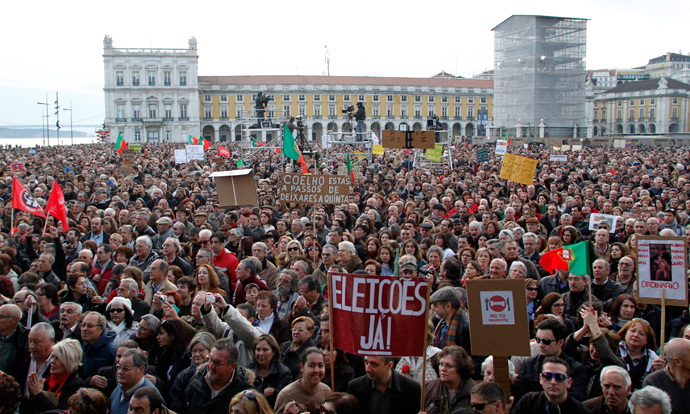
    Ayode, who was arrested shortly after the attack, admitted two counts of assault causing actual bodily harm and one of possessing cannabis after a bag of the drug was found at his home.

    Defending, Gillian Frost said Ayoade, who had smoked three or four cannabis joints and drunk a cup of vodka before attacking the teenager, had not wanted to cause more serious harm to either woman.

    He was jailed for four years for the attack on the teenager and 19 months for punching the student, although the two sentences will run concurrently.

    There was no separate penalty for the cannabis charge.

    Female Yahoo! CEO Kills Work from Home Option? Why Americans Need a More Flexible Workplace

    0

    How are you supposed to raise a family these days without a flexible work schedule?

    February 25, 2013  |  

    Like this article?

    Join our email list:

    Stay up to date with the latest headlines via email.

    I don’t have children, although someday I hope to, but I am a big fan of efficiency and changing from pajamas into pajamas. In other words, I am a fan of working from home, which is why I was dismayed to see that Yahoo!’s new-ish CEO, Marissa Mayer, has signed off on eliminating it as an option for her employees. This is about more than lifestyle or employee cohesion (or pajama pants). It’s a deeply political move.

    All Things D’s Kara Swisher, who first reported on the memo and its protest-too-much assertions that this is about “fun,” also notes that the new policy doesn’t just extend to a few hundred customer service employees, but to “any staffers who might have arrangements to work from home just one or two days a week, too.” That includes waiting for service and repair visits, and, presumably, other home responsibilities. In the name of morale and becoming “the absolute best place to work,” Yahoo! is setting back the progress and flexibility that some employees have been able to enjoy. That not only belies contemporary realities and preferences – including the fact that productivity is about a lot more than putting in hours – but its impact falls disproportionately on women.

    As Nancy Folbre, an economist and editor of “For Love and Money: Care Provision in the United States,” told Salon last year, “Once upon a time, we lived in a world where men engaged in paid work and women stayed home and took care of the children, the elderly, the sick, and the disabled.” That’s not the world we live in now: Even in households with more than one adult, some form of paid work is rarely a “choice,” and someone still has to do the care work, usually on top of everything else. That someone is usually a woman, which is why state and city-level policies for paid sick days and family leave – the bare minimum of flexibility – are feminist issues.

    The policy change under Mayer comes just as her fellow Google alumna, and current Facebook chief operating officer, Sheryl Sandberg is about to publish a book on female leadership that kicks off with her using her clout at Google to get accommodations for pregnant employees. I’m wary of catfight-like oppositions between powerful women, the kind that cropped up in the recent New York Times piece on Sandberg’s “Lean In” circles, between Sandberg and Anne-Marie Slaughter, whose stylistic and substantive differences seem frankly minuscule to me, whatever their personal issues. But the contrast here is palpable: One executive is extolling going home early even as she urges ambition; the other wants you to stay put, regardless of actual productivity, and the consequences be damned.

    Mayer was subject to an absurd amount of scrutiny and concern-trolling over taking the big job while pregnant, and her response was to insist that she wouldn’t take much time off at all. That’s her prerogative, but this move suggests not only that she thinks what worked for her will be right for all of her employees, but that she wants to telegraph that she won’t be soft on everyone just because she’s female. In a now-notorious interview Mayer did for the forthcoming “Makers” documentary on PBS, Mayer said she doesn’t think she’s a feminist because she doesn’t have “sort of the chip on the shoulder that sometimes comes with that. I think it’s too bad but I think that feminism has become in many ways a more negative word.” She added, “I think that there is more good that comes out of positive energy around that than negative energy.” That implies that merely acknowledging discrimination and existing gender roles in the world, and trying to work with them, is allowing yourself to be defeated by them. But the true defeatism lies in thinking that you don’t need policies that help everyone be able to participate, including working from home, and then wondering why your turnover is so high or your employees are so miserable.