Pesticides and the Revolving Door

0

For once, the European Union’s scientific advisers seem to have got something right. Three pesticides have been banned for two years after the wise boffins voiced concerns after their harmful effect on honey bees.  The measure is of immense importance: about one-third of the fruit and vegetables in our diets are grown with the aid of insect pollination, so threats to bees imperil food production in general.

This isn’t the end of the story, however. While the European Food Safety Authority (EFSA) in Parma, Italy, should be applauded for initiating the research which led to the bans, that body continues to behave as if it is joined at the hip with big business.

The bees dossier offers a case in point.

EFSA’s assessments of whether pesticides are safe are conducted by a panel of “experts”, several of whom also undertake research financed by the chemical and agri-food industries.

One of those “experts” — Ettore Capri from Italy — even runs a “think tank”, the main purpose of which is to downplay the dangers associated with pesticides.

Known by the acronym OPERA, this outfit recently published a report titled “Bee health in Europe”. The report seeks to shift the focus from pesticides by pinning the blame for dwindling bee numbers on a “wide range of factors”.

Though the document may be liberally sprinkled with scientific terminology, it cannot be considered as objective or unbiased. A careful reading shows that it was prepared with the help of Bayer, Syngenta, Dow and BASF. All of those firms make pesticides; their bottom line depends on being able to persuade regulators to approve their products.

I contacted EFSA spokesman James Ramsay, asking him if he accepted that Capri was involved in a conflict of interests. “No,” Ramsay replied. He told me that OPERA was viewed by the authority as a “food safety organization” as it pursues “public interest objectives”.

When I got in touch directly with Capri, he insisted that he is not involved in “research projects financed by private companies on bee health” and that he had not taken part in an EFSA working group dealing with bees.

Those explanations are Jesuitical.

OPERA’s entry to the register of lobbyists run by the European Commission states that it received 50,000 euros from the private sector during 2012. If that money wasn’t used on its research and advocacy work, then what was it used on? Interior decorating? Bus fares?

Moreover, OPERA jointly organised a conference with Syngenta in Brussels during September 2012. The programme for the event says that one of the main topics addressed was biodiversity, a concept that is meaningless without bees and other insects. Are we really to believe that Syngenta did not pay at least some of the costs of organising this event?

Capri’s effort to distance himself from EFSA’s work on bees is contradicted by information on the authority’s own website. A list of participants for a “symposium” hosted by EFSA last month indicates that Capri was in attendance. You’ll never guess the topic of this confab. Bees.

Faced with accusations that they are setting the agenda followed by EU institutions, corporate lobbyists tend to point to decisions which didn’t go the way they wanted as evidence that they are not really that influential. The ban on bee-killing pesticides looks like that kind of a decision — until you examine it a bit more closely.

Firstly, the ban is of a limited duration: we can be certain that the chemicals industry will be pressing for it not to be renewed once it expires. Secondly, it has loopholes: the three pesticides may still be sprayed on winter cereals. Such crops may not attract bees directly but the use of pesticides on them means that toxic chemicals will still be released into the environment, with potentially adverse consequences for insects.

And thirdly, there are some dangerous substances not covered by the ban. Greenpeace has identified four pesticides in addition to the three ones recently banned that have been shown to “acutely affect bees”, according to the group. These pesticides are widely used throughout Europe.

EFSA, again to its credit, has issued a warning about one the four substances — fipronil — over the past few weeks. Almost definitely, it will come under pressure from the chemical industry to ease off on its work on bees. Having scientists who are favourably disposed to pesticide-makers sitting on EFSA panels undoubtedly works to that industry’s advantage.

There are bigger issues than honey bees at stake here. As I argue in my new book Corporate Europe, EFSA is in denial about how many of the “experts” it turns to for counsel are lackeys of big business. The authority has been admonished by the EU’s internal watchdogs, the Court of Auditors and the Ombudsman, on some of these matters; yet the underlying problems persist.

In 2008, EFSA suffered some embarrassment when it emerged that Suzy Renckens, who coordinated its activities on genetically modified (GM) foods, was hired by Syngenta, a maker of GM seeds (as well as pesticides). The “revolving door” case begged the question: how can regulators be expected to put manners on firms they regard as future employers?

Syngenta supports Capri’s activities but EFSA doesn’t see this as in any way problematic.  Syngenta has also lobbied strenuously against the ban on bee-killers.

There’s only way of pretending there’s nothing wrong here: burying your head in the sand.

David Cronin’s book Corporate Europe: How Big Business Sets Policies on Food, Climate and War will be published in August. It can be pre-ordered now from Pluto Press (www.plutobooks.com).

A version of this article was originally published by New Europe.

This article originally appeared on: Counterpunch

Exposing the Turnkey Tyranny

0

Edward Snowden, the leaker of the National Security Agency top-secret PRISM surveillance program has voluntarily stepped into the public limelight. The 29-year-old former technical contractor for the CIA and system administrator for defense contractor Booz Allen Hamilton had a good family, girlfriend and comfortable living in Hawaii. What made him risk this privileged life to be on the run or possibly end up in Federal prison?

“I do not want to live in a world where everything I do and say is recorded,” the young whistleblower told The Guardian newspaper. His day-to-day insider knowledge about the conduct of the NSA led him to the conclusion that the NSA surveillance poses “an existential threat to democracy.” He related how he was motivated for the public good and not for personal gain; “If I were motivated by money, I could have sold these documents to any number of countries and gotten very rich …..” He continued, “The government has granted itself power it is not entitled to. There is no public oversight. The result is people like myself have the latitude to go further than they are allowed to … My sole motive is to inform the public as to that which is done in their name and that which is done against them.”

In the same spirit of statements made by army whistleblower Bradley Manning, Snowden wanted this crucial information to be publicly available so people could make informed decisions about what is being done in their name by their government.

At his court-martial proceedings, Bradley Manning testified about his motivation behind the largest leak of classified information in history. He said: “I believed that if the general public, especially the American public, had access to the information … this could spark a domestic debate on the role of the military and our foreign policy in general.”

Snowden claimed he had examined the documents closely to assure that they are clearly in the public interest and will likely not harm anyone. His whistleblowing, and furthermore his courageous act of identifying himself to the public proves how the Obama administration’s unprecedented persecution of whistleblowers has not scared people from acting out of conscience to reveal illicit actions of the government behind closed doors

WikiLeaks founder Julian Assange, who has also been a target of the US government and now been in asylum at the London Ecuadorian embassy for nearly a year, spoke of his positive outlook in the future of politics. In a prerecorded speech at a Veterans for Peace event in April this year, he spoke about how the newest generation has grown up with the internet and that many of them appear to be willing to defend the values of transparency and privacy, even at great risk to themselves:

“These young people under the age of 30 are the people that are going into the military, the people going into the CIA and intelligence agencies … They’re also forming the political base on which decisions are made.”

[youtube http://www.youtube.com/watch?v=5yB3n9fu-rM&w=560&h=315]

Snowden spoke of his own action; “I am not afraid, because this is the choice I’ve made.” Standing tall today is such a member of this younger generation that has been shaped by the Internet Age. Like the late Aaron Swartz who dedicated his life to the virtues of sharing and a free Internet, Snowden also regards the Internet as “the most important invention in all of human history.” He supports organizations like the Electronic Frontier Foundation and TOR, a technology that enables online anonymity.

In his interview with the Guardian’s Glenn Greenwald, Snowden spoke of why he was sacrificing his comfortable life; “I can’t in good conscience allow the US government to destroy privacy, internet freedom and basic liberties for people around the world with this massive surveillance machine they’re secretly building.”

Regarding these brave acts on behalf of the public, Greenwald tweeted that ‘courage is contagious’. Only hours after his initial statement, the Twitter hashtag #IStandWithEdwardSnowden trended in the US as people around the world voice their support for this young whistleblower. In New York, a rally for his support was already in the works.

When he learned about Snowden, the former United States military analyst and whistleblower that took down Nixon, Daniel Ellsbergcalled Snowden a hero, saying he had been waiting for someone like him for 40 years. Jesselyn Radack, a former justice department attorney who represents whistleblowers, told Reuters Snowden has become “one of the most significant leakers in my lifetime and in US history.”

On Sunday evening, member of Icelandic Parliament Birgitta Jonsdottir and executive director of the Icelandic Modern Media Initiative Smari McCarthy issued a statement of support for Snowden and noted they were working toward granting him asylum.

Snowden will surely go down in history as one of America’s most influential whistleblowers, along with Daniel Ellsberg and Bradley Manning. But, as he himself stated in his interview, it is important that he not be thrust into the media spotlight, as that may take the focus away from the content of his disclosures. It is not the messenger but the message that is vital for sparking lasting change.

Snowden’s damning evidence of the NSA’s surveillance activities clearly showed that the Obama Administration has been collecting blanket surveillance on nearly every electronic communication in the US, regardless of the Constitution protections of privacy for those not suspected of a crime. Snowden ominously cautioned that this will likely turn out badly, as any leader in the future would only need to claim a new dangerous threat and no one could stop them from taking that last step. He warned that this will be a “turnkey tyranny”.

This man’s unvarnished courage has revealed the tip of the iceberg of an outrageous abuse of power and trashing of the Fourth Amendment. He did this by handing the evidence straight to the people. It is now up to the people to choose; to resist this dangerous authoritarian approach and turn the key for a new generation of democracy, or allow the world to descend into tyranny.

Nozomi Hayase is a contributing writer to Culture Unplugged, and a global citizen blogger, at Journaling Between Worlds. She can be reached at: nozomimagine@gmail.com

This article originally appeared on: Counterpunch

'Digital Blackwater': NSA Leak Highlights Key Role of Private Contractors

0

Like the mercenaries for hire used by the U.S. in places like Iraq, Afghanistan, and New Orleans–contractors like Blackwater that have come under scrutiny for their extreme lack of oversight–the U.S. government has been outsourcing intelligence services to private companies who have access to the general population’s most sensitive information.

Booz Allen’s cyber facility on September 25, 2012 in Annapolis Junction, Maryland. (Jeffrey MacMillan/The Washington Post via Getty) This revelation, which has arisen out of the recent Edward Snowden NSA leaks among the trove of alarming civil rights violations, has rights advocates very concerned.

According to the offices of James Clapper, Director of National Intelligence, of the 4.9 million people with clearance to access “confidential and secret” government information, 1.1 million, or 21 per cent, work for outside contractors–these intelligence corporations.

Of the 1.4 million who have the higher “top secret” access, 483,000, or 34 percent, work for contractors–meaning that, as Edward Snowden recently revealed in his interview with the Guardian’s Glenn Greenwald, contractors sitting anywhere, in a home office for example, have vast access to the personal communications of ordinary citizens.

Snowden, who worked for intelligence contractor Booz Allen Hamilton Holding Corp, states:

Any analyst at any time can target anyone, any selector anywhere. Where those communications will be picked up depends on the range of the sensor networks and the authorities that that analyst is empowered with. Not all analysts have the ability to target everything. But I, sitting at my desk, certainly had the authorities to wiretap anyone, from you or your accountant to a federal judge, to even the president, if I had a personal email.

“It’s very difficult to know what contractors are doing and what they are billing for the work — or even whether they should be performing the work at all,” said Scott Amey, an expert in contractor oversight and government transparency at Project on Government Oversight, a non-partisan government accountability organization based in Washington. “It has muddied the waters.”

Speaking on Democracy Now! Glenn Greenwald explained on Monday, “the systems at NSA allow full and unfettered access at any time to any one of these analysts to go and listen to whatever it is they want, to read whatever emails they want, to monitor in real time whatever online chats are taking place.”

“And because there’s no oversight, because there’s really no accountability or transparency, there is no check on this abuse.”

He continues, “…when human beings are able to spy on other human beings in the dark, abuse, rampant abuse, is inevitable. That was supposed to be why we don’t have spying abilities without accountability any longer.”

“The largest concentration of cyber power on the planet is the intersection of the Baltimore Parkway and Maryland Route 32,” former NSA director Michael V. Hayden, who oversaw the NSA’s privatization efforts between 1999 to 2005, told Salon.

“He was referring not to the NSA itself but to the business park about a mile down the road from the giant black edifice that houses NSA’s headquarters in Fort Meade, Md. There, all of NSA’s major contractors, from Booz to SAIC to Northrop Grumman, carry out their surveillance and intelligence work for the agency,” Salon reports.

And it was Hayden who coined the term “Digital Blackwater.”

“I use that for the concept of the private sector in cyber,” he told a recent conference in Washington.

“I saw this in government and saw it a lot over the last four years. The private sector has really moved forward in terms of providing security,” said Hayden, who now works for one of those very corporations, Chertoff Group.

The Associated Press has more:

Booz Allen, based in McLean, Va., provides consulting services, technology support and analysis to U.S. government agencies and departments. Last year, 98 percent of the company’s $5.9 billion in revenue came from U.S. government contracts. Three-fourths of its 25,000 employees hold government security clearances. Half the employees have top secret clearances.

The company has established deep ties with the government — the kinds of ties that contractors pursue and covet.

Contractors stand to gain an edge on competitors by hiring people with the most closely held knowledge of the thinking inside agencies they want to serve and the best access to officials inside. That typically means former government officials.

The relationship often runs both ways: Clapper himself is a former Booz Allen executive. The firm’s vice chairman, John “Mike” McConnell, held Clapper’s position under George W. Bush.

“That really illustrates the ingrown nature of the relationship of NSA and its contractors,” said Steven Aftergood, head of the project on government secrecy at the Federation of American Scientists. […]

Booz Allen earned $240 million in profit on its $5.9 billion in revenue last year. That’s up from $85 million in profit in 2011 and $25 million in 2010.

_______________________

This work is licensed under a Creative Commons Attribution-Share Alike 3.0 License

This article originally appeared on: Common Dreams

The NSA Black Hole: 5 Basic Things We Still Don’t Know About the Agency’s Snooping

0

The headquarters of the National Security Agency at Fort Meade, Maryland.Last week saw revelations that the FBI and the National Security Agency have been collecting Americans’ phone records en masse and that the agencies have access to data from nine tech companies. 

But secrecy around the programs has meant even basic questions are still unanswered. Here’s what we still don’t know:

Has the NSA been collecting all Americans’ phone records, and for how long?

It’s not entirely clear.

The Guardian published a court order that directed a Verizon subsidiary to turn over phone metadata — the time and duration of calls, as well as phone numbers and location data — to the NSA “on an ongoing daily basis” for a three-month period. Citing unnamed sources, the Wall Street Journal reported the program also covers AT&T and Sprint and that it covers the majority of Americans. And Director of National Intelligence James Clapper himself acknowledged that the “collection” is “broad in scope.”

How long has the dragnet has existed? At least seven years, and maybe going back to 2001.  

Senate Intelligence Committee chair Dianne Feinstein, D-Calif., and vice chair Saxby Chambliss, R-Ga., said last week that the NSA has been collecting the records going back to 2006. That’s the same year that USA Today revealed a similar-sounding mass collection of metadata, which the paper said had been taking place since 2001. The relationship between the program we got a glimpse of in the Verizon order and the one revealed by USA Today in 2006 is still not clear: USA Today described a program not authorized by warrants. The program detailed last week does have court approval.

What surveillance powers does the government believe it has under the Patriot Act?

That’s classified.

The Verizon court order relies on Section 215 of the Patriot Act. That provision allows the FBI to ask the Foreign Intelligence Surveillance Court for a secret order requiring companies, like Verizon, to produce records — “any tangible things” — as part of a “foreign intelligence” or terrorism investigation. As with any law, exactly what the wording means is a matter for courts to decide. But the Foreign Intelligence Surveillance Court’s interpretation of Section 215 is secret.

As Harvard Law Professor Noah Feldman recently wrote, the details of that interpretation matter a lot: “Read narrowly, this language might require that information requested be shown to be important or necessary to the investigation. Read widely, it would include essentially anything even slightly relevant – which is to say, everything.”

In the case of the Verizon order — signed by a judge who sits on the secret court and requiring the company to hand over “all call detail records” — it appears that the court is allowing a broad interpretation of the Patriot Act. But we still don’t know the specifics.

Has the NSA’s massive collection of metadata thwarted any terrorist attacks?

It depends which senator you ask. And evidence that would help settle the matter is, yes, classified.

Sen. Mark Udall, D-Colo., told CNN on Sunday, “It’s unclear to me that we’ve developed any intelligence through the metadata program that’s led to the disruption of plots that we could [not] have developed through other data and other intelligence.”

He said he could not elaborate on his case “without further declassification.”

Sen. Feinstein told ABC that the collection of phone records described in the Verizon order had been “used” in the case of would-be New York subway bomber Najibullah Zazi. Later in the interview, Feinstein said she couldn’t disclose more because the information is classified. (It’s worth noting that there’s also evidence that old-fashioned police work helped solve the Zazi case – and that other reports suggest the Prism program, not the phone records, helped solve the case.)

How much information, and from whom, is the government sweeping up through Prism?

It’s not clear.

Intelligence director Clapper said in his declassified description that the government can’t get information using Prism unless there is an “appropriate, and documented, foreign intelligence purpose for the acquisition (such as for the prevention of terrorism, hostile cyber activities, or nuclear proliferation) and the foreign target is reasonably believed to be outside the United States.”

One thing we don’t know is how the government determines who is a “foreign target.” The Washington Post reported that NSA analysts use “search terms” to try to achieve “51 percent confidence” in a target’s “foreignness.” How do they do that? Unclear.

We’ve also never seen a court order related to Prism — they are secret — so we don’t know how broad they are. The Post reported that the court orders can be sweeping, and apply for up to a year. Though Google has maintained it has not “received blanket orders of the kind being discussed in the media.”

So, how does Prism work?

In his statement Saturday, Clapper described Prism as a computer system that allows the government to collect “foreign intelligence information from electronic communication service providers under court supervision.”

That much seems clear. But the exact role of the tech companies is still murky.

Relying on a leaked PowerPoint presentation, the Washington Post originally described Prism as an FBI and NSA program to tap “directly into the central servers” of nine tech companies including Google and Facebook. Some of the companies denied giving the government “direct access” to their servers. In a later story, published Saturday, the newspaper cited unnamed intelligence sources saying that the description from the PowerPoint was technically inaccurate.

The Post quotes a classified NSA report saying that Prism allows “collection managers [to send] content tasking instructions directly to equipment installed at company-controlled locations,” not the company servers themselves. So what does any of that mean? We don’t know.

This work is licensed under a Creative Commons License

This article originally appeared on: Common Dreams

Cihan Tugal Passive Revolution

0

cihan

This article originally appeared on: Counterpunch

Turkish Police Push Into Square Near Park Protest

0

New York Times
June 11, 2013

A large force of riot police entered Taksim Square early on Tuesday, firing tear gas grenades and using water cannons to disperse demonstrators who have occupied the square for more than a week as part of a protest to save a nearby park that the government wants to develop.

Television footage of the ongoing operation showed protesters hurling stones and Molotov cocktails at police vehicles as security officers responded with tear gas.

It appeared that relatively few protesters were in the square as the police moved in and many retreated to the park. News reports said some protesters clashed with security forces, however, hurling rocks and firebombs.

Read more

<!–

–>

This article was posted: Tuesday, June 11, 2013 at 9:08 am

Tags: , ,


<!– this is where we need to show the related articles

–>

This article originally appeared on: Infowars

Cihan Tugal Passive Revolution

0

cihan

This article originally appeared on: Counterpunch

The Constitution Shredders

0

The Fourth Amendment:

“The right of the people to be secure in their persons, houses, papers, and effects, against unreasonable searches and seizures, shall not be violated, and no Warrants shall issue, but upon probable cause, supported by Oath or affirmation, and particularly describing the place to be searched, and the persons or things to be seized.”

US President Barack Obama was a civil rights attorney and a “senior lecturer” at the University of Chicago on constitutional law. He campaigned on an anti-surveillance state platform.

Now he spends his days drone-striking children and operating secret prisons all over the world, deporting a million immigrant workers, persecuting whistleblowers at home and supporting the corporatocracy with bailouts and privileges. In recent weeks, he’s also spent a great deal of time pleading ignorance about major privacy scandals.

“I was a constitutional law professor, which means unlike the current president I actually respect the Constitution.” – Barack Obama, March 30th, 2007

The politically biased IRS tax targeting scandal came to light recently, but before we’ve had a chance to reread 1984, another, more devastating report has emerged.  The National Security Administration has been collecting everyone’s data for years, and doing so through unrestrained backdoor access to at least nine of the largest Internet companies, including Google, Facebook, Apple and Skype.

The Washington Post and the Guardian broke the story:

“Through a top-secret program authorized by federal judges working under the Foreign Intelligence Surveillance Act (FISA), the U.S. intelligence community can gain access to the servers of nine Internet companies for a wide range of digital data. Documents describing the previously undisclosed program, obtained by The Washington Post, show the breadth of U.S. electronic surveillance capabilities in the wake of a widely publicized controversy over warrantless wiretapping of U.S. domestic telephone communications in 2005.”

The NSA calls this the PRISM program. Obama knew about PRISM – the NSA brags that most of his Daily Brief reports are generated with PRISM data.

These are not “oops, my neighbor saw me naked” privacy breaches, this is a predatory state tearing through every communication you make and storing it in databases like the new $2 billion National Security Administration Data Center facility in Utah. All it does is store American data, 24/7. This Orwellian monitoring began years ago, in tandem with the evolution of information technologies, with such secret spy programs as Carnivore and Echelon.

The train of civil rights abridgments which picked up steam under Bush just keeps rollin’ with the Obama administration at the throttle. Add this to the list alongside the persecution of political activists like Bradley Manning, Julian Assange and Occupy protesters  and most recently anarchist legal advocate Gerald Koch.

If you have nothing to hide, what’s the problem with a surveillance state, right?  Imagine if the British crown had this level of intelligence gathering capacity during the American Revolution, or if the government had this Panopticon technology during the early 20th century Labor Movement, or if the FBI had this much firepower during the 1960s Civil Rights Movement (indeed, the FBI already assassinated Fred Hampton and tracked and subsequently played a major role in the killing of Martin Luther King, Jr.).

Just because you don’t think the state will persecute you today, remember that Japanese Internment wasn’t so long ago, or that according to Noam Chomsky “The most civilised part of the world, with the highest cultural standards 70 years ago was Germany. No more need be said.” Just because the government appears less psychopathic or genocidal today does not mean it will be this way tomorrow. Even still, you might get thrown in jail for recreational drug use, political speech or tax “evasion” more easily than ever before.

What is to be done?

“Anarchism is not a romantic fable but the hardheaded realization, based on five thousand years of experience, that we cannot entrust the management of our lives to kings, priests, politicians, generals, and county commissioners.” – Edward Abbey

Whittle away state power. Use encryption methods when transmitting sensitive information. Withdraw support for the system in whatever way you can – and reinforce your own autonomy with alternative currency and the decentralized stability of your community with local forms of production and consumption.

Sebastian AB is a finance and science writer, biology major and history minor.

This article originally appeared on: Counterpunch

Surveillance Can be Used to Frame You, If Someone In Government “Happens to Take a Dislike to You”

0

Top NSA whistleblower William Binney — the former head of the National Security Agency’s global digital data gathering program — has repeatedly explained that just because you “haven’t done anything wrong” doesn’t mean you can’t be severely harmed by spying:

The problem is, if they think they’re not doing anything that’s wrong, they don’t get to define that. The central government does.

Binney explains that the government is storing everything, and creating a searchable database … to be used whenever it wants, for any purpose it wants (even just going after someone it doesn’t like).

And he notes that the government will go after anyone who is on its enemies list:

If you ever get on their enemies list, like Petraeus did, then you can be drawn into that surveillance.

Binney recently held his thumb and forefinger close together, and said:

We are, like, that far from a turnkey totalitarian state

Similarly, in response to the question, “why should people care about surveillance?”, the whistleblower source of the Guardian’s disclosures on phone and Internet spying — Edward Snowden — said:

Because even if you’re not doing anything wrong you’re being watched and recorded. And the storage capability of these systems increases every year consistently by orders of magnitude … to where it’s getting to the point where you don’t have to have done anything wrong. You simply have to eventually fall under suspicion from somebody — even by a wrong call. And then they can use this system to go back in time and scrutinize every decision you’ve ever made, every friend you’ve ever discussed something with. And attack you on that basis to sort to derive suspicion from an innocent life and paint anyone in the context of a wrongdoer.

[If people don’t oppose the surveillance state now] it will be turnkey tyranny.

In 1975, Senator Frank Church said about the NSA:

I know the capacity that is there to make tyranny total in America, and we must see to it that this agency and all agencies that possess this technology operate within the law and under proper supervision, so that we never cross over that abyss. That is the abyss from which there is no return.

This article originally appeared on: Global Research

Self-proclaimed Economic Wizards

0

With the U.S. economy in its slowest job-market recovery since World War II and still 2.6 million jobs short from its payroll peak in January 2008, it’s good to hear there’s finally someone in the Obama administration who says he knows how to jump-start an economy.

On May 26, Secretary of State John Kerry announced at the World Economic Forum in Jordan that he’s been working with former British Prime Minister Tony Blair on a “transformative” economic plan that could grow the Palestinian economy by an astounding 50 percent in three years.

Kerry said his economic plan, “different than anything we’ve done before,” could well deliver nothing short of a high-speed economic miracle.

In this extraordinary turnaround, asserted Kerry, Palestinian unemployment could be cut by two-thirds, agricultural output could double or triple, peace could break out and cause tourism to triple, 100,000 new “energy efficient” houses could be built, and the median annual wage of Palestinians could jump by as much as 40 percent.

But as Time magazine reported, “There were few specific details offered.”

Well, I have an idea. If Kerry is all that skilled in economic wizardry, with a “transformative” economic plan that will multiply production in one of the most dysfunctional regions of the world, I think he should cut the globe-trotting and hustle back to the Oval Office to divulge his magic formula to President Obama and the Council of Economic Advisers.

The April 2013 report from the Labor Department’s Bureau of Labor Statistics showed the U.S. unemployment rate was “little changed” at 7.5 percent, putting the official number of unemployed persons at 11.7 million, not counting the millions of labor force dropouts.

The May 2013 report from the Bureau of Labor Statistics also showed that “little changed,” with the official unemployment rate increasing to 7.6 percent.

The 7.6 percent unemployment rate nearly doubles to 13.8 percent under the Labor Department’s broader definition of joblessness that includes those who are involuntarily working part time because they can’t find full-time work and those who are unemployed but have given up looking for work.

In May, employers added 175,000 jobs while the labor force expanded by 420,000, with 182,000 of the 420,000 workers rejoining the labor force even though they didn’t have jobs.

“From the start of the recession in December 2007 to well past its end in March 2013, more than 10 million Americans left the labor force, meaning they stopped working or looking for work,” reported Ben Casselman at the Wall Street Journal in June. “As a share of the population, the labor force in March was the smallest in more than 30 years.”

Specifically, among major groups, the Labor Department reported that the unemployment rate in April for teenagers, blacks, and Hispanics, respectively, was 24.1 percent, 13.2 percent, and 9.0 percent.

Also in April, “the number of involuntary part-time workers increased by 278,000 to 7.9 million,” reported the Labor Department, while “2.3 million persons were marginally attached to the labor force.”

These “marginally attached” workers “were not in the labor force, wanted and were available for work, and had looked for a job sometime in the prior 12 months” reported the Labor Department, but they “were not counted as unemployed because they had not searched for work in the four weeks preceding the survey.”

Sounding not unlike Kerry in Jordan, candidate Obama delivered a “transformative” declaration at a campaign rally on October 30, 2008: “We are five days away from fundamentally transforming the United States of America.”

Since then, the national debt has grown by a record $6.2 trillion and the Census Bureau reports that 50 million Americans – one in six – are now living in poverty.

Ralph R. Reiland is an associate professor of economics and the B. Kenneth Simon professor of free enterprise at Robert Morris University in Pittsburgh.

This article originally appeared on: The New American

American Dreams, American Nightmares

0

Can a book be both beautiful and terrible?

Adorning its front cover is a beautiful little girl, her hair neatly sectioned into intricate cornrows, the ends of her braids festooned with bright, plastic baubles.

But the story within these pages is hardly one of beauty; it is the terrible, heart-rending, soul-eating tale of the foreclosure crisis. How capital waged a war of greed, fraud and malice to wipe out the wealth, homes and well-being of millions of people.

And yet, Laura Gottesdiener’s fine little book, A Dream Foreclosed, manages to find some beauty amidst immense pain and lauradreamsuffering.  The beauty of people continuing to fight back against rapacious banks, the politicians they buy and the lawyers they hire.

People fight — for years — against fraudulent, robo-signed foreclosure notices, court hearings, heavily armed sheriffs and police, and actually win, because they discover that there is power in communities — and in movements.

They learn that they aren’t alone.

Indeed, there are millions — millions — of people, thrown into the horrors of homelessness, suffering in silence and shame.

Gottesdiener tells their stories, of how they joined, or sometimes built, movements to change their condition — and won!

Gottesdiener tells the life tales of four families —North, South, East and West — who, though driven to the brink of madness and despair, find solace in united struggle against monstrous odds.

Through movements, through united action, these desperate and scattered families build loving kernels of community and bonds of solidarity.  As Hettie, the mother of one young man facing foreclosure remarked, “People in numbers can work magic” (138)

They received nothing but scorn and derision from their elected so-called ‘leaders’ (whether local or national).  So, pressed against the wall of hopelessness, thrown into the refuse heap of society, they became their own leaders — and created social change.

Click here to listen to an audio file of Mumia reading this review.

Mumia Abu-Jamal is the author of Live From Death Row, All Things Censored and We All Want Freedom.

This article originally appeared on: Counterpunch

Edward Snowden and China

0

First, why Hong Kong?

My answer: Because he’s a spook.

There has been no end of sniggering from the liberal Colonel Blimps that Snowden chose to reveal his identity in Hong Kong.

As in (from the Twitter feed of a journalist who relentlessly works the “unfree China” side of the street): “Seeking refuge in Hong Kong out of devotion to free speech is a bit like seeking refuge in Tibet out of devotion to Buddhism.”

Here’s what I think:

Snowden, in addition to his career as an IT grunt, had worked on the covert operations side in Geneva.

When he thinks about what happens to him, he assumes his identity is going to be revealed. He looks at the situations of Bradley Manning and Julian Assange. Definitely doesn’t want to stay in the United States (Manning). Definitely doesn’t want to take up residence in a liberal democracy which happens to be a US security partner (Assange).

He wants to control the circumstances of his exposure and obtain maximum press exposure to shape international perceptions of him and rally support before the legal hammer comes down.

He doesn’t want to take the risk of getting quickly jacked up by a national legal system of a nation allied to the United States on any charge, trumped up, plausible, or genuine.

Iceland? Pretty, snowy, let-Internet-freedom-ring-a-ding-ding Iceland?

One more problem.

He doesn’t want the local authorities and local spooks working enthusiastically with the US authorities to make surveil him, harass him, help make a case against him, and button him up. He doesn’t want to get rendered. He would like not to get bumped off.

What countries would a CIA analyst believe to have the lowest level of cooperation with the CIA and the most pervasive counterintelligence capabilities? Russia maybe. China maybe.

So he looks at a jurisdiction that a) has a liberal legal systems with good protections and process and b) keeps its US spooks on a short leash.

In other words, Hong Kong.

Second, were his revelations timed to coincide with the Sunnylands summit?

I guess so, for maximum hypocrisy exposure (Snowden) and media heat (Greenwald). My personal feeling is that it is not going to affect US-China cyberbitchslapping too much. Both sides already have a pretty good idea of each other’s capabilities. In fact, I would think it would be better for Xi Jinping not to take the Snowden embarrassment as an excuse to take lightly President Obama’s demands. This is just the sort of situation in which the United States drops the hammer in order to demonstrate that it’s still the biggest bully on the block.

Third, will the PRC arrange for Snowden to be extradited to the United States?

Probably, though I think their inclination will be to let the Hong Kong legal system grind ahead with all deliberate speed, perhaps with a few discrete shoves from behind the scenes, in order to preserve Hong Kong’s reputation for judicial independence. If President Obama can bring himself to ask really, really nicely, the PRC might resort to some sort of extraordinary intervention.

But I think Snowden knows he’s coming home, sooner or later.

Fourth, why are Snowden, Greenwald, and the Washington Post receiving anything other than the thanks of a grateful nation for revealing, not the details of individual covert operations, but information on US surveillance capabilities which are known or suspected by most insiders but unknown only to the public at large?

I have no answer for that.

It is a rather disturbing fact that the evolution of 21st century society is driving us into a deeper awareness and understanding of the work of that famous French philosopher, Michel Foucault.

I will outsource this observation to the excellent Bernard over at Moon of Alabama:

Edward Snowden points to a different danger of such secret data accumulation:

[Snowden] said the [analysts and governments] labored under a false premise that “if a surveillance program produces information of value, it legitimizes it. . . . In one step, we’ve managed to justify the operation of the Panopticon.”

The Panopticon is a architectural concept for a prison where the guards can watch, unseen by the inmates, from a tower in the middle into all cells build in a circle around the tower. It leaves the inmates in a perceived state of permanent surveillance. The French philosopher Michel Foucault described the effect:

Hence the major effect of the Panopticon: to induce in the inmate a state of conscious and permanent visibility that assures the automatic functioning of power. So to arrange things that the surveillance is permanent in its effects, even if it is discontinuous in its action; that the perfection of power should tend to render its actual exercise unnecessary; that this architectural apparatus should be a machine for creating and sustaining a power relation independent of the person who exercises it; in short, that the inmates should be caught up in a power situation of which they are themselves the bearers.

The original Panopticon, like the digital version the NSA is building, takes away all feeling of privacy. Even when one is not watched, knowing that the possibility of being watched is always there, creates uncertainty and leads to self disciplining and self censorship. It is certainly a state the powers that be would like everyone, except themselves, to be in.

Well, I’ll add this. For those of you unfamiliar with concepts of penal architecture, the Panopticon was a proposal by the 18th century philosopher Jeremy Bentham. No true Panopticons were ever constructed for reasons of technical difficulty. The nearest thing to a true Panopticon was built in Cuba in the 1920s:

panoticon

Here is the requisite ironic postscript from Wikipedia:

[T]he essential elements of Bentham’s design were not only that the custodians should be able to view the prisoners at all times (including times when they were in their cells), but also that the prisoners should be unable to see the custodians, and so could never be sure whether they were under surveillance or not.

This objective was extremely difficult to achieve within the constraints of the available technology, which is why Bentham spent so many years reworking his plans. Subsequent 19th-century prison designs enabled the custodians to keep the doors of cells and the outsides of buildings under observation, but not to see the prisoners in their cells. Something close to a realization of Bentham’s vision only became possible through 20th-century technological developments — notably closed-circuit television (CCTV) — but these eliminated the need for a specific architectural framework.

Peter Lee edits China Matters. His ground-breaking story on North Korea’s nuclear program, Big Bang Theory in North Korea, appears in the March issue of CounterPunch magazine. He can be reached at: chinamatters (at) prlee. org.

This article originally appeared on: Counterpunch

Car bomb hits near US Embassy in Kabul

0

File photo shows Afghan security forces rushing to a scene of attack in capital, Kabul.

A powerful car bomb attack has hit near the United States Embassy in the Afghan capital, Kabul, killing at least 14 people and injuring 40 others.

The explosion took place near the US Embassy and the Afghan Supreme Court in Kabul on Tuesday.

General Mohammad Zahir, the head of criminal investigations at the Interior Ministry, said the attack targeted a bus carrying Afghan Supreme Court workers.

The area of Kabul in which the US Embassy is located has been the scene of multiple bombings over the past years, with the American diplomatic mission being the main target of those attacks.

Sources say the death toll is expected to rise as some of the injured are said to be in critical condition.

Security forces rushed to the site of the attack and cordoned off the area.

No group has claimed responsibility for the attack, but Afghan officials often blame the Taliban militant group for such deadly attacks.

Taliban militants have recently announced the start of their annual “spring offensive” against US-led and Afghan forces, vowing a new wave of attacks across Afghanistan.

Taliban said it would use “every possible tactic” to inflict casualties on Afghan and US-led forces.

The announcement prompted the Afghan authorities to beef up security in major cities across the country, including the capital city of Kabul.

The United States invaded Afghanistan in 2001 under the pretext of combating terrorism. The offensive removed the Taliban from power, but insecurity continues to rise across the country despite the presence of thousands of US-led soldiers.

JR/PR/SS

This article originally appeared on: Press TV

The Uncertain Fate of the U.S.-NATO Installed Libyan Regime

0

After more than two years of a full-fledged Pentagon and NATO-led war against the North African state of Libya, the installed General National Congress regime is now requesting assistance from their neo-colonial masters. In a press release issued by the Secretary General of NATO, Anders Fogh Rasmussen, the chief of this military alliance of the imperialist world indicated that the western-backed government in Tripoli had requested assistance on security matters.

A team of so-called “experts” is expected to leave as soon as possible and report back to NATO by the end of June “so we can decide on the way ahead,” Mr. Fogh Rasmussen said. The NATO official also said that three principles would guide any help NATO provides.

According to the statement issued by NATO on June 4, it says that these principles would “include strong Libyan ownership, providing advice in areas where NATO has an expertise, such as building security institutions. And thirdly let me stress this is not about deploying troops to Libya. If we are to engage in training activities such activities could take place outside Libya,” said the Secretary General. (NATO press release, June 4)

These statements are taking place within the context of a worsening security situation both inside Libya and throughout North and West Africa. The security and social stability of Libya and both regions of Africa are a direct result of Pentagon and NATO military actions beginning in February and March of 2011.

During the course of the imperialist war against Libya, some 26,000 sorties were flown by the U.S., the NATO countries and their allies in the region and 9,600 airstrikes hit the oil-rich state. An arms embargo was imposed by the United Nations Security Council against the Libyan government under Gaddafi but the western trained and supported rebels were armed to carry out attacks against supporters of the Jamahiriya, civilians and patriotic forces.

In addition to the U.S. and NATO’s military actions against this country of approximately 7 million people, $US160 billion in Libyan-owned foreign assets were seized by the western banks. Concerted mob violence was leveled against dark-skinned Libyans and Africans from other parts of the continent.

The entire foreign policy and public affairs apparatus of the western states and their surrogates were mobilized to demonize Libya and its leadership. Corporate media outlets parroted the false claims by the imperialist governments in order to sway public opinion in favor of the war of regime-change against Col. Muammar Gaddafi and his supporters inside the country and internationally.

Consequences of U.S. and NATO’s War Against Libya

At present in Libya thousands of Africans and dozens foreign nationals from Eastern Europe remain in detention by the GNC regime. Seif al-Islam, the son of the martyred former leader Col. Muammar Gaddafi, is imprisoned by a militia group which is, along with the GNC leaders, are refusing to turn him over to the International Criminal Court (ICC).

The ICC played a role in the isolation of Libya during 2011 as well. The Hague prosecutors at the time claimed, alongside the imperialists, that human rights violations were carried out by the Jamahiriya under Gaddafi. Consequently, indictments and warrants were issued by the ICC against Gaddafi, Seif al-Islam and other leading patriotic Libyan officials.

Today there is a battle taking place between the GNC regime, which the ICC was instrumental in creating the conditions for its installation, and the Libyan rebels who say that they are capable of providing Seif al-Islam with a so-called “fair trial.” Yet if the regime in Libya cannot provide an adequate security situation for ordinary citizens and regime officials, then how will they be able to carry out an impartial judicial proceeding for others who are victims of the current political crises.

The NATO leaders, the ICC, as well as select putative “human rights groups” have refrained from commenting and analyzing the disastrous consequences of the imperialist war against Libya. A manifestation of this denial is reflective of the current efforts to extradite Seif al-Islam to The Hague to stand trial within a court system, the ICC, which has been condemned by the African Union (AU) as biased against the leaders and peoples of the continent.

Perhaps the most outrageous statement in regard to the situation in Libya was made by NATO Secretary General Rasmussen when he audaciously uttered in relationship to the delegation being sent to the North African state to establish a training program that “I believe this would be a fitting way to continue our cooperation with Libya, after we successfully took action to protect the Libyan people two years ago.”

The situation of the people in Libya is more precarious than it has ever been since the period of colonial war of conquest carried out by Italy between 1911 and 1931 when hundreds of thousands of people were slaughtered by the imperialists and the fascists, who after 1923 were led by Benito Mussolini. Even after the country gained nominal independence under a monarchy in 1951, it would take the September 1 Revolution of 1969 that was led by Col. Gaddafi and the Revolutionary Command Council to unify the state and set it upon a path of development and national reconstruction.

Massacre in Benghazi Reflects Devolution of Libyan Society

On June 8, militia members in Benghazi—which was the birthplace of the counter-revolution against the Jamahiriya in February 2011—massacred demonstrators who were demanding that armed groups terrorizing the population be either arrested or neutralized. There have been disputed reports over the number of people killed and wounded in this latest assault on the Libyan people, but it clearly demonstrates the degree of lawlessness prevailing inside the country.

In an article published by the Associated Press it reported that “Clashes between protesters and militias aligned with the military in Libya’s eastern city of Benghazi left 27 people killed and dozens wounded, a health official said Sunday. The violence broke out Saturday after protesters stormed a base belonging to Libya Shield, a grouping of militias with roots in the rebel groups that fought in the country’s 2011 civil war who are tasked with maintaining security.” (June 9)

Inside Libya the country’s militias have been attempting to partition the state into three regions in the East, West and South. In a recent law passed by the GNC legislature, former members of the Gaddafi government–even if they had turned against the Jamahiriya in favor of imperialism–were banned from public service.

Prior to the announcement by NATO that they would be sending a delegation to Libya, France—which is occupying Mali and spreading its war in West Africa into neighboring Niger—had called for military intervention into the south of Libya. France claims that Libya’s south, which has never been brought under the control of the rebel GNC, is the source of resistance to its military efforts in West Africa.

Developments in Libya and Mali indicate clearly that imperialist intervention in Africa and other geo-political regions of the world will only destabilize these areas and provide rationales for further military occupations. Despite efforts to contain and pacify the peoples of these regions, resistance will escalate and create even deeper crises within the industrialized states already suffering from escalating levels of unemployment, poverty, austerity and political repression.

Abayomi Azikiwe Editor, Pan-African News Wire

This article originally appeared on: Global Research

Turkey: a Second 1848 … or 1905?

0

With revolt now spreading to a bedrock of capitalist stability, there is every indication that the global wave of 2011 is still alive. Turkey, marketed to the whole world as a neoliberal success story (and to the Muslim world as a model democracy), is now up in arms against authoritarianism and free market capitalism (or rather, its urban ramifications). With Turkey joining the bandwagon of revolt, 2011 is bound to have consequences far beyond its countries of origin.

However, this wave, just like the waves of 1848 and 1905, is likely to end up in partial and small victories, and defeats. In some ways, the situation is even bleaker than in all past global waves. The global mood of post-1980 defeatism persists unabated. We lack solid alternatives to the current world order. Disorganization is rampant and is even reproduced by activists through a cult of leaderless-ness.

No 1789, 1917, or 1949 can result from the global wave of 2011.

Unintended legacies

Yet, just like 1848 and 1905, the cultural and organizational legacies of 2011 might prove to be more important than the immediate gains of the revolts. 1848 did not lead to any lasting democracies, but it convinced the European working and middle classes that a more democratic and social world was possible. It put socialization on the agenda. Furthermore, the defeats of that massive revolt taught militants that they needed much more resilient leadership and organization to realize their aims. A bunch of dispersed working-class and republican political fields left their place to solid national and continental organizations by the end of the century.

The wave of 1905 is known for its defeats more than its victories. Yet, those defeats not only provided the groundwork for further political experience, education and organization; but also created the most massive directly democratic organizations of autonomy that world history has ever seen (the workers’, peasants’, and soldiers’ councils). Without the defeats, semi-victories, and lessons of 1905-1911, there would neither be a Russian Revolution, nor a Chinese one (nor, for that matter, persistent oppositional cultures in Mexico, Turkey, and Iran).

In short, even though the immediate aftermath of the global revolt was much more demoralizing in 1905, its ripple effects were arguably more revolutionary.

The question, then, is whether 2011 will be a second 1848 or 1905. Will we have to wait decades for the fruits, or is 2011 the harbinger of something to come very soon, perhaps a second 1917? Some might ask, Why would we want a second 1917, given that the hopes invested in the first one were overblown? The council revolution of that year had spread quickly to parts of Europe, to be defeated and crushed completely in a few years. It was perhaps politically and economically immature to strive for socialism in an isolated Russia, as the resulting one-party dictatorship demonstrates. Nevertheless, the few years following 1917 showed to the whole world that popular classes could organize themselves and take decisions that influence the fate of their countries and the whole world. Moreover, the whole capitalist West had to reorganize its political and economic structures to incorporate popular voices and demands, out of fear of total annihilation by direct democracy. Still, the leaders of the Russian councils could have served themselves and the world better if they had set more realistic goals and persistently pushed for them in the rest of the world, rather than attempting, in vain, to build socialism in an isolated and impoverished semi-capitalist country.

The first time around, the postcapitalist revolution was a tragedy. Since people are rightfully averse to farce nowadays, no mass movement will want to learn from 1917, unless we find the concept with which to draw the proper lessons from that pivotal event.

Recursive revolution

So, what would it take today to build up to a second 1917 without the illusions, defeats and horrors of the first one?

Neither the economic structures nor the political and ideological levels of activists and ordinary people are ready for a post-capitalist world today. The Russian leaders knew that none of this preparation was in place in 1917 either. Their solution, as one formulated it, was a “permanent revolution” (or, in the words of another leader, “uninterrupted revolution”) that combined the tasks of the preparation with the revolution; of capitalist and democratic transformation with post-capitalist transformation. There was a valid insight in this endeavor: If capitalism is left on its own path, it will destroy itself and the world, rather than preparing the earth for a post-capitalist civilization. For that reason, any post-capitalist transformation has to be immature. But the next logical step they took was flawed: They trusted that the process of revolution (of which the councils were the spine) and their own leadership would be sufficient to successfully combine the preparation for socialism and the revolution. This over-confidence in popular will and misleading optimism regarding revolutionary leadership was the kernel of 1917’s illusion. In an isolated Russia, the revolutionaries were pushed to first silence those who disagreed, then the councils, and ultimately each other. The structures that weighed on them cannot be simplified into a quick formula that emphasizes the bad will and authoritarianism of a few bad apples. If the illusion repeats itself under favorable circumstances, so will the horrors.

But, if any postcapitalist transformation has to start immaturely, what can sustain it, if not a permanent revolution? Popular energy (of the kind expressed in the councils, or in today’s “Taksim Commune” and the anarchistic innovations of OWS) and revolutionary leadership are indispensable, but not sufficient. If left to their own devices, either of these two are bound to destroy the other, and the revolutionary process along with it. A slow process of political maturation and ideological co-education (an interactive education, where intellectuals and masses are simultaneously transformed) has to accompany these. People dissatisfied with capitalism should also build their own postcapitalist institutions (such as cooperatives and other collectivist enterprises), though never forgetting that these are not sustainable (as popular and democratic) in the long run without revolutionary interventions (and massive revolts).

Such a process – where activists and people focus on building alternative institutions, on co-education, and on accumulating political experience during calmer periods, but then recursively focus on revolt against barriers that block the flowering of these institutions – could be called an intermittent or recursive revolution.

The intermittent revolution is not a permanent revolution: It is based on the realization that periods of calm are necessary for institution-building and co-education in civil society. But intermittent revolutionaries would also acknowledge, unlike reformists, the necessity of mass revolts to create and sustain organs of popular power and cultures of solidarity, and to smash the impediments that undermine alternative institutions.

The leaders of 1917 also had another partially valid insight: The impossibility of postcapitalist transition in one country. This insight, however, was wedded to another illusion: the imminence of the European (especially German) revolution. To avoid the monstrosity which would result from forcefully pushing for this dream (through the invasion of its neighbors!), Russia succumbed to a dictator’s hard-nosed pragmatism (in the garb of dry dogmatism). But when we give up the illusion of an imminent transition to socialism, we can also avoid the false dichotomy between a global revolution and socialism in one country; as well as that between bookish internationalism and pragmatic nationalism. We can build a postcapitalist world only through an interregional, intermittent revolution; that is, through the cooperation of activists and peoples who have to accept defeats and semi-victories, and then move on, in solidarity. The activists and leaders of the intermittent revolution would be rooted in their own national soil, but would strategically think about and act on the possibilities of transformation elsewhere, in active interaction with leaders in the respective national contexts. Such links are already being forged today throughout the world.

In search of new organizational forms

What can we expect, then, from the global wave of 2011?

We can reasonably look forward to the spread of popular and democratic organizations and cultures. We can’t know, yet, whether mainstream cultures and state structures will be as thoroughly transformed as in the decades that followed 1848. That era witnessed, in Europe, the first moves toward the welfare state. Will states and mainstream cultures similarly incorporate 2011’s sensibilities regarding nature, urban rights, and participatory democracy? This will certainly depend on the further spread of the global revolt, as today’s incumbent regimes and elites are much more reactionary when compared to those of mid-19th century Europe.

Hence, it might look unreasonable to talk, more ambitiously, of a second 1905. But the task is more urgent today: Capitalism is reaching its financial and natural limits. It is no longer sustainable. If alternatives are not produced and implemented, the earth is going to be destroyed under its weight. What the alternatives to capitalism could be is the topic of another discussion, and that discussion should also kick into top gear now. I focus here on another task: the making of the actors who can push for the implementation of these alternatives.

What can we hope to achieve at this moment? Alongside the further spread of revolt, we can strive to create interregional links among activists and leaders; and recruit and nurture a body of activists from a generation that has engaged in politics for the first time. This recruitment and networking, though, would be historically relevant only if conducted with a strategic vision. Rather than eulogizing leaderless-ness, activists need to build flexible and democratic leadership structures. Leaderless revolt quickly dissipates or loses its direction. (If there was “no leadership” in Taksim today, as some activists claim, the square would quickly fall into the hands of the Kemalists; it is only through the – admittedly dispersed – leadership of various shades of the left that Kemalist hijacking is thwarted). Centralized leadership, we also know, robs people of their power.

A new form of leadership for a sustainable postcapitalist transformation requires an ability to learn from the grassroots, willingness to interact with popular energy, institutionalized checks and balances, and constant immersion in alternative institutions and co-education. Just like 1905 put its stamp on history through the consolidation of a new organizational form (the centralized revolutionary party), 2011 might create (or bring to attention) a new (more democratic, yet still efficient) form of revolutionary organization.

Only then can we begin to speak of a second 1905.

Cihan Tugal is a Associate Professor of Sociology at the University of California, Berkeley.

This article originally appeared on: Counterpunch

White House Convenes Meetings on Syria Escalation

0

The Obama White House is convening meetings this week to discuss measures to escalate the US-backed war for regime-change in Syria and prop up the flagging fortunes of the so-called “rebels” fighting to topple the government of President Bashar al-Assad.

Obama has called upon his top advisors “to consider all possible options that would accomplish our objectives of helping the Syrian opposition serve the essential needs of the Syrian people and hastening a political transition to a post-Assad Syria,” National Security Council spokeswoman Bernadette Meehan told the AFP news agency.

Secretary of State John Kerry, who was set to return to the Middle East for talks with the Israeli government and the Palestinian Authority, called off the trip to remain in Washington for the discussions on Syria war plans. According to officials who spoke on condition of anonymity to the Associated Press, the proposals on the table include the direct arming of the US-backed militias fighting in Syria. Until now, Washington has maintained the pretense of providing only humanitarian assistance and “non-lethal” aid to these armed gangs.

In reality, the CIA and the Pentagon have played an indispensable role in organizing the purchase and shipment of arms into Syria, with the reactionary monarchies in Qatar, Saudi Arabia and the United Arab Emirates putting up the money. One of the biggest recent shipments came from Croatia, with Washington arranging the transfer to the Syrian “rebels” of 3,000 tons of weapons left over from the Balkan wars of the 1990s, as well as from other European stockpiles, with Saudi Arabia footing the bill.

Britain and France are also considering acting more directly in arming the Syrian militias, having succeeded in overturning a European Union ban on such shipments at the beginning of this month. British Foreign Minister William Hague announced that the House of Commons would vote on the issue before the shipment of British weapons.

Also on the agenda of the White House discussions is a proposal for the imposition of a no-fly zone, the device employed in Libya two years ago to initiate a full-scale US-NATO war for regime-change. The proposal has been aggressively advanced by Republican Senator John McCain and others in Congress, but has prompted warnings from top US military commanders that such a step in Syria would involve a major US military intervention.

The initiation of such a campaign in Syria, which has far more advanced air defenses than Libya possessed, would entail an intense bombing campaign with substantial civilian casualties. Also, while Washington had the fig leaf of a United Nations Security Council resolution authorizing the Libyan no-fly zone, both Russia and China have made clear that they will block any such resolution in relation to Syria.

According to the US officials cited by the Associated Press, “Obama was leaning closer to signing off on sending weapons to vetted, moderate rebel units.” The use of American air power against Syrian government forces is “now being more seriously debated,” but, the officials stated, is “far less likely right now.”

What is driving the move toward stepped-up intervention is desperation in Washington that its proxy forces in Syria have suffered a series of military setbacks. These forces are dominated by Islamist militias, including the Al-Nusra front, which has formally affiliated to Al Qaeda.

The Syrian military, aided by fighters from Hezbollah, the Lebanese Shi’ite militia movement, succeeded last week in ousting anti-Assad militias from the town of Qusair, near the Lebanese border, depriving the “rebels” of a key conduit for arms and foreign fighters.

Now, Syrian government forces appear poised to launch new offensives to drive the anti-regime militias out of both Homs, to the north of Qusair, and Aleppo, Syria’s second-largest city and commercial center near the Turkish border in the north. Consolidation of government control over Homs would deprive the US-backed “rebels” of the ability to operate in the south of the country, while achieving a victory in Aleppo and its surrounding area would cut off their supply lines from Turkey.

The White House discussions on Syrian intervention are unfolding amid a major deployment of US forces within striking distance of Syria. War games dubbed “Eager Lion” began in Jordan this week, with 4,500 US soldiers, Marines and sailors participating alongside 3,000 Jordanian troops and another 500 from other countries, most of them members of the so-called “Friends of Syria.”

Under the cover of these exercises, US Patriot Missiles, F-16 fighter planes and other advanced weaponry are being deployed on Jordanian territory, just across the border from Syria. While the war games end on June 20, US forces and armaments are to remain in place.

Jordan’s military chief of staff, Maj. Gen. Awni el-Edwan, speaking at a joint news conference with Maj. Gen. Robert Catalanotti of the US Army’s Central Command on Sunday, declared unconvincingly, “The exercises have nothing to do with any regional developments around Jordan.” He deflected questions about the permanent US deployment in Jordan, declaring, “Patriot missiles and F-16 fighters are taking part in the drill in a pure military context. Keeping them in Jordan needs a political decision that we, military people, do not interfere in.”

In the wake of the military reversals for the US-backed “rebels,” both Washington and the forces it is backing in Syria have put on hold the plan for a so-called Geneva 2 conference, ostensibly backed by both Russia and the US, to negotiate a political settlement of the two-year-old armed conflict.

The Associated Press stated that “Assad’s military successes appear to have rendered peace efforts largely meaningless in the short term.” The New York Times and other sections of the media have made similar statements, exposing the fact that the sole purpose of the talks for Washington was to force through regime-change. Now, Washington reasons, is not the time for “peace,” but rather for an escalation of the war in order to change the facts on the ground.

Behind the human rights pretensions and crocodile tears for the “Syrian people,” the Obama administration is pursuing far-reaching strategic and commercial interests in its bid to overthrow the Assad regime, and is prepared to kill tens if not hundreds of thousands more Syrians to achieve them.

While both Washington and the Western media have blamed the “rebel” reversals on the role played by a few thousand Hezbollah fighters or aid to Assad from Russia and Iran, the reality is that, however much Syrians may dislike the current regime, they are hostile to and fear the so-called rebels even more.

These forces are increasingly dominated by Islamists, many of them foreign fighters funneled into the country. The Syrian Observatory for Human Rights, an anti-Assad outfit based in London, reported recently that 2,219 foreign fighters have been killed in the war, suggesting that the numbers fighting in Syria must be in the tens of thousands.

The Observatory also reported over the weekend an incident in Aleppo that underscores why there is such popular hatred for the forces extolled by much of the pseudo-left in the West as “Syrian revolutionaries.” According to the report, Islamist “rebels” overheard Mohammed Qatta, a 14-year-old who sold coffee in the street, turn away a customer using a popular Syrian phrase, “Even if [Prophet] Mohammed comes back to life, I won’t.”

The Islamists accused the boy of blasphemy, took him away and whipped him. They brought him before an assembled crowd, including his parents, and announced his “crime” and his sentence of death. They then shot him through the mouth and the neck as his mother begged them to kill her instead.

In a video interview posted by the Aleppo Media Center, an opposition group, the boy’s mother cried, “Why did they kill my son? We are not for or against anybody in this conflict. May God take revenge on them.”

This article originally appeared on: Global Research

Velayati to fix economy once and for all

0

Principlist presidential candidate Ali Akbar Velayati waves to a group of his supporters in the city of Qom on June 10, 2013.

Iranian principlist presidential candidate Ali Akbar Velayati says he will will fix the economy once and for all and at the same time resolve all outstanding issues between Tehran and the West.

Speaking at a campaign event in the city of Qom on Monday, Velayati said he will continue to safeguard Iranâ„¢s nuclear rights under the Non-Proliferation Treaty (NPT) if elected president in the June 14 poll.

He went on to say that Iran has the right to enrich uranium for peaceful purposes, and is more than willing to interact with friendly nations that respect its rights.

The former foreign minister also said that Iran will never enter talks with arrogant powers that expect everything but give nothing in return.

Velayati is facing five rivals including President of the Expediency Councilâ„¢s Center for Strategic Research Hassan Rohani, Secretary of the Expediency Council Mohsen Rezaei, Tehran Mayor Mohammad Baqer Qalibaf, Secretary of the Supreme National Security Council Saeed Jalili, and former Telecommunications Minister Mohammad Gharazi.

Two presidential candidates, former Majlis Speaker Gholam-Ali Haddad-Adel and former First Vice President Mohammad Reza Aref withdrew their candidacy bids respectively on Monday and early Tuesday.

The president of Iran is elected for a four-year term in a national election. Nearly 50.5 million Iranians are eligible to vote in the upcoming presidential poll.

MP/KA/SS

This article originally appeared on: Press TV

Nuclear leaks force reactor closure in US

0

The San Onofre nuclear power plant in Southern California. (File photo)

The United States has announced plans to shut down two nuclear power reactors in the State of California after leaks were found in the system.

US public utility company, Edison International, announced on Friday that it will permanently close two reactor units at its San Onofre plant in Southern California, ending deliberations over whether they could be repaired after a leak was discovered early last year.

The nuclear plant had a Å“defective redesign and could no longer operate as intended,” while modifications proved to be Å“unsafe and posed a danger to the eight million people living within 50 miles of the plant,” said Senator Barbara Boxer, the chairman of the Senate Environment and Public Works Committee.

Upgrades were made to the two units in 2009 and 2010 at a cost of approximately USD 2.1 billion, while having been designed to last 20 years.

However, after only two years of operation, technicians failed to accommodate for vibrations inherent in the nuclear equipment, which damaged many of the 9,727 heavy allow tubes in the steam generators. Moreover, an 82-gallon-a-day leak was discovered in one of the reactors.

Critics also accused Edison International of misleading regulators by hiding risks at the nuclear plant in order to avoid a full safety review and public hearings.

The incident came after US federal officials started an investigation into the Shaw Modular Solutions facility, a factory manufacturing parts for nuclear plants, alleging falsification of records and quality control rules – though the episode may not be related to the San Onofre incident.

This is while on April 1, the Defense Nuclear Facilities Safety Board (DFNSB) said the most contaminated nuclear waste site in the United States, the Hanford Nuclear Reservation in the US state of Washington, could explode at any moment, posing a serious threat to lives in the area.

GMA/PR

This article originally appeared on: Press TV

Lebanon festival invites Iran musician

0

Internationally acclaimed traditional Iranian musician and vocalist Mohammad Motamedi has been invited to the 2013 Beiteddine Art Festival in Lebanon.

The award winning musician moatamedi is slated to perform great concert titled On the Way of Marco Polo at the opening ceremony of the festival on June 21, 2013.

Motamediâ„¢s music program will be held in two sections of orchestral and traditional at the event.

The first section will be orchestral that is scheduled to be a joint work of Iranian and Lebanese vocalists and musicians.

Lebanonâ„¢s great orchestra and Iranian musician Fardin Khalatbari will accompany Motamedi at the section. A selection of Arabic and Persian poems of the ancient Iranian poet Mowlavi will be offered at this part of the program.

At the second section of Motamediâ„¢s concert, traditional Iranian music is programmed to be performed.

Born in 1978, Motamedi performed several concerts in Iran and some other countries that were warmly received.

He garnered France Musique World Music Award at the 2013 Babel Med Music festival.

As the winner of the section, Motamedi was granted to record a CD with ËœRadio France Ocora Recordsâ„¢ the following year.

He also held Extemporization concert in theatre of Paris, concert in historical Palace of Versailles and concert in Music Conservator Rome-Italy.

Beiteddine Music Festival is one of the most important festivals in the Middle East that attracts many leading artists from around the world every year.

The annual summer festival takes place in Beiteddine Palace in the Lebanese small city of Beiteddine.

Established in 1984 with local artistic performances, the festival presents concerts or performances related to classical music, dance, theatre, opera, jazz, and modern world music.

FGP/FGP

This article originally appeared on: Press TV

Alter-Summit in Athens: Pseudo-Left Response to Growing Social Opposition in Europe

0

Last weekend, approximately 200 European trade unions, political NGOs (non-governmental organizations), charity groups, and feminist, environmentalist and pseudo-left groupings organized a so-called Alter-Summit in Athens. The congress endorsed the institutions of the European Union (EU), with which union bureaucracies have worked closely in negotiating and approving austerity policies since the outbreak of the European debt crisis.

On Friday and Saturday, some 1,000 people from across Europe came to the Olympia area of northern Athens to discuss in different “assemblies” about themes including “social rights”, “ecology” or “education”.

The summit began with a special “feminist assembly”, in which women attending the meeting gathered separately for discussion.

The turnout was much lower than the 5,000 attendees that were expected. This reflects the bitter experience of Greece as the focal point of social counter-revolution in Europe. After numerous EU bailout packages negotiated with the Greek government and union bureaucracy, more than 60 percent of the youth are unemployed, wages have fallen by 35 to 50 per cent on average, and the education system has been smashed.

The Alter-Summit’s organizers–included many of Europe’s biggest trade unions, which played key roles in negotiating social attacks on workers across Europe–could not generate any genuine broader enthusiasm.

Greece’s two main union confederations, GSEE and ADEDY, have functioned as extended arms of the state, suppressing working class opposition to the cuts and by trying to limit every action of the workers to brief protest strikes. When Athens put the striking subway drivers, seamen and teachers under martial law to force them back to work, ADEDY and GSEE called off solidarity strikes.

The German IG Metall, the largest single trade union worldwide and one of the sponsors of the summit, already organized the closure of an auto plant in Germany–the traditional Opel plant in Bochum.

Besides these organizations, the major European pseudo-left parties were active at the conference, even though they did not officially sign the initial appeal. Members of France’s New Anti-capitalist Party (NPA), the German Left Party and the Greek Coalition of the Radical Left (SYRIZA) attended the conference. Many of their affiliated organizations–the Left Party’s Rosa Luxemburg Foundation, SYRIZA member party AKOA, or the NPA-affiliated Solidaire trade union–helped organize the summit and signed its documents.

These organizations have played a reactionary role throughout Europe. The Left Party not only facilitated the bailout of the banks in the German parliament, but organized itself the sharpest social attacks in different states throughout Germany. SYRIZA is preparing to join the government in Greece, having pledged to repay the banks.

In the center of the Alter-Summit stood its so-called “People’s Manifesto”, which outlines “urgent common priorities for a democratic, social, ecological and feminist Europe” shared by the participating organizations.

This document is essentially the outline of an alternative austerity policy, hidden under formless proposals for “wage increases” or an “adequate minimum wage”. Coming from organizations such as the GSEE, which has helped impose one wave of EU wage cuts after another, such a demand is a cynical ploy. It aims to hide the manifesto’s anti-working class program behind demands which the Alter-Summit’s organizers not only are unwilling to fight for, but are actively hostile to.

Far more prominent in the “People’s Manifesto” is the defense of the EU. “Rising inequalities endanger social cohesion,” the manifesto states in its preface, continuing: “The very existence of the European Union is now at risk”. For this reason, they demand “that the EU institutions must be brought under democratic control, just as the public interest must prevail and ecological and social needs be met.”

This presentation of the EU as a potential guarantor of “public interest” and of “social needs” is absurd. From its founding in 1992, the EU was a tool of the ruling elite to smash the living standard of the working class first in Eastern Europe and then throughout the continent. The brutal social attacks in Greece, Portugal, Spain and Italy are conducted by its institutions.

With their absurd as desperate defense of the EU, the summit participants’ response to the growing social opposition within the European population not only against austerity, but also against the EU institutions.

In the last two weeks, a whole slew of comments in the bourgeois press have warned against the dangers posed by growing opposition to the EU. While an UN report said that the risk of “social unrest” is dramatically rising, German Finance Minister Wolfgang Schäuble spoke of the threat of “revolution”.

The trade unions and pseudo-left parties are responding to this situation by praising the EU and developing an alternate program for imposing austerity measures in Europe.

The manifesto opposes cancelling the debts of the southern European countries, which have been the main mechanism to introduce austerity measures in these countries. Instead, it opposes existing credit agreement with the EU and calls for a haircut of the debts. The latter already happened in Greece–with full support from the lenders, the International Monetary Fund (IMF) and the EU–in a move that did not ease austerity, but instead aimed to save private lenders’ money.

The manifesto also expresses it support for another IMF proposal. It demands to “mandate and oblige the European Central Bank [ECB] and other public European banking institutions to lend directly to states at low interest”. Having the ECB as the lender of last resort is just another way to repay major banks holding sovereign debts with freshly-printed money.

The manifesto also demands a public bailout of failed banks–a policy the EU has already employed across Europe, to transfer bad private debts onto governments’ balance sheets to justify more reactionary budget cuts. In another sign of the Alter-Summit organizers’ deep hostility to socialist policies, the nationalization of banks that are not failing is explicitly ruled out.

This article originally appeared on: Global Research

Activists arrested as Duma votes to limit “non-traditional sex propaganda”

0

About 100 people gathered outside the Lower House of parliament in central Moscow to protest or support legislation that, if approved, would introduce fines for propaganda of non-traditional sexual relations to minors.

While the supporters of the initiative chose a more conventional
form of expression and demonstrated with posters calling for a
“purge” of homosexuals in Moscow and Russia, its opponents chose
a more creative tactic.

Several gay couples started kissing near the entrance of the
parliament building, demonstrating the vague line between the
visual propaganda or promotion and the expression of a persons’
feelings. The protests were a re-run of the one held in December 2012 when the
hearings on the draft law started.

SWAT police talk to a single anti-LGBT picketer (RIA Novosti / Iliya Pitalev)

Police detained about 15 people for violating public order, but
the inclination of those detained were not reported.

Initially the bill was banning the propaganda of paedophilia and
homosexuality to minors, but the formula was changed before the
second reading, apparently after strong protests from the LGBT
community, Russian activists and international rights groups who
pointed that this could be viewed as discrimination based on
sexual orientation.

The current version of the bill describes the propaganda of
non-traditional sexual relations as “spreading the information in
order to form non-traditional sexual desires in children,
describing such relations as attractive, promoting the distorted
understanding of social equality of traditional and
non-traditional relations and also unwanted solicitation of
information that could provoke interest to such relations.

One of the main sponsors of the bill, the head of the Lowed House
Committee for Family, Women and Children, Yelena Mizulina, has
elaborated in press comments that the last part concerned pop-up
ads on the Internet.

Breaking the ban means a fine. A private person can be fined from
4000 to 5000 roubles ($125 – $156) and legal entities from
800,000 to 1 million roubles for real-life propaganda, and
internet promotion is punished by 50,000 to 100,000 roubles
($1550 – $3100) fines for private persons and 1 million roubles
for legal entities with forced suspension of their activities for
up to 90 days.

Also the bill orders foreigners and people without citizenship
are expelled from Russia if found guilty of such a felony. 

The international Human Rights Watch organisation has described
the proposed legislation as an attempt to make discrimination
look decent, and says Russia authorities are violating the basic
rights of representatives of LGBT community.

At the same time, the latest opinion polls shown an overwhelming
majority of Russians support the ban on promotion of
non-traditional sex. The share of supporters has grown to 88
percent from 86 percent last year. Moreover, 42 percent of those
polled say homosexuality should be made a criminal offence, and
25 percent say that it should be subject to “public
condemnation”.

This article originally appeared on: RT

Duma approves criminalization of insulting religious feelings

0

The Lower House of the Russian parliament has approved a controversial bill which criminalizes insulting people’s religious feelings. It could come into effect as early as July if passed by the Upper House and the President.

In the current version of the bill, insulting religious feelings
in public can be punished with up to three years in prison. Other
possible sanctions include fines up to half a million roubles
(about $15,600) and compulsory correctional work.

Before the final reading MPs amended the draft adding criminal
responsibility for obstructing the activities of religious
organizations. Such a felony will be punished with up to one year
in prison and those convicted will be barred from taking certain
official posts for two years.

Premeditated and public desecration of religious objects or books
will also be punished — by fines of up to 200,000 roubles (over
$6,200).

The current bill is promoted by a large part of the Russian
political establishment and strongly backed by the Russian
Orthodox Church whose leader has publicly accused some unnamed forces of
staging attacks on faith and religion
in the country.

The bill is intended to deter such incidents as feminist punk
band Pussy Riot’s impromptu appearance in Moscow’s main cathedral
in February last year, when they attacked the church and its
alleged strengthening ties with Russian authorities and President
Vladimir Putin personally.

Three band members were apprehended and sentenced to two years in prison each for aggravated
hooliganism, despite numerous objections from Russian activists
and foreign rock and pop stars. One of those convicted has
already been released on probation and two others remain behind
bars.

The case showed that the Russian legal system needed to deal with
growing religious sentiment in society as did the subsequent
events when vandals started felling memorial crosses and covering church walls
with graffiti in protest at the arrests and sentence.

Significant part of the society still oppose the bill saying that
it contradicts the basic principles of a free and secular state,
and the freedom of expression provided by the Constitution. The
leader of one of Russia’s oldest political parties Yabloko,
Sergey Mitrokhin, took part in protests on Tuesday picketing the
State Duma office with a poster that compared the controversial
bill with the Spanish Inquisition. 

The supporters of the bill, such as deputy head of the Lower
House Committee for Religious Organizations Mikhail Markelov,
claim that it is a reply to dangerous tendencies in society.
“People who practice traditional forms of religion constantly
face threats of various kinds. This includes the stunts by the
Pussy Riot group, this includes the cemetery vandalism, and this
also includes attempts on lives of spiritual leaders
,”
Markelov told reporters.

The MP added that according to opinion polls the majority of
Russians supported the bill protecting believers’ feelings. He
added that such laws were a recognized international practice and
had been enforced in many European countries.

This article originally appeared on: RT

‘We need a Serpico to clean up spy agencies’

0

Edward Snowden, the former CIA intelligence analyst who blew the whistle on the NSA, has been making sure our taxpayers’ money is not misused by these intelligence services, says investigative journalist Tony Gosling.

RT: One argument is that Snowden exposed the existence
of a system that was designed to prevent terrorist attacks; he’s
made that known now to extremists. So surely that’s espionage,
isn’t it?

Tony Gosling: Well, this has got nothing to do with
terrorism or terrorist attacks. This system is actually designed
to troll all information. Let’s think about what that means. It
includes all of the communications of our politicians, our
political representatives and MPs. It also includes lawyers,
people who might be defending us in court. And it includes
journalists. It is probably the biggest phishing operation in
history…Look at what Rupert Murdoch did with the News
International scandal involving phone hacking. What was happening
there? Information was being garnered and then used against
people. And if you’ve got everything that anyone has ever said in
private, you can take down just about anybody on the political
scene.

We’ve seen quite a lot of these takedowns. So that’s the real
danger here…It undermines the rule of law. And effectively,
that’s what’s been going on inside of the National Security
Agency, and probably here at [British intelligence agency] GCHQ.

All we are asking for is the rule of law. We’ve had enough of
them using these intelligence agencies, this whole thing of
national security, to cover up their own crimes. Somebody has
authorized these, and somebody has carried them out. And if they
haven’t got warrants from judges to do this surveillance then
they’ve broken the law. What we need is some kind of Serpico
[Frank Serpico was a NY cop who blew the whistle on entrenched
police corruption — Ed.] to go into these intelligence services
and clean them up, otherwise we’re heading down, as Daniel
Ellsberg was saying, the road to tyranny.

RT: Okay, the whistle has now been blown…but what’s
going to happen to Snowden do you think?

TG: Well, I would hope that there would be a movement — in
fact, it’s already happening on the internet pretty straightaway
— to protect him and look after him. [Snowden] is the latest in a
series of people. We’ve had Julian Assange, to begin with,
somebody who’s been working in the public interest exposing
criminality and international war crimes, now incarcerated in
London. Bradley Manning’s trial is just starting and, of course,
Snowden is just the latest in this link. And I would imagine
there will be attempts to protect him by the general public in
the West. Certainly, he’s been working in our interest, making
sure our taxpayers’ money is not misused by these intelligence
services.

RT: Well, his biggest worry now is that nothing is
going to change, despite all this.


TG: There are many politicians, lawyers, journalists and
ordinary citizens across the West who want to see our
intelligence services clear their act up. Because this is no
good. We can’t have them simply able to break the law, and
basically crying wolf: “National security, national security,
we’re not going to allow the police in here.” We need the police
to go into these agencies and ask question; if necessary, arrest
intelligence officers who have been involved in this. But the key
is to find out who authorized this in the first place, and…unless
we send those people to jail, we are really in a dangerous
situation where we could be living in what is effectively a
technocracy, and that’s to say that democracy is out the window,
those that own and control the technology that surrounds us, this
surveillance technology, will be able to take down anybody,
blacken the name of anybody they wish to.

This is really a mixture of an Orwellian state, that was talked
about by George Orwell…and also [former US President Dwight]
Eisenhower warned us that the military-industrial complex could
get on top and it seems most of our politicians, and many of our
journalists in the West, are on the back foot.

The statements, views and opinions expressed in this column are solely those of the author and do not necessarily represent those of RT.

This article originally appeared on: RT

‘If you’re in NATO you can get away with murder’

0


Published time: June 11, 2013 13:17

A protester is showered from a water cannon after he tried to throw a petrol bomb at riot police during a protest at Taksim Square in Istanbul June 11, 2013 (Reuters / Murad Sezer)

Download video (24.87 MB)
Embed

Code

Turkish PM Recep Erdogan clamped down on protesters because Turkey is a member of NATO and a US ally. If the police acted the same way in Belarus, British Foreign Secretary William Hague would have reported it to the UN, journalist Neil Clark told RT.

“The double standards are glaring. If you’re in NATO you can
actually get away with murder and Erdogan has been emboldened by
that,”
believes British journalist Neil Clark.

RT: We’ve been seeing some violent images coming from
Istanbul’s Taksim Square. What’s driving this move by the
authorities?

Neil Clark: I think, Erdogan feels emboldened really to
act in a very harsh way against the protesters, and he’s
emboldened because he’s a member of NATO and a US ally. It’s very
interesting to see how muted the criticism has been in the past
week in the west. William Hague for example has been silent and
the French have been silent. And I think this emboldens Erdogan
to clamp down harshly on protesters, putting the water cannons
and the police, the plastic bullets, etc…Just imagine if the
scenes that we saw in Taksim last night happened in Minsk. Just
imagine people protesting against President Lukashenko in Belarus
and the army and police clamped down in such a brutal matter. We
would have William Hague saying Belarus is going to be reported
to the UN Security Council and cause more sanctions on Belarus.
The double standards are glaring. If you’re in NATO you can get
away with murder, and Erdogan has been emboldened by that.

RT: Mixed signals came from Istanbul too, with Erdogan’s
deputy saying he wanted to meet with the protesters and the
protesters hoping that something could be sorted amicably. Then
why this use of force instead of talks?

NC: I think, Erdogan feels there’s no pressure on him to
actually negotiate with the protesters. Why should he, he is
thinking, because he’s got the backing of NATO and the US. The US
will do everything to stop him from falling from power. That’s a
very important factor. The other thing of course, elections
aren’t due in Turkey for two more years. The opposition is
divided. So he thinks he’s in a very strong position.

RT: Is a compromise possible at this stage between the
protesters and the government?

NC: I think the problem is the opposition is disunited.
And Erdogan feels in a strong position because the US is very
happy with what he is doing in Turkey, in particular in relation
to Syria where Turkey has played a leading role in the
destabilization of Syria. And so he feels confident that he will
stay in power. He doesn’t need to give up too muc, this is the
problem. As I said if this was happening in Belarus, there would
be enormous pressure put on the Belarus government to make
concessions, to meet with the opposition, to accede to their
demands, but that’s not happening to Erdogan, I’m afraid.


RT: How divided is the Turkish public?

NC: Very divided. On the issue of Syria for instance we’ve
got a huge majority, 70-80 per cent totally reject his policy on
Syria. He’s brought the war to Turkey, there’s been bomb attacks
in Turkey because of the aggressive policies. On issue after
issue he’s done the opposite of what he said in 2011. Although he
was democratically elected two years ago, he’s actually stuck two
fingers up at the Turkish people, and that’s why there’s so much
anger against him now.

RT: Are these protests like an Arab Spring, or have they
more in common with Europe’s anti-austerity demonstrations?

NC: Well, we’re not supposed to call it a Turkish spring,
are we, because the Arab spring is only supposed to happen in
countries where the US wants the government to fall. And
therefore we’ve had reports on the BBC saying why it’s not the
Turkish spring. Of course, it’s a Turkish spring, and it’s not
meant to happen here, because Turkey is a loyal NATO ally. I
think that these protests will continue and they really show the
hypocrisy of the western powers because if it was happening in
Iran, for example, the government would be forced to resign.
There’s no course for the government to resign or even for them
to negotiate with the opposition. So I think it is a Turkish
spring.

This article originally appeared on: RT

Israelis should end settlements: Egypt

0

The construction site of a new housing project at an illegal Israeli settlement in east al-Quds (Jerusalem) (file photo)

Egypt Foreign Minister Mohamed Kamel Amr has called on the Israeli regime to halt all its illegal settlement activities in the occupied West Bank and withdraw the settlers from the Palestinian lands.

The Egyptian minister also said on Tuesday that Å“Israel must end its policy toward Palestine.”

Kamel Amr went on to say that Cairo tries to restore and protect Palestinian rights.

On May 27, Israeli daily Haaretz said that Tel-Aviv has confiscated 1,977 acres of the Palestinian lands in the occupied West Bank for its settlement activity during 2012.

The Israeli regime increased its settlement activities after an upgrade in the Palestinian status at the United Nations General Assembly on November 29, 2012. The 193-member General Assembly voted 138-9 with 41 abstentions to upgrade Palestineâ„¢s status to non-member observer state.

However, the Israeli ministry for foreign affairs issued a statement and slammed the UN human rights report shortly after it was published.

On January 29, Tel Aviv refused to attend a UN Human Rights Council (UNHRC) review session in Geneva to examine the Israeli regimeâ„¢s violations of the rights of Palestinians.

In December 2012, Palestinians threatened to take Israel to the International Criminal Court over its latest decision to build more settler units in the occupied territories.

The Israeli settlements are considered illegal by much of the international community. However, Israeli Prime Minister Benjamin Netanyahu says the settlement construction is part of Tel Avivâ„¢s policy and will not stop.

MAM/PR

This article originally appeared on: Press TV

Bushehr atomic power plant under repair

0

File photo shows a general view of the Bushehr nuclear power plant in southern Iran.

Iran ambassador to Russia says the main generator of the countryâ„¢s Russian-built nuclear power plant in Bushehr is under repair due to a technical malfunction.

Å“In close cooperation, our and Russian specialists are undertaking efforts to fix the malfunction,” Itar-TASS quoted Mohammad Reza Sajjadi as saying on Monday.

Sajjadi, however, stressed that the flaw was not caused by a recent earthquake in southern Iran, noting that the glitch Å“was linked to the work of the generator.”

Saudi Arabia and the United Arab Emirates recently expressed concern over what they called the reactorâ„¢s vulnerability to earthquakes. But Tehran ruled out the hypothesis and condemned the allegations as Å“unfounded.”

Å“The propaganda by certain countries regarding concerns over the safety of this power plant is baseless,” Iran Foreign Minister Ali Akbar Salehi said on Sunday.

Bushehr nuclear power plant officially began its operations in September 2011, generating electricity at 40 percent of its capacity. It took the 1,000-megawatt plant, which is operating under the full supervision of the International Atomic Energy Agency (IAEA), almost a year to reach its maximum power generation capacity.

On April 9, an earthquake measuring 6.1 on the Richter scale struck the town of Kaki, some 90 kilometers southeast of Bushehr, at a depth of 12 kilometers.

However, the nuclear facility, which is located 18 kilometers south of Bushehr and about 160 kilometers away from the quake-stricken region, remained intact.

Iran and Russia have assured the international community that the plant is fully compliant with high-level safety standards and IAEA safeguards.

Officials at Russiaâ„¢s Rosatom State Nuclear Energy Corporation, a major contractor in charge of the Bushehr plant project, say the power plant has been constructed to withstand tremors as strong as nine degrees on the Richter scale.

MRS/KA/SS

This article originally appeared on: Press TV

Tear Gas and Water Canons: Turkish Police Storm 'Liberated' Park

0

Police fire tear gas at protesters in Istanbul’s Taksim Square Tuesday, June 11. (Photo: Yannis Behrakis/ Reuters) Following threats made by Turkish Prime Minister Recep Tayyip Erdogan that protesters will “pay a price” if they continue their mass demonstrations, Turkish police stormed Taksim Square Tuesday brandishing tear gas, water canons and rubber bullets, destroying the camp and dispersing the protesters who have occupied the square for over two weeks. 

AFP reports:

Hundreds of police officers backed by armoured cars moved in on Taksim Square in the early morning in their first return to the site after pulling out on June 1, saying they wanted to remove makeshift barricades erected by protesters and clear the area of flags and banners.

The police action surprised protesters, hundreds of whom have been camping out in the adjoining Gezi Park, and came just hours after Deputy Prime Minister Bulent Arinc said Erdogan would meet with protest leaders Wednesday, in his first major concession since the deadly unrest began nearly two weeks ago.

Student Burak Arat, told AFP he was sleeping in Gezi Park when police moved in on the square

“We will fight. We want freedom. We are freedom fighters,” said student Burak Arat, who told AFP he was sleeping in Gezi Park–a “liberated zone” until now–until he awoke to the bursts of tear gas cannisters.

Tuesday afternoon, following the attack, police re-entered Taksim Square “to clean up signs of occupation,” Al Jazeera reports.

According to reports, police replaced the banners with a large Turkish flag and a banner with the picture of Mustafa Kemal Ataturk, the founder of the secular republic.

A statement from the office of Istanbul governor, Huseyin Avni Mutlu, said the demonstrators’ banners were making the square look as though it was under “occupation” and was “negatively affecting our country’s image in the eyes of the world opinion and leading to reaction from within the society,” the Guardian reports.

Addressing party officials, Edrogan added that Gezi Park “not a place to be occupied…there is a big game being played using Gezi Park as an excuse”.

Ahead of the removal, thousands of demonstrators took to the streets of Istanbul and the capital Ankara Monday evening, where police fired tear gas to disperse the crowd. Monday’s action was smaller than the mass demonstrations held over the weekend.

The national unrest first broke May 31 after police violently disrupted a peaceful protest to save Istanbul’s last green space, Gezi Park. Tensions have since spiraled into mass displays of anger against Edrogan and his “increasingly authoritarian” ruling Justice and Development (AKP) Party.

The heavy handed police response has left two protesters dead and nearly 5,000 injured.

_____________________

This work is licensed under a Creative Commons Attribution-Share Alike 3.0 License

This article originally appeared on: Common Dreams

Israelis should end settlements: Egypt

0

The construction site of a new housing project at an illegal Israeli settlement in east al-Quds (Jerusalem) (file photo)

Egypt Foreign Minister Mohamed Kamel Amr has called on the Israeli regime to halt all its illegal settlement activities in the occupied West Bank and withdraw the settlers from the Palestinian lands.

The Egyptian minister also said on Tuesday that Å“Israel must end its policy toward Palestine.”

Kamel Amr went on to say that Cairo tries to restore and protect Palestinian rights.

On May 27, Israeli daily Haaretz said that Tel-Aviv has confiscated 1,977 acres of the Palestinian lands in the occupied West Bank for its settlement activity during 2012.

The Israeli regime increased its settlement activities after an upgrade in the Palestinian status at the United Nations General Assembly on November 29, 2012. The 193-member General Assembly voted 138-9 with 41 abstentions to upgrade Palestineâ„¢s status to non-member observer state.

However, the Israeli ministry for foreign affairs issued a statement and slammed the UN human rights report shortly after it was published.

On January 29, Tel Aviv refused to attend a UN Human Rights Council (UNHRC) review session in Geneva to examine the Israeli regimeâ„¢s violations of the rights of Palestinians.

In December 2012, Palestinians threatened to take Israel to the International Criminal Court over its latest decision to build more settler units in the occupied territories.

The Israeli settlements are considered illegal by much of the international community. However, Israeli Prime Minister Benjamin Netanyahu says the settlement construction is part of Tel Avivâ„¢s policy and will not stop.

MAM/PR

This article originally appeared on: Press TV

Bushehr atomic power plant under repair

0

File photo shows a general view of the Bushehr nuclear power plant in southern Iran.

Iran ambassador to Russia says the main generator of the countryâ„¢s Russian-built nuclear power plant in Bushehr is under repair due to a technical malfunction.

Å“In close cooperation, our and Russian specialists are undertaking efforts to fix the malfunction,” Itar-TASS quoted Mohammad Reza Sajjadi as saying on Monday.

Sajjadi, however, stressed that the flaw was not caused by a recent earthquake in southern Iran, noting that the glitch Å“was linked to the work of the generator.”

Saudi Arabia and the United Arab Emirates recently expressed concern over what they called the reactorâ„¢s vulnerability to earthquakes. But Tehran ruled out the hypothesis and condemned the allegations as Å“unfounded.”

Å“The propaganda by certain countries regarding concerns over the safety of this power plant is baseless,” Iran Foreign Minister Ali Akbar Salehi said on Sunday.

Bushehr nuclear power plant officially began its operations in September 2011, generating electricity at 40 percent of its capacity. It took the 1,000-megawatt plant, which is operating under the full supervision of the International Atomic Energy Agency (IAEA), almost a year to reach its maximum power generation capacity.

On April 9, an earthquake measuring 6.1 on the Richter scale struck the town of Kaki, some 90 kilometers southeast of Bushehr, at a depth of 12 kilometers.

However, the nuclear facility, which is located 18 kilometers south of Bushehr and about 160 kilometers away from the quake-stricken region, remained intact.

Iran and Russia have assured the international community that the plant is fully compliant with high-level safety standards and IAEA safeguards.

Officials at Russiaâ„¢s Rosatom State Nuclear Energy Corporation, a major contractor in charge of the Bushehr plant project, say the power plant has been constructed to withstand tremors as strong as nine degrees on the Richter scale.

MRS/KA/SS

This article originally appeared on: Press TV

New FBI Head James Comey: Police State America is “In Good Hands”

0

He’s Obama’s FBI director choice. He’ll replace current rogue head Robert Mueller. In September, he’ll step down.

He’s run the agency since September 4, 2001. He succeeded acting head Thomas Pickering. He assumed office days before 9/11.

Appointing him perhaps related to what followed. War on terrorism was declared. So was authorization for war on humanity. Nonbelligerent Afghanistan was attacked.

Doing so was planned months in advance. Wars aren’t launched overnight. Extensive planning precedes them. Pretexts justify the unjustifiable. It’s standard US policy.

America was never beautiful. Democracy’s more illusion than reality. Things are worse now than ever. Freedom hangs by a thread. Humanity’s threatened. It’s perhaps the most perilous time in world history.

Post-9/11, police state laws and practices shredded constitutional rights. They’re on the chopping block for elimination altogether.

Rule of law principles no longer matter. War on Islam was declared. Institutionalized spying followed. Ordinary Americans are targeted. Guilt by accusation became policy. Innocence is no defense.

Bush Attorney General Michael Mukasey/Mueller Guidelines gave federal authorities “flexibility (to) protect the Nation from terrorist threats.”

None exist. Everyone’s vulnerable to abuse. Muslims, anti-war activists, and Occupy Wall Street supporters are especially threatened. So are free expression and other constitutional rights.

In May 2012, Mueller urged Congress to enact greater surveillance powers. He wants unrestricted spying authority. On his watch, the FBI’s been responsible for most US terror plots.

Innocent people were maliciously targeted. Muslims are most vulnerable. Sting operations entrapped them. They continue out-of-control. Constitutional rights no longer matter.

Obama wants Comey to continue the worst of lawless Mueller practices. He won’t disappoint. He’s well chosen for the job. His imperial credentials are well known. He’ll keep waging war on freedom. His resume explains why.

From December 2003 — August 2005, he was GW Bush’s Deputy Attorney General. From January 2002 — December 2003, he was Southern District of New York US Attorney.

Current SEC head Mary Jo White preceded him. A previous article explained Wall Street’s in good hands with her in charge.

Justice Department officials operate extrajudicially. It’s always been that way. J. Edgar Hoover began what’s now worse. Modern technology and post-9/11 ruthlessness lets current directors do what he couldn’t imagine.

Mueller’s his modern day incarnation. In some respects it’s on steroids. Expect Comey to match him blow for blow. Perhaps he’ll escalate things further. His past record gives civil libertarians cause for concern.

He, Attorney General John Ashcroft, and DOJ Office of Legal Council head Jack Goldsmith authorized lawless practices. In 2004, they approved warrantless spying.

In 2005, FISA law followed. It requires warrants. Judicial approval is needed. Authorization depends on probable cause. A “target of the surveillance (must be) a foreign power or agent of a foreign power.”

Comey played a murky role in Bush’s torture program. He tried having things both ways. DOJ documents showed he expressed reservations.

He was uneasy about enhanced interrogation practices. At the same time, his legal opinion approved them and extraordinary renditions. Rhetoric is meaningless. Policies alone matter.

Comey will partner with CIA chief John Brennan. He’s Obama’s maestro of murder. He headed Bush’s National Counterterrorism Center. He spent 25 years at CIA. He’s been involved in the worst of its lawless practices.

Expect civil liberties to erode further on their watch. They’re mandated to destroy them.

From 2005 — 2010, Comey was Lockheed Martin general counsel. It’s the world’s largest weapons maker. It’s the largest war profiteer. It benefits from death and destruction. Comey provided legal cover to do it.

In 2010, he became Bridgewater Associates general counsel. Its web site says it “manages approximately $150 billion in global investments for a wide array of institutional clients, including foreign governments and central banks, corporate and public pension funds, university endowments and charitable foundations.”

In 2010 and 2011, it “ranked as the largest and best-performing hedge fund manager in the world, and in both 2012 and 2013 Bridgewater was recognized for having earned its clients more than any other hedge fund in the history of the industry.”

Comey’s also a London-based HSBC Holdings board member. It’s a giant banking and financial services firm. It makes money the old-fashioned way. It steals it. It commits fraud and grand theft multiple ways.

In 2012, it paid the largest ever bank-imposed penalty. It settled money laundering charges for $1.9 billion.

It worked with Mexican drug cartels and other crime bosses. Officials involved weren’t prosecuted. They operate freely. They prioritize grand theft. So do other major banks. Government officials permit it. They’re partners in crime.

As general counsel and board member, Comey was intimately involved. Culpability doesn’t matter. It’s true throughout Washington. Rogue officials infest the nation’s capital. Their records speak for themselves.

Democrats praised Comey’s selection. Given their own reprehensible practices, it’s no surprise. His Republican and tainted business credentials don’t matter. He represents corporate empowerment and imperial America. That’s all that counts.

Obama called his nomination “an equally important statement about his intentions in the fight against terrorism.”

America has no enemies at home or abroad except the ones it creates. Doing so heightens fear. It furthers Washington’s agenda. It furthers its war on humanity. Comey’s done it before publicly and privately.

As FBI director, expect further erosion of constitutional rights. They’re largely destroyed already. Remaining ones hang by a thread. Perhaps Comey’s mandated to finish the job.

He and Brennan have had lots of practice. They menace freedom.  It may end altogether on their watch. It’s the new normal.

Stephen Lendman lives in Chicago. He can be reached at lendmanstephen@sbcglobal.net.

His new book is titled “Banker Occupation: Waging Financial War on Humanity.”

http://www.claritypress.com/LendmanII.html

Visit his blog site at sjlendman.blogspot.com.

Listen to cutting-edge discussions with distinguished guests on the Progressive Radio News Hour on the Progressive Radio Network.

It airs Fridays at 10AM US Central time and Saturdays and Sundays at noon. All programs are archived for easy listening.

http://www.progressiveradionetwork.com/the-progressive-news-hour

http://www.dailycensored.com/police-state-in-good-hands-with-james-comey/

This article originally appeared on: Global Research

Protest against UK Drone Base at Waddington

0

Six anti-drone protesters (myself included) were arrested inside RAF Waddington on Monday (June 3). The protest had three aims;

1) to symbolically breach the secrecy and silence surrounding the British use of armed drones;

2) to bring information about the impact of airstrikes on Afghan civilians  and 3) to symbolically begin conversion of the air base to peaceful purposes.

We did this by creating a peace garden within the base, displaying information on buildings, hangars and sign posts about the impact of airstrikes on Afghan civilians (see bottom of post)  and trying to find out information about the day-to-day use of drones at Waddington.

The Waddington Six: (from left) Revd Keith Hebden, Chris Cole, Fr Martin Newell, Penny Walker, Susan Clarkson and Henrietta Cullinan.

The Waddington Six: (from left) Revd Keith Hebden, Chris Cole, Fr Martin Newell, Penny Walker, Susan Clarkson and Henrietta Cullinan.

We were in the base for over an hour before being detained and arrested on suspicion of criminal damage. After being held on the base for some time we were driven off the site and saw large queues of traffic. Our presence had meant the base was  ‘locked down’ with all activity coming to a halt and no one was allowed to enter or exit the base.

We were detained by the police for over two hours before being processed. At this point we were told that we were being held incommunicado and not allowed a phone call to inform anyone of our arrests or to contact a solicitor. Unbeknown to us permission was being sort to gain entry to our houses in order to seize computers, mobile phones, diaries, and documents. In the afternoon we were each interviewed  and told that we would be released and bailed pending further enquiries. By 10pm however it was becoming clear that we would be held overnight.

At 2am we were each awoken to be told we were being charged with aggravated trespass and conspiracy to commit criminal damage.  These are both serious charges with the conspiracy charge meaning a trial in crown court rather than a magistrates court. In addition I was told there was a warrant for my arrest for non-payment of fines relating to a previous acts of civil disobedience.

peace garden 3Next morning we were taken to court only to be informed that these more serious charges had been suddenly and mysterious withdrawn and we were instead to be charged with ‘simple’ criminal damage to a fence.  We all pleaded not guilty intending to argue that our actions were justified given the circumstances. An interim hearing will be held on July 4 and a trial will take place later in the year. We were given bail on condition that we did not re-enter Lincolnshire except to attend court hearings.

I was then held overnight again before being driven to Camberwell Magistrates Court in London. At first the court refused to accept me as they knew nothing about any warrant. However eventually I was brought before a magistrate who wiped the outstanding fines and court costs due to ‘time served’, given time to pay the remaining balance, and released.

The extreme reaction to our presence at RAF Waddington with the laying of very serious charges only for a complete and sudden reversal within hours betrays, I believe,  the nervousness felt by those in charge of UK drone operations.

Behind the scenes it appears that the powers that be now appear to questioning whether or not to maintain the  ‘just say nothing’ tactic as it is perceived as no longer working, with a growing chorus of MPs, Peers, journalists, lawyers and activists demanding answers and information about the use of armed drones. Those maintaining the secrecy around the use of drone  are coming under increasing pressure — and the message from us all is that it will only increase.

Below is the information that was posted around the base. It is a representative sample of ten airstrikes over the past five years that have killed and injured civilians in Afghanistan. Click images for more info.

CLICK IMAGE TO ACCESS CARROUSEL

This article originally appeared on: Global Research

Orwell’s Back: Air Force Bans Personnel from Reading News Stories Reporting NSA Scandal

1

The Air Force’s 624th Operations Center sent an e-mail with a NOTAM (Notice to Airmen) that prohibits them from accessing and reading news stories related to the current National Security Agency snooping controversy on the Air Force’s NIPRNET (Non-Secure Internet Protocol Router Network) systems. 

The 624th Operations Center, located at Lackland Air Force Base in Texas, is the operational arm for the 24th Air Force’s cyberspace operations capability.

The e-mail, first attained by Shane Vander Hart, President of 4:15 Communications, LLC, posted the memo on his site after receiving an e-mail from a mother whose son is stationed with the U.S. Air Force in the Middle East. The NOTAM warns airmen about the risks of simple web searches regarding the NSA and Verizon phone records scandals:

I wanted to make sure that all of you read this because just doing a simple search could jeopardize your future. In summary, anything to do with the recent news about the NSA and Verizon phone records are considered classified and searching news or records about these on our NIPRNET computers is unauthorized. Thanks!

The executive summary states that documents associated with the NSA story may potentially be classified, even though the information is publicly available on the internet:

Classified documents regarding Verizon phone record collection and court order have been identified as being hosted on publicly accessible Internet Web Sites, most notably “The Guardian” news site. Viewing and/or downloading these documents on Air Force NIPRNET computers could constitute a Classified Message Incident. Therefore, users are not to access these file (sic) for any reason (i.e. viewing, downloading, forwarding, etc.)

Edward Snowden, a 29-year old former technical assistant for the CIA and current employee of NSA defense contractor Booz Allen Hamilton, revealed himself as the NSA leaker over the weekend. Interviewed by the The Guardian in a Hong Kong hotel room, Snowden told the U.K. publication, ”I don’t want to live in a society that does these sort of things.”

“I do not want to live in a world where everything I do and say is recorded,” he continued. “That is not something I am willing to support or live under… I can’t in good conscience allow the U.S. government to destroy privacy, Internet freedom and basic liberties for people around the world with this massive surveillance machine they’re secretly building.”

Booz Allen released a statement Sunday evening confirming Snowden’s employment with them for less than three months, assigned to a team in Hawaii.

“News reports that this individual has claimed to have leaked classified information are shocking, and if accurate, this action represents a grave violation of the code of conduct and core values of our firm,” the statement reads. “We will work closely with our clients and authorities in their investigation of this matter.”

Copyright

This article originally appeared on: Global Research

What Is The Government’s Agenda? – Paul Craig Roberts

What is the Government’s Agenda?

Paul Craig Roberts

It has been public information for a decade that the US government secretly, illegally, and unconstitutionally spies on its citizens. Congress and the federal courts have done nothing about this extreme violation of the US Constitution and statutory law, and the insouciant US public seems unperturbed.

In 2004 a whistleblower informed the New York Times that the National Security Agency (NSA) was violating the Foreign Intelligence Surveillance Act (FISA) by ignoring the FISA court and spying on Americans without obtaining the necessary warrants. The corrupt New York Times put the interests of the US government ahead of those of the American public and sat on the story for one year until George W. Bush was safely reelected.

By the time the New York Times published the story of the illegal spying one year later, the law-breaking government had had time to mitigate the offense with ex post facto law or executive orders and explain away its law-breaking as being in the country’s interest.

Last year William Binney, who was in charge of NSA’s global digital data gathering program revealed that NSA had everyone in the US under total surveillance. Every email, Internet site visited and phone call is captured and stored. In 2012 Binney received the Callaway Award for Civic Courage, an annual award given to those who champion constitutional rights at risk to their professional and personal lives.

There have been a number of whistleblowers. For example, in 2006 Mark Klein revealed that AT&T had a secret room in its San Francisco office that NSA used to collect Internet and phone-call data from US citizens who were under no suspicion.
http://www.pbs.org/wgbh/pages/frontline/homefront/interviews/klein.html

The presstitute media handled these stories in ways that protected the government’s lawlessness from scrutiny and public outrage. The usual spin was that the public needs to be safe from terrorists, and safety is what the government is providing.

The latest whistle blower, Edward Snowden, has sought refuge in Hong Kong, which has a better record of protecting free speech than the US government. Snowden did not trust any US news source and took the story to the British newspaper, the Guardian.

There is no longer any doubt whatsoever that the US government is lawless, that it regards the US Constitution as a scrap of paper, that it does not believe Americans have any rights other than those that the government tolerates at any point in time, and that the government has no fear of being held accountable by the weak and castrated US Congress, the sycophantic federal courts, a controlled media, and an insouciant public.

Binney and Snowden have described in precisely accurate detail the extreme danger from the government’s surveillance of the population. No one is exempt, not the Director of the CIA, US Army Generals, Senators and Representatives, not even the president himself.

Anyone with access to a computer and the Internet can find interviews with Binney and Snowden and become acquainted with why you do have very much indeed to fear whether or not you are doing anything wrong.

James Clapper, the lying Director of National Intelligence, who would have been perfectly at home in the Hitler or Stalin regimes, condemned Snowden as “reprehensible” for insisting that in a democracy the public should know what the government is doing. Clapper insisted that secretly spying on every ordinary American was essential in order to “protect our nation.” http://news.antiwar.com/2013/06/07/us-spy-chief-slams-reprehensible-leak-of-nsa-surveillance-scheme/

Clapper is “offended” that Americans now know that the NSA is spying on the ordinary life of every American. Clapper wants Snowden to be severely punished for his “reckless disclosure” that the US government is totally violating the privacy that the US Constitution guarantees to every US citizen.

President Obama, allegedly educated in constitutional law, justified Clapper’s program of spying on every communication of every American citizen as a necessary violation of Americans’ civil liberties that “protects your civil liberties.” Contrast the lack of veracity of the President of the United States with the truthfulness of Snowden, who correctly stated that the NSA spying is an “existential threat to democracy.”

The presstitutes are busy at work defending Clapper and Obama. On June 9, CNN rolled out former CIA case officer Bob Baer to implant into the public’s mind that Snowden, far from trying to preserve US civil liberties, might be a Chinese spy and that Snowden’s revelations might be indicative of a Chinese espionage case.

Demonization is the US government’s technique for discrediting Bradley Manning for complying with the US Military Code and reporting war crimes and for persecuting Julian Assage of Wikileaks for reporting leaked information about the US government’s crimes. Demonization and false charges will be the government’s weapon against Snowden.

If Washington and its presstitutes can convince Americans that courageous people, who are trying to inform Americans that their historic rights are disappearing into a police state, are espionage agents of foreign powers, America can continue to be subverted by its own government.

This brings us to the crux of the matter. What is the purpose of the spying program?

Even if an American believes the official stories of 9/11 and the Boston Marathon Bombing, these are the only two terrorist acts in the US that resulted in the loss of human life in 12 years. Far more people are killed in traffic accidents and from bad diets. Why should the Constitution and civil liberty be deep-sixed because of two alleged terrorist acts in 12 years?

What is astounding is the absence of terrorist attacks. Washington is in the second decade of invading and destroying Muslim governments and countries. Civilian casualties in Iraq, Afghanistan, and Libya are extremely high, and in those countries that Washington has not yet invaded, such as Pakistan, Yemen, and Syria, civilians are being murdered by Washington’s drones and proxies on the ground.

It is extraordinary that Washington’s brutal 12 year assault on Muslim lives in six countries has not resulted in at least one dozen real, not fake FBI orchestrated, terrorist attacks in the US every day.

How can something as rare as terrorism justify the destruction of the US Constitution and US civil liberty? How safe is any American when their government regards every citizen as a potential suspect who has no rights?

Why is there no discussion of this in American public life? Watch the presstitutes turn Snowden’s revelations into an account of his disaffection and motives and away from the existential threat to democracy and civil liberty.

What is the government’s real agenda? Clearly, “the war on terror” is a front for an undeclared agenda. In “freedom and democracy” America, citizens have no idea what their government’s motives are in fomenting endless wars and a gestapo police state. The only information Americans have comes from whistleblowers, who Obama ruthlessly prosecutes. The presstitutes quickly discredit the information and demonize the whistleblowers.

Germans in the Third Reich and Soviet citizens in the Stalin era had a better idea of their government’s agendas than do “freedom and democracy” Americans today. The American people are the most uninformed people in modern history.

In America there is no democracy that holds government accountable. There is only a brainwashed people who are chaff in the wind.

About Dr. Paul Craig Roberts

Paul Craig Roberts was Assistant Secretary of the Treasury for Economic Policy and associate editor of the Wall Street Journal. He was columnist for Business Week, Scripps Howard News Service, and Creators Syndicate. He has had many university appointments. His internet columns have attracted a worldwide following. His latest book, The Failure of Laissez Faire Capitalism and Economic Dissolution of the West is now available.

The post What Is The Government’s Agenda? — Paul Craig Roberts appeared first on PaulCraigRoberts.org.

S Korea calls off talks with North

0

File photo shows a South Korean soldier gesturing beside barricades on the road leading to the Kaesong Industrial Zone on the North Korean side of the fortified border.

South Korea says high-level talks with the North have been called off after the two sides remained unable to agree on the composition of their delegations.

This comes after the two sides disputed over who should lead the respective delegations.

The South’s Unification Ministry has not given any reason for the failure to hold the talks, and itâ„¢s not clear whether they have been postponed or cancelled.

“There will be no talks tomorrow,” a spokeswoman for the South’s Unification Ministry said on Tuesday.

The agreement for the two-day talks, scheduled to begin in Seoul on Wednesday, came after almost 18 hours of talks between the government delegates from the two sides in the village of Panmunjom – the Ëœtruce villageâ„¢ on the border.

The scheduled talks were an opportunity to improve relations after months of tensions that included threats from Pyongyang and warnings from Seoul.

The resumption of two suspended commercial projects, including the Kaesong joint industrial complex, was high on the agenda. The North shut the complex down in April as the crisis reached its peak.

Pyongyang says warmongering efforts by Washington and Seoul prompted it to make the decision.

Kaesong is located on the North Korean side of the fortified border and houses the operations of over 120 South Korean companies, employing both South and North Korean workers.

The Korean Peninsula has been locked in a cycle of military rhetoric over the past few months.

The rhetoric escalated when the United States and South Korea held joint military exercises in April, with the participation of US nuclear-capable B-52 and B-2 stealth bombers. North Korea censured the drills and warned Washington and Seoul against a Å“preemptive attack,” which could develop into an Å“all-out war.”

On June 1, South Korean Defense Minister Kim Kwan-jin and US Secretary of Defense Chuck Hagel said Seoul and Washington would maintain a strong alliance in the face of what they described as potential threats from North Korea.

MM/JR/ PR

This article originally appeared on: Press TV

Jalili sees Iran in excellent position

0

Principlist presidential candidate Saeed Jalili says Iran is currently in an excellent position, and a bright future awaits the Islamic Republic.

Addressing a gathering of his supporters in the northeastern holy city of Mashhad on Monday, the secretary of the Supreme National Security Council said Iran is the standard-bearer of resistance in the Muslim world and for the same reason, it is not acceptable to see inflation or unemployment in the country.

The chief nuclear negotiator further noted that he’s standing tall, because he has never deviated from the guidelines of the Leader of the Islamic Revolution Ayatollah Seyyed Ali Khamenei.

Jalili said should he emerge winner in the June 14 election, he will resolve the countryâ„¢s economic maladies by boosting production, curbing imports and regulating the financial market.

Jalili is facing five rivals including President of the Expediency Councilâ„¢s Center for Strategic Research Hassan Rohani, Secretary of the Expediency Council Mohsen Rezaei, Tehran Mayor Mohammad Baqer Qalibaf, former Foreign Minister Ali Akbar Velayati, and former Telecommunications Minister Mohammad Gharazi.

Two presidential candidates, former Majlis Speaker Gholam-Ali Haddad-Adel and former First Vice President Mohammad Reza Aref withdrew their candidacy bids respectively on Monday and early Tuesday.

The president of Iran is elected for a four-year term in a national election. Nearly 50.5 million Iranians are eligible to vote in the upcoming presidential poll.

MP/KA/SS

This article originally appeared on: Press TV

Turkish police 'attack' protesting lawyers at courthouse, many arrests

0


Keep up with the news by installing RT’s extension for Chrome. Never miss a story with this clean and simple app that delivers the latest headlines to you.


Turkish police have taken in custody several dozen lawyers for joining the ongoing protests. The arrests in Istanbul come as police launched a crackdown on protesters in the city’s Taksim Square.

The lawyers were seized at the
Caglayan Courthouse on Tuesday by troops of the special forces
unit, reports Hürriyet Daily News.

The newspaper says at least 20 people have been arrested, while
other sources put the number as high as 50.

Witnesses said the police were acting harshly in overpowering the
lawyers. Some described the entire operation as a blatant attack
by the police troops.

Around 100 Turkish lawyers have gathered outside the police
station demanding that their colleagues be released.

This article originally appeared on: RT

‘Clashes in S Sudan displace thousands’

0

Refugees from South Kordofan gather in the shade of trees at dusk at the Yida Refugee Camp in South Sudan. (File photo)

The United Nations Refugee Agency says fighting in South Sudan’s Jonglei State has displaced tens of thousands of people.

The United Nations High Commissioner for Refugees (UNHCR) also said in a Tuesday statement that Å“In South Sudan, we are working both in Jonglei State and at the national level to advocate for better protection of displaced people.”

Clashes between the (South) Sudan People’s Liberation Army (SPLA) and militants led by David Yau Yau in the eastern state erupted in March.

Last month, the head of the UN mission in South Sudan said due to lack of troops and aircraft, the United Nations peacekeepers in the African country are not able to protect civilians affected by the fighting.

On May 27, Hilde Johnson said in a statement that Å“We cannot sustain a presence with the logistical capacity that we have, with the problems we have with air transport and by road. So we cannot protect civilians in big, big, big numbers (in Pibor town, in troubled state of Jonglei).”

According to the aid agencies, nearly all of the residents of Pibor town have fled their homes following clashes in the area.

On May 20, at least 24 people including 20 militants and four government troops were killed in clashes between soldiers and the militants in the town.

Meanwhile, South Sudanese soldiers ransacked the stores of the United Nations in the town on May 10.

They also looted a hospital and premises of Doctors Without Borders (MSF) and flattened premises of the Italian humanitarian aid organization INTERSOS.

Following the assault, many international aid workers left Pibor over concerns of possible attacks.

In July 2011, South Sudan voted to break away from Sudan following a two-decade civil war that killed about two million people in the East African country. But the new oil-rich nation, which is one of the least-developed countries in the world, has had to confront ethnic tensions and rebellions of its own.

Yau Yau rebelled against the government in Juba after he was defeated in the elections of April 2010. However, he accepted amnesty in June 2011, a month before South Sudan gained independence.

MAM/PR

This article originally appeared on: Press TV

Rezaei vows to tackle inflation, sanctions

0

Iranian presidential candidate Mohsen Rezaei says he has what it takes to tackle inflation, unemployment as well as the US-engineered sanctions.

On Monday, the independent candidate criticized his rivals for exaggerating the current situation in Iran to garner votes, advising them against fomenting despair in the society.

Rezaei, who is Secretary of the Expediency Council, further noted that there are serious issues faced by the country, adding that the next four years will be tough, and there will be no room for trial and error in the next administration.

He also urged his rivals not to waste peopleâ„¢s time, and called on voters to elect someone who will not make mistakes during his four-year term in office.

Rezaei is facing five rivals including President of the Expediency Councilâ„¢s Center for Strategic Research Hassan Rohani, Supreme National Security Council Secretary Saeed Jalili, Tehran Mayor Mohammad-Baqer Qalibaf, former Foreign Minister Ali Akbar Velayati, and former Telecommunications Minister Mohammad Gharazi.

Two presidential candidates, former Majlis Speaker Gholam-Ali Haddad-Adel and former First Vice President Mohammad Reza Aref withdrew their candidacy bids respectively on Monday and early Tuesday.

The president of Iran is elected for a four-year term in a national election. Nearly 50.5 million Iranians are eligible to vote in the upcoming presidential election.

MP/KA/SS

This article originally appeared on: Press TV

Global warming to cost coal-fired power generators $1.8tn – IAE

0

The International Energy Agency predicts a major reshaping of the global energy market as quicker than expected climate change could heat up the planet by and additional 5.3 degrees C if carbon emissions aren’t cut.

Last year carbon emissions from fossil fuels hit a record 31.6 bn
tonnes, up 1.4%, according to the IEA’s World Energy Outlook
report. That’s despite positive figures from the two largest
green house gas emitters the US and China.

American emissions of carbon dioxide from fossil fuels fell by
200 million tonnes to levels last seen in the mid-1990s due to a
transition from coal power to natural gas and renewable energy,
the Guardian reports. European emissions fell 50 million tonnes
due to economic contraction and renewable energy growth, despite
an increase in coal energy use. The Chinese growth of emissions
by 300 million tonnes is the smallest over the past decade as
China continues to invest into diversifying its energy sources
and installing more renewables and more energy efficiency.

The agency says the energy sector accounts for two-thirds of
global CO2 emissions that are believed to fuel climate change.

The IEA warns the world is on track for the temperature increase
of up to 5.3 degrees Celsius by 2100 despite the UN target of no
more than 2 degrees Celsius increase. The agency calls on
countries to minimise carbon emissions, stop building coal power
stations and increase energy efficiency to tame the global
warming within the 2 degree increase. Under this scenario, the
world will leave two thirds of its fossil fuel reserves untapped
before 2050, the agency reports.

“When the Stone Age came to an end, it wasn’t because there
was no stones anymore, but because we had different
technologies,”
Bloomberg quotes Maria Van der Hoeven, the
executive director of the IEA. “There’s no need to use
coal for our energy supply if we have other options.”

Revenues from nuclear power stations and alternative energy will
increase leading coal power generators to lose up to $1.8tn in
the next 20 years, the IEA reports.

This article originally appeared on: RT

China launches its longest manned mission to experimental space station

0


Published time: June 11, 2013 09:44
Edited time: June 11, 2013 10:30

The Long March 2-F rocket loaded with Shenzhou-10 manned spacecraft carrying Chinese astronauts Nie Haisheng, Zhang Xiaoguang and Wang Yaping lifts off from the launch pad in the Jiuquan Satellite Launch Center, Gansu province June 11, 2013 (Reuters / Stringer)

Download video (11.69 MB)
Embed

Code

China’s fifth-ever manned mission has successfully blasted off from a location in the Gobi Desert and will now head to the country’s prototype orbital station, where the crew will spend 14 days — a Chinese space record.

The Shenzhou-10 craft, carrying two male astronauts, and the
second Chinese woman to go to space, will dock with the
Tiangong-1 space lab 40 hours after lift-off.

The crew will spend their time on-board conducting scientific
studies and technical tests, as well as giving a satellite
lecture to Chinese students, before returning in the re-entry
module that brought them to space.

The previous longest mission — conducted last year — was two days
shorter.

China had never attempted a manned mission before 2003, but has
since invested heavily in its space program. Tiangong-1, launched
in 2011, does not currently have a crew, but is used to develop
China’s docking capability, and pave the way for a permanently
manned mission. Its dimensions and capabilities are reminiscent
of Salyut and Skylab, the first-generation Soviet and American
space stations launched in the early 1970s.

Thirty-three-year-old Wang Yaping has become the second
Chinese woman in two years to visit space. Wang joined the
Chinese army when she was 17 and currently holds the rank of
major. Commander Nie Haisheng has been on one previous mission to
space, while docking pilot Zhang Xioaguang is also travelling to
orbit for the first time.

Tiangong-1 will be decommissioned and allowed to plunge back down
to Earth later this year. Instead, China plans to launch two
successors in the next three years, each one bigger than the
last. By 2020, the year the International Space Station is
scheduled to be retired, Beijing plans to operate a comparable,
full-manned orbital lab of its own.

Chinese astronauts (L-R) Wang Yaping, Zhang Xiaoguang and mission commander Nie Haisheng wave to onlookers as they prepare to board the Shenzhou-10 spacecraft in Jiuquan, northwest China's Gansu on June 11, 2013 (China out / AFP Photo)

This article originally appeared on: RT

Russia may deem civil servants’ use of Gmail, Facebook ‘high treason’

0

After the latest NSA surveillance revelations a Russian MP has suggested to the government to immediately limit civil servants’ access to the popular US internet services and social networks.

Lower House deputy Ilya Kostunov sent letters to Deputy PM Dmitry
Rogozin (who oversees the Russian defense industry sector), the
heads of the Defense Ministry, Federal Security Service and the
Communications Ministry with a request to make official
recommendation on usage of the popular US internet services such
as Gmail and Facebook and sometimes also hardware devices
produced by US companies.

The politician told Izvestia daily that the instructions should
be made part of the civil servants’ contracts “so that they
understood that by sending information through US services they
not only fill up the dossiers on themselves and their
organizations but can provide aid to a foreign state or
organization that are engaged in anti-Russian activities
”.
“This falls under article 275 of the Russian Criminal Code as
this is high treason
,” he added.

Persons convicted under this article face up to 20 years in
prison.

The MP told reporters that in the letter he reminded ministers
and state officials about the scandal involving the US National Security Agency
and its classified program PRISM that collects and analyses data
on the Internet. According to the newspapers that broke the story
the US special services have direct access to the servers of such
companies as Microsoft, Apple, Yahoo, Google, Facebook, Skype,
AOL and others.

“Certainly, the heads of United States intelligence assured
that they were strictly observing the law and protected US
citizens’ right for privacy. But as far as foreign citizens such
as Russians are concerned they and other intelligence services
from NATO countries have no limitations at all
” Kostunov
explained. According to the MP, foreigners were not only studying
the electronic correspondence but also remotely used microphones
and video cameras to learn more about the civil servants’
movement, habits, contacts and behavior.

Besides, careless handling of classified information by using
free and popular internet services can lead to it falling into
the hands of independent hackers, Kostunov warned.

The politician suggested the introduction of obligatory
encryption for all information transferred via the internet.

Experts and public figures agreed that proper regulation is
necessary. Even the chairman of the unregistered Pirate Party of
Russia said that using personal accounts of free services for
official state correspondence was “totally unacceptable”.

An internet presence once became a fashion among Russian
officials, especially during the presidency of Dmitry Medvedev
who presents himself as a keen supporter of hi-tech and the
newest digital trends. At the same time, this tendency recently
started to fade. For example Deputy PM Rogozin, whose tweets
never failed to make headlines in conventional media, has
announced that he would no longer tweet personally leaving this
to his press service.

Prime Minister Dmitry Medvedev, on the contrary, said in a recent
interview that all his posts and other movements in social
networks were personal. Medvedev’s Facebook account has recently gained
one million likes
.

This article originally appeared on: RT

Germany most-spied-on EU country by US – leaked NSA report

0

Germany appears to be the most snooped on EU country by the US, the map of secret surveillance activities by the National Security Agency shows. ‘Boundless Informant’ is among the data disclosed by former CIA contractor and NSA consultant Edward Snowden.

The color-coded map of secret surveillance activities by the NSA ranks
countries according to how much surveillance they are currently
undergoing – green for the least and red for the most watched.

While all EU member states boast variant shades of green, Germany
stands out color-coded orange.

The source behind the revelation of the top-secret NSA
surveillance program, already referred to as one of the most
significant intelligence leaks in US history, was uncovered late
last week. 29-year-old Snowden asked The Guardian to reveal his
identity, having fled to Hong Kong to escape retaliation by the
US authorities.


“The NSA has built an infrastructure that allows it to
intercept almost everything. With this capability, the vast
majority of human communications are automatically ingested
without targeting,”
he told The Guardian.

“I, sitting at my desk, certainly had the authority to
wire-tap anyone … even if you are not doing anything wrong, you
are being watched and recorded,”
he added.

The Boundless Informant documents show NSA collecting up to 3
billion pieces of intelligence from US computer networks over a
30-day period ending in March 2013, according to The Guardian.
The tool reportedly allows users to select a country on a map,
view the metadata volume and select details about the collections
against this or that state.

Germany’s Interior Ministry had already been in contact with US
officials to find out whether there had been any infringement of
German citizens’ privacy lately. Chancellor Angela Merkel is due
to raise the issue of the NSA’s eavesdropping on Germany with
President Barack Obama, who said the monitoring program is a
means of defense against terrorism.

Senior European Union officials are also expected to discuss the
impact of NSA’s programs on the privacy of EU citizens during a
trans-Atlantic ministerial meeting in Dublin on Thursday.

“This case shows that a clear legal framework for the
protection of personal data is not a luxury or constraint, but a
fundamental right,”
European Commissioner for Justice Viviane
Reding said.

The European Parliament said it is always firm on data protection
within the EU, as well as when negotiating with third countries,
including the US.

“It would be unacceptable and would need swift action from the
EU if indeed the US National Security Agency were processing
European data without permission,”
Guy Verhofstadt of the
parliament’s liberal bloc said.

NSA’s tradition to survey international communities reportedly
goes back to the Cold War era, when the agency used monitoring
sites in Germany, Britain and other countries to spy on
communications within the Soviet Union and its East European
allies.

UK Foreign Secretary William Hague has meanwhile cancelled his
trip to Washington to speak about The Guardian’s latest NSA
report.

He assured parliament that accusations that the UK government
allegedly used information provided by the Americans to
circumvent laws were “baseless.”


“Our agencies practice and uphold UK law at all times,”
he
stated, “even when dealing with information from outside the
UK.”

In an interview with the British newspaper, successful NSA
consultant Snowden leaked top-secret documents that revealed the
existence of the US National Security Agency’s extensive internet
spying program PRISM, which records digital communications and
allows for real-time online surveillance of US citizens. PRISM
gives US intelligence agencies direct access to files stored on
the servers of major internet companies, including Google and
Facebook, to identify and target potential terror suspects.

This article originally appeared on: RT

Tax tracks: IRS buys spy equipment amid spending scandal

0

The Internal Revenue Service (IRS), already embroiled in a high-profile scandal over its operations, is looking to acquire surveillance equipment that includes cameras concealed in plants, coffee trays and clock radios.

The Washington-based agency seems prepared to take the tawdry
task of tax collecting to a higher level with state-of-the art
spy equipment.

A government procurement list published on a US government website
states that the IRS “intends to award a Purchase Order to an
undisclosed Corporation.”

The list of specified equipment the tax-collecting agency is
looking to procure includes four “Covert Coffee tray(s) with
Camera concealment” as well as two “Concealed clock
radio(s).”

Another procurement item, which would make even James Bond green
with envy, includes surveillance equipment to hide in plants:
“Plant Concealment Color 700 Lines Color IP Camera Concealment
with Single Channel Network Server, supports dual video stream,
Poe, software included, case included, router included.”

Other coveted items include “Remote surveillance system,
Built-in DVD Burner and 2 Internal HDDs, cameras.”

“The Procurement Office acquires the products and services
required to support the IRS mission,”
according to its
website.

The IRS seems in a hurry to procure the surveillance equipment:
It posted the request on June 6 and ended the announcement for
the tender on Monday, June 11. 

The government agency said the list of desired surveillance
equipment is necessarily “vague due to the use and nature of
the items.”

“If you feel that you can provide the following equipment,
please respond to this email no later than 4 days after the
solicitation date,”
the IRS said.

However, the solicitation for the spy gear seems to have been a
mere formality, since a supplier was duly selected before the
announcement of the tender.

image from www.fbo.gov

“If no compelling responses are received, award will be made
to the original solicited corporation,”
the IRS procurement
statement said.

News that the IRS is looking to buy surveillance equipment comes
at a particularly challenging period for the agency.

In recent weeks, the IRS has been thrust into the public
spotlight after Republicans complained that the government agency
was motivated by politics, targeting right-wing Tea Party groups
that are critical of the Democratic Party and US President Barack
Obama.

At the same time, the government agency is coming under fire for
wasteful spending.

Last week, a report by the Inspector General detailed
nearly $50 million in wasteful spending by the agency on
conferences, including IRS employees receiving room upgrades at
luxurious Las Vegas hotels, spending $135,350 for speakers, and
another $50,000 on a parody video based on the ‘Star Trek’
television show.

Meanwhile, the government agency appears to have broken the very
rules it sets down for taxpayers, that is, being able to prove
all of its expenses.

“The IRS constructed a mock set at its television studio
located in New Carrollton, Maryland, at a cost of $2,400.
However, SB/SE Division management does not have any
documentation supporting this amount,”
the report noted.

Members of Congress expressed their outrage over the spending
spree, much of it coming at the height of the global financial
crisis.

“You cannot take the money of American workers and waste
it,”
said Rep. Elijah E. Cummings of Maryland, the top
Democrat on the House Oversight and Government Reform Committee.

Last month, Obama announced that the acting commissioner of the
Internal Revenue Service, Steven Miller, resigned in the wake of
news that the agency had used an excessive amount of scrutiny
when dealing with conservative political groups seeking tax
relief.

The IRS, a bureau of the US Department of the Treasury, collects
over $2.4 trillion annually from around 234 million tax returns.

This article originally appeared on: RT

Osborne’s new, shameless bank gimmick to fob off Britons

0
Simple maths will tell you that getting 5% on a saving account at your bank for 5 years is a better deal than getting a £1,650 worth of lottery tickets in disgraced UK banks RBS and Lloyds.

Savers and pensioners in Britain have been subjected to what in
economics is called ‘financial repression’ by forcing interest
rates below inflation using Quantitative Easing (a bond
manipulation scheme) to bail out these corrupt banks to begin
with (after they got caught cooking their books and misselling
securities). According to the Bank of England, citizens in
the UK have been tricked out of £140 bn. in interest income to
save crooked ‘banksters’. The amount saved by mortgage holders –
benefiting from lower rates – is estimated to be about £70 bn. So
Britons have been robbed of £70 bn. even taking the savings on
mortgage interest payments.

If you subtract the value of the proposed bribe by Osborne to the
public (in the form of a bank shares giveaway) of £34 from the
£70 bn. Osborne stole (and the Bank of England: these two work
together – they are NOT independent) via QE you come up with a
net amount of £36 bn. stolen by the government from Brits. This
works out to £3,888 for each family in the UK. In other words,
the government has been stealing £3,888 every year from every
family in the UK to make ‘banksters’ rich and in return they are
offering families a chance at £1,650 in bank shares that may or
may not be worth anything.

This new bank shares gift boondoggle ranks with the ‘Help to Buy’
and ‘workers share plan’ as one of the most hair-brained schemes
to come out of No. 11 in decades.

What is it? The ‘workers share plan’ is another dodgy,
non-economic, blatantly opportunistic scam that allows workers to
swap their rights for shares. This would remove one of the last
remaining checks and balances separating Britain’s criminal,
larcenistic – terrorism financing banks (see HSBC) – from any
oversight or accountability at all.

When did all this financial criminality by the UK government
start?

Going back a few years, we reported that the ‘top up fee’ program
applied to education would result in a huge student loan bubble.
It has. Both in the UK and the US. This isn’t the absolute start
of ‘rule by ‘banksters’ and ‘kleptocrats’ but it marked a high
water mark in the post war era of crony capitalism in Britain.

Why does Osborne persist?

The upside for PRISM loving tyrants like Osborne is that less
people in the UK can afford education so there are less people
can do the simple maths that prove his ‘bank shares to the
public’ scheme is yet one more bait and switch crap shoot that
absolves ‘banksters’ from additional scrutiny.

To restore credibility in the banking sector and the British
economy as a whole, interest rates must be allowed to rise to a
market-driven point of equilibrium – approximately 5%. Workers
need to be rewarded for their work by being able to invest
savings in savings banks that pay a rate of interest that equals
at least the rate of inflation (if not more). This is what a free
market economy would suggest, but Osborne is not a free
marketeer; he’s a crony capitalist bent on spinning one crooked
scheme after another until he destroys the UK economy so badly
they’ll be going cap-in-hand to the IMF again as they did in the
1970’s.

The statements, views and opinions expressed in this column are solely those of the author and do not necessarily represent those of RT.

This article originally appeared on: RT

Domestic Russian tax haven idea on back burner

0

Plans to create Russia’s own internal offshore tax zone to counter European tax havens as well as boost capital investment in Russia were first proposed by Prime and Deputy Ministers Dimitry Medvedev Igor Shuvalov, but will likely now remain a pipe dream.

“The idea is still very undeveloped, and the Finance Ministry
does not understand how it can be done,”
an anonymous
ministry official told Vedomosti.

Support by the Ministry of Finance has been cool over creating an
offshore destination in Russia’s Far East, an alternative to more
risky tax havens in Europe that would draw investment from abroad
as well as keep Russian money in Russia.

The new zone would in theory help return investment to Russia, as
well as curb accusations of corruption among government officials
for owning foreign securities, equities, making deposits, or
operating foreign bank accounts. 

The State Duma has been mulling over the idea for the last 2
months, and more hastily since the government set a July 1st
deadline for government officials to ‘de-offshore’ their wealth, or
else be stripped of their official posts.

If an offshore zone is to be created, it will be executed as a
Special Vehicles Purpose-based bank, and if would operate via the
International Investment Bank (IIB), a bank established in 1970
for socialist countries.

IIB member states includes Russia, Bulgaria, Vietnam, Cuba,
Mongolia, Romania, Slovakia and the Czech Republic. The bank is
currently based in Moscow.

Negotiations for the project are ongoing, but the IIB would be an
the most obvious vehicle because presently its services are
underutilized.

Nikolay Kosov, Board Chairman of the IIB, first pitched the idea to Shuvalov, who
instructed the Finance Ministry to consider the option.

Existing tax havens, such as Cyprus or Monaco, would be used
as a model to set the rates in the Far East Russian offshore. For
example, if a Cypriot company made a loan at 10 percent, under
this structure the Russian offshore would offer a slightly higher
rate of 10.3 percent, Denis Shchekin, managing partner and
Shchekin and Partners told Vedomosti.

It is estimated Russians, before the Cyprus crisis, held roughly
15 billion euros in funds on the tiny Mediterranean island.

The IIB is exempt from income tax, a benefit the bank could pass
onto its high paying customers. As long as the money stays in the
bank, the depositor won’t have to pay tax on the interest. This
would appeal to companies looking to keep money in a ‘safer’ more
legal offshore area.

It is unlikely the Russian offshore project would be able to
provide the same level of secrecy as other jurisdictions such as
the Cayman Islands, Switzerland, and Austria, all of whom have
long established banking secrecy laws.

This article originally appeared on: RT

Erdogan pledges ‘no more tolerance’ for protest amid police crackdown

0


Keep up with the news by installing RT’s extension for Chrome. Never miss a story with this clean and simple app that delivers the latest headlines to you.


Turkey has ‘no more tolerance’ for violent protest, Prime Minister Erdogan told the parliament. He was speaking as police used water cannons and tear gas to take over Taksim Square in Istanbul from anti-government activists.

Erdogan lashed out at the protesters as he was addressing MPs on
Tuesday. In his speech he separated the peaceful protesters
concerned with the development plans at Gezi Park from those in
Taksim Square, who he said are responsible for violent clashes
with police forces.

The prime minister blamed the Taksim protesters of injuring
security troops, damaging public property, disturbing public
order and damaging Turkey’s image among international investors.

Erdogan’s speech came hours after hundreds of police walked into Taksim Square just after dawn and
used tear gas and water cannons to fend of protesters attempting
to enter it. Police removed protest banners from buildings
overlooking the square. The prime minister hailed the move, which
he described as tearing down “rags”.

This article originally appeared on: RT

Powerful blast hits US Embassy in Kabul

0

[unable to retrieve full-text content]Causalities are feared after a powerful bomb exploded near the United States Embassy in the Afghan capital, Kabul, security sources say.

This article originally appeared on: Press TV

Twenty TRILLION Phone Calls: “They’ve Been Collecting Data About ALL Domestic Calls Since October 2001″

0

Mac Slavo
SHTFPlan.com
June 11, 2013

“The total influence — economic, political, even spiritual — is felt in every city, every state house, every office of the federal government. We must be alert to the … danger that public policy could itself become the captive of a scientific technological elite.”

President Dwight D. Eisenhower
Farewell Address
January 17, 1961

In 2011, when we noted that Everything You Do Is Monitored, we weren’t embellishing or fear mongering.

This is as real as it gets.

The National Security Agency’s collection of phone data from all of Verizon’s U.S. customers is just the “tip of the iceberg,” says a former NSA official who estimates the agency has data on as many as 20 trillion phone calls and emails by U.S. citizens.

William Binney, an award-winning mathematician and noted NSAwhistleblower, says the collection dates back to when the super-secret agency began domestic surveillance after the Sept. 11 attacks.

“I believe they’ve been collecting data about all domestic calls since October 2001,” said Mr. Binney, who worked at NSA for more than 30 years. “That’s more than a billion calls a day.”

The data were collected under a highly classified NSA program code-named “Stellar Wind,” which was part of the warrantless domestic wiretapping effort – the Terrorist Surveillance Program – launched on orders from President George W. Bush.

But don’t kid yourself if you think the only data being aggregated, recorded and analyzed is who you called or emailed.

Let’s be clear: EVERYTHING.

Binney explained that the government is taking the position that it can gather and use any informationabout American citizens living on U.S. soil if it comes from:

Any service provider … any third party … any commercial company — like a telecom or internet service provider, libraries, medical companies — holding data about anyone, any U.S. citizen or anyone else.

I then asked the NSA veteran if the government’s claim that it is only spying on metadata — and not content — was correct. We have extensively documented that the government is likely recording contentas well. (And the government has previously admitted to “accidentally” collecting more information on Americans than was legal, and then gagged the judges so they couldn’t disclose the nature or extent of the violations.)

Binney said that was not true; the government is gathering everything, including content.

Binney explained — as he has many times before — that the government is storing everything, and creating a searchable database … to be used whenever it wants, for any purpose it wants (even just going after someone it doesn’t like).

Binney said that former FBI counter-terrorism agent Tim Clemente is correct when he says that nodigital data is safe (Clemente says that all digital communications are being recorded).

Binney gave me an idea of how powerful Narus recording systems are. There are probably 18 of them around the country, and they can each record 10 gigabytes of data — the equivalent of a million and a quarter emails with 1,000 characters each — per second.

Source: Washington’s Blog

The surveillance grid is being put into place all around us and its capabilities are unimaginable to most — something that could only exist in the realm of Hollywood plots.

But this is no $80 million Hollywood movie. The budget for the U.S. government’s surveillance program is 1,000 times that.

At an estimated $80 billion this production employs nearly one million people.

Moreover, anyone who uses a machine to send information — of any kind — over the internet, is indirectly employed by these agencies, as well.

The net is expansive — and it’s growing.

Realistically, it’s hard to imagine a scenario where the government simply puts an end to the spying, lays off these one million people, and calls it a day.

Our Congress authorized these activities with the Patriot Act, and subsequent laws that have been enacted since. While this doesn’t mean the new mandates and regulations are just in the eyes of the Constitution, the machine has given itself permission to do exactly what they’ve done. And if the sentiment of Republican Senator Lindsey Graham is shared by the rest of his colleagues, this is only going to get worse:

Sen. Lindsey Graham (R-SC) must have studied his Police State Handbook before giving an interview regarding the Verizon scandal.

“I think we should be concerned about terrorists trying to infiltrate our country and attack us and trying to coordinate activities from overseas within inside the country…

…I’m a Verizon customer. I don’t mind Verizon turning over records to the government if the government’s going to make sure that they try to match up a known terrorist phone with somebody in the United States. I don’t think you’re talking to terrorists. I know you’re not. I know I’m not. So, we don’t have anything to worry about.”

Via: The Organic Prepper

What we have to worry about, Senator Graham, is unprecedented intrusion into every aspect of our lives and a government that will use that information to presume every citizen of this nation guilty in the eyes of the law.

“If one would give me six lines written by the hand of the most honest man, I would find something in them to have him hanged.”

-Cardinal Richelieu, Armand Jean du Plessis (link)

Despite what this police statist may believe is within the scope of government’s responsibility, the fourth amendment of our Constitution is very clear on this.

As human beings we all have a right to be safe and secure in our persons, homes, and personal effects. This includes our personal private communications and activities.

The government of this country has overstepped its bounds.

The only solution is handcuffs for ALL those responsible for authorizing such transgressions against a free people.

We’re not trying to be pessimists here, but since the odds of that happening are slim to none, we must assume that every digital interaction within the Prism is subject to monitoring. This includes the obvious communication devices like phones and computers, but likewise encompasses your Wifi connected dishwasher, your video gaming system, vehicular GPS tracking, credit card transaction, visits to your doctor, and any appearance you make in front of a camera or microphone. And within just a few short years, even your daily movements, from the minute you step outside your door, will be monitored by a web of thousands of drones hovering quietly above.

All of it is being tapped by a network of processors so advanced that they can record and aggregate yottabytes of data (A yottabyte is equivalent to about 100 trillion DVD’s).

These capabilities exist right now, and they are being used to watch your every move.

The matrix has you.

<!–

–>

This article was posted: Tuesday, June 11, 2013 at 6:34 am

Tags: ,


<!– this is where we need to show the related articles

–>

This article originally appeared on: Infowars

Government Spying on Americans … and then Giving Info to Giant Corporations

0

Washington’s Blog
June 11, 2013

You’ve heard that the government spies on all Americans.

But you might not know that the government shares some of that information with big corporations.

In addition, Reuters reported in 2011 that the NSA shares intelligence with Wall Street banks in the name of “battling hackers.”

The National Security Agency, a secretive arm of the U.S. military, has begun providing Wall Street banks with intelligence on foreign hackers, a sign of growing U.S. fears of financial sabotage.The assistance from the agency that conducts electronic spying overseas is part of an effort by American banks and other financial firms to get help from the U.S. military and private defense contractors to fend off cyber attacks, according to interviews with U.S. officials, security experts and defense industry executives.

The Federal Bureau of Investigation has also warned banks of particular threats amid concerns that hackers could potentially exploit security vulnerabilities to wreak havoc across global markets and cause economic mayhem.

***

NSA Director Keith Alexander, who runs the U.S. military’s cyber operations, told Reuters the agency is currently talking to financial firms about sharing electronic information on malicious software, possibly by expanding a pilot program through whichit offers similar data to the defense industry.

***

NSA, which has long been charged with protecting classified government networks from attack, is already working with Nasdaq to beef up its defenses after hackers infiltrated its computer systems last year and installed malicious software that allowed them to spy on the directors of publicly held companies.

***

The NSA’s work with Wall Street marks a milestone in the agency’s efforts to make its cyber intelligence available more broadly to the private sector.

***

Greater cooperation with industry became possible after a deal reached a year ago between the Pentagon and the Department of Homeland Security, allowing NSA to provide cyber expertise to other government agencies and certain private companies.

In March, PC Magazine noted:

“Right now, the ability to share real-time information is complicated and there are legal barriers. We have to overcome that,” Gen Keith B. Alexander, director of the National Security Agency and commander of U.S. Cyber Command, said during a Thursday appearance at Georgia Tech’s Cyber Security Symposium.

[Alexander has been pushing for the anti-privacy Internet bill known as “CISPA” to be passed.] “It allows the government to start working with industry and … discuss with each of these sector about the best approach,” he said.

CISPA would allow the NSA to more openly share data with corporations in the name of protecting against “cyber threats.” But that phrase is too squisy. As the Electronic Frontier Foundation notes:

A “cybersecurity purpose” only means that a company has to think that a user is trying to harm its network. What does that mean, exactly? The definition is broad and vague. The definition allows purposes such as guarding against “improper” information modification, ensuring “timely” access to information or “preserving authorized restrictions on access…protecting…proprietary information” (i.e. DRM).

Moreover, as the ACLU notes, “Fusion Centers” — a hybrid of military, intelligence agency, police and private corporations set up in centers throughout the country, and run by the Department of Justice and Department of Homeland Security — allow big businesses like Boeing to get access to classified information which gives them an unfair advantage over smaller competitors:

Participation in fusion centers might give Boeing access to the trade secrets or security vulnerabilities of competing companies, or might give it an advantage in competing for government contracts. Expecting a Boeing analyst to distinguish between information that represents a security risk to Boeing and information that represents a business risk may be too much to ask.

A 2008 Department of Homeland Security Privacy Office review of fusion centers concluded that they presented risks to privacy because of ambiguous lines of authority, rules and oversight, the participation of the military and private sector, data mining, excessive secrecy, inaccurate or incomplete information and the dangers of mission creep.

The Senate Permanent Subcommittee on Investigations found in 2012 that fusion centers spy on citizens, produce ‘shoddy’ work unrelated to terrorism or real threats:

“The Subcommittee investigation found that DHS-assigned detailees to the fusion centers forwarded ‘intelligence’ of uneven quality — oftentimes shoddy, rarely timely, sometimes endangering citizens’ civil liberties and Privacy Act protections, occasionally taken from already-published public sources, and more often than not unrelated to terrorism.”

Under the FBI’s Infraguard program, businesses sometimes receive intel even before elected officials.

Law enforcement agencies spy on protesters and then share the info — at taxpayer expense — with the giant Wall Street banks

And a security expert says that all Occupy Wall Street protesters had their cellphone information logged by the government.

Alternet notes:

Ironically, records indicate that corporate entities engaged in such public-private intelligence sharing partnerships were often the very same corporate entities criticized, and protested against, by the Occupy Wall Street movement as having undue influence in the functions of public government.

In essence, big banks and giant corporations are seen as being part of “critical infrastructure” and “key resources” … so the government protects them. That creates a dynamic where the government will do quite a bit to protect the big boys against any real or imagined threats … whether from activists or even smaller competitors. (Remember that the government has completely propped up the big banks, even though they went bankrupt due to stupid gambles.)

And given that some millions of private contractors have clearance to view information gathered by spy agencies, and that information gained by the NSA by spying on Americans is being shared with agencies in other countries, at least some of the confidential information is undoubtedly leaking into private handseven without the government’s knowledge or consent.

As the ACLU noted in 2004:

There is a long and unfortunate history of cooperation between government security agencies and powerful corporations to deprive individuals of their privacy and other civil liberties, and any program that institutionalizes close, secretive ties between such organizations raises serious questions about the scope of its activities, now and in the future.

Indeed, the government has been affirmatively helping the big banks, giant oil companies and other large corporations cover up fraud and to go after critics. For example, Business Week reported on May 23, 2006:

President George W. Bush has bestowed on his intelligence czar, John Negroponte, broad authority, in the name of national security, to excuse publicly traded companies from their usual accounting and securities-disclosure obligations.

Reuters noted in 2010:

U.S. securities regulators originally treated the New York Federal Reserve’s bid to keep secret many of the details of the American International Group bailout like a request to protect matters of national security, according to emails obtained by Reuters.

Wired reported the same year:

The DHS issued a directive to employees in July 2009 requiring a wide range of public records requests to pass through political appointees for vetting. These included any requests dealing with a “controversial or sensitive subject” or pertaining to meetings involving prominent business leaders and elected officials. Requests from lawmakers, journalists, and activist and watchdog groups were also placed under this scrutiny.

In an effort to protect Bank of America from the threatened Wikileaks expose of wrongdoing — the Department of Justice told Bank of America to a hire a specific hardball-playing law firm to assemble a team to take down WikiLeaks (and see this)

The government and big banks actually coordinated on the violent crackdown of the anti-big bank Occupy protest.

The government is also using anti-terrorism laws to keep people from learning what pollutants are in their own community, in order to protect the fracking, coal and other polluting industries. See this, this,this, this and this.

Investigating factory farming can get one labeled a terrorist.

Infringing the copyright of a big corporation may also get labeled as a terrorist … and a swat team may be deployed to your house. See this, this, this and this. As the executive director of the Information Society Project at Yale Law School notes:

This administration … publishes a newsletter about its efforts with language that compares copyright infringement to terrorism.

In short,

Did NSA use its massive surveillance apparatus to hijack the Supreme Court decision on Obamacare?

0

Mike Adams
Natural News
June 11, 2013

“Any analyst at any time can target anyone. Any selector, anywhere… I, sitting at my desk, certainly had the authorities to wiretap anyone, from you or your accountant, to a federal judge, to even the President…” — NSA spy grid whistleblower Edward Snowden.

And so it begins: the power to tap the private phone calls of a federal judge or even the President. All at the fingertips of young NSA analysts who sift through masses of private data collected through the government’s back doors into the servers of Google, Yahoo, Microsoft, Apple, Skype, AOL and others. (Here’s the proof.)

But if a 29-year-old working for the NSA could wiretap a federal judge, he could also wiretap a U.S. Supreme Court justice. Anything he found that was embarrassing or even incriminating could be used in a simple blackmail threat to force that justice to change his or her decision on a key issue…

… like Obamacare.

What we’ve learned today forces us to re-examine events of 2012

Back in July of 2012, news headlines were ablaze with the revelation that Supreme Court Justice John Roberts suddenly and unexpectedly changed his decision on Obamacare, siding with big government instead of protecting individual liberties. Many facts surrounding this sudden change of decision raise huge red flags when viewed in the context of the NSA being able to wiretap anyone’s emails, phone calls and private files – including a Supreme Court justice.

As CBS news reported in 2012, “Chief Justice John Roberts initially sided with the Supreme Court’s four conservative justices to strike down the heart of President Obama’s health care reform law, the Affordable Care Act, but later changed his position and formed an alliance with liberals to uphold the bulk of the law, according to two sources with specific knowledge of the deliberations. Roberts then withstood a month-long, desperate campaign to bring him back to his original position, the sources said.”

  • A d v e r t i s e m e n t

Regardless of the strength of the supporting evidence brought to Roberts during his time of consideration for the decision, nothing caused him to budge. Roberts was inexplicably immovable, even though he was now siding against nearly everything he had argued and decided in previous court cases.

No one could satisfactorily explain the decision… until the NSA PRISM scandal erupted. Now, we all of a sudden have a viable explanation for what really goes on behind the public headlines.

Consider this: If a group of men had the power to peek into the private conversations of ALL Americans – including the most powerful and influential decision makers in the nation – why would they waste their time looking for so-called “terrorists” in the first place? There’s a far more valuable use for this “omniscient” technology: collecting huge payoffs to blackmail important members of Congress, the Obama administration or the Supreme Court.

How easy would it be to blackmail a Supreme Court Justice?

Blackmailing a U.S. Supreme Court justice is probably easier than you might think. These justices are, of course, human, which means they all have secrets they’d rather not be made public. With its highly intrusive surveillance technology, the NSA could easily gather the usernames, passwords, emails, voice calls, text chats, photos and files of every member of the Supreme Court (and Congress, for that matter), then threaten to leak certain details to the press if they don’t do what they’re told.

We don’t know, of course, whether this actually happened with Roberts. His decision to flip on Obamacare could have been motivated by some other bizarre influence, but this NSA spy grid blackmail theory is the first realistic theory I’ve run across that would explain the sudden and inexplicable shift in his opinion.

Think about it: The health insurance companies – which are largely owned by globalist banks and investors – stand to make trillions of dollars from the forced buying of insurance via the “individual mandate” that was being decided by the Court. Because the Court was almost evenly divided on the issue, the changing of the opinion of just one justice could tilt the decision in favor of the insurance industry and lock in enormous profits for years to come. So if the NSA approached the insurance globalists and said something like, “Pay us $500 million and we’ll hand you the Obamacare decision,” the answer would obviously be, “to where do we transfer the money?” It’s a cheap investment for a windfall of long-term profits. And health insurance companies – like any large corporations – don’t “play fair.” They play to win.

The NSA is now the most powerful organization in the world

I hope you’re beginning to fully grasp the power that is now concentrated in the hands of the NSA. An organization that has the power to covertly pry into the private lives of everyone also has the power to control everyone. There is no greater currency in Washington, of course, than to have real dirt on the people you’d like to control.

The NSA spy grid “PRISM” program is like a Dirt Devil. It’s the Dyson vortex vacuum of politics… on steroids. If there’s dirt to be found on anyone, the NSA can find it. That dirt can then be used as “insurance” – mob-style – to make sure the people you’re targeting behave in the way you want them to behave. This would include, of course, voting the correct way on key legislation or court decisions.

Right this very minute, the NSA almost certainly has a full dossier on every member of Congress, federal judge, State Dept. employee and high-powered corporate CEO in the country. And because the creepiest people tend to rise to the top in politics, there’s no doubt these files contain all sorts of graphic details on prostitutes, under-age sex, secret homosexual relationships, cheating on husbands and wives, substance abuse problems, medical problems and much more. Do you know which members of Congress have smoked pot or snorted coke? The NSA probably does. How about which members of the Obama administration have ever engaged in “experimental” gay sex in college? The NSA knows all that too, no doubt.

This knowledge is far more valuable than any hunt for terrorists. There is no question in my mind that the NSA has already figured this out and has been using this spy grid behemoth for nefarious purposes to pull the strings of key decision makers across our society. This may be the explanation behind all sorts of inexplicable votes and bizarre decisions in Washington. The NSA might even be the puppet pulling Obama’s strings, as they no doubt have all sorts of dirt on Obama’s history which we already know to be largely fabricated. (Real birth certificates don’t have a dozen layers stitched together in Photoshop.)

The power to spy is the power to control

You gotta hand it to whoever built this spy grid from the ground up. It’s a brilliant covert tactic of dominant control. With all the slimebags rising to positions of power in Washington, can you imagine the absolute treasure chest of low-hanging blackmail fruit that would be easily uncovered by sifting through the private emails and phone calls of lawmakers and bureaucrats?

Take DHS as the tip of the iceberg. Last year, several male DHS employees sued the agency, claiming they were forced to perform deviant sex acts on their female bosses. There’s no question that DHS is staffed up with total perverts and sexual predators, which is why we frequently hear stories of the TSA molesting little children (the TSA is part of DHS).

Can you imagine what the private emails and phone calls of Janet Napolitano look like? (Shield my eyes! I don’t even wanna know!)

Or Anthony Weiner, the congressman who sexted a bunch of half-nude pictures of himself to young women?

Usually the more power hungry these people are, the more deviant and perverse they behave when they think no one is looking. That makes them all incredibly easy to be compromised by the NSA – the techno-mob with the ultimate power to control through intimidation.

And if the NSA can really control all these people – or at least some of them – it begs the question: What are the NSA’s aims? Who are the people calling the shots and where do their loyalties lie?

Ever further down the rabbit hole is this question: Are these also the same people running global terrorist networks in order to justify their own existence? Or if that’s too nefarious to believe, would you believe these people might willfully look the other way with certain terror groups in order to make sure they keep operating?

Perhaps the NSA is actually in the business of NOT catching terrorists in order to make sure its own power and financial budgets keep growing. And perhaps the NSA’s real business is shaking down corporate interests that pay huge dollars to have key decisions in Washington hijacked via blackmail.

This is far more believable that the utter nonsense explanation we’re told by the media which says the NSA is “catching terrorists.” Really? Show me one! In reality, there’s no evidence whatsoever that the NSA has stopped even a single act of genuine terrorism that targeted Americans.

Remember: Enormous power coupled with a complete abandonment of ethics can only lead in the direction of corruption and evil. Without checks and balances, the NSA will become a rogue criminal mafia that terrorizes everyone… and can be stopped by no one.

<!–

–>

This article was posted: Tuesday, June 11, 2013 at 6:33 am

Tags: , ,


<!– this is where we need to show the related articles

–>

This article originally appeared on: Infowars

27 Edward Snowden Quotes About U.S. Government Spying That Should Send A Chill Up Your Spine

3

Michael Snyder
Economic Collapse
June 11, 2013

Would you be willing to give up what Edward Snowden has given up? He has given up his high paying job, his home, his girlfriend, his family, his future and his freedom just to expose the monolithic spy machinery that the U.S. government has been secretly building to the world.

He says that he does not want to live in a world where there isn’t any privacy. He says that he does not want to live in a world where everything that he says and does is recorded.

Thanks to Snowden, we now know that the U.S. government has been spying on us to a degree that most people would have never even dared to imagine. Up until now, the general public has known very little about the U.S. government spy grid that knows almost everything about us.

But making this information public is going to cost Edward Snowden everything. Essentially, his previous life is now totally over. And if the U.S. government gets their hands on him, he will be very fortunate if he only has to spend the next several decades rotting in some horrible prison somewhere.

There is a reason why government whistleblowers are so rare. And most Americans are so apathetic that they wouldn’t even give up watching their favorite television show for a single evening to do something good for society. Most Americans never even try to make a difference because they do not believe that it will benefit them personally. Meanwhile, our society continues to fall apart all around us. Hopefully the great sacrifice that Edward Snowden has made will not be in vain. Hopefully people will carefully consider what he has tried to share with the world. The following are 27 quotes from Edward Snowden about U.S. government spying that should send a chill up your spine…

#1 “The majority of people in developed countries spend at least some time interacting with the Internet, and Governments are abusing that necessity in secret to extend their powers beyond what is necessary and appropriate.”

#2 “…I believe that at this point in history, the greatest danger to our freedom and way of life comes from the reasonable fear of omniscient State powers kept in check by nothing more than policy documents.”

#3 “The government has granted itself power it is not entitled to. There is no public oversight. The result is people like myself have the latitude to go further than they are allowed to.”

#4 “…I can’t in good conscience allow the US government to destroy privacy, internet freedom and basic liberties for people around the world with this massive surveillance machine they’re secretly building.”

#5 “The NSA has built an infrastructure that allows it to intercept almost everything.”

#6 “With this capability, the vast majority of human communications are automatically ingested without targeting. If I wanted to see your e-mails or your wife’s phone, all I have to do is use intercepts. I can get your e-mails, passwords, phone records, credit cards.”

#7 “Any analyst at any time can target anyone. Any selector, anywhere… I, sitting at my desk, certainly had the authorities to wiretap anyone, from you or your accountant, to a federal judge, to even the President…”

#8 “To do that, the NSA specifically targets the communications of everyone. It ingests them by default. It collects them in its system and it filters them and it analyzes them and it measures them and it stores them for periods of time simply because that’s the easiest, most efficient and most valuable way to achieve these ends. So while they may be intending to target someone associated with a foreign government, or someone that they suspect of terrorism, they are collecting YOUR communications to do so.”

#9 “I believe that when [senator Ron] Wyden and [senator Mark] Udall asked about the scale of this, they [the NSA] said it did not have the tools to provide an answer. We do have the tools and I have maps showing where people have been scrutinized most. We collect more digital communications from America than we do from the Russians.”

#10 “…they are intent on making every conversation and every form of behavior in the world known to them.”

#11 “Even if you’re not doing anything wrong, you’re being watched and recorded. …it’s getting to the point where you don’t have to have done anything wrong, you simply have to eventually fall under suspicion from somebody, even by a wrong call, and then they can use this system to go back in time and scrutinize every decision you’ve ever made, every friend you’ve ever discussed something with, and attack you on that basis, to sort of derive suspicion from an innocent life.”

#12 “Allowing the U.S. government to intimidate its people with threats of retaliation for revealing wrongdoing is contrary to the public interest.”

#13 “Everyone everywhere now understands how bad things have gotten – and they’re talking about it. They have the power to decide for themselves whether they are willing to sacrifice their privacy to the surveillance state.”

#14 “I do not want to live in a world where everything I do and say is recorded. That is not something I am willing to support or live under.”

#15 “I don’t want to live in a world where there’s no privacy, and therefore no room for intellectual exploration and creativity.”

#16 “I have no intention of hiding who I am because I know I have done nothing wrong.”

#17 “I had been looking for leaders, but I realized that leadership is about being the first to act.”

#18 “There are more important things than money. If I were motivated by money, I could have sold these documents to any number of countries and gotten very rich.”

#19 “The great fear that I have regarding the outcome for America of these disclosures is that nothing will change. [People] won’t be willing to take the risks necessary to stand up and fight to change things… And in the months ahead, the years ahead, it’s only going to get worse. [The NSA will] say that… because of the crisis, the dangers that we face in the world, some new and unpredicted threat, we need more authority, we need more power, and there will be nothing the people can do at that point to oppose it. And it will be turnkey tyranny.”

#20 “I will be satisfied if the federation of secret law, unequal pardon and irresistible executive powers that rule the world that I love are revealed even for an instant.”

#21 “You can’t come up against the world’s most powerful intelligence agencies and not accept the risk.”

#22 “I know the media likes to personalize political debates, and I know the government will demonize me.”

#23 “We have got a CIA station just up the road — the consulate here in Hong Kong — and I am sure they are going to be busy for the next week. And that is a concern I will live with for the rest of my life, however long that happens to be.”

#24 “I understand that I will be made to suffer for my actions, and that the return of this information to the public marks my end.”

#25 “There’s no saving me.”

#26 “The only thing I fear is the harmful effects on my family, who I won’t be able to help any more. That’s what keeps me up at night.”

#27 “I do not expect to see home again.”

Would you make the same choice that Edward Snowden made? Most Americans would not. One CNN reporter says that he really admires Snowden because he has tried to get insiders to come forward with details about government spying for years, but none of them were ever willing to…

As a digital technology writer, I have had more than one former student and colleague tell me about digital switchers they have serviced through which calls and data are diverted to government servers or the big data algorithms they’ve written to be used on our e-mails by intelligence agencies. I always begged them to write about it or to let me do so while protecting their identities. They refused to come forward and believed my efforts to shield them would be futile. “I don’t want to lose my security clearance. Or my freedom,” one told me.

And if the U.S. government has anything to say about it, Snowden is most definitely going to pay for what he has done. In fact, according to the Daily Beast, a directorate known as “the Q Group” is already hunting Snowden down…

The people who began chasing Snowden work for the Associate Directorate for Security and Counterintelligence, according to former U.S. intelligence officers who spoke on condition of anonymity. The directorate, sometimes known as “the Q Group,” is continuing to track Snowden now that he’s outed himself as The Guardian’s source, according to the intelligence officers.

If Snowden is not already under the protection of some foreign government (such as China), it will just be a matter of time before U.S. government agents get him.

And how will they treat him once they find him? Well, one reporter overheard a group of U.S. intelligence officials talking about how Edward Snowden should be “disappeared”. The following is from a Daily Mail article that was posted on Monday…

A group of intelligence officials were overheard yesterday discussing how the National Security Agency worker who leaked sensitive documents to a reporter last week should be ‘disappeared.’

Foreign policy analyst and editor at large of The Atlantic, Steve Clemons, tweeted about the ‘disturbing’ conversation after listening in to four men who were sitting near him as he waited for a flight at Washington’s Dulles airport.

‘In Dulles UAL lounge listening to 4 US intel officials saying loudly leaker & reporter on #NSA stuff should be disappeared recorded a bit,’ he tweeted at 8:42 a.m. on Saturday.

According to Clemons, the men had been attending an event hosted by the Intelligence and National Security Alliance.

As an American, I am deeply disturbed that the U.S. government is embarrassing itself in front of the rest of the world like this.

The fact that we are collecting trillions of pieces of information on people all over the planet is a massive embarrassment and the fact that our politicians are defending this practice now that it has been exposed is a massive embarrassment.

If the U.S. government continues to act like a Big Brother police state, then the rest of the world will eventually conclude that is exactly what we are. At that point we become the “bad guy” and we lose all credibility with the rest of the planet.

Erdogan defends crackdown on protests

0

Turkish Prime Minister Recep Tayyip Erdogan has defended the violent police crackdown on ongoing anti-government protests in the city of Istanbul.

During a speech addressing Turkish parliament on Tuesday, Erdogan said he will continue to stand firm and maintain his stance on demonstrators who have been gathering at the iconic Taksim Square for the past 12 days.

The Turkish premier added that the recent developments and massive anti-government protests across the country had tarnished the countryâ„¢s image worldwide.

Erdogan further called the anti-government protesters vandals, who were carrying out violent acts while using environmentalism as an excuse.

Earlier on Tuesday, Turkish police attacked anti-government protesters at Taksim Square, using tear gas and water cannons.

The anti-government protests in Turkey were triggered by the police violence against a sit-in staged at the square to protest against the demolition of Gezi Park on May 31.

The protesters say the park, which is a traditional gathering point for rallies and demonstrations as well as a popular tourist destination, is Istanbul’s last public green space.

The protests soon spread to dozens of cities across Turkey and solidified into calls for Erdoganâ„¢s resignation.

On June 8, the leader of Turkeyâ„¢s opposition Nationalist Movement Party, Devlet Bahceli, called for early elections in order to overcome the current turmoil.

Erdogan has faced international condemnation for his handling of the crisis and the Turkish police have been also criticized strongly for using excessive force against protests.

Reports say at least four people, including three protesters and one police officer, have been killed in the clashes.

SZH/SS

This article originally appeared on: Press TV

Most Americans Support Being Spied on by NSA

0

“Good German” syndrome runs rampant as government becomes tyrannical

Paul Joseph Watson
Infowars.com
June 11, 2013

NSA whistleblower Edward Snowden has sacrificed his freedom, his future, his family, his home and his model girlfriend in order to warn Americans that they are the targets of a monolithic spy agency which is working feverishly to ensure that privacy is demolished — and most Americans simply don’t care.

Edward Snowden

Revelations that the National Security Agency was collecting records of millions of US customers of Verizon under a secret court order issued in April, followed by news that the NSA was also pulling private data “directly from the servers” of major US service providers such as Google and Facebook, stoked international condemnation, but not from American citizens, most of whom actually support the idea.

“A majority of Americans — 56% — say the National Security Agency’s (NSA) program tracking the telephone records of millions of Americans is an acceptable way for the government to investigate terrorism,” reports Pew Research Center.

A comparison with a previous poll from January 2006 highlights the fact that more Americans are now likely to support NSA surveillance despite the huge scandal it caused for the Bush administration. Under Bush, 47% found NSA wiretapping of Americans unacceptable whereas just 41% find it unacceptable under Obama.

The poll also finds that whereas 61% of Democrats found blanket NSA surveillance unacceptable under Bush, only 34% oppose it under Obama — underscoring once again how partisanship is used to dismantle American freedoms no matter who is in office.

The survey also reveals that just one on four Americans are following the NSA story “very closely,” whereas the other 73% are presumably more interested in the release of the new XBox and season 17 of Dancing With the Stars.

“Sorry Edward Snowden: you just threw your life away for nothing. The sheep have been properly and thoroughly conditioned and brainwashed, which is why they continue to get precisely the government they so rightfully deserve,” writes Zero Hedge.

While the NSA sites the necessity to stop “terrorism” as its justification for eviscerating the 4th Amendment, the Obama administration issimultaneously supporting Al-Qaeda terrorists in Syria, many of whom have promised to attack the United States once they have finished with Bashar Al-Assad.

The irony of Snowden having to run to Communist China to escape from “the land of the free” is a chilling subtext to the story. Other authoritarian regimes throughout history have also cited security threats as a reason to put the entire population under surveillance.

As Robert Gellately of Florida State University has highlighted, Germans under Hitler spied on and denounced their neighbors and friends not because they genuinely believed them to be a security threat, but because they expected to selfishly benefit from doing so, both financially, socially and psychologically via a pavlovian need to be rewarded by their masters for their obedience.

That “Good German” syndrome is very much alive and kicking amongst Americans today, most of whom seem to be completely at ease with the fact that their government is becoming tyrannical while willing to make any excuse imaginable to deny that the United States is beginning to resemble a high-tech plutocracy which treats its own citizens as the enemy.

*********************

Paul Joseph Watson is the editor and writer for Infowars.com and Prison Planet.com. He is the author of Order Out Of Chaos. Watson is also a host for Infowars Nightly News.

<!–

–>

This article was posted: Tuesday, June 11, 2013 at 6:36 am

Tags: ,


<!– this is where we need to show the related articles

–>

This article originally appeared on: Infowars

Main Core: A List Of Millions Of Americans That Will Be Subject To Detention During Martial Law

0

Michael Snyder
American Dream
June 11, 2013

Are you on the list? Are you one of the millions of Americans that have been designated a threat to national security by the U.S. government? Will you be subject to detention when martial law is imposed during a major national emergency? As you will see below, there is actually a list that contains the names of at least 8 million Americans known as Main Core that the U.S. intelligence community has been compiling since the 1980s. A recent article on Washington’s Blog quoted a couple of old magazine articles that mentioned this program, and I was intrigued because I didn’t know what it was. So I decided to look into Main Core, and what I found out was absolutely stunning — especially in light of what Edward Snowden has just revealed to the world. It turns out that the U.S. government is not just gathering information on all of us. The truth is that the U.S. government has used this information to create a list of threats to national security that the government would potentially watch, question or even detain during a national crisis. If you have ever been publicly critical of the government, there is a very good chance that you are on that list.

The following is how Wikipedia describes Main Core…

Main Core is the code name of a database maintained since the 1980s by the federal government of the United States. Main Core contains personal and financial data of millions of U.S. citizens believed to be threats to national security. The data, which comes from the NSA, FBI, CIA, and other sources, is collected and stored without warrants or court orders. The database’s name derives from the fact that it contains “copies of the ‘main core’ or essence of each item of intelligence information on Americans produced by the FBI and the other agencies of the U.S. intelligence community.”

It was Christopher Ketchum of Radar Magazine that first reported on the existence of Main Core. At the time, the shocking information that he revealed did not get that much attention. That is quite a shame, because it should have sent shockwaves across the nation…

According to a senior government official who served with high-level security clearances in five administrations, “There exists a database of Americans, who, often for the slightest and most trivial reason, are considered unfriendly, and who, in a time of panic, might be incarcerated. The database can identify and locate perceived ‘enemies of the state’ almost instantaneously.” He and other sources tell Radar that the database is sometimes referred to by the code name Main Core. One knowledgeable source claims that 8 million Americans are now listed in Main Core as potentially suspect. In the event of a national emergency, these people could be subject to everything from heightened surveillance and tracking to direct questioning and possibly even detention.

Of course, federal law is somewhat vague as to what might constitute a “national emergency.” Executive orders issued over the last three decades define it as a “natural disaster, military attack, [or] technological or other emergency,” while Department of Defense documents include eventualities like “riots, acts of violence, insurrections, unlawful obstructions or assemblages, [and] disorder prejudicial to public law and order.” According to one news report, even “national opposition to U.S. military invasion abroad” could be a trigger.

So if that list contained 8 million names all the way back in 2008, how big might it be today?

That is a very frightening thing to think about.

Later on in 2008, Tim Shorrock of Salon.com also reported on Main Core…

Dating back to the 1980s and known to government insiders as “Main Core,” the database reportedly collects and stores – without warrants or court orders – the names and detailed data of Americans considered to be threats to national security. According to several former U.S. government officials with extensive knowledge of intelligence operations, Main Core in its current incarnation apparently contains a vast amount of personal data on Americans, including NSA intercepts of bank and credit card transactions and the results of surveillance efforts by the FBI, the CIA and other agencies. One former intelligence official described Main Core as “an emergency internal security database system” designed for use by the military in the event of a national catastrophe, a suspension of the Constitution or the imposition of martial law.

So why didn’t this information get more attention at the time?

Well, if Obama had lost the 2008 election it might have. But Obama won in 2008 and the liberal media assumed that he would end many of the abuses that were happening under Bush. Of course that has not happened at all. In fact, Obama has steadily moved the police state agenda ahead aggressively. Edward Snowden has just made that abundantly clear to the entire world.

After 2008, it is unclear exactly what happened to Main Core. Did it expand, change names, merge with other programs or get superseded by a new program? It appears extremely unlikely that it simply faded away. In light of what we have just learned about NSA snooping, someone should ask our politicians some very hard questions about Main Core. According toChristopher Ketchum, the exact kind of NSA snooping that Edward Snowden has just described was being used to feed data into the Main Core database…

A host of publicly disclosed programs, sources say, now supply data to Main Core. Most notable are the NSA domestic surveillance programs, initiated in the wake of 9/11, typically referred to in press reports as “warrantless wiretapping.” In March, a front-page article in the Wall Street Journal shed further light onto the extraordinarily invasive scope of the NSA efforts: According to the Journal, the government can now electronically monitor “huge volumes of records of domestic e-mails and Internet searches, as well as bank transfers, credit card transactions, travel, and telephone records.” Authorities employ “sophisticated software programs” to sift through the data, searching for “suspicious patterns.” In effect, the program is a mass catalog of the private lives of Americans. And it’s notable that the article hints at the possibility of programs like Main Core. “The [NSA] effort also ties into data from an ad-hoc collection of so-called black programs whose existence is undisclosed,” the Journal reported, quoting unnamed officials. “Many of the programs in various agencies began years before the 9/11 attacks but have since been given greater reach.”

The following information seems to be fair game for collection without a warrant: the e-mail addresses you send to and receive from, and the subject lines of those messages; the phone numbers you dial, the numbers that dial in to your line, and the durations of the calls; the Internet sites you visit and the keywords in your Web searches; the destinations of the airline tickets you buy; the amounts and locations of your ATM withdrawals; and the goods and services you purchase on credit cards. All of this information is archived on government supercomputers and, according to sources, also fed into the Main Core database.

This stuff is absolutely chilling.

And there have been hints that such a list still exists today.

For example, the testimony of an anonymous government insider that was recently posted on shtfplan.com alluded to such a list…

“We know all this already,” I stated. He looked at me, giving me a look like I’ve never seen, and actually pushed his finger into my chest. “You don’t know jack,” he said, “this is bigger than you can imagine, bigger than anyone can imagine. This administration is collecting names of sources, whistle blowers and their families, names of media sources and everybody they talk to and have talked to, and they already have a huge list. If you’re not working for MSNBC or CNN, you’re probably on that list. If you are a website owner with a brisk readership and a conservative bent, you’re on that list. It’s a political dissident list, not an enemy threat list,” he stated.

What in the world is happening to America?

What in the world are we turning into?

As I mentioned in a previous article, the NSA gathers 2.1 million gigabytes of data on all of us every single hour. The NSA is currently constructing a 2 billion dollar data center out in Utah to store all of this data.

If you are disturbed by all of this, now is the time to stand up and say something. If this crisis blows over and people forget about all of this stuff again, the Big Brother surveillance grid that is being constructed all around us will just continue to grow and continue to become even more oppressive.

America is dying right in front of your eyes and time is running out. Please stand up and be counted while you still can.

<!–

–>

This article was posted: Tuesday, June 11, 2013 at 6:30 am

Tags:


<!– this is where we need to show the related articles

–>

This article originally appeared on: Infowars

Bilderberg and Alex Jones on BBC One Show

0

Infowars.com
June 11, 2013

Alex gets a fair hearing for a change, but previously respected BBC reporter John Sergeant is either made to look, or offers himself up, as a complete fool. This show airs at 7pm on BBC One, national British television, meaning millions will have watched it.

<!–

–>

This article was posted: Tuesday, June 11, 2013 at 6:31 am

Tags:


<!– this is where we need to show the related articles

–>

This article originally appeared on: Infowars

More Sunshine in Spain Not Always Good News

0

http://www.truthdig.com/report/item/more_sunshine_in_spain_not_always_good_news_20130611/

Posted on Jun 11, 2013

This article originally appeared on: TruthDig

Qalibaf ahead in presidential race: Poll

0

A new nationwide survey shows that Tehran Mayor Mohammad Baqer Qalibaf is leading the race for the presidency, with Mohsen Rezaei and Hassan Rohani coming next.

According to the survey conducted on June 9 across the country by a credible institution, 23.4 percent of the respondents said they will vote for Qalibaf, who is running on the principlist ticket.

Independent candidate, Rezaei, and reformist Rohani are trailing behind with 14.2 and 13.2 percent of the votes, respectively.

Rezaei is the secretary of the Expediency Council and Rohani is President of the Expediency Councilâ„¢s Center for Strategic Affairs.

Some 9.1 percent of the respondents said they will vote for another principlist candidate, Saeed Jalili, with 8.7 percent mentioning principlist Ali Akbar Velayati as their candidate of choice.

Jalili is Iranâ„¢s chief nuclear negotiator and Velayati advises Leader of the Islamic Revolution Ayatollah Seyyed Ali Khamenei on foreign affairs.

Only 1.5 percent of the interviewees chose former Telecommunications Minister Mohammad Gharazi.

Two presidential candidates, former First Vice President Mohammad Reza Aref and former Majlis Speaker Gholam-Ali Haddad-Adel, withdrew their candidacy bid on Monday and early Tuesday.

The president of Iran is elected for a four-year term in a national election. Nearly 50.5 million Iranians are eligible to vote in the upcoming presidential election.

MYA/KA/SS

This article originally appeared on: Press TV

Syria militants’ rockets hit Lebanon

0

[unable to retrieve full-text content]A barrage of rockets fired by foreign-backed militants in Syria has hit the northeastern Lebanese town of Hermel in Bekaa Valley.

This article originally appeared on: Press TV

US high court rejects torture suit

0

The US Supreme Court has rejected a lawsuit against the federal government and former Defense Secretary Donald Rumsfeld by two Americans that were torture while detained by invading US forces in Iraq.

The high court rejected a legal appeal filed Monday by Donald Vance and Nathan Ertel, two US citizens who insist that Rumsfeld should be held accountable for the treatment they endured while detained for several weeks back in 2006, RT reports Tuesday.

Both men were placed in a military prison in Baghdad for nearly three months that summer. They had filed a complaint with the Federal Bureau of Investigation (FBI) about the Iraqi-owned security contractor they worked for, then were scooped up by US forces and put behind bars days later.

In a 2011 interview Vance reportedly explained that only a few months into working for the contractor, Shield Group Security, he Å“started to notice some pretty frightening and alarming illegal activity.”

Å“It ranged from bribery, theft, weapons dealing,” he further stated as quoted in the report. Å“It was a gamut of illegal activities.”

According to the report, Vance told the FBI about the allegations in 2005 and became an unpaid informant for them shortly thereafter. Then in April 2006, his cover was blown and he and Ertel were brought to the US embassy in Baghdad and Å“turned over to the US military and checked in to a temporary detention facility.”

While detained in Baghdad, the two Americans say Å“they were tortured and their rights of habeas corpus were violated.”

Specifically, the two note, they were Å“subjected to sleep deprivation techniques and other inhumane treatment, and Vance wasnâ„¢t allowed to make contact with anyone in America until two weeks after his arrest,” the report adds.

Vance was further kept in custody for more than two months after authorities learned from the FBI that he was an informant.

Å“Even Saddam Hussein had more legal counsel than I ever had,” Vance later told the New York Times. Å“While we were detained, we wrote a letter to the camp commandant stating that the same democratic ideals we are trying to instill in the fledgling democratic country of Iraq, from simple due process to the Magna Carta, we are absolutely, positively refusing to follow ourselves.”

Both men, the report states, hoped to sue Rumsfeld and the federal government for a slew of crimes, including false arrest, unlawful detention, unlawful search and seizure, denial of right to counsel in interrogations and denial of necessary medical care and denial to present witnesses and evidence.

Because Rumsfeld personally approved torture techniques used in the prison, Vance and Ertel filed a suit against him and the US government in late 2006. The case has ended this week, after going through a series of obstacles, when the Supreme Court shot down an attempt to appeal an early ruling.

Vance and Ertel asked the high court to reverse in 2012 decisions by the Seventh Circuit Court of Appeals in which they ruled that Rumsfeld could not be sued for his role in approving the torture techniques. The high court, however, rejected the request, reaffirming the Seventh Circuit Courtâ„¢s decision.

MFB/MFB

This article originally appeared on: Press TV

Iran details election process abroad

0

[unable to retrieve full-text content]Iran’s Foreign Ministry Spokesman Abbas Araqchi has presented the details of the forthcoming presidential election process for the Iranian nationals living in other countries.

This article originally appeared on: Press TV

‘Indian jets violated Pakistan airspace’

0

Indian fighter jets take part in a mock exercise at the Indian Air Force Station in Gwalior. (File photo)

The Pakistan Air Force says Indian fighter jets have Å“briefly violated” the countryâ„¢s airspace in the east.

It said in a Tuesday statement that two “high-speed” Indian aircraft entered the countryâ„¢s airspace from its Punjab Province at about 10:40 am (0540 GMT).

The statement added that the warplanes left Pakistani airspace two minutes later.

There have been no reactions from Indian officials on the alleged intrusion.

The two nuclear-armed archrivals have reported several such airspace intrusions in the past.

India also has repeatedly accused its neighbor and arch-rival of some degree of involvement in attacks over its major cities in recent years.

Pakistan, which has firmly denied allegations of involvement, has asked India to share information and has urged New Delhi to refrain from blaming Islamabad.

The two countries have fought three major wars since their partition in 1947, but have taken steps to improve relations in recent years.

DB/HN

This article originally appeared on: Press TV

Rohani to facilitate unions, associations

0

Iranian presidential candidate Hassan Rohani says he will facilitate unions and professional associations to play a greater role in the countryâ„¢s affairs if he gets elected.

During a visit to the northwestern city of Tabriz on Monday, Rohani also said that he will establish an academy of Azari language and literature in the city of Tabriz.

The presidential candidate promised to design a smart card for patients suffering from refractory and rare diseases, adding that his administration would also shoulder the duty of treating such patients.

Rohani, who is currently the director of the Iranian Expediency Councilâ„¢s Center for Strategic Research, will be competing with Secretary of the Supreme National Security Council Saeed Jalili, Secretary of the Expediency Council Mohsen Rezaei, Tehran Mayor Mohammad-Baqer Qalibaf, former Foreign Minister Ali Akbar Velayati, and former Telecommunications Minister Mohammad Gharazi.

Two presidential candidates, former First Vice President Mohammad Reza Aref and former Majlis Speaker Gholam-Ali Haddad-Adel, withdrew their candidacy bid on Monday.

The president of Iran is elected for a four-year term in a national election. Nearly 50.5 million Iranians are eligible to vote in the upcoming presidential election.

MYA/HSN/HJL

This article originally appeared on: Press TV

Is The Surveillance State Constitutional?

0

http://www.truthdig.com/report/item/is_the_surveillance_state_constitutional_20130611/

Posted on Jun 11, 2013

This article originally appeared on: TruthDig

One American Who Isn’t For Sale

0

http://www.truthdig.com/report/item/one_american_who_isnt_for_sale_20130611/

Posted on Jun 11, 2013

This article originally appeared on: TruthDig

‘Yemen starts 2nd round of NDC’

0

Yemen has started the second round of its National Dialogue Conference (NDC), three months after the country held its first session of talks, Press TV reports.

The second session, which will last for a month, resumed on Saturday with [Persian] Gulf Cooperation Council chief Abdullatif al-Zayani and United Nations envoy to Yemen Jamal Ben Omar arriving in Yemen.

Both figures played major roles in sealing a power transfer deal that eased former President Ali Abdullah Saleh from office following an uprising in 2011.

Following years of conflict between Yemen’s former government and the Houthis, the group also known as Ansar-Allah, is also seeking to play a role in the country’s affairs.

“The previous regime tried to tarnish Ansar-Allah’s image by propagating that this group is trying to cause problems in the country. They also tried to tarnish our political goals. However, the world now can see that Ansar-Allah have a realistic political vision…” NDC’s Ali al-Emad said.

The conference is also to focus on drafting a new constitution and preparing for elections next year.

“Our political goal today in the NDC is the same political goal which we have sacrificed for in the past. That goal is to build an independent sovereign nation free of all types of foreign intervention. We also seek to establish a new Yemeni constitution which projects the rights, freedom, equality, and religious views and methods of all Yemeni citizens,” NDC member, Abdullah Hassan al-Nakhebi said.

The dialogue is part of a peace transfer deal signed in 2011between Saleh and Yemen’s opposition.

On Sunday, 10 Houthi protesters were killed in clashes with police forces outside the headquarters of the countryâ„¢s internal security service, the National Security Bureau (NSB).

The protesters demanded the disbanding of the NSB over its suppression of demonstrations.

Yemenâ„¢s Shia Houthi movement draws its name from the tribe of its founding leader Hussein Badreddin al-Houthi.

On June 6, tens of thousands of Houthis reburied the remains of their leader, who was killed in 2004 by the forces loyal to the Saleh regime.

For years, the group has accused the Yemeni government of committing human rights violations, as well as political and religious

SZH/HN

This article originally appeared on: Press TV

Obama under fire for massive spying bid

0

US National Security Agency (NSA) is the world’s largest spy organization.

US President Barack Obama has come under growing criticism over the countryâ„¢s massive electronic surveillance bids across America and Europe as European leaders demand more details on the spying efforts from the US government.

Describing themselves as Å“stunned” over recent revelations of an extensive US surveillance program that included European citizens, top officials in Europe said Monday they would ask Washington for more information on the issue and discuss measures to further boost their already rigorous privacy laws, The Washington Post reports Tuesday.

The disappointment expressed by European authorities, the report says, pointed to the extent of the Å“fallout from the affair and to the potential for fresh strains between the United States and allies wary of American intrusiveness.”

According to the report, German Chancellor Angela Merkel has vowed through a spokesman to raise the issue when she meets Obama in Berlin next week.

This is while other German officials have expressed concerns about the evident monitoring of their citizens by the huge American electronic surveillance measures that extends to Europe and other countries.

Senior European Union authorities have further vowed to express their concerns over the issue during their bilateral meeting with US officials this week.

Meanwhile, in Britain, where the nationâ„¢s intelligence agencies have long maintained strong cooperation with their US counterparts, Å“a top official tried Monday to limit potential uproar, telling Parliament that the partnership had not been used to circumvent British laws,” the daily adds.

Furthermore, Viviane Reding, a European Commission vice president, plans to raise issues related to the NSA surveillance program during her Thursday meetings with US authorities, a spokeswoman is cited as saying.

Å“A clear legal framework for the protection of personal data is not a luxury or constraint but a fundamental right,” Reding reportedly said in a statement.

Despite the rising concerns, US officials continue to defend the massive surveillance bid on ordinary citizens. Asked Monday about concerns raised by European leaders, White House Press Secretary Jay Carney said Obama Å“believes when it comes to Section 702, which the director of national intelligence has discussed in some detail, that itâ„¢s entirely appropriate for a program to exist to look at, you know, foreign data and potential foreign terrorists.”

Carney was referring to Section 702 of the Foreign Intelligence Surveillance Act, requiring the US government Å“to seek approval from a secret national security court to obtain the records of private citizens from communications companies,” the report notes.

The PRISM surveillance program, parts of which were described in the past week by The Washington Post and UK-based Guardian newspaper, demonstrates that US spy agencies now have the power Å“to vacuum up data about telecommunications traffic across the world.”

An apparent snapshot from an NSA Å“Boundless Informant database” published on the Guardianâ„¢s Web site showed that in March 2013, foreign intelligence gathering by the US was primarily focused on the Middle East. For that month, more pieces of intelligence were gathered in Germany than anywhere else in Europe.

Meanwhile, a group of American rights activists have staged a protest rally in Washington, calling for an end to US governmentâ„¢s surveillance programs and expressing support for former CIA computer technician Edward Snowden who recently exposed the expansive spying measures on tens of millions US citizens.

MFB/MFB

This article originally appeared on: Press TV

‘Egypt warns Ethiopia regarding Nile dam’

0

Egyptian President Mohammed Morsi has warned Ethiopia Å“all options are open on the table” to Egypt if the Ethiopian dam over Nile jeopardizes the countryâ„¢s water security, Press TV reports.

President Morsi, addressed a conference on Tuesday, discussing the Egyptian National Strategy over Ethiopiaâ„¢s building a new dam on the Nile.

During his speech, the president warned Addis Ababa over its action, saying, Cairo will not tolerate any violations of its water supply.

He also called for better relations between Nile-based countries.

Å“There has been a significant boost in ties between us and the Nile-based countries in the past two years,” President Morsi said during the conference.

He also mentioned the ever-growing trade relations between the two countries, saying, Å“There has been an increase in trade exchange by 50 percent and Egyptian investment in Ethiopia especially, are more than USD 2 billion.”

Earlier, Egyptian Prime Minister Hesham Mohamed Qandil, while addressing the Shoura Council, the interim parliamentary body, condemned the Ethiopiaâ„¢s project on the Nile.

The premier described the water security for Egypt as Å“the matter of life or death.”

Egyptâ„¢s minister of foreign affairs is to travel to Addis Ababa in coming days to talk to Ethiopian officials over the controversial construction.

The issue of Ethiopian dam has sparked outrage in Egypt. It is also feared that the Nile dam cause serious water shortage in the country.

Å“We are completely against the construction of dam, because this is the matter of National Security. Nile water is vital for all Egyptians, we cannot waste a cubic meter of it,” said an Egyptian protester.

The Nile, located in the northeast Africa and the longest river in the world, supplies water to Egypt and Sudan. It is formed from two rivers: the Blue Nile that starts in Ethiopia and the White Nile, which starts in Uganda. Egypt is dependent on the Blue Nile, a tributary of the river.

Egypt is entitled to 55 billion cubic meters of Nile water per year, supplying around 98 percent of the water used.

MM/HN

This article originally appeared on: Press TV

Campaigners cynical about G8 tax deal

0

Campaigners seeking global action to tackle tax-dodging by major companies internationally have expressed their frustration at the chances of the G8 leaders agreeing concerted efforts to crack down on tax avoiders.

While British Prime Minister David Cameron has touched on tax transparency as a key topic on agenda next week in the G8 summit, Robert Palmer from the campaign group Global Witness said an agreement on the matter does not seem likely.

Palmer said Canada, Russia, Germany and Japan are not convinced about cooperation on tax evasion and other G8 leaders do not see why they should share tax information with them.

“I don’t think we are going to get a commitment from across the G8 that they are all going to do this idea of public registries of beneficial ownership,” Palmer said.

This comes as tax evasion has turned into a public headache for the British government, with polls saying 41 percent of the Brits are ready to boycott big corporations accused of tax fraud.

The Guardian/ICM poll found that 21 percent of the British public are Å“very likely” to boycott big brands over tax with another 20 percent saying they are Å“quite likely” to do so.

The research was conducted after revelations that Britainâ„¢s largest water company, Thames water paid no corporation tax out of its reported profit of £550 million in 2012, and even got £5 million credit from the Treasury.

AMR/HE

This article originally appeared on: Press TV

14 killed in bomb attacks in Damascus

0

File photo shows burnt cars at the scene of a powerful car bomb explosion near the headquarters of Syria’s ruling Baath party in the centre of Damascus on February 21, 2013.

At least 14 people have been killed in two bomb attacks that struck near a police station in the Syrian capital Damascus.

The incident took place on Tuesday after explosive devices blew off near Marjeh Square in central Damascus, the Syrian Al-Ikhbariya television said.

Some 31 people were also injured in the incident.

No group has yet claimed the responsibility for the attack, but the Syrian television blamed Å“terrorist suicide bombers” for the deadly attack.

On June 8, at least eight people, including three women and a teen, were killed in a car bomb blast in Al-Adawiya neighborhood in the Syrian province of Homs. Several people were reportedly injured in the blast.

The recent attacks came as the Syrian army took control of the last militant bastion near the strategic town of Qusayr in Homs province, after three weeks of clashes.

Scores of militants are reported to have been killed in the clashes.

Syria has been gripped by a deadly unrest since March 2011 and many people, including large numbers of government forces, have been killed in the violence.

The Syrian government says the West and its regional allies including Qatar, Saudi Arabia, and Turkey are supporting the militants.

SAB/HN

This article originally appeared on: Press TV

Velayati stresses Iran’s nuclear rights

0

Iranian presidential candidate Ali Akbar Velayati says his administration will defend Iranâ„¢s right to enrich uranium for peaceful purposes, while seriously dealing with the issues in economy and foreign policy.

Addressing his supporters in the holy city of Qom on Monday, Velayati said his administration would aim to Å“strongly defend Iranâ„¢s right to [uranium] enrichment and peaceful uses of nuclear energy and to prudently resist the greed and aggression of foreigners,” while addressing the economic and foreign policy issues.

Velayati, who is a senior advisor to Leader of the Islamic Revolution Ayatollah Seyyed Ali Khamenei, said Iran had managed to enrich uranium and construct thousands of centrifuges thanks to the prudence and resistance of the Leader.

Å“That we managed to produce thousands of centrifuges is solely due to the prudence and resistance of the Leader and nothing else,” the Iranian presidential candidate stated.

The United States, the Israeli regime, and some of their allies have falsely accused Iran of pursuing non-civilian objectives in its nuclear energy program, with the US and the European Union using the allegation as an excuse to impose illegal unilateral sanctions on the Islamic Republic.

Iran categorically rejects the allegation and argues that it has the right to use nuclear technology for peaceful purposes as a committed signatory to the nuclear Non-Proliferation Treaty (NPT) and a member of the International Atomic Energy Agency (IAEA).

Velayati, a former Iranian foreign minister, also said that if he wins the election, he will Å“interact with the world, not with those who are expansionist and not those who, like the US, rattle sabers against the Islamic Republic.”

Velayati is competing with Secretary of Iranâ„¢s Supreme National Security Council Saeed Jalili, Iranâ„¢s Expediency Council Secretary Mohsen Rezaei, Director of the Strategic Research Center of the Expediency Council Hassan Rohani, Tehran Mayor Mohammad-Baqer Qalibaf, and former Telecommunications Minister Mohammad Gharazi.

Two other candidates, former First Vice President Mohammad Reza Aref, and former Majlis Speaker Gholam-Ali Haddad-Adel withdrew their candidacy bids earlier.

The president of Iran is elected for a four-year term in a national election. This yearâ„¢s election will be held on June 14.

Nearly 50.5 million Iranians are eligible to vote in the upcoming presidential election.

YH/HSN/HJL

This article originally appeared on: Press TV

Khatami declares support for Rohani

0

Iranâ„¢s former President Seyyed Mohammad Khatami has announced his support for presidential candidate Hassan Rohani.

In a statement issued on Tuesday, Khatami said that, due to the responsibility he feels toward the country and the fate of the Iranian nation, he would vote for Rohani in the June 14 presidential election.

Khatami expressed gratitude for his former First Vice President Mohammad Reza Aref, who withdrew from the presidential race on Monday to increase the reformist campâ„¢s chances of winning.

Aref said he had made the decision after consultations with Khatami.

Rohani, who is currently the director of the Iranian Expediency Councilâ„¢s Center for Strategic Research, will be competing with Secretary of the Supreme National Security Council Saeed Jalili, Secretary of the Expediency Council Mohsen Rezaei, Tehran Mayor Mohammad-Baqer Qalibaf, former Foreign Minister Ali Akbar Velayati, and former Telecommunications Minister Mohammad Gharazi.

Another candidate, former Majlis Speaker Gholam-Ali Haddad-Adel also withdrew his candidacy bid earlier.

The president of Iran is elected for a four-year term in a national election. Nearly 50.5 million Iranians are eligible to vote in the upcoming presidential election.

MYA/HSN/HJL

This article originally appeared on: Press TV

Building collapse kills 5 in Mumbai

0

Rescue workers search through rubble at the site of a collapsed residential building in Mumbai early June 11, 2013.

Collapse of a four-storey building has claimed the lives of at least five people in central area of the Indian city of Mumbai.

Authorities say a portion of the building collapsed in heavy monsoon rains on Monday night.

Another six people were injured in the incident as there are reports that several people are trapped in the debris.

“Locals say seven to eight people, mostly children and senior citizens, are feared trapped in the debris,” National Disaster Management Authority official Vijayendra Dahiya said.

He added that rescue forces are using sensors and life detectors to find the trapped people.

“Rescue operations went on overnight and will continue all of Tuesday. It is not clear what caused the collapse,” Dahiya told reporters.

Building collapses are common in India due to substandard materials and inadequate supervision in constructing multi-storied structures.

In April, collapse of an eight-story building constructed illegally in the Mumbai suburb of Thane killed 74 people.

DB/HN

This article originally appeared on: Press TV

‘9 ‘planning to kill Maduro’ nabbed’

0

Caracas says it has detained a number of foreign criminals who were allegedly planning to assassinate Venezuelan President Nicolas Maduro.

Venezuelan Interior Minister Miguel Rodriguez said on Monday that two groups, including nine Colombian paramilitaries, were arrested over the weekend in the countryâ„¢s northwest, before they were able to reach the capital, Caracas.

“This may be part of a plan that was orchestrated from Colombia to kill President Maduro and de-stabilize the Venezuelan government,” Rodriguez said.

Six men were reportedly arrested in the western state of Tachira, while the remaining three were detained in Portuguesa state.

The minister added that the heavily armed men were under the command of Colombian paramilitary leader Jose Maria Barrera, known as Chepe Barrera.

Rodriguez added that weapons, ammunition, cell phones, cash, and military uniforms were also confiscated.

Late last month, Maduro censured his Colombian counterpart Juan Manuel Santos for his Å“betrayal” over meeting with Venezuelan opposition leader Henrique Capriles.

Prior to the meeting between the two sides, Venezuelan Foreign Minister Elias Jaua accused the opposition leader of going to Colombia to come up with “economic sabotage plans in Venezuela.”

Maduro was elected president on April 14 after defeating Capriles by receiving 50.7 percent of the votes against 49.1 percent, with a difference of about 235,000 ballots. Capriles claims irregularities took place during the election.

Maduro replaced late President Hugo Chavez, who lost a two-year-long battle with cancer on March 5. He has promised to continue the socialist policies of the former leader.

SZH/HN

This article originally appeared on: Press TV

Hezbollah rapped for assisting in Syria

0

People jubilating in the center of Qusayr on June 9, 2013 as they celebrate the Syrian government’s recapture of the town earlier in the week after nearly three weeks of heavy fighting.

Saudi Arabia has condemned the Lebanese resistance movement Hezbollah for fighting alongside the Syrian army against foreign-backed militants in Syria.

In a statement on Monday, the Saudi cabinet ministers condemned Hezbollahâ„¢s role in battling the anti-government militants alongside Syrian government forces in the strategic border town of al-Qusayr, an important center and supply route for the foreign-sponsored militants.

The kingdom, which is among the six-member states of the Cooperation Council for the Arab States of the Persian Gulf, warned earlier this month that it would take measures to punish the Lebanese resistance.

This came as the Saudi regime has paid millions of dollars to send Takfiri militants from around twenty countries to Syria to carry out terrorist activities against civilians and fuel the civil war in Syria.

Takfiris are ultra-radical Muslims closely tied to the Saudi-invented Wahhabi brand of Islam that openly seeks to kill or neutralize any Muslim that opposes their radical worldviews and approaches.

On May 25, Hezbollah Secretary-General Seyyed Hassan Nasrallah said that the movementâ„¢s members were fighting alongside Syrian troops in Qusayr in Homs province.

Last week, the Syrian army recaptured al-Qusayr after three weeks of fighting.

The Syria crisis began in March 2011, and many people, including large numbers of government forces, have been killed.

The Syrian government says the West and its regional allies, such as Qatar, Saudi Arabia, and Turkey, are supporting the militants.

The Saudi regime also gave tens of billions of dollars to Iraqâ„¢s executed dictator Saddam Hussein during the former Iraqi regimeâ„¢s eight-year war on Iran. Saddam used the money to buy weapons to target civilians in the Iranian province of Khuzestan and other areas.

The imposed war began in 1980, a year after the victory of Iran’s Islamic Revolution, when Iraq, supported by the major powers, invaded Iran through air and ground.

SAB/HN

This article originally appeared on: Press TV

Ogaden Refugees Fleeing Government Persecution

0

The Ethiopian military and paramilitary forces, operating in the Ogaden region of Ethiopia, are, it is alleged, carrying out extra judicial killings and gang rapes; falsely arresting and torturing innocent civilians; looting and destroying villages and crops in a systematic attempt to terrify the people. This is the consistent message coming out of the region and from those who have fled persecution and are now in the world’s largest refugee camp, in Dadaab, Kenya. It is a message of government brutality and collective suffering taking place not only in the Ogaden but in a number of areas of Ethiopia, including the Amhara region, Gambella, Oromia and the Omo valley. Regime brutality that Genocide Watch (GW) consider “to have already reached Stage 7 (of 8), genocide massacres, against many of its peoples, including the Anuak, Ogadeni, Oromo, and Omo tribes”. They call on the EPRDF regime to “adhere to it’s own constitution and allow its provinces the legal autonomy they are guaranteed.”

Around five million people live in the Ogaden (or Somali) region of Ethiopia. Predominantly ethnic Somali’s, mostly pastoralists, they live in what is one of the least developed corners of the world. Ravaged by drought and famine, the region has been the battleground for violent disputes between Ethiopia and Somalia for generations. The Ogaden National Liberation Front (ONLF), claim the people of the region want self-determination from Ethiopia, a right they have been fighting for since their formation in 1984. A right enshrined in the 19th Century agreement (enacted in 1948) with Britain, when sovereignty and control of the region was passed to Ethiopia. A crucial proviso, successive Ethiopian governments have conveniently ignored.

With the international media banned by the Ethiopian government since 2007 and with an economic and aid embargo being enforced the region is totally isolated, making gathering information about the situation within the five affected districts difficult. I recently spent a week in Dadaab where I met dozens of refugees from the Ogaden; men, women and children who repeatedly relayed accounts of murder, rape, torture and intimidation at the hands of government forces. Accounts that if true, — and we have no reason to doubt them, confirm reports from, among others — Human Rights Watch, Amnesty International and Genocide Watch — who make clear their view, that the Ethiopian government has “initiated a genocidal campaign against the Ogaden Somali population”, constituting “war crimes and crimes against humanity”.

State Terrorism

The people, victims of terrible abuse, carry with them the scars, often physical, always psychological, of their horrific ordeal. Listening to their stories and the testimonies of former Liyuu personnel, a clear picture of the systematic approach being employed by the Ethiopian military and Liyuu Police operating within the Ogaden emerges.

Arbitrary killings, rape, torture, and destruction of property are the unimaginative preferred tools of terror, ‘use the penis as a weapon against the women’ the men are told, burn villagers homes and steal their cattle, confiscate humanitarian aid-including food, and create an intolerable fear ridden environment. Men joining the Ethiopian military and Liyuu Police, like 25 year old Abdi who arrived in Dadaab in January 2013 and like many was forcibly recruited, are told, “there is no court that can control you, that we were free from the law, enjoy your freedom, they told us.” The methodology of occupation, including extra judicial killing, is made clear, “we were told to rape the young women… When we went into the rural areas, we were 300 men. When we saw a young mother with children aged from one years old to five years old, we would rape her.”

Soldiers that commit many rapes, murders and robberies, Abdi tells us, are “rewarded and praised. They were given bonuses of around 5000 ETB ($250), in addition to the salary that was 2000 ($100) ETB a month.”

Women, like 27-year-old Rohar, tell of arbitrary arrests and torture. Imprisoned with her husband when she was “in the ninth month of pregnancy. We were made to walk for three days and three nights before a bus collected us and drove us for one more day/night to Jijiga.” Detained for two years without charge in Jail Ogaden in Jijiga, Rohar, as most detainees are, was accused of supporting the ONLF and “repeatedly tortured from the very beginning even though I was pregnant. They would tie a rope around the branch of a tree and a noose around my neck, then they would pull on the rope to strangle me. The evidence is still on my body — (she shows me a terrible burn scar on her neck).” Throughout this time she reports being “raped by groups of soldiers. It used to happen around midnight. I can only remember the first three men who raped me. They would take me out and leave the child/baby in the room with the other women, and bring me back in the early morning.” Rohar was released when she was no more use to the soldiers after becoming unwell with abdominal pains, caused, she believes, by the repeated rapes. This account, from beginning to end is typical of many women’s experiences.

A divisional commander, now in Dadaab, related how during their three-month training in the Liyuu they were shown demonstrations in “how to rape a woman, and how to break a virgin”. They are carrying out atrocities in the region in order, “to make the people afraid and to place them under the control of the Ethiopian military, and fundamentally “because there is oil in the region and the government wants the oil for themselves. The military is there to make the people fearful so they won’t support the ONLF.”

Back in the late 19th century, when the region was under British control, oil was suspected to be present in the region, in 1936 under the Italian occupation geological mapping of the Ogaden Basin began by the Italian oil company AGIP. Their records were later used by other companies in early studies of the region and in the early 1940’s oil exploration in the Ogaden basin began.

In 1972 the American company Tenneco drilled a series of wells and found oil and gas. These discoveries mean the region, now desperately poor, is potentially the richest area of the country. In 1975 in the wake of the Ethiopian revolution, the company stopped operations and the military junta expelled all foreign companies. In the past fifty years or so it is estimated that 46 wells have been drilled searching for the black gold.

It would appear the Ethiopian government sees the natural resources of the Ogaden as another party asset to add to its burgeoning portfolio. People living within 100 km of oil exploration sites have been displaced, some GW tell us are herded into internally displaced camps, whilst others are simply made homeless. Sharing the view of the Liyuu recruit, the ONLF believes the Ethiopian military intends to secure the resources for the government and exclude local people. The Africa Faith and Justice Network confirms this view, saying: “With the discovery of petroleum leading to exploration missions by foreign companies, the government’s motives [in the region] are questionable.”

Donor neglect and self-interest

Why, In the face of such blatant state criminality, do donor countries — America, Britain and the European Union, who provide between a third and a half of Ethiopia’s federal budget, remain silent, this the common-sense question, repeatedly asked by victims of abuse. Ethiopia is of course a key strategic ally of America and the west in their fight against extreme Islamic groups, the US has military bases in Ethiopia from where it launches its unmanned drones into Somalia and Yemen. Add to this the potential oil bonanza in the Ogaden, and indeed elsewhere in the country, and a toxic cocktail of mixed motives and self-interest starts to ferment.

The EPRDF government, under the premiership of Mr. Hailemariam Desalegn, when confronted with accounts of military criminality issues blanket denials and accuses groups, such as HRW, of political bias and misinformation. Duplicitous and disingenuous, the regime, which owns most of the media in Ethiopia, seeks to control the flow of information within and without the country, and hide the atrocities being committed by the military and Liyuu to innocent civilians in the Ogaden and indeed elsewhere. If the government has nothing to hide Mr. Desalegn then open up the region to humanitarian aid groups and allow journalists unrestricted access.

Peace is the number one priority in the Ogaden and for humanity more broadly, and all measures to remove the obstacles to its realization should be made by those working for the people of the region. Discussions held in Nairobi in September 2012 broke down when the ONLF refused to accept the condition of constitutional recognition asked of them by the government team. This was unfortunate and to my mind ill judged, what should be insisted upon however, is that both the military/Liyuu and the ONLF lay down their arms and agree an unconditional ceasefire. It is hard to see how one can negotiate a long term solution whilst innocent men are being tortured, women raped, children terrified and homes destroyed.

Graham Peebles is director of the Create Trust. He can be reached at: graham@thecreatetrust.org

This article originally appeared on: Counterpunch

Anti-Muslim abuses jump 8-fold in London

0

The Somali Bravanese Welfare Associationâ„¢s building was razed by an arson attack last week.

The London police say the number of Islamophobic incidents in the city has jumped eight-fold after the killing of a soldier in the Woolwich area of the British capital last month.

Metropolitan Police commander Simon Letchford said eight cases of abuse against Muslims are now happening everyday compared to a single daily incident on the average, previously.

This comes as he warned abuse cases may be several-fold more as many victims of Islamophobic acts simply do not report to the police.

The Met announced on Monday that they are holding round-the-clock patrols by uniformed police office at Å“vulnerable sites” after an arson attack that wrecked part of an Islamic school in Chislehurst.

The incident, which could potentially endanger the lives of 128 students and staff at the school, came in the wake of another arson attack that razed another Islamic center, the Somali Bravanese Welfare Association in north London, last week.

Several British mosques have also been attacked since Lee Rigbyâ„¢s murder in Woolwich.

“We have put additional police resources outside a number of premises which we think are vulnerable,” Letchford told the BBC Radio 4.

Å“Predominantly it’s name calling, it’s minor criminal damage but on some occasions, like the two arsons we have heard of, there are serious crimes.” he added.

Far-right groups, including the English Defense League (EDL), are suspected of being behind the attacks, especially after the police found graffiti reading “EDL” at the Somali Bravanese Welfare Association building last week.

AMR/HE

This article originally appeared on: Press TV

‘Mandela in critical but stable condition’

0

Former South African President and anti-apartheid icon Nelson Mandela is reportedly still in a critical but stable condition in hospital, receiving intensive care for recurrence of lung infection.

The 94-year-old African hero was transferred to a hospital in Pretoria, a city in the northern Gauteng Province, South Africa, on June 8, as his lung infection deteriorated.

“He is receiving intensive care treatment,” said Presidential Spokesman Mac Maharaj on Monday.

Later in the day, the presidency announced that his condition was Å“unchanged”.

Mandela has a history of lung problems dating back to when he contracted tuberculosis as a political prisoner. On Mar 28, he was rushed to a South African hospital for the same problem. He also spent about three weeks in hospital for a similar infection and gallstones in December 2012.

Desmond and Leah Tutu Legacy Foundation based in Cape Town praised Mandela as Å“the beloved father of our nation” in a statement, issued on Monday, saying, Å“Mandela, once again endures the ravages of time in hospital. We offer our thanks to God for the extraordinary gift of Mr. Mandela, and wish his family strength.”

This is while one of Mandelaâ„¢s old friends called Andrew Mlangeni, sympathized with the family of South Africa’s first black president, saying, “It’s time to let him go.”

“You have been coming to the hospital too many times. Quite clearly you are not well and there is a possibility you might not be well again,” Mlangeni said, adding, “Once the family releases him, the people of South Africa will follow. We will say thank you, God, you have given us this man, and we will release him too.”

The anti-apartheid hero suffered from respiratory disease during 27 years imprisonment. He was released in 1990 and then he made peacemaking efforts in the country. He was elected as president in 1994.

The former South African president has received more than 250 awards over four decades, including the 1993 Nobel Peace Prize. In recent years, Mandelaâ„¢s health problems have worried his supporters.

MM/HN

This article originally appeared on: Press TV

Two killed in Damascus bomb attacks

0

[unable to retrieve full-text content]At least two people have been killed and 26 others injured in two bomb attacks that hit a square in the Syrian capital, Damascus.

This article originally appeared on: Press TV

Russia may offer asylum to ex-US spy

0

Edward Snowden, a former technical worker for the CIA, identifies himself as the source of a series of leaks about US phone and internet surveillance.

Russian officials have expressed their willingness to consider extending political asylum to former American NSA spy agency employee Edward Snowden amid major US efforts to seek his extradition from Hong Kong.

Å“If we receive such a request, we will consider it,” said Russian Presidential Press Secretary Dmitry Peskov as cited Tuesday by the nationâ„¢s business daily Kommersant.

The 29-year-old Snowden, who has worked for two of the largest American spy agency, the CIA and the National Security Agency (NSA), faces prosecution in the US following his recent intelligence leaks, revealing a secret NSA program that conducts massive surveillance of electronic communications on tens of millions of American.

The Kremlin spokesman is further cited as saying that if Snowden sends a Ëœproper request,â„¢ Russian authorities would consider it.

This while top US spy official, Director of National Intelligence James Clapper has insisted that Snowdenâ„¢s leak of NSAâ„¢s secret surveillance programs has done Å“grave damage to our intelligence capabilities,” calling on the nationâ„¢s Justice Department to conduct a criminal investigation with possible Å“state treason” charges.

Moreover, reports out of the White House say that top US officials view Snowden as a criminal, view his case with utmost seriousness, and will actively seek his extradition from Hong Kong, which has an extradition treaty with Washington.

US analysts, however, argue that China will likely bar Hong Kong from turning Snowden to American authorities in response to numerous previous cases in which Washington has granted asylum to Chinese opposition figures.

They further warn that if China refuses to extradite Snowden to US, a major rift in Washington-Beijing ties would be likely.

Meanwhile, American press reports indicate that Snowden has disappeared from the hotel in which he was staying in Hong Kong following reports of active US measures to seek his immediate extradition.

Iceland has also been cited by media reports as another likely country that Snowden will ask for asylum

“The only thing I can do is sit here and hope the Hong Kong government does not deport me,” Snowden reportedly told British daily The Guardian. “My predisposition is to seek asylum in a country with shared values. The nation that most encompasses this is Iceland.”

He further reiterated that although he knew the US would seek to prosecute him, he disclosed secret NSA documents in response to Americaâ„¢s systematic surveillance of innocent citizens.

Snowden has also been cited as insisting that he was willing to sacrifice his comfortable life in the US Å“because I can’t in good conscience allow the US government to destroy privacy, internet freedom and basic liberties for people around the world with this massive surveillance machine they’re secretly building.”

“I don’t want to live in a society that does these sorts of things… I do not want to live in a world where everything I do and say is recorded,” he added.

MFB/MFB

This article originally appeared on: Press TV

These Are Not the Radicals You’re Looking For

0

In her recent CounterPunch column “The Left Hand of Darkness,” Julian Vigo is very concerned about the silencing of radical feminists by transgender people. Choosing to focus on a very small subset of radical feminists who pride themselves on being “trans-critical,” she goes through a laundry list of people all claiming the same thing: that transgender identities and specifically the existence of trans women is bad for women and a tool of the patriarchy. Despite the truncated timeline she provides, this is not a new topic. This sect of feminism has been making this claim since the 70’s. The arguments that Vigo reiterates here are not new, or radical, but regressive and patriarchal.

What these “radical” feminists want is not a dialogue, but the ability to critique a marginalized community from the outside, without having to engage at all with how that community defines or speaks about itself. An external critique of a marginalized community is not a value neutral action, and it certainly is not a dialogue. You can’t have a dialogue with people that you exclude from the conversation. All you can do is talk about them without having to be accountable to their experiences of their lives and the impact your words have on how they are treated. Could you have a conversation with someone who insists that you give up your identity before even speaking with them?

She begins by accepting, uncritically, that there is no such thing as being privileged for not being transgender. She mentions that transgender activists make this critique of radical feminists, and just lets it fizzle out, with no further mention. This is the last time that anything vaguely resembling the words of any transgender activist is seen. For a piece on dialogue, its rather startling that there are no voices from the trans community at all. She makes general statements about what trans activists are reported to have said or believe but no attributions, no names, no sources. Even when discussing threats made against the radical feminists she profiles, nothing is given to allow the reader to see these threats for themselves. Considering that there are entire websites, run by some of the people profiled in her column, devoted to profiling the dangerous threats of trans women existing, it shouldn’t be that hard. Instead, trans people are treated as a faceless monolith, and any actual words are not referenced.

Vigo doesn’t show any proof that the people she’s discussing are trying to talk to the trans community, only that they want to talk about it without having to listen to what the community says about itself. She conveniently forgets to mention the ways in which some of her featured folk have refused a dialogue all together.

One example of someone who has shut down this dialogue is Cathy Brennan.  Brennan is well known throughout the trans community for outing outing trans people she disagrees with, for stalking and harassing trans people , particularly trans women, and for working for a law firm that defends predatory payday lenders and financial firms that are known for fraudulently foreclosing on people’s homes. This is a person who has no feminist activism to her name that isn’t centered around attacking trans women, who uses the institutional violence of the American legal system as a cudgel against a community that makes up the majority of victims of physical violence against LGBT people and then uses their reaction to her as justification to antagonize them. She even attributes anonymous threats made against her to the trans community with no evidence in order to justify what she does. Please take note that none of this was mentioned in Vigo’s piece, and is all available with a few minutes of Googling.

How, exactly, are we supposed to have a dialogue with someone who does that? All attempts at dialogue have been not only rejected, but met with outright abuse. There is no opening for dialogue here, and there never was. To put the responsibility for dialogue on those being subjected to this treatment is expecting those who are imprisoned for surviving violence to ask nicely that the violence stop.

Likening accusations of transphobia to censorship, she states:

“As a result of this assault on dialogue, the true violence of transphobia (ie. assault, rape, murder and many other forms of discrimination) is cheapened and diluted in the larger space of discursive disagreements with feminists.”

Since when does someone who is not experiencing a particular form of oppression dictating how that community deals with its oppression a particularly radical thing to do? What gives her the perspective to say what the true violence against a community that she is not part of is? What gives her the unique perspective to know what “true violence” is? Surely a similar statement from a man telling feminists what to focus on would be seen as ridiculous, so what gives Vigo the ability to do the same to trans activists?

Vigo goes on to identify the problem that she sees at the base of the “discursive conflict” between transgender activists and radical feminists:

“This article attempts to examine the ways in which some feminists view discourses of transgenderism specific to trans women as problematic and harmful to women because transgenderism conflates sex and gender as a means to creating a superficial construction of woman by relying on gender stereotypes while erasing the very real violence and oppression that is part of the social reality of women.”

This is not a new argument. Nor is it a particularly good one. The one big issue that articles like this always fail to acknowledge is that the conflation of gender with sex that they perceive as being reified via the trans community is a structure that is imposed on the community from the outside. Trans people did not create the WPATH standards of care, and have been some of the only voices challenging the essentialism inherent in them without insulting those subject to them.

By assigning the responsibility for that assignation on the trans community itself, radical feminists like the ones quoted in Vigo’s article, and indeed Vigo herself, are in fact missing the forest by focusing on one of the trees. Certainly, there are elements within the trans community that accept these structures and even embrace them as a positive thing, as there are in any marginalized group. There are cis women that uphold patriarchal ideas and cling to them as positives, does that make cis women incapable of defining their own liberation? Does the existence of Phyllis Schlafly or Michelle Bachman negate feminism?

There are many references to the fear that gender non-conforming children are being forced to transition, despite the fact that there is little to no evidence that this is happening, and in fact a great deal more evidence that trans youth are often the sole driving force of their accessing transition when they can manage to clear the massive institutional hurdles. Hurdles which, incidentally, were until recently were the very things forcing trans people seeking treatment to present in a very heteronormative way in order to get any help at all. Vigo is even more willing to take the word of someone who participates in this gatekeeping, Dr. Az Hakeem, than to even mention any perspectives from the community that faces these regulations.

It doesn’t take very long to find trans people who are highly critical of these requirements, who are living in fear of being denied treatment if they don’t meet a specific doctor’s notion of what being a woman or a man looks like. Some of them have even written books! This appeal to someone who represents the organization which forces trans people to perform certain gendered behaviors in order to be allowed medical treatment as proof that trans people try to reify gender as natural goes beyond disingenuous.

In this case, the appeal to science as proof that trans people can’t possibly have the identities that they claim to have is appalling. I find it particularly appalling for the perspective that Vigo is writing from, considering that disproving transgender seems to be one of the few places where suddenly psychiatry is a trustworthy authority figure. After a long section of detailing the ways in which undesirable women were deemed unfit to reproduce were forcibly sterilized, along with a mention of mental illness as one of the justifications for that barbaric practice, what sense does it make to uncritically appeal back to someone entrenched in the same practice that once recommended those atrocities? Now that cis women are no longer the target psychiatry can be completely trusted! And let’s be real here, it’s only white, middle class cis women in this country who are relatively safe from being considered undesirable. The sterilization of disabled , transgender, intersex and poor people still happens, at considerably higher rates when those people are black or latin and perceived as women. So radical!

If gender is a construct (which I think it is, and shockingly so does a good portion of trans activists) why is it that our birth designations reign supreme in this radfem framing? “Gender is a social construct, therefore the status quo is true” does not really provide any radical analysis. The idea that men and women are biologically true categories that then dictate a specific socialization is as much a social construct, not to mention one that ignores the existence of intersex conditions at the absolute least. To say that is not to deny that misogyny exists, or that is creates structural violence against those perceived as women, and it also does not deny that when someone who is perceived as male attempts to express any identity associated with women they are punished for that association.

There is also such a thing as a non-binary trans person. There is evidence for identities such as these going back to antiquity across a multitude of human cultures . Many of these definitions used the same characteristics that we use today to enforce two categories, but interpreted them in a multitude of different ways. Many of them were forcibly destroyed by colonialization . The construct of sexual dimorphism in humans relies on the destruction of those potential categories. Again, radical!

In the end, the radical feminists that Vigo is defending have only one argument with regards to trans people’s identities: not just that the radical feminist’s experience of a trans person’s identity is more important than the ability of the trans person to self-determine, but that the identity of the radical feminist springs from some sort of essential truth. So if we can reject gender identity based on gender being a social construct, why is our experience of other people’s gender suddenly true just because we are calling it sex instead of gender? .

To be fair, Vigo does include some critiques that are worth considering, such as the point that the trans community has a problem acknowledging people who don’t fit a particular narrative of transition or trans experience, or that some discussions within trans organizing were handled poorly (ie: the Cotton Ceiling debacle.) I would like to point out though, that in the case of the first critique, the radical feminist community faces much of the same problem, and indeed a great deal of marginalized communities participate in this kind of internal conflict. Just look at the feminist movement.

In the case of the Cotton Ceiling issue that she raises, it was and is obvious within the community that the structure of that particular event was not well conceived and that there were distinct problems with the framing. It has not been repeated and is largely considered to have been a bad idea. The only people that keep talking about it are the radical feminists listed in Vigo’s piece. Again, if one were to google the phrase, almost all of the first page of hits would be attributed to someone that Vigo spoke to in order to write this piece.

The same is true of the claim that a Molotov cocktail thrown through the window of a bank in Oregon was in response to the Radfem 2012 conference. It was actually thrown by an anarchist protesting the imprisonment of black trans woman CeCe McDonald in Minnesota, and nowhere in this anarchists letter taking credit for this act was the conference even mentioned. This makes me wonder if anything Vigo writes about this subject is to be trusted at all, since she has shown herself to be perfectly capable of repeating outright lies in order to present the radical feminists in her piece as some embattled minority, when they are more like a shrinking relic.

One of the complaints she quotes from Leirre Keith is the outrageous claim that being accused of transphobia is the new McCarthy-ism, as though trans women have the institutional power to haul radical feminists into a court of law and accuse them of thought crimes. Considering the behavior of the aforementioned Brennan, or instances like Janice Raymond’s collaboration with Jesse Helms to block Medicare coverage for transition care, that seems like a bit of projection on Keith’s part. Especially when you consider that there are next to no protections for trans people in employment, housing, or even general non-discrimination.

Trans women have been left to die  because EMT’s that came to treat them didn’t want to touch “it,” or have frozen to death after being refused entrance to men’s or women’s shelters. This is not some hypothetical boogeyman, like the children being forced to transition. When you also stop to consider the history of critiques regarding the theories that these “radicals” rely on from Women of Color, LGBT activists, and anti-colonial feminists, you have to wonder if the charges of transphobia are even their biggest problem. Maybe it’s just that they are relying on views of the world that are so limited that they don’t actually help anyone but themselves? And maybe other radical and progressive movements have no interest in hanging that albatross around their own necks?

There will be a “discursive conflict” between any two groups where one requires that the other abandon its right to self-determine in order to even begin the dialogue. Disingenuous articles which exclude the voices of half of the conversation certainly don’t help things move along.

Dorian Adams is a queer theorist, activist and grad school applicant, who has been published previously in Loyola University’s Broad Magazine. Her preliminary work on Non-Binary Identities and Trans Political Narratives will be presented at this year’s Philadelphia Trans* Health Conference. She can be contacted at dorian.adams22@yahoo.com

This article originally appeared on: Counterpunch

French air traffic controllers plan strike

0

French air traffic controllers are planning a three-day strike. (File photo)

In France, air traffic controllers have planned a three-day strike in protest against a European Commission (EC) proposal to create a single air space for the continent.

Franceâ„¢s civil aviation authority asked airlines serving airports in Paris, Lyon, Nice, Marseille, Toulouse, and Bordeaux to reduce flights by 50 percent starting early Tuesday, through late Thursday.

The EC is proposing to centralize the air-traffic control, instead of having each European member state monitor its own airspace. The European body says that the change could cut costs, reduce delays, and triple the regionâ„¢s airspace.

However, air controllers are saying that the Single European Sky project will affect safety and working conditions. They say the proposed changes are also in violation of national sovereignty and are a major step towards privatization.

According to a spokesman for the European Transport Workersâ„¢ Federation in Brussels representing thousands of air traffic workers, similar protest strikes are expected to take place in Belgium, Hungary, Italy, and Portugal, on Wednesday.

The strikes come ahead of a scheduled speech by the European Unionâ„¢s transportation commissioner Siim Kallas. The commissioner was expected to formally announce the proposal to a central body in Brussels.

Air France-KLM had advised passengers with reservations scheduled over the next few days to cancel their flights as it is expecting major flight disruptions. The airline said it was making arrangements to accommodate all passengers with intercontinental flight reservations.

SZH/HN

This article originally appeared on: Press TV

Market Buzz: Falls on negative economic news backdrop

0

Russian floors started off Tuesday lower on negative international outlook. A lower close on Wall Street, falling oil and weaker performance in Asia influenced the downward movement.

On Monday Russian stocks ended on the negative territory with the
MICEX slipping 0.64 percent to 1335.25, and RTS losing 1.06
percent to 1300.54 on falling oil prices and mixed sentiment on
the European floors.

Asian stocks were mixed Tuesday after the previous day’s rally,
with all eyes focused on a Bank of Japan policy meeting.

The Nikkei 225 dropped 1.06 percent to 13370.81 on the news that
the Bank of Japan held its asset-buying and other policy elements
unchanged Tuesday and offered no fresh moves to curb the recent
volatility in the markets.

South Korea’s Kospi slipped 0.68 percent to 1919.59, while the
mainland China stock exchange remains closed for the holiday.

Hong Kong’s Hang Seng fell 0.94 percent to 21411.81 on weak
Chinese economic data. Consumer inflation in the world’s second
largest economy slowed down to a three-month low of 2.1 percent.
Producer prices dropped to 2.9 percent, the lowest since
September 2012.

Stocks in Australia were up Tuesday, adding 0.38 percent after a
long weekend.

The US dollar edged lower in early Tuesday trading, with the yen
higher after Japan’s central bank offered no new easing moves in
its latest policy decision. The Bank of Japan held its
asset-buying and other policy elements unchanged Tuesday, while
using slightly more upbeat language on the economy.

Monday’s session on Wall Street ended mixed, having advanced on a
revised credit outlook for the United States from negative to
stable presented by Standard & Poor’s, one of the world’s
largest credit rating agencies.

The Dow Jones Industrial Average closed slightly lower, at
15,238.52. The S&P 500 and the NASDAQ Composite ended flat.

Stocks in Europe closed slightly lower on Monday, pulled down by
analysts’ warnings that growth in China would slow further after
weaker-than-expected economic data.

“The macro data for May have confirmed that the economy is stuck
in stagnant growth again after a brief rebound. The risk for
growth is now predominantly on the down side,” CNBC quotes
Xianfang Ren, senior economist at HIS, who underlined that
persistent deflation in producer prices and the pullback in fixed
asset investment growth are two major dangers.

The UK’s FTSE100 slipped 0.18 percent closing at 6,400, while the
German DAX added 0.64 percent and France’s CAC40 shed 0.21
percent.

Brent oil futures remained under $104 per barrel on Tuesday after
the US nearly doubled its estimate of its shale oil reserves.
Brent is currently 0.3 percent lower trading at $103.6, while the
US oil, WTI, is also down 0.1 percent trading at $95.9.

This article originally appeared on: RT

Russia ready to consider asylum for NSA whistleblower Snowden

0


Keep up with the news by installing RT’s extension for Chrome. Never miss a story with this clean and simple app that delivers the latest headlines to you.


Russia is willing to consider granting political asylum for NSA whistleblower Edward Snowden, who blew the lid on the US PRISM program, Russian media reported. Snowden dropped out of sight Monday after he was last seen checking out of a Hong Kong hotel.

“If we receive such a request, we will consider it,” Kommersant
daily quoted President Vladimir Putin’s press secretary Dmitry
Peskov as saying.

Snowden, a 29-year-old former technical assistant for the CIA and
current employee of the defense contractor Booz Allen Hamilton,
revealed the existence of PRISM, the National Security Agency’s
(NSA) massive data-mining surveillance program which gave the
agency backdoor access to emails, videos, chats, photos and
search queries from nine worldwide tech giants.

The whistleblower disappeared after checking out of a Hong Kong
hotel, Reuters quoted witnesses as saying. A day earlier Snowden
revealed his identity to The Guardian newspaper.

This article originally appeared on: RT

Ration Consumption or Ration Production?

0

Stan Cox got quite a few folks a bit hot and bothered when his book Losing Our Cool critiqued air conditioning during the middle of the 2010 heat wave. Now, in the middle of massive joblessness and economic downturn, his new book, Any Way You Slice It: The Past, Present and Future of Rationing (The New Press, May, 2013), is based on the assumption that humanity needs to massively reduce consumption if it is to have any chance of surviving.

Is the guy nuts? Does he hate the working class and poor? Or does he have very keen vision into a topic that few progressives and socialists have even thought about? Peeking beneath the surface, Slice It has the potential to spark serious discussion about the role of social wages in challenging climate change as well as control over production during the transition to a post-capitalist society.

Away With Confusion

The book challenges many conceptualizations, beginning with the faith that unlimited expansion of the economy is possible or even desirable. A direct challenge to green growth enthusiasts, Slice It minces no words regarding the multitude of environmental catastrophes that require an entire re-thinking of what the “good life” is all about.

Another misunderstanding is that rationing occurs rarely and only under special circumstances. In fact, virtually everyone participates in rationing every day. It is not an issue of “Will we ration?” The question is “How will rationing occur?” In a typical capitalist society, goods and services are rationed by the amount that people can pay for them – what economists call “implicit rationing.” Anyone can obtain what they can afford and cannot buy what they cannot pay for.

A third source of confusion is idea is that rationing is always by quantity: a certain amount of this and so much of that. Though this type of “unit rationing” occurs, there is a vast array of rationing systems. Much more frequent is “rationing by points,” when people choose between multiple items.

By far, the biggest misconception regarding rationing is that it is always hated. Not only is it not universally disliked, there are many times when people want rationing.

– US citizens supported food rationing during WWII if it would help feed Europe.
– Life expectancy increased in England with the rationing of medical care during WWI and WWII.
– During the 1970s gas shortage, Americans expressed preference for rationing over tax schemes.
– Despite food shortages, rationing eliminated childhood malnutrition during Cuba’s “Special Period” after the fall of the USSR.
– People accept rationing of emergency room care by need and reject care going to those who pay more.
– In lab experiments, participants prefer that scarce water go to “weak people first.”

Actually, claims that rationing is liked and disliked tend to both be true. The rich try to stir their allies into an anti-rationing frenzy even though they adore “implicit” rationing by price, which guarantees them what they want. Those who are less well off prefer rationing of basic goods and services, especially when they are in short supply as in times of war.

Rationing what?

The central theses which Cox drives home are (a) the Earth sets limits to human activity; (b) this means that there are limits on human consumptions; (c) “explicit” or openly defined rationing is the only fair method of distributing goods; and (d) the importance of fairness will increase as environmental crises worsen. The book draws on academic literature, a vast array of stories and extensive personal experience. The author shares with readers his knowledge of water rationing in India, bread rationing in Egypt and medical rationing in England.

What is clearly the major interest of the author and probably readers is the urgent need to ration CO2, or carbon dioxide. The idea behind carbon rationing plans is that everyone has a certain amount of CO2 to use. There would be a dual price for everything: first would be the regular price we are used to; and, second would be the estimated amount of CO2 required to produce it, or its “embodied” CO2. Each purchase would eat into the amount of embodied CO2 allotted to the person.

What happens when CO2-thrifty people use less than their allowance? Some propose that they be able to sell allowances to others. Cox warns that this would create a two-tier system. Those who are well off would be able to buy extra carbon credits, undermining the whole idea of universal fairness. Instead, Cox supports an idea derived from Michal Kalecki’s thinking: people would sell unused carbon credits back to the government, which would maintain the fairness aspect of the system.

I think that problems could emerge with a cash buy-back of carbon credits. First, the buy-back means that people have more money to spend, which means that extra CO2 is produced by creating and/or using extra commodities. Additionally, cash buy-backs would encourage the thinking that happiness comes from having more physical objects, which Cox debunks in other chapters.

The question is: What could be used as a reward that is not money or material objects? Praise? Recognition? It is unlikely that adults would be motivated by goody-goody stickers. There is one reward that just about everyone likes. (When I ran it by Cox, he agreed with the suggestion). That reward would be working less. The government could give people the option of receiving cash or a shorter work week (by its buying working hours from the employer). That would give people more free time and encourage the idea that the good life comes from living well rather than acquiring things.
The opposite problem is actually more frequent: people wanting more than their rations permit. The book emphasizes that voluntary restraint, though pointing in the right direction, is insufficient for enormity of changes that need to be made. This is significant for eating meat, which is widely ignored as one of the most important sources of CO2 (with estimates of meat accounting for between 18—51% of total greenhouse gas emissions ). Cox suggests that voluntarily reducing consumption of meat might be “far-fetched.” But maybe not. For a very long time, Catholics did not eat red meat on Fridays.

If the Pope were to receive a divine inspiration that people should eat no red meat on Fridays, eat vegetarian on Wednesdays, and vegan on Mondays, this “rationing by faith” might do more than all the current schemes and practices to reduce CO2 emissions combined. Catholic meatless days would certainly have powerful effects if followed by other Christians, Jews, Muslims and atheists. Such “rationing by faith” may extend beyond religion and indicate that people committed to a belief (such as the need to win WWII or a War for Human Existence) might very well change their behavior by the hundreds of millions.

Rationing as Social Wages

Slice It covers food, water and medical care because rationing them is so widespread due to their necessity for life. Areas not covered include schools, roads and parks. These are rationed, usually by being made available to all citizens. In the early 21st century, each of these is under “privatization” attacks which would force citizens to pay for access. As is typically the case with rationing, the rich want services to be provided on a cash basis while progressives wish them to be citizen rights.

Another way of understanding the conflict is the contrast between individual and social wages. Each worker receives individual wages. Social wages are collective benefits received from the combined labor of all. They can include schools, parks, roads, water, food, housing, libraries, postal services, pensions (such as social security), and medical care. Efforts to expand social wages appears the same as efforts for fair shares rationing. Whenever the powerful are forced to grant social wages, they insist on having a two-tier system: the smallest amount of rations possible for the general public; and, a higher quality product that goes to those who pay.

Does the concept of rationing CO2 fit into the framework of social wages? On the surface, it appears that people receive goods for every other type of social wage; but with CO2 rationing, their consumption would be restricted. In actuality, there is little to no difference. This becomes clear upon understanding that climate change has altered human history –future societies must limit carbon emissions if they are to survive.

All goods are limited in quantity because human labor is required to produce them. (If this were not the case, they would be a “free gift of nature” and there would be no need to either ration or purchase them.) CO2 rations are unique only because they are the embodiment of the carbon, rather than labor power, required for production. But CO2 and other social wages are identical in their need to be rationed to ensure that everyone receives enough for a good quality life.

Rationing Production

Almost all of Slice It deals with rationing of consumption. The author provides a glimpse of what rationing by production might look like when discussing medical care. In the United Kingdom and with Oregon’s Medicaid payments, limitations have been made on expensive procedures with a low level of benefit. This is discrimination against procedures rather than discrimination based upon age or ethnicity. By focusing on preventive and community care, Cuba devotes less of its scarce resources on high cost equipment.

More needs to be written on the concept of rationing by producing less of what society determines is less useful. One of the clearest examples of the intense need for rationing by production is the limitation of arms production, which [some] nations have attempted for a long, long time. If each country were to have a cap on its arms spending that would be proportional to its population, the US and Israel would need to have a dramatic downscaling. The only change in individual life styles required by such rationing would be the need to shift jobs from damaging to useful production.

What about food? Instead of focusing on food eaten by individual consumers, rationing by production would severely limit the amount of resources going into packaging, processing, chemicalizing, storing, transporting and genetically engineering food.

Since this accounts for the vast majority of the food industry, rationing by food production would have a much greater effect on reducing carbon emissions than would targeting consumer choices. Those who would be annoyed the most would be corporations whose production potential would be lost. Consumers would lose those things they care about the least. The challenge would again be to ensure work for those whose income had depended on the production of useless or harmful goods.

Food is intimately connected to water. As Cox notes, 86% of water goes to agriculture, 9% to industry and only 5% to residential use. [p 125] Yet, the majority of discussion of water shortages is directed to homeowners watering their lawns. Rationing of water in the stage of production would sharply decrease the misplaced focus on consumers. It would also dovetail perfectly with religious and non-religious inspirations to eat less meat. Since the most wasteful agricultural use of water is for meat and meat-related products, rationing of agricultural water would decrease the production of meat.

Transportation illustrates how rationing by production can lead to a very different path than rationing by consumption. The latter results in a variety of schemes that are proven failures. For example, limits on gas per car lets those with more money buy more cars and travel more. Ability to travel based on license plate numbers again lets people with more cars change their tags.

In contrast, rationing car use by production would be based on the assumptions that (1) 80% of trips could be made by bicycle and foot if neighborhoods had essential services available; (2) 80% of remaining trips could be made by bus or train if they were affordable; and (3) this would leave only 4% of trips to be made by rent-a-car or car sharing. Neighborhoods would need to be walkable and mass transit abundant before rationing began. Only after these preliminary steps were taken, transportation production could be rationed by …

1. reducing the number of cars produced;
2. increasing lanes available to buses and emergency and shared cars, reducing lanes available to private cars, and giving buses remote radio control over lights at intersections; and,
3. reducing parking lots.

Rationing of transportation by consumption would begin with ignoring people’s need to get from here to there and then have complex, unworkable schemes to punish them for doing what they need to do. Rationing of transportation by production would begin with developing alternative ways to get from here to there and then allow people to drive as much as they wanted to, though there would be no cars to buy [individually], few if any lanes to drive on, and no place to park once they got there.

It may seem that rationing by production is merely the creation of scarcity, which would cause shortages, which would lead to rationing by consumption of the smaller number of goods remaining. In the case of items like meat production this would be the case, and, a change in social attitudes (such as occurred with meat consumption during WWII) would be necessary for rationing to maintain popularity.

But most rationing by production would differ fundamentally from rationing by consumption:

1. some rationing by production would be items that consumers do not purchase, such as nuclear weapons; and,
2. a large portion of rationing by production would be eliminating entire product lines, such as individually owned cars. The goal would be to build only cars for emergency use and car-sharing.
The most important topic of rationing, whether by consumption or production, is the issue of who determines what items are restricted. True fairness goes beyond having equal shares to everyone. It includes equal power in deciding what items are limited and what form that limitation takes. Slice It cites considerable research showing that a sense of fairness in distribution is essential for rationing to work. This implies that fairness in making decisions concerning production would strengthen support for rationing even more.

Challenges

In describing the role of rationing in capitalist society Slice It offers glimpses of contradictions that a post-capitalist society will have to face if it is to have equitable distribution of goods and services. Clearly, it is environmentally destructive to project a post-capitalist society which maintains a fetish on the individual accumulation of objects. Instead, it is time to visualize a society which decides democratically how to share (i.e., ration) what humans produce from Earth’s resources.

There is no better way to concretize that vision within capitalism than to oppose the gluttony of the rich, resist all forms of “austerity” programs, and demand fair shares rationing that respect environmental limits.

The use of rationing to create a new society will not begin with a mechanistic formula, but with a change in consciousness. As Slice It reminds us, previous rationing systems have been based on scarcity while future rationing must be based on restraint in the extraction of natural resources that are in abundance but will cause environmental collapse if removed from the ground. WWII showed that rationing will be accepted in times of intense crisis. The issue is: Will enough people believe that environmental damage has reached a state of intense crisis? Slice It does not provide the answers to this essential question, but lays out the framework for beginning the discussion.

Don Fitz produces Green Time TV in conjunction with KNLC-TV in St. Louis and is active in the Greens/Green Party USA. He can be contacted at fitzdon@aol.com

This article originally appeared on: Counterpunch

Eulogy for Richie Phillips

0

Richard Gregory (“Richie”) Phillips, former general counsel and executive director of the MLUA (Major League Umpires Association) from 1978 to 1999, died May 31, 2013. He was 72. To describe Phillips as a “hard-nosed negotiator” doesn’t really do him justice. His extremely confrontational style and relentless determination (a combination of Bobby Knight, Jimmy Hoffa and Marvin Miller) were legendary.

Richie Phillips will be remembered for two things, one good, one horrendously bad.

(1) During his 22 years as executive director, major league umpires went from a group of underappreciated and undercompensated “adjuncts,” to a highly organized and universally envied cadre of sports professionals. With Phillips at the helm, the umpires’ salaries quadrupled.

(2) One of Phillips’ tactical moves backfired so badly, it resulted in the ruination of the very union he helped transform.

In 1999, Phillips tried running an astoundingly brazen play on major league baseball. Knowing it was illegal to use a strike as a negotiating tool (there was a contract in place with an unequivocal “no strike” provision), he got the umpires to agree to resign from their jobs en masse, convincing them that the League would be unable to replace them on short notice, and would balk at having to cough up $15 million in severance pay.

It was an audacious and nutty move. Unfortunately, management called his bluff. The League responded to the mass resignations by instantly hiring minor league umps to replace the major leaguers. Predictably, many of the umpires who, in the heat of battle, had signed letters of resignation now regretted their decision. Some even claimed to have signed them as a “symbolic gesture,” after being assured they would never be delivered.

Accordingly, these umpires contacted the League office and formally requested that their resignations be withdrawn. The League refused. These umpires were told that, even if their letters had been submitted impulsively or on the basis of inaccurate information, a resignation was a resignation. Sorry, boys, but you no longer have a job.

One can imagine the fallout. All hell broke loose. A group of umpires, led by Joe Brinkman and John Hirschbeck, began an NLRB decertification drive that resulted in Phillips being fired, and the formation of another union (the World Umpires Association) to replace the MLUA. While many of the umps were eventually rehired, 22 of them (those viewed as trouble-makers or misfits) never got their jobs back. Their careers were over.

You occasionally hear Richie Phillips’ name linked to that of Robert Poli, the hapless president of the air-traffic controllers union (PATCO), whom President Reagan summarily fired in 1981. While that comparison may seem appropriate (because both guys managed to get their rank-the-file members fired), it is not. The comparison is not only inappropriate, it’s ridiculous.

Phillips was a seasoned pro with an impressive list of accomplishments to his credit, and Poli was an untested rookie, in office for barely a year, with nothing more to brag about than having won a union election. And while Phillips’ resignation stunt was, without question, a monumental blunder, what Poli did by taking federal workers out on an illegal strike (in clear violation of their contract) was immeasurably worse.

Robert Poli not only committed institutional suicide by handing Ronald Reagan on a silver platter the ironclad legal grounds for destroying a labor union, he managed to awaken and refocus America’s dormant anti-union sentiment, something that organized labor is still paying for, thirty years later.

So rest in peace, Richie. Even though you screwed everything up in the end, you did it with the best of intentions and with your inimitable style and flair. Disgraced hero or not, the American labor movement could use a hundred more leaders just like you.

David Macaray, an LA playwright and author (“It’s Never Been Easy: Essays on Modern Labor” 2nd edition), was a former union rep.  Dmacaray@earthlink.net

This article originally appeared on: Counterpunch

America Continues to Fund Death Squads in Honduras

0

A police officer in Honduras.
Photo Credit: Zack Clark/Wikimedia Commons

June 4, 2013
 |

Like this article?

Join our email list:

Stay up to date with the latest headlines via email.

A resurgence of death squad activity targeting suspected gang members and others is exacting a mounting toll in Honduras, a country already wracked by violence and impunity. As documented in a series of AP investigative reports, it is increasingly apparent that US-funded Honduran National Police are dispatching summary justice to gang members, in a policy of “social cleansing”, with complete impunity.

Since evidence has surfaced linking the Honduran police to death squad activity, US support for the police would violate the ” Leahy Law“, which mandates withholding aid to foreign security forces when credible evidence exists that they have committed human rights abuses.

Most notably, the director of the Honduran Police, Juan Carlos “El Tigre” Bonilla, is suspected of previous involvement in death squad activity, including three homicides, and is allegedly linked to 11 other deaths and disappearances.

Despite the US’ position that funds are carefully administered to avoid supporting human rights abuses, a March AP investigative report found that the US was sending aid to Honduras in contravention of the restriction. Yet the US State Department continues to claim that funding only flows to specially-vetted forces outside of Bonilla’s control.

Even though under Honduran law all police operate under the aegis of the director general, the US government has refused to take any remedial measures. US legislators have expressed concerns for years about human rights abuses associated with Honduran security forces.

In March 2012, 94 members of Congress asked the State Department “to suspend US assistance to the Honduran military and police given the credible allegations of widespread, serious violations of human rights attributed to the security forces”. Less than a year later, 58 members of Congress asked for an investigation of four civilian deaths in a joint US-Honduran counter-narcotics operation gone awry.

A disturbing follow-up to the initial AP reports reveals even more incriminating evidence linking the Honduran police to ongoing death squad activity. Witnesses have provided additional testimony, backing up their claims with credible evidence, such as the fact that perpetrators of extrajudicial killings were outfitted with police identification badges. A spokesman for the Honduran National Police dismissed witness reports by claiming that gangs kill each other disguised as police officers, an allegation that strains credulity.

When serving as the chair of the Senate Foreign Relations Committee last year, John Kerry suggested that the US should exercise prudence in limiting the administration of funds to forces under Bonilla until he is cleared of wrongdoing. Yet under Kerry’s watch, Assistant Secretary for the Bureau of International Narcotics and Law Enforcement Affairs William Brownfield seems to be circling the wagons, embracing instead of distancing the administration from Bonilla.

Seeming to contradict the approach previously articulated by his boss, Brownfield recently expressed his respect and admiration for Bonilla’s effective police work. Although members of the US Congress and human rights groups have repeatedly expressed concern about Bonilla’s human rights record, Brownfield said he had yet to see any conclusive evidence linking him to misconduct.

Bonilla has not been convicted, but the credibility of the allegations levelled against him raised enough concern to trigger a prohibition on US aid to forces under his control. Notorious corruption in the judiciary and legendary impunity minimise the significance of Bonilla’s acquittal on the murder charges, and suspicions about Bonilla have never been thoroughly investigated, by either US or Honduran authorities.

Maria Luisa Borjas, the head of the police internal affairs department in charge of Bonilla’s case, said that internal police investigations were impeded by top agency officials, and noted that she was subsequently terminated when she complained about the obstruction.

This article originally appeared on: AlterNet

America's Most Anti-Democratic Institution: How the Imperial Presidency Threatens U.S. National Security

0

Photo Credit: Shutterstock.com/Northfoto

June 9, 2013
 |

Like this article?

Join our email list:

Stay up to date with the latest headlines via email.

Editor’s Note: This is the first article of a four-part series by Fred Branfman on the U.S. Executive Branch’s military, police and intelligence agencies which have aggregated far more power, committed far more evil by destroying the lives of countless innocents, and operated far more illegally, than any other governing institution in the world today.

The Executive Branch is also America’s most undemocratic and thus unamerican institution. The U.S. Executive justifies its mass murder, incarceration of the innocent, authoritarianism, secrecy, deceit, lawlessness, spying, and prosecution of whistleblowers, the press and activists on the claim that it is protecting U.S. “National Security.” As this article and chart below it entitled “Experts Say U.S. Secret War Is Not Working” demonstrate, however, the Executive’s present campaign in the Muslim World is only the greatest of its many strategic failures to protect U.S. national security. It is in fact today endangering American lives and democracy as never before. A U.S. Executive Branch which constantly deceives its own people, robbing them of the “informed consent” required by the Constitution, cannot legitimately claim to rule in their names. And its citizens are under no moral obligation to obey or support it with their tax dollars, sons or daughters until such time as public and Congressional action have made it subject to truly democratic rule.

If you aren’t familiar with Branfman’s work, here’s some background from his long-time colleague and collaborator, Noam Chomsky: Branfman “worked for years, with enormous courage and effort, to try to expose what were called the ‘secret wars’ [against Laos and Cambodia during the Vietnam War]. The secret wars were perfectly public wars which the media were keeping secret, government. And Fred …  finally did succeed in breaking through, and [helped prompt] a tremendous exposure of huge wars that were going on.”

Many have expressed surprise that under President Obama – a former Constitutional Law Senior Lecturer who promised transparency, protection for whisteblowers and respect for international law when running for office – U.S. Executive Branch agencies have:

  • Built up a fleet of 7,000 drones, operating from a growing number of secret bases around the world, as they train more drone than conventional pilots; waged automated war in an ever-expanding number of nations, lawlessly murdering thousands of human beings without even knowing their names, while greatly strengthening America’s foes (see chart below), destabilizing allied governments and, in the case of Pakistan, greatly increasing the risk of nuclear materials falling into anti-American hands;
  • Created the top-secret Joint Special Operations Command (JSOC) consisting of 60,000 persons operating in 75 nations, the first unit of American assassins in U.S. history, who have illegally murdered many thousands more people and conducted night raids recalling World War II Gestapo movies which, according to Afghan President Karzai, have helped strengthen the Taliban and destabilize his government;
  • Prosecuted more whistleblowers and journalists than even Messrs. Cheney and Bush;
  • Collected records of millions of phone calls of Americans citizens from Verizon, Sprint, ATT and other phone carriers, and spied on millions more Americans’ search histories, email content, file transfers and live chats while on the Internet;
  • Authorized the use of drones in the United States, which the Federal Aviation Administration estimates could lead to 30,000 drones in U.S. skies by 2020, leading privacy advocates to fear their massive use by police departments to spy on Americans;
  • Claimed the President’s right to kill or imprison without trial any American citizen;
  • Increased paramilitary training and equipment, and created secret police spying operations in thousands of states and cities around the nation (see chapter 7, “Report Suspicious Activity”, Top Secret America, by Dana Priest and William Arkin);
  • Created “huge biometric databases — with fingerprints and iris scans — of nearly 100 million people” ( Top Secret America , p. 53);
  • As Priest and Arkin have also revealed, the Executive Branch has created “a jaw-dropping 1,074 federal government organizations, and nearly two thousand private companies involved with programs related to counterterrorism, homeland security, and intelligence in at least 17,000 locations across the United States — all top secret. The biggest growth had come within the many agencies and large corporations that had existed before the attacks and had since inflated to historic proportions.” This has amounted to “a parallel top secret government whose parts had mushroomed in less than a decade into a gigantic, sprawling universe of its own, visible only to a carefully vetted cadre, and its entirety, as Pentagon intelligence chief James Clapper admitted, visible only to God.” (pp. 52, 86).

Under Mr. Obama, America is still far from being a classic police-state of course. But no President has done more to create the infrastructure for a possible future police-state. This infrastructure will clearly pose a serious danger to democratic ideals should there be more 9/11s, and/or increased domestic unrest due to economic decline and growing inequality, and/or massive global disruption due to climate change, and/or a President with even less scruples than Mr. Obama.

This article originally appeared on: AlterNet

5 Ways the Tech Companies Are Making Monster Profits by Stealing from Our Future

0

Young people in America, and their parents and grandparents, are all contributors to the greatest revolution in technology in the history of the world. Yet as we heap praise and money on tech leader Apple, and generate billions in advertising revenue for Google and Facebook, we’re not getting back as much as we’re giving.

Yes, these companies provide quality products and much-desired entertainment. They deserve a sizable profit. But while they’re making unprecedented profits, they’re creating little more than low-wage positions, investing minimally in the country that funded their growth, and making a mockery of the tax laws that are supposed to pay for the next generation’s education.

We all like free websites, but it’s easy to miss the fact that they’re not really free. We’re all contributing, in little pieces from our purchases of ad-related products, to the fortunes of a few savvy and well-positioned individuals and corporations. And we’re paying dearly for our communications devices.

Here, then, is a story of greed and duplicity that impacts all of us, especially America’s young adults:

1. Tech companies built their businesses with our money and effort.

As summarized by Joseph Stiglitz, “Apple, like Google, has benefited enormously from what the U.S. and other Western governments provide: highly educated workers trained in universities that are supported…by government.”

He’s right. Public funding provided almost half of basic research funds into the 1980s, and even today supports about 60 percent of the research performed at universities.

Apple’s first computer was introduced in the late 1970s. Apple still does most of its product and research development in the United States, with U.S.-educated engineers and computer scientists. Google’s business is based on the Internet, which started as ARPANET, the Defense Department’s Advanced Research Projects Agency computer network from the 1960s. The National Science Foundation funded the Digital Library Initiative research at Stanford University that was adopted as the Google model. Microsoft was started by our richest American, Bill Gates, whose success derived at least in part by taking the work of competitors and adapting it as his own.

2. They don’t pay their required taxes.

Apple got its tax bill down to 9.8% in 2011. The company paid a combined US/foreign tax rate of 15.3% in 2008-’12, which comes to $25 billion in avoided taxes over that time. It uses tax schemes like the “Double Irish” to find tax havens for its profits, two-thirds of which remain untaxed overseas. According to the New Yorker, one of Apple’s Irish subsidiaries (Apple Operations International) made $30 billion in profits from 2009 to 2012 but paid ZERO corporate income tax.

The long-time Cupertino, Calif. resident also avoids state taxes by claiming residence in tax-free Nevada. And while doing everything possible to avoid taxes, Apple is engaging in a massive stock buyback, which has the effect of enriching executives rather than investing in jobs or new technologies.

Google, like Apple, is a master of the Double Irish revenue shift to Bermuda tax havens, while using tax loopholes to bring a lot of the money back to the U.S. without paying taxes on it.

Microsoft is one of the biggest offshore hoarders, using tax strategies to bring much of its untaxed money back to the U.S., where the company also avoids state taxes.

3. They show contempt for the U.S. education system, which is underfunded because of unpaid taxes.

An Apple executive said, “We shouldn’t be criticized for using Chinese workers. The U.S. has stopped producing people with the skills we need.” He’s right about the skills issue. Half of the companies surveyed by the San Francisco Chronicle said they couldn’t find qualified graduates for positions within their organizations.

But tech companies aren’t paying the taxes needed to train America’s young people to work for them.

As corporate taxes have plummeted, education financing has declined by 24 percent, and tuition at state schools has increased 72 percent. Since 1985, while consumer prices have approximately doubled, tuition has risen almost 600%.

Total state education cuts for fiscal 2012 were $12.7 billion. A study by Citizens for Tax Justice noted that 265 of our nation’s largest companies avoided about the same amount in state taxes each year from 2008 to 2010.

Even at the most basic level of education, the lack of corporate tax money is evident. Spending on K-12 public school students fell in 2011 for the first time since the Census Bureau began keeping records over three decades ago.

4. They provide low-wage jobs, if any.

Libertarian Rand Paul proclaimed, “What we need to do is apologize to Apple and compliment them for the job creation they’re doing.”

Apple claims to have added 500,000 jobs to the U.S. economy, but it only has 43,000 U.S. employees. It is estimated that the company makes $400,000 profit per employee while paying an average of $12 per hour for its store workers.

And those are U.S. workers. Embarrassment turns to shame with a visit to the exploitative Foxconn factory in China.

In the U.S., more than half of college graduates were jobless or underemployed in 2011. Over the last 12 years, according to a New York Times report, the United States has gone from having the highest share of employed 25- to 34-year-olds among large, wealthy economies to having among the lowest. The Wall Street Journal recently noted that nearly 300,000 people with at least a bachelor’s degree were making the minimum wage in 2012, double the number in 2007.

Our “representatives” in Washington are little help. In October 2011 Senate Republicans killed a proposed $447 billion jobs bill that would have added about two million jobs to the economy. More recently, only one member of Congress bothered to show up for a hearing on unemployment.

The result of all this, for our young adults, is an average of over $27,000 in student loan debt. Class of 2013 grads average an astounding $35,200 in college-related debt. For degree holders in the bottom quintile of Americans, the liability consumes nearly a quarter of their household income.

5. They turn Internet freedom into money.

We hear a lot of rosy predictions for the newest generation, such as this from Michael Barone of the Washington Examiner: “The good news is that information technology provides the iPod/Facebook generation with the means to find work and create careers that build on their own personal talents and interests…creating your own career will produce a stronger sense of satisfaction and fulfillment.”

Create your own job? No, it doesn’t work that way. Most young people are productive and reliable workers who perform best in the employment of an organization that has set up a process to utilize their skills. In his book Who Owns the Future? Jaron Lanier gives us an example of technology’s opposite direction:

This article originally appeared on: AlterNet

Red States Get More Extreme — How America Is Splitting Apart Without Bothering With Civil War

0

June 10, 2013
 |

Like this article?

Join our email list:

Stay up to date with the latest headlines via email.

Conservative Republicans in our nation’s capital have managed to accomplish something they only dreamed of when Tea Partiers streamed into Congress at the start of 2011: They’ve basically shut Congress down. Their refusal to compromise is working just as they hoped: No jobs agenda. No budget. No grand bargain on the deficit. No background checks on guns. Nothing on climate change. No tax reform. No hike in the minimum wage. Nothing so far on immigration reform.

It’s as if an entire branch of the federal government — the branch that’s supposed to deal directly with the nation’s problems, not just execute the law or interpret the law but make the law — has gone out of business, leaving behind only a so-called “sequester” that’s cutting deeper and deeper into education, infrastructure, programs for the nation’s poor, and national defense.

The window of opportunity for the president to get anything done is closing rapidly. Even in less partisan times, new initiatives rarely occur after the first year of a second term, when a president inexorably slides toward lame duck status.

But the nation’s work doesn’t stop even if Washington does. By default, more and more of it is shifting to the states, which are far less gridlocked than Washington. Last November’s elections resulted in one-party control of both the legislatures and governor’s offices in all but 13 states — the most single-party dominance in decades.

This means many blue states are moving further left, while red states are heading rightward. In effect, America is splitting apart without going through all the trouble of a civil war.

Minnesota’s Democratic-Farmer-Labor Party, for example, now controls both legislative chambers and the governor’s office for the first time in more than two decades. The legislative session that ended a few weeks ago resulted in a hike in the top income tax rate to 9.85 percent, an increased cigarette tax, and the elimination of several corporate tax loopholes. The added revenues will be used to expand early-childhood education, freeze tuitions at state universities, fund jobs and economic development, and reduce the state budget deficit. Along the way, Minnesota also legalized same-sex marriage and expanded the power of trade unions to organize.

California and Maryland passed similar tax hikes on top earners last year. The governor of Colorado has just signed legislation boosting taxes by $925 million for early-childhood education and K-12 (the tax hike will go into effect only if residents agree, in a vote is likely in November).

On the other hand, the biggest controversy in Kansas is between Gov. Sam Brownback, who wants to shift taxes away from the wealthy and onto the middle class and poor by repealing the state’s income tax and substituting an increase in the sales tax, and Kansas legislators who want to cut the sales tax as well, thereby reducing the state’s already paltry spending for basic services. Kansas recently cut its budget for higher education by almost 5 percent.

Other rightward-moving states are heading in the same direction. North Carolina millionaires are on the verge of saving $12,500 a year, on average, from a pending income-tax cut even as sales taxes are raised on the electricity and services that lower-income depend residents depend on. Missouri’s transportation budget is half what it was five years ago, but lawmakers refuse to raise taxes to pay for improvements.

The states are splitting as dramatically on social issues. Gay marriages are now recognized in 12 states and the District of Columbia. Colorado and Washington state permit the sale of marijuana, even for non-medical uses. California is expanding a pilot program to allow nurse practitioners to perform abortions.

This article originally appeared on: AlterNet

Class of 2013: All Dressed Up and No Place to Work

0

Photo Credit: Shutterstock.com

June 10, 2013
 |

Like this article?

Join our email list:

Stay up to date with the latest headlines via email.

As members of the class of 2013 stepped on stage to receive their diplomas, the unemployment rate in America stood at 7.6 percent – a bit better than the past four years, but that ain’t saying much. Before the financial crisis, students graduating in 2007 faced a much rosier jobless rate of only 4.7 percent. The fact of the matter is that the past four years of high unemployment numbers represent the worst economy the country has suffered in 70 years, and young adults are shouldering a hefty part of the burden.

When you look at the specific numbers for Millennials, things look even bleaker. As of April, the jobless rate for workers under age 25 was an alarming 16.2 percent. A study by the think tank Demos found that 18- to 34-year-olds make up 45 percent of those who can’t find work. That’s a lot of stifled human potential.

In a paper , The Class of 2013, researchers at the Economic Policy Institute showed that young people are not searching in vain for jobs because they lack the appropriate skills or the right education, as many pundits would have it. Rather, they can’t find work because of the weak demand for goods and services. It’s actually very simple: when a company can’t sell its goods and services because customers don’t have enough money to spend, it can’t hire more workers. You can be Super-Skilled Super Student, and if the economy isn’t humming, you’ll have trouble landing a job.

The EPI study also found that young people aren’t able to “shelter in school” and wait out the bad economy: the Great Recession didn’t make much of an impact on enrollment rates at college and universities. It also found that the wages of college grads between 2000 and 2012, adjusted wages for inflation, fell 8.5 percent.

“I’m starting to feel numb,” said Karen S., who is trying to find a job while ringing up groceries at a Whole Foods in Manhattan. The 24-year-old from Queens graduated in 2012 with a degree in broadcasting. “I did well in my classes, and I looked forward to putting my knowledge and skills to use. Instead I ask, ‘Would you like a bag today?’”

Like Karen, many recent graduates are forced to take McJobs. EPI researchers found that their chances of getting employer-provided health insurance or pensions are fading fast. Between 2000 and 2011, the number of college grads receiving pension coverage from their employer plummeted from 41.5 percent to just 27.2 percent. Many graduates find that when they do get a job, there’s no real opportunity for advancement. They’re stuck on a treadmill.

An increasing chorus of voices warns that college has become a bad investment, but the numbers don’t support that theory. Young people who hold a bachelor’s degrees have about half the unemployment rate of those with only a high school diploma. When college grads have difficulty finding a job, it tends to worsen the problem for those with less education because they are forced to take less skilled positions, which squeezes out high school grads, and on down the line. It’s a chain reaction.

Humanities-bashing has become all the rage as critics point to lower salaries for those majors when compared to majors like engineering, and unclear job paths. Florida governor Rick Scott is among a group of right-leaning politicians aiming to use the employment crisis as an opportunity to defund the humanities altogether: “If I’m going to take money from a citizen to put into education, then I’m going to take that money to create jobs,” he told the Sarasota Herald-Tribune. “Is it a vital interest of the state to have more anthropologists? I don’t think so.” Leon Wieseltier, an editor at The New Republic, suggested in an address to Brandeis University that the anti-humanities crew may be more worried about what those students learn to think about than what sort of job they get, calling “a commitment to the humanities as nothing less than an act of intellectual defiance, of cultural dissidence.”

This article originally appeared on: AlterNet

Is the White House Open for Hedge Fund Business?

0

Photo Credit: Shutterstock.com/Bernad

June 10, 2013
 |

Like this article?

Join our email list:

Stay up to date with the latest headlines via email.

Knowledge is power. But insider knowledge is more lucrative than power, because it offers the surest path to vast riches. If you know something that will move markets before everyone else does, you will profit mightily.

Normally, we think of insider trading as a Wall Street crime of illegally obtaining corporate information before the rest of the investing public. But the same game can be played with governmental information concerning changes in health care rules or military programs. If you know in advance that an important change is about to take place in a Medicare rule, for example, you can win enormous returns on your investments in key healthcare corporations.

So a new game is afoot as Wall Street hedge funds, acting through “political intelligence” consulting firms, are on a crusade to gain information from congressional staff and even key White House officials.

Is the White House Open for Hedge Fund Business?

The latest outrage concerns a series of private meetings between White House healthcare officials and hedge funds that are betting on the healthcare industry. As the Washington Post reports:

“Wall Street investors hungry for advance information on upcoming federal healthcare decisions repeatedly held private discussions with Obama administration officials, including a top White House adviser helping to implement the Affordable Care Act.”

This comes on the heals of similar meetings between congressional staff and hedge funds via political intelligence firms that led to enormous jumps in stock activity. The Securities and Exchange Commission issued subpoenas in early May to look into an incident that emerged on April 1, “when Height Securities, a Washington-based stock brokerage firm, alerted its clients that the government would soon make a decision favoring private health insurers who participate in a Medicare program. The alert went out 18 minutes before the end of the trading day, sparking a surge in trading in the shares of several major healthcare firms, including Humana and Aetna. The official government announcement was made after trading closed for the day.”

Hedge funds and their never-ending lust for lucre are the driving force behind this gold rush for insider governmental information. And you can understand why: The secret to making a million dollars an hour is coming up with sure bets. Insider trading leads to the surest of sure bets.

There Ought To Be a Law

There already is.

In 2012, President Obama signed a bill disallowing government insider trading of all kinds. You see, academic studies figured out that on average congressmen miraculously earned returns that were 6 percent higher than the average market returns. And senators did even better by scoring 10 percent higher returns. Either these elected officials are really, really smart investors (of course, doing all their prodigious stock research on their own time), or they are trading on insider knowledge. Then again, they also might profit handsomely by pushing legislation to feather their own investment portfolios. Either way, it’s good work, if you can get it.  

Knowing how difficult it would be to police thousands of government officials, the new law relied on sunshine: All federal elected officials and key staff would have to put the investment portfolios online so that we could see the results of their prescient investment decisions.

Well, a funny thing happened as the law was about to be implemented–the sunshine provision was dropped for all staff. (It’s still there for elected officials.) That means thousands of government officials might be further tempted to feather their own nests through sharing insider knowledge with predatory investors.

Trading on their own accounts is risky since it leaves behind an electronic record, and beside, these staffers aren’t rich enough to place the kind of bets needed to cash in big-time. But giving a tip or two to a hedge fund via a political intelligence firm might, one day, land you a fat job on Wall Street. Meanwhile, the spigot is open, meaning that hedge funds will make more money on one illicit trade than all the staffers combined can make in a lifetime of investing.

This article originally appeared on: AlterNet

Top 10 Reasons to Legalize Marijuana Now

0

10. Hemp benefits are denied. Hemp can be made into paper, paneling, plastics, clothing and thousands of other useful products. The highly nutritious seeds can be used to make flour, cooking oil and cattle feed.

This environmentally friendly plant grows without herbicides, nourishes the soil, matures quickly and provides high yields. It’s the number-one biomass producer in the world – ten tons per acre in four months. It could be an excellent fuel-producing crop.

Hemp, “nature’s perfect plant,” could bring a bonanza to hurting American farmers while greatly reducing America’s dependence on fossil fuels, which could significantly mitigate climate change.

9. Prohibition diverts billions from the needy. More than 50 government agencies feed at the drug war trough. Food stamps and other social programs are being slashed while billions are spent trying to stop adults from using marijuana.

8. Prohibition is clearly counterproductive. Guaranteeing massive profits to anyone on earth who can produce and deliver marijuana to our streets cannot do anything but assure that even more will be produced and delivered.

7. Criminalizing marijuana lacks moral justification. A real crime implies a victim and a perpetrator. Can you imagine being jailed for robbing yourself? As insane as this sounds, our government has done the equivalent by making adult use of marijuana a crime.

Only a depraved, corrupt government could invent a crime you commit against yourself.

6. Marijuana users are not debased human beings. Cultures throughout history – and pre-history! – have altered their minds with a variety of drugs. Billions around the world derive positive benefits from mind-altering drugs (especially from alcohol, nicotine, caffeine and marijuana).

Demonizing and criminalizing some drugs, while approving others without rational criteria, is clearly arbitrary and deceitful. Why are marijuana users criminals while alcohol and tobacco users are not? Why are marijuana dealers demonized, but alcohol and tobacco dealers are not?

5. Marijuana is effective medicine. There’s overwhelming evidence that marijuana can safely relieve pain, nausea and vomiting caused by various illnesses. In fact, marijuana is patently safer than many commonly prescribed drugs.

4. Promising medical research is thwarted. The discovery of naturally occurring marijuana-like substances in the human body that activate so-called cannabinoid receptors has opened up vast possibilities for new medicines derived from the 66 or so cannabinoids identified in marijuana. These receptors are not just in the brain, but also found in many other parts of the body including the immune, endocrine and reproductive systems.

3. Billions in potential taxes go to drug cartels. Our cash-strapped states are being cheated out of billions that could be obtained by taxing and regulating marijuana like alcohol.

2. Thousands of prohibition murders occur each year. Mexico is the world’s largest exporter of marijuana (most goes to the United States). There were at least 24,000 prohibition-related murders in Mexico since 2006. Thousands more died here, also a direct result of marijuana prohibition.

1. Prohibition denies our most basic human right. Prohibition takes away our right of sovereignty over our own bodies and gives this power to government. Does any other human right make sense if we don’t have sovereignty over our own bodies?

There’s a word for people who don’t have sovereignty over their own bodies: slaves.

The Glaring Truth About the Drug War

The drug war is a blatantly dishonest, extremely expensive, highly destructive, grossly unjust, abject failure of our government.

Despite 40 years and $1 trillion-plus of taxpayer money spent trying to stop – not robbery, not rape, not murder, not even shoplifting – but mostly trying to stop adults from using marijuana; despite draconian punishments; despite jailing millions of nonviolent Americans; despite thousands of prohibition-related murders each year, illegal drugs are cheaper, purer and more readily available than ever.

This article originally appeared on: AlterNet

My Boyfriend, the Sex Addict

0

June 10, 2013
 |

Like this article?

Join our email list:

Stay up to date with the latest headlines via email.

“I have a proposition,” Jack said, a whiff of Maker’s Mark on his breath as he spoke over the din of the dive bar on a Saturday night. “Maybe tonight, if you see a cute guy, you could bring him back to my place.”

My voice rose, along with a sense of dread. “For a threesome?”

“No, for you – to sleep with,” he said. “I could watch. From the closet. He wouldn’t know I was there.”

I fought a swell of revulsion. Jack wanted me to sleep with other men? And he wanted to watch? It defied the laws of romance.

Jack and I met online four months earlier (although his name isn’t really Jack). He was cute, with blue eyes and dark stubble. Feeling lonely after having recently moved 3,000 miles from Brooklyn to San Francisco, I ignored my initial anxiety about his age (39 to my 29). He was an accomplished artist and musician and, being a sucker for tortured creative types, I invited myself over to his place at the end of our first date, where we finished off a bottle of cheap Cabernet before having hazy sex that I could barely remember the next day.

That wasn’t unusual: As a near-daily drinker since college, I’d had plenty of blackout one-night stands. Vodka had been a way to overcome shyness and depression since my misfit teens. I had long been self-medicating with alcohol and men.

That evening with Jack bled into weekends of Netflix marathons, chocolate in bed, and sex on the kitchen floor while making dinner. Alcohol was almost always involved; we’d go through a bottle or two of wine with dinner, and when we went out to shows or art openings (which we did often), we’d grab a drink or four from the bar. Nothing seemed amiss at first, and I didn’t ask many questions of him, or of myself. I mainly wanted someone to spoon with – though, having been single for a while, having regular sex again wasn’t a bad thing, either. Jack suggested we become exclusive.

Soon, Jack’s sexual appetites … ripened. “Want to check out Power Exchange sometime?” Jack asked one night, glass of Riesling in hand as we shared a blanket on his living room couch. Power Exchange was a local sex club where leather-leaning types could get whipped and fornicate in front of masses of probing-eyed strangers.  “Hrrrmm,” I said, my eyes skimming the TV as I changed the subject.

At a bar a couple of weeks later, we ran into Abby, a friend of Jack’s from the art scene. She had long, straight red hair in ponytails, and a perkily upturned nose. He introduced us, then after she swished away, he whispered, “You should hook up with her. She’s bi.”

This again? “I’m not,” I snapped. I didn’t understand this need to bring others into our sex life. Was I not enough for him? Eyes fixed on the exit sign, I reached for my purse. “Jack, if you need to watch me with other people to get off, you should get a new girlfriend.” I stood up, but he tugged me down and hugged me close.

“I’m sorry,” he sighed into my hair.

Jack never outright pressured me, which made his suggestions easier to ignore (as did the merlot). And so I stuck around. A cozy warmth had developed between us. He was the most physically affectionate boyfriend I’d ever had. He treated his cat like a little Buddha. And he was unashamed to admit that he wanted marriage and kids, like, yesterday. I wasn’t ready, but I found that endearing.

This article originally appeared on: AlterNet

How Right-Wing Ideology Has Suckered Millions of Americans into Hating Their Own Government

0

June 10, 2013
 |

Like this article?

Join our email list:

Stay up to date with the latest headlines via email.

My wife and I have family in Barcelona, Spain, including a seven-month-old grandson. We also have a family member who is a successful artist and has a piece in this year’s famous Venice biennial art show. Thus it was that my wife and I went from Barcelona to Venice at the end of May.

We decided to travel from one city to the other by sea and so ended up on the Regent Line’s Seven Seas Mariner, a relatively small ship with only 700 passengers. This turned out to be a very odd cruise, and that is the subject of this essay.

For, as it turned out, some 270 of the passengers on board were fans of the libertarian right-wing talk show host and Fox TV commentator Neal Boortz. This was Boortz’s retirement celebration cruise, and his most devoted fans were on the Seven Seas Mariner, at their own expense, to help him celebrate.

Until his recent retirement, Neal Boortz (aka The Mouth of the South, aka The Equal Opportunity Offender, aka Mighty Whitey) was the seventh most popular talk show host in the United States. His show was nationally syndicated and averaged 4.25 million listeners per week.

The positions he has taken to achieve this status are remarkably diverse and often contradictory. For instance, Boortz has a rather progressive stance on some social issues (angering most conservatives), such as abortion rights, same-sex marriage, ending the “war on drugs,” and supporting various other civil liberties. Yet at the same time he is adamant about reducing the federal government’s tax and regulatory powers (pleasing most conservatives).

When it comes to taxes, Boortz advocates doing away with income tax, payroll taxes, estate taxes and the like and replacing them with a national retail sales tax. He has written a book on the subject, co-authored with Georgia Congressman John Linder, entitled The Fair Tax Book.

Leaving aside his tax-reform idea for the moment, Boortz’s view of the regulatory powers of the federal government is dangerously naive. He seems unaware that in the United States the ability to create and protect the civil liberties he supports comes from the legislative action of a strong federal government that then oversees the implementation of those laws against historically prejudiced, racist state and local governments.

The same dangerous naivete is revealed in Boortz’s promotion of “small government” and “deregulation” of the economy so as to promote “personal responsibility.” These are typical Tea Party positions and they too betray historical ignorance.

It has become clear to the less ideologically driven economic historians that, ever since the end of World War II, the only thing that has prevented another Great Depression (and, in essence, smoothed out potential depressions into periodic economic recessions) is, once again, effective and consistent government regulation.

As the savings and loan fiasco of the 1980s and 1990s and other more recent bank crises have shown, if you start deregulating strategic parts of the economy (as happened under Ronald Reagan), the capitalists will immediately revert to acts of maximum (and self-destructive) greed.

When it comes to foreign policy, Boortz favors an aggressive, interventionist approach to “fight terrorism” and “spread freedom.” After the 9/11 attacks, Boortz repeatedly complained about the “lack of Muslim outrage” over the event. In this Boortz shares an almost universal American provincialism. He fails to realize the causal connection between traditional American foreign policy in the Middle East (and elsewhere) and the terrorist attacks the U.S. has suffered.

He is also ignorant of the fact that after the 9/11 attacks Muslims worldwide condemned terrorism and expressed sympathy for the American victims. At the local level this sympathy was expressed by thousands of mosque-based sermons declaring that the al-Qaida attacks were “un-Islamic.”

This article originally appeared on: AlterNet

Edward Snowden's Explosive NSA Leaks Have US in Damage Control Mode

0

June 10, 2013
 |

Like this article?

Join our email list:

Stay up to date with the latest headlines via email.

Washington was struggling to contain one of the most explosive national security leaks in US history on Monday, as public criticism grew of the sweeping surveillance state revealed by whistleblower Edward Snowden.

Political opinion was split, with some members of Congress calling for the immediate extradition of a man they consider a “defector” but other senior politicians from both parties questioning whether US surveillance practices had gone too far.

Daniel Ellsberg, the former military analyst who revealed secrets of the Vietnam war through the so-called Pentagon Papers in 1971, described Snowden’s leak as even more important and perhaps the most significant leak in American history.

In London, the British foreign secretary, William Hague, was forced to defend the UK’s use of intelligence gathered by the US. Other European leaders also voiced concern.

The German chancellor, Angela Merkel, is expected to grill Obama next week, during a much-awaited summit in Berlin. Peter Schaar, Germany’s federal data protection commissioner, told the Guardian it was unacceptable for the US authorities to have access to EU citizens’ data, and that the level of protection is lower than that guaranteed to US citizens.

In Washington, the Obama administration offered no indication on Monday about what it intended to do about Snowden, who was praised by privacy campaigners but condemned by some US politicians keen for him to be extradited from Hong Kong and put on trial.

The White House made no comment beyond a short statement released by a spokesman for the US director of national intelligence on Sunday. Shawn Turner said Snowden’s case had been referred to the Justice Department, and that US intelligence was assessing the damage caused by the disclosures.

“Any person who has a security clearance knows that he or she has an obligation to protect classified information and abide by the law,” Turner said.

Snowden disclosed his identity in an explosive interview with the Guardian, published on Sunday. He revealed he was a 29-year-old former technical assistant for the CIA and current employee of the defence contractor Booz Allen Hamilton. Snowden worked at the National Security Agency for the past four years as an employee of various outside contractors, including Booz Allen and Dell.

He left for Hong Kong on 20 May. He chose Hong Kong because “they have a spirited commitment to free speech and the right of political dissent”.

In his interview, Snowden revealed himself as the source for a series of articles in the Guardian last week, which included disclosures of a wide-ranging secret court order that demanded Verizon pass to the NSA the details of phone calls related to millions of customers, and a huge NSA intelligence system called Prism, which collects data on intelligence targets from the systems of some of the biggest tech companies.

Snowden said he had become disillusioned with the overarching nature of government surveillance in the US. “The government has granted itself power it is not entitled to. There is no public oversight. The result is people like myself have the latitude to go further than they are allowed to,” he said.

“My sole motive is to inform the public as to that which is done in their name and that which is done against them.”

Snowden drew support from civil liberty activists and organisations. Ellsberg wrote for the Guardian: “In my estimation, there has not been in American history a more important leak than Edward Snowden’s release of NSA material — and that definitely includes the Pentagon Papers 40 years ago”.

Thomas Drake, a former NSA executive who famously leaked information about what he considered a wasteful data-mining program at the agency, said of Snowden: “He’s extraordinarily brave and courageous.”

This article originally appeared on: AlterNet

‘Iran rejects Russia’s offer on S-300’

0

This file photo shows a Russian S-300 missile defense system.

Iranâ„¢s ambassador to Russia says Tehran has rejected Moscowâ„¢s proposal to provide the Islamic Republic with a substitute for the S-300 systems, which should have been delivered under a bilateral arms deal.

Mohammad Reza Sajjadi told Russiaâ„¢s RIA Novosti on Monday that the proposed substitute, the Tor anti-aircraft system, Å“would be unable to fulfill the S-300â„¢s functions” within Iranâ„¢s national defense system.

Under a contract signed in 2007, Russia was required to provide Iran with at least five S-300 missile systems.

However, Moscow refused to deliver the systems to Iran under the pretext that they were covered by the fourth round of the UN Security Council resolutions against Iran.

In September 2010, then Russian President Dmitry Medvedev signed a decree that banned the delivery of the S-300 systems to the Islamic Republic.

Iran has filed a complaint against Russiaâ„¢s state-run arms export company Rosoboronexport with the International Court of Arbitration in Geneva.

On May 30, Russian Technologies (Rostech) CEO Sergei Chemezov said that Moscow sought to reach a settlement with Tehran to have Iran withdraw its lawsuit against Rosoboronexport over the deal on S-300 as Russiaâ„¢s chances to win the case Å“are very slim.”

Following its failure to meet its contract commitments with Iran, Russia proposed to replace the S-300 systems with the Tor systems. Tor is a mobile and integrated surface-to-air missile system designed for operation at medium, low and very low altitudes. It can also engage aircraft, cruise missiles, unmanned aerial vehicles and ballistic targets.

Chemezov said the United States had applied heavy pressure on Russia to cancel the agreement with Iran under the pretext that the deal was against the UN sanctions.

The Russian official, added, however, that Washington later changed its rhetoric and said the UN resolution did not specifically mention the S-300 system. He said that the US claimed that Russia had acted on its own.

MYA/HSN/HJL

This article originally appeared on: Press TV

2 bombs hit Damascus, casualties feared

0

[unable to retrieve full-text content]Two bomb attacks have hit a square in the Syrian capital, Damascus, with early reports indicating that there may be casualties.

This article originally appeared on: Press TV

Man nabbed over UK Tory MP office blast

0

The British police have arrested a man in connection with a blast that hit the constituency office of Conservative planning minister Nick Boles.

Bolesâ„¢s office was attacked by a home-made bomb thrown through a window of the building early on Monday.

The Conservative MP was not in his office at the time of the attack, which caused minor damage to the Conservative Association office in Bourne, Lincolnshire.

Boles, who represents the Grantham and Stamford constituency in Lincolnshire, condemned the bombing as an Å“act of violence”.

“Officers attended the scene and minor damage had been caused to the building. No one had been hurt,” the police said.

“Initial inquiries were carried out and a 24-year-old local man was arrested in connection with the incident,” the force added.

Media reports have quoted local residents as saying the office was hit by two explosions rather than one.

AMR/HE

This article originally appeared on: Press TV

Record Chinese space mission to kick off

0

The Shenzhou-9 blasts off from the Jiuquan space base, northwest China’s Gansu province in the remote Gobi desert on June 16, 2012.

China plans to send three astronauts including a woman into orbit as the countryâ„¢s longest-ever manned space mission.

The Shenzhou-10 spacecraft with the astronauts on board is set to launch from the Jiuquan spaceport at 17:38 Beijing time (09:38 GMT) on Tuesday.

Chinaâ„¢s second woman astronaut, Wang Yaping, is among the crew who are scheduled to spend 15 days in space, said Chinaâ„¢s program spokeswoman Wu Ping.

Wang said on Monday that she will provide schoolchildren with her experience via video link during the mission.

“I will demonstrate some physics experiments in the microgravity environment of space,” the 33-year-old woman told a press conference.

“We are all students in facing the vast universe. We are looking forward to joining our young friends to learn and explore the mystical and beautiful universe,” she said.

Shenzhou-10 is the latest step in China’s multi-billion-dollar space program to eventually put a permanently-manned station above the Earth.

In June 2012, Liu Yang became first Chinese female astronaut after carried out a 10-day space mission with Shenzhou-9 spacecraft.

DB/HN

This article originally appeared on: Press TV

Turkish police attack Istanbul protesters

0

A Turkish riot police officer prepares to fire a tear gas canister during running battles with demonstrators, central Ankara, June 11, 2013.

Hundreds of Turkish riot police forces have attacked anti-government protesters in the iconic Taksim Square in Istanbul, the heart of the now-12-day nationwide protests.

Police retook control of the square on Tuesday, and fired tear gas and water cannons to disperse the anti-government protesters, who were chanting slogans against the government of Prime Minister Recep Tayyip Erdogan.

The police forces moved the barricades set up by protesters on the streets leading to their tents in the square and the nearby Gezi Park.

The protesters responded by throwing rocks and fireworks.

The police crackdown came only hours after the government said Erdogan would meet the protest leaders on Wednesday.

The anti-government protests in Turkey were triggered by the police violence against a sit-in staged in the square to protest against the demolition of Gezi Park on May 31.

The protesters say the park, which is a traditional gathering point for rallies and demonstrations as well as a popular tourist destination, is Istanbul’s last green public space.

The protests soon spread to dozens of cities across Turkey and solidified into calls for Erdoganâ„¢s resignation.

On June 8, the leader of Turkeyâ„¢s opposition Nationalist Movement Party, Devlet Bahceli, called for early elections in order to overcome the current turmoil.

Erdogan has faced international condemnation for his handling of the crisis and the Turkish police have been criticized strongly for using excessive force against protests.

SAB/HN/HJL

This article originally appeared on: Press TV

Tusk doesn’t plan to replace Barroso

0

Polish Prime Minister Donald Tusk says he does not plan on replacing European Commission (EC) president Jose Manuel Barroso despite speculation.

“I decided that I want to remain Polish prime minister and that until 2015 I will engage only in domestic issues,” Tusk said on national television on Monday, adding that he planned on leading his Civic Platform party to victory in 2015 parliamentary elections.

The announcement comes as many EU officials had seen the Polish premier as a leading candidate to replace the EC president because of pro-European credentials. Barrosoâ„¢s term will come to an end in 2014.

“I’m aware that some opportunity has appeared, but when I weigh what’s important for me as a man, I will not experience any greater honor, satisfaction, than that of the role of prime minister. To be a Polish premier is 100 times more important for me than any European promotion,” the Polish prime minister added.

However, analysts say Tusk may seek a position in the EC after the next elections.

During a radio interview last week, Tusk said he would be a Å“good candidate” for EC president, but said that he would announce plans to seek the position later in the summer.

In Poland, speculations regarding Tuskâ„¢s departure to Brussels had led several leading political figures to eye his position.

Under financial pressure, the prime ministerâ„¢s popularity has slumped over the past year.

Opinion polls suggest that his party has been overtaken by the conservative opposition Law and Justice Party.

Europe plunged into financial crisis in early 2008 and most European governments have taken tough austerity measures to contain their debt crises.

SZH/HN

This article originally appeared on: Press TV

Alter-Summit in Athens: A pseudo-left response to growing social opposition in Europe

0


By
Christoph Dreier

11 June 2013

Last weekend, approximately 200 European trade unions, political NGOs (non-governmental organizations), charity groups, and feminist, environmentalist and pseudo-left groupings organized a so-called Alter-Summit in Athens. The congress endorsed the institutions of the European Union (EU), with which union bureaucracies have worked closely in negotiating and approving austerity policies since the outbreak of the European debt crisis.

On Friday and Saturday, some 1,000 people from across Europe came to the Olympia area of northern Athens to discuss in different “assemblies” about themes including “social rights”, “ecology” or “education”.

The summit began with a special “feminist assembly”, in which women attending the meeting gathered separately for discussion.

The turnout was much lower than the 5,000 attendees that were expected. This reflects the bitter experience of Greece as the focal point of social counter-revolution in Europe. After numerous EU bailout packages negotiated with the Greek government and union bureaucracy, more than 60 percent of the youth are unemployed, wages have fallen by 35 to 50 per cent on average, and the education system has been smashed.

The Alter-Summit’s organizers–included many of Europe’s biggest trade unions, which played key roles in negotiating social attacks on workers across Europe–could not generate any genuine broader enthusiasm.

Greece’s two main union confederations, GSEE and ADEDY, have functioned as extended arms of the state, suppressing working class opposition to the cuts and by trying to limit every action of the workers to brief protest strikes. When Athens put the striking subway drivers, seamen and teachers under martial law to force them back to work, ADEDY and GSEE called off solidarity strikes.

The German IG Metall, the largest single trade union worldwide and one of the sponsors of the summit, already organized the closure of an auto plant in Germany–the traditional Opel plant in Bochum.

Besides these organizations, the major European pseudo-left parties were active at the conference, even though they did not officially sign the initial appeal. Members of France’s New Anti-capitalist Party (NPA), the German Left Party and the Greek Coalition of the Radical Left (SYRIZA) attended the conference. Many of their affiliated organizations–the Left Party’s Rosa Luxemburg Foundation, SYRIZA member party AKOA, or the NPA-affiliated Solidaire trade union–helped organize the summit and signed its documents.

These organizations have played a reactionary role throughout Europe. The Left Party not only facilitated the bailout of the banks in the German parliament, but organized itself the sharpest social attacks in different states throughout Germany. SYRIZA is preparing to join the government in Greece, having pledged to repay the banks.

In the center of the Alter-Summit stood its so-called “People’s Manifesto”, which outlines “urgent common priorities for a democratic, social, ecological and feminist Europe” shared by the participating organizations.

This document is essentially the outline of an alternative austerity policy, hidden under formless proposals for “wage increases” or an “adequate minimum wage”. Coming from organizations such as the GSEE, which has helped impose one wave of EU wage cuts after another, such a demand is a cynical ploy. It aims to hide the manifesto’s anti-working class program behind demands which the Alter-Summit’s organizers not only are unwilling to fight for, but are actively hostile to.

Far more prominent in the “People’s Manifesto” is the defense of the EU. “Rising inequalities endanger social cohesion,” the manifesto states in its preface, continuing: “The very existence of the European Union is now at risk”. For this reason, they demand “that the EU institutions must be brought under democratic control, just as the public interest must prevail and ecological and social needs be met.”

This presentation of the EU as a potential guarantor of “public interest” and of “social needs” is absurd. From its founding in 1992, the EU was a tool of the ruling elite to smash the living standard of the working class first in Eastern Europe and then throughout the continent. The brutal social attacks in Greece, Portugal, Spain and Italy are conducted by its institutions.

With their absurd as desperate defense of the EU, the summit participants’ response to the growing social opposition within the European population not only against austerity, but also against the EU institutions.

In the last two weeks, a whole slew of comments in the bourgeois press have warned against the dangers posed by growing opposition to the EU. While an UN report said that the risk of “social unrest” is dramatically rising, German Finance Minister Wolfgang Schäuble spoke of the threat of “revolution”.

The trade unions and pseudo-left parties are responding to this situation by praising the EU and developing an alternate program for imposing austerity measures in Europe.

The manifesto opposes cancelling the debts of the southern European countries, which have been the main mechanism to introduce austerity measures in these countries. Instead, it opposes existing credit agreement with the EU and calls for a haircut of the debts. The latter already happened in Greece–with full support from the lenders, the International Monetary Fund (IMF) and the EU–in a move that did not ease austerity, but instead aimed to save private lenders’ money.

The manifesto also expresses it support for another IMF proposal. It demands to “mandate and oblige the European Central Bank [ECB] and other public European banking institutions to lend directly to states at low interest”. Having the ECB as the lender of last resort is just another way to repay major banks holding sovereign debts with freshly-printed money.

The manifesto also demands a public bailout of failed banks–a policy the EU has already employed across Europe, to transfer bad private debts onto governments’ balance sheets to justify more reactionary budget cuts. In another sign of the Alter-Summit organizers’ deep hostility to socialist policies, the nationalization of banks that are not failing is explicitly ruled out.

The attempts to lend a “left” veneer to the Alter-Summit’s reactionary politics by posturing as defenders of the rights of women are also deeply cynical. It is impossible to defend democratic rights on the basis of the catastrophic collapse in living standards which the Greek people have suffered. Falling wages, unemployment, and rising social misery hit the proletariat as a class–male or female, and gay or straight.

The growing social inequality in Europe must be fought by a joint struggle of all the workers against social attacks. Such a struggle must be not only directed against the government and the EU institutions, but also against the petty-bourgeoisie groups that organized the Alter-Summit, which are objectively hostile to the workers. The decisive question in this is the fight for a socialist program and an independent class line for the working class.


‘
];
var html = htmlArray.join(”);
var pCount = $(‘#content’).children(‘p’).length;
var position = Math.floor(pCount*0.1);
$(‘#content’).children(‘p’).eq(position).before(html);
$(‘#inline-appeal’).children(‘form’).children(‘.more-options’).children(‘a’).click(function() {
$(‘#inline-appeal’).children(‘.initially-hidden’).show();
$(this).parent().hide();
return false;
});
}
}

function appendBottomAppeal() {
if (!$(‘#content’).is(‘.width72,.category’)) {
var htmlArray = [
‘

‘
];
var html = htmlArray.join(”);
if ($(‘#article-tools’).length > 0) {
$(‘#article-tools’).before(html);
} else {
$(‘#content’).append(html);
}
$(‘#inline-appeal’).children(‘form’).children(‘.more-options’).children(‘a’).click(function() {
$(‘#inline-appeal’).children(‘.initially-hidden’).show();
$(this).parent().hide();
return false;
});
}
}
$(document).ready(function(){
appendInlineAppeal();
appendBottomAppeal();
});

This article originally appeared on: World Socialist Web Site

Main Core: A List Of Millions Of Americans That Will Be Subject To Detention During Martial Law

0

This article has been generously contributed by Michael Snyder. You can follow his regular writings, research and analysis at The Economic Collapse Blog and The American Dream. Read his recent book The Beginning of the End to get an idea of what America may look like in the very near future.

Prison-Camp-300x199Are you on the list? Are you one of the millions of Americans that have been designated a threat to national security by the U.S. government? Will you be subject to detention when martial law is imposed during a major national emergency? As you will see below, there is actually a list that contains the names of at least 8 million Americans known as Main Core that the U.S. intelligence community has been compiling since the 1980s. A recent article on Washington’s Blog quoted a couple of old magazine articles that mentioned this program, and I was intrigued because I didn’t know what it was. So I decided to look into Main Core, and what I found out was absolutely stunning — especially in light of what Edward Snowden has just revealed to the world. It turns out that the U.S. government is not just gathering information on all of us. The truth is that the U.S. government has used this information to create a list of threats to national security that the government would potentially watch, question or even detain during a national crisis. If you have ever been publicly critical of the government, there is a very good chance that you are on that list.

The following is how Wikipedia describes Main Core…

Main Core is the code name of a database maintained since the 1980s by the federal government of the United States. Main Core contains personal and financial data of millions of U.S. citizens believed to be threats to national security. The data, which comes from the NSA, FBI, CIA, and other sources, is collected and stored without warrants or court orders. The database’s name derives from the fact that it contains “copies of the ‘main core’ or essence of each item of intelligence information on Americans produced by the FBI and the other agencies of the U.S. intelligence community.”

It was Christopher Ketchum of Radar Magazine that first reported on the existence of Main Core. At the time, the shocking information that he revealed did not get that much attention. That is quite a shame, because it should have sent shockwaves across the nation…

According to a senior government official who served with high-level security clearances in five administrations, “There exists a database of Americans, who, often for the slightest and most trivial reason, are considered unfriendly, and who, in a time of panic, might be incarcerated. The database can identify and locate perceived ‘enemies of the state’ almost instantaneously.” He and other sources tell Radar that the database is sometimes referred to by the code name Main Core. One knowledgeable source claims that 8 million Americans are now listed in Main Core as potentially suspect. In the event of a national emergency, these people could be subject to everything from heightened surveillance and tracking to direct questioning and possibly even detention.

Of course, federal law is somewhat vague as to what might constitute a “national emergency.” Executive orders issued over the last three decades define it as a “natural disaster, military attack, [or] technological or other emergency,” while Department of Defense documents include eventualities like “riots, acts of violence, insurrections, unlawful obstructions or assemblages, [and] disorder prejudicial to public law and order.” According to one news report, even “national opposition to U.S. military invasion abroad” could be a trigger.

So if that list contained 8 million names all the way back in 2008, how big might it be today?

That is a very frightening thing to think about.

Later on in 2008, Tim Shorrock of Salon.com also reported on Main Core…

Dating back to the 1980s and known to government insiders as “Main Core,” the database reportedly collects and stores – without warrants or court orders – the names and detailed data of Americans considered to be threats to national security. According to several former U.S. government officials with extensive knowledge of intelligence operations, Main Core in its current incarnation apparently contains a vast amount of personal data on Americans, including NSA intercepts of bank and credit card transactions and the results of surveillance efforts by the FBI, the CIA and other agencies. One former intelligence official described Main Core as “an emergency internal security database system” designed for use by the military in the event of a national catastrophe, a suspension of the Constitution or the imposition of martial law.

So why didn’t this information get more attention at the time?

Well, if Obama had lost the 2008 election it might have. But Obama won in 2008 and the liberal media assumed that he would end many of the abuses that were happening under Bush. Of course that has not happened at all. In fact, Obama has steadily moved the police state agenda ahead aggressively.  Edward Snowden has just made that abundantly clear to the entire world.

After 2008, it is unclear exactly what happened to Main Core. Did it expand, change names, merge with other programs or get superseded by a new program? It appears extremely unlikely that it simply faded away. In light of what we have just learned about NSA snooping, someone should ask our politicians some very hard questions about Main Core. According to Christopher Ketchum, the exact kind of NSA snooping that Edward Snowden has just described was being used to feed data into the Main Core database…

A host of publicly disclosed programs, sources say, now supply data to Main Core. Most notable are the NSA domestic surveillance programs, initiated in the wake of 9/11, typically referred to in press reports as “warrantless wiretapping.” In March, a front-page article in the Wall Street Journal shed further light onto the extraordinarily invasive scope of the NSA efforts: According to the Journal, the government can now electronically monitor “huge volumes of records of domestic e-mails and Internet searches, as well as bank transfers, credit card transactions, travel, and telephone records.” Authorities employ “sophisticated software programs” to sift through the data, searching for “suspicious patterns.” In effect, the program is a mass catalog of the private lives of Americans. And it’s notable that the article hints at the possibility of programs like Main Core. “The [NSA] effort also ties into data from an ad-hoc collection of so-called black programs whose existence is undisclosed,” the Journal reported, quoting unnamed officials. “Many of the programs in various agencies began years before the 9/11 attacks but have since been given greater reach.”

The following information seems to be fair game for collection without a warrant: the e-mail addresses you send to and receive from, and the subject lines of those messages; the phone numbers you dial, the numbers that dial in to your line, and the durations of the calls; the Internet sites you visit and the keywords in your Web searches; the destinations of the airline tickets you buy; the amounts and locations of your ATM withdrawals; and the goods and services you purchase on credit cards. All of this information is archived on government supercomputers and, according to sources, also fed into the Main Core database.

This stuff is absolutely chilling.

And there have been hints that such a list still exists today.

For example, the testimony of an anonymous government insider that was recently posted on shtfplan.com alluded to such a list…

“We know all this already,” I stated. He looked at me, giving me a look like I’ve never seen, and actually pushed his finger into my chest. “You don’t know jack,” he said, “this is bigger than you can imagine, bigger than anyone can imagine. This administration is collecting names of sources, whistle blowers and their families, names of media sources and everybody they talk to and have talked to, and they already have a huge list. If you’re not working for MSNBC or CNN, you’re probably on that list. If you are a website owner with a brisk readership and a conservative bent, you’re on that list. It’s a political dissident list, not an enemy threat list,” he stated.

What in the world is happening to America?

What in the world are we turning into?

As I mentioned in a previous article, the NSA gathers 2.1 million gigabytes of data on all of us every single hour. The NSA is currently constructing a 2 billion dollar data center out in Utah to store all of this data.

If you are disturbed by all of this, now is the time to stand up and say something. If this crisis blows over and people forget about all of this stuff again, the Big Brother surveillance grid that is being constructed all around us will just continue to grow and continue to become even more oppressive.

America is dying right in front of your eyes and time is running out. Please stand up and be counted while you still can.

FEMA Camp

Michael T. Snyder is a graduate of the University of Florida law school and he worked as an attorney in the heart of Washington D.C. for a number of years. Today, Michael is best known for his work as the publisher of The Economic Collapse Blog and The American Dream. If you want to know what things in America are going to look like in a few years read his new book The Beginning of the End.

This article originally appeared on: SHTF Plan

Anti-capitalist protest to hit London

0

Anti-capitalist campaigners will protest in London later today in a Å“show of anger” at the Group of Eight countries, ahead of their summit next week in Northern Ireland.

The Stop G8 campaign group, which has organized the demonstrations, has published a map of the location of international banks, hedge funds and other targets where people can meet capitalists head-on.

“For billionaires, dictators, and other parasites London is a safe place to hide out, launder money, and go shopping,” the Stop G8 group said on its website.

“These people are not untouchable. They are right here on our doorstep, and they have names and addresses,” it added.

Tuesday is part of the Stop G8â„¢s week of action that will lead to protests on June 17 and 18, when the G8 leaders are to meet in Northern Ireland.

The map published by the campaign group features some 100 addresses of the Å“hiding places of power” in the West End London including the US embassy and banks and hedge funds owned by the Israeli regime, Saudi Arabia and Qatar.

Some of the locations will be targeted by todayâ„¢s anti-capitalist street party named the Piccadilly Circus.

The West End of London is home to several elite areas like Piccadilly, Mayfair and Knightsbridge where, according to Stop G8, Å“power and greed are most concentrated”.

The group said they want to take back the central part of the British capital from the powerful, who Å“feel safe in London so long as they go unchallenged”, for at least a day, by protesting at their hiding places.

AMR/HE

This article originally appeared on: Press TV

Journalist on NSA leak case: More to be revealed

0

There will be more ‘significant information’ exposed in the near future, AP cites the journalist who revealed classified US surveillance programs leaked by an American defense contractor.

“We are going to have a lot more significant revelations that
have not yet been heard over the next several weeks and
months,”
Glenn Greenwald of The Guardian told AP.

Greenwald added that the decision is the in works as to when the
next story will be published based on former CIA contractor
Edward Snowden’s leaked information.

Snowden, a 29-year-old former technical assistant for the CIA and
current employee of the defense contractor Booz Allen Hamilton
revealed the existence of PRISM, the National Security Agency’s
(NSA) massive data mining surveillance program which gave the
agency backdoor access to emails, videos, chats, photos and
search queries from nine worldwide tech giants.

The Guardian interviewed Snowden, who never intended to remain in
the shadows.

“There are dozens of stories generated by the documents he
provided, and we intend to pursue every last one of them,”

Greenwald said.

Snowden was last seen checking out of his Hong Kong hotel on
Monday, Reuters quotes witnesses as saying.

So far no charges have been brought and no warrant issued for the
arrest of Snowden by authorities.

This article originally appeared on: RT

SEP mayoral candidate speaks at two Detroit election forums

0


By
Bryan Dyne

11 June 2013

D’Artagnan Collier, the Socialist Equality Party’s candidate for Mayor, spoke at candidate forums Friday and Saturday, calling for a mass movement of the working class to fight the drive by Kevyn Orr, the city’s emergency manager, to cut city workers’ wages and benefits and to slash city services.

“The attack on the working class of Detroit is a social crime that will be used as a model throughout the United States,” Collier said. He laid the blame on both political parties, saying, “We call for a break from the Democratic and Republican parties, both of whom are attacking the living standards and rights of working people.”

The Friday evening forum, entitled “Candidates in the NeighborHOOD,” was hosted by the Detroit Department of Elections and took place at the New Center Park. The Saturday forum, entitled “Putting the Neighbor Back in the Hood” was held by the Congress of Communities in Southwest Detroit in Clark Park. Between 75 and 100 people attended each event, including workers and youth from across the city.

Orr announced last week that all of the city’s assets are “on the table” to be sold off to pay bond holders. Such assets include Belle Isle, the largest city-owned island park in the United States, the Detroit Zoo and even the artwork of the Detroit Institute of Arts.

Last month, Orr presented a “comprehensive restructuring plan” for the city involving savage cuts to city workers’ jobs, wages and pensions and the shutdown of services to a large section of the population.

In contrast to the other candidates’ acceptance of the framework of the city’s debt crisis and the necessity for slashing services and attacking wages, Collier called for the vast expansion of social services in the city and throughout the country. “I call for the creation of a multi-billion-dollar program of public works to rebuild the city. I reject the claim that there is no money. Rather than spend $6 trillion on the wars overseas or $23 trillion on bailing out the banks, that money could be used to meet pressing social needs.”

Collier called for a break with the entire political system and for replacing the emergency manager and city government with “a council of workers’ representatives that would be made up of workers, retirees, students. Its basic principle must be a commitment to the social needs of the vast majority of the working people and not of the multibillionaire bankers and corporate executives.”

Other candidates attending the forum included Mike Duggan, the former CEO of the Detroit Medical Center; accountant Tom Barrow; former Detroit corporation counsel Krystal Crittendon; former state representative Lisa Howze; as well as Fred Durhal Jr., Jean Vortkamp, Dr. John Telford, Mark Murphy, Sigmunt Szczepkowski and Herman Griffin.

Aside from Collier, the candidates largely accepted the legitimacy of the emergency manager and focused on proposals to further slash social services and impose a law-and-order agenda. Duggan sold himself as a candidate with a “long turnaround history” both at the Detroit Medical Center and as the Deputy Executive for Wayne County, bragging about his experience slashing workers’ jobs and benefits.

In contrast to the other candidates, Collier categorically rejected any suggestion of downsizing city services. “I am against the shutting down or the carving up of the city of Detroit. The properties that have been bought up by the real estate companies and the large landowners should be seized and taken over to provide shelter for a growing number of families that are homeless.”

Asked, “What initiatives do you feel can reduce crime?” Collier replied, “The only way to end crime is to end poverty. It can not be resolved by throwing more people in jail and having more police on street corners spying on people.”

Candidate Lisa Howze took the exact opposite position, calling for the Detroit police department to deploy surveillance drones. “It’s about having eyes in the sky. We can co-ordinate our crime fighting efforts with cameras in the sky.”

“The real criminals are the ruling class,” replied Collier. “As we speak, the government is illegally wiretapping untold thousands of telephone and internet lines. It is ironic that the Democratic candidates don’t mention the spying the federal government is conducting on Americans citizens by following their emails and phone conversations.”

Collier called for the unity of all working people against the attempts to shut down sections of the city and strip workers of their wages and pensions. “I am for the unity of black and white workers against the attacks on their social rights,” Collier said. “Everyone has a right do a decent job, housing, and healthcare.”

Collier spoke to workers and young people after his appearances. Kyra Nichols, a student whose high school was recently shut down told him, “Something has to change. I’m really opposed to the closure of schools.” When asked why the schools were being shut down, she responded, “It’s all about the money.”

Henry Schneider said that he was impressed with Collier, and applauded his claims that the Democrats and Republicans were essentially the same. “It used to be that the Republicans under Reagan were neo-liberal. Now both the Democrats and Republicans have moved to the right.”


‘
];
var html = htmlArray.join(”);
var pCount = $(‘#content’).children(‘p’).length;
var position = Math.floor(pCount*0.1);
$(‘#content’).children(‘p’).eq(position).before(html);
$(‘#inline-appeal’).children(‘form’).children(‘.more-options’).children(‘a’).click(function() {
$(‘#inline-appeal’).children(‘.initially-hidden’).show();
$(this).parent().hide();
return false;
});
}
}

function appendBottomAppeal() {
if (!$(‘#content’).is(‘.width72,.category’)) {
var htmlArray = [
‘

‘
];
var html = htmlArray.join(”);
if ($(‘#article-tools’).length > 0) {
$(‘#article-tools’).before(html);
} else {
$(‘#content’).append(html);
}
$(‘#inline-appeal’).children(‘form’).children(‘.more-options’).children(‘a’).click(function() {
$(‘#inline-appeal’).children(‘.initially-hidden’).show();
$(this).parent().hide();
return false;
});
}
}
$(document).ready(function(){
appendInlineAppeal();
appendBottomAppeal();
});

This article originally appeared on: World Socialist Web Site

At least 55 die in another Australian refugee boat disaster

0


By
Mark Church

11 June 2013

An estimated 55 people, thought to include women and children, are dead after another boat carrying asylum seekers sank last week in the Indian Ocean near Christmas Island, an Australian outpost. No information has been released about the nationalities of those who perished.

The tragedy has raised further questions about the Australian government’s anti-refugee policy, including its refusal to take responsibility for the rescue of passengers aboard vessels in distress.

According to the official account, the doomed boat was first spotted last Wednesday, June 5, just 28 nautical miles northwest of Christmas Island, by an Australian air force patrol plane at 5.45 p.m. AEST (2.45 p.m. local time). The Australian Maritime and Search Authority (AMSA) reportedly dispatched the HMAS Warramunga to the location, yet it did not it arrive there until 1.30 a.m. AEST Thursday. It reported that no ship was in sight, but identified wreckage and floating lifejackets.

It was not until 24 hours later, on the morning of Friday June 7, that a full-scale search began, involving Australian customs aircraft and private vessels and planes. At 3p.m. AEST Friday, a search plane reported sighting the overturned hull of the boat 65 nautical miles northwest of Christmas Island. On Saturday, 13 bodies were seen in the water.

The search was called off on Sunday at 9.15 p.m. AEST, reportedly on advice that it was medically impossible for anyone to be alive. Customs officials announced on Monday morning that there would be no search for the bodies of the victims, outraging members of the affected communities. Bala Vigneswaran of the Australian Tamil Congress condemned the decision, commenting: “I don’t think we would have treated Australians like this.”

Tony Kevin, a former Australian ambassador, and a long-time critic of official asylum seeker policies, called for a coronial inquiry, stating: “I contend that if they’d taken prompt interception or assistance action by a surface vessel on Wednesday afternoon, those 55 people would still be alive.” Kevin questioned the fact that AMSA did not send out a PAN-PAN (Potential Assistance Needed) call until 10 a.m. on Friday.

The failure to launch a full-scale search and rescue operation until 24 hours after the boat was known to be missing, with wreckage indicating a disaster, fits a continuing pattern. Successive Australian governments have regarded such disasters as opportunities to be utilised to discourage refugees from seeking asylum in Australia.

At a coronial inquest into the December 2010 loss of 50 lives when a boat crashed into the rocks of Christmas Island, Admiral Tim Barrett, head of the Border Protection Command Rear, said that police, navy and customs agencies had no responsibility to rescue refugees, in violation of international maritime conventions that require people to be rescued at sea (see “Australian government denies responsibility to rescue refugees”).

Such disasters continue to occur, despite the Australian border command and AMSA possessing highly capable radar and search equipment, as well as receiving intelligence from the Australian Federal Police operatives in Indonesia who routinely monitor boat departures.

In two cases, last August and this April, a total of 158 asylum seekers lost their lives after Australian authorities left rescue operations up to under-equipped Indonesian agencies, despite knowing the locations of the disasters. (See: “Australia: Latest refugee boat disaster leaves 58 dead”)

On this occasion, Home Affairs Minister Jason Clare denied that Australian authorities received a distress call. He claimed that the boat was stationary when initially spotted, but not in apparent distress. He dismissed calls for an inquiry, saying that an internal review would be conducted by Customs and Border Protection, “as is standard practice.”

As he had done previously, Clare sought to politically exploit the disaster, saying it should be a deterrent to people seeking to sail to Australia. “This is another terrible tragedy, another terrible reminder of how dangerous these journeys are,” he said. Similar statements have been made after each such incident, dating back to the loss of 353 lives in the 2001 SIEV X catastrophe, which the previous Howard Liberal government used to seek to intimidate refugees into abandoning any hope of reaching Australia.

These continuing disasters are the direct responsibility of the policies adopted by successive Australian governments to deny refugees their basic democratic and legal rights, recognised by international law, to flee persecution and seek asylum. This “border protection” regime has only forced asylum seekers to undertake hazardous voyages to seek refuge.

The Labor government has gone well beyond the punitive measures adopted by the previous Howard Liberal government, including the indefinite detention of refugees, some in barbaric facilities in Nauru and Papua New Guinea. Labor’s so-called “no advantage” test forces them to wait for as long as the refugees languishing, potentially for decades, in overseas camps.

It has also sought to strip asylum seekers of all legal rights by excising the entire Australian continent from the country’s migration zone, denying them any right to apply for protection visas and making it much more difficult to appeal to the courts against being denied refugee status.

Many more lives are likely to be lost. Indonesian authorities last week reported the rescue of 100 survivors from a ship in distress off Java. Another 78 asylum seekers were rescued by the British oil tanker MT British Curlew on Friday after their ship foundered northwest of the Cocos Islands, another Australian Indian Ocean territory. On Sunday, HMAS Warramunga intercepted another boat in distress 110 nautical miles from Christmas Island.

Regardless of the dangers of death in open waters and imprisonment in detention centres, refugees fleeing from war-torn or devastated parts of the world, including Iraq and Afghanistan, or fleeing persecution from Sri Lanka and Iran, have not stopped trying to reach Australia.

The author also recommends:

Australian government’s culpability in refugee boat disaster
[15 June 2012]


‘
];
var html = htmlArray.join(”);
var pCount = $(‘#content’).children(‘p’).length;
var position = Math.floor(pCount*0.1);
$(‘#content’).children(‘p’).eq(position).before(html);
$(‘#inline-appeal’).children(‘form’).children(‘.more-options’).children(‘a’).click(function() {
$(‘#inline-appeal’).children(‘.initially-hidden’).show();
$(this).parent().hide();
return false;
});
}
}

function appendBottomAppeal() {
if (!$(‘#content’).is(‘.width72,.category’)) {
var htmlArray = [
‘

‘
];
var html = htmlArray.join(”);
if ($(‘#article-tools’).length > 0) {
$(‘#article-tools’).before(html);
} else {
$(‘#content’).append(html);
}
$(‘#inline-appeal’).children(‘form’).children(‘.more-options’).children(‘a’).click(function() {
$(‘#inline-appeal’).children(‘.initially-hidden’).show();
$(this).parent().hide();
return false;
});
}
}
$(document).ready(function(){
appendInlineAppeal();
appendBottomAppeal();
});

This article originally appeared on: World Socialist Web Site

White House convenes meetings on Syria escalation

0


By
Bill Van Auken

11 June 2013

The Obama White House is convening meetings this week to discuss measures to escalate the US-backed war for regime-change in Syria and prop up the flagging fortunes of the so-called “rebels” fighting to topple the government of President Bashar al-Assad.

Obama has called upon his top advisors “to consider all possible options that would accomplish our objectives of helping the Syrian opposition serve the essential needs of the Syrian people and hastening a political transition to a post-Assad Syria,” National Security Council spokeswoman Bernadette Meehan told the AFP news agency.

Secretary of State John Kerry, who was set to return to the Middle East for talks with the Israeli government and the Palestinian Authority, called off the trip to remain in Washington for the discussions on Syria war plans. According to officials who spoke on condition of anonymity to the Associated Press, the proposals on the table include the direct arming of the US-backed militias fighting in Syria. Until now, Washington has maintained the pretense of providing only humanitarian assistance and “non-lethal” aid to these armed gangs.

In reality, the CIA and the Pentagon have played an indispensable role in organizing the purchase and shipment of arms into Syria, with the reactionary monarchies in Qatar, Saudi Arabia and the United Arab Emirates putting up the money. One of the biggest recent shipments came from Croatia, with Washington arranging the transfer to the Syrian “rebels” of 3,000 tons of weapons left over from the Balkan wars of the 1990s, as well as from other European stockpiles, with Saudi Arabia footing the bill.

Britain and France are also considering acting more directly in arming the Syrian militias, having succeeded in overturning a European Union ban on such shipments at the beginning of this month. British Foreign Minister William Hague announced that the House of Commons would vote on the issue before the shipment of British weapons.

Also on the agenda of the White House discussions is a proposal for the imposition of a no-fly zone, the device employed in Libya two years ago to initiate a full-scale US-NATO war for regime-change. The proposal has been aggressively advanced by Republican Senator John McCain and others in Congress, but has prompted warnings from top US military commanders that such a step in Syria would involve a major US military intervention.

The initiation of such a campaign in Syria, which has far more advanced air defenses than Libya possessed, would entail an intense bombing campaign with substantial civilian casualties. Also, while Washington had the fig leaf of a United Nations Security Council resolution authorizing the Libyan no-fly zone, both Russia and China have made clear that they will block any such resolution in relation to Syria.

According to the US officials cited by the Associated Press, “Obama was leaning closer to signing off on sending weapons to vetted, moderate rebel units.” The use of American air power against Syrian government forces is “now being more seriously debated,” but, the officials stated, is “far less likely right now.”

What is driving the move toward stepped-up intervention is desperation in Washington that its proxy forces in Syria have suffered a series of military setbacks. These forces are dominated by Islamist militias, including the Al-Nusra front, which has formally affiliated to Al Qaeda.

The Syrian military, aided by fighters from Hezbollah, the Lebanese Shi’ite militia movement, succeeded last week in ousting anti-Assad militias from the town of Qusair, near the Lebanese border, depriving the “rebels” of a key conduit for arms and foreign fighters.

Now, Syrian government forces appear poised to launch new offensives to drive the anti-regime militias out of both Homs, to the north of Qusair, and Aleppo, Syria’s second-largest city and commercial center near the Turkish border in the north. Consolidation of government control over Homs would deprive the US-backed “rebels” of the ability to operate in the south of the country, while achieving a victory in Aleppo and its surrounding area would cut off their supply lines from Turkey.

The White House discussions on Syrian intervention are unfolding amid a major deployment of US forces within striking distance of Syria. War games dubbed “Eager Lion” began in Jordan this week, with 4,500 US soldiers, Marines and sailors participating alongside 3,000 Jordanian troops and another 500 from other countries, most of them members of the so-called “Friends of Syria.”

Under the cover of these exercises, US Patriot Missiles, F-16 fighter planes and other advanced weaponry are being deployed on Jordanian territory, just across the border from Syria. While the war games end on June 20, US forces and armaments are to remain in place.

Jordan’s military chief of staff, Maj. Gen. Awni el-Edwan, speaking at a joint news conference with Maj. Gen. Robert Catalanotti of the US Army’s Central Command on Sunday, declared unconvincingly, “The exercises have nothing to do with any regional developments around Jordan.” He deflected questions about the permanent US deployment in Jordan, declaring, “Patriot missiles and F-16 fighters are taking part in the drill in a pure military context. Keeping them in Jordan needs a political decision that we, military people, do not interfere in.”

In the wake of the military reversals for the US-backed “rebels,” both Washington and the forces it is backing in Syria have put on hold the plan for a so-called Geneva 2 conference, ostensibly backed by both Russia and the US, to negotiate a political settlement of the two-year-old armed conflict.

The Associated Press stated that “Assad’s military successes appear to have rendered peace efforts largely meaningless in the short term.” The New York Times and other sections of the media have made similar statements, exposing the fact that the sole purpose of the talks for Washington was to force through regime-change. Now, Washington reasons, is not the time for “peace,” but rather for an escalation of the war in order to change the facts on the ground.

Behind the human rights pretensions and crocodile tears for the “Syrian people,” the Obama administration is pursuing far-reaching strategic and commercial interests in its bid to overthrow the Assad regime, and is prepared to kill tens if not hundreds of thousands more Syrians to achieve them.

While both Washington and the Western media have blamed the “rebel” reversals on the role played by a few thousand Hezbollah fighters or aid to Assad from Russia and Iran, the reality is that, however much Syrians may dislike the current regime, they are hostile to and fear the so-called rebels even more.

These forces are increasingly dominated by Islamists, many of them foreign fighters funneled into the country. The Syrian Observatory for Human Rights, an anti-Assad outfit based in London, reported recently that 2,219 foreign fighters have been killed in the war, suggesting that the numbers fighting in Syria must be in the tens of thousands.

The Observatory also reported over the weekend an incident in Aleppo that underscores why there is such popular hatred for the forces extolled by much of the pseudo-left in the West as “Syrian revolutionaries.” According to the report, Islamist “rebels” overheard Mohammed Qatta, a 14-year-old who sold coffee in the street, turn away a customer using a popular Syrian phrase, “Even if [Prophet] Mohammed comes back to life, I won’t.”

The Islamists accused the boy of blasphemy, took him away and whipped him. They brought him before an assembled crowd, including his parents, and announced his “crime” and his sentence of death. They then shot him through the mouth and the neck as his mother begged them to kill her instead.

In a video interview posted by the Aleppo Media Center, an opposition group, the boy’s mother cried, “Why did they kill my son? We are not for or against anybody in this conflict. May God take revenge on them.”


‘
];
var html = htmlArray.join(”);
var pCount = $(‘#content’).children(‘p’).length;
var position = Math.floor(pCount*0.1);
$(‘#content’).children(‘p’).eq(position).before(html);
$(‘#inline-appeal’).children(‘form’).children(‘.more-options’).children(‘a’).click(function() {
$(‘#inline-appeal’).children(‘.initially-hidden’).show();
$(this).parent().hide();
return false;
});
}
}

function appendBottomAppeal() {
if (!$(‘#content’).is(‘.width72,.category’)) {
var htmlArray = [
‘

‘
];
var html = htmlArray.join(”);
if ($(‘#article-tools’).length > 0) {
$(‘#article-tools’).before(html);
} else {
$(‘#content’).append(html);
}
$(‘#inline-appeal’).children(‘form’).children(‘.more-options’).children(‘a’).click(function() {
$(‘#inline-appeal’).children(‘.initially-hidden’).show();
$(this).parent().hide();
return false;
});
}
}
$(document).ready(function(){
appendInlineAppeal();
appendBottomAppeal();
});

This article originally appeared on: World Socialist Web Site

What Edward Snowden has revealed

0


11 June 2013

Edward Snowden, the former CIA information technology employee and contractor for the National Security Agency (NSA), has performed an immense service to the people of the United States and the world by lifting the veil on the military-intelligence spying apparatus, which operates in secrecy and in violation of the most basic constitutional rights.

The World Socialist Web Site calls on workers around the world to come to the defense of Snowden, who is now the subject of a ferocious assault by the American state.

The whistleblower quite justifiably fears for his safety. The Obama administration has launched a criminal investigation; leading political figures, both Democratic and Republican, have denounced his actions as “treason;” and political pundits have called for his execution. He is currently the subject of an intense global manhunt, as the American government seeks his capture and extradition.

Having revealed himself as the leaker in an extensive interview with the Guardian newspaper’s Glenn Greenwald, Snowden has fled the Hong Kong hotel where he had been staying for three weeks. “I could be rendered by the CIA. I could have people come after me,” he told Greenwald, adding he hoped that by coming out it would be “harder for them to get dirty.”

In his interview with Greenwald, Snowden spoke powerfully and eloquently of the “architecture of oppression” that goes beyond even that which has been revealed in the documents released so far.

There is no constituency for democracy within the American ruling class or its political apparatus. However, Snowden’s comments and actions, and the powerful support he has received from ordinary Americans, demonstrate that there is a constituency for democracy in the American population.

In revealing the spying programs, Snowden says he was motivated by a desire to inform the American people about what is taking place. “It’s important to send a message to the government that people will not be intimidated,” he declared. “I don’t want to live in a society that does these sorts of things,” he added. “I do not want to live in a world where everything I do and say is recorded.”

The fury with which the political and media establishment has responded to the leaks reveals its justifiable concern that with each new revelation, the legitimacy of the American government and the entire state apparatus is further undermined–at home and abroad. The ruling class is driving toward a police state, but it does not yet have one. It fears for the stability of its rule.

Snowden’s actions are courageous and principled, but historical experience has demonstrated that the defense of democracy is not possible simply through individual actions. It requires a social movement of the working class, based on an understanding that the crisis of democracy is rooted in the class structure of American and world capitalism.

On the one side stands the financial aristocracy, which, in its social instincts and political outlook, is authoritarian. It looks on the population as a whole as a hostile force, and every citizen as a potential enemy. And with good reason. The corporate and financial elite is well aware that the policies it is pursuing are deeply unpopular.

The aim is to intimidate and blackmail an entire society. As Snowden noted, after the state has gathered, on a permanent basis, data from everyone, “You simply have to eventually fall under suspicion from somebody, even by a wrong call. And then they can use this system to go back in time and scrutinize every decision you’ve ever made, every friend you’ve ever discussed something with.”

Such methods will be employed against any and all political opposition. With the information it has already assembled, the government can readily construct a detailed social and political profile of nearly every individual in the United States.

It is not only the American working class that is a target. According to the “Boundless Informant” data-mining tool, some 97 billion pieces of intelligence were gathered worldwide from one NSA spying program in March 2013 alone. In addition to the 3 billion pieces of intelligence from within the US, there were 14 billion from Iran, 13.5 billion from Pakistan, 12.7 billion from Jordan, 7.6 billion from Egypt, 6.3 billion from India, and 3 billion from Europe.

The financial aristocracy controls the entire political establishment–from the Obama administration and both political parties, to Congress and the courts. In defending the spying programs–along with other antidemocratic measures, including the claimed right to assassinate US citizens without due process–Obama has repeatedly insisted that he is not alone, that Congress has been informed. And this is true.

For its part, the corporate-controlled media functions as an auxiliary arm of the state. It is left to individuals like Snowden to do what they can to reveal government criminality because the mass media not only refuses to do so, but actively seeks to prevent information from getting to the American people.

In the wake of the Snowden revelations, the media has played its inimitable swinish role. “Traitor or hero?” was the question that dominated the news coverage, with the vapid talking heads and CIA assets who pass for commentators generally coming down on the side of “traitor.”

In its response to Snowden, the media is reprising its reaction to the documents published by WikiLeaks and its founder Julian Assange, as a result of the actions of Private Bradley Manning. Manning is currently facing prosecution for “aiding the enemy” by revealing to the people of America and the world the crimes of the US military in Iraq and Afghanistan. The US media–including the New York Times and its former executive editor, Bill Keller–responded to the WikiLeaks revelations with a combination of slander, vilification and character assassination.

Counterpoised to this financial aristocracy and its agencies stands the working class, with its powerful democratic traditions. There is a growing disquiet over the attack on democratic rights, linked to the anger over constant war abroad and social reaction within the United States.

These spying programs are carried out in secret precisely because the ruling class knows it lacks a broad base of support. As Snowden noted in his interview, the documents reveal that “the NSA [and other government officials] routinely lie in response to congressional inquiries about the scope of surveillance in America.” The liar-in-chief is Obama himself.

A government of lies and secrecy is necessary precisely because the social interests that the state represents are in irreconcilable conflict with those of the vast majority of the population. Such a social system is not compatible with democratic forms of rule.

The power of the financial aristocracy, the military-intelligence apparatus and their political institutions can be overcome, but this is possible only through mass social struggle. The defense of Snowden and of democratic rights must be connected to the independent mobilization of the working class in the fight for socialism.

Joseph Kishore


‘
];
var html = htmlArray.join(”);
var pCount = $(‘#content’).children(‘p’).length;
var position = Math.floor(pCount*0.1);
$(‘#content’).children(‘p’).eq(position).before(html);
$(‘#inline-appeal’).children(‘form’).children(‘.more-options’).children(‘a’).click(function() {
$(‘#inline-appeal’).children(‘.initially-hidden’).show();
$(this).parent().hide();
return false;
});
}
}

function appendBottomAppeal() {
if (!$(‘#content’).is(‘.width72,.category’)) {
var htmlArray = [
‘

‘
];
var html = htmlArray.join(”);
if ($(‘#article-tools’).length > 0) {
$(‘#article-tools’).before(html);
} else {
$(‘#content’).append(html);
}
$(‘#inline-appeal’).children(‘form’).children(‘.more-options’).children(‘a’).click(function() {
$(‘#inline-appeal’).children(‘.initially-hidden’).show();
$(this).parent().hide();
return false;
});
}
}
$(document).ready(function(){
appendInlineAppeal();
appendBottomAppeal();
});

This article originally appeared on: World Socialist Web Site

Swiss referendum on asylum law

0


By
Marianne Arens

11 June 2013

A referendum took place in Switzerland Sunday on proposals to strengthen the law against asylum seekers. The changes to the regulations, which were classified as “urgent” by the government, came into force on September 28, 2012 as a result of a parliamentary decision. A committee made up of Social Democratic youth, Greens and anti-racist groups proposed the referendum and gathered the necessary signatures for a vote to go ahead.

Had the reforms not achieved a majority, the government would have been obliged to withdraw the new provisions. In the event, the vote resulted in 78.4 percent supporting the revisions.

The details of the new law include a strengthening of federal government’s powers to control and expel immigrants. It includes a reduction of the time allowed for appeals by asylum seekers who come from countries deemed to be safe, the elimination of so-called embassy asylum and refusal to serve in the armed forces as a reason to seek asylum.

The Swiss government intends to establish control centres for immigrants in former army barracks for those seeking asylum until a decision over their fate has been reached. In this way they are seeking to prevent asylum seekers from going underground if their application is rejected. At the same time, a streamlined deportation process will be created. For “recalcitrant” immigrants, emergency prisons will be established.

These provisions represent a legal grey area and are a recipe for arbitrary measures to undermine the rights and freedoms of those targeted, who are to be confined to prison without having committed a criminal act or tried before a court of law.

It will also no longer be possible in the future for asylum seekers to apply for asylum at Swiss embassies in other countries. This will lead to refugees who are looking to flee to Switzerland for protection being forced into the hands of people smugglers and high-risk journeys to reach the country. It is inevitable that this will impact those who are weakest and most in need, robbing mothers with children, old people and the socially disadvantaged of any means to escape their home countries.

The period for appeals for asylum seekers from countries considered secure will be cut from 30 to a maximum of 10 days, which will severely impair their legal protection. The decision to no longer recognise refusal of military service as a reason to seek asylum has already been criticised by the UN High Commission for Refugees (UNHCR) as a breach of the UN’s Refugee Convention.

Swiss law on asylum has previously been strengthened 10 times since being introduced in 1981. Increasingly strict provisions were imposed on refugees. Step by step they were prevented from seeking work, and their freedom of movement consistently limited. “Custody prior to deportation” was lengthened from several days to 24 months. Switzerland was subsequently compelled to shorten the upper limit to 18 months since it breached the Schengen regulations adopted by the EU.

For a long time, there has been no vote on all of the changes that have strengthened the law on asylum. Along with the measures voted on Sunday, the parliament had already decided on further alterations. A much more widespread reform is being prepared, including plans to allow asylum seekers to receive only minimal emergency support rather than social welfare, and compel them to undergo an across-the-board DNA test. If an asylum seeker does not have any papers, then their request will not even be considered.

“Deportations” are already imposed using inhumane methods. Deportees are shackled and tied up like a parcel with a motorcycle helmet on their head. Since many doctors have refused to assist with the restraint and gagging of people in such a way the medical escort for deportations has been passed over to a private company.

Simonetta Sammaruga, the Social Democrat minister of justice, has led the implementation of the strengthened provisions. She has been involved in the government project to have asylum seekers accommodated at “centres” or camps controlled by the federal government. She argued that the government “needs handier tools to deal with asylum seekers.”

It is no accident that the newspaper Weltwoche, which is close to the right-wing Swiss People’s Party, is full of praise for the Social Democratic justice minister. It hailed Sammaruga as a “mild but strong” justice minister, and wrote: “The minister tackles her tasks by getting close to the people and sticking to the problems.”

Several organisations supported the call for a “no” vote. Along with the Social Democratic youth, the Greens and anti-racist groups who proposed the referendum, the Democratic Jurists, the two main churches in the country and the charity Caritas also supported a “no” vote.

Even at a conference of the Social Democratic Party (SP) on March 2, delegates voted by 170 to 2 in favour of a “no” vote. This came after the SP had previously refused to support the referendum, opposing their own justice minister.

In the course of the deportation process there are already regular tragic cases of fatalities. In the Canton of Zurich alone, there were four such cases last year: on November 12 a homosexual asylum seeker from Russia, Oleg N., took his own life while in detention at Kloten airport; on November 19 an Armenian asylum seeker was found dead in a hospital; and on January 4, 2013 a Kurdish asylum seeker hung himself in a police prison in Zurich.

Recently on May 2, Tunisian Moncef S. committed suicide a week before his 26th birthday. Moncef was threatened with immediate deportation after the authorities had rejected his request for asylum. The border police arrested him in the middle of March. In an airport prison Moncef attempted suicide for the first time. He was then taken to a psychiatric ward, from which he fled at the beginning of May. On May 2 he was found dead in the cellar of his former apartment.


‘
];
var html = htmlArray.join(”);
var pCount = $(‘#content’).children(‘p’).length;
var position = Math.floor(pCount*0.1);
$(‘#content’).children(‘p’).eq(position).before(html);
$(‘#inline-appeal’).children(‘form’).children(‘.more-options’).children(‘a’).click(function() {
$(‘#inline-appeal’).children(‘.initially-hidden’).show();
$(this).parent().hide();
return false;
});
}
}

function appendBottomAppeal() {
if (!$(‘#content’).is(‘.width72,.category’)) {
var htmlArray = [
‘

‘
];
var html = htmlArray.join(”);
if ($(‘#article-tools’).length > 0) {
$(‘#article-tools’).before(html);
} else {
$(‘#content’).append(html);
}
$(‘#inline-appeal’).children(‘form’).children(‘.more-options’).children(‘a’).click(function() {
$(‘#inline-appeal’).children(‘.initially-hidden’).show();
$(this).parent().hide();
return false;
});
}
}
$(document).ready(function(){
appendInlineAppeal();
appendBottomAppeal();
});

This article originally appeared on: World Socialist Web Site

Sri Lankan president signs “strategic cooperative partnership” with China

0


By
Panini Wijesiriwardane

11 June 2013

During his visit to China late last month, Sri Lankan President Mahinda Rajapakse signed an agreement with Chinese President Xi Jinping to upgrade the relations between the two countries to a “strategic cooperative partnership.” Closer ties between Beijing and Colombo will not be welcomed by the US and India, thus further heightening tensions in South Asia.

While the new partnership covers trade and economic relations, it also involves greater cooperation in law enforcement, security and defence. The two countries will maintain high-level exchanges, enhance political communication and support each other in safeguarding “national independence”, “sovereignty” and “territorial integrity.”

China has already supported the Rajapakse government in opposing efforts by the US and its allies pass limited resolutions in the UN Human Rights Council calling for Sri Lanka to address human rights abuses during the island’s civil war. Washington, which backed Colombo’s communal war against the separatist Liberation Tigers of Tamil Eelam (LTTE) is exploiting the issue to pressure Rajapakse to distance himself from Beijing.

In return, Beijing will expect Colombo’s backing against Washington’s aggressive campaign to undermine Chinese influence in Asia. Sri Lanka agreed to support China to enhance its cooperation with the South Asian Association for Regional Cooperation (SAARC)–the regional economic bloc dominated by India.

Indian concerns about the new Sri Lankan-Chinese agreement were expressed by commentator and former diplomat M.K. Bhadrakumar who described it as a “formidable challenge to Indian diplomacy.” Writing in the Indian Punchline, Bhadrakumar described the visit as a “landmark event” in South Asian politics. “Make no mistake about it,” he stated, “the strategic cooperative partnership is a format of ties that signifies that Beijing attaches very high importance to the bilateral relations [with Sri Lanka].”

The strategic partnership also covers a range of economic issues, including bilateral trade and investment, financial assistance and cooperation in tourism.

Rajapakse discussed the launching of a telecommunication satellite by a Sri Lankan private company at a cost of $320 million in partnership with China’s stated-owned Great Wall Industry Corporation. According to the Indian media, India’s National Security Adviser Shivshankar Menon immediately called for an assessment of the security implications for India. It was suggested that the Indian Space Research Organisation counter the Chinese plan by offering to assist Sri Lanka to build and launch a satellite.

Beijing also offered a fresh $2.2 billion loan for infrastructure projects, especially for the northern express highway connecting the central highlands city of Kandy with the northern town of Jaffna at the cost of $1.5 billion. While India is pressuring Sri Lanka to grant a form of regional autonomy to the predominantly Tamil northern province of the island, China is helping Colombo to tighten central control over the region and its resources.

Sri Lanka’s External Affairs Minister G.L. Peiris attempted to allay concerns in Washington and New Delhi. In an interview in China’s state-run Global Times, he declared that the friendship between China and Sri Lanka was not an exclusive one. Without naming any country he said, “the fears expressed [of other powers] have no foundation”, adding that the friendship with China “wouldn’t harm the interests of other countries.”

Peiris’s comments are not going to pacify Washington, which as part of Obama’s “pivot to Asia” is seeking to undermine Chinese influence throughout the region. The US has been particularly concerned over the closer ties between China and Sri Lanka as a result of Beijing’s military and financial assistance during Colombo’s war against the LTTE.

China has been involved in many major projects in Sri Lanka in recent years, including the building of the Hambantota port strategically located in the south of the island adjacent to major shipping routes across the Indian Ocean. The harbour is one of a number of ports built by the Chinese to safeguard its large and growing trade with Africa and the Middle East.

Sri Lanka has also just completed the new Mattala International Airport near Hambantota, with the aid of Chinese loans. The expansion of the Colombo port’s southern terminal is also financed by China. From 2007 to 2011, China committed $2.13 billion in loans to Sri Lanka.

Chinese companies are also involved in major projects. Sri Lanka is to build the largest tower block in Asia in the central Colombo at a cost of 11.9 billion rupees or $87 million. Nelum Kuluna or Lotus Tower is to be constructed by two Chinese firms.

Rajapakse’s visit to Beijing underlines his continuing dependence on Chinese aid and financial assistance. But he fears antagonising Washington and is seeking to improve relations with the US. Sri Lanka’s High Commissioner in the US, Jaliya Wickramasuriya, recently declared: “Sri Lanka is well positioned to build on its 200-year-old trade partnership with the US and become a stronger geopolitical and strategic ally in the decades to come.”

Moreover, Chinese loans are aggravating Sri Lanka’s mounting debt crisis as the interest rates are far higher than those charged by the International Monetary Fund (IMF) and World Bank. The IMF recently warned that the country’s national debt was on the “high side” at over 80 percent of gross domestic product. “Sri Lanka should be careful about mounting external liabilities and reserve adequacy,” it declared.

The Rajapakse regime is already facing resistance from workers and youth who have been hard hit by the IMF’s demands for austerity measures that have resulted in a wage freeze and severe cutbacks to social spending. The IMF is insisting that the budget deficit be reduced to 5.2 percent of GDP by 2014.

The government faces criticism from the opposition United National Party (UNP), traditionally closely aligned to Washington, over its close relations with China. Addressing a media conference, UNP General Secretary Tissa Attanayake declared that “the massive loans taken by the government from China would push Sri Lankans into becoming citizens of a Chinese colony.”

The Obama administration’s efforts to contain China make it increasingly difficult for President Rajapakse to maintain his balancing act between China and the US. Sri Lanka is being drawn into the vortex of regional rivalry that is compounding the economic and political crisis confronting the whole Colombo political establishment.


‘
];
var html = htmlArray.join(”);
var pCount = $(‘#content’).children(‘p’).length;
var position = Math.floor(pCount*0.1);
$(‘#content’).children(‘p’).eq(position).before(html);
$(‘#inline-appeal’).children(‘form’).children(‘.more-options’).children(‘a’).click(function() {
$(‘#inline-appeal’).children(‘.initially-hidden’).show();
$(this).parent().hide();
return false;
});
}
}

function appendBottomAppeal() {
if (!$(‘#content’).is(‘.width72,.category’)) {
var htmlArray = [
‘

‘
];
var html = htmlArray.join(”);
if ($(‘#article-tools’).length > 0) {
$(‘#article-tools’).before(html);
} else {
$(‘#content’).append(html);
}
$(‘#inline-appeal’).children(‘form’).children(‘.more-options’).children(‘a’).click(function() {
$(‘#inline-appeal’).children(‘.initially-hidden’).show();
$(this).parent().hide();
return false;
});
}
}
$(document).ready(function(){
appendInlineAppeal();
appendBottomAppeal();
});

This article originally appeared on: World Socialist Web Site

Relatives protest over Chinese poultry factory fire deaths

0


By
John Chan

11 June 2013

Relatives of the workers who were killed in last week’s fire at a chicken slaughterhouse in China’s northeastern Jilin province have held a series of protests, and have accused officials of covering up the real death toll. The authorities put the number of deaths at 120, but surviving workers and victims’ families claim that the actual number could be 240.

More than 300 workers were inside the Baoyuan plant at Dehui, about 800 kilometres from Beijing, when a fire swept through the poultry processing plant on June 3. It was one of China’s worst industrial disasters. Many of the victims were trapped behind locked doors.

The first protest occurred the day after the tragedy. As a handful of relatives knelt in the middle of a road in Dehui city, about 100 people gathered around them to listen to their grievances. Zhao Zhenchun, who lost both his wife and sister in the fire, said: “I don’t think safety was being managed properly. This should never happen again. They paid the price with their blood. So many of these big disasters in China are caused by lax supervision.”

Instead of answering their demands, the authorities dispatched police to disperse the protesters. Nevertheless, about 100 members of grieving families demonstrated outside the Jilin Baoyuanfeng Poultry Co. plant the next day. Again, they were subjected to police repression. Reuters reported: “Young men and police stumbled into a ditch during scuffles, and police officers were seen kicking and stamping on one man. The protest was dispersed after around 20 minutes, with at least one man taken away by police.”

As the police tried to remove him, a man who had lost his daughter in the fire shouted that the officials were “lying” about how many were killed. “If you go and count the numbers, check the name lists, it’s totally false,” he said. “You can shoot me, I will still say it.” (See photo of armed police blocking off the burned plant)

A Beijing Youth Daily journalist wrote in his micro-blog that victims’ families were denied any details of the fate of their lost loved ones, and immediate relatives were forcibly gathered in a motel, effectively locking them up.

In response to rising public anger over the rampant policy of allowing businesses to put profit before workers’ safety–this discussion again dominated Chinese social media following the disaster–authorities are implementing notorious “Weiweng” (“maintain stability”) measures to silence protests.

The local authorities last week held an emergency meeting, which decided to “spare no efforts to maintain social stability and resolutely prevent any major mass incident.” The term “mass incident” is the official language that the Chinese Communist Party (CCP) bureaucracy uses to describe mass demonstrations, protests and strikes.

In line with that policy, the government set up a “work team” for each victim’s family. The purpose is not to assist them, but to prevent them making any further protests.

The Chinese authorities initially established that explosions of leaked ammonia gas caused the blaze, which was exacerbated by flammable building materials, poorly designed escape exits and inadequate fire prevention equipment.

Blocked exits clearly contributed to the high death toll, with many bodies found around the closed doors. A 36-year-old worker surnamed Li told Reuters that fire doors were locked because the management was “worried workers would go outside, not work, and waste time.” He added: “Some people also get hungry and will go for food. They were worried about that too.”

Li said there was a fire three years ago at the facility, where ammonia is stored for refrigeration, but nothing was done to improve safety.

Locked fire doors are a widespread occurrence, forming part of an “enclosed management” policy throughout China’s industry that involves the close surveillance and regimentation of workforces. The Chinese authorities are deeply concerned by online discussions on “enclosed management” because it is integral to the sweatshop system that depends on the exploitation of millions of workers as cheap, disciplined labour–from giant corporations, such as Foxconn, to smaller enterprises like Jilin Baoyuanfeng Poultry.

The fire took place on the eve of June 4, the highly sensitive anniversary of the 1989 Tiananmen Square massacre, in which the regime deployed tanks and troops to put down a nationwide upheaval of urban workers and students. Beijing also fears a development like that in Turkey, where a relatively minor incident (the bulldozing of Istanbul’s Gezi Park to make way for a shopping mall) has triggered wider mass protests and demonstrations against the national government.

With slowing economic growth and rising unemployment, China is just as prone to a social explosion. The CCP’s mouthpiece, the People’s Daily, last Wednesday urged officials to be careful in dealing with mounting social tensions. It warned: “With rising consciousness of defending rights today, conflicts and disputes are easy to mix up, making the burning point low. Mishandling [of them] is very likely to impact on stability.”

In another sign of high-level nervousness, the State Council (the cabinet) set up a special team headed by Yang Dongliang, the director of the State Safety Supervision Bureau, to investigate the fire. He held a meeting in the Jilin provincial capital of Changchun on Thursday, where he stated that not only the company owners, but the government must bear “inescapable responsibility” for the disaster. He warned that local officials could not just “keep their eyes on tax revenues” from business and economic growth, without taking into account workers’ safety. “This is the bottom line,” he insisted, because it affected “social harmony.”

Yang was promoted by the state media for his professed concern for migrant workers–who accounted for the majority of the fire victims. “The owners of enterprises only treat migrant workers as cheap labour … to blindly pursue production and profit,” he said, declaring “this absolutely cannot be allowed.”

In order to divert public anger by producing immediate scapegoats, the authorities have arrested the president and general manager of Jilin Baoyuanfeng Poultry Co and frozen their corporate accounts. However, as with the coalmine disasters that kill thousands of Chinese workers every year, prosecuting individual owners and low-ranking officials will do nothing to address the fundamental cause of the problem–the private profit system that the CCP bureaucracy has re-established over the past 30 years.

The author also recommends:

Chinese poultry slaughterhouse fire kills more than 100 workers
[4 June 2013]


‘
];
var html = htmlArray.join(”);
var pCount = $(‘#content’).children(‘p’).length;
var position = Math.floor(pCount*0.1);
$(‘#content’).children(‘p’).eq(position).before(html);
$(‘#inline-appeal’).children(‘form’).children(‘.more-options’).children(‘a’).click(function() {
$(‘#inline-appeal’).children(‘.initially-hidden’).show();
$(this).parent().hide();
return false;
});
}
}

function appendBottomAppeal() {
if (!$(‘#content’).is(‘.width72,.category’)) {
var htmlArray = [
‘

‘
];
var html = htmlArray.join(”);
if ($(‘#article-tools’).length > 0) {
$(‘#article-tools’).before(html);
} else {
$(‘#content’).append(html);
}
$(‘#inline-appeal’).children(‘form’).children(‘.more-options’).children(‘a’).click(function() {
$(‘#inline-appeal’).children(‘.initially-hidden’).show();
$(this).parent().hide();
return false;
});
}
}
$(document).ready(function(){
appendInlineAppeal();
appendBottomAppeal();
});

This article originally appeared on: World Socialist Web Site

Reject the USW sellout in South Milwaukee! For an independent struggle by the working class!

0


By
the Socialist Equality Party

11 June 2013

The Socialist Equality Party calls on South Milwaukee Caterpillar workers to reject the sellout deal being pushed by the United Steelworkers (USW). The defeat of the contract should be the beginning of a fight to mobilize Caterpillar workers around the globe against the company’s demands for poverty wages and sweat shop conditions.

For all intents and purposes, the USW is calling for workers to ratify the same contract they overwhelmingly defeated at the end of April. This only demonstrates that the USW is a tool of the company and that the only way workers can defend themselves is by taking the conduct of the negotiations out of the hands of the USW.

Steelworkers sub-district director and chief negotiator Ross Winklbauer endorsed the foul deal, calling it “the best contract proposal that we are going to make.” If that is the case, what has the USW spent the last month-and-a-half doing?

Winklbauer and International President Leo Gerard ignored the strike authorization vote by workers and rejected any struggle to mobilize CAT workers throughout the US and internationally. Instead, they have spent the time conspiring with Caterpillar to ram through the agreement against the opposition of the rank-and-file.

This includes increasing the derisory signing “bonus” to bribe workers to accept the deal. But the bonus–which works out to about 35 cents an hour over the life of the contract–will be more than chewed up by the wage and benefit concessions accepted by the USW.

The six-year “contract” is nothing but a slave’s charter that will set a new precedent for the further destruction of living standards and working conditions, not only for Caterpillar but all manufacturing workers. If passed the contract will freeze the wages of current workers for six years, condemn new hires to “market-based” wages as low as $13.46 an hour, freeze pensions, and push workers retirement contributions into a 401(k) plan.

While CEO Douglas Oberhelman and other top executives receive huge pay raises, the USW and the company insist that CAT can only remain “competitive” if workers tighten their belts and watch their meager paychecks eaten up by rising gas, food, health care and other costs.

At the current rate of inflation, the wage freeze for workers making $34 an hour will result in a decline in real wages of $2.58 an hour over the life of the contract, an effective pay cut 6.45 percent. Those at the lower end of the pay scale at $18 an hour would see real wages decline by $1.38 per hour, an effective pay cut of 7.6 percent.

The deal will reduce workers to little more than industrial slaves to be paid according to output and laid off at will. Caterpillar, which has already targeted hundreds of workers at the plant for layoff, will be allowed to keep workers on temporarily layoff status for 10 weeks per year.

Under the Employee Reward Program, workers will only get “incentives” if they meet production targets, a proposal that harkens back to the dark days of the hated piecework system overturned by workers generations ago. This is recipe for increased injuries, speed up and job overloading, which will set the stage for the permanent elimination of hourly wage increases.

Then there are the “market-based” wage scales, which only mean the next generation of workers will be engaged in a race to the bottom. The “market” is not some mysterious interplay of economic forces but the outcome of actions by the corporate, financial and political elite, which include the deliberate maintenance of high levels of unemployment that drives down wages. If Caterpillar is successful in lowering wages this will only set off a further competition between big corporations to drive down wages.

The trade unions, including the Steelworkers, have long ceased to operate as working class organizations. They function entirely on behalf of the corporations and the high paid businessmen like Gerard and Winklbauer who hope to cash in by offering up their members as cheap labor and blocking any action that would threaten the profits of their corporate masters.

The only way forward for the workers in South Milwaukee to go forward is to break with this pro-company institution and develop new organizations to mount an industrial and political struggle against the domination of society by the corporate and financial aristocracy.

There is an enormous opposition among workers across the country and the world against the unending demands for wage concessions, while the banks and corporations are making massive profits. Workers are looking for any section of workers to take a stand, and if South Milwaukee breakthrough the straitjacket of the union and begin a fight they will attract the support of workers throughout the country and the world.

The most important question is the development of leadership to oppose the economic and political dictatorship of the giant corporations and banks. Workers cannot defend themselves through the trade unions or the Democratic Party, which, no less than the Republicans defend the interest of Wall Street and corporate America.

Through the promotion of its economic policy of “in-sourcing” the Obama administration has sought to cut workers’ wages and slash benefits to attract global corporations with cheaper labor. Meanwhile, USW leader Leo Gerard is collaborating with congressional Democrats to promote trade war with China in order to block the international unification of workers against the global capitalist system.

The rejection of the sellout in South Milwaukee should become the beginning of an industrial and political counter-offensive by CAT workers and all workers against the dictates of the corporations. To initiate this fight, workers should elect a rank-and-file committee of the most militant and trusted workers to take the negotiations out of the hands of the USW and begin preparations for a strike.

This struggle must not be isolated to the South Milwaukee plant. A broad appeal must then be made to mobilize Caterpillar workers throughout the country and internationally to defend the wages and benefits of workers in South Milwaukee.

If the social rights of working people–for secure and good paying jobs, health care, housing, education and a comfortable retirement–are to take precedence over the profits of the rich, then above all workers must take up the fight for socialism. This includes taking the industrial monopolies, like Caterpillar, and the banks out of the hands of the corporate exploiters and putting them under the democratic control of workers themselves. In this way, economic life can be reorganized to meet human need, not private profit.

We encourage those interested in taking up this fight to contact the Socialist Equality Party today at sep@socialistequality.com .


‘
];
var html = htmlArray.join(”);
var pCount = $(‘#content’).children(‘p’).length;
var position = Math.floor(pCount*0.1);
$(‘#content’).children(‘p’).eq(position).before(html);
$(‘#inline-appeal’).children(‘form’).children(‘.more-options’).children(‘a’).click(function() {
$(‘#inline-appeal’).children(‘.initially-hidden’).show();
$(this).parent().hide();
return false;
});
}
}

function appendBottomAppeal() {
if (!$(‘#content’).is(‘.width72,.category’)) {
var htmlArray = [
‘

‘
];
var html = htmlArray.join(”);
if ($(‘#article-tools’).length > 0) {
$(‘#article-tools’).before(html);
} else {
$(‘#content’).append(html);
}
$(‘#inline-appeal’).children(‘form’).children(‘.more-options’).children(‘a’).click(function() {
$(‘#inline-appeal’).children(‘.initially-hidden’).show();
$(this).parent().hide();
return false;
});
}
}
$(document).ready(function(){
appendInlineAppeal();
appendBottomAppeal();
});

This article originally appeared on: World Socialist Web Site

Philadelphia schools to lay off nearly 4,000 teachers

0


By
Nick Barrickman

11 June 2013

On Friday, the superintendent of the Philadelphia School District (SDP), William Hite, Jr., announced plans to lay off nearly 4,000 educators in the coming months. The destruction of teachers’ jobs comes as part of a “doomsday” austerity budget in the public school system that was passed several weeks ago by the School Reform Commission (SRC), which is appointed dually by the state and the city to oversee its public schools.

The budget, passed in May, would see 3,783 educators and staff laid off in the District in the coming months. The budget itself contains a $304 million deficit, part of a continuing $1.1 billion debt the school district is facing. Without the needed funds, schools would be required to go without many essentials, including staff, textbooks, and even notebook paper in some cases. Among the cuts to school staff will be an estimated 300 secretaries, 283 guidance counselors, 769 support service assistants, 676 teachers, and more than 1,200 noon-time aides (see “ School district of Philadelphia passes ‘doomsday’ austerity budget”).

Speaking on the budget as a whole, Democratic city mayor Michael Nutter stated that the “quality of education in Philadelphia will plummet and we will all suffer as a result: poverty, unemployment, crime, lost wages and lack of personal opportunity.” For his part, Hite added that he was “profoundly upset about having to take these actions” but ultimately, the “School District of Philadelphia must live within its means.”

Hite, the mayor and members of the SRC have devised schemes to attempt to close the yawning school deficit, including taking further loans at the state level as well as inducing city workers to give up over $100 million in concessions to fill the gap. Nutter has also devised reactionary plans to hike “sin” taxes on tobacco and alcohol 10 to 15 percent. Absolutely decried in all circumstances have been attempts to raise taxes on larger businesses within the city.

Along with the layoffs, other generalized cuts in public education are being wielded. In March, Hite finalized a plan to close more than two-dozen public schools in the city in the coming year. Under a proposal that was taken up last year by the district, nearly 40 additional schools will be shuttered in subsequent years.

The closure of schools will see a further loss of jobs in education and the increased proliferation of for-profit charter schools. It is projected that by 2017, as high as 40 percent of the district’s student population will be enrolled in such facilities.

In conjunction with this, attempts are being made to loosen protections for teacher’s job security and pay.

In February, the school district proposed a new contract for the city’s remaining educators. Included in the agreement would be an immediate pay cut of 13 percent. Teachers who make a yearly average of $45,000 will be cut to $39,000. This would be compounded by a pay freeze until 2017, leaving teachers vulnerable to cost-of-living increases in the future. Also included are increased out-of-pocket fees for health coverage. Recent contracts signed between the city and the Philadelphia Federation of Teachers (PFT), the largest union representing educators, have already undermined health care coverage.

Remaining teachers would also see classroom sizes grow exponentially, while support staff decreases.

In mid-May, Superintendent Hite expressed an interest in doing away with teacher seniority as a means of luring state funding from legislators in order to close the budget gap. Referring to the latter as a “cesspool,” Hite said the district should be awarding “the performance of individuals as it relates to outcomes for students vs. how long they’ve been in the position.”

This philosophy hasn’t been applied to Hite himself, whose tenure of roughly nine months has already seen pay rises given out among his fellow administrative staff. Hite himself has been supplied with a $300,000 yearly salary to carry out a wrecking job on public education in the city of Philadelphia. The salary represents a $50,000 increase from his previous role as superintendent of Prince George’s County Schools in suburban Washington, D.C., where he gained notoriety for laying off teachers under the same pretenses of “balancing the budget.”

In an attempt to obscure the essential class nature of the budget, PFT president Jerry Jordan in a public address called the job eliminations an “immoral act.” Despite the appeals to morality, Jordan offered little by way of means to defend public education, rather calling on “Philadelphia taxpayers” to join him in a protest stunt outside the governor’s office later this month. Jordan has often complained of the “unfair” nature of the budget cuts, obscuring the essential role his union had in forcing past concessions on its membership, including under his tenure.

The efforts to eliminate teacher’s protections are of a piece with the drive to transform public education as a whole into a for-profit enterprise, carried out on a bipartisan basis by both Democrats and Republicans, as is enshrined in the Obama administration’s “Race to the Top” program. Under this program, impoverished schools are forced to compete among themselves through the implementation of standardized tests and merit pay for teachers. Should districts fall behind on grades or fail to implement attacks on educators, schools are either shut down or turned over to for-profit charters.

The Obama administration has presided over a general attack on public education throughout his presidency, laying off more than 300,000 teachers and shuttering over 4,000 schools since taking office. Through his administration, the ruling class is attempting to foist the impact of the 2008 financial crisis onto the backs of workers through the elimination of basic social programs, including health care, unemployment benefits, and education.


‘
];
var html = htmlArray.join(”);
var pCount = $(‘#content’).children(‘p’).length;
var position = Math.floor(pCount*0.1);
$(‘#content’).children(‘p’).eq(position).before(html);
$(‘#inline-appeal’).children(‘form’).children(‘.more-options’).children(‘a’).click(function() {
$(‘#inline-appeal’).children(‘.initially-hidden’).show();
$(this).parent().hide();
return false;
});
}
}

function appendBottomAppeal() {
if (!$(‘#content’).is(‘.width72,.category’)) {
var htmlArray = [
‘

‘
];
var html = htmlArray.join(”);
if ($(‘#article-tools’).length > 0) {
$(‘#article-tools’).before(html);
} else {
$(‘#content’).append(html);
}
$(‘#inline-appeal’).children(‘form’).children(‘.more-options’).children(‘a’).click(function() {
$(‘#inline-appeal’).children(‘.initially-hidden’).show();
$(this).parent().hide();
return false;
});
}
}
$(document).ready(function(){
appendInlineAppeal();
appendBottomAppeal();
});

This article originally appeared on: World Socialist Web Site

Obama administration initiates criminal prosecution of NSA whistleblower

0


By
Thomas Gaist

11 June 2013

National Security Agency (NSA) whistleblower Edward Joseph Snowden’s release of classified documents detailing massive government spying has provoked a chorus of threats and denunciations across the US political establishment. The Federal Bureau of Investigation has launched a manhunt to find Snowden, who left his hotel room in Hong Kong out of concern for his safety. The Justice Department has commenced a criminal investigation into the leaks, confirmed spokeswoman Nanda Chitre over the weekend.

In material released to the British Guardian and the Washington Post last week, Snowden exposed two secret programs run by the Pentagon-based NSA that collect the telephone records of virtually all Americans and intercept the electronic communications of millions of people all over the world. The revelations have provoked criticism from politicians and the press in Europe and elsewhere, where the global spying operations are seen as a threat to the national interests of US opponents and allies alike.

In the US, for the most part, the sweeping and flagrant violations of the US Constitution’s Bill of Rights have been defended by representatives of both big business parties, who have echoed the claims of President Obama and intelligence officials that the programs are needed to ferret out terrorists. In fact, the targets of these surveillance programs are not terrorists, but workers, young people, students and others deemed by the ruling class to be potential political opponents.

Rather than calls for impeachment proceedings or congressional hearings to investigate the police state surveillance architecture erected by the NSA, what has predominated are demands for retribution against Snowden.

In an extraordinary video interview given by Snowden, who came forward Sunday to identify himself as the source for the Guardian and Washington Post articles, the 29-year-old NSA contractor said he expected to be targeted by the US government for extradition, life imprisonment or elimination. He declared, courageously, that he felt compelled to sacrifice his life, if necessary, to alert the public about the conspiracy against their democratic rights.

His assessment of the official reaction by Washington was rapidly confirmed. The Democratic chairwoman of the Senate Intelligence Committee, Dianne Feinstein, having called on Sunday for the prosecution of those responsible for leaking news of the NSA programs, on Monday said of Snowden: “He violated the oath, he violated the law. It’s treason.”

To underscore the bipartisan support for the government spying programs, Feinstein appeared Sunday on ABC News’ “This Week” program alongside her Republican counterpart in the House of Representatives. House Intelligence Committee Chairman Mike Rogers declared on the program, I absolutely think [those involved in the exposures] should be prosecuted.”

Ralph Peters, Fox News analyst and retired Army lieutenant colonel, suggested Monday that Snowden should be executed for treason. “I mean,” he said, “we need to get very, very serious about treason. And by the way, for treason–as in the case of Bradley Manning or Edward Snowden–you bring back the death penalty.”

Republican Congressman Peter King of New York demanded Snowden’s extradition from Hong Kong. He declared, “The United States must make it clear that no country should be granting this individual asylum…This person is dangerous to the country… If Edward Snowden did in fact leak the NSA data as he claims, the United States government must prosecute him to the fullest extent of the law and begin extradition proceedings at the earliest date.”

Prosecution of Snowden will add to the Obama administration’s unprecedented record of targeting whistleblowers. The administration has prosecuted more individuals under the Espionage Act than all previous administrations combined. Those it has sent to prison include a former CIA agent who exposed on national television the use of torture at CIA “black sites.” At the same time, the administration has refused to prosecute Bush administration officials who authored and oversaw the torture programs.

White House Press Secretary Jay Carney confirmed Monday that “There is obviously an investigation underway into this matter.” He refused to comment further on the investigation, while reiterating the absurd line that President Obama has upheld his promise to reverse Bush-era policies regarding warrantless surveillance.

“The government is not going to hold back on this case,” said Michael Vatis, associate deputy attorney general for national security in the Clinton administration.

Senator Mark Udall of Colorado, invariably described as an “outspoken” critic of government spying, took pains to declare his support for the “war on terror.”

“I come from this at the start acknowledging terrorism is a real threat, that we have to protect the American people,” he said Sunday. The Bill of Rights, including the Fourth Amendment ban on arbitrary searches and seizures, had to be balanced, he suggested, against the requirements of national security.

Udall’s talk of “balancing” illustrates the prostration and duplicity of the handful of Democratic politicians who posture as defenders of civil liberties. They begin with a defense of the “war on terrorism,” which is nothing more than a cover for imperialist war and the destruction of democratic rights.

The Fourth Amendment was not intended as a suggestion, to be applied when the state feels so inclined. The pervasive and secret spying operations of the NSA are totally incompatible with democratic rights as laid down in the US Constitution.

In a comment published Monday in the Guardian, entitled “Edward Snowden: Saving Us From the United Stasi of America,” Daniel Ellsberg wrote that an “executive coup” had unfolded over the past 12 years. “Since 9/11,” he wrote, “there has been, at first secretly but increasingly openly, a revocation of the Bill of Rights for which this country fought over 200 years ago.”


‘
];
var html = htmlArray.join(”);
var pCount = $(‘#content’).children(‘p’).length;
var position = Math.floor(pCount*0.1);
$(‘#content’).children(‘p’).eq(position).before(html);
$(‘#inline-appeal’).children(‘form’).children(‘.more-options’).children(‘a’).click(function() {
$(‘#inline-appeal’).children(‘.initially-hidden’).show();
$(this).parent().hide();
return false;
});
}
}

function appendBottomAppeal() {
if (!$(‘#content’).is(‘.width72,.category’)) {
var htmlArray = [
‘

‘
];
var html = htmlArray.join(”);
if ($(‘#article-tools’).length > 0) {
$(‘#article-tools’).before(html);
} else {
$(‘#content’).append(html);
}
$(‘#inline-appeal’).children(‘form’).children(‘.more-options’).children(‘a’).click(function() {
$(‘#inline-appeal’).children(‘.initially-hidden’).show();
$(this).parent().hide();
return false;
});
}
}
$(document).ready(function(){
appendInlineAppeal();
appendBottomAppeal();
});

This article originally appeared on: World Socialist Web Site

Media silent on the state killing of Boston bombing witness

0


By
Tom Carter

11 June 2013

The extraordinary silence of the American media on the state killing of Ibragim Todashev, a key witness in relation to the recent Boston bombings, calls the official account of the bombings even further into question.

On May 22, Todashev was shot seven times by an FBI agent inside his house in Orlando, Florida, including once in the head, under the most dubious circumstances. Todashev was an alleged acquaintance of alleged bombers Tamerlan and Dzhokhar Tsarnaev. In the days following Todashev’s death, a half-dozen wildly inconsistent accounts of the killing were presented in the media before the story was dropped and buried.

The media first reported that Todashev attacked an FBI agent with a knife. After approximately a week, the “knife” story was unceremoniously abandoned without an explanation and was replaced with a series of increasingly incredible accounts. (See “The state killing of Ibragim Todashev”) One account involved Todashev retrieving a “samurai sword.” Another involved a “metal pole” that “might have been a broomstick.”

Todashev was killed following an FBI-led interrogation at his house that lasted up to eight hours. Before the interrogation, he told his roommate that he feared for his life. The Washington Post on May 29 reported that, immediately before the shooting, all of the interrogators left the room except for one FBI agent.

There is every reason to suspect that Todashev’s death involved an extrajudicial state execution, in violation of US and international law. In contrast to the various implausible stories presented in the media, the most probable scenario is that Todashev possessed some information that undermined the official story of the Boston bombings, likely pertaining to Tamerlan Tsarnaev’s relations with the US military and intelligence agencies. To ensure his silence, the FBI agents terminated him.

With the servile assistance of the “responsible” journalists of the US media establishment, the Todashev story has been effectively censored.

The New York Times, for example, published two principal articles on Todashev. The first article, dated May 22, cited unnamed “law enforcement officials” who claimed that Todashev lunged at the FBI agent with “a knife or a pipe or something.”

A week later, the second Times article dated May 30 gave a new and improved account of the shooting, also citing unnamed government officials. In this account, Todashev lunged at the agent with a “metal pole” that “might have been a broomstick.” Having duly disseminated the latest state department version of events, the Times has had nothing substantial to say on the subject since May 30.

The Washington Post, in the week following the shooting, chided the FBI for failing to get its story straight. Offering a friendly warning to the political establishment, the Post noted on May 30 that the dramatically inconsistent stories of Todashev’s killing could “fuel wild conspiracy theories” and urged the FBI to conduct an official investigation. This call for an investigation was then dropped, and the Post has not covered or opined on the subject since May 31.

The silence of the national media has been mirrored in the pseudo-left press.

The Socialist Worker, the online organ of the International Socialist Organization, has produced zero articles in which the name “Todashev” appears. The Nation likewise published no article containing the name “Todashev,” with the exception of a single blog entry by its contributor Greg Mitchell on May 31. Mitchell noted the inconsistencies in the media accounts of the killing and, echoing the Washington Post ’s line the previous day, claimed that the inconsistencies “encouraged the Boston bombing conspiracy nuts to get nuttier.”

The issues surrounding the killing of Todashev do not fit neatly into the politically acceptable categories of race, gender, sexuality, and lifestyle favored by these forces. The killing also implicates the Democratic Party and Obama administration, to which ISO and the Nation are oriented. Accordingly, the pseudo-left is not particularly interested in the subject.

Many questions remain unanswered with respect to the April 15 bombings in Boston, which resulted in three deaths and the maiming or wounding of hundreds of people. After the bombings, the city of Boston was placed under military siege, with all transportation halted, armored vehicles in the streets, and heavily armed commandos conducting “house-to-house” searches without regard for basic rights.

In the aftermath of the bombings, the Russian government claimed that it had provided the US authorities with enough information to stop the perpetrators, but that these warnings had been ignored. (See Russian officials charge FBI failure to heed warnings led to Boston bombings.) It also emerged that, despite very specific warnings from Russia, Tamerlan Tsarnaev traveled in and out of the US to Chechnya to meet with leading radical Islamists with no questions asked by the US intelligence agencies. Moreover, prior to the bombings, the FBI inexplicably failed to inform the state and local agencies of the elder Tsarnaev’s activities, despite the existence of joint task forces established to monitor potential terrorists.

It stands to reason that if Todashev actually did attack and injure an FBI agent, and if the FBI agent did actually shoot Todashev in self-defense, then the media would happily report the details of the shooting ad nauseam. The public would be reminded that that the “brave men and women serving in the FBI” are daily “risking life and limb” in the fight to “secure our freedoms,” and so forth. The FBI agent would be paraded in front of the cameras as a hero, “exclusive” interviews would be provided, the “national security” talking heads would be mobilized, and the evening news programs would compete to provide the most detailed computer-generated reenactments and explanatory diagrams.

The ubiquitous silence from the political establishment and the media amounts to an acknowledgement that Todashev was terminated by the state. There is something about the Boston bombings that the political establishment does not want the public to know.


‘
];
var html = htmlArray.join(”);
var pCount = $(‘#content’).children(‘p’).length;
var position = Math.floor(pCount*0.1);
$(‘#content’).children(‘p’).eq(position).before(html);
$(‘#inline-appeal’).children(‘form’).children(‘.more-options’).children(‘a’).click(function() {
$(‘#inline-appeal’).children(‘.initially-hidden’).show();
$(this).parent().hide();
return false;
});
}
}

function appendBottomAppeal() {
if (!$(‘#content’).is(‘.width72,.category’)) {
var htmlArray = [
‘

‘
];
var html = htmlArray.join(”);
if ($(‘#article-tools’).length > 0) {
$(‘#article-tools’).before(html);
} else {
$(‘#content’).append(html);
}
$(‘#inline-appeal’).children(‘form’).children(‘.more-options’).children(‘a’).click(function() {
$(‘#inline-appeal’).children(‘.initially-hidden’).show();
$(this).parent().hide();
return false;
});
}
}
$(document).ready(function(){
appendInlineAppeal();
appendBottomAppeal();
});

This article originally appeared on: World Socialist Web Site

Egypt: Supreme Constitutional Court invalidates Shura Council, Constituent Assembly

0


By
Johannes Stern

11 June 2013

On June 2, Egypt’s Supreme Constitutional Court (SCC) ruled that the Shura Council, the upper house of the Egyptian parliament, and the Constituent Assembly, which drafted Egypt’s post-Mubarak constitution, were illegitimate.

Before the June 2 rulings, the SCC had already declared the People’s Assembly, the lower house of the Egyptian parliament, illegal in June 2012. In both cases, the SCC declared the two houses of parliament unconstitutional on the grounds that the election law under which the bodies were elected in February 2012 “violated articles 37 and 39 of the constitutional declaration.”

The court stated that the electoral law discriminates “against independent candidates because it allowed political parties to compete for the one third of seats reserved for independents, while it stripped independents of the right to compete for the two third of seats reserved for party-based candidates.”

Based on this ruling the SCC also invalidated the Islamist-dominated Constituent Assembly last Sunday, stating that a number of its members had been selected from the illegitimate Shura Council.

Thus, according to the highest judicial power in Egypt, the new Egyptian constitution has no legal foundation. Egyptian constitutional expert Raafat Fouda confirmed this, commenting: “This implies that the constitution of this country, which gave the current president his powers, is unofficial.”

However, according to Fouda, the SCC “took into account the political implications of creating a legislative vacuum.” That is, the SCC stopped short from dissolving the Shura Council to avoid a major crisis of the post-Mubarak Egyptian state.

The SCC ruling is shot through with contradictions. According to the ruling, the Shura Council can continue its work until new parliamentary elections are held. After the dissolution of the People’s Assembly and the constitutional referendum last December, the Shura Council is functioning as the legislative branch of the Egyptian state and, according to article 230 of the new constitution, is immune to dissolution.

Also, the constitution is expected to remain in place despite the fact that the body that drafted it has been declared invalid.

Both rulings will be referred back to the Supreme Administrative Court (Shura Council case) and the Administrative Court (Constituent Assembly case).

The ruling reflects bitter differences inside the Egyptian ruling class between the ruling Islamists of the Muslim Brotherhood and more secular loyalists of former dictator Hosni Mubarak, who was toppled by mass working class struggles in 2011. The judiciary, dominated by Mubarak loyalists who fear a loss of influence inside the Egyptian state machine since Islamist President Mohamed Mursi came to power last summer, is seeking to undermine the Brotherhood’s position.

More broadly, however, the ruling once more highlights the fraud of the so-called “democratic transition” announced by all factions of the bourgeois political establishment in the aftermath of Mubarak’s ouster. The institutions created by the Egyptian ruling elite since 2011–with the support of US and European imperialism, as well as pseudo-left forces like Egypt’s Revolutionary Socialists (RS)–are devoid of any legal foundation, let alone popular legitimacy.

The Shura Council elections in January-February 2012 were marked by the lowest voter turnout since Mubarak’s ouster. Only eight percent of the electorate went to the ballot boxes to cast their vote, mainly for Islamist parties. Currently the Shura Council is dominated by the Freedom and Justice Party, the political arm of the Muslim Brotherhood (MB), and the Salafist Nur Party.

The constitution was also passed in a referendum amid low voter turnout, violence and allegations of fraud, in December last year. Modeled after the 1971 constitution which formed the basis of Mubarak’s dictatorship, it upholds the privileges and power of the Egyptian military. The constitutional referendum was preceded and succeeded by mass protests against Mursi and the ruling MB, which were brutally suppressed by the security forces and the Egyptian military.

The “democratic transition” has been nothing more than a cynical façade for the Egyptian bourgeoisie and its imperialist allies to suppress and stifle the mass movement of the Egyptian working class, maintain authoritarian rule in Egypt, and defend their power and wealth. This bitter experience shows that the working class cannot rely on the undemocratic institutions created since 2011–which are now officially extra-legal, as well–to achieve any of its social or democratic aspirations.

Working class struggles will not produce any lasting victories unless they are based on an independent socialist perspective and a struggle to take power. As the World Socialist Web Site insisted from the beginning of the mass struggles against Mubarak, the Egyptian proletariat can realize its aims only if it overthrows the Egyptian capitalist state, creates its own genuinely democratic institutions of state power, and reorganizes economic and political life on a socialist basis.

In order to prepare for such an enormous struggle, the Egyptian working class must develop a revolutionary leadership and build an Egyptian section of the ICFI as its own political party.

This requires a conscious break with all the bourgeois forces that presented themselves as opponents or critics of the Mubarak dictatorship, advocating the myth of a “democratic transition” of Egyptian capitalism and the bankrupt perspective that democracy can be built in Egypt based on the rotten institutions created by the Egyptian bourgeoisie after the ouster of Mubarak.

The ruling MB which dominates the Shura Council praised the SCC’s ruling. Sobhi Saleh, a leading official of the Islamist Freedom and Justice Party (FJP), the political arm of the MB, and a member of the Shura Council’s Legislative and Constitutional Affairs Committee, announced that that “the ruling is not expected in any way to strip the Shura Council of exercising complete legislative power.” He argued that the SCC “observed the political interests of the country by keeping legislative powers in the hands of the Shura Council.”

The opposition National Salvation Front (NSF)–a coalition of liberal, Nasserite and pseudo-left parties–commented on the ruling from the standpoint of factions of the ruling elite which seek to integrate themselves into the state machine and block an independent movement of the working class.

On Twitter after the ruling, NSF leader Mohamed ElBaradei commented, “The verdict of the Supreme Constitutional Court is an expected outcome of the political bullying that toppled legitimacy and led to the state of collapse we are living in.” He added, “Back to square one: Shura council and the constituent assembly declared unconstitutional. Consensus on new constitutional framework [is the] only way out.”

For the Egyptian working class, however, the question is not to make some legal modifications to the bankrupt project of a “democratic transition” overseen by the Egyptian army and its Islamist allies. As the post-Mubarak Egyptian state continues to sink into crisis, the decisive task of the working class is to resume mass struggles on an internationalist and socialist perspective and to overthrow capitalism.


‘
];
var html = htmlArray.join(”);
var pCount = $(‘#content’).children(‘p’).length;
var position = Math.floor(pCount*0.1);
$(‘#content’).children(‘p’).eq(position).before(html);
$(‘#inline-appeal’).children(‘form’).children(‘.more-options’).children(‘a’).click(function() {
$(‘#inline-appeal’).children(‘.initially-hidden’).show();
$(this).parent().hide();
return false;
});
}
}

function appendBottomAppeal() {
if (!$(‘#content’).is(‘.width72,.category’)) {
var htmlArray = [
‘

‘
];
var html = htmlArray.join(”);
if ($(‘#article-tools’).length > 0) {
$(‘#article-tools’).before(html);
} else {
$(‘#content’).append(html);
}
$(‘#inline-appeal’).children(‘form’).children(‘.more-options’).children(‘a’).click(function() {
$(‘#inline-appeal’).children(‘.initially-hidden’).show();
$(this).parent().hide();
return false;
});
}
}
$(document).ready(function(){
appendInlineAppeal();
appendBottomAppeal();
});

This article originally appeared on: World Socialist Web Site

Rezaei to 'better Iran ties with region'

0

Iranian presidential candidate Mohsen Rezaei says strengthening ties with regional countries will be the priority of his administrationâ„¢s foreign policy if he gets elected.

In a televised interview on Monday, Rezaei said he plans to bypass the current sanctions imposed on the Islamic Republic and avoid new sanctions by enhancing relations with regional countries.

Å“We will establish an Asian union by inviting the leaders of regional countries,” Rezaei stated.

The presidential candidate, who is currently the secretary of Iranâ„¢s Expediency Council, added that he plans to reduce inflation by addressing issues such as the budget deficit, economic sanctions, domestic production and subsidies.

Stressing his intention to continue certain economic policies such as the subsidy reform plan, Rezaei said he would add 650,000 rials to the amount of subsidies currently being paid to the people.

Rezaei is facing five rivals, namely, President of the Expediency Councilâ„¢s Center for Strategic Research Hassan Rohani, Secretary of the Supreme National Security Council Saeed Jalili, Tehran Mayor Mohammad-Baqer Qalibaf, former Foreign Minister Ali-Akbar Velayati, and former Telecommunications Minister Mohammad Gharazi.

Two other candidates, former First Vice President Mohammad Reza Aref, and former Majlis Speaker Gholam-Ali Haddad-Adel withdrew their candidacy bids earlier.

The president of Iran is elected for a four-year term in a national election. This yearâ„¢s election will be held on June 14.

Nearly 50.5 million Iranians are eligible to vote in the upcoming presidential election.

MYA/HSN/HJL

This article originally appeared on: Press TV

UN rapporteur takes Israel to task

0

The United Nations Special Rapporteur on Palestinian Human Rights has condemned the Israeli regime for its long-time occupation of Palestinian territories and violation of the human rights of the Palestinians.

Richard Falk made the remarks on Monday while presenting his latest report at a meeting of the UN Human Rights Council in Geneva.

Å“Forty-six years ago today Israel’s occupation of Palestine began. Six days of war has turned into 46 years of occupation,” Falk told the Geneva forum.

He described the treatment of Å“thousands of Palestinians detained or imprisoned by Israel” as being Å“extremely worrisome,” and called for an international inquiry into the situation of Palestinians in Israeli prisons.

He said there are 5,000 Palestinians in Israeli custody at the moment and 750,000 Palestinians have gone through detention in Israeli jails since the regimeâ„¢s occupation of the Palestinian territories began in 1967.

The Israeli violations were happening on a Å“massive scale,” and included detention without charges, Å“torture and other forms of ill, inhumane and humiliating treatment,” solitary confinement and the denial of family visits, the UN rapporteur said.

Falk, who visited Gaza in December 2012, also called on the Tel Aviv regime to end the blockade of Gaza, which he said is a Å“collective punishment of 1.75 million Palestinians.”

Å“With 70 percent of the population dependent on international aid for survival and 90 percent of the water unfit for human consumption, drastic and urgent changes are urgently required if Palestinians in Gaza are to have their most basic rights protected,” he added.

The representatives of the Israeli regime and the United States were absent as the UN rapporteur made his comments.

SAB/HN/HJL

This article originally appeared on: Press TV

‘Regional security Iran’s top priority’

0

Iranâ„¢s Foreign Minister Ali Akbar Salehi says the establishment of peace and security in the region is the top priority of the Islamic Republic.

Salehi made the remark in a meeting with Australiaâ„¢s new Ambassador to Tehran Paul Foley on Monday, where he also stressed the importance of Iranâ„¢s geopolitical position in the region.

The Iranian foreign minister also commented on the ongoing crisis in Syria and said terrorism and extremism were two major risks that threatened the entire region.

The foreign-sponsored militancy in Syria has been taken its toll on the lives of many people, including large numbers of Syrian soldiers and security personnel, since March 2011.

Salehi expressed hope that the international community would make collective efforts to bring peace and stability to Syria.

Iran has repeatedly voiced opposition to any foreign intervention in the internal affairs of Syria. Tehran says inclusive dialog and national reconciliation as well as free elections are the keys to resolving the unrest in the country.

Meanwhile, the new Australian envoy to Tehran praised Iranâ„¢s historical and cultural grandeur and hoped for the further development of ties between Tehran and Canberra.

In a separate development, Iranâ„¢s foreign minister also met with Germanyâ„¢s outgoing Ambassador to Tehran Brand Erbel on Monday. During the meeting, Salehi called for the development of bilateral relations in the fields of trade and industry between Iran and Germany.

Erbel, for his part, lauded Iranâ„¢s numerous capacities and said Germany would proceed with efforts to promote relations with Iran in the field of science and technology.

YH/HSN/HJL

This article originally appeared on: Press TV

Israel West Bank settlement construction at 7-yr high

0

Israeli settlement construction on the West Bank has accelerated to a seven-year high as Israel and the Palestinians face lingering diplomatic obstacles to peace negotiations.

Israeli NGO Peace Now released a report detailing the
construction activities in the first quarter of 2013 on Sunday,
saying that “between January 2013 and March 2013, construction
of 865 new housing units began.”
It adds that “If compared
to the final quarter of last year (October-December 2012), this
is an astonishing 355 per cent increase.”

In the meantime, US Secretary of State John Kerry readies his
fifth trip to Israeli and Palestinian lands in order to broker
negotiations between the two, which have been at an impasse for
three years now. Kerry had said the week before that time was
running out for a peace deal and that he feared that if this
attempt fails, there may not be another chance to get Israel and
the Palestinians talking.

Kerry has had to postpone his latest Israeli trip due to a White
House talk on Syria, according to an official statement to AFP.
Official and media sources said Kerry was supposed to meet with
Israeli President Shimon Peres on June 11, but one source then
added that the delay had been put in place to allow more time for
Palestinian President Mahmoud Abbas to decide if he wants to stop
insisting that Israel put a hold on their settlement expansion.

The Palestinian pre-conditions for talks hinge on the Israelis
stopping their settlement construction in the West Bank —
something Israeli President Benjamin Netanyahu says he cannot,
and will not, do. While the Palestinian Authority urges that
everyone remember the borders that existed between the two before
the 1967 War, when Israel took control of Gaza and the West Bank
— Netanyahu demands talks “without preconditions,”
refusing to stop building settlements.

Peace Now adds to the Palestinian argument, saying that “any
government committed to peace would not allow, nor continue to
build settlements that inevitably harm the chances for
peace.”
It goes on to say that, “These findings provide
further evidence of a continuing government policy to prioritize
settlement expansion.”

Israeli Prime Minister Benjamin Netanyahu (AFP Photo / Gali Tibbon)

Netanyahu has occasionally clarified his position on the
settlements, saying he does not believe the matter of the
settlement housing 360,000 Israelis to be an obstacle to
negotiations — though he admitted that withdrawing from smaller,
isolated settlements is an option.

“We need to be smart not just right,” Netanyahu told MPs.
“Settlement in the blocs will not significantly affect the
ability to reach an agreement.”

He went on, however, to say that sharing a country with the
Palestinians was out of the question. “If we go into direct
negotiations, it is likely to be very hard, but the alternative
of a bi-national state is one we do not want,”
Netanyahu
said.

Speaking on the possibility of a two-state solution, which he
advocated back in 2009, Netanyahu said he imagined the agreement
“will be based on a demilitarized Palestinian state that
recognizes the Jewish state, and on firm security arrangements
based on the [Israeli Defense Forces].”

Abbas’s cabinet retorted that Netanyahu’s words were themselves
preconditions and that he was trying to leave Abbas without a
choice in the matter.

“It is very clear that the comments of Netanyahu and his
government show that he is preparing to place the blame on
President Mahmud Abbas,”
a Palestinian official told AFP.
“This is the start of trying to shift responsibility for the
non-resumption of negotiations to the president and the
Palestinian leadership.”

Palestinian president Mahmud Abbas (AFP Photo / Abbas Momani)

This article originally appeared on: RT

Police deployed at Turkey’s Taksim Square following night clashes

0


Keep up with the news by installing RT’s extension for Chrome. Never miss a story with this clean and simple app that delivers the latest headlines to you.


Turkey has deployed riot police at Taksim Square in Istanbul, the focus of the ongoing anti-government protest in the country.

Hundreds of security troops have arrived at the scene early
morning. The square itself is mostly empty of protesters at the
moment.

The few protesters present at the square when police arrived were
quickly dispersed with tear gas, eyewitnesses report.

DETAILS TO FOLLOW

This article originally appeared on: RT

Turkey police enter Taksim Square

0

[unable to retrieve full-text content]Police have entered the iconic Takism Square in the Turkish city of Istanbul, the heart of the recent anti-government demonstrations.

This article originally appeared on: Press TV

Cairo court orders Mubarak sons release

0

Alaa (R) and Gamal Mubarak, sons of ousted Egyptian president Hosni Mubarak, stand inside a cage in a courtroom during their verdict hearing in Cairo on June 2, 2012.

A Cairo criminal court has ordered the release of ousted Egyptian dictator Hosni Mubarakâ„¢s sons who are standing trial on corruption charges and illicit gains.

The hearing on Monday ruled that Alaa and Gamal Mubarak have been in custody beyond the maximum two-year period mandated by law.

However, it is far-fetched that the two brothers are set free as they are facing other corruption charges, according to a judicial source.

“The court orders their release so long as they are not being detained in other cases,” judge Mohamed Kamel Al-Rashidi, who presided the hearing, said Monday.

Mubarak and his two sons, Alaa and Gamal, have been in detention since May 2011 over their involvement in the violent clampdown on demonstrators during the North African countryâ„¢s 2011 revolution.

Former Interior Minister Habib El-Adly and six former police commanders are also put on trial over the same charges.

Monday hearing also ordered the adjournment of the ousted dictatorâ„¢s retrial until July due to new documents submitted to the court over his charges of complicity in the killing of hundreds of protesters during the Egyptian revolution.

The former longtime ruler was sentenced to life in prison last June, but an appeals court later overturned the sentence and ordered a retrial in January 2013 due to some irregularities.

MM/HN

This article originally appeared on: Press TV

Sharif newly condemns US drone strikes

0

[unable to retrieve full-text content]Pakistani Prime Minister Nawaz Sharif has once again condemned the US drone strikes as violation of sovereignty of Pakistan.

This article originally appeared on: Press TV

Ban appoints new DRC special envoy

0

UN Secretary-General Ban Ki-moon has appointed former German diplomat Martin Kobler as his special envoy to the Democratic Republic of Congo (DRC).

Kobler, currently UN top envoy in Iraq and previously deputy UN representative in Afghanistan, succeeds former US diplomat Roger Meece who will complete his assignment in July, Reuters reported.

On Monday, Ban said that Kobler “brings with him a vast experience in shaping international policies in conflict areas” and praised Meece’s “outstanding contribution and dedicated service for the past three years.”

Kobler will head the existing 17,000-strong UN peacekeeping mission in Congo, which will shortly include a new UN Intervention Brigade of 3,000 troops tasked with neutralizing armed groups in the troubled east.

The most recent round of the peace negotiations between the Congolese government and the March 23 Movement (M23) rebels, convened by the Conference on the Great Lakes Region under the chairmanship of Ugandan President Yoweri Museveni, broke down in April.

Several armed groups, including the M23 rebels, are active in the east of the DRC and fighting for control of the countryâ„¢s vast mineral resources, such as gold, the main tin ore cassiterite, and coltan (columbite-tantalite), which is used to make many electronic devices, including cell phones.

The M23 rebels seized Goma on November 20 after UN peacekeepers gave up the battle for the frontier city of one million people. M23 fighters withdrew from the city on December 1 under a ceasefire accord.

The M23 rebels defected from the Congolese army in April 2012 in protest over alleged mistreatment in the Armed Forces of the Democratic Republic of Congo (FARDC) had previously been integrated into the Congolese army under a peace deal signed in 2009.

Since early May 2012, nearly 3 million people have fled their homes in the eastern Congo. About 2.5 million have resettled in Congo, but more than 460,000 have crossed into neighboring Rwanda and Uganda.

Congo has faced numerous problems over the past few decades, such as grinding poverty, crumbling infrastructure, and a war in the east of the country that has dragged on since 1998 and left over 5.5 million people dead.

MN/HN

This article originally appeared on: Press TV

NYPD officers caught on video assaulting gay man in latest stunt

0

Community activists are furious over a new video that appears to show Brooklyn police roughly detaining a gay man and pepper-spraying him while hurling homophobic slurs at his friends.

The incident took place at approximately 4:00 am on Sunday, June
2 when an NYPD officer reportedly accused Josh Williams, a
26-year-old waiter who lives in the Williamsburg section of
Brooklyn, of public urination outside Brooklyn’s 79th Police
Precinct. Williams and his roommates, Tony Maenza and Ben
Collins, claimed he was innocent of the claim, at which point the
officer “snapped.” 

“He rolled his eyes and sort of snapped, twisting an arm
behind my back and slamming me against a car
,” Williams said.
“I was able to ask him what was going on, and he slammed me
against the car and pepper-sprayed me. I was blinded and
disoriented
.” 

The video recorded by Maenza and Collins and posted online shows
more officers rushing to the scene, crowding the two away from
Williams with vulgar threats. Williams is shown being held
against a fence before being thrown to the ground. His friends
were also detained after demanding the officers’ badge numbers
and telling them the entire assault had been caught on
film. 

“I believe they arrested us because when the last officer who
called us faggots, Tony told him that we had the incident on
video, and I’m sure he relayed that information inside and they
then decided to follow us outside and arrested us
,” Collins
told the Village Voice. 

“It felt as if we were an exhibit at a zoo,” he continued.
“It felt demeaning and dehumanizing to be treated this way.
Our safety concerns ignored by the officers
.” 

The NYPD informed the Voice that the incident would be subject to
an internal investigation, but the excessive force and homophobic
taunts have already caught the attention of LGBT groups in the
city. 

“This case is so extreme in how the encounter escalated so
fast over something so silly and turned so violent
,” said
Cynthia Conti-Cook, Williams’ attorney. “Based on how the
incident started, there’s very little to justify such extreme
action other than homophobia
.” 

Anti-gay hate crimes have increased by 70 per cent so far in
2013, with city officials offering special self-defense classes
for anyone who feels they may be at risk. A gay couple was
recently assaulted outside Madison Square Garden, raising the
number of bias-related crimes up to 24, according to NBC News,
ten more than the 14 reported during the same time period in
2012. 

The New York City Anti-Violence Project announced it will hold a
press conference on June 11 at 2:00 pm EST to address both the
incident in question and the broader unease.

This article originally appeared on: RT

Tear gas used against Ankara protesters

0

Turkish police use water cannon and tear gas trying to disperse thousands of protesters in central Ankara on June 8, 2013.

The Turkish police have used tear gas against protesters in Ankara on the eleventh day of anti-government demonstrations in the country.

On Monday night, the Turkish riot police flooded Tunali Hilmi street in the capital which has not largely experienced demonstrations until now.

On the third consecutive night of clashes between protesters and police, most of the demonstrators escaped after they were charged by the police and the restaurant owners shut their restaurants to avoid the gas.

The new wave of protests came despite the fact that Erdogan had accepted to meet protest leaders earlier in the day.

On Monday, Deputy Prime Minister Bulent Arinc said Erdogan would meet the protest leaders on Wednesday, but did not say exactly who would be invited to the meeting.

For the past 11 days, tens of thousands of anti-government protesters have held demonstrations in Istanbul, Ankara, Izmir, Mugla, Antalya, and many other cities and towns.

Two protesters and a policeman have been killed and almost 4,800 people have been injured in the unrest, according to the ????Turkish Human Rights Association.

Erdogan has been harshly criticized for the way he has handled the crisis, and Amnesty International has censured the Turkish police for using excessive force against peaceful protesters.

The anti-government unrest began on May 31 after police broke up a sit-in staged in Istanbulâ„¢s Taksim Square to protest against the demolition of Gezi Park.

The protesters say Gezi Park, which is a traditional gathering point for rallies and demonstrations as well as a popular tourist destination, is Istanbul’s last green public space.

IA/HN

This article originally appeared on: Press TV

‘Mexico talked Zapatistas with Israel off.’

0

In 1994, the Mexican military faced an uprising by the Zapatistas in Chiapas state.

A report says that Mexican government has held talks with an Israeli military official on ways to crack down on the Zapatistas in the southern state of Chiapas.

The report, which was published by the GlobalResearch on May 24, said that Jorge Llaven Abarca, Mexico’s secretary of public security in Chiapas, announced in early May that he and the unnamed Israeli ministry official discussed military coordination with Israelis in the state.

Chiapas is home to Ejercito Zapatista de Liberacion Nacional, a movement comprised of indigenous Mayan fighters and their supporters.

Abarca said he and the Israeli official talked about security coordination at the level of police, prisons and effective use of technology.

Å“This may be the first time the Mexican government has gone public about military coordination with Israelis in Chiapas. Yet the agreement is only the latest in Israelâ„¢s longer history of military exports to the region, an industry spawned from experiences in the conquest and pacification of Palestine,” analysts Jimmy Johnson and Linda Quiquivix, who wrote the report, noted.

According to the report, Israeli personnel were discreetly sent into Chiapas in response to the 1994 Zapatista uprising for the purpose of Å“providing training to Mexican military and police forces.”

On January 1, 1994, armed Zapatista insurgents began an uprising in Chiapas, seizing Ocosingo, Las Margaritas, Huixtan, Oxchuc, Rancho Nuevo, Altamirano, Chanal, and other towns and cities.

The uprising occurred on the day the North American Free Trade Agreement went into effect.

The Mexican army then launched an offensive in which the Zapatistas took heavy casualties and were forced to retreat into the jungle.

On January 12, 1994, the two sides agreed to a cease-fire.

The Zapatistas take their name from Emiliano Zapata, the agrarian reformer and commander of the Liberation Army of the South during the Mexican Revolution and see themselves as his ideological heir.

MN/HN

This article originally appeared on: Press TV

Edward Snowden: The man who exposed PRISM

0

Edward Snowden, the whistleblower who leaked detailed National Security Agency documents on how information is stockpiled on millions of Americans, said he could have “shut down the surveillance system in an afternoon” had he intended to harm the US.

Snowden, 29, said that by releasing the trove of documents to The
Guardian and Washington Post last week his only goal was to
inform US citizens on how the government continues to gather
phone and computer information about them under the Patriot Act
of 2001.

“The greatest fear that I have regarding the outcome for
America, of these disclosures, is that nothing will change
,”
he told The Guardian’s Glenn Greenwald in an interview published
June 8. 

“People will see, in the media, all of these disclosures.
They’ll know the lengths that the government is going to grant
themselves powers, unilaterally, to create greater control over
American society and global society
.”

“But they won’t be willing to take the risks necessary to
stand up and fight to change things, and force their
representatives to actually take a stand in their interests
,”
Snowden continued. “In the months and years ahead it’s only
going to get worse, until there’s a time where policies will
change because the only thing that restricts the activities of
the surveillance state is policy
.” 

Snowden revealed his identity from Hong Kong, where he fled on
May 20 from his position with the defense contractor Booz Allen
Hamilton. A former technical assistant for the Central
Intelligence Agency, Snowden had been working with the NSA
earning approximately $200,000 per year and living in
Hawaii. 

“I’m willing to sacrifice all that because I can’t in good
conscience allow the US government to destroy privacy, Internet
freedom and basic liberties for people all around the world with
this massive surveillance machine they’re secretly building
,”
he told The Guardian. 

Snowden copied the last of the documents he planned to release
three weeks ago, telling his bosses he needed time off to be
treated for epilepsy. He has also said he has a girlfriend who
was unaware of his plans to seek refuge in Hong Kong, an
ignorance Snowden said is not an “uncommon occurrence for
someone who has spent the last decade working in the intelligence
world
.” 

He was last seen checking out of his Hong Kong hotel on Monday,
ahead of likely US extradition requests with influential
lawmakers calling for his prosecution or even possible
extrajudicial rendition. 

Visitors walk into The Mira Hotel, where 29-year-old former CIA employee Edward Snowden was reported to have checked out of on Monday, in Hong Kong June 10, 2013. (Reuters / Bobby Yip)

If Snowden’s story sounds like it was ripped from the pages of a
Cold War spy novel, he seems aware of his role as the story’s
main character. The whistleblower comes off easily in the little
video footage that has been released of him. As the New Yorker
put it, he does not have the affect of “a haunted informant in
the dark corner of a bar
.” 

Snowden was raised in North Carolina then moved to Maryland
before dropping out of high school, although he earned an
equivalency degree. He spent five months in the Army, where — he
told The Guardian — he “broke both legs in a training
accident
.” He was eventually recruited by the intelligence
community and spent time in Geneva, Switzerland before taking a
job in Hawaii with Booz Allen. 

While Snowden said he sought refuse in Hong Kong because of the
region’s premium on free speech, international security experts
warned that if he is trying to keep out of the US government’s
grasp, permanent residence in the special administrative Chinese
city could prove dangerous. Snowden said he is also considering
asylum in Iceland, while Russian authorities said they would
consider granting him political asylum if approached. 

During his recent visit with US President Barack Obama, Xi
Jingping, the president of the People’s Republic of China, pushed
for warmer relations with America. Those hopes would certainly be
dashed by a decision from Beijing allowing Snowden political
asylum. 

“Hong King, they should not make the decision. They have to
listen to Beijing
,” Shen Dingli, a foreign policy analyst at
Fudan University in Shanghai, told NPR. “China will not take him. We don’t want
to be implicated in such a case, which will not be good for
building a new type of great power
relationship
.” 

Snowden, while confessing no regret for the information dump,
admitted the road ahead could be a long one. 

“All my options are bad,” he said. “We have got a CIA
station just up the road — the consulate here in Hong Kong — and
I am sure they are going to be busy for the next week. And
that is a concern I will live with for the rest of my life,
however long that happens to be
.”

Supporters gather at a small rally in support of National Security Administration (NSA) whistleblower Edward Snowden in Manhattan's Union Square on June 10, 2013 in New York City. (AFP Photo / Mario Tama)

This article originally appeared on: RT

Kuwaiti teacher given 11-year sentence for Twitter criticism of government

1

A teacher in Kuwait has been given an 11-year sentence for offensive tweeting against the country’s monarch, calling for his ouster. This comes amid increasing tightening of internet freedom laws across the Gulf region.

Huda al Ajmi, 37, faces three separate charges, which together
amount to the longest sentence for a crime of such a nature in
Kuwait, according to the country’s political opposition groups.

The charge for insulting the Emir, Sheikh Sabah al-Sabah, whom
the constitution describes as ‘immune and inviolable’, alone,
carries one year. The other terms were both five years, given for
encouraging a rebellion against the regime and for breaking the
law on public discussions.

Huda al Ajmi will be able to appeal her three sentences.

This type of government crackdown on online activity has been on
the rise in Kuwait, despite the country priding itself on being
generally more liberal state than its neighbors.

Although managing to land an appeal, last year, a former MP had
been served a five-year sentence for insulting the Emir, when he
gave a speech saying the ruler would not succeed in “taking
Kuwait into the abyss of autocracy.”

Kuwaiti citizen checks his Twitter feed. (Reuters / Stephanie McGehee)

As for the Gulf Arab region as a whole, it has also been seen as
collectively acting to limit internet
freedoms
. The measures a lot of them have taken include
restricting content on social media sites, making
“offending” posts punishable by extensive jail sentences.

Aside from Kuwait: Saudi Arabia, Qatar, Bahrain and the United
Arab Emirates have all tightened controls on Internet freedoms
recently, targeting social media and phone applications alike in
their effort to stifle freedom of speech.

Across the Gulf, dozens of journalists and social media users
have been arrested since the beginning of the year for being in
violation of the uncompromising national laws. Kuwait has
arrested at least six since the beginning of 2013.

However, women serving time for such crimes are not a common
sight in the Gulf state. Two female activists have recently
narrowly escaped jail by having their sentences suspended.

Of all the Arab states in the region, Kuwait has suffered the
least amount of anti-government violence and uprisings, but the
number of people speaking out over Facebook or Twitter and being
arrested for it is no lower than elsewhere.

The most recent political unrest in the country has erupted in
December 2012, after the Emir had introduced a controversial
change to electoral law, and was widely blamed by opposition
groups for attempting to deny them a majority.

Kuwait has been a member of the International Covenant on Civil
and Political Rights (ICCPR) since 1996, which protects the right
to freedom of expression, including peaceful criticism of public
officials.

This article originally appeared on: RT

70 die in day of carnage in Iraq

0

Iraqis gather at the site of a car bombing in Baghdadâ„¢s Sadr City. (File photo)

A wave of attacks has killed seventy people and injured dozens across Iraq after several days of relative calm.

No group has claimed responsibility for Mondayâ„¢s attacks, but officials say the main suspects are militants linked to al-Qaeda.

A triple bombing at a vegetable market in the town of Judaida al-Shat in Diyala province left at least 13 people dead and injured 50 people.

“I was selling watermelon and suddenly I heard a powerful blast at the entrance of the market,” local farmer Hassan Hadi said.

“I fled from dust and smoke when a second blast turned the place into hell,” he added.

On Monday evening, at least 29 people died and 80 were injured in a series of car bomb attacks targeting army and police checkpoints in Mosul.

“We have received many corpses,” said Anwar al-Juburi, a doctor at Mosul General Hospital.

“Most of them were members of the security forces,” he added.

Police also said two roadside bombs detonated near a cafe in the Sadr City district of northeastern Baghdad, killing four people.

Later on Monday, a car bombing at a market in the Taji neighborhood on the northern edge of Baghdad claimed the lives of seven people.

A number of people were also killed in the northern province of Kirkuk in the towns of Tuz Khurmatu and Suleiman Bek and in Madain, where a bombing caused several deaths.

Iraqi Prime Minister Nouri al-Maliki has said that militant groups and the remnants of the former Baâ„¢athist regime are responsible for the latest wave of violence.

IA/HGL

This article originally appeared on: Press TV

GC not mulling disapproval of Rohani

0

Iranâ„¢s highest electoral supervisory body, the Guardian Council, has dismissed media reports that it will bar reformist presidential candidate Hassan Rohani from running in the June 14 election.

Å“The reports are not true. Of course, we have cautioned some candidates for some incidents that happened during their campaigns, and they have acknowledged them. But I donâ„¢t think, in such a short period of time, the council will try to consider disapproving any of them,” Guardian Council Spokesman Abbas Ali Kadkhodaei said on Monday.

He added that the council — a 12-member body consisting of six jurists and six clergymen — can disapprove any candidate according to Article 58 of the election law if he breaks the law in his campaign.

Some media outlets had earlier reported that the Guardian Council was considering disapproving Rohani.

The six candidates in Iranâ„¢s presidential election are Hassan Rohani, who is the president of the Expediency Councilâ„¢s Center for Strategic Research, Supreme National Security Council Secretary Saeed Jalili, Expediency Council Secretary Mohsen Rezaei, Tehran Mayor Mohammad-Baqer Qalibaf, former Foreign Minister Ali Akbar Velayati, and former Telecommunications Minister Mohammad Gharazi.

On June 10, former candidates Gholam-Ali Haddad-Adel and Mohammad Reza Aref dropped out of the presidential election.

In an official statement, former Majlis Speaker Gholam-Ali Haddad-Adel said he would continue to make efforts to help the principlist camp win the election.

Haddad-Adel said he stepped aside after evaluating the situation and the reality on the ground.

Former Vice President Mohammad Reza Aref announced his decision to drop out of the election in a statement issued late on Monday, in which he said the decision was made after he received suggestions from former Iranian President Mohammad Khatami, who advised to stand aside.

The reformist also called on the Iranian people to vote en masse in the upcoming presidential election to create a political epic and maintain the dignity of the Islamic Republic of Iran.

The president of Iran is elected for a four-year term in a national election after the Guardian Council vets the candidates.

Nearly 50.5 million Iranians are eligible to vote in the upcoming presidential election.

MP/HGL

This article originally appeared on: Press TV

Aref drops out of presidential race

0

Reformist presidential candidate bids farewell to a group of his supporters in the central city of Isfahan on June 9, 2013.

Presidential candidate Mohammad Reza Aref has withdrawn his candidacy from Iranâ„¢s June 14 presidential election in order for the reformist camp to have higher victory chances.

The reformist contender announced his decision to drop out of the election in a statement issued late on Monday, in which he said the decision was made after receiving suggestions from former Iranian President Mohammad Khatami, advising him to quit the race.

The former first vice president also called on the Iranian people to take part in the upcoming presidential election en masse to create a political epic, and preserve the dignity of the Islamic Republic of Iran.

Earlier in the day, Gholam-Ali Haddad-Adel withdrew from the presidential race in favor of Principlists.

In an official statement, the former Majlis Speaker said he would continue to help the Principlist camp win the election regardless of his withdrawal.

Haddad-Adel said he stepped aside after evaluating the situation and the realities on the ground.

The six candidates in Iranâ„¢s presidential race are President of the Expediency Councilâ„¢s Center for Strategic Research Hassan Rohani, Secretary of the Supreme National Security Council Saeed Jalili, Secretary of the Expediency Council Mohsen Rezaei, Tehran Mayor Mohammad-Baqer Qalibaf, former Foreign Minister Ali Akbar Velayati, and former Telecommunications Minister Mohammad Gharazi.

The president of Iran is elected for a four-year term in a national election after the Guardian Council vets the candidates.

Nearly 50.5 million Iranians are eligible to vote in the upcoming presidential election.

MP/AS

This article originally appeared on: Press TV

We Still Need This Debate

0

http://www.truthdig.com/report/item/we_still_need_this_debate_20130610/

Posted on Jun 10, 2013

This article originally appeared on: TruthDig

US agents in massive sex, drug cover-up

0

The US State Department may have hushed up allegations of misconduct by its employees worldwide that range from soliciting prostitutes to getting narcotics from a drug ring, a report says.

The CBS News uncovered on Monday a memo that showed the departmentâ„¢s security force, the Diplomatic Security Service (DSS), tried to cover up sex and drugs charges against agents and diplomats working for the State Department.

The DSS is responsible for protecting nearly 70,000 employees at the State Department and 275 US embassies around the world.

The memo by the State Department inspector general made direct reference to eight specific cases in which inquiries into alleged criminal activities by diplomatic security agents or contractors were “influenced, manipulated, or simply called off” by more senior officials.

The cases included an unnamed US ambassador who repeatedly solicited prostitutes, a security official “engaged in sexual assaults” on foreign nationals hired as embassy guards in Beirut, and the members of former Secretary of State Hillary Clinton’s security team who “engaged prostitutes while on official trips in foreign countries.”

The ambassador involved in the case was called to Washington D. C. to have a meeting with Undersecretary of State for Management Patrick Kennedy about the issue but was permitted to go back to his regular duties, the report said.

The document also revealed details of an alleged “underground drug ring” close to the US embassy in the Iraqi capital Baghdad, which provided the DSS staffers with drugs.

State Department spokeswoman Jen Psaki on Monday did not deny any of the allegations in the CBS report, but refused to go into details.

“We take allegations of misconduct seriously and we investigate thoroughly. All cases mentioned in the CBS report were thoroughly investigated or are under investigation,” she said.

MA/AS

This article originally appeared on: Press TV

Qatar readying for power transition

0

The Persian Gulf state of Qatar has been preparing for major leadership transitions in its body, Arab and Western diplomats say.

On Monday, senior figures said that Qatar’s Prime Minister Sheikh Hamad bin Jassim Al Thani, who also serves as the foreign minister, is preparing to step down.

The Persian Gulf Stateâ„¢s prime ministerâ„¢s resignation seems to be part of a larger transition. There are reports that the Emir — Sheikh Hamad bin Khalifa Al Thani — is also expected to give up power to crown prince Sheikh Tamim.

Despite briefing foreign counterparts in the US, Britain, France as well as key regional countries including Saudi Arabia and Iran about the plan, officials in Qatar did not release an exact timetable for the succession.

Sheikh Hamad bin Khalifa who is struggling with health problems seized power from his father in a bloodless coup in 1995.

IA/AS

This article originally appeared on: Press TV

Syrian Army makes more gains

0

The Syrian Army has made more gains in its fight against foreign-backed militants across the country, less than a week after the decisive takeover of the strategic city Qusayr.

On Monday, the army troops killed at least 35 foreign-backed militants in an ambush in Ghouta, an eastern suburb of the capital Damascus.

The troops seized different types of weapons as they fought the militants.

Army units also restored security to villages in the central province of Hama. They also repelled an attack on the 17th Division base in the northeastern province of Raqqa.

Meanwhile, Syrians in the western province of Homs rallied to celebrate the liberation of Qusayr. People marched through the streets waving Syrian flags and chanting slogans.

Last week, Syrian troops established control over the city of Qusayr following weeks of heavy clashes with foreign-backed militants.

Syrian troops were backed by forces from the Lebanese resistance movement Hezbollah during the Qusayr operation.

The Syrian Army is now in control of most of the towns and villages near the border with Lebanon.

The Syria crisis began in March 2011, and many people, including large numbers of soldiers and security personnel, have been killed in the violence.

The Syrian government says that the chaos is being orchestrated from outside the country, and there are reports that a very large number of the militants are foreign nationals.

Damascus says the West and its regional allies, such as Qatar, Saudi Arabia, and Turkey, are supporting the militants.

MN/AS

This article originally appeared on: Press TV

Iran to unveil new drone

0

Brigadier General Farzad Esmaili, the commander of the Khatam al-Anbiya Air Defense Base (file photo)

A military commander says the Islamic Republic of Iran plans to unveil a new domestically manufactured unmanned aerial vehicle (UAV) in the near future.

The commander of the Khatam al-Anbiya Air Defense Base, Brigadier General Farzad Esmaili, told the Fars News Agency on Monday that the new drone, named the Haazem-3 (Farsighted-3), will be put on display on September 1 on the occasion of Iranâ„¢s Air Defense Day.

He also noted that the remote-controlled aircraft has some of the same features as the domestically manufactured Sarir (Throne) drone, but some other features are more advanced.

Esmaili stated that the Sarir is highly maneuverable and able to change direction quickly while traveling at maximum speed. The drone can gain speed quickly, thanks to good acceleration, and can evade radar, the general added.

He went on to say that the Sarir can effectively identify and target targets on the ground. He explained that the UAV is armed with domestically designed and developed missiles, which can destroy a number of targets, including enemy aircraft.

Iran unveiled its first domestically manufactured long-range and combat drone, named the Karrar (Striker), on August 23, 2010. It reportedly has a range of 1,000 kilometers (620 miles) and can carry two 115-kilogram bombs or a precision-guided munition weighing 227 kilograms.

The Karrar can bomb targets at high speed. It uses a rocket assist system to help it take off and is recovered by parachute.

The first Iranian medium-altitude long-endurance UAV, named the Shahed-129 (Witness-129), was unveiled in September 2012. It is said that the aircraft is capable of carrying out combat and reconnaissance missions for 24 hours.

In recent years, Iran has made great achievements in its defense sector and has attained self-sufficiency in producing essential military equipment and systems.

Tehran has repeatedly assured other nations that its military might poses no threat to other countries, saying that the Islamic Republicâ„¢s defense doctrine is based entirely on deterrence.

MP/HGL

This article originally appeared on: Press TV

Leak alleges State Department coverups ranging from prostitution to drug trafficking

0

Documents obtained from an internal watchdog for the US State Department have revealed the potential coverup of alleged illegal behavior ranging from sexual assaults to an underground drug ring.

According to CBS News, which first reported on the information
obtained from a memo produced by the Diplomatic Security Service
(DSS), that agency has followed leads on a number of cases that
implicate the State Department in potentially damaging and
illegal situations.

Aurelia Fedenisn, a former internal investigator, told CBS News
that DDS agents were often told to go easy with investigations of
high-ranking members of the State Department — a working
environment that only allowed criminal behavior to continue, she
says.

The DSS memo contains information on at least eight examples of
improprieties, like claims that a State Department official in
Beirut, Lebanon had “engaged in
sexual assaults”
of foreign nationals employed as embassy
guards. The memo further included information that members of
former Secretary of State Hillary Clinton’s security detail had
“engaged prostitutes while on
official trips in foreign countries,”
characterizing the
issue as “endemic.”

It is possible that State Department staff were trying to avoid
unwanted publicity, such as that generated by a prostitution
scandal in Colombia which involved 11 Secret Service agents and
five military servicemen in 2012. That controversy partly
derailed US participation in that year’s Summit of the Americas.

Fedenisn was part of the team that drafted a whistleblower report
detailing another coverup, this one involving a US ambassador
suspected of soliciting prostitutes at a public park. According
to that report the high-ranking official was allowed to return to
his post despite having “ditched” his protective security
detail in order to engage with the sex workers.

The undersecretary of state for management, Patrick Kennedy,
reportedly interviewed that ambassador, who shortly thereafter
returned to his post without being disciplined.

State Department spokesman Patrick Ventrell told Foreign Policy
Magazine that Kennedy is “not a
central player in this at all.”

“Depending on the facts, an
investigation may result in administrative action or criminal
charges, or it may be concluded without further action,”

added Jen Psaki, a colleague of Ventrell.

The report indicates that State Department agents claim they were
told to stop investigating certain cases, for example that of the
ambassador who had solicited sex workers. CBS News also reports
that two hours after the whistleblower report surfaced,
investigators from the State Department’s Inspector General
showed up at Fedenisn’s residence.

According to a draft of a report prepared for the Inspector
General’s office, the “hindering” of investigations into
misconduct “calls into question
the integrity of the investigative process”
and
“can result in
counterintelligence vulnerabilities.”
That line was later
removed from the final version of the report, Fedenisn says,
after a high-ranking security official told her that “this is going to kill us.”

This article originally appeared on: RT

Yemenis protest killing of Shia protesters

0

Yemenis protest the killing of Shia Houthis in Sanaâ„¢a. (file photo)

Thousands of Yemenis have demonstrated in the capital Sanaâ„¢a to protest the killing of fellow Shias at the hands of security forces.

Mondayâ„¢s demonstration took place outside the headquarters of Yemen’s national security service, the same area in Sanaâ„¢a where 10 Shia Houthi protesters were killed and 38 others were injured at a demonstration a day before, AFP reported.

The protesters denounced the brutality of the security forces and called on the government to address the killing of innocent people.

“O people! Keep up the fight. The national security is vicious,” they shouted.

On Sunday, the Houthis demonstrated outside the headquarters of the internal security service, which has been accused of human rights abuses.

They were demanding the dismantling of the service because of its involvement in suppression of political activists under ousted dictator Ali Abdullah Saleh.

The protesters were also demanding the release of the Houthis being held by the authorities.

Yemenâ„¢s Shia Houthi movement draws its name from the tribe of its founding leader Hussein Badreddin al-Houthi.

The conflict between the government of Saleh and Houthi fighters in northern Yemen began in 2004 and ended when a truce was reached in 2010.

In August 2009, Salehâ„¢s government launched Operation Scorched Earth to uproot the Houthi resistance fighters, whom Sana’a had accused of seeking a return to the Zaydi imamate, overthrown in a 1962 coup.

In November 2009, Saudi forces also started fighting against the Houthis and bombing their positions after accusing the fighters of killing Saudi border guards.

Houthi fighters said that Saudi forces used toxic materials, including white phosphorus, in the attacks on northern Yemen.

The Houthis, who control parts of the north and are engaged in reconciliation talks with Sanaâ„¢a, accuse the government of violating their civil rights and marginalizing them politically, economically, and religiously.

Saleh, who ruled Yemen for 33 years, stepped down in February 2012 under a US-backed power transfer deal in return for immunity, after a year of mass street demonstrations demanding his ouster.

His vice president, Abdrabuh Mansur Hadi, replaced him on February 25, 2012 following a single-candidate presidential election backed by the United States and Saudi Arabia.

The Houthi movement played a key role in the popular revolution that forced Saleh to step down.

MN/AS

This article originally appeared on: Press TV

Decades after the crime, convicted artist still behind bars despite other man's confession

0

Despite an increasing level of uncertainty surrounding his conviction, Valentino Dixon continues to be imprisoned at the Attica Correctional facility in upstate New York for a 1991 crime that another man has confessed to.

Dixon told the Associated Press he was near a street corner on
the East Side of Buffalo, New York when he heard someone firing a
gun into a crowd. Four people were sent to the hospital but
Torriano Jackson, 17, was killed after being shot 27 times. 

Now 43 years old, Dixon said he could sense trouble brewing at
the time and went directly home after overhearing the shooting
from inside a liquor store. He was on bail for drug and weapons
possession at the time. The following day, police showed up at
his door to arrest him. 

“I wasn’t nervous,” he told the Associated Press from
inside the maximum security penitentiary. “I thought, ‘The
truth will come out
.’”  

“To this day, I’m trying to figure out why they arrested me in
the first place
,” he said, adding that more witnesses have
come forward to testify to Dixon’s innocence. “I’ve been
drawing the golf courses ever since
.”  

“He’s had at least three appeal proceedings and each time the
courts have upheld his conviction
,” said Belling, now a
senior trial counsel in the Erie County District Attorney’s
Office.  

Lamar Scott, then 18, confessed to the shooting, but Dixon says
Prosecutor Christopher Belling inexplicably ignored the
admission, saying Dixon’s family had coerced the statement from
Scott. 

Dixon’s case has attracted attention as his artwork has gained
notoriety. He now spends between 10 and 12 hours a day using
colored pencils to draw pictures of golf courses and other serene
outdoor settings. His case was profiled on the Golf Channel show
“In Play” in March of this year and, according to the Buffalo
News, Dixon’s work has been published in Golf Digest
magazine. 

The attention has not been enough to sway Belling, however, who
maintains that Dixon, not Scott, murdered Jackson. 

While her son is not due to be released until 2030, Barbara Dixon
insisted to the Buffalo News that Valentino, who dealt cocaine as
a teen, is now a productive member of society. Making the story
even more remarkable is that Dixon has never set foot on a golf
course. 

“I go and pick up his drawings every two months from the
prison, and when I look at them I feel amazed and proud
,” she
told the Buffalo News last month. “This is not the artwork of
a murderer
.” 

Image from freevalentinodixon.com

This article originally appeared on: RT

‘Next administration must curb inflation’

0

Presidential candidate Mohammad Gharazi during a press conference in Tehran on June 10, 2013

Presidential candidate Mohammad Gharazi says the next administration has to curb inflation by regulating the financial markets in order to fix the countryâ„¢s economy.

Speaking in a Question and Answer program broadcast on Iranâ„¢s state-run television network on Monday, Gharazi stated that he will form an anti-inflationary administration to curb rising prices of goods and services.

He said the best way to curb inflation is to have a fixed rate for the national currency.

The former Iranian telecommunication minister further noted that most Iranian administrations have only weakened the value of the national currency instead of doing the opposite, which would have been the right thing to do.

Gharazi will be facing Tehran Mayor Mohammad-Baqer Qalibaf, president of the Center for Strategic Research of the Expediency Council Hassan Rohani, Secretary of Expediency Council Mohsen Rezaei, former Foreign Minister Ali Akbar Velayati, Secretary of the Supreme National Security Council Saeed Jalili, and former First Vice President Mohammad-Reza Aref in the June 14 presidential election.

On June 10, candidate Gholam-Ali Haddad-Adel withdrew from the presidential race in favor of Principlists.

In an official statement, the former Majlis speaker said he would continue to help the Principlist camp win the election regardless of his withdrawal.

Haddad-Adel said he stepped aside after evaluating the situation and the realities on the ground.

Over 66,000 polling stations will be set up across the country. Expatriates will also be able to cast ballots at 285 polling stations that will be set up in their respective countries.

The president of Iran is elected for a four-year term in a national election after the Guardian Council vets the candidates.

MP/AS

This article originally appeared on: Press TV

Erdogan to meet protest leaders

0

Turkish Prime Minister Recep Tayyip Erdogan has agreed to meet the leaders of the groups that have held anti-government demonstrations for the past 11 days.

After a cabinet meeting on Monday, Deputy Prime Minister Bulent Arinc said Erdogan would meet the protest leaders on Wednesday, but did not say exactly who would be invited to the meeting.

However, he added that “illegal demonstrations” would no longer be allowed in Turkey.

“Our prime minister has given an appointment to some of the groups leading these protests… They will be briefed on the facts and our prime minister will listen to their thoughts,” Arinc stated.

On Monday, Republican People’s Party leader Kemal Kilicdaroglu advised Erdogan to stop escalating the tension.

He said Erdogan is “trying to hold on to power by creating tensions” and is “throwing society into the fire.”

On Sunday, Erdogan made a series of speeches in which he said there is a limit to his patience, demanded an end to the protests, and threatened to hold those who do not respect the government to account.

He also called on his supporters to stage major pro-government demonstrations in Ankara and Istanbul next weekend.

Meanwhile, on Saturday, Nationalist Movement Party leader Devlet Bahceli called for early elections in order to end the turmoil.

For the past 11 days, tens of thousands of anti-government protesters have held demonstrations in Istanbul, Ankara, Izmir, Mugla, Antalya, and many other cities and towns.

Two protesters and a policeman have been killed and almost 4,800 people have been injured in the unrest, according to the Turkish Human Rights Association.

Erdogan has been harshly criticized for the way he has handled the crisis, and Amnesty International has censured the Turkish police for using excessive force against peaceful protesters.

The anti-government unrest began on May 31 after police broke up a sit-in staged in Istanbulâ„¢s Taksim Square to protest against the demolition of Gezi Park.

The protesters say Gezi Park, which is a traditional gathering point for rallies and demonstrations as well as a popular tourist destination, is Istanbul’s last green public space.

IA/HGL

This article originally appeared on: Press TV

Aref pledges to create one million jobs

0

Reformist candidate Mohammad Reza Aref addresses a group of his supporters in the southeastern city of Kerman on June 10, 2013.

Presidential candidate Mohammad Reza Aref has vowed to create one million jobs a year if he emerges as the winner of the June 14 election.

Speaking in a Question and Answer program broadcast on Iranâ„¢s state-run television network on Monday, the former first vice president said it is easy to create hundreds of thousands of jobs in tourism and Information and Communications Technology (ICT) sectors.

Aref said the country should develop its energy sectors to generate added-value or oil products instead of exporting crude oil, stressing that the next administration can create tens of thousands of jobs through such a policy.

The reformist candidate also pledged to privatize the remaining state-run entities, arguing that private companies are better employers than the government.

Aref is facing six rivals in the upcoming election, including President of the Center for Strategic Research of the Expediency Council Hassan Rohani, Tehran Mayor Mohammad Baqer Qalibaf, Secretary of the Supreme National Security Council Saeed Jalili, Secretary of Expediency Council Mohsen Rezaei, former Foreign Minister Ali Akbar Velayati, and former Telecommunications Minister Mohammad Gharazi.

On June 10, candidate Gholam-Ali Haddad-Adel withdrew from the presidential race in favor of Principlists.

In an official statement, the former Majlis speaker said he would continue to help the Principlist camp win the election regardless of his withdrawal.

Haddad-Adel said he stepped aside after evaluating the situation and the realities on the ground.

The president of Iran is elected for a four-year term in a national election.

Iranians will go to the polls in the nationâ„¢s 11th presidential election on June 14. Over 66,000 polling stations will be set up across the country.

Expatriates will also be able to cast ballots at 285 polling stations that will be set up in their respective countries.

MP/AS

This article originally appeared on: Press TV

Kerry postpones Israel visit over Syria

0

US Secretary of State John Kerry has put off a visit to Israel this week to stay in Washington for the White Houseâ„¢s key meetings on Syria with the US close to deciding on arming the militants in the Arab countryâ„¢s conflict.

A State Department official, speaking on condition of anonymity, said on Monday that Americaâ„¢s top diplomat would not take the trip this week as planned Å“to attend meetings in Washington.”

Kerry had been due to arrive in Israel on Tuesday, according to Israel HaYom, a newspaper considered close to Israeli Prime Minister Benjamin Netanyahu.

The debate in Washington would have telling significance in charting the Obama administrationâ„¢s course on Syria as it weighs arming the militants now that the battlefield has tilted in favor of the Syrian forces.

Fredrick Hof, a former senior US official who worked on Syria policy and is now at a think tank, said on Monday that the White House may decide to provide the militants in Syria with weapons.

The desperate urge to finalize the US policy comes days after the Syrian troops, backed by Hezbollah forces, wrested the control of the town of Qusair, near the Lebanese border, and the villages in the strategic area from the militants.

The Syrian government is also preparing for a major offensive on areas in the northern city of Aleppo that are still under the control of the militants.

The Syrian army is now “deploying heavily in the countryside near Aleppo in preparation for a battle that will be fought inside the city and on its outskirts,” read an article in Syriaâ„¢s al-Watan newspaper on Monday.

Israeli minister for international affairs, strategy and intelligence Yuval Steinitz said on Monday that the Syrian forces would probably Å“gain the upper hand” in the fight against the government of President Bashar al-Assad.

The Assad’s government “might not just survive but even regain territories” from the militants, Steinitz said.

In June 2011, only three months into the crisis in Syria, Israelâ„¢s then-Minister of Military Affairs Ehud Barak predicted that Assad would fall Å“within weeks.”

MA/AS

This article originally appeared on: Press TV

Police use tear gas at Ankara demo

0

[unable to retrieve full-text content]The Turkish police have used tear gas against protesters in Ankara on the eleventh day of anti-government demonstrations in the country.

This article originally appeared on: Press TV

Super Bowl Champ No-show at White House Over Abortion Stance

0

A member of the Super Bowl champion Baltimore Ravens refused to accompany the team to the customary White House meeting after the stunning victory over the New England Patriots because of President Obama’s over-the-top support of abortion giant Planned Parenthood. Retired Ravens center Matt Birk (shown), a conservative Catholic who last year filmed a video spot in favor of traditional marriage in his native Minnesota, backed out of the June 5 team trip to the White House, telling local Minneapolis sports radio station KFAN: “I wasn’t there…. I have great respect for the office of the Presidency, but about five or six weeks ago, our president made a comment in a speech and he said, ‘God bless Planned Parenthood.’”

The six-foot-four inch, 310-pound Birk, a 15-year NFL veteran with six Pro-Bowls under his belt, was referring to Obama’s comments, made in late April during a speech at a Planned Parenthood fundraising gala, in which he refused to mention the word “abortion” while offering a glowing endorsement of the organization which is responsible for a good share of the 50 million abortions that have been performed in the United States since 1973.

“Somewhere there’s a woman who just received a new lease on life because of a screening that you provided that helped catch her cancer in time,” Obama told his Planned Parenthood audience. “Somewhere there’s a woman who’s breathing easier today because of the support and counseling she got at her local Planned Parenthood health clinic.” And – without speaking the abhorrent “A” word – the president noted that “somewhere there’s a young woman starting a career who, because of you, is able to decide for herself when she wants to start a family.” By which he meant that Planned Parenthood has been only too willing to kill the pre-born babies of countless women who decided that, for whatever reason, a baby would be an unnecessary inconvenience.

Obama concluded his politically motivated speech with the words, “Thank you, Planned Parenthood. God bless you. God bless America” – words that another Minnesotan, prominent evangelical pastor and author John Piper, termed “blasphemous.”

Birk, a graduate of Harvard University (economics) who spent the bulk of his career playing for the Minnesota Vikings, explained his concern over the president’s support of the nation’s number-one performer of abortion procedures: “Planned Parenthood performs about 330,000 abortions a year. I am Catholic, I am active in the pro-life movement, and I just felt like I couldn’t deal with that. I couldn’t endorse that in any way.” Birk added that he was “very confused” by the implications of the president’s statement. “For God to bless a place where they’re ending 330,000 lives a year,” he explained. “I just chose not to attend.”

Birk’s absence at the White House event was conspicuous, since he served an integral leadership role in the underdog Ravens’ run to the world championship. The White House had no response for Birk’s comments.

However, KFAN sports commentator Aj Mansour, who made no value judgment on either Birk or Planned Parenthood, was genuinely impressed with Birk’s stand. “While Birk may look back on Wednesday’s visit and think about what could have been, for him,” Mansour reflected, “it will remain a proud moment where he stood firm, standing up for something that he believes in.”

Dozens of KFAN listeners offered their feedback on Birk, who has been a very popular sports figure in the Twin Cities for years. “Just lost some respect for Matty B,” one reader commented on the KFAN website. “His opinion on a political issue is not the issue to me. This is a celebration of a championship. Be part of the team. The White House visit [is] an honor. He, and others in the past, are using this for a selfish press opp.”

Another writer harked back to the president’s own words, saying, “God bless Matt for standing up and making a statement despite its unpopularity with secular society.”

This is not the first time Birk has spoken up for life. In a 2012 interview with the Catholic Review, he recalled holding his first newborn child and realizing that life is a gift from God. “It was unbelievable the love that I felt for her,” he recalled, “and any parent knows exactly what I’m talking about. At that point, you know it’s not a choice. Life is a gift that’s given to us. We are supposed to accept it. It’s not our choice whether we decide a baby lives or not.”

Similarly, Birk encouraged a 2012 March for Life rally in Annapolis, Maryland: “It seems like our society and media want to push pro-lifers to the side and hope that we would shut our mouths and go away quietly. Let’s not do that.” In the same speech Birk encouraged the pro-life audience to pray for women who seek abortion, as well as for those who work in abortion clinics. “We all need saving,” he said, “and there’s one thing that can save us all, and that’s prayer.”

In 2012, as Minnesota prepared to vote on a proposed state constitutional amendment that would have defined marriage as only between a man and a woman, Birk taped a short TV spot, produced by the Minnesota Catholic Conference, encouraging voters to support traditional marriage. Appealing to his fellow Catholic Christians, Birk noted that “our culture today of moral relativism attacks marriage and a lot of our Catholic values, but marriage is a foundation of our society and it’s definitely something worth fighting for.” He added that “a lot of people say … let everybody do what they want, but this is too important of an issue to do that on. We need to stand up and fight for it, and preserve it, for our children’s sake and for the sake of our entire society.”

Noting that marriage has existed far longer than the state and government, Birk challenged that “I don’t think it’s their place to redefine it. I think as human beings most of us search for the truth … and as Catholics we try to find what is God’s will. I believe this is God’s will, to stand up and fight for one of the gifts he blessed us with.”

The efforts of Birk and hundreds of thousands of other pro-family Minnesotans were not sufficient, as state voters narrowly rejected the marriage protection amendment, positioning the Minnesota legislature to pass a bill, signed into law by Gov. Mark Dayton in May, legalizing homosexual partnerships as marriage.

Photo of Matt Birk: AP Images

This article originally appeared on: The New American

New violence surge across Iraq kills at least 70

0

A wave of attacks across mostly Sunni areas of Iraq has claimed at least 70 lives, injuring more than 230. The resurgence comes after several days of calm. Amid failure to tackle political problems, there are renewed fears of a full-scale sectarian war.

No one has claimed responsibility for Monday’s violence, but Al
Qaeda-linked Sunni militants are known for the tactic of
attacking security forces, as well as their own religious group —
supposedly to provoke further bloodshed with the Shiites.

The deadliest attack was carried out in the northern city of
Mosul, where five car bombs targeting security forces left 29
dead and 80 wounded, officials say. A curfew was imposed,
following the violence.

“We have received many corpses…most of them were members of
the security forces,”
said a doctor at Mosul General
Hospital.

Other Sunni area attacks included Saddam Hussein’s hometown of
Awja, as well as the towns of Dour and Taji, where 13 people have
been killed.

In Judaida al-Shat, a town in the Diyala province, a suicide
bombing and two car bombs were set off in a coordinated fashion
at a market, resulting in 13 deaths.

Witnesses blame Al Qaeda. A vegetable salesman told AFP that
“Al Qaeda…is trying to sow religious hatred in our region”
and that in this community, his group (the Shiites) “lives
peacefully with the Sunnis.”

Civilians gather at the site of a car bomb attack at Jadidat al-Shatt in Diyala province, 40 km (25 miles) north of Baghdad, June 10, 2013. (Reuters)

Ten people died in and around Kirkuk, a northern province, while
an explosion in the mixed town of Maidan and one in a
predominantly Shiite neighborhood in the capital Baghdad has
killed five people.

The most at-risk areas for violence are considered to be ones
where the Sunni, Kurdish and Turkmen ethnic groups share
territory. The vast lands are being claimed both by the central
government and the autonomous Kurds.

Violence began to spark up again in April-May, which
saw attacks deadlier in numbers than any that have taken place
since 2008. Experts are already comparing the latest surge to the
bloodiest years of 2006-2007.

The Sunni Arab minority is unhappy with their place in the new
political system, and their December 2012 protests have carried
over into 2013, coinciding with a spike in violence at the
beginning of the year.

Prime Minister Nuri Maliki has tried to ease political tensions
by staging a meeting with two of his biggest political opponents
— the Sunni speaker of Parliament and the president of the
autonomous Kurdish region. Nothing has yet come of the effort,
and it is widely believed that political disagreements only serve
to fan the flames of sectarian violence.

A member of Iraq security personnel inspects the site of a car bomb attack at Jadidat al-Shatt in Diyala province, 40 km (25 miles) north of Baghdad, June 10, 2013. (Reuters)

This article originally appeared on: RT

Turkey nabs 13 Twitter, Facebook users

0

Protesters shout anti-government slogans during a demonstration in Ankara on June 4, 2013.

The Turkish police in the southern province of Adana have arrested 13 more users of Twitter and Facebook, as anti-government demonstrations enter the eleventh day.

The Twitter and Facebook users were sent to court on Monday on charges of provoking protests and orchestrating attacks on police forces.

Turkish Prime Minister Recep Tayyip Erdogan said last week that social networks are “the worst menace to society.”

On June 5, police detained twenty-five people for posting materials on Twitter, which the police said contained Å“misleading and libelous information,” state-run Anatolia news agency reported.

Dozens of Twitter users have been arrested since the upheaval began on May 31.

However, Ali Engin, a local official for the main opposition Republican Peopleâ„¢s Party (CHP), said they were detained for Å“calling on people to protest.”

On Sunday, Erdogan made a series of speeches, warning that there’s a limit to his patience, demanding an end to the protests, and threatening to hold those who don’t respect his government to account.

He has also called for major pro-government rallies in Ankara and Istanbul next weekend.

On Sunday night, at least two people were injured in the clashes between the protesters and the police in downtown Kizilay square in Ankara.

The unrest was triggered by the police violence against an environmental protest in Istanbulâ„¢s Taksim Square on May 31.

The protesters say Gezi Park, which is a traditional gathering point for rallies and demonstrations as well as a popular tourist destination, is Istanbul’s last green public space.

The protests soon spread to dozens of cities across cities across Turkey and solidified into calls for Erdoganâ„¢s resignation.

Erdogan has faced international condemnation for his handling of the crisis. The Turkish police have also been criticized strongly for using excessive force against peaceful protests.

Amnesty International censured the Turkish police for the tactics they used to control the protests.

IA/AS

This article originally appeared on: Press TV

Major Loss to Organic Farmers as Court Rules in Favor of Monsanto

2

In a major blow to organic farmers and food sovereignty advocates, the US Court of Appeals Monday has thrown out a “pre-emptive strike” against Ag Giant Monsanto meant to protect organic growers from the “world’s most famous patent bully.”

(Photo via OSGATA.org) “The district court concluded that there was no justiciable case or controversy and dismissed for lack of jurisdiction. Because Monsanto has made binding assurances that it will not ‘take legal action against growers whose crops might inadvertently contain traces of Monsanto biotech genes (because, for example, some transgenic seed or pollen blew onto the grower’s land),’and appellants have not alleged any circumstances placing them beyond the scope of those assurances, we agree that there is no justiciable case or controversy,” stated the appellate court’s ruling.

The aforementioned ‘binding assurances’ refer to a statement on the company’s website which claims it “has never been nor will it be Monsanto policy to exercise its patent rights where trace amounts of our patented seeds or traits are present in farmer’s fields as a result of inadvertent means.”

Despite these claims, the company has thus far pursued over 800 patent cases against farmers who plant their genetically modified (GMO) RoundUp Ready seeds without paying the proper royalty–whether deliberate or not–including a May Supreme Court ruling which favored the biotech company in a suit against Indiana soybean farmer Hugh Vernon, who planted unlabeled seeds he had purchased second-hand.

“It is a very bizarre ruling that relies on a paragraph on a website,” said Andrew Kimbrell, a lawyer with the Center for Food Safety, which joined as a plaintiff in the suit. “It is a very real threat to American farmers.”

The coalition who filed the suit–which includes the Organic Seed Growers and Trade Association (OSGATA) and Maine Organic Farmers and Gardeners Association among over 20 others–had hoped the action would serve as a “pre-emptive strike” on behalf of organic farmers to protect against accusations of patent infringement in the case that their organic crops become contaminated by genetically modified (GM) seeds.

Reuters reports that Monsanto officials specifically refused to sign a covenant stating it would not sue the growers, though the court felt the website statement “was sufficient and would be binding.”

The ruling comes as scientists grapple with the recent discovery of Monsanto’s unapproved GMO wheat in an Oregon field, spurring concerns over potential contamination by the controversial GM seeds which can easily be spread by wind or pollinators.

“Monsanto is the world’s most famous patent bully,” OSGATA President, Jim Gerritsen, said ahead of the ruling. “Monsanto villainizes everyone they sue, and everyone they come up against becomes the bad guy.”

_____________________

This work is licensed under a Creative Commons Attribution-Share Alike 3.0 License

This article originally appeared on: Common Dreams

GMO Papayas (Papaw) Approved In US and Canada But Not Europe

0

Natasha Longo
Prevent Disease
June 10, 2013

Papaya also known as papaw or tree melon, is cultivated worldwide in the tropics and subtropics with well over 7 million tons produced globally. Due to their high levels of vitamins and certain enzymes (papain) papayas have been considered a “wonder fruit,” especially for the digestive tract. However, genetically modified (GM) papayas are approved for cultivation in the US and for consumption in the US and Canada, but not Europe.

The Pursuit of Genetically Modified Papayas

Although commercial utilization of GM papayas is approved in the US, it is not approved in Europe neither for cultivation or food stuffs. It seems the Europeans have their limits when it comes to modified melons. Until now, no application for approval has been submitted. Therefore, importing and marketing genetically modified papayas is not permitted in the EU.

Papaya ringspot (PR) viruses are a major problem in papaya cultivation and can lead to a drastic loss of yield. In Hawaii during the 1990s, half of the papaya harvests were lost due to PR virus infections. This problem gave birth to GM papayas with the development and cultivation of virus-resistant papayas. To do this, certain viral genes encoding capsid proteins were transferred to the papaya genome. The first GM virus resistant papayas were commercially grown in Hawaii in 1999 and they were so successful that by 2010, 80% of Hawaiian papaya plants were genetically modified. Transgenic papayas now cover about one thousand hectares, or three quarters of the total Hawaiian papaya crop. The long-term health effects of GM papayas have not been studied and will only be known after decades of consumption by mass populations.

After the success in Hawaii, other papaya variants are being developed in different regions that are resistant to the viruses prevalent in those areas. A cooperation project, in which international companies and establishments from India, Indonesia, Thailand, Malaysia, the Philippines and Vietnam are taking part, is working on the development of a virus-resistant papaya for the South-East Asian region.

Approval and cultivation of GM papayas are expected in the near future in some Asian countries. In 2007, it is thought that 3500 ha. GM papayas were grown in China.

Two kinds of papayas are commonly grown. One has sweet, red (or orangish) flesh, and the other has yellow flesh; in Australia, these are called “red papaya” and “yellow papaw”, respectively. Either kind, picked green, is called a “green papaya.”

  • A d v e r t i s e m e n t

The large-fruited, red-fleshed ‘Maradol’, ‘Sunrise’, and ‘Caribbean Red’ papayas often sold in US markets are commonly grown in Mexico and Belize.

In 2011 Philippine researchers reported they by intergeneric hybridisation between carica papaya and Vasconcellea quercifolia they had developed conventionally bred, nongenetically engineered papaya that are proving resistant to PRV.

A recent amendment inserted into the 2013 Farm Bill passed by the House of Representatives’ Agriculture Committee last week will revoke the ability of individual states’ lawmakers to pass GMO-labeling laws, meaning you may never know if you are eating a GM payapa.

South American countries remain as a fairly safe haven for organically grown papayas so consumers may wish to read the labels to confirm the source (while you still can).

Health Benefits of Papaya

Compared to other fruits, papaya has the most health benefits from cardiovascular to colon health.

Papaya fruit is a source of nutrients such as provitamin A carotenoids, vitamin C, folate and dietary fiber. If you want to boost your metabolism, eat papaya as it contains vitamin B in the form of folic acid, vitamin B-6, vitamin B-1 and riboflavin.

Papaya skin, pulp and seeds also contain a variety of phytochemicals, including lycopene and polyphenols. In preliminary research, danielone, a phytoalexin found in papaya fruit, showed antifungal activity against Colletotrichum gloesporioides, a pathogenic fungus of papaya.

Papayas have a relatively high amount of pectin, which can be used to make jellies. The smell of ripe, fresh papaya flesh can strike some people as unpleasant with some even suggesting its smell is similar to feces.

The black seeds of the papaya are edible and have a sharp, spicy taste. They are sometimes ground and used as a substitute for black pepper. These small jelly-like seeds have antibacterial properties; they prevent kidney failure, purge the liver and flush out toxins. The seeds contain antibacterial properties against E.coli, Staphylococcus aureus or Salmonella typhi.

In some parts of the world, papaya leaves are made into tea as a treatment for malaria. Antimalarial and antiplasmodial activity has been noted in some preparations of the plant.

If you face discomfort with digestion, try this vibrant fruit. Papaya helps prevent constipation and helps in the digestion process. It is marketed in tablet form to remedy digestive problems.

Papain is also applied topically in countries where it grows for the treatment of cuts, rashes, stings and burns. Papain ointment is commonly made from fermented papaya flesh, and is applied as a gel-like paste. Harrison Ford was treated for a ruptured disc incurred during filming of Indiana Jones and the Temple of Doom by papain injections.

Women in India, Bangladesh, Pakistan, Sri Lanka, and other countries have long used green papaya as an herbal medicine for contraception and abortion. Enslaved women in the West Indies were noted for consuming papaya to prevent pregnancies and thus preventing their children from being born into slavery. Phytochemicals in papaya may suppress the effects of progesterone.

If you are suffering from arthritis, osteoporosis, or in any pain, papaya can lessen the agony. Papaya is known for its anti inflammatory properties and helps for faster healing.

If you are constantly nursing a cold, include papaya in your diet to fight off colds and coughs. Papaya can boost your immune system, thanks to its abundance of vitamin C.

The supplement bromelain — a papaya based enzyme also helps reduce histamine release, the body’s natural allergic response.

Papaya juice has been found to have an antiproliferative effect on liver cancer cells, possibly due to lycopene or immune system stimulation.

<!–

–>

This article was posted: Monday, June 10, 2013 at 3:46 pm

Tags: , ,


<!– this is where we need to show the related articles

–>

This article originally appeared on: Infowars

Fighting terrorism: Do ‘deradicalization’ camps really work?

0

Jason Burke
The Guardian
June 10, 2013

Shabhaz Ahmed has a story to tell. It is an old story, one told by many men at many different times. It is about going to war, training, fighting in a foreign land, watching friends die and finally returning home, disillusioned by defeat.

In the case of Ahmed, however, home is a village in the eastern Pakistani province of Punjab, the foreign land is Afghanistan, the training was provided by the Taliban, the enemy was the US and their local auxiliaries, and the hardships involved a lengthy period of imprisonment in appalling conditions.

Ahmed is one of several hundred Islamic militants living in the Punjab who have been enrolled in a new “deradicalisation programme” by local police. The scheme aims to ensure they do not return to extremism. The Pakistani army runs another centre, in the Swat valley near the country’s western frontier, where former militants from insurgent groups spend weeks on a scheme that also tries to reverse what military and police officials call the process of “brainwashing.”


Read more

<!–

–>

This article was posted: Monday, June 10, 2013 at 3:43 pm

Tags: , ,


<!– this is where we need to show the related articles

–>

This article originally appeared on: Infowars

That hissing noise out of Greece could mean trouble for the euro zone

0

marketwatch.com
June 10, 2013

The Greek Composite index, which has been slowly sliding south since mid-last month, dropped nearly 5% on Monday after the Greek government failed to attract any binding bids for Depa, the state-owned gas company.

Russia’s Gazprom had been the one key contender, but reportedly pulled the plug. Some blamed the government’s bumbling of the whole thing, while others described it as a “bolt out of the blue”. The Guardian noted there has been speculation that Gazprom pulled out after hearing the European Commission would end up vetoing the deal anyway.

So why is this so important?

Read more

<!–

–>

This article was posted: Monday, June 10, 2013 at 3:36 pm

Tags: ,


<!– this is where we need to show the related articles

–>

This article originally appeared on: Infowars

Stealth motorcycle for special forces being tested

0

Fox News
June 10, 2013

As if the government wasn’t sneaky enough already!

Zero Motorcycles has created a stealth motorcycle for use by U.S. Special Operations Forces: The MMX.

The all-electric off-roader features a nearly silent powertrain, full blackout capability, wiring for infrared lighting systems and a keyless ignition for quick starts.

Read full article

<!–

–>

This article was posted: Monday, June 10, 2013 at 3:32 pm

Tags:


<!– this is where we need to show the related articles

–>

This article originally appeared on: Infowars

Genetically modified wheat: Researchers say Monsanto’s questioning of testing accuracy is unfounded

0

Scott Lean
The Oregonian
June 10, 2013

Researchers who identified Monsanto’s genetically modified wheat in a northeastern Oregon field are questioning the seed giant’s emphasis on the potential for faulty test results.

A Monsanto spokesman said the company is “operating on the assumption” that the test results announced 10 days ago are valid. But in a press conference call last week, company officials stressed the potential for false positives and noted that Monsanto hasn’t been given plant samples to test.

Robb Fraley, Monsanto’s chief technology officer, said the company has the only test that can pinpoint the genetically modified strain last planted in Oregon test fields a dozen years ago.

Read more

<!–

–>

This article was posted: Monday, June 10, 2013 at 3:36 pm

Tags: , ,


<!– this is where we need to show the related articles

–>

This article originally appeared on: Infowars

Francois Hollande: the eurozone crisis is over

0

Rupert Neate
guardian.co.uk
June 8, 2013

François Hollande, the French president, has declared an end to the eurozone debt crisis, despite record unemployment across the continent.

“You must understand that the crisis in the eurozone is over,” Hollande told an audience in Japan during a three-day state visit.

“Europe has become more stable, but it must now be oriented toward growth,” he said during a speech in Tokyo. “I believe that the crisis, far from weakening the eurozone, will strengthen it.

Read more

<!–

–>

This article was posted: Monday, June 10, 2013 at 3:33 pm

Tags:


<!– this is where we need to show the related articles

–>

This article originally appeared on: Infowars

'Crazy' ants that can't be killed with insecticides invade the US

0

Invasive ‘crazy ants’ are chewing up electronics in the southeast US, and researchers believe the tiny insects have caused $146.5 million in damage to iPhones, laptops, DVR cables, and other gadgets in just one year in the state of Texas.

The crazy ants are attracted to electrical wiring, and their
electrocuted carcasses are often found scattered around power
outlets, transformers and switches. This invasive species from
Brazil and Argentina is immune to chemicals that kill off other
types of insects, such as the common red ant, and residents with
an infestation may need to call pest control to rid their homes
of them.

The tawny crazy ant, formerly known as the raspberry crazy ant,
was first discovered in Houston in 2002, and now exists in
several counties in Texas, Florida, Mississippi and Louisiana.
This species is called “crazy” because the trail it leaves behind
is so irregular and erratic.

In a one-year period, these ants destroyed $146.5 million worth
of electronics and wiring in the state of Texas, researchers from
Texas A&M University told ABC News. But even if the ants fail
to chew up the products, their carcasses can cause just as much
destruction. Researchers found that when the ants are
electrocuted, they wave their abdomens in the air, omitting a
particular scent that attracts other ants. As each of the ants
dies off, the bodies build up in electric switches or devices,
causing switches to get stuck or the system to short-circuit.

The ants frequently also build bridges in electrical systems,
such as air conditioners. The soil and moisture can also cause
these systems to short-circuit and require expensive repairs.

But Ed LeBrun, co-author of the university’s research, told ABC
that the biggest problem is their elimination of the common red
ant. Researchers are still unclear why the red ants are
disappearing, but they believe that competition for resources
between the two species plays a major part.

Red ant (Photo by Nicole Glass)

“Perhaps the biggest deal is the displacement of the fire
ant,”
he said. “The whole ecosystem has changed around
fire ants. Things that can’t tolerate fire ants are gone. Many
that can have flourished.”

LeBrun found that in two areas his team studies, red ants had
completely disappeared. Researchers blame the invasion on
travelers who brought the new species to the US in their
suitcases after visiting Argentina or Brazil.  And in many
cases, residents whose electronics are being chewed up by the
crazy ants would rather have the fire ants in their backyards.

“When you talk to folks who live in the invaded areas, they
tell you they want their fire ants back,”
LeBrun said in a UT
video. “Fire ants are in many ways very polite. They live in
your yard. They form mounds and stay there, and they only
interact with you if you step on their mound.”

The crazy ant advances about 650 feet (200 meters) per year on
its own, but can spread rapidly if travelers transport the
species in their luggage. The ants have been spotted in 21
counties in Texas, 20 counties in Florida, and several locations
in Mississippi and Louisiana, and researchers are calling on
Americans to double-check their suitcases if they have visited
any regions where the insects reside.

This article originally appeared on: RT

70 die in day of carnage in Iraq

0

[unable to retrieve full-text content]A wave of attacks has killed seventy people and injured dozens across Iraq after several days of relative calm.

This article originally appeared on: Press TV

The Predictable Response to Edward Snowden’s Disclosure of PRISM

0

Now that the source of the leak published last week in the Washington Post has identified himself, the response from defenders of the surveillance state was immediate and predictable. Edward Snowden, a 29-year-old employee of a National Security Agency (NSA) contractor, Booz Allen Hamilton, hoped that with the election of President Obama in 2008 the surveillance state in American would at least be partially dismantled. When it was clear that the infrastructure of that vast intelligence community and its increasingly threatening capabilities was continuing to grow, it also became obvious to Snowden what he had to do: “I realized that I was part of something that was doing far more harm than good.”

In an interview with Glenn Greenwald of the British newspaper The Guardian, Snowden explained:

The NSA has built an infrastructure that allows it to intercept almost everything. With this capability, the vast majority of human communications are automatically ingested without targeting.

If I wanted to see your emails or your wife’s phone, all I have to do is use intercepts. I can get your emails, passwords, phone records [even] credit cards.

I don’t want to live in a society that does these sort of things … I do not want to live in a world where everything I do and say is recorded. That is not something I am willing to support or live under.

Snowden is putting everything he treasures at risk: His parents work for the government and he has a girlfriend whom he admits he might not be seeing again for a long time. He was making $200,000 a year and for a while, at least, he felt he had a stable career and a pleasant, enjoyable, and interesting life. But that appears to be over. Said Snowden:

I’m willing to sacrifice all of that because I can’t in good conscience allow the US government to destroy privacy, internet freedom and basic liberties for people around the world with this massive surveillance machine they’re secretly building.

For instance, at his level of security clearance, he could access the entire data set of records for any individual on the planet as long as he had an internet connection. He explained:

Any analyst at any time can target anyone. Any selector. Anywhere. Where those communications will be picked up depends on the range of those sensor networks and the authority that that analyst is empowered with.

Not all analysts have the power to target anything. But I, sitting at my desk, had the authority to wiretap anyone, from you or your accountant to a federal judge to even the president if I had a personal email….

Even if you’re not doing anything wrong, you’re being watched and recorded. The storage capability of these systems increases every year, consistently, by orders of magnitude, to where it’s getting to the point where you don’t have to have done anything wrong, you simply have to eventually fall under suspicion from somebody, even by a wrong call, and then they can use this system to go back in time and scrutinize every decision you’ve ever made, every friend you’ve ever discussed something with, and attack you on that basis, to sort of derive suspicion from an innocent life and paint anyone in the context of a wrongdoer.

The accusations, recriminations, and threats in response to Snowden’s revelations weren’t long in coming. America’s first Director of National Intelligence, John Negroponte, said, “For me, [this leak by Snowden] is just an outright betrayal of confidences and a violation of his nondisclosure agreement.”

Representative Mike Rogers (R-Mich.), Chairman of the House Permanent Select Committee on Intelligence, discounted Snowden’s disclosures, calling them “inflammatory” and claimed instead that “The National Security Agency does not listen to Americans’ phone calls, and it is not reading Americans’ emails. None of these programs allow that.” Rep. Peter King (R-N.Y.), who sits on the same committee, demanded immediate prosecution of Snowden:

If Edward Snowden did in fact leak the NSA data as he claims, the United States government must prosecute him to the fullest extent of the law and begin extradition proceedings at the earliest date. The United States must make it clear that no country should be granting this individual asylum. This is a matter of extraordinary consequence to American intelligence.

James Clapper (shown), the current Director of National Intelligence, said that any surveillance was well within the law, and besides, there was a court to keep the agency in line. He put this spin on the capabilities of PRISM:

– It is an internal government computer system that allows the government to collect foreign intelligence information from electronic communication service providers under court supervision. 

– The government does not unilaterally obtain information from the servers of U.S. electronic communication service providers. It requires approval from a FISA Court judge and is conducted with the knowledge of the provider and service providers supply information when they are legally required to do so.

– The program seeks foreign intelligence information concerning foreign targets located outside the United States.

– The government cannot target anyone under the program unless there is an “appropriate, and documented, foreign intelligence purpose” for the acquisition. Those purposes include prevention of terrorism, hostile cyber activities or nuclear proliferation. The foreign target must be reasonably believed to be outside the United States. It cannot intentionally target any U.S. citizen or any person known to be in the U.S.

– The dissemination of information “incidentally intercepted” about a U.S. person is prohibited unless it is “necessary to understand foreign intelligence or assess its importance, is evidence of a crime, or indicates a threat of death or serious bodily harm.

And, of course, the apologist-in-chief, President Obama, made things perfectly clear with this disclaimer:

Nobody is listening to your telephone calls. What the government is doing is [digesting phone numbers and the durations of calls, seeking links that might] identify potential leads with respect to folks who might engage in terrorism.

There are some positives in all these revelations and denials. First, Jeff Wright, the author of The Citizen’s Last Stand, expanded on Snowden’s explanation and NSA’s capabilities:

Particularly heinous is how much of this activity [exposed by Snowden] skirts the law by having foreign allies (such as the British intelligence agency GCHQ) remotely spying on the [US National Information Infrastructure] and then sharing it with the NSA … That way none of the domestic agencies are in technical violation of their own laws.

And this gives government mouthpieces “plausible deniability” when discussing what the NSA systems do or don’t do….

This current “blip on the radar” may make [American citizens] pause for five minutes and attempt to comprehend the ramifications.

Senator Rand Paul (R-Ky.) is considering suing the agency over the revelation while his father, former Representative Ron Paul, noted that the whole process inverts the law:

What most undermines the claims of the Administration and its defenders about this surveillance program is the process itself. First the government listens in on all of our telephone calls without a warrant and then if it finds something it goes to a FISA court and gets an illegal approval for what it has already done! This turns the rule of law and due process on its head.

Ron Paul then added his support for whistleblowers and those aiding them in getting revelations like Snowden’s into the public square:

The government does not need to know more about what we are doing. We need to know more about what the government is doing. We need to turn the cameras on the police and on the government, not the other way around. We should be thankful for writers like Glenn Greenwald, who broke last week’s story, for taking risks to let us know what the government is doing. There are calls for the persecution of Greenwald and the other whistle-blowers and reporters. They should be defended, as their work defends our freedom. 


Photo of Director of National Intelligence James Clapper: AP Images


A graduate of Cornell University and a former investment advisor, Bob is a regular contributor to The New American magazine and blogs frequently at www.LightFromTheRight.com, primarily on economics and politics. He can be reached at
This email address is being protected from spambots. You need JavaScript enabled to view it.
.

This article originally appeared on: The New American

States Propose Fees on Hybrids to Cover Gas Tax Losses

0

A number of states are exploring new fees for hybrid and electric car owners in order to compensate for the loss of revenue in gas taxes on fuel-efficient vehicles. The proposal is opposed by those who view the new fees as antithetical to one of the touted benefits of owning a hybrid: savings.

Boosting taxes “for people who want to use less gas is at odds with policies that are trying to make it easier for people who want to adopt clean and efficient technologies,” asserted Genevieve Cullen, vice president of the Electric Drive Transportation Association, a Washington-based industry group.

But those who support the policy say it is a way to ensure that all drivers have a stake in maintaining the roads on which they drive.

Fox News reports:

Gas taxes are the most vital source of transportation funding, making up nearly 40 percent of all state highway revenues and more than 90 percent at the federal level, according to the National Conference of State Legislatures. But those revenues haven’t kept up with rising construction costs, falling 41 percent in real value at the federal level since they were last increased 18 years ago, according to the Institute on Taxation and Economic Policy. The same non-partisan research group estimates that state and local gas-tax revenue fell 7 percent to $38 billion between 2004 and 2010.

Sales of electric and hybrid cars have soared over the last 10 years, observes Auto News. Last year, Toyota Motor Corp. sold 236,659 Prius hybrids, a 73-percent increase from 2011. Likewise, General Motors doubled its sale of hybrids last year.

But the increase in the sales of these vehicles is being blamed for the decrease in gasoline tax revenues. As a result, at least 10 states have either considered or passed legislation to collect fees from owners of hybrid or electric cars.

Some opponents of the fees on hybrids and electric cars are are instead proposing a taxation system based on miles traveled.

“I think so far what we’re seeing is the trend seems to be either an additional annual fee or some type of registration fee seems to be much more popular than the miles-driven tax, because that is a newer technology and raises some privacy concerns,” said Kristy Hartman, a transportation and environment analyst for the National Conference of State Legislatures.

New Jersey recently abandoned a plan to charge vehicles by miles traveled after significant opposition from media and legislators, instead opting for a flat fee on electric vehicles.

Lawmakers in Arizona also support the fees on fuel efficient vehicles.

“The intent is that people who use the roads pay for them,” explained Arizona state Senator Steve Farley, a Democrat from Tucson who wrote a bill to tax electric cars. “Just because we have somebody who is getting out of doing it because they have an alternative form of fuel, that doesn’t mean they shouldn’t pay for the roads.”

In North Carolina, senators added an additional $100 annual registration fee for electric car owners and a $50 fee for hybrid drivers. They estimated that the additional fees will raise $1.5 million annually. Whether the North Carolina House will approve the provision remains to be seen, however, as it prepares to release its own spending plan in the next few days.

But North Carolina Senator Neal Hunt asserts that the provision is the best way to insure that all drivers are contributing their fair share. “It just seems logical to me that they should pay a small fee for the use of the highways and the wear and tear they put on the highways,” he said.

Fuel efficient drivers in the state of North Carolina, who are already perturbed by the end of a pilot program offering four interstate plug-in stops, are voicing their opposition to the proposal.

“On its face, it’s reasonable for electric owners to contribute toward road tax in some way,” said Ryan Turner, an IT professional in Chapel Hill. “I think what’s suspect is that, given all the issues we have in this state, given the state’s woeful effort so far to promote electric vehicles as part of some statewide agenda, it is suspect that this vehicle tax is a priority given the small amount of the revenue it will bring in.”

Turner notes that more conventional vehicles are achieving fuel efficiency that is comparable to some hybrid cars, and therefore considers the proposal to be “arbitrary.”

According to Jay Friedland, legislative director for the advocacy group Plug In America, legislators should be asking fuel efficient drivers to pay their fair share through additional fees, but should wait until the number of alternative-fuel vehicles reaches 100,000. North Carolina presently has approximately 30,000 registered hybrids and electric cars.

“We generally say this is a period of time when you should be incentivizing these vehicles, but after a while, yes, everyone should be paying their fair share,” he said.

Friedland noted that Plug in America supports a vehicle-miles tax.

“Fundamentally, the mechanism exists [for charging a miles-traveled tax], but I don’t know of any states that are currently doing that yet,” he said. “We’re really on the edge of this, because we’re for once actually watching fuel consumption going down, and that’s why we’re watching these taxes come up.”

But the vehicle miles-traveled tax has raised significant privacy concerns, as it requires the use of a government-mandated device inside the vehicle to measure the miles used and communicate that figure to a central system.

“If you think about it, you’ll realize that your location history indicates where you sleep, where you work, who you sleep with, who you go to business meetings with, where you go to church, what political meetings you attend, what nightclubs you go to,” saidPeter Eckersley, senior staff technologist with the Electronic Frontier Foundation.

“These facts about people are astonishingly sensitive. And we don’t want to build a permanent tracking system for those by accident,” he said.

Tom Stricker, vice president of technical and regulatory affairs at Toyota Motor North America, opined that it’s “wholly inconsistent” to single out hybrids for an additional tax. “A compact gasoline car may consume less fuel and pay less gasoline tax than a hybrid SUV, but only the hybrid SUV would be subject to an additional tax,” he noted.

Photo of Honda Civic hybrid

This article originally appeared on: The New American

Tea Party concerns with Gang of Eight ‘Amnesty’ immigration bill

0

Harold Pease
yourhoustonnews.com
June 10, 2013

Citing the thorough documentation provided by The Federation for American Immigration Reform (FAIR), the Tea Party Patriots has officially expressed strong reservation with respect to what they now dub the Gang of Eight Amnesty Immigration Bill. They warn that S.744 “dramatically increases legal immigration, while doing virtually nothing to improve border security or immigration enforcement.” It essentially legalizes that which used to be illegal and goes far to legitimizing open borders. If the establishment press shared with Americans what we share below the bill would have no chance of passage. Unfortunately they do not.

Dissecting the over 800-page bill section-by-section, four concerns are readily apparent. First, the bill “does not secure the border or strengthen national security.” Instead, it “rewards law-breaking and encourages more illegal immigration.” Twelve provisions documenting the above are noted, complete with section and page numbers. Among them are: the granting of legal status by the Department of Homeland Security “before any measure to secure the border has been taken.” It does not “require a biometric exit system “ to “track aliens who enter and leave the U.S., per current law.” It does not “require any additional border fencing or completion of current border fence requirements.” It does not require illegals “to pay back taxes before getting legal status…it only requires … applicants to pay back taxes ‘assessed’ at the time of application.” The new bill “does not require illegal aliens to learn English before receiving amnesty or even a green card.” It does not “prevent future illegal immigration, ensure fiscal sustainability of the influx of immigrants to the United States,” nor does it “end abuse of prosecutorial discretion or

It does, however, increase access for illegal immigrants to the scarce jobs of U.S. workers. Moreover, it does allow “states to grant in-state tuition to illegal aliens–not the aliens who received amnesty, but all illegal aliens who arrive in the future.”

Read more

<!–

–>

This article was posted: Monday, June 10, 2013 at 3:14 pm


<!– this is where we need to show the related articles

–>

This article originally appeared on: Infowars

TEDGlobal welcomes robot cockroaches

0

Jane Wakefield
BBC
June 10, 2013

A project aimed at creating cyborg cockroaches is being launched at the TEDGlobal conference in Edinburgh.

The insects, intended as a neuroscience learning tool, are controlled via a mobile phone.

The Technology, Entertainment and Design conference specialises in showcasing new technologies.

Read full article

<!–

–>

This article was posted: Monday, June 10, 2013 at 3:10 pm

Tags: ,


<!– this is where we need to show the related articles

–>

This article originally appeared on: Infowars

Karzai: American Foreign Policy Caused 9/11

0

Geoffrey Ingersoll
Business Insider
June 10, 2013

President Hamid Karzai is at it again.

This time he’s calling out the U.S. for its fight against the Soviets in the 80s. In that decade, Washington armed the Taliban and funded the building of Madrassas in order to secure victory.

For Karzai though, and many in Afghanistan, the success quickly turned into a fail.

Read more

<!–

–>

This article was posted: Monday, June 10, 2013 at 3:10 pm

Tags: ,


<!– this is where we need to show the related articles

–>

This article originally appeared on: Infowars

How much has privacy eroded since 9/11 attacks?

2

McClatchy News Service
June 10, 2013

Welcome to the new normal, the U.S. national security state that has grown like mad since the 9/11 terrorist attacks nearly a dozen years ago.

Personal privacy has shrunk. Government secrecy has grown. Law enforcement intrusions, both overt and covert, are routine.

And while airport security lines hint at how life changed following Sept. 11, 2001, the full scope and apparent irrevocability of the changes nearly defy description. Street cameras track your movements. Strangers can read your emails. Police can spy on your political gatherings.

And it’s all become so commonplace that most of the time, like the proverbial frog in a pot of warming water, we take it for granted.

“Some of the impacts have been obscured,” Steven Aftergood, director of the Federation of American Scientists’ Project on Government Secrecy, said Friday. “One could say that personal privacy has been compromised for years, but we are only now becoming aware of it.”

But even in this new normal, a shock or two can awaken the complacent. That’s what happened this week, in a one-two punch.

On Wednesday, Britain’s Guardian newspaper revealed that the National Security Agency is collecting telephone records of tens of millions of Verizon customers. On Friday, the Guardian and The Washington Post reported the NSA is tapping directly into the central servers of nine companies including Microsoft, Yahoo, Google and Facebook.

The ensuing uproar provoked President Barack Obama to offer a defense.

“I think it’s important for everybody to understand … that there are some tradeoffs involved,” Obama said Friday in San Jose, Calif. “You can’t have 100 percent security and also then have 100 percent privacy and zero inconvenience. You know, we’re going to have to make some choices as a society.”

In his first remarks on the pair of surveillance program disclosures, Obama said he welcomes a debate but insisted that the nation must strike an appropriate balance between security and civil liberties.

Read full article

Do Treaties Trump the Constitution?

0

Greg Stuessel
tenthamendmentcenter.com
June 10, 2013

Many people who don’t care for our constitution or are totally ignorant of it are peddling this notion that treaties will trump the constitution. It is true that the constitution states in what has become known as the “Supremacy Clause” that:

This Constitution, and the Laws of the United States which shall be made in pursuance thereof; and all treaties made, or which shall be made, under the authority of the United States, shall be the supreme law of the land; and the judges in every state shall be bound thereby, anything in the constitution or laws of any state to the contrary notwithstanding.

However, just like laws that the federal level passes, treaties must be made: “in pursuance” of the Constitution’s delegated powers as well. To do otherwise is a serious usurpation of the very nature of our Constitutional Republic. To allow foreign law to trump the Supreme Law of the Land leaves the people of this nation in a precarious situation at best with their liberties.

Read more

<!–

–>

This article was posted: Monday, June 10, 2013 at 3:22 pm

Tags: ,


<!– this is where we need to show the related articles

–>

This article originally appeared on: Infowars

Chicago police pass 3,000 mark in gun seizures

0

Stl Today.com
June 10, 2013

Chicago police say they’ve seized more than 3,000 illegal weapons so far this year.

At a Monday news conference where authorities displayed some of the confiscated guns, Police Superintendent Garry McCarthy said the department continues to lead the nation in the number of gun seizures so far this year.

Meanwhile, McCarthy continued to call for longer prison terms for people convicted of unlawful use of a firearm.

Read full article

<!–

–>

This article was posted: Monday, June 10, 2013 at 3:21 pm

Tags: ,


<!– this is where we need to show the related articles

–>

This article originally appeared on: Infowars

Budget cuts cost Border Patrol gas money

0

Nadia Galindo
KGBT 4
June 10, 2013

Thursday afternoon Weslaco Police were chasing a reckless driver.

The incident started in Donna when two men allegedly threw a rock at a woman.

According to police the men fled the scene and later drove through Weslaco attempting to take the woman to the hospital.

The chase ended and the people inside bailed.

With two people in custody and two on the loose police called the U.S. Customs and Border Patrol Air and Marine for a helicopter for backup.

But instead of responding, officers were told the helicopter had no gas.

Read full article

<!–

–>

This article was posted: Monday, June 10, 2013 at 3:18 pm


<!– this is where we need to show the related articles

–>

This article originally appeared on: Infowars

Since 9/11, life – and surveillance – made easier

0

yahoo.com
June 10, 2013

Americans’ expectations of privacy have diminished remarkably since Sept. 10, 2001 – and only partly because of what happened the next day.

Laws were passed to take up the fight against shadowy terrorists by giving authorities access to information that previously was off limits. At the same time, technologies intended to make Americans’ everyday lives easier have also made it easier for corporations – and the government – to track their movements and habits.

Here are seven ways in which our world has become a less private place:

Read more

<!–

–>

This article was posted: Monday, June 10, 2013 at 3:03 pm


<!– this is where we need to show the related articles

–>

This article originally appeared on: Infowars

Organic growers lose decision in suit versus Monsanto over seeds

0

Carey Gillam
Reuters
June 10, 2013

Monsanto Co. on Monday won another round in a lawsuit brought by U.S. organic growers as an appellate court threw out the growers’ legal challenge to prohibit the biotech seed company from suing them.

The U.S. Court of Appeals for the Federal Circuit affirmed a federal court ruling out of New York that found organic growers had no reason to try to block Monsanto from suing them as the company had pledged it would not take them to court.

Organic farmers and others have worried for years that they will be sued by Monsanto for patent infringement if their crops get contaminated with Monsanto biotech crops.

Read more

<!–

–>

This article was posted: Monday, June 10, 2013 at 3:06 pm

Tags: , , ,


<!– this is where we need to show the related articles

–>

This article originally appeared on: Infowars

Jordan wargames: Patriot batteries, F-16s and 4,500 US troops near Syrian border

0

RT
June 10, 2013

Multinational military exercise ‘Eager Lion’ has been launched in Jordan amid condemnation from neighboring Syria and its ally Russia. The US brings Patriot missile batteries to the Syrian border, which could remain deployed afterwards.

The exercises will last for 12 days, bringing together about 8,000 personnel from 19 countries, mostly Arabic, but also including the US and Europe. The maneuvers will also involve some 3,000 Jordanian and 500 British troops.

‘Eager Lion’ — which is being conducted only 120km from the Jordan-Syria border — is aimed at training personnel for the possibility of the Syrian civil war spilling into neighboring countries.

Russia has raised concerns over the deployment of US Patriot missile batteries and F-16 fighter jets to Jordan: “We have more than once stated our opinion on this — foreign weapons are being pumped into an explosive region,” Russian Foreign Ministry spokesperson Aleksandr Lukashevich said last week.

“This is happening very close to Syria, where for more than two years the flames of a devastating conflict are burning that Russia and its American partners are trying to stop by proposing to hold an international peace conference as soon as possible,” Lukashevich said.

The organizers of ‘Eager Lion’ say that the troops involved will also train for the possibility of a chemical attack, as Syria’s neighbors fear that Damascus may lose control of its chemical weapons arsenal, which could then fall into the wrong hands.

“We all have chemical training from any activity, so we continue to build those objectives into any exercise that we do,” said US Major General Robert Catalanotti, the Director of Exercises and Training.

  • A d v e r t i s e m e n t

Last week the US military revealed it may indefinitely leave behind the Patriot batteries and F-16s deployed in Jordan due to the threat of the violence in Syria crossing into Jordanian territory.

Jordanian Army Major General Awni el-Edwan, Operation Chief of Staff, told reporters on Sunday that no US troops, Patriot missile complexes or F-16s would remain in Jordan after the exercises conclude: “The drills have nothing to do with any objective related to what is happening in Syria.”

“No forces will stay after the exercise unless there is a request by the Jordanian government to keep the Patriots and F-16 jets, this is a political decision,” General el-Edwan said, adding that Amman has no intention to “attack anybody.”

US Major General Robert Catalanotti echoed el-Edwan’s remarks, saying that “If the government of Jordan decides to make that request that would have go back through Washington, DC, for decision, and they would have to plan the numbers to support that.”

“But as of right now, in the exercise, I am not working that issue at all, I’m simply using those instruments here for our objectives in the exercise,” Catalanotti said.

General el-Edwan also stressed that the Syrian opposition will not participate in the exercise: “We are dealing with countries, we are a neutral country.”

The Syrian army is continuing its push to retake control of rebel-held regions in the country. Forces loyal to President Bashar Assad recently forced rebel militants to withdraw from the strategic western Syrian town of Qusair.

<!–

–>

This article was posted: Monday, June 10, 2013 at 3:01 pm

Tags:


<!– this is where we need to show the related articles

–>

This article originally appeared on: Infowars

China’s economy stumbles in May, growth seen sliding in Q2

0

Langi Chiang and Jonathan Standing
reuters.com
June 10, 2013

Risks are rising that China’s economic growth will slide further in the second quarter after weekend data showed unexpected weakness in May trade and domestic activity struggling to pick up.

Evidence has mounted in recent weeks that China’s economic growth is fast losing momentum but Premier Li Keqiang tried to strike a reassuring note, saying the economy was generally stable and that growth was within a “relatively high and reasonable range”.

China’s economy grew at its slowest pace for 13 years in 2012 and so far this year economic data has surprifrom some analysts that the country could miss its growth target of 7.5 percent for this year.

Read more

<!–

–>

This article was posted: Monday, June 10, 2013 at 2:58 pm

Tags: ,


<!– this is where we need to show the related articles

–>

This article originally appeared on: Infowars

Hague under fire over GCHQ-PRISM intel sharing, slams leaks

0

The accusations that the US spying program PRISM was shared with the UK’s Government Communications Headquarters (GCHQ) are “baseless,” Foreign Secretary William Hague told MPs. He deplored classified data leaks, saying they create a “misleading picture.”

The British Foreign Secretary had to answer uneasy
security-related questions in the House of Commons, as he
addressed MPs with a statement on Monday.

“It has been suggested that GCHQ uses our partnership with the
United States to get around UK law, obtaining information that
they cannot legally obtain in the United Kingdom. I wish to be
absolutely clear that this accusation is baseless,”
Hague
stated.

All the data obtained by British agencies from the US “is
subject to proper UK statutory controls and safeguards,”
and
the law is upheld “at all times,” Hague stressed. To
intercept any individual’s communications requires a warrant
signed by the secretary of state, and is “no casual
process,”
he assured.

The methods used by the agencies are “secret, but lawful,”
Hague added, saying that the relationship between GCHQ and the
NSA are “unique” and “essential” to counter
terrorist and espionage plots.

The recent intelligence leak released by the Guardian revealed
the sophisticated US-run PRISM system, which grants the American
spy agency NSA direct access to users’ messages, media and files
stored on the servers of Google, Facebook, Apple, Yahoo and five
other tech giants. The leak also claims that GCHQ has had access
to PRISM since at least June 2010.

An aerial image of the Government Communications Headquarters (GCHQ) in Cheltenham, Gloucestershire. (Photo from www.defenceimagery.mod.uk)

Hague said he “deplores” the leaking of any classified
information. He said such leaks endanger national security and
claimed they provide only a “partial and misleading
picture.”

However, not all the MPs were satisfied with the secretary’s
response. Hague was specifically asked if he had been aware of
the PRISM program and how the NSA collects information. He was
also asked, if any member of parliament was being wiretapped at
the moment.

Hague refused to answer any of those questions.

He said he would not confirm or deny any aspect of the leaked
information either.

The person behind the leak, former NSA consultant Edward Snowden,
revealed himself as the source on Sunday. The 29-year-old said he
fled to Hong Kong, seeking asylum there.

The whistleblower’s story immediately triggered public sympathy
and support, and the petition called “Pardon Edward Snowden” on
the White House’s We The People website has collected more than
23,000 digital signatures in less than 24 hours.

This article originally appeared on: RT

Supreme Court rejects tortured whistleblowers’ suit against Rumsfeld

0

Two United States citizens can’t sue the federal government and former Defense Secretary Donald Rumsfeld for being subjected to torture while detained by US force during the Iraq War, the Supreme Court decided Monday.

The high court rejected an appeal early Monday filed by Donald
Vance and Nathan Ertel, two US citizens who say Mr. Rumsfeld
should be held responsible for the treatment they endured while
detained for several weeks in 2006. Both men were placed in a
military prison in Baghdad for around three months that summer.
They had filed a complaint with the Federal Bureau of
Investigation about the Iraqi-owned security contractor they
worked for, then were scooped up by US forces and put behind bars
days later.

In a 2011 interview with Democracy Now!, Vance explained that
only a few months into working for the contractor, Shield Group
Security, he “started to notice some pretty frightening and
alarming illegal activity
.”

“It ranged from bribery, theft, weapons dealing,” he
explained. “It was a gamut of illegal activities.”

Vance told the FBI about the allegations in 2005 and became an
unpaid informant for them shortly thereafter. Then in April 2006,
his cover was blown and he and Ertel were brought to the US
embassy in Baghdad – only to be turned over to the US military
and checked in to a temporary detention facility.

While detained in Baghdad, Vance and Ertel say they were tortured
and their rights of habeas corpus were violated. Specifically,
the men say they were subjected to sleep deprivation techniques
and other inhumane treatment, and Vance wasn’t allowed to make
contact with anyone in America until two weeks after his arrest.
Vance was kept in custody for more than two months after
authorities learned from the FBI that he was an informant.

“Even Saddam Hussein had more legal counsel than I ever
had,” Vance later told the New York Times “While we
were detained, we wrote a letter to the camp commandant stating
that the same democratic ideals we are trying to instill in the
fledgling democratic country of Iraq, from simple due process to
the Magna Carta, we are absolutely, positively refusing to follow
ourselves
.”

In the interview with Democracy Now!, Vance recounted exactly
what happened for more than 90 days that summer:

“During my detainment, myself and Nathan Ertel, we endured the
authorized enhanced interrogation techniques that the military
currently employs. It ranges from sleep deprivation, food
manipulation, sensory deprivation, sensory overload, a technique
called ‘walling.’ And all of their questions surrounded on topics
like, ‘What did you tell the FBI? How long have you been doing
this? Why did you do this?’ And, of course, I answered all of
their questions, but I was not seeing any end to my
detention
.”

Both men hoped to sue Rumsfeld and the federal government for a
slew of crimes, including false arrest, unlawful detention,
unlawful search and seizure, denial of right to counsel in
interrogations and denial of necessary medical care and denial to
present witnesses and evidence.

Because Sec. Rumsfeld personally approved of the so-called
enhanced interrogation techniques used in the prison, Vance and
Ertel filed a suit against him and the US government in late
2006. The case has since gone through a series hoops and other
obstacles, ending this week when the Supreme Court shot down an
attempt to appeal an early ruling.

Vance and Ertel asked the Supreme Court to reverse in 2012
decisions by the Seventh Circuit Court of Appeals in which they
ruled that Rumsfeld could ont be sued for his role in approving
the torture techniques. The high court rejected that request,
reaffirming the Seventh Circuit Court’s decision.

“The earlier ruling was so broad that it applied to all
military officials, including the individuals who carried out
torture
,” Stephen C. Webster wrote for Raw Story. “The
Supreme Court rejected an appeal of that ruling on Monday without
comment, solidifying the lower court’s opinion that military
officials are immune to civil lawsuits over torture
.”

This article originally appeared on: RT

White House close to decision on arming Syria rebels

0

cbsnews.com
June 10, 2013

Moved by the Assad regime’s rapid advance, the Obama administration could decide this week to approve lethal aid for the beleaguered Syrian rebels and will weigh the merits of a less likely move to send in U.S. air power to enforce a no-fly zone over the civil war-wracked nation, officials told The Associated Press Sunday.

White House meetings are planned over the coming days, as Syrian President Bashar Assad’s government forces are apparently poised for an attack on the key city of Homs, which could cut off Syria’s armed opposition from the south of the country. As many as 5,000 Hezbollah fighters are now in Syria, officials believe, helping the regime press on with its campaign after capturing the town of Qusair near the Lebanese border last week.

A source confirmed to CBS News correspondent Margaret Brennan that U.S. officials believe they now need to “re-evaluate options,” and will be doing so at the White House this week. Another source, close to the opposition, confirmed that arming the rebels would be discussed. It was not clear whether it would be covert, or overt arming. Also unclear was how quickly the U.S. would actually be able to deliver on any new pledge.

Read more

<!–

–>

This article was posted: Monday, June 10, 2013 at 2:47 pm

Tags: , ,


<!– this is where we need to show the related articles

–>

This article originally appeared on: Infowars

Syrian rebels ‘execute teenager’ in Aleppo

0

aljazeera.com
June 10, 2013

Rebels fighting the Syrian regime have shot dead a 15-year-old boy in front of his parents and siblings after accusing him of blasphemy, an activist group said.

Al Jazeera was told that the boy, a street vendor selling coffee, was from the Shaar neighbourhood of the northern city of Aleppo. He has been named locally as Mohammad Kattaa.

Reports indicated that he was arguing with another boy on Saturday and used the name of Prophet Muhammad in a common phrase used by Syrians at which point he was picked up by fighters, beaten, and then shot.

Read more

<!–

–>

This article was posted: Monday, June 10, 2013 at 2:53 pm

Tags: , ,


<!– this is where we need to show the related articles

–>

This article originally appeared on: Infowars

S&P raises U.S. credit outlook from ‘negative’ to ‘stable’

0

Robert Schroeder
MarketWatch
June 10, 2013

Citing the strength of the U.S. economy and the dollar’s standing in the world, Standard & Poor’s on Monday raised its outlook on the U.S. credit rating – even as the ratings agency said Washington lawmakers have a “lesser ability” than others countries’ to deal with public finance pressure in the long term.

S&P raised its outlook on the country’s long-term credit rating to stable from negative, and said the U.S. has less than a one-in-three chance of another downgrade in the near term.

U.S. equity markets seesawed Monday, after initially rising in the wake of the S&P news. The Dow Jones Industrial Average DJIA and the S&P 500 were both in negative territory mid-Monday afternoon.

Read full article

<!–

–>

This article was posted: Monday, June 10, 2013 at 2:50 pm

Tags: ,


<!– this is where we need to show the related articles

–>

This article originally appeared on: Infowars

Organic growers lose decision in suit versus Monsanto over seeds

0

Carey Gillam
Reuters
June 10, 2013

Monsanto Co. on Monday won another round in a lawsuit brought by U.S. organic growers as an appellate court threw out the growers’ legal challenge to prohibit the biotech seed company from suing them.

The U.S. Court of Appeals for the Federal Circuit affirmed a federal court ruling out of New York that found organic growers had no reason to try to block Monsanto from suing them as the company had pledged it would not take them to court.

Organic farmers and others have worried for years that they will be sued by Monsanto for patent infringement if their crops get contaminated with Monsanto biotech crops.

Read full article

<!–

–>

This article was posted: Monday, June 10, 2013 at 2:43 pm

Tags: , , ,


<!– this is where we need to show the related articles

–>

This article originally appeared on: Infowars

Canada has program to eavesdrop on its citizens, too

0

Alec Hill
Daily Caller
June 10, 2013

Canadian citizens are subject to similar warrantless surveillance of their telephone communications as Americans have been since 2007, a Canadian newspaper reported Monday morning.

The Globe and Mail alleged that under the direction of Canadian Defense Minister Peter MacKay in November 2011, Communications Security Establishment Canada (CSEC) renewed a defunct surveillance program comparable to the National Security Administration’s collection of telephone communication data from its own citizens.

The program, like the one in the U.S., amasses huge amounts of telephone “metadata”: not the actual content of a call but instead the details of who called whom, the location of each party, and the duration of the call. Many have noted that on a large scale, metadata could paint pictures of entire social networks and patterns of communications.

Read more

National Whistleblower Center Issues Statement in Support of NSA Whistleblower

0

Washington, D.C. June 10, 2013. The National Whistleblower Center issued the following statement in support of NSA Whistleblower Edward Snowden: 

Statement of Stephen M. Kohn, Executive Director of the National Whistleblower Center

 “Edward Snowden should not be prosecuted. Instead, the White House must keep the promise made by President Obama, during his 2008 election campaign, when he pledged to support legislation that would fully protect all government whistleblowers, including those in sensitive national security positions.”

“Until Congress enacts a law, setting forth reasonable procedures by which civil servants can disclose national security violations to the American people, the government should not prosecute these whistleblowers. Congress and the President must do their jobs, and stop destroying the lives of civil servants who try to report misconduct”

There is significant historical precedent for the protection of whistleblowers demonstrating that such protections were strongly supported by the Founding Fathers. Mr. Kohn previously discussed this precedent in his New York Times Op-Ed, The Whistleblowers of 1777. Mr. Kohn is also the author of The Whistleblower’s Handbook: A Step by Step Guide to Doing What’s Right and Protecting Yourself (Lyons Press, 2011).

National Whistleblowers Center
3238 P Street NW
Washington, D.C. 20007
http://www.whistleblowers.org

FOR MORE INFORMATION, CONTACT:
Mary Jane Wilmoth
(202) 342-1902
mjw@whistleblowers.org

biography of Stephen M. Kohn

Disclaimer: The contents of this article are of sole responsibility of the author(s). The Centre for Research on Globalization will not be responsible for any inaccurate or incorrect statement in this article. The Center of Research on Globalization grants permission to cross-post original Global Research articles on community internet sites as long as the text & title are not modified. The source and the author’s copyright must be displayed. For publication of Global Research articles in print or other forms including commercial internet sites, contact: publications@globalresearch.ca

www.globalresearch.ca contains copyrighted material the use of which has not always been specifically authorized by the copyright owner. We are making such material available to our readers under the provisions of “fair use” in an effort to advance a better understanding of political, economic and social issues. The material on this site is distributed without profit to those who have expressed a prior interest in receiving it for research and educational purposes. If you wish to use copyrighted material for purposes other than “fair use” you must request permission from the
copyright owner.

For media inquiries: publications@globalresearch.ca

This article originally appeared on: Global Research

Senate and House Intelligence Committee: NSA Spying and the Fourth Amendment

0

Intel Committee Heads Walk Away Rather than Square NSA Programs with Fourth Amendment

Sunday morning I questioned Sen. Dianne Feinstein and Rep. Mike Rogers – the chairs of the Senate and House intelligence committees – as they walked out of ABC studios:

“Many Americans are concerned about the revelations of this week and how they square with the Fourth Amendment of the Constitution. Let’s start there. What does the Fourth Amendment of the Constitution say?”

Feinstein said it was “protection against search and seizure,” which is true but very limited. I tried to interject, “the measure is probable cause” – but she went on at some length about the alleged legality of the programs that became public this week, while avoiding the question of their Constitutionality. [transcript below]

The Fourth Amendment states:

“The right of the people to be secure in their persons, houses, papers, and effects, against unreasonable searches and seizures, shall not be violated, and no Warrants shall issue, but upon probable cause, supported by Oath or affirmation, and particularly describing the place to be searched, and the persons or things to be seized.”

That would seem to totally contradict the programs exposed this week. It’s as though the government photocopies all of your papers.

The attitude of defending unconstitutional programs that in effect have been made legal gives new meaning to the old Kissinger quote:

“Illegal we do immediately; unconstitutional takes a little longer.” See: Bush-Era Spying ‘Made Legal’ Under Obama.

In the course of my trying to get them to address the Fourth Amendment, I attempted to read it, which didn’t seem as though it was to their liking and they walked away.

But first, Rep. Rogers claimed that the programs reported on this week are “not targeted on Americans. It has to be a non-U.S. person that is believed to be on foreign soil. That is a huge difference from what is being portrayed in the media.”

I noted that this was clearly false, certainly for the phone metadata story. This seemed to upset him.

I then read most of the Fourth Amendment, Rogers appeared extremely uncomfortable, said he didn’t want a “debate” – I said it wasn’t a debate, I wanted them to square the programs with the Fourth Amendment. Feinstein said they would do this “another time.”
Update:

Marcy Wheeler who has written extensively about this notes: “Just about every time Dianne Feinstein and Mike Rogers talk about these programs, they confuse the dragnet of American’s contacts with PRISM, which isn’t supposed to involve Americans. That says something about how closely they understand them.”

Shahid Buttar of the Bill of Rights Defense Committee states:

“There’s a reason that Senator Feinsten and Rep. Rogers keep dodging questions about secret government spying: it simply can’t be squared with the Fourth Amendment. Neither has acknowledged the full extent of the government’s surveillance operations, which extend well beyond last week’s disclosures. And while those programs have gained legal cover, it’s only because the congressional committees they lead have utterly failed their responsibility to check & balance executive abuses.”

Note: Then-head of NSA Michael Hayden claimed the Fourth Amendment didn’t contain the phrase “probable cause” when questioned by Jonathan Landay in 2006. Video; Report by FAIR.

Transcript:

Sam Husseini: Good morning.

Sen. Dianne Feinstein: Good morning.

SH: Senator, many Americans are concerned about the revelations this week and how they square with the Fourth Amendment of the Constitution. Let’s start there. What does the Fourth Amendment of the Constitution say?

Sen. Dianne Feinstein: Well, it’s protection against search and seizure. The program here —

SH: – and the measure is probable cause —

DF: The program here is legal. It has been passed by the Department of Justice as a legal program. It is carefully audited. You have inspectors generals independently looking at it. It is reviewed by the court every three months. And the court – when they pass out one document which was the document that was revealed – which said it could continue for another three months, the court also passes another statement which puts strictures on the program for the remaining three months.

SH: – The Fourth —

Rep. Mike Rogers: Can I interject there: the important part of that as well—as all of this is right – is that is not targeted on Americans. It has to be a non-U.S. person believed to be on foreign soil. That is a huge difference from what is being portrayed in the media.

SH: That is not the case with the program pertaining to phone data. The Fourth Amendment stipulates that people’s papers shall not be violated but upon probable cause.

MR: I’m not sure who you are with. I am not sure, we’re getting into a debate here.

SH: I am quoting the Fourth Amendment here.

MR: – I understand. But case law also —

SH: – supported by oath or affirmation —

DF: I think there’s no sense —

MR: If you want a debate we can do that later.

SH: I don’t want a debate —

DF: We’ll do that another time.

SH: I’m just quoting the Fourth Amendment. I want you to square this program with the Fourth Amendment.

This article originally appeared on: Global Research

Obama Picks Jason Furman as Top Economic Advisor

0

President Obama will announce the appointment of Dr. Jason Furman to chair the White House’s Council of Economic Advisers (CEA) this afternoon, according to a White House statement. Furman has a Ph.D. in economics from Harvard University and received an MSc from the London School of Economics. He has advised Obama on economics matters since the president’s 2008 election campaign.

“Furman has been a key adviser to the president and has contributed to most every major proposal on jobs and the economy,” said a White House official who declined to be identified.

Furman will replace economist Alan Krueger as head of the CEA. Krueger was confirmed as CEA chair in November 2011 and is returning to his position as the Bendheim professor of economics and public affairs at Princeton University, from which he has been on leave. Reuters cited a source stating that Krueger had to return to Princeton by this fall in order to maintain his tenure at the Ivy League school.

President Obama issued a statement last month in which he called Krueger “one of my most trusted advisers on economic policy and a great friend.”

Former White House National Economic Council (NEC) head Larry Summers said of Furman late last month, “He’s as bright and able as any economist I’ve worked with,” after an unidentified source familiar with the matter told Reuters that Obama planned to appoint him. “I think he’ll be terrific.”

The chairman of the CEA – which advises the president on domestic and international economic policy based on data and economic research – is nominated by the president and must be approved by the Senate. The CEA provides much of the objective empirical research for the White House and prepares the annual Economic Report of the president.

CBS News reported that the CEA is one of two of the main sources of economic advice to the president. The other is the NEC, where Furman currently serves as principal deputy director.

However, noted U.S. News, Furman’s background may be problematic for the labor movement, a backbone of Democratic Party support. Furman once served as director of the Hamilton Project, conducted by the Brookings Institution. The Hamilton Project favored a free trade policy that unions regarded as unfriendly to labor. When Furman was first nominated to the president’s economic team in 2008, union leaders were wary of his close association with Bill Clinton’s treasury secretary, Robert E. Rubin, saying that “Rubinomics” favored corporate America over the interests of workers. Following Furman’s addition to the Obama team, John J. Sweeney, president of the AFL-CIO, said: “For years we’ve expressed strong concerns about corporate influence on the Democratic Party.”

Furman’s defense of Walmart’s business model – a position unions perceived as being “anti-labor” – also provoked criticism from some labor organizations.

Furman may also face opposition from Republicans, as he helped develop the Affordable Care Act (ObamaCare) and the Obama administration’s 2009 economic stimulus package and 2012 income tax deal, according to the Washington Post.

In 1996, while he was a graduate student at Harvard, Furman was hired by economist Joseph Stiglitz [member of the internationalist policy organization the Council on Foreign Relations (CFR)] to serve a one-year term as special assistant to the president for economic policy and to serve on the staff of the Council of Economic Advisers. Furman later worked with Stiglitz at the World Bank. He also assisted the presidential campaigns of Al Gore in 2000 and General Wesley Clark in 2004, and – after Clark withdrew from the race and endorsed John Kerry – Furman took a position as director of economic policy for the John Kerry presidential campaign.

Furman evidently caught the eye of several individuals who might be described as “Establishment insiders,” given their prominent positions. Several of them – President Clinton, Stiglitz, Clark, and Kerry – are CFR members.

Furman’s mother, Gail Furman, is also not without prominent liberal establishment connections. She is president of the Furman Foundation, which is a major donor to the George Soros-backed Tides Center and the Media Matters for America, a left-leaning center for journalism founded by author David Brock.

Not surprisingly, a check of the CFR’s 2012 membership list shows none other than Gail Furman, the mother of our next likely chair of the White House’s Council of Economic Advisers. While many people are aware of the CFR’s influence on U.S. foreign policy since the conclusion of World War II, it is obvious that the insider think tank has a strong impact on our country’s economic policy, as well.

This article originally appeared on: The New American

Tech experts tie WikiLeaks soldier to database breach

0

yahoo.com
June 10, 2013

Computer forensic experts testified on Monday that they traced a break-in to a secret U.S. government website to Bradley Manning, the U.S. soldier charged with the biggest leak of classified files in the nation’s history.

The testimony came as the court-martial of the private first class entered its second week. Manning is accused of providing more than 700,000 secret files to anti-secrecy website WikiLeaks while serving in Iraq in 2009 and 2010.

He faces 21 charges, including aiding the enemy, and could face life in prison without parole if convicted in the case, which has raised questions about the limits of openness and secrecy in the digital age.

Read more

<!–

–>

This article was posted: Monday, June 10, 2013 at 2:29 pm

Tags: , ,


<!– this is where we need to show the related articles

–>

This article originally appeared on: Infowars

Colorado’s Sen. Mark Udall says U.S. surveillance tramples rights

0

Joey Bunch
Denver Post
June 10, 2013

Colorado Sen. Mark Udall said Sunday it is time to re-examine how far the U.S. government can legally go in its search for terrorists.

On CNN’s “State of the Union,” Udall, a member of the Senate Intelligence Committee, called for a reassessment of the USA Patriot Act following controversial media accounts of the Obama administration’s collection of telephone metadata and Internet communications.

He said he had seen no evidence the programs are worth the sacrifice of civil liberties.

Read more

<!–

–>

This article was posted: Monday, June 10, 2013 at 2:16 pm

Tags: , , , ,


<!– this is where we need to show the related articles

–>

This article originally appeared on: Infowars

"Back Burner" Policies Push Carbon Emissions to Record Levels: Report

0

Carbon emissions and government policies which have pushed climate change to the “back burner” have put the world on track for a temperature increase between 3.6º and 5.3º C, according to a new report by the International Energy Agency (IEA).

Because of coal-fired power plants such as this one in West Virginia, the world is set to double the initial global warming goal of 2C. (Photo: WigwamJones/ Flickr) The annual World Energy Outlook report, Redrawing the Energy Climate Map (pdf), estimates that global average temperature rise is likely to double the target of 2ºC above pre-industrial levels, which was set by the United Nations and has been internationally agreed upon as the limit to avoid worst-case-scenario increases in droughts, storms, floods and sea level rises.

According to climate scientists, such changes could have catastrophic consequences with widespread displacement of populations, disruptions to agriculture and drinking water, the spread of diseases and the extinction of species.

Further, the world’s energy-related carbon dioxide emissions rose 1.4 percent in 2012 to a record high of 31.6 billion tons.

“Climate change has quite frankly slipped to the back burner of policy priorities. But the problem is not going away — quite the opposite,” said IEA chief Maria van der Hoeven. “The path we are currently on is more likely to result in a temperature increase of between 3.6 and 5.3 C (6.5-9.5F).”

The report comes as climate negotiators are meeting in Bonn, Germany to “haggle over” the content of a global climate pact, reports AP.

“The main sticking point,” they continue, “is how best to divide the burden of emissions cuts between developed and developing countries,” who say the bulk of the responsibility lay with “long-time carbon polluters” Europe and the United States.

Focusing specifically on making reductions “without harming economic growth,” the industry-friendly IEA soft pedals their recommendations, advocating for increased investment in energy efficiency for buildings, industry and transport, limiting the construction of coal-fired power stations, cutting the escape of methane gas when extracting oil and gas, and a partial phasing-out of fossil fuel subsidies–rather than promoting a more dramatic shift to renewable forms of energy and closing oil and gas fields currently in production. 

According to the report, these recommendations could cut emissions from the sector by 3.1 gigatonnes by 2020.

“The IEA report comes at a crucial moment for the UN Climate Change negotiations and for global efforts to address climate change at all levels,” said Christiana Figueres, executive secretary of the UN climate change agency, in a statement from Bonn.

“Once again we are reminded that there is a gap between current efforts and the engagement necessary to keep the world below a 2°C temperature rise. Once again we are reminded that the gap can be closed this decade, using proven technologies and known policies, and without harming economic growth in any region of the world,” she added.

_____________________

This work is licensed under a Creative Commons Attribution-Share Alike 3.0 License

This article originally appeared on: Common Dreams

What If Leaving Your Abuser Means Living on the Street? How Budget-Cuts Make Life Even Harder for Abused Women

1

The first time Julianna Martinez’s ex-husband hit her in the face, it came out of nowhere. They’d been out dancing, but he left the club early. Later that night she let him into her house and they were sitting there talking.

“He didn’t even seem angry. Then wham, across my face.” Afterward he cried, so she forgave him, thinking it was a one-time thing.

The second time it happened, they were driving through a military base in Germany when he got pissed off because she hadn’t been welcoming enough to a fellow soldier’s wife. “He turned around and smacked me,” she says. “His reason was, I wasn’t sitting with her, making her feel comfortable.”

She sat there stunned. When she recovered from her shock she jumped out of the car and ran to the office of the army police. Although they were initially separated, they went to marriage counseling.

It didn’t help. Before their son was born, they fought because her husband wanted her to leave the army to spend all of her time raising him. After their son was born, they fought because her husband didn’t want her to go to Saudi Arabia with her unit. That fight ended when he stripped off all her clothes and tied her to a weight bench with some T-shirts, which is how she spent the night. The abuse continued through their move back to the US and his exit from the army. They settled in Arizona, where she tried her best to hide the beatings from her children and her friends.

“Of course, he did everything behind closed doors and sneaky,” Martinez says. “He used to beat me up and I had black eyes, but once the kids came the beatings were more on my legs, on my torso, on my arms. He stopped hitting me in the face, no more bruises to show, they were all hidden.”

That’s how she spent 17 years, through what she calls good times and bad times. As long as he just went after her and left the kids alone, she thought that they were all better off staying.

“My mother [had] disowned me, so where would I go? So I just stayed. It was survival for me, where else do I go?” she says.

Her fears were not unwarranted. Many women who flee their abusers end up homeless. One 2003 study found that 25% of homeless mothers surveyed said they’d been “kicked, pushed, shoved or otherwise hurt” in the past year. 63% of homeless women have been victimized by their partners, while 92% have been physically or sexually assaulted at some point in their lives. (Men are also the victims of intimate partner violence, but at far lower rates than women.)

That’s just one of the heartbreaking ways poverty and domestic violence are intertwined. If the abuser brings home the money in a low-income house, the choice to send him off to jail may seem impossible. Low-income and minority women, for understandable reasons, may be reluctant to tangle with the criminal justice system, and may be less likely to report abuse to police in the first place. Even the relatively well-off can find themselves in trouble: abusers do not tend to encourage their partners’ career aspirations, leaving many battered women financially stuck when getting away can mean poverty.

Everything gets worse in a bad economy. A lost job or foreclosed home, the stress of long-term unemployment ( 4.4 million Americans have been without work for 27 weeks or longer) can all trigger violent episodes or worsen abuse. Eight out of 10 shelters surveyed reported more calls for help in the past year and the year before that, going back to the start of the financial crisis when the first survey was taken, according to the Mary Kay Foundation.

This article originally appeared on: AlterNet

Mossad, Shin Bet warn Bibi on strike

0

Israelâ„¢s spy agency Mossad Director Tamir Pardo (L) and Shin Bet chief Yoram Cohen in al-Quds (Jerusalem) (file photo)

Senior Israeli intelligence and security officials have expressed concern about the ongoing strike by regimeâ„¢s foreign ministry staffers, urging Prime Minister Benjamin Netanyahu to intervene to end it.

The heads of Israeli spy agency Mossad and security agency Shin Bet as well as the ministry of military affairs have told Netanyahu, who is also serving as the foreign minister, that the strike is harming Israelâ„¢s security.

Israeli foreign ministry workers started their strike in March in protest to what they call erosion in their wages and the “dismantling of the foreign ministry.”

Å“The situation is such that one in three young diplomats in the [foreign] ministry quits because they canâ„¢t make ends meet,” said Yair Frommer, the head of the Workersâ„¢ Union.

The move has resulted in tense ties between Israelâ„¢s spy agencies and foreign ministry, whose employees refuse to issue diplomatic passports for ministers and arrange their foreign trips.

Moreover, the foreign ministry workers are planning to march towards Israelâ„¢s parliament — the Knesset — on Tuesday morning.

For their part, opposition lawmakers are working on a motion of no-confidence against Netanyahuâ„¢s government.

MT/KA/AS

This article originally appeared on: Press TV

Edward Snowden: Saving us from the United Stasi of America

0

Snowden’s whistleblowing gives us a chance to roll back what is tantamount to an ‘executive coup’ against the US constitution

In my estimation, there has not been in American history a more important leak than Edward Snowden’s release of NSA material — and that definitely includes the Pentagon Papers 40 years ago. Snowden’s whistleblowing gives us the possibility to roll back a key part of what has amounted to an “executive coup” against the US constitution.

Since 9/11, there has been, at first secretly but increasingly openly, a revocation of the bill of rights for which this country fought over 200 years ago. In particular, the fourth and fifth amendments of the US constitution, which safeguard citizens from unwarranted intrusion by the government into their private lives, have been virtually suspended.

The government claims it has a court warrant under Fisa — but that unconstitutionally sweeping warrant is from a secret court, shielded from effective oversight, almost totally deferential to executive requests. As Russell Tice, a former National Security Agency analyst, put it: “It is a kangaroo court with a rubber stamp.”

For the president then to say that there is judicial oversight is nonsense — as is the alleged oversight function of the intelligence committees in Congress. Not for the first time — as with issues of torture, kidnapping, detention, assassination by drones and death squads —they have shown themselves to be thoroughly co-opted by the agencies they supposedly monitor. They are also black holes for information that the public needs to know.

The fact that congressional leaders were “briefed” on this and went along with it, without any open debate, hearings, staff analysis, or any real chance for effective dissent, only shows how broken the system of checks and balances is in this country.

Obviously, the United States is not now a police state. But given the extent of this invasion of people’s privacy, we do have the full electronic and legislative infrastructure of such a state. If, for instance, there was now a war that led to a large-scale anti-war movement — like the one we had against the war in Vietnam — or, more likely, if we suffered one more attack on the scale of 9/11, I fear for our democracy. These powers are extremely dangerous.

There are legitimate reasons for secrecy, and specifically for secrecy about communications intelligence. That’s why Bradley Mannning and I — both of whom had access to such intelligence with clearances higher than top-secret — chose not to disclose any information with that classification. And it is why Edward Snowden has committed himself to withhold publication of most of what he might have revealed.

But what is not legitimate is to use a secrecy system to hide programs that are blatantly unconstitutional in their breadth and potential abuse. Neither the president nor Congress as a whole may by themselves revoke the fourth amendment — and that’s why what Snowden has revealed so far was secret from the American people.

In 1975, Senator Frank Church spoke of the National Security Agency in these terms:

“I know the capacity that is there to make tyranny total in America, and we must see to it that this agency and all agencies that possess this technology operate within the law and under proper supervision, so that we never cross over that abyss. That is the abyss from which there is no return.”

The dangerous prospect of which he warned was that America’s intelligence gathering capability — which is today beyond any comparison with what existed in his pre-digital era — “at any time could be turned around on the American people and no American would have any privacy left.”

That has now happened. That is what Snowden has exposed, with official, secret documents. The NSA, FBI and CIA have, with the new digital technology, surveillance powers over our own citizens that the Stasi — the secret police in the former “democratic republic” of East Germany — could scarcely have dreamed of. Snowden reveals that the so-called intelligence community has become the United Stasi of America.

So we have fallen into Senator Church’s abyss. The questions now are whether he was right or wrong that there is no return from it, and whether that means that effective democracy will become impossible. A week ago, I would have found it hard to argue with pessimistic answers to those conclusions.

But with Edward Snowden having put his life on the line to get this information out, quite possibly inspiring others with similar knowledge, conscience and patriotism to show comparable civil courage — in the public, in Congress, in the executive branch itself — I see the unexpected possibility of a way up and out of the abyss.

Pressure by an informed public on Congress to form a select committee to investigate the revelations by Snowden and, I hope, others to come might lead us to bring NSA and the rest of the intelligence community under real supervision and restraint and restore the protections of the bill of rights.

Snowden did what he did because he recognised the NSA’s surveillance programs for what they are: dangerous, unconstitutional activity. This wholesale invasion of Americans’ and foreign citizens’ privacy does not contribute to our security; it puts in danger the very liberties we’re trying to protect.

This article originally appeared on: Global Research

Sales of Orwell’s ’1984′ up 69 percent on Amazon list

0

Charlie Spiering
Washington Examiner
June 10, 2013

Sales of George Orwell’s ’1984′ are up 69 percent on Amazon, according to a list on the website.

The book’s 60th anniversary was on June 6th, amidst a flurry of real-world news stories on secret government surveillance.

Amazon lists the paperback version of the book as the nineteenth biggest book on the “Movers and Shakers” list. The current sales rank is 110.

Read full article

<!–

–>

This article was posted: Monday, June 10, 2013 at 2:10 pm

Tags:


<!– this is where we need to show the related articles

–>

This article originally appeared on: Infowars

Photos from Bilderberg 2013

0

Infowars.com
June 10, 2013

A random sampling of photographs taken at the event last weekend.

All Photos: INS News agency Ltd

This article originally appeared on: Infowars

Mossad, Shin Bet warn Bibi on strike

0

Israelâ„¢s spy agency Mossad Director Tamir Pardo (L) and Shin Bet chief Yoram Cohen in al-Quds (Jerusalem) (file photo)

Senior Israeli intelligence and security officials have expressed concern about the ongoing strike by regimeâ„¢s foreign ministry staffers, urging Prime Minister Benjamin Netanyahu to intervene to end it.

The heads of Israeli spy agency Mossad and security agency Shin Bet as well as the ministry of military affairs have told Netanyahu, who is also serving as the foreign minister, that the strike is harming Israelâ„¢s security.

Israeli foreign ministry workers started their strike in March in protest to what they call erosion in their wages and the “dismantling of the foreign ministry.”

Å“The situation is such that one in three young diplomats in the [foreign] ministry quits because they canâ„¢t make ends meet,” said Yair Frommer, the head of the Workersâ„¢ Union.

The move has resulted in tense ties between Israelâ„¢s spy agencies and foreign ministry, whose employees refuse to issue diplomatic passports for ministers and arrange their foreign trips.

Moreover, the foreign ministry workers are planning to march towards Israelâ„¢s parliament — the Knesset — on Tuesday morning.

For their part, opposition lawmakers are working on a motion of no-confidence against Netanyahuâ„¢s government.

MT/KA/AS

This article originally appeared on: Press TV

Edward Snowden: Saving us from the United Stasi of America

0

Snowden’s whistleblowing gives us a chance to roll back what is tantamount to an ‘executive coup’ against the US constitution

In my estimation, there has not been in American history a more important leak than Edward Snowden’s release of NSA material — and that definitely includes the Pentagon Papers 40 years ago. Snowden’s whistleblowing gives us the possibility to roll back a key part of what has amounted to an “executive coup” against the US constitution.

Since 9/11, there has been, at first secretly but increasingly openly, a revocation of the bill of rights for which this country fought over 200 years ago. In particular, the fourth and fifth amendments of the US constitution, which safeguard citizens from unwarranted intrusion by the government into their private lives, have been virtually suspended.

The government claims it has a court warrant under Fisa — but that unconstitutionally sweeping warrant is from a secret court, shielded from effective oversight, almost totally deferential to executive requests. As Russell Tice, a former National Security Agency analyst, put it: “It is a kangaroo court with a rubber stamp.”

For the president then to say that there is judicial oversight is nonsense — as is the alleged oversight function of the intelligence committees in Congress. Not for the first time — as with issues of torture, kidnapping, detention, assassination by drones and death squads —they have shown themselves to be thoroughly co-opted by the agencies they supposedly monitor. They are also black holes for information that the public needs to know.

The fact that congressional leaders were “briefed” on this and went along with it, without any open debate, hearings, staff analysis, or any real chance for effective dissent, only shows how broken the system of checks and balances is in this country.

Obviously, the United States is not now a police state. But given the extent of this invasion of people’s privacy, we do have the full electronic and legislative infrastructure of such a state. If, for instance, there was now a war that led to a large-scale anti-war movement — like the one we had against the war in Vietnam — or, more likely, if we suffered one more attack on the scale of 9/11, I fear for our democracy. These powers are extremely dangerous.

There are legitimate reasons for secrecy, and specifically for secrecy about communications intelligence. That’s why Bradley Mannning and I — both of whom had access to such intelligence with clearances higher than top-secret — chose not to disclose any information with that classification. And it is why Edward Snowden has committed himself to withhold publication of most of what he might have revealed.

But what is not legitimate is to use a secrecy system to hide programs that are blatantly unconstitutional in their breadth and potential abuse. Neither the president nor Congress as a whole may by themselves revoke the fourth amendment — and that’s why what Snowden has revealed so far was secret from the American people.

In 1975, Senator Frank Church spoke of the National Security Agency in these terms:

“I know the capacity that is there to make tyranny total in America, and we must see to it that this agency and all agencies that possess this technology operate within the law and under proper supervision, so that we never cross over that abyss. That is the abyss from which there is no return.”

The dangerous prospect of which he warned was that America’s intelligence gathering capability — which is today beyond any comparison with what existed in his pre-digital era — “at any time could be turned around on the American people and no American would have any privacy left.”

That has now happened. That is what Snowden has exposed, with official, secret documents. The NSA, FBI and CIA have, with the new digital technology, surveillance powers over our own citizens that the Stasi — the secret police in the former “democratic republic” of East Germany — could scarcely have dreamed of. Snowden reveals that the so-called intelligence community has become the United Stasi of America.

So we have fallen into Senator Church’s abyss. The questions now are whether he was right or wrong that there is no return from it, and whether that means that effective democracy will become impossible. A week ago, I would have found it hard to argue with pessimistic answers to those conclusions.

But with Edward Snowden having put his life on the line to get this information out, quite possibly inspiring others with similar knowledge, conscience and patriotism to show comparable civil courage — in the public, in Congress, in the executive branch itself — I see the unexpected possibility of a way up and out of the abyss.

Pressure by an informed public on Congress to form a select committee to investigate the revelations by Snowden and, I hope, others to come might lead us to bring NSA and the rest of the intelligence community under real supervision and restraint and restore the protections of the bill of rights.

Snowden did what he did because he recognised the NSA’s surveillance programs for what they are: dangerous, unconstitutional activity. This wholesale invasion of Americans’ and foreign citizens’ privacy does not contribute to our security; it puts in danger the very liberties we’re trying to protect.

This article originally appeared on: Global Research

U.S. government has given Afghan National Army more than $1 billion in ammo

0

Adam Kredo
Washington Free Beacon
June 10, 2013

The U.S. government has given the embattled Afghan National Army (ANA) more than $1 billion in taxpayer-funded ammunition, according to the Special Inspector General for Afghanistan Reconstruction’s (SIGAR) latest oversight report.

This is in addition to $288 million that has been spent on ammunition for the troubled Afghan National Police (ANP), which has been cited by SIGAR for its widespread corruption.

The United States has spent more than $54 billion in total to arm, train, and sustain Afghanistan’s security forces, which continue to underperform and suffer low enlistment rates, according to SIGAR’s quarterly progress reports.

<!–

–>

This article was posted: Monday, June 10, 2013 at 1:53 pm

Tags:


<!– this is where we need to show the related articles

–>

This article originally appeared on: Infowars

Former supervisor says guards often found sleeping at JFK airport

0

UPI
June 10, 2013

A former security supervisor at John F. Kennedy International Airport says he was fired after he reported finding several guards asleep on duty.

Stephen Jackson, a supervisor with FJC Security until he was fired in late May, said it was “a regular occurrence” to find guards dozing while on duty, the New York Post reported Monday.

The ex-Marine said he had supervised between 58 and 65 guards at the airport and routinely caught about six sleeping. One guard posted at a remote area of the airport was twice found napping, Jackson said.

Read more

<!–

–>

This article was posted: Monday, June 10, 2013 at 1:54 pm

Tags: ,


<!– this is where we need to show the related articles

–>

This article originally appeared on: Infowars

State of Emergency and “Continuity of Government”: What is the Real Reason the Government is Spying on Americans?

0

Are Emergency Plans Meant Only for Nuclear War the Real Justification for Spying?

To understand the scope, extent and reason that the government spies on all Americans, you have to understand what has happened to our Constitutional form of government since 9/11.

State of Emergency

The United States has been in a declared state of emergency from September 2001, to the present. Specifically, on September 11, 2001, the government declared a state of emergency. That declared state of emergency was formally put in writing on 9/14/2001:

A national emergency exists by reason of the terrorist attacks at the World Trade Center, New York, New York, and the Pentagon, and the continuing and immediate threat of further attacks on the United States.

NOW, THEREFORE, I, GEORGE W. BUSH, President of the United States of America, by virtue of the authority vested in me as President by the Constitution and the laws of the United States, I hereby declare that the national emergency has existed since September 11, 2001 . . .

That declared state of emergency has continued in full force and effect from 9/11 to the present. President Bush kept it in place, and President Obama has also.

For example, on September 9, 2011, President Obama declared:

CONTINUATION OF NATIONAL EMERGENCY DECLARED BY PROC. NO. 7463

Notice of President of the United States, dated Sept. 9, 2011, 76 F.R. 56633, provided:

Consistent with section 202(d) of the National Emergencies Act, 50 U.S.C. 1622(d), I am continuing for 1 year the national emergency previously declared on September 14, 2001, in Proclamation 7463, with respect to the terrorist attacks of
September 11, 2001, and the continuing and immediate threat of
further attacks on the United States.

Because the terrorist threat continues, the national emergency declared on September 14, 2001, and the powers and authorities
adopted to deal with that emergency must continue in effect
beyond September 14, 2011. Therefore, I am continuing in effect for an additional year the national emergency that was declared on September 14, 2001, with respect to the terrorist threat.

This notice shall be published in the Federal Register and
transmitted to the Congress.

The Washington Times wrote on September 18, 2001:

Simply by proclaiming a national emergency on Friday, President Bush activated some 500 dormant legal provisions, including those allowing him to impose censorship and martial law.

The White House has kept substantial information concerning its presidential proclamations and directives hidden from Congress. For example, according to Steven Aftergood of the Federation of American Scientists Project on Government Secrecy:

Of the 54 National Security Presidential Directives issued by the [George W.] Bush Administration to date, the titles of only about half have been publicly identified. There is descriptive material or actual text in the public domain for only about a third. In other words, there are dozens of undisclosed Presidential directives that define U.S. national security policy and task government agencies, but whose substance is unknown either to the public or, as a rule, to Congress.

Continuity of Government

Continuity of Government (“COG”) measures were implemented on 9/11. For example, according to the 9/11 Commission Report, at page 38:

At 9:59, an Air Force lieutenant colonel working in the White House Military Office joined the conference and stated he had just talked to Deputy National Security Advisor Stephen Hadley. The White House requested (1) the implementation of continuity of government measures, (2) fighter escorts for Air Force One, and (3) a fighter combat air patrol over Washington, D.C.

Likewise, page 326 of the Report states:

The secretary of defense directed the nation’s armed forces to Defense Condition 3, an increased state of military readiness. For the first time in history, all nonemergency civilian aircraft in the United States were grounded, stranding tens of thousands of passengers across the country. Contingency plans for the continuity of government and the evacuation of leaders had been implemented.

The Washington Post notes that Vice President Dick Cheney initiated the COG plan on 9/11:

From the bunker, Cheney officially implemented the emergency continuity of government orders . . .

(See also footnotes cited therein and this webpage.)

CNN reported that — 6 months later — the plans were still in place:

Because Bush has decided to leave the operation in place, agencies including the White House and top civilian Cabinet departments have rotated personnel involved, and are discussing ways to staff such a contingency operation under the assumption it will be in place indefinitely, this official said.

Similarly, the Washington Post reported in March 2002 that “the shadow government has evolved into an indefinite precaution.” The same article goes on to state:

Assessment of terrorist risks persuaded the White House to remake the program as a permanent feature of ‘the new reality, based on what the threat looks like,’ a senior decisionmaker said.

As CBS pointed out, virtually none of the Congressional leadership knew that the COG had been implemented or was still in existence as of March 2002:

Key congressional leaders say they didn’t know President Bush had established a “shadow government,” moving dozens of senior civilian managers to secret underground locations outside Washington to ensure that the federal government could survive a devastating terrorist attack on the nation’s capital, The Washington Post says in its Saturday editions.

Senate Majority Leader Thomas A. Daschle (D-S.D.) told the Post he had not been informed by the White House about the role, location or even the existence of the shadow government that the administration began to deploy the morning of the Sept. 11 hijackings.

An aide to House Minority Leader Richard A. Gephardt (D-Mo.) said he was also unaware of the administration’s move.

Among Congress’s GOP leadership, aides to House Speaker J. Dennis Hastert (Ill.), second in line to succeed the president if he became incapacitated, and to Senate Minority Leader Trent Lott (Miss.) said they were not sure whether they knew.

Aides to Sen. Robert C. Byrd (D-W. Va.) said he had not been told. As Senate president pro tempore, he is in line to become president after the House speaker.

Similarly, the above-cited CNN article states:

Senate Majority Leader Tom Daschle, D-South Dakota, said Friday he can’t say much about the plan.

“We have not been informed at all about the role of the shadow government or its whereabouts or what particular responsibilities they have and when they would kick in, but we look forward to work with the administration to get additional information on that.”

Indeed, the White House has specifically refused to share information about Continuity of Government plans with the Homeland Security Committee of the U.S. Congress, even though that Committee has proper security clearance to hear the full details of all COG plans.

Specifically, in the summer 2007, Congressman Peter DeFazio, on the Homeland Security Committee (and so with proper security access to be briefed on COG issues), inquired about continuity of government plans, and was refused access. Indeed, DeFazio told Congress that the entire Homeland Security Committee of the U.S. Congress has been denied access to the plans by the White House.

(Or here is the transcript).

The Homeland Security Committee has full clearance to view all information about COG plans.

DeFazio concluded: “Maybe the people who think there’s a conspiracy out there are right”.

University of California Berkeley Professor Emeritus Peter Dale Scott points out that — whether or not COG plans are still in effect — the refusal of the executive branch to disclose their details to Congress means that the Constitutional system of checks and balances has already been gravely injured:

If members of the Homeland Security Committee cannot enforce their right to read secret plans of the Executive Branch, then the systems of checks and balances established by the U.S. Constitution would seem to be failing.

To put it another way, if the White House is successful in frustrating DeFazio, then Continuity of Government planning has arguably already superseded the Constitution as a higher authority.

Indeed, continuity of government plans are specifically defined to do the following:

  • Top leaders of the “new government” called for in the COG would entirely or largely go into hiding, and would govern in hidden locations
  • Those within the new government would know what was going on. But those in the “old government” — that is, the one created by the framers of the Constitution — would not necessarily know the details of what was happening
  • Normal laws and legal processes might largely be suspended, or superseded by secretive judicial forums
  • The media might be ordered by strict laws — punishable by treason — to only promote stories authorized by the new government

See this, this and this.

Could the White House have maintained COG operations to the present day?

I don’t know, but the following section from the above-cited CNN article is not very reassuring:

Bush triggered the precautions in the hours after the September 11 strikes, and has left them in place because of continuing U.S. intelligence suggesting a possible threat.

Concerns that al Qaeda could have gained access to a crude nuclear device “were a major factor” in the president’s decision, the official said. “The threat of some form of catastrophic event is the trigger,” this official said.

This same official went on to say that the U.S. had no confirmation – “and no solid evidence” – that al Qaeda had such a nuclear device and also acknowledged that the “consensus” among top U.S. officials was that the prospect was “quite low.”

Still, the officials said Bush and other top White House officials including Cheney were adamant that the government take precautions designed to make sure government functions ranging from civil defense to transportation and agricultural production could be managed in the event Washington was the target of a major strike.

As is apparent from a brief review of the news, the government has, since 9/11, continuously stated that there is a terrorist threat of a nuclear device or dirty bomb. That alone infers that COG plans could, hypothetically, still be in effect, just like the state of emergency is still in effect and has never been listed.

Indeed, President Bush said on December 17, 2005, 4 years after 9/11:

The authorization I gave the National Security Agency after Sept. 11 helped address that problem in a way that is fully consistent with my constitutional responsibilities and authorities.

The activities I have authorized make it more likely that killers like these 9/11 hijackers will be identified and located in time.

And the activities conducted under this authorization have helped detect and prevent possible terrorist attacks in the United States and abroad.

The activities I authorized are reviewed approximately every 45 days. Each review is based on a fresh intelligence assessment of terrorist threats to the continuity of our government and the threat of catastrophic damage to our homeland.

During each assessment, previous activities under the authorization are reviewed. The review includes approval by our nation’s top legal officials, including the attorney general and the counsel to the president.

I have reauthorized this program more than 30 times since the Sept. 11 attacks [45 days times 30 equals approximately 4 years] and I intend to do so for as long as our nation faces a continuing threat from Al Qaeda and related groups.

The N.S.A.’s activities under this authorization are thoroughly reviewed by the Justice Department and N.S.A.’s top legal officials, including N.S.A.’s general counsel and inspector general.

In other words, it appears that as of December 2005, COG plans had never been rescincded, but had been continously renewed every 45 days, and .

In 2008, Tim Shorrock wrote at Salon:

A contemporary version of the Continuity of Government program was put into play in the hours after the 9/11 terrorist attacks, when Vice President Cheney and senior members of Congress were dispersed to “undisclosed locations” to maintain government functions. It was during this emergency period, Hamilton and other former government officials believe, that President Bush may have authorized the NSA to begin actively using the Main Core database for domestic surveillance [more on Main Core below]. One indicator they cite is a statement by Bush in December 2005, after the New York Times had revealed the NSA’s warrantless wiretapping, in which he made a rare reference to the emergency program: The Justice Department’s legal reviews of the NSA activity, Bush said, were based on “fresh intelligence assessment of terrorist threats to the continuity of our government.”

In 2007, President Bush issued Presidential Directive NSPD-51, which purported to change Continuity of Government plans. NSPD51 is odd because:

Beyond cases of actual insurrection, the President may now use military troops as a domestic police force in response to a natural disaster, a disease outbreak, terrorist attack, or to any ‘other condition.’ Changes of this magnitude should be made only after a thorough public airing. But these new Presidential powers were slipped into the law without hearings or public debate.

  • As a reporter for Slate concluded after analyzing NSPD-51:

I see nothing in the [COG document entitled presidential directive NSPD51] to prevent even a “localized” forest fire or hurricane from giving the president the right to throw long-established constitutional government out the window

  • White House spokesman Gordon Johndroe said that “because of the attacks of Sept. 11, 2001, the American public needs no explanation of [Continuity of Government] plans”

This is all the more bizarre when you realize that COG plans were originally created solely to respond to a decapitating nuclear strike which killed our civilian leaders.  (It was subsequently expanded decades before 9/11 into a multi-purpose plan by our good friends Dick Cheney and Donald Rumsfeld. See this, this and this.)

Does COG Explain the Pervasive Spying on Americans?

5 years ago, investigative reporter Christopher Ketcham disclosed the spying which was confirmed last week by whistleblower Edward Snowden:

The following information seems to be fair game for collection without a warrant: the e-mail addresses you send to and receive from, and the subject lines of those messages; the phone numbers you dial, the numbers that dial in to your line, and the durations of the calls; the Internet sites you visit and the keywords in your Web searches; the destinations of the airline tickets you buy; the amounts and locations of your ATM withdrawals; and the goods and services you purchase on credit cards. All of this information is archived on government supercomputers and, according to sources, also fed into the Main Core database.

Given that Ketcham was proven right, let’s see what else he reported:

Given that Ketcham was right about the basics, let’s hear what else the outstanding investigative journalist said in 2008:

There exists a database of Americans, who, often for the slightest and most trivial reason, are considered unfriendly, and who, in a time of panic, might be incarcerated. The database can identify and locate perceived ‘enemies of the state’ almost instantaneously.” He and other sources tell Radar that the database is sometimes referred to by the code name Main Core. One knowledgeable source claims that 8 million Americans are now listed in Main Core as potentially suspect. In the event of a national emergency, these people could be subject to everything from heightened surveillance and tracking to direct questioning and possibly even detention.”

***

According to one news report, even “national opposition to U.S. military invasion abroad” could be a trigger [for martial law ].

***

When COG plans are shrouded in extreme secrecy, effectively unregulated by Congress or the courts, and married to an overreaching surveillance state–as seems to be the case with Main Core–even sober observers must weigh whether the protections put in place by the federal government are becoming more dangerous to America than any outside threat.

Another well-informed source–a former military operative regularly briefed by members of the intelligence community–says this particular program has roots going back at least to the 1980s and was set up with help from the Defense Intelligence Agency. He has been told that the program utilizes software that makes predictive judgments of targets’ behavior and tracks their circle of associations with “social network analysis” and artificial intelligence modeling tools.

***

A former NSA officer tells Radar that the Treasury Department’s Financial Crimes Enforcement Network, using an electronic-funds transfer surveillance program, also contributes data to Main Core, as does a Pentagon program that was created in 2002 to monitor antiwar protesters and environmental activists such as Greenpeace.

***

If previous FEMA and FBI lists are any indication, the Main Core database includes dissidents and activists of various stripes, political and tax protesters, lawyers and professors, publishers and journalists, gun owners, illegal aliens, foreign nationals, and a great many other harmless, average people.

A veteran CIA intelligence analyst who maintains active high-level clearances and serves as an advisor to the Department of Defense in the field of emerging technology tells Radar that during the 2004 hospital room drama, [current nominee to head the FBI, and former Deputy Attorney General] James Comey expressed concern over how this secret database was being used “to accumulate otherwise private data on non-targeted U.S. citizens for use at a future time.” [Snowden and high-level NSA whistleblower William Binney have since confirmed this] …. A source regularly briefed by people inside the intelligence community adds: “Comey had discovered that President Bush had authorized NSA to use a highly classified and compartmentalized Continuity of Government database on Americans in computerized searches of its domestic intercepts. [Comey] had concluded that the use of that ‘Main Core’ database compromised the legality of the overall NSA domestic surveillance project.”

***

The veteran CIA intelligence analyst notes that Comey’s suggestion that the offending elements of the program were dropped could be misleading: “Bush [may have gone ahead and] signed it as a National Intelligence Finding anyway.” But even if we never face a national emergency, the mere existence of the database is a matter of concern. “The capacity for future use of this information against the American people is so great as to be virtually unfathomable,” the senior government official says.

In any case, mass watch lists of domestic citizens may do nothing to make us safer from terrorism. Jeff Jonas, chief scientist at IBM, a world-renowned expert in data mining, contends that such efforts won’t prevent terrorist conspiracies. “Because there is so little historical terrorist event data,” Jonas tells Radar, “there is not enough volume to create precise predictions.”

***

[J. Edgar Hoover’s] FBI “security index” was allegedly maintained and updated into the 1980s, when it was reportedly transferred to the control of none other than FEMA (though the FBI denied this at the time).

FEMA, however–then known as the Federal Preparedness Agency–already had its own domestic surveillance system in place, according to a 1975 investigation by Senator John V. Tunney of California. Tunney, the son of heavyweight boxing champion Gene Tunney and the inspiration for Robert Redford’s character in the film The Candidate, found that the agency maintained electronic dossiers on at least 100,000 Americans that contained information gleaned from wide-ranging computerized surveillance. The database was located in the agency’s secret underground city at Mount Weather, near the town of Bluemont, Virginia. [One of the main headquarter of COG operations.] The senator’s findings were confirmed in a 1976 investigation by the Progressive magazine, which found that the Mount Weather computers “can obtain millions of pieces [of] information on the personal lives of American citizens by tapping the data stored at any of the 96 Federal Relocation Centers”–a reference to other classified facilities. According to the Progressive, Mount Weather’s databases were run “without any set of stated rules or regulations. Its surveillance program remains secret even from the leaders of the House and the Senate.”

***

Wired magazine turned up additional damaging information, revealing in 1993 that [Oliver] North, operating from a secure White House site, allegedly employed a software database program called PROMIS (ostensibly as part of the REX 84 plan). PROMIS, which has a strange and controversial history, was designed to track individuals–prisoners, for example–by pulling together information from disparate databases into a single record. According to Wired, “Using the computers in his command center, North tracked dissidents and potential troublemakers within the United States. Compared to PROMIS, Richard Nixon’s enemies list or Senator Joe McCarthy’s blacklist look downright crude.” Sources have suggested to Radar that government databases tracking Americans today, including Main Core, could still have PROMIS-based legacy code from the days when North was running his programs.

***

Marty Lederman, a high-level official at the Department of Justice under Clinton, writing on a law blog last year, wondered, “How extreme were the programs they implemented [after 9/11]? How egregious was the lawbreaking?” Congress has tried, and mostly failed, to find out.

***

“We are at the edge of a cliff and we’re about to fall off,” says constitutional lawyer and former Reagan administration official Bruce Fein. “To a national emergency planner, everybody looks like a danger to stability. There’s no doubt that Congress would have the authority to denounce all this–for example, to refuse to appropriate money for the preparation of a list of U.S. citizens to be detained in the event of martial law. But Congress is the invertebrate branch.

***

UPDATE [from Ketcham]: Since this article went to press, several documents have emerged to suggest the story has longer legs than we thought. Most troubling among these is an October 2001 Justice Department memo that detailed the extra-constitutional powers the U.S. military might invoke during domestic operations following a terrorist attack. In the memo, John Yoo, then deputy assistant attorney general, “concluded that the Fourth Amendment had no application to domestic military operations.” (Yoo, as most readers know, is author of the infamous Torture Memo that, in bizarro fashion, rejiggers the definition of “legal” torture to allow pretty much anything short of murder.) In the October 2001 memo, Yoo refers to a classified DOJ document titled “Authority for Use of Military Force to Combat Terrorist Activities Within the United States.” According to the Associated Press, “Exactly what domestic military action was covered by the October memo is unclear. But federal documents indicate that the memo relates to the National Security Agency’s Terrorist Surveillance Program.” Attorney General John Mukasey last month refused to clarify before Congress whether the Yoo memo was still in force.

Americans have the right to know whether a COG program is still in effect, and whether the spying on our phone calls and Internet usage stems from such COG plans. Indeed, 9/11 was a horrible blow, but it was not a decapitating nuclear strike on our leaders … so COG and the state of emergency should be lifted.

If COG plans are not still in effect, we have the right to demand that “enemies lists” and spying capabilities developed for the purpose of responding to a nuclear war be discarded , as we have not been hit by nuclear weapons … and our civilian leaders — on Capital Hill, the White House, and the judiciary — are still alive and able to govern.

This article originally appeared on: Global Research

Monster mosquitoes with nasty bite descend on Florida

0

Philip Ross
iScienceTimes
June 10, 2013

Mega mosquitoes, whose bites “feels like getting stabbed,” are scheduled to invade Florida this summer. As if sinkholes weren’t enough to deal with, now Sunshine State residents have to fend off mutant insects.

According to Click Orlando, Florida’s mega mosquitoes, called gallinippers or even “hairy-legged zebras,” are about 20 times the size of a normal mosquito. Fox 35 reports that the mutant insect can penetrate through multiple layers of clothing and will bite anything from people to pets; they’ve even been known to feed on fish and tadpoles.

Like other mosquitoes, only the female mega mosquitoes feed on animal blood. They feed day and night, using a saw-like jaw to drill down into a target’s skin. The pain associated with a mosquito bite happens when the mosquito withdraws its straw-like jaw — one researcher described it as “like pulling a hook out of the skin.”

Read full article

<!–

–>

This article was posted: Monday, June 10, 2013 at 1:47 pm

Tags:


<!– this is where we need to show the related articles

–>

This article originally appeared on: Infowars

Assange says NSA leaker Snowden ‘hero’, was in contact with him

0

Julian Assange says that he was in “indirect” contact with ex-CIA staffer Edward Snowden, who leaked details of US top-secret internet snooping programs, and that the whistleblower stood for the same goals as the WikiLeaks organization.

“What [Snowden] has revealed is what I have been speaking
about for years, that the [US] National Security Agency and its
allies have been involved in a mass interception program of
Google, Facebook, the various telecommunications data…
,”
Assange stated in an interview with Australian news program
Lateline on ABC. 

Snowden, 29, is behind one of the biggest leaks in US
political history. He revealed to The Guardian top-secret
documents including those about the US National Security Agency’s
(NSA) massive spy tool, the PRISM. It gave US intelligence
agencies access to data servers maintained by some of the
country’s biggest internet companies — and therefore an ability
to spy on Americans’ emails, video chats, search history, and so
on. 

Assange — who has been holed up in the Ecuadorian embassy in the
UK and is running for a seat in the Australian senate later this
year — approved of Snowden’s actions calling him “a hero who
has informed the public about one of the most serious events of
the decade, which is the creeping formulation of a mass
surveillance state
”.

He added that the WikiLeaks political party shares a similar
stance on warrantless spying, seeing it as
“unacceptable.” 

“We run the danger here of the West more broadly drifting into
a state where there are two systems. There’s one law for the
average person and there’s another law if you’re inside the
national intelligence complex
,” he said. “You can
intercept whoever you want, you’re completely unaccountable for
your actions, there’s no judicial review.
”

Assange believes that neither Australians, nor Americans find
such an approach acceptable.

“Snowden clearly didn’t find that acceptable and he was even
someone in the system
,” he observed.

Assange also admitted that he had an “indirect communication”
with Snowden’s people. However, he refused to disclose any
further details. 

“Let’s look at the case and let’s look at what he’s
revealed
,” Assange said.

Last week, commenting on the NSA scandal, the WikiLeaks founder
slammed the US government spying scheme as a
“calamitous collapse in the rule of
law
.” 

The disclosure of the two massive secret US surveillance programs
— the PRISM and also a program under which a division of
telecommunications provider Verizon was ordered to hand over
records to the NSA — caused huge public uproar. American
intelligence confirmed that they collect the private messages of
millions of Internet users, but insist that the mass surveillance
only targeted “non-US persons outside the
US
”. 

President Barack Obama said last Friday that the NSA program is justified as it allows agents
to identify “leads with respect to folks who might engage in
terrorism
” and noted that one “can’t have 100 per cent
security and also then have 100 per cent privacy
.”

However, American tech giants — Google and FaceBook — continued
to deny that they knew about the PRISM program.

This article originally appeared on: RT

‘Crazy ants’ feast on electronics, cannot be killed by standard insecticide

0

Ken Mandel
NewsMax
June 10, 2013

“Crazy” ants are terrorizing the U.S. from Texas to Florida as they eat their way across the country, affecting everything from livestock to electrical equipment.

Growing quickly, these insidious creatures are wiping out a previous mortal enemy, the red ants.

This strand of insect is called “crazy” because of the erratic trail they have left as they gobble their way across the country.

Read full article

<!–

–>

This article was posted: Monday, June 10, 2013 at 1:16 pm

Tags: ,


<!– this is where we need to show the related articles

–>

This article originally appeared on: Infowars

Galloway MP to run for London Mayor

0

British Respect Party MP George Galloway has announced plan to fight Boris Johnson in his bid to become the next mayor of London.

Galloway told the state-run Russian TV, Russia Today that he has appointed a team of experts to examine possibilities about him running for the Mayor of London at the next election.

Speaking to RT presenter Max Keiser, Galloway said: “I have a committee which is seriously looking at the prospect of [me] running for Mayor of London at the next election.

“Iâ„¢d like to fight Boris Johnson, and I think David Cameron probably wishes Iâ„¢d be fighting Boris Johnson because if Iâ„¢m not, Boris Johnson is back in Parliament fighting him.”

The 58-year-old, who was expelled from the Labour party for bringing it into disrepute, hinted at the financial policies he would takes as London Mayor.

Galloway said: “We accept that finance is an important part of London’s economy.

“We will execute a regime of justice and fairness and democratic penetration of their [the bankers] workings, because there is no point in having an economy unless it works for the people.”

Galloway was elected as Bradford West MP during last year’s by-election.

MOL/HE

This article originally appeared on: Press TV

SF Pride Digs in Heels on Bradley Manning Exclusion

0

The San Francisco Pride board declared Friday they refuse to reinstate former U.S. Army intelligence analyst Bradley Manning as Grand Marshal of this massive LGBTQ celebration, in what they say is their final word.

(Photo: Steve Rhodes/flicker) The decision came just hours after a San Francisco rally in support of Manning, part of a week of global solidarity actions as the young former intelligence analyst enters his second week of trial. Manning has been imprisoned for over three years, including more than nine months of solitary confinement.

Manning’s supporters crowded into the SF LGBTQ center Friday to await the board’s decision then launched a press conference at the scheduled deadline of the announcement, which the board did not meet, declaring their support for Manning. Speakers included San Francisco supervisor David Campos and California State Assemblyman Tom Ammiano.

The Wikileaks whistleblower was initially nominated as Pride Grand Marshall on April 26th, yet the honor was abruptly stripped away just days later by the SF Pride board, whose president derided Manning as a traitor.

Widespread uproar and protest from LGBTQ communities had forced the board to reconsider its decision to remove Manning’s honors, and the Friday announcement prompted outrage among Manning’s supporters, who have rallied behind the cry “Grand Marshal, Not Court Martial!”

“It doesn’t matter what the pride board does,” declared Joey Cain, former SF Pride Grand Marshall who nominated Manning for the role, in a KPFA evening news interview following the board’s announcement. “Bradley Manning is the most famous grand marshal, slash non grand marshal

Openly queer Bradley Manning, who has been nominated three times for the Nobel Peace Prize, is accused of leaking thousands of government documents and diplomatic cables to Wikileaks that expose U.S. war crimes. Manning, who is hailed by supporters as a brave whistle blower, faces steep charges at the hands of the military of violating the espionage act and aiding the enemy that could carry the death penalty, although prosecutors are not pushing currently for that punishment. Throughout his trial, Manning has garnered widespread public support from organizations including Courage to Resist and the Bradley Manning Support Network, with thousands rallying outside his Fort Meade trial June 1st.

_____________________

This work is licensed under a Creative Commons Attribution-Share Alike 3.0 License

This article originally appeared on: Common Dreams

Rand Paul wants to challenge NSA programs in Supreme Court

0

The just-revealed surveillance program operated by the NSA is unconstitutional, says United States Senator Rand Paul (R-Kentucky), and he’s hoping to thwart domestic spying with a new bill and the backing of potentially millions of Americans.

Sen. Paul responded to the news that millions of Verizon
customers had their phone logs collected by the federal
government by introducing the “Fourth Amendment Restoration Act,”
a bill he said will guard the constitutionally guaranteed right
against unlawful searches and seizures.

“The revelation that the NSA has secretly seized the call
records of millions of Americans, without probable cause,
represents an outrageous abuse of power and a violation of the
Fourth Amendment to the Constitution
,” Paul said Friday
morning.

But only hours after the senator announced he’d be pushing his
proposal on Capitol Hill, further information about the National
Security Agency’s top-secret spy program were leaked by the
Guardian, exposing yet more information about a clandestine
surveillance program that picked at user data transmitted through
the servers of nine major Internet entities.

In the midst of the NSA scandal spiraling out of control, Sen.
Paul used an appearance on Fox News Sunday evening to attack the
latest evidence to surface.

With regards to the surveillance targeting both phone and
Internet use of American customers, Paul proposed launching a
lawsuit against the telecommunication and Web companies that have
collected and shared, perhaps illegally, troves of data on
seemingly everyone in the US.

In particular, Sen. Paul dismissed the notion that the NSA was
collecting user data for counterterrorism purposes, a revelation
that comes less than two months after the first successful
domestic terror plot unfolded on US soil.

“I have no problem if you have probable cause and you target
people who are terrorists and you go after them and people that
they’re communicating with, you get another warrant
,” said
the senator. “But we’re talking about trolling through
billions of phone records. We’re not talking about going after a
terrorist. I’m all for that. Get a warrant and go after a
terrorist, or a murderer or a rapist. But don’t troll through a
billion phone records every day. That is unconstitutional, it
invades our privacy and I’m going to be seeing if I can challenge
this at the Supreme Court level
.”

“I’m going to be asking all the Internet providers and all of
the phone companies, ask your customers to join me in a class
action lawsuit
,” continued Paul. “If we get 10 million
Americans saying we don’t want our phone records looked at then
somebody will wake up and say things will change in
Washington
.”

Commenting on the NSA scandal, Sen. Paul compared it to last
month’s bombshell revelation that the Internal Revenue Service
was treating some political organizations, namely factions of the
Tea Party, differently than others.

“And we’ve now got a government that appears to target people
based on our political beliefs. So, I don’t want my records given
to an administration that I can’t trust
,” Sen. Paul told Fox.
“I think the American people are with me, and I think if you
talk to young people who use computers on a daily basis, they’re
absolutely with me
.”

On Sunday, the Guardian published the identity of a former NSA
contractor who takes credit for blowing the whistle on
surveillance programs. Edward Snowden, 29, is currently in hiding
in Hong Kong and could face extradition to the US, where he is
likely to be indicted for violating the Espionage Act of 1917.
Bradley Manning, John Kiriakou and Thomas Andrew Drake are just
three of the seven men charged under US President Barack Obama
for being in violation of the Espionage Act after allegedly
disclosing classified intelligence. Violations of the Espionage
Act carry a potential maximum penalty of death if convicted.

Since going public, it’s been revealed that Edward Snowden
donated $500 last year to Ron Paul, the former Republican
congressman for Texas and the father of Sen. Paul. The lawmaker
from Kentucky has yet to publically weigh in on Snowden since his
identity was published Sunday by the Guardian.

This article originally appeared on: RT

Twenty TRILLION Phone Calls: “They’ve Been Collecting Data About ALL Domestic Calls Since October 2001″

0

“The total influence — economic, political, even spiritual — is felt in every city, every state house, every office of the federal government. We must be alert to the … danger that public policy could itself become the captive of a scientific technological elite.”

President Dwight D. Eisenhower
Farewell Address 
January 17, 1961

prism

In 2011, when we noted that Everything You Do Is Monitored, we weren’t embellishing or fear mongering.

This is as real as it gets.

The National Security Agency’s collection of phone data from all of Verizon’s U.S. customers is just the “tip of the iceberg,” says a former NSA official who estimates the agency has data on as many as 20 trillion phone calls and emails by U.S. citizens.

William Binney, an award-winning mathematician and noted NSAwhistleblower, says the collection dates back to when the super-secret agency began domestic surveillance after the Sept. 11 attacks.

“I believe they’ve been collecting data about all domestic calls since October 2001,” said Mr. Binney, who worked at NSA for more than 30 years. “That’s more than a billion calls a day.”

The data were collected under a highly classified NSA program code-named “Stellar Wind,” which was part of the warrantless domestic wiretapping effort – the Terrorist Surveillance Program – launched on orders from President George W. Bush.

But don’t kid yourself if you think the only data being aggregated, recorded and analyzed is who you called or emailed.

Let’s be clear: EVERYTHING.

Binney explained that the government is taking the position that it can gather and use any informationabout American citizens living on U.S. soil if it comes from:

Any service provider … any third party … any commercial company — like a telecom or internet service provider, libraries, medical companies — holding data about anyone, any U.S. citizen or anyone else.

I then asked the NSA veteran if the government’s claim that it is only spying on metadata — and not content — was correct. We have extensively documented that the government is likely recording contentas well. (And the government has previously admitted to “accidentally” collecting more information on Americans than was legal, and then gagged the judges so they couldn’t disclose the nature or extent of the violations.)

Binney said that was not true; the government is gathering everything, including content.

Binney explained — as he has many times before — that the government is storing everything, and creating a searchable database … to be used whenever it wants, for any purpose it wants (even just going after someone it doesn’t like).

Binney said that former FBI counter-terrorism agent Tim Clemente is correct when he says that nodigital data is safe (Clemente says that all digital communications are being recorded).

Binney gave me an idea of how powerful Narus recording systems are. There are probably 18 of them around the country, and they can each record 10 gigabytes of data — the equivalent of a million and a quarter emails with 1,000 characters each — per second.

Source: Washington’s Blog

The surveillance grid is being put into place all around us and its capabilities are unimaginable to most — something that could only exist in the realm of Hollywood plots.

But this is no $80 million Hollywood movie. The budget for the U.S. government’s surveillance program is 1,000 times that.

At an estimated $80 billion this production employs nearly one million people.

Moreover, anyone who uses a machine to send information — of any kind — over the internet, is indirectly employed by these agencies, as well.

The net is expansive — and it’s growing.

Realistically, it’s hard to imagine a scenario where the government simply puts an end to the spying, lays off these one million people, and calls it a day.

Our Congress authorized these activities with the Patriot Act, and subsequent laws that have been enacted since. While this doesn’t mean the new mandates and regulations are just in the eyes of the Constitution, the machine has given itself permission to do exactly what they’ve done. And if the sentiment of Republican Senator Lindsey Graham is shared by the rest of his colleagues, this is only going to get worse:

Sen. Lindsey Graham (R-SC) must have studied his Police State Handbook before giving an interview regarding the Verizon scandal.

“I think we should be concerned about terrorists trying to infiltrate our country and attack us and trying to coordinate activities from overseas within inside the country…

…I’m a Verizon customer. I don’t mind Verizon turning over records to the government if the government’s going to make sure that they try to match up a known terrorist phone with somebody in the United States. I don’t think you’re talking to terrorists. I know you’re not. I know I’m not. So, we don’t have anything to worry about.”

Via: The Organic Prepper

What we have to worry about, Senator Graham, is unprecedented intrusion into every aspect of our lives and a government that will use that information to presume every citizen of this nation guilty in the eyes of the law.

“If one would give me six lines written by the hand of the most honest man, I would find something in them to have him hanged.”

-Cardinal Richelieu, Armand Jean du Plessis (link)

Despite what this police statist may believe is within the scope of government’s responsibility, the fourth amendment of our Constitution is very clear on this.

As human beings we all have a right to be safe and secure in our persons, homes, and personal effects. This includes our personal private communications and activities.

The government of this country has overstepped its bounds.

The only solution is handcuffs for ALL those responsible for authorizing such transgressions against a free people.

We’re not trying to be pessimists here, but since the odds of that happening are slim to none, we must assume that every digital interaction within the Prism is subject to monitoring. This includes the obvious communication devices like phones and computers, but likewise encompasses your Wifi connected dishwasher, your video gaming system, vehicular GPS tracking, credit card transaction, visits to your doctor, and any appearance you make in front of a camera or microphone. And within just a few short years, even your daily movements, from the minute you step outside your door, will be monitored by a web of thousands of drones hovering quietly above.

All of it is being tapped by a network of processors so advanced that they can record and aggregate yottabytes of data (A yottabyte is equivalent to about 100 trillion DVD’s).

These capabilities exist right now, and they are being used to watch your every move.

Global Matrix

The matrix has you.

This article originally appeared on: SHTF Plan

TSA agents stop Star Wars actor over 'lightsaber'

0

TSA agents in Denver held up Peter Mayhew, the Star Wars actor who played Chewbacca, for traveling with a large, ‘suspicious’-looking cane that resembles a light saber.

The 69-year-old actor stands 7’3” tall and relies on his walking
cane to get around, which is designed to look like a light
saber. But when ‘Chewbacca’ reached security at Denver
International Airport on June 3, his famous role in Star Wars did
little to smoothen the process.

Mayhew was returning to his home in Boyd, Texas, after attending
the Denver Comic Con. He frequently brings his light sabre cane
to public events, and has posed in numerous photos with the
object over the years. 

Transportation Security Administration agents stopped the man and
initially refused to allow the walking cane onboard. Mayhew
live-tweeted the incident, documenting his frustration with his
followers while the agents were examining his light saber-like
cane. 

“Giant man need giant cane… small cane snap like toothpick…
besides… my light saber cane is just too cool… I would miss
it…”
Mayhew wrote.

The Force was strong in Chewy’s case: Mayhew posted numerous
photos of the incident on his Twitter account, and claims that
TSA agents allowed him to take the cane onboard only after the
online uproar began. One photo shows the enormous actor sitting
in a wheelchair while TSA agents examine the walking stick.

“Magic words to TSA are not ‘please’ or ‘thank you’ … It’s
‘Twitter’… cane released to go home,”
Mayhew tweeted from his
account, @TheWookieeRoars, indicating that the agents buckled to
pressure from tweets about the incident.

“In Dallas. Thank you to @AmericanAir for checking up on me.
Problem was all @TSA. I’m a million-miler on American and they
are a class act,”
he later wrote. 

But the TSA soon released its own statement, arguing that their
agents were not swayed by the angry tweets against them.

“Because of the unusual weight of the passenger’s cane, a
security officer alerted a supervisor,”
reads the statement,
which was sent to AP. “Less than five minutes later the
passenger and cane were cleared to travel. Social media played no
role in the determination.”

The actor, who is frequently referred to as “Chewy”, also
retweeted an astronomer who quoted Star Wars’ Han Solo in the
context of the TSA incident.

“Just learned Star Wars lesson #1: ‘Let the Wookie(e)
Win,”
the Tweet reads.

This article originally appeared on: RT

You can’t go home again: The uncertain fate of Edward Snowden

0

Holed up in a hotel room in Hong Kong, Edward Snowden, the man who blew the lid on the NSA’s PRISM program, lamented he may never see home again. Barring a lifetime behind bars or worse, what options remain for one of history’s greatest whistleblowers?

Snowden, a 29-year-old former technical assistant for the CIA and
current employee of the defense contractor Booz Allen Hamilton,
never intended to remain in the shadows.

“I have no intention of hiding who I am because I know I have
done nothing wrong,”
he told the Guardian from his boutique
hotel in Hong Kong, where he had remained ensconced for three
weeks before reportedly checking out Monday afternoon.  

In revealing the existence of PRISM, the National Security
Agency’s (NSA) massive data mining surveillance program which
gave the agency backdoor access to e-mails, videos, chats, photos
and search queries from nine worldwide tech giants, was wishful
thinking, Snowden expressed the fear his exposure would
overshadow the greater issue at hand.

“I don’t want public attention because I don’t want the story
to be about me. I want it to be about what the US government is
doing,”
he told the daily.


“I know the media likes to personalize political debates, and I
know the government will demonize me,”
he continued.

However, the firestorm which has ensued was all but inevitable.

Peter King, the chairman of the House homeland security
subcommittee, was unequivocal in his condemnation of Snowden.

“If Edward Snowden did in fact leak the NSA data as he claims,
the United States government must prosecute him to the fullest
extent of the law and begin extradition proceedings at the
earliest date,”
King, a Republican lawmaker from New York,
said in a written statement. “The United States must make it
clear that no country should be granting this individual asylum.
This is a matter of extraordinary consequence to American
intelligence.”

Prior to Snowden’s decision to disclose his identity, the NSA had
already filed a criminal report with the Justice Department
following media leaks on Prism.

On Thursday, James Clapper, Director of National Intelligence in
the US, decried the leaks on the programs as
“reprehensible,” claiming the unauthorized disclosure of
information “risks important protections for the security of
Americans.”

Based on Hong Kong’s 1996 extradition treaty with the US, if
Snowden is in the city-state, his time there may be short lived.
 

On Monday, Regina Ip, formally Hong Kong’s top official
overseeing security, told reporters it would be in Snowden’s
“best interest to leave Hong Kong,” AFP reports.

Ip, a pro-Beijing lawmaker, said the city’s administration was
“obliged to comply with the terms of agreements” with the
US government, which included the extradition of fugitives.

However, she was unable to confirm whether the government had
received an extradition request, adding: “I doubt it will
happen so quickly.”
The United States Consulate in Hong Kong
has referred all questions to the Justice Department in
Washington, which has only said that it is in the preliminary
stages of an investigation into the disclosure of information
pertaining to government programs to monitor telephone and
Internet communications.

In terms of the US-Hong Kong Extradition Treaty, both Hong Kong
and Beijing have the power to stymie Snowden’s extradition.

China for its part has no extradition treaty with the United
States. In negotiating the treaty, Hong Kong was unbending on the
inclusion of clauses providing for the denial of extradition to
the US in specific circumstances, arguing that such provisions
were necessary for obtaining approval from Beijing.

Article 3 of the treaty, for example, allows the Chinese
government to refuse surrendering a person if it thought the
surrender “relates to (its) defense, foreign affairs or
essential public interest or policy.”

Hong Kong and Beijing are further granted the right to reject an
extradition request deemed to be “politically motivated,”
or criminal charges have already been initiated against the
individual in question.

Even if Hong Kong gave the green light to Snowden’s extradition,
Beijing maintains veto power, as the mainland remains in control
of foreign relations and issues of national defense despite the
city-state’s semi-autonomous status.

Snowden initially said his choice of Hong Kong was based on its
“strong tradition of free speech.” However, he had no
illusions about what fate might await him, saying all of his
options “remain bad.”

“Yes, I could be rendered by the CIA. I could have people come
after me. Or any of the third-party partners. They work closely
with a number of other nations. Or they could pay off the Triads
[Chinese organized crime]. Any of their agents or assets,”
he
told the Guardian.

“We have got a CIA station just up the road — the consulate
here in Hong Kong — and I am sure they are going to be busy for
the next week. And that is a concern I will live with for the
rest of my life, however long that happens to be.”

As of Monday afternoon, it was no longer clear if Snowden was in
fact still in Hong Kong. The Mira Hotel confirmed on Monday
evening that Snowden had in fact stayed at the hotel but checked
out at 12:30 p.m., the New York Times reports.

The hotel was unable to provide any further information, and the
Hong Kong government was unable to comment on whether Snowden had
left the territory, saying it did not comment on individual
cases.

“All cases will be handled in accordance with the laws of Hong
Kong,” the government said in a brief statement.

Icelandic asylum bid?


Regarding his hopes of asylum, Iceland, with its strong
reputation as a bulwark of Internet freedom, remains his top
choice. And in fact, prominent figures from the tiny Nordic
nation have already issued a statement of support.

“Whereas IMMI [Icelandic Modern Media Initiative] is based in
Iceland, and has worked on protections of privacy, furtherance of
government transparency, and the protection of whistleblowers, we
feel it is our duty to offer to assist and advise Mr. Snowden to
the greatest of our ability,”
Forbes cites a statement from
Icelandic deputy Birgitta Jonsdottir and Smari McCarthy,
executive director of the IMMI, as saying.

 “We are already working on detailing the legal protocols
required to apply for asylum, and will over the course of the
week be seeking a meeting with the newly appointed interior
minister of Iceland, Mrs. Hanna Birna Kristjánsdóttir, to discuss
whether an asylum request can be processed in a swift manner,
should such an application be made.”

Jonsdottir and McCarthy, who helped publish the now infamous
Wikileaks “Collateral Murder” video in 2010, already managed to
pass a new source protection law in 2011 via their work at the
IMMI.

But with April’s elections being won by the center-right
Independence and Progressive Parties, Jonsdottir, as a member of
the left-leaning Pirate Party, will inevitably have less
political clout in the opposition.

Wikileaks for its part expressed reservations about the hopes the
current political climate in Iceland would be conducive to
Snowden’s asylum hopes.

“Snowden out of date on Iceland,” the group wrote via
Twitter on Sunday. “New conservative government elected a
month ago. Countries must step forward to offer Snowden asylum
now.”

The Icelandic consulate in Hong Kong said it had “no comment” on
the case, refusing to say whether he Snowden had attempted to
contact them.

Edward Snowden (AFP Photo / The Guardian)

‘Anywhere you can speak freely and live privately’


There are currently around 75 countries with no formal
extradition treaty with the United States, although that in and
of itself does not guarantee no extradition will take place. Many
countries without a formal extradition treaty are more than
willing to comply with an extradition request on a quid pro quo
basis. In other cases, states may opt to lock up a suspect in a
local prison while investigating the case against a suspect.

In fact, three states which actually have extradition treaties
with the United States, Ecuador, Venezuela and Cuba, might be
viable options for Snowden.

Ecuador, which in fact has relatively strong ties with the United
States, granted political Asylum to WikiLeaks founder Julian
Assange in August 2012. Venezuela and Cuba, on the other hand are
locked in deeply adversarial relationships with Washington and
would potentially welcome Snowden with open arms.  

Snowden for his part told the Washington Post he would “ask
for asylum from any countries that believe in free speech and
oppose the victimization of global privacy.”

‘They will kill
you’

If Snowden does manage to evade the long-arm of the US law, he
believes extrajudicial means remain a definite part of the
equation when dealing with the United States’ vast intelligence
apparatus.  


“You can’t come forward against the world’s most powerful
intelligence agencies and be completely free from risk, because
they’re such powerful adversaries, that no one can meaningfully
oppose them. If they want to get you, they’ll get you in
time,”
he warned.

Barton Gellman of the Washington Post wrote on Sunday that in his
earliest communications with the NSA contractor, there was an
implicit understanding that Snowden would be “made to
suffer”
for his actions, “and that the return of this
information to the public marks my end.”

Snowden went so far as to say that not only his life, but the
lives of journalists investigating the story were as imperiled as
long as the story had not yet gone public.

The US intelligence community “will most certainly kill
you if they think you are the single point of failure that could
stop this disclosure and make them the sole owner of this
information,”
Snowden wrote to Gellman.

Although Snowden could be accused of paranoia, Steve Steven
Clemons, an American journalist and publisher of the political
blog, The Washington Note, reportedly overheard security
officials in Washington Dulles International Airport saying both
Snowden and Glen Greenwald, the Guardian journalist who broke the
NSA electronic surveillance story, should be
“disappeared.”

“In Dulles UAL lounge listening to 4 US intel officials saying
loudly leaker & reporter on #NSA stuff should be disappeared
recorded a bit,”
the Atlantic’s Clemons tweeted on Sunday.

Clemons, who says the men had just attended a conference hosted
by the Intelligence and National Security Alliance, told the
Huffington Post one of them was wearing “a white knit national
counter-terrorism center shirt.”

In a Q&A with the Guardian, Snowden believed the veracity of
Clemon’s claims despite voices to the contrary.

“Someone responding to the story said ‘real spies do not speak
like that’. Well, I am a spy and that is how they talk. Whenever
we had a debate in the office on how to handle crimes, they do
not defend due process — they defend decisive action. They say it
is better to kick someone out of a plane than let these people
have a day in court. It is an authoritarian mindset in
general.”

Glenmore Treaner-Harvey, Editor-in-Chief of the World
Intelligence Review website, told RT the United States will use
every power available to them, both legal and illegal, to get
their hands on Snowden.

However, he believes at this point, Snowden “is too
high-profile to be spirited away”
in a rendition operation,
perhaps forcing the United States to work through legal channels
for the time being.  

Snowden himself acknowledged this likelihood in coming forward,
telling the Guardian the publicity the leaks have generated will
make it “harder for them to get dirty.”

Facing prison, death and the potential of asylum that may offer
him legal protections if not physical ones, Snowden remained
stoical, saying “I am not afraid because this is the choice
I’ve made.”

Whatever fate he meets in the end, Snowden finds hope in the
belief that whatever awaits him, “the outcome will be positive
for America.”

 But with so many unknowns, on one point he has little
doubt: “I do not expect to see home again, though that is what
I want.”

William Echols, RT

This article originally appeared on: RT

Rand Paul: I’m Open to Voting for Immigration Bill

0

Newsmax
June 10, 2013

Senator Rand Paul, a conservative Republican whose vote is being courted by supporters of a broad U.S. immigration bill, said on Sunday he is open to voting for the measure but wants changes, including tougher border security requirements.

Paul, who has hinted at an interest in running for president in 2016, in March backed the concept of a path to citizenship for undocumented immigrants that is at the heart of a comprehensive immigration bill under consideration in the U.S. Senate.

But Paul, of Kentucky, has also criticized some elements of the bill, saying it should provide a mechanism for assuring that the U.S. border with Mexico is secure. Paul also wants to see an expansion of visa programs that allow companies to hire workers from abroad.

Read more

<!–

–>

This article was posted: Monday, June 10, 2013 at 1:00 pm

Tags:


<!– this is where we need to show the related articles

–>

This article originally appeared on: Infowars

Man Charged With DUI Despite Blowing .000 During Breathalyzer Test

0

CBS Cleveland
June 10, 2013

Arizona authorities charge a man for driving under the influence despite him blowing a .000 on a breathalyzer test.

KNXV-TV reports that 64-year-old Jessie Thornton — a native of Ohio — was recently pulled over by Surprise police after he recently left an LA Fitness gym. Thornton then says the officer accused him of driving drunk.

“He walked up and he said ‘I can tell you’re driving DUI by looking in your eyes,’” Thornton told KNXV.

Read full article

<!–

–>

This article was posted: Monday, June 10, 2013 at 1:05 pm

Tags:


<!– this is where we need to show the related articles

–>

This article originally appeared on: Infowars

Bradley Manning Trial Day Four: Live

0

Army whistleblower Pfc. Bradley Manning faces his fourth day on trial on Monday in a military courtroom in Fort Meade, Maryland.

(Patrick Semansky/AP) Freedom of the Press Foundation (FPF) will continue to upload transcripts from each session, after a successful campaign to get a stenographer in the courtroom.

The defense for Pfc. Bradley Manning told the military court on Monday that they support the crowd-funded stenographers organized by FPF to provide unofficial transcripts of the trial to the general public.

“We believe that this enforces Pfc. Manning’s right” under the Sixth Amendment during trial, defense lawyer David Coombs stated, adding that it would have an positive impact on the press’ “First Amendment right to keep track accurately of what happens in the court martial.”

Follow live tweets below for updates throughout the day:

_______________________

This work is licensed under a Creative Commons Attribution-Share Alike 3.0 License

This article originally appeared on: Common Dreams

Paul wants to lead Supreme Court challenge to fed’s tracking of Americans’ calls, emails

0

Fox News
June 10, 2013

Sen. Rand Paul said Sunday he wants to mount a Supreme Court challenge to the federal government logging Americans’ phone calls and Internet activities.

Paul, R-Ky., a leading voice in the Libertarian movement, told “Fox News Sunday” he wants to get enough signatures to file a class-action lawsuit before the high court and will appeal to younger Americans, who appear to be advancing the cause of less government and civil liberties.

“I’m going to be asking all the Internet providers and all of the phone companies: Ask your customers to join me in a class-action lawsuit,” he said. “If we get 10 million Americans saying we don’t want our phone records looked at, then maybe someone will wake up and something will change in Washington.”

Read more

<!–

–>

This article was posted: Monday, June 10, 2013 at 12:53 pm

Tags: , , , ,


<!– this is where we need to show the related articles

–>

This article originally appeared on: Infowars

Britain’s GCHQ embroiled in spy scandal

0

ËœUK govt. used U.S. spying data to monitor Britonsâ„¢

British eavesdropping agency (GCHQ) has become embroiled in the U.S. Prism programme scandal, in which spying agencies had been given access to intelligence gathered by U.S. surveillance of phone records and internet servers including Google, Facebook, Microsoft, Apple, Yahoo and Skype.

Chairman of parliamentâ„¢s intelligence and security committee (ISC), Sir Malcolm Rifkind said that GCHQ listening post was to give the committee full details of GCHQâ„¢s link to the U.S. Prism programme.

“The ISC is aware of the allegations surrounding data obtained by GCHQ via the US Prism programme. The ISC will be receiving a full report from GCHQ very shortly and will decide what further action needs to be taken as soon as it receives that information”, said Sir Malcolm.

According to leaked documents seen by British media outlets GCHQ had access to Prism since at least June 2010 and the U.S. network was said to have generated 197 intelligence reports through the system in the 12 months to May 2012 – a 137 percent increase on the previous year.

The Cheltenham-based intelligence-gathering centre was allowed to misuse the Prism programme to circumvent the legal process usually required to obtain personal material like emails, photographs and videos from internet companies based outside the UK, the reports said.

Former shadow home secretary David Davis said the programme appeared to allow the state to “spy on who they like”, adding: “It is actually quite a scandal”.

Shami Chakrabarti, director of civil rights group Liberty, said: “These reports suggest a breach of trust on the grandest scale with the U.S. government, Internet Service Providers and our own UK intelligence community showing contempt for privacy, legality and democracy itself.

“Don’t we still believe that spies should be accountable to the public they serve and protect? This is the kind of arrogance behind the attempted ‘snoopers’ charter’. Have those who failed to persuade in the parliament chamber decided to smuggle blanket surveillance in through the back door?”

Meanwhile, Foreign Secretary William Hague moaned to the House of Commons: Å“Claims that GCHQ used private data from United States security agencies to circumvent the law are baseless”.

Edward Snowden, the whistleblower who revealed the existence of the Prism system, has condemned the U.S. government’s attempts “to destroy privacy, internet freedom and basic liberty”.

Details about the programme and GCHQ’s involvement emerged following a leak by the former CIA worker at the National Security Agency (NSA).

Snowden, 29, revealed his identity after fleeing to Hong Kong, telling reporters: “My sole motive is to inform the public as to that which is done in their name and that which is done against them.”

MOL/HE

This article originally appeared on: Press TV

FBI Files Reveal Anti-Defamation League Spied on Arab Students

0

In 1969, the Anti-Defamation League infiltrated and spied on a national gathering of Arab students in the United States, newly released Federal Bureau of Investigationdocuments show.

Obtained in April after an Institute for Research: Middle Eastern Policy (IRMEP) freedom of information request, and reviewed by The Electronic Intifada, one declassified file[PDF] contains Anti-Defamation League reports held by the FBI.

The documents reveal how ADL surveillance against the Organization of Arab Students (OAS) in 1969 coalesced into plans for infiltrating the OAS national organization in New York. The files also give an insight into why the entire effort eventually backfired, ultimately leading to raids on ADL offices involved in intelligence-gathering through illegal means, and a lawsuit against ADL in the early 1990s – ultimately settled out of court in 2002.

The FBI responded to the IRMEP request that it at one time possessed up to 10,800 pages of information about the ADL, but that some of these had been destroyed. So far approximately 1,000 pages have been released (see The FBI’s Anti-Defamation League File on the IRMEP site).

Organization of Arab Students

In the late 1960s, the OAS worked hard to unite visiting Arab international students studying in the US with Arab-American counterparts interested in connecting to developments in the region, primarily in Palestine. Formed in 1952 as the nonprofit Organization of Arab Students of United States and Canada, by the late 1960s OAS was hosting its eighteenth annual national conference with a reported 200 participants. OAS was not at all shy about criticizing US media coverage of the region or issuing direct challenges to the propaganda of the Israel lobby.

The ADL agents talk of alleged OAS links to armed Palestinian group Fatah, seemingly skeptical of one OAS spokesperson’s claim that “there was no real relationship between them, that the OAS was merely letting them sell their literature there.” The name of the spokesperson has been redacted by the FBI, along with most other names in the file.

The OAS’s growing capacity to organize major events eventually sounded alarm bells at the ADL, which dispatched undercover investigators to penetrate the OAS national convention held in 1969 at Ohio State University.

The ADL’s agents assigned to the convention filed reports under the codenames Buckeye, Adam and Eve. “Buckeye” tirelessly worked the entire seven days of the event presenting himself as a reporter, often for the Spectator newspaper. He claimed to be sympathetic to OAS objectives in order to gain access to events and high officials and have a pretext for inquiring about “back office” issues and OAS finances.

Buckeye’s reports sounded an ADL red alert: “The political activity of Arab students in the US will increase significantly in the coming school year (1969-1970) with increasing effectiveness. They are beginning to display a much greater understanding of how to present their arguments to the various levels of the American public (church groups, new left, lower middle class, etc); and any successes are certain to increase their confidence and, hence, their activity.”

Buckeye recommended this “threat” had to be confronted “directly” as growing numbers of OAS chapters achieved and shared successes with other student groups, especially those on the left.

Fake journalist

In those pre-Internet days, Buckeye had to manually compile information on the location, officers, phone numbers and membership strength of each OAS chapter. To ingratiate himself with a group of Buffalo University students, Buckeye claimed all his questions were for a future Columbus Citizen Journal story.

Even so, students were candid in telling Buckeye they increasingly viewed such major media with skepticism. They claimed The Christian Science Monitor and The New York Times were biased in their coverage of the Middle East, and the OAS attendees urged Buckeye to read The Guardian and Le Monde to get a more balanced view of regional issues.

Buckeye carefully noted the most effective Arab public relations strategies, the main points of Arab media critic presentations, counter-strategies to negative media and each session speech from Palestine Liberation Organization and Arab Information Office representatives.

AIPAC envy

Buckeye reported competition and enviously noted that “the attached article from the Near East Report indicates that the American Israel Public Affairs Committee had somebody on the inside of the OAS who covered the convention.” Buckeye recommended that the ADL recruit an Arabic-speaking agent from the nonprofit Hebrew Immigrant Aid Society to work inside the OAS national headquarters in New York, in order to be “privy to important national OAS information.”

On his own, Buckeye had a hard time penetrating closed OAS sessions. Security at the 1969 OAS conference was tighter than previous years. Only Arab students who had been members of a local OAS chapter for one year could attend closed sessions. Non-Arab members needed the recommendation of five Arab chapter members to enter closed sessions. Buckeye’s wife attempted to enter closed OAS convention meetings posing “as a Canadian divorcee and assumed an alias for which she had proper identification.”

But the spies also saw such security mechanisms as an opportunity to wage an attack on OAS chapters: “On many campuses there are rules against discriminating on the basis of race, etc. Therefore it is illegal for the OAS to require its membership to be of Arab descent. In these places pro-Israeli forces could join and take over the machinery of the organization, its funds, etc. and at the same time dismantle it as a base for dissemination of propaganda.”

The recommended strategy was to “concentrate on getting an Arabic-speaking Jew into the national machinery of the OAS. At the recent convention, for example, we had difficulty finding anyone who could attend and understand the arabic [sic] sessions where finances, policy, etc. were discussed. This is a crucial factor in combating the students.”

By the late 1980s, coordinated OAS media pronouncements, sharing and national organizing waned as chapters dedicated themselves more toward social and education functions than politics and opened up to all students claiming an interest in Arab culture. Many OAS chapters even passed individual charters renaming their organizations, presenting new logos and severing national affiliations. Few conducted any major political events, particularly beyond the campus boundaries.

“Our official friends”

But even as OAS power waned, FBI interest in the ADL gradually intensified.

After obtaining the ADL’s OAS report in 1969, the FBI – which had also surveilled the conference – came to its own “more objective” conclusions. The FBI felt not only that the ADL report was “biased,” but such ADL-sanctioned activity “possibly represents a violation of the Foreign Agents Registration Act.”

The FBI, based on its own long term observations of the ADL, felt it would be incredible “to assume it [the ADL’s report on the OAS] is not furnished to an official of the government of Israel due to the extremely close ties between ADL and Israel.” Buckeye had indeed suggested in his report that “this information may be of interest to our official friends.” Though it could be that this was a reference to US law enforcement, the FBI’s suspicion of Israeli involvement seems credible.

The FBI also seemed to resent the ADL’s self-appointed authority as a competing counter-intelligence agency – even though the ADL had long fought to ingratiate itself with the FBI and form liaisons. “This report shows investigation conducted by the ADL, using codename sources, pretexts such as local news reporters … recruiting of [Arabic speaking] Jewish refugees … to infiltrate the OAS in New York.”

When hard evidence surfaced that the ADL was illegally obtaining confidential information about pro-Palestinian and anti-apartheid activists, the police raided the ADL’s major California offices, after FBI investigations. Covert ADL agent Roy Bullock had also worked closely with apartheid South African intelligence services (Robert I. Friedman, “The Enemy Within: How the Anti-Defamation League turned the notion of human rights on its head,” The Village Voice, 11 May 1993).

According to Friedman in 1993: “Investigations by the FBI and police in San Francisco have revealed that the ADL has shared at least some of its spy gathering material with Israeli government officials. What’s more, Israel apparently used tips from the ADL to detain Palestinian Americans who traveled there.”

Civil suits against Bullock and the ADL in the 1990s were eventually settled out of court in 2002 for tens of thousands. But the ADL never admitted to doing anything wrong, and never had to face any serious penalty. Palestine solidarity activists may well wonder what the ADL is doing in secret today.

Although confidentiality agreements are normal in such settlements, the plaintiffs did not agree to keep quiet. IRMEP has now published depositions and files from this investigation and successful lawsuit, so they are available online for the first time.

Grant F. Smith is director of the nonprofit Institute for Research: Middle Eastern Policy, Inc. in Washington.

This article originally appeared on: Global Research

‘Imperialism seeks to divide Libya’

0

Libya is targeted by imperialist efforts to disintegrate the North African country in the absence of unity among Libyan political factions, a political analyst tells Press TV.

Å“Weâ„¢re going back to the period of Italian colonialism, to the Ottoman Empire when there was a concerted effort to divide Libya into a partitioned state. And of course the whole concept of a national state is very important to any country that is being targeted by imperialism,” said Abayomi Azikiwe in a Sunday interview.

Å“Libya has to maintain its territorial integrity and its sovereignty and this is the only way out that the country can mobilize and reorganize to take control of its own affairs,” he added.

Azikiwe argued that the people Å“who were utilized by the United States and NATO” in the uprisings against former dictator Muammar Gaddafi Å“had no uniform political ideology or view in regard to what the future of Libya should look like.”

On Sunday, Libyan Army Chief of Staff Youssef al-Mangoush tendered his resignation after deadly unrest killed more than two dozen people in the eastern city of Benghazi.

The resignation came after violent confrontation between a militia group and a group of protesters left at least 30 people dead and injured several others in the troubled city.

Moreover, heavily-armed assailants have attacked several army posts in the troubled eastern city over the past few weeks.

This is while several ministries have been also surrounded by hundreds of armed men since late April. The armed men demand that the ministries ban the remnants of the former regime of Muammar Gaddafi from holding key posts and hire those who had helped topple the long-time dictator.

Libyans rose up against Gaddafiâ„¢s four-decade-long rule in February 2011 and deposed him in August 2011. Gaddafi was killed on October 20 of the same year.

ASH/SS

This article originally appeared on: Press TV

Taliban claim attack on Kabul Airport

0

Taliban militants have claimed responsibility for a violent attack on the heavily-guarded Kabul International Airport which houses a major US-led military base.

A Taliban spokesman claimed responsibility for the attack, saying its assailants targeted the northern portion of the airport, which includes a large military base that serves the NATO forces in the war-ravaged country.

The group also says several US-led soldiers were killed during the assault on the well-guarded airport.

The statement comes after militants took control of a nearby building and opened fire on the airport from there. All flights in and out of the airport were cancelled.

Afghan officials say security forces surrounded the building where the militants were holed up and gunned down all assailants in fierce fighting.

Separately, a bomber has detonated explosives in Zabul provincial capital, Qalat. At least six people are confirmed dead. Large explosions and gunfire rattled the Afghan capital Kabul and the southern province of Zabul.

Taliban militants have recently announced the start of their annual “spring offensive” against US-led and Afghan forces, vowing a new wave of attacks across Afghanistan.

Taliban said it would use “every possible tactic” to inflict casualties on Afghan and US-led forces.

The announcement prompted the Afghan authorities to beef up security in major cities across the country, including the capital city of Kabul.

The United States invaded Afghanistan in 2001 under the pretext of combating terrorism. The offensive removed the Taliban from power, but insecurity continues to rise across the country despite the presence of thousands of US-led soldiers.

JR/SS

This article originally appeared on: Press TV

Police Bully Teen into Dropping Rape Charge, Rapist Sexually Assaults Another Woman

0

June 10, 2013
 |

Like this article?

Join our email list:

Stay up to date with the latest headlines via email.

When D.M., the initials of a young Washington woman, said she was raped in 2008, the police didn’t believe her. Now, she’s suing the city of Lynwood, Washington, its police chief and a youth shelter because the man who raped her is in prison after sexually assaulting another woman in Colorado and admitting to the rape of the Washington woman. D.M. is suing for civil rights violations, defamation and negligence, according to a report in the Courthouse News Service.

It was August 2008 when D.M. was raped by a man named Mark Patrick O’Leary. O’Leary raped her when D.M. was staying in Coons House, a federally funded shelter that helps teens out of foster care. O’Leary “threatened plaintiff DM with a butcher knife, bound her wrists with a shoestring he had removed from her shoes, stuffed a pair of underwear in her mouth as a gag, blindfolded her, and took photographs of her,” the lawsuit states.

After the assault, D.M. went to the police. But they told D.M. she “made up the story” and pressured her to go back on her initial rape complaint. D.M. says she relented after the bullying by detectives and signed a confession–only to have the police press charges against her for filing a false police report. Those charges were eventually dropped.

The police from Lynwood began to doubt her story after three other people said she made up the story, though they were not in a position to know.

The shelter where D.M. was raped at was told that she was pressured into recanting. But the shelter didn’t help her get a lawyer and threatened to kick D.M. out if she went back on her recantation of the rape charge. That’s why she’s also suing Coons House.

D.M.’s story was vindicated in February 2011, when the rapist, O’Leary, was arrested for sexual assault. He eventually pled guilty to raping D.M.

The lawsuit says that “the conviction of defendant Marc O’Leary on June 6, 2012 demonstrated that defendants Sgt. Mason and Det. Ritgarn had no probable cause to initiate a criminal proceeding against plaintiff in August 2008, for filing a false police report because she had in fact told the truth when she reported to the Lynnwood Police Department that she had been raped on August 11, 2008.”

This article originally appeared on: AlterNet

Children See Father's Suicide on Fox News

0

June 10, 2013
 |

Like this article?

Join our email list:

Stay up to date with the latest headlines via email.

 PHOENIX (CN) – Fox News’ broadcast of a man’s suicide left his three young children with post-traumatic stress disorder, their mother claims in court.
     Angela Rodriguez sued News Corp., Fox Entertainment Group and Fox News Network, in Maricopa County Court.
     She claims that after Fox showed the suicide on “Studio B with Shepard Smith,” her children found it on YouTube and now are so depressed they can’t even go to school.
     “Studio B” broadcast parts of an 80-mile car chase involving the children’s father, JoDon Romero, in and around Phoenix on Sept. 28, 2012.
     When Romero jumped out of the car and began running through the desert with a gun, “Studio B’s host, Shepard Smith, began saying over and over to ‘get off,’ meaning to turn off the broadcast so as to not broadcast the events that were about to happen,” the complaint states. Romero shot himself in the head.
     “This suicide was broadcast live nationally,” the complaint states. “Because Fox News did not delay the broadcast by even a few seconds – despite Shepard Smith’s pleas to stop the broadcast – every person in the country watching the program saw the driver shoot himself in the head.
     “Notably, the local Fox affiliate, from whom ‘Studio B’ was receiving its live feed, was utilizing a several-second delay, Thus, viewers in the Phoenix area who were watching the incident unfold on the local Fox station (rather than on the Fox News national network) did not see the suicide, as the several-second delay enabled the local technicians to prevent the broadcast of the suicide.”
     News of the suicide spread through the children’s school, and “generated considerable buzz among the students at the school, particularly with respect to the two older boys,” Rodriguez says.
     When her two older children got home from school, they found a clip of the broadcast on YouTube, and “(a)s they watched, they realized in horror that they were watching their father.”
     Rodriguez says her two older children “have been, and continue to be, severely traumatized as a result of being exposed to the video of their own father killing himself on live television.”
     Neither child has returned to school since Romero’s death, and a psychologist said the two “described approximately equivalent symptoms of post-traumatic stress disorder that included flashbacks, repeated thoughts and feelings associated with viewing the video of their father shooting himself in the head, re-experiencing trauma, sleep disturbance, and intrusive thoughts.'”
     Smith apologized on the air for showing the suicide, Rodriguez says in the complaint.
     “Following the suicide, ‘Studio B’ went to an abrupt commercial break. Returning from the commercial break, Shepard Smith stated: ‘Well, some ‘splaining to do. While we were taping that car chase and showing it to you live, when the guy pulled over and got out of the vehicle, we went on delay. So that’s why I didn’t talk for about 10 seconds. We created a five-second delay, as if you were to bleep back your DVR five seconds; that’s what we did with the picture we were showing you, so that we would see in the studio what was happening five seconds before you did so that if anything went horribly wrong, we’d be able to cut away from it without subjecting you to it. And we really messed up. And we’re all very sorry. That didn’t belong on TV. We took every precaution we knew how to take to keep from being on TV and I personally apologize to you that happened. Sometimes we see a lot of things that we don’t let get to you, because it’s not time-appropriate, it’s insensitive, it’s just wrong. And that was wrong. And that won’t happen again on my watch and I’m sorry. We’ll update you on what happened with that guy and how that went down tonight on The Fox Report. I’m sorry.'”
     A Fox senior vice president for news, also apologized: “‘We took every precaution to avoid any such live incident by putting the helicopter pictures on a five-second delay. Unfortunately, this mistake was the result of a severe human error and we apologize for what views ultimately saw on the screen,'” Senior VP Michael Clemente said, according to the complaint.
     Rodriguez seeks compensatory and punitive damages for intentional and negligent infliction of emotional distress.
     Rodriguez and her children are represented by Joel Robbins with Robbins and Curtin.

This article originally appeared on: AlterNet

Syria army clashes with rebels in Aleppo

0

Syrian troops are seen in the western town of Qusayr, near the Lebanese border on June 5, 2013.

Clashes have erupted between Syrian army forces and foreign-backed militants in the suburbs of the countryâ„¢s largest city, Aleppo, Press TV reports.

Syrian army forces clashed with militants as they advanced from three directions to liberate the city and cut off insurgents supply lines in the north, a Press TV correspondent reported from Syria on Monday.

Army troops have also managed to block an insurgent assault on the Minnegh air base and Aleppo’s Central Prison.

The Syrian army launched a major operation to clear the northwestern city of Aleppo of the foreign-backed militants on Sunday.

The Syrian army has scored victories against the militants in recent days, liberating the strategic towns of Qusayr, Qunaytirah and Dabaâ„¢a in the west.

Qusayr was an important center and supply route for the armed groups.

Syrian government forces also managed to retake control of several villages near Qusayr on June 7 and pushed the militants out of the central villages of Salhiyeh and Masoudiyeh.

PG/SS

This article originally appeared on: Press TV

Bilderberg Meeting Draws Protests, Media Coverage

0

The secretive Bilderberg meetings that took place over the weekend at The Grove hotel and resort in Watford, England, drew protesters from around the world and seemingly unprecedented amounts of media coverage in the international press – a stark contrast with decades of near-total silence surrounding the controversial annual gathering of some of the planet’s most powerful figures in politics, business, military, academia, banking, and more. As usual, however, virtually nothing is known publicly about the agenda or what went on behind the veil of secrecy surrounding the entire conference.

This year, like at other Bilderberg gatherings in recent years, throngs of protesters – primarily from the United Kingdom but others hailing from all over the world – greeted summit attendees with a wide assortment of complaints and insults. Among the anti-Bilderberg demonstrators were members of the European Parliament, British lawmakers, and even a former U.K. Environment Minister who is hoping that the British House of Commons will seek answers to the many questions surrounding the conference.

British Member of Parliament Michael Meacher with the Labor Party, for example, was with critics and said the secrecy around the conference was “utterly anti-democratic” and should be urgently investigated by authorities. The MP also said he did not believe participants were attending just for tea and coffee.

“If there is any conference which required transparency, it is the Bilderberg conference because this is really where the top brass of western finance capitalism meet,” he told Sky News. “This is totally in contradiction to the government’s commitment to have greater transparency.” The official parliamentary website noted on Monday that Meacher will ask an “urgent question” about Bilderberg in the lower house of Parliament.

Also among the demonstrators was Member of the European Parliament Gerard Batten with the liberty-minded and increasingly popular United Kingdom Independence Party (UKIP). Speaking to the Financial Times, which had its own “Chief Economics Commentator” at this year’s Bilderberg confab, Batten said he suspected decisions about Europe would be made during the summit.

Evidence has emerged showing that Bilderberg meetings indeed played a central role in creating the European Union and the euro – former participants have publicly admitted as much. Batten and other critics believe the public has a right to know what is going on. “If they want to fix the world’s problems, they do have to bring the people with them,” he was quoted as saying.

In recent years, multiple legislators and politicians have started to demand transparency and accountability from participants – not that it has done much good. Two years ago, Italian Member of the European Parliament Mario Borghezio even attempted to force his way into the conference on the first day. He was reportedly detained and roughed up by police.

Center-right Parliamentarian Dominique Baettig with Switzerland’s largest political party also tried to barge in. In 2011, when the confab was held at a Swiss hotel, he asked prosecutors to consider arresting attendees such as former U.S. Secretary of State Henry Kissinger for war crimes. He also suggested that Swiss officials at the event should be charged with treason, echoing concerns of critics around the world.

Still, Western leaders attend the meetings with impunity while revealing nothing to the public that pays their salaries. British Prime Minister David Cameron, for example, attended the meetings this year despite not having his name on the original list of participants released by Bilderberg.

While he was hardly alone, Cameron’s appearance seems to have sparked the loudest public outcry, with Britons outraged that their top supposed “public servants” were meeting with foreign governments, bankers, and CEOs behind closed doors. A spokesman for the British prime minister said the meeting was “private” so details would not be released.

“The prime minister has always believed in importance of transparency,” the spokesman was quoted as saying by the Huffington Post amid critics claiming that Cameron’s attendance represented a conflict of interest. “My understanding is that it is usual for Bilderberg to invite the head of government of the country where it is meeting. He will participate in a discussion around domestic and global economic issues. He feels it is an opportunity to discuss economic issues with senior ministers, business people and academics.”

Of course, Cameron was not the only senior U.K. government leader in attendance. Lawmakers from both houses of Parliament were also there, including the powerful MP Kenneth Clarke, who has served in at least five senior cabinet positions in past governments. Other officials who participated this year were U.K. Chancellor of the Exchequer George Osborne, akin to treasury secretary, and his shadow chancellor Edward Balls.

Aside from the United Kingdom, multiple European governments were well-represented at the summit this year as well. Mark Rutte, the prime minister of the Netherlands, was there. Former prime ministers from France and Italy were there, too, as were numerous deputy prime ministers and cabinet-level officials from around Europe. Sweden’s finance and foreign affairs ministers both attended, as did some top officials from Turkey.     

In addition to the broad range of political leaders from across the supposed ideological spectrum who attended Bilderberg, as usual, the world’s mega bankers, known as “banksters” among protesters, were also there in force. Goldman Sachs, for example, was very well represented, with two of its top leaders in attendance. Senior leaders from Big Oil, Big Media, Big Finance, Big Business, Big Pharma, royalty, military, and more were all at the meetings with top officials as well. 

While media coverage of Bilderberg has exploded in recent years, reporting on the 2013 confab seems to have reached record levels. Even much of the establishment media represented among attendees has at least started acknowledging that the summit exists.

However, since virtually nothing is known publicly about the real agenda or the discussions that take place behind legions of heavily armed government “security” personnel, media reports have largely focused on ridiculing or demonizing “conspiracy theories” and people who are upset about the secretive conference. One such article, for example, focused on bizarre claims of “shape-shifting lizards” in an apparent effort to discredit critics.

Some pieces actually joked about Bilderberg, the myriad “conspiracy theories” that surround it, as well as its apparently waning influence. “With the eurozone still in the recovery room at best and the US hegemony no longer a given, this no longer feels like an organization with its grip on every lever of power,” wrote Robert Shrimsley in the Financial Times, an establishment media outlet that usually has at least one representative at Bilderberg. “They might be able to talk up the dollar but only for a few hours and gone are the days when attendees might use a break in proceedings to nip out and bomb Cambodia.”

Others argued that the meetings – even if they may represent an affront to self-government – might be worth it as long as attendees were using their “undemocratic” means to accomplish some positive end. Writing in the Scotsman, for example, columnist Jane Devine said she would be willing to “set democracy aside” if Bilderberg participants were secretly working to do something like end child pornography, prevent deaths from curable diseases, or eradicate rape as a weapon of war. Other than mentioning the fact that Google boss Eric Schmidt was there, Devine did not make clear what might lead her to believe that attendees would be working toward such noble goals. Indeed, few analysts ascribe such lofty motives to Bilderberg participants.    

This year, in an interesting twist, news about the shadowy cabal and its secret meetings seems to have been almost overshadowed by American radio host Alex Jones, who dominated Bilderberg-related headlines for days. At one point, Jones and members of his Infowars crew took a small boat and used a bullhorn to inform Bilderberg attendees that their so-called “New World Order” would fail. Police showed up in another boat only to be informed that they were being used as stooges by a cabal that does not care about them.

The popular but polarizing U.S. media figure, whose growing audience now reaches into the millions, also spoke to hundreds of cheering Bilderberg protesters – maybe thousands. “I want to salute every single man, woman, and child that traveled here from all over jolly-old England and the rest of the world,” he said as the crowd roared, adding that summit attendees were planning worldwide poverty and forced population reduction. Blasting fiat currency, Jones also said that the end goal was to bring in “total technocratic slavery.”

Speaking about the increasing global press coverage, Jones said the alternative media had forced Bilderberg out into the open. He still slammed the establishment news, however. “The BBC will probably report that there were five people here, but that’s why they’re discredited, that’s why the power structure is falling apart,” he told the mass of protesters. “People are awake to the globalists and their lying propaganda organs.”

Jones also appeared on multiple state-funded BBC programs, making headlines in the U.K.’s biggest newspapers after loudly confronting a host who called him “the worst person I’ve ever interviewed.” While the establishment and state-run press may be content to demonize Bilderberg critics and claim nothing can or should be done about it, opponents of the secrecy and the current state of the world say humanity deserves real answers.

Photo of The Grove in Watford, England

Alex Newman, a foreign correspondent for The New American, is currently based in Europe. He can be reached at
This email address is being protected from spambots. You need JavaScript enabled to view it.
.

Related articles:

Media Spotlight Shines on Bilderberg; Agenda Still Secret

U.S. Bilderberg Attendees Violating Federal Law, Activists Say

Protests Planned for Bilderberg Meeting

Bilderberg-picked EU Leader Van Rompuy Calls for Global Governance With Russia

Awareness of Bilderberg Cabal Explodes in 2011

Elite Bilderberg 2011 Meeting Draws Scrutiny

Bilderberg Leader Mario Monti Takes Over Italy in “Coup”

U.S.-backed Syrian Opposition Linked to Bilderberg, CFR, Goldman Sachs & George Soros

After Bilderberg Meeting, Facebook Official Says End Internet Anonymity

Bilderberger Confab in United States Goes Unreported … Again

Bush, Bilderbergers Push EU Membership for Turkey

World Bank Insider Blows Whistle on Corruption, Federal Reserve

This article originally appeared on: The New American

Bilderberg Delegate Speaks On Record

0

Elite Group members realising that increased exposure means they can no longer hide

Steve Watson
Infowars.com
June 10, 2013

A Bilderberg Group delegate who attended this past weekend’s secretive elite meeting has discussed the organisation on record, in a move that signifies a shift toward more transparency, enforced by alternative media and activist exposure.

Sir Sherard Cowper-Coles, a former leading British ambassador to Afghanistan, now a leading executive at arms manufacturer BAE Systems, spoke on record to The Watford Observer today.

Predictably, Cowper-Coles merely repeated the establishment media hoax that Bilderberg has no influence and is merely a “talking shop” or a golfing holiday.

“I can honestly say, having been at the meeting, all the conspiracy theories are wrong.” he said, adding “It was just a private discussion of the kind that takes place at conference centres all around the world, all the time.”

“I don’t know [why people protest the meetings], I suppose one thing that distinguishes Bilderberg is it’s pretty high level. But I am slightly at a loss to understand exactly why it should be controversial.” the ex-diplomat stated.

On Saturday afternoon, close to 2000 protesters crammed into the designated campaign area in the grounds of the Grove Hotel in Hertforshire, England. Cowper-Coles claims that some Bilderberg members strayed from their rooms behind the ring of steel fencing, and actually walked down the grounds to look at protesters.

“The protest wasn’t discussed during the meeting but everyone was aware of it and some parties actually went down to see the demonstrators and find out what was going on.” he noted.

Infowars reported last week that an unnamed Bilderberger would speak about the group on record, after a source close to the security operation surrounding the confab told our reporters that numerous Bilderberg Group members are aggrieved at the organization’s obsession with secrecy and want to see more transparency.

Sherard Cowper-Coles also defended the secrecy surrounding the meeting, noting “It is the rule of the group that all these senior people are able to exchange views in private, it is no different from many other conferences where proceedings are conducted under what is called the Chatham House Rule.”

“I found the experience very interesting and very valuable. We covered a wide range of topics — everything from Syria to the economic situation to British membership of the EU and even big data, which is very topical.” he added.

“It was two and a half very full days of discussion. We covered jobs and the global economic situation, growth, European politics, Africa, the Middle East, big data, medical research, nationalism, populism, online education, cyber warfare, America and the World, Syria.” Cowper-Coles also stated.

Cowper-Coles also predictably claimed that anyone who attends Bilderberg does so in a personal capacity, and not as a representative of any government, organisation or corporation.

“I am sure that was the case [that he was invited due to his diplomatic experience] I certainly wasn’t there representing BAE.” he said.

Those claims run counter to comments made in 2011 by the office of British Chancellor George Osbourne, as aides disclosed to the London Guardian that the head of the Treasury was there in an official capacity.

Osbourne was once again present at this year’s meeting, along with his opposition counterpart, MP Ed Balls, and the Prime Minister David Cameron.

Labour MP Michael Meacher, who visited protesters at the weekend, today made good on his vow to officially quiz Osbourne on his Bilderberg attendance. However, it was MP Kenneth Clarke, a Bilderberg Steering Committee member who answered the question in the House of Commons, dismissing any theories that the group influences public policy, and claiming that the group is not beholden to public scrutiny.

Clarke stumbled and spluttered, however, when it was noted that as a trustee of the registered “charity” that funds Bilderberg Group activities, he is beholden to fully to declare his role as a leading organiser of the secretive meetings, in order to avoid potential conflicts of interest that would impact his role as a public official. Clarke admitted that he may have failed to do this because he “forgot” that he was a trustee.

The London Telegraph quickly released a story on Clarke’s admission, but it was removed from their website within an hour of publican. The link now ends in a 404 error page.

As we have exhaustively documented, there are numerous examples to illustrate the fact that Bilderberg is not merely a “talking shop” as some in the corporate press frame it, but a venue where consensus is formed for the implementation of both national and geopolitical policies.

Documents read by the BBC and later released by Wikileaks divulge how Bilderberg members were discussing the creation of the euro single currency nearly 40 years before it was officially introduced in the 1992 Maastricht Treaty.

“A meeting in June in Europe of the Bilderberg Group- an informal club of leading politicians, businessmen and thinkers chaired by Mr. Davignon- could also ‘improve understanding’ on future action, in the same way it helped create the Euro in the 1990s, he said,” reported the EU Observer in March 2009.

In spring 2002, when war hawks in the Bush administration were pushing for a summer invasion of Iraq, Bilderbergers expressed their desire for a delay and the attack was not launched until March the following year.

In 2006, journalists who got leaked information from inside Bilderberg predicted that the U.S. housing market would be allowed to soar before the bubble was cruelly popped, which is exactly what transpired.

In June 2008, we learned that Bilderberg were creating the conditions for a financial calamity, which is exactly what began a few months later with the collapse of Lehman Brothers.

Bilderberg has habitually flexed its muscles in establishing its role as kingmaker. The organization routinely selects presidential candidates as well as running mates and prime ministers.

Despite widespread expectation that former British Prime Minister Tony Blair would be announced as the first European Union President, the former Prime Minister of Belgium, Herman Van Rompuy, was picked for the role just days after he attended a Bilderberg Group dinner meeting.

Bill Clinton and Tony Blair were both groomed by the secretive organization in the early 1990’s before rising to prominence.

Barack Obama’s running mate Joe Biden was selected by Bilderberg luminary James A. Johnson, and John Kerry’s 2004 running mate John Edwards was also anointed by the group after he gave a glowing speech at the conference in 2004.

Despite the fact that the establishment media, many titans of which are Bilderberg members, routinely plays down the weight of the group’s influence on world affairs, in a 2010 radio interview former NATO Secretary-General and Bilderberg member Willy Claes admitted that Bilderberg attendees are mandated to implement decisions that are formulated during the annual conference of power brokers.

Although the topics on the agenda are usually disclosed during the course of the Bilderberg meeting, we already know that the group will have an influence on picking Mitt Romney’s running mate for the U.S. presidential election, with Florida Senator Marco Rubio being the firm favorite.

Rubio recently flaunted his “foreign policy chops” during a Brookings Institution speech in which he called for the U.S. to attack Syria and Iran.

The damn is breaking on Bilderberg secrecy, and the group knows it. Thanks to sustained efforts by alternative media journalists and activists, the vast amount of mainstream media coverage of 2013′s meeting represents an unprecedented breakthrough that should be celebrated as a victory by anyone and everyone who values government transparency and corporate accountability.

<!–

–>

This article was posted: Monday, June 10, 2013 at 12:30 pm

Tags:


<!– this is where we need to show the related articles

–>

This article originally appeared on: Infowars

Troika inspectors in Greece for talks

0

European Central Bank’s Mission Chief for Greece Klaus Masuch (C) arrives at the Finance Ministry in Athens for a meeting with the Greek finance minister on June 10, 2013.

Inspectors from Greeceâ„¢s troika of international creditors have returned to Athens to hold another round of talks with the Greek government.

The troika delegation from the European Commission, the International Monetary Fund (IMF) and the European Central Bank (ECB) met with the Greek Finance Minister Yannis Stournaras on Monday to discuss progress in implementing the troikaâ„¢s 240-billion-euro rescue deal.

According to Greek Finance Ministry sources, the two sides discussed the reduction of value-added tax rates at food service sector from the 23 percent to 13 percent on a pilot basis for the next six months.

The Greek government insisted on the change recently, believing that the reduction would strengthen consumption and ease recession. The troika delegation, however, voiced concern over the impact on revenues collection targets and seemed willing to discuss only a pilot scheme.

The inspectors are also expected to hold talks with other Greek officials, before attending a Euro Working Group meeting on Thursday that is predicted to clear the next 3.3-billion-euro aid installment.

On June 8, the figures by the Greek statistics service, ELSTAT, showed that the countryâ„¢s economy contracted by 5.6 percent in the first quarter of 2013 compared to the same period in 2012.

The announcement came after the IMF admitted on June 5 that it had made serious mistakes in preparing Greeceâ„¢s first rescue package, which led to a second larger bailout.

Reports say Greece has an unemployment rate of 26.8 percent.

The country has blamed tough austerity measures forced by the European Union and the IMF in return for a bailout to prevent it from going bankrupt.

SAB/SS

This article originally appeared on: Press TV

U.S. State Department Cover-Ups Range From Prostitution Charges to Drug Rings

0

CBS News
June 10, 2013

Uncovered documents show the U.S. State Department may have covered up allegations of illegal behavior ranging from sexual assaults to an underground drug ring.

CBS News reports that is has unearthed documents from the Diplomatic Security Service (DSS), an internal watchdog agency, that implicate the State Department in a series of misconducts worldwide.

The memo, reported by CBS News’ John Miller, cited eight specific examples, including allegations that a State Department security official in Beirut “engaged in sexual assaults” with foreign nationals hired as embassy guards and the charge and that members of former Secretary of State Hillary Clinton’s security detail “engaged prostitutes while on official trips in foreign countries” – a problem the report says was “endemic.”

Read more

<!–

–>

This article was posted: Monday, June 10, 2013 at 12:25 pm

Tags: ,


<!– this is where we need to show the related articles

–>

This article originally appeared on: Infowars

Filmmaker Exposes Bilderberg’s Burden on Mankind

0

“The Burden of Man” – a CGI short movie about a heavily burdened fellow

Infowars.com
June 10, 2013

As we consider the burdens placed on each of us singularly and all of us collectively by the corporate cronyism exemplified by Bilderberg, this animated short harkens back to Atlas Shrugged. In this Operation Paul Revere entry, filmmaker Risto Aallonharja (aka Risto Raven) from Finland created a “CGI short movie about a heavily burdened fellow”.

All the entries for the Operation Paul Revere contest are in. We will be reviewing and posting entries until the winners are announced in July. Showcased videos are selected for general interest and their selection does not imply that they are finalists or have met all the contest requirements. All of the views expressed in the films are not necessarily endorsed by InfoWars.com.

<!–

–>

This article was posted: Monday, June 10, 2013 at 12:23 pm

Tags: ,


<!– this is where we need to show the related articles

–>

This article originally appeared on: Infowars

Philadelphia schools plan mass layoffs

0

File photo showing the facade of School Disctrict of Philadelphia.

A major US city has decided to lay off thousands of school employees in a bid to compensate over a loss in funding for basic educational needs, a report says.

The Philadelphia school system in the US State of Pennsylvania will lay off 3,783 employees including 676 teachers, 283 counselors, 127 assistant principals and 1,202 aides starting on July 1, the Washington Post reported.

The layoffs are Å“nothing less than catastrophic for our schools and students,” said Superintendent William Hite Jr., while referring to the 2013-2014 school budget that includes a projected USD 304-million deficit.

The budget cuts will target basic school necessities including new books, paper, arts and music programs, athletic programs, secretaries and librarians.

In March, the Philadelphia School Reform Commission agreed to close 23 public schools.

This is while the Chicago Board of Education in the US State of Illinois voted on May 22 to close 50 public schools – the largest mass school closing in history – in a bid to save the district USD 867 million over the next 10 years.

Over the past decade, at least 70 cities in the US have closed down public schools, averaging 11 per district, according to the National Education Association.

GMA/SS

This article originally appeared on: Press TV

Iran official to visit Russia to talk Syria

0

Iranâ„¢s Deputy Foreign Minister for Arab and African Affairs Hossein Amir-Abdollahian will leave Tehran for Moscow on Tuesday to discuss the ongoing Syria crisis as well as bilateral ties.

In his visit to Moscow, the Iranian official is scheduled to meet and hold talks with Russian Deputy Foreign Minister Mikhail Bogdanov on the Syria unrest and peaceful solutions to settle the crisis.

Amir-Abdollahian will also hold talks with senior Russian officials on the Geneva 2 conference on Syria.

The Iranian officialâ„¢s visit to Moscow comes as top Russian officials have underlined the need for Iranâ„¢s presence in the conference, stressing that the international event would not bear fruit in the absence of the Islamic Republic.

Russian Foreign Minister Lavrov said at a press conference on June 6 that Moscow will continue to push for Iranâ„¢s participation in the conference despite opposition from some Western states.

Late last month, Lavrov had stressed the necessity of Tehranâ„¢s presence in the upcoming Geneva talks, saying, Å“The issue of Iran is key for us. Iran, without question, is one of the most important nations.”

On May 7, Russia and the United States agreed in Moscow to convene an international conference on Syria, which will serve as a follow-up to an earlier Geneva meeting held in June 2012.

The unrest in Syria erupted over two years ago and many people, including large numbers of Syrian soldiers and security personnel, have been killed in the violence.

Iran has repeatedly expressed its opposition to any foreign intervention in Syria’s internal affairs, stressing that inclusive dialog and national reconciliation as well as free elections are the keys to resolving the unrest in the Arab country.

AR/HGH

This article originally appeared on: Press TV

NSA leaker Snowden supported Ron Paul’s presidential run

0

As news continues to surface about classified NSA documents leaked last week, the man who blew the whistle on the secret spy program is quickly becoming the center of attention.

With all eyes turned to 29-year-old Edward Snowden, the former
CIA analyst who leaked documents about the National Security
Agency’s domestic spying is already on his way to becoming the
most discussed man in America. Less than 24 hours after the
Guardian went public with Snowden’s identity on Sunday, the
leaker’s personal life and politics have already taken center
stage.

Now at the center of some discussions is Snowden’s endorsement of
Ron Paul during last year’s presidential race, a revelation that
is providing a rare glimpse into the ideologies of a man who will
likely face decades in prison for going public.

According to donation info published by the Center for Responsive
Politics’ website OpenSecrets.org, Snowden made two contributions
totaling $500 to the presidential campaign of then-Rep. Ron Paul
(R-Texas) during the last calendar year. Snowden made a $250
contribution to Rep. Paul on March 18, 2012, and another $250
donation on May 6.

Rep. Paul was vying for the Republican Party’s nomination as
president during last year’s election, ultimately losing that
slot to former Massachusetts governor Mitt Romney. Paul ended his
active campaigning phrase shortly after Snowden’s second
contribution was made and retired from Congress in early 2013
after serving decades on Capitol Hill.

Although other links between Snowden and Paul haven’t been
published yet, the leaker did say in an interview this week that
he supported a third party presidential candidate during the 2008
race that ultimately ended in a win for Barack Obama, a Democrat.

“A lot of people in 2008 voted for Obama. I did not vote for
him. I voted for a third party. But I believed in Obama’s
promises. I was going to disclose it [but waited because of his
election]. He continued with the policies of his
predecessor
,” Snowden told the Guardian.

Before Barack Obama won his bid for the White House in 2008, he
campaigned on a promise of having the most transparent
presidential administration in the history of the United States.
Today his office continues to stand by that vow despite
spearheading an unprecedented war against leakers. The Obama
administration has so far charged seven people under the
Espionage Act, and more leakers have been prosecuted under that
legislation than by every previous president combined.

Snowden is reported to currently be in Hong Kong after fleeing
his apartment in Hawaii at the beginning of last month. He
previously worked for the Central Intelligence Agency (CIA) and,
most recently, defense contractor Booz Allen Hamilton. He only
worked there for three months before the Guardian published top
secret documents last week about the NSA’s phone and Internet
surveillance programs, operated for years under a provision of
the Foreign Intelligence Surveillance Act and a well-hidden
program called PRISM.

“The NSA has built an infrastructure that allows it to
intercept almost everything. With this capability, the vast
majority of human communications are automatically ingested
without targeting. If I wanted to see your emails or your wife’s
phone, all I have to do is use intercepts. I can get your emails,
passwords, phone records [and] credit cards
,” Snowden told
the Guardian.

“I don’t want to live in a society that does these sort of
things … I do not want to live in a world where everything I do
and say is recorded. That is not something I am willing to
support or live under
.”

Before the Guardian went public with Snowden’s allegations about
the spy program – then later his identity – the leaker went to
the Washington Post and asked them to publish his evidence of
PRISM.

“Snowden asked for a guarantee that The Washington Post would
publish – within 72 hours – the full text of a
PowerPoint presentation describing PRISM, a top-secret
surveillance program that gathered intelligence from Microsoft,
Facebook, Google and other Silicon Valley giants
,” Post
reporter Barton Gellman admitted this week.

“I told him we would not make any guarantee about what we
published or when
,” Gellman recalled for the Post. According
to Gellman, “The Post sought the views of government officials
about the potential harm to national security prior to
publication and decided to reproduce only four of the 41
slides
.”

Snowden’s attempt to expose the secretive program through the
Washington Post draws an eerie parallel to the case of Bradley
Manning, the 25-year-old Army private who gave hundreds of
thousands of sensitive government files to the anti-secrecy
website WikiLeaks – but not before his phone calls to the Post
and New York Times were ignored.

On the campaign trail last year, then-Rep. Paul said he’d
protect Bradley Manning and other
whistleblowers
if elected to the White House.

“I maintain that government becomes more secret and the
people’s privacy is being destroyed. We should protect the
people’s privacy and we should make the government much more
open,”
Paul said last April during a campaign stop in San
Antonio, Texas.

“I would certainly lean in the direction of protecting people
that are trying to tell the truth,”
said Paul. “The more
openness the better. That’s what a free society is all about. It
wouldn’t be so critical if the government was a lot smaller, but
because it is so big it is big issue because there is so much
that could be hidden.”

This article originally appeared on: RT

Wild chase: Bear walks into Russian kindergarten, shooed away by police (VIDEO)

0

Police had to chase a lone bear in a city in Russia’s Urals after receiving several calls from the alarmed citizens, who said they saw the animal roam the streets and settle in a kids’ playground.

If you think that bears walk the streets of Russian cities is
just a Western stereotype — you’re wrong, and there’s video to
prove it. 

The predator made his way into the playground of a kindergarten
in Nizhnevartovsk, Khanty-Mansi Autonomous Region. Luckily, it
was early morning and no children were there.

The police used the loud blare of their sirens to set the bear on
the run, starting a long car chase throughout the city.

“For several hours the police and the emergency workers
followed his antics,”
Vadim Tatarenkov, Deputy Director of
the Nizhnevartovsk Rescue Service, told Tyumen Times.
“Normally, the city noise should’ve scared the bear away. It’s
unclear, why it didn’t happen.”

In the end, the animal was escorted back into the woods and order
in Nizhnevartovsk was restored. 

There were no casualties or injuries reported as a result of the
incident, with experts warning that the animal posed a real
public threat. 

They say that it’s not curiosity, but hunger, which made the
beast come to the city as there’s currently not enough food for
it in the woods.

This article originally appeared on: RT

Iran asks Iraq to ensure safety of pilgrims

0

Iran Foreign Minister Ali Akbar Salehi has called on the Iraqi government to provide security for Iranian pilgrims visiting holy sites in the country.

In a telephone conversation with his Iraqi counterpart Hoshyar Zebari on Monday, Salehi denounced Friday’s deadly terrorist attack against Iranian pilgrims in Iraq.

Å“It is essential that the Iraqi government puts necessary effort into its responsibilities in ensuring the security of pilgrims of holy sites,” the Iranian foreign minister stated.

Zebari, for his part, expressed regret over the recent terrorist attack on Iranian pilgrims and said Baghdad would spare no efforts to counter this ominous phenomenon and to protect Iranians making pilgrimage to holy sites.

The two ministers agreed that an Iranian delegation would travel to Iraq to discuss ways to ensure security for pilgrims.

Sixteen Iranian pilgrims were killed in a terrorist bomb attack in the Iraqi city of Muqdadiyah in Diyala Province, about 80 km northeast of the capital Baghdad, on Friday morning.

The blast, killing nearly 20 people overall, ripped through the pilgrimsâ„¢ bus, which was heading for the holy city of Najaf. At least 45 others, many of them thought to be Iranians, were also wounded in the bombing.

SF/HGH

This article originally appeared on: Press TV

Egyptians plan pro, anti-Morsi demos

0

Egyptians plan to stage nationwide demonstrations for and against President Mohamed Morsi on the anniversary of his taking office on June 30th, Press TV reports.

While supporters of Morsi and Muslim Brotherhood hail the occasion as a reason for celebration, the opposition is planning mass protests.

Å“The president has lost his legitimacy. One year has passed under his rule and no achievement has been made. The countryâ„¢s political and economic conditions are getting worse day after day. We will take to the streets on June 30th with the peaceful demand which is the downfall of the regime,” said Wafd Party spokesman Abdullah al-Moghazy.

Major confrontations are expected to take place between Morsiâ„¢s supporters and opponents on the day.

An opposition movement, Rebel, which is an organizer of the anti-Morsi protest, has managed to collect over 7 million signatures in favor of early elections.

Several opposition movements including the National Salvation Front and April 6 Youth Movement have accused the president of failing to abide by the goals of the 2011 revolution and pledged to join the protests.

Meanwhile, Morsi has dismissed the call for early elections as absurd and unconstitutional, but asserted the right of his opponents to peacefully demonstrate and voice their opinions.

Islamic parties, on the other hand, have strongly condemned the calls for anti-Morsi protests.

Å“No one is denying that the government has committed mistakes. But it is also unconstitutional and against the legitimacy of the elected president to demand for early elections. If the gathering of the people is an issue, I think the supporters of President Morsi are an overwhelming majority,” said member of al-Asala Party Hussein Khaled.

Security will be tight around the Presidential Palace as well as other vital locations in the capital on the day.

The Minister of Interior called on political forces to abide by law and be peaceful.

Many observers underscore the need for swift measures to start a credible round of national dialogue in an attempt to bring an end to the escalating political tension in the country.

ASH/SS

This article originally appeared on: Press TV

Russian Economy Ministry Report: Eurozone Recession to Stay Longer

0

RIA Novosti
June 10, 2013

Eurozone recession is lingering and Europe’s unemployment rate is rising amid a slow global economic recovery, Russia’s Economic Development Ministry said in a monitoring report on Monday.

Russian Deputy Economic Development Minister Andrei Klepach said in late May that recession could hit Russia only if recession developed in the global economy and negative trends remained in the eurozone.

“The macroeconomic picture for the week (from May 31 to June 6) has not shown any significant changes in the world economy’s key trends in 2013. However, some signs show that the global economic recovery is becoming less stable as the world’s recognized growth drivers — the US and China — are weakening,” the report said.

Read more

<!–

–>

This article was posted: Monday, June 10, 2013 at 12:03 pm

Tags: ,


<!– this is where we need to show the related articles

–>

This article originally appeared on: Infowars

Bilderberg Secrecy Exposed During Parliamentary Debate

0

Unprecedented insight opens up conflict of interest charges

Paul Joseph Watson
Infowars.com
June 10, 2013

The secrecy of the Bilderberg Group was blown wide open during a Parliamentary debate in the House of Commons today when Ken Clarke was forced to defend himself against potentially damaging evidence of a conflict of interest surrounding his role as a steering committee member of the clandestine organization.

MP Michael Meacher asked the Chancellor of the Exchequer George Osborne, an attendee to the confab, to make a statement regarding Bilderberg.

However, the question was answered by Bilderberg steering committee member Ken Clarke, who was forced to embarrassingly claim he had “forgotten” that the organization’s meetings were paid for by funds raised by the Bilderberg Association.

Despite acknowledging he had been on the steering committee for 10 years at the start of his response, Clarke later claimed, “I had forgotten that I am actually a member of the steering committee.”

Clarke’s failure to declare his his trusteeship of the body that funds the organization is a clear conflict of interest and is set to cause even more spotlight to be thrown on Bilderberg following an explosive live appearance by Alex Jones on the BBC.

*********************

Paul Joseph Watson is the editor and writer for Infowars.com and Prison Planet.com. He is the author of Order Out Of Chaos. Watson is also a host for Infowars Nightly News.

This article originally appeared on: Infowars

Turkey PM: Protesters ‘Will Pay’ If Demonstrations Continue

0

Turkish Prime Minister Recep Tayyip Erdogan warned Sunday that protesters will “pay a price” if they continue the mass demonstrations that have consumed the country over the past two weeks.

Riot police use a water cannon against an anti-government protester as others run away during a demonstration in central Ankara June 8, 2013. (Reuters /Stringer ) Erdogan told a crowd of thousands of his supporters in Ankara, “Those who do not respect this nation’s party in power will pay a price. We remained patient, we are still patient but there’s a limit to our patience.”

The heavy police crackdown of the protest movement–which began as a peaceful demonstration to protect Istanbuls last public green space–has lead to over 5,000 injuries and two protester deaths throughout the course of the two week uprising.

Erdogan held six rallies on Sunday, “a measure of tensions after a week of the biggest protests of his decade in power,” as Reuters reports, in which he called the demonstrators “terrorists” and “anarchists.” Erdogan praised the officers he called “my police.”

Bloomberg reports:

As Erdogan’s bus inched through the capital amid crowds cheering and waving flags, footage on CNN Turk and other channels showed police using tear gas and water cannons to drive demonstrators out of the Kizilay Square district in the city’s center. A few minutes earlier, Erdogan had urged protesters to withdraw.

Protesters, however, remained steadfast in dozens of towns across Turkey throughout the weekend, leading into Monday morning.

“We want life on the square to return to normal,” said Eyup Muhcu, head of the Chamber of Architects and part of the Taksim Solidarity Platform. “We are ready for dialogue…but the prime minister’s remarks indicate he is not open to dialogue.”

_______________________

This work is licensed under a Creative Commons Attribution-Share Alike 3.0 License

This article originally appeared on: Common Dreams

Iran hopes to see S-300 deal with Russia

0

Iranian Ambassador to Moscow Mahmoud Reza Sajjadi says Tehran hopes to reach an agreement with Russia on the delivery of S-300 air defense systems.

Å“The Iranian administration is very eager [to see] differences on this issue resolved through negotiations [so that] no dark pages remain in Tehran-Moscow relations,” Sajjadi said in Moscow on Monday.

Iran filed a complaint with the International Court of Arbitration in Geneva against Russiaâ„¢s state-run arms export company Rosoboronexport in 2011 after Moscow failed to comply with its commitments to deliver S-300 air defense systems to the Islamic Republic.

On June 7, Sajjadi said that Iran is awaiting Russiaâ„¢s response to a proposal put forward by Tehran to drop its lawsuit against Moscow over its failure to honor a contract on the delivery of S-300 air defense systems.

Å“The ball is in Russia’s court, but we are ready to continue cooperation on S-300,” the Iranian ambassador added.

His remarks came a day after he told Interfax News Agency that Tehran will withdraw its lawsuit if Russia honors its contract. He said if Iran sees that Russia has changed its position on the delivery of S-300 systems, the Islamic Republic will also Å“change its conduct.”

Russian Technologies (Rostech) CEO Sergei Chemezov said on May 30 that Moscow seeks to reach a settlement with Tehran to withdraw its lawsuit against Rosoboronexport over the canceled deal as Russiaâ„¢s chances Å“to win the case are very slim.”

Chemezov said that the US had applied heavy pressure on Moscow to stop the agreement under the pretext that the deal was against the sanctions of the UN Security Council.

Under a contract signed in 2007, Russia was required to provide Iran with at least five S-300 defense systems.

Russia, however, refused to deliver the systems to Iran under the pretext that they were covered by the fourth round of the UN Security Council resolutions against Iran.

The Iranian Army has previously announced that it is manufacturing an indigenous missile defense system similar to the Russian S-300 and will unveil it in the next Iranian calendar year (beginning March 21, 2014).

SF/HGH

This article originally appeared on: Press TV

Italy economy worse than expected

0

Italy’s economy shrinks more than previously estimated in the first quarter of 2013.

Italyâ„¢s economy has contracted more than initially estimated in the first quarter of 2013, marking the seventh quarterly contraction in a row, the countryâ„¢s statistical agency says.

Figures from the national statistical agency, Istat, showed on Monday that Italyâ„¢s gross domestic product (GDP) shrank by 0.6 percent in the first three months of this year and by 2.4 percent on an annual basis.

Istat had estimated a fall of 0.5 percent in GDP for the first quarter and 2.3 percent for the year in its preliminary forecast on May 15.

The figures showed that all the drivers of demand, including internal consumption, fixed investment and exports fell in the first quarter.

On May 31, Istatâ„¢s figures showed that the jobless rate for people between the age of 15 and 24 rose to 40.5 percent in April, the highest since the institute started collecting data on Italy in 1977.

Joblessness soared to 12 percent in April after the March reading was revised to 11.9 percent from an initial 11.5 percent, Istat said.

Italy started to experience recession after its economy contracted by 0.2 percent in the third quarter of 2011 and by 0.7 percent in the fourth quarter of the same year.

Over the past decade, Italy has had the slowest growing economy in the eurozone.

Italians have been staging protests against high unemployment, economic adversity, and hardship over a series of government-imposed austerity packages in the recent years.

The government says the reforms are needed to create jobs, increase competition, and cut costs in the economy.

SAb/SS

This article originally appeared on: Press TV

Bible Becomes Runaway Bestseller in Secular Norway

0

Is one of Europe’s most secular nations in the midst of a spiritual revival? It may be a stretch to predict just yet that Norway’s five million citizens are turning back to God en masse. But the fact that a new Norwegian-language translation of the Bible has become a runaway bestseller in the country is causing many to wonder if there is a renewed interest in the Christian faith in the Scandinavian nation.

According to the Associated Press, the new edition of the Bible released in 2011 by the Norwegian Bible Society, which replaced a previous 1978 edition, has sold at least 160,000, making it by far the country’s best-selling book. For the updated version the Bible’s editors turned to national authors and poets “to make the text sing and resonate for a new generation,” reported AP. And they changed up some of the language, describing Mary, Jesus’ mother, as a “young woman” rather than a virgin. (According to the AP, the “U.S. Conference of Catholic Bishops also made this change in its latest Bible translation from 2011, saying the change didn’t alter teaching about Mary, but was meant to address the possible different meanings of the Hebrew word ‘almah’ in the text.”)

“It’s easier to read,” Helga Haugland Byfuglien, presiding bishop for the official Lutheran Church of Norway, conceded of the new translation. “There is no over-interpretation of the text.”

A strong marketing campaign also helped to give the updated Bible a needed push in the country, where the formerly official Church of Norway (Parliament took away its official status last year) says only one percent of residents regularly attend church. The new Bible is bound with pink or denim covers for teens and young adults, and with more sophisticated, literary-themed covers for older generations. The Norway Bible Society also “promoted the new translation like a pop fiction novel,” reported AP, “stirring anticipation by giving out teasers of biblical stories before its release.”

The heightened interest in Scripture even prompted production of a six-hour play entitled Bibelen (Norwegian for “Bible”), which enjoyed a three-month run at one of Oslo’s top theaters, and drew some 16,000 people. Not surprisingly, the theater-version of Scripture offered interpretations at odds with a literal reading of the Bible. For example, instead of dying on the cross, which is a non-negotiable tenet for true Christians, in Bibelen Jesus lands in a mental hospital and ultimately dies by lethal injection – with no apparent resurrection so vital to the faith of true believers.

Nonetheless, the highly secularized Norwegians appear to be gaining a new interest in spiritual things. “Church attendance is a poor measure of the Norwegian state of faith,” offered one post-doctoral theologian, Thorgeir Kolshus, of the University of Oslo. “Religion is a very private thing for Norwegians.”

Anne Veiteberg, publishing director of Norway’s Bible Society, speculated that increased immigration to the country over the past decade has fueled Norwegians’ increased fascination with the inner life. More than a quarter million immigrants have settled in Norway in the last half-dozen years, sixty percent of them Christian. “Now that we’re exposed to other faiths, Norwegians have gotten more interested in their own faith,” Veiteberg said.

Over the past several years there has been a steady increase in attendance and membership in Norway’s Catholic and Evangelical churches. With a combination of both outreach and immigration, membership in Norway’s Catholic Church has increased from just over 50,000 to 200,000-plus, according to an article in the National Catholic Registry. And through the influence of Christian television outreaches like the Trinity Broadcasting Network, many Norwegians are being exposed to Evangelical and Pentecostal Christianity.

Views and News From Norway noted that, according to a 2011 survey by DAWN Norge, which tracks Christian trends in the country, there are now at least 91 Christian congregations in Oslo alone, with weekly worship services in over 30 languages. The DAWN survey found that there are some 6,000 active church members in congregations formed by immigrants, with a majority of the congregations having been established over the past ten years.

This article originally appeared on: The New American

Obama: ‘We Don’t Want to Tax ALL Businesses Out of Business’

0

Elizabeth Harrington
CNS News
June 10, 2013

President Barack Obama says Democrats “don’t want to tax all businesses out of business.”

“I know that there are a few Republicans here in the audience,” Obama said Friday at a fundraiser for the Democratic Senatorial Campaign in Palo Alto, Ca. “If you talk to us, it turns out we’re pretty common-sense folks.

“We don’t think government can do everything,” he said. “We don’t think that top-down solutions are the right way to go. We believe in the free market. We believe in a light touch when it comes to regulations.”

“We don’t want to tax all businesses out of business,” Obama said. “But we do think that there’s a role to play for government.”

Read full article

<!–

–>

This article was posted: Monday, June 10, 2013 at 11:44 am

Tags:


<!– this is where we need to show the related articles

–>

This article originally appeared on: Infowars

‘Iran backs peaceful solution in Syria’

0

Chairman of Majlis National Security and Foreign Policy Committee Alaeddin Boroujerdi (R) meets with head of Iran-Kuwait Parliamentary Friendship Group Ahmad Abdulmohsen al-Mulaifi in Tehran on June 10, 2013.

A senior Iranian lawmaker describes dialog among regional countries as the only way out of problems such as the Damascus unrest, saying Iran supports a peaceful solution to the Syria crisis.

Alaeddin Boroujerdi, Chairman of the Majlis National Security and Foreign Policy Committee, made the remarks in a Monday meeting with the visiting head of the Iran-Kuwait Parliamentary Friendship Group Ahmad Abdulmohsen al-Mulaifi in Tehran.

He pointed to good political, economic, and cultural relations between Iran and Kuwait and underlined the need for the expansion of friendly ties, in particular parliamentary cooperation.

The great wealth of commonalities between the two Muslim countries calls for their close cooperation in settling issues of the region and the Muslim world, Boroujerdi added.

Commenting on the interference of the US and its allies in the region, the Iranian lawmaker said Å“the only solution to restore stability and peace in the [Middle East] is the withdrawal of American forces from the region.”

Al-Mulaifi, for his part, called for the development of friendly ties with the Islamic Republic and said the Kuwaiti parliament is keen on boosting ties with Majlis.

He praised Iranâ„¢s efforts to restore peace in the region and said Kuwait calls for constant dialog and consultations with Iranian officials with the aim of resolving regional issues.

He described Iran was an independent and powerful country, which plays a significant role in securing regional stability and peace.

Syria has been in crisis since March 2011, and many people, including large numbers of Syrian security forces, have been killed in the unrest.

Iran has repeatedly expressed its opposition to any foreign intervention in Syria’s internal affairs, stressing that inclusive dialogue and national reconciliation as well as free elections are the keys to resolving the unrest in the Arab country.

AR/HGH

This article originally appeared on: Press TV

Hydropolitics Propel Balkanization in Africa

0

Wherever there are reports of melting glaciers and a future of diminished water resources, there is an increasing Balkanization of nation-states. Those who manipulate world events for maximum profit understand that it is much easier to control water resources if one is dealing with a multitude of warring and jealous mini-states than it is to deal with a regional power…

The Nile Basin is seeing record fragmentation of nation-states by secessionist and other rebel movements, some backed by the United States and its Western allies and others backed by Egypt and Saudi Arabia. Yet other secessionist groups are backed by regional rivals such as Ethiopia, Eritrea, Uganda, and Sudan.

Ethiopia has announced that its Grand Ethiopian Renaissance Dam project on the Blue Nile will begin diverting the Blue Nile at the end of 2014. Ethiopia’s decision has set off alarm bells down river in Sudan and Egypt, which are both critically dependent on the Nile for drinking water, irrigation, and in the case of Egypt’s Aswan High Dam, electric power. A 1959 agreement between Egypt and Sudan guarantees Egypt 70 percent and Sudan 30 percent of the Nile’s water flow.

Egypt’s government has warned Ethiopia, a historical rival, not to restrict the Nile water flow to the extent that it would adversely affect the Aswan Dam or Egypt’s water supply. Sudan has voiced similar warnings. Cairo and Khartoum are also aware that their mutual enemy, Israel, has close relations with Ethiopia and the Republic of South Sudan, the world’s newest nation. The independence of South Sudan would not have been possible without the backing of Israel’s leading neo-conservative allies in Washington and London.

The White Nile flows from the Tanzania, Rwanda, Burundi, through Uganda and South Sudan, to Sudan. Egypt and Sudan have also been concerned about Israel’s heavy presence in South Sudan. The South Sudanese secession put tremendous pressure on the future territorial integrity of Sudan, which faces additional Western- and Israeli-backed breakaway movements in Darfur and northeastern Sudan.

Independence for South Sudan was long a goal of former Secretary of State Madeleine Albright and her god-daughter, current U.S. ambassador to the UN Susan Rice. The splitting of Sudan into an Arab Muslim north and a black Christian and animist south was also long a goal of Israel, which yearned for a client state in South Sudan that would be able to squeeze the supply of the Nile’s headwaters to Egypt and north Sudan.

South Sudan’s independence was cobbled together so rapidly, its Western sponsors were not even sure, at first, what to call the country. Although South Sudan was finally agreed upon, other proposals were to call the nation the «Nile Republic» or «Nilotia,» which were rejected because of the obvious threatening meaning that such names would send to Cairo and Khartoum.

The names «Cush» or «Kush» were also rejected because of their reference to the land of Cush that appears in the Jewish Bible and the obvious meaning that such a name would have for those who accuse Israel of wanting to expand its borders beyond the borders of the Palestinian mandate. «New Sudan» was also rejected because of implied irredentist claims by South Sudan on the contested oil-rich Abyei region between Sudan and South Sudan.

Egypt has been lending quiet support to Ethiopian and Somali secessionists, which Cairo sees as a counterweight to Ethiopian neo-imperialist designs in the Horn of Africa. Although Ethiopia maintains good relations with the breakaway Republic of Somaliland, Addis Ababa does not want to see Somalia fragmented any further. But that is exactly what is desired by Cairo to keep Ethiopia’s military and revenues preoccupied with an unstable and collapsing neighbor to the east.

Two other parts of Somalia, Puntland and Jubaland, also spelled Jubbaland, have declared separatist states. Jubaland should not be confused with the capital of South Sudan, Juba, which is being relocated to Ramciel, close to the border with Sudan. However, all this confusion and map redrawing is a result of increasing hydropolitics in the region, as well as the ever-present turmoil caused by the presence of oil and natural gas reserves. The Rahanweyn Resistance Army is fighting for an independent state of Southwestern Somalia.

Somaliland has its own secessionist movement in the western part of the country, an entity called Awdalland, which is believed to get some support from neighboring Djibouti, the site of the U.S. military base at Camp Lemonier.

Ethiopian troops, supported by the African Union and the United States, are trying to prop up Somalia’s weak Federal government but Somalia’s fracturing continues unabated with Kenya supporting a semi-independent entity called «Azania» in a part of Jubaland in Somalia.

There are also a number of nascent separatist movements in Ethiopia, many being brutally suppressed by the Ethiopian government with military assistance from the United States, Britain, and Israel. Some of these movements are backed by Eritrea, which, itself, broke away from Ethiopia two decades ago. Chief among the groups are the Ogadenis, who want a Somali state declared in eastern Ethiopia and the Oromo, who dream of an independent Oromia.

Ethiopia’s ruling dictatorship has tried to placate the Oromos and Ogadenis with peace talks but these moves are seen as window dressing to placate Ethiopia’s benefactors in Washington and London.

However, separatist movements throughout the Horn of Africa took pleasure in the advent of South Sudan because they saw the «inviolability» of colonial-drawn borders, long insisted upon by the Organization of African Unity and the African Union, finally beginning to wither. In fact, that process began with Eritrea’s independence in 1993. Eritrea also faces its own secessionist movement, the Red Sea Afars. The Afars also maintain separatist movements in Ethiopia and Djibouti, the latter having once been known as the French Territory of the Afars and Issas.

In another U.S. ally, Kenya, the homeland of President Barack Obama’s father, Muslims along the coast have dusted off the Sultan of Zanzibar’s 1887 lease to the British East Africa Company of the 10-mile strip of land along the present Indian Ocean coast of Kenya. Legally, when the lease expired the strip was to revert back to control of the sultan. Since the Sultan was ousted in a 1964 coup, the coastal Kenyans argue that the coastal strip was annexed illegally by Kenya and that, therefore, the coastal strip should be the independent Republic of Pwani. The discovery of major oil and natural gas reserves in Uganda and South Sudan has resulted in plans for pipelines to be built to the port of Mombasa, the would-be capital of Pwani on the Indian Ocean. In Kenya, hydropolitics and petropolitics in the Horn of Africa has resulted in Balkanization spilling into Kenya.

In the Himalayas, glacier retreat and rapidly diminishing snow cover are also adding to hydropolitical angst and fueling separatist movements backed by the bigger powers in the region: India, China, Pakistan, and Bangladesh. Snow melt is now being seen in some parts of the Himalayas in December and January. Four dams on the Teesta River, which flows from Sikkim through north Bengal to the Brahmaputra basin, have not only affected the geo-political situation in Sikkim, which has nascent independence and Nepali irredentist movements, but also helps to fuel demands for increased autonomy for Gorkhaland, Bodoland, and Assam, an independent Madhesistan in southern Nepal, an ethnic Nepali revolt in southern Bhutan, and consternation in Bangladesh, where the Brahmaputra and Ganges converge to largely support a country with a population of 161 million people. Bangladesh has also seen its share of secessionist movements, including the Bangabhumi Hindu and the Chittagong Hill Tracts movements.

Hydropolitics, petropolitics, and the status quo, like water and oil, do not mix, especially when it comes to the preservation of current borders. Northeastern Africa and South Asia are not unique in this respect.

This article originally appeared on: Global Research

Taliban Beheads Two Boys for Spying

0

David Boroff
New York Daily News
June 10, 2013

Two Afghan boys believed to have accepted food from police were beheaded by the Taliban for spying, officials told BBC News.

The bodies of the boys, aged 10 and 16, were found in the Kandahar province on Monday morning, one day after the pair was abducted.

The 10-year-old boy often was given food by the police to take home to his family, BBC News reported.

Read more

<!–

–>

This article was posted: Monday, June 10, 2013 at 11:25 am

Tags:


<!– this is where we need to show the related articles

–>

This article originally appeared on: Infowars

Intel officials overheard saying NSA leaker should be ‘disappeared’

0

Anna Sanders and Helen Pow
Daily Mail
June 10, 2013

A group of intelligence officials were overheard yesterday discussing how the National Security Agency worker who leaked sensitive documents to a reporter last week should be ‘disappeared.’

Foreign policy analyst and editor at large of The Atlantic, Steve Clemons, tweeted about the ‘disturbing’ conversation after listening in to four men who were sitting near him as he waited for a flight at Washington’s Dulles airport.

‘In Dulles UAL lounge listening to 4 US intel officials saying loudly leaker & reporter on #NSA stuff should be disappeared recorded a bit,’ he tweeted at 8:42 a.m. on Saturday.

Read full article

<!–

–>

This article was posted: Monday, June 10, 2013 at 11:27 am

Tags:


<!– this is where we need to show the related articles

–>

This article originally appeared on: Infowars

Occupation? What Occupation?

0

Every person is endowed with a certain denial mechanism they can use to avoid the shame, fear, guilt and pain involved in coping with their improper actions. Instead of facing their failure, accepting reality and dealing with it, they simply enter a state of denial.

But denial extracts a heavy price from the denier. The mental effort involved in self-deception causes serious mental harm. Someone who denies facts is declaring that he has a mental problem. He needs treatment.

For 46 years we have been in this situation. We are denying one of the most significant phenomenon of our national existence, if not the most central one: the occupation.

We can use the well-worn metaphor of the huge elephant in the room, whose presence we deny. Elephant? What elephant? Here? We tiptoe around the elephant and avert our gaze so we won’t have to look at it. After all, it doesn’t exist.

We are ruling completely over another people. This influences every sphere of our national life — our politics, our economy, our values, our military, our legal system, our culture and more. But we don’t see — and don’t want to see — what is going on only a few minutes’ drive from our homes, over the black line known as the Green Line.

We have become so accustomed to this situation that we see it as normal. But the occupation is intrinsically an abnormal, temporary situation.

Under the law of nations, an occupation is said to occur when one state conquers the area of another state during wartime and then holds it as an occupier until peace is achieved. Because of the temporary nature of an occupation, international law imposes severe restrictions on the occupying state. It is not permitted to transfer its own citizens to the occupied area, it is forbidden to build settlements there, it is forbidden to seize lands, and so on.

Israel has invented something unprecedented: eternal occupation. In 1967, because no pressure was brought to bear on Israel to return the occupied territories, Moshe Dayan came up with a brilliant idea — to continue the occupation forever. If Israel had annexed the territories, it would have been forced to grant civil rights to the occupied population. But in a state of occupation, it could maintain control without giving the conquered people any rights at all — not human rights, not civil rights and certainly not national rights. A real egg of Columbus.

We are a moral people — in our own eyes, at least. How do we resolve the contradiction between our extreme morality and our blatantly immoral circumstances? Simple: We go into denial.

“Power corrupts,” said the British statesman Lord Acton. “And absolute power corrupts absolutely.” The occupation is the most absolute power there is. It has corrupted everything good about us — it has corrupted the army that maintains the occupation, the soldiers who are forced to terrorize the civilian population every night, the government institutions that bypass the law in the dark, the courts that implement the occupation laws, and the entire country, which is violating international law every day.

If we ask ourselves what has happened to our country, we simply have to open our eyes and look at the elephant.

“He who confesses and forsakes finds mercy,” the book of Proverbs tells us. It isn’t enough to admit and recognize that a sin has been committed; we must abandon the wrong path we’ve taken. In our case, to save our souls and our state, we must forsake the occupied territories.

But before we can forsake, we must first admit and recognize that something is wrong.

URI AVNERY is an Israeli writer and peace activist with Gush Shalom. He is a contributor to CounterPunch’s book The Politics of Anti-Semitism.

This article originally appeared on: Counterpunch

Another Phony Jobs Report

0

The payroll jobs report for May released continues the fantasy.

Goods producing jobs declined, with manufacturing losing another 4,000 jobs, but the New Economy produced 179,000 service jobs.

Are these jobs the high-powered, high-wage “innovation jobs” that economists promised would be our reward from Globalism. I’m afraid not.

According to the Bureau of Labor Statistics, the jobs created are the usual lowly paid non-exportable domestic service jobs—the jobs of a third world country.

Retail trade accounts for 27,700 of the jobs.

Wholesale trade accounts for 7,900 jobs.

Ambulatory health care services accounts for 15,300 of the jobs.

Waitresses and bartenders accounts for 38,100 of the jobs.

Local government accounts for 13,000 of the jobs.

Amusements, gambling, and recreation accounts for 12,500 of the jobs.

Temporary help services provided 25,600 jobs.

Business support services provided 4,300 jobs.

Services to buildings and dwellings provided 6,400 jobs.

Accounting and bookkeeping services provided 3,100 jobs.

Architectural and engineering services provided 4,900 jobs.

Computer systems design and related provided 6,000 jobs (most likely filled by H-1B work visas).
howecon

Management and technical consulting services provided 3,200 jobs.

For a decade this has been the jobs profile of “the world’s most powerful economy.” It is the profile of third world India 40 years ago. The jobs that made the US the dominant economy have been moved off shore by corporations threatened by Wall Street with takeovers if they did not increase their profits.

The easiest way for corporations to increase profits is to take advantage of cheap labor in countries with massive quantities of unemployed labor.

So, if we believe the BLS report, and the reported new jobs are not simply a product of faulty season adjustments and a faulty birth-death model, why is the financial press happy that the US economy can only create third world jobs? Why was the stock market up on the news that the US economy has created 179,000 third world jobs?

Would rational markets be up on such discouraging news?

But are the jobs really there?

With retail sales going nowhere, why 35,600 new jobs in wholesale and retail trade?

With real median incomes declining, why 38,100 more waitresses and bartenders? For every month as long as I can remember the BLS reports numerous new jobs in waitresses and bartenders, despite the long-term decline in real median income.

In the May jobs report, where are the jobs for the vast number of new college graduates?

The US now has more hotel maids, bartenders, and waitresses than it has manufacturing workers. The US has twice as many people employed in government than in manufacturing.

The services of maids, bartenders, waitresses, and government cannot be exported.

Therefore, the US trade deficit remains large and without exports to reduce it, a crisis in itself.

What the BLS jobs reports have been telling us for many years is that the US economy is in crisis, in a death-spiral. Yet, not a handful of economists’ voices have been raised.

Today president obama’s economist said that the notch upward in the unemployment rate was because the economic outlook was so good that more people were encouraged to enter the labor market than there were new jobs available.

The conclusion is inescapable: The same government that lies about weapons of mass destruction, Saddam Hussein’s al-Qaeda connections, Iranian nukes, and so on, also lies about jobs, the unemployment rate, the inflation rate, rigs every financial and commodity market, pretends that terrorism is such a threat that the US Constitution must be set aside and that Americans are safer without the protection of habeas corpus and due process.

It is amazing how rare terrorism is, especially with Washington in the second decade of trying to stir up terrorism by invading countries on totally false pretenses, murdering citizens of countries, such as Pakistan and Yemen with drones, and supporting Israel’s never-ending murder and dispossession of the Palestinians.

After such massive provocations from Washington, one would think that the world would be ablaze with terrorism. But it isn’t.

As there is so little terrorism, Washington and its presstitute media call those who resist

Washington’s invasion of their countries “terrorists.” Everyone who resists Washington’s military aggression is a terrorist. Just ask the New York Times, Fox News, or any neoconservative. Or, for that matter, the Bilderbergs, the Council on Foreign Relations, the Trilateral Commission, and Homeland Security, the Gestapo organization that now defines all American dissenters to be “domestic extremists.”

Washington’s claim that Americans have “freedom and democracy” is the sickest joke in human history.

In 21st century America, defendants have no more rights than the accused in Nazi Germany or Stalinist Russia. The FBI now shoots “suspects” brought in for questioning in the back of the head even before the suspect is arrested.

Long before Bradley Manning’s trial the presstitutes have convicted the accused based on lies leaked by the prosecutors. Consider Bradley Manning. After three years of detention, including one year of torture, he is brought to a rigged trial as a national security danger. All that Bradley Manning did was to comply with the Military Code and report war crimes. As his corrupt superiors did not want to know, he complied with his duty, apparently, by going public.

Paul Craig Roberts is a former Assistant Secretary of the US Treasury and Associate Editor of the Wall Street Journal. His latest book is  The Failure of Laissez-Faire Capitalism. Roberts’ How the Economy Was Lost is now available from CounterPunch in electronic format. 

This article originally appeared on: Counterpunch

Ron Paul: “It’s Going to Get Much, Much Worse”

0

Editor’s Note: The deceit, the statistical machinations, and the reality of the situation is being realized by more and more Americans every day. The mainstream media may not be talking about the severe storm that’s coming our way, but it is undeniable. While some doubt that legitimacy of the analysis and information being made available through alternative media, here’s the view from one insider known to most Americans as an honest straight shooter who has a working knowledge of economics, history, and how our government functions at its highest levels. His assessment of our imminent decline paints a dire picture. 


Ron Paul: Rejecting Authoritarian Government Is Our Greatest Priority
Self-reliance is the key to our future

Dr. Ron Paul has long been a leading voice for limited constitutional government, low taxes, free markets, sound money, civil liberty, and non-interventionist foreign policies.

His last term in the U.S. House of Representatives ended earlier this year, so we caught up with the former Congressman to get his latest perspective on how successfully our national leadership is dealing with America’s economic challenges.

In Dr. Paul’s assessment, Washington is too committed to deficit spending and the debt-based economy — both operationally and philosophically — to expect it to embrace a more fiscally-responsible model without a forcing crisis (which he believes is coming):

[T]hey believe it like a religion that spending is good no matter what the spending is on. And that the deficits don’t matter; deficits are not a burden. And even though we have this national debt and we have a foreign debt, they don’t consider that so bad, as long as people will spend money. And if the people won’t spend any money, the government has this moral obligation to do it.

I don’t expect anything else because they are reflecting what I consider “prevailing attitudes.” And the prevailing attitudes for the last 50 or 60 years, especially since the 1930s, has been spending and deficits and printing money is the way to go.

But where I am encouraged is outside of Washington. You get a better perspective from people like you who talk about this and get people to look at their investments. I think this is beneficial, because a lot of people are realizing this whole system is deeply flawed, and they are looking elsewhere. And that is why I talk a lot about free markets, and property rights, and Austrian economics, and getting rid of the Fed. All these things are now up for grabs. A lot of people, especially the young people, are looking at this. So, for this reason, I am a bit encouraged by what might come out of this.

But I think we are going to go through the wringer. I think it’s going to get much, much worse. It is bad enough already, but there is no way that we can step back.

The one thing I am convinced of, after having spent so much time in Washington, is that this will not be a gradual recovery from this disaster that we have. We are not going to elect enough people and have enough courage to vote the right way; there is too much demagoguing and too much misunderstanding. The people would revolt, but the collapse will come. It is going to hit the dollar, and then we are going to have our opportunity.

So, the more people who are protected intellectually as well as financially, the better off we will be in rebuilding what we will need to do in the near future.

Dr Paul continues to be vocal about the destructive role the Federal Reserve’s loose and interventionist monetary policies are having in enabling the mal-investment in the system:

What if the Fed could not buy government debt? What a different world it would be. Everybody said this would be a disastrous to the economy but what if people accommodated with this?

What if there was a dependency on saving? What if we did have a market rate of interest? And what if that resulted in less bubbles? All of a sudden the world would be a different place.

But no…The only thing they can even do is spend more and more money. That is the only tool they have.

So, for that reason, I am not shocked at the numbers. I guess I am more surprised that the whole thing holds together so long. Because when you look at this, and you look at the foreign debt, and the national debt it is so outrageous, and there is still confidence in the dollar, the world — they do not have a good currency, so the best they can come up with is the dollar, but even the dollar is less popular than it used to be. It is being held a lot less now as reserve currency, but we can still buy oil, and we can still buy our stuff from China, and they take our currency.

But what amazes me is that it holds together. So I think monetizing debt and spending and deficit is going to get much, much worse until the world rejects the dollar. And there will be a rejection here at home, and prices will soar, and eventually interest rates will break loose and they will start rising.

He continues to view precious metals as prudent to hold in advance of this currency crisis. But in the long run, he sees civil agitation for smaller government as our best strategy:

I don’t think the euro is going to replace the dollar. And that certainly looks like it is the case. You are not going to go to yen, and you are not going to go to special drawing rights…

No, when people become frightened, they look for things of real value, and I don’t think they can repeal the laws of economics that says that for 6,000 years metals have been beneficial.They will go to monetary metals, gold and silver, and they will buy other things, such as buying property. But no matter what we have, whether we have our gold coins or we have our property, if we have an authoritarian government, that is our greatest threat.

So, I would like to think that there is no perfect protection, other than shrinking the size and scope and power of government, so that we can be left alone and take care of ourselves.

(Note: this interview was recorded before the NSA/PRISM developments were reported.)

Click the play button below to listen to Chris’ interview with Dr. Ron Paul (19m:37s):

This interview and accompanying article have been contributed by Peak Prosperity.

This article originally appeared on: SHTF Plan

Sixth Wave of 'Moral Mondays' Continue to 'Shine a Light'

0

In the sixth wave of actions against “extreme and immoral” far right policies, North Carolinians Monday are marching on the Governor’s office to draw attention to the state’s attack on teachers and public education.

(Photo: Andrew Dye/Journal) According to local news outlet WNCN, before this evening’s protest students will deliver wagons filled with petitions to Governor Pat McCrory’s office. The petitions represent an estimated 16,000 signatures in support of maintaining small class sizes and decreasing private school vouchers.

The Moral Monday civil action will take place on Halifax Mall at 5:00 pm with an expected turnout of over 1,000 people, and will be followed on Wednesday (referred to as “Wednesday Witness”) with an event marking the 50th anniversary of Medgar Evers’ assassination.

MSNBC reports that Rev. William Barber, President of the state’s NAACP and protest leader, shows no sign of stopping the protests. Rev. Barber explained:

The issue here is [the far right] policies are so extreme and immoral that when exposed it makes them respond in a frenzy of vitriolic words… the power of Moral Monday is that it shines a light on attitudes and actions that might have otherwise gone on without the public knowing.

Individuals taking part in the weekly actions are risking arrest to draw attention to the policies of GOP Governor Pat McCrory and the conservative-run General Assembly–including cuts to social programs, education reforms, a rejection of federal funding to expand Medicaid coverage, and changes to voting laws–which protesters call “an assault” on the state’s poor and unemployed.

The rallies have received strong conservative backlash, including State Senator Thom Goolsby’s comment Friday that the event would be better titled “Moron Monday.”

Lucia Brown is a summer editorial intern at Common Dreams.

This work is licensed under a Creative Commons Attribution-Share Alike 3.0 License

This article originally appeared on: Common Dreams

Hundreds Rally to Declare "I Stand with Snowden"

0

In a massive outpouring of support for the 29-year-old systems administrator behind last week’s National Security Administration surveillance leak, hundreds of civil liberties advocates and concerned citizens are staging a mass demonstration in New York City’s Union Square Monday at noon to declare: “I stand with Edward Snowden.”

The demonstration follows revelations Sunday on the identity of the whistleblower, a contracted employee for the private defense company Booz Allen Hamilton, after he came forward in an interview with The Guardian newspaper. Snowden was the source behind the outlet’s multiple breaking news stories on the NSA’s massive surveillance mechanism.

Monday’s solidarity protest is the first of many events planned in cities across the country as a “groundswell of concern for Snowden’s welfare” has erupted in the wake of his confession, according to demonstration organizers.

Snowden is currently seeking refuge in Hong Kong and is facing a criminal investigation by the US Department of Justice, indicating that he may soon be seeking political asylum.

Organizers of Monday’s event hope to elevate the conversation Snowden initiated regarding the preservation of 4th Amendment protections in this era of new media.

“The greatest fear that I have regarding the outcome for America of these disclosures is that nothing will change.” said Snowden in his Guardian interview. “People will see, in the media, all of these disclosures, they know the lengths that the government is going to grant themselves, unilaterally, to create greater control over American society, and global society, but they wont be willing to take the risks necessarily to stand up and fight to change things, to force their representatives to actually take a stand in their interests.”

“Edward Snowden chose to willfully free dark side national security information as a brave and courageous act of selfless civil disobedience,” said former NSA executive director, Thomas Drake, who in 2010 was arrested under the US Espionage Act for publicly challenging a similar data-vacuuming project called Trailblaizer.

Ahead of the protest, many voiced their support for this “new hero” online.

This work is licensed under a Creative Commons Attribution-Share Alike 3.0 License

This article originally appeared on: Common Dreams

NSA leak fallout: LIVE UPDATES

0

Former CIA contractor Edward Snowden has carried out one of the biggest leaks in US history, exposing a top-secret NSA surveillance program to the media. Leading tech companies were revealed to be involved in intelligence gathering through PRISM spy tool.

16:29 GMT: Despite the rainy weather, around 20 people
have gathered at New York’s Union Square in a rally to support of
Edward Snowden.

16:29 GMT: Despite the rainy weather, around 20 people
have gathered at New York’s Union Square in a rally to support of
Edward Snowden.

16:01 GMT: A petition on the White House’s We The People
website titled “Pardon Edward Snowden” has collected more
than 15,100 digital signatures, calling on the US government to
grant the whistleblower “full, free, and absolute pardon for
any crimes he has committed or may have committed related to
blowing the whistle on secret NSA surveillance programs.”

Another petition on Change.org, which urged Iceland
to grant Snowden a political asylum, has so far collected 50
digital signatures.

15:56 GMT: British Foreign Secretary William Hague denied
claims that the country’s security agencies had circumvented UK
law by using information gathered on British citizens through the
secret US spy program PRISM.  

“This accusation is baseless,” Hague told parliament.
“Any data obtained by us from the United States involving UK
nationals is subject to proper UK statutory controls and
safeguards.”

“Our agencies practice and uphold UK law at all times, even when
dealing with information from outside the United Kingdom,” he
added.

15:26 GMT: A receptionist at the Honk Kong’s Mira Hotel told
the Washington Post newspaper that a guest named, Edward Snowden,
has been staying there, but checked out on Monday.


14:31 GMT:
New York City Mayor Michael Bloomberg has
cancelled a planned photo op with Hong Kong chief executive Leung
Chun-ying.

“It would have been a circus, so we decided to catch up with
him another time,”
a mayoral spokesperson told the Guardian,
as Hong Kong is where whistleblower Edward Snowden fled. 

On Sunday, the Guardian newspaper revealed the source behind its
series of publications on the US National Security Agency, which
became on the biggest leaks in US political history.

Former CIA contractor, Edward Snowden, said that making the truth
public was “a matter of principle” and he had no intention
to hide his identity. The 29-year-old then left America for Honk
Kong fearing prosecution by US authorities.  

The top-secret documents, Snowden leaked to the journalists,
proved the existence of an extensive US National Security
Agency’s spying program called PRISM, which was designed to
collect information about digital communications, allowing
real-time online surveillance of US citizens. The intelligence
was also revealed to be collected by and shared with other
governments.

This article originally appeared on: RT

Booz Allen biggest 4-month stock fall after its employee Snowden leak

0

Shares of a consulting firm Booz Allen Hamilton have fallen 5%, after company employee Edward Snowden revealed the US National Security Agency (NSA) had access to personal data shared through internet.

Stock of the firm based in McLean, Virginia had its biggest fall
in New York since January 30, according to Bloomberg.

Three months ago the company hired 29-year-old Edward Snowden to
fill a position in Hawaii. On Sunday he revealed the US National Security Agency’s
Prism programme had direct access to the systems of Google,
Facebook, Apple as well as other internet giants
. 
Snowden had been working for NSA for the past four years for
various outside contractors. Previously he worked in information
technology during a stint at the CIA.

As the US government provides for about 99% of revenue for
Virginia-based firm, Booz Allen is now struggling to distance
itself from its employee.

“News reports that this individual has claimed to have
leaked classified information are shocking, and if accurate, this
action represents a grave violation of the code of conduct and
core values of our firm,”
Booz Allen said in a statement
issued Sunday night.

In 2012 the publicly — traded Booz Allen won government
contracts worth more than $4 billion, the US government data
said. Its long — term contracts were estimated at $11.8 billion
as of the end of March.

Given such a strong financial dependence on the Government,
the shocking revelation can now deeply eat into the firm’s bottom
line.

“If our relationships with such [U.S. government]
agencies are harmed, our future revenue and operating profits
would decline,”
Booz Allen said in a filing.

Snowden said he came forward to make people open their eyes and
protect them from the government’s invasion of privacy. “I
really want the focus to be on these documents and the debate
which I hope this will trigger among citizens around the globe
about what kind of world we want to live in. My sole motive is to
inform the public as to that which is done in their name and that
which is done against them,”
the Guardian quotes Edward
Snowden as saying.

This article originally appeared on: RT

Trayvon Martin killer goes on trial in Florida

0

The trial for George Zimmerman, the neighborhood watch coordinator who fatally shot 17-year-old Trayvon Martin last year, begins with jury selection on Monday and is expected to last about six weeks.

If convicted of second-degree murder, Zimmerman faces a maximum
sentence of life in prison. The trial may reignite a national
debate on gun control and race issues as members of the jury will
have to decide if the Florida neighborhood watch coordinator was
justified in fatally shooting the teen on the night of February
26, 2012.

The trial will take place in the Seminole County courthouse, 15
months after Martin’s death and 6 miles from the incident. But
because of heated emotions revolving around the case, it is
expected to be difficult to find fair and impartial jurors.

“Both sides are going to have to be careful in juror selection
because the race issues in this case are highly charged,”

Randy Reep, a criminal defense attorney and former prosecutor in
Jacksonville, Fla., told USA TODAY. “If I was the prosecutor
in this case, I would be desiring to have black people or other
minorities who have had bad experiences based solely on their
‘profileable’ characteristics.”

Circuit Judge Debra Nelson on Monday described the
jury selection process and prohibited the use of inflammatory
words during the interview process. The first 100 jurors will be
individually questioned, but the words ‘profiled’, ‘vigilante’,
‘wannabe cop’ and ‘self-appointed neighborhood watch captain’
would be prohibited during the questioning.

Since 17-year-old Martin was shot over a year ago, Zimmerman has
received death threats and Americans have hotly debated the
issues of self-defense, gun laws and race. When Zimmerman walked
free for 44 days after the shooting, nationwide protests
erupted calling for his arrest. About 2.3 million people also
signed an online Change.org petition demanding “Justice for
Trayvon Martin.”

Zimmerman is expected to plead not guilty by way of Florida’s
Stand-Your-Ground law, arguing that Martin was a considerable
threat and that the only way to save his own life was to use
deadly force.  The neighborhood watch coordinator fatally
shot Martin in the chest with his 9-mm. handgun as the teen was
walking home after purchasing a bag of candy from a convenience
store in Sanford, Fla. Zimmerman had a concealed weapon permit
and admitted to shooting the boy.

The defense argues that the 17-year-old attacked Zimmerman, who
was 28 at the time, and posed a significant threat. Defense
attorneys claim that he acted in self-defense, and that the
Hispanic-American neighborhood watch coordinator did not profile
Martin. Zimmerman claims that Martin grabbed his gun from him
during the conflict. Defense attorney Mark O’Mara is representing
Zimmerman throughout the trial.

“O’Mara’s challenge is to show Trayvon wasn’t profiled, that
Zimmerman either saw something that looked suspicious or
something else that caused him to make contact with Trayvon,”

Randy McClean, a Florida defense attorney, told Fox News.

The prosecution is pushing second-degree murder charges against
Zimmerman, arguing that the neighborhood watch coordinator
racially profiled the unarmed teen, assuming that Martin was a
criminal when he saw him walking through a gated community in
Sanford. They claim that Zimmerman tracked the boy down and
started the fight that led to the shooting. The lead prosecutor
for the state of Florida is Bernie de la Rionde.

“The state’s narrative is going to be… Zimmerman was a
powerful neighborhood watchman, a wannabe officer who liked to
use his authority,”
McClean said.

In April, George Zimmerman gave up his right to a pretrial
Stand-Your-Ground hearing, which could have potentially led to
his acquittal before the trial. Some attorneys believe the
decision
to forego the hearing will allow the defense to approach this
month’s trial with full force and make strong arguments that the
prosecution is not prepared for.

“The defense doesn’t want to give the prosecution a preview of
its defense should they lose on the ‘Stand Your Ground’ hearing
when it comes trial time,”
Jose Baez, an Orlando defense
attorney, told the Orlando Sentinel in April. “Obviously, a
prosecutor would be much better prepared after he’s had his shot
to cross examine Mr. Zimmerman. He can only get better at it the
more he does it.”

And as the trial begins, the court is trying to find a six-person
jury with no opinion on the case.

“They’re going to have a tough time picking a jury. At this
point, who doesn’t know who Trayvon Martin is and who Goerge
Zimmerman is?”
David Weinstein, a former state prosecutor and
criminal defense lawyer, told Reuters.

More than 200 journalists have signed up to report on the trial.
Judge Nelson said she will not release the names of the jurors
once they are chosen, due to the high-profile status of this
case.

This article originally appeared on: RT

Iran Embassy rejects Beirut clash report

0

Syrian forces stand in the main square of al-Qusayr on June 5, 2013 after regaining control of the town.

The Iranian Embassy in Beirut has dismissed reports about clashes in protest to the recent recapturing of the strategic town of Qusayr outside the embassy compound.

Å“Considering the [number of] inquiries made about… clashes in front of the embassy, any gathering or clashes in front of the embassy is [hereby] rejected,” the Iranian embassy said in a statement on Monday.

”Based on information received, a number of the supporters of Takfiri and terrorist Syrian groups gathered on a street, which is one kilometer away from the embassy, in reaction to [their] defeat in Qusayr and clashed with locals and some supporters of the Syrian government,”

”The conflict ended shortly with the involvement of the Lebanese army and security forces,” the statement added.

Media reports quoted Lebanonâ„¢s security sources as saying that an unarmed Lebanese man was killed on Sunday by gunfire in the vicinity of the Iranian Embassy in Beirut.

The Lebanese army cordoned off the area near the Iranian Embassy.

Iran Foreign Ministry Spokesman Abbas Araqchi on Sunday dismissed reports about an attack on the Islamic Republicâ„¢s Embassy in Beirut, describing them as incorrect.

Syrian troops established control over the key city of Qusayr on June 5 following weeks of heavy clashes with militants. Al-Qusayr, which lies 10km from the Lebanese border, was a major supply route for militants fighting against the government of Syrian President Bashar al-Assad.

Syria has been gripped by a deadly unrest since March 2011, and many people, including large numbers of government forces, have been killed in the violence.

SF/HGH

This article originally appeared on: Press TV

Judicial Ignorance and Bias in the Case of Ahmad Abu Ali

0

Even as a desperate hunger strike by detainees at Guantanamo prison camp continues, with dozens in medical peril, preferring death to the lawless existence of indefinite detention and ongoing planned (or some might say, capricious) abuse, human rights and civil liberties activists often point to the Article III courts as an alternative in the prosecution of “war on terror” crimes. But an examination of actual cases prosecuted in the criminal courts shows that use of accepted rules and appeal procedures merely produce their own version of unfairness and arbitrary injustice.

Ahmed Abu Ali is a young man in his early 30s, who at this point in his life should be coming into his career prime, consolidating his family, and making his mark upon the world. Instead, he is held in the extremely onerous conditions of government-imposed Special Administrative Measures (SAMs) at the Administrative Maximum Facility (ADX) in Florence, Colorado, held “in 23-hour lockdown, in a 7×12 cell“, out of all practical reach to anyone, essentially buried alive.

Notoriously, Ahmed was framed up by the notorious torturing security forces of Saudi Arabia. A confession, including incredible assertions he was a member of Al Qaeda, was planning another 9/11-type terrorist plot, and planning to assassinate former President George W. Bush, was coerced out of him via use of physical and psychological torture. But the evidence for this torture was contested in court. As often happens, there was a disagreement between government and defense experts, even as to the meaning of the scars on Ahmed’s back.

Determining Evidence of Torture

The main forensic difficulty in determining that torture took place is providing convincing evidence of an event that happens understandably behind closed doors, in secret. The perpetuators of torture will not admit the act. If you are experts in torturing – and according to human rights groups, the Saudi Mabahith al-Amma, or secret police of the Ministry of the Interior, are such experts – physical evidence of torture is kept to a minimum. Much of the primary evidence of torture must come from the victim him or herself. Hence, from a judicial standpoint, the judge’s assessment of the credibility of the victim’s testimony in court is paramount.

I personally know this as I have stood as a defense expert witness in a number of asylum cases brought in the U.S. immigration courts, and have conducted psychological assessments of dozens of torture victims. Hence, it was with alarm and dismay that I read Judge Gerald Bruce Lee’s opinion on the defense suppression motion regarding Ahmed Abu Ali’s confession while in Saudi Arabian custody. (The FBI had garnered some sort of confession from Ahmed when interviewing him some three months into his incarceration by the Saudis, but that confession was never used in court because Ahmed was not read his Miranda rights.)

It is with my training and expertise that I turned to my examination of the public records on the Ali case. What I found was egregious ignorance displayed by the judge in his decision, who relied on his own arbitrary subjective experience of Ahmed’s testimony in court, and discounted the testimony of expert witnesses. Instead, he showed a notable deference to those in power and to even foreign police testimony, accepting the credibility of key officials from the Mabahith, and in allowing the torture-produced testimony to stand and deny Ali’s motion to suppress, dismiss the Ahmed’s story of his torture as “non-credible.”

Here is what Judge Lee wrote in his decision (bold emphasis added):

Mr. Abu Ali’s own testimony and his demeanor cause the Court some reservations. It is not uncommon for the victim of such horrors to have difficulty recalling details of the event, or to put them out of their mind. However, while Mr. Abu Ali dramatically recounted a brutal beating and humiliating treatment, it is noteworthy that Mr. Abu Ali could not recall, even by texture, shape, or dimension, what hit him. Was it a cylinder? Belt? Whip? Stick? Baseball bat? Of course, he was blindfolded and chained to the floor when the beating allegedly occurred so he may not know the exact item used to hit him. However, it seems to the Court that he could, at the very least, provide some basic description of what the item might have been based on how it felt to him.….

The Court has already said that it finds that Mr. Abu Ali is intelligent, capable, and articulate. The Court cannot discern whether Mr. Abu Ali is sincere or just cunning.

This was followed by appellate review by the U.S. Court of Appeals for the Fourth Circuit, which noted:

… the district court found itself “left with lingering questions concerning the credibility of Mr. Abu Ali and his claim that he was tortured,” id. at 378. The court credited the testimony of the Saudi Arresting Officer and the Lieutenant Colonel (the Warden at the Medina detention facility where Abu Ali was held for two days following his arrest) that no Saudi official used coercive interrogation techniques on Abu Ali. The court found that the Lieutenant Colonel’s testimony that Abu Ali was never abused was believable while Abu Ali’s contrary testimony “raise[d] questions that bear on the defendant’s credibility.” Id. at 373.

It was the testimony of two defense experts, Dr. Allan Keller from the NYU School of Medicine and Bellevue Hospital, and psychiatrist Lynne Gaby from George Washington University Medical Center and the Program for Survivors of Torture and Severe Trauma in Falls Church, Virginia, that Ahmed suffered PTSD, and that his testimony regarding his torture was credible. See the written reports of Drs. Keller and Gaby here and here, respectively.

Judge Lee obviously decided to rely on the government experts (more on that down below), FBI testimony, and the word of the Saudi security officials. He did not, however, allow testimony pertaining to Saudi Arabia’s human rights record, evidence that would have corroborated Ahmed’s claims, and thrown doubt on the testimony of the Saudis.

From Amnesty International’s December 2005 special report on their observations of the Ali trial:

Amnesty International is particularly concerned that during the trial, defence lawyers for Ahmed Abu Ali were not allowed to present any evidence pertaining to Saudi Arabia’s human rights record, its record on torture and even particularly on the record of the Mabahith al-Amma. Judge Lee ruled that only evidence which related directly to Ahmed Abu Ali’s interrogation would be admissible, thus denying the defence the opportunity to present relevant evidence, including from two UK nationals who were held in al-Ha’ir prison at the same time as Ahmed Abu Ali and claim to have been tortured into confessing to terrorist offences. One of the men, William Sampson, described in detail to Amnesty International the use of torture and torture techniques during his detention in Saudi Arabia similar to Ahmed Abu Ali’s allegations.

Memory, Trauma, and Judicial Assessment of Credibility

Most egregious from my point of view was Judge Lee turning his back on psychiatric testimony to base his assessment of Ahmed’s credibility on whether or not Ahmed could remember or identify the instrument of torture used on his back, even though he was blindfolded and chained to the floor at the time, and was undergoing extreme duress.

Yet, the fact is such forgetting of elements of the trauma is a prime criterion of the PTSD diagnosis. To use such forgetting as evidence against someone who was tortured is to turn the entire clinical literature and experience of PTSD and torture on its head.

According to a governmental website, which describes the modern psychiatric diagnosis of PTSD, using criteria from the American Psychiatric Association’s Diagnostic Manual, version IV, Criterion C of the diagnosis pertains to “avoidant/numbing.” It describes what this means (bold emphasis added):

Persistent avoidance of stimuli associated with the trauma and numbing of general responsiveness (not present before the trauma), as indicated by at least three of the following:

Efforts to avoid thoughts, feelings, or conversations associated with the trauma
Efforts to avoid activities, places, or people that arouse recollections of the trauma
Inability to recall an important aspect of the trauma

Judge Lee pondered whether this inability to remember what kind of instrument (to which he was blinded anyway) hit his back was due to “cunning.” In fact, Lee was either ignorant of or refused to consider mainstream findings in PTSD research.

Here’s just a few examples of what are widespread findings on memory and PTSD. In the 1996 book Trauma and Memory (Sage Publications), Linda Williams writes, “Numerous studies have found that a significant proportion of adults who report a trauma histroy also describe a period of time when they did not recall the experience.”

In a 2007 article in the British Journal of Psychiatry, “Asylum claims and memory of trauma: sharing our knowledge,” Drs. Jane Herlihy and Stuart Turner wrote, “When it comes to memories of personal experiences, we also know that emotion plays a big part both in what is encoded at the time and what is recalled later. The Yerkes—Dodson inverted-U model of performance and emotional arousal (Yerkes & Dodson, 1908; see Deffenbacher, 1983) reminds us that high levels of emotion may impair encoding of any memory, not just traumatic memories.”

In a 1998 article in Psychiatry and Clinical Neurosciences by one of the most notable of all PTSD experts, Dr. Bessel van der Kolk, Dr. van der Kolk discussed in depth issues with “Trauma and Memory”:

While the vivid intrusions of traumatic images and sensations are the most dramatic expressions of PTSD, the loss of recollections for traumatic experiences is well documented….

Amnesia of traumatic experiences, with delayed recall for all or parts of the trauma, has been noted following natural disasters and accidents… war-related trauma… kidnapping, torture and concentration camp experiences… physical and sexual abuse… and after committing murder….

Christianson described how, when people feel threatened, they experience a significant narrowing of consciousness, and remain merely focused on the central perceptual details. As people are being traumatized this narrowing of consciousness seems to sometimes evolve into a complete amnesia of the experience. More than 80 years ago, Janet claimed:

“Forgetting the event which precipitated the emotion… has frequently been found to accompany intense emotional experiences in the form of continuous and retrograde amnesia…. They are an exaggerated form of a general disturbance of memory which is characteristic of all emotions”.

He claimed that when people become too upset, memories cannot be transformed into a neutral narrative; a person is ‘unable to make the recital which we call narrative memory, and yet he remains confronted by (the) difficult situation’. This results in ‘a phobia of memory’ that prevents the integration (‘synthesis’) of traumatic events and splits off the traumatic memories from ordinary consciousness…..

Similar observations have been made by other clinicians treating traumatized individuals.

One could go on and on, but the point is well-made, and if Judge Lee were an honorable man, he would come forward now to admit his mistake and help initiate a re-hearing on Ahmed’s behalf.

The defense experts are not without criticism either, but their mistakes, primarily of omission – they should have, for instance, conducted assessments for other posttraumatic responses besides PTSD, such as depression – are not in the same league as the concerted bias and willful ignorance of the prosecution and the judge in this case. Notwithstanding the terrible injustice of the use of SAMs, and solitary confinement of US prisoners like Ali (see this most recent report by Physicians for Human Rights on the torture that is solitary confinement), the capricious application of judicial assessment of credibility in this case merits widespread outrage.

According to the American Bar Association Publication, “Judging Credibility,” by John L. Kane (Litigation Magazine, Volume 33, Number 3, Spring 2007), “There is no law on judging credibility. Judges and jurors receive guidelines and elementary observations in the form of stock instructions but are essentially free to decide for themselves.”

An examination of Kane’s recommendations helps us better understand the trap Lee, even if he were without bias, and other judges may fall into when it comes to complex mental health considerations surrounding PTSD. Kane discusses, for instance, the issue of memory as a matter of assessing credibility:

The standard credibility instruction tells the fact-finder to consider the witness’s strength of memory, ability in the described circumstances to see and hear, and the clarity with which he is able to recall events. Tone of voice, shades of expression, and gestures are also to be considered. Motive and interest are said to create bias. The natural and acquired experience that an observant person uses to form an opinion of whether to trust the veracity of someone in the important transactions of his own life is said to be the most important qualification of all….

….internal coherence is critical in evaluating credibility. When the actions of the persons involved are shown to be in accordance with their nature or characters, when they do the kinds of things people will do (consistent with probability or necessity), credibility is enhanced….

Persuasion is determined by the strength, not the volume, of the evidence. If what the lawyer seeks to prove is suspect or differs from ordinary experience, it must be broken down into constituent parts that do reflect normality. For a statement to be believed it must fit; the story in which it takes place must be coherent and plausible. What the fact-finder believes is what resonates with his understanding of life. More than analytical rigor, judging credibility requires imagination and empathy for the human condition.

Is it “coherent and plausible” that a man chained to the floor, blindfolded, undergoing physical abuse and threat, with the concordant physiological and psychological consequences of such abuse on a person’s sensorium, will have no difficulty in recalling all aspects of his abuse?

Bias and Government “Experts”

A final word about the use of government “experts” in this case should not go unnoted.

Judge Lee’s bias in the Ali case could be determined from the very moment that he allowed the prosecution to use Dr. Gregory Saathoff as a psychiatric expert. As Judge Lee himself noted, Dr. Saathoff is “a consultant to the FBI.” Given the prominence of FBI testimony in the case, one would think that the presence of potential bias by use of someone paid by the FBI would eliminate him from consideration as an expert. Sadly, I am told by someone with some knowledge of federal court procedures that while a definite conflict of interest, this kind of use of government-linked professionals as “experts” in national security case is not unknown. That doesn’t make it right, however.

Dr. Saathoff was, by the way, the government expert used in the recent prosecution of Mansour Arbabsiar. He was also provided psychiatric evaluations and testimony in the cases of Dr. Aafia Siddiqui, and former Guantanamo detainee Ahmed Khalfan Ghailani.

Dr. Saathoff has indulged in conflict-of-interest examinations in the past. In late 2009, U.S. District Court for D.C. Judge Royce C. Lamberth tagged Saathoff to write a postmortem psych eval on purported anthrax terrorist Bruce Ivins. According to the L.A. Times, Saathoff, who headed up Lamberth’s ersatz Expert Behavioral Analysis Panel on Ivins, “served as an FBI consultant during the anthrax investigation,” raising basic conflict-of-interest questions. It was no surprise that Saathoff and his partners found Ivins to be as mentally disturbed as the FBI portrayed him.

Nor am I the first to raise issues about Saathoff’s conflict-of-interest problems, as this article in Clinical Psychiatry News relates.

The case of Ahmed Abu Ali represents an abomination of justice in a variety of different ways, and was in the past a subject of intense media scrutiny. See here and here for examples. When it comes down to issues of credibility, it is not Mr. Ali who is not credible, but the actions of the justice system itself. In the name of prosecuting the “war on terror,” the government has revealed itself as cloaked in ignorance, addicted to unfair procedures, and allied to torturing states, even as the innocent are left to fates worse than death itself.

Jeffrey Kaye is a psychologist active in the anti-torture movement. He works clinically with torture victims at Survivors International in San Francisco, CA. His blog is Invictus; as “Valtin,” he also regularly blogs at Daily Kos, Docudharma, American Torture, Progressive Historians, and elsewhere.

This essay originally ran on the Dissenter.

This article originally appeared on: Counterpunch

House questions Obama on spy scandal

0

File photo of US House Majority Leader Eric Cantor.

The US Congress has demanded Obama administration to answer questions over the governmentâ„¢s recent spying revelations.

House Majority Leader Eric Cantor expressed frustration on Monday over the governmentâ„¢s handling of the recent spying scandal involving surveillance programs conducted by the largest US spy institution, the National Security Agency (NSA).

Many lawmakers Å“donâ„¢t know what happened and weâ„¢ve got to find out,” the highest-ranking Jewish member of the Congress said, adding, Å“Now the [Obama] administration which is responsible for implementing this program is going to come forward and brief us on the Hill.”

The comment comes as the NSA ordered one of the nationâ„¢s major phone companies to collect and submit phone records of tens of millions of its American customers under a Å“top-secret” court order issued in April.

The revelation further confirmed public suspicions of US government surveillance measures on its citizens under laws hastily passed in the wake of the suspicious September 11, 2001, incidents which killed nearly 3,000 people.

Despite public outrage, Obama and the Director of US National Intelligence Agency James Clapper defended the massive surveillance efforts as Å“legal,” longstanding and well-known to the Congress.

On Sunday, meanwhile, former NSA system administrator and ex-CIA undercover agent, Edward Snowden, revealed that he was the source behind leaking the information about the massive NSA surveillance of American electronic communications.

GMA/SS

This article originally appeared on: Press TV

'Iran, Venezuela relations to last forever'

0

Iranâ„¢s President Mahmoud Ahmadinejad (R) meets with new Venezuelan Ambassador to Tehran Amenhotep Zambrano in Tehran on June 10, 2013.

Iranian President Mahmoud Ahmadinejad has hailed Iran-Venezuela ties, saying the two nations will stand by each other as they have common enemies, ideals and goals.

In a Monday meeting with the new Venezuelan Ambassador to Tehran Amenhotep Zambrano, President Ahmadinejad said that relations between the two countries are at a very high level and are growing stronger by the day.

Å“Iran and Venezuela are on the same front and have common enemies, ideals and goals and will stand firmly by each other,” the Iranian president added.

He said nothing can prevent the deepening of friendship and brotherhood between the two countries as they Å“are beyond bilateral diplomatic ties and will last forever.”

President Ahmadinejad said Latin American nations have awakened and are treading the path of independence, dignity and resistance, which will lead to victory.

He also praised the late Venezuelan President Hugo Chavez as a great figure and the symbol of resistance.

In the meeting, the Venezuelan ambassador submitted his credentials to the Iranian president and praised bilateral ties between the two countries, saying imperialism is rattled by Iran-Venezuela unity.

AR/HGH

This article originally appeared on: Press TV

The Judicial Lynching of Bradley Manning

0

The military trial of Bradley Manning is a judicial lynching. The government has effectively muzzled the defense team. The Army private first class is not permitted to argue that he had a moral and legal obligation under international law to make public the war crimes he uncovered.

The documents that detail the crimes, torture and killing Manning revealed, because they are classified, have been barred from discussion in court, effectively removing the fundamental issue of war crimes from the trial. Manning is forbidden by the court to challenge the government’s unverified assertion that he harmed national security.

Lead defense attorney David E. Coombs said during pretrial proceedings that the judge’s refusal to permit information on the lack of actual damage from the leaks would “eliminate a viable defense, and cut defense off at the knees.” And this is what has happened.

Manning is also barred from presenting to the court his motives for giving the website WikiLeaks hundreds of thousands of classified diplomatic cables, war logs from Afghanistan and Iraq, and videos. The issues of his motives and potentially harming national security can be raised only at the time of sentencing, but by then it will be too late.

The draconian trial restrictions, familiar to many Muslim Americans tried in the so-called war on terror, presage a future of show trials and blind obedience. Our email and phone records, it is now confirmed, are swept up and stored in perpetuity on government computers. Those who attempt to disclose government crimes can be easily traced and prosecuted under the Espionage Act. Whistle-blowers have no privacy and no legal protection.

This is why Edward Snowden–a former CIA technical assistant who worked for a defense contractor with ties to the National Security Agency and who leaked to Glenn Greenwald at The Guardian the information about the National Security Council’s top-secret program to collect Americans’ cellphone metadata, e-mail and other personal data–has fled the United States. The First Amendment is dead. There is no legal mechanism left to challenge the crimes of the power elite. We are bound and shackled. And those individuals who dare to resist face the prospect, if they remain in the country, of joining Manning in prison, perhaps the last refuge for the honest and the brave.

Coombs opened the trial last week by pleading with the judge, Army Col. Denise Lind, for leniency based on Manning’s youth and sincerity. Coombs is permitted by Lind to present only circumstantial evidence concerning Manning’s motives or state of mind. He can argue, for example, that Manning did not know al-Qaida might see the information he leaked. Coombs is also permitted to argue, as he did last week, that Manning was selective in his leak, intending no harm to national interests. But these are minor concessions by the court to the defense. Manning’s most impassioned pleas for freedom of information, especially regarding email exchanges with the confidential government informant Adrian Lamo, as well as his right under international law to defy military orders in exposing war crimes, are barred as evidence.

Manning is unable to appeal to the Nuremberg principles, a set of guidelines created by the International Law Commission of the United Nations after World War II to determine what constitutes a war crime. The principles make political leaders, commanders and combatants responsible for war crimes, even if domestic or internal laws allow such actions. The Nuremberg principles are designed to protect those, like Manning, who expose these crimes. Orders do not, under the Nuremberg principles, offer an excuse for committing war crimes. And the Nuremberg laws would clearly condemn the pilots in the “Collateral Murder” videoand their commanders and exonerate Manning. But this is an argument we will not be allowed to hear in the Manning trial.

Manning has admitted to 10 lesser offenses surrounding his leaking of classified and unclassified military and State Department files, documents and videos, including the “Collateral Murder” video, which shows a U.S. Apache attack helicopter in 2007 killing 12 civilians, including two Reuters journalists, and wounding two children on an Iraqi street. His current plea exposes him to penalties that could see him locked away for two decades. But for the government that is not enough. Military prosecutors are pursuing all 22 charges against him. These charges include aiding the enemy, wanton publication, espionage, stealing U.S. government property, exceeding authorized access and failures to obey lawful general orders–charges that can bring with them 149 years plus life.

“He knew that the video depicted a 2007 attack,” Coombs said of the “Collateral Murder” recording. “He knew that it [the attack] resulted in the death of two journalists. And because it resulted in the death of two journalists it had received worldwide attention. He knew that the organization Reuters had requested a copy of the video in FOIA [Freedom of Information Act] because it was their two journalists that were killed, and they wanted to have that copy in order to find out what had happened and to ensure that it didn’t happen again. He knew that the United States had responded to that FOIA request almost two years later indicating what they could find and, notably, not the video.

“He knew that David Finkel, an author, had written a book called ‘The Good Soldiers,’ and when he read through David Finkel’s account and he talked about this incident that’s depicted in the video, he saw that David Finkel’s account and the actual video were verbatim, that David Finkel was quoting the Apache air crew. And so at that point he knew that David Finkel had a copy of the video. And when he decided to release this information, he believed that this information showed how [little] we valued human life in Iraq. He was troubled by that. And he believed that if the American public saw it, they too would be troubled and maybe things would change.”

“He was 22 years old,” Coombs said last Monday as he stood near the bench, speaking softly to the judge at the close of his opening statement. “He was young. He was a little naive in believing that the information that he selected could actually make a difference. But he was good-intentioned in that he was selecting information that he hoped would make a difference.”

“He wasn’t selecting information because it was wanted by WikiLeaks,” Coombs concluded. “He wasn’t selecting information because of some 2009 most wanted list. He was selecting information because he believed that this information needed to be public. At the time that he released the information he was concentrating on what the American public would think about that information, not whether or not the enemy would get access to it, and he had absolutely no actual knowledge of whether the enemy would gain access to it. Young, naive, but good-intentioned.”

The moral order is inverted. The criminal class is in power. We are the prey. Manning, in a just society, would be a prosecution witness against war criminals. Those who committed these crimes should be facing prison. But we do not live in a just society.

The Afghans, the Iraqis, the Yemenis, the Pakistanis and the Somalis know what American military forces do. They do not need to read WikiLeaks. They have seen the bodies, including the bodies of their children, left behind by drone strikes and other attacks from the air. They have buried the corpses of those gunned down by coalition forces. With fury, they hear our government tell lies, accounts that are discredited by the reality they endure. Our wanton violence and hypocrisy make us hated and despised, fueling the rage of jihadists and amassing legions of new enemies against the United States. Manning, by providing a window into the truth, opened up the possibility of redemption. He offered hope for a new relationship with the Muslim world, one based on compassion and honesty, on the rule of law, rather than the cold brutality of industrial warfare. But by refusing to heed the truth that Manning laid before us, by ignoring the crimes committed daily in our name, we not only continue to swell the ranks of our enemies but put the lives of our citizens in greater and greater danger. Manning did not endanger us. He sought to thwart the peril that is daily exacerbated by our political and military elite.

Manning showed us through the documents he released that Iraqis have endured hundreds of rapes and murders, along with systematic torture by the military and police of the puppet government we installed. He let us know that none of these atrocities were investigated. He provided the data that showed us that between 2004 and 2009 there were at least 109,032 “violent deaths” in Iraq, including those of 66,081 civilians, and that coalition troops were responsible for at least 195 civilian deaths in unreported events. He allowed us to see in the video “Collateral Murder” the helicopter attack on unarmed civilians in Baghdad.

It was because of Manning that we could listen to the callous banter between pilots as the Americans nonchalantly fired on civilian rescuers. Manning let us see a U.S. Army tank crush one of the wounded lying on the street after the helicopter attack. The actions of the U.S. military in this one video alone, as law professor Marjorie Cohnhas pointed out, violate Article 85 of the First Protocol to the Geneva Conventions, which prohibits the targeting of civilians, Common Article 3 of the Geneva Conventions, which requires that wounded be treated, and Article 17 of the First Protocol, which permits civilians to rescue and care for wounded without being harmed. We know of this war crime and many others because of Manning. And the decision to punish the soldier who reported these war crimes rather than the soldiers responsible for these crimes mocks our pretense of being a nation ruled by law.

“I believed if the public, particularly the American public, could see this, it could spark a debate on the military and our foreign policy in general as it applied to Iraq and Afghanistan,” Manning said Feb. 28 when he pleaded guilty to the lesser charges. He said he hoped the release of the information to WikiLeaks “might cause society to reconsider the need to engage in counterterrorism while ignoring the situation of the people we engaged with every day.”

But it has not. Our mechanical drones still circle the skies delivering death. Our attack jets still blast civilians. Our soldiers and Marines still pump bullets into mud-walled villages. Our artillery and missiles still raze homes. Our torturers still torture. Our politicians and generals still lie. And the man who tried to stop it all is still in prison.

Trial transcripts used for this report came from the nonprofit Freedom of the Press Foundation, which, because the government refused to make transcripts publicly available, is raising money to have its own stenographer at the trial. Transcripts from the pretrial hearing came from journalist Alexa O’Brien.

This article originally appeared on: Global Research

What Happens to Snowden Now? 5 Government Whistleblowers Under Attack From Obama

0

Photo Credit: Shutterstock.com

June 10, 2013
 |

Like this article?

Join our email list:

Stay up to date with the latest headlines via email.

Edward Snowden is in the crosshairs of the Obama administration. The 29-year-old former employee of the Central Intelligence Agency has just become world-famous for his disclosure to The Guardian of the massive surveillance of Americans implemented by the National Security Agency (NSA).

Now, holed up in a Hong Kong hotel, he’s facing the possibility of being locked up in jail for his actions. But he’s not the only one.

The Obama administration has waged a war on government whistleblowers. So here’s 5 whistleblowers who have been under attack by a president who once said that official whistleblowers were “often the best source of information about waste, fraud, and abuse in government.”

1. Edward Snowden

Snowden is the latest whistleblower to find himself facing the possibility of jail time for leaking information to the press in the hopes of greater transparency and accountability. Snowden gave an interview to The Guardian in which he explained his actions, which included giving the news outlet access to top-secret NSA documents revealing that the phone records of Americans have been collected and that the NSA has direct access to the systems of Internet companies like Google and Facebook.

“My sole motive is to inform the public as to that which is done in their name and that which is done against them,” said Snowden in the interview.

The Department of Justice has confirmed that they’ve launched a criminal investigation into the leak. Snowden knew this was coming. He told The Guardian that the government would “say I have broken the Espionage Act and helped our enemies, but that can be used against anyone who points out how massive and invasive the system has become.”

The Espionage Act has been the favored tool to go after leakers of government information. The act, meant to prohibit the disclosure of information that could help enemies of the U.S., has been distorted into a law that turns government whistleblowers into enemies of the state.

Democratic and Republican members of intelligence committees have also called for Snowden to be prosecuted.

Snowden is currently in Hong Kong, where he’s hoping to stay until he gets asylum from another country. The U.S. will likely try to extradite Snowden from the country, which has a strong tradition of a free press and a vibrant civil society, but is also controlled by China.

2. Bradley Manning

In a strange coincidence, the revelation that Snowden leaked the documents came the same week as the trial of Bradley Manning started. Manning is the military whistleblower who leaked thousands and thousands of documents to WikiLeaks to expose U.S. war crimes in Iraq and Afghanistan.

Manning has been treated incredibly harshly. While in confinement at a Marine base in Virginia, he was forced to surrender his clothing at night and had to strip to his underwear during the day. He was also held in solitary confinement for 23 hours of the day–all of this because he was supposedly a suicide risk. This was all before Manning was convicted of anything. A UN investigator blasted his treatment as cruel and inhuman, and a military judge deemed his treatment “excessive.”

Manning faces life in prison for leaking the documents. He has been charged with “aiding the enemy,” because the government says his actions allegedly gave information over to al Qaeda. Manning has also been charged under the Espionage Act.

3. John Kiriakou

The former CIA analyst was recently sent off to prison for his role in disclosing the name of CIA officer who participated in the agency’s torture program to a reporter, though the name was never printed.

This article originally appeared on: AlterNet

Daniel Ellsberg: Edward Snowden, Saving Us From the United Stasi of America

0

June 10, 2013
 |

Like this article?

Join our email list:

Stay up to date with the latest headlines via email.

In my estimation, there has not been in American history a more important leak than Edward Snowden’s release of NSA material — and that definitely includes the Pentagon Papers 40 years ago. Snowden’s whistleblowing gives us the possibility to roll back a key part of what has amounted to an “executive coup” against the US constitution.

Since 9/11, there has been, at first secretly but increasingly openly, a revocation of the bill of rights for which this country fought over 200 years ago. In particular, the fourth and fifth amendments of the US constitution, which safeguard citizens from unwarranted intrusion by the government into their private lives, have been virtually suspended.

The government claims it has a court warrant under Fisa — but that unconstitutionally sweeping warrant is from a secret court, shielded from effective oversight, almost totally deferential to executive requests. As Russell Tice, a former National Security Agency analyst, put it: “It is a kangaroo court with a rubber stamp.”

For the president then to say that there is judicial oversight is nonsense — as is the alleged oversight function of the intelligence committees in Congress. Not for the first time — as with issues of torture, kidnapping, detention, assassination by drones and death squads —they have shown themselves to be thoroughly co-opted by the agencies they supposedly monitor. They are also black holes for information that the public needs to know.

The fact that congressional leaders were “briefed” on this and went along with it, without any open debate, hearings, staff analysis, or any real chance for effective dissent, only shows how broken the system of checks and balances is in this country.

Obviously, the United States is not now a police state. But given the extent of this invasion of people’s privacy, we do have the full electronic and legislative infrastructure of such a state. If, for instance, there was now a war that led to a large-scale anti-war movement — like the one we had against the war in Vietnam — or, more likely, if we suffered one more attack on the scale of 9/11, I fear for our democracy. These powers are extremely dangerous.

There are legitimate reasons for secrecy, and specifically for secrecy about communications intelligence. That’s why Bradley Mannning and I — both of whom had access to such intelligence with clearances higher than top-secret — chose not to disclose any information with that classification. And it is why Edward Snowden has committed himself to withhold publication of most of what he might have revealed.

But what is not legitimate is to use a secrecy system to hide programs that are blatantly unconstitutional in their breadth and potential abuse. Neither the president nor Congress as a whole may by themselves revoke the fourth amendment — and that’s why what Snowden has revealed so far was secret from the American people.

In 1975, Senator Frank Church spoke of the National Security Agency in these terms:

“I know the capacity that is there to make tyranny total in America, and we must see to it that this agency and all agencies that possess this technology operate within the law and under proper supervision, so that we never cross over that abyss. That is the abyss from which there is no return.”

The dangerous prospect of which he warned was that America’s intelligence gathering capability — which is today beyond any comparison with what existed in his pre-digital era — “at any time could be turned around on the American people and no American would have any privacy left.”

This article originally appeared on: AlterNet

New Jersey police officer charged in fatal Maryland road-rage shooting

0

Erik Ortiz
New York Daily News
June 10, 2013

A New Jersey police officer is being held on $1 million bond after allegedly killing another driver in a suspected road-rage shooting in Maryland.

Joseph Walker, a 40-year-old officer with the Hudson County Prosecutor’s Office, was off duty Saturday night when he opened fire on another driver on the shoulder of Route 3, south of Baltimore, according to Maryland State Police.

The victim – Joseph Harvey Jr., 36, of Halethorpe, Md. – was pronounced dead at Baltimore Washington Medical Center, police said in a news release.

Walker, a father of three, has been charged with second-degree murder and manslaughter. He’s expected to appear at a bail review hearing Monday.

“We are aware of the fatal shooting incident involving one of our detectives, who was off-duty and traveling in Maryland with his wife and children,” Hudson County Prosecutor’s Office spokesman Gene Rubino said in a statement Sunday.

Police were investigating the cause of the confrontation, which began after Harvey and his passenger entered Route 3 and came into contact with Walker and his family around 8:30 p.m.

The men pulled onto the shoulder near the I-97 off-ramp when Harvey, driving a green Honda Accord, got out and walked toward Walker’s gold Kia minivan.

Walker stepped out of his car, then fired a .45-caliber Glock pistol at Harvey multiple times, police said. His body was later found with three gunshot wounds, an autopsy revealed.

Read more

Living in an Era of Unprecedented Bullshit

0

Many years ago, back in 1975 when Gerald Ford was the nation’s default president, I spent a summer living in the home of two Minneapolis friends, both important anti-war academics, who had two young children. One of their kids, Jacob, who was about seven at the time and smart as a whip, had been given the gift of a can of compressed air which carried a label claiming it contained a miracle product called “Bullshit Repellent.” Whenever someone in the house – family member, me, or some other guest – would say something ridiculous, stupid or false, someone would inevitably yell out, “Jacob, get the Bullshit Repellent!” Jacob would come running in enthusiastically with the can and would spray it proudly at whoever was uttering the BS.

I sure wish I had Jacob and his spray can right now. I simply cannot believe the BS being spouted by President Obama, National Security Agency Director James Clapper, or the members of Congress who should be demanding their heads for the unprecedented surveillance and spying on all Americans that has just been exposed.

Let’s begin at the top: Our president (who once boasted of having taught Constitutional law), decried, way back in 2007 when he was contemplating a run for the White House, what he correctly labeled the Bush-Cheney administration’s “false choice between the liberties we cherish and the security we provide.” Fast forward to the president today, after his all-encompassing monitoring of all the phone and internet communications of all Americans, and here’s what he’s saying now (speaking last Friday in San Jose) after the humongous pervasiveness and intrusiveness of the spying was exposed in the U.K Guardian newspaper and the Washington Post:

“I think it’s important for everybody to understand … that there are some trade-off’s involved. You can’t have 100 percent security and also then have 100 percent privacy and zero inconvenience. You know, we’re going to have to make some choices as a society.”

Jacob, quick! The bullshit repellent!

Where to start? A security-for-liberty trade-off, he says? Where’s the security? We just had a bombing in Boston that would have been spotted in a minute if the FBI were monitoring the Tsarnaev brothers‘ websites (assuming they are the guilty parties). But the FBI claims it “stopped” monitoring Tamerlan Tsarnaev after interviewing him several times, and “closed” his case, despite his having travelled to Dagestan, a former Soviet struggling with separatist Islamic rebels, and despite warnings from Russian intelligence. This is the kind of “100 percent security” we get in return for handing over 100% of our privacy on the phone and online? What incredible BS!

And about that need to make choices? The president says he “welcomes a debate” on those choices, but how are we supposed to do that if the entire surveillance program, not to mention the snatching of the records of journalists at Fox News and the Associated Press, is all done in secret? It’s like a waiter stealing the menus from your table and then asking you what you’d like to order. We only know about the massive spying program aimed at us because of whistleblowers, like the heroic Edward Snowde, who, their disgust and patriotism overcoming their fear of jail, alerted the Guardian’s Glenn Greenwald and the Post. And far from welcoming the resulting “conversation” we’re now having about “choices,” opened up by those disclosures, we learn that the Obama “Justice” Department (the same one that ordered the secret monitoring of 100 of the phone lines of AP reporters), is about to launch a criminal investigation into the leaks.

At the risk of having the Secret Service sicced on me, once the NSA’s PRISM monitors read what I’m typing here, I sure wish I had Jacob’s spray can so I could shoot a blast of it at the president.

Then there’s Clapper. On Saturday, this surveillance Svengali released a “fact sheet” on PRISM. He claimed that the program is not just a sweep of data. Rather, he said it was “overseen by all three branches of government.” And for good measure he added, undermining the claims of the industry, that “The United States government does not unilaterally obtain information from the servers of U.S. electronic communication service providers.” He also tried to reassure people that the program only targets “foreign” communications.

Jacob! I need you again with your bullshit repellent!

What BS! The NSA’as data sweep is almost total. That’s precisely why the agency built its huge top-secret National Cybersecurity Initiative Data Center in Utah. If they were just targeting alleged terrorism suspects with their PRISM program, they could handle all the data with a single laptop computer. Instead they have what is the largest assemblage of supercomputers in the world, designed to store and go through data measured in a term I never heard before – yottabytes – which means a trillion terabytes or, if you prefer, a trillion trillion, or a quadrillion gigabytes. Gigabytes, by the way, are how we measure the memory storage capacity of our personal computers – the ones that Clapper and his spook minions are monitoring, apparently even as we type on their keyboards. As for that bit about PRISM just targeting foreign communications, given the borderless nature of the Internet, that claim is absurd on its face, and it is clearly just more BS intended to mislead us.

But it ain’t just the White House, the Justice Department and the NSA that are spouting BS.

How about Sen. Dianne Feinstein (D-CA), the top Democrat on the Senate Intelligence Committee that is supposed to oversee the nation’s intelligence agencies, including the super-secret NSA? She seems to have no problem with all this epic spying on the nation’s citizens. Last Thursday, when the Guardian’s story broke about the NSA’s monitoring of all the communications of Verizon customers (a revelation that would quickly prove to be just the tip of a very huge surveillance iceberg), Feinstein noted that the activity had been approved by the super secret Foreign Intelligence Surveillance (FISA) Court, and said, “As far as I know, this is an exact three-month renewal of what has been the case for the past seven years. Therefore it is lawful. It has been briefed to Congress.” Apparently, any godawful thing can be done to us and the Constitution in today’s America by the Executive branch, as long as it secretly “briefs” the useless dregs we send to Congress, who are required to keep it secret from us.

Jacob! We need you again!

If this is oversight, I think it is in the other meaning of that word. Actually, it was two years ago, back in 2011, that Sen. Ron Wyden (D-OR) publicly warned Americans about the spying, but said he could not reveal the details as he was sworn to secrecy. As he put it, “I want to deliver a warning this afternoon: when the American people find out how their government has secretly interpreted the Patriot Act, they will be stunned and they will be angry.” A colleague, Sen. Mark Udall (D-CO), backed him, saying, “Americans would be alarmed if they knew how this law is being carried out.”

The two men claimed they could not provide any details of what was going on because, as members of the Senate Intelligence Committee, they were sworn to protect secrets the government reveals to them. But that’s pure BS. As Senators, they and the rest of the 98 men and women in that chamber, as well as the 435 others in the House, are bound by a much higher oath of office, in which they vowed to uphold and defend the Constitution. And if the Bill of Rights means anything, this surveillance violates that document egregiously.

Jacob, where are you! Hurry and bring your spray can!

Now the White House, the NSA and backers of the spying in Congress like Sen. Lindsay Graham (R-SC) and Senate Majority Leader Harry Reid (D-NV) are citing a couple of alleged terror plots that they claim this huge national and international electronic spying campaign prevented from happening. This shameless attempt to get frightened people to accept the end to privacy in communications is all pure bullshit, though. Sens. Wyden and Udall, who ought to know, given their positions on the Senate Intelligence Committee, are not buying it. “As far as we can see, all the useful information that it has provided appears to have also been available through other collection methods that do not violate the privacy of law-abiding Americans,” they both say. And that’s not bullshit!

So we may need more than one can of Jacob’s miracle spray for all this BS. We may in fact need truckloads of the stuff.

That would include needing to spray some at the executives of the telecom and internet firms that are now claiming, rather incredibly, that they didn’t know any of this. Last Thursday, Google, Facebook and Apple were issuing denials (quickly contradicted by NSA director Clapper) saying they had “no knowledge” about the spying program. Google issued a statement piously saying, “Google cares deeply about the security of our users’ data.” An Apple spokesman said, “We have never heard of PRISM. We do not provide any government agency with direct access to our servers, and any government agency requesting customer data must get a court order.”

More BS of course. It’s all in how you word your denial, right? Google and Apple may never have heard the code name PRISM, but they sure knew their customer data was being systematically mined and analyzed by the NSA. And while maybe these companies, and Microsoft and AOL and the rest of them, do usually require a court order for a specific request for data on a particular customer, they have been happily complying with a FISA court permit to let the NSA mine and review all their customer data wholesale for years. None of the companies has appealed the FISA orders, which they could have done either individually or collectively.

We are living in an era of unprecedented Washington BS. The odor at this point is beyond what it was when Tricky Dick Nixon was president, denying that he was a criminal and denying that he knew anything about the Watergate break-in of Democratic Party headquarters. If the place stunk like an uncleaned stable back then, today it stinks like a mid-western cattle feedlot, and trust me, you don’t even want to visit one of them without a gas mask.

I’m not sure even my now grown young friend Jacob’s bullshit repellent can clear the air.

DAVE LINDORFF is a founding member of ThisCantBeHappening!, an online newspaper collective, and is a contributor to Hopeless: Barack Obama and the Politics of Illusion (AK Press).

This article originally appeared on: Counterpunch

NSA leak fallout: LIVE UPDATES

0

Former CIA contractor Edward Snowden has carried out one of the biggest leaks in US history, exposing a top-secret NSA surveillance program to the media. Leading tech companies were revealed to be involved in intelligence gathering through PRISM spy tool.

15:26 GMT: A receptionist at the Honk Kong’s Mira Hotel
told the Washington Post newspaper that a guest named, Edward
Snowden, has been staying there, but checked out on Monday.


14:31 GMT:
New York City Mayor Michael Bloomberg has
cancelled a planned photo op with Hong Kong chief executive Leung
Chun-ying.

“It would have been a circus, so we decided to catch up with
him another time,”
a mayoral spokesperson told the Guardian,
as Hong Kong is where whistleblower Edward Snowden fled.

On Sunday, the Guardian newspaper revealed the source behind its
series of publications on the US National Security Agency, which
became on the biggest leaks in US political history.

Former CIA contractor, Edward Snowden, said that making the truth
public was “a matter of principle” and he had no intention
to hide his identity. The 29-year-old then left America for Honk
Kong fearing prosecution by US authorities.  

The top-secret documents, Snowden leaked to the journalists,
proved the existence of an extensive US National Security
Agency’s spying program called PRISM, which was designed to
collect information about digital communications, allowing
real-time online surveillance of US citizens. The intelligence
was also revealed to be collected by and shared with other
governments.

This article originally appeared on: RT

US speeds up arming Syria rebels

1

A militant in Syria looks through the sight of his rifle towards Syrian troops near the northern Syrian city of Aleppo.

US may approve delivery of lethal weapons to militants in Syria as soon as this week as Syrian army is making rapid advances against the foreign-backed militants, a new report says.

The Sunday report by the Associated Press noted that US officials believe they now need to “re-evaluate options” on Syria and will be doing so at the White House this week.

Quoting unnamed sources, the report said the White House meetings are planned over the coming days, as Syrian forces prepare for an attack on the key city of Homs to cut off Syria’s armed opposition from the south of the country.

The report stated that Obama administration will also weigh the merits of a move to send in US air power to enforce a no-fly zone over Syria.

Meanwhile, US Secretary of State John Kerry has put off a planned trip to Israel and three other Middle East countries to take part in the White House meetings.

The Syrian army has regained control of the strategic city of Qusayr near Lebanon’s border with Syrian forces making significant advances against militants in other parts of the country.

Last week, Syrian troops established control over the strategic town of Qusayr following weeks of heavy clashes with foreign-backed militants. Syrian troops were backed by forces from the Lebanese resistance movement Hezbollah during the Qusayr operation.

The Syrian Army is now in control of most of the towns and villages near the border with Lebanon.

There have been reports of heavy clashes between government forces and militants in Aleppo, Lattakia, Idlib, Deir Ezzor and several Damascus suburbs.

The Syria crisis began in March 2011, and many people, including large numbers of government forces, have been killed in the unrest.

The Syrian government says the West and its regional allies, such as Qatar, Saudi Arabia, and Turkey, are supporting the militants.

PG/SS

This article originally appeared on: Press TV

Checking Bill Maher in Real Time

0

In June 2009, Bill Maher readied himself to pick a fight with his comrades. He lashed out against those defending Obama for rather indefensible positions (in this case, protecting the bankers) the young president was then assuming. Apparently Maher must have gotten some nasty leers at his favorite brunch spot or outraged emails from the limousine liberal crowd between his weekly shows for his treatment of the Democratic president. In typical Maher fashion, he got really upset and then, I assume, told his writers he wanted them to do something about it. ‘Make it real clever’, I imagine him saying, and the resulting speech was the typical schoolyard attack on Obama supporters. He told the audience and the world that “He’s your president, not your boyfriend.” Again though, in typical Maher fashion, it seemed like he could have been talking to himself. In fact, he couldn’t finish the monologue without declaring that he was very much still on board the Obama express, but, he said admonishingly, “let’s not make it a religion.” We know how much Bill hates that.

Over the years, Maher has been consistent in his treatment of Obama. He might criticize number 44 but he invariably follows it up with some pronouncement of blind faith. It very much seems that Maher can’t separate his personal feelings for the cardboard cutout image of Barack Obama from the reality that the US leader is in fact a cold, calculating, would-be emperor stuck between a rock and a military-industrial complex. We certainly don’t need Maher repeatedly telling us that Barack Obama really is a fine man whom we are lucky to have in power. That simply doesn’t make for good democracy.

This type of cantankerous support for his hero/benevolent dictator was evident on the latest installment of Real Time. I actually tuned in because I knew that Maher would be loathe to criticize Obama at a time when it seems people across the spectrum have had enough, particularly the left, in the wake of the PRISM revelations. I didn’t think that he would be such a diehard contrarian as to say that he supports this expansive state monitoring. It’s worth noting that Maher has spent much of his career advocating civil libertarian principles. What really gets Maher’s goat in this latest thrashing of Obama is that no one on the right was as outraged with the PATRIOT Act and Bush’s illegal surveillance. Really? In other words, Maher is not concerned with the illegality or immorality of the Obama Administration’s actions necessarily; he is concerned with the perceptions of those “teabaggers” with whom he loves to disagree.

On the National Security monitoring issue, Maher said that this amounts to a slippery slope position where he can go either way. This means that he ‘knows’ there are evil-doers out there who are interested in acquiring nuclear weapons to destroy an American city in “one second”.

Imagine that! Maher, who has criticized scaremongering in the past by pundits and politicians (his favorite target was Cheney), is now telling his audience and the world that it is not unlikely that a monster (presumably a Muslim male) can get a nuclear weapon and kill millions of Americans in the blink of an eye. Therefore, he is OK with the fact that the government is now ramping up the blanket surveillance of everyone around the world. Interesting logic and sure to win the man some attention, but repulsive nonetheless.

Let’s assume that Maher and Obama and Cheney are right and there are these evil people out there who have no problem bombing and irradiating an entire city. Would this be enough for us to trade our “silly obsession” with guarding against pervasive government power? As Edward Snowden, the analyst responsible for the leak has pointed out, there is a lot at stake:

The storage capability of these systems increases every year consistently by orders of magnitude to where it’s getting to the point where you don’t have to have done anything wrong…they can use this system to go back in time and scrutinize every decision you’ve ever made, every friend you’ve ever discussed something with.

Maher and California Democrat Dianne Feinstein in their defense of the program do not speak for the millions of other American citizens on this issue, notwithstanding the recent attack in Boston.

Some history might be in order here. Exactly who has wiped out entire cities throughout the 20th and 21st centuries? Surely not any individual or even terrorist group. It takes a government hell-bent on destroying an enemy to carry out such monstrous attacks. We don’t have to go far back in time to find examples of such dastardly use of radioactive weaponry deployed against civilians, setting the stage for decades of serious problems.

It is likely that NATO dropped tons of depleted uranium munitions in Libya ostensibly to free the people and the US and its allies had also used these disturbingly destructive weapons in Kosovo and Afghanistan. The real showcase of ruthless power though was the Iraq War, where estimates range from 400 to well over 1,000 tons of depleted uranium artillery used between both Iraq wars. The effects on Fallujah have been downright horrific.

In case you need a reminder, depleted uranium from nuclear waste is added into the shells of munitions to give them an extra punch (and one that lasts for many years to come). So when you hear of bunker busters and armored vehicle piercers, you’re talking about dirty bombs.The United States government has never apologized or offered to help attempt some remediation or even acknowledged the enduring problems of our inhumane use of such weaponry. It’s odd that Bill Maher doesn’t reflect on state terrorism the way he does fanatical religious terrorism. I guess that is a luxury he is afforded, being an honored voice among the liberal class and all.

This feigned ignorance of rather serious issues ties in with the praise of the man holding the Oval Office today. You can trust Obama, Maher assures us. The next guy, he is not so sure about. Maher’s obsession with the benevolent, cool, nice guy leader is thus revealed yet again.

The Real Time host also conveniently forgets a whole host of other facts concerning illegal US actions overseas and at home. The problem is that Maher doesn’t see the US government when he looks at issues like PRISM and grants the government a pass. (Maher also scoffed at the scandals involving the Benghazi attack, the DOJ targeting Associated Press and Fox reporters, and the IRS’s scrutiny of Tea Party groups.) Instead, he sees his beloved Barack Obama, a liberal black man that he is bound to support. Liberalism has always had appalling paternalistic sentiments and racism, but Maher elevates this paternalism to an art with his “comedy”. He typically drops some dirty one-liners, points out that he “kids” the target and becomes annoyed if his audience doesn’t laugh out loud. In Obama’s case, he is quick to let us know that this president must get a pass but I assume he is incapable of a real, logical defense of this position. Maher gets really upset when the Republicans or conservatives defend their guys with the same amount of fervor and the same blatant lack of honesty.

It is no secret that the liberal darling/bastard Maher has serious hatred for religious types, but this becomes dangerous vitriol when it is focused on Muslims. Maher has repeatedly attacked Islam and Muslims and he rarely gets called out on it. Men like Sam Harris, Richard Dawkins and the late not-so-great Christopher Hitchens shared, and perhaps helped to shape, Maher’s repulsive views about Islam and apparently seek to excuse the horrific crimes against Muslim nations by the US and UK. Many Westerners, especially pundits, share similar views so Maher rarely gets challenged.

Sometimes though,the host’s racist views are bared for all to see, as was the case when he invited Glenn Greenwald on the program and Greenwald set about deconstructing the atheist-and-proud approach that is often used as cover for anti-Muslim bigotry. Suffice it to say that Greenwald destroyed Maher, as the Guardian columnist (who broke the PRISM story) did earlier in the year to Sam Harris. When you have someone as independent-minded, quick-witted and versed in the facts as Greenwald, it is a delight to watch Maher be forced into his reactionary corner.

As with most critiques of Maher, I will agree that he does raise some important issues, he can be funny and he introduces some interesting people and ideas now and again. He also helps set records straight and I appreciate those moments, yet they are few and far between. A perfect example of this is the same most recent episode, June 7th 2013, when he addressed the cult of Reagan. It is rare that you get to hear such an honest rant on mainstream airwaves against the Gipper and I was enjoying it, until his usual elevation of Obama appeared. Maher admonished Obama for his praise of Reagan (which he should be admonished for):

Obama talks about him like he’s a brother from another mother. “He changed the trajectory of America”. Yes, but not for the better. When you mainstream Reagan, the far right becomes the new middle. He wasn’t a friend to all Americans, he was patient zero for everything you’re fighting against now. He was the original teabagger. Stop agreeing he was a saint!

So there you have it; another example of Maher’s aggressive and mostly clear-headed criticism of the practice of putting politicians on pedestals (though I think the “brother from another mother” bit reveals the host’s obsession with Obama’s race and how he is cool enough to embrace useless stereotypes, as comedian Wayne Brady pointed out recently).

Of course Maher and other Obama supporters regularly boost the president upon their pedestal and there is a clear correlation between both phenomena. Sorry, but I am not convinced that Obama doesn’t agree with Reagan a lot more than he disagrees with the xenophobic, jingoistic nature of Reagan’s world view. Perhaps a genuine fondness accounts for the way in which Obama always has on multiple occasions declared his admiration. Reagan and Obama both stand in the paternalistic tradition of Hamilton and regard the people as a beast to be tamed, not a constituency to represent and protect. It is worth pointing out here that Obama also proclaims himself as a born-again Christian, a fact that Maher chooses to disregard in his ridiculous blind faith.

Then again, just as Obama has a cult following of supporters that will follow him to the depths of absurdity, so does Maher. Some of his fans relish that Maher is a voice for them in the same way that Rush Limbaugh resonates with his followers. People will always look up to those with a public platform who voice, with eloquence, views similar to their own. This is not such a terrible problem. The danger, however, comes when these followers accept mostly everything they say and are willing to believe so much nonsense. Maher was likely instrumental in bringing reluctant Obama supporters back into the fold when he gave $1 million to Obama’s Super PAC. Hard-working people certainly may have dug into their own much smaller pockets when they heard what their idol had done.

Maher rails against the idiocy of religion and putting blind faith in religious or political figures, but unbelievably expects everyone to look the other way when it comes to his treatment of Obama. Bill Maher, through his excuses and cover for Obama, is doing what he claims to hate most. By blindly supporting Obama when he is clearly in the wrong, by advancing racist causes (Maher on Muslims), and by never owning up to the facts when they are relevant and worthy of attention (stuck in his very own bubble), Bill Maher is responsible for diverting people’s attention and helping to move the country further to the reactionary right. I call bullshit!

Adam Chimienti is a teacher and a doctoral student originally from New York. He can be reached at ajchimienti@gmail.com.

This article originally appeared on: Counterpunch

US urged to end Afghan detentions

0

British military vehicles are parked at a compound in Camp Bastion, Afghanistan. (File photo)

The Afghan government has called on the US-led foreign forces to stop the illegal detention of locals in various parts of the war-ravaged country.

Afghanistanâ„¢s Defense Ministry demanded in a statement on Monday that the US-led forces must hand over all detainees to the Kabul government.

Several senior Afghan officials have stressed that no foreign country is allowed to run secret prisons inside their military camps.

They say no foreign country has the right to run detention centers inside Afghanistan and that the detaining of Afghan citizens by foreign troops is against the countryâ„¢s sovereignty.

Afghan government has recently revealed that British forces are holding 90 Afghans prisoners in Camp Bastion – a military base located in the volatile southern Helmand Province.

The illegal detentions were made during military operations. British forces in Afghanistan are normally allowed to detain suspects for four days.

The detaineesâ„¢ lawyers said they have been held in custody without charge for up to 14 months, which amounts to unlawful detention and internment. Lawyers say the case is against international law and the British constitution.

Last week, General Zahir Azimi, a spokesman for the Afghan Defense Ministry, also criticized the detentions as Å“illegal” and “inhuman.”

“The prisoners must be handed over to the Afghan authorities,” he said, adding, “After their handover to us, they will be dealt with according to our judicial laws, and the agreements reached with the international community.”

British forces have been based in Helmand Province since the US-led war in Afghanistan began in 2001. Some 9,000 British troops are currently stationed in the war-ravaged country.

On Sunday, Afghan President Hamid Karzai set a two-week deadline for the British military to hand over all the Afghan prisoners.

JR/SS

This article originally appeared on: Press TV

Jalali underlines economic epic

0

Iranâ„¢s presidential candidate Saeed Jalili has underscored the need for the creation of economic epic in the country to resolve economic woes.

Å“I strongly believe that we can create epics in all sectors. Today, we must not only resolve inflation, unemployment, housing issues and other similar problems, we must also create an economic epic,” Jalili told a rally in the southern city of Shiraz.

Å“If today we are worried about jobless rates and price hikes, the solution is tied to an economic epic,” added Jalili, who is currently Iranâ„¢s chief nuclear negotiator.

He noted that the potentials of the people must to be explored and allowed to Å“surface”.

Jalali also called for more attention to the production sector in order to create more jobs.

Å“If we properly support the production sector, if we pay enough attention to all our producers in the agricultural, industrial and specifically cultural sectors more jobs and products will be created and an automatic solution will be found to inflation,” he stated.

Jalili is facing six rivals, namely, President of the Expediency Councilâ„¢s Center for Strategic Research Hassan Rohani, Tehran Mayor Mohammad-Baqer Qalibaf, Secretary of the Expediency Council Mohsen Rezaei, former Foreign Minister Ali-Akbar Velayati, former First Vice President Mohammad-Reza Aref, and former Telecommunications Minister Mohammad Gharazi.

The president of Iran is elected for a four-year term in a national election. This yearâ„¢s election will be held on June 14.

Nearly 50.5 million Iranians are eligible to vote in the upcoming presidential election.

KA/HGH

This article originally appeared on: Press TV

The Collapse of the Hourly Wage

0

“If we care about building a fast growing economy that provides opportunity for every American, then we must enact policies that build it from the middle out, not the top down. Tax the wealthy and corporations—and invest that money in the middle class as we once did in this country. Those polices won’t just be great for the middle class, they’ll be great for the poor, for businesses large and small, and the rich.”

— Nick Hanauer, “A 1 percenter tells the truth about “job creators”, Hullabaloo

U.S. workers are getting squeezed like never before. Hourly pay for nonfarm workers (you and me) fell at an annual rate of 3.8 percent in the first three months of the year. This represents the biggest decline in wages on record. Factory workers took an even bigger hit. They saw their wages plunge by nearly 7 percent in the same period. These grim figures were released last week by the Bureau of Labor Statistics (BLS) in their quarterly Productivity and Costs Report. The report was ignored by virtually all the mainstream media, and for good reason, it shows that the recovery is largely a mirage created by tub-thumping media pundits and their miscreant corporate bosses.

Last week’s news on wages was followed by even bleaker data on US manufacturing (which dipped into contraction in May) and a tepid unemployment report where nearly all of the jobs created were execrable part-time, low-paying service sector positions that provide neither benefits, pensions, health care nor sufficient income to feed and clothe oneself. Wall Street reacted to the wretched job’s report in predictable fashion, by buying up everything that wasn’t bolted to the floor of the NYSE. The Dow Jones ended Friday up 207 points while the S&P and the NASDAQ catapulted higher.

Falling wages, lackluster hiring and a slowdown in manufacturing have to be seen in the broader context of record-high corporate profits, ever-widening inequality, and steadily-shrinking budget deficits. Corporate earnings have consistently beat estimates despite weaker revenues mainly because cost cutting CEOs have trimmed their workforce wherever possible and slashed expenses to the bone. Meanwhile, all the gains from increased productivity have gone to management, which means labor no longer has sufficient income to sustain demand. (See charts here)

So, while US workers are busy mopping tables at Denny’s or cleaning bedpans at the local retirement center for minimum wage, US companies are rolling in clover. Take a look at this from the Wall Street Journal:

 ”American companies are keeping a record cash pile. U.S. nonfinancial corporations held $1.78 trillion in cash and other liquid assets in the first quarter of the year, up $46 billion from the end of 2012, the Federal Reserve said on Thursday.” (“Vital Signs Chart: Companies Holding Record Cash Pile“, Wall Street Journal)

US corporations have so much money they don’t know what to do with it. But they know what they DON’T want to do with it. They don’t want to invest in a sinking economy where demand is weak, unemployment is high, and 47 million people are scraping by on food stamps. Oh no, they don’t want that at all. They don’t want to recycle their hard-earned lucre into Obama’s black hole economy when they can double or triple their dough via stock buybacks. The beauty of buybacks is that they goose share prices higher while adding absolutely zilch to production. Swapping paper assets is just another way for the uber-rich to skim more cream off the top. Check this out from Trader Magazine:

“Companies authorize buybacks and carry them out from time to time through brokerages as a way to reduce outstanding stock and increase per-share earnings. U.S. firms have announced about $275 billion of repurchases this quarter, the highest total in more than five years, Jeffrey Kleintop, chief market strategist at LPL Financial Holdings Inc. (LPLA), wrote in a report this week.” (“Goldman Sachs Buyback Orders Reach Highest Level of Year“, Traders Magazine)

The rich are getting richer, but none of the wealth is trickling down to the wage slaves below.  In fact, things are getting worse for working people all the time. Did you know that wages, as a share of gross domestic product GDP are at a record low? In the booming ’70′s, wages accounted for more than 50 percent of GDP. Now that figure has dwindled to less than 44 percent and is on track to drop even further. Of course, everyone knows why wages are flatlining. It’s because all the money is flowing upwards to the Scotch-guzzling bankers and their shifty plutocrat friends. As U.C. Berkeley economics professor Emmanuel Saez discovered in his research on inequality, 65 percent of the country’s income growth between 2002 to 2007 went to the top 1 percent of households.

Surprisingly, it’s gotten worse since the recession ended. According to the Pew Research Center the top 7 percent of US households increased their wealth by 28 percent from 2009 to 2011, while the bottom 93 percent saw their wealth slashed by 4 percent. So, while the moneybags 1 percenters at the top of the fiscal foodchain have recouped all their losses from the financial crisis, (thanks to QE3) working people are still facing the same problems they’ve faced for the last 5 years; droopy paychecks, soaring unemployment, and government cutbacks that suck the life’s-blood out of the economy. All of these are going to get worse as the sequester tightens its grip in the second half of 2013. This is from the New York Times:

“In the last three months, the federal work force has shrunk by about 45,000 positions, including 14,000 in May alone. In part, that is because federal offices have gone on hiring freezes and taken other steps to wrench down their spending.

Tens of thousands of federal workers are also seeing their hours cut through mandatory furloughs and bans on overtime. …expect those furloughs to take a significant bite out of income and consumer spending. Come July, for instance, the Pentagon is going to start to furlough 680,000 civilian workers — out of about 800,000 total — for up to 11 days each.

Sequestration is having an impact on private businesses as well, even if it is harder to see given the way the recovery continues to chug along. Millions of their customers have less money to spend.” (“The Sequester Starts to Show”, New York Times)

Still think the sequester’s not going bite?

Think again. Falling wages are the unavoidable result of government deficit reduction policy which keeps unemployment needlessly high. The administration’s obsession with budget cutting has pushed wages below 2012-levels when worker pay grew by a measly 1.9 percent year-over-year barely keeping pace with the rate of inflation.

While the sequester accounts for less than 50,000 lost jobs (so far), the sum is much higher when one adds the 750,000 public sector jobs (mostly state and local) that were cut during the recession. Had Obama provided desperately needed fiscal aid to the states during the worst part of the slump, most of these jobs could have been saved which would have boosted tax revenues, increased activity, and turbo-charged GDP. Instead, Obama chose to follow the advice of his nincompoop deficit hawk advisors who see high unemployment as an opportunity to crush organized labor and reduce living standards across the board. Here’s more from Andre Damon at the World Socialist Web Site:

“Since June 2009, the public sector as a whole has eliminated 737,000 jobs, nearly half of which have been in state and local education.

The millions of people who remain out of work are having any remaining government assistance taken away from them. Two million people had their unemployment benefits cut back by up to 20 percent due to the “sequester” budget cuts. Many have been cut from rolls altogether as a result of cuts in states throughout the country.

The U-6 unemployment rate, which includes those working part-time for economic reasons, remained essentially unchanged at 13.8 percent, meaning that 22 million people in the US are either unemployed or underemployed…..

The May jobs report points to the fact that there has been no economic recovery for working people in the United States: millions remain unemployed, and millions more have left the labor force because no jobs are available. Wages, which have plunged in real terms since 2008, remain stagnant, while government assistance for the poor and unemployed is being slashed.” (“Anemic US jobs report points to ongoing slump”, World Socialist Web Site)

The weakest recovery in US history is about to get weaker still. According to the CBO, fiscal deficits will drop 1.4 percent per year for the next three years, which means that GDP will sputter-along at a pathetic 1 percent during that same timeframe. Less fiscal stimulus, means higher unemployment, sluggish growth, and more grinding hardship for working stiffs.

Obama is implementing the Reagan’s “strangle the beast” agenda, albeit with greater skill and eloquence than his mentor.

MIKE WHITNEY lives in Washington state. He is a contributor to Hopeless: Barack Obama and the Politics of Illusion (AK Press). Hopeless is also available in a Kindle edition. Whitney’s story on how the banks targeted blacks for toxic subprime mortgages appears in the May issue of CounterPunch magazine. He can be reached at fergiewhitney@msn.com.

This article originally appeared on: Counterpunch

China Seeks “New Type of Great Power Relations”. Beijing will not Challenge US Global Dominance

0

In his June 7—8 meeting with US President Barack Obama in Sunnyland in California, Chinese President Xi Jinping tried to reassure Washington that China has no intention of challenging US global dominance..

The very fact that Xi agreed to attend an “informal” meeting at a billionaire’s retreat–breaking decades of insistence on formal state visits at the White House–was a peace offering from the new Chinese Communist Party (CCP) leadership, in the face of Obama’s aggressive “pivot to Asia” to contain China.

After the first day’s meeting with Obama, Xi insisted in front of reporters that China will firmly remain on the “path of peaceful development.” The Chinese president maintained that both Washington and Beijing must choose a course “unprecedented in history … one that is different from the inevitable confrontation and conflict between the major powers of the past.”

Xi outlined his three points of what he termed a “new type of great power relations”; first, “no conflict and confrontation”, one that “must view each other’s strategic intention objectively and rationally.” Second, they must “mutually respect each other’s core interests and major concerns,” and thirdly, pursue cooperation based on “abandoning the zero-sum game.”

In fact, the tensions between the two countries are just beneath the surface. Washington is already moving against what China regards as its “core interests” because it views Beijing’s expanding influence as incompatible with US geo-political dominance in the Asia-Pacific–a state of affairs that has existed since the end of World War II.

Though its gross domestic product (GDP) was just one-eighth the size of the US economy at the beginning of the 2000s, China’s GDP is now over half that of the US. It has replaced the US as the largest trading partner for most countries in Asia.

The Obama administration has consistently sought to deploy more of its military resources to Asia, while strengthening its regional alliances and basing agreements. These include alliances with Japan, South Korea, the Philippines and Australia, as well as deepening military ties with India and Vietnam, which have provoked tense territorial disputes in the East and South China Seas. The “pivot” aims to deploy superior US military power to force China to function economically and geopolitically in line with the interests of the US financial elite.

Speaking of Xi’s appeal for “new” and more harmonious international relations, Henry Kissinger, former US Secretary of State, who advocates defusing US-China tensions, told CNN: “If it works well and both sides are lucky, then at the end of 10 years, this may have become a habit that has transformed international relations.”

“If it doesn’t work,” Kissinger continued, “each side will look after its own interests. We surely will.”

The message is that if China fails to fall into line by incorporating itself into a US-led order, Washington will ruthlessly undermine Chinese interests, including through war.

Xi proclaimed that his slogan of a “China Dream” shares a common objective with the “American Dream” of promoting global economic prosperity. But Xi’s main goal–i.e., to make China a “rich and powerful nation”–is fundamentally unacceptable to Washington. Xi took the slogan from a book written by Chinese military academic who called for building a military force to rival America’s in the coming decades.

Prior to the summit, Obama made clear he would aggressively raise the issue of alleged Chinese cyber intrusions into US corporations as well as government and military networks.

Obama apparently succeeded in using the issue to extract concessions. In particular, Xi agreed to use China’s economic leverage to exert pressure on its ally, North Korea, to return to talks over abandoning its nuclear program.

Outgoing White House national security advisor Tom Donilon told reporters that both leaders “agreed that North Korea has to denuclearise, that neither country will accept North Korea as a nuclear-armed state, and that we would work together to deepen cooperation and dialogue to achieve denuclearisation.”

Chinese State Councillor Yang Jiechi reported that Xi had told Obama that China and the United States were “the same in their positions and objectives” on the North Korean nuclear issue.

Obama and Xi also announced that a working team will be set up under the annual US-China Strategic and Economic Dialogue to jointly combat supposedly “common” cyber security threats.

“President Xi and I recognise that, because of the incredible advances of technology, the issue of cyber-security and the need for rules, and common approaches to security, have become increasingly important,” Obama declared.

Obama downplayed the issue partly due to fallout from exposure of the fact that his government authorised the National Security Agency (NSA) to collect vast online and phone records from millions of American citizens, under the pretext of the “war on terror.” This points to the stunning hypocrisy of the Obama administration, which runs the world’s largest cyber spying operations, in using this issue to pressure the Chinese regime.

Nevertheless, Obama exploited alleged Chinese hacking to pressure Xi to discipline Chinese businesses not to violate US corporations’ intellectual property and for Beijing to further open up economically.

Yang Jiechi also said that cyber security “should not become the root cause of mutual suspicion and friction; rather, it should be a new bright spot in our cooperation.”

Shortly after the Xi-Obama meeting, North Korean officials met with their South Korean counterparts in the border truce village of Panmunjom to prepare a ministerial meeting in Seoul for Wednesday, the first since 2007. After the US and its South Korean ally jointly threatened North Korea with military exercises in April–including over-flights by nuclear-capable strategic bombers–North Korea had threatened “all-out war” and shut down an industrial zone jointly run with South Korea.

Fearing the consequence of the US exploiting North Korea’s nuclear “threat” to further ratchet up tensions with China, Xi apparently pressured Pyongyang, including by leaking plans for Chinese-backed “regime change” to oust North Korean leader Kim Jong-un.

Despite Beijing’s efforts to appease Washington over North Korea, it is only matter of time before Washington takes up another concern to confront China, on issues ranging from territorial disputes in the South China Sea to the ongoing civil war in Syria.

This article originally appeared on: Global Research

Strong Economic Medicine: The IMF’s “Mistakes” on Greece are Nothing New

0

The IMF’s self-admitted errors in the Greek bailout were not just “mistakes”: they were the deliberate reproduction of a classical ideological script.

Three years since its first bailout, the IMF has finally gathered the courage to admit that it made major mistakes in its handling of the Greek debt crisis. In an official report released last week, the Fund states that, while its basic policy prescriptions were correct, it underestimated the negative effect of austerity on growth and therefore ended up making economic prognoses that were much too optimistic about Greece’s debt sustainability. Where the IMF predicted a contraction of 5.5% of economic output between 2009 and 2012, the Greek economy actually lost 17%, and where the IMF predicted 15% unemployment by 2012, the actual rate was 25%. So much for the supposed neoliberal “success story” of draconian austerity that European leaders have been raving about in their delirious collective debt delusion.

Post image for The IMF’s “mistakes” on Greece are nothing new

And yet, while these seemingly shocking admissions hit media headlines as if they were some kind of profound revelation, the sad truth is that they actually tell us nothing new. In fact, the Greek Labour Institute and the think tank IOVE made forecasts that were frighteningly close to the actual outcome. The IMF now argues that Greece should have had debt cancellation as early as 2010 or 2011, but claims that this policy response was politically unpalatable to those countries – i.e., Germany, France and the Netherlands – whose banks had a large exposure to Greek debt. Again, this is nothing new: the IMF is merely repeating the exact argument that hundreds of thousands of outraged Greeks made in 2011, when they occupied Syntagma Square to contest a parliamentary vote on the EU/IMF-imposed austerity memorandum. Back then, the protesters were dismissed as fringe extremists. Now even the IMF proves them right.

But there is another – more sinister – way in which the IMF’s belated mea culpa is nothing new. The fact of the matter is that these type of self-critical reports by the Fund have been a permanent feature of its management of international financial crises ever since the 1980s. For some reason, every time a debt crisis strikes, the IMF moves in to impose the same short-sighted bailouts, austerity measures and market reforms – and then, several years later, comes to the conclusion that it made major mistakes in its handling of the crisis. Yet it never changes tack: when the next crisis hits, it simply reproduces the same old script: stabilization, privatization, liberalization. Nothing else will do to satisfy the markets, and so the debtors simply have to bend over backwards to satisfy the orthodox neoliberal prescriptions of structural adjustment.

During the Latin American debt crisis of the 1980s, the Fund also made overly optimistic growth prognoses in a context of austerity. Back then, these predictions also served to legitimate a policy response that narrowly served the interests of the big banks by preventing early debt write-downs. Just as today, the IMF was also forced to admit – in hindsight – that it “failed to foresee” the depth and duration of the crisis. As official IMF historian James Boughton noted in his extensive study of thirty years of IMF crisis management, the Fund suffered from a “lack of foresight [resulting] from optimism in assessing the growth prospects of Latin American countries.” Indeed, its austerity programs “were predicated on forecasts of a rapid resumption of economic growth” that failed to materialize. This led Karen Lissakers, a future IMF executive director, to conclude that “the Fund is acting as enforcer of the banks’ loan contracts.”

None of that, however, stopped the Fund from imposing even harsher policy conditionality on the Asian tigers when these countries descended into crisis in the late 1990s. During the East-Asian crisis, the IMF once again came under fire for its imposition of austerity and market reforms that seemed to go way beyond – and even directly against – its institutional mandate to safeguard international financial stability. In his best-selling book Globalization and its Discontents, Joseph Stiglitz, chief economist of the World Bank during the crisis, publicly lambasted the IMF for its disastrous insistence on austerity. In a 1999 report, the Fund concluded that “its policy prescriptions towards South Korea, Indonesia and Thailand were correct, but there was a crucial flaw: the IMF assumed its programmes would rapidly restore market confidence, and they did not.” This led even the conservative free-trade economist Jagdish Bhagwati to chide the Fund for its counterproductive approach to crisis management, arguing that the IMF now worked solely in the interest of the large Wall Street banks.

If these wholesale economic collapses and the consequent destruction of the livelihoods of millions of Latin American and Asian citizens were truly just “mistakes”, resulting from faulty baseline assumptions and flawed econometric modelling, one would expect an international institution staffed by hundreds of Ivy League and Oxbridge PhDs to eventually learn from these mistakes and come up with a somewhat more credible alternative. Wrong. Following the 2001-’02 Argentine financial crisis, the Fund once again admitted to making a series of “mistakes” of historic proportions, culminating into the largest sovereign debt default in world history. As former IMF managing director Michel Camdessus recently recalled, “we probably made many silly mistakes and committed errors with Argentina.” As a result, 60 percent of Argentinians fell into poverty as the country experienced the deepest economic depression in its history.

Over the past thirty years, the world has experienced over a hundred financial crises. So far, the IMF has responded to practically every single one of them with the same defunct policy prescription of rapid fiscal contraction, firesale privatizations and far-reaching neoliberal market reforms. In the vast majority of cases, this orthodox policy response contributed to a deepening of the recession, the loss of millions of jobs, and a humanitarian tragedy of unspeakable proportions. If you make the same mistake a hundred times over, can it still be considered a mistake? Or are we looking at the deliberate reproduction of an ideological script that narrowly serves the interests of private creditors by shifting the burden of adjustment squarely onto the shoulders of the poorest and weakest members in the debtor countries?

Seen in this light, the IMF’s penchant for erroneous forecasting seems like a costly mistake indeed. A recent study by economist David Stuckler and epidemiologist Sanjay Basu, based on a wealth of statistical evidence, finds that “austerity kills”. Finding dramatic increases in suicide rates, HIV infections and a renewed malaria outbreak in Greece, the authors conclude that “many countries have turned their recessions into veritable epidemics, ruining or extinguishing thousands of lives in a misguided attempt to balance budgets and shore up financial markets.” Even if we assumed that the IMF’s policy prescriptions were based on mere “mistakes”, such mistakes must have consequences. At the very least, those responsible for the mistakes should lose their jobs and reputations. A genuinely democratic state of law, however, would require such mass manslaughter to be punishable by law – with long-term imprisonment.

But despite the repeated admission of its mistakes, no one at the Fund has ever lost a job for prescribing deadly austerity measures. No IMF chief or economist has ever been jailed for directly imposing – or at least justifying – the type of policies that literally kill thousands of people and destroy the lives of millions more. And of course they haven’t. After all, the issue here is not with responsibility but with legitimacy. When it admits to its mistakes, the IMF is not taking responsibility for its actions; it is merely trying to convince the world that it is serious about economic “science”, that it recognizes the fact that its own policies failed due to flawed econometric modeling – only to repeat those very same policies all over again when systemic “necessity” demands it in the next debt crisis. The admissions of its mistakes are part of the same ideological smokescreen that led the IMF to impose dramatic austerity from Mexico to Thailand, and from Argentina to Greece. They are meaningless.

In this particular case, the IMF also has obvious ulterior motives behind the release of its seemingly self-critical report. As Greek economist Yannis Varoufakis points out, “the IMF economists are considering an exit from the Troika and are now paving the path for it.” The reason the IMF wants to exit the Troika is simple: it wants to save face from a policy response that it itself helped to impose but that is now clearly starting to fall apart. In a way, the Fund was simply the first to jump ship, once again shifting responsibility onto others in order to preserve its own legitimacy. It now blames the European Commission for its lack of experience with crisis management, while blaming France and Germany for obstructing an earlier restructuring of Greek debt. But the truth remains that the IMF has – on virtually every occasion since 1982 – vehemently opposed such debt restructurings itself, while showing remarkably little aptitude at crisis management as such.

Perhaps, then, we should see the IMF’s mea culpa in a radically different light. Perhaps these are not just mistakes but a deliberate reproduction of a classical ideological script – one which needs to be re-legitimized from time to time by providing at least the illusion of scientific rigor and institutional humility. Yannis Varoufakis is therefore wrong to argue that Southern Europe should now team up with the IMF to contest the austerity drive of the North. It is time to stop listening to the empty rhetoric of the IMF and start looking at its actions: if the past thirty years of its wrongheaded crisis management have revealed anything, it is that the Fund – despite its eventual self-critique – will always remain “the enforcer of the banks’ loan contracts”, and therefore an extremely unreliable partner for those who remain stuck in the debt trap.

This article originally appeared on: Global Research

Obama’s “Cyberwarfare First Strike”: Using Offensive Cyber Effects Operations (OCEO) to Destabilize Countries

0

The US government is developing detailed plans to attack other countries using cyberwarfare techniques, according to a report Friday in the British daily newspaper Guardian. President Obama gave the orders to plan for cyber attacks, including preemptive strikes by the US, in an 18-page directive issued last October and leaked to the newspaper, which published it on its web site. Presidential Policy Directive 20 defines Offensive Cyber Effects Operations (OCEO), which “can offer unique and unconventional capabilities to advance US national objectives around the world with little or no warning to the adversary or target and with potential effects ranging from subtle to severely damaging.”

It continues:

“The United States government shall identify potential targets of national importance where OCEO can offer favorable balance of effectiveness and risk as compared with other instruments of national power.”

The directive instructs the secretary of defense, the director of national intelligence, and the director of the CIA to “prepare for approval by the president through the National Security Advisor a plan that identifies potential systems, processes and infrastructure against which the United States should establish and maintain OCEO capabilities.” Since the deadline for this action is six months after the approval of the directive, which came in October, this plan has presumably already been developed and submitted to the National Security Council.

In relation to foreign targets of cyberwarfare, the directive authorizes actions by US government agencies in circumstances where the identity and nationality of the “adversary” are uncertain. The US government “shall make all reasonable efforts, under circumstances prevailing at the time, to identify the adversary and the ownership and geographic location of the targets and related infrastructure where DCEO or OCEO will be conducted or cyber effects are expected to occur.”

Translated into plain language, this means that a US government attack on alleged hackers could target a foreign government or military without definitively identifying them as the source of the hacking. In recent months, the Obama administration and US media, spearheaded by the New York Times, have hyped the threat of Chinese hackers, supposedly organized through a Chinese military office in Shanghai, without providing any actual proof of the linkage.

As one of its intelligence sources told the Guardian, US complaints about Chinese cyberwarfare efforts were hypocritical: “We hack everyone everywhere. We like to make a distinction between us and the others. But we are in almost every country in the world.”

The directive acknowledges that cyber-warfare efforts by the US government may produce “potential unintended or collateral consequences,” not only within the targeted countries, but worldwide and in the US itself. These consequences could include “loss of life, significant responsive actions against the United States, significant damage to property, serious adverse US foreign policy consequences, or serious economic impact on the United States.”

The directive essentially reiterates the doctrine of preventive warfare, enunciated by George W. Bush in 2002 in the run-up to the invasion of Iraq. Bush declared that the United States had the right to attack other countries, not merely to preempt an impending attack, but to prevent any potential attack at any time in the future–a formula for unlimited worldwide aggression.

Bush himself was giving little more than a rehash of the Nazi doctrine condemned by the Nuremburg Tribunal after World War II, when a US prosecutor declared that the supreme crime of Hitler’s Germany was the “planning, preparation, initiation and waging of a war of aggression,” from which all the other crimes, including the Holocaust, ultimately stemmed.

The directive’s pro-forma declaration that the “United States Government shall reserve the right to act in accordance with the United States’ inherent right of self defense as recognized in international law” cuts no ice, since both the Bush and Obama administrations include such actions as the invasion of countries, bombing, missile strikes and assassinations under the rubric of “self defense.”

The directive also discusses possible cyber attacks by the US government against domestic targets inside the country. This raises the prospect that in the event of a political crisis in the US, stemming either from domestic political and social upheaval or mass opposition to war, the US government could shut down the Internet and social media, target specific web sites or carry out other acts of cyber warfare in the name of “national security.”

While the document claims that only the president can authorize cyber operations inside the United States, it contains a lengthy section, the longest in the entire executive order, spelling out what it calls “Emergency Cyber Action,” which can be taken by the secretary of defense or “a department or agency head with appropriate authorities”–in other words, any top official of the military-intelligence apparatus.

Such actions can be taken if “necessary to mitigate an imminent threat or ongoing attack against US national interests.” This would include preventing “significant damage with enduring national impact on the Primary Mission Essential Functions of the United States

Government, U.S. critical infrastructure and key resources, or the mission of U.S. military forces…”

The language is so broad that it could easily be applied to a strike by US government employees or workers at any corporation providing services to the military or a government agency, or to workers in telecommunications, utilities, public transportation, or anything else designated as “critical” by the government.

According to the directive, domestic cyber-warfare actions would be coordinated with dozens of federal departments and conducted in accordance with the “National Continuity Policy” document of May 9, 2007.

This is a reference to one of the last versions of the notorious Bush administration planning for “continuity of government,” in which plans were made for transferring all federal power to a small cabal of executive branch officials–lodged in Richard Cheney’s infamous “undisclosed secure location”–and excluding both the legislative and judicial branches of government.

In other words, from Bush to Obama, from Republican to Democrat, the preparations of the American ruling elite for dictatorial rule continue and accelerate. While nominally justified by the threat of “terrorism” or, in the case of cyber-warfare, the supposed threat of China, the real target of these preparations is the American working class.

In both its plans for worldwide warfare, and its preparations for dictatorship at home, the American ruling class is driven by the mounting social inequality and class antagonisms within the United States.

This article originally appeared on: Global Research

Edward Snowden: Profile in Courage

0

Edward Snowden may go down inhistory as one of this nation’s most important whistleblowers. He is certainly one of the bravest.  The 29-year-old former technical assistant to the CIA and employee of a defense intelligence contractor has admitted to disclosing top secret documents about the National Security Agency’s massive violation of the privacy of law-abiding citizens.

Like Daniel Ellsberg, who disclosed the Pentagon Papers, Snowden is a man of principle. “The government has granted itself power it is not entitled to,” he told interviewers.  “There is no public oversight.  The result is that [NSA employees] have the latitude to go further than they are allowed to.” For example, he said, he could have accessed anyone’s e-mail, including the president’s.

This is not the first time that the American people have learned that their intelligence agencies are out of control.  I revealed the military’s surveillance of the civil rights and anti-war movements in 1970. Bob Woodward and Carl Bernstein of the Washigton Post disclosed the Watergate burglary by White House operatives, which led Congress to created two select committees to investigate the entire intelligence community.

Among other things, the committees discovered that the National Security Agency had a huge watchlist of civil right and anti-war protesters whose phone calls it was intercepting.  The FBI had bugged the hotel rooms of Martin Luther King and tried to blackmail him into committing suicide rather than accept the Nobel Peace Prize. The CIA had tried to hire the Mafia to kill Fidel Castro.  President Richard M. Nixon used the Internal Revenue Service to audit the taxes of his political enemies. His aides tried to destroy Daniel Ellsberg for leaking a history of the War in Vietnam, both by prosecuting him and by burglarizing his psychiatrist’s office for embarrassing information.  The FBI opened enormous amounts of first-class mail of law-abiding citizens in direct violation of the criminal law.

Since then the technology has changed. The old Hoover vacuum cleaner has been redesigned for the digital age. It is now attached to the Internet, where it secretly collects the contents of everyone’s “audio, video, photographs, e-mails, documents, and connection logs” from Microsoft, Yahoo, Google, Facebook, PalTalk, AOL, Skype, YouTube, and Apple. It also siphons billions of telephone communications and Internet messages off the fiber optic cables that enter and pass through the United States. None of us has a reasonable expectation of privacy any more.

The Fourth Amendment used to require specific judicial authorization before the government could undertake a seizure. No longer, according to the secret FISA court. Secret seizures of “metadata” now precede individualized searches.  Starting this fall, this information will be stored in a huge warehouse at Camp William, Utah, where it can be searched by computers whenever the military decides to re-label one of us a “person of interest,” like a reporter, a suspected leaker, or a Congressman it doesn’t like.

Senator Lindsey Graham (R-SC), claims not to be worried, but he should be. Before Watergate, FBI Director J. Edgar Hoover had 24 file cabinet drawers full of dirt on politicians just like Graham. Hoover let each politician know that the Bureau had found the compromising information while on some other search, but promised not to reveal it. Not surprising, Hoover’s abuses of power were not challenged until he died. New York Governor Eliot Spitzer, who used to prosecute Wall Street swindlers, was driven from office when data miners at the U.S. Treasury Department leaked news that he had laundering money to pay call girls.  If General David Petraeus, the CIA director, could not trust the privacy of his own e-mails, what hope is there for the rest of us?

Instead of combating “Communism,” the government now claims to be protecting us from “terrorism.”  Maybe. But what it is also protecting is its ability to invade anyone’s privacy and to use that power, if it wishes, for good or ill and without supervision. From his position at NSA, Snowden says, he and his colleagues could wiretap just about anyone.

Now that the story is out, President Barack Obama “welcomes” a “conversation” about them. Baloney. The function of secrecy is to prevent conversation, not welcome it. The Obama administration is a great supporter of privacy, but only for itself.

That’s why it prosecuted former NSA executive Thomas Drake for trying, first through channels, and later through the Baltimore Sun, to stop an earlier data mining project. Operation Trailblazer was not just a gross invasion of privacy; it squandered a billion dollars, mainly on private contractors, and never worked.  But rather than give Drake a medal, the government shut the program down, classified reports confirming his claims, and prosecuted him under the Espionage Act. The trumped up charges failed; he had been careful not to disclose classified information. But the prosecution  saddled him with $100,000 in legal unpaid bills. Snowden can expect similar treatment but, like Bradley Manning, might actually get more popular support.

The president insists that no one is listening to our phone calls, but Snowden said he could. Of course, we now know that President George W. Bush lied us into the War in Iraq, and falsely denied authorized a massive program of warrantless wiretapping, then a felony under the

Foreign Intelligence Surveillance Act. The NSA and FBI both denied their illegal wiretapping and mail opening programs in the 1950s and 1960s. In 2004, the Justice Department assured the Supreme Court that our government did not torture people, just a few hours before the torture photos from Abu Ghraib were broadcast on national television.  Why should we believe such people now?

Secret government was curbed in the 1970s. President Nixon was driven from office. The NSA’s watchlist was shut down; the FBI was returned to law enforcement. Wiretapping was brought under the supervision of a Foreign Intelligence Surveillance Court. Assassinations were forbidden by executive order, and the campaign to punish leakers ended when White House aides were caught trying to suborn Ellsberg’s judge.  Both Houses of Congress created intelligence committees to oversee our secret agencies.

Unfortunately, these efforts at oversight have largely failed. Judge Vinson’s order to Verizon proves beyond cavil that the secret FISA court is a rubber stamp for the indiscriminate seizure of all sorts of personal records. President Obama would have us believe that all members of Congress have been properly briefed, but even Dianne Feinstein (D-Cal.), chair of the Senate Intelligence Committee, admits that she does not know how the data being siphoned off fiber optic cables and out the side doors of Internet servers is actually being used.  Classified briefings, of course, are the perfect way to silence critics.  Once briefed, however vaguely, committee members are bound to secrecy. They can’t talk about what they learned, even with members of their own staff.

Seventy percent of the federal government’s intelligence budget now goes to private contractors.  Far from overseeing the agencies, members of Congress court them, hoping to obtain business for companies that contribute generously to their campaigns. House Intelligence Committee member Randy “Duke” Cunningham and CIA Executive Director Kyle Foggo both went to prison for illegally steering government contracts to the same defense contractor. Senator Feinstein was embarrassed in 2009 when one of her fundraisers invited fellow lobbyists to lunch with her and boasted – in writing, on the invitation – that the intelligence committee’s work would be “served up as the first course.”

Americans can no longer trust the President, Congress, or the courts to protect them, or the reporters, whistleblowers, and politicians on whom our democracy relies.  Our government has been massively compromised by campaign contributions and executive secrecy.

At this stage, the only remedy is for more employees of the NSA, CIA, and FBI to undertake Thomas Drake’s kind of whistleblowing. This is what Edward Snowden has done: “I carefully evaluated every single document I disclosed to ensure that each was legitimately in the public interest.  There are all sorts of documents that would have made a big impact that I didn’t turn over, because harming people isn’t my goal.  Transparency is.”

No doubt the Obama administration will come after Snowden, as it did Drake. If it is going to defend our corrupt system of secrecy, it has to.  But if it does, it will further discredit itself, again proving Justice Louis Brandeis’s dictum that, in politics, “sunlight is the best disinfectant.”

Christopher H. Pyle teaches constitutional law and civil liberties at Mount Holyoke College. He is the author of Military Surveillance of Civilian Politics and Getting Away with Torture. In 1970, he disclosed the U.S. military’s surveillance of civilian politics and worked as a consultant to three Congressional committees, including the Church Committee. 

This article originally appeared on: Counterpunch

Iceland Considers Offering NSA Whistleblower Snowden Asylum

0

Kurt Nimmo
Infowars.com
June 10, 2013

Edward Snowden, the Booz Allen Hamilton staffer with a top-secret security clearance who leaked details of NSA surveillance, is welcome to seek asylum in Iceland, according to lawmaker Birgitta Jónsdóttir and Smari McCarthy, executive director of the International Modern Media Institute, an organization dedicated to protecting whistleblowers.

Snowden is currently staying in a Hong Kong hotel. In an interview appearing in the Guardian, the 29-year old intelligence analyst said his “predisposition is to seek asylum in a country with shared values. The nation that most encompasses this is Iceland. They stood up for people over internet freedom.”

Hong Kong shares an extradition treaty with the United States. “The only thing I can do is sit here and hope the Hong Kong government does not deport me,” Snowden told Glenn Greenwald of the Guardian. “I have no idea what my future is going to be.”

“Over the last few days we at the International Modern Media Institute have watched alongside the rest of the world as the US government’s enormous encroachments on privacy and information security have been exposed in the media,” a statement issued by Jónsdóttir and McCarthy’ reads. “These exposures have verified our greatest fears about the state of global intelligence gathering, and yet again highlighted the need for strong privacy protections and government transparency.”

“Whereas IMMI is based in Iceland, and has worked on protections of privacy, furtherance of government transparency, and the protection of whistleblowers, we feel it is our duty to offer to assist and advise Mr. Snowden to the greatest of our ability,” the statement continues. “We are currently attempting to get in touch with Mr. Snowden to confirm that this is his will and discuss the details of his asylum request … and will over the course of the week be seeking a meeting with the newly appointed interior minister of Iceland, Mrs. Hanna Birna Kristjánsdóttir, to discuss whether an asylum request can be processed in a swift manner, should such an application be made.”

Booz Allen released a statement stating it will work with authorities to investigation Snowden. “News reports that this individual has claimed to have leaked classified information are shocking, and if accurate, this action represents a grave violation of the code of conduct and core values of our firm. We will work closely with our clients and authorities in their investigation of this matter,” the statement reads.

Meanwhile, authorities in the United States are preparing to go after Snowden. “Any person who has a security clearance knows that he or she has an obligation to protect classified information and abide by the law,” Shawn Turner, a spokesman for the director of national intelligence, James Clapper, said on Monday.

Republican Rep. Peter King of New York promised to extradite Snowden. “If Edward Snowden did in fact leak the NSA data as he claims, the United States government must prosecute him to the fullest extent of the law and begin extradition proceedings at the earliest date,” King said in a written statement. “The United States must make it clear that no country should be granting this individual asylum. This is a matter of extraordinary consequence to American intelligence.”

Birgitta Jónsdóttir a member of the Icelandic Parliament representing the Citizens’ Movement, has appeared on the Alex Jones Show. She now represents The Movement in the Icelandic Parliament. She is a poet, writer, artist, editor, and publisher, and has worked as an activist and a spokesperson for a number of groups, including Wikileaks, Saving Iceland, Friends of Tibet in Iceland, and currently the Icelandic Modern Media Initiative.

<!–

–>

This article was posted: Monday, June 10, 2013 at 10:15 am

Tags: , , , ,


<!– this is where we need to show the related articles

–>

This article originally appeared on: Infowars

Chewbacca vs. TSA: Star Wars Actor Detained for Lightsaber Cane

0

Jessica Jerreat
Daily Mail
June 10, 2013

It’s not wise to upset a Wookiee, as airport staff in Denver found out when they tried to take the Star Wars actor’s walking cane as he boarded a flight.

Security had mistaken his walking stick, fashioned to look like a light saber, as a weapon, as Peter Mayhew, 69, prepared to fly home from a sci-fi convention.

But when the 7ft 2in actor took to Twitter to complain to his 22,000 followers, staff at Denver airport soon realized you should always let the Wookiee win.

Read more

<!–

–>

This article was posted: Monday, June 10, 2013 at 10:11 am

Tags: , ,


<!– this is where we need to show the related articles

–>

This article originally appeared on: Infowars

“Digital Blackwater”: Meet the Contractors Who Analyze Your Personal Data

0

[unable to retrieve full-text content]

Private companies are getting rich examining your private information for the government. Here's who they are.


Amid the torrent of stories about the shocking new revelations about the National Security Agency, few have bothered to ask a central question. Who’s actually doing the work of analyzing all the data, meta-data and personal information pouring into the agency from Verizon and nine key Internet Service Providers for its ever-expanding surveillance of American citizens?

Well, on Sunday we got part of the answer: Booz Allen Hamilton. In a stunning development in the NSA saga, Guardian reporter Glenn Greenwald revealed that the source for his blockbuster stories on the NSA is Edward Snowden, “a 29-year-old former technical assistant for the CIA and current employee of the defense contractor Booz Allen Hamilton.” Snowden, it turns out, has been working at NSA for the last four years as a contract employee, including stints for Booz and the computer-services firm Dell.

The revelation is not that surprising. With about 70 percent of our national intelligence budgets being spent on the private sector  – a discovery I made in 2007 and first reported in Salon — contractors have become essential to the spying and surveillance operations of the NSA.

From Narus, the Israeli-born Boeing subsidiary that makes NSA’s high-speed interception software, to CSC, the “systems integrator” that runs NSA’s internal IT system, defense and intelligence, contractors are making millions of dollars selling technology and services that help the world’s largest surveillance system spy on you. If the 70 percent figure is applied to the NSA’s estimated budget of $8 billion a year (the largest in the intelligence community), NSA contracting could reach as high as $6 billion every year.

But it’s probably much more than that.

“The largest concentration of cyber power on the plant is the intersection of the Baltimore Parkway and Maryland Route 32,” says Michael V. Hayden, who oversaw the privatization effort as NSA director from 1999 to 2005. He was referring not to the NSA itself but to the business park about a mile down the road from the giant black edifice that houses NSA’s headquarters in Fort Meade, Maryland. There, all of NSA’s major contractors, from Booz to SAIC to Northrop Grumman, carry out their surveillance and intelligence work for the agency.


With many of these contractors now focused on cybersecurity, Hayden has even coined a new term — “Digital Blackwater” — for the industry. “I use that for the concept of the private sector in cyber,” he told a recent conference in Washington, in an odd reference to the notorious mercenary army. “I saw this in government and saw it a lot over the last four years. The private sector has really moved forward in terms of providing security,” he said. Hayden himself has cashed out too: he is now a principal with the Chertoff Group, the intelligence advisory company led by Michael Chertoff, the former Secretary of Homeland Security.

One of NSA’s most important contractors may be Narus, a subsidiary of Boeing that makes a key telecommunications software that allows government agencies and corporations to monitor huge amounts of data flowing over fiber-optic cables. According to Bill Binney, one of four NSA whistleblowers who’ve been warning about NSA’s immense powers, one Narus device can analyze 1,250,000 1,000-character emails every second. That comes to over 100 billion emails a day.

“Narus is the one thing that makes it all possible,” Binney told me over the weekend, of the Verizon surveillance program unveiled by the Guardian. “They probably pick up 60 to 80 percent of the data going over the [U.S.] network.” The Narus technology, he added, “reconstructs everything on the line and then passes it off to NSA for storage” and later analysis. That includes everything, he said, including email, cell phone calls, and voice over internet protocol calls such as those made on Skype.

NSA’s use of the Narus technology first came to attention in 2006. That was when an AT&T technician named Mark Klein went public with his discovery that NSA had hooked Narus devices to AT&T’s incoming telecom stream in San Francisco and set up a secret room that allowed NSA to divert AT&T’s entire stream to its own databases. Binney believes the equipment was hooked up to as many as 15 sites around the country.

The Narus devices can’t pick up everything, however, because large amounts of traffic (such as domestic calls and internet messages) don’t go through the switches. That’s why NSA apparently decided in 2006 to create the PRISM program to tap into the databases of the Internet Service Providers such as Yahoo and Google, Binney says. “Even though there’s so many Narus devices collecting on the net, they don’t get it all,” he explained. “So if they go to the ISPs with a court order, they fill in the gaps from the collection on Narus.”

But once the data is downloaded, it has to be analyzed. And that’s where Booz and the other contractors that surround the NSA come in.

Booz Allen Hamilton is one of the NSA’s most important and trusted contractors. It’s involved in virtually every aspect of intelligence and surveillance, from advising top officials on how to integrate the 16 U.S. spy agencies to detailed analysis of signals intelligence, imagery and other critical collections technologies. I first introduced Booz’s intelligence business in a 2007 profile in Salon when President Bush appointed Michael McConnell, a Booz veteran and former NSA director, to be director of national intelligence (he’s now back at Booz).

Among other secret projects, Booz was deeply involved in “Total Information Awareness,” the controversial data-mining project run for the Bush administration by former National Security Advisor John Poindexter that was outlawed by Congress in 2003.

Another major presence at NSA’s Business Park is SAIC. Like Booz, it stands like a private colossus across the whole intelligence industry. Of its 42,000 employees, more than 20,000 hold U.S. government security clearances, making it one of the largest private intelligence services in the world. “SAIC provides a full suite of intelligence, surveillance and reconnaissance (ISR) and cybersecurity solutions across a broad spectrum of national security programs,” it claims on its website.

Despite its grandiose claims, however, SAIC is also known for several spectacular intelligence failures, including NSA’s ill-fated Trailblazer project to privatize its analysis of signals intelligence. Other companies acting as pillars of NSA’s SIGINT analysis team include Northrop Grumman, Raytheon,

CACI International, and hundreds of smaller companies scattered around the Washington Beltway (you can read detailed explanations of what they do for NSA in my book Spies for Hire). They, in turn, are surrounded by a small army of “big data” companies that are hired by NSA to sift through data for suspicious patterns and map the creation of “illicit networks” that can be followed or investigated.

In April, I wrote about one of those companies, Palantir Technologies Inc., in Salon. It sells a powerful line of data-mining and analysis software that maps out human social networks that would be extremely useful to NSA analysts trying to make sense of all the telephone and internet data downloaded from Verizon and nine Internet companies that was described in the latest blockbuster stories in The Guardian and the Post.

“Their bread and butter is mapping disparate networks in real time,” a former military intelligence officer who has used Palantir software told me. “It creates a spatial understanding that can be easily used by analysts.” (see the detailed profile of Palantir I posted on my website last Friday.)

But how did NSA, long considered the crown jewel of U.S. intelligence, become so privatized in the first place?

In the late 1990s, faced with a telecommunications and technological revolution that threatened to make the NSA’s telephonic and radar based surveillance skills obsolete, the agency decided to turn to private corporations for many of its technical needs.

The outsourcing plan was finalized in 2000 by a special NSA Advisory Board set up to determine the agency’s future and codified in a secret report written by a then-obscure intelligence officer named James Clapper. “Clapper did a one-man study for the NSA Advisory Board,” recalls Ed Loomis, a 40-year NSA veteran who, along with Binney and two others, blew the whistle on corporate corruption at the NSA.

“His recommendation was that NSA acquire its internet capabilities from the private sector. The idea was, the private sector had the capability and we at NSA didn’t need to reinvent the wheel.”

Hayden, who was the NSA director at the time, “put a lot of trust in the private sector in the private sector, and a lot of trust in Clapper, because Clapper was his mentor,” added Loomis. And once he got approval, “he was hell-bent on privatization and nothing was going to derail that.” Clapper is now President Obama’s director of national intelligence, and has denounced the Guardian leaks as “reprehensible.”

Hayden was relentless in shifting NSA from an agency that relied on in-house experts for its technology to one of the most privatized agencies in government today. His first action, a project known as Groundbreaker, outsourced all of NSA’s internal communications system. In one fell swoop, hundreds of longtime NSA employees left their government jobs one day and walked in the next morning wearing their green badges from CSC and its many subcontractors.

“To this day, the IT at Fort Meade is owned by a private sector company,” Hayden boasted recently. “That worked. That was a really good idea.” CSC remains the head of the “Eagle Alliance” consortium, and is now one of NSA’s biggest suppliers of cybersecurity services.

But Hayden’s master project, the grandiose Trailblazer project to private NSA’s analysis of signals intelligence flowing over the Internet, didn’t fare so well.  Managed by SAIC in a consortium that included Northrop Grumman and Booz Allen Hamilton, it burned through over $5 billion without producing any actionable intelligence, and was cancelled in 2005.

Despite the scandals and massive amount of money spent on private intelligence contractors, however, the mainstream media has been slow to report on the topic. It took until 2010, years after the spending spree began, for the Washington Post to highlight intelligence outsourcing in its famous series on “Top Secret America.” The paper, despite its work on the PRISM story, is still behind the curve.

On Monday, it reported for the first time the 70 percent figure I discovered back in 2007 and wrote about for Salon. But no credit was given to me or this publication for that blockbuster finding. Maybe next time.

Related Stories

This article originally appeared on: AlterNet

“Dirty Wars” and Disinformation in the Age of Ronald Reagan

0

Patrick Leahy told me that he was adamant. As a US Senator, he was absolutely certain of at least one thing: the Congress of the United States “wasn’t going to be led around by some obscure subcommittee.”

Yet there it was, the Senate Subcommittee on Security and Terrorism. And there it remained through most of the Reagan era, the launching pad for another witch hunt against dissent. Vermont’s junior Senator was in the minority. For too many of Leahy’s colleagues and much of Reagan’s administration the committee was a long lost friend.

For Jeremiah Denton it was a place to pursue his mission from God. The chairman of the subcommittee was determined to save the US from unwed sex, liberal education and the international terrorist conspiracy. At the first meeting of his new assignment he declared, “We must get our perspective back. We’ve lost it, and the dominoes are falling so thunderously that we can’t hear ourselves argue about whether the domino theory is correct or not.”

Denton made it from Alabama to Washington with a little help from his friends in the Moral Majority, and at the start of his first term became chairman of the Senate Subcommittee on Security and Terrorism, otherwise known as the SST. Before that he’d been a Navy pilot in Vietnam, shot down while raiding a North Vietnamese camp. He spent seven years in a Vietnamese prison. During POW years he had become certain that God was speaking directly to him. Once he came home the Lord practically shouted at him to do battle with threats to American civilization.

Like Sodom and Gomorrah, Denton said, America was “sated” with decadence, and under attack from foreign powers, principally the Soviet Union. He became convinced that subversive thought, terrorism and “disinformation” would “bury our nation” unless someone stood up and stopped them. And he was the man for the job.

At the start, he was just another New Right zealot, a founder of the Coalition for Decency and ardent supporter of Nixon. But in 1980 Nixon and the Moral Majority teamed up to help finance Denton’s election to the US Senate. After that historic election, the Republicans assumed control of the Senate and Strom Thurmond took the Senate Judiciary Committee leadership from Edward Kennedy. The new Judiciary Chair quickly set up the SST and put Denton in charge.

Despite the protests of liberals like Leahy, Denton’s Committee took a conspiratorial view of world politics. The theory was this: the Soviet Union was behind all politically-motivated violence in the world, befitting its role as the Evil Empire. If the Soviet Union didn’t exist, the theory proceeded, all would be calm in Northern Ireland, Latin America, South Africa and the Middle East. If most Americans had trouble believing this, it was only because the USSR had succeeded in duping Americans through sophisticated manipulation of the news media. Denton and friends thought the KGB was adept at conditioning journalists.

“There is no central war room,” protested former CIA Director Bill Colby the first day Denton’s committee met. Colby wanted them to know that no single government, not even the Evil Empire, was directing the orchestra. But before the spymaster could finish his thought, Denton commenced a monologue about the contribution of the American press to the American defeat in Vietnam.

The audience murmured, the press corps gasped and committee counsel Joel Lisker fidgeted as the chairman said, “It was extremely disheartening to prisoners of war to hear Radio Moscow come out with a new line, to hear that new line rebroadcast two days later by Radio Hanoi, and three days later a brand new line articulated in precisely the same phrases by some members of the press or even some members of Congress.”

He meandered finally to his key concern – disinformation. ”It is not subverting a journalist. It is not the KGB getting to a journalist. It is the journalist responding to what he believes to be a noble purpose. There is something wrong, and he went after it. But I say we’ve got to be careful.”

McCarthy’s Ghosts

Senator Denton was certainly careful enough about security for his hearings: hours before each session dogs scoured the room for bombs as a security force installed metal detectors at the entrances. Plainclothes cops stood guard during the testimony. He was also careful to select witnesses who reinforced his world view.

And to make sure the epidemic nature of terrorism was fully understood, he had his committee use a new definition of the word, developed by the CIA. Henceforth, terrorism would mean “the threat or use of violence for political symbolic effect that is aimed at achieving a psychological impact on target groups wider than its immediate victims.” Any insurrection anywhere could now be called terrorism.

Denton planned to use the committee to raise “public consciousness” about terrorism.  But Leahy was concerned mainly about the potential for “disinformation” emanating from the committee itself.  Despite poking some holes in the terror network scenario with questions to some witnesses, however, Leahy didn’t attend most of the committee’s hearings. In fact, most members didn’t attend sessions regularly, leaving the showcase to Denton.

Leahy and Delaware Democrat Joseph Biden were the liberal minority; the two other Republicans were Orrin Hatch and John East. Like Denton, Hatch of Utah was a New Rightist with ties to the Moral Majority. Even before the Denton committee was formed, Hatch had selected some of its targets, including Mother Jones, an investigative magazine; the Institute for Policy Studies, a liberal Washington think tank; and the North American Congress on Latin America (NACLA), which found itself in conflict with US policy by opposing dictatorships.

East, selected from North Carolina with the help of Jesse Helms, shared Denton’s preoccupation with the Soviet threat. His 1980 campaign had centered on the dangers of Carter’s “liberal” international policies, the “giveaway” of the Panama Canal, and the threat of creeping communism. Upon election, East picked Sam Francis as a congressional aide. Francis, a former policy analyst with the Heritage Foundation, Washington’s leading right-wing think tank, had authored the intelligence section of the Foundation’s 3,000-page report to President Reagan. The President relied on the report for many of his policy directions.

The Heritage report was an all-encompassing policy blueprint for the 1980s. It advised Reagan and Congress to take a hard line not only against foreign revolutionaries, but also against domestic political activists. It pointed to “the un-American nature of so much so-called dissidence.” In January 1981, when Reagan took up residence in the White House, the report was turned over to his chief counsel, Edwin Meese, who had already participated in Heritage Foundation meetings. Meese said he would “rely heavily” on the advice.

The report urged tighter surveillance of radical and New Left groups, anti-defense and anti-nuclear lobbies, and the alternative press. It also suggested reviving internal security committees in both houses of Congress. The SST was an early response. Key boosters of McCarthy-like committees included the American Security Council, which helped build the proper atmosphere by producing and distributing propaganda films for TV, and the National Committee to Restore Internal Security, a watchdog of “enemy-directed misinformation.” Remnants of the old House Un-American Activities Committee were returning from the woodwork.

For right-wingers and the conspiracy-minded, the Denton Committee was a long-needed, respectable vehicle for spreading fear of Soviet-orchestrated terrorism. It would establish the basis for an unleashing of the intelligence agencies and the cutting back of public access to government documents. The Heritage report had explained that, “It is axiomatic that individual liberties are secondary to the requirement of national security and internal civil order.” This apparently meant there was a compelling need to investigate “clergymen, students, businessmen, entertainers, labor officials, journalists and government workers who may engage in subversive activities without being fully aware of the extent, purpose, or control of their activities.”

Disinformation theory was designed to allow a broad-brush approach. The committee counsel, Joel Lisker, a former FBI man, said that journalists wouldn’t have to be disloyal to become tools of terrorists. ”It may be expediency or laziness,” he explained.

Leahy in the Opposition

The GOP set up the SST right after taking power in January 1981. On August 28, I talked with Senator Leahy, still in his first term, about the emerging threats to civil liberties. I asked, for example, whether disinformation was warping public understanding of world affairs?

Not much, he replied, “but a lot of people who write for the national newspapers and media are not that competent. They sometimes get extraordinarily high salaries, I know, but some people who report on national TV on the Pentagon sound like employees of the Pentagon.

“It’s those kind of broad, sweeping generalities that, if they are made and reported uncritically and without any kind of cross examination, that could create a problem.”

Asking whether the threats were any greater than in the past, he called them a different” type. “Espionage goes on in the United States all the time,” he said. “The Soviets try to get whatever kind of information they can from us. But threats change depending on the circumstances — whether we’re at war or not.

“But the biggest threat is that, in trying to counter threats to our nation, we will repeal out own hard-fought-for rights — the First Amendment, the right to our own personal security, our civil liberties. If, in trying to combat threats to personal security, we really haven’t gained an awful lot, if we subjugate our own people to protect ourselves the Soviets have won.”

The Real Terror Network

Be that as it may, terrorism certainly can be money in the bank for some writers and politicians who capitalized on the public fascination with assassins, massacres, hijackings and the taking of hostages. It is a potentially lucrative assignment providing exposure and even some political clout.

  One American journalist, Claire Sterling, turned her research on terrorism into a combined deal with Holt, Rinehart and Winston and Readers’ Digest to write The Terror Network. Excerpts appeared in the May, 1981 edition of the Digest and subsequently in the Washington Post, New York Times Magazine and New Republic, just as she was called as a witness for the Denton committee.

Sterling charged that the CIA was naive about terrorism, and was even serving communism by deliberately covering up the extent of the terror network. Since 1968, she claimed, the Soviets had provided most terrorist groups with a “do-it-yourself kit for terrorist warfare” designed to destabilize the West. When Sterling made her case Leahy asked the only critical questions, honing in on her claim that “the fix is in” with Western intelligence agencies.

“Have the CIA and FBI been bought?” Leahy asked.

“Well, I don’t know about the FBI because I really was talking about the situation in Western European countries…”

Leahy pressed. “Who’s been fixed, and how? Have all these intelligence services been paid off, or is it political timidity?”

Sterling back-peddled, admitting she had no evidence of political payoffs.

“What is the fix then?” Leahy asked.

“The fix is political. It is a political attitude. It is an unwillingness to face certain political realities which are unpleasant…”

Leahy left the hearing that day pleased to have found some inconsistencies in Sterling’s case. The trouble was that he missed the main event the same afternoon. It came when another writer, Arnaud de Borchgrave, launched his own disinformation campaign. Along with another witness, Robert Moss, he had recently written a popular thriller called The Spike, a thinly disguised smear of the American left.

In the de Borchgrave-Moss novel, a successful young journalist discovers that his career has been manipulated by the KGB, which plans to lull the West into self-destruction by 1985. One character is a turncoat CIA agent based on Philip Agee; a KGB-controlled think tank is modeled on the Institute for Policy Studies. In the end a Soviet invasion of Saudi Arabia crumbles as the US finally begins to resist disinformation.

Moss and de Borchgrave had built careers on such speculation and conspiracy theories. When de Borchgrave, a former Newsweek editor, conducted an interview the questions were often rhetorical answers. A more experienced hand at dis-informing the public, Moss, had worked for the Rhodesian and South African regimes, the Portuguese right and the Chilean junta. He’d helped to set up publications and front groups, sometimes joined by his co-author.

In March 1973, Moss wrote the first call for a coup in Chile. It came in the form of a cover story for a CIA-funded Chilean magazine, SEPA. He also founded the British National Association for Freedom (NAFF), which distributed sophisticated propaganda about the “Sovietization” of Britain in the mid-seventies. In that instance, he was instrumental in polarizing business-labor relations to the breaking point. And Moss edited Vision, a Latin American news magazine owned by former Nicaraguan dictator Anastasio Somoza, and later Policy Review, the house organ of the Heritage Foundation. Of course, Jeremiah Denton had to have Robert Moss as a witness for his committee.

Over the years, publications like Policy Review and Washington Quarterly, another right-wing house organ sponsored by the Georgetown Center for Strategic and International Studies and edited by Moss associate Michael Ledeen, had refined disinformation theory. Once before the Senate subcommittee, they reiterated the scenario that had been dramatically put forth in The Spike.

Denton needed little convincing; he already believed that the Soviets were working hard to keep Americans unconscious of the threat in their midst. But de Borchgrave provided a final ingredient – the names of US groups that he claimed were in cahoots with the enemy.

“There is a direct link-up,” he testified, “between the World Peace Council, a well known Soviet front organization, and anti-nuclear lobbies, both in the U.S. and in Western Europe.” De Borchgrave was ready to name names. “The World Peace Council’s US Branch, known as the US Peace Council, and the U.S.C.P. are affiliated with the MfS – Mobilization for Survival – which is a leading umbrella organization for anti-nuclear groups,” he charged.

Not only that; he also said the “UN infrastructure is under increasing KGB control.”

The Mobilization for Survival immediately denied the charge as a “total fabrication” and challenged de Borchgrave to present evidence that MfS was anything but a nonviolent, democratically-organized coalition. The writer didn’t respond, and why should he have? After all, his appearance had already helped to launch the paperback sale of his new book, and his charges had been carried by national media.

Who needed evidence? His testimony supported the scenario he and his associates had spent years developing. His claims even eclipsed testimony by former CIA chief Colby that an Agency investigation had shown the anti-war movement to be indigenous.

In the same article he accused the Wall Street Journal and Washington Post of being duped by Soviet disinformation when they reported on the errors that riddled a Reagan administration “white paper” on El Salvador. The Journal had merely published an article showing that the US over-estimated Soviet support of Salvadoran guerrillas. Such accusations by de Borchgrave and others nevertheless meshed well with Denton’s conviction that the Soviet’s were effectively deceiving “a story-hungry and sometimes gullible press.”

In a Cold War atmosphere, allegations of disinformation could someday become a basis for government intrusions into newspapers themselves.

Casualties of the Security State

The KGB never held a patent on disinformation. US spooks have often used the same techniques on enemies overseas and in America. And some of the targets have been US citizens whose only offense was opposition to government policies.

Beginning in the early 1960s, the FBI conducted a multi-pronged counterintelligence offensive against targets like Martin Luther King, Jr. and his supporters, the Socialist Workers Party, White Hate Groups, the Black Panthers, people who wanted to abolish HUAC, and the New Left. The Bureau’s enemies were bugged, infiltrated, sabotaged and disrupted whenever possible. FBI Director J. Edgar Hoover personally approved hundreds of such COINTELPRO operations, on grounds that Communists were behind every act of dissent.

In the 1970s, victims of COINTELPRO obtained voluminous files on these activities through the Freedom of Information Act, leading to multi-million dollar lawsuits against the government and its agents. But much of the damage couldn’t be undone. For example, no lawsuit could compensate for the impact on film star Jean Seberg. Her support for the Black Panthers provided a justification for the FBI to spread false stories about her sex life. Distressed by the smears, she had a mental breakdown and ultimately killed herself.

Documents from the FBI confirmed that disinformation was a standard practice used against the Panthers. Internal memos candidly revealed that the FBI tried to “negate favorable publicity,” hoping to “isolate the organization from the majority of Americans, both black and white.” The campaign included phony letters, spurious newsletters, harassing supporters with the aid of journalists “friendly” to the Bureau, and distributing scandalous cartoons about Panther leaders in the black community. This was praised by FBI higher-ups as a low-cost campaign that produced tangible results. The bureau didn’t bother to claim that the Panthers were Soviet-backed.

Revelations about intelligence abuses led in the 1970s to more restrictive standards and, for a while, limited intrusive tactics. But by the early 1980s, another terrorist scenario reversed that trend. Reagan’s CIA chief, William Casey, drafted an executive order on intelligence, freeing the attorney general to conduct an intrusive investigation of anyone who “may be acting on behalf of a foreign power.” As far as the disinformation experts were concerned, this included all of the American left. Searches and break-ins would no longer require warrants; the CIA would once again be able to bug US citizens at home; phone taps were back in fashion. And to cut down on objections, the attorney general urged federal agencies to withhold more information about what they were doing.

The new policies were an official endorsement of secrecy. They illustrated the same desire to keep dirty work out of sight as did the passage of the Intelligence Identities Protection Act. With this law, Congress made it a crime to disclose information exposing an agent even if the information was derived from public sources.

When the so-called “names of agents” bill was in the Denton Committee, the Chairman seized the opportunity to criticize the American Civil Liberties Union, which opposed the idea. In Denton’s view, ACLU’s efforts to control the intelligence community disqualified the group. ”In more liberal times,” he said of such civil liberties lobbies, “they would be called Communist.”

Only information that discredited critics of US policy or supported the terrorist scenario registered with Denton. Over the next few years his Committee became a showcase for bizarre revisions of reality… the Soviet Bloc became responsible for the attempt on the life of Pope John Paul II, neo-Nazi violence was said to be fomented by East Germans, the PLO was charged with a right-wing attack on an Oktoberfest celebration in Munich. No specific evidence was offered to support these claims, but Denton didn’t need evidence. All political violence, unless it was perpetuated by an ally, qualified as terrorism, and all terrorism was Soviet-inspired action against the US.

The theory was adopted as a rationale for covert US acts of war in Central America and equally covert harassment at home of people who didn’t care for the Reagan Revolution. To the administration and Jeremiah Denton, anyone opposing the government was more than likely either a potential terrorist or a Soviet dupe. Either way, they required surveillance and maybe much more.

This article originally appeared on: Global Research

US nuclear bombs stored in Netherlands

0

Former Netherlands prime minister, Ruud Lubbers has noted that 22 US nuclear bombs are stored at an airbase on Dutch territory, Dutch media reported.

The Dutch daily, De Telegraaf, said on Monday that Lubbers confirmed that the American nuclear bombs have been kept in underground strong-rooms at the Volkel Air Base in Brabant.

Lubbers, Netherlandsâ„¢ PM from 1982-94, made the revelations in a National Geographic documentary.

He has become the first senior Dutch official to admit the issue, as the presence of the nuclear bombs on Dutch territory has long been rumored.

“I would never have thought those silly things would still be there in 2013,” Lubbers said, adding, “I think they are an absolutely pointless part of a tradition in military thinking,” he added.

The Dutch newspaper said the bombs are B61 nuclear weapons, which were developed in the US in 1960s, adding that they are about four times as powerful as the bombs used on Japanese cities of Hiroshima and Nagasaki during World War II.

SAB/SS

This article originally appeared on: Press TV

NATO Is Antithetical To The Spirit Of The United Nations

0

Colombia may be on a list for membership in NATO further expanding what was originally a North Atlantic defense organization, into a global offensive military bloc, in effect taking over the world. Rick Rozoff spoke about this and more in an interview with the Voice of Russia.

Hello! This is John Robles, I’m speaking with Mr. Rick Rozoff the owner of the Stop NATO website.

Robles: Hello Rick! How are you?

Rozoff: Very good John. Thanks for having me on.

Robles: Can you give us a little bit of your insights into what is going on down there in Colombia? Now NATO seems to be expanding to South America as well?

Rozoff: Yes, I’m glad you raised that issue. It’s been in the news for the last 24 hours or so. And there have been disclaimers being issued already, particularly by the Colombian government, which I don’t believe wants to acknowledge it, but the story from Agence France-Presse, the French press service quoted some Assistant Secretary State for the State Department, one Roberta Jacobson, stating exactly, here’s the quote: “Our goal is certainly to support Columbia as being a capable and strong member of lots of different international organizations, and that might well include NATO.”

So, the reference was to Colombia, we’ll talk about this in a moment, but her phraseology certainly suggests that not only is Colombia being prepared as a partner for NATO, but conceivably at some point in the future it might be the first country outside of the Euro-Atlantic area or the North Atlantic Ocean area to become a member of NATO, according to her language. There’s been some backtracking on that since, particularly by the Colombian government.

But I think it is important to realize that the last chief military commander of NATO, Supreme Allied Commander Europe, James Stavridis, an American admiral, who prior to coming to that position as both the European Commander, the top military commander of NATO, was the top military commander for Southern Command, which takes in Latin America as a whole: Central America, South America and the Caribbean. And he had mentioned several months ago that Colombia might well be a Troop Contributing Nation, that’s an official designation by NATO, for the war in Afghanistan.
Though for several years now, John, there have been reports, fairly credible, that Colombia had already sent security personnel, as well as troops (regular army troops, counterinsurgency troops to be exact) to Afghanistan to serve under NATO, even if not officially. So, this is simply a consolidation or concretization of a relationship that’s been in the making for some time.

Robles: Isn’t there some problem with the international law or NATO’s own charter to just keep expanding like this?

Rozoff: With international law, no, unless somebody goes to the United Nations — I think it’s long overdue incidentally — and stipulates that no nation or group of nations has the right to form an offensive international military bloc that is waging war, legally or illegally, but certainly aggressively, in three continents over the last 14 years as we know, in Southeastern Europe, South Asia…

Robles: Wasn’t that one of the reasons that the United Nations itself was setup to prevent something like what happened with the Nazi Germany?

Rozoff: You’re exactly correct. Wars of aggression or settling border and other disputes between nations by military means was to have been banned. That was also the intent of the League of Nations after Would War I and the Kellogg-Briand Treaty and a number of other efforts.

So, in spirit, if not in direct letter of the United Nations Charter, of course, NATO is antithetical, is contrary to the very spirit, as you’re indicating, of why the United Nations was set up, and to trust NATO’s own charter, if in fact they are or ever were supposedly a defensive military alliance set up to defend nations in Western, and to some extent Southern, Europe against the perceived threat from Eastern Europe at that time, then we have to recollect that both the Warsaw Pact and the Soviet Union itself formally dissolved themselves in 1991, 22 years ago.

So, even if people more credulous than myself, I suppose, who believe that NATO has anything to do with being a defensive alliance up until 1991, surely cannot make that representation, that argument currently.

I think what is significant about Colombia is that although the nation of El Salvador is an official Troop Contributing Nation for the war in Afghanistan, with a small contingent serving under NATO’s International Security Assistance Force (ISAF), Colombia, should it be made an official partner of NATO, becomes one on the sixth continent in which NATO will have members and partners.

Obviously, from its inception in both North America and Europe and subsequent to that there have been, in the Mediterranean Dialog for example, there are five partner states in North Africa. Libya is soon to be the sixth.

The story just broke yesterday where at a defense ministers’ meeting at NATO headquarters, Chuck Hagel, the US Defense Secretary, and other NATO defense secretaries were talking about NATO offering to train, which is to say build, the armed forces and other security personnel in Libya. So, at least six countries in Africa have, or will shortly have, partnerships with NATO. Same thing in Asia.

And of course Australia is a major NATO ally. It is the second largest non-NATO contributor of troops for the war in Afghanistan, Georgia has now superseded it as being the first.

So, you have a US-led military alliance that now has, with the inclusion of Colombia, as full members and partners in every inhabited continent, in every continent but Antarctica. I actually wrote, a year or more ago, that Colombia, when it joins a broader NATO network around the world, will do so under the aegis of the newest NATO program called, aptly enough, Partners Across the Globe.

Robles: You’ve predicted all kinds of stuff in the past.

You mentioned Libya a minute ago, what’s the situation right now in Libya? Because the last I heard, it was sinking into a state of anarchy and they were talking about moving in troops, to stabilize the country that was destroyed by their previous invasion.

Rozoff: That’s it, exactly. You know, a six-month-long NATO bombing campaign and naval blockade had its desired effect.

You are talking about the military of 28 countries altogether in NATO, representing almost a sixth of the human race with a combined military budget of over a trillion dollars a year taking on a small, practically defenseless nation, Libya in 2011, and waging a six-month-long so-called Operation Unified Protector.

The reason the NATO is now talking about training the security personnel inside Libya, much as it’s done already in Iraq and in Afghanistan, is because the country is devolved into an almost European 30 Years War sort of scenario, with rival gangs fighting each other, plundering the resources of the country, throwing the country, as you indicate, into turmoil. And it’s been going on for a good two years.

Robles: I remember way back when, I mean, people used to talk about nation building and advanced planning for after these invasions and stuff. They don’t do that anymore, do they? They just go in, take out the leader and who cares what happens afterwards, right?

Rozoff: Yes, you know, after me the deluge (Après moi, le déluge) or after me the catastrophe, and that’s in fact, that’s a good description of it John. That’s what the Balkans look like, that’s what Iraq looks like, Afghanistan and now Libya, and you know should the West have its way, that’s what Syria would look like, in sort order. You’d have gangs like Al Nusra and others running rampant, running riot throughout the country, and throwing it into complete chaos and pandemonium. ..

You were listening to an interview in progress with Rick Rozoff the owner and manager of the stop NATO website and international mailing list. Thanks for listening and we wish you the best.

You can find part 2 on our website at english.ruvr. ru

Stop NATO e-mail list home page with archives and search engine:
http://groups. yahoo.com/ group/stopnato/ messages

Stop NATO website and articles:
http://rickrozoff. wordpress. com

This article originally appeared on: Global Research

The Uprising in Turkey

0

The New Right has often been defined as an amalgam of a commitment to USA driven neoliberal economics with conservative values. We saw this in England where Thatcherism took on the form of neoliberal economics, characterized by de-industrialization and the pervasive rule of the market and old Victorian conservative values. We had the same thing under Reagan in the US and the two Bushes, the younger one foregrounding a specific form of bigoted Christian politics alongside the well established neoliberal policies. Turkey seems to be providing another manifestation of this kind of alliance under Recep Tayyip ErdoÄŸan’s AKP Party where thousands are taking to the streets to oppose the current regime of old Islamic, anti-secularist values sitting comfortably with large scale US based Neoliberal capitalism.

DSC_0216

In all cases, the violent nature of capitalism itself, and especially Neoliberal capitalism, with its history of bloodshed, well known to Turkey with its US driven 1980 coup and the 1977 May Day massacre at Taksim Square, made its presence , and (in Turkey’s current situation), is making its presence felt. There has been an escalation of this in Turkey over the last few weeks. We first witnessed protests against the purported Government induced explosions on Saturday May 11 in Reyhanli next to the Syrian border that left 51 people dead. I was recently in Ankara for a conference on Critical Education and ,together with an international friend and Turkish colleagues and friends, joined peaceful student (University of Ankara) protests against the media cover up or alleged distortion of this event. Similar protests in downtown Ankara the following Saturday led to police spraying protesters with tear gas. Among those hit were distinguished speakers at the conference. These skirmishes occurred against a background of intense left wing academic events taking place in the Turkish capital, including the well attended international critical education conference at the University of Ankara and a talk by Bertell Ollman in another venue. More recently we have had the widely internationally reported protests against the Neoliberal-Islamic orthodoxy scenario itself triggered by an attempt on the Government’s part to enclose another part of the commons, a public space (Gezi Park) in Istanbul. There were other protests in between, such as protests in Istanbul against the sacking of a number of employees by the national carrier, Turkish Airlines.

As observed by one graduate student I recently worked with in a course I conducted at a Turkish university, the AKP’s neoliberal policy partly rests on the construction sector which involves selling public land to private businessmen. It also partly rests on the creation of real estate speculation which has led to urban gentrification through which people are displaced from their neighborhoods.[ii]

DSC_0208

She reproduced a Facebook comment by a teacher: “Could I be revolting against the fact that I won’t be able to have my own house or I will have to work for it like a donkey for 25 years while for the past ten years the commercials for houses have been clanging to my ears and I have been witnessing Agaoglu’s [a prominent businessman] ascension? “.

And, as with the manifestations in Tunisia, Egypt, Europe, South America (e.g. the student protests against the Pinochet educational legacy in Chile) and the USA (in the latter case through student protests, riots and the Occupy movement), we have a manifestation of ‘people power.’ This is fuelled by digital technology as a mobilizing force but it has been spreading out to tangible public spaces such as squares and streets.[iii] People are urged and motivated to leave the isolated comfort zones of their homes and computer spaces to reclaim the public spaces of the squares and streets. It is there, in the most tangible and materially ‘real’ agora, that one witnesses their alternative politics to the more insidious and at times ‘new fascism’ politics played out through representative bourgeois parliamentary democracy.

The Turkish protests occur against some of the most brutal fascist repressive tactics, involving widespread use of teargas and alleged use of pepper spray, pressured water, plastic bullets and beatings from the police.[iv] They occur in various localities, notably the major cities on both sides of the Bosphorous, and are of an unprecedented scale. According to an official press release, there were protests in 78 out of 81 cities. This therefore includes all big cities and also some traditionally conservative cities. People and organizations from all walks of life, including labor unions, teacher unions, student unions and academics, are involved.  It has been observed that although the National Movement Party did not support the protests, some of its members, especially younger members, joined in, albeit for specific reasons.

DSC_0200

These neoliberal economic policies bifurcate an ever increasing working class, (although not all members in this precarious situation see themselves as ‘working class’), including people with or without highly valued formal education qualifications, The more these policies do so, the more likely are they to incur the wrath of and provoke well worked out oppositional strategies by people who not only ‘feel’ but also ’know’, to play around with Gramsci’s phrase.

The key question that arises is: Is this just a case of spontaneity or is there also some conscious direction being provided? Is there an emerging political force or alliance of forces capable of providing this direction and unifying the various movements engaged in this determined attempt to bring down the ErdoÄŸan government? Gramsci spoke of ‘spontaneity’ and ‘conscious direction,’ (spontaneità  e direzione consapevole)  as he mused on the situation in Italy and elsewhere in his times, against the historical backdrop of various uprisings in Europe. This key question applies to most of the uprisings which have occurred and are still present in various parts of the world. There is no guarantee regarding the political trajectory which these manifestations of indignation will take. The impression though is that this indignation is taking a decidedly left wing trajectory in Turkey.  Leftist groups are heavily involved without taking centre stage and a leadership role. Some of the unions involved, such as the very visible teachers union, EÄŸitim-Sen, with its whole array of publications, focusing on critical education, and organizational activities and facilities, are decidedly left wing. They embrace the secularist legacy of Mustapha Kemal ‘Ataturk’ without engaging in any exclusive notion of ‘Turkification,’ foregrounding the value of solidarity with the downtrodden in all their class and ethnic dimensions.

The Neoliberal nature of Turkey is there for all to see. It is there in the skylines of its major cities such as Ankara and many parts of Istanbul where mosques co-exist with US downtown-style skyscrapers and the lurid lights of a full-fledged capitalist market economy, also given a decidedly Turkish flavor not only inside these Turkish cites but also outside Turkey with the mushrooming of Turkish fast food outlets with their kebabs and wraps. Manifestations of the global market, in the form of competing English language schools, a booming private university industry and various corporate brands, project Turkey’s image as a country having ‘grown up modern.’

Then there is the contradictory role of the army, currently being weakened by the ErdoÄŸan government through arrests of various figures on a variety of grounds. On the one hand it serves as the bastion of secularism, Ataturk’s great legacy in a country where his image looms large in each and every corner, including public offices, TV stations and university halls ad auditoriums.  This secularist image has often been questioned by many. On the other hand, it has been at the centre of Turkey serving as an important player in NATO and a satellite state for the USA’s geopolitics in this part of the world, a role which assumed sinister proportions when this very same army, at the behest of the CIA, carried out a number of coup d’états including that of September 12 1980. The last mentioned echoed the equally infamous one carried out in Chile, for similar purposes, seven years earlier (this year marks its fortieth anniversary) and around the same time of the year — just a difference of one day (11 September , 1993). All this forms part of the historical background regarding Turkey. There is hitherto no connection whatsoever between this movement of basically peaceful protestors, including environmentalists and other groups, and the army who are exhorted by protesters to keep away from the struggle.

The tensions in Turkey have not abated since then with the May Day shootings of 1977 having led to this event being banned and then allowed to be reintroduced later with important provisos —the government had a say on who was allowed to participate and who was not. 2011 was the first time when everyone was allowed to participate, probably because elections were around the corner. And yet there were tensions and skirmishes this year when, on the pretext of works carried out around Taksim Square, the government sought to prevent the holding of this event, only for protesters to take to the square. Despite different forms of repression, the Turkish people still attempt to own the squares and streets when giving vent to their anger and delivering their protests, turning them into global squares and streets because of the global media interest they attract. Each Saturday, women converge on Galatasary square, just like the Madres of Cinco de Mayo in Buenos Aires, to protest and lament the loss of their loved ones during the years of the coup which cemented the ushering in of Neoliberal policies. They have been doing this for a number of years.

DSC_0112

People power makes its presence felt in Turkey and has been doing so for quite some time in a variety of sites. This time, though, this manifestation of people power has been marked by an exponential growth in the number of people involved. It adds a new chapter to the volume of uprisings that are symptomatic of an almost universal dissatisfaction with Neoliberalism and the huge disparities in living conditions it has spawned. The task is for the emergence of a national and international ‘modern prince’ (unifying element, party or alliance of movements)[v] capable of providing a unifying political direction to this groundswell with the hope that it stems the process of Capitalist encroachment on and commodification of all aspects of our lives and sets the stage for the required deep rooted changes in the world economic system to ensure a decent life and greater social stability for the world’s 99%.

PETER MAYO is Professor in sociology of education and adult education, Department of Education Studies, University of Malta. His books include Gramsci, Freire and Adult Education (Zed Books, 1999), subsequently republished in five languages, Liberating Praxis (Praeger, 2004; Sense, 2008) which won a 2005 Critics Choice Award, American Educational Studies Association, Learning and Social Difference (with Carmel Borg, Paradigm, 2006) and Public Intellectuals, Radical Democracy and Social Movements. A Book of Interviews (with Carmel Borg, Peter Lang 2007), .Learning with Adults. A Critical pedagogical Introduction to Adult Education (with Leona English, Sense, 2012), Politics of Indignation. Imperialism, Postcolonial Disruptions and Social Change (October, Zer0) Books/John Hunt Publishers nd Echoes from Freire for a Critically Engaged Pedagogy (Continuum, Ocotber, 2012). He is co-series editor of (with Antonia Darder and Anne Hudson) of the Palgrave-Macmillan book series, ‘Postcolonial Studies in Education’ and series editor of Sense book series ‘International Issues in Adult Education’.

All photos by Kemal Inal.

Notes.


[i] I am indebted to Hasan Aksoy, from the University of Ankara, Sezan Bayhan from Bogazici University and Peter McLaren, from UCLA, for their feedback on an earlier draft. I thank Kemal Inal, from Gazi University, for his provision of the accompanying photos. He takes picture credit for them and they are published with his permission.

[ii] I am indebted to Sezan Bayhan from Bogazici University for this point and the teacher’s quote reproduced and translated from Facebook.

[iii] See Panagiotis Sotiris (2013), ‘Guest post: The new ‘age of insurrections’ is far from over!’ in Radiobubble.gr. http://international.radiobubble.gr/2013/06/guest-post-new-age-of-insurrections-is.html

[iv] See Bugu Melis Caglayan (2013), ‘Occupy Istanbul As riots erupt across Istanbul, our correspondent tells us why Turkish youth are furious’ in Dazed Digital, http://www.dazeddigital.com/artsandculture/article/16245/1/occupy-istanbul

[v] Gramsci had in mind a party which echoing Machiavelli’s Il Principe, will unify the country, according to the Sardinian’s view, in the form of a ‘national-popular’ alliance which might take the form of a deeply entrenched new ‘historical bloc’. See Sotiris’ recent 2013 post once again on this (endnote iii).

This article originally appeared on: Counterpunch

Why the NSA’s Secret Online Surveillance Should Scare You

0

The logo of the National Security Agency hangs at the Threat Operations Center inside the NSA in the Washington suburb of Fort Meade, Maryland, on 25 January 2006.

June 10, 2013
 |

Like this article?

Join our email list:

Stay up to date with the latest headlines via email.

The reaction to the National Security Agency (NSA)’s secret online spying program, PRISM, has been polarized between seething outrage and some variant on “what did you expect?” Some have gone so far as to say this program helps open the door to fascism, while others have downplayed it as in line with the way that we already let corporations get ahold of our personal data.

That second reaction illustrates precisely why this program is so troubling. The more we accept perpetual government and corporate surveillance as the norm, the more we change our actions and behavior to fit that expectation – subtly but inexorably corrupting the liberal ideal that each person should be free to live life as they choose without fear of anyone else interfering with it.

Put differently, George Orwell isn’t who you should be reading to understand the dangers inherent to the NSA’s dragnet. You’d be better off turning to famous French social theorist Michel Foucault.

The basic concern with the PRISM program is that it is undoubtedly collecting information on significant numbers of Americans, in secret, who may not have any real connection to the case the Agency is pursuing. PRISM sifts through tech giants’ databases to cull information about suspected national security threats. However, since it uses a 51 percent confidence threshold for determining whether a target is foreign, and likely extends to individuals that are “two degrees of separation” from the original target, the chances are extraordinarily high that this program is spying on a significant number of Americans.

A citizenry that’s constantly on guard for secret, unaccountable surveillance is one that’s constantly being remade along the lines the state would prefer. Foucault illustrated this point by reference to a hypothetical prison called the Panopticon. Designed by utilitarian philosopher Jeremy Bentham, the Panopticon is a prison where all cells can be seen from a central tower shielded such that the guards can see out but the prisoners can’t see in. The prisoners in the Panopticon could thus never know whether they were being surveilled, meaning that they have to, if they want to avoid running the risk of severe punishment, assume that they were being watched at all times. Thus, the Panopticon functioned as an effective tool of social control even when it wasn’t being staffed by a single guard.

In his famous Discipline and Punish, Foucault argues that we live in a world where the state exercises power in the same fashion as the Panopticon’s guards. Foucault called it “disciplinary power;” the basic idea is that the omnipresent fear of being watched by the state or judged according to prevailing social norms caused people to adjust the way they acted and even thought without ever actually punished. People had become “self-regulating” agents, people who “voluntarily” changed who they were to fit social and political expectations without any need for actual coercion.

Online privacy advocates have long worried that government surveillance programs could end up disciplining internet users in precisely this fashion. In 1997, the FBI began using something called Project Carnivore, an online surveillance data tool designed to mimic traditional wiretaps, but for email. However, because online information is not like a phone number in several basic senses, Carnivore ended up capturing far more information than it was intended to. It also had virtually no oversight outside of the FBI.

As the Electronic Frontier Foundation told Congress in 2000, “Systems like Carnivore have the potential to turn into mass surveillance systems that will harm our free and open society…Once individuals realize that they have a lowered expectation of privacy on the Net, they may not visit particular web sites that they may otherwise have visited.” Writing in 2004, a group of scholars drew a straight line from this analysis to Foucault’s theory of disciplinary power. “Resembling the ever-present powers of the central watchtower in a prison modeled after the Panopticon,” they wrote “the very fact that the FBI has the potential to monitor communications on a website may lead Internet users to believe that they are constantly being watched.”

This article originally appeared on: AlterNet

Ron Paul Warned Us About Computer Surveillance in 1984

0

Infowars.com
June 10, 2013

As the U.S. House Representative from Texas’s 22nd district in 1984, Ron Paul discussed the millions of dollars being used at the time on computer surveillance.

<!–

–>

This article was posted: Monday, June 10, 2013 at 9:43 am

Tags: , ,


<!– this is where we need to show the related articles

–>

This article originally appeared on: Infowars

The Schools' Sinister War on Guns

0

Call it living in Upside-down Land or the realization of the Bible’s prediction of a time when bad will be called good and good, bad, but once again innocent schoolchildren have been persecuted for, well, just being children. This time the offender was Chase Lake Elementary School (CLES) in Edmonds, Washington, where some kids were suspended for using Nerf guns on school grounds. And it’s an all-too-common story. A child will be punished for drawing a gun, shaping his fingers as one and saying “bang!”, merely talking about guns or some other innocuous action. And recently there was a case of a five-year-old boy who brought a cap gun to school to show a friend and then was interrogated for two hours until he wet his pants. It’s all very bizarre and very twisted.

In the Edmonds case, the children were told that they could bring the toys to school, though I’m not interested in individual details but deeper matters. And make no mistake, something deeper is afoot here.

To introduce this, let’s start with another common thread in these cases: the reaction of the persecuted children’s parents. While they’re always upset about the relatively draconian punishment visited upon their kids, their comments often reflect those of Edmonds mother Stacey Leidholm, who addressed her son’s suspension and marred permanent record and said “I do understand that they definitely need consequences, but not that harsh of a consequence.”

Let’s stop right there. Why do they “need consequences”? This isn’t a matter of simply having to respect the rules even if you disagree with them, since “with toy or facsimile guns, discipline is handed out at the discretion of the principal [at CLES],” writes KomoNews.com. Moreover, consequences imply a transgression, but what’s wrong with playing with toy guns? It’s not as if these brightly colored toys could be mistaken for real guns, and playing with them is certainly less likely to cause injury than is playing baseball or most any other sport. So what danger is posed by the possession of toy guns on school grounds?

Before I get to that, a bit of history. Not that long ago it was common for boys to bring guns to school, as they might have target shooting afterwards; this was even the case in New York City in the 1940s and ‘50s, where kids would often ride the subways with their guns. And while this no longer occurred when I attended school in the Bronx in the ‘70s, no school official even batted an eye at our bringing toy guns to school. That was just what little boys did. Clearly, something has changed in society – and it isn’t the availability of guns or little boys’ desire to play with them.

The obvious answer here is that the last two decades’ school shootings and our civilization’s general moral decline have changed the equation. But while this would explain the desire to keep students with real firearms off school grounds, there is no logical reason to apply this to toy guns. Saying otherwise is like claiming that because you wouldn’t trust an 11-year-old to drive the family car to school, you won’t let him bring toy cars with him, either; or that he won’t be allowed to possess toy airplanes because he isn’t ready to pilot a 747 for Delta. The same applies to the argument that bringing toy guns to school makes the leap to bringing real ones that much shorter; it’s as nonsensical as saying that junior is more likely to steal the family sedan if you let him play with Matchbox cars.

Of course, there is the paranoia explanation: The school shootings have made people so fearful that anything smacking of firearms is reflexively rejected. And I’m sure this is a factor – but I’m also sure there’s more to it. What is it?

Conditioning.

Many have posited the theory that the goal here is to raise generations amenable to strict gun control by instilling the young with negative attitudes toward firearms. And how better to do this than with swift and sure punishment for anything that evidences even the thought of a gun? Doodle a firearm, point your fingers like one – anything at all – and, bang!, you suffer for your wrong thinking. Think doubleplusgood thoughts, little boy, about flowers and kittens and rainbows and what gender you want to be. And should a child be a tad recalcitrant, nothing creates negative associations with firearms like a two-hour, pants-wetting interrogation at the age of five.

(By the way, it’s funny how leftists who would outlaw a 30-second spanking will then commit horrendous psychological and emotional child abuse. Hey, nothing convinces a situational-values liberal of the value of punishment like a person in need of reeducation.)

To buttress this theory, please consider this 1990s video of our beloved attorney general, Eric Withholder. He outlines a plan for combating violence and says:

What we need to do is change the way people think about guns – especially young people – and make it something that’s not cool; that it’s not acceptable, it’s not hip to carry a gun anymore, in the way that we’ve changed out attitudes about cigarettes…. Over time we changed the way people thought about smoking, so now we have people who cower outside of buildings and kind of smoke in private and don’t want to admit it. And that’s what I think we need to do with guns…. I’ve asked that the creative community in Washington … devote [their] talent in a more constructive way, so we can get at the minds of these young people…. People who have credibility with young people should be on the television, on the radio … and telling these youngsters that it’s wrong to carry a gun…. I’ve also asked the school board to make a part of every day some kind of anti-violence, anti-gun message; every day, every school at every level. One thing that I think is clear with young people, and with adults as well, is that we have to be repetitive about this…. We need to do this every day of the week and just really brainwash people into thinking about guns in a vastly different way. [Emphasis added.]

Now, I don’t imply this is a grand conspiracy. It doesn’t have to be when you have millions of like-minded people who, being fellow travelers, all act in similar ways quite instinctively. Sure, there are puppet masters in the vanguard of these movements who create policy (like the zero-tolerance nonsense) and who purposely effect Machiavellian designs, but they are mere catalysts. Of course, there are many others – teachers and administrators – who instinctively dislike guns, or fear them, and for this reason are inclined to carry out these policies and punish a wrong-thinking child harshly. But theirs is more an emotional reaction, as opposed to the colder, more insidious, Luciferian motives of the world’s Withholders.

But then there are millions of other sheeple, caught in the Matrix, who simply enforce these rules because they exist. As to this, I called CLES and asked someone in community relations the following: “How does the possession of toy guns on school grounds pose a threat?” After giving me a non-answer and then my having to rephrase the question once or twice, the school official seemed genuinely flummoxed and said that she would have to consult the literature and get back to me. An unthinking drone.

But the question is, are the rest of us going to be sheeple as well? If not, there are things we can and should do to counter the schools’ war on guns and tradition. First, parents should organize, pick up their children from an offending school with toy guns in hand, and play a visible shoot-‘em-up game on school grounds. I’m serious. It’s called desensitization. Moreover, it tells the children in the strongest way possible that there is nothing wrong with toy-gun play. And if the schools are trying to condition your kids the wrong way, why not condition them the right way?

Then there is the stick. The reason insanity keeps occurring at schools and elsewhere is that leftists are never held accountable. But here we must take a leaf out of their book. When someone transgresses against their politically correct code – think Jimmy “the Greek” Snyder, Don Imus, or James Watson here – an apology won’t suffice.

The left wants the person destroyed.

So follow suit. Don’t be like a certain popular cable-news host who is wont to say “I don’t want to see ____ (the tyrant du jour) lose his job.” Make sure a school official who commits leftist abuse upon a child never works again. Go for the jugular, for the kill shot; give no quarter. Go Roman. It’s only when thousands of the thought police’s decaying corpses of careers are lining the Apian Way that those in darkness will see the light. The Culture War is just that – a war. And if you want to turn it around, this must be your mindset – every day, every way, every school, at every level.

This email address is being protected from spambots. You need JavaScript enabled to view it.
, follow him on Twitter or log on to SelwynDuke.com

This article originally appeared on: The New American

Top Democrat Claims White House Not Involved in IRS Scandal

0

Maryland Representative Elijah Cummings (shown on right), the ranking Democrat on the House Oversight and Reform Committee, claimed on the CBS Face the Nation program June 9 that at least one employee in the Cincinnati IRS office said that discrimination against conservatives wasn’t initiated by White House influence. But Cummings’ claim seems contrary to evidence available to the public. 

The interview cited by Cummings was from one IRS employee in the Cincinnati office, where conservative and Tea Party groups were targeted for special scrutiny: 

Interviewer: “Do you have any reason to believe that anyone in the White House was involved in the decision to screen tea party cases?”

IRS manager: “I have no reason to believe that.”

The IRS manager described himself as a conservative Republican in interviews, but according to a CBS News summary of the transcript, the man amazingly claimed “he did not believe the targeting was motivated by a political bias against conservatives.” 

Of course, it’s clear beyond any reasonable doubt there was a political bias; the only question that remains is: Who directed the bias? And it’s perhaps important to point out that the IRS employee’s statement above was not a claim that Washington-directed discrimination didn’t happen, or even that the employee was in a position to know either way. 

Perhaps more importantly, it’s clear that Washington politician Lois Lerner (who pled the Fifth Amendment right to remain silent in congressional testimony last month and was subsequently placed on administrative leave) was intimately involved in the operations in the Cincinnati office, and top IRS officials – IRS Commissioner Douglas Shulman and Non-Profit and Government Entities Commissioner Sarah Hall Ingram – visited the White House on at least a weekly basis during the time of focus on Tea Party applications for non-profit status.

Cummings also claimed June 2: “So far, no witnesses who have appeared before the Committee have identified any IRS official in Washington DC who directed employees in Cincinnati to use ‘tea party’ or similar terms to screen applicants for extra scrutiny.”

Of course, the House Oversight and Reform Committee released some information the same day revealing just such direction from the IRS in Washington. Chairman Darrell Issa’s congressional investigators have deposed a number of IRS officials at the Cincinnati office where non-profit conservative organizations were targeted, and found that Washington had directed IRS employees to target conservatives. The following are excerpts from those depositions: 

Q: So is it your perspective that ultimately the responsible parties for the decisions that were reported by the IG are not in the Cincinnati office? 

A: I don’t know how to answer that question. I mean, from an agent standpoint, we didn’t do anything wrong. We followed directions based on other people telling us what to do. 

Q: And you ultimately followed directions from Washington; is that correct? 

A: If direction had come down from Washington, yes. 

Q: But with respect to the particular scrutiny that was given to Tea Party applications, those directions emanated from Washington; is that right? 

A: I believe so.

The investigation noted that one “senior IRS Cincinnati employee” explained that they were told to target conservatives and Republicans:

Q: But you specifically recall that the BOLO [Be on the look-out] terms included “Tea Party?”

A: Yes, I do.  

Q: And it was your understanding – was it your understanding that the purpose of the BOLO was to identify Tea Party groups?  

A: That is correct.  

Q: Was it your understanding that the purpose of the BOLO was to identify conservative groups?  

A: Yes, it was.  

Q: Was it your understanding that the purpose of the BOLO was to identify Republican groups?  

A: Yes, it was.  

And the investigation revealed that some agents were told by supervisors to report audits directly to Washington: 

Q: Okay.  So she asked you to send particular parts of these applications.  

A: Mm-hmm. 

Q: And that was unusual. Did you say that?  

A: Yes.

Q: And she indicated that Washington had requested these specific parts of these specific applications; is that right? 

A: Correct.  

By June 5, the Wall Street Journal had reported that one Cincinnati employee, Elizabeth Hofacre, cited Washington-based IRS lawyer Carter Hull as directing the focus upon conservative and Tea Party groups. “I was essentially a front person,” Hofacre told the committee, “because I had no autonomy or no authority to act on [applications] without Carter Hull’s influence or input.”

Meanwhile, conservative media outlets such as Fox News’ Huckabee and The Sean Hannity Show have focused upon how conservative groups, such as Catherine Engelbrecht’s “True the Vote” organization, have seen oppression from multiple branches of the federal government. True the Vote encountered the wrath of multiple federal agencies, including the IRS, FBI, OSHA, ATF, and EPA. In a telling interview on the Huckabee show, Engelbrecht stated that she has had 17 requests for information from these various federal agencies, wasted thousands of man-hours and copied thousands of pages for her little non-profit organization dedicated to eliminating voter fraud. 

Representative Cummings also called for release of the full transcripts of the committee interviews by the end of this week in his Face the Nation interview.

This article originally appeared on: The New American

Russia to Arm Syria, EU Lifts Embargo on Rebels

0

Heightening tension in the Middle East, the European Union recently decided to lift the embargo on weapons to the rebels in Syria. Syrian President Bashar Assad’s regime and its ally, Russia, oppose the EU’s move, accusing the bloc of supporting “terrorists.

Perhaps in response, Russia boldly announced intentions to supply the Syrian army with anti-aircraft missiles.

The Syrian civil war increases in scope and bloodshed by the day. Last month, three Lebanese soldiers were shot and killed by gunmen in the Lebanese city of Hermel. Residents blame either Syrian rebels or the rebels’ Lebanese Sunni sympathizers. Now Lebanon’s Hezbollah fighters, that country’s Shiite movement, have united with Assad’s regime. Last week the combined forces took the Syrian city of Qusair, after crushing the rebels in a three-week-long battle.

When the fighting reached the city of Quneitra, Syria violated the 1974 Disengagement Agreement by driving tanks and armored personnel carriers into the “area of separation,” prompting Israel to threaten the Syrians with military action unless they withdrew from the UN-patrolled demilitarized zone between the two countries.

Not one to back down from a fight, Israel also challenged Russia about supplying missiles to the Syrians. “The shipments haven’t set out yet, and I hope they won’t. If they do arrive in Syria, God forbid, we’ll know what to do,” said Israeli Defense Minister Moshe Ya’alon, telling reporters that he considered the move by Russia “a threat.” Israel has reportedly targeted weapons with at least three strikes against Syria since the civil war began in March 2011 and may do the same to the impending Russian shipments. Russia, however, has made no effort to halt its plans. Israeli Air Force chief Maj. Gen. Amir Eshel stated last week that the Russian arms shipment “is on its way.”

Nevertheless, the true spark to ignite the powder keg throughout the Middle East seems to be the involvement of Lebanon’s Hezbollah Shiites. Many Sunnis consider the attacks from the Lebanese guerrillas a call for Sunni-Shiite war. Already, thousands of foreign radicals – some with al-Qaeda ties – have been pouring into Syria and are believed to be fighting beside the rebels.

Egyptian cleric Sheik Mohammed el-Zoghbi recently called on “young men in Egypt, Libya, Tunisia, Algeria, Kuwait, Jordan, Yemen,” to go fight for the rebels in Syria. “We must all go to purge Syria of this infidel regime, with its Shiites who came from Iran, southern Lebanon and Iraq,” he shouted on Al-Khalijiya TV, a Saudi station.

“Along with threats of retaliatory strikes from Syrian rebels, the Lebanese Shiites must also deal with infuriated Sunni groups in Lebanon that will undoubtedly join the conflict. The founder of Lebanon’s Sunni Salafi movement, Sheik Islam al-Shahal, spoke to a crowd in Tripoli on Wednesday: “The (Iranian) occupation of Lebanon must be confronted by preparing every Sunni family and every young Sunni man to defend his faith, his home and his honor. We are clearly targeted.”

Although the EU lifted the arms embargo, the Sunni rebels in Syria may not benefit from the move one bit. Even with EU members such as the UK and France voicing support for the rebels, no one is actually planning to supply arms – at least not before the Geneva peace conference set for July.

The United Staes, on the other hand, may decide this week in a series of scheduled White House meetings if it will arm the rebels–a shocking prospect, considering that many of the rebels are al-Qaeda terrorists. The Obama administration will also discuss the possibility of deploying U.S. airpower to establish a no-fly zone over Syria, according to officials.

No matter how many countries join the conflict, the only certainty for the Middle East, according to Sheik el-Zoghbi, is that “the time for jihad is now.”

Photo of Russian S-300 anti-aircraft missile system: AP Images

This article originally appeared on: The New American

The Emperor’s New Clothes

0

One of Hans Christian Andersen’s better known fables tells of an emperor who is promised a magnificent suit of clothes by swindlers who claim that the garment they will weave will be invisible to stupid people unfit for the positions they hold.

Andersen recounts how the emperor fell for the swindle and how, when his clothes were ready, he paraded before his assembled subjects. The crowd applauded the splendor of his regalia until a small child cried out: “…but he isn’t wearing anything at all,” and the illusion was shattered.

There is a lesson here for anyone interested in bringing democracy to the USA — because emperor’s new clothes situations are sometimes obstacles in democracy’s way. When this is the case, the thing to do is what the child in the story did.

This is an important lesson, though a limited one, because emperor’s new clothes situations seldom arise in as clear a way as in Andersen’s fable, and because there are so many other, often more intractable, obstacles to overcome.

But in an age when no one any longer ventures to take on the system as a whole, and when even small improvements seem hopelessly out of reach, any and all democratic advances are welcome.

Too bad therefore that hardly anyone in Congress, much less the White House, is willing to be like the child in the Anderson fable. They are too busy being, or trying to be, “players.”

This is unfortunate because there are times when even one naïf who refuses to deny the obvious could do more good than a score of “progressive” legislators who think that, to make a difference — to “remain viable within the system,” as Bill Clinton famously put it — they too must join the cheering throng.

* * *

Emperor’s new clothes situations are especially salient in national politics where highly motivated, well-financed and well-organized interest groups hold Congress and the White House in thrall, majority opinion notwithstanding.

This can happen whenever an interest group’s constituency cares more intensely than the majority about the issues around which the group is organized, and when the political class fears its power to affect electoral outcomes.

The Israel lobby’s control over US-Israel and US-Palestine relations is a case in point. No one dares defy it because everyone believes that its power is overwhelming.

Is it? Its resources are considerable and there is no doubting its operatives’ political skills. But the lobby’s concerns are important only to a diminishing number of Jewish ethnocrats, most of them elderly, and to Protestant dispensationalists awaiting the End Time.

Most people are either indifferent to the lobby’s concerns or in varying degrees opposed to them. This would include many, probably most, American Jews, and the vast majority of self-identified Protestants.

These people vote and, in the final analysis, it is the votes that count.

One can only wonder therefore what would happen if just a few legislators, maybe even only one, brazenly defied the lobby’s demands.

Surely, someone, like the child in Andersen’s story, could refuse to be cowed. Would the lobby’s grip over Washington then collapse?

It is not impossible. The minority, or rather its organized “leadership,” gets its way because everyone fears it; and everyone fears it because it gets its way. There is nothing more to its power than that.

And so it is that, virtually without opposition, Israel receives the diplomatic equivalent of a blank check from the United States government, and ample amounts of “foreign aid” to boot.

This is not the result of a rational consensus. Neither is it, as some claim, an expression of guilt for not having done more to stop the Nazi Judeocide seven decades ago.

To be sure, Europe has much to answer for, though one would suppose that the statute of limitations ran out long ago. But even if it has not, what sense does it make to shift the burden from the descendants of the perpetrators onto the descendants of a people that was not even remotely involved?

Because it could have done more to defend European Jewry and because it could have admitted many more refugees, the United States too has much to answer for.   But this concern hardly registers in the political consciousness of most Americans.

That is how Zionists have always wanted it.  Their aim was to get the United States to collude with them in settling European Jews in Palestine, not North America.  The Roosevelt and Truman Administrations were not hard to persuade; anti-Jewish attitudes were rife at the time and no one wanted to pour oil on the fire.

Even non-Zionist Jews, the vast majority at the time, went along.

And, of course, our media and our schools have always been first in line to proclaim American rectitude. The result is that, according to common perceptions, America’s hands are clean.

Therefore while guilt may be a factor still in European, especially German, Middle Eastern diplomacy, it hardly affects American policy towards Israel today.

No doubt, geo-political considerations matter, though with the Cold War over, it is no longer clear what purpose a U.S.-Israel “special relationship” serves.

This is why it is fair to say that the main, though not the only, factor governing that relationship is domestic electoral politics. This does not reflect well on American democracy. And that is the least of it.

Beyond the offense to democracy, there is also the grave injustice to the Palestinian people.

And by not treating Israel as a country like any other, the United States harms itself by making itself a target of widespread animosity.

It is as if the American political class has taken it upon itself to stir up the forces of bloodshed and war in key strategic areas of the planet, and to assure that there will always be a supply of individuals eager to undertake terrorist operations that put Americans at risk.

Or that they want to be sure of always having pretexts for undoing the rule of law domestically and internationally, and for undermining privacy rights and Fourth Amendment protections from “unreasonable searches and seizures.”

Unlimited American support for Israel is not good for Israel either — not just because oppression degrades the oppressor, but because, without a semblance of justice for Palestinians and without real peace, the Israeli population too is put at unnecessary risk.

The Israel lobby’s grip over American politics is just one example, an extreme one, of a more general phenomenon — of de facto minority rule in an ostensibly democratic regime.

The “tyranny of the majority” is a constant danger, of course; respecting minority rights is essential to democratic governance. But upholding minority rights is not the same as minority rule.

Minority rule offends democracy, and would therefore be well done away with, even if it did not also make outcomes worse.

Proclaiming that the emperor has no clothes can be a means to ending minority rule, moving the body politic a tad closer to the goal true (small-d) democrats seek.

 * * *

The democracy of the ancients was, literally, rule by the demos (the ordinary people, as distinct from elites). This class-conscious conception has barely survived into the modern era. The “peoples’ democracies” of the twentieth century are partial — transparently hypocritical — exceptions; according to their self-representations, they were governments of, by, and for the laboring masses.

There is also the democracy of the philosophers; for example, the kind envisioned by Jean-Jacques Rousseau in the eighteenth century, or, to take a more recent and tepid example, by John Rawls.  On this understanding, democracy is about an active, undivided citizenry moving the body politic forward through rational deliberation and debate.

That kind of democracy requires more equality of condition, wealth and income than exists in America today; it requires a citizenry capable of influencing outcomes more or less equally.

It also requires a robust commitment to the public good, a (small-r) republican virtue that has been missing from our political scene for a very long time.

Inequality has become so outrageous, and self-interest so extreme, that to get from where we now are to any remote approximation of the democracy of the philosophers seems all but impossible — especially as long as we assume that the very idea of overthrowing an old regime and building a new world on the ashes of the old is a dangerous utopian fantasy.

Being less unrealistic than political philosophers, political scientists generally advance a different view of what democracy is.

For them, it is not about deliberation and debate or any other method for discovering the public good.   It is about procedures that produce social choices that reflect voters’ preferences for alternatives in contention.

This is why majority rule voting is the default decision procedure; of all methods for combining individuals’ choices into social choices, it is the least biased for or against a particular outcome.

When more than simple numerical majorities are required to enact changes, the decision process is weighted in favor of the status quo. This is one reason why minority rule, the de facto norm in the Senate these days, offends democratic ideals.

At the limit, requiring unanimous consent would give veto power to every voter.  No voting procedure could be more conservative.

Procedural democracy operates at two levels: in selecting persons to fill elective offices and then, in legislative bodies, in deciding which laws or other measures to enact.

At both levels, the question is not what is the best outcome? but what is the fairest result?, where outcomes are fair if they result from fair procedures. A procedure counts as fair, on this view, when each and every voter has an equal say and when there are no procedural biases for or against any outcome.

This is tantamount to saying that an outcome is fair if it wins a majority of votes in a free and equal election.

In presidential elections, citizens cast ballots for one or another candidate, but in fact they do not vote for those candidates directly. Their votes are translated into votes for (usually unknown) electors. The electors then choose the President.

Since electors are, in almost all cases, awarded on a winner-take-all basis state-by-state, presidential elections, unlike direct elections at the state and local level, can never be fair in the pertinent sense.

Their unfairness is compounded by the constitutionally mandated rule that each state gets as many electors as it has representatives in the House and Senate. A consequence is that some votes count for more than others. How much an individual’s vote counts depends on the size of the state in which the vote is cast. The smaller the state, the more political influence a voter has.

These institutionalized violations of the “one person, one vote” principle seldom bother proponents of procedural democracy; they have learned not to expect an exact conformation between theory and reality. They see a problem only in those rare instances when the results of the popular and Electoral College votes diverge.

But, no matter how inured one is to deviations from the ideal theory, it is hard to deny that other factors make a mockery of the procedural democratic model in its applications to the American scene.

For one, political parties stand between voters and candidates.   In the American case, this obstacle is especially disabling because ours is a semi-established duopoly party system.  In theory, anybody can run for office. In reality, only persons nominated by the Democratic or Republican parties can.

The candidates these parties offer used to be chosen by party bosses in smoke filled rooms. Nowadays, primary elections do much of that work; this is supposed to be a great advance.

But it is far from clear that the results are any closer to what the model mandates because the model does not represent the most pertinent causes at work in the selection process.

This is why, even when primaries replace smoke filled rooms, voters have little effective say over who the candidates will be.

And if they do not, it can hardly be said that the social choice represents their preferences, even if it does combine their preferences for the alternatives in contention in a way that seems fair.

But the problem runs deeper.

Holding that fairness requires that social choices reflect individuals’ preferences for alternatives in contention is reasonable only if preferences are worth satisfying.

For the philosophers, they are worth satisfying if and only if they are rationally formed.  Procedural democrats are less insistent on this point, but the difference is more apparent than real.

They would certainly agree with the philosophers that there is little, if any, justification for satisfying preferences that are instilled by swindlers and hucksters, like the ones who convinced the emperor of the magnificence of his new clothes.

But swindling and huckstering are what our politics is about, especially at the national level.

Voters do make the final choice.  But only after handlers, party functionaries, and public relations flacks of all descriptions have sold their target audience on one candidate or another.

The preferences that are then more or less fairly combined in elections are not so much owned as instilled.

This has always been the case to some extent, but the problem has grown exponentially in recent years as inequality has increased, and as moneyed interests, indifferent to the public good, have corrupted the system to an unprecedented degree.

A Supreme Court that construes corporations as persons and political “contributions” as constitutionally protected free speech has made the problem worse by orders of magnitude.

Everybody knows this, but nobody does anything about it — because there are no piece-meal reforms adequate to the task and because the public has been sold on the idea that radical transformations are out of the question.

This is why, in this instance too, pointing out that the emperor has no clothes — that what passes for democracy is a sham – is all but useless.

This goes without saying for the robust conceptions of democracy advanced in the philosophical tradition. The procedural model, the position to which more realistic theorists retreat, fares no better.

Indeed, the sorts of changes that would give the procedural model a purchase on fairness are just those that would accord some verisimilitude to the deliberative model: a severe reduction of inequality and an enhanced concern for the public good.

This is because for the procedural model to do what it purports, for it to combine individuals’ preferences for alternatives in contention in a fair way, we would have to be more than passive consumers of those alternatives; we would have to be active citizens, authors of the decisions that govern our lives.

In short, in practice if not in theory, deliberative and procedural democracy converge. The remedy for the failure of one is the remedy for the failure of the other; and that remedy can only be a radical one.

But this is not always the case within the legislative process itself.  In that arena, in at least a few instances, some semblance of real democracy is achievable. And sometimes all it takes is for someone in a position to be heard to make others realize that indeed the emperor has no clothes.

In selecting legislators, voters vote as individuals; legislators too vote individually. But when it comes to setting the agenda and even to shaping legislation, it is interest groups that affect outcomes most.

This is because, for the most part, legislators think that their interests are best served by letting this happen.

This is the case even when all they want is reelection. It is all the more the case when their goal is to feather their nests — while they remain in office and when their days in “public service” are done.

The Israel lobby takes full advantage of these vulnerabilities. So too do the countless other lobbies that befoul our political landscape.

But unlike the Israel lobby, most of them need not worry that someone will point out that the emperor has no clothes.

They are immune from that concern because their issues mostly fall outside the purview of public awareness. Those issues may be enormously consequential for peoples’ lives. But if people know nothing about them and care less, lobbyists can work their mischief in complete disregard of pesky democratic impedances.

It is only when the public does take an interest that the preferences of the majority register in the way that democratic theories, from the most stringent to the most lax, say they should.

One way to make this happen, in circumstances that are conducive, is for someone, like the child in Andersen’s story, to utter the obvious: that, although the conventional wisdom holds otherwise, the emperor’s new clothes are nothing more than a snare and a delusion.

In the larger morass of American politics, that may not seem like much. But it can be an important step forward for justice.

ANDREW LEVINE is a Senior Scholar at the Institute for Policy Studies, the author most recently of THE AMERICAN IDEOLOGY (Routledge) and POLITICAL KEY WORDS (Blackwell) as well as of many other books and articles in political philosophy. His most recent book is In Bad Faith: What’s Wrong With the Opium of the People. He was a Professor (philosophy) at the University of Wisconsin-Madison and a Research Professor (philosophy) at the University of Maryland-College Park.  He is a contributor to Hopeless: Barack Obama and the Politics of Illusion (AK Press).

This article originally appeared on: Counterpunch

The Art of Political Murder

0

The iron has gone deep into the soul of West Bengal’s ruling party, the Trinamul Congress. On the morning of June 9, 2013, as he left his home for his morning walk, the Communist leader Dilip Sarkar, age 65, was shot by four “unidentified miscreants,” as the national news agency (UNI) put it. There is little doubt that the hand of guilt will slowly move toward the ruling party, the Trinamul Congress, led by Mamata Banerjee. The murder took place in Burnpur, an industrial city in Asansol district, which is the home of the IISCO steel plant. Sarkar’s political career began there as he rose amongst the ranks in the trade union to become the head of the Steel Workers’ Union. A member of the Communist Party of India (Marxist), CPI-M, Sarkar would represent the interest of workers in West Bengal’s legislature, where he represented the steel workers’ district. His death is a blow to the Left’s resurgence in the area. But it is important to underline that his is the third political murder in the district, after the murder of CPI-M activist and employee at the Lisco steel plant Nirgun Dubey, age 50, in July 2011 in Burnpur, and the murder of CPI-M activist Arpan Mukherjee, age 54, in Burnpur again in May 2012. There is a concerted effort in this belt to wipe out people who have been part of the resurgence of the Left in this area since 2009.

These puncutated killings are not unique, and nor has it been solely a targetted attack on the Left — although these political murders are part of what appears to be a policy to assassinate its ground level leadership. Over the course of the past few years West Bengal has seen the ruling Trinamul Congress Party, feted by the US government, cover up the murder  by its cadre and its police forces a student activist, a police officer, and several opposition political figures (including from the Congress Party) as well as seen its leader threaten college professors, doctors and trade unionists with grave language. When videos show her party leaders and cadre directly involved in the public assassinations these men are hastily disassociated from the party, and in some cases, guileless and likely moderately paid substitutes have taken the fall for them. On the street the word is that the supari or payment for some of the killings of the CPI-M leaders could not be more than Rs. 2 lakhs — about $4,000, a measly sum. Political murder is certainly a weapon used by this brand of West Bengali fascism to exocise the Left. But this is not all that is afoot. There is a concerted effort to undermine the apparatus of the State, to intimidate its officialdom into fealty to the Trinamul. That is a policy that has been substantially enacted.

NaMonea.

At the other end of India, in Goa, the official party of Indian fascism, the BJP, has anointed its new leader, the Gujarat Chief Minister Narendra Modi. Modi has few counterparts in the world; analogies do not stick to him. He is a master of the media, having trafficed a vision of himself that has been taken without investigation by corporate journalists. Having risen in the BJP’s spear, the RSS, Modi told hold of the party apparatus in Gujarat where he oversaw the deliverance of the state both to the power of corporations and to the lathery scum of Hindu revanchism. It was the latter that happily went into the forests of Gujarat to torment the Christian tribals of the Dangs belt in the late 1990s and it was they who enjoyed the impunity afforded them to conduct the Gujrat pogrom against Muslims in 2002. Modi has tried to soften his image a little for the general public, appearing as the Avatar of Development and Good Governance. The true believers do not need to hear him frothing about the dangers of Muslims; his
15125371bonafides are clear from 2002. They have allowed him to recast himself as the man who will take India away from corruption and put down the hammer against all manner of anti-national tendencies (the great code for continuing the quiet war in Kashmir, the Indian North-East and in the lucrative mining districts at the geographical heart of India).

At Goa, the BJP finally gave this Gujarati Caesar the crown; he is to lead the party into the national elections of 2014. Jubiliation can be felt amongst the ranks of the BJP, whose pressure finally moved sections of the cautious national leadership to go with Modi. This cautious leadership rightly knew that the BJP cannot win power in Delhi on its own. It requries a coalition, their NDA, many of whose partners are wary of Modi and his hard-hammer fascism. They would prefer the recondite fascism of the older leaders — A. B. Vajpayee and L. K. Advani, both nasty specimens who emerged out of the far right’s cabinet of curiousities, but nonetheless able to cloak their views behind the illusions of chaste Hindi or an upper class pedigre. Modi has none of that. His is the politics of the lathiar, the Man of the Stick.

The ruling Congress alliance has allowed Modi and his Saffron Shirts to sharpen their sticks. During his anointment in Goa, Modi made light of the government’s development campaign whose slogan is Aapka Haq (Your Rights). It is rather Aapka Shaq, he said, your suspicion of the government. This is of course true. The expanding, but demographically minor, middle-class has certainly been inflamed as one corruption allegation after another has weakened the Congress. There is no doubt that the values of neo-liberalism have not only given licence to big business, but they have spread their wings into every cultural nook — including Cricket, where betting and spot-fixing scandals have tarnished the sport. The national consciousness is not, however, framed only by the suspicion of the government because of corruption. Livelihood is a central problem for the vast majority, but it is rarely the case that an election will be fought on the sociology of starvation. It will rather be fought contituency by contituency, with factors of caste and gender, political tradition and political violence as the main vectors.

In West Bengal, for instance, where the political violence has become truly dangerous, the local self-government polls are on hand. The Trinmul Congress’ district committee president from Birbhum Anubrata Mandal told a party meeting on June 2 that since the process of filing nominations was going to start the next day, his party had to be alert. “Both the CPI-M and the Congress are our enemies,” he said in a video clip that aired on television channels. “Do not allow anybody from the CPI-M or the Congress to file nominations for the panchayat elections.” Elections are not won solely by the fealty of a section of the population to this or that political tendency. They are won, in the world’s largest democracy, by money and force, by the forces of rotting fascism.

This article originally appeared on: Counterpunch

Whistleblowing at the NSA

0

He has been so naughty, at least in the eyes of the security establishment. The British are up in arms about what information is being obtained on their citizens via U.S. channels. Foreign Secretary William Hague has tried dousing the fires, claiming that GCHQ’s alleged involvement in the global surveillance program PRISM did not involve any circumvention of the law. There was merely, claimed the Secretary, “targeted” monitoring within the bounds of the law.

Former Shadow Home Secretary David Davis and Labour chairman of the Commons home affairs select committee, Keith Vaz, are not convinced. America’s great ally is proving testy and suspicious. They have every reason to be.

The Obama administration has gone into apologia overdrive. Senator Mark Udall has called for amendments to the Patriot Act to clip some powers of the NSA. “I’m calling for reopening the Patriotic Act. The fact that every call I make to my friends or family is noted, the length, the date, that concerns me.” Udall’s concerns are not small beer.

National Security Agency operative Edward Snowden, now in Hong Kong, has been revealed to be the source behind The Guardian’s documents both on the snooping order of the Foreign Surveillance Court and the cyber surveillance regime that has been in place since 2007 called PRISM.

Snooping on citizens globally, trashing privacy and regarding everything as potentially accessible for Washington’s functionaries, should come as no surprise. The outrage, rather, is being reminded of it, being told that the world’s sole superpower is intent on getting its fingers dirty in jittery fits of paranoia. And Snowden has been instrumental to exposing that tendency.

What the revelations have done, argues historian Tim Stanley, is expose “both the ambition and the incompetence of Obama’s security state” (The Telegraph, Jun 9). It has burgeoned without the guarantees of security. It has swallowed up liberties without any noticeable return. According to Michael Hayden, former director of the NSA, the security state under Obama has become something of an enormous, unaccountable hulk, a bungling specialist. He should know — it was under Hayden at the direction of President George W. Bush that the warrantless surveillance system was established.

Snowden was discouraged by the very sleuthing activity he saw. Stationed at Geneva in 2007, he observed CIA operatives in action, behaviour that left a bad taste in his mouth. Then came the Obama administration, feelings of that ever hollow word hope, that the intelligence culture would be reformed. This was not to be, and the reformist Obama has been ever enthusiastic about dealing with those of Snowden’s ilk, using the Espionage Act of 1917 as a default position.

Furthermore, Obama has insisted that the activities authorised under the Patriotic Act are merely analogous to a grand jury subpoena, something they are distinctly not. Even Senator John McCain, ever hawkish on the subject of surveillance, suggested on CNN that there might have been “some over-reach.”

Snowden was subsequently given top-secret clearance to run the NSA’s computer systems albeit as a contractor hired by the appropriately named Booz Allen Hamilton. Snowden’s disclosures have two features at work here: demonstrating the NSA’s activities in action, and showing a privatised security complex that has marked the collection of data for years.

According to the private defence contractor, “News reports that this individual has claimed to have leaked classified information are shocking, and if accurate, this action represents a grave violation of the code of conduct, and core values of our firm.” When defence contractors start talking about “core values”, script writers of the absurd are getting their pens ready.

The NSA certainly has produced its fair share of whistleblowers, some of them from the highest ranks. In what remains one of the worst intelligence failures in its history, the decision to go for the Trailblazer program over the cheaper in-house option ThinThread may have cost the U.S. dearly.

We can always delve into the world of counterfactuals, but incompetence in circles of that anomalous field of endeavour can be the difference between a bungled invasion or misguided interpretations. In the case of U.S. intelligence, getting the chatter signals wrong prior to the attacks of September 11, 2001 and then bungling over the issue of WMD were twin sets of a perverse analysis.

What tends to be axiomatic in intelligence disclosures is that the person vital to revealing a fact is to be punished for actions over duties. The quality of the information is secondary to the violation of the post’s undertaking. “Any person who has a security clearance knows that he or she has an obligation to protect classified information and abide by the law,” came the standard line from Shawn Turner, spokesman for the director of national intelligence, James Clapper.

Snowden will be hounded. His family will be harassed. The GOP have called for his extradition from Hong Kong. Peter King, chairman of the House homeland security subcommittee has said in a statement that, “If Edward Snowden did in fact leak the NSA data as he claims, the United States government must prosecute him to the fullest extent of the law and begin extradition proceedings at the earliest date.” Snowden himself is pessimistic. “I do not expect to see home again.”

If he does not, a travesty in itself, we can at least wish that he has ushered in a moment of fearful self-reflection on the part of the Obama administration. Will this be Caliban looking at his own reflection in rage, or will this be the moment when enlightened reform started to take place?

Binoy Kampmark was a Commonwealth Scholar at Selwyn College, Cambridge. He lectures at RMIT University, Melbourne. Email: bkampmark@gmail.com

This article originally appeared on: Counterpunch
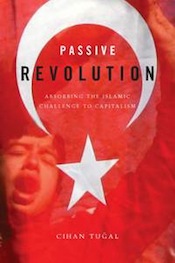
The cognac is here! Russia receives first delivery of Georgian brandy

0

After a 7-year ban on Georgian imports, trade between the two politically strained neighbors has resumed with an inaugural delivery was a 21,600 thousand bottles of brandy.

The cases passed through Kazbegi Verkhny Lars, the only official
land checkpoint between Russia and Georgia, that has remained
closed since 2006.

Tibisi-based Kakheti Traditional Winemaking sent the first batch
of goods, with wine and other agricultural products to follow.

Georgia’s largest wine exporter, JSC Tbilvino and Borjomi, a
mineral water distributor, are expected to re-launch their
products in Russia by the end of the summer.

The Russian Sanitation Service has issued more than 100 licenses
to Georgian wine and beverage suppliers, but the goods still must
face scrupulous inspection before being granted entrance into the
Russian market.

Russia’s Sanitary Service refused to register three wine labels
and five brandy labels because they failed to meet inspection
requirements. Interfax reported 245 applications were
submitted for import licenses.

The import of Georgian wine, mineral water, and agricultural
products to Russia has been banned since the spring of 2006,
after a spy scandal prompted Russia to impose an embargo on
imports from the South Caucasian nation, citing consumer safety
concerns over low quality.

Russia had previously been the main consumer of Georgian wine,
and its sudden break nearly crippled the Georgian wine industry.
As a result of the ban wine production fell from 60 million
bottles a year to 16 million.

In the absence of its largest export partner, Georgia looked to
Belarus, Ukraine, and Kazakhstan to sell wine.

According to customs statistics, in 2012 Russia’s foreign net
trade was $837.2 billion worldwide, and $117.7 billion in CIS
countries.

Georgian wine exports increased to $54.1 million in 2011, the
most recent data on Georgia’s National Statistics Office website.
Exports rose 37.7 percent to reach 16.9 million liters.

In 2012, Georgia produced 150,000 to 200,000 tons of grapes,
30,000 to 40,000 of which are used to produce wine for both local
and foreign markets, according to Georgia’s Export Market
Development Action Plan.

Because of Georgia’s geographical location in the south caucuses,
the fruit harvest occurs 2-4 weeks earlier than much of Eastern
Europe, offering the industry a unique competitive advantage.

In 2012, Russia imported $3.1 billion dollars of alcoholic and
non-alcoholic beverages.

The two countries re-engaged in trade talks after Bidzina
Ivanishvili upset incumbent Mikhail Saaksahvili in the October
prime minister election.

This article originally appeared on: RT

Syria army clashes with rebels in Aleppo

0

Clashes have erupted between Syrian army forces and foreign backed militants in the suburbs of the countryâ„¢s largest city, Aleppo, with army forces advancing from three directions to liberate the city and cut off insurgents supply lines in north.

PG/SS

This article originally appeared on: Press TV

Aref urges Reformists to go to polls

0

Iranian presidential candidate Mohammad-Reza Aref in Kerman Province on June 10, 2013

Iranian presidential candidate Mohammad-Reza Aref has urged Reformists to take part in the upcoming presidential and city council elections, saying those who do not vote are not Reformist.

During a tour of the provinces of Kerman and Yazd on Monday, Aref said Reformists should turn out to vote to create a political and economic epic.

Å“We cannot turn away from the polls. Turning away [from the polls] is not [a form of] objection rather it is [a form of] retreating and a Reformist does not retreat,” the former vice president said in Kerman.

Å“Reformists have never backed down from their positions and they are present on the scene of the elections to achieve their goals,” he said in Yazd.

The Reformist candidate also pledged to fix the economy, solve economic problems such as high prices, inflation, and heed public demands, should he become the next president.

Aref faces six rivals in the election, namely President of the Center for Strategic Research of the Expediency Council Hassan Rohani, Tehran Mayor Mohammad-Baqer Qalibaf, Secretary of the Supreme National Security Council Saeed Jalili, Secretary of the Expediency Council Mohsen Rezaei, former Foreign Minister Ali Akbar Velayati, and former Telecommunications Minister Mohammad Gharazi.

The president of Iran is elected for a four-year term in a national election. This yearâ„¢s election will be held on June 14.

Nearly 50.5 million Iranians are eligible to vote in the upcoming presidential election.

AR/HGH

This article originally appeared on: Press TV

S Sudan urges Sudan to heed security pact

0

South Sudan army has urged Sudan to remain committed to their bilateral security pact to avoid outbreak of armed confrontation between the two African nations.

South Sudanese army spokesman, Colonel Philip Aguer, said on Monday that any breach of the pact Å“may amount to a declaration of war.”

The remarks come after Sudanâ„¢s Information Minister Ahmed Bilal Osman threatened on Sunday to suspend nine security and economic pacts with South Sudan.

Å“We will stop all nine agreements, not only oil,” Osman said at a news conference, adding, Å“We are still committed to have good relations with South Sudan and if they are serious about implementing the nine agreements we can return to cooperate with them.”

Osman made the remarks a day after Sudanese President Omar Hassan al-Bashir ordered the stoppage of oil transfers through Sudanese territory from South Sudan, saying the government of President Salva Kiir is supporting rebels in Sudan.

Osman and Sudan’s intelligence chief Mohammed Atta have both confirmed that the oil shutdown has started and it will continue for 60 days.

Juba denies Khartoumâ„¢s accusations of supporting insurgents in Sudan, and in turn accuses Khartoum of propping up rebels in southern regions.

In March, Sudan and South Sudan struck a deal to resume the flow of southern oil exports through pipelines in the north. The pipelines, which are South Sudan’s only route to international market, carry oil from the landlocked South through Sudan to a port on the Red Sea.

Two neighbors also agreed to withdraw their troops from contested border areas to ease tensions and facilitate the resumption of oil exports.

South Sudan seceded from the Republic of Sudan on July 9, 2011, after decades of conflict with Khartoum. The new oil-rich nation is one of the least developed countries in the world, with one in seven children dying before the age of five.

ASH/SS

This article originally appeared on: Press TV

Eurozone crisis over — Francois Hollande

0

The debt crisis Europe has been going through since 2009 is now over according to French President Francois Hollande. He was speaking on the last day of his visit to Japan where his reassurances were aimed at boosting trade between France and Japan.

Talking to Japanese business leaders on Saturday President
Holland said despite crisis in eurozone having eased there’s
still need for measures to boost the region’s economy and
competitiveness. The French President was in Japan to discuss
trade relations between the two countries.

“What you need to understand here in Japan is that the crisis
in Europe is over. And that we can work together, France and
Japan, to open new doors for economic progress,”
Hollande
said at a meeting organized by Japan’s Nikkei newspaper. “We
have used various measures to address weaker nations. Member
nations have tried to restore fiscal health. We have also
established a banking federation. Due to these efforts, yields in
the euro zone have dropped dramatically and we have been able to
restore confidence among investors.”

To reassure investors, Hollande claimed that the debt crisis
contributed to “reinforcing” Europe and forced the 17
single currency-using states to deepen cooperation for the good
of the whole of the Eurozone. In his view it’s the crisis that
made European authorities cooperate and work out instruments to
support the region’s economy and the single currency.

“I believe that the crisis, far from weakening the Eurozone,
will strengthen it,”
he said. “Now, we have all the
instruments of stability and solidarity. There was an improvement
in the economic governance of the Eurozone, we set up a banking
union, we have rules on budgetary matters that allow us to be
better coordinated and have a form of convergence.”

Despite the fact that many of the Eurozone’s major weaknesses
have been tackled, the economy in Eurozone is still shrinking and
the manufacturing sector is also in contraction. Unemployment has
soared to its highest level since the euro was introduced in 1999
and reached 12.2 percent.

“We must create a new outlook – an outlook for growth and
employment. Together with Germany, we are trying to establish new
goals beyond fiscal discipline. France and Germany together are
trying to address unemployment, particularly among the youth, in
order to restore Europe’s competitiveness… We must ensure that
industries are not only hindered but become part of our long-term
strategy.”


In his speech Hollande named Japan an “exceptional
partner”
calling for both states to boost investment into
each others’ economies.

President Hollande also spoke of his idea to create a single
common economic government that would be responsible for the
economic policy in the Eurozone.

This article originally appeared on: RT

Obama most lawless leader in US history

0

US President Barack Obama has overtaken his predecessor, George W. Bush as the most lawless president in US history, an analyst tells Press TV.

The remarks were made by international lawyer, Alfred Lambremont Webre, who compared Obamaâ„¢s policies, including the use of electronic surveillance, to Bush-era policies like the USA PATRIOT Act, which are considered intrusions on citizens’ rights and a pretext to launch martial law.

Å“In fact, all of the attacks that have occurred in US territory have been false-flag operations starting with the false-flag operation of September 11, 2001, that put in place the [USA] PATRIOT Act that started this travesty against the US Constitution, down to the false-flag attack of the Sandy Hook massacre that occurred last year; [and] the alleged Boston terrorist attack of April 15th, 2013,” Webre added.

The American law expert further criticized the director of the National Security Agency (NSA), James Clapper, for defending the electronic surveillance tool, PRISM, which gathers electronic communications data from companies like Facebook and Google, and a government program designed to track every phone call made within or from the United States.

Å“Just to put it very bluntly, [NSA Director] Mr. James Clapper is lying because under the Obama administration, his use of section 215 of the legislation that heâ„¢s citing, the actions that he is undertaking, violate the First Amendment of the US Constitution of freedom of speech; the Fourth Amendment against unreasonable search and seizure; the Fifth Amendment against self-incrimination; and the Fourteenth Amendment as applied to all of the states – this is an absolute legal falsehood,” said Webre.

The new revelation came as Washington has already come under fire for the decision to use surveillance drones within the United States, with thousands of unmanned aerial vehicles expected in US airspace by 2015 in line with the Federal Aviation Administration Modernization and Reform Act which was passed last year.

Obamaâ„¢s electronic surveillance policies including the use of the US drone program is a Å“violation of the Constitution,” as they amount to implementing state terror to provide pretexts for the Å“implementation of martial law,” the expert concluded.

GMA/SS

This article originally appeared on: Press TV

Military told not to read Obama-scandal news

0

Gina Loudon
WND
June 10, 2013

President Obama has said the outrage over the federal government’s decision to monitor citizens’ phone activity is all “hype.”

He might want to share his opinion with the U.S. Air Force, which is ordering members of the service not to look at news stories about it.

WND has received an unclassified NOTAM (Notice to Airmen) that warns airmen not to look at news stories related to the data-mining scandal.

Read more

<!–

–>

This article was posted: Monday, June 10, 2013 at 9:02 am

Tags: , ,


<!– this is where we need to show the related articles

–>

This article originally appeared on: Infowars

MP To Quiz Cameron on Bilderberg Attendance In Parliament

0

Michael Meacher wants to know what was decided during secret confab

Paul Joseph Watson
Infowars.com
June 10, 2013

MP Michael Meacher is to ask an “urgent question” about the Bilderberg Group in Parliament following Prime Minister David Cameron’s visit with the secretive organization while the country is embroiled in a huge lobbying scandal.

Image: YouTube

“Michael Meacher, Labour MP for Oldham West and Royton, is to ask an urgent question on the Bilderberg conference, on Monday 10 June in the House of Commons,” reports the official Parliamentary website. “The question is expected to commence at 3.30pm, following the conclusion of questions to the Home Office.”

Meacher made an appearance at the site of the protest against the Bilderberg Group last week during which he insisted the organization should be held accountable. Meacher is seeking to find out what was decided at Bilderberg and how it will effect government policy.

“My objection is that it’s being done in utter secrecy with the police keeping everyone else out,” said Meacher, adding, “When they all get together, it’s not just to have a chat about the latest problem, it is to concert plans for the future of capitalism in the West.”

Prime Minister David Cameron attended the Bilderberg confab on Friday, meeting in secret with power brokers who have a proven track record of steering global affairs from behind the scenes with complete contempt for democracy. Cameron came to power promising his government would represent the most “transparent” in history.

The Bilderberg Group was blown wide open over the weekend when Alex Jones disrupted a BBC Sunday Politics show after being told to “shut up” by host Andrew Neal.

Bilderberg members Ken Clarke and Ed Balls were also forced to address Bilderberg during the show, and Balls was confronted twice about the issue, once by Alex Jones, once by Paul Joseph Watson, after the taping.

Watch a Sky News interview with MP Michael Meacher below in which the MP explains how Bilderberg clearly will have an impact on government policy. The video of Meacher’s question in Parliament will be added to this story later today.

*********************

Paul Joseph Watson is the editor and writer for Infowars.com and Prison Planet.com. He is the author of Order Out Of Chaos. Watson is also a host for Infowars Nightly News.

<!–

–>

This article was posted: Monday, June 10, 2013 at 8:47 am

Tags:


<!– this is where we need to show the related articles

–>

This article originally appeared on: Infowars

Ex-CIA worker: I exposed U.S. spy scheme to protect ‘basic liberties’

0

Chicago Tribune
June 10, 2013

An ex-CIA employee working as a contractor at the U.S. National Security Agency said he leaked documents and details of a top secret U.S. surveillance program in order to protect the “basic liberties for people around the world.”

Holed up in a hotel room in Hong Kong, Edward Snowden, 29, said he had thought long and hard before publicizing details of an NSA program code-named PRISM, saying he had done so because he felt the United States was building an unaccountable and secret espionage machine that spied on every American.

His whereabouts were not immediately known on Monday. Staff at a luxury hotel in Hong Kong told Reuters that Snowden had checked out at noon.

Read more

<!–

–>

This article was posted: Monday, June 10, 2013 at 8:45 am

Tags: , , , , , ,


<!– this is where we need to show the related articles

–>

This article originally appeared on: Infowars

Cuba and its Neighbours: Democracy in the Americas after Chavez — Book Launch & Discussion, June 12, Ottawa

0

Cuba’s Neighbours Under Consideration: United States, Venezuela, Bolivia and Ecuador

In this groundbreaking book, Arnold August explores Cuba’s unique form of democracy, presenting a detailed and balanced analysis of Cuba’s electoral process and the state’s functioning between elections. By comparing it with practices in the U.S., Venezuela, Bolivia and Ecuador, August shows that people’s participation in politics and society is not limited to a singular U.S.-centric understanding of democracy. For example, democracy as practised in the U.S. is largely non-participatory, static and fixed in time.

Cuba, by contrast, is a laboratory where the process of democratization is continually in motion, an ongoing experiment to create new ways for people to participate. August argues forcefully for the need to develop mutual understanding of different political systems and, in doing so, to not be satisfied with either blanket condemnation or idealistic political illusions, both resulting from a refusal to analyze the actual inner workings of each process.

More information at  http://www.democracycuba.com/index.html

This article originally appeared on: Global Research

‘Iran ethnic groups enjoy equal rights’

0

Presidential candidate Mohsen Rezaei says people from all walks of life and ethnic backgrounds enjoy equal rights in Iran.

The independent candidate made the remark in a speech in the western city of Sanandaj, in Kurdistan Province.

Rezaei, who is currently secretary of the Expediency Council, promised to will protect the civil rights of Iran’s Kurdish population if he wins the election.

He also pledged to improve living standards in Kurdish regions and to include prominent Kurdish figures in his future administration.

Rezaei is facing six rivals, namely, President of the Expediency Councilâ„¢s Center for Strategic Research Hassan Rohani, Secretary of the Supreme National Security Council Saeed Jalili, Tehran Mayor Mohammad-Baqer Qalibaf, former Foreign Minister Ali-Akbar Velayati, former First Vice President Mohammad-Reza Aref, and former Telecommunications Minister Mohammad Gharazi.

The president of Iran is elected for a four-year term in a national election. This yearâ„¢s election will be held on June 14.

Nearly 50.5 million Iranians are eligible to vote in the upcoming presidential election.

KA/HGH

This article originally appeared on: Press TV

How the Aeons and Other Divine Beings are Sustaining Today’s Spiritual Ascension

0

By Richard C. Cook

As the world of materialism, war, and money roars down the track toward whatever may be its date with destiny, it is yet a time when the hidden knowledge contained in all spiritual traditions has been revealed to mankind. Through the internet in particular, many more individuals have access to information that for millennia had been known only to a select few or confined within the boundaries of the religion or spiritual teaching that originated it. But added to knowledge from the past is awareness of the presence here and now of Divine Beings from dimensions beyond our own. They are helping us make a choice of participating in a work of transcendent value: the spiritual transformation of Earth and humanity.

Such beings were known to the ancient Gnostics as “Aeons,” implying eternality or immortality. It is once again time to acknowledge the reality of the Aeons and listen to their voices. Scholars have rediscovered the lore of the Gnostics, but spiritual experience is more than rediscovering old books. Intensive spiritual work involving meditation and channeling can bring long-forgotten teachings to life through direct contact with Intelligences who care deeply about us. This article contains a short summary of my new book, Return of the Aeons: The Planetary Spiritual Ascension, and explores how such contact has been achieved and expressed in our era. It also explains my own personal experience both as a seeker of truth and one who works with others. I believe these contacts can help guide us to sanity, safety and enlightenment during these perilous but amazing times.

Within the Abrahamic religions – Judaism, Christianity, and Islam – the Divine Beings are called Angels and Archangels. Judaism also uses the term Elohim, a noun that is both feminine and plural. Age-old traditions, including those of the Egyptians, Greeks, and Romans, as well as Hinduism and some branches of Buddhism, speak of multiple gods and goddesses. So do the older “Earth religions,” including their modern revivals, such as Wicca. For them, the Great Goddess, their most prominent deity, was worshipped across Eurasia for thousands of years by the people who built the dolmens, menhirs, stone circles, passage tombs, and other megaliths. Indigenous peoples around the world have also had their own longstanding access points to Spirit through the spiritual path of Shamanism.

To return to Gnosticism, while organized Christianity regarded the Gnostics as heretics, and still does, Gnosticism as a set of ideas and practices captured the essence of the mystical experience at the heart of all the world’s faiths. The Gnostics formed a prominent spiritual movement in the early centuries of the Christian era but were suppressed. Subsequently, they were known mainly through fragments cited by their church persecutors until the discovery of their more complete writings at Nag Hammadi in Egypt in 1945. The Gnostics spoke of the Aeons as emanations of the one Creator. The nature of the Aeons being primarily mental and spiritual, they could not be seen in the flesh by us limited humans, viewed as we were by the Gnostics as prisoners of gross matter. But we can raise ourselves up through spiritual vision to awaken to their influence.

One of the primary Aeons was “Christ,” identified by some Gnostics, but not all, with the person of Jesus of Nazareth. Another Aeon was Sophia, or Wisdom, manifesting through the various forms of the Divine Mother, including the Egyptian Isis, as well as Mary, later known in the Roman Catholic Church as the “Mother of God.” Mary conceived Jesus in her womb at the time of the Annunciation, revealed to her by the Archangel Gabriel. Several centuries later, Gabriel gave the divine dispensation to Mohammed by announcing to him the Koran. The works of Gabriel, Michael, Raphael and other Archangels may be viewed as part of the ongoing mission of the Aeons to bring the message of the Creator to Earth.

In the life of Jesus Christ as described in the New Testament, angelic beings appeared at intervals, as with those who announced his birth to the shepherds outside Bethlehem and the ones who appeared to his female followers at the empty tomb after his crucifixion. The last book of the New Testament, The Revelation of St. John the Divine, sometimes called The Apocalypse, is full of references to divine entities. But as the Christian religion developed – or perhaps deteriorated – over the centuries, it lost touch with its rich heritage of the “heavenly hosts.” In some places the spiritual knowledge of Divine Beings went underground. Among the traditional cultures of Eurasia, this knowledge was retained through merger with much older experiences of the presence of nature spirits or, as cited earlier, the various manifestations of the Great Goddess.

People who retained Gnostic or spiritualist beliefs, as in the case of the Bogomils and Cathars, were exterminated as practitioners of heresy. Then came the Inquisition, followed by the European religious wars between Catholics and Protestants when millions on either side were killed. More millions were murdered during the witchcraft persecutions. As a result of centuries of tragedy, by modern times, religion had become a dry, dull, abstract caricature riddled with fear and appealing mainly to the clergy, to an obedient but benumbed laity, and to latter-day scribes and Pharisees. The aspirations and intuitions of ordinary people and their sensitivity to the unseen world were stamped out or kept secret by those fearing persecution or ridicule.

By the 19th-20th centuries, science had rejected Deity altogether, while organized religion retained an image of God as a harsh judge and Jesus a sacrificial lamb on the cross, but not entities to see, know, and talk with as a friend. The Divine Feminine was almost entirely absent and the Holy Spirit a mere concept without meaning or power. No wonder by the mid-20th century people were leaving the Christian churches in droves, with many seeking meaning among yoga, Zen, or other manifestations of Eastern religion. Meanwhile, science was unmoved, having become implacably skeptical, agnostic, or even atheistic. Academia and the mass media largely followed suit.

True, there were movements within Christianity, as with Christian Science, New Thought, Unity, and the Charismatic Renewal, toward a more active and personal approach to prayer and spiritual healing, which bore fruit through teachers like Mary Baker Eddy, Charles Fillmore, Ernest Holmes, Emmet Fox, and Joel Goldsmith. These movements remained alien, however, to orthodox churchgoers, including evangelists, who viewed anything but the most literalistic interpretation of scripture and church tradition as of the devil. We now know that behind their vestments, some priests and ministers were themselves devilish in their personal conduct.

The problem became that very few human beings were still able to rise out of their sense-based consciousness and their fear of the unknown or unorthodox to the direct experience of Angels, Archangels, or other beings living in dimensions beyond ours. Nature was viewed as a mechanism to be exploited, not a sacred home of Spirit. The occult movement of séances, automatic writing, etc., largely confined itself to communications with deceased human beings. But by the early to mid-20th century, the phenomenon known as channeling had appeared and was opening some startling new horizons.

Key figures were Madame Helena Blavatsky (1831-1891), founder of the Theosophist Movement; Rudolf Steiner (1861-1925), the Austrian esotericist; G.I. Gurdjieff (1866-1949), whose researches in the depths of Asia brought to light ancient wisdom going back more than 10,000 years; Edgar Cayce (1877-1945), who reported receiving his gifts of clairvoyance from an angelic visitation and who introduced people through his “readings” to information from the hidden realms; and Samael Aun Weor (1917-1977), the Gnostic master from Colombia. Another pioneer was Jane Roberts (1929-1984), channel of the Seth Material.

Around the same time as the Seth Material came A Course in Miracles, said to be channeled from Jesus Christ himself, but presenting a message of love and forgiveness in modern psychological terms that was far more advanced in its tone and implications than anything being presented by standard Christianity. A Course in Miracles made its appearance as a published work in 1976 and was met by apathy or resistance. But a growing number of Spirit-hungry people began to respond, and its readership grew. This was also around the time that certain groups and individuals had begun to be in communication with extraterrestrials. The space age by then was well underway. It had been almost 30 years since UFOs made their way into public consciousness and encounters between humans and extraterrestrials had begun to be reported, starting with works by George Adamski in the 1950s.

Finally, by the late 1970s, two groups had begun to channel beings claimed to be from extraterrestrial origins that provided information of a depth, breadth, and significance worthy of consideration on a level comparable to the age-old beliefs in wise, beneficent beings like the Elohim, Archangels, or Aeons. The result was teachings from an entity called “RA,” channeled by a group consisting of Don Elkins, Carla Rueckert, and Jim McCarty from Louisville, Kentucky, and an extraterrestrial grouping called The Nine, that was communicating in Ossining, N.Y., through a team made up of Dr. Andrija Puharich, Phyllis Schlemmer, British nobleman Sir John Whitmore, and others. This group included Eugene Roddenberry of Star Trek fame.

In some ways, channeling of extraterrestrials proved more illuminating at the level of metaphysics and theology than alleged physical UFO sightings or alien abductions. The groups channeling both RA and The Nine showed extraordinary integrity in utilizing experienced deep-trance channels (Rueckert and Schlemmer), establishing safe and secure environments, initiating questions through credentialed scientific interlocutors (Elkins and Puharich), using recording devices to produce faithful and intelligible transcripts, adopting a spiritually-oriented perspective, and maintaining an atmosphere suited to attracting entities with positive intentions. The scientific precision these groups applied to psychic communications was unprecedented.

The channelings of RA are contained in a five-volume series entitled The Law of One, published by Rueckert and McCarty’s L/L Research organization. (Don Elkins committed suicide in 1984, which ended the RA channelings.) Carla Rueckert continues to channel other extraterrestrial or extra-dimensional presences, including “Hatton” and “Q’uo.” The channelings of The Nine, which have also ended, appear mainly in Phyllis Schlemmer’s book, The Only Planet of Choice: Essential Briefings from Deep Space, in which The Nine specifically refer to themselves as Aeons.

In my book, Return of the Aeons: The Planetary Spiritual Ascension, I write extensively of both RA and The Nine, quoting from the transcripts published by the two channeling groups. I also correlate the remarkable consistency between the information they provided with core beliefs and practices of the world’s spiritual traditions, as well as teachings from A Course in Miracles and an account written two decades later of encounters with Jesus in a semi-physical form entitled, Love Without End: Jesus Speaks, by Glenda Green. I concluded that all these sources at their heart speak of one central idea: evolution of consciousness through love and enlightenment.

Despite attacks by self-styled debunkers – including nonsensical allegations that because Andrija Puharich was, early in his career, affiliated with CIA-funded research programs, The Nine were part of a “stargate conspiracy” to control the minds of gullible humans – these channeled sources created some of the basic lexicon of New Age teachings. Also consistent is recent work on understanding the meaning of the crop circle phenomenon, especially among groups in the United Kingdom, as well as the explosively expanding testimony of people undergoing near-death experiences.

Both RA and the Nine affirm similar principles, including: 1) the unity of everything that exists in which all of us together are parts of the one Creator, thereby reconciling diversity with monotheism; 2) immortality of the human spirit through many incarnational experiences; 3) the tremendous opportunity that exists at this point in history for people to “graduate” to a higher level of consciousness through awakening to love in the heart; 4) the great harm we do to ourselves and each other by trying to control other human beings; 5) the necessity of spiritual practice through meditation and similar techniques; 6) how the Divine Beings have played a role in human history over a period of tens of thousands of years, including appearances on Earth in ancient Asia, Egypt, Israel, and South America; 7) the origin and nature of Jesus – some of the sources call him Jeshua – and the error in trying to elevate him and other friends of humanity to an unapproachable status; 8) the great danger to planet Earth from pollution, nuclear weapons, etc.; 9) the reality that we are not alone in the universe but reside on but one of many locations where sentient beings are found, beings that may be far more advanced in consciousness and technology than we are.

RA defined itself as a “social memory complex” consisting of multiple entities once on the same level as we human beings, entities who originated on the planet Venus and today have a single unified higher consciousness. RA says that the primary mechanism of human life on Earth is to provide us with “catalyst” through which we can make a choice in “polarity” between “service-to-others” and “service-to-self.” Unfortunately, say The Nine, most people are asleep in a “sink of indifference,” so ignore the possibility of such a choice. The Nine go so far as to say that because sleeping humanity has caused so much damage to Earth, many will be sent in future incarnations to other planets more compatible with their relatively low level of development. Earth, they say, has become a cosmic “bottleneck” that must now be cleansed, though the extent the cleansing is needed has been left open and may depend on how many of us choose a positive response to planetary needs in these epochal times.

Today, with the coming of the internet, there has been a mega-explosion of websites, groups, individuals, and teachings that claim to involve channeled sources, including the “law of attraction” doctrines and many others. Often these sources are claimed to be extraterrestrial in origin, including beings from the Pleiades, Orion, Andromeda, and other locations, and to offer information about ascension, extraterrestrial “landings,” and many other topics.

We shouldn’t take all these sources at face value, obviously, or even give them credence without bringing our intellects to bear. I believe many of them to be figments of the channel’s imagination, deliberate hoaxes, or even communications from mischievous spirits – a kind of psychic “disinformation” from entities of a negative vibration. I have personally experimented with an Ouija board but resisted suggestions from the malevolent being my partner and I contacted that wanted us to do some very stupid things. I have therefore come to hold a firm belief that a great deal of caution and skepticism is required when studying these phenomena.

But I still try not to throw out the baby with the bath water. Many of the reported contacts seem genuine. I especially love accounts of contacts between Native Americans and the “Star People.” I was born in Montana, met a Native American spiritual teacher, had a profound vision of a native elder at the Acoma Pueblo in New Mexico, and love the spirituality of indigenous cultures. Another living example of how people today relate to Divine Beings is the worldwide implementation of principles of biodynamic gardening as taught by Rudolf Steiner. Steiner’s system harnesses the forces of angelic energies to create harvests of grains and vegetables of amazing size and hardiness. Similar work has been reported from the Findhorn community in Scotland.

Another inspiring source of teachings about the Divine Beings and their accessibility was Omraam Mikhaël Aïvanhov (1900-1986). Aïvanhov was a spiritual master born in Bulgaria who taught in France and carried the torch of esoteric teachings handed down from an age-old mystical tradition taught by his teacher, Master Peter Deunov. These teachings included the Kabbalah, spiritual alchemy, astrology, music, and yoga. Aïvanhov found inspiration through the high level of Divine consciousness mediated to humanity through the Sun, calling his method Surya Yoga after the Hindu name for the god of the Sun. He also revealed the essence of the enlightenment experience, which is called by the RA Material the opening to “Intelligent Infinity.”

All these sources make it clear that human beings can establish contact with Divine Beings and engage in inner dialogue with them. The religious establishment, with some exceptions, has generally failed to teach people how to do this. But working with several spiritual teachers, as well as on my own, I believe I have made personal contact with my own panoply of Divine Beings and have been able to obtain solid information and guidance. This has helped me greatly on my own spiritual path which is oriented to the daily practice of service, prayer, meditation, and contemplation.

The primary beings with which I believe myself to be in touch and with whom I converse and seek insight are my personal guardian angel, plus Jeshua ben Joseph (a.k.a. Jesus Christ), the Divine Mother or Mother Mary, Ascended Master Babaji (the master of the Indian Order of Yogis), and occasionally “Tom,” the spokesman for The Nine. I speak regularly with my deceased mother, and I also communicate daily with St. Michael the Archangel. In a short morning ceremony, I ask Michael to clothe me in his protective “shirt of fire,” and I send love and praise to the unseen beings of the different directions. I say the Lord’s Prayer and the Russian Orthodox Prayer of the Heart, use a rosary to say the Hail Mary, and chant Hindu and Buddhist mantras and bhajans. And I meditate for one or more hours a day using Raja Yoga practices and other techniques that I have come to call Ascension Meditation and Healing. Following the teachings of Jeshua as presented in the book Love Without End, one of the topics of meditation is Jeshua’s injunction to “be the love that we are” in every life situation.

In my experience, communication with the Divine Beings takes place not only in words but in thought forms and mental images, along with a powerful sense of Presence. Words may be deceptive, of course, as with people who “hear voices.” Also, communication with the Divine Beings will inevitably be filtered through our mental receiving apparatus. If that apparatus consists of the same old mundane state of mental confusion, one full of everyday desires, judgments, prejudices, etc., the messages are bound to be garbled or imagined and perhaps even worse than useless. Crimes have been committed because “God told me to do it.” As far as becoming “possessed by the devil,” as fundamentalists may warn against in opposing meditation, we each have our own personal devil – our ego. But we can rise above ego in the holy inner silence.

My inner contacts with Divinity are on an informal one-on-one basis, not through any type of group channeling. I also make use of a pendulum, which can be simply a key on a string, in what is known as “dowsing.” I describe this procedure in my book.

I find the first prerequisite to success a firm choice to dedicate one’s inner work to the ideal of service-to-others, along with the natural inclination toward personal enlightenment. This is similar to the Bodhisattva ideal of Buddhism. Once such a choice is made, the inner doors seem to open, with the Divine Beings then available to provide their help. But they always respect a person’s free will. They do not appear unless asked, which is probably why more people don’t experience them. People are ignorant of their reality, too proud to ask for help, afraid to step out of line, or fearful of ridicule.

In general, the people most amenable to contact with Divine Beings seem to be ordinary folk with simple occupations, including artists, homemakers, craftspeople, those engaged in small business, farmers and gardeners, caregivers, even those who must struggle to make their way in life. Those least engaged are the highly credentialed intellectuals and the ones most identified with their positions within institutions of power, including government, the military, the churches, corporate business, banking, or the law. Not to discriminate or cast judgment; that’s just the way it seems to be.

The fuel that drives spiritual ascension is surrender of the illusions of ego. Many people cling to these illusions for dear life, sometimes even including members of the so-called human potential movement whose motivation is often mixed with desire for name, fortune, and fame. This may happen when we mistake our own willpower for the agency of transformation within. Willpower is, however, necessary, but not as the means for inner elevation and healing. Rather it’s the force within that lifts us into the presence of the Divine which then accomplishes the great work upon us.

I can say that in the last decade, during which I have learned to turn within for contact with the Divine, my life has changed in every way possible. This has included recovery from alcoholism; retiring from a less-than-satisfying government career; meeting and marrying my wife, Karen; deciding with her to move away from Washington, D.C., to Roanoke, Va., a small city in the Appalachian Mountains; and leading meditation groups in Roanoke at the Lifestream Center.

We have found that the safest and most effective way for people to proceed on the spiritual path is through a spiritual group. So we have tried to provide competent and compassionate leadership. It must be remembered, though, that nothing replaces individual responsibility for our life, our actions, or our striving for moral perfection, or removes the need to renew daily our search for oneness with the Creator. But we can always keep in mind that the Divine Beings are present for us. They can give good counsel and be loving friends and healers on the pathways of life. They guide us to the fact that miracles can take place every day when we can surrender self-will, quiet the mind, and abide within, amid the healing quietness of Spirit.

In Roanoke we are in touch with L/L Research, the channelers of RA and other sources, and with individuals connected with The Nine. We also communicate with Rev. Connie Huebner, a teacher from Fairfield, Iowa, who transmits teachings of the Divine Mother both through a local center and her website. We have other contacts worldwide who share our quest. We always bear in mind that our work with the Divine Beings is preparatory for direct knowledge of the one holy Creator, the one Gurdjieff called “His Endlessness.”

Critics ask why beings from other realms don’t simply appear in public and end the controversy. The Nine say that if they did appear, our trigger-happy authorities, bolstered by public fear, would attack them. Some say they have already appeared to governments who refuse to disclose the content of such contacts. RA says they stay in the mental sphere out of respect for humanity’s free will.

But within the sphere of consciousness that can be accessed through the peace of the spiritual heart, the veil is being removed for many thousands of people who are experiencing entities from other worlds and dimensions, including the Aeons, Angels and Archangels, extraterrestrials, and beings from Earth’s inner planes such as the Ascended Masters. According to Omraam Mikhaël Aïvanhov, guiding all spiritual evolution on Earth is the Divine Being called Melchizedek (known as Manu in India) who gave The Revelation to St. John and is present today. In the Bible St. Paul said that Jesus himself was “a priest in the Order of Melchizedek.”

So is humanity undergoing a “final exam” before the world changes in ways beyond our comprehension? I and many others believe the answer is “Yes.” Surely the Divine Beings are here to help us in this era of radical change when the End Times are upon us and the New Earth is in process of being born. I believe that the New Earth is being created among the human family through emergence of a new collective consciousness of love, harmony, and synchronicity among all those on the planet who have awakened to the Divine within their own hearts.

Let me add as a final note that this is not an otherworldly philosophy. We are born of the Creator to experience life here and now in this planetary incarnation. We have the ability while so doing to rise in consciousness and share in the joy of creation by expressing the Divine in our daily lives. We thus help our Mother the Earth in her own endeavors to provide a home for all her creatures. And we help our Heavenly Father raise up his children to be worthy sons and daughters of the Most High.

© 2013 by Richard C. Cook.

‘Erdogan making policy on the hoof’

0

Protests in Turkey are the result of PM Erdogan abandoning his party’s original program. The gap between election pledges and real action as well as Erdogan’s personality cult has driven the Turks onto the streets, believes an academic interviewed by RT.

The Turkish Prime Minister was pushing for reforms which people
“weren’t led to expect”, according to Mark Almond, a
visiting Professor of International Relations at Turkey’s Bilkent
University in Ankara.

RT: We saw on Sunday perhaps tens of thousands of
people cheering Erdogan. It’s not all as one-sided as it’s being
made out to be, is it?

Mark Almond: It’s not necessarily one-sided, but it’s
highly personalized. In the sense that this is the problem for
Erdogan as well as his hopeful trump card playing on the cult of
personality. Everybody who lives in Turkey, even before these
demonstrations, were seeing how inflight magazines as well as
political programs and posters emphasized Erdogan’s personal
contribution to Turkey’s success that has begun to unfold. But of
course it’s dangerous for him precisely because the opponents all
say he must resign. For a Prime Minister that is the problem. And
of course mainly the people in his party, who are perhaps chafing
under his very heavy handed and dominant personality, may perhaps
now begin to feel like pulling the log from underneath him. He
would fall but the party itself would not. 

Supporters of Turkish Prime Minister Recep Tayyip Erdogan wait at Esenboga Airport for his arrival in Ankara on June 9, 2013. (AFP Photo)

RT:  Erdogan has again warned that his patience
is not limitless. What do you think he means by
that?
 

MA: I think it certainly meant to suggest to the peaceful
demonstrators, the large number of people who haven’t been taking
part in throwing Molotov cocktails that they could find
themselves in the middle of a pitched battle and do they really
want that. On the other hand I think that the personality trait
of Mr Erdogan is that he is very stubborn. And he perhaps should
take into account that the same could apply to his opponents. Any
attempt to disperse them by force could well spark much bigger
trouble. Because we saw crowds greeting him at his three meetings
on Sunday. They were not huge crowds, they were not the scale of
crowds that perhaps he would have hoped to mobilize just ten days
ago had he needed to. And so there is a problem now for him that
his level of support does not seem to be the overwhelming 50%
that he could have called on before. As for the opposition, we
don’t know exactly how many people support them, because we
haven’t had elections, we don’t have rival opinion polls. But
there are hundreds of thousands people who are taking part in
these anti-Erdogan demonstrations.

RT: These are protests against a legitimate
leader, elected in a free election – and with majority support.
Isn’t he within his rights to tackle protests which turn
ugly?

MA: Obviously, the police have a duty to protect people
and property from violence. The problem is that precisely Mr
Erdogan was elected by the large majority. But many of the things
he’s done since he was elected weren’t in his party’s program.
People weren’t led to expect them – were they these big property
development schemes that the government supports, but it does not
really publicize what they involve, or for instance his sudden
turnaround from being a friend of Assad, friend of Gaddafi
receiving presents from Gaddafi, to basically engaging in a very
cold war, now increasingly in a hot war with people he used to be
friends of in 2011, when he was re-elected. So we have to face
the problem that there’s a sense of a gap between what his public
statements used to be and then the rather capricious “I’m now
making policy on the hoof”. And that seems to be the case with
the Gezi Park. He now says it will be something more cultural and
acceptable. Maybe it will be. Why then he couldn’t have said that
in the first place? 

Anti-government protesters shout slogans and wave Turkish national flags during a demonstration in central Ankara June 6, 2013 against the Islamic-rooted government of Prime Minister Recep Tayyip Erdogan. (AFP Photo)

RT:  Erdogan also had harsh words for the West
saying the crackdown on protesters in Turkey was arguably less
severe than if it would have been in the EU or the US. Why’s he
lashing out internationally?
 

MA: I think it’s very striking, at this meeting with the
EU Commissioner Fule and others he was very harsh and in the way
he is trying to split the nationalist opposition, who don’t like
him, because they say he is selling Turkey’s interests by
negotiating with the Kurds, from what we might call more European
style opposition — sandal-wearing musicians playing at protest
meetings. He’s trying to split those by saying: “You see, I’m
against the European Union, it’s pushing us around.” And the
nationalists are against it. Whether that will work I’m inclined
to doubt. He’s been very careful to avoid saying anything
critical of the United States, though John Kerry did criticize
the original heavy handed police activities a weekend ago. And I
think one of his problems is that his international credibility
depends to a great extent on being seen as the Unites States’ key
ally in the region. But now his Syrian policy has really
backfired. It was supposed to bring about a quick collapse of the
Assad regime and the replacement of Assad with something that
would be pro-NATO, pro-American and comfortable for Turkey. But
now Turkey has a huge problem on its border, huge economic
problems. It’s not by chance that border towns have had big
demonstrations against him too.  

RT: Erdogan’s subordinates are cooling their
words. The governor of Istanbul even tweeted that he wanted to
JOIN the protesters. Are we witnessing the start of a change of
heart?

MA: I think Mr Erdogan himself has great difficulty in
backing away from taking a rather bullish approach to any
opposition. But inside the AK party, there’s a sign that
President Gul is not happy about that hardline rhetoric. Other
people in the party do not necessarily feel that Erdogan is
carrying out a sensible policy, that he may actually be leading
their party, their candidates in the forthcoming local elections
to a setback, and possibly they themselves could lose power. So
there is a big tension inside the ruling party that this whole
sudden crisis has revealed deep flaws in the Prime Minister’s
management of public opinion, which had seen for the previous ten
years to be masterful but not perhaps any more.

The statements, views and opinions expressed in this column are solely those of the author and do not necessarily represent those of RT.

This article originally appeared on: RT

Privatisation of Greek gas company DEPA fails

0

Greece has failed to attract any binding bids for the natural gas firm DEPA as the key contender Gazprom and several other Russian and Greek companies dropped out of the race for the energy asset.

Reuters quotes two Greek officials close to the sale as saying
that, “Greece has received no binding bids for DEPA and one
bid, from Azerbaijan’s SOCAR, for (gas grid operator) DESFA”

The deadline to submit binding bids expired at 1000 GMT on
Monday. Sale of Greece’s state-owned Public Gas Corporation DEPA
has been considered the key to meet the country’s privatisation
targets under its international bailout plan. Greece reportedly
expected to get up to 1.5 billion euros for the sale. DESFA is
fully owned by DEPA, but the two are being sold separately. DESFA
is valued at about $650 million, and it operates all the
country’s transmission pipelines and the entire distribution
network, along with an LNG terminal, oilprice.com reports.

Gazprom was considered the main bidder ready to offer overstated
1.9 billion euros for both firms, BFM reports. Another Russian
company “Sintez”, two Greek consortium and the Azerbaijani state
company “SOCAR” were named among other potential bidders.

The privatization has been repeatedly postponed. Washington had
warned Athens against the sale of the assets to the Russian gas
monopoly.

Gazprom is already DEPA’s main supplier, providing about 60
percent of its gas last year. It cut its supply prices by about 7
percent in 2011, but Greek energy players say prices are high
compared with what Gazprom charges in other parts of Europe with
more competition, Reuters reports.

Gazprom’s role as supplier to DEPA has raised concerns in the
European Union, which is already trying to loosen Gazprom’s grip
on Europe’s energy market, and it could have blocked or imposed
stringent conditions on the deal, Reuters reports.

The EU is also reluctant for Gazprom to expand
into Europe. In September 2012 the European Commission launched
an anti-trust investigation into Gazprom over alleged unfair
competition and price fixing If Gazprom is found to have broken
the rules it could be fined 10% its annual revenue or
$1.1-1.4bn.

This article originally appeared on: RT