Out of Control: the Syrian Rebels and the US

0

Damascus.

Syria is convinced the US cannot control the rebel groups it is arming and will be unable to get them to declare a ceasefire that would be central to any successful peace talks, says the country’s Deputy Foreign Minister. This puts a further obstacle in the way of negotiations in Geneva proposed by the US and Russia which seem the best chance of ending the Syrian civil war. It now appears they will either not take place, or if they do, they will achieve nothing.

Faisal Mekdad says in an interview in Damascus that the Americans “provide arms and money but they have absolutely no control. Nobody will listen. The US has been trying to unify this opposition for two years and you can see the results: more disintegration.” Mr Mekdad has been at the centre of Syrian foreign policy at a time when the country has been progressively isolated, while still managing to retain crucial allies.

Mr Mekdad looks more confident and relaxed than he did six months ago, probably reflecting a Syrian government belief that it has survived the worst of the crisis. A dapper, fast-talking man, Mr Mekdad comes from Daraa in southern Syria where the uprising began two years ago.

The cavernous Syrian foreign ministry feels insulated from the war, yet Mr Mekdad has not escaped the stresses of the conflict. His 84-year-old father was kidnapped and held for 14 days by rebels and he says he no longer goes to his family home because he wants to avoid further troubles.

Mr Mekdad says events have been moving in the Syrian government’s favour throughout the first half of the year. Its forces are on the offensive, having won a crucial battle at Qusayr outside Homs near the Lebanese border, and he stresses that the opposition should take heed. “It will send a clear message to armed groups, saying: ‘The Syrian army is coming for you,’” he says. Crucially, Syria’s most important allies — Russia and Iran — are steadfast in supporting it diplomatically and financially. Mr Mekdad seems to draw a certain amount of unspoken pleasure from the spectacular disarray of the civilian and military opposition inside and outside Syria.

At the end of the interview Mr Mekdad commented that six months earlier Damascus had been resounding with the sound of artillery fire while now it is much quieter. In reality, this is not quite true and there is the constant boom of outgoing artillery and the occasional sharper crack of incoming fire from rebel mortars.

The difference is largely psychological, with foreign diplomats warning that the government may be getting over-confident as its recovers its nerve. But the rebels retain a core of supporters that are not going to be eliminated, making a long war inevitable.

Mr Mekdad does not look overly concerned by the postponement of the Geneva II peace conference, saying that Syria had always been ready and willing to attend without preconditions. But he goes out of his way to refute the idea that, if the US and its allies could make the rebels a bit stronger on the battlefield, “they can force the government to give more concessions. This is completely wrong,” he says.

This is the argument of David Cameron and William Hague, who claim arming the rebels would tilt the balance of the war in their favour forcing Mr Assad to negotiate his own departure. “I think they are stupid,” says Mr Mekdad. “I think they are absolutely mistaken. More arms means more killing.” He derides any idea that the British and French stance is humanitarian or sincere, attributing it in both cases to revived colonialist ambitions. The Syrian government sees Britain and France as front men for the US administration, which Mr Mekdad claims is “behind everything in the region”. He believes that Saudi Arabia and Qatar likewise act as proxies for the US: “They can’t do anything without written instructions from Washington.”

The government in Damascus has always portrayed the rebels as fundamentalist jihadists who represent as much of a long-term threat to the West as they do to Syria. He also plays down the role of the Lebanese Shia paramilitary movement Hezbollah — other Syrian officials have said they wish Hezbollah had not been so vocal in publicising its presence — and says that thousands of Islamic fundamentalists have joined the rebels without provoking such an international outcry. Foreign diplomats note that Hezbollah provides elite troops while the presence of foreign jihadists videoing themselves decapitating government soldiers has done much to discredit the opposition movement at home and abroad.

Mr Mekdad denies that Iran has a single soldier or member of the Iranian Revolutionary Guard Corps in Syria, but adds that the Iranians are generous with economic and financial assistance. “They are sending food, oil and financial support,” he says. There is little evidence of an Iranian military presence but their expertise in guerrilla warfare, honed in Lebanon and Iraq, is highly regarded in the region. As one Iraqi political leader said: “The Iranians have a PhD in irregular warfare.” Despite Mr Mekdad’s assertions, Hezbollah is a crucial supplement to the government’s position in central Syria, which is the most heavily populated part of the country.

A further reason why Damascus is feeling more confident these days is that two of its harshest critics, Egypt and Turkey, are preoccupied with their own waves of popular protest.

As for chemical weapons, he denies that Syria — “supposing [we] had them” — would ever deploy them against its own people and called for the UN to investigate a Syrian government claim of poison-gas use by the rebels. But he also claims that UN inspectors would not be allowed to investigate similar charges against Syrian government forces because “we don’t want to repeat the Iraqi experience”. He claims that the Syrian opposition had every incentive to fake evidence about chemical weapons use by the government in order to provoke foreign military intervention. “They know that President Obama said that this was a red line,” he says.

PATRICK COCKBURN is the author of “Muqtada: Muqtada Al-Sadr, the Shia Revival, and the Struggle for Iraq.

Republished with permission from: Counterpunch

Boys in Custody Sexually Abused by Female Guards at Alarming Rate

0

The older authority figure wins the trust of the young target by cultivating a false friendship, having heart-to-heart conversations, giving gifts, offering protection. And then the sex ensues, sometimes forced, sometimes seemingly consensual.

It is a classic predatory tactic known as “grooming,” and no one familiar with it could have been terribly surprised when a new report from the U.S. Department of Justice declared that young people in the country’s juvenile detention facilities are being victimized in just this way. The youngsters in custody are often deeply troubled, lacking parents, looking for allies. And the people in charge of the facilities wield great power over the day-to-day lives of their charges.

What was a genuine shock to many was the finding that in the vast majority of instances, it was female staff members who were targeting and exploiting the male teens in their custody.

The phenomenon — a particularly unexamined corner of the nation’s long-troubled juvenile justice system — presents an array of challenges for those concerned about better protecting young people in custody: encouraging male teens to understand such sex is, in fact, a crime, that it is never really consensual, and that its long term effects can be seriously harmful; requiring corrections officials to stop blaming the young boys and meaningfully punish the female staffers; and establishing standards of conduct meant to end the abuse.

“Many corrections leaders continue to minimize this abuse, arguing that it’s the kids who are manipulating the staff, that these boys are asking for it,” said Lovisa Stannow, executive director of the California-based nonprofit Just Detention International, which advocates for the elimination of prison rape. “That’s simply not good enough.”

The Justice Department first discovered the startling form of abuse in 2010, when it surveyed more than 9,000 youngsters living in juvenile halls and group homes. More than 10 percent of the respondents said they’d been sexually abused by staff and 92 percent said their abuser was female.

In the last three years, the numbers haven’t changed much.

The Justice Department released its second report last month, and this time researchers surveyed more than 8,700 juveniles housed in 326 facilities across the country. In all, the facilities house more than 18,000 juveniles, representing about one quarter of the nation’s total number of youngsters living in detention centers.

Drawing on their sample, Justice Department researchers estimate that 1,390 juveniles in the facilities they examined have experienced sex abuse at the hands of the staff supervising them, a rate of nearly 8 percent. Twenty percent who said they were victimized by staff said it happened on more than 10 occasions. Nine out of 10 victims were males abused by female staff.

Nearly two-thirds of the abused youngsters said that the officials lured them into sexual relationships by giving them special treatment, treating them like a favorite, giving gifts and pictures.

Twenty-one percent said staff gave them drugs or alcohol in exchange for sex.

Stannow said that the rate of abuse perpetrated by female guards on male victims is the result of a “dangerous combination” of cultural and institutional problems, not the least of which is the fact that women forcing males into sex does not comport with society’s conventional definition of rape.

“When you have an extreme power differential and absolute unchecked power, bad things start happening,” Stannow said. “When you combine this with a culture where sex abuse by females on males isn’t taken seriously, then you have the perfect set-up for women with all this power to get away with it.”

Republished with permission from: AlterNet

Iran plane attack most inhuman US crime

0

Attacking Iran plane among most heinous US crimes: Cmdr.

Iranians throw flowers in the Persian Gulf to mark the 24th anniversary of the downing of Iran Air Flight 655 by the US navy, in the port city of Bandar Abbas on July 2, 2012.

Chief of Staff of Iran Armed Forces Major General Hassan Firouzabadi has denounced the 1988 missile attack on an Iranian passenger airliner by a US warship in the Persian Gulf as Å“one of the most heinous inhuman crimes” committed by Washington.

In a Wednesday message to the ceremony commemorating the 25th anniversary of the incident, Firouzabadi said the USS Vincennes targeted the Iranian Airbus A300 passenger plane on order of the criminal leaders in the White House, which created Å“one of the most heinous crimes throughout the history of passenger flights.”

The Iranian commander further stated that Washingtonâ„¢s crime will be never forgotten by the Iranian nation and human history.

Firouzabadi also slammed US pressures against the Islamic Republic, saying that imposition of the eight-year war with Iraq, various forms of economic and political blockade, as well as sanctions and other pressures exerted on the Islamic Republic have been part of measures taken by the US to bring the Iranian nation to its knees.

Iran Air Flight 655 was on a routine flight from Iran’s southern city of Bandar Abbas to Dubai when it was shot down by the United States Navy’s missile cruiser USS Vincennes on July 3, 1988, killing all 290 passengers onboard, including 66 children, and crewmembers.

US officials at the time claimed their naval officers had mistaken the Airbus A300 for an Iranian F-14 Tomcat fighter jet.

They also claimed that the USS Vincennes crew had been under a psychological condition called ‘scenario fulfillment’, and had therefore confused their training scenario with reality and responded accordingly.

However, in 1990, former US President George W. Bush awarded Captain Will C. Rogers III, the then commanding officer of the USS Vincennes, with the Legion of Merit Å“for exceptionally meritorious conduct in the performance of outstanding service as commanding officer.”

MKA/SS

Republished with permission from: Press TV

Morsi offers consensus government

0

[unable to retrieve full-text content]Egyptian President Mohamed Morsi has proposed a consensus government to oversee next parliament election, as the army’s ultimatum for him to meet the popular demands expires.

Republished with permission from: Press TV

Egypt's Street Demonstrations and Coup Threats: Made in America?

0

Egypt’s street protests (shown) – loosely based upon an online petition called the Tamarrud (loosely translated as “Rebellion”) – and the looming military threat of a coup against the freely elected government of Mohammad Morsi may have both had their origins in actions of the U.S. government.

The U.S. government has financed both NGO online activism and the Egyptian military in recent years, leading to the possibility that the U.S. government could have manufactured a pincer movement against Egypt’s elected government, creating “pressure from above” and “pressure from below.”

Pressure From Above

The Egyptian military issued an ultimatum to the Morsi government July 1 to restore order within 48 hours, threatening a coup d’etat. This is the same Egyptian military largely trained in America, as ably summarized in a recent Foreign Policy magazine post:

In fact, the Egyptian Army – as the entire military is colloquially known there – may be one of the U.S. government’s best friends in the entire Arab world. American presidents have been encouraging stability in the region for more than 30 years by making the Egyptian military the muscle behind a regional superpower – one built and trained by Washington…. Egypt’s current defense chief, Abdel Fattah al-Sisi, is an alum of the U.S. Army War College in Pennsylvania while the head of Egypt’s air force, Reda Mahmoud Hafez Mohamed, did a tour in the United States as a liaison officer, and the recently retired head of the Egyptian navy, Mohab Mamish, did a bunch of tours in the United States. Their cases are hardly unique; more than 500 Egyptian military officers train at American military graduate schools every year. There’s even a special guesthouse on T Street in northwest Washington, D.C., where visiting Egyptian military officials stay when in the American capital…. All this gives the United States quite a bit of leverage when it comes to the Egyptian military, one of the most powerful forces in Egyptian society. (Some estimate that up to 40 percent of the Egyptian economy is controlled by the military.)

If a military-style coup against elected officials occurs in Egypt, it will be led by – and take place with – U.S.-trained soldiers. And it may even be accomplished on the orders of U.S. military officials. Egyptian military’s ultimatum was issued just hours after a conference call with top U.S. Pentagon officials, according to the July 2 Wall Street Journal. “Gen. Martin Dempsey, the chairman of the U.S. military’s Joint Chiefs of Staff, spoke Monday with Egypt’s chief of defense. ‘It was a personal conversation between two chiefs of defense,’ a Pentagon official said, declining to provide any further information. Defense Secretary Chuck Hagel on Tuesday reached out to Gen. Al Sisi to convey U.S. concerns, current and former officials said.” The Wall Street Journal story noted: “The Obama administration is communicating using Pentagon channels because of long-standing ties between the U.S. and Egyptian militaries, current and former officials said. Washington has significant leverage with the Egyptian military, which depends on American aid and equipment. Many top Egyptian commanders have trained in the U.S., cementing relations.”

The timing of the ultimatum is suspicious at best, and the possibility of a U.S.-backed coup recalls some of the worst episodes of U.S. foreign policy. The U.S. government backed Egyptian dictator Hosni Mubarak for decades with military aid, and has repeatedly backed military coups against elected foreign leaders it did not like, including Mosaddegh in Iran (1953), Arbenz in Guatemala (1954), Allende in Chile (1973), and many others. 

The U.S. government has had policy disputes with the Morsi government, which has continued to enforce laws banning blasphemy and laws against insulting the government, which, though they were also enforced under the Mubarak regime, continue to be enforced under Morsi’s Muslim Brotherhood. Many fear it will be more broadly enforced if the Brotherhood is allowed to consolidate power and extend Islamic sharia law. 

Not surprisingly, the Muslim Brotherhood has not taken kindly to the threat of a military coup. The Muslim Brotherhood’s political party, the Freedom and Justice Party (FJP), rejected the military’s threats in a July 2 statement: “Only the Egyptian people have the right to draw a roadmap for the homeland’s future, through the Constitution passed only a few months ago by nearly two-thirds of the population. It is certainly unacceptable that any party, authority or institution should assume the right to draw a roadmap for the future of the homeland different from that already approved by the people.” The FJP stressed, “The role of the army, in all democratic states, is to protect the borders, face up to external threats, and maintain security. It does not interfere in the political scene – not even as an arbitrator, nor mediator. The arbitrator between political forces is the people, through the ballot box.”

The job of maintaining a stable government has become all-but-impossible for the FJP as their Islamist coalition partners have abandoned them and called for early elections. The salafist Al Nour Party – originally part of Morsi’s coalition in the Egyptian parliament and the second largest party in Egypt’s legislative body – has partnered with liberal and leftist groups to call for early presidential elections to “spare more bloodshed and to prevent the outbreak of civil war.” The Al Nour Party – regarded as more strongly Islamist than the Muslim Brotherhood’s FJP – claimed in a July 2 statement that “the ouster of the president is inevitable,” and may expect to gain a stronger position in the next government from early elections.

Meanwhile, chaos in the streets of Egypt has proven Morsi is unable to prevent even the leaders of his own party from being attacked by both protesters and police. News outlets have documented attacks on Muslim Brotherhood offices and even police attacks on the homes of leaders of the Muslim Brotherhood. The overall murder rate in Egypt has tripled since the ouster of Mubarak, even before the current chaos.

The Egyptian political crisis has also been stoked by a moribund economy stuck in stagflation. London’s Guardian newspaper labeled it the worst economic crisis for the country since the 1930s, with inflation and unemployment averaging more than 10 percent each over the past few years. Morsi’s government has certainly engaged in poor economic management, engaging in massive deficit spending which has increased the government debt-to-GDP ratio to more than 70 percent, a high level for a developing nation.

Economic growth, a brisk five percent of GDP in 2011 as the revolution against Mubarak took place, has withered to 1-2 percent of GDP annually, not even enough to account for population growth. As a result of the unrest, increasing debt and fiscal irresponsibility, Standard & Poor’s has lowered the Egyptian government’s credit rating to CCC+, a junk bond rating.

Pressure From Below

Massive street demonstrations are rarely spontaneous, and Egypt’s current street demonstrations were clearly seeded with U.S. foreign aid money. U.S. Ambassador to Egypt Anne W. Patterson noted in her 2011 Senate confirmation hearing that “through our Middle East Partnership Initiative we’ve given out, I think, 35 grants since the unrest in Tahrir Square to small civil society organizations, and many of them in rural areas who are doing just what you say, trying to connect the people’s grievances with their political desires.”

And while the U.S. State Department claims that “Egyptian groups that apply for and receive grants from the United States are engaged in activities that are politically neutral [and] no funds are provided to political parties,” the focus of the Middle East Partnership Initiative (METI) has been online activism along the lines of what the Tamarrud movement has done in recent weeks. The State Department’s METI newsletter boasted last year:

The “Activism 2.0” project develops the capacity of more than 100 different Egyptian civil society organizations to utilize cyberspace as a venue for activism, advocacy, and advancing reforms…. MEPI is helping marginalized groups make their voices heard and participate more fully in public life. Non-governmental organizations (NGOs) are taking advantage of a more open environment to network and improve their collective impact through joint strategies and activities…. Social Action project is connecting youth-focused NGOs across the region with technologies that will help them engage with new audiences, expand the reach of their work, and build regional networks, while focusing on success stories to further inspire the use of innovative technology in Egypt.

And U.S.-instigated unrest has been also exported through the misnamed National Endowment for Democracy, which funds the International Republican Institute, National Democratic Institute, and Freedom House. According to the New York Times, “The Republican and Democratic institutes are loosely affiliated with the Republican and Democratic Parties. They were created by Congress and are financed through the National Endowment for Democracy, which was set up in 1983 to channel grants for promoting democracy in developing nations.

The National Endowment receives about $100 million annually from Congress. Freedom House also gets the bulk of its money from the American government, mainly from the State Department.” The International Republican Institute is headed by former State Department official Lorne Craner, and has been linked to fomenting coups d’etat in Haiti and Honduras.

The European foundation FRIDE noted in a study entitled “Foreign Funding in Egypt after the Revolution,” by Mohamed Elagati, that these U.S. government-funded organizations were among the biggest players in Egypt in recent years, despite an Egyptian government attempt to expel them from the country this year. “Important nongovernmental (including partly government-funded) sources include the Ford Foundation, Freedom House, and the Arab Human Rights Fund.

Moreover, a broad range of foreign NGOs provides technical assistance in supporting ‘political’ civil society. These include notably the National Democratic Institute (NDI), the International Republican Institute (IRI), and German political party foundations, including the Friedrich Ebert Foundation, the Friedrich Naumann Foundation, and the Konrad Adenauer Foundation.” Indeed, the Ford Foundation has also been active in fomenting activism in the region, seeding the region with millions in grants to promote social unrest.

It may be impossible at this point to calculate precisely the role of U.S. foreign aid on the growth of current street demonstrations in Egypt in the Internet-based Tamarrud movement, but the parallels in training Egypt’s NGO sector for social media activism, combined with a long history of U.S. government interference in Egypt’s internal affairs, makes for a strong circumstantial case that the Egyptian chaos was manufactured in the United States. And the intimate ties between the U.S. and Egyptian military make it very unlikely that the ultimatum threat was made without U.S. support, leading to the following question: Were both the Egyptian chaos and proposed remedy manufactured in the same U.S. foreign policy petri dish? 

Republished with permission from: The New American

Gun-Control for Dummies

1

Becky Akers
lewrockwell.com
July 3, 2013

None of us need further proof that the Second Amendment protects us from unofficial as well as official thugs. But if you are cursed with morons for friends, try running this pair of stories past them: the disarmed-by-law and therefore helpless mother in New Jersey whom a non-governmental burglar beat in front of her 3-year-old child vs. an armed father in Texas who ably defended his family in a similar scenario.

And what is the response from New Jersey’s rulers to a serf’s suffering because they’ve gutted the Constitution? Do they abjectly apologize, present the lady with a rifle so that she can defend herself hereafter, and slink back to their sewers? Do they tell their neighbor and New York City’s nanny, Michael Bloomberg, to shut his ignorant, eccentric-billionaire’s mouth before freelance goons pummel his villeins, too? (Yo, Nanny: hard to head for work and earn the taxes that keep your little fiefdom afloat when we’re hospitalized with concussions, broken legs, and wounds from the guns bad guys own despite all your regs.) No, they introduce more laws. The “Home Invasion Law … would upgrade a home-invasion from a third-degree to a second-degree crime.” Oh, joy! That oughta put the fear of God into the braindead brutes who prey on residents.

Unfortunately, though this fussy distinction of degrees may please legislators, their disarmed victims will still wind up beaten or dead before the State wastes our money caging the perps – if it manages to apprehend them. No such worries from that admirable Texan gunslinger: he drilled two of his three assailants before they could hurt him or anyone else. (Thanks to Steve Cross for the link.)

Europe’s Shame: Snowden and Morales

0

new chapter has been revealed in the fascinating saga of Israel’s invisible nuclear weapon’s program. According to documents released by the National Security Archives, in 1963-64 Argentina played a major role in providing Israel with 80-100 tons of uranium oxide (“yellowcake”) vital for Israel’s clandestine nuclear program.

(It’s not mentioned in the press release, but Argentina’s aid may well have been tit-for-tat–since Israel was also an important supplier of weapons to Argentina.)

Equally fascinating as the news of Argentina’s assistance, is the fact that those “secret” shipments were fairly quickly discovered by Canadian intelligence officials in 1964, who ultimately passed on the news to their British and American colleagues, who passed it on to their civilian leaders.

That news of course cast strong doubts on Israel’s claims that its nuclear program was completely peaceful.

So, what happened? “In response to U.S. diplomatic queries about the sale, the government of Israel was evasive in its replies and gave no answers to the U.S.’s questions about the transaction.”

Over the following months and years, the U.S. and its allies showed no appetite to seriously challenge Israel’s on-going evasions.

Indeed, according to the NSA release, the story of the Argentina yellowcake sale to Israel has remained largely unknown, not just because of Israel’s passion for secrecy, but because the U.S. government and its close allies kept secret for years what they knew at the time.


In fact, as I’ve previously blogged, that policy was nothing new, but the continuation of a refusal by the U.S. and its partners to refuse to publicly recognize Israel’s nuclear weapons program–that began under Dwight D. Eisenhower in the 1950’s–and continues to this day.

The official deception is chronicled by in Seymour Hersh’s authoritative “The Samson Option,” written in 1991.

As Hersh wrote, it was impossible for the Israelis to to hide the massive new construction of their nuclear weapons facility from America’s high-flying U2 spy plane.

In late 1958 or early 1959, CIA photo intelligence experts, spotted what looked almost certainly to be a nuclear reactor being built at Dimona.

They rushed the raw images to the White House, expecting urgent demands from the Oval Office for more information. This was, after all, a development that could initiate a disastrous nuclear arms race in the Middle East.

But there was absolutely no follow-up from the White House. As one of the analysts later told Seymour Hersh “Nobody came back to me, ever, on Israel.” Though the analysts continued regular reporting on Dimona, there were no requests for high-level briefings. “ ‘Thank you,’ and ‘this isn’t going to be disseminated is it?’ It was that attitude.”

“By the end of 1959,” writes Hersh, “the two analysts had no doubts that Israel was going for the bomb. They also had no doubts that President Eisenhower and his advisers were determined to look the other way.”

The reason was evident: Eisenhower publicly was a strong advocate of the Nuclear Non Proliferation Treaty (NPT). If he was formally to “know” of Israel’s nuclear program, he would be obliged to react—against Israel. Which, in the U.S. could mean serious political consequences.

It was only in December 1960, that the Eisenhower administration, nearing its end, leaked word about Dimona and France’s involvement to the New York Times. The administration hoped that, without having to make any official accusations itself, it could oblige the Israeli government to sign the NPT.

But Ben Gurion flatly denied the Times report. He assured American officials —as well as the Israeli Knesset—that the Dimona reactor was completely benign. French officials guaranteed that any plutonium produced at Dimona would be returned to France for safekeeping (another lie).

The Eisenhower administration, however, had no stomach to take on Israel and its American lobby. Despite the reports of CIA analysts, Ben Gurion’s denials went unchallenged.

That hypocrisy would remain official America’s policy to this day—even as U.S. presidents decried the attempts of countries like Iran, North Korea, Syria, India, Pakistan, Libya and Iraq to themselves develop the bomb.

DAVE LINDORFF is a founding member of ThisCantBeHappening!, an online newspaper collective, and is a contributor to Hopeless: Barack Obama and the Politics of Illusion (AK Press).

Republished with permission from: Counterpunch

Girl, 15, Faces Child Porn Rap For iPhone Pic

0

The Smoking Gun
July 3, 2013

A 15-year-old Florida girl was arrested yesterday on a child pornography charge for allegedly showing several classmates a photo on her iPhone depicting “two juveniles engaged in oral sex,” police report.

The girl admitted to “taking the pornographic photo,” according to a complaint affidavit filed by the Pasco County Sheriff’s Office. The document, sworn by a detective does not identify the juveniles in the photo, though a sheriff’s spokesperson said that the teen herself is one of the minors depicted.

On May 21, the iPhone was seized from the girl “during class” by an employee of Wiregrass Ranch High School in Wesley Chapel who “observed a picture of two juveniles engaged in oral sex.”

Read More

<!–

–>

This article was posted: Wednesday, July 3, 2013 at 10:05 am

Tags:


<!– this is where we need to show the related articles

–>

Republished with permission from: Infowars

FBI Ignoring Tea Party Groups Targeted by IRS

0

Kurt Nimmo
Infowars.com
July 3, 2013

Photo: Fibonacci Blue

Photo: Fibonacci Blue

FBI and IRS investigators working on the tax agency’s illegal targeting of Tea Party groups have not contacted any of the groups involved in a class-action lawsuit filed against the government.

“No one from the FBI or the IRS investigative team has contacted any of the 41 conservative groups we represent or any of our attorneys,” Gene Kapp, a spokesman for the American Center for Law and Justice, told The Daily Caller on Tuesday.

The American Center for Law and Justice, a public interest law firm working on constitutional issues, is representing the groups involved in the lawsuit.

Allegations of government foot dragging in the case are not new.

“You’ve had a month now to investigate. This has been the biggest story in the country and you can’t even tell me who the lead investigator is. You can’t tell me the actions the inspector general took which are not typically how investigations are done. You can’t tell me if that’s appropriate or not. This is not speculation. This is what happened,” Republican Rep. Jim Jordan of Ohio told FBI director Robert Mueller during a June 13 hearing on the scandal.

“The IRS and the federal government are not going to get away with this unlawful targeting of conservative groups,” ACLJ chief counsel Jay Sekulow said in a statement issued in May. “The lawsuit sends a very powerful message to the IRS and the Obama Administration — including the White House: Americans are not going to be bullied and intimidated by our government.”

The lawsuit (see PDF here) accuses the Obama administration of exploiting executive power and violating the First and Fifth amendments of the Constitution, the Administrative Act, and a flurry of IRS rules and regulations.

The lawsuit names Attorney General Eric Holder, Treasury Secretary Jack Lew, IRS division director Lois Lerner and several IRS officials.

Republished with permission from: Infowars

Infiltrated from all sides’: Bug found in London’s Ecuadorian embassy

0

A hidden microphone has been discovered in the Ecuadorian ambassador’s office in London, said Ecuador’s Foreign Minister, Ricardo Patino. He denounced the find as yet more evidence of the loss of ethics at an international level in government relations.

“We regret to inform that we have found a hidden microphone in the London embassy,” said Patino at a press conference He added that he had received intelligence that pointed at the origin of the security breach and would reveal it later on Wednesday.

The device itself had been discovered almost three weeks ago on June 16 in the office of the Ecuadorian Ambassador to the UK, Ana Alban, in a routine security check ahead of Patino’s visit.

“I did not bring this up before because I didn’t want my visit to London to hold talks on Julian Assange to be confused with accusations over this surveillance device found in the ambassador’s office,” he told press.

The head of the Ecuadorian Foreign Ministry stated that he would have to consult with President Rafael Correa on the issue and they would require an explanation from the country responsible.

Moreover, Patino clarified that he was not insinuating this discovery had anything to do with the US spy network, revealed by whistleblower Edward Snowden.

Patino went on to voice his concerns that the Ecuadorian government was being “infiltrated from all sides.”

“This is a testament to the loss of ethics at an international level in the relations that we have with other governments,” noted Patino.

Ecuadorean Minister of Foreign Affairs Ricardo Patino speaks during a press conference in Quito on July 2, 2013. (AFP Photo/Rodrigo Buendia)

Ecuadorean Minister of Foreign Affairs Ricardo Patino speaks during a press conference in Quito on July 2, 2013. (AFP Photo/Rodrigo Buendia)

During his visit to London, Patino held negotiations with his British counterpart, William Hague, to push for the safe-conduct of WikiLeaks founder, Julian Assange, to Ecuador where he has been granted asylum. Assange has now been holed up in the Ecuadorian embassy in London for over a year as UK authorities threaten to arrest him if he sets foot outside the diplomatic mission. 

The British government refused to grant Assange safe passage to Ecuador and reiterated their commitment to extradite the whistleblower to Sweden, where he is wanted for questioning over accusations of sexual assault.

Ecuador is also currently assessing the asylum request of former CIA employee Edward Snowden, who is held up in Moscow’s Sheremetyevo airport. He is currently unable to travel as his passport is invalid.

Washington has issued an extradition order against Snowden under the espionage act and called for international cooperation in returning him to American jurisdiction.

The US threatened the Ecuadorian government with taking away a lucrative customs tax agreement if the Latin American country grants Snowden asylum.

The Ecuadorean government reacted with ire, stating that in the face of “insolence” and “threats,” Ecuador will renounce its trade benefits with the US.

Republished with permission from: Global Research

“Team America”: Suspicion of smuggled Snowden grounds Bolivian presidential jet in Austria

0

Global dominion over all borders? Indeed, it appears that Washington DC has that power now. 

Remember that great puppet show parody film?

That piece of comedy became reality yesterday when the Presidential plane of Bolivian leader Evo Morales was grounded in Austria on the orders of Washington DC, because it was suspected that ex-CIA analyst-cum-NSA whistleblower Edward Snowden was being smuggled on board out of Russia.

But in this instance, TEAM AMERICA can only succeed with the full cooperation of its European cohorts.

TEAM AMERICAIf there is a global government in the works, then that new government would need the barriers of borders and national laws to be broken down so as to enable international dragnets, and border-less, total jurisdiction by a global police force. This latest event indicates that this threshold has already been passed. Their message is clear: that there is no safe haven on this planet for whistleblowers.

This reckless move by the Obama White House has already triggered an international reaction throughout South America:
“Everyone has gone insane. The head of state and his plane have total immunity. This level of impunity is unprecedented,” tweeted Argentine President Cristina Kirchner.

Ecuador suggested an emergency meeting of the Union of South American Nations (UNASUR) after the incident Tuesday. 

The question remains — where is Ed Snowden and where is he heading? We are told that he is still residing in Moscow International’s transit area, although no one in the international media has been able to visually ID him yet.

What we do know is that his PR is being handled by Iceland-based Wikileaks, and his father Lonnie Snowden has retained Neocon and AIPAC-linked lawyer Bruce Fein in a bid to negotiate his return to the US.

So far, Snowden’s asylum results are thus far as follows: 1 withdrawn, 9 denied, and 11 others pending.

The world waits with bated breath…

Republished from http://21stcenturywire.com/2013/07/03/team-america-fears-of-smuggled-snowden-grounds-bolivian-presidential-jet-in-austria/

Obama’s Hypocrisy and CNN’s Blind Spot Over AIDS

0

CNN reported on Monday that “The U.S. government’s response to the epidemic in South Africa began in 2003”. That is actually not true. According to the Guardian August 9th, 1999, a heated controversy started in 1997 between South Africa and the U.S. over “an act which the South African parliament passed in 1997, allowing local companies to produce cheap generic forms of the expensive drug-cocktails used to keep Aids under control.” At the time, the U.S. monopoly prices on AIDS antivirals ran around $1000 per month, which was making it inaccessible to over 6 million infected individuals in South Africa alone. Al Gore took it upon himself to make sure the South African plans to make cheap generics did not happen, by threatening them with severe trade sanctions if they dare try. As reported in the Baltimore Sun on June 22nd, 1999, The State Department issued a report saying the country is “making use of the full panoply of leverage in our arsenal.” A few days earlier on June 19th, The Washington Post reported:

One senior Gore adviser acknowledged the vice president is in a delicate position, balancing the magnitude of the AIDS crisis in South Africa and the needs of U.S. companies. “Obviously the vice president’s got to stick up for the commercial interests of U.S. companies,” the adviser said. But, he said, Gore realizes the disease “is a major threat to the welfare and even the future stability” of South Africa.

And so it was that Gore, with Clinton backing him all the way, fought tooth and nail against South Africa’s attempts to save millions of lives. If we calculate the effects of this roadblock extended to the entire African continent, the number of people who were adversely affected by Gore’s efforts is staggering. He may actually be responsible for more deaths than Hitler himself. But Gore did it for money. And the extent to which AIDS has continued to spread across Africa would certainly be considerably lower had the generic versions of the drugs been allowed to be produced. The ultimate human toll of Gore’s efforts is therefore incalculable.

So it should come as no surprise that the Clinton-Gore presidential campaigns, Gore’s “Leadership 98″ PAC, and other Clinton-Gore fundraising efforts, raised over $1 million dollars from Squibb, Glaxo-Wellcome, Pfizer, Genentech and the PhRMA throughout the 1990s. This is of course business as usual.

It wasn’t until 2001 that the Indian pharmaceutical company Cipla started producing generic versions of antiretroviral drugs for a dollar a day. So by stopping the South African efforts, Gore had won Glaxo four more years to rake in obscene profits. GSK financial reports claim sales of over $4 billion. Incidentally, they were fined by the IRS in 2006 a record $3.4 billion for underpaying their taxes by $6 billion dollars. The $6 billion was more than the total amount spent by the U.S. for

HIV prevention over the previous 10 years. Fortunately, the AZT patent expired in 2005. But the fight was far from over. The Guardian reports as recently as June 10th, 2010 “Rich nations step up assault on generic Aids drugs — Moves by the US, the EU and Japan to strengthen intellectual property laws could limit the production of generic drugs that account for 80% of treatment worldwide.”

Unfortunately, the level of hypocrisy necessary for President Obama to talk about AIDS eradication in Africa, without acknowledging the U.S. imposed roadblocks, much of which took place under the control of his own party no less, is now monotonously familiar. And for CNN to pat the U.S. on the back and bury this inconvenient truth down the memory hole is also par for the course for the lapdog corporate media.

This information has been remarkably well hidden from the public. Republicans, after all, cannot protest Gore’s machinations, because putting U.S. corporate interests ahead of human rights is part of their rhetoric. Meanwhile the Democratic voters cannot assimilate into their world view that the Democrats would do something so awful. People know there are good people in the world, so it doesn’t compute to most people that both the Republicans and Democrats could be so profoundly evil.

Therefore, it is quite plausible that had George Bush been the culprit behind these actions, that many more, if not all, Democrat voters would be keenly aware of it, if not up in arms. It would be a natural item to add to their long list of Bush’s evil deeds. This, in my opinion, is why the Democrats are even more dangerous than the Republicans. The Democrats’ rhetoric is more palatable to those of us on the left, but their ultimate effect on society may be worse in that Obama has taken so many of the worst policies of Bush and made them popular or invisible. Obama got the good people of this country to talk about the “good wars” and the “good corporate bailouts” and the “good surveillance.” Obama promised us transparency. Well, to have a wolf in wolves clothing, as we did under Bush, was arguably more transparency than we have now with a wolf in sheep’s clothing holding the reins of power.

Unfortunately, there is no easy way to break through this roadblock. Things will probably have to get a lot worse before they can get better. But straightening out the record of the Democrats role in Africa regarding the AIDS epidemic cannot hurt. So tell your neighbors, if you get the chance.

Gregory R. Grant can be reached at: ggrant@grant.org.

Republished with permission from: Counterpunch

Egypt cabinet secretary gen. resigns

0

[unable to retrieve full-text content]Secretary General of the Egyptian Cabinet Safwat Abdel Dayem has resigned amid rising political crisis in the country, reports say.

Republished with permission from: Press TV

Egypt endorses return of ex-prosecutor

0

The Egyptian Judiciary has approved the reinstatement of former Prosecutor General Abdel Meguid Mahmud who was sacked by President Mohamed Morsi.

On Wednesday, the Egyptian Supreme Judiciary Council approved the return of Mubarak-era prosecutor general in accordance with an order issued by the Court of Cassation a day earlier.

Talaat Abdullah, the current prosecutor appointed by Morsi, said in a statement that he Å“respects all judicial decisions.”

The political showdown in Egypt has neared its climax as military deadline for President Morsi to resolve the North African countryâ„¢s political crisis is expiring.

Supporters and opponents of President Morsi staged rival rallies across the capital, Cairo, on Wednesday evening as the Armyâ„¢s 48-hour deadline for the president to yield to the demands of the demonstrators or face military intervention approached.

Several political groups say the government is dominated by Muslim Brotherhood. The opposition also accuses Morsi of deviating from the 2011 revolution that toppled the Western-backed regime of Hosni Mubarak.

Morsiâ„¢s supporters, however, say the president is cleansing Egyptian institutions of corruption. They also believe he needs time to put into practice the principles of the 2011 revolution.

Egypt has witnessed continuing anti-government protests since Morsi took office in June 2012 in a landmark election held following the ouster of Mubarak.

Several Egyptian clerics and some religious circles have warned against a civil war and called on both sides to be calm.

MAM/KA

Republished with permission from: Press TV

Homeless Industries in San Francisco

0

It is a condition that the United States has given a particular meaning to. From being the light on the hill for liberty, the American vision has become a case of survival on the streets. Homeownership, even renting, is a privilege. Welfare is set for the chop. Food stamp recipients have been branded creatures of indulgent ill-fare. The homeless are being rounded upon.

Even such havens of well-tempered affluence such as San Francisco are marked not merely by the sizeable population of homelessness (6,436 by one count) but the increasing numbers who are joining their ranks. Rent prices are on the rise. Eviction notices in San Francisco have hit a 12-year high.

What stands out in the problem of homelessness is that its solutions have themselves become part of the industrial complex that many of its activists decry. Governments and the non-profit system are bound by a system that has become the context of its own existence. San Francisco demonstrates this to a tee.

Bevan Dufty of the city’s department of Housing, Opportunity, Partnership and Engagement has been less than enthusiastic about whether the shelter system will be expanded. This is despite his admission that shelter beds have been lost. With a bureaucrat’s awareness, Dufty’s response has been one of management speak: one has to “have a toolbox to respond in different ways.”

In response to the recent removal of a homeless encampment under the Interstate 280 highway, Dufty claimed that “we’re trying something new, and its about getting the people on the right path.”

Jennifer Friedenbach of the Coalition on Homelessness has observed that the shelter waitlist system is “archaic” as it is. “People spend 17 hours a day trying to get a bed at night.” Suggestions have been made as to how to open up the system. Homelessness Czar Dufty has not been responsive.

The city budget in San Francisco, awaiting approval by the Board of Supervisors, does include funding for families and individuals facing homelessness. Last Thursday, some $2.4 million was slated as “add-backs” to services for the homeless, along with the $2.3 million pledged by Major Ed Lee to stem the increasing number of families and individuals facing homelessness (SF Bay Guardian, Jul 2). This is far from enough, though the problem as ever is not necessarily how much is put into the programs but how it is spent.

The critics of the system also see homelessness as an opportunity for the morally insipid, or at the very least, the disingenuous. Ethnographic work such as Teresa Gowan’s Hobos, Hustlers, and Backsliders:hoboshomeless Homeless in San Francisco (2010) shows how the entire approach to the homeless in San Francisco can be centred around such themes as “authoritarian medicalisation” and gradual criminalisation of various practices. The Matrix program, to take one sterling example, fined people for panhandling, public urination, sleeping in doorways and blocking sidewalks.

Tactics have been implemented to keep the “sightless” presence of the homeless away from wealthier residents. The Silicon Valley complex is as much a curse, creating deep pockets at one end while emptying those at the other. What can’t be seen can’t hurt you.

Recent attention has also been drawn to the increased number of gay homeless individuals in San Francisco. As Ian Burrell writing for The Independent (Jul 1) observed, “It’s built a reputation as the most gay-friendly on earth. But the mask is slipping.” The Human Services Agency of San Francisco (SF-HSA) recently revealed that 29 percent of the city’s homeless population stem from the lesbian, gay, bisexual and transgender (LGBT) community. Even being in a shelter is no consolation from being free from violence.

Where there is a problem, there is bound to be an industry rather than a solution. It is inherent in any such response that no solutions shall ever be found. One needs the other. As with any industry, some are well meaning, others indifferent, and many ruthlessly ambitious. Social working clans have proliferated. Programs are not solutions.

As Gowan has explained, each institution has its own taxonomy, its own range of terms to identify the problematic homeless specimen. “Doctors diagnose them as depressive, social workers treat them as chaotic addicts, and police officers treat them as impediments to the quality of life of other San Franciscans.”

Seemingly everything has been proposed, from creating “wet houses” to pay the homeless to take care of rescue dogs, to Homeless soccer, a curious panacea that emphasises healthy living. The geniuses of the homeless industry will have to do better than that, but the incentives to cure it are vanishing.

Binoy Kampmark was a Commonwealth Scholar at Selwyn College, Cambridge. He lectures at RMIT University, Melbourne. Email: bkampmark@gmail.com

Republished with permission from: Counterpunch

Mother defeats Child Welfare Services after abducting baby over bagel

0

Mother’s hospital drug screen registered false positive for opiates

Adan Salazar
Infowars.com
July 3, 2013

Nowadays any number of things can lead the state to seize your kids, not the least of which: a bagel.

Photo by Jonathunder, via Wikimedia Commons

Photo by Jonathunder, via Wikimedia Commons

A Pennsylvania mother won a generous settlement yesterday following an incident that took place in April 2010 in which her newborn baby was wrongly abducted from her home by the state’s child welfare services.

At the time, Elizabeth Mort and her husband Alex Rodriguez were confused as to why their three-day-old child was being taken.

Only days later did they learn it was because Mort had failed a hospital drug screen administered either immediately before or after labor, which tested positive for opiates, a narcotic listed federally as a Schedule II drug under the Controlled Substances Act.

Contrary to the test’s findings, Mort was not a drug addict.

Hours before delivering her baby at the Jameson Hospital in New Castle, PA, however, she did make the unfortunate mistake of chowing down an “everything” bagel from Dunkin Donuts topped with poppy seeds, causing the drug screen to register a false positive.

The state kept the newborn infant for five days, returning the child only after no evidence could be found indicating that the mother had used illegal drugs.

“The lawsuit alleged Mort was never told in the hospital that she had failed a drug test, nor was she asked if she had eaten anything that could have affected the test results,” reported the Associated Press.

As Gawker explains, “federal standards set the minimum detection rate at 2,000 nanograms per milliliter. Unfortunately for Mort, Jameson Hospital’s drug test… uses a minimum of 300 nanograms.”

In October 2010, the American Civil Liberties Union of Pennsylvania filed a lawsuit on the parents’ behalf listing the Lawrence County Children and Youth Services (LCCYS) and Jameson Health System as defendants.

The suit alleged, “caseworkers and a police officer arrived unannounced at their door with a court order to remove their three-day-old infant,” and that during the five-day interim before the entities admitted their mistake, “Mort and Rodriguez… were forced to experience the unthinkable: The forcible seizure of their infant daughter by the state without any justification and the fear that they might not get her back.”

On Tuesday, LCCYS and Jameson Hospital paid out a $143,500 reward to the parents, a victory the ACLU hopes will prevent similar wrongful abductions in the future. According to the Associated Press, ACLU staff attorney Sara Rose stated, “We hope that this case will encourage hospitals that routinely test pregnant women for drug use to reconsider that practice due to the harm that can result from false positives.”

This is yet another example of child welfare services working underhandedly in concert with so-called authorities and health practitioners to literally kidnap children from their parents.

In April, we reported on the state of California’s abduction of Baby Sammy for what amounted to little more than his parents wanting a second medical opinion.

This story also illustrates the collectivist mindset being promulgated and embraced by the left, the most recent instance of which had MSNBC host and Associate Professor of Politics Melissa Harris-Perry declaring all children belong to the “community,” in other words, to the state. “We have to break through our private idea that kids belong to their parents or kids belong to their families,” Harris-Perry recently stated in an awkward 30-second indoctrination piece aired during breaks on MSNBC.

<!–

–>

This article was posted: Wednesday, July 3, 2013 at 8:53 am

Tags: , ,


<!– this is where we need to show the related articles

–>

Republished with permission from: Infowars

Who Is An Objective Journalist?

0

In a recent New York Times article David Carr questioned whether someone could be both a journalist and an activist, a question that was prompted by the role of Glenn Greenwald, a writer for The Guardian and a political activist, in reporting on Edward Snowden’s National Security Agency leaks.

As Carr put it, “The question of who is a journalist and who is an activist and whether they can be one and the same continues to roar along, most recently in the instance of Glenn Greenwald’s reporting for The Guardian on the secrets revealed by Edward J. Snowden.” Carr also framed the question as “a fight between objectivity and subjectivity.”

Carr initially seemed to concede that one and the same person could be both an activist and a journalist, even though the activists are “driven by an agenda.” In fact, the title of his article conveyed exactly that point: “Journalism, Even When It’s Tilted.” And, as Carr noted, this is an important concession since journalists are afforded special legal protections in the case of reporting leaks. Mr. Greenwald needs this protection because there are some government officials who would like to see him prosecuted.

However, towards the end of his article Carr began to raise caveats. Activism, he concluded, does not prevent someone from being a journalist; it rather tends to make them bad journalists: “But I think activism — which is admittedly accompanied by the kind of determination that can prompt discovery — can also impair vision.” And he added: “…the tendentiousness of ideology creates its own narrative.” In other words, activism can on rare occasions be helpful in unearthing the truth, but usually it is a barrier.

But perhaps Mr. Carr has failed to grasp the larger picture, possibly due to his own unspoken commitments. Everyone falls into one of two categories. There are those who basically have resigned themselves to established society, perhaps because of ideological compatibility, a strong strain of pragmatism, or a conviction that attempts to change society are entirely futile. Then there are others who are critical and are prepared to embark on a campaign to try to change what they find objectionable. Neither of these groups has a monopoly on objectivity; both positions rest on a set of fundamental values that can be rationally supported. And both involve a kind of activism: one aims at changing society while the other aims at refraining from changing it.

Yet there is a superficial difference between the two: those who want to change society do stand out. Unlike Mr. Carr, they do not seamlessly blend in with the surrounding social institutions and the values embodied in them. Accordingly, they might seem as if they have an agenda that uniquely distinguishes them, but that is only from the perspective of people like Mr. Carr, whose agenda ties him to the status quo but who has not sufficiently reflected on his own social commitments and therefore is unable to acknowledge them. No one, in other words, is exempt from having an “agenda.”

This point was graphically illustrated when “Meet the Press” host David Gregory pointedly asked Greenwald why he should not be charged with a crime for divulging Edward Snowden’s leaks. Here Gregory stood smugly on the side of those who wield power and was quick to demonstrate this point by his tendentious question, perhaps with the thought in mind of winning a promotion, which is a rampant form of another kind of activism.

To his credit, Carr elicited Greenwald’s response to the counterposing of activism and journalism, and this was Greenwald’s response: “It is not a matter of being an activist or a journalist; it’s a false dichotomy. It is a matter of being honest or dishonest. All activists are not journalists, but all real journalists are activists. Journalism has a value, a purpose — to serve as a check on power.” And Greenwald added: “I have seen all sorts of so-called objective journalists who have all kinds of assumptions in every sentence they write. Rather than serve as an adversary of government, they want to bolster the credibility of those in power. That is a classic case of a certain kind of activism.”

Greenwald’s rejection of the purported dichotomy between activism and journalism is, of course, entirely correct. Everyone is an activist of one kind or another. The distinction should rather be drawn between those who are conscious activists and those who, like Mr. Carr and Mr. Gregory, are unconscious activists. Those who fail to reflect on their own commitments are sometimes the most vicious.

Ann Robertson is a Lecturer at San Francisco State University and a member of the California Faculty Association.

Bill Leumer is a member of the International Brotherhood of Teamsters, Local 853 (ret.). Both are writers for Workers Action and may be reached at sanfrancisco@workerscompass.org.

Republished with permission from: Counterpunch

Egypt army to issue statement

0

[unable to retrieve full-text content]The Egyptian military is set to issue a statement after the 48-hour deadline it has issued expires at 1430 GMT.

Republished with permission from: Press TV

'Restore the Fourth': Reddit, Mozilla, WordPress set for July 4 protest against NSA surveillance

0

Thousands of websites will launch a July 4 online protest against the NSA surveillance programs. Reddit, WordPress, and Mozilla will take part in the ‘Restore the Fourth’ campaign online, while live protests take place in cities across the US.

‘Restore the Fourth’ is aimed at restoring the fundamentals of
the Fourth Amendment — the part of the Bill of Rights which
protects citizens against unlawful searches and seizures.
Participants will display an online banner which reads, “This
4th of July, we stand by the 4th Amendment and against the U.S.
government’s surveillance of internet users.”

The campaign, which was spawned on Reddit, has the support of
several privacy and press freedom advocacy organizations,
including Mozilla, Free Press, the Electronic Frontier
Foundation, the Freedom of the Press Foundation, and
ColorOfChange.org.

The rally was largely organized by Fight for the Future — another
non-profit agency which fights against internet censorship. The
organization’s co-founder, Tiffiniy Cheng, said in a statement
that “the NSA programs that have been exposed are blatantly
unconstitutional, and have a detrimental effect on free speech
and freedom of press worldwide.”
The rally is expected to be
Fight for the Future’s largest online mobilization since its
actions against the Stop Online Piracy Act (SOPA).

But the protest doesn’t stop online. Organizers are planning live
protests in dozens of US cities, including New York,
Philadelphia, Boston, Washington, D.C., Los Angeles, San
Francisco, Houston, and Atlanta. Doug MacArthur, a member of
Restore the Fourth’s national board and moderator on Reddit’s
r/news, expects between 10,000 and 20,000 people to take part in
the protests in the nation’s larger cities.

MacArthur stressed the need for the protest, largely because
mainstream media is failing to adequately cover the NSA leaks and
what that means for everyday citizens.


“I think if you are on social media right now and political
blogs, this might seem like it’s an issue that’s all over the
political blogs. But if you turn on CNN or Fox or MSNBC, you’ll
see that a lot of the more mainstream channels aren’t covering
this as much as you might be assuming. So I really think it’s
important we get more citizens aware of this issue,”
he said,
as quoted by Mashable.

Free Press CEO and President Craig Aaron echoed MacArthur’s
sentiments. “We need to bring these government and corporate
activities into the light of day, and the only way that will
happen is if millions more people get involved and demand
accountability, demand change, demand the truth,”
he said in
a Tuesday press conference.

However, it’s not just internet activists getting involved in the
fight — one Hollywood celebrity has been very vocal in expressing
his views on the NSA’s surveillance practices.

“How long do we expect rational people to accept using
terrorism to justify and excuse endless executive and state
power?”
actor John Cusack said during a press conference
announcing the protests. “Why are so many in our government,
our press, our intellectual class afraid of an informed
public?”

Cusack, who is a board member of the Freedom of the Press
Foundation, complained that many of those defending the NSA
surveillance programs are focusing on supposed character flaws of
former NSA contractor Edward Snowden instead of questioning the
program’s legality.

Harvey Anderson, senior vice president of business and legal
affairs at Mozilla, agrees with Cusack. He said in a statement
that the spotlight on Snowden is a “big distraction to avoid
focusing on the invasions that have actually been occurring.”

The lack of transparency about the surveillance programs
“undermines the openness of the internet,” he added.

There has been a massive outcry against the surveillance
practices since former NSA contractor Edward Snowden leaked
sensitive information in May. In just three weeks,
StopWatching.us has collected more than 531,000 signatures from
people calling for Congress to fully disclose details about the
NSA surveillance programs.

Snowden is currently held up in the international transit zone of
Moscow’s Sheremetyevo airport. He is unable to travel as his
passport is invalid. Washington has issued an extradition order
against Snowden, calling for international cooperation in
returning him to American soil.

The whistleblower has so far made asylum requests for more than a
dozen countries, with ten nations already denying him refuge.
Venezuela says it will consider Snowden’s request when it is
received.

Republished with permission from: RT

US drone kills 16 suspected militants in Pakistan

0

Rasool Dawar
AP
July 3, 2013

Unmanned U.S. aircraft fired four missiles at a house in northwest Pakistan before dawn Wednesday, killing 16 suspected militants, Pakistani intelligence officials said.

The drone strike elicited a swift condemnation by the Pakistani government, which released a statement saying the strikes are a violation of its sovereignty.

Read More

<!–

–>

This article was posted: Wednesday, July 3, 2013 at 9:14 am

Tags: ,


<!– this is where we need to show the related articles

–>

Republished with permission from: Infowars

Obama, Mandela and Leonard Peltier

0

Barack Obama has taken his two daughters on a dramatic visit to the Robben Island cell once occupied by Nelson Mandela.

Let’s hope he takes them next to the one now occupied by Leonard Peltier.

Mandela was famously held by the apartheid South African government for 27 years. He became a global symbol, then president of his nation.

Mandela was charged, among other things, with attempting to overthrow a government, which he admitted.

For 37 years, Peltier has consistently denied the charges against him, which arose from a native American resistance action at Wounded Knee, South Dakota.

His bitterly contested 1977 conviction in the killing of two FBI agents came in Fargo. Peltier has since been held under extremely harsh circumstances in a variety of US prisons. He has been denied a wide range of basic rights, been severely beaten, and can’t get much-needed medical care. Now in his late sixties, Leonard’s health has dangerously deteriorated.

As an indigenous activist, Peltier has been deemed a political prisoner by Amnesty International and numerous other human rights organizations.

Over the decades, a mountain of evidence has surfaced to back his case. His “trial” was a travesty of injustice. At least one of the judges who once denied his appeals for freedom has reversed his stance.

As president, Bill Clinton was thoroughly briefed on Leonard’s case. To his everlasting shame, he pardoned the financier Marc Rich (who has just died) but failed even to insure Leonard a fair trial. The government admits that for “national security” reasons it continues to hide large volumes of evidence from public scrutiny. (See Jeffrey St. Clair’s The Clintons and the Rich Women for a thorough account of the Rich pardon.)

Leonard’s continued incarceration is a slap at the native community, and all those who believe in due process of law. His presence over the decades has been distinguished by a legendary dignity and grace. Among the many writings and films he’s inspired, Peter Matthiessen’s IN THE SPIRIT OF CRAZY HORSE remains the mainstay tribute to a remarkably steadfast spirit.

President Obama’s silence on Leonard’s case casts a long shadow over his visit to Robben Island. Amidst his many tributes to Nelson Mandela, Obama seems to have overlooked–we hope temporarily–that Mandela himself has asked that Peltier be given justice.

So have the Dalai Lama, Bishop Desmond Tutu, the United Nations High Commissioner for Human Rights, the Parliaments of Europe, Italy and Belgium, the Kennedy Memorial Center for Human Rights and many more. Before he passed away three years ago, Judge Gerald W. Heaney of the 8th Circuit Court of Appeals reversed his previous opinion and joined those asking that Peltier be freed.

Most who support Peltier want his immediate release. Some ask that at very least he finally be granted a fair trial, with all the evidence made public. If the government insists on continuing to hold him in the interim, they ask he at least be moved near his Anishnabe and Dakota/Lakota people.

Leonard Peltier has been in jail so long he has grandchildren and great-grandchildren he has never seen.

Obama has said “the world is grateful for the heroes of Robben Island, who remind us that no shackles or cells can match the strength of the human spirit.” He was, he said, “humbled to stand where men of such courage faced down injustice and refused to yield.”

It’s time for the President to show similar courage in the case of Leonard Peltier.

Nelson Mandela, Desmond Tutu and many others have already demanded no less.

You can write Leonard Peltier directly at #89637-132, USP Coleman 1, US Penitentiary, PO Box 1033, Coleman, FL 33521.

Harvey Wasserman, a co-founder of Musicians United for Safe Energy, is editing the nukefree.org web site. He is the author of SOLARTOPIA! Our Green-Powered Earth, A.D. 2030, is at www.solartopia.org. He can be reached at: Windhw@aol.com 

Republished with permission from: Counterpunch

Egypt showdown nears its climax

0

Egyptian protesters calling for the ouster of President Mohamed Morsi react as they watch his speech on a screen in a street leading to presidential palace early morning in Cairo on July 3, 2013.

The political showdown in Egypt nears its climax as military deadline for President Mohamed Morsi to resolve the North African countryâ„¢s political crisis is expiring.

Supporters and opponents of President Morsi staged rival rallies across the capital, Cairo, on Wednesday evening as the Armyâ„¢s 48-hour deadline for the president to yield to the demands of the demonstrators or face military intervention approached.

Meanwhile, more than 47 people have been killed and nearly 1,500 injured in clashes between supporters and opponents of Morsi since last week.

Morsi has insisted that he will not step down, vowing to protect his legitimacy. The embattled president says people chose him in a free election and that he feels obliged to stay in office.

In the meantime, an Egyptian government spokesman has suggested that it would be better for Morsi to die in defense of democratic values.

In another development, senior military commanders held emergency talks after President Morsi rejected their deadline to reach a compromise with his opponents, stressing that the army has vowed to defend Egypt against any “terrorists, radicals or fools.”

Senior Egyptian opposition figure, Mohamed ElBaradei, the top cleric of Al-Azhar Mosque, and the Coptic pope have met the countryâ„¢s Army Chief Abdul Fatah Khalil Al-Sisi to discuss a political roadmap for Egypt.

ElBaradei said President Morsi has Å“lost his mind,” calling on the Army to protect the lives of the Egyptian people.

The ruling Muslim Brotherhood has noted that Egyptians will not remain calm in the face of a military rebellion with deputy leader of the Brotherhood’s Freedom and Justice Party, Essam el-Erian, adding that those who are betting that the people will simply accept a military revolt are mistaken.

A number of Egyptian officials, including Presidential spokesmen, Ehab Fahmy, and Omar Amer, cabinet spokesman Alaa al-Hadidi, Foreign Minister Kamel Amr and the ministers of tourism, environment, communication and legal affairs, have resigned amid the chaos.

Several political groups say the government is dominated by Muslim Brotherhood. The opposition also accuses Morsi of deviating from the 2011 revolution that toppled the Western-backed regime of Hosni Mubarak.

Morsiâ„¢s supporters, however, say the president is cleansing Egyptian institutions of corruption. They also believe he needs time to put into practice the principles of the 2011 revolution.

Egypt has witnessed continuing anti-government protests since Morsi took office in June 2012 in a landmark election held following the ouster of Mubarak.

Several Egyptian clerics and some religious circles have warned against a civil war and called on both sides to be calm.

JR/KA/SS

Republished with permission from: Press TV

Bolivian Plane (and Sovereignty) Grounded by US

0

Yesterday the Bolivian presidential plane was forced to land due, in the New York Times’ words, to “suspicions that Mr. Snowden was aboard.” As the Bolivian Defense Minister has pointed out, this “is a violation of the conventions and agreements of international air transportation.”

The plane originally intended to land in Lisbon, Portugal for refueling; however, it was denied permission to land, forcing it to instead refuel in Vienna, Austria. Austrian officials have since confirmed that Snowden was not on board. The U.S. was almost certainly behind this maneuver, unless you believe that Portugal acted independently–unlikely given that Snowden is leaking only U.S. data, some of which showed that the U.S. has been spying on Europe extensively.

Obama, assuming the annoyingly unflappable, measured persona he always does when addressing embarrassments to his administration, said that he’s “not going to be scrambling jets to get a 29-year old hacker.” Not scramble them–just force them to land. His earlier claim that he’s “following all the appropriate legal channels…to make sure that rule of law is observed” in apprehending Snowden is a statement that now reads like sarcasm. John Kerry’s lecturing admonition that “it’s important to uphold the rule of law and respect the relationship between two nations”, directed at Russia for its refusal to extradite Snowden, is similarly laughable.

Somewhat more surprising is the cowardice of European officials, namely those of Portugal and France (France also disallowed the Bolivian presidential plane from flying through their airspace). Just days after Snowden’s revelation that the U.S. had bugged European Union diplomatic missions in both Washington, D.C. and the United Nations, EU leaders seemed furious. French President Francois Hollande asserted, “We cannot accept this kind of behavior between partners and allies.” This kind of indignation is limited, of course, to words and not actions: the French Finance Minister yesterday said that Snowden’s asylum request to France is “not an issue”; and now, of course, Hollande’s administration denies a plane passage based on the possibility that it was carrying the very whistleblower who informed them of the “kind of behavior” to which Hollande expressed dismay.

The German Chancellor’s Spokesman said of the spying scandal, “we are no longer in the Cold War”. Her remarks can be assumed to be no more sincere than those of Obama, Hollande, et al. Yet the sentiment she’s expressing is held quite seriously by the German people. During the Cold War, Germany was split between two superpowers: the U.S. and U.S.S.R. East Germany belonged to the Soviets, whereas West Germany was allied with NATO. During this time, Germans were heavily surveilled by both sides. Regarding empires, the currency on which their political economies function is control. Whether or not a particular state is an ally of an empire is irrelevant; control will still be exercised over them. What empires will not under any circumstance tolerate is independence, which brings us to Bolivia.

The Bolivian Vice President put it well when he characterized the grounding of the Bolivian presidential plane as an “act of imperial arrogance.” Once again, imperial empires derive their power from control–economic, military and otherwise–over other countries. As Snowden’s list of countries that have not yet rejected his asylum bid dwindles, we see which countries are not truly satellites to U.S. power. One of these is Bolivia.

Whether or not Snowden was on the plane may not have even been relevant to U.S. officials. The grounding of the Bolivian presidential plane signifies a power even more awesome than the ability to capture whistleblowers: the ability to capture even potentially wayward heads of state–of which Bolivian President Morales is one, for merely considering Snowden’s asylum request. The same dynamic is at work when Latinos in Arizona are systematically stopped, searched and asked for their passports. The authorities don’t particularly care about illegal immigration (it offers cheap, non-union labor and is therefore favorable to big business); what they care about is that Latinos know who’s in charge.

This concept may seem nebulous to the privileged, but those inhabiting the less privileged levels of society are thoroughly familiar with the dynamic to which I’m referring. Totalitarian states like the U.S. depend, as the root word suggests, on total control. When someone like Morales even intimates that he’ll consider Snowden’s request for asylum, this diminishes the totality of U.S. power. And so he, like a Black man being racially profiled and searched for possession, will be grounded and searched for possession of a certain whistleblower.

Ken Klippenstein lives in Madison, Wisconsin, USA, where he co-edits the left issues journal, whiterosereader.org He can be reached at Reader246@gmail.com

Republished with permission from: Counterpunch

Bolivia to take airspace blockade to UN

0

Bolivia plans to lodge a formal complaint to the United Nations after several European nations denied airspace to President Evo Morales plane.

Å“The decisions of these countries have violated international law…. We are already making procedures to denounce this to the UN Secretary General [Ban Ki-moon],” Bolivia’s Ambassador to the UN Sacha Llorenti told reporters in Geneva on Wednesday.

Bolivia says France, Spain, Portugal and Italy refused to allow Morales plane, which was flying from Moscow back to Bolivia, to cross their airspace on suspicion of carrying US surveillance whistleblower Edward Snowden onboard.

Llorenti added that the diversion was an Å“act of aggression” against his country, and was equal to Å“kidnapping” the Bolivian president.

He also warned that the move might cause Å“irreparable damage” to diplomatic relations with the European states.

Å“Bolivia not only condemns these acts, but will take all international legal steps so this is not overlooked,” Llorenti said.

Morales’s plane was forced to land in Austria en route to Bolivia. The aircraft left Vienna after a stopover of more than 12 hours.

Å“We have no doubt that it was an order from the White House. We have no doubt. For no reason whatsoever a diplomatic plane with a president in that plane should be diverted from its route and forced to land in another country,” Llorenti added.

Boliviaâ„¢s envoy to the UN mocked the countries which blocked Morales plane and described them as Å“tools” of the US, saying, Å“In the 19th century, the colonies were in Latin America, and now we see the colonies are in some countries of Europe.”

Bolivia is one of the countries to which Snowden has reportedly applied for asylum.

MR/KA/SS

Republished with permission from: Press TV

Control tightened over Egypt institutions

0

[unable to retrieve full-text content]Egypt army tightens its control over the country’s key institutions ahead of a deadline it has issued before, and amid reports that the State TV has ordered its staff to evacuate the building ahead of the deadline.

Republished with permission from: Press TV

‘Egypt Morsi to resign or be sacked’

0

Egyptian President Mohamed Morsi will either step down or be removed from office on Wednesday, Egyptâ„¢s state newspaper Al-Ahram claims.

Meanwhile, governor of the city of Giza has quit his post over clashes in al-Nahda Square after the security chief of the city was sacked over deadly clashes at Cairo University.

MAM/SS

Republished with permission from: Press TV

Foreign Troops Are Already Operating Inside America

0

FEMA denies report of Russian forces providing security at US events

Paul Joseph Watson
Infowars.com
July 3, 2013

FEMA’s denial of a report that suggested Russian forces would be operating inside the United States at “mass events” ignores the manifestly provable fact that Russian and other foreign troops are already active inside the US and have been for at least two decades.

Anti-Morsi demonstrator.

The federal agency was forced to deny a report published by Infowars on Monday which cited an official Russian government press release that detailed a plan for Russian authorities to be involved in the “provision of security at mass events” in the United States.

“There will be “no exchange of security or military personnel” under a recently renewed partnership between the US Federal Emergency Management Agency (FEMA) and Russia’s Emergency Situations Ministry, a FEMA spokesman told RIA Novosti.”

“The agreement continues information-sharing meetings and observation opportunities with first responders and emergency managers,” the spokesman said.

This contradicts a June 25 press release issued by the Ministry of the Russian Federation for Civil Defense and Emergencies which said that, “The Russian Emergency Situations Ministry and the USA Federal Emergency Management Agency (FEMA) are going to exchange experts during joint rescue operations in major disasters,” a deal that would include the “provision of security at mass events.” The dictionary definition of the word ‘provision’ is “the providing or supplying of something.”

The admission that FEMA and Russian authorities would “exchange experts” who would be active “during joint rescue operations in major disasters” clearly contradicts the claim that the deal was only about information sharing. Either the press release was inaccurate or FEMA is lying.

The accuracy of the Infowars report was then muddied by it being connected with an unrelated hoax published by a known disinformation website which falsely claimed Obama had requested 15,000 Russian troops for an “upcoming disaster” in America.

Even if we accept FEMA’s denial that Russian forces will be in place at “mass events” in the US, the fact that Russian forces are already operating inside America is proven.

Last year we reported on how Russian troops were invited to the US as part of a Fort Carson, Colorado drill focused around anti-terror training. Aside from learning how to target terrorists in America, the Russian soldiers were also told to go out and mingle with the local community by attending a baseball game in Colorado Springs.

The Department of Defense subsequently confirmed that 20 Russian Spetsnaz troops were set to train on US soil for a period of three weeks as part of a “formal bilateral exchange program between the U.S. and Russia.” Images of Russian troops working with US soldiers at Fort Carson can be seen above.

The process of acclimatizing Americans to accept the presence of foreign troops on US soil has been ongoing since the release of State Department Publication 7277, which is a blueprint for the harmonization of US and Russian forces under a United Nations framework.

There are numerous other instances where foreign troops have been active on U.S. soil as part of security exchange programs.

– In 2008, US and Canadian authorities signed an agreement that paves the way to using each other’s militaries on both sides of the border “during an emergency”.

– During FEMA’s 2009 NLE exercise, foreign troops from Mexico, Canada, Australia and the United Kingdom were involved in a major exercise focused on “terrorism prevention and protection.”

– Back in July 2010, our reporters covered the Operation Vigilant Guard exercises in Chicago which involved Polish troops training alongside U.S. National Guard troops in drills focused around raiding terrorists and drug dealers.

– Alex Jones has documented foreign troops being trained on U.S. soil to deal with “insurgents” since the late 1990′s as part of “urban warfare drills”.

– Only last month, foreign troops from Canada, New Zealand and Japan as well as observers from Australia, Chile, Colombia, Israel, Mexico, Peru and Singapore took part in multi-lateral exercises with US Marines under the banner of Operation Dawn Blitz, during which foreign soldiers staged a mock invasion of a beach in Southern California and then “moved inland for additional training ashore.”

– In addition, as Frank Drover details, “Troops and personnel under the command of the United Nations have been training all over the United States in joint exercises that include policing operations and terrorist suppression.”

Drover cites a 1994 UN training mission named Agile Provider (watch the clip above), during which 44,000 blue helmeted UN troops from nations such as France and the Netherlands trained in Georgia, North and South Carolina, Arkansas, and Tennessee.

– There were also fresh eyewitness reports of UN troops arriving for exercises in Texas, Florida, Mississippi and Georgia as recently as May of this year.

Watch a video report below from 2010′s Operation Vigilant Guard exercise where foreign troops trained with US Marines in a range of different security exercises.

Exercises involving foreign troops on US soil have become commonplace over the last 20 years as Americans become increasing acclimatized to seeing international forces prepared for involvement in domestic security operations, largely ignorant of the fact that this is a violation of the Posse Comitatus Act.

*********************

Paul Joseph Watson is the editor and writer for Infowars.com and Prison Planet.com. He is the author of Order Out Of Chaos. Watson is also a host for Infowars Nightly News.

<!–

–>

This article was posted: Wednesday, July 3, 2013 at 8:54 am


<!– this is where we need to show the related articles

–>

Republished with permission from: Infowars

More Storms, More Heat Says World Meteorological Association

0

http://www.truthdig.com/report/item/more_storms_more_heat_says_world_meteorological_association_20130703/

Posted on Jul 3, 2013

Republished with permission from: TruthDig

India MRPL to resume Iran oil imports

0

File photo shows an Iranian supertanker.

Major Indian oil refiner, Mangalore Refinery & Petrochemicals Limited (MRPL), is preparing to resume crude imports from the Islamic Republic of Iran after it halted the procedure in April.

Managing Director of the MRPL, P. P. Upadhya, recently said the refinery stopped the imports because local insurers said they could no longer cover plants that process Iranian crude.

He added that MRPL has secured local reinsurance for claims of up to 5 billion rupees (over $83 million).

“…MRPL would take all necessary steps for recommencement of import or processing of Iranian crude oil in its refinery,” MRPL managing director wrote in a letter to Indian Oil Secretary Vivek Rae.

Upadhya noted that MRPL has held meetings with officials from the Indian Oil Ministry as well as local reinsurer General Insurance Corp. (GIC) in order to resume crude oil imports from Iran.

Last month, India won a 180-day waiver from the US sanctions targeting oil trade with Iran.

India is among Asiaâ„¢s major importers of energy, and relies on the Islamic Republic of Iran to satisfy a portion of its energy requirements.

On January 23, 2012, under pressure from the United States, the EU foreign ministers approved new sanctions against Iran’s oil and financial sectors.

The sanctions, which prevent EU member states from purchasing Iran’s oil or extending insurance coverage for tankers carrying Iranian crude, came into effect on July 1, 2012.

The illegal US-engineered sanctions were imposed based on the unfounded accusation that Iran is pursuing non-civilian objectives in its nuclear energy program.

Iran rejects the allegation, arguing that as a committed signatory to Non-Proliferation Treaty and a member of the International Atomic Energy Agency, it has the right to use nuclear technology for peaceful purposes.

MP/SS

Republished with permission from: Press TV

Egypt confirms return of ex-prosecutor

0

[unable to retrieve full-text content]The Egyptian Judiciary has approved the return of former General Prosecutor Abdel Meguid Mahmud who was sacked by President Mohamed Morsi.

Republished with permission from: Press TV

Despite President's Pledge, 10-Year-Old Victim of Drone Strike Identified

0

As The New American reported on June 9, missiles fired from a U.S. drone killed at least six people in a rural area of Yemen.

One of the victims, according to Long War Journal, was Saleh Hassan Jredan, a suspected commander of al-Qaeda in the Arabian Peninsula (AQAP).

After the drones finally left the area and it was safe to recover the corpses, family members discovered the small, charred remains of another fatality of the strike: It was Saleh’s brother, Abdulaziz, a 10-year-old boy.

A U.S. newspaper that interviewed a resident of the rural town where the drone strike occurred recently confirmed the boy’s identity.

According to available data, Abdulaziz was the first innocent civilian killed by an American drone assault since President Obama declared that such “collateral damage” was a thing of the past.

In a foreign policy speech at the National Defense University on May 23, President Obama set out his “comprehensive counterterrorism strategy,” including a plan for the future development of the deadly drone war being waged throughout the Middle East and North Africa.

In his address, the president reported that the United States has been “at war for over a decade.” This is an odd statement from a purported law professor who should know that only Congress can declare war and no such declaration has been made since the beginning of World War II.

Undaunted by his lack of constitutional understanding, President Obama went on to admit: “From our use of drones to the detention of terrorist suspects, the decisions that we are making now will define the type of nation – and world – that we leave to our children.”

In order to fulfill his promise of “transparency,” President Obama committed to confining the use of the remote control killing machines to cases where there was a “near-certainty that no civilians will be killed or injured.”

When asked by Propublica.org how the president could justify the death of 10-year-old Abdulaziz, “National security spokeswoman Caitlin Hayden would not comment on the June 9 strike or more generally on the White House position on acknowledging civilian deaths. She referred further questions to the CIA, which also declined to comment.”

Similar stonewalling took place for over a year regarding the killing of another innocent young man who had the misfortune of being related to a suspect militant. Abdulrahman al-Awlaki was 15 years old when he was murdered by a U.S. drone strike in October 2011. To date the Obama administration has never informed the country of any wrongdoing by this teenager, other than being related to a man (his father, Anwar al-Awlaki) who posted on the Internet anti-American videos that allegedly influenced others to commit crimes.

Government-sanctioned assassinations of both boys is repugnant to all those who cherish life, liberty, and the due process that protects them.

An additional denial of due process came from the fact that no known attempt was ever made to capture either of the young men’s wanted relatives.

Of course, that could be because they might actually have ended up in a court of law if they had been apprehended; and President Obama, a former lawyer, knows that trials can be long, messy, and unpredictable. It is much quicker and cleaner just to launch a missile and kill someone without going through the hassle of due process.

Curiously, however, and without a hint of irony or sarcasm, President Obama said in his May 23 speech that he has a “strong preference for the detention and prosecution of terrorists.”

Certainly half of that statement is true. The president does have an abiding determination to detain prisoners. The prison at Guantanamo Bay, Cuba, remains open despite his pre-election 2008 promise to shutter it should he become president.

As for the second half of his sentence, however, the president has repeatedly – whether himself or through surrogates – fought to keep accused terrorists out of U.S. courtrooms. And regardless of his words, his actions testify of his preference for putting names on a kill list and then ordering drone strikes to carry out the fatal fiat.

Finally, at the end of his address, President Obama eloquently called for a “refutation of fear.” Ironically, again, it is the very specter of harm from nameless, faceless “extremists” – whether “homegrown” or foreign – that he uses to justify the denial of due process.

Over and over, President Obama plays the fear card, believing that it trumps our dedication to honoring the Constitution and the timeless principles of liberty and justice that it is meant to preserve.

When it comes to reaffirming the fundamental right of due process and proclaiming an unswerving commitment to upholding our constitutional values regardless of the threat, President Obama’s speech was full of sound and fury signifying nothing.

The president’s drone policy pronouncement in May was not the first time he promulgated promises of greater precision in the prosecution of the drone war.

During an interview with CNN’s chief White House correspondent Jessica Yellin last September, President Obama listed five criteria he uses to make the life or death decision to launch a drone strike.

– First, “It has to be a target that is authorized by our laws.”

– Second, “It has to be a threat that is serious and not speculative.”

– Third, “It has to be a situation in which we can’t capture the individual before they move forward on some sort of operational plot against the United States.”

– Fourth, “We’ve got to make sure that in whatever operations we conduct, we are very careful about avoiding civilian casualties.”

– And fifth, “That while there is a legal justification for us to try and stop [American citizens] from carrying out plots … they are subject to the protections of the Constitution and due process.”

Examining this list reveals that in none of the deaths authorized by the president has any one of these criteria been met.

When Yellin asked Obama if he personally approves the targets of the drone strikes, the president answered, “You know, I can’t get too deeply into how these things work, but as I said as commander in chief ultimately I’m responsible for the process that we’ve set up to make sure that folks who are out to kill Americans, that we are able to disable them before they carry out their plans.”

While the president refuses to “get too deeply” into how he decides whom he will kill and whom he will spare, the Justice Department “white paper” leaked in February revealed that such life or death decisions will be handled by “an informed, high-level official of the U.S. government.”

That is hardly sufficient protection of the due process rights of Americans. Due process requires that the suspected terrorist “co-belligerent” be charged with a crime, allowed to answer those charges, and defend himself against those charges before an unbiased judge in court.

The memo argues that such constitutional procedures must be by-passed in the name of national security, arguing that the safety of America is more important than the constitutionally protected rights of one individual.

Furthermore, the memo claims that only those who pose an “imminent threat of violent attack against the United States” will be targeted.

Just days ago, a 10-year-old boy was assassinated by the United States. He posed no threat to the United States, but he was killed.

This young man’s death evinces the Obama administration’s commitment to continue along a trajectory of denial of due process and unjustified state sanctioned murder, regardless of declarations and documents denouncing such practices.

Photo of Northern Yemen

Joe A. Wolverton, II, J.D. is a correspondent for The New American and travels frequently nationwide speaking on topics of nullification, the NDAA, and the surveillance state. He can be reached at
This email address is being protected from spambots. You need JavaScript enabled to view it.

Republished with permission from: The New American

Cycle of Violence Continues: US Bombing Kills Seventeen in Pakistan

1

All protest against the continued US bombing of Pakistan have been ignored.A suspected bombing by a US drone in Pakistan has killed as many as seventeen people and injured many more, according to media reports on Wednesday.

The attack is the most deadly in Pakistan this year and the second since Pakistan’s new prime minister, Nawaz Sharif, took office in May.

Sharif, along with other high level Pakistan officials, have repeatedly demanded the US stop ignoring its sovereignty and the “territorial integrity” of its border with Afghanistan. Those official demands have been backed by a large protest movement among Pakistani civilians who say the drones torment their lives and bring increased instability to their country.

In a much touted foreign speech earlier this year, President Obama has said that the global war on terrorism, including aspects of its clandestine CIA-run drone program, cannot go on forever, but critics continue to point out that the US drone and targeted killing programs are doing more harm than good as they exacerbate anti-Americanism and radicalism abroad, working against the long-term national security interests of the United States.

As Al-Jazeera reporting illustrates, this latest attack in Pakistan also reveals the extent to which the US strategy of firing on rescue workers who respond to drone bombings has helped cultivate a culture of fear and hatred among those living in the tribal areas:

Many were wounded in the attack, local tribesman Kaleemullah Dawar said, but rescuers delayed for fear of falling victim to a second attack, a common tactic with drone strikes.

“It was not possible for the people to start rescue work for some time, as the drones were still flying over the area,” Dawar said.

Less than three weeks ago, members of the Pakistan Taliban kidnapped and then executed nine foreign tourists in the Himalayan region of Pakistan, saying the killings were in direct retaliation for the ongoing US drone attacks against their people.

“Through this killing we gave a message to the international community to ask U.S. to stop drone strikes,” said Ehsanullah Ehsan, a Taliban spokesman.

___________________________________

This work is licensed under a Creative Commons Attribution-Share Alike 3.0 License

Republished with permission from: Common Dreams

US State Department spent $630,000 on Facebook ‘likes’

0

Advertising campaigns for raising the number of Facebook fans cost the US State Department’s Bureau of International Information Programs (IIP) $630,000, according to a report which also suggests the PR game was likely not worth the effort.

Each of the four English language Facebook pages hosted by the
Bureau of International Information Programs saw their number of
fans skyrocket from 100,000 to over two million people over a two
year period.

The 7 digit ‘likes’ figures are due to two expensive 2011 and
2012 advertising campaigns, concludes the Inspector General’s (IG) report, which was issued in
May and has recently appeared online.

The Bureau’s foreign language pages have also seen their fan
numbers multiply, rising from 68,000 to more than 450,000.

Not everyone is impressed by the figures, however. “Many in
the bureau criticize the advertising campaigns as ‘buying fans’
who may have once clicked on an ad or ‘liked’ a photo but have no
real interest in the topic and have never engaged further
,”
the report reads.

The IG office spent a week on monitoring the Bureau’s Facebook
activity to find out only two percent of their “fans” fell under
the category of engaged audience — liking, sharing and commenting
on the IIP page’s content.

The lack of truly engaged fans presents a separate problem under
new Facebook rules starting from September 2012, which state that
one has to actively interact with the “liked” page in order for
it to appear in their news feed.


“This change sharply reduced the value of having large numbers
of marginally interested fans and means that IIP must continually
spend money on sponsored story ads or else its ‘reach’ statistics
will plummet
,” the IG report says, urging the Bureau to cut
advertising spending and make it more targeted, finding “the
right balance between youth and elite audience engagement
”.

The pitfalls of opting to invest in ‘likes’ regardless of whom
rather than seeking out a more loyal audience comes particularly
into focus when viewing the US State Department bureau’s dealings
with its online Iranian audience.  

The Vision of America page in Farsi, run by the Bureau of
International Information Programs, has gained over 420,000 fans.
However, only one percent of those people live in Iran, where
there is no Facebook advertising anyway.

Another page, USAdarFarsi, run by the Bureau of Near Eastern
Affairs, has an audience of some 130,000, but the content it
supplies results in half of its page fans actually being
Iranians.  

That the department has two overlapping Persian language pages at
all is another issue raised by the IG report.

Republished with permission from: RT

Riyadh bans women from music shops

0

Saudi women arrive at a shopping mall in Riyadh. (file photo)

Saudi Arabia has banned women from entering shops selling musical instruments amid continued violation of womenâ„¢s rights in the Arab kingdom.

Saudi Arabiaâ„¢s Committee for the Promotion of Virtue and the Prevention of Vice has ordered a number of music shops across the kingdom to install a sign banning women from entering, the Arabic-language Al-Hayat newspaper reported.

Saudi Arabia is the only country in the world where women are prohibited from driving. The ban is not enforced by law but is a religious fatwa imposed by the country’s Wahhabi clerics.

If women get behind the wheel in the kingdom, they may be arrested, sent to court and even flogged. In 2011, a Saudi woman was jailed after she posted a video of herself driving in the Saudi city of Khobar on YouTube.

The Saudi women are also barred from doing sports activities in public girlsâ„¢ schools.

According to Kingdomâ„¢s Education Ministry, the schools can hold sports activities in accordance with the rules of Sharia law and students must adhere to “decent dress” codes.

Last year, Human Rights Watch called on the Saudi government to set a curriculum for physical education for girls and to launch a public outreach campaign about girls’ rights to physical education.

Meanwhile, Saudi women have mounted several campaigns to try and overturn the ban in recent years.

MAM/KA

Republished with permission from: Press TV

‘Banning Iran petchem products impossible’

0

An Iranian deputy oil minister has ruled out the possibility of sanctions against Iranâ„¢s petrochemical products, saying the global demand precludes such a move.

Å“Due to the country’s capabilities in petrochemical industry, high demand in international markets, and the diversity of these markets, imposing sanctions against the petrochemical products of our country is not possible,” Abdolhossein Bayat told reporters on the sidelines of a Wednesday conference in the southern port city of Mahshahr.

With regard to the supplementary petrochemical industries, raw materials are abundant in Iran and the countryâ„¢s saleable products in the field amount to 40 million tons, he added.

Bayat pointed to Iranâ„¢s comprehensive talks with the P5+1 group of world powers (permanent members of the UN Security Council plus Germany), noting, Å“A proposal has been offered by the incumbent administration to the P5+1 group for lifting some of the unilateral embargoes which pertain to petrochemical industry.”

On May 31, the US Treasury Department issued a statement, announcing sanctions against eight Iranian petrochemical companies namely Bou Ali Sina, Mobin, Nouri, Pars, Shahid Tondgouyan, Shazand, Tabriz and Bandar Imam.

New bans were extension of previous sanctions imposed on Iranâ„¢s oil and financial sectors by the US and the European Union at the beginning of 2012, which aimed to prevent other countries from purchasing Iranian oil and conducting transactions with the Central Bank of Iran.

The illegal sanctions were imposed based on the unfounded accusation that Iran is pursuing non-civilian objectives in its nuclear energy program.

Iran rejects the allegation, arguing that as a committed signatory to the Non-Proliferation Treaty and a member of the International Atomic Energy Agency, it has the right to use nuclear technology for peaceful purposes.

ASH/SS

Republished with permission from: Press TV

Egypt political leaders meet with al-Sisi

0

[unable to retrieve full-text content]Egypt’s opposition and religious leaders have held talks with the Chief of the Armed Forces General Abdel Fattah al-Sisi amid political crisis in the North African country.

Republished with permission from: Press TV

Ecuador embassy in London finds bug

0

Ecuadorian Foreign Minister Ricardo Patino says a concealed microphone was discovered in his country’s embassy in London where WikiLeaks founder Julian Assange is currently staying.

Patino said on Wednesday that the microphone was found in the office of Ambassador Ana Alban in a routine search prior to his visit to London on June 16.

The minister added that the origin of the bug will be revealed soon and explanations will also be demanded from those involved in the act.

On June 16, Patino met Assange in the Ecuadorian Embassy in central London, where he has been living for a year.

Å“I was able to say face to face to him, for the first time, that the government of Ecuador remains firmly committed to protecting his human rights and that we continue to seek cast iron assurances to avoid any onward extradition to a third state,” the Ecuadorian foreign minister said.

In October 2010, Assange was denied residency in Sweden apparently over allegations of rape and molestation. The Wikileaks founder has maintained that he is innocent and claims the allegations are politically motivated.

Assange gave himself up to London police in December 2010 after Swedish police issued an international arrest warrant for him via Interpol on November 20 that year.

In May 2012, the UK Supreme Court ruled that Assange should be extradited to Sweden over the allegations.

Assange says if he is extradited to Sweden, he could be handed over to US authorities and sent to the United States, where he could be prosecuted for his role in leaking classified documents related to the US.

MR/KA

Republished with permission from: Press TV

'Morsi better die defending democracy'

0

[unable to retrieve full-text content]An Egyptian government spokesman says Egyptian President Mohammed Morsi is ready to die in defense of democratic values as the deadly riots continue across the North African country.

Republished with permission from: Press TV

People Get Ready: 'Unprecedented' Weather Glimpses Century Ahead

0

It was a decade of ‘unprecedented’ extreme weather, caused by warmer oceans, hotter temperatures, and an atmosphere saturated with moisture. And there’s more where that came from.The rate of rising oceans has doubled, the heat temperatures for both land and water are on the rise, the melting of the Arctic ice is speeding up, and both the weather extremes the world is experiencing and the overall global warming trends are simply ‘unprecedented.’

That’s the assessment contained in the World Meteorological Organization’s latest report, The Global Climate 2001-2010, A Decade of Climate Extremes, which examined the first decade of the 21st century. The report, released Wednesday, arrived with this warning: we better get ready for more.

“Carbon-dioxide concentration […] reached an average global value of 389 parts per million by the end of the decade, the highest value recorded for at least the past 10,000 years.”

“Rising concentrations of heat-trapping greenhouse gases are changing our climate, with far reaching implications for our environment and our oceans, which are absorbing both carbon dioxide and heat,” said WMO Secretary-General Michel Jarraud.

The decade between 2001 and 2010, according to the report, was both the hottest and the wettest since modern records were started in 1850.

According to the report, “Carbon-dioxide concentration […] reached an average global value of 389 parts per million by the end of the decade, the highest value recorded for at least the past 10,000 years.”

The group, which takes a global look at weather events and their relationship to macro trends in atmospheric and ocean patterns, says looking at a complete decade of data is the best way to make accurate analysis of a climate system as complex as the Earth’s.

“A decade is the minimum possible timeframe for meaningful assessments of climate change,” said Jarraud. “WMO’s report shows that global warming was significant from 1971 to 2010 and that the decadal rate of increase between 1991-2000 and 2001-2010 was unprecedented.”

On an annual basis, he continued, regional and global trends may go up and down, but on a “long-term basis the underlying trend is clearly in an upward direction.”

The WHO also released this video summary of their report:

___________________________

This work is licensed under a Creative Commons Attribution-Share Alike 3.0 License

Republished with permission from: Common Dreams

‘IP gas pipeline necessary for Pakistan’

0

IP gas pipeline vital for Pakistan growing energy needs: Pakistani min.

File photo shows a construction site of Iran-Pakistan gas pipeline.

Pakistani minister of petroleum and natural resources has stressed the importance of the multi-billion-dollar pipeline projected to carry natural gas from Iran to its eastern neighbor, saying the pipeline is necessary to meet Pakistan’s growing energy need.

Shahid Khaqan Abbasi said on Tuesday that the project will be completed in order to serve Pakistanâ„¢s national interests, adding that the gas pipeline agreement between Iran and Pakistan has already been signed.

On June 25, Abbasi noted that Islamabad is firmly committed to completing the gas pipeline, and the new Pakistani government will remove possible defects from the Iran-Pakistan gas agreement.

On June 20, Pakistanâ„¢s Foreign Office Spokesman Aizaz Ahmad Chaudhry said the gas pipeline is the key option to relieve energy shortages in Pakistan, adding that the Pakistani government will implement the project within the set time frame.

The final construction phase of the pipeline was inaugurated by Iranâ„¢s President Mahmoud Ahmadinejad and his Pakistani counterpart, Asif Ali Zardari, on March 11.

Iran-Pakistan (IP) gas pipeline will enable the export of 21.5 million cubic meters per day of Iranian natural gas to Pakistan.

Iran has already built 900 kilometers of the pipeline on its soil and is helping to build the 700-kilometer part of the pipeline on the Pakistani side.

The IP pipeline is designed to help Pakistan to overcome its growing energy needs at a time when the country of over 180 million people is grappling with serious energy shortages.

Pakistani Federal Minister for Planning Ahsan Iqbal said in early June that the new Pakistani government will continue the joint gas pipeline project with Iran, saying the issue of energy is Islamabadâ„¢s top priority.

MP/SS

Republished with permission from: Press TV

The Mindset of the Left: Part II

0

The political left has long claimed the role of protector of “the poor.” It is one of their central moral claims to political power. But how valid is this claim?

Leaders of the left in many countries have promoted policies that enable the poor to be more comfortable in their poverty. But that raises a fundamental question: Just who are “the poor”?

If you use a bureaucratic definition of poverty as including all individuals or families below some arbitrary income level set by the government, then it is easy to get the kinds of statistics about “the poor” that are thrown around in the media and in politics. But do those statistics have much relationship to reality?

“Poverty” once had some concrete meaning – not enough food to eat or not enough clothing or shelter to protect you from the elements, for example. Today it means whatever the government bureaucrats, who set up the statistical criteria, choose to make it mean. And they have every incentive to define poverty in a way that includes enough people to justify welfare state spending.

Most Americans with incomes below the official poverty level have air-conditioning, television, own a motor vehicle and, far from being hungry, are more likely than other Americans to be overweight. But an arbitrary definition of words and numbers gives them access to the taxpayers’ money.

This kind of “poverty” can easily become a way of life, not only for today’s “poor,” but for their children and grandchildren.

Even when they have the potential to become productive members of society, the loss of welfare state benefits if they try to do so is an implicit “tax” on what they would earn that often exceeds the explicit tax on a millionaire.

If increasing your income by $10,000 would cause you to lose $15,000 in government benefits, would you do it?

In short, the political left’s welfare state makes poverty more comfortable, while penalizing attempts to rise out of poverty. Unless we believe that some people are predestined to be poor, the left’s agenda is a disservice to them, as well as to society. The vast amounts of money wasted are by no means the worst of it.

If our goal is for people to get out of poverty, there are plenty of heartening examples of individuals and groups who have done that, in countries around the world.

Millions of “overseas Chinese” emigrated from China destitute and often illiterate in centuries past. Whether they settled in Southeast Asian countries or in the United States, they began at the bottom, taking hard, dirty and sometimes dangerous jobs.

Even though the overseas Chinese were usually paid little, they saved out of that little, and many eventually opened tiny businesses. By working long hours and living frugally, they were able to turn tiny businesses into larger and more prosperous businesses. Then they saw to it that their children got the education that they themselves often lacked.

By 1994, the 57 million overseas Chinese created as much wealth as the one billion people living in China.

Variations on this social pattern can be found in the histories of Jewish, Armenian, Lebanese and other emigrants who settled in many countries around the world – initially poor, but rising over the generations to prosperity. Seldom did they rely on government, and they usually avoided politics on their way up.

Such groups concentrated on developing what economists call “human capital” – their skills, talents, knowledge and self discipline. Their success has usually been based on that one four-letter word that the left seldom uses in polite society: “work.”

There are individuals in virtually every group who follow similar patterns to rise from poverty to prosperity. But how many such individuals there are in different groups makes a big difference for the prosperity or poverty of the groups as a whole.

The agenda of the left – promoting envy and a sense of grievance, while making loud demands for “rights” to what other people have produced – is a pattern that has been widespread in countries around the world.

This agenda has seldom lifted the poor out of poverty. But it has lifted the left to positions of power and self-aggrandizement, while they promote policies with socially counterproductive results.

Thomas Sowell is a senior fellow at the Hoover Institution, Stanford University, Stanford, CA 94305. His website is www.tsowell.com. To find out more about Thomas Sowell and read features by other Creators Syndicate columnists and cartoonists, visit the Creators Syndicate Web page at www.creators.com.

COPYRIGHT 2013 CREATORS.COM

Related article:

The Mindset of the Left: Part I

Republished with permission from: The New American

Distrusting Government

0

Walter E. Williams

Recent opinion polls demonstrate a deepening distrust of the federal government. That’s not an altogether bad thing. Our nation’s founders recognized that most human abuses are the result of government. As Thomas Paine said, “government, even in its best state, is but a necessary evil.” Because of their fear of abuse, the Constitution’s framers sought to keep the federal government limited in its power. Their distrust of Congress is seen in the governing rules and language used throughout our Constitution. The Bill of Rights is explicit in that distrust, using language such as Congress shall not abridge, shall not infringe and shall not deny and other shall-nots, such as disparage, violate and deny. If the framers did not believe that Congress would abuse our God-given, or natural, rights, they would not have provided those protections. I’ve always suggested that if we see anything like the Bill of Rights at our next destination after we die, we’ll know that we’re in hell. A perceived need for such protection in heaven would be an affront to God. It would be the same as saying we can’t trust him.

Other framer protections from government are found in the Constitution’s separation of powers, checks and balances, and several anti-majoritarian provisions, such as the Electoral College, the two-thirds vote to override a veto and that two-thirds of state legislatures can call for reconvening the constitutional convention, with the requirement that three-quarters of state legislatures ratify changes to the Constitution.

The heartening news for us is that state legislatures are beginning to awaken to their duty to protect their citizens from unconstitutional acts by the Congress, the White House and a derelict Supreme Court. According to an Associated Press story, about four-fifths of the states now have local laws that reject or ignore federal laws on marijuana use, gun control, health insurance requirements and identification standards for driver’s licenses. Kansas Gov. Sam Brownback recently signed a measure threatening felony charges against federal agents who enforce certain firearms laws in his state.

Missouri legislators recently enacted the Second Amendment Preservation Act, which in part reads that not only is it the right of the state Legislature to check federal overreaching but that “the Missouri general assembly is duty-bound to watch over and oppose every infraction of those principles which constitute the basis of the Union of the States, because only a faithful observance of those principles can secure the nation’s existence and the public happiness.” The bill further declares that the Missouri General Assembly is “firmly resolved to support and defend the United States Constitution against every aggression, either foreign or domestic.” The legislation awaits Gov. Jay Nixon’s signature or veto.

Both lower houses of the South Carolina and Oklahoma legislatures enacted measures nullifying Obamacare on the grounds that it is an unconstitutional intrusion and violation of the 10th Amendment. You might say, “Williams, the U.S. Supreme Court has ruled Obamacare constitutional, and that settles it. Federal law is supreme.” It’s worth heeding this warning from Thomas Jefferson: “To consider the judges as the ultimate arbiters of all constitutional questions (is) a very dangerous doctrine indeed, and one which would place us under the despotism of an oligarchy.” Jefferson and James Madison, in 1798 and 1799 in the Kentucky and Virginia Resolutions, said, “Resolved, That the several States composing, the United States of America, are not united on the principle of unlimited submission to their general government … and whensoever the general government assumes undelegated powers, its acts are unauthoritative, void, and of no force.” In other words, heed the 10th Amendment to our Constitution, which reads, “The powers not delegated to the United States by the Constitution, nor prohibited by it to the States, are reserved to the States respectively, or to the people.” That’s the message state legislatures should send to Washington during this year’s celebration of our Declaration of Independence.

Walter E. Williams is a professor of economics at George Mason University. To find out more about Walter E. Williams and read features by other Creators Syndicate writers and cartoonists, visit the Creators Syndicate Web page at www.creators.com.

COPYRIGHT 2013 CREATORS.COM

Republished with permission from: The New American

‘Security forces to stand by Egyptians’

0

[unable to retrieve full-text content]Egypt’s interior minister says security forces will stand by the public during the ongoing political turmoil in the North African country, adding that the ministry will respond firmly to violence.

Republished with permission from: Press TV

The July 1988 Shooting Down of Iran Air Flight 655

0

By: Shapour Ghasemi

On July 3, 1988, Iran Air Flight 655 (IR655) was shot down by USS Vincennes on the Bandar Abbas-Dubai rout, which resulted in the loss of life of 290 innocent civilian from six nations including 66 children. There were 38 non-Iranians aboard.

On the morning of that disastrous day, 3rd of July, the captain and crew of Flight 655 were at Bandar Abbas airfield in southern Iran, preparing for the second leg of their routine 150-mile flight over the Persian Gulf to Dubai. Flight 655 was a commercial flight operated by Iran Air that flew on a Tehran-Bandar Abbas-Dubai route.

The plane, an Airbus A300B2, registered EP-IBU, left Bandar Abbas at 10:17am that day, 27 minutes after its scheduled departure time of 09:50am. It would have been a 28-minute flight. At that same time, the U.S. Navy guided missile cruiser, USS Vincennes, fitted with the AEGIS combat system, was nearby in the Strait of Hormuz, which the commercial airliner, flown by Captain Mohsen Rezaian, would pass over. USS Vincennes was stationed in the Persian Gulf during the Iran-Iraq war, U.S. presence was intended to escort and defend Kuwaiti oil tankers registered under the U.S. flag; and limit Iranian marine activities as well as the tightening of US imposed embargo against Iran. In command of Vincennes was Commander William C. Rogers III. At the time of the incident, Vincennes, in support of Operation Earnest Will, was within Iranian territorial waters, following combat with and pursuit of Iranian gunboats. The USS Sides and the USS Elmer Montgomery were nearby.

Like most modern aircraft, the Iranian airliner was equipped with an aircraft identification transponder, a modern form of the old “identification, friend or foe” (IFF) system of World War II. When interrogated by a radar signal from a potential adversary, the transponder “squawks” (gives off a specific response signal) in a prespecified, fixed mode.

After taking off from runway 21, Flight 655 was directed by the Bandar Abbas tower to turn on its transponder and proceed over the Persian Gulf. The flight was assigned routinely to commercial air corridor Amber 59, a twenty-mile-wide lane on a direct line to Dubai airport. Owing to the short distance, the flight pattern would be a simple trajectory—climbing out to an altitude of 14,000 feet, cruising for a short time, and then descending gradually into Dubai.

Because of the delay in takeoff, it appeared on the Vincennes’s radar at 10:17, and at 10:19, the Vincennes began to issue warnings on the Military Air Distress frequency. According to U.S. government accounts, Vincennes mistakenly identified the Iranian airplane as an attacking military fighter. The officers identified the flight profile being flown by the A300B2 as being similar to that of an Iranian Air Force F-14A Tomcat during an attack run. According to the same reports Vincennes tried more than once to contact Flight 655, but there was no acknowledgement. The official ICAO report stated that these attempts to contact Iran Air 655 were sent on the wrong frequency and addressed to a non-existent “Iranian F-14″.

The Iranian F-14s at Bandar Abbas have been set to squawk in “Mode II,” a mode that would identify to the U.S. ships that the aircraft in question were military, and Iranian. Being a commercial flight, Iran Air 655 was instructed to squawk in Mode III, a signal that identifies civilian traffic. A unique transmission code number, 6760 in this case, was assigned to distinguish this particular flight from others.

During the next three minutes, the Vincennes issued a number of warnings on both military and civil distress frequencies, it (mistakenly) identified the Airbus 320 as a possible Iranian F-14, it (mistakenly) reported hearing IFF squawks in Mode II, and it (mistakenly) reported the aircraft as descending toward the ship when it was in fact still climbing according to its usual flight plan.

At 10:24 am, Captain Rogers, the Commanding Officer of Vincennes ordered to fire two SM-2ER antiaircraft missiles at the assumed F-14 fighter jet. A few seconds later, with the Airbus still on its assigned climb out, and slightly to one side of, but well within air corridor Amber 59, it was intercepted by one or both of the missiles at a range of eight nautical miles and an altitude of 13,500 feet. Flight 655, with some 290 people, tumbled in flames into the Persian Gulf. The whole flight had taken less than seven minutes. There were no survivors. By noon that day, Iranian helicopters and boats began to search the area and recover the bodies. It was not until later in the day that the officers and men of the Vincennes would learn that what they had shot down was not an Iranian F-14, but a commercial, civil flight.

Since the “black box” flight recorder on board the Iranian Airbus has been irrecoverably lost in the waters of the Persian Gulf, we shall never know exactly what her flight profile was, whether the crew ignored the American challenges or simply did not hear them.

However, the Vincennes had a black box of its own. The SPY-1A, Command and Decision, and Weapons Control System computers were all equipped with magnetic tape equipment that tracked and recorded all of the signals received and processed by these key pieces of electronic equipment. Because of this, investigators have been able to verify the timing and nature of all actions.

The situation aboard the Vincennes that day was one of confusion and disorder. The story told by the data tapes is straightforward. Iran Air Flight 655 took off from Bandar Abbas at 10:17 a.m. on the morning of July 3, on a heading of 210 (runway 21). Squawking Mode III, Code 6760 continuously, it kept on a more or less constant heading of 210, climbing steadily to its cruising altitude while gradually gaining speed. Data and testimony from the USS Sides corroborate the flight path and the Mode III IFF squawk. Indeed, the Sides was to identify the unknown aircraft as non-hostile and turn its attention elsewhere only seconds before the Vincennes launched its missiles.

The story told by those inside the CIC aboard the Vincennes is quite different. From the first alerted contact, various personnel began to report a “Mode II” squawk on a code associated with Iranian F-14s. Although none of the data recorders reported any IFF response other than Mode III, Code 6760, those aboard the Vincennes continued to consistently misreport the signal.

As the range closed, the Vincennes began to broadcast increasingly urgent warning messages to the unknown aircraft; at first, these were general challenges on both military and international civil distress nets. But as the notion that the aircraft was indeed an F-14 became fixed in the minds of the key operators, the challenges were made more specific and were addressed only to an unidentified “Iranian F-14.” A quick thumb-through of a listing of commercial flights missed the clear listing for Flight 655, although it was on course and nearly on time.

A warning of possible “COMAIR” (commercial aircraft) issued a minute or two later was acknowledged by the CO, but essentially ignored. Commander Lustig, the Anti-Air Warfare Commander (AAWC) new to his post (and generally regarded as inexperienced and a weak leader), de facto leadership fell upon the more junior Tactical Information Coordinator (TIC), who by that time was almost literally shouting about the immediacy and seriousness of the threat.

Captain Rogers did allow the unknown aircraft to close to well within its possible missile firing range before asking for and receiving permission to intercept, and he did so only after repeating the challenge several more times. Only then, convinced that the threat to his ship was too serious to ignore, and under pressure to act quickly to avoid the earlier fate of the USS Stark, did he authorize the firing.

Was Captain Rogers justified in his perception of a real threat to his ship (which was the US Navy’s claim)?

Was the whole incident a regrettable, but unavoidable, accident of war (which is precisely what the resulting U.S. attitude was, in the Pentagon, in Congress, and in the press)?

The question to be asked is: Was an error made on the U.S. side at all? The U.S. Navy finally claimed that Captain Rogers of the Vincennes acted correctly in appraising the threat. Others in the United States asserted that such blame as there was attached solely to Iran.

The large-scale technical military system operating in the Persian Gulf on that day, of which the Vincennes was the central feature, was not waging total war, but rather a highly selective engagement in an arena known to be filled with civil traffic on air and sea. This very sophisticated piece of equipment had been placed in a situation for which it had never been designed precisely because it was thought to be most capable of making the kinds of quick and accurate judgments that would be necessary. But it failed.

Throughout its final flight IR655 was in radio contact with various air traffic control services using standard civil aviation frequencies, and had spoken in English to Bandar Abbas Approach Control seconds before Vincennes launched its missiles. Vincennes at that time had no equipment suitable for monitoring civil aviation frequencies, other than the International Air Distress frequency, despite being a sophisticated anti-aircraft warship. Subsequently U.S. Navy warships in the area were equipped with dialable VHF radios, and access to flight plan information was sought, to better track commercial airliners.

The Investigation
The Navy investigation board was convened by Rear Admiral William M. Fogarty at Bahrain beginning on July 6, while the events were still fresh in the minds of the participants. Formal hearings began a week later, and the entire procedure was completed and the report delivered to the Navy on July 28. Even in the cleansed form provided to the public, the report is rich in personal and technical detail. Perhaps the most striking feature is the degree to which the recollections of the participants as to the nature and assessment of the presumptive threat differ, and the variance between what was reported by the SPY-1A computers and what its human interpreters were reporting.

The record shows that the decision to fire was taken more or less calmly and deliberately on the basis of personal advice passed from junior officers to the senior AAWC, and from the AAWC to the CO—in the face of a stream of contrary evidence from the electronics aboard.

Medals awarded
While issuing notes of regret over the loss of human life, the U.S. government has, to date, neither admitted any wrongdoing or responsibility in this tragedy, nor apologized, but continues to blame Iranian hostile actions for the incident. The men of the Vincennes were all awarded combat-action ribbons. Commander Lustig, the air-warfare coordinator, even won the navy’s Commendation Medal for “heroic achievement”, his “ability to maintain his poise and confidence under fire” having enabled him to “quickly and precisely complete the firing procedure.” According to a 23 April 1990 article printed in The Washington Post, the Legion of Merit was presented to Captain Rogers and Lieutenant Commander Lustig for their performance in the Persian Gulf on 3 July 1988. The citations did not mention the downing of the Iran Air flight at all.

The incident continued to overshadow U.S.-Iran relations for many years. Following the explosion of Pan Am Flight 103 six months later, the British and American governments initially blamed the PFLP-GC, a Palestinian militant group backed by Syria, with assumptions of assistance from Iran in retaliation for Iran Air Flight 655. The blame was later shifted to Libya.

Vice President George H. W. Bush (later President of United States of America) declared a month later,
“I will never apologize for the United States of America, ever. I don’t care what the facts are.”

Newsweek, August 15, 1988

Public Statements on the Destruction of an Iranian Jetliner by the United States Navy Over the Persian Gulf July 3, 1988

US President, Ronald W. Reagan, Statement on the Destruction of an Iranian Jetliner by the United States Navy Over the Persian Gulf July 3, 1988


I am saddened to report that it appears that in a proper defensive action by the USS Vincennes this morning in the Persian Gulf an Iranian airliner was shot down over the Strait of Hormuz. This is a terrible human tragedy. Our sympathy and condolences go out to the passengers, crew, and their families. The Defense Department will conduct a full investigation.

We deeply regret any loss of life. The course of the Iranian civilian airliner was such that it was headed directly for the USS Vincennes, which was at the time engaged with five Iranian Boghammar boats that had attacked our forces. When the aircraft failed to heed repeated warnings, the Vincennes followed standing orders and widely publicized procedures, firing to protect itself against possible attack.

The only U.S. interest in the Persian Gulf is peace, and this tragedy reinforces the need to achieve that goal with all possible speed.


Source: 1988-89 PPPUS 920 (Public Papers of the Presidents of the United States: Ronald Reagan, 1988-89 (book 2), SuDoc: AE 2.114:988-89/BK.2, ISSN: 0079-7626, LCCN: 58061050, DL, WorldCat}.

Letter US President, Ronald W. Reagan, to the Speaker of the House of Representatives and the President Pro Tempore of the Senate on the Destruction of an Iranian Jetliner by the United States Navy Over the Persian Gulf July 4, 1988


Dear Mr. Speaker: (Dear Mr. President:)

On July 3, 1988, the USS Vincennes and USS Elmer Montgomery were operating in international waters of the Persian Gulf near the Strait of Hormuz. (On July 2, the Montgomery had responded to a distress signal from a Danish tanker that was under attack by Iranian small boats and had fired a warning shot, which caused the breaking off of the attack.) Having indications that approximately a dozen Iranian small boats were congregating to attack merchant shipping, the Vincennes sent a Mark III LAMPS Helicopter on investigative patrol in international airspace to assess the situation. At about 1010 local Gulf time (2:10 a.m. EDT), when the helicopter had approached to within only four nautical miles, it was fired on by Iranian small boats (the Vincennes was ten nautical miles from the scene at this time). The LAMPS helicopter was not damaged and returned immediately to the Vincennes.

As the Vincennes and Montgomery were approaching the group of Iranian small boats at approximately 1042 local time, at least four of the small boats turned toward and began closing in on the American warships. At this time, both American ships opened fire on the small craft, sinking two and damaging a third. Regrettably, in the course of the U.S. response to the Iranian attack, an Iranian civilian airliner was shot down by the Vincennes, which was firing in self defense at what it believed to be a hostile Iranian military aircraft. We deeply regret the tragic loss of life that occurred. The Defense Department will conduct a full investigation.

The actions of U.S. forces in response to being attacked by Iranian small boats were taken in accordance with our inherent right of self-defense, as recognized in Article 51 of the United Nations Charter, and pursuant to my constitutional authority with respect to the conduct of foreign relations and as Commander in Chief. There has been no further hostile action by Iranian forces, and, although U.S. forces will remain prepared to take additional defensive action to protect our units and military personnel, we regard this incident as closed. U.S. forces suffered no casualties or damage.

Since March 1987, I and members of my Administration have provided to Congress letters, reports, briefings, and testimony in connection with developments in the Persian Gulf and the activities of U.S. Armed Forces in the region. In accordance with my desire that Congress continue to be fully informed in this matter, I am providing this report consistent with the War Powers Resolution. I look forward to cooperating with Congress in pursuit of our mutual, overriding aim of peace and stability in the Persian Gulf region.

Sincerely,

Ronald Reagan.

Note: Identical letters were sent to Jim Wright, Speaker of the House of Representatives, and John C. Stennis, President pro tempore of the Senate. The letter was released by the Office of the Press Secretary on July 5.


Source: 1988-89 PPPUS 920-921 (Public Papers of the Presidents of the United States: Ronald Reagan, 1988-89 (book 2), SuDoc: AE 2.114:988-89/BK.2, ISSN: 0079-7626, LCCN: 58061050, DL, WorldCat}.

Statement by Assistant to the President for Press Relations Marlin Fitzwater on United States Policy Regarding the Accidental Attack on an Iranian Jetliner Over the Persian Gulf July 11, 1988


The President has reviewed U.S. policy in the Persian Gulf, where our military forces are protecting vital interests of the free world. He has expressed his complete satisfaction with the policy and reiterated his belief that the actions of the USS Vincennes on July 3 in the case of the Iranian airliner were justifiable defensive actions. At the same time, he remains personally saddened at the tragic death of the innocent victims of this accident and has already expressed his deep regret to their families.

Prompted by the humanitarian traditions of our nation, the President has decided that the United States will offer compensation on an ex gratia basis to the families of the victims who died in the Iranian airliner incident. Details concerning amounts, timing, and other matters remain to be worked out. It should be clearly understood that payment will go to the families, not governments, and will be subject to the normal U.S. legal requirements, including, if necessary, appropriate action by Congress. In the case of Iran, arrangements will be made through appropriate third parties. This offer of ex gratia compensation is consistent with international practice and is a humanitarian effort to ease the hardship of the families. It is offered on a voluntary basis, not on the basis of any legal liability or obligation.

The responsibility for this tragic incident, and for the deaths of hundreds of thousands of other innocent victims as a result of the Iran-Iraq war, lies with those who refuse to end the conflict. A particularly heavy burden of responsibility rests with the Government of Iran, which has refused for almost a year to accept and implement Security Council Resolution 598 while it continues unprovoked attacks on innocent neutral shipping and crews in the international waters of the Gulf.

In fact, at the time of the Iran Air incident, U.S. forces were militarily engaged with Iranian forces as a result of the latter’s unprovoked attacks upon neutral ships and a U.S. Navy helicopter. The urgent necessity to end this conflict is reinforced by the dangers it poses to neighboring countries and the deplorable precedent of the increasingly frequent use of chemical weapons by both sides, causing still more casualties.

Only an end to the war, an objective we desire, can halt the immense suffering in the region and put an end to innocent loss of life. Our goal is peace in the Gulf and on land. We urge Iran and Iraq to work with the Security Council for an urgent comprehensive settlement of the war pursuant to Resolution 598. Meanwhile, United States forces will continue their mission in the area, keenly aware of the risks involved and ready to face them.


Source: 1988-89 PPPUS 934-935 (Public Papers of the Presidents of the United States: Ronald Reagan, 1988-89 (book 2), SuDoc: AE 2.114:988-89/BK.2, ISSN: 0079-7626, LCCN: 58061050, DL, WorldCat}.

Independent sources
Independent investigations into the events have presented a different picture. John Barry and Roger Charles, of Newsweek, wrote that Commander Rogers acted recklessly and without due care. Their report further accused the U.S. government of a cover-up. An analysis of the events by the International Strategic Studies Association described the deployment of an AEGIS cruiser in the zone as irresponsible and felt that the expense of the ship had played a major part in the setting of a low threshold for opening fire. On November 6, 2003 the International Court of Justice concluded that the U.S. Navy’s actions in the Persian Gulf at the time had been unlawful.

It is worthy to mention that United Arab Emirates, records showed that the Vincennes was actually inside of Iran’s territorial waters, not forty miles south (where the ship had been officially ordered by fleet headquarters to stay) as Captain Rogers and government reports had claimed. Furthermore, Flight 655 was directly inside of its commercial flight path, not four miles outside of it—as Rogers and the Vincennes crew also claimed.

Three years after the incident, Admiral William Crowe admitted on ABC Nightline that the Vincennes was inside Iranian territorial waters at the time of the shoot-down. This directly contradicted the official Navy claims of the previous years.

Compensation
On February 22, 1996 the United States of America under presidency of Bill Clinton agreed to pay Iran and victims of Flight 655 US$61.8 million in compensation ($300,000 per wage-earning victim, $150,000 per non-wage-earner) for the 248 Iranians killed in the shoot-down. This was an agreed settlement to discontinue a case brought by Iran in 1989 against the U.S. in the International Court of Justice. The payment of compensation was explicitly characterized as being on an “ex gratia” basis, and the U.S. denied having any responsibility or liability for the incident.

References:

  1. Admiral William Fogarty; “Formal Investigation into the Circumstances Surrounding the Downing of Iran Air Flight 655 on 3 July 1988″. This is an official Navy report on disaster of Flight 655 and so far only partially released (part I in 1988, part II in 1993), a fact criticized by many observers.
  2. Gene I. Rochlin; “Trapped in the Net: The Unanticipated Consequences of Computerization”. Chapter 9: Unfriendly Fire; Tragedy over the Persian Gulf; 1998.
  3. Lieutenant Colonel David Evans, U.S. Marine Corps (Retired); “Navigation and Naval Operations II: Crisis Decision Making: USS Vincennes Case Study”; Naval Reserve Officer Training Corps Unit, University of Pennsylvania.
  4. The Public Papers of the Presidents of the United States, Digital Library of University of Michigan
  5. The Public Papers of the US Presidents on website of The American Presidency Project [ http://www.presidency.ucsb.edu ]

– See more at: http://www.iranchamber.com/history/articles/shootingdown_iranair_flight655.php#sthash.EeCkxmXK.dpuf

Republished with permission from: Global Research

10 killed in two attacks in Iraq

0

[unable to retrieve full-text content]At least 10 people have been killed in two terrorist attacks in Iraq on Wednesday a day after a wave of attacks in the capital Baghdad killed 57 people and injured dozens more.

Republished with permission from: Press TV

Dead People Collecting Millions in Social Security Benefits

0

The Social Security Administration (SSA) has been paying benefits to dead people – in some instances, for nearly two decades – according to a recent report from the SSA’s Office of Inspector General (OIG).

“SSA issued payments to 2,475 beneficiaries for months and, in some cases, years after it received notification that they were deceased,” wrote OIG. “SSA received death reports for these individuals and recorded the dates of death on the Numident,” an electronic file that contains data on each individual with a Social Security number (SSN), but “did not record the death information on the beneficiaries’ payment records or terminate their payments.”

Of the 2,475 potentially deceased beneficiaries, OIG found that 1,546 had death certificate numbers in the Numident, “a reliable indicator that the numberholder is deceased.” On average, each of these dead individuals continued to receive a total of $20,023 in benefits over a period of 20 months. However, some had been raking in the dough for a whopping 237 months – almost 20 years.

One beneficiary who died in April 2000 and whose date of death and death certificate number were recorded in the Numident in February 2001 was still getting paid as of May 2012, by which time taxpayers had been taken for approximately $158,000 in benefits. According to a footnote in the report, the SSA finally terminated this individual’s benefits in August 2012, after which an OIG investigation “revealed a family member had access to the deceased beneficiary’s bank account and converted $160,101 in benefit payments for his own use.”

All told, OIG estimated that these deceased individuals (or their unscrupulous relatives) have taken in about $31 million in benefits. Those who remain on the rolls are expected to cost taxpayers another $15 million over the next year if the SSA does not terminate their benefits.

Another 879 individuals identified as deceased by the SSA may or may not be dead, said OIG. Dates of death were recorded in the database, but death certificate numbers were not. A search of public records concerning a random sample of these individuals indicated that at least a third of them are still alive. The SSA will therefore need to proceed cautiously in determining which ones have passed away. As OIG observed, if the agency were to declare a living soul dead, this “could lead to benefit termination, cause severe financial hardship, and result in the public release of their” personal identifying information.

OIG was unable to determine whether the remaining 50 people identified as deceased in the Numident are dead or alive because “the SSN on the beneficiary’s payment record was not the beneficiary’s.” These are data-entry errors that the SSA will have to investigate further.

Why did so many dead people continue to receive benefits, and why were the records of others not corrected to reflect the fact that they were still alive?

“This occurred because various system controls designed to prevent or detect continued payments to deceased beneficiaries were not effective,” stated OIG. Benefits for 1,007 individuals should have been terminated immediately when Electronic Death Registration reports arrived. Another 956 individuals’ reported deaths should have been investigated to determine whether they were truly deceased; if so, their benefits should have been terminated. In all instances, an automated system “should have generated alerts to notify the appropriate field office to take action and resolve the discrepancies,” but that happened only about 20 percent of the time. In addition, in almost three-fourths of the cases, auxiliary beneficiaries continued to receive benefits that they would have been denied had the SSA’s systems propagated the death entries for the primary beneficiaries onto the records for the auxiliary beneficiaries.

OIG made three recommendations to the SSA. First, the agency should resolve the discrepancies with the potentially deceased individuals that OIG discovered are still receiving benefits. Second, it should consider enhancing its systems to ensure that death entries are propagated from primary beneficiaries’ records to auxiliary beneficiaries’ records. Third, it should implement procedures “to periodically identify and review instances where individuals with a death entry on the Numident continue to receive payments.”

The SSA agreed with the recommendations, but that offers little comfort to taxpayers. The agency also agreed to implement similar measures after a 2009 audit, yet 91 possibly deceased individuals identified at that time continue to receive payments despite ongoing discrepancies in their records, OIG observed in its latest report. Last year, OIG also discovered that the SSA was disbursing Social Security benefits to individuals whose Medicare benefits it had terminated due to death.

Reform of the SSA, as with most other government agencies, is unlikely. After all, when one is spending other people’s money, why put forth the effort necessary to ensure that the money is spent wisely? Like many of those still receiving Social Security benefits, OIG’s report might as well be declared dead on arrival.

Republished with permission from: The New American

Portugal affects Germany, Spain stocks

0

A trader works in front of a board displaying the chart of German share index DAX at the stock exchange in Frankfurt. (file photo)

Share prices have plunged in Germany and Spain following Cabinet resignations in Portugalâ„¢s coalition government.

Germany’s blue-chip DAX-30 stocks index shed over 2.0 percent in morning trade on Wednesday while Madrid stock exchange plummeted over 3 percent.

The drops come amid rising concerns over Portugalâ„¢s political crisis. The Lisbon stock exchange’s key index plunged 5.99 percent in early trading on Wednesday to 5,199.01 points at 0730 GMT.

The resignation of Portuguese Finance Minister Vitor Gaspar on July 1, followed by the shock departure of the nationâ„¢s Foreign Minister Paulo Portas on July 2, threw the Portuguese governmentâ„¢s survival into question.

Gaspar, the architect of spending cuts and tax hikes that Portugalâ„¢s lenders have required as a condition for their financial support, stepped down due to what he described as erosion in support for the bailout.

Portugal is witnessing severe budget conditions which have been imposed on the country by a European Union/International Monetary Fund (IMF) bailout.

Portuguese Prime Minister Pedro Passos Coelho said late on July 2 that he refused to accept Portas’ resignation, adding that he would proceed with leading the government to guarantee political stability.

The premier further said he would work in coming hours to conquer the crisis sparked by the resignation of the foreign minister.

Å“One thing is certain, the prime minister is going to do everything to stay on, giving all possible concessions to Portas,” said political scientist Antonio Costa Pinto. Å“Failing that, however, we can hardly avoid an early election.”

Lisbon had been hopeful to come back to normal debt markets but disputes over continued and unpopular austerity measures have currently thrown this into question.

MR/KA

Republished with permission from: Press TV

How to watch Press TV in Africa

0

Following a recent move by the satellite services provider, Intelsat, to take Iranian channels, including the 24-hour English-language news channel Press TV, off the air in a blatant violation of freedom of speech, Press TV viewers in Africa can continue to watch the news channel via the following satellites:

Paksat 1R (38E)

4060

23000

5/6

H

ThaiCom5 (78.5E)

3600

26667

3/4

H

ASH/SS

Republished with permission from: Press TV

The Breakdown of The Rule of Law: America’s Descent Into Authoritarianism

0

From early in one’s life, an American is taught the law and American institutions of justice are great equalizers within our society, ensuring that everyone is treated the same, no matter one’s class, race, or ethnicity. Yet, what has been happening quite recently, especially within the past decade or so, is that we have been seeing an increasing breakdown in the rule of law and the use of the justice system to enforce injustices.

President Obama rode in on a high horse in the 2008 presidential elections, specifically on his slogan of hope and change. He rightly criticized the Bush administration on a number of issues, from the economy to the wars abroad, as well as the use of drones.[1]

Yet, Obama subsequently went and not only increased the use of drones, but used them to kill Anwar Al-Awlaki, an alleged member of Al Qaeda who was legally an American citizen at the time of his death.[2] However, the story gets even more shocking as not only does such as act create a legal precedent where the President can kill any US citizen that he deems a terrorist[3], but the Obama administration’s attorney general argued that such assassinations of American citizens on US soil “would be legal and justified in an extraordinary circumstance.’”[4] Some would argue that Attorney General Eric Holder cleared the entire domestic drone debacle when he sent a letter to Senator Rand Paul which read:

It has come to my attention that you have now asked an additional question: “Does the President have the authority to use a weaponized drone to kill an American not engaged in combat on American soil?” The answer to that question is no.[5]

However, the problem with that answer is the vagueness of the phrase “engaged in combat.” While it may seem obvious to someone what that phrase means, it becomes murky when one sees that the Defense Department has labeled protests as a form of low-level terrorism[6] and that environmental activists are being prosecuted as terrorists.[7] Does this means that protesters and environmental activists are “engaged in combat on American soil” and thus it is OK to attack them with armed drones?

This is deeply problematic as it essentially nullifies the due process clause of the Fifth Amendment and paves the way for future Presidents to potentially label their political opponents as terrorists or an enemy combatant (both have vague definitions), assassinate them with a drone, and hide the evidence under the guise of national security.

The breakdown of the rule of law has been furthered in the economic sphere as the wealthy elites are able to crash the economy and receive no jail time whatsoever, even though crimes were committed.[8] These economic elites are so powerful that even “the Department of Justice fears bringing criminal charges against them because of the possible repercussions such proceedings would have on the greater economy.”[9] The fact that these corporate fatcats can crash the economy without fear of prosecution is only a testament to their political and economic clout. They have established institutions that are so firmly entrenched within the American economy that even the Department of Justice fears the effects of bringing them to court.

These corporations have cheated the government out of what they owe by using tax havens or shell companies, as was the case with Apple.[10] This corporate tax evasion does not only send money overseas, but these corporations can tap that money at will by “simply by taking out loans and using foreign cash as collateral.”[11] Activity such as this reveals our two-tiered justice system where individuals get prison time for tax evasion, while bankers run free.[12]

A final- and perhaps the most disturbing of all of these examples- in the breakdown of the rule of law in America is that those who reveal injustices are harshly punished. Bradley Manning revealed information of US war crimes and was demonized as a traitor even though he had a legal duty to tell of these war crimes as “in the US Army Subject Schedule No. 27-1 is ‘the obligation to report all violations of the law of war.’”[13] Manning was treated with such harshness that the UN Torture Chief classified Manning’s treatment as being in “violation of his right to physical and psychological integrity as well as of his presumption of innocence.”[14] More recently, Edward Snowden released information that the US has been spying on its citizens and he has been deemed a traitor even though

Treason is the only crime specified in the Constitution, and here is what our founding document says about it, from Article Three, Section Three:

Treason against the United States, shall consist only in levying War against them, or in adhering to their Enemies, giving them Aid and Comfort.

The Supreme Court has interpreted this to mean that no one can commit treason unless it’s with a country against whom our Congress has declared war. This means that neither the Vietnam War nor the Korean War nor the War on Terror can yield treasonous Americans, as none of these wars were declared by Congress.[15] (emphasis added)

The actual law is being ignored in order to demonize and prosecute those who go against the state.

Yet, what does this the breakdown of the rule of law mean for the United States? For one it means that the US is a nation where “There are two sets of laws: one set for the government and the corporations, and another set for you and me,”[16] yet on a deeper level it signals that the US is becoming more and more of an authoritarian state. There are many characteristics of authoritarianism that the US is currently engaged in or has shown since the dawn of the 21st century. They include

  • Constraints on political institutions (Think the political constraints on third parties[17])
  • Constraints on the mass public
  • Ill-defined executive power[18]

The descent of the US to an authoritarian nation signals the destruction of the rule of law. Yet, there is hope. We the people can reverse this situation, but we will have to work outside the system. We are our only hope.

Endnotes

  1.  Tom Curry, “Obama Continues, Expands Some Bush Terrorism Policies,” NBC News, June 6, 2013 (http://nbcpolitics.nbcnews.com/_news/2013/06/06/18804146-obama-continues-extends-some-bush-terrorism-policies?lite)
  2.  Joshua Keating, “Was Anwar Al-Awlaki Still A US Citizen?” Foreign Policy, September 30, 2011 (http://blog.foreignpolicy.com/posts/2011/09/30/was_anwar_al_awlaki_still_a_us_citizen)f
  3.  Adam Serwer, “Obama’s Dangerous Awlaki Precedent,” Mother Jones, September 30, 2011 (http://www.motherjones.com/mojo/2011/09/al-awlakis-innocence-beside-point#13725235717251&action=collapse_widget&id=3279092)
  4.  Jon Swaine, “Barack Obama ‘has authority to use drone strikes to kill Americans on US soil,” The Telegraph, March 6, 2013 (http://www.telegraph.co.uk/news/worldnews/barackobama/9913615/Barack-Obama-has-authority-to-use-drone-strikes-to-kill-Americans-on-US-soil.html)
  5.  Amy Davidson, “Rand Paul Gets A Letter From Eric Holder,” The New Yorker, March 7, 2013 (http://www.newyorker.com/online/blogs/closeread/2013/03/rand-paul-gets-a-letter-from-eric-holder.html)
  6.  American Civil Liberties Union, ACLU Challenges Defense Department Personnel Policy To Regard Lawful Protests as “Low-Level Terrorism,” http://www.aclu.org/national-security/aclu-challenges-defense-department-personnel-policy-regard-lawful-protests-%E2%80%9Clow-le, June 10, 2009
  7.  Kevin Gosztola, Environmental Activist, Prosecuted as If He Was Terrorist, Was Held in Isolation for Political Speech, Firedoglake, http://dissenter.firedoglake.com/2013/04/01/environmental-activist-prosecuted-as-if-he-was-terrorist-was-held-in-isolation-for-political-speech/ (April 1, 2013)
  8.  All Gov, Why No Prison for Banksters Who Caused Financial Crisis…Yet?, http://www.allgov.com/news/top-stories/why-no-prison-for-banksters-who-caused-financial-crisisyet?news=842515, April 15, 2011
  9.  Halah Touryalai, “The Real Reason Wall Street Always Escapes Criminal Charges? The Justice Dept Fears The Aftermath,” Forbes, June 3, 2013 (http://www.forbes.com/sites/halahtouryalai/2013/03/06/the-real-reason-wall-street-always-escapes-criminal-charges-the-justice-dept-fears-the-aftermath/)
  10.  Brendan Sasso, “Senate report: Apple using shell companies to dodge taxes,” The Hill, May 20, 2013 (http://thehill.com/blogs/hillicon-valley/technology/300791-senate-report-accuses-apple-of-using-shell-companies-to-dodge-taxes)
  11.  Christopher Matthews, “The Next Big Thing In Corporate-Tax Avoidance,” Time, April 3, 2013 (http://business.time.com/2013/04/03/the-next-big-thing-in-corporate-tax-avoidance/)
  12.  Jamie Satterfield, Ex-lawyer Sentenced to Prison For Tax Evasion,” Knoxnews, June 24, 2013 (http://www.knoxnews.com/news/2013/jun/24/ex-lawyer-sentenced-to-prison-for-tax-evasion/)
  13.  Marjorie Cohn, “Bradley Manning’s Legal Duty to Expose War Crimes,” Truthout, June 3, 2013 (http://www.truth-out.org/news/item/16731-bradley-mannings-legal-duty-to-expose-war-crimes)
  14.  Kim Zetter, “UN Torture Chief: Bradley Manning Treatment Was Cruel, Inhuman,” Wired, March 12, 2012 (http://www.wired.com/threatlevel/2012/03/manning-treatment-inhuman/)
  15.  Evan Puschak, “Lawrence O’Donnell: Why Edward Snowden Cannot Be A Traitor,” MSNBC, June 25, 2013 (http://tv.msnbc.com/2013/06/25/why-edward-snowden-cannot-be-a-traitor/)
  16.  John W. Whitehead, The Age of Neo-Feudalism: A Government of the Rich, by the Rich, and for the Corporations, The Rutherford Institute, https://www.rutherford.org/publications_resources/john_whiteheads_commentary/the_age_of_neo_feudalism_a_government_of_the_rich_by_the_rich_and_for_the_c, January 28, 2013
  17.  Roy L. Behr, Edward H. Lazarus, Steven J. Rosenstone, Third Parties in America 2nd edition (Princeton, NJ: Princeton University Press, 1984), Chapter Two “Constraints on Third Parties”
  18.  Gretchen Casper, Fragile Democracies: The Legacies of Authoritarian Rule (Pittsburgh, PA: University of Pittsburgh Press, 1995), pg 40

Republished with permission from: Global Research

Flying bullets: TSA notes uptick in Americans coming to airports armed

0

Over 1500 Americans attempted to board a plane with handguns in 2012. Facing total anti-terror surveillance in the US and en masse TSA scanning of passengers in airports, some US citizens still hope to fly the friendly skies while packing heat.

Long gone are the days when a law-abiding American could get onto
a plane with a loaded revolver securely holstered inside their
waistband. US government regulations currently ban any kind of
guns, replicas, ammunition or handgun from being carried on
domestic and international routes.

Following the September 11 attacks, all pointed and potentially
dangerous objects, from scissors to billiard cues, were also
banned from commercial flights.

So, the message today is simple and clear: no guns aboard
passenger aircraft. Exceptions are few. A hunter can have their
arms declared unloaded after being inspected by the
Transportation Security Administration (TSA) and securely locked
in a special container.

But some guns just don’t get separated from their owners, the
TSA, with its pervasive verification screeners, has revealed.

The agency’s stats suggest that the number of passengers carrying
guns in hand baggage or on their persons is steadily growing year
by year, AP reports.

Firearms are being forfeited at US airports on a daily basis. In
the first half of 2013, TSA screeners detected 894 undeclared
guns on passengers or in their baggage, a 30 percent increase
over the previous year. 

Some 1,549 handguns were detected in 2012, a 17 percent increase
over 2011. The most popular caliber of guns intercepted in 2012
were .38 caliber, and 85 percent of the confiscated guns were
loaded.

Photo from blog.tsa.gov

Statistics before 2011 are unavailable, but this year’s findings
thus far most indicate that a new arms confiscation record will
be set in 2013 in light of the upward trend in recent years.

Among ten airports leading in gun confiscation incidents are
those in the South and the West of the US, where American gun
culture is strongest, AP reports.

According to TSA data, the absolute leader is Dallas-Fort Worth
International, where 80 guns were detected last year.

In sharp contrast to it stands John F. Kennedy International
Airport in New York, where TSA screened nearly 27 million
passengers in 2012, and just one person was detected with a gun.

The latest record was renewed in May, when the TSA seized 65 guns
in one week, 45 of them loaded, of which 15 were action-ready —
with a bullet in the chamber.

Gun oblivion epidemic

People carry their firearms everywhere, sometimes in locations
where they are begging to get caught, like armpit holsters and
handbags, while others make more conscious efforts at stashing
them away.

Some survivalists passing through airport security come packing
more than one handgun.

Some of the firearms have been designed to look like objects
other than guns — like pens for example.

Photo from blog.tsa.gov

“We do assume that the vast majority of weapons that come
through are [from] people who didn’t know they couldn’t carry
them on or were not aware they were in the bag,”
TSA
spokesman David Castelveter said.

Some air passengers busted carrying arms are taken into custody,
but not all, certainly, as it all depends on local gun laws. As a
result, the handguns detected by the TSA are not always
confiscated.

“They can be permitted to take the weapon back to their car
and come back,”
Castelveter explained. “If it is illegal
[to carry a weapon in this region], then it is confiscated by law
enforcement.”

Not terrorists, but ‘Why?’

The TSA official maintains that his agency does not regard all
passengers carrying arms as terrorists, but could not explain why
so many people keep doing it.

“I forgot it was there” is the most common excuse offered,
Castelveter said.

“We don’t analyze the behavioral traits of people who carry
weapons. We’re looking for terrorists,”
the TSA spokesperson
said. “But sometimes you have to scratch your head and say,
‘Why?’”

Photo from blog.tsa.gov

Some Americans are so accustomed to carrying loaded guns for
protection that for them, it’s the equivalent of “carrying
keys or a wallet”
, Jimmy Taylor, the author of several books
on American gun culture and a sociology professor at Ohio
University-Zanesville, told AP. But even to him an idea of
bringing a gun to an airport sounds a bit wild.

“It’s a little difficult to imagine that you aren’t checking
the policies about your loaded firearm before you get to the
airport,”
Taylor said.

Sometimes people caught with firearms in airports actually work
for law enforcement agencies and are in the regular habit of
carrying handguns, but such cases are more an exception than the
rule.

“There are some Americans who believe that there are no
limits, that they not only have a constitutional but a God-given
right to have a gun and ‘By gosh, if I want to bring a gun on a
plane I’m going to do it,”
says Robert Spitzer, an expert on
gun policy and gun rights and a professor at the State University
of New York-Cortland.

As technological progress begets new gizmos like fully operable
3D
printed plastic guns
, the TSA is likely to have their work
cut out for them, as one does not necessarily need to print a 3D
print a weapon that looks like one.

Republished with permission from: RT

Egyptian Protesters Blame Obama For Morsi Dictatorship

0

US media ignores anti-Obama fervor

Paul Joseph Watson
Infowars.com
July 3, 2013

Images seldom broadcast on mainstream media networks reveal a wave of anti-Obama fervor has gripped Egypt as demonstrators blame the White House for helping to install Mohamed Morsi, the Muslim Brotherhood leader who could be toppled later today.

Anti-Morsi demonstrator.

The protests in Egypt have largely been characterized by the media as representing an even split between pro-government Muslim Brotherhood advocates and the anti-Morsi opposition movement, despite the fact that the anti-Morsi demonstrations have been far larger.

However, one aspect of the demonstrations that has been almost completely ignored is the fact that Egyptians firmly lay the blame for Morsi’s calamitous year in office at the feet of the White House.

As the photos below illustrate, Egyptians are fully cognizant of the fact that the Obama administration played a key role in contriving the revolution that toppled former President Mubarak. Signs held by protesters include, “Wake up America, Obama backs a fascist regime in Egypt,” “Obama Supports Terrorism,” and “Obama Your Bitch is Our Dictator.” The signs also condemn the role of Anne Patterson, the US Ambassador to Egypt.

As we previously highlighted, the 2011 revolution in Egypt was far from a grass roots uprising given that its organization was aided by establishment NGOs like Freedom House (linked to the CIA) and National Endowment for Democracy (NED).

Despite supporting Mubarak for decades, the US abandoned him and threw its support behind the Muslim Brotherhood when Mubarak rejected US attempts to establish military bases inside the country and seize control of Egypt’s communications networks.

Mohamed Morsi has overseen the implementation of a dictatorship in Egypt that rivals that crafted by his autocratic predecessor. After enshrining Shariah law in the newly drafted constitution, Morsi granted himself sweeping powers to introduce any law and made himself immune from judicial oversight.

“So, is he Egypt’s dictator? At the moment, yes, on paper the most powerful Egyptian leader since the pharaoh,” Eric Trager, a fellow at the Washington Institute for Near East Policy, told CBC News.

Unlike in Syria, where a militant-led insurrection was hyped as a democratic uprising, the largest mass protest in human history over the last few days in Egypt has been met with deafening silence from the White House.

As Bridget Johnson highlights, all we have heard is “crickets from the Obama administration,” with the only reference to Egypt coming from Secretary of State John Kerry, whose statement failed to address what was actually happening and instead centered on the weather conditions in Tahrir Square.

Egypt’s state-run Al-Ahram newspaper reported today that Morsi will “either step down or be removed from office” by the army within hours as a deadline for a political settlement expires.

H/T – Doug Ross Journal.

*********************

Paul Joseph Watson is the editor and writer for Infowars.com and Prison Planet.com. He is the author of Order Out Of Chaos. Watson is also a host for Infowars Nightly News.

<!–

–>

This article was posted: Wednesday, July 3, 2013 at 5:56 am

Tags:


<!– this is where we need to show the related articles

–>

Republished with permission from: Infowars

EPA to American People: ‘Let Them Eat Monsanto’s Roundup Ready Cake’

1

Monsanto's 'EPA Cheerleading Division' Raises Herbicide Limits To Alarming Levels

The EPA, whose mission is to “to protect human health and the environment,” has approved Monsanto’s request to allow levels of glyphosate (Roundup) contamination in your food up to a million times higher than have been found carcinogenic.

If you haven’t already heard, it’s now official. Monsanto’s request to have the EPA raise allowable levels of its herbicide glyphosate in food you may soon be eating has been approved [see Final Rule]. Public commenting is also now closed, not that it was anything but a formality to begin with.

Here is the original registration application, lest detractors claim it was not Monsanto behind this bold move to legalize what an increasingly educated public considers a form of institutionalized mass poisoning:

1. EPA Registration Numbers: 524-421, 524-475, and 524-537. Docket ID Number: EPA-HQ-OPP-2012-0132. Applicant: Monsanto Company, 1300 I Street NW., Suite 450 East, Washington, DC 20005. Active ingredient: Glyphosate. Product Type: Herbicide. Proposed Uses: Add wiper applicator use over the top to carrot and sweet potato, add preharvest use to oilseed crop group 20, add the use Teff (forage and hay), and conversion of the following old crop groups to the following new crop groups: Vegetable, bulb, group 3 to vegetable, bulb, group 3-07; vegetable, fruiting, group 8 to vegetable, fruiting, group 8-10; fruit, citrus, group 10 to fruit, citrus, group 10-10; fruit, pome, group 11 to fruit, pome, group 11-10; and berry group 13 to berry and small fruit, group 13-07. Contact: Erik Kraft, (703) 308-9358, email address: kraft.erik@epa.gov. [emphasis added]

Notice above, the proposal includes “Add wiper applicator use over the top to carrot and sweet potato,” revealing that one reason why Monsanto wants tolerances on glyphosate raised is because this chemical will be applied directly not just to Roundup Ready plants but to non-GMO crops as well, virtually guaranteeing that unless you eat 100% USDA organic concentrations of grave concern will end up in your food and body.

How grave? The Food Poisoning Bulletin describes the new tolerances as follows:

Under the new regulation, forage and hay teff can contain up to 100 ppm (100,000 ppb) glyphosate; oilseed crops can contain up to 40 ppm (40,000 ppb) glyphosate, and root crops such as potatoes and beets can contain 6000 ppb glyphosate. Fruits can have concentrations from 200 ppb to 500 ppb glyphosate. These numbers are magnitudes higher than the levels some scientists believe are carcinogenic. [emphasis added]

Indeed, only last month, a new study found that glyphosate has ‘xenoestrogen’ properties and stimulated breast cancer proliferation in the parts per trillion range — that would be six orders of magnitude lower levels than presently receiving the EPA’s Monsanto-friendly stamp of approval. So how does the EPA address the potential for carcinogenicity in section 3 of their Exposure Assessment? They state their position as follows:

“EPA has concluded that glyphosate does not pose a cancer risk to humans. Therefore, a dietary exposure assessment for the purpose of assessing cancer risk is unnecessary.”

According to this ruthless logic, since the EPA designates itself a higher authority than the independent scientific evidence clearly signaling glyphosate’s carcinogenicity (view the toxicological data yourself here), it requires no safety testing. Let the exposed populations eat Roundup Ready cake and fester in an epidemic of cancers, as it turns a self-blinded eye to the problem.

The EPA has just made such a mockery of its own mission statement, which is “to protect human health and the environment,” that one wonders why they have not already declared themselves a wholly owned subsidiary of Monsanto.

The obvious reason why Monsanto and its ‘EPA cheerleading division’ successfully raised the tolerances of glyphosate in your food, is because the contamination is getting so bad they had no other choice. Either limits are raised, or Monsanto breaks the law (by contaminating our food and poisoning us beyond the “acceptable level of harm” already determined by the EPA) and the EPA is shown to be completely impotent to enforce anything resembling its mission statement.

But despite Monsanto’s latest apparent success, a growing grassroots movement comprised of millions of concerned citizens is defiantly expressing their own form of “glyphosate-resistance,” armed with a growing body of published toxicological data linking the glyphosate herbicide to over 30 health problems. This movement is mirrored poetically by the “super weeds” emerging throughout the Roundup Ready monocultured farmland of the world. In both cases, the center of real power is shifting away from Monsanto back to the people who are realizing that unless they retake back control over their food, they will be coerced and poisoned into a form of biological slavery the likes of which this world has never seen before, and if it manifests fully, will likely never recover from.

Learn more at our research page on GMOs: Health Guide: GMO Research

Also, download our entirely free PDF on the adverse health effects associated with glyphosate-based herbicide formulations: http://www.greenmedinfo.com/product/downloadable-document-glyphosate-formulations

Disclaimer: This article is not intended to provide medical advice, diagnosis or treatment. Views expressed here do not necessarily reflect those of GreenMedInfo or its staff.

Republished with permission from: Green Med Info

Many Of The Largest Charities In America Are Giant Money Making Scams

0

Money - Photo by Serge Melki

How would you feel if you donated money to help disaster victims or cancer patients and you later found out that more than 97 percent of the money that you gave never got into the hands of the people that needed it? Sadly, that is happening all over America today. In fact, in some of the worst cases, less than a penny of every dollar that is donated ends up in the hands of those that need the help. If you can believe it, right now there are 6,000 charities in the United States that use for-profit companies to raise money for them, and in many of those instances the for-profit companies end up keeping more than 50 percent of the donations for themselves. In addition, many charities end up paying their employees “salaries” that are far greater than the total amount of money that the charities actually give to the needy. The Tampa Bay Times, CNN and the Center for Investigative Reporting recently teamed up to conduct an investigation, and they came up with a list of the 50 worst charities in America. They discovered that those charities raised more than $1.3 billion over the past ten years combined, but that nearly $1 billion of that total went to the for-profit companies that raise their donations for them. The American people are being scammed out of an enormous amount of money, and people need to learn the truth about this.

According to the report that was put out, the “Kids Wish Network” is the absolute worst charity in America. The following is how the Tampa Bay Times describes them…

The worst charity in America operates from a metal warehouse behind a gas station in Holiday.

Every year, Kids Wish Network raises millions of dollars in donations in the name of dying children and their families.

Every year, it spends less than 3 cents on the dollar helping kids.

Most of the rest gets diverted to enrich the charity’s operators and the for-profit companies Kids Wish hires to drum up donations.

In the past decade alone, Kids Wish has channeled nearly $110 million donated for sick children to its corporate solicitors. An additional $4.8 million has gone to pay the charity’s founder and his own consulting firms.

110 million dollars is a colossal amount of money.

Imagine how much good that could have done if it had actually gone to sick kids.

Instead, it went to enrich scammers that own shady companies that run pushy telemarketing operations.

Apparently “charity work” has become one of the most prominent “get rich quick” schemes in America. The following is how CNN summarized some of the most important findings of the investigation…

— The 50 worst charities in America devote less than 4% of donations raised to direct cash aid. Some charities gave even less. Over a decade, one diabetes charity raised nearly $14 million and gave about $10,000 to patients. Six spent no cash at all on their cause.

— Even as they plead for financial support, operators at many of the 50 worst charities have lied to donors about where their money goes, taken multiple salaries, secretly paid themselves consulting fees or arranged fund-raising contracts with friends. One cancer charity paid a company owned by the president’s son nearly $18 million over eight years to solicit funds. A medical charity paid its biggest research grant to its president’s own for-profit company.

— Some nonprofits are little more than fronts for fund-raising companies, which bankroll their startup costs, lock them into exclusive contracts at exorbitant rates and even drive the charities into debt. Florida-based Project Cure has raised more than $65 million since 1998, but every year has wound up owing its fundraiser more than what was raised. According to its latest financial filing, the nonprofit is $3 million in debt.

— To disguise the meager amount of money that reaches those in need, charities use accounting tricks and inflate the value of donated dollar-store cast-offs — snack cakes and air fresheners — that they give to dying cancer patients and homeless veterans.

When you get a call at dinner time asking for money for sick children or to help support your local police, there is a good chance that call is coming from a “boiler room” that is being staffed by whatever shady characters that particular for-profit telemarketing firm was able to hire. If you give them money, there is a very good chance that most of the money will be kept by the telemarketers.

And you never know who is on the other end of that telephone. According to the Center for Investigative Reporting, it is often convicted felons that are taking down the credit card numbers of people that think that they are donating money to a good cause…

These charity-run boiler rooms are tucked behind unmarked doors in low-rent, mostly vacant strip centers. During a visit to one earlier this year, reporters saw about 20 men sitting at long tables, hunched over computers and wearing headsets. Working to raise enough money to hit bonus levels scrawled out on a whiteboard, they asked donors to give to help the families of officers killed in the line of duty.

Police Protective Fund’s Florida operations were ignored by state regulators until 2010.

That year, a local sheriff’s office fielded a complaint and raided one of the charity’s phone rooms in Port Richey.

According to the Pasco County Sheriff’s Office report, deputies found that 11 of the 27 employees who were calling for donations and taking down credit card numbers were convicted felons.

According to the investigation mentioned above, the following are the ten worst charities in America and the percentage of money that is donated to those organizations that actually goes to help people…

1. Kids Wish Network (2.5%)
2. Cancer Fund of America (0.9%)
3. Children’s Wish Foundation International (10.8%)
4. American Breast Cancer Foundation (5.3%)
5. Firefighters Charitable Foundation (8.4%)
6. Breast Cancer Relief Foundation (2.2%)
7. International Union of Police Associations (0.5%)
8. National Veterans Service Fund (7.8%)
9. American Association of State Troopers (8.6%)
10. Children’s Cancer Fund of America (5.3%)

The number two charity on the list, the Cancer Fund of America, deserves particular attention. Over the past ten years, the Cancer Fund of America has raised nearly 100 million dollars. Most of the donors probably assumed that most of the money would go to fund cancer research or to help cancer patients. Unfortunately, that was not the case at all…

In the past three years alone, Cancer Fund and its associated charities raised $110 million. The charities paid more than $75 million of that to solicitors. Cancer Fund ranks second on the Times/CIR list of America’s worst charities. (Florida’s Kids Wish Network placed first.)

Salaries in 2011 topped $8 million – 13 times more than patients received in cash. Nearly $1 million went to Reynolds family members.

The network’s programs are overstated at best. Some have been fabricated.

“Urgent pain medication” supposedly provided to critically ill cancer patients amounted to nothing more than over-the-counter ibuprofen, regulators determined. A program to drive patients to chemotherapy, touted by the charity in mailings, didn’t even exist.

One Reynolds family charity, Breast Cancer Society, told the IRS it shipped $36 million worth of medical supplies overseas in 2011. But the two companies named as suppliers of the donated goods said they have no record of dealing with the group.

Over the past 20 years, Cancer Fund has run afoul of regulators in at least six states, paying more than $525,000 to settle charges that include lying to donors. It hasn’t slowed the network.

The fines amount to about one-third of one percent of the $177 million raised by Cancer Fund of America over the same period.

Ultimately, less than one percent of the money raised by the Cancer Fund of America goes to help cancer patients…

Cancer Fund’s tally over the past decade: Family members nearly $5 million. Cancer patients $890,000.

The biggest winners were the fundraising companies. They earned more than 80 cents of every dollar donated for a total of $80.4 million.

Does that make you sick?

It should.

Of course there are many really good charities out there. Hopefully this information will not keep people from donating to them.

But don’t just donate to anyone without carefully investigating them first, and definitely do not donate money over the phone.

Hopefully if enough people stop donating money over the phone it will start putting many of these telemarketers out of business, and that will be a great thing for all of us.

About the author: Michael T. Snyder is a former Washington D.C. attorney who now publishes The Truth. His new novel entitled “The Beginning Of The End” is now available on Amazon.com.

Republished with permission from: The Truth Wins

Tempora: The Americans And The British Are Recording All Phone Calls And All Internet Activity

0

All-Seeing Eye

What would you do if you knew that the government had tapped all of your phones, was watching everything that you do on the Internet and was keeping a copy of all of your emails? Well, the truth is that this is essentially exactly what is happening right now. Over in the UK, a British intelligence agency known as Government Communications Headquarters (GCHQ) has tapped into the cables that all of our phone calls and all of our Internet activity go through. All of the information that goes through those cables — phone calls, Internet searches, Facebook activity, emails, etc. — is gathered, recorded and stored by GCHQ. This information gathering program is referred to as “Tempora”. It is being reported that GCHQ records 600 million “telephone events” every day. In addition, GCHQ shares all of the data that it gathers with the NSA. Reportedly, there are 850,000 people in the United States that have top secret clearance that have access to this data. Needless to say, nothing that you do on your phone or on the Internet will ever be “private” ever again.

The Guardian first broke the story about Tempora thanks to information that it received from whistleblower Edward Snowden. According to the Guardian, Tempora has been operational for about 18 months…

One key innovation has been GCHQ’s ability to tap into and store huge volumes of data drawn from fibre-optic cables for up to 30 days so that it can be sifted and analysed. That operation, codenamed Tempora, has been running for some 18 months.

GCHQ and the NSA are consequently able to access and process vast quantities of communications between entirely innocent people, as well as targeted suspects.

This includes recordings of phone calls, the content of email messages, entries on Facebook and the history of any internet user’s access to websites — all of which is deemed legal, even though the warrant system was supposed to limit interception to a specified range of targets.

The existence of the programme has been disclosed in documents shown to the Guardian by the NSA whistleblower Edward Snowden as part of his attempt to expose what he has called “the largest programme of suspicionless surveillance in human history”.

GCHQ is apparently not very concerned about what happens to all of that data after they turn it over to the NSA. Their attitude seems to be that the NSA can pretty much do whatever it wants with it…

The Americans were given guidelines for its use, but were told in legal briefings by lawyers: “We have a light oversight regime compared with the US”.

When it came to judging the necessity and proportionality of what they were allowed to look for, would-be American users were told it was “your call”.

The Guardian understands that a total of 850,000 employees and US private contractors with top secret clearance had access to databases.

Are you upset by this?

You should be.

What Tempora basically amounts to is an “all-seeing eye” for the Internet. The potential for abuse is staggering. Just imagine what a tyrannical government could do if it knew what every single person was doing on the Internet 24 hours a day.

So far there hasn’t been that much outrage about these revelations in the United States, but in other parts of the world people are absolutely steaming about being permanently spied on by these intelligence agencies. For example, the following is a brief excerpt from a recent Der Spiegel article…

The term, “information superhighway” has always been insufficient to describe the Internet. In reality, the Web is a global communication space containing the private information of a large part of the population of every developed country. If someone were able to train an all-seeing eye onto the Internet, the blackmail potential would be almost limitless.

It is precisely this all-seeing eye that the British intelligence agency Government Communications Headquarters (GCHQ) and the American National Security Agency (NSA) have developed under the name Tempora. An appropriate real-world metaphor for the program might be something like this: In every room of every house and every apartment, cameras and microphones are installed, every letter is opened and copied, every telephone tapped. Everything that happens is recorded and can be accessed as needed.

It sounds preposterous, but it is frighteningly close to the reality that was unveiled by the Guardian on Friday. Together, the GCHQ and NSA monitor Internet traffic by tapping directly into the data stream sent through fiber-optic cables. They are able to copy and cache this data, to be sifted through later as needed.

It is easy to understand why the rest of the world is so outraged.

After all, how would you feel if you knew that a foreign government was spying on all of your phone calls and recording every single thing that you did on the Internet?

How in the world can we claim that we are an “example” for everyone else on the planet and that we are the great defenders of “liberty” and “freedom” when we are openly admitting that we are going to intercept all of their phone calls and all of their Internet activity and keep all of that data indefinitely?

Right now, the NSA is building the largest data center that the world has ever seen out in Utah. It is going to have approximately a million square feet of storage space, it will have the capability of storing 5 zettabytes of data, and it is going to cost about 2 billion dollars to construct. The facility is going to be so massive that it is going to take about 40 million dollars a year just to pay for the energy needed to run the data center.

Every phone call you make, every Internet search you conduct, every Facebook status update you post and every email you write will be held there.

Would you want a foreign government doing that to you?

Are you starting to understand why the rest of the globe is absolutely disgusted by all of this?

For much more on these spying programs, please see my previous article entitled “21 Facts About NSA Snooping That Every American Should Know“.

If the American people do not demand change now that all of this has been publicly revealed, it will be a signal to those that are doing the spying that they can go even farther with their spying because people really don’t care. And it will be a signal to the rest of the world that we have fully embraced tyranny.

Please stand up and say something about this while you still can.

About the author: Michael T. Snyder is a former Washington D.C. attorney who now publishes The Truth. His new novel entitled “The Beginning Of The End” is now available on Amazon.com.

Republished with permission from: The Truth Wins

U.S. Hypocrisy: We Claim To Defend Freedom, But We Spy On Our Friends And Intercept All Their Data

0

Is Obama Listening To Your Calls?

Why has the United States been bugging the offices of EU diplomats on both sides of the Atlantic? European officials are absolutely seething with anger about reports that the NSA has been using “Cold War methods” to spy on EU diplomats. Apparently the NSA had planted bugs in EU offices, had intercepted phone calls and emails from top EU officials, and had even tapped directly into the computer systems of “our friends”. EU diplomatic offices in Washington D.C. and the EU’s mission to the United Nations in New York were two of the primary targets where this type of surveillance was employed. Some EU politicians are so outraged by this behavior that they are threatening to derail sensitive trade negotiations that are currently taking place. And of course it is perfectly understandable that they would be outraged. The United States holds itself up as the great defender of liberty and freedom in the world, and yet we have been spying on our friends as much as we possibly can. How in the world is the rest of the globe supposed to look at us as the “good guys” if we are openly admitting that we are going to intercept their phone calls, emails and all records of their Internet activity and keep that information forever? This kind of hypocritical approach is going to cause us to lose even more friends and make even more enemies. If we keep going down this road, will just about everyone in the rest of the world end up hating us?

It was Der Spiegel that broke the story about how the NSA has been specifically targeting EU diplomatic offices for surveillance. The following is an excerpt from their original report which sent shockwaves all over Europe…

Information obtained by SPIEGEL shows that America’s National Security Agency (NSA) not only conducted online surveillance of European citizens, but also appears to have specifically targeted buildings housing European Union institutions. The information appears in secret documents obtained by whistleblower Edward Snowden that SPIEGEL has in part seen. A “top secret” 2010 document describes how the secret service attacked the EU’s diplomatic representation in Washington.

The document suggests that in addition to installing bugs in the building in downtown Washington, DC, the European Union representation’s computer network was also infiltrated. In this way, the Americans were able to access discussions in EU rooms as well as emails and internal documents on computers.

So far this story has only had a limited impact inside the United States, but over in Europe it has been an absolute bombshell. European officials are angrier at the United States then we have seen in ages. The following are quotes from prominent European politicians that were responding to the original Der Spiegel report…

European Parliament President Martin Schulz: “But if it is true, it is a huge scandal. That would mean a huge burden for relations between the EU and the US. We now demand comprehensive information.”

Luxembourg Foreign Minister Jean Asselborn: “The US justifies everything as being part of the fight against terrorism. But the EU and its diplomats are not terrorists. We need a guarantee from the very highest level that it stops immediately.”

German Justice Minister Sabine Leutheusser-Schnarrenberger: “It defies belief that our friends in the US see the Europeans as their enemies. There has to finally be an immediate and comprehensive explanation from the US as to whether media reports about completely unacceptable surveillance measures of the US in the EU are true or not. Comprehensive spying on Europeans by Americans cannot be allowed.”

Elmar Brok, chairman of the Foreign Affairs Committee in the European Parliament: “The spying has reached dimensions that I didn’t think were possible for a democratic country. Such behavior among allies is intolerable.”

Jan Philipp Albrecht, a Green Party representative in the European Parliament: “This is meltdown of the constitutional state.”

Manfred Weber, deputy head and security expert for the European People’s Party: “It is unacceptable when European diplomats and politicians are spied on in their day-to-day activities.”

European Commissioner for Justice, Fundamental Rights and Citizenship Viviane Reding: “We cannot negotiate over a big trans-Atlantic market if there is the slightest doubt that our partners are carrying out spying activities on the offices of our negotiators. The American authorities should eliminate such doubt swiftly.”

Markus Ferber, a member of the European Parliament: “A democratic constitutional state that uses Stasi methods sacrifices all credibility as a moral authority”

Some European newspapers are comparing what the NSA has been doing to the kind of espionage that took place during the Cold War, and one German editorial even made the following statement about Obama: “If Barack Obama is our friend then we really don’t need to be terribly worried about our enemies.”

But instead of apologizing, U.S. officials seem to be digging their heels in.

For example, just check out what former NSA director Michael Hayden told CBS on Sunday morning…

“Number one, the United States does conduct espionage. Number two, our Fourth Amendment, which protects Americans’ privacy, is not an international treaty. And number three, any European who wants to go out and rend their garments with regard to international espionage should look first and find out what their governments are doing.”

But why do we need to conduct espionage against our allies?

Doesn’t the U.S. government understand that this kind of behavior is alienating us from the rest of the world?

At the same time that all of this is being revealed, we are also learning even more about the stunning capabilities of NSA spying programs. For example, the following is what Guardian journalist Glenn Greenwald told an audience over Skype on Friday…

Speaking to a raucous audience via Skype on Friday, Greenwald said the NSA’s “brand-new technology” gives it the power to “redirect into its own repositories one billion cell phone calls every single day.”

“But what we’re really talking about here is a globalized system that prevents any form of electronic communication from taking place without its being stored and monitored by the National Security Agency,” Greenwald said. “It doesn’t mean that they’re listening to every call; it means they’re storing every call and have the capability to listen to them at any time, and it does mean that they’re collecting millions upon millions upon millions of our phone and email records.”

Greenwald added that the NSA technology is “designed to destroy all privacy. And what’s incredibly menacing about it is that it’s all taking place in the dark with no accountability and virtually no safeguards.”

A billion cell phone calls every single day?

That is absolutely staggering.

And Greenwald is exactly right. This kind of monitoring is designed to destroy all privacy. The U.S. government has become absolutely obsessed with being able to watch, monitor and record everything that everyone in the world does.

But instead of making us safer, it is just convincing the rest of the planet that we really are “the bad guys”.

The United States simply cannot continue to engage in this kind of behavior and still be able to claim that it is the “defender of freedom and liberty”.

What the U.S. government desperately needs to do is to apologize and quit spying on our friends immediately.

But that is not going to happen, and the rest of the world is going to continue to get angrier and angrier with us.

About the author: Michael T. Snyder is a former Washington D.C. attorney who now publishes The Truth. His new novel entitled “The Beginning Of The End” is now available on Amazon.com.

Republished with permission from: The Truth Wins

Why So Many Wildfires? Half The Country Is Turning Into An Intensely Hot, Bone Dry Burn Zone

0

WildfireDid you know that 8 of the 9 worst years for wildfires ever recorded have all been since the year 2000? The western half of the United States just keeps getting hotter and drier, and this is creating ideal conditions for wildfires. The furious wildfire that took the lives of 19 brave firefighters in Yarnell, Arizona on Sunday is just one example of this. That wildfire has already consumed more than 200 buildings in the town of Yarnell, and it now spans nearly 9,000 acres even though more than 400 firefighters are battling it. High winds, record setting heat and bone dry conditions have created a “perfect storm” that firefighters are having a very difficult time contending with. Unfortunately, scientists tell us that things may continue to get even worse for the western half of the country. Most of the territory between the Mississippi River and the west coast seems to be steadily getting drier, and that means it is rapidly being transformed into an intensely hot, bone dry burn zone.

What we just witnessed in Arizona was not an isolated incident. Last week, the nation was captivated by the most destructive wildfire in Colorado history. And according to NBC News, officials are saying that this could be the worst season for wildfires in the state of California in 100 years…

Southern California fire officials warned Monday that the state should take caution during a brutal fire season that projections suggest could be the worst to hit the region in a century.

“We’re going to have a very volatile fire season,” Los Angeles County Fire Chief Daryl Osby said at a Monday afternoon news conference, who noted it could be the worst in 100 years.

So what is causing all of this?

Well, drought is one of the primary reasons why we are seeing so many fires. In a previous article, I explained that scientists believe that the 20th century was the wettest century in the western half of the United States in 1000 years. During that time, we built cities in a lot of places that historically have been very hot and very dry.

And now things appear to be reverting to more normal historical patterns. And that means very dry conditions. The past year has been the driest ever recorded for both California and New Mexico, and this past winter was extremely dry for the entire western half of the country.

Sadly, the drought never seems to end. According to the U.S. Drought Monitor, intensely dry conditions stretch from east Texas all the way to the California coastline right now.

And of course the crazy heat wave that western states are experiencing at the moment is certainly not helping things. The high temperature in Phoenix was 115 on Sunday, and the mercury hit 129 in Death Valley.

Meanwhile, the western half of the country continues to dry up at a staggering rate. Will we soon see severe water restrictions imposed in cities and towns all over the Southwest?

If you think this is just hype, check out what is already happening in one town in Utah…

Look around the city of Lehi and you see beautiful green lawns. You would never know they were in the middle of a water emergency. Some residents don’t even know. That’s why the city is passing out fliers to every resident, letting them know if they don’t change their ways some neighborhoods could be out of drinking water as early as tomorrow.

Anna Morales got one on her door yesterday and couldn’t believe how serious the situation had become.

“I was shocked because I hadn’t heard anything prior to that,” Morales said.

Sadly, even most of the people that live in these areas don’t really know what is going on. They just assume that everything will be fine and that plenty of fresh water will always be there.

But as I wrote about recently, the truth is that we are rapidly seeing conditions emerge which are reminiscent of the 1930s. In fact, some western states are already experiencing absolutely massive dust storms that can last for up to 15 hours. And in Nevada recently, an “apocalyptic” dust storm caused a 27 vehicle pileup…

Twenty-seven vehicles slammed into each other during a sandstorm in rural Northern Nevada, killing one person, seriously injuring several others and sapping already-thin emergency resources Monday evening, officials said.

Humboldt County sheriff’s dispatchers called in virtually every medical, law enforcement and fire worker in the sparsely populated area after drivers reported “near-apocalyptic” conditions on Interstate 80 three miles west of Winnemucca, according to officials at the Humboldt General Hospital.

For much more on all of this, please see my recent article entitled “Dust Bowl Conditions Are Literally Returning To The Western Half Of The United States“.

In this day and age, we like to think that our technological advancements have conquered nature, but that is most definitely not the case.

Our most important sources of fresh water in the western half of the nation are rapidly running dry, and the “breadbasket of America” is starting to turn back into the Dust Bowl.

What are we going to do when the water is gone?

What is going to happen to food prices if crops start failing out west year after year?

And what is the western half of the country going to eventually look like if wildfires continue to get even worse?

Scientists tell us that what we experienced last century was not normal. For some reason, the western half of the country was unusually blessed with rain. But now that has changed. Things are going back to how they were before.

Are we going to be able to handle that?

Wildfires

Republished with permission from: The American Dream

Report: Morsi to resign or be toppled within hours

0

Reuters
July 3, 2013

CAIRO — Egypt’s state-run Al-Ahram newspaper said it expected President Mohamed Morsi would either step down or be removed from office on Wednesday when a deadline set by the army for resolving the country’s political crisis expires.

Egypt’s flagship state daily said an army road map for the future would set up a three-member presidential council to be chaired by the head of the Supreme Constitutional Court.

“Al-Ahram learnt that with the end of the 48-hour period set by the armed forces … it is expected in the hours that follow it, one of two things: either Morsi announces his resignation himself, or the declaration of his removal through the road map for the future set out by the armed forces,” it said.

Al-Ahram said the road map would set up a neutral transitional government to be headed by a military leader. The transitional period would last nine to 12 months in which a new constitution would be drafted to set out a path to presidential elections.

Full article here

<!–

–>

This article was posted: Wednesday, July 3, 2013 at 5:42 am

Tags: , ,


<!– this is where we need to show the related articles

–>

Republished with permission from: Infowars

Ohio City Bans Fireworks, Drinks, Grills, and Enacts Mandatory Bag Searches for July 4th

0

Anthony Gucciardi
Infowars.com
July 3, 2013

The City of Lakewood Ohio will be celebrating July 4th with mandatory bag searches and a ban on all Fourth of July related fun – including fireworks, drinks, grills, pets, sports, and just about everything else.

The anti-independence regulation is a real testament to the current state of our nation, which now stands for heavy bans on all forms of person freedom. But I would have never actually known about this insane ban if it weren’t for a Storyleak reader who sent me the amazing image above. And following my inquiry as to where the image came from, doubting that any city could be so draconian and downright wicked, I was amazed when the reader went and linked me to a page on The Lakewood Observer website which listed all of the same nonsense with official quotes from the city.

As you can see from the ‘Special Park Rules To Be In Effect At Lakewood Park On July 4th’ article posted a week ago on The Lakewood Observer website, all of the same insane regulations are listed clearly as seen on the original sign. The website reads:

“The following rules will be in effect at Lakewood Park on July 4, 2013:

  1. All generators, propane and gas fueled grills are prohibited.
  2. All tents and shelters are prohibited.
  3. Police will be conducting searches of bags and coolers for reasons of public safety.
  4. No alcoholic beverages are permitted at any time throughout the year.
  5. No personal fireworks. This includes novelty fireworks like sparklers.
  6. No dogs or pets of any kind will be permitted in the park on July 4th.
  7. The skate park, tennis courts, basketball courts and Kid’s Cove playground will be closed at 7:00 p.m.”

Are you as amazed as I was that this is actually real, and a city ordinance at that? I thought that maybe it was a private place and the owner was just bitter about people celebrating on the land, but this is actually a city declaration and sign. And for the ever-tiring purpose of ‘security’. Because so many people are killed each year from sparklers and grilling burgers. The insanity here reminds me of the individual I debated on video who called for a ban on all guns, knives, hammers, nails, and even glass.

We can even see on the website a quote from Lakewood’s Mayor Mike Summers, which reads:

“Safety is our first priority. These added security measures will help to ensure that everyone has a safe and enjoyable Fourth of July.”

Right, it’s all about keeping you safe from fireworks the celebration of the nation’s birth. Perhaps they should also usher in the TSA and their naked body scanners to help scan all the attendees and their children for any form of unauthorized food or drink as well.

Everyone needs to share this lunacy and demand that Mayor Mike Summers of Lakewood retract these ridiculous regulations for the citizens of this Ohio town, lest it spreads to nearby cities and across the nation. Also, remember that the Fourth Amendment protects you from such ridiculous bag searches by police. The key here is publicizing the absurdity of these draconian regulations to set a foundation for what we will not tolerate. This truly is a sick society of paranoia and fear.

This post originally appeared at Story Leak

<!–

–>

This article was posted: Wednesday, July 3, 2013 at 5:41 am

Tags: , ,


<!– this is where we need to show the related articles

–>

Republished with permission from: Infowars

National Intelligence Director Apologizes for Lying to Congress

0

PAUL D. SHINKMAN
US News
July 3, 2013

The director of National Intelligence apologized in June to the chairman of the Senate Intelligence Committee for lying during a hearing, according to a letter published on the DNI website on Tuesday.

Director James Clapper appeared before the committee in March, where Sen. Ron Wyden, D-Ore., asked him specifically if NSA spies on millions of Americans. Clapper answered, “No.”

Since then, Edward Snowden reportedly leaked government documents that unveiled a secretive government program that did precisely what Wyden suggested in collecting meta data for cell phone and internet records of hundreds of millions of Americans.

Clapper says the intricacy of Wyden’s question — asking for a clarification of “hundreds of millions of dossiers on people” — combined with a need to preserve classified information prompted him to give the wrong answer.

“My response was clearly erroneous — for which I apologize,” he wrote in the letter to committee chair Sen. Dianne Feinstein, D-Calif. “While my staff acknowledged the error to Sen. Wyden’s staff soon after the hearing, I can now openly correct it because the existence of the metadata collection program has been declassified.”

Full article here

<!–

–>

This article was posted: Wednesday, July 3, 2013 at 5:38 am

Tags: , , , ,


<!– this is where we need to show the related articles

–>

Republished with permission from: Infowars

If George Zimmerman Is Found Not Guilty, Can The American People Handle It?

0

Michael Snyder
American Dream
July 3, 2013

Should we take the thousands of people that are threatening to riot if George Zimmerman is found not guilty seriously? After all, people make idle threats online all the time. Sometimes people say things on Twitter or on Facebook that they don’t actually mean and would never actually do in real life. And of course not everyone that is threatening to commit violence if George Zimmerman gets off will actually go out into the streets and start smashing things. But without a doubt, it is quite alarming to have thousands upon thousands of supporters of Trayvon Martin publicly declaring that they are going to violently lash out if the verdict does not go their way. In fact, things are so tense that police in Sanford, Florida are actually going door-to-door right now in an attempt to cool things down. They remember what happened more than 20 years ago when a jury acquitted LAPD cops in the Rodney King case. Nobody should want to ever see a repeat of that.

But our justice system has got to be able to function without having to be concerned about threats of violence if the “wrong result” is reached. George Zimmerman deserves a fair trial just like everyone else does. If he is actually guilty of a crime, then let him be found guilty. If he is not guilty of a crime, then let him be found not guilty.

This notion that he must be found guilty “for the good of society” is complete and utter nonsense. If we start allowing public opinion and threats of violence to determine the outcome of court cases, our legal system will lose all remaining credibility.

And honestly, right now the case is not going very well for the prosecution at all. It appears that there is a really good chance that George Zimmerman will be acquitted.

Hopefully the American people will accept whatever verdict is reached. If he is found not guilty, it should not be interpreted as an insult to one particular race of people. We are all Americans, and we need to start considering ourselves to be one people.

Unfortunately, racial tensions in this country are extremely high right now, and many are warning that if George Zimmerman is found not guilty that it will unleash a wave of rioting unlike anything that we have seen in decades. The following is from a recent article by Paul Joseph Watson…

“I fully expect organized race rioting to begin in every major city to dwarf the Rodney King and the Martin Luther King riots of past decades.” warned licensed private detective and former Chicago police officer Paul Huebl, advising people to “be prepared to evacuate or put up a fight to win. You will need firearms, fire suppression equipment along with lots of food and water.”

Columnist and former senior presidential advisor Pat Buchanan cautioned last month that, “The public mind has been so poisoned that an acquittal of George Zimmerman could ignite a reaction similar to that, 20 years ago, when the Simi Valley jury acquitted the LAPD cops in the Rodney King beating case.”

Of course most of us are hoping that nothing like that will happen. Most of us are hoping that cooler heads will prevail.

But authorities are definitely concerned. In fact, police are actually going door-to-door in Sanford, Florida in an attempt to keep everyone calm…

Cops are going door-to-door in an American city again, only this time at least they are knocking on doors instead of knocking them down.

The most recent example of a police-state presence is developing even now in Sanford, Fla., where neighborhood-watch participant George Zimmerman is on trial for murder for the death of teenager Trayvon Martin.

While the media has portrayed Zimmerman as white, he actually has a Hispanic heritage, and Martin was black.

Police say they fear the backlash from the community which could develop at the point the jury verdict is delivered. Los Angeles had days of rioting when the Rodney King verdict came down.

So Sanford Police Chief Cecile Smith confirmed officers are going door-to-door talking to people.

“Our worst fear is that we’d have people from outside the community coming in and stirring up … violence,” he said.

But if Zimmerman is found not guilty, Sanford will not be the only community that could potentially see rioting.

The truth is that we could potentially see violence nationwide, and the mainstream media is at least partially to blame.

They have sensationalized this case and have stoked racial tensions for months and months. They have turned this case into a giant media spectacle, and so now this verdict is going to be one of the most anticipated in U.S. history.

If the verdict does not go the way that the media and the supporters of Trayvon Martin want it to go, what is going to happen?

I think that we can get some clues by reading what people are saying on Twitter. The following are some examples I found that have relatively clean language. Many of the other examples I found were even more violent. The threats that some of the supporters of Trayvon Martin are making are absolutely chilling…

<!–

–>

This article was posted: Wednesday, July 3, 2013 at 5:39 am

Tags:


<!– this is where we need to show the related articles

–>

Republished with permission from: Infowars

High-Level US Government Officials Have Warned for 40 Years that Mass Surveillance Would Lead to Tyranny in America

0

Washington’s Blog
July 3, 2013

Jimmy Carter’s National Security Adviser — a key American foreign policy architect (Zbigniew Brzezinski) — wrote in 1970:

The [future] era involves the gradual appearance of a more controlled society. Such a society would be dominated by an elite, unrestrained by traditional values. Soon it will be possible to assert almost continuous surveillance over every citizen and maintain up-to-date complete files containing even the most personal information about the citizen. These files will be subject to instantaneous retrieval by the authorities.

In 1975, the head of the Senate committee investigating illegal spying and harassment by the U.S. government — Senator Frank Church — said about the NSA:

I know the capacity that is there to make tyranny total in America, and we must see to it that this agency and all agencies that possess this technology operate within the law and under proper supervision, so that we never cross over that abyss. That is the abyss from which there is no return.

The NSA has operated outside the law and without supervision by either Congress or the courts. And seethis and this.

Indeed, in 1991, a House intelligence committee report found “very limited internal oversight of the Agency [NSA] programs,” as well as no supervision of the agency by either the Defense Department Inspector General’s Office or the congressional watchdog agency, the General Accountability Office (GAO).

The same year, a report prepared by the Defense Department’s inspector general confirmed:

NSA did not have sufficient oversight mechanisms to ensure the Agency efficiently accomplished its mission.

Senator Church also warned in 1975:

[NSA’s] capability at any time could be turned around on the American people, and no American would have any privacy left, such is the capability to monitor everything: telephone conversations, telegrams, it doesn’t matter. There would be no place to hide. [If a dictator ever took over, the N.S.A.] could enable it to impose total tyranny, and there would be no way to fight back.

The NSA has, of course, turned its capability around on the American people.

Top NSA whistleblower William Binney — the former head of the National Security Agency’s global digital data gathering program — held his thumb and forefinger close together over a year ago, and said:

We are, like, that far from a turnkey totalitarian state

Another high-level NSA whistleblower — Thomas Drake — has also warned that mass surveillance is leading to tyranny.

And another NSA whistleblower — Russ Tice — agrees.

No wonder whistleblower Edward Snowden says:

[If people don’t oppose the surveillance state now] it will be turnkey tyranny.

You might also want to listen to what a government official who actually worked for a tyrannical government thinks about the American spying program. A lieutenant colonel in Stasi East Germany told McClatchy:

You know, for us, this would have been a dream come true. So much information, on so many people.

The dark side to gathering such a broad, seemingly untargeted, amount of information is obvious.

It is the height of naivete to think that once collected this information won’t be used. This is the nature of secret government organizations.

Postscript: Mass surveillance doesn’t even help keep us safe.

<!–

–>

This article was posted: Wednesday, July 3, 2013 at 5:40 am

Tags: , , ,


<!– this is where we need to show the related articles

–>

Republished with permission from: Infowars

Wall Street Banks Extract Enormous Fees From The Paychecks Of Millions Of American Workers

0

Greed - Photo by J. Solana from Madrid, SpainWould you be angry if you had to pay a big Wall Street bank a fee before you could get the money that you worked so hard to earn? Unfortunately, that is exactly the situation that millions of American workers find themselves in today. An increasing number of U.S. companies are paying their workers using payroll cards that are issued by large financial institutions. Wal-Mart, Home Depot, Walgreens and Taco Bell are just some of the well known employers that are doing this. Today, there are 4.6 million active payroll cards in the United States, and some of the largest banks in the country are issuing them. The list includes JPMorgan Chase, Bank of America, Wells Fargo and Citigroup. The big problem with these cards is that there is often a fee for just about everything that you do with them. Do you want to use an ATM machine? You must pay a fee. Do you want to check your balance? You must pay a fee. Do you want a paper statement? You must pay a fee. Did you lose your card? You must pay a big fee. Has your card been inactive for a while? You must pay a huge fee. The big Wall Street banks are systematically extracting enormous fees from the working poor, and someone needs to do something to stop this.

The truth is that most American families need every penny that they earn. In America today, 53 percent of all workers make less than $30,000 a year.

It is hard to do everything that you need to do on less than $2,500 a month. If you doubt this, you should try it some time.

That is one reason why the fees that the big Wall Street banks hit payroll card users with are so insidious. The following is a short excerpt from a recent CNBC article about this phenomenon…

But in the overwhelming majority of cases, using the card involves a fee. And those fees can quickly add up: one provider, for example, charges $1.75 to make a withdrawal from most A.T.M.’s, $2.95 for a paper statement and $6 to replace a card. Some users even have to pay $7 inactivity fees for not using their cards.

These fees can take such a big bite out of paychecks that some employees end up making less than the minimum wage once the charges are taken into account, according to interviews with consumer lawyers, employees, and state and federal regulators.

Devonte Yates, 21, who earns $7.25 an hour working a drive-through station at a McDonald’s in Milwaukee, says he spends $40 to $50 a month on fees associated with his JPMorgan Chase payroll card.

If you are just barely scraping by every month, can you really afford to be paying $50 a month in fees to the fatcats at JPMorgan Chase?

Of course not.

But JPMorgan Chase is far from alone. Just check out all of the fees that another large financial institution is hitting users with…

On some of its payroll cards, NetSpend charges $2.25 for out-of-network A.T.M. withdrawals, 50 cents for balance inquiries via a representative, 50 cents for a purchase using the card, $5 for statement reprints, $10 to close an account, $25 for a balance-protection program and $7.50 after 60 days of inactivity, according to an April presentation by the company reviewed by The Times.

They are taking advantage of extremely vulnerable people and they know it.

And we see this kind of thing happening with other types of cards as well. For example, in some states unemployment benefits are now deposited on prepaid debit cards, and the banks that issue these cards are more than happy to extract huge fees from unemployed people…

Shawana Busby does not seem like the sort of customer who would be at the center of a major bank’s business plan. Out of work for much of the last three years, she depends upon a $264-a-week unemployment check from the state of South Carolina. But the state has contracted with Bank of America to administer its unemployment benefits, and Busby has frequently found herself incurring bank fees to get her money.

To withdraw her benefits, Busby, 33, uses a Bank of America prepaid debit card on which the state deposits her funds. She could visit a Bank of America ATM free of charge. But this small community in the state’s rural center, her hometown, does not have a Bank of America branch. Neither do the surrounding towns where she drops off her kids at school and attends church.

She could drive north to Columbia, the state capital, and use a Bank of America ATM there. But that entails a 50 mile drive, cutting into her gas budget. So Busby visits the ATMs in her area and begrudgingly accepts the fees, which reach as high as five dollars per transaction. She estimates that she has paid at least $350 in fees to tap her unemployment benefits.

There is something that is so greedy about all of this.

When the financial crisis hit back in 2008, the big banks had no problem begging the entire nation for mercy.

But when it comes time to show mercy to the poor, they tell us that it is “just business”.

In America today, there are tens of millions of families that are just barely surviving from month to month. The big banks should not be preying on them like this.

With each passing year, the ranks of the working poor in this country continue to get larger. The following statistics are from one of my previous articles entitled “35 Statistics About The Working Poor In America That Will Blow Your Mind“…

#1 According to the U.S. Census Bureau, more than 146 million Americans are either “poor” or “low income”.

#2 According to the U.S. Census Bureau, 57 percent of all American children live in a home that is either “poor” or “low income”.

#3 Back in 2007, about 28 percent of all working families were considered to be among “the working poor”. Today, that number is up to 32 percent even though our politicians tell us that the economy is supposedly recovering.

#4 Back in 2007, 21 million U.S. children lived in “working poor” homes. Today, that number is up to 23.5 million.

#5 In Arkansas, Mississippi and New Mexico, more than 40 percent all of working families are considered to be “low income”.

#6 Families that have a head of household under the age of 30 have a poverty rate of 37 percent.

#7 Half of all American workers earn $505 or less per week.

#8 At this point, one out of every four American workers has a job that pays $10 an hour or less.

#9 Today, the United States actually has a higher percentage of workers doing low wage work than any other major industrialized nation does.

#10 Median household income in the United States has fallen for four consecutive years.

#11 Median household income for families with children dropped by a whopping $6,300 between 2001 and 2011.

#12 The U.S. economy continues to trade good paying jobs for low paying jobs. 60 percent of the jobs lost during the last recession were mid-wage jobs, but 58 percent of the jobs created since then have been low wage jobs.

#13 Back in 1980, less than 30% of all jobs in the United States were low income jobs. Today, more than 40% of all jobs in the United States are low income jobs.

#14 According to the U.S. Census Bureau, the middle class is taking home a smaller share of the overall income pie than has ever been recorded before.

#15 There are now 20.2 million Americans that spend more than half of their incomes on housing. That represents a 46 percent increase from 2001.

#16 Low income families spend about 8.6 percent of their incomes on gasoline. Other families spend about 2.1 percent.

#17 In 1999, 64.1 percent of all Americans were covered by employment-based health insurance. Today, only 55.1 percent are covered by employment-based health insurance.

#18 According to one survey, 77 percent of all Americans are now living paycheck to paycheck at least part of the time.

#19 Millions of working poor families in America end up taking on debt in a desperate attempt to stay afloat, but before too long they find themselves in a debt trap that they can never escape. According to a recent article in the New York Times, the average debt burden for U.S. households that earn $20,000 a year or less “more than doubled to $26,000 between 2001 and 2010“.

#20 In 1989, the debt to income ratio of the average American family was about 58 percent. Today it is up to 154 percent.

You can find the rest of the list right here.

The working poor simply cannot afford to be paying hundreds of dollars in fees to the big banks each year just to use the money that they worked so very hard to earn.

Unfortunately, we seem to be living during a time when the big financial institutions will squeeze every nickel that they possibly can out of average Americans no matter how high the human cost is.

Republished with permission from: The Economic Collapse

Russia, China to hold joint naval drills

0

Chinese missile destroyers navigate during the fleet’s review of the China-Russia joint naval exercise in the Yellow Sea April 26, 2012 (file photo).

Russian and Chinese naval forces have reportedly planned a major joint military exercise in the Sea of Japan in the upcoming week.

A Chinese naval fleet of seven warships is on its way to Vladivostok to take part in what has been described as its largest-ever foreign joint naval drill with Russia, due to be held July 5-12, RT reported Tuesday.

Å“This marks our navy’s single biggest deployment of military force in a China-foreign joint exercise,” the Chinese Defense Ministry said as cited in the report.

According to the report, the Chinese Navy has dispatched four guided missile destroyers, two guided missile frigates, a supply ship, three ship-borne helicopters and a special operation detachment from the port of Qingdao in eastern China.

Nearly 20 warships and more than 10 aircraft and helicopters are to take part in the naval maneuvers, which will begin in Peter the Great Bay near the city of Vladivostok in Eastern Russia.

During the drills, the Russian and Chinese navies plan to Å“practice liberating a ship seized by pirates” and conduct search-and-rescue operations, said Roman Martov, a spokesman for Russia’s Pacific Fleet, as cited in the report.

They will also practice organizing joint air defense, anti-submarine and anti-ship defense, it adds.

Meanwhile, Chinaâ„¢s Xinhua News Agency further cited Chief of the General Staff of the Chinese Peopleâ„¢s Liberation Army (PLA) Fang Fenghui as emphasizing that the drills are not intended to target any third party.

The exercises are Å“meant to strengthen cooperation between the two armed forces in military training, enhance their capability in coordinating military operations, so that they can play a positive role in safeguarding regional security and stability,” Fang reportedly said on Monday, during a visit to Moscow, where he met with his Russian counterpart, Valery Gerasimov.

Russia and China have regularly held joint naval drills since 2005 within the framework of the Shanghai Cooperation Organization (SCO).

In recent years, the Chinese navy has participated in a series of joint naval drills in the Pacific and Indian oceans, while Chinese ground forces have taken part in land military exercises organized by the SCO.

MFB/MFB

Republished with permission from: Press TV

Obamacare to punish healthy eaters as insurance rates double or triple for those who choose to take care of their health

0

Mike Adams
Natural News
July 3, 2013

According to an analysis just published by the Wall Street Journal, healthy people will pay double or triple their current health insurance rates under Obamacare. Rates for those with chronic disease, however, will be reduced as all the healthy people subsidize their disease lifestyles.

The net effect is that people who choose to follow a healthy lifestyle – eating well, taking nutritional supplements, exercising and avoiding junk foods – will be financially punished by the federal government while those who choose to follow a disease and sickness lifestyle – eating junk foods, taking meds, refusing to exercise, etc. – will be rewarded by government.

This is the essence of socialized medicine: punish responsible citizens while rewarding those who refuse to take care of their health.

Disease is a matter of cause and effect, not luck

Obamacare, like all socialized medicine systems, is based on the false premise that health outcomes are a matter of pure luck. Disease just “randomly strikes people,” the thinking goes, and individuals have nothing to do with their own health. This false belief fits nicely with the financial interests of Big Pharma and doctors, of course, because it puts the power of health in the hands of corporations and medical personnel.

But the premise is utterly false. Health is almost never a matter of luck. It’s a matter of cause and effect. What you eat, what you’re exposed to, what you absorb and how much time you invest in exercise almost entirely determines the health outcome you experience. Choose to eat healthy foods and you get vastly improve health outcomes. Choose to exercise on a daily basis (even with something as simple as walking), and you also get vastly improved health outcomes.

The Obama administration claims to be “pro choice” on the issue of abortion, yet it denies the existence of “choice” when it comes to personal health. Why is that?

  • A d v e r t i s e m e n t

Obamacare is actually designed to punish you for making wise choices about your health. It actually creates a financial disincentive for people to take care of their own health, as it allows people to conclude, “Well what does it matter whether I eat well? The government covers my health insurance costs now, so even if I get a disease, it’s all paid for.”

Seriously, many people actually think that way, and Obamacare encourages more and more people to abandon healthy eating as a form of disease prevention which used to be tied to economic savings. Now, instead, it costs you more to be healthy. So the economics are upside down.

The upside-down economics of Obamacare

This is the new America: a nation where you are rewarded for being sick, or addicted to junk foods, or sitting at home watching television while sipping liquid ice cream all day long. Meanwhile, the burden of actually paying for all this falls on the shoulders of the ever-shrinking few who actually make informed decisions about their own personal health and therefore tend to be far healthier than the norm.

When governments intervene to such extremes, twisting the laws of economics to the point where up is down and down is up, it only leads to enormous confusion and poor decision making on the part of consumers. A sensible health care system should reward people for making smarter investments in their own health. Those who take responsibility for their health and choose to eat well, exercise regularly and avoid toxic chemical exposure should pay LESS for health care, not more.

In a sensible system, there would be a strong economic disincentive for living a lifestyle of eating junk foods and sitting on the couch all day. But apparently, even recommending that people are responsible for their own health is a violation of political correctness which says that “you can’t blame people for their own actions.” Criticizing people for making poor decisions about their own health is strongly condemned in today’s upside-down culture. Today, we are all encouraged to REWARD poor decision making at every level: personal health, personal finance, government regulation and even bankster bailouts, where the government rewards people who lose trillions of dollars by giving them trillions more!

Get cancer, win $100,000!

So don’t be surprised if Obamacare actually announces a disease reward system where Americans get cash prizes for being diagnosed with cancer. “Get cancer, win $100,000!” will be the new motto, because the average cancer patient is worth over $1 million in revenues to the medical system.

“Get diabetes, win $50,000!”

“Get Alzheimer’s, win $200,000!”

And sure enough, where there is a reward, people will find a way to achieve it, even if it means killing themselves with junk food and chemicals.

So all of you who choose to take care of your health and make wise decisions about your diet, exercise and personal care products are about to be economically punished by Obama. You will have to pay double or triple your current rates, and the worst part is that your money will be used to economically reward those who choose to live a life of junk foods, TV watching and toxic personal care products (shampoo, soap, detergents, deodorants, cosmetics, etc.).

This is essentially the U.S. government forcing taxpayers to subsidize disease-promoting lifestyles. And because more and more Americans are getting sick from all the “death culture” foods and products in the marketplace, an increasing financial burden will be place on those who take care of their health. So we become a society of people supported by the healthy who are dragged down by junk food eaters and med-heads who refuse to take responsibility for their own health.

This is not a formula for making America healthier. Rather, it is a recipe for a sickness disaster. And thanks to the U.S. Supreme Court decision on the “individual mandate,” now you can’t even opt out of the system. You are forced — at gunpoint thanks to an army of new IRS agents who are being trained with AR-15s — to pay into this system that rewards sedentary junk food lifestyles.

Is it any wonder America’s health keeps deteriorating while the profits of drug companies and cancer centers keep multiplying?

But business is booming, so it must be good!
http://counterthink.com/The_Sick_Care_Economy.asp

<!–

–>

This article was posted: Wednesday, July 3, 2013 at 5:38 am

Tags: , , , , ,


<!– this is where we need to show the related articles

–>

Republished with permission from: Infowars

Morsi is out of his mind: ElBaradei

0

[unable to retrieve full-text content]Senior Egyptian opposition figure Mohamed ElBaradei says President Mohamed Morsi has “lost his mind,” calling on the army to protest the lives of the Egyptian people.

Republished with permission from: Press TV

Takfiris aim to divide Muslims: Nasrallah

0

Seyyed Hassan Nasrallah, the secretary-general of the Lebanese resistance movement of Hezbollah

Hezbollah Secretary-General Seyyed Hassan Nasrallah says the Takfiri militants fighting in Syria are seeking to divide Shia and Sunni Muslims.

Discussing the Syria conflict with the members of the Lebanese resistance movement, Nasrallah said the al-Qaeda-linked Takfiri militants were trying to sow discord between Shia and Sunni Muslims in Syria.

Nasrallah, however, added that the Syrian government would eventually end the conflict with victory.

Last month, the members of the resistance movement fought alongside Syrian government forces in the strategic border town of al-Qusayr, an important center and supply route for the foreign-sponsored militants.

On June 14, Nasrallah said that the presence of Hezbollah members in Syria was aimed at defending the Syrian and Lebanese people against extremists. He also said that there was an American, Israeli and Takfiri project to destroy not only Syria but the entire region.

Syria has been gripped by unrest since March 2011; and many people, including large numbers of Syrian soldiers and security forces, have been killed in the violence.

The Syrian government says the West and its regional allies, including Qatar, Saudi Arabia, and Turkey, are supporting the militants.

Several international human rights organizations have said that the militants operating in Syria are committing war crimes.

SAB/PR/HJL

Republished with permission from: Press TV

Egypt military chiefs hold crisis talks

0

[unable to retrieve full-text content]Military chiefs in Egypt have held crisis talks as the army’s 48-hour ultimatum issued to President Mohamed Morsi to reach a compromise with the opposition looms, sources say.

Republished with permission from: Press TV

Portugal's shares fall as ministers quit

0

[unable to retrieve full-text content]Portuguese stock prices have plunged by nearly six percent following unexpected resignation of the nation’s finance and foreign ministers.

Republished with permission from: Press TV

US-led airstrike kills 20 in Afghanistan

0

[unable to retrieve full-text content]A US-led airstrike has killed at least 20 people and injured nine others in Afghanistan’s eastern province of Khost, the country’s army says.

Republished with permission from: Press TV

‘Moderation key to tackling problems’

0

Iranâ„¢s President-elect Hassan Rohani says moderation and rationality can steer the country past domestic, regional and international problems.

Å“On this difficult path, we will be able to overcome all problems through patience, rationality and moderation,” Rohani said in a meeting with a group of Iranian clerics on Wednesday.

Å“We must respond to peopleâ„¢s needs and questions,” Rohani said, adding that the government should work to ensure the peopleâ„¢s security and livelihood and protect their rights.

For a government to be strong does not mean that it must interfere in all affairs, limit the lives of people and meddle in their private lives, said Rohani.

Stressing the necessity of avoiding extremism, Rohani said people must feel secure with regards to the international situation and they must have political and economic security.

Å“Today, we are facing many problems,” the Iranian president-elect said, adding that, Å“During the course of Iranâ„¢s history, no administration has faced the problems that this administration is facing.”

Rohani reiterated that the country will overcome the problems with the help and support of the people. He added, however, that the 11th administration should be given the necessary time and opportunity, and people are well aware that they should solve the problems through patience.

Commenting on the relationship between the people and the clergy, Rohani said the clergy are the voice of the people and act as intermediaries between the people and the government.

In the current situation where people hope for change and improvement, said the Iranian president-elect, there should not be a wedge between the government, the clergy and the society.

Rohani won the presidential election of June 14, which was marked by a high voter turnout, winning 50.7 percent of a total of 36, 704, 156 ballots counted.

The Iranian president-elect currently represents Leader of the Islamic Revolution Ayatollah Seyyed Ali Khamenei in the Supreme National Security Council and is also a member of the Expediency Council and the Assembly of Experts. He is the director of the Expediency Council’s Center for Strategic Research as well.

MYA/NN/HJL

Republished with permission from: Press TV

Pakistan slams US raid in Miran Shah

0

[unable to retrieve full-text content]The Pakistani government has strongly condemned a recent US assassination drone strike in Miran Shah in North Waziristan, which killed 17 people and injured six others.

Republished with permission from: Press TV

Gunmen kill 6, injure 7 in Pakistan

0

Pakistani policemen carry away collected evidence after a gun battle with Taliban militants in Peshawar on December 16, 2012.

Heavily armed gunmen have attacked a paramilitary police checkpoint in northwest Pakistan, killing six policemen and injuring seven others.

The incident took place on Wednesday about 25 kilometers southeast of the city of Peshawar, the capital of Khyber-Pakhtunkhwa province.

Siraj Ali, an official at the regional headquarters of the Frontier Constabulary in Peshawar said a number of attackers were killed in the clash between the gunmen and the police.

No group has yet claimed responsibility for the attack although similar incidents are usually blamed on Taliban militants.

In another incident on Wednesday, seventeen people were killed in a recent US assassination drone strike targeting a shopping center in Miran Shah in Pakistanâ„¢s North Waziristan.

On Monday, armed gunmen ambushed a police checkpoint in Peshawar, killing at least two policemen and injuring several others. Local officials say the security personnel were killed after three gunmen riding two motorbikes attacked the checkpoint.

Peshawar has experienced a fresh spate of violence and militancy over the past few months. Militant attacks and bomb explosions have killed hundreds of people in Peshawar so far this year.

Thousands of Pakistani people have lost their lives in bombings and other militant attacks since 2001 when the country entered an alliance with the US on the so-called war against terrorism, according to local media.

Thousands more have been displaced by the wave of violence and militancy sweeping across the country.

IA/PR

Republished with permission from: Press TV

Iran, Russia discuss energy cooperation

0

Iranâ„¢s oil minister and the president of Russiaâ„¢s state-owned company, Rosneft, have discussed the expansion of Tehran-Moscow relations in the field of energy.

In a meeting on Tuesday, Rostam Qasemi of Iran and Igor Sechin reviewed the enhancement of mutual ties with regards to gas extraction, particularly liquefied natural gas (LNG), ISNA reported, citing a report from Russiaâ„¢s Interfax.

Heading a high-ranking delegation, Qasemi arrived in Moscow on Friday to attend the second summit of the Gas Exporting Countries Forum (GECF) in the Russian capital.

The event, which was held in Moscow on July 1-2, was also attended by Iranian President Mahmoud Ahmadinejad.

The GECF, whose first ministerial meeting was held in Tehran in May 2001, is an intergovernmental organization comprising 13 of the world’s leading natural gas producers, namely Algeria, Bolivia, Egypt, Equatorial Guinea, Iran, Libya, Nigeria, Oman, Qatar, Russia, Trinidad and Tobago, the United Arab Emirates and Venezuela. Kazakhstan, Iraq, the Netherlands and Norway are observer states.

Iran LNG Company (ILC) announced on April 12 that it plans to launch the countryâ„¢s first LNG plant with an estimated investment capital of USD 5 billion. The facility will start its early production when half that sum is provided.

The first phase of the facility (65-percent complete) includes a 1,100-megawatt power plant, storage facilities for LNG and LPG, and offshore docks.

MYA/NN/HJL

Republished with permission from: Press TV

S Korea firms threaten to exit joint zone

0

This file photo shows South Korean soldiers setting up barricades across the road to the Kaesong joint industrial zone.

Tens of South Korean companies have threatened to withdraw from a joint industrial zone in North Korea, as political tensions continue to rise between the two sides.

This is while representatives of the 123 firms with factories in the North Korean city of Kaesong, in North Hwanghae Province have called on Pyongyang and Seoul to resume talks in order to improve the current situation.

“The manufacturers of machinery and electronic parts cannot wait any longer. Kaesong must be reopened… or they have to move elsewhere,” the representative of 46 of the related companies, Kim Hak-Kwon, said.

“It has been 92 days since the complex came to a halt… our patience has been stretched beyond its limit,” Kim added.

Despite the deadlock, last month, South Korean Committee for the Peaceful Reunification of Korea announced that it had agreed to a North Korea proposal for official talks.

Kaesong was launched inside North Korea in 2003 to boost ties between the two neighbors.

Back in May, Pyongyang blocked access to the site and withdrew its 53,000 employees.

A total of 175 South Korean staff worked at the complex. Some 125 workers left the industrial zone on April 27 after Seoul announced plans to pull out all employees from Kaesong.

South Korea pulled out the last of its workers on May 3.

The Korean Peninsula has been locked in a cycle of military rhetoric over the past few months. Seoul and Pyongyang have also accused each other of cyber attacks in recent years.

The rhetoric escalated when the United States and South Korea held joint military exercises in April, with the participation of US nuclear-capable B-52 and B-2 stealth bombers. North Korea censured the drills and warned Washington and Seoul against a Å“preemptive attack,” which could develop into an Å“all-out war.”

SZH/PR

Republished with permission from: Press TV

German, Spain stocks fall over Portugal

0

[unable to retrieve full-text content]German and Spanish stock prices has also fallen by more than two and three percents, respectively, over news of Portuguese financial crisis.

Republished with permission from: Press TV

Black Skin, White Justice

0

“A feeling of inferiority? No, a feeling of not existing. Sin is black as virtue is white. All those white men, fingering their guns, can’t be wrong. I am guilty. I don’t know what of: but I know I’m a wretch.”

— Frantz Fanon

Let’s be clear about one thing: George Zimmerman is innocent. Trayvon Martin was guilty. We should be honest about this, but why stop there? Rachel Jeantel is guilty too. Oscar Grant, murdered by transit cop Johannes Mehserle in 2009, was also guilty. Must’ve been. So was Rodney King, so was Emmett Till for that matter. To be black in America is to be guilty until proven innocent, fundamentally suspect, always-already on trial.

Condemned to Guilt 

“I have a phrase for this: the racial allocation of guilt.”

—Fanon

A resounding chorus of indignation has emerged to rightly resist the emphasis on Trayvon Martin in a trial that is ultimately about his murderer. There is good reason for this impulse: a Google search for “Rodney King trial” returns far more results than “Rodney King beating trial.” While less than “Zimmerman trial,” the phrase “Trayvon Martin trial” still returns an astounding number of results. But it is unjustifiably idealist to simply insist that Trayvon Martin is not on trial, that he was innocent, as if simply reciting this optimistic incantation would make it true.

Trayvon Martin’s guilt is clear from the fact that it was not only George Zimmerman, the vigilante, who served as judge, jury, and executioner, but also an entire system that has done everything possible to convict Martin and exonerate his killer. Let’s not forget that, were it not for the immediate anger of thousands nationwide, Zimmerman would almost certainly not even have been arrested (here his fate directly echoes the arrest of Mehserle in Oakland after a night of rioting).

Trayvon Martin’s trial began on a rainy evening more than a year ago, although it didn’t end there. It was then that Martin emerged as an object of suspicion, out of place, his suspicious presence indicated by Zimmerman in an assertion in the form of an answer: “what are you doing around here?” Martin had appeared “illicitly” in the words of Fanonian philosopher Lewis Gordon, and the very fact of his presence was a testament to a violent rupture with the established order to which violence could be the only reply.

But Martin’s trial did not end with his death, extending instead from the report of marijuana in his urine and the widespread publication of purportedly threatening images, in which the teenager appears with gold teeth and, gasp, flipping the bird. It extends of course into the Zimmerman trial itself, with testimony and cross-examination swirling constantly around the suspicion and suggestion that Trayvon Martin fought back. Never mind that one had a gun and pursued while the other was unarmed and fled repeatedly. From the outset, Martin evidently did not enjoy the right of self-defense, the legally-enshrined capacity to stand his ground when threatened. To stand one’s ground is to have ground to stand, and those inherently suspicious people have none.

To be always-already guilty is to be, as in the damnés of Fanon’s strangely translated title, The Wretched of the Earth, both worthy of condemnation and already suffering it. The function of this guilt far exceeds simply providing an alibi for murder in individual cases. Just as Fanon once argued that you cannot torture and brutally exploit a people without first dehumanizing them, it would be difficult to conceive of the incarceration of two million people, the crushing poverty of most black Americans, and the systematic justification of police scrutiny and violence if we didn’t already believe that such people were somehow less than human.

Force Presumed Legitimate 

Reflecting on the 20th anniversary of the L.A. Riots, Gordon identifies a “racial grammar” that we see playing out again in the Zimmerman case. If Trayvon Martin’s appearance was itself violent to the white supremacist order, then like Rodney King, his every move would need to be read in a way that retroactively sketches this picture.

What was Rodney King’s moving body but one that, by definition, was without words — and yet still, somehow, threatening — as he was being beaten to the ground? And how was it possible to determine excessive force when the police officers’ use of force was presumed legitimate? … Thus, when the jurors — most of them white, one Asian-American and one Hispanic/Latino — in Simi Valley were instructed to determine whether excessive force was used against King, what else could they have determined when the force was already presumed legitimate?

The echoes of Rodney King are astounding, but only to those who haven’t been paying attention to the fact that the pattern is all-too-common. Aggressor(s) not entirely white but reduced to it, jury not entirely white but excluding blacks. Permission thus given for acquittal, the strategy simply unfolds according to its internal logic like a self-propelled machine, with no need for the external “racist” hand to direct it.

Just as Rodney King was ultimately put on trial, his every freeze-framed image embedded within a structure of meaning that exceeded him, to make him the aggressor, to make him the violent one, so too with Trayvon Martin. This is why Zimmerman could stand his ground while Martin could not, why any suggestion of struggle by the unarmed victim against an armed perpetrator is currently being deployed to reinforce his guilt.

As the medical experts are called to pore over details that might possibly be consistent with aggression from Martin. The legitimacy of Zimmerman’s murderous violence was perfectly clear in a defense question put to the medical
expert Lindzee Folgate who examined the aggressor the next day: “Stopping the attack allowed him to survive it, would you agree?” Rather than refuse to answer a question she was in no way qualified to respond to, Folgate answered: “It could have, yes.”

To the extent that the prosecution insists that Trayvon Martin didn’t struggle, it has given up the game from the outset. We can only hope, sincerely and resolutely, that when pursued and attacked by George Zimmerman, Trayvon Martin did fight back, that after attempting to avoid and evade Zimmerman he did finally stand his ground. Such hopes are in many ways hopeless, however. Frederick Douglass’ fight with Covey aside, black bravery has rarely paid off, as Richard Kluger wrote of Joseph Albert DeLaine, a black man violently persecuted and harassed under Jim Crow:

They stoned the church at which he pastored. And fired shotguns at him out of the dark. But he was not Job, and so he fired back and called the police, who did not come and kept not coming… Soon after, they burned his church to the ground and charged him, for having fired back that night…

All of this happened because he was black and brave…

Rachel Jeantel on Trial

“during and since Reconstruction times, the courts in the South have been used largely as instruments for enforcing caste rather than securing justice.”

– W.E.B. Du Bois

“Yes I must watch my diction because that’s how they’ll judge me. He cant even speak French properly, they’ll say with the utmost contempt.”

– Fanon

Fanon was clear about the manifold connections between language and white supremacy, the way in which the authentically spoken word was an unreachable and moving bar for the colonized and racialized: no matter how well they spoke, they would be able to truly claim the French language as their own. This much was clear from Rachel Jeantel’s time on the stand, and the mocking of her speech both inside and outside the courtroom made it perfectly clear that, no matter how well she communicates, this language is by definition not hers.

That she should be mocked by other black people in a string of embarrassed Twitter tirades would hardly surprise Fanon either, since imposed guilt is so often folded backward into the self as a guilt complex, only to be projected onto others who are “too black,” “too ghetto,” or even an example of “when keeping it real goes wrong.” As with Bill Cosby’s increasingly angry outbursts, there is no shortage of those who seek to blame structural racism on the behavior of its victims.

But it’s worth emphasizing more specific and local reference-points for Jeantel’s testimony, namely the sort of Jim Crow justice that resonates in courts across the country today. Under formal Jim Crow, blacks could not testify against whites, and their testimony was always suspect in general. Against the predominant narrative that court justice gradually replaced the rough justice of the mob, Du Bois penned the words above at the height of Jim Crow to insist how little had truly changed. Today we could add that, while formal restrictions on testimony have been lifted, the suspicion remains.

It’s not only Jeantel’s treatment on the stand that echoes Jim Crow justice, but also the broader context of the case. According to one observer of this ostensibly outdated system: “when a white man kills a Negro… it is hardly considered murder. When a Negro kills a white man, conviction is assured…” We don’t need to predict Zimmerman’s fate to know how much this applies today: conviction rates, selective prosecutorial strategies, and the imposition of the death penalty speak volumes.

For those who would immediately reject such interpretations and comparisons as remnants of the past (much like the recently gutted Voting Rights Act), it hardly needs reminding: this is a case about a young black man who was hunted down and killed in cold blood.

Of “Creepy Ass Crackas” 

If Trayvon Martin’s trial is about his hoodie, his gold teeth, his ominous middle finger, his possible marijuana use, Rachel Jeantel’s trial is about her appearance, her “bad attitude,” and her use of language. All aspects of the trials of both intersect in the uproar about the phrase, allegedly offered by Martin to describe Zimmerman and relayed to the court by Jeantel: “creepy ass cracka.”

Against the effort of defense attorney Don West to mock and humiliate her, to discredit and shame her into submission, less remarked is the way that Rachel Jeantel stood her own ground on the stand, and at no moment was her strength so clear and uncommon as with the term “cracka” itself. Facing aggressive cross-examination, Jeantel told West that it was Martin’s description of the man following him that initially made her “think it was racial.”

But confronted with West’s predictable strategy of blaming the victim, what Jeantel said next was remarkable:

West: It was racial, but it was because Trayvon Martin put race in this…

Jeantel: No.

West: You don’t think that’s a racial comment?

Jeantel: No.

West: You don’t think that “creepy ass cracker” is a racial comment?

Jeantel: No.

You can almost hear the gears of liberal race analysis struggling and grinding to a standstill, as Jeantel argued both that the term meant a white person and that it was not racial. Here was a young woman roundly ridiculed for her lack of intelligence and articulateness putting forth a concept that was apparently too complex for the lawyers and the assembled press corps to grasp.

While John McWhorter rightly deploys his linguistic training to defend Jeantel’s mode of answering, he nevertheless misses the point when he attributes her ambiguity on the question of race to nervousness or a desire to defend Martin. While I can’t speak for Jeantel, it instead seems that she was astutely asserting the fact that so-called “reverse racism” is nothing more than a myth perpetuated by an aggrieved white America, that without structural power, there is no such thing as racism. The pursuit was racist, not the name Trayvon Martin had apparently given it.

Against those who insist on the original class content of “cracka” either to insist on or deny its pejorative content, Jeantel is straightforward in her testimony to the prosecution: “Did that mean a white individual?” “Yes, Caucasian.” And against those who would argue that Zimmerman was not Caucasian, we should recall that people of any race can perpetuate white supremacy, but that more importantly, Latinos can, of course, be white. Noteworthy here is Zimmerman’s own self-description on the medical forms submitted as evidence: “Race: white.”

“Get Ready to Do the Right Thing” 

“So in order to break the vicious circle, he explodes.”

— Fanon

George Zimmerman may be convicted, but then again he may not. It’s not clear which outcome is better, more “just.” Of course he should be convicted, but any conviction will only become fodder for the argument, pernicious as it is pervasive, that ours is a “post-racial” society. After all, this in a week marked not only of the Paula Deen scandal, but more importantly by New York Mayor Michael Bloomberg’s recent suggestion that his police stop-and-frisk “too many whites” (evidently 14% is too high). If justice for Trayvon Martin blinds us to the thousands of other Trayvon Martins that have died (one black person killed by police every 36 hours, according to one important report), then we should not be so quick to embrace it as a victory.

In and article published shortly after Zimmerman’s arrest, McWhorter called for the Zimmerman trial to be televised as a sort of healing catharsis for the nation, a “re-do.” But he didn’t mean this as a “re-do” for Simi Valley, but instead for O.J. Simpson. It is white America, not black America, that needs an apology, as McWhorter wrote that:

The Trayvon Martin case [!] could be a kind of redo. Assuming there is some sort of conviction, a televised Zimmerman trial would be a demonstration that–contrary to what has often been said in the wake of the Rodney King verdict, and has been said too often over the past few weeks in reference to Martin–black people can get justice in this country. Finally, there will be a conversation on race that can have a properly cathartic ending.

Nothing could be more perverse than putting the words “properly” and “cathartic” together in this way. Nothing could be more perverse than using Trayvon Martin’s death to prove a lie: that the United States is “post-racial,” that black Americans can expect justice in the courts rather than in the streets. Regardless, McWhorter’s hoped-for catharsis seems off the table, as white supremacy rears its ugly head in every aspect of the testimony, the cross-examination, and the press coverage. Rather than concealing race, the defense is pointing directly at it, albeit in a veiled way, hoping that the mostly white but at least non-black jury will stick to the script.

For Fanon, there comes a point at which the innately guilty reject this “inborn complex” and turn it back on their enemies:

the colonized subject is always presumed guilty [but] does not accept his guilt, but rather considers it a kind of curse, a sword of Damocles. But deep down the colonized subject acknowledges no authority. He is dominated but not domesticated… The muscles of the colonized are always tensed… always ready to change his role as game for that of hunter… “Get ready to do the right thing.”

But to do so means refusing the comforting incantations of innocence and standing with the thousands already judged “guilty,” executed or imprisoned for little more than being black: Ramarley Graham, Alan Blueford, Marissa Alexander, Sean Bell, CeCe McDonald, Gary King, Kimani Gray… and Trayvon Martin…

George Ciccariello-Maher teaches political theory at Drexel University in Philadelphia. He is the author of We Created Chávez: A People’s History of the Venezuelan Revolution (Duke University Press, May 2013), and can be reached at gjcm(at)drexel.edu.

Republished with permission from: Counterpunch

‘Egyptians won’t tolerate army rebellion’

0

[unable to retrieve full-text content]Egyptian political party Muslim Brotherhood says the people of Egypt will not be calm in the face of a “military rebellion,” amid a recent escalation of rhetoric between President Mohamed Morsi and the military.

Republished with permission from: Press TV

Portugal's stocks sink as ministers quit

0

[unable to retrieve full-text content]Portugal’s stock market plunges following the resignations of the country’s foreign and finance ministers.

Republished with permission from: Press TV

Iran offers technological token to Russia

0

Iranian President Mahmoud Ahmadinejad (R) shakes hands with his Russian counterpart Vladimir Putin in Moscow, July 2, 2013.

Iranian President Mahmoud Ahmadinejad has presented an advanced Iranian-made surgical navigation device to his Russian counterpart Vladimir Putin.

During a Tuesday meeting with Putin in the Russian capital, Moscow, the Iranian chief executive presented the device as a technological gift from the Islamic Republic to Russia.

The apparatus has been designed and developed by Iranian experts, and only a limited number of developed countries, including Germany and the United States, have the deviceâ„¢s know-how.

The system can be applied for sophisticated brain and ENT (Ear, Nose and Throat) operations with high precision. It also provides surgeons with a detailed environment by enabling them to observe microscopic images on the screen.

Ahmadinejad was in Moscow to attend the 2nd Summit of the 13-nation Gas Exporting Countries Forum (GECF).

Iran has made great strides in science and technology, particularly in medical and medicinal fields in recent years.

According to the latest statistics released by the Scopus database, Iran ranked 17th in terms of science production in the world in 2012 and fixed its top position in the region, above Turkey.

Iran ranked first in scientific growth in the world in 2011, according to the statistics published in the journal Nature.

YH/NN/HJL

Republished with permission from: Press TV

Houthis vow to continue demonstrations

0

Houthi demonstrators in Yemen have congregated in Sanaâ„¢aâ„¢s Liberation Square, vowing to continue their peaceful move to meet the goals of the revolution in the country, Press TV reports.

Demonstrators stressed that the revolution has not so far met its goals such as ending the western intervention, sacking all corrupted government officials, ending poverty and building a true independent Yemeni Nation.

Back in 2011, youth revolutionaries from all parts of the nation flooded the Liberation Square. Later, Yemenâ„¢s major political parties declared their support for the youth uprising and the goals of the revolution.

This comes while the protesters believe the political parties no longer share similar goals with the revolutionaries as they used to do before.

Å“In the beginning, the Yemeni people came out due to the harsh reality they had been living on there, a reality the consisted of poverty, corruption, operation and economic draught. The political parties who have deserted the revolutionaries were the same parties who were once part of the previous regime,” a Houthi protester said.

Å“However, because of the peopleâ„¢s presence here, in the Liberation Square, the plot of those who abandoned the revolution was clearly exposed as they only sought to gain interests,” he added.

Yemenâ„¢s Shia Houthi movement draws its name from the tribe of its founding leader Hussein Badreddin al-Houthi.

The Houthis, who control parts of the north and are engaged in reconciliation talks with Sanaâ„¢a, accuse the government of violating their civil rights and marginalizing them politically, economically, and religiously.

The Houthi movement played a key role in the popular revolution that forced Saleh to step down.

Saleh, who ruled Yemen for 33 years, stepped down in February 2012 under a US-backed power transfer deal in return for immunity, after a year of mass street demonstrations demanding his ouster.

IA/PR

Republished with permission from: Press TV

The Most Secretive Court in America May Also Be the Most Conservative

0

http://www.truthdig.com/report/item/the_most_secretive_court_in_america_may_also_be_the_most_conservative_20130/

Posted on Jul 3, 2013

Republished with permission from: TruthDig

2 Canadians seized in BC bomb plot

0

An evidence photo showing a set of pressure cookers is displayed as a Canadian security official speaks during a news conference in Surrey, BC, on Tuesday, July 2, 2013.

A Canadian couple has been arrested in the countryâ„¢s British Columbia (BC) Province and accused of an Ëœal-Qaeda-inspiredâ„¢ plot to place pressure cooker bombs at a local legislature.

The suspects have been identified as 30-year-old Amanda Marie Korody, and 38-year-old John Stewart Nuttall, both from Surrey, BC, and charged with Å“conspiracy to commit an indictable offence, knowingly facilitating a terrorist activity and possession of an explosive substance,” Canadian Broadcasting Corporation (CBC) reported Tuesday.

The pair allegedly built explosive devices with the “purpose of causing death or serious bodily injuries,” which were placed outside the BC legislature in Victoria during a Canada Day celebration event.

The report further cites police authorities as saying that both suspects are Canadian-born citizens who were “inspired by al-Qaeda ideology,” adding, however, that the incident represented a “domestic threat without international linkages.”

No motive for the alleged incident has been identified by Canadian officials and press reports on the case.

Al-Qaeda is a shadowy terrorist group, widely believed based in Saudi Arabia and inspired by the kingdomâ„¢s official Wahhabi ideology, which most Muslims consider deviant from the genuine Islamic principles.

Canadian police further stated in a Tuesday press conference that the two suspects were Å“self-radicalized and had discussed a wide variety of targets and techniques,” the CBC report adds.

According to the report, the Police also claimed the threat was real but at no time was the public at risk, Å“as the threat was detected early and disrupted” and Å“they were in tight control as the devices were constructed.”

The pair was reportedly detained in Abbotsford, BC on Monday and appeared briefly in court in Surrey Tuesday afternoon.

The arrests reportedly came following a five-month-long investigation spearheaded by the Canadian Security Intelligence Service under the name Project Souvenir.

Police also announced that there is no evidence linking the investigation to the Boston bomb attacks in the US, where pressure cooker bombs were used, killing four people and injuring hundreds during the cityâ„¢s annual marathon race in April.

Canadian authorities also discounted the possibility that the plot was linked to an identical incident in Surrey earlier this year in which a makeshift bomb was located on the cityâ„¢s SkyTrain metro system.

MFB/MFB

Republished with permission from: Press TV

The Snowden Controversy and Our Legacy of Choices

0

In one of the most innovative uses of the bizarre rules of international travel, whistle-blower Edward Snowden sits in an airport transit lounge outside the customs barrier that is Russian enough to not invade but not Russian enough to claim the Russians are hiding him. He has now reportedly applied for asylum in Russia.

The coverage of his asylum applications and whereabouts, linked with a torrent of public attacks against him from politicians and pundits, have come close to derailing the discussion of the real issues his revelations raise: we are ruled by people who have no faith in democracy and they are able to spy on us because of choices about the Internet that we have made.

Those are issues worth discussing but, as usual, noise is making productive conversation difficult.

We got another glimpse of that late last week when several European governments erupted in outraged protest that the United States has apparently been conducting intense surveillance on their U.S. embassies and U.N. missions through phone taps and Internet data capture. The operations, with code-names like “Dropmire” and “Powell”, have reportedly targeted 38 nations’ U.S. and U.N. operations using all kinds of surveillance prompting some European officials to compare it to “the cold war”.

If the “outrage” were genuine, one could argue, these countries would be lining up to give Snowden asylum. After all, his revelations were of significant service to them in exposing what the US was up to behind their backs. Germany and France, two of the most vocal protestors, certainly have both the authority and power to do that and such an action would probably be very popular in their countries. It’s not advisable to hold one’s breath on this one. The torrent of rage and outrage seems to be as misdirecting as the anti-Snowden campaign in this country.

“State-side”, politicans from both parties complain that Snowden gave information to Chinese and Russian governments. Some accuse him of treason because he violated the “oath” he took for his job. And most recently, as FAIR points out a cabal of unnamed government officials are screaming about how Snowden messed up their intelligence work and terrorists are now “changing” their Internet practices to avoid capture.

These statements are pathetic. The Chinese and Russians have known about the surveillance (and complained about it) for years now; governments routinely . Snowden worked for a private contractor and probably took no “oath” for security clearance and even if he did take an oath, treason involves helping a declared enemy during a war – it’s almost never prosecuted because our government no longer declares wars. Finally, the Snowden revelations are that these surveillance programs capture the entire Internet. You can’t escape them if you use the Internet. What’s al Quaida going to do to, use telepathy?

Some saner voices caution the world not to let the controversies around young Snowden hide the fact that his revelations, essentially unchallenged by the government, mean that we are being governed by people who are committing one of the most criminal acts a government can commit under our constitution: conducting blanket surveillance on all its citizens. The situation transcends debate. There is no nuance or “balance” or presence of “competing interests” to talk about here. That laws passed in the last decade may sanction such actions means only that the Congress has legislatively crippled democracy and freedom.

That’s why the government has hidden its actions from the American people. President Obama’s insistence that we should have a “national conversation” about whether these measures are necessary obscures the fact that his Administration hid this from us and even denied before Congress it was happening. The President’s lame argument that citizens aren’t being “willfully targeted” begs the question: once they have the information, they can decide that you’re a target and they will as the political situation in the country polarizes and intensifies.

The point isn’t how the government is using the information right now; it’s that it has it in the first place.

Yet, while this crime that should be the critical news, there is another layer to this story that has completely escaped attention. It’s hidden, not by the statements and PR manipulations of the government, but by the lack of importance most people give it, fostered over years cultural manipulation by corporations and governments.

We are in a kind of “user prison” on the Internet, dependent on software that is owned by corporations who have no right to own it and who are, essentially, part of the repressive systems the government has put in place.

The best illustration of this might be your own Internet routine. If you’re like most users, including progressive activists, the first thing you do when you log onto the Internet is get your email. Most activists use Gmail to do that or at least receive email from people who do. It’s simple and convenient and reliable. It’s also owned by Google which is one of the companies from which the government captures all email. In fact, Google openly admits that it is logging, capturing and analyzing mail from all Gmail accounts and it altered its user agreement so you, possibly without realizing it, okayed that intrusion.

If you trace the rest of your activities on the Internet, you’ll notice that a significant percentage of the software you use is owned by one of the target companies identified in the PRISM program. Your posted videos (and those you watch) on Youtube, exchanges with friends on Facebook, participation in message boards sponsored by a wide variety of “message board hosts”, email list participation and visits to websites (both usually maintained by one of the Internet “provider” giants like Dreamhost) – all of this can, and probably is, captured. Your phone calls are logged and the callers, locations and durations are entered into a huge, searchable database and you cellphone calls are logged with the cooperation of the major cell phone companies you probably pay monthly fees to.

None of this is strictly illegal because these companies give up the information. All the major communications and Internet companies have a “favored partner” relationship with the United States government trading access to their data and information for prefential treatment or some other favor our “transparent” government isn’t tell us about. The government also routinely goes to the FISA secret court for court orders, thousands of them a year, which are almost always granted.

This gloomy picture is made darker by the fact that it didn’t have to be this way and still doesn’t. There are powerful and efficient alternatives to all these services that function based on Free and Open Source Software provided by organizations that not only have no relationship with the government but scrupulously protect data from the government’s snooping eyes.

A brief aside to explain the difference between FOSS and proprietary software: FOSS software costs nothing to acquire and has open code that can be altered and revised; it’s usually the product of the labor of many developers, sometimes thousands working world-wide. Proprietary software is the kind the companies sell you and it’s usually based on FOSS designs and code that is then changed enough to be legally “different” and marketed as companies usually market. The difference is more than a dollar sign; it has to do with the way people see work and its product – as something to be shared through collaboration or sold for profit.

While it’s true that no democratic government should be spying on its citizens, it’s also true that we have let down our guard viewing the government as a neutral force in communications rather than an intrusive, repressive force against which we have to protect ourselves. The framers of the Constitution understood how important this self-protection is. The constitution is an intellectual see-saw of competing rights and privileges stabilized by a series of “checks and balances”. If they thought the government was as benevolent as many Americans apparently do, why would they have even established the “checks and balances” concept?

Those checks and balances are dysfunctional and nowhere is this clearer than in the intensified relationship between corporations and the government. If it’s true that the government has long served the needs of corporations under the blanket of “protecting people’s rights”, there is no doubt that the blanket has been ripped off. The Citizens United Supreme Court decision demonstrates that the government doesn’t care that you realize it serves corporations and, when it comes to technology, the “service” is over the top.

Through its funding of coercive educational systems, the government has pushed people from an early age to use proprietary software. Politicians all use and advocate it, government agencies all use it and large visible news organizations (the information corporations) all use it. Most people probably don’t realize that there are better, free and more stable alternatives to Windows and MacIntosh OS that are easy to install. Many people think that they have no option to the kind of intrusiveness they have to endure using the apparently seamless and highly reliable Gmail. Think about it: as long as you’ve been using computers, you’ve been taught that your choices are Windows or Mac, Explorer or Gmail and that there are no alternatives to Facebook, Youtube and Twitter.

This is a huge and vicious lie. All of these are corporations that make money, one way or the other, off what they offer you. They have built their products on software and protocols written by large numbers of developers (most of whom worked on those protocols for free). They use outdated and unfit copyright laws (enforced by phalanxes of high-paid lawyers) to legitimize their theft. And the products they end up marketing are usually buggy and unimaginative.

In exchange for government support, these companies give up data – all of it, as the Snowden revelations make clear. You use their software, they capture your data and then give it to the NSA, FBI or CIA.

The recent “foreign spying” revelations make the picture more frightening, particularly for progressive activists. Activists based in the United States who are working with activists in other countries will often email or call foreign embassies or interest sections. Many of the Social Justice organizations and human rights coalitions in this country focus some attention on the United Nations and so their emails and other Internet data are sent to those offices. This is all being captured and analyzed.

While these two issues – proprietary software and foreign spying – may seem like separate issues, they are linked on the Internet. The purpose of the Internet is to facilitate communications among the world’s people. It’s a system that has arisen in defiance of the divisive conflicts and hostile relationships governments create, divisions that have nothing to do with what these countries’ citizens want and need. With a world whose food, water and resources are made borderless by the mindless exploitation of most of the world by a few large countries, the quest for our human survival requires international collaboration in every respect. We have to reverse what these scoundrels have created and plan our survival as a world rather than a bunch of battling countries.

The Internet is a first step to doing that. But companies that sell software don’t encourage that kind of collaboration. They sell software based on elaborate marketing plans that emphasize service to rich areas of countries, ignoring sectors and countries without the necessary communications and electricity infra-structure to make Internet communication possible. Rather than prioritizing “wiring” the world, they emphasize selling to the world already wired. Now we’ve learned that they also act as spy agencies for the U.S. government in many of the world’s countries, deepening the paranoia and sharp competition that drives us in a direction that’s opposite of where we should be going.

This doesn’t break down borders; it reinforces them. What we now know about Internet espoinage should tell us that breaking down those borders is our job.

You can start with a search of alternatives to FOSS and corporate hosting, take a look at this list from Tokyo-based web developer Peng Zhong. A frequent disclaimer: My organization May First/People Link provides alternative service and data protection (as do many others, some of the above list).

Alfredo Lopez is a member of ThisCantBeHappening!, the new independent three-time Project Censored Award-winning online alternative newspaper.

Republished with permission from: Counterpunch

A View from South Philly

0

South Philly’s Friendly Lounge is close enough to my door, I can crawl out of there in a brown out state of mind and still end up on my steps, curled up, if not in bed. The other day I went there to show the bartender, Don, what I had written about Camden, since Don was born in Camden, and his son, Dominic, works for ABC Bonds in Camden. Bail bonding is, without a doubt, Camden’s most steady commerce and one of its largest employers. If you want to open a small business in Camden, don’t think food or retail, no fashion boutique or sushi boat lounge, think bail bonding or, perhaps, a funeral home, though be forewarned that many corpses go unclaimed there, meaning they won’t get dressed up in your sparklingly new memorial chapel, but are simply burnt.

Before I could even say “Yuengling” to Don, however, I heard “Yo” from George. This was George Chan, 64, retired insurance executive living in a Blue Bell country club. (I’ve modified George’s last name, to protect his privacy, and also that of his famous son.) So what was this globe-trotting, four-rounds-of-golf-a-week multi-millionaire doing in this bums’ hangout? The Friendly Lounge was once even a skanky strip joint, but the down-an-outers here didn’t tip enough, and there wasn’t even a brass pole, so the G-strings were quickly tossed into the trash can, and we haven’t seen any perfunctory or inspirational flashing since. Well, not really. I can’t really remember. Felix Giordano, whose family has lived in this neighborhood for three generations, sums up the Friendly Lounge this way in his one Yelp review, “as a reguler, i would appreciate it if all the pbr drinking hipsters would stay the fuck out of this bar.as they have ruined all the other dive bars in this area of south philly for me.thank you for understanding.now fuck off.”

I live in the Italian Market. My landlord is from Calabria. Two doors from me is probably a Mexican whorehouse, for I see too many anxious young men ducking in there after dark, and occasionally also women who dress like, well, prostitutes, though it’s getting harder to tell these days, for the street walker look has gone mainstream. Ditto, the gangsta aura. It’s no longer surprising to see even a third grader march down the street decked out like a hooker or a gang banger, with drive by shooting and prison stories to relate.

A block from me, there’s this tiny barber shop that has two haircutters, its Chinese owner plus a Mexican lady who handles Spanish speaking patrons. They split the proceed 60/40, with less for the house. This sort of flexibility typifies the Third World, where petty regulations and rigid norms, whether commercial or social, are much less common. That’s why poorer countries can appear so chaotic to a more domesticated, more programmed and more properly dressed (according to Gap or Benetton, etc.) visitor. In Saigon, I saw a male pedicab driver wear a female hat, not because he was a cross-dresser or wanted to make a fashion statement, but, most likely, simply because it was handy. His wife probably didn’t need her flowery headwear that day. A while ago, a Vietnamese-born Philly street vendor even made it onto the news for selling panty hoses at his fruit salad stand. Nearly all of his customers were already women, he figured. Hence, panty hoses.

Soon enough, your neighborhood will resemble mine, for the United States is becoming ever more Third World economically and socially, but this, the Italian Market, is hardly a benchmark. We’ll go further, much further. Outside its richest, gated enclaves protected by armed guards and, surely, combat robots and drones, the US will devolve into a society of rooming houses, day laborers and peddlers, not to mention street urchins and part-time prostitutes. You too will live down the street from a jumpin’ whorehouse. To buy a mess of pig’s knuckles, you too will elbow somebody out of the way. Already, I’ve overheard a neighborhood Italian fart grumble, “Shit, this place is becoming like Chihuahua,” but one can retort that it’s not all that different than Naples, really, minus the much better pizza and architecture. The first time I showed up in Napoli, I thought, “Good grief! Was I born here? This place is almost as crazy, dirty and exciting as Saigon!”

In my neighborhood, you can buy a ten pound bag of chicken wings, a live duck, goat meat, not bad chorizo or a decent hunk of pecorino. Jojo, from Ghana and owner of a variety store, sighs, “I don’t know, I don’t know, it’s getting bad. Where is the money?!” But native-born Molly still chirped, “It’s OK, I don’t see any difference,” even as she switched from selling used books to health food, then back to yellowing books. People march right by her boxes out front offering free record albums and junk paperbacks. Running past a newly open taqueria, a bunch of junior high kids scream, “USA! USA!” The Presbyterian church offers services in English, Indonesian and Vietnamese.

OK, OK, let’s get back to the Friendly Lounge, for I need a beer and a shot. Felix probably composed the above review drunk, lying on the floor, since the Friendly Lounge really is friendly, though perhaps a bit cornered at the moment. Another regular writes, “Please, God, keep all the hipsters and assorted trendy douche bags away. Let them stay above Carpenter and be happy over there. In your mercy, let the Friendly remain just as it is.” In any case, what was millionaire George doing in there?

Let’s meet George, then. Though loaded now, George had a modest beginning. Born in China, he was raised in Hong Kong, and came to the US at 19 to attend the University of Iowa, majoring in math and business. Graduating in 1972, he was hired by an insurance company in Des Moines, with a starting salary of $9,000 a year, before taxes. Here’s where George’s story becomes curious, and instructive. Instead of leaving work at 5PM, like all the other new hires, and head to the bar to relax and socialize with them, George routinely stayed until 8PM, to learn more about the business while doing extra work, unpaid. This quickly earned George a reputation as a nerd, dork or even a brown nose, but when the first promotion came six months later, guess who had separated himself from the rest of the pack?

“They were all white, you see, so as the only minority of any kind, I had to cover my ass. I couldn’t take any chances.”

So what we have here is a kind of initiative stoked by anxiety, if not outright fear. This anxiety also led George to become bizarrely frugal, to the point of living outside instead of a $100 a month apartment. He bought a sturdy yet cheap tent and pitched it in the camping area of a public park. He had a hibachi grill to cook hot dogs and an occasional steak. The public bathroom was right there, and as for bathing or doing his bits of laundry, George used the recreational pond late at night or very early in the morning. Three months later, however, George was caught in flagrante by a park ranger, “What are you doing with that soap, son?! You’re going to kill my fish!”

Now, our homeless are also camping on public land and bathing in our creeks, but this was 1972, and George wasn’t homeless, but a fully employed white collar guy, on his way up, yet George wasn’t sure, for he saw himself at the bottom of the totem pole, in the corporate world and society, so he needed to stash away every extra buck. By the time George was 30, however, he had become a general manager, and the only non-white executive in that entire company, and at 35-years-old, he was made vice president.

George traces his success to being aggressive, though he often says “aggression,” as in, “You need aggression to be successful. No one is going to give you anything. Whatever you’re selling, you need to knock on every door, because no one’s going to knock your door.” Obviously, George doesn’t buy into the better mouse trap proposition.

George married an Iowa school teacher, later divorced her, but their son, 24-year-old Sam, is now a YouTube singing sensation, with a worldwide audience. This, after graduating Magna Cum Laude from Yale, majoring in classical Greek. Money is also rolling in for Sam. Besides selling songs on iTunes, Sam gets $1,600 per tweet when he mentions certain brands. Finding all social media to be a huge waste of time, I’m not on FaceBook or twitter, but of course no one is paying me a nickel to endorse anything. I don’t even like the concept of advertising, don’t care for networking, so of course my bills are ignored as I sit here tinkering with my stupid mouse trap. I can barely give my words away, which is fine, actually, for these are my own foolish words, not slogans, jingles, jingoism or sales pitches dumped into my (uninsured) mouth by the bossman. I don’t need to shoehorn what I think into any mold, for a “progressive” cookie cutter, a la Common Dreams or Guardian, is just as deadly as a conservative strait jacket, for they keep you ballin’ on the same weed infested court with its broken backboard and bent hoop. Supporting my verbiage, readers do PayPal me 5, 20, 50 or 100 bucks, and for that I thank them. George would laugh at my small time racket, for in his world view, “Most people are Indians, while some are chiefs. Not everyone can or even want to be a chief.”

I’ve found that chief types often talk in clichés. Take the President of the United States, for example. All of his statements are catch phrases and slogans glued together by clichés, and since he is also a politician (not to be confused with a statesman, mind you), every breath of his is also a spin, fudge or shameless, transparent lie. Chiefs don’t get ahead through subtle yet well-anchored language, but through relentless aggression and a fierce fixation on their goals.

George clearly wanted to be a chief, and he has managed to retire at 55, with a swank home in a gated community, plus a spacious Upper East Side condo. His new girlfriend is a Hong Kong executive for Hitachi, “She’s very smart, maybe even as smart as me, but still very traditional. I told her right from the beginning, I don’t want you to show me up when we’re together. We’re not equal. I don’t want an equal woman.”

George must be on top, you see, for he’s a chief, though once a week, he’ll hobnob with us Indians at the Friendly Lounge, for this dive bar happens to be near his favorite Oriental supermarket, where he goes to buy not just noodles and bok choy, but pig intestines, chicken feet and all the funkier stuff you won’t find in blue blood Blue Bell. In person, George is genuinely personable and down to earth. It also doesn’t hurt that he buys drinks for just about everyone. “Nine out of ten silver spooners are assholes,” he shared. Then, “My son is not letting his success goes to his head. He still drives the car I bought him, a regular Toyota, and he dresses like a regular kid. He was raised right.” The monomania that has allowed George to succeed does rear itself as self absorption, however. I’m not even sure he remembers my name.

Now, I’m not telling George’s story as a Horatio Algers allegory, but mostly to point out the weird and even illegal resourcefulness anxious, uncertain or desperate people will resort to, as in driving a gypsy cab, converting a kitchen into a restaurant, a garage into a hair salon, or peddling T-shirts or sodas without a vending license outside a baseball stadium. It can also means bizarre living arrangements. George got weird on this way up, but many of us will get freaky on our way down. In this worsening economy, how many of us are dwelling in storage units, I wonder? Recently, a New Jersey mother was discovered living with her two sons in a 5’ x 10’ unlit unit, and last year in Utah, five 10’ x 10’ units were found to be inhabited, with a three-year-old child in one. Entire families dwelled in these tiny sheds, with some even furnished with a television and microwave oven. They pissed into bottles.

Most of these stories never make it to the news, but from a self-storage forum, I also found these:

5/1/12–“When I first started in storage 4 years ago, I found 1 woman living in her unit. She was immediately given 48 hours to vacate the premises. I spoke with her that day. She had been living in the space for over a year. The nights that she didn’t sleep in the unit, she was sleeping in a porta-potty near her job! She would use the restroom outside our office to wash up as soon as we opened in the mornings. She didn’t have a car to sleep in. She rode around on a bike.”

5/3/12–“We have had several instances in the past 4 years of people trying to live out of their units […] We have a rule at our complex that states no tenant can be inside of their unit with their door fully down. Outside doors can be half way down if the weather is bad to prevent wind or rain entering the unit, but by having this rule we can tell people we suspect of sleeping in their unit that they MUST have their door open at all times.”

10/7/12–“My new assistant told me they thought this guy was living there, but werent sure/old manager didn’t care […] I would check the security system and find him walking around the building. I also had an issue with him being in the bathroom for 2-3 hours straight. Finally I confronted him. I brought him a copy of his lease and informed him of the rules he was violating. I was planning on this being a warning, but he threatened to shoot me, so the police were involved and he was promptly evicted.”

10/15/12–“My wife and I both have had this happen over the 5 years of running self storage facility. It was worse in the Dallas area where they offered electricity lights inside the units. […] They will always come in after you close and leave before you open. It is necessary not to let them stay on the property. We lock our rest room after hours to discourage this. Also if a unit had a smell of urine around it then someone close by is probably living in a unit there. They seem to not go far from their unit.”

Think about that for a second, a woman with a job sleeping all night in a porta-potty! First of, it’s safer than lying outside, since she had a door she could lock, and it’s also warmer, but of course, the smell, but stench and squalor are no strangers to those at the very bottom, for the dirtiest works are often their lots. The poor already handle everyone else’s shit. They clean rich people’s unclean areas and sometimes must kiss them. In Savannah, an ex prostitute told me about a judge who liked to have his balls meticulously washed by his hired lady. Drunk, we then sang, “I like to have my balls washed, y’all. I like to have my balls washed, y’all.” OK, OK, it’s not that funny, but it was hilarious then.

To escape the cold, many Americans also sleep in dumpsters. It sounds like an urban legend, but in the last three years, news stories have recorded dumpster sleeping Americans being crushed or run over by garbage trucks in Allentown, Fort Worth, San Antonio, Oklahoma City and Terre Haute. In New York, Americans dwell in subway tunnels, and in Las Vegas, in the drainage system.

We have an unprecedented number of empty houses and apartments, yet more of us are sprawled outside than ever, but this is inevitable since home prices are deliberately pumped up, again, with wages deliberately tamped down. Still, you have to stash all of these old or broken bodies somewhere. In their wisdom and mercy, our ruling classes will soon relax their laws to allow for storage unit apartments and dumpster condos, all made available with an adjustable rate mortgage from your nearest mega bank.

A future ad: Foreclosed dumpster. Great location behind busy Burger King. Lots of free, half eaten food. Ragged and grizzled neighbors, though not unfriendly. Move in now with only 3% down!

Another: Slot on time-share bed. Choose from Midnight-8AM, 8AM-4PM or 4PM to midnight. Undiseased applicants only. Bathroom not included.

George was young and hopeful when he roughed it, but many of our urban campers and squatters have long seen their best days, just like our unmoored nation, destroyed not by foreign terrorists, saboteurs or spies, but methodically imploded from within. It is the 4th of July again. With each birthday, we become sadder, with less vigor or clearsightedness, only an unfocused or misdirected anger. Dread lurks behind each or our grin or drunken laugh. Racked by anxiety, we reassure ourselves that everything on television still looks more or less the same. As our flag turns sinister and becomes a worldwide symbol of violence and hypocrisy, we slap it on our heads, chests, crotches, buttocks and bumpers. Celebrating its permanent coupling with the never silent gun, we drape it on ourselves as if we’re already dead. As the flag gets gigantic, the country itself shrinks to nothing. Lift up that flag, lift it!, and see for yourself what’s left.

Linh Dinh is the author of two books of stories, five of poems, and a novel, Love Like Hate. He’s tracking our deteriorating socialscape through his frequently updated photo blog, State of the Union.

Republished with permission from: Counterpunch

Chomsky Says Young People Don't Care About Surveillance — Is He Right?

0

Photo Credit: Shutterstock.com/Blaj Gabriel

June 25, 2013
 |

Like this article?

Join our email list:

Stay up to date with the latest headlines via email.

When the leaks by former National Security Agency contractor Edward Snowden exposed warrantless, secret government surveillance of U.S. citizens’ phone and Internet records– including search history, the content of emails, file transfers and live chats–Noam Chomsky surmised that younger people were less “offended” than older people by the privacy intrusion.  In a Guardian article, he called this attitude a generational issue that “someone ought to look into.”

Younger people, he warned, are “much less shocked” at being spied on by the U.S. government than the older generation, “and did not view it as such a problem.”

He said: “It may have to do with the exhibitionist character of the Internet culture, with Facebook and so on. … On the Internet, you think everything is going to be public.”

Well, there is absolutely a generation gap when it comes to issues of  freedom of information, the NSA leaks, and scandal in general–especially online–but it’s not necessarily what you might expect. The lack of an “OMG” attitude over the U.S. government’s mass-scale privacy intrusions stem from much more than a general air of nonchalance about technology.

It’s true that as a generation younger people are inherently more comfortable and dependent on technology–we type our credit card numbers into websites without much inquiry, and we share some of our deepest secrets and private conversations wirelessly. The general predilection is that these are necessary risks of the technology age. We’ve grown comfortable with the risks, almost to the point that they don’t feel risky anymore.

However, ease and exhibitionism online in general does not indicate blasé over perhaps the most astounding, far-reaching government intrusion on the privacy of individual citizens ever to occur in U.S. history.

I’m not sure where Chomsky gleaned his impressions but, according U.S. polls, 18-35-year-olds are oftentimes more supportive overall of Snowden’s leaks than older generations. Perhaps Chomsky failed to recognize that it’s one thing not to be shocked, and another entirely not to be “bothered.”

In some ways the younger generation is jaded because their foray into adulthood has been tainted by scandal, lies, and disappointment at the hands of the system at large. When a millennial says they aren’t surprised by this latest wrongdoing, believe them.

That doesn’t mean they’re not distressed.

As a CNN/ORC International survey released June 17 shows, president Obama’s approval ratings fell by eight points following the NSA leaks, including a 17-point decline in support from voters under 30. In a Pew Research Center report, forty-five percent of Americans ages 18-29 said personal privacy trumps intrusion, even if that limits the government’s ability to investigate possible terrorist threats. While 45 percent isn’t quite a majority, it’s a far greater percentage than any other age group.

Additionally USA Today poll shows members of the younger generation are more likely to disapprove of the government’s collection of data than the older generation. Sixty percent of young Americans support Snowden’s leaks, while just 36 percent of people age 65 and older are in support.

Problems of a Millennium

Millennials, myself included, came into maturation post-9/11 alongside the Patriot Act, and with George W. Bush blundering speech after speech, telling lie after lie, as the face of U.S. politics. Our adult world has forever been on the brink of disaster thanks to climate change, perpetual “terror” threats, economic turmoil, elusive weapons of mass destruction, peak oil and other frights we inherited from generations before us. As captured in an animated “End of the World” flash video that went viral in 2005, ours is the age of unlimited information and imminent apocalypse. It is in vogue, and even natural, to respond with an “I’m not surprised” attitude.

Republished with permission from: AlterNet

How We Mate and Why We Cheat on Each Other

0

Photo Credit: HarperCollins

June 27, 2013
 |

Like this article?

Join our email list:

Stay up to date with the latest headlines via email.

Are human beings monogamous by nature? According to the conventional wisdom, it is in the interests of a woman to keep a male as a protector/provider, and in the interests of a man to provide only for his own children.

In Sex at Dawn: How We Mate, Why We Stray, and What It Means for Modern Relationships, Christopher Ryan and coauthor Cacilda Jethá aim to answer the question, “What is the essence of human sexuality and how did it get to be that way?” They contend that, “Cultural shifts that began about ten thousand years ago rendered the true story of human sexuality so subversive and threatening that for centuries it has been silenced by religious authorities, pathologized by physicians, studiously ignored by scientists, and covered up by moralizing therapists.”

And that true story? They liken us most to bonobos. “We didn’t descend from apes. We are apes.” Further, “Human beings evolved in intimate groups where almost everything was shared–food, shelter, child care, even sexual pleasure.”

Terrence McNally: Could you talk about your path to the work that you do today?

Christopher Ryan: My father taught literature in university, my grandfather taught literature in university, and my mother was an English teacher. I grew up in a house of books, and I love books.

I was doing my undergraduate work at Hobart College in upstate New York, and the student body was all sort of right-wing, George Bush’s niece was in my class. This was ’80 to ’84. The Reagan revolution was in full swing; everybody was chasing money. It was frat-boy central, but the faculty was sort of radical left-wing, Marxist, feminist. I ended up connecting much more with the faculty than with the student body. I was hanging out with the professors, winning awards, on the fast track to academia.

McNally: Going into the family business…

Ryan: Exactly.

I found a loophole in the student handbook that would allow me to graduate on time but skip my junior year, so I took advantage of it. My parents were paying cash for a very expensive education. I told them, “Look, I can save you guys a year’s tuition and I can go have an adventure. Then I’ll come back and finish up.”

I hitchhiked from New York to Alaska, did salmon fishing and worked in a cannery gutting salmon. I was this self-proclaimed pedantic little genius with my collected poetry of DH Lawrence in my backpack. A lot of the people who picked me up along the way were unimaginably generous and kind to me. They’d put me in the back seat with their little kids. They’d take me home and let me sleep in their house.

Why were these people so trusting and kind? I started to see that they were not at all intellectuals, but that there was a deeper kind of intelligence at work that I had not really thought about.

I ended up having a midlife crisis at 20. I looked back at my friends in the university world who were really smart, super high IQ, and I realized that if these people I was meeting had appeared in our world, they wouldn’t have been met with the same sort of generosity and kindness.

I started thinking, “Who do I want to be like? What kind of life do I want to have?”

That summer I said, “Okay, I don’t know what the hell I’m doing with this life and I’m too young to make a decision. So until I’m 30, I’m not going to make a commitment to anything or anyone.”

Republished with permission from: AlterNet

U.S. Has Nothing to Say About 10-Year-Old Killed in Drone Strike

0

July 1, 2013
 |

Like this article?

Join our email list:

Stay up to date with the latest headlines via email.

On June 9, a U.S. drone fired on a vehicle in a remote province of Yemen and killed several militants, according to media reports.

It soon emerged that among those who died was a boy — 10-year-old Abdulaziz, whose elder brother, Saleh Hassan Huraydan, was believed to be the target of the strike. A McClatchy reporter recently confirmed the child’s death with locals. (Update: The London-based Bureau of Investigative Journalism today reported that there was “strong evidence” it was a U.S. drone strike, but it could not confirm the fact.)

It’s the first prominent allegation of a civilian death since President Obama pledged in a major speech in May “to facilitate transparency and debate” about the U.S. war on al Qaida-linked militants beyond Afghanistan. He also said “there must be near-certainty that no civilians will be killed or injured” in a strike.

So what does the administration have to say in response to evidence that a child was killed?

Nothing.

National security spokeswoman Caitlin Hayden would not comment on the June 9 strike or more generally on the White House position on acknowledging civilian deaths. She referred further questions to the CIA, which also declined to comment.

The president’s speech was the capstone on a shift in drone war policy that would reportedly bring the program largely under control of the military (as opposed to the CIA) and impose stricter criteria on who could be targeted. In theory, it could also bring some of the classified program into the open. As part of its transparency effort, the administration released the names of four U.S. citizens who had been killed in drone strikes.

An official White House fact sheet on targeted killing released along with the speech repeated the “near-certainty” standard for avoiding civilian casualties. Secretary of State John Kerry reiterated it a few days later, when he told an audience in Ethiopia: “We do not fire when we know there are children or collateral – we just don’t do it.”

But White House press secretary Jay Carney said in late May that “this commitment to transparency…does not mean that we would be able to discuss the details of every counterterrorism operation.”

The new White House statements don’t address what happens after a strike, even in general terms.

CIA Director John Brennan offered one of the few public explanations of how casualties are assessed during his nomination hearing in February. Before his confirmation, Brennan was the White House counterterrorism adviser, and is considered to be the architect of Obama’s drone war policy.

He told senators that, “analysts draw on a large body of information – human intelligence, signals intelligence, media reports, and surveillance footage – to help us make an informed determination about whether civilians were in fact killed or injured.”

Brennan also said the U.S. could work with local governments to offer condolence payments. As we’ve reported, there’s little visible evidence of that happening.

At the hearing, Sen. Ron Wyden, D-Ore., asked Brennan if the U.S. should acknowledge when it “makes a mistake and kills the wrong person.”

“We need to acknowledge it publicly,” Brennan responded. Brennan also proposed that the government make public “the overall numbers of civilian deaths resulting from U.S. strikes.”

Neither overall numbers nor a policy of acknowledging casualties made it into Obama’s speech, or into the fact sheet. Hayden, the White House spokeswoman, would not say why.

The government sharply disputes that there have been large numbers of civilian deaths but has never released its own figures. Independent counts, largely compiled from news reports, range from about 200 to around 1,000 for Pakistan, Yemen and Somalia combined over the past decade.

Republished with permission from: AlterNet

How Hemp Legalization Would Benefit My Family and Country

0

July 1, 2013
 |

Like this article?

Join our email list:

Stay up to date with the latest headlines via email.

How can a decision be both astonishing and a no-brainer? On June 20, the U.S. House of Representatives passed (as the rest of the world long ago did) an industrial cannabis (hemp) cultivation provision in the massive five-year Farm Bill. The vote was 225-200. Of course, the whole Farm Bill was subsequently voted down, but that was just the usual nation’s political process falling apart — it had nothing to do with humanity’s longest utilized plant.

So I find myself, fresh back from months of international industrial cannabis research, calling a minor hemp study approval clause a landmark step for the nation, the planet and my family (not to mention a huge leap toward the end of the 40-year Drug War).

Because that’s what it was. Most of the early coverage of the hemp provision, put forth by Colorado Representative Jared Polis and two other congressmen, notes correctly that the Republican controlled House took the brunt of the Drug Enforcement Administration lobbying that had killed a similar provision on the Senate a week earlier, and, rightly, ignored its babbling, anti-American idiocy.

To quote one passage from the DEA talking point memo (first broken by Ryan Grim at the Huffington Post), “It is true that, if given a choice, marijuana smokers will seek cannabis with a relatively high THC concentration over the type of cannabis typically grown for industrial purposes. However, as indicated, there is no guarantee that a cannabis plant grown for industrial purposes will not cause a psychoactive effect when smoked.”

Really? That has never happened, anywhere. Canada, in its 15 years of hemp legality, has not had a single problem with hemp used for psychoactive purposes, according to Anndrea Hermann, who tests hemp crops for the Canadian government. We Americans buy a half billon dollars of Canadian hemp products every year, and that number is growing 20% annually. We’re just not allowed to grow it here. This kind of trade imbalance, which the turf-protecting DEA deciders are finally failing to encourage, is why the American colonies fought for independence from Britain.

I should note here that, after three years of reporting from the Drug War’s front lines, I believe the good men and women of the DEA are doing their best. I applaud efforts to stem the flow of dangerous drugs like cocaine and black market prescription pills. What’s coming through here in the hemp discussion is my citizen anger at a government agency putting its budget ahead of the clear interests of the nation. Fighting tooth and nail to defend a ban on hemp is outrageous.

Why is our appetite for hemp products so insatiable? The hemp food and body care products, in which the Canadians specialize, are healthy. The Canadian government knows this. It conducts hemp cultivar (seed variety) research for its farmers, instead of lobbying to keep North Dakota, Kentucky and Colorado farmers from cultivating a much-needed cash crop, as our DEA does. In fact, the president of Canada’s largest hemp oil processing company, Shaun Crew, told me his company is ready to “parachute” into the North Dakota seed oil market the moment it’s legal to grow hemp Stateside. And it’s not just Canada. China’s president, in a recent visit to a hemp processing facility, called for a massive increase in hemp cultivation. They can’t keep up with demand.

Which gets to why the June 20 congressional hemp vote matters on my goat ranch, where my Sweetheart makes our clothing and yogurt, and the sun provides our power. Here are some details I noticed in my examination of the final days of the Drug War, [ Too High to Fail: Cannabis and the New Green Economic Revolution.]   In assessing the impact of the war on industrial cannabis, I found that the plant was already in an astonishing number of components in my life, and several of them were edible or related to home economics: Every morning I squeezed the perfectly Omega-balanced cannabis (hemp) seed oil (produced in Canada) into my family’s health shake. We pounded the stuff.

Republished with permission from: AlterNet

How You (and President Obama) Can Close Guantanamo Prison

0

July 2, 2013
 |

Like this article?

Join our email list:

Stay up to date with the latest headlines via email.

Yesterday, July 1, marked the first day in office for Clifford Sloan, newly appointed Guantanamo closure envoy. Shortly after his May address on counterterrorism, President Obama appointed Sloan to the Office of Guantanamo Closure in the State Department, a position that had been vacant since January. The appointment and reopening of the office is the only concrete step the President has taken concerning Guantanamo since his May speech. With over 100 of the 166 remaining prisoners on a hunger strike and over 40 being brutally force-fed, great hopes are being placed on Mr. Sloan to break the impasse.

A key first step in closing Guantanamo is releasing the 86 prisoners who have already been cleared for release. This is something the President can do by invoking the waiver system that Congress put in place. The Secretary of Defense must determine that risk of the detainees returning to militant groups is low and that the transfer is in the interest of national security, then notify Congress of the release 30 days in advance. So far, the Obama administration has never exercised this authority.

A particular problem in the transfer of cleared prisoners is the case of Yemen. Of the 86 cleared prisoners, 56 are Yemeni. President Obama banned the release of Yemeni prisoners in 2010 after a man trained by militants in Yemen attempted to blow up a U.S.-bound plane in 2009 with a bomb concealed in his underwear.

In his May speech, President Obama announced that he was lifting this self-imposed ban. Congress immediately tried to block the President by passing an amendmentto the National Defense Authorization Bill (NDAA) on June 14 that prohibits using Defense Department funds to transfer detainees to Yemen for one year. The amendment, sponsored by Rep. Jackie Walorski (R-Indiana), passed 236 to 188.

But it is not law, since it has not been passed by the Senate.

Instead, the Senate is trying to ease the way for the President to not only release the cleared prisoners, but close the entire prison. The Senate Armed Services Committee  passed a bill on June 13 that would allow the Pentagon to send detainees to the United States for medical treatment, sustained detention, and prosecution. Senator Carl Levin (D-Michigan) inserted the provisions into the Senate version of the 2014 NDAA, and the Senate should be voting on it in the fall.

The senators most strongly opposed to the closure of Guantanamo include Kelly Ayotte (R-NH), Saxby Chambliss (R-GA), Bob Corker (R-TN), Jim Inhofe (R-OK), Mitch McConnell (R-KY), and Jeff Sessions (R-AL). In a press release, Senator Inhofe condemned the efforts to close Guantanamo as “letting the terrorists win.”

In a meeting with CODEPINK, Senator Levin’s chief of staff David Lyles suggested that activists focus on helping the bill pass the Senate. But he also emphasized that while all of these issues are being played out in Congress, we should not lose sight of the fact that the President still has the executive authority to transfer the detainees cleared for release and that we should pressure him to do so.

Activists throughout the US have been doing just that. Various petitions to the President have gathered more than 400,000 signatures. The most prominent was signed by Lt. Colonel and former Chief Prosecutor at Guantanamo, Morris Davis, and promoted by Witness Against Torture.

People have rallied and held vigils in cities and towns, flooded the White House and Southern Command with phone calls and, by the hundreds, fasted in solidarity with the hunger strikers. The faith community has called Guantanamo a deep moral wound, and 38 senior religious leaders sent the President and Congress a letter calling for the closure of Guantanamo.

Republished with permission from: AlterNet

How One City's Grassroots Activists Did the 'Impossible' and Pushed Back the Politicians' Austerity Agenda

0

July 2, 2013
 |

Like this article?

Join our email list:

Stay up to date with the latest headlines via email.

On June 20, Oregon’s Portland City Council unanimously voted to approve a budget that had been one of the most grassroots-contested examples of austerity in recent memory.

Weeks earlier, in a vote to approve the framework of this budget on May 29, the City Council’s long-maintained show of consensus was broken when Commissioner Amanda Fritz voted “No.” (More on her vote later). However, by the final budget vote last Thursday she had been compelled to change her mind.

How has the 2013 budget developed? When the Portland Budget process began several months ago, newly elected Mayor Charlie Hales announced a $25 million deficit in the city’s General Fund. Each bureau was told to submit budgets with 10 percent cuts, signaling Hales’s determination to oversee mass lay-offs and the slashing or elimination of essential programs that many Portlanders have come to rely on.

This latest round of cuts promised to be the worst of several successive years of austerity measures. Each time city officials have told the public that “temporary” sacrifices need to be made now to enable the economy to turn around tomorrow. Each time there was no turn-around and more cuts were, predictably, peddled the next year despite this economic “tonic’s” miserable record.

We say “predictably” because you cannot build up a city while slashing away at its community members’ jobs and social safety net. Each job lost and each service cut results in less money for people to put into the economy. Without a thriving consumer base no economy can lift itself out of the crisis we have been suffering since 2008. Consequently, each year cuts in Portland and elsewhere damage the prospects of a recovery and contribute to a downward spiral.

Corporate politicians continue to aggressively impose this approach, regardless of its results, because they have a death-grip on a “logic” that has been proven dead wrong in both economic theory and experience. If their insane notion — that the road to recovery is paved with policies that enrich the wealthy and big business, while dismantling programs that serve public needs — were true, then we ought to have seen a real recovery by now. These officials’ budget “fixes” do the opposite, deepening the economy’s fundamental problems and inequality.

This is the fallacy of “austerity.” And the evidence is overwhelming. Throughout Europe, depressed economies have resulted from a blind commitment to implementing austerity measures.

So what worked in Portland to move things towards a better outcome? For starters, Mayor Hales and the City Council’s pursuit of austerity was met with a public outpouring of opposition at public budget hearings. The resistance culminated on April 11 when over 400 protesting participants surprised the City Council and overwhelmed their staff. Attending were members of the Metropolitan Youth Commission, Laborers International Local 483, Portland Community College, Friends of Trees, Portland Safety Net, SUN Schools, Eastside Action Plan, Elders in Action, AFSCME Local 189, and numerous others. They stunned the City Council with emotional and at times confrontational testimony. Many dressed in red to show solidarity and carried an array of signs in defense of threatened social programs.

Also attending were members of Jobs with Justice, the People’s Budget Project, and Solidarity Against Austerity. These groups saw the hearing as an opportunity to begin building unity among the majority of Portland’s working class communities to oppose all budget cuts and protest the City Council’s refusal to discuss alternatives to austerity. They posted a banner above the door of the meeting that read “COMMUNITIES UNITED TO STOP CUTS,” and passed out hundreds of stickers and signs with this message as well as “RAISE REVENUE – NOT UNEMPLOYMENT.” In their testimonials they frequently turned to address the audience, arguing why the cuts are destructive and unnecessary, pointing out that the money could be found in the hands of the 1%, and explaining how the City Council could use this money to serve Portland’s communities.

Republished with permission from: AlterNet

Why Edward Snowden's Leaks Have Empowered All of Us

0

July 2, 2013
 |

Like this article?

Join our email list:

Stay up to date with the latest headlines via email.

If the expression knowledge is power – attributed to the English Renaissance philosopher Francis Bacon – is true, then it implies, among other things, that its opposite is also true. That is, if knowledge is power, then the lack of knowledge, or ignorance, amounts to a lack of, or exclusion from, power. As such, removing, obscuring, or hiding knowledge – in a word, secrecy – not only creates power, it produces powerlessness, weakness, and vulnerability as well. Indeed, as Elias Canetti phrased it in his Crowds and Power: “Secrecy lies at the very core of power.” As the state, then, acquires ever more knowledge/power through such programs as PRISM, ‘the people’ in general – in spite of the State’s dubious claims of enhancing security and safety – are only further weakened, put into an ever more vulnerable, precarious position. In addition to the myriad political, legal, and ethical issues embedded in the debate concerning the whistleblower Edward Snowden’s ongoing disclosures of classified information, this nonconsensual, actual precarization of the public (by secretive state and private-sector agencies whose authority to gather this power is by no means clear) constitutes a substantial harm in itself.

As such, those who argue that mass surveillance is wrong because it leads to horrible things at the bottom of a slippery slope entirely miss the point. Notwithstanding the fact that the ‘slippery slope’ is a logical fallacy, the harm under consideration does not lie in some hypothetical future. Beyond present-day trespasses to people’s privacy, this actual disempowerment, which replaces political subjectivity with political subjugation to an unprecedentedly powerful state, is a present, concrete harm. That the disclosure of secrets disrupts this unprecedented aggrandizement of power to some degree explains why whistleblowers like Bradley Manning, Edward Snowden, and others are exposed to such vengeful persecution. Insofar as whistleblowers have exposed this secrecy, along with its contents, they have not only redistributed knowledge, but have redistributed and threatened power as well.

Though US political culture has traditionally (if only nominally) claimed to be suspicious of concentrations of power, in reality order – as opposed to liberty – is predicated on just such concentrations. To be sure, while people like to point to the Constitution’s separation of powers schema as evidence of this alleged enmity to tyrannical concentrations of power, it is nothing short of a political-economic fact that that which is subject to separation hardly comprises actual power. For let us not forget that the US is a ‘representative democracy.’ And the interests represented in local, state and federal government alike are overwhelmingly those of the rich. This should not be too contentious a claim. Not only do the rich bankroll practically every candidate running for public office – and so act as gatekeepers to political office – the Supreme Court’s notorious decision in Citizens United (which holds that money is consubstantial with political speech) only amplifies this dynamic; in spite of any rhetoric to the contrary, one’s political power is contingent on one’s economic power.

When one factors into this the reality that economic power has concentrated to unprecedented levels over the past few decades – to such a degree that the top 1% of the country now controls more than 42% of the country’s wealth – it takes willful blindness to fail to see that power is not only notseparated, it is concentrated into what without hyperbole can be described as tyrannical intensities.

So, although Obama may argue that checks and balances are in place and that what the national security state is doing is legal because the three branches of representative government agree that it passes constitutional muster should not be terribly persuasive; let us not forget, Obama claims that due process requirements are satisfied  when officials confer in secret to select who gets placed on secret kill lists. Even the New York Times, in a recent editorial responding to disclosures of mass surveillance, proclaimed that “the [Obama] administration has now lost all credibility on this issue.”

With his dystopian Disposition Matrix, his secretive drone strikes, his massive surveillance programs, including PRISM, and his record-breaking prosecutions and persecutions of whistleblowers – not to mention ongoing abuses at Guantanamo, among other places – well into his second term in office it is not difficult to see that Obama’s presidency is far from offering a corrective to the excesses of the Bush years. Indeed, although George W. Bush’s aggrandizement of the executive branch was exceptional, it pales when compared to Obama’s permanentization of what, under Bush, were still temporary powers. And as secrecy confers more and more power, and leaks and disclosures of secrets threaten this power, it is unsurprising that Obama will pursue Snowden, and others, with the tenacity of those zealots whom Obama claims to be the cool, polar opposite of.

While it may sound grandiose, it is nevertheless the case that by disclosing secret information, such as the existence of PRISM, Edward Snowden has to some degree fragmented and dispersed the concentrated power of capital and the state. And as more revelations are said to be on the way, it is interesting to consider the meaning of the word revelation, and to note that revelation is the English word for what in Greek is termed apocalypse. Apocalypse, of course, carries a double meaning. Not only does it connote unconcealment, the revelation of what is hidden and secret; it also denotes the destruction of a world. And perhaps this is what Obama and the class he represents are so terrified of after all: that the injustices that are being revealed will lead to the end of their world of power. Hopefully it will – and will lead to the instantiation of a world in which justice, as opposed to dominating power, is realized.

Republished with permission from: AlterNet

Sex Worker Past Deprives Olympian of 'Athlete of the Year' Award

0

<!–

MailChimp RSS-Email Widget

–>

The Big Ten college athletic association known makes a shameful decision.

July 2, 2013
 |

Like this article?

Join our email list:

Stay up to date with the latest headlines via email.

Following a confession in December that she’d been working as a high-class escort, Olympic track star Suzy Favor Hamilton will no longer be honored by the Big Ten female athlete award.

Favor Hamilton, who competed in the Olympics in 1992, 1996 and 2000, was one of the top athletes in Wisconsin and won Big Ten’s female athlete of the year three consecutive years between 1988 and 1990. After discussions between the league and Wisconsin, spokesman Scott Chipman said Tuesday that Suzy Favor Hamilton’s name was to be removed from the female athlete award, which this year went to Minnesota hockey player Amanda Kessel.

The Smoking Gun first reported that Favor Hamilton, 44, was leading a double life as a prostitue named Kelly Lundy. The athlete said prostitution was a “coping mechanism” for mental health issues, and she had been “seeking the help of a psychologist” a few weeks before the site broke the news. “I take full responsibility for my mistakes. I’m not the victim and I’m not going that route,” she said when the story broke.

Prachi Gupta is an Assistant News Editor for Salon, focusing on pop culture. Follow her on Twitter at @prachigu or email her at pgupta@salon.com.

Liked this article? Join our email list
Stay up to date with the latest headlines via email

Like Alternet on Facebook

‘;
jQuery(‘#root_subfooter’).before( html );

var slide_top_offset = calculate_slide_div_top_offset();
var slide_left_offset = calculate_slide_div_left_offset();

jQuery(‘#like_alternet_on_fb’)
.css(‘position’,’fixed’)
.css(‘top’,’-100px’)
.css(‘width’,’450px’)
.css(‘height’,’105px’)
.css(‘background’,’#E8E8FB’)
.css(‘border’,’10px solid #223BBE’)
.css(‘border-right’,’0px’);

toggle();

}

function resize_slide_div(){

var slide_top_offset = calculate_slide_div_top_offset();
var slide_left_offset = calculate_slide_div_left_offset();

jQuery(‘#like_alternet_on_fb’)
.css(‘top’,slide_top_offset)
.css(‘left’,slide_left_offset);

}

/* HOOK SCRIPT INTO EVENTS */

var paging = String( getUrlVars()[“page”] );

if( paging == ‘off’ ){
var is_paging_off = true;
} else {
var is_paging_off = false;
}

//console.log( ‘Is paging off ? [‘ + is_paging_off + ‘] ‘ + getUrlVars()[“paging”] );

var page = String( getUrlVars()[“page”] );

if( page == ‘undefined’ ){
var is_first_page = true;
} else {
var is_first_page = false;
}

//console.log( ‘Is first page ? [‘ + is_first_page + ‘] ‘ + page );

jQuery(window).scroll(function() {

var scrollYpos = jQuery(document).scrollTop();

if( scrollYpos >= pop_in_yPos && on_off_toggle == ‘off’ ){
toggle();
}

if( scrollYpos

‘;
jQuery(‘div.media-image’).each( function(index){
src = String(jQuery(this).children(‘img.media-image’).attr(‘src’));
if( src != ” && src != ‘undefined’ ){
parts = src.split(‘/’);
if( parts[parts.length-2] == ‘slideshow’ ){ new_src = ‘/files/slideshow/’+parts[parts.length-1]; }
else if( parts[parts.length-2] == ‘AFP’ ){ new_src = ‘/files/images/AFP/’+parts[parts.length-1]; }
else if( parts[parts.length-2] == ‘public’ ){ new_src = ‘/files/’+parts[parts.length-1]; }
else if( parts[parts.length-3] == ‘public’ ){ new_src = ‘/files/’+parts[parts.length-2]+’/’+parts[parts.length-1]; }
else { new_src = false; }
if( new_src ){ jQuery(this).html(‘‘+jQuery(this).html()+enlarge_html+’‘); }
}
});

var slideshowdiv; var new_html; var img_obj; var sourcediv; var titlediv; var captiondiv; var title; var caption;

jQuery(‘div.slideshow-body div.slideshow div.field-item’).each( function(index){

slideshowdiv = jQuery(this).find(‘div.altslideshow-embedded-gallery’);
img_obj = slideshowdiv.find(‘img’);
src = img_obj.attr(‘src’);

title = slideshowdiv.children(‘div.altslideshow-title’).html();
if( title == null ){ title = ”; }

caption = slideshowdiv.children(‘div.altslideshow-caption’).html();
if( caption == null ){ caption = ”; }

if( src != ” && src != ‘undefined’ ){
// alert( ‘SRC: ‘+src );
parts = src.split(‘/’);
if( parts[parts.length-2] == ‘slideshow’ ){ new_src = ‘/files/slideshow/’+parts[parts.length-1]; }
else if( parts[parts.length-2] == ‘AFP’ ){ new_src = ‘/files/images/AFP/’+parts[parts.length-1]; }
else if( parts[parts.length-2] == ‘public’ ){ new_src = ‘/files/’+parts[parts.length-1]; }
else if( parts[parts.length-3] == ‘public’ ){ new_src = ‘/files/’+parts[parts.length-2]+’/’+parts[parts.length-1]; }
else { new_src = false; }
// alert( ‘New SRC: ‘+new_src );
if( new_src ){
img_obj.parent().attr(‘href’,new_src).attr(‘rel’,’lightbox[slides]’).attr(‘title’,title+’
‘+caption).append(‘

Click to enlarge.

‘);
}
}

//sourcediv = jQuery(this).find(‘div.altslideshow-source’);
//titlediv = jQuery(this).find(‘div.altslideshow-title’);
//captiondiv = jQuery(this).find(‘div.altslideshow-caption’);
//sourcediv.after( titlediv ).after( captiondiv );

});


Republished with permission from: AlterNet

Here Comes the Atheist Assembly, It's Like a Church, But There's No God

0

<!–

MailChimp RSS-Email Widget

–>

The Sunday Assembly, a group for unbelievers to connect with like-minded individuals, is expanding from the UK to US

July 2, 2013
 |

Like this article?

Join our email list:

Stay up to date with the latest headlines via email.

Liked this article? Join our email list
Stay up to date with the latest headlines via email

Like Alternet on Facebook

‘;
jQuery(‘#root_subfooter’).before( html );

var slide_top_offset = calculate_slide_div_top_offset();
var slide_left_offset = calculate_slide_div_left_offset();

jQuery(‘#like_alternet_on_fb’)
.css(‘position’,’fixed’)
.css(‘top’,’-100px’)
.css(‘width’,’450px’)
.css(‘height’,’105px’)
.css(‘background’,’#E8E8FB’)
.css(‘border’,’10px solid #223BBE’)
.css(‘border-right’,’0px’);

toggle();

}

function resize_slide_div(){

var slide_top_offset = calculate_slide_div_top_offset();
var slide_left_offset = calculate_slide_div_left_offset();

jQuery(‘#like_alternet_on_fb’)
.css(‘top’,slide_top_offset)
.css(‘left’,slide_left_offset);

}

/* HOOK SCRIPT INTO EVENTS */

var paging = String( getUrlVars()[“page”] );

if( paging == ‘off’ ){
var is_paging_off = true;
} else {
var is_paging_off = false;
}

//console.log( ‘Is paging off ? [‘ + is_paging_off + ‘] ‘ + getUrlVars()[“paging”] );

var page = String( getUrlVars()[“page”] );

if( page == ‘undefined’ ){
var is_first_page = true;
} else {
var is_first_page = false;
}

//console.log( ‘Is first page ? [‘ + is_first_page + ‘] ‘ + page );

jQuery(window).scroll(function() {

var scrollYpos = jQuery(document).scrollTop();

if( scrollYpos >= pop_in_yPos && on_off_toggle == ‘off’ ){
toggle();
}

if( scrollYpos

‘;
jQuery(‘div.media-image’).each( function(index){
src = String(jQuery(this).children(‘img.media-image’).attr(‘src’));
if( src != ” && src != ‘undefined’ ){
parts = src.split(‘/’);
if( parts[parts.length-2] == ‘slideshow’ ){ new_src = ‘/files/slideshow/’+parts[parts.length-1]; }
else if( parts[parts.length-2] == ‘AFP’ ){ new_src = ‘/files/images/AFP/’+parts[parts.length-1]; }
else if( parts[parts.length-2] == ‘public’ ){ new_src = ‘/files/’+parts[parts.length-1]; }
else if( parts[parts.length-3] == ‘public’ ){ new_src = ‘/files/’+parts[parts.length-2]+’/’+parts[parts.length-1]; }
else { new_src = false; }
if( new_src ){ jQuery(this).html(‘‘+jQuery(this).html()+enlarge_html+’‘); }
}
});

var slideshowdiv; var new_html; var img_obj; var sourcediv; var titlediv; var captiondiv; var title; var caption;

jQuery(‘div.slideshow-body div.slideshow div.field-item’).each( function(index){

slideshowdiv = jQuery(this).find(‘div.altslideshow-embedded-gallery’);
img_obj = slideshowdiv.find(‘img’);
src = img_obj.attr(‘src’);

title = slideshowdiv.children(‘div.altslideshow-title’).html();
if( title == null ){ title = ”; }

caption = slideshowdiv.children(‘div.altslideshow-caption’).html();
if( caption == null ){ caption = ”; }

if( src != ” && src != ‘undefined’ ){
// alert( ‘SRC: ‘+src );
parts = src.split(‘/’);
if( parts[parts.length-2] == ‘slideshow’ ){ new_src = ‘/files/slideshow/’+parts[parts.length-1]; }
else if( parts[parts.length-2] == ‘AFP’ ){ new_src = ‘/files/images/AFP/’+parts[parts.length-1]; }
else if( parts[parts.length-2] == ‘public’ ){ new_src = ‘/files/’+parts[parts.length-1]; }
else if( parts[parts.length-3] == ‘public’ ){ new_src = ‘/files/’+parts[parts.length-2]+’/’+parts[parts.length-1]; }
else { new_src = false; }
// alert( ‘New SRC: ‘+new_src );
if( new_src ){
img_obj.parent().attr(‘href’,new_src).attr(‘rel’,’lightbox[slides]’).attr(‘title’,title+’
‘+caption).append(‘

Click to enlarge.

‘);
}
}

//sourcediv = jQuery(this).find(‘div.altslideshow-source’);
//titlediv = jQuery(this).find(‘div.altslideshow-title’);
//captiondiv = jQuery(this).find(‘div.altslideshow-caption’);
//sourcediv.after( titlediv ).after( captiondiv );

});


Republished with permission from: AlterNet

In hunt for Snowden, US forces Bolivian presidential jet to land

0


By
Peter Symonds

3 July 2013

In a flagrant breach of international law and diplomatic norms, the Obama administration, in collusion with its European allies, today forced a plane carrying Bolivian President Evo Morales to land in Austria, on suspicion that NSA whistleblower Edward Snowden was on board.

Morales, who had been in Moscow for energy talks, was returning home. Bolivian Defence Minister Ruben Saavedra, who was also on the flight, told CNN that Portuguese authorities refused to allow the plane to land at its scheduled stop in Lisbon for “technical reasons.”

The crew changed course for the Canary Islands but, as the plane was about to cross into France, French authorities denied permission, again citing “technical reasons.” On the advice of the crew, the plane, with its fuel low, landed in Vienna, where the Bolivian president remains. Saavedra also reported that Italy had refused permission for the plane to overfly its airspace.

“This is a hostile act by the United States State Department, which has used various European governments,” Saavedra told the media.

Austrian foreign ministry spokesman Alexander Schallenberg told the Associated Press that Snowden was not with the Bolivian president and his party at the airport. The Bolivian vice president Alvaro Garcia Linera, however, said that since the plane landed, some European officials insisted that it had to be searched before allowing it to fly over their airspace.

While the Obama administration has not formally acknowledged any involvement, there is no doubt that it was behind the plan. Since Snowden left Hong Kong and arrived in Moscow’s Sheremetyevo airport, American officials have been engaged in intensive efforts to pressure Russia to hand him over and to exert further pressure on other countries not to grant him asylum.

The decision to force down the plane has demonstrated the utter lawlessness of the Obama administration, which has risked the life of the Bolivian president and provoked a major diplomatic row in its bid to capture Snowden. His only “crime” has been to expose the criminal actions of the US in establishing a vast NSA spying operation on the American people and the population of the world.

There is literally no line that Washington will not cross. Last week Obama declared that he would “not scramble jets” to force a plane suspected of carrying Snowden to land. This week European authorities have in effect done just that. If the Bolivian plane had entered Portuguese or French airspace, their air forces could have been used to compel it to land.

Washington’s actions underscore the Obama administration’s desperation to silence Snowden. His revelations so far have already exposed the vast extent of US spying. American intelligence agencies are no doubt well aware that Snowden has more information in his possession that will further compromise their criminal activities.

Bolivian Foreign Minister David Choquehuanca has denied that Snowden was on board the president’s plane. “We don’t know who invented this lie. We want to denounce to the international community this injustice with the plane of President Evo Morales,” he told reporters.

Choquehuanca accused France and Portugal of putting “at risk the life of the president.” He dismissed the explanation of “technical reasons”, saying: “After getting explanations from some authorities we found that there appeared to be some unfounded suspicions that Mr Snowden was on the plane.”

Bolivia is one of a handful of countries that have indicated their willingness to consider Snowden’s appeal for asylum. In Moscow, President Morales told Russian broadcaster, RT Actualidad, that if there was a request “of course we would be willing to debate and consider the idea.” He said that Snowden “deserves the world’s protection.”

The incident has already provoked an angry reaction in Bolivia and other Latin American countries. Protesters waving Bolivian flags gathered outside the French embassy in the Bolivian capital of La Paz calling for the embassy to be shut down. One protest leader told the media that the demonstration was to tell France and Portugal that “they have no right to deny the president of a country, such as Bolivia, to land.”

The US has bullied a number of countries, including Ecuador, into either denying Snowden asylum outright, or indicating that his application would only be considered once he is within their national territory. Russian President Vladimir Putin has declared that Snowden could have asylum in Russia, but only on condition that he cease leaking information–which Snowden has refused to do.

In a statement on Monday on the WikiLeaks website, Snowden condemned the efforts of the Obama administration “to pressure the leaders of nations from which I have requested protection to deny my asylum petitions.”

In a separate letter in Spanish to Ecuador’s president Rafael Correa, Snowden wrote: “I remain free and able to publish information that serves the public interest. No matter how many more days my life contains, I remain dedicated to the fight for justice in this unequal world.”

The author also recommends:

Edward Snowden: Planet without a visa
[3 July 2013]


‘
];
var html = htmlArray.join(”);
var pCount = $(‘#content’).children(‘p’).length;
var position = Math.floor(pCount*0.1);
$(‘#content’).children(‘p’).eq(position).before(html);
$(‘#inline-appeal’).children(‘form’).children(‘.more-options’).children(‘a’).click(function() {
$(‘#inline-appeal’).children(‘.initially-hidden’).show();
$(this).parent().hide();
return false;
});
}
}

function appendBottomAppeal() {
if (!$(‘#content’).is(‘.width72,.category’)) {
var htmlArray = [
‘

‘
];
var html = htmlArray.join(”);
if ($(‘#article-tools’).length > 0) {
$(‘#article-tools’).before(html);
} else {
$(‘#content’).append(html);
}
$(‘#inline-appeal’).children(‘form’).children(‘.more-options’).children(‘a’).click(function() {
$(‘#inline-appeal’).children(‘.initially-hidden’).show();
$(this).parent().hide();
return false;
});
}
}
$(document).ready(function(){
appendInlineAppeal();
appendBottomAppeal();
});

Republished with permission from: World Socialist Web Site

Hands Off Snowden Campaign

0

Hands Off Snowden Campaign
by Stephen Lendman
Snowden acted heroically. He did so at great risk. He exposed lawless US spying. He represents a noble tradition. Others did before him. Allies do it now. Legions more are needed. Hopefully they’ll be emboldened to help.
Doing so exposes fascist state governance. People need to know. America’s by far the worst. Activists want Snowden helped. More on that below.
He released a statement, saying:
“One week ago I left Hong Kong after it became clear that my freedom and safety were under threat for revealing the truth.” 
“My continued liberty has been owed to the efforts of friends new and old, family, and others who I have never met and probably never will.” 
“I trusted them with my life and they returned that trust with a faith in me for which I will always be thankful.”
“On Thursday, President Obama declared before the world that he would not permit any diplomatic ‘wheeling and dealing’ over my case.” 
“Yet now it is being reported that after promising not to do so, the President ordered his Vice President to pressure the leaders of nations from which I have requested protection to deny my asylum petitions.”
“This kind of deception from a world leader is not justice, and neither is the extralegal penalty of exile. These are the old, bad tools of political aggression. Their purpose is to frighten, not me, but those who would come after me.”
“For decades the United States of America has been one of the strongest defenders of the human right to seek asylum.” 
“Sadly, this right, laid out and voted for by the U.S. in Article 14 of the Universal Declaration of Human Rights, is now being rejected by the current government of my country.” 
“The Obama administration has now adopted the strategy of using citizenship as a weapon. Although I am convicted of nothing, it has unilaterally revoked my passport, leaving me a stateless person.” 
“Without any judicial order, the administration now seeks to stop me exercising a basic right. A right that belongs to everybody. The right to seek asylum.”
“In the end the Obama administration is not afraid of whistleblowers like me, Bradley Manning or Thomas Drake. We are stateless, imprisoned, or powerless.” 
“No, the Obama administration is afraid of you. It is afraid of an informed, angry public demanding the constitutional government it was promised – and it should be.”
“I am unbowed in my convictions and impressed at the efforts taken by so many.
Edward Joseph Snowden
Separately he said:
“I remain free and able to publish information that serves the public interest.”
“No matter how many more days my life contains, I remain dedicated to the fight for justice in this unequal world.”
“While the public has cried out support of my shining a light on this secret system of injustice, the Government of the United States of America responded with an extrajudicial man-hunt costing me my family, my freedom to travel, and my right to live peacefully without fear of illegal aggression.”
Perhaps Obama’s intimidation campaign worked. Ecuador’s Rafael Correa backtracked. He did so disgracefully. He considers helping Snowden a mistake. He distanced himself from earlier comments. He’s not considering asylum.
“Are we responsible for getting him to Ecuador,” he asked? “It’s not logical. The country that has to give him a safe conduct document is Russia.”
“Mr. Snowden’s situation is very complicated, but in this moment he is in Russian territory and these are decisions for the Russian authorities.”
Initially Correa suggested support, saying:
“We will analyze very responsibly the Snowden case and with absolute sovereignty will make the decision we consider the most appropriate.”
Ecuador’s Foreign Minister Ricardo Patino criticized Washington, saying:
“The one who is denounced pursues the denouncer. The man who tries to provide light and transparency to issues that affect everyone is pursued by those who should be giving explanations about the denunciations that have been presented.”
Snowden expressed gratitude, saying:
“I must express my deep respect for your principles and sincere thanks for your government’s action in considering my request for political asylum.”
“There are few world leaders who would risk standing for the human rights of an individual against the most powerful government on earth, and the bravery of Ecuador and its people is an example to the world.”
“A temporary Ecuadorean travel document helped him. It substituted for his revoked US passport.”
“The decisive action of your consul in London, Fidel Narvaez, guaranteed my rights would be protected upon departing Hong Kong. 
“I could never have risked travel without that. Now, as a result, and through the continued support of your government, I remain free and able to publish information that serves the public interest.”
Correa fell on his sword. He did so for Washington. He betrayed his alleged principles. Perhaps he lacked sincerity in the first place. Bending to America is shameless. Challenging it matters most.
Snowden remains unbowed. Few match his courage. He shames world leaders. He dares take on America courageously. Activists support him.
He applied to at least 21 countries for asylum. They include Ecuador (now denied), Iceland, Venezuela, Cuba, Bolivia, Brazil, Nicaragua, Russia (now retracted), China, India, France, Germany, Italy, Austria, Ireland, the Netherlands, Norway, Poland, Spain, Finland, and Switzerland.
Nine countries rejected him. They include Ecuador, Brazil, India, Poland, Italy, Spain, Norway, Finland, and Austria. Rejections reflected pro-Western subservience. 
Excuses are easy to make. Profiles in courage require tough-minded support what’s right.
He’s in limbo. He’s a man without a country. He’s in Moscow’s Sheremetyevo Airport’s transit area. He awaits word from one or more nations willing to accept him.
Maybe Venezuela will. On June 27, President Nicolas Maduro said:
“No one has requested us asylum for him, but if he wants, Venezuela is willing to protect this brave young man in a humanitarian way, so that humanity knows the truth.”
On July 1, the International Business Times headlined “Maduro Offers Asylum to Ed Snowden During Official Visit to Russia; Is The NSA Leaker Going to Venezuela?”
Maduro’s in Moscow. He’s attending the second Gas Exporting Countries Forum (GECF). He said:
“Nobody has asked us yet” for asylum. “(B)ut if he did, we would consider it very seriously.”
He deserves a “humanitarian medal. If this young man is punished, nobody in the world will ever dare to tell the truth.”
“Snowden is a man who told the truth and demands protection under international human rights law,” he added.
Bolivia’s Evo Morales said he’s “ready to give political asylum to people who expose spying activities….If we receive a request, we are willing to consider it.”
On July 2, RIA Novosti said Snowden withdrew his Russian asylum request. He did so in response to Vladimir Putin’s conditions. On Monday he said:
“If (Snowden) wants to go (to another country) and is accepted, he can. If he wants to stay here, there is one condition: He must stop his work aimed at harming our US partners, no matter how strange this may sound coming from me.”
According to The Hill, “high level” US/Russian discussions involve “find(ing) a solution over the extradition of Snowden.”
What’s ongoing isn’t clear. Earlier Putin said:
“Russia has never extradited anyone and is not going to do so. Same as no one has ever been extradited to Russia.”
Hopefully he means it. Challenging America matters. So does protecting Snowden. Activists are on board to help.
RootsAction.org‘s petition campaign headlined “Mr. President, Hands Off Edward Snowden!”
“I urge you in the strongest terms to do nothing to interfere with the travels or political asylum process of Edward Snowden.” 
“The US government must not engage in abduction or any other form of foul play against Mr. Snowden.”
Doing the right thing is its own reward. RootsAction urges Snowden supporters to sign its petition in his behalf. It’s goal is 50,000 signatures. It has nearly 47,000. It’s almost there.
It won’t stop. Perhaps 100,000 or more is possible. Millions are needed. Signing shows support. We’re all Edward Snowden.
A separate petition demanding Obama pardon Snowden has over 120,000 signatures.
Washington seeks unchallenged world dominance. It’s waging global wars for it. It’s ravaging one country after another. 
It ruthlessly persecutes opponents. It targets whistleblowers unconscionably. It wants truth-tellers silenced. It wants its message alone heard.
It mocks democratic values. It spurns rule of law principles. It operates secretly and intrusively. It wants independent governments toppled. It’s waging war on freedom. It’s ravaging humanity globally. 
Stopping it matters most. Humanity’s survival depends on it. Restoring constitutional protections is essential. Freedom’s too precious to lose.
Fundamental First Amendment rights matter. Without them all others are at risk. On July 1, the Electronic Frontier Foundation headlined “Restore the Fourth Campaign Organizes Protests Against Unconstitutional Surveillance.”
On July 4, concerned Americans will mobilize on streets nationwide. They’ll do in support of Fourth Amendment rights. It protects against lawless searches and seizures.
Out-of-control spying threatens them. Restore the Fourth matters. Americans are on their own. If they won’t challenge US lawless, who will?
If they won’t mobilize for Fourth Amendment protections, no one will do it for them. On July 4 and every day, get involved for freedom. 
Sign the Stop Watching Us petition. It states in part:
NSA spying “represent(s) a stunning abuse of our basic rights. We demand the U.S. Congress reveal the full extent of the NSA’s spying programs.”
“This type of blanket data collection by the government strikes at bedrock American values of freedom and privacy.” 
“This dragnet surveillance violates the First and Fourth Amendments of the U.S. Constitution, which protect citizens’ right to speak and associate anonymously, guard against unreasonable searches and seizures, and protect their right to privacy.”
“We are calling on Congress to take immediate action to halt this surveillance and provide a full public accounting of the NSA’s and the FBI’s data collection programs.” 
“We call on Congress to immediately and publicly:
1. Enact reform this Congress to Section 215 of the USA PATRIOT Act, the state secrets privilege, and the FISA Amendments Act to make clear that blanket surveillance of the Internet activity and phone records of any person residing in the US is prohibited by law and that violations can be reviewed in adversarial proceedings before a public court.
2. Create a special committee to investigate, report, and reveal to the public the extent of this domestic spying. This committee should create specific recommendations for legal and regulatory reform to end unconstitutional surveillance.
3. Hold accountable those public officials who are found to be responsible for this unconstitutional surveillance.”
Nothing less is acceptable! Not now! Not ever!
A new update shows over 500,000 people signed the Stop Watching Us campaign. Perhaps over a million will.
A Final Comment
July 4 protests are scheduled in Arizona, Arkansas, California, Connecticut, Washington, DC, Florida, Georgia, Hawaii, Illinois, Iowa, Kansas, Kentucky, Massachusetts, Minnesota, Missouri, Montana, Nevada, New Jersey, New Mexico, New York, North Carolina, Ohio, Oklahoma, Pennsylvania, South Carolina, Tennessee, Texas, Vermont (July 3), Virginia (July 1), and Washington (on July 6).
Major city protests include New York, Los Angeles, Chicago, San Diego, San Francisco, Washington, Hartford, Miami, Orlando, Tampa, Atlanta, Dallas, Houston, Austin, Indianapolis, Boston, Louisville, Minneapolis, Kansas City, St. Louis, Albuquerque, Albany, Buffalo, Rochester, Syracuse, Charlotte, Raleigh, Cleveland, Columbus, Dayton, Portland, OR, Philadelphia, and Chattanooga.
Hopefully millions will mobilize across America. And not just on July 4. 
It bears repeating. If ordinary people won’t fight for their rights, no one will do it for them! Precious ones are too important to lose. Restoring them matters most. 
People power alone can do it. Doing so makes government of, by and for everyone possible. The alternative’s too grim to accept.
Stephen Lendman lives in Chicago. He can be reached at lendmanstephen@sbcglobal.net. 
His new book is titled “Banker Occupation: Waging Financial War on Humanity.”
http://www.claritypress.com/LendmanII.html
Visit his blog site at sjlendman.blogspot.com. 
Listen to cutting-edge discussions with distinguished guests on the Progressive Radio News Hour on the Progressive Radio Network.
It airs Fridays at 10AM US Central time and Saturdays and Sundays at noon. All programs are archived for easy listening.
http://www.progressiveradionetwork.com/the-progressive-news-hour 
http://www.dailycensored.com/hands-off-snowden-campaign/

Republished with permission from: Stephen Lendman

Rohani respected by all: Ahmadinejad

0

Iranian President Mahmoud Ahmadinejad attends the 2nd summit of the Gas Exporting Countries Forum (GECF) in Moscow, Russia, July 1, 2013.

Iran’s President Mahmoud Ahmadinejad says the countryâ„¢s President-elect Hassan Rohani is respected by all Iranians, who will help him run the country.

Å“The president-elect is respected by the entire [Iranian] nation and everyone will help him in running the affairs of the country so that the country progresses,” said President Ahmadinejad in a Tuesday interview with Russia Today.

Rohani won Iranâ„¢s 11th presidential election, garnering 18,613,329 votes, or 50.7 percent of a total of 36,704,156 ballots.

Responding to a question about Iranâ„¢s economic problems, the Iranian president noted that all countries across the world are experiencing economic downturns to the recent global economic crisis.

He added, though, that Iran has made significant progress in various areas, including the economy and the industry sector, despite being subjected to unilateral sanctions by Western powers.

He said Western governments have maintained an anti-Iran approach since the triumph of the 1979 Islamic Revolution and never sought interaction and cooperation with Tehran.

Å“After 34 years, they (Western governments) still follow the same [hostile] policy… Before the [Islamic] Revolution, they used to dominate our mine and oil [industries], but today their continued dominance is no longer possible and this is why they are angry at us, though today we have some of the strongest relations with the rest of the world,” he said.

In response to a question on the recent leak of classified US documents about Washingtonâ„¢s electronic surveillance on a global scale, President Ahmadinejad said Iranian networks, including those of the banking system, had been targeted by US cyber attacks prior to the recent leak of the info.

Å“Surely, this is a cyber war; and just as [cyber]attacks targeted Iranian banking, economic, water and power networks in the past and the countryâ„¢s experts countered them, the same thing will happen in the future,” the Iranian president said.

Elsewhere in the interview and in response to a question about the possibility of direct Iran-US talks, President Ahmadinejad reiterated that Iran is not opposed to negotiations in general, but stressed that there are certain conditions for dialog that should be provided in order for it to take place.

Å“Dialog is the best way to settle differences, but this task necessitates [certain] conditions; and it is not acceptable for one side to seek to enter negotiations by force and drag the other side to the negotiating table,” Ahmadinejad said.

Å“Dialog is in fact meant to bring about mutual understanding and strengthen friendships and is not a tool for [the] imposition [of oneâ„¢s will]; it must take place in fair conditions.”

The Iranian president arrived in Moscow on Monday to participate in the 2nd summit of the Gas Exporting Countries Forum (GECF) and hold talks with foreign leaders, including Russian President Vladimir Putin. He also met and spoke with Iranian expatriates in Moscow and a group of Russian scholars.

The GECF, whose first ministerial meeting was held in Tehran in May 2001, is an intergovernmental organization, comprising 13 of the world’s leading natural gas producers, namely Algeria, Bolivia, Egypt, Equatorial Guinea, Iran, Libya, Nigeria, Oman, Qatar, Russia, Trinidad and Tobago, the United Arab Emirates and Venezuela. Kazakhstan, Iraq, the Netherlands and Norway are observer states.

MFB/NN/HJL

Republished with permission from: Press TV

Obama's New Climate Plan

0

Obama’s New Climate Plan
by Stephen Lendman
It’s typical Obama. It’s largely old wine in new bottles. It’s more duplicitous than real. Rhetoric belies policy. He does it every time. His credibility’s sorely lacking. He’s a serial liar. It remains to be seen what follows. 
A White House web site posting headlined “CLIMATE CHANGE and President Obama’s Action Plan.”
On June 25, he said:
“So the question is not whether we need to act. (It’s) whether we will have the courage to act before it’s too late.”
“As a President, as a father, and as an American, I’m here to say we need to act.”
A follow-up press release headlined “Presidential Memorandum – Power Sector Carbon Pollution Standards,” saying:
“With every passing day, the urgency of addressing climate change intensifies.” 
“I made clear in my State of the Union address that my Administration is committed to reducing carbon pollution that causes climate change, preparing our communities for the consequences of climate change, and speeding the transition to more sustainable sources of energy.”
“By the authority vested in me as President by the Constitution and the laws of the United States of America, and in order to reduce power plant carbon pollution, building on actions already underway in States and the power sector, I hereby direct the following:”
“Section 1. Flexible Carbon Pollution Standards for Power Plants 
a. Carbon Pollution Standards for Future Power Plants
b. Carbon Pollution Regulation for Modified, Reconstructed, and Existing Power Plants
c. Development of Standards, Regulations, or Guidelines for Power Plants
Sec. 2. General Provisions.”
In 2009, Obama promoted cap and trade. It wasn’t enacted. Perhaps he plans a new version. His earlier one was a stealth scheme. It permitted pollution, speculative trading and fraud.
It had nothing to do with clean energy, achieving energy independence, and improving climate conditions beneficially. It was about letting corporate polluters reap huge windfall profits.
At issue was higher energy and fuel prices. It was about speculative carbon derivatives trading. It was about manipulating markets for profit. It passed the House. It died in the Senate. It wasn’t addressed.
Then House Energy and Commerce Committee Chairman Henry Waxman and Energy Environment Subcommittee Chairman Edward Markey falsely claimed it would create millions of clean energy jobs, put America on the path to energy independence, reduce our foreign oil dependence, and save billions of dollars.
It would unleash trillions of energy investment dollars, they said. It would cut global warming pollution. It would strengthen our economy.
It would make “America the world leader in new clean energy and energy efficiency technologies.”
Strong-arm pressure, threats and bribes preceded passage. Washington works that way. Popular interests don’t matter. Corporate bosses make policy.
Polluters loved it. So did and corporate-friendly environmental groups. At the time, Friends of the Earth president Brent Blackwelder took issue. 
He said corporate polluters Shell and Duke Energy wrote the bill. What benefits them harms everyone except other profiteers.
Public Citizen called the bill a new way to pollute. It solved nothing environmentally. It benefitted powerful, oil, coal and nuclear interests.
Carbon trading’s a scam. In the 1980s, it was promoted. Clinton made it a key 1997 Kyoto Protocol provision. He signed it in 1998. It wasn’t ratified.
Obama’s so-called 2009 American Clean Energy and Security Act was about profits writ large, not environmental protection. Its emissions reduction targets were too weak. They encouraged pollution. They created new profit centers to do it.
Wall Street stood to benefit hugely. Enactment would have created a speculative carbon derivatives trading bonanza. Estimates ranged between $2 – 10 trillion in five years.
At the time, Clinton’s Undersecretary of Commerce Robert J. Shapiro said:
“We are on the verge of creating a new trillion dollar market (through) financial assets that will be securitized, derivatized, and speculated by Wall Street like the mortgage-backed securities market.”
Solari Investment Advisory Services’ Catherine Austin Fitts said:
“(H)old on to your hat. Carbon trading (enactment will) make the housing and derivative bubbles look like target practice.”
Other critics called it a scam. The great American bubble machine found another one. Resurrecting it may be planned.
Hundreds of cleverly crafted provisions conceal their real purpose. Corporate lawyers and lobbyists writing them assure it.
Tyson Slocum heads Public Citizen’s energy program. On June 25, he headlined “Obama’s Climate Plan: The Good, The Bad, and the Ugly.”
It’s hard finding anything good Obama promotes. Throughout his tenure, he did more harm to more people globally than most of his predecessors combined. 
He has lots more life-destroying plans in mind. He’s by far America’s worst president. He menaces humanity like no one else.
Slocum hopes he’ll “rewrite rules for new plants (the old standard, which just passed its deadline in April, essentially blocked new coal power plants, so there’s a strong chance the rewrite will weaken the original standard) and develop rules over all existing power plants.”
At issue is will policy match his rhetoric. His record suggests otherwise. Don’t bet he’ll change now. His initiative builds on auto tailpipe standards.
“The downside,” said Slocum, “is that the late 2015 final rule date is far off in the future, and will be wrought with lengthy legal challenges, lending an awful lot of uncertainty to the outcome.”
His plan includes renewable targets and efficiency on federal land, other government operations, in military ones, and in Washington-assisted housing.
Allegedly he’ll target Big Oil subsidies. It’s likely talk without followthrough. Don’t bet he’ll follow through and do it.
The “bad,” says Slocum, includes no mention “of using a uniform, strong climate change impact assessment under the National Environmental Policy Act, which would require the costs and impacts of GHG (greenhouse gas emissions) in every federal environmental impact statement.” 
Slocum calls failure to utilize NEPA for GHG assessment “a major oversight.” Loan guarantees for so-called “clean coal” “is a taxpayer boondoggle waiting to happen.”
Big Coal stands to profit hugely. So do Big Oil and other energy giants. They write legislation sent to Congress. They write all congressional bills. 
Doing so assures provisions included benefit them greatly. Politicians are bribed to go along. Millions in campaign funds convince them. 
So do insider trading stock tips, front running opportunities, free corporate travel, and other benefits. Who said crime doesn’t pay?
The “ugly,” says Slocum, includes Obama’s ” ‘all of the above’ strategy.” It includes oil and gas exploration. Slocum calls what’s going on “a disaster.”
“His focus on fossil fuel exports – including the explicit promotion of LNG (liquefied natural gas) and his failure to curtail coal exports – threatens to undo the positive elements of the plan.”
He’s moving “full-speed-ahead on fracking.” He ignores controlling “fugitive emission, water contamination,” and related environmental problems.
Keystone XL Pipeline construction awaits State Department approval. Obama heads toward endorsing it.
It’s a controversial 1,661-mile Alberta, Canada to Port Arthur, TX initiative.
Environmental groups strongly oppose it. They do so for good reason. 
If completed, it’ll carry toxic tar sands oil from Western Canada to refineries on America’s Gulf coast. It’ll pass through environmentally sensitive areas.
They’re in six states. They include waterways and the Oballala Aquifer. It’s one of the world’s largest. In America, it supplies about 30% of the nation’s irrigation ground water.
Friends of the Earth says Keystone XL “will carry one of the world’s dirtiest fuels: tar sands oil.” Its route “could devastate ecosystems and pollute water sources, and would jeopardize public health.”
If completed, it’ll double America’s dirty tar sands oil supply. It’ll increase environmental toxicity. 
Big Oil wants it. So do Republicans and conservative Democrats. Expect Obama to go along. He always does. His rhetoric belies policy. He’s beholden to monied interests. They own him. 
Whatever they want, they get. This time won’t be different. Betting otherwise assures losing.
Slocum calls Keystone XL’s environmental impact study “fatally flawed.” A legitimate one is essential. Doing so requires “tak(ing) into account the true GHG impact of the tar sands.”
It will “require this gas-price boosting project to be rejected.” Slocum said “it would be helpful if” Obama lent support to the 2013 Climate Protection Act. It “places a price on carbon.”
It “send(s) revenues back to families and into investments for a sustainable energy economy.” It regulates fracking. It repeals Big Oil subsidies.
It bears repeating, betting on Obama doing the right thing assures losing. He’s bought and paid for multiple times over. 
He’s beholden to powerful interests. He betrays loyal constituents. He does so irresponsibly. He does it every time.
Stephen Lendman lives in Chicago. He can be reached at lendmanstephen@sbcglobal.net. 
His new book is titled “Banker Occupation: Waging Financial War on Humanity.”
http://www.claritypress.com/LendmanII.html
Visit his blog site at sjlendman.blogspot.com. 
Listen to cutting-edge discussions with distinguished guests on the Progressive Radio News Hour on the Progressive Radio Network.
It airs Fridays at 10AM US Central time and Saturdays and Sundays at noon. All programs are archived for easy listening.
http://www.progressiveradionetwork.com/the-progressive-news-hour 
http://www.dailycensored.com/obamas-new-climate-plan/

Republished with permission from: Stephen Lendman

UN calls for aid to Lebanon over refugees

0

The United Nations (UN) Humanitarian Aid Chief Valerie Amos has called for support for Lebanon to manage Syrian refugees, emphasizing that the crisis is taking a toll on the countryâ„¢s economy.

On Tuesday, the UN chief visited the Lebanese Prime Minister designate, Tammam Salam, and discussed the condition of the Syrian refugees in the country.

“I discussed with Salam the current juncture in Lebanon, which is hosting nearly tens of thousands of Syrians added to those already living here,” Amos said after her visit.

“We tackled means to help the Lebanese families receiving the displaced and we underlined the necessity of economic stability in the country,” she added.

The UN official stated that the government and people of Lebanon have opened their borders and doors to their Syrian neighbors in time of need.

She made reference to the burden on Lebanon and said, Å“The crisis is taking a toll on the economy and on the provision of basic services, such as health and education, in the country.”

She also called for support for Lebanon, saying, Å“We need to do all we can to support the Lebanese government […] if you have thousands of refugees crossing the border every day, it’s a huge burden not just on the country but also on the people who are hosting the refugees.”

The latest figures from the UN High Commissioner for Refugees (UNHCR) indicate that over half a million Syrians have sheltered in Lebanon after fleeing unrest in their country.

Lebanese government officials, aid workers and experts believe the refugee figure is higher by an additional several hundred thousand people, and it does not include the tens of thousands of displaced Syrians in Lebanon who are well-off or otherwise supporting themselves, and not relying on humanitarian assistance.

Syria has been gripped by a deadly unrest since March 2011, and many people, including large numbers of government forces, have been killed in the violence.

Damascus says the chaos is being orchestrated from outside the country, and there are reports that a very large number of the militants are foreign nationals.

The Syrian government says the West and its regional allies including Qatar, Saudi Arabia, and Turkey are supporting the militants.

Several international human rights organizations have accused militants operating in Syria of committing war crimes.

IA/PR

Republished with permission from: Press TV

Libya Interior Ministry attacked

0

The wreckage of burnt vehicles and ransacked buildings are seen the day after deadly clashes in Tripoli on June 27, 2013.

A group of armed men have attacked Libyaâ„¢s Interior Ministry in the capital, Tripoli, forcing the closure of the building, reports say.

The gunmen surrounded the building with sandbags and blocked the entrance on Tuesday evening, a security official said.

The official said the armed men from the western city of Zintan were responsible for the attack.

According to an Interior Ministry source, the men demanded the resignation of the minister due to the governmentâ„¢s reliance on some militias for security.

“An unknown group dressed in fatigues arrived and demanded that we close the Interior Ministry,” a police officer said, adding the gunmen wanted police and army to be in charge of security.

The ministry source said, “There were not many guards inside” the building, Å“so to avoid any clashes, the ministry was closed.”

He went on to say that the group called Å“for the minister to resign because of his dependence on” a force known as the Supreme Security Committee (SSC).

The committee was formed after the ouster of former dictator Muammar Gaddafi in 2011.

Police guards said the gunmen retreated when the SSC members arrived and “both sides fired shots in the air.”

In a separate incident in the eastern city of Benghazi on Tuesday night, at least seven people were injured after a car bomb exploded near a Special Forces patrol.

No person or group has so far claimed responsibility for the bomb attack.

SAB/PR

Republished with permission from: Press TV

South Korean president conducts “charm offensive” in China

0


By
Ben McGrath

3 July 2013

South Korean President Park Geun-hye concluded last Sunday a four-day visit to China, which was touted in the Korean media as a charm offensive to develop closer relations with the country’s largest trading partner. Park broke with tradition by making China, not Japan, her second overseas destination, after meeting with US President Barack Obama in May.

In reality, Park’s trip underscored the basic dilemma facing the South Korean ruling elite, which continues to be militarily and strategically dependent on the US, but integrated economically ever closer with China, which the US views as a major potential rival. For its part, Beijing is seeking to foster closer ties with a US ally and undermine Obama’s aggressive efforts to contain China diplomatically and strategically.

Last Thursday, Park met Chinese President Xi Jinping. The two leaders put on a superficial display of unity over the issue of North Korea’s nuclear weapons.

“We shared an understanding that North Korea’s possession of nuclear weapons cannot be tolerated under any circumstances and confirmed that realising the denuclearisation of North Korea and maintaining peace and stability on the Korean Peninsula conform to the common interests of the two countries,” Park said at a news conference with Xi.

In order to appease Washington and fearful that a nuclear North Korea will provide a pretext for South Korea and Japan to acquire nuclear weapons, China has exerted enormous pressure on its ally, North Korea, to return to six-party talks. After Pyongyang carried out its third nuclear test in February, Beijing supported US-sponsored sanctions in the UN Security Council against North Korea and has implemented financial penalties against Pyongyang.

The US administration, however, is insisting that North Korea must first agree to abandon its nuclear weapons–something that Pyongyang has up until recently flatly ruled out. South Korea has toed the US line. Since first coming to office in 2009, Obama has shown no interest in reviving the six-party talks involving the two Koreas, China, the US, Russia and Japan.

Commenting on Park’s meeting with Xi, South Korean Foreign Minister Yun Byung-se stated that North Korea’s “nuclear armament poses a threat to peace not only on the Korean Peninsula but also in Northeast Asia … This is an indirect expression that (the North’s nuclear program) poses a threat to China as well.”

The US and South Korea held large-scale joint military exercises in April and May that dramatically escalated tensions with North Korea. The US provocatively dispatched nuclear capable bombers to South Korea in an ominous threat to the North. The US has repeatedly exploited North Korea as a means of exerting pressure on China.

Prior to last Thursday’s summit with Xi, Park held a phone conversation with Obama, in which the White House stated that the two presidents had “agreed to continue close communication and coordination on actions to pursue the denuclearisation of North Korea.”

Before meeting with Obama in May, Park raised the possibility of a “Northeast Asia peace initiative.” It was touted as a means of “building trust” between the nations in the region–a proposal that cuts across the Obama administration’s “pivot to Asia,” aimed at ratcheting up pressure on China throughout the region. After meeting with Obama, Park changed her tune, saying that her initiative would “reinforce” Washington’s strategy. (See: “New South Korean president commits to Obama’s ‘pivot to Asia’”)

Behind Park’s “Northeast Asian peace initiative,” seeking to moderate tensions between China and the US, and China and Japan, are the huge economic interests that South Korean businesses have in China and the region.

Park was joined in China by a record 71 executives from Korea’s leading conglomerates, including LG and Hyundai. By comparison, Park traveled with 51 business leaders to the US in May. Her predecessor, Lee Myung-bak went to China with just 36.

On Friday, Park attended a forum with 300 Chinese and Korean business leaders, where she called for closer economic ties, “building on the dazzling achievements in the past 20 years.”

Since 1992, when relations between South Korea and China were formally established following the end of the Cold War, China has replaced the US as South Korea’s largest trade partner, accounting for a quarter of total trade. Last year, bilateral trade reached $256 billion. The two governments also promised to lift trade to $300 billion by 2015. South Korea is the second largest investor in China, second only to the United States.

Over the weekend, Park visited Xi’an, China’s ancient capital now at the center of China’s push to develop the western region of the country. Major South Korean companies are seeking to exploit the untapped cheap labour and natural resources of the region. Samsung has invested $7 billion to build a semi-conductor factory. SK Global Chemical, a division of the SK Group, announced a deal on Friday with China Petrochemical worth $2.8 billion to build a joint naphtha (a product similar to gasoline) cracking center in Wuhan. Hyundai CEO Chung Mong-koo visited Xi’an as the possible site of a planned fourth auto plant in China.

South Korea is also working for the completion of a Free Trade Agreement (FTA) with China, which has proceeded slowly since talks began last year.

Park’s trip to China underlined the cooling of South Korea’s ties with Japan. An article in the Japanese newspaper, Asahi Shimbun, entitled, “Japan pushed into a corner as Beijing, Seoul put on a united front,” criticized Park’s visit. It noted that Park had broken the long-standing tradition of making Japan the second visit by a new South Korean president. “Park’s decision suggests that Seoul places growing importance on ties with China,” whereas the prospect of a summit between Park and Japanese Prime Minister Shinzo Abe “appears dim at this point.”

Despite US calls for a closer military relationship between South Korea and Japan to oppose China, sharp tensions have erupted. Both Seoul and Tokyo have whipped up right-wing nationalism over disputed Dokdo islands (known as Takeshima in Japan) to divert from the deepening social crisis at home. South Korean concerns have been further exacerbated by the damage done to its economy as a result of Japan’s quantitative easing policy, which has weakened the yen and boosted the competitiveness of Japanese exports, largely at South Korea’s expense.

Tokyo has announced that it will take part in the US-led Trans-Pacific Partnership (TPP), aimed at undercutting China’s economic influence in the region. South Korea so far has been reluctant to join the TPP. In another sign of differences between Seoul and Tokyo, Park and Xi agreed on the extension of a currency swap until 2017. Less than a week earlier, South Korea and Japan allowed their currency swap to expire.


‘
];
var html = htmlArray.join(”);
var pCount = $(‘#content’).children(‘p’).length;
var position = Math.floor(pCount*0.1);
$(‘#content’).children(‘p’).eq(position).before(html);
$(‘#inline-appeal’).children(‘form’).children(‘.more-options’).children(‘a’).click(function() {
$(‘#inline-appeal’).children(‘.initially-hidden’).show();
$(this).parent().hide();
return false;
});
}
}

function appendBottomAppeal() {
if (!$(‘#content’).is(‘.width72,.category’)) {
var htmlArray = [
‘

‘
];
var html = htmlArray.join(”);
if ($(‘#article-tools’).length > 0) {
$(‘#article-tools’).before(html);
} else {
$(‘#content’).append(html);
}
$(‘#inline-appeal’).children(‘form’).children(‘.more-options’).children(‘a’).click(function() {
$(‘#inline-appeal’).children(‘.initially-hidden’).show();
$(this).parent().hide();
return false;
});
}
}
$(document).ready(function(){
appendInlineAppeal();
appendBottomAppeal();
});

Republished with permission from: World Socialist Web Site

Pakistan fatalities from US raid hit 17

0

The death toll from a recent US assassination drone strike targeting an area in Pakistanâ„¢s northwest has reached 17.

At least six others were also wounded in the Wednesday attack against a shopping center in Miran Shah in Pakistanâ„¢s North Waziristan.

Reports say the US drones fired four missiles, targeting a house and a vehicle in the area.

The US strike is the second of its type since Nawaz Sharif was elected the countryâ„¢s new prime minister in June. The newly-elected members of Pakistan’s parliament have openly slammed the US for its continued violation of their country’s sovereignty by carrying out the drone strikes.

On June 7, US drones fired two missiles at a compound in a village in the Shawal district of North Waziristan, killing seven people.

The US claims that its drone strikes target militants in the country but reports indicate that many of the victims are civilians.

In September 2012, a report by the Stanford Law School and the New York University School of Law gave an alarming account of the effect the assassination drone strikes have on civilians in Pakistanâ„¢s tribal areas.

Å“The number of Ëœhigh-levelâ„¢ targets killed as a percentage of total casualties is extremely low — estimated at just 2 percent,” compared to the number of civilians killed, the report noted.

SZH/PR/HJL

Republished with permission from: Press TV

Iraq urges Iran presence in Geneva talks

0

Iraqi Prime Minister Nouri al-Maliki has called for the participation of Iran and Saudi Arabia in the upcoming Geneva II conference on Syria, which seeks to find a solution to the ongoing crisis in the Arab country.

Given their political status in the region, Iran and Saudi Arabia should be present in the Geneva conference, al-Maliki told Interfax News Agency on Tuesday.

On May 7, Russia and the United States agreed in Moscow to convene a conference on Syria, which is planned to serve as a follow-up to an earlier Geneva meeting held in June 2012.

The Iraqi prime minister, who has recently traveled to Russia to attend the 2nd Summit of the 13-nation Gas Exporting Countries Forum (GECF), voiced his countryâ„¢s support for the joint Russia-US initiative.

Å“We support the proposed conference, of course, and we think it must be organized as seriously as possible,” he said, adding that, Å“Iraq will definitely participate” in the event.

Maliki further warned against the spillover of the crisis in Syria into the entire region if the international community does not seriously deal with the issue.

He urged all nations, particularly the influential countries in the region, to work together closely to help resolve the issue in a peaceful manner, through dialog and without any foreign intervention.

The unrest in Syria erupted over two years ago and many people, including large numbers of Syrian soldiers and security personnel, have been killed in the violence.

Damascus says the chaos is being orchestrated from outside the country, and there are reports that a very large number of the militants fighting in Syria are foreign nationals.

Iran has repeatedly expressed its opposition to any foreign interference in Syria’s internal affairs, stressing that dialog, national reconciliation and free elections are the keys to resolving the unrest.

YH/NN/HJL

Republished with permission from: Press TV

US Supreme Court ruling sparks new attacks on voting rights

0


By
Ed Hightower

3 July 2013

[headline]US Supreme Court ruling sparks new attacks on voting rights [ /headline]

Following last week’s US Supreme Court ruling in Shelby County v. Holder, which as a practical matter overturned the landmark 1965 Voting Rights Act, a number of state legislatures have quickly moved to implement new voter ID laws and other measures aimed at curtailing the right of workers, poor people and minorities to vote.

The states of Texas, Mississippi, Alabama, South Carolina and Virginia have all announced the implementation of new measures that will have a discriminatory impact on minority and working class voters, as well as on students. Until the Supreme Court, in last week’s 5-4 ruling, disabled the enforcement provisions of the Voting Rights Act, all five of these states had been covered by the requirement that they pre-clear any changes in voting procedures with the US Justice Department.

The pre-clearance provision was the heart of the 1965 law, enacted under the pressure of the mass civil rights movement and growing working class militancy. The law targeted states, mainly in the deep South, that had for nearly a century defied the prohibition laid down by the post-Civil War Fifteenth Amendment against the abridgement by any state of the right of Americans to vote on account of race, color or “previous condition of servitude.” The Amendment expressly gave Congress the authority to pass legislation to enforce its provisions.

On June 25, the right-wing majority on the court essentially usurped the power of Congress to enforce the Fifteenth Amendment, which it had done by passing and repeatedly reauthorizing the Voting Rights Act, most recently in 2006 by overwhelming votes in both houses of Congress. The arch-reactionaries on the court intervened to upend congressional action and gut a law that upheld the right to vote, the cornerstone of the constitutional system in the US.

In so doing, they gave a green light to states to escalate the assault on the right to vote that has been underway since the theft of the 2000 president election, carried out by means of another 5-4 Supreme Court vote that halted vote-counting in Florida and handed the presidency to George W. Bush, who had lost the popular vote.

The initial wave of voter suppression measures following last week’s ruling have come in states with Republican-dominated legislatures, since the immediate electoral impact of suppressing working class and minority votes will weigh most heavily on the Democratic Party.

Arkansas, which was not covered by the Voting Rights Act’s pre-clearance provisions, has also moved to implement a voter ID law.

These developments have already shattered the claim of Chief Justice John Roberts, who authored the majority decision in Shelby County v. Holder, that the exercise of the franchise by African Americans in the states covered by the Voting Rights Act has made the law in its present form outmoded and unnecessary.

The assault on the right to vote goes far beyond the former Jim Crow states of the South. Since last year, 41 states have introduced legislation restricting voting rights, with 18 of these measures becoming law.

Within hours of the Supreme Court’s ruling last week, Texas Attorney General Greg Abbott made the following statement in a press release, “With today’s decision, the State’s voter ID law will take effect immediately. Redistricting maps passed by the Legislature may also take effect without approval from the federal government.”

The Voting Rights Act had previously blocked both the voter ID law and the redistricting plan as having a discriminatory intent or impact on minority voters. The Texas voter ID law is one of the most reactionary in the country, permitting the use of a concealed weapons permit but not a student’s university ID card. The law requires Texans to prove their citizenship and state residency with a passport or a birth certificate, documents not readily available for many voters and not available free of charge. This aspect of the voter ID law differs from a traditional poll tax in name only.

On Wednesday, Rep. Marc Veasey, Democrat of Texas, filed a lawsuit against Texas Secretary of State John Steen under the Voting Rights Act’s Section 2, alleging that the voter ID law would have a disparate impact on Hispanic voters. Veasey represents a Hispanic-majority district in the Dallas area.

A suit under Section 2 of the Voting Rights Act allows citizens to sue state officials to remedy discriminatory voting regulations, but it does not usually afford legal relief until after an election has taken place. This is in contrast to the now impotent Section 5, which required pre-clearance of any proposed changes in voting regulations prior to an election. Voting rights activists and civil liberties groups complain that Section 2 usually fails to block unfair voting regulations before they go into effect, and Section 2 cases are more expensive and time-consuming to litigate.

Last week’s ruling left Section 2 intact. It also left in place Section 3, which allows the government to require pre-clearance based on more recent discrimination.

Nina Perales, vice president of litigation at the Mexican American Legal Defense and Educational Fund in San Antonio, Texas, told NBCNews.com, “It’s going to be very costly and potentially time-consuming to litigate that (voter ID) issue under Section 2. It’s very expensive to do the kind of statistical analysis that’s required in that case.”

Mississippi, like Texas, announced that its voter ID law would go into effect immediately.

South Carolina plans to implement a voter ID law similar to that which the District of Columbia Court of Appeals found unconstitutional in 2012 because it did not provide a free means of obtaining the required state ID card. Alabama and Virginia will implement voter ID laws in 2014.

North Carolina Republican and Chairman of the state Senate Rules Committee Tom Apodaca said he would move quickly to pass a voter ID law now under consideration. Republican leaders also intend to eliminate early voting on the Sunday before elections as well as same-day registration. Both measures are designed to keep African Americans and poor people away from the polls.

African Americans comprised 29 percent of early voters and 34 percent of same-day registration voters in 2012. African Americans were 22 percent of North Carolina’s registered voters in 2012, but accounted for 34 percent of voters without a state-issued ID this year, according to Democracy North Carolina, a liberal nonprofit group.

North Carolina is already involved in a Section 2 lawsuit alleging discrimination in the shaping of 37 congressional districts. Civil rights lawyer Allison Riggs told the Los Angeles Times that the first congressional district resembled an octopus stretching in all directions to grab minority voters and minimize their electoral impact in nearby districts.

Florida will almost certainly move to eliminate voting on Sundays. Georgia will introduce new County Commission districts that are designed to favor Republicans.

There will also likely be new laws enacted to curtail voter registration drives.


‘
];
var html = htmlArray.join(”);
var pCount = $(‘#content’).children(‘p’).length;
var position = Math.floor(pCount*0.1);
$(‘#content’).children(‘p’).eq(position).before(html);
$(‘#inline-appeal’).children(‘form’).children(‘.more-options’).children(‘a’).click(function() {
$(‘#inline-appeal’).children(‘.initially-hidden’).show();
$(this).parent().hide();
return false;
});
}
}

function appendBottomAppeal() {
if (!$(‘#content’).is(‘.width72,.category’)) {
var htmlArray = [
‘

‘
];
var html = htmlArray.join(”);
if ($(‘#article-tools’).length > 0) {
$(‘#article-tools’).before(html);
} else {
$(‘#content’).append(html);
}
$(‘#inline-appeal’).children(‘form’).children(‘.more-options’).children(‘a’).click(function() {
$(‘#inline-appeal’).children(‘.initially-hidden’).show();
$(this).parent().hide();
return false;
});
}
}
$(document).ready(function(){
appendInlineAppeal();
appendBottomAppeal();
});

Republished with permission from: World Socialist Web Site

Munich police raid camp of refugees on hunger strike

0


By
our reporters

3 July 2013

On Sunday morning, a large contingent of police forcibly broke up a hunger strike being carried out by 55 refugees in the Bavarian capital city of Munich. The hunger strike, which lasted a week, exposed the dire situation of refugees in Germany and the contemptuous attitude of the establishment political parties.

Police officers forced their way into the camp in Munich’s cattle market and removed refugees, in some cases using brutal methods, according to a statement issued by the protesters. Some hunger strikers and their supporters were beaten by the police when they sat down to protest against the eviction. Supporters of the refugees, including the spokesman for the group, were arrested in the police action.

Prior to the police raid, the 55 asylum seekers had announced they would continue their hunger strike. On Friday, they issued a “final message” in which they made clear they were prepared to risk death in order to achieve their demands.

On Saturday evening, attempts by former Social Democratic Party (SPD) Chairman Hans-Jochen Vogel and former Christian Social Union (CSU) politician Alois Glück to persuade the refugees to give up their strike failed. State Premier Horst Seehofer (CSU) had backed the mediation attempt of the two politicians following a meeting in the state chancellery.

Vogel said the spokesperson for the asylum seekers had demanded immediate permanent residence permits. “I argued that this is an impossible demand,” the SPD politician declared.

The refugees began their hunger strike a week ago. Last Tuesday, they decided to refuse all fluids. Their act of desperation was aimed at demanding the right to stay in Germany and in protest against the inhuman conditions facing asylum seekers.

Towards the end of last week, some two dozen hunger strikers collapsed and were taken to nearby hospitals, some with serious kidney and lung problems. One asylum seeker had to be treated in an intensive care unit for acute heart problems. The majority of those admitted to hospital returned to the tent camp and continued their protest after treatment.

On Saturday night, some 30 protesters tried to enter the premises of West German Radio in Cologne in a demonstration of solidarity with the asylum seekers in Munich.

The eviction of the refugees’ camp was predictable after it became clear that Bavarian Interior Minister Joachim Herrmann (CSU) advocated a hard line. Without directly addressing the hunger strike, he told Focus magazine that the Federal Republic must not “become more attractive for flows of international immigrants”. Deportations should be vigorously implemented, he stressed, “because many rejected asylum seekers will not leave voluntarily.”

Bavaria’s minister for social affairs, Christine Haderthauer (CSU), cynically accused the refugees of seeking to “blackmail the lawful state to gain preferential asylum treatment.” The chorus of denunciations of the refugees was joined by church representatives. Protestant Bishop Heinrich Bedford-Strohm fumed: “No one is helped when we try to seek to bypass constitutional norms by means of pressure.”

The mayor of Munich, Christian Ude (SPD), justified the forceful eviction of the camp as a move to save lives. He had already made clear last week that he would not accede to the demands of the hunger strikers. Ude condemned the spokesman for the refugees, Ashkan Khorasani, an Iranian, as a “relentless” radical and “strategist.”

The CSU and SPD are united in pursuing a hard line against the refugees. Although Ude is the SPD’s candidate in September’s federal election and is standing against the CSU, the rival candidates agreed that the plight of the refugees should not be a campaign issue.

The attitude of Ude shows the utter hypocrisy of the SPD on this question. At the same time that the mayor was closing ranks with the state premier against the refugees, the spokesperson for the SPD parliamentary group on integration policy, Isabell Zacharias, described Bavaria’s asylum policy as “overflowing accommodation with intolerable hygienic conditions and inhumane living conditions, especially for families and refugee minors.”

Last week, the authorities in Munich threatened to take away the two children of a mother participating in the hunger strike, accusing her of acting irresponsibly.

With their protest, the group of refugees from Nigeria, Ethiopia, Pakistan, Afghanistan and Syria were seeking to secure decent conditions and protection from political persecution. Specifically, they demanded abolition of the obligation to reside in refugee camps and the requirement that they accept food parcels as the only form of support. They also demanded and end to the compulsory residence obligation, which restricts their freedom of movement. The fact that they were prepared to risk their health and lives makes clear how abominable their situation is in Germany and Europe.

According to the human rights organization Pro Asylum, Bavaria is the German state with the worst conditions for asylum seekers.

The protest in Munich coincided with the twentieth anniversary of the abolition of the right to asylum in Germany. On July 1, 1993, a new asylum law agreed by a cross-party coalition of the Christian Democratic Union, the Free Democratic Party and the SPD came into effect. It effectively ended the right of asylum, which had been anchored in the German post-World War II constitution. That document was influenced by the bitter lessons of the National Socialist (Nazi) regime.

On paper, the right to asylum continues to exist, but in practice it has become almost impossible for refugees to reach Germany to apply for asylum. Those who do make it to the country confront inhuman forms of harassment aimed at deterring all refugees.

In the past two decades, Germany has played the leading role in transforming Europe into an impregnable fortress. Thousands of refugees have drowned attempting to enter Europe, and many others seeking to escape civil war, political persecution or abject poverty have lost their lives on European borders.

The core of the new asylum law is the so-called “third country” regulation, whereby a refugee can apply for asylum only in the so-called “safe” country he or she first entered. If the refugee travels on, he can be immediately sent back to that third country without any judicial process.

The provision mainly affects countries on the external borders of the EU, such as Greece, which have neither the resources nor the facilities to provide for refugees or grant them basic legal protections.

Only a small number of refugees are able to make it to Germany, which is located at the centre of the EU. Between January and May of this year, 34,419 refugees applied for asylum in Germany. The number permitted to stay averages less than 2 percent. About half of the applicants are immediately deported. Others receive a short-term residence permit, thereby delaying their deportation by a few months.

The situation of refugees has deteriorated in Germany and throughout Europe in recent years. Many thousands of people are denied access to Europe and the right to apply for asylum. The plight of the refugees is being used to enhance the powers of European states and prepare for the suppression of social protest.


‘
];
var html = htmlArray.join(”);
var pCount = $(‘#content’).children(‘p’).length;
var position = Math.floor(pCount*0.1);
$(‘#content’).children(‘p’).eq(position).before(html);
$(‘#inline-appeal’).children(‘form’).children(‘.more-options’).children(‘a’).click(function() {
$(‘#inline-appeal’).children(‘.initially-hidden’).show();
$(this).parent().hide();
return false;
});
}
}

function appendBottomAppeal() {
if (!$(‘#content’).is(‘.width72,.category’)) {
var htmlArray = [
‘

‘
];
var html = htmlArray.join(”);
if ($(‘#article-tools’).length > 0) {
$(‘#article-tools’).before(html);
} else {
$(‘#content’).append(html);
}
$(‘#inline-appeal’).children(‘form’).children(‘.more-options’).children(‘a’).click(function() {
$(‘#inline-appeal’).children(‘.initially-hidden’).show();
$(this).parent().hide();
return false;
});
}
}
$(document).ready(function(){
appendInlineAppeal();
appendBottomAppeal();
});

Republished with permission from: World Socialist Web Site

Mass sackings increase in Spain following labour reforms

0


By
Franci Vier

3 July 2013

Five years after the eruption of the global financial crisis, Spain’s unemployment is at a record high of 27.2 percent. Amongst young people it is 56 percent. Latest forecasts released by the Organization for Economic Co-operation and Development expect it to rise to more than 28 percent by the end of the year.

According to the official figures published by the National Institute of Statistics between February 2012 and April 2013, a record 850,500 jobs were lost and unemployment jumped by 691,700 people.

February 2012 marked the passing of the union-agreed labour reforms, which made it easier for companies to sack workers on permanent contracts and slash severance pay. It also allowed them, citing “times of hardship”, to opt out of collective bargaining agreements and adjust working conditions such as schedules, workplace tasks and wages depending on the performance of the economy and the company.

Mass unemployment–the result of austerity measures and labour market reforms–is being used to carry out extensive wage cuts and to dismantle social security. The average wage in 2012 went down by 8.5 percent and companies were able to reduce their social security contributions and other labour costs. From the beginning of 2008 until the end of 2011–even before the 2012 labour market reforms–labour costs had already fallen by more than four percent. The latest reform now allows companies to reduce their contributions to Social Security between 75 percent and 100 percent for contracts “for training and learning with unemployed workers enrolled at the unemployment office” and for apprenticeships for young people.

Around 3.7 million jobs have been destroyed by the crisis so far, clearly showing that the labour reforms imposed by the Popular Party government in 2012 and its predecessor, the Socialist Party in 2010, were not aimed at creating jobs but at lowering wages and other labour costs–a key demand of the international financial organisations across the world.

The first mass sackings began when the labour reform was passed. No economic sector has been saved from them. Of the main companies trading on the Spanish stock exchange, 38 percent were involved in laying off large numbers of workers in 2012.

In the financial sector, mass sackings have occurred as a result of the restructuring process involving the amalgamation of regional banks that had have become virtually insolvent through the collapse of the Spanish property market bubble following the onset of the global financial crisis in 2008. The bank bailouts have aimed at propping up the financial elite and imposing the full cost on working people. Banks have been closing branches around the country.

Between 2008 and 2011 more than 30,000 employees were laid off in this area alone and a further 22,000 are being planned for the coming months.

Bankia, the fourth largest bank of Spain with 12 million customers, is sacking 5,000 of its 20,000 workforce and cutting the salaries of those who remain by an average 40 percent. Bankia was formed in May 2010 in a merger of seven troubled savings banks and partially nationalized in 2012. The bank received around €4.6 billion aid from the Spanish bank rescue fund to recapitalize the banks.

The fourth-largest company in Spain, El Corte Ingles, with almost 100,000 employees, has also announced cost reductions. The company is currently trying to finance its debt of about €5 billion. The salary cuts and worsening of labour conditions mainly affects department stores, the most important division of the company, with around 65 percent of its workforce. The company is attempting to force through “voluntary” early retirements, affecting long-term employees, in order to employ young workers at lower salaries. Until now, 93 percent of employees work under permanent contracts and 71 percent are full time.

The state rail transport company RENFE (which runs the trains) and ADIF (which manages the track and stations) is being broken up and privatized in several regions. There are no official numbers, but after the first closure of unprofitable routes and cuts to increase profitability, mass layoffs are also expected.

The Catalan public broadcasters TV-3 and Catalunya Ràdio, which have a staff of 2,600 workers, the majority of whom are employed at TV-3, will sack 312 employees. The rest will have salaries reduced by 7.5 percent.

Another record is the number of bankruptcies, in total 8,323 in 2012. The first three months of this year have already seen 2,478 bankruptcies, one of which is Pescanova, one of the largest fishing companies with 10,000 workers worldwide.

In this catastrophic situation, the government defended its onslaught on workers’ conditions. Popular Party (PP) Prime Minister Mariano Rajoy said he was “very satisfied” with the performance of the labour market reforms and declared “no intention” to change direction. The PP Labour Minister Fatima Bañez celebrated the “new culture of work” of the labour reform, in which “the whole world wins” with entrepreneurs and workers finally sitting in the same boat.

This new culture is nothing more than a brutal impoverishment of workers, which aims to create mass low-wage jobs without employment protection and social security. New contracts are often temporary, with most covering less than 6 months. Young professionals, if they are working at all, must be content with such short-term contracts and mini wages, usually below €1,000 per month.

Mass unemployment has caused great desperation and poverty. The dramatic effect of this was revealed in a recent article published by the Frankfurter Allgemeine Zeitung which reported how the El Prado museum in Madrid advertised eleven jobs and received 18,524 eligible applications. The salary offered was €13,000 ($17,342) a year, currently a well-paid job in Spain.

According to UNICEF, there are now 2.3 million Spanish children below the poverty line, 80,000 more than last year. It also says there are some 760,000 households with children that have no adult working, 46,000 more than 2012. In Barcelona, the City Hall sent a circular to 500 education centres to gauge the extent of malnourishment. They detected almost 3,000 malnourished children in the city’s public schools. According to Oxfam, if the crisis continues to escalate by 2022, over 18 million Spaniards, nearly 40 percent of the population, could be poor.

A new measure the government is preparing is a new pension reform that would dramatically increase poverty levels. Families in which pensions are the only source of income, have tripled since 2007, from 3 percent to 9 percent–some 420,000 households–and for many, represent the last barrier prior to destitution.

Despite this social catastrophe, the International Monetary Fund warned last week that Spain risks high unemployment for years to come unless its takes “urgent action”–in other words more labour reforms.

The IMF’s mission head James Daniel declared, “The jobs crisis calls for a mechanism to bring forward the gains of structural reforms. That is why we suggest a mechanism, some form of agreement between employers and labour to accelerate hiring and accelerate wage adjustment.”


‘
];
var html = htmlArray.join(”);
var pCount = $(‘#content’).children(‘p’).length;
var position = Math.floor(pCount*0.1);
$(‘#content’).children(‘p’).eq(position).before(html);
$(‘#inline-appeal’).children(‘form’).children(‘.more-options’).children(‘a’).click(function() {
$(‘#inline-appeal’).children(‘.initially-hidden’).show();
$(this).parent().hide();
return false;
});
}
}

function appendBottomAppeal() {
if (!$(‘#content’).is(‘.width72,.category’)) {
var htmlArray = [
‘

‘
];
var html = htmlArray.join(”);
if ($(‘#article-tools’).length > 0) {
$(‘#article-tools’).before(html);
} else {
$(‘#content’).append(html);
}
$(‘#inline-appeal’).children(‘form’).children(‘.more-options’).children(‘a’).click(function() {
$(‘#inline-appeal’).children(‘.initially-hidden’).show();
$(this).parent().hide();
return false;
});
}
}
$(document).ready(function(){
appendInlineAppeal();
appendBottomAppeal();
});

Republished with permission from: World Socialist Web Site

IMF head Christine Lagarde implicated in a financial scandal

0


By
Olivier Laurent

3 July 2013

Christine Lagarde, the managing director of the International Monetary Fund (IMF)–the main organisation behind the austerity policies worldwide–is under investigation in France in relation to a financial scandal involving hundreds of millions of euros.

The main issue in the affair is compensation paid by the French state to businessman Bernard Tapie in 2008, after he brought charges against the state-owned Crédit Lyonnais bank over a complex swindle involving it and some of its subsidiaries.

Tapie ended up ruined in the mid-1990s due to this and several other affairs where he was accused of corruption and misuse of corporate assets. In 1997, he was sentenced to one year in prison.

He maintained that he was the victim of a swindle by Crédit Lyonnais. At the time, this state-owned bank had developed a policy of making high-risk, opaque investments through many subsidiary companies, requiring the injection of large sums of cash. In 1993, the bank announced losses of 130 billion francs (€20 billion), sparking one of the biggest scandals since the beginning of the Fifth Republic in 1958. The French state took over the debt administered by a public “Realisation Consortium.” The bank was partially reprivatised and recapitalised in 1999. This is why Tapie claimed compensation from the state.

The procedure ended in 2005 on appeal, with the state being condemned to pay Tapie €135 million. However, in 2006, the Court of Cassation quashed the verdict, asserting that in the case of Crédit Lyonnais no malpractice had been found and sending the case back to the appeals court.

On October 10, 2006, the state services accepted arbitration in the affair, but at that time, Tapie insisted that he wanted a retrial.

However, once Nicolas Sarkozy was elected president in 2007, Tapie made an abrupt about-face and proposed another arbitration, which this time was accepted by Lagarde, who was Sarkozy’s economy minister.

The arbitration tribunal in charge of the mediation in 2008 boosted Tapie’s compensation, granting him €403 million, including €45 million for non-material damages (préjudice moral), a record in French legal history. This left him with €200 million, after paying off his debts. Although she was entitled to do so, Lagarde declined to contest this decision.

The ongoing investigation suggests that there may have been an understanding between the government, the arbitration judges, including associates of Tapie, and Tapie himself. One of the arbitration judges has himself been indicted, as well as Lagarde’s former chief of staff and the former president of the Realisation Consortium.

Indeed, Tapie admitted in an interview in Le Parisien of June 14 that he had “gone to the Elysée presidential palace several times” in advance to discuss this arbitration. This would at the very least place Sarkozy’s closest collaborator–Elysée general secretary Claude Guéant, nicknamed “the second prime minister” or “the vice president”–under suspicion.

For the moment, Lagarde has the status of an “assisted witness.” That means that the judges have evidence against her, but not yet “serious or consistent” enough to indict her. According to the press, favourable comments by current economy minister Pierre Moscovici were decisive in their decision not to indict her. He told Le Monde, “Mrs. Lagarde has the full confidence of the French authorities in her functions at the head of the IMF. I will repeat this if necessary, either in person or though a representative of France, to the board of the Fund.”

Moscovici’s intervention is all the more remarkable, as the Socialist Party (PS) opposed the €403 million compensation when it was announced. Jean-Marc Ayrault, the present prime minister, declared at the time that “everything in this affair is state cronyism.” However, the leadership of the IMF is traditionally French–a prerogative that has already suffered since Dominique Strauss-Kahn lost his position as IMF head in 2011. In this situation, the higher interests of the bourgeois state prevail over political rivalries.

What Lagarde and Sarkozy got in return has not yet been clearly established. It could be that they primarily wanted Tapie’s support in media circles.

Tapie, the emblematic self-made man of the 1980s, was launched into politics by social-democratic president François Mitterrand in 1987, because he symbolised the union of social democracy and the business world. He masked this behind a populist image based mainly on the success of the Marseille fooball club, which he owned, and on his aggressive rhetoric against the neo-fascist National Front (FN), whose voters he called “swine”. He was deputy for the Bouches-du-Rhône district from 1989 to 1992 and urban minister in 1992-1993.

Later, Tapie, building on his image as an iconoclast, remained a celebrity in France and maintained some popularity with the public, notably around Marseille. It would be no surprise if he had sought to use this popularity to his financial advantage, when he backed Sarkozy in the 2007 presidential elections–though Sarkozy directed his campaign around appealing to FN voters.

The cynicism and corruption revealed at all levels by this affair are no accident. Affairs showing the generalised corruption of the political elites are multiplying in France, and they demonstrate many corrupt relations between the different camps of bourgeois politics.

All this plays into the hands of the far right, which is becoming increasingly bold in its provocative actions. The atmosphere of political corruption at all levels of the state and especially in the two main bourgeois parties–the PS and Sarkozy’s UMP (Union for a Popular Movement)–increasingly recalls the 1930s, the enrichment by legal or criminal means of the elite contrasting obscenely with the impoverishment of the mass of the people.


‘
];
var html = htmlArray.join(”);
var pCount = $(‘#content’).children(‘p’).length;
var position = Math.floor(pCount*0.1);
$(‘#content’).children(‘p’).eq(position).before(html);
$(‘#inline-appeal’).children(‘form’).children(‘.more-options’).children(‘a’).click(function() {
$(‘#inline-appeal’).children(‘.initially-hidden’).show();
$(this).parent().hide();
return false;
});
}
}

function appendBottomAppeal() {
if (!$(‘#content’).is(‘.width72,.category’)) {
var htmlArray = [
‘

‘
];
var html = htmlArray.join(”);
if ($(‘#article-tools’).length > 0) {
$(‘#article-tools’).before(html);
} else {
$(‘#content’).append(html);
}
$(‘#inline-appeal’).children(‘form’).children(‘.more-options’).children(‘a’).click(function() {
$(‘#inline-appeal’).children(‘.initially-hidden’).show();
$(this).parent().hide();
return false;
});
}
}
$(document).ready(function(){
appendInlineAppeal();
appendBottomAppeal();
});

Republished with permission from: World Socialist Web Site

Forty-three million US households burdened by excessive housing costs

0


By
Debra Watson

3 July 2013

More than 43 million US households pay excessive shares of income for housing according to The State of the Nation’s Housing 2013, released last week by Harvard University’s Center for Housing Studies. Thirty-seven percent of all US households are overburdened by housing costs, paying out monthly more than 30 percent of income, the housing affordability benchmark, just to keep a roof over their heads.

A staggering 20.6 million households paid more than half their total income for housing in 2011, according to the most recent Census Bureau figures available. These households are defined as severely burdened, and their numbers have been rising steadily for a decade. The number of severely burdened households rose by 347,000 from 2010 to 2011, 2.6 million from 2007 when the recession began, and 6.7 million from a decade ago.

This report examines household statistics for both types of housing tenure, those headed by renters and those residing in owner-occupied houses. It reveals that the number of cost-burdened and severely burdened households continue to rise and actually were increasing long before the 2007 crash.

It states: “The most recent increases were almost entirely among severely burdened renters, whose numbers soared by 2.5 million from 2007 to 2011, pushing the share to 27.6 percent. While up only 173,000 over this period, the number of cost-burdened homeowners had already surged by 2.7 million in 2001-2007 amid the sharp rise in house prices and the widespread availability of easy mortgage credit.

“What is remarkable on the owner side is that the incidence of cost burdens has not fallen much more dramatically, given the substantial decline in home prices and low interest rates.”

The authors of the 2013 annual report address the housing prospects for those at the bottom of the income scale. They state: “Nearly seven out of ten households with annual incomes of less than $15,000 (roughly equivalent to year-round employment at the minimum wage) are severely burdened. With income inequality worsening over the past decade, the share of households with these low incomes has continued to grow.”

The deprivation these families suffer is indicated by a citation in the report from the latest Consumer Expenditure Survey. “[S]everely burdened families in the bottom expenditure quartile (a proxy for low incomes) spend a third less on food, half as much on pensions and retirement, half as much on clothes, and three-quarters less on health care as families paying affordable shares of their incomes for housing.”

The gap between the supply of affordable housing and demand from extremely low-income renters doubled to 5.3 million in just four years.

The number of renter households with extremely low incomes (less than 30 percent of area medians) increased by 2.5 million between 2007 and 2011, while the number of available housing units that households at this income level could afford to rent declined by 135,000. Between 2001 and 2011, a total of 650,000 or 13 percent of the low-cost housing unit inventory was permanently removed from the US housing stock.

As the number and percentage of households in need of affordable housing has risen dramatically, the availability of already highly inadequate government housing assistance declined precipitously. According to recent HUD estimates, only one in four of those eligible for rental assistance get it.

Government help for extremely burdened households, chronically inadequate, is now being eviscerated. The report notes: “Funding for the Housing Choice Voucher Program has increased, but with rents rising and incomes falling, the subsidy needed per renter has also increased-leaving the number of assisted households almost unchanged. Other programs–including public housing, the HOME program, and the Community Development Block Grant program–have faced outright cuts. And at a time when the need has never been greater, federal budget sequestration will further limit the number of households receiving rental assistance.”

A broad range of housing market indicators sector finally started to tick upward in 2012. The report headlines with these upticks as a possible beginning recovery in the home market. New and existing home sales were up, as were home prices and housing starts.

An examination of the drivers of this change point to its tenuous nature and to the broader growth of inequality in the overall economy. But the report explains the market indicators were highly influenced by low interest rates. Right after the Harvard report was released, interest rates on 30-year mortgages rose to 4.56 percent up from 3.74 percent a month ago.

Sales were highly influenced by institutional and individual investors buying up modestly priced homes, often for cash. The national homeownership rate actually fell to 65.4 percent, the eighth straight year of decline. This drop reflects not only 1.1 million more households renting instead of buying, but also a net loss of 161,000 homeowners for the year.

Investment in real estate is lucrative for the owners of speculative capital. Except for 2009, return on investments for property investment has been in the black and pre- and post-recession rates of return have been at 10-20 percent.

At the same time, the possibility of home ownership is out of reach for more and more families. Low interest rates and falling home prices had not boosted the rate of first-time homebuyers. Potential owner-occupiers either cannot come up with down payments due to personal financial constraints, or have credit scores too low to qualify for mortgages if they managed to save money for the down payment.

The report notes in the section on homeownership: “In 2007, borrowers with credit scores below 620 accounted for 45 percent of FHA loans. By the end of 2012, that share was under 5 percent.” Even many with high credit scores are denied mortgages.

The face of housing tenure is changing dramatically in the US as the number and percentage of renter households go up and homeownership fails to grow in line with population demographics. For example, the share of young adults living independently dropped significantly even though the population under 35 rose, stalling potential household formation.

This has affected home ownership rates. In 2012, the rates for the 25-to-54-year-old age group were at their lowest point since recordkeeping began in 1976. The largest drop in home ownership was among families with children, dropping 7 percentage points to 72.6 percent.

Families already in their own homes are facing continuing challenges. According to the report, more than 10 million owners owe more on their mortgages than their homes are worth.

The entire report can be found here .


‘
];
var html = htmlArray.join(”);
var pCount = $(‘#content’).children(‘p’).length;
var position = Math.floor(pCount*0.1);
$(‘#content’).children(‘p’).eq(position).before(html);
$(‘#inline-appeal’).children(‘form’).children(‘.more-options’).children(‘a’).click(function() {
$(‘#inline-appeal’).children(‘.initially-hidden’).show();
$(this).parent().hide();
return false;
});
}
}

function appendBottomAppeal() {
if (!$(‘#content’).is(‘.width72,.category’)) {
var htmlArray = [
‘

‘
];
var html = htmlArray.join(”);
if ($(‘#article-tools’).length > 0) {
$(‘#article-tools’).before(html);
} else {
$(‘#content’).append(html);
}
$(‘#inline-appeal’).children(‘form’).children(‘.more-options’).children(‘a’).click(function() {
$(‘#inline-appeal’).children(‘.initially-hidden’).show();
$(this).parent().hide();
return false;
});
}
}
$(document).ready(function(){
appendInlineAppeal();
appendBottomAppeal();
});

Republished with permission from: World Socialist Web Site

Egyptian president Mursi vows to stay in power despite mass protests

0


By
Johannes Stern

3 July 2013

Defying millions of protesters demanding his ouster, US-backed Egyptian President Mohamed Mursi gave a speech Tuesday night declaring that he would stay in office as president of Egypt. He repeatedly blamed corrupt “remnants of the former regime” for the political crisis in Egypt.

“The remnants of the former regime, they are fighting against our democracy,” he declared, referring to the adherents of former dictator President Hosni Mubarak, who was ousted after 18 days of mass working-class struggles in February 2011. Mursi declared, “If they come back to the people, they will be rejected. They are accustomed to corruption, rigging elections, sucking dry the blood of the people.”

The reaction of millions of protesters gathered on Tahrir Square, before the presidential palace in Cairo, and on streets and squares throughout Egypt recalled the scenes after Mubarak’s defiant speech on February 10, 2011–when, the night before his ouster, he pledged to stay in office.

Angry protesters shouted “Irhal, Irhal” (“Leave, leave”) and chanted the main slogan of the Egyptian Revolution: “The people want the downfall of the regime.”

Since June 30–the first anniversary of Mursi’s inauguration–millions of protesters have gathered in streets and squares throughout Egypt. The BBC described “the number of anti-Muslim Brotherhood protesters” as “the largest number in a political event in the history of mankind.” (A video showing the protests around Tahrir Square in Cairo can be seen here .)

This sets the stage for explosive conflicts in Egypt today, in the face of continuing mass protests and the expiration of a 48-hour ultimatum issued on Monday by the Egyptian army. The army demanded “reconciliation” between Mursi and bourgeois opposition parties, failing which it would suspend the constitution and dissolve the Islamist-dominated parliament as part of a “road map.” This effectively amounts to a threat to install a military dictatorship to contain–and, if need be, to crush–working-class protests.

Mursi’s portrayal of his regime as a bastion of democracy and his identification of masses of workers and youth protesting against him with remnants of the Mubarak regime are absurd lies. In fact, millions are demanding his ouster precisely because he is identified with the anti-working class and pro-imperialist policies of his predecessor, Mubarak. However, the working class also faces a struggle against the threat of a military dictatorship imposed on Egypt with the support of US imperialism and the Egyptian bourgeois opposition parties.

Mursi’s defiant speech comes amid intense back-channel discussions inside the Egyptian army and in Washington over whether to continue backing Mursi, how far to bring in the bourgeois opposition into government, and how to deal with the renewed revolutionary upsurge in the working class.

On Monday, US President Barack Obama called Mursi from Tanzania, on the final stop of his African tour. Obama reportedly said that Washington was committed to “the democratic process in Egypt and does not support any single party or group.” Obama added that he “encouraged President Mursi to take steps to show that he is responsive to their concerns, and underscored that the current crisis can only be resolved through a political process.”

General Martin Dempsey, the chairman of the US Joint Chiefs of Staff, is reportedly in close discussions with his Egyptian counterpart, General Sedki Sobhi.

Mursi is himself attempting to negotiate a deal with the security forces and the opposition, as his government unravels. In his speech, he sought to reach out to the political opposition parties and declared his allegiance to Egypt’s army and police forces. He vowed to “keeping an open channel for dialogue,” declaring: “We want a strong army. Don’t ever insult the Egyptian army. Safeguard the army with me because it is our support… I’m telling all Egyptians, no violence between each other or towards the army or police.”

Before Mursi’s speech, six ministers of his government and a number of presidential advisors handed in their resignations. As the Mursi regime disintegrates, the Muslim Brotherhood is desperately seeking to mobilize its Islamist base to defend Mursi. In violent clashes between rival protesters, at least 16 were killed and hundreds injured.

The renewed mass struggles in Egypt are sending shockwaves throughout the Egyptian ruling elite and its allies in Washington and the European capitals. Since Mubarak’s ouster, the imperialist powers have relied heavily on Mursi and the Muslim Brotherhood to defend their strategic and economic interests in Egypt and throughout the region. Mursi repeatedly cracked down on protests and strikes in Egypt. On foreign policy he supported the Israeli bombing campaign against Gaza last autumn and recently declared his support for the US-led proxy war in Syria.

Speaking to Ahram Online, one European diplomat in Cairo summed up the confusion and shock the mass protests against Mursi’s government are causing in Western capitals: “This is so much bigger than what we anticipated. I mean even bigger than we were anticipating yesterday, when it was becoming clear that the demonstrations would be bigger than we had anticipated.”

On Tuesday, a military source said that the Egyptian military is preparing to deploy on the streets of Cairo and other cities if necessary. Al Jazeera Egypt reported that soldiers marched and trained in the streets of Suez, the city at the southern entrance of the Suez Canal. The army is already guarding strategic locations such as government buildings, the presidential palace and the Suez Canal.

Preparations for a military coup are facilitated and supported by the reactionary positions of the liberal and pseudo-left opposition parties, which are attempting to stoke an atmosphere of euphoria over the prospect of the army ousting Mursi.

The “Tamarod” (“rebel”) platform or “30 June Front”–which is backed by Mohamed ElBaradei’s National Salvation Front, the Islamist Strong Egypt Party, the April 6 Youth Movement, the misnamed Revolutionary Socialists, and remnants of the Mubarak regime–declared in a statement that “the army’s historic role is to take the side of the people.”

The “30 June Front’s” program hardly differs from the “road map” advanced by the military. It calls for the dissolution of the Shura Council, the appointment of an independent prime minister, the delegation of all presidential powers to the head of Egypt’s High Constitutional Court, and the appointment of a technocratic government.

A sharp warning must be made to the working class. Such an unelected dictatorial government would ultimately be directed against the Egyptian workers and youth. The Egyptian bourgeoisie is desperately looking for a mechanism which allows them to delegitimize protests and give the military time to prepare a violent crackdown. This would be precisely the task of a national reconciliation government as it is now envisioned by the Islamists, the military and the opposition alike.

The urgent task facing the Egyptian working class is to mobilize itself in a revolutionary struggle against both the current Islamist regime and the threat of a military dictatorship supported by US imperialism and the opposition parties.

The author also recommends:

The Egyptian Revolution and the crisis of revolutionary leadership

[2 July 2013]


‘
];
var html = htmlArray.join(”);
var pCount = $(‘#content’).children(‘p’).length;
var position = Math.floor(pCount*0.1);
$(‘#content’).children(‘p’).eq(position).before(html);
$(‘#inline-appeal’).children(‘form’).children(‘.more-options’).children(‘a’).click(function() {
$(‘#inline-appeal’).children(‘.initially-hidden’).show();
$(this).parent().hide();
return false;
});
}
}

function appendBottomAppeal() {
if (!$(‘#content’).is(‘.width72,.category’)) {
var htmlArray = [
‘

‘
];
var html = htmlArray.join(”);
if ($(‘#article-tools’).length > 0) {
$(‘#article-tools’).before(html);
} else {
$(‘#content’).append(html);
}
$(‘#inline-appeal’).children(‘form’).children(‘.more-options’).children(‘a’).click(function() {
$(‘#inline-appeal’).children(‘.initially-hidden’).show();
$(this).parent().hide();
return false;
});
}
}
$(document).ready(function(){
appendInlineAppeal();
appendBottomAppeal();
});

Republished with permission from: World Socialist Web Site

Edward Snowden: Planet without a visa

0


3 July 2013

Edward Snowden, the National Security Agency contractor who courageously exposed secret and unconstitutional US spying programs targeting millions of people in the US and around the world, is now unable to find a single government prepared to grant him the democratic right of asylum.

The Universal Declaration of Human Rights states, “Everyone has the right to seek and to enjoy in other countries asylum from persecution.” This centuries-old right has been codified in numerous international treaties.

Snowden unquestionably deserves this right. He confronts two espionage charges carrying a possible death sentence for the sole “crime” of exposing the real crimes of systematic spying by the US government against the people of the United States and the world.

His prospects for a fair trial in the US have been irrevocably aborted by the slander campaign of the media and the government, branding him a traitor and spy. The government that seeks his extradition has arrogated to itself the right to summarily execute anyone it deems an enemy of the state, a “right” that it has exercised against at least four American citizens by means of drone missile strikes. As for the media, it has deliberately buried the revelations of wholesale domestic and international spying in order to concentrate on Snowden’s alleged “crimes.”

For the past 11 days, Snowden has been trapped in the transit zone of Moscow’s Sheremetyevo airport, allowed neither to enter Russia nor proceed on to any other country. The Obama administration has mounted an international intimidation campaign against governments potentially contemplating giving him asylum.

Denouncing the US government’s actions, Snowden declared: “In the end, the Obama administration is not afraid of whistleblowers like me, Bradley Manning or Thomas Drake. We are stateless, imprisoned, or powerless. No, the Obama administration is afraid of you. It is afraid of an informed, angry public demanding the constitutional government it was promised–and it should be.” Such fear is by no means unique to the Obama administration.

While Snowden’s actions have met with support and gratitude from workers and young people in the US and across the planet, that is not the case with the governments that rule them. All of them bow to the bullying from Washington. Like the US government, they defend wealthy ruling classes under conditions of ever-widening social inequality, and like Washington, they fear that their conspiracies against their own people will be exposed to the light of day.

Russian President Vladimir Putin spelled this out on Monday, announcing that Snowden would be allowed to stay in Russia only if he agreed to “cease his work aimed at inflicting damage to our American partners.” The former KGB agent acknowledged that the word used to describe the US government sounded “strange… from my lips.”

Whatever the geopolitical conflicts between Moscow and Washington, however, both governments represent rapacious capitalist ruling strata and are united in their fear of state crimes being exposed to their respective working populations.

Snowden swiftly rejected Putin’s “offer,” which would have made him a political prisoner of the Kremlin oligarchy, and withdrew his asylum application. His action made clear his determination to continue exposing the illegal operations of the US government and at the same time underscored the fraud of the espionage charges brought against him.

Of the other 20 some governments to which Snowden submitted applications for asylum, many summarily rejected his request on technical grounds, while others, like the Brazilian Workers Party administration of Dilma Rousseff, merely announced they weren’t even going to consider it. The government of Poland bluntly stated that its asylum policy required that granting this democratic right had to serve “national interests,” a principle that could be embraced by any police-state dictatorship.

Perhaps most extraordinary is the reaction of Western European governments, which have denounced the revelations of US spying on them and the European Union as outrageous and Orwellian, and have threatened to abort a free trade agreement with the US in retaliation. Yet none of them is prepared to offer asylum to Snowden, the individual who exposed these crimes.

They are prepared to have him sent back to face a rigged trial by the government that carried out the offenses they have denounced. No doubt a major consideration in the decision to reject Snowden’s right to asylum is concern that confidential material in his possession will implicate their own governments in similar crimes.

While Snowden has sought asylum from the governments of the so-called Latin American “left,” as yet none have provided it. Their leaders have praised his courage–attempting to appeal to the popular support he enjoys among their own people–but have not shown the ability to summon one one-hundredth of the same courage themselves in the face of pressures and threats from US imperialism.

Ecuadorean President Rafael Correa, after initially indicating his government’s willingness to grant Snowden asylum, took a personal phone call from US Vice President Joseph Biden last week and quickly changed his tune.

He condemned the London Ecuadorean consul’s decision to grant Snowden a safe-conduct pass to leave Hong Kong as a “mistake” for which there would be “consequences.” He also asserted that his government could not consider an asylum request until the ex-NSA contractor reached Ecuadorean soil–currently an impossibility with his US passport revoked, the Ecuadorean pass rescinded, and no other travel documents at hand.

Correa said that Snowden “really could have broken North American laws” and declared himself “very respectful of other countries and their laws.” He added, “I believe that someone who breaks the law must assume his responsibilities.”

Then there are Venezuelan President Nicolas Maduro and Bolivia’s Evo Morales, both of whom were in Moscow this week for a meeting of gas-producing nations. While they have held out the possibility of granting Snowden asylum, either of them could have flown Snowden out on their presidential jets, but declined to do so.

Maduro, who has initiated a policy of “normalization” of relations with Washington and accommodation with Venezuela’s billionaires, voiced the opinion that Snowden should receive “international protection,” but denied that his government had received an asylum request, despite the report from WikiLeaks that one had been submitted. Morales made similar empty statements of sympathy for Snowden, while likewise claiming not to have received the request filed for political asylum.

Under conditions where no government is interested in upholding Edward Snowden’s right to political asylum, a right that has been all but repudiated in practice across the planet, his defense can and must be taken up by working people, youth and students in the US and around the world. This must include the demand in every country that he be granted asylum now.

The defense of Snowden, as well as others targeted by US imperialism for exposing its crimes, including Julian Assange and Private Bradley Manning, must serve as the starting point for a worldwide offensive in defense of democratic rights and against the capitalist profit system, the source of war, social inequality and the drive toward police-state dictatorship.

***

The World Socialist Web Site and Socialist Equality Party are waging a campaign to defend Edward Snowden. For more information and to get involved, click here.

Bill Van Auken


‘
];
var html = htmlArray.join(”);
var pCount = $(‘#content’).children(‘p’).length;
var position = Math.floor(pCount*0.1);
$(‘#content’).children(‘p’).eq(position).before(html);
$(‘#inline-appeal’).children(‘form’).children(‘.more-options’).children(‘a’).click(function() {
$(‘#inline-appeal’).children(‘.initially-hidden’).show();
$(this).parent().hide();
return false;
});
}
}

function appendBottomAppeal() {
if (!$(‘#content’).is(‘.width72,.category’)) {
var htmlArray = [
‘

‘
];
var html = htmlArray.join(”);
if ($(‘#article-tools’).length > 0) {
$(‘#article-tools’).before(html);
} else {
$(‘#content’).append(html);
}
$(‘#inline-appeal’).children(‘form’).children(‘.more-options’).children(‘a’).click(function() {
$(‘#inline-appeal’).children(‘.initially-hidden’).show();
$(this).parent().hide();
return false;
});
}
}
$(document).ready(function(){
appendInlineAppeal();
appendBottomAppeal();
});

Republished with permission from: World Socialist Web Site

Democratic Party officials, unions, seek quick end to Bay Area California transit strike

0


By
David Brown and Joseph Kishore

3 July 2013

Top California state government officials intervened to press for a rapid end to the strike of Bay Area transit workers on Tuesday, with the unions involved indicating their willingness to send workers back to the job without a contract.

On Tuesday evening, union leaders and management resumed negotiations.

The strike of 2,400 workers at the Bay Area Rapid Transit (BART) system has had a crippling effect on the fifth-largest public transportation system in the US. The workers are eager for a struggle against demands for a cut in real wages and increased health care and pension contributions.

The major unions involved–including the Service Employees International Union (SEIU) and the Amalgamated Transit Union (ATU)–are working to isolate the strike and ensure its defeat.

Lieutenant Governor Gavin Newsom, State Controller John Chiang and Insurance Commissioner David Jones issued a joint statement calling for a resumption of negotiations. To the workers they declared: “While the compensation increases you are seeking may seem fair to you given the length of time workers have gone without a raise and other sacrifices, you must recognize the need of government at all levels to balance rising employee costs with the imperative of providing crucial transportation, health care and safety net services to the people of California.”

BART management is offering a pay raise of 2 percent each year–less than the rate of inflation. Much of this increase, moreover, is conditioned on unlikely benchmarks being met. Management is also pushing for significant increases in pensions and health care contributions, resulting in an effective cut in wages of 6 to 7 percent.

The state officials postured as critics of both sides, calling on BART management to address the safety concerns raised by workers.

In its response to the letter, SEIU Local 1021 said nothing of the demand that workers give up their wage demands, while stressing that they were eager to return to the bargaining table. “We appreciate your recognition of the legitimate safety concerns raised by workers and the weakness of the District’s offer,” union officials wrote.

This was a signal that the union is looking for some sort of nominal concession on safety issues as part of a deal that would accept management’s wage and benefit demands.

The unions are working deliberately to isolate the strike. ATU workers in the AC Transit system are also without a contract, but the union has refused to call a strike. Instead, service has been increased to make up for the shutdown of BART. Oakland city workers in the SEIU, also without a contract, held a one-day strike on Monday, but on Tuesday were sent back to work by the union.

Also Tuesday, American Federation of State County and Municipal Employees (AFSMCE) Local 3993, which includes 200 supervisory and professional workers in BART, announced an agreement with management and instructed their members to return to work.

Reporters from the World Socialist Web Site spoke to workers at the picket lines. Many maintenance workers in BART face unsafe or unsanitary conditions. Their wages have been frozen since the last contract, when the SEIU and ATU agreed to $100 million in cuts.

Ted, who works in the elevator and escalator division, explained, “The cost of everything is going up but we’re making the same or less. Personally I’m doing alright, but there are a lot of us living paycheck to paycheck.

“I think the economy is stronger than it was four years ago when we accepted all these concessions, but they still want us to pay more. If they want us to pay 7 percent into our pensions they need to start giving us raises.”

Ted also spoke about the safety conditions. “They closed down all the bathrooms in the BART stations after 9/11. I’m sure they could have found a safe way to open the bathrooms sometime during the past 12 years, but they’ve kept them closed.

“Now the elevators are just moving urinals. The Systems Service Department and us are constantly having to deal with feces, and it’s just not safe.”

A worker in the information technology department said that even there conditions weren’t safe. “We’ve got hallways barely two people wide half full of old computers stacked chest high.”

Other workers mentioned that several maintenance tunnels are effectively unlit, and two workers have been hit by trains in the past decade.

Wesley, another BART employee said, “Personally it would be devastating if they cut my medical benefits. I have a disabled son who’s my dependent for life. Every dollar they take from our health care coverage is going to come immediately out of my pocket.

“It can also be real tough if you don’t have enough money for health care. Last February I had heart surgery. My condition could have been fatal, and if my benefits had been cut they would have said ‘Let’s wait and see’ instead of operating.”

While BART workers face deteriorating conditions with old equipment, the situation for managers is much better. According to Wesley, “Our managers are cold and callous. They get raises and bonuses, they get ‘training conferences’ in Las Vegas, but they still say there’s no money for us to keep our health care. “You go into some of their offices and they have big mahogany desks and get BART to buy them the new iPhone 5s because they don’t like their Blackberries.

“I’m concerned about wages and health care with this strike, but there’s so much else that’s wrong with BART. We’re running old cars. They keep saying they’re setting money aside for improvements but there’s a lot of corruption. “It’s the same kind of thing across the country. They say there’s a recovery going on, but where’s all that money going. Most of us aren’t reaping any benefits from this ‘recovery.’”

Everyone who spoke to the WSWS felt that the BART strike should be joined by the AC Transit workers who have also been without a contract since midnight Sunday.

According to Wesley, “Us workers all have the same fight, but the unions keep us separate. The city workers, the bus drivers, all of them, our fights should be together.”

Another worker said that before their contracts expired, 200 bus drivers for AC Transit attended their rally. Most people at the picket agreed that the bus drivers want to join the strike.

In general the BART workers felt public opinion was on their side despite the smear campaigns in the media. According to Ted, “I see a lot of support from AC Transit people, from the fire department, from the general public. For every person who comes by to yell at us there’s at least two or three who express support.”


‘
];
var html = htmlArray.join(”);
var pCount = $(‘#content’).children(‘p’).length;
var position = Math.floor(pCount*0.1);
$(‘#content’).children(‘p’).eq(position).before(html);
$(‘#inline-appeal’).children(‘form’).children(‘.more-options’).children(‘a’).click(function() {
$(‘#inline-appeal’).children(‘.initially-hidden’).show();
$(this).parent().hide();
return false;
});
}
}

function appendBottomAppeal() {
if (!$(‘#content’).is(‘.width72,.category’)) {
var htmlArray = [
‘

‘
];
var html = htmlArray.join(”);
if ($(‘#article-tools’).length > 0) {
$(‘#article-tools’).before(html);
} else {
$(‘#content’).append(html);
}
$(‘#inline-appeal’).children(‘form’).children(‘.more-options’).children(‘a’).click(function() {
$(‘#inline-appeal’).children(‘.initially-hidden’).show();
$(this).parent().hide();
return false;
});
}
}
$(document).ready(function(){
appendInlineAppeal();
appendBottomAppeal();
});

Republished with permission from: World Socialist Web Site

British government planning privatisation of student loan debt

0


By
Jordan Shilton

3 July 2013

A secret internal government report has revealed the plans of the Conservative-Liberal Democrat coalition to sell student loan debt to private investors. An estimated £40 billion of debt is being targeted, composed of loans to students between 1998 and 2012, according to the document seen by the Guardian .

The report, produced by Rothschild Investment Bank, is an expression of the ruthless manner in which ruling circles are proceeding to extract maximum profits from every area of social and economic life. The proposal is part of a broader programme of privatisations and spending cuts announced in the government’s recent spending review, which included a further £11.5 billion reduction in the welfare budget to cut the UK’s massive budget deficit.

An increase in interest rates on student loans would be a precondition to make the investments more attractive to private financiers, the document argued. Alternatively a so-called “synthetic hedge” could be considered, which would involve government subsidies to ensure the profits of potential investors. Currently the interest on student loans stands at the base lending rate set by the Bank of England at 0.5 percent, plus 1 percent, giving an overall interest rate of 1.5 percent. Such rates of return for investors are deemed unacceptably low.

The measures will potentially affect 3.6 million students and former students, who have taken out loans to pay for their higher education since 1998. Interest payments on their debts, which average over £40,000 for those who started their studies in 2012, could more than double. In addition, the government is considering tightening the repayment regulations to reassure investors of high returns by lowering the earnings threshold for when repayments commence from £21,000 per year to just £18,000 per year.

The move is the latest in a sustained drive to fully privatise higher education. The coalition agreed in 2010 to allow tuition fees to treble to £9,000 per year at the same time as cutting state funding to universities. It has granted licenses to private universities to open their doors, while collaborating with management across all higher education institutions to attack the pay and working conditions of academic staff and other workers in colleges and universities.

This strategy is fully shared by the opposition Labour Party. It was the government of Tony Blair which introduced tuition fees and replaced student grants with loans in 1998. A few years later, fees were increased to £3,000, and discussions began on further increases before the Brown government lost power in 2010. Under Labour, student debt levels rose sharply.

Labour has now abandoned its token show of opposition in its call for fees to be set at “only” £6,000 annually, after a report from the Institute for Public Policy Research declared that such a move would necessitate spending cuts of £1.67 billion in other areas.

It is clear that plans for the sale of the debt have been discussed for some time. The document was commissioned by the government in 2011 and made available at the end of that year. That not a single political figure has spoken out about such preparations since is testimony to the fact that they enjoy overwhelming support within the political elite.

Driving up indebtedness among students by privatising loans will hit the poorest above all. It will ensure that the British higher education system, already considered one of the most unequal and expensive in the world, will increase the speed at which it is becoming the preserve of a privileged elite.

The latest measure came just two weeks after a report in the Times uncovered plans to slash the £4 billion budget used to provide support to some of the most disadvantaged students.

The aim of the new proposals is to create a lucrative source of investment for a parasitic layer of financiers who have already received billions of pounds in bailout funds after the onset of the 2008 economic crisis.

A multi-billion-pound market is to be created where huge profits can be turned whilst students will be forced into debt for their entire working lives, along the lines of the current situation in the United States. There, student loan securities have become a highly sought-after purchase on Wall Street, with speculators making fat profits at the expense of large numbers of students who will never be able to pay back their loans.

In Britain, current projections suggest that fully 40 percent of all student loans will have to be written off due to inability to pay. This is in spite of ever more aggressive efforts by the authorities to recover costs, as shown recently with news that the Student Loans Company, the body which manages the loan book, had hired private detectives to track down students from abroad who had left Britain without paying back loans.

All of the attacks launched on students have been supported by the National Union of Students (NUS), the official representative body for students, which is dominated by the Labour Party. Responding to the plans to privatise loans, NUS president Liam Burns complained about how unresponsive the government had been during negotiations and that “despite pushing them to establish in law that conditions on student loans could not be altered retrospectively the government refused and instead gave weak assurances that they had no plans to do so”.

The “weak assurances” were enough for the NUS to uncritically accept the claims of the government that their reforms to education and other areas of public services would ensure fairness and burden-sharing. In 2010, when mass student protests broke out in London against plans to cut funding support for students at colleges and against plans to increase tuition fees, the NUS leadership defended the brutality meted out by the police and denounced the “violence” of some demonstrators.

When the NUS called on students to mobilise once again in London last November to protest against the government’s education policies, only a few thousand turned out. The action was aimed at forcing the coalition to agree to new negotiations to allow the NUS to play its part in the attacks being prepared against students.

This year’s NUS conference refused to call for the re-instatement of free education claiming “it will prop up privilege”. Nor did it demand implementation of the Education Maintenance Allowance used to support 16- to 19-year-olds and scrapped by the government last year.


‘
];
var html = htmlArray.join(”);
var pCount = $(‘#content’).children(‘p’).length;
var position = Math.floor(pCount*0.1);
$(‘#content’).children(‘p’).eq(position).before(html);
$(‘#inline-appeal’).children(‘form’).children(‘.more-options’).children(‘a’).click(function() {
$(‘#inline-appeal’).children(‘.initially-hidden’).show();
$(this).parent().hide();
return false;
});
}
}

function appendBottomAppeal() {
if (!$(‘#content’).is(‘.width72,.category’)) {
var htmlArray = [
‘

‘
];
var html = htmlArray.join(”);
if ($(‘#article-tools’).length > 0) {
$(‘#article-tools’).before(html);
} else {
$(‘#content’).append(html);
}
$(‘#inline-appeal’).children(‘form’).children(‘.more-options’).children(‘a’).click(function() {
$(‘#inline-appeal’).children(‘.initially-hidden’).show();
$(this).parent().hide();
return false;
});
}
}
$(document).ready(function(){
appendInlineAppeal();
appendBottomAppeal();
});

Republished with permission from: World Socialist Web Site

Australian soldier dies in Afghanistan

0


By
Mark Church

3 July 2013

On June 22, long-serving commando Corporal Cameron Stewart Braid was killed when Afghan villagers in the Khod Valley region of Oruzgan province opened fire to defend their village from a morning raid by an Australian army unit. Another unnamed commando was seriously wounded and one airman was injured.

News of the 40th Australian soldier’s death in Afghanistan has been exploited by political figures, seeking to mask over the neo-colonial nature of the decade-long US-led occupation of the country.

In one of her last formal public appearances before being ousted as Labor Party leader and prime minister, Julia Gillard said “every death, every loss” hit the “nation hard.” She recycled the lies use to justify the discredited “war on terror”, saying the death served to end public complacency and was a reminder that “that the danger isn’t gone.”

In fact, the 2001 invasion of Afghanistan had nothing to do with protecting ordinary people from terrorism. The “war on terror” sought to establish US hegemony over the strategically important and energy-rich Central Asian region. For the past decade, Washington and its allies have propped up the corrupt and increasingly despised puppet government of Hamid Karzai.

In Oruzgan province, as part of this effort, Australian forces have supported the local warlord, Matiullah Khan, who has a record of extortion and the killing of political rivals.

Defence Minister Stephen Smith made clear that the latest death would not alter the plans for a continued Australia military presence in Afghanistan, well beyond the mooted 2014 date for a US handover to Afghan government forces. “It’s in our national interest to continue,” he said. “We’ll then need to see what arrangements are entered into between the United States and Afghanistan before making a judgment about what additional contribution, if any, we could make after all of Afghanistan transitions at the end of 2014.”

As soon as Gillard was installed as prime minister in the mid-2010 backroom coup against Kevin Rudd, she reiterated the Labor government’s support for the US-led occupation and indicated that Australian troops could remain in Afghanistan for another decade. Now that Rudd has been re-installed, there is no suggestion by his government of any shift. While other Australian forces will leave by the end of 2014, the government has offered to keep Special Forces contingents, featuring the Special Air Service (SAS), deployed beyond that date, perhaps indefinitely.

After nearly 12 years of fighting the Taliban, Washington is currently attempting to negotiate with the Islamists, with or without Karzai’s participation, in order to try to establish a new more stable and pliable government and ensure the continued US use of military and air bases in Afghanistan.

The Afghanistan war has claimed the most Australian lives since the Vietnam War, in which Canberra also supported a US invasion. Most deaths have come from the Special Forces Task Group, which co-ordinates the commandos and SAS.

Cameron Baird’s death underscores the central role of a hardened core of SAS and commando unit soldiers in Australia’s involvement in the war and other neo-colonial interventions over the past 15 years. A member of the Sydney-based 2nd commando regiment, he was on his fifth tour of duty in Afghanistan. He also served in East Timor and Iraq.

Alongside the SAS, which conducts infiltration and targeted killings, the commandos carry out more overt actions such as assaults on suspected villages or combat patrols. They have formed the front line in Australia’s presence in Afghanistan. According to Defence Forces chief General David Hurley, commandos were conducting such an operation, “disrupting” an insurgent network in a rural village, when Baird was killed.

The Australian Special Forces have reportedly become highly prized by the American command for their effectiveness and ruthlessness in suppressing resistance to the US occupation. In a number of documented cases, Australian commandos have been involved in the killing of civilians.

In March, an Australian Special Forces Task Group patrol reportedly shot two boys aged seven and eight tending livestock. The story was later changed a few days later to claim that an American helicopter called in by the Australian soldiers killed the boys.

Last September, Australian soldiers launched a reprisal for the killing of three soldiers by an Afghani trainee in a “green on blue” attack. They rounded up residents of the village of Sola and arrested them before killing a 70-year-old Iman and his 30-year-old son. The incident fueled public outrage in Afghanistan about the Australian presence.

In 2009, Australian commandos participated in a raid on an Afghan village, allegedly to capture or kill a Taliban commander, which resulted in the deaths of five children. Five soldiers were eventually charged with manslaughter, but these charges were dropped in 2011, effectively giving a green light for further crimes.

The current withdrawal of most foreign forces is in large part the result of the widespread popular opposition and resistance to the neo-colonial occupation. Nevertheless, Australian Special Forces will be kept in the country to help maintain the American foothold, in return for US political and military support elsewhere.

There can be no doubt that the continuing presence of US and allied soldiers in Afghanistan will lead to more deaths of soldiers, as well as many civilians, and the further ruin of the already impoverished country.

The a uthor also recommends:

Australian soldiers launch reprisal over “green on blue” incident
[4 September 2012]

Charges dropped against Australian soldiers over Afghan civilian killings
[26 May 2011]


‘
];
var html = htmlArray.join(”);
var pCount = $(‘#content’).children(‘p’).length;
var position = Math.floor(pCount*0.1);
$(‘#content’).children(‘p’).eq(position).before(html);
$(‘#inline-appeal’).children(‘form’).children(‘.more-options’).children(‘a’).click(function() {
$(‘#inline-appeal’).children(‘.initially-hidden’).show();
$(this).parent().hide();
return false;
});
}
}

function appendBottomAppeal() {
if (!$(‘#content’).is(‘.width72,.category’)) {
var htmlArray = [
‘

‘
];
var html = htmlArray.join(”);
if ($(‘#article-tools’).length > 0) {
$(‘#article-tools’).before(html);
} else {
$(‘#content’).append(html);
}
$(‘#inline-appeal’).children(‘form’).children(‘.more-options’).children(‘a’).click(function() {
$(‘#inline-appeal’).children(‘.initially-hidden’).show();
$(this).parent().hide();
return false;
});
}
}
$(document).ready(function(){
appendInlineAppeal();
appendBottomAppeal();
});

Republished with permission from: World Socialist Web Site

‘Foreign aid to Syria militants must end’

0

Iranâ„¢s ambassador to Lebanon says ending the military and financial aid to the militants in Syria is a prerequisite to resolving the crisis in the Arab country.

Å“The cessation of foreign financial and military aid to the armed terrorists and Takfiri groups in Syria is undoubtedly the first necessary practical step toward achieving a political solution in this country,” Ghazanfar Roknabadi said on Tuesday.

He made the remarks in a meeting with Norwegian Ambassador to Beirut Svein Aass.

The Iranian envoy also pointed to the Islamic Republicâ„¢s initiative to help find a political solution to the conflict in Syria and offer humanitarian aid to the Syrian and Palestinian refugees in Lebanon.

Aass, for his part, reiterated the importance of stability in Lebanon and preventing the crisis in Syria from spilling over to his country.

The Norwegian envoy also stressed the need to expedite the process of working out a political solution to the crisis, calling for the improvement of the conditions of the Syrian refugees in Lebanon.

The unrest in Syria erupted over two years ago and many people, including large numbers of Syrian soldiers and security personnel, have been killed in the violence.

The Syrian government says that the chaos is being orchestrated from outside the country.

Elsewhere in his remarks, Aass referred to the recent presidential election in Iran and congratulated Iranâ„¢s President-elect Hassan Rohani on his win.

Rohani emerged victorious in the June 14 presidential election, which was marked by a high voter turnout, winning 50.7 percent of a total of 36, 704, 156 ballots counted. The voter turnout was 72.7 percent, according to the Interior Ministry.

MYA/NN/HJL

Republished with permission from: Press TV

Economic Update: Economic Realities

0

Updates on G8 and Bernanke “shows”, Turkey vs Brazil protests, Europe’s austerity, drug companies “pay to delay.” Major discussions of crisis in financing public education and of lotteries as disguised tax increases. Responses to listener questions on job losses from progress, worker coops’ survivability, capitalism and democracy, and campaign financing reform.

On Economic Update with Professor Richard Wolff, Wolff and guests will discuss the current state of the economy, both locally and globally in relation to the economic crisis.

Wolff will focus on wages, jobs, taxes, and debts – and on interest rates, prices, and profits. We aim to explain why certain economic changes are happening and other changes get postponed or blocked and we will explore alternative ways to organize enterprises, markets, and government policies. Economic Update is a weekly show for people who want to understand and change not only their own financial situation but also the larger economy we all depend on.

To listen in live on Saturdays at noon, visit WBAI’s Live Stream

Economic Update is in partnership with Truthout.org

Your radio station needs Economic Update! If you are a radio station, check this out. If you want to hear Economic Update on your favorite local station, send them this.

Republished with permission from: Truth Out

Keystone Academy: Where Legislators Learn the Etiquette of Serving Special Interests

0

Truthout doesn’t take corporate funding – that’s why we’re able to confront the forces of greed and regression. Support us in this mission: make a tax-deductible donation today by clicking here.

In October 2012, nine U.S. state legislators went on an industry paid trip to explore the Alberta tar sands. Publicly described as an “ALEC Academy,” documents obtained by CMD show the legislators were accompanied on a chartered flight by a gaggle of oil-industry lobbyists, were served lunch by Shell Oil, dinner by the Canadian Association of Petroleum Producers, and that the expenses of the trip were paid for by TransCanada and other corporations and groups with a direct financial interest in the Alberta tar sands and the proposed Keystone XL (KXL) pipeline.

2012 ALEC Academy attendees. Photo via twitter.Among the nine legislators on the tour was the new ALEC national chairman, Representative John Piscopo from Connecticut, and Senator Jim Smith from Nebraska who has sponsored legislation in his state to speed up the building of the Nebraska segment of KXL. Email records obtained by CMD show that after the trip, legislators were asked by ALEC to send “thank you notes” to the lobbyists for their generosity in Alberta.

Far better than a mere “thank you,” Rep. John Adams from Ohio returned from the trip and sponsored a bill given to him by a TransCanada lobbyist calling for the approval of KXL. As previously reported by CMD, similar legislation, reflecting both an ALEC “model” bill and language taken from a TransCanada set of talking points, has been introduced in seven states in 2013.

The tar sands of Alberta are estimated to be the third largest reserve of crude oil on the planet. But the process of turning the tar-like bitumen into a refined product that can be used as fuel is extremely energy intensive and highly polluting. The former NASA scientist James Hansen, warned that the extraction and use of Canadian tar sands would mean “game over” for the climate. TransCanada is the operator of the proposed KXL pipeline, which would carry the tar sands to Texas for processing and likely for exports to markets abroad.

In Private Jets and “Petroleum Club” Dinners, U.S Politicians Get the Dirt on Canadian Tar Sands

Officially, ALEC organized the Alberta tour as an “ALEC Academy.” In ALEC’s description of corporate sponsorship opportunities, this type of event is described as being “an intensive, two–day program for legislators that focus on a specific area of policy.” It comes with an $80,000 fee to sponsor. Unofficially however, and made clear to legislators on the trip in emails from ALEC obtained by CMD, the expenses were paid for by lobbyists from the oil-industry and by the government of Alberta. In an email sent to Ohio representative John Adams ahead of the trip, ALEC staffer Karla Jones reassured participants that all transportation, accommodation costs and meals would be paid for.

According to a copy of the trip itinerary obtained via a public records request, legislators flew into Alberta on Tuesday October 16, 2012, and were met by TransCanada lobbyists who took them on a tour of their facilities in Calgary.

TransCanada, which is a member of ALEC, sponsored ALEC’s Spring Task Force Summit in Oklahoma City in May 2013, alongside other corporations with tar sands interests including BP, Devon Energy and Koch Industries. TransCanada’s Vice President Corey Goulet presented to legislators at the conference during a session called “Embracing American Energy Opportunities.“

Dinner on the first night was at the up-market Ruth’s Chris Steakhouse in downtown Calgary, paid for by American Fuel and Petrochemical Manufacturers (AFPM). The dinner included a presentation to the captive audience of lawmakers from AFPM about Low-Carbon Fuel Standards (LCFS), a mechanism designed to reduce the carbon intensity of transportation fuels. As CMD has reported recently, LCFS is considered a real threat to the tar sands industry, because it might restrict the U.S. market for fuels derived from the tar sands. AFPM, which has funded one of the other groups on the tour — the Consumer Energy Alliance (CEA) — to work to oppose LCFS legislation, would successfully sponsor an ALEC “model” bill on this issue just weeks after the trip, called “Restrictions on Participation in Low-Carbon Fuel Standards Programs.”

On Wednesday morning, after breakfast at the hotel, legislators were taken to the airport where a private charted plane was waiting to fly them around a number of different tar sands operations. Accompanying the legislators and ALEC staffer Karla Jones, were lobbyists from AFPM, TransCanada, Devon Energy, CEA, Shell Oil, and the Government of Alberta. The flight was chartered by the Alberta Government, at a cost of $22,000, with the costs split evenly between them and another unknown entity.

During the day, legislators toured facilities owned by Shell — which also provided lunch — and Devon Energy, where they viewed the massive “Jackfish” tar sands projects. At these facilities, Devon utilizes Steam Assisted Gravity Drainage (SAGD), an energy intensive process that injects steam into the dirty bitumen to access otherwise inaccessible deposits too deep for mining. This process is expected to open up further areas of Alberta for tar sands extraction, including by Koch Industries subsidiary Koch Exploration Canada which has a pending permit request in Alberta to utilize SAGD.

Dinner on Wednesday night was served at the Petroleum Club, sponsored by the Canadian Association of Petroleum Producers. On the Thursday morning, just before their return flight, legislators did have a brief meeting with a representative from the Pembina Institute, an Alberta environmental group that calls for responsible exploitation of the tar sands. According to the ALEC trip itinerary, this was to “provide the opposing point of view.”

Although Pembina does represent a different view from those that want completely unrestrained extraction of the tar sands, the group is not representative of those that oppose tar sands extraction. There are plenty of organizations that could have provided alternative viewpoints, particularly first nation tribes who are campaigning vigorously on this issue, but perhaps unsurprisingly they were not included. Even Pembina’s – somewhat limited – opposing voice was not wanted during the tour of the oil sands facilities, and they were not invited to the lobbyist-sponsored dinners.

ALEC as Emily Post

A month after the trip, the Director of International and Federal Relations at ALEC, Karla Jones, sent participants an email helpfully reminding them of what each industry lobbyist had paid for on the tour. CMD obtained a copy of that communication via a public records request, which included a spreadsheet containing the names, telephone numbers and mailing addresses of each of the lobbyists on the trip. The ALEC emailalso prompted legislators to send each of the sponsoring corporations a “thank you note.”

The phenomenon of ALEC legislators sending such letters to lobbyists is something CMD has previously reported on. Ohio Rep. Adams, for example, sent at least a dozen letters to corporate lobbyists in 2010, thanking them for writing checks to the ALEC scholarship fund, which paid his and his colleagues way to an ALEC conference.

“Because of your help and others like you, the trip to ALEC was made possible for our legislators,” Adams wrote to AT&T lobbyist Bob Blazer.

“Rather than sending thank you notes to their corporate lobbyist sponsors, these legislators should instead consider an apology to their constituents,” Stephen Spaulding, Staff Counsel for the good government group Common Cause told CMD. “I doubt lobbyists want thank you notes in return for bankrolling legislators’ international vacations — they would rather a bright, shiny souvenir in the form of corporate-drafted legislation.”

Better Than a Thank You Note, Payback in Ohio

After the trip to Alberta, Rep. Adams, the Assistant Majority Floor Leader and Ohio ALEC state chair, led the calls in Ohio for the approval of the KXL pipeline, sponsoring a bill (HCR 9) and talking publicly about the proposed pipeline. “It is of the upmost importance that we strongly urge the U.S. government to take the necessary steps towards operation of the Keystone Pipeline,” Adams wrote in March 2013 while promoting his bill. Rep. Rosenberger, the other Ohio legislator on the ALEC trip to Alberta, accordingly co-sponsored the Adams bill.

According to documents CMD obtained from public record requests in Ohio, a draft bill was sent to Adams on January 23, from Steve Dimon of 21 Consulting LLC, who represents TransCanada. The bill was sent as an attachment to the Dimon email.

The email message itself simply read, “Thank you so much!“

Dimon stayed in touch with Adams’ office over the proceeding months, providing his staff with further materials about Keystone XL, including a set of talking points stamped with the TransCanada logo.

By February 14, Adams had an updated draft that had been reviewed by the Ohio legislative service commission, the non-partisan body that assists legislators with drafting legislation. Adams staffer Ryan Crawford sent this language to Rob Eshenbaugh, a lobbyist with Ohio Petroleum Council, the state affiliate of the American Petroleum Institute. “Please let me know if I can be of further assistance,” Crawford wrote to the lobbyist. Eshenbaugh responded with some requested changes, which Crawford then incorporated into the bill.

All this occurred prior to Adams sharing the bill with his fellow legislators, which didn’t happen until February 20. Adams finally introduced his bill in the Ohio Assembly on March 9, without any public statement about his involvement with the ALEC Academy or that the source of the bill was a tar sands lobbyist.

The route of the proposed KXL pipeline takes it through Montana, South Dakota, Nebraska, Kansas, Oklahoma, and Texas. This is a long way from Ohio, but the debate over the KXL project has become a national issue. The ALEC Academy, and subsequent lobbying from the oil-industry, demonstrates that TransCanada sees value in developing a list of states supportive of the project to influence the federal debate over KXL approval.

The precise details of the ALEC tour, including the trip being part-sponsored by TransCanada, are not mentioned in Adams’ financial disclosures, which only reports his expenses as being from ALEC and the Alberta Government. Adams is not breaking the law here. This is because of the way ALEC works to fund legislator travel. Its scholarship system allows corporations to “sponsor” legislator’s expenses, which are then simply disclosed as being a payment from “ALEC” and not from the sponsoring corporations or groups. CMD documented the ALEC scholarship fund in a 2012 report released jointly with Common Cause: “How the American Legislative Exchange Council Uses Corporate-Funded “Scholarships” to Send Lawmakers on Trips with Corporate Lobbyists.”

Graduates of the Keystone Academy appear to be learning a lot about how ALEC works behind the scenes to promote special interest legislation while keeping the public entirely in the dark. 

Republished with permission from: Truth Out

Egyptian Army Threatens Coup Against President Morsi

0

JAISAL NOOR, TRNN PRODUCER: Welcome to The Real News Network. I’m Jaisal Noor in Baltimore.

Millions of Egyptians took to the streets across the country Sunday, calling for democratically elected president Mohamed Morsi to step down one year after his election. According to Egypt’s health ministry, 16 were killed in clashes Sunday and hundreds more injured. The protests have been said to be amongst the largest in Egypt’s history.

To give us an update on the latest in Egypt, we’re joined by Sharif Abdel Kouddous. He’s a correspondent for Democracy Now! and a fellow at the Nation Institute. His most recent article for The Nation magazine is called “Egyptians to Morsi: ‘We Don’t Want You'”.

Thank you for joining us, Sharif.

SHARIF ABDEL KOUDDOUS, JOURNALIST: Thanks for having me, Jaisal.

Noor: So, Sharif, can you start off by telling us your reaction to this latest news being reported by the AP that the Egyptian army has given the president, Mohamed Morsi, 48 hours to come to some type of agreement with the protesters or they will take action?

Kouddous: Right. I mean, this is pretty earth-shattering news. As you mentioned, the Armed Forces read a televised statement that also appeared on their official Facebook page, which is the way they make statements here in Egypt, telling political forces to reach some kind of solution to what they called, what they said was to meet the people’s demands; otherwise, they would be forced to intervene within 48 hours and install its own roadmap for the future.

It’s unclear exactly what all this means technically. What it does mean, what we can say, is that it looks like the army is threatening to stage a coup, to force out Mohamed Morsi within 48 hours if he doesn’t make some kind of major concession that is accepted by Egyptians and by the political opposition.

This sets a dangerous precedent in many ways, that the army is ousting or is intervening in the politics of a democratically elected president.

Having said that, you know, much of the reason why Morsi and the Brotherhood are in this position was their own doing. As you mentioned, yesterday was arguably the biggest protest in Egyptian history. There were millions of people on the streets in Tahrir, in the presidential palace, and not just in Cairo but around the country, in Alexandria, in the Delta and upper Egypt.

And this was not organized by any one political group. This protest came after a year of Mohamed Morsi’s rule that saw extreme polarization amongst the political class, with the Muslim Brotherhood refusing to really reach out in any kind of inclusive or consensual process on the political level, that saw them really withdraw inward into their own organization, and a few core Islamic supporters, even the major Salafi party, the ultraconservative Muslim party, the [incompr.] party does not back them anymore.

But also on a broader level, for the majority of Egyptians life has become much more difficult, especially economically. The prices of food and medicine and other basic goods have gone up. The pound–and this is part of the reason is because the Egyptian pound has witnessed a 13 percent decline since Morsi came into office, which–and Egypt imports many of its major goods. There’s been electricity blackouts during summer that have become a daily part of life. There are fuel shortages with long lines, people waiting hours to get diesel or fuel, which cause crippling traffic jams around the country.

So all of these grievances have come to a head.

And we saw this massive protest yesterday that was first called for by a group known as [ t@mArUt>] here in Egypt, which is the Arabic word for rebel. They started a very grassroots campaign that was from the ground up, really handing out these petitions that were calling on early elections, the president to call for early elections, and a vote of no-confidence. This started on May 1 in Tahrir Square, quickly became a very decentralized campaign, with people photocopying the petition, handing it out everywhere, including universities, and in shops, in groceries, at the grocer’s, or even in government buildings, government offices. And then they now claim that 22 million signatures–they said that on the eve of these protests. So there’s really widespread dissatisfaction and alienation with the presidency, with Mohamed Morsi.

And there’s been also, it must be said, widespread calls or at least a big portion of these protests that were calling for the army to step in. We saw the military helicopters flying over the protests yesterday and people cheering them and chants of, you know, the people and the army are one hand. And this is really worrying for many of the more young revolutionaries who were really at the heart of this uprising that led to Mubarak’s ouster, have been at the heart of the struggle on the streets ever since, because the army, of course, has been the backbone of dictatorship in Egypt for 60 years, and it came to the helm of power after Mubarak’s ouster and led the so-called transition for a year and a half, and during that period we saw people being killed on the streets by the military. Perhaps the bloodiest incident, one of the bloodiest incidents of the Revolution: on October 9, 2011, when 27 people were killed by army soldiers in the street. We saw them jail or put on trial more than 12,000 civilians on military trials, a process that lacks due process rights. And so, you know, this has been the reality of the army’s rule. And thus far we’ve seen them kind of stay on the sidelines after they handed over power to Mohamed Morsi upon his inauguration exactly one year ago. And they have been content to sit on the sidelines because, as I like to say, they want to go back to ruling Egypt and not governing it. And so many of their economic and political privileges are now enshrined in Egypt’s new constitution, which was written and backed by the Muslim Brotherhood.

But one thing the army does need is stability. And I think when we saw these massive protests happened yesterday, calls for escalation tomorrow with civil disobedience and strikes, that the stability of the country and really a state collapse was being threatened. And that’s why the military has stepped in. We’re seeing right now over Tahrir–that Tahrir’s packed up till this army statement came out. Military helicopters are flying, circling over the square, carrying huge Egyptian flags, and people are cheering them.

So this is the mood and this is the situation we’re in. It’s a very tumultuous time. We’ll have to see going forward what exactly is going to happen, but it certainly is–and really something that has regional implications. Egypt, of course, is the largest, most populous Muslim Arab country in the Middle East [crosstalk]

Noor: Sharif, is there a sense that this is what the Egyptian army wanted all along?

Kouddous: It’s hard to say. I mean, look, you know, in Egypt there’s conspiracy theories for every kind of color you want.

I doubt that the army wanted–you know, could have orchestrated such a complete and perfect scenario where the Brotherhood becomes–gets elected and then, you know, puts the economy into such dire straits and so forth. No one party could have orchestrated what we saw yesterday. That’s for me, you know, what dispels a lot of these conspiracy theories that this was something driven by the anti-Morsi media or this was something that the army wanted or that the former regime elements orchestrated. This was a grassroots uprising against this president and a mass uprising that included many different segments of Egyptian society.

True, there are elements of the former regime that are a part of this. We saw police officers marching and taking part in the protests yesterday. The Ministry of Interior said it would not oppose any of its own policeman or officers taking part in the protests. We saw army officers do the same as well. So there are certainly parts of the former regime that are a significant part of this that have taken over the media narrative of this.

But to say that the army orchestrated this, I think, is disingenuous, because the army got what it wanted out of this Constitution, and I think it was content to go forward as long as things were stable in Egypt. I think the only reason they’re intervening is because of the threat of mass instability and the collapse of the state, which in turn threatens their own interests.

Noor: Now, you talked about this diverse array of opposition groups taking part in this. Is there any type of coherent political platform? Do these demonstrations mean that if there is another election that perhaps the secular party could win a bigger share of the government, maybe take the lead of the government in the future?

Kouddous:Well, part of the problem that we’ve seen in Egypt is really a failure of the entire political class to represent ordinary Egyptians, be it the Muslim Brotherhood or other Islamist parties or the political–what we can call the secular liberal opposition, although they’re not fully either of those things, in the country. So groups headed by Mohamed ElBaradei, the Nobel Peace Prize winner, and Hamdeen Sabahi, whose a Nasserist politician, they formed something called the National Salvation Front, which is a loose umbrella coalition of opposition, not-Islamist parties. But, you know, a lot of times they have acted in a crass and opportunistic way, and they speak in a language that doesn’t represent the grievances of Egyptians on the street. They did not lead the calls for these protests. They are following them from behind. They certainly supported them. So there’s no–no, there isn’t a united political platform. What the NSF (the National Salvation Front) and the [ t@mArUd>] campaign have backed as a roadmap before this protest began was that Morsi step down, the head of the Supreme Constitutional Court acts as interim president, while backed by a cabinet of technocrats for six months, until we have other presidential elections.

So, you know, I think we’ll have to see what happens. But throughout this transition, since this revolution began, there’s been this tug-of-war between conventional politics and revolutionary politics, conventional politics meaning the ballot box and electoral democracy, and revolutionary politics meaning the politics of the streets and means of achieving economic and social justice. So there’s always been this battle between the two.

Egyptians have gone to the polls four times over these last two years, and this democratic process has become increasingly alienating and dissatisfying. It does not address their grievances whatsoever. And so we’re seeing an upsurge of revolutionary politics that culminated in this massive, massive, biggest-ever protest in Egypt. So, you know, elections by themselves won’t solve anything.

And what the Brotherhood–I think its fatal mistake was it viewed it as a winner-take-all, we won the elections, we’re going to act in this majoritarian way of winner-take-all politics with no inclusion whatsoever to other groups. And this has led to their isolation right now. We saw ten ministers have–reportedly have resigned. There’s governors resigning right now. And, frankly, it’s difficult to see the opposition negotiating with them now when they have them in such a tight corner with, you know, the army now looking to be on the side of the protesters. Although we already went through an army-led transition, they helped lead us into this mess that we’re in right now. So it’s not that encouraging to see another army-led transition as a prospect.

Noor: Now, Sharif, you’ve talked about the upsurge in revolutionary thinking as demonstrated in the protest yesterday. Where do the Egyptian elites stand in all of this?

Kouddous: By elitesyou mean the political class?

Noor: The political and economic elites as well.

Kouddous: Well, you know, there are economic elites that are certainly tied to the former regime that have been at the forefront of critiquing the Muslim Brotherhood. Many of them own television stations and newspapers that have been really shrill opponents of the Brotherhood. There’s many things you can criticize the presidency and the Muslim Brotherhood and its Freedom and Justice party of doing, but there’s been a lot of kind of these shrill accusations of things like–you know, that Hamas was involved in breaking him out of jail at the beginning of the Revolution, that they wanted to sell the Suez Canal, and things like this, which, frankly, are not true. And I think with elements of the deep states, you know, the Interior Ministry, parts of the military, they have been trying to oust the Muslim Brotherhood ever since Morsi came into power. And we have to remember that Morsi won the presidency on a razor-thin majority, 51 percent last year against a stalwart of the former regime, Ahmed Shafik, who was Mubarak’s last prime minister. So there’s always been this kind of polarization and battle. But really the real opposition is from ordinary Egyptians in the streets.

As far as the political elites, as I said earlier, there is a real problem with the entire political class, I think, in representing the grievances of Egyptians. And that’s why we’re seeing this return to the street. So, you know, I think what’s very important to remember is that this revolutionary–despite the fact that members of the former regime were involved yesterday, despite the fact that people are calling for the army to come back, yesterday was–and what is happening right now is still a revolutionary moment, that I think–and gives people strength and, I think, faith in their own ability to cause changed by participating as citizens, not only going to the ballot box, but by participating with their very bodies, by going into the streets and making their voices heard.

Noor: And finally, Sharif, millions obviously went to the streets this weekend in Egypt, but millions more stayed at home. You have a sense of where public opinion lies in Egypt right now?

Kouddous: I mean, I get that. That’s a very hard to gauge. There were–you know, the Brotherhood and its Islamist supporters also had quite a large protest not two miles away from the presidential palace yesterday. They had another one last week that was quite large. Nothing compared to what happened yesterday.

But, you know, let’s remember, you know, revolutions and public opinion, I mean, the percentage of people that went down yesterday–and the estimates vary–was quite large when you compare it to, you know, the rest of the country. So I think from what we can say from yesterday, this mass expression of the sense that, you know, popular will is against President Morsi right now, I think that’s a fair statement to say. You know, there’s a very big difference between winning elections, which the Brotherhood are very good at, that involves very different requirements, that involve money, patronage networks, grassroots campaigning, you know, knocking on doors on the ground. That gets you–and mobilizing your base and getting people to the actual polls. And they’ve won successively that these elections.

But democracy is much more than the ballot box. And that’s what I think they fail to understand, that they have just tried to divide up the post-Mubarak cake in some kind of way and ignored the ambitions and dreams and grievances and demands of a majority of the Egyptian people. And I’m talking about the rural urban poor who have seen their lives become harder but not seen any change in economic policy, but have not seen any reform whatsoever of the security apparatus. And this has spilled over into this popular anger. And so there has to be some kind of consensual process to move forward. This winner-take-all of elections is what got us into this problem in the first place. It’s not the solution.

Noor: Sharif Abdel Kouddous, thank you so much for joining us.

Kouddous: Thank you for having me, Jaisal.

Noor: Thank you for joining us on The Real News Network.

Republished with permission from: Truth Out

Obama Admin Faces Diplomatic Uproar as Massive Surveillance of EU Governments, Citizens Exposed

0

While National Security Agency whistleblower Edward Snowden has been holed up at a Moscow airport, news outlets are continuing to report on his leaks of classified U.S. documents. The latest disclosures have revealed the NSA spied on European Union offices in Brussels, Washington, D.C., and at the United Nations, as well as on more than 38 embassies and missions. The latest documents also point to a major NSA spy operation targeting European citizens. According to the news agency Der Spiegel, some 500 million unique communications are monitored in Germany alone each month, the most of any European country. For more, we speak with Malte Spitz, a German Green Party politician and privacy advocate. Spitz has his own personal history with unwanted surveillance: He went to court to obtain the information that his cellphone operator, Deutsche Telekom, T-Mobile’s parent company, gathered about his activity, and later published it for the public to see. He authored a New York Times op-ed, “Germans Loved Obama. Now We Don’t Trust Him.” We’re also joined by Kristinn Hrafnsson, a WikiLeaks spokesperson and Icelandic investigative journalist.

TRANSCRIPT

This is a rush transcript. Copy may not be in its final form.

Amy Goodman: This is Democracy Now!, democracynow.org, The War and Peace Report. I’m Amy Goodman, with Aaron Maté.

Over the weekend, the German magazine Der Spiegel revealed theNSA spied on European Union offices in Brussels, Washington and at the United Nations. The NSA allegedly planted bugs to listen in on conversations and phone calls, also hacked into the EU computer network to access emails.

To talk about these NSA spying revelations in Europe, we’re joined by Malte Spitz. He’s a member of the German Green Party’s executive committee and a candidate for the Bundestag, the German parliament, in Germany’s national election in September. The piece he wrote inThe New York Times, an op-ed, is headlined, “Germans Loved Obama. Now We Don’t Trust Him.” Still with us, Kristinn Hrafnsson, a spokesperson for WikiLeaks, investigative journalist from Iceland.

Malte, welcome to Democracy Now! You’re joining us from Berlin. What is the response to these latest revelations? The countries we’re talking about the U.S. spying on, and the European organizations like the European Union, are allies of the United States.

Malte Spitz: Yes. There are, since already four days, no other news than the spying of the U.S. on Germany and also on EU institutions, because politicians from all political parties are somehow afraid and also shocked by the situation that the U.S. is spying so hard on German citizens, but also on EU institutions and EU countries. And so, there is a huge confusion in Germany, and also lots of people are quite angry.

Aaron Mate: Speaking on Monday, Secretary of State John Kerry echoed President Obama’s comments downplaying reports of U.S. spying on the EU. Kerry said spying on friendly governments, quote, “is not unusual.”

SECRETARY OF STATE JOHN KERRY: I will say that every country in the world that is engaged in international affairs of national security undertakes lots of activities to protect its national security, and all kinds of information contributes to that. And all I know is that that is not unusual for lots of nations.

Aaron Mate: That’s Secretary of State John Kerry. Malte Spitz, did these spying revelations come as a surprise to you?

Malte Spitz: Not that much, because already it is known that the U.S. is spying all over the world, but what is also new for me is the amount of spying, if Der Spiegel numbers are correct that there are 500 million individual communication acts spied on here in Germany each month. And I think this is an amount where you can’t talk about war on terror; it’s just a huge part of espionage on the German government, on the German citizens and also on the German companies. So I think there is no sense of proportionality any longer, if the U.S. secret agencies are spying so hard on a so-called friend and ally. And I think that Foreign Minister Kerry isn’t right if he says that this is something normal, because you don’t spy on friends, you only spy on your enemy. And if Germany and if the EU is an enemy for the U.S., then they should say that.

Amy Goodman: Malte Spitz, if you could talk about your own quite remarkable story, about how you got the metadata on you?

Malte Spitz: Yeah. I started a lawsuit against the Deutsche Telekom, which is the largest phone company here in Germany, around four years ago, and I asked them that they should hand me over all the information they have stored on me. And at the beginning, they only wanted to hand me over just regular informations like my address and something like this. But I said that they also have to store all this so-called metadata. And so I started a suit against them to get handed out all this metadata they have stored about me. And at the end, it was six months of–with around 35,000 informations. So the Deutsche Telekom knew 35,000 times where I was, what I did and who I called and who I sent text messages. And after a while, I decided to publish all this information, because it was important for me to show the public that even if you only have so-called metadata, it only–it is also showing a really large part of your social life, because you can–

Amy Goodman: Malte, if you could talk about this map that you made? We were just showing it; we’re going to show it again. And for radio listeners, they can go to our website at democracynow.org. This has gotten a lot of attention. The cellphone towers are very close to each other in Germany, so they have very exact information about where you are, you know, when you make these calls. It is amazing. This is over a period of, what, six months that you took the metadata and tracked yourself, your own life?

Malte Spitz: Yeah, it is six months of my life you can see on this map. And if you are in city centers like here in Berlin, the cellphone towers are really close to each other, so you can really track down people up to 50 meters, and so you always know where someone is. Even if you have turned off your GPS signal at your phone, they still store all this information.

Aaron Mate: Malte, and then, based on this information, that sparked an outcry. And then, I understand, this issue went to the courts. What happened when you brought this before the law?

Malte Spitz: Yeah, at the same time as I filed a lawsuit against Deutsche Telekom, there was also a huge constitutional challenge against this law here in Germany. So, around 34,000 people went to the constitutional court, and in March 2010 the German constitutional court decided that its implementation of this EU directive into German law was unconstitutional. So, since 2010, there is no such storage of information of all the cellphone users, of all the Internet users, but still this debate is going on here in Germany because the two largest political parties are still in favor for such a system.

Amy Goodman: So, Kristinn Hrafnsson, here you have this situation of metadata showing so much, and what Malte is showing us is they were doing this without the NSA, right? This was the German telecom that has all this information. What makes these NSA revelations so significant? You’re–you’ve now left being an investigative journalist in Iceland, and you go back and forth between Reykjavík and London. You work full-time for WikiLeaks. Why are these revelations that WikiLeaks has helped to reveal, or at least is now helping Edward Snowden, the whistleblower from–that worked with the NSA–why are they so significant?

Kristinn Hrafnsson: Well, they are so significant because this is the kind of data we are now seeing, as mapped out for one individual, and they are being collected for millions of people, and not only the data from the telephone companies handed over, as Snowden revealed in his first leak, but also data on Internet, the email use, which also give you a location, because it’s linked to an IP address, which gives out a location, and who is where sending a message to whom. So, by putting this information together, you can, just by that metadata, so-called, get a very detailed picture of the life of an individual, without actually going into listening in the conversation or reading the messages. However, it has been said by experts and is known that it’s very hard to distinguish the actual metadata on emails, for example, and the actual messages. And it has been revealed that they have confirmed that they did not intentionally collect the content, but it’s there. And with the revelation we have now, who would trust the NSA for not looking into that?

Aaron Mate: Well, and, of course, these revelations have led the director of national intelligence, James Clapper, to apologize to Congress. In March, Clapper told Democratic Senator Ron Wyden of Oregon theNSA does not [wittingly] collect data on millions of Americans.

Sen. Ron Wyden: Does the NSA collect any type of data at all on millions or hundreds of millions of Americans?

James Clapper: No, sir.

Sen. Ron Wyden: It does not?

James Clapper: Not wittingly. There are cases where they could inadvertently, perhaps, collect, but not wittingly.

Aaron Mate: James Clapper has now admitted–has now admitted he was making false statements, and he’s apologized to lawmakers. According to The Washington Post, Clapper sent a letter to the Senate Intelligence Committee last month saying he misunderstood the question. He said, quote, “I have thought long and hard to re-create what went through my mind at the time,” adding, “My response was clearly erroneous–for which I apologize.”

Amy Goodman: And he’s clearly holding his head as he is saying this, as he said he now is trying to think about what he was saying in his mind.

Aaron Mate: Kristinn, is this something that Edward Snowden could use in making his case to the public, saying, “Look, because of my revelations, one of your top officials has been forced to admit he was lying to Congress, or at least he misspoke to Congress”?

Kristinn Hrafnsson: Well, that remains to be seen. But, I mean, it’s obviously of very grave concern. And some–this is a story that I don’t see analyzed by the mainstream media here. People seem to be avoiding that serious issue of lying to Congress. And not only in the case of Clapper, it is also now known that 26 senators from both parties have demanded a clarification from General Keith Alexander of NSA in a very careful statement. I mean, they are basically saying that they were misled. So, the Congress, who is supposed to have oversight under all this cloak of secrecy, well, how can they do that when they are not getting information, that they are–when they’re lied to, when they are misled? That is not a proper function in a democratic society, is it?

Amy Goodman: What is going on here is quite astounding. You have this now 30-year-old, Edward Clapper [sic], who worked for Booz Allen Hamilton as a consultant–Edward Snowden, who worked for Booz Allen Hamilton for the NSA in Hawaii. And now you have Julian Assange, holed up in the Ecuadorean embassy in London because he can’t leave, or the British authorities say they’ll arrest him, who’s helping Edward Snowden to apply for political asylum. It’s quite amazing that these two people can take on the national security establishment of the United States and other countries. I wanted to ask you, Kristinn, why you chose to leave, you know, your job as an investigative journalist in Iceland, voted three times best one in Iceland, to work full-time for WikiLeaks? Why is this so important to you?

Kristinn Hrafnsson: Well, after 25 years in the mainstream media and journalism, I was, you know, honestly, seeing that we were not doing our job as journalists, in general. We were failing the public. And, of course, we have many examples. American public know of so many examples where journalists have failed, you know, prior to the Iraq invasion in 2003. We also have examples of where the mainstream media have quashed stories because they were asked to, even media that we hold in high regard, in general–you know, The New York Times, Washington Post, for example, in this country. But the examples that we see, as well, is that the journalism has failed to be the proper watchdog to those in power, whether corporate or government power, and are too much the lapdogs, if I may say so, of those in power.

And I have to say that after spending a week here and seeing the coverage in the mainstream media here, I’m actually appalled by the–and they confirmed all my worst beliefs about what’s going on. It’s a terrible situation. I’ve seen here how the mainstream media has carefully avoided actually going into the real story, which is of course the leaks, the–what Snowden has revealed. Instead, it’s this ridiculous focus on where he is, his personal life, and even journalists have attacked journalists like Glenn Greenwald, suggested that he had aided and abetted a felon, as we see examples of, or even tried to dig up dirt on the journalist, who was doing this incredible job. So, this is a–what Snowden is revealing is not just the snooping of individuals; he’s also exposing the extremely poor condition of journalism today.

Amy Goodman: I wanted to ask you, finally, about Julian Assange and the embassy, since you are working closely with him. In President Correa’s comments, saying that there was an oversight in getting Edward Snowden these travel documents to let him leave Hong Kong, he was expressing a kind of annoyance. Now, in his comments in–quoted by Rory Carroll in The Guardian, he said–he was talking about Assange. He said, “He is in the embassy, he’s a friend of the consul, [and] he calls him at four in the morning to say they are [going] to capture Snowden. The [consul] is desperate–’how are we going to save the life of this man?’–and does it.” He also expressed respect for Julian Assange. But is–are you concerned that Correa is changing or is somewhat irritated with Julian Assange right now?

Kristinn Hrafnsson: I don’t. I don’t. I think this is overplayed. I believe that Correa was referring to procedural issues here and formalities that were possibly not carried out. I don’t–I don’t read too much into that. But I believe that Ecuador is firmly supporting Mr. Assange.

Amy Goodman: I want to thank you very much for being with us. Kristinn Hrafnsson is–works with WikiLeaks, investigative journalist, named Icelandic journalist of the year three times. I also want to thank Malte Spitz, member of the German Green Party’s executive committee, candidate for the Bundestag in Germany’s national election this September. We’ll link to your piece, Malte, called “Germans Loved Obama. Now We Don’t Trust Him.” Are you heading back, by the way, Kristinn, to London or Iceland now?

Kristinn Hrafnsson: It remains to be seen where I head.

Amy Goodman: Well, thanks for joining us.

Kristinn Hrafnsson: Thank you, Amy.

Amy Goodman: When we come back, Hissène Habré has been detained in Senegal. Stay with us.

Republished with permission from: Truth Out

Group Claims New AMA Policy Sanctions Discrimination Based on Body Size

0

Doctor measures(Image: Doctor measures via Shutterstock)Truthout needs your support to publish grassroots journalism and share new visions for a just and sustainable future. Contribute now by clicking here!

A human rights organization known as the National Association to Advance Fat Acceptance (NAAFA) last month voiced strong criticisms of a new American Medical Association (AMA) policy announced June 18 recognizing obesity as a disease.

A statement by AMA board member Patrice Harris said the policy “will help change the way the medical community tackles this complex issue that affects approximately one in three Americans.”

“The AMA is committed to improving health outcomes and is working to reduce the incidence of cardiovascular disease and type 2 diabetes, which are often linked to obesity,” Harris said.

NAAFA sees things differently. “The AMA just put its official stamp of approval on the widespread weight bias of physicians,” said Dr. Deb Burgard, a clinical psychologist specializing in eating disorders and childhood obesity and a member of NAAFA’s advisory board.

The AMA declined to comment on criticisms from the group, which has 16,000 members, but a report by the AMA’s Council on Science and Public Health recommended against the decision, saying “The disease label is likely to improve health outcomes for some individuals, but may worsen outcomes for others.” The council of 11 medical doctors and one medical student cited unresolved scientific complexities and other drawbacks, including the possibility that increased government financing of research into medical treatments for obesity as a disease could reduce funding for public health prevention programs. The medical community has been divided for years over whether obesity, often regarded as a condition or a risk factor for disease, should be classified as a disease.

“Economic greed and weight stigma have trumped science and the advice of the AMA’s own expert committee,” said Burgard. AMA’s policies do not have legal standing but can influence reimbursement under health insurance plans, according to the online medical news site Medscape.

NAAFA called for the policy to be reversed and for the AMA to meet with a more diverse set of stakeholders. NAAFA spokeswoman Peggy Howell said AMA should consult with scientists, doctors and other experts who promote a set of health care strategies known to some as “health at every size,” which maintains that body size alone is not an accurate health indicator and teaches patients to read their bodies’ cues, eat intuitively and healthfully, and add enjoyable physical activity to their routines.

“We need to be taking the focus off of body weight and looking at, instead of body weight as a marker for health, looking at all our other health markers,” said Howell. “Not all fat people are diseased like the AMA has declared.”

NAAFA says patients with high body weights are among the least likely to seek medical treatment because of the discrimination they face.

Scientific studies have pointed to a wide range of factors contributing to obesity including lifestyle, genetics and environmental pollution.

The AMA announced several other new policies June 18 including its support of a ban on marketing energy drinks to children, its opposition to a ban prohibiting gay men from donating blood, and a call for stronger legislation to prevent health insurers and employers from discriminating based on genetic information.

Republished with permission from: Truth Out

It's Climate Change: I Told You So

0

A Granite Mountain HotshotA Granite Mountain Hotshot, walking through smoke. (Photo: Kari Greer / US Forest Service Gila National Forest)Truthout combats corporatization by bringing you trustworthy news: click here to join the fight!

On Sunday, 19 members of the Granite Mountain Hotshots, an elite wildfire-fighting team, were killed when a burst of wind pushed a blazing forest fire in their direction.

Their deaths were a tragedy, but the biggest tragedy is that they could have been prevented. They could have been prevented if we listened to the scientists who told us nine years ago that global warming would lead to harsh droughts, baking heat, and deadly forest fires.

In 2004, Liza Sloan, a professor of Earth science at the University of California at Santa Cruz, published a study in the journal Geophysical Research titled “Disappearing Arctic sea ice reduces available water in the American west.” In that article, which she wrote with graduate student Jacob Sewall, Sloan predicted that as Arctic sea ice melted because of accelerating climate change, the American west would become increasingly susceptible to the kind of lengthy droughts and heat waves we’re seeing right now in the summer of 2013.The same kind of droughts and heat waves that caused the fire that killed 19 Granite Mountain Hotshots.

The logic behind their study was simple. When cool sea ice melts, it makes it easier for warm air to rise out of the ocean over the polar regions and funnel up into the atmosphere. Sewall explained the process to the UC Santa Cruz newspaper at the time:

“The sea ice acts like a lid over the ocean surface during the winter, blocking the transfer of heat from the ocean to the atmosphere… Where the sea ice is reduced, heat transfer from the ocean warms the atmosphere, resulting in a rising column of relatively warm air.”

As the two scientists discovered, that change in normal arctic air patterns in turn pulls normal winter storm systems from the American west up north over Canada, significantly reducing annual rainfall throughout the American west .

When Sloan and Sewall ran their data through one of the National Center for Atmospheric Research’s modeling computers, they found that such a shift would lead to as much as a 30 percent or a 17 percent drop in precipitation by 2050 in some parts of the Western United States. In other words: drought.

A new and improved version of Sloan and Sewall’s study came out in 2005, concluding pretty much the same thing: that melting Arctic sea ice would lead to drastic reductions in rainfall in the American West.

No one listened to Jacob Sewall and Lisa Sloan when they published their study almost a decade ago, but we should have. Their predictions are coming true. The Western U.S. is currently in the middle of a record busting heat-wave and drought.

When contacted by ThinkProgress to comment on the current climate crisis west of the Mississippi, Jacob Sewall said that current conditions match up with or are even worse than what he and Sloan predicted almost a decade ago. Arctic sea ice reached its projected concentration in 2011, a shocking fact when you consider that those predictions were for the year 2050. And precipitation levels in places like California are 15 percent lower than what Sloan and Sewell originally estimated, that doesn’t mean their research was wrong. As Sewall told ThinkProgress, ““I think the hypothesis from 2004 and 2005 is being borne out by current changes. The only real difference is that reality is moving faster than we thought it would almost a decade ago.”

That’s right – faster. Terrifying stuff.

But that’s not even the scariest part. Sloan and Sewall didn’t even factor in the compounded effects of atmospheric greenhouse gasses on climate patterns in the West in their 2004 and 2005 studies. According to Sewall, “In a scenario with increased greenhouse gases, we would expect to see other effects on the climate that would interact with the effects of reduced sea ice.” That is, if fossil fuel companies continued to pump toxic carbons into the atmosphere — as they have in the nine years since Sewall and Sloan’s initial study — droughts would be even worse than their research predicted.

The debate is over.

As President Obama told students and Georgetown University last week, we don’t have time to listen to the “flat earth society” when it comes to climate change.

If you had an infection on your foot, you wouldn’t wait ten years and visit 99 different doctors before you found the one quack who says you don’t need to need to do anything about it. You’d take the advice of the first, second, and third, the 99 out of 100 doctors and fix the problem.

Global warming is real, global warming is deadly, and it’s worse than many of our best scientists predicted just nine years ago.

We need to listen to the 99 percent of the scientific community who know this before we miss another chance, like we did with the Western drought, to take preventative action to save lives and save communities.

We also need to turn scientific evidence into concrete public policy. We need to institute a nationwide carbon tax to make the fossil fuel industry pay to clean up its waste.

Every other industry in the country pays to dispose of their waste, and so should the companies that are singlehandedly destroying our planet.

We can’t resurrect the 19 firefighters who gave their lives in Arizona this weekend, but we can start to listen to what the scientific community is telling us about the health of our planet and we can start to push for policies that will stave off total climate disaster — and most importantly — save lives.

And the time to do that is now.

Republished with permission from: Truth Out

On the News With Thom Hartmann: Walmart Is Getting Dumped, and More

0

In today’s On the News segment: Dutch pension administrator PGGM announced yesterday that it would no longer invest any of its $180 billion dollars in the low-price retailer because of poor labor conditions; and more. 

Jim Javinsky in for Thom Hartmann here — on the news…

You need to know this. From pro-choice Texans, to the Moral Mondays in North Carolina, to striking fast-food workers in numerous states, people around are nation are starting to take to the streets to demand that their voices be heard. Yesterday, in San Francisco, 2,400 unionized transit workers went on strike when management refused to come to an agreement. Employees of the Bay Area Rapid Transit system, locally known as BART, are protesting a five-year pay freeze after giving up over $100 million dollars in concessions. BART officials proposed a 2 percent annual raise to prevent the strike, but workers say it would barely keep up with the cost of living. Union members argue that they gave up raises and benefits years ago, to help the transit system weather the recession. After years of sacrifice by the workers, BART is now turning a profit – and workers believe that they have earned their fair share. The last BART employee strike was in 1997 when employees, through their collective action, were able to negotiate a four-year contract that included pay raises. The BART workers are now joining people around our country who are standing up and demanding a living wage for low-income workers, equal rights for women, and an end to corporate abuse. Right now, we’re seeing our fellow citizens stand together as they realize that they can’t fight these problems alone. These passionate, non-violent, and powerful protests, from California all the way to the East Coast, are bringing people together in a way that hasn’t happened in decades. This is movement politics. And, it’s anyone’s guess as to where the next protests will spring up.

In screwed news… Republican lawmakers in Virginia are double-charging taxpayers in their state. According to the Think Progress Blog, state lawmakers in Virginia included a provision in their 2012 budget that outsources that state’s taxpayer refund system to private banks. The Republican lawmakers claim the process will save taxpayers hundreds of thousands of dollars annually. The provision privatizes the tax refund process, handing a state, administrative duty, over to a private debit card company. The private bank will issue state tax refunds “only through debit cards, direct deposits, or other electronic means.” Virginia residents without bank accounts will be subjected to these corporate debit cards, which charge fees for money transfers, or using any customer service whatsoever. Virginia’s privatized refund system shifts the cost from all Virginians, to those without back accounts, by hitting them with ridiculous debit card fees. The people who can least afford it, low-income workers, will now be forced to foot the bill for Virginia’s state tax refund system.

In the best of the rest of the news…

Wal-Mart is getting dumped. Dutch pension administrator PGGM announced yesterday that it would no longer invest any of its $180 billion dollars in the low-price retailer because of poor labor conditions — and PGGM’s concerns included the working conditions stores in the US. According to Reuters, PGGM repeatedly asked Wal-Mart about labor practices, bribery, and other scandals but “these questions were left unanswered.” So, PGGM, which is focused on employee pensions, national healthcare, and social work, will be taking their money elsewhere. As of March, the pension fund held 2.76 million shares of Wal-Mart stock, worth over $200 million dollars. It appears PGGM will now be trading in those shares for more stock in companies like Costco, Bed Bath & Beyond, and Target, whose practices don’t raise concerns. Despite protests, strikes, and public-relations nightmares, few things have pushed Wal-Mart to improve their labor practices. But, perhaps $200 million dollars will get their attention, and finally get Wal-Mart to clean up their act.

It’s official — same-sex married couples will be treated just like opposite-sex married couples for the purposes of immigration. After last week’s historic DOMA ruling, the Department of Homeland Security has announced that gay and lesbian spouses of American citizens are eligible for green cards. Homeland Security Secretary Janet Napolitano released a statement, saying, “Effective immediately, I have directed U.S. Citizenship and Immigration Services to review immigration visa petitions filed on behalf of a same-sex spouses in the same manner as those filed on behalf of an opposite-sex spouse.” Already, at least one legally-married gay couple in Florida was pleasantly surprised by a notification from immigration officials. More notifications are going out around our nation. Apparently, “effective immediately” is the new favorite phrase of the equality movement.

And finally… First they tried warning labels, then they tried graphic pictures, but these efforts didn’t do much to keep people from smoking. Well, now researchers in the U.K. are trying a new tactic — talking cigarette packs. No, really… Researchers at Stirling University are taking the technology used in “talking” greeting cards, and using it to record warning messages that play each time a smoker opens the pack. one has to wonder how long it will take before New York City Mayor Michael Bloomberg tries using the recordings on 16-ounce beverages in his city.

And that’s the way it is today — Tuesday, July 2, 2013. I’m Jim Javinsky in for Thom Hartmann — on the news.

Republished with permission from: Truth Out

Austerity Blitz: Eurozone Notes From Beyond the Grave

0

The global financial crisis that erupted in the United States in 2007-08 has already gone down in history as the most destructive capitalist crisis since the Great Depression – and it is far from over. Indeed, while the US economy has bounced back since the 2009 recession that ensued, albeit with less than desirable GDP growth trends and thanks mainly to three rounds of quantitative easing by the Fed, serious problems remain: The unemployment rate hovers at socially unacceptable levels, income and wages remain stagnant for the large majority of the working population, and poverty shows no signs of abating. Furthermore, the “masters of the universe” have returned to their old ways of doing things, as serious efforts to reform the financial system have been effectively blocked by Wall Street lobbyists and the financial industry and the ostentatious behavior of deficit hawks in Washington, whose views and positions reflect those of the most wealthy in American society. They have all but ensured that the formulation of a sustainable economic strategy for addressing the above problems and the potential threats to America’s economic future stemming from various exogenous risks and challenges remains as unattainable as time travel.

On the other side of the Atlantic, where the economic philosophy of “keep-cutting-until-it grows” reigns supreme, the situation is far grimmer: A major part of the euro zone (the so-called periphery) is experiencing an economic and social disaster on a scale hardly imaginable for contemporary western European societies until a few years ago. Several peripheral euro zone member states have seen their economic activity shrink dramatically; businesses are shutting down at record levels; unemployment is reaching catastrophic proportions; poverty is becoming widespread; health care systems are barely functioning; diseases long extinguished are resurfacing with a tenacity uncharacteristic for modern times; suicides are taking place at alarming rates in societies that were historically immune to such phenomena, and migration has become the only hope for a sizeable segment of the young and educated.

The criminal effects of the austerity blitz strategy that the European Union (EU) conceived of on Germany’s insistence as the answer to the global financial crisis when it hit Europe’s shores with the triggering of the Greek sovereign debt crisis have not been confined to the euro zone member states which had to be “rescued” via bailout loans – e.g., Greece, Ireland, Portugal, Spain, and now Cyprus. Teetering in the last few years on the brink of being shut out from international credit markets, Italy, the euro zone’s third largest economy, has been hard hit by a deep recession caused by deep budget cuts and tax increases. Italy continues to experience severe difficulties in lowering its borrowing cost to long-term sustainable levels. France, the euro zone’s second largest economy, has also entered into a clear phase of economic malaise, with its official unemployment rate standing currently above 11%. The only hope for a return to growth rests entirely with Berlin’s willingness to back down from its insistence on orthodox austerity.

In fact, there are now undeniable signs that core nations like Germany are also beginning to feel the adverse effects of their own medicine. With its biggest export area in deep recession, the German economy has been weakening since 2012, when it expanded marginally by 0.7%, and growth forecasts for 2013 are even gloomier. German unemployment has also been rising the last few months, and tax revenues are expected to be significantly less in 2013 and 2014 than they were in 2012. The economies of Austria and Holland are also slowing down considerably, thus leaving no doubt that the entire euro zone area and virtually all of Europe is under the grip of a menacing recession. Given the existing EU institutional framework and the obsession of Germany with austerity, the recession will only get worse even if economic morale does not, at times, march in tune with the actual state of the euro zone economy.

The capacity of the political elite to manipulate public opinion should never be underestimated. A glaring example is the case of Greece, where the government’s propaganda in portraying an economic catastrophe and the conversion of a sovereign nation into a banana republic as a “success story” seems to be paying off dividends, as the latest polls show the gap between the conservative party and the Coalition of the Radical Left, or Syriza, widening. French President Francois Hollande, who managed to become the most unpopular French president after only a few months in power, seemed to be following the same route when he declared on a recent trip to Japan that the euro zone crisis is over. 

Nonetheless, in spite of constant incantations by European leaders to convince markets and citizens alike that the crisis in the euro zone is over, the financial crisis not only has not released its ugly grip on the European Monetary Union but has evolved into a profound economic and social crisis that is undermining the European integration project on the whole and causing rising hostility between North and South. The blame for this dramatic development lies squarely with the leading actors in the EU who have opted from the start to seek to exorcise the demons of financial instability and turmoil not through the use of expansionary fiscal policy tools, but by reliance on tough austerity measures and mindless fiscal consolidation. They do this without any consideration at all for the damage these policies inflict on human lives and the social fabric of societies in general. As one major study pointedly reveals, austerity indeed kills.(1) Yet, the only concern of EU policymakers, with Germany acting as an imperial hegemon, has been the stabilization of the euro as a currency, protecting banking interests and punishing nations like Greece for their alleged failure to maintain fiscal discipline.

Lacking a federal structure and a democratic form of governance, the Euroland has evolved into a peculiar type of an empire whereby the core seeks to maintain its privileged position by pursuing policies detrimental to the periphery. Hence the great imbalances in the euro zone and the widening divide between North and South; hence also the conversion of the euro into a currency with a double function: providing a competitive advantage for the advanced nations of the North and serving as an albatross around the neck of the less developed nations of the South.

In the course of the crisis, the core has also attempted to convert the peripherals into colonies as a means of controlling the spread of the crisis throughout the euro zone. The rescue schemes that were activated for the southern Mediterranean region (Greece, Portugal, Spain and Cyprus) and Ireland were conceived along this line of reasoning. However, the plan has failed miserably: The periphery is on the edge of the abyss and at this stage periphery country populations openly question the usefulness of the European project while frequently engaging in large scale anti-austerity protests and demonstrations against both their own political lackeys and the imperial center. Thus, the economic crisis in the indebted nations of the southern Mediterranean region has become a severe political crisis also as the “bailout” plans have caused a deep mistrust in the intentions of the EU. To be sure, the policies pursued by Brussels and Berlin are depriving the indebted euro zone member states of their sovereign status and are making a mockery of democratic processes and institutions.

As things stand, the euro zone is doomed to collapse. It lacks a banking or fiscal union and its hegemon is playing the role of a debt collector – all while national economies are collapsing and human lives are being destroyed. The crisis is now in its fourth year and human misery is expanding and deepening. In Greece, the official rate of unemployment stands at 27% (it has tripled since the introduction of the austerity measures) while unemployment among the youth is over 62% and over 30% of the citizens live near or below the poverty line. In a nation of less than 11 million people, more than half a million children live in poverty (that’s 1 out of 3), with nearly 60% of them lacking “basic daily nutritional needs,” according to a recent study by UNICEF. In Spain, the unemployment rate is about the same as in Greece and poverty is increasing rapidly: Close to 30% of Spaniards now live in relative poverty and 6.4% of the population lives in extreme poverty. In Portugal, the unemployment rate stands currently at 18% and the poverty rate is comparable to that of Greece.

Will the poor and the unemployed in the world’s biggest monetary union fiasco stand by idly watching their days get shortened and the grave awaiting them? In southern Europe (Greece, Spain, Portugal and Italy) the economic crisis had led to a huge spike in suicides, and this can be seen, perhaps, as yet another victory on the part of neoliberalism over radical change. But the mass protests of the last couple of months in all of the peripheral countries, coupled with the wild spread of Euroskepticism across the continent, may signify far deeper troubles ahead for the Euroland. Indeed, in the end, it could very well be politics, rather than economics, that drives the nail into the coffin of the euro.

Footnotes:


1. See David Stuckler and Sanjay Basu, The Body Economic: Why Austerity Kills (London: Allen Lane, 2013).


Republished with permission from: Truth Out

Economic Update: Capitalism's Social Costs

0

Updates on Obamacare’s “penalties,” a Parisian suicide, neglect of community colleges, and how inequality worsens itself. Interview with psychotherapist Dr. Harriet Fraad on why US workers don’t fight against their economic decline. Response to listener’s question on how to prevent socialism from deforming into Stalinism.

On Economic Update with Professor Richard Wolff, Wolff and guests will discuss the current state of the economy, both locally and globally in relation to the economic crisis.

Wolff will focus on wages, jobs, taxes, and debts – and on interest rates, prices, and profits. We aim to explain why certain economic changes are happening and other changes get postponed or blocked and we will explore alternative ways to organize enterprises, markets, and government policies. Economic Update is a weekly show for people who want to understand and change not only their own financial situation but also the larger economy we all depend on.

To listen in live on Saturdays at noon, visit WBAI’s Live Stream

Economic Update is in partnership with Truthout.org

Your radio station needs Economic Update! If you are a radio station, check this out. If you want to hear Economic Update on your favorite local station, send them this.

Visit Professor Wolff’s social movement project, democracyatwork.info.

Permission to reprint Professor Wolff’s writing and videos is granted on an individual basis. Please contact
This email address is being protected from spambots. You need JavaScript enabled to view it.
to request permission. We reserve the right to refuse or rescind permission at any time.

Republished with permission from: Truth Out

Turkey ordered to pay compensation

0

Smokes rises from a military station as Kurdish people run away during clashes with Turkish security forces at Lice in Diyarbakir, on June 28, 2013.

European Court of Human Rights (ECHR) has ordered Turkey to pay 325,000 euros in damages to the families of five youths killed by the Turkish army.

The youths, including a 22-year-old man, a 24-year-old woman, and three girls aged 13, 15, and 16, were killed in January 2005.

The incident occurred in the country’s southeast where Kurdistan Workers’ Party (PKK) has been fighting for an autonomous Kurdish region since the 1980s.

The army claimed that the victims were armed PKK members who had opened fire on a group of soldiers patrolling in the mountains of the region.

On Tuesday, the Strasbourg-based Europe’s rights court decreed that Turkey had presented no convincing evidence proving the claims that the youths were armed.

“The government failed to show to the court’s satisfaction that the resort to the use of fatal force… had been absolutely necessary and proportionate,” the court said.

The court also ruled that Turkey had failed to conduct a thorough investigation into the case.

“No meaningful investigation was conducted at the domestic level, capable of establishing the true facts surrounding the killings,” the court added.

The compensation includes 65,000 euros for the parents of each of the victims, and 5,930 euros for court costs and expenses.

On Sunday, the Turkish police attacked thousands of Kurdish demonstrators in Diyarbakir, the main city in the countryâ„¢s Kurdish-dominated southeast.

The protesters gathered in the center of the city to press the central government to advance the peace process with the PKK.

Earlier this year, the Turkish government and PKK leader Abdullah Ocalan launched an initiative to establish peace in Turkeyâ„¢s southeast.

The conflict between Ankara and the PKK has left tens of thousands of people dead.

The unrest in southeastern Turkey comes after weeks of unrelated anti-government protests in Istanbul, Ankara and dozens of other cities in which several people have died and thousands have been injured.

The protests began on May 31 after police broke up a sit-in held at Taksim Square to protest against a proposal to redevelop Gezi Park, which is a traditional gathering point for rallies and demonstrations as well as a popular tourist destination.

The demonstrators say the park is also one of Istanbul’s last green public spaces.

IA/PR

Republished with permission from: Press TV

22 killed in Indonesia earthquake

0

The injured are treated outside a hospital in Aceh province on July 2, 2013, after the area was hit by an earthquake

At least 22 people have been killed and more than 200 others injured as a strong earthquake struck western Indonesia, officials say.

The 6.1-magnitude quake hit at a depth of 10 kilometers in the Aceh province on Tuesday. The epicenter was situated 55 kilometers west of the Bireun town on the western tip of Sumatra Island, the US Geological Survey said.

“So far 22 people have died, 210 people were injured, and thousands of buildings and homes were damaged in the quake,” said Sutopo Purwo Nugroho, a spokesman for National Disaster Management Agency.

Nugroho also said that some 12 people were killed and 70 others injured by a landslide and collapsing of buildings caused by the tremor in Bener Meriah district.

In Central Aceh district, 10 people lost their lives, 140 others were wounded and more than 1,500 houses and buildings were damaged, he added.

On April 20, a 6.4 -magnitude earthquake jolted Indonesiaâ„¢s Maluku islands, but caused no casualties or material damage.

Indonesia is vulnerable to earthquakes since it is located on the Pacific Ring of Fire, a region known for its seismic and volcanic activity caused by friction between shifting tectonic plates.

Last year, a 6.4-magnitude quake rocked Sumatra Island, killing at least one person. An 8.7-magnitude earthquake also hit off the city of Banda Aceh in May 2012, triggering regional tsunami alerts.

A strong quake off the shores of Indonesia triggered a tsunami that killed 230,000 people in 13 countries around the Indian Ocean in 2004.

SAB/PR

Republished with permission from: Press TV

'Egypt army ready to die for people'

0

The Egyptian army says it is ready to die to defend its people, as the death toll of recent clashes between the supporters and opponents of President Mohamed Morsi nears 50.

“We swear to God that we will sacrifice even our blood for Egypt and its people, to defend them against any terrorist, radical or fool,” Egyptâ„¢s Supreme Council of the Armed forces (SCAF), headed by General Abdel Fattah al-Sisi, said in a statement on Wednesday.

The statement was issued just hours after Morsi appeared on television and defied calls by the army to step down from power.

The Egyptian president describing himself as the Å“guardian of legitimacy,” accused remnants of the previous regime of being responsible for the deadly violence the country has been witnessing over the past few days.

On July 2, the Egyptian army gave Morsi a 48-hour ultimatum to reach a power-sharing compromise with the opposition, adding that if there was no action by the deadline, the armed forces would intervene with a road map.

On Tuesday, Morsi posted a message on his Twitter account, in which he asked the army to cancel the ultimatum, which calls for the suspension of the constitution and the dissolution of the parliament.

The recent statement by the Egyptian army comes as opposition groups are accusing Morsi of threatening his own people.

The organizers of Tammarod, a campaign organizing the recent rallies, say they no longer consider Morsi as their president.

This is while security forces clashed with the supporters of Morsi at Cairo University, where at least 16 people were killed.

Since July 2, 23 people have been killed in the clashes. At least 47 people have been killed since last week.

A number of Egyptian officials, including Presidential spokesmen Ehab Fahmy and Omar Amer, cabinet spokesman Alaa al-Hadidi, Foreign Minister Kamel Amr and the ministers of tourism, environment, communication and legal affairs, have tendered their resignations.

On July 2, an appeals court ruled that former General-Prosecutor Abdel-Maguid Mahmoud, who had been sacked by Morsi in November, can return to office.

SZH/PR

Republished with permission from: Press TV

Why Go to War for a Nation State?

0

by
Robert Higgs
Independent
Institute


Recently by Robert Higgs: Why
This Gigantic ‘Intelligence’ Apparatus?


There is something
monstrously out of whack about going to war for a large nation state.

I can understand
why a man might take up arms in defense of himself, his family,
his friends, perhaps even his neighborhood or his town. But once
we get past the lived-in milieu, a man’s risking his life,
limbs, health, and mental composure to fight for a large politically
defined unit makes less and less sense, the larger the unit. Why,
for example, should a man from Arizona go to war on behalf of people
from New Jersey, people with whom he is not acquainted, people about
whom he knows little or nothing. The man from Arizona might well
have more in common with and greater concern for a typical “enemy”
soldier than he has for the people of New Jersey. He might even
dislike people from New Jersey and like the enemy people.

I do not care
much for many Americans. I find their apparent values and modes
of life offensive or worse, although I am personally acquainted
with only a handful of them and so I may be doing a disservice to
many of those with whom I am not personally acquainted. But in view
of the constraints everyone faces, no one can really know, much
less like, more than, say, a few hundred other people. What am I
to make of a demand that I bear great personal risks in defense
of hundreds of millions of complete strangers – for all I know,
these people don’t even exist, and the Census Bureau has perpetrated
a gigantic fraud in its declarations that they do.

On the opposite
side of the ledger, I do know and like – indeed greatly admire
and esteem – scores of people in other countries. I cannot
imagine going to war against them; I’d sooner go to prison
than harm them. So, if the U.S. government went to war against Guatemala,
for example, it would have to count me out; I’ve far too many
dear friends there even to consider joining in such violence. I
wonder sometimes how many of the U.S. soldiers who went to Iraq
to kill people there had ever seen, much less been acquainted with,
an Iraqi previously. What impels a man to kill perfect strangers,
especially perfect strangers who pose no threat to him or to those
he cares about at home? To me, it defies basic elements of humanity.
One might say that such killers are responding more to their allegiance
to their own government’s leaders, but why should they have
such a loyalty in the first place? Not one soldier in a thousand
has ever personally encountered a top American political leader.
Unless the soldier is extraordinarily dense, he understands vaguely
that such people are all liars and crooks. Why should he kill other
people and risk being killed himself merely because these political
kingpins want him to do so? Does he fail completely to see the government’s
propaganda for what it is?

Read
the rest of the article

July
3, 2013

Robert
Higgs [send him mail] is
senior fellow in political economy at the Independent
Institute
and editor of
The
Independent Review
.
He
is also a columnist for LewRockwell.com.
His
most recent book is
Neither
Liberty Nor Safety: Fear, Ideology, and the Growth of Government
.
He is also the author of
Depression,
War, and Cold War: Studies in Political Economy
, Resurgence
of the Warfare State: The Crisis Since 9/11
and Against
Leviathan: Government Power and a Free Society
.

Copyright
© 2013
Robert
Higgs

The
Best of Robert Higgs


Republished with permission from: Lew Rockwell

Top 5 Reasons I Stopped Caring About Politics

0


by Paul Rosenberg
FreemansPerspective.com

Recently
by Paul Rosenberg: Trashing
the Bill of Rights: Where America Stands Now


When I was
young, I felt a need to understand politics, and I spent time studying.
But as time progressed, I received diminishing returns on that investment.
And in the past few years, I have given it up altogether.

These days,
my concern with politics is limited to things like these:

  • Who is making
    war, and where?
  • Where is
    the crime occurring in my area?
  • Are there
    laws that will force me to move my businesses offshore?

Beyond that,
I’m really not interested. I see the headlines, but I seldom
read the stories. And I’m very happy saying, “I haven’t
looked into it,” when people ask my opinion on the day’s ‘news.’

Here’s
why:

#5: It eats
up a horrifying amount of time and energy

Seriously,
start counting the number of hours you spend on this stuff. How
many hours listening to political radio, watching political TV,
and reading political newspapers?

Then start
thinking about the intense energy you spend on it. We all have limited
reserves of energy; do you really believe that politics is the highest
and best use for yours? What about using your energy to build your
business? Or to nurture your children? Or to help a neighbor? There
must be a dozen things that are more important
than obsessing
over the votes of congressmen or Supreme Court judges.

#4: It’s
an addiction

If imagining
yourself dumping politics makes you feel bad, you probably should
dump it.

Try it: Imagine
your life, devoid of all politics. How does it make you feel? Empty?
Forsaken?

The truth is
that millions of us are addicted to politics. People can’t
pull themselves away from it — it’s the script that runs in
the back of their minds 24/7.

The political
addiction is so bad that even strongly religious people spend more
time on politics than they do on God. Politics is the obsession
of the age.

#3: It doesn’t
change anything

There was a
popular bumper sticker in the 60s that read: If voting changed
anything, they’d make it illegal.

Let’s
be honest and admit that the bumper sticker was true. Even the best
examples — such as Reagan on the right or Obama on the left — have
failed to change much. Government is bigger than ever, the US government
is involved
in more wars
than ever, and the
Constitution is being trashed in more ways than ever before
.
This is progress?

And what of
the vaunted elections that they always promote? Personally, I think
Alvin Toffler was right when he called them “reassurance rituals.”
But, that aside, it is certain that elections are tightly controlled.
In the US, two parties firmly control who gets on a ballot and who
doesn’t. Everything is scripted; everything requires approval
of the party. (The situation is slightly less bad in Europe.)

And please
understand that ‘the government’ is far more than 600
faces in DC — it is millions of people in thousands of offices,
all pulling together to get more of your money and to spend it upon
themselves and their departments.

But even while
politics doesn’t actually change much, it does keep everyone
locked inside the system and servicing it. To illustrate,
here’s a quote I never could forget, and that I hope you’ll
never forget either:

Let them
march all they want, so long as they continue to pay their taxes.

— Alexander
Haig, 1982

So
long as everyone obeys the government
, why should it care about
their complaints? Americans are nearly 100% obedient, so why should
the government bother changing anything at all? There is no need.

Read
the rest of the article

July
3, 2013

Paul
Rosenberg [send him
mail
] is the CEO of Cryptohippie
USA
, a leading provider of Internet privacy technologies.
He
is the “outside the Matrix” author of
FreemansPerspective.com,
a site dedicated to economic freedom, personal independence
and individual privacy
. Visit us at www.freemansperspective.com
to read more articles like this one.

Copyright
© FreemansPerspective.com

The
Best of Paul Rosenberg


Republished with permission from: Lew Rockwell

The Man of Conscience

0


WikiLeaks


One week ago
I left Hong Kong after it became clear that my freedom and safety
were under threat for revealing the truth. My continued liberty
has been owed to the efforts of friends new and old, family, and
others who I have never met and probably never will. I trusted them
with my life and they returned that trust with a faith in me for
which I will always be thankful.

On Thursday,
President Obama declared before the world that he would not permit
any diplomatic “wheeling and dealing” over my case. Yet
now it is being reported that after promising not to do so, the
President ordered his Vice President to pressure the leaders of
nations from which I have requested protection to deny my asylum
petitions.

This kind of
deception from a world leader is not justice, and neither is the
extralegal penalty of exile. These are the old, bad tools of political
aggression. Their purpose is to frighten, not me, but those who
would come after me.

For decades
the United States of America has been one of the strongest defenders
of the human right to seek asylum. Sadly, this right, laid out and
voted for by the U.S. in Article 14 of the Universal Declaration
of Human Rights, is now being rejected by the current government
of my country. The Obama administration has now adopted the strategy
of using citizenship as a weapon. Although I am convicted of nothing,
it has unilaterally revoked my passport, leaving me a stateless
person. Without any judicial order, the administration now seeks
to stop me exercising a basic right. A right that belongs to everybody.
The right to seek asylum.

In the end
the Obama administration is not afraid of whistleblowers like me,
Bradley Manning or Thomas Drake. We are stateless, imprisoned, or
powerless. No, the Obama administration is afraid of you. It is
afraid of an informed, angry public demanding the constitutional
government it was promised – and it should be.

I am unbowed
in my convictions and impressed at the efforts taken by so many.

~ Edward Joseph Snowden

July
3, 2013


Republished with permission from: Lew Rockwell

Nationwide Civil Unrest

0

by
Fred Reed

Recently
by Fred Reed:
YouSSR, MeSSR


Watching the
Zimmerman trial, I wonder whether we may not be in for big trouble.
Racial hostility is much higher in the United States than it is
allowed to appear. In the Twittersphere there is much traffic from
blacks, saying that if Zimmerman walks, they will kill him themselves,
riot, or kill random whites. On many sites around the web, whites
of a sort not found on NPR are saying, “Bring it on.”
This is not your granny’s recipe for domestic tranquility.

Let’s
not kid ourselves. Race underlies almost everything in this country
that spends half its time denouncing racism. This is true of trials,
and particularly true of show trials. When the police who beat Rodney
King, were acquitted by a white jury, the cops being clearly guilty,
blacks burned Los Angeles. When OJ Simpson, clearly guilty, was
acquitted by a black jury, whites didn’t burn anything, but
were angry and perfectly aware that the verdict was political.

The prosecution’s
case against Zimmerman is so weak that unless the fix is in, he
will walk. Katie, bar the door.

How did we
get here? It’s a long story.

An important
part of the world view of blacks is the belief that whites enslaved
them. This makes sense if you believe a race is a coherent being
with a life stretching over the centuries, as a man’s life
stretches over decades. (Compare The Jews Killed Christ. “Gosh,
Rachel. You don’t look old enough. You sure you did it?”)

It makes no
sense to whites who reflect that no white in America has ever owned
a slave, and no black has ever been one. Blacks know this, but it
is hard to focus anger on things done by dead whites long before
you were born.

Blacks know,
correctly if in most cases vaguely, that Negroes, as they were then
known, were indeed brought in chains to America. Whites today weary
of hearing about slavery since they had nothing to do with it, but
it happened and it was ugly. The ensuing slavery was no better.
Slaves were in fact whipped, raped, tortured, and kept illiterate,
as anyone knows who has actually investigated. (If you want an introduction
to slavery as it actually was, read Journal
of a Residence on a Georgian Plantation – 1838-1839
.

) Lynchings
occurred, many, many of them, and they were hideous. Blacks know
this. Further, Jim Crow abides held in living memory. So blacks
have a case.

So do whites
(which will make no difference if Zimmerman walks). After all, they
ended slavery, passed the Civil War amendments, abolished segregation,
passed and enforced the civil rights laws, and instituted lifelong
charity for blacks in the form of welfare and affirmative action.
They didn’t have to do any of these things.

But onward.
It is an automatic belief among blacks that any black shot by a
white was innocent, and shot because he was black. This is seldom
true today, if ever it is, not because white policemen like blacks – they
do not – but because every cop knows that he would be crucified
in the press and probably in the courts, lose his job and pension,
and become unemployable. However, white cops (and black ones, but
that is another story) do abuse ghetto blacks, sometimes in front
of a police reporter (me). Blacks know, and remember.

Memories are
selective. People readily remember evil inflicted on them by others
while forgetting their own sins. Blacks do not tolerate mention
of their high rates of crime and the common – increasingly
common – racial gang attacks on whites in which the victims
frequently, and intentionally, end up with brain damage. These are
hidden by the media, but a primer is White
Girl Bleed a Lot
.

All of this
makes for an angry black population, and they are watching the Zimmerman
affair intently.

If riots come,
they will come in the sprawling, entirely black ghettoes of cities
like Trenton, Cameron, Detroit, Atlanta, Birmingham, Gary, Chicago,
and so on. Few whites see these dismal wastes. I have, extensively,
through the windows of police cruisers. Outside of a squad car,
I wouldn’t have lasted an hour without being beaten crippled.
It is that bad.

In eight hours
in these places you never see a white face. People are not poor,
not in the sense that anyone in India would recognize. Rather they
are isolated, hopeless, their only contact with the outside world
being television. The schools are terrible. Fully half of Detroit
is illiterate, meaning that many of the rest of the city almost
is. They blame all of this, they blame everything, on whites. While
in the past they were right, their problem is no longer whitey,
and neither is the cure, if there is one. This is why the endless
racial programs do not work.

In a technological
society, those who can’t read have no chance. Whites no longer
prevent blacks from learning to read, or have any desire to do so.
If blacks in Detroit took to the streets demanding thicker books
with bigger words and smaller pictures, if they fired incompetent
teachers to hire better ones, if black parents taught their kids
to read even if they had to learn alongside them, most whites would
cheer. I would. Whites can’t do these things for blacks. Yet
even to suggest that blacks need to solve their own problems brings
cries of racism.

And so things
are explosive. On the one hand, whites have given up on blacks.
Ritualistic talk continues about poverty and closing the academic
gap, and affirmative action is accepted as another entitlement,
but no one does anything or knows what to do or has much interest.
Many whites are quietly angry about the Knockout Game and mob attacks.
Others revel in flagellating themselves over White Privilege, but
chiefly for the joy of narcissistic self-abasement. It has little
to do with blacks.

On the other
hand, in the black sections hatred of whites is strong. It is not
resentment or mere anger. It is hatred. Things are lousy, and it
is Whitey who did it. Life is going nowhere in the ‘hood, people
live meaninglessly and don’t know what to do about it. There
are no jobs. On various occasions I have gone into a home in the
ghetto in response to a police call, and found five grown men watching
television all day.

They are doing
nothing because there is nothing for them to do. The economy doesn’t
need them. They do not know why they are in the mess they are in,
as, really, neither do I. But they blame whitey. They, especially
the young, are ready to do something about it.

Many whites
of my acquaintance in Washington do not grasp any of this. They
are lawyers, journalists, academics, people who live in a bubble
of political correctness and see only the well-dressed blacks who
work in offices on Connecticut Avenue. To them racial tension is
what rednecks and Southerners do.

They don’t
really grasp that the human animal is savage, cruel, vindictive,
and murderous. This diagnosis may seem excessive if you are well-fed,
content, and more or less in control of your life. It is not excessive.
History and for that matter the present are full of groups butchering
each other for reasons of race, ethnicity, and nationality. Irish
Prots and Catholics killing each other, the IRA planting bombs in
London, white Southerners lynching blacks in the South, the slow
genocide of whites by blacks in South Africa, Sunnis and Shi’ites
killing each other, Turks butchering Armenians, black tribes in
Burundi hacking each other into pieces by thousands, white Americans
exterminating the Indians.

It can happen.
Maybe it won’t.

July
3, 2013

Fred Reed
is author of
Nekkid
in Austin: Drop Your Inner Child Down a Well,
A
Brass Pole in Bangkok: A Thing I Aspire to Be
, Curmudgeing
Through Paradise: Reports from a Fractal Dung Beetle
, Au
Phuc Dup and Nowhere to Go: The Only Really True Book About Viet
Nam
, and A
Grand Adventure: Wisdom’s Price-Along with Bits and Pieces about
Mexico
. Visit his
blog
.

Copyright
© 2013 Fred Reed

The
Best of Fred Reed


Republished with permission from: Lew Rockwell

Imperial Hubris

0


by
Paul Craig Roberts
PaulCraigRoberts.org

Recently
by Paul Craig Roberts: Washington
Is Driving the World to the Final War


No one likes
a bully, and Washington’s NATO puppets have been bullied for
six decades. British prime ministers, German chancellors, and French
presidents have to salute and say “yes sir.”

They all hate
it, but they love Washington’s money; so they prostitute themselves
and their countries for Washington’s money. Even a person of
Winston Churchill’s stature had to suck up to Washington in
order to get his bills and his country’s bills paid.

But what the
bought European leaders are finding is that Washington doesn’t
pay enough for the prostitution required. One year out of office
Tony Blair was worth $35 million dollars. But that’s not enough
to get Blair on the waiting list for $50 million 200 foot yachts,
to have a chalet in Gstaad, $50 million penthouses in Paris and
New York, and a private plane to fly between them, or to wear a
$736,000 Franck Muller watch on his wrist, sign his name with a
$700,000 Mont Blanc jewel-encrusted pen, and drink $10,000 “martinis
on a rock” (gin or vodka poured over a diamond) at New York’s
Algonquin Hotel.

In a world
in which every member of the Forbes Four Hundred is a billionaire
plus or multi-billionaire, $35,000,000 just doesn’t cut it.
In 2006 the manager of one hedge fund was paid $1,700,000,000 for
one year’s thieving. Another 25 were paid $575,000,000 for
their skills in front-running trades. $35 million is probably the
annual budget for their household servants.

The British
seem content in their role as Washington’s favorite lackey,
but France and Germany have not enjoyed that role. France’s
last real leader, General DeGaul, would have nothing to do with
it and refused to join NATO. Germany, dismembered with East Germany
occupied by the Soviets, had no choice. Germans’ gratitude
to President Reagan for their unification resulted in re-unified
Germany falling under Washington’s hegemony.

However, if
news reports from Berlin are true, Germany has had enough. The catalyst
was Edward Snowden’s revelations that Washington spies on everyone
including its allies, both Germany and the EU in particular. Moreover,
Washington uses Britain as the Trojan Horse within the EU as a backup
spy in case NSA misses something.

According to
news reports, the German, French, and EU governments are upset to
find out that their extreme subservience to Washington has not protected
them and their citizens from being spied upon. Here they are, fighting
Washington’s wars in far distant Afghanistan, the fate of which
is completely unrelated to their own, and what does Washington do
but embarrass them by spying on the personal lives of their citizens.

Who does the
Merkel government represent, Germans are asking, Germans or the
NSA? Why does the Merkel government kowtow to Washington? The next
question will be: “what does Washington’s spies have on
Merkel?”

With the German
government put on the spot by Washington’s betrayal, news headlines
are: “Germany Ready to Charge UK and US Intelligence Over Bugging
Operations.”

Little wonder
Washington and its media whores hate Edward Snowden. “A spokesman
for the [German] Federal Prosecutor said the office was preparing
to bring charges against” the UK and US intelligence services.
In light of the Snowden affair, it will be wonderful if Germany
issues arrest warrants and Washington and London refuse to extradite
its NSA and UK spy operatives who have violated every law and every
trust.

The German
Justice Minister, Sabine Leutheusser-Schnarrenburger, demanded an
“immediate explanation” why Washington was applying to
Germany policies “reminiscent of the actions against enemies
during the Cold War.”

The president
of France has said that France will not again cooperate with Washington
on any issue until France receives “full assurances” that
Washington will cease spying on France.

The president
of the European Parliament, Martin Schulz, and the EU Commissioner
for Justice, Viviane Reding, demand Washington’s answer to
Snowden’s revelations that Washington has betrayed its own
allies.

The question
that must be asked is: do any of these protests from politicians
who are
almost certain to be on Washington’s payroll mean anything,
or are they just make-believe protests to quiet the domestic European
populations who have been betrayed by their elected leaders? Why
would the French president and the German justice minister think
any reassurance from Washington meant anything? When in human memory
has Washington told the truth about anything? When has Washington’s
reassurance meant anything?

The Tonkin
Gulf? Iraqi weapons of mass destruction? Iranian nukes? Assad’s
sarin gas attack? FBI orchestrated “terror attacks”? It
is a proven fact that the US government lies every time it opens
its mouth. Compared to Washington, Stalin, Hitler, Tojo, Mao, Castro,
Chavez, and Pol Pot were truthful.

Washington’s
reply to Europe’s demands for explanation is: “We will
discuss these issues bilaterally with EU member states,” but
“we are not going to comment publicly on specific alleged intelligence
activities.”

You know what
that means. Bilateral means that Washington is going to talk with
each EU country separately, using the information NSA has obtained
to blackmail each complainant into silence. Whereas the EU together
could stand up to Washington, separately the countries can be browbeat
and offered more money or threats that illicit love affairs will
be revealed to shut them up. Washington is betting on its power
to intimidate individual countries with the threat of isolation
and being cut off from money. If the EU countries agree to the secret
bilateral explanations from Washington, the affair will end and
the spying on Europe will continue while Washington and the EU politicians
deny that the spying continues.

By now the
entire world must know that Washington is not merely lawless, but
also totally out of control, reveling in arrogance and hubris, driven
by desires for hegemony over the entire world. Washington is so
paranoid and distrustful that it doesn’t even trust its own
citizens or the European puppet governments that it has bought and
paid for.

Washington
is the only government that has ever used nuclear weapons, and Washington
used them against a defeated government that was trying to surrender.
Today the craziness in Washington is much worse. Decision-making
councils are full of crazed neoconservative war-mongers, such as
National Security Advisor Susan Rice, a threat to humanity. Washington
think tanks and media are over-represented by neoconservatives such
as William Kristol who wants to know “what good are nuclear
weapons if you can’t use them?”

The sleazy
European politicians and media who took Washington’s money
provided for their own economic security, but they betrayed the
security of the entire world. By enabling Washington’s hegemony,
they unleashed Washington’s arrogance. This arrogance now threatens
not merely the independence of every country but life on earth.

Instead of
meeting unilaterally alone with Washington, the European countries
should
stand together. After all, supposedly there is an EU. If there is
an EU, Washington should meet with the EU, not with its constituent
parts individually, no one of which can stand up to Washington’s
intimidation and bribes.

If thermo-nuclear
war is to be avoided and life is to continue on earth, Europe must
disband NATO. The North Atlantic Treaty Organization was formed
in the aftermath of World War II. Its purpose was to prevent the
powerful Red Army, which defeated Nazi Germany, from overrunning
all of Western Europe.

The Soviet
Union collapsed in 1991, 22 years ago. Yet, NATO still exists. Moreover,
against President Reagan’s intentions, NATO has grown. NATO
now includes former constituent parts of the Soviet Empire, such
as Eastern Europe, and former constituent parts of the Soviet Union
itself, such as Georgia, the government of which is bought and paid
for by Washington. The NGOs that Washington funds might even deliver
Ukraine into Washington’s fold.

Egged
on by Washington, Georgia initiated a war with present day Russia,
which superior Russian forces quickly ended. In the opinion of many,
the Russian government showed far too much tolerance for its defeated
enemy, which is being rearmed by Washington and encouraged into
new military adventures. Washington is working to make Georgia,
located in Asia between the Black and Caspian seas, a member of
the North Atlantic Treaty Organization. NATO membership would make
Georgia a treaty protectorate of Washington and its NATO puppets.
Washington thinks that this elevation of Georgia would result in
Russia acquiescing to Georgian aggression in order to avoid war
with the US and NATO.

China, also,
has been amazingly abused by Washington, and instead of replying
in kind, has taken it in stride. This magnanimity on the part of
the Chinese has been misinterpreted by Washington as fear. The fear
that Washington imagines is causing China to quake in its boots
has encouraged Washington to surround China with new naval, air,
and troop bases. The fact that however numerous are Washington’s
bases in the Pacific and South China Sea, Washington itself is an
ICBM away has not registered on the ignorant scum that rules Amerika.
Overwhelmed by its hubris, Washington threatens all life on earth.

July
3, 2013

Paul
Craig Roberts,
a
former Assistant Secretary of the US Treasury and former associate
editor of the Wall Street Journal, has been reporting shocking cases
of prosecutorial abuse for two decades. A new edition of his book,

The
Tyranny of Good Intentions
,
co-authored with Lawrence Stratton, a documented account of how
americans lost the protection of law, has been released by Random
House. Visit his website.

Copyright
© 2013
Paul
Craig Roberts

The
Best of Paul Craig Roberts


Republished with permission from: Lew Rockwell

How One Lone Libertarian Wrecked the Spy State

0


Moon of Alabama


The Guardian
just published new
revelations
on past and ongoing data sniffing by the National Security Agency
on foreigners as well as U.S. citizens. For now I do not have time
to go into those and will leave it to emptywheel
and others to comment on them.

But lets think
a bit of what all these revelations mean for the NSA and for Snowden’s
future.

Snowden had
system administrator access to a whole bunch, if not all, of network
and server equipment at the NSA. Sysadmin access means being in
total control of the machine. While a typical Unix computer like
those the NSA uses, typically logs all access events a sysadmin
can hide that he accessed a machine, loaded stuff up and down or
started or stopped this or that process.

Unless the
NSA is using some unknown super-tool to supervise and log what its
sysadmins do (and who would system administrate that tool?) it will
have no clear idea what systems Snowden actually accessed or what
he did to those machines.

It is the worst
case any Chief Information Officer can think about. What did Snowden
take? Did he leave some virus? Did he leave some logic time bomb
that could wipe out anything it reaches? Where?

The NSA’s damage
assessment team will also have lots of questions. What papers or
files does Snowden have? What does he know additionally to what
is in those files? Who might he have given those files to? Only
the Guardian and the Washington Post? What about the
Chinese and the Russians? They sure would love to have copies. What
about the encrypted “insurance files” Snowden gave to
“some people” who will be able to open and publish them
should someone capture or kill him?

There are so
many questions to ponder. Even if Snowden did not talk with the
Chinese and Russian secret services the NSA will have to assume
that he did and that they now have access to all the material Snowden
acquired including, possibly, secret U.S. communication codes.

In short: For
the next years at least the NSA is fucked. It will have to revise
all its systems and network components. This as it can no longer
trust its system administrators. It will have to go to a “four
eyes rule” for sysadmins so any access and change can only
be made by two persons working together. This will kill productivity.
Sysadmins do not work that way. A four eye rule will also require
many new system administrators – by definition a rare commodity
– all of whom will have to be highly trained and need high
level clearances.

The NSA will
have to assume that potential enemies now know exactly what it is
doing, how it is doing it and will act on that knowledge. All the
now interesting traffic the NSA watches will soon be fully encrypted.
As it is now known that the U.S. services copy all internet traffic
and have access to all service providers in the U.S. and UK, all
interesting foreign stuff that might have been found through such
access will now vanish from the NSA’s eyes. Other countries will
revise and harden their systems making the NSA’s future work much
more difficult.

The NSA’s spying
on U.S. citizen may not yet have such consequences. Unless there
is a huge case where NSA spying is directly connected to a Watergate
like scandal Congress will do nothing to reign the NSA in. But the
scandal will come. As a former East German STASI officer says:

“It
is the height of naivete to think that once collected this information
won’t be used,” he said. “This is the nature of
secret government organizations. …”

As for Snowden.
He is also fucked. There is no way out for him. The U.S. intelligence
community will try to get him now and forever. If only to set an
example. Even if he manages to get to Ecuador the country is too
small and too weak to be able to protect him. The only good chance
he has is to ask the Russians for asylum and for a new personality.
They will ask him to spill the beans and to tell them everything
he knows. He should agree to such a deal. The NSA already has to
assume that the Russians know and have whatever Snowden knows and
has. The additional security damage Snowden could create for the
U.S. is thereby rather minimal. Snowden can wait and work in the
Moscow airport transit area until most of what needs publishing
from his cache is published. He can then “vanish” and
write the book that needs to be written. How one lone libertarian
sysadmin found a conscience, screwed the U.S. intelligence community
and regained some internet freedom for the world.

Reprinted
with permission from
Moon
of Alabama
.

July
3, 2013

Copyright
© 2013
Moon
of Alabama


Republished with permission from: Lew Rockwell

Gone Are Sleeping Berths, Gourmet Food, Fashion Shows

0


by Kara Kovalchik
Mental Floss


Traveling
by airplane is a lot different than it used to be. And we’re
not just talking about the elaborate and cumbersome security
restrictions that get added every time some wacko sticks
a bomb in his BVDs. There used to be a lot of amenities,
but they were gradually eliminated after President Jimmy
Carter signed the Airline Deregulation Act in 1978 and cost-effectiveness
suddenly became a corporate concern. Here are 11 things
that we never see on most commercial flights today that
were common in days of yore.

1.
Sleeping Berths

In
the late 1940s, the Boeing Stratocruiser was described by
the company as being “just like the magic carpet.” Besides
a beautifully appointed ladies’ lounge and reclining springy
club chairs, every
seat in the main cabin
(not just First Class) could
be adjusted and manipulated to form enough sleeping
berths
(above) to accommodate each passenger.

2.
Pong

In
the early 1980s, Continental Airlines outfitted some of
their DC-10s with what they called a “Pub” configuration.
Besides a walk-up wet bar and circular tables surrounded
by swivel chairs, the Pub area also included a two-player
Pong game…which was probably cutting-edge gaming technology
at the time.

3.
Champagne in Coach

In
the 1970s, Southern Airways billed itself as “Route of the
Aristocrats” due to its policy of offering First Class touches
to every passenger. The company probably needed those cushy
pillows and free-flowing booze to take the edge off of its
multi-stop routes; even though it did eventually offer some
non-stop flights, Southern’s bread-and-butter was air service
throughout the southeastern states. A typical flight might
have originated in Albany, Georgia, then stopped in Valdosta,
Dothan (Alabama), and Columbus before it finally landed
at its final destination of Atlanta.

4.
Table-side Meat Carving

Everything
Pan Am

Pan
Am’s 707 Clippers used to offer restaurant-quality meals
served seatside by an on-board chef on their Trans-Atlantic
flights.

5.
Pianos

Cruiseline
History

From
1970 to about 1974, American Airlines featured a piano lounge
in the rear of their 747s. The instrument in question was
a Wurlitzer electric piano that required frequent repairs
due to over-enthusiastic music lovers spilling their cocktails
on the keys. What could be more relaxing on a cross-country
flight than a gaggle of intoxicated folks singing “Shine
On Harvest Moon” off-key?

6.
Flight Attendants in Hot Pants

Some changes
are for the better.

Read
the rest of the article

July
3, 2013

Copyright
© 2013
Mental
Floss


Republished with permission from: Lew Rockwell

Fraud, Corruption, and Sleazy Manipulation

0


by Richard Daughty
The Mogambu Guru

Previously
by Richard Daughty: The
Bold and Beautiful Mogambo Days of Our Lives


Oddly enough,
I am breathing heavily, my mighty heart racing boom, boom boom.
My eyes dart nervously, seeing frightful dangers in every shadow.
Trigger finger is twitching. Brain thinking about pizza.

The world outside
of the Fabulous Mogambo Bunker (FMB) seems so sinister and scary,
but only somewhat less so here inside it. This dismal disparity
is proved, QED-like, by the fact that, despite the safety of steel-reinforced
concrete, heavy firepower, stores of gold, silver, and cases of
yummy frozen burritos and pizza (thin crust, with everything!),
I am nevertheless still scared Out Of My Freaking Mind (OOMFM) by
the unfolding horrifying economic collapse caused by the insanity
of Keynesian economic theory, a ridiculous attempt to control the
economy using incestuous equations without any acknowledgment of
the concept of having too much debt, disastrously used for most
of the entire last century to justify the creation of monstrous
amounts of fiat money and credit, an idea stupidly adopted by the
evil Federal Reserve and all the other lowlife central banks of
the world, to finance a gluttonous, bankrupting orgy of government
expansion and moronic private-sector mal-investments not stemming
from true, self-sustaining demand and a stable money supply.

The proximate
cause of my snarling, paranoia? Peter Coyne of DailyReckoning.com
writes “In this year’s edition of their ‘10,000 Commandments’
report, the Competitive Enterprise Institute estimated that the
cost to comply with federal regulations totaled $1.8 trillion last
year. That’s more than the GDPs of Mexico or Canada and more than
the receipts of all corporate and personal income taxes combined.”

Naturally suspecting
a trap, I sarcastically note that he doesn’t mention the cost of
complying with state and local regulations, which the Grandfather
Economic Report reports, as of August 2011, as “$446 billion
state & local government mandates.”

Calculating
the same rate of increase as federal regulations, the burden of
state and local overregulation must have expanded to around $505
billion by now, adding to a total cost of $2.305 trillion.

Mr. Coyle blithely
ignores my mounting suspicion and deft calculator wizardry, and
goes on to look at government spending, writing “If you add
in the $3.53 trillion Congress spent last year, it makes the federal
government account for more than 1/3 of the economy,” where,
again, I note that he neglects to mention that total federal, state
and local government spending in 2012 was $6.2 trillion last year,
which does not include the $800 billion spent by the public schools,
which adds to a tidy $9.305 trillion in One Freaking Year (OFY)!
$9.305 trillion!

This is certainly
a lot of money, and I would almost certainly have a lot of trouble
spending that much cash over a long weekend, although I seem to
be very good at it.

But, as you
probably noticed by my sudden shift into Shrieking Paranoid Overreaction
Mode (SPOM), it becomes even more, more, MORE outrageous when one
considers that the entire GDP of the USA is only about $15 trillion!

This means
that total government spending, school spending and cost of regulation
is 62 percent — more than half! — of everything this country makes,
buys and sells! More than half! Approaching two-thirds!!!

Reduced to
sniveling discombobulation by this revelation and overuse of exclamation
points, I am looking at my pathetic stash of gold and silver, thinking
“Oh, no! I spent too little buying gold and silver! And I spent
too much on guns, pizza, and golf, and spending way too much on
the wife and kids who are still bleeding me dry with their current
whining about needing new clothes when there is nothing – nothing!
– wrong with their clothes that a little duct tape, or a stapler,
can’t fix!”

Just then,
my weary, bloodshot eyes fell across a quote from a guy named Andrew
Maguire, and my mood instantly elevated, meaning either that the
morning’s medications finally kicked in, or that I was going to
be very, very rich despite my pathetic under-investment in gold
and silver.

It was probably
the latter, as the pills never really worked that well (just like
I told my wife and the doctor, who both insist that I take them
as prescribed and shut up about it), but mostly it was Mr. Maguire
telling King World News that “Eastern Central banks have purchased
a staggering 580 tons of physical gold in just the last 7 trading
days. This means Eastern Central banks just purchased a stunning
25% of the world’s annual gold mine production in just 7 trading
days. This was the largest purchase of physical gold during any
7 trading day span in history.”

In history!
A history of gold that stretches back thousands of years, yet never
before!

Despite being
a lowbrow kind of dullard who just wants to be a very irresponsible
rich guy, and drive some really snazzy car with a great paint job
and powerful stereo, I know how supply and demand are equilibrated
by price. Especially when considering this startling increase in
demand for gold.

Additionally,
as is usual in history at the end of long monetary booms, fraud,
corruption and sleazy manipulation are rampant in the commodities
market (just like in all markets and governments), but especially
gold, which is why the price of gold has fallen so far so fast,
taking silver down with it.

This means
that gold and silver are grossly, fraudulently, impossibly undervalued
to start with, but now with a startling statistic like “the
largest purchase of physical gold during any 7 trading day span
in history,” I shout with joy! “Gold and silver are going
to the moon, baby! To the moon!”

After all,
it’s not for nothing that I say “Whee! This investing stuff
is easy!” Whee!

July
3, 2013

Richard Daughty (Mogambo
Guru) is general partner and COO for Smith Consultant Group, serving
the financial and medical communities, and the writer/publisher
of the Mogambo Guru economic newsletter, an avocational exercise
to better heap disrespect on those who desperately deserve it. The
Mogambo Guru is quoted frequently in
Barron’s, The
Daily Reckoning, and other fine publications. Visit
his website.

Copyright
© 2013 Richard Daughty

The
Best of Richard Daughty


Republished with permission from: Lew Rockwell

Have We Forgotten the Declaration of Independence?

0

July 2, 1776. Delegates from 12 of the 13 colonies represented in the Second Continental Congress voted to formally “dissolve the political bands” that bound them to Great Britain.

Just 24 hours before that historic vote, the severing of those ties was in doubt.

On Monday, July 1, Congress resolved itself into a committee of the whole to continue debating the resolution for independence proposed nearly a month before by Virginia representative Richard Henry Lee.

John Dickinson of Pennsylvania rose and spoke eloquently although ultimately not persuasively – in favor of pursuing peaceful attempts to reconcile with the crown.

John Adams spoke next. Refuting Dickinson’s call for calm, he reminded his colleagues of the convincing case for an unqualified declaration of independence.

When the speeches ended, delegates cast their votes – each colony cast one vote, regardless of the number of delegates present at the proceeding. Pennsylvania’s representatives were specifically instructed to oppose any call for separation from England and they voted accordingly. South Carolina joined Pennsylvania, voting no on the Lee resolutions.

New York’s delegation was also forbidden by their colonial government from voting in favor of independence, so New York abstained.

Tiny Delaware’s delegation was split – one representative in favor of independence (Thomas McKean) and one opposed (George Read) — so no vote was recorded for that colony.

The delegations of the remaining nine colonies approved the declaration of independence.

Dissolving the committee of the whole, the resolution would now be put before the Congress for a binding vote.

Edward Rutledge of South Carolina, although personally opposed to passage of Lee’s resolution calling for independence, believed that the colonies should present a unified front in its fight for freedom from British tyranny. Accordingly, he moved that the formal vote be postponed until Tuesday, July 2.

As the next day’s business got underway, representatives were surprised and pleased to hear that South Carolina had reversed her position and would vote yes on the declaration of independence. Next, the Pennsylvania contingent reported that John Dickinson and Robert Morris would demur, allowing their colleagues from Pennsylvania to vote 3-2 in favor of the resolution.

The third remarkable reversal occurred when Caesar Rodney rode in to town, tipping the Delaware delegation’s vote in favor of independence.

Upon calling the roll, the final vote on the Lee resolution declaring final and formal independence of the American colonies from Great Britain was 12 to none with one abstention – New York.

Although our independence is celebrated on July 4 (the day the final wording of the Declaration was approved by Congress and sent to the printer), the vote on July 2 and the timely swings in favor of the resolution and the revolution that happened on that day are truly historic and worthy of mention. This is particularly so in light of recent revelations regarding the scope of the tyranny of a president whose behavior is demonstrably monarchical.

The “long train of abuses” of which our forefathers accused Britain’s crown was are enumerated in the Declaration of Independence. This historic indictment of King George III was penned principally by Thomas Jefferson and was laid out in a manner both methodical and lyrical. It stood on the rooftops and exposed for the all the world to hear the despotic measures levied against the American colonies by the government of Great Britain.

As our own modern government blows by the milestones on the road toward absolutism, the specific examples of the abuses of power cited in the Declaration of Independence may prove prophetic and may help to enlighten 21st-century Americans. Once we rehearse the reasons that compelled our Founders to sever ties to England, perhaps we, too, will redouble our efforts to restore liberty and the constitutional boundaries of government.

To this end, several organizations have been founded that seek to cause the drafting of a second document that would declare our independence from a federal authority that has grown unwieldy, unaccountable, and unchecked in its exercise of unconstitutional power.

One such group, for example, states on its website that “the actions of our government have created a moral and Constitutional crisis that demands a response from the people.”

Another party echoes that sentiment, proclaiming that present-day Americans “have patiently suffered mounting government outrages against us – lies, corruption, legal plunder and terror. We have waited in despair for reforms and redress, but the outrages have only gotten worse. We can now wait no longer. The fundamental rights of ‘We the People’ must be restored now.”

What of these claims? That the federal government has behaved unconstitutionally is beyond debate. Equally, few would sensibly argue that the borders of freedom have not been invaded repeatedly by bureaucratic regulations masquerading as laws.

As The New American has reported, President Obama has overseen the weaponization of the executive branch, deploying the NSA, the IRS, the EPA, and other agencies to destroy the God-given rights of life, liberty, and property.

But the threshold question when one ponders the necessity of a second Declaration of Independence is, have these actions risen to a level that our Founding Fathers believed justified the dissolution of “the political bands” that bound them to the government of Great Britain?

To illuminate the matter a bit, one might consider the following three charges against George III contained in the original Declaration of Independence and the accompanying contemporary examples of similarly suspect suppressions of America’s God-given liberty as committed by her own leaders.

1. “He has refused to Assent to Laws”:

Jefferson accused King George III of ignoring the constitution of Great Britain by taking from the American colonists the right to be represented in the legislature and by imposing his autocratic will on all who would not accede to the decrees made in the name of controlling the empire.

Rights afforded all Englishmen since the days of the Magna Carta were summarily stripped from Americans and their ability to nullify such actions through the appeal to local governments was denied by the abolition of those colonial councils.

In our own day, we have witnessed an unsettling de facto repeal of the Bill of Rights and the protections it affords. Most recently, the rescission of the Fourth Amendment has been in the news.

For years, the NSA has conducted dragnet surveillance of the phone records of millions of Americans. What’s more, in collusion with the country’s largest cyber-corporations, they monitor in real time the online activity of all Americans. There is not a single electronic communication that isn’t watched, recorded, and archived by the federal government.

While this level of totalitarianism was unknown to our colonial ancestors, they toiled for years under their own yoke of government oppression of liberty before finally throwing it off and declaring their independence from the oppressors.

2. “He has erected a multitude of New Offices, and sent hither swarms of Officers to harass our people and eat out their substance.”

So prevalent in today’s society are examples of this complaint taken from Jefferson’s indictment of the crown that it almost needs no recitation of modern re-enactments.

The IRS, to give but one example, admits that it targeted for investigation conservative groups who applied for tax-exempt status. Here’s a summary of the scandal as written by The New American’s Thomas Eddlem:

The IRS scandal involved the Tax Exempt and Government Entities Division of the IRS openly targeting Tea Party and other conservative groups applying for tax-exempt 501(c)4 “social welfare” organization status between 2010 and 2012 for extra audits and agency scrutiny. The result was a focus of IRS audits – which can cost tens of thousands of dollars and hundreds of employee hours to targeted organizations – upon the political Right, as well as delays of two years or longer in approving the tax-exempt status. Liberal groups were not selected for nearly as many audits, nor were they singled out by ideological code words, as conservatives had been.

3. “depriving us in many cases of the benefits of Trial by Jury”:

In 2011, both houses of the Congress of the United States recently passed the National Defense Authorization Act (NDAA), a bill that gave (and continues to give) the President the absolute power to arrest and detain citizens of the United States without their being informed of any criminal charges, without a trial on the merits of those charges, and without a scintilla of the due process safeguards guaranteed by the Constitution.

When asked if an American citizen indefinitely detained under the NDAA would be deprived of the right to counsel guaranteed by the Sixth Amendment, Senator Lindsey Graham (R-S.C.) responded, “When they say, ‘I want my lawyer,’ you tell them: ‘Shut up. You don’t get a lawyer.”

These provisions of the NDAA have a lot in common with other abuses enumerated in the Declaration of Independence, namely that of “waging war against us” and the use of the military to “complete the works of death, desolation, and tyranny.”

These are only a few of the examples that could be provided of ways in which our government has ceased being our servant of the people and has become our cruel master.

We are witnesses of the words of Thomas Jefferson: “Our repeated Petitions have been answered only by repeated injury. A Prince, whose character is thus marked by every act which may define a Tyrant, is unfit to be the ruler of a free people.”

Joe A. Wolverton, II, J.D. is a correspondent for The New American and travels frequently nationwide speaking on topics of nullification, the NDAA, and the surveillance state. He can be reached at
This email address is being protected from spambots. You need JavaScript enabled to view it.
.

Republished with permission from: The New American

Pakistan fatalities from US raid hits 14

0

[unable to retrieve full-text content]The death toll from a US assassination drone strike targeting Pakistan’s northwest on Wednesday, has reached 14.

Republished with permission from: Press TV

Monsanto's 'EPA Cheerleading Division' Raises Herbicide Limits To Alarming Levels

0

Monsanto's 'EPA Cheerleading Division' Raises Herbicide Limits To Alarming Levels

The EPA, whose mission is to “to protect human health and the environment,” has approved Monsanto’s request to allow levels of glyphosate (Roundup) contamination in your food up to a million times higher than have been found carcinogenic.

If you haven’t already heard, it’s now official. Monsanto’s request to have the EPA raise allowable levels of its herbicide glyphosate in food you may soon be eating has been approved [see Final Rule]. Public commenting is also now closed, not that it was anything but a formality to begin with.

Here is the original registration application, lest detractors claim it was not Monsanto behind this bold move to legalize what an increasingly educated public considers a form of institutionalized mass poisoning:

1. EPA Registration Numbers: 524-421, 524-475, and 524-537. Docket ID Number: EPA-HQ-OPP-2012-0132. Applicant: Monsanto Company, 1300 I Street NW., Suite 450 East, Washington, DC 20005. Active ingredient: Glyphosate. Product Type: Herbicide. Proposed Uses: Add wiper applicator use over the top to carrot and sweet potato, add preharvest use to oilseed crop group 20, add the use Teff (forage and hay), and conversion of the following old crop groups to the following new crop groups: Vegetable, bulb, group 3 to vegetable, bulb, group 3-07; vegetable, fruiting, group 8 to vegetable, fruiting, group 8-10; fruit, citrus, group 10 to fruit, citrus, group 10-10; fruit, pome, group 11 to fruit, pome, group 11-10; and berry group 13 to berry and small fruit, group 13-07. Contact: Erik Kraft, (703) 308-9358, email address: kraft.erik@epa.gov. [emphasis added]

Notice above, the proposal includes “Add wiper applicator use over the top to carrot and sweet potato,” revealing that one reason why Monsanto wants tolerances on glyphosate raised is because this chemical will be applied directly not just to Roundup Ready plants but to non-GMO crops as well, virtually guaranteeing that unless you eat 100% USDA organic concentrations of grave concern will end up in your food and body.

How grave? The Food Poisoning Bulletin describes the new tolerances as follows:

Under the new regulation, forage and hay teff can contain up to 100 ppm (100,000 ppb) glyphosate; oilseed crops can contain up to 40 ppm (40,000 ppb) glyphosate, and root crops such as potatoes and beets can contain 6000 ppb glyphosate. Fruits can have concentrations from 200 ppb to 500 ppb glyphosate. These numbers are magnitudes higher than the levels some scientists believe are carcinogenic. [emphasis added]

Indeed, only last month, a new study found that glyphosate has ‘xenoestrogen’ properties and stimulated breast cancer proliferation in the parts per trillion range — that would be two orders of magnitude lower levels than presently receiving the EPA’s Monsanto-friendly stamp of approval. So how does the EPA address the potential for carcinogenicity in section 3 of their Exposure Assessment? They state their position as follows: 

“EPA has concluded that glyphosate does not pose a cancer risk to humans. Therefore, a dietary exposure assessment for the purpose of assessing cancer risk is unnecessary.”

Did you get that? It is like an individual suspected of a crime telling the court “Because I am not a criminal, I am not capable of doing a crime. Therefore a trial is unnecessary, and I am now acquitted.”

The EPA has just made such a mockery of its own mission statement, which is “to protect human health and the environment,” that one wonders why they have not already declared themselves a wholly owned subsidiary of Monsanto.

The obvious reason why Monsanto and its ‘EPA cheerleading division’ successfully raised the tolerances of glyphosate in your food, is because the contamination is getting so bad they had no other choice. Either limits are raised, or Monsanto breaks the law (by contaminating our food and poisoning us beyond the “acceptable level of harm” already determined by the EPA) and the EPA is shown to be completely impotent to enforce anything resembling its mission statement.

But despite Monsanto’s latest apparent success, a growing grassroots movement comprised of millions of concerned citizens is defiantly expressing their own form of “glyphosate-resistance,” armed with a growing body of published toxicological data linking the glyphosate herbicide to over 30 health problems. This movement is mirrored poetically by the “super weeds” emerging throughout the Roundup Ready monocultured farmland of the world. In both cases, the center of real power is shifting away from Monsanto back to the people who are realizing that unless they retake back control over their food, they will be coerced and poisoned into a form of biological slavery the likes of which this world has never seen before, and if it manifests fully, will likely never recover from.   

Learn more at our research page on GMOs: Health Guide: GMO Research

Also, download our entirely free PDF on the adverse health effects associated with glyphosate-based herbicide formulations: http://www.greenmedinfo.com/product/downloadable-document-glyphosate-formulations

Disclaimer: This article is not intended to provide medical advice, diagnosis or treatment. Views expressed here do not necessarily reflect those of GreenMedInfo or its staff.

Republished with permission from: Green Med Info

Guantanamo force-feedings to be synchronized with Ramadan fasting schedule

0

While a mass hunger strike continues at Guantanamo, a spokesperson for the American prison camp has confirmed that the upcoming monthlong fast for Ramadan will be observed by synchronizing the force-feeding of Muslim inmates.

Navy Capt. Robert Durand has stated that the facility is
sufficiently equipped to synchronize the force-feeding of inmates
to the Ramadan fast schedule. Captain Durand’s comments were
reported by the Miami Herald, while also noting that this will be
the twelfth Ramadan, a central religious holiday included among
the Five Pillars of Islam, spent in American captivity for most
Guantánamo detainees.

“We understand that observing
the daytime fast and taking nothing by mouth or vein is an
essential component of Muslim observance of Ramadan,”

Durand said.

“And for those detainees on
hunger strike we will ensure that our preservation of life
through enteral feeding does not violate the tenets of their
faith.”

Durand went on to explain that those detainees not currently on
hunger strike will have their meals scheduled accordingly. The
prison has already “laid in
supplies of lamb, dates and honey and zamzam water”
–
water from a well in Mecca, according to Durand. The fast will
begin at the US prison camp this year at sunset on Monday, July 8
and end on Wednesday, August 7.

Despite moves to observe the Muslim traditions of inmates at
Guantanamo, lawyers representing detainees as well as the
advocacy group Council on American-Islamic Relations continue to
argue that the practice of force-feeding is inhumane.

Guantanamo Bay.(AFP Photo / John Moore)

As of Tuesday, officials had reported that 106 detainees are
still being tracked as hunger strikers, with 45 of those on the
enteral feed list, meaning they are force-fed through tubes.

On Monday, lawyers representing four Guantanamo detainees filed a
motion with the US district court in Washington, DC to end the
force-feedings. Affidavits by those prisoners stated that they
understood the dangers of hunger striking, and did so voluntarily
in protest of their continued incarceration.

Durand’s comments seemed to be prompted by the legal motion, as
it had questioned the ability of staff at the detention center to
cope with the observance of fasting.

Both lawyers and inmates had written in their complaint that
“because dozens of Guantanamo
Bay detainees are currently being force-fed, it might very well
prove to be logistically infeasible to conduct twice-daily
force-feedings only at nighttime.”

“Petitioners therefore ask this
Court, at a minimum, to enjoin any force-feeding between sunup
and sundown during the month of Ramadan.”

Though this may be the twelfth year for some inmates observing
Ramadan at Guantanamo, the situation this year has been
drastically altered by the large scale of the hunger strike, as
well as the mandatory force-feedings.

In response to the worsening situation the US Navy assigned 40
additional nurses and medical specialists in late April to cope
with larger numbers of hunger strikers since the movement began
in February.

In June, the US Southern Command also requested additional guards
for the prison, with a goal of reaching a 2,000-strong staff to
deal with the 166 inmates, with the hunger strike leaving most
prisoners under single-cell lockdown.

Forty-six-year-old Shaker Aamer, from London, who has been held
at the prison camp without charge for over 11 years, recently
confirmed to The Guardian newspaper that prison staff are
intensifying efforts to try and break hunger strikes by
introducing new equipment.

One detainee was recently admitted to hospital after having the
feeding tube pushed into his lungs rather than his stomach.

“The administration is getting
ever more angry and doing everything they can to break our hunger
strike. Honestly, I wish I was dead,”
Aamer said from the
camp.

Aamer also alleged that nurses at the prison are discarding their
name tags prior to entering the camp so as not to be identified
by prisoners, who could potentially file complaints against them.

Republished with permission from: RT

Morales' plane forced to land in Austria

0

Bolivian President Evo Morales’ plane has been diverted to Austria due to false rumors that US surveillance whistleblower Edward Snowden was on board, Bolivian Foreign Minister David Choquehuanca has announced.

France and Portugal refused to allow Morales’ plane, which was flying from Moscow back to Bolivia, to cross their airspace on Tuesday, Choquehuanca said.

“The president was forced to land in Vienna,” he stated, adding that Morales’ life had been put in danger by the forced emergency landing. “We want to express our displeasure because this has put the president’s life at risk.”

Morales’ plane had been scheduled to refuel in Portugal.

“We are told that there were some unfounded suspicions that Mr. Snowden was on the plane,” Choquehuanca said. “We do not know who has invented this lie. Someone who wants to harm our country. This information that has been circulated is malicious information to harm this country.”

Early on Wednesday, the Austrian Foreign Ministry confirmed that Morales was at Vienna airport, but Snowden was not on the plane.

“President Morales will leave early Wednesday morning for La Paz,” Bolivian Foreign Ministry spokesman Alexander Schallenberg said.

The Bolivian president was in Moscow to attend a meeting of natural gas-producing nations.

Bolivia is one of the countries to which Snowden has applied for asylum.

Washington has asked Ecuador, Cuba, Venezuela, and Russia not to provide asylum to Snowden.

On June 6, The Guardian reported that a top secret US court order allows the US National Security Agency to collect data on the millions of US citizens who are customers of the phone company Verizon.

On the same day, the Washington Post reported that the NSA had direct access to internet servers, saying their source, a career intelligence officer, was horrified about the capabilities of the systems used by the US intelligence agency.

On June 9, Snowden admitted his role in the leaks in a 12-minute video posted by The Guardian.

The NSA scandal took even broader dimensions when Snowden revealed information about its espionage activities targeting friendly countries.

GJH/HGL

Republished with permission from: Press TV

‘Egypt army ready to die for people’

0

[unable to retrieve full-text content]The Egyptian army says it is ready to die to defend the people in response to Egyptian President Mohamed Morsi’s speech earlier.

Republished with permission from: Press TV

Morsi defies calls to step down as 10 die

0

Egyptian President Mohamed Morsi makes a live address to the nation on state TV July 2, 2013.

Egyptian President Mohamed Morsi says he will not step down and has accused remnants of the previous regime of being behind the deadly unrest rocking the country.

In a televised speech on Wednesday, Morsi described himself as the Å“guardian of legitimacy,” saying, he would “continue shouldering the responsibility,” despite calls by his opponents for him to step down.

“The remnants of the former regime and their lack of desire to move forward and attempts to keep Egypt at a standstill — this is all unacceptable,” Morsi said.

The Egyptian president stated that he gained power in a democratic election and has no problem with peaceful demonstrations, but stressed that there is no room for violence, killing, and fabrications.

Meanwhile, the Egyptian Health Ministry said that the countryâ„¢s security forces clashed with Morsi’s supporters near Cairo University, killing three people and injuring about 90 others.

Earlier in the day, seven people were killed in clashes between Morsiâ„¢s supporters and opponents in Cairo.

On Monday, the Egyptian army gave Morsi a 48-hour ultimatum to reach a power-sharing compromise with the opposition, adding that if there was no action by the deadline, the armed forces would intervene with a roadmap.

On Tuesday, Morsi posted a message on his Twitter account, in which he asked the army to cancel the ultimatum, which calls for the suspension of the constitution and the dissolution of the parliament.

NT/HGL

Republished with permission from: Press TV

Permanent Occupation: Imperialism in Afghanistan, Past and Present

0

 Fraidoon Amel

I. Reform, Revolution, Reaction (1919-1929, 1979-1992)

History of Afghanistan is full of war, conflict and violence. It is also filled with revolutions; the struggle of the oppressed against the oppressor; heroic struggles against (neo)-colonialism and imperialism.

The Saur Revolution of 28 April 1978 (7 Saur 1357 in Afghan calendar) is probably the most significant event in contemporary Afghan history. Its predecessor was a radical reform movement that engulfed Afghanistan after the third Anglo-Afghan war-Afghan-a heroic resistance against British colonialism. The reforms initiated under Amanullah Khan the “progressive” King were actually the demands of the Constitutional Movement of Afghanistan. The radical reforms almost shook the very socio-economic foundation of the country.

 The reforms and revolution were carried out only to be betrayed later by retreating from their proclaimed goals.

The Reforms

In mid-19th century Afghanistan, the productive forces of society had developed to a level relatively conducive to a social foundation based on capital. And yet capital did not exist as an independent force to affect a qualitative break against the dominant pre-capitalist formation in the Afghan society.

During the reign of Amir Sher Ali Khan (1863-1879) special attention was devoted to the modernization of Afghanistan and especially to the building of a modern army. Sher Ali Khan came to power after a first attempt by imperialist Britain had failed to colonialize Afghanistan (the first Anglo-Afghan war 1839-1842) but the danger of colonialism and imperialist conquest was still looming at the door of the country. This was the time of the Great Game between colonial Britain and tsarist Russia. Sher Ali Khan sensed that in order to face the mighty power of British imperialism, he needed to undertake measures to modernize his system of governance. As a result, the following measures were taken at this time: Postal and Telegraph Services were established, Lithographic Printing introduced, factories for manufacturing military armaments were built, road and other construction projects were initiated, financial and tax reforms necessary for the development of capitalism introduced, etc.

During the reign of Amir Abdur Rahman Khan (1880-1901) aka The Iron Amir additional measures were taken in the direction of the capitalist development of the country. The Amir is credited with establishing a strong centralized state by ruthlessly suppressing the rebellious tribes in different parts of the country fighting to maintain the independence of their fiefdoms. The centralization of society was essential for the development of capital and required by it; hence, the efforts. The centralization efforts continued under the Iron Amir’s son and successor, Habibullah Khan (1901-1919). The Amir was assassinated on February 20, 1919 while on a hunting mission in the eastern Laghman province in what is considered a “coup d’état from above by the court’s liberals”[1]. After the assassination, his son Amanullah Khan claimed the throne and a new page began in the Afghan history after the Third Anglo-Afghan war.       

The radical reforms initiated by Amanullah lasted a decade (1919-1929) and aimed at rooting out feudalism by attacking the rights and privileges of the big landlords, the nobility, tribal chiefs and the Islamic clergy. The reforms are divided into two phases: the first phase from 1919 to 1924 and the second phase from 1928 to 1929.

The reforms were debated in the Grand Assembly (Loya Jirga) convened in Jalalabad in January 1922 and adopted as “Fundamental Statute of the State of Afghanistan” considered to be the country’s first constitution. Some of its provisions that contradicted the Sharia as practiced were amended in the Loya Jirga of Paghman in 1924 forced by the reactionary uprising in Paktia in the same year. They were reintroduced in the Loya Jirga of 1928 (Paghman) after the King’s European tour. His seven-month long trip began in December 1927 during which he visited India, Egypt, Italy, France, Belgium, Switzerland, Germany, Britain, Poland, the Soviet Union, Turkey and Iran before returning to Afghanistan in July 1928.

The most critical phase of the reforms began in 1928 when Amanullah returned from his European tour deeply influenced by the “progress” in European countries he visited. The reforms can be outlined as follows:

·        Some measures were taken in the direction of industrialization of the country when some factories were built in Kabul and other places.

·        A new set of statutes-Nizamnamas-became the cornerstone of law which, in some cases, marginalized the role of Sharia (Islamic law).

·        Individual political freedoms were guaranteed in the constitution

·        slavery and forced labor was abolished;

·        science subjects were added to the syllabus and primary education made obligatory for boys and girls;

·        girls’ education was especially emphasized and the first group of female students sent to Turky in 1928 for higher education;

·        obligatory veiling and social seclusion of women was discouraged;

·        equality of men and women before the law was proclaimed;

·        a new legal code was enforced to discourage child marriages and polygyny and to prevent extravagant marriage and related festivities as well as male circumcision ceremonies;

·        land reforms were introduced which directly challenged the interests of the feudal lords and regulated the relationship between the latter and the peasantry;

·        tax reforms were introduced which challenged the privileges of feudal and tribal lords but undermined by corruption at the local government level;

·        tax imposition on the peasantry was tolerated but when not supplemented with rapid implementation of the reforms proved burdensome; thus, things did not change for the better for the peasants and led to discontent on their part.      

However, the reforms were compromised by a number of caricatural and childish measures (forcing Afghans in Kabul, for example, to adopt western-style dressing code and replacing Friday [an important day of praying for Muslims] with Thursday, or forcing people to tip their hats as a gesture of greeting instead of shaking hands, etc.). The latter were taken advantage of by British colonialists and their Afghan stooges to generate resentment among the oppressed against the reforms which had already invited strong opposition from the feudal lords and the Islamic clergy. Moreover, Amanullah Khan appointed corrupt bureaucrats and British lackeys at the royal court prominent among the latter Mohammad Nader Khan who eventually captured the throne after the short-lived reactionary uprising of Habibullah Kalakani.

Moreover, the “progressive” King was not actually progressive enough and proved incompetent when it came to the decisive historical moment i.e. to deepen economic reforms, supplement them with political ones and defend the changes by force when the need arose. For instance, at a big gathering in Kabul, Amanullah Khan had referred to himself as a “revolutionary” king in his speech. Abdul Rahman Khan Ludin a prominent figure within the Constitutional Movement who was present there stated:

 “His Majesty called himself a “revolutionary King” in his speech; therefore, it is expected of him to accept revolution within the state apparatus. It has been ten years since His Majesty has personally assumed the office of the prime minister while revolution demands that another individual accountable [to a parliament] shall hold the office of the prime minister of Afghanistan.”[2]

The following day, Abdur Rahman Khan Ludin was summoned to the King’s court and ordered to resign from his governmental position as head of Kabul Customs Department.[3] It is worth mentioning that according to the first constitution of 1922, the King sat at the head of the cabinet and was not accountable to anybody.

After the first phase of the reforms (1921-1924), the King withdrew some of the important radical measures in the face opposition from the big landlords and the clergy (at the Loya Jirga of Paghman 1924). Only after he had returned from his trip to Europe and the Soviet Union did he try to reintroduce and reinforce the reforms albeit in a mocking manner this time (like forcing the wives of his court’s bureaucrats to appear unveiled at official receptions, etc).

Availing themselves of the king’s mockery of the people, the British and their Afghan lackeys (the feudal lords and the clergy) spread rumors to the effect that the King was sowing the seeds of infidelity in society by means his reforms. The king himself was branded an “infidel” who had introduced human-made laws in contradiction to the divine laws. True to his “royal” blood, Amanullah left the country without a fight against the feudal lords, the Mullahs (Islamic clerics) and their British masters. His withdrawal from the scene of struggle resulted in the brutal and violent suppression of the Constitutional Movement of Afghanistan by the successive monarchs. The reforms he had initiated, nonetheless, continued locked within a conservative zeal and mostly state-driven.

 The reforms undertaken by Amanullah Khan dealt a strong blow to feudalist domination and facilitated the development of capitalism in Afghanistan which by that time was still in its most primitive stages. Capital in its embryonic stages co-existed with and outweighed by the feudalism but fighting its way to break the latter by establishing new relations of production on its own basis.

The political battle in the country reflected the above class contradictions between the antagonistic social forces. The royal court under Amanullah was divided into two camps: the reformists (bourgeois democrats who supported radical reforms that favored the rule of the bourgeoisie) and the conservatives (the feudal lords, the clergy and a part of the royal family who stood on the wrong side of historical development). That part of the king’s court (many of them members of the Constitutional Movement of Afghanistan) which represented the bourgeoisie was fighting for a bourgeois monarchist liberalism more than the king himself.

The reform movement was defeated because the Afghan bourgeoisie was not socially relatively strong to defeat the feudal class in the social battle and secure for itself political victory over the latter. Although the Afghan bourgeoisie was politically represented in the person of the king but subsequent developments proved that the feudal lords wielded enough social and political power to crush the reforms and temporarily maintain their position in society.  

It is worth recalling that Soviet Russia under Lenin was the first country to render diplomatic recognition to the newly-declared independent Afghanistan and offered economic, political, and technological assistance. Afghanistan and the Soviet Union signed a Treaty of Friendship in 1921 signifying a new era of independence as far as Afghanistan’s international affairs was concerned. . The young Soviet state had just come victorious out of a devastating civil war so it enthusiastically welcomed a strategically-located neighbor’s freedom from imperialist Britain’s influence.

In the intervening years between 1930 and 1979, Afghanistan underwent a slow state-driven transition towards capitalism under a succession of oppressive rulers. Perhaps the only generous exemption to this period is the decade 1963-1973 known in Afghan political literature as the “decade of democracy” aka “crowned democracy” or “democracy from above”. During this period a new constitution was promulgated (1964) replacing absolute monarchy with constitutional monarchy and guaranteeing basic political freedoms.

The Revolution

The People’s Democratic Party of Afghanistan (PDPA) was founded on 1 January 1965. Other leftist groups as well as Islamists founded their own parties. The leftist formations in Afghanistan reflected the Sino-Soviet split. PDPA declared Marxism-Leninism to be its official ideology. The advocates of the Chinese line of the split-the “New Democracy”-represented the Afghan Maoists who joined the counter-revolution after 1978.  

The “decade of democracy” was a short-lived “experiment in democracy” which finally came to an end on 17 July 1973 as a result of a coup d’état by Mohammad Daoud Khan. He had to leave his post as prime minister (1953-1963) to pave way for the proclamation of constitutional monarchy in 1964. With his coup d’état, Daoud Khan abolished the monarchy and proclaimed a Republic from above.

PDPA helped Daoud Khan topple the monarchy. It also supported the progressive goals of the newly-established Republican government as announced in Daoud Khan’s first “Address to the People” speech. The Constitution of 1976 is full of leftist phraseology aimed at reflecting the demands and aspirations of the workers and peasants. There were several PDPA ministers in Daoud Khan’s cabinet.

Due to PDPA infiltration, the new government initiated socio-economic projects announcing a first five-year plan based on the Soviet model. The Daoud government also launched a persecution campaign against Islamists inspired by the extremist ideology of Muslim-Brotherhood. Some of the Islamist leaders fled to Pakistan where they were welcomed by the PPP-led socialist [sic] government of Zulfiqar Ali Bhutoo and provided with sanctuaries to topple the regime in Kabul. The Islamists launched their first attack against the government of Daoud Khan in 1975. Lacking popular support, it was quickly crushed by the government.  

Daoud Khan later distanced himself from the Soviet Union to establish close relations with the United States, Iran, Saudi Arabia, Egypt and other US cronies in the region. In the meantime, it turned hostile to PDPA expelling its ministers from his cabinet, resorted to establishing an authoritarian government, banned all political parties, announced a one-party system with his own “National Revolution” party as the only legal party in the constitution of 1975, etc.

Under these circumstances, a prominent leader of PDPA Parcham faction, Mir Akbar Khyber, was assassinated in Kabul on 17 April 1978. His funeral procession three days later, considered being the first political funeral in the history of the country in which thousands took part, was turned into a massive expression of hostility against the government. Daoud Khan arrested the top leadership of PDPA on 26 April.      

The ten days between Khyber’s assassination (whose mystery is yet to be solved) and the military uprising of PDPA army loyalists on 27 April 1978 shocked Afghanistan and the world. PDPA toppled the Daoud government and took power in a revolutionary military uprising which came to be known as the Saur (April) Revolution. Revolutionary Council of the Democratic Republic of Afghanistan proclaimed a revolution from above-revolution by decree-but a substantial one which was immediately supported by millions of oppressed Afghans.

The most important of the decrees issued by the Revolutionary Council were decrees No. 6, 7, and 8. They dealt with the following:

Decree no. 6:[4] concerning cancelation of debts, loans, mortgages and revenues due from peasants to the usurers and big landlords (in most cases inherited debt from generation to generation of peasants). According to para 2 of this decree, the sliding scale of repayment (for peasants holding 10 jerib[5] or less land) was fixed thus:

Year of Mortgage

Percentage of mortgage money to be repaid

Period of Repayment

(after first year)

1978 (1357)

90 %

5 years

1977 (1356)

80 %

4 years

1976 (1355)

60 %

3 years

1975 (1354)

40 %

2 years

1974 (1353)

20 %

1 year

Before 1353

None

–

Para 3 of the decree fully exempted “landless persons who work on a landowner’s land as peasant or hireling [wage (day)-laborer]” from paying any dues and usury to the landowners and usurers.

Para 4 of the decree fully exempted “landless peasants and those owning 10 jerib or less land” who were in debt to one or more persons on basis of mortgage and usury before 1974 from paying any mortgage and usury.       

According to Para 5 of the decree, the sliding scale of repayment (for peasants holding 10 jerib or less land) of the original loan money-the interest due written off-was fixed thus:

Year of Loan

Percentage of loan money to be repaid

Period of Repayment

(after first year)

1978 (1357)

90 %

5 years

1977 (1356)

80 %

4 years

1976 (1355)

60 %

3 years

1975 (1354)

40 %

2 years

1974 (1353)

20 %

1 year

Before 1353

None

–

Decree no. 7:[6] concerning “Mahr” (“bride price”) and Marriage Expenditures. The introductory paragraph stated that the goal of the decree is “to ensure equality of rights between women and men in the domain of civil law, to eliminate unjust patriarchal feudal relations between wife and husband and to further strengthen good familial relations”.

Its most controversial provision was para 3 which fixed the price of mahr at 300 Afghanis. It also criminalized: 1-a girl’s marriage based on exchange for money and goods; 2-forced marriage; 3-acts that either prevent a widow, because of family or tribal kinship, from willfully re-marrying or forcing them to an unwanted marriage (in Afghanistan it is common practice that a brother may marry a dead or disappeared brother’s wife in order to provide their livelihood and protect the honor of the family). It further fixed the age for engagement and marriage at 16 for women and 18 for men, thus, effectively banning child marriage.

Decree no. 8:[7] concerning Land and Water Reforms. Confiscation of feudal lands and the lands owned by the deposed royal family and their redistribution among landless peasants and peasants with small land owning. Its aim was first and foremost “to eliminate feudal and pre-feudal relations from the social and economic order of the country”. In this decree the permitted ceiling for land ownership was fixed at 30 jeribs first grade arable land; more than that agricultural area was considered “excess land” or “surplus land” and, therefore, qualified for confiscation with no compensation and redistribution.   

Distribution of Land in Afghanistan, 1978[8]

Area of land

Percentage of landowners

Percentage of arable land

1-20

83

35

20-50

12

20

50-10,000

5

45

The figures above clearly demonstrate the distribution of land in Afghanistan and its concentration in the hands of a very tiny parasitic landlord minority in the year of the victory of the Saur Revolution. By the year 1984, however, the distribution of land looked like this:    

Distribution of Land after the Revolution, 1978-1984*


Total area of land


No. of landowners


Total No. of Beneficiaries

679,567 hectares

7000 big landlords

28,000 petty landlords

308,210

Some of the other radical programs undertaken by the PDPA are as follows:

*agrarian reform aimed at just redistribution of land was implemented (by 1984 “679,567 hectares of land have been distributed to 308,210 peasant families” out of which “665,000 hectares of land that was distributed to 295,988 landless peasant families was taken from 7,000 big landlords who possessed more than 40 hectares of land each and from 28,000 petty landlords who possessed from 6.1 up to 40 hectares each”);[9]  

·        peasant’s loans and mortgages exempted (by 1984 “eleven million peasants have been exempted from the burden of interests on loans and mortgages they used to pay to feudal lords”)[10]

 ·        the revenue dues of the peasants were written off;[11]

·        water reforms were implemented;

·        peasant cooperatives were established;

·        literacy programs were launched (by 1984 one and half million people had finished literacy courses and in the same year 20,000 literacy courses were functioning throughout the country enrolling 377,000 people. It was planned to eradicate illiteracy by the year 1986 in urban areas and by 1990 all over Afghanistan).[12] In the period prior to the Saur Revolution, only 5,265 people had finished literacy courses.[13]

What happened to the fate of the land reforms introduced after the Saur Revolution? Well, here is what happened:

A new version of the LML [Land Management Law] in 1988 raised the ceiling to 100 jeribs (20 ha); ceilings were effectively abandoned in the laws of the 1990s and disappeared entirely in the Taliban-issued land law of 2000. At the same time, restitution of lands taken since the Saur Revolution of 1978 replaced legal commitments to redistribution. Allocation of land to landless thus became a right of the state, not a duty. This is retained in…the 2008 law.[14]

The US occupation was immediately followed by what is known in Afghanistan as land grabbing by the land mafia. The “parliamentary form of the robbery…decrees by which the landlords grant themselves the people’s land as private property, decrees of expropriation of the people”[15] -to borrow Marx’s words-is the so-called “Land Management Law” quietly adopted by the reactionary parliament in 2008. 

Articles 29-33, chapter Four titled “Restitution of Confiscated Land to the Landlords”, of the Law deals with the restitution of lands confiscated “in violation of Islamic Sharia” from feudal lords and the then royal family under decree No. 8 of the DRA Revolutionary Council. The law not only provides for the restitution of the confiscated lands to their “original owner or their heirs” but also takes the “culprit, their legal representative or heir” (i.e. the beneficiary of decree No. 8 above) accountable for paying compensation due to any change which may have reduced the “value or price” of the land.[16] The law is completely silent on questions of peasant mortgages and loans.  

 The reaction

Given the geostrategic location of Afghanistan, the Saur Revolution posed a significant threat to the region and beyond. Therefore, the revolution found itself surrounded by imperialism and a variety of hostile countries from the Middle East and South Asia to Iran and China. It was, therefore, simultaneously isolated and encircled within the geographical limits of Afghanistan and attacked from outside. History, thus, teaches that emancipation of the oppressed classes in Afghanistan from the chains of capitalism is bound with the emancipation of the oppressed classes in the region and the wider world. And that there will be no socialism on a world-scale without first destroying the world market founded on a capitalist basis.  

In the 80s, the US and its allies channeled billions of dollars to the counterrevolutionary mercenaries not only to fight the soviets and the soviet-backed Saur revolutionaries but to entirely uproot the only left movement in Afghanistan at that time. The intention was not just to drive the PDPA out of power; it was also to extinguish every left-wing force from the Afghan political scene once and for all. Why? Because the Afghan left was the only anti-imperialist force in the country. Even now, the west and their fundamentalist allies, fearing reemerging of the left, finance TV channels and other outlets inside and outside Afghanistan that are engaged in malicious propaganda against “communism”.

Islamist fundamentalists and extremists from the Middle East and North Africa (many of whom were convicted criminals released from jails on the sole condition to participate in the Jihad-similar to the release of criminals who accompanied Christopher Columbus on his genocidal “discovery” of the New World) as well as from madrassas run by the Pakistani ruling classes were used by western imperialism aided by “Communist” China as a surrogate army to crush the Saur Revolution.

Apart from the opposition of classes dispossessed by the revolution and imperialism, the Saur Revolution faced another reactionary opposition right at the heart of PDPA leadership. The antagonism between form and substance in the faction-ridden PDPA, whose very foundation was based on a shaky unity of antagonistic trends and had since seen few splits, was now to come out naked in the face of a clash between revolution and reaction, between revolution and imperialism. By the mid-80s the reactionary trend within the bureaucratically centralized PDPA was strong enough to assume leadership of the revolution and start a process of retreat from the revolutionary course both internally and internationally. It was by now certain that the “irreversible” Saur Revolution was really reversible. 

Moreover, its dependence for political, economic and military assistance on the Soviet Union, on the one hand, made its survival even more vulnerable since the Soviet bureaucracy did not have a genuine internationalist foreign policy; its foreign policy was rather based on a chauvinistic basis. They finally betrayed the Afghan revolution just when their support was most critical in defeating the counter-revolution. On the other hand, patron-client-like dependency of PDPA leadership on the Soviet bureaucracy severely undermined the independence of PDPA and prevented its spontaneous and healthy development as a popular mass movement. It helped identify it, in the eyes of the oppressed masses, with something alien and foreign-especially as a result of dogmatic attachment of PDPA to the official soviet ideology.  

While adhering to a principled attitude to internationalism, PDPA was mired with patriotism and Afghan nationalism. Following in the footsteps of Stalinism, it believed in the two-stage theory of revolution. Therefore, PDPA called the Saur Revolution a national-democratic revolution and its programs, therefore, were confined only to democratic changes. Socialism was a proclaimed strategic goal to be achieved at a distant future only once the bourgeois-democratic stage had been accomplished. The PDPA declared the character of the Afghan Revolution as “anti-feudalism, anti-pre-feudal relations, and anti-imperialism”. The radical reforms of the Amanullah period too had an “anti-feudalism, anti-pre-feudal relations, and anti-imperialism” character.

Republished with permission from: Global Research

Syrian forces pound militants in Homs

0

The Syrian Army says it has inflicted heavy losses on foreign-backed militants in the city of Homs, attacking them with artillery and air strikes for the third straight day.

Syrian state TV said on Tuesday that the army, using fighter aircraft, tanks and mortar units, had achieved a great success in Homs and killed a large number of terrorists.

The offensive follows gains in Homs province by the Syrian troops in recent weeks.

The army established control over the strategically important town of Qusayr, between Homs and the Lebanese border, in early June. Syrian troops were backed by forces from the Lebanese resistance movement Hezbollah during the Qusayr operation.

The Syrian armyâ„¢s push against the militants rattled their sponsors.

Syrian Information Minister Omran al-Zoubi said on June 26 that Saudi Arabia is trembling with fear because of the Syrian armyâ„¢s recent successes against the militants.

In a meeting with US Secretary of State John Kerry in Jeddah, Saudi Arabian Foreign Minister Saud al-Faisal insisted last week that the militants in Syria must be armed with anti-aircraft and anti-tank weapons.

Zoubi said that the Saudi weapons and money is the main reason behind bloodshed in Syria, adding that Faisal “is lost in the Syrian blood.”

The Syria crisis began in March 2011, and many people, including large numbers of government forces, have been killed.

Damascus says the chaos is being orchestrated from outside the country, and there are reports that a very large number of the militants are foreign nationals.

The Syrian government says the West and its regional allies — especially Qatar, Saudi Arabia, and Turkey — are supporting the militants.

In addition, several international human rights organizations say the militants operating in Syria have committed war crimes.

GJH/AS

Republished with permission from: Press TV

French minister fired for criticizing govt.

0

French President Francois Hollande has fired the countryâ„¢s energy and environment minister for criticizing the governmentâ„¢s economic policy.

Hollandeâ„¢s office announced on Tuesday that Delphine Batho — the first minister in the Socialist government to be dismissed — had been replaced by Philippe Martin for publicly criticizing austerity plans aimed at cutting the countryâ„¢s 2014 budget deficit.

The French Finance Ministry has announced plans to tackle next yearâ„¢s budget deficit by slashing government spending by 14 billion euros (18 billion US dollars) — the first such cuts since 1958.

Earlier in the day, Finance Minister Pierre Moscovici said that the Å“government will keep a tight grip on spending.”

The plans, which target the Energy and Environment Ministry with seven percent in spending cuts, will also be repeated in 2015 to rein in the public deficit.

The French government has also been struggling to make budget savings by raising taxes since May 2012, when Hollande took office.

In November 2012, Moodyâ„¢s Investors Service downgraded France’s credit rating from AAA to AA1 and gave a negative outlook for the French economy, indicating it could be downgraded again.

MHB/AS

Republished with permission from: Press TV

56 die: Iraq’s days of carnage drag on

0

An Iraqi policeman inspects the damage outside a supermarket following a bombing in central Baghdad on June 25, 2013.

A wave of attacks in Iraq, mostly targeting Shia Muslims, has killed 56 people and injured dozens more, according to Iraqi security and hospital sources.

All of the deadly incidents occurred on Tuesday.

In the Shaab neighborhood of northern Baghdad, two car bombs killed nine people, including a policeman, and injured 24 people.

In the Shula neighborhood of northern Baghdad, a bomb exploded in a busy market and then a second bomb blew up when rescuers arrived at the scene. Twelve people were killed, including two policemen, and twenty-seven people were injured in the twin bombing.

In a market in Kamaliya, an eastern suburb of Baghdad, a car bomb killed five civilians and injured sixteen people.

In a commercial area in the Dora neighborhood of southern Baghdad, a car bomb killed four people and injured fifteen.

Elsewhere in the capital, two civilians were killed and 12 injured in a car bombing in the Amiriyah neighborhood, and three people were killed and 13 injured in another car bomb attack in the Hurriyah neighborhood.

In Abu Ghraib, a western suburb of Baghdad, a government-allied militiaman was killed and two other militiamen were wounded when a bomb attached to their car exploded.

Another car bomb killed three civilians and injured six people in Abu Ghraib.

In other incidents in Baghdad, a barber was gunned down by men driving in a speeding car, and a physician was killed when a bomb attached to his car exploded.

Outside the city of Baqouba, about 60 kilometers (35 miles) northeast of Baghdad, a bomber killed himself and four other people at a funeral. Seventeen people were injured in the attack.

In Baaj, a town near the Syrian border, clashes broke out between Iraqi security forces and militants which left four policemen and seven militants dead.

The incidents are the latest in a string of attacks across Iraq that have left more than 2,000 people dead since the beginning of April.

GJH/HGL

Republished with permission from: Press TV

Snowden on Board? Bolivian President's Plane Forced to Land in Austria

0

The plane of Bolivian President Evo Morales was forced to land in Austria Wednesday over rumors that NSA whistleblower Edward Snowden was on board.

While attending an energy conference in Russia this week, Morales said he would consider granting asylum to Snowden if requested.

Portuguese and French authorities wouldn’t let the plane land in their territories, Bolivian Foreign Minister David Choquehuanca told reporters.

“We are told that there were some unfounded suspicions that Mr. Snowden was on the plane,” Choquehuanca said. “We do not know who has invented this lie. Someone who wants to harm our country. This information that has been circulated is malicious information to harm this country.”

“This is a lie, a falsehood,” he said. “It was generated by the U.S. government.”

Bolivia’s air travel rights were violated, he said.

“It is an outrage. It is an abuse. It is a violation of the conventions and agreements of international air transportation,” he said.

Choquehuanca said that the move had put the president’s life at risk.

“Portugal owes us an explanation. France owes us an explanation,” Choquehuanca said.

Bolivian Defense Minister Ruben Saavedra said the U.S. State Department may have been behind the decisions to not allow Morales’ plane to land in Portugal or fly over French air space.

“We have the suspicion that they (the two European governments) were used by a foreign power, in this case the United States, as a way of intimidating the Bolivian state and President Evo Morales,” he said.

This work is licensed under a Creative Commons Attribution-Share Alike 3.0 License

Republished with permission from: Common Dreams

Manning prosecution rests, defense set to begin Monday

0

Prosecutors rested their case Tuesday in the court-martial trial against Bradley Manning, the Army private who has admitted to leaking sensitive military information and diplomatic cables to WikiLeaks in 2010.

Government attorneys have pursued an aiding the enemy charge
against the soldier. To prove that claim, they must substantiate
beyond the shadow of a doubt the idea that Manning provided
intelligence to WikiLeaks with the knowledge that it would be
seen online by an enemy of the United States, namely al-Qaeda.
The 25-year-old Oklahoma native has maintained that he only
sought to publicize perceived wrongdoing by the US Army and shady
diplomatic maneuvering.  

He is charged with 21 total offenses, having already pleaded
guilty to reduced charges on seven of eight espionage counts and
two computer fraud counts. For those charges, along with a guilty
plea for violating a military rule against storing information,
Manning would spend no less than 20 years in prison. 

Despite that admission, the government is seeking a life sentence
without the possibility of parole. 

Prosecutors presented evidence from 80 witnesses since the trial
began on June 3 at Fort Meade near Baltimore, Maryland. 

One of the last pieces of evidence submitted by the prosecution
was WikiLeaks’ “Most Wanted Leaks of 2009” list, outlining the
anti-secrecy organization’s most-desired international documents.
Among the 2009 list was the comical “Editorial Guide to Fox
News,” to the serious — a plea for documents shedding light on
policies at the Guantanamo Bay prison camp, which Manning
provided. 

The government also presented, in agreement with the defense,
evidences that Osama bin Laden was in possession of Afghanistan
battlefield reports leaked by Manning at the time of his
death. 

Manning acknowledged providing WikiLeaks with more than 700,000
Iraq and Afghanistan war logs and State Department memos, but
told a military judge in February he did so to document “the true
costs of the wars” in the Middle East. 

The defense is expected to begin arguing its case when the trial
resumes, which could be as soon as Monday, July 8. They are
likely to request a dismissal of all the charges, a usual motion
after the prosecution rests. Manning’s fate will be decided by
the judge, who so far has strictly adhered to military procedure
in the court-martial. 

Despite 14 days of testimony over five weeks, experts said the
prosecution struggled to prove Manning acted with malicious
intent to aid the enemy.

Republished with permission from: RT

3 killed, 90 injured at Cairo University

0

[unable to retrieve full-text content]Three people have been killed and about 90 injured in clashes at Cairo University, the Egyptian Health Ministry says.

Republished with permission from: Press TV

Happy Fourth of July Wherever You Come From

0

http://www.truthdig.com/report/item/happy_fourth_of_july_wherever_you_come_from_20130702/

Posted on Jul 2, 2013

Republished with permission from: TruthDig

Suicides and Homicides Linked

0

http://www.truthdig.com/report/item/suicides_and_homicides_linked_20130702/

Posted on Jul 2, 2013

Republished with permission from: TruthDig

New Qatari emir says he supports SNC

0

Qatar’s new emir, Sheikh Tamim bin Hamad bin Khalifa Al Thani, has stated that the emirate still supports Syria’s main opposition group, the so-called Syrian National Council (SNC).

In a meeting with SNC members in the Qatari capital Doha on Monday, Sheikh Tamim said the crisis in Syria would remain on top of Qatarâ„¢s foreign policy agenda as before.

George Sabra, Abdul Basit Sida, and Mohamed Farouk of the SNC delegation also met with new Qatari Foreign Minister Khalid bin Mohammad al-Attiyah.

The SNC will be holding a meeting in Istanbul on Thursday to select a leader, and Burhan Ghalioun, George Sabra, and Louay M. Safi are the front-runners, according to reports.

The Syria crisis began in March 2011, and many people, including large numbers of soldiers and security personnel, have been killed in the violence.

The Syrian government says that the chaos is being orchestrated from outside the country, and there are reports that a very large number of the militants are foreign nationals.

Damascus says the West and its regional allies — especially Qatar, Saudi Arabia, and Turkey — are supporting the militants.

In an interview broadcast on Turkish television in April, Syrian President Bashar al-Assad said that if the militants take power in Syria, they could destabilize the entire Middle East region for decades.

Å“If the unrest in Syria leads to the partitioning of the country, or if the terrorist forces take control… the situation will inevitably spill over into neighboring countries and create a domino effect throughout the Middle East and beyond,” he stated.

NT/HGL

Republished with permission from: Press TV

Snowden Leaks Reveal American Trojan Horse in Europe

0

http://www.truthdig.com/report/item/snowden_leaks_reveal_american_trojan_horse_in_europe_20130702/

Posted on Jul 2, 2013

Republished with permission from: TruthDig

Missouri Woman Willing to Go to Jail for her Tire Garden

0

“I don’t want my kids to see me back down and not follow my heart,”

Infowars.com
July 2, 2013

When Sugar Creek, Mo. resident Toni “Bones” Shelton thought up a creative way to re-purpose some old tires, she thought she was helping the environment. The city’s municipal leaders, however, were not impressed and issued her a warning.

“I was just really interested in recycling and I’m really big on self-sufficiency,” Shelton said of the controversial tires she brightly repainted and turned into flower planters.

“They just said they needed to go,” Shelton told KCTV. “I told them I was going to be using them for planters in the spring and they informed me it wasn’t allowed.”

The city claims the tires represent a haven for mosquitoes and significantly lower the property values, not only of her home, but of those near it as well.

Sugar Creek Chief Herb Soule said the main issue the city has is not with the way she used the tires, but rather the number of tires.

Shelton partially complied by removing a majority of the tires and storing them in an old truck, but she hasn’t removed all of them because doing so, she says, would set the wrong example for her children.

“I don’t want my kids to see me back down and not follow my heart,” Shelton reportedly stated.

She’s also refusing to pay any type of fine because she doesn’t feel she’s done anything wrong. According to KCTV, she’s willing to do what it takes to keep the planters in place, even if that means going to jail.

“The case will be heard in municipal court in Sugar Creek next week,” KCTV reported, adding that her property “is not in violation of any municipal codes.”

<!–

–>

This article was posted: Tuesday, July 2, 2013 at 6:17 pm

Tags: , ,


<!– this is where we need to show the related articles

–>

Republished with permission from: Infowars

UK court brands Saudi prince capricious

0

Saudi Prince Alwaleed bin Talal has been branded “capricious” and “a debt-dodger” in a British court during a hearing of a case connected to the sale of a private jet to former Libyan dictator Muammar Gaddafi.

Prince Alwaleed, a nephew of Saudi Arabia’s King Abdullah, was in the second day of a cross-examination before the London High Court on Tuesday.

Daad Sharab, a Jordanian consultant, has filed a lawsuit against the senior member of the Saudi royal family, claiming that she was not paid a promised $10 million commission for negotiating the sale of Alwaleedâ„¢s luxury aircraft to Gaddafi.

Prince Alwaleed, one of the worldâ„¢s richest men with an estimated fortune of more than $20 billion, confirmed that he had used Sharab, who had close links to Gaddafi, to help strike the $120 million deal to sell the former Libyan ruler his Airbus A340. The deal was completed in 2006 after years of delay.

However, Alwaleed denied reneging on the deal to pay Sharab the commission, saying that he never agreed the figure of $10 million and in the end decided to pay Sharab nothing because she had switched her loyalties during the long negotiating process.

Å“She was, in my eyes, becoming overwhelmingly concerned with her own position and relationship with the Libyans. I was irritated by her attitude and her apparent attempt to play both sides against each other,” he said.

“In the Arab world stabbing in the back is very important and rules out any agreement,” the prince told the court.

He repeatedly stated that the agreement had been that he would pay Sharab an amount that would be decided at his discretion.

“She did not respect the fact that it was my discretion … Discretion means I have all the right to do whatever I want,” he said. “When she came with 10 (million dollars) I went to zero.”

Over these comments, Sharab’s lawyer, Clive Freedman asked the prince whether his discretion was supposed to be exercised reasonably, or “like the discretion of an absolute ruler who follows his every whim”.

The lawyer accused the prince of being a liar and a debt-dodger who had declined to pay Sharab for years of work on his behalf.

The Saudi royal stated he did not lie, adding that Sharab had understood that she would be paid at his discretion.

Judge Peter Smith expressed surprised at Alwaleedâ„¢s comments.

“Nobody is going to do business with you if it relies on your discretion and your discretion becomes capricious,” the judge told the Saudi prince.

“Your case then is that your discretion entitles you to not pay her anything? I thought you were an honorable man and you wouldn’t take advantage of people in this way,” he said.

The judge asked the parties to settle the case out of court, warning that otherwise one or both parties could be declared liars in his judgment.

“I cannot believe that’s in the interest of either of you,” he said.

“I despair, frankly, that two people who were obviously friends and business acquaintances are driven to a situation where for six days (in court) each one has called the other a liar.”

GJH/AS

Republished with permission from: Press TV

‘New admin. must curb sanctions effects’

0

Chairman of Iran’s Expediency Council Ayatollah Akbar Hashemi Rafsanjani delivers a speech during a meeting with a number of intellectual women in Tehran on July 2, 2013.

The chairman of Iranâ„¢s Expediency Council says the countryâ„¢s next administration should try to reduce the impacts of the Å“cruel” US-engineered sanctions against the Iranian people.

In a meeting with a number of intellectual women in Tehran on Tuesday, Ayatollah Akbar Hashemi Rafsanjani expressed hope that the next administration would Å“take practical steps” and adopt a foreign policy based on Å“real interaction” with the world in order to curb the effects of the sanctions on ordinary citizens.

The former Iranian president said the administration of President-elect Hassan Rohani will have to solve a range of economic problems through cooperation with the Judiciary and the Majlis (Parliament).

Rafsanjani also urged Rohani to adopt pragmatic policies on domestic and foreign fronts, and advised him not to monopolize power.

Rohani won 50.7 percent of the June 14 presidential election to secure an outright victory. In the Iranian system, if no presidential candidate receives 50 percent of the vote, the two top candidates must face off in a run-off election.

Nearly 50.5 million Iranians, including more than 1.6 million first-time voters, were eligible to participate in the presidential election. The Interior Ministry put the voter turnout at 72.7 percent.

Rohani currently represents Leader of the Islamic Revolution Ayatollah Seyyed Ali Khamenei in the Supreme National Security Council and is also a member of the Expediency Council and the Assembly of Experts. He is also the director of the Expediency Council’s Center for Strategic Research.

MHB/AS

Republished with permission from: Press TV

California Ignores Rules, Issues Same-sex Marriage Licenses Early

0

On June 30 U.S. Supreme Court Justice Anthony Kennedy refused a request by defenders of California’s Prop 8 marriage protection amendment to halt a premature order by the Ninth U.S. Circuit Court of Appeals lifting the ban on same-sex marriage licenses in the state. The Ninth Circuit made its move June 28, two days after the High Court dealt a fatal blow to the state constitutional amendment, ruling that Prop 8’s defenders did not have legal standing to appeal a lower court’s decision finding the amendment, which defined marriage as only between a man and a woman, was unconstitutional.

Last year the Ninth Circuit issued a stay on the lower court’s ruling against Prop 8 as the amendment’s defenders appealed to the Supreme Court, temporarily keeping the ban on same-sex marriages in the state. The Ninth Circuit indicated that the stay would remain in place “until the final disposition by the Supreme Court.”

Baptist Press News reported that under Supreme Court rules, “the losing side in a legal dispute has 25 days to request a rehearing, and the court said it would not finalize its judgment in the case at least until after that waiting period elapsed.” But the Ninth Circuit jumped the gun, lifting its own stay two days after the Supreme Court announced its ruling in the Prop 8 case, “and dozens of California residents proceeded with acquiring same-sex marriage licenses,” reported BP News.

Prop 8’s legal defense team, headed by attorneys from Alliance Defending Freedom, pointed out that, under the High Court’s procedural rules, the Ninth Circuit should have held its action until the Supreme Court had provided a certified copy of its judgment – something that, as of July 1, still had not happened.

“Everyone on all sides of the marriage debate should agree that the legal process must be followed,” said ADF Senior Counsel Austin Nimocks. “The 9th Circuit has failed to abide by its own word that the stay would remain in place until final disposition by the Supreme Court. When courts act contrary to their own statements, the public’s confidence in the justice system is undermined.”

Nimocks added that “the more than seven million Californians that voted to enact Proposition 8 deserve nothing short of the full respect and due process our judicial system provides.”

According to the Associated Press, California Attorney General Kamala Harris had urged the Ninth Circuit to take prompt action after the Supreme Court’s decision, vowing to ensure that all of California’s counties were prepared to issue marriage license to homosexual couples. Immediately after the appeals court lifted the stay, the California governor’s office issued a statement declaring,

At the direction of Governor Edmund G. Brown Jr., the California Department of Public Health has notified clerks and registrar/recorders in all 58 California counties that same-sex marriage is now legal in California and that marriage licenses must be issued to same-sex couples immediately.

Andy Pugno, general counsel for ProtectMarriage.com, Prop 8’s official promoter and defender, said in a statement that the action of the Ninth Circuit “tops off a chronic pattern of lawlessness, throughout this case, by judges and politicians hell-bent on thwarting the vote of the people to redefine marriage by any means, even outright corruption.”

Pugno noted that legalized same-sex marriage in California “is not happening because the people changed their mind” about Prop 8 and the definition of marriage. “It isn’t happening because the appellate courts declared a new constitutional right. It’s happening because enemies of the people have abused their power to manipulate the system and render the people voiceless.” He added that the resumption of homosexual marriage in California “has been obtained by illegitimate means. If our opponents rejoice in achieving their goal in a dishonorable fashion, they should be ashamed.”

Brian Brown, president of the National Organization for Marriage, added his own reaction, saying that the actions of the appeals court and the government of California makes it appear “that the desire to impose same-sex marriage by some public officials trumps integrity, fairness, propriety, and even the rule of law. All Americans should be outraged.”

Republished with permission from: The New American

Cops Shoot Dog After Arresting Owner for Filming Police

0

<!–

MailChimp RSS-Email Widget

–>

A crime scene in Hawthorne, California ended with a dead dog.

Photo Credit: shutterstock.com

July 2, 2013
 |

Like this article?

Join our email list:

Stay up to date with the latest headlines via email.

A video aired on  KTLA shows Hawthorne, California police shooting and killing a dog after arresting a man who was filming them. According to police the dog owner, Leon Rosby, was allegedly interfering with the crime scene and blasting music after police asked him to stop, but the video does not show the altercation that police say led up to his arrest. Rosby does not appear to be disrupting the crime scene — only filming it — in video footage that is available. Rosby puts his dog in a car before he he is arrested, but after Rosby’s cuffs are on, the animal leaves the vehicle through the window and approaches police, who shoot and kill him.  Is this an unfortunate incident, or should police have behaved differently? Watch the video and let us know what you think: (Warning: This video is graphic)

Kristen Gwynne is an associate editor and drug policy reporter at AlterNet.  Follow her on Twitter: @KristenGwynne

Liked this article? Join our email list
Stay up to date with the latest headlines via email

Like Alternet on Facebook

‘;
jQuery(‘#root_subfooter’).before( html );

var slide_top_offset = calculate_slide_div_top_offset();
var slide_left_offset = calculate_slide_div_left_offset();

jQuery(‘#like_alternet_on_fb’)
.css(‘position’,’fixed’)
.css(‘top’,’-100px’)
.css(‘width’,’450px’)
.css(‘height’,’105px’)
.css(‘background’,’#E8E8FB’)
.css(‘border’,’10px solid #223BBE’)
.css(‘border-right’,’0px’);

toggle();

}

function resize_slide_div(){

var slide_top_offset = calculate_slide_div_top_offset();
var slide_left_offset = calculate_slide_div_left_offset();

jQuery(‘#like_alternet_on_fb’)
.css(‘top’,slide_top_offset)
.css(‘left’,slide_left_offset);

}

/* HOOK SCRIPT INTO EVENTS */

var paging = String( getUrlVars()[“page”] );

if( paging == ‘off’ ){
var is_paging_off = true;
} else {
var is_paging_off = false;
}

//console.log( ‘Is paging off ? [‘ + is_paging_off + ‘] ‘ + getUrlVars()[“paging”] );

var page = String( getUrlVars()[“page”] );

if( page == ‘undefined’ ){
var is_first_page = true;
} else {
var is_first_page = false;
}

//console.log( ‘Is first page ? [‘ + is_first_page + ‘] ‘ + page );

jQuery(window).scroll(function() {

var scrollYpos = jQuery(document).scrollTop();

if( scrollYpos >= pop_in_yPos && on_off_toggle == ‘off’ ){
toggle();
}

if( scrollYpos

‘;
jQuery(‘div.media-image’).each( function(index){
src = String(jQuery(this).children(‘img.media-image’).attr(‘src’));
if( src != ” && src != ‘undefined’ ){
parts = src.split(‘/’);
if( parts[parts.length-2] == ‘slideshow’ ){ new_src = ‘/files/slideshow/’+parts[parts.length-1]; }
else if( parts[parts.length-2] == ‘AFP’ ){ new_src = ‘/files/images/AFP/’+parts[parts.length-1]; }
else if( parts[parts.length-2] == ‘public’ ){ new_src = ‘/files/’+parts[parts.length-1]; }
else if( parts[parts.length-3] == ‘public’ ){ new_src = ‘/files/’+parts[parts.length-2]+’/’+parts[parts.length-1]; }
else { new_src = false; }
if( new_src ){ jQuery(this).html(‘‘+jQuery(this).html()+enlarge_html+’‘); }
}
});

var slideshowdiv; var new_html; var img_obj; var sourcediv; var titlediv; var captiondiv; var title; var caption;

jQuery(‘div.slideshow-body div.slideshow div.field-item’).each( function(index){

slideshowdiv = jQuery(this).find(‘div.altslideshow-embedded-gallery’);
img_obj = slideshowdiv.find(‘img’);
src = img_obj.attr(‘src’);

title = slideshowdiv.children(‘div.altslideshow-title’).html();
if( title == null ){ title = ”; }

caption = slideshowdiv.children(‘div.altslideshow-caption’).html();
if( caption == null ){ caption = ”; }

if( src != ” && src != ‘undefined’ ){
// alert( ‘SRC: ‘+src );
parts = src.split(‘/’);
if( parts[parts.length-2] == ‘slideshow’ ){ new_src = ‘/files/slideshow/’+parts[parts.length-1]; }
else if( parts[parts.length-2] == ‘AFP’ ){ new_src = ‘/files/images/AFP/’+parts[parts.length-1]; }
else if( parts[parts.length-2] == ‘public’ ){ new_src = ‘/files/’+parts[parts.length-1]; }
else if( parts[parts.length-3] == ‘public’ ){ new_src = ‘/files/’+parts[parts.length-2]+’/’+parts[parts.length-1]; }
else { new_src = false; }
// alert( ‘New SRC: ‘+new_src );
if( new_src ){
img_obj.parent().attr(‘href’,new_src).attr(‘rel’,’lightbox[slides]’).attr(‘title’,title+’
‘+caption).append(‘

Click to enlarge.

‘);
}
}

//sourcediv = jQuery(this).find(‘div.altslideshow-source’);
//titlediv = jQuery(this).find(‘div.altslideshow-title’);
//captiondiv = jQuery(this).find(‘div.altslideshow-caption’);
//sourcediv.after( titlediv ).after( captiondiv );

});


Republished with permission from: AlterNet

Morsi asks army to cancel ultimatum

0

[unable to retrieve full-text content]Egyptian President Mohamed Morsi has asked the army to cancel its ultimatum to suspend the constitution and dissolve the parliament, citing the “constitutional legitimacy” of his rule.

Republished with permission from: Press TV

Food and the Walmartization of Agriculture

0

Walmart has become an icon of the corporate rush to keep costs low and profits high, regardless of the effects on society.

They sell cheaply made goods–often produced in deplorable conditions–for low prices and keep overhead costs low by refusing to pay their workers a livable wage. It is this business strategy that catapulted them to be among the largest corporate interests in the world and allowed them to spread into virtually every corner of the United States.

Currently, approximately 25% of the American grocery market is controlled by Walmart, making it the largest single grocery distributor in the United States. In some areas–including many rural and low-income urban locales–this control is far larger than 25%, as the low prices of Walmart have crowded out competition and created a local monopoly. As Walmart is so much larger than its competitors (ex. farmer’s markets), it is able to undercut the prices of their competition and squeeze them out of business.

Walmart_footprint

Walmart shops in the USA

The business model and sheer size of Walmart have caused their corporate practices to have huge impact on the global agricultural markets–they are so large that their choices lead to ripples in global agriculture markets.

The corporate decisions of Walmart have affected virtually every aspect of agriculture, including the growing practices of the producers, the conduct of other sellers, and the consumers of goods.

Food Sellers

The Walmartization of food sale has promoted the sale of cheap, processed, foods over that of the more expensive fresh produce and unprocessed foods. In addition to this, the massive need for cheap agricultural products has led to an increase in the prevalence of industrial “mono-crop” farms.

It is far easier and less expensive for food sellers to stock junk food and highly-processed, long-lasting foods than it is for them to stock fresh produce. Unlike produce, chips, pre-prepared meals, and many other processed foods do not spoil and require minimal labor to manage in a store–there is less of a need to have people spend time checking the freshness of the goods and less waste due to spoilage. To see this effect in action, you can simply go down to your local 7/11, Store 24, or Tedeschi’s and compare the prevalence of fresh products to non-perishable processed products.

When looking at this situation, it is important to note that healthy foods may be more expensive to sell, but they are ultimately, less expensive to the consumer. The leading cause of debt in the United States is medical care, and many of the severe long-term medical issues that we face can be addressed with a good diet. People who eat large amounts of processed, high calorie food suffer from increased health risks and are more likely to develop issues of diabetes, heart disease, and obesity-related disorders than those who eat a more healthy diet. In this case, junk food is cheaper to buy, but you may pay for in health consequences and medical bills later.

In many poorer areas of the country, “food deserts” have formed and people simply lack access to a supplier who sells healthy foods. A food desert is simply an area where poverty has driven out sellers of fresh, organic, and un-processed foods, leading to a situation where the only available foods are cheap, processed, pre-packaged, and unhealthy foods.

walmart1Walmart is large enough that these food deserts are a great place to set up shop (they can crowd out the already weak competition), and the company has already made attempts to move into existing food deserts. According to a recent study by the City of Manhattan, this encroachment into food deserts by Walmart will result in the destruction of most local food businesses (including those few which sell healthy food), and will not have any appreciable positive effect. Within a few years, the only “fresh” produce available in these places will come from the Walmart that took over the area’s grocery market.

Food Supply

If Walmart were to supply healthy, fresh and clean produce, their encroachment and takeover of food deserts would be a purely economic problem, but this is not the case. In recent years, Walmart has attempted to brand itself as a reliable supplier of not only snack food, but fresh produce. Unfortunately for them, this attempt has been marred by numerous situations that demonstrate that Walmart’s “fresh” produce is often of low quality and not really fresh. In fact, Walmart has a very bad history in regard to produce freshness and GMO labeling.

As reported by the news agency RT.com, Walmart is now selling Monsanto GMO produce, without warning labels, in their produce departments. Of particular note, Walmarts across the country are now selling Monsanto’s GMO corn on their shelves, while giving the consumer no warning whatsoever.

While Walmart claims to sell locally-sourced, organic foods, several scandals have questioned this claim. In a recent scandal in China, Walmarts were shut down for fraudulently selling port that was not organic, under the label that is was organic. Regardless of whether or not Walmart “organic” food is actually organic, Walmart gets most of its “organic” produce from suppliers in China and industrial farms–this means that regardless of which “organic food” a consumer may buy from Walmart, it is not likely to have come from a small, local farm.

Food Producers

corn

The massive demand for food by our planet’s population and the proliferation of processed foods in the Walmartization of agriculture, has led to an increase in industrial mono-crop farming, particularly in regard to corn. Small farms are simply unable to produce the volume of produce that is sold by Walmart, so it is larger industrial farms which get Walmart’s business. Monocrop farming may claim to be more efficient at growing food, but this is simply not borne out by the evidence; such farms are not sustainable and often utilize extremely powerful pesticides in order to control pests.

The industrial mono-crop farming of corn is a very important part of this situation, as much of the world sweet-corn farming is used in the creation of high fructose corn syrup for processed foods. Virtually every processed food contains some amount of high fructose corn syrup, thus huge amounts of corn need to be grown. To make matters worse, American corn that is intended for high fructose corn syrup is commonly made out of GMO corn–oftentimes Monsanto “Roundup Ready” corn.

Conclusion

In totality, the proliferation of Walmart as a primary grocery source and the Walmartization of the American food supply is undeniably a consequential phenomenon. Some claim that this will result in cheaper food for the poor, but many others are worried that food will decrease in quality and this will eventually lead to serious health consequences.

In our current hard economic times, an increasing number of people are forced to turn to Walmart as a source of cheap food (or are forced to as smaller stores go under). Because of this, the business practices of Walmart are very relevant to the health of the food supply of the United States. We must ask ourselves, do we want to create a situation where agriculture and food supplies conform to the cheap, low-quality products business model of Walmart?

Republished with permission from: Global Research

Canadian Police Seize Firearms From Evacuated Homes

0

Canadians in the High River area of southern Alberta found out the hard way that no right is fundamental to the Royal Canadian Mounted Police. When the police evacuated residents’ homes as a result of massive flooding June 20 and told homeowners that they would have to wait for permission to return, residents were angry enough. But to make matters worse, many of them have discovered that the RCMP has seized a “large quantity of firearms” from the evacuated homes.

And it’s unlikely that the police’s explanation for the confiscation will assuage their concerns.

According to RCMP Sergeant Patricia Neely, “Firearms that were unsafely stored in plain sight were seized for safekeeping.” But Sergeant Brian Topham reported that officers forced their way into many of the homes because of “urgent need.” “We just want to make sure that all of those things are in a spot that we control, simply because of what they are,” he said. “People have a significant amount of money invested in firearms … so we put them in a place that we control and that they’re safe.”

Some observers noted that the word “control” would not have the most positive of connotations to these homeowners.

Andrew McGrath, spokesman for the Ministry of Public Safety, admits that the firearms were seized from homes that were already evacuated. “We have been advised that during the course of searching for individuals unable to make their way to safety, the RCMP discovered firearms that were insecurely stored. Those firearms will be held safely by the RCMP and will be returned to their owners as soon as possible.”

Residents in the area have been under a mandatory evacuation order for over a week. They are being told that they will get their firearms back after the order is lifted, as long as they can present proof of ownership.

Unsurprisingly, an angry and frustrated crowd formed around the blockade police set to keep residents out of the evacuation area.

Business owner Brenda Lackey told the Globe and Mail, “Now what they’re doing is looking for firearms and ammunition. How do they have the right to do that? What does that have to do with the disaster? …This is martial law. What has happened to our country? [It’s] absolutely incredible.”

Others in the crowd voiced similar sentiments, and frustration over the government’s refusal to allow them to return to their homes. One even drew parallels to Hurricane Katrina. “We don’t want our town to turn into another New Orleans,” resident Jeff Langford told the National Post. “The longer that the water stays in our houses the worse it’s going to be. We’ll either be bulldozing them or burning them down because we’ve got an incompetent government.”

A woman agreed, insisting, “[We] can do more there than we can out here.”

One officer attempted to calm the crowd by saying, “Imagine if something happens to you [if I let you in],” but a homeowner responded angrily, “Are we children? We’re adults!”

Meanwhile, Ontario lawyer Ed Burlew asserted that the RCMP’s confiscation of weapons is a violation of civil rights. “This is without precedent; this is unreasonable search and seizure,” he declared. “The entry was illegal. It’s against the charter; it was unreasonable search and seizure. There’s no judge that would uphold the evidence obtained through an illegal entry into a person’s home.”

One political leader disagreed, noting that certain extenuating circumstances should permit police to do whatever they feel is necessary. “These are exceptional circumstances; in an emergency situation we have to have our police ensuring that there is law and order,” said Premier Alison Redford late Thursday.

Redford believes hindsight will prove the police were right and that “we’ll find the system has run smoothly. At the end of the day, when we’re through all of this, people are going to be able to return to exactly their life and deal with these issues through the RCMP.”

But Solomon Friedman, a lawyer and firearms specialist in Ottawa, asserts that it is not the case. “There is no special provision in the Criminal Code that allows the police to enter the homes of gun owners during a time of an emergency,” he said. “The firearms act is often used by police as a pretext to gain access to private residences that they would not [otherwise] be able to gain access to. The ironic thing here is that if these people were convicted pedophiles the police would not be allowed to enter their homes without warrant. It’s kind of sad that gun owners have to fight for the same rights as any convicted criminals.”

The Canadian prime minister told the National Post that the firearms will be returned as soon as possible, and that the RCMP “should focus on more important tasks such as protecting lives and private property.”

Assistant Commissioner Marianne Ryan stated that the guns were tagged with the necessary information to ensure that they will be returned to their lawful owners “as soon as is practically possible.”

“The last thing any gun owner wants is to have their guns fall into the wrong hands,” she continued, adding, “Gun owners will also be provided the option of having the RCMP keep the guns until they are able to store them safely.”

Republished with permission from: The New American

Global Warfare. Preparing for World War III, Targeting Iran

0

This article was first published by Global Research in August 2010

Humanity is at a dangerous crossroads. War preparations to attack Iran are in “an advanced state of readiness”. Hi tech weapons systems including nuclear warheads are fully deployed.

This military adventure has been on the Pentagon’s drawing board since the mid-1990s. First Iraq, then Iran according to a declassified 1995 US Central Command document.

Escalation is part of the military agenda. While Iran, is the next target together with Syria and Lebanon, this strategic military deployment also threatens North Korea, China and Russia.

Since 2005, the US and its allies, including America’s NATO partners and Israel, have been involved in the extensive deployment and stockpiling of advanced weapons systems. The air defense systems of the US, NATO member countries and Israel are fully integrated.

This is a coordinated endeavor of the Pentagon, NATO, Israel’s Defense Force (IDF), with the active military involvement of several non-NATO partner countries including the frontline Arab states (members of NATO’s Mediterranean Dialogue and the Istanbul Cooperation Initiative), Saudi Arabia, Japan, South Korea, India, Indonesia, Singapore, Australia, among others. (NATO consists of 28 NATO member states  Another 21 countries are members of the Euro-Atlantic Partnership Council (EAPC), The Mediterranean Dialogue and the Istanbul Cooperation Initiative include ten Arab countries plus Israel.)

The roles of Egypt, the Gulf states and Saudi Arabia (within the extended military alliance) is of particular relevance. Egypt controls the transit of war ships and oil tankers through the Suez Canal. Saudi Arabia and the Gulf States occupy the South Western coastlines of the Persian Gulf, the Straits of Hormuz and the Gulf of Oman. In early June, “Egypt reportedly allowed one Israeli and eleven U.S. ships to pass through the Suez Canal in ….an apparent signal to Iran. … On June 12, regional press outlets reported that the Saudis had granted Israel the right to fly over its airspace…” (Muriel Mirak Weissbach, Israel’s Insane War on Iran Must Be Prevented., Global Research, July 31, 2010)

In post 9/11 military doctrine, this massive deployment of military hardware has been defined as part of the so-called “Global War on Terrorism”, targeting “non-State” terrorist organizations including al Qaeda and so-called “State sponsors of terrorism”,. including Iran, Syria, Lebanon, Sudan.

The setting up of new US military bases, the stockpiling of advanced weapons systems including tactical nuclear weapons, etc. were implemented as part of the pre-emptive defensive military doctrine under the umbrella of the “Global War on Terrorism”.

War and the Economic Crisis

The broader implications of a US-NATO Israel attack on Iran are far-reaching. The war and the economic crisis are intimately related. The war economy is financed by Wall Street, which stands as the creditor of the US administration. The US weapons producers are the recipients of the US Department of Defense multibillion dollar procurement contracts for advanced weapons systems. In turn, “the battle for oil” in the Middle East and Central Asia directly serves the interests of the Anglo-American oil giants.

The US and its allies are “beating the drums of war” at the height of a Worldwide economic depression, not to mention the most serious environmental catastrophe in World history. In a bitter twist, one of the major players (BP) on the Middle East Central Asia geopolitical chessboard, formerly known as the Anglo-Persian Oil Company, is the instigator of the ecological disaster in the Gulf of Mexico.

Media Disinformation

Public opinion, swayed by media hype is tacitly supportive, indifferent or ignorant as to the likely impacts of what is upheld as an ad hoc “punitive” operation directed against Iran’s nuclear facilities rather than an all out war. War preparations include the deployment of US and Israeli produced nuclear weapons. In this context, the devastating consequences of a nuclear war are either trivialised or simply not mentioned.

The “real crisis” threatening humanity, according to the media and the governments, is not war but global warming. The media will fabricate a crisis where there is no crisis: ”a global scare” – the H1N1 global pandemic— but nobody seems to fear a US sponsored nuclear war.

The war on Iran is presented to public opinion as an issue among others. It is not viewed as a threat to “Mother Earth” as in the case of global warming. It is not front-page news. The fact that an attack on Iran could lead to escalation and potentially unleash a “global war” is not a matter of concern.

The Cult of Killing and Destruction

The global killing machine is also sustained by an imbedded cult of killing and destruction which pervades Hollywood movies, not to mention the prime time war and crime TV series on network television. This cult of killing is endorsed by the CIA and the Pentagon which also support (finance) Hollywood productions as an instrument of war propaganda:

“Ex-CIA agent Bob Baer told us, “There’s a symbiosis between the CIA and Hollywood” and revealed that former CIA director George Tenet is currently, “out in Hollywood, talking to studios.” (Matthew Alford and Robbie Graham, Lights, Camera… Covert Action: The Deep Politics of Hollywood, Global Research, January 31, 2009).

original

The killing machine is deployed at a global level, within the framework of the unified combat command structure. It is routinely upheld by the institutions of government, the corporate media and the mandarins and intellectuals of the New World Order in Washington’s think tanks and strategic studies research institutes, as an unquestioned instrument of peace and global prosperity.

A culture of killing and violence has become imbedded in human consciousness.

War is broadly accepted as part of a societal process: The Homeland needs to be “defended” and protected.

“Legitimized violence” and extrajudicial killings directed against “terrorists” are upheld in western democracies, as necessary instruments of national security.

A “humanitarian war” is upheld by the so-called international community. It is not condemned as a criminal act. Its main architects are rewarded for their contributions to world peace.

With regard to Iran, what is unfolding is the outright legitimization of war in the name of an illusive notion of global security.

A “Pre-emptive” Aerial attack directed against Iran would lead to Escalation

At present there are three separate Middle East Central Asia war theaters: Iraq, Af-Pak, and Palestine.

Were Iran to be the object of a “pre-emptive” aerial attack by allied forces, the entire region, from the Eastern Mediterranean to China’s Western frontier with Afghanistan and Pakistan, would flare up, leading us potentially into a World War III scenario.

The war would also extend into Lebanon and Syria.

It is highly unlikely that the bombings, if they were to be implemented, would be circumscribed to Iran’s nuclear facilities as claimed by US-NATO official statements. What is more probable is an all out air attack on both military and civilian infrastructure, transport systems, factories, public buildings.

Iran, with an an estimated ten percent of global oil and gas reserves, ranks third after Saudi Arabia (25 %) and Iraq (11 %) in the size of its reserves. In comparison, the US possesses less than 2.8 % of global oil reserves. The oil reserves of the U.S. are estimated at less than 20 billion barrels. The broader region of the Middle East and Central Asia have oil reserves which are more than thirty times those of the U.S, representing more than 60% of the World’s total reserves. (See Eric Waddell, The Battle for Oil, Global Research, December 2004).

Of significance is the recent discovery in Iran of the second largest known reserves of natural gas at Soumar and Halgan estimated at 12.4 trillion cubic feet.

Targeting Iran consists not only in reclaiming Anglo-American control over Iran’s oil and gas economy, including pipeline routes, it also challenges the presence and influence of China and Russia in the region.

The planned attack on Iran is part of a coordinated global military road map. It is part of the Pentagon’s “long war”, a profit driven war without borders, a project of World domination, a sequence of military operations.

US-NATO military planners have envisaged various scenarios of military escalation. They are also acutely aware of the geopolitical implications, namely that the war could extend beyond the Middle East Central Asia region. The economic impacts on the oil markets, etc. have also been analyzed.

While Iran, Syria and Lebanon are the immediate targets, China, Russia, North Korea, not to mention Venezuela and Cuba are also the object of US threats.

At stake is the structure of military alliances. US-NATO-Israel military deployments including military exercises and drills conducted on Russia and China’s immediate borders bear a direct relationship to the proposed war on Iran. These veiled threats, including their timing, constitute an obvious hint to the former powers of the Cold War era not to intervene in any way which could encroach upon a US-led attack on Iran.

Global Warfare

The medium term strategic objective is to target Iran and neutralize Iran’s allies, through gunboat diplomacy. The longer term military objective is to directly target China and Russia.

While Iran is the immediate target, military deployment is by no means limited to the Middle East and Central Asia. A global military agenda has been formulated.

The deployment of coalition troops and advanced weapons systems by the US, NATO and its partners is occurring simultaneously in all major regions of the World.

The recent actions of the US military off the coast of North Korea including the conduct of war games are part of a global design.

Directed primarily against Russia and China, US, NATO and allied military exercises, war drills, weapons deployments, etc. are being conducted simultaneously in major geopolitical hotspots.

-The Korean Peninsula, the Sea of Japan, the Taiwan Straits, the South China Sea threatening China.

-The deployment of Patriot missiles in Poland, the early warning center in the Czech republic threatening Russia.

-Naval deployments in Bulgaria, Romania on the Black Sea, threatening Russia.

– US and NATO troops deployments in Georgia.

– A formidable naval deployment in the Persian Gulf including Israeli submarines directed against Iran.

Concurrently the Eastern Mediterranean, the Black Sea, the Caribbean, Central America and the Andean region of South America are areas of ongoing militarization. In Latin America and the Caribbean, the threats are directed against Venezuela and Cuba.

US “Military Aid”

In turn, large scale weapons transfers have been undertaken under the banner of US “military aid” to selected countries, including a 5 billion dollar arms deal with India which is intended to build India’s capabilities directed against China. (Huge U.S.-India Arms Deal To Contain China, Global Times, July 13, 2010).

“[The] arms sales will improve ties between Washington and New Delhi, and, intentionally or not, will have the effect of containing China’s influence in the region.” quoted in Rick Rozoff, Confronting both China and Russia: U.S. Risks Military Clash With China In Yellow Sea, Global Research, July 16, 2010)

The US has military cooperation agreements with a number of South East Asian countries including Singapore, Vietnam and Indonesia, involving “military aid” as well as the participation in U.S.-led war games in the Pacific Rim (July -August 2010). These agreements are supportive of weapons deployments directed against The People’s Republic of China. (See Rick Rozoff, Confronting both China and Russia: U.S. Risks Military Clash With China In Yellow Sea, Global Research, July 16, 2010).

Similarly and more directly related to the planned attack on Iran, the US is arming the Gulf States (Bahrain, Kuwait, Qatar and the United Arab Emirates) with land-based interceptor missiles, Patriot Advanced Capability-3 and Terminal High Altitude Area Defense (THAAD) as well as sea-based Standard Missile-3 interceptors installed on Aegis class warships in the Persian Gulf. (See Rick Rozoff, NATO’s Role In The Military Encirclement Of Iran, Global Research, February 10, 2010).

The Timetable of Military Stockpiling and Deployment

What is crucial in regards to US weapons transfers to partner countries and allies is the actual timing of delivery and deployment. The launch of a US sponsored military operation would normally occur once these weapons systems are in place, effectively deployed with the implementation of personnel training. (e.g India).

What we are dealing with is a carefully coordinated global military design controlled by the Pentagon, involving the combined armed forces of more than forty countries. This global multinational military deployment is by far the largest display of advanced weapons systems in World history.

In turn, the US and its allies have established new military bases in different parts of the world. “The Surface of the Earth is Structured as a Wide Battlefield”. (See Jules Dufour, The Worldwide Network of US Military Bases , Global Research, July 1, 2007).

The Unified Command structure divided up into geographic Combatant Commands is predicated on a strategy of militarization at the global level. “The US Military has bases in 63 countries. Brand new military bases have been built since September 11, 2001 in seven countries. In total, there are 255,065 US military personnel deployed Worldwide.” (See Jules Dufour, The Worldwide Network of US Military Bases , Global Research, July 1, 2007

Source: DefenseLINK-Unified Command Plan

World War III Scenario

“The World Commanders’ Areas of Responsibility” (See Map above) defines the Pentagon’s global military design, which is one of World conquest. This military deployment is occurring in several regions simultaneously under the coordination of the regional US Commands, involving the stockpiling of US made weapons systems by US forces and partner countries, some of which are former enemies, including Vietnam and Japan.

The present context is characterised by a global military build-up controlled by one World superpower, which is using its numerous allies to trigger regional wars.

In contrast, the Second World War was a conjunction of separate regional war theaters. Given the communications technologies and weapons systems of the 1940s, there was no strategic “real time” coordination in military actions between broad geographic regions

Global warfare is based on the coordinated deployment of a single dominant military power, which oversees the actions of its allies and partners.

With the exception of Hiroshima and Nagasaki, the Second World War was characterized by the use of conventional weapons. The planning of a global war relies on the militarization of outer space. Were a war directed against iran to be launched, it would not only use nuclear weapons, the entire gamut of new advanced weapons systems, including electrometric weapons and environmental modification techniques (ENMOD) would be used.

The United Nations Security Council

The UN Security Council adopted in early June a fourth round of sweeping sanctions against The Islamic Republic of Iran, which included an expanded arms embargo as well “tougher financial controls”. In a bitter irony, this resolution was passed within days of the United Nations Secrity Council’s outright refusal to adopt a motion condemning Israel for its attack on the Gaza Freedom Flotilla in international waters.

Both China and Russia, pressured by the US, have endorsed the UNSC sanctions’ regime, to their own detriment. Their decision within the UNSC contributes to weakening their own military alliance, the Shanghai Cooperation organization (SCO), in which Iran has observer status. The Security Council resolution freezes China and Russia’s respective bilateral military cooperation and trade agreements with Iran. It has serious repercussions on Iran’s air defense system which in part depends on Russian technology and expertise.

The Security Council resolution grants a de facto “green light” to wage a pre-emptive war against Iran.

The American Inquisition: Building a Political Consensus for War

In chorus, the Western media has branded Iran as a threat to global security in view of its alleged (non-existent) nuclear weapons program. Echoing official statements, the media is now demanding the implementation of punitive bombings directed against Iran so as to safeguard Israel’s security.

The Western media is beating the drums of war. The purpose is to tacitly instil, through repeated media reports, ad nauseam, within people’s inner consciousness, the notion that the Iranian threat is real and that the Islamic Republic should be “taken out”.

A consensus building process to wage war is similar to the Spanish inquisition. It requires and demands submission to the notion that war is a humanitarian endeavor.

Known and documented, the real threat to global security emanates from the US-NATO-Israel alliance, yet realities in an inquisitorial environment are turned upside down: the warmongers are committed to peace, the victims of war are presented as the protagonists of war. Whereas in 2006, almost two thirds of Americans were opposed to military action against Iran, a recent Reuter-Zogby February 2010 poll suggests that 56 % of Americans favor a US-NATO military action against Iran.

Building a political consensus which is based on an outright lie cannot, however, rely solely on the official position of those who are the source of the lie.

The antiwar movement in the US, which has in part been infiltrated and co-opted, has taken on a weak stance with regard to Iran. The antiwar movement is divided. The emphasis has been on wars which have already occurred (Afghanistan, Iraq) rather than forcefully opposing wars which are being prepared and which are currently on the Pentagon’s drawing board. Since the inauguration of the Obama administration, the antiwar movement has lost some of its impetus.

Moreover, those who actively oppose the wars on Afghanistan and Iraq, do not necessarily oppose the conduct of “punitive bombings” directed Iran, nor do they categorize these bombings as an act of war, which could potentially be a prelude to World War III.

The scale of antiwar protest in relation to Iran has been minimal in comparison to the mass demonstrations which preceded the 2003 bombing and invasion of Iraq.

The real threat to global security emanates from the US-NATO-Israel alliance.

The Iran operation is not being opposed in the diplomatic arena by China and Russia; it has the support of the governments of the frontline Arab states which are integrated into the NATO sponsored Mediterranean dialogue. It also has the tacit support of Western public opinion.

We call upon people across the land, in America, Western Europe, Israel, Turkey and around the world to rise up against this military project, against their governments which are supportive of military action against Iran, against the media which serves to camouflage the devastating implications of a war against Iran.

The military agenda support a profit driven destructive global economic system which impoverishes large sectors of the world population.

This war is sheer madness.

World War III is terminal. Albert Einstein understood the perils of nuclear war and the extinction of life on earth, which has already started with the radioactive contamination resulting from depleted uranium. “I know not with what weapons World War III will be fought, but World War IV will be fought with sticks and stones.”

The media, the intellectuals, the scientists and the politicians, in chorus, obfuscate the untold truth, namely that war using nuclear warheads destroys humanity, and that this complex process of gradual destruction has already commenced.

When the lie becomes the truth there is no turning backwards.

When war is upheld as a humanitarian endeavor, Justice and the entire international legal system are turned upside down: pacifism and the antiwar movement are criminalized. Opposing the war becomes a criminal act.

The Lie must be exposed for what it is and what it does.

It sanctions the indiscriminate killing of men, women and children.

It destroys families and people. It destroys the commitment of people towards their fellow human beings.

It prevents people from expressing their solidarity for those who suffer. It upholds war and the police state as the sole avenue.

It destroys both nationalism and internationalism.

Breaking the lie means breaking a criminal project of global destruction, in which the quest for profit is the overriding force.

This profit driven military agenda destroys human values and transforms people into unconscious zombies.

Let us reverse the tide.

Challenge the war criminals in high office and the powerful corporate lobby groups which support them.

Break the American inquisition.

Undermine the US-NATO-Israel military crusade.

Close down the weapons factories and the military bases.

Bring home the troops.

Members of the armed forces should disobey orders and refuse to participate in a criminal war.

Michel Chossudovsky is an award-winning author, Professor of Economics (Emeritus) at the University of Ottawa and Director of the Centre for Research on Globalization (CRG), Montreal. He is the author of The Globalization of Poverty and The New World Order (2003) and America’s “War on Terrorism” (2005). He is also a contributor to the Encyclopaedia Britannica. His writings have been published in more than twenty languages. he can be reached at the globalresearch.ca website

RECENT RELEASE BY GLOBAL RESEARCH

original

**NEW: Towards a World War III Scenario: The Dangers of Nuclear War

click to order

by Michel Chossudovsky

_____________________________________________________________________________________________________________________________

Related Articles 

“War without Borders”: Obama’s “Long War”
– by Michel Chossudovsky — 2010-05-15
VIDEO: Will US-NATO Start World War III by Attacking Iran?
– by Michel Chossudovsky — 2010-02-20

Any kind of military action directed against Iran would immediately lead to escalation

Obama and the Nobel Prize: When War becomes Peace, When the Lie becomes the Truth
– by Michel Chossudovsky — 2009-10-11

When fiction becomes truth and truth becomes fiction. When a global military agenda is heralded as a humanitarian endeavor.

US-NATO Military Agenda: The Destabilization of Pakistan
– by Michel Chossudovsky — 2009-04-17

9/11 and the “American Inquisition”
– by Michel Chossudovsky — 2008-09-11

Anybody who opposes the American Inquisition is a heretic conspiracy theorist or an accomplice of the terrorists.
The Eurasian Corridor: Pipeline Geopolitics and the New Cold War
– by Michel Chossudovsky — 2008-08-22

The ongoing crisis in the Caucasus is intimately related to the strategic control over energy pipeline & transportation corridors.

“Naval Blockade” or All Out War Against Iran?
– by Michel Chossudovsky — 2008-08-13

AUDIO: “Iran: All Out War or Economic Conquest”
Radio Interview
– by Michel Chossudovsky — 2008-07-19

Planned US Israeli Attack on Iran: Will there be a War against Iran?
– by Michel Chossudovsky — 2008-05-14

Since the mid-1990s, as part of strategic “sequencing” of “in war theater operations”, USCENTCOM had formulated plans to invade first Iraq and then Iran.

The US-NATO Preemptive Nuclear Doctrine: Trigger a Middle East Nuclear Holocaust to Defend “The Western Way of Life”
– by Michel Chossudovsky — 2008-02-11

For NATO and the Pentagon, the option of a nuclear first strike is indispensable.

Bush’s World War Three
– by Michel Chossudovsky — 2007-10-17

The specter of a nuclear holocaust, which haunted the world for half a century has been relegated to the status of “collateral damage”.

VIDEO: America’s “Long War”. From the Truman Doctrine to the NeoCons
The History of US War Crimes
– by Prof. Michel Chossudovsky — 2007-07-05

It is a profit driven military agenda. The “Global War on Terrorism” is a Fabrication.

“Islamic Terrorists” supported by Uncle Sam: Bush Administration “Black Ops” directed against Iran, Lebanon and Syria
– by Prof Michel Chossudovsky — 2007-05-31

The CIA has received secret presidential approval to mount a “Black Op” to destabilize Iran

The War on Iran.
– by Michel Chossudovsky — 2007-04-01

The US war games were conducted at a time of diplomatic tension and confrontation. Both the US and Iran are on a war footing

The Criminalization of US Foreign Policy
From the Truman Doctrine to the Neo-Conservatives
– by Michel Chossudovsky — 2007-02-05

The World is at the crossroads of the most serious crisis in modern history. The US has embarked on a military adventure, “a long war”, which threatens the future of humanity.

Is the Bush Administration Planning a Nuclear Holocaust?.
Detailed article published in February 2006
– by Michel Chossudovsky — 2007-01-07

The new nuclear doctrine turns concepts & realities upside down. It states that nuclear weapons are “safe” and their use will ensure “minimal collateral damage”.

Nuclear War on Iran
Detailed review first published in January 2006
– by Michel Chossudovsky — 2007-01-07

Planned US-Israeli Nuclear Attack on Iran
– by Michel Chossudovsky — 2007-01-07

The “Demonization” of Muslims and the Battle for Oil
– by Michel Chossudovsky — 2007-01-04

Muslim countries possess three quarters of the World’s oil reserves. In contrast, the United States of America has barely 2 percent of total oil reserves.

Republished with permission from: Global Research

Hacker’s appeal may shape the future of the Internet

0

Attorneys for computer hacker Andrew “Weev” Auernheimer filed an appeal on Monday asking the United States District Court to overturn what they call “a remarkable and unprecedented criminal conviction.”

Auernheimer, a 27-year-old security researcher from Arkansas, was
found guilty last year of violating the federal Computer Fraud
and Abuse Act after he used a computer script to collect the
email addresses of 114,000 registered Apple iPad owners. Although
that information was freely available on the Internet and was not
password protected, Auernheimer was convicted of accessing a
computer “without authorization” under the CFAA and was sentenced earlier this year to spend
41-months in federal prison.

Along with Auernheimer’s case lawyers Tor Ekeland and Mark Jaffe,
attorneys at the Electronic Frontier Foundation and law professor
Orin Kerr have authored a 74-page statement filed this week with
the US Court of Appeals for the Third Circuit asking them to toss
out what they call an unjust conviction that could set a
dangerous precedent with regards to how computer legislation
could be used in the future.

EFF staff attorney Hanni Fakhoury wrote in an editorial published
by Wired on Tuesday that the “future of the Internet may well
depend
” on the outcome of the appeal. The CFAA “has run
amok
,” Fakhoury wrote, adding, “The outdated law has been
abused to cover situations far removed from the type of criminal
hacking Congress had in mind when it passed the law in 1986
.”

In the appeal, Fakhoury and his colleagues say the conviction and
sentencing of Mr. Auernheimer raises legal issues that should
pursue the court to overturn the earlier ruling “on multiple
and independent grounds
.”

At the heart of the attorneys’ argument is that Auernheimer never
accessed a computer “without authorization” as outlined in the
CFAA. Because Auernheimer collected a trove of email addresses by
visiting a publically available website – namely the one owned by
telecom giant AT&T – his lawyers say he never broke into a
restricted computer and logically can’t be charged with such.
Auernheimer himself equated his crime with “incrementing a
digit at the end of a URL on a public webserver
” during a
blog post on the eve of his sentencing hearing and said on more
than one occasion, “I’m going to prison for arithmetic.”

“AT&T chose not to employ passwords or any other
protective measures to control access to the email addresses of
its customers
,” the attorneys wrote. “The company
configured its servers to make the information available to
everyone and thereby authorized the general public to view the
information. Accessing the email addresses through AT&T’s
public website was authorized under the CFAA and therefore was
not a crime
.”

The legal counsel also insists that Auernheimer was wrongly
convicted of a felony count in lieu of a more appropriate
misdemeanor, and that a second charge of committing identity
theft was wrongfully lobbed by the prosecution. That conviction,
they argue, must be overturned because a violation of the federal
identity theft statute requires a suspect to transfer
personally-identifiable information “in connection with unlawful
activity.”

“Even assuming Auernheimer violated [the CFAA] to obtain the
e-mail addresses, he did not then possess or transfer the emails
‘in connection with’ another crime
,” they wrote. “The
phrase ‘in connection with…any unlawful activity’ means unlawful
activity other than the wrongful act of obtaining the means of
identity
.”

Congress specifically created that law “out of concern that it
may be difficult to prove an identity thief’s specific intent to
put stole identities to criminal use
,” they continued

“The government’s contrary view would render the statute
unconstitutionally vague. Under the government’s theory, if it
charges a defendant with hacking for illegally acquiring personal
information, the government can always add a second count of
identity theft for possessing the information just acquired.
After all, possession of information will always be ‘in
connection with’ the way a person came to possess it
,” the
appeal reads.

“Imagine a bank robber asks the bank teller for her name in
the course of the crime. After his arrest, the robber tells his
lawyer that the teller gave her name as ‘Beth.’ Under the
broadest reading of [the identity theft statute], both the robber
and his lawyer would be guilty of felony identity theft. After
all, the robber “transfer[ed]” and his lawyer “possess[ed]” a
means of identification (the name Beth), all ‘in connection with”
the crime of bank robbery
.’”

A jury said last year that Auernheimer violated the CFAA and that
identity theft statute because the email addresses – and no other
information – were shared with the media. As a result of both
convictions, he was sentenced to pay AT&T a restitution of
$73,000 and spend the next three-plus years in prison: the upper
tier of the sentencing guidelines used by the court. The fee will
reportedly compensate the telecom for the mass mailer they sent
to customers informing them of the security breach.

The attorneys are also asking for the court to overturn the
conviction because they dispute the venue used to hear the case
and say that, contrary to the presiding judge’s opinion,
AT&T’s decision to spend a five-figure sum to send letters to
their customers did not constitute the subsequent sentence.Those
are just some of the aspects, however, that they say should
prompt an appeal.

“The fundamental question in this case,” they add, “is
whether it is a crime to visit a public website
.”

“Websites are open and available to the public. By publishing
information on the World Wide Web, a website owner inherently
authorizes others to view that information
,” they attorneys
wrote.

“Any other rule would have disturbing implications. Most
Americans surf the web every day. How are they supposed to know
when visiting a webpage is legal and when visiting a webpage
might land them in jail?”
they ask.

When Auernheimer was convicted of both counts last year, he told
a reporter outside of the courtroom, “Have you ever received
permission from Google to go to Google
?”

Kerr, the George Washington University law professor who is
assisting with the appeal, said in a statement that “This case
is about the freedom to surf the Internet
.”

“Anyone who cares about the free flow of information on the
Internet should be concerned about this case
,” Ekeland added.
“The government is criminalizing computer behavior that
millions of Americans engage in every day. The government’s
reckless and myopic prosecution of Auernheimer for obtaining
public information from a public website endangers that vital
aspect of the Internet and our national economy, which depends on
the free flow of information
.”

According to friends of Auernheimer, he has only in recent days
been removed from a segregate housing unit at a federal detention
center in Pennsylvania where he had been confined to a 10×10 cell
shared with another roommate. He is scheduled for release in late
2016. Meanwhile, Rep. Zoe Lofgren (D-California) and Sen. Ron
Wyden (D-Oregon) introduced a bill last month that if approved in
Congress could reform the CFAA.

“The CFAA is a sweeping Internet regulation that criminalizes
many forms of common Internet use
,” they wrote. “It allows
breathtaking levels of prosecutorial discretion that invites
serious abuse. As Congress considers policies to preserve an open
Internet as a platform for ideas and commerce, reforming the CFAA
must be included
.”

The proposal, dubbed “Aaron’s Law,” is named in memory of Aaron
Swartz, a 26-year-old computer prodigy who committed suicide
earlier this year while awaiting trial for a felony CFAA case.

“Like Aaron Swartz, I’ve no faith in the justice system,”
Auernheimer told The Guardian in January.

Republished with permission from: RT

Greece: Exit From the Eurozone

0

 The elephant in the room or why we cannot have socialism based upon EFSF recapitalization

The report by Heiner Flassbeck and Costas Lapavitsas on the crisis of the Eurozone has been an important step in re-opening the euro debate within the European Left. The political significance of the report was made even more evident by the fact that it was published by the Rosa Luxemburg Stiftung, and was endorsed by the leadership of Die Linke, especially after Oskar Lafontaine had also recently insisted on the need to consider the exit from the Eurozone as a potential solution for countries of the European South such as Greece. It follows the decision by AKEL the Cypriote left-wing party to propose Cyprus’ exit from the Eurozone, a proposition based upon scientific advice offered by amongst others Lapavitsas and Flassbeck.

Greek workers walk out to protest ban on teachers’ strike.

The report itself is not a radical or Marxist manifesto. Although Lapavitsas has a strong Marxist background, the report is marked by Flassbeck’s much more Keynesian approach. Moreover, it is not a report with an a priori hostility toward monetary union or currency coordination for Europe, nor is it filled with anticapitalist references. On the contrary it seems to take the internationalization of trade and capital flows as granted. However, it is exactly this kind of critique from within aspects of the dominant economic paradigm that makes it even more interesting.

This does not mean that it is not a radical critique of the dominant economic policies within the Eurozone. Rather, it is a devastating deconstruction of the contradictions, fallacies, and shortcomings of the economic and financial architecture of the Eurozone. Particularly important is the emphasis on the inability of inflation targets without real wage convergence to create a balanced common currency area. Moreover, the two writers highlight the direct causal connection between the imbalances in the Eurozone and trade deficits and also with increased public debt. This makes evident the fact that European leaders insist on denying: the euro itself as common currency is part of the problem of the economic crisis in the European South.

It is also interesting that the position the two writers take in regard to potential solutions within the Eurozone. They show convincingly that given the obvious inability to reach an actual political union in the EU it is not possible to have that kind of redistributive mechanisms that could tackle the problem of productivity and competitiveness divergence. At the same time they remind us that there is no point in thinking in terms of transfers between countries because this could lead in a certain form of dependence of the countries receiving this kind of transfer funding.

On the basis of these assumptions the two writers insist on the need for an orderly and prepared exit from the Eurozone and in this sense a dismantling of the current financial and monetary architecture of the Eurozone. To this end they also deconstruct the argument that such a move, which would necessarily include measures such as capital controls and restrictions to bank transactions, is not possible, by pointing to the developments in Cyprus where the EU accepted the imposition of capital controls as a means to avoid the complete implosion of the Cypriot banking system. In this sense the taboo has already been broken.

In light of the above it is really interesting to see the reactions of the Greek Left and especially SYRIZA regarding these positions. As with the case of the change of AKEL’s adoption of the exit from the Eurozone strategy, SYRIZA leadership chose to politely refuse such proposals, despite the appeal of this position in the large segments of the electorate of the Greek Left. In many instances representatives of the leadership’s position within SYRIZA have criticized the exit from the Eurozone as being nationalist and in opposition to class politics.

However, the problem is that the dominant narrative of SYRIZA leadership that the main target must be pan-European cooperation of the Left and social movements aiming at a break of austerity while remaining within the Eurozone, comes in contrast with the decision of other parties of the European Left to discuss the possibility of an exit from the Eurozone.

The argument from the part of SYRIZA leadership that opening the debate on the exit of the Eurozone would offer pro-austerity forces the chance to put pressure on SYRIZA, alienate segments of the electorate (who remain ideologically attached to the euro), and consequently jeopardize a possible election victory, misses the main point. As long as the Greek Left does not challenge the euro as the central node for the current particularly European version of the neoliberal “There Is No Alternative,” the political debate will remain cornered in a discursive terrain that is much more suitable to systemic pro-austerity forces than to social movements. This helps pro-austerity forces, both politically and electorally. In contrast, working toward the break with the Eurozone opens up the political space to work and experiment with radical economic and social alternatives that go beyond the limits of neoliberal capitalism and can help the Left emerge as an actual political alternative and not just an electoral outlet for protest. Moreover, it is not possible to have radical changes without some form of rupture with the current financial, monetary and institutional framework of the Eurozone and the dominant strategy within the EU.

In the long run, everyone would agree that we cannot have socialism based upon EFSF and ECB recapitalization. –

Republished with permission from: Global Research

Protesting Against "Pain" as Moral Monday Arrests Near 700 in North Carolina

0

(Photo: AP via JournalNow)Monday marked the ninth wave of civil disobedience actions known as “Moral Mondays” in North Carolina where the NAACP-coordinated event resulted in 80 people being taken into custody, bringing the total arrests since its inception in April to almost 700.

“There are so many unjust things happening you can’t narrow it to just one …” –Sally Johnson, participant

The action took place one week after the gutting of the historic Voting Rights Act and on the exact ​day unemployment benefits were slated to be cut for 70,000 North Carolinians​, two injustices the rally focused on.

A flyer posted on the NC NAACP website emphasized the importance of demonstrating at such a historic time. With “Protect the Unemployed!” and “Let the People Vote!” bolded at the top of the page, the statement continued:

The Pain Begins… The NC General Assembly and the Governor have launched an all-out attack on voters, unemployed workers and poor children, women and men! 70,000 North Carolinians​ lose their only source of sustenance on July 1 because they decided to deny them unemployment benefits, with 100,000 more losing them by the end of the year.

The ultra conservatives pounced on a Tea Party US Supreme Court Decision to gut the Voting Rights Act, the crown jewel of the Civil Rights Movement, by bringing legislation that would create a 21st Century poll tax disguised as Voter ID.

The protest began at 5 p.m. and ​two hours later the arrests began. According to local news outlet WRAL, General Assembly police chief Jeff Weaver warned those assembled in the atrium that their protest was “unlawful” and they would be arrested if they did not leave. Dozens of officers handcuffed those who remained with zip-ties. As the arrests began, the crowd began to sing “This Little Light of Mine,” adding their own chorus “even in a jail cell, I’m going to let it shine!”

When asked her reason for attending, participant Sally Johnson replied, “There are so many unjust things happening you can’t narrow it to just one.”

​Former state director of mental health services and veteran Mike Pedneau, who was arrested along with his wife Betsey​, expressed concern about the GOP’s cuts. He explained,​ “Not funding Medicaid is criminal… I’m especially concerned by what is happening to homeless veterans.”

​In regards to the recent Supreme Court decision on the Voting Rights Act, ​GOP leaders within the state ​are already crafting a plan to end early voting, Sunday voting, and same-day registration within the state, measures that the LA Times report are all popular with African American voters. Southern Coalition for Social Justice attorney Allison Riggs said this movement is “only the first indication that the ruling will have ‘a demonstrably negative impact on voters of color.'”

More action is scheduled to take place Wednesday afternoon at a demonstration referred to as “Witness Wednesday.”

Lucia Brown is a summer editorial intern at Common Dreams.‪

_____________________

‬

This work is licensed under a Creative Commons Attribution-Share Alike 3.0 License

Republished with permission from: Common Dreams

Egypt's President Morsi Digs in as Tension Builds

0

Protest against Mohammed Morsi in Cairo’s Tahrir Square (Photo: AP)Egyptian President Mohammed Morsi maintains his grip on state power Tuesday despite the mobilization of as many as 33 million to the streets demanding his ouster, marking the biggest street protests in Egypt’s history.

In a statement released early Tuesday morning, Morsi hinted that he will rebuff the Egyptian Supreme Council of the Armed Forces ultimatum that he respond to the ‘people’s demands’ and find a resolution by Wednesday. The vaguely-worded SCAF warning had threatened that Egypt’s powerful military would impose its own ‘road map’ if Morsi does not meet the deadline, but it is not clear exactly what actions this would entail. In revelations exposed Tuesday, Reuters reports that SCAF’s plan includes suspending the constitution and dissolving parliament.

Morsi has already surpassed the deadline set by the vast Tamarod, or “rebel,” movement demanding his resignation by Tuesday. The Tamarod coalition, stemming from the 2005 Kefaya group that protested abuses during the Mubarak Administration, has collected more than 20 million signatureson a petition demanding a vote of no confidence in Morsi’s rule and organized the protests that have sent millions into the streets since Sunday. 

Morsi’s political crisis appears to be deepening, with several prominent aids in his regime resigning, including the foreign minister and ministers of tourism, environment, investment and legal affairs. Meanwhile, Morsi’s supporters say a SCAF takeover would amount to a coup.

There is no sign that the SCAF ultimatum is in tandem with the organizers who mobilized millions to the streets, and some raise questions about possible secret negotiations between SCAF and Muslim Brotherhood leadership. The National Salvation Front, which is part of the Tamarod rebel movement, released a statement Tuesday insisting that it does not support a military coup, and declaring that the mass protests uphold democracy:

Asking Morsi to resign is not against democratic procedures … None of the revolution’s demands were met, Morsi and the (Muslim Brotherhood) took the country in another direction that mainly reflected their desire to dominate the state, and did not build a democracy, or managed to improve the living standards of Egyptians and provide their basic needs.

When news of the SCAF ultimatum broke, many anti-Morsi protesters rejoiced, while others expressed concern about the military’s intentions. Al Ahram reports:

Upon hearing the army’s statement on Monday afternoon, anti-Morsi protesters arrayed in Tahrir Square and outside the presidential palace, along with those in the governorates, cheered in celebration. Army helicopters hovered over Tahrir Square, throwing flags on the crowds below as they did the day before.

…Many activists who frequent the squares, however, expressed dismay over the military’s possible re-entry into Egyptian domestic politics.

Their concerns stem from the year and a half of military rule following Egypt’s January 2011 revolution, which saw frequent clashes between protesters and army forces.

President Obama called Morsi Monday night and affirmed he still recognizes Morsi as Egypt’s democratic leader while telling him to ‘listen’ to the people. Some protesters slammed Obama for supporting Morsi as millions demand his ouster.

Meanwhile, clashes throughout the mostly peaceful protests have left at least 16 dead and over 150 injured across Egypt, with the media reporting that more clashes could erupt Tuesday as Morsi’s supporters, far outnumbered by Morsi’s opponents, take to the streets.

This work is licensed under a Creative Commons Attribution-Share Alike 3.0 License

Republished with permission from: Common Dreams

A Scorecard for Human Rights: Who Will Stand for Snowden?

0

According to a list put out by WikiLeaks, NSA whistleblower Snowden has officially requested political asylum in the following twenty-one countries: Austria, Bolivia, Brazil, China, Cuba, Ecuador, Finland, France, Germany, Iceland, India, Italy, Ireland, the Netherlands, Nicaragua, Norway, Poland, Russia, Spain, Switzerland, and Venezuela.

His supporters call his whistleblowing a heroic act of international importance, but which country or powerful group of private citizens will stand up for Edward Snowden and help him achieve the political asylum he is asking for? (AP Photo/Richard Drew) Though he remains currently in legal limbo at the Sheremetyevo Airport in Moscow, Snowden said in a statement released Monday that his attempt to achieve political asylum is a “basic right,” one “that belongs to everybody.”

Though most countries have responded to Snowden’s application by saying that legal norms demand the applicant’s physical presence in order to process asylum requests, the US has revoked his passport, making it very difficult for him to leave Russia.

Calling on nations and individuals to stand up to the US–who Snowden and others have claimed is “bullying” foreign governments against his request for asylum–foreign policy expert Mark Weisbrot penned an op-ed on Monday saying that what the former intelligence contractor has performed by his exposure of the NSA’s secret spying programs is a “heroic service to the people of the US and the world.”

Weisbrot argued that those who understand this–nation states and civil society both–now have an obligation “to make sure he is not persecuted for doing so.”

In that context, what follows is a current rundown on the status of each of Snowden’s requests.

NATION STATUS
Austria

Request reviewed only on Austrian soil

The Guardian reports that Austria’s interior minister, Johanna Mikl-Leitner, said Snowden would have to submit his request for asylum while on Austrian soil. Mikl-Leitner added, however, that Snowden would not be deported if he arrived in Austria because “no international arrest warrant” exists for the US whistleblower.

Bolivia

Willing to consider

Bolivia’s president Evo Morales told Russia Today television station in Moscow that Bolivia “is ready to give political asylum to the people who expose spying activities” and said his country was willing to “enter into discussions” with Mr Snowden regarding his asylum request.

Brazil

Rejected

Brazil will not grant asylum said a spokesman for its Foreign Ministry on Tuesday, who added somewhat strangely that Snowden’s request would remain “unanswered.”

China

Not responded

Though Snowden’s journey began in Hong Kong, the central government of China has not weighed in on his official request

Cuba

Not responded

When Snowden first arrived in Russia it was widely reported that his next stop was Havana, Cuba. Despite those reports and Cuba’s role as an outlier to US influence, the island nation has not made official pronouncements regarding the request

Ecuador

Request reviewed only on Ecuadorean soil

President Rafael Correa and his government have been the center of much discussion around Snowden as it emerged early as the whistleblower’s preferred destination. And despite early assistance from Ecuador’s foreign service in the form of temporary travel papers intended to help Snowden, those papers were nullified by Correa who said the papers were not fully authorized and a constituted a mistake by the nation’s envoy in London. Despite the confusion of Ecuador’s support, Correa said that his country would review Snowden’s request if and when he finds himself on Ecuadorean soil, including one of its embassies or consulates.

Finland

Request reviewed only on Finnish soil

From Reuters: “Finland said on Tuesday it had received a request for political asylum from U.S. spy agency contractor Edward Snowden, but that it could not accept his application as Finnish law required him to be in the country.

“Finnish foreign ministry spokeswoman Tytti Pylkko said that Snowden, who is holed up in the transit area at Moscow’s Sheremetyevo airport, had sent his request by fax to Finland’s embassy in Moscow.”

France

No response. Call from political left to grant asylum grows

French officials have not responded, saying no request has yet been received or processed.

However, as Agence France-Presse reports:

French party leaders from across the political spectrum have called on France to grant US whistleblower Edward Snowden political asylum, amid demands for ongoing free trade talks between the EU and Washington to be put on hold.

Jean-Luc Mélanchon, leader of France’s Left Party (Parti de Gauche) told BFMTV on Sunday that the extent of alleged US spying on European communications was “arrogant” and “breathtaking”.

“The Americans are spying on EU institutions, so they are already fully aware of the mandate for negotiations that the EU has begun with the US for a free trade agreement,” he said. “We should put these negotiations on hold until the Americans have given some clarity.”

“Edward Snowden… has done us a good service,” he said. “It’s thanks to him that we know we have been spied on. It is not acceptable that we allow a situation whereby he wanders uncertainly around the planet. He is a defender of all our freedoms.”

Germany

Not responded. Green party leader calls for granting “safe haven”

The Guardian says asylum in Germany is “unlikely,” citing Foreign minister Guido Westerwelle who said the German government would review the asylum request “according to the law”, but added he “could not imagine” it would be approved.

But Der Spiegel reports:

Jürgen Trittin, parliamentary floor leader for the Green Party, said in a television interview on Monday that it was Germany’s duty to take in Snowden.

“He should get safe haven here in Europe because he has done Europe a service,” said Trittin. “Democratic countries should be ashamed that someone who has served democracy and revealed a massive breach of fundamental rights should need to seek refuge with despots who do not themselves uphold fundamental rights.”

Iceland

Not responded.

From the Iceland Review:

“The application has been forwarded to the Icelandic Ministry for the Interior. Minister of the Interior Hanna Birna Kristjánsdóttir had earlier declared that Snowden’s application will be processed the same way as all other applications for political asylum in Iceland.”

India

Rejected

“We have carefully examined the request,” a spokesman for India’s foreign ministry told Reuters. “Following that examination, we have concluded that we see no reason to accede to the request.”

In an interview with the Times of India before the decision was made, WikiLeaks Julian Assange urged India to grant Snowden political asylum and protect him from prosecution by the US. “If a small nation like Ecuador with just 14 million people could have the guts to provide him asylum,” he said,”India, which has considerable global standing with a billion plus population, should not be afraid of standing up for human rights and giving Snowden asylum.”


Italy

Not responded

The request was received by Rome has made no official announcements regarding its status.

Ireland

Request reviewed only on Irish soil

Irish Times reports: “A spokesman for the Department of Justice said that Irish legislation stated that an asylum application can only be accepted from a person who has landed in or is within the State.

“It is understood the Irish embassy in Moscow this morning received a letter from Mr Snowden apparently outlining his wish to seek asylum in Ireland. Irish law prohibits the authorities here from commenting on individual cases.”

The Netherlands

Rejected. Must be on Dutch soil

According to the Wall Street Journal: A “spokeswoman for the Dutch ministry of justice confirmed that the Dutch Embassy in Moscow received an asylum request. She said the request will be denied because—under Dutch law—applicants can’t seek asylum when they aren’t physically present in the Netherlands.”

Nicaragua No response
Norway

Rejected. Application from abroad not allowed

“Delivering an application for asylum from abroad is in principle not allowed,” Norwegian deputy justice secretary Paal Loenseth told Norwegian media outlet NRK.

“Applying for asylum should be done on Norwegian soil. According to normal procedures … his demand will be denied.”
 

Poland

Rejected

Perhaps Snowden’s harshest rejection came from Poland, who said that Snowden’s application was not in order, but even if it had been, their answer would be the same.

From Inside-Poland: “Polish Foreign Minister RadosÅ‚aw Sikorski used the Twitter social media network on July 2, to state that the government had received a document which did not meet the formal requirements for an application for asylum. Mr Sikorski added that, even if the paperwork had been in order, he would not recommend that Mr Snowden be granted asylum in Poland because ‘Poland and the United States are allies.’”

Russia

Snowden rejects offer

Though Russia was reported to have accepted Snowden’s asylum request on Monday, it was subsequently reported by the Guardian that Snowden rejected this offer after it was revealed that it came only with the caveat from Russia’s President Vladimir Putin that Snowden must end his whistleblowing activity that was “bringing harm” to the United States.

Despite the impasse, Putin’s spokesman Dmitry Peskov said Russia would not expel the US citizen. “The extradition of Snowden to such a country as the United States, which applies the death penalty, is impossible,” he said.

Spain

Request reviewed only on Spanish soil

Spanish foreign minister, José García-Margallo, told reporters in the Spanish parliament: “For it [the application] to be legally admissible, it has to be made by a person who is in Spain.”

Obviously, he said, this was not the case with Snowden.

Switzerland

No response

However, according to The Wall Street Journal (h/t Mashable), “asylum applicants must be in Swiss territory to apply, but can request a three-month humanitarian visa to fly to Switzerland and apply for asylum. However, these visas are usually granted with a person’s life is in danger.”

Venezuela

 Deserves protection. No application received.

“He deserves the world’s protection,” Venezuela’s President Nicolas Maduro told Reuters during a state visit to Moscow this week.

However, Maduro indicated that Venezuela had yet to receive a request.

“He has a right to protection because the United States in its actions is persecuting him … Why are they persecuting him? What has he done? Did he launch a missile and kill someone? Did he rig a bomb and kill someone? No. He is preventing war.”

“We think this young person has done something very important for humanity, has done a favour to humanity, has spoken great truths to deconstruct a world … that is controlled by an imperialist American elite,” Maduro said.

This work is licensed under a Creative Commons Attribution-Share Alike 3.0 License

Republished with permission from: Common Dreams

Jury Acquits Anti-Banking Activist for "Chalking" Protest

0

Jeff Olson (Photo: Trent Seibert)Big bank protester Jeff Olson was found not guilty Monday after facing 13 counts of misdemeanor vandalism charges for writing protest slogans in washable sidewalk chalk in San Diego, CA.

“I’m really relieved,” Olson said. “It’s been an incredibly stressful situation. It feels really good to know that the people of San Diego as represented by the jury are on my side.”

“The big Wall Street banks nearly drove our economy into a ditch,” Olson had said, adding that he had hoped his sidewalk messages would help people question the destructive role of big banks in the U.S. financial system.

The decision, made by a jury, came after growing media blowback against the city of San Diego and City Attorney Jan Goldsmith’s office for going through with the case. San Diego Mayor Bob Filner had also sided with Olson, calling the trial a “misuse and waste of taxpayer money.”

Additionally, activists organized a “Chalk-u-py” rally in support of Olson over the weekend.

“No Thanks, Big Banks” and “Shame on Bank of America” are some of the slogans Olson had written on separate occasions in the water-soluble chalk on sidewalks outside of three Bank of America branches in the city.

Olson had faced up to 13 years in prison and $13,000 in fines.

As the Huffington Post reports, Olson had also raised questions about the role of Darrell Freeman, vice president of corporate security for Bank of America. Olson said Freeman had played a major role in getting the city to take up the case. According to Olson and several local news outlets, Freeman had repeatedly asked the city attorney’s office to prosecute Olson.

_______________________

This work is licensed under a Creative Commons Attribution-Share Alike 3.0 License

Republished with permission from: Common Dreams

#Restorethe4th: Campaign Demands Govt End 'Blatant Violation' of Rights

0

(Image via Restore the Fourth/ Facebook)On the upcoming July fourth holiday, concerned citizens and rights advocates will take to the streets in cities across the United States in an effort to refocus the national debate away from the whistleblower scandal on to revelations that the US government is ‘blatantly violating’ the Constitution’s Fourth Amendment, and thus Americans’ right to privacy.

The Fourth Amendment of the U.S. Constitution:

The right of the people to be secure in their persons, houses, papers, and effects, against unreasonable searches and seizures, shall not be violated, and no Warrants shall issue, but upon probable cause, supported by Oath or affirmation, and particularly describing the place to be searched, and the persons or things to be seized.

The rallies, organized by the independent grassroots coalition “Restore the Fourth,” are in response to information–recently leaked by NSA whistleblower Edward Snowden and revealed through a series of Guardian articles–that the National Security Administration is conducting a covert and widespread surveillance campaign tapping and collecting individuals’ phone and electronic mail records.

Currently over fifty actions are planned for cities across the country.

“These demonstrations seek to demand an end to the unconstitutional surveillance methods employed by the U.S. government and to ensure that all future government surveillance is constitutional, limited, and clearly defined,” the group writes on their fundraising site.

As much of the coverage of the NSA spying scandal has focused on the whistleblower himself, “Restore the Fourth” hopes to refocus the debate on the government’s gross violation of Americans’ constitutional rights.

“No matter how we feel about Edward Snowden, all of us have to face the fact that our government has been actively spying on us without probable cause. Remaining silent about this blatant violation of the Bill of Rights is no longer an option, regardless of your opinion of the man himself, or the other issues that have divided us,” campaigner Robert Heldreth writes on the group’s blog.

“We must now shift the bulk of our attention away from Edward Snowden. The most pressing and urgent question is this: How will we respond now that we know that the government is violating the constitution on this scale? And what actions must we take to ensure that our leaders not only hear our voices, but listen?”

Snowden himself echoes this belief in a statement issued Monday via Wikileaks:

In the end the Obama administration is not afraid of whistleblowers like me, Bradley Manning or Thomas Drake. We are stateless, imprisoned, or powerless. No, the Obama administration is afraid of you. It is afraid of an informed, angry public demanding the constitutional government it was promised – and it should be.

Snowden’s statement reads like a call to action which many are heeding.

Though not directly affiliated with any particular non-profit, the campaign is backed by the Electronic Frontier Foundation and the rest of the Stop Watching Us coalition in demanding transparency and meaningful reform to domestic surveillance programs.

Over half a million people have thus far joined the groups in signing an open letter to Congress, in which they are calling on their legislators to

  1. Enact reform this Congress to Section 215 of the USA PATRIOT Act, the state secrets privilege, and the FISA Amendments Act to make clear that blanket surveillance of the Internet activity and phone records of any person residing in the U.S. is prohibited by law and that violations can be reviewed in adversarial proceedings before a public court;
  2. Create a special committee to investigate, report, and reveal to the public the extent of this domestic spying. This committee should create specific recommendations for legal and regulatory reform to end unconstitutional surveillance;
  3. Hold accountable those public officials who are found to be responsible for this unconstitutional surveillance.

_____________________

This work is licensed under a Creative Commons Attribution-Share Alike 3.0 License

Republished with permission from: Common Dreams

Gitmo Detainees: Our 'Inhumane' Force-Feeding Must Stop

0

London Protesters in solidarity with Guantanamo Bay Inmates on Hunger Strike (Photo: Lefteris Pitarakis/AP/File)Four detainees at the US offshore Guantanamo prison have filed a federal lawsuit demanding an immediate halt to the regular practice of pumping prisoners with drugs and force-feeding them, tactics employed by military ‘medical professionals’ in attempt to break the detainees’ ongoing hunger strike.

The motion was brought by the lawyers of Shaker Aamer, Nabil Hadjarab, Ahmed Belbacha and Abu Wa’el Dhiab, all of whom have been cleared for release yet continue to be detained.

The inmates and their lawyers declare this policy a gross violation of human rights.

“I am participating in this hunger strike of my own free choice…hunger striking is the sole peaceful means that I have to protest my indefinite detention,” said detainee Belbacha in a declaration that accompanied the plaintiff’s motion.

And Hadjarab, also being force-fed, added: “I do not want to die, but I am prepared to. All I am asking is that I be given the choice whether to eat.”

Reglan, the drug administered during forced-feedings, has severe side-effects, including depression and suicidal thoughts. According to the FDA warnings, the drug can also spark Parkinsons-like symptoms.

166 people are still incarcerated at the military prison in Cuba that has been widely condemned for inhumane conditions, systematic use of torture, and absence of due process for inmates, including long-term indefinite detentions without trial or formal charges.

Over 100 detainees have been on hunger strike since February to protest these conditions. As Reuters reports:

Forty-four were being fed at least some of the time through tubes inserted into their nostrils and down into their stomachs, often while strapped down in restraint chairs.

Prisoners have described the process as painful and degrading. Their lawyers say it is “grotesque” and constitutes torture and inhumane treatment, which are banned by international law.

The detainees’ lawyers–with the London-based group Reprieve–say that the forced-feedings are of particular concern as the Muslim holiday of Ramadan draws near. A Reprieve statement reads:

The motion has been given added urgency by concerns that prison staff will force-feed the Muslim detainees during Ramadan — a period of day-time fasting in Islam which begins on July 8.

In response to the lawyers’ demand for quick action, U.S. District Judge Rosemary Collye gave the government until Wednesday evening to respond.

_____________________

This work is licensed under a Creative Commons Attribution-Share Alike 3.0 License

Republished with permission from: Common Dreams

Terror drone kills 7 in NW Pakistan

0

[unable to retrieve full-text content]An airstrike carried out by a US assassination drone has killed seven people in northwestern Pakistan.

Republished with permission from: Press TV

Snowden Fears Death

0

Kurt Nimmo
Infowars.com
July 2, 2013

Obama demonstration by the German Pirate Party. Photo: Mike Herbst

Obama demonstration by the German Pirate Party. Photo: Mike Herbst

On the run whistleblower Edward Snowden fears he will face execution if his asylum requests are rejected and he is sent to the United States to face prosecution.

“It is unlikely that I would receive a fair trial of proper treatment prior to trial, and face the possibility of life in prison or even death,” he told The Telegraph today.

Holland, Finland, Brazil, Poland and India have declined his requests for asylum. Ecuador, Austria, Norway, Switzerland, Germany and Spain have said they would consider his application for asylum only if made while in those countries.

Nicolás Maduro, the president of Venezuela, said during a trip to Russia that his country has not received an application for asylum for Snowden. While voicing support for Snowden, Hugo Chávez‘s successor said he would not use his plane to ferry the whistleblower out of Russia.

“He did not kill anyone and he did not plant a bomb,” Maduro told legislators and reporters at the Russian Parliament. “He only said a big truth to prevent wars.” Maduro said Snowden deserves protection under international law.

Snowden is allegedly holed up at in the transit area of Moscow’s Sheremetyevo airport. Russian president Vladimir Putin has said that the former Booz Allen Hamilton would have to stop “harming US interests” if he wanted to stay in Russia.

“He abandoned his intention and his request to receive the chance of staying in Russia,” Putin’s spokesman, Dmitry Peskov, told reporters in Moscow. “Hypothetically, Snowden could have stayed but on one condition — that he gave up his intention to carry out, one way or another, anti-American activity inflicting harm on the United States.”

Snowden told the British newspaper there is a concerted effort to intimidate those who would offer asylum to whistleblowers and make it virtually impossible for them to escape prosecution for espionage in the United States.

“Although I am convicted of nothing, (the United States) has unilaterally revoked my passport, leaving me a stateless person,” he said. “Without any judicial order, the administration now seeks to stop me exercising a basic right. A right that belongs to everybody. The right to seek asylum.”

“Their purpose is to frighten, not me, but those who would come after me.”

In recent days, a number of people have said Snowden deserves to die for revealing the NSA’s formerly secret Prism surveillance program.

“I think Snowden is a terrible threat, I think he’s a terrible traitor, and you know what we used to do in the good old days when we were a strong country – you know what we used to do to traitors, right?” Donald Trump said on Fox News.

Former Congressman Ron Paul said last month that he fears the government will assassinate Snowden. “I’m worried about somebody in our government might kill him with a cruise missile or a drone missile,” Paul told Fox. “I mean, we live in a bad time where American citizens don’t even have rights and that they can be killed, but the gentleman is trying to tell the truth about what’s going on.”

Republished with permission from: Infowars

Colorado Gun Shops Suffer Under New Firearm Laws

0

Julie Wilson
Infowars.com
July 2, 2013

Yesterday Colorado enacted new gun laws that have proven to be crippling for some Colorado gun and pawn shops.

The state once considered part of the Wild West is now reduced to imposing universal background checks on gun purchases and is also banned from selling ammunition magazines that hold over 15 rounds.

New gun laws followed in the wake of the mass shooting at Sandy Hook Elementary school last December in Newtown, Conn. where 20 children and 6 adults were killed. Although the story has been widely publicized and city governments nationwide have even implemented legislation based on this event alone, many questions remain unanswered about the gruesome killings.

The most important question left unanswered is why? Why did Adam Lanza suddenly slay 20 school children at a school that he himself once attended? When tragedies like this occur, usually the public is interested in getting inside the mind of the killer and finding out why. But in this case more questions were left unanswered than information was provided.

Blogs and alternative media websites questioned what type of mental state Adam Lanza was in, asking what prescription drugs, if any, he was on.
pawn

The establishment media sidestepped these questions completely, and it was never made public what prescription drugs Lanza was on.

Despite loads of unanswered questions, the mainstream media waged a war against AR-15s demanding they be abolished and even managed to inflict hoplophobia, the fear on firearms, on the entire country.

Since then, all sorts of gun laws have been proposed including gun taxes, mandated firearm insurance, universal background checks, mandatory gun-registration, magazine restrictions and even all-out bans on particular firearms.

While the US government is the world’s largest firearms distributor, they are now adamant to stop private gun companies from selling certain firearms and magazines.

Colorado is the most recent state to be hit with new gun laws. Rod Brandenburg, the owner of Grandpa’s Pawn and Gun, says the new law “bars him from returning such magazines to the customers who show up at his shop to repay the principal and interest on the loans they got,” according to local Colorado newspaper.

Last Saturday Brandenburg said his business had “between 50 and 100 ammunition magazines that will be in violation of the 15-round limit.”

Brandenburg was able to call customers in advance of the new law and warn them that they needed to come pick up their magazines and bring something else to pawn before the law went into effect on Monday. However, many customers were not able to retrieve them in time.

The owner told the local newspaper that “the new law is forcing him to violate the contract between him and his customers”, adding that he’s meeting with his local sheriff on Tuesday for “advice on what to do.”

Gander Mountain, a Colorado sporting goods store that previously sold high-capacity magazines prior to the law going into effect, told Infowars.com how the new laws were affecting them. “We are currently waiting to hear from the corporate office on what to do with the left over stock of high-capacity magazines. We will most likely ship them out to states that don’t have the same firearm restrictions.”

It seems silly to ban the magazines in one state just to have them shipped out and sold in another state. But fortunately for the franchises, they have the option of transferring their merchandise to another store, but what about the mom and pop shops?

Lamont Norris, an employee at Pawn Bank in Englewood, Co., told Infowars.com there’s absolutely nothing they can do with their high-capacity magazines, and as of now they’re just sitting idly on the shelves. Norris also said, “It is illegal to release them, so as of now we have no plans on what to do with them.”

The Colorado State Patrol Office, the entity who’s supposed to be in charge of answering questions regarding the new law, said they don’t have any information or instructions to offer businesses that are stuck with these now illegal magazines.

In fact the Colorado State Patrol office couldn’t even provide direction on who to contact regarding this issue.

Even some Colorado sheriffs are against the new gun restrictions. Last Saturday at a rally protesting the new laws, Weld County Sheriff John Cooke told thousands of participants that “he didn’t intend to enforce the new laws because they’re unenforceable.”

According to the Daily Caller, Cooke and 54 other elected sheriffs are suing the state in an attempt to overturn the new law. In a July 10th hearing, the plaintiffs will request a suspension on the law until the lawsuit is settled.

<!–

–>

This article was posted: Tuesday, July 2, 2013 at 3:50 pm

Tags: , ,


<!– this is where we need to show the related articles

–>

Republished with permission from: Infowars

The Republicans of the Supreme Court

0

http://www.truthdig.com/report/item/the_republicans_of_the_supreme_court_20130702/

Posted on Jul 2, 2013

Republished with permission from: TruthDig

7 killed in factional clashes in Cairo

0

[unable to retrieve full-text content]Seven people have been killed in clashes between supporters and opponents of Egyptian President Mohamed Morsi in Cairo. …read more

Republished with permission from: Press TV

Suspect charged over $1 mln Romney blackmail stunt

0

A Tennessee man has been captured and charged with six counts of wire fraud and six counts of extortion for trying to blackmail former presidential nominee Mitt Romney and an accounting firm into paying him $1 million.

The Justice Department on Wednesday announced that
34-year-old Franklin resident Michael Mancil Brown was indicted
by a federal grand jury in Nashville for a scheme that took place
during Romney’s 2012 campaign for president.

PricewaterhouseCoopers LLP, an accounting firm, received an
anonymous letter last August from a sender who claimed to have
hacked into the firm’s computer network and stolen Romney’s tax
documents for the years before 2010. Romney had only publicly
released two years’ worth of tax returns, and critics demanded to
see a full picture of his finances.

“A scanned signature image for Mitt Romney from the 1040 forms
were scanned and included with the packages, taken from earlier
1040 tax forms gathered and stored on the flash drives,”
the
letter said, according to a POLITICO report.

The sender threatened to publish the documents unless the
accounting firm deposits $1 million in Bitcoins — a digital
currency — into an online account. The letter came with computer
thumb drives, which the sender said were encrypted with the
documents. The letter threatened to send copies of the tax
returns to “all major news media outlets” with passwords
to open the documents if the demand was not met.

Similar letters were sent to Democratic and Republican party
groups throughout Franklin, Tenn., asking for Bitcoin donations
in return for copies of the documents. Some letters said that the
documents would be published in return for $1 million in Bitcoin.

One of the recipients was Peter Burr, chairman of the Williamson
County Democratic Party. Burr told POLITICO that he received a
package with the thumb drives and immediately dismissed it as a
joke.

“I was thinking this thing very possibly has viruses on
it,”
he said. “The last thing I want to do is trash our
computer.”

After receiving the anonymous threats, PricewaterhouseCoopers
released a statement claiming that there was no evidence their
system had been accessed, and the Secret Service found no
evidence of a break-in. The Secret Service and the FBI jointly
launched an investigation into the incident.

The Department of Justice on Wednesday released the
statement announcing the capture and indictment of the suspect.

“Brown devised a scheme to defraud Romney, the accounting firm
of PricewaterhouseCoopers LLP and others by falsely claiming that
he had gained access to the PricewaterhouseCoopers internal
computer network and had stolen tax documents for Romney and his
wife, Ann D. Romney, for tax years prior to 2010,”
the
statement says.

Republished with permission from: RT

Edward Snowden: Obama Secretly Pressuring Countries to Refuse Requests for Asylum

0

Edward Snowden, a former contractor for the National Security Agency, speaks during an interview with The Guardian newspaper in Hong Kong, June 6, 2013.

July 2, 2013
 |

Like this article?

Join our email list:

Stay up to date with the latest headlines via email.

Edward Snowden has accused Barack Obama of deception for promising in public to avoid diplomatic “wheeling and dealing” over his extradition, while privately pressuring countries to refuse his requests for asylum.

Snowden, the surveillance whistleblower who is thought to be trapped in the legal limbo of a transit zone at Moscow’s Sheremetyevo airport, used his first public comments since fleeing Hong Kong to attack the US for revoking his passport. He also accused his country of bullying nations that might grant him asylum.

“On Thursday, President Obama declared before the world that he would not permit any diplomatic ‘wheeling and dealing’ over my case,” Snowden said in a statement released by WikiLeaks.

“Yet now it is being reported that after promising not to do so, the president ordered his vice-president to pressure the leaders of nations from which I have requested protection to deny my asylum petitions. This kind of deception from a world leader is not justice, and neither is the extralegal penalty of exile. These are the old, bad tools of political aggression.”

Snowden’s increasingly desperate predicament became further apparent on Monday night with the leak of a letter he had written to Ecuador praising its “bravery” and expressing “deep respect and sincere thanks” for considering his request for political asylum.

But the change in mood in Quito, already apparent at the end of last week, was underlined by an interview Rafael Correa, the president, gave to the Guardian on Monday in which he insisted Ecuador will not now help Snowden leave Moscow and never intended to facilitate his attempted flight to South America.

Correa blamed earlier signs of encouragement on a misunderstanding by its London embassy.

“That we are responsible for getting him to Ecuador? It’s not logical. The country that has to give him a safe conduct document is Russia,” Correa said at the presidential palace in Quito. Correa said his government did not intentionally help Snowden travel from Hong Kong to Moscow with a temporary travel pass. “It was a mistake on our part.”

In his statement through WikiLeaks, which has been assisting him since he left Hong Kong on 10 June, Snowden contrasted the current US approach to his extradition with its previous support of political dissidents in other countries.

“For decades the United States of America has been one of the strongest defenders of the human right to seek asylum,” he said. “Sadly, this right, laid out and voted for by the US in article 14 of the universal declaration of human rights, is now being rejected by the current government of my country.”

Snowden also accused the Obama administration of “using citizenship as a weapon”, which has apparently left him unable to leave the airport in Moscow.

“Although I am convicted of nothing, [the US] has unilaterally revoked my passport, leaving me a stateless person,” he said. “Without any judicial order, the administration now seeks to stop me exercising a basic right. A right that belongs to everybody. The right to seek asylum.”

Moscow confirmed earlier on Monday that Snowden had applied for political asylum in Russia. The LA Times said Snowden had made similar applications to a total of 15 countries.

The former NSA contractor struck a defiant tone on Monday night. “In the end, the Obama administration is not afraid of whistleblowers like me, Bradley Manning or Thomas Drake,” he said. “We are stateless, imprisoned or powerless. No, the Obama administration is afraid of you.

“It is afraid of an informed, angry public demanding the constitutional government it was promised — and it should be. I am unbowed in my convictions and impressed at the efforts taken by so …read more

Republished with permission from: AlterNet

54 die: Iraq’s days of carnage drag on

0

[unable to retrieve full-text content]A wave of attacks in Iraq, mostly targeting Shia Muslims, has killed 54 people and injured dozens more, according to Iraqi security and hospital sources. …read more

Republished with permission from: Press TV

Ultimate Nanny State: China Forces Children to Visit Parents

0

bbc.co.uk
July 2, 2013

Grown children in China must visit their parents or potentially face fines or jail, a new law that came into effect on Monday says.

China’s new “Elderly Rights Law” deals with the growing problem of lonely elderly people by ordering adult children to visit their ageing parents.

The law says adults should care about their parents “spiritual needs” and “never neglect or snub elderly people”.

The regulation has been ridiculed by tens of thousands of Chinese web users.

Read more

<!–

–>

This article was posted: Tuesday, July 2, 2013 at 2:40 pm

Tags: ,


<!– this is where we need to show the related articles

–> …read more

Republished with permission from: Infowars

Drug overdose deaths spike among middle-aged women

0

Fatimah Waseem
USA Today
July 2, 2013

More women are dying from prescription painkiller overdoses than ever before, highlighting what the Centers for Disease Control and Prevention calls a growing public health epidemic.

The CDC study shows that while men are still more likely to die of overdoses, the number of deaths among women increased five-fold in the last decade, four times more than deaths in women from cocaine and heroin combined, says CDC director Tom Frieden. About 12% of these deaths were suicides, CDC experts said.

The rate of prescription drug overdose deaths of women increased 400% from 1999 to 2010, compared with an increase of 250% for men. More men die of prescription painkiller overdoses – about 23,000 in 2010, compared with 15,300 for women.

Read full article

<!–

–>

This article was posted: Tuesday, July 2, 2013 at 2:43 pm

Tags: , ,


<!– this is where we need to show the related articles

–> …read more

Republished with permission from: Infowars

Supreme Court Expected to Allow Severe Rules on Coal-fired Plants

0

With the decision by the Supreme Court to consider reversing a lower court’s ruling that the EPA exceeded its authority in issuing a “cross-state” pollution rule last year, environmentalists are delighted. The lower court’s decision was “confusing,” according to Janice Nolen, assistant vice president of the American Lung Association, adding that “we are very pleased that they [the court] may clarify this.”

If the lower court’s decision is overruled, the EPA’s new air regulations would require a decrease in sulfur dioxide emissions from coal-fired power plants by 73 percent from 2005 levels, along with a 54-percent decrease in nitrogen oxides. The new regulations ignore the fact that those levels have already decreased by 71 percent since 1980 and that overall emissions have been cut in half in that period. But it appears that the environmentalists running the EPA really don’t care.

The agency has based its air-quality decisions on the so-called “six-cities study” (where 8,111 inhabitants were surveyed in six small towns about the impact of pollution on their health) and the American Cancer Society (ACS) study, purporting to show that high levels of pollution lead to health problems. The validity of these studies has been brought repeatedly into question. Richard Gordon, writing for the Cato Institute, said:

The EPA has used these studies to rationalize [its] rule-makings since at least 1997:

the small size of most of the municipalities used in the six-city study … are too few to … produce meaningful estimates of impacts….

The ACS study involved respondents selected and interviewed by ACS volunteers. Neither the volunteers nor the respondents were randomly selected; the volunteers sought out those close to them. The survey was further compromised because it was designed to explore general health issues and was turned into a pollution impact study by marrying the survey data with EPA emissions data.

Other criticisms of these studies included the fact that people spend 89 percent of their time indoors and consequently exterior pollution levels “tell little about the level and composition of actual human exposure,” according to Gordon. In addition, Gordon notes that “reliance on a limited number of fixed-location pollution monitors to measure actual population exposure ignores the spatial variation of pollution within a region.”

Perhaps the fatal flaw is the underlying assumption by the EPA that “reductions in exposure are always assumed to have positive health effects [and] so further pollution reduction is always required,” as Gordon put it. Taking EPA behavior to its logical end, this means that the agency will continue requiring emission reductions by industries until there is no air pollution whatsoever, whether the reductions save lives or destroy the industries altogether, or not.

What the EPA is doing is exercising power repeatedly granted to it by Congress since its passage of the Clean Air Act in 1963. Amendments in 1967, 1970, 1977, and especially in 1990 have given it power to “protect the public” from airborne contaminants, which include acid rain, ozone depletion, and toxic air pollution. At the same time, the EPA was empowered to set up a permitting program for power plants, along with being given increased enforcement powers.

To say that the new EPA regulations are part of an “Obama agenda” to impoverish America at least partially misplaces the blame, because of the long-term complicity of Congress; however, it’s certainly true that the latest damaging EPA rules are a creation of the Obama administration.

If the Supreme Court turns back the lower court ruling, the impact on America and Americans will be devastating, to say the least. First, forced implementation of the rules will shut down at least 200 coal-fired power plants, as implementation of the rules will simply be too costly. (This could very well lead to rolling blackouts or brownouts and will almost definitely lead to significantly higher energy prices, as energy providers attempt to discourage energy usage via raising prices.) Second, new plants will be forced to rely less on coal and more on natural gas and the vagaries of wind, solar, and geothermal power to provide needed electricity. All of this will increase the cost of energy to end-users, impacting lower-income citizens the most, along with goods producers who will find their production costs rising, making them less competitive in world markets. Such implementation will further reduce tax revenues at the federal, state, and local levels, exacerbating concerns over the continually rising deficits.

To make things worse, and to confirm conspiratorialists’ views that all this is a deliberate attempt to impoverish America, the EPA is giving those coal-fired plants just six months to comply with the about-to-be-approved rule. As Ed Hiserodt noted in The New American magazine:

In a nutshell, the EPA passed new emission regulations that had to be complied with by utility companies within six months. In the past, utilities were given years to comment on the workability of the rules, plan the implementation of new rules, and adjust their budgets for the adoption of the regulations, because adding air scrubbers or other major implements to a coal-fired power plant is not as easy as adding a new deck to one’s house.

Obviously, the new regulations were designed to lead to the closure of certain utilities, mainly coal-fired power plants.

The American Legislative Exchange Council estimated that installing mandated cooling towers would affect 1,200 coal-fired plants with costs estimated to be in excess of $64 billion. Designating coal ash as a “hazardous waste,” which would have to be stored according to EPA rules, would add $20 billion annually to operating costs. And when other pollutants, such as mercury and acid-producing gases are included, the costs go up astronomically, approaching a third of a trillion dollars for those plants to get into compliance.

If the Supreme Court rules against the lower court’s position and allows the EPA to enforce its congressionally approved “mandates,” the costs will be borne by every living soul in the country who uses electricity. That’s the cost of “going green.”

Image provided by Daniel.Cardenas at en.wikipedia

A graduate …read more

Republished with permission from: The New American

'The World Will Be Shocked': Greenwald on Upcoming NSA Exposé

0

“The world will be shocked” by the next story on the National Security Agency’s vast spying operations, said Glenn Greenwald, the Guardian journalist leading the exposure–made possible by leaks from whistleblower Edward Snowden–of the agency’s far-reaching surveillance.

Glenn Greenwald (R) speaking with Eric Bolling on Fox & Friends about the ongoing revelations of NSA spying and whistleblower Edward Snowden. Speaking Tuesday morning with conservative host Eric Bolling on Fox News’ Fox & Friends, Greenwald hinted that a new NSA story was forthcoming and potentially explosive. 

When asked if he was ready to unveil a new NSA scoop, Greenwald responded:

I will say that there are vast programs of both domestic and international spying that the world will be shocked to learn about that the NSA is engaged in with no democratic accountability, and that’s what’s driving our reporting.

Greenwald also gave a preview of this next exposé over the weekend during a speech given to the Socialism 2013 conference, saying it would report on “a brand new technology [that] enables the National Security Agency to redirect into its own repositories one billion cell phones calls every single day.”

The example the Obama administration is setting with Snowden, Greenwald explained to Bolling, is to give a warning to future whistleblowers that the repercussions will be swift and harsh.

I think what the Obama administration wants and has been trying to establish for the last almost five years now with the unprecedented war on whistleblowers that it is waging is to make it so that everybody is petrified of coming forward with information about what our political officials are doing in the dark that is deceitful, illegal or corrupt.

They don’t care about Edward Snowden at this point; he can no longer do anything that he hasn’t already done. What they care about is making an extremely negative example out of him to intimidate future whistleblowers from coming forward because they’ll think that they’re going to end up like him. That’s their objective.

On what he sees as “Snowden’s endgame,” Greenwald, who said he has not seen the whistleblower since he left Hong Kong, replied:

Well, from the very first time that I spoke with him he said that he completely understood that once he came forward against the U.S. government and the Obama administration that he would become the most wanted man on earth, and would be hunted down by the world’s most powerful state, and that he felt that it was worthwhile to do that because he could not in good conscience allow this massive spying program aimed at the American people to be constructed in the dark. And he said obviously he wants to stay out of the clutches of the U.S. government given the way they’ve persecuted whistleblowers. He’s obviously trying to find a place where he can do that but his real goal is to continue to be part of the conversation about why he did what he did, what it is that he saw in the NSA, how these spying powers were being abused, and to continue to make people around the world and his fellow citizens in the United States aware of what their government is doing.

Later on the program, Fox News legal analyst Peter Johnson Jr. said that Greenwald has been “involved with the WikiLeaks” and “has it a little bit mixed up.” Johnson called Greenwald “almost a flack, the alter-ego for the media” for Snowden. 

In the interview with Bolling, Greenwald explained:

This is what journalism is about–shining a light on what the most powerful people in the country are doing to them in the dark.

Johnson said that “transparency is the issue”–not the transparency of the U.S. government, officials or the NSA’s vast surveillance program–but about Mr. Greenwald, whom he said may be an “advocacy journalist,” not “merely a reporter.”

Watch the video below:

Watch the latest video at video.foxnews.com

_____________________

This work is licensed under a Creative Commons Attribution-Share Alike 3.0 License

…read more

Republished with permission from: Common Dreams

"Extinction Crisis": 21,000 of World’s Species at Risk of Disappearing

0

An “extinction crisis” is at hand. Roughly 21,000 species, ranging from shrimp to pine trees, are at risk of complete extinction according to an update released Tuesday to an ongoing risk assessment of the world’s 1.82 million species.

A species of cedar, among the world’s oldest and largest organisms, is now considered ‘critically endangered’ according to the IUCN’s updated Red List of Threatened Species. (Photo: billandkent/ Flickr) According to the Red List of Threatened Species, 20,934 of the roughly 70,000 species assessed thus far are threatened with extinction. This year saw an additional 4,807 species to the list.

Calling the news “alarming,” Jane Smart, of the International Union for Conservation of Nature (IUCN) which is behind the list, said, “We must use this knowledge to its fullest — making our conservation efforts well targeted and efficient – if we are serious about stopping the extinction crisis that continues to threaten all life on Earth.”

This update “is further evidence of our impact on the world’s threatened biodiversity, further evidence that extinction is real, and that we must all act, and act now, if we are to prevent this most tragic reality for many more of the world’s species,” added Richard Edwards, Chief Executive of Wildscreen, a partner of IUCN.

Among this year’s addition are the results of the first-ever global assessment of freshwater shrimps–animals vital to freshwater ecosystems–of which 28% are threatened with extinction. According to the list, one such species, the Macrobrachium leptodactylus, was declared extinct after it fell “victim of habitat degradation and urban development.”

Tuesday’s release also includes the first global reassessment of conifers–the oldest and largest species on the planet–which found that “34% of the world’s cedars, cypresses, firs and other cone-bearing plants are now threatened with extinction — an increase by 4% since the last complete assessment in 1998.”

“We are sending a warning,” IUCN’s Red List Manager Craig Hilton-Taylor told AFP, stressing the huge importance of conifers for their role in the sequestering of carbon.

“The more we have deforestation in the northern hemisphere, the greater the impact will be in terms of climate change,” he said.

_____________________

This work is licensed under a Creative Commons Attribution-Share Alike 3.0 License

Republished with permission from: Common Dreams

Sanford Police Chief Fears “Violence” in Response to Zimmerman Verdict

0

Cops have ‘secret plan’ to deal with civil unrest

Paul Joseph Watson
Infowars.com
July 2, 2013

Sanford Police Chief Cecil Smith and other city officials are worried that the outcome of the George Zimmerman trial could spark “violence” and have crafted a “secret law enforcement” plan to deal with potential social disorder.

A CNN report shows Sanford police going door to door in an attempt to calm residents about possible unrest in response to the Zimmerman verdict.

“Our worst fear is that we will have people from outside of the community coming in and stirring up….violence in the community,” Smith told CNN’s David Mattingly.

Sanford Mayor Jeff Triplett echoes Smith’s concerns, warning that just one person intent on violence could spark wider disorder and “a provocation of violence”.

City Manager Norton Bonaparte is similarly on edge, fearing a Rodney King-style riot if Zimmerman is found not guilty.

“I’m saying that’s a scenario that’s certainly a possibility,” said Bonaparte, adding that plans had been made through law enforcement but that he would not go into detail on the nature of what they were.

Police Chief Cecil Smith was similarly evasive when asked if SWAT teams or “special personnel” were on standby to respond to disorder.

“As far as the particulars of the plans, we’re not releasing that,” Smith told CNN.

Authorities have also enlisted the help of local pastors who are acting as “observers” in the Zimmerman trial and will then report back to their congregation.

The involvement of pastors is interesting in light of a program first reported by Infowars back in 2006 under which the Federal Emergency Management Agency (FEMA) was training pastors and other religious representatives to become secret police enforcers who teach their congregations to “obey the government” in preparation for a declaration of martial law, property and firearm seizures, and forced relocation.

As we reported earlier today, scores of Twitter users have threatened to riot and loot if George Zimmerman is acquitted.

Other prominent voices have also warned of potential civil unrest, including former Chicago police officer Paul Huebl, who said that he fully expects “organized race rioting to begin in every major city to dwarf the Rodney King and the Martin Luther King riots of past decades” if Zimmerman walks.

With police already going door to door to calm Sanford residents in anticipation of unrest, some are worried that social disorder could be used as a pretext for gun confiscation in a similar vein to how Hurricane Katrina was used as a justification to disarm residents of New Orleans.

*********************

Paul Joseph Watson is the editor and writer for Infowars.com and Prison Planet.com. He is the author of Order Out Of Chaos. Watson is also a host for Infowars Nightly News.

<!–

–>

This article was posted: Tuesday, July 2, 2013 at 1:59 pm

Tags: ,


<!– this is where we need to show the related articles

–> …read more

Republished with permission from: Infowars

Travyon Supporters’ Threats Ignored While Facebook Joker Remains Jailed

0

Violent threats erupt on Twitter as teenager who made joke on Facebook languishes in jail.

Kit Daniels
Infowars.com
July 2, 2013

Could the threats of mass looting and rioting by Travyon Martin supporters fall under “terroristic threat” laws?

As we reported earlier today, supporters are stating on Twitter that they will loot businesses and riot if George Zimmerman is acquitted of second-degree murder in the trial that appears to be heading in his favor.

According to Texas Penal Code Section 22.07, for example, a terroristic threat offense consists of:

(a) A person commits an offense if he threatens to commit any offense involving violence to any person or property with intent to:
(1)  cause a reaction of any type to his threat by an official or volunteer agency organized to deal with emergencies;
(2)  place any person in fear of imminent serious bodily injury;
(3)  prevent or interrupt the occupation or use of a building, room, place of assembly, place to which the public has access, place of employment or occupation, aircraft, automobile, or other form of conveyance, or other public place;
(4)  cause impairment or interruption of public communications, public transportation, public water, gas, or power supply or other public service;
(5)  place the public or a substantial group of the public in fear of serious bodily injury; or
(6)  influence the conduct or activities of a branch or agency of the federal government, the state, or a political subdivision of the state.

Other states have similar laws.

Granted, there is a definite argument on the constitutionality of these laws. With that said, Americans continue to be charged for “terroristic threats” in cases involving bubble guns, water guns and sarcasm.

As recently reported, Austin teenager Justin Carter was charged for making a “terroristic threat” for a joke he made on Facebook.

Jack Carter, Justin’s father, said that someone wrote to Justin saying he was crazy and insane. “Oh yeah, I’m real messed up in the head, I’m going to shoot up a school full of kids and eat their still, beating hearts lol jk,” Justin said sarcastically in response.

Justin spent his 19th birthday in jail for the comment after a Canadian woman complained to police. He’s facing eight years in prison and his parents are devastated.

In January, we reported that a five-year-old girl was suspended for a “terroristic threat” when she told her fellow students she would shoot them with a Hello Kitty bubble gun. Apparently the Pennsylvanian school officials considered bubbles to cause serious harm to others.

We also reported in April that New York police revoked a man’s pistol license and confiscated his firearms after his son threatened to use a water pistol against bullies.

While police remain busy with cases such as these, Travyon supporters’ threats of civil unrest and violence go largely ignored.

<!–

–>

This article was posted: Tuesday, July 2, 2013 at 1:53 pm

Tags:


<!– this is where we need to show the related articles

–> …read more

Republished with permission from: Infowars

Actor LeVar Burton explains his ritual to prevent being shot by police

0

politicalblindspot.org
July 2, 2013

Actor and director LeVar Burton explained Monday on CNN that he follows a particular procedure every time he is stopped by police to avoid a potentially deadly confrontation. He removes his hat and sunglasses, rolls down his window, and puts out his hands to show he is not armed.

“I do that because I live in America,” Burton added.

He’s not exactly known for bad behavior, but even the former host of the children’s show Reading Rainbow, and Star Trek the Next Generation actor, fears he will be mistreated by police because of his skin color.

Read more

<!–

–>

This article was posted: Tuesday, July 2, 2013 at 1:52 pm


<!– this is where we need to show the related articles

–> …read more

Republished with permission from: Infowars

Director of national intelligence apologizes to senators for lying about NSA spying

1

US director of national intelligence James Clapper has sent a letter to senators in which he apologizes for providing “erroneous” information on NSA data collection, but the director is still under scrutiny for his inconsistent statements.

In late June, Clapper wrote a letter to the Senate Intelligence
Committee to correct his response to a question he was asked
during a March 12 hearing. When asked by Sen. Ron
Wyden (D-Ore.) whether the National Security Agency “collected
data on millions of Americans,”
Clapper lied to Congress and
said the NSA does not do this.

“No, sir, not wittingly. There are cases where they could
inadvertently, perhaps, collect, but not wittingly,”
he said
in March. But after NSA leaker Edward Snowden revealed the NSA’s
controversial surveillance programs in June, Clapper told NBC
News that he gave the “least untruthful answer possible”
at the hearing, and said the question he was asked was unfair. He
said it was akin to being asked “when he was going to stop
beating his wife.”

But now the national intelligence director is telling another
story. In a failed attempt to minimize criticism against him,
Clapper sent a letter to the Senate Intelligence Committee on
June 21, stating that his “response was clearly erroneous —
for which I apologize.”
He claims that he misunderstood the
original question.

“I have thought long and hard to re-create what went through
my mind at the time,”
he says in the letter, parts of which
were first published by the Washington Post.

But rather than calm the firestorm revolving around his lie to
Congress, the apology has just added fuel to the fire. Clapper’s
latest allegation that he misunderstood the question contradicts
what he said earlier about deliberately trying to provide the
“least untruthful” answer.

Sen. Wyden on Monday said that Clapper’s office
privately admitted that his answer to the NSA question was wrong,
but did not publicly correct himself until June 21, after Snowden
had already leaked the information. Additionally, Wyden claims
that Clapper was given the question a full day ahead of time, so
that he would be able to prepare his answer.

“So that he would be prepared to answer, I sent the question
to Director Clapper’s office a day in advance. After the hearing
was over my staff and I gave his office a chance to amend his
answer,”
Wyden said in a statement published on his website,
which indicates that Clapper could not possibly have been taken
by surprise by the question.

Numerous lawmakers have criticized intelligence officials —
including Clapper — for misleading them about NSA surveillance. A
bipartisan group of 26 senators last week wrote to Clapper to
complain that the Obama administration is relying on a “secret
body of law”
for its domestic surveillance programs.

“We are concerned that by depending on secret interpretations
of the Patriot Act that differed from an intuitive reading of the
statue, this program essentially relied for years on a secret
body of law,”
the lawmakers wrote. “This and misleading
statements by intelligence officials have prevented our
constituents from evaluating the decisions that their government
was making, and will unfortunately undermine trust in government
more broadly.”

Days before Clapper sent his apologetic letter, Sen. Rand Paul
(R-Ky.) also directly accused the intelligence director of lying
and suggested that he may not be able to continue serving in his
position.

Now Clapper is once again facing accusations of lying, with his
apology contradicting his previous statement and information
released by Sen. Wyden.

…read more

Republished with permission from: RT

Study: Vets fill out 613 forms across 18 agencies for services

0

Fox News
July 2, 2013

A new study released ahead of the Fourth of July holiday sheds more light on the tangle of paperwork facing America’s veterans – showing they’re up against as many as 613 forms across 18 agencies as they seek services.

The study by the American Action Forum also found the paperwork – in part the result of roughly 31 million Veterans Affairs claims alone each year – takes federal employees roughly 43.3 million hours to process.

“Navigating 18 agencies and more than 600 forms has produced absurd results and unnecessary delays,” the self-described “center-right” leaning nonprofit said.

Read full article

<!–

–>

This article was posted: Tuesday, July 2, 2013 at 1:40 pm

Tags: ,


<!– this is where we need to show the related articles

–>

Republished with permission from:: Infowars

Quebec wants half of the population drink fluoridated water within five years

3

Jessica Nadeau
Infowars.com

Quebec began a major offensive much more energetic in the hope to fluoridate drinking water for half of the population within five years. This is a final attempt of the Directorate of Public Health already considering if it were to fail, to turn to food fluoridation.

“We will intensify information activities and respond to the misinformation that is being done by means communicative with the public using new technologies, says the National Director of Public Health and Deputy Minister of Health Deputy Minister, Horacio Arruda. He will also have to be present [the opponents] in a public place. This is not to go to war, but to restore the facts as they are conceived. “According to experts in public health, water fluoridation is an inexpensive tool, safe and effective to fight tooth decay.

The admission of the director of public health, the latest strategy to promote the fluoridation of drinking water, which ranged from 2005 to 2012, was a true “failure.” The national plan was to increase the rate of penetration of this measure from 7 to 50%. It is now below 3%.

Over 30 Million Bees Found Dead In Elmwood Canada

0

myscienceacademy.org
July 2, 2013

Shortly after 50,000 bees were found dead in an Oregon parking lot (read more here), a staggering 37 million bees have been found dead in Elmwood, Ontario, Canada.Dave Schuit, who runs a honey operation in Elmwood has lost 600 hives. He is pointing the finger at the insecticides known as neonicotinoids, which are manufactured by Bayer CropScience Inc. This also comes after a recent report released by the British Beekeepers Association (BBKA) that recorded its largest loss of honeybees ever. You can read more about that here. The European Union has stepped forward, having ban multiple pesticides that have been linked to killing millions of bees. You can view the studies and read more about that here.

The loss comes after the planting of corn. Neonicotinoid pesticides are used to coat corn seed with air seeders, which result in blowing the pesticide dust into the air when planted. The death of millions of pollinators was studied by Purdue University. They discovered that Bees exhibited neurotoxic symptoms. They analyzed dead bees and found that traces of thiamethoxam/clothiandin were present in each case. The only major source of these compounds are seed treatments of field crops. You can view that study here (1).

Bee deaths are increasing exponentially. An international team of scientists led by Holland’s Utrecht University has concluded that, “large scale prophylaxic use in agriculture, their high persistence in soil and water, and their uptake by plants and translocation to flowers, neonicotinoids put pollinators at risk. This is some of the research that led to the European Unions ban of the pesticides, as mentioned and referenced earlier.

Read more

<!–

–>

This article was posted: Tuesday, July 2, 2013 at 1:19 pm

Tags: ,


<!– this is where we need to show the related articles

–>

Republished with permission from:: Infowars

What Nation Will Stand for Snowden?

0

According to a list put out by WikiLeaks, NSA whistleblower Snowden has officially requested political asylum in the following twenty-one countries: Austria, Bolivia, Brazil, China, Cuba, Ecuador, Finland, France, Germany, Iceland, India, Italy, Ireland, the Netherlands, Nicaragua, Norway, Poland, Russia, Spain, Switzerland, and Venezuela.

Though he remains currently in legal limbo at the Sheremetyevo Airport in Moscow, Snowden said in a statement released Monday that his attempt to achieve political asylum is a “basic right,” one “that belongs to everybody.”

Though most countries have responded to Snowden’s application by saying that legal norms demand the applicant’s physical presence in order to process asylum requests, the US has revoked his passport, making it very difficult for him to leave Russia.

Calling on nations and individuals to stand up to the US–who Snowden and others have claimed is “bullying” foreign governments against his request for asylum–foreign policy expert Mark Weisbrot penned an op-ed on Monday saying that what the former intelligence contractor has performed by his exposure of the NSA’s secret spying programs is a “heroic service to the people of the US and the world.”

Weisbrot argued that those who understand this–nation states and civil society both–now have an obligation “to make sure he is not persecuted for doing so.”

In that context, what follows is a current rundown on the status of each of Snowden’s requests.

NATION STATUS
Austria

Request reviewed only on Austrian soil

The Guardian reports that Austria’s interior minister, Johanna Mikl-Leitner, said Snowden would have to submit his request for asylum while on Austrian soil. Mikl-Leitner added, however, that Snowden would not be deported if he arrived in Austria because “no international arrest warrant” exists for the US whistleblower.

Bolivia

Willing to consider

Bolivia’s president Evo Morales told Russia Today television station in Moscow that Bolivia “is ready to give political asylum to the people who expose spying activities” and said his country was willing to “enter into discussions” with Mr Snowden regarding his asylum request.

Brazil

Rejected

Brazil will not grant asylum said a spokesman for its Foreign Ministry on Tuesday, who added somewhat strangely that Snowden’s request would remain “unanswered.”

China

Not responded

Though Snowden’s journey began in Hong Kong, the central government of China has not weighed in on his official request

Cuba

Not responded

When Snowden first arrived in Russia it was widely reported that his next stop was Havana, Cuba. Despite those reports and Cuba’s role as an outlier to US influence, the island nation has not made official pronouncements regarding the request

Ecuador

Request reviewed only on Ecuadorean soil

President Rafael Correa and his government have been the center of much discussion around Snowden as it emerged early as the whistleblower’s preferred destination. And despite early assistance from Ecuador’s foreign service in the form of temporary travel papers intended to help Snowden, those papers were nullified by Correa who said the papers were not fully authorized and a constituted a mistake by the nation’s envoy in London. Despite the confusion of Ecuador’s support, Correa said that his country would review Snowden’s request if and when he finds himself on Ecuadorean soil, including one of its embassies or consulates.

Finland

Request reviewed only on Finnish soil

From Reuters: “Finland said on Tuesday it had received a request for political asylum from U.S. spy agency contractor Edward Snowden, but that it could not accept his application as Finnish law required him to be in the country.

“Finnish foreign ministry spokeswoman Tytti Pylkko said that Snowden, who is holed up in the transit area at Moscow’s Sheremetyevo airport, had sent his request by fax to Finland’s embassy in Moscow.”

France

No response. Call from political left to grant asylum grows

French officials have not responded, saying no request has yet been received or processed.

However, as Agence France-Presse reports:

French party leaders from across the political spectrum have called on France to grant US whistleblower Edward Snowden political asylum, amid demands for ongoing free trade talks between the EU and Washington to be put on hold.

Jean-Luc Mélanchon, leader of France’s Left Party (Parti de Gauche) told BFMTV on Sunday that the extent of alleged US spying on European communications was “arrogant” and “breathtaking”.

“The Americans are spying on EU institutions, so they are already fully aware of the mandate for negotiations that the EU has begun with the US for a free trade agreement,” he said. “We should put these negotiations on hold until the Americans have given some clarity.”

“Edward Snowden… has done us a good service,” he said. “It’s thanks to him that we know we have been spied on. It is not acceptable that we allow a situation whereby he wanders uncertainly around the planet. He is a defender of all our freedoms.”

Germany

Not responded. Green party leader calls for granting “safe haven”

The Guardian says asylum in Germany is “unlikely,” citing Foreign minister Guido Westerwelle who said the German government would review the asylum request “according to the law”, but added he “could not imagine” it would be approved.

But Der Spiegel reports:

Jürgen Trittin, parliamentary floor leader for the Green Party, said in a television interview on Monday that it was Germany’s duty to take in Snowden.

“He should get safe haven here in Europe because he has done Europe a service,” said Trittin. “Democratic countries should be ashamed that someone who has served democracy and revealed a massive breach of fundamental rights should need to seek refuge with despots who do not themselves uphold fundamental rights.”

Iceland

Not responded.

From the Iceland Review:

“The application has been forwarded to the Icelandic Ministry for the Interior. Minister of the Interior Hanna Birna Kristjánsdóttir had earlier declared that Snowden’s application will be processed the same way as all other applications for political asylum in Iceland.”

India

Rejected

“We have carefully examined the request,” a spokesman for India’s foreign ministry told Reuters. “Following that examination, we have concluded that we see no reason to accede to the request.”

In an interview with the Times of India before the decision was made, WikiLeaks Julian Assange urged India to grant Snowden political asylum and protect him from prosecution by the US. “If a small nation like Ecuador with just 14 million people could have the guts to provide him asylum,” he said,”India, which has considerable global standing with a billion plus population, should not be afraid of standing up for human rights and giving Snowden asylum.”


Italy

Not responded

The request was received by Rome has made no official announcements regarding its status.

Ireland

Request reviewed only on Irish soil

Irish Times reports: “A spokesman for the Department of Justice said that Irish legislation stated that an asylum application can only be accepted from a person who has landed in or is within the State.

“It is understood the Irish embassy in Moscow this morning received a letter from Mr Snowden apparently outlining his wish to seek asylum in Ireland. Irish law prohibits the authorities here from commenting on individual cases.”

The Netherlands

Rejected. Must be on Dutch soil

According to the Wall Street Journal: A “spokeswoman for the Dutch ministry of justice confirmed that the Dutch Embassy in Moscow received an asylum request. She said the request will be denied because—under Dutch law—applicants can’t seek asylum when they aren’t physically present in the Netherlands.”

Nicaragua No response
Norway

Rejected. Application from abroad not allowed

“Delivering an application for asylum from abroad is in principle not allowed,” Norwegian deputy justice secretary Paal Loenseth told Norwegian media outlet NRK.

“Applying for asylum should be done on Norwegian soil. According to normal procedures … his demand will be denied.”
 

Poland

Rejected

Perhaps Snowden’s harshest rejection came from Poland, who said that Snowden’s application was not in order, but even if it had been, their answer would be the same.

From Inside-Poland: “Polish Foreign Minister RadosÅ‚aw Sikorski used the Twitter social media network on July 2, to state that the government had received a document which did not meet the formal requirements for an application for asylum. Mr Sikorski added that, even if the paperwork had been in order, he would not recommend that Mr Snowden be granted asylum in Poland because ‘Poland and the United States are allies.’”

Russia

Snowden rejects offer

Though Russia was reported to have accepted Snowden’s asylum request on Monday, it was subsequently reported by the Guardian that Snowden rejected this offer after it was revealed that it came only with the caveat from Russia’s President Vladimir Putin that Snowden must end his whistleblowing activity that was “bringing harm” to the United States.

Despite the impasse, Putin’s spokesman Dmitry Peskov said Russia would not expel the US citizen. “The extradition of Snowden to such a country as the United States, which applies the death penalty, is impossible,” he said.

Spain

Request reviewed only on Spanish soil

Spanish foreign minister, José García-Margallo, told reporters in the Spanish parliament: “For it [the application] to be legally admissible, it has to be made by a person who is in Spain.”

Obviously, he said, this was not the case with Snowden.

Switzerland

No response

However, according to The Wall Street Journal (h/t Mashable), “asylum applicants must be in Swiss territory to apply, but can request a three-month humanitarian visa to fly to Switzerland and apply for asylum. However, these visas are usually granted with a person’s life is in danger.”

Venezuela

 Deserves protection. No application received.

“He deserves the world’s protection,” Venezuela’s President Nicolas Maduro told Reuters during a state visit to Moscow this week.

However, Maduro indicated that Venezuela had yet to receive a request.

“He has a right to protection because the United States in its actions is persecuting him … Why are they persecuting him? What has he done? Did he launch a missile and kill someone? Did he rig a bomb and kill someone? No. He is preventing war.”

“We think this young person has done something very important for humanity, has done a favour to humanity, has spoken great truths to deconstruct a world … that is controlled by an imperialist American elite,” Maduro said.

This work is licensed under a Creative Commons Attribution-Share Alike 3.0 License

Republished with permission from:: Common Dreams

The Most Unhealthy Meal in America, Revealed

0

July 2, 2013
 |

Like this article?

Join our email list:

Stay up to date with the latest headlines via email.

A batter-laden fried fish dish packs two weeks worth of harmful trans fat in a single serving and was named worst restaurant meal in America Tuesday by a US consumer advocacy group.

The Big Catch meal, sold at the fast food chain Long John Silver’s, contains 33 grams of trans fat and 3,700 milligrams of sodium, said the Center for Science in the Public Interest.

People should limit themselves to two grams of trans fat daily, according to the American Heart Association, and most people should eat 1,500 milligrams of sodium per day, the Institute of Medicine says.

“Long John Silver’s Big Catch meal deserves to be buried 20,000 leagues under the sea,” CSPI executive director Michael Jacobson said in a statement announcing the group’s pick of worst restaurant meal in America.

“This company is taking perfectly healthy fish — and entombing it in a thick crust of batter and partially hydrogenated oil. The result? A heart attack on a hook.”

The fish is battered and fried in partially hydrogenated soybean oil, and sold with onion rings and hush puppies, which are fried balls made of leftover batter drippings, cornmeal and onion.

Its total calorie count is low for a fast food meal — just 1,320, CSPI said.

But its artery-clogging trans fat is twice the level of the worst KFC dish, which had 15 grams of trans fat before a 2006 CSPI lawsuit led the chicken chain to stop using partially hydrogenated oil.

“Trans fat from partially hydrogenated oil is a uniquely damaging substance that raises your bad cholesterol, lowers your good cholesterol, and harms the cells that line your blood vessels,” said Walter Willett, nutrition department chair at the Harvard School of Public Health.

“It might have been defensible to use hydrogenated oil in the 1980s, before trans fat’s harmfulness was discovered, but no longer.”

Long John Silver’s introduced the “Big Catch” in May, describing it as “the largest fish we have ever offered, weighing in at 7-8 ounces of 100 percent premium Haddock caught in the icy waters of the North Atlantic.”

But that claim did not stand up to the scrutiny of CSPI inspectors, who picked apart the breading from the fish and said they found “an average of about four and a half ounces of actual fish and almost three ounces of oil-soaked batter.”

Long John Silver’s, which calls itself the “largest quick service seafood restaurant in the world,” responded to an AFP request for comment by describing the dish as “a limited time only special that delivers tremendous value to value-hungry consumers.”

“The Big Catch can be paired with a variety of side items including corn, green beans, rice, cole slaw, fries, onion rings and hush puppies,” it said.

“We stand behind our published food data and will review any requests from CSPI that raise questions about our data.”

CSPI said it plans to sue the chain if it continues to use partially hydrogenated oil in its deep-fryers and if it continues to misrepresent the amount of fish in the meal and the nutrition information for the side items.

The group’s researchers found that the meal’s onion rings were advertised to contain seven grams of trans fat but actually contained 19.5 grams.

The threat to sue was described as “outrageous” by Baylen Linnekin, executive director of a Washington nonprofit called Keep Food Legal.

“I am very much in favor of groups like CSPI,” said Linnekin, a lawyer whose membership group says it is devoted to “food freedom” and opposes bans.

Republished with permission from:: AlterNet

French artist to judge in Iran festival

0

Iran has invited the French photojournalist Michel Setboun to the 2013 Rojane International Photography Festival (RPHF) to serve at the jury panel.

Setboun will attend the panel along with a number of eminent Iranian cineastes including Mahmoud Kalari, Rakhshan Bani-Etemad, Majid Saeedi and Seifollah Samadian.

The jury members are programmed to judge the works and select some of them for the exhibition.

The planned exhibition will be held at the Iranian Artists Forum in the capital city of Tehran from August 23 to 30, 2013.

The elected photos are also scheduled to be printed in the official book of RPHF 2013.

The works will be assessed in two Major and Special sections. The first is to focus on the issue of Ëœwaterâ„¢ and the second one will concern Ëœirrigationâ„¢.

Michel Setboun was selected for the festivalâ„¢s jury panel due to his noteworthy photos of the founder of the Islamic Republic, Ayatollah Seyyed Rouhollah Khomeini in Neauphles Le Chateau near Paris.

In 1979 Setboun traveled to Iran to take photos on the victory of the Islamic Revolution of Iran. Photos of arrival of Imam Khomeini to Iran are among his remarkable credits.

The Iranian nation toppled the US-backed Pahlavi regime 34 years ago, ending 2,500 years of monarchic rule in the country.

The Islamic Revolution, under the guidance of Imam Khomeini, established a new political system based on Islamic values and democracy.

The second International Rojane Photography Festival attempts to provide an artistic opportunity for photographers from various nationalities to approach the announced theme, ËœWaterâ„¢.

FGP/FGP

Republished with permission from:: Press TV

Brotherhood HQ torched in Hilwan

0

[unable to retrieve full-text content]Opposition demonstrators set fire to the Muslim Brotherhood’s headquarters in Egyptian city of Hilwan amid reports of clashes between opponents and supporters of President Mohamed Morsi in other Egyptian cities.

Republished with permission from:: Press TV

Despite Obama's Claims, Drones More Deadly for Civilians: Report

0

[unable to retrieve full-text content]

(Reuters/Ramin Rahimian)Despite claims by the Obama administration that drone attacks are precise and “surgical,” a new study released this week shows that drone strikes cause 10 times more civilian casualties than what already occurs in “conventional” warfare in the ongoing U.S. war in Afghanistan.

[field_image_caption-raw]

read more

Republished with permission from:: Common Dreams

US-led airstrike kills 4 in Afghanistan

0

US fighter jets conduct an airstrike in an area of Afghanistan. (File photo)

US-led forces in Afghanistan have launched a deadly airstrike in the southern province of Kandahar, leaving at least four people dead and injuring several others.

Afghan security officials said on Thursday the airstrikes happened in Mianisheen district of Kandahar on Tuesday.

Local residents said several civilians, including women and children, were also injured in the attacks.

US-led foreign forces have not yet commented on the incident.

Washington claims that the airstrikes target militants, but reports on the ground show that civilians have been the main victims.

The deadly US airstrikes targeting civilians in Afghanistan have been a bone of contention between Kabul and Washington.

The Afghan government has on numerous occasions warned Washington to stop attacks on innocent civilians.

The casualties inflicted by US-led troops have sparked massive anti-US protests in the past. This comes while the United Nations and some human rights organizations have already identified the US as the world’s number one user of targeted killings.

In another incident militants attacked a compound of US-led foreign troops in the Afghan capital Kabul.

The assailants blew up a car bomb at the gate of the compound which left a large crater. They then attacked guards with small-arms fire.

At least four guards, two civilians and four militants, were killed in the violence.

Bombings are still rampant across Afghanistan more than eleven years into the US-led occupation of the country.

Meantime, a Taliban spokesman has claimed that the militants blew up an American tank in Logar province last night, killing six US forces.

The Taliban recently announced the start of their annual “spring offensive” across Afghanistan and vowed to increase their attacks on US-led troops stationed in the country as well as Afghan forces.

The militant group said it would use Å“every possible tactic” to inflict casualties on Afghan and US-led forces. They specifically mentioned insider attacks.

The United States and its allies invaded Afghanistan in 2001 as part of so-called war on terror. The offensive removed the Taliban from power, but insecurity remains across the country.

JR/PR

Republished with permission from:: Press TV

Vatican Official, Intelligence Operative, Charged with Money Smuggling

0

Three men, including a senior Vatican official and a police officer with ties to the Italian Secret Service, have been arrested on charges of plotting to smuggle millions of euros out of Switzerland. Among the men arrested by Italian police on Friday is Monsignor Nunzio Scarano, a senior accountant at the Holy See’s Institute for the Works of Religion, which is the Vatican’s highest financial institution.

Along with Father Scarano, Italian authorities arrested Giovanni Maria Zito, an officer in theArma dei carabinieri, Italy’s national military police force, who was previously detailed to the country’s domestic intelligence service, the Agenzia Informazioni e Sicurezza Interna (AISI). The third accused co-conspirator is Giovanni Carenzio, a successful securities broker based primarily in the Cayman Islands and Switzerland. All three have been charged with corruption, for plotting to smuggle nearly €20 million ($26 million) in cash, from Switzerland into Italy.

According to Nello Rossi, chief prosecutor in the corruption investigation, evidence collected from targeted communications interceptions seems to indicate that the smuggled funds belonged to the d’Amico family of shipping magnates, owners of d’Amico International Shipping, which is based in Salerno, Italy. The plan, allegedly hatched last summer by the three men, was to hire a private airplane and use it to carry the €20 million in cash from Locarno, Switzerland, to Italy. The currency was to be carried in suitcases by Zito. As an intelligence officer with diplomatic credentials, Zito was not subject to searches at international borders, and thus would be able to evade financial regulations.

However, Italian prosecutors said the plan fell through when the three plotters “lost their nerve [and] began bickering” amongst each other. Financial corruption scandals are regular occurrences at the Vatican, whose banking institutions are notorious as secretive money-laundering centers frequently used by the Mafia and other crime syndicates. In a statement last week, the Holy See’s spokesman, Monsignor Federico Lombardi, said the Vatican was eager to “confirm its willingness for full collaboration” with Italian authorities and InterPol, and that it would “take the appropriate measures” to assist in any investigation into the matter.

Republished with permission from:: Global Research

Syrian troops kill militants in Homs

0

Syrian soldiers celebrate in the al-Midan area in Damascus on July 20, 2012 after clearing the zone of foreign-backed militants.

Syrian Army soldiers have killed dozens of foreign-backed militants during mop-up operations in the western city of Homs.

The militants were killed during intense clashes with Syrian troops in several parts of the city on Tuesday.

The army also took control of buildings used by militants to launch attacks on civilians, seizing weapons and ammunition during the operations.

Meanwhile, a mortar shell fired by anti-government forces slammed into al-Tadamun neighborhood in the capital, Damascus, injuring at least ten people including a one-year-old child and two five-year-old girls on Tuesday morning.

Syria has been gripped by a deadly unrest since March 2011, and many people, including large numbers of government forces, have been killed in the violence.

Damascus says the chaos is being orchestrated from outside the country, and there are reports that a very large number of the militants are foreign nationals.

The Syrian government says the West and its regional allies including Qatar, Saudi Arabia, and Turkey are supporting the militants.

Several international human rights organizations have accused militants operating in Syria of committing war crimes.

On June 13, the UN High Commissioner for Human Rights Navi Pillay said at least 93,000 people have been killed since the outbreak of the foreign-sponsored militancy against the Syrian government.

MAM/PR/SS

Republished with permission from:: Press TV

One killed, 16 injured in Giza clashes

0

[unable to retrieve full-text content]One person has been killed and 16 others injured in clashes that broke out between supporters and opponents of Egyptian President Mohamed Morsi in city of Giza, security sources say.

Republished with permission from:: Press TV

Your Perceived Emotional State Is What Determines How You Feel Pain

0

APRIL McCARTHY
preventdisease.com
July 2, 2013

Brain imaging technology is allowing us to see the potential for the mind to influence our physiology, and how this influence should not be underestimated in determining how we feel pain.

A recent report published in the European Heart Journal showed that our perception of stress may be the most significant indicator of the disease.

Scientists are now suggesting that our perception and the complex emotional state of the brain may in fact bias how we process and thus experience this highly protective sensation. What’s more is that this may explain how there is such variation in our pain thresholds and how some individuals can be susceptible to conditions of chronic, prolonged pain.

Our ability to detect pain acts as an alarm system, protecting and guarding our bodies against potentially damaging aspects of our environment. This imperative awareness is mediated by ‘nociceptive’ nerve fibres that innervate our skin and organs, and feed into the pain processing pathways of the central nervous system. These fibres feed via the spinal cord to the brain stem, to the pain generating centres of the brain, most commonly the somatosensory cortex.

The complexity of the relationship between peripheral pain input, the actual painful experience, and subsequent report of the sensation makes documenting pain in clinical research particularly problematic. Over the past decade, scientists have been addressing the inherent flaws that exist in pain research, and how this limits our understanding and progress in anaesthetic therapeutics. Experimental neuroimaging is emerging as a highly efficient method in mainstream pain research to accurately identify the key areas of the brain responsible for mediating these protective and highly important sensations. By allowing access to the brain activity where these sensations originate, experimental brain imaging allows for a more accurate and objective measure of the pain experience.

The multidimensionality of pain may be explained by the variety of sensory and cognitive aspects that may ‘tune’ our individual pain thresholds. In anaesthetic research, much emphasis is now being placed on the emotional factors and thought processes that impact how we experience pain. Consider first the manner in which we can allocate our attention to different aspects of our environment. Our ability to focus on relevant events and attenuate our responses to irrelevant events is an integral component of higher cognitive functioning. So much so, that these attentional influences may have an impending impact on the intensity of our peripheral sensations. In 2003, researchers tested the power of distraction by presenting a series of unpleasant odours to subjects whilst they were subjected to thermal pain. They found, like many other psychophysical studies, that when the subject’s attention was focused on the pain, they described the sensation as more intense and unpleasant.

Then consider, how our subjective experience of pain could be impacted by our expectations and that these expectations of pain can be attributed in part to individual trait differences: fear and anxiety may play a prominent role in the activation of pain pathways. Our cognitive predictions can be impacted by false and unequivocal beliefs stemming from inaccurate memories or inappropriate anxiety that distorts our interaction with the situation in the future. In a neuroimaging investigation in 2006, researchers identified that those individuals that were more anxious about pain (as determined by the Fear of Pain Questionnaire) showed a heightened response in brain areas that encode the emotional aspects of pain, showing their anticipatory fear could actually physically heighten their sensitivity to the painful sensation.

  • A d v e r t i s e m e n t

To the ‘normal person’, pain is a mostly acute and infrequent sensation such as a headache, bruise, or the occasional back twinge. For some people however, pain can persist for months at a time, and is often completely unexplainable. Chronic pain states include migraines, neuropathic pain and arthritis. Chronic pain is one of the largest medical health problems in the developed world because it cannot often be efficiently managed or treated. This is however, not for a lack of trying. Currently, there is little research that focuses on understanding the biology of chronic pain, but the development of neuroimaging techniques may be opening the first window of insight into the neurological framework for such conditions.

The problem with chronic pain states are that ‘secondary pain’ often develop as a consequence of the negative impact of unsuccessful treatments. Prolonged worry and emotional turmoil about chronic pain diagnosis leads to the secondary development of mood disorders and depression. The majority of this area of research has identified that a positive mood has a significant pain-attenuating effect and negative mood increases sensitivity to experimentally induced pain. Furthermore, population-based longitudinal investigations have observed that depressed individuals are at an increased risk of developing chronic pain conditions, than those without mood disorders. This evidence establishes a role for emotion-based tuning of pain modulatory systems and provides a basis for novel strategies in chronic pain management by addressing the negative lifestyle impacts associated with such conditions.

It is a common fallacy that placebo effects lack credibility or significance in modern healthcare systems. In fact, since the post-World War II introduction of placebo effects into mainstream medicine, scientists have used the impact of placebos in controlled drug trials to gather information on the qualitative nature of pain. A placebo describes an ineffectual treatment (often in the form of a sugar pill) that is intended to deceive the recipient to believe they are taking a pharmacotherapy to treat their condition. Placebo research has implicated prefrontal pathways in the brain as a source of cognitive pain modulation, because studies have consistently observed that activation of this area correlates with ‘emotional detachment’ from the pain, and thus a higher ability to cope with it. With its extensive connections to the emotion and pain processing centres, this area acts as a powerful modulator in expectation and reappraisal of the placebo effect, by dampening fear by suppressing amygdala (the emotion centre) activation. Remarkably, other personality traits like dispositional optimism can seriously enhance placebo analgesia. This research reinforces the importance of positive expectations about the efficiency of a drug and may provide an explanation for why many analgesic treatments in chronic pain are unsuccessful at a population level.

“To consider only the sensory features of pain, and ignore its motivational and affective properties, is to look at only part of the problem, not even the most important part at that” are words from the pain researchers R. Melzack and K.L. Casey who even 50 years ago, placed emphasis on the multidimensionality of pain perception. The rapid development of neuroimaging techniques means the next 20 years are predicted to be particularly prosperous for identifying new targets in surgical and pharmacological pain relief tools. In the mean time, it seems a ‘mind over matter’ attitude could be more beneficial than we would ever have expected.

<!–

–>

This article was posted: Tuesday, July 2, 2013 at 12:51 pm

Tags:


<!– this is where we need to show the related articles

–>

Republished with permission from:: Infowars

Man defends home and family against three burglars, fatally shoots two

0

Infowars.com
July 2, 2013

A father in Texas was well prepared to defend his home this past weekend and demonstrated it when he fought back against three home invaders, sending two of them to thief heaven after they made the fatal mistake of breaking into the wrong home.

This past Sunday afternoon, three burglars broke into an Oak Leaf Village apartment in North Houston brandishing a gun and demanding cash.

“They said ‘the money, the money,’” said resident Lila Pena.

That’s when her husband Javier Ortiz grabbed his own gun and shot two of them dead, sending the third suspect fleeing in terror.

“My dad took the gun out, then he shot the two,” Ortiz’s 7-year-old son told Houston’s KPRC-TV. “He’s a great hero.”

Police are still investigating exactly what took place and say there is very limited information on the third suspect.

Police say it is likely a clear cut case of self-defense, but the incident will still need to be reviewed by the Harris County District Attorney’s Office to see if any charges will need to be filed against Ortiz.

Watch the Operation Paul Revere contest entry below to see why criminals love gun control:

<!–

–>

This article was posted: Tuesday, July 2, 2013 at 12:48 pm

Tags: ,


<!– this is where we need to show the related articles

–>

Republished with permission from:: Infowars

The Obama Kerry Hagel Regime: Selling Death and Buying Assassins in the Middle East, North Africa and South Asia

0

Introduction

As President Obama enters his second term with a new Cabinet, the foreign policy legacy of the past four years weighs heavily on their strategic decisions and their empire-building efforts. Central to the analysis of the next period is an evaluation of the past policies especially in regions where Washington expended its greatest financial and military resources, namely the Middle East, South Asia and North Africa .

We will proceed by examining the accomplishments and failures of the Obama-Clinton regime. We will then turn to the ongoing policy efforts to sustain the empire-building project. We will take account of the constraints and opportunities, which define the parameters resulting from imperial military ambitions, Israeli-Zionist influence in shaping policy and the ongoing anti-imperialist struggles. We will conclude by examining likely polices and outcomes resulting from current strategies.

The Clinton-Obama Imperial Legacy: The Accomplishments

The greatest success of the Obama-Clinton (OC) imperial legacy was the virtual elimination of organized domestic anti-war dissent, the demise of the peace movement and the co-optation of virtually the entire ‘progressive’ leadership in the US — while multiplying the number of proxy wars, overt and covert military operations and ‘defense’ spending. As a result, the entire political spectrum moved further to the right toward greater militarization abroad and increased police-state measures at home.

Facing mass revolts and the overthrow of long-standing client regimes in Egypt , Tunisia and Yemen , the Obama-Clinton (OC) Administration moved rapidly to reconfigure new client regimes while preserving the state apparatus — the military, intelligence, police, judicial and civilian bureaucracy. The empire dumped incumbent regimes in order to save the repressive state, the key guarantor of US strategic interests. Washington reminded its client rulers that ‘There are no permanent alliances, there are only permanent imperial interests’. Washington successfully engineered a political pact between conservative Islamist leaders and parties and the old military elite.

The new political blocs in Egypt upheld Israeli annexation of Palestine , the brutal blockade of Gaza and the neo-liberal economic order. Washington repeated the ‘reshuffle of clients’ in Yemen and Tunisia . The OC intervention temporarily aborted the pro-democracy, anti-Zionist and anti-corruption popular revolt. The OC policies secured a temporary respite, but the subsequent effort by Egypt to secure an IMF loan has led to a stalemate amid deteriorating economic conditions and rising political protest. The successful imposition of new client regimes amenable to US hegemony in Egypt , Tunisia and Yemen , in the face of popular revolts, marked the beginning of a series of favorable political-military outcomes in the region for the OC regime.

Facing Israeli annexation of ever-widening swaths of Palestinian land and the end of any pretense of ‘peace negotiations’, Washington continued to provide Israel with massive military assistance, modern weapons systems and unconditional political support in the UN. By submitting to Israel the OC regime succeeded in retaining the political support of the domestic Zionist power configuration (ZPC). The OC regime’s economic handouts supported the puppet Palestinian Liberation Organization (PLO) as it policed the West Bank for Israel . Despite losing the vote to seat the Palestinians as a non-voting member in the UN, Washington succeeded in blocking full membership.  The OC regime succeeded in fulfilling its role as Israel ’s handmaiden, despite opposition from the vast majority of UN members.

The OC regime succeeded in tightening sanctions on Iran , by securing Russian, Chinese and Arab League support, without provoking a potentially destructive war. The US sanction policy toward Iran is largely designed and implemented by key Zionist appointees in the Treasury (formerly Stuart Levy, now David Cohen) and in Congress, by legislators bought and directed by the powerful America-Israel Political Affairs Committee (AIPAC).

The US , under Obama-Clinton, destroyed the independent nationalist Gadhafi government via a joint air war with the EU and tried to set up a client regime. In turn, Libya became a key recruiting ground for violent Islamist mercenaries invading Syria and weapons depot supplying Islamist terrorists. The OC regime’s military success in Libya was part of a general strategy to accelerate the expansion of US and European military operations in Africa . This includes setting up drone bases and promoting African mercenary armies from Uganda , Kenya , and Ethiopia to expand imperial control in Somalia , Mali and elsewhere.

In the Gulf region the US succeeded in propping up the autocratic Bahrain monarchy, as it killed and jailed opponents and outlawed the mass pro-democracy social movement among its oppressed Shi’a majority population. The OC regime successfully secured Gulf state financing for the Libyan and Syrian wars.

In Iraq , the US has succeeded in dividing the devastated nation into fragments of warring fiefdoms, Shi’a, Sunni, Kurd and subsets of each. It succeeded in destroying a once modern and secular society, an advanced economy and independent nationalist regime. Initially the OC regime hoped to establish a client outpost in Iraq from which to secure Washington ’s wealthy petro-clients in the Gulf, especially among the patrimonial dictatorships in Saudi Arabia , Qatar , Bahrain , Kuwait and United Arab Emirates .

Washington, in alliance with other NATO powers and its Gulf state clients, succeeded in converting a peaceful civilian protest movement in Syria into a full scale civil war and military invasion, increasingly dominated by armed Al Qaeda ‘internationalists’. The US-EU-Gulf State-Turkey-Israeli alliance has armed, financed, trained and advised Islamist and mercenary terrorists to effectively destroy the Syrian state, society and economy, dispossessing and uprooting a million refugees across the border and resulting in the death and injury of hundreds of thousands. The US promoted invasion of Syria has seriously weakened one of the last governments defending the Palestinians, opposing Israeli colonization of the West Bank and providing a refuge for persecuted Palestinian leaders.

By virtually destroying the Syrian state, the OC regime has driven a wedge between Hezbollah, the leading nationalist force in Lebanon and its ally Iran , while tightening the military encirclement of Teheran and exerting cross-border pressure against Iraq . A brutal Islamist regime in Syria will replace the secular state with prospects of massive ethnic cleansing against minority populations, especially Christians and Allevis.

Obama and Clinton successfully expanded the drone assassination program throughout the Middle East and South Asia, killing more civilian non-combatants than suspected adversaries especially in Pakistan , Afghanistan and Yemen .

The OC regime successfully imposed the presidential doctrine of killing of US citizens via drones with the support or acquiescence of the US Congress, judiciary and most of the mass media and without a shred of judicial due process. Accompanying the license to assassinate civilians via drones, Obama/Clinton successfully expanded the use of Special Operations death squads, dispatching them to seventy countries to assassinate political adversaries, destabilize independent governments and bolster client regimes.

The OC regime has spent tens of billions of dollars and succeeded in building a 350,000 man mercenary army in Afghanistan to defend US strategic interests, sustain its military bases and destroy the nationalist-Islamic opposition (‘Taliban’). OC hoped to cover Washington ’s retreat from the combat front. Despite the military build-up and in the face of a sharply deteriorating military situation in Afghanistan, the OC regime has been negotiating with political sectors of the ‘Taliban’, to dump the current client ruler, Karzai, and ‘reshuffle the regime to save the state’, hoping to pull-off a coalition-collaborator Islamist-military regime such as has been shoe-horned in place in Egypt, Tunisia and Yemen.

Vulnerability and Failures of the Obama-Clinton Legacy

The apparent and real empire-building successes of the Obama-Clinton regime are fraught with vulnerabilities and are based on fragile political and socio-economic foundations. Temporary tactical gains reveal strategic weaknesses and high military costs without commensurate imperial economic gains.

The Obama-Clinton counter-revolutionary offensive and its political military successes are driven by a military conception of empire building without a shred of economic thinking. It is not surprising that many of the key decision-makers promoting military-driven empire building are militarist ideologues and Zionist policy-makers, who specialize in utterly destroying adversaries (of Israel) and not in promoting or protecting US imperial oil, manufacturing and service interests.

A telegraphic point-by-point analysis and critique of the major policy interventions of the Obama-Clinton regime highlights strategic weaknesses and failures, even in areas that the empire-builders currently celebrate as ‘successes’.

While the OC regime succeeded in procuring close to fifteen billion US tax payer dollars in tribute payments to Israel, they failed to secure a neo-colonial settlement of the Israeli-Palestine conflict, even one based on conceding a truncated part of the West Bank composed of disconnected enclaves (‘Bantustans’). As a result of the total dominance of US Middle East policy by the Zionist power configuration (representing less than 1% of the US populace), the OC regime was repeatedly ‘humiliated’ by their Israeli overlords. The supremely confident, beefy Israeli Prime Minister Netanyahu launched and flaunted massive new exclusive Jews-only colonial settlements on Palestinian land, despite near universal condemnation, knowing he could count on the veto power of Washington in the United Nations and its political leverage over EU allies and Arab clients.

Strategically, the OC regime’s deep links to the Zionist power configuration includes the appointment of Israel Firsters to top positions in the US foreign policy establishment. These appointments ensured that Israeli interests would continue to determine US policies in North Africa, the Middle East and the Gulf region. The Zionist appointees designated which political clients would be acceptable and which adversaries would be targeted for destruction. The OC regime’s biggest failure as US empire-builders was their inability to achieve independence from the Zionist incubus and accommodate the emergence ofnew socio-political forces as well as its failure to reap economic gains commensurate with its budget-busting military expenditures.

The successful imposition of new client regimes in North Africa and the Arabian Peninsula ( Yemen ) is a short-term victory, based on force and the continuation of the authoritarian repressive state apparatus. The introduction of regressive neo-liberal policies will doom this short-term success. If the US ‘won’ the first round in the ‘Arab Spring’, its client rulers face a more radical social upheaval, one which goes beyond the earlier anti-dictatorial struggle and which explicitly targets the US, EU and the IMF. The new clients’ prospects of achieving stability via economic recovery are virtually non-existent. The full implementation of the OC-IMF agenda of ending popular food and fuel subsidies, increasing regressive taxation and wide spread privatizations will create a powder-key among the Arab masses. Under pressure from new waves of mass uprisings against brutal neo-liberal economic policies, the Arab clients’ US-mandated complicity with Israel may end.

The OC regime’s successful overthrow and assassination of President Gadhafi was accompanied by the utter destruction of the Libyan nationalist state, its economy and social fabric. The OC policy of total war has produced a miserable, lawless, chaotic society ‘headed’ by powerless expat neo-liberals at the top and run by local tribal chiefs, Islamist thugs and criminal gangs on the ground. They specialize in running guns, dispatching armed mercenaries abroad (especially to Syria ), trafficking in migrant workers, drugs and sex slavery. The oil industry enclave has partially recovered but few if any oil profits make it to the US .

Meanwhile, even US Embassy personnel (including the Ambassador) have been murdered and visiting US officials only travel in heavily armed conveys. Instead of a political victory, Washington has lost a potential oil partner for its own extractive industry. One might say the only real ‘beneficiary’ of the US-EU war to destroy Libya was Israel : Gadhafi had been a staunch ally and supporter of the Palestinian people. The invasion of Libya led to the massive displacement of armed ethnic communities, which has exacerbated conflicts in resource-rich sub-Sahara neo-colonies.

The Zionist power configuration, embedded in Congress, Treasury and inside the OC regime, has succeeded in imposing new and harsher economic sanctions on 75 million Iranians in support of Israel’s goal of ‘regime change’ in Teheran.  However, the effect has been to strengthen the unity of the ethnically diverse Iranian population, especially when overt military threats, emanating from nuclear-armed Israel , are amplified by the White house and the Zionist-occupied US Congress.

Iran ’s peaceful nuclear program continues; oil and gas sales to China , Japan , India and Korea and Pakistan continue. A new billion-dollar gas pipeline agreement with Pakistan has been signed. Iran has replaced the US as the major foreign influence in Iraq .

In other words the Obama-Clinton diplomatic success (‘sanctions against Iran ’) have not enhanced US power nor achieved any strategic goals. Moreover Zionist-designed sanctions have had a negative effect on US energy prices and oil company profits. The OC regime’s policy toward Iran has ‘succeeded’ in maintaining Israel as the only nuclear power in the Middle East , a goal of Tel Aviv.

Obama and Clinton’s success in expanding outposts, missions, drone platforms and mercenary armies in Africa has been costly, politically destabilizing and has not prevented large-scale long-term Chinese economic penetration in the most lucrative resource sectors of the region. The US may have closer ties with African generals and dictators; its bankers come and go; but capital flight out of Africa accompanies inflows of US foreign aid. While the OC regime were building drone platforms, thousands of Chinese miners, investors, construction and transport companies were establishing an economic empire that over time will enhance China’s power, long after the US military empire has collapsed.

The OC regime claims ‘military victory’ in Iraq when, in fact, what we see is ‘defeat via retreat’ on the ground. The US has spent $2 trillion dollars in order to overthrow and execute the Iraqi President Saddam Hussein.  The Bush and Obama-Clinton regimes have made absolute fools out of the entire executive branch of the US government by justifying the war on the basis of crudely manufactured intelligence (falsely claiming the existence of weapons of mass destruction) through a series of lies cooked up by Israeli-collaborators in the Pentagon, White House and New York Times (especially the infamous propagandist Judith Miller).

The end result is a failed state: savage ethnic-religious divisions, millions of dead, displaced and injured, daily terror bombings against a brutalized population, and a great leap backward in terms of Iraq’s economic, scientific and social development. In political terms, Iraq is now ruled by a thuggish Shia elite closely tied to Iran — which is the biggest beneficiary of the US invasion of Iraq and principal adversary of US empire building. The OC regime’s post-war Iraq is composed of an overwhelmingly hostile population, a divided and fragmented country pitting Arabs against Kurds, where the most qualified and educated have been driven out or assassinated and entire ancient Christian communities have been obliterated. The OC regime claims to ‘success in Iraq ’, in fact, show a weakening of the overall US presence in the Gulf region. Economically, Turkey has become Iraq ’s main trading partner with trade growing by double and triple digits each year.

In other words, the US invasion of Iraq destroyed an adversary of Israel , broke the US economy ($2 trillion and counting), increased the influence of Iran and handed Iraq ’s petro-dollar consumer market and lucrative reconstruction contracts over to Turkey . The Obama-Clinton regime’s claims of military victory ring hollow in the empty coffers of the US Treasury — where are the ‘spoils of this imperial war’? Most of the intellectual authors of the invasion of Iraq have departed from the US government and are now comfortably ensconced within Zionist think tanks (propaganda mills) in Washington or flaunt lucrative ‘consultant’ contracts in Wall Street and Tel Aviv.  Meanwhile, the American taxpayers are left to struggle with an enormous war debt and to grieve the several hundred thousand American casualties — soldiers who lost their lives, limbs and minds — all for a blatant lie perpetrated at the behest of a foreign power, Israel .

The people of Afghanistan , Iraq , Libya and now Syria — serial victims of the US-EU military machines and their Islamist mercenaries — face an increasingly militarized Middle East, North Africa and South Asia , out of which new wars are already emerging, like pus from festering wounds. In Libya , the US and EU diplomats cringe in their bunkers and travel only in armed convoys, the consequences of their ‘humanitarian’ imperial-Islamist alliances.

As the US and EU supply arms to Islamist terrorists and murderous gangsters who plunder Syrian cities, decapitate captured government soldiers and execute civilian suspects (civilian government functionaries, such as school teachers), Syria ’s diverse secular society is on the brink of extinction. Islamist fanatics bristling with advanced weaponry bought by the Saudi monarch and Gulf petro-oligarchs capture sophisticated Syrian cities and impose medieval Sharia law on what was one of the region’s most diverse and sophisticated secular societies.

The large communities of Alawites, Orthodox and Syriac Christians, Kurds and educated secular Syrians face mass extermination or expulsion by Saudi-funded Wahhabi fanatics. The EU-US backed ‘secular’ clients (mostly ex-pat Syrians with US or UK passports) serve as propaganda cover for the armed Islamists thugs and mercenaries. Authoritarian Turkish Prime Minister Erdogan, himself a ‘soft-core’ Islamist, provides bases, training, and logistical support for the Syrian invasion. Turkey has become the Islamist pivot for fundamentalist power taking over Syria and the Levant . Islamist terrorist violence is spilling over the border into Lebanon today, Jordan tomorrow and may eventually lead to multiple wars involving vulnerable Gulf clients.

Yes, the Obama-Clinton regime undermined an independent, secular, nationalist adversary in President Assad and by doing so they destroy an advocate of Palestinian self-determination, but the ultimate results will not favor US imperial military, economic or diplomatic interests. The OC regime’s wars have destroyed US commercial prospects for decades ahead; the victory of their mercenary Islamist ‘rebels’ is setting in motion a more virulent armed version of Al Qaeda with a territorial base and access to immense quantities of modern weapons in areas contiguous to US client regimes.

The OC regime claim to have discovered a low-cost (in terms of American blood) technique to project US military power: killing anti-imperial opponents by drone and Special Forces. According to the OC regime’s strategists the advantages of assassination by drone warfare is that it would not result in the death of US combat soldiers and the Special Forces, whose high-intensity, low visibility operations are ‘off-budget’ would not elicit any public or legislative scrutiny. But drones have become highly visible, even to the usually complacent and highly myopic US Congress and are routinely condemned even by client regimes in Pakistan and Afghanistan . The United Nations has publically condemned drones as civilian casualties have far exceeded the number of so-called ‘terrorist’ targets. Most experts agree that drone assassinations have vastly increased the number of opponents and facilitated the recruitment of resistance fighters. Drone warfare has increasingly isolated client regimes like Yemen that permit US drone attacks against its citizens. The strategy of foreign policy by ‘drone and death squad’ has not replaced the need for ground troops in the task of empire building. Once US troops do withdraw, its mercenary armies have proved incapable or unwilling to obey US advisors, trainers or Special Forces.

The clearest expression of the failed strategy is the rising number of defections from Afghan security forces and the killing of NATO and US officers by Afghan soldiers and officers — even those with the highest security clearance. This infiltration into the highest ranks of the Afghan military and police points clearly to the near-future demise of puppet Karzai regime. The various ministers in the Afghan client regime and their banker cronies know they have no chance of surviving a post-US withdrawal situation: they have multiple passports in hand and millions in stolen funds stashed in Gulf State bank accounts; their families are safely housed abroad; and their private planes are ready to take off at a moment’s notice. We may witness the panic scenes at the US Embassy, reminiscent of the last days in Saigon ( Viet Nam ), with local ‘small-fry’ collaborators clamoring to board the ‘last flights out’ before the advancing Taliban insurgents — if our jaded media even bother to cover the debacle. The current attempt by the US to strike a face-saving deal with the ‘political Taliban’ (under auspices of ‘our friends’, the Saudi autocrats) has infuriated our current puppet in Kabul , Hamid Karzai. As a result he is publically condemning Special Forces operations and their arbitrary killing and torture of villagers, as well as US drone attacks against Afghan civilians.

The OC regime’s overtures to the Taliban have so far failed because the sine quo non-condition of the Islamist nationalists is the total withdrawal of all US military and civilian occupation forces: in other words an unconditional collapse of US power in Afghanistan . The Taliban do not need to offer Obama a ‘face-saving’ formula allowing for a ‘residual’ US presence. As the withdrawal proceeds, more and more Afghan military officers will switch sides, dumping the losers and building bridges toward the new rulers. If the US decides to reverse course and retain ‘garrison bunkers’ in Afghanistan, they will face a continuing and deepening war of attrition under conditions of growing budgetary constraints and US electoral hostility.

Results and Perspectives: The Obama-Kerry-Hagel (OKH) Era

The Obama-Kerry-Hagel (OKH) regime has few imperial assets with which to confront the next four years of US empire building and has powerful constraints against devising strategic innovations or even tactical advances, capable of limiting US losses.

The most significant obstacle to any shift from costly and ineffective military-driven empire building to economic and diplomatic informed policies is the influence of the Zionist power configurations (ZPC) influence over the ‘troika’ (OKH) and the Congress. The new Israeli coalition regime is even more extreme and militarist, as indicated by the powerful presence of a radical settler-colonist party intent on violently annexing what remains of the Palestinian West Bank. The effective Israeli veto over US foreign policy in the Middle East is enforced by the Presidents of the Major America (sic) Jewish Organizations (representing over 50 powerful Zionist groups) that exclude any possibility that the Obama-Kerry-Hagel regime can even paste a tiny fig leaf ‘peace process’ onto Israel ’s accelerating seizure of Palestinian land. The OKH regime, under war-mongering ZPC tutelage, will never attempt any reasonable negotiations with Iran .

The OKH regime is openly committed to entering a war on Israel ’s behalf, if the Jewish state unilaterally decides to attack Teheran. Obama’s visit to Israel , and his obligatory ‘consultation’ with leading Jewish-Zionist leaders prior to the trip, was designed ‘to fix’ the White House agenda: US lock-step conformity with Netanyahu’s policy of provoking war against Iran and Israeli annexation of Palestinian lands. The Zionists have even dictated Obama’s own body language toward Netanyahu: no public spats, only smiles and handshakes, the lapdog US President agreed. If anything, the OKH regime will be even more servile to Israeli demands over the next four years because the Zionist occupied US Congress has given Israel a ‘free hand’ in deciding US foreign policy in the Middle East , including the timing of war and the substance of negotiations.

Obama’s newly appointed Secretary of State John Kerry and Treasury Secretary Jack Lew are unconditional lifetime Zionists who can be expected to advance economic sanctions against Iran in hopes of strangling its economy and provoking a military confrontation.

Given Washington’s costly commitment to Israeli war plans and the constraints of US budget cuts, the new OKH regime will try to ‘coordinate’ policies with the other NATO powers, including sharing material resources and devising complementary strategies in counter-insurgency operations in sub-Sahara Africa, Islamist mercenary operations in Syria and managing ‘Muslim—neo-liberal’ regimes in Tunisia, Egypt and Libya. Kerry’s visit to Europe was designed to strengthen inter-imperial efforts and especially to bolster French ‘Socialist’ President Hollande’s imperial war policies in Mali and Niger and the ‘Franco-Saudi’ efforts against Syria .

Under pressures from the puppet Syrian mercenary army invading Syria, British Prime Minister Cameron and French President Hollande, the OKH regime will step-up the flow of US arms in an attempt to forestall the advance of the Wahhabi Islamist terrorists who have effectively taken over regions of Syria with backing from Saudi Arabia, Qatar and the other Gulf petro-dictatorships. The great fear in Washington is that its modern weapons will not just contribute to overthrowing the secular nationalist Assad regime but will put in power a new Al Qaeda-type regime on the borders of the most vulnerable client rulers in Jordan and Lebanon .

An Islamist fundamentalist Syria could serve as a ‘headquarters’ and trampoline for cross border attacks on US bases throughout the region. Israel will finally annex the strategic Syrian ‘Golan Heights’, which it has occupied since 1967, on the pretext of protecting itself from the Islamist it worked hard to put in power. The Kurds will try to seize regions of Northern Syria as part of ‘Greater Kurdistan’, to Ankara ’s consternation. Turkey will traffic its ‘gentler’ version of ‘Islamist nationalism’. Washington, London and Paris will be unable to enthrone their London-based ex-pat clients in Damascus … The OKH regime may have ousted the secular, nationalist President Assad but it will certainly reap the whirlwind of long-term bloody strife pitting regional powers, rival clients and Al Qaeda terrorists all intent on pillaging the war-ravaged Syria.

Faced with its dubious prospects in Syria, unable to secure a deal with the Taliban in Afghanistan and impotent to regain influence over Shi’a Iraq, the new OKH regime will make an effort to bolster the military-Islamist regimes in Egypt and Tunisia by co-opting sectors of the liberal secular opposition. This won’t be an easy task given the growing socio-political polarization. Washington’s prospects for consolidating a new set of client regimes will be severely tested by its support for brutal IMF demands on Morsi to eliminate popular food and fuel subsidies  – a policy guaranteed to provoke large-scale rioting among impoverished Egyptians and even the threat of a mass national uprising, uniting secular leftists and poor Muslims. The key concern in Washington is that the ouster of its Islamist client Morsi might jeopardize Egypt ’s subservient deal with Israel to enforce the economic blockade of millions of Palestinians in Gaza and to accept the Jewish State’s seizure of more Palestinian land in the West Bank .

So far the OKH regime has relied on the combined repressive power of the intact Mubarak military, police and intelligence services to prop-up its client Morsi. But in a pinch, if he falls, the US may try to reshuffle the deck and seek a new set of ‘liberal’ political clients or impose an outright military dictatorship on the Egyptians.

In Obama’s never-ending pursuit on behalf of Israeli interests, his new Secretary of State John Kerry made a point of directly attacking Prime Minister Erdogan for equating Zionism with fascism as soon as he landed in Turkey .

While his ham-fisted tirade made little headway in achieving a Turkish-Israeli reconciliation, Obama convinced Erdogan to accept a pro-forma apology from Netanyahu. Erdogan now has to face the political reality that 90% of the Turkish people clearly oppose Israel ’s savage repression of the Palestinians. In the meantime, Turkish capital has been the main beneficiary of the US military-imposed ‘partition’ of Iraq .

Turkish traders and oil speculators dominate the market in Iraqi ‘ Kurdistan ’. The US may have wasted hundreds of billions of dollars in the invasion but the Turks have made many billions in profits from a war they did not support and immensely increased Turkey ’s regional influence. The OKH regime can do nothing about Turkey , an opponent of Washington ’s Iraq invasion, reaping huge profits from that $2 trillion-plus investment of US treasure and blood. The OKH regime may have secured Erdogan’s support for the violent overthrow of the Assad regime in Syria … but it will be for Turkey ’s own hegemonic interests. Erdogan’s interest in overthrowing the secular-nationalist Assad is based on his plans to establish a compliant client Islamist regime in Damascus and market to be dominated by Turkish business leaders and policy makers. Erdogan has taken a page from the Israeli playbook of manipulating the US military machine for its own regional interests and profit.

Washington will continue to rely on Saudi and Qatari financing of mercenary armies and Islamist terrorists to destabilize and invade anti-imperialist regimes but with the caveat that the battle-hardened mercenaries are also fanatics — profoundly hostile to the US and the EU.

Qatar’s billions of petro-dollars are like a venereal disease, ‘here, there and everywhere’, infecting a region through the funding and arming of Islamist terrorists in tandem with NATO missiles and bombs to destroy Gaddafi’s nationalist welfare state in Libya, savaging the independent secular government in Syria and providing billions of dollars to prop up the puppet Islamist regimes in Egypt and Tunisia (Financial Times, 3/19/2013, p.7). Qatar ’s autocratic monarchy enriches its extended royal family and the foreign imperial protectors — namely the US and UK , in exchange for buying and distributing weapons to Islamist mercenaries attacking independent nationalist regimes.

The OKH regime will retain the presence of its naval armada in the Gulf and its training missions and military bases in order to prop-up the decadent Gulf petro-monarcho-dictatorships. However, the entire Gulf-US complex could become the scene of a grisly military conflagaration if the extremist Israeli regime decides to launch a pre-emptive attack on Iran and provoke a generalized regional war. As it stands, the stability of the entire US-Gulf oil alliance rests on the whims of a ‘third party’ ( Israel ) and its Fifth Column embedded in the US Congress and Executive branch.

Conclusion

Obama’s second term depends on a precarious set of alliances, conditioned by the decisions of a fanatical ultra- militarist foreign power ( Israel ) and subject to a rising tide of mass pro-democracy movements in an arc extending from Tunisia , Egypt and Yemen over to Pakistan .

Moreover, many of the crucial outcomes are beyond the control of the US White House. The OKH regime does not control the mass movements in North Africa and the mercenary Islamists currently taking over Syria are sworn enemies of both Washington and Damascus . Washington may retain, within a shrinking budget and in concert with the EU, the power to brutally destroy independent regimes. However, in the process they rip the very fabric of complex societies and shatter their economies, thus undermining their own capacity to reap the economic spoils of imperial conquest. Indeed the main ‘booty’ extracted from Washington’s imperial wars has derived from the US Treasury, as rapacious contractors, corrupt politicians and US military officials pillage billions of US taxpayer dollars in ‘aid and reconstruction programs’ for themselves.

A 2011 report from the Commission on Wartime Contracting in Iraq and Afghanistan estimated that defense contractors had wasted or lost to fraud as much as $60 billion dollars — or $12 million a day since 2001 ( Financial Times, 3/19/2013, p. 4). The biggest military contractor ($39.5 billion dollars) is Kellogg, Brown and Root, a subsidiary of Halliburton — formerly run by George W. Bush’s Vice President Richard Cheney. Cheney was a co-architect of the Iraq war along with the Pentagon Zionists Paul Wolfowitz and Douglas Feith. Corrupt war profiteers and Zionist Fifth Columnists (for Israel) teamed up to pillage the US Treasury for self-enrichment and to destroy Iraq, a key ally of Palestinian liberation and consolidate what Obama hails as Israel’s military supremacy in the Middle East.

The legacy of the Bush regime and Obama’s first term is one of pyrrhic military victories: an Iraq shredded by sectarian wars and the reversal of half a century of socio-economic, educational and scientific progress under a secular nationalist government. The OKH regime cannot undo the growing ties between Iraq and Iran . Nor can they reverse the growing commercial, gas and energy ties between Iran and Pakistan . The US has secured greater Israeli military links with NATO and the European Union, but a growing popular European and North American boycott against Israeli good and investments is taking its toll on the Jewish state. The Obama-Kerry-Hagel regime shows no sign of making even a partial break with costly policy of ‘military driven imperialism’ in the Middle East and North Africa . Moreover, it lacks economic resources to prop up its new clients in North Africa . While they scurry to fund the current brutal war against Syria , they will have to prepare for new wars against Lebanon and Iran . The OKH regime will have to rely on low-cost, high-risk, mercenary warfare in Syria . It will try to carve out defense perimeters around its political and petroleum enclaves in Libya . It will have to concede even greater economic and Islamist ideological influence to Turkey . Above all, it will need to appease the Jewish State’s annexation of the West Bank , under pressure from the ZPC!

The old RCA Victor Company marketed its Victorolas, ancient phonograph players with huge horn-like amplifiers, with the image of an attentive dog sitting before the machine in eager anticipation of ‘his master’s voice’. The recent trip by the Obama to Israel evokes such an image. Obama’s speech to Jewish students in Jerusalem included such ecstatic praise of everything Israeli or Jewish that he exceeded any propagandistic AIPAC press release, surpassed any fabrication by Netanyahu and embellished (almost to the point of caricature) every racist myth of Jewish superiority.

He lauded Israel as a ‘land of peace and democracy’ in the face of 45 years of brutal military rule and expropriation of 60% of the occupied Palestinian West Bank. He spoke of ‘negotiations without conditions’, a euphemism for giving Israel the green light to annex what remains of Palestinian land in the West Bank . He praised Israel ’s creativity and courage in founding the Jewish State, ignoring the violent ethnic cleansing and expulsion of over 850,000 Palestinian Arab Muslims and Christians. He spoke of Israeli technological genius, forgetting that Israel ’s main exports are weapons of massive destruction.

No US leader, past or present (or any other imperial ruler), has so faithfully echoed and embellished the lies of such a bloody colonial power and its US-based Fifth Column with greater fervor than Obama’s degrading effort to satisfy his Zionist handlers in Washington. His performance far exceeded their highest expectations of US servility. In style and substance he fulfilled and over-fulfilled their demands for unconditional US subordination to the Jewish state. In fact, one might suspect that in doing so he set a new standard for the boot-licking belly crawl so familiar to observers of US Congressional servants to Israel . Needless to say, the entire Zionist propaganda apparatus from neo-cons to liberals were ecstatic. Here was a Shabbat goy out-Zionizing the most fanatical Zionist.

The day Obama spoke in Jerusalem will be remembered as a day of shame for all Americans who believe in freedom and dignity and peace with social justice . To listen to the President of the United States grovel before a racist colonial power is degrading. It was also a day of anger for the five billion people of the world who have broken their chains of colonial racist oppression. Obama has made his choice: His administration will have to live with this for the next four years.

The OKH regime’s attempt to penetrate Africa via military missions and the promotion of Pan-African mercenary forces will require an accommodation of France ’s rising imperial militarism.  It will have to acknowledge China ’s increasing economic supremacy in Africa ’s extractive sectors, infrastructure and trade. The OKH regime’s ‘pivot to Asia’ involving trans-Pacific free trade agreements excluding China, military bases encircling Beijing and encouraging Japan’s provocation over disputed territory has had no impact on China’s economic growth and burgeoning trade relations. China ’s trade with Asia now surpasses its trade with the US . The two way flow of investments into and out of China trump all the OKH regime’s offshore war mongering. The OKH regime’s Asian ‘pivot’ has failed to produce any imperial economic rewards for Washington ’s coffers. However, it has incited greater military tensions between Japan and China and between North and South Korea . This is occurring at a time when the Pentagon faces major budget cuts and US Treasury Secretary Lew is trying to drum up greater trade with China .

In sum, the past military commitments, the links to Israel , the legacies of political failures in Iraq and Afghanistan and the fragility of new client rulers mean that the OKH regime will play an increasingly marginal economic role in the Middle East, North Africa and South Asia . The Obama-Kerry-Hagel troika will do their best to salvage the US military bases and political influence among autocratic petro-states in the Gulf.

Republished with permission from:: Global Research

“The War is Worth Waging”: Afghanistan’s Vast Reserves of Minerals and Natural Gas

0

US and NATO forces invaded Afghanistan more than eleven years ago.

Afghanistan is defined as a state sponsor of terrorism.

The war on Afghanistan continues to be heralded as a war of retribution in response to the 9/11 attacks.

This article, first published in June 2010, points to the “real economic reasons” why US-NATO forces invaded Afghanistan eleven years ago.

The legal argument used by Washington and NATO to invade and occupy Afghanistan under “the doctrine of collective security” was that the September 11 2001 attacks constituted an undeclared “armed attack” “from abroad” by an unnamed foreign power.

Michel Chossudovsky, February 5, 2013

*     *     *

The 2001 bombing and invasion of Afghanistan has been presented to World public opinion as a “Just War”, a war directed against the Taliban and Al Qaeda, a war to eliminate “Islamic terrorism” and instate Western style democracy.

The economic dimensions of the “Global War on Terrorism” (GWOT) are rarely mentioned. The post 9/11 “counter-terrorism campaign” has served to obfuscate the real objectives of the US-NATO war.

The war on Afghanistan is part of a profit driven agenda: a war of economic conquest and plunder,  ”a resource war”.

While Afghanistan is acknowledged as a strategic hub in Central Asia, bordering on the former Soviet Union, China and Iran, at the crossroads of pipeline routes and major oil and gas reserves, its huge mineral wealth as well as its untapped natural gas reserves have remained, until June 2010, totally unknown to the American public.

According to a joint report by the Pentagon, the US Geological Survey (USGS) and USAID, Afghanistan is now said to possess “previously unknown” and untapped mineral reserves, estimated authoritatively to be of the order of one trillion dollars (New York Times, U.S. Identifies Vast Mineral Riches in Afghanistan — NYTimes.com, June 14, 2010, See also BBC, 14 June 2010).

“The previously unknown deposits – including huge veins of iron, copper, cobalt, gold and critical industrial metals like lithium – are so big and include so many minerals that are essential to modern industry that Afghanistan could eventually be transformed into one of the most important mining centers in the world, the United States officials believe.

An internal Pentagon memo, for example, states that Afghanistan could become the “Saudi Arabia of lithium,” a key raw material in the manufacture of batteries for laptops and BlackBerrys.

The vast scale of Afghanistan’s mineral wealth was discovered by a small team of Pentagon officials and American geologists. The Afghan government and President Hamid Karzai were recently briefed, American officials said.

While it could take many years to develop a mining industry, the potential is so great that officials and executives in the industry believe it could attract heavy investment even before mines are profitable, providing the possibility of jobs that could distract from generations of war.

“There is stunning potential here,” Gen. David H. Petraeus, commander of the United States Central Command, said… “There are a lot of ifs, of course, but I think potentially it is hugely significant.”

The value of the newly discovered mineral deposits dwarfs the size of Afghanistan’s existing war-bedraggled economy, which is based largely on opium production and narcotics trafficking as well as aid from the United States and other industrialized countries. Afghanistan’s gross domestic product is only about $12 billion.

“This will become the backbone of the Afghan economy,” said Jalil Jumriany, an adviser to the Afghan minister of mines. (New York Times, op. cit.)

Afghanistan could become, according to The New York Times “the Saudi Arabia of lithium”. “Lithium is an increasingly vital resource, used in batteries for everything from mobile phones to laptops and key to the future of the electric car.” At present Chile, Australia, China and Argentina are the main suppliers of lithium to the world market. Bolivia and Chile are the countries with the largest known reserves of lithium. “The Pentagon has been conducting ground surveys in western Afghanistan. “Pentagon officials said that their initial analysis at one location in Ghazni province showed the potential for lithium deposits as large as those of Bolivia” (U.S. Identifies Vast Mineral Riches in Afghanistan — NYTimes.com, June 14, 2010, see also Lithium — Wikipedia, the free encyclopedia)

“Previously Unknown Deposits” of Minerals in Afghanistan

The Pentagon’s near one trillion dollar “estimate” of previously “unknown deposits” is a useful smokescreen. The Pentagon one trillion dollar figure is more a trumped up number rather than an estimate: “We took a look at what we knew to be there, and asked what would it be worth now in terms of today’s dollars. The trillion dollar figure seemed to be newsworthy.” (The Sunday Times, London, June 15 2010, emphasis added)

Moreover, the results of a US Geological Survey study (quoted in the Pentagon memo) on Afghanistan’s mineral wealth were revealed three years back, at a 2007 Conference organized by the Afghan-American Chamber of Commerce. The matter of Afghanistan’s mineral riches, however, was not considered newsworthy at the time.

The US Administration’s acknowledgment that it first took cognizance of Afghanistan’s vast mineral wealth following the release of the USGS 2007 report is an obvious red herring. Afghanistan’s mineral wealth and energy resources (including natural gas) were known to both America’s business elites and the US government prior to the Soviet-Afghan war (1979-1988).

Geological surveys conducted by the Soviet Union in the 1970s and early 1980s confirm the existence of vast reserves of copper (among the largest in Eurasia), iron, high grade chrome ore, uranium, beryl, barite, lead, zinc, fluorspar, bauxite, lithium, tantalum, emeralds, gold and silver.(Afghanistan, Mining Annual Review, The Mining Journal,  June, 1984). These surveys suggest that the actual value of these reserves could indeed be substantially larger than the one trillion dollars “estimate” intimated by the Pentagon-USCG-USAID study.

More recently, in a 2002 report, the Kremlin confirmed what was already known: “It’s no secret that Afghanistan possesses rich reserves, in particular of copper at the Aynak deposit, iron ore in Khojagek, uranium, polymetalic ore, oil and gas,” (RIA Novosti, January 6, 2002):

“Afghanistan has never been anyone’s colony — no foreigner had ever “dug” here before the 1950s. The Hindu Kush mountains, stretching, together with their foothills, over a vast area in Afghanistan, are where the minerals lie. Over the past 40 years, several dozen deposits have been discovered in Afghanistan, and most of these discoveries were sensational. They were kept secret, however, but even so certain facts have recently become known.

It turns out that Afghanistan possesses reserves of nonferrous and ferrous metals and precious stones, and, if exploited, they would possibly be able to cover even the earnings from the drug industry. The copper deposit in Aynak in the southern Afghan Helmand Province is said to be the largest in the Eurasian continent, and its location (40 km from Kabul) makes it cheap to develop. The iron ore deposit at Hajigak in the central Bamian Province yields ore of an extraordinarily high quality, the reserves of which are estimated to be 500m tonnes. A coal deposit has also been discovered not far from there.

Afghanistan is spoken of as a transit country for oil and gas. However, only a very few people know that Soviet specialists discovered huge gas reserves there in the 1960s and built the first gas pipeline in the country to supply gas to Uzbekistan. At that time, the Soviet Union used to receive 2.5 bn cubic metres of Afghan gas annually. During the same period, large deposits of gold, fluorite, barytes and marble onyxes that have a very rare pattern were found.

However, the pegmatite fields discovered to the east of Kabul are a real sensation. Rubies, beryllium, emeralds and kunzites and hiddenites that cannot be found anywhere else — the deposits of these precious stones stretch for hundreds of kilometres. Also, the rocks containing the rare metals beryllium, thorium, lithium and tantalum are of strategic importance (they are used in air and spacecraft construction).

The war is worth waging. … (Olga Borisova, “Afghanistan — the Emerald Country”, Karavan, Almaty, original Russian, translated by BBC News Services, Apr 26, 2002. p. 10, emphasis added.)

While public opinion was fed images of a war torn resourceless developing country, the realities are otherwise: Afghanstan is a rich country as confirmed by Soviet era geological surveys.

The issue of “previously unknown deposits” sustains a falsehood. It excludes Afghanstan’s vast mineral wealth as a justifiable casus belli. It says that the Pentagon only recently became aware that Afghanistan was among the World’s most wealthy mineral economies, comparable to The Democratic Republic of the Congo or former Zaire of the Mobutu era. The Soviet geopolitical reports were known. During the Cold War, all this information was known in minute detail:

… Extensive Soviet exploration produced superb geological maps and reports that listed more than 1,400 mineral outcroppings, along with about 70 commercially viable deposits … The Soviet Union subsequently committed more than $650 million for resource exploration and development in Afghanistan, with proposed projects including an oil refinery capable of producing a half-million tons per annum, as well as a smelting complex for the Ainak deposit that was to have produced 1.5 million tons of copper per year. In the wake of the Soviet withdrawal a subsequent World Bank analysis projected that the Ainak copper production alone could eventually capture as much as 2 percent of the annual world market. The country is also blessed with massive coal deposits, one of which, the Hajigak iron deposit, in the Hindu Kush mountain range west of Kabul, is assessed as one of the largest high-grade deposits in the world. (John C. K. Daly, Analysis: Afghanistan’s untapped energy, UPI Energy, October 24, 2008, emphasis added)

Afghanistan’s Natural Gas

Afghanistan is a land bridge. The 2001 U.S. led invasion and occupation of Afghanistan has been analysed by critics of US foreign policy as a means to securing control over the strategic trans-Afghan transport corridor which links the Caspian sea basin to the Arabian sea.

Several trans-Afghan oil and gas pipeline projects have been contemplated including the planned $8.0 billion TAPI pipeline project (Turkmenistan, Afghanistan, Pakistan, India) of 1900 km., which would transport Turkmen natural gas across Afghanistan in what is described as a “crucial transit corridor”. (See Gary Olson, Afghanistan has never been the ‘good and necessary’ war; it’s about control of oil, The Morning Call, October 1, 2009). Military escalation under the extended Af-Pak war bears a relationship to TAPI. Turkmenistan possesses third largest natural gas reserves after Russia and Iran. Strategic control over the transport routes out of Turkmenistan have been part of Washington’s agenda since the collapse of the Soviet union in 1991.

What was rarely contemplated in pipeline geopolitics, however, is that Afghanistan is not only adjacent to countries which are rich in oil and natural gas (e.g Turkmenistan), it also possesses within its territory sizeable untapped reserves of natural gas, coal and oil. Soviet estimates of the 1970s placed “Afghanistan’s ‘explored’ (proved plus probable) gas reserves at about 5 trillion cubic feet. The Hodja-Gugerdag’s initial reserves were placed at slightly more than 2 tcf.” (See, The Soviet Union to retain influence in Afghanistan, Oil & Gas Journal, May 2, 1988).

The US.Energy Information Administration (EIA) acknowledged in 2008 that Afghanistan’s natural gas reserves are “substantial”:

“As northern Afghanistan is a ‘southward extension of Central Asia’s highly prolific, natural gas-prone Amu Darya Basin,’ Afghanistan ‘has proven, probable and possible natural gas reserves of about 5 trillion cubic feet.’ (UPI, John C.K. Daly, Analysis: Afghanistan’s untapped energy, October 24, 2008)

From the outset of the Soviet-Afghan war in 1979, Washington’s objective has been to sustain a geopolitical foothold in Central Asia.

The Golden Crescent Drug Trade

America’s covert war, namely its support to the Mujahideen “Freedom fighters” (aka Al Qaeda) was also geared towards the development of the Golden Crescent trade in opiates, which was used by US intelligence to fund the insurgency directed against the Soviets.1

Instated at the outset of the Soviet-Afghan war and protected by the CIA, the drug trade developed over the years into a highly lucrative multibillion undertaking. It was the cornerstone of America’s covert war in the 1980s. Today, under US-NATO military occupation, the drug trade generates cash earnings in Western markets in excess of $200 billion dollars a year. (See Michel Chossudovsky, America’s War on Terrorism, Global Research, Montreal, 2005, see also Michel Chossudovsky, Heroin is “Good for Your Health”: Occupation Forces support Afghan Narcotics Trade, Global Research, April 29, 2007)

Towards an Economy of Plunder

The US media, in chorus, has upheld the “recent discovery” of Afghanistan’s mineral wealth as “a solution” to the development of the country’s war torn economy as well as a means to eliminating poverty. The 2001 US-NATO invasion and occupation has set the stage for their appropriation by Western mining and energy conglomerates.

The war on Afghanistan is  a profit driven “resource war”.

Under US and allied occupation, this mineral wealth is slated to be plundered, once the country has been pacified, by a handful of multinational mining conglomerates. According to Olga Borisova, writing in the months following the October 2001 invasion, the US-led “war on terrorism [will be transformed] into a colonial policy of influencing a fabulously wealthy country.” (Borisova, op cit).

Part of the US-NATO agenda is also to eventually take possession of Afghanistan’s reserves of natural gas, as well as prevent the development of competing Russian, Iranian and Chinese energy interests in Afghanistan.

Note

1. The Golden Crescent trade in opiates constitutes, at present, the centerpiece of Afghanistan’s export economy. The heroin trade, instated at the outset of the Soviet-Afghan war in 1979 and protected by the CIA, generates cash earnings in Western markets in excess of $200 billion dollars a year.

Since the 2001 invasion, narcotics production in Afghanistan has increased more than 35 times. In 2009, opium production stood at 6900 tons, compared to less than 200 tons in 2001. In this regard, the multibillion dollar earnings resulting from the Afghan opium production largely occur outside Afghanistan. According to United Nations data, the revenues of the drug trade accruing to the local economy are of the order of 2-3 billion annually.

In contrast with the Worldwide sales of heroin resulting from the trade in Afghan opiates, in excess of $200 billion. (See Michel Chossudovsky, America’s War on Terrorism”, Global Research, Montreal, 2005)

Republished with permission from:: Global Research

Snowden's father published open letter to his son

0

National Security Agency leaker Edward Snowden’s father has published an open letter praising his son’s contributions in exposing the United States’ vast surveillance operations.

According to the Associated Press, Lonnie Snowden celebrated his
son’s work “summoning the American people to confront the growing
danger of tyranny.”

The letter was reportedly penned by the leaker’s dad and Bruce
Fein, a Washington, DC-based attorney who has represented CIA
whistleblower John Kiriakou.

Publishing of the open letter comes less than 24 hours after
Edward Snowden issued a statement through the anti-secrecy
website WikiLeaks from Moscow, where he has spent eight days so
far awaiting potential asylum from one of more than a dozen
countries he’s pleaded with for assistance. President Barack
Obama has asked for Snowden to be extradited to the US, and the
Department of Justice has indicted him on counts of espionage for
disclosing state secrets involving the NSA’s clandestine
surveillance programs.

“In the end the Obama administration is not afraid of
whistleblowers like me, Bradley Manning or Thomas Drake,”
Snowden, 30, said in the WikiLeaks statement. “We are stateless,
imprisoned or powerless. No, the Obama administration is afraid
of you. It is afraid of an informed, angry public demanding the
constitutional government it was promised – and it should be.”

Republished with permission from:: RT

Iran raps silence on 1988 plane attack

0

Iran slams intl. silence on 1988 US attack on passenger plane

Iran Foreign Ministry has denounced the silence of the so-called advocates of human rights toward the 1988 US missile attack on an Iranian passenger plane.

In a Tuesday statement, the ministry said the historical memory of the Iranian nation will never forget this inhumane act.

Å“Those who claim to defend human rights must be held accountable for this mischievous act and violation of the most obvious human values,” the Foreign Ministry said.

Iran Air Flight 655 was on a routine flight from Iran’s southwestern city of Bandar Abbas to Dubai when it was shot down by the United States Navy’s missile cruiser USS Vincennes on July 3, 1988, killing all 290 passengers onboard, including 66 children, and crewmembers.

US officials at the time claimed their naval officers had mistaken the Airbus A300 for an Iranian F-14 Tomcat fighter jet.

They also claimed that the USS Vincennes crew had been under a simultaneous psychological condition called ‘scenario fulfillment’, and had therefore confused their training scenario with reality and responded accordingly.

SF/KA/SS

Republished with permission from:: Press TV

‘Press TV faces ban for truthfulness’

0

The Iranian news channel Press TV is facing constant bans due to its efforts to shed light on realities and create unity among people around the world in defiance of the global Zionist dominance, a human rights activist says.

Å“It (Press TV) tells the truth in a wicked cynical capitalistic Zionist-fueled world that thrives off of war and division and hatred and racism,” said Randy Short in a Monday interview with Press TV.

He pointed to Press TVâ„¢s coverage of the Syrian crisis and other global developments against the backdrop of distorted reports by the mainstream media and said, Å“Press TV has done a human service, a humanitarian service thatâ„¢s completely underestimated versus the other media that are celebrating the destruction of over 90,000 Syrian lives.”

Å“And in addition, Press TV is bringing about unity among Muslims…. Itâ„¢s unifying and bringing people together,” Short noted.

Å“Thatâ„¢s why theyâ„¢re afraid of what Press TV does. It lifts up humanity; it shows the decency and integrity of real Islam and of what the Islamic Republic of Iran has to offer the world,” the analyst pointed out.

Press TV and other Iranian channels have come under an unprecedented wave of attacks by European governments and satellite companies since January 2012. They have been taken off the air in several Western countries, including Britain, France, Germany and Spain.

European satellite companies say they are complying with the anti-Iran sanctions. However, Michael Mann, a spokesman for the EU foreign policy chief, has told Press TV that the sanctions do not apply to Iranian media.

Michel de Rosen, the French-Israeli CEO of Europe’s satellite giant, Eutelsat, has written letters to several satellite companies, asking them to stop cooperating with Iranian channels.

The Israeli lobby in the United States has also publicly supported European attempts to shut down Press TV.

ASH/KA/SS

Republished with permission from:: Press TV

Catholic Priest Beheaded by Islamic Terrorists in Syria

0

A Syrian Catholic priest was executed by Islamic extremists June 23, the Vatican has confirmed. The Catholic News Service reported that 49-year-old Father Francois Murad, who was in the process of building a Syriac Catholic hermitage near a village on Syria’s border with Turkey, was dragged by the Islamist rebels from the Franciscan Convent of St. Anthony in Ghassanieh, Syria, where he had fled for safety, and summarily beheaded.

Franciscan Father Pierbattista Pizzaballa, who oversees the Franciscan Custody of the Holy Land, told the Vatican News Agency that Murad had taken refuge in the convent after it became clear that he was not safe on the grounds of the hermitage he was constructing. Local sources told the Vatican that the convent was breached by “militants linked to the jihadi group Jabhat al-Nusra,” who beheaded the priest and at least three others, using a simple kitchen butcher knife as the execution weapon.

The village where both the Franciscan convent and the hermitage are located has been under intense siege by Islamic extremists for several weeks. The Vatican News Agency quoted Father Pizzaballa as saying that the village is now almost completely deserted, save for a few of the Islamist extremists who have terrorized and killed Christians and other villagers. Local residents said the extremists were not Syrian.

As part of its coverage, the U.S.-based Catholic Online posted an extremely graphic video that included amateur footage of the execution. The video shows a man believed to be Father Murad sitting with his hands bound before he is beheaded by a man with a kitchen knife. The onlookers can be heard and seen chanting Allahu Akbar (“God is Great”) before pulling out cellphones to photograph and capture on video the whole bloody scene.

The Vatican News Agency reported that Father Murad “had taken the first steps in the religious life with the Franciscan Friars of the Custody of the Holy Land, and with them he continued to share close bonds of spiritual friendship. After being ordained a priest he had started the construction of a coenobitic monastery dedicated to St. Simon Stylites in the village of Gassanieh.” The Vatican recalled that after the al-Qaeda-linked terrorists began destroying the area, “the monastery of St. Simon had been bombed and Fr. Murad had moved to the convent of the Custody for safety reasons and to give support to the remaining few, along with another religious and nuns of the Rosary.”

Franciscan Father Pizzaballa said that Syria has become a “battleground, and not just between Syrian forces, but also for other Arab countries and the international community. The ones paying the price are the poor, the small, and the least, including the Christians.”

The New American reported that thanks to President Obama, the United States has agreed to help arm opponents of the Assad regime, which includes a healthy number of the al-Qaeda-backed thugs reportedly responsible for such terrorism and executions as experienced in the village where Murad was killed. On June 26, The New American’s Alex Newman reported that key lawmakers in both houses of Congress had introduced bills that would block the president’s “lawless intervention in Syria on behalf of jihadist rebels, many of whom are openly fighting under the banner of al-Qaeda while massacring Christians and other minorities.”

While the United States has been funding anti-Assad forces in Syria since long before the present violent eruption, Newman notes, “the President has stepped up that assistance, offering everything from training and money to military weapons. Obama’s ‘regime change’ operation, backed by the highest echelons of the global establishment, recently culminated with a deeply unpopular announcement this month that the administration would be openly supplying arms and other military aid to rebel forces.”

Among those “rebels” are the openly anti-Christian al-Qaeda terrorists who have been responsible for terrorist acts in the Middle East, the United States, and elsewhere, and who have now claimed the execution of at least one Catholic cleric in Syria.

Father Pizzaballa said that “the only thing we can do … is to pray that this folly ends soon and that no more weapons are sent to Syria, because that would only prolong this absurd civil war.”

Photo of captured priest, immediately prior to his execution

Republished with permission from:: The New American

California Students to Be Trained as ObamaCare Promoters

0

Parents of teenagers in the Los Angeles Area Unified School District (LAUSD) may want to think twice before asking their kids what they learned in school today. Beginning this fall, LAUSD is going to spend nearly $1 million of taxpayers’ money promoting ObamaCare, including turning teens into salespeople for the healthcare law.

In May, Covered California, the state’s insurance exchange, announced $37 million in grants to 48 organizations for the purpose of “outreach and education” about ObamaCare – in particular, getting people to sign up for (often subsidized) health insurance through the exchange, which is supposed to be operational in January. Among the grantees was LAUSD, which is receiving $990,000 to plug the healthcare overhaul.

The district’s target population, according to the grant announcement, is “full-time adult education students and [the] district’s part-time and contract employees.” To that end, LAUSD’s outreach plan calls for “meetings with part-time and contract employees” – those most likely to be eligible for subsidized insurance – and “adult-student class presentations.”

LAUSD, however, clearly has greater ambitions. It also plans to mount “outreach calls to families with students in [the] district.” With any luck, caller ID and voice mail will save some parents from these. But what will save them from a living propaganda machine in their own home?

Yes, LAUSD wants to turn kids into ObamaCare promoters. Its outreach plan culminates in “Teens trained to be messengers to family members.” That is, teenagers will spend precious school time learning not how to solve equations or conjugate verbs but how to convince their parents, grandparents, and other relatives to sign up for subsidized health insurance. Then they will be expected to put what they’ve learned into practice. If they don’t, the district will surely step up its efforts since “the funding will come based on performance,” as LAUSD spokeswoman Gayle Pollard-Terry put it in an e-mail to the Heartland Institute.

“We have confidence that the model LA Unified brought to the table will be successful in reaching our target population, which includes family members of students,” Covered California spokeswoman Sarah Soto-Taylor told the think tank. She “said staff have not questioned this goal,” Heartland wrote.

Why would they object? “Public school teachers get paid taxpayer dollars to preach Obamacare to their co-workers and the students, so the kids will then go home and sing the glories of the health scheme to the same taxpayers who are funding the whole process,” Reason’s J.D. Tuccille remarked. “Everybody wins!”

Of course, the LAUSD plan is just one small part of Covered California’s overall outreach efforts. What about the other $36 million?

While some of the grants went to universities and small-business groups, WND’s Gina Loudon noted a fair number of eyebrow-raising awards:

The Covered California Access California Service’s goal is to focus on “empowering under-served Arab-American and Muslim-American communities and enhancing their quality of life though direct services, referrals … and government assistance programs.” They will get $500,000.

The Bienestar Human Services, Inc.: $500,000 goes to “events and fairs” for “Latino and Lesbian, Gay, Bisexual and Transgender community” in three counties.

The California Council of Churches will receive $750,000 to “educate” faith communities in two counties, to “pursue justice, equity and fairness in the treatment of all people.”

Planned Parenthood will receive $694,000.

The Actors Fund is awarded $435,000 for “union meetings, member orientations and recording events” in four counties.

The Los Angeles Gay and Lesbian Community Services Center gets $1 million for “outreach to social justice organizations.”

Then again, given that Covered California shamelessly tried to pass off a false comparison as proof that insurance rates are not going to rise steeply under ObamaCare, it is hardly a surprise that they would be equally unabashed in granting taxpayers dollars to these types of organizations – the ones most likely to sing ObamaCare’s praises.

And when it comes to public perception, the healthcare law needs all the help it can get. The June Kaiser Health Tracking Poll found that just 35 percent of Americans favor the law – the lowest level of support ever (tied with October 2011 and April 2013) – while 43 percent oppose it. Meanwhile, 47 percent of Americans told Gallup they expect ObamaCare to make healthcare worse, with just 34 percent predicting an improvement. (Only 22 percent think it will actually help their families.)

That’s why the Obama administration is engaged in what Andrew Malcolm of Investor’s Business Daily called “a broad, desperate promotional effort … to combat the controversial healthcare program’s declining support.” The administration has already enlisted thousands of libraries in its effort and has tried – not entirely successfully – to persuade professional sports teams to help spread the word. Shaping school students into ObamaCare propagandists is just one small part of this campaign.

It could, however, turn out to be the most insidious part.

“Teens are part of a ‘pilot’ program to test whether young people can be trained as messengers to deliver outreach and limited education to family and friends in and around their homes,” Pollard-Terry told the Heartland Institute.

In other words, if LAUSD is successful in teaching teenagers to tout ObamaCare at home, Americans can expect their public-schooled kids to become permanent mouthpieces for the state. Is it any wonder that homeschooling and other alternatives to public schools are increasingly popular among those who value their liberty?

Republished with permission from:: The New American

Gay Activists Set Sights on Nationwide Legalization of Same-sex Marriage

0

In light of the two Supreme Court rulings they view as precedents, homosexual activists are preparing to push for more same-sex marriage victories nationwide. The Hill reported that gay rights lobbyists plan to use the High Court’s ruling against the Defense of Marriage Act (DOMA) to fight for legislation making homosexual partners eligible for federal tax and employment benefits in all fifty states – not just in the handful that have legalized same-sex partnerships as equal to traditional marriage.

The June 26 Supreme Court DOMA ruling struck down a key provision of the law barring “married” same-sex couples from receiving the same federal tax, health, and retirement benefits that traditional married couples enjoy. Under the ruling, if same-sex partners are “married” in a state that recognizes same-sex partnerships as legal marriage, then the federal government will recognize that marriage on the same basis as a traditional marriage. But homosexual activists insist that having homosexual marriages recognized in some states and not others is not enough, because it is presently not clear how the High Court ruling would be viewed in the 37 states that have legally defined marriage as only between a man and a woman.

Forcing those majority states to accept homosexual couples is the next battle, said gay activists. “What the Supreme Court basically did … was put a stake in the heart of DOMA, but it didn’t kill DOMA yet,” Jo Deutsch of the homosexual activist group Freedom to Marry told The Hill. Totally overturning all of DOMA is the goal, she said.

Fred Sainz of the Human Rights Campaign (HRC), another homosexual group, said it would be inefficient to try to overturn the marriage defense amendments one by one in those states where the majority of voters believe marriage should be defined traditionally, “Eventually this will have to be settled by the Supreme Court,” he said with every confidence that the High Court would eventually rule that homosexual relationships are equal to marriage in every state.

Outside the Supreme Court building after the ruling, HRC’s president Chad Griffin expressed his hope that same-sex marriage would be a legal reality nationwide in the next five years. “Federal recognition for lesbian and gay couples is a massive turning point for equality, but it is not enough until every family is guaranteed complete access to the protections they need regardless of state borders,” said Griffin. He insisted that the Obama Administration “must take every possible step to ensure this landmark ruling treats every lawfully married couple across the country with the equality our Constitution guarantees.”


Jonathan Rauch of the liberal Brookings Institution chided the High Court for its refusal to extend its DOMA ruling to all 50 states, saying that by “refusing to override those majorities, the court green-lighted the continuation, probably for a decade or more, of state-by-state battles over marriage.”

Similarly Evan Wolfson of pro-gay Freedom to Marry group implored the Obama administration to step in and provide a “clear and consistent” standard that would override the laws of those states that have chosen to protect traditional marriage. “Marriage should not flutter in and out like cellphone service,” Wolfson said as quoted by the Associated Press. “When it comes to federal programs, even if states are discriminating, the federal government should not.”

Meanwhile, a group of Republican lawmakers, led by Rep. Tim Huelskamp (Kansas), have introduced a defense of marriage amendment to the U.S. Constitution, which reads, simply: “Marriage in the United States shall consist only of the union of a man and a woman. Neither this Constitution, nor the constitution of any State, shall be construed to require that marriage or the legal incidents thereof be conferred upon any union other than the union of a man and a woman.”

“A narrow radical majority of the court has, in my opinion, substituted their personal views for the constitutional decisions of the American voters and their elected representatives,” Huelskamp said as justification for the amendment which, thankfully, has no chance of passage. (The New American has offered a number of articles explaining the present dangers inherent in the federal amendment process.)

Among the amendment proposal’s House co-sponsors (all Republican), who see the action as a way of positioning themselves as pro-traditional marriage, are: Joe Barton (Texas), Jim Bridenstine (Okla.), Mo Brooks (Ala.), Paul Broun (Ga.), Jeff Duncan (S.C.), John Fleming (La.), Trent Franks (Ariz.), Louie Gohmert (Texas), Ralph Hall (Texas), Andy Harris (Md.), Randy Hultgren (Ill.), Sam Johnson (Texas), Walter Jones (N.C.), Jim Jordan (Ohio), James Lankford (Okla.), Mark Meadows (N.C.), Randy Neugebauer (Texas), Steven Palazzo (Miss.), Stevan Pearce (N.M.), Robert Pittenger (N.C.), Joe Pitts (Pa.), David Schweikert (Ariz.), Bill Shuster (Pa.), Chris Smith (N.J.), Steve Stockman (Texas), Tim Walberg (Mich.), Lynn Westmoreland (Ga.), and Frank Wolf (Va.).

On the same-sex marriage side, homosexual lobbyists are pushing their own legislation, the “Respect for Marriage Act, which, notes The Hill, “would fully repeal DOMA and ensure that ‘state of ceremony’ takes precedence over ‘state of residence’ when the government decides whether a gay couple is eligible for tax breaks, entitlement benefits, and other federal programs.” That legislation was introduced hours after the Supreme Court announced its DOMA ruling with Rep. Jerry Nadler (D-NY) leading 160 co-sponsors in the House, and Sen. Dianne Feinstein (D-Calif.) introducing the bill with 39 co-sponsors in the Senate.

Before the Supreme Court’s decision, Eric Teetsel of the Manhattan Declaration, a grassroots movement of Orthodox, Catholic, and evangelical Christians advocating the sanctity of life, marriage, and religious liberty, noted that regardless of how the High Court ruled, America is in the throes of a moral and religious meltdown that will not be remedied overnight. “It took generations to erode marriage and family, with disastrous consequences,” he said. “Restoration may take just as long.” He added that regardless of past or future court actions or the strategies of same-sex marriage proponents, his group – along with many other faithful Americans – would continue to “rededicate ourselves to renewing in American culture the profound beauty, mystery and holiness of faithful marriage.”

Republished with permission from:: The New American

The Mindset of the Left

0

When teenage thugs are called “troubled youth” by people on the political left, that tells us more about the mindset of the left than about these young hoodlums.

Seldom is there a speck of evidence that the thugs are troubled, and often there is ample evidence that they are in fact enjoying themselves, as they create trouble and dangers for others.

Why then the built-in excuse, when juvenile hoodlums are called “troubled youth” and mass murderers are just assumed to be “insane”?

At least as far back as the 18th century, the left has struggled to avoid facing the plain fact of evil – that some people simply choose to do things that they know to be wrong when they do them. Every kind of excuse, from poverty to an unhappy childhood, is used by the left to explain and excuse evil.

All the people who have come out of poverty or unhappy childhoods, or both, and become decent and productive human beings, are ignored. So are the evils committed by people raised in wealth and privilege, including kings, conquerors and slaveowners.

Why has evil been such a hard concept for many on the left to accept? The basic agenda of the left is to change external conditions. But what if the problem is internal? What if the real problem is the cussedness of human beings?

Rousseau denied this in the 18th century and the left has been denying it ever since. Why? Self preservation.

If the things that the left wants to control – institutions and government policy – are not the most important factors in the world’s problems, then what role is there for the left?

What if it is things like the family, the culture and the traditions that make a more positive difference than the bright new government “solutions” that the left is constantly coming up with? What if seeking “the root causes of crime” is not nearly as effective as locking up criminals? The hard facts show that the murder rate was going down for decades under the old traditional practices so disdained by the left intelligentsia, before the bright new ideas of the left went into effect in the 1960s – after which crime and violence skyrocketed.

What happened when old-fashioned ideas about sex were replaced in the 1960s by the bright new ideas of the left that were introduced into the schools as “sex education” that was supposed to reduce teenage pregnancy and sexually transmitted diseases?

Both teenage pregnancy and sexually transmitted diseases had been going down for years. But that trend suddenly reversed in the 1960s and hit new highs.

One of the oldest and most dogmatic of the crusades of the left has been disarmament, both of individuals and of nations. Again, the focus of the left has been on the externals – the weapons in this case.

If weapons were the problem, then gun control laws at home and international disarmament agreements abroad might be the answer. But if evil people who care no more for laws or treaties than they do for other people’s lives are the problem, then disarmament means making decent, law-abiding people more vulnerable to evil people.

Since belief in disarmament has been a major feature of the left since the 18th century, in countries around the world, you might think that by now there would be lots of evidence to substantiate their beliefs.

But evidence on whether gun control laws actually reduce crime rates in general, or murder rates in particular, is seldom mentioned by gun control advocates. It is just assumed in passing that of course tighter gun control laws will reduce murders.

But the hard facts do not back up that assumption. That is why it is the critics of gun control who rely heavily on empirical evidence, as in books like More Guns, Less Crime by John Lott and Guns and Violence by Joyce Lee Malcolm.

National disarmament has an even worse record. Both Britain and America neglected their military forces between the two World Wars, while Germany and Japan armed to the teeth. Many British and American soldiers paid with their lives for their countries’ initially inadequate military equipment in World War II.

But what are mere facts compared to the heady vision of the left?

Thomas Sowell is a senior fellow at the Hoover Institution, Stanford University, Stanford, CA 94305. His website is www.tsowell.com. To find out more about Thomas Sowell and read features by other Creators Syndicate columnists and cartoonists, visit the Creators Syndicate Web page at www.creators.com.

COPYRIGHT 2013 CREATORS.COM

Republished with permission from:: The New American

It’s Still “the Economy, Stupid”

0

To help campaign workers in Bill Clinton’s 1992 presidential campaign to keep their eye on the ball, to stay focused on the public’s top concern, Clinton campaign manager James Carville coined the phrase “It’s the economy, stupid.”

Carville was right. As is precisely the case today, the centrality of economic issues was paramount in 1992.

Under incumbent Republican President George H. W. Bush, the U.S. unemployment rate had increased from 5.6 percent in 1990 to 6.8 percent in 1991 and 7.5 percent in 1992.

Failing on another key economic issue, Bush had reneged on his well-known 1988 campaign pledge to refrain from raising taxes.

Further adding to the primacy of economic issues in the 1992 presidential election, third party candidate Ross Perot focused his campaign on federal budget deficits, the U.S. trade imbalance, and the national debt.

Today, it’s still “the economy, stupid” with the federal debt now at $17 trillion, up from $4 trillion in 1992, and the economy stuck in a record-breaking slow recovery with an official unemployment rate of 7.6 percent in May, up from 7.5 percent in April.

Moreover, the 7.6 percent jobless rate doesn’t include the roughly 800,000 unemployed people officially labeled as “discouraged workers,” or the million-plus jobless workers classified as “marginally attached” to the labor force, or the 8 million partially jobless workers who are working only part-time but looking for full-time employment.

Add these “discouraged workers,” the “involuntary part-timers,” and the “marginally attached” to the official unemployment rate and the true unemployment rate in the U.S. is currently between 14 percent and 15 percent of the labor force – one in seven workers.

Not surprisingly, “huge majorities” of the public ranked “jobs and the economy” as their highest policy priorities in a Pew Research Survey in January 2013, as President Obama was beginning his second term, reports the New York Times op-ed columnist Ross Douthat.

“Down at the bottom of the list” of the public’s policy priorities in January were “gun control, immigration and climate change,” and yet just six months later, writes Douthat, “the public’s non-priorities look like the entirety of the White House’s second-term agenda.”

Outside of liberal elite circles, contends Douthat, Obama’s second-term agenda “looks at best peculiar, at worst perverse”: Gun control became a priority “with firearm homicides at a 30 year low,” while major new carbon regulations are being drawn up “when actual existing global warming has been well below projections for 15 year and counting.”

On “the issues that Americans actually prioritize – jobs, wages and the economy,” advises Douthat, Obama’s agenda on immigration and greenhouse gases “will make the picture somewhat worse.”
This fundamental “disconnect” between the public’s priorities and Obama’s agenda, Douthat contends, “is the most serious threat to current liberal ascendance.”

Additionally, Douthat doesn’t comment on the negative impact of ObamaCare on economic growth and jobs. In a new Gallup poll, 41 percent of small-business owners, a key job-creating segment of the U.S. economy, say ObamaCare has already caused them to freeze hiring, 19 percent say they’ve cut their number of employees, and 18 percent have reduced their employees’ hours to part-time.

Also adding to business costs and negatively impacting economic growth and job creation, there are over 4,000 new regulations currently in the federal pipeline, including EPA’s new ozone rule which will hit American manufacturers with an estimated $100 billion per year in new costs.

Bottom line, with few if any corrective measures coming out of Washington, asserts Douthat, “we’re left with the peculiar spectacle of a political class responding to a period of destructive long-term unemployment with an agenda that threatens to help extend the crisis toward 2020 and beyond.”

Ralph R. Reiland is an associate professor of economics and the B. Kenneth Simon professor of free enterprise at Robert Morris University in Pittsburgh.

Republished with permission from:: The New American

Former Surveillance Court Judge Disputes Charge of Coordination With NSA

0

Judges who sit on the secret court charged with approving surveillance of American citizens are mad. One former occupant of the FISA court bench isn’t happy with the way she and her colleagues have been portrayed as rubber stampers of the National Security Agency’s (NSA) efforts to eradicate the civil liberties protected by the Constitution.

This is the story told in a June 29 Washington Post article entitled “Secret-court judges upset at portrayal of ‘collaboration’ with government.”

Weeks ago, the Post and The Guardian (U.K.) revealed the NSA’s dragnet seizure of telephone records of millions of Americans and the real-time tapping of Internet activity of people not suspected of committing any crime. As The New American has reported, many of the country’s largest Internet companies have cooperated with the federal government in its quest to watch and record the online behavior of all Americans.

FISA court (officially the Foreign Intelligence Surveillance Court) judges don’t want to be lumped in with the collaborators with the construction of the surveillance state.

The Washington Post reports on the recent riling up of one of the FISA court judges:

U.S. District Judge Colleen Kollar-Kotelly, the former chief judge of the Foreign Intelligence Surveillance Court, took the highly unusual step Friday of voicing open frustration at the account in the report and court’s inability to explain its decisions.

“In my view, that draft report contains major omissions, and some inaccuracies, regarding the actions I took as Presiding Judge of the FISC and my interactions with Executive Branch officials,” Kollar-Kotelly said in a statement to The Post.

The draft report referred to by Kollar-Kotelly was filed in 2009 by the inspector general of the NSA. The classified report was included in the cache of documents leaked by Edward Snowden. Acocrding to the Post, the report contained “some details about the interaction between the court’s judges and the NSA, which sought approval for the Bush administration’s top-secret domestic surveillance programs.”

In the Washington Post story, Kollar-Kotelly refutes the notion that the court she once sat on was guilty of “coordination” with the NSA and the federal domestic spying apparatus.

“That is incorrect,” she said, as reported in the Post. “I participated in a process of adjudication, not ‘coordination’ with the executive branch. The discussions I had with executive branch officials were in most respects typical of how I and other district court judges entertain applications for criminal wiretaps under Title III, where issues are discussed ex parte.”

It is the ex parte element of the FISA court’s proceedings that give rise to the accusations of collaboration.

Unlike traditional hearings, at the FISA court, a representative of the Justice Department presents the federal government’s case, arguing for permission to begin surveillance of an identified target. That target, however, is not afforded the same opportunity for representation. In terms of due process, that means that the person being targeted by the NSA or other government agency is not allowed to challenge the surveillance or the evidence of the government’s compelling interest in his data or the content of his electronic communication.

As a former Justice Department official explained, as quoted in the Post, “There is a collaborative process that would be unnatural in the public, criminal court setting.”

In a criminal court, an accused person is guaranteed substantive and procedural due process. These safeguards are designed to protect the innocent and to require that the government have convincing evidence of the commission of some crime on the part of the accused.

This essential guard against despotism is eliminated in the FISA court. The accused are denied even cursory due process. This chilling fact of FISA court procedure is made even worse when one considers that nearly every request made by the federal snoops is approved by these “judges.”

As required by provisions of the Foreign Intelligence Surveillance Act Amendments of 2008 (FISA) and the Patriot Act (as amended in 2005), the Department of Justice revealed to Congress in April the number of applications for eavesdropping received and rejected by the FISA court.

In the letter addressed to Senator Harry Reid (D-Nev.), the Justice Department reported that in 2012, of the 1,789 requests made by the government to monitor the electronic communications of citizens, not a single one was rejected.

The court, established specifically to judge the merits of applications by the government to spy on citizens, gave a green light to every government request for surveillance.

Perhaps Judge Kollar-Kotelly should have reviewed the details of this letter before she claimed that the there was no “coordination” between the FISA court and the federal government’s surveillance agencies.

Not content to be a mere formality for electronic surveillance, the FISA court also held the coats of the FBI while that agency carried out the searches and seizures set out in 212 applications.

Perhaps the most disturbing effect of these FISA court figures is the fact that the government considers the protections of the Fourth Amendment to be nothing more than a “parchment barrier” that is easily torn through. Now that the Constitution is regarded by the federal government as advisory at best, there is nothing standing between the citizens of this nation and the construction of a 21st century panopticon.

In this country, then, every citizen is now a suspect and the scope of the surveillance is being expanded to place every word, every movement, every text, every conversation, every e-mail, and every social media post under the never-blinking eye of the federal domestic spying apparatus.

The hour is now late if this Republic is to remain a land under the rule of law. To that end, it is critical that Americans recognize that the FISA court’s rubber stamping of the exercise of such sweeping surveillance programs is in direct, open, and hostile violation of the Constitution. The Fourth Amendment to the Constitution clearly states:

The right of the people to be secure in their persons, houses, papers, and effects, against unreasonable searches and seizures, shall not be violated, and no warrants shall issue, but upon probable cause, supported by oath or affirmation, and particularly describing the place to be searched, and the persons or things to be seized.

The way the FISA court works sounds very similar to the Star Chamber, an English court of the 14th to 17th centuries that met in secret, with no record of indictments, no identification of witnesses, and no transcript of the proceedings. 

Eventually this court was used as a political weapon, a way for the king and the Parliament to persecute their enemies and keep the dirty details hidden from the public.

The analogy of the FISA court’s absolute approval of requests by the government to monitor citizens’ electronic communication to the decisions of the Star Chamber is apt and accurate on many points.

Undoubtedly, Kollar-Kotelly would argue against the aptness of the analogy and the strength of the evidence.

Of course, in her defense, during her time presiding over the one-sided, lopsided FISA court, perhaps she forgot the role of considering evidence in the pursuit of justice.

What is without doubt, however, is that from the NSA to the IRS, President Obama has accelerated the weaponization of executive branch agencies of the federal government. Since successfully carrying out this conversion, he has used them to carpet bomb civil liberties, leaving the Constitution – and the justice it was meant to “establish” – lying in a heap of rubble.

Joe A. Wolverton, II, J.D. is a correspondent for The New American and travels frequently nationwide speaking on topics of nullification, the NDAA, and the surveillance state. He can be reached at
This email address is being protected from spambots. You need JavaScript enabled to view it.

Republished with permission from:: The New American

Oklahoma and ObamaCare: Nullifying Nullification

0

ObamaCare opponents are using one of the Obama administration’s own apparatchiks to expose the dangers of the healthcare behemoth that will soon swallow nearly 17 percent of the economy and 100 percent of state sovereignty.

In May, Department of Health and Human Services Inspector General Daniel R. Levinson issued a report revealing significant errors in the information contained in the databases created under provisions of ObamaCare. Opponents of the president’s hallmark seizure of health care warn that the discrepancies disclosed by the IG’s report leave the Affordable Care Act vulnerable to abuse and fraudulent claims.

The databases singled out in the IG’s report provide information on health care providers who participate in Medicare. The federal government uses these data to facilitate the processing of payment to those providers. According to the IG’s report, the information provided by these databases are “often inaccurate and occasionally incomplete, and were generally inconsistent between the two databases.”

The specter of such widespread manipulation of the Medicare system by way of the ObamaCare legislation’s uncountable layers of bureaucracy was a primary impetus for state attempts to stop enforcement of the federal healthcare leviathan at state borders. Nullification, state lawmakers argued, was the way to save citizens from suffering the ravages of ObamaCare and its legal plundering of the middle class.

Nullification is a concept of constitutional law that recognizes the right of each state to nullify, or invalidate, any federal measure that exceeds the few and defined powers allowed the federal government as enumerated in the Constitution.

This power is founded on the assertion that the sovereign states formed the union, and as creators of the compact, they hold ultimate authority as to the limits of the power of the central government to enact laws that are applicable to the states and the citizens thereof.

All state legislatures have an obligation to liberty and to their citizens to guard the powers explicitly reserved to them under the 10th Amendment. If our constitutional republic is to be held together, states should recognize and exercise their natural right to rule as sovereign entities, stop ObamaCare at the state borders by enacting state statutes nullifying the healthcare law.

The best defense of nullification is found in Thomas Jefferson’s Kentucky Resolution of 1798. In the Kentucky Resolution, Jefferson plainly points to the constitutional source of all federal power. Jefferson wrote, “That the several states who formed that instrument, being sovereign and independent, have the unquestionable right to judge of its infraction; and that a nullification, by those sovereignties, of all unauthorized acts done under colour [sic] of that instrument, is the rightful remedy.”

Dr. Mike Ritze of Oklahoma is not only a state legislator determined to defeat the demise of state sovereignty and to force the federal beast back into its constitutional cage, but he is a medical doctor familiar with the fraud that is typical in federal health care management.

In response to the Medicare failures pointed out in the IG’s reports, Ritze told OklahomaWatchdog.org that few of ObamaCare’s “promises are being kept.”

“Premiums are rising, total health spending continues to jump, coverage is being cut back and cancelled and employment itself is suffering from what has already occurred and what is around the corner,” he said.

In an article reporting Ritze’s opposition to the federal medical care overreach, Oklahoma Watchdog.org wrote:

Ritze told CapitolBeatOK Obama administration’s cost projects are riddled with errors:

“A report by the Society of Actuaries released in March concluded that insurance companies will have to pay an average of 32 percent more for claims on individual health policies under ObamaCare. If you want to see who will really bear the additional cost when it is passed along, take a look in the nearest mirror. The estimated boost in California is about 62 percent; for Wisconsin and Ohio, around 80 percent; and, in Maryland, around 67 percent.”

Rep. Ritze continued,

“The administration tried to muddy the waters in its responses to the study. Health and Human Services Secretary Kathleen Sebelius, in essence, called the results the fault of young and healthy people who have chosen less expensive, catastrophic coverage. Personal choice is so old-fashioned, one gathers.”

Ritze is an experienced veteran in the war against the implementation of ObamaCare in the Sooner State.

In 2010, Ritze introduced a bill to opt out of ObamaCare, but after being passed by the legislature the act was vetoed by the governor. 

Undaunted, Ritze reintroduced an anti-ObamaCare measure as a proposed constitutional amendment, and it was overwhelmingly approved by the citizens of Oklahoma. Unfortunately, the climate created by the Supreme Court’s ratification of ObamaCare makes it necessary for Ritze to continue the fight against the federal government and its seemingly never-ending salvo of unconstitutional acts and edicts.

Speaking of the federal government’s lack of power to legislate in the field of healthcare, Ritze said:

There is no provision in Article 1, Section 8, of the United States Constitution where the States delegated to Congress the authority to make a citizen purchase health care or pay a fine. The Patient Protection and Affordable Care Act, which is better known as ObamaCare, is an example of federal overreach and my legislation will authorize the state via the will of the People to ignore it and ban the enforcement of it.

In an interview with The New American, Dr. Ritze said that although he has unfortunately met with opposition from some “conservatives,” he reports that among constituents there is overwhelming support for his latest legislative effort to fight back against federal tyranny.

“When the federal government exceeds its delegated authority, as it has done with the passage of ObamaCare, it is the duty of every State Representative to defend the unalienable rights of the people of the great State of Oklahoma. I and others in the House and Senate intend to do just that with this legislation,” Dr. Ritze said. “I along with many of my fellow legislators call on the people of Oklahoma to contact your State Representatives and ask them to fulfill their duty to protect the citizens of Oklahoma from this unconstitutional infringement on their unalienable rights.”

As constitutionalists familiar with the fight against ObamaCare know, Ritze’s bill was re-introduced in January 2013. Although that measure was passed by the state House of Representatives in March by a vote of 72-20, the will of the people was subject to the will of one state senator – Clark Jolley.

After passing the state House, Ritze’s bill moved to the Senate side of the state legislature and there is where Jolley killed it.

Jolley’s deplorable ignorance of the key constitutional concepts of states’ rights, federalism, and enumerated powers was on full display in a letter sent to a constituent explaining his spiking of the ObamaCare nullification bill passed by the House of Representatives. In the letter, published by Mike Church, Jolley described nullification as “simply a fantasy that is the most dangerous type – one semi based in reality. It gives false hope to those that oppose ObamaCare that we can somehow veto the actions of the federal government because we find them unconstitutional. This is pure legal fiction that has been trounced by everyone….”

A fantasy? Trounced by everyone? I guess James Madison and Thomas Jefferson aren’t included in Jolley’s definition of “everyone,” but are counted among the naive nullifiers who have fallen for the “fantasy.”

The irrefutable truth is that not a single one of our Founding Fathers, not even the most ardent advocate of a powerful central government, would have remained a single day at the Philadelphia Convention if they had believed that the government they were creating would become the instrument of tyranny that it has become.

 Photo: Oklahoma State Capitol

Joe A. Wolverton, II, J.D. is a correspondent for The New American and travels frequently nationwide speaking on topics of nullification, the NDAA, and the surveillance state. He can be reached at
This email address is being protected from spambots. You need JavaScript enabled to view it.

Republished with permission from:: The New American

Is Rand Paul Pandering for Political Gain?

0

Senator Rand Paul (R-Ky.) is actively seeking co-plaintiffs in a class action suit he plans to file against the National Security Agency (NSA).

In a press conference held earlier this month, Paul explained the central charge in his complaint:

The fourth amendment states clearly that warrants must be specific to the person and the place. A court order that allows the government to obtain a billion records a day and does not name an individual target is clearly beyond the scope of the fourth amendment. So far we have over 250,000 people who have signed up to challenge the constitutionality of the generalized warrants. If anyone with a cellphone wants to be part of the lawsuit they should go to RandPac.com.

Today, anyone looking up RandPac.com will be presented with a pop-up offering the opportunity to join the lawsuit.

Paul is not new to the defense of the Fourth Amendment. Since arriving in the Senate in 2011, the son of former congressman Ron Paul, has made a habit of championing the Constitution and challenging violations of that document.

Something that is new to the senator, however, is campaigning for president. If the reports are to be believed, though, he will soon become very familiar with the rigors of running that particular gauntlet.

During a recent appearance at a Republican event in West Columbia, South Carolina, Paul demonstrated a deftness that should serve him well come 2015.

Part of the presidential pas de deux that Paul will need to perfect before officially putting his name on the ballot for 2016 is distinguishing himself from his famous father without alienating the elder Paul’s legions of faithful followers.

On July 29, the Daily Beast reported on Paul’s speech in the Palmetto State. The political blog played up the distinctions between Ron and Rand. In the story, the Daily Beast said the “undertones” of the address were “unmistakable” and that Paul’s primary point was to declare to the 100 GOP activists in attendance: “Rest assured: I’m not my father.”

Of course, Senator Paul said no such thing. What is unmistakable is that the overtone of the Daily Beast article is meant to create a chasm between son and sire – a chasm that doesn’t exist.

Consider this sample paragraph from the piece:

Paul is well-aware of his dad’s reputation in the Palmetto State. Former Rep. Ron Paul barely competed in the 2012 primary here largely because his isolationist worldview was deemed a non-starter in a place home to eight military bases. In order to be competitive here three years from now, Rand knows he needs to vanquish Ron’s long shadow.

The Daily Beast claims that “gone were Paul’s barbs about the IRS, his musings about diversifying the party and his lengthy critique of the immigration bill that’s dominated Congress for the first half of the year. Even his standard line of attack against Hillary Clinton was subdued.”

Logically, then, the Daily Beast is asserting that burdensome taxes, the conversion of the IRS into a political torture device, and Hillary Clinton’s failure to protect U.S. diplomats and servicemen serving at the Benghazi, Libya, consulate would not play well in a state renown for its long history of military service.

Yet, the Daily Beast reports, Paul “earned audible accolades for his call to sever foreign aid to hostile countries.”

Has such a call not been a plank in the Ron Paul platform for decades?

“We rarely seem to hear the view of those who support the US side and US interests. I am on that side. I believe that we can no longer police the world. We can no longer bribe the Israelis and Palestinians to continue an endless “peace process” that goes nowhere. It is not in our interest to hector the Palestinians or the Israelis, or to “export” democracy to the region but reject it when people vote the ‘wrong’ way,” Ron Paul wrote in 2011.

If Rand Paul were trying to run from his libertarian leanings, standing up for 13 hours in the Senate and demanding due process for those being targeted in the U.S. drone war is probably not the way to do it.

And, the fact is, that during his speech in South Carolina, Rand Paul didn’t pander or pretend he favors cutting defense spending.

“People say, you’re not going to go to South Carolina and talk about waste in the military, are you? There’s waste everywhere. Anybody’s ever been in the military knows there’s waste. Doesn’t mean I’m against national defense. National defense is the most important thing we spend money on,” Paul explained.

The author of the Daily Beast piece is not convinced. David Catanese claims that Paul’s speech in South Carolina exposes a potential weakness that can be exploited by rivals in 2016. The flaw, Catanese says, is that “Paul has morphed into a panderer, all too willing to tweak his positioning in the pursuit of politics.”

What the Daily Beast seems not to understand is that when it comes to delivering the message of constitutional conservatism, focusing is not the same as faking.

In not one of the excerpts of Paul’s speech reprinted in the Daily Beast piece does Rand Paul retreat from any of his policy positions – even the most libertarian ones.

For example, the blog post tries to distinguish Paul’s South Carolina talking points from those delivered in early primary states, Iowa and New Hampshire.

Normal
0

false
false
false

EN-US
JA
X-NONE

/* Style Definitions */
table.MsoNormalTable
{mso-style-name:”Table Normal”;
mso-tstyle-rowband-size:0;
mso-tstyle-colband-size:0;
mso-style-noshow:yes;
mso-style-priority:99;
mso-style-parent:””;
mso-padding-alt:0in 5.4pt 0in 5.4pt;
mso-para-margin:0in;
mso-para-margin-bottom:.0001pt;
mso-pagination:widow-orphan;
font-size:12.0pt;
font-family:Cambria;
mso-ascii-font-family:Cambria;
mso-ascii-theme-font:minor-latin;
mso-hansi-font-family:Cambria;
mso-hansi-theme-font:minor-latin;}

In May, Paul began the 2016 tour with an appearance at a Lincoln Day dinner in Cedar Rapids, Iowa.

Throwing substantial slabs of red meat to the GOP activists gathered to hear the senator, Paul took aim at an easy target: Secretary of State Hillary Clinton. Speaking of the Benghazi terrorist attack that resulted in the death of four Americans, Paul said, “First question to Hillary Clinton: Where in the hell were the Marines?” Paul’s pillorying of Clinton demonstrates an impressive political savvy. A new Quinnipiac poll shows Clinton leading Iowa voters by a narrow 46-42 percent margin.

Regarding a potential Clinton-Paul contest in 2016, Quinnipiac reports: “In general Sen. Paul appears to be the better GOP candidate at this point in Iowa. Part of the reason may be the publicity from his recent high-profile visit to the state, but more likely is that he begins with a solid base of support – the folks who voted for his father in the 2008 and 2012 caucuses.”

First-in-the-nation primary state New Hampshire was the second stop on Paul’s tour to soften the beach for a White House invasion in 2016. As with Iowa, Paul can likely count on his father’s supporters in the Granite State as well. The senator seemed to recognize this, claiming, “We’ve had a lot of friends up here for years.”

Curiously, CNN accuses Senator Paul of trying to ride his father’s coattails. CNN reckons that the friends referenced in Paul’s New Hampshire statement “are likely the libertarian minded activists who backed his father’s campaign for president – many of whom attended the fundraiser.” In 2012, Paul’s iconic father – Ron Paul – finished second behind eventual Republican nominee Mitt Romney in the GOP New Hampshire primary, garnering nearly 57,000 votes or 22.89 percent of the total votes cast.

The bottom line is Rand Paul is not his father, never claimed to be his father, and voters shouldn’t expect him to be. Regardless, there will always be platoons in the Ron Paul army that are on the verge of not only deserting the Rand Paul camp, but of trying him for treason.

One unapproved comment, one word of perceived partisanship, one hint of straying from the Ron Paul party line and this group charges Senator Paul with neocon sympathies and calls for his head on a silver charger. 

Rand Paul isn’t flying under false colors. He is a self-described “constitutional conservative” who has a record to run on, and it’s a record that holds undeniable appeal to a burgeoning battalion of Americans tired of a president and a Congress determined to race toward tyranny.

There’s no denying, however, that those who prefer their presidents “progressive” will print anything that will paint Paul as an apple that has fallen far from the tree.

In a statement to The New American in May, Senator Paul said he will not make a decision on 2016 until sometime in 2014.

Photo is of Rand Paul with Major General Campbell

Joe A. Wolverton, II, J.D. is a correspondent for The New American and travels frequently nationwide speaking on topics of nullification, the NDAA, and the surveillance state. He can be reached at
This email address is being protected from spambots. You need JavaScript enabled to view it.

Republished with permission from:: The New American

Effort to Oust Attorney General Eric Holder Gains Momentum

0

Last month, more than 75 Republicans in the House of Representatives joined the effort to pass legislation on ousting scandal-plagued Attorney General Eric Holder (shown), bringing the total number of representatives seeking his immediate resignation to over 130. Even some Democrats have added their voices to the growing chorus. The myriad scandals surrounding the Obama administration, meanwhile, continue to escalate as the president tries to deflect accountability.

The bid to oust disgraced Attorney General Holder began about two years ago following explosive whistleblower revelations regarding Operation Fast and Furious. The federal program, which was eventually exposed in Congress and the media by brave ATF agents, put thousands of weapons into the hands of Mexican drug cartels.

Official documents later revealed that the resulting violence – hundreds of Mexicans and at least two U.S. federal agents were killed with Fast and Furious guns – was being used to advance gun control in America. While much of the media tried to portray the deadly operation as a “botched” investigation, it also emerged later that the two supposed “drug lords” and “targets” being “investigated” were on the FBI’s payroll.

After Congress found out about the scheme, Holder lied on numerous occasions, and he continues trying to cover up the crimes by refusing to hand over subpoenaed documents to congressional investigators. In June of 2012, the attorney general was even held in criminal contempt of Congress on a bipartisan vote, giving him the dubious distinction of being the first sitting Cabinet member in U.S. history to face such charges.

Now, congressional investigators on the House Judiciary Committee are also exploring whether or not Holder committed perjury when he falsely told lawmakers that he had never been involved in the prosecution of journalists. “This is not something I’ve ever been involved in, heard of, or would think would be wise policy,” Holder responded on May 15 when asked about spying on journalists.

More than a few Republicans have hinted that the attorney general could have been deliberately lying under oath – a very serious crime. Judiciary Committee chief Rep. Bob Goodlatte (R-Va.) recently said his panel was “very concerned” about the possibility. Allegations of perjury from Holder’s previous bogus testimony on the gun-running scandal have not died down either.

“The media reports and statements issued by the Department regarding the search warrants for [Fox News reporter] Mr. Rosen’s emails appear to be at odds with your sworn testimony before the Committee,” Republican lawmakers wrote recently in a letter to Holder. “We believe – and we hope you will agree – it is imperative that the Committee, the Congress and the American people be provided a full and accurate account of your involvement in and approval of these search warrants.”

In response to the coverup and the lies surrounding Fast and Furious, meanwhile, Rep. Paul Gosar (R-Ariz.) again introduced a resolution in January to force Holder out of office. The legislation “expresses the sense of the House of Representatives that Congress has lost confidence in the Attorney General and calls for his immediate resignation.” At least 76 lawmakers signed on just in the month of June.

In an interview with The Hill, Rep. Gosar said the latest revelations about Holder’s Justice Department spying on reporters from the Associated Press and Fox News have helped increase support for the measure. “Americans have lost faith in our chief law enforcement officer,” the congressman said. “He’s contradicted himself in front of Congress.”

Other Republicans cited concerns over the veracity of Holder’s recent claims to Congress on prosecuting journalists as a major factor in the growing support for his ouster. Indeed, when it emerged earlier this year that the attorney general had approved the spying and that the Justice Department named a Fox News reporter as a potential “co-conspirator,” outrage grew on both sides of the aisle as accusations of perjury began flying again.

Even the establishment media, which for years has been accused by critics of running cover for the administration, expressed misgivings about the espionage aimed at journalists. Combined with other major scandals – IRS targeting of conservative and Tea Party groups, NSA spying, Benghazigate, extrajudicial assassinations, potential perjury, and more – the general public was also upset, according to polls. More than two-thirds of Americans say the federal government is “out of control” and a threat to basic liberties.      

Some Democrats have also recently suggested that Holder should consider resigning. “Whenever you feel that you have lost your effectiveness or may be losing your effectiveness to the detriment of the job that you do … you have to evaluate that and make a decision,” Sen. Joe Manchin (D-W.Va.) said in an interview with Bloomberg Television. “And I think we’re at the time now where decisions have to be made.”

In the wake of revelations that Holder had approved spying on journalists, far-left commentators have joined the growing chorus calling for his resignation, too. Former MSNBC host Keith Olbermann, for example, said on Twitter last month that the attorney general “should’ve resigned or been dismissed after the AP overreach. Instead he made a Fox News figure a martyr.”

The president, however, who has also been mired in controversy and major scandals, continues to defend the attorney general, recently saying that he has “complete confidence in Eric Holder.” Some analysts argue that Obama’s “confidence” in the disgraced Justice Department boss is actually an effort to help deflect attention and responsibility from the White House itself by keeping the spotlight on lower-level minions. 

Of course, even though some of Obama’s most loyal supporters have turned on Holder, not everybody thinks the attorney general should be allowed to just resign and quietly disappear from public life. More than a few analysts have said in recent months that the attorney general should be indicted for a wide array of serious crimes that could land Holder in jail for a long time.

Former judge and current Fox News legal analyst Jeanine Pirro recently compiled a list of crimes for which she said Holder should be prosecuted. Among them: perjury, knowingly making false statements, aiding and abetting crimes in the Fast and Furious scandal, obstruction of justice, misprision of a felony for failing to stop gun-running, and finally, conspiracy to provide guns to Mexican cartels.

Ex-congressman Allen West, meanwhile, suggested that Holder was a bigger threat to America than al Qaeda. “I’ve been warning for a long time that there may be a day we wake up and America is no longer America,” said West. “The more time Eric Holder spends as Barack Obama’s right hand man, the closer we are to this day. We must stop this dangerous duo today.”

Some reports, citing public statements made by members of Congress, have noted that there are ongoing discussions among lawmakers about potentially trying to impeach Holder. Among the serious possible crimes cited by analysts are at least the two possible counts of perjury – one in testimony about spying on journalists, the other from lies told under oath about Fast and Furious.

Other major scandals cited by critics of Holder: Coming up with bogus legal arguments for assassinating Americans without charges or trial; approving lawless activities including gun-running to drug cartels; getting caught on video advocating a plan to “brainwash,” in his words, the American people into opposing gun rights; assaulting states’ rights and sovereignty; and more. The Justice Department chief has also infuriated a sizeable portion of Obama’s own base by persecuting medical-marijuana users and providers even more aggressively than the George W. Bush administration in states where it is legal.  

Whether Holder will resign or face criminal prosecution in the near future remains to be seen. What is clear at this point, however, is that the growing storm of serious scandals emanating from Washington, D.C., and the Obama administration in particular has most Americans fed up with the federal government. Those trends are likely to continue accelerating – at least until criminals in government who defy their oaths of office are held accountable.
 
Alex Newman is a correspondent for The New American, covering economics, politics, and more. He can be reached at
This email address is being protected from spambots. You need JavaScript enabled to view it.
.

Related articles:

Obama’s “Fast and Furious” Gun-running Scandal Grows

Top 10 “Most Corrupt” List Dominated by Obama Administration

Impeachment Support Soars as Voters Say Feds “Out of Control”

AG Holder Demands U.S. Court Allow Fast and Furious Coverup

House Votes to Hold Holder in Contempt

CIA “Manages” Drug Trade, Mexican Official Says

Reports: CIA Working with Mexican Drug Cartels

Stratfor Sources: U.S. Troops in Mexico as Feds Aid Cartels

Feds Let Mexican Cartel Hit Men Kill in U.S., Senior Lawman Told Stratfor

Fast and Furious Massacres Spark Fresh Pressure on AG Holder to Resign

Issa: Gun-Control Agenda Behind Fast and Furious

Holder Admits Lies in Fast and Furious, Refuses to Resign

After Fast and Furious, Lawmakers Slam ATF Threats Against Whistleblowers

Blasted as Whitewash, Fast and Furious Report Blames ATF and DOJ

“Drug Lords” Targeted in Fast & Furious Worked for FBI

White House Was Briefed About “Fast and Furious” Gunwalker Scandal

Documents Show Top Officials Lied About Fast & Furious

Project Gunrunner Part of Plan to Institute Gun Control

Republished with permission from:: The New American

Drones cause 10 times more civilian deaths than manned planes

0

An expert on drone casualties has told reporters that the use of unmanned aerial vehicles by American forces has caused 10 times the number of deaths brought on by more conventional aircraft.

Speaking to The Guardian’s Spencer Ackerman, Larry Lewis of the
Center for Naval Analyses claimed United States-led drone strikes
in Afghanistan are not only more likely to cause civilian
casualties than traditionally piloted planes, but the impact of
UAVs is 10-fold what would be found by using more antiquated air
ships.

Lewis has conducted multiple studies on the use of drones in
Afghanistan and made his recent determination after reviewing
data pertaining to air strikes that occurred there between
mid-2010 and mid-2011, Ackerman reported.

“Lewis told the Guardian he found that the missile strikes
conducted by remotely piloted aircraft, commonly known as drones,
were 10 times more deadly to Afghan civilians than those
performed by fighter jets
,” Ackerman wrote.

Lewis said that statistic comes from viewing classified
information about the number of civilian casualties, data which
he is legally prohibited from sharing. But while his findings in
full or only accessible to those with proper standing, an
unclassified executive summary of his report offers a mere
glimpse into how deadly America’s drone wars really are.

“The US government has described drone airstrikes in
operations outside declared theaters of armed conflict as
surgical and causing minimal civilian casualties
,” the
summary begins. “Analysis of air operations in Afghanistan,
combined with a review of open-source reports for drone strikes
in Pakistan, suggest that these fell short of intended
goals
.”

Elsewhere, the report acknowledges that the classified nature of
these statistics could be preventing Americans from lessening the
number of civilian drone deaths in the future.

“While consequence management approaches used in Afghanistan
may not translate directly into cases where the US does not want
to officially acknowledge its actions, the use of proxies or
leveraging relationships with cooperative host-nation governments
could provide options during these operations. Conducting more
comprehensive assessments of civilian harm during airstrikes in
operations outside declared theaters of armed conflict, followed
by effective consequence management efforts, should help to
protect the reputation of the US, combat false allegations and
mitigate negative second-order effects that can undermine US
campaign objectives and freedom of action
,” it reads.

Ackerman does not stop short of recalling a speech by President
Barack Obama earlier this year at Washington’s National Defense
Institute in which he insisted that “conventional airpower or
missiles are far less precise than drones, and likely to cause
more civilian casualties and local outrage
.” On the contrary,
however, the unclassified summary notes that drone strike are
“an order of magnitude more likely to result in civilian
casualties per engagement
” than traditional aircraft.

In an earlier address last year, President Obama said drones had
“not caused a huge number of civilian casualties” and
insisted “this thing is kept on a very tight leash.”

An August 2011 report from the UK’s Bureau of Investigative
Journalism found that US-led drone strikes in Pakistan have
caused upwards of 775 civilian deaths, with total casualties
being at least 40 percent higher than what the US government
previously reported. This past February, Senator Lindsey Graham
(R-South Carolina) said the number of total kills attributed to
US drones is close to 5,000.

“We’ve killed 4,700,” the senator said at an event in his
home state. “Sometimes you hit innocent people, and I hate
that, but we’re at war, and we’ve taken out some very senior
members of al-Qaeda
.”

Republished with permission from:: RT

FBI Planned to Kill Occupy Leaders

0

Murdering political activists is business as usual for ruthless ruling elite

Kurt Nimmo
Infowars.com
July 2, 2013

Occupy Wall Street was targeted due its popularity and the threat it posed to the elite and their financial system. Photo: Michael Fleshman

Occupy Wall Street was targeted due its popularity and the threat it posed to the elite and their financial system. Photo: Michael Fleshman

According to journalist David Lindorff, the FBI planned to assassinate the leaders of the now moribund Occupy movement “via suppressed sniper rifles.”

Lindorff cites a Freedom of Information Act (FOIA) request filed by the Washington, DC-based Partnership for Civil Justice Fund.

The redacted document obtained from the FBI in Houston states:

An identified [DELETED] as of October planned to engage in sniper attacks against protestors (sic) in Houston, Texas if deemed necessary. An identified [DELETED] had received intelligence that indicated the protesters in New York and Seattle planned similar protests in Houston, Dallas, San Antonio and Austin, Texas. [DELETED] planned to gather intelligence against the leaders of the protest groups and obtain photographs, then formulate a plan to kill the leadership via suppressed sniper rifles.

The FBI confirmed that the document is legitimate.

For the astute student of history — real history, not the massaged version proffered by the ruling elite — news of an FBI plot to murder political activists does not come as a surprise.

Recent history provides numerous examples, most notably during the 1960s and 1970s when the FBI’s COINTELPRO was in full swing.

“When congressional investigations, political trials, and other traditional legal modes of repression failed to counter the growing movements, and even helped to fuel them, the FBI and police moved outside the law,” writes Brian Glick in his book, War at Home. “They resorted to the secret and systematic use of fraud and force to sabotage constitutionally protected political activity. Their methods ranged far beyond surveillance, amounting to a home front version of the covert action for which the CIA has become infamous throughout the world.”

In addition to psychological warfare and dirty tricks, the government engaged in extralegal force and violence. “The FBI and police threatened, instigated, and themselves conducted break-ins, vandalism, assaults, and beatings,” Glick writes. “The object was to frighten dissidents and disrupt their movements. In the case of radical Black and Puerto Rican activists (and later Native Americans), these attacks-including political assassinations-were so extensive, vicious, and calculated that they can accurately be termed a form of official ‘terrorism.’”

“The FBI’s techniques were often extreme, with the agency being complicit in the murder and assassination of political dissidents, or having people sent away to prison for life,” adds Tom McNamara.

COINTELPRO terrorism “enabled the FBI and police to eliminate the leaders of mass movements without undermining the image of the United States as a democracy, complete with free speech and the rule of law,” Glick continues. “Charismatic orators and dynamic organizers were covertly attacked and “neutralized” before their skills could be transferred to others and stable structures established to carry on their work. Malcolm X was killed in a ‘factional dispute’ which the FBI took credit for having ‘developed’ in the Nation of Islam. Martin Luther King, Jr. was the target of an elaborate FBI plot to drive him to suicide and replace him ‘in his role of the leadership of the Negro people’ with conservative Black lawyer Samuel Pierce (later named to Reagan’s cabinet). Many have come to view King’s eventual assassination (and Malcolm’s as well) as itself a domestic covert operation.”

According to the official narrative, COINTELPRO was terminated in 1971, but this is obviously not the case (see my The Son Of COINTELPRO from 2002).

In regard to the Occupy Wall Street (OWS) movement, the Partnership for Civil Justice Fund (PCJF) FOIA documents reveal the program is alive and well. The “FBI was treating the Occupy Wall Street (OWS) movement, from its inception, as a potential criminal and domestic terrorist threat,” writes McNamara. The close collaboration between the Department of Homeland Security and officials in 40 different cities — first disclosed by Oakland mayor Jean Quan — in the determined (and ultimately successful) effort to destroy the largely peaceful movement demonstrates how serious the federal government is about deflecting any challenge to its monopoly on political power.

The assassination of Martin Luther King, Malcolm X, Fred Hampton, and other activists and political figures considered threats to the status quo demonstrate the viability of murder as a political tool for the elite. As Brian Glick notes, the CIA has used assassination abroad for decades and its importation into the United States simply reveals how serious they are to control any effective political opposition, especially when activism has the potential to effectuate political change or, as in the case of OWS, result in a political awakening of millions of people.

Republished with permission from:: Infowars

‘Proposed wage rise to defame UK MPs’

0

A senior member of the British parliament has warned that a proposed increase in MPsâ„¢ salary to more than £70,000 will further defame them at the eyes of the public.

Backbencher, Adam Afriyie harshly criticized the Independent Parliamentary Standards Authority (Ipsa)â„¢s decision for proposing the sum, stressing that the increase in pay would also be a Å“sticking plaster for much deeper wound”.

The Windsor MP, who is preparing to challenge the Tory leadership, is leading calls for a major overhaul of Ipsa which he has branded a Å“bureaucratic mess ripe for restructuring”.

Afriyie said the so-called body is giving subsidies to nine out of ten MPs by paying for their travel, accommodation, subsistence or office expenses out of their own pocket.

Å“Ipsaâ„¢s proposed increase in MPsâ„¢ salary is another example of how it continues to undermine the standing of Parliament whilst haemorrhaging taxpayersâ„¢ money on unnecessary backroom bureaucracy,” Afriyie wrote on The Spectator website.

Å“Giving MPs a raise in their pay packet is not only a short-term sticking plaster for much deeper wound, but it vilifies MPs when the real elephant in the room is Ipsa itself”, he said.

This is while that, MPs remain divided over whether they should accept an increase in their salary of £66,396-a-year.

Å“Like most people Iâ„¢m astounded at the thought MPs could get a pay rise, particularly at a time when most civil servants are having their pay capped at one percent,” said Paul Maynard, Conservative MP Blackpool North and Cleveleys.

Other MPs, who believe they are underpaid, stress the independence of Ipsa and say they will accept its recommendations. This comes as challenging Ipsaâ„¢s proposed rise is also challengeable in court due to its independence.

MOL/HE

Republished with permission from:: Press TV

‘No nuclear safety without disarmament’

0

Iranian Ambassador to the International Atomic Energy Agency (IAEA) Ali Asghar Soltanieh (file photo)

The Iranian ambassador to the International Atomic Energy Agency (IAEA) says the world will see no nuclear security as long as nuclear non-proliferation and disarmament are not enforced.

Speaking at the Å“International Conference on Nuclear Security: Enhancing Global Efforts” in Vienna, Austria, on Tuesday, Ali Asghar Soltanieh stated that a global nuclear disarmament will best guarantee security.

Å“The best guarantee for nuclear security is definitely a world free from nuclear weapons, as a result of which nuclear disarmament process could reinforce nuclear security efforts,” he stated.

Soltanieh called on nuclear-armed countries to promptly undertake the necessary measures to Å“diminish the role and significance” of nuclear weapons.

Israel reportedly holds between 200 and 400 atomic warheads, but under its policy of so-called nuclear ambiguity, it has never denied nor confirmed its possession of the weapons of mass destruction.

Furthermore, the regime has never allowed any international inspection of its nuclear facilities.

Tel Aviv has also refused to join the IAEA, which limits members to civilian uses of nuclear technology.

Soltanieh criticized the United Nations nuclear monitoring agency for its failure to protect confidential information.

Å“Lack of observing confidentiality has led to the leakage of confidential and sensitive information, used by terrorist groups and intelligence services to sabotage nuclear facilities and assassinate people working in these facilities, including nuclear scientists,” he stated.

Soltanieh said five Iranian nuclear scientists were targeted by terrorist attacks, calling on all IAEA member states to undertake efforts to stave off recurrence of such criminal acts against nuclear experts in the world.

The top diplomat noted that the Islamic Republic of Iran is determined to benefit from peaceful nuclear energy in a safe and secure manner.

Å“Iran has established nuclear…regulatory frameworks based on the three key areas of nuclear security, nuclear safeguards and nuclear safety,” he noted.

The US, Israel and some of their allies falsely claim that Iran is pursuing non-civilian objectives in its nuclear energy program, with Washington and the European Union using the unfounded claim as a pretext to impose illegal sanctions on Iran.

Tehran strongly rejects the allegation over its nuclear energy activities, maintaining that as a committed signatory to the Non-Proliferation Treaty and a member of the IAEA, it has the right to use nuclear technology for peaceful purposes.

MP/KA

Republished with permission from:: Press TV

Egypt army plans to scrap parliament

0

Egypt army drafts roadmap to suspend constitution, scrap parl.

Opponents of Egyptian President Mohamed Morsi gather during a mass protest calling for his ouster at Cairo’s Liberation Square on July 2, 2013.

Informed sources say the Egyptian army’s has drafted a road map to end the political crisis in the country by suspending the constitution and dissolving the parliament.

The army issued a 48-hour ultimatum on Monday for President Mohamed Morsi to reach a power-sharing compromise with the opposition by Wednesday, before the armed forces intervene with a road map.

On Tuesday, the Egyptian president’s office said Morsi and his Prime Minister Hisham Kandil had held talks for the second day with Chief of the Armed Forces General Abdel Fattah al-Sisi, who has noted that wasting more time will lead to deeper political division in the country.

Meanwhile, the June 30 Front, an opposition umbrella group, announced that it had picked the leading opposition figure Mohamed ElBaradei to represent them in talks for the political transition.

The Front “entrusts ElBaradei with the responsibility to ensure the execution of the Egyptian people’s demands and to draft a scenario that aims at the complete implementation of the road map for the political transition,” the opposition group said in an English statement.

Morsi, however, has dismissed the deadline, saying he will pursue his own plans for national reconciliation.

The Muslim Brotherhood, to which Morsiâ„¢s party belongs, has called for acts of martyrdom to stop what it described as a coup.

The Egyptian Alliance Party also voiced its opposition against the use of army to attack the government.

Meanwhile, Morsiâ„¢s ministers of foreign affairs, legal affairs, tourism, environment, and communications as well as two presidency and one cabinet spokesmen have tendered their resignations in the past two days.

On Tuesday, anti-government protesters packed Cairoâ„¢s Liberation Square once again to renew calls on Morsi to step down. Pro-Morsi demonstrators also took to the streets to back him against the opposition.

At least 16 have been killed since Sunday in clashes between Morsi supporters and his opponents who accuse him of manipulating power and blame him for failing to bring about the political and economic changes demanded during the 2011 revolution.

MRS/PR/SS

Republished with permission from:: Press TV

Greenwald: New NSA Bombshell On The Way

0

Obama going after Snowden “To Intimidate Future Whistle Blowers”

Steve Watson
Prisonplanet.com
July 2, 2013

Glenn Greenwald, the journalist who broke the Ed Snowden NSA revelations has urged Americans to brace for yet another bombshell story in the near future.

Appearing on Fox and Friends Tuesday, Greenwald told Eric Bolling that more revelations are forthcoming regarding “vast programs of both domestic and international spying that the world will be shocked to learn about that the NSA is engaged in without democratic accountability.”

“You’re going to have to wait along with everybody else until our stories are published,” Greenwald said. Although he did not provide an exact timeframe, Greenwald added “just wait a little bit and you’ll have it.”

The reporter also accused the President of making an example out of Snowden in order to deter potential future whistleblowers.

“I think what the Obama administration wants, and has been trying to establish for the last almost five years now with the unprecedented war on whistleblowers that it is waging, and to make it so that everybody is petrified of coming forward with information about what our political officials are doing in the dark that is deceitful, illegal or corrupt,” Greenwald said.

“They don’t care about Edward Snowden at is point. He can no longer do anything that he hasn’t already done. What they care about is making an extremely negative example out of him to intimidate future whistleblowers because they think they’ll end up like him.” the reporter added.

While revealing that he had not had contact with Snowden since he left Hong Kong, Greenwald insisted that the leaker was eager to remain part of the debate surrounding government surveillance.

“Obviously he wants to stay out of the clutches of the U.S. government given the way that they’ve persecuted whistleblowers. He’s obviously trying to find a place where he can do that but his real goal is to continue to try to be part of the conversation about why he did why he did, what it is that he saw in the NSA, how these spying powers were being abused and to continue to make people around the world and his fellow citizens aware of what his government is doing,” said Greenwald.

Addressing claims from other so called journalists that he should be prosecuted for his role in outing Snowden’s secrets, Greenwald cited Thomas Jefferson.

“Jefferson, 250 years ago, said those who most fear investigations are the ones who attack free press first,” Greenwald said. “This is what journalism is about, shining a light on what the most powerful people in the country are doing to them in the dark. So we’re going to continue to do that no matter what David Gregory and his friends say.”

According to the latest reports, Ed Snowden is still stuck in “no man’s land” as it were in Moscow. After applying to 21 countries for political asylum, only 11 remain possibilities, with Venezuela looking the most sympathetic to his plight.

“[Snowden] deserves the world’s protection.” Venezuela’s new president Máduro told Reuters during a visit to Moscow.

“We think this young person has done something very important for humanity, has done a favour to humanity, has spoken great truths to deconstruct a world that is controlled by an imperialist American elite.” Máduro added.

–––––––––––––––––––––-

Steve Watson is the London based writer and editor for Alex Jones’ Infowars.com, and Prisonplanet.com. He has a Masters Degree in International Relations from the School of Politics at The University of Nottingham, and a Bachelor Of Arts Degree in Literature and Creative Writing from Nottingham Trent University.

Republished with permission from:: Infowars

Myanmar must end anti-Muslim violence

0

Malaysian Foreign Minister Anifah Aman has urged the Southeast Asian country of Myanmar to take stronger action to prevent the ongoing persecution of Rohingya Muslims.

The remarks come after a fresh wave of violence against Rohingya Muslims in Myanmar’s western Rakhine State has triggered a bigger influx of refugees into neighboring Malaysia.

“Myanmar has to address the problem,” Aman told reporters at a meeting of the Association of Southeast Asian Nations (ASEAN) ministers in Brunei on Sunday.

“I know it’s complex but they have to address the problem in a transparent manner so that we can see what actions had been taken…. I think the perpetrators have to be brought to justice so that it does not occur again,” the foreign minister added.

Meanwhile, the existing refugee groups inside Malaysia are trying to ease the suffering of Rohingyas despite their limited resources.

The United Nations refugee agency, UNHCR, has called on Myanmar’s neighboring countries to accept Rohingya Muslims fleeing the state-sponsored bloody communal violence.

The developments come after dozens of Muslims were killed in recent attacks by Buddhist extremists in Myanmar as a new wave of ethnic and sectarian violence targeted Rohingya Muslims in the troubled Rakhine State.

Last year Rakhine saw a wave of violence against the Muslim community that left more than 200 people dead.

International bodies and human rights organizations accuse the government of turning a blind eye to the violence.

Rohingya Muslims in Myanmar account for about five percent of the countryâ„¢s population of nearly 60 million. They have been persecuted and faced torture, neglect, and repression since the country’s independence in 1948.

Myanmarâ„¢s government has been repeatedly criticized for failing to protect the Rohingya Muslims.

JR/PR/SS

Republished with permission from:: Press TV

Bombings kill 35 in Baghdad markets

0

An Iraqi policeman inspects the damage outside a supermarket following a bomb blast in central Baghdad on June 25, 2013.

At least 35 people have been killed and dozens more wounded in a series of bombings that ripped through markets across the Iraqi capital, Baghdad.

According to security officials, the deadly incidents took place on Tuesday in four neighborhoods of Dura, Shaab, Shuala and Kamiliyah.

Over 100 people were wounded in the attacks. No group has yet claimed responsibility for the bombings.

There has been an upsurge in violence across Iraq recently, and Iraqi authorities say Qatar and Saudi Arabia have had a hand in some of the deadly incidents.

On Monday, at least 33 people were killed and dozens injured in two bomb attacks that rocked the Iraqi cities of Muqdadiyah and Baquba.

On June 30, a bomb attack targeting football players and their fans in Iraq killed twelve people and injured dozens of others in the Nahrawan neighborhood, southeast Baghdad.

The United Nations says a total of 1,045 people were killed and nearly 2,400 were injured in violent incidents across Iraq in May.

In June, UN Secretary General Ban Ki-moonâ„¢s Special Representative for Iraq Martin Kobler called on the Iraqi leaders to Å“sit together” and address the countryâ„¢s problems, including car bomb attacks.

Iraqi Prime Minister Nouri al-Maliki has said that militant groups and the remnants of the former Baâ„¢athist regime are responsible for the latest wave of violence in Iraq.

MAM/PR/SS

Republished with permission from:: Press TV

US drone strikes more deadly to Afghan civilians than manned aircraft — adviser

0

Spencer Ackerman
The Guardian
July 2, 2013

A study conducted by a US military adviser has found that drone strikes in Afghanistan during a year of the protracted conflict caused 10 times more civilian casualties than strikes by manned fighter aircraft.

The new study, referred to in an official US military journal, contradicts claims by US officials that the robotic planes are more precise than their manned counterparts.

It appears to undermine the claim made by President Obama in a Mayspeech that “conventional airpower or missiles are far less precise thandrones, and likely to cause more civilian casualties and local outrage”.

Drone strikes in Afghanistan, the study found, according to its unclassified executive summary, were “an order of magnitude more likely to result in civilian casualties per engagement.”

Larry Lewis, a principal research scientist at the Center for Naval Analyses, a research group with close ties to the US military, studied air strikes in Afghanistan from mid-2010 to mid-2011, using classified military data on the strikes and the civilian casualties they caused. Lewis told the Guardian he found that the missile strikes conducted by remotely piloted aircraft, commonly known as drones, were 10 times more deadly to Afghan civilians than those performed by fighter jets.

Lewis, an adviser to the military’s Joint Staff, conducted six previous studies of civilian casualties and other episodes in Afghanistan for the military.

“The fact that I had been looking at air operations in Afghanistan for a number of years led me to suspect that what I found was in fact the case,” Lewis said.

But “the potential for [citizens to be] surprised” by the higher rates of civilians killed by drones led Lewis and his co-author, Sarah Holewinski of the non-governmental organization Center for Civilians in Conflict, to refer to Lewis’ findings in an article for Prism, a journal published by the Center for Complex Operations at the Defense Department’s National Defense University.

Lewis said he could not provide specific figures about the numbers of civilian casualties caused by drones and manned aircraft in Afghanistan, citing classified information. Nor does the Prism article specifically refer to the finding that drones are 10 times likelier to kill civilians than manned aircraft are.

Holewinski said the disparity reflected greater training by fighter pilots in avoiding civilian casualties.

“These findings show us that it’s not about the technology, it’s about how the technology is used,” said Holewinski. “Drones aren’t magically better at avoiding civilians than fighter jets. When pilots flying jets were given clear directives and training on civilian protection, they were able to lower civilian casualty rates.”

Yet the demand for additional drone strikes by commanders in the war zone creates pressure to reduce training, Holewinski and Lewis note.

“Adding or improving training on civilian casualty prevention is a resource decision in direct tension with the increasing demand for more UAS [unmanned aerial systems] and more operations, since additional training on civilian protection means time must be taken from somewhere else including the mission itself,” Lewis and Holewinski write in their Prism article.

While the drone strikes remain classified, several senior Obama administration officials and their congressional allies have described them as notable for their precision. John Brennan, now the CIA director responsible for the agency’s drones, said in 2012 they provide “targeted strikes against specific al-Qaida terrorists“. While defending the strikes as legal and “targeted”, Obama conceded in May that “US strikes have resulted in civilian casualties, a risk that exists in all wars”. Dianne Feinstein, the California Democrat who chairs the Senate intelligence committee, said in February that drones kill only “single digits” worth of civilians annually.

“This data from Afghanistan, if accurate, suggests that the precision may be overstated in some contexts, and requires us to dig deeper into strike practices,” said Sarah Knuckey, an adviser to the United Nations special rapporteur on extrajudicial executions, who is currently investigating the impact of drone strikes on civilians.

“The key question raised is: What explains the discrepancy between civilian casualties from UAV [unmanned aerial vehicles] and manned aircraft strikes? To enable fair external assessment, the government should release the underlying data, redacted as necessary.”

The period Lewis researched was the most intense era for air strikes during the 12-year-long Afghanistan war. General David Petraeus, commander from mid-2010 to mid-2011, reversed restrictions on air strikes imposed by his predecessor, Stanley McChrystal, designed to tamp down Afghan outrage about dead civilians. By February 2011, air force pilots, both in and outside the cockpit, launched 10 bombing missions daily, nearly double the rate of the previous year.

The air war in Afghanistan has declined significantly since Petraeus’ departure and the end of the troop surge he implemented. But Afghanistan still remains the central battleground for US drone strikes. As of 6 December 2012, the US launched 447 drone strikes in Afghanistan that year, up 5% from 2011. By contrast, there were 48 drone strikes in 2012 in Pakistan, according to a tally kept by the New America Foundation think tank.

“Under the laws of war, if there are two weapon systems that offer roughly equal capacity to overcome an adversary, the weapon which could be expected to inflict the least civilian casualties must be employed,” said Ryan Goodman, a professor at New York University school of law. “This is a widely understood rule in the laws of war.”

Lewis and Holewinski were reluctant to draw conclusions about the rates of civilian casualties caused by drones outside of Afghanistan.

But Holewinski noted that it is far easier for US forces in Afghanistan to conduct post-strike investigations that determine whether it killed militants or civilians than it is in Pakistan, Yemen or anywhere else the CIA and the military conducts drone strikes.

In those areas, “the only information you’re really getting is from the drone,” Holewinski said. “You’re looking from 10,000 feet or wherever the drone is, and counting the bodies or the cars destroyed. How do you know who was in them, [and] whether they were civilians or combatants?”

Lewis said the “general principle” about the relative imprecision of drones outside of Afghanistan was more important than the specific ratio of deaths they caused compared to manned fighters.

“I’ve never seen any use of any weapons system in any kind of warfare that doesn’t have room for improvement,” Lewis said.

'The Pain Begins': Moral Monday Responds to Gutted VRA, Benefit Cuts

0

[unable to retrieve full-text content]

(Photo: AP via JournalNow)Monday marked the ninth wave of civil disobedience actions known as “Moral Mondays.” The North Carolina NAACP coordinated event resulted in 80 people being taken into custody, bringing the total arrests since its inception in April to almost 700.

[field_image_caption-raw]

read more

Republished with permission from:: Common Dreams

Several injured in Egypt demos

0

[unable to retrieve full-text content]Several people have been injured in clashes that erupted between supporters and opponents of Egyptian President Mohamed Morsi in Cairo and the northeastern city of Banha.

Republished with permission from:: Press TV

Portuguese foreign minister resigns

0

Portuguese Foreign Minister Paulo Portas has submitted his resignation, a day after the countryâ„¢s finance minister quit.

Å“I presented my resignation this morning…My decision is irrevocable,” Portas said in a statement on Tuesday, while expressing frustration over the bailed-out country’s austerity policies.

The decision came after Prime Minister Pedro Passos Coelho assigned Maria Luis Albuquerque as the countryâ„¢s new finance minister, replacing Vitor Gaspar who quit on Monday.

Å“I respect (Albuquerque’s appointment) but disagree with it,” Portas said, warning that remaining in the government would be Å“politically unsustainable.”

The Portuguese government has experienced a breakdown in functions recently over the countryâ„¢s financial strategy to increase tax and public sector pay cuts.

Portugal is attempting to raise enough revenues in order to meet goals under the bailout from the European Union and the International Monetary Fund (IMF).

The country is grappling with its worst recession since the 1970s, and the Portuguese economy is forecast to shrink by 2.3 percent this year, with unemployment rate expected to exceed the all-time high of 18 percent.

In April, the government was forced to revise its 2013 austerity plans after the Constitutional Court rejected several proposed cuts.

GMA/PR

Republished with permission from:: Press TV

‘Iran, Russia must finalize H/C deals’

0

Iranâ„¢s President Mahmoud Ahmadinejad (L) and his Russian counterpart Vladimir Putin meet in the Kremlin in Moscow on July 2, 2013.

Iranâ„¢s President Mahmoud Ahmadinejad has called for the finalization of heads of agreements Tehran and Moscow have already signed to expand oil and gas cooperation.

Å“Iran and Russia are the worldâ„¢s leading gas exporters. On this basis, cooperation and coordination between the two countries in these two sectors will benefit Iran and Russia and the global energy market,” Ahmadinejad said in a Tuesday meeting with his Russian counterpart Vladimir Putin in the Kremlin.

The Iranian president added that that Tehran and Moscow have agreed to maximize their economic cooperation.

Ahmadinejad further said that the Bushehr nuclear power plant is a symbol of Å“constructive cooperation” between Tehran and Moscow, adding both sides can develop this model and construct new power plants.

He added that preliminary talks have been held with Russian officials on the construction of new power plants.

In September 2011, the Bushehr nuclear power plant officially began its operations, generating electricity at 40 percent of its capacity.

The plant was originally scheduled for completion in 1999. However, the project was repeatedly delayed by the Russian side due to intense pressure exerted on Moscow by the United States and its Western allies.

The Bushehr plant, which is operating under the full supervision of the International Atomic Energy Agency (IAEA), reached its maximum power generation capacity for the first time on August 30, 2012.

Iran and Russia have assured the international community that the plant is fully compliant with high-level safety standards and IAEA safeguards.

The Russian president, for his part, welcomed further cooperation between the two sides and stressed that the two countries should also strengthen their ties in the fields of science and technology.

He added that Iran and Russia both sit atop huge gas resources and share interests, calling for enhanced trade exchanges between the two countries.

Ahmadinejad was in Moscow to attend the 2nd Summit of the 13-nation Gas Exporting Countries Forum (GECF).

SF/KA

Republished with permission from:: Press TV

‘Taboor’ partakes in Edinburgh Filmfest

0

Iranian feature-length film Taboor directed by Vahid Vakilifar has gone on the screen at the 2013 Edinburgh International Film Festival.

Taboor which means the naval of the earth in old mythology is about human beings trapped in the surrounding environment.

Using naturalistic lighting and sparse dialogue, Vakilifar creates a new reality by simplifying rather than exaggerating his current one.

After following the film at Edinburgh festival, some critics asserted that Å“Vakilifar’s nearly wordless film happily dispenses with almost any kind of context in order to focus strictly on the highly charged imagery.”

Some other reviewers believe that the movie pays homage to the aforementioned Tarkovsky and Kubrick films.

Distributed by the French company DreamLab Films, the movie was awarded at several international festivals such as the Criticâ„¢s Prize at the 15th Deauville Asian Film Festival in France in March, 2013.

Taboor also received the First Special Mention of the 2012 Thessaloniki International Film Festival in Greece and Special Jury Prize of the 2012 International Film Festival of Marrakech in Morocco.

The movie recently contended for award at Olhar de Cinema International Film Festival in Brazil.

Born in 1981, Vahid Vakilifar graduated in film directing from Iran’s Soureh University and worked as an assistant director on several features before starting his filmmaking career.

The 67th Edinburgh International Film Festival took place from June 19 to 30, 2013.

FGP/FGP

Republished with permission from:: Press TV

Russian rocket crash spills toxins

0

File photo of the Russian Federal Space Agency logo.

A Russian space rocket has crashed shortly after liftoff in Kazakhstan, spilling highly toxic chemicals near local settlements and destroying its cargo of three navigation satellites.

The rocket blew up into a fiery spectacle only 17 seconds after it took off from the Russian-leased Baikonur launch facility in Kazakhstan on Tuesday, leading to a large spill of highly toxic heptyl propellant and the destruction of three navigation satellites worth USD 200 million.

The Russia Federal Space Agency, Roscosmos, said nobody was injured during the accident, though authorities have yet to report on the status of local settlements that are susceptible to poisonous clouds.

The rocket was carrying approximately 172 metric tons of the lethal chemical at the time of liftoff.

Experts said the accident may have been caused by a problem with the engine or the guidance system, which turned off the emergency switch of the rocket’s engines.

Several failed launches in recent years, including one in 2010 when three satellites were lost, have led to strains in relations between Russia and Kazakhstan.

Russiaâ„¢s space program has been plagued in recent years by setbacks as in 2012 its chief designer was dismissed amid a fraud investigation, as well as suspicions of corruption and embezzlement.

GMA/PR

Republished with permission from:: Press TV

Oklahoma and ObamaCare: Nullifying Nullification

0

ObamaCare opponents are using one of the Obama administration’s own apparatchiks to expose the dangers of the healthcare behemoth that will soon swallow nearly 17 percent of the economy and 100 percent of state sovereignty.

In May, Department of Health and Human Services Inspector General Daniel R. Levinson issued a report revealing significant errors in the information contained in the databases created under provisions of ObamaCare. Opponents of the president’s hallmark seizure of health care warn that the discrepancies disclosed by the IG’s report leave the Affordable Care Act vulnerable to abuse and fraudulent claims.

The databases singled out in the IG’s report provide information on health care providers who participate in Medicare. The federal government uses these data to facilitate the processing of payment to those providers. According to the IG’s report, the information provided by these databases are “often inaccurate and occasionally incomplete, and were generally inconsistent between the two databases.”

The specter of such widespread manipulation of the Medicare system by way of the ObamaCare legislation’s uncountable layers of bureaucracy was a primary impetus for state attempts to stop enforcement of the federal healthcare leviathan at state borders. Nullification, state lawmakers argued, was the way to save citizens from suffering the ravages of ObamaCare and its legal plundering of the middle class.

Nullification is a concept of constitutional law that recognizes the right of each state to nullify, or invalidate, any federal measure that exceeds the few and defined powers allowed the federal government as enumerated in the Constitution.

This power is founded on the assertion that the sovereign states formed the union, and as creators of the compact, they hold ultimate authority as to the limits of the power of the central government to enact laws that are applicable to the states and the citizens thereof.

All state legislatures have an obligation to liberty and to their citizens to guard the powers explicitly reserved to them under the 10th Amendment. If our constitutional republic is to be held together, states should recognize and exercise their natural right to rule as sovereign entities, stop ObamaCare at the state borders by enacting state statutes nullifying the healthcare law.

The best defense of nullification is found in Thomas Jefferson’s Kentucky Resolution of 1798. In the Kentucky Resolution, Jefferson plainly points to the constitutional source of all federal power. Jefferson wrote, “That the several states who formed that instrument, being sovereign and independent, have the unquestionable right to judge of its infraction; and that a nullification, by those sovereignties, of all unauthorized acts done under colour [sic] of that instrument, is the rightful remedy.”

Dr. Mike Ritze of Oklahoma is not only a state legislator determined to defeat the demise of state sovereignty and to force the federal beast back into its constitutional cage, but he is a medical doctor familiar with the fraud that is typical in federal health care management.

In response to the Medicare failures pointed out in the IG’s reports, Ritze told OklahomaWatchdog.org that few of ObamaCare’s “promises are being kept.”

“Premiums are rising, total health spending continues to jump, coverage is being cut back and cancelled and employment itself is suffering from what has already occurred and what is around the corner,” he said.

In an article reporting Ritze’s opposition to the federal medical care overreach, Oklahoma Watchdog.org wrote:

Ritze told CapitolBeatOK Obama administration’s cost projects are riddled with errors:

“A report by the Society of Actuaries released in March concluded that insurance companies will have to pay an average of 32 percent more for claims on individual health policies under ObamaCare. If you want to see who will really bear the additional cost when it is passed along, take a look in the nearest mirror. The estimated boost in California is about 62 percent; for Wisconsin and Ohio, around 80 percent; and, in Maryland, around 67 percent.”

Rep. Ritze continued,

“The administration tried to muddy the waters in its responses to the study. Health and Human Services Secretary Kathleen Sebelius, in essence, called the results the fault of young and healthy people who have chosen less expensive, catastrophic coverage. Personal choice is so old-fashioned, one gathers.”

Ritze is an experienced veteran in the war against the implementation of ObamaCare in the Sooner State.

In 2010, Ritze introduced a bill to opt out of ObamaCare, but after being passed by the legislature the act was vetoed by the governor. 

Undaunted, Ritze reintroduced an anti-ObamaCare measure as a proposed constitutional amendment, and it was overwhelmingly approved by the citizens of Oklahoma. Unfortunately, the climate created by the Supreme Court’s ratification of ObamaCare makes it necessary for Ritze to continue the fight against the federal government and its seemingly never-ending salvo of unconstitutional acts and edicts.

Speaking of the federal government’s lack of power to legislate in the field of healthcare, Ritze said:

There is no provision in Article 1, Section 8, of the United States Constitution where the States delegated to Congress the authority to make a citizen purchase health care or pay a fine. The Patient Protection and Affordable Care Act, which is better known as ObamaCare, is an example of federal overreach and my legislation will authorize the state via the will of the People to ignore it and ban the enforcement of it.

In an interview with The New American, Dr. Ritze said that although he has unfortunately met with opposition from some “conservatives,” he reports that among constituents there is overwhelming support for his latest legislative effort to fight back against federal tyranny.

“When the federal government exceeds its delegated authority, as it has done with the passage of ObamaCare, it is the duty of every State Representative to defend the unalienable rights of the people of the great State of Oklahoma. I and others in the House and Senate intend to do just that with this legislation,” Dr. Ritze said. “I along with many of my fellow legislators call on the people of Oklahoma to contact your State Representatives and ask them to fulfill their duty to protect the citizens of Oklahoma from this unconstitutional infringement on their unalienable rights.”

As constitutionalists familiar with the fight against ObamaCare know, Ritze’s bill was re-introduced in January 2013. Although that measure was passed by the state House of Representatives in March by a vote of 72-20, the will of the people was subject to the will of one state senator – Clark Jolley.

After passing the state House, Ritze’s bill moved to the Senate side of the state legislature and there is where Jolley killed it.

Jolley’s deplorable ignorance of the key constitutional concepts of states’ rights, federalism, and enumerated powers was on full display in a letter sent to a constituent explaining his spiking of the ObamaCare nullification bill passed by the House of Representatives. In the letter, published by Mike Church, Jolley described nullification as “simply a fantasy that is the most dangerous type – one semi based in reality. It gives false hope to those that oppose ObamaCare that we can somehow veto the actions of the federal government because we find them unconstitutional. This is pure legal fiction that has been trounced by everyone….”

A fantasy? Trounced by everyone? I guess James Madison and Thomas Jefferson aren’t included in Jolley’s definition of “everyone,” but are counted among the naive nullifiers who have fallen for the “fantasy.”

The irrefutable truth is that not a single one of our Founding Fathers, not even the most ardent advocate of a powerful central government, would have remained a single day at the Philadelphia Convention if they had believed that the government they were creating would become the instrument of tyranny that it has become.

 Photo: Oklahoma State Capitol

Joe A. Wolverton, II, J.D. is a correspondent for The New American and travels frequently nationwide speaking on topics of nullification, the NDAA, and the surveillance state. He can be reached at
This email address is being protected from spambots. You need JavaScript enabled to view it.

Republished with permission from:: The New American

Is Rand Paul Pandering for Political Gain?

0

Senator Rand Paul (R-Ky.) is actively seeking co-plaintiffs in a class action suit he plans to file against the National Security Agency (NSA).

In a press conference held earlier this month, Paul explained the central charge in his complaint:

The fourth amendment states clearly that warrants must be specific to the person and the place. A court order that allows the government to obtain a billion records a day and does not name an individual target is clearly beyond the scope of the fourth amendment. So far we have over 250,000 people who have signed up to challenge the constitutionality of the generalized warrants. If anyone with a cellphone wants to be part of the lawsuit they should go to RandPac.com.

Today, anyone looking up RandPac.com will be presented with a pop-up offering the opportunity to join the lawsuit.

Paul is not new to the defense of the Fourth Amendment. Since arriving in the Senate in 2011, the son of former congressman Ron Paul, has made a habit of championing the Constitution and challenging violations of that document.

Something that is new to the senator, however, is campaigning for president. If the reports are to be believed, though, he will soon become very familiar with the rigors of running that particular gauntlet.

During a recent appearance at a Republican event in West Columbia, South Carolina, Paul demonstrated a deftness that should serve him well come 2015.

Part of the presidential pas de deux that Paul will need to perfect before officially putting his name on the ballot for 2016 is distinguishing himself from his famous father without alienating the elder Paul’s legions of faithful followers.

On July 29, the Daily Beast reported on Paul’s speech in the Palmetto State. The political blog played up the distinctions between Ron and Rand. In the story, the Daily Beast said the “undertones” of the address were “unmistakable” and that Paul’s primary point was to declare to the 100 GOP activists in attendance: “Rest assured: I’m not my father.”

Of course, Senator Paul said no such thing. What is unmistakable is that the overtone of the Daily Beast article is meant to create a chasm between son and sire – a chasm that doesn’t exist.

Consider this sample paragraph from the piece:

Paul is well-aware of his dad’s reputation in the Palmetto State. Former Rep. Ron Paul barely competed in the 2012 primary here largely because his isolationist worldview was deemed a non-starter in a place home to eight military bases. In order to be competitive here three years from now, Rand knows he needs to vanquish Ron’s long shadow.

The Daily Beast claims that “gone were Paul’s barbs about the IRS, his musings about diversifying the party and his lengthy critique of the immigration bill that’s dominated Congress for the first half of the year. Even his standard line of attack against Hillary Clinton was subdued.”

Logically, then, the Daily Beast is asserting that burdensome taxes, the conversion of the IRS into a political torture device, and Hillary Clinton’s failure to protect U.S. diplomats and servicemen serving at the Benghazi, Libya, consulate would not play well in a state renown for its long history of military service.

Yet, the Daily Beast reports, Paul “earned audible accolades for his call to sever foreign aid to hostile countries.”

Has such a call not been a plank in the Ron Paul platform for decades?

“We rarely seem to hear the view of those who support the US side and US interests. I am on that side. I believe that we can no longer police the world. We can no longer bribe the Israelis and Palestinians to continue an endless “peace process” that goes nowhere. It is not in our interest to hector the Palestinians or the Israelis, or to “export” democracy to the region but reject it when people vote the ‘wrong’ way,” Ron Paul wrote in 2011.

If Rand Paul were trying to run from his libertarian leanings, standing up for 13 hours in the Senate and demanding due process for those being targeted in the U.S. drone war is probably not the way to do it.

And, the fact is, that during his speech in South Carolina, Rand Paul didn’t pander or pretend he favors cutting defense spending.

“People say, you’re not going to go to South Carolina and talk about waste in the military, are you? There’s waste everywhere. Anybody’s ever been in the military knows there’s waste. Doesn’t mean I’m against national defense. National defense is the most important thing we spend money on,” Paul explained.

The author of the Daily Beast piece is not convinced. David Catanese claims that Paul’s speech in South Carolina exposes a potential weakness that can be exploited by rivals in 2016. The flaw, Catanese says, is that “Paul has morphed into a panderer, all too willing to tweak his positioning in the pursuit of politics.”

What the Daily Beast seems not to understand is that when it comes to delivering the message of constitutional conservatism, focusing is not the same as faking.

In not one of the excerpts of Paul’s speech reprinted in the Daily Beast piece does Rand Paul retreat from any of his policy positions – even the most libertarian ones.

For example, the blog post tries to distinguish Paul’s South Carolina talking points from those delivered in early primary states, Iowa and New Hampshire.

Normal
0

false
false
false

EN-US
JA
X-NONE

/* Style Definitions */
table.MsoNormalTable
{mso-style-name:”Table Normal”;
mso-tstyle-rowband-size:0;
mso-tstyle-colband-size:0;
mso-style-noshow:yes;
mso-style-priority:99;
mso-style-parent:””;
mso-padding-alt:0in 5.4pt 0in 5.4pt;
mso-para-margin:0in;
mso-para-margin-bottom:.0001pt;
mso-pagination:widow-orphan;
font-size:12.0pt;
font-family:Cambria;
mso-ascii-font-family:Cambria;
mso-ascii-theme-font:minor-latin;
mso-hansi-font-family:Cambria;
mso-hansi-theme-font:minor-latin;}

In May, Paul began the 2016 tour with an appearance at a Lincoln Day dinner in Cedar Rapids, Iowa.

Throwing substantial slabs of red meat to the GOP activists gathered to hear the senator, Paul took aim at an easy target: Secretary of State Hillary Clinton. Speaking of the Benghazi terrorist attack that resulted in the death of four Americans, Paul said, “First question to Hillary Clinton: Where in the hell were the Marines?” Paul’s pillorying of Clinton demonstrates an impressive political savvy. A new Quinnipiac poll shows Clinton leading Iowa voters by a narrow 46-42 percent margin.

Regarding a potential Clinton-Paul contest in 2016, Quinnipiac reports: “In general Sen. Paul appears to be the better GOP candidate at this point in Iowa. Part of the reason may be the publicity from his recent high-profile visit to the state, but more likely is that he begins with a solid base of support – the folks who voted for his father in the 2008 and 2012 caucuses.”

First-in-the-nation primary state New Hampshire was the second stop on Paul’s tour to soften the beach for a White House invasion in 2016. As with Iowa, Paul can likely count on his father’s supporters in the Granite State as well. The senator seemed to recognize this, claiming, “We’ve had a lot of friends up here for years.”

Curiously, CNN accuses Senator Paul of trying to ride his father’s coattails. CNN reckons that the friends referenced in Paul’s New Hampshire statement “are likely the libertarian minded activists who backed his father’s campaign for president – many of whom attended the fundraiser.” In 2012, Paul’s iconic father – Ron Paul – finished second behind eventual Republican nominee Mitt Romney in the GOP New Hampshire primary, garnering nearly 57,000 votes or 22.89 percent of the total votes cast.

The bottom line is Rand Paul is not his father, never claimed to be his father, and voters shouldn’t expect him to be. Regardless, there will always be platoons in the Ron Paul army that are on the verge of not only deserting the Rand Paul camp, but of trying him for treason.

One unapproved comment, one word of perceived partisanship, one hint of straying from the Ron Paul party line and this group charges Senator Paul with neocon sympathies and calls for his head on a silver charger. 

Rand Paul isn’t flying under false colors. He is a self-described “constitutional conservative” who has a record to run on, and it’s a record that holds undeniable appeal to a burgeoning battalion of Americans tired of a president and a Congress determined to race toward tyranny.

There’s no denying, however, that those who prefer their presidents “progressive” will print anything that will paint Paul as an apple that has fallen far from the tree.

In a statement to The New American in May, Senator Paul said he will not make a decision on 2016 until sometime in 2014.

Photo is of Rand Paul with Major General Campbell

Joe A. Wolverton, II, J.D. is a correspondent for The New American and travels frequently nationwide speaking on topics of nullification, the NDAA, and the surveillance state. He can be reached at
This email address is being protected from spambots. You need JavaScript enabled to view it.

Republished with permission from:: The New American

Effort to Oust Attorney General Eric Holder Gains Momentum

0

Last month, more than 75 Republicans in the House of Representatives joined the effort to pass legislation on ousting scandal-plagued Attorney General Eric Holder (shown), bringing the total number of representatives seeking his immediate resignation to over 130. Even some Democrats have added their voices to the growing chorus. The myriad scandals surrounding the Obama administration, meanwhile, continue to escalate as the president tries to deflect accountability.

The bid to oust disgraced Attorney General Holder began about two years ago following explosive whistleblower revelations regarding Operation Fast and Furious. The federal program, which was eventually exposed in Congress and the media by brave ATF agents, put thousands of weapons into the hands of Mexican drug cartels.

Official documents later revealed that the resulting violence – hundreds of Mexicans and at least two U.S. federal agents were killed with Fast and Furious guns – was being used to advance gun control in America. While much of the media tried to portray the deadly operation as a “botched” investigation, it also emerged later that the two supposed “drug lords” and “targets” being “investigated” were on the FBI’s payroll.

After Congress found out about the scheme, Holder lied on numerous occasions, and he continues trying to cover up the crimes by refusing to hand over subpoenaed documents to congressional investigators. In June of 2012, the attorney general was even held in criminal contempt of Congress on a bipartisan vote, giving him the dubious distinction of being the first sitting Cabinet member in U.S. history to face such charges.

Now, congressional investigators on the House Judiciary Committee are also exploring whether or not Holder committed perjury when he falsely told lawmakers that he had never been involved in the prosecution of journalists. “This is not something I’ve ever been involved in, heard of, or would think would be wise policy,” Holder responded on May 15 when asked about spying on journalists.

More than a few Republicans have hinted that the attorney general could have been deliberately lying under oath – a very serious crime. Judiciary Committee chief Rep. Bob Goodlatte (R-Va.) recently said his panel was “very concerned” about the possibility. Allegations of perjury from Holder’s previous bogus testimony on the gun-running scandal have not died down either.

“The media reports and statements issued by the Department regarding the search warrants for [Fox News reporter] Mr. Rosen’s emails appear to be at odds with your sworn testimony before the Committee,” Republican lawmakers wrote recently in a letter to Holder. “We believe – and we hope you will agree – it is imperative that the Committee, the Congress and the American people be provided a full and accurate account of your involvement in and approval of these search warrants.”

In response to the coverup and the lies surrounding Fast and Furious, meanwhile, Rep. Paul Gosar (R-Ariz.) again introduced a resolution in January to force Holder out of office. The legislation “expresses the sense of the House of Representatives that Congress has lost confidence in the Attorney General and calls for his immediate resignation.” At least 76 lawmakers signed on just in the month of June.

In an interview with The Hill, Rep. Gosar said the latest revelations about Holder’s Justice Department spying on reporters from the Associated Press and Fox News have helped increase support for the measure. “Americans have lost faith in our chief law enforcement officer,” the congressman said. “He’s contradicted himself in front of Congress.”

Other Republicans cited concerns over the veracity of Holder’s recent claims to Congress on prosecuting journalists as a major factor in the growing support for his ouster. Indeed, when it emerged earlier this year that the attorney general had approved the spying and that the Justice Department named a Fox News reporter as a potential “co-conspirator,” outrage grew on both sides of the aisle as accusations of perjury began flying again.

Even the establishment media, which for years has been accused by critics of running cover for the administration, expressed misgivings about the espionage aimed at journalists. Combined with other major scandals – IRS targeting of conservative and Tea Party groups, NSA spying, Benghazigate, extrajudicial assassinations, potential perjury, and more – the general public was also upset, according to polls. More than two-thirds of Americans say the federal government is “out of control” and a threat to basic liberties.      

Some Democrats have also recently suggested that Holder should consider resigning. “Whenever you feel that you have lost your effectiveness or may be losing your effectiveness to the detriment of the job that you do … you have to evaluate that and make a decision,” Sen. Joe Manchin (D-W.Va.) said in an interview with Bloomberg Television. “And I think we’re at the time now where decisions have to be made.”

In the wake of revelations that Holder had approved spying on journalists, far-left commentators have joined the growing chorus calling for his resignation, too. Former MSNBC host Keith Olbermann, for example, said on Twitter last month that the attorney general “should’ve resigned or been dismissed after the AP overreach. Instead he made a Fox News figure a martyr.”

The president, however, who has also been mired in controversy and major scandals, continues to defend the attorney general, recently saying that he has “complete confidence in Eric Holder.” Some analysts argue that Obama’s “confidence” in the disgraced Justice Department boss is actually an effort to help deflect attention and responsibility from the White House itself by keeping the spotlight on lower-level minions. 

Of course, even though some of Obama’s most loyal supporters have turned on Holder, not everybody thinks the attorney general should be allowed to just resign and quietly disappear from public life. More than a few analysts have said in recent months that the attorney general should be indicted for a wide array of serious crimes that could land Holder in jail for a long time.

Former judge and current Fox News legal analyst Jeanine Pirro recently compiled a list of crimes for which she said Holder should be prosecuted. Among them: perjury, knowingly making false statements, aiding and abetting crimes in the Fast and Furious scandal, obstruction of justice, misprision of a felony for failing to stop gun-running, and finally, conspiracy to provide guns to Mexican cartels.

Ex-congressman Allen West, meanwhile, suggested that Holder was a bigger threat to America than al Qaeda. “I’ve been warning for a long time that there may be a day we wake up and America is no longer America,” said West. “The more time Eric Holder spends as Barack Obama’s right hand man, the closer we are to this day. We must stop this dangerous duo today.”

Some reports, citing public statements made by members of Congress, have noted that there are ongoing discussions among lawmakers about potentially trying to impeach Holder. Among the serious possible crimes cited by analysts are at least the two possible counts of perjury – one in testimony about spying on journalists, the other from lies told under oath about Fast and Furious.

Other major scandals cited by critics of Holder: Coming up with bogus legal arguments for assassinating Americans without charges or trial; approving lawless activities including gun-running to drug cartels; getting caught on video advocating a plan to “brainwash,” in his words, the American people into opposing gun rights; assaulting states’ rights and sovereignty; and more. The Justice Department chief has also infuriated a sizeable portion of Obama’s own base by persecuting medical-marijuana users and providers even more aggressively than the George W. Bush administration in states where it is legal.  

Whether Holder will resign or face criminal prosecution in the near future remains to be seen. What is clear at this point, however, is that the growing storm of serious scandals emanating from Washington, D.C., and the Obama administration in particular has most Americans fed up with the federal government. Those trends are likely to continue accelerating – at least until criminals in government who defy their oaths of office are held accountable.
 
Alex Newman is a correspondent for The New American, covering economics, politics, and more. He can be reached at
This email address is being protected from spambots. You need JavaScript enabled to view it.
.

Related articles:

Obama’s “Fast and Furious” Gun-running Scandal Grows

Top 10 “Most Corrupt” List Dominated by Obama Administration

Impeachment Support Soars as Voters Say Feds “Out of Control”

AG Holder Demands U.S. Court Allow Fast and Furious Coverup

House Votes to Hold Holder in Contempt

CIA “Manages” Drug Trade, Mexican Official Says

Reports: CIA Working with Mexican Drug Cartels

Stratfor Sources: U.S. Troops in Mexico as Feds Aid Cartels

Feds Let Mexican Cartel Hit Men Kill in U.S., Senior Lawman Told Stratfor

Fast and Furious Massacres Spark Fresh Pressure on AG Holder to Resign

Issa: Gun-Control Agenda Behind Fast and Furious

Holder Admits Lies in Fast and Furious, Refuses to Resign

After Fast and Furious, Lawmakers Slam ATF Threats Against Whistleblowers

Blasted as Whitewash, Fast and Furious Report Blames ATF and DOJ

“Drug Lords” Targeted in Fast & Furious Worked for FBI

White House Was Briefed About “Fast and Furious” Gunwalker Scandal

Documents Show Top Officials Lied About Fast & Furious

Project Gunrunner Part of Plan to Institute Gun Control

Republished with permission from:: The New American

Morsi Digs in Rebel Deadline Passes, Army Deadline Looms

0

[unable to retrieve full-text content]

Protest against Mohammed Morsi in Cairo’s Tahrir Square (Photo: AP)Egyptian President Mohammed Morsi maintains his grip on state power Tuesday despite the mobilization of as many as 33 million to the streets demanding his ouster, marking the biggest street protests in Egypt's history.

[field_image_caption-raw]

read more

Republished with permission from:: Common Dreams

‘NSA leaker deserves world’s protection’

0

Venezuelan President Nicolas Maduro during a meeting at the Kremlin in Moscow, on July 2, 2013.

Venezuelan President Nicolas Maduro says US surveillance whistleblower Edward Snowden deserves the Å“worldâ„¢s protection” for revealing Washingtonâ„¢s spy program.

Å“He deserves the world’s protection. He has not asked us for it yet. When he does we will give our answer,” Maduro said during a visit to Moscow on Tuesday.

Venezuelan president said nations must stop criticizing the 30-year-old former NSA contractor who has “done something very important for humanity”.

Snowden has been holed up at Moscow’s Sheremetyevo Airport since June 23 when he travelled from Hong Kong to avoid US extradition.

This comes while President Vladimir Putin said Snowden may stay in his country under Å“one condition: he should stop his work aimed at inflicting damage on our American partners no matter how strange this may sound coming from my lips.”

However, Snowden said he was free to publish more about the US spy programs, effectively withdrawing his request for asylum in Russia.

The American whistleblower has prepared requests for political asylum to over a dozen countries including India, China, Brazil, Ireland, Austria, Bolivia, Cuba, Finland, France, Germany, Italy, the Netherlands, Nicaragua, Norway, Poland, Spain, Switzerland and Venezuela.

This is while Washington called on Ecuador, Cuba, Venezuela, and Russia not to provide political asylum to Snowden.

The US has reportedly revoked Snowdenâ„¢s passport, with State Department spokesperson, Jen Psaki, saying the fugitive Å“should not be allowed to proceed in any further international travel, other than is necessary to return him to the US.”

Snowden leaked two top secret US government spying programs under which the NSA and the Federal Bureau of Investigation (FBI) are eavesdropping on millions of American and European phone records and the Internet data from major Internet companies such as Facebook, Yahoo, Google, Apple, and Microsoft.

Several US government officials including President Obama and FBI director Robert Mueller have defended the secret spying programs claiming that they are essential to the fight against terrorism.

GMA/PR

Republished with permission from:: Press TV

'Interaction will resolve Iran N-issue’

0

Iran President Mahmoud Ahmadinejad (C) addresses Russian scholars in Russiaâ„¢s capital city, Moscow, on July 2, 2013.

Iran President Mahmoud Ahmadinejad has expressed optimism that the Islamic Republicâ„¢s nuclear issue will be resolved through interaction.

Å“With regard to [Iranâ„¢s] nuclear issue, the best case scenario is that we shift from the position of dispute to interaction and cooperation and this will happen,” Ahmadinejad told a group of Russian scholars in Moscow on Tuesday.

He noted that the world has to recognize a Å“nuclear Iran” whose atomic program is Å“entirely peaceful.”

Å“We do not trust the Western governments, neither do they trust us; each having our own reasons,” Ahmadinejad said, adding, Å“However, solutions must be found for it through dialogue and talks,” he was quoted by IRNA as saying.

Ahmadinejad stated that many opportunities have been lost for the resolution of Iranâ„¢s nuclear issue in the past.

Iran and the P5+1 group of world powers — Russia, China, France, Britain, and the United States plus Germany — have held several rounds of talks, mainly over the Iranian nuclear energy program.

The US, Israel, and some of their allies have repeatedly accused Iran of pursuing non-civilian objectives in its nuclear energy program and used the allegation as a pretext to impose illegal sanctions against the Iranian nation.

Tehran has categorically rejected the accusation, arguing that as a signatory to the Non-Proliferation Treaty and a member of the International Atomic Energy Agency (IAEA) it is entitled to develop nuclear technology for peaceful purposes.

Meanwhile, numerous inspections of Iran’s nuclear facilities by the IAEA have never found any evidence showing that the Iranian nuclear energy program has been diverted toward non-civilian purposes.

ASH/KA/SS

Republished with permission from:: Press TV

Maoist attack kills 4 policemen in India

0

Indian Maoists ready their weapons as they take part in a training camp in a forested area of Bijapur District in the central Indian state of Chhattisgarh on July 8, 2012.

A group of Maoist rebels has ambushed a convoy of police vehicles in the troubled eastern India, killing at least four police officers and injuring several others, security sources say.

The deadly attack took place in an impoverished and densely forested state, home to a large number of Maoist rebels on Tuesday.

The causalities come after dozens of rebels opened fire on vehicles carrying police superintendent Amarjeet Balihar and several other security personnel in Dumka district in Jharkhand state on Tuesday.

“More than 50 armed Maoists were involved in the attack,” deputy police superintendent Anil Srivastava said.

The developments come weeks after rebels launched a deadly attack on a convoy of cars carrying local leaders and supporters of the ruling Congress Party in the state of Chhattisgarh in late May. At least 28 people died and several others sustained severe injury in the deadly ambush.

The rebels, who are supported by tribal groups and landless farmers, have fought against state and central government for many years. Thousands of people have died in the Maoist-related clashes over the past three decades.

The Maoist militancy has now spread to 20 of the 28 Indian states.

India Prime Minister Manmohan Singh considers the Maoists as the gravest threat to the country’s internal security.

On June 13, a group of heavily-armed rebels opened fire on a passenger train in the adjacent state of Bihar, killing at least one police officer and two passengers.

In May, they killed 24 people including local leaders of the country’s governing Congress party during an ambush in the central state of Chhattisgarh.

The revolutionaries have waged a decades-long battle across central and eastern states to overthrow local and national authorities.

This comes while rebels say they are fighting for the rights of the poor and landless farmers in India.

JR/PR

Republished with permission from:: Press TV

Increased Levels of Vitamin B6 Linked To DNA Protection

0

Mae Chan
Prevent Disease
July 2, 2013

Increased intake of vitamin B6 has been linked to reductions is cancer risk and artery disease risk, but new research from Japan suggests it is also associated with DNA protection.

Data from 500 men and women revealed that increased vitamin B6 levels, but not folate, were associated with lower levels of 8-hydroxy-2′-deoxyguanosine (8-OHdG), a marker for oxidative stress, but the association was only valid for men.

“The present finding adds to evidence to support a protective role of vitamin B6 against oxidative DNA damage,” wrote researchers from the National Center for Global Health and Medicine in Tokyo and Kyushu University.

Read More

<!–

–>

This article was posted: Tuesday, July 2, 2013 at 11:14 am

Tags: ,


<!– this is where we need to show the related articles

–>

Republished with permission from:: Infowars

Channel 4 to broadcast ‘adhan’ in UK

0

The British Å“Channel 4” TV to broadcast Muslim call to prayer ‘adhan’ during Ramadan.

The British Å“Channel 4” TVâ„¢s decision to broadcast the Muslim call to prayer every morning during the upcoming holy month of Ramadan has been branded as a publicity stunt.

Channel 4 sparked a debate following the announcement that it will be as part of a test of the religious event, which the Muslim World celebrates by fasting for a month.

Channel 4â„¢s head of factual programming, Ralph Lee said he expected the channel to receive criticism for broadcasting the traditional call to prayer, known as the adhan starting next week, because it had previously been nearly invisible on mainstream TV.

However, he said: Å“Nearly five percent of the country will actively engage in Ramadan this month. Can we say the same of other national events that have received blanket coverage on television, such as the Queenâ„¢s coronation anniversary?”

The channel will broadcast the call to prayer at sunrise and on the internet, according to a report published by the British media.

The move was described as Å“a brilliant idea” by Shaykh Ibrahim Mogra, assistant general secretary of the Muslim Council of Britain (MCB).

Å“It recognises that Islam and Muslims are very much part and parcel of modern-day Britain,” he said.

But Terry Sanderson, president of the National Secular Society, said he wondered if it was Å“another of Channel 4â„¢s publicity-seeking stunts”.

œGiven that the BBC devotes hundreds of hours a year to Christianity, with two or three church services every day on its radio stations, and hardly any mention of minority religions, a few minutes devoted to Islam doesn™t seem unreasonable.

Å“At the same time, we should also acknowledge that only five percent of the population is Muslim, so it really needs to be kept in proportion”, he added.

Among those backing the move was Kate Gilson, an accountant and Labour member, who wrote on Twitter: Å“Channel 4 to broadcast Muslim call to prayer EVERY morn of Ramadan to challenge Islam = extremism view. Brilliant!”

MOL/HE

Republished with permission from:: Press TV

'No Thanks, Big Banks': Sidewalk-Chalk Protester Cleared of 'Wasteful' Charges

0

[unable to retrieve full-text content]

Jeff Olson (Photo: Trent Seibert)Big bank protester Jeff Olson was found not guilty Monday after facing 13 counts of misdemeanor vandalism charges for writing protest slogans in washable sidewalk chalk in San Diego, CA.

[field_image_caption-raw]

read more

Republished with permission from:: Common Dreams

Investigate Darrell Issa!

0

http://www.truthdig.com/report/item/investigate_darrell_issa_20130702/

Posted on Jul 2, 2013

Republished with permission from:: TruthDig

Portuguese foreign minister resigns

0

[unable to retrieve full-text content]Portuguese Foreign Minister Paulo Portas has submitted his resignation on Tuesday, a day after the country’s finance minister quit.

Republished with permission from:: Press TV

North Korea: U.S. has pushed peninsula ‘to the brink of war’

0

Karen DeYoung
The Washington Post
July 2, 2013

North Korea is willing to hold direct talks with the United States, but only “if the United States sincerely seeks to end the vicious cycle of tensions and hostility” and has no preconditions, its foreign minister said here Tuesday.

“The United States is responsible for pushing the Korean peninsula to the brink of war,” Foreign Minister Pak Eui-chun said in a speech to Asian foreign ministers. “For Washington to accuse us of provocations is nonsense.”

After a meeting here Monday with his Chinese counterpart, Secretary of State John F. Kerry praised China for what he called “very firm statements and very firm steps” insisting that North Korea give up its nuclear weapons program. At the same time, he said China could have done more to help the United States in apprehending fugitive leaker Edward Snowden.

Kerry arrived here Monday for two days of talks with his counterparts across Asia, part of the Obama administration’s efforts to bolster its standing and influence on this continent.

With China, “we have a lot of issues that we’re dealing with right now. Issues of major maritime security . . . [and] major, major issues with respect to North Korea, [where] China is cooperating with us,” Kerry said at a news conference. “Life and international relationships are often complicated by the fact that you have many things you have to work on simultaneously.”

After his meeting with Kerry, Chinese Foreign Minister Wang Yi told reporters that his government had urged North Korea to give up its nuclear weapons program and called for early resumption of six-party talks, which include the United States, China, the two Koreas, Japan and Russia.

A senior State Department official said that China’s public backing for denuclearization of North Korea, as well as its “violent agreement” on the subject with Kerry in private, were major steps forward. The official spoke on condition of anonymity about the closed-door meeting.

Other tangible signs of Chinese cooperation, the official said, included the state visit to Beijing this month of South Korean President Park Geun-hye and the relative cold shoulder given there to a visiting senior North Korean official. China’s apparent policy shift comes after North Korea ignored appeals from Beijing and went ahead with a long-range rocket launch in December and its third nuclear test in February.

“Denuclearization is not going to happen,” said Choe Myong-nam, a member of the North Korea delegation.

Kerry’s praise came even as he criticized the decision by authorities in Hong Kong to allow Snowden, a former National Security Agency contractor who leaked details of intelligence surveillance programs, to fly from Hong Kong to Moscow while the United States was asking for his extradition to face federal charges.

Kerry also discussed North Korea in a trilateral meeting with the foreign ministers of South Korea and Japan. Active participation in regional groups such as the 10-nation Association of Southeast Asian Nations (ASEAN), and an expanded group of Asian nations that will meet here Tuesday – including North Korea – is a major pillar of the “rebalance” of U.S. policy toward Asia.

Both meetings have also included extended talks on the South China Sea, where Kerry and his predecessor, Hillary Rodham Clinton, have strongly supported peaceful resolution of thelong-standing dispute between China and Southeast Asian nations over maritime routes and resources.

The State Department official discounted an agreement made Sunday between ASEAN and China to meet in September to discuss proposals for a binding code of conduct for the sea, saying it was more interested in China’s behavior toward its neighbors than in talks about documents.

At his news conference, Kerry disputed a questioner who suggested he and the administration, despite claiming a policy “pivot” toward Asia, devoted most of their time and attention to the Middle East and Europe.

US military blocks access to The Guardian for troops around the world

0

Uncle Sam is mighty upset, and that’s not a good thing for American troops itching to read the news. The Pentagon has blocked access to The Guardian newspaper’s website for all soldiers stationed in the Middle East.

The Guardian confirmed on Monday that its website has been
blacklisted by a filtering system installed by the United States
Department of Defense on the computer system utilized by
thousands of service members deployed to the area covered by the
US Central Command, or CENTCOM. That “theater-wide” effort has
reportedly blocked access to the award-winning newspaper’s Web
edition for all soldiers in Afghanistan, the Middle East, South
Asia and even the command’s headquarters in Florida.

The decision to keep overseas troops from accessing the newspaper
comes three days after The Guardian learned that certain
pages of its website were inaccessible to soldiers stationed
within the US. The Defense Department initially restricted access
to Guardian articles containing classified material – such as the
leaked National Security Agency documents recently disclosed to
the paper by former contractor Edward Snowden – but the Pentagon
has since widened that ban, making the entire website off limits
for soldiers not just within America’s border, but those
stationed in locales like Afghanistan and Iraq.

Banning The Guardian in Afghanistan alone means the 62,000 troops
stationed in America’s longest running-war are unable to access
the website.

“US Central Command is among other DOD organizations that
routinely take preventative measures to safeguard the chance of
spillage of classified information on to unclassified computer
networks, even if the source of the information is itself
unclassified
,” Army Lt Col Steve Wollman, a spokesman for
CENTCOM, told The Guardian. “One of the purposes for
preventing this spillage is to protect CENTCOM personnel from
inadvertently amplifying disclosed but classified
information
.”

“Additionally, classified information is not automatically
declassified simply because of unauthorized disclosure
,”
Wollman added. “Classified information is prohibited from
specific unclassified networks, even if the information has
already been published in unclassified media that are available
to the general public, such as online news organizations
.”

Military computers have previously been blocked from accessing
the website for WikiLeaks, an anti-secrecy organization that has
published hundreds of thousands of classified documents.
Blacklisting the entirety of The Guardian appears unprecedented
though, and is a direct response to the NSA documents that have
been sporadically released by the paper since early June.

The Guardian first published on June 6 a top-secret court order
revealing that the NSA routinely collects metadata pertaining to
the phone records of millions of Americans. After the paper
revealed evidence of the US tapping into Internet services
several days later, former Booz Allen Hamilton contractor Edward
Snowden identified himself as the source of the leaks. Snowden,
30, has since been charged with espionage and is reportedly in
Moscow awaiting potential asylum. Snowden has requested
assistance from upwards of 20 separate countries, but could face
decades in prison if those requests are ignored and he is
extradited to the US to stand trial.

Republished with permission from:: RT

Bombings kill 15 in Baghdad markets

0

[unable to retrieve full-text content]At least 15 people have been killed and dozens more wounded in a series of bombings that ripped through markets across the Iraqi capital, Baghdad.

Republished with permission from:: Press TV

Snowden: Obama Afraid of Awake Americans

1

Edward Snowden

On Thursday, President Obama declared before the world that he would not permit any diplomatic “wheeling and dealing” over my case. Yet now it is being reported that after promising not to do so, the President ordered his Vice President to pressure the leaders of nations from which I have requested protection to deny my asylum petitions.

This kind of deception from a world leader is not justice, and neither is the extralegal penalty of exile. These are the old, bad tools of political aggression. Their purpose is to frighten, not me, but those who would come after me.

For decades the United States of America has been one of the strongest defenders of the human right to seek asylum. Sadly, this right, laid out and voted for by the U.S. in Article 14 of the Universal Declaration of Human Rights, is now being rejected by the current government of my country. The Obama administration has now adopted the strategy of using citizenship as a weapon. Although I am convicted of nothing, it has unilaterally revoked my passport, leaving me a stateless person. Without any judicial order, the administration now seeks to stop me exercising a basic right. A right that belongs to everybody. The right to seek asylum.

In the end the Obama administration is not afraid of whistleblowers like me, Bradley Manning or Thomas Drake. We are stateless, imprisoned, or powerless. No, the Obama administration is afraid of you. It is afraid of an informed, angry public demanding the constitutional government it was promised – and it should be.

I am unbowed in my convictions and impressed at the efforts taken by so many.

Edward Joseph Snowden

Monday 1st July 2013

This story originally appeared on WikiLeaks.

In Tanzania, Obama, Bush lay wreath for 1998 bombing victims

0

David Nakamura
The Washington Post
July 2, 2013

President Obama and his predecessor, George W. Bush, laid a wreath at the U.S. Embassy here at a solemn memorial for victims of a 1998 terrorist bombing that killed dozens.

The two presidents walked side-by-side to a block of stone outside the embassy compound, which was adorned with a plaque with the names of the victims of the Aug. 7, 1998 blast, and a quote from then-President Bill Clinton. A Marine in dress uniform laid the red, white and blue wreath on an easel as the presidents, along with family members of the victims and embassy personnel, observed a moment of silence. Obama and Bush, dressed in dark suits and ties, bowed their heads.

After a moment, they shook hands with the family members. “Thanks very much,” Obama told one man. “Nice to see you,” Bush said. Then they headed back inside.

Read More

<!–

–>

This article was posted: Tuesday, July 2, 2013 at 10:36 am

Tags: ,


<!– this is where we need to show the related articles

–>

Republished with permission from:: Infowars

Tear Gas “Democracy”

0

CS gas, disingenuously called “tear gas” by the western media, is poisonous and can, and regularly does, kill people. The use of poisonous gas, toxic chemical sprays like mace, high velocity steel slugs coated with rubber and if these aren’t enough, bone breaking, skull cracking police baton charges have become standard operating procedures in to many “democratic” countries to list.

The very word “democratic” has been bastardized to the point where it stands next to “terrorism” in the extent of its misuse.

“Democracy; government by the people, exercised directly OR through elected representatives…Democratic;  of or for the people in general; popular…Believing in or practicing social equality” (American Heritage College Dictionary).

In other words if a country’s  leaders are not popular amongst its own people and there is no social equality in the country then that country is NOT democratic. Also one has to note that a country does NOT have to have elections to be democratic if that country’s leaders are in fact doing what their people want.

With the airwaves these days filled with brutal examples of tear gas “democracy” in action it is surely past time for those of us who are looking for a way out of this growing global crisis to begin questioning the very definition of what a “democratic” system of life is really all about.

We hear so much about “corruption” from those most corrupt themselves. What is a “campaign contribution” of tens of thousands of dollars made by a businessperson to a politician? Or a $100 million from a bankster or financial terrorist to a human rights organization or ngo? A contribution towards good government or for the good of humanity(LOL)? Or is it just plain common sense that they want something in return, influence or favors and are giving cold hard cash in exchange?

“Bribe; something offered or given to a person in a position of trust to influence that person’s views or conduct” (ibid.).

Simply put, campaign contributions by those seeking a favor in return is bribery, corruption in essence, no matter how many laws are passed making it all “legal”.

The fact is without “campaign contributions”, a.k.a. bribery, western style “democracy” simply cannot function. Could Obama, Merkel, Cameron or any of the western (or increasingly third world) leaders fund their multimillion (or $billion) national campaigns with out taking bribes, engaging in corruption?

With western style “tear gas” democracy having taken over most of the world shouldn’t we be taking a second look at those countries that take care of their people first and foremost and quit being constipated with die hard beliefs in the sacredness of “elections”? Especially when these elections are undeniably bought and paid for by the anti social equality brigands known as the 1%?

There is so much tear gas democracy these days you can almost taste it coming out of your tv screen and I can only be thankful that I live in a country where I don’t have to worry about such. For the police here don’t have any poisonous gas, toxic chemical sprays, body armor and riot shields, steel bullets coated with rubber or  instruments used to electrocute people such as tazers. As a matter of fact our police don’t even carry firearms, that’s left to the army defending our borders.

But then I live in a country that is reviled as “undemocratic” by those who are bribed, or blinded by tear gas democracy.

Thomas C. Mountain is the most widely distributed independent journalist in Africa, living and reporting from Eritrea since 2006. He can be reached at thomascmountain_at_yahoo_dot_com

Republished with permission from:: Counterpunch

‘Iran to take Intelsat media ban to UN’

0

Iranian Minister of Communications and Information Technology Mohammad Hassan Nami (file photo)

Iranian minister of communications and information technology has censured the giant satellite services provider Intelsat over its latest decision to pull the plug on Iranian channels, stating that Tehran will take the case to the United Nations.

On Tuesday, Mohammad Hassan Nami described the recent move by the Luxembourg-based company as Å“legally unjustified,” saying that the measure violates international rules and regulations due to its contravention of the Statute of the International Telecommunications Satellite Organization (ITSO).

The Washington-based ITSO, which has 149 member states, is an intergovernmental organization with the mission to ensure that Intelsat provides public telecommunications services, including voice, data and video, on a global and non-discriminatory basis.

Nami noted that Tehran plans to take the Intelsat case to the United Nations in a bid to stop such illegal actions from taking place in the future.

Intelsat recently stopped the broadcast of Iranian channels under the pretext of the US sanctions against head of the Islamic Republic of Iran Broadcasting (IRIB) Ezzatollah Zarghami.

Press TV has learned that the Office of Foreign Assets Control (OFAC) – an agency of the US Treasury Department headed by an Ashkenazi Jew called Adam Szubin – is behind the pressure on Intelsat.

Press TV and other Iranian channels have come under an unprecedented wave of attacks by European governments and satellite companies since January 2012.

They have been taken off the air in several Western countries, including Britain, France, Germany and Spain.

European companies say they are abiding by anti-Iran sanctions. However, Michael Mann, the EU foreign policy chief’s spokesman, has told Press TV that sanctions do not apply to media.

Media activists call the attacks on Iranian channels a campaign against free speech launched by the same European governments that preach freedom of expression.

MP/KA/SS

Republished with permission from:: Press TV

‘NSA, Treasury behind Iran media ban’

0

The US National Security Agency (NSA) and Treasury Department are linked to the latest decision by the giant satellite services provider Intelsat to take Iranian channels off the air, a political analyst tells Press TV.

Å“You also have the US Treasury Department and the NSA who have been involved in these illegal bans of free speech against Iran,” said Scott Rickard in a Monday interview.

He added that the US Office of Foreign Assets Control has been also directly involved in the current Intelsat ban.

Intelsat recently stopped the broadcast of Iranian channels under the pretext of the US sanctions against head of the Islamic Republic of Iran Broadcasting (IRIB), Ezzatollah Zarghami.

Å“These are the actions taken by an imperialistic regime that is operating illegally against sovereign nations like Syria, Libya and Iran,” Rickard said.

The NSA has been hit with a scandal following revelations of its large-scale espionage activities against US citizens as well as other countries.

Press TV and other Iranian channels have come under an unprecedented wave of attacks by European governments and satellite companies since January 2012. They have been taken off the air in several Western countries, including Britain, France, Germany and Spain.

European satellite companies say they are complying with the anti-Iran sanctions. However, Michael Mann, a spokesman for the EU foreign policy chief, has told Press TV that the sanctions do not apply to Iranian media.

Press TV has learned that the Office of Foreign Assets Control (OFAC) – an agency of the US Treasury Department headed by an Ashkenazi Jew called Adam Szubin – is behind the pressure on Intelsat.

Michel de Rosen, the French-Israeli CEO of Europe’s satellite giant, Eutelsat, has written letters to several satellite companies, asking them to stop cooperating with Iranian channels.

The Israeli lobby in the United States has also publicly supported European attempts to shut down Press TV.

ASH/KA/SS

Republished with permission from:: Press TV

Morsi, PM, army chief meet for second day

0

The office of Egyptian president says Mohamed Morsi and his Prime Minister Hisham Kandil have held talks with the Chief of the Armed Forces General Abdel Fattah al-Sisi for the second day.

Sisi has noted that wasting more time will lead to deeper political divisions in the country.

MRS/SS

Republished with permission from:: Press TV

The National Security State Exposed

0

President Obama’s well-publicized May 23 speech to the nation was aimed at moderating the present U.S. dictum that the country is and should remain in a never-ending state of war–that is, the undeclared, undefined “war on terror.”

This “war,” codified since 9-11 in the Patriot Act and the associated Foreign Intelligence Surveillance Act, has been routinely reaffirmed and expanded in scope by the Obama administration. It has been routinely employed to justify endless National Security Agency, FBI, and a myriad of other public and private government-funded spy operations that violate with impunity democratic rights and civil liberties at home and justify real wars abroad in which the Pentagon and privatized mercenary Blackwater-type death squads murder oppressed people around the world. Indeed, close to half of the U.S.-paid armed forces operating in Afghanistan today–hundreds of thousands of trained killers and their back-up operatives–function as private mercenary armies.

Judging that perhaps some embarrassing excesses have been committed in this “perpetual” state of war, President Obama suggested that the “Authorization for Use of Military Force” measures approved by Congress after the Sept. 11, 2001, bombings committed by Egyptian terrorists, might be modified a bit to avoid “keeping America on a perpetual wartime footing.”

He added, “Unless we discipline our thinking and our actions, we may be drawn into more wars we don’t need to fight, or continue to grant presidents unbound powers more suited for traditional armed conflicts between nation states.” The latter, as we all are supposed to understand, are being “phased out.” We can only assume, therefore, that the trillion-dollar annual military budget will be largely restricted to America’s “non-traditional,” daily wars conducted around the world largely in secret!

The Obama speech was laden with tedious and moralizing platitudes devoid of a single specific measure to remedy the avalanche of crude, brutal, illegal, unconstitutional, racist and even genocidal measures that today define the daily ruling-class policies and practices of a declining social order. The president’s speech was prompted by recent revelations that one or more of his spy agencies had wiretapped the home, office, and cell phones of some 20 Associated Press reporters and previously their counterparts in The New York Times.

The “humble” and posturing president also suggested that he and his successors might be restricted a tad in utilizing the present “kill list” to murder suspected terrorists, and that ways might even be found to limit torture and indefinite detention with regard to the hunger-strikers at the imperial U.S. military base in Guantanamo, Cuba. These prisoners have been held for years without charges, access to attorneys, or any other form of due process–and often have been subjected to torture.

Obama discussed only his short list of possible government transgressions, while promising to ask their very perpetrators, as if he himself was guiltless, to investigate themselves! Virtually absent from the president’s discourse were references to the vast array of blatant violations of fundamental rights that any “democratic” society would take for granted.

There was no mention of ongoing FBI threats to fine internet companies who refuse to install devices in their equipment to facilitate government surveillance of every person in the country. That such devices are operative is beyond doubt, but we are told that the acquired information is funneled into some “non-government-associated” holding apparatus accessible only when permission is granted by some secret government oversight body–to be sure, one “sworn” to protect our constitutional rights from people or institutions like the president, the NSA, the FBI, and all the others who might be tempted to abuse them.

Snowden: The spy who came in from the cold

To the great embarrassment of Obama and his posturing co-conspirators at every level of government, within days of his “pledge of openness” speech, the lid was blown off any and all pretence of democratic functioning in the U.S. This took place when a 29-year-old former CIA intelligence technician, Edward Joseph Snowden, currently employed at Booz Allen Hamilton, a multi-billion-dollar government-contracted spy agency, publicly announced what no one could deny–that he was the source of the British Guardian and Washington Post revelations during the previous week.

Snowden disclosed secret and longstanding FISA court orders demanding that virtually all of the nation’s internet providers–including Yahoo, Microsoft, Paytalk, AOL, Apple, Facebook, Skype and YouTube–allow for the unprecedented, secretly conducted, and ongoing government sweep of phone calls, audio and video chats, e-mails, photographs, documents, connection logs, and other communications used daily by American citizens.

The government spy program, code-named Prism, supposedly allowed corporations like Apple Computer to officially deny that they were the “direct” source that inspected the information or allowed immediate government access to it. They could point out instead that they served as merely a conduit that funneled all such information into Prism. In all, the whistleblowers reported that the NSA collects phone records on 3 billion private communications per day!

The leader of the Senate Foreign Intelligence Committee, Diane Feinstein, blithely dismissed the revelations entirely, insisting that since they were FISA court-ordered–that is, issued by a secret court with virtually no government oversight–they were perfectly legal. Feinstein did indicate that some unnamed government officials had been “briefed” on the matter.

While government officials also retorted that all three branches of government had “signed off” on the telephone spying, a top ACLU official, Anthony Romero, denounced the program as a fundamental violation of civil liberties, saying, “A pox on all three houses of government,” regardless of what hidden approval devices were employed.

Another just-released 18-page presidential memo has Obama, according to Glenn Greenwald and Ewen MacAskill, writing in The Guardian, ordering intelligence officials to “draw up a list for potential overseas targets for U.S. cyber attacks.” This never-published October 2012 Presidential Policy Directive 20 states that Offensive Cyber Effects Operations “can offer unique and unconventional capabilities to advance U.S. national objectives around the world with little or no warning to the adversary or target and with potential effects ranging from subtle to severely damaging.” The same objectives can be perpetrated within the U.S., says Obama’s directive, but only with prior orders from the president, except in cases of “emergency.”

This alone should cause some anxiety among activists who might suffer under the illusion that Facebook and other such social media devices can function as a permanent democratic instrument to challenge capitalist abuse and power and organize mass opposition. With a push of the government’s “emergency” button, these new and undoubtedly valuable but ultimately limited forms of communication can expected to be shut down in an instant.

And thus, in a matter of days, the Obama administration’s effort to posture as defenders of civil liberties went up in flames, and the police-state-type mechanisms that had been meticulously put into place and illegally used for more than seven years, officially, were exposed around the world. What a small layer of political activists had justifiably taken for granted for decades and longer is now the public knowledge of millions–and exposed by a handful of leakers who will inevitably face severe government persecution. How could it be otherwise?

Mushrooming spy apparatus

Edward Snowden was one of some 1.4 million intelligence technicians, operatives, security specialists, or just plain spies who have earned–after the minimum of a one-year investigation–top-level national security classification status. Moreover, all of these individuals work for a mushrooming number of government and privatized spy agencies charged with collecting data from every conceivable source. Indeed, the very rivalry between many of these agencies has fueled internal debates as to whether or not their efforts should be coordinated and the results “shared” to increase their efficiency and avoid duplication of effort.

It was these very “sharing” concerns that allowed Snowden, a relatively low-level employee at Booz Allen who specialized in such technical coordination, to gain access to the data of multiple agencies and their associated collections of government-classified documents. As with Bradley Manning’s leaks of millions of pages of classified “dirty-op” material to Julian Assange’s WikiLeaks–including the release of videotapes of deliberate murder–this once again reveals that capitalism recognizes no limits when it comes to advancing its interests.

Here it is critical to state that Snowden’s revelations, the magnitude of which have yet to be determined, go far beyond the unprecedented spy network daily used against American citizens in violations of their right to privacy, free speech, and association. It is highly probable that Snowden’s computers, four or five of which he is reported to keep in his possession at all times, contain classified material that includes the illegal U.S. spy operations conducted against virtually all nations on earth. This material ranges from military secrets to private-sector intellectual property and data on scientific breakthroughs that relate to key aspects of capitalist production and trade, to documents of the very government and private banking institutions that collectively constitute the core operations of all U.S. rivals.

Snowden has now been charged under the Espionage Act with at least three violations, which would total some 30 years in prison, assuming he is extradited, indicted, and convicted. The government is looking for other avenues to persecute this bright and conscience-driven youth, who has little or no previous political experience. Major pressure was exerted on the Chinese government to extradite Snowden from Hong Kong, where he was reportedly in hiding with fears for his very life at the hands of U.S. operatives. The Chinese government was in no hurry to accede to the barrage of U.S. demands, especially when it learned from Snowden’s revelations that it too had been subjected to illegal U.S. spy operations. Undaunted, the courageous Snowden continues to release swaths of illegal and secret U.S. government spy operations, creating an unprecedented nightmare for Obama and the U.S. government.

It is interesting to note here that both Bradley Manning and Edward Snowden state that they took care to not release material that might cause harm to U.S. spies or otherwise directly jeopardize their operations, a form of innocent self-censorship in this writer’s view, that they perhaps believed might limit government efforts to lock them in jail forever–if not worse. This distinction was also employed by the Washington Post and other media who in the past, as with The New York Times’s 1971 release of the Pentagon Papers and the more recent Wikileaks material, actually submitted the materials they received for prior government perusal–that is, censorship.

In the case of the corporate media, it is simply a matter of doing the bidding of the U.S. ruling elite while attempting to maintain the semblance of a “free press” at the same time. A 1996 Times article noted that the Pentagon Papers, which revealed secret U.S. operations in Vietnam over the course of some 25 years, “demonstrated, among other things, that the Lyndon Baines Johnson Administration had systematically lied, not only to the public but also to Congress, about a subject of transcendent national interest and significance.” The Pentagon Papers, were not declassified and publicly released until June 2011, that is, some 40 years after they were first leaked by RAND Corporation top-level military analyst and former Pentagon military specialist, Daniel Ellsberg.

The prosecution and punishment of the leakers remains a top priority, with government officials already investigating how to inflict the greatest harm to Glenn Greenwald, one of the country’s most democratically minded bloggers and the British Guardian reporter who first exposed this most recent wholesale violation of fundamental rights. Greenwald has toured the country and the world for years warning of the dangers of today’s unchecked surveillance and the resulting criminal acts perpetrated in the name of national security. This includes a national tour last year, when Greenwald minced no words in damning the government’s persecution of 700,000 members of the U.S. Muslim community since 9-11.

These latest revelations are but the tip of the iceberg. It is only a matter of time until the thousands and more of the millions of U.S. spies “come in from the cold” to expose the daily police-state measures, engineered wars, and mass murders that constitute a key portion of ruling-class policy today. What Snowden has revealed with regard to government spying differs little from the ever-deepening coordinated military-police measures being put into place in preparation for quelling the massive protests the ruling elite fully expect as their ongoing austerity measures inflict deepening misery on U.S. workers.

Drone bombings defend “national security”

There was little specific mention in Obama’s oration on the drone bombings that have to date taken the lives of almost 5000 civilians around the world, including a number of Americans in foreign countries deemed to be “terrorist suspects” and killed by some remote satellite-guided drone operator halfway around the world. The president did suggest that perhaps the Pentagon, rather than the CIA, might be assigned to drone warfare, thus leaving the CIA free to focus on perhaps more important objectives, including economic and military espionage.

Stealing corporate secrets, patents, research, and “intellectual property rights” of America’s corporate competitors–an activity always considered fair game in today’s thus-far mostly non-military competition for global economic domination, ranks high in top corporate circles. To be accurate, Obama did pledge that drone “signature strikes” would perhaps now continue with some vaguely-stated congressional or secret “public oversight,” as opposed to the present criteria of murdering people because they live in a region alleged to be in the vicinity of “terrorist operations.” The latter are defined as any that challenge the ongoing U.S. wars and interventions against their countries.

As in the decade of the Vietnam War, where the unofficial U.S. objective was, perhaps humorously stated, to “teach the Vietnamese not to invade the land that they were born in,” a war that slaughtered four million Vietnamese, terrorists are defined as anyone who opposes U.S. occupations and the rape of their country. In decades past this included the South African forces of the African National Congress, today the governing party of that nation.

To be sure, Iraq and Afghanistan were excluded from the president’s new and non-specific guidelines because these are “real wars,” as compared to Pakistan, where thousands of civilian drone murders have been systematically documented even though the U.S. is not “officially” at war in that country. Given this “fact,” the U.S. admits to no drone killings there, a fiction necessary to maintain a semblance of credibility–that is, to everyone except the Pakistani victims.

The use of surveillance drones to daily spy on American citizens was excluded–at least for the time being by the “democratic” chief of state. Again, maintaining the fiction of U.S. capitalist democracy at home still concerns U.S. policy makers, although this fiction stands exposed today more than ever as a crude fraud. The most recent revelations include evidence of the use of drones for U.S. domestic surveillance.

The FBI’s subpoenaing 24 members of the Freedom Road Socialist Organization to appear before a Chicago Grand Jury investigating terrorism tells us that the now officially-admitted spying on virtually the entire nation will be accompanied by persecution and imprisonment of social activists merely because of their political views. This attack on a socialist organization, the first in a generation, and on a group prominently involved in the U.S. antiwar movement and in the leadership of the broadly representative United National Antiwar Coalition, is an ominous sign that worse is to come. The list of antiwar and social justice organizations that have reported and proven government and police surveillance is ever increasing.

On the trade-union front, Obama neglected to explain why top government officials threatened to use the military to break strikes by the Longview, Wash., longshore strikers last year and in the not-so-recent past, when the striking ILWU was threatened with “national security” injunctions and the use of Navy crane operators to break a West Coast ILWU strike.

The monstrous persecution of “whistle blowers” like Bradley Manning–who exposed hundreds of thousands of pages of illegal government spying around the world as well as revealing videotape proof of the conscious murder of U.S. and foreign journalists, as well as civilians, by U.S. helicopter pilots who followed orders to gun down the innocent–never made the president’s list of democratic concerns. Persecuting the truth tellers rather than the murderers is standard U.S. policy–necessary, again, to defend the “national security” interests of the U.S. elite.

The shattering of fundamental constitutional rights is today commonplace in today’s legal system. In the name of the war on terror, attorney-client confidentiality has been eliminated via “legalized” electronic surveillance. In the case of Lynne Stewart her private government-taped conversations with her client, Sheik Omar Abdel Rachman, were introduced in court as evidence against her–yet another example of trashing democratic rights in the fake war on terrorism.

Persecution of immigrants and Muslims

Obama also declined to mention that his administration has deported more immigrants, 300,000-plus over each of the past three years, than any administration in history–criminalizing, again in the name of national security, the poorest sectors of the working class, who labor most often at sub-minimum wages to satiate agri-business and other corporate requirements to remain competitive in world markets.

Furthermore, the Obama administration is using the immigration system to expand surveillance of the entire U.S. population. A FOIA request submitted by immigrant rights groups in 2011 revealed that Secure Communities, a program used to deport immigrants through the jail system, is the precursor of a national biometric database called Next Generation Identification, which is currently being developed by the FBI. And the latest immigration reform proposal expands E-verify to cover all workers in the U.S. Soon everyone could be required to show a biometric ID when applying for any job. Its clear from these few examples that attacks on immigrants are attacks on all workers.

Since 9-11 the ever-expanding Homeland Security apparatus has investigated more than 700,000 Muslims, again with the “justification” that this community represents a threat to the nation’s “national security.” There were no Obama apologies for these blatantly racist persecutions, as there are none for the “stop and frisk” legislation wherein hundreds of thousands of Black and Brown working people are daily harassed, persecuted, and jailed. The U.S. today imprisons the largest number and percentage of its population than any nation on earth. It ranks first as well in the number of executions, in both cases the majority victims of Blacks, Latinos, and Native Americans.

With regard to his just admitted, and still unpunished, and therefore impliedly justified, civil liberties incursions, Obama pledged  “to strike an appropriate balance [sometime in the future] between our need for security and preserving those freedoms that make us who we are.” His contemplated formation of an “independent board” to preserve civil liberties, as if the myriad of Constitutional/Bill of Rights protections and the entire system of judges and juries sworn to defend them were no longer adequate to guarantee these rights, is more than ironic.

These measures signal that the U.S. ruling class has been well aware of the massive mobilizations of workers around the world who have gone to new lengths to challenge the austerity measures imposed on them by a failing world capitalism that has no choice but to resolve its contradictions at the expense of the great majority. This includes the increased use of force, violence, and repression in its multiple forms to thwart the inevitable concerted fightbacks ahead.

Preparation for deepening repression

World capitalism faces perhaps its greatest crisis in the modern era. Its solution, with few if any exceptions, is to make working people and the most oppressed pay the price of the system’s universal economic failures. The tens of trillions of dollars exacted through near-universal austerity measures are used to bail out a system with no recourse other than more of the same–if not famine, endless wars, and the destruction of the environment.

What the capitalist minority fears most is the conscious organization by dedicated, disciplined, and deeply rooted revolutionary fighters of the vast majority, who alone can challenge its rule and replace it with an egalitarian society where the fulfillment of human needs of the earth’s people and the construction of a world free from war and environmental destruction trumps the dictatorship of the capitalist profiteers.

This dictatorship reveals its sharp teeth in the threatening code words imbedded in President Obama’s still guarded rhetoric, including his promise of “democracy” for all. Behind this stilted language, always inclusive of explicit “national security” justifications for repression, murder, and war, stands a failing system preparing to use any all means necessary to achieve its politically and morally degenerate ends.

Today, U.S. capitalism still rules with the relative consent of the majority, who despite their growing anger and frustrations, retain the illusion that their lives can be improved, in time, by the operation of the system rather than through their active intervention as revolutionary subjects.

But the ruling rich nevertheless constantly prepare for the time when these illusions are shattered, and mass working-class forces led by conscious revolutionary socialist fighters and parties that have earned a reputation for being the most consistent representatives of the broad workers’ movement in all its manifestations begin to call into question the system itself.

We can see important institutional elements for future repression being methodically moved into place, from major infringements of civil and democratic rights, to preparations for mass arrests, detentions, and imprisonment. A whiff of fascist repression is in the air, awaiting the time when its real expression becomes a requirement for continued capitalist rule. Between now and then, time remains to organize the working-class millions to defend their own interests and thwart this onslaught with a power far beyond the control of any and all would-be tyrants.

Jeff Mackler is National Secretary of Socialist Action.

 A longer version of this article is available at www.socialistaction.org.

Republished with permission from:: Counterpunch

Mali to hold election as planned: Govt.

0

The Malian government says the countryâ„¢s presidential election will go ahead as planned despite doubts over the fairness and transparency of the vote in the war-torn nation.

“The presidential election will be held on July 28. The Malian government has never set two dates,” Malian Minister of Territorial Administration Moussa Sinko Coulibaly said on Tuesday.

Speaking after a meeting with diplomats and Mali’s financial backers in the capital Bamako, Coulibaly stressed that the ministry Å“has never had any doubts” regarding the election plan and that his department was the only authority responsible for seeing the vote through.

“If we were to postpone the elections a month or two, it would not improve things, it would have the opposite effect,” he argued.

Coulibaly said the distribution of voter cards had begun, and that there was a “craze” among Malians for the election.

The election commission, however, said the production of polling cards was way behind schedule and that it would be “extremely difficult” to distribute some eight million cards among the voters given the large number of people displaced by war.

The ballot, announced by Maliâ„¢s caretaker government over a month ago, would be the first vote in the country since March 2012, when a military coup ousted democratically elected President Amadou Toumani Toure just months before the end of his term in office.

On January 11, 2013, France launched a war in Mali and deployed around 4,000 troops to its former colony under the pretext of halting the advance of fighters who had taken control of northern Mali.

The French war in Mali, believed to have been encouraged by the African country’s natural resources including gold and uranium reserves, caused a serious humanitarian crisis in the northern areas of the country and displaced thousands of people.

MRS/PR

Republished with permission from:: Press TV

Pentagon wanted searchable database of people’s lives in 2003

0

Daily Caller
July 2, 2013

Ten years before the recent global panic over the U.S. government’s domestic spying program, the Pentagon solicited contractors for a searchable database of people’s lives.

In 2003, the Department of Defense’s Defense Advanced Research Projects Agency (DARPA) hoped to create a database that would amass everything about the life of a person participating in the project, ranging from GPS coordinates to every email and phone call sent and received.

The participant would wear a camera, microphone and sensors to record the minutia of everyday life. The program, called Lifelog, would act as a person’s digital diary.

Teenagers vs. Billionaires

0

Santiago, Chile.

“What day is it, Wednesday? Thursday?” asked Moises Paredes as his eyes drooped nearly shut. Paredes, 18-years old, the national spokesman for a collective of Chilean high school students, is exhausted. On Wednesday Paredes helped organize a march of 100,000 Chilean students. Then he addressed a press conference to explain why the students had seized dozens of public high schools as part of their campaign for free university education. The following morning Paredes and his classmates were roused and ousted at dawn as Chilean national police raided their school, which they had occupied.
“It is typical of this government, and especially Chadwick [Minister of the Interior] who think they can end this conflict with violence and instead are just adding more fuel to the fire,” said Paredes, “They are making the student movement more radical, leading to students seizing more schools and more universities.”

When the police arrived, Paredes hurriedly stuffed his change of clothes and a toothbrush into a white plastic shopping bag, which he now carries as he moves from one student organizing committee meeting to another. Along the way he continued to joust via Twitter with Chilean President Sebastian Pinera.

Paredes described Pinera — who is ranked by Forbes as the world’s 589th richest person with a net worth of $2.5 billion – as an “intransigent businessman” who has sold Chile to the economic interests of a tiny elite. “It is abysmal that someone like him can have so much, so much money and others do not have a roof or even basic needs like public education,” said Paredes. “The state has forgotten their duties and let the market intervene across the board, privileging profits and you see this in healthcare, natural resources, education.”

Asked about his personal net worth, Paredes whips out his wallet, opens it to show no bills, no coins only a student bus pass. “If I don’t have enough for the bus fare I can ask the driver to let me ride for free.” For his phone calls, Paredes depends on fellow students to chip in. “One friend really helped me, he put a lot of money on my [cell] phone all at once,” said Paredes who described a gift of 5,000 Chilean pesos — a little over 6 GBP.

“I have not slept in 36 hours,” says Paredes, his face weary even for an 18-year-old. “And yes, I’m hungry,” he says, devouring a hamburger and fries while taking a flurry of phone calls from fellow student leaders, journalists and his mom.

“She tells me to be careful. At first she didn’t want me to be involved in the protests, she thought it would be too dangerous. You know she is from the other generation of the [Pinochet] dictatorship and they still have the fear that people who become politically involved will then be found [dead] under a bridge or disappeared,” said Paredes who expressed no fear of deadly reprisal from Chilean authorities.

As student leader for both his high school and the national coordinating committee known as Cones, Paredes is part of a new generation of Chilean political leadership. These are young men and woman who are still not old enough to order a beer or obtain a driver’s license, yet they are steering Chilean politics in a new direction. “I was never involved in politics until two years ago. No one from my family is politically active, these protests have been my training,” said Paredes referring to the Chilean student uprising that began in 2011 and which has ignited a profound nationwide debate over the role of public education in a democracy.

The students have consistently argued that education is a basic right, while the government led by President Pinera has defined education as “a consumer good” and the gulf between those two positions has changed little during the course of the now two year old protest movement.

While the student’s primary demand – free university education for all — has yet to be achieved, education reform has been catapulted to the top of the Chilean political agenda. Several university directors have been jailed for running illegal, for-profit institutions and Universidad del Mar, a private university that had more than 15,000 students was stripped of government accreditation and essentially shut down by government regulators.

As Chile goes to the polls on Sunday for presidential primary elections, public education is now a key issue that is addressed at every debate and at length by candidates across the political spectrum. Leading Presidential candidate Michelle Bachelet recently outlined a multi-year transition plan that would faze-in a system of higher taxes to pay for universal, free university education.

For Paredes, the education protests has completely changed his outlook on life. Before the student uprising, Paredes spent his free time taking singing classes, honing his tenor voice in school chorus and at public concerts. “Now with all the protests I have to dedicate my time to interviews,” said Paredes. “Now my voice is used to communicate other things.”

Jonathan Franklin writes for the Guardian, where this article originally appeared.

Republished with permission from:: Counterpunch

ElBaradei picked to negotiate transition

0

Egyptian opposition leaders have appointed Mohamed ElBaradei to negotiate transition with the army as they push for the senior judge of the Constitutional Court to replace embattled President Mohamed Morsi.

Meanwhile, Muslim Brotherhood has called for martyrdom to prevent a military coup against Morsi.

MRS/SS

Republished with permission from:: Press TV

Iran to mount 21st intl. Qur'an expo

0

[unable to retrieve full-text content]Iran’s 21st edition of International Holy Qur’an Exhibition is to kick off at the Imam Khomeini Grand Prayer Grounds in the capital city of Tehran.

Republished with permission from:: Press TV

Double Disasters Batter Pacific Islands

0

http://www.truthdig.com/report/item/double_disasters_batter_pacific_islands_20130702/

Posted on Jul 2, 2013

Republished with permission from:: TruthDig

Bahraini court acquits 2 police officers

0

Bahraini policewomen use pepper spray as they arrest an anti-regime protester during a march west of Manama. (File photo)

A Bahraini court has cleared two police officers of torturing six Shia doctors arrested during anti-regime protests in 2011.

A judicial source, speaking on condition of anonymity, said on Monday that the court acquitted the pair including a woman, who had been accused of having Å“used force, torture, and threats” against the physicians in March 2011, AFP reported.

Following the acquittal of the officers known as Bin Howayel and Noora al-Khalifa, a doctor who was arrested and tortured by the pair, Fatema Haji, issued a statement saying Å“That’s a clear green light for all the torturers to keep on doing what they are doing… Torture is a tool still being used.”

The Bahraini revolution began in mid-February 2011, when the people, inspired by the popular revolutions that toppled the dictators of Tunisia and Egypt, started holding massive demonstrations in the Persian Gulf country.

The Bahraini government promptly launched a brutal crackdown on the peaceful protests with the help of Saudi-led Arab forces from neighboring Persian Gulf states.

Dozens of people have been killed in the crackdown, and the security forces have arrested hundreds, including doctors and nurses accused of treating injured revolutionaries.

A report published by the Bahrain Independent Commission of Inquiry in November 2011 found that the Al Khalifa regime had used excessive force in the crackdown and accused Manama of torturing political activists, politicians, and protesters.

The protesters say they will continue holding anti-regime demonstrations until their demand for the establishment of a democratically elected government is met.

MAM/PR

Republished with permission from:: Press TV

‘Iran media ban violates human rights’

0

Press TV News Director Hamid Reza Emadi says a wave of attacks launched by international satellite companies against Iranian channels violates human rights and freedom of speech.

Å“The attacks that started 18 months ago against Press TV and other Iranian outlets are unprecedented in the history of media. Never before in media history have we seen multiple countries targeting the media outlets of one nation on this scale,” Emadi said at a news conference at Press TV’s headquarters in Tehran on Tuesday.

Å“Satellite companies linked to European and American governments are trying to silence Iranian media. We believe this violates human rights, media rights and freedom of speech,” he added.

Emadi further stated that Iranian satellite channels are jammed via neighboring countries in cooperation with Britain.

The giant satellite company Intelsat recently stopped the broadcast of Iranian channels under the pretext of the US sanctions against head of the Islamic Republic of Iran Broadcasting (IRIB) Ezzatollah Zarghami.

Å“Despite such measures, Iranian media have no problem in conveying their message to the world and Press TV can be watched in all continents on eight satellites,” Emadi pointed out.

The Press TV official said Iranian channels are following up on the case through international legal channels.

He noted that Iran is pursuing the issue through the International Telecommunications Satellite Organization (ITSO) and has presented a lawsuit to this international body.

Emadi said a meeting is scheduled to be held between officials from Iran, Intelsat and ITSO on July 11 to discuss the issue.

Several international satellite providers, including Eutelsat and Intelsat, stopped the broadcast of a number of Iranian channels on Monday, the latest in a string of similar attacks.

The campaign against Iranian channels is considered a violation of satellite rules, under which all nations have the right to use satellites, with the audience entitled to receive information from any source they desire.

On Sunday, ITSO called on the United States and Intelsat to suspend their decision on taking Iranian channels off the air.

ITSO has called on both Intelsat and the US government to consider the option of talks in view of the June 14 presidential election in Iran.

ITSO is an inter-governmental organization charged with ensuring that Intelsat provides services on a global and non-discriminatory basis. It has 149 members, including Iran. In addition to being a member, Iran was previously a shareholder of the organization.

SF/KA/SS

Republished with permission from:: Press TV

'Iran to deliver oil tanker to Venezuela'

0

[unable to retrieve full-text content]A senior Iranian official says the first Aframax tanker ship Iran has built for the Venezuelan national oil company, PDVSA, is complete and will be delivered to the Latin American country soon.

Republished with permission from:: Press TV

Bush Blasts Snowden, Says Approval Only Matters on Election Day

3

Bush shows contempt for Americans’ civil liberties and concerns.

Kit Daniels
Infowars.com
July 2, 2013

George W. Bush, the ex-president who famously said his job would be easier as a dictator, sharply criticized Edward Snowden and admitted that Americans’ approval of his policies only really mattered to him on election day in a CNN interview released Monday.

The interviewer asked Bush if he cared how Americans favored him in polls.

“The only time I really cared was on election day,” Bush said. “I guess it’s nice… let me rephrase that.”

Bush then oddly shakes his head.

“Thank you for bringing it up,” he said.

Bush also shared his views on libertarian patriot Edward Snowden who exposed the NSA’s dark cloud of control.

“I know he damaged the country, and umm… the Obama Administration will deal with it,” he said. “I think he damaged the security of the country.”

“I put the program [NSA’s warrantless wiretapping] in place to protect the country and one of the… certainties was that civil liberties were guaranteed.”

Miss Alabama, who openly supported the NSA spy gate, may have a problem choosing between Bush and Obama because they both have had an equal desire to record the most private details of her life.

Bush continued on the subject of digging through people’s digital belongings under the false pretense of keeping them safe.

“I think there needs to be a balance, and I think as the President explained there’s a proper balance,” he said.

Ironically the NSA does not share a proper balance with foreign governments which supply them with wiretapped data from around the globe.

In a telephone interview with NSA insider and whistleblower Wayne Madsen, Madsen revealed that many countries operate listening stations for the NSA, essentially allowing the sinister spy agency to soak up intelligence from these countries.

For their service, the NSA returns highly sanitized intelligence reports.

Madsen explained further during his Sunday, June 30 interview on the Alex Jones Show:

In a completely unprecedented attack on free speech, British newspapers recently pulled a story from publication based on Madsen’s unclassified source materials.

No doubt the British government issued a Defense Advisory Notice, which are official “requests” to news editors not to publish or broadcast subjects under the guise of “national security.”

British journalists who ignore DA-Notices are targets for prosecution under the Official Secrets Act.

As reported in the censored story, the Department of Defense assigns trust levels to nations helping to weave the NSA drag net under signal intelligence agreements.

The United States, as recipient of these draconian search and seizures, is considered the first party.

The United Kingdom, Canada, New Zealand, and Australia are labeled as second parties, the nations most trusted with intelligence outside of U.S. inter-departmental sharing.

Germany, France, and Spain are third parties, not quite as trusted by the U.S. as the nations above.

According to Madsen, these overseas listening posts transfer the public’s private information to regional signal intelligence operation centers, such as the Texas Cryptology Center in San Antonio, Texas which has been visited by the Infowars Nightly News:

Eventually the data reaches the National Security Agency headquarters in Fort Meade, Maryland where it is likely stored forever.

Perhaps humans will be looking at a digital profile of your life 500 years from now.

Take chemical additives out of tap water. Check out our ProPur Water Filtration systems.

Republished with permission from:: Infowars

NATO Sets Its Sights on Colombia

0

Paris.

On June 25, Colombian Defence Minister Juan Carlos Pinzón and the Deputy Secretary-General of NATO, Alexander Vershbow, signed an Agreement on the Security of Information. The news comes a little more than a month after the Colombian Air Force began to participate in training exercises with NATO planes in Canada, and three weeks after President Juan Manuel Santos first announced his administration’s intention to seek increased cooperation with the military alliance, with an eye towards eventually becoming a full member. Santos’s words elicited strong condemnation from the Revolutionary Armed Forces of Colombia (FARC)–with whom the Colombian government is currently engaged in peace talks–and the heads of state of Latin American countries such as Bolivia and Nicaragua, who have pointed out the incompatibility of NATO’s aggressive bombing campaigns with the efforts made by the Union of South American Nations (UNASUR) to promote peace in the region.

While Colombia is unable to join NATO due to its geographical location, the agreement portends future collaboration in matters of security, and facilitates the participation of Colombia in a number of NATO activities. Although the idea might strike some as bizarre, this is actually a rather logical development when one considers the contemporary geopolitical situation in the region. Looming large is Washington’s intense militarisation of Colombia–a bastion of right-wing forces in an increasingly left-leaning region–as well as Bogotá’s recent signing of free trade agreements with both the United States and the European Union. Moreover, the death of Venezuela’s Hugo Chávez–and the subsequent challenges that this poses for the Bolivarian Revolution and indeed the stability of the ALBA bloc as a whole–must also be taken into account.

The hidden fist of the market

As a member of UNASUR, it is highly unlikely that Colombia would have approached NATO to ask for protection, considering that any hostility it might currently face from neighbouring countries is precisely due to its close relationship with the United States. Furthermore, while Colombian soldiers have already served in Afghanistan under the NATO flag, their contribution is negligible in the grand scheme of things. Rather, the logic behind the agreement lies in its potential usefulness to transnational capital.

Free trade and economic liberalism have been inextricably linked with militarisation and imperial exploits for well over a century, and lest liberals turn sour on the concept of perpetual war, today’s poster boy for neoliberal globalisation, New York Times columnist Thomas Friedman, reminds us that “the hidden hand of the market will never work without a hidden fist”. Indeed, the possibility of increasing cooperation between NATO and Colombia was initially broached in 2006, the same year that negotiations for the U.S.-Colombia free trade agreement began.

Neoliberalism began to make headway in Colombia during the 1990s, and accordingly, defence and security spending in the country shot up from $423 million in 1992 to more than $2.2 billion by only 1998. Under the guise of combating narco-trafficking and subsequently “terrorism”, the United States has since channelled well over ten billion dollars to its Andean ally via Plan Colombia and its successor the Patriot Plan. The former focused resources on the “transformation” and “modernization” of Colombia’s armed and police forces to combat guerrilla forces and maintain control over strategic territories, while the goals of the latter included gaining control of Colombian territory and increasing access to neighbouring countries. This involved the deployment of roughly fifteen thousand soldiers to the Ecuadoran and Venezuelan border regions, and led to a flaring of regional tension in the wake of an attack by the Colombian armed forces on a FARC camp in Ecuadoran territory in 2008, with the National Court of Justice of Ecuador eventually even issuing an arrest warrant for Santos, head of the Armed Forces at the time.

It appears, then, that the discourse surrounding “security” refers to nothing more than ensuring a stable investment climate for transnational corporations. In Colombia, this is a euphemism for the displacement of nearly five million people and the intimidation and massacring of union leaders, activists, and indigenous and Afro-Colombian communities by paramilitary and military units in order to carry out extractive activities, plant cash crops, and maintain the prevailing unequal power relations that have only deepened and been institutionalized by the recent free trade agreements.

The EU joins the fold

Beyond its role in Colombia proper, the United States has long used the country to gain a foothold from which it can militarise the rest of the continent. The ALBA bloc, however, has forced a partial retreat, as evidenced by the transfer to Colombia of personnel and equipment formerly stationed at the Manta base in Ecuador after Rafael Correa refused to renew its lease in 2009. Yet the NATO affair also demonstrates the increasingly imperialist role of Global Europe in the region, and particularly in Colombia, which has by far the institutional framework most friendly to transnational capital. Prior to its signing of free trade agreements with Colombia and Peru, the EU had already become the principal source of foreign direct investment in the Andean Community of Nations (CAN).

Although Washington has long considered the region its “backyard”, Europe’s more proactive role in South America has not led to tension with the U.S. because, as some critical scholars argue, contemporary imperialism should not be conceptualized as rival national bourgeoisies in competition with each other as much as the hegemonic expansion of the ruling transnational class and the imposition of its neoliberal agenda in all aspects of life and all corners of the world.

While it has grown to encompass elites from all over the globe, this transnational class remains largely North Atlantic in character, and its consolidation has coincided with that of the European Union and NATO. The latter has even recently grown to include former members of the Soviet bloc and Turkey, to which the alliance’s Madrid Headquarters were transferred on June 13. As that country’s ongoing protest movement was being violently repressed, James Appathurai, the Secretary General’s Special Representative for the Caucasus and Central Asia, managed to proclaim that “at its core” NATO is about “the respect of democracy, human rights, and the rule of law.”

After making his realistic assessment of the market and the military, the imperial messenger Friedman gloated that his beloved “hidden fist is called the U.S. Army, Air Force, Navy and Marine Corps”. NATO is often accused of being a mere front for U.S. military clout, but in reality Washington does not pull the strings by itself, and just this month, the directors of the NATO International Military Staff and the European Union Military Staff recently met under the rubric of the EU-NATO strategic partnership laid out in the 2012 Chicago Summit Declaration. Meanwhile, the Council of the European Union approved a mandate for the negotiation of a comprehensive trade and investment agreement with the U.S., further blurring the lines between national capitals and consolidating the power of transnational corporations around the globe.

The NATO doctrine in South America

The governments of the ALBA bloc are by no means immune from legitimate criticism, but much of the member states’ demonstrable success in reducing social inequality is due to their resistance, in one form or another, to the onslaught of transnational capital and neoliberalism. Bogotá has gone against the grain in this respect, and Colombian society has suffered the consequences accordingly. Stronger ties with NATO do not bode well, if only because it would provide even more support to the Colombian Armed Forces. Both the Colombian military and NATO are notorious for their atrocious human rights records, yet Santos’s administration is attempting to convince the FARC to turn in their weapons while effectively ignoring their central demand for more access to land, handing it over instead to transnational corporations. Moving beyond domestic issues, a NATO foothold in South America can only lead to destabilization of the entire region.

At this point, we can only speculate as to what exactly this stabilization will look like. Wikileaks cables have demonstrated the lengths that Washington went to in an attempt to undermine the Chávez administration through the funding of propaganda campaigns and opposition groups, and the previously discussed raid on a FARC camp in Ecuadoran territory in 2008 set a dangerous precedent for the use of Colombia as a base to carry out military incursions in the region. In view of the new Strategic Concept adopted by NATO at its 2010 Lisbon Summit, as well as the organization’s belligerent actions in North Africa and the Middle East, we can only hope that the ghost of Monroe does not come back to haunt the region in the form of the NATO doctrine: open up to transnational capital and interests, or we will bomb you to smithereens.

Dave Feldman is currently based in Paris, where he recently completed a Master’s degree in International Relations. He has been active in social justice struggles—particularly related to migrant rights—in the United States, Mexico, and France.

This article originally appeared in Spectrezine.

Republished with permission from:: Counterpunch

SIGTUR’s Futures Commission and the search for alternatives in and beyond capitalism!

0

On 24 and 25 June, I participated in the first meeting of the Southern Initiative on Globalisation and Trade Union Rights’ (SIGTUR) Futures Commission. The meeting was hosted by Eddie Webster in the Chris Hani Institute in Johannesburg/South Africa and supported by the Rosa Luxemburg Foundation. A group of left-wing intellectuals and trade union representatives was entrusted with the task to undertake the first steps towards developing concrete alternatives to neo-liberal globalisation. In this post, I will reflect on some of the key discussions during the two days.

Colonialism and the question of capitalism
It became clear early on that the location of the workshop and the background of the participants mattered. SIGTUR is an initiative of trade unions in the Global South including Australian, South Korean, Indian, Brazilian and Argentinian trade unions in addition to COSATU from South Africa. One of the key aspects they have in common, with the exception of Australian unions, is their joint history of colonialism and liberation struggles. Unsurprisingly, neo-liberal globalisation is not simply regarded as the latest epoch of capitalism. It is viewed as a continuation of colonial policies, characterised by the extraction of minerals and agricultural goods for the industries of developed countries as well as the destruction of home grown industries. These policies continued in the 1950s and 1960s as part of national development projects, devised by the core for countries in the periphery of the global economy, and have been further intensified since the 1970s with the onset of globalisation and the related general deregulation and liberalisation of national policy space. Inevitably, in contrast to similar workshops organised in industrialised countries, frequent demands were made for proposals, which do not only reform capitalism, but provide a transformative path towards socialism in the 21st century.
Photo by Egui_

Second, the fact that the workshop took place in South Africa influenced the debates. Almost twenty years after the first democratic elections in post-Apartheid South Africa, the country is characterised by high level unemployment and enormous economic inequality between the rich and poor. These tensions exploded in the so-called Marikana massacre, when policy killed 34 striking miners within three minutes on 16 August 2012 (see  The Marikana Massacre and The South African State’s Low Intensity War Against The People; and The Dance of the Undead – Not only at Marikana, Not only in South Africa …). In order to overcome South Africa’s triple crisis of unemployment, poverty and inequality, Zwlinizima Vavi, General Secretary of COSATU, demanded at the workshop a second phase of transformation in South Africa. With the political transformation accomplished since 1994, it was now time to tackle rising economic inequality. Counter neo-liberal policies were to include a shift towards state ownership and nationalisation of some parts of the economy, the stop of South African capital exports through capital controls and the punishment of capital speculation, as well as the provision of comprehensive welfare services. What South Africa needed, he concluded, was its own Lula moment, a reference to Brazil’s former President, who had presided over policies of wealth re-distribution towards the poor.

Of course, Marikana is a key example of how the capitalist crisis also fragments workers and induces disunity within the labour movement. While Marikana is specific to South Africa, similar tensions can be noted elsewhere and mass mobilisation against neo-liberal economics was identified as the only possible way forward towards overcoming economic and social inequality as well as fragmentation.
Collective bargaining as a way of transformation?

Collective bargaining is currently under attack in Europe (see How European pressure is destroying national collective bargaining systems). Unsurprisingly, when European trade unionists and labour academics discuss collective bargaining, it is a defensive move. Generally, I am sceptical about this as it fails to recognise that collective bargaining is covering fewer and fewer workers and has already become less relevant as a result. More importantly, in Europe too we should focus on how to organise the increasing informal sector of the economy.

The Global South including South Africa has always been characterised by a large informal sector. Hence my surprise, when Neil Coleman from COSATU introduced a revived system of sectoral collective bargaining as a transformative way forward. He outlined the Brazilian experience, where the state had been successful at boosting domestic demand levels through an emphasis on collective bargaining combined with a national minimum wage policy. Undoubtedly, millions of Brazilians have been lifted out of poverty as a result of state policies. Whether these policies including collective bargaining are, however, transformative or simply reform based was left open. In my view, it is difficult to see how collective bargaining would improve the livelihood of mostly black people living in the sprawling townships around Johannesburg and working in the informal economy.
Photo by RachelIF2SEA
‘Embedded free trade’ or ‘fair trade’?
Against the background of capitalism’s uneven and combined development, it is not surprising that there are tensions over ‘free trade’ policy in the international labour movement. While unions in the North often support free trade agreements (FTAs), as they consider them to secure the jobs of their members, labour movements in the Global South are critical as it leads to deindustrialisation and the loss of jobs (see Trade unions, free trade and the problem of transnational solidarity).
An interesting discussion ensued over how to label an alternative trade regime. While I argued in favour of ‘embedded free trade’ in order to facilitate an engagement with Northern trade unions, which generally view ‘free trade’ positively, colleagues from Southern trade unions opted for ‘fair trade’ in order to indicate a more radical break from current trade policies.
Photo by Alejandra H. Covarrubias

The re-establishment of national policy space is clearly an essential element of an alternative trade regime. It would allow governments to protect infant industries until they are competitive, provide space for capital controls and the regulation of transnational corporations, as well as provide the possibility to emphasise food sovereignty over free trade by agribusinesses. And yet, it is also clear that while this would help to reform the current ‘disembedded free trade’ regime, where the WTO not only furthers the trade in goods, but also pushes trade in services and agriculture, as well as expands regulations into investment rules and intellectual property rights, it would not be enough to move beyond capitalism towards socialism. Ultimately, capitalist exploitation is rooted in the way production is organised around wage labour and the private ownership of the means of production and, as a result, capital maximises profits in the exploitation of workers. Only if the way of how production is organised is changed, can there be a transformation of the current system.

Climate Change and the future of Green Capitalism
Jacklyn Cock from the SWOP Institute made clear that the current focus by capital on the green economy was ‘the wolf in sheep clothing’. The trading in carbon emissions will simply lead to a financialisation and further commodification of the environment. The expansion of the market into all aspects of nature would not protect, but further destroy the environment. On the other hand, the change to a low carbon economy could be change towards a real alternative to neo-liberalism. Here, the immediate task would be the formation of alliances with other movements including especially environmental groups. The immediate request should be for food and energy sovereignty, linking justice to sustainability by empowering people to decide for themselves what to grow and what type of energy to use.
Photo by GovernmentZA

Dinga Sikwebu from the South African metalworkers’ union Numsaoutlined how capital was increasingly focusing on extreme energy generation including fracking, tar sands and further extensive use of coal. Renewable energy was clearly the way forward from a labour perspective. In contrast to Northern campaigns around jobs related to the green economy, however, he pointed out there are actually not that many jobs, which will be created as a result of a shift towards renewable energy. Hence, other arguments for an alternative energy policy, which resonate with workers, are needed. Considering that in South Africa many manufacturing workers still owned a piece of land, which they cultivate when not at work, a possible way forward would be to point out that all citizens will be negatively affected by climate change. In their role as farmers, manufacturing workers too notice the changing climate with different rain seasons than in the past. Unsurprisingly, Numsa, together with the agricultural workers’ trade union, is currently involved in a campaign for land reform linking up different trade unions and social movements. Nevertheless, Dinga Sikwebu also made clear that a shift to renewable energy in itself was not enough. For a real shift towards eco-socialism, it was necessary to move away from market-based incentives towards social ownership and democratic control of all types of energy generation, echoing Jacklyn Cock’s request for food and energy sovereignty.

The key challenge of moving into this direction was, according to Rob Lambert, the co-ordinator of SIGTUR, to find a solution to the question of how to connect trade unions in the workplace with movements of the dispossessed. He identified the limits to liberal representative democracy and demanded that trade unions urgently needed to restructure themselves from hierarchical, bureaucratic organisations into agents, which welcome diversity, direct democracy and independent initiatives by its members. If this is combined with a focus on issues beyond the workplace, as in the case of Numsa and its participation in a campaign for land reform, then the kind of forces may be available, which are needed to push successfully for transformation.
The development of alternatives through experiments in concrete struggles

Clearly, conceptual and strategic discussions are necessary in the search for alternatives to neo-liberal globalisation; alternatives, which are focused on human well-being and development in contrast to capital’s maximisation of profits. Nonetheless, concrete alternatives to capitalist social relations of production can only be developed on the ground in concrete struggles and the interplay between ideas and action. Moreover, alternatives which work in one part of the world may be unsuitable for other parts. No blueprint can be prescribed.

Hence, perhaps the next step in the search for alternatives could be a focus on concrete experiments of establishing a non-capitalist economy? In the area of ‘free trade’, for example, the Bolivarian Alliance for the Americas (ALBA) is already one practical example in this respect. At its beginning in 2004 was a treaty between Venezuela and Cuba with the former providing petroleum to the latter at very favourable prices in exchange for doctors and teachers from Cuba, working in some of Venezuela’s poorest states. Direct negotiations between the two countries had replaced a reliance on prices set by the market. A more in-depth analysis of this and other alternative economy examples may be the way forward in the search for alternatives by the Futures Commission. 

Prof. Andreas Bieler
Professor of Political Economy
University of Nottingham/UK
Personal website: http://andreasbieler.net

2 July 2013

Is Homeland Security Set to Arm TSA Agents?

0

DHS wants firing range within 20 miles of LaGuardia Airport

Paul Joseph Watson
Infowars.com
July 2, 2013

The Transportation Security Administration’s plan to hire the use of a firing range within a 20 mile radius of LaGuardia Airport in order to train TSA workers has prompted concerns that the federal agency is planning to arm its agents as part of a massive expansion.

Image: Wikimedia Commons

A solicitation posted to the FedBizOpps website yesterday details Homeland Security’s “requirement for a firearms range to conduct mandatory quarterly qualifications and other firearms training.”

“The range shall be within a 20 mile radius of the New York LaGuardia Airport. Furthermore, the range must be in a location that can be accessed by vehicle from the New York LaGuardia Airport without crossing a bridge and/or incurring a toll,” states the solicitation.

The proposed indoor range must have 10-15 firing points and be available for block booking over time periods of 5-8 hours. It must also include, “a separate entrance/exit which will permit DHS personnel to enter/exit to the aforementioned 15 point area without interacting with the general public.”

DHS personnel will use the facility for 25 days out of every quarter and almost half a million rounds will be fired per year. A separate briefing rooms for students is also requested. Range rules must “allow shooters to draw and fire from the holster and from concealment” as well as permitting “tactical move and shoot drills”.

The deal to hire a facility is scheduled to be in place by September 1, 2013.

A Government Security News report confirms that the fring range will be used by the TSA to train “its employees and DHS personnel”.

Why would the TSA want to train its employees to use firearms at a facility close to a major airport when currently TSA agents working inside US airports are not armed?

Federal air marshals acting under the jurisdiction of the TSA are currently armed, but the scope of the firearms range the TSA is seeking to acquire clearly suggests it will be used on a much more widespread basis than simply for training air marshals.

The notion that the Department of Homeland Security is looking to arm TSA workers in the near future would also partly provide an answer as to why the federal agency has been acquiring bullets in such huge numbers over the course of the last 14 months.

An even more disturbing scenario would see armed TSA agents patrolling transport hubs in the US or even the streets of major cities, as Jesse Jackson called for earlier this year.

This would represent a massive expansion of the Visible Intermodal Prevention and Response (VIPR) program, where teams of armed TSA officers patrol railroad stations, bus stations, ferries, car tunnels, ports, subways, truck weigh stations, rest areas, and special events.

VIPR teams currently conduct around 8,000 operations a year. As well as providing security at transport hubs, VIPR teams are now being used tokeep tabs on fans at sporting events.

*********************

Paul Joseph Watson is the editor and writer for Infowars.com and Prison Planet.com. He is the author of Order Out Of Chaos. Watson is also a host for Infowars Nightly News.

<!–

–>

This article was posted: Tuesday, July 2, 2013 at 9:12 am

Tags: ,


<!– this is where we need to show the related articles

–>

Republished with permission from:: Infowars

First-ever human head transplant is now possible, says neuroscientist

0

Christopher Mims
Quartz
July 2, 2013

Technical barriers to grafting one person’s head onto another person’s body can now be overcome, says Dr. Sergio Canavero, a member of the Turin Advanced Neuromodulation Group. In a recent paper, Canavero outlines a procedure modeled on successful head transplants which have been carried out in animals since 1970.

The one problem with these transplants was that scientists were unable to connect the animals’ spinal cords to their donor bodies, leaving them paralyzed below the point of transplant. But, says Canavero, recent advances in re-connecting spinal cords that are surgically severed mean that it should be technically feasible to do it in humans. (This is not the same as restoring nervous system function to quadriplegics or other victims of traumatic spinal cord injury.)

Read more

<!–

–>

This article was posted: Tuesday, July 2, 2013 at 9:13 am

Tags: , ,


<!– this is where we need to show the related articles

–>

Republished with permission from:: Infowars

Unfinished Portraits: Iraq and Afghanistan

0

My anti-war memorial Unfinished Portrait attempts to bring audiences face-to-face with the human costs of the US-led invasions and occupation of Iraq and Afghanistan–to make the numbers of the dead, and dying, more comprehensible. This art project is always a work-in-progress, and the challenge has been two-fold: how best to communicate the tragedy on all sides of these wars, and how to induce audiences to give as much attention to the invaded victims as they do to the invading victims.

Unfinished Portrait: Iraq

The work on Unfinished Portrait began in 2006. By February 2008, with the fifth anniversary of the invasion of Iraq approaching, I had installed the initial version of the work in a 35-by-45-foot room of a former paper warehouse in Salina, Kansas. The walls, columns and ceiling were painted black. Hanging on one of the black walls were twenty-five, one-by-one-foot wood panels painted with passport-size portraits of the first 3000 American troops who had died in Iraq. Had it been possible to cover the black walls, columns and ceiling with passport-sized painted faces, it could have portrayed approximately 375,000 of the Iraqi people who had died as a result of the war. A plaque on the wall explained these numbers.

The floor was covered with a thick layer of sand, which by the end of the four-week exhibit was covered with viewers’ footprints. A looping piece of music, Mecca by artist Sheila Chandra, played in the background. The Urdu chorus translates as, At this moment we are in a sea of sentiment, and there is no shore in site.

I would say that maybe 10 percent of the people who viewed that 2008 work reacted to the black walls that symbolized the Iraqis. Visible proof of that lay in the footprints, almost all of which went directly to the painted portraits.

One could ask, “Well, why would anyone bother walking to a wall that was simply painted black?” Maybe some viewers felt that just being surrounded by the blackness was enough to get a sense of the disproportionate contrast between the American losses and the Iraqi losses. But in the many interactions I had with people that were there, almost everybody commented only on the painted portraits. And almost no one said anything about what that war has done to the country of Iraq and to her people. The work was largely treated as nothing more than a tribute to the troops, and, by implication, to their mission and actions. That’s not how I had meant it.

I do recall one comment from an Iraq veteran, and I’m paraphrasing here, that by juxtaposing the 5-by-5-foot area occupied by US portraits with the vast wall and ceiling space that represented the Iraqis, I was belittling the Americans’ sacrifice. And I said to myself, at least someone gets it! Not that he was right about my intentions toward the troops, but he at least acknowledged that he was disturbed by the contrast between the magnitudes of their losses and ours.

When the show ended in March, 2008, I tucked the painted portraits away in a corner of my basement for four years.

Unfinished Portrait: Iraq and Afghanistan

Early in 2012, I decided to re-create and expand the project, adding the victims of the Afghanistan war. I replaced Mecca with a 45-minute spoken-word performance by four members of the community. And now, scattered among the American faces were passport-size camouflage squares representing a tragic new face of these wars: suicides among combatants and veterans. I moved the exhibit to an outdoor setting, with the spoken performances occurring after sunset, with the paintings and the readers facing the audience to the west. As darkness fell, the portraits faded from view, and the performers read from a script based on reports of the wars’ horrors, the blackness rising in the eastern sky served as a backdrop representing the hundreds of thousands of the people of Iraq and Afghanistan who have died.

Aside from a few nods of the head, or the occasional hmmm! utterance, this more conceptual approach–using the sky to commemorate the Iraqi and Afghan deaths–elicited almost no response from the audience. Another failure, to say the least.

Over the winter of 2012-13, the co-evolution of this project and its audience took a couple more twists and turns. At one point, I entertained the thought of “cremating” the portrait panels in a late-night funeral ceremony–a gesture that would take the painted light out of them, in a sense, and send them to the same black space that has enveloped the people of Iraq and Afghanistan. I thought that was a good idea, but I was convinced by friends that doing so would leave people with nothing to look at and reflect upon.

Unfinished Portrait: Pointillism With a Point

Meanwhile, the War on Terror has spilled further, across the border with Afghanistan into Pakistan. The Obama administration is coming up with new techniques on recruiting many more enemies for America through the unmanned drone program and obsessive spying, and I’m back to the gestural drawing board.

I am still using the 45-minute performance script, which includes portions on the predicament of Army whistle-blower PFC Bradley Manning. He leaked 700,000 truth documents to Wikileaks, and no one was harmed by it. Yet he faces the possibility of life in prison. For every document that Manning revealed, the truth is that the War on Terror has claimed at least one life. Yet no one in this country has been held accountable for it.

According to the Costs of War project based at Brown University’s Watson Institute for International Studies, at least 330,000 people have been killed by direct violence in Afghanistan, Iraq and Pakistan. This does not include hundreds of thousands of other deaths that occurred because of the wars. And now more than 6,650 American men and women in uniform have perished. (This does not include the 3,000-plus private contractors killed working for the US in the war zones. Nor does it include the roughly 23,000 coalition allies who have died.) And suicide is now the leading cause of death in the US Army.

Keeping these numbers in mind, I decided to illustrate the Iraqi, Afghan and Pakistani deaths not with vast stretches of blackness but by doing almost the reverse: squeezing the victims’ images into a physical space the same size as that used to portray the American losses. Doing so meant reaching back a century and a half to incorporate a second painting style into the work.

I adopted a variant of pointillism–a technique pioneered by Georges Seurat and Paul Signac in the nineteenth century–to portray the deaths of the invaded. With the American portraits now covering forty panels, each one-by-one-foot, painted with 120 faces, I produced forty additional panels to represent Iraqi, Afghan and Pakistani deaths. On each panel I painted precisely 8,836 tiny dots, using the same set of four colors I’d used for the other portraits.

In the current work, as I have shown it in Detroit and upstate New York, the eighty panels are hung on a wall together, with the “point” portraits mostly on one side and the faces and camouflage squares mostly on the other, but with them mingling in the middle. The total number of portraits is 344,926, which is closer to the number of people killed by direct violence in these wars. From a distance, the work appears wholly abstract, but the viewer who gets up close has no choice but to see the numbers in their totality. Among the victims, it is now easy to spot those with faces who are widely lauded as heroes; those in camouflage who, having taken their own lives, are regarded by the world’s largest military as an embarrassment; and those existing as points of paint, whose faces are known only to family and friends–the invaded who died fighting the invaders, or as police, or journalists, or humanitarian workers, or as all types of children, women, men.

And viewed from a distance, everything blends together — all victims, all far away, faceless, uncountable, beyond our imagination, like the points of paint in a Seurat. It’s intended, you might say, as pointillism with a point.

Most of my time working on this project is being taken up by painting the portraits of fallen Americans. And even though, as many folks commented, I am one of very few people that is looking into the eyes of each and every American that has died fighting these two wars, I have to say that I never once regarded them as heroes. They are as much the victims of really bad American foreign policy as is the soldier who shot himself after returning home, or an Iraqi child, or an Afghan woman out fetching water that got killed in a “precision” strike, or a US contractor, and so on. In fact, throughout this very long journey, you can say that I have tried to use the tactile medium of painting miniature portraits of Americans as a conduit to bring attention to the much bigger, singularly un-paintable and continuing tragedy that is Iraq and Afghanistan, today.

Had I represented the deaths of the US soldiers with points of paint, in the same manner as I did those of the Iraqi, Afghan and Pakistani victims, the entire collection of American faces, including suicides, would occupy approximately one- half of a single panel. On the other hand, if the faces of the people of Iraq, Afghanistan and Pakistan who have died could have been painted as I was able to do for the Americans, and if that had been done at the pace at which I have worked, the project would occupy the entire careers of seven artists.

All along it has been about them — the Iraqis, the Afghans, and all the other victims that are remembered and mourned only by their families and friends. I have felt, and continue to feel, much more for them.

Priti Gulati Cox is an artist living in Salina, Kansas. She’s a local organizer for CODEPINK. To read the performance script and see more on Unfinished Portrait, please go to the project website. She can be contacted at priticodepink@gmail.com.

Republished with permission from:: Counterpunch

‘Media must unmask US criminal face’

0

Media must disclose US crime in downing Iran passenger jet: Cmdr.

An Iranian woman throws flowers in the Persian Gulf to mark the 24th anniversary of the downing of Iran Air Flight 655 by the US navy, in the port city of Bandar Abbas on July 2, 2012.

A senior Iranian military commander has called on independent media and human rights activists across the globe to spotlight the US criminal acts, including the 1988 missile attack on an Iranian passenger jet that killed hundreds of innocent civilians.

Å“[Covering] the US inhumane action in killing 290 Iranian passengers of the Airbus passenger plane and other gruesome crimes [committed] by the ruling leaders of that country in Afghanistan, Iraq and Syria is considered a critical mission for all advocates of human rights, peace and freedom, particularly for the independent media,” Iranian Armed Forcesâ„¢ Deputy Chief of Staff Brigadier General Massoud Jazayeri said on Tuesday.

Å“The US crime in downing the Iranian passenger jet – as a crime against humanity – is so heart-wrenching that it will never be erased off history,” Jazayeri pointed out.

On July 3, 1988, Iran Air Flight 655 was on a routine flight from Iran’s southwestern city of Bandar Abbas to Dubai when it was shot down by the United States Navy’s missile cruiser USS Vincennes, killing all 290 passengers onboard, including 66 children, and crewmembers.

US officials at the time claimed their naval officers had mistaken the Airbus A300 for an Iranian F-14 Tomcat fighter jet.

They also claimed that the USS Vincennes crew had been under a simultaneous psychological condition called ‘scenario fulfillment’, and had therefore confused their training scenario with reality and responded accordingly.

However, in 1990, former US President George W. Bush awarded Captain Will C. Rogers III, the then-commanding officer of the USS Vincennes, with the Legion of Merit Å“for exceptionally meritorious conduct in the performance of outstanding service as commanding officer.”

Jazayeri lashed out at the White House and the Pentagon for awarding the Å“criminal commander” of the USS Vincennes and slammed the move as a Å“shameful stain on the forehead” of the self-declared advocates of human rights.

ASH/KA/SS

Republished with permission from:: Press TV

‘Greece given 3 days to show aid merit’

0

Employees sticking a banner at the headquarters of the Greek public broadcaster ERT on June 13, 2013 in Athens.

Eurozone officials have given Greece three days to prove it can meet the terms of its international bailout, in order to receive the next round of financial aid.

Eurozone lenders expressed disappointment over the progress in the implementation of the deal made between Greece and its troika of international creditors – the IMF, European Commission (EC) and the European Central Bank (ECB), threatening to suspend talks needed to secure additional bailout funds, Reuters reported on Tuesday.

Greece resumed talks on Monday to secure a release of 8.1 billion euros in loans, after a two-week break as Athens struggled to recover from the closure of state broadcaster ERT.

Experts warned that if talks fail, Greece might miss the next batch of aid, as creditors might be forced to suspend negotiations until September.

Greece was granted a 110 billion euro (USD 145 billion) bailout by the troika in May 2010.

Another 130 billion euro (USD 170 billion) rescue package was approved in February 2012.

Greece has been at the epicenter of the eurozone debt crisis and is experiencing its sixth year of recession, while harsh austerity measures have left tens of thousands of people without jobs.

The eurozone country’s unemployment rate is at a record 27 percent and economic activity remains well below its levels of half a decade ago.

GMA/PR

Republished with permission from:: Press TV

Syria conference must be held soon: US

0

US Secretary of State John Kerry makes a statement to the press regarding his meeting with Russian Foreign Minister Sergey Lavrov at the US Embassy in Bandar Seri Begawan, Brunei, on July 2, 2013.

US Secretary of State John Kerry says an international conference must be held soon to explore ways of ending the crisis in Syria.

Kerry made the remarks on Tuesday, after he met with Russian Foreign Minister Sergey Lavrov on the sidelines of an Asian security summit in Brunei.

He added that both the US and Russia are seriously committed to the meeting, but acknowledged it might not be possible until August or later.

Å“We agreed that we are both serious, more than serious…. We have an obligation to try to work towards a peaceful resolution because a peaceful settlement is the best way to save the state of Syria and to minimize destruction…. Obviously, August is very difficult for Europeans and others so it (international conference) maybe somewhat thereafter,” Kerry added.

A previous agreement had been reached in Geneva, Switzerland, last June, under which the international community agreed to seek a political transition in Syria.

This comes while Russia accuses Washington of breaching the agreement by recognizing foreign-backed opposition groups and supporting militants fighting the Syrian government.

The Syria crisis began in March 2011, and many people, including large numbers of soldiers and security personnel, have been killed in the violence.

In an interview broadcast on Turkish television on April 5, Syrian President Bashar al-Assad said if the militants take power in Syria, they could destabilize the entire Middle East region for decades.

MAM/PR/SS

Republished with permission from:: Press TV

Treason and the Supreme War Crime Committed by The British Government

0

Mr Mel Stride MP for Devon Central

 Dear Mr Stride,

I need to define ‘treason’ as used below.

Firstly we start with the definition of a supreme war crime as defined at Nurnberg. That is to engage or conspire to engage in aggressive war, ‘from which all other crimes flow’.

The UK’s part in Iraq was exactly that. So too is the ‘war’ in Afghanistan, and Libya since. Not one of these wars were/are defensive. In Syria, the war or rebellion, is being fought by surrogates, starting with those champions of democracy, Saudi Arabia and Qatar. That they are being fought by surrogates does not absolve us from the charge.
Secondly 

“All Members shall refrain in their international relations from the threat or use of force against the territorial integrity or political independence of any state, or in any other manner inconsistent with the Purposes of the United Nations…  Nothing contained in the present Charter shall authorize the United Nations to intervene in matters which are essentially within the domestic jurisdiction of any state or shall require the Members to submit such matters to settlement under the present Charter.” UN Charter — 1: Purposes and Principles 


And now treason.

a. Nothing that Messrs Hague and Cameron have said or done in regard to Syria can be construed as being in defence of the UK or its interests. Given the threats made by them towards President Assad and Syria, that is treason.

b. It is common knowledge (PNAC) and via Oded Yinon (adviser to the Israeli Ministry of Foreign Affairs in the ’80s) that Syria was to be destroyed or decimated, as the pathway to the same fate for Iran. Netanyahu, who with many world leaders shows plain features of psychopathy, has spoken with other Israelis of a first strike on Iran if it continues its alleged attempts to add one atomic bomb in the ME where Israel has hundreds. The steady escalation we see now with Russian S300 and S400 missiles on station or on their way threatens world war. That Messrs Cameron and Hague are stirring this cauldron without any advantage for the UK, and every risk, is treason also.

yours sincerely

David Halpin MB BS FRCS

ps I add a quotation from Milton Mayer which should give you pause for thought. His German Jewish family emigrated from Germany to the US before the onslaught. I want people healed, not burned, shredded or killed.


Dear Mr Stride,

Today in Helmand on the ‘front line’ – Mr Cameron said the political process should mean “those people are prepared to give up the bomb, the bullet, can actually be part of that process, part of that future Afghanistan”. Huffington Post But the bomb, the bullet, the SAMs, the heavy machine guns, the mortars for the rabbles.

The rank hypocrisy we hear from this nation’s leaders causes millions of us to feel the deepest shame for the lack of principle and law in our nation.

You Mr Stride barred me from writing a second time to the FCO to find out what basis Britain in international law was using in its support for the rabbles and the armed rebellion within a sovereign country. I had considered the letter from Mr Alistair Burt entirely insufficient in its response to me. Perhaps the FCO had prevailed upon you in this.

I want you to recognise that in defending the FCO in its unlawful policies in Syria, you are complicit in that lawlessness.

You need to see this 9 minute film which shocked even this surgeon. Some claim that it is black propaganda; if it is the deception is most elaborate. One question mark is that the Arabic spoken is not as by a native tongue. Another is that one leader in this most gruesome record is wearing traditional Afghan dress. Another is an Uzbek face.

http://www.catholic.org/international/international_story.php?id=51537    linked link to >

http://www.liveleak.com/view?i=ead_1372329728

I ask that you 1. support Mr Baron in his demand for a debate and 2. that you confirm Mr Cameron’s statement that he does not think a Commons debate to be necessary is wrong.

For the PM to be using, in effect, the royal prerogative, in a lawless campaign is treason in my book. I repeat — treason.

yours sincerely

David Halpin MB BS FRCS

cc to my web site to join the previous correspondence

Republished with permission from:: Global Research

Acquitted! Activist Who Faced 13 Years in Prison for Chalking Anti-Bank Slogans Gets Off Free

0

Occupy Wall Street targets BofA with a rally and march in 2012.

July 2, 2013
 |

Like this article?

Join our email list:

Stay up to date with the latest headlines via email.

A San Diego protester who faced over a decade in jail for drawing anti-bank slogans in chalk was acquitted yesterday by a jury. The victory for 40-year-old Jeff Olson, who was inspired by Occupy Wall Street, came despite the prosecutor’s zeal for imposing a heavy jail sentence on him for the misdemeanor charges.

He was prosecuted for drawing chalk slogans outside Bank of America locations from April to August 2012 that read, “Shame on B of A” and “No thanks big banks.” He also drew a picture of an octopus reaching for dollar bills.

Bank of America had contacted the city’s attorney to urge the prosecution.

Olson faced 13 years in jail for drawing the chalk slogan, and also faced the possibility of a $13,000 fine–an unusually harsh punishment for graffiti. But the jury was convinced of Olson’s innocence–and agreed with the San Diego mayor, who called the prosecution “stupid.” Olson was acquitted despite the fact that his lawyers were hamstrung by the judge’s decision not to allow them to argue that Olson’s actions were constitutionally protected.

Olson was pleased with the outcome and noted that it brought his views more attention than ever before.

“I couldn’t have done better if I rented an airplane with a banner and put billboards up all over town,” said Olson.

At one point in the trial, San Diego attorney Jan Goldsmith offered to reduce the charges to an infraction if Olson agreed to do community service. But Olson refused.

Goldsmith’s office insisted that graffiti was a crime that needed to be prosecuted. “Under the law, there is no First Amendment right to deface property, even if the writing is easily removed, whether the message is aimed at banks or any other person or group,” the attorney’s office stated.

But Mayor Bob Filner strongly disagreed with the case. Filner has frequently clashed with Goldsmith. “It’s washable chalk, it’s political slogans,” the mayor said. “I think it’s a stupid case. It’s costing us money.”

Republished with permission from:: AlterNet

Line of Fire

0

Living in Arizona for nearly two decades, and for more than half of that time in the central highlands region around Prescott, has presented innumerable challenges and opportunities alike. Many will be familiar with Arizona’s haywire politics and the international controversies that have ensued. Those of us working on progressive causes here often find solace in the fact that – though the victories may be few – this is where the work needs to be done. I’m thankful to have been part of this ethos of engagement over the years, even as I’m preparing to head eastward and embrace new possibilities.

One thing that’s hard to convey to folks outside this area is the sense of shared struggle that is often masked by the ostensible divisiveness in our midst. Desert living can be harsh, and living systems survive best when their mutual interdependence is made paramount. With all of the tragedies that have befallen the state in recent years – from the Tucson shootings to the most recent loss of 19 elite firefighters – this nascent spirit of solidarity has been at play, even if at times almost imperceptibly so.

The worst travails of violence, wildfires, extreme heat, and severe drought can be found here, yet in many such moments there is a concomitant experience of being part of a larger whole. As is the case in myriad disaster situations, people more frequently discover forms of cooperation and commonality rather than exacerbating their tendencies toward competition and conflict. We need not overstate this – indeed, major differences of politics and practice will likely persist – but it’s important to recognize the growing realization that crises can in fact bring out our best qualities in many instances.

This resilient spirit will be put to the test more and more in the days ahead, as so-called “natural disasters” escalate in their frequency and intensity. The wildfires experienced here in central Arizona are emblematic, as no sooner was the massive Doce Fire contained (a scant few miles from my home) before the Yarnell Hill Fire flared up and claimed the lives of 19 brave souls. These dedicated people were fresh off saving our area from one inferno before being called to another – all underscored by the reality of being in a 20-year drought cycle and a calendar year that in particular has seen almost no rain.

This is the “new normal” of climate and weather extremes in this brave new world that we have wrought. Increasingly it appears that the possibility of forestalling these calamitous events is growing slimmer by the day. At the same time, our individual and collective capacities for resilience are becoming more germane, as we seek to live with an escalating array of crises and catastrophes. We shouldn’t abandon the mitigative project altogether; indeed, it turns out that many forms of adaptation also represent ways of being in the world that could countermand the roots of crisis if practiced widely. But the clock is rapidly ticking, and it’s hard to change a paradigm when we’re navigating perpetual disasters.

All of this sort of deeper rumination will have to wait for another day here in the central highlands of Arizona. It’s difficult to express the impact on this small community that will come from losing so many good people in this manner. No one here will escape the “six degrees of separation” that bind us all together. Sometimes it takes a tragedy to recognize and rekindled those bonds. And perhaps, in that, may the shared experience of confronting loss and acknowledging mutual grief serve to weave the threads of resilience tighter – for coping with the events of today, and likewise for those yet to come.

Randall Amster, J.D., Ph.D., is the Executive Director of the Peace and Justice Studies Association, and is the publisher and editor of New Clear Vision. Among his recent books are Anarchism Today (Praeger, 2012) and Lost in Space: The Criminalization, Globalization, and Urban Ecology of Homelessness (LFB Scholarly, 2008). 

Republished with permission from:: Counterpunch

How You (and Obama) Can Close Guantanamo

0

July 1 marks the first day in office for Clifford Sloan, newly appointed Guantanamo closure envoy. Shortly after his May address on counterterrorism, President Obama appointed Sloan to the Office of Guantanamo Closure in the State Department, a position that had been vacant since January. The appointment and reopening of the office is the only concrete step the President has taken concerning Guantanamo since his May speech. With over 100 of the 166 remaining prisoners on a hunger strike and over 40 being brutally force-fed, great hopes are being placed on Mr. Sloan to break the impasse.

A key first step in closing Guantanamo is releasing the 86 prisoners who have already been cleared for release. This is something the President can do by invoking the waiver system that Congress put in place. The Secretary of Defense must determine that risk of the detainees returning to militant groups is low and that the transfer is in the interest of national security, then notify Congress of the release 30 days in advance. So far, the Obama administration has never exercised this authority.

A particular problem in the transfer of cleared prisoners is the case of Yemen. Of the 86 cleared prisoners, 56 are Yemeni. President Obama banned the release of Yemeni prisoners in 2010 after a man trained by militants in Yemen attempted to blow up a U.S.-bound plane in 2009 with a bomb concealed in his underwear.

In his May speech, President Obama announced that he was lifting this self-imposed ban. Congress immediately tried to block the President by passing an amendment to the National Defense Authorization Bill (NDAA) on June 14 that prohibits using Defense Department funds to transfer detainees to Yemen for one year. The amendment, sponsored by Rep. Jackie Walorski (R-Indiana), passed 236 to 188.

But it is not law, since it has not been passed by the Senate.

Instead, the Senate is trying to ease the way for the President to not only release the cleared prisoners, but close the entire prison. The Senate Armed Services Committee passed a bill on June 13 that would allow the Pentagon to send detainees to the United States for medical treatment, sustained detention, and prosecution. Senator Carl Levin (D-Michigan) inserted the provisions into the Senate version of the 2014 NDAA, and the Senate should be voting on it in the fall.

The senators most strongly opposed to the closure of Guantanamo include Kelly Ayotte (R-NH), Saxby Chambliss (R-GA), Bob Corker (R-TN), Jim Inhofe (R-OK), Mitch McConnell (R-KY), and Jeff Sessions (R-AL). In a press release, Senator Inhofe condemned the efforts to close Guantanamo as “letting the terrorists win.”

In a meeting with CODEPINK, Senator Levin’s chief of staff David Lyles suggested that activists focus on helping the bill pass the Senate. But he also emphasized that while all of these issues are being played out in Congress, we should not lose sight of the fact that the President still has the executive authority to transfer the detainees cleared for release and that we should pressure him to do so.

Activists throughout the US have been doing just that. Various petitions to the President have gathered more than 400,000 signatures. The most prominent was signed by Lt. Colonel and former Chief Prosecutor at Guantanamo, Morris Davis, and promoted by Witness Against Torture.

People have rallied and held vigils in cities and towns, flooded the White House and Southern Command with phone calls and, by the hundreds, fasted in solidarity with the hunger strikers. The faith community has called Guantanamo a deep moral wound, and 38 senior religious leaders sent the President and Congress a letter calling for the closure of Guantanamo.

Most dramatically, several U.S. citizens – among them military veterans – are now deep into open-ended fasts, risking their health and even their lives in their effort to see Guantanamo closed. In a dramatic action at the White House on June 26, Diane Wilson, 57 days into her hunger strike, jumped over the White House fence. Twenty-two others, all dressed in orange jumpsuits, were also arrested by refusing to leave the White House fence.

Amnesty International and other organizations are lobbying senators who are on the fence about closing Guantanamo. CODEPINK (link) is collecting signatures to hand-deliver to the new envoy Clifford Sloan (link). Witness Against Torture is recruiting new people to join the US solidarity hunger strike. And CloseGitmo.net is keeping people up-to-date on activism around the country.

“Guantanamo has become a symbol around the world for an America that flouts the rule of law,” President Obama said. With the hunger strike reaching 150 days on July 6, the lives of these prisoners–along with our nation’s reputation, hangs in the balance.

Medea Benjamin is co-found of codepink.org and globalexchange.org. She is the author of Drone Warfare: Killing by Remote Control.

Republished with permission from:: Counterpunch

Brain Death, Live on MSNBC

0

Dear Melissa Harris-Perry,

I watched your twelve-minute segment this morning concerning Edward Snowden. You were smiling throughout, confident, flippant, warmly communicative as always, as though you assumed your audience shared all your premises.

It’s likely most in the crowd did, actually–given two weeks of constant media spinning of the Snowden revelations story, and the media-wide abandonment, as if by fiat, of all examination of the revelations’ content. Do you not see that that content is way beyond merely troubling?

If you do not see that this is all alarming, your mind is atrophying. (But don’t worry; it’s not abnormal in totalitarian societies for the brain-dead to steadily move along in their tasks. And you are very well paid, after all, in these troubled times.)

Does it not bother you that thousands of managers of tens or hundreds of thousands of “data analysts” can (without court approval, not that secret court approval makes any difference) sift through your personal data and compose a portrait of your life? Are you upset with Snowden because he showed us that this is so? Do you find him a problem because he made this clear?

Is your desire to shelter Obama so strong, or your inclination to protect your GE employers so deep, that you’ve elected to jump aboard the bandwagon of Snowden-bashers?

In that segment this morning, you spoke as if your words could just hang beautifully in the air, unchallenged, like your trademark plaits.

Until that moment I thought you were a pretty decent, progressive person. You are articulate. You think well on your feet. Your peerless looks contribute to your efficacy as a purveyor of mainstream acceptable thought.

(I confess that in talking with my Hollywood son–also half-white and sometimes cast as “exotic”–I’ve suggested that you might be appropriately cast as Nefertiti in a film. Because–for whatever random reasons of DNA–you happen to be stunningly beautiful. Please do not accuse me of sexism for making this empirical observation, which I’m sure your employers have made time and time again in this era in which journalism degrees don’t account for much and you never see normal homely people announce the infotainment news. It also helps that you have a distinctive lilt in your voice, rather like Barbara Walters. It’s undeniably charming.)

I’m certainly not hostile to you (the way that I am to the most egregious dispensers of disinformation of events in Iran, Syria, and virtually everywhere that thrive in the post-9/11 propagandistic state-ass-licking corporate mass media culture). But I do find your commentaries sometimes shallow, and note that they’re always politically safe. That is, they’re contained within the narrow spectrum of political views that GE, News-Corp, Disney, Viacom, Time-Warner and CBS allow. (As you know, these six corporations own 90% of the news coverage in this free capitalist country.) You’re not rocking the boat. You can’t call for real change in society, just tweaks here and there.

You have a political science doctorate, and you understand how the needs and preferences of capital shape political discourse. You know how General Electric, the owner of your employer MSNBC, is not a neutral observer of the Snowden Affair. It’s a corporation caught with its pants down as Snowden has exposed it a complicit partner in illicit spying.

You know that on June 5 Snowden via Glen Greenwald (nothing if not an honorable man, a lawyer and journalist, a man of integrity) bared to the world the fact that the U.S. invades the lives of people, here and elsewhere, with frightening impunity. You may know that the government of Germany, a very very close ally, is freaking out at the realization that the U.S. has raped its telecommunications for reasons that have nothing to do with “countering terrorism.”

But you seem entirely un-interested in such things. By default (as a smiling non-inquiring journalist) you’re an adherent of the camp that says, “Why should it matter?”

Let’s look at what you said, today, June 29, on NSMBC.

You start: “The latest news on NSA leaker Edward Snowden that he’s holed up in an airport in Moscow, with the United States eager to bring him home to face charges.”

Ok, not so bad so far, and I have to imagine this is scripted by your employer. Of course the people of the United States have not been asked whether or not they are “eager” to bring Snowden “home” or whether they think the charges (espionage!) against him have any credibility. But you (are you not?) doing your part to instill in them the notion that Snowden should face charges.

This is certainly not the global consensus, but you are doing your part to make it the U.S. consensus. You’re helping transform the Gallop poll results that showed a plurality of people in the country as of mid-June supporting Snowden’s decision to results that show him isolated and despised.

Are you proud of that, Melissa? Do you like being such a reliable soldier of the state as it slides towards fascism? Can you justify it in your own troubled mind, because, after all, it’s happening under your hero Obama?

You continue: “Snowden’s flight has strained relationships with China and Russia, which both have so far refused to send him back.”

The assumption here is that the normal, reasonable thing would be to “send him back.” And that the “refusal” is an attack of some sort, part of a pattern of nastiness.

But (excuse my language) WTF are talking about, Melissa? Do you really believe that any government in this world, however bad, is obliged by international law or some transcendent moral standard to turn over a whistle-blower from the U.S, , who has shown the world how the U.S. government has obtained a fascistic merger of state and corporate power to spy on its populace, to send the guy back?

Back to what sort of justice?

Have you no concern about what’s happened to hundreds of doomed innocents in Guantanamo and Abu Ghraib? Are you ignorant of what’s happened to Bradley Manning? Or are you fine with it?

Would it not be more appropriate, and journalistically responsible, to state that Snowden’s flights to Hong Kong and then to Moscow were at his own initiative and through no known prior arrangement with airport authorities at those venues? And that and the polite refusal of local authorities (seeing no crime in Snowden’s behavior, as normal people might evaluate that behavior) to turn him over the government he’s exposed does not proceed from any willful intention to “strain relationships” but from a concern with normal procedure? Would you prefer they just fork him over when Washington barks?

Do you really think, Melissa, that Putin should turn over Snowden to U.S. imprisonment as a matter of course? How do you suppose Obama would treat a Russian whistle-blower turning over to the New York Times records of massive surveillance of Russian citizens’ phone and internet communications? Would you apply your capacity for moral indignation to support his immediate extradition?

In your program you proceeded to trash Ecuador, where Snowden seeks asylum, and two countries he’s visited on his odyssey so far, as countries lacking in human rights (according to the State Department of…..what country? With what record of human rights? With what incarceration statistics?)

PLEASE, Melissa. It is not necessary for you to so debase yourself as to stand up for “American” justice vis-à-vis the Ecuadoran.

And you trash China, in the very independent Hong Kong territory of which Snowden sought sanctuary for a time. And Russia, where he is now, for their brutal record in dealing with journalists. What’s your point, Melissa?

This is a man trying to get to Iceland, for gods sakes, a country with the longest parliamentary tradition in the world, trying to do it through Hong Kong which is not a mirror of Beijing. Why are you buying into this scripted narrative whereby Snowden like some creature in a Cold War movie works with the evil Chinese, and then the evil Soviets? Can’t you see a rationale in his flight plans that is not politically/ideologically motivated but driven by the need to insure personal safety after a whistle-blowing feat that Daniel Ellsberg (whom maybe? you respect) has called the most significant since his airing of the Pentagon Papers? Don’t you realize how the Obama administration has dealt with whistle-blowers?

“That’s not something I call heroic,” you conclude, after your unfounded, tendentious references to Snowden turning over material to China and Russia (and your facile assumption that these are enemies.)

Personally, Melissa, I am much more concerned with the fact that we are being intimately monitored by the state–this state headed by Obama, no different than the state headed by G. W. Bush–than I am with any information on U.S. spying that might fall into Chinese or Russian hands. How does it harm me if–and it’s still a big if–Moscow (which is not a U.S. enemy, merely another capitalist power analogous to Germany or France but not corralled into a political camp) acquires metadata harvested by U.S. data analysts? Should I be more concerned that Putin knows my internet habits than Obama?

You said, “Snowden is giving any country he hides in more leverage in their dealings with the U.S.” Why do you think that’s negative?

Given what the U.S. government does–including to us (the real “us,” the people of this country)–why would you suppose that giving “leverage” to others in relation to the government of this class-divided, conflicted country is a bad thing?

You mention the model of civil disobedience represented by Martin Luther King (and Henry David Thoreau, and Gandhi, in an interesting historical continuum). You suggest that if Snowden were really observing proprieties he’d have blown his whistle here and submitted to U.S. justice. Have you forgotten how King was wiretapped by the FBI? Wasn’t that surveillance legal at the time? Why should we care and grovel at the legalities of a power structure doing wrong?

Why do you feel obliged to wed your career to such wrong? Surely you can do better. I will not say you owe Snowden an apology (although you do) but just suggest you use your fine brain a little more before you read the corporate media script and preside over a panel discussion. The one this morning included three nodding heads, no dissent, no depth, no content other than a peculiarly bizarre form of propaganda.

You averred that people exposing the fact that we are all being illegally monitored was treason. You flipped right and wrong on the head. You should be ashamed.

There are categories of pornography in which the fucked person (male or female) doesn’t appear to really enjoy the experience but is obliged throughout to say the he/she enjoys it. The Obama administration is fucking with us big time, and asking us to say, in reply: I like it.

In dissing Snowden, you are in effect saying: I like it. Go ahead and fuck me, you’re the government, protecting me from terrorism. If some decent person sees what’s happening and cries rape, or tries to intervene to protect you, you smack him down because he’s….

….I don’t know. How would you end the sentence, Melissa? Because he’s protecting me? (From other rapists, perhaps?)

And how can sleep at night realizing the damage you’ve done to a young man shocked by the expansion of secret government powers, giving up everything to protect what you grew up thinking were your “rights”?

Best wishes on your promising career, in abject service to the power structure.

Sincerely,

Gary P. Leupp

GARY LEUPP is Professor of History at Tufts University, and holds a secondary appointment in the Department of Religion. He is the author of Servants, Shophands and Laborers in in the Cities of Tokugawa Japan; Male Colors: The Construction of Homosexuality in Tokugawa Japan; and Interracial Intimacy in Japan: Western Men and Japanese Women, 1543-1900. He is a contributor to Hopeless: Barack Obama and the Politics of Illusion, (AK Press). He can be reached at: gleupp@granite.tufts.edu

Republished with permission from:: Counterpunch

Edward Snowden: Obama Secretly Pressuring Countries to Refuse His Requests for Asylum

0

Edward Snowden, a former contractor for the National Security Agency, speaks during an interview with The Guardian newspaper in Hong Kong, June 6, 2013.

July 2, 2013
 |

Like this article?

Join our email list:

Stay up to date with the latest headlines via email.

Edward Snowden has accused Barack Obama of deception for promising in public to avoid diplomatic “wheeling and dealing” over his extradition, while privately pressuring countries to refuse his requests for asylum.

Snowden, the surveillance whistleblower who is thought to be trapped in the legal limbo of a transit zone at Moscow’s Sheremetyevo airport, used his first public comments since fleeing Hong Kong to attack the US for revoking his passport. He also accused his country of bullying nations that might grant him asylum.

“On Thursday, President Obama declared before the world that he would not permit any diplomatic ‘wheeling and dealing’ over my case,” Snowden said in a statement released by WikiLeaks.

“Yet now it is being reported that after promising not to do so, the president ordered his vice-president to pressure the leaders of nations from which I have requested protection to deny my asylum petitions. This kind of deception from a world leader is not justice, and neither is the extralegal penalty of exile. These are the old, bad tools of political aggression.”

Snowden’s increasingly desperate predicament became further apparent on Monday night with the leak of a letter he had written to Ecuador praising its “bravery” and expressing “deep respect and sincere thanks” for considering his request for political asylum.

But the change in mood in Quito, already apparent at the end of last week, was underlined by an interview Rafael Correa, the president, gave to the Guardian on Monday in which he insisted Ecuador will not now help Snowden leave Moscow and never intended to facilitate his attempted flight to South America.

Correa blamed earlier signs of encouragement on a misunderstanding by its London embassy.

“That we are responsible for getting him to Ecuador? It’s not logical. The country that has to give him a safe conduct document is Russia,” Correa said at the presidential palace in Quito. Correa said his government did not intentionally help Snowden travel from Hong Kong to Moscow with a temporary travel pass. “It was a mistake on our part.”

In his statement through WikiLeaks, which has been assisting him since he left Hong Kong on 10 June, Snowden contrasted the current US approach to his extradition with its previous support of political dissidents in other countries.

“For decades the United States of America has been one of the strongest defenders of the human right to seek asylum,” he said. “Sadly, this right, laid out and voted for by the US in article 14 of the universal declaration of human rights, is now being rejected by the current government of my country.”

Snowden also accused the Obama administration of “using citizenship as a weapon”, which has apparently left him unable to leave the airport in Moscow.

“Although I am convicted of nothing, [the US] has unilaterally revoked my passport, leaving me a stateless person,” he said. “Without any judicial order, the administration now seeks to stop me exercising a basic right. A right that belongs to everybody. The right to seek asylum.”

Moscow confirmed earlier on Monday that Snowden had applied for political asylum in Russia. The LA Times said Snowden had made similar applications to a total of 15 countries.

The former NSA contractor struck a defiant tone on Monday night. “In the end, the Obama administration is not afraid of whistleblowers like me, Bradley Manning or Thomas Drake,” he said. “We are stateless, imprisoned or powerless. No, the Obama administration is afraid of you.

“It is afraid of an informed, angry public demanding the constitutional government it was promised — and it should be. I am unbowed in my convictions and impressed at the efforts taken by so many.”

Republished with permission from:: AlterNet

Turning Up the Heat in Egypt

0

The incredibly massive June 30 protests of millions in dozens of cities across Egypt exceeded expectations of supporters and adversaries alike. The protest demands were “to withdraw confidence in President Mohamed Morsi, to uphold the goals of the revolution and to call for early presidential elections.”

Despite hundreds of thousands of Morsi supporters rallying in Cairo on the same day, there can be no doubt that the one-year old Muslim Brotherhood government is under siege.

The opposition Tamarod (Rebel or Rebellion in Arabic) June 30 protests clearly marks a new and higher stage of the revolution, distinguished not just by their enormous size but by their far-reaching popular demands.

“We reject you,” Tamarod petitions signed by millions declared emphatically before each phrase, “…Because Security has not been established; …Because the deprived have still no place to fit; …Because we are still begging loans from the outside; …Because no justice has been brought to the martyrs; …Because no dignity was left neither for me nor for my country; …Because the economy has collapsed and depends only on begging and,…Because Egypt is still following the footsteps of the United States.”

A mass petition drive represented a new tactic for the government opposition, initiated several months ago by its radical youth wing.

Young Tamarod Rebel organizers switched tactical gears to prepare for June 30 by taking into account police repression of public protests that have increased fears and anxieties and dramatically reduced the size of protests this year.

“The rationale behind ‘Rebel’ is to move the revolution from the squares, in which demonstrations are held, to society at large,” Tamarod leader Abdel-Aziz told English.Ahram.org, website of Egypt’s largest circulation daily newspaper, Ahram.

Instead of simply calling for another demonstration, a broad educational campaign was begun with the ambitious intention of gathering 15 million signatures calling for early presidential elections in order to oust Morsi and to release the ever tightening grip of the Muslim Brotherhood.

“‘Rebel’ forms are now available from street vendors, at bakeries, at grocery stores and at kiosks,” another Tamarod leader told Ahram last week, adding that, instead of people hearing about protests and demonstrations through the media, they can directly communicate with each other in their homes, workplaces and the streets where critical political conversations can take shape.

Ultimately, as June 30 protests approached, credible news agencies reported 22 million people actually signed the Rebel petitions, another unprecedented milestone in a country of 84 million.

By contrast, Morsi was elected with 12 million votes on June 30 last year and that was only by the narrow margin of 51 percent. Many indicated they voted for Morsi in the second and final election round because there were only two choices left — Morsi and deposed dictator Hosni Mubarak’s cohort, Ahmed Shafik. Others indicated they voted for Morsi because they believed his religious values enhanced his promises to address the country’s grave social problems.

But, from the very first days of the new government, there were a series of missteps, including an incendiary presidential declaration by Morsi that his decisions would be immune from court review. This arrogant usurpation of power inflamed and outraged the population.

In addition, opposition grew ever more steadily once it became clear that neither were Morsi’s religious values leading to needed economic and social reforms. Instead, his religion was a thin veneer to conceal sectarian and divisive intentions to entrench the Muslim Brotherhood and even more conservative, traditional Islamists into leading government positions.

It is absolutely essential to remind ourselves that the conflict embroiling Egypt should not be posed in secular versus Islamic terms. As one young woman told me during a Tahrir protest last February: “Most of us protesting are also Muslim so it has nothing to do with Morsi being Muslim. It has everything to do with what he is doing to our country.”

The western press often describes the conflict in religious terms to avoid confronting real economic and social problems that is the horrible heritage of U.S. and European investment and aid policies that stress military strength and imports over the country’s domestic economic development.

In any case, religion is being used once again, as in so many historical precedents, as the mask to cover economic and political policies that have largely remain unchanged since the toppling of Mubarak.

“Morsi is selling the same merchandise that Mubarak sold, only…there’s an Islamic label on it,” said lawyer Abdel-Aziz, a leader of the Tamorad Campaign, as quoted in the May 29, 2013 English.Ahram.org. He added that, were Morsi to shave his beard and look into a mirror, he would “see Mubarak staring back at him.”

With this background of seething discontent, the country’s press universally conceded that the Tamarod education campaign easily achieved its June 30 target of mobilizing several million people nationwide.

Army Threats

Foreign investors, western diplomats and Washington, in particular, were stunned. It explains the immediate reaction on July 1 of the equally shell-shocked Egyptian army brass to “give [all parties] 48 hours, as a last chance, to take responsibility for the historic circumstances the country is going through.”

“If the demands of the people are not met in this period,” the televised broadcast statement read, the army “will announce a future roadmap and measures to oversee its implementation.”

Muslim Brotherhood allies described the armed forces’ response as “ambiguous” and it certainly was intentionally designed that way by a military extremely reluctant to directly intervene. These are not the same popular defense forces embraced as liberators after dictator Hosni Mubarak was deposed on February 11, 2011.

Holding power for one year before the 2012 election of Muslim Brotherhood leader Morsi, the army failed to enact any meaningful reforms while killing and jailing more protestors than during the entire 29-year emergency-decree rule of Mubarak. A significant section of the population would no doubt be reconciled to another takeover by the military as an alternative to Morsi, but there is today a far more conscious and mobilized opposition to this option, openly expressed in statements by important leaders of Tamarod.

The army understands the risks to its stature by openly assuming power and prefers working behind the scenes without spotlights and without reviews in order to conduct its business, and it is a very big business indeed. Recall that the military is estimated to control up to 35 percent of the national economy. All its nefarious economic affairs are shrouded in secrecy and actually sealed off in the new constitution under “state security” protections.

With these considerations in mind, it is more likely the Supreme Command of the Armed Forces issued more of a veiled threat to exert maximum pressure on both the Muslim Brotherhood and the “loyal” opposition National Salvation Front (NSF) to come to some kind of agreement, such as a coalition government.

In the past, the Muslim Brotherhood totally rejected such efforts. At the same time, important radical leaders have chided their timid NSF partners in the Tamarod movement for their willingness to discard the fight for genuine reforms in exchange for seats in government.

Even if a new government coalition does emerge, it will only succeed in buying some time for the entrenched power structure. Just as all other government renovations have failed, this new “construct” will soon also “destruct” in the face of unaddressed problems of unemployment and rising inflation.

And to be sure, any government that agrees to U.S. government demands for reducing food and fuel subsidies as a precondition for International Monetary Fund (IMF) loans, risks setting off a “revolution of the hungry” —conjecture that appears regularly in the Egyptian press.

It is precisely this dangerous dilemma that has forestalled Morsi from approving pending IMF and World Bank offers of money attached with such onerous stipulations.

How all this plays out will become known rather soon. The Egyptian masses have shown that time has not diminished their zeal for genuine improvements in their lives.

Assemblies of the People

Unlike other upsurges in the Arab world of recent years, the Egyptian rebellion stands atop the field for a number of reasons.

The determination of its people has not been beaten back by U.S. and Saudi Arabia encouraged repression as in Bahrain, Jordan and Yemen; their hopes have not been subverted by fake “reform” governments as in Tunisia and Morocco and their great country has thankfully not been torn apart into tribalism and ethnic and religious conflicts through Balkanized “divide and conquer” U.S. and European influences as in Libya and Syria.

On the contrary, the Tamarod education campaign has begun an important broad discussion on separating church and state in a civil society, on recognizing international standards of labor and women’s rights, on increasing the minimum wage and social subsidies, on ending privatization schemes and protecting state property and on investing loans directly into the economy to create millions of jobs rather than using the money to pay off Mubarak’s debts to foreign banks and governments as demanded by the IMF and World Bank.

These and other absolutely critical reforms are deserving of debate and discussion among the people, particularly because they are not being addressed by parliament or the president. Tamarod is the result. Tamarod filled this political vacuum.

Leading up to June 30, discussions in plazas, squares, work sites, schools and homes throughout Egypt became, in effect, assemblies of the people.

Building an effective mass organization and establishing political clarity among the various strands of opinion within society is an extremely difficult task. The necessary mass political organization of the courageous Egyptian people still severely lags behind their individual political courage and determination to make radical changes but, as a result of Tamarod’s efforts leading up to June 30, it can be said with confidence that the gap began to close.

Carl Finamore arrived in Egypt only a few hours after Hosni Mubarak was deposed on February 11, 2011 and he has been back reporting twice more on the anniversaries of the revolution. He can be reached at local1781@yahoo.com

Republished with permission from:: Counterpunch

Former Surveillance Court Judge Disputes Charge of Coordination With NSA

2

Judges who sit on the secret court charged with approving surveillance of American citizens are mad. One former occupant of the FISA court bench isn’t happy with the way she and her colleagues have been portrayed as rubber stampers of the National Security Agency’s (NSA) efforts to eradicate the civil liberties protected by the Constitution.

This is the story told in a June 29 Washington Post article entitled “Secret-court judges upset at portrayal of ‘collaboration’ with government.”

Weeks ago, the Post and The Guardian (U.K.) revealed the NSA’s dragnet seizure of telephone records of millions of Americans and the real-time tapping of Internet activity of people not suspected of committing any crime. As The New American has reported, many of the country’s largest Internet companies have cooperated with the federal government in its quest to watch and record the online behavior of all Americans.

FISA court (officially the Foreign Intelligence Surveillance Court) judges don’t want to be lumped in with the collaborators with the construction of the surveillance state.

The Washington Post reports on the recent riling up of one of the FISA court judges:

U.S. District Judge Colleen Kollar-Kotelly, the former chief judge of the Foreign Intelligence Surveillance Court, took the highly unusual step Friday of voicing open frustration at the account in the report and court’s inability to explain its decisions.

“In my view, that draft report contains major omissions, and some inaccuracies, regarding the actions I took as Presiding Judge of the FISC and my interactions with Executive Branch officials,” Kollar-Kotelly said in a statement to The Post.

The draft report referred to by Kollar-Kotelly was filed in 2009 by the inspector general of the NSA. The classified report was included in the cache of documents leaked by Edward Snowden. Acocrding to the Post, the report contained “some details about the interaction between the court’s judges and the NSA, which sought approval for the Bush administration’s top-secret domestic surveillance programs.”

In the Washington Post story, Kollar-Kotelly refutes the notion that the court she once sat on was guilty of “coordination” with the NSA and the federal domestic spying apparatus.

“That is incorrect,” she said, as reported in the Post. “I participated in a process of adjudication, not ‘coordination’ with the executive branch. The discussions I had with executive branch officials were in most respects typical of how I and other district court judges entertain applications for criminal wiretaps under Title III, where issues are discussed ex parte.”

It is the ex parte element of the FISA court’s proceedings that give rise to the accusations of collaboration.

Unlike traditional hearings, at the FISA court, a representative of the Justice Department presents the federal government’s case, arguing for permission to begin surveillance of an identified target. That target, however, is not afforded the same opportunity for representation. In terms of due process, that means that the person being targeted by the NSA or other government agency is not allowed to challenge the surveillance or the evidence of the government’s compelling interest in his data or the content of his electronic communication.

As a former Justice Department official explained, as quoted in the Post, “There is a collaborative process that would be unnatural in the public, criminal court setting.”

In a criminal court, an accused person is guaranteed substantive and procedural due process. These safeguards are designed to protect the innocent and to require that the government have convincing evidence of the commission of some crime on the part of the accused.

This essential guard against despotism is eliminated in the FISA court. The accused are denied even cursory due process. This chilling fact of FISA court procedure is made even worse when one considers that nearly every request made by the federal snoops is approved by these “judges.”

As required by provisions of the Foreign Intelligence Surveillance Act Amendments of 2008 (FISA) and the Patriot Act (as amended in 2005), the Department of Justice revealed to Congress in April the number of applications for eavesdropping received and rejected by the FISA court.

In the letter addressed to Senator Harry Reid (D-Nev.), the Justice Department reported that in 2012, of the 1,789 requests made by the government to monitor the electronic communications of citizens, not a single one was rejected.

The court, established specifically to judge the merits of applications by the government to spy on citizens, gave a green light to every government request for surveillance.

Perhaps Judge Kollar-Kotelly should have reviewed the details of this letter before she claimed that the there was no “coordination” between the FISA court and the federal government’s surveillance agencies.

Not content to be a mere formality for electronic surveillance, the FISA court also held the coats of the FBI while that agency carried out the searches and seizures set out in 212 applications.

Perhaps the most disturbing effect of these FISA court figures is the fact that the government considers the protections of the Fourth Amendment to be nothing more than a “parchment barrier” that is easily torn through. Now that the Constitution is regarded by the federal government as advisory at best, there is nothing standing between the citizens of this nation and the construction of a 21st century panopticon.

In this country, then, every citizen is now a suspect and the scope of the surveillance is being expanded to place every word, every movement, every text, every conversation, every e-mail, and every social media post under the never-blinking eye of the federal domestic spying apparatus.

The hour is now late if this Republic is to remain a land under the rule of law. To that end, it is critical that Americans recognize that the FISA court’s rubber stamping of the exercise of such sweeping surveillance programs is in direct, open, and hostile violation of the Constitution. The Fourth Amendment to the Constitution clearly states:

The right of the people to be secure in their persons, houses, papers, and effects, against unreasonable searches and seizures, shall not be violated, and no warrants shall issue, but upon probable cause, supported by oath or affirmation, and particularly describing the place to be searched, and the persons or things to be seized.

The way the FISA court works sounds very similar to the Star Chamber, an English court of the 14th to 17th centuries that met in secret, with no record of indictments, no identification of witnesses, and no transcript of the proceedings. 

Eventually this court was used as a political weapon, a way for the king and the Parliament to persecute their enemies and keep the dirty details hidden from the public.

The analogy of the FISA court’s absolute approval of requests by the government to monitor citizens’ electronic communication to the decisions of the Star Chamber is apt and accurate on many points.

Undoubtedly, Kollar-Kotelly would argue against the aptness of the analogy and the strength of the evidence.

Of course, in her defense, during her time presiding over the one-sided, lopsided FISA court, perhaps she forgot the role of considering evidence in the pursuit of justice.

What is without doubt, however, is that from the NSA to the IRS, President Obama has accelerated the weaponization of executive branch agencies of the federal government. Since successfully carrying out this conversion, he has used them to carpet bomb civil liberties, leaving the Constitution – and the justice it was meant to “establish” – lying in a heap of rubble.

Joe A. Wolverton, II, J.D. is a correspondent for The New American and travels frequently nationwide speaking on topics of nullification, the NDAA, and the surveillance state. He can be reached at
This email address is being protected from spambots. You need JavaScript enabled to view it.

Republished with permission from:: The New American

Morsi, cabinet spokesmen resign

0

Egyptian President Mohamed Morsi (C) meets with his Prime Minister Hisham Qandil (3rd L) and other ministers in Cairo on July 1, 2013.

The spokesmen for the Egyptian presidency and the cabinet have resigned amid growing pressure from the army and political spectrum for President Mohamed Morsi to step down.

Presidential spokesmen Ehab Fahmy and Omar Amer along with cabinet spokesman Alaa al-Hadidi tendered their resignations on Tuesday, the Associated Press reported.

Morsiâ„¢s crisis-hit administration has faced a string of resignations by Foreign Minister Kamel Amr and the ministers of tourism, environment, communication and legal affairs.

In a further blow to the president, an appeals court has ruled that former General-Prosecutor Abdel-Maguid Mahmoud, who had been sacked by Morsi in November, can return to office.

Meanwhile, large crowds of anti-government protesters are gathering in Cairoâ„¢s iconic Liberation Square, the birthplace of the 2011 revolution that toppled long-time dictator Hosni Mubarak.

Since June 30, millions of Egyptians have held nationwide protests to demand the resignation of Morsi and a snap election. The protesters accuse Morsi of failing to meet their demands for political and economic reform and realize the goals of the 2011 revolution.

On July 1, the Egyptian Army gave the president a 48-hour ultimatum to compromise with the opposition or the army would intervene and impose its own road map.

However, Morsi dismissed the armyâ„¢s statement as an attempt to Å“deepen divisions and threaten the social peace,” and vowed to push ahead with his own plans for national reconciliation.

In a televised address on June 26, the president acknowledged that he had made some mistakes during his first year in office but called for national reconciliation. He said he was open to cooperating with the opposition on constitutional reform.

But Egyptâ„¢s main opposition coalition, the National Salvation Front, rejected the offer, demanding the ouster of the incumbent president.

The opposition, however, has made it clear that it will not back a military coup in the post-revolution country.

MRS/PR

Republished with permission from:: Press TV

‘Iran to take legal action on media ban’

0

Iran Minister of Culture and Islamic Guidance Mohammad Hosseini says Tehran will take the necessary legal measures to counter the Western satellite companies’ move to pull the plug on Iranian channels.

The West committed Å“totally illegal” act to take the Iranian channels off the air regardless of mutual contracts and agreements, Hosseini told reporters on Tuesday.

Å“We should undertake legal and political measures and exhaust all options to bar Western countries from achieving their objectives,” the minister added.

He said the Western governments cannot stand the Å“voice of truth” about their existing challenges and their contradictory attitude vis-à-vis Muslim states like Palestine.

Å“The Western countriesâ„¢ [move] to stop the broadcast of the Islamic Republic of Iran Broadcastingâ„¢s (IRIB) channels indicates the influence of these channels around the world,” Hosseini stated.

He emphasized that Western countries act in contrast to their claims.

On June 19, Intelsat told Iran’s national broadcasting corporation, IRIB, that it will no longer provide services to Iranian channels, including Press TV, as of July 1 because of the US sanctions.

Several international satellite providers, including Eutelsat and Intelsat, stopped the broadcast of a number of Iranian channels on Monday, the latest in a string of similar attacks.

The campaign against Iranian channels is considered a violation of satellite rules, under which all nations have the right to use satellites, with the audience entitled to receive information from any source they desire.

Press TV and other Iranian channels have come under an unprecedented wave of attacks by European governments and satellite companies since January 2012. They have been taken off the air in several Western countries including Britain, France, Germany and Spain.

SF/KA/SS

Republished with permission from:: Press TV

6.1-magnitude quake hits Indonesia

0

A powerful 6.1- magnitude earthquake strikes the northern Indonesian province of Aceh, killing at least three people and injuring dozens more across the affected region.

According to the US Geological Survey, the quake hit at a depth of 10 kilometers (6 miles) in the Northern Province of Aceh. The epicenter was situated 55 kilometers (34 miles) west of the town of Bireun on the western tip of Sumatra Island.

Eyewitnesses and local residents say many homes and properties have collapsed or been damaged.

“I see many houses were damaged and their roofs fell onto some people,” said Bensu Elianita, a 22 year-old resident in Bukit Sama village in Central Aceh district, adding, “Many people were injured but it is difficult to evacuate them due to traffic jams.”

On April 20, a 6.4 -magnitude earthquake jolted Indonesiaâ„¢s Maluku, but caused no casualties or material damage.

On April 6, an earthquake measuring 7.2 on the Richter scale struck eastern Indonesia’s mountainous West Papua province.

Indonesia is vulnerable to earthquakes since it is located on the Pacific Ring of Fire, a region known for its seismic and volcanic activity caused by friction between shifting tectonic plates.

Last year, a 6.4-magnitude quake rocked the west coast of Sumatra Island, killing at least one person. An 8.7-magnitude earthquake also hit off the city of Banda Aceh in Sumatra Island in May 2012, triggering regional tsunami alerts.

A strong quake off the shores of Indonesia triggered a tsunami that killed 230,000 people in 13 countries around the Indian Ocean in 2004.

JR/PR

Republished with permission from:: Press TV

Social Inequality in America: Enrichment of Business Executives. Double-digit Rise in CEO Pay

0

by Matthew MacEgan

The 200 highest paid CEOs at US public companies with revenue above $1 billion received a median compensation package of $15.1 million in 2012, 16 percent higher than the previous year, according to a report published Sunday by the New York Times. The Times compiled its report based on data provided by the executive compensation analysis firm Equilar Inc.

The Times also published an adjoining article on the ongoing practice of granting retiring and even fired CEOs multi-million-dollar “golden parachute” retirement packages. The articles provide insight into the further enrichment of the corporate elite, under conditions of declining wages and mounting poverty for millions of workers and youth in the US.

Most of the money in the CEO compensation packages came from stock and option grants, which generally rose sharply in line with the rise on US and world stock exchanges. The boom in stocks prices was, in turn, driven by the policies of the Obama administration and the Federal Reserve Board, which flooded the financial markets with virtually free credit in order to drive up share values.

Overall, the stock prices of the 200 firms included in the Times survey rose 19 percent in 2012, just 3 percent higher than the median rise in CEO compensation. In some cases, however, CEO pay shot up even though the company’s stock fell.

At the top of the list is Lawrence Ellison, CEO of the software company Oracle, with compensation totaling $96.2 million, including $90.7 million in stock options. His pay package increased by 24 percent over 2011. Oracle’s total share value, however, decreased by 22 percent.

The second highest paid executive on the list was Robert Kotick of the software publishing firm Activision Blizzard (ATVI). He took in $64.9 million, a staggering 680 percent increase over his 2011 salary. Included in that figure were stocks estimated at $55.9 million. ATVI stock, however, was down 12 percent in 2012.

The fifth highest paid executive, James Crowe, of Level 3 Communications (LVLT), received $40.7 million in 2012, an increase of 261 percent, with over $37 million coming in the form of stock options.

The continuing rise in CEO pay five years after the 2008 financial crash points to the futility of calls for reforming the capitalist system. The growth of inequality and plundering of the social wealth by the financial aristocracy are intrinsic features of the system, not merely blemishes that can be removed. The massive sums pouring into the stock portfolios and bank accounts of a handful of people represent a colossal squandering of resources.

In 2012, the total federal budget for assistance to homeless people was $2.7 billion. This was less than the approximately $3 billion that went to the 200 highest paid CEOs.

The city of Detroit, with a population of 707,000, carries a recorded deficit of $327 million, which is less than the total compensation of the top 6 executives, who took in a combined $350.6 million in 2012. The wealth going to these six individuals would be more than enough to stop the wholesale destruction of jobs, services and living standards being carried out in Detroit on the grounds that “there is no money.”

Also in 2012, the entire budget for the federal Low Income Home Energy Assistance Program (LIHEAP) was $3.5 billion. This sum, the result of budget cuts enacted by the Obama administration, is only marginally higher than the personal pay packages of the 200 top CEOs.

Many workers at the Big Three US auto plants are now making $14 an hour. This means their annual income is about $28,000. The compensation awarded to Ellison would pay the wages of 3,435 of these auto workers, and the combined income of all 200 of the top paid executives would supply wages for 107,857 auto workers.

On top of the obscenely large salaries and stock options awarded to current officers, many executives are given multi-million-dollar severance packages when they choose to retire. In many cases, retiring chief executives continue to receive millions of dollars even years after their retirement. This also applies to many CEOs who have been fired.

The biggest package in 2012 went to James Mulva, who stepped down as CEO of ConocoPhillips after 10 years, taking $156 million as an exit package, most of which came from the market value of the stock gains he received. Edward Breen, formerly of Tyco International, received an exit package of $46 million in 2012, followed by $55.8 million in deferred shares in 2013. As chairman, he will receive $30 million more as a pension payment in 2016.

While there have been savage cuts in the wages and benefits of workers since 2008, nothing has been done to rein in the compensation of top corporate executives. The opposite is the case. Nor will anything be done so long as corporate America continues to exercise a de facto dictatorship by means of its two-party system.

Republished with permission from:: Global Research

S Pars exports over $2bn condensate

0

Iran has exported more than 2.3 million tons of gas condensate valued at over USD 2 billion from the Pars Special Economic Energy Zone (PSEEZ) in the southern province of Bushehr during the first quarter of the current Iranian calendar year (started March 21, 2013).

Director General of the PSEEZ Customs Department Ahmad Pour-Heidar said on Tuesday that condensate export from the zone rose by 45 percent in weight and 97 percent in value during the three-month period compared to the corresponding period in the previous calendar year.

He said gas condensate accounted for 52 percent in weight and 58 percent in value of the entire commodities exported from the PSEEZ, adding that the main destinations for the Iranian condensate included China, Japan, the United Arab Emirates, India, Indonesia, the Netherlands, Belgium, Spain, Turkey, Romania, Taiwan, Thailand, Malaysia, Vietnam and Afghanistan.

Pour-Heidar further noted that USD 3.55 billion worth of commodities were exported from the PSEEZ in the spring of 2013.

The official noted that 4.467 million tons of goods, including low-density polyethylene (LDPE) and high-density polyethylene (HDPE), gas condensate, propane, butane, benzene and paraxylene were exported from the energy zone, marking a 19-percent growth in weight and 11-percent rise in value compared to spring of 2012.

He added that 52,798 tons of commodities worth USD 431 million were also imported during the three-month period, the most important of which included equipment for oil refineries plus chemicals used in petrochemical plants.

The South Pars gas field is located in the Persian Gulf straddling the common border between Iran and Qatar. It is estimated that the field contains 14 trillion cubic meters of gas and 18 billion barrels of condensate.

The field covers an area of 3,700 square kilometers. The gas production projects in the Pars Special Economic Energy Zone have been divided into 28 phases.

National Iranian Oil Company (NIOC) Managing Director Ahmad Qalebani announced in June that all phases of the South Pars gas field will come on stream in the near future.

MP/KA/SS

Republished with permission from:: Press TV

10 injured in Damascus mortar attack

0

Foreign-sponsored militants load a mortar in the Sidi Meqdad suburb of Damascus. (File photo)

At least ten people including Syrian kids have been injured by foreign-backed militants in an attack on a residential area in the capital Damascus.

On Tuesday, a mortar shell fired by anti-government forces slammed into the al-Tadamun neighborhood, injuring at least ten people including a one-year-old kid and two five-year-old girls, the official news agency SANA reported.

The injured have been taken to a nearby hospital for medical treatment; four of them are in critical condition.

The attack also caused huge material damage to buildings and businesses.

On Monday, Syrian state TV said a mortar shell was fired by Å“terrorists” and hit an area near the parking lot of the Municipal Building in the eastern district of Kafar Souseh in the Syrian capital, but no one was killed or injured.

On the same day, the Syrian army said it had taken full control of the al-Eyn farmlands on the outskirts of the western city of Homs, killing a large number of foreign-backed militants in several neighborhoods of the strategic city.

Anti-Syria Takfiri extremists have been behind many of the deadly bombings targeting both civilians and government institutions across the country since the outbreak of the violence.

Syrian militants have recently used advanced weaponry, provided by the West and several regional governments, in a bid to help them regain their lost ground and forestall the advances of the Syrian army.

The unrest in Syria erupted over two years ago and many people, including large numbers of Syrian soldiers and security personnel, have been killed in the violence.

The Syrian government says the chaos is being orchestrated from outside the country. Last month, President Bashar al-Assad said militants from as many as 29 different countries are operating inside Syria.

A June 26 report by the Wall Street Journal said the US Central Intelligence Agency (CIA) has begun transferring weapons to Jordan in order to arm the Syria militants.

This comes while European Union foreign ministers in their meeting in Brussels in May reached an agreement to lift the arms embargo on the militants in Syria.

MAM/PR

Republished with permission from:: Press TV

Vatican bank’s top managers resign

0

President of the Vatican bank Ernst von Freyberg (pic) takes the post of director after the top manager and his deputy resigned amid a new scandal.

Two top managers of the Vatican bank have stepped down as the bank, officially known as the Institute for Works of Religion (IOR), grapples with a cash-smuggling scandal.

IOR Director Paolo Cipriani and his deputy Massimo Tulli resigned on Monday after the arrest of a high-ranking cleric with close links to the financial institution.

Monsignor Nunzio Scarano, a senior accountant in the Vatican’s financial administration, was arrested over involvement in a plot to smuggle 20 million euros into Italy from Switzerland.

Scarano, who is under two separate investigations by Italian magistrates in Rome and Milan, was arrested on June 28 along with an Italian secret service agent and a financial intermediary.

Reuters cited the transcripts from a judge’s report which said Scarano had mentioned the director in phone conversations tapped by police investigators.

The documents further indicated that Scarano handled huge sums of money and felt he could act with impunity because of his connections to the bank in question.

Scarano was for years a senior accountant for APSA, a Vatican department whose official title is the Administration of the Patrimony of the Apostolic See.

The arrests came shortly after Pope Francis set up an inquiry panel to investigate the Vatican bank, which has suffered a number of scandals in the past decades.

Following the Monday resignations, Ernst von Freyberg of Germany, who became president of the bank earlier this year, will assume Ciprianiâ„¢s post until a permanent replacement is appointed.

The bank has also established a new position of chief risk officer to help improve compliance with financial regulations at the bank, infamous for secrecy and lack of transparency.

MRS/PR

Republished with permission from:: Press TV

Pakistan stance on Taliban angers Afghans

0

Pakistan pushes Afghan govt. to share power with Taliban: Reprot

Security guards stand outside the new Taliban political office in Doha. (file photo)

Senior officials in Islamabad are persuading the Afghan government to ink a power- sharing deal with Taliban militants across the war-ravaged country, a report says.

The idea was raised during a recent meeting between Pakistani national security adviser Sartaj Aziz and Afghan ambassador Umer Daudzai in the Pakistani capital, Islamabad, Pakistan’s daily Dawn reported.

The senior Pakistani government representatives also asked the Afghan government to cede power in some provinces to the militant group, the report added.

However, high-ranking officials within the Afghan administration have reacted angrily to the proposal.

Å“There are elements within the Pakistani government who have a grand design of using the peace process as a means to undermine the Afghan state and establish little fiefdoms around the country in which the Taliban – its most important strategic asset in Afghanistan – play an influential role,” said Afghan Deputy Foreign Minister Ershad Ahmadi.

The developments come as the Islamabad government facilitated the ongoing controversial peace talks between Taliban militants and the United States in Qatar.

Pakistani negotiators have been persuading the Taliban leadership in recent weeks to embark on peace talks with the Americans and the Afghan government.

Å“The process is continuing. In fact it is in everyoneâ„¢s interest that the process remains alive,” a senior Pakistani official said on Thursday.

Washington and London have supported peace talks with the Taliban after US-led forces lost ground against the militants in recent months across Afghanistan.

Islamabad has welcomed the dialogue between Taliban and the United States in Doha, but the Afghan government has expressed serious concerns about the ongoing US-led peace process with Taliban in Qatar.

Senior Afghan officials say the move contradicts the US security guarantees, noting that Taliban militants will be able to use their Doha office to raise funds for their campaign in Afghanistan.

The Kabul government has suspended strategic talks with Washington to discuss the nature of US presence after foreign troops withdraw in 2014.

Meanwhile, Afghanistanâ„¢s High Peace Council stated that none of its members will travel to Qatar to sit at talks with the Taliban.

The council has been making efforts to initiate dialogue with discontented Afghans and militants who have engaged in warfare with US-led forces and Kabul’s Western-backed government.

The United States and its allies invaded Afghanistan in 2001 as part of Washingtonâ„¢s so-called war on terror. The offensive removed the Taliban from power, but after more than 11 years, insecurity remains across the country.

JR/PR

Republished with permission from:: Press TV

VIDEO: Police shoot dog defending owner as cops arrested him — for filming them

1

Ashley Collman
Daily Mail
July 2, 2013

A video posted yesterday on YouTube shows the grisly shooting of a dog by a police officer in Hawthorne, California.

The 130-pound, 3-year-old Rottweiler named Max was shot to death after he escaped through a window in a parked car and ran over to his master, Leon Rosby, who was being arrested for filming the scene on his phone.

The video (watch original on YouTube) shows Rosby, 52, walking his dog Sunday around 7 p.m. near a house with several police squad cars parked outside.

He is seen filming the scene in order ‘to make sure nobody’s civil rights were being violated,’ he told DailyBreeze.com.

Full story here.

The Mindset of the Left

0

When teenage thugs are called “troubled youth” by people on the political left, that tells us more about the mindset of the left than about these young hoodlums.

Seldom is there a speck of evidence that the thugs are troubled, and often there is ample evidence that they are in fact enjoying themselves, as they create trouble and dangers for others.

Why then the built-in excuse, when juvenile hoodlums are called “troubled youth” and mass murderers are just assumed to be “insane”?

At least as far back as the 18th century, the left has struggled to avoid facing the plain fact of evil – that some people simply choose to do things that they know to be wrong when they do them. Every kind of excuse, from poverty to an unhappy childhood, is used by the left to explain and excuse evil.

All the people who have come out of poverty or unhappy childhoods, or both, and become decent and productive human beings, are ignored. So are the evils committed by people raised in wealth and privilege, including kings, conquerors and slaveowners.

Why has evil been such a hard concept for many on the left to accept? The basic agenda of the left is to change external conditions. But what if the problem is internal? What if the real problem is the cussedness of human beings?

Rousseau denied this in the 18th century and the left has been denying it ever since. Why? Self preservation.

If the things that the left wants to control – institutions and government policy – are not the most important factors in the world’s problems, then what role is there for the left?

What if it is things like the family, the culture and the traditions that make a more positive difference than the bright new government “solutions” that the left is constantly coming up with? What if seeking “the root causes of crime” is not nearly as effective as locking up criminals? The hard facts show that the murder rate was going down for decades under the old traditional practices so disdained by the left intelligentsia, before the bright new ideas of the left went into effect in the 1960s – after which crime and violence skyrocketed.

What happened when old-fashioned ideas about sex were replaced in the 1960s by the bright new ideas of the left that were introduced into the schools as “sex education” that was supposed to reduce teenage pregnancy and sexually transmitted diseases?

Both teenage pregnancy and sexually transmitted diseases had been going down for years. But that trend suddenly reversed in the 1960s and hit new highs.

One of the oldest and most dogmatic of the crusades of the left has been disarmament, both of individuals and of nations. Again, the focus of the left has been on the externals – the weapons in this case.

If weapons were the problem, then gun control laws at home and international disarmament agreements abroad might be the answer. But if evil people who care no more for laws or treaties than they do for other people’s lives are the problem, then disarmament means making decent, law-abiding people more vulnerable to evil people.

Since belief in disarmament has been a major feature of the left since the 18th century, in countries around the world, you might think that by now there would be lots of evidence to substantiate their beliefs.

But evidence on whether gun control laws actually reduce crime rates in general, or murder rates in particular, is seldom mentioned by gun control advocates. It is just assumed in passing that of course tighter gun control laws will reduce murders.

But the hard facts do not back up that assumption. That is why it is the critics of gun control who rely heavily on empirical evidence, as in books like More Guns, Less Crime by John Lott and Guns and Violence by Joyce Lee Malcolm.

National disarmament has an even worse record. Both Britain and America neglected their military forces between the two World Wars, while Germany and Japan armed to the teeth. Many British and American soldiers paid with their lives for their countries’ initially inadequate military equipment in World War II.

But what are mere facts compared to the heady vision of the left?

Thomas Sowell is a senior fellow at the Hoover Institution, Stanford University, Stanford, CA 94305. His website is www.tsowell.com. To find out more about Thomas Sowell and read features by other Creators Syndicate columnists and cartoonists, visit the Creators Syndicate Web page at www.creators.com.

COPYRIGHT 2013 CREATORS.COM

Republished with permission from:: The New American

It’s Still “the Economy, Stupid”

0

To help campaign workers in Bill Clinton’s 1992 presidential campaign to keep their eye on the ball, to stay focused on the public’s top concern, Clinton campaign manager James Carville coined the phrase “It’s the economy, stupid.”

Carville was right. As is precisely the case today, the centrality of economic issues was paramount in 1992.

Under incumbent Republican President George H. W. Bush, the U.S. unemployment rate had increased from 5.6 percent in 1990 to 6.8 percent in 1991 and 7.5 percent in 1992.

Failing on another key economic issue, Bush had reneged on his well-known 1988 campaign pledge to refrain from raising taxes.

Further adding to the primacy of economic issues in the 1992 presidential election, third party candidate Ross Perot focused his campaign on federal budget deficits, the U.S. trade imbalance, and the national debt.

Today, it’s still “the economy, stupid” with the federal debt now at $17 trillion, up from $4 trillion in 1992, and the economy stuck in a record-breaking slow recovery with an official unemployment rate of 7.6 percent in May, up from 7.5 percent in April.

Moreover, the 7.6 percent jobless rate doesn’t include the roughly 800,000 unemployed people officially labeled as “discouraged workers,” or the million-plus jobless workers classified as “marginally attached” to the labor force, or the 8 million partially jobless workers who are working only part-time but looking for full-time employment.

Add these “discouraged workers,” the “involuntary part-timers,” and the “marginally attached” to the official unemployment rate and the true unemployment rate in the U.S. is currently between 14 percent and 15 percent of the labor force – one in seven workers.

Not surprisingly, “huge majorities” of the public ranked “jobs and the economy” as their highest policy priorities in a Pew Research Survey in January 2013, as President Obama was beginning his second term, reports the New York Times op-ed columnist Ross Douthat.

“Down at the bottom of the list” of the public’s policy priorities in January were “gun control, immigration and climate change,” and yet just six months later, writes Douthat, “the public’s non-priorities look like the entirety of the White House’s second-term agenda.”

Outside of liberal elite circles, contends Douthat, Obama’s second-term agenda “looks at best peculiar, at worst perverse”: Gun control became a priority “with firearm homicides at a 30 year low,” while major new carbon regulations are being drawn up “when actual existing global warming has been well below projections for 15 year and counting.”

On “the issues that Americans actually prioritize – jobs, wages and the economy,” advises Douthat, Obama’s agenda on immigration and greenhouse gases “will make the picture somewhat worse.”
This fundamental “disconnect” between the public’s priorities and Obama’s agenda, Douthat contends, “is the most serious threat to current liberal ascendance.”

Additionally, Douthat doesn’t comment on the negative impact of ObamaCare on economic growth and jobs. In a new Gallup poll, 41 percent of small-business owners, a key job-creating segment of the U.S. economy, say ObamaCare has already caused them to freeze hiring, 19 percent say they’ve cut their number of employees, and 18 percent have reduced their employees’ hours to part-time.

Also adding to business costs and negatively impacting economic growth and job creation, there are over 4,000 new regulations currently in the federal pipeline, including EPA’s new ozone rule which will hit American manufacturers with an estimated $100 billion per year in new costs.

Bottom line, with few if any corrective measures coming out of Washington, asserts Douthat, “we’re left with the peculiar spectacle of a political class responding to a period of destructive long-term unemployment with an agenda that threatens to help extend the crisis toward 2020 and beyond.”

Ralph R. Reiland is an associate professor of economics and the B. Kenneth Simon professor of free enterprise at Robert Morris University in Pittsburgh.

Republished with permission from:: The New American

The Price of Truth, Whistleblowers and the Espionage Act

0

While the international press plays up the information leaked by Edward Snowden as a revelation concerning the PRISM surveillance program, feigning to have discovered what everyone should already have known for a long time, Thierry Meyssan is particularly curious about the meaning of this rebellion.

From this perspective, he attaches more importance to the case of General Cartwright, who has also been indicted for espionage.

JPEG - 23.5 kb
Former commander of the U.S. Strategic Command, former Vice-Chairman of the Joint Chiefs of Staff, a former military adviser to President Obama, General James Cartwright is accused of spying: leaking to the New York Times information about the secret war against Iran in order to prevent an unnecessary war.

Are American public servants, civilian or military, who face a minimum of 30 years in prison for revealing U.S. state secrets to the press, “whistleblowers” exercising power in a democratic system or are they “resistors to oppression” at the hands of a military-police dictatorship? The answer to this question does not depend on our own political opinions, but on the nature of the U.S. government. The answer completely changes if we focus on the case of Bradley Manning, the young leftist Wikileaks soldier, or if we consider that of General Cartwright, military adviser to President Obama, indicted Thursday, 27 June 2013, for spying.

Here, a look back is needed to understand how one shifts from “espionage” in favor of a foreign power to “disloyalty” to a criminal organization that employs you.

Worse than censorship: the criminalization of sources

The President of the United States and Nobel Peace Prize laureate, Woodrow Wilson, tried to confer on the Executive branch the power to censor the press when “national security” or “the reputation of the government” are in play. In his speech on State of the Union (7th of December 1915), he said: “There are citizens of the United States … who have poured the poison of disloyalty into the very arteries of our national life, who tried to drag the authority and reputation of our government in contempt … to destroy our industries … and degrade our policy in favor of foreign intrigue …. We are without adequate federal laws …. I urge you to do nothing less than save the honor and self-respect of the nation. Such creatures of passion, disloyalty, and anarchy must be crushed.”

However, Congress did not heed him immediately. After the U.S. entry into the war, it passed the Espionage Act, taking in most of the British Official Secrets Act. It was no longer a matter of censoring the press, but of cutting off access to information by muzzling the custodians of state secrets. This device allows the Anglo-Saxons to present themselves as “defenders of freedom of expression”, though they are the worst violators of the democratic right to information, constitutionally defended by the Scandinavian countries.

Silence, not secrecy

Thus, the Anglo-Americans are less informed about what is happening at home than are foreigners. For example, during World War II, the United States, the United Kingdom and Canada managed to keep under wraps something as big as the Manhattan Project, that created the first nuclear bomb, while it employed 130,000 people for 4 years and it was widely penetrated by foreign intelligence services. Why? Because Washington did not prepare the weapon for this war, but for the next, against the Soviet Union. As shown by Russian historians, the abdication of Japan was postponed until after Hiroshima and Nagasaki were destroyed as a warning to the USSR. If Americans had known that their country possessed such a weapon, their leaders would have had to use it to finish with Germany and not to threaten the Soviet ally at the expense of the Japanese. In reality, the Cold War began before the end of World War II [1].

In terms of secrecy, it should be noted that Stalin and Hitler were informed of the Manhattan Project from its inception. They indeed had inside agents. Meanwhile Truman was informed in his capacity as vice president, but only at the last moment, after the death of President Roosevelt.

The real utility of the Espionage Act

In any event, the Espionage Act deals only secondarily with espionage as shown by its jurisprudence.

In wartime, it is used to punish dissent. Thus, in 1919, the Supreme Court recognized in Schrenck v. United States and Abrams v. United States that calling for insubordination or non-intervention against the Russian Revolution fell under the Espionage Act.

In peacetime, the same law serves to prevent public officials from exposing a system of fraud or crimes committed by the state, even if their revelations are already known, but not yet proven.

Under the administration of Barack Obama, the Espionage Act has been invoked 8 times, a peacetime record. Let’s put aside the case of John Kiriakou, a CIA officer who revealed the detention and torture of Abu Zubaydah. Far from being a hero, Kiriakou is actually an agent provocateur funded by the Agency, whose role it was to delude the public regarding pseudo-confessions extorted from Zubaydah to justify, a posteriori, the “fight against terrorism” [2].

Let’s also eliminate the case of Shamal Leibowitz, since his revelations were never released to the public. There remain six cases instructing us about the U.S. military-police system.

Stephen Jin-Woo Kim confirmed to Fox News that North Korea was preparing a nuclear test regardless of U.S. threats; a confirmation that caused no harm to the USA other than pointing out their inability to be obeyed by North Korea. In another context, this information had already been released by Bob Woodward without provoking reactions.

Andrew Thomas Drake revealed the mismanagement of the Trailblazer program to a member of the U.S. House of Representatives Intelligence Committee. He was alleged to have informed those congressmen tasked with keeping an eye on the intelligence agencies with regard to the billions that the NSA was secretly throwing out the window. Trailblazer sought to find a way to plant viruses on any computer or mobile phone. It has never worked.

In a similar vein, Edward Snowden, an employee of the Booz Allen Hamilton technology consulting firm, published various NSA documents attesting to U.S. spying in China as well as on the guests of the British G20. Above all, he has revealed the scope of the military phone tapping and internet spy system, which no one can escape, not even the President of the United States. U.S. politicians described Snowden as “a traitor to kill” only because his documents prevent the NSA from continuing to deny before Congress activities long known to all.

Bradley Manning, a simple soldier, sent to Wikileaks videos of two blunders by the army, 500,000 intelligence reports on military bases in Afghanistan and Iraq, and 250,000 cables on the information gathered by U.S. diplomats in conversations with foreign politicians. None of this is of paramount importance, but the documentation projects a poor image of the gossip collected by the State Department to serve as the basis for its “diplomacy.”

Jeffrey Alexander Sterling is a CIA employee who revealed “Operation Merlin” to the New York Times. More surprisingly, General James Cartwright was number two man in the military, in his capacity as Vice-Chairman of the Joint Chiefs of Staff and so close an advisor to the President as to be dubbed “Obama’s general”. He supposedly revealed “Operation Olympic Games” to the New York Times last year and has been placed under investigation, according to CNN.

Sterling and Cartwright don’t buy into the Israeli myth of “the atomic bomb of the mullahs.” So they tried to defuse the war into which Tel Aviv is trying to plunge their country. “Operation Merlin” consisted in sending to Iran false information about the manufacture of the bomb. In reality, it was supposed to push Iran to engage in a military nuclear program to justify a posteriori the Israeli accusation [3]. As for “Operation Olympic Games,” it was meant to implant the Stuxnet and Flame viruses in the Natanz plant, to disrupt its operation, notably that of its centrifuges [4]. It was therefore intended to block Iran’s civilian nuclear program. None of these revelations damaged U.S. interests, but they hindered Israeli ambitions.

Resistance heroes

A salon opposition presents the men indicted under the Espionage Act as “whistleblowers”, as if the United States today were a real democracy and they were alerting citizens to the need to correct some errors. In fact, what they show us is that in the United States, from a common soldier (Bradley Manning) to the second in command (General Cartwright), men are trying as best they can to fight against a dictatorial system in which they discover themselves to be a cog. Faced with a monstrous system, they ought to be celebrated as major resistance figures such as Admiral Canaris or Count Stauffenberg.

Thierry Meyssan

Translation
Roger Lagassé

[1] “La Seconde Guerre mondiale aurait pu prendre fin en 1943” (The Second World War could have ended in 1943), “Si l’Armée rouge n’avait pas pris Berlin…” (If the Red Army had not taken Berlin …) and “La Conférence de Yalta offrait une chance qui n’a pas été saisie” (The Yalta Conference offered an opportunity that was not been seized), Viktor Litovkine interview with Valentin Faline, Ria-Novosti/Réseau Voltaire, 30 March, 1 and 6 April 2005.

[2] “Abu Zubaydah Poses a Real Threat to Al Qaeda” and “Forgetting Torture: Lee Hamilton, John Brennan, and Abu Zubaydah”, by Kevin Ryan, Voltaire Network, 19 January and 13 March 2013.

[3] State of War : The Secret History of the CIA and the Bush Administration, by James Risen, Free Press, 2006.

[4] “Obama Order Sped Up Wave of Cyberattacks Against Iran“, by David E. Sanger, The New York Times, 1 June 2012. “Did America’s Cyber Attack on Iran Make Us More Vulnerable?“, by Marc Ambinder, The Atlantic, 5 June 2012. “The rewards (and risks) of cyber war“, by Steve Call, The New Yorker, 7 June 2012. “U.S., Israel developed Flame computer virus to slow Iranian nuclear efforts, officials say“, by Ellen Nakashima, Greg Miller and Julie Tate, The Washington Post, 19 June 2012.

Republished with permission from:: Global Research

Serbian Filmfest to show Iran docs

0

Iranâ„¢s three documentaries are slated to be showcased at the2013 International Festival of Tourist, Ecology, Sports and Culinary Films – MEFEST in Serbia.

Saeid Nabiâ„¢s Anzali Pond, Ali Shahabiâ„¢s Nesal and Mostafa Shabanâ„¢s Wonders of Desert will be screened at this yearâ„¢s Serbian festival held in the town of Brus.

Produced by the Islamic Republic of Iran Broadcasting (IRIB), all documentaries feature some ecological sites in Iran.

Established in 1993, the festival presents varied programs, reliable aesthetics and social orientation.

The participated films in MEFEST are required to be on tourism, ecology, sport and culinary.

The 2013 MEFEST is scheduled to be held from July 11 to 14.

FGP/FGP

Republished with permission from:: Press TV

Report Critical of USAID in Haiti: No “Detailed Information on Funding and Sector Activities”

0

In 2010, just months after Haiti was struck by a devastating earthquake, the United States passed legislation allocating $651 million to USAID to support relief and reconstruction efforts. Three years later, just 31 percent of these funds have been spent as delays mount and goals are scaled back, according to anew Government Accountability Office (GAO) report [PDF] released yesterday. The report also criticizes USAID for a lack of transparency, especially in its reporting to Congress.

“This report shows a significant and sobering disconnect between what was originally promised for the Haitian people, and what it appears USAID is now prepared to deliver. The Haitian people, as well as the US taxpayer, deserve better answers about our assistance than we have received to date,” according to Rep. Eliot Engel (D-NY), the ranking Democrat on the House Foreign Affairs Committee.

The GAO found that inaccurate cost estimates and delays led to an increase in the amount dedicated to providing shelter from $59 million to $97 million while at the same time “decreased the projected number of houses to be built by over 80 percent, from 15,000 to 2,649.” Originally estimated to cost less than $10,000 for a completed house, actual costs have been greater than $33,000. USAID has awarded over $46 million to contractors for housing. Meanwhile, some 300,000 people remain in camps over three years after the earthquake. Overall, the humanitarian community has constructed just 7,000 new homes, about 40 percent of what is currently planned.

Further, the GAO report is critical of U.S. investments supporting the Caracol Industrial Park.  Randal C. Archibold of the New York Times reports:

A big portion of Agency for International Development money, $170.3 million, went toward a power plant and port for an industrial park in northern Haiti that was the centerpiece of United States reconstruction efforts and had been heavily promoted by the State Department and former President Bill Clinton.

But the project had mixed results. Although the aid agency completed the power plant under budget, the port, crucial to the industrial park’s long-term success, is two years behind schedule “due in part to a lack of U.S.A.I.D. expertise in port planning in Haiti,” the report said, and is now vulnerable to cost overruns.

The GAO also found that a lack of oversight of USAID operations in Haiti and that congressionally mandated reports “did not include” “detailed information on funding and sector activities” as required and that despite a significant amount of funds left to be disbursed, the reporting requirement has now ended. “Congress lacks information on the amounts of funds obligated and disbursed and program by program progress of U.S. reconstruction activities,” concludes the report.

The findings echo those made by CEPR in a report released in April, “Breaking Open the Black Box: Increasing Aid Transparency and Accountability in Haiti” and should lead to increased support for the Assessing Progress in Haiti Act that is currently making its way through the House Foreign Affairs Committee. The bill (H. R. 1749), which requires detailed reporting on amounts obligated and spent by USAID, including use of contractors and subcontractors, was introduced by Rep. Barbara Lee (D-CA) and has 29 cosponsors in the House. While all the cosponsors are currently Democrats, the GAO report was requested by former Chairman of the House Foreign Affairs Committee Ileana Ros-Lehtinen (R-FL) and the former ranking Democrat on the Committee, Howard Berman,.  Yesterday, Ros Lehtinen, along with the current chairman of the Committee, Rep. Ed Royce (R-CA), and the current ranking Democrat, Eliot Engel (D-NY) released a joint statement registering concern about the GAO’s findings and calling for hearings on the issue, suggesting bipartisan support for greater transparency around U.S. assistance programs in Haiti.

Republished with permission from:: Global Research

Black Beans and their Sprouts Show Anticancer Activity

0

Black Beans and their Sprouts Show Anticancer Activity

Researchers from Mexico’s prestigious Monterrey Institute of Technology have determined that black bean sprouts are anticarcinogenic against breast cancer, liver cancer and colon cancer cells.

The researchers sprouted black beans (Phaseolus vulgaris) and then tested them and their constituents against cancer cell lines of various types of cancers. The researchers found that after three days and five days of germination, the phytonutrient extracts isolated from the sprouts were able to inhibit the growth of all the cancer cells tested.

They also tested the same sprout isolates against non-cancerous (healthy) cells as controls, and found no negative impact upon healthy cells.

The sprouts only inhibited the cancer cells.

The researchers then isolated some of the constituents of the sprouted beans, and found that the saponins and flavonoids had the greatest inhibition against liver and colon cancer cells. Meanwhile the genistein content of the sprouts was found to inhibit the breast cancer cells.

The researchers also found the black bean sprouts to be particularly high in antioxidants.

Early sprout research as documented by Hofsten (1979) and others has determined that during the germination process many nutrients are increased or made more available for assimilation. Other research (Chen and Pan 1977) found that phytic acid in soy beans decreased 22% while the enzyme phytase increased 227% after five days of soybean germination. Because phytic acid/phytate will bind minerals, nutrients like calcium and zinc are more assimilable. Also the oligosaccharides that produce flatulence are hydrolyzed during germination, making bean sprouts easier to digest.

Learn about the scientifically ideal diet.

This doesn’t mean that only the sprouts from black beans have antioxidant and anti-cancer properties. A study last winter from the Complutense University of Madrid found that raw, cooked and germinated black beans (Phaseolus vulgaris) all had anti-tumor effects, particularly with colorectal and breast cancer as well as melanoma cancer cells. The raw beans had the most anti-tumor effects in this research.

Other research has determined that black beans are also particularly high in a number of phytonutrients, including flavonols like quercetin and kaempferol, and anthocyanins. The research has also found black beans high in /substance/polyphenolspolyphenols like ferulic acid and chlorogenic acid. All of these are potent antioxidants and have been shown to stimulate the immune system.

REFERENCES:

Guajardo-Flores D, Serna-Saldívar SO, Gutiérrez-Uribe JA. Evaluation of the antioxidant and antiproliferative activities of extracted saponins and flavonols from germinated black beans (Phaseolus vulgaris L.). Food Chem. 2013 Nov 15;141(2):1497-503.

López A, El-Naggar T, Dueñas M, Ortega T, Estrella I, Hernández T, Gómez-Serranillos MP, Palomino OM, Carretero ME. Effect of cooking and germination on phenolic composition and biological properties of dark beans (Phaseolus vulgaris L.). Food Chem. 2013 May 1;138(1):547-55.

Ranilla LG, Genovese MI, Lajolo FM. Polyphenols and antioxidant capacity of seed coat and cotyledon from Brazilian and Peruvian bean cultivars (Phaseolus vulgaris L.). J Agric Food Chem. 2007 Jan 10;55(1):90-8.

Disclaimer: This article is not intended to provide medical advice, diagnosis or treatment. Views expressed here do not necessarily reflect those of GreenMedInfo or its staff.

Republished with permission from:: Green Med Info

Evaluation of the antioxidant and antiproliferative activities of extracted saponins and flavonols from germinated black beans (Phaseolus vulgaris L.).

0

Abstract Title:

Evaluation of the antioxidant and antiproliferative activities of extracted saponins and flavonols from germinated black beans (Phaseolus vulgaris L.).

Abstract Source:

Food Chem. 2013 Nov 15 ;141(2):1497-503. Epub 2013 Apr 17. PMID: 23790944

Abstract Author(s):

Daniel Guajardo-Flores, Sergio O Serna-Saldívar, Janet A Gutiérrez-Uribe

Article Affiliation:

Centro de Biotecnología-FEMSA, Escuela de Biotecnología y Alimentos, Tecnológico de Monterrey-Campus Monterrey, Av. Eugenio Garza Sada 2501 Sur, C.P. 64849 Monterrey, N.L., Mexico.

Abstract:

Flavonoids and saponins from common beans have been widely studied due to their bioactivity. This research evaluated the effect of germination of black beans (Phaseolus vulgaris L.) on the antioxidant capacity and antiproliferative activity against cancer cell lines of saponins and flavonoids extracted from seed coats, cotyledons and sprouts. Principal component analysis was performed to achieve punctual associations between the black bean saponins and flavonoids concentrations to the antioxidant capacity and the antiproliferative activities. Total phenolic content and antioxidant capacity of extracts were higher when obtained from seed coats, mainly from the 3rd germination day. The extracts obtained from seed coats after 3 and 5 germination days inhibited all cancer cell lines proliferation with no cytotoxicity against control cells. Genistein was related with the activity against mammary cancer cells but flavonols and group B saponins were more related with hepatic and colon cancers. Non-glycosilated flavonols were related with antioxidant capacity.

Article Published Date : Nov 15, 2013

Study Type : In Vitro Study


Republished with permission from:: Green Med Info

Boy’s Death in Drone Strike Tests Obama’s Transparency Pledge

0

On June 9, a U.S. drone fired on a vehicle in a remote province of Yemen and killed several militants, according to media reports.

An unmanned drone flies a training mission over Victorville, California. (Photo: Don Bartletti/Los Angeles Times/MCT)

It soon emerged that among those who died was a boy — 10-year-old Abdulaziz, whose elder brother, Saleh Hassan Huraydan, was believed to be the target of the strike. A McClatchy reporter recently confirmed the child’s death with locals. (Update: The London-based Bureau of Investigative Journalism today reported that there was “strong evidence” it was a U.S. drone strike, but it could not confirm the fact.)

It’s the first prominent allegation of a civilian death since President Obama pledged in a major speech in May “to facilitate transparency and debate” about the U.S. war on al Qaida-linked militants beyond Afghanistan. He also said “there must be near-certainty that no civilians will be killed or injured” in a strike.

So what does the administration have to say in response to evidence that a child was killed?

Nothing.

National security spokeswoman Caitlin Hayden would not comment on the June 9 strike or more generally on the White House position on acknowledging civilian deaths. She referred further questions to the CIA, which also declined to comment.  

The president’s speech was the capstone on a shift in drone war policy that would reportedly bring the program largely under control of the military (as opposed to the CIA) and impose stricter criteria on who could be targeted. In theory, it could also bring some of the classified program into the open. As part of its transparency effort, the administration released the names of four U.S. citizens who had been killed in drone strikes.

An official White House fact sheet on targeted killing released along with the speech repeated the “near-certainty” standard for avoiding civilian casualties. Secretary of State John Kerry reiterated it a few days later, when he told an audience in Ethiopia: “We do not fire when we know there are children or collateral – we just don’t do it.”

But White House press secretary Jay Carney said in late May that “this commitment to transparency…does not mean that we would be able to discuss the details of every counterterrorism operation.”

The new White House statements don’t address what happens after a strike, even in general terms.

CIA Director John Brennan offered one of the few public explanations of how casualties are assessed during his nomination hearing in February. Before his confirmation, Brennan was the White House counterterrorism adviser, and is considered to be the architect of Obama’s drone war policy.

He told senators that, “analysts draw on a large body of information – human intelligence, signals intelligence, media reports, and surveillance footage – to help us make an informed determination about whether civilians were in fact killed or injured.”

Brennan also said the U.S. could work with local governments to offer condolence payments. As we’ve reported, there’s little visible evidence of that happening.

At the hearing, Sen. Ron Wyden, D-Ore., asked Brennan if the U.S. should acknowledge when it “makes a mistake and kills the wrong person.”

“We need to acknowledge it publicly,” Brennan responded. Brennan also proposed that the government make public “the overall numbers of civilian deaths resulting from U.S. strikes.”

Neither overall numbers nor a policy of acknowledging casualties made it into Obama’s speech, or into the fact sheet. Hayden, the White House spokeswoman, would not say why.

The government sharply disputes that there have been large numbers of civilian deaths but has never released its own figures. Independent counts, largely compiled from news reports, range from about 200 to around 1,000 for Pakistan, Yemen and Somalia combined over the past decade.

Researchers agree that the number of drone strikes and civilian deaths have dropped during the past year. (Before Obama’s speech, an administration official attributed this partly to the new heightened standards.) The London-based Bureau of Investigative Journalism, which generally has the highest tally of civilian dead, has found there were between three and 16 civilians reportedly killed in about 30 drone or other airstrikes in Yemen and Pakistan so far this year. No strikes have been reported in Somalia.

“Official” statistics might not be much help without knowing more about how they were compiled, said Sarah Holewinski, head of the advocacy group Center for Civilians in Conflict.

That’s because it’s still not clear how the U.S. distinguishes between civilians and “militants,” or “combatants.”

In so-called signature strikes, operators sometimes fire on groups of people who appear to be engaged in militant activity without necessarily knowing their identities. The newly instituted drone rules reportedly roll back the military’s ability to use signature strikes, but the CIA can keep firing in Pakistan under the old rules at least through the end of the year.

An administration official told ProPublica last year that when a strike is made, “if a group of fighting-age males are in a home where we know they are constructing explosives or plotting an attack, it’s assumed that all of them are in on that effort.”

The new White House fact sheet contradicts that, stating: “It is not the case that all military-aged males in the vicinity of a target are deemed to be combatants.”

From the outside, in a strike like the recent one in Yemen, it’s impossible to know how these things were determined.  McClatchy reported that the target, Saleh Hassan Huraydan, had “largely unquestioned” ties to al Qaida. Yemeni officials said he arranged to bring money and fighters from Saudi Arabia to Yemen.  

As for Huraydan’s young brother, “They may not have realized who was in the car. Or they may have realized it and decided collateral damage was okay,” Holewinski says.

The same questions dog the death of another boy that the administration has acknowledged: the 16-year-old son of Anwar al-Awlaki, a U.S.-born cleric tied to terror attacks. Awlaki and his son were killed in separate strikes in Yemen in the fall of 2011. The boy, Attorney General Eric Holder has said, was “not specifically targeted.”

This work is licensed under a Creative Commons Attribution-Share Alike 3.0 License

Republished with permission from:: Common Dreams

Morsi, cabinet spokesmen resign

0

[unable to retrieve full-text content]Two spokesmen for Egyptian President Mohamed Morsi along with his cabinet spokesman have resigned their posts as massive protests continue against the government.

Republished with permission from:: Press TV

Snowden's Purgatory: Whistleblower Speaks Out as Saga over Asylum Continues

0

In addition to a pair of personal statements from NSA whistleblower Edward Snowden that have surfaced in the last twenty-four hours, the man’s attempt to seek safe passage to a destination country willing to offer him safe passafe has become increasingly complex.

The “purpose” of the US government’s efforts are not to frighten me, says Edward Snowden, “but those who would come after me.” The first statement from Snowden, which read as an open letter to the global public, accused the president of the United States, Barack Obama, of betraying earlier assurances that he would not permit the diplomatic “wheeling and dealing” over the whistleblower’s case after news reports indicated that the US Vice President Joe Biden had made a series of calls to countries where Snowden is believed to have sought asylum and urging them against accepting such applications.

“This kind of deception from a world leader is not justice and neither is the extralegal penalty of exile,” said Snowden in the statement. “These are the old, bad tools of political aggression. Their purpose is to frighten, not me, but those who would come after me.”

And though it was reported on Monday that Russia was among the fifteen countries from which Snowden had applied for political asylum, the Guardian reports Tuesday that Snowden “withdrew the request” after Russia’s President Vladimir Putin made it “clear that he would be welcome only if he stopped ‘his work aimed at bringing harm’ to the United States.”

And Ecuador, the country that was seemed to be doing the most to help Snowden in his international and diplomatic travails, took a giant step back from the controversy after its president, Rafeal Correa, said that the nation’s issuance of travel documents to Snowden by a lower-level diplomat before he left Hong Kong nearly two weeks ago was a “mistake”.

Though Correa said his country would still honor and review Snowden’s asylum request if he arrived in Ecuador or made his way to one of its foreign embassies, he said that Ecuador could do nothing to help him escape the Moscow airport where he remains.

“The right of asylum request is one thing but helping someone travel from one country to another – Ecuador has never done this,” said Correa.

The timing of Correa’s latest statements on the matter came just hours before a second communique from Snowden became available, this one a letter addressed to Correa from the whistleblower in which he thanked the Latin American leader for his support and his nation’s proven willingness to stand up to the United States when it came to human rights and free speech.

In the letter, written in Spanish but obtained and translated by the Press Association, Snowden says:

The decisive action of your consul in London, Fidel Narvaez, guaranteed my rights would be protected upon departing Hong Kong — I could never have risked travel without that. Now, as a result, and through the continued support of your government, I remain free and able to publish information that serves the public interest.

No matter how many more days my life contains, I remain dedicated to the fight for justice in this unequal world. If any of those days ahead realise a contribution to the common good, the world will have the principles of Ecuador to thank.

Whether irony, poor timing, or a calculated gesture to improve his standing with Correa, the letter does little to solve Snowden’s immediate problem of finding a way to leave Russia while still avoiding the clutches of the US government.

According to WikiLeaks, Snowden has requested asylum from Austria, Bolivia, Brazil, China, Cuba, Ecuador, Finland, France, Germany, Iceland, India, Italy, Ireland, the Netherlands, Nicaragua, Norway, Poland, Russia, Spain, Switzerland, Venezuela.

It remains unclear, of course, how his travel situation will unfold or whether or not the Russians will continue to make the Sheremetyevo airport a refuge for homeless–and now stateless–whistleblowers.

____________________________________________

This work is licensed under a Creative Commons Attribution-Share Alike 3.0 License

Republished with permission from:: Common Dreams

Israeli Nuclear Weapons Program: Israel’s Quest for Yellowcake — The Secret Argentine-Israeli Connection, 1963-1966

0

Previously Secret Documents Show That Canadian Intelligence Discovered That Israel Purchased Yellowcake from Argentines during 1963-1964

Information Later Shared with British and Americans, Who Accepted It after Hesitation

U.S. State Department Insisted that Uranium Sales Required Safeguards to Assure Peaceful Use but Israel Was Uncooperative and Evasive About the Yellowcake’s Ultimate Use

National Security Archive Electronic Briefing Book No. 432

For more information contact:
William Burr – 
202/994-7000 or nsarchiv@gwu.edu
Avner Cohen – 
831/647-6437 or 202/489-6282 (cell); avnerc@miis.edu

For more documents on the Israeli nuclear weapons program, see “Israel and the Bomb,” documents edited by Avner Cohen.

William Burr, National Security Archive, and Avner Cohen, James Martin Center for Nonproliferation Studies, editors
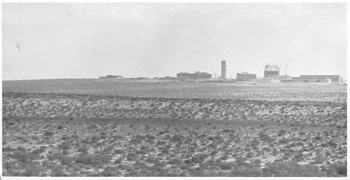
Image: This and the three other photographs of the construction site near Dinoma in the Negev desert for Israel’s then-secret nuclear reactor were taken during 1960. It is difficult to identify precisely who took these photos, but information in a draft U.S. Intelligence Board post-mortem strongly suggests that British and U.S. military attachés took the photos. It is likely that these are the photographs described on pages 13 and 14 of that report. The plainly visible reactor dome undermined Israeli claims that a textile factory was under construction. These images of the reactor site, some of them classified secret or confidential, are located in State Department records at the National Archives. (Record Group 59, Records of the Special Assistant to the Secretary of State for Atomic Energy and Outer Space, General Records Relating to Atomic Energy, 1948-62, box 501, Country File Z1.50 Israel f. Reactors 1960)


During 1963-64, the Israeli government secretly acquired 80-100 tons of Argentine uranium oxide (“yellowcake”) for its nuclear weapons program, according to U.S. and British archival documents published today for the first time jointly by the National Security Archive, the Nuclear Proliferation International History Project, and the James Martin Center for Nonproliferation Studies at the Monterey institute of International Studies (MIIS). The U.S. government learned about the facts of the sale through Canadian intelligence and found out even more from its Embassy in Argentina. In response to U.S. diplomatic queries about the sale, the government of Israel was evasive in its replies and gave no answers to the U.S.’s questions about the transaction.

These nearly unknown documents shed light on one of the most obscure aspects of Israel’s nuclear history-how secretly and vigorously Israel sought raw materials for its nuclear program and how persistently it tried to cultivate relations with certain nuclear suppliers. Yellowcake, a processed uranium ore, was critically important to Israel for fuelling its nuclear reactor at Dimona and thereby for producing plutonium for weapons. The story of the Argentine yellowcake sale to Israel has remained largely unknown in part because Israel has gone to great lengths to keep tight secrecy to this day about how and where it acquired raw materials for its nuclear program.

That Argentina made the yellowcake sale to Israel has already been disclosed in declassified U.S. intelligence estimates, but how and when Washington learned about the sale and how it reacted to it can now be learned from largely untapped archival sources. Among the disclosures in today’s publication:

    • French restrictions on Israel’s supply of uranium in 1963 made U.S. and British officials suspect that Israel would attempt to acquire yellowcake from other sources without any tangible restrictions to sustain its nuclear weapons program
    • A Canadian intelligence report from March 1964 asserted Israel had all of the “prerequisites for commencing a modest nuclear weapons development project.”
    • When the Canadians discovered the Argentine-Israeli deal they were initially reluctant to share the intelligence with Washington because the United States had refused to provide them with information on a recent U.S. inspection visit by U.S. scientists to Dimona.
    • U.S. and British intelligence were skeptical of the Canadian finding until September 1964 when U.S. Embassy sources in Argentina confirmed the sale to Israel.
    • The Israelis evaded answering questions about the transaction. When U.S. scientists visited the Dimona facility in March 1966 as part of the August 1963 secret agreement between Presiden Kenned and PrimeMinister Eshkol, they asked about the yellowcake but their Israeli hosts said that question was for “higher officials.”
    • In 1964 U.S. officials tried to persuade the Argentines to apply strong safeguards to future uranium exports but had little traction for securing agreement.
    • In 1965, while the CIA and the State Department were investigating the Argentine yellowcake sale, Washington pursued rumors that the French uranium mining company in Gabon had sought permission to sell yellowcake to Israel.

    Ever since late 1960, when the CIA learned that the Israelis had been constructing, with French assistance, a major nuclear facility near Dimona in the Negev Desert, the United States and its close allies, Canada and the United Kingdom , and even its Soviet adversary, suspected that Israel had a nuclear weapons program under way.[1] Closely monitoring Israeli nuclear activities Canadian intelligence discovered the yellocake sale sometime in the spring of 1964 and soon shared this sensitive information with the British.

    Convinced that the Canadian information confirmed Israel’s interest in nuclear weapons, a British diplomat calculated that the yellowcake would enable the Israelis to use their Dimona nuclear reactor to produce enough plutonium for its first nuclear weapon within 20 months. In light of these concerns, the British shared the information with the U.S. government; both governments were concerned about stability in the Middle East, which the Israeli nuclear program could threaten. Both wanted yellowcake sales safeguarded to curb the Israeli nuclear program and the spread of nuclear weapons capabilities worldwide.

    According to the initial Canadian information-as well as additional details later gleaned by the U.S. State Department-in late 1963 Argentina had secretly negotiated a long-term contract with Israel to provide at least 80 tons of yellowcake. While the Americans and the British were initially somewhat skeptical about the accuracy of the Canadian report, subsequent investigations demonstrated that it was correct. Trying to ensure that uranium exports were safeguarded to prevent diversion into military programs, Washington complained to the Argentines about the unsafeguarded sale, then queried the Israelis, and applied intelligence resources to find out more about the transaction.

    Washington found that the sale was irreversible and that it could learn nothing about its purpose, although it kept trying. The Argentines said they could only apply strong safeguards to future sales while the Israelis evaded all queries about the yellowcake, although as part of a high-level deal between President Kennedy and Prime Minister Eshkol from 1963 Israel had allowed U.S. government experts to visit their nuclear reactor at Dimona. The U.S. team apparently raised the Argentine yellowcake during a 1966 visit but the Israelis were not helpful in providing explanations. The CIA could not learn anything concrete about the transaction either.

    As the United States, the United Kingdom and Canada had routinely acted with the utmost discretion when sharing intelligence information about the Israeli nuclear program, they kept the entire yellowcake sale secret. On this matter there were no leaks; the issue never reached the U.S. media then or later.

    Israel’s interest in uranium is as old as the state itself. As early as 1949-50, Israel started with a geological survey of the Negev to determine whether and to what extent uranium could be extracted from the phosphates deposits there. Throughout the 1950s and early 1960s Israel explored the viability of the phosphates option, some pilots plants were built, but finally it was determined that it would be too costly. Israel, therefore, had to find uranium from overseas sources.

    For the Dimona project the Israelis initially had gotten uranium from France, but in the early 1960s Paris began to restrict the supply and Israel sought to diversify its sources by securing uranium from Argentina, South Africa and elsewhere.[2] Conversely, because the United States was worried about the Israeli nuclear program and its implications for stability in the region, it made efforts to monitor closely Israeli purchases of nuclear material and investigated the Argentine-Israeli deal. While Washington was then exploring ways to establish a global safeguards system to regulate nuclear supplies through the International Atomic Energy Agency (IAEA), nothing yet was available with any teeth, such as the future Nuclear Suppliers Group, to check such sales, much less restrict the Israeli nuclear program.

    Early on when American, British, and Canadian intelligence tried to uncover the secrets of the Israeli nuclear program, they clearly understood that Israel needed a reprocessing facility to transform its spent reactor fuel into weapons-grade plutonium. For example, according to an October 1964 National Intelligence Estimate on nuclear proliferation a “major deficiency, in terms of a weapons program, is the lack of a plutonium separation plant.” Although the Israelis had told both the US and Canada that the Dimona facility would include a pilot plant for reprocessing, the widespread assumption was that it was probably too small to produce enough plutonium for a weapons program. That the original French design for Dimona included a large underground reprocessing facility (Machon 2) was one of Israel’s deepest nuclear secrets, which Mordecai Vanunu later revealed.[3] To this day, it is unclear exactly how much Western intelligence knew about the facility and exactly when and how it learned it.
    The documents in today’s publication are from the U.S. and the British National Archives. All of the U.S. documents were declassified in the mid-1990s but have lingered in a relatively obscure folder in the State Department’s central foreign policy files at the U.S. National Archives. They may never have been displayed in public before as the file appeared to be previously untouched. A few of the British documents have been cited by other historians, including ourselves, but the fascinating story of British-Canadian-United States intelligence cooperation and coordination has also been buried in relative obscurity. The juxtaposition of U.S. and British records makes a fuller account possible, although some elements of the story remain secret, such as the identity of the Canadian intelligence source on the yellowcake purchase. Only Israeli and Argentine documents, however, can provide the full story of the yellowcake sale.

    Photo: Alan C. Goodison (1906-2006), trained as an Arabist, worked on Israeli nuclear matters at the British Foreign Office’s Eastern Department in the mid-1960s. He coordinated the analysis and distribution of the sensitive Canadian intelligence report on the Argentine yellowcake sale. Goodison is shown in 1983 when he became Ambassador to Ireland (Crown copyright image from collection of Foreign and Commonwealth Office history staff; reproduced under United Kingdom Open License provisions)


    THE DOCUMENTS

    The Foreign and Commonwealth Office documents in this collection are Crown copyright material and are published with the cooperation of the United Kingdom’s National Archives. To meet the National Archive’s concerns about unauthorized commercial reproduction of copyright material, the British documents are published with watermarks.

    A. Overviews and Perspectives

    Document 1: Memorandum from Benjamin Read, Executive Secretary, Department of State, for McGeorge Bundy, The White House, “Israel’s Assurances Concerning Use of Atomic Energy,” 18 March 1964, with “Chronology of Israel Assurances of Peaceful Use of Atomic Energy and Related Events,” Secret

    Source: National Archives, Record Group 59, Bureau of Near Eastern and South Asian Affairs, Records of Office of Country Director for Israeli and Arab-Israeli Affairs, Records Relating to Near Eastern Arms Initiative, box 1, Talbot in Spring 1964 & Exchange of Letters

    This valuable chronology provides a record of the U.S. discovery of the nuclear reactor project at Dimona and the various pledges made by the Israelis, at various levels, in response to requests from the United States,that it was for peaceful uses only. Included in the chronology is an item about a meeting on 25 May 1963 where senior French diplomat Charles Lucet told CIA director John McCone that even though the French had helped build the Dimona reactor, “there might be a nuclear complex not known to the French.” Lucet further stated that the Israelis had tried to purchase “safeguard-free” uranium from Gabon but that the French government stopped the sale through preemptive purchases.

    Documents 2 and 3:

    2: Department of National Defence, Canada, Defence Research Board, Directorate of Scientific Intelligence, “Possible Israeli Nuclear Military Program,” by J. Koop, DSI Report 1/64, March 1964, Secret, enclosed with letter from A.R.H. Kellas to Allan Goodison, 8 October 1964, Secret

    3: Letter from R.C. Treweeks, Defense Intelligence Staff, to Allen Goodison, 8 December 1964, Secret

    Source: British National Archives, FO 371/175844

    In the late winter of 1964, Jacob Koop, a career intelligence analyst at Canada’s Defence Research Board, prepared a detailed analysis of Dimona’s military potential.[4] Drawing on such intelligence sources as aerial photography, Koop’s basic conclusion was that the reactor had all of the “prerequisites for commencing a modest nuclear weapons development project.” According to Koop, once the Dimona reactor went “critical” it could produce enough plutonium for at least one implosion device by the end of 1965, and an increase in the thermal operating level would make it possible to produce one to two devices annually by 1966. A key question was how the Israelis would reprocess spent fuel into plutonium; Koop cited Israeli-Canadian discussions during Ben-Gurion’s visit in May 1961 when Israeli officials disclosed their intentions to build a “pilot-plant facility” apparently with a capability to produce around 300 grams of plutonium a year. To produce enough material for several weapons a year, however, the Israelis would need a larger reprocessing facility. They would also need a reliable supply of uranium, around 16 to 20 tons per year, to make it possible to change the reactor fuel annually or more often to ensure a steady supply of weapons-grade plutonium.

    British officials found Koops’ analysis highly impressive. Arthur Kellas, a British diplomat in Israel, had acquired a copy of the study and in his forwarding letter observed that it was a “model of what these things should be.” Treweeks, with the Defence Intelligence Staff, later commended the Canadian intelligence study, declaring that “we agreed with what is said and with the conclusions.” Apparently the report had not been shared with U.S. intelligence because Treweeks asked that it be treated as “CANADIAN/UK EYES ONLY.”

    B. France
    Photo: Admiral Oscar A. Quihillalt (b. 1913), chief of the National Atomic Energy Commission, 1955-73, presided over the creation of Argentina’s nuclear establishment. In 1964, he bore the brunt of U.S. State Department inquiries about the yellowcake sale to Israel. This image shows him in 1967 when he was elected Chairman of the Board of Governors of the international Atomic Energy Agency (Image courtesy of Archives, International Atomic Energy Agency).

    Document 4: US Embassy in France cable 3199 to Department of State, 8 January 1964, Secret

    Source: National Archives Record Group 59, Department of State Records Subject-Numeric File, 1964-1966 (hereinafter SN 64-66 with file name) Inco-Uranium

    This telegram, sent through the special “Roger Channel” used for intelligence subjects, refers to an earlier embassy message, number 2319, dated 12 Novembe 1963, which has yet to be found at the U.S. National Archives. That telegram may refer to French actions to halt the supply of uranium to Israel which were alluded to indirectly in this message. Much still needs to be learned about the details, but apparently in the spring of 1963, the French Foreign Ministry cut off the uranium supply to Israel in order to stop the nuclear program. [5] Jacques Martin, a French Foreign Ministry expert on nuclear matters, told U.S. embassy officials that the Israelis, who hadrefused to sign an agreement to purchase uranium exclusively from France, were looking for other sources, most likely Belgium and Argentina. Martin stated that the Dimona reactor could continue operations for only a few weeks without a supply of reactor fuel. It is worth noting that the U .S. government had recently learned that the reactor had just become critical and thus capable of producing plutonium.

    Document 5: US Embassy in France cable 4529 to Department of State, 26 March 1964, Secret

    Source: SN 64-66 Inco Uranium

    According to another Roger Channel message, the Israeli yellowcake supply problem was continuing, with the Israelis demanding to know why the French were holding up uranium shipments. According to Jacques Martin, the French replied that until Israel was ready to purchase only from France, allowing France “some control over the situation” [in Dimona], the restrictions would continue.

    Document 6: Peter Ramsbotham, British Embassy Paris, to William “Willie” Morris, Foreign Office, 11 June 1964, Secret and Guard, with Minutes Attached

    Source: FO 371/175844

    On 11 June 1964, Peter Ramsbotham, chief of the chancery at the British Embassy in France, met with George Soutou, a senior official at the French Foreign Ministry. Soutou was quite frank about French concerns over Israel, acknowledging that the French believed that the Israelis were, at the least, attempting to “put themselves in a position to make a nuclear bomb, if they wanted to.” According to Soutou, the French-Israeli agreement required the latter to return spent fuel to France, which was keeping “meticulous” records of inputs and outputs. The problem was that the agreement was “loosely drafted” and it did not proscribe the Israelis from using non-French uranium for Dimona, although the French believed that such a proscription was in the agreement’s “spirit.” [6] Therefore, to enforce it, they had already “prevented the sale” of uranium from a former French colony (see Document 1). France would regard any further attempt at uranium purchases a “breach” of the agreement that would lead to the “denial” of further aid. In light of these considerations, Ramsbotham wondered whether the French should be told about the Argentine-Israeli secret deal given their view that any such sale would violate the agreement.

    According to the attached minutes, Arkell at the Defense Intelligence Staff was willing to tell the French about the Argentine sale, if the Canadians gave their approval, although it was doubtful whether French denial of further assistance would have any more than a “delaying” impact on the Israeli program. Whether the French were actually told anything is still unclear.

    Document 7: US Embassy in France cable 6049 to Department of State, “Franco-Israeli Nuclear Relations,” 11 June 1964, Secret

    Source: SN 64-66 Inco Uranium

    Apparently, Ramsbotham quickly passed to the Americans information from his talk with Soutou because that same day the U.S. Embassy in Paris provided some highlights of the meeting: the French by then did not want an Israeli weapons capability, but believed that the Israelis were seeking one. We say “by then” because it is clear that at earlier times, when Shimon Peres had negotiated and signed the original nuclear agreement with France in 1957, his French political counterparts, especially Prime Minister Maurice Bourgès-Maunoury, understood the nuclear deal as French assistance for Israel to create its own military deterrent regardless of the formal language, e.g., “peaceful use” reference, in the formal agreements aimed at providing France with political deniability. The uranium that France had supplied, under “loosely worded” safeguards, was formally agreed to be used for peaceful uses. The French had promised to terminate the agreement if they determined that Israel was circumventing it by finding a significant non-French source of supply.[7]

    C. Argentina

    Document 8: Letter from Alan C. Goodison, Eastern Department, Foreign Office, to A[rthur]R.H. Kellas, British Embassy, Tel Aviv, 29 April 1964, with minutes, Secret and Guard

    Source: National Archives (Kew Gardens), FO 371/175843

    In a highly classified (“Secret and Guard”) letter to Arthur Kellas, counselor at the British embassy in Tel Aviv, Alan Goodison of the Foreign Office’s Eastern Department disclosed the Argentina-Israel uranium deal. According to unconfirmed intelligence from Canada, Israel and Argentina had “signed an agreement for the sale of the entire Argentine production of uranium concentrate to Israel,” involving the transfer of 80-100 tons over 33 months. “This means that Israel now has virtually unlimited supplies of uranium free of safeguards.” Goodison was aware that the Dimona plant had already reached criticality and he further asserted, referring to recent intelligence (not further identified), that the Israelis already had plutonium reprocessing facilities. Given that, they would have enough plutonium for a weapon within 20 months. While Goodison had no proof that the Israelis planned to build nuclear weapons, “their anxiety to obtain such a large quantity of safe-guard free uranium suggests …sinister motives.”

    The British were not aware that the Dimona initial design was based on having a reprocessing plant built underground from the very start, as Vanunu revealed in 1986, but Goodison was making an informed estimate about the trajectory of the Israeli program. He further reported that the Canadians were “reluctant” to provide the information about the Argentine-Israel deal to the Americans because Washington had “refused them information on their recent inspection of Dimona.”

    The handwritten comments on the attached minutes are interesting in part because they highlight the extent to which British, like United States, intelligence did not realize how advanced and complete the Israeli commitment to a weapons capability was. According to one comment by one official (whose signature is difficult to read): “At least the Israelis wish to retain the option. At any fork in their nuclear road, when they are confronted with purely civil as against civil plus military paths, they will surely opt for the latter.” Evidently, he did not realize that Israel crossed that fork at the very beginning of its program. Career diplomat David Arthur Steuart Gladstone went further when he commented: “Also this surely throws light on recent Israeli pronouncements on the IAEA and safeguards. This only reinforces my earlier comments on that subject [and?] endorse the last sentence of Mr. Goodison’s letter,” That is, that the “circumstantial” evidence indicating a bomb project was “overwhelming.”

    That Argentina had yellowcake to sell to Israel in the first place was the result of a nationalistic nuclear energy policy pursued by Admiral Oscar A. Quihillalt, the director of the National Atomic Energy Commission and an important player in the International Atomic Energy Agency. In 1956 Quihillalt signed a decree turning Argentina’s significant uranium resources into public property with the Commission controlling prospecting, production, and marketing. By the early 1960s, with the assistance of the U.S. Atoms for Peace program, Argentina had two research reactors, and plans for a power reactor.[8] In that context, a yellowcake production capability would be essential to accomplish future plans for reactors.

    Document 9: Christopher Audland, British Embassy, Buenos Aires, to Alan Goodison, Eastern Department, Foreign Office, 4 June 1964, with minutes, Secret & Guard

    Source: FO 371/175844

    Christopher Audland, a political officer at the British embassy, learned from the Canadian chargé that the information on the Argentina-Israel uranium deal “did not originate in Buenos Aires.”[9] The Argentine National Atomic Energy Commission had also sold uranium concentrate to West Germany and made an earlier sale to Israel in 1962 (which the French learned about).[10] According to the minutes, the Canadians had asked the UK’s Defense Intelligence Service to pass the information to the CIA, but skeptical comments by the Agency were creating suspicions that the original report was “threadbare.”
    Photo: Walworth Barbour (1908-82) was ambassador to Israel during 1961-73. He presided over the vain effort by U.S. diplomats and CIA officers to learn what Israel had done with the yellowcake. (Image from Still Pictures Branch, National Archives, RG 59-SO).

    Document 10: RJ.T. McLaren, Eastern Department, Foreign Office, to British Embassy Bonn, 22 June 1964, Secret

    Source: FO 371/175844

    In this inquiry about West German purchases of unsafeguarded uranium from Argentina and a possible re-export to Israel, McLaren confirmed that the information about the Argentine-Israeli deal had been “passed to the Americans,” with Canada’s permission. Moreover, the U.S. State Department was also to be informed by Patrick Wright, with the British Embassy in Washington. The subject and the degree of Israeli-West German nuclear cooperation has been for years a matter of speculation, but firm factual knowledge about it is unavailable.

    Document 11: Alan C. Goodison, Eastern Department, Foreign Office, to C. J. Audland, British Embassy, Buenos Aires, 22 June 1964, Secret

    Source: FO 371/175844

    Noting some inaccuracy in the Canadian report—Argentina could not have offered to sell its “entire production” of uranium if it was also selling concentrate to Germany and trying to sell it to Japan–Goodison asked Audland to “keep your ears to the ground” to find the “exact quantities” involved.

    Document 12: D. Arkell, Defense Intelligence Staff, to R. J. T. McClaren, Eastern Department, Foreign Office, 1 July 1964

    Source: FO 371/175844

    While the British learned about 25 June that U.S. intelligence had information confirming the Canadian report, it must have been a shaky source. According to this letter from an official at the recently created Defense Intelligence Staff, [11] a skeptical reaction from Washington about the intelligence on the Argentine-Israeli sale led the Canadians-”our previous informants”-to “take a second look at the sources of the report.” Canadian intelligence was “now very doubtful about [its] reliability.” In handwriting, Arkell observed that this development “disposes” of the proposal to use the information to encourage the French to break off a supply relationship with the Israeli nuclear project.

    Document 13:AR.H. Kellas, British Embassy, Tel Aiv, to Alan C. Goodison, 6 July 1964, Secret, excised copy

    Source: FO 371/175844

    Kellas in Tel Aviv was curious but somewhat skeptical of the claim in Goodison’s 29 April letter that the Israelis might have “facilities for plutonium separation.” The Embassy had “not seen such evidence and should be grateful to know what it is.” Whether Goodison wrote back about the evidence that he had mentioned in his 29 April letter is not clear. The existence of a plutonium separation facility was probably the crown jewel among Israel’s nuclear secrets, one that the U.S. inspectors did not uncover during all of their visits to Dimona through 1969.

    Document 14: Department of State Airgram CA-528 to US Embassies in Israel and Argentina, “Israeli Purchase of Argentine Uranium,” 15 July 1964, Secret

    Source: SN 64-66 Inco Uranium

    With the doubts about the Canadian report, the U.S. government decided to look into it. This joint CIA-State Department message reported “unconfirmed” intelligence of an Argentina-Israel deal struck on 3 November 1963. According to the reports, Argentina would sell the entirety of its uranium concentrate supply to Israel for three years without safeguards. The Department of State instructed the embassies to mount an intelligence collection effort to provide, by 1 September, specifics on the arrangement: the amount to be sold, cost, schedule, and any safeguards attached.

    Unlike the British communications, which were signed by individual officials, the U.S. documents published here were organizational products, generally signed by ambassadors or the secretary of state. Prepared in a variety of offices at the State Department, some were drafted by officials from more than one government agency.

    Document 15: Alan C. Goodison, Eastern Department, to C. J. Audland, British Embassy Buenos Aires, 21 August 1964, Secret

    Source: FO 371/175844

    Goodison reported that U.S. officials have had a “skeptical reaction” to the Canadian report because they had no information about an Argentine-Israeli deal and the Argentines had not reported exports to Israel in their Official Bulletin. If correctly reported, this was a surprisingly narrow and naive response.

    Document 16: R.C. Treweeks, Defense Intelligence Staff, to Alan C. Goodison, Eastern Department, Foreign Office, 26 August 1964, Secret Guard

    Source: FO 371/175844

    The Defense Intelligence Staff had no information to support the Canadian report, although the Israelis may have had “exploratory conversations” on a uranium deal with Argentina. Moreover, “little evidence” supported the argument that the Israelis had a chemical separation plant at Dimona. As the world learned from whistle blower Mordechai Vanunu in 1986, a building near the reactor designated by the Israelis as a “laundry” masked an underground separation facility with six separate floors. This was part of the original French plan. It appears that none of the seven or so U.S. inspection teams that visited Dimona in the period 1961-69 had ever positively detected that underground facility It is still a puzzle whether and when U.S. intelligence, especially the CIA, became aware of the reprocessing facility and, if it did, whether any information was shared with the AEC-led inspection teams. John Hadden, the CIA station chief, was instructed not to have any contact with, let alone brief, the inspection teams.[12]

    Document 17: US Embassy in Argentina airgram A-230 to Department of State, “Israeli Purchase of Argentine Uranium,” 2 September 1964, Secret

    Source: SN 64-66 Inco Uranium

    Whether the U.S. Embassy in Israel replied in time to meet the 1 September deadline assigned by the State Department in its 15 July directive is not clear (perhaps it was sent through CIA channels). Just past the deadline, however, the U.S. Embassy in Buenos Aires produced an “interim report” confirming the sale of Argentine uranium to Israel. The Argentines had authorized a total of 100 tons of “yellow cake,” at a minimum price of $15/kilogram, for sale to Israel. Sale contracts were permitted over a three-year period, beginning 1 January 1963 and shipments could be extended nine months from the end of that period. Proceeds of sales were to be used to purchase machinery and equipment for use in the atomic sector. According to a government decree, the uranium was to be used solely for the peaceful use of nuclear energy.

    Document 18: D. Arkell, Defense Intelligence Staff, to Alan C. Goodison, Eastern Department, Foreign Office, 6 October 1964, Secret

    Source: FO 371/175844

    With the State Department receiving confirmation of the sale, U.S. intelligence was no longer skeptical about the Canadian report. According to a U.S. report which was made available to British intelligence, which in turn disseminated it to the Foreign Office, “an agreement was concluded between Argentina and Israel for the sale of at least 80 tons of U3O8.” Moreover, “recent … uranium exports had gone only to Israel.” The amount involved “is far in excess of that needed … to operate the Dimona reactor only for research purposes.” The Cordoba plant is “reported to be producing concentrate at the current rate of about 60 tons per year” and by 1966 Argentina should have no trouble “meeting contracts up to 100 tons of yellowcake.” Arkell agreed with the assessments but wanted to know how much uranium had actually been shipped.

    Document 19: Department of State airgram CA-3992 to US Embassy in Argentina, “Israeli Purchase of Argentine Uranium,” 9 October 1964, Secret

    Source: SN 64-66 Inco Uranium

    Responding to the Embassy’s report, the State Department asked it to obtain as much information as possible on the end-use of uranium sold to Israel, and in particular on the issue of safeguards. If Argentina was not requiring safeguards on uranium exports, the Department instructed the Embassy to approach Argentine officials as soon as possible and present them with an aide-memoire discussing the importance of safeguards. The results of the approach should be reported to a Working Group to Review the IAEA Safeguards System. Working within the IAEA, the U.S. government had been trying to establish a “common front” in support of the application of safeguards on the “transfer of significant quantities of nuclear materials.” [13] Therefore, the Department asked the Embassy to convey to the Argentines that a sale made without safeguards “would represent a most serious breach in the efforts the U.S. and other western suppliers have made over the last ten years” to assure that “atomic assistance” is “appropriately safeguarded.” Also sent was an explanation of the technical basis for IAEA safeguards on natural uranium.

    Document 20: US Embassy in Argentina cable 555 to Department of State, 19 October, 1964, Secret

    Source: SN 64-66 Inco Uranium

    Meeting with embassy officials, the chief of the National Atomic Energy Commission Admiral, Oscar A. Quihillalt, informed them that Argentine uranium sales agreements with Israel, or with any other country, had only general safeguard provisions stipulating that the uranium would be used peacefully. Argentina did not require reports, inspections, or any other independent verification that were loosely equivalent to Article XIII of the IAEA statute. Quihillalt observed that safeguards on natural uranium were impractical, and that other countries sold without safeguards. He had no definitive information on Israeli plans for use of the uranium.

    Document 21: US Embassy in Argentina cable 578 to Department of State, 23 October, 1964, Secret

    Source: SN 64-66 Inco Uranium

    During a meeting with Foreign Office officials, a U.S. embassy officer left a copy of the aide-memoire and the note on safeguards. Emphasizing that the U.S. did not object to the sale as such and was not suggesting that Israel intended to use uranium for non-peaceful purposes, the officer stated that the U.S. sought cooperation because of the principle that significant nuclear assistance should only be provided in accordance with appropriate safeguards. The Argentine diplomat refrained from comment because it was necessary to discuss the matter with the Argentine Atomic Energy Commission.

    Document 22: US Embassy in Argentina cable 591 to Department of State, 27 October 1964, Secret

    Source: SN 64-66 Inco Uranium

    During a discussion with Admiral Quihillalt and CNEA, Embassy officials provided the aide-memoire and the paper on IAEA safeguards. The Admiral was more receptive to the U.S. position than previously (he would later urge Argentina’s adherence to the NPT[14]) and was glad to know that Washington was not in touch with the Israelis about the sale.

    Document 23: Department of State cable 549 to US Embassy in Argentina, 25 November 1964, Secret

    Source: SN 64-66 Inco Uranium

    Expressing concern over the lack of a response to U.S. questions on the reported uranium sale to Israel, the Department asked the Embassy to relay concern to the Foreign Office. The State Department, ACDA, and the AEC were considering more “representations” to Argentina and possibly to Israel if the Argentines did not respond. If possible, Embassy should indicate U.S. government “apprehension” over nuclear proliferation and sales of unsafeguarded uranium.

    Document 24: US Embassy in Argentina cable 749 to Department of State, “Sale of Uranium to Israel,” 30 November 1964, Secret

    Source: SN 64-66 Inco Uranium

    The Embassy had delivered a note urging a quick response to the U.S. aide-memoire on safeguards; while the Argentines had not replied, the Foreign Office appeared to support safeguards, because of the proliferation risk and also domestic political interests. Moreover, requiring safeguards would establish that Argentina was a seller of nuclear materials for peaceful uses only. Even if the Foreign Office view did not reflect overall government thinking, the Embassy believed that an internal Argentina dialogue should take place before Washington made further representations. The sale was not yet public knowledge in Argentina.

    Document 25: Alan Goodison to R.Treweek, Defence Intelligence Staff, 22 December 1964, Secret

    Source: FO 371/175844

    The Defense Intelligence Staff’s positive evaluation of the Canadian intelligence analysis (see Document 3) prompted Goodison to write to Kellas in Tel Aviv about it. Goodison further noted that the “reservations” (hesitations?) that the Foreign Office had about a possible date for an Israeli nuclear bomb were “no longer valid and that we must accept the end of 1968 [sic] as the earliest possible date.” As the Canadian report suggested an Israeli test by 1966, either 1968 was a typo or the Defence Intelligence Staff provided more detailed comments than are available in the file.

    Document 26: Department of State cable 729 to US Embassy in Argentina, 2 February 1965, Secret

    Source: SN 64-66 Inco Uranium

    Months later, the State Department asked the Embassy to remind the Argentine government that it was awaiting a response to the U.S. aide-memoire on the uranium sale to Israel. The Department also asked the Embassy to review the “full extent” of Argentine exports of uranium so that the U.S. government had the opportunity to discuss any future transactions in advance.

    Document 27: US Embassy in Argentina airgram A-691 to Department of State, “Argentine Sale of Uranium Oxide to Israel,” 3 February 1965, Secret

    Source: SN 64-66 Inco Uranium

    The Embassy had gotten the Argentine reply ten days earlier so the State Department message the day before served as a reminder to translate the reply and send it on. During a meeting, Admiral Quihillalt observed that the deal with Israel had been concluded before the IAEA had finalized protocols for safeguards measures; therefore, Argentina did not feel it practicable to include reporting and inspection requirements. Nevertheless, he indicated that safeguards equivalent to those of the IAEA’s would be placed on future sales. The Admiral also observed that without a “general agreement between Western governments” on the application of safeguards to sales of fissile material, bilateral agreements between a few governments would not have much of an impact. Noting that the official Argentine response did not include an assurance about future exports, the Embassy observed that it would not follow up that problem without instructions from the Department.

    Document 28: Department of State airgram A-163 to US Embassy in Argentina, “Argentine Sale of Uranium Oxide to Israel,” 27 April 27 1965, Secret

    Source: SN 64-66 Inco Uranium

    Responding to a request for instructions, the Department informed the Embassy that Washington had begun approaching other governments to establish a common policy on the mandatory application of IAEA safeguards to materials and equipment supplied to other countries. An approach to Argentina was to come in the future, when the IAEA was closer to an agreement. In the meantime, the Argentines should be requested to apply safeguards to future sales and if a deal with Israel was renegotiated the government should consider applying safeguards to uranium exports to that country.

    Document 29: Department of State cable 7659 to U.S. Embassy in the United Kingdom, 3 June 1965, Secret

    Source: SN 64-66 Inco Uranium

    This cable reports on a conversation between a British Embassy officer and one or two State Department officials. The Embassy officer reported that Israel’s purchases of uranium added up to 190 tons–more than what was needed for research. They recalled statements by Israeli Prime Minister Eshkol that Israel would not be the first country to introduce an atomic weapon to the Near East, but that it must retain the capability. The Embassy officer proposed a joint U.S.-British approach to Argentina on safeguards; the State Department official replied that such approaches had not been successful but he would be in touch with the British on this problem.

    Document 30: US Embassy in Argentina airgram A-160 to Department of State, “EXCON: Argentine Exports of Uranium Oxide,” 21 August 1965, Confidential

    Source: SN 64-66 Inco Uranium

    A request by an Argentine Congressman gave the yellowcake sale to Israel a public airing, but the publicity did not get reported internationally. The Congressman asked the government questions, including how much uranium had been exported and whether Argentina had sold uranium to other countries. The Embassy planned to watch the results of the inquiry closely to get details on the specifics of the deal. Unlike a U.S.-Argentina controversy in 1963 over oil company contracts, which became highly public on both sides, the yellow-cake transaction was unreported abroad.[15]

    Document 31: Department of State airgram CA-2198 to US Embassies in Argentina and Israel, “Israeli Purchase of Argentine Uranium,” 24 August 1965, Secret

    Source: SN 64-66 Inco Uranium

    Owing to discrepancies in the available data, the State Department requested, on an “alert basis,” several pieces of information: the total amount to be shipped under the 1963 contract, how much uranium had been shipped to Israel already, any information on a new agreement between the two countries, what safeguard controls did Argentina have in place, and the current status of operations at Argentine uranium processing plants. Citing a variety of diplomatic and intelligence reports from the previous year, the Department pointed out variations in the data on quantities shipped and terms of a new contract, among other issues.

    Document 32: US Embassy in Israel airgram A-350 to Department of State, “Argentine Uranium,” 22 October 1965, Secret

    Source: SN 64-66 Inco Uranium

    The Embassy in Israel reported that it had no information on Israeli uranium imports. Suggesting that the only way to obtain information was through a high-level inquiry to the Israeli Foreign Ministry, the Embassy requested specific instructions if the Department of State agreed. Signed by Embassy science officer Ralph Webber, the message received clearances from Ambassador Walworth Barbour, the military attachés, who reported to the Defense Intelligence Agency, and CIA station chief John L. Hadden.

    Document 33: US Embassy in Argentina airgram 763 to Department of State, “Israeli Purchase of Argentine Uranium,” 10 April 1966, Secret

    Source: SN 64-66 Inco Uranium

    Responding to questions in the Department’s August 1965 airgram, AEC representative Lester Rogers reported that the Embassy had no new information. As reported previously, language about safeguards in Argentina’s uranium sales agreements with Israel was very general. A table included data on annual production of uranium during 1958-1965, including dry tons of ore (U3O8/triuranium octoxide). Also provided was information on production capacities of the uranium processing plants at Cordoba and Malargue. A new facility planned for Cordoba would produce nuclear grade UO 2, used for reactor fuel rods, at 100 tons annually.

    Document 34: Department of State cable 1250 to US Embassies in Argentina and Israel, “Israeli Purchase Argentine Uranium,” 11 May 1966, Secret

    Source: SN 64-66 Inco Uranium

    After making inquiries, the Department was unable to determine the location of the uranium sold to Israel by Argentina, but learned that it was in excess of Israeli requirements for peaceful use. A failure by the Israeli government to announce intended use could have an adverse effect on the political situation in region. Therefore, the Department would inquire at a high level about the location of the uranium. The Embassy in Argentina could inform the government if necessary, while the Embassy in Israel should await instructions.

    Document 35: US Embassy in Argentina cable 1776 to Department of State, “Israeli Purchase of Argentine Uranium,” 26 May 1966, Secret

    Source: SN 64-66 Inco Uranium

    The Embassy did not believe it was advisable to inform the Argentine government of U.S. plans to ask the Israeli government about the location of the uranium.

    Document 36: Department of State cable 1052 to US Embassy in Israel, 2 June 1966, Secret

    Source: SN 64-66 Inco Uranium

    The State Department directed Ambassador Barbour to advise the Israeli government that the Department was “generally satisfied” by the inspection of the Dimona plant. Barbour was further instructed to express concern over the lack of information supplied by technical personnel–implying these questions were posed to the Israelis during the U.S. inspection visit at Dimona–about the purchase and the location of the uranium ore from Argentina and to express hope that Israel would clarify the situation. According to the cable, in February 1966 Secretary Rusk had observed to Foreign Minister Eban that Israel apparently was following a policy aimed at creating “[nuclear] ambiguity” in the region, but in fact it created a great deal of “ambiguity” (uncertainty) in Washington about Israel’s nuclear intentions and its pledges for peaceful use. What Rusk meant was that that ambiguity undermined and eroded confidence in the pledges to the United States. Indeed, Rusk believed that Israel was playing dangerous games with its posture of nuclear ambiguity, signaling different messages to different players. Therefore as long as the Israelis were creating “apprehension” in Washington by not providing answers to questions about yellowcake, they should expect the U.S. to be “extremely clear and utterly harsh on non-proliferation.”

    Document 37: US Embassy in Israel cable 1333 to Department of State, 15 June 1966, Secret

    Source: SN 64-66 Inco Uranium

    Ambassador Barbour spoke with Foreign Minister Abba Eban along the lines of Department telegram 1052 [Document 36] and further asked about the location of the Argentine uranium concentrates. Eban remained noncommital and merely said he would inquire further among those who know (leaving the impression that as Israel’s foreign minister he knew little about atomic matters). This telegram is a bit cryptic because it refers to some unknown “attitude” issue on the part of Dimona director Yossef Tulipman and other managers [“technicians”] during the most recent Dimona visit by U.S. scientists. One may speculate that the attitude problem emerged when the Dimona managers were asked about the yellow cake and apparently refused to shed light on the matter. According to Israeli Foreign Ministry official Moshe Bitan, who served as a liaison with the American scientists, it was possible that the “technicians” were “unaware” of “such arrangements” because the information was for “higher officials” only. That Tulipman would not have full knowledge about an important supply of uranium to Israel is unlikely but Bitan had no incentive to clarify the situation to U.S. diplomats. Barbour further advised Eban that he would revisit safeguards in the future.

    Document 38: US Embassy in Israel cable 7 to Department of State, 1 July 1966, Secret

    Source: SN 64-66 Inco Uranium

    Barbour raised the Argentine uranium matter with Eban who said he would confer with Deputy Minister of Defense Zvi Dinstein “who keeps the store” [meaning: Dinstein now was Dimona’ new political boss]. Eban said he would provide more information soon, but if he did so it has not yet surfaced in the archival record.

    D. Gabon

    Document 39: Department of State cable 131 to US Embassy in Gabon, 23 March 1965, Secret

    Source: SN 64-66 Inco Uranium

    While the State Department was making inquiries about the Argentine sale, it also pursued recent intelligence that the Compagnie des Mines d’Uranium de Franceville, the French mining company operating in Gabon, had requested permission to ship uranium ore to Israel.[16] The source of the intelligence was not mentioned; it is not known, for example, whether the Israelis had approached company managers or officials in the Gabonese government. But knowing that a similar incident had occurred in 1963 (see Document 1), the Department wanted to explore the issue and asked the Embassy for comment and related information.

    Document 40: US Embassy in Gabon cable 364 to Department of State, 8 June 1965, Secret

    Source: SN 64-66 Inco Uranium

    Belatedly responding to the Department’s query, the Embassy observed that uranium was a “most sensitive” matter in Gabon. Besides President Léon M’ba, only the Minister of the National Economy and Mines and his predecessor would know of any diversion and no information had come from those sources.Officials with the Compagnie de Franceville and French mining advisors, normally cooperative and helpful, were “evasive” and sometimes “hostile” when asked about uranium shipments to Israel. One official cited the difference in French and American nuclear policies, saying that no French official would divulge the information that the State Department sought. More information could come by formally raising the issue with the President of Gabon or the Foreign Minister.

    Document 41: US Embassy in France cable 786 to Department of State, 11 August 1965, Secret

    Source: SN 64-66 Inco Uranium

    Commenting on the Embassy’s report, the U.S. Embassy in France observed that the French controlled production and export of Gabonese uranium, with about 440 tons of uranium metal produced annually. Therefore, any diversions would occur under French and not Gabonese authority. The Embassy deferred to its U.S. counterparts in Gabon on Gabonese ability to secretly divert uranium ore without French permission. That, however, was “unlikely” in view of France’s success in 1963 to thwart a diversion.

    Document 42: US Embassy in Gabon cable 157 to Department of State, 10 November 1965, Secret

    Source: SN 64-66 Inco Uranium

    During a recent visit to the Nounona uranium mines, Ambassador Bane learned that the entire production of processed ore went to France for metal extraction by the government’s Atomic Energy Agency. Given total control, if the French wished to supply uranium to Israel, it could do so without disclosure to the Gabonese government.

    Document 43: US Embassy in Gabon airgram A-49 to Department of State, “Reported Diversion of Gabonese Uranium to Israel,” 11 November 1966, Secret

    Source: SN 64-66 Inco Uranium

    The embassy reported that the Gabonese Government had recently asserted that France was the sole procurer of its uranium and that the uranium did not cover France’s consumption needs, thereby excluding the possibility that Gabonese uranium could be resold to a third country. An Embassy comment stated that this did not exclude the possibility of diversion to Israel, but the Gabonese statement was consistent with the Embassy’s November 1965 message.


    NOTES

    [1] For background on Israeli nuclear history, see Avner Cohen, Israel and the Bomb (New York, 1998) andThe Worst-Kept Secret: Israel’s Bargain with the Bomb (New York, 2010). See also the documents in the “Israel and the Bomb” collection on the National Security Archive site.

    [2] U.S. documents on the Israel-South African yellowcake connection have yet to surface, but Sasha Polakow-Suransky’s important book , The Unspoken Alliance: Israel’s Secret Relationship with Apartheid South Africa (New York, 2010) is invaluable on this and other matters; see 42-43.

    [3] For a full account of the Vanunu revelations, see Frank Barnaby, The Invisible Bomb: The Nuclear Arms Race in the Middle East (London, 1989).

    [4] Koop’s analysis, found in British records, has been previously discussed by Zachariah Kay in The Diplomacy of Impartiality: Canada and Israel, 1958-1968 (Waterloo, 2010), 41-42.

    [5] Michael Bar-Zohar, Shimon Peres (New York, 2007), 252.

    [6] Foreign Minister Couve de Murville had already acknowledged to President Kennedy that this was a problem. See Bar-Zohar, Shimon Peres, at 249.

    [7] Bar-Zohar, Shimon Peres, 206-218; Avner Cohen, The Worst Kept Secret, 284 (note 6).

    [8] Emanuel Adler, The Power of Ideology: The Quest for Technological Autonomy in Argentina and Brazil(Berkeley, 1987), 290-291. Typically, the Argentine military ran nationally-important industrial research and development organizations. See also Jacques E. C. Hymans, The Psychology of Nuclear Proliferation: Identity, Emotions, and Foreign Policy (New York, 2006), 144.

    [9] Audland wrote an interesting memoir, including a chapter on his diplomatic experience in Argentina, but it did not touch on the yellowcake episode. See Christopher Audland, Right Place — Right Time (Stanhope, 2004), 140-68.

    [10] Bar-Zohar, Shimon Peres, 251.

    [11] See Peter Davies, “Estimating Soviet Power: The Creation of Britain’s Defence Intelligence Staff, 1961-1965,” Intelligence and National Security 26 (2012): 818-841.

    [12] Cohen, Israel and the Bomb, 175-94.

    [13] See Astrid Forland, “Coercion or Persuasion? The Bumpy Road to Multilateralization of Nuclear Safeguards,” The Nonproliferation Review 16 (2009): 47-64, for a detailed account.

    [14] Hymans, The Psychology of Nuclear Proliferation, 144-145.

    [15] Dustin Walcher, “Petroleum Pitfalls: The United States, Argentine Nationalism, and the 1963 Oil Crisis,”Diplomatic History 27 (2013): 24-57.

    [16] For background on French uranium mining activities in Gabon and French-Gabonese relations,see Gabrielle Hecht, Being Nuclear: Africans and the Global Nuclear Trade (Cambridge, 2012).

    Republished with permission from:: Global Research

    Egypt may reinstate general prosecutor

    0

    Former Egyptian General Prosecutor Abdel Meguid Mahmud could be reinstated.

    A court in Egypt has ruled that former General Prosecutor Abdel Meguid Mahmud can return to his office, less than a year after he was sacked by President Mohamed Morsi.

    On Tuesday, Egyptâ„¢s Court of Cassation also rejected challenges filed by the current prosecutor general appointed by Morsi, Talaat Abdallah.

    Earlier on Tuesday, Egyptian Foreign Minister Kamel Amr tendered his resignation amid massive protests against Morsi.

    Also, the countryâ„¢s ministers of tourism, environment and communication also reportedly announced plans to step down.

    On July 1, the Egyptian army gave President Morsi a 48-hour ultimatum to resolve the political crisis in the African country, which followed the opposition movementâ„¢s resignation deadline for Morsi.

    However, the Egyptian president dismissed the armyâ„¢s statement, saying that he will go ahead with his plans for national reconciliation.

    Protesters are angry with Morsiâ„¢s handling of the countryâ„¢s economy and his as his failure to fulfill his promises.

    Several political groups say the government is dominated by the Muslim Brotherhood. The opposition also accuses Morsi of deviating from the 2011 revolution.

    The massive protests came on the first anniversary of Morsiâ„¢s inauguration as president following the revolution that toppled the Western-backed regime of Hosni Mubarak.

    At least 16 people have reportedly been killed during the recent demonstrations.

    SZH/PR

    Republished with permission from:: Press TV

    Has Washington’s Arrogance Undone Its Empire?

    0

    Paul Craig Roberts
    Infowars.com
    July 2, 2013

    No one likes a bully, and Washington’s NATO puppets have been bullied for six decades. British prime ministers, German chancellors, and French presidents have to salute and say “yes sir.”

    They all hate it, but they love Washington’s money; so they prostitute themselves and their countries for Washington’s money. Even a person of Winston Churchill’s stature had to suck up to Washington in order to get his bills and his country’s bills paid.

    But what the bought European leaders are finding is that Washington doesn’t pay enough for the prostitution required. One year out of office Tony Blair was worth $35 million dollars. But that’s not enough to get Blair on the waiting list for $50 million 200 foot yachts, to have a chalet in Gstaad, $50 million penthouses in Paris and New York, and a private plane to fly between them, or to wear a $736,000 Franck Muller watch on his wrist, sign his name with a $700,000 Mont Blanc jewel-encrusted pen, and drink $10,000 “martinis on a rock” (gin or vodka poured over a diamond) at New York’s Algonquin Hotel.

    In a world in which every member of the Forbes Four Hundred is a billionaire plus or multi-billionaire, $35,000,000 just doesn’t cut it. In 2006 the manager of one hedge fund was paid $1,700,000,000 for one year’s thieving. Another 25 were paid $575,000,000 for their skills in front-running trades. $35 million is probably the annual budget for their household servants.

    The British seem content in their role as Washington’s favorite lackey, but France and Germany have not enjoyed that role. France’s last real leader, General DeGaul, would have nothing to do with it and refused to join NATO. Germany, dismembered with East Germany occupied by the Soviets, had no choice. Germans’ gratitude to President Reagan for their unification resulted in re-unified Germany falling under Washington’s hegemony.

    However, if news reports from Berlin are true, Germany has had enough. The catalyst was Edward Snowden’s revelations that Washington spies on everyone including its allies, both Germany and the EU in particular. Moreover, Washington uses Britain as the Trojan Horse within the EU as a backup spy in case NSA misses something.

    According to news reports, the German, French, and EU governments are upset to find out that their extreme subservience to Washington has not protected them and their citizens from being spied upon. Here they are, fighting Washington’s wars in far distant Afghanistan, the fate of which is completely unrelated to their own, and what does Washington do but embarrass them by spying on the personal lives of their citizens.

    • A d v e r t i s e m e n t

    Who does the Merkel government represent, Germans are asking, Germans or the NSA? Why does the Merkel government kowtow to Washington? The next question will be: “what does Washington’s spies have on Merkel?”

    With the German government put on the spot by Washington’s betrayal, news headlines are: “Germany Ready to Charge UK and US Intelligence Over Bugging Operations.”

    Little wonder Washington and its media whores hate Edward Snowden. “A spokesman for the [German] Federal Prosecutor said the office was preparing to bring charges against” the UK and US intelligence services. In light of the Snowden affair, it will be wonderful if Germany issues arrest warrants and Washington and London refuse to extradite its NSA and UK spy operatives who have violated every law and every trust.

    The German Justice Minister, Sabine Leutheusser-Schnarrenburger, demanded an “immediate explanation” why Washington was applying to Germany policies “reminiscent of the actions against enemies during the Cold War.”

    The president of France has said that France will not again cooperate with Washington on any issue until France receives “full assurances” that Washington will cease spying on France.

    The president of the European Parliament, Martin Schulz, and the EU Commissioner for Justice, Viviane Reding, demand Washington’s answer to Snowden’s revelations that Washington has betrayed its own allies.

    The question that must be asked is: do any of these protests from politicians who are
    almost certain to be on Washington’s payroll mean anything, or are they just make-believe protests to quiet the domestic European populations who have been betrayed by their elected leaders? Why would the French president and the German justice minister think any reassurance from Washington meant anything? When in human memory has Washington told the truth about anything? When has Washington’s reassurance meant anything?

    The Tonkin Gulf? Iraqi weapons of mass destruction? Iranian nukes? Assad’s sarin gas attack? FBI orchestrated “terror attacks”? It is a proven fact that the US government lies every time it opens its mouth. Compared to Washington, Stalin, Hitler, Tojo, Mao, Castro, Chavez, and Pol Pot were truthful.

    Washington’s reply to Europe’s demands for explanation is: “We will discuss these issues bilaterally with EU member states,” but “we are not going to comment publicly on specific alleged intelligence activities.”

    You know what that means. Bilateral means that Washington is going to talk with each EU country separately, using the information NSA has obtained to blackmail each complainant into silence. Whereas the EU together could stand up to Washington, separately the countries can be browbeat and offered more money or threats that illicit love affairs will be revealed to shut them up. Washington is betting on its power to intimidate individual countries with the threat of isolation and being cut off from money. If the EU countries agree to the secret bilateral explanations from Washington, the affair will end and the spying on Europe will continue while Washington and the EU politicians deny that the spying continues.

    By now the entire world must know that Washington is not merely lawless, but also totally out of control, reveling in arrogance and hubris, driven by desires for hegemony over the entire world. Washington is so paranoid and distrustful that it doesn’t even trust its own citizens or the European puppet governments that it has bought and paid for.

    Washington is the only government that has ever used nuclear weapons, and Washington used them against a defeated government that was trying to surrender. Today the craziness in Washington is much worse. Decision-making councils are full of crazed neoconservative war-mongers, such as National Security Advisor Susan Rice, a threat to humanity. Washington think tanks and media are over-represented by neoconservatives such as William Kristol who wants to know “what good are nuclear weapons if you can’t use them?”

    The sleazy European politicians and media who took Washington’s money provided for their own economic security, but they betrayed the security of the entire world. By enabling Washington’s hegemony, they unleashed Washington’s arrogance. This arrogance now threatens not merely the independence of every country but life on earth.

    Instead of meeting unilaterally alone with Washington, the European countries should
    stand together. After all, supposedly there is an EU. If there is an EU, Washington should meet with the EU, not with its constituent parts individually, no one of which can stand up to Washington’s intimidation and bribes.

    If thermo-nuclear war is to be avoided and life is to continue on earth, Europe must disband NATO. The North Atlantic Treaty Organization was formed in the aftermath of World War II. Its purpose was to prevent the powerful Red Army, which defeated Nazi Germany, from overrunning all of Western Europe.

    The Soviet Union collapsed in 1991, 22 years ago. Yet, NATO still exists. Moreover, against President Reagan’s intentions, NATO has grown. NATO now includes former constituent parts of the Soviet Empire, such as Eastern Europe, and former constituent parts of the Soviet Union itself, such as Georgia, the government of which is bought and paid for by Washington. The NGOs that Washington funds might even deliver Ukraine into Washington’s fold.

    Egged on by Washington, Georgia initiated a war with present day Russia, which superior Russian forces quickly ended. In the opinion of many, the Russian government showed far too much tolerance for its defeated enemy, which is being rearmed by Washington and encouraged into new military adventures. Washington is working to make Georgia, located in Asia between the Black and Caspian seas, a member of the North Atlantic Treaty Organization. NATO membership would make Georgia a treaty protectorate of Washington and its NATO puppets. Washington thinks that this elevation of Georgia would result in Russia acquiescing to Georgian aggression in order to avoid war with the US and NATO.

    China, also, has been amazingly abused by Washington, and instead of replying in kind, has taken it in stride. This magnanimity on the part of the Chinese has been misinterpreted by Washington as fear. The fear that Washington imagines is causing China to quake in its boots has encouraged Washington to surround China with new naval, air, and troop bases. The fact that however numerous are Washington’s bases in the Pacific and South China Sea, Washington itself is an ICBM away has not registered on the ignorant scum that rules Amerika. Overwhelmed by its hubris, Washington threatens all life on earth.

    Dr. Paul Craig Roberts is the father of Reaganomics and the former head of policy at the Department of Treasury. He is a columnist and was previously the editor of the Wall Street Journal. His latest book, “How the Economy Was Lost: The War of the Worlds,” details why America is disintegrating.

    <!–

    –>

    This article was posted: Tuesday, July 2, 2013 at 5:47 am


    <!– this is where we need to show the related articles

    –>

    Republished with permission from:: Infowars

    Trayvon Supporters Threaten Riots, Looting if Zimmerman Aquitted

    0

    “When they find Zimmerman not guilty ima riot along with everybody else…ima tear some shit up.”

    Paul Joseph Watson
    Infowars.com
    July 2, 2013

    Supporters of Trayvon Martin are threatening to stage riots and looting if George Zimmerman escapes a conviction, with scores of Twitter users taking to the social network to promise chaos and violence in major cities across the United States.

    As we reported last week in a story that went viral after being picked up by the Drudge Report, numerous individuals have expressed concerns that a ‘not guilty’ verdict in the trial could spark nationwide race riots.

    “I fully expect organized race rioting to begin in every major city to dwarf the Rodney King and the Martin Luther King riots of past decades.” warned licensed private detective and former Chicago police officer Paul Huebl, advising people to “be prepared to evacuate or put up a fight to win. You will need firearms, fire suppression equipment along with lots of food and water.”

    Columnist and former senior presidential advisor Pat Buchanan cuationed last month that, “The public mind has been so poisoned that an acquittal of George Zimmerman could ignite a reaction similar to that, 20 years ago, when the Simi Valley jury acquitted the LAPD cops in the Rodney King beating case.”

    Political Strategist Charles D. Ellison also warned that, “There is the risk of a flashpoint as intense as the aftermath of that fateful Los Angeles police brutality verdict in 1992,” if Zimmerman escapes a conviction.

    Zimmerman haters also celebrated the fact that CNN broadcast his social security number live on air yesterday, with one tweeting, “Now HE can be victimized!”

    As we reported during the presidential election, innumerable Twitter users also threatened to stage riots if Barack Obama lost the race, as death threats against Mitt Romney became commonplace in the weeks before the vote.

    It is important to recall that Trayvon supporters looted a Walgreens last year as part of a “!demonstration” against the fact that Zimmerman had not been arrested. Video surveillance footage showed teens ransacking a store in North Miami, damaging property and shoplifting goods.

    View a sample of the threats to riot and loot by Trayvon Martin supporters below. It is important to emphasize that these are not joke accounts, they are genuine comments. The following tweets were collected from just the last 10 hours.

    *********************

    Paul Joseph Watson is the editor and writer for Infowars.com and Prison Planet.com. He is the author of Order Out Of Chaos. Watson is also a host for Infowars Nightly News.

    <!–

    –>

    This article was posted: Tuesday, July 2, 2013 at 5:42 am


    <!– this is where we need to show the related articles

    –>

    Republished with permission from:: Infowars

    They Will Seize Your Food and Resources: “Hoarding of Just About Anything Can Be Banned”

    1

    Mac Slavo
    SHTFPlan.com
    July 2, 2013

    In March of 2012 President Obama signed an executive order which, among other things, gives the federal government authority over every resource and infrastructure element in the United States.

    The new order provides specific definitions for each of these essential infrastructure elements, indicating that all resources, not just those owned by large farms and businesses, are to be directly controlled by the government.

    …

    The signing of the National Defense Resources Preparedness executive order grants the Department of Homeland Security, the Department of Agriculture, the Department of Labor, the Department of Defense and other agencies complete control of all US resources, including the ability to seize, confiscate or re-delegate resources, materials, services, and facilities as deemed necessary or appropriate to promote the national defense as delegated by the following agencies:

    That the government would seize energy depots, large farms, water reservoirs, and infrastructure-critical factories  in the midst of a widespread disaster is a given, but how far can they really go?

    According to a detailed analysis by Code Green Prep,  The Present Legal Support for Seizing our Food and other Supplies suggests they can go all the way, including what you have stocked in your home pantry.

    …the President can order the military to do pretty much anything to anyone, at any time, for any reason.

    Specifically, he can order the military to ‘restore public order’ — and you might wonder what ‘public order’ is. Truly, that’s a broad term capable of many meanings, and so too is the verb before the noun — ‘restore’. What types of things can he order the military to do to restore the public order? There’s no limit specified, so presumably whatever he (and he alone with no need to get approval from Congress) feels to be prudent, necessary, and appropriate.

    The legal framework was partially outlined in the aforementioned executive order, butDavid Spero notes that it’s not the only law on the books:

    Hoarding of Just About Anything Can Be Banned

    …

    These definitions are written in to the 1950 War and National Defense Defense (sic) Production Act, and so let’s see what the act itself has to say for itself.

    Go directly to section 2072. That’s the key part from our perspective.

    §2072. Hoarding of designated scarce materials

    In order to prevent hoarding, no person shall accumulate (1) in excess of the reasonable demands of business, personal, or home consumption, or (2) for the purpose of resale at prices in excess of prevailing market prices, materials which have been designated by the President as scarce materials or materials the supply of which would be threatened by such accumulation. The President shall order published in the Federal Register, and in such other manner as he may deem appropriate, every designation of materials the accumulation of which is unlawful and any withdrawal of such designation.

    In making such designations the President may prescribe such conditions with respect to the accumulation of materials in excess of the reasonable demands of business, personal, or home consumption as he deems necessary to carry out the objectives of this Act [sections 2061 to 2170, 2171, and 2172 of this Appendix]. This section shall not be construed to limit the authority contained in sections 101 and 704 of this Act [sections 2071 and 2154 of this Appendix].

    So the President can simply say that anything more than (for example) a week’s supply of food (and all the other things listed) is an amount ‘in excess of the reasonable demands of personal consumption’ and then order the Army to impound everything you have in excess of that amount.

    …

    We don’t want to get into the deeper darker conspiracy theories of what FEMA and HSD might be and do in the future, but we would like to be reassured that these theories truly are as impossible as we hope them to be.

    We have no answer to these questions. But we wish we did, because we can readily see a future scenario where the government (which, of course, always ‘knows best’) decides the best thing to do is to centralize all food and other survival resources — all the stuff listed above in the Executive Order — and then distribute it ‘fairly’ as it sees fit.

    And, in case you didn’t read the first part of this two-part article,distributing ‘fairly’ is a code phrase that means ‘we’ll take as much as we can from people who have the thing, and then give it to people who don’t have the thing’.  The people without the thing doubtless feel that is fair, but how do you feel, as someone more likely to be losing your preps, while seeing people who laughed at you for being a prepper now having your preps passed over to them?

    [emphasis add]

    Full Reports via Code Gree Prep

    Part 1: Preppers Beware : Our “Hoarding” Can Be Deemed Illegal
    Part 2: 
    The Present Legal Support for Seizing our Food and other Supplies

    It should be clear from the laws that are already in effect that the government has given itself a legal pretext for confiscating anything they so choose in the midst of an emergency.

    During Hurricane Katrina we saw officials go door-to-door to disarm Americans against their will and in violation of the Second Amendment. They had no authority to do so in a legal sense. They did it anyway.

    Should an emergency befall the United States, the military, national guard, and local police operating under orders from the Department of Homeland Security will have carte blanche to do as they please.

    For evidence of this look no further than Boston, Massachusetts just a few short months ago when the government declared nothing short of a de facto state of martial law. Militarized police forcibly entered the homes of hundreds of Americans without permission.

    In a widespread emergency where supply lines have been threatened and millions of Americans are without essential resources because they failed to prepare, the government will swoop in and attempt to take complete control.

    They will enter our homes and search them without a warrant. They will confiscate contraband. And they will take any ‘excessive resources’ that you may have accumulated. This includes food, toiletries, precious metals and anything else emergency planners and officials deem to be a scarce material.

    Expect it. Prepare for it.