GOP Meltdown: Senate Leader Faces Nightmare Election While Republicans in the House Defeat Themselves

0

August 1, 2013
 |

Like this article?

Join our email list:

Stay up to date with the latest headlines via email.

Are new signs emerging that Sen. Mitch McConnell, the Senate Minority Leader and Kentucky Republican, is staring at the beginning of the end of his political life?

McConnell faces re-election in November 2014. That’s a lifetime in politics, but a mid-July poll by a nationally known and reputable firm, Public Policy Polling, has found the Democrat challenger, Secretary of State Alison Lundergan Grimes, led McConnell by one point–45 percent to 44 percent–in his sixth U.S. Senate race.

The poll found that a slim majority (51 percent) of Kentucky voters disapproved of his job performance, a slightly larger number (54 percent) said he didn’t deserve re-election, and about the same number (52 percent) said they would oppose McConnell if he backed reducing or postponing Social Security and Medicare retirement benefits.

“For what may be the first time in U.S. Sen. Mitch McConnell’s long Senate career, a Democratic poll shows him trailing a challenger,” Louisville’s Courier-Journal newspaper reported. “The poll, a telephone sampling of 1,210 Kentucky voters, has a margin of error of plus or minus 2.8 percentage points, which means the race is essentially a dead heat.”

Public Policy Polling is a firm that mostly works for Democrats, but, according to the ex- New York Times pollster, Nate Silver, its 2012 polling was among the most accurate in the nation, even though its 71 polls slightly overestimated Republicans’ strength. The McConnell poll was sponsored by the Progressive Change Campaign Committee and Democracy For America, long-time critics. A GOP-affiliated polling firm last week found McConnell was up by 8 points.

This summer is a long way from the November 2014 vote, but the McConnell campaign’s shrill response suggests they know McConnell is in a real political fight.

“George Soros and the Obama allies are up to their same old tricks,” said Jesse Benton, McConnell’s campaign manager. “They have concocted another fictitious poll that has no basis in reality, held it for 10 days, and released it at the perfect time in the news cycle to help their upstart liberal candidate. This poll has zero credibility and should be ignored out of hand.”

In December 2012, Public Policy Polling found that McConnell was the least popular senator and 55 percent of Kentuckians disapproved of his job performance. His mid-July numbers are essentially the same. But what’s changing in Washington is that McConnell has been moving to the right, especially in emerging fights over the 2014 federal budget. He faces a GOP primary next spring and is very mindful that his handpicked candidate for Kentucky’s other Senate seat, former Republican Secretary of State Trey Grayson, a poltical moderate, was trounced by Rand Paul, who won in the 2010 Tea Party wave.

Thus, McConnell is caught between a slim majority of Kentuckians, who are tired of his obstructionist tactics, and GOP ideologues who are in synch with McConnell colleagues in the House Republican leadership, who are consumed by their hatred of all-things-Obama and want to slash spending for social safety nets and regulating big business.

This summer, the House Appropriations Committee has been rolling out budgets with the most draconian spending cuts in a generation. But their slash-and-burn tactics are not going as planned.

On Wednesday, the House Appropriations Committee bill for funding transportation, housing and urban development for the federal fiscal year starting October 1 was pulled from the House floor after it became clear it would be voted down because the cuts were too severe–even for Republicans who would have had to explain them to voters.

The legislation is one of several budget bills with programs valued by Democrats, such as community development block grants for cities, which underwrite a lot of local anti-poverty programs and faced a 47 percent cut; and funding for Amtrak, that was to be reduced by a third. Many program areas saw cuts that big or more.

Republished from: AlterNet

When the Devil Smiles at You

0

Charles Taylor (the madman of Liberia) has his footprint all over Alexander Maksik’s second novel, A Marker to Measure Drift. The main character, Jacqueline, whose consciousness narratives the story, has fled Liberia, lucky to get out. After a flight out of the country with the assistance of her former lover, she’s stranded on a Greek island–left on her own, with little more than a change of clothes in her backpack, starving, confused, hallucinating, on the verge of madness. Her father was a minister in Taylor’s government, Jacqueline herself worked in the ministry of tourism, and for too long she also admired him.

As she tells an acquaintance late in the story, “I liked him. I liked him when he was in our home. I liked him when he brought me pretty boxes of Belgian chocolate. I liked him when he smiled at me. But I didn’t know him. For a very long time, most of my life, I didn’t know what he had done. And my father pretended not to know what he had done.”  She was still a girl then, but when she was a little older, her insight began to change: “My father was a believer.” Still later, when she was a teenager in a private school in England, in Cheltenham, her mother warned her, “Stay here…. Now.  After you graduate. No matter what your father says. No matter what he offers you. No matter his promises. Never come home, JaJa. Promise me.”

But she returned to Liberia, and her mother was right–horribly right–so right that as Jacqueline walks around the island in the Aegean, confused, searching for food or work, unable to distinguish the past from the present, it is her mother whose voice we also hear. Mother and daughter carry on a constant dialogue, her mother as super ego, controlling everything Jacqueline does, every move, thought, markerdriftconversation. And although her mother was a control freak, she was right; and since Jacqueline did not heed her warning in the past–do not return to Liberia–she can’t ignore her mother’s gnawing voice much later when she is in Greece.

Jacqueline survives for a time giving foot massages to tourists on the beach, earning a few Euros to keep her going. She sleeps in a cave. She thinks about her lover, a journalist, who helped her flee Liberia; her younger sister, Saifa, who was pregnant; her parents, with their conflicting personalities. She longs for her family, “as they were years ago, a particular version, a version that may have never existed.”  Her thoughts are incoherent; other times lucid, describing an innocent past–before the brutal end that so traumatized her that even in safe territory, Greece, she is afraid to seek help, tell anyone about her ordeal, even ask for food. Suicide becomes an option–total madness another. One wonders how many illegals walking around foreign environments have been so brutalized that they can’t even ask for help.

Months into her displacement–when she has little consciousness of time–another young refugee, a woman from Macedonia, takes her to a restaurant for a drink, and the floodgates open up. With numerous interruptions, pauses, delays and after a fair bit of ouzo, Jacqueline realizes, “The distance between recollection and experience is shortening. It is difficult to distinguish between memory and storytelling, between storytelling and experience, between the present life and the other. She is unsure whether there is a difference. She closes her eyes and tries to separate the filaments, tries to extricate one strand from another.”

“Taylor was the president. My father’s friend. My father’s boss.” And when the revolutionaries attacked Taylor, they also wanted to destroy all of his supporters, the officials (and their families) close to him. People were killed because of their loyalty to the butcher of Liberia: “murder, torture, rape, sexual slavery, terrorism, looting, the unlawful recruitment of child soldiers under the age of fifteen, the murder and kidnapping of UN peacekeepers in the performance of their duties.” And the so-called liberators overthrowing Charles Taylor do almost the same. You probably know the rest of the story.

Alexander Maksik’s A Marker to Measure Drift covers familiar territory–brutal regimes in Africa and the terror they unleash, too often spiraling out of control: a survivor’s tale. It’s a powerful story in need of judicious cutting, too often belabored in spite of Jacqueline’s catharsis at the end of her rambling.

Alexander Maksik: A Marker to Measure Drift

Knopf, 240 pp., $24.95

Charles R. Larson is Emeritus Professor of Literature at American University in Washington, D.C. Email: clarson@american.edu.

Republished from: Counterpunch

France plans to downsize military

0

France plans to cut the number of its military personnel under a proposed six-year defense budget amid general dissatisfaction over a rising unemployment rate in the country.

French Defense Minister Jean-Yves Le Drian is due to present the 190-billion-euro ($251 billion) budget for the period between 2014 and 2019 in a cabinet meeting on Friday, which seeks to slash almost 34,000 military personnel in Europeâ„¢s second-biggest army.

The parliament will debate the budget in the months ahead that is largely expected to be voted into law by the end of 2013.

The job cuts in the military come at a time of high joblessness in Europeâ„¢s second-largest economy and discontent over the failure of President Francois Hollandeâ„¢s administration to revitalize the economy.

Data presented by the countryâ„¢s Labor Ministry on July 24 indicated that the unemployment rate in France hit a new record high of 11.2 percent in June.

The French government seeks to slash state spending by 60 billion euros over its five-year term to meet deficit targets.

The French Defense Ministry said in April, when it was outlining its 2014-19 priorities in a strategic blueprint, that its budget would remain mainly static in coming years.

Based on the draft budget, the army will also slow the pace at which it receives Rafale jets as it just receives 26 of the aircraft between 2014 and 2019. The normal pace is receiving some 11 planes a year.

Franceâ„¢s army currently employs some 228,000 personnel. A further 165,000 individuals are employed by the defense industry, not including sub-contractors.

MR/HSN/HMV

Republished from: Press TV

Iran marks International Quds Day

0

Massive rallies are underway across Iran on International Quds Day in support of the Palestinian resistance against the Israeli regime.

Millions of Iranians from all walks of life took to the streets nationwide on Friday in solidarity with the oppressed Palestinian nation, voicing their anger at the policies of the Israeli regime and its allies and calling for the liberation of Palestine.

The Iranian marchers are carrying placards and chanting slogans against the United States and Israel. Millions of other people from more than 80 other countries will also be holding rallies to commemorate the event.

On Thursday, Iranâ„¢s Foreign Ministry called on the Iranian nation as well as Muslim nations and freedom-seekers across the world to take part in International Quds Day rallies to show their opposition to the Israeli regime.

In a statement, the ministry said that the clear message conveyed by the Palestinian resistance and the Islamic Awakening in the Middle East is that the only way to save the Palestinian nation is for the Palestinian people and leaders to remain united and stand up to the occupying Israeli regime.

It also emphasized that the root cause of the Middle East crises is the continuation of the occupation of Palestine and of Israeli brutalities.

On Monday, Iranian lawmakers also urged the Muslim nations of the world to participate in International Quds Day rallies and reveal US-Israeli plots in Syria, Egypt and Tunisia and the treason of certain Arab states.

Å“The Muslim nation of Iran along with other Muslims and freedom-seekers will once again stand up and announce its support for the Palestinian nation and other Muslim nations,” said 207 Iranian parliamentarians in a statement.

In August 1979, the late founder of the Islamic Republic Ayatollah Khomeini declared the last Friday of the Muslim holy month of Ramadan as International Quds Day, calling on Muslims across the world to mark the annual occasion by holding street rallies.

Millions of people around the world take to the streets on this day in a show of support for the people of Palestine, demanding an end to the Israeli occupation of Palestinian lands.

Palestinians are seeking to create an independent state on the territories of the West Bank, East al-Quds (Jerusalem), and the Gaza Strip, and are demanding that Israel withdraw from the Palestinian territories occupied in the 1967 Six-Day War.

SF/NN/HMV

Republished from: Press TV

Taiwan lawmakers brawl over nuke plant

0

Taiwanese lawmakers engage in scuffles in parliament over a national referendum on whether to finish constructing another nuclear power plant in the country.

The lawmakers threw punches at each other during a parliament session on Friday, before a planned vote to authorize the completion of a fourth nuclear power plant near Taipei on the densely populated island of 23 million people.

Legislators from the ruling Nationalist Party are pushing for the completion of the controversial and nearly-completed nuclear plant, saying the facilityâ„¢s closure will lead to an insufficient power supply and hurt the economy.

According to officials, the fourth nuclear plant, also known as Å“Nuke 4”, is nearly 90 percent completed and due to come online in 2015.

Meanwhile, members of the Democratic Progressive Party oppose the plantâ„¢s completion, citing safety concerns over tremors in the quake-prone region.

Concerns over the islandâ„¢s nuclear safety have grown since 2011, when a 9-magnitude earthquake triggered a tsunami that inflicted heavy damage on Japanâ„¢s Fukushima nuclear plant.

Taiwanâ„¢s political process has been known for outbursts of violence in the legislature, but over the past few years debates had remained relatively peaceful.

Last month, lawmakers also threw around punches during a debate over a divisive capital gains tax on share trading.

GMA/HSN/HMV

Republished from: Press TV

Intensive Tsarnaev surveillance would not have prevented Boston bombing, FBI says

0

The Federal Bureau of Investigation has denied that it could have stopped the Boston Marathon bombing earlier this year, refuting the assertion that more surveillance on Tamerlan Tsarnaev, as requested by Russian officials, would have prevented an attack.

Congressional leaders have criticized the FBI for failing to
conduct a better investigation into Tsarnaev, one of the suspects
in the bombing, after Russian intelligence agencies notified them
Tsarnaev may pose a threat to national security. Tsarnaev, along
with his brother Dzhokhar, who was arraigned last month for his
alleged role in the bombing, relocated to the US from the
contentious Russian republic of Dagestan approximately ten years
ago. 

Russian intelligence advised the FBI to monitor Tamerlan Tsarnaev
in 2011, who they suspected of developing radical Islamic beliefs
during his time in the US. Using this knowledge, Congress said,
the FBI should have followed up with Tsarnaev when he returned
from a long trip to Russia in 2012. 

The FBI cleared itself of any negligence or wrongdoing based on
several internal reviews that came in the wake of the bombings,
according to the New York Times. 

The Tsarnaevs detonated two bombs at the finish line of the
Boston Marathon on April 15, killing three people and injuring
over 200 more, police say. Tamerlan Tsarnaev, 26, was killed
while the pair was attempting to flee police. Dzhokhar Tsarnaev,
19, was charged with 30 criminal counts in a Boston court on July
10 and is awaiting trial. 

FBI agents told the Times they were prevented from conducting an
intensive investigation into the elder Tsarnaev by Justice
Department protocol. Wiretapping and similar techniques were
prohibited under federal law for the type of investigation they
were conducting. 

The Bureau did not know Tsarnaev traveled to Russia for months,
but had they, the anonymous sources said, agents would have not
likely looked into him again because there was no new evidence he
had subscribed to militant beliefs.

Inspired by that slip, the Department of Homeland Security and
FBI have since changed their policies and are now given written
notification when a former investigation subject leaves the
country. Still, an FBI official told the Times, “it’s fair to
say that had these adjustments been in existence before the
attacks, the outcome would likely not have been any
different
.” 

In July, Boston police detectives announced they were still
attempting to determine if the attack could have been stopped
another way, by means of an arrest for murder. The deceased
Tamerlan Tsarnaev has become one of the prime suspects in a
still-unsolved murder of one of his former associates, Brendan
Mess. The two friends boxed at the same gym and are thought to
have had a falling out in the weeks before Mess was found dead
with two others in his apartment. 

Massachusetts authorities said they have “mounting evidence”
linking Tsarnaev to the murder, although he was never questioned
at the time.

Republished from: RT

The Detroit bankruptcy and the Jones Day law firm

0


By
Clement Daly

2 August 2013

The reactionary political content of the decision to throw Detroit into bankruptcy, which is aimed at inaugurating a general assault on the wages, benefits, and working conditions of public sector workers throughout the country, is perhaps best seen in the selection of Kevin Orr of the Jones Day law firm as the city’s emergency manager.

In addition to being a black Democrat, Orr’s history with Jones Day and his direct role in the Obama administration’s forced restructuring of the auto industry played a major role in his selection as the city’s financial dictator.

Jones Day, which has been hired to oversee Detroit’s bankruptcy, is an international law firm representing some of the most rapacious elements in big business and finance throughout the world. The firm has played a direct role in attacking some of the most important struggles waged by the American working class over the past few years. It is precisely this resume that makes Orr’s history with the firm so attractive for business.

During last year’s strike by 26,000 public school teachers in Chicago, Jones Day filed the motion on behalf of the Chicago Board of Education seeking a restraining order against the Chicago Teachers Union (CTU) and asking that the strike be declared illegal. The day after the filing, the CTU shut down the strike, granting Chicago’s Democratic Mayor Rahm Emanuel all his major demands.

The betrayal of the 26,000 Chicago public school teachers dealt a major blow to the struggle to defend public education against the assault being spearheaded by the Obama administration under the guise of reform. Since the strike’s betrayal, thousands of Chicago teachers and support staff have lost their jobs as the Emanuel administration moves ahead with plans to close 50 of the city’s public schools–the largest school closures in US history.

Jones Day was also lead legal counsel for Hostess Brands in their bankruptcy last year. Under the guidance of the law firm, Hostess liquidated the company in the face of oppositional strikes by the company’s bakers, eliminating some 15,000 jobs and closing dozens of bakeries and distribution centers.

According to Jones Day’s web site, the firm also advised telecommunications giant Verizon in its contract negotiations throughout the 2000s during which time tens of thousands of jobs were eliminated at the company. Most recently, the firm represented Verizon during its 2011 contract negotiations, which ended in a two-week strike by 45,000 workers against the company’s attempt to wrench $1 billion in concessions by attacking employee health care, pensions, and job security.

The law firm boasts of its role in helping Verizon “prepare for a possible strike, including preparing to respond to work stoppages, work slowdowns, violence, sabotage, and other union conduct.” However, there was little need for the preparation work, since the Communications Workers of America and the International Brotherhood of Electrical Workers abruptly ended the strike without a contract. The betrayal of the strike allowed Verizon to push through a concessions contract, which accepted most of the company’s major demands.

Most recently, Jones Day has lent its services to Peabody Energy–the largest coal company in the world–as the energy giant defended itself against a lawsuit filed on behalf of Patriot Coal as part of its recent bankruptcy. Patriot was created by Peabody as a spin-off of the parent company’s union operation east of the Mississippi in 2007.

The creation of Patriot was a conscious business move on the part of Peabody to offload its union health care and pension liabilities from its books. While Patriot received about 13 percent of Peabody’s coal reserves, it was burdened with $617 million, or about 40 percent, of Peabody’s legacy liabilities, as well as a raft of below-market coal contracts. As a result, Patriot reported $1.2 billion in assets and $1.1 billion in liabilities in its first quarterly filing after the spin-off.

In 2008, Patriot greatly exacerbated its financial difficulties when it acquired Magnum Coal–a similar union spin-off undertaken by Arch Coal in 2006. Arch is the second-largest producer of coal in the US behind Peabody.

Patriot fulfilled the mission it was created to accomplish when it declared bankruptcy under the weight of the protracted economic crisis in July 2012. The company’s restructuring plan was approved in bankruptcy court in May, granting Patriot the right to tear up its collective bargaining agreements with the United Mine Workers, change work rules, and otherwise reduce union wages and benefits to the level of nonunion miners.

The ruling also gives Patriot permission to cease contributing to its retiree pension and health care plans, affecting some 21,000 retirees and their dependents. More than 90 percent of these retirees never worked a day for Patriot.

The health care obligations are to be transferred to a Voluntary Employee Beneficiary Association (VEBA) with the only guaranteed funding being a one-time $15 million contribution by Patriot, while current retiree health care costs average nearly $7 million a month. The VEBA is modeled after the similar plan instituted at GM during its restructuring, with the United Auto Workers’ counterparts in the UMW bureaucracy receiving a 35 percent stake in the reorganized Patriot.

The lawsuit filed by Patriot against Peabody involved the retention by Peabody of retiree health care obligations for some 3,100 retirees. This agreement was the only means by which Patriot would have been considered solvent at birth, allowing Peabody to distribute shares of the new company to its stockholders tax free. The lawsuit was quashed in the bankruptcy ruling, giving Peabody the green light to attack these obligations.

This brief review shows that Detroit workers are not alone in their struggle. In particular, the workers of Detroit find natural allies in the coal miners of Appalachia. Like Detroit, states such as West Virginia have long been dominated by the Democratic Party, which has overseen the descent of their working populations into the nation’s deepest and most oppressive conditions of poverty–the one urban, the other rural.

Workers in Appalachia and Detroit have also suffered under the bitter experience of the betrayals of the trade unions, which have been transformed into outright appendages of the state and have thoroughly integrated themselves into the structure of corporate management. Under the impact of globalization, this process is the logical outcome of the nationalist and reformist outlooks long adopted by the UAW and UMW.

The identity of social conditions faced by black and white workers in Detroit and Appalachia provides a powerful refutation of the insistence by civil rights leaders and pseudo-left groups like the International Socialist Organization that race, and not class, is the primary division in American society. This outlook only serves to disorient and divide the working class along racial lines, preventing a unified struggle against a common enemy.

What is above all required for the defense of workers in Detroit against the financial parasites, who are seeking to bleed them dry, is a political break with the Democratic Party and the building of new organizations of struggle independent of the trade union apparatus. This will be accomplished through a unification of the entire working class in a struggle to reorganize society along socialist lines.


‘
];
var html = htmlArray.join(”);
var pCount = $(‘#content’).children(‘p’).length;
var position = Math.floor(pCount*0.1);
$(‘#content’).children(‘p’).eq(position).before(html);
$(‘#inline-appeal’).children(‘form’).children(‘.more-options’).children(‘a’).click(function() {
$(‘#inline-appeal’).children(‘.initially-hidden’).show();
$(this).parent().hide();
return false;
});
}
}

function appendBottomAppeal() {
if (!$(‘#content’).is(‘.width72,.category’)) {
var htmlArray = [
‘

‘
];
var html = htmlArray.join(”);
if ($(‘#article-tools’).length > 0) {
$(‘#article-tools’).before(html);
} else {
$(‘#content’).append(html);
}
$(‘#inline-appeal’).children(‘form’).children(‘.more-options’).children(‘a’).click(function() {
$(‘#inline-appeal’).children(‘.initially-hidden’).show();
$(this).parent().hide();
return false;
});
}
}
$(document).ready(function(){
appendInlineAppeal();
appendBottomAppeal();
});

Republished from: World Socialist Web Site

Detroit workers outraged by bankruptcy

0


By
a WSWS reporting team

2 August 2013

A federal judge this week moved to fast track Detroit’s bankruptcy case by setting a deadline in two weeks for the submission of legal challenges to the city’s eligibility to file for Chapter 9 bankruptcy. Judge Steven Rhodes has insisted all objections to the filing be submitted by August 19 and order a trial on that matter to begin on October 23.

The judge also assigned a US District judge to rule on legal challenges brought by pension trust funds, which filed lawsuits against the bankruptcy in a state court on the grounds it would lead to the gutting of the pensions of the city’s 31,000 current and retired municipal workers–a measure explicitly prohibited under Michigan’s state constitution. Rhodes has already stayed a state court ruling blocking the filing and has ruled the federal courts will decide on the matter.

Rhodes has overseen several previous bankruptcies of private firms, which have destroyed the jobs and pensions of auto parts, bakery and other workers in Michigan. His deadline was even quicker than the one sought by the city’s emergency manager, Kevyn Orr, who asked for a one-month deadline. Rhodes has also set a March 1 deadline for the city to file a plan of adjustment to reduce payments to creditors and outline its proposals to slash spending and pension payments.

Orr, who has virtual dictatorial powers under Michigan’s emergency manager law, imposed a 10 percent wage cut on hundreds of officers from the fire and police departments who had previously escaped a 10 percent wage cut imposed under last year’s consent agreement between the city and the state of Michigan.

Workers throughout Detroit are outraged by the undemocratic character of the bankruptcy, and the further devastation being visited on the residents and workers of the city. Many are well aware that Detroit is being used as a test case for cities throughout the country.

Edward Conley, a Michigan state employee, stated, “I want my pension!” Responding to the bankruptcy judge’s actions, he said, “Are you optimistic about the courts? I am not. I have never trusted the courts to do what’s in my interest. This bankruptcy is negatively affecting so many people.”

After reading the World Socialist Web Site article, “The Detroit bankruptcy and the assault on democratic rights”, which was handed to her Carole Davis, another state employee, commented, “What is happening now in Detroit is going to happen in all of the big cities in America. And the same thing happening in Egypt is also going to happen here; it is the rich against the poor.

“They keep broadcasting nonsense, trying to make people care only for which celebrities are sleeping with whom. While everyone is busy watching Dancing With the Stars, they are laying the foundations for the police state. And every time you do point out that their actions are unconstitutional, they override it by changing the laws. We have to wake up!”

She responded to Rhodes’ actions, saying, “How can they override the state constitution and take away a whole city? The Democrats and Republicans are the exact same thing. I never thought this would happen.”

Pointing to Orr’s plan to dump city worker retirees into the private insurance exchanges under Obama’s Affordable Care Act, she pointed to planned attacks on civil servant health care, “They want to put us in Obamacare. We will be locked in. We won’t have the doctors we want. In America it is supposed to be about choosing, about democracy. This country is a dictatorship, not a democracy. We can’t be blinded because this time the president is of color. It’s really the rich versus the poor.”

Vernelle Holland, a retired AT&T worker, added, “I don’t think that it is fair they are going to cut the city workers’ pensions. I feel sorry for them. They say there is no money, but they’re paying Orr $700 an hour and $225,000 for a new police commissioner. That is terrible. They need to feed people instead.

“We bailed out the auto industry five years ago. Since then, they have made billions in profits. With all that money, they can bail out Detroit from bankruptcy.”

Gregory King, a retired auto worker, concurred, “I don’t like that they bailed out the auto companies and now they won’t help Detroit. When New York had financial problems years ago the government helped out New York City.

“Right now you have a two-tier wage system in auto. Young workers are making half of the $30 an hour older workers are making. The whole system is coming down on the workers.”

Citing the statewide vote against the law to bring in an emergency manager, he noted how Michigan’s Governor Snyder passed a new law five weeks later. “We have no rights anymore. It is in the constitution not to cut pensions! I’m praying to high heaven this is stopped. I have firemen friends and they’re taking their pay and pensions away.”

The retired autoworker concluded, “It’s a war on the people. Is there anything we as citizens can do?”

The reporters urged him to attend the August 4 meeting of the Socialist Equality Party at Wayne State University to discuss the socialist strategy and organize the political struggle against the dictatorship of the banks.


‘
];
var html = htmlArray.join(”);
var pCount = $(‘#content’).children(‘p’).length;
var position = Math.floor(pCount*0.1);
$(‘#content’).children(‘p’).eq(position).before(html);
$(‘#inline-appeal’).children(‘form’).children(‘.more-options’).children(‘a’).click(function() {
$(‘#inline-appeal’).children(‘.initially-hidden’).show();
$(this).parent().hide();
return false;
});
}
}

function appendBottomAppeal() {
if (!$(‘#content’).is(‘.width72,.category’)) {
var htmlArray = [
‘

‘
];
var html = htmlArray.join(”);
if ($(‘#article-tools’).length > 0) {
$(‘#article-tools’).before(html);
} else {
$(‘#content’).append(html);
}
$(‘#inline-appeal’).children(‘form’).children(‘.more-options’).children(‘a’).click(function() {
$(‘#inline-appeal’).children(‘.initially-hidden’).show();
$(this).parent().hide();
return false;
});
}
}
$(document).ready(function(){
appendInlineAppeal();
appendBottomAppeal();
});

Republished from: World Socialist Web Site

US general reveals plans for Air Force expansion in Asia

0


By
Peter Symonds

2 August 2013

American officials routinely deny that Obama’s “pivot to Asia” is aimed at preparing for war against China. However, in comments this week reported on the Foreign Policy web site, General Herbert Carlisle, chief of US Air Force operations in the Pacific, outlined a far-reaching build-up of American war planes and personnel throughout Asia.

The four-star general told reporters in Washington on July 29 that the US Air Force would dispatch “fighters, tankers, and at some point in the future, maybe bombers on a rotational basis” to bases in northern Australia. He indicated that the “rotations” would begin next year to Royal Australian Air Force (RAAF) Base Darwin before moving to RAAF Base Tindal, several hundred kilometres south.

The US Air Force has already flown training missions into RAAF Base Darwin, with a B-52 arriving from Guam last August. Longer stays are now being prepared, in line with the US Marine “rotational presence” in Darwin that will reach 1,150 next year. By 2016, a fully-equipped 2,500-strong Marine Air Ground Task Force will operate from Darwin on six-month rotations.

According to the Navy Times on July 31, US warships and sailors will also be using Darwin more frequently as part of Marine training exercises. Over recent weeks, US naval warships, including the George Washington aircraft carrier strike group, have been taking part in the largest ever joint US-Australian Talisman Sabre war games in the eastern state of Queensland. [link to article]

Foreign Policy reported: “This is just the start of the Air Force’s plan to expand its presence in Asia, according to Carlisle. In addition to the Australian deployments, the Air Force will be sending jets to Changi East air base in Singapore, Korat air base in Thailand, a site in India, and possibly bases at Kubi Point and Puerto Princesa in the Philippines and airfields in Indonesia and Malaysia.”

The US military already has large permanent bases close to China–in Japan, South Korea and Guam. The plans outlined by Carlisle involve a major expansion of the US Air Force into countries in South East Asia, where it has had little or no presence since the end of the Vietnam War. In the case of India, the US military has not previously had access to its military bases.

Foreign Policy noted that the US Marines were “also refurbishing old World War II airfields on Pacific Islands. These bare-bones strips, like the one on Tinian, would be used by American forces in case their main bases are targeted by Chinese ballistic missiles.” The Tinian base in the North Marianas is being built nominally as a live firing range and training area. During World War II, the US Air Force used the Tinian, Guam and Saipan bases for devastating air raids on the Japanese mainland.

In a particularly revealing remark, Carlisle likened the US Air Force build up in Asia to the Cold War in Europe. “Back in the late great days of the Cold War,” he said, “we had a thing called Checkered Flag: We rotated almost every CONUS [Continental United States] unit to Europe. Every two years, every unit would go and work out of a collateral operating base in Europe. We’re turning to that in the Pacific.”

Carlisle did not explicitly name the “enemy” of the new Cold War-style deployment, but he accused China of “aggressive, assertive behaviour”. In fact, Obama’s “pivot” has encouraged key Asian allies such as Japan and the Philippines to more forcefully pursue their maritime disputes with China, leading to a rapid rise in regional tensions, which the US has in turn exploited to justify its expanded military presence.

The general declared that the Air Force would rotate its “most capable platforms” into the Pacific, including F-22 Raptors, F-35 Joint Strike Fighters and B-2 stealth bombers. He pointed out that the first permanent overseas base for the F-35 would be in Asia.

Carlisle’s remarks are in line with US Defence Secretary Chuck Hagel’s announcement in December that 60 percent of the US Air Force overseas-based war planes and personnel would be stationed in the Indo-Pacific region by 2020. His predecessor, Leon Panetta, had already announced the “rebalancing” of 60 percent of US naval assets to the region over the same period.

Speaking in Singapore last Saturday, US Vice President Joe Biden reiterated Washington’s determination to remain the dominant power in South East Asia. “I state without apology that we are a Pacific power. America is a Pacific resident power and we will remain so,” he said. Biden was addressing sailors on the US Navy’s littoral combat ship USS Freedom, which is based in Singapore.

There is no explanation for the massive US military build-up underway throughout the Indo-Pacific region other than the preparations for war against China. Biden declared in Singapore that “our mere presence” was “the basis upon which stability in the region is built”. The opposite is true. Obama’s “pivot” over the past four years has profoundly destabilised the region, raising tensions and dangerously inflaming flashpoints such as the Korean Peninsula.

The Obama administration is engaged in an offensive against potential rival China on all fronts–diplomatic, economic and strategic–in a bid to maintain US regional and global dominance. The Pentagon has drawn up detailed war plans, known as AirSea Battle, that would involve a massive missile and air assault on China’s missile sites, military bases and command centres. This strategy is complemented by plans for an economic blockade of China by severing its shipping routes through South East Asia, on which it depends for imports of energy and minerals from Africa and the Middle East.

The build-up of American air force and naval assets, the restructuring of existing US bases in North East Asia and the establishment of new basing arrangements with Australia and throughout South East Asia are all part of these preparations.


‘
];
var html = htmlArray.join(”);
var pCount = $(‘#content’).children(‘p’).length;
var position = Math.floor(pCount*0.1);
$(‘#content’).children(‘p’).eq(position).before(html);
$(‘#inline-appeal’).children(‘form’).children(‘.more-options’).children(‘a’).click(function() {
$(‘#inline-appeal’).children(‘.initially-hidden’).show();
$(this).parent().hide();
return false;
});
}
}

function appendBottomAppeal() {
if (!$(‘#content’).is(‘.width72,.category’)) {
var htmlArray = [
‘

‘
];
var html = htmlArray.join(”);
if ($(‘#article-tools’).length > 0) {
$(‘#article-tools’).before(html);
} else {
$(‘#content’).append(html);
}
$(‘#inline-appeal’).children(‘form’).children(‘.more-options’).children(‘a’).click(function() {
$(‘#inline-appeal’).children(‘.initially-hidden’).show();
$(this).parent().hide();
return false;
});
}
}
$(document).ready(function(){
appendInlineAppeal();
appendBottomAppeal();
});

Republished from: World Socialist Web Site

US Congress approves plan that will increase student loan rates

0


By
Bryan Dyne

2 August 2013

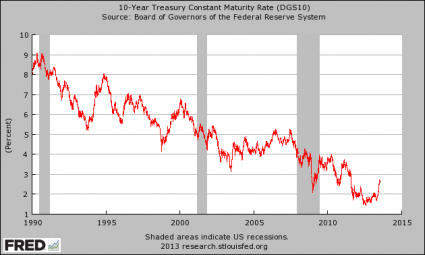
A bipartisan vote of 392-31 in the House of Representatives has approved a plan that will link student loan interest rates to financial markets via 10-year treasury notes. The plan, originally brought before and approved in the Senate two weeks ago, will eliminate the difference between subsidized and unsubsidized loans and is setting the stage for student loan interest rates to go far higher than current levels.

The legislation now goes before President Obama, who has voiced his support for the measure and is expected to sign it into law shortly. The speed at which the bill passed first the Senate and then the House reflects the fact that Congress is going into recess soon and both parties wanted to ensure that the latest plot to indenture millions of young people went into effect.

This bill comes after Congress and the Obama administration allowed the expiration of the federal student loan law on July 1, effectively eliminating the difference between subsidized and unsubsidized Stafford loans, doubling the interest rates for undergraduates from 3.4 percent to 6.8 percent. According to the White House, this affected nearly 7.5 million low-income students nationwide.

While passage of the bill is being hailed as a great measure of education “reform” in allowing low-income students access to college, it is nothing of the sort. The student loan interest rate figures currently being touted–3.86 percent for undergraduates, 5.41 percent for graduates and 6.4 percent for parents–is only expected to last at best a year.

These rates are expected to then rise as the Federal Reserve slowly phases out its policy of near-zero interest rates. As this happens, student loan rates are expected to skyrocket, hitting the “limits” placed in the legislation: 8.25 percent for undergraduates, 9.5 percent for graduate students and 10.5 percent for parents taking out PLUS loans for their children. All of these are far higher than even the rates locked in after July, which were 6.8 percent for undergraduates and 7.9 percent for undergraduates. There is also every possibility that the limits are pushed even higher by Congress in the years to come.

Significantly, low- and middle-income students will not be able to get any reductions in their interest rate. Previously, if one’s parents were in a low- or even middle-income bracket a student could receive subsidized Stafford Loan, which had an interest rate of 3.4 percent. Now, both Democrats and Republicans are essentially going to force the interest rate of these same students to nearly triple.

Alongside all of this is the rise in tuition costs. According to the Department of Education, average in-state tuition costs rose by 6.7 percent between the 2010-11 and 2012-13 academic years.

The student loan industry is a highly profitable one, both for private creditors and now the federal government. Student loan debt in the US now stands at $1.1 trillion, greater than the national auto and credit card debit combined. It is the largest form of debt in households outside of mortgages. The US government now stands to make $200 billion over 10 years as a direct result of this latest interest rate scheme.

The average student graduates with $27,547 (up from $15,073 in 2013 dollars) in debt. One eighth of recent college graduates have more than $50,000 in debt. Moreover, these figures are only the principal amount of loans. With interest rates set to spike, the amount that graduates actually have to pay out is going to balloon and in some cases double or more that what the student borrowed in the first place.

As a result of the Great Recession, the number of student loan borrowers increased 31 percent between 2007 and 2012. Sixty-five percent of all graduates now have student loan debt, rising from 46 percent in 1993. Fourth quarter 2012 statistics from the Federal Reserve show that 43 percent of 25-year-olds had student debt in 2012, an increase from 27 percent in 2004. More and more, young people are being swept up in the student debt dragnet.

The actions of Congress and the Obama administration will exacerbate the already massive social crisis among recent college graduates. Official unemployment for those aged 25-34 has risen from 7.7 percent in 2007 to 13.3 percent in 2012. Taking into account those that are underemployed–meaning that they are working low-wage, part-time, temporary work or work that has no relation to their degree–the unemployed and underemployed figure jumps to approximately 50 percent.

The same age group is also being forced to essentially put their lives on hold. In Japan, much has been made about the “lost decade” of 2000-2009 for youth and a similar situation is well advanced in the United States. As a result of high student loan debt, graduates have increasingly been forced to move back in with their parents. Nearly 17 percent of men moved back home in 2012, rising from 13.5 percent in 2005, while 10.4 percent of women did the same, up from 8.1 percent over the same period.

The US government is already making a ransom off of student loan interest. It will receive a record $51 billion this year, according to the Congressional Budget Office, a sum greater than the profits of the four largest US banks. All of the cuts to education are being justified by the White House, which argues that “taxpayers cannot continue to subsidize higher and higher costs for higher education.”


‘
];
var html = htmlArray.join(”);
var pCount = $(‘#content’).children(‘p’).length;
var position = Math.floor(pCount*0.1);
$(‘#content’).children(‘p’).eq(position).before(html);
$(‘#inline-appeal’).children(‘form’).children(‘.more-options’).children(‘a’).click(function() {
$(‘#inline-appeal’).children(‘.initially-hidden’).show();
$(this).parent().hide();
return false;
});
}
}

function appendBottomAppeal() {
if (!$(‘#content’).is(‘.width72,.category’)) {
var htmlArray = [
‘

‘
];
var html = htmlArray.join(”);
if ($(‘#article-tools’).length > 0) {
$(‘#article-tools’).before(html);
} else {
$(‘#content’).append(html);
}
$(‘#inline-appeal’).children(‘form’).children(‘.more-options’).children(‘a’).click(function() {
$(‘#inline-appeal’).children(‘.initially-hidden’).show();
$(this).parent().hide();
return false;
});
}
}
$(document).ready(function(){
appendInlineAppeal();
appendBottomAppeal();
});

Republished from: World Socialist Web Site

UK governments’ National Health Service adviser says it should be run like PC World retailer

0


By
Paul Mitchell

2 August 2013

This week Britain’s top doctor, National Health Service (NHS) England medical director, Sir Bruce Keogh, called for the NHS to be run like high-street retailers PC World and Dixons. Keogh is currently investigating the crisis affecting NHS Accident and Emergency (A&E) departments, which was the subject of a Parliamentary Health Select Committee report last week.

The NHS must adopt its “more-for-less” working methods in place of the “inbuilt mindset that better quality costs more”, Keogh declared, adding, “If you go down to PC World or Dixons, each year you would expect to pay less for a PC and you would also expect the specifications to improve.”

Keogh also announced plans for NHS executives to undergo a mentoring scheme from entrepreneurs, based on the Dragon’s Den TV programme.

If Keogh gets his way, the future of the NHS will be even more disastrous than it is now. Keogh revealed more than he intended in choosing Dixons as a potential model. Last year, the last Dixons stores and web site were closed down after years of being run down. The parent company, Dixons Retail, which also own PC World and is one of Europe’s largest consumer electronics companies, has seen profits slump–from £295 million in 2007 to a loss of £115 million this year.

As for Dragon’s Den, it has been criticised by many contest winners for misleading them. Even entrepreneur and prospective Conservative MP Wilfred Emmanuel-Jones has been forced to complain, “How many deals in the Den have succeeded in the long run? Not many. And a lot of the deals the Dragons make will be based on loans or are equity-based, which is the worst kind of finance you can get for a start-up…. The Dragons are interested only in a good deal that benefits them, and their justification in being that ruthless is because a lot of the deals go wrong.”

Keogh recently completed a review into 14 hospitals that had above-average mortality rates. He ignored the policies of successive governments that are the real cause of the crisis and his own role as NHS England medical director since 2007. The rapid deterioration of the NHS has occurred under his watch.

The Parliamentary Health Select Committee found that the majority of A&E departments are failing to meet the standard for patients being seen and discharged within four hours. In the last quarter of 2011/2012, 47 out of 152 providers failed to meet the standard, and in the last quarter of 2012/2013, this figure had increased to 94 out of 148 providers, double the previous number. The College of Emergency Medicine told the committee that the emergency care system is “facing unsustainable workloads.”

A number of witnesses disputed the idea promoted by the government that the crisis was caused by increased numbers of people going to A&E for spurious reasons. Dr. Clare Gerada, chair of the Royal College of General Practitioners, said there had been an increase of about 1.7 percent per year over the last decade, more or less equal to the growth in population.

Gerada described how “I am getting e-mails from colleagues across the country to say that their surgeries are now fully booked by 8.30 in the morning, which is disgraceful. How can we run an NHS where, unless it is an emergency–and by that I mean a dire emergency–you cannot get an appointment with your GP on the day and appointments are fully booked by 8.30? This is not because GPs are going to play golf in the afternoon; it is because they are trying to respond by working 15-hour days.”

She explained that patients are making the rational choice to go “where the lights are on”, which invariably is the local A&E department.

The chief executive of the NHS Confederation, Mike Farrar, told the committee that the problems in A&E departments were the result of the fact “that demand has continued to increase but the resource available to increase supply has reduced.”

Dr. Patrick Cadigan, registrar of the Royal College of Physicians, said that fewer hospital beds had increased the pressures on A&E departments, explaining, “The more you reduce the number of beds the more difficult it is to cope with variations and fluctuations.”

The committee found that just 17 percent of hospitals had the recommended level of consultant cover, the out-of-hours call centre NHS 111 provided “a poor service in many areas when it was launched” and that there were “variations” in the quality of ambulance response times.

The committee reported concerns with the new Clinical Commissioning Groups (CCGs) and Urgent Care Boards (UCBs), set up by the government as part of its health reforms in April. This year, 211 CCGs run by GPs took control of £65 billion of health spending, two thirds of the NHS budget. It was an unprecedented step towards privatisation of the NHS, allowing CCGs to buy care either from the NHS or private sector. The government’s creation of UCBs was a short-term reflex response to the failures at A&Es.

Mike Farrar said, “I worry enormously that one of the things we have structurally built into the new system is different budget holders for different bits of the budget, social care, particularly primary care, separate from hospital and community budgets, and specialist services.”

The committee concluded, “It was unclear from the evidence presented by the Minister and NHS England how these structures represent a national response to the problems facing emergency care. The number of UCBs remains unclear (with approximately 150 established in England), they have no executive power but must develop local improvement plans and, despite their responsibilities, no formal structures are in place to ensure they are accountable…. There is little evidence that any form of national strategy exists beyond the creation of UCBs, and senior figures in NHS England could not tell us precisely how many UCBs have been established.”

Meanwhile the number of A&E departments facing closure continues to increase. On July 11, Health Secretary Jeremy Hunt approved plans to close the A&E at Trafford General Hospital–the hospital at which the NHS was founded in 1948.

This week, the permanent closure of A&E at Stafford Hospital, where 30,000 demonstrated in opposition to its closure earlier this year, will be announced. In Bedford, the hospital is suspending its accident and emergency service for children, who will be transferred to another hospital.


‘
];
var html = htmlArray.join(”);
var pCount = $(‘#content’).children(‘p’).length;
var position = Math.floor(pCount*0.1);
$(‘#content’).children(‘p’).eq(position).before(html);
$(‘#inline-appeal’).children(‘form’).children(‘.more-options’).children(‘a’).click(function() {
$(‘#inline-appeal’).children(‘.initially-hidden’).show();
$(this).parent().hide();
return false;
});
}
}

function appendBottomAppeal() {
if (!$(‘#content’).is(‘.width72,.category’)) {
var htmlArray = [
‘

‘
];
var html = htmlArray.join(”);
if ($(‘#article-tools’).length > 0) {
$(‘#article-tools’).before(html);
} else {
$(‘#content’).append(html);
}
$(‘#inline-appeal’).children(‘form’).children(‘.more-options’).children(‘a’).click(function() {
$(‘#inline-appeal’).children(‘.initially-hidden’).show();
$(this).parent().hide();
return false;
});
}
}
$(document).ready(function(){
appendInlineAppeal();
appendBottomAppeal();
});

Republished from: World Socialist Web Site

The Detroit bankruptcy and the drive toward dictatorship

0


2 August 2013

The bankruptcy of Detroit is being widely cited in the media as a model for the use of unelected officials and bankruptcy courts to rip up agreements and impose sweeping cuts on the pensions and health benefits of public employees, not only in Detroit, but in cities across the United States.

The Obama administration has rejected any federal aid to ameliorate the financial crisis of Detroit and counter the effort of state and city officials, fronting for the banks and bondholders, to use bankruptcy to gut workers’ benefits. This makes it clear that the Detroit bankruptcy is part of a broader nationwide policy that is being coordinated by the White House.

The attack on public workers is increasingly accompanied by claims that the crisis of Detroit demonstrates the unviability of democratic procedures, including elections. The financial collapse of the former center of global auto production is not, according to multiple commentators, an expression of the decay of American capitalism, but rather of a “failure of governance,” which can be reversed only by more authoritarian forms of rule and more direct political control by the banks and corporations.

The ruling class is well aware that its economic policies will provoke mass social opposition. It is preparing to meet this threat by means of repression and violence.

The current issue of Time magazine features a front-page photo of Detroit’s Renaissance Center with the headline “Is Your City Next?” The magazine notes that the bankruptcy of Detroit “will bring many changes in the way local governments function and cities grow.”

It continues: “While the broader re-rating of municipal debt that’s very likely to happen down the pike would increase borrowing costs and reduce the amount of money all cities can raise through bond issuance, it might also prompt many to shift their growth models, rein in unsustainable labor costs and partner in more innovative ways with the private sector…”

The same theme is taken up by the British Economist, which writes that Detroit is a “flashing warning light on America’s fiscal dashboard,” and adds that “many other state and city governments across America have made impossible-to-keep promises to do with pensions and health care.”

Financial Times commentator John Dizard writes that the gutting of workers’ benefits at the state and local level will become the model for the dismantling of Social Security. “The Supreme Court has already ruled that social security benefits, unlike Treasury bills and bonds, are not full faith and credit obligations of the federal government,” he writes. “Constitutional lawyers already know this; soon members of the public will as well.”

That such attacks cannot be imposed by democratic means is the subject of a growing number of commentaries. The Financial Times writes: “Think of it this way: what are the chances that the contestants in the next congressional or presidential elections would ask the voters to decide if pension and health care promises made by governments are super-priority debts? Because that is what ‘Detroit’ is all about.”

The authoritarian message obliquely hinted at in such commentaries is stated in blunt and savage terms by right-wing columnist George Will in an op-ed piece published Wednesday in the Washington Post entitled, “Detroit’s death by democracy.”

Will compares government employee unions to parasitic ichneumon fly larva that gnaw the inside of the caterpillars they infest. In his venomous hatred of the working class, he falsely equates the unions with the workers. In reality, the unions have been working hand in glove with corporations and the government for nearly four decades to impose wage cuts and concessions on the working class in Detroit and across the country. They have made clear that they are more than willing to collaborate in slashing pensions, asking only that their flow of income from union dues be assured.

Will unabashedly blames the people of Detroit for the attacks that have been leveled against them. He denounces the “myth” that deindustrialization undermined the city’s economy. “Detroit… died of democracy,” he writes, indicting the people for electing corrupt and incompetent officials.

In fact, Detroit’s crisis is an expression of the crisis and decay of American capitalism, which has been marked by the dismantling of manufacturing on the one hand, and the proliferation of financial parasitism, plundering and outright criminality on the other. Between 1972 and 2007, Detroit lost 80 percent of its manufacturing and tens of thousands of decent “paying jobs.

And while unlimited funds are made available to bail out the banks and protect the wealth of the richest one percent, the universal claim is that there is “no money” for jobs, pensions, health care or education.

Will personifies the intersection of the economic crisis and definite class interests. He is the embodiment of a highly privileged and wealthy social layer that supports the complete impoverishment of the working class and the imposition of dictatorship to accomplish it.

“At the decline of capitalism,” wrote Leon Trotsky, “the bourgeoisie is forced to resort to methods of civil war against the proletariat to protect its right of exploitation.”

Hence the erection of the infrastructure of a police state, in the form of massive and illegal surveillance programs, the militarization of police forces, the policy of extralegal drone assassinations, and the persecution of those who expose government secrets and crimes such as Bradley Manning, Edward Snowden and Julian Assange.

This is what the capitalist system has to offer: mass poverty, ever-greater inequality, and dictatorship. The only force that can oppose these attacks is the working class, fighting as a politically conscious and united force on the basis of a socialist program.

The Socialist Equality party is participating in the Detroit mayoral election in order to organize an independent opposition by the working class to the demands of the banks and hedge funds, operating through their bag man, Emergency Manager Kevyn Orr.

SEP candidate D’artagnan Collier is calling for the creation of workers’ committees independent of the Democratic Party and the trade unions to build up a movement for a general strike, the bringing down of the emergency manager, and the formation of a Workers’ Council in Detroit to replace the City Council, which consists entirely of bribed representatives of the banks and corporate bosses.

He is further calling for the repudiation of the city’s debts to the bankers, with safeguards for small investors, and the nationalization of the banks and corporations under the democratic control of the working class to reorganize the economy on the basis of social need, not private profit.

Andre Damon and Barry Grey


‘
];
var html = htmlArray.join(”);
var pCount = $(‘#content’).children(‘p’).length;
var position = Math.floor(pCount*0.1);
$(‘#content’).children(‘p’).eq(position).before(html);
$(‘#inline-appeal’).children(‘form’).children(‘.more-options’).children(‘a’).click(function() {
$(‘#inline-appeal’).children(‘.initially-hidden’).show();
$(this).parent().hide();
return false;
});
}
}

function appendBottomAppeal() {
if (!$(‘#content’).is(‘.width72,.category’)) {
var htmlArray = [
‘

‘
];
var html = htmlArray.join(”);
if ($(‘#article-tools’).length > 0) {
$(‘#article-tools’).before(html);
} else {
$(‘#content’).append(html);
}
$(‘#inline-appeal’).children(‘form’).children(‘.more-options’).children(‘a’).click(function() {
$(‘#inline-appeal’).children(‘.initially-hidden’).show();
$(this).parent().hide();
return false;
});
}
}
$(document).ready(function(){
appendInlineAppeal();
appendBottomAppeal();
});

Republished from: World Socialist Web Site

Sri Lankan government continues evictions of Colombo’s poor

0


By
Vilani Peiris

2 August 2013

The Sri Lankan government, which plans to convert Colombo City into a “South Asian commercial hub,” is expediting its evictions of residents. In order to attract investors and tourists, it has also started developing several other cities and coastal areas.

The Urban Development Authority (UDA) forcibly demolished 15 houses last month near the Slave Island railway station in central Colombo, with the help of the security forces. It is estimated that 119 more families and three businesses have been given notice, but have refused to leave.

Most families facing eviction earn their living doing odd jobs, while some others are government workers and small businessmen. Many have been living in the area for decades. Small houses are built on tiny plots of land, each about two perches (one perch equals 25 square metres). As compensation, they have been offered just 18,000 rupees ($US137) a month per family for rent, and only for 18 months.

The government’s Board of Investment has signed an agreement with Imperial Builders, a Pakistani company, to develop 1.4 hectares of land in the area. Work on the project has been started, with the UDA assuring the company that other families will be moved. The project includes luxury condominiums featuring facilities such as swimming pools, gymnasiums, clubs, restaurants, a playground and a 4-star hotel.

The families being evicted do not believe the government’s promise of houses in the condominium after the project is finished. According to the families, the Pakistani company bought the land at 4 million rupees ($US30,400) a perch.

A woman told the WSWS: “We had two perches of land. So we demanded 8 million rupees for our land, but the authorities refused. Then how can we trust them when they say they will provide us with luxury apartments?”

Several of the 15 families who accepted the 18,000 rupees in monthly rent also spoke to the WSWS. They are now living about 6 kilometres away, and must travel to their old area to do odd jobs such as selling snacks from their carts. One person said he regretted leaving the place. “We found small places to live. We could not find schools for our children yet. Life is difficult.”

The government has failed to provide permanent houses for some families who were evicted from Slave Island in 2008. About 400 families were removed and 76 are still living in makeshift houses at Weligoda Watta, several kilometres from Slave Island.

One resident explained: “We haven’t got permanent jobs. We are doing odd jobs such as fishing. Women are working as housemaids and have to travel by two or three buses to workplaces. It is difficult.”

Evicted dwellers from Ibba Watta, another slum area, have had a similar fate. They are living in small wooden huts in the Nagalagam Street camp at Totalanga, a Colombo suburb. They have not been paid compensation, receiving only an empty promise of permanent housing in the future. They are still waiting for the UDA to provide houses.

The UDA has placed security personnel in the area and camp residents have been warned not to speak to the media. “There are 65 families here,” one person said. “There are only 18 toilets equally allocated for males and females. Some toilets are not functioning properly. We have to use a common water line.”

Under the Colombo metropolitan development project, President Mahinda Rajapakse’s government plans to evict about 70,000 slum dwellers in Colombo and surrounding suburbs. Since 2008 the government has evicted more than 1,000 families from different areas of the city, using the armed forces to suppress any resistance.

According to the Defence Ministry and UDA web site: “There are about 135,000 families dwelling in 68,812 houses [in the Colombo area]. Out of those approximately 54,000 are children (below the age of 14). Owing to the low literacy rate, most of them are unemployed or under employed.”

The UDA has issued notices to hundreds of other families in Colombo suburbs, including Narahenpita, Barnes Place, Borella, Bauddhaloka Mawatha, Wanathamulla and Maligawatta.

In 2010, the UDA and the Land Reclamation and Development Board were taken over by the Defence Ministry, which is under Defence Secretary Gotabhaya Rajapakse, one of the president’s brothers.

Some 1,400 families at Apple Watta in central Colombo have also been given notices to vacate their places. The UDA has offered those families a small amount of compensation and a 3 by 3 metre hut at Weligoda Watta, or 8,000 rupees a month for rent. They have refused the offer, knowing the dire conditions in which their evicted neighbours live.

Three years ago, 24 houses in this area were demolished and the families were sent to temporary wooden huts at Weligoda Watta. They still do not have permanent housing.

The 1,400 families filed a case against eviction. The Supreme Court passed judgment on July 11, restricting the UDA from demolishing the houses “until the occupants were relocated”. But this only buys a little time, while the UDA pressures people, including by using the security forces, to leave their homes.

Most families in Apple Watta live in small huts built with wooden planks and roofed with tin sheets. The huts are packed together with narrow lanes, without basic facilities such as clean drinking water and health services. The area has only 12 toilets. The houses are often inundated when local canals overflow during the rainy season.

Recent developments underscore the fact that people are being forced out of their homes to provide land for investors.

The government has provided 2.4 hectares of land from Slave Island to the Indian-based TATA Housing Development Company, which has pledged to invest $406 million. The UDA has ordered 456 families and 90 commercial property owners to vacate the area designated for the project.

The Sunday Times on June 30 reported that the government gave a prime property in Colombo to the Chinese Avic International Corporation for an investment project worth $300 million.

Beyond Colombo City, the government has planned development projects in other cities and coastal areas. Recently, the UDA demolished 44 houses at Dambulla in Central Province and the owners of another 64 houses have been issued with notices to vacate.

Driving this ruthless eviction program is the impact of the global economic crisis on Sri Lanka. The Rajapakse government is desperate to attract foreign investment and tourists as a means to earn foreign exchange.


‘
];
var html = htmlArray.join(”);
var pCount = $(‘#content’).children(‘p’).length;
var position = Math.floor(pCount*0.1);
$(‘#content’).children(‘p’).eq(position).before(html);
$(‘#inline-appeal’).children(‘form’).children(‘.more-options’).children(‘a’).click(function() {
$(‘#inline-appeal’).children(‘.initially-hidden’).show();
$(this).parent().hide();
return false;
});
}
}

function appendBottomAppeal() {
if (!$(‘#content’).is(‘.width72,.category’)) {
var htmlArray = [
‘

‘
];
var html = htmlArray.join(”);
if ($(‘#article-tools’).length > 0) {
$(‘#article-tools’).before(html);
} else {
$(‘#content’).append(html);
}
$(‘#inline-appeal’).children(‘form’).children(‘.more-options’).children(‘a’).click(function() {
$(‘#inline-appeal’).children(‘.initially-hidden’).show();
$(this).parent().hide();
return false;
});
}
}
$(document).ready(function(){
appendInlineAppeal();
appendBottomAppeal();
});

Republished from: World Socialist Web Site

Goss International closes its plants in France

0


By
Gustav Kemper

2 August 2013

On July 25, employees of web offset press manufacturer Goss International in Montataire, France set garbage containers and company files on fire to protest the closure of their factory and the redundancy of 430 employees at production sites in Montataire and Nantes.

One day later, on the final day of production at the site, employees found themselves locked out. The company had closed its doors on order of a bailiff but still demanded that employees report their presence by ticking off their names on a whiteboard on the sidewalk.

Only seven years ago, the company employed some 1,200 workers in these two factories; since then, it has sacked more than 60 percent of the workforce.

The plant closure was meticulously prepared by the headquarters of the company in Durham, New Hampshire (USA), acting on behalf of the sole shareholder, Shanghai Goss. After having channeled all incoming press orders for machines normally produced in France to factories in Durham and in Shanghai–namely, an order from Britain worth 60 million euros–management filed for bankruptcy on April 3.

The Commercial Court of Compiègne appointed an administrator who investigated future options for these production sites. There was only one bidder for the bankruptcy assets of the company: the parent company of Goss itself. In four court sessions, the company headquarters haggled with the court for a bargain price of the assets, while the Democratic French Labor Confederation (CFDT) and the General Labor Confederation (CGT) trade unions ineffectually challenged the bankruptcy proceedings in court.

Goss International hardly budged from its first offer in bidding for company assets. It only changed from 94 to 123 the number of employees that could be rehired in the future European sales and service unit, while offering a low price for the fixed assets.

As there was no other bidder, the company took a tough stance. On July 10, Goss set an ultimatum to the unions and the works council either to accept the offer or lose everything.

On July 26, the Commercial Court of Compiègne delivered the final judgment. It allows Goss International-Europe to eliminate the factory’s debts, evade payments due to its suppliers and to its employees, and buy back the factory’s assets at a bargain price.

Goss will not pay a single cent in compensation to laid-off workers, leaving this instead to the French state administration–that is, to taxpayers. Goss will spend just 2.4 million euros to acquire assets and inventory, and €1.8 million for the transfer of 123 employees “with their vested interests on the date of transfer,” indicated Mr. Hervé Diogo Amengual, Goss International-Europe’s lawyer.

The Compiègne court ruling sets a precedent for French insolvency filings. Previously, labour laws prohibited a parent company from buying back bankrupt subsidiaries. The new ruling opens the door for large-scale restructurings of corporate assets to push through massive attacks on jobs, wages, and working conditions.

As the WSWS warned during the first wave of layoffs at the Goss factories in Nantes and Montataire, the strategy of the CFDT and CGT of challenging bankruptcy proceedings in court leads only to defeat. The unions’ representatives at Goss International never sought to mobilize the working class in a struggle to defend jobs and to keep the plant open.

A broader struggle of the working class would have come into conflict with the pro-austerity Socialist Party (PS) government of French President François Hollande and therefore with the union bureaucracy itself, which functions as a corporatist instrument of the ruling class, funded by the state and the major companies, to stifle opposition in the working class.

Only an international struggle on a socialist program to mobilize the working class, including uniting workers of the printing machine industry, which have faced savage mass sackings around the world in recent years offers a perspective to defend jobs.

The closure of the production sites in Nantes and Montataire robs hundreds of workers and their families of their income and increases the unemployment in the Picardy region, which has been hard hit by factory closures and mass layoffs.

The unemployment rate in Montataire exceeds 20 percent, and 50 percent amongst under 25-year-olds. Besides the redundancies at Goss International, the region has in recent years lost 5,000 salaried workers of Chausson, a car manufacturer, then 3,000 at steelmaker Arcelor, and 255 at Still-Saxby.


‘
];
var html = htmlArray.join(”);
var pCount = $(‘#content’).children(‘p’).length;
var position = Math.floor(pCount*0.1);
$(‘#content’).children(‘p’).eq(position).before(html);
$(‘#inline-appeal’).children(‘form’).children(‘.more-options’).children(‘a’).click(function() {
$(‘#inline-appeal’).children(‘.initially-hidden’).show();
$(this).parent().hide();
return false;
});
}
}

function appendBottomAppeal() {
if (!$(‘#content’).is(‘.width72,.category’)) {
var htmlArray = [
‘

‘
];
var html = htmlArray.join(”);
if ($(‘#article-tools’).length > 0) {
$(‘#article-tools’).before(html);
} else {
$(‘#content’).append(html);
}
$(‘#inline-appeal’).children(‘form’).children(‘.more-options’).children(‘a’).click(function() {
$(‘#inline-appeal’).children(‘.initially-hidden’).show();
$(this).parent().hide();
return false;
});
}
}
$(document).ready(function(){
appendInlineAppeal();
appendBottomAppeal();
});

Republished from: World Socialist Web Site

Germany: Two Romanian shipyard workers burned to death in overcrowded accommodation

0


By
Elizabeth Zimmermann

2 August 2013

Two Romanian workers working at the Meyer-Werft shipyard in Papenburg, Emsland, were burnt to death in their housing quarters on July 13. The two men employed on a temporary contract basis were sharing a small house with 30 other workers from Romania and Bulgaria. The tragic death of these workers throws a spotlight on the brutal conditions facing temporary and contract workers in the German shipbuilding industry.

The Meyer-Werft shipyard in Papenburg builds cruisers and luxury cruise ships for the Aida shipping line and others. In advertising materials, these ships are presented as the ideal choice for a dream vacation. The working and living conditions of many shipyard workers, however, especially those employed on limited contracts, are in fact nightmarish.

The house containing the Romanian and Bulgarian workers burned down on Saturday afternoon, as a driver for the Meyer-Werft arrived to pick up the group for their shift. The fire spread rapidly and the two Romanians, 32 and 45 years old, failed to escape the flames in the confined space. The exact cause of the fire remains unknown.

A doctor, Eissing Volker, who was called to the accident site told the Süddeutsche Zeitung that “intolerable conditions” prevailed in the house. Up to 13 beds were jammed together in the living room. There were no closets, so the workers had to stow their belongings under their beds. “The men were herded together in a confined space.”

Workers numbering 120 from eastern Europe, mainly Romania and Bulgaria, are currently employed on a temporary contract basis working as welders and shipwrights at the Meyer-Werft shipyard. The contracts were struck with the staff service company SDS. For its services, SDS receives a gross salary of between €20 and €35 per hour. The workers are then given their share of between €8 and €10 net.

Although this already represents an extremely low wage for very arduous work, the workers in fact receive much less. SDS had awarded its contract to another subcontractor, in this case Bordo Mavi, a company with its headquarters in Constanta on the Black Sea.

Florin Grigore, a Romanian worker killed in the fire, was employed by Bordo Mavi. His brother, Gelu Grigore, who came from Romania to Papenburg to uncover the cause of death of his 32-year-old brother, told reporters that Florin had received a wage of just €3.50 per hour for his work as a welder at the shipyard. This was revealed in the Süddeutsche Zeitung in its detailed report of July 23.

The assets of the Meyer family, who own the Meyer shipyard, are estimated at €500 million. The profits made in the production of cruise ships come at the expense of the workforce and in particular contract workers.

The Meyer-Werft shipyard employs 3,100 salaried staff. It also employs 290 short-term and 1,500 contract workers. Another 15,000 jobs in the region of East Frisia and Emsland, which suffers from high unemployment, depend on the shipyard.

Most of the contract workers come from eastern Europe, with about 700 Romanians and Bulgarians employed in Papenburg. In common with Florin Grigore, they are not employed directly by the shipyard, but rather by a complex network of subcontractors. The shipyard has more than 1,000 so-called partner companies. The SDS company currently has 120 workers from eastern Europe under contract and had a turnover of €400 million in its business with the Meyer-Werft shipyard last year.

A statement by Gelu Grigore that his brother was working 10 to 12 hours a day, six days a week, for an hourly wage of €3.50 has been confirmed by the doctor, Volker Eissing. Workers from eastern Europe often come to his practice. Many have no passport in their possession because it has been confiscated by their boss. Some have no health insurance and “Many do not earn more than €3 an hour.”

According to Gelu Grigore, his brother received just €35 a day for a ten-to twelve-hour shift at the shipyard. This miserly sum is still more than the €170 that is the average monthly wage in Romania.

The death of the Romanian workers has thrown some light onto the brutal working and living conditions for contract workers. The massive expansion of temporary, contract and low-wage jobs in Germany is a direct result of the labour market reforms introduced by the Social Democratic-Green government led by Gerhard Schröder (1998-2005).

In the case of Meyer-Werft, these reforms have led to a multi-tiered workforce. There are permanent workers, recognisable by their yellow helmets; temporary workers, with red, green or blue helmets, who mostly receive a quarter less pay and can be dismissed at any time; and contract workers, who earn much less and have no rights at all.

The trade unions and company works councils have refused to do anything on behalf of the contract employees. The unions work closely with the management of the company and are quite prepared to tolerate these unequal working conditions.

Under these conditions, there has been a continuous reduction in the number of full-time salaried workers in the shipyards. According to a study produced by the IG Metall trade union, in 2012 more than a third of all jobs in the shipyards were carried out by contract workers (24.4 percent) or temporary workers (12.3 percent). This development has not prevented IG Metall from consolidating its relationship with management.

The death of the two Romanian workers has sparked outrage in Papenburg. In an effort to limit the damage to its image, Meyer-Werft has declared that it intends to negotiate a social charter with IG Metall ensuring enhanced working standards for contract workers.

This proposal accepts from the outset the basic framework of the work contracts. Any agreement reached on such a charter will do little to change the harsh conditions for contract workers apart from providing more lucrative posts for the union bureaucrats. Alongside the company, contractors and subcontractor representatives from the union and company works councils will continue to oversee the intensifying exploitation of contract workers.


‘
];
var html = htmlArray.join(”);
var pCount = $(‘#content’).children(‘p’).length;
var position = Math.floor(pCount*0.1);
$(‘#content’).children(‘p’).eq(position).before(html);
$(‘#inline-appeal’).children(‘form’).children(‘.more-options’).children(‘a’).click(function() {
$(‘#inline-appeal’).children(‘.initially-hidden’).show();
$(this).parent().hide();
return false;
});
}
}

function appendBottomAppeal() {
if (!$(‘#content’).is(‘.width72,.category’)) {
var htmlArray = [
‘

‘
];
var html = htmlArray.join(”);
if ($(‘#article-tools’).length > 0) {
$(‘#article-tools’).before(html);
} else {
$(‘#content’).append(html);
}
$(‘#inline-appeal’).children(‘form’).children(‘.more-options’).children(‘a’).click(function() {
$(‘#inline-appeal’).children(‘.initially-hidden’).show();
$(this).parent().hide();
return false;
});
}
}
$(document).ready(function(){
appendInlineAppeal();
appendBottomAppeal();
});

Republished from: World Socialist Web Site

Edward Snowden gains temporary asylum in Russia

0


By
Thomas Gaist

2 August 2013

At 3:30 PM local time on Thursday, Edward Snowden was allowed to leave the Moscow airport transit zone where he has been trapped for more than five weeks. Snowden has been granted temporary asylum by Russia and may be allowed to live there for at least a year.

Indicative of the serious danger to his physical safety posed by Washington’s vindictive international vendetta against him, Snowden was moved to a secret location.

“Over the past eight weeks we have seen the Obama administration show no respect for international or domestic law, but in the end, the law is winning,” Snowden said as he received the certificate granting asylum.

The asylum grant has, predictably, provoked denunciations and threats of reprisal from US officials. Snowden has become an international symbol of resistance to the all-pervasive surveillance state that has been established by the United States and other capitalist governments. As such, he is a source of enormous frustration and hatred within the US military-intelligence complex, the corporate-financial oligarchy, and their political front men in the government.

The Obama White House has targeted whistle-blowers who expose government criminality to a greater extent than any previous administration, and Snowden has been at the center of this campaign. The decision to allow him to stay in Russia has been met with condemnation from the administration.

“We are extremely disappointed that the Russian Federation would take this step,” said Jay Carney, White House press secretary. “Obviously, this is not a positive development.” Carney suggested that the White House might cancel a scheduled trip to Moscow in retaliation.

“He is not a dissident,” Carney insisted. “Mr. Snowden is not a whistle-blower. He’s accused of leaking classified information. He has been charged with three felony counts, and he should be returned to the United States as soon as possible, where he will be accorded full due process and protections.”

Carney felt it necessary to emphasize that Snowden would receive the due process protections that are guaranteed to all in the Bill of Rights. This is because it is well known that the Obama administration has already killed American citizens without due process and continues to claim extralegal targeted killing as a prerogative of the executive branch.

Lawmakers chimed in with denunciations of Snowden and the Russian government. “Russia has stabbed us in the back, and each day that Mr. Snowden is allowed to roam free is another twist of the knife,” said Democratic Senator Charles Schumer of New York. Schumer called Snowden a “coward” and said he has “chosen to run.”

Senator John McCain, Republican of Arizona, called the asylum grant “a slap in the face of all Americans” and said it was necessary to “fundamentally rethink” US-Russia relations.

“Edward Snowden is a fugitive who belongs in a United States courtroom, not a free man deserving of asylum in Russia,” said Democratic Senator Robert Menendez of New Jersey. Menendez called the action “a setback to US-Russia relations,” and said Snowden “will do great damage to US national security interests” and “aid terrorists.”

Senator Tom Coburn, Republican of Oklahoma, said that Snowden was a “traitor to our country.”

While it has granted temporary asylum, the regime of Russian President Vladimir Putin has repeatedly said it does not want Snowden to get in the way of smooth relations with the US. Yuri V. Ushakov, an aide to Putin, said the Snowden affair was of an “insignificant character.”

Putin has stated that asylum for Snowden will depend on his ending all political activity. “He has to stop his work aimed at damaging our US partners,” Putin has insisted.

Snowden’s life remains in danger. The US government has left no room for doubt: enemies of the state can and will be terminated without legal niceties. Whether Snowden is allowed to live or targeted for assassination is, for top US officials, a matter of political tactics.

The latest information on spying operations to emerge from the Snowden affair has been exceptionally significant and damning. The day before news of the asylum broke, the Guardian published another Snowden-leaked report detailing the NSA’s “widest-reaching” internet spying operation, known as XKeyscore, which involves dragnet internet surveillance and the reading of the contents of individual emails, among other functions.

According to CNN.com, XKeyscore “makes available everything you’ve ever done on the Internet–browsing history, searches, content of your emails, online chats, even your metadata–all at the tap of the keyboard…The program gives analysts the ability to search through the entire database of your information without any prior authorization–no warrant, no court clearance, no signature on a dotted line. An analyst must simply complete a simple onscreen form, and seconds later, your online history is no longer private.”

While US officials, from Obama himself to numerous congressmen and senators, have asserted that the surveillance “does not target Americans,” XKeyscore gives government analysts the capacity to search everyone’s data virtually at will.


‘
];
var html = htmlArray.join(”);
var pCount = $(‘#content’).children(‘p’).length;
var position = Math.floor(pCount*0.1);
$(‘#content’).children(‘p’).eq(position).before(html);
$(‘#inline-appeal’).children(‘form’).children(‘.more-options’).children(‘a’).click(function() {
$(‘#inline-appeal’).children(‘.initially-hidden’).show();
$(this).parent().hide();
return false;
});
}
}

function appendBottomAppeal() {
if (!$(‘#content’).is(‘.width72,.category’)) {
var htmlArray = [
‘

‘
];
var html = htmlArray.join(”);
if ($(‘#article-tools’).length > 0) {
$(‘#article-tools’).before(html);
} else {
$(‘#content’).append(html);
}
$(‘#inline-appeal’).children(‘form’).children(‘.more-options’).children(‘a’).click(function() {
$(‘#inline-appeal’).children(‘.initially-hidden’).show();
$(this).parent().hide();
return false;
});
}
}
$(document).ready(function(){
appendInlineAppeal();
appendBottomAppeal();
});

Republished from: World Socialist Web Site

Bradley Manning prosecution pushes for maximum 136-year sentence

0


By
Matthew MacEgan

2 August 2013

The sentencing phase of the court-martial of Private Bradley Manning began Wednesday, following an eight-week trial in which Col. Denise Lind, the presiding judge, found Manning guilty of 20 charges, including six under the Espionage Act.

On the first day of the sentencing proceedings, the prosecution maintained its vindictive posture, urging the judge to impose the maximum sentence of 136 years on the 25-year-old whistle-blower. Manning has been convicted in a show trial based on trumped-up charges of espionage because he had the courage to reveal to the American people details of war crimes committed by the US military in Iraq and Afghanistan, as well as documents concerning the abusive treatment of detainees at the Guantanamo prison camp and diplomatic cables exposing the diplomatic intrigues of Washington around the world.

The prosecution and conviction of Manning, who was held for more than three years before even being charged, much of that time in solitary confinement and under abusive conditions, are intended to intimidate popular opposition to Washington’s wars and further discipline an already cowed media. The conviction of Manning on espionage charges is a frontal attack on First Amendment guarantees of press and speech freedom. It sets a precedent for branding as a spy and traitor any individual who exposes government crimes that the state wishes to conceal, as well as any journalist or publisher who makes such material known to the public.

In the first instance, it paves the way for the criminal indictment for espionage of WikiLeaks founder Julian Assange, who has been forced to live at the Ecuadorean embassy in London for more than a year to avoid extradition to face bogus sex charges in Sweden and near certain transfer for prosecution to the US. Manning passed on some 700,000 classified military reports and State Department cables to WikiLeaks in May of 2010.

From the outset, the Obama administration has been determined to punish Manning and make an example of him to others who might wish to expose the criminal actions of the government abroad or its conspiracies against the democratic rights of the people at home. This has become an even greater priority for the administration since former National Security Agency contractor Edward Manning began releasing documents revealing massive and illegal spying programs targeting the entire US population and untold millions of people internationally.

The first day of the sentencing phase, which could take weeks to complete, exposed the concocted character of the charges against Manning. The prosecution was unable to produce any specific or credible evidence to back its claim that Manning’s leaking of classified documents damaged US military and intelligence operations and compromised the safety of American forces.

The prosecution first called retired Gen. Robert Carr to testify. Carr headed a government panel that was given the task of assessing the purported damage done to national security by Manning’s leaks. His testimony underscored the immense resources the government dedicated to the legal vendetta against Manning.

Carr’s group spent more than 10 months assessing the alleged damage. One of those months saw the panel staffed with over 125 people for 24 hours each day, seven days each week. The cost of operating the group was $6.2 million.

However, for all the time and money spent on the project, nothing that could aid the prosecution’s case was found. On Wednesday, Carr contended that at least one Afghan national was killed as a result of Manning’s exposures. His conclusion was based on a Taliban statement that the group had killed the man in question.

“If the adversary had more clarity as to which people in the village were collaborating with the US forces,” Carr said, “then there is a chance that those folks could be at greater risk.”

Upon cross-examination, however, Carr admitted that his task force was unable to identify the individual by name. As a result, Judge Lind ruled that she would not allow the killing of the Afghan collaborator to be admitted into the record.

Manning’s attorneys have requested that the military judge merge two of his espionage convictions and two of his theft convictions, which would bring the maximum sentence down to 116 years.

The prosecution has said it plans to call as many as 20 witnesses, many of whom will testify about classified information in closed court. These witnesses include “experts” on counterintelligence, strategic planning and terrorism.

Following Judge Lind’s verdict on Tuesday, various individuals and organizations have issued statements commenting on the precedent being set by the Manning trial.

Julian Assange stated, “Bradley Manning’s alleged disclosures have exposed war crimes, sparked revolutions, and induced democratic reform. He is the quintessential whistle-blower.”

“This is the first-ever espionage conviction against a whistleblower,” Assange continued. “It is a dangerous precedent and an example of national security extremism. It is a shortsighted judgment that cannot be tolerated and must be reversed. It can never be that conveying true information to the public is ‘espionage’…

“The prosecution did not present evidence that–or even claim that–a single person came to harm as a result of Bradley Manning’s disclosures. The government never claimed Mr. Manning was working for a foreign power.”

The Center for Constitutional Rights (CCR) also issued a statement in response to the verdict, declaring: “While the ‘aiding the enemy’ charges (on which Manning was rightly acquitted) received the most attention from the mainstream media, the Espionage Act itself is a discredited relic of the WWI era, created as a tool to suppress political dissent and antiwar activism, and it is outrageous that the government chose to invoke it in the first place against Manning. Government employees who blow the whistle on war crimes, other abuses and government incompetence should be protected under the First Amendment.

“We now live in a country where someone who exposes war crimes can be sentenced to life even if not found guilty of aiding the enemy, while those responsible for the war crimes remain free… Manning’s treatment, prosecution, and sentencing have one purpose: to silence potential whistle-blowers and the media as well.”


‘
];
var html = htmlArray.join(”);
var pCount = $(‘#content’).children(‘p’).length;
var position = Math.floor(pCount*0.1);
$(‘#content’).children(‘p’).eq(position).before(html);
$(‘#inline-appeal’).children(‘form’).children(‘.more-options’).children(‘a’).click(function() {
$(‘#inline-appeal’).children(‘.initially-hidden’).show();
$(this).parent().hide();
return false;
});
}
}

function appendBottomAppeal() {
if (!$(‘#content’).is(‘.width72,.category’)) {
var htmlArray = [
‘

‘
];
var html = htmlArray.join(”);
if ($(‘#article-tools’).length > 0) {
$(‘#article-tools’).before(html);
} else {
$(‘#content’).append(html);
}
$(‘#inline-appeal’).children(‘form’).children(‘.more-options’).children(‘a’).click(function() {
$(‘#inline-appeal’).children(‘.initially-hidden’).show();
$(this).parent().hide();
return false;
});
}
}
$(document).ready(function(){
appendInlineAppeal();
appendBottomAppeal();
});

Republished from: World Socialist Web Site

US has ‘colonial’ policy towards Pacific

0

The US government is acting as if Å“the Pacific ocean is going to be an American lake” and that policy has Å“a very definite colonial sound about it”, says Gordon Duff, a senior editor at Veterans Today.

The United States Air Force plans to dramatically expand its military presence across the Pacific this year, sending jets to Thailand, India, Singapore and Australia, according to top generals in the region, Stars and Stripes reported on Tuesday.

Å“The American military expansion, particularly air power, across the Pacific has been planned for two to three years. Itâ„¢s a direct response to what the Americans see as Chinese provocations,” said Duff in a phone interview with Press TV on Thursday.

However, there have been no reports providing evidence for Washingtonâ„¢s claims that China is harassing oil tankers in that region, Duff said.

Å“The military confrontations between China and the US are increasingly becoming worrisome,” he added.

The US also plans to increase its annual military aid to the Philippines by $20 million. Washington has increased joint military exercises with the Philippines and other countries in the Asia-Pacific region.

The military drills are part of the Obama administrationâ„¢s so-called Å“pivot to Asia,” which involves the repositioning of American military forces throughout the Asia-Pacific region as well as strengthening US military alliances and strategic partnerships in that part of the world.

Observers believe Americaâ„¢s efforts to increase its presence in the region are aimed at containing China, which has emerged as the biggest threat to the US hegemony.

AHT/ISH

Republished from: Press TV

Israel welcomes new US bans on Iran

0

Israeli Prime Minister Benyamin Netanyahu has warmly welcomed a decision by the US House of Representatives to approve more unilateral sanctions on Iran.

Netanyahu on Thursday hailed the decision, saying it will send “a clear message” to Tehran.

“Following the Iranian election, the [US] House of Representatives has sent a clear message to the Iranian regime that international pressure will increase until Iran meets its obligations and ceases its pursuit of a nuclear weapons capability. We will judge Iran by its actions alone,” he said.

The US House of Representatives on Wednesday approved a bill to impose tougher sanctions against Iranâ„¢s oil exports and other economic sectors.

The bill, which must be approved by the Senate and signed by President Barack Obama to become law, seeks to cut Iran’s oil exports by one million barrels per day over a year.

It also blacklists any business in Iran’s automotive, mining and construction sectors and commits the United States to the goal of ending all Iranian oil sales worldwide by 2015.

Iranâ„¢s Foreign Ministry Spokesman Abbas Araqchi on Thursday expressed surprise at Washingtonâ„¢s perverseness in mounting restrictions on Tehran, underlining the futility of such bans and their failure to alter the Islamic Republicâ„¢s fundamental positions.

“The only impact that the imposition of sanctions will have is to further complicate the settlement of the existing issues, and will certainly offer no solution to any problem,” Araqchi stated.

The US has imposed several rounds of illegal sanctions on Iran, which Washington claims to be aimed at pressuring Tehran to abandon its nuclear energy program.

The United States, Israel, and some of their allies have repeatedly accused Iran of potentially pursuing non-civilian objectives in its nuclear energy program.

Tehran has categorically rejected the accusation, arguing that as a signatory to the Non-Proliferation Treaty and a committed member of the International Atomic Energy Agency (IAEA), it is entitled to develop nuclear technology for peaceful purposes.

In addition, numerous inspections of Iran’s nuclear facilities by the IAEA have never found any evidence showing that the Iranian nuclear energy program has been diverted toward non-civilian purposes.

SF/NN/HMV

Republished from: Press TV

UK Queen secret WWIII speech released

0

British Queenâ„¢s secret speech on brink of WWIII is released after 30 years.

British Queenâ„¢s previously archived speech, which was prepared in anticipation of World War III, has been released after 30 years.

The document released by Britainâ„¢s National Archives, dated as March 4, 1983 and highlighted the seriousness with which British officials contemplated in case a war broke out between the Soviet Union and the West.

Å“We all know that the dangers facing us today are greater by far than at any time in our long history,” Queenâ„¢s speech reads.

Å“I have never forgotten the sorrow and pride I felt as my sister and I huddled around the nursery wireless set listening to my fatherâ„¢s inspiring words on that fateful day in 1939,”she would have said referring to his father King George VI’s World War II speech, in which he declared war on Nazi Germany.

Å“Not for a single moment did I imagine that this solemn and awful duty would one day fall to me,” the text added.

The speech, which has never been delivered, could have been the final words the British Queen uttered before Britain was engaged into a nuclear war with the Soviet Union.

And with those words, she would have been evacuated to Scotland.

According to Britainâ„¢s National Archivesâ„¢ previously released documents, a nuclear attack on Britain would have caused more than 30 million casualties with over 1 million deaths in London alone.

MOS/HE

Republished from: Press TV

Russia sends aid worth $1.3m to Syria

0

Russia has dispatched another consignment of humanitarian aid worth $1.3 million to Syria in an effort to assist the victims of the ongoing turmoil in Syria.

The Russian Foreign Ministry said in a statement on Thursday that the new batch, which was delivered to Damascus this week, includes medical equipment, clothes and food supplies, Ria Novosti news agency reported.

The Russian ministry further stressed that Moscow would continue to provide the Syrian nation with humanitarian assistance. Moscow says it will also send aid to Syria under the umbrella of different international bodies.

According to the report, the aid was collected by the St. Petersburg-based Imperial Orthodox Palestinian Society and funded by the Russian Orthodox Church.

On July 31, the United Nations said an estimated 6.8 million people are in need of humanitarian assistance in Syria.

The United States, the Europe Union and their allies have imposed sanctions on Syria.

On July 12, Russia sent a total of 70 tons of humanitarian supplies to the Palestinian refugees residing in Syria. Moscow also sent more than 30 tons of similar humanitarian aid to the crisis-hit country in April.

Syria has been gripped by deadly unrest since 2011. According to UN Secretary General Ban Ki-moon, more than 100,000 people have been killed and a total of 7.8 million of others displaced since the outbreak of the violence.

The Western powers and their regional allies continue to support Takfiri groups operating inside Syria, but Russia remains a supporter of the Syrian government.

MKA/HSN

Republished from: Press TV

US ‘disappointed’ with Snowden asylum

0

The administration of US President Barack Obama has said Washington is Å“extremely disappointed” that Russia granted American whistleblower Edward Snowden temporary asylum.

Å“We are extremely disappointed that the Russian government would take this step,” said White House spokesman Jay Carney on Thursday.

Snowden, who was holed up in the transit zone of Moscowâ„¢s Sheremetyevo airport for more than a month, was allowed Thursday to leave the airport after he was granted temporary asylum in Russia.

The Obama White House also said that it is reconsidering if Obama needs to take part in a summit this fall with Russian president Vladimir Putin.

Å“We are evaluating the utility of the summit in light of this,” Carney said.

Meanwhile, US Senator John McCain has urged action against Russia for granting asylum to Snowden, saying Å“now is the time to fundamentally rethink our relationship with Putinâ„¢s Russia.”

Å“The first thing we should do is significantly expand the Magnitsky Act list,” said McCain.

The US law known as the Magnitsky Act imposes sanctions on a number of Russian officials who were allegedly involved in the imprisonment of Sergey Magnitsky, who died in prison while under investigation for tax fraud. Magnitsky was an accountant and auditor working for a British investment fund.

McCain also proposed that Washington Å“should push for the completion of all phases of our missile defense programs in Europe, and move expeditiously on another round of NATO expansion, including the Republic of Georgia.”

In a phone interview with Press TV on Thursday, American author and radio host Stephen Lendman said Russiaâ„¢s granting temporary asylum to Snowden would not affect US-Russia relations any more than they are affected already by the US governmentâ„¢s provocative actions.

Å“There are much, much bigger fish to fry. America has encircled Russia with military bases. It targets Russia with so-called missile defense that are offense. Snowdenâ„¢s a side issue,” said Lendman.

ISH/ISH

Republished from: Press TV

Snowden row won’t harm US-Russia ties

0

US President Barack Obama (R) speaks to his Russian counterpart Vladimir Putin in Los Cabos, Mexico, June 18, 2012.

An aide to Russian President Vladimir Putin says the dispute over American whistleblower Edward Snowden, who is given temporary asylum in Russia, will not damage diplomatic ties between Russia and the United States.

According to a Thursday report by RIA Novosti, Yury Ushakov said, Å“This issue is not important enough to affect political relations,” and expressed his countryâ„¢s interest in the development of relations with Washington Å“in all areas.”

Snowden, a former technical contractor for the US National Security Agency (NSA) and a former employee of the CIA who leaked US surveillance programs in June, was allowed Thursday to leave Russiaâ„¢s Sheremetyevo International Airport in Moscow, where he has been staying for over a month.

Å“Snowden has left Sheremetyevo Airport. He has just been given a certificate that he has been awarded temporary asylum in Russia for one year,” said Snowdenâ„¢s lawyer, Anatoly Kucherena.

Snowden, 30, has been charged in the United States with espionage and theft of government property.

He revealed that the NSA collects the telephone records of Americans from US telecommunications companies and the online communications of foreign targets from Internet companies.

Ushakov said Moscow is unaware of reported plans by US President Barack Obama to call off an upcoming visit to Russia in reaction to Snowdenâ„¢s asylum.

Å“We know about speculations over this issue in America, but we have not received any official signals from US authorities.”

The White House has signaled that Obama is likely to cancel scheduled talks with the Russian president in Moscow during a G20 summit in September.

Å“We see this (Russiaâ„¢s move) as an unfortunate development and we are extremely disappointed by it,” White House spokesman Jay Carney said, adding, Å“We are evaluating the utility of a summit, in light of this and other issues, but I have no announcement today on that.”

Washington had repeatedly called on Russia to dismiss Snowdenâ„¢s asylum request and send him back to the US.

MR/HSN

Republished from: Press TV

Kerry backs Egypt army move on Morsi

0

US Secretary of State John Kerry has defended Egyptâ„¢s military for the ouster of President Mohamed Morsi, claiming the Egyptian army moved at the request of millions in order to Ëœrestore democracy.â„¢

Å“The military was asked to intervene by millions and millions of people, all of whom were afraid of a descent into chaos,” Kerry said in the Pakistani capital of Islamabad on Thursday.

The US official stopped short of calling the military ouster of Morsi a coup, adding that Å“the military did not take over, to the best of our judgment… to run the country. Thereâ„¢s a civilian government.”

Kerry also said Washington was working with the European Union and other countries to find a peaceful solution to the crisis in Egypt.

Under the US law, financial assistance to any country whose elected head of state is deposed in a military coup is prohibited.

The situation in Egypt remains extremely tense as supporters of Morsi have rejected the interim governmentâ„¢s call for an end to their protests.

Thousands of supporters have continued their sit-ins in Cairo despite recent deadly clashes with security forces.

A coalition of Morsi supporters said in a statement issued on Thursday, Å“The national alliance supporting legitimacy and defying the coup calls upon all the free people of the world to demonstrate peacefully in (an) ËœEgypt against the coupâ„¢ march of the millions.”

Egyptâ„¢s Interior Ministry has called on Morsi supporters to leave their protest camps in the capital, promising them a Å“safe exit.”

The interim government has already ordered security forces to clear two protest camps packed with Morsi supporters.

Tension has intensified in Egypt since the head of the Egyptian armed forces, General Abdel-Fattah al-Sisi, announced on July 3 that Morsi was no longer in office. Sisi also suspended the constitution and dissolved the parliament.

On July 27, at least 150 people were killed and scores of others injured in clashes during rival demonstrations by the supporters and opponents of Morsi across the country.

GMA/HSN

Republished from: Press TV

'Saudi minister due at Rohani ceremony'

0

Saudi Arabia is reportedly planning to dispatch its minister of state to the inauguration ceremony of Iranâ„¢s President-elect Hassan Rohani.

Musaid bin Muhammad al-Ayban will travel to Tehran on Saturday at the head of a delegation to partake in the event, according to report by Iranian Studentsâ„¢ News Agency (ISNA).

Director of the Protocol Office of Iranâ„¢s Majlis Mohammad Yasrebi said on Wednesday that 11 presidents, two prime ministers and seven parliament speakers will definitely participate in Rohaniâ„¢s swearing-in ceremony.

He added that former European Union Foreign Policy Chief Javier Solana and former Malaysian Prime Minister Mahathir Mohamad will also take part in the ceremony as special guests.

The president-electâ„¢s inauguration is scheduled to be held on August 4, one day after his endorsement by Leader of the Islamic Revolution Ayatollah Seyyed Ali Khamenei.

Rohani secured an outright win in Iranâ„¢s June 14 presidential election. The voter turnout in the election was 72.7 percent.

According to Iranâ„¢s Foreign Ministry Spokesman Abbas Araqchi, leaders and officials from across the world, except for the United States and Israel, have been invited to the event.

SF/NN/HMV

Republished from: Press TV

Vehicle accident leaves 12 dead in Iran

0

Twelve people lose their lives after a minibus plunges into the reservoir of a dam in the southwestern Iranian province of Khuzestan, a local official says.

The minibus was being transported by a ferry across the reservoir of Karoun 3 Dam when it slipped off the vessel and fell into the water on Wednesday, Director of Contingencies at the Provincial Governorâ„¢s Office Mahmoud Reza Amelazadeh told IRNA on Thursday.

The minibus was carrying 16 people, he said, adding that four of them were rescued and are in good health.

The official said most of the 12 victims were women and children.

An investigation is underway to determine the exact cause of the incident.

SF/NN/HMV

Republished from: Press TV

US pays UK GCHQ £100m to spy for them

0

The US has paid £100 million in secret funding for GCHQ over the past three years.

US National Security Agency (NSA) has made hush-hush payments of at least £100 million to the UK spy agency GCHQ over the past three years in order to gain access to the UKâ„¢s intelligence gathering programs, it has been revealed.

According to the leaked documents, which are the latest being disclosed by CIA whistleblower Edward Snowden, the money was paid across a range of projects, all resulted in GCHQ spying on behalf of the US.

Moreover, it was revealed that GCHQ is spending money on efforts to gather personal information, seeking the ability to “exploit any phone, anywhere, anytime.”

The papers also show that though Britainâ„¢s intelligence gathering has progressed immensely over the past five years nearly 60 percent of the UKâ„¢s Internet and phone intelligence comes from the NSA.

Britainâ„¢s biggest fear was that Å“US perceptions of the … partnership diminish, leading to loss of access, and/or reduction in investment … to the UK”, the documents suggested.

The revelation comes on the same day that British Foreign Secretary William Hague visited GCHQâ„¢s headquarters and stressed the staff acted Å“in full accordance with our laws and values”.

MOS/HE

Republished from: Press TV

Protesters slam Israel’s Bedouin bill

0

Hundreds of people have staged a protest rally in Israelâ„¢s southern desert of Negev to voice their anger at the regimeâ„¢s plans to relocate up to 40,000 Bedouins and demolish 40 villages in the region.

On Thursday, Arabs and Jews staged a gathering amid high security presence at a highway junction near the southern town of Beersheba, calling on the Israeli regime to annul the plan.

Etedal Suleiman, one of the demonstrators, described the so-called Prawer-Begin Bill as Å“another Nakba,” referring to the forcible eviction of hundreds of thousands of Palestinians from their homeland by Israelis and the creation of the regime in 1948. Å“Theyâ„¢re taking our Arab land,” she said.

The controversial plan urges the displacement of 30,000-40,000 Bedouins, the demolition of about 40 villages and the confiscation of more than 700,000 dunams (70,000 hectares) of land in the Negev.

The bill was approved by the Israeli cabinet and later endorsed by the Knesset in June. It needs two more votes to be signed into law.

On July 25, UN High Commissioner for Human Rights Navi Pillay sharply criticized the Tel Aviv regime for the plan.

Å“I am alarmed that this bill, which seeks to legitimize forcible displacement and dispossession of indigenous Bedouin communities in the Negev, is being pushed through the Knesset (Israeli parliament),” Pillay said.

Amnesty International also called on the Israeli regime on July 18 to halt plans to demolish Bedouin homes, saying the plans are Å“discriminatory” and Å“cannot be accepted in any circumstances.”

Some 260,000 Bedouins reside in and around Negev. More than half of them live in unrecognized villages without facilities and many of them live in extreme poverty.

MKA/HMV

Republished from: Press TV

FBI using hacker tactics for spying

0

A report shows the FBI uses hacking techniques for spying purposes.

The Federal Bureau of Investigation in the US is using tools and tactics routinely used by computer hackers for spying purposes.

FBI agents have been using hacking tools such as spyware delivered to computers and phones through email and Web links in order to spy on their targets, the Wall Street Journal reported on Thursday.

According to the WSJ, FBI agents have been increasingly using hacking tools under court order because their targets have been Å“going dark” by using new communications technology, like online chat and encryption tools, making it impossible for the FBI to wiretap their communications.

One of such hacking tactics used by the FBI is to secretly activate the microphone on Android phones and laptops.

The WSJ repot comes as massive US spying programs have recently come under spotlight after several reports and leaks shed some light on the extent of these programs run by US spy agencies.

New Zealandâ„¢s Sunday Star Times has reported that US spy agencies had been helping New Zealand spy on journalist Jon Stephenson while he was reporting on the war on Afghanistan.

Meanwhile, Britainâ„¢s Guardian newspaper reported on Thursday that documents leaked by American whistleblower Edward Snowden show the US has paid some $150 million to Britainâ„¢s biggest spy agency over the past three years in order to gain access to the UKâ„¢s intelligence gathering programs.

Documents provided by Snowden, a former contractor with the US National Security Agency, has blown the lid on other secret programs run by the US government for collecting information on Americansâ„¢ phone calls and data about Internet activities of all people around the world.

Linh Dinh, a political analyst and writer, told Press TV on Thursday that the main goal of the US governmentâ„¢s massive spying programs is to intimidate political activists and dissidents and blackmail politicians.

Å“By knowing what everyone is up to, organized dissent can be snuffed out before it becomes a threat to the status quo, and by compiling files on all politicians and judges, the US can ensure that these public officials toe the line, because if they ever rock this Fascistic boat too aggressively, their private crimes, sins or transgressions can be exposed,” Dinh said.

ISH/ISH

Republished from: Press TV

Senator Rand Paul Proposes Debt Ceiling Solution

0

Kentucky Senator Rand Paul has announced an alternative solution to the current debate over whether to raise the country’s debt ceiling, as the national deficit hovers at $14,024,367,822,107.09, according to the U.S. National Debt Clock.

Paul declared that he would be receptive to raising the debt ceiling only if Democrats, who still control the Senate by a 53- to 47-seat majority, commit to “serious concessions” on the budget. 

Dr. Paul, a Republican and stalwart of the constitutionalist and libertarian movements, issued his call amid a debate on Fox News Sunday with Delaware Senator Chris Coons, the Democrat who defeated Tea Party candidate Christine O’Donnell in November’s elections.

Paul explained:

I can’t imagine voting to raise the debt ceiling unless we’re going to change our ways in Washington. I am proposing that we link to raising the debt ceiling – that we link a balanced budget rule, an ironclad rule that they can’t evade.

We have to change the rules and we have to say to Washington, “Balance the budget. You have to do it by law.” And then I’ll vote to raise the debt ceiling. But only if we have an ironclad balanced budget rule that we attach to the debt ceiling.”

Senator Paul also said that warnings about the “dire consequences” of not raising the debt ceiling from figures such as Barack Obama and Secretary of the Treasury Timothy Geithner were “disingenuous.” In fact, he pointed out the hypocrisy of Democrats now speaking of the need to increase the debt ceiling, although they (including then-Senator Obama) voted overwhelmingly against raising it in 2006.

In an almost strictly partisan tally, 52 Republicans voted for increasing the debt limit, while 45 Democrats and only three Republicans voted against increasing the debt limit, including Oklahoma Senator Tom Coburn, one of the GOP’s most vociferous deficit-reduction advocates.

Ironically, National Public Radio reported on the vote, “Like many cash-strapped Americans who have maxed-out credit cards, the federal government has hit its limit for borrowing funds to keep operating.” While the Left once condemned Bush’s Treasury Secretary John Snow for calling for a raise in the debt ceiling, they now condemn those who oppose Geithner’s same exact efforts.

While Obama criticizes fiscal conservatives for opposing efforts to raise the debt ceiling – and one of his closest aides, top economic adviser Austan Goolsbee, claims that critics of raising the ceiling are “ruled by insanity” – Obama himself admitted in 2006 that raising the debt ceiling was reckless, and articulated a relatively fiscally-responsible argument:

The fact that we are here today to debate raising America’s debt limit is a sign of leadership failure. Leadership means that “the buck stops here.” Instead, Washington is shifting the burden of bad choices today onto the backs of our children and grandchildren.

America has a debt problem and a failure of leadership. Americans deserve better. I therefore intend to oppose the effort to increase America’s debt limit.

Geithner, one of several architects of Obama’s failing fiscal policies, claims that unless the debt ceiling is once again raised, the country will face dire fiscal consequences. In a letter to senators and congressmen, he declared that failure to raise the debt ceiling would have “catastrophic economic consequences that would last for decades.”

Geithner said Congress should raise the limit “early this year, well before the threat of default becomes imminent.” He also claimed that in the event that U.S. borrowing hits the ceiling and legislators don’t raise it, the Treasury Department would be barred from borrowing more money. In such a case, and unless drastic measures were taken, the nation would be unable to pay its bondholders, fund programs, or fully pay benefits in social welfare programs.

Adding to the partisan spin and opportunism on the deficit, White House Press Secretary Robert Gibbs places the blame for the soaring national deficit on Republicans and President George W. Bush.

Gibbs’ external locus of control rhetoric is a futile attempt for the Democrats to deflect blame from themselves, and occurs in spite of the fact that Democrats voted for fiscal responsibility only when it was politically advantageous for them in 2006, while Republicans still controlled the Senate. They have almost doubled the deficit through massive social spending programs since taking control of the Senate in January of 2007.

Goolsbee, chairman of the White House Council of Economic Advisers, claimed that if the debt ceiling were not to be raised, the country would see “a worse financial economic crisis than anything we saw in 2008,” the first ever “default in history caused purely by insanity.” (Goolsbee is perhaps unfamiliar with Albert Einstein’s famous retort that “insanity is repeating the same failed things over again, expecting different results.”)

Senator Paul also responded to claims made by Geithner and Goolsbee that failure to raise the debt ceiling would result in a nearly-apocalyptic, doomsday collapse of the United States and its society:

They say either you raise it or the sky will fall and the end of the economy will happen,” he said.“What about we spend what we take in?

We bring in $200 billion a month. Couldn’t we just spend what we have instead of saying “Oh, we have to shut down government”? They don’t tell you there is an alternative.

If they say no more debt will be added and from here on out we’ll balance the budget, I’ll vote one time to raise the debt ceiling.

Paul’s alternative solution would potentially satisfy those Democrats and Republicans who are committed to funding federal social welfare programs, such as unemployment, Medicare, and TANF payments, and to funding our defense spending, and as well it would satisfy those who oppose deficit spending. His proposal represents a principled, yet pragmatic, feasible solution which mediates and can potentially placate competing interests within our economic and political system.

However, as has been indicated by Paul and other fiscal stalwarts such as Senator Tom Coburn, the only true solution to the deficit is to cut spending, stimulate economic growth through a pro-enterprise legislative climate, and make serious reevaluations in federal spending priorities.

A Reuters/Ipsos poll released Wednesday reveals that most Americans agree with Senator Rand Paul. Some 71 percent of those polled oppose increasing the borrowing authority, the focus of a brewing political battle over federal spending. Only 18 percent support an increase; 51 percent support cutbacks to military spending, and 73 percent support cutting back on foreign aid – a position along the lines of Washingtonian non-interventionism which thesenator and his father, Representative Ron Paul (R-Texas), have been vocal and articulate in expressing as lone Socratic voices within the GOP.

Congressman Ron Paul expressed this position in his admonition to the GOP at the onset of the 112th Congress:

If the new Congress gives in to establishment pressure and media alarmism about “shutting down the government” by voting to increase the debt ceiling once again, you will know that the status quo has prevailed. You will know that Congress, despite the rhetoric of the midterm elections, is doing business as usual. You will know that the simple notion of balancing the budget, by limiting federal spending to federal revenue, remains a shallow and laughable campaign platitude.

Both Senator and Representative Paul have been among the very few prominent voices in the Republican Party to view the 2010 congressional election victories not as a mandate for carte-blanche fiscal irresponsibility, but as a second chance and desperate attempt for the American public to see their deeply-held sentiments on the future of the United States vindicated and actualized in the federal government.

Simply put, Rand Paul’s proposal represents a fair and balanced solution to the nation’s fiscal crisis which honors his commitment to the most practical economic policy possible (also advocated by economist and Ron Paul advisor Peter Schiff), utilized daily in millions of American households and companies:

Spend within your means (i.e. spend only what you take in, without raising your debt limit) and in a short time, a budget will eventually balance itself out.

Spend above those clearly demarcated iron-clad boundaries you set for yourself, and fiscal responsibility becomes an afterthought.

Proposals put forth by the elder and younger Drs. Paul are an articulation of the expressed will of the American people, who made their voices clear not only in this poll, but also on Election Day.

Senator Paul campaigned on a platform of fiscal restraint and deficit reduction, and likewise, his father has pleaded with the incoming Republican “Tea Party” caucus to resist any efforts at raising the debt ceiling, which will undoubtedly be the defining battle to rage within the Republican caucus and the halls of Congress in the first few months of the 112th Congress.

Republished from: The New American

U.S. Socialists and Communists Exploiting Events in Egypt

0

As many Americans of Egyptian descent protested in cities across the country this past weekend, demonstrating in solidarity with their families back in Egypt, forces on the far Left, from ANSWER coalition to the Party for Socialism and Liberation (PSL), have taken advantage of the situation to promote their socialist agendas.

With the exception of Glenn Beck’s The Blaze, the media has been oblivious to the obvious demonstrations staged by U.S. socialist groups.

In television news reports from across the country, protestors are clearly seen waving banners that bear the slogans and logo of the ANSWER coalition, which they have made available for download online.

In conjunction with ANSWER, demonstrations were also attended by the Party for Socialism and Liberation, a Trotskyite-Maoist political party that has come to replace the Communist Party USA as the most active communist party in the country, and has even run candidates for local and statewide races in California, Ohio, and New York.

In a statement from the PSL entitled “Long live the struggling people of Egypt,” they conclude with a message of solidarity: “The aspirations of the Egyptian people cannot be fulfilled by any government acting on behalf of U.S. imperialism. Down with the U.S.-backed Mubarak dictatorship! Long live the Egyptian struggle,” the statement read.

The slogan “Down with the U.S.-backed Mubarak dictatorship” also appears on one of the ANSWER coalition’s signs, which protestors were seen carrying throughout the country.

In a coordinated effort, ANSWER and PSL activists took to the streets demonstrating in Los Angeles, New York City, and Washington, D.C. The call to action for its members in Los Angeles was addressed in an online video, where a PSL spokeswoman declared:

For our part, the people of the United States must, as we are, go into the streets, in the coming days, to show solidarity with the people of Egypt and demand an end to all U.S. imperialist aid and the Mubarak government.

This weekend people throughout the world, including here in Los Angeles will be taking to the streets in solidarity protests. We hope to see you there at the Westwood Federal Building at 11:30am to make our demand on the Obama Administration heard.

The spokeswoman then urged that anti-government protests, such as those in Egypt, also be staged in the United States:

Beyond this weekend we must work hard to build the protests on March 19 so that we can build our own movement against the imperialist policies of the United States that only repress the people of the United States while continuing to impose economic policies that harm working and poor people here at home….

Long live the people’s revolutions in Egypt, Tunisia and beyond.

According to the ANSWER coalition, on March 19, 2011 – which coincides with the eighth anniversary of the commencement of the Iraq War – ANSWER and PSL protestors will host “Resist the War Machine,” a nationwide protest against U.S. imperialism and capitalism.

These protests by U.S. socialists are akin to the protests occurring in Egypt.

Although the majority of people protesting in Egypt come from all walks of life – men, women, children, and elderly; Sunni Muslims, Shiite Muslims, Sufi Muslims, Coptic Christians; students, workers, business owners, poor, and middle class, who have become dissatisfied with the over-20-year reign of President Hosni Mubarak – there too radical leftists have been heavily involved.

Despite the flaws of President Mubarak, the alternative may be much worse, as the Muslim Brotherhood, trade unions, and leftists – most notably the Communist Party of Egypt – have used the widespread discontent to incite and fuel the ongoing revolution in Egypt.

In the United States, Bob Avakian’s Revolutionary Communist Party USA also called for action: “A challenge has been issued by the courageous youth of Egypt. Everyone who wants to see another way brought forward in this world of oppression is called upon to support them politically,” he wrote in Revolution – the official publication of the Revolutionary Communist Party. 

Exploiting the situation, Revolution went on to state:

This is also a moment to distribute and promote Communism: The Beginning of a New Stage, A Manifesto from the Revolutionary Communist Party, USA, widely – to let people know, both from that part of the world as well as everyone else whose ears have been perked up to hear the sounds of liberation, that the only, very possible and profoundly liberating, answer to this madness is the communist revolution and to let them know what communist revolution actually is.

The socialist and communist movements are ecstatic with jubilance as they see the fall of Mubarak as the fall of the United States and their opportunity for revolutionary change here in America and across the world.

Republished from: The New American

OKC’s Mideast Connection

0

The scenes of death and carnage emanating from the two bomb-ravaged U.S. embassies in Africa were wearily familiar. In the news coverage and analysis of the simultaneous August 7 terrorist attacks on the embassies in Nairobi, Kenya, and Dar es Salaam, Tanzania, there were the inevitable comparisons to past lethal attacks: the U.S. Embassy and Marine barracks in Lebanon (1983 & 1984); the Israeli Embassy and Jewish cultural center in Argentina (1992 & 1994); the World Trade Center in New York (1993); the U.S. Embassy and Air Force barracks in Saudi Arabia (1995 & 1996). And, of course, to the April 19, 1995 bombing of the Alfred P. Murrah Federal Building in Oklahoma City.

However, we were repeatedly reminded, the Oklahoma bombing was “a domestic terrorist act,” carried out by a couple of anti-government ex-Army misfits, while the others had been the work of Middle Eastern terrorist organizations. This is the conventional wisdom concerning Oklahoma City that seems to have gained almost universal acceptance. Unfortunately, as is so often the case, the conventional wisdom is dead wrong. Readers of The New American are by now familiar with the overwhelming evidence we have published over the past three and one-half years establishing beyond doubt that demolition charges were planted on the columns inside the Murrah Building, in addition to the Ryder truck bomb outside the building. (See our article “Proof of Bombs and Cover-up” in our July 20, 1998 issue.) This compelling evidence alone renders absurd the Timothy McVeigh “lone bomber” scenario posited by the federal government. But those who have seen this magazine’s extensive investigation into the bombing are also aware of the superabundance of evidence – in the form of government documents, government informants, and numerous eyewitnesses – concerning other vehicles and individuals associated with McVeigh in Kansas in the days prior to the bombing, and in Oklahoma City minutes before the blast.

Much of our investigation has focused on the evidence which strongly implicates in the bomb plot members of the White Aryan Resistance and other neo-Nazi groups operating out of a “Christian Identity” compound known as Elohim City, in eastern Oklahoma. (See “Undercover: The Howe Revelations” in our September 15, 1997 issue.) However, over the past two years The New American has carried out a parallel investigation into equally compelling evidence which indicates that McVeigh, Terry Nichols, and their Elohim co-conspirators were subcontractors, and perhaps planned fall guys, for Middle Eastern terrorist organizations with operational cells throughout the United States. – including in Oklahoma City. Incredibly, many of these organizational structures are still intact and operating hand-in-hand with supposedly legitimate Muslim organizations. Even more incredible, many of these “legitimate” organizations continue to support violent and virulently anti-American terrorist groups and terror regimes throughout the world – while federal authorities charged with protecting this country continue to look the other way.

This cannot be allowed to continue or the evil acts like those recently carried out in Kenya and Tanzania will again be brought home to the streets of America – with even more devastating impact and more catastrophic loss of life. Iran, Iraq, Syria, and Libya are all aggressively developing chemical and biological weapons, with generous assistance from Russia and China. With the aid of Moscow and Beijing, they are also rapidly developing the missile systems that may soon be capable of delivering these weapons of mass destruction to American soil.

But these regimes already have in place within the United States terrorist apparatus capable of delivering these unimaginably lethal weapons by more pedestrian means, with the potential for causing tens of thousands – or even hundreds of thousands – of American deaths. Thus, these avowed enemies – who regard America as “the great Satan” – have the opportunity and the means to inflict incalculable damage on this country. And with the protracted U.S. involvement in Bosnia, our ongoing conflict with Saddam Hussein in Iraq, and the continued U.S. intervention in the Israeli-Palestinian imbroglio, we are guaranteeing a burning motive to every radical Islamic regime or terrorist group: revenge.

Motive, opportunity, and means. Is America suicidally bent on providing all of these to our deadly foes? Apparently so, if we continue our misguided foreign policies and blindly ignore the staggering evidence concerning the Oklahoma City bombing.

Consider these facts:

– An FBI All Points Bulletin was issued shortly after the blast for all law enforcement to be on the lookout for a late model Chevrolet pickup “occupied by Middle Eastern subjects” seen fleeing the blast area “at a high rate of speed.”

– At least four witnesses have attested to seeing young men of apparent Middle Eastern appearance in front of, or in the immediate vicinity of, the Murrah Building before and right after the explosion acting in a suspicious manner.

– A confidential informant for the federal government, who was on record prior to the bombing warning of a conspiracy – of which he was a member – involving Middle Eastern and domestic terrorists to blow up federal buildings, has provided important, detailed information about the OKC attack.

– On April 19, 1995, the head of Saudi Arabia’s Intelligence Service called the CIA’s former chief of Counterterrorism Operations to report that Saddam Hussein had hired seven Pakistani terrorists (Ramzi Yousef, convicted in the World Trade Center bombing, is Pakistani) to bomb targets in the U.S., one of which was the Murrah Building.

– Prior to the Oklahoma bombing, there was no record of any domestic terrorists detonating an explosive of the size ascribed to the Ryder truck bomb, but many foreign and domestic experts on terrorism have noted the Mideast “signature” of the truck bomb.

– There is a superabundance of evidence of neo-Nazi operatives in Europe and the U.S. collaborating with Arab and other Middle Eastern terrorists, or acting under the direction of the Soviet KGB and its surrogate services in Eastern Europe.

– Before being cowed into silence, elected officials and terrorist experts had pointed out that militant leaders of the terrorist groups Hamas and Islamic Jihad had addressed a radical Islamic conference in Oklahoma City, and that the militants’ statements had been recorded in a PBS documentary.

Early in the Oklahoma bombing investigation, The New American obtained a copy of the sworn affidavit of FBI Special Agent Henry C. Gibbons (dated April 20, 1995) relaying the testimony of an eyewitness near the scene of the explosion who “saw two individuals running from the area of the Federal Building toward a brown Chevrolet truck prior to the explosion.” “The individuals,” says the FBI affidavit, “were described as males, of possible Middle Eastern descent, approximately 6 feet tall, with athletic builds. One of the persons was further described as approximately 25-26 years old, having dark hair and a beard. The second person was described as approximately 35-38 years old, with dark hair and a dark beard with gray in it. The second person was further described as wearing blue jogging pants, a black shirt and a black jogging jacket. A third person, not further identified, was believed to be in the brown Chevrolet truck.”

The eyewitness testimony used for Agent Gibbons’ affidavit, together with testimony on April 19 from other eyewitnesses, provided the basis for the FBI’s All Points Bulletin which was picked up and played by local radio and television stations. That APB stated:

Be on the lookout for a late model, almost new, Chevrolet, full-size pickup. It will be brown in color with tinted windows, smoke-colored bug deflector on the front of pickup … middle eastern male, 25 to 28 years of age, six feet tall, athletic build, dark hair and a beard … driver of the vehicle was not identified. Subjects were last seen heading north on Walker at a high rate of speed…. Authorization FBI.

A follow-up APB printout that this writer obtained from the Oklahoma Highway Patrol was issued at 2:28 p.m. on April 19. It stated:

Attempt to locate possible suspects and vehicle involved in bombing Oklahoma City 04/19/95 0900 hrs…. Use extreme caution … Stop and check all vehicles matching the following description: Blue small to medium size GM product possible Chevrolet Cavalier or Blazer. Vehicle may be a rental car from National Car Rental Systems DFW [Dallas-Fort Worth] Texas. Possible tag of PTF54F Texas. Suspect information: Occupied by Middle Eastern male subject or subjects.

But without explanation (then, or to this day), the FBI pulled the Mideast APB on the afternoon of April 19. The Dallas Morning News reported on April 21 that federal agents had searched a Dallas apartment just before midnight on the 19th, seized several duffel bags, and had taken several boxes from the building. It reported further that three men of Middle Eastern descent were questioned in Dallas and Oklahoma City in connection with the apartment search. The men, it said, were riding in a Chevy Blazer or Suburban, but the license plate of their vehicle was traced instead to a Chevrolet Cavalier that had been rented at Dallas-Fort Worth International Airport by one of the men, a resident of New York City who was from Lahore, Pakistan.

Nothing more was ever reported concerning the men, the search, or the vehicles. But on the following day, April 20, Special Agent Gibbons’ affidavit on the Middle East suspects was sworn before U.S. Judge Ronald L. Howland seeking a warrant to detain one Abraham Ahmad, who had left Oklahoma City for Amman, Jordan, less than two hours after the bombing. “At approximately 10:43 a.m. on April 19, 1995, an American Airlines flight left Oklahoma City en route to Chicago, Illinois,” says the Gibbons affidavit. “Aboard that flight was Abraham Abdallah Ahmed [sic]. Ahmed was scheduled to fly from Chicago to Rome, Italy and finally to Jordan.” However, American Airlines personnel in Oklahoma City thought that Ahmad was “acting nervous” and called the airline’s national security office. Ahmad was interviewed by the FBI in Chicago, while his luggage continued on a connecting flight to Rome, where it was searched by Italian officials. They discovered, said the FBI affidavit, “a) multiple car radios; b) a substantial quantity of shielded and unshielded wire; c) a small tool kit and other tools, consistent with use for both explosive devices and normal electronic repair or installation; d) blue jogging pants.” Agent Gibbons’ affidavit, remember, described the suspects as wearing blue jogging pants.

But before the Italian search had been conducted, Ahmad had concluded his FBI interview in Chicago and had booked a new flight to London. British authorities determined that Ahmad was ineligible for transit through England and returned him to the United States. Upon his return and subsequent questioning by the FBI, Ahmad claimed to have been terribly traumatized by the entire ordeal and, with the help of the American Civil Liberties Union, filed a lawsuit against the U.S. government seeking $1.9 million in damages. The New York Times, the Arab-American Anti-Discrimination Committee, the American Muslim Council, and other Islamic organizations and media voices joined in condemning Ahmad’s “treatment” and the tendency immediately after the explosion to suspect that the perpetrators had been somehow connected to Islam or the Middle East.

In The New American’s first article on the bombing (“Every American’s Tragedy,” May 15, 1995), this writer had castigated the many media “experts,” news commentators, and public officials who had prematurely declared the bombing to be an “Arab,” “Islamic fundamentalist,” or “Middle East terrorist” attack. However, the abrupt reversal by all of these same forces within 48 hours after the bombing, and their refusal ever since to even consider the steadily mounting evidence of a “Middle East” connection, is astounding.

To begin with, there was more than ample reason to suspect (not to proclaim or assert as fact, but to strongly suspect) a Mideast angle to the bombing. With Saddam Hussein having repeatedly sworn vengeance, and with the additional incentives provided by the recently concluded World Trade Center bombing trial and the extradition of Ramzi Yousef from Pakistan (to name a few), there was plenty of “cause” for retaliation from interested parties in those quarters.

There was good cause for suspecting Ahmad. His departure from Oklahoma immediately after the bombing and his destination fit a pattern that had been used in many previous bombings. In the World Trade Center bombing, for example, the putative mastermind, Ramzi Yousef, flew out of New York City on February 26, 1993 – a couple hours after the explosion. One of his co-conspirators, Abdul Rahman Yasin, escaped back to Iraq. Eyad Ismoil, a Palestinian who drove the truck bomb to the trade center, flew from Kennedy to Amman, Jordan, while Yousef was winging his way to Pakistan. Other members of their bombing conspiracy – both legal and illegal residents – stayed behind in the United States.

In addition to the eyewitness cited by Agent Gibbons’ affidavit, there were others who apparently saw the same “Middle East” individuals. One of those is Daina Bradley, a survivor of the blast. At 8:55 a.m., seven minutes before the detonation, she was on the ground floor of the Murrah Building with her mother, two children, and sister, waiting for the Social Security office to open. In an interview with Oklahoma City’s NBC-TV affiliate, KFOR, she said she saw, through the window, a man who resembled the famous John Doe No. 2 sketch get out of the Ryder truck and walk just 10 to 12 feet from her, headed hurriedly toward the northeast side of the Murrah Building, where two more witnesses say a brown pickup was parked – a pickup which matches the description of the FBI-police APB issued after the explosion. Bradley described the man as “olive complected” with “black curly hair.” “He was wearing the baseball cap but his curls were sticking out of his head,” she said. “It was short in the back but you could still see the curls in his hair. He was foreign. You can tell by his skin, his face, the way his face was.”

Many people, unfortunately, dismiss as unreliable the testimony Bradley gave in the 1995 television interview, because of her disjointed testimony during the McVeigh trial in 1997. But considering her physical and mental state at the time of the trial, her courtroom performance should not be judged too harshly. She was, after all, still suffering continued physical pain (from her many injuries, including an amputated leg) and continued emotional trauma from the explosion’s effects, not the least of which included the deaths of her mother and two children. In addition, she was heavily medicated and was being subjected to the incredible courtroom pressures of this high-profile case, and who knows what pressures behind the scenes from federal prosecutors who had already made it clear that they didn’t want John Doe No. 2 or any other suspects, especially Middle Easterners, messing up their neatly wrapped “lone bomber” case.

But there are additional witnesses. Not more than a minute after the explosion, another witness was nearly run over by a brown pickup truck speeding away from the vicinity of the Murrah Building. The witness, who gives every indication of being reliable, told The New American (and the FBI) that she was just six feet away from the truck when she and the driver made eye contact: “The driver – I made eye contact with him; he looked like he was in his late 20s, [he] had an angry look on his face. I’ll never forget the look on his face. It was full of hate and anger.”

In a shadow interview with reporter Jayna Davis of KFOR, and in a separate interview with this reporter, the witness positively identified the driver of the brown pickup as the same Iraqi whom the television station had been surveilling as a “possible John Doe No. 2 suspect.” Acting on tips from witnesses, the station had surreptitiously videotaped the individual and had run several news stories with his face digitally blurred to protect his identity.

On August 24, 1995, Oklahoma City resident Al-Hussaini Hussain filed a defamation lawsuit in Oklahoma County District Court against KFOR-TV and Jayna Davis, charging that the news station had falsely accused him of being John Doe No. 2. However, in its broadcasts the station had emphasized that the unnamed individual (whose identity and address they protected) was only a “possible” John Doe No. 2 suspect. The station had interviewed witnesses who said they had seen KFOR’s suspect (Al-Hussaini Hussain) with Timothy McVeigh or in connection with the brown “getaway” pickup. Following the example of Abraham Ahmad (who, it turns out, is a friend of Hussain), Hussain held a press conference at which he postured as the aggrieved victim of racist attacks. However, after filing his suit – which has chilled any further coverage of his story – and scoring some sympathetic media victories, Hussain took off to Texas. Facing a likely dismissal of his suit by the court because of his excessive delays, Hussain dropped the suit on April 17, 1997. However, two days after Davis testified before the Oklahoma County grand jury, attorneys for Hussain refiled his libel suit against Davis and KFOR.

This time around the resolution of Hussain’s case is again experiencing multiple delays. He has not returned to Oklahoma for depositions, claiming disabilities due to psychological trauma related to the case. But Judge Timothy Leonard has apparently had enough of his dilatory tactics and has ordered him to appear for deposition. One possible reason for Hussain’s reluctance to return is an outstanding arrest warrant for a 1995 D.U.I. charge. That citation had blown one of his alibis. A witness interviewed by KFOR claimed to have served beer to Hussain and McVeigh, who, she alleged, had come to the bar together. Nonsense, retorted Hussain, who claimed never to have been in the bar. Besides, he pointed out, as a devout Muslim he does not consume alcoholic beverages. But the crime report by the Oklahoma City Police Department claims that the supposedly abstemious Muslim was found passed out over the wheel of his car – which was still running – with an open container of malt liquor in the vehicle. A test administered by Officer R. Pierce “resulted in a .21 blood alcohol concentration.” Very drunk. Even worse for Hussain, the place he chose to pass out was just 500 feet from a bar where witnesses claim to have seen McVeigh drinking.

Another problem for Hussain was his alibi for April 19. He had originally stated that he was working on renovation of a property at the time of the explosion, and he produced a time card to verify his claim. But co-workers interviewed by KFOR refuted that claim, and, according to the company secretary, the time card was bogus. In an interview with the Oklahoma Gazette, Al-Hussaini Hussain admitted to having been a member of Saddam Hussein’s elite Republican Guard before emigrating to the United States in 1992. The New American was unsuccessful in contacting Hussain through his attorney, former employer, former roommate, and friends. Throughout most of his residency in Oklahoma City, Hussain had worked for and rented an apartment from Dr. Samir Khalil, who owns a considerable amount of real estate in the Oklahoma City area. According to court records, Dr. Khalil, a convicted felon, had been investigated years ago as a possible operative for the Palestine Liberation Organization (PLO). Khalil insisted that he knew very little about Hussain’s background, but introduced this writer to Hussain’s former roommate, Ali Al-Siidi. Al-Siidi confirmed that he had served in the Iraqi army with Al-Hussaini Hussain during Desert Storm. He said he frequently sees Hussain, who works as a busboy at a restaurant in Dallas.

All of the above raise some very serious questions. Near the top of the list are questions concerning how Hussain and his fellow former Iraqi soldiers got into the country and what kind of security investigations, if any, were conducted. During 1993 and 1994, President Clinton brought several thousand “former” Iraqi soldiers to America for “resettlement.” Under angry prodding from the American Legion and the VFW, Congress expressed feeble “outrage” and called on the president to halt the program. The administration never provided Congress with the information it had requested on the “resettlement.” It may be, of course, that Hussain and his comrades are perfectly innocent immigrants seeking asylum from Saddam Hussein’s evil clutches, as they claim. But it should be remembered that when “master bomber” Ramzi Yousef entered the United States on an Iraqi passport in 1992 he also claimed to be seeking asylum and claimed to be a member of a Kuwaiti resistance group fighting Saddam Hussein. And he was not the first. Many intelligence reports had cited the aggressive effort by Saddam to infiltrate his agents into the United States during and after the Gulf War. In fact, the Washington Post reported on January 28, 1991 that, according to “highly classified U.S. intelligence reports,” Saddam Hussein had “dispatched more than 100 terrorists, both experienced and novice, to try to infiltrate the United States.” What would be the political fallout if it were discovered that Clinton’s Iraqi “defectors” had a hand in the OKC bombing?

But there are additional, more important reasons for bringing Yousef into the picture other than as an evil exemplar. According to a couple of his notorious terrorist comrades, Yousef’s group was directly responsible for the Oklahoma City bombing. So says Abdul Hakim Murad, who, along with Ramzi Yousef and Wali Khan, was convicted on September 8, 1996 in New York City for conspiring to blow up 12 U.S. airliners. If that plot had been carried out successfully, as many as 4,000 passengers – or more – might have been killed. On April 19, 1995, Murad was in his New York jail cell when he received news of the bombing in Oklahoma. According to his prison guard, as reflected in an FBI report, Murad stated that the Liberation Army, of which he was a member, was responsible for the bombing.

Edwin Angeles, the military strategist for the Abu Sayyaf terrorist group, was arrested in 1996 and is now in the custody of Philippine authorities. Interviewed in his Philippine prison by McVeigh defense team members, Angeles said that Murad was referring to the Palestine Liberation Army and/or the Islamic Jihad. Angeles also stated that the Oklahoma City bomb plot had been hatched at a meeting he had attended in Davao, Philippines. With him at that meeting, he said, were Yousef, Murad, Khan, and an American who “introduced himself as a farmer.” That “farmer,” he says, was Terry Nichols.

Nichols, remember, married a Filipino “mail order” bride, then renounced his U.S. citizenship and moved to the Philippines. Even after moving back to the United States, he made a number of trips to the Philippines that have raised many troubling and unanswered questions. According to sources who have seen the FBI’s reports on its OKC-Philippines investigation, Nichols’ landlord in the Philippines reported that Nichols did have a book on bomb making. And Nichols was in the Philippines during the same time periods that Ramzi Yousef and his terrorist network were operating there.

There may be other ties binding Oklahoma City to the Trade Center bombing. A very strong connection is provided by a memo from the U.S. Marshals Service shortly before the Oklahoma attack. On March 22, a little more than three weeks before the Oklahoma bombing, the Newark, New Jersey, Star-Ledger reported that “U.S. law enforcement authorities have obtained information that Islamic terrorists may be planning suicide attacks against federal courthouses and government installations in the United States. The attacks, it is feared, would be designed to attract worldwide press attention through the murder of innocent victims.”

The story, by Star-Ledger correspondent Robert Rudolph, continued:

The Star-Ledger has learned that U.S. law enforcement officials have received a warning that a “fatwa,” a religious ruling similar to the death sentence targeting author Salman Rushdie, has been issued against federal authorities as a result of an incident during the trial last year of four persons in the bombing of the World Trade Center in New York.

The disclosure was made in the confidential memorandum issued by the U.S. Marshals Service in Washington calling for stepped-up security at federal facilities throughout the nation.

The incident that allegedly triggered the fatwa occurred after the bombing defendants Mahmud Abouhalima, Nidal Ayyad, Mohammad Salameh, and Ahmad Ajaj had been declared guilty. The defendants and their supporters erupted in fury, cursing the jury, the court, and the United States, and then began chanting “Allah Akhbar” (God is great). New York Newsday reporters Dyer, Kocieniewski, Murphy, and Tyre report in their book, Two Seconds Under the World, what happened next:

The marshals interrupted the chanting by handcuffing the prisoners and dragging them out of the courtroom. In the holding cells, where they could not be seen, the marshals trampled a copy of the Koran that had fallen on the floor in the tussle. “Where is your God now?” they asked the bombers, who cursed them in Arabic.

An even more pointed and compelling warning had been delivered to the U.S. Justice Department offices in Denver less that two weeks before the Oklahoma bombing. U.S. Attorney Henry Solano confirmed that his Denver office granted immunity in September 1994 to an informant who claimed to have information about a plot by apparent Middle Eastern terrorists and U.S. citizens to bomb a number of federal buildings.

This same informant, Cary James Gagan, delivered a letter to the Justice Department on April 6, 1995 reporting that he had “specific information that within two weeks” a federal building was to be bombed.

After the April 19 bombing, spokesmen for the Justice Department stated that they had not – and still do not – deem the informant to be credible. But just a few months before they had deemed him credible enough to grant him immunity. That is not a prize which federal prosecutors dispense frivolously to every “informant” who walks through the door. Try as they might, however, Gagan’s detractors cannot explain away his April 6 letter, which proved to be terribly prescient. Investigative reporters for The New American have spent many hours interviewing Gagan and checking his stories, sources, and documentation. We have interviewed the taxi driver who took Cary Gagan to the Denver Federal Building on April 6, 1995 and hand delivered the warning letter to the Marshals Service for Gagan. And we obtained from the cabbie a signed, sworn affidavit to that effect. Gagan has evidence to corroborate much of his story concerning the bombing conspiracy. Much of that evidence is beyond the power and resources of our news organization to verify. We have visited Washington, D.C., on several occasions and provided this evidence and information to members of Congress, congressional committees, the FBI, the Secret Service, and other authorities, and have made much of it available to the grand jury in Oklahoma City.

There was much premature finger pointing and assigning of blame in the aftermath of the bombing, but even more irresponsible has been the craven backtracking and silence on the part of many knowledgeable authorities since the Clinton-Reno Justice Department laid down the official line that the Oklahoma bombing was a purely domestic terrorist act.

Oliver Revell, former FBI assistant director in charge of investigation and counterterrorism, was quoted in news accounts as saying, “I think it’s most likely a Middle East terrorist. I think the modus operandi is similar. They have used this approach.” According to court documents filed in the McVeigh trial, an FBI communiqué on the day of the bombing suggested the attack may have been in retaliation for the prosecution of the World Trade Center bombers, and said, “We are currently inclined to suspect the Islamic Jihad as the likely group.”

William Northrup, who holds dual U.S.-Israeli citizenship and has longstanding ties to Israeli intelligence, says he is more than “inclined to suspect” Islamic Jihad. His investigation, he told this reporter, directly ties suspects from the Oklahoma City bombing to an Islamic Jihad cell in Tampa, Florida. The Florida cell, he believes, is tied into the network of Osama bin Laden, who was the target of the U.S. attacks on August 20 in Sudan and Afghanistan. Bin Laden is also a backer of the Ramzi Yousef group in the Philippines.

Northrup, who was indicted along with Israeli General Avraham Bar-Am and nine others in the Iran-Contra investigation (charges were dropped against all 11), is, like most intelligence operatives, reluctant to discuss official “business.” However, he has stated that it is “his understanding” that U.S. officials received specific prior warning of the bomb plot, i.e. naming Oklahoma City and the approximate date, from three foreign intelligence services: Israeli, West German, and Saudi Arabian. And although he does not say that he was directly involved in passing on that warning, he does state that he was “sent” to Oklahoma City several days before the bombing. This, of course, coincides with much of the information that our investigation has uncovered. It also agrees with a report that appeared in the Tel Aviv newspaper Yediot Arhonot on April 20, 1995, that stated: “Yesterday, it was made known that over the last few days, US law enforcement agencies had received intelligence information originating in the Middle East warning of a large Islamic terrorist attack on US soil. No alert was sounded as a result of this information.”

Terrorist expert Neil C. Livingstone was quoted in The Globe on May 16, 1995 with this observation: “There is a remarkable similarity between the methods used by Islamic terrorists in the bombing of the Marine barracks in Beirut, the attack on the World Trade Center, and the bombing in Oklahoma. The truckload of explosives is almost a signature or calling card and it is the weapon of choice among these groups.” Livingstone, the author of several books on terrorism, continued: “Very typically, these terrorists have found homegrown radicals to use as dupes in the actual bombings. They have supplied the money and the technical expertise and highly skilled operatives to guide a project and then get out of town before they can be apprehended. This is exactly what happened in the World Trade Center assault, and now they are furious that we have apprehended one of their team leaders [Yousef] and brought him back here for trial.”

Similarly, in April 1995 Vincent Cannistrero, former chief of counterterrorism for the CIA, authored an article for the Boston Globe, in which he noted the similarities between the New York and Oklahoma bombings.

In addition to Cannistrero’s stature as one of the world’s foremost counterterrorist experts, he had specific information to lend authority to his evaluation. He had received a call on the day of the bombing from one of the highest placed sources in the Middle East, the head of Saudi Arabia’s Intelligence Service, who also happens to be King Fahd’s son. According to documents filed in the Oklahoma bombing trial, Cannistrero was told that Saddam Hussein had hired seven Pakistani terrorists (Yousef is Pakistani) to bomb targets in the United States, one of which was the Murrah Building. Cannistrero then called one of the FBI’s top terrorist investigators, Special Agent Kevin Foust, to pass on the information.

Then there is former Congressman David McCurdy of Oklahoma, who made some particularly relevant comments when interviewed on the day of the bombing by CNN. “Well, my first reaction when I heard of the explosion,” said the ultra-liberal ex-congressman, “was that there could be a very real connection to some of the Islamic fundamentalist groups that have, actually, been operating out of Oklahoma City. They’ve had recent meetings – even a convention – where terrorists from the Middle East that were connected directly to Hamas and Hezbollah participated.” McCurdy, who was formerly the chairman of the House Committee on Intelligence, mentioned that many of these radical conferences had been captured on film in a PBS documentary by Steven Emerson, entitled Jihad in America. But like the other experts cited above, as the evidence developed to support their earlier observations, he has remained silent.

Republished from: The New American

North Carolina closes last abortion clinic available under harsh anti-abortion law

0

North Carolina’s governor signed a controversial, restrictive abortion bill into law this week, forcing the state’s last remaining abortion clinic to lose its licensing.

FemCare, a women’s health clinic in Asheville, N.C., was the only
abortion clinic that remained open after Republican Gov. Pat
McCrory signed the restrictive anti-abortion bill into law on
Monday.


The legislation requires doctors to be present during surgical
abortion procedures, as well as when a patient receives her first
dose of a chemically induced abortion. The new law also prohibits
federal health insurance plans from covering abortions, and
allows the state’s health department to enact temporary new rules
over any of the 31 women’s health clinics in North Carolina.


FemCare was the only abortion clinic that met the standards of an
outpatient surgical center, but it was closed after it was cited
with 23 health and safety violations on Wednesday. The Department
of Health and Human Services announced that FemCare’s doors would
be temporarily shut for creating an “imminent threat to the
health and safety of patients.”


“We take rule violations very seriously and, when necessary,
take firm action to prevent harm to patients and clients in the
facilities that we license regulate and inspect,”
Drexdal
Pratt, Director of Division of Health Service Regulation (DHSR),
said in a news release.


Chip Somodevilla / Getty Images / AFP

Violations cited in the health department report include nitrous
oxide masks held together by tape, failure to check the proper
functioning of a defibrillator, failure to mop the operating
floor after every procedure, the presence of dust on a crash
cart, and violations of policy requirements for personal and
training records.


North Carolina’s health agency director, Dr. Laura Gerald,
abruptly resigned one day before the press release announced
FemCare’s 23 violations. A spokesperson representing the health
department said Gerald’s resignation was unrelated to the closure
of the clinic, but the Democratic official said she disagreed
with the direction the agency was taking under Gov. McCrory’s
leadership.


“I acknowledge I have significant differences and
disagreements with many of the policy and administrative
directions I see unfolding in North Carolina and in the
Department of Health and Human Services,”
she wrote in her
letter of resignation. “These differences are making it
increasingly impossible for me to continue to be effective in my
current role. Nonetheless, I ultimately believe that we all want
to see the state continue to move forward.”


Speaking on behalf of FemCare, Dr. Lorraine Cummings said in a
statement that there have been no changes at the clinic since the
state last visited the site in August 2006, but that the new
operating protocols forced it to shut down.


“Standards that were acceptable when we were last inspected
have changed and, as soon as we were notified of them two weeks
ago, we began the process of meeting each one of them,”
she
said. “We have had no patient infections using our former
protocols. We expect to be in compliance soon with the required
standards and will return to serving our patients as soon as
possible.”

Republished from: RT

Science as Social Control: Political Paralysis and the Genetics Agenda

0

Synopsis: Over the last twenty years, human genetic research has convinced the public that genetic factors often underly disease and human behavior. Yet this genomic research project, which is one of the most expensive science programs ever conceived, has almost entirely failed to identify the important genes that geneticists predicted, or to account for the occurrence of human illness. Thus the BRCA1 equals breast cancer example, which remains the most cited example of a genetic contribution to common disease, plays a role in less than 10% of all breast cancer cases. This contrast between the hype of genetics and the meagre reality exposes, first a failure of geneticists to honestly report their results, and second a failure of the science media. It also brings into focus the disturbing historical fact that human disease genetics first attained prominence with money from the tobacco industry. The tobacco industry had decided it urgently needed to find alternative explanations for lung cancer and tobacco addiction that were capable of dissipating public opprobrium and derailing potential legal actions.


The relevance of this experience, in which geneticists probably saved the tobacco industry, was that it positioned human genetics as the go-to science of polluters and reactionary governments. That is because human genetics plausibly offered to locate the blame for unwanted social behaviors, inequality, and human diseases in the genomes of victims rather than in their external experiences of unequal opportunity, social stress and toxic environments. Thus the political impetus of democratic and social movements has successfully been blunted even while the underlying science has never materialized.

Variations in individual “educational attainment” (essentially, whether students complete high school or college) cannot be attributed to inherited genetic differences. That is the finding of a new study reported in Science magazine (Rietveld et al. 2013). According to this research, fully 98% of all variation in educational attainment is accounted for by factors other than a person’s simple genetic makeup.

This implies that most of student success is a consequence of potentially alterable social or environmental factors. This is an important and perhaps surprising observation, of high interest to parents, teachers, and policymakers alike; but it did not make the headlines.

The likely reason is that the authors of the study failed to mention the 98% figure in the title, or in the summary. Nor was it mentioned in the accompanying press release.

Instead, their discussion and interest focused almost entirely on a different aspect of their findings: that three gene variants each contribute just 0.02% (one part in 5,000) to variation in educational attainment. Thus the final sentence of the summary concluded not with a plea to find effective ways to help all young people to reach their full potential but instead proposed that these three gene variants

“provide promising candidate SNPs (DNA markers) for follow-up work“.

This is as spectacular a misdescription of a scientific finding as is to be found anywhere in the scientific literature. But the question is why? Why did the more than two hundred authors decide to highlight the unimpressive 0.02% and bury the 98%? The easy answer is that the authors are geneticists and that geneticists will not have distinguished careers if variation in genes is irrelevant to health and human achievement. The full answer, however, is considerably more interesting, and much more significant, than simple conflicts of interest.

The broader explanation, which needs to account, for example, for the fact that Science magazine would publish such a discrepant conclusion, is that the science of human biology is in the grip of hidden political forces. These forces are powerful enough to enable (this and other) comprehensively misrepresented genetic studies to evade the corrective potential of the scientific peer review process, and be published in the foremost journals of science.

How money and politics can dictate the conclusions of a scientific study
The easiest starting point to explain this miscarriage of science is to begin with funding. The Rietveld research, we know for a fact, was part of a genetic epidemiology project called the Social Science Genetic Association Consortium (SSGAC). The consortium obtains its money almost entirely from the National Institutes of Health (NIH) and the National Science Foundation, i.e. the US government.

The self-described funding premise of SSGAC is that:

“for most outcomes in life, over half the resemblance of two biological siblings reared in the same family stems from their genetic similarity” (Benjamin et al. 2012).

In other words, SSGAC believed even before Rietveld was published that inherited genetic predispositions make the dominant contribution to ones’ lifetime achievements, in education and apparently “most” spheres of human behavior. Consequently, the aim of all its projects is to physically locate these specific genetic factors on human DNA.

But the actual Rietveld result implies that such genetic predispositions are pretty much irrelevant, at least as far as educational attainment is concerned. Moreover, SSGAC had previously searched for gene variants associated with “general intelligence”, and “economic and political preferences” (such as risk-aversion and trust). For all these traits the search was again unsuccessful; in only one instance did project members find a genetic variant that reached the threshold of statistical significance (which is itself far below what might be considered important as a predisposing factor) (Benjamin et al. 2012; Chabris et al. 2012). Thus we can say that SSGACs’ founding premise is not in alignment with the data.

But that just brings the question back one stage further: why is the US government funding excessively genetic determinist projects such as this in the first place?

The probable answer is that the US education system has many problems, which are exemplified by its low rankings on international scales. There is a danger that blame for these problems might be laid at the door of the secretary for education, the administration, or the President. This possibility could be neatly sidestepped, however, if educational attainment was genetically fated.

Essentially the same political logic applies to any human disease or disorder, or even any social complaint. If the disorder, for example autism, can be shown (or even just suggested) to have a partial genetic origin then a barn door is opened for any accused vaccine maker, or polluter, or policymaker, to evade the blame—both legally and in the perception of the public.

This opportunity within biology to make inequality (not just of wealth) look ‘natural’ has been recognized for a long time. Harvard Geneticist Richard Lewontin summed it up his 1992 book ‘The Doctrine of DNA: Biology as Ideology‘:

“The notion that the lower classes are biologically inferior to the upper classes……..is meant to legitimate the structures of inequality in our society by putting a biological gloss on them“

Extreme genetics
Recognition that this reasoning aligns the interests of both corporations and governments has coincided with the extraordinary funding opportunities for scientists willing to apply DNA analysis and genomic approaches to vast areas of mental and physical health. Precise figures are not available, but over the last fifteen years close to half the budget of the NIH has gone to genetic analysis of human populations. That is likely in excess of $100 billion dollars in the US alone.

The financial outlay is ongoing: the same SSGAC consortium is also researching the possibility of genetic factors in “subjective well-being” (happiness) and “fertility”. Furthermore, the scope of the search for genetic predispositions is widening. In 2004 science writer John Horgan noted that (unsuccessful) searches have been made for “genes for”

“attention-deficit disorder, obsessive-compulsive disorder, manic depression, schizophrenia, autism, dyslexia, alcoholism, heroin addiction, high IQ, male homosexuality, sadness, extroversion, introversion, novelty seeking, impulsivity, violent aggression, anxiety, anorexia, seasonal affective disorder, and pathological gambling.”

Since he compiled that list the field of “behavioral economics” has been added to the list of genetic searches considered worthy of public support. For example, a 2013 publication in the journal PLOS one (with 68 authors) goes by the title “The Molecular Genetic Architecture of Self-Employment” (van der Loos et al. 2013). Meanwhile, the US National Human Genome Research Institute last year put out a call for evidence asking geneticists to support a search for predispositions to “behavioral adherence” to expert advice (i.e. compliance).

Thus there is operating within the disciplines of medicine, public health, social science, and now economics, a research framework that, if successful, would locate the causes of negative human outcomes internally. At fault will be genes and not circumstances. It is an officially sanctioned and scientific version of “blame the victim”.

Three major strands of evidence support this thesis.

Big tobacco and the origins of human genetics
Most directly of all, there is clear evidence that the search for genetic predispositions is the centerpiece of a longterm corporate agenda whose purpose is to sway public opinion. It began in the 1960s with the tobacco industry at a time when smoking was first implicated in lung cancer. The strategic purpose was to deflect the public fear of smoking, minimize the likely policy responses, and eliminate potential legal expenses, by funding, encouraging, and then exploiting, human genetic research. This could be done, so the industry thought, by building from scratch a science of genetic risk factors.

This agenda operated until the late 1980s when the tobacco industry became politically too controversial for medical organizations to maintain formal relations. According to research by Helen Wallace of the UK non-profit GeneWatch, the tobacco industry by 1994 had awarded around 1,000 researchers £225 million ($370 million) to nurture research in human genetics (Wallace 2009). This tobacco research money was directed in particular to searches for genetic associations with lung cancer.

As early as 1965, this strategy was sowing uncertainty about the causes of lung cancer. As Dr. George L. Saiger, a consultant paid over $50,000 by the tobacco industry, testified before the US Senate Commerce committee:

“There is strong reason to believe that the constitutional hypothesis fits the evidence appearing in the Report of the Surgeon General’s Committee at least as well as the cigarette hypothesis…”

Proof that this statement was part of a conscious program to build the credibility of a “constitutional hypothesis” (i.e. the existence of genetic predispositions to lung cancer) was subsequently confirmed by searches of the Legacy Tobacco Documents (Gundle et al. 2010). These are internal documents of the tobacco industry, now kept by the University of California, San Francisco, that the industry was compelled to release in a lawsuit settlement.

The tobacco industry also pioneered ‘behavioral genetics’. The idea that even addiction to cigarettes was a genetic phenomenon (and not a characteristic of cigarettes or tobacco) originated with the tobacco industry.  The consistent aim behind promoting genetics, according to a memo written by Fred R. Panzer, Vice President of Public Relations for the Tobacco Institute, was to change the focus of attention “from one product to a type of person”.

The tobacco industry was still actively pursuing the same public relations (PR) strategy when, for example, senior tobacco executives met with geneticist and Nobel Laureate Sydney Brenner in 1988, just a month before he set up the Human Genome Organization (HUGO) (Wallace 2009). HUGO was the organization formed to oversee the Human Genome Sequencing Project.

Human genetics is not public health
The second important point of evidence is that the public interest justification for identifying gene variants is hard to discern. For example, even if predispositions for educational attainment were to be found, it is not clear how public welfare would benefit. For example, it wouldn’t affect at all the need for high quality education, either for individuals found wanting, or for those of average or higher ability. This crucial point is glossed over by proponents of genetic explanations who, according to Chaufan and Joseph (2013), merely assume that genetic knowledge

“will necessarily improve the prediction, diagnosis, prevention, or treatment of common disorders.”

As these weaknesses have become clearer, it has become more common for public health professionals to question the utility of these studies and argue that, at a minimum:

“advocates of genomic medicine should be much more modest“

about the likely impacts on public health (Hall, Mathews, and Morley 2010).

The genetic evidence deficit
The third reason to suspect that a political and not a scientific agenda underlies the continued push for genetic research is that the money has continued to flow even in the face of a tsunami of evidence against its major predictions. As Hall and colleagues also wrote, geneticists:

“have not identified major susceptibility alleles (gene variants) for most common diseases.” (Hall, Mathews, and Morley 2010).

Even the findings that have been claimed (which are modest) have consistently not stood up to retrospective replication (Ioannidis and Panagiotou 2011). The absence of evidence is now so clear that even leaders in the field of human genetics sometimes find an acknowledgement is necessary (though only in the context of a request for more funding) (Manolio et al. 2009).

As the evidence for genetic causations has continuously and stubbornly refused to appear, critics have grown bolder. Chaufan and Joseph in 2013 felt confident enough to write:

“these variants have not been found because they do not exist” (Chaufan and Joseph 2013).

It is important, nevertheless, to acknowledge that there are exceptions. The breast cancer mutations of the BRCA1 gene are one class of exception. But even BRCA1 is an exception that proves the rule. BRCA1 is well known precisely because it remains an almost unique example of a prominent genetic predisposition to a common disease. Yet even BRCA1 is oversold. More than 90% of all breast cancer cases are unrelated to it (Gage et al. 2012).

The other class of exceptions are those relatively rare disorders for which there is clear evidence of a simple genetic cause. Cystic fibrosis is an example of such a disease; Huntington’s disease is another.

However, to return to the main point, for common physical and mental health conditions, such as heart disease, cancer, autism and schizophrenia, the situation has proven very different. The epidemiological and genetic evidence suggests that genetic risk is at most a minor contributing component. For behavioral and economic traits the lack of positive genetic data is even more apparent.

Consequently, an extra-scientific explanation is required to explain why very large sums of taxpayer money have funded human genetic research in the face of such negative results.

Human genetics: a PR success built on a scientific failure
In purely research terms, the search for human genetic predispositions has foundered. Yet this failure has done curiously little to prevent medical and behavioral genetics from being an overwhelming PR success. Thanks to the tobacco industry (joined later by the chemical industry, the food industry, the pharmaceutical industry, all the way to the gambling industry), “genes for” any disease, or talent, or human oddity, is nowadays a standard topic of adult conversation.

This was not always the case. When the geneticist Mary-Claire King (co-discoverer of the BRCA1 gene) was interviewed recently in New Scientist, she was at pains to remind the interviewer that in the 1980s convincing funders to explore an inherited genetic basis for cancer was exceedingly difficult.

“The main experience of the period was that people completely ignored me” (Powerful genes New Scientist 22 June 2013).

It is hard to be certain but it is likely that this sea change in public opinion did indeed protect the tobacco industry, which continues to thrive. It also, we have previously argued, played a key role in protecting polluters and politicians of all kinds from facing regulations and responsibility. Much of the explanation for our societies’ generic failure to address social and environmental problems can probably be attributed to the simple overreliance on genetic determinist explanations.

Yet beyond the example of BRCA1, few scientists or lay people could name a specific discovery to back up their genetic suppositions. This discrepancy, between the failure of the science program itself and its success as a PR project is truly a sobering testament to the power of modern public relations. It is also an indictment of science journalism and the inadequacy of the science media as a whole.

Free enquiry vs directed science
The above analysis proposes that it is a mistake to ascribe responsibility for their conclusions solely to authors of papers such as Rietveld et al. Equally culpable is the operating system within which these researchers find themselves. Science magazine and its editors and reviewers, for example, are clearly complicit in publishing misleading conclusions. Funding agencies are complicit in awarding public funds to speculative gene hunting projects at the expense of pressing public health questions. The evidence thus points to a broad system-wide failure.

Not sufficiently understood by outsiders is the fact that most of science is essentially now a top-down project. There persists a romantic notion (retained by many scientists) that science is a process of free enquiry. In this view, the endless grant applications and the requests for applications are merely quality control measures, or irritants imposed by bureaucrats.

But free enquiry in science is all but extinct. In reality, only a tiny proportion of research in biology gets done outside of straightjackets imposed by funding agencies. Researchers design their projects around funding programs; universities organize their hiring around them, and every experiment is carefully designed to bolster the next grant application.

The consequences of this dynamic are that individual scientists have negligible power within the system; but more importantly it opens a route by which powerful political or commercial forces can surreptitiously set the science agenda from above.

In the case of medical genetics that power has been used to deform our understanding of human nature itself. Thus public money has bought not scientific ‘progress’ but the domination of intellectual enquiry by an entirely malevolent project, conceived fully outside of science. This project was intended only to ensure political paralysis and the consolidation of economic power and whatever agenda scientists thought they were following was entirely incidental. What we observe is in fact a full-blown enlightenment malfunction.

Nevertheless, despite the almost daily PR barrage of genetic determinist headlines, our fate is not written in our DNA and the state of public understanding can in principle be reversed. The hopeful truth is that there are compelling reasons to remove subsidies for junk food, pesticides from the food and water, toxins from the workplace, and social and economic injustices from society, and that when we do, things will improve.

This article was originally published on Independent Science News and republished with permission.

References
Benjamin et al. (2012) The Promises and Pitfalls of Genoeconomics Annual Review of Economics 4: 627-662.
Benjamin D et al. (2012) The genetic architecture of economic and political preferences. Proc. Nat. Acad. Sci. 109: 8026—8031.
Chabris CF, et al. (2012) Most reported genetic associations with general intelligence are probably false positives. Psychol Sci. 23: 1314-23.
Dermitzakis E.T. and Clark A.G. (2009) Life after GWA studies. Science 326: 239-240.
Gage M, Wattendorf D, Henry LR. (2012) Translational advances regarding hereditary breast cancer syndromes. J Surg Oncol. 105: 444-51. doi: 10.1002/jso.21856.
Gundle KR. Dingel, M and Barbara A. Koenig (2010) “To Prove This is the Industry’s Best Hope”: Big Tobacco’s Support of Research on the Genetics of Nicotine. Addiction. 105: 974—983. doi: 10.1111/j.1360-0443.2010.02940.x
Hall WD, Mathews R, Morley KI (2010) Being More Realistic about the Public Health Impact of Genomic Medicine. PLoS Med 7(10): e1000347. doi:10.1371/journal.pmed.1000347
Ioannidis JP and Panagiotou O (2011) Comparison of Effect Sizes Associated With Biomarkers Reported in Highly Cited Individual Articles and in Subsequent Meta-analyses. J. Am. Med. Assoc. 305: 2200-2210.
Chaufan C and Joseph J (2013) The ‘Missing Heritability’ of Common Disorders: Should Health Researchers Care? International Journal of Health Services 43: 281—303
Manolio T. et al. (2009) Finding the missing heritability of complex diseases. Nature 461: 747-753.
Rietveld et al. (2013) GWAS of 126,559 individuals identifies genetic variants associated with educational attainment. Science, 340, 1467-1471, . doi:10.1126/science.1235488
van der Loos MJHM, Rietveld CA, Eklund N, Koellinger PD, Rivadeneira F, et al. (2013) The Molecular Genetic Architecture of Self-Employment. PLoS ONE 8(4): e60542. doi:10.1371/journal.pone.0060542
Wallace H (2009) Big tobacco and the human genome: Driving the scientific bandwagon? Genomics, Society and Policy 5: 1-54.

Disclaimer: This article is not intended to provide medical advice, diagnosis or treatment. Views expressed here do not necessarily reflect those of GreenMedInfo or its staff.

Republished from: Green Med Info

Tart Cherries Relieve Osteoarthritis Pain

0

Tart Cherries Relieve Osteoarthritis Pain

If you are among the millions of Americans suffering from joint pain and arthritis, there’s good news about a favorite summer treat. According to research from Oregon Health & Science University, tart cherries help reduce the chronic inflammation that leads to pain.[1]

In fact, the Oregon researchers declared that tart cherries have the “highest anti-inflammatory content of any food” and can help osteoarthritis patients manage their condition.

The study specifically dealt with tart cherries (e.g., Montmorency and Balaton) and not sweet cherries (e.g., Bing, Lambert, Rainier), although both varieties have healing benefits. Tart cherries are grown mostly in Michigan while the sweet varieties are found mostly in Washington, Oregon and Idaho.

Both types have traditionally been used to combat gout by reducing the body’s levels of uric acid. Tart cherries, however, have higher concentrations of phenolics and anthocyanins. These compounds have been specifically linked to high antioxidant capacity and reduced inflammation.

A 2001 cell study found that anthocyanins from cherries were as effective as ibuprofen and naproxen at suppressing the COX enzymes associated with inflammation.

In this study, 20 women aged 40 to 70 with inflammatory osteoarthritis drank tart cherry juice twice a day for three weeks. At the end of the trial, researchers found significant reductions in important inflammation markers — especially for women who had the highest inflammation levels at the start of the study.

The study authors noted that the results were promising for cherries as a natural pain reliever without the side effects associated with arthritis medications.

In a prior study, the same researchers found that people who drank tart cherry juice while training for a long distance run reported significantly less pain after exercise. The Sports Nutrition Department at the University of Pennsylvania Medical Center for Sports Medicine has incorporated tart cherries into the training menu of professional athletes and active clients as a natural and easy way to manage pain.

Other studies on tart cherries and osteoarthritis conducted by researchers at Baylor Research Institute[2] found that a daily dose of tart cherry extract helped reduce osteoarthritis pain by more than 20 percent.

Mother Nature also used tart cherries to teach the drug companies a lesson. Tart cherries, it turns out, are better for you than a class of drugs designed to reduce the risk of heart disease and diabetes.

According to study from the University of Michigan Health System, tart cherries provide the same cardiovascular benefits as a class of drugs called PPAR agonists which help regulate fat and glucose. PPAR agonists are prescribed for patients with metabolic syndrome — a constellation of risk factors linked to heart disease and type 2 diabetes.

But here’s the best part. Tart cherries don’t increase heart disease and stroke risk as PPARs can. Studies show that long-term use of PPAR agonists increase stroke risk so much that many of the drugs have failed to get FDA approval. But some have.  

Research from the University of Michigan Cardioprotection Research Laboratory[3] found that, compared to Actos (pioglitazone), a PPAR agonist, tart cherries lowered blood pressure and the risk of stroke, even when taken with the drug.

The research results were presented at the Experimental Biology 2013 meeting in Boston.

In previous research the same group of scientists had shown that eating Montmorency tart cherries triggers the same PPAR benefits as the drugs in many of the body’s tissues. The researchers believe that anthocyanins — the pigments that give the fruit its dark red color — may be responsible for PPAR activation.

Other foods that are rich in anthocyanins include black berries, plums, grapes, wine, pomegranates, asparagus, red cabbage, and black beans.

According to the Cherry Marketing Institute, a producers association, there are now more than 50 scientific studies on the health benefits of cherries. Studies have documented a long list of tart cherry health benefits. In particular, tart cherries have been found to:

You can get the benefits by drinking tart cherry juice or taking tart cherry extract supplements.

But cherries are among the fruits that are heavily treated with pesticides so remember to always buy organic.

Tart cherries are in season in spring and early summer, so enjoy them fresh when you can. A handful a day keeps the doctor away — no prescription needed.


[1] Sleigh, AE, Kuehl KS, Elliot DL . Efficacy of tart cherry juice to reduce inflammation among patients with osteoarthritis. American College of Sports Medicine Annual Meeting. May 30, 2012.

[2] Baylor Health Care System (2009, March 21). Can Cherries Relieve The Pain Of Osteoarthritis? ScienceDaily. Retrieved July 31, 2013, from http://www.sciencedaily.com­ /releases/ 2009/03/ 090319164327.htm

[3] University of Michigan Health System (2013, April 23). Tart cherries linked to reduced risk of stroke. ScienceDaily. Retrieved July 31, 2013, from http://www.sciencedaily.com­ /releases/2013/04/130423102129.htm

Disclaimer: This article is not intended to provide medical advice, diagnosis or treatment. Views expressed here do not necessarily reflect those of GreenMedInfo or its staff.

Republished from: Green Med Info

Ouster of Morsi was not coup: Germany

0

Egypt’s Foreign Minister Nabil Fahmy (R) shakes hands with his German counterpart Guido Westerwelle during a joint press conference following their meeting in Cairo on August 1, 2013.

The German foreign minister has declined to call ouster of Egyptian President Mohamed Morsi by military a coup d™état, terming it the Å“first minutes of an historic hour.”

Å“These are first minutes of an historic hour… You cannot judge a movement conclusively which is still in flow,” Reuters quoted Guido Westerwelle as saying during a joint press conference with his Egyptian counterpart Nabil Fahmy in Cairo on Thursday.

Westerwelle made the remarks in response to a question related to the removal of Egyptâ„¢s first elected leader in an army coup in July.

Later in the month, US officials also announced that the Obama administration would not declare the ouster of Morsi by the military a coup.

Washington remained silent following the coup, but the announcement would pave the way for the United States to continue providing USD 1.5 billion in annual aid to the African state.

Under US law, financial assistance to any country whose elected head of state is deposed in a military coup is prohibited.

Tension has been running high in Egypt since July 3, when army chief General Abdel Fattah al-Sisi announced that Morsi was no longer in office and declared that the head of the Supreme Constitutional Court, Adly Mahmoud Mansour, had been appointed as the new interim president of Egypt. The army also suspended the constitution.

Scores of Egyptians have been killed or injured in clashes during rival demonstrations by supporters and opponents of the ousted president across the country.

MAM/MHB

Republished from: Press TV

Will Rouhani bring a tectonic shift to Iran’s political landscape?

0

Nile Bowie discusses the challenges and controversies of recent Iranian political developments with award-winning journalist Kourosh Ziabari:


NB: Hassan Rouhani, a reform-minded moderate cleric and former nuclear negotiator under President Khatami, will be Iran’s new president. There is talk in Washington of direct US-Iran talks in light of Rouhani coming to power. Rouhani campaigned on a platform of trying to “normalize” relations with the West, and he even made statements like, “It is good to have centrifuges running, provided people’s lives and livelihoods are also running.” Given Rouhani’s stance, did the Iranian public treat these elections as a public referendum on the nuclear issue? And how did Supreme Leader Ayatollah Khamenei interpret the results?
KZ: To be honest with you, I should confess that the June 14 presidential elections in Iran was firstly an examination for the current of extremist rightists who believed that the country’s affairs could be managed through maintaining hostility and animosity with the Western world, prolonging the nuclear controversy and relying on skimpy business and trade with Russia and China. The candidate of this stream, Mr. Saeed Jalili, simply attracted an insignificant minority of the votes, 11.37%. I’m not saying that succumbing to the irrational demands of the world powers is a solution to Iran’s problems, but the political parties and streams supporting Mr. Jalili, who was supposedly Dr. Rouhani’s main contender, but came third in the final vote, irresistibly believed that the nuclear standoff with the West was not something significant and crucial for the future of the country. This is while Dr. Rouhani and his massive supporters had astutely come to the conclusion that the nuclear issue was the country’s main concern and the Achilles heel that was paralyzing the country’s economy, political structure and international stature. 
 As a result, Dr. Rouhani based his campaign slogans on his foreign policy priorities which included the normalization of relations with the West in general, and the United States in particular, interaction with the outside world, improving Iran’s ties with its neighboring countries and finally bringing the controversy surrounding Iran’s nuclear program to an end. As you precisely mentioned, the recent elections in Iran have been a public referendum on the nuclear issue. Even the most ordinary Iranian citizen had recognized that the staggering inflation, unusual supply of money in the society, the skyrocketing increase in the price of consumer goods, housing and automobiles, the unprecedented devaluation of Iran’s currency, Rial, and the annoying unemployment of the educated youth all stemmed from mismanagement in Iran’s nuclear program. According to some critics of President Ahmadinejad’s foreign policy, if nuclear energy is our inalienable right, which unquestionably is, then cheap and inexpensive foodstuff, medicine and medical services, safe and secure transportation, a renewed aviation fleet, high-speed internet connection, employment, housing, free education and proper income are our inalienable rights, as well. As for the Supreme Leader, he doesn’t seem to be dissatisfied with the results, but of course his favorite president, Mahmoud Ahmadinejad, is leaving the office, and after all, Dr. Hassan Rouhani is a reformist, and Ayatollah Khamenei has been traditionally unfriendly with the reform-minded politicians, unlike the late founder of Islamic Revolution Imam Khomeini.
NB: When Rouhani was Iran’s nuclear negotiator, he played a key role in reaching an agreement with France, Britain and Germany that resulted in Iran suspending its uranium enrichment program. Would Rouhani concede to freezing the country’s civilian nuclear program to ease Western pressure, despite Iran being an abiding signatory to the Nuclear non-Proliferation Treaty? What could the response be from the Supreme Leader if Rouhani accepts US measures that are deemed to be wholly unfavorable to Iran?
KZ: Well, as you may have noted, President Rouhani implied during his first press conference on June 17 that the age of suspending uranium enrichment has passed. He says this because Rouhani is not alone in making decisions about Iran’s nuclear program. We have the parliament’s (Majlis) influential Foreign Policy and National Security Committee which is consisted of a number of conservative lawmakers mostly opposed to the reformist movements in Iran who boldly and resolutely resist the decisions of the president if they wish, the state TV which is supervised by the representative of the Supreme Leader and has a great impact on the course of political developments in the country, and above all, the Supreme Leader himself, who has the final say on the most of foreign policy issues, particularly the nuclear issue and the possible direct negotiations with the United States. 
 So, suspending the enrichment of uranium which is seen as an unforgivable crime in Iran, cannot be put on agenda. However, everything depends on the craftsmanship of President Rouhani who has demonstrated that as a diplomat, he is able to handle the affairs in such a way that all the disputes can be settled in a short period of time. He may give certain concession to the P5+1 (China, France, Germany, Russia, UK and the U.S.) which neither the Supreme Leader nor the parliament hardliners can criticize or deny. For example, he may accept a temporary suspension of uranium enrichment in return for the freezing of the banking and gold sanctions. As the next step, he may put forward the offer that Iran can ship a certain amount of its low-enriched uranium (LED) to France or Russia and receive fuel rods for using in Tehran Research Reactor. 
This step can be reciprocated by the lifting of EU’s oil embargo against Iran. Finally, Iran can promise to suspend its 20% enrichment of uranium, and continue enriching uranium to the extent of 3.5%, as it was doing before 2003. This can be a promising and serious sign that Iran is determined to resolve the nuclear standoff. And as a reward, the United States and European Union can lift all the sanctions and move toward the full normalization of relations with Iran and settle the remaining disputes on such cases as human rights, Israeli-Palestinian conflict and the U.S. support for the anti-Iran terrorist cult MKO. In this path, both parties should learn to forget about the past grievances and only contemplate on the future. Such an approach would guarantee Iran’s rights under the Non-Proliferation Treaty to have a peaceful nuclear program, and will alleviate the concerns of the international community regarding the peaceful nature of Iran’s nuclear activities.
NB: In the run up to the recent elections, Washington cast doubt over the legitimacy of the electoral process in Iran, while many mainstream analysts implied that these elections would somehow be controlled by the Supreme Leader, and that his candidate would surely be the winner. The opposite turned out to be true, with the only reformist being elected with a strong majority. Do you think these elections were portrayed fairly by Western media?
KZ: The electoral process in Iran had not been frequently challenged and questioned by the Western powers prior to the 2009 presidential election which was marred with the allegations of vote-rigging. It was surely an irretrievable damage to Iran’s public image in the world; however, we should scientifically investigate and figure out whether the reelection of President Ahmadinejad was fraudulent or not. At any rate, this was the only election in the Islamic Republic’s history which was labeled with vote-rigging, and I cannot say for sure if the allegations leveled by the West are true. Of course we had several parliamentary and presidential elections in which the reformists came to power; so it’s not the case that those who are elected are necessarily the hand-picked choices of the Supreme Leader. 
At least in the 2013 election, it was demonstrated that those who undermine Iran’s electoral process have been thinking wrongfully. A reformist president was elected who certainly was not the favorite choice of the Supreme Leader. The portrayal of Iran’s presidential elections by the Western mainstream media resembles their general depiction of the Iranian society, their attitude toward the cultural, social and political developments in Iran and their viewpoint toward the Iranian lifestyle. They cannot detach themselves from the cliches which they have been parroting about Iran. This lopsided, impartial and biased portrayal of Iran has caused millions of American and European citizens to think of Iran as a retarded, uncivilized, deserted and miserable country with people who are not familiar with the representations of the modern civilization. Of course they don’t allow their audience to know that Iran is a country which had once stood atop the peaks of human civilization, science, literature and “decent” way of living…
NB: What does Rouhani’s victory say about the changing political sentiments in Iran after two terms of Mahmoud Ahmadinejad? Where is Iran today after Ahmadinejad more generally — in terms of economic and social conditions? How do you think Iranians will remember Mahmoud Ahmadinejad?
KZ: Well, it’s wrong to evaluate the performance of politicians in black and white. Like every other president, Mahmoud Ahmadinejad has had remarkable contributions to his society, and of course pitfalls and shortcomings which deteriorated the lives of the Iranians across the country. However, I think for the majority of Iranians, especially those who live in the urban areas, Mahmoud Ahmadinejad’s tenure will be remembered as a period of economic hardships, political tensions and social restrictions as manifested in the closure of newspapers, cultural associations like the House of Cinema and the Association of Iranian Journalists. 
Ahmadinejad, as the second non-cleric president of Iran’s history, could have left a memorable legacy for the Iranian people, but by selecting incompetent managers, disallowing the journalists and experts to critique and evaluate his performance, taking up an aggressive and confrontational foreign policy and attending to the issues which were not relevant to him, tarnished his own reputation. But please don’t forget that once he was in power, I always supported him and his administration against the spates of attacks being unleashed on him by the Western media, but now that he is leaving office, it’s time to talk about the tough 8 years we had with him more transparently. Let’s bear this in mind, that criticizing Ahmadinejad is not equivalent to being opposed to the Iranian government or the Islamic system. We all stand by our country and defend it against the ill-wished, ill-mannered enemies, but now, we want a peaceful and constructive interaction with the world instead of enmity and hostility.
NB: Iran’s model of religious democracy is basically unprecedented — it aims to blend modern participatory electoral politics together with a system of governance based upon Islamic ethics, administered by religious officials. Despite hardships and difficulties imposed by Western sanctions since the Islamic Revolution in 1979, it is a political system that continues to claim massive public support. What are Iran’s biggest achievements? Have attitudes both internationally and domestically changed towards Iran after the recent elections in contrast to what happened in 2009?
KZ: Unquestionably, the Islamic Revolution of 1979 was a turning point in the course of Iran’s contemporary history. It brought to an end frequent years of Iranian government’s subservience and obedient to the United States. The revolution emerged out of several years of civil protests against the tyrannical government of Mohammad Reza Shah. The Pahlavi dynasty had blatantly denied the Iranian citizens their basic political, social and economic rights. The whole country was kept in a constant state of underdevelopment and backwardness, the equal distribution of wealth was not on the government’s agenda and the economic situation of the country was really deplorable. Although the foreign diplomacy of Iran was vivacious thanks to the strong relationships the court had with the White House, people were usually dissatisfied with their living conditions. The government was unable to meet the people’s demands and provide them with the facilities they needed for a moderate life. 
Following the revolution, the number of universities, schools, hospitals, roads, sports stadiums, housing units, department stores, cinemas, theaters, public libraries, factories, power plants and other infrastructures needed for the development of the country increased significantly and a new movement began for the renovation of the country’s infrastructures. You may not believe, but prior to the 1979 revolution, people in tens of major cities and thousands of villages in Iran didn’t have access to electricity, drinking water, fossil fuels and safe roads. It was the revolution that swayed the government officials to think of new solutions for improving the people’s livelihoods and enhancing the infrastructures. 
Imam Khomeini, the late founder of Islamic Revolution, was a reform-minded spiritual leader, and this is why certain extremist insiders at the top of the Iran’s political echelon are afraid of his thoughts and his approach toward the way of managing the country’s affairs. You see that two of the close allies of Imam Khomeini, namely Mirhossein Mousavi and Mahdi Karroubi were unexpectedly put under house arrest after they protested the results of the 2009 presidential elections. Their only crime was that they run against the incumbent President Ahmadinejd, otherwise, I don’t see any reason for their unwarranted imprisonment. Albeit it should be added that the United States and its European allies also irreparably betrayed the reform movement by explicitly supporting Mousavi and Karroubi in the 2009 election and calling them opposition leaders, and this gave the hardliners in Iran an excuse to stigmatize them and deprive them of their political rights and somehow exclude them from the political scene. 
So, back to business, I think Imam Khomeini founded a new political system which was supposed to respond to the people’s material and worldly needs while helping them realize religious and moral sublimity and remaining committed to the principles of morality and ethics. This system of government revived the lost and forgotten human values which the secular world had consigned to oblivion and even sometimes opposed. This is the main reason for the Western powers’ opposition to the Islamic Republic. Since the Islamic Revolution, Iran began championing the cause of the oppressed Muslim nations, especially the people of Palestine who had been subject to Israeli occupation for decades. The Islamic Republic was predicated on resisting hypocrisy and double standards; something pervasive and ubiquitous in the Western powers’ behavior. These standards cannot be tolerated and even condoned by the Western powers whose major policies are always blended with portions of hypocrisy and duplicity. This is why the Islamic Republic has so many adversaries in the world, even among the Islamic states of the Middle East. Of course the recent election has changed the international and domestic attitudes toward Iran. The new government will surely receive a more popular support from the Iranian people, and it will help the government in the nuclear negotiations to have the upper hand. The election has also signaled Iranian people’s craving for moderation and rationality, instead of extremism and radicalism.
NB: Iran has previously extended its hand in efforts to cooperate with the US in specific areas, and Washington failed to honor these efforts. Is there good reason to doubt the sincerity of the US in talks with Iran? Would it give up the ‘regime change’ policy it has maintained from the start of the revolution? 
KZ: Undisputably, the Iranian government is right if it’s dubious toward the United States and its presumed efforts to reach out to Iran. Iran has always expressed willingness to hold talks with the United States on equal footings and based on mutual respect. But the point is that whenever some rational elements in the power structure of the two countries decided to facilitate the talks, the United States killed the chances of a fruitful and beneficial negotiation by imposing sanctions. Look at the recent sanctions bill which the House of Representatives has overwhelmingly passed, by a vote of 400 to 20. The new Iranian president, as I’m answering to your questions, has not sworn in yet. But the U.S. lawmakers have imposed a new round of sanctions on Iran. What’s the logic and rationale behind this new round of sanctions? How do the U.S. Congressmen justify the new oil embargo while the new Iranian president hasn’t ever had the chance to sit on his chair in the presidential palace and issue the first presidential decree, which is the appointment of his ministers? So you see that radicalism and fanaticism have always harmed Iran and the United States. Of course the new round of sanctions, if approved by the Senate and signed into law by the president, will deliver a lethal blow to President Rouhani’s call for moderation and interaction with the West. 
It is for sure that certain U.S. administrations, especially the Reagan and Carter administrations, and the George W. Bush’s administration, had intentions for implementing the policy of regime change in Iran. Supporting, financing and aiding the terrorist cult Mujahedin-e-Khalq Organization (MKO) which has killed some 40,000 Iranians since the 1979 revolution is one of the signs indicating that the U.S. government, at certain junctures of time, pursued a policy of regime change in Iran. But there are indications that President Obama has changed this policy and that Washington has come to its senses and realized that the age of revolutions in Iran is over.
NB: Israeli PM Benjamin Netanyahu recently threatened Iran with military action over accusations that Tehran is building nuclear weapons, and called Rouhani a “wolf in sheep’s clothing.” American-Israel Public Affairs Committee (AIPAC) has heavily pushed a bill seeking to impose a de facto ban on Iran’s oil exports, a cut off of any trade involving the euro, and moves to target Tehran’s shipping and automobile sectors. It would also curtail Washington’s ability to waive sanctions on third countries and their companies that continue to do business with Iran. Would the US take a chance to thaw relations with Iran under Rouhani in spite of Zionist pressure and significant lobbying?
KZ: Well, if AIPAC successfully convinces the U.S. Congress and government to ratify this bill, I can say for sure that there will never ever be a single speck of chance for a peaceful solution to the controversy over Iran’s nuclear program. The Zionists will extinguish all the possible ways of reconciliation between Iran and the United States to the detriment of Washington. It’s the United States which will lose a probable ally, and it is  Europe which will be deprived of a lucrative market for free trade and business. By the way; let me clarify something. At this juncture, the Iranian people feel sympathetically toward the American people and their culture and civilization. But by pursuing the Zionist agenda, the Americans will even lose the minimal support they enjoy here in Iran.
NB: Aside from the nuclear and political issues, what are the biggest issues facing the Iranian nation today? What can Rouhani do to create meaningful solutions in line with popular reforms? If his moves are not well received by the Supreme Leader, is it possible that he might stymie any significant shifts toward reform?
KZ: There are several challenges ahead of President Rouhani and his team. First of all, he should sweep away the legacy of extremism that has been left in Iran’s public sphere. He should bring back morality to the Iranian society. In these 8 years, the conservative media have been relentlessly attacking the reformists and their supporters, calling them seditious, mobsters and criminal. This approach should change and the conservative media should learn that there’s a limit to the toleration of their destructive approach. I have always criticized these media for repeatedly insulting the reformist leaders and millions of people supporting them, saying that such media talk of their political opponents as if they are criminal Zionists massacring the defenseless people of Palestine in the Occupied Territories and the Gaza Strip! 
Accordingly, we need to address the concerns of the cultural activists, authors, journalists, musicians, movie-makers and other artists who need greater freedoms, a better environment for creating rich and exalted artworks and participating in political activities without any restrictions. Secondly, the concern Rouhani and his cabinet should address is the nation’s economic woes. The country is currently facing an astounding hyperinflation, unprecedented cut in the export of oil and petrochemical products, citizens’ decreased purchasing power, etc. And finally, we have the foreign policy challenges. We need to settle our unnecessary disputes with not only the Western powers, but the Arab world, our neighbors and finally the United States. We need to find a viable solution for the nuclear controversy, which will surely solve many of the nations’ problems.
NB: Media reports claim that Iran’s former ambassador to the United Nations, Mohammad Javad Zarif, is Rouhani’s pick as foreign minister. Zarif is said to be highly respected by those in the United States, and even Vice President Joe Biden told the Washington Post in 2007 that Zarif could “play an important role in helping to resolve our significant differences with Iran peacefully.” What kind of changes do you see coming in Iran’s foreign policy? Russian President Vladimir Putin is set to visit Tehran as the first foreign guest of Rouhani. How will Iran’s relationship with Russia, and also China, grow?
KZ: Of course the appointment of Dr. Zarif as Iran’s new foreign minister marks a significant change in Iran’s foreign policy. Zarif is a reform-minded, moderate diplomat, like Rouhani himself, and he can certainly make effective contributions to a negotiated solution for Iran’s nuclear deadlock. But please note that the change in Iran’s foreign policy has already started, even before President Rouhani takes office. Officials from more than 40 countries are slated to attend his inauguration ceremony. Isn’t this a major breakthrough for him, while he hasn’t yet sworn in as the president? So, it sounds like the world is embracing Dr. Rouhani as a new president who has come to power with a slogan of moderation and constructive interaction with the world. Of course the change which I expect is that we will not be hearing adventurous statements by the foreign ministry officials, we will not find our president being left with an empty hall while addressing the UN General Assembly, we will not find our president being booed in the Columbia University and we will not find our president being called a hawk by those who are the real hawks of our world today. Iran will be hosting dignitaries from all around the world, especially given that it has assumed the presidency of the Non-Aligned Movement, but I’m sure that the whole world, including the European nations, will come to reconcile their differences with us.
Kourosh Ziabari is an award-winning Iranian journalist, writer and media correspondent writing for newspapers and journals across the world. For more on work, visit his website: http://kouroshziabari.com/

Nile Bowie is a Malaysia-based political analyst and a columnist with Russia Today. He also contributes to PressTV, Global Research, and CounterPunch. He can be reached at nilebowie@gmail.com.

Italy black min. spurns debate

0

Italy black min. spurns debate

Italy’s first black minister has decided not to attend a debate with the anti-immigrant Northern League after its leaderâ„¢s refusal to slam recent racist remarks targeting her.

Italyâ„¢s Integration Minister Cecile Kyengeâ„¢s office said on Thursday that she pulls out of the debate because the leader of the Northern League Roberto Maroni has not spoken out against the insults.

Kyenge “remains open to dialogue and confrontation, as long as the right conditions exist for it,” her office said.

Kyenge, who aims to make it easier for immigrants to gain Italian citizenship, was scheduled to attend a debate with the political party on Saturday.

The minister has been the target of numerous racist attacks since becoming the countryâ„¢s minister of integration in April.

Å“These attacks hurt me but also hurt the civil conscience of the majority of this country,” she said on Tuesday.

On July 26, a spectator attending Kyenge’s speech during a Democratic Party rally hurled bananas at her – though missing her stage completely.

Earlier in July, Vice-President of the Italian Senate Roberto Calderol said that Kyenge Å“made him think of an orangutan,” sparking criticism and condemnation from the countryâ„¢s ministers.

Kyenge has also been the target of repeated racial slurs such as Å“Congolese monkey”, Å“Zulu” and the Å“black anti-Italian.”

The minister infuriated far-right groups after she proposed a change in the countryâ„¢s current citizenship law, which dictates that children born on the Italian soil to non-Italian parents become eligible to obtain citizenship on their 18th birthday.

IA/HN

Republished from: Press TV

La situación social en China : Perspectivas y desafíos

0

1. La industrialización no es ningún placer

“El presente en China cambia y se acelera sin cesar. Un europeo tendría que vivir cuatrocientos años para vivir un cambio tan radical” 

Yu Hua, novelista i

Entre la realidad y lo que se percibe suele haber un gran abismo. Este es sin lugar a dudas el caso de China. Lo menos que se puede decir de este país es que tiene un grave problema de imagen en Occidente. Cuando los medios tradicionales hablan de la situación social el China son todo excepto elogiosos. Los temas favoritos son las catástrofes, desde los accidentes de ferrocarril hasta los edificios que se desmoronan, o incluso todo tipo de escándalos, como las intoxicaciones alimentarias y los accidentes mineros, las asombrosas condiciones de trabajo, los enormes problemas medioambientales, la agitación social, los abortos obligatorios, un bebé encontrado en las cañerías de un WC, etc.

La información en el mundo capitalista busca lo sensacionalista y con frecuencia se concentra en todo lo negativo. También otros países, sobre todo del Sur, suelen estar presentes en sus días malos. Pero en el caso de China, al contrario de India, por ejemplo, domina la denigración y es sistemática, cuando no está organizada.

La industrialización en Europa occidental ha sido un proceso brutal y muy radical. En China concierne a cinco veces más seres humanos y se trata de un proceso que se desarrolla cuatro veces más rápido. ii Por consiguiente, esta fiebre de modernización no puede sino provocar unos problemas y retos gigantescos. Sería poco sagaz negarlo, incluso minimizarlo. Por ejemplo, la desorganización psíquica y existencial exige un fuerte tributo a consecuencia de esta turbulencia histórica. Según la prestigiosa revista médica británica The Lancet, un chino de cada ocho padece una enfermedad mental. iii La tasa de suicidios en China es una de las más altas del mundo. iv

Pero es necesario situar las cosas en una perspectiva correcta a la luz de nuestra propia industrialización o de la actual modernización a la que se asiste en el resto del tercer mundo y de los problemas que le acompañan. Eso es lo que vamos a hacer en la primera parte de nuestro artículo. En la segunda nos detendremos en tres retos importantes.

2. La situación global (en proporciones reales)

“Muchos países en vías de desarrollo llegarían al asesinato para poder afrontar los problemas de China”

The Financial Times v

2.1 Grandes diferencias

China es un Estado nación, aunque de hecho es un país con las proporciones y la diversidad de un gran continente. Tiene tantos habitantes como Europa occidental, Europa del Este, los países árabes, Rusia y Asia Central juntos. Por otra parte, presenta las mismas diferencias en el plano del nivel de vida que las naciones anteriormente citadas. En las provincias costeras los habitantes disponen de unos ingresos medios comparables a los de Rumanía. Algunas regiones se sitúan incluso cerca de los de Bélgica o de Francia. En el centro del país la gente tiene un nivel de vida comparable al de Albania y en el oeste que, sin embargo, cuenta con una población de 200 millones de habitantes, este nivel desciende hasta el de Egipto. vi En China a veces también es posible remontar cien años en el tiempo en una distancia de cien kilómetros. Por no hablar de las más de cincuenta etnias y de las decenas de lenguas del país.

Por lo tanto, China es todo excepto un país homogéneo, de hecho es un conjunto de territorios muy diferentes unos de otros. Del mismo modo que no existe el eurasiático tampoco existe verdaderamente “el” chino tipo, con lo que estaría completamente fuera de lugar querer generalizar.

2.2 Tercer mundo

En China existen regiones que muy bien se podrían comparar con los países ricos. Pero si consideramos el país en su conjunto, continúa siendo un país del tercer mundo. Se utilizan tres criterios para clasificar a un país en esta categoría: el Índice de Desarrollo Humano (IDH), el PNB por habitante y el salario medio. Los tres criterios no dejan lugar a dudas: China sigue siendo un país “en vías de desarrollo”.

Si se examina el IDH el país ocupa el puesto 104 de la clasificación mundial (de 186 países). Es un puesto claramente más alto que África, pero sigue estando por debajo de América Latina. Por lo que se refiere al PNB por habitante, se sitúa en el puesto 91. El PNB por habitante en Francia es ocho veces más elevado que el de China vii y el salario medio es casi nueve veces más elevado. viii

Por consiguiente, no tiene sentido comparar China con los países del norte. Sin embargo, es lo que ocurre constantemente. Se considera China con una mirada europea y sus prestaciones se miden con el rasero de las de los países ricos. Es como si se compararan las prestaciones deportivas de un aficionado con las de un atleta profesional de alto nivel. Si se quiere comparar China, se debe hacer con países comparables, es decir, con países del Sur. Es lo que vamos a hacer en el párrafo siguiente.

2.3 Comparación con países comparables

Para evaluar la situación social de China recurrimos a varios criterios que son indicativos de un desarrollo social mínimo: la vivienda, las infraestructuras y, más particularmente, la electricidad, la violencia, la seguridad alimentaria, el alfabetismo, la mortalidad infantil, la pobreza, el empleo y la situación de los niños y de las mujeres.

Vivienda

Una de las plagas más sorprendentes de los países del Sur son sus gigantescos barrios de chabolas. En ciudades como Manila, Mumbai, Lagos, Buenos Aires y muchas otras, millones y millones de personas viven hacinadas en condiciones indignas. En China no existe el menor rastro de ello. Es el resultado del sistema hukou, del que se ha hablado mucho. ix Se calcula que entre 2005 y 2015 un tercio de los chinos ocuparán una vivienda nueva. Equivale casi a toda la población de Europa x .

Electricidad

Sin electricidad no hay frigorífico, luz, ventilador, televisión, lavadora ni otros aparatos domésticos. Sin embargo, aproximadamente un 27% de las personas de los países en vías de desarrollo tienen que prescindir de este equipamiento elemental. En China es solo el 0,6%. xi

Violencia

La mayoría de los países del Sur están infestados por una elevada tasa de violencia. China presenta unas estadísticas excelentes en este aspecto. Los países ricos tienen dos veces más homicidios por habitante que China. En Asia hay cuatro o seis veces más y en América Latina incluso veinte veces más. xii La imagen es similar en el caso de la cantidad de periodistas asesinados. Con estas cifras más vale ser modestos en Europa. xiii


Seguridad alimentaria

En China un 5,5 % de la población sigue haciendo frente a la desnutrición. Esta cantidad disminuye progresivamente. En India, en cambio, es el 24% de la población. En estos últimos años incluso ha aumentado la cantidad de personas que padecen hambre, casi una quinta parte. xiv

Mortalidad infantil, analfabetismo y pobreza

La mortalidad infantil es quizá el mejor indicador del desarrollo social de un país puesto que en él se reúnen una serie de factores: atención sanitaria, alimentación y agua potable, tasa de escolarización de la madre, vivienda, higiene. China sale claramente mejor parada en este plano. En Pakistán mueren cinco veces más niños y en India 3,5 veces más. xv En India el analfabetismo es seis veces más elevado y en Pakistán, siete veces. El porcentaje de pobreza extrema es aproximadamente dos veces más elevado en Pakistán y tres veces en India. xvi

Empleo  

Las condiciones de trabajo en China están lejos de ser ideales y más particularmente para los 150 millones de inmigrantes internos. Pero de nuevo es conveniente medir esta cuestión con el rasero de la situación en la región y en otros países del tercer mundo.

Para los trabajadores el trabajo informal es una gran plaga, si no la peor. No ofrece la menor seguridad jurídica ni seguridad social, aunque ofrece sin lugar a dudas unos ingresos particularmente bajos e inciertos. En este aspecto China está claramente mejor favorecida que los países de la región. xvii Además, conviene añadir que el trabajo informal en China es en muchos casos un trabajo semiformal, con una cierta forma de seguridad jurídica y de seguridad social. xviii

El objetivo este año es cerrar convenios colectivos de trabajo (CCT) en el 80% de las empresas en las que está presente un sindicato. xix Existe representación sindical en la mayoría de las grandes empresas así como en aquellas que tienen capital extranjero. A escala mundial solo el 15% de las y los trabajadores se benefician de un CCT. xx

Hasta hace poco China pasaba por ser un país con salarios muy bajos. Esta época ha pasado. En 2009 el salario mínimo en China era aproximadamente el doble que el de India.xxi El salario medio chino era cuatro veces más elevado que en Vietnam, tres veces más elevado que en Filipinas, dos veces más elevado que en Indonesia y una vez y media más que en Tailandia. xxii

Niños

En China no se encuentran esas nubes de niñas y niños mendigos que constituyen un componente del paisaje de las calles en muchas ciudades del tercer mundo. Prácticamente se ha eliminado el trabajo infantil. En este aspecto la Organización Mundial del Trabajo (OIT) destaca a China y Brasil como países modelo. xxiii Esto contrasta de forma sorprendente con India donde 17 millones de niños no se libran del trabajo y 1,2 millones de la prostitución. xxiv

Mujeres

Un trabajo decente en la existencia no lo es todo, pero para las mujeres a menudo es una condición básica para la emancipación y la autonomía financiera. En China el 70% de las mujeres tiene empleo o busca uno; en India solo son una cuarta parte. El 81% de las mujeres tituladas en China tiene trabajo, mientras que en India solo es el 34%. xxv En el resto de Asia la situación apenas difiere de la de India. xxvi

2.4 Evolución

Esta es la situación en este momento. Pero en el caso de China esta situación evoluciona a la velocidad del rayo. En primer lugar, en el plano de la economía. Un crecimiento anual del 10% significa que se duplica cada dos años y, por lo tanto, una multiplicación por 4 al cabo de 14 años, por 8 al cabo de 21 años y por 16 al cabo de 28 años. Entre 1980 y 2015 el PNB por habitante en Brasil habrá crecido aproximadamente un 50%, en India un 300% y en China un… 1850%. xxvii

Al principio de la revolución china el país era uno de los más pobres y más atrasados del planeta. El PNB por habitante era la mitad del de África negra y una sexta parte del de América Latina. Con estas cifras ante los ojos no es difícil entender por qué “hacerse rico” constituye semejante obsesión para los chinos. Realmente viene de muy atrás. Sesenta años más tarde esta situación ha cambiado considerablemente. Hoy China se sitúa a nivel de América Latina y ha dejado atrás a África.


En muchos países el crecimiento económico no se traduce en una disminución (proporcional) de la pobreza. Sin embargo, este es el caso en China. Las diferencias con otros países del BRIC saltan a la vista. xxviii

En estos últimos veinte años hemos asistido a nivel mundial a una fuerte disminución de la pobreza extrema (1,25 dólar). Sin embargo, esto se ha debido en gran parte a los esfuerzos de China en este ámbito. xxix En cualquier caso, semejante disminución masiva de la pobreza, como es el caso de China, no tenía precedentes en la historia del mundo.

Esta fuerte regresión de la pobreza proviene sobre todo del aumento de los salarios. Por el momento el salario en China se duplica cada seis años. xxx Ningún otro país propone unas prestaciones similares. China se ha entregado a perder su estatuto de país con salarios bajos a un ritmo rápido. Una buena ilustración de ello es la evolución de los salarios en China en comparación con los de México. xxxi Lo que más impresiona es la velocidad a la que se produce, combinada con la cantidad particularmente elevada de trabajadoras y trabajadores concernidos.

Por lo tanto, no hay que sorprenderse de que la cantidad de los ingresos medios en China haya aumentado enormemente. En veinte años al menos 800 millones de chinos han pasado a la categoría de “ingresos medios” (2-13 dólares). Esto equivale aproximadamente a toda la población del África negra y es cuatro veces más que en India. xxxii

Sin duda el chino medio no ha alcanzado todavía nuestro nivel de vida. Pero dado este ritmo de crecimiento es solo cuestión de tiempo e incluso no habrá que esperar mucho. Si extrapolamos el crecimiento del PNB por habitante durante el periodo 1970-2004, los chinos nos habrán alcanzado de aquí a 25 años. xxxiii En efecto, en ese momento China ya no será un país del tercer mundo. Debido a la crisis actual incluso se llegará antes a esta situación. A la inversa, la “ralentización del crecimiento” de la economía china a un 7% por año podría alargar este lapso de tiempo una decena de años.

El aumento acelerado del PNB por habitante en China también ha ido acompañado de un aumento rápido de su Índice de Desarrollo Humano (IDH). Este índice mide los progresos sociales de un país. En los últimos treinta años el aumento del IDH de China ha sido el más elevado de todo el mundo y tres veces superior a la media mundial. xxxiv

China va a alcanzar antes de lo previsto los Objetivos de Desarrollo del Milenio. Esto es lo que dice un informe de la ONU al respecto: “Globalmente China ha registrado un progreso importante hacia la realización de los Objetivos del Milenio. Se han alcanzado o superado la mayoría de estos objetivos con siete años de anticipación. Se trata de la pobreza, el hambre, el analfabetismo y la mortalidad infantil. China también está en vías de reducir la mortalidad de las parturientas y de tener bajo control el VIH, el sida y la tuberculosis, con la esperanza muy real de alcanzar en 2015 los ODM (Objetivos de Desarrollo del Milenio)”. xxxv

3. Retos importantes

“Una de las peores amenaza para nuestro bienestar en el siglo XXI reside en el fracaso de China y no en su éxito”

Ian Bremmer xxxvi

3.1 Creciente agitación social

No se puede negar que en China la agitación social crece rápidamente o, cuanto menos, sus signos. En 2002 hubo aproximadamente 40.000 manifestaciones o conflictos sociales. En 2010 ya hubo 180.000. xxxvii Solo en el delta del río de las Perlas (provincia de Guandong) hay 10.000 conflictos al año. xxxviii Las razones de estos conflictos son muy diversas: malas condiciones laborales, contaminación del medio ambiente, corrupción, migrantes internos a los que no se paga o que se les paga con retraso, campesinos que pierden sus tierras o que reciben unas indemnizaciones demasiado escasas, etc.

Como hemos visto más arriba, el grupo de ingresos medios ha conocido un aumento excepcional. Este grupo alimenta las mayores esperanzas, plantea más reivindicaciones que hace no mucho tiempo y también se perfila de manera más afirmativa. Además, los nuevos medios de comunicación sociales favorecen la cantidad cada vez mayor de manifestaciones. Los intentos de censurar estos medios sociales tienen éxito solo parcialmente.

Sin embargo, resulta sorprendente que estas manifestaciones sean generalmente espontáneas y que siempre conciernan a problemas locales, a excepción de los arrebatos de cólera nacionalista contra Japón. xxxix En otras palabras, no se dirigen contra las autoridades de Beijing ni atentan contra la legitimidad del Partido Comunista y de la dirección nacional. Sondeos de opinión hechos en varias naciones demuestran que tanto la satisfacción de la población como la confianza en el gobierno superan con mucho (y continúan haciéndolo) la media mundial. xl


La cantidad cada vez mayor de protestas de calle no es tanto una amenaza para el orden, sino que incluso se puede percibir más bien como un signo de normalización. The Economist destaca lacónicamente lo siguiente: “[Las protestas] casi siempre están suscitadas por quejas locales y no por la antipatía hacia el poder del Partido. Con esta agitación en ciertos aspectos China parece asemejarse claramente más a un país desarrollado normal que a un sistema controlado de forma estricta que era hasta principios de la década de 1990. En las ciudades chinas cada vez son más frecuentes las protestas a pequeña escala. Hace solo unos años unos cuadros obsesionados por el orden las habrían percibido con repugnancia”. xli

Con todo, las autoridades todavía reaccionan regularmente de forma exagerada ante la agitación social y las manifestaciones de protesta. Por ejemplo, con ocasión de la Primavera Árabe en 2011. Por modesta que fuera, cada manifestación se sofocó en ciernes por medio de un importante despliegue de fuerza. xlii Este nerviosismo encaja muy bien con la muy extendida y culturalmente profunda repulsión por los cambios rápidos y el hecho de que estos se asocien a la aparición del caos y de desordenes graves. Los cambios sociales radicales en el curso de los cincuenta años que precedieron a la llegada de los comunistas al poder y durante el periodo de Mao (el Gran Salto Adelante y la Revolución Cultural) fueron traumatizantes y no se percibieron como un progreso. Del mismo modo, los acontecimientos de Tien Anmen en 1989 dejaron profundas huellas. xliii

Los conflictos en los centros de trabajo son de otro orden y a largo plazo constituyen una amenaza mayor. En el pasado los sindicatos eran poco más que una correa de transmisión de la dirección de la empresa y del Partido. Mientras las autoridades eran el empleador puede que esta situación no fuera perfecta, pero al menos era controlable. Ahora que una cantidad cada vez mayor de empresas está en manos privadas y que la lógica del beneficio también ha conquistado a las empresas públicas, esta situación ya no es controlable. Han estallado conflictos sociales y huelgas al margen del sindicato oficial e incluso en su contra. Es una situación peligrosa. Tanto el Partido como el sindicato oficial lo han comprendido muy bien. En el futuro el sindicato debe adquirir más autonomía y poder defender los intereses de los y las trabajadoras sin injerencias desde arriba. Actualmente se están probando experiencias con elecciones directas de los dirigentes sindicales designados por las y los trabajadores. Esto ocurrió por primera vez en mayo de 2012 en una filial de Panasonic y también en la empresa Foxcom en febrero de 2013. Se trataba de un grupo de 1,2 millón de trabajadores y trabajadoras. xliv El futuro nos dirá si estas experiencias van lo bastante lejos como para asegurar en el futuro la paz social en el propio seno de las empresas.

3.2 El abismo entre ricos y pobre

Otro aspecto sorprendente de la fiebre china de modernización reside en el ahondamiento del abismo entre ricos y pobres. Las persona que habitan las provincias costeras ganan más del doble que las del interior del país y el consumo de un campesino representa menos de una cuarta parte de lo que consume una persona que habita en una ciudad.xlv El siguiente gráfico muestra la evolución de estos últimos veinte años. xlvi

El abismo no ha dejado de aumentar entre 1990 y 2010. Pero (y se trata de un gran “pero”) al contrario de lo que ocurre en la mayoría de los países, el enriquecimiento de los unos no se hace a costa de los otros. En China toda la población se beneficia del crecimiento de la prosperidad, aunque no sea de forma igual. En estos últimos treinta años los ingresos reales de los campesinos se han más que quintuplicado. xlvii Esto es simple y llanamente espectacular y los 2.500 millones de campesinos de los países en vías de desarrollo solo pueden soñar con ello.

Generalmente se utiliza el coeficiente Gini para cifrar este abismo. Pero la cuestión es ante todo saber si verdaderamente es adecuado este coeficiente. En general los países más grandes tienen un coeficiente Gini más elevado debido a su mayor diversidad de riquezas naturales y en el plano de la accesibilidad al mercado mundial. Los países más heterogéneos étnicamente también tienen un coeficiente más elevado que los países homogéneos. Además, generalmente los países de ingresos bajos y medios también tienen un coeficiente más elevado que los países con ingresos elevados. xlviii También difiere de un país a otro la manera cómo se calcula el coeficiente. Oficialmente el coeficiente de China es de 0,48 y el de India de 0,33. Pero el de China mide la desigualdad en el plano de los ingresos , mientras que el de India concierne al consumo . Si el coeficiente de India se calculara de la misma manera que el de China se llegaría a 0,54, un poco más alto que China y cercano al de Brasil. xlix Bélgica tiene un coeficiente de 0,26 y Francia de 0,29. Pero cuando se tienen en cuenta todos los ingresos, es decir, se suman los de las fortunas y del capital, estos coeficientes aumentan y pasan respectivamente a 0,41 y 0,43. l En otras palabras, el coeficiente Gini es poco fiable para hacer la comparación entre países, aunque es útil para examinar la evolución de un mismo país. li

El creciente abismo es sobre todo el resultado de un dato: la productividad en la industria y en el sector de los servicios ha aumentado mucho más rápidamente que en la agricultura. No es una ley económica de hierro, sino una opción política de las autoridades chinas, aunque de hecho apenas hayan tenido opción. En estos últimos treinta años se ha necesitado una tasa de crecimiento del 10% para crear anualmente al menos 10 millones de empleos. Si la productividad en la agricultura hubiera aumentado al mismo ritmo que en la industria, por si fuera poco también habría habido cada año varios millones de campesinos de más. Para ayudar a encontrar empleo a este ejército de reserva habría hecho falta un crecimiento de quizá el 15%, lo que era y sigue siendo casi imposible. Por consiguiente, si la productividad de la agricultura hubiera aumentado tan rápidamente como la de la industria, quizá habríamos conocido el mayor éxodo rural de la historia del mundo, con todas las consecuencias nefastas que esto habría provocado. Estamos hablando potencialmente de varios cientos de millones de personas. Por otra parte, para evitar este éxodo rural se concede (provisionalmente) a los migrantes internos menos derechos, como la seguridad social y la enseñanza.

De forma más general, sin duda esto tiene relación con lo que se denomina la hipótesis de Kuznets, que afirma que la desigualdad de ingresos de un país aumenta durante la industrialización y a continuación disminuye de nuevo. lii En todo caso, esta hipótesis parece ser en gran parte exacta para toda la región de Asia del Este. En el siguiente gráfico se ve de izquierda a derecha el aumento del PNB por habitante y de abajo a arriba el aumento de la desigualdad según el índice de Theil liii (el círculo pequeño es la posición del año 1990 y el triángulo pequeño la del año 2002.) En la fase inicial se aprecia para todos los países de la región una subida simultánea de ambos parámetros. Una vez que se ha alcanzado determinado PNB por habitante, la desigualdad parece estancarse o descender en dirección de Corea del Sur, que tiene un avance importante sobre el resto de la región. También hay que observar que todos los países tienen un aumento más o menos igual de la desigualdad si se compara con su crecimiento económico (mismo ángulo de inclinación) y que en este aspecto China no tiene, en otras palabras, nada de excepción.

Estos datos parecen apoyar la hipótesis de Kuznets. De ser exacta podemos esperar que en un futuro próximo finalmente se pueda reducir el abismo en China. En efecto, hay unos síntomas que lo demuestran. En estos dos últimos años y por primera vez desde hace décadas los ingresos rurales han aumentado más rápidamente que los de las ciudades liv y desde 2008 el coeficiente Gini a empezado a disminuir ligeramente. lv

Lo que también es notable es que la cada vez mayor desigualdad en China no es una razón de descontento importante. Muchos chinos (72%) consideran que este abismo en su país es demasiado grande; un 89% incluso considera que constituye un “problema importante”. En Estados Unidos un 65% de las personas considera que el abismo es demasiado grande y en Europa del Este se trata de entre el 85 y el 95% de las personas. Pero sin duda en China hay una tolerancia mayor respecto a esta desigualdad o, cuanto menos, sus causas se ven de manera diferente que nosotros. Si se hace un sondeo sobre las causas de la desigualdad social, en los países occidentales se oye decir que es una consecuencia de la injusticia, de la corrupción o de la deshonestidad. En China, en cambio, esta desigualdad se achaca más bien al hecho de que no se trabaja lo suficientemente duro, a la falta de talento o a la educación recibida. lvi Según Whyte, de la Universidad de Harvard, “es un error pensar que las crecientes diferencias de ingresos constituyen la causa principal, incluso la central, del descontento de la población china”. Más bien habría que buscar en el ámbito del abuso de poder y del funcionamiento deficiente del aparato judicial. lvii

El hecho de que el poder adquisitivo de la población dé saltos hacia delante debe de ser sin duda una razón importante por la que se tolera el abismo de los ingresos. Más arriba hemos visto que el abismo no aparece en detrimento de los más pobres porque no se deja a nadie al margen. Entre 2001 y 2012 los ingresos reales en China han aumentado un 350%. lviii Esta cifra es incomparablemente superior a la de los demás países de la región (véase gráfico). lix Esto es algo que no engendra inmediatamente un sentimiento de dolor.

El abismo es sobre todo un problema en el plano ideológico. Sin lugar a dudas el socialismo significa la erradicación de la miseria y de la pobreza, y la realización de un bienestar material suficiente. Pero los valores fundamentales del socialismo son la justicia social, la igualdad y la solidaridad. Estos valores no puede ser compatibles con la riqueza excepcional de una élite por una parte y, por otra, con que todavía haya 160 millones de chinos que siguen teniendo que arreglárselas con menos de 1,25 dólares al día.lx De este modo se vacía el concepto de socialismo de su contenido sustancial y se hace el juego de la despolitización tanto de los miembros del Partido como del chino medio.lxi

3.3 La corrupción

La corrupción está muy extendida en China. Solo en estos últimos cinco años se ha sancionado a 660.000 miembros del Partido por no respetar las reglas. lxii La corrupción está siempre al acecho cuando, por una parte, grandes cantidades de dinero se ponen a circular y, por otra, hay pocas reglas y las instituciones no están adaptadas para controlarse las unas a las otras. lxiii Este ha sido el caso en China con las reformas, a partir de 1978. Por otra parte, el “guanxi” favorece la corrupción. lxiv

La corrupción es despreciable en el plano moral pero en el plano económico también puede ser funcional. Es indudable que la corrupción “con características chinas” ha contribuido a las altas cifras de crecimiento en estos últimos treinta años. lxv

Contrariamente a lo que se suele pensar la corrupción en China no ha seguido aumentando en estos últimos años y tampoco es tan excepcionalmente alta. lxvi Según el Índice de Percepción de la Corrupción, China ocupa el puesto 80, esto es, 11 puestos por encima de su clasificación según el PNB por habitante y 24 por encima de su clasificación según el Índice de Desarrollo Humano. lxvii En todo caso, no se puede comparar la corrupción en China con la “cleptocracia estereotípica” de gran cantidad de países del tercer mundo en los que se tolera la corrupción y está sistemáticamente organizada, al tiempo que es nefasta para el desarrollo económico. lxviii Del mismo modo, en China las sanciones contra la corrupción son mucho más elevadas que en Occidente. Incluso se puede condenar a pena de muerte a cuadros superiores. La crisis financiera en Occidente ha sido provocada en parte por la actitud irresponsable e incluso criminal de banqueros y traders , y ello con la complicidad y el apoyo de políticos de primera fila. Hasta el momento ninguna de estas personas ha sido condenada ni encarcelada, lxix algo que resulta impensable en China.

Todo esto no quiere decir necesariamente que no sea un problema grave. La corrupción de los funcionarios y de los miembros del Partido refuerza el sentimiento de injusticia y de abuso de poder. Mina la legitimidad del Partido y del gobierno, sobre todo si se trata de personajes con una posición alta. En el gráfico se ve que los chinos perciben la corrupción como uno de los principales problemas de su país. lxx Solo una cuarta parte de los chinos cree que la dirección dice la verdad. lxxi Los miembros del Partido están demasiado motivados por unos intereses oportunistas y demasiado poco animados por motivaciones ideológicas. En el Partido falta “espíritu” y mientras esto ocurra no se logrará controlar la corrupción. lxxii

Pero el problema va mucho más lejos. Con el fin de asegurar el desarrollo acelerado de las fuerzas productivas China ha abierto de par en par su economía y ha introducido en ella importantes relaciones de mercado, aunque se haya hecho bajo un estricto control político. Este control es de naturaleza múltiple y va mucho más lejos de lo que se admite generalmente. lxxiii Mientras los intereses económicos sigan sometidos a las prioridades políticas y sociales, China podrá continuar su búsqueda en dirección del socialismo. lxxivPero si la corrupción empieza a erosionar toda forma de control, entonces el Partido Comunista puede olvidar su vía socialista y tarde o temprano será invadido por la clase capitalista. Entonces se sumirá con toda seguridad en una “perestroika con características chinas”. La lucha contra la corrupción es, en este sentido, una cuestión de vida o muerte.

La dirección política es muy consciente de ello. En el informe de Hu Jintao para el XVIII Congreso se puede leer: “La lucha contra la corrupción y la promoción de la integridad política es una cuestión importante para la gente y que le preocupa mucho”. Si no se consigue contener la corrupción, esto puede “llegar a ser fatal para el Partido”. Todos aquellas personas que han infringido la disciplina del Partido y las leyes del Estado “deben ser llevadas sin perdón ante la justicia”, sea cual sea su posición jerárquica. lxxv En junio de 2013 el presidente Xi recomendó a sus camaradas del Partido adherirse de nuevo a la famosa “línea de masas” lxxvi y romper con el formalismo, la burocracia, el hedonismo y el sentido de la extravagancia. Según varios observadores, esta campaña es mucho más radical que las campañas en contra de la corrupción de sus predecesores Hu Jintao y Jiang Zemin. lxxvii También aquí el futuro nos dirá si han ido lo suficientemente lejos.

4. Algunas conclusiones

La creciente agitación social, el abismo entre ricos y pobres, y la corrupción son problemas graves pero no sin esperanza. A corto plazo no constituyen una amenaza vital para el sistema chino. Pero más a largo plazo podrían, no obstante, minar la viabilidad del proyecto socialista. Refuerzan el vacío ideológico y la despolitización. Después minan también la legitimidad y la hegemonía del partido. Además, ambas están erosionadas por la falta de participación, el abuso de poder y un funcionamiento defectuoso de la justicia. lxxviii Por consiguiente, hay mucho trabajo que hacer. Pero no puede ser de otra manera teniendo en cuenta la gigantesca convulsión de la sociedad china.

China dispone de tres bazas importantes para abordar estos retos. La primera consiste en el hecho de que los problemas se reconozcan y citen explícitamente. La debilidades y las cuestiones problemáticas no se silencian ni se adornan. No es evidente, sin embargo es muy importante porque es una condición para abordar efectivamente los puntos dolorosos. Por ejemplo, con ocasión del XVIII Congreso se revisaron uno tras otro los principales problemas del país. lxxix Esto es algo completamente diferente del alarde buenas noticias al que estamos acostumbrados en Occidente.

Una segunda baza es la capacidad de reaccionar. Fancis Fukuyama, poco sospechoso de simpatizar con la izquierda o con China, afirma al respecto. “La principal fuerza del sistema político chino es su capacidad de tomar rápidamente decisiones importantes y complejas, y también de aplicarlas relativamente bien, al menos en el dominio de la economía política. China se adapta rápidamente tomado decisiones difíciles y aplicándolas eficazmente. lxxx La capacidad de acción de China supone un contraste sorprendente con las discusiones y callejones sin salida interminables a los que se asiste en Estados Unidos cuando se trata de aprobar el presupuesto o con la Unión Europa cuando aborda la crisis del euro o incluso con el letargo y a la falta de cohesión del gobierno indio estos últimos años”. lxxxi

Una tercera baza es el propio Partido Comunista. Todo aparato político es el resultado de un proceso histórico y si se ha desarrollado orgánicamente a partir de circunstancias concretas. Las raíces de la actual estructura de China están en la lucha contra la ocupación del país , contra el Guomindang reaccionario y contra la espantosa miseria en la que estaba sumido el país. El Partido Comunista ocupó el primer plano de esta lucha como órgano dirigente del país y se impuso la tarea de sacar al país del subdesarrollo, de garantizar su soberanía y de luchar por una sociedad humana, socialista. Se pueden tener diferentes puntos de vista a propósito de este sistema político, pero en todo caso este ha demostrado su eficacia. El conocido escritor Mahbubani escribió a este respecto: “Lejos de ser un sistema dictatorial arbitrario, el Partido Comunista Chino sin duda ha logrado crear un sistema vinculado a unas reglas, fuerte y duradero, en absoluto frágil y vulnerable. Lo que todavía impresiona más es que este sistema vinculado a unas reglas sin duda ha puesto en evidencia a los mejores dirigentes que China haya podido producir nunca”. lxxxii

Traducido del francés para Rebelión por Beatriz Morales Bastos

Notas:

i

Republished from: Global Research

‘Attack wave kills 14 in Iraq’

0

Security forces inspect the scene of a car bomb attack in Basra, southeast of Baghdad, on July 14, 2013.

A new wave of attacks in Iraq, mostly targeting security forces, has killed at least 14 people and injured 26 more, according to security and hospital sources.

In the deadliest attack on Thursday, gunmen shot dead four soldiers and injured three near Tikrit, north of Baghdad.

In the northern province of Nineveh, gunmen killed a prison guard, while a bomb attack killed a police officer.

Terrorist attacks occurred in Mosul and Baquba, and several other cities, leaving eight more dead and at least 23 injured.

A wave of violence has swept Iraq in recent months. According to the United Nations, July was the deadliest month in years, with over one thousand people killed.

According to figures released by the UN mission in Iraq on Thursday, the deaths mainly included civilians who were killed in bombings and shootings across the country.

The UN figures also showed that some 2,109 were wounded in July.

“We haven’t seen such numbers in more than five years, when the blind rage of sectarian strife that inflicted such deep wounds upon this country was finally abating,” said UN Iraq representative Gyorgy Busztin in a statement.

Iraqâ„¢s Interior Ministry has said that militants have launched an open war in Iraq and they want to push the Middle Eastern country into chaos.

“The country is currently facing an open war from bloodthirsty sectarian forces that aim to plunge the country into chaos,” the Interior Ministry said in a statement issued on Tuesday, a day after a wave of 17 bombings across Iraq killed 60 people and injured scores of others.

The Interior Ministry warned that it would deal strictly with anyone found harboring extremists, adding that the ministry was establishing a hotline for Iraqi nationals to report information that would uncover Å“terrorist cells”.

The ministry offered big cash rewards to anyone who would come forward.

GJH/HN

Republished from: Press TV

Millions to mark Intl. Quds Day

0

Millions of Muslims around the world are set to hold rallies in support of the Palestinian people to mark the International Quds Day, Press TV reports.

The rallies will be held on August 2 in over 80 countries across the world.

In August 1979, the late founder of the Islamic Republic Grand Ayatollah Ruhollah Khomeini declared the last Friday of the Muslim holy month of Ramadan as Quds Day, calling on Muslims to mark the annual occasion by holding street rallies.

Millions of Iranians will also take part in the rally across the country to voice their support for Palestinian resistance movement Hamas.

Å“The World Quds Day is the day of Islam. Palestine has become the main concern of the Islamic world in the past couple of years and I think this is the main cause of unity among Muslims worldwide. Accordingly, the Muslims of Iran along with other Muslims and freedom seekers will once again stand up and announce its support for a Palestinian nation and other Muslim nations,” said an Iranian man.

An Iranian woman also said that Å“We are Muslims and we should defend Islam and even non-Muslims should defend a nation which is being oppressed. Muslims and non-Muslims, Iranians and non-Iranian should show hatred towards Israeli brutalities on the world Quds Day.”

The World Quds Day rallies will be held this year amid a recent effort by the US Secretary of State John Kerry to restart the so-called Israeli-Palestinian peace talks.

On July 29, representatives of the Palestinian Authority and the Israeli regime started the talks in Washington over the future of Israeli settlements in the occupied territories and the fate of Palestinian refugees.

Most Palestinian factions have condemned the decision by acting Palestinian Authority Chief Mahmoud Abbas to restart talks with the Israeli regime.

According to Head of Iranâ„¢s Quds and Intifada Committee Ramezan Sharif, Å“Always on the eve of the International Quds Day, the US and Israel try to overshadow the global event by focusing on other news pieces… This year we see that the US is talking about the Israeli-Palestinian talks, but the reality is that the talks will never be revived because the Hamas government is not present and the talks therefore will fail.”

Palestinians are seeking to create an independent state on the territories of the West Bank, East al-Quds (Jerusalem), and the Gaza Strip and are demanding that Israel withdraw from the Palestinian territories occupied in the Six-Day War of 1967.

MAM/HN

Republished from: Press TV

Why Another Great Real Estate Crash Is Coming

0

ForeclosureThere are very few segments of the U.S. economy that are more heavily affected by interest rates than the real estate market is. When mortgage rates reached all-time low levels late last year, it fueled a little “mini-bubble” in housing which was greatly celebrated by the mainstream media. Unfortunately, the tide is now turning. Interest rates are starting to move up steadily, even though the Federal Reserve has been trying very hard to keep that from happening. A few weeks ago, when Federal Reserve Chairman Ben Bernanke suggested that the Fed may start to “taper” the rate of quantitative easing eventually, the bond market had a conniption and the yield on 10 year U.S. Treasuries shot up dramatically. In an attempt to calm the market, the Fed stopped all talk of a “taper” and that helped settle things down for a brief period of time. But now the yield on 10 year U.S. Treasuries is starting to rise aggressively again. Today it closed at 2.71 percent, and many analysts believe that it will go much higher. This is important for the housing market, because mortgage rates tend to follow the yield on 10 year U.S. Treasuries. And if mortgage rates keep rising like this, another great real estate crash is inevitable.

This wasn’t supposed to happen. Federal Reserve Chairman Ben Bernanke said that he could use quantitative easing to control long-term interest rates. He assured us that he could force mortgage rates down for an extended period of time and that this would lead to a housing recovery.

But now the Fed is losing control of long-term interest rates. If this continues, either the Federal Reserve will have to substantially increase the rate of quantitative easing or else watch mortgage rates rise to absolutely crippling levels.

Three months ago, the average rate on a 30 year mortgage was 3.35 percent. It has shot up more than a full point since then…

Mortgage buyer Freddie Mac said Thursday that the average on the 30-year loan rose to 4.39% from 4.31% last week. Rates are a full percentage point higher than in early May.

And as the chart below shows, mortgage rates have a lot more room to go up…

30-Year Fixed Rate Mortgage Average in the United States

As mortgage rates go up, so do monthly payments.

And monthly payments are already beginning to soar. Just check out this chart.

So what happens if mortgage rates eventually return to “normal” levels?

Well, it would be absolutely devastating to the housing market. As mortgage rates rise, less people will be able to afford to buy homes at current prices. This will force home prices down.

To a large degree, whether or not someone can afford to buy a particular home is determined by interest rates. The following numbers come from one of my previous articles…

A year ago, the 30 year rate was sitting at 3.66 percent. The monthly payment on a 30 year, $300,000 mortgage at that rate would be $1374.07.

If the 30 year rate rises to 8 percent, the monthly payment on a 30 year, $300,000 mortgage at that rate would be $2201.29.

Does 8 percent sound crazy to you?

It shouldn’t. 8 percent was considered to be normal back in the year 2000.

And we are already seeing rising rates impact the market. The number of mortgage applications has fallen for 11 of the past 12 weeks, and this has been the biggest 3 month decline in mortgage applications that we have witnessed since 2009.

Rising interest rates will also have a dramatic impact on other areas of the real estate industry as well. For example, public construction spending is now the lowest that it has been since 2006.

And I find the chart posted below particularly interesting. As a Christian, I am saddened that construction spending by religious institutions has dropped to a stunningly low level…

Total Construction Spending Religious

So what does all of this mean?

Well, unless interest rates reverse course it appears that we are in the very early stages of another great real estate crash.

Only this time, it might not be so easy for the big banks to swoop in and foreclose on everyone. Just check out the radical step that one city in California is taking to stop bank foreclosures…

Richmond is the first city in the country to take the controversial step of threatening to use eminent domain, the power to take private property for public use. But other cities have also explored the idea.

Banks, the real estate industry and Wall Street are vehemently opposed to the idea, calling it “unconstitutional” and a violation or property rights, and something that will likely cause a flurry of lawsuits.

Richmond has partnered with San Francisco-based Mortgage Resolution Partners on the plan. Letters have been sent to 32 servicers and trustees who hold the underwater loans. If they refuse the city’s offer, officials will condemn and seize the mortgages, then help homeowners to refinance.

If more communities around the nation start using eminent domain to stop foreclosures, that is going to change the cost of doing business for mortgage lenders and it is likely going to mean more expensive mortgages for all the rest of us.

In any event, all of this talk about a “bright future” for real estate is just a bunch of nonsense.

You can’t buy a home if you don’t have a good job. And as I wrote about the other day, there are about 6 million less full-time jobs in America today than there was back in 2007.

You can’t get blood out of a stone, and you can’t buy a house on a part-time income. The lack of breadwinner jobs is one of the primary reasons why the homeownership rate in the United States is now at its lowest level in nearly 18 years.

And we aren’t going to produce good jobs if our economy is not growing. And economic growth in the U.S. has been anemic at best, even if you believe the official numbers.

We were originally told that the GDP growth number for the first quarter of 2013 was 2.4 percent. Then it was revised down to 1.8 percent. Now it has been revised down to 1.1 percent.

So precisely what are we supposed to believe?

Overall, since Barack Obama has been president the average yearly rate of growth for the U.S. economy has been just over 1 percent.

That isn’t very good at all.

But remember, the government numbers have been heavily manipulated to look good.

The reality is even worse.

According to the alternate GDP numbers compiled by John Williams of shadowstats.com, the U.S. economy has continually been in a recession since 2005.

And now interest rates are rising rapidly, and that is very bad news for the U.S. economy.

I hope that you have your seatbelts buckled up tight, because it is going to be a bumpy ride.

Republished from: The Economic Collapse

3 more contract MERS in S Arabia: WHO

0

The picture shows Middle East Respiratory Syndrome Coronavirus (MERS-CoV) seen under an electron microscope.

Three more people have contracted the Middle East Respiratory Syndrome (MERS) virus in Saudi Arabia, the World Health Organization (WHO) says.

The WHO said on Thursday that two female Saudi health workers, from the Saudi regions of Assir and Riyadh, had mild symptoms of MERS.

The health staff had been in contact with patients suffering from MERS coronavirus infections.

A 67-year-old woman from Riyadh had severe symptoms of MERS, said the WHO, adding that the patient had been sent to hospital.

According to the Geneva-based WHO, a total of 94 laboratory-confirmed cases — including 46 deaths — have been reported since September 2012.

Cases have been also reported in Jordan, Qatar, the United Arab Emirates, Germany, France, Italy, Tunisia, and the United Kingdom.

Health officials are trying to find out how humans are contracting the virus in a bid to find the best remedy to it.

MERS is a cousin of SARS. The virus first emerged in the Middle East, and was discovered in September 2012 in a Qatari man who had traveled to Saudi Arabia.

It does not appear to be as contagious as SARS, which killed some 800 people in a 2003 epidemic.

MERS is most closely related to a bat virus. Scientists are considering whether bats or other animals like goats or camels are a possible source of infection.

The WHO has advised countries to test any people with unexplained pneumonia.

The WHO also said health facilities caring for patients suspected or confirmed with MERS infection “should take appropriate measures to decrease the risk of transmission … to other patients, health care workers and visitors”.

GJH/HN

Republished from: Press TV

Italy to supply UN’s first drone for Congo

0

The United Nations says it will deploy an Italian surveillance drone in the Democratic Republic of Congo (DRC) in the coming weeks.

“Unarmed UAVs (unmanned aerial vehicles) will allow our peacekeepers in the Democratic Republic of Congo to monitor the movements of armed groups and protect the civilian population more efficiently,” UN spokesman Martin Nesirky said on Thursday.

The UN has reportedly bought its first drone to be used in Congo from Italian defense electronics firm Selex ES.

“The selected vendor is the Italian company Selex ES. The UAV is known as the Falco and is designed to be a medium altitude, medium endurance surveillance platform capable of carrying a range of payloads including several types of high resolution sensors,” Nesirky added.

On January 25, the UN Security Council approved a proposal to deploy surveillance drones along the eastern border of the DRC.

On January 8, Herve Ladsous, the head of the UN Organization Stabilization Mission in the Democratic Republic of Congo (MONUSCO), said he had asked the Security Council for three aircraft-size drones to be deployed along the border in Congoâ„¢s mountainous eastern region.

The UN peacekeeping mission issued a statement on Tuesday saying the rebels around the eastern city of Goma should either disarm or face “the use of force.”

MONUSCOâ„¢s mandate, which was recently renewed by the UN Security Council, allows the creation of a special unit, called the Force Intervention Brigade, to carry out targeted offensive operations against armed groups rather than merely protecting civilians.

The March 23 movement (M23) rebels seized Goma on November 20, 2012 after UN peacekeepers gave up the battle for the frontier city of one million people. M23 fighters withdrew from the city on December 1 under a ceasefire accord.

The M23 rebels defected from the Congolese Army in April 2012 in protest over alleged mistreatment in the Armed Forces of the Democratic Republic of Congo (FARDC). They had previously been integrated into the Congolese army under a peace deal signed in 2009.

Since early May 2012, nearly 3 million people have fled their homes in the eastern Congo. About 2.5 million have resettled in Congo, but more than 460,000 have crossed into neighboring Rwanda and Uganda.

Congo has faced numerous problems over the past few decades, such as grinding poverty, crumbling infrastructure, and a war in the east of the country that has dragged on since 1998 and left over 5.5 million people dead.

IA/MHB

Republished from: Press TV

Greek unions, workers hold demo

0

Public sector unions and hospital workers have held a demonstration in the capital Athens against the latest austerity measures imposed by the government.

On Thursday, protesters took to the street in central Athens to protest the latest staff cuts and work stoppages in the recession-ravaged country.

On the same day, Themis Kotsifakis, the leader of Greeceâ„¢s National Union of Teachers, was suspended from his job as part of mass public sector staff cuts.

“Most of the kids at technical colleges are from poorer families. So the consequence of these actions will be that more children will leave school at a young age,” Kotsifakis said.

“Today they have suspended teachers, many of whom are highly qualified, with post-graduate degrees. This is not a reform – it’s the demolition of a system and people’s rights,” he added.

The public sector unions are reportedly set to stage a similar rally on Friday.

In order to control its high debt to the so-called international troika – the International Monetary Fund (IMF), the European Central Bank (ECB), and the European Commission (EC) – the Greek government has imposed tough austerity measures.

Greece has been at the epicenter of the eurozone debt crisis and is experiencing its sixth year of recession. Harsh austerity measures have left tens of thousands of people without jobs.

By the end of 2013, some 25,000 civil servants must be redeployed and an additional 4,000 fired in order for the country to receive access to further payout of approximately 8.1 billion euros ($10.4 billion) in bailout rescue loans.

IA/HN

Republished from: Press TV

Googling for bomb? Police raid house over suspicious Internet searches

0

An anti-terror squad raided the home of a New York family Wednesday, weeks after the family made a Google search for pressure cooker bomb instructions and an unrelated search for backpacks. The officers also estimated 100 raids are conducted each week.

Out of curiosity created by the Boston Marathon bombing, Michele
Catalano said she recently looked up pressure cookers, to see how
the bombs were assembled. Coincidentally, her husband was
investigating backpack sales online, which were also used to
conceal the homemade explosives in Boston.

Catalano, a professional writer described the police search in an
article on Medium.com. Her initial suspicion that her family’s
Google searches were being monitored proved unfounded after the
story had already gone viral, when the police revealed in a
statement they had been acting on a tip from a local employer who
noticed the search history on a work computer. 

“Suffolk County Criminal Intelligence Detectives received a
tip from a Bay Shore based computer company regarding suspicious
computer searches conducted by a recently released employee. The
former employee’s computer searches took place on this employee’s
workplace computer. On that computer, the employee searched the
terms ‘pressure cooker bombs’ and ‘backpacks
,’” the statement
read. 

“After interviewing the company representatives, Suffolk
County Police Detectives visited the subject’s home to ask about
the Internet searches. The incident was investigated by Suffolk
county Police Department’s Criminal Intelligence Detectives and
was determined to be non-criminal in nature
.” 

Catalano’s fears were based, at least in part, on the information
disclosed in the leaks from former National Security Agency
contractor Edward Snowden. Snowden’s disclosures revealed the
existence of the PRISM and Tempora web monitoring programs, which
allows the US government to access American’s emails, chat logs,
and other Internet activity in the same of protecting national
security. 

She described the fear her husband felt when he saw six casually
dressed men step out of the three sports utility vehicles that
pulled up in front of the family’s home.

“A million things went through my husband’s head,” she
wrote. “None of which were right. He walked outside and the
men greeted him by flashing badges. He could see they all had
guns holstered in their waistbands
.” 

While the agents made a cursory search through the residence,
“they were peppering my husband with questions. Where is he
from
? Where are his parents from? They asked about
me, where was I, where do I work, where do my parents live
.”

“Do you have any bombs, they asked. Do you own a pressure
cooker
? My husband said no, but we have a rice cooker. Can
you make a bomb with that
? My husband said no, my wife
uses it to make quinoa. What the hell is quinoa, they asked
.”

The officers left 45 minutes later without incident, except to
leave Catalano stunned and nervous. Near the end of their visit,
after the police were sure Catalano’s husband did not pose a
threat, they told him how frequently they search peoples’
homes. 

“They mentioned that they do this about 100 times a week,”
she said. “And 99 of those turn out to be nothing. I don’t
know what happens on the other one per cent of visits and I’m not
sure I want to know what my neighbors are up to
.” 

An FBI spokesman told The Guardian that Bureau agents had not
been to the home, but that “she was visited by Nassau County
police department…They were working in conjunction with Suffolk
County police department
.” 

While Catalano said the officers identified themselves as members
of the joint terrorism task force, the FBI told The Atlantic Wire
that the JTTF “did not visit the residence.” The Suffolk
and Nassau police departments, the spokesman said, are two of the
52 police agencies across the country that participate in a
federal JTTF program that deputizes local law enforcement.
“Any officers, agents, or other representatives of the JTTF
did not visit that location
.” 

The National Security Agency has struggled to explain its
surveillance methods that monitor millions of Americans’ Internet
activity since the Snowden leak. NSA Director General Keith
Alexander has denied the agency peruses data it collects on
Americans, only logging it for a vague future use. 

“I felt a sense of creeping dread take over,” Catalano
wrote. “What else had I looked up? What kind of
searchers did I do that alone seemed innocent enough but put
together could make someone suspicious
?”

“This is where we are at. Where you have no expectation of
privacy…Where you have to watch every little thing you do because
someone else is watching every little thing you do
,” she
continued. 

“All I know is if I’m going to buy a pressure cooker in the
near future, I’m not doing it online. I’m scared. And not of the
right things
.”

Republished from: RT

Colin Powell denies allegations of an affair following email hacks by 'Guccifer'

0

Personal email exchanges posted by the notorious hacker known as “Guccifer” between Colin Powell and a Romanian member of the European Parliament has prompted the former secretary of state to publicly deny any allegations of an affair.

Four months after Guccifer first broke into the retired general’s
AOL account, the hacker took control of another retired general’s
Facebook account, and posted a message on Powell’s Facebook wall
with a link to 10 emails along with a variety of photos stored on
Google Drive.

The messages involved correspondence between Powell, 76, who
served as president George W. Bush’s secretary of state from 2001
to 2005, and Corina Cretu, 45, formerly an assistant to the
president of Romania.

Powell issued a statement to The Smoking Gun following an attempt
to contact him regarding the 2010 and 2011 email exchanges with
Cretu. According to Powell the two met while he served as
secretary of state as they both “occasionally attended the same diplomatic
and international meetings.”

Following his departure from the state department in 2005 Powell
states that the two kept in touch.

“Over time the emails became of
a very personal nature, but did not result in an affair. Those
type of emails ended a few years ago. There was no affair then
and there is not one now,”
wrote Powell.

Some of the personal correspondence include references by Cretu
of Powell being the love of her life insinuates a decade-long
relationship according to The Smoking Gun.  

“In light of what was happening
it seems obvious to ask Ms Cretu to delete emails,”
Powell
wrote to TSG.

“She sent photos on a regular
basis. Lots of family photos with her nieces, who she adores,
family reunions, formal business sessions, her wedding and some
bathing suit photos … Never anything improper,”
he
added. According to Powell he and Cretu have only seen each other
“once or twice” over the
past eight years.

Guccifer has previously targeted other high profile public
officials. Within the last eight months the hacker has managed to
break into the online accounts of former Clinton and Bush
administration officials, as well as former FBI agents, defense
contractors, Bush family members and other notable figures
including journalist Carl Bernstein and author Candace Bushnell.

In June, Guccifer compromised the Facebook account and possibly a
personal email account belonging to Neile Miller, an Obama
administration official and former acting administrator of the
National Nuclear Security Administration (NNSA), the agency
responsible for maintaining America’s nuclear stockpile and
tracking down “loose
nukes”
worldwide.

In May, the hacker breached the personal email accounts of
Christopher Kojm, who heads the National Intelligence Council,
along with Joshua Gotbaum, director of the Pension Benefit
Guaranty Corporation.

In a lengthy note sent to TSG accompanying screen grabs of Kojm’s
email account Guccifer referred to Obama as “The Black Angel,” and taunted the
US secret service which has been on the hunt to capture the
elusive hacker. That note concluded “Good night America where ever you
are.”

Guccifer has reached out to a variety of outlets with information
extracted from these public officials in the past. In March, RT
received multiple emails the hacker had obtained from Sidney
Blumenthal, a 64-year-old journalist who formerly worked as an
assistant to then-president Bill Clinton. The memos pertained to
sensitive information that had been sent to former US secretary
of state Hillary Clinton in the wake of last year’s terrorist
attack in Benghazi, Libya.

Only several days later RT and other outlets received a second batch of sensitive documents from
Blumenthal’s compromised email account, this time with
correspondence to Clinton detailing a January 2013 Algerian
hostage crisis in which three Americans died, as well as
information on the inner workings of now-deposed Egyptian
president Mohamed Morsi’s administration.

In all instances Guccifer seems to have gone to great lengths to
cover his tracks and prevent federal investigators from catching
up with him. His previous tactics have included using compromised
email accounts to disseminate leaked information to the media, as
well as other standard tools of the trade, including proxies and
IP spoofing.

Republished from: RT

El buen negocio de la venta de armas en época de crisis

0

El autor, Jerome Duval, del Comité para la Anulación de la Deuda del Tercer Mundo, explica el aumento de la venta de armas ’ligeras’.

En el mes de junio de 2013, Brasil experimenta las mayores movilizaciones desde las de 1992 contra la corrupción del Gobierno del expresidente Fernando Collor de Mello (éste dimitiría al final de su juicio político ante el Senado el 29 de diciembre de 1992). Desencadenado en Porto Alegre, desde finales de marzo de este año por la iniciativa del Movimiento Passe Livre contra la subida de las tarifas de los transportes públicos, el movimiento se ha extendido por todo el país.

Este acontecimiento político mayor recuerda al ‘Caracazo’, la gran revuelta popular contra las medidas de austeridad impuestas en Venezuela en 1989. Aunque en una época y en un contexto diferentes, los mismos síntomas perduran. La población no quiere más restricción presupuestaria que afecta directamente a su vida cotidiana cuando el país despilfarra miles de millones. En este caso, en la organización de la Copa Confederaciones y la Copa del Mundo de fútbol en 2014 en Brasil, cuyo presupuesto oficial alcanzó los 15.000 millones de dólares a finales de 2012, de los que el 85% corre a cargo del Estado brasileño. Construcción y renovación de estadios, infraestructura y acondicionamiento de aeropuertos… En junio de 2013, alrededor de 11.000 millones de euros habían sido ya engullidos. Cantidades astronómicas de dinero público son desperdiciados en cada edición de este mega-acontecimiento. En el país en el que el fútbol es el ‘deporte rey’, la mayor parte del pueblo no tendrá medios para comprar los billetes para ir al estadio pero sí pagará la factura.

Pujando al alza, en junio de 2013, el ministro de Deportes ruso, Vitali Moutko, indicaba que el presupuesto destinado a la organización de la Copa del Mundo de 2018 en Rusia había pasado de 15.000 a 21.000 millones de euros. Para mayor beneficio de los vendedores de armas y profesionales de la seguridad, industriales de la construcción (habilitación de estadios e infraestructuras) u otras grandes multinacionales de la hostelería, nada debe impedir el buen desarrollo de la Copa del Mundo de fútbol que concentra la atención de la casi totalidad de los medios del planeta.

El negocio de la venta de armas

Brasil es el cuarto exportador de armas ligeras tras EE UU, Italia y Alemania. Está por delante de Rusia, Israel o Francia (Small Arms Survey, Ginebra). En Brasil, el importe de las exportaciones de armas ligeras se ha triplicado en cinco años, ha pasado de 109,6 millones en 2005 a 321,6 millones de dólares (USD) en 2010. Un sector que va bien, de cara a la preparación de la Copa del Mundo de Fútbol en 2014 y su presupuesto en seguridad. En efecto, tras haber adquirido, a través de la empresa brasileña Condor, por 1,5 millones de reales (en torno a 500.000 euros), en armas denominadas “ligeras” en abril de 2012 (500 granadas pimienta GM 102, más de 1.125 granadas explosivas y luminosas, 700 granadas lacrimógenas GL 310 — que fueron utilizadas en Turquía…), el Gobierno brasileño ha comprado por alrededor de 49 millones de reales (unos 16,5 millones de euros) material a la misma sociedad para la seguridad de la Copa del Mundo de Fútbol y sus preparativos.

La empresa Condor de Rio de Janeiro (Nova Iguaçú) fabrica todo tipo de granadas lacrimógenas que después exporta a unos cuarenta países. Condor, como otras multinacionales armamentísticas, expone sus armas en el salón de armamento Eurosatory cerca de París. Entre sus productos encontramos la GL 310 “Ballerina” (bailarina, en castellano), que rebota de manera aleatoria cuando toca el suelo dispersando gas lacrimógeno; la “Seven Bang”, que produce siete explosiones de fuerte intensidad; la GL-311, que provoca una fuerte detonación asociada al efecto del gas; el proyectil de largo alcance GL-202… Aunque la empresa Condor niega exportar a Bahrein (pero sí reconoce enviar su material a los Emiratos Árabes Unidos que han echado una mano a la represión en Bahrein), el gas brasileño empleado para reprimir la rebelión pro-democrática en ese reino contendría sustancias químicas altamente nocivas. Zeinab al-Khawaja, activista participante en el levantamiento pro-democrático en Bahrein, ya lo ha denunciado en la prensa brasileña.

Las armas químicas de ‘Condor’ matan en Turquía

Los proyectiles de gas lacrimógeno de la empresa Condor (además de las armas de Defense Technology o NonLethal Technologies provenientes de EE UU) han sido utilizadas para reprimir a los manifestantes de la plaza Taksim, y por toda Turquía, desde el inicio del movimiento a finales de mayo. Amnistía Internacional y seis organizaciones turcas de médicos han denunciado la violencia de la represión policial y el uso abusivo de granadas lacrimógenas como “armas químicas”. Estas armas han hecho perder la vista a numerosos manifestantes y han matado a varios ciudadanos como consecuencia de su exposición al gas o por el choque del proyectil. Abdullah Cömert, de 22 años, fue asesinado en Hatay por el impacto de una granada lacrimógena en la cabeza el 3 de junio de 2013; Irfan Tuna falleció en Ankara el 6 de junio por una crisis cardíaca comoresultado de una sobreexposición al gas. “El gas lacrimógeno habría sido utilizado en espacios cerrados y la policía habría hecho igualmente un uso abusivo de pelotas de goma“, indicó la Alta Comisionada de Naciones Unidas para los Derechos Humanos, Navi Pillay, el 18 de junio de 2013.

Según los últimos balances, tras cerca de tres semanas de movilización, la represión policial en Turquía ha provocado al menos seis muertos y cerca de 7.500 heridos, 59 de los cuales, graves. Según la Human Rights Foundation of Turkey, las fuerzas de policía efectuaron 3.224 detenciones hasta el 19 de junio de 2013. Después de haber utilizado cerca de 130.000 granadas lacrimógenas en 20 días de manifestaciones, Turquía debe hacer frente al agotamiento de existencias e intenta aprovisionar 100.000 granadas lacrimógenas y 60 tanques con cañones de agua.

La campaña internacional Facing Tear Gas lanzada a principios de 2012 por la organización War Resisters League en EE UU denuncia el gas lacrimógeno como un arma de guerra, una herramienta de represión y de tortura contra los pueblos que luchan por una democracia real.

Represión masiva contra los pueblos que aspiran a un mejor reparto de las riquezas para mayor beneficio de los vendedores de armas.

Los recientes muertos por disparos de granada lacrimógena, Ali Jawad al-Sheikh (adolescente de 14 años asesinado el 31 de agosto de 2011 en Bahrein), Mustafa Tamini (joven de 28 años, asesinado en diciembre de 2011 en Cisjordania) y Dimitris Kotzaridis (obrero de 53 años, muerto ante el Parlamento griego por la asfixia provocada por gases lacrimógenos en 2011) no parecen haber perturbado este complejo militar-industrial en plena expansión.

En medio de las revoluciones árabes, las empresas de armas estadounidenses han exportado unas 21 toneladas de municiones, el equivalente a cerca de 40.000 unidades de gas lacrimógeno. Más recientemente, Egipto y Túnez han aumentado sus compras de material “anti-disturbios”, mientras negocian con el FMI un nuevo plan de endeudamiento acompañado de un severo programa de austeridad. ¿Un repentino temor a nuevos “motines FMI”?

En 2013, el ministro de Interior egipcio encargó 140.000 cartuchos de gas lacrimógeno a EEUU. Según el instituto de Estocolmo Sipri, “las importaciones [de armas convencionales] de los estados del Norte de África aumentaron un 350 por ciento entre 2003-2007 y 2008-2012″. En España, mientras que el Gobierno de Rajoy recorta en casi todas las partidas presupuestarias y reduce la del Ministerio del Interior un 6,3%, los gastos en nuevas inversiones y renovación de “material antidisturbios y equipamientos específicos de protección y defensa” pasan de 173.670 euros en 2012 a más de tres millones en 2013.

Pero… ¿De dónde viene la violencia?

Para justificar las exportaciones de granadas lacrimógenas estadounidenses a Egipto, el portavoz del Departamento de Estado de EEUU, Patrick Ventrell, alabó las bondades de este gas químico afirmando que “salva vidas y protege la propiedad”. No es el caso de Cleonice Vieira de Moraes, mujer de 54 años, que sucumbió el 21 de junio de 2013 después de haber inhalado gas lacrimógeno durante una manifestación en Belém (Brasil).

Estos mismos argumentos falaces son utilizados por Condor, empresa cuyo nombre trae a la memoria un siniestro recuerdo: El de la famosa operación del mismo nombre, verdadero terrorismo de Estado, responsable de una campaña de asesinatos políticos orquestada por la CIA y los servicios secretos de las dictaduras del Cono Sur (Chile, Argentina, Bolivia, Brasil, Paraguay y Uruguay) desde mediados de los años 1970.

En plena crisis capitalista, el discurso de la seguridad antiterrorista (o anti “violentos”) tiene buena prensa y las armas de represión mal llamadas “ligeras” o “no letales”, experimentan más crecimiento que austeridad.

Jérome Duval 

Republished from: Global Research

Syria makes more gains against militants

0

The Syrian Army has made more gains in its fight against foreign-backed militants in a suburb of the capital Damascus, Press TV reports.

During one of the battles, described as a crucial fight, army units inflicted heavy losses on militants near the Damascus international airport and regained control of al-Matahin area, Press TV correspondent Mohamad Ali reported from al-Matahin on Thursday.

“Terrorists attacked the (al-Ghizlania) mill and carried whatever they can with them. We came and encircled the area and entered (the premises) from three areas. Ferocious clashes happened and we killed them,” an army official told Press TV.

In late July, militants attacked the al-Ghizlania mill in al-Matahin area, killed the workers and looted large amounts of grain and flour. Armed men were also using the factory as strongholds against the Syrian Army.

Å“More than five hundred militants attacked this mill. We inflicted heavy losses on them. We were careful not to harm the structure of the mill. They used advanced rockets and destroyed parts of the mill. We killed the armed men — (among the dead) were one Saudi Arabian and two Jordanian (citizens),” another official told the Press TV correspondent.

Fire was still breaking out in parts of the mill when Press TV team arrived at the place because of heavy fighting. The militants also sabotaged many of the machinery inside the factory.

The strategic importance of this battle lies in the location of the factory as it connects Eastern al-Ghouta with the other secured areas under the control of the army including the airport.

By securing al-Matahin area, the Syrian Army has blocked the way of the militants who have been trying to infiltrate and take more areas close to the Damascus international airport and its highway.

The Syrian Army has made it clear that operations will continue until securing all the areas that surround the airport.

The government troops have recently conducted successful clean-up operations across the country, inflicting heavy losses on the militants.

The Syrian Armyâ„¢s push against the militants rattled their sponsors.

Syrian Information Minister Omran al-Zoubi said on June 26 that Saudi Arabia is trembling with fear because of the Syrian Armyâ„¢s recent gains against the militants.

In a meeting with US Secretary of State John Kerry in Jeddah, Saudi Arabian Foreign Minister Saud al-Faisal insisted on June 25 that the militants in Syria must be armed with anti-aircraft and anti-tank weapons.

Zoubi said that the Saudi weapons and money is the main reason behind bloodshed in Syria, adding that Faisal Å“is lost in the Syrian blood.”

Syria has been gripped by deadly unrest since 2011. According to the United Nations, more than 100, 000 people have been killed and millions of others displaced in the violence.

GJH/MHB

Republished from: Press TV

Lacrimogeni come arma chimica di repressione di massa

0

In questo giugno 2013, il Brasile sta conoscendo le più grandi mobilitazioni da quelle del 1992 dirette contro la corruzione del governo dell’ex presidente Fernando Collor de Mello (costui sarà costretto a dimettersi il 29 dicembre 1992 alla fine del suo processo politico di fronte al Senato). Scattato a Porto Alegre alla fine di marzo su iniziativa del Movimento Passe Livre contro l’aumento delle tariffe dei trasporti pubblici, il movimento si è esteso a tutto il paese.

Nel paese del “calcio-re”, la maggioranza delle persone non avrà i mezzi per acquistare i biglietti per andare allo stadio, ma dovrà pagare l’aumento dei trasporti.

Questi straordinari sommovimenti politici fanno ricordare il Caracazo, la grande rivolta popolare contro le misure di austerità imposte in Venezuela nel 1989. Anche se in un momento e in un contesto diverso, perdurano gli stessi sintomi. La popolazione non sopporta più i tagli di bilancio che influenzano direttamente la vita quotidiana, quando le classi dirigenti e benestanti del paese stanno scialacquando dei miliardi. A questo riguardo, l’organizzazione della Confederations Cup e della Coppa del Mondo di calcio del 2014 in Brasile presenta un bilancio ufficiale che ha già raggiunto 15 miliardi di dollari alla fine del 2012, e l’85% di questo bilancio è a carico del governo brasiliano.

Costruzione e ristrutturazione di stadi, di infrastrutture e di sistemazione di aeroporti … Al giugno 2013, circa 11 miliardi di euro erano già stati inghiottiti. Somme astronomiche di denaro pubblico sono state riversate nell’organizzazione di questi mega eventi. Per puntualizzare le generali maggiorazioni di spesa, nel giugno 2013, il ministro russo dello Sport Vitaly Mutko ha indicato che il bilancio dedicato all’organizzazione della Coppa del Mondo 2018 in Russia è già passato da 15 a 21 miliardi di euro. (1 )

Per il grande vantaggio dei trafficanti di armi e dei professionisti della sicurezza, degli industriali nel campo delle costruzioni (sistemazione degli stadi e delle infrastrutture) e delle multinazionali delle grandi catene alberghiere, nulla deve impedire il regolare svolgimento della Coppa del mondo di calcio che concentra l’attenzione della quasi totalità dei media del pianeta.

Il Brasile è il quarto più grande esportatore di armi leggere dopo gli Stati Uniti, Italia e Germania. Ha battuto la Russia, Israele e Francia (Small Arms Survey — Indagine sistematica sulle armi leggere, Ginevra).

In Brasile, l’ammontare delle esportazioni di armi leggere è triplicato in cinque anni, è passato dai 109,6 milioni nel 2005 ai 321,6 milioni di dollari $ nel 2010.

Il settore delle armi leggere è in pieno sviluppo proprio in concomitanza della preparazione della Coppa del Mondo di calcio del 2014, e visto il budget relativo destinato alla sicurezza.

Infatti, dopo essersi procurato nel mese di aprile del 2012 armi “leggere” dalla società brasilianaCondor per 1,5 milioni di real (circa 500.000 euro) (500 granate al pepe GM 102, più di 1125 granate esplosive e luminose, 700 granate lacrimogene GL 310 — che sono state utilizzate anche in Turchia …), il governo brasiliano ha acquistato per circa 49 milioni di real (circa 16,5 milioni di euro) altro materiale dalla stessa società, per garantire la sicurezza della Coppa del mondo di calcio e i suoi preparativi. (2)

La società Condor di Rio de Janeiro (Nova Iguaçu) produce tutti i tipi di granate a gas lacrimogeni, che esporta poi in una quarantina di paesi. La Condor, come altre multinazionali degli armamenti, espone le sue armi alla fiera degli armamenti Eurosatory nei pressi di Parigi.

Tra le sue produzioni troviamo la GL310 “Ballerina”, che rimbalza in modo casuale quando tocca il suolo diffondendo il gas lacrimogeno, la “Seven Bang” che genera sette detonazioni di forte intensità, la GL-311 che provoca una forte denotazione associata agli effetti del gas, e infine il proiettile a lunga gittata GL202. Benché l’impresa Condor neghi di esportare nel Bahrein (ma conferma di esportare i suoi prodotti negli Emirati Arabi Uniti,… che hanno poi dato manforte alla repressione in Bahrein), il gas brasiliano utilizzato per sedare la rivolta contro il regime, in favore della democrazia, conterrebbe sostanze chimiche altamente dannose.

Zeinab al-Khawaja, un’attivista che ha partecipato alla rivolta per la democrazia in Bahrein, ha denunciato tutto questo sulla stampa brasiliana (3).

Le armi chimiche della Condor colpiscono anche in Turchia

Proiettili a gas lacrimogeno della società Condor (in aggiunta ad armi di “tecnologia di difesa” o di “tecnologia non letale” di provenienza statunitense) sono stati utilizzati per sedare i manifestanti in piazza Taksim, e in tante altre parti della Turchia, dall’inizio del movimento di protesta di fine maggio. Amnesty International e sei organizzazioni di medici turchi hanno denunciato la violenza della repressione poliziesca e l’uso improprio e illegale di candelotti a gas lacrimogeni come “armi chimiche”. Queste armi hanno fatto perdere la vista a numerosi manifestanti e hanno causato il decesso di diverse persone in seguito alla loro esposizione ai gas o per l’impatto del proiettile. (4)

Il 3 giugno 2013, Abdullah Cömert, 22 anni, è stato ucciso a Hatay per l’impatto di una granata lacrimogena alla testa; Irfan Tuna è deceduto ad Ankara, il 6 giugno, per un attacco cardiaco provocato da una eccessiva esposizione ai gas. “I gas lacrimogeni sono stati utilizzati in spazi chiusi e la polizia avrebbe anche fatto uso illegale di proiettili di gomma”, ha dichiarato Navi Pillay, l’Alto Commissario delle Nazioni Unite per i diritti dell’uomo, il 18 giugno 2013. (5)

Secondo gli ultimi rapporti, dopo circa tre settimane di mobilitazione, la repressione poliziesca in Turchia ha causato la morte di almeno sei persone e quasi 7.500 feriti, di cui 59 feriti gravi. Secondo la Fondazione per i Diritti Umani di Turchia, al 19 giugno 2013 le forze di polizia hanno effettuato 3.224 arresti. Dopo aver utilizzato quasi 130.000 granate lacrimogene in 20 giorni di proteste, la Turchia si trova ora ad affrontare una carenza nelle scorte di questi proiettili e cerca di approvvigionarsi ancora per 100.000 granate lacrimogene e di 60 mezzi corazzati dotati di cannoni ad acqua. (6)

Frammento di granata a gas CS di fabbricazione statunitense sparata dalla polizia sui manifestanti a Tunisi il 9 aprile 2012. La polizia tunisina continua imperturbabile ad attingere alle sue riserve di “gas lacrimogeni” apparentemente inesauribili, per utilizzarli contro tutti i partecipanti alle rivolte, dopo il 14 gennaio 2011, come era usa fare nei periodi precedenti. Recentemente si è potuto notare l’uso di granate fabbricate nel…1986 (Nota diTlaxcala)

La campagna internazionale Facing Tear Gas, contro i gas lacrimogeni, lanciata all’inizio del 2012 dall’organizzazione War Resisters League — Lega degli oppositori alla guerra (7) negli Stati Uniti denuncia i gas lacrimogeni come arma di guerra, uno strumento di repressione e di tortura contro i popoli che lottano per una effettiva democrazia. (8)

Repressione violenta contro i popoli, che aspirano ad una più giusta ripartizione delle ricchezze, a tutto vantaggio dei grandi profitti dei venditori di armi 

Decessi avvenuti qualche tempo fa, causati dai colpi di granate lacrimogene, Ali Jawad al-Sheikh (un ragazzo di 14 anni assassinato il 31 agosto 2011 in Bahrein), Mustafa Tamimi (28 anni, assassinato nel dicembre 2011 in Cisgiordania) e Dimitris Kotzaridis (lavoratore di 53 anni, morto davanti al Parlamento greco per soffocamento provocato dai gas lacrimogeni nel 2011) non hanno perturbato per nulla il complesso militar-industriale in piena espansione. Nel bel mezzo delle rivoluzioni arabe, le società di armamenti statunitensi hanno esportato qualcosa come 21 tonnellate di munizioni, pari a quasi 40.000 unità di gas lacrimogeno. Più di recente, l’Egitto e la Tunisia hanno potenziato i loro acquisti di materiali “anti-sommossa”, nel momento in cui questi paesi negoziano con il Fondo Monetario Internazionale (FMI) un nuovo piano di indebitamenti accompagnato da un severo programma di austerità. Un improvviso timore di nuove “sommosse contro il FMI”?

Nel 2013, il ministro degli Interni egiziano ha ordinato agli Stati Uniti 140.000 cartucce di gas lacrimogeni. Secondo l’Istituto di Stoccolma SIPRI, “le importazioni [di armi convenzionali] da parte di Stati nord-africani sono aumentate del 350% tra i periodi 2003-2007 e 2008-2012.” (9)

In Spagna, mentre il governo Rajoy effettua tagli in quasi tutte le voci di bilancio e diminuisce perfino il bilancio del Ministero dell’Interno del 6,3%, le spese per nuovi investimenti e rinnovamento di “attrezzature anti-sommossa e dispositivi specifici di protezione e difesa” passano da 173.670 euro nel 2012 a oltre 3 milioni di euro nel 2013. (10)

Ma di fatto, da dove proviene la violenza?

Per giustificare le esportazioni di granate a gas lacrimogeni dagli Stati Uniti verso l’Egitto, il portavoce del Dipartimento di Stato degli Stati Uniti, Patrick Ventrell, ha elogiato i meriti di questo gas chimico CS, affermando che “salva vite umane e protegge la proprietà privata”. (11)

Tuttavia, questo non è stato il caso di Cleonice Vieira de Moraes, donna di 54 anni, che è deceduta il 21 giugno 2013 dopo aver inalato gas lacrimogeno durante una manifestazione a Belém, in Brasile.

Questi medesimi argomenti fallaci vengono utilizzati dalla società Condor, impresa il cui nome richiama un ricordo triste: quello della famosa operazione dallo stesso nome, vero e proprio terrorismo di Stato, responsabile di una campagna di assassini politici orchestrata dalla CIA e dai servizi segreti delle dittature del Cono Sud (Cile, Argentina, Bolivia, Brasile, Paraguay e Uruguay) alla metà degli anni 1970. In piena crisi capitalista, il discorso sicuritario anti.terrorismo (o anti “casseurs”, manifestanti teppisti fracassa-tutto) riceve tanta buona stampa, e le armi di repressione definite molto impropriamente “armi leggere”, o “non letali”, conoscono più crescita di commerci che austerità.

Traduzione di Curzio Bettio

Note

(3) “Alcuni ritengono che il gas lacrimogeno dal Brasile contenga diverse sostanze chimiche. Sicuramente vi è un tipo di ingrediente che, in qualche caso, provoca nelle persone gravi ustioni alla bocca e al sistema respiratorio e altri gravi sintomi. Non abbiamo sicurezze sulla composizione, ma queste reazioni sono veramente spaventose. Questo è un gas ben peggiore del gas lacrimogeno statunitense”, così ha dichiarato al giornale brasiliano O Globo l’attivista per i diritti umani Zeinab al-Khawaja. http://www.huffingtonpost.com/2012/…. Fonte originale O Globo, 9 gennaio 2012, http://oglobo.globo.com/mundo/bahre…

(6) Informazione pubblicata dal giornale turco “Milliyet”, e ripresa da diversi media.

(9) “La Cina scalza la Gran Bretagna dalla quinta posizione mondiale fra i più grandi esportatori di armi”, afferma in un comunicato stampa il SIPRI, Stockholm International Peace Research Institute, 18 marzo 2013, http://www.sipri.org/pdfs/arms-tran…

(11) “Quando questi prodotti vengono usati in modo opportuno, possono salvare vite e proteggere la proprietà privata”, ha affermato il portavoce del Dipartimento di Stato USA Patrick Ventrell.

“L’Egitto importa dagli Stati Uniti gas lacrimogeni per contrastare i manifestanti che si battono per la democrazia”, World Tribune, 26 febbraio 2013. http://www.worldtribune.com/2013/02…

Republished from: Global Research

Report: Monsanto Teaming up with US Military to target GMO Activists

0

A hard-hitting investigative report recently published by a prominent German newspaper has uncovered some shocking details about the tactics being used by chemical giant Monsanto in assuming control of global agriculture. According to this thorough analysis, Monsanto appears to be aggressively targeting independent researchers, scientists, activists, and others opposed to genetically-modified organisms (GMOs) by utilizing the vast resources and manpower of both the United States federal government and the American military-industrial complex

The report, which recently appeared in the July 13 print edition of Suddeutsche Zeitung (SZ), explains in rigorous detail how both individuals and groups opposed to GMOs and other chemical-based crop technologies have been threatened, hacked, slandered and terrorized for daring to digress from the pro-GMO status quo. On numerous documented occasions, pertinent information about the dangers of GMOs or lack of GMO safety data has been effectively blocked from timely release by mysterious forces that many say are the chemical industry in disguise.

“A conspicuously large number of Monsanto critics report regular attacks by professional hackers,” explains an English-translated snippet from the SZ report. “There are (Monsanto) ties with the U.S. secret services, the U.S. military, with very hard operating private security companies and of course, with the U.S. government.”

A telling example of this was when the European environmental group Friends of the Earth (FOTE), together with the German Environmental and Nature Protection Association (BUND), was targeted prior to releasing a damning study on the health-damaging effects of glyphosate, the primary active ingredient in Monsanto’s Roundup herbicide. A mysterious virus infected the computer of the study’s main organizer just days before publishing, which threatened to delay several important press releases.

The distinguished GMO truth website GMWatch.org has also been relentlessly targeted with “cyber attacks” since at least 2007, a disturbing trend that the site’s main editor is convinced originates from the biotechnology industry. As we reported back in 2012, some of the strongest attacks against the site came just weeks and days before the historic Proposition 37 vote in California, which would have mandated GMO labeling at the retail level.

Monsanto’s targeting activities made possible through corporate takeover of federal government

As it turns out, Monsanto has many close friends within the ranks of the U.S. federal government these days. Scores of key government positions, in fact, are now held by former Monsanto executives, a strategic move that has given the multinational corporation exclusive access to the types of resources necessary to carry out cyber attacks against its opponents on a massive scale.

Monsanto’s own executives have even admitted in years past that so-called cyber “warfare” is necessary for the purpose of protecting its own economic interests both domestically and abroad.

“Imagine the internet as a weapon, sitting on a table,” former Monsanto Head of Public Relations Jay Byrne is quoted as saying back in 2001. “Either you use it or your opponent does, but somebody’s going to get killed.”

These are powerful words, and ones that ring increasingly true as reports continue to emerge about Monsanto’s intimidatory tactics against foreign governments that refuse its offerings. Confidential documents recently made public through Wikileaks, for instance, revealed a plan by government officials to “retaliate” against nations that refused to accept GMOs, even when the people of those nations wanted nothing to do with the technology.

All the sordid details of the U.S. government’s collusion activities with the biotechnology industry are available in the full, English-translated SZ report, which you can read here

Republished from: Global Research

Type The Wrong Thing Into A Search Engine And The Secret Police Will Come Knocking On Your Door

0

Secret Police In AmericaThe control freaks are out of control. Once upon a time America was “the land of the free”, but now it has become “the land of the bureaucrats”, and these bureaucrats are absolutely obsessed with watching, tracking, monitoring and controlling virtually everything that you do. Last month, I wrote about how the Obama administration forced a small-time magician out in Missouri to submit a 32 page disaster plan for the little rabbit that he uses in his magic shows for kids. A lot of people thought that story was quite humorous, but the examples in this article are not so funny. In recent days we have learned that the government is monitoring just about everything that we do on the Internet, and we have also learned that a couple of innocent Google searches can result in armed government agents pounding on your front door. If you do not believe this, read on…

Thanks to Glenn Greenwald of the Guardian, we now know about XKeyscore, an NSA program that collects “nearly everything that a user does on the Internet“…

A top secret National Security Agency program allows analysts to search with no prior authorization through vast databases containing emails, online chats and the browsing histories of millions of individuals, according to documents provided by whistleblower Edward Snowden.

According to the documents that Greenwald has been given, NSA agents can use XKeyscore to continually intercept and analyze “an individual’s internet activity”…

XKeyscore, the documents boast, is the NSA’s “widest reaching” system developing intelligence from computer networks — what the agency calls Digital Network Intelligence (DNI). One presentation claims the program covers “nearly everything a typical user does on the internet”, including the content of emails, websites visited and searches, as well as their metadata.

Analysts can also use XKeyscore and other NSA systems to obtain ongoing “real-time” interception of an individual’s internet activity.

So if you type “the wrong thing” into a search engine, the feds could literally show up on your doorstep. One married couple up in New York recently found this out the hard way…

Michele Catalano was looking for information online about pressure cookers. Her husband, in the same time frame, was Googling backpacks. Wednesday morning, six men from a joint terrorism task force showed up at their house to see if they were terrorists. Which begs the question: How’d the government know what they were Googling?

Yes, exactly how did the government know what they were putting into Google?

Sadly, I think that we all know the answer to that question.

And when the agents got to their home, they didn’t realize their mistake and leave. Instead, they peppered the couple with questions. The following is how Michele Catalano described the experience…

[T]hey were peppering my husband with questions. Where is he from? Where are his parents from? They asked about me, where was I, where do I work, where do my parents live. Do you have any bombs, they asked. Do you own a pressure cooker? My husband said no, but we have a rice cooker. Can you make a bomb with that? My husband said no, my wife uses it to make quinoa. What the hell is quinoa, they asked. …

Have you ever looked up how to make a pressure cooker bomb? My husband, ever the oppositional kind, asked them if they themselves weren’t curious as to how a pressure cooker bomb works, if they ever looked it up. Two of them admitted they did.

Is this really what America is going to be like from now on?

We type the wrong thing into Google and the secret police come knocking on our doors?

Where will all of this end?

In Saudi Arabia, one man that set up a website that the authorities did not like was recently sentenced to seven years in prison and 600 lashes…

The editor of a Saudi Arabian social website has been sentenced to seven years in prison and 600 lashes for founding an Internet forum that violates Islamic values and propagates liberal thought, Saudi media reported on Tuesday.

Raif Badawi, who started the ‘Free Saudi Liberals’ website to discuss the role of religion in Saudi Arabia, has been held since June 2012 on charges of cyber crime and disobeying his father — a crime in the conservative kingdom and top U.S. ally.

That may sound extreme, but we are heading down a similar path. People are going to start becoming afraid to express themselves on the Internet out of fear that they will get a visit from armed goons just like the Catalanos did.

This is not what America is supposed to be like. We are supposed to be a nation that respects privacy, liberty and freedom. Instead, our nation is rapidly being transformed into a heavily armed police state surveillance grid that is a paradise for control freaks.

And it is not just the Internet that we all need to be worried about. An article by Lee Bellinger described some more ways that “the police state” is expanding…

Grants to local governments for “FBI Mobile,” a portable biometric data collection system first deployed by the military to create IDs for urban-war-zone residents.

Covert naked-body scanners for checking out the general public on U.S. streets, a product being developed by Rapiscan Systems.

A fleet of roving backscatter scanning vans for expansion to all forms of ground travel.

Military-developed, next-generation Taser systems capable of stunning and incapacitating large numbers of protesters.

Active Denial System (ADS) “Pain Ray” for use here at home.

Shockwave Area Denial System, which can taser citizens within 100-meter ranges.

Laser Blinding Dazzler system, which causes temporary blindness in protestors.

Mass-deployed sedatives to incapacitate crowds.

Screaming Microwave system and ear-splitting noise machines for crowd control throughout the U.S.

For even more on this, please see my previous article entitled “10 Ways That The Iron Grip Of The Big Brother Prison Grid Is Tightening On All Of Our Lives“.

In this type of an environment, even a helpless baby deer becomes a national security threat…

“It was like a SWAT team. Nine DNR agents and four deputy sheriffs, and they were all armed to the teeth,” animal shelter employee Ray Schulze told WISN-TV.

Two weeks ago, Schulze was working in the barn at the Society of St. Francis in Kenosha, Wis., when a swarm of squad cars screeched up and officers scrambled onto the property with a search warrant.

Were they hunting down an armed robber or escaped prisoner? Conducting a drug raid?

Incredibly, they were gunning for a 2-week-old baby fawn.

Can you guess what happened to the 2-week-old baby deer?

They killed it — just like they are killing our liberties and our freedoms.

What in the world is happening to America?

Police State 2013

Republished from: The American Dream

Hezbollah and Washington’s Middle East Terrorist Blacklisting Ritual

0

Arab liberals and GCC-sponsored ‘intellectuals’ and media pundits could not contain their delight this past week as they all went into jubilant throes of rapture over the EU’s acquiescence to American pressure to black-list the Lebanese Resistance Group Hezbollah (or its Armed Wing as it were) as a terrorist organization.

Full-blown joy was in no short supply as Gulf funded newspapers and media outlets went into celebratory overdrive, practically sharing a “moment of great relief” with the one entity that, in a word-association game, elicits “terrorism” for the majority of the people in this region: Israel.

Of course the reactionary monarchies of the Gulf Cooperation Counsel have themselves designated the Lebanese Shiite party as a terrorist organization last month, fashioning measures and sanctions to target the party’s (non-existent) interests in the Gulf, these measures will most probably translate into wholesale arbitrary expulsions and random terminations of residency permits of Lebanese expats earning their livelihoods in these Sheikhdoms, especially those with the “wrong” religious affiliation.

Saudi Arabia has been spearheading a vigorous anti-Hezbollah screed ever since the assassination of their favorite Lebanese Prime Minister Rafiq Al Hariri, with blatant secterian incitement and torrents of weaponized religious Fatwas as staples in the Kingdom’s armory, but for a country whose main exports include religious fanatics of the Al-Qaida variety along with crude oil; labeling the Lebanese party as a terrorist organization takes their hypocrisy to a whole new cosmic level.

Ultimately, the EU’s decision to ban the “Military Wing” of the Lebanese Resistance as a “terrorist organization” will most probably have minimal effects on the Party’s political (and yes military) activities, but one has to wonder; what criteria were used to lump the Lebanese party in the same crowd with Al-Qaeda and its ilk? What constitutes as “terrorism” and what does not?

What if Hezbollah swapped its arsenal of “primitive” missiles and Katyushas for a bunch of drones and F-16s? What if the young men of the Lebanese resistance decided to pick up remote joystick terrorism instead of putting their lives at stake by being on the front lines defending their own towns and villages? Would they then still be considered terrorists?

What if Hezbollah took a leaf out of the CIA’s playbook on how to “humanely” treat prisoners of war? What if they pulled a Guantanamo, or a Bagram or an Abu Ghraib on Israeli captives, where water-boarding and sexual humiliations are matters of course? Would it be considered terrorism then or just standard operating procedures? Harsh Interrogation Techniques perhaps?

What if Hezbollah conducted a massive illegal surveillance and private online data collection crusade not only on its own fellow Lebanese citizens but on the entire world population, wouldn’t it be considered a parasitic terrorist entity then? Nah. That would be just too obvious for the EU.

Imagine the uproar if Hezbollah ran large scale bogus vaccination programs in other sovereign states only to illegally and forcibly obtain DNA samples from local residents (including children) on their obsessive manhunt for a “wanted” fugitive, wouldn’t hot-headed Eurocentrics trip over themselves to deem that a form of terrorism? How about spying on UN officials and diplomats -including the Secretary General himself-, hacking their E-mail addresses, collecting fingerprints and stealing their credit card numbers? Wouldn’t that instantly earn them a pariah status by the self righteous EU?

What if Hezbollah had an arsenal of more than 250 nuclear warheads? What if Hezbollah carpet-bombed Tel Aviv with cluster munitions and white phosphorous shells to kingdom come? Would that constitute as terrorism or just a preemptive “self-defense” routine?

What if Hezbollah leader Hassan Nassarallah clumsily mounted an air craft carrier with a giant “Mission Accomplished” banner attached to it after his “Military Wing” had illegally invaded, pillaged, occupied and decimated a sovereign country and looted its oil and natural resources leaving nothing but biological plagues and radioactive dust in their soil and water, under some trumped up weapons-of-mass-destruction pretext no less? Would the corporate world consider him a hero and hail him like he was the Second Coming?

What if Nassarallah followed the “fine example” of the double-tongued Barack Obama and fashioned a secret “Kill List” of his own -which included minors and civilians- for impulsive targeted drone annihilation and extrajudical assassinations? Would he then receive a Nobel Peace Prize for that? How about if he rendezvoused with Israeli war criminals on the White House lawn to sign a humiliating peace treaty with the Zionist entity? I’d wager he would be then declared the Time’s “Man of the Year”.

Imagine if the Lebanese resistance movement employed gut wrenching force-feeding and coercion against their hunger-striking political detainees as a matter of course by shoving tubes up their hemorrhaging noses and down into their bellies, would that make them less terrorists and more civilized and liberal?

What if Hezbollah fighters took machetes to their victim’s chests and cannibalized their remains and internal organs while smiling through their blood soaked teeth to the camera, would they then be considered bona fide “Freedom Fighters” deserving of western support and millions of dollars of military “non-lethal” aid? What if Hezbollah fighters staged photo-ops and smooched with hardcore right-wing Zionists of the John McCain and Joe Lieberman variety, would they be praised as moderate peace-loving democrats and true models for upright humanity?

What if Hezbollah resorted to car bombings, booby-trapped micro vans and suicide attacks in heavily populated civilian neighborhoods just like those head chopping, throat slitting FSA darlings of the West? Would it be elevated to the pantheons of “legitimate” Arab Spring, GCC-sponsored rebel movements?

Why can’t Hezbollah leaders take their cue from those feuding Gulf States’ Sheikhs and Emirs whom are gluttons for anything American and Western? Why can’t they just play good hosts to a gigantic American military base in South Lebanon? This sure would get their name yanked off of that list of terrorist organizations.

Can’t they just forsake their Turbans and traditional Thobes for million-dollar suits and silk neckties? What if Hezbollah leaders were white men with green eyes, and spoke with perfect, unaccented English? Would the EU still slap that “terrorism” label on a legitimate resistance movement?

Shouldn’t we all be grateful that we have the European Union to tell us what constitutes as terrorism and what does not?

Ahmad Barqawi, a Jordanian freelance columnist & writer based in Amman, he has done several studies, statistical analysis and researches on economic and social development in Jordan.

Republished from: Global Research

Three rockets hit southeast of Beirut

0

Three rockets have crashed into the Baabda district near the Defense Ministry and the presidential palace, southeast of the Lebanese capital Beirut, Press TV reports.

There were no immediate reports of casualties or damage from Thursday nightâ„¢s incident, said Press TV correspondent in Beirut, adding that it was not clear from where the rockets were fired.

On May 26, two rockets hit Beirutâ„¢s southern district of Zahyieh, injuring several people.

The Lebanese resistance movement Hezbollah condemned the May 26 rocket attacks.

Head of Hezbollah Executive Council Seyyed Hashem Safieddine said on May 28 that the Å“targeting and the manner of targeting prove one thing that the perpetrator is a coward.”

Safieddine called on the Lebanese government to Å“uncover those standing behind this attack and those funding, supporting and training the perpetrators, and punish them.”

GJH/MHB

Republished from: Press TV

Gás lacrimogéneo, arma química de repressão em massa

0

No país em que o futebol é o ’desporto rei’, a maior parte do povo não terá meios para comprar bilhetes para ir ao estádio mas pagará a fatura. Mas, a empresa Condor do Rio de Janeiro fabrica todo o tipo de granadas lacrimogéneas e exporta para quarenta países. Repressão massiva contra os povos que aspiram a uma melhor partilha das riquezas para maior benefício dos vendedores de armas.

No mês de junho de 2013, o Brasil teve as maiores mobilizações desde as de 1992 contra a corrupção do Governo do ex-presidente Fernando Collor de Mello (que se demitiria no final do seu julgamento político diante do Senado a 29 de dezembro de 1992). Desencadeado em Porto Alegre desde finais de março pela iniciativa do Movimento Passe Livre contra a subida das tarifas dos transportes públicos, o movimento estendeu-se a todo o país.

No país em que o futebol é o ’desporto rei’, a maior parte do povo não terá meios para comprar bilhetes para ir ao estádio mas pagará a fatura

Este acontecimento político recorda o ’Caracazo’, a grande revolta popular contra as medidas de austeridade impostas na Venezuela em 1989. Ainda que numa época e num contexto diferentes, os mesmos sintomas perduram. A população não quer mais restrição orçamental que afeta diretamente a sua vida quotidiana quando o país espatifa milhares de milhões. Neste caso, a organização da Taça das Confederações e o Campeonato do Mundo de futebol em 2014 no Brasil, cujo orçamento oficial atingiu os 15.000 milhões de dólares no final de 2012, dos quais 85% estão a cargo do Estado brasileiro. Construção e renovação de estádios, infraestrutura e acondicionamento de aeroportos… Em junho de 2013, já tinham sido gastos cerca de 11.000 milhões de euros. Quantidades astronómicas de dinheiro público são desperdiçadas em cada edição deste mega-acontecimento.No país em que o futebol é o ’desporto rei’, a maior parte do povo não terá meios para comprar bilhetes para ir ao estádio mas pagará a fatura.

Em junho de 2013, o ministro de Desportos russo, Vitali Moutko, apontando para cima, indicava que o orçamento destinado à organização do Campeonato do Mundo de 2018 na Rússia tinha passado de 15.000 para 21.000 milhões de euros |1|. Para maior benefício dos vendedores de armas e profissionais da segurança, industriais da construção (habilitação de estádios e infraestruturas) ou outras grandes multinacionais da hotelaria, nada deve impedir o bom desenvolvimento do Campeonato do Mundo de futebol que concentra a atenção da quase totalidade dos média do planeta.

O Brasil é o quarto exportador de armas ligeiras depois de EUA, Itália e Alemanha. Está à frente de Rússia, Israel ou França (Small Arms Survey, Genebra). No Brasil, o custo das exportações de armas ligeiras triplicou em cinco anos, passando de 109,6 milhões em 2005 para 321,6 milhões de dólares em 2010. Um setor que vai bem, tendo em vista a preparação do Campeonato do Mundo de Futebol em 2014 e o seu orçamento em segurança. De facto, depois de ter adquirido, através da empresa brasileira Condor, por 1,5 milhões de reais (cerca de 500.000 euros), armas denominadas “ligeiras” em abril de 2012 (500 granadas de gás pimenta GM 102, mais de 1.125 granadas explosivas e luminosas, 700 granadas lacrimogéneas GL 310 — que foram utilizadas na Turquia…), o Governo brasileiro comprou cerca de 49 milhões de reais (aproximadamente 16,5 milhões de euros) de material à mesma sociedade para a segurança do Campeonato do Mundo de Futebol e dos seus preparativos |2|.

A empresa Condor do Rio de Janeiro (Nova Iguaçu) fabrica todo o tipo de granadas lacrimogéneas que depois exporta para quarenta países. Condor, como outras multinacionais do armamento, expõe as suas armas no salão de armamento Eurosatory, perto de Paris. Entre os seus produtos encontramos a GL 310 “Ballerina” (bailarina, em castelhano), que ressalta de maneira aleatória quando bate no solo dispersando gás lacrimogéneo; a “Seven Bang”, que produz sete explosões de forte intensidade; a GL-311, que provoca uma forte detonação associada ao efeito do gás; o projétil de longo alcance GL-202… Ainda que a empresa Condor negue que exporta para o Bahrein (mas reconhece que envia o seu material para os Emiratos Árabes Unidos que têm dado uma mão à repressão no Bahrein), o gás brasileiro empregado para reprimir a rebelião pró-democrática nesse reino conterá substâncias químicas altamente nocivas. Zeinab a o-Khawaja, ativista participante no levantamento pró-democrático no Bahrein, já o denunciou na imprensa brasileira |3|.

As armas químicas da Condor matam na Turquia

Os projéteis de gás lacrimogéneo da empresa Condor (além das armas de Defense Technology ou NonLethal Technologies provenientes de EUA) têm sido utilizados para reprimir os manifestantes da praça Taksim, e por toda a Turquia, desde o início do movimento nos finais de maio. A Amnistia Internacional e seis organizações turcas de médicos denunciaram a violência da repressão policial e o uso abusivo de granadas lacrimogéneas como “armas químicas”. Estas armas têm provocado a perda de vista a numerosos manifestantes e têm matado vários cidadãos como consequência da sua exposição ao gás ou pelo choque do projétil |4|. Abdullah Cömert, de 22 anos, foi assassinado em Hatay pelo impacto de uma granada lacrimogénea na cabeça a 3 de junho de 2013; Irfan Tuna faleceu em Ancara a 6 de junho de uma crise cardíaca como resultado de uma sobre-exposição ao gás. “O gás lacrimogéneo terá sido utilizado em espaços fechados e a polícia terá feito igualmente um uso abusivo de balas de borracha”, indicou a Alta Comissária das Nações Unidas para os Direitos Humanos, Navi Pillay, a 18 de junho de 2013 |5|. Segundo os últimos balanços, depois de perto de três semanas de mobilização, a repressão policial na Turquia provocou pelo menos seis mortos e cerca de 7.500 feridos, 59 dos quais, graves. Segundo a Human Rights Foundation of Turkey, as forças policiais efetuaram 3.224 detenções até 19 de junho de 2013. Após ter utilizado cerca de 130.000 granadas lacrimogéneas em 20 dias de manifestações, a Turquia deve fazer frente ao esgotamento de stocks e tenta abastecer-se com 100.000 granadas lacrimogéneas e 60 tanques com canhões de água |6|.

A campanha internacional Facing Tear Gas lançada em princípios de 2012 pela organização War Resisters League |7| nos EUA denuncia o gás lacrimogéneo como um arma de guerra, uma ferramenta de repressão e de tortura contra os povos que lutam por uma democracia real |8|.

Repressão massiva contra os povos que aspiram a uma melhor partilha das riquezas para maior benefício dos vendedores de armas

Os recentes mortos por disparos de granada lacrimogénea, Ali Jawad a o-Sheikh (adolescente de 14 anos, assassinado a 31 de agosto de 2011 no Bahrein), Mustafa Tamini (jovem de 28 anos, assassinado em dezembro de 2011 na Cisjordânia) e Dimitris Kotzaridis (operário de 53 anos, morto diante do Parlamento grego por asfixia provocada por gases lacrimogéneos em 2011) não parecem ter perturbado este complexo militar-industrial em plena expansão.

No meio das revoluções árabes, as empresas de armas norte-americanas exportaram 21 toneladas de munições, o equivalente a cerca de 40.000 unidades de gás lacrimogéneo. Mais recentemente, Egito e Tunísia aumentaram as suas compras de material “anti-distúrbios”, enquanto negociam com o FMI um novo plano de endividamento acompanhado de um severo programa de austeridade. Um repentino temor a novos “motins FMI”?

Em 2013, o ministro do Interior egípcio encomendou 140.000 cartuchos de gás lacrimogéneo aos EUA. Segundo o instituto de Estocolmo Sipri, “as importações [de armas convencionais] dos estados do Norte de África aumentaram em 350 por cento entre 2003-2007 e 2008-2012″ |9|. Em Espanha, enquanto o Governo de Rajoy corta em quase todas as parcelas orçamentais e reduz a do Ministério do Interior em 6,3%, as despesas em novos investimentos e renovação de “material anti-distúrbios e equipamentos específicos de proteção e defesa” passam de 173.670 euros em 2012 para mais de três milhões em 2013. |10|

Mas… De onde vem a violência?

Para justificar as exportações de granadas lacrimogéneas norte-americanas para o Egito, o porta-voz do Departamento de Estado dos EUA, Patrick Ventrell, elogiou as bondades deste gás químico afirmando que “salva vidas e protege a propriedade” |11|. Não é o caso de Cleonice Vieira de Moraes, mulher de 54 anos, que sucumbiu a 21 de junho de 2013 após ter inalado gás lacrimogéneo durante uma manifestação em Belém (Brasil).

Estes mesmos argumentos falaciosos são utilizados pela Condor, empresa cujo nome traz à memória uma sinistra lembrança: O da famosa operação do mesmo nome, verdadeiro terrorismo de Estado, responsável por uma campanha de assassinatos políticos orquestrada pela CIA e pelos serviços secretos das ditaduras do Cone Sul (Chile, Argentina, Bolívia, Brasil, Paraguai e Uruguai) desde meados dos anos 1970.

Em plena crise capitalista, o discurso da segurança antiterrorista (ou anti “violentos”) tem boa imprensa e as armas de repressão mal chamadas de “ligeiras” ou “não letais”, experimentam mais crescimento que austeridade.

Jerome Duval

Original em francés :

Brésil lacrymogèeneProtestations au Brésil : Lacrymogène, arme chimique de répression massive, 25 juin 2013

Traduzido por Carlos Santos para esquerda.net

|1| “La Russie revoit à la hausse le budget”, L’Équipe, 11 de junho de 2013.http://www.lequipe.fr/Football/Actu…

|2| Bruno Fonseca e Natalia Viana, 5 de junho de 2013, “Bomba brasileira na pele turca”,http://www.apublica.org/2013/06/gas…

|3| O Globo, 9/01/2012: http://oglobo.globo.com/mundo/bahre… “Some people think that the tear gas from Brazil had more chemical substances. There is some kind of ingredient that, in some cases, makes people foam at the mouth and have other symptoms. We are not sure about its composition, but these reactions have been very frightening. It’s much worse than American tear gas” said the human rights activist Zeinab al-Khawaja to Brazil’s paper O Globo.http://www.huffingtonpost.com/2012/…

|4| Turquie. Recours scandaleux à une force excessive par la police à Istanbul, Amnesty International, 1/06/2013: http://www.amnesty.org/fr/for-media… et Turquie: l’usage abusif des gaz lacrymogènes pointé du doigt, RFI, 21 de junho de 2013: http://www.rfi.fr/europe/20130621-t…

|5| Pillay rappelle au Gouvernement turc qu’il est responsable des actions de la police face aux manifestants: http://www.un.org/apps/newsFr/story…

|6| Informação publicada pelo diário turco ’Milliyet’.

|7| War Resisters League: http://www.warresisters.org/

|8| Facing Tear Gas: http://facingteargas.org/

|9| China replaces UK as world’s fifth largest arms exporter, says SIPRI, nota de prensa, 18 de marzo 2013, Stockholm International Peace Reserch Institute, http://www.sipri.org/media/pressrel…

|10| “Aumenta 1.780% a despesa em material anti-distúrbios e proteção”, El Mundo, 5 de novembro de 2012, www.elmundo.es/elmundo/2012/…

|11| “When used appropriately these products can save lives and protect property” State Department spokesman Patrick Ventrell said. Egypt imports tear gas from U.S. to battle pro-democracy protestors, World Tribune, 26 de febrero de 2013.http://www.worldtribune.com/2013/02…

Republished from: Global Research

Conversations with Fidel Castro: Hiroshima and the Dangers of a Nuclear War

0

This text was originally published in November 2010

Introductory Note

From October 12 to 15, 2010, I had extensive and detailed discussions with Fidel Castro in Havana, pertaining to the dangers of nuclear war, the global economic crisis and the nature of the New World Order. These meetings resulted in a wide-ranging and fruitful interview.

The first part of this interview published by Global Research and Cuba Debate focuses on the dangers of nuclear war.

The World is at a dangerous crossroads. We have reached a critical turning point in our history.

This interview with Fidel Castro provides an understanding of the nature of modern warfare: Were a military operation to be launched against the Islamic Republic of Iran, the US and its allies would be unable to win a conventional war, with the possibility that this war could evolve towards a nuclear war.

The details of ongoing war preparations in relation to Iran have been withheld from the public eye.

How to confront the diabolical and absurd proposition put forth by the US administration that using tactical nuclear weapons against Iran will “make the World a safer place”?

A central concept put forth by Fidel Castro in the interview is the ‘Battle of Ideas”. The leader of the Cuban Revolution believes that only a far-reaching “Battle of Ideas” could change the course of World history. The objective is to prevent the unthinkable, a nuclear war which threatens to destroy life on earth.

The corporate media is involved in acts of camouflage. The devastating impacts of a nuclear war are either trivialized or not mentioned. Against this backdrop, Fidel’s message to the World must be heard; people across the land, nationally and internationally, should understand the gravity of the present situation and act forcefully at all levels of society to reverse the tide of war.

The “Battle of Ideas” is part of a revolutionary process. Against a barrage of media disinformation, Fidel Castro’s resolve is to spread the word far and wide, to inform world public opinion, to “make the impossible possible”, to thwart a military adventure which in the real sense of the word threatens the future of humanity. 

When a US sponsored nuclear war becomes an “instrument of peace”, condoned and accepted by the World’s institutions and the highest authority including the United Nations, there is no turning back: human society has indelibly been precipitated headlong onto the path of self-destruction.

Fidel’s “Battle of Ideas” must be translated into a worldwide movement. People must mobilize against this diabolical military agenda.

This war can be prevented if people pressure their governments and elected representatives, organize at the local level in towns, villages and municipalities, spread the word, inform their fellow citizens regarding the implications of a thermonuclear war, initiate debate and discussion within the armed forces.

What is required is a mass movement of people which forcefully challenges the legitimacy of war, a global people’s movement which criminalizes war. 

In his October 15 speech, Fidel Castro warned the World on the dangers of nuclear war:

“There would be “collateral damage”, as the American political and military leaders always affirm, to justify the deaths of innocent people. In a nuclear war the “collateral damage” would be the life of all humanity. Let us have the courage to proclaim that all nuclear or conventional weapons, everything that is used to make war, must disappear!”

The “Battle of Ideas” consists in confronting the war criminals in high office, in breaking the US-led consensus in favor of a global war, in changing the mindset of hundreds of millions of people, in abolishing nuclear weapons. In essence, the “Battle of Ideas” consists in restoring the truth and establishing the foundations of World peace.

Michel Chossudovsky, Global Research, Centre for Research on Globalization (CRG),

Montreal, Hiroshima Day, August 6, 2012 

Montreal, Remembrance Day, November 11, 2010.

“The conventional war would be lost by the US and the nuclear war is no alternative for anyone. On the other hand, nuclear war would inevitably become global”

“I think nobody on Earth wishes the human species to disappear. And that is the reason why I am of the opinion that what should disappear are not just nuclear weapons, but also conventional weapons. We must provide a guarantee for peace to all peoples without distinction

“In a nuclear war the collateral damage would be the life of humankind. Let us have the courage to proclaim that all nuclear or conventional weapons, everything that is used to make war, must disappear!”

“It is about demanding that the world is not led into a nuclear catastrophe, it is to preserve life.”

Fidel Castro Ruz, Havana, October 2010.

CONVERSATIONS
Professor Michel Chossudovsky: I am very honored to have this opportunity to exchange views concerning several fundamental issues affecting human society as a whole. I think that the notion that you have raised in your recent texts regarding the threat against Homo sapiens is fundamental.

What is that threat, the risk of a nuclear war and the threat to human beings, to Homo sapiens?

Commander in Chief Fidel Castro Ruz: Since quite a long time —years I would say- but especially for some months now, I began to worry about the imminence of a dangerous and probable war that could very rapidly evolve towards a nuclear war.

Before that I had concentrated all my efforts on the analysis of the capitalist system in general and the methods that the imperial tyranny has imposed on humanity. The United States applies to the world the violation of the most fundamental rights.

During the Cold War, no one spoke about war or nuclear weapons; people talked about an apparent peace, that is, between the USSR and the United States, the famous MAD (Mutual Assured Destruction) was guaranteed. It seemed that the world was going to enjoy the delights of a peace that would last for an unlimited time.


Michel Chossudovsky: … This notion of “mutual assured destruction” ended with the Cold War and after that the nuclear doctrine was redefined, because we never really thought about a nuclear war during the Cold War. Well, obviously, there was a danger —as even Robert McNamara said at some point in time.

But, after the Cold War, particularly after September 11 [2001],  America’s nuclear doctrine started to be redefined.

Fidel Castro Ruz: You asked me when was it that we became aware of the imminent risk of a nuclear war, and that dates back to the period I talked to you about previously, barely six months ago. One of the things that called our attention the most regarding such a war danger was the sinking of the Cheonan during a military maneuver. That was the flagship of the South Korean Navy; an extremely sophisticated vessel. It was at the time when we found on GlobalReasearch the journalist’s report that offered a clear and truly coherent information about the sinking of the Cheonan, which could not have been the work of a submarine that had been manufactured by the USSR more than sixty years ago, using an outdated technology which did not require the sophisticated equipment that could be detected by the Cheonan, during a joint maneuver with the most modern US vessels.

The provocation against the Democratic Republic of Korea added up to our own earlier concerns about an aggression against Iran. We had been closely following the political process in that country. We knew perfectly well what happened there during the 1950s, when Iran nationalized the assets of the British Petroleum in that country- which at the time was called the Anglo Persian Oil Company.

In my opinion, the threats against Iran became imminent in June [2010], after the adoption of Resolution 1929 on the 9th of June, 2010, when the United Nations Security Council condemned Iran for the research it is carrying out and the production of small amounts of 20 per cent enriched uranium, and accused it of being a threat to the world. The position adopted by each and every member of the Security Council is known: 12 member States voted in favor —five of them had the right to veto; one of them abstained and 2 —Brazil and Turkey- voted against. Shortly after the Resolution was adopted —the most aggressive resolution of of them all— one US aircraft carrier, embedded in a combat unit, plus a nuclear submarine, went through the Suez Canal with the help of the Egyptian government. Naval units from Israel joined, heading for the Persian Gulf and the seas nearby Iran.

The sanctions imposed by the United States and its NATO allies against Iran was absolutely abusive and unjust. I cannot understand the reason why Russia and China did not veto the dangerous Resolution 1929 of the United Nations Security Council. In my opinion this has complicated the political situation terribly and has placed the world on the brink of war.

I remember previous  Israeli attacks against the Arab nuclear research centers. They first attacked and destroyed the one in Iraq in June 1981. They did not ask for anyone’s permission, they did not talk to anybody; they just attacked them and the Iraqis had to endure the strikes.

In 2007 they repeated that same operation against a research center that was being built by Syria. There is something in that episode that I really don’t quite understand: what was not clear to me were the underlying tactics, or the reasons why Syria did not denounce the Israeli attack against that research center where, undoubtedly, they were doing something, they were working on something for which, as it is known, they were receiving some cooperation from North Korea. That was something legal; they did not commit any violation.

I am saying this here and I am being very honest: I don’t understand why this was not denounced, because, in my opinion, that would have been important. Those are two very important antecedents.

I believe there are many reasons to think that they will try to do the same against Iran: destroy its research centers or the power generation centers of that country. As is known, the power generation uranium residues are the raw material to produce plutonium.
Michel Chossudovsky: It is true that that Security Council Resolution has to some extent contributed to cancelling the program of military cooperation that Russia and China have with Iran, especially Russia cooperates with Iran in the context of the Air Defence System by supplying its S-300 System.

I remember that just after the Security Council’s decision, with the endorsement of China and Russia, the Russian minister of Foreign Affairs said: “Well, we have approved the Resolution but that is not going to invalidate our military cooperation with Iran”. That was in June. But a few months later, Moscow confirmed that military cooperation [with Iran] was going to be frozen, so now Iran is facing a very serious situation, because it needs Russian technology to maintain its security, namely its [S-300] air defence system.

But I think that all the threats against Russia and China are intent upon preventing the two countries from getting involved in the Iran issue. In other words, if there is a war with Iran  the other powers, which are China and Russia, aren’t going to intervene in any way; they will be freezing their military cooperation with Iran and therefore this is a way [for the US and NATO] of extending their war in the Middle East without there being a confrontation with China and Russia  and I think that this more or less is the scenario right now.

There are many types of threats directed against Russia and China. The fact that China’s borders are militarized —China’s South Sea, the Yellow Sea, the border with Afghanistan, and also the Straits of Taiwan- it is in some way a threat to dissuade China and Russia from playing the role of powers in world geopolitics, thus paving the way and even creating consensus in favour of a war with Iran which is happening under conditions where Iran’s  air defence system is being weakened.  [With the freeze of its military cooperation agreement with Russia] Iran is a “sitting duck” from the point of view of its ability to defend itself using its air defence system.

Fidel Castro Ruz:  In my modest and serene opinion  that resolution should have been vetoed. Because, in my opinion, everything has become more complicated in several ways.

Militarily, because of what you are explaining regarding, for example, the commitment that existed and the contract that had been signed to supply Iran the S-300, which are very efficient anti-aircraft weapons in the first place.

There are other things regarding fuel supplies, which are very important for China, because China is the country with the highest economic growth. Its growing economy generates greater demand for oil and gas. Even though there are agreements with Russia for oil and gas supplies, they are also developing wind energy and other forms of renewable energy. They have enormous coal reserves; nuclear energy will not increase much, only 5% for many years. In other words, the need for gas and oil in the Chinese economy is huge, and I cannot imagine, really, how they will be able to get all that energy, and at what price, if the country where they have important investments is destroyed by the US. But the worst risk is the very nature of that war in Iran. Iran is a Muslim country that has millions of trained combatants who are strongly motivated.

There are tens of millions of people who are under [military] orders,  they are being politically educated and trained, men and women alike. There are millions of combatants trained and determined to die. These are people who will not be intimidated and who cannot be forced to changing [their behavior]. On the other hand, there are the Afghans —they are being murdered by US drones —there are the Pakistanis, the Iraqis, who have seen one to two million compatriots die as a result of the antiterrorist war invented by Bush. You cannot win a war against the Muslim world; that is sheer madness.

Michel Chossudovsky: But it’s true, their conventional forces are very large, Iran can mobilize in a single day several million troops and they are on the border with Afghanistan and Iraq, and even if there is a blitzkrieg war, the US cannot avoid a conventional war that is waged very close to its military bases in that region.

Fidel Castro Ruz: But the fact is that the US would lose that conventional war. The problem is that nobody can win a conventional war against millions of people; they would not concentrate their forces in large numbers in a single location for the Americans to kill them.

Well, I was a guerrilla fighter and I recall that I had to think seriously about how to use the forces we had and I would never have made the mistake of concentrating those forces in a single location, because the more concentrated the forces, the greater the casualties caused by weapons of mass destruction….

From left to right: Michel Chossudovsky, Randy Alonso Falcon, Fidel Castro Ruz

Michel Chossudovsky: As you mentioned previously, a matter of utmost importance: China and Russia’s decision in the Security Council, their support of Resolution 1929, is in fact harmful to them because, first, Russia cannot export weapons, thus its main source of income is now frozen. Iran was one of the main customers or buyers of Russian weapons, and that was an important source of hard currency earnings which supported Russia`s consumer goods economy thereby covering the needs of the population.

And, on the other hand China requires access to sources of energy as you mentioned. The fact that China and Russia have accepted the consensus in the UN Security Council, is tantamount to saying: “We accept that you kill our economy and, in some ways, our commercial agreements with a third country”. That’s very serious because it [the UNSC Resolution] not only does harm to Iran; is also harms those two countries, and I suppose —even though I am not a politician —that there must be tremendous divisions within the leadership, both in Russia and in China, for that to happen, for Russia to accept not to use its veto power in the Security Council.

I spoke with Russian journalists, who told me that there wasn’t exactly a consensus within the government per se; it was a guideline. But there are people in the government with a different point of view regarding the interests of Russia and its stance in the UN Security Council. How do you see this?

Fidel Castro Ruz: How do I see the general situation? The alternative in Iran —let me put it this way —the conventional war would be lost by the US and the nuclear war is not an alternative for anyone.

On the other hand, nuclear war would inevitably become global. Thus the danger in my opinion exists with the current situation in Iran, bearing in mind the reasons you are presenting and many other facts; which brings me to the conclusion that the war would end up being a nuclear war.

Filming of Fidel’s message on October 15. From left to right: Fidel Castro, TV crew, Michel Chossudovsky, Randy Alonso Falcon

Michel Chossudovsky: In other words, since the US and its allies are unable to win the conventional war, they are going to use nuclear weapons, but that too would be a war they couldn’t win, because we are going to lose everything.

Fidel Castro Ruz: Everyone would be losing that war; that would be a war that everyone would lose. What would Russia gain if a nuclear war were unleashed over there? What would China gain? What kind of war would that be? How would the world react? What effect would it have on the world economy? You explained it at the university when you spoke about the centralized defence system designed by the Pentagon. It sounds like science fiction; it doesn’t even remotely resemble the last world war. The other thing which is also very important is the attempt [by the Pentagon] to transform nuclear weapons into conventional tactical weapons.

Today, October 13th, I was reading about the same thing in a news dispatch stating that the citizens of Hiroshima and Nagasaki were drawing up strong protests about the fact that the US had just carried out subcritical nuclear tests. They’re called subcritical, which means the use of the nuclear weapon without deploying all the energy that might be achieved with the critical mass.

It reads: “Indignation in Hiroshima and Nagasaki because of a United States nuclear test.”…

 “The Japanese cities of Hiroshima and Nagasaki that suffered a nuclear attack at the end of WW II, deplored today the nuclear test carried out by the US on September last, called sub critical because it does not unleash chain nuclear reactions.

“The test, the first of this kind in that country since 2006, took place on September 15th somewhere in Nevada, United States. It was officially confirmed by the Department of Energy of that country, the Japan Times informed.”

What did that newspaper say?

“I deeply deplore it because I was hoping that President Barack Obama would take on the leadership in eliminating nuclear weapons”, the governor of Nagasaki, Hodo Nakamura, stated today at a press conference.

A series of news items related to that follows.

“The test has also caused several protests among the citizens of Hiroshima and Nagasaki, including several survivors of the atomic bombs attacks that devastated both cities in August of 1945.

“We cannot tolerate any action of the United States that betrays President Barack Obama’s promise of moving forward to a world without nuclear arms, said Yukio Yoshioka, the deputy director of the Council for the Victims of the Hiroshima Atomic Bomb.

“The government stated that it has no intention of protesting.” It relegates the protest to a social level and then said: “With this, the number of subcritical nuclear tests made by the United States reaches the figure of 26, since July 1997 when the first of them took place.”

Now it says:

“Washington considers that these tests do not violate the Comprehensive Nuclear Test Ban Treaty (CTBT) since they do not unleash any chain reactions, and therefore do not release any nuclear energy, and so they can be considered to be laboratory tests.”

The US says that it has to make these tests because they are necessary to maintain the “security of its nuclear arsenal”, which is the same as saying: since we have these great nuclear arsenals, we are doing this in order to ensure our security.

Michel Chossudovsky: Let us return to the issue of the threat against Iran, because you said that the US and its allies could not win a conventional war. That is true; but nuclear weapons could be used as an alternative to conventional warfare, and this evidently is a threat against humanity, as you have emphasized in your writings.

The reason for my concern is that after the Cold War the idea of nuclear weapons with a “humanitarian face” was developed, saying that those weapons were not really dangerous, that they do not harm civilians, and in some way the nuclear weapons label was changed. Therefore, according to their criteria, [tactical] nuclear weapons are no different from conventional weapons, and now in the military manuals they say that tactical nuclear weapons are weapons that pose no harm to civilians.

Therefore, we might have a situation in which those who decide to attack Iran with a nuclear weapon would not be aware of the consequences that this might have for the Middle East, central Asia, but also for humanity as a whole, because they are going to say: “Well, according to our criteria, these [tactical] nuclear weapons [safe for civilians] are different from those deployed during the Cold War and so, we can use them against Iran as a weapon which does not [affect civilians and] does not threaten global security.”

How do you view that? It’s extremely dangerous, because they themselves believe their own propaganda. It is internal propaganda within the armed forces, within the political apparatus.

When tactical nuclear weapons were recategorized in 2002-2003, Senator Edward Kennedy said at that time that it was a way of blurring the boundary between conventional and nuclear weapons.

But that’s where we are today; we are in an era where nuclear weapons are considered to be no different from the Kalashnikov. I’m exaggerating, but somehow nuclear weapons are now part of the tool box —that’s the word they use, “tool box” —and from there you choose the type of weapon you are going to use, so the nuclear weapon could be used in the conventional war theatre, leading us to the unthinkable, a nuclear war scenario on a regional level, but also with repercussions at the global level.

Fidel Castro Ruz: I heard what you said on the Round Table [Cuban TV] program about such weapons, presumably harmless to people living in the vicinity of the areas where they are to be targeted, the power [explosive yield] could range from one-third of the one that was used in Hiroshima up to six times the power [explosive yield] of that weapon, and today we know perfectly well the terrible damage it causes. One single bomb instantly killed 100,000 people. Just imagine a bomb having six times the power of that one [Hiroshima bomb], or two times that power, or an equivalent power, or 30 per cent that power. It is absurd.

There is also what you explained at the university about the attempt to present it as a humanitarian weapon that could also be available to the troops in the theatre of operations. So at any given moment any commander in the theatre of operations could be authorized to use that weapon as one that was more efficient than other weapons, something that would be considered his duty according to military doctrine and the training he/she received at the military academies.

Michel Chossudovsky: In that sense, I don’t think that this nuclear weapon would be used without the approval, let’s say, of the Pentagon, namely its centralised command structures [e.g. Strategic Command]; but I do think that it could be used without the approval of the President of the United States and Commander in Chief. In other words, it isn’t quite the same logic as that which prevailed during the Cold War where there was the Red Telephone and…

Fidel Castro Ruz: I understand, Professor, what you are saying regarding the use of that weapon as authorized by the senior levels of the Pentagon, and it seems right to me that you should make that clarification so that you won’t be blamed for exaggerating the dangers of that weapon.

But look, after one has learned about the antagonisms and arguments between the Pentagon and the President of the United States, there are really not too many doubts about what the Pentagon decision would be if the chief of the theatre of operations requests to use that weapon because he feels it is necessary or indispensable.

Michel Chossudovsky: There is also another element. The deployment of tactical nuclear weapons now, as far as I know, is being undertaken by several European countries which belong to NATO. This is the case of Belgium, Holland, Turkey, Italy and Germany. Thus, there are plenty of these “little nuclear bombs” very close to the theatre of war, and on the other hand we also have Israel.

Now then, I don’t think that Israel is going to start a war on its own; that would be impossible in terms of strategy and decision-making. In modern warfare, with the centralization of communications, logistics and everything else, starting a major war would be a centralized decision. However, Israel might act if the US gives Israel the green light to launch the first attack. That’s within the realm of possibilities, even though there are some analysts who now say that the war on Iran will start in Lebanon and Syria with a conventional border war, and then that would provide the pretext for an escalation in military operations.

Fidel Castro Ruz: Yesterday, October 13th, a crowd of people welcomed Ahmadinejad in Lebanon like a national hero of that country. I was reading a cable about that this morning.

Besides, we also know about Israel’s concerns regarding that, given the fact that the Lebanese are people with a great fighting spirit who have three times the number of reactive missiles they had in the former conflict with Israel and Lebanon, which was a great concern for Israel because they need —as the Israeli technicians have asserted — the air force to confront that weapon. And so, they state, they could only be attacking Iran for a number of hours, not three days, because they should be paying attention to such a danger. That’s the reason why, from these viewpoints, every day that goes by they are more concerned, because those weapons are part of the Iranian arsenal of conventional weapons. For example, among their conventional weapons, they have hundreds of rocket launchers to fight surface warships in that area of the Caspian Sea. We know that, from the time of the Falklands war, a surface warship can dodge one, two or three rockets. But imagine how a large warship can protect itself against a shower of weapons of that kind. Those are rapid vessels operated by well-trained people, because the Iranians have been training people for 30 years now and they have developed efficient conventional weapons.

You yourself know that, and you know what happened during the last World War, before the emergence of nuclear weapons. Fifty million people died as a result of the destructive power of conventional weaponry.

A war today is not like the war that was waged in the nineteenth century, before the appearance of nuclear weapons. And wars were already highly destructive. Nuclear arms appeared at the very last minute, because Truman wanted to use them. He wanted to test the Hiroshima bomb, creating the critical mass from uranium, and the other one in Nagasaki, which created a critical mass from plutonium. The two bombs killed around 100,000 persons immediately. We don’t know how many were wounded and affected by radiation, who died later on or suffered for long years from these effects. Besides, a nuclear war would create a nuclear winter.

I am talking to you about the dangers of a war, considering  the immediate damage it might cause. It would be enough if we only had a limited number of them, the amount of weapons owned by one of the least mighty [nuclear] powers, India or Pakistan. Their explosion would be sufficient to create a nuclear winter from which no human being would survive. That would be impossible, since it would last for 8 to 10 years. In a matter of weeks the sunlight would no longer be visible.

Mankind is less than 200,000 years old. So far everything was normalcy. The laws of nature were being fulfilled; the laws of life developed on planet Earth for more than 3 billion years. Men, the Homo sapiens, the intelligent beings did not exist after 8 tenths of a million years had elapsed, according to all studies. Two hundred years ago, everything was virtually unknown. Today we know the laws governing the evolution of the species. Scientists, theologians, even the most devout religious people who initially echoed the campaign launched by the great ecclesiastical institutions against the Darwinian Theory, today accept the laws of evolution as real, without it preventing their sincere practice of their religious beliefs where, quite often, people find comfort for their most heartfelt hardships.

I think nobody on Earth wishes the human species to disappear. And that is the reason why I am of the opinion that what should disappear are not just nuclear weapons, but also conventional weapons. We must provide a guarantee for peace to all peoples without distinction, to the Iranians as well as the Israelis. Natural resources should be distributed. They should! I don’t mean they will, or that it would be easy to do it. But there would be no other alternative for humanity, in a world of limited dimensions and resources, even if all the scientific potential to create renewable sources of energy is developed. We are almost 7 billion inhabitants, and so we need to implement a demographic policy. We need many things, and when you put them all together and you ask yourself the following question: will human beings be capable of understanding that and overcome all those difficulties? You realize that only enthusiasm can truly lead a person to say that he or she will confront and easily resolve a problem of such proportions.

Michel Chossudovsky: What you have just said is extremely important, when you spoke of Truman. Truman said that Hiroshima was a military base and that there would be no harm to civilians.

This notion of collateral damage; reflects continuity in [America’s] nuclear doctrine ever since the year 1945 up until today. That is, not at the level of reality but at the level of [military] doctrine and propaganda. I mean, in 1945 it was said: Let’s save humanity by killing 100,000 people and deny the fact that Hiroshima was a populated city, namely that it was a military base. But nowadays the falsehoods have become much more sophisticated, more widespread, and nuclear weapons are more advanced. So, we are dealing with the future of humanity and the threat of a nuclear war at a global level. The lies and fiction underlying [US] political and military discourse would lead us to a Worldwide catastrophe in which politicians would be unable to make head or tails of their own lies.

Then, you said that intelligent human beings have existed for 200,000 years, but that same intelligence, which has now been incorporated in various institutions, namely the media, the intelligence services, the United Nations, happens to be what is now going to destroy us. Because we believe our own lies, which leads us towards nuclear war, without realizing that this would be the last war, as Einstein clearly stated. A nuclear war cannot ensure the continuation of humanity; it is a threat against the world.

Fidel Castro Ruz: Those are very good words, Professor. The collateral damage, in this case, could be humanity.

War is a crime and there is no need for any new law to describe it as such, because since Nuremberg, war has already been considered a crime, the biggest crime against humanity and peace, and the most horrible of all crimes.

Michel Chossudovsky.- The Nuremberg texts clearly state: “War is a criminal act, it is the ultimate act of war against peace.” This part of the Nuremberg texts is often quoted. After the Second World War, the Allies wanted to use it against the conquered, and I am not saying that this is not valid, but the crimes that they committed, including the crimes committed against Germany and Japan, are never mentioned. With a nuclear weapon, in the case of Japan.

Michel Chossudovsky.- It is an extremely important issue for me and if we are talking about a “counter-alliance for peace”, the criminalization of war seems to me to be a fundamental aspect. I’m talking about the abolition of war; it is a criminal act that must be eliminated.

Fidel Castro Ruz – Well, who would judge the main criminals?

Michel Chossudovsky.- The problem is that they also control the judicial system and the courts, so the judges are criminals as well. What can we do?

Fidel Castro Ruz I say that this is part of the Battle of Ideas.

It is about demanding that the world not be spearheaded into a nuclear catastrophe, it is to preserve life.

We do not know, but we presume that if man becomes aware of his own existence, that of his people, that of his loved ones, even the U.S. military leaders would be aware of the outcome; although they are taught in life to follow orders, not infrequently genocide, as in the use of tactical or strategic nuclear weapons, because that is what they were taught in the [military] academies.

As all of this is sheer madness, no politician is exempt from the duty of conveying these truths to the people. One must believe in them, otherwise there would be nothing to fight for.       

Michel Chossudovsky .- I think what you are saying is that at the present time, the great debate in human history should focus on the danger of nuclear war that threatens the future of humanity, and that any discussion we have about basic needs or economics requires that we prevent the occurrence of war and instate global peace so that we can then plan living standards worldwide based on basic needs; but if we do not solve the problem of war, capitalism will not survive, right?         

Fidel Castro Ruz.– No, it cannot survive, in terms of all the analysis we’ve undertaken, it cannot survive. The capitalist system and the market economy that suffocate human life, are not going to disappear overnight, but imperialism based on force, nuclear weapons and conventional weapons with modern technology, has to disappear if we want humanity to survive.

Now, there something occurring at this very moment which characterizes the Worldwide process of disinformation, and it is the following: In Chile 33 miners were trapped 700 meters underground, and the world is rejoicing at the news that 33 miners have been saved. Well, simply, what will the world do if it becomes aware that 6,877,596,300 people need to be saved, if 33 have created universal joy and all the mass media speak only of that these days, why not save the nearly 7 billion people trapped by the terrible danger of perishing in a horrible death like those of Hiroshima or Nagasaki?

Michel Chossudovsky. -This is also, clearly, the issue of media coverage that is given to different events and the propaganda emanating from the media.

I think it was an incredible humanitarian operation that the Chileans undertook, but it is true that if there is a threat to humanity,  as you mentioned, it should be on the front page of every newspaper in the world because human society in its totality could be the victim of a decision that has been made, even by a three-star general who is unaware of the consequences [of nuclear weapons].

But here we are talking about how the media, particularly in the West, are hiding the most serious issue that potentially affects the world today, which is the danger of nuclear war and we must take it seriously, because both Hillary Clinton and Obama have said that they have contemplated using nuclear weapon in a so-called preventive war against Iran.

Well, how do we answer? What do you say to Hillary Clinton and Barak Obama regarding their statements pertaining to the unilateral use of nuclear weapons against Iran, a country that poses no danger to anyone?     

Fidel Castro Ruz.- Yes, I know two things: What was discussed. This has been revealed recently, namely far-reaching arguments within the Security Council of the United States.  That is the value of the book written by Bob Woodward, because it revealed how all these discussions occurred. We know the positions of Biden, Hillary, Obama, and indeed in those discussions, who was firmer against the extension of the war, who was able to argue with the military, it was Obama, that is a fact.

I am writing the latest reflection, actually, about that. The only one who got there, and gave him advice, who had been an opponent because of his Republican Party membership, was Colin Powell. He reminded him that he was the President of the United States, encouraging advice.

I think we should ensure that this message reaches everybody; what we have discussed. I think many read the articles you have published in Global Research. I think we need to disclose, and to the extent that we have these discussions and harbor the idea of disclosure. I am delighted every time you argue, reasonably, and put forth these issues, simply, in my opinion, there is a real deficit of information for the reasons you explained.

Now, we must invent. What are the ways to make all this known? At the time of the Twelve Apostles, there were 12 and no more, and they were given the task of disseminating the teachings a preacher transmitted to them. Sure, they had hundreds of years ahead of them. We, however, we do not have that. But I was looking at the list of personalities, and there are more than 20 prominent people who have been working with Global Research, prestigious people, asking the same questions, but they do not have hundreds of years, but, well, very little time.

Michel Chossudovsky. —  The antiwar movement in the United States, Canada and Europe is divided. Some people think the threat comes from Iran, others say they [the Iranians] are terrorists, and there is a lot of disinformation in the movement itself.

Besides, at the World Social Forum the issue of nuclear war is not part of the debate between people of the Left or progressives. During the Cold War there was talk of the danger of nuclear conflict, and people had this awareness.

At the last meeting held in New York on non-proliferation, under the United Nations, the emphasis was on the nuclear threat from non-state entities, from terrorists.

President Obama said that the threat comes from Al Qaeda, which has nuclear weapons.  Also, if someone reads Obama’s speeches he is suggesting that the terrorists have the ability of producing small nuclear bombs, what they call “dirty bombs”. Well, it’s a way of [distorting the issues] and shifting the emphasis.

Fidel Castro Ruz. – That is what they tell him [Obama], that is what his own people tell him and have him believe.

Look, what do I do with the reflections? They are distributed in the United Nations, they are sent to all governments, the reflections, of course, are short, to send them to all the governments, and I know there are many people who read them. The problem is whether you are telling the truth or not. Of course, when one collects all this information in relation to a particular problem because the reflections are also diluted on many issues, but I think you have to concentrate on our part, the disclosure of essentials, I cannot cover everything.

Michel Chossudovsky. — I have a question, because there is an important aspect related to the Cuban Revolution. In my opinion, the debate on the future of humanity is also part of a revolutionary discourse.  If society as a whole were to be threatened by nuclear war, it is necessary in some form, to have a revolution at the levels of ideas as well as actions against this event, [namely nuclear war].

Fidel Castro Ruz .- We have to say, I repeat,  that humanity is trapped 800 meters underground and that we must get it out, we need to do a rescue operation. That is the message we must convey to a large number of people. If  people in large numbers believe in that message, they will do what you are doing and they will support what you are supporting. It will no longer depend on who are those who say it, but on the fact that somebody [and eventually everybody] says it.

You have to figure out how you can reach the informed masses. The solution is not the newspapers. There is the Internet, Internet is cheaper, Internet is more accessible. I approached you through the Internet looking for news, not through news agencies, not through the press, not from CNN, but news through a newsletter I receive daily articles on the Internet . Over 100 pages each day.

Yesterday you were arguing that in the United States some time ago two thirds of public opinion was against the war on Iran, and today, fifty-some percent favored military action against Iran.

Michel Chossudovsky .- What happened, even in recent months, it was said: “Yes, nuclear war is very dangerous, it is a threat, but the threat comes from Iran,” and there were signs in New York City  saying: “ Say no to nuclear Iran, “and the message of these posters was to present Iran as a threat to global security, even if the threat did not exist because they do not have nuclear weapons.

Anyway, that’s the situation, and The New York Times earlier this week published a text that says, yes, political assassinations are legal.

Then, when we have a press that gives us things like that, with the distribution that they have, it is a lot of work [on our part]. We have limited capabilities to reverse this process [of media disinformation] within the limited distribution outlets of the alternative media. In addition to that, now many of these alternative media are financed by the economic establishment.           

Fidel Castro Ruz.- And yet we have to fight.

Michel Chossudovsky .- Yes, we keep struggling, but the message was what you said yesterday. That in the case of a nuclear war, the collateral damage would be humanity as a whole.

Fidel Castro Ruz.- It would be humanity, the life of humanity.

Michel Chossudovsky.-   It is true that the Internet should continue to function as an outreach tool to avoid the war. 

Fidel Castro Ruz.- Well, it’s the only way we can prevent it. If we were to create world opinion, it’s like the example I mentioned: there are nearly 7 billion people trapped 800 meters underground, we use the phenomenon of Chile to disclose these things.

Michel Chossudovsky .- The comparison you make with the rescue of 33 miners, saying that there are 33 miners below ground there to be rescued, which received extensive media coverage, and you say that we have almost 7 billion people that are 800 meters underground and do not understand what is happening, but we have to rescue them, because humanity as a whole is threatened by the nuclear weapons of the United States and its allies, because they are the ones who say they intend to use them.       

Fidel Castro Ruz.- And will use them [the nuclear weapons] if there is no opposition, if there is no resistance. They are deceived; they are drugged with military superiority and modern technology and do not know what they are doing.

They do not understand the consequences; they believe that the prevailed situation can be maintained. It is impossible.

Michel Chossudovsky. — Or they believe that this is simply some sort of conventional weapon.          

Fidel Castro Ruz. — Yes, they are deluded and believe that you can still use that weapon. They believe they are in another era, they do not remember what Einstein said when he stated he did not know with what weapons World War III would be fought with, but the World War IV would be fought with sticks and stones. I added there: “… there wouldn’t be anyone to handle the sticks and stones.” That is the reality; I have it written there in the short speech you suggested I develop.

Michel Chossudovsky .- The problem I see is that the use of nuclear weapons will not necessarily lead to the end of humankind from one day to the next, because the radioactive impact is cumulative.

Fidel Castro Ruz. – Repeat that, please.

Michel Chossudovsky. — The nuclear weapon has several different consequences: one is the explosion and destruction in the theater of war, which is the phenomenon of Hiroshima, and the other are the impacts of radiation which increases over time.          

Fidel Castro Ruz.- Yes, nuclear winter, as we call it. The prestigious American researcher, University of Rutgers (New Jersey) Professor Emeritus Alan Robock irrefutably showed that the outbreak of a war between two of the eight nuclear powers who possess the least amount of weapons of this kind would result in “nuclear winter”.

He disclosed that at the fore of a group of researchers who used ultra-scientific computer models.

It would be enough to have 100 strategic nuclear weapons of the 25,000 possessed by the eight powers mentioned exploding in order to create temperatures below freezing all over the planet and a long night that would last approximately eight years. Professor Robock exclaims that it is so terrible that people are falling into a “state of denial”, not wanting to think about it; it is easier to pretend that it doesn’t exist”. He told me that personally, at an international conference he was giving, where I had the honor of conversing with him.

Well, but I start from an assumption: If a war breaks out in Iran, it will inevitably become nuclear war and a global war. So that’s why yesterday we were saying it was not right to allow such an agreement in the Security Council, because it makes everything easier, do you see?

Such a war in Iran today would not remain confined to the local level, because the Iranians would not give in to use of force. If it remained conventional, it would be a war the United States and Europe could not win, and I argue that it would rapidly turn into a nuclear war. If the United States were to make the mistake of using tactical nuclear weapons, there would be consternation throughout the world and the US would eventually lose control of the situation.

Obama has had a heated discussion with the Pentagon about what to do in Afghanistan; imagine Obama’s situation with American and Israeli soldiers fighting against millions of Iranians. The Saudis are not going to fight in Iran, nor are the Pakistanis or any other Arab or Muslim soldiers. What could happen is that the Yanks have serious conflicts with the Pakistani tribes which they are attacking and killing with their drones,  and they know that. When you strike a blow against those tribes, first attacking and then warning the government, not saying anything beforehand; that is one of the things that irritates the Pakistanis. There is a strong anti-American feeling there.

It’s a mistake to think that the Iranians would give up if they used tactical nuclear weapons against them, and the world really would be shocked, but then it may be too late.

Michel Chossudovsky .- They cannot win a conventional war.         

Fidel Castro Ruz .- They cannot win.

Michel Chossudovsky. — And that we can see in Iraq; in Afghanistan they can destroy an entire country, but they cannot win from a military standpoint.         

Fidel Castro Ruz. – But to destroy it [a country] at what price, at what cost to the world, at what economic costs, in the march towards catastrophe? The problems you mentioned are compounded, the American people would react, because the American people are often slow to react, but they react in the end. The American people react to casualties, the dead.

A lot of people supported the Nixon administration during the war in Vietnam, he even suggested the use of nuclear weapons in that country to Kissinger, but he dissuaded him from taking that criminal step. The United States was obliged by the American people to end the war; it had to negotiate and had to hand over the south. Iran would have to give up the oil in the area. In Vietnam what did they hand over? An expense. Ultimately, they are now back in Vietnam, buying oil, trading. In Iran they would lose many lives, and perhaps a large part of the oil facilities in the area would be destroyed.

In the present situation, is likely they would not understand our message. If war breaks out, my opinion is that they, and the world, would gain nothing. If it were solely a conventional war, which is very unlikely, they would lose irretrievably, and if it becomes a global nuclear war, humanity would lose.

Michel Chossudovsky.- Iran has conventional forces that are …significant.

Fidel Castro Ruz.-   Millions.

Michel Chossudovsky.- Land forces, but also rockets and also Iran has the ability to defend itself.

 Fidel Castro Ruz.-   While there remains one single man with a gun, this is an enemy they will have to defeat.

Michel Chossudovsky.- And there are several millions with guns.

 Fidel Castro Ruz.-  Millions, and they will have to sacrifice many American lives, unfortunately it would be only then that Americans would react, if they don’t react now they will react later when it will be too late; we must write, we must divulge this as much as we can.  Remember that the Christians were persecuted, they led them off to the catacombs, they killed them, they threw them to the lions, but they held on to their beliefs for centuries and later that was what they did to the Moslems, and the Moslems never yielded.

There is a real war against the Moslem world. Why are those lessons of history being forgotten? I have read many of the articles you wrote about the risks of that war.

Michel Chossudovsky.- Let us return to the matter of Iran. I believe that it is very important that world opinion comprehends the war scenario. You clearly state that they would lose the war, the conventional war, they are losing it in Iraq and Afghanistan, Iran has more conventional forces than those of NATO in Afghanistan.

 Fidel Castro Ruz.-   Much more experienced and motivated. They are now in conflict with those forces in Afghanistan and Iraq and one they don’t mention: the Pakistanis of the same ethnic group as those in the resistance in Afghanistan. In White House discussions,  they consider that the war is lost, that’s what the book by Bob Woodward entitled “Obama’s Wars” tells us.  Imagine the  situation if in addition to that, they append a war to liquidate whatever remains after the initial blows they inflict on Iran.

So they will be thrust into a conventional war situation that they cannot win, or they will be obliged to wage a global nuclear war, under conditions of a worldwide upheaval. And I don’t know who can justify the type of war they have to wage; they have 450 targets marked out in Iran, and of these some, according to them, will have to be attacked with tactical nuclear warheads because of their location in mountainous areas and at the depth at which they are situated [underground]. Many Russian personnel and persons from other nationalities collaborating with them will die in that confrontation.

What will be the reaction of world opinion in the face of that blow which today is being irresponsibly promoted by the media with the backing of many Americans?

Michel Chossudovsky.- One issue, Iran, Iraq, Afghanistan, they are all neighbouring countries in a certain way. Iran shares borders with Afghanistan and with Iraq, and the United States and NATO have military facilities in the countries they occupy. What’s going to happen? I suppose that the Iranian troops are immediately going to cross the border.

Fidel Castro Ruz.-   Well, I don’t know what tactic they’re going to use, but if one were in their place, the most advisable is to not concentrate their troops, because if the troops are concentrated they will be victims of the attack with tactical nuclear weapons. In other words, in accordance with the nature of the threat as it is being described, the best thing would be for them to use a tactic similar to ours in southern Angola when we suspected that South Africa had nuclear weapons; we created tactical groups of 1000 men with land and anti-air fire power. Nuclear weapons could never within their reach target a large number of soldiers. Anti-air rocketry and other similar weapons was supporting our forces. Weapons and the conditions of the terrain change and tactics must continuously change.

Michel Chossudovsky.- Dispersed.

Fidel Castro Ruz.-   Dispersed, but not isolated men, there were around 1000 men with appropriate weapons, the terrain was sandy, wherever they got to they had to dig in and protect themselves underground, always keeping the maximum distance between components. The enemy was never given an opportunity to aim a decisive blow against the 60,000 Cuban and Angolan soldiers in southern Angola.

What we did in that sister country is what, a thousand strong army, operating with traditional criteria, would have done. Fine, we were not 100 000, in southern Angola there were 60,000 men, Cubans and Angolans; due to technical requirements the tactical groups were mainly made up of Cubans because they handled tanks, rockets, anti-aircraft guns, communications, but the infantry was made up of Cuban and Angolan soldiers, with great fighting spirit, who didn’t hesitate one second in confronting the white Apartheid army supported by the United States and Israel. Who handled the numerous nuclear weapons that they had at that moment?

In the case of Iran,  we are getting news that they are digging into the ground, and when they are asked about it, they say that they are making cemeteries to bury the invaders. I don’t know if this is meant to be ironic, but I think that one would really have to dig quite a lot to protect their forces from the attack which is threatening them.

Michel Chossudovsky.- Sure, but Iran has the possibility of mobilizing millions of troops.

Fidel Castro Ruz.-  Not just troops, but the command posts are also decisive. In my opinion, dispersion is very important. The attackers will try to prevent the transmission of orders. Every combat unit must know beforehand what they have to do under different circumstances. The attacker will try to strike and destabilize the chain of command with its radio-electronic weapons. All those factors must be kept in mind. Mankind has never experienced a similar predicament.

Anyway,  Afghanistan is “a joke” and Iraq, too, when you compare them with what they are going to bump into in Iran: the weaponry, the training, the mentality, the kind of soldier… If 31 years ago, Iranian combatants cleaned the mine fields by advancing over them, they will undoubtedly be the most fearsome adversaries that the United States has ever come across.

Our thanks and appreciation to Cuba Debate for the transcription as well as the translation from Spanish.

Fidel’s Message on the Dangers of Nuclear War

Recorded on the last day of the Conversations, October 15, 2010 the original Global Research/Cuba Debate video (our copyright) was removed on alleged copyright infringements alongside many other Youtube postings.

We are posting a RT crossposting of our original video:

TRANSCRIPT

The use of nuclear weapons in a new war would mean the end of humanity. This was candidly foreseen by scientist Albert Einstein who was able to measure their destructive capability to generate millions of degrees of heat, which would vaporize everything within a wide radius of action. This brilliant researcher had promoted the development of this weapon so that it would not become available to the genocidal Nazi regime.

Each and every government in the world has the obligation to respect the right to life of each and every nation and of the totality of all the peoples on the planet.

Today there is an imminent risk of war with the use of that kind of weapon and I don’t harbour the least doubt that an attack by the United States and Israel against the Islamic Republic of Iran would inevitably evolve towards a global nuclear conflict.

The World’s peoples have an obligation to demand of their political leaders their Right to Live. When the life of humankind, of your people and your most beloved human beings run such a risk, nobody can afford to be indifferent; not one minute can be lost in demanding respect for that right; tomorrow will be too late.

Albert Einstein himself stated unmistakably: “I do not know with what weapons World War III will be fought, but World War IV will be fought with sticks and stones”. We fully comprehend what he wanted to convey, and he was absolutely right, yet in the wake of a global nuclear war, there wouldn’t be anybody around to make use of those sticks and stones.

There would be “collateral damage”, as the American political and military leaders always affirm, to justify the deaths of innocent people.

In a nuclear war the “collateral damage” would be the life of all humanity.

Let us have the courage to proclaim that all nuclear or conventional weapons, everything that is used to make war, must disappear!

Fidel Castro Ruz

October 15, 2010
WWIII Scenario

Republished from: Global Research

'US paid British spy agency $150 million'

0

The US has paid some $150 million to Britainâ„¢s biggest spy agency over the past three years to gain access to the UKâ„¢s intelligence gathering programs, new leaks reveal.

The documents, the latest in a series released by American intelligence leaker Edward Snowden, show that the Americans expected the UKâ„¢s GCHQ to work hard to meet their demands, The Guardian reported.

The papers reveal the close relationship between the GCHQ and its American counterpart the National Security Agency (NSA) but also raise fears that the US largest spying organization has immeasurable influence over the GCHQ.

In one document from 2010, GCHQ acknowledged that the US had “raised a number of issues with regards to meeting NSA’s minimum expectations.” It said GCHQ “still remains short of the full NSA ask.”

Although British officials have rejected the GCHQ being subordinate to the NSA, the British spy agency itself has described UKâ„¢s surveillance laws and regulatory regime as a “selling point” for the Americans, according to the documents.

The papers also show that though Britainâ„¢s intelligence gathering has progressed immensely over the past five years nearly 60% of the UKâ„¢s Internet and phone intelligence comes from the NSA.

The UK’s biggest fear is that “US perceptions of the … partnership diminish, leading to loss of access, and/or reduction in investment … to the UK,” according to the papers.

In one case, the NSA pays half of the costs of one Britainâ„¢s main eavesdropping programs in Cyprus.

A senior GCHQ manager in Cyprus said in November 2011 that lack of staff there would affect their commitment to the NSA.

“This is not sustainable if numbers reduce further and reflects badly on our commitments to the NSA.”

MA/MA

Republished from: Press TV

Berlusconi’s prison sentence upheld

0

Italyâ„¢s high court has upheld a prison sentence for former Italian Prime Minister Silvio Berlusconi over tax evasion.

The ruling by Rome’s Court of Cassation on Thursday rejected Berlusconi’s second and final appeal in his tax fraud case which relates to the purchase of broadcasting rights by his television network Mediaset.

Reports say Berlusconi’s immunity is to be lifted by the Italian Senate for the ruling to take effect.

In October, a lower court sentenced Berlusconi to four years in prison for artificially inflating prices of film distribution rights bought by Mediaset to avoid taxes. However, his sentence was commuted to one year under an amnesty law.

Guglielmo Epifani, leader of the centre-left Democratic Party, said the sentence should be “respected, executed and implemented.”

Thursdayâ„¢s ruling also sent back to the court of appeals another part of the media magnateâ„¢s sentence which bars him from holding public office for five years and from managing any company for three years.

“The court annuls the sentence of interdiction from public office and… declares irrevocable all other parts of the sentence,” said judge Antonio Esposito.

Previous charges against Berlusconi included Mafia collusion, false accounting, corruption and bribing police officers and judges.

Berlusconi, who served as the country’s prime minister from 1994 to 2011, resigned in November 2011 after coming under immense pressure to step down for mishandling the Italian economy.

IA/MHB

Republished from: Press TV

This American Life on Guatemalan Genocide

0

By Keane Bhatt

On the evening of December 4, 1982, President Ronald Reagan informed reporters assembled at an Air Force base in Honduras that he had just engaged in a “useful exchange of ideas” with Efraín Rios Montt. The Guatemalan military general was the most recent in a succession of U.S.-backed dictators who had been governing the country since the CIA first toppled its democratically elected president, Jacobo Arbenz, in 1954.

“I know that President Rios Montt is a man of great personal integrity and commitment,” Reagan continued. “I know he wants to improve the quality of life for all Guatemalans and to promote social justice. My administration will do all it can to support his progressive efforts.” In a question-and-answer period, Reagan also shrugged off accusations of human rights violations committed by Rios Montt and his military: “Frankly I’m inclined to believe they’ve been getting a bum rap,” he declared.

Just two days later, on the evening of December 6, a 20-member team of Kaibil forces–elite Guatemalan commandos–initiated a military operation that decimated the inhabitants of the remote village of Dos Erres in the Petén region. The murder count of over 250 only hints at the savagery: In a matter of hours, the Kaibiles raped children (ProPublica, 3/25/12), forced miscarriages by jumping on pregnant women’s abdomens (Inter-American Court of Human Rights Judgment, 11/24/09) and flung at least 67 children down a well to their deaths (Seattle Times, 8/10/11), among other atrocities.

Dos Erres was just one of over 600 towns to be ravaged by the military in a scorched-earth campaign by Rios Montt during his brief 17-month tenure. Like his predecessor Gen. Lucas García, he presided over a strategy to defeat the country’s leftist insurgency while also destroying its “civilian support mechanisms,” according to national-security documents unearthed by investigative journalist Robert Parry at the Reagan Library (Consortium News, 5/11/13).

Given Reagan’s collaboration with and defense of Rios Montt, along with a Guatemalan judge’s finding of “sufficient evidence tying Rios Montt to the Las Dos Erres massacre” (Reuters, 5/21/12), one would expect an acclaimed public radio show to make this obvious connection in the course of an hour-long episode titled “What Happened at Dos Erres?” (This American Life, 5/25/12).

This American Life’s host Ira Glass, who along with his producers received a Peabody Award for the episode, seemed to indicate that he would indeed contextualize the atrocity for his 1.8 million listeners early in the program, as he boasted of his expertise on the issues:

OK, before we dive into this story, just a quick history review. Now, I myself was the kind of insufferable, politically correct person who was obsessed with Latin America back in the 1980s. I called Nicaragua “Neek-ar-ah-wah,” and actually went to Nicaragua for a month during the fifth anniversary of the Sandinista revolution. I traveled in Guatemala during the civil war. You, however, might be what we call a normal person and didn’t do any of that.

But Glass’s history review for “normal people” was scrubbed of any mention whatsoever of the overwhelming U.S. involvement in crimes against humanity in Guatemala.

 Publicly available evidence of that involvement, however, is abundant: As was reported at the time, Reagan persisted in providing material support to Rios Montt despite a congressionally enforced ban (New York Times, 12/19/82). Over two years, the United States supplied roughly $15 million in equipment and vehicles to the military while coordinating additional assistance and training through proxies like Israel and Taiwan; the CIA also retained top Guatemalan military commanders as paid assets (New York Times, 5/16/13).

Former U.S.-backed Guatemalan dictator Efraín Ríos Montt was sentenced on May 10 to 80 years in prison after being found guilty of genocide and crimes against humanity.

U.S. Green Beret Jesse Garcia, who had arrived in the country months before the Dos Erres massacre, was authorized to teach Guatemalan military cadets “anything our Army has,” including, according to investigative reporter Allan Nairn (Washington Post, 10/21/82), “ambushes, surveillance, combat arms, artillery, armor, patrolling, demolition and helicopter assault tactics.” In short, Garcia provided expertise in “how to destroy towns.”

Kaibil sergeant Pedro Pimentel, sentenced in 2012 to 6,060 years in prison for his role at Dos Erres (Guardian, 3/13/12), was invited to serve as an instructor at the School of the Americas, the U.S. military’s infamous training center for Latin American security forces, immediately after the 1982 massacre. The School had trained Rios Montt in 1950, and would in 1985 train Guatemala’s current president Otto Pérez Molina, who, as a Kaibil, likely committed atrocities himself (ProPublica, 5/25/12; SOA Watch; Democracy Now, 4/19/13).

But not once were the words “Reagan,” “Arbenz,” “School of the Americas” or “CIA” ever uttered in This American Life’s portrayal of Dos Erres. Rather than convey the reality–that the United States actively engaged in decades of state terror in Guatemala (Extra!, 5/1/99), or that the Kaibiles were armed and trained by the U.S. and its allies–Glass instead framed the U.S. government as a negligent bystander whose sin was solely a reluctance to speak out.

“Embassy officials heard lots of reports about the army massacring whole villages throughout Guatemala, which they dismissed,” said Glass–until, “at the urging of the State Department back in Washington,” they went to “see for themselves if the stories were true.” This American Life’s harshest indictment against the U.S. is that, despite years of repeated massacres after Dos Erres, “the U.S. knew about it but stood by.”

Some might argue that the show, which puts great emphasis on personal narratives, is justified in excluding political context from its 60-minute episode on the massacre. But This American Life, in promoting its false contention that the U.S. simply “stood by,” disregarded its own media partner ProPublica’s reporting of U.S. collaboration with Kaibiles at the School of the Americas (5/25/12).

Reached by phone, one of Glass’s in-studio interviewees–Kate Doyle of the National Security Archives–said she and Glass had had a wide-ranging discussion in which she highlighted the active U.S. role in Guatemala’s conflict. The show ultimately aired a greatly shortened segment with Doyle, which excluded that content.

With remarkable continuity, some months later This American Life (1/4/13) moved from Guatemala to Honduras, airing a half-hour

The U.S. Army School of the Americas (SOA), located at Fort Benning, Georgia, trained Rios Montt and other Guatemalan officials linked to atrocities.

segment titled “Some Like It Dot.” The episode explored the concept of charter cities–swaths of land to be ceded to international investors and developed into autonomous cities, with their own police forces, taxes, labor codes, trade rules and legal systems. The show’s hosts enthusiastically conveyed the idea as a solution to Honduran “corruption and chaos and violence.”

Not once did This American Life mention the 2009 overthrow of the country’s left-leaning, democratically elected leader, President Manuel Zelaya, which opened the floodgates to an enormous upsurge in that corruption, chaos and violence (Nation, 5/22/12). Nor did the program note that its interviewee, Octavio Sánchez, the leading Honduran advocate for charter cities, had actually championed the coup d’etat against Zelaya in a Christian Science Monitor op-ed (7/2/09). Instead, This American Life portrayed Sánchez, current president Porfirio Lobo’s chief of staff, as the country’s idealistic “national dreamer.”

This American Life also excluded any reference to the fact that after appointing Sánchez, Honduras’s post-coup leader Lobo designated Juan Carlos “El Tigre” Bonilla, accused of past ties to death squads (AP, 7/1/12), as the national chief of police. And, naturally, the show’s breathlessly favorable treatment of charter cities avoided the 2012 death-squad-style murder of human rights lawyer Antonio Trejo, Honduras’ most prominent charter-cities opponent (NACLA, 2/19/13).

Echoing presidential discourse of three decades prior, Barack Obama lavished Lobo with praise after meeting with him in October 2011. Thanks to the “strong commitment to democracy and leadership by President Lobo,” said Obama–referring to a head of state who had assumed power through repressive, sham elections held under a coup regime–“what we’ve been seeing is a restoration of democratic practices and a commitment to reconciliation that gives us great hope.”

Like Reagan, Obama avoided the fact that his ally had presided over the routine killings of civilians by state security forces trained and financed with millions of U.S.-taxpayer dollars (NACLA, 5/8/13).

By ignoring decades of high-level U.S. involvement–from Reagan to Obama–in the activities of Central America’s most brutal regimes, This American Life leaves its millions of listeners unaware of both the past and present effects of U.S. power. If Glass still conceives of his show as a way to “provide a perspective on this country that you couldn’t get elsewhere,” he could begin by informing U.S. listeners of their relationship to seemingly far-flung and senseless violence abroad (DePauw University News and Media Page, 4/15/02).

In leaving its listenership untroubled by the grim realities of U.S. foreign policy, This American Life may well be engaged in captivating storytelling–but it shouldn’t be mistaken for good journalism.

Keane Bhatt is an activist in Washington, D.C., for social justice and community development. His blog for NACLA, Manufacturing Contempt, takes a critical look at corporate media’s portrayal of the hemisphere.

Republished from: Global Research

‘Battle won, war continues’: Snowden asylum victory is just the beginning — WikiLeaks

0


 Keep up with the news by installing RT’s extension for . Never miss a story with this clean and simple app that delivers the latest headlines to you.


This might be because:

  • – You have typed the web address incorrectly, or
  • – the page you were looking for may have been moved, updated or deleted.

<!–

Maybe you mean one of the following:

Saving Sgt. Shalit – others wait and wonder with somebody

Skolkovo to get
Russia’s grain has its own future(s) The Russian grain market will become more Export-orientated as the derivatives and futures exchanges in Chicago and New York are going to launch Black Sea grain futures. 12:59 PM
Saving Sgt. Shalit – others wait and wonder with somebody

Skolkovo to get
Russia’s grain has its own future(s) The Russian grain market will become more Export-orientated as the derivatives and futures exchanges in Chicago and New York are going to launch Black Sea grain futures. 12:59 PM

–>

Republished from: RT

Footage of Nancy Pelosi In Secret Obama-care Meeting

0

This satirical reenactment is not 1% as bad as the truth

Infowars.com
August 1, 2013

This article was posted: Thursday, August 1, 2013 at 4:54 pm

Tags: , , ,


<!– this is where we need to show the related articles

–>

Republished from: Infowars

America’s Foreign Policy Pivots in the Middle East: Qatar, Saudi Arabia and Wahabbi Salafism

0

/* Style Definitions */
table.MsoNormalTable
{mso-style-name:”Table Normal”;
mso-tstyle-rowband-size:0;
mso-tstyle-colband-size:0;
mso-style-noshow:yes;
mso-style-priority:99;
mso-style-qformat:yes;
mso-style-parent:””;
mso-padding-alt:0cm 5.4pt 0cm 5.4pt;
mso-para-margin:0cm;
mso-para-margin-bottom:.0001pt;
mso-pagination:widow-orphan;
font-size:11.0pt;
font-family:”Calibri”,”sans-serif”;
mso-ascii-font-family:Calibri;
mso-ascii-theme-font:minor-latin;
mso-fareast-font-family:”Times New Roman”;
mso-fareast-theme-font:minor-fareast;
mso-hansi-font-family:Calibri;
mso-hansi-theme-font:minor-latin;
mso-bidi-font-family:”Times New Roman”;
mso-bidi-theme-font:minor-bidi;}

The Egyptian army, issued a stern ultimatum, on July 1, 2013, which was ostensibly a stark warning to both, Morsi, the first democratically elected president of Eygpt — who represents the Muslim Brotherhood MB — and on the other side the Tamarod Movement and the National Salvation Front — which is a loose coalition of secular parties. However, in reality, it was nothing short of a thinly veiled threat to, Morsi, stressing that, unless he conceded a significant portion of his powers within 48 hours, the army would oust him. Although the army overthrew, Morsi, on Jul. 3, nevertheless its ruthless crackdown — which caused the death of over 100 MB followers on July.27 — since then, has bolstered the MB and dramatically escalated its increasingly defiant protests.

While, it is incontestable that Qatar — headed by its previous Emir, Hamed bin Khalifa Al Thani and his Prime Minister and Foreign Minister, Hamed Bin Jassim, — was at the forefront of unequivocally backing the popular uprisings that swept the region, however, the bulk of its support went to propping up the MB.

The Saudi regime, by contrast, gave its emphatic support to tyrannical regimes in Tunisia, Egypt, Yemen and Bahrain. The Saudi king made frantic efforts to forestall the pervasion of the uprising to Saudi Arabia, by offering billions of dollars in benefits, strictly prohibiting protests, rewarding the Wahhabi Salafi religious establishment and, most ominously, instructing the Saudi army to invade and occupy Bahrain.

What is indisputable is the pivotal role played by the radical and regressive Wahhabi Salafi religious establishment in giving religious legitimacy to the Saudi regime, which in turn provides it with the vital funding to propagate and export its violent ideology. According to the Wahhabi ideology it is strictly forbidden to oppose the ruler. Thus, in the Saudi regime’s eyes the MB’s explicit endorsement of political Islam — which underlines explicitly that legitimacy to rule stems only from democratic elections — is undoubtedly an existential threat to the very legitimacy of the Saudi King’s absolute power. To make matters even worse, Qatar has enthusiastically embraced and even offered citizenship to the influential and highly controversial spiritual leader of the MB, Yusuf Al Qaradawi.

As the protest in Syria, became increasingly militarised, the Qataris ramped up their full-blown support to the MB. However, the Saudi regime — which has consistently considered the Syrian regime, since the days of the late, Hafiz Al Assad, Bashar’s father, a major thorn in its side and an irreplaceable strategic ally to its principal adversary Iran — moved swiftly to shore up the armed insurgents, by utilising its intelligence service’s — whose instrumental role in establishing and funding Jabhat Al Nusra JN was highlighted in an online intelligence review released in Paris in, Jan. 2013 — huge influence and leverage — on, not only Sunni tribal leaders in Western Iraq,  but also Saudi members of Al Qaida in Iraq AQI, who according to an NBC report in, Jun. 2005, formed  a majority ( 55 % ) of the suicide bombers and foreign fighters converging on Iraq — to convince AQI that its principal battlefield must be Syria and its ultimate goal should be deposing Bashar Al Assad Alawite regime, since its overthrow would break the back-bone of the Iraqi Shia-led government and inevitably loosen Iran’s grip on Iraq.

Creating a new branch of Al Qaida in Syria under the new label of JN, which was not yet designated a terrorist organisation, was, not only an unmissable lifeline to AQI — which was on the back foot, in 2011 — but also, it provided Saudi Arabia and Qatar with a window of opportunity to bolster AQI and JN — under the perfect pretext of supporting democracy in Syria — to destabilise both countries. So AQI scrambled to send Abu Mohammed Al Jolani, in, Jul. 2011, to form JN, while, Aymen Al Zawahri, the overall leader of Al Qaida, instructed all of his fighters in, Feb, 2012, to converge on Syria. The New York Times reported, on, Oct. 14. 2012, that most of the weapons shipped by Saudi Arabia and Qatar are going to hard-line jihadist in Syria. Thus, explaining how JN swiftly turned into the best armed group in Syria. It also reported on, Feb. 29, 2013, that Saudi Arabia has dramatically stepped up support for the rebels by financing a large purchase of weapons from Croatia.

However, its article on, Apr. 27, 2013, was — even though indirectly — far more scathing about, Saudi and Qatari, arming and funding, by asserting ominously, that nowhere in rebel-controlled Syria is there a secular fighting force.

The Guardian, meanwhile, reported on, Jun. 22, 2012, that Saudi Arabia is in the process of paying salaries to Syrian rebels. But, in a rare admission, by a well informed source — in an article, on, Apr. 13, 2013, in Al Arabia, a mouth-piece of the Saudi regime — confirming the purchase and shipment of Croatian weapons to Syrian rebels, and acknowledging that appointing, Bander Bin Sultan, in, Jul. 2012, as intelligence chief was to ratchet up Saudi Arabia’s faltering efforts in Syria. Even more revealing, however, was the assertion that, Bander, was firmly behind the steering wheel, so the Qataris must have been told to take a back seat. In essence, all this funding, arming, and paying salaries to militants by Saudi Arabia and Qatar have, not only turned JN — which according to Abu Baker Al Baghdadi’s, head of AQI, declaration in early, Apr. 2013, is merely an extension of AQI — Salafi Wahhabi group into the most ruthless and potent force among the opposition groups, but also dramatically reinvigorated AQI.

Without a doubt, the recapture of the strategic city of Qusair, in early, Jun. 2013 by the Syrian army backed up by its Lebanese allies ,Hezbollah, marked a major turning point in the Syrian conflict, prompting, Obama’s, startling decision on, Jun. 13, 2013, to arm the rebels. This was followed menacingly; by Saudi Arabia’s king sudden return from his holiday. Last time he returned to invade and occupy Bahrain. This time, he was back to assume his new role as the undisputed leader of the Arab World after the U.S. verdict: Saudi Arabia not Qatar, must lead the Arab World. Thus, Qatar’s Emir, was pushed, by the U.S. on, Jun. 25, 2013, to abdicate power to his son, Tamim Bin Hamed.

And, in stark contrast to what many experts predicted, the new Qatari foreign policy has increasingly been shifting towards toeing the Saudi line or keeping a low profile. This has been manifested by the following: First, Qatar’s new Emir, made it abundantly clear, in his first speech, that Qatar would respect all political directions and fiercely rejected sectarianisms. Second, the highly conspicuous absence of any mention of the Syrian crisis. Third, and far more significant, replacing, Hamed Bin Jassim, who was Prime Minster and Foreign Minster by, Abdallah Bin Nasser Bin Khalifa, who has been appointed PM and Interior Minster, reflecting an inward looking policy. Fourth, the appointment of, Khalid Al Atiyah, who has far less clout, since he is not a member of the royal family. Fifth, the new Emir swiftly congratulated the interim Egyptian president, Adly Mansour, who was appointed by the  Egyptian army. This was in stark contrast to the Fatwa issued on, Jul. 6, 2013, by, Al Qaradawi., who openly called on the Egyptian people to defy the army and back up, Morsi.

Even though, Egypt’s MB was the first casualty of Saudi Arabia’s uncontested leadership of the Arab World, nonetheless, hot on its heels came the dramatic take over of the leadership of the Syrian National Coalition — which the Qataris, had been fighting viciously to retain — by the Saudis candidate, Ahmed Jerba, on Jul. 6, 2013, which was swiftly followed by the resignation of the Qatari backed interim PM, Gassan Hetto. Soon afterwards, came the closure of the Taliban’s political office in Doha. And, most recently, protest erupted in Tunisia against the Ennada party — which is Tunisia’s MB — accusing it of assassinating a prominent secular politician.

The principal reasons behind the U.S decisive verdict were the following: First, the high degree of confusion amongst its allies in the Middle East, which gave the Syrian regime the edge. Second, the sheer arrogance and recklessness of the Qatari leadership. Third, the hope that the Saudis would learn from the lesson taught to the Qataris. Fourth, having the Qataris in the back seat, would give the U.S. added leverage over the Saudis. Fifth, pushing the Qatari Emir to abdicate to his son sends an unmistakable message to the Saudi king. Sixth, the U.S. increasing worry about Saudi Arabia’s weakening internal front, especially after its patently deceitful myth of being the guardian of Sunni Islam has unraveled, largely due to the Saudi regime’s full-blown support to tyrannical regimes against the Sunnis in these countries. Seventh, giving the U.S. the golden opportunity to point the finger of blame at the previous Qatari leadership if a new 9/11 — similar to the terrorist attack on the U.S. consulate in Benghazi — took place, rather than blame Saudi Arabia or indeed itself for allowing the Saudis to send anti-aircraft missiles to Syrian rebels.

As part of the Saudi regime’s strenuous attempts to stave off an internal uprising, it has relentlessly been seeking to ignite a regional sectarian war to demonstrate to its increasingly disenfranchised people that it is heavily engaged in combating an existential threat from the Shia, namely Iran.

But, with the Saudis leading the Arab world, the risk of such a war has never been higher. Indeed, if such a war erupts, both sides of sectarian divide would undoubtedly blame the U.S. It is, therefore, high time for the U.S. to promptly start off by acknowledging that its unwavering support to Saudi Arabia — where the vast majority (15 out of 19) of the 9 / 11 suicide bombers, never mind, the mastermind, Osama Bin Laden, came from — has played a major role in turning the war on terror into an irrefutably the most successful enterprise for its promotion and undeniably vaulting Al Qaida into prominence through countless new countries. Then it is imperative for the U.S. — if it genuinely strives to halt the menacingly fast-spreading avalanche of extremist Wahhabi Salafi ideology and avoid an all out confrontation with an increasingly radicalised Muslim world — to forestall Saudi Arabia’s relentless export of its hard-line Salafi Wahhabi ideology and extremist jihadist fighters, by putting immense pressure on the Saudis, to push them to expand the protection for oil deal into protection for oil, concrete political reform and democratic change deal.

Republished from: Global Research

Problems with Common Core (Video)

0

In the short video presentation below, Dr. Duke Pesta describes what’s wrong with the Common Core standards that are being imposed on American public schools. These one-size-fits-all standards, which were developed by Washington, D.C. lobbyists, are intended to nationalize education, giving those who hold the reins of power the means to rewrite education and mold the minds of our children.

Dr. Pesta is the academic director of FreedomProject Educaction, an online classical school for homeschoolers, and a contributor to The New American.

Republished from: The New American

Mom Banned From Praying for Children's Safety on School Grounds

0

An atheist group has convinced the Concord, New Hampshire, school district to put a stop to a mother’s practice of showing up at a local school each morning to pray for the safety of her children and other students who attend the school. Beginning in February, after bullets were discovered in one of the bathrooms at Concord High School where her two teen children attend, Lizarda Urena had been coming to the school each morning, arriving around 7 a.m. and spending approximately 15 minutes reading Bible Scripture aloud and praying for the safety of her children and other students.

Urena, who was described by the New Hampshire Union-Leader as an anti-bullying activist, continued her morning prayer vigil for four months with no complaints until the ubiquitous and pesky Freedom From Religion Foundation (FFRF) somehow got wind of what she was doing and contacted the Concord school district to protest and insist that school officials make the concerned mother stop.

“We sent an open records request to the school district, asking them for copies of any meeting minutes or any sort of documents which gave this woman permission to pray on school property,” FFRF attorney Rebecca Markert told the Union-Leader. When district superintendent Christine Rath responded that “there is no document giving Ms. Urena permission to pray on school property,” the atheist group sprang into action, shooting off a letter to the district, insisting that it put a stop to the mother’s daily prayers. “In allowing Ms. Urena to pray aloud daily,” the letter read, “… the Concord School District is placing its ‘stamp of approval’ on the religious messages contained in her prayers.”

Attorney Markert noted that in her daily vigil, “Urena positions herself at the top of the school’s stairs and prays out loud,” adding that she “holds her hands out toward students entering the school building.”

At first the school district merely asked Urena to stop praying out loud, allowing her to continue coming each morning to the school, where she stood silently to pray over the arriving students. “She’s not teaching prayer, she’s not out there asking kids to come with [her],” the high school’s principal, Gene Connolly, told the Concord Monitor in May, when the conflict first began. “She does not promote religion.”

That response was apparently not sufficient, however, and in late July the school board decided that Urena will not be allowed to continue to pray on school property when the new school year begins this fall. “To be fair to all the kids in the school, it is probably best for the principal to say that she shouldn’t be speaking out like this and proselytizing on school grounds,” school board President Kassandra Ardinger told local newspapers. “The best mode of action was to tell her to cool it.”

While the FFRF had no ready response at its hollow victory, another secular group applauded the Concord school board’s decision. “There is a particular concern with regard to the mixing of religious messaging and education by a school being perceived as endorsing a particular religious message,” said Devon Chaffee of New Hampshire’s ACLU franchise. “The real question here is whether the acquiescence of the school in permitting these prayers reaches the level of sponsored speech … her presence does give the impression that the school condones and endorses her activity.”

But Matt Sharp of Alliance Defending Freedom, a conservative Christian legal advocacy group, said that the school district had no legal right to silence the mother. “Students and community members that are allowed to come on campus and participate in a neutral thing are allowed to express religious viewpoints,” Sharp told the New Hampshire Union-Leader. “The students know it’s the mother and her own speech – something that the First Amendment protects – and that it is not the school mandating this woman to do it.”

One local pastor, David Pinckney of the River of Grace Church in Concord, said he thought the decision to ban Urena from praying on school grounds was “absurd,” since no one was being harmed or inconvenienced. ‘‘Who is being hurt by a mom praying on the school steps?” he wondered.

For her part, Lizarda Urena has responded graciously throughout the whole ordeal, and said that while she may not be able to stay on school grounds to pray for the students’ safety, she will continue at home or at a convenience store across from the school. The Concord Monitor reported that while Urena “is sad she will be asked to leave, she said she appreciates that Connolly let her pray there for several months. ‘I understand, and I appreciate Mr. Connolly giving me a good opportunity,’ she said. ‘Even the superintendent, Chris Rath, she was nice to me, and I appreciate what they did.’”

Republished from: The New American

Colin Gunn on Universal Healthcare (Video)

0

Colin Gunn, director of IndoctriNation, offers his viewpoints on universal healthcare. He explains how the problems with America’s healthcare system are the result of government intervention into the healthcare market, with the government picking winners and losers in a “crony capitalist” system. More government intervention, he says, will only make things worse. Gunn touches on his upcoming film, focusing on the Affordable Healthcare Act, and what problems will arise because of it.

Related Video:

Colin Gunn on Public Education

Republished from: The New American

Bradley Manning Verdict Convicts Washington: US Government is Illegitimate

0

Bradley Manning’s conviction is more conclusive evidence that the US government is illegitimate.

It did not take place in a real court with a real jury. The military officer who served as a “judge” was not impartial. Manning was convicted for obeying the US Military Code and doing his sworn duty to report war crimes. There is no difference between Manning’s “conviction” and the “conviction” of Bukharin as a capitalist spy. Both trials were political trials.

The absurdity and injustice of these two convictions tells you all you need to know about the governments behind the convictions. The governments are tyrannical. Imagine the US government accusing Manning of aiding the enemy when the US government itself is supporting al Qaeda’s attempt to overthrow the Syrian government! And Bloomberg reports that al Qaeda backers in Afghanistan are receiving US military contracts!  

Americans are a gullible people. They do not understand that the “justice system” is corrupted. Prosecutors and judges have no interest in innocence or guilt. For them conviction alone is the mark of career success. The more people a prosecutor can put in prison, the more successful his career. The more judges bend justice to serve the success of the government’s case, the greater the probability of promotion to higher judicial office. American “justice” has degenerated. Willingness to corrupt the law has become the highest qualification for appointment to a judgeship or as a US Attorney.

If Manning had been permitted a real trial, possibly jurors might have weighed the evidence. Did Manning obey the Military Code or disobey it? Did Manning serve the public interest or harm it? But, of course, nothing relevant was part of the trial. In American courts today, exculpatory evidence is not allowed into the courtroom.

If a poor person steals a loaf of bread, the government can turn the case into an act of terrorist sabotage. That’s more or less what the government did to Bradley Manning.

Disclaimer: The contents of this article are of sole responsibility of the author(s). The Centre for Research on Globalization will not be responsible for any inaccurate or incorrect statement in this article. The Center of Research on Globalization grants permission to cross-post original Global Research articles on community internet sites as long as the text & title are not modified. The source and the author’s copyright must be displayed. For publication of Global Research articles in print or other forms including commercial internet sites, contact: publications@globalresearch.ca

www.globalresearch.ca contains copyrighted material the use of which has not always been specifically authorized by the copyright owner. We are making such material available to our readers under the provisions of “fair use” in an effort to advance a better understanding of political, economic and social issues. The material on this site is distributed without profit to those who have expressed a prior interest in receiving it for research and educational purposes. If you wish to use copyrighted material for purposes other than “fair use” you must request permission from the
copyright owner.

For media inquiries: publications@globalresearch.ca

Republished from: Global Research

Pennsylvania cop under fire for provocative pro-gun videos

0

The police chief of a small Pennsylvania town has been suspended after posting YouTube videos of himself heatedly firing semi-automatic weapons and indulging in profanity-ridden rants about the nation’s gun laws.

The borough council of Gilberton, Pa.,on Wednesday
voted 5-1 to suspend Chief Mark Kessler for 30 days without pay,
claiming he misused property by taking police weapons without
permission.

The council was referring to a series of YouTube videos that
Kessler uploaded from his account. The provocative videos show
Kessler cursing out public officials and firing semi-automatic
machine guns that belong to the police department.  The
videos sparked controversy for the chief’s inflammatory attacks
against Democrats, which he called “the most vile creatures in
this country.”

“Kessler’s video was produced to threaten and intimidate,”
Michael Morrill, the executive director of Keystone Progress,
told The Morning Call, referencing a video produced in June.
“People who are registered Democrats cannot expect to be
treated fairly because Kessler doesn’t even want to call them
people because that’s being too kind. He calls liberals
‘libtards’ and says the Founding Fathers would be shooting them
if they were alive today.”

Kessler is a vocal gun control opponent, and leads a homegrown
militia that he calls Chief Kessler’s Constitution Security
Force. The group advocates for the nullification of national gun
laws, and fiercely supports Second Amendment rights to carry
firearms.

In a video uploaded in June, the Pennsylvania police chief
condemns Secretary of State John Kerry’s endorsement of a United
Nations weapons treaty. Dressed in military gear and armed with a
semi-automatic weapon, he curses out the secretary of state,
calling him a “piece of shit traitor.”

“Fuck all you libtards out there… yous take it in the
ass,”
he says. “…And fuck the UN. Who are they to decide
what we, the American people, can own?”

Screenshot from youtube video by Chief Kessler

Standing in the woods as he yells angrily at the camera, the
police chief calls Kerry a “cocksucker” and proceeds to
open fire for about five seconds.

“Come and get it!” he shouts.

Other videos produced by Kessler are equally provocative, and one
shows the police chief visualizing Rep. Nancy Pelosi (D-Calif.)
as a shooting target. But Kessler refuses to apologize. He
insists the videos draw attention to the deterioration of the
right to free speech and the right to bear arms, and said he does
not regret making them, the Associated Press reports.

Kessler wrote a response to the “unjust” suspension on his
website, insisting that state officials “are conspiring behind
closed doors for full termination”
and arguing that “they
needed to suspend [him] first to allow themselves time to look
for or make up any reason to lie.”

A group of gun rights activists took to the streets of Schuylkill
County, Pa.,on Wednesday, showing their support for
Kessler by carrying flags and weapons while the council voted on
its response to Kessler’s actions.

“Impeach Obama, Mark Kessler for President” and “Legalize the
Constitution” read some of the signs in the crowd of gun
advocates. An impromptu gun rights rally erupted after
Kessler’s suspension.

But Kessler’s opponents also expressed their concerns on the day
of the council meeting. Morrill delivered a petition bearing
20,000 signatures calling for Kessler’s firing, and some
Gilberton residents spoke up against the police chief.

“He was way across the line,” Wade Greg Necker, who lives
on the outskirts of the 700-resident borough, told Penn Live.
“He’s a nut. I do not feel safe with him around at all.”

Republished from: RT

Hiding Economic Depression With Spin

0

Time is running out for the US economy and the American people. The financial press and economic commentators, with few exceptions, do a good job of keeping this fact from the public.

Consider for example the spin put on the “advance estimate” of the real GDP growth rate for the second quarter announced on July 31. The annual rate of 1.7 percent real GDP growth for the second quarter of 2013 was presented optimistically as an acceleration in real GDP from the first quarter’s 1.1 percent growth rate. However, the reason for the “acceleration” in growth is that the first quarter’s estimate was revised down from 1.8 percent to 1.1 percent. The second quarter GDP growth rate is also subject to revised estimates. Most likely, the final number will be lower.

Consider also that the reason that real GDP is positive is that nominal GDP is deflated with an understated measure of inflation. The measure of inflation has been manipulated in order to deny Social Security recipients cost of living adjustments. Statistician John Williams (shadowstats.com) reports that if deflated by previous official methodology, GDP growth has been negative since the downturn in 2007. In other words, the “recovery” is just another government hoax.

Another failure of the financial press and economic commentators is the interpretation of the Federal Reserve’s policy of Quantitative Easing. The Fed is said to be keeping interest rates low in order to stimulate business investment and the housing market. This explanation is nothing but cover for the real purpose of QE, which is to drive up and keep high the debt related derivatives on the books of the banks too big too fail. Low interest rates pull up the prices of all debt instruments, and the higher prices raise the values on the banks’ balance sheets, making the banks look more solvent or less insolvent.

The Fed has continued QE for years, despite the policy’s failure to revive the economy, in order to hold the banks’ collapse at bay in the hopes that the banks would succeed in boosting their earnings sufficiently to get out of trouble.  

The Fed’s QE policy has been costly for important areas of the economy. Retirees have

been denied interest income. This has reduced consumer expenditures and, thereby, GDP growth, and it has forced retirees to draw down their savings in order to pay their bills.

The Fed’s QE policy has also jeopardized the US dollar because of the several-fold increase in the number of dollars over the last few years. In order to support bond prices, the Fed has created 1,000 billion new dollars annually over the last several years. The supply of dollars has out grown the demand for dollars, putting the dollar’s exchange value under pressure. To protect the dollar from QE, the Fed and its dependent bullion banks have engaged in ruthless shorting of gold in order to suppress the price of gold. The rapidly rising gold price indicated falling confidence in the dollar, and the Fed feared that this lack of confidence would spread into the currency markets.

By printing dollars to support the banks, the Fed has created a bond market bubble, a stock market bubble, and a dollar bubble. If the Fed stops printing money, not only will the banks’ balance sheets take a hit, but so will the bond, stock, and real estate markets. Wealth would be wiped out. No one could any longer pretend that there is an economic recovery.

The impact on the dollar is less clear. On the one hand, curtailment of the dollar’s rapid increase in supply would help the currency. On the other hand, the drop in values of dollar-denominated assets, such as stocks, bonds, and real estate could cause the demand for dollars to decrease. Foreigners for example who sell dollar-based assets might also convert their dollar proceeds into their domestic currencies.

The failures of the financial press require the explanation that I have provided of QE, the bubble economy, and the manipulated measures of real GDP, inflation, and unemployment. However, although these explanations are necessary, they are themselves a diversion.

The real reason that the US economy cannot recover is that it has been moved offshore. Millions of US manufacturing and tradable professional service jobs such as software engineering have been moved to China, India and other countries where wages and salaries are a fraction of those in the US. Using “free trade” as a cloak, corporations have turned labor costs into a profits center. The drop in labor costs raises profits, which are then distributed to executives as “performance bonuses” and to shareholders as capital gains. The impact on US employment can be seen from the BLS monthly payroll jobs data and from the declining US labor force participation rate. The participation rate is not falling because consumer incomes are rising and fewer family members are needed in the work force. The rate is falling because discouraged workers have given up looking for employment and have left the work force.

The use of foreign labor in place of US labor is beneficial to executives and shareholders in the short-run, but it is detrimental in the longer-run. The long-run effect is to destroy the US consumer market.

When jobs offshoring halted the rise in US consumer income, in order to keep the economy going the Federal Reserve substituted a growth in consumer debt for the missing growth in consumer income. For example, the housing bubble created by Federal Reserve chairman Alan Greenspan allowed home owners to spend the inflated equity in their homes by refinancing their mortgages. The substitution of consumer debt for the missing growth in real wages and salaries is limited by the burden of debt on households. Unlike the government, American citizens cannot print the money with which to pay their bills. Once consumers were unable to take on more debt, the consumer economy ceased to expand.

The government can print money with which to pay its bills, but if history is a guide, governments cannot forever print money without serious consequences. The real economic crisis will hit when the bubble economy can no longer be supported by the printing press.

It should be obvious to economists, but apparently is not, that Walmart-type jobs of the “New Economy” do not pay sufficiently to support a consumer-dependent economy. As Obamacare is phased in, consumer purchasing power will suffer another blow. Even the subsidized premiums are expensive, and the cost of using the policies in terms of deductions and co-pays will be prohibitive for most. As employer-provided benefits and Medicare are cut back, the health care crisis will worsen in the midst of an economic crisis.

The scary part of the pending economic crisis occurs when the federal budget deficit widens as the economy contracts and the Fed finds itself in a situation where it cannot print yet more dollars without causing a loss in confidence in the dollar and US Treasury bonds. What does a desperate government do in such a situation? It confiscates what remains of private pensions, piles on taxes, and drives the people and the economy deeper into the ground.

This is the path that US economic policy is on. What is the solution?

Capitalism could be allowed to work and the banks to fail. It is cheaper to bail out depositors than to bail out the banks.

Corporations could be taxed on the basis of the geographical location at which value is added to their product. If corporations create the goods abroad that they market to Americans, they would have a high tax rate. If they create value domestically with US labor, they would have a low tax rate. The tax difference could be used to offset the labor cost advantage of offshored production.

It would take time, but jobs would come back to the US. Cities, states, and the federal government would slowly see their tax bases rebuilt. Consumer incomes would again rise with productivity, and the economy could be put back together.  

As for the federal deficit, it could be significantly reduced by ending Washington’s wars. As various experts have established, these wars are extremely expensive, adding trillions of dollars to the financing needs of the US government. As other experts have shown, the wars do not benefit anyone but a narrow clique of military/security industries. Obviously, it is not democratic to destroy a people’s future for the sake of special interests.

Can these solutions be implemented or are the entrenched special interests too strong and too short-sighted?

There is no prospect of finding out when the financial press and economic commentators are immune to reality. Until the real situation is understood, nothing can be done. It is difficult to sell a solution when the problem is not recognized and understood. That is why I focus on explaining the problems.

Republished from: Global Research

Armed Zimmerman stopped for speeding

0

George Zimmerman, the man whose controversial acquittal in the killing of an African-American teenager created uproar in the US, was recently stopped for speeding with a gun in his car.

He was pulled over about 1 p.m. CT Sunday on Highway 80 in Forney, north Texas. He was let go after the five-minute stop.

He told the officer that he had a gun and was headed “nowhere in particular.”

No report has mentioned the type of gun he had with him. However, it was not the same type Zimmerman used to kill 17-year-old Trayvon Martin as the Justice Department has taken all evidence from his trial, including the 9 mm semiautomatic pistol.

On July 13, a six-woman jury in Florida said that Zimmermanâ„¢s fatal shooting of Trayvon Martin in February 2012 was justified, acquitting him of second-degree murder and manslaughter.

ËœStand Your Groundâ„¢ law helped Zimmerman Å“get away with murder.” The law, enforced in 30 US states, allows an individual who feels threatened to “stand his or her ground and meet force with force, including deadly force.”

Because of the law, Zimmerman was arrested six weeks after the deadly incident and that was when pressure from rights groups mounted on the police and prosecutors to take action.

A study conducted by the Tampa Bay Times in June 2012, has found that in Florida, defendants who cited the Stand Your Ground law were more likely to win when the victim was black.

MA/MA

Republished from: Press TV

NSA Paying UK Spy Agency to Surveil Americans

0

(Photograph: Kieran Doherty/Reuters)The United States government is paying the UK government’s spy agency, the Government Communications Headquarters (or GCHQ), to do much of their clandestine “dirty work,” a new Guardian report revealed Thursday.

In documents leaked by National Security Agency whistleblower Edward Snowden and reported on by the Guardian, “top secret payments” of at least £100m (roughly $150m) over the past three years were made to the agency in exchange for the UK agency to “pull its weight” in regards to international surveillance.

According to Guardian reporters Nick Hopkins and Julian Borger:

Ministers have denied that GCHQ does the NSA’s “dirty work,” but in the documents GCHQ describes Britain’s surveillance laws and regulatory regime as a “selling point” for the Americans.

Taking advantage of the UK’s more lax surveillance restrictions and their ability to spy on US citizens, this international spy partnership has proved to be mutually beneficial for the two dragnet agencies.

In one cited instance, the GCHQ had “boasted” that it was able to supply “unique contributions” to the NSA during its investigation of an American citizen’s attempted car bomb attack in Times Square in 2010.

“No other detail is provided,” Hopkins and Borger write, “but it raises the possibility that GCHQ might have been spying on an American living in the US,” which US law prohibits the NSA from doing.

Earlier it was revealed that the GCHQ–which Snowden had described as “worse than the NSA”–has amassed an infinite database of metadata through the tapping of transatlantic fiber-optic cables which “carry the world’s phone calls and internet traffic.”

According to GCHQ’s “investment portfolios,” the United States paid the agency £17.2m ($26m) for that project in particular.

As the Guardian summarizes, other details revealed in the documents include:

  • GCHQ is pouring money into efforts to gather personal information from mobile phones and apps, and has said it wants to be able to “exploit any phone, anywhere, any time”.
  • Some GCHQ staff working on one sensitive program expressed concern about “the morality and ethics of their operational work, particularly given the level of deception involved”.
  • The amount of personal data available to GCHQ from internet and mobile traffic has increased by 7,000% in the past five years — but 60% of all Britain’s refined intelligence still appears to come from the NSA.
  • GCHQ blames China and Russia for the vast majority of cyber-attacks against the UK and is now working with the NSA to provide the British and US militaries with a cyberwarfare capability.

One significant takeaway, according to the Guardian, is that the “GCHQ seems desperate to please its American benefactor.” One of the documents cites the UK’s biggest fear: “US perceptions of the … partnership diminish, leading to loss of access, and/or reduction in investment … to the UK.”

The report continues:

The overriding necessity to keep on the right side of the US was revealed in a UK government paper that set out the views of GCHQ in the wake of the 2010 strategic defense and security review. The document was called: “GCHQ’s international alliances and partnerships: helping to maintain Britain’s standing and influence in the world.” It said: “Our key partnership is with the US. We need to keep this relationship healthy. The relationship remains strong but is not sentimental. GCHQ must pull its weight and be seen to pull its weight.”

_____________________

This work is licensed under a Creative Commons Attribution-Share Alike 3.0 License

Republished from: Common Dreams

1 killed, 2 wounded in Libya attacks

0

People gather at the site of a bomb blast in Libya’s eastern city of Benghazi, on July 29, 2013.

A Libyan army soldier and a colonel have been killed, while another colonel has been wounded in separate attacks in the cities of Misrata, Derna and Benghazi.

According to security officials, who spoke on condition of anonymity, on Thursday, all the attacks occurred a day earlier.

In Misrata, Libya’s third largest city which lies 150 kilometers (93 miles) east of the capital Tripoli, a soldiers was shot to death by unknown assailants.

In the eastern port city of Derna, unknown attackers shot and killed Colonel Noueisri al-Adnen.

An unnamed security official said that the Colonel was in his car with his parents and Å“died on the spot”.

In the restive eastern city of Benghazi, Colonel Mabrouk al-Obeidi was injured after a bomb, planted in his car, exploded.

Over the past months, Libya has been hit by bombings and assassinations targeting judges, military and police officers who worked under ousted dictator Muammar Gaddafi.

On July 29, a Libyan army official was injured in a car bomb blast in Benghazi.

On July 15, gunmen in a vehicle gunned down Colonel Fethi Ali al-Amami, a commander with the investigation and rescue brigade of the Libyan Air Force, in Derna.

On July 3, a group of armed men attacked Libyaâ„¢s Interior Ministry in the capital, Tripoli, forcing the closure of the building.

In June, armed men killed appeal court judge Mohammed Ibrahim Houidi, the president of the criminal division, in Derna.

In February 2011, Libyans rose up against Gaddafiâ„¢s four-decade rule and deposed him in August 2011. He was slain in his hometown of Sirte on October 20 of the same year.

MAM/HN

Republished from: Press TV

Towards a Peace Treaty on the Korean Peninsula

0

On Friday, July 26th 2013, the ISC team participated in the International Symposium on Concluding a Peace Treaty on the Korean Peninsula held at the Seoul Women’s Plaza, organized by the People’s Movement for Opposing War and Achieving Peace. The conference was attended by a number of scholars, journalists, politicians and activists from Korea, Canada, Japan, the United States and China, as well as a number of veterans of the Korean peace movement, some of whom had spent over 30 years as political prisoners. The conference addressed key issues on the topic of peace on the Peninsula and reunification of the two Koreas. Speakers investigated the “threat” of North Korea, obstacles to peace (including United States militarism and imperialism, state nationalism, and the relationships between the countries of Northeast Asia) and recommendations for peace (including reunification, normalization of relations between the two Koreas, denuclearization of Northeast Asia, and independence from the United States).

For Peace

The special session, “US Hegemony and the Globalization of War” was presented by Michel Chossudovsky, a professor at

Michel Chossudovsky speaking on US hegemony and the globalization of war

Ottawa University, an international authority on anti-globalization issues and leader in the pro-peace movement. His talk focused on the role of the US in blocking peace on the Korean Peninsula, arguing that the US has formed a neo-colonial relationship with South Korea through direct military control and indirect political control. He argued that the US-ROK alliance is not an alliance at all, rather, South Korea is under US military occupation. On the issue of denuclearization, Chossudovsky questioned “who the real threat is” to peace.

He examined this in the context of North Korea’s relationship to the US, and concluded that the real threat is  the US, who is unwilling to show any sort of reciprocity on the issue of nuclear disarmament. Faced with a hostile policy from the US – the number one global nuclear power with over 2000 deployed nuclear weapons currently targeted at various countries— Chossudovsky claimed that North Korea has good reason not to want to denuclearize, and that the US must take the first steps to denuclearization of the peninsula. Thus, an integral part of realizing peace on the Peninsula involves significant action on the part of the United States in ending its hostile policies and asymmetrical standpoint on the issue of nuclear disarmament toward North Korea. Chossudovsky further concluded that peace talks must encompass a repeal of the basic command structure of the military (in which the US military has de facto control of the Korean military), retreat of the 37,000 US troops in the South, and US nuclear disarmament- this would lead to military and economic liberation in the South and are preconditions for a peace treaty.

The speakers of the first session, “Ending the Armistice Agreement with a Peace Treaty in the Korean Peninsula”, included

Activists from Osaka pose in solidarity with members of the International Peace March group

Gregory Elich, author and anti-war activist from the United States; Lei Xiong, Professor at Tsinghua University, Peking University, and Renmin University of China (People’s University of China); Ryoichi Hattori, Member of Japan’s House of Representatives (Social Democratic Party); Gyungsoon Park, South Korean author and Vice-president of the Progressive Policy Research Institute; and Ik-pyo Hong, Member of the Republic of Korea’s National Assembly (Democratic Unified Party). Speakers analyzed the inter-relatedness of the countries in Northeast Asia and argued that a precondition for peace on the Korean Peninsula included improved relations between China, Japan and Korea and a nuclear free East Asia. For instance, Mr. Hattori spoke of the importance of a denuclearized Japan, stating that after World War 2, Japan reformed its constitution to give up wars and nuclear weapons forever. The Korean War, however, provided a reason for Japan to re-militarize and to be used as an anti-communist outpost for the US. Currently, the Abe government is seeking to repeal the anti-war and anti-nuclear weapons reforms and further re-militarize the country. He stated that no country can justify peace by militarism and that no peace can be achieved by the production of war machines, such as nuclear weapons. The re-nuclearization and re-militarization of Japan would thus be an obstacle to peace for the region. Speakers also investigated whether peace is possible without reunification, what the obstacles to this process include and how to best overcome them. Several speakers mentioned the value of creating a safe space for a grassroots path to peace pioneered by civic and citizens groups and the importance of protecting individual ideas from repression under the banners of nationalism and state.

The speakers of the second session, “Joint Action for Peace in Northeast Asia”, included Kenju Watanabe of Japan, President of the South Korea-Japan People’s Solidarity Network and permanent board member of the Japanese Committee for Asia-Africa People’s Solidarity; Tim Shorrock, an American author, journalist and member of the Working Group for Peace

Speakers from the second session

and De-militarization in Asia-Pacific Region; Jejun Joo, Policy Chair of the Korea Alliance of Progressive Movements; and Byong-ryul Min, member of Unified Progressive Party’s supreme council and founding member of the Democratic Labor Party. This session addressed how concerted actions can promote peace in the region. For example, Tim Shorrock noted the large-scale ignorance of the United States public on the issue of peace and re-unification even among leading progressive groups. He urged those in attendance to help each other educate Americans about the truth of Korean history and current affairs as they relate to peace and reunification from a Korean perspective. He labeled this as a precondition for peace, stating that the fanaticism constructed by the American media toward North Korea prevents popular support for the country and, in the minds of Americans, legitimizes United States military presence in the South, further securing the US geopolitical agenda in the region. Increasing education would likely decrease the fanaticism directed towards the North among the American general public and would create international solidarity in Korea’s quest for peace and reunification. This session demonstrated that the task of establishing peace on the peninsula extends beyond the borders of Korea- it is an issue that affects the world over, especially one characterized by a globalized economy and increasing global relationships.

Peace in Korea and in Northeast Asia is a complicated issue involving many parties, many conditions and many potential obstacles. It may not be an issue quickly resolved, but it is encouraging and hopeful to know that so many people are aligned in its recognition and are so tirelessly working for its realization. Conferences such as these are necessary steps in initiating and engaging in constructive dialogue targeted towards constructive goals. These dialogues, actions and initiatives help to build solidarity in the cause and are integral to peace and reunification in Korea

Republished from: Global Research

Indian children fall ill from drinking water

0

A student, who fell sick from drinking suspected contaminated water at his school, is taken to a hospital in Patna, India on August 1, 2013.

Nearly a dozen Indian school children have fallen sick after drinking suspected contaminated water from a hand pump at their school in the eastern state of Bihar.

The children were transferred to a hospital in the state capital Patna on Thursday for medical treatment.

Å“They were taken to hospital when their condition deteriorated after drinking the water from the pump,” said hospital superintendent Amarkant Jha Amar.

Reports say that police have launched an investigation into the incident.

Last month, at least 23 children, aged between five and 12, died after eating a meal of rice and potato curry cooked at their school in the village of Dharmasati Gandaman in Bihar.

Following Julyâ„¢s incident, police arrested Meena Devi, the headmistress of the Indian school, while on her way to a local court to surrender.

According to officials, poisonous food items were brought from a grocery shop belonging to Deviâ„¢s husband.

Some medics at local hospitals said a chemical used in pesticides was the likely cause of contamination.

A forensic investigation found that the food was prepared with cooking oil containing agricultural pesticide.

On July 19, more than 100 students from a government-run school in Bihar attacked their teachers in protest at the quality of their lunch.

The students from a school in Bhikhampur village assembled in front of the office of the Nawada district magistrate, carrying placards and shouting slogans to protest against what they called the poor quality of the mid-day meal.

When their instructors came to present their case and give their side of the story before the official, the students surrounded them and beat them up.

India runs a school breakfast and lunch program that covers 120 million children. It was established to tackle malnutrition and boost school attendance.

MAM/MHB

Republished from: Press TV

Home Ownership Rates Continue to Fall; New Plans to Reflate Bubble

0

When the Census Bureau announced on Tuesday that the rate of home ownership in the United States continued its nearly nine-year decline, pundits were quick to lay the blame on higher lending requirements, bankers reluctant to make loans, increasing interest rates, and a weak economy with slow job growth. In addition, young people are living at home longer, owing to student-loan debt and poor job prospects. As a result, according to the Census Bureau, rental rates are climbing as families needing a place to live have few other options.

Having fallen from its peak of 69 percent, reached in 2004, current home ownership has dropped to 65 percent, back to where it was in 1995. Robert Schiller, economics professor at Yale, thinks the rate will continue to fall further.

Home prices are increasing not because of demand by new buyers but because of investors who see the opportunities in buying distressed properties and turning them into rentals. In some places in the country, one out of every two home purchases is paid for in cash.

But something else is afoot: Fewer citizens are buying into the notion that home ownership makes economic sense and is equivalent to a savings plan that can be turned into income in later years. As Emily Badger noted at The Atlantic Cities, “We have traditionally considered home ownership to be a sign of the health of the economy. But some of these people who would have been homeowners 10 years ago … have concluded that they would rather rent [today].”

Some have no doubt been so badly mauled financially in the recession that they have few options. Others have long memories and remember the pain and suffering they endured as a result of deliberate government policies instituted to make home ownership possible to millions of unqualified buyers.

One of those with long memories is Henry Cisneros, a key player in developing the “National Homeownership Strategy” while he was secretary of housing and urban development under Bill Clinton. Unanimously confirmed by the Senate, Cisneros took over at HUD in January 1993, and by 1997, had boosted the U.S. home ownership rate from 63.7 percent to 65.7 percent. Even after leaving office, his strategies continued blowing up the real estate bubble so that by the time Clinton left office in 2001, home ownership was at 67.5 percent, on its way to peaking during the summer and fall of 2004.

In a remarkably candid and forthright article about Cisneros’ role in creating the real estate bubble, the New York Times told the story of a passionate government bureaucrat with big dreams of providing home ownership to people who couldn’t afford it under current rules. So he changed the rules and invited bankers, realtors, and homebuilders to participate in the party guaranteed by taxpayers. In 2008, as he contemplated the damage he had wrought while head of HUD, Cisneros claimed that his intentions were honorable, at least in the beginning, but that his plans to provide low-interest loans and much weaker underwriting requirements through Fannie Mae and Freddie Mac were hijacked by “unscrupulous participants – bankers, brokers, secondary market people. The country is paying for that, and families are hurt because we … did not draw the line.” He expressed regret that his efforts had not only lured people into homes they couldn’t afford, but that his policies ultimately ejected them from those homes as a result. He said, “I’ve been waiting for someone to put all the blame on my doorstep.”

His strategy was to lower underwriting standards by allowing Fannie Mae and Freddie Mac to require less documentation and approve higher debt-to-income levels than normal. He reduced down-payment requirements from 20 percent to 10 percent, and then to 5 percent, then down to 3 percent and ultimately to 0 percent. His strategy allowed unqualified buyers to cover their closing costs with another loan, putting them into a home with truly nothing out of their own pockets. Lenders were happy with the new rules as the U.S. taxpayer stood behind the loans bought by Fannie Mae and Freddie Mac.

Cisneros created a monster.

Once the ball got rolling, it was impossible to stop or even slow down. Said Cisneros:

You think you have a finely tuned instrument that you can use to say: Stop! We’re at 69 percent home ownership. We should go no further. There are people who should remain renters.

But you really are given a sledgehammer and an ax. They are blunt tools.

I’m not sure you can regulate when we’re talking about an entire nation of 300 million people and this behavior becomes viral.

Cisneros drank his own Kool-Aid. He joined with a major home builder to develop a housing project in San Antonio, Texas, which made him wealthy but which turned sour during the collapse.

Those lessons are about to be learned again as there are new efforts to reflate the ownership bubble. Under the Dodd-Frank Act, there’s something called the Qualified Mortgage Rule (QMR), which requires lenders to keep part of the loans they make in their own portfolios – they must have “skin in the game” to reduce the chances of another bubble. But more than 50 organizations tied to the real estate industry are advocating a softening of that rule, putting more government money into the market, with less risk to the lenders. One of those supporting such softening is Sarah Rosen Wartell, president of the Urban Institute, who sounds an awful lot like an unenlightened version of Cisneros:

I’m not suggesting indiscriminate access to home ownership, but there are many borrowers who are capable of demonstrating the capacity to pay….

[They include] those who had a job loss or foreclosure, in many cases through no fault of their own [and a result are] being shut out of a rising market.

Gary Thomas, the president of the National Association of Home Builders, expressed his delight at the softening of the rules:

If what we’re heard about the [weakening of] the proposed QRM rule is true, then we are very pleased that the agencies are moving towards a broad definition that will benefit the American people by ensuring access to safe, affordable options for buying a home.

And then of course there’s the inevitable college professor who hasn’t learned from history, or from Cisneros. Christopher Mayer, professor of real estate at Columbia Business School, exulted:

Having a path that people can become a homeowner is an important path. And it’s really important for middle to lower-income folks who have a hard time saving.

At present efforts to reflate the real estate bubble through relaxing underwriting requirements and low interest loans don’t appear to be working very well. But Washington is on a mission, and past experience and lessons and pain and hardship don’t matter.

A graduate of Cornell University and a former investment advisor, Bob is a regular contributor to The New American magazine and blogs frequently at www.LightFromTheRight.com, primarily on economics and politics. He can be reached at
This email address is being protected from spambots. You need JavaScript enabled to view it.
.

Republished from: The New American

Still Reaping a Harvest of Shame

0

http://www.truthdig.com/report/item/still_reaping_a_harvest_of_shame_20130801/

Posted on Aug 1, 2013

Republished from: TruthDig

Still Reaping a Harvest of Shame

0

http://www.truthdig.com/report/item/still_reaping_a_harvest_of_shame_20130801/

Posted on Aug 1, 2013

Republished from: TruthDig

US prosecutors, the untouchables

0

Some questions seem particularly prone to set John Thompson off. Here’s one he gets a lot: Have the prosecutors who sent him to death row ever apologized?

“Sorry? For what?” says Thompson. The 49-year-old is lean, almost skinny. He wears jeans, a T-shirt and running shoes and sports a thin mustache and soul patch, both stippled with gray. “You tell me that. Tell me what the hell would they be sorry for. They tried to kill me. To apologize would mean they’re admitting the system is broken.” His voice has been gradually increasing in volume. He’s nearly yelling now. “That everyone around them is broken. It’s the same motherfucking system that’s protecting them.”

He paces as he talks. His voice soars and breaks. At times, he gets within a few inches of me, jabbing his finger in my direction for emphasis. Thompson pauses as he takes a phone call from his wife. His tone changes for the duration of the conversation. Then he hangs up and resumes with the indignation. “What would I do with their apology anyway? Sorry. Huh. Sorry you tried to kill me? Sorry you tried to commit premeditated murder? No. No thank you. I don’t need your apology.”

The wrongly convicted often show remarkable grace and humility. It’s inspiring to see, if a little difficult to understand; even after years or decades in prison, exonerees are typically marked by an absence of bitterness.

Not Thompson, but you can hardly blame him. Even among outrageous false conviction stories, his tale is particularly brutal. He was wrongly convicted not once, but twice — separately — for a carjacking and a murder. He spent 18 years at the Louisiana State Penitentiary, 14 of them on death row. His death warrant was signed eight times. When his attorneys finally found the evidence that cleared him — evidence his prosecutors had known about for years — he was weeks away from execution.

But what most enrages Thompson — and what drives his activism today — is that in the end, there was no accountability. His case produced a surfeit of prosecutorial malfeasance, from incompetence, to poor training, to a culture of conviction that included both willfully ignoring evidence that could have led to his exoneration, to blatantly withholding it. Yet the only attorney ever disciplined in his case was a former prosecutor who eventually aided in Thompson’s defense.

“This isn’t about bad men, though they were most assuredly bad men,” Thompson says. “It’s about a system that is void of integrity. Mistakes can happen. But if you don’t do anything to stop them from happening again, you can’t keep calling them mistakes.”

Over the last year or so, a number of high-profile stories have fostered discussion and analysis of prosecutorial power, discretion and accountability: the prosecution and subsequent suicide of Internet activist Aaron Swartz; the Obama administration’s unprecedented prosecution of whistleblowers; the related Department of Justice investigations into the sources of leaks that have raised First Amendment concerns; and aggressive prosecutions that look politically motivated, such as the pursuit of medical marijuana offenders in states where the drug has been legalized for that purpose.

In May, an 82-year-old nun and two other peace activists were convicted of “sabotage” and other “crimes of violence” for breaking into a nuclear weapons plant to unfurl banners, spray paint and sing hymns. Even many on the political right, traditionally a source of law-and-order-minded support for prosecutors, have raised concerns about “overcriminalization” and the corresponding power the trend has given prosecutors.

Most recently, the Justice Department came under fire for its investigation of leaks to the media, including a broad subpoena for phone records of the Associated Press, and for obtaining the phone and email records of Fox News reporter James Rosen. In the Rosen case, Attorney General Eric Holder personally signed off on a warrant that claimed that merely publishing information that had been leaked to him made Rosen a criminal co-conspirator. Many have pointed out that such a charge would make it a crime to practice journalism.

President Obama has since expressed his dismay at the Rosen warrant, but his response was curious. He asked Holder to investigate the possible misconduct that not only occurred under Holder’s supervision, but in which Holder himself may have participated.

In asking Eric Holder to investigate Eric Holder, Obama illustrated the difficulty of adequately addressing prosecutorial misconduct as well as anyone possibly could: Prosecutors are relied upon to police themselves, and it isn’t working. A growing chorus of voices in the legal community says the problem is rooted in a culture of infallibility, from Holder on down. And it’s against this backdrop — this environment of legal invincibility — that we get the revelations of massive data collection by the National Security Agency, government employees who lie to Congress with no repercussions, and government investigators, courts and prosecutors operating in secret.

In 2011, the U.S. Supreme Court dismissed Thompson’s lawsuit against Orleans Parish and the office of former District Attorney Harry Connick (father of the debonair crooner). The court’s decision in Connick v. Thompson added yet another layer of protection for aggressive prosecutors, in this instance by making it more difficult to sue the governments that employ them. It was just the latest in a series of Supreme Court decisions going back to the 1970s that have insulated prosecutors from any real consequences of their actions.

Prosecutors and their advocates say complete and absolute immunity from civil liability is critical to the performance of their jobs. They argue that self-regulation and professional sanctions from state bar associations are sufficient to deter misconduct. Yet there’s little evidence that state bar associations are doing anything to police prosecutors, and numerous studies have shown that those who misbehave are rarely if ever professionally disciplined.

And in a culture where racking up convictions tends to win prosecutors promotions, elevation to higher office and high-paying gigs with white-shoe law firms, civil liberties activists and advocates for criminal justice reform worry there’s no countervailing force to hold overzealous prosecutors to their ethical obligations.

The complete article is available at http://www.huffingtonpost.com/2013/08/01/prosecutorial-misconduct-new-orleans-louisiana_n_3529891.html

MA/MA

Republished from: Press TV

Granted Temporary Asylum, Snowden Has Left Moscow Airport

0

According to various news outlets, NSA whistleblower Edward Snowden has left the Sheremetyevo Airport in Moscow after being given the proper documents by the Russian government.

NSA whistleblowerEdward Snowden has reportedly been granted temporary asylum in Russia and has now left the airport.(Photograph: The Guardian) Snowden’s lawyer, Anatoly Kucherena, told BBC news that his client had received permission from authorities to leave the transit area where he has been stranded since the US revoked his passport in June following the former security analyst’s disclosure of details about the vast global surveillance network run by the US National Security Agency.

According to Russia’s Interfax news agency, Snowden “has already left the airport.”

His location now appears unknown. Kucherena indicated Snowden’s whereabouts would be kept secret “for security reasons.”

The Associated Press reports that Snowden has “been granted one year’s temporary asylum in Russia.”

The Guardian, which first broke the NSA/Snowden story, is offering live updates.

Follow updates on twitter:

_________________________________

This work is licensed under a Creative Commons Attribution-Share Alike 3.0 License

Republished from: Common Dreams

Overkill: Armed Agents Raid Wisconsin Animal Shelter; Kill Baby Deer Named Giggles

0

<!–

MailChimp RSS-Email Widget

–>

“It was like a SWAT team,” shelter employee says.

August 1, 2013
 |

Like this article?

Join our email list:

Stay up to date with the latest headlines via email.

When an Illinois family brought a baby fawn to a no-kill shelter at the Society of St. Francis on the Kenosha-Illinois border, they figured the fawn’s mother had abandoned her, and hoped to save her life.

That hope turned into a nightmare two weeks ago when multiple squad cars and heavily armed police officers arrived at the shelter with a search warrant for the fawn that had been nicknamed Giggles for a noise she made that sounded like laughter. “It was like a SWAT team,” shelter employee Ray Schulze told WISN 12 News.

Apparently, the  Department of Natural Resources had received anonymous reports of a baby deer living at the shelter. Nine DNR agents and four deputy sheriffs, all armed to the teeth, was the proportionate response. The agents even had aerial photos of the fawn going in and out of the barn, because Wisconsin law forbids the posession of wildlife.

No problem, shelter employees said. Giggles was scheduled to go to the wildlife reserve the very next day.

Giggles never made it. According to WISN 12 News, the agents ” corralled workers near the picnic area and then set out in search of the fawn.” And that was more or less the end of Giggles.

“I was thinking in my mind they were going to take the deer and take it to a wildlife shelter, and here they come carrying the baby deer over their shoulder. She was in a body bag,” Schulze said. “I said, ‘Why did you do that?’ He said, ‘That’s our policy,’ and I said, ‘That’s one hell of a policy.'”

Later a spokeswoman for DNR made sympathetic noises about how the shelter tried to do the right thing, but policies are policies. She also denied agents killed Giggles at the shelter, saying she was tranquilized, then euthanized later.

It was not a response that satisfied shelter workers, who also wondered just how much the Operation Giggles cost the taxpayers.


Liked this article? Join our email list
Stay up to date with the latest headlines via email

Like Alternet on Facebook

‘;
jQuery(‘#root_subfooter’).before( html );

var slide_top_offset = calculate_slide_div_top_offset();
var slide_left_offset = calculate_slide_div_left_offset();

jQuery(‘#like_alternet_on_fb’)
.css(‘position’,’fixed’)
.css(‘top’,’-150px’)
.css(‘width’,’450px’)
.css(‘height’,’105px’)
.css(‘background’,’#E8E8FB’)
.css(‘border’,’10px solid #223BBE’)
.css(‘border-right’,’0px’);

toggle();

}

function resize_slide_div(){

var slide_top_offset = calculate_slide_div_top_offset();
var slide_left_offset = calculate_slide_div_left_offset();

jQuery(‘#like_alternet_on_fb’)
.css(‘top’,slide_top_offset)
.css(‘left’,slide_left_offset);

}

/* HOOK SCRIPT INTO EVENTS */

var paging = String( getUrlVars()[“page”] );

if( paging == ‘off’ ){
var is_paging_off = true;
} else {
var is_paging_off = false;
}

//console.log( ‘Is paging off ? [‘ + is_paging_off + ‘] ‘ + getUrlVars()[“paging”] );

var page = String( getUrlVars()[“page”] );

if( page == ‘undefined’ ){
var is_first_page = true;
} else {
var is_first_page = false;
}

//console.log( ‘Is first page ? [‘ + is_first_page + ‘] ‘ + page );

jQuery(window).scroll(function() {

var scrollYpos = jQuery(document).scrollTop();

if( scrollYpos >= pop_in_yPos && on_off_toggle == ‘off’ ){
toggle();
}

if( scrollYpos

‘;
jQuery(‘div.media-image’).each( function(index){
src = String(jQuery(this).children(‘img.media-image’).attr(‘src’));
if( src != ” && src != ‘undefined’ ){
parts = src.split(‘/’);
if( parts[parts.length-2] == ‘slideshow’ ){ new_src = ‘/files/slideshow/’+parts[parts.length-1]; }
else if( parts[parts.length-2] == ‘AFP’ ){ new_src = ‘/files/images/AFP/’+parts[parts.length-1]; }
else if( parts[parts.length-2] == ‘public’ ){ new_src = ‘/files/’+parts[parts.length-1]; }
else if( parts[parts.length-3] == ‘public’ ){ new_src = ‘/files/’+parts[parts.length-2]+’/’+parts[parts.length-1]; }
else { new_src = false; }
if( new_src ){ jQuery(this).html(‘‘+jQuery(this).html()+enlarge_html+’‘); }
}
});

var slideshowdiv; var new_html; var img_obj; var sourcediv; var titlediv; var captiondiv; var title; var caption;

jQuery(‘div.slideshow-body div.slideshow div.field-item’).each( function(index){

slideshowdiv = jQuery(this).find(‘div.altslideshow-embedded-gallery’);
img_obj = slideshowdiv.find(‘img’);
src = img_obj.attr(‘src’);

title = slideshowdiv.children(‘div.altslideshow-title’).html();
if( title == null ){ title = ”; }

caption = slideshowdiv.children(‘div.altslideshow-caption’).html();
if( caption == null ){ caption = ”; }

if( src != ” && src != ‘undefined’ ){
// alert( ‘SRC: ‘+src );
parts = src.split(‘/’);
if( parts[parts.length-2] == ‘slideshow’ ){ new_src = ‘/files/slideshow/’+parts[parts.length-1]; }
else if( parts[parts.length-2] == ‘AFP’ ){ new_src = ‘/files/images/AFP/’+parts[parts.length-1]; }
else if( parts[parts.length-2] == ‘public’ ){ new_src = ‘/files/’+parts[parts.length-1]; }
else if( parts[parts.length-3] == ‘public’ ){ new_src = ‘/files/’+parts[parts.length-2]+’/’+parts[parts.length-1]; }
else { new_src = false; }
// alert( ‘New SRC: ‘+new_src );
if( new_src ){
img_obj.parent().attr(‘href’,new_src).attr(‘rel’,’lightbox[slides]’).attr(‘title’,title+’
‘+caption).append(‘

Click to enlarge.

‘);
}
}

//sourcediv = jQuery(this).find(‘div.altslideshow-source’);
//titlediv = jQuery(this).find(‘div.altslideshow-title’);
//captiondiv = jQuery(this).find(‘div.altslideshow-caption’);
//sourcediv.after( titlediv ).after( captiondiv );

});


Republished from: AlterNet

'CIA targeted rescuers of drone strikes'

0

The CIA unmanned aircraft deliberately targeted rescuers attempting to help victims of previous drone strikes in Pakistanâ„¢s tribal areas, the Bureau of Investigative Journalism has found.

A field investigation by the Bureau focuses on drone strikes in a single village in North Waziristan last year when the CIA was after Yahya al-Libi, an alleged senior al-Qeada member who was finally killed in one of the aerial attacks on June 4, 2012.

The CIA had at the time shown a video to Congressional aides in which only Libi is killed in a drone strike. The Bureauâ„¢s research, however, has found that 16 people were actually killed in a sequence of such attacks.

It was first in February 2012 that an investigation by the Bureau found that the CIA had conducted 11 drone attacks on rescuers of previous strikes in Pakistanâ„¢s tribal areas between 2009 and 2011.

The tactic, called Å“double-tap” strikes, apparently stopped in July 2011 but new reports show that the CIA had resumed the strikes a year later.

Five double-tap strikes took place in mid-2012, killing 53 people and injuring 57 others. One of the attacks targeted a mosque, a report by Pakistani journalist Mushtaq Yusufzai, commissioned by the Bureau, found.

The US has always escaped from admitting that civilians have been killed in drone strikes. However, in investigation by legal charity Reprieve indicated that eight civilians died in a double-tap strike on July 6 2012 with the possibility of further civilian deaths in a July 23 attack.

Å“On both occasions [in July] our independent investigation showed a high number of civilians who were rescuers were killed in the strikes,” Shahzad Akbar, Islamabad-based lawyer, says, confirming the findings of Reprieveâ„¢s investigation.

UNâ„¢s special rapporteur on extrajudicial executions Christof Heyns noted in June 2012 that double-tap strikes can be labeled as war crimes.

Å“If civilian Ëœrescuersâ„¢ are indeed being intentionally targeted, there is no doubt about the law: those strikes are a war crime,” he said.

Another UN official, Ben Emmerson QC, UN special rapporteur on torture, also agreed with his colleague. Å“Christof Heyns… has described such attacks, if they prove to have happened, as war crimes. I would endorse that view.”

MA/MA

Republished from: Press TV

Granted Temporary Asylum, Snowden Has Left Moscow Airport

0

According to various news outlets, NSA whistleblower Edward Snowden has left the Sheremetyevo Airport in Moscow after being given the proper documents by the Russian government.

NSA whistleblowerEdward Snowden has reportedly been granted temporary asylum in Russia and has now left the airport.(Photograph: The Guardian) Snowden’s lawyer, Anatoly Kucherena, told BBC news that his client had received permission from authorities to leave the transit area where he has been stranded since the US revoked his passport in June following the former security analyst’s disclosure of details about the vast global surveillance network run by the US National Security Agency.

According to Russia’s Interfax news agency, Snowden “has already left the airport.”

His location now appears unknown. Kucherena indicated Snowden’s whereabouts would be kept secret “for security reasons.”

The Associated Press reports that Snowden has “been granted one year’s temporary asylum in Russia.”

The Guardian, which first broke the NSA/Snowden story, is offering live updates.

Follow updates on twitter:

_________________________________

This work is licensed under a Creative Commons Attribution-Share Alike 3.0 License

Republished from: Common Dreams

Overkill: Armed Agents Raid Wisconsin Animal Shelter; Kill Baby Deer Named Giggles

1

<!–

MailChimp RSS-Email Widget

–>

“It was like a SWAT team,” shelter employee says.

August 1, 2013
 |

Like this article?

Join our email list:

Stay up to date with the latest headlines via email.

When an Illinois family brought a baby fawn to a no-kill shelter at the Society of St. Francis on the Kenosha-Illinois border, they figured the fawn’s mother had abandoned her, and hoped to save her life.

That hope turned into a nightmare two weeks ago when multiple squad cars and heavily armed police officers arrived at the shelter with a search warrant for the fawn that had been nicknamed Giggles for a noise she made that sounded like laughter. “It was like a SWAT team,” shelter employee Ray Schulze told WISN 12 News.

Apparently, the  Department of Natural Resources had received anonymous reports of a baby deer living at the shelter. Nine DNR agents and four deputy sheriffs, all armed to the teeth, was the proportionate response. The agents even had aerial photos of the fawn going in and out of the barn, because Wisconsin law forbids the posession of wildlife.

No problem, shelter employees said. Giggles was scheduled to go to the wildlife reserve the very next day.

Giggles never made it. According to WISN 12 News, the agents ” corralled workers near the picnic area and then set out in search of the fawn.” And that was more or less the end of Giggles.

“I was thinking in my mind they were going to take the deer and take it to a wildlife shelter, and here they come carrying the baby deer over their shoulder. She was in a body bag,” Schulze said. “I said, ‘Why did you do that?’ He said, ‘That’s our policy,’ and I said, ‘That’s one hell of a policy.'”

Later a spokeswoman for DNR made sympathetic noises about how the shelter tried to do the right thing, but policies are policies. She also denied agents killed Giggles at the shelter, saying she was tranquilized, then euthanized later.

It was not a response that satisfied shelter workers, who also wondered just how much the Operation Giggles cost the taxpayers.


Liked this article? Join our email list
Stay up to date with the latest headlines via email

Like Alternet on Facebook

‘;
jQuery(‘#root_subfooter’).before( html );

var slide_top_offset = calculate_slide_div_top_offset();
var slide_left_offset = calculate_slide_div_left_offset();

jQuery(‘#like_alternet_on_fb’)
.css(‘position’,’fixed’)
.css(‘top’,’-150px’)
.css(‘width’,’450px’)
.css(‘height’,’105px’)
.css(‘background’,’#E8E8FB’)
.css(‘border’,’10px solid #223BBE’)
.css(‘border-right’,’0px’);

toggle();

}

function resize_slide_div(){

var slide_top_offset = calculate_slide_div_top_offset();
var slide_left_offset = calculate_slide_div_left_offset();

jQuery(‘#like_alternet_on_fb’)
.css(‘top’,slide_top_offset)
.css(‘left’,slide_left_offset);

}

/* HOOK SCRIPT INTO EVENTS */

var paging = String( getUrlVars()[“page”] );

if( paging == ‘off’ ){
var is_paging_off = true;
} else {
var is_paging_off = false;
}

//console.log( ‘Is paging off ? [‘ + is_paging_off + ‘] ‘ + getUrlVars()[“paging”] );

var page = String( getUrlVars()[“page”] );

if( page == ‘undefined’ ){
var is_first_page = true;
} else {
var is_first_page = false;
}

//console.log( ‘Is first page ? [‘ + is_first_page + ‘] ‘ + page );

jQuery(window).scroll(function() {

var scrollYpos = jQuery(document).scrollTop();

if( scrollYpos >= pop_in_yPos && on_off_toggle == ‘off’ ){
toggle();
}

if( scrollYpos

‘;
jQuery(‘div.media-image’).each( function(index){
src = String(jQuery(this).children(‘img.media-image’).attr(‘src’));
if( src != ” && src != ‘undefined’ ){
parts = src.split(‘/’);
if( parts[parts.length-2] == ‘slideshow’ ){ new_src = ‘/files/slideshow/’+parts[parts.length-1]; }
else if( parts[parts.length-2] == ‘AFP’ ){ new_src = ‘/files/images/AFP/’+parts[parts.length-1]; }
else if( parts[parts.length-2] == ‘public’ ){ new_src = ‘/files/’+parts[parts.length-1]; }
else if( parts[parts.length-3] == ‘public’ ){ new_src = ‘/files/’+parts[parts.length-2]+’/’+parts[parts.length-1]; }
else { new_src = false; }
if( new_src ){ jQuery(this).html(‘‘+jQuery(this).html()+enlarge_html+’‘); }
}
});

var slideshowdiv; var new_html; var img_obj; var sourcediv; var titlediv; var captiondiv; var title; var caption;

jQuery(‘div.slideshow-body div.slideshow div.field-item’).each( function(index){

slideshowdiv = jQuery(this).find(‘div.altslideshow-embedded-gallery’);
img_obj = slideshowdiv.find(‘img’);
src = img_obj.attr(‘src’);

title = slideshowdiv.children(‘div.altslideshow-title’).html();
if( title == null ){ title = ”; }

caption = slideshowdiv.children(‘div.altslideshow-caption’).html();
if( caption == null ){ caption = ”; }

if( src != ” && src != ‘undefined’ ){
// alert( ‘SRC: ‘+src );
parts = src.split(‘/’);
if( parts[parts.length-2] == ‘slideshow’ ){ new_src = ‘/files/slideshow/’+parts[parts.length-1]; }
else if( parts[parts.length-2] == ‘AFP’ ){ new_src = ‘/files/images/AFP/’+parts[parts.length-1]; }
else if( parts[parts.length-2] == ‘public’ ){ new_src = ‘/files/’+parts[parts.length-1]; }
else if( parts[parts.length-3] == ‘public’ ){ new_src = ‘/files/’+parts[parts.length-2]+’/’+parts[parts.length-1]; }
else { new_src = false; }
// alert( ‘New SRC: ‘+new_src );
if( new_src ){
img_obj.parent().attr(‘href’,new_src).attr(‘rel’,’lightbox[slides]’).attr(‘title’,title+’
‘+caption).append(‘

Click to enlarge.

‘);
}
}

//sourcediv = jQuery(this).find(‘div.altslideshow-source’);
//titlediv = jQuery(this).find(‘div.altslideshow-title’);
//captiondiv = jQuery(this).find(‘div.altslideshow-caption’);
//sourcediv.after( titlediv ).after( captiondiv );

});


Republished from: AlterNet

'CIA targeted rescuers of drone strikes'

0

The CIA unmanned aircraft deliberately targeted rescuers attempting to help victims of previous drone strikes in Pakistanâ„¢s tribal areas, the Bureau of Investigative Journalism has found.

A field investigation by the Bureau focuses on drone strikes in a single village in North Waziristan last year when the CIA was after Yahya al-Libi, an alleged senior al-Qeada member who was finally killed in one of the aerial attacks on June 4, 2012.

The CIA had at the time shown a video to Congressional aides in which only Libi is killed in a drone strike. The Bureauâ„¢s research, however, has found that 16 people were actually killed in a sequence of such attacks.

It was first in February 2012 that an investigation by the Bureau found that the CIA had conducted 11 drone attacks on rescuers of previous strikes in Pakistanâ„¢s tribal areas between 2009 and 2011.

The tactic, called Å“double-tap” strikes, apparently stopped in July 2011 but new reports show that the CIA had resumed the strikes a year later.

Five double-tap strikes took place in mid-2012, killing 53 people and injuring 57 others. One of the attacks targeted a mosque, a report by Pakistani journalist Mushtaq Yusufzai, commissioned by the Bureau, found.

The US has always escaped from admitting that civilians have been killed in drone strikes. However, in investigation by legal charity Reprieve indicated that eight civilians died in a double-tap strike on July 6 2012 with the possibility of further civilian deaths in a July 23 attack.

Å“On both occasions [in July] our independent investigation showed a high number of civilians who were rescuers were killed in the strikes,” Shahzad Akbar, Islamabad-based lawyer, says, confirming the findings of Reprieveâ„¢s investigation.

UNâ„¢s special rapporteur on extrajudicial executions Christof Heyns noted in June 2012 that double-tap strikes can be labeled as war crimes.

Å“If civilian Ëœrescuersâ„¢ are indeed being intentionally targeted, there is no doubt about the law: those strikes are a war crime,” he said.

Another UN official, Ben Emmerson QC, UN special rapporteur on torture, also agreed with his colleague. Å“Christof Heyns… has described such attacks, if they prove to have happened, as war crimes. I would endorse that view.”

MA/MA

Republished from: Press TV

Vermont Man Handcuffed, Detained by Police for Legal Open Carry

0

National Guard veteran placed in police cruiser for doing nothing illegal

Adan Salazar
Infowars.com
August 1, 2013

A Vermont man is upset after he was handcuffed and detained in a police squad car for doing little more than walking down the street with a handgun clipped to his belt, harassment many see as a stark infringement of the man’s personal rights and Vermont’s open carry laws.

26-year-old Joshua Severance, a National Guard veteran, says he was stopped by police Monday and questioned as he walked down the street to his father’s apartment. Severance says his pistol was made all the more visible as his shirt was off due to hot weather.

“There was a cruiser sitting there parked, and it saw me. I had my firearm on my side, had my shirt off because I was hot, minding my own business just walking along, cops saw me,” Severance told WCAX.com.

“I can see pulling somebody over and asking them to look at the firearm or check the serial number to see if it comes back stolen,” Severance related, adding, “but putting somebody in handcuffs and throwing them in a cruiser and treating them like a criminal from square one— I don’t agree with.”

After police ran a background check and confirmed that Severance was in legal possession of his firearm, they explained their treatment of him as a vigilant response to recent shootings that have taken place in the neighborhood.

They also argued that the detainment was justified as it is uncommon to see armed citizens wandering about.

“In this particular neighborhood it is not commonplace to have people walking down the street with firearms, either rifles, shotguns or handguns. It was suspicious; it was out of the ordinary,” Rutland City Police Sgt. John Sly told the local CBS affiliate.

“Sgt. Sly says Severance was not breaking a law, and in Vermont gun owners can legally carry a firearm, concealed or not,” reported WCAX’s Ali Freeman.

Police also disturbingly stated that these types of stops were not at all “out of the ordinary and are routinely conducted.” According to WCAX, Severance was set to meet with the Rutland City Police Chief Wednesday to discuss the legality, or illegality, of the stop.

Infowars reached out to Severance for comment and we’ll update this article with his response.

As Infowars has highlighted in the past, these types of stops violate the spirit of the Second Amendment, especially in states where it is legal to carry firearms openly.

In the video below, an open carry citizen schools police in Portland, Maine after they stopped him without suspicion of criminal activity. Police are seen nervously putting gloves on right before the law-savvy citizen cites the exact laws which officers are in the process of violating.

This article was posted: Thursday, August 1, 2013 at 2:46 pm

Tags: ,


<!– this is where we need to show the related articles

–>

Republished from: Infowars

Classified: Senators Hide Their Votes on Arming Syrian Fighters from Public

0

After the Senate Select Committee on Intelligence last week passed the Obama administration’s controversial plan to funnel arms to Syrian rebels fighting the regime of President Bashar al-Assad, the vote and debate remain hidden from the public under the label of “classified” information.(Image: Skyafar.net)

McClatchy reported on Tuesday:

There was no public debate and no public vote when one of the most contentious topics in American foreign policy was decided — outside of the view of constituents, who oppose the president’s plan to aid the rebels by 54 percent to 37 percent, according to a Gallup Poll last month.

In fact, ask individual members of the committee, who represent 117 million people in 14 states, how they stood on the plan to use the CIA to funnel weapons to the rebels and they are likely to respond with the current equivalent of “none of your business:” It’s classified.

Those were, in fact, the words Sen. Dianne Feinstein, D-Calif., chair of the committee, used when asked a few days before the approval was granted to clarify her position for her constituents. She declined. It’s a difficult situation, she said. And, “It’s classified.”

Critics are furious at the secrecy, recalling the “classified” government meetings that drove forward the 2003 US-led invasion of Iraq.

“It is really undemocratic, frankly, that important policy decisions are debated in secret and that the information on which these decisions are made are kept secret,” Stephen Zunes–leading US Middle East Policy scholar–told Common Dreams.

“That is how the Iraq War was,” he continued. “All these members of congress insisted there was evidence of weapons of mass destruction, and when they were questioned they said their evidence was ‘classified.’ We trusted the government not to lie to us, but they did.”

Zunes declared that the secrecy of the proceedings is especially egregious in a case where a majority of people in the US are opposed to sending direct military aid to Syria, as a recent Gallup poll reveals.

“‘Classified’ has become less a safeguard for information and more a shield from accountability on tough subjects,” Steven Aftergood, the director of the Federation of American Scientists’ Project on Government Secrecy, told McClatchy.

“Classification can be a convenient pretext for avoiding difficult questions,” he continued. “There’s a lot that can be said about Syria without touching on classified, including a statement of general principles, a delineation of possible military and diplomatic options, and a preference for one or the other of them. So to jump to ‘national security secrecy’ right off the bat looks like an evasion.”

The move to arm Syrian rebels comes amid Obama administration deliberation over potential direct military strikes.

Members of the US Senate Select Committee on Intelligence who refuse to reveal their position on Syrian arms include: Dianne Feinstein, John D. Rockefeller IV, Ron Wyden, Barbara A. Mikulski, Mark Udall, Mark Warner, Martin Heinrich, Angus King, Saxby Chambliss, Richard Burr, James E. Risch, Daniel Coats, Marco Rubio, Susan Collins, Tom Coburn, Harry Reid, Mitch McConnell, Carl Levin, and James Inhofe.

_____________________

This work is licensed under a Creative Commons Attribution-Share Alike 3.0 License

Republished from: Common Dreams

US Government Really Wants Twitter Users' Data

0

Twitter released its latest transparency report on Wednesday showing a rise in government requests for users’ data.

(Photo: Sven Batstra/cc/flickr) The social media site received 1,157 requests from governments for user data between January 1 and June 30, marking a 36%-increase since the same period last year.

The number of requests from the U.S. government was far above other countries’ requests, making up 78% of all user data requests. And about 20% of those requests were made “under seal,” preventing Twitter from notifying the users about the requests.

This is Twitter’s first transparency report since the revelations of the NSA’s vast surveillance programs have been brought to light by whistleblower Edward Snowden.

In a blog post on its transparency report, Twitter’s Jeremy Kessel writes:

An important conversation has begun about the extent to which companies should be allowed to publish information regarding national security requests. We have joined forces with industry peers and civil liberty groups to insist that the United States government allow for increased transparency into these secret orders. We believe it’s important to be able to publish numbers of national security requests — including FISA disclosures — separately from non-secret requests. Unfortunately, we are still not able to include such metrics.

________________________

This work is licensed under a Creative Commons Attribution-Share Alike 3.0 License

Republished from: Common Dreams

US to shut embassies worldwide Sunday

0

An unspecified number of US embassies and consulates around the world will be closed due to security fears, the State Department says.

“The Department of State has instructed certain US embassies and consulates to remain closed or to suspend operations on Sunday, August 4,” State Department spokeswoman Marie Harf said on Thursday.

The decision was taken “out of an abundance of caution and care for our employees and others who may be visiting our installations,” she said.

Harf did not say how many facilities would close or in what region. She added that the missions may remain closed for additional days.

The American official did not say what threat has led the State Department to adopt such a measure.

The State Department came under fire last year after the US consulate in the Libyan city of Benghazi was attacked on September 11, leading to the death of four Americans, including Ambassador Chris Stevens.

MA/MA

Republished from: Press TV

Are Children Dumber Today Than a Century Ago?

0

Seeing high-school student Rachel Jeantel – who can’t read cursive or speak proper English but boasts a B average – testify at the recent George Zimmerman trial certainly could make one wonder what passes for education in 2013 America. And now this question has been brought into even sharper focus by the publication of a 1912 Bullitt County, Kentucky, test required for eighth-grade graduation – a test that most of today’s college graduates couldn’t pass.

The exam, published at Lew Rockwell, asks questions such as “Adjectives have how many Degrees of Comparison?” “Through what waters would a vessel pass in going from England through the Suez Canal to Manila?” “Define Cerebrum; Cerebellum” and “Name three rights given Congress by the Constitution and two rights denied Congress.” And such apparent academic rigor has prompted many to ask, as a Daily Mail headline on the topic puts it, “Were children smarter a century ago? Test for eighth graders in Kentucky dated 1912 ignites debate over kids’ intelligence today.”

Let’s be clear, however, that what’s really at issue here isn’t intelligence but knowledge. As far as intelligence goes, note that studies relating to generational I.Q. changes conflict. Political scientist James Flynn has recently received a lot of ink for research indicating that the average I.Q. increased 30 points between 1900 and 2012; in contrast, other studies show that I.Q. peaked in 1950 and is now steadily falling. And, of course, there’s no question that environment during infancy and toddlerhood – and perhaps even during intrauterine development – can affect the developing brain. (Why, there’s research indicating that environment influences even gene expression.) Then we have to ask how I.Q. is being measured. Have the people really been raised up or dumbed down? Or have the tests been?

Whatever the case, I suspect that social analyses have been dumbed down. Consider the aforementioned Daily Mail piece. It does make the good point that the Kentucky test may not reflect the intellectual foundation of average 1912 14-year-olds, as many poor and less intelligent children a century ago would have already left school to start working prior to eighth grade. Yet it also contains the following:

One commenter noted: “Most of these [exam] questions are memorization-based. They prompt memorized answers with specific words that would have been used in classes back then.

There are very little critical thinking questions or any other questions that require more than rote memorization to complete.”

Another woman, under the name of Leah Jaclyn, agreed, writing: “Often people who think our kids are dumb fail to realise that rote memorisation is a skill that is not often required anymore.”

The idea that we shouldn’t just be teaching “facts” but instead “critical thinking” is de rigueur among today’s educators. After all, any idiot can practice rote memorization, right? Not exactly. Because if a person actually is capable of “critical thinking,” he’ll realize that the modern academic conception of it is a con.

Why? Well, let’s say you’re an educator with wanting students but also a need to show good “results” for school-district superiors and public officials. What kind of yardstick would you prefer? Facts are stubborn things easily measured by standardized tests; you either know where the Laurentian Uplands are or you don’t. But “critical thinking” is a nebulous concept not easily quantifiable, and outcomes can be massaged to fit success targets. (Hey, you analyzed the evidence and concluded homosexuality is natural but sex roles artificial? That’s an A in critical thinking, Johnny!)

In fact, other educational innovations hold the same water-muddying appeal. Examples would be “creative spelling,” where a student is allowed to spell words any way they sound to him; and Outcome Based Education, under which teachers may accept an incorrect math answer if the child can explain the “strategy” used to arrive at it. I wonder if this would suffice if you suddenly gave the teachers a creatively low paycheck.

Calling this curriculum a con, by the way, doesn’t mean that millions of educators don’t believe in it. Let’s face it, man has a great capacity for rationalization, and we all want to feel that what we do is meaningful. So there’s tremendous emotional incentive to suppose that proficiency in this dunce cap-cover curriculum resists measurement only because it is, you see, the very soul of esoteric sophistication.

Of course, that facts are only an impediment to an agenda of fiction gets at why they really matter: A fact is a small snippet of reality, a little picture. And as with a jigsaw puzzle, if you have enough of the little pictures and can assemble them properly, you may be able to see the big picture.

Besides, we may marvel at people who know a lot of facts and can run the tables on shows such as Who Wants to be a Millionaire and Jeopardy; in contrast, individuals who know few facts are called ignorant.

Also forgotten here is that a basic education is just that: basic. Not everyone will become an Einstein or Aristotle, but if all children learn proper English, necessary math and basic facts about history, geography, and civics, they’ll stand a far better chance of being good citizens. And this is where “rote memorization” is invaluable. Why, how do you think you learned your ABCs?

Yet there is an even deeper reason facts are out of fashion. Another way of describing a fact is as a little snippet of Truth. And it’s not surprising that in a relativistic age that denies Truth’s existence – where skepticism about the big picture reigns – that its constituent little pictures would be de-emphasized. This explains why revisionist history is all the rage, with afrocentrism, women’s, Latino, and “Gay and Lesbian” studies. Hey, “truth” is all a matter of perspective, anyway, so why not teach kids whatever will make them feel better? Self-esteem all around!

The results of this mentality are plain to see. We have college degrees today that, it’s said, are only the equivalent of a 1947 high-school diploma. And we have a president who couldn’t pronounce the word “corpsman,” a vice-president who said that FDR went on TV after the 1929 stock-market crash, and a major-network reporter who didn’t know what the hammer-and-sickle flag represented.

All is not lost, though. Today’s youth are far more conversant in things such as white privilege, contraception use, and “gender-identity” theory.

Republished from: The New American

Caught: 15-Year-Old Texas Female Inmate Has Video Evidence of Jailer Raping Her

0

Photo Credit: Konstantin Yolshin/Shutterstock.com

August 1, 2013
 |

Like this article?

Join our email list:

Stay up to date with the latest headlines via email.

A former Harris County jailer must face claims that his rape of a 15-year-old detainee was caught on videotape, a federal judge ruled.
     In a November 2012 complaint on behalf of their daughter M.S.H., Michelle and Danny Hall sued Harris County; the executive director of its juvenile probation department, Thomas Brooks; and former correctional officer Robert Robinson.
     The couple said Robinson took a special interest in M.S.H. during her two-month detainment in downtown Houston’s Harris County Juvenile Justice Center.
     Robinson, then 28, was assigned to the jail’s boys unit but visited M.S.H. in the girls unit up to three times a week, according to the complaint.
     “The grooming of M.S.H. began with Robinson’s visits in which he gave M.S.H. food and candy,” the complaint states. “His visits quickly escalated with quid pro quo requests that exchanged gifts for genital fondling and touching.”
     The Halls said that the lack of rules at Harris County juvenile jail allowed Robinson to have unfettered access to their daughter.
     “On or about May 23, 2012, on the eve of M.S.H.’s transfer, Robinson’s harassment culminated into the rape of a minor,” the complaint states. “Robinson, aware of M.S.H.’s pending transfer, told her that he would visit her the night before she was to leave.
     “As per the usual and customary practice of the facility, Robinson was allowed to abandon his post on the 5th floor of the boys’ unit and enter the girls’ unit undisturbed. He was allowed to enter M.S.H.’s room, with the lights out, and rape her. Unknown to Robinson, the rape was captured on video.”
     The Halls seek $2 million damages for civil rights violations, assault and battery and intentional infliction of emotional distress.
     Harris County moved to dismiss the civil rights claims against Brooks and Robinson as duplicative.
     The county claimed that the state-law claims against Robinson and Brooks also fail since the Texas Tort Claims Act mandates dismissal of employees from a suit when claims are brought against both a governmental entity and its workers.
     Though U.S. District Judge Ewing Werlein Jr. agreed as to the claims against Brooks, the judge found that the Halls had sued Robinson in his individual capacity.
     Any claims against the officer in his official capacity must otherwise be dismissed, according to the ruling.
     “Plaintiffs assert that the Section 1983 claims against Robinson are brought in his individual capacity,” Werlein wrote. “As Section 1983 does not preclude a plaintiff from bringing an action against a governmental official in his individual capacity, these claims survive.”
     In a footnote, Werlein noted a claim from the first amended complaint that Robinson has confessed to the rape and is on out on bail awaiting trial on sexual assault charges.
     The claims against Brooks failed since they were brought against him in his official capacity, according to the ruling.

Republished from: AlterNet

Be Careful What You Google: Music Writer Says SWAT Team Raided House Based on Harmless On-Line Browsing

0

Photo Credit: Ahmad Faizal Yahha/Shutterstock.com

August 1, 2013
 |

Like this article?

Join our email list:

Stay up to date with the latest headlines via email.

Music writer Michele Catalano wrote Thursday about a personal experience that may show, to bizarre but chilling effect, the government’s online surveillance in action. Catalano writes that her home was visited and searched by members of the Joint Terrorist Task Force –  a fact she attributes to having searched online for pressure cookers, while her husband searched for backpacks.

Of course, there is no way to verify why Catalano’s home was selected for a raid – national security agencies are hardly free with such information. But based on questions posed by the government agents to her husband (she was not home at the time ), Catalano pieced together that a “confluence” of Internet searches – activity we now know to be tracked and hoarded on databases by the NSA – brought a SWAT team to her door. She had searched for pressure cookers, her husband had searched for back packs. Following the Boston bombings, otherwise innocuous activity took on a suspicious air to the algorithms daily sifting our almost every online move on behalf of the government.

“Little did we know our seemingly innocent, if curious to a fault, Googling of certain things was creating a perfect storm of terrorism profiling. Because somewhere out there, someone was watching. Someone whose job it is to piece together the things people do on the internet raised the red flag when they saw our search history,” wrote Catalano.

Indeed, Wednesday’s revelation’s based on documents leaked by NSA Whistleblower Edward Snowden showed how national security analysts regularly use keyword searches to sift and create profiles of interest out of the vast, unwieldy amount of data collected daily on almost every phone and online interaction within and going out of the U.S.

Catalano’s story, as she frames it, appears to illustrate how Internet activity both banal and curious can add up to the seemingly criminal according to government algorithims. Her story too appears to highlight – through the lens of the personal – how very much our online selves are surveilled. Interestingly, Catalalono writes that the agents who raided her house said that that carry out such raids regularly:

They mentioned that they do this about 100 times a week. And that 99 of those visits turn out to be nothing. I don’t know what happens on the other 1 percent of visits and I’m not sure I want to know what my neighbors are up to.

Catalano adds:

Mostly I felt a great sense of anxiety. This is where we are at. Where you have no expectation of privacy. Where trying to learn how to cook some lentils could possibly land you on a watch list. Where you have to watch every little thing you do because someone else is watching every little thing you do.

Natasha Lennard is an assistant news editor at Salon, covering non-electoral politics, general news and rabble-rousing. Follow her on Twitter @natashalennard, email nlennard@salon.com.

Republished from: AlterNet

Obama’s “Asia Pivot”: The Himalayan Angle

0

The Obama administration’s «Asia Pivot» is playing out in earnest in joint U.S.-Indian-Israeli intelligence operations in the Himalayan region. The actions by the three cooperative nations’ intelligence agencies are aimed at limiting Chinese influence here. The strategy in the mountainous area of the Sino-Indian border complements other U.S. strategies now being played out in the East China Sea, the Yellow Sea, the South China Sea, the South Pacific, and the Indian Ocean to box in China and prevent it from challenging America’s military presence in the Asia-Pacific region…

The most recent covert operation in the encirclement of China played out in the recent election in the Buddhist Himalayan Kingdom of Bhutan. Under its previous government, led by the first democratically-elected Prime Minister, Jigmi Y. Thinley, Bhutan championed the concept of «Gross National Happiness,» which measured the progress of a nation based on the happiness and well-being of its people rather than by cold economic figures and statistics. Thinley traveled to the UN General Assembly in 2012 to urge the world’s nations to adopt Gross National Happiness as a principal in running their economies.

Such a notion of Gross National Happiness is anathema to the globalist economists and bankers that infest the World Bank, International Monetary Fund, and worldwide central banks, and these institutions took note of Thinley’s proposal for a New Bretton Woods system to replace the current domination of the world economy by the World Bank and IMF. However, it was primarily Bhutan’s alteration of its traditional Indian-directed foreign policy that spelled ultimate doom for Thinley.

Thinley committed an unforgivable sin in New Delhi’s eyes by exerting a degree of foreign policy independence from India by opening up direct talks with China and considering establishing diplomatic relations with Russia and other nations. Thinley had already established diplomatic ties with 32 nations, a move that caused distress in New Delhi. Bhutan’s foreign policy independence was a bridge too far for the intelligence alliance of India’s Research and Analysis Wing (RAW), the U.S. Central Intelligence Agency (CIA), and Israel’s Mossad. Plans were put into motion to dump Thinley in the scheduled Bhutanese election and replace him with someone with more pro-India and anti-China credentials.

In 1975, U.S. Secretary of State Henry Kissinger gave India’s Prime Minister Indira Gandhi a «wink and a nod» when RAW staged phony protests against the Chogyal (King) of Sikkim, a semi-independent nation to the west of Bhutan that was attempting to exercise more independence from New Delhi. Sikkim’s Gyalmo (Queen) was American-born Hope Cooke, a New York debutant who married Sikkim’s King. The King of Sikkim, who was related to the Bhutanese royal family, had attempted to follow Bhutan into the United Nations as a member state. India staged anti-royal and anti-Buddhist demonstrations by Hindi Nepali residents of Sikkim and eventually sent in the Indian army to not only «restore order» but overthrow the King and declare Sikkim to be an integral state of India. Ever since the absorption of Sikkim into India, CIA station chiefs in New Delhi have kept track of attempts by Sikkimese, especially Bhutia and Lepcha Buddhists, former royalists, and some anti-India local politicians, to reassert the occupied nation’s independence from India.

Thanks to the revelations of National Security Agency (NSA) whistleblowerEdward Snowden, independence-minded political leaders in Bhutan, Sikkim, and Nepal are now aware that a system code-named XKEYSCORE, which operates from a CIA/NSA Special Collection Service operations center at the U.S. embassy in New Delhi, intercepts satellite and Internet traffic transmitted to and from the Indian subcontinent, including the countries and territories of the Himalayan region. The presence of XKEYSCORE in New Delhi is primarily aimed at the strategically-important Himalayan region, as well as China to the north. Based on the close links between the CIA and RAW and NSA’s use of Israeli-developed interception technology, the intelligence services of India, the U.S., and Israel have virtually unimpeded access to all the communications of the Himalayan region. Therefore, Thinley and his government in Bhutan, advocates of Gross National Happiness, were up against Gross International Surveillance.

Undoubtedly, the NSA/CIA XKEYSCORE operation at the U.S. embassy in Brasilia was surged against the delegations of Thinley and Chinese Prime Minster Wen Jiabao before and after they met last year in Rio de Janeiro at the Rio plus 20 Summit. The two leaders agreed to begin negotiations on establishing diplomatic relations between Beijing and Thimphu, agree to demarcate their common border, and to have China push for Bhutan as a non-permanent member of the UN Security Council. All of these notions were non-starters for New Delhi and its American and Israeli allies.

The United States, which has refined the art of interfering with elections to a science, thanks to the global use of agents agitateurs financed by George Soros on behalf of the CIA, and India, which successfully interfered with elections in Sikkim prior to and after the Indian invasion, pooled their resources to guarantee a reversal of course in Bhutan. The pro-Indian candidate for Prime Minister, Tshering Tobgay of the People’s Democratic Party (PDP), trounced Thinley’s Druk Phuensum Tshogpa (DPT) party in the election, winning 32 of 47 parliamentary seats . Tobgay’s first action was to stop Bhutan’s outreach to other countries like China and Russia, and pledge total loyalty to India. That course also pleased Washington, which could devote its resources to other flash points on China’s borders and not worry about Bhutan.

Israel’s interests in the Himalayan region are murky. Several thousands of ethnic Mizo, Kuki, and Chins peoples in India’s northeast claim to be Jews, the Bnei Menashe, descendant from one of the so-called «Lost Tribes» of Old Testament folklore. In fact, Jewish proselytizers appeared in the region in the 1980s and began poaching Christian Mizos, Kukis, and Chins for conversion to Judaism in order to extend Israel’s political influence in the region and recruit new settlers to occupy Israel’s ill-gotten territories in the Middle East.

The claims of the Bnei Menashe are, therefore, specious. However, many thousands have emigrated to Israel after being declared «Jewish» by some rabbinical authorities and they are being moved into West Bank settlements to supplant Palestinians. Other Bnei Menashe remain in northeast India, where they give religious cover to many thousands of Israeli Mossad and Israel Defense Force personnel, most said to be former or reserve lDF members, who have become more and more active in the entire Himalayan region, particularly around the Tibetan government-in-exile community in Dharamsala, India. Kibbutzes and Chabad facilities are springing up all over northeastern India, all run by Israeli nationals, many with ties to Israeli intelligence and military branches. Israel has helped establish in Mizoram a political party, the Ephraim Union, which advocates conversion of all Mizos to Judaism and the establishment of a Jewish independent state in Mizoram. It claims India’s sovereignty over Mizoram was only to continue for ten years after India’s independence from Britain in 1947. In the 2008 election for the Indian Lok Sabha lower house of parliament, the party received a mere 1.87 percent of the vote.

Israel has obvious designs on other parts of the region. A Hindu political party, Panun Kashmir, which demands a separate Hindu state among the majority of Muslims in the Valley of Kashmir, suspiciously uses a white Star of David on its orange flag.

It is also no coincidence that Israel is now India’s second largest supplier of weapons. Mizoram, the location of many Bnei Menashe, is also the location of the Counter Insurgency and Jungle Warfare School (CIJW) in Vairengte where Indian, American, Israeli, Bhutanese, Nepali, and other allied special operations personnel jointly train in military operations.

RAW, the CIA, and Mossad are equally active in increasingly fragmented Nepal, where the priority has been to limit the political power of the Maoist political party. From primarily Buddhist Gilgit-Baltistan in Pakistan’s far north to Buddhist Ladakh in Kashmir, to Sikkim and Bhutan, and further east into Myanmar, there is a grab for influence between various parties that have committed to either side in a forthcoming Asia-wide conflict between the West and China.

Wayne MADSEN is an investigative journalist, author and syndicated columnist. Has some twenty years experience in security issues. As a U.S. Naval Officer, he managed one of the first computer security programs for the U.S. Navy. He has been a frequent political and national security commentator on Fox News and has also appeared on ABC, NBC, CBS, PBS, CNN, BBC, Al Jazeera, and MS-NBC. He has been invited to testify as a witness before the US House of Representatives, the UN Criminal Tribunal for Rwanda, and an terrorism investigation panel of the French government. A member of the Society of Professional Journalists (SPJ) and the National Press Club. Lives in Washington, D.C.

Republished from: Global Research

Who Owns Jesus?

0

http://www.truthdig.com/report/item/who_owns_jesus_20130801/

Posted on Aug 1, 2013

Republished from: TruthDig

Mercenary Association Seeking UN Contracts Despite Human Rights Violations

0

Former Chairperson of the UN Working Group on the use of mercenaries, José L. Gómez del Prado, explains how private military and security companies have created an association to counter the regulations called for by his working group.

The International Code of Conduct for Private Security Service Providers (ICoC), mostly composed of Amercian and British companies, now seeks legitimacy with the UN despite having a record of human rights violations. At the end of July 2013, the UN Working Group is holding a session in New York where it will launch a study on the use of private military and security companies by the UN. The ICoC will incidentally be launched in September 2013. Will the UN give contracts to mercenary companies and human rights violators?

Tune into Global Research TV for the latest video updates from Global Research!

Like this video? Visit our YouTube channel and click the “Subscribe” link to get the latest videos from Global Research!

Disclaimer: The contents of this article are of sole responsibility of the author(s). The Centre for Research on Globalization will not be responsible for any inaccurate or incorrect statement in this article. The Center of Research on Globalization grants permission to cross-post original Global Research articles on community internet sites as long as the text & title are not modified. The source and the author’s copyright must be displayed. For publication of Global Research articles in print or other forms including commercial internet sites, contact: publications@globalresearch.ca

www.globalresearch.ca contains copyrighted material the use of which has not always been specifically authorized by the copyright owner. We are making such material available to our readers under the provisions of “fair use” in an effort to advance a better understanding of political, economic and social issues. The material on this site is distributed without profit to those who have expressed a prior interest in receiving it for research and educational purposes. If you wish to use copyrighted material for purposes other than “fair use” you must request permission from the
copyright owner.

For media inquiries: publications@globalresearch.ca

Republished from: Global Research

NSA Chief: Agency Stands for 'Freedom,' Hecklers Call Bullshit

0

Alexander at Black Hat conference, Wednesday, July 31, 2013 (Reuters / Steve Marcus)National Security Agency director General Keith Alexander was heckled by an audience of cybersecurity specialists and computer hackers on Wednesday at this year’s Black Hat conference in Las Vegas while he attempted to defend the NSA as an organization that “stands for freedom.”

Alexander had been invited to give a talk at the conference before recent revelations in the Guardian newspaper, provided by NSA whistleblower Edward Snowden, exposed the NSA’s vast, unchecked, dragnet surveillance programs.

Alexander was given the option of backing out of the conference, but organizers said he chose to go through with it anyway.

In the speech, Alexander attempted to portray the NSA’s programs as not as bad as the revelations have made them out to be–a pitch several members of the audience did not buy.

Halfway through the speech, 30-year-old security consultant Jon McCoy shouted, “Freedom!”

“Exactly,” Alexander replied from the stage. “We stand for freedom.”

“Bullshit!” McCoy responded.

“I think what you’re saying is that in these cases, what’s the distinction, where’s the discussion and what tools do we have to stop this?” Alexander said.

“No, I’m saying I don’t trust you,” McCoy said, gaining applause from the audience.

“You lied to Congress,” said another. “Why would people believe you’re not lying to us right now?”

Another yelled that Alexander should “Read the Constitution!”

Alexander spent most of his speech attempting to portray the NSA as an agency with strict oversight that respects privacy and does not have free reign over internet and telephone communications–contrary to the detailed reports and NSA documents published in the Guardian over the past several months.

Alexander’s speech at the conference came the same day as the latest revelations in the Guardian that detail an NSA program titled XKeyscore. Documents handed over to the Guardian by Snowden show that NSA employees and contractors are able to comb through vast databases containing emails, online chats and the browsing histories of millions of individuals with no prior authorization from higher ups.

Alexander did not mention XKeyscore in his speech.

_______________________

This work is licensed under a Creative Commons Attribution-Share Alike 3.0 License

Republished from: Common Dreams

Obama Fights to Keep Black People in Jail

3

The Obama administration is fighting a federal court ruling that would free the remainder of the mostly Black prison inmates convicted under now-defunct, viciously racially disparate crack cocaine laws. The First Black President and his Black attorney general are determined to keep “5,000 people in jail who have no reason to be there.”

“Thousands of inmates, mostly black, languish in prison under the old, discredited ratio. Like slavery and Jim Crow laws, the intentional maintenance of discriminatory sentences is a denial of equal protection.” — Sixth District Court of Appeals

If Barack Obama’s ascendance to the oval office was worth a fraction of the importance which has been claimed, the president would do something to stop the human catastrophe of mass incarceration and the destruction it has wrought on black Americans. Instead he has officially given it his blessing. In a stunning decision, the Obama administration has made it quite clear where it stands. It stands with making certain that the president spends his two terms in office pleasing white people at the expense of black people.

Mass incarceration was the mechanism used to put black people back in their place after the civil rights movement. It was a perfect means of turning back the clock and diminishing or destroying the citizenship rights which were won after years of struggle. The war on drugs was the pretext for carrying out this plan and the hysteria fomented against crack cocaine created popular demand for draconian law enforcement measures. The United States then became the imprisonment capital of the world with black people paying a disproportionate price.

Under the 1986 Anti-Drug Abuse Act, the federal government officially established that one form of a drug would by statute be treated with greater severity than another form, a 100:1 degree of severity. For sentencing purposes, one gram of crack cocaine was treated like 100 grams of powdered cocaine and thereby established harsh mandatory minimum sentences in federal courts.

Those disparities were opposed from the very beginning by astute lawyers, civil libertarians and anyone savvy about the role that the criminal justice system has always played in imposing the harshest treatments on black people. Years of agitation brought relief in 2010 when Congress passed and President Obama signed the Fair Sentencing Act. The sentencing disparity didn’t end however, it was merely reduced. The ratio went from 100:1 to 18:1. The legislation should have been called the Not Quite So Unfair Sentencing Act.

The 100:1 disparity existed for some 20 years before it was addressed and didn’t undo the damage of two decades. What would happen to those who were sentenced between 1986 and 2010? According to the Sixth Circuit Court of Appeals, those persons ought to have the opportunity for retroactive redress. This court noted that between 1988 and 1995 in seventeen states which included large cities such as Boston, Denver, Miami, Chicago, Los Angeles and Dallas, not one white person was tried under federal regulations for a crack cocaine related offense. In US v Blewett it ruled that the Fair Sentencing Act “should apply to all defendants, including those sentenced prior to its passage.” The court’s decision sounds reasonable and fair, but not to the Obama justice department, which is seeking to overturn the ruling. In other words, the Obama administration is leaving 5,000 people in jail who have no reason to be there and they are doing it for the most cynical of motives.

The Obama apologists have ready-made excuses for any and all acts of evil-doing perpetrated by this administration. One of the favorite enabler rationales is that he isn’t just the president for black people, but for everyone. True, but he seems to never be the president for black people. We have no political victories to point to, no reason for happiness except outdated notions of race pride.

It is clear that Obama has chosen to side with white America against black America. There is no other explanation. He is a lame duck and no longer has to worry about re-election. He had a court decision which he could support and which gave him an easy out.

But there is no easy out when it comes to black people, criminal justice issues and the Obama administration. It seems that the protest slogans are true. We are all Trayvon Martin and must be prepared to face attack and even death and have no expectation of redress from the federal government. We are all Bradley Manning and must be willing to risk being hit with the sledge hammer of federal prosecution for any offense.

We are still being told that the term limited president can’t risk being identified with his most loyal supporters. White people must win, black people must lose and black people should just keep quiet about it all.

Of course the president notoriously parsimonious with pardons and commutations could change this situation with the stroke of a pen. He could commute the sentences of the 5,000 people still in federal prisons who were sentenced under the old rules. That will never happen and the unlucky people sentenced just weeks before the 2010 act was signed, are just victims of a “cosmic roll of the dice.”

The hollowness of Obama mania has never been more clear cut than in this instance. When he first campaigned for the presidency in 2008 detractors were urged to be quiet and let him win because his feet could be held to the fire. No such flames were ever lit, and the Obamaphiles maligned anyone who didn’t go along with their cultish fixation.

The constitutional law professor president doesn’t care much about the constitution nor does the technically black man care about black people. The president is just the latest ambitious man who was able to make the right sales pitch to the right people and ended up becoming president as a result. There certainly isn’t any change for the people he could help but has chosen not to.

Margaret Kimberley’s Freedom Rider column appears weekly in BAR, and is widely reprinted elsewhere. She maintains a frequently updated blog as well as at http://freedomrider.blogspot.com. 

Ms. Kimberley lives in New York City, and can be reached via e-Mail at Margaret.Kimberley(at)BlackAgendaReport.com.

Republished from: Global Research

Military Garage Sale Transforms Small Town to SWAT

0

(Photo: Ted S. Warren/ AP)What becomes of the troves of supplies, armored trucks, firearms and other artifacts of war when the US military either winds down one of its ongoing occupations or purchases new equipment from one of the many military-industrial contractors?

Small town municipalities are gifted Defense Department goody-bags with the often-troubling result of transforming local police departments into military police states, according to an Associated Press investigation of this national giveaway.

The report describes a number of absurd examples such as police chiefs with closets full of bayonets, treadmills, hammocks, meat slicers and army-issue gym shorts. More pointedly, however, are the small-town stockpiles of munitions and armored vehicles which have effectively transformed many local police departments into “paramilitary forces.”

Police Chief Lynwood Yates, of the 700-person town of Morven, Ga., told AP that he “formed a SWAT team, arming it with surplus military rifles, a Humvee and an armored personnel carrier.”

They continue:

Yates said he could “take my guys and the training they have, the equipment we have, and we could shut this town down” and “completely control everything.” Seeking to avoid “over-policing” the population and giving the appearance of “an occupying army,” the chief said he’s had some of the military equipment painted non-military colors.

“The harm for me is that it further militarizes American law enforcement,” said retired Seattle police chief, Norm Stamper, in response to the report. “We make a serious mistake, I’m convinced, in equipping domestic law enforcement, particularly in smaller, rural communities, with this much military equipment.”

The report goes on to cite some of the abuses of the program–known as the 1033 Program after a section of the National Defense Authorization Act that permits the transfer to law enforcement agencies of military property–which have led to firearms distribution being temporarily suspended until October:

A sheriff in Bureau County, Ill., was accused of lending government-issued M-14 rifles to unauthorized friends. The firearms manager for the program in North Carolina pleaded guilty in April to stealing M-14 and M-16 assault rifles and other weapons, selling some on eBay for more than $30,000.

Through interviews and analysis of thousands of emails and other documents, AP reveals a system that–because of “staffing shortages and budget constraints”–provides scant oversight of the $4.2 billion in military swag distributed since 1990. 

According to their report, “a disproportionate share” has been “obtained by police departments and sheriff’s offices in rural areas with few officers and little crime.” Nearly 13,000 police agencies in all 50 states and four U.S. territories participate in the freebie grab.

Law enforcement officials survey some of the military’s surplus gear. (Photo: Ted S. Warren/ AP)

(Photo: Ted S. Warren/ AP)

_____________________

This work is licensed under a Creative Commons Attribution-Share Alike 3.0 License

Republished from: Common Dreams

Yes, They Are Watching: Online Search for Pressure Cooker Sparks Chilling Police Visit

0

The question is this: Who was monitoring the online Google searches of a Long Island, New York family in order to trigger a visit by six law enforcement officers asking if the family “had any bombs” in their homes?

Michelle Catalano and her family were shaken and made anxious on Wednesday after being visited by “six gentleman in casual clothes”–who turned out to be local police operating under the authority of, or least in connection with, federal agencies–and getting “peppered” with questions resulting from a series of coincidently entered search terms made on their home computer in recent weeks.

Catalano, who writes professionally, explained the whole story in her own words on her blog. In way of background, she explained:

Most of it was innocent enough. I had researched pressure cookers. My husband was looking for a backpack. And maybe in another time those two things together would have seemed innocuous, but we are in “these times” now. And in these times, when things like the Boston bombing happen, you spend a lot of time on the internet reading about it and, if you are my exceedingly curious news junkie of a twenty-year-old son, you click a lot of links when you read the myriad of stories. You might just read a CNN piece about how bomb making instructions are readily available on the internet and you will in all probability, if you are that kid, click the link provided.

Which might not raise any red flags. Because who wasn’t reading those stories? Who wasn’t clicking those links? But my son’s reading habits combined with my search for a pressure cooker and my husband’s search for a backpack set off an alarm of sorts at the joint terrorism task force headquarters.

That’s how I imagine it played out, anyhow. Lots of bells and whistles and a crowd of task force workers huddled around a computer screen looking at our Google history.

The curious incident, of course, piqued immediate media interest, especially in the aftermath of recent revelations made possible by Edward Snowden about the manner in which the NSA accesses online databases of internet sites, including Google, Facebook, and others.

“Do you have any bombs, they asked. Do you own a pressure cooker? My husband said no, but we have a rice cooker. Can you make a bomb with that? My husband said no, my wife uses it to make quinoa. What the hell is quinoa, they asked.”

As the police officers casually searched the home–looking on bookshelves, peaking in the kitchen–they asked the husband numerous questions. As Catalano recounts it:

Where is he from? Where are his parents from? They asked about me, where was I, where do I work, where do my parents live. Do you have any bombs, they asked. Do you own a pressure cooker? My husband said no, but we have a rice cooker. Can you make a bomb with that? My husband said no, my wife uses it to make quinoa. What the hell is quinoa, they asked.

Following up on Catalano’s story, the Guardian’s Adam Gabbatt talked to a spokesman for the FBI Thursday who said its investigators were not involved directly, but that “she was visited by Nassau County police department … They were working in conjunction with Suffolk County police department.”

Exploring the possible connection between what happened to the Catalanos and recently exposed surveillance programs, The Atlantic’s Philip Bump writes:

Ever since details of the NSA’s surveillance infrastructure were leaked by Edward Snowden, the agency has been insistent on the boundaries of the information it collects. It is not, by law, allowed to spy on Americans – although there are exceptions of which it takes advantage. Its PRISM program, under which it collects internet content, does not include information from Americans unless those Americans are connected to terror suspects by no more than two other people. It collects metadata on phone calls made by Americans, but reportedly stopped collecting metadata on Americans’ internet use in 2011. So how, then, would the government know what Catalano and her husband were searching for?

It’s possible that one of the two of them is tangentially linked to a foreign terror suspect, allowing the government to review their internet activity. After all, that “no more than two other people” ends up covering millions of people. Or perhaps the NSA, as part of its routine collection of as much internet traffic as it can, automatically flags things like Google searches for “pressure cooker” and “backpack” and passes on anything it finds to the FBI.

Or maybe it was something else. On Wednesday, The Guardian reported on XKeyscore, a program eerily similar to Facebook search that could clearly allow an analyst to run a search that picked out people who’d done searches for those items from the same location. How those searches got into the government’s database is a question worth asking; how the information got back out seems apparent.

Whatever the trail of surveillance and assessment that led law enforcement to the Catalano house, the result is the same and is reflected best by Michelle Catalano herself.

“Mostly I felt a great sense of anxiety,” she said of the incident. “This is where we are at. Where you have no expectation of privacy. Where trying to learn how to cook some lentils could possibly land you on a watch list. Where you have to watch every little thing you do because someone else is watching every little thing you do.”

And concluded, “All I know is if I’m going to buy a pressure cooker in the near future, I’m not doing it online.”

_____________________________________________________

This work is licensed under a Creative Commons Attribution-Share Alike 3.0 License

Republished from: Common Dreams

'Read the Constitution!' Hecklers Tell NSA Chief During Speech

0

Alexander at Black Hat conference, Wednesday, July 31, 2013 (Reuters / Steve Marcus)National Security Agency director General Keith Alexander was heckled by an audience of cybersecurity specialists and computer hackers on Wednesday at this year’s Black Hat conference in Las Vegas while he attempted to defend the NSA as an organization that “stands for freedom.”

Alexander had been invited to give a talk at the conference before recent revelations in the Guardian newspaper, provided by NSA whistleblower Edward Snowden, exposed the NSA’s vast, unchecked, dragnet surveillance programs.

Alexander was given the option of backing out of the conference, but organizers said he chose to go through with it anyway.

In the speech, Alexander attempted to portray the NSA’s programs as not as bad as the revelations have made them out to be–a pitch several members of the audience did not buy.

Halfway through the speech, 30-year-old security consultant Jon McCoy shouted, “Freedom!”

“Exactly,” Alexander replied from the stage. “We stand for freedom.”

“Bullshit!” McCoy responded.

“I think what you’re saying is that in these cases, what’s the distinction, where’s the discussion and what tools do we have to stop this?” Alexander said.

“No, I’m saying I don’t trust you,” McCoy said, gaining applause from the audience.

“You lied to Congress,” said another. “Why would people believe you’re not lying to us right now?”

Another yelled that Alexander should “Read the Constitution!”

Alexander spent most of his speech attempting to portray the NSA as an agency with strict oversight that respects privacy and does not have free reign over internet and telephone communications–contrary to the detailed reports and NSA documents published in the Guardian over the past several months.

Alexander’s speech at the conference came the same day as the latest revelations in the Guardian that detail an NSA program titled XKeyscore. Documents handed over to the Guardian by Snowden show that NSA employees and contractors are able to comb through vast databases containing emails, online chats and the browsing histories of millions of individuals with no prior authorization from higher ups.

Alexander did not mention XKeyscore in his speech.

_______________________

This work is licensed under a Creative Commons Attribution-Share Alike 3.0 License

Republished from: Common Dreams

US Welcomes Yemen's President With Drone Strike on Yemen

0

The U.S. has ushered in the hours ahead of a meeting between President Obama and Yemen’s President Abd Rabbu Mansour Hadi with a drone attack on the poverty-stricken Arab state, marking the third such strike in five days.

President Obama in a meeting at the White House, July 8, 2013. (Official White House Photo/Pete Souza) The drone attack on Thursday hit the southeastern province of Hadramawt, killing four people described in corporate media reports as suspected Al-Qaida members, though Twitter users in Yemen have countered the Al-Qaida claim and indicate one of those killed was a child.

Among the expected topics of discussion for Obama and Hadi’s meeting are how to “further strengthen our counter-terrorism partnership and enable the return of Yemeni detainees at Guantanamo Bay who have been designated for transfer.”

Faisal bin Ali Jaber, a Yemeni civilian whose nephew and brother-in-law were killed in a U.S. drone strike last year, made a plea to Obama and Hadi ahead of their meeting, warning the leaders that the U.S. drone strikes are fomenting vengeance against the U.S. and Yemeni governments.

“To this day I wish no vengeance against the United States or Yemeni governments. But not everyone in Yemen feels the same. Every dead innocent swells the ranks of those you are fighting,” Jaber wrote in his letter to Obama.

Jaber’s comments echo those of young Yemeni writer and activist Ibrahim Mothana, who penned an op-ed in the New York Times last year describing how the U.S. drone strikes on Yemen are causing “furious retaliation”:

Drone strikes are causing more and more Yemenis to hate America and join radical militants; they are not driven by ideology but rather by a sense of revenge and despair. . . .

America’s counterterrorism policy here is not only making Yemen less safe by strengthening support for A.Q.A.P. [al-Qaida in the Arabian Peninsula] but it could also ultimately endanger the United States and the entire world.

Despite such pleas, drone strikes on Yemen spiked in 2012.

The graphic below from the London-based Bureau of Investigative Journalism shows the minimum number of people it can confirm have been killed by strikes in Yemen:

_____________________________

This work is licensed under a Creative Commons Attribution-Share Alike 3.0 License

Republished from: Common Dreams

Carrington Class: “The World Escaped an EMP Catastrophe”

0

carringtonevent3

According to researchers at EMPact America, an organization dedicated to studying and preparing for the possibility of large-scale electro magnetic pulse threats that can destroy our modern day electrical infrastructure, the earth came dangerously close to a serious destabilization event. A couple of weeks ago the sun emitted a massive CME (Coronal Mass Ejection) that, had it been earth-directed, would likely have wiped out critical portions of the world’s power grid and sent developed nations back to the stone age within a matter of seconds.

‘The world escaped an EMP catastrophe,’ Henry Cooper, who now heads High Frontier, a group pushing for missile defence, told Washington Secrets.

‘There had been a near miss about two weeks ago, a Carrington-class coronal mass ejection crossed the orbit of the Earth and basically just missed us,’ added Peter Vincent Pry, who served on the Congressional EMP Threat Commission.

‘Basically this is a Russian roulette thing,’ he said. ‘We narrowly escape from a Carrington-class disaster.’

Washington Examiner

It was a “Carrington-Class” event, named after the 1859 incident that left telegraphs around the world inoperable and reportedly even lit some of the equipment on fire because of the electric surge.

Solar flares are measured in classes, and though “Carrington” is not an official classification on the scale, it refers to a solar emission so powerful that it would send Aurora Borealis, or Northern Lights as they are often called, as far down as the equator (as was the case with the 1859 event). This means that the size of the solar flare would be massive, and the charged particles contained within it would be widespread, likely affecting every non-shielded electronic device on the planet.

The original Carrington event is estimated to have been larger than an X10 Class flare — a super solar flare. The measurements work similar to the earthquake Richter scale, where the next level up is 10 times more powerful than the one before it. An X1 flare, which is the lowest level of the X flares, is capable of disrupting electronic devices like satellites and even mobile communications. And X2 flare, would be ten times as powerful as the X1.

A Carrington Event flare would exceed X10 Class, making it thousands of times more powerful than an X1, with the capability of disrupting, or even rendering inoperable, everything from electric grid transformers and water utility plants, to cell phones and vehicles.

Though such powerful flares as the one that almost hit earth two weeks ago are rare, they happen more often than you may think. In November of 2003 an X28 Class solar flare — the largest ever recorded — narrowly missed earth.

Were such a powerful electro magentic pulse to hit hit the earth and wipe out critical infrastructure elements like utilities, satellite positioning systems and transportation, civilization as we know it would devolve into chaos within a matter of hours. Estimates suggest that in such a scenario 90% of America’s population would perish within one year’s time due to lack of food, clean water, medicine and other critical services currently made possible by on-demand electrical infrastructure.

Former Congressman Roscoe Bartlett has warned that every American should develop an emergency plan for exactly such a scenario:

“We don’t really think of those today, because it’s so convenient to go to the supermarket,” he cautions. “But you know, you’re planning because the supermarket may not always be there.”

The electrical grid could fail tomorrow, he frequently warns. Food would disappear from the shelves. Water would no longer flow from the pipes. Money might become worthless. People could turn on each other, and millions would die.

…

The grid could be crippled at least four different ways, Bartlett says: terrorist assaults on power substations, a cyberattack, a massive solar storm and an electromagnetic pulse attack.

Bartlett has for decades warned of the harm of an EMP attack – a nuclear detonation in the atmosphere that could fry computers and anything with an electric circuit – in his writings, in legislation and in late-night speeches on the House floor, though experts differ on the seriousness of the threat. Some agree the dangers are real, while others say such an attack is unlikely and the potential effects remain uncertain.

…

“Whatever level you’re concentrating on, being as self-sufficient as you can, as quickly as you can, is going to be the right thing to do,” he says.

Bartlett has suggested that those with the ability to do so should move their families out of major cities and become as self sufficient as possible:

A solar flare or man-made EMP (in the form of a Super EMP weapon) is an outlier.

Two weeks ago, had the sun spot that emitted the Carrington-like flare been directed just a few degrees in our direction, we’d be living in a different world today. Likewise, ten years ago, the earth took a glancing blow.

We have come close, and one day chances are an earth directed flare will take out our modern day electrical infrastructure.

It could happen a month from now or 10 years from now during the next solar maximum cycle. What we know is that it has happened before, and it will happen again.

It’s not impossible to survive such an event. It starts with understanding that the threat is real and then making an effort to take steps that insulate yourself and your family as best as possible should it come to pass:

There are a variety of civilization affecting threats that we face, so preparing for an EMP attack or solar flare will actually ready you for a whole host of other worst-case scenarios.

If you haven’t, start take it upon yourself to prepare today, because those who aren’t ready when disaster strikes will be destined to a fate of hardship and horrors.

It’s better to be prepared a day, a month or a year early, than to be one minute too late.

Republished from: SHTF Plan

Mugabe rivals dispute vote outcome

0

Zimbabweans cast their ballots. (File photo)

Zimbabweâ„¢s prime minister and presidential candidate, Morgan Tsvangirai, has slammed the election process in the African country, accusing incumbent President Robert Mugabe of vote rigging.

Tsvangiraiâ„¢s remarks came immediately after Mugabe’s allies in the ruling party of Zimbabwe, ZANU-PF, claimed victory in the presidential election on Thursday.

In response to the claim, a high-ranking source in Tsvangiraiâ„¢s MDC party issued a statement, saying, Å“Zimbabweans have been taken for a ride by ZANU-PF and Mugabe, we do not accept it.”

The Electoral Commission announced that vote counting had been completed in presidential as well as parliamentary polls and that results are being collated.

Unofficial results compiled by civil society groups suggest that Mugabe did surprisingly well in urban areas where he normally falls flat.

However, local observers have called Wednesday’s election seriously compromised.

The previous presidential election in Zimbabwe was held in 2008. That vote went to a run-off from which Tsvangirai withdrew citing violence against his supporters. The withdrawal led to Mugabeâ„¢s uncontested victory in the landlocked country.

JR/KA

Republished from: Press TV

US: Egyptian army ‘restoring democracy’

0

U.S. Secretary of State John Kerry says the Egyptian military did not take over but instead was “restoring democracy” in Egypt.

The military overthrew President Mohammed Morsi after protests by millions of people. They demanded Morsi step down after a year as Egypt’s first democratically elected president. The military then installed a civilian interim government and called for elections next year.

The Obama administration has refused to call the ouster a coup. That designation that would cut off $1.3 billion in annual military aid to Egypt.

Kerry says millions of people asked the military to intervene because they were afraid the country would descend into violence.

Kerry spoke during an interview with Geo TV in Pakistan, where he is making his first visit as secretary of state. The Huffington Post

ISH/ARA

Republished from: Press TV

Israel blackmails Gazan patients at Erez

0

Israeli agents have blackmailed Palestinian patients into working as spies at the Israeli controlled Erez crossing in northern Gaza, Press TV reports.

Husam Zaanin, from the town of Beth Hanoun, was the latest victim of the Tel Aviv regimeâ„¢s spy network. The 28-year-old was detained on July 23. He was one of four Palestinians arrested at the crossing despite getting permission from Israeli authorities.

Husamâ„¢s father told Press TV that his son was given permission to leave Gaza through the Erez crossing with his mother.

Å“Later that day, we received a call from an Israeli intelligence officer telling us that my son was arrested… My son refused to cooperate with them and that is why he got arrested despite his illness,” he added.

Husamâ„¢s wife said it was heartbreaking for her to be without her husband as their two daughters kept asking for their father.

Al-Mezan Center for Human Rights says many Palestinian patients in the Gaza Strip are blackmailed to work as Israeli spies to get exit permits through the Israeli controlled crossing.

Samir Zaqout from Al-Mezan Center said that Israeli agents use exit permits as a method to force Gazan patients into working for them.

Å“Patients are forced to choose either to collaborate with Israel or die in Gaza under the Geneva Convention or several international humanitarian laws these Israeli practices are illegal and violate the right of freedom of movement,” Zaqout added.

The Israeli regime denies about 1.7 million people in Gaza their basic rights, such as freedom of movement, jobs that pay proper wages, and adequate healthcare and education.

SHA/SAB/KA

Republished from: Press TV

'EU seeks own interests in Egypt crisis'

0

EU Foreign Policy Chief Catherine Ashton arrives for a meeting with deposed Egyptian president, Mohamed Morsi, in Cairo, July 29, 2013.

An Iranian lawmaker says the European Union seeks to engineer the situation in the crisis-hit Egypt in its own interest, arguing that Egyptians do not need foreign mediation to gain democracy.

Å“Egypt is of such great strategic significance to both the European Union and the US that they are attempting to fake a mediatory role to gain a popular footing in Egypt in the first place, and on the other hand, realize their common interests, which include protecting the security of the Zionist regime [of Israel],” Member of Iran Majlis National Security and Foreign Policy Committee Mohammad Saleh Jokar stated on Thursday.

The lawmaker noted that by ousting former dictator Hosni Mubarak, the Egyptian nation proved they do not need mediation to become a democratic country; and are fully capable of building their favorite country through referendum.

Jokar further questioned the motives behind EU Foreign Policy Chief Catherine Ashtonâ„¢s recent visit to Egypt and her meeting with the countyâ„¢s deposed president, Mohamed Morsi, who remains under military custody.

Å“In Egypt’s tense political climate, Catherin Ashton has not traveled to this country as mediator to resolve the crisis, but by sending an envoy the eurozone countries are seeking to exploit the current situation in Egypt as best as they can,” he noted.

The legislator said Egyptâ„¢s influence as a key player in the Middle East and Arab world has prompted Ashton to visit the country to press Cairo officials to meet the EU’s demands.

He further criticized the EUâ„¢s double standards, blaming the bloc for failing to condemn the military coup that ousted the democratically elected Egyptian government.

Egypt plunged into violence in early July, after the Egyptian Army removed Morsi from office, suspended the constitution and declared head of the Supreme Constitutional Court, Adly Mahmoud Mansour, as the country’s interim president.

Many people have since lost their lives in clashes between supporters and opponents of the ousted president and the security forces across the country.

On July 27 alone, at least 150 people were killed and scores of others injured in clashes during rival demonstrations.

MRS/SS/HMV

Republished from: Press TV

McCain demands review of US-Russian relations after Snowden receives asylum

0

U.S. Senator John McCain is furious about whistleblower Edward Snowden’s newly-acquired asylum, and is demanding that Washington re-examine its relations with Moscow and “strip away the illusions that many Americans have had about Russia.”

Following the news of
Snowden’s one-year asylum status in Russia, McCain released an
angry statement in which he condemns the “disgraceful”
actions of President Vladimir Putin.

“Russia’s action today is a disgrace and a deliberate effort
to embarrass the United States,”
the senator said. “It is
a slap in the face of all Americans. Now is the time to
fundamentally rethink our relationship with Putin’s Russia. We
need to deal with the Russia that is, not the Russia we might
wish for.”

McCain urged Americans to take action against Russia and seek
“repercussions” for granting the 30-year-old whistleblower
temporary political asylum. He proceeded to describe the steps
the US should take to penalize Moscow in ways unrelated to the
Snowden case.

“The first thing we should do is significantly expand the
Magnitsky Act list to hold accountable the many human violators
who are still enjoying a culture of impunity in Russia,”
he
said. “

The Magnitsky Act imposes sanctions on numerous Russian state
officials and civil servants who were allegedly involved in the
imprisonment of Sergey Magnitsky, an accountant and auditor who
worked for a British investment fund and died in prison while
under investigation for tax fraud. The act prohibits the
officials from entering the US or using the American banking
system. Although the US has the right to bar the officials from
entering the country, a top Russian diplomat believes
that making the issue a political one is a sweeping and unwanted
attempt to influence justice in a foreign country.

“We should push for the completion of all phases of our
missile defense programs in Europe, and move expeditiously on
another round of NATO expansion, including the Republic of
Georgia,”
McCain added, referring the missile defense system
that Russian officials consider an obstacle to cooperation on
nuclear arms reductions.

“We should challenge the political convictions and detentions
of Russian dissidents such as Mikhail Khodorkovsky and Alexei
Navalny,”
he said. “And perhaps most importantly, we
should speak out on behalf of the many people in Russia who
increasingly are finding the courage to peacefully demand greater
freedom, accountability, and rule of law in Russia.”

McCain has long been an outspoken critic of Russian President
Vladimir Putin. In June, he accused Putin of holding a
“disdain for democracy”, and said the current US-Russian
relationship reminds him of the Cold War days. He also called the
president “an old KGB colonel apparatchik that dreams of the
days of the Russian Empire and continues to stick his thumb in
our eye.”

But rather than focus his most recent outburst of anger on the
Snowden case, McCain is using news of the asylum as a platform to
begin talks about the alleged “misconceptions” Americans
have about Russia as a whole.

“Today’s action by Putin’s Russia should finally strip away
the illusions that many Americans have had about Russia the past
few years,”
he said. “We have long needed to take a more
realistic approach to our relations with Russia, and I hope today
we finally start.”

Later in the day White House spokesman Jay Carney confirmed
that the White House was “extremely disappointed” by
Russia’s decision to grant Edward Snowden asylum and was
“evaluating the utility” of a Russian-American summit that
was supposed to take place in Moscow this autumn. At the same
time, Carney confirmed that President Obama didn’t want the
Snowden issue to harm broader bilateral relations.

Republished from: RT

Brazil doctors slam ‘More Doctors’ plan

0

Brazilian doctors and healthcare workers have staged a nationwide strike to protest against the governmentâ„¢s plan to import doctors from other countries, Press TV reports.

Health unions joined the nationwide strike organized by the National Federation of Doctors on Wednesday to protest against Brazilian President Dilma Rousseff’s Å“More Doctors” federal program to hire some 6,000 Cuban doctors to work in areas of the South American country in need of physicians.

The walkout suspended all medical amenities except for emergency services.

Å“We want graduates from foreign medical schools to have to evaluate their diplomas in our medical schools to ensure that they are fit to practice medicine here,” said Desiree Calegari, protest co-organizer.

Å“Weâ„¢re against foreign doctors that canâ„¢t prove their competence. Those who are able to validate their diplomas and pass local exams are all welcome,” said Florisval Meinao, from the Brazilian Medical Association.

Brasilia has registered 3,891 Brazilian doctors and 766 foreign doctors for the program, but Brazilian doctors are boycotting the program.

Over the past decade, Cuba has sent some 30,000 doctors to neighboring Venezuela.

Every year, Havana gets USD 6 billion from Caracas for Cuban medical services in Venezuela.

GMA/KA

Republished from: Press TV

Bureau Investigation Finds Fresh Evidence of CIA Drone Strikes on Rescuers

0

The Bureau’s field researcher found five double-tap strikes took place in mid-2012, one of which also struck a mosqueA field investigation by the Bureau of Investigative Journalism in Pakistan’s tribal areas appears to confirm that the Central Intelligence Agency (CIA) last year briefly revived the controversial tactic of deliberately targeting rescuers at the scene of a previous drone strike. The tactic has previously been labelled a possible war crime by two UN investigators.

The Bureau’s new study focused mainly on strikes around a single village in North Waziristan — attacks that were aimed at one of al Qaeda’s few remaining senior figures, Yahya al-Libi. He was finally killed by a CIA drone strike on June 4 2012.

The Bureau’s field researcher found five double-tap strikes took place in mid-2012, one of which also struck a mosque

Congressional aides have previously been reported as describing to the Los Angeles Times reviewing a CIA video showing Yahya al-Libi alone being killed. But the Bureau’s field research appears to confirm what others reported at the time — that al-Libi’s death was part of a sequence of strikes on the same location that killed up to 16 people.

If correct, that would indicate that Congressional aides were not shown crucial additional video material.

The CIA has robustly rejected the charge. Spokesman Edward Price told the Bureau: ‘The CIA takes its commitment to Congressional oversight with the utmost seriousness. The Agency provides accurate and timely information consistent with our obligation to the oversight Committees. Any accusation alleging otherwise is baseless.’

Tactic revived

The Bureau first broke the story of the CIA’s deliberate targeting of rescuers in a February 2012 investigation for the Sunday Times. It found evidence of 11 attacks on rescuers – so-called ‘double-tap’ strikes — in Pakistan’s tribal areas between 2009 and 2011, along with a drone strike deliberately targeting a funeral, causing mass casualties.

Reports of these controversial tactics ended by July 2011. But credible news reports emerged a year later indicating that double-tap strikes had been revived.

International media including the BBC, CNN and news agency AFP variously reported that rescuers had been targeted on five occasions between May 24 and July 23 2012, with a mosque and prayers for the dead also reportedly bombed.

The Bureau commissioned a report into the alleged attacks from Mushtaq Yusufzai, a respected journalist based in Peshawar, who reports regularly for NBC and for local paper The News.

Over a period of months, Yusufzai — who has extensive government, Taliban and civilian contacts throughout Waziristan — built up a detailed understanding of the attacks through his sources.

His findings indicate that five double-tap strikes did indeed take place again in mid-2012, one of which also struck a mosque. In total 53 people were killed in these attacks with 57 injured, the report suggests.

Yusufzai could find no evidence to support media claims that rescuers had been targeted on two further occasions.

No confirmed civilian deaths were reported by local communities in any of the strikes. A woman and three children were reportedly injured in one of the attacks. Yusufzai says: ‘It is possible some civilians were killed, but we don’t know’.

However a parallel investigation by legal charity Reprieve reports that eight civilians died in a double-tap strike on July 6 2012 (see below), with the possibility of further civilian deaths in a July 23 attack.

Islamabad-based lawyer Shahzad Akbar says Reprieve’s findings are based on interviews with villagers from affected areas.

‘On both occasions [in July] our independent investigation showed a high number of civilians who were rescuers were killed in the strikes,’ says Akbar.

While some 2012 double-tap strikes appear to have been aimed at al Qaeda’s Yahya al-Libi, Reprieve believes both July attacks were focused on killing another senior militant, Sadiq Noor.

Noor is deputy to militant leader Hafiz Gul Bahadur. Both men are long-time targets for the CIA because of their support for the Taliban’s Afghan insurgency. Noor had falsely been reported killed on at least two previous occasions. It is not known whether he survived either of the strikes.

Summary of the Bureau’s new findings
The Bureau’s field research finds that — as widely reported at the time — on May 24 2012 a CIA-controlled armed drone hit a mosque in the village of Hasukhel in North Waziristan, killing some worshippers. Six further people were killed in a second drone strike shortly afterwards as they took part in rescue work, according to Yusufzai’s sources.

On June 3 2012, two Taliban commanders and their men were targeted as they visited the village of Gangi Khel in South Waziristan to attend funeral prayers for a relative killed in an earlier drone strike. Despite reports that the two commanders were killed, the Bureau’s research finds both men survived and there were no fatalities.

An attack on June 4 2012 ultimately killed al Qaeda second-in-command Yahya al-Libi. Despite US claims that al-Libi alone died, Bureau research appears to corroborate multiple accounts indicating that at least 16 people, all alleged militants, died in a series of missile strikes. This reportedly included the deliberate targeting of rescuers. Congressional oversight committee staffers reportedly told the LA Times they had seen video showing only al-Libi’s death. They may have been unaware of additional strikes. The CIA told the Bureau it ‘provides accurate and timely information consistent with our obligation to the oversight Committees. Any accusation alleging otherwise is baseless.’

On July 6 2012, a group of alleged militants were targeted and killed as they ate dinner with local tribesmen. Another nearby mixed group who were praying were not attacked. After waiting 30 minutes rescue work began. CIA drones then returned, killing 12 others including three brothers. Legal charity Reprieve reports eyewitnesses as identifying eight civilians killed in the attack, who it names as Salay Khan; Mir Jahan Gul; Allah Mir Khan; Noor Bhadshah Khan; Mir Gull Jan; Batkai Jan; Gallop Haji Jan and Gull Saeed Khan.

An initial attack on a house in Dre Nishtar in the Shawal valley on July 23 2012 killed five alleged militants. Local villagers refused to assist in aid work because they feared a fresh attack. Alleged militants involved in the rescue were then targeted in a second strike, with a further seven killed and eight injured. Reprieve believes civilians may also have died in this attack, and is continuing to investigate.

No evidence could be found for a claimed attack on rescuers on May 28 2012. Instead, Yusufzai’s sources said two separate linked strikes took place. An initial 4am attack failed to destroy a truck. The vehicle was pursued and destroyed 10 minutes later as it passed through Hasukhel village, killing seven alleged militants. Four civilians including three children were also injured when a nearby house was damaged.

Similarly, the Bureau can find no evidence to support a claimed double-tap attack on June 14 2012 in Miranshah. Instead, one individual died on the building’s roof, in what Yusufzai’s sources describe as a highly precise attack causing minimal structural damage.

Special rules?

The rescuer strikes examined by Yusufzai all appear to have been aimed at very senior militants — so-called High Value Targets. Under international humanitarian law, the greater the threat a target represents, and the more imminent that threat is deemed to be, the greater the leeway for targeting. The Bureau’s findings suggest that strikes on rescuers are still permitted in certain circumstances, such as in the pursuit of a high value target such as Yahya al-Libi.

The Bureau’s original investigation into the deliberate targeting of rescuers found that a significant number of civilians had been reported killed, alongside Taliban rescuers.

It was the presence of civilians amid groups of rescuers which meant the US may have committed war crimes, according to the UN’s special rapporteur on extrajudicial executions. Christof Heyns noted in June 2012:

If civilian ‘rescuers’ are indeed being intentionally targeted, there is no doubt about the law: those strikes are a war crime.

Heyns’ colleague Ben Emmerson QC, UN special rapporteur on torture, also told reporters in October 2012: ‘The Bureau has alleged that since President Obama took office at least 50 civilians were killed in follow-up strikes when they had gone to help victims and more than 20 civilians have also been attacked in deliberate strikes on funerals and mourners. Christof Heyns… has described such attacks, if they prove to have happened, as war crimes. I would endorse that view.’

The Bureau understands that Emmerson’s ongoing UN investigation into drone strikes is likely to engage with the issue of targeting first responders.

Bureau field researcher Mushtaq Yusufzai notes that civilians now rarely appear to take part in rescue operations, and are often prevented from doing so by militants. They also fear further CIA attacks, he says.

As Bureau field researcher Mushtaq Yusufzai notes, civilians now rarely appear to take part in rescue operations’

Sarah Knuckey is an international lawyer at the Center for Human Rights and Global Justice, based at New York University’s School of Law. An adviser to UN rapporteur Christof Heyns, Knuckey also co-authored the 2012 report Living Under Drones, which gathered substantial testimony in Pakistan about strikes on rescuers.

‘The threat of the “double tap” reportedly deters not only the spontaneous humanitarian instinct of neighbours and bystanders in the immediate vicinity of strikes, but also professional humanitarian workers providing emergency medical relief to the wounded,’ the report noted.

Commenting on the Bureau’s latest findings, Knuckey says civilians cannot be targeted under the laws of war.

But she adds: ‘Secondary strikes are not necessarily unlawful. If, for example, secondary strikes are carried out on additional military targets who come to the area of a first strike, the strikes might comply with the laws of war. And the Bureau’s findings of no evidence of civilian harm from the 2012 strikes they investigated suggest that proper precautions in attack may have been taken for those strikes.

‘The key question around the legality of secondary strikes is: On what basis is the US making the assessment that the ‘rescuers’ are legitimate military targets? Is the US assuming that anyone coming to a second strike is also a militant, or does it have — for each rescuer — intelligence on that person’s militant status? If secondary strikes take place within 10-20 minutes of a first strike, is that sufficient time to determine militancy?’

Stark contrast

The US has not generally responded to the issue of double-tap strikes. But three months after the 2012 attacks, a senior diplomat denied that civilian rescuers were ever ‘deliberately’ targeted by the CIA.

A group of US peace activists visiting Pakistan in October 2012 were told by acting US ambassador Richard E Hoagland: ’For at least the last several years that I have been here in Pakistan and more intimately associated with the knowledge of this [drone campaign], there was never any deliberate strikes against civilian rescuers.’

The US Senate and House intelligence committees are charged with overseeing the CIA’s drone targeted killing project. But there is an unexplained disparity between an account of what committee members were shown by the CIA on a particular strike, and what other sources report.

Is the US assuming that anyone coming to a second strike is also a militant, or does it have — for each rescuer — intelligence on that person’s militant status?’
Sarah Knuckey, New York University

Yahya al-Libi, al Qaeda’s second-in-command, was killed by the CIA on June 4 2012 in a strike on the village of Hassokhel in North Waziristan.

Almost all media reports at the time placed the death toll at 15-18. Sources including the Washington Post said rescuers were targeted and killed at the scene.

But the US has consistently denied this. ‘American officials said that Mr Libi was the only person who died in the attack, although others were present in the compound,’ the New York Times noted.

In July 2012, the Los Angeles Times published a detailed account of the workings of the Senate and House Intelligence Committees. According to reporter Ken Dilanian, staffers from both committees visit CIA headquarters once a month, where they watch video and review other evidence relating to drone strikes.

‘The BBC and other news organisations quoted local officials saying that 15 “suspected militants” were killed in the June 4 Pakistan strike that killed al Libi,’ Dilanian reports. ‘But the [CIA] video shows that he alone was killed, congressional aides say.’

The Bureau’s findings are in stark contrast, appearing to confirm original news reports that rescuers were indeed targeted at the time and that many more died.

According to Yusufzai’s sources, an initial 4am attack on a small house in the village of Hassokhel killed five. A dozen people ‘including Arabs, Turkmen and local tribesmen’ then started rescue work.

But as they were removing bodies, the CIA’s drones reportedly struck again — killing 10 more, including Yahya al-Libi, ‘who was observing the rescue operation when he too came under missile attack,’ the source said.

Neither the House nor Senate intelligence committees were prepared to comment on the disparity between these reports.

The Bureau approached the CIA for comment on the latest sequence of rescuer strikes. While declining to comment on most questions, spokesman Edward Price robustly denied the suggestion that the oversight committees may have been misled.

This work is licensed under a Creative Commons License

Republished from: Common Dreams

‘We can’t survive on $7.25 in US’

0

Fast food workers in seven U.S. cities are walking off the job this week in what organizers say is the largest strike in the industryâ„¢s history.

The wave of protests began Monday in New York City, where workers earning as little as the federal minimum wage of $7.25 per hour – in a town where the average rent is over $3,000 a month – demanded $15 per hour and the right to organize.

The average yearly salary of fast food workers in New York City is $11,000, according to protest organizers Fast Food Forward. The group Wider Opportunities for Women estimates that a single mother with two children needs a minimum of $6,376 per month to survive in the Big Apple.

As a result of this discrepancy, many fast food workers rely on government services like Medicaid and food stamps.

Å“The fact is, we are subsidizing their business model,” says Rep. Keith Ellison (D-MN), who co-chairs the Congressional Progressive Caucus and attended the rally in Manhattan to show support for the workers. Ellison says the minimum wage is kept down by lobbyists who spend industry money to buy favorable legislation. He points out that the minimum wage, in real dollars, is lower now than it was in 1968.

Fast food chains can afford to pay their workers more (despite an ad campaign launched in response to the protests suggesting otherwise). A group of economists in support of a $10.50 minimum wage say that McDonaldâ„¢s could cover half the cost of such an increase by raising the cost of a Big Mac from $4.00 to $4.05. Another study by a student at the University of Kansas found that McDonaldâ„¢s could double all employee salaries – from workers earning the minimum wage to CEO Donald Thompson, who earned $8.75 million last year – by increasing the cost of a Big Mac by 68 cents.

Ellison, who supports increasing the minimum wage and indexing it to inflation and executive pay, says that while Å“miracles happen,” with Congressional Republicans fighting against basics like food stamps and healthcare, consumers who support higher wages for fast food workers should put pressure on the industry by voting with their dollars.

Å“They need to say, if youâ„¢re not paying a livable wage, weâ„¢re not going in there,” he said.

ISH/ARA

Republished from: Press TV

UK palace under fire over job contracts

0

UK Buckingham Palace is under fire for hiring summer staff on zero-hours contracts.

The UKâ„¢s Buckingham Palace comes under fire from trade unions, politicians and activists after it has emerged that hundreds of its summer staff were hired on unfavorable zero-hours contracts.

Under the controversial zero-hours contract, staff are not guaranteed work and are not allowed to work for other employee without a written consent of the palace.

According to The Guardian, a copy of a staff contract dated 2009 says, Å“Your hours of work will be advised by the visitor manager and will be dependent upon the requirements for retail assistants at Buckingham Palace as and when required.”

Buckingham palace, however, is not alone in this practice as the Tate Galleries catering service, the UKâ„¢s second biggest cinema chain Cineworld, and retailer Sports Direct have also come under fire for employing staff on zero-hours terms .

Dave Prentis, general secretary of the Unison union, called for the contracts to be made illegal, saying that they should be outlawed for the damage they cause to the families.

Å“Many people on zero-hours contracts are on the lowest wages in our economy, making them the least able to cope with financial shocks like a drastic cut in hours from one week to the next. This has a damaging impact on family life, and on people’s spending, bad news for our economy and our society,” Prentis said.

The Office for National Statistics (ONS) previously estimated that 200,000 staff work on zero-hours contracts in Britain. The revelations, however, suggests that the true number should be far higher.

MOS/HE

Republished from: Press TV

Google Pressure Cookers and Backpacks, Get a Visit from the Cops

0

Philip Bump
Atlantic Wire
Aug 1, 2013

Michele Catalano was looking for information online about pressure cookers. Her husband, in the same time frame, was Googling backpacks. Wednesday morning, six men from a joint terrorism task force showed up at their house to see if they were terrorists. Which prompts the question: How’d the government know what they were Googling?

Catalano (who is a professional writer) describes the tension of that visit.

[T]hey were peppering my husband with questions. Where is he from? Where are his parents from? They asked about me, where was I, where do I work, where do my parents live. Do you have any bombs, they asked. Do you own a pressure cooker? My husband said no, but we have a rice cooker. Can you make a bomb with that? My husband said no, my wife uses it to make quinoa. What the hell is quinoa, they asked. …

Have you ever looked up how to make a pressure cooker bomb? My husband, ever the oppositional kind, asked them if they themselves weren’t curious as to how a pressure cooker bomb works, if they ever looked it up. Two of them admitted they did.

Read More

This article was posted: Thursday, August 1, 2013 at 12:06 pm

Tags: , ,


<!– this is where we need to show the related articles

–>

Republished from: Infowars

Deadliest Month in 5 Years: Bloodshed Soars in War-Ravaged Iraq

0

More than 1,000 Iraqis–most of them civilians–were killed by political and sectarian violence in Iraq during July, marking the deadliest month in this country since 2008, the U.N. Assistance Mission in Iraq announced on Thursday.

Aftermath of a Baghdad car bombing near a Sunni mosque on July 24th 2013 (Photo: AP/Karim Kadim)

The spike in violence follows the so-called US withdrawal after a decade of war and occupation in Iraq–marked by staggering civilian death rates, high-profile atrocities, and decimation of social infrastructure.

1,057 Iraqis were killed and 2,326 injured by deadly waves of bombings and shootings, with Baghdad the hardest hit, according to the UNAMI report.

The five year spike follows an increasingly deadly year, as Sunni and Shi’ite sectarian and political conflict escalates.

“The impact of violence on civilians remains disturbingly high, with at least 4,137 civilians killed and 9,865 injured since the beginning of 2013,” U.N. envoy for Iraq George Busztin said Thursday.

_____________________

This work is licensed under a Creative Commons Attribution-Share Alike 3.0 License

Republished from: Common Dreams

Pentagon Has Awarded Contracts To Al-Qaeda In Afghanistan

0

Obama is the global head of terrorist network

Steve Watson
Infowars.com
Aug 1, 2013

Image: Report suggests al Qaeda militants are being awarded US contracts

A new independent report reveals that lucrative U.S. military contracts have been granted to militant groups in Afghanistan with direct connections to the Taliban and Al-Qaeda.

The report, submitted to Congress by the U.S. Army Suspension and Debarment Office, states that American officials are citing “due process rights” as a reason not to cancel the agreements with the extremists.

A Bloomberg article quotes John Sopko, the Special Inspector General for Afghanistan Reconstruction, who notes:

“I am deeply troubled that the U.S. military can pursue, attack, and even kill terrorists and their supporters, but that some in the U.S. government believe we cannot prevent these same people from receiving a government contract,”

The report continues:

An audit showed that after 16 months, none of the agency’s essential program objectives have been reached and the money spent has mostly financed workshops and training sessions. The project is aimed at bolstering Afghanistan’s government before troop withdrawals planned for next year.

“It’s troubling that after 16 months, this program has not issued its first community grant,” Sopko said. “Rather, it has spent almost $50 million, about a quarter of the total program budget, on conferences, overhead and workshops.”

Regarding the 43 cases of contractors with militant connections, Sopko said the Army should “enforce the rule of common sense” in its suspension and debarment program.

“They may be enemies of the United States but that is not enough to keep them from getting government contracts,” according to the agency’s report.

So there you have it, while the Obama administration is funding, equipping, and training al Qaeda extremists in Syria to overthrow the Assad government, it is also awarding contracts to al Qaeda after a decade plus long war against “the terrorists” in Afghanistan.

Obama truly is the global head of Al Qaeda — bankrolling, arming and equipping terrorists around the world in order to achieve his administration’s geopolitical objectives — while simultaneously invoking the threat of terrorists domestically to destroy the bill of rights.

–––––––––––––––––––––-

Steve Watson is the London based writer and editor for Alex Jones’ Infowars.com, and Prisonplanet.com. He has a Masters Degree in International Relations from the School of Politics at The University of Nottingham, and a Bachelor Of Arts Degree in Literature and Creative Writing from Nottingham Trent University.

This article was posted: Thursday, August 1, 2013 at 12:00 pm

Tags:


<!– this is where we need to show the related articles

–>

Republished from: Infowars

Fukushima: Worse than You Know: Tepco Has No Idea How to Stabilize the Reactors

0

You’ve heard bad news about Fukushima recently.

But it’s worse than you know.

The Wall Street Journal notes that radiation levels outside the plant are likely higher than inside the reactor:

NRA [Nuclear Regulation Authority] officials said highly contaminated water may be leaking into the soil from a number of trenches, allowing the water to seep into the site’s groundwater and eventually into the ocean.

***

Both radioactive substances are considered harmful to health. An NRA official said Monday that the very high levels were likely to be even higher than those within the reactor units themselves.

***

It was by far the highest concentration of radioactivity detected since soon after Japan’s March 2011 earthquake and tsunami ….

How could it be more radioactive outside the nuclear reactors? The reactors have lost containment, and experts have no idea where the nuclear cores are.

And the problems which have been detected at ground-level are only the tip of the iceberg. Japan Timespoints out:

Cesium levels in water under Fukushima No. 1 plant soar the deeper it gets, Tepco reveals

***

Tepco found 950 million becquerels of cesium and 520 million becquerels of beta ray-emitting radioactive substances, including strontium, in the water from 13 meters [~43 feet] underground.

Water from 1 meter down contained 340 million becquerels, and a sample from 7 meters down contained 350 million becquerels.

***

Cesium, a metallic element, is subject to gravity.

Yomiuri reports that highly-radioactive groundwater could start coming to the surface at the Fukushima plant:

TEPCO spokesman Noriyuki Imaizumi revealed the water level of the tainted groundwater in a test well located on the sea side of the No. 2 reactor has risen rapidly.

“If the water level continues to rise, it could reach the ground surface,” Imaizumi, an acting general manager of the company’s nuclear power-related division, said at a press conference Monday.

According to the company, the water level has risen about 70 centimeters over the past 20 days.

***

To prevent contaminated groundwater from leaking into the sea, TEPCO is working to reinforce the ground foundation of seawalls. The rising water level in the test well means the measures to prevent leakage have been working.

However, the company apparently failed to give much thought to the fact that the groundwater would have nowhere else to go ….

The groundwater problems are apparently due to Tepco’s lack of planning. NHK points out:

[Tepco] learnt on Wednesday that its efforts to prevent radiation-tainted groundwater from seeping into the sea are failing.

***

TEPCO has been trying to solidify the embankment of the crippled power plant.

***

TEPCO says water levels in one of the contaminated wells have risen by about 1 meter since the work began in early July.

It says this is likely the result of its work to solidify the ground [to a depth of 16 meters], using chemicals.

The company says soil up to 2 meters below the ground cannot be hardened, and water may be seeping out.

Reuters notes that the bolts in Fukushima’s tanks will corrode in just a few years, and a plant workers reveal – “Tepco says it doesn’t know how long tanks will hold”:

Experts say Tepco is attempting the most ambitious nuclear clean-up in history, even greater than the Chernobyl disaster ….

***

Radioactive water that cools the reactors …]mixes with some 400 tonnes of fresh groundwater pouring into the plant daily.

Workers have built more than 1,000 tanks ….

With more than 85 percent of the 380,000 tonnes of storage capacity filled, Tepco has said it could run out of space.

The tanks are built from parts of disassembled old containers brought from defunct factories and put together with new parts, workers from the plant told Reuters. They say steel bolts in the tanks will corrode in a few years.

Tepco says it does not know how long the tanks will hold.

Asahi writes:

[Tepco’s] appallingly shoddy handling of radioactive water that is leaking from the crippled plant into the sea.

***

At the No. 3 reactor, highly radioactive “mystery steam” has been spotted.

The fact that radioactive substances are still being released into the ground, the sea and the air is irrefutable proof that the nuclear disaster of March 2011 is not over. The responsible parties must take this situation gravely ….

The utility’s glaring ineptitude with crisis management was noted right from the start of the Fukushima disaster.

***

We have zero faith in the utility’s reliability as an operator of any nuclear power plant. In fact, allowing the company to handle nuclear energy is simply out of the question.

The entire company now needs to be focused on preventing radioactive substances from escaping into the environment.

Yomiuri argues that the government agency overseeing Fukushima has no idea what’s going on:

The Nuclear Regulation Authority, which oversees safety management at the nuclear plant, decided to set up a working team to analyze conditions concerning contamination.

But the NRA’s actions have also been badly delayed. At a meeting Monday, an expert said the NRA “still can’t grasp the risks posed by the current situation.”

As Enformable points out, top Japanese officials are finally calling for Tepco to be fired:

In case one hasn’t paid attention the constant stream of international experts who have called for TEPCO to be removed as the organization in charge of decommissioning the crippled Fukushima Daiichi reactors, Shunichi Tanaka, chairman of Japan’s Nuclear Regulation Authority has also called for Tokyo Electric to be removed. “It is simply too big for one company to handle,” said Tanaka, at a press conference Wednesday. “Placing all the burden (of controlling the site) on them won’t solve the problem.” 

Remember, an official Japanese government investigation concluded that the Fukushima accident was a“man-made” disaster, caused by caused by “collusion” between government and Tepco and bad reactor design. And yet the Japanese government has allowed the culprit — Tepco — to oversee the “cleanup”, in the same way that the U.S. government allowed BP to oversee the “cleanup” of the Gulf oil spill even though BP’s criminal negligence caused the spill in the first place.

ABC Australia reports:

It’s taken about two-and-a-half years, but it seems the Japanese government is finally losing patience with the operator of the Fukushima nuclear plant. The reason: its haphazard approach to stabilising the complex. Last week it was unexplained steam rising from the shattered remains of the building housing the melted reactor number three. This week it’s TEPCO’s admission that radioactive water from the plant has probably been leaking into the Pacific for the last three months.

NHK notes:

[Chief Cabinet Secretary Yoshihide] Suga told reporters after the Cabinet meeting on Tuesday that the government views this as a grave matter.

Tepco’s own advisors are also blasting the operator of the stricken nuclear plant. AFP points out:

Foreign nuclear experts on Friday blasted the operator of Japan’s crippled Fukushima nuclear plant, with one saying its lack of transparency over toxic water leaks showed “you don’t know what you’re doing”… “appears that you are not keeping the people of Japan informed. These actions indicate that you don’t know what you are doing …you do not have a plan and that you are not doing all you can to protect the environment and the people.” [said Dale Klein, Former NRC Chairman and Tepco advisory committee member]

Nuclear expert — and former high-level nuclear industry executive — Arnie Gundersen says that Fukushima has “contaminated the biggest body of water on the planet”, and that the whole Pacific Ocean likely to have cesium levels 5-10 times higher than at peak of nuclear bomb tests.

How could this happen?  Doesn’t the ocean dilute radiation to the point it is rendered harmless? No, actually:

The chairman of the NRA says (via the New York Times):

Considering the state of the plant, it’s difficult to find a solution today or tomorrow… That’s probably not satisfactory to many of you. But that’s the reality we face after an accident like this… We don’t truly know whether that will work….

Indeed, technology doesn’t currently even exist to stabilize and clean up Fukushima, and Tepco — with no financial incentive to actually fix things — has been pretending to clean it up.

Japan Times notes:

Fukushima … seems to lurch from one problem to the next ….

***

When the situation is so bad that Shunichi Tanaka, the NRA chairman, is stating in a press conference, with regard to water leaks, that “if you have any better ideas, we’d like to know,” it should be clear that Fukushima No. 1 still requires the upmost attention.

Republished from: Global Research

White House 'extremely dissapointed' with Snowden asylum

0


 Keep up with the news by installing RT’s extension for . Never miss a story with this clean and simple app that delivers the latest headlines to you.


The White House is “extremely disappointed that the Russian government would take this step” despite US’s official and private requests to expel him, White House spokesperson Jay Carney said.

Carney stressed the US did not view Edward Snowden, who was
granted a temporary asylum in Russia on Thursday, as a
whistleblower saying the NSA former contractor has been charged
with a crime in his home country.

DETAILS TO FOLLOW

Republished from: RT

Court sides with retailers, goes against Fed rule on debit card fees

0

A judge overturned a Federal Reserve rule capping debit card fees that banks collect from merchants

Katerina Sokou
Washington Post
August 1, 2013

A U.S. district court on Wednesday overturned a Federal Reserve rule capping the debit card fees that banks collect from merchants.

The judge ruled that the Federal Reserve improperly set the caps too high after an extensive lobbying campaign by the banking industry. Under the rule, banks can charge retailers as much as 21 cents a transaction.

The court ruling was a victory for the many retailers that had complained that the cap on the interchange fee, or “swipe fee,” is too high. Retailers have argued that consumers will benefit from a lower fee because these costs are sometimes passed on in the form of higher prices.

Read More

This article was posted: Thursday, August 1, 2013 at 11:42 am

Tags: , ,


<!– this is where we need to show the related articles

–>

Republished from: Infowars

Chris Matthews: Ted Cruz is a Terrorist

0

Kurt Nimmo
Infowars.com
August 1, 2013

Former cop and cheerleader for a coercive and murderous state, teleprompter reader Chris Matthews, is at it again.

Matthews thinks Republican Ted Cruz is a terrorist because he wants to defund or otherwise get rid of Obamacare.

From the dictionary:

ter·ror·ism

noun

1. the use of violence and threats to intimidate or coerce, especially for political purposes.

2. the state of fear and submission produced by terrorism or terrorization.

3. a terroristic method of governing or of resisting a government.

Cruz has not threatened violence or issued threats to intimidate or coerce. But then, for a rabid cheerleader of state violence over the individual as Matthews, attempting to get the political consensus required to defund Obamacare is considered a form of violence the same way merely opposing the Bolsheviks was considered terrorism and resulted in arrest, a life sentence in a gulag, or execution.

Poor Chris. His ratings are dismal. Millions of people are turning off their televisions and going to the alternative media for their news. Before you know it, only Obama diehards and Democrat apparatchiks will be watching Chris Matthews and his ideological twin, Rachel Maddow.

Calling the opposition terrorists might get a few hits on Youtube, but it will not improve Chris Matthews’ ratings.

This article was posted: Thursday, August 1, 2013 at 11:38 am

Tags: , ,


<!– this is where we need to show the related articles

–>

Republished from: Infowars

Obama Defends Larry Summers Against Attacks by "Liberal Media"

0

In a closed-door meeting with House Democrats, Obama said he “felt that Larry had been badly treated by some on the left and in the press.”When the Obama administration recently floated the idea of Larry Summer being President Obama’s nomination for Fed Chairman, a chorus of progressive critics rose up to decry Summers as among the worse of possible choices and lambasted the White House for even considering someone so closely associated with Wall Street largesse and the financial deregulation regime that paved the way for the economic crash of 2008.

In just one example, Robert Scheer, columnist and editor of TruthDig.com, said the choice made him almost “gag” with displeasure, saying that Summers “is in large measure responsible for [the disappearance of the American middle class], and twice now, after top level economic postings in both the Clinton and Obama administrations, he has returned to gorge himself at the Wall Street trough.”

Despite the waves of criticism, the president himself doubled down on his support for the Summers in a closed-door meeting with House Democrats on Wednesday.

According to the New York Times, citing House Democrats who were in the meeting, Obama responded to “a sharp question” from Rep. Ed Perlmutter of Colorado by saying he thought “Mr. Summers had been maligned in the liberal news media.”

The reference by Obama’s appeared to be about the Huffington Post.

As The Hill reports:

Rep. Brad Sherman (D-Calif.) said after the meeting that Obama told the Democrats that “it’s unfair to criticize Summers for the fact that the stimulus bill wasn’t even larger, because who amongst us thinks that you could have passed a larger stimulus bill?”

Obama cautioned the lawmakers “not to believe everything you read in The Huffington Post,” Sherman added.

“He gave a full-throated defense of Larry Summers and his record in helping to save the economy in the dark days of ’09,” Rep. Gerry Connolly (D-Va.) said. Obama, he added, “felt that Larry had been badly treated by some on the left and in the press.”

Reporting on being mentioned by the president, the Huffington Post itself reported that Obama “ripped” the online news site for making Summers a “a progressive whipping boy.”

Critics of Summers, however, are not only focused on his troubling relationship with Wall Street, but also cite a history of mysogny and deragtory comments about women that they say should give Obama only more reasons to axe him from consideration.

As the Huffington Post reports, female members of Congress as well as women advocacy groups are pushing for Obama to nominate current vice chairman Janet Yellen to the post, not Summers:

The feminist group Ultraviolet has called on Obama to choose Yellen, saying Summers is “a man known for his offensive and callous opinions on women.” The National Organization for Women also endorsed Yellen last week in a statement criticizing Summers’ record on bank regulation.

“Janet Yellen was one of the few in the Fed system to sound the alarm on subprime mortgages in 2007, while Lawrence Summers shut down Brooksley Born’s effort to crack down on derivatives,” said NOW President Terry O’Neill. “It’s not hard to connect the dots: lax regulation contributed to the financial meltdown that ushered in the ‘Great Recession’ — with devastating impacts on women, who have less savings to fall back on because of an enduring gender wage gap. Lawrence Summers can’t be trusted to understand the everyday economic problems women face.”

________________________________________

This work is licensed under a Creative Commons Attribution-Share Alike 3.0 License

Republished from: Common Dreams

Turkey won’t cut Iran oil imports

0

Turkeyâ„¢s Energy Minister Taner Yildiz says the country has no plans to cut its crude oil imports from Iran.

Speaking to reporters on Thursday Yildiz said Turkeyâ„¢s oil imports from Iran stand between 5.5-6 million tons per day (around 105,000 barrels), noting, it Å“is not within our plans” to trim that figure.

The comment comes a day after the US House of Representatives on Wednesday approved a bill to impose tougher sanctions against Iranâ„¢s oil exports and other economic sectors.

The bill, which must be approved by the Senate and signed by President Barack Obama to become law, seeks to cut Iran’s oil exports by one million barrels per day over a year.

It also blacklists any business in Iran’s automotive, mining and construction sectors and commits the United States to the goal of ending all Iranian oil sales worldwide by 2015.

The US has imposed several rounds of illegal sanctions on Iran, which Washington claims to be aimed at pressuring Tehran to abandon its nuclear energy program.

The United States, Israel, and some of their allies have repeatedly accused Iran of pursuing non-civilian objectives in its nuclear energy program.

Tehran has categorically rejected the accusation, arguing that as a signatory to the Non-Proliferation Treaty and a committed member of the International Atomic Energy Agency (IAEA), it is entitled to develop nuclear technology for peaceful purposes.

In addition, numerous inspections of Iran’s nuclear facilities by the IAEA have never found any evidence showing that the Iranian nuclear energy program has been diverted toward non-civilian purposes.

ASH/MFB/SS

Republished from: Press TV

SEAL’s dad: Warriors not allowed to protect themselves

0

Bob Unruh
WND
August 1, 2013

One man who lost his son when the Taliban in Afghanistan shot down a U.S. Chinook helicopter in 2011 that was carrying 22 Navy SEALS says he has high hopes that a review of the incident by Congress will provide answers for family members who have accused the Obama administration of putting political ends over the safety of their loves ones.

The helicopter was shot down just three months after Vice President Joe Biden revealed that SEAL Team 6 carried out the operation in Pakistan that killed terror leader Osama bin Laden in May 2011. Seventeen members of SEAL Team 6 were among the 38 killed in the Chinook incident.

In an interview with WND today, Doug Hamburger, whose son, Patrick, was lost that day in August 2011, said: “It looks like people finally are realizing there was a big part of this story that has been missing. We don’t really know what those answers are going to be.”

Read More

<!–

–>

This article was posted: Thursday, August 1, 2013 at 11:30 am

Tags: , , ,


<!– this is where we need to show the related articles

–>

Republished from: Infowars

Watch: Stephen Colbert Helpfully Explains Catfight Between Rand Paul and Chris Christie

0

<!–

MailChimp RSS-Email Widget

–>

“With any luck, this GOPissing contest will continue all the way to the convention.”

Photo Credit: L. E. Mormile/Shutterstock.com

August 1, 2013
 |

Like this article?

Join our email list:

Stay up to date with the latest headlines via email.

Although we have enjoyed it, we have not yet weighed in on the pissing contest between Kentucky Senator Rand Paul and Governor Chris Christie, two stars of the right-wing firmament, though very different each in their own wrong-headed way. Fortunately, Stephen Colbert was good enough  to lay out the very mature debate the two men are having, which started with Christie ripping Paul’s “Libertarianism,” which Colbert calls Paul’s “B.F.F.,” a.k.a. “Best Filosophy Forevah.” The occasion for Christie’s comment was Paul’s vote against Hurricans Sandy relief, which is a very good way to get on Chris Christie’s bad side.

Paul parried that the people who criticize his philosophy are all: “Gimme gimme gimme all my Sandy money . . .” so it was pretty clear who he meant.

Back to Christie calling out Paul for his double standard on spending, saying he’s more than willing to being home the bacon to home state of Kentucky, since all Washington pols love that pork barrel spending.

To which Paul replied in effect: “This from the King of bacon?” seeming to perhaps be talking about the New Jersey governor’s waistline.

Colbert weights in hilariously on that as well. But don’t take our word for it. Watch:

Liked this article? Join our email list
Stay up to date with the latest headlines via email

Like Alternet on Facebook

‘;
jQuery(‘#root_subfooter’).before( html );

var slide_top_offset = calculate_slide_div_top_offset();
var slide_left_offset = calculate_slide_div_left_offset();

jQuery(‘#like_alternet_on_fb’)
.css(‘position’,’fixed’)
.css(‘top’,’-150px’)
.css(‘width’,’450px’)
.css(‘height’,’105px’)
.css(‘background’,’#E8E8FB’)
.css(‘border’,’10px solid #223BBE’)
.css(‘border-right’,’0px’);

toggle();

}

function resize_slide_div(){

var slide_top_offset = calculate_slide_div_top_offset();
var slide_left_offset = calculate_slide_div_left_offset();

jQuery(‘#like_alternet_on_fb’)
.css(‘top’,slide_top_offset)
.css(‘left’,slide_left_offset);

}

/* HOOK SCRIPT INTO EVENTS */

var paging = String( getUrlVars()[“page”] );

if( paging == ‘off’ ){
var is_paging_off = true;
} else {
var is_paging_off = false;
}

//console.log( ‘Is paging off ? [‘ + is_paging_off + ‘] ‘ + getUrlVars()[“paging”] );

var page = String( getUrlVars()[“page”] );

if( page == ‘undefined’ ){
var is_first_page = true;
} else {
var is_first_page = false;
}

//console.log( ‘Is first page ? [‘ + is_first_page + ‘] ‘ + page );

jQuery(window).scroll(function() {

var scrollYpos = jQuery(document).scrollTop();

if( scrollYpos >= pop_in_yPos && on_off_toggle == ‘off’ ){
toggle();
}

if( scrollYpos

‘;
jQuery(‘div.media-image’).each( function(index){
src = String(jQuery(this).children(‘img.media-image’).attr(‘src’));
if( src != ” && src != ‘undefined’ ){
parts = src.split(‘/’);
if( parts[parts.length-2] == ‘slideshow’ ){ new_src = ‘/files/slideshow/’+parts[parts.length-1]; }
else if( parts[parts.length-2] == ‘AFP’ ){ new_src = ‘/files/images/AFP/’+parts[parts.length-1]; }
else if( parts[parts.length-2] == ‘public’ ){ new_src = ‘/files/’+parts[parts.length-1]; }
else if( parts[parts.length-3] == ‘public’ ){ new_src = ‘/files/’+parts[parts.length-2]+’/’+parts[parts.length-1]; }
else { new_src = false; }
if( new_src ){ jQuery(this).html(‘‘+jQuery(this).html()+enlarge_html+’‘); }
}
});

var slideshowdiv; var new_html; var img_obj; var sourcediv; var titlediv; var captiondiv; var title; var caption;

jQuery(‘div.slideshow-body div.slideshow div.field-item’).each( function(index){

slideshowdiv = jQuery(this).find(‘div.altslideshow-embedded-gallery’);
img_obj = slideshowdiv.find(‘img’);
src = img_obj.attr(‘src’);

title = slideshowdiv.children(‘div.altslideshow-title’).html();
if( title == null ){ title = ”; }

caption = slideshowdiv.children(‘div.altslideshow-caption’).html();
if( caption == null ){ caption = ”; }

if( src != ” && src != ‘undefined’ ){
// alert( ‘SRC: ‘+src );
parts = src.split(‘/’);
if( parts[parts.length-2] == ‘slideshow’ ){ new_src = ‘/files/slideshow/’+parts[parts.length-1]; }
else if( parts[parts.length-2] == ‘AFP’ ){ new_src = ‘/files/images/AFP/’+parts[parts.length-1]; }
else if( parts[parts.length-2] == ‘public’ ){ new_src = ‘/files/’+parts[parts.length-1]; }
else if( parts[parts.length-3] == ‘public’ ){ new_src = ‘/files/’+parts[parts.length-2]+’/’+parts[parts.length-1]; }
else { new_src = false; }
// alert( ‘New SRC: ‘+new_src );
if( new_src ){
img_obj.parent().attr(‘href’,new_src).attr(‘rel’,’lightbox[slides]’).attr(‘title’,title+’
‘+caption).append(‘

Click to enlarge.

‘);
}
}

//sourcediv = jQuery(this).find(‘div.altslideshow-source’);
//titlediv = jQuery(this).find(‘div.altslideshow-title’);
//captiondiv = jQuery(this).find(‘div.altslideshow-caption’);
//sourcediv.after( titlediv ).after( captiondiv );

});


Republished from: AlterNet

10 Million Americans Have Had Their Homes Taken Away by the Banks — Often at the Point of a Gun

0

Photo Credit: Frontpage/Shutterstock.com

August 1, 2013
 |

Like this article?

Join our email list:

Stay up to date with the latest headlines via email.

To stay on top of important articles like these, sign up to receive the latest updates from  TomDispatch.com here.

We cautiously ascend the staircase, the pitch black of the boarded-up house pierced only by my companion’s tiny circle of light. At the top of the landing, the flashlight beam dances in a corner as Quafin, who offered only her first name, points out the furnace. She is giddy; this house — unlike most of the other bank-owned buildings on the block — isn’t completely uninhabitable.

It had been vacated, sealed, and winterized in June 2010, according to a notice on the wall posted by BAC Field Services Corporation, a division of Bank of America. It warned: “entry by unauthorized persons is strictly prohibited.” But Bank of America has clearly forgotten about the house and its requirement to provide the “ maintenance and security” that would ensure the property could soon be reoccupied. The basement door is ajar, the plumbing has been torn out of the walls, and the carpet is stained with water. The last family to live here bought the home for $175,000 in 2002; eight years later, the bank claimed an improbable $286,100 in past-due balances and repossessed it.

It’s May 2012 and we’re in Woodlawn, a largely African American neighborhood on the South Side of Chicago. The crew Quafin is a part of dubbed themselves the HIT Squad, short for Housing Identification and Target. Their goal is to map blighted, bank-owned homes with overdue property taxes and neighbors angry enough about the destruction of their neighborhood to consider supporting a plan to repossess on the repossessors.

“Anything I can do,” one woman tells the group after being briefed on its plan to rehab bank-owned homes and move in families without houses. She points across the street to a sagging, boarded-up place adorned with a worn banner — “Grandma’s House Child Care: Register Now!” — and a disconnected number. There are 20 banked-owned homes like it in a five-block radius. Records showed that at least five of them were years past due on their property taxes.

Where exterior walls once were, some houses sport charred holes from fires lit by people trying to stay warm. In 2011, two Chicago firefighters died trying to extinguish such a fire at a vacant foreclosed building. Now, houses across the South Side are pockmarked with red Xs, indicating places the fire department believes to be structurally unsound. In other states — Wisconsin, Minnesota, and New York, to name recent examples — foreclosed houses have taken to exploding after bank contractors forgot to turn off the gas.

Most of the occupied homes in the neighborhood we’re visiting display small signs: “Don’t shoot,” they read in lettering superimposed on a child’s face, “I want to grow up.” On the bank-owned houses, such signs have been replaced by heavy-duty steel window guards. (“We work with all types of servicers, receivers, property management, and bank asset managers, enabling you to quickly and easily secure your building so you can move on,” boasts Door and Window Guard Systems, a leading company in the burgeoning “building security industry.”)

The dangerous houses are the ones left unsecured, littered with trash and empty Cobra vodka bottles. We approach one that reeks of rancid tuna fish and attempt to push open the basement door, held closed only by a flimsy wire. The next-door neighbor, returning home, asks: “Did you know they killed someone in that backyard just this morning?”

The Equivalent of the Population of Michigan Foreclosed

Since 2007, the foreclosure crisis has displaced at least 10 million people from more than four million homes across the country. Families have been evicted from colonials and bungalows, A-frames and two-family brownstones, trailers and ranches, apartment buildings and the prefabricated cookie-cutters that sprang up after World War II. The displaced are young and old, rich and poor, and of every race, ethnicity, and religion. They add up to approximately the entire population of Michigan.

Republished from: AlterNet

'US a world-class bully’

0

The US is Å“a world-class bully” that Å“wants everything its way” but it cannot Å“bully around” countries like Russia very easily, says Stephen Lendman, American author and radio host.

American whistleblower Edward Snowden, who was holed up in the transit zone of Moscowâ„¢s Sheremetyevo airport for more than a month, was allowed Thursday to leave the airport after Russia granted him temporary asylum.

Å“Itâ„¢s temporary asylum for one year but hereâ„¢s the important thing: it could be renewed annually. He can stay in Russia permanently if he wishes. He can make Russia his new home,” said Lendman in a phone interview with Press TV on Thursday.

Documents provided by Snowden, a former contractor with the US National Security Agency, has blown the lid on a number of secret programs run by the US government for collecting information on Americansâ„¢ phone calls and data about Internet activities of all people around the world.

Å“Snowden did a heroic thing. He acted courageously. He connected the dots for millions,” said Lendman. Å“Heâ„¢s a world hero. Heâ„¢s a Noble Peace Prize nominee for 2014.”

Lendman says he believes that Russiaâ„¢s granting temporary asylum to Snowden would not affect US-Russia relations.

Å“I donâ„¢t think it will affect US-Russian bilateral relations anymore than they are affected already,” he said.

Å“There are much, much bigger fish to fry. America has encircled Russia with military bases. It targets Russia with so-called missile defense that are offense. Snowdenâ„¢s a side issue,” Lendman added.

ISH/ARA

Republished from: Press TV

40 killed in arms depot blast in Syria

0

At least 40 people have been killed and 120 others wounded in explosions at an ammunition depot in Syriaâ„¢s western city of Homs, a Syrian opposition group says.

The successive explosions took place on Thursday after foreign-backed militants targeted the district of Wadi al-Dhahab with rockets.

The death toll is likely to rise as many of the injured are reportedly in critical condition.

The blasts sent a massive ball of fire into the sky and caused panic among residents.

The explosions happened on the same day Syrian President Bashar al-Assad visited the town of Daraya near the capital, Damascus, to inspect army soldiers on the occasion of the countryâ„¢s Army Day.

In his Army Day message to Syrian troops, Assad said that he was Å“sure of victory” over the militants fighting against his government.

The Syrian troops have recently made significant gains in battles against Takfiri militants in key areas across the country.

The army soldiers have already gained control of the strategic Khaldiyeh District in Homs, and they are continuing their operations to push deeper into the city.

Syria has been gripped by deadly unrest since 2011. Many of the militants operating inside Syria are reportedly foreign nationals.

According to the reports, the West and its regional allies – especially Qatar, Saudi Arabia, and Turkey – are supporting the militants operating inside Syria.

SAB/KA/HMV

Republished from: Press TV

Dhaka deploys troops to avoid violence

0

Bangladeshi police stand guard in front of the High Court in Dhaka on August 1, 2013

Authorities have stepped up security across Bangladesh after a controversial court verdict flared up political tensions across the South Asian country.

A large number of troops were deployed in front of the High Court and other government buildings in the capital Dhaka on Thursday in a bid to quell any protests a day after the High Court declared the countryâ„¢s largest Islamic party illegal.

The ruling was issued after a 2009 petition by a secular organization claim that Jamaat-e-Islamiâ„¢s charter violated the constitution.

The court ruling could spark fresh protests in the country. Nationwide demonstrations were held in February after a local court convicted six leaders of Jamaat-e-Islami Party for war crimes back in 1971.

The opposition accuses the government of seeking to intimidate them by trying their leaders for alleged war crimes committed more than 40 years ago.

People have taken to the streets of Dhaka and some other cities on many occasions to protest against controversial trials of opposition activists and leaders.

The Human Rights Watch has said that Bangladeshi security forces have killed at least 150 protesters over the past six months

The mainstream opposition party Bangladesh Nationalist Party (BNP) and several Islamic groups have staged nationwide strikes on several occasions to strongly condemn the ‘mass killing’ of protesters in a crackdown by security forces over the past few months.

Bangladesh has experienced a turbulent history marred by military coups, bloody turmoil and natural catastrophes.

JR/KA

Republished from: Press TV

Armed agents raid animal shelter for baby deer

0

Colleen Henry
WISN-TV
August 1, 2013

WISN 12 News investigates an operation raising questions about the use of government resources and the state policy that meant a death sentence for a fawn.

“It was like a SWAT team,” shelter employee Ray Schulze said.

Two weeks ago, Schulze was working in the barn at the Society of St. Francis on the Kenosha-Illinois border when a swarm of squad cars arrived and officers unloaded with a search warrant.

Read More

<!–

–>

This article was posted: Thursday, August 1, 2013 at 11:08 am

Tags: , , ,


<!– this is where we need to show the related articles

–>

Republished from: Infowars

What Passes for Education In America Is Often Just Indoctrination

0

July 26, 2013
 |

Like this article?

Join our email list:

Stay up to date with the latest headlines via email.

The ancient Athenians had a name for people who were unable to participate in and determine the course of public life: idiote. It is from this that our word idiot derives. And though we live in so-called democracies, these days very few of us are not idiots in this powerless  respect.
To be sure, though he doesn’t phrase it in such a manner, in his Theses on Feuerbach Karl Marx draws attention to just this intersection of these two meanings of idiot (fool and dominated subject). The point of philosophy, he states, is to change the world. But the world cannot be meaningfully changed without interpretation. And who is to educate the educators? This leads us to a problem. The idiot (who is unable to interpret the world) is inextricable from the idiote–who cannot change it.

When considering how to rectify the various forms of political idiocy that are produced and reproduced by this society, one of the most obvious things that comes to mind is education. After all, at its best education is indistinct from broadening minds, opening eyes, and aiding in the contemplation of our mysterious existences–not to mention solving the problems such contemplation brings to consciousness. As the early-20th-century philosopher John Dewey put it: Education is not preparation for life; education is life itself.

At its worst, however, education is arguably not even education at all. What passes for education is, more often than not, merely indoctrination. And such is the condition of virtually all levels of education in the US today. Subjected to the demands of the market and the state, rather than facilitating a good faith examination of the world, education functions as a massive industry busy creating and recreating this society’s “idiotic” projects, along with its ideologies. Rather than critical thought, it is but a tool of a type of thought so uncritical it leads one to wonder whether it even qualifies as thought at all.

This point was made very strongly by the French philosopher Louis Althusser. In his 1969 essay “Ideology and Ideological State Apparatuses,” Althusser refers to the institution of education as the Ideological State Apparatus par excellence. These days, as schools function as either businesses, or minimum-security prisons, and Janet Napolitano, the former head of the Department of Homeland Security, seamlessly slips into the presidency of the University of California system, it is difficult to argue with Althusser’s conclusion. In spite of the above, however, a radically emancipatory kernel remains implicit within the concept of education. For what is the point of education? Though some may contend that it is simply instrumental, its point penetrates further–to question the purposes, the reasons–for any instrumentalization. Such larger, critical questions lead not only to the interpretation of the world, but to questions of social and economic justice.

As more and more public schools are being privatized, and standardized test-taking skills stand in more and more for thinking, and even essays are being graded by computer programs, it is disheartening that the opposition to this extreme commodification of education is more or less restricted to no-brainer demands for reductions in classroom sizes, and requests for basic materials and facilities. In other words, the basic model and function of education is by and large not seriously questioned at all. This is highly troubling for a number of reasons, not least of which is the fact that the critique of the institution of education can draw out its critical kernel and lead to emancipatory forms of social organization.

Consider the community college. Rather than viewing these simply as feeder schools for four-year colleges and universities, community colleges could develop into new forms of social organization. Collectively run community colleges–one for every couple of thousand people across the continent–could develop cooperative economies beyond the compulsion of the market. Developing the potential and the expertise of their respective communities, these colleges could support agriculture and horticulture departments that would meet their community’s food and nutrition needs.

Nursing and medical schools could train doctors and nurses who could, in turn, run and support community health clinics. Engineering, design, and architecture departments, in concert with ecology departments, could attend to the community’s basic heating, plumbing, housing, and transportation needs, among others. Art and cinema departments could flourish within each community. Dispute resolution programs could help resolve disputes within the community in non-punitive ways. Journalism departments could support the journalism that is vital for an informed public.

In cooperation with one another in regional, and inter-regional networks, such community colleges could not only share what they produce, and organize events such as film festivals, they could attend to the problems of their particular community entirely beyond the profit-based demands of the physically, psychologically and environmentally destructive market-economy, and beyond the State as well.

And though it may sound farfetched–utopian even–to suggest that such a reimagining of the institution of education could contribute toward the overcoming of our present-day political idiocy, over the course of human history far stranger things have actually happened.

Republished from: AlterNet

10 Things Your Org Can Do Right Now To Give the Progressive Movement a Chance to Win

0

Photo Credit: Shutterstock.com/Lightspring

July 30, 2013
 |

Like this article?

Join our email list:

Stay up to date with the latest headlines via email.

Progressive leaders are stressed, often beleaguered, besieged by requests for their time and focus. Non-profit leaders spend most of their time either raising money or worrying about money. Union leaders still have lots of money (though much less than before) but they face an institutionalized hostile environment, dwindling memberships and a relationship with most elected officials in which they are routinely taken for granted, often in the most cavalier manner.

Elected officials spend 40% of their time raising money and give nothing back to the organizations that got them elected. Stressed, themselves, by a cynicism born of the power of money in politics, they have little time to think, nurture their progressive instincts or read.

In broader terms, progressives have been losing or playing defense for so long that we call scrappy fight-back campaigns “victories.” (For example, Ohio’s governor takes away collective bargaining, even for police and firefighters, the union and their allies fight back and win, and we call it a progressive victory–no matter that the right-wing has taken millions of dollars out of play for the next campaign, in much the same way that, in boxing, body punches set the victim up for the eventual head shots.)

We know a lot about what needs to be done in the long term:

a) Change campaign finance.

b) Build a formidable progressive infrastructure that is large, well-funded, and connected.

c) Engage and develop new and under-developed constituencies such as working women, Latinos, African Americans, and young people.

d) Develop large numbers of new leaders.

e) Use our deeper and wider power base to do big things, such as stop climate change, reverse our gross income inequality and make quality, affordable education available to everybody.

But what can you do now, right now, that would make a huge difference in expanding your effectiveness as a leader and strengthen your organization and the progressive movement?

There’s no need to wait.

No one is going to recruit or anoint you to do these things. You’re guaranteed to make mistakes. But get in the spirit of the Joseph Heller novel, Do Something , and, well, do something. Quit complaining. Suppress your cynicism, that most diabolical progressive affliction that keeps you from bringing your whole self to your work and life.

Below are 10 things you can do in the next month that will start a shift in your thinking, your daily experience on the job, the people with whom you spend your time, and what you do. Informing these suggestions are my 40 years of experience in developing over 5,000 leaders, direct experience in dozens of progressive organizations, and advancing age, which gives me the freedom to say what I really think.

1) Take time off. Your time is simultaneously precious and overrated. It is precious in that it is one way you have to express what you value, what you care about (the only other way being how and where we spend our money). So every time you attend a bullshit meeting or conference you have devalued yourself.

I have had dozens of friends who have had heart attacks, cancer, or other serious diseases. All of them changed the way they worked when they were able to work again. And almost to a person, they told me that they have experienced zero loss in productivity upon their return to a more human and humane way of working.

Don’t wait for your body to force you to change.

You time, however, is also overrated when you think you have to be “on” or “there” all the time. If you have even done a halfway decent job of delegating, you have time to take off. Even if you have no one to whom to delegate, you still have time to take time off.

Republished from: AlterNet

Debtors' Prisons Are Alive and Well in America

0

Photo Credit: Kalim/ Shutterstock.com

July 30, 2013
 |

Like this article?

Join our email list:

Stay up to date with the latest headlines via email.

The concept of a debtors’ prison is usually deemed a thing of the past, something out of a Dickens novel. But just this past June and July, New Jersey counties conducted one of their twice-annual raids to arrest people who are behind in child support payments. After the raids several New Jersey county sheriffs’ offices issued press releases proudly announcing the number of deadbeat parents they’d locked up.

New Jersey is not alone. Weeks ago Lebanon, Pennsylvania issued bench warrants for people who were behind on child support, in addition to publishing these debtors’ names. The trend is abundantly clear to those in the criminal justice community: incarceration is increasingly routine to child support enforcement practice — even though many who owe child support are indigent. And as August brings with it National Child Support Awareness Month — an obscure designation established in the mid-nineties by the Clinton Administration and linked child support enforcement to Clinton’s welfare reform legislation — it is clear that federal policies toward the poor encourage toughness in collecting on child support arrears, often resulting in local incarceration of child support debtors. States and counties maintain the authority to lock people up for their child support debts — revealing one of the many ways in which poverty is criminalized in America.

New Jersey county sheriffs are mandated to conduct the arrest raids as part of the state funding they receive, and they stand behind the policy. “I believe that it is important to have the ability to arrest violators and bring them before the court when they do not pay support,” Sheriff Jean Stanfield of Burlington County, New Jersey told AlterNet in an email. “Without the threat of incarceration, far fewer custodial parents would be receiving the child support owed to them.”

The arrests in Burlington County took place June 18, 19 and 20, and a total of 48 were arrested. According to documents provided by Sheriff Stanfield on July 25, four of the child support obligors remain in prison; five were jailed for more than two weeks; and several were jailed for one-four nights. All but four have ostensibly male names. Sheriff Stanfield’s press release did indicate that nearly $1 million in child support arrears were owed, they has not yet shared with AlterNet how much money was collected from the raids.

The arrest raids generate small sums of money in connection to how much is actually owed. In Mercer County, New Jersey, the recent raid resulted in $41,000 in unpaid child support payments. Mercer County also led the state with 84 arrests. Yet $41,000 from a county that led the state in arrests is miniscule — over $2 million is owed in child support arrears in Mercer County.

So arrests and incarceration for child support arrears persists even though it may not be effective in yielding payment or in the best interest of the state. In its 2010 report, “In for a Penny,” the ACLU found that “incarcerating indigent defendants unable to pay their LFOs (legal financial obligations) often ends up costing much more than states and counties can ever hope to recover. In one two-week period…16 men in New Orleans were sentenced to serve jail time when they could not pay their LFOs. If they served their complete sentences, their incarceration would cost the City of New Orleans over $1,000 more than their total unpaid legal debts. In Washington, one man was jailed for two weeks for missing $60 in LFO payments. In Ohio, a woman was held in jail for over a month for unpaid legal debt of $250.”

Republished from: AlterNet

Could Porn Be Censored in America?

0

July 31, 2013
 |

Like this article?

Join our email list:

Stay up to date with the latest headlines via email.

On July 22, British Prime Minster David Cameron announced a plan by which, at year-end 2014, all UK Internet users would be required to formally register–“opt-in”–for access to porn sites on the web. Those who fail would be blocked from viewing such sites. His first step is to have Internet users install special programming filters to block access to such sites. Further, public venues like libraries, offices and cafes and nonregistered (read underage) users will be blocked from accessing porn sites.

“By the end of this year, when someone sets up a new broadband account the settings to install family-friendly filters will be automatically selected,” London’s Daily Mail reported Cameron announcing. “If you just click ‘next’ or ‘enter’, then the filters are automatically on. … Once those filters are installed, it should not be the case that technically literate children can just flick the filters off at the click of a mouse without anyone knowing.” (In the UK, like the U.S., most schools, libraries and businesses employ filters to block porn and other undesired content.)

Cameron insists the new opt-in plan is designed to protect children from the evils of pornography, pedophilia and sex trafficking. He announced the plan unilaterally, without a joint press conference with the ISPs and other Internet players. He threw down the gauntlet: “I have a very clear message for Google, Bing, Yahoo and the rest. You have a duty to act on this–it is a moral duty. If there are technical obstacles to acting on [search engines], don’t just stand by and say nothing can be done; use your great brains to help overcome them.”

The government’s Child Exploitation and Online Protection Center (CEOP) will establish a new blacklist of “abhorrent” Internet search terms that will ostensibly block pedophiles from searching child-related sites. It will have the power to examine all sites, including secretive file-sharing networks. As the Guardian reports, “all police forces will work with a single secure database of illegal images of children to help ‘close the net on paedophiles.'”

Cameron’s plan is the latest in a series of campaigns waged in liberal Western countries from Scandinavia to Australia to either completely block or limit access to an apparently ever-growing universe of porn sites. Why this effort now? How has it fared? And should we soon expect a comparable campaign in the U.S.?

* * *

Cameron is targeting for government regulation–censorship–of what he calls “extreme pornography,” especially on the web. “There are certain types of pornography that can only be described as ‘extreme’ … that is violent, and that depicts simulated rape,” he says. “These images normalize sexual violence against women–and they are quite simply poisonous to the young people who see them.”

It is currently illegal to publish and to possess such pornography in Scotland, but not in England and Wales. “Put simply–what you can’t get in a shop, you will no longer be able to get online,” he told his fellow Brits.

Cameron’s anti-porn announcement culminates a nearly decade-long campaign by anti-porn groups to restrict what they see as media harmful to children and women. Groups like MediaWatch-UK and Safer Media spearheaded this effort. In the wake of Cameron’s announcement, many in the UK raised concerns about both the efficacy and the effectiveness of his plan. Critics point out that filtering words like “breast” and “penis” could block sites about sexual health, sex-ed and clothing and/or novelties. Others note that the attempt to block simulated porn rape scenes could lead to the blocking of movies like The Accused, which features a rape scene with Jody Foster. Many are concerned that the experience of GigaOM, a respected business-tech site, will be repeated: Orange, a UK ISP owned by France Telecom, blocked it in error.

Republished from: AlterNet

3 Shocking Revelations from NSA's Most Terrifying Program Yet

0

NSA Director General Keith Alexander testifies before the House Select Intelligence Committee in Washington, June 18, 2013. Inspired by how close they came to burying the NSA’s widespread surveillance of Americans, lawmakers vowed Thursday to renew their

July 31, 2013
 |

Like this article?

Join our email list:

Stay up to date with the latest headlines via email.

The meta-data explanation has now been unmasked as a mega-lie, according to the latest revelations from exiled National Security Agency whistleblower Edward Snowden.

When Snowden first disclosed the extent of America’s national security state spying on the electronic lives of Americans, the Obama administration led by the president himself said the government was not looking at the details of one’s electronic communications, web searches and sites visited. Instead, it was looking at so-called “ meta-data,” which was akin to a phone bill listing calls but not listening in. On Wednesday, the White House declassified documents remaking that same argument.

But Wednesday’s disclosure by Snowden, reported by the U.K. Guardian, exposes that spin as a security state lie. The NSA has a computer program, called XKeyscore, that is its “widest-reaching” system for conducting digital dragnets. Screenshot presentations describing its capacities boast that it can trace “nearly everything a typical user does on the Internet,” including the content of emails, attachments, online seaches, websites visited, chats, phone numbers and user data. The 32-page slideshow uses examples of tracking overseas targets, but the software can be used domestically as well.

Here are three breathtaking revelations about Snowden’s XKeyscore disclosure.

1. Internet privacy is dead. Snowden famously said, “I, sitting at my desk, could wiretap anyone, from you or your accountant, to a federal judge or even the president, if I had a personal email” address. XKeyscore explains how this can be done. Obviously, the government cannot collect billions of electronic messages and transactions with no smart way to sift through them, including examining them at the most detailed level. XKeyscore is the sifting and storage system for doing so. But technical capacities aside, the bottom line is online privacy is completely dead. The government now can collect dossiers on anyone down to the most intimate details of their lives. In contrast, Wednesday’s White House release only concerned the NSA’s narrower telephone dragnet.

2. The security state has trumped the Constitution. Snowden’s latest revelation begins by saying that any government contractor working for spy agencies can access and use this system. They don’t need a search warrant. There is no judicial process to push back. And Congress has enabled that shadow government to grow without checks and balances, which directly conflicts with the U.S. Constitution’s Fourth Amendment banning illegal searches and seizures. The Bill of Rights enshrined the quartet of police search warrants, protection against self-incrimination, trial by jury and the credo of innocent until proven guilty in response to Great Britain’s 18th-century abuses of this nature. XKeyscore completely upends those constitutional protections.

3. The security state’s defenders won’t stop lying. House Intelligence Committee Chairman Mike Rogers told the Guardian that Snowden is “lying. It’s impossible for him to do what he’s saying he could do.” But the Guardian’s latest article is filled with screenshots from the program that show how to search “within bodies of emails, webpages and documents.” It also mentions another NSA tool, DNI Presenter, that not only can read stored emails, but also “the content of Facebook chats or private messages.” The agency had to create software tools like this, the Guardian explained, quoting a retired NSA employee, because without them it would be left with mountains of data and no way to parse it.

Moreover, the NSA spin that its data tools would only be used for overseas targets–to combat terrorism–doesn’t hold up because the NSA’s software tools do not discriminate between domestic and overseas targets. Everything is swept into the gigantic data-mining operation. And pledges that the NSA internally audits its contractors work ring hollow, because those activities always come later–after searches are conducted in a crisis-driven environment.

Republished from: AlterNet

I Spent Years in Solitary Without a Window, Listening to Grown Men Scream and Cry

0

July 31, 2013
 |

Like this article?

Join our email list:

Stay up to date with the latest headlines via email.

Michael Cabral has served ten years on a 15-Life sentence for murder, beginning when he was still a juvenile. His first two and a half years were spent in the Pelican Bay SHU. He spent time in Salinas Valley State Prison in Soledad, and is currently at Corcoran State Prison. His writing has appeared often in The Beat Within, NAM’s weekly publication of writing and art by juvenile detainees, and NAM has published previous commentaries from him.

How can I make anyone understand what it’s like to cling desperately to the hope of someday being heard because that’s the only hope left? That’s one reason why the hunger strike going on across California’s prisons matters. It might just keep that hope alive for prisoners locked down in Pelican Bay State Prison’s Security Housing and Administrative Segregation Units (known as the SHU).

At the age of eighteen years, four months, and six days, I was cast into the SHU where I stayed for two and half years, alone, without a window, a television, or a radio. (Mail, when it came, was delayed for months at a time.)

My only real distractions were the terrifying and gut-wrenching sounds and smells of grown men reaching their breaking points: crying, screaming, banging; blood and feces being smeared on walls and bodies; Correctional Officers (C/Os) yelling, shooting pepper spray… and puking.

I found a small measure of comfort in books and in treasured conversations through the ventilation system, with older men whose faces I’d never see (conversing with anyone face-to-face was so rare as to be nonexistent). There was also the sound of my door being padlocked shut whenever there was a tsunami warning, meaning that if a tsunami did wash over us, the inmates’ only hope is that death comes quickly. Maybe that sound was the most dehumanizing of all, because to realize you matter so little to other human beings is not a feeling one gets used to, or ever forgets.

There were seven inmate suicides during my time in the SHU. None of them surprised me. As an eighteen-year-old with my entire life ahead of me, I understood why people wanted to die.

To combat the temptation to follow my neighbors into the afterlife, I exercised with extreme vigor, I wrote, I studied family photos, as well as images I found in old magazines, imagining myself in the places and situations depicted. These offered at least the illusion of escape from the bare cement walls that always seemed to be closing in on me. Such relief came at a cost — a progressive separation from my real life. I could get so lost in my fantasies (about home, barbecues, beaches, about committing violent crimes, about sex, building my dream house, about any number of things) that the slightest interruption — the sound of the food port being unlocked at dinnertime — could hurl me into fits of anger, depression, anxiety attacks. Living in the SHU was literally driving me mad.

On the bright side, there is a bakery in Pelican Bay. We’d often get fresh baked cookies in our lunches. They were delicious. Sometimes, though, C/Os [correction officers] would remove them from some of the lunches for their own enjoyment. They were that good, good enough to make someone squash an inmate’s only sense of relief, perhaps his only source of joy, with a dirty boot before passing in the tray. “You really have to try one…”

I spent two and a half years in the SHU, ostensibly as punishment for a fistfight with another inmate (I was charged with battery with no serious injury). I believe the real reason was that I had defied the Administration by refusing to participate in prison gang politics and to inform on other inmates who were active gang members. You could say I was lucky to get out in that short a time. More than 75 Pelican Bay SHU prisoners have been held in isolation for more than twenty years, and more than five times that number have been there for more than a decade.

Ironically, when I was placed in the SHU they told me it was for my own protection, and to give the prison time to evaluate my housing needs. If that “evaluation” had taken any longer, I would have lost my mind.

Republished from: AlterNet

Why Can’t Hemp Get You High?

0

Even though the plant genus Cannabis is generally considered as a single species (CannabisSativa L.), hemp that has been bred for industrial and commercial dedications doesn’t possess the high levels of the major psychoactive constituent delta-9-tetrahydrocannabinol that recreational pot puffers are pursuing.

In fact, major Western hemp producing countries such as the European Union and Canada have limited the public’s possibility of exposure to THC by mandating that their country’s farmers only use certified low-THC varieties of the plant which once fully matured would only end up possessing 0.2 to 0.3% THC.

For practical purposes, when scientifically studied the large number of Cannabis varieties is often assigned to one of three chemotypes. The most popular among puffers being the drug type which possesses THC levels ranging from 1 to 30% and even higher in certain varieties.

The second plant variety is the intermediate type which is most commonly cultivated for its seeds, fiber and potential low-grade drug usage which retains THC levels of 0.3 to 1%, but frankly there is little potential of experiencing that psychotropic effect frequent cannabis consumers are seeking.

The third species is the industrial hemp category which has been bred specifically for industrial and commercial dedications and is the most sought after among farmers due to the fact that it produces an optimal amount of seeds and fiber.

But don’t turn to this variety if you’re looking to impress your buddies at the next Phish concert, because one puff of this low-THC stuff and they’ll be crowd surfing your ditch-weed rolling ass all the way to the parking lot.

Industrial hemp carries the absolute lowest THC content of all the common chemotypes at an underwhelming 0.2 to 0.3% overall.

Most scientific studies that were conducted agree that to experience some type of “high” or even minuscule psychotropic effects, an individual weighing an average of 155 pounds must take anywhere from 20 to 100 tokes of the nastiest, chokiest smoke they have ever smoked.

You would have to be on the “jones” pretty hard to volunteer for those particular non-kind bud studies. Maybe volunteers were offered a free bottle of aspirin for the monster headache and the option for a future lung transplant if deemed necessary.

Those same aforementioned studies have concluded that the effects of smoking cannabis with a THC content ranging from 0.5 to 0.9% become indistinguishable from those of smoking a placebo.

One of the major contributing factors as to why we can’t get high from huffing on hemp is the extraordinarily elevated levels of Cannabidiol (CBD) that exist in industrially bred varieties of the plant.

In fact, the antagonistic action of Cannabidiol actually further reduces the levels of total THC which means you stand an even lesser chance of making friends at a 420 rally with that sack of stank.

Maybe orally ingesting industrial hemp can get our psychotropic boats floating? What do you say we bake-up a batch of hemp brownies, head out to the next hemp festival and share our treats with some likeminded reefer revelers?

Don’t rush off to the supermarket for the necessary confectionary components just yet my fellow mellows. When attempting to achieve a mild psychotropic effect with drug type cannabis it is necessary to ingest 10 to 20 milligrams of THC.

Republished from: AlterNet

Why? 10 Million Americans Have Been Foreclosed On–Often at the Point of a Gun–And the Banks Are Doing It Again

0

Photo Credit: Frontpage/Shutterstock.com

August 1, 2013
 |

Like this article?

Join our email list:

Stay up to date with the latest headlines via email.

To stay on top of important articles like these, sign up to receive the latest updates from  TomDispatch.com here.

We cautiously ascend the staircase, the pitch black of the boarded-up house pierced only by my companion’s tiny circle of light. At the top of the landing, the flashlight beam dances in a corner as Quafin, who offered only her first name, points out the furnace. She is giddy; this house — unlike most of the other bank-owned buildings on the block — isn’t completely uninhabitable.

It had been vacated, sealed, and winterized in June 2010, according to a notice on the wall posted by BAC Field Services Corporation, a division of Bank of America. It warned: “entry by unauthorized persons is strictly prohibited.” But Bank of America has clearly forgotten about the house and its requirement to provide the “ maintenance and security” that would ensure the property could soon be reoccupied. The basement door is ajar, the plumbing has been torn out of the walls, and the carpet is stained with water. The last family to live here bought the home for $175,000 in 2002; eight years later, the bank claimed an improbable $286,100 in past-due balances and repossessed it.

It’s May 2012 and we’re in Woodlawn, a largely African American neighborhood on the South Side of Chicago. The crew Quafin is a part of dubbed themselves the HIT Squad, short for Housing Identification and Target. Their goal is to map blighted, bank-owned homes with overdue property taxes and neighbors angry enough about the destruction of their neighborhood to consider supporting a plan to repossess on the repossessors.

“Anything I can do,” one woman tells the group after being briefed on its plan to rehab bank-owned homes and move in families without houses. She points across the street to a sagging, boarded-up place adorned with a worn banner — “Grandma’s House Child Care: Register Now!” — and a disconnected number. There are 20 banked-owned homes like it in a five-block radius. Records showed that at least five of them were years past due on their property taxes.

Where exterior walls once were, some houses sport charred holes from fires lit by people trying to stay warm. In 2011, two Chicago firefighters died trying to extinguish such a fire at a vacant foreclosed building. Now, houses across the South Side are pockmarked with red Xs, indicating places the fire department believes to be structurally unsound. In other states — Wisconsin, Minnesota, and New York, to name recent examples — foreclosed houses have taken to exploding after bank contractors forgot to turn off the gas.

Most of the occupied homes in the neighborhood we’re visiting display small signs: “Don’t shoot,” they read in lettering superimposed on a child’s face, “I want to grow up.” On the bank-owned houses, such signs have been replaced by heavy-duty steel window guards. (“We work with all types of servicers, receivers, property management, and bank asset managers, enabling you to quickly and easily secure your building so you can move on,” boasts Door and Window Guard Systems, a leading company in the burgeoning “building security industry.”)

The dangerous houses are the ones left unsecured, littered with trash and empty Cobra vodka bottles. We approach one that reeks of rancid tuna fish and attempt to push open the basement door, held closed only by a flimsy wire. The next-door neighbor, returning home, asks: “Did you know they killed someone in that backyard just this morning?”

The Equivalent of the Population of Michigan Foreclosed

Republished from: AlterNet

Minorities more optimistic about US economy than whites for first time in decades

0

Blacks and Hispanics have higher levels of optimism than white Americans, despite being hit hardest by the most recent recession and suffering higher poverty rates.

While white pessimism about their economic future is at a 25-year
high, minorities now outpace their optimism levels for the first
time since at least 1987, according to an analysis by the
Associated Press-NORC Center for Public Affairs Research.

In 2005, blacks as a group lost 43 percent of their net worth,
while whites only lost 15 percent. Regardless, minorities have a
more positive outlook on their current and future financial
situations, while whites have experienced record-breaking levels
of hopelessness. 

The survey analysis found that 46 percent of white Americans
believe their families stand a good chance of improving their
living standard, while 71 percent of blacks and 73 percent of
Hispanics anticipate a brighter economic future. The gap between
whites and minorities in terms of their outlook on life is the
widest it has been since AP began conducted the surveys more than
two-dozen years ago.

The survey also found that African-Americans are more content
with their current financial situation than any other race
groups. For the first time since 1972, the number of black
Americans who said their finances had recently improved surpassed
whites.

Mark Mellman, a veteran Democratic consultant who closely tracks
voter sentiment, told AP that the increase in minority optimism
likely stems from the fact that the country elected a black
president — a fact that provides African-Americans with hope,
despite the fact that the economy has plummeted.

“In the minority community, as perceptions of discrimination
lessen a bit with the election of an African-American president,
people see a greater ability to succeed,”
he said. “Many
working-class whites, on the other hand, see dwindling
opportunities as manufacturing and other jobs that once enabled
them to get ahead just aren’t available.”

In the early 1970s, about a quarter of Americans worked in
manufacturing — an industry that was widely perceived as opening
the doors to a middle-class lifestyle. But the recession
reduced available manufacturing jobs, and today, only 9 percent
of Americans work in this sector, the Bureau of Labor Statistics
reported late last year.

William Julius Wilson, a Harvard professor specializing in race
and poverty, told AP that the struggling economy has affected
uneducated and lower-skilled whites and minorities equally. But
while blacks continue to experience the “powerful symbolic
effect”
of living in a nation with a black president,
lower-skilled whites lack “positive subjective feelings to
offset or blunt their frustrations.”

Eugene Lester, a mining employee from Buchanan County, Va.,
embodies some of the fears expressed by working class white
Americans. He witnessed the job market shrink and the poverty
rate increase, and incessantly fears the prospect of one day
losing his job.

“It’s scary as hell; I’m afraid every day to go out to work
and not have a job,”
said the 35-year-old father of two.
“I remember when I was growing up, my dad, he could quit a job
this morning and be working on another by12:00.”

Republished from: RT

‘Europe stance on Rohani irks Israel’

0

An Iranian lawmaker says Israel is worried about Europeâ„¢s positive attitude towards the administration of the next Iranian president, Hassan Rohani.

Å“This [Israeli] regime views future agreements between Iran and Europe as a threat against itself and is thus seeking to disrupt the process of such interactions,” said Ahmad Shohani, a member of Iran Majlis National Security and Foreign Policy Committee, on Wednesday.

Rohani won Iran’s June 14 presidential election, garnering 50.7 percent of a total of over 36 million ballots. The voter turnout in the election was 72.7 percent.

The Iranian president-elect has pledged to seek Å“constructive interaction” with the world through a policy of moderation, a move that has been welcomed in many Western circles.

Shohani warned against Israelâ„¢s plots to reverse the new positive trend, adding, Å“Under the existing circumstances, Europe should be vigilant and lay the groundwork for the improvement of ties with Iran.”

Å“On the other hand, the European countries should pay attention to their own interests and priorities instead of caring for the interests of the Zionist lobbies,” Shohani added.

The legislator cited Western double standards as a major factor impeding the relations between Iran and the West, noting, Å“Undoubtedly, promotion of Iran-West interactions in the future can be solely achieved through constructive and confidence-building measures; therefore the West should avoid [the application of] double standards.”

Shohani described the improvement of Iran-Europe ties as a public demand from the president-elect, cautioning, however, that to achieve that goal, the next administration should not compromise on the fundamental rights of the Iranian nation.

ASH/SS/HMV

Republished from: Press TV

Germans slam silence on US spy schemes

0

Thousands of Germans have held protests to condemn Berlinâ„¢s position on the recently uncovered spying activities conducted by the United States and Germany, Press TV reports.

At least 10,000 people took to the streets in as many as 35 major German cities last weekend, expressing frustration with the German government for failing to react sufficiently to the US spy scandal.

They also called on Berlin to address Ëœmisinformationâ„¢ about the Euro Hawk drone scandal in Germany.

Å“The German interior minister says that the protection of data is a personal thing, that citizens should protect their data themselves. This is not the right perspective on that. The right perspective is to say that of course the state is responsible for the citizens of the country not to be spied on. So this is, of course, a huge failure of this government that they are not ready to deal with a problem we have with the American kind of observation of the country,” said Omid Nouripour, a member of the Green Party.

German Defense Minister Thomas de Maiziere is facing calls to step down for squandering 600 million euros on the Euro Hawk drone program after cancelling the project in May.

The opposition has accused de Maiziere of wasting funds by not acting earlier.

Å“The information culture inside the defense committee has awakened important questions pertaining to communication with the minister and we are waiting for explanations,” said Joachim Spatz, a member of the Free Democratic Party.

However, Germany had decided to buy US-made drones from Northrop Grumman.

In May 2012, Northrop Grumman inked a USD 1.7 billion contract with NATO for a new surveillance and intelligence system that will comprise five drones and transportable ground stations.

Germany, along with 13 other NATO states, agreed to pay for the new system which is set to be ready between 2015 and 2017.

GMA/KA

Republished from: Press TV

Obama Defends NSA Domestic Surveillance

0

UPI
August 1, 2013

The Obama administration says it takes privacy criticisms over its surveillance programs seriously while defending them to Congress and the U.S. public.

Obama was to meet Thursday with a bipartisan group of lawmakers – both critics and supporters – to discuss surveillance activities of the National Security Agency. Also, NSA Director Gen. Keith Alexander was to be on Capitol Hill to answer House lawmakers’ questions in a classified briefing before the August recess, The Hill reported.

The administration’s efforts attempt to show officials take the privacy criticisms seriously as they defend the overall position by highlighting the protections in place. The efforts come as lawmakers are considering proposals to curb the NSA’s powers.


Read more

<!–

–>

This article was posted: Thursday, August 1, 2013 at 10:40 am

Tags: , , ,


<!– this is where we need to show the related articles

–>

Republished from: Infowars

The Earth’s Most Wanted Man Finds a Refuge

0

On June 23, he arrived in Moscow. He applied for asylum. He’s been stuck in Sheremetyevo Airport transit zone limbo.

Putin was clear and unequivocal. He won’t extradite him. No treaty obligation exists. Official requests don’t matter.

Snowden’s initial ordeal ended. A greater one awaits. He’s able to travel freely.

On August 1, Itar Tass headlined “Edward Snowden gets asylum and leaves Sheremetyevo transit zone,” saying: He’s “formally in Russia’s territory.”

“Earlier, a source close to the matter reported this information explaining that the customs officers received the required papers from Federal Migration Service giving Snowden the right to stay in Russia.”

“He added that the former CIA employee currently has all the necessary documents to legally stay in Russia.”

He “cannot be deported to the United States, even if the country makes an official request, a source in the Russian law enforcement agencies told Itar-Tass on Thursday.”

“The granting of temporary asylum protects Snowden from deportation, because under the law a person, who was granted temporary asylum, cannot be returned against his will to the country, a citizen of which he is, or to the place of his permanent residence.”

On August 1, Russia Today headlined “Snowden granted 1-year asylum in Russia, leaves airport.”

His legal representative, Anatoly Kucherena said: ”I have just handed over to him papers from the Russian Immigration Service. They are what he needs to leave the transit zone.”

Kucherena told state broadcaster Russia 24:    ”I have just seen him off. He has left for a secure location. Security is a very serious matter for him.”

Kucherena told Reuters:  ”He is the most wanted man on planet Earth. What do you think he is going to do?”

“He has to think about his personal security. I cannot tell you where he is going.”

“I put him in a taxi 15 to 20 minutes ago and gave him his certificate on getting refugee status in the Russian Federation. He can live wherever he wants in Russia. It’s his personal choice.”

He left accompanied by WikiLeaks lawyer Sarah Harrison. She twittered saying: ”We would like to thank the Russian people and all those others who have helped to protect Mr. Snowden. We have won the battle — now the war.”

He’s granted temporary asylum through at least through July 31, 2014. He can extend it annually on request.

Doing so lets him stay in Russia permanently. He can make a new life there if he chooses. He’s got plenty of time to decide.

He won’t be sent back to America. At 15:30 Moscow time (11:30 GMT), he left Sheremetyevo Airport transit zone limbo.

According to Kucherena, his location’s secret. It won’t be made public.

“He is the most wanted person on earth and his security will be a priority,” he said.

“He will deal with personal security issues and lodging himself. I will just consult him as his lawyer.”

He’s America’s public enemy number one. Safety’s his main concern. He’s got good reason to worry. He’s a wanted man.

He knows how NSA operates. He knows the system. It’ll try every way to monitor him. He’ll do his best to stay out of its dragnet. Whether he succeeds remains to be seen.

Washington has human intelligence everywhere. CIA agents infest Russia. They’ll search him out. They’ll learn where he’s staying.

They’ll monitor his every move. They’ll likely watch but not touch. At least for now. What happens later remains to be seen.

Snowden acted responsibly. He connected important dots for millions. He exposed lawless NSA spying. He did so courageously.

He sacrificed financial security and personal safety. He did so saying: ”You can’t come up against the world’s most powerful intelligence agencies and not accept the risk.”

“I understand that I will be made to suffer for my actions, and that the return of this information to the public marks my end.”

“There’s no saving me.”

“The only thing I fear is the harmful effects on my family, who I won’t be able to help any more. That’s what keeps me up at night.”

He doesn’t expect to see home again. Returning assures arrest, harsh treatment, prosecution, police state injustice, and longterm hard time.

At the same time, he acted out of high ethical and moral principles.

“I do not want to live in a world where everything I do and say is recorded,” he said. That is not something I am willing to support or live under.”

“I don’t want to live in a world where there’s no privacy, and therefore no room for intellectual exploration and creativity.”

“I have no intention of hiding who I am because I know I have done nothing wrong.”

“I had been looking for leaders, but I realized that leadership is about being the first to act.”

“There are more important things than money. If I were motivated by money, I could have sold these documents to any number of countries and gotten very rich.”

“The great fear that I have regarding the outcome for America of these disclosures is that nothing will change.”

People “won’t be willing to take the risks necessary to stand up and fight to change things.”

“And in the months ahead, the years ahead, it’s only going to get worse.”

Snowden’s currently in seclusion. Eventually he’ll talk to the press. He needs quiet time to decompress, settle in, and decide what’s next.

He need permanent quarters, work, and a new life. He needs to learn a new language and customs. He needs trusted associates. He needs protection. America’s long arm won’t rest.

As long as he’s free, he’s a wanted man. He understands. He took the risk. He acted responsibly. Doing the right thing is its own reward. Millions thank him for it.

How his status affects US-Russia relations remains to be seen. They’re less than cordial. They’ll unlikely deteriorate further.

Greater major issues remain unresolved. Snowden’s minor by comparison. He’s a thorn, nonetheless, in bilateral relations.

Stephen Lendman lives in Chicago. He can be reached at lendmanstephen@sbcglobal.net.  His new book is titled “Banker Occupation: Waging Financial War on Humanity.”

Republished from: Counterpunch

How to Fake Economic Growth

0

My recent article, ‘Economic Recovery by Statistical Manipulation’, written July 29, 2013, forewarned that revisions to US GDP data due on July 31 for the April-June quarter would likely show a larger GDP and growth for the US for the quarter, as well as for earlier years. GDP data published today, July 31, 2013 by the US government’s Bureau of Economic Analysis (BEA) have confirmed that prediction.

A poll of dozens of economists by the Reuters international news agency prior to the 2nd quarter GDP data release showed professional economists were collectively forecasting no more than 1% GDP growth for the 2nd quarter. As noted in our previous article, some were forecasting GDP as low as 0.5% for the quarter. The BEA’s GDP first estimate for the 2nd quarter indicates a 1.7% GDP growth. What happened to explain such a great divergence from forecasts and the BEA data?

As Reuters notes, in a follow up to the BEA release, “comprehensive revisions to the data cast the economy in a better light than previously.” Not only has the most recent quarter of GDP been boosted, from 1.1% in the first quarter of 2013 to 1.7% now in the second (compared to forecasts of 1%), but GDP for all of calendar 2012 has been revised upward as well, from the prior official 2.1% to 2.8%. That’s a 33% upward revision.

Today’s GDP revisions–which will continue henceforth to boost future GDP numbers–focus largely on boosting the contribution of business investment to GDP. The revisions have resulted in significant increases in the estimates for business investment and will continue to do so in the future. It is not necessary to bother readers with the arcane details; suffice to say that the boosts to investment totals Obamas_Economyhave to do with changes in how depreciation is calculated, pension accounting, and other items. The changes in depreciation in particular have resulted in GDP upward revision.

Since GDP is part of what’s called the ‘National Income Accounts’. Like all accounting, there are two sides to the ledger. GDP measures the value of goods and services produced in the economy; the other side of the accounting ledger is GDI, or gross domestic income, which measures the corresponding income generated from that production. That means that the upward revision based on depreciation-driven business investment translates into an upward revision of business income in GDI.

As economist, Dean Baker, has noted in his commentary on the revisions today, “The new measure added $250 billion to depreciation in the corporate sector for 2012” and that “the profit share of net corporate output (as percent of GDP) rose to 25.5 percent in 2012, the fourth highest share in the post-war era.”

A closer inspection of the 1.7% US 2nd quarter GDP number shows almost all of the major gains in the economy came from business investment. There are four major ‘areas’ of GDP: government spending, exports in excess of imports, consumer spending, and business investment.

The Reuters commentary on today’s GDP release indicated that consumer spending (70% of the US GDP) slowed in the second quarter significantly from the first. So it doesn’t explain the 1.7% unexpected GDP rise. Similarly, government spending (typically 24% of the economy) contracted for the third straight quarter. So nothing there to justify the 1.7%. Exports rose, but imports rose faster, which translates to a negative contribution to GDP. It was mostly “a turnaround in investment in nonresidential structures and gains in outlays on equipment and intellectual products”, according to Reuters, which explains the 1.7%.

Not surprisingly, that’s the precise area in which the GDP upward revisions have been focused.

Change the way depreciation is defined, adding to corporate profits in addition to the already record growth for profits, throw in new categories of what constitutes business investment–and now you have a 30% or more higher GDP.

If you can’t generate a sustained real economic recovery for five years with past and current economic policies–then just redefine the definition of recovery itself.

Dr. Jack Rasmus is Professor of Political Economy at St. Marys College and the author of the 2012 book, Obama’s Economy: Recovery for the Few, Pluto books, and host of the weekly radio show, ‘Alternative Visions’, on the Progressive Radio Network. His blog is jackrasmus.com, website: www.kyklosproductions.com, and twitter handle, #drjackrasmus.

Republished from: Counterpunch

Assad inspects troops on Syria Army Day

0

Syrian President Bashar al-Assad shakes hands with a soldier in Daraya, on August 1, 2013

Syrian President Bashar al-Assad has visited the town of Daraya near the capital, Damascus, to inspect army soldiers on the occasion of the countryâ„¢s Army Day, Syrian media report.

The visit was made on Thursday and is considered as the presidentâ„¢s first known public trip outside Damascus since March 2012.

“President Assad is currently inspecting a unit of our armed forces in Daraya on the occasion of Army Day,” Syriaâ„¢s state television said.

Assad sent an Army Day message to Syrian troops saying he was Å“sure of victory” over the foreign-backed militants fighting against his government.

Å“If we in Syria were not sure of victory, we would not have had the will to resist nor been able to persevere in the face of more than two years of aggression,” he stated.

Daraya was held by foreign-backed militants for some months, but the Syrian troops took full control of the town after clashes with the militants earlier this year.

On July 31, Syrian forces gained control of the strategic Khaldiyeh District in the western city of Homs.

Following the achievement, the Syrian army said it was focusing on regaining control over the districts of Varsha, Qarabis, and Jouret el-Shayah in Homs.

Syria has been gripped by deadly unrest since 2011.

Many of the militants operating inside Syria are reportedly foreign nationals.

According to the reports, the West and its regional allies – especially Qatar, Saudi Arabia, and Turkey – are supporting the militants operating inside Syria.

SAB/KA

Republished from: Press TV

U.S. expects immunity for its cops working in new cross-border policing program

0

Steve Mertl
Yahoo News Canada
August 1, 2013

We’ve all heard of diplomatic immunity, the international convention that exempts select representatives of foreign countries from arrest and prosecution unless that protection is specifically waived by their government.

The privilege has been occasionally abused, but it’s a vital element in allowing diplomats to operate in sometimes hostile environments without fear of being detained.

But how do you feel about foreign cops being given similar immunity while operating in Canada?

Read More

<!–

–>

This article was posted: Thursday, August 1, 2013 at 10:07 am

Tags: , , ,


<!– this is where we need to show the related articles

–>

Republished from: Infowars

Me and My Obamaphones

0

Jillian Kay Melchior
National Review Online
August 1, 2013

Confession: You’re paying my phone bill.

In the past month, I have received three shiny new cell phones, courtesy of American taxpayers, that should never have fallen into my hands.

The Federal Communications Commission oversees the so-called Lifeline program, created in 1984 to make sure impoverished Americans had telephone service available to call their moms, bosses, and 911. In 2008, the FCC expanded the program to offer subsidized cell-phone service, and since then, the expenses of running the program have soared. In 2012, the program’s costs had risen to $2.189 billion, up from $822 million before wireless carriers were included. As of June, there were 13.8 million active Lifeline subscriptions.

Read More

<!–

–>

This article was posted: Thursday, August 1, 2013 at 10:16 am

Tags: , ,


<!– this is where we need to show the related articles

–>

Republished from: Infowars

Your Tax Dollars at Work in Afghanistan Supporting al-Qaeda

0

Kurt Nimmo
Infowars.com
August 1, 2013

The next time Obama and the federal government tell you about the noble cause of our brave soldiers fighting on the side of freedom and democracy in Afghanistan, remember this: you’re not only paying for military action against terrorists (under the Authorization for Use of Military Force Against Terrorists passed by Congress), but you’re also doling out money to the terrorists, viz al-Qaeda and the Taliban.

U.S. funding Taliban.

Earlier this week, John Sopko, the Special Inspector General for Afghanistan Reconstruction, complained about it. “I am deeply troubled that the U.S. military can pursue, attack, and even kill terrorists and their supporters, but that some in the U.S. government believe we cannot prevent these same people from receiving a government contract,” Sopko said in a letter accompanying a quarterly report to Congress.

“There appears to be a growing gap between the policy objectives of Washington and the reality of achieving them in Afghanistan, especially when the government must hire and oversee contractors to perform its mission,” Sopko added.

If we look at the history of the U.S. invasion and occupation of Afghanistan, we realize this “gap” is nothing of the sort. The phony war on terror is designed to go on indefinitely, or at least for a few generations, as Dick Cheney proclaimed back in 2004.

In March, the installed manager of occupied Afghanistan, Hamid Karzai, voiced his frustration over the United States collaborating with the Taliban. Back in the day, when the equally phony Cold War was winding down, Ronald Reagan equated the Taliban with America’s founding fathers.

“These (Taliban) gentlemen are the moral equivalents of America’s Founding Fathers,” said the former actor said in 1985 as he introduced Mujahideen leaders on the White House lawn.

In 2011, a “year-long military-led investigation… concluded that U.S. taxpayer money has been indirectly funneled to the Taliban under a $2.16 billion transportation contract that the United States has funded in part to promote Afghan businesses,” the Washington Post reported.

“Senior Bush Administration officials had displayed a complete lack of interest in the Afghan opium problem ever since 9/11,” James Risen writes in State of War. “In fact, the White House and Pentagon went out of their way to avoid taking on the Afghan drug lords from the very outset of U.S. military operations in Afghanistan.”

In addition, the corrupt Karzai family teamed up with the CIA to work the opium fields while U.S. soldiers protected opium cultivation, a fact underscored by a Fox News segment:

In addition to the CIA and the Pentagon providing sophisticated armaments to the Taliban during the engineered war against the Soviets in Afghanistan — shoulder-fired Stinger antiaircraft missiles, delayed timing devices for tons of C-4 plastic explosives, wire-guided anti-tank missiles, extensive satellite reconnaissance data of Soviet targets, military intelligence, and a “ceaseless stream” of arms (see Phil Gasper, Afghanistan, the CIA, bin Laden, and the Taliban) — the group later known as al-Qaeda recruited, with the assistance of the CIA and Pakistan’s ISI, tens of thousands of “Afghan-Arab” fighters. Many of them would eventually end up in Guantánamo or on the receiving end of drone delivered Hellfire missiles.

This forbidden history is never mentioned by the corporate media when it “reports” on the “war on terror” and the tenacious presence of al-Qaeda and the Taliban, perennial enemies that will go on fighting (with U.S. taxpayer largess) for the indeterminable future.

The Pentagon, however, will get its chance to sidetrack John Sopko’s damning report. “The Pentagon is scheduled to deliver its own Afghanistan status report to Congress today. Its appraisal, which is months late, will outline progress from October 2012 through March and concerns that deal with handing over security operations to the Afghan military,” reports Bloomberg.

<!–

–>

This article was posted: Thursday, August 1, 2013 at 9:57 am

Tags: , ,


<!– this is where we need to show the related articles

–>

Republished from: Infowars

A Rare Defeat for Corporate Lobbyists

0

Corporate lobbyists suffered a major defeat recently when Philadelphia-based US District Court Judge Michael Baylson upheld federal regulation 2257, which requires pornography producers to maintain documentation that performers are at least 18 years old. The Free Speech Coalition (FSC), the porn industry lobbying group, had challenged 2257 on First Amendment grounds claiming that the law is overly burdensome and chills free speech.

This case highlights how porn has become big business, flexing its political muscles to fight regulation it sees as costly with wanton disregard for the consequences. At the same time, like other industries confronting controversial issues, the porn industry has tried to burnish its public image by promoting itself as a good corporate citizen that can be trusted to self-regulate.

Nowhere is this cynical behavior more blatant than in the case of the porn industry-backed non-profit group Adult Sites Against Child Pornography (ASACP). ASACP was founded in 1996 by the porn industry and claims that it “battles child pornography through its CP Reporting Hotline” and is “dedicated to online child protection.” Yet the same industry has spent many years trying to undo the very regulations that attempt to shield children from being exploited.

The FSC, a non-profit that is “the trade association for the adult entertainment industry,” is actually in bed with the ASACP. Both organizations have similar membership and funding from porn industry players across the value chain from producers to online distributors and webmasters. For example, Manwin, the largest multinational porn conglomerate in the world, was the FSC Benefactor of the Year in 2012 and the only diamond donor to ASACP. XBIZ, a major porn industry association, held a joint fundraiser for FSC and ASACP at its awards ceremony in January 2013 at the Hyatt Regency Century Plaza in Century City. FSC itself is a member of ASACP.

Why is the overturning of 2257 such a priority for the porn industry? To answer this, we need to go back to 2002 when the Free Speech Coalition had its first major victory, in the Ashcroft vs. Free Speech Coalition decision. Arguing that the 1996 Child Pornography Prevention Act – which prohibited any image that “is, or appears to be, of a minor engaging in sexually explicit conduct” — limited the pornography industry’s free speech, the FSC succeeded in narrowing the law to cover only images of actual minors. The path was cleared for the porn industry to use legal-age performers but make them look much younger.

Following the Ashcroft decision, Internet porn sites featuring young (and very young-looking females) exploded, and the industry realized that it had hit upon a very lucrative market segment. Our research demonstrates that “teen porn” has grown rapidly and is now the largest single genre, whether measured in terms of search term frequency or proportion of web sites. A Google Trends analysis indicates that searches for “Teen Porn” have more than tripled between 2005-2013, and teen porn was the fastest-growing genre over this period. Total searches for teen-related porn reached an estimated 500,000 daily in March 2013, far larger than other genres, representing approximately one-third of total daily searches for pornographic web sites. We also analyzed the content of the three most popular “porntubes,” the portals that serve as gateways to online porn, and found that they contained about 18 million teen-related pages — again, the largest single genre and about one-third of the total content.

The pornographers use a variety of methods to make female performers look much younger than 18. In place of the usually large-breasted, heavily made-up women that populate much of Internet porn, teen porn sites are filled with young-looking females with petite bodies, small breasts, makeup-free faces with hair in braids or pony tails, surrounded by such childhood props as stuffed animals, bed sheets with flowers, and backpacks with cartoon-character motifs. It is not uncommon for the females to wear school uniforms, have braces on their teeth, and knee-high socks as they engage in hardcore sex.

The age documentation requirements of 2257 represent a key component of a legal struggle to prevent child pornography, especially in an age of fragmented and globalized production. Even though enforcement has been lax and software packages to manage 2257 compliance are available, the industry claims that it’s all too expensive and burdensome. Like the garment industry facing outrage over sweatshops, the porn industry wants to self-police. This “just trust us” approach helps resolve the paradox of the good cop—bad cop strategy of the industry’s twin non-

Republished from: Counterpunch

'Truth massacred in Aleppo to spare West'

0

Syrian medical workers and relatives inspect the bodies of victims of the July massacre in the town of Khan al-Assal, Aleppo Governorate. (File photo)

A political expert says the recent massacre in the Syrian town of Khan al-Assal was a Western-backed measure to cover up the militantsâ„¢ use of chemical weapons there back in March.

In an article published on Press TVâ„¢s website on Thursday, Finian Cunningham said the evidence on the ground in Khan al-Assal had to be erased to prevent Å“grave criminal implications for Western governments and their covert involvement in Syriaâ„¢s 30-month-old conflict.”

Cunningham cited reports revealing that the Western-backed al-Qaeda-linked militants had been found in possession of the nerve agent sarin on Turkish soil. He also quoted a June Washington Post report on a US military program in Jordan allegedly aimed at training the Jordanian military in the handling of chemical weapons.

Cunningham said the reports about the militantsâ„¢ activities in southern Turkey and Jordan in cooperation with the CIA and British MI6 indicate that Å“chemical weapons are part of the arsenal that the Western governments and their regional allies have been furnishing their proxy paramilitaries with inside Syria.”

He pointed to a Russian investigation that found Western-backed militants were behind the March chemical attack, which prompted the UN investigators to meet with Syrian authorities, where they promised a forthcoming in-depth investigation.

Cunningham explained that such an investigation would have involved collecting samples and interviewing witnesses in Khan al-Assal about what happened during the attack on March 19, and would have most likely agreed with the Russian study, which found anti-Syria militants behind the mass murder.

This, the expert said, confirms that Western-sponsored terror groups have been using these weapons with the full or tacit knowledge of Western governments and their military agencies.

Å“Given this potentially damning picture that was forming around Khan al-Assal, it is not implausible that Western-backed death squads were dispatched on the town last weekend in a desperate attempt to exterminate any remaining witnesses to the first massacre with chemical weapons,” he proposed.

Å“For the Western sponsors of genocide in Syria, the stakes could not have been higher on that particular truth coming out. That is why the truth had to be massacred,” Cunningham concluded.

In late July, armed terrorist groups killed at least 123 people, mostly civilians but also including military personnel, during an attack on Khan al-Assal, in Aleppo Governorate. They mutilated the corpses, throwing them into a crater outside town and incinerated the bodies of a number of other victims.

Up to 30 people were killed and some 100 others were also seriously injured on March 19, when the town was hit by a chemical attack that involved the deadly nerve agent, sarin.

The massacre came as Western powers and their regional allies – including the Israeli regime, Turkey, Saudi Arabia and Qatar – continue to support militant groups, including al-Qaeda-linked terrorists, in Syria.

The Arab country has been gripped by deadly unrest since 2011. The UN says more than 100,000 people have been killed and millions of others displaced in the violence.

MRS/SS/HMV

Republished from: Press TV

US to pay $4.1m to student Daniel Chong after he was abandoned in prison cell

0

Tim Walker
Independent.co.uk
August 1, 2013

A Californian college student who was arrested for smoking cannabis and then abandoned and forgotten in a windowless prison cell for almost five days has been awarded a $4.1m (£2.7m) settlement by the US government.

Daniel Chong, 25, had to drink his own urine to survive. When he was finally discovered, he had lost 15lb in weight, and spent a further five days in hospital to be treated for dehydration, kidney failure, cramps and a perforated oesophagus.

The ordeal began on 20 April 2012, when Mr Chong, right, an engineering student at the University of California, San Diego, went to a house close to the campus to smoke marijuana with some friends. Little did he know the property in question was being monitored by the US Drug Enforcement Administration (DEA). When officers raided the house, they found drugs including some 18,000 ecstasy pills, as well as weapons and ammunition. Chong was taken into custody along with eight other suspects, but told he would not be charged. He was handcuffed and left in a 5ft by 10ft cell with no windows, where an officer told him: “Hang tight. We’ll come get you in a minute.” He told US media that he believed that for the whole of the first day, saying: “It just seemed impossible that they would forget me in there.”

Read more

<!–

–>

This article was posted: Thursday, August 1, 2013 at 9:41 am

Tags:


<!– this is where we need to show the related articles

–>

Republished from: Infowars

Research reveals hidden damage in war veterans

0

Alan Zarembo
L.A. Times
August 1, 2013

Months after Chuck Spires came home from Iraq, he began having dizzy spells and radical mood swings and had lost all interest in sex.

Army doctors diagnosed him with multiple brain injuries – he had endured several head-rattling bomb blasts – along with depression and post-traumatic stress disorder.

But it was another symptom, the sudden gain of 50 pounds, that led to deeper investigation.

Read More

<!–

–>

This article was posted: Thursday, August 1, 2013 at 9:43 am

Tags: , ,


<!– this is where we need to show the related articles

–>

Republished from: Infowars

NATO Leaves Live Munitions Behind at Abandoned Afghan Bases

0

Jay Price
McClatchy
August 1, 2013

The U.S.-led military coalition in Afghanistan has agreed to do a better job of cleaning up deadly unexploded munitions from its bases and firing ranges as it closes them down after the U.N. accused the coalition of leaving dangerous explosives behind, a coalition spokesman wrote Wednesday in an emailed statement.

The International Security Assistance Force also will re-examine bases that already have been demolished to make certain unexploded ordnance hasn’t been left behind, the spokesman said.

So-called “explosive remnants of war” have emerged in the past few months as an increasing danger to civilians, in particular children. In the first half of the year, nearly 150 people were killed or injured when such munitions detonated, according to a report issued Wednesday by the United Nations Assistance Mission in Afghanistan, or UNAMA. That’s a jump of 53 percent from the same period in 2012. Nearly 80 percent of the victims were children.

Read more

<!–

–>

This article was posted: Thursday, August 1, 2013 at 9:46 am

Tags: ,


<!– this is where we need to show the related articles

–>

Republished from: Infowars

The NSA IS Reading Your E-mails

0

The London Guardian’s Glenn Greenwald revealed in a July 31 exposé that the NSA has indeed been collecting the full text of every American’s e-mails without a warrant under the “XKeyscore” program, flatly contradicting the claims of congressional opponents of the Amash amendment last week. 

The Amash amendment would have denied the NSA the ability to snoop on Americans without a warrant or National Security letter under Section 215 of the Patriot Act. The amendment by Michigan congressman Justin Amash failed by a mere seven-vote margin in the House of Representatives. In the wake of the vote, Amash has promised to sponsor legislation to ban the NSA from collecting telephone and Internet data on American citizens. 

Using NSA PowerPoint presentations provided by whistleblower and former NSA contractor Edward Snowden, Greenwald explained: “One presentation claims the [XKeyscore] program covers ‘nearly everything a typical user does on the internet,’ including the content of emails, websites visited and searches, as well as their metadata.” Greenwald added: “Analysts can also use XKeyscore and other NSA systems to obtain ongoing ‘real-time’ interception of an individual’s internet activity.”

Greenwald also explained: “An NSA tool called DNI Presenter, used to read the content of stored emails, also enables an analyst using XKeyscore to read the content of Facebook chats or private messages. Analysts can also search by name, telephone number, IP address, keywords, the language in which the internet activity was conducted or the type of browser used.”

The information collected by the NSA’s XKeyscore program includes information that congressional opponents of the Amash amendment denied the NSA was collecting just one week ago.

Greenwald’s revelations put to lie the words of all the congressmen who argued against the Amash amendment on the floor of the U.S. House of Representatives last week. Among those claims were the following:

– House Permanent Select Committee on Intelligence Chairman Mike Rogers (R-Mich.): “We should have time and education on what actually happens in the particular program of which we speak. And I’ll pledge each and every one of you today, and give you my word, that this fall, when we do the Intel authorization bill, we will work to find additional privacy protections with this program, that has no emails, no phone calls, no names and no addresses.”

– Michele Bachmann (R-Minn.): “A false narrative has emerged that the federal government is taking in the content of Americans’ phone calls. It’s not true. It’s not happening. A false narrative has emerged that the federal government is taking in the content of the American people’s emails…. Consider this, there is more information contained in the phone book that sits at home on your kitchen counter about each one of us than the information that is in the national security database that we are talking about today. Your name, your address, is in the phone book. Your name, your address, is not in this national security database.”

– Tom Cotton (R-Ark.): “What is it? Meta-data. It sounds kind of scary. It’s nothing more than an Excel spreadsheet with five columns: Called to, called from, date, time, the duration. Five columns, billions of rows.”

The only question that remains is this: Were those representatives misinformed by NSA senior staff, or were they deliberately lying to the American people? Considering Rogers chairs the House Permanent Committee on Intelligence, it’s unlikely he was uninformed. 

Before Edward Snowden leaked information about the breadth of NSA surveillance of Americans, U.S. intelligence officials denied that they kept personal information on Americans in their huge databases. Director of National Intelligence Admiral James Clapper famously lied to Congress about the existence of the surveillance programs that the NSA now admits exists.

Interestingly, throughout the current post-Snowden controversy, the NSA has failed to deny it stores the e-mails and records the telephone calls of American citizens. NSA Director Gen. Keith B. Alexander issued a “non-denial denial” in a June 23 interview on This Week with George Stephanopoulos, stating, “The FISA law makes it clear: in order for the NSA to target the content of a U.S. person’s communications, anywhere in the world – anywhere – NSA requires probable cause and a court order, a specific court order.” Of course, Alexander was continuing to parse words: He used the word “target” rather than “collect,” and collecting the content of Americans’ communications is something he pointedly didn’t deny doing. 

Rep. Rogers repeated Bachmann’s “phone book” line on CBS’ Face the Nation July 28. “There is more information in a phone book than there is in this particular big pile of numbers,” Rogers told host Bob Schieffer. Of course, if there really was more personal information in a phone book than in the NSA archives, then – one might sarcastically suggest – the federal government could save the $20 billion-plus annual cost of NSA surveillance by appropriating $2,500 in shipping costs for sending a set of the nation’s phone books to NSA headquarters in Fort Meade, Maryland. Rogers – a leading Republican candidate for the open U.S. Senate seat being vacated by Democrat Carl Levin – continued: “There are no recordings of phone calls. There are no dossiers. They do not record your emails. None of that was happening. None of it. I mean, zero.”

Greenwald’s story in the Guardian confirms what Snowden said in his original interview published by the Guardian back in June. “I, sitting at my desk,” Snowden told Greenwald, could “wiretap anyone, from you or your accountant, to a federal judge or even the president, if I had a personal email.”

Such a policy by the NSA clearly violates the provisions of the Fourth Amendment, which requires for a “reasonable search” under the Constitution: 1. a search warrant from a judge; 2. probable cause evidence of a crime being committed; and 3. description of what the search will find and where it will be found. None of those provisions are satisfied by the NSA’s PRISM or XKeyscore programs. 

Interestingly, XKeyscore does not deal with audio from telephone calls, which many suspect that the NSA also collects and stores in its huge data centers, including a mammoth new site in Utah that will open this year. But the NSA has many other surveillance programs, which it calls “Upstream,” in addition to PRISM and XKeyscore. There may be additional, yet-to-be-revealed NSA programs that grab telephone audio.

Republished from: The New American

America’s Police State Marches On, Media in Tow

0

BREAKING!: It could well be that the harsh treatment of Manning and the harsh verdict handed down against him may have been what convinced Russian authorities of the validity of National Security Agency whistleblower Edward Snowden’s appeal for asylum, which his Russian attorney and his father have both announced has been granted this morning. (Snowden in his application asserted that he cannot hope to receive a fair trial in the US, where Washington leaders have been publicly calling him a traitor and have been clamoring for harsh punishment, and where even the president has condemned him as a “hacker,” instead of a whistleblower who exposed the nation’s ubiquitous spying on all electronic communications of all Americans in wholesale violation of the Fourth Amendment of the US Constitution). 

The New York Times, in an editorial published the day after a military judge found Pvt. Bradley Manning “not guilty” of “aiding the enemy” – a charge that would have locked him up for life without possibility of parole and could have carried the death penalty – but also found him guilty on multiple counts of “espionage,” called the verdict – not guilty of aiding the enemy, guilty of espionage – “Mixed.”

The Times editorial writers were as mixed up as the judge, though.

The lead article got it right with the headline: “Manning Found Not Guilty of Aiding the Enemy,” and with the subhead: “Leaker Convicted of Most Other Charges.” Clearly, Manning was not the traitor that many charlatans in Congress and the media called him, but was rather a leaker who was trying to inform the public about crimes, misdeed and wrongdoing in the US military’s conduct of the war in Iraq, US diplomacy and US handling of prisoners in Guantanamo and elsewhere.

But an accompanying sidebar article didn’t fare so well at the editors’ hands. On the front page, the headline read: “Loner Sought a Refuge, and Chose the Army,” with the subhead reading: “After an Anguished Youth, Accused of Being a Traitor.” Bad enough to focus on the “traitor” angle, which has been clearly shown to have been the over-wrought fantasy of cowardly politicians and pundits who wrap themselves in the flag. But totally off base was the headline over the jump for that story, on page 13, which read: “Loner Who Sought a Refuge, Chose the Army, and Betrayed His Country.”

Excuse me?

Manning, who admits he broke the law in downloading secret military and diplomatic documents like the notorious gunsight video of an Apache helicopter mowing down civilians in Iraq, including children and laughing as they slaughtered the people below them with machine-gun fire, or the embarrassing embassy cables mocking foreign leaders. But he made clear in testimony at the trial that he was never intending to hurt his country – only to let the public know about the vile and often criminal activities being perpetrated by the government in their name.

As much as the political and military leaders in Washington want us to believe it, the government is not the country. And when Manning provided those documents and videos to Wikileaks, which then turned them over to news organizations like the New York Times and the British Guardian newspaper – which then ran articles about many of them, recognizing their importance as news – he was acting in the honored tradition of a truth-teller. He was a leaker, yes, but that’s a good thing. He was not a traitor, and he was not betraying his country. Rather he was honoring his high oath as a soldier: to uphold and defend the Constitution of the United States.

The New York Times (which went on to trash both Manning and Wikileaks), should run a correction for that headline, which is an obscenity.

The editors, I suppose, might be excused for their error. They never really did pay much attention to the long-running “trial” of Pvt. Manning, and in fact were criticized for ignoring it by the paper’s own Public Editor or ombudsman, who roundly decried their poor news sense in not assigning a reporter to follow the trial on a steady instead of a fly-by basis. Not only that, but the so-called trial itself was largely held in secret, with reporters constrained in what they could cover, in the notes they could take, and in their access to the defendant.

The multiple charges of espionage on which Manning was found guilty by the military judge never should have been leveled against Manning. They are based upon a hoary 1917 Espionage Act which was enacted to enable the government to arrest people who were opposed to the US involvement in World War I. It was a political law from the outset, and it is being employed now to an unprecedented and unconscionable extent by the Obama administration to try and terrorize would-be whistleblowers. The Obama administration, which had come into office praising whistleblowing and promising a new openness and transparency in government, has employed the Espionage Act a record seven times against whistleblowers, including Manning – more than double all the prosecutions under the act (three!) under all previous presidents since the act’s 1917 enactment.

Openness my ass.

Yet instead of making that point, another national paper, USA Today, focused in its initial report on the Manning verdict, on how Congress should probably revisit the hoary Espionage Act to update its definition of espionage for the modern internet age, making it easier to convict those who leak information not to an “enemy,” but to the public, and perhaps inadvertently to the government’s designated “enemies” of the moment, who might not be enemy states at all.

None of the media coverage of the Manning verdict mentioned that what he leaked in many cases was evidence of war crimes, and that there has been not a single prosecution or even investigation of any of those war crimes exposed by the courageous actions of Pvt. Manning. Instead, the government has come down with extraordinary legal force on him for exposing them.

It is not Manning who has betrayed his country. It is his country that is betraying Manning.

The world is watching, even if the American media and public are not. The European Parliament has already called for his release from confinement, and for no sentence for his conviction.

If any evidence were needed that Snowden deserves to be sheltered from the political thugs and their hired-gun prosecutors and complicit jurists in Washington, it is the current perverse persecution of Pvt. Bradley Manning. More evidence can be found in the case of Aaron Swarz, the hacker and internet activist driven to suicide by a federal prosecutor who was threatening to lock him up for 20 years for the minor crime of copyright violation(!) in hacking into an MIT computer and “liberating” hundreds of thousands of academic papers – an action Swarz took seeking not a penny of profit. This week, a study commissioned by the president of the school condemned MIT for not acting to try and call off the prosecutor, and thus for contributing to the pressures that led to Swarz taking his own life last January at 26.

DAVE LINDORFF is a founding member of ThisCantBeHappening!, an online newspaper collective, and is a contributor to Hopeless: Barack Obama and the Politics of Illusion (AK Press).

Republished from: Counterpunch

Hackers from around the world gather in Las Vegas to kick off DefCon

0

Thousands of security experts and technology enthusiasts from around the globe have descended on Las Vegas, Nevada as the second of two back-to-back hacker conventions begins Thursday in Sin City.

The twenty-first annual DefCon gets underway Thursday at the Rio
Hotel and Casino in Vegas, just one day after the head of the
National Security Agency gave the keynote address up the road at
Black Hat, another yearly hacking convention that attracts
computer experts from around the globe.

And although NSA Chief Gen. Keith Alexander appeared at the
2012 installation of DefCon to present a plea for hackers to
consider employment under Uncle Sam, the organizers of the
convention have asked government agents to reconsider attending
this year’s event following a revealing few months ripe with
intelligence leaks. Those disclosures, attributed to former
federal contractor Edward Snowden and continuously published by
the media during the last several weeks, have shown the efforts
the United States government undertakes to conduct cyber
surveillance.

Ex CIA employee Edward Snowden (RIA Novosti / Tatiana Lokshina)

DefCon organizers have asked federal officials to skip-out
on this year’s gathering, and during Wednesday’s address, some
attendees at Black Hat jeered the general as he defended the
NSA’s surveillance policies.

“The whole reason I came here was to ask you to help
make it better,”
Alexander said during his keynote address.
“If you disagree with what we’re doing, you should help make
it better.”

On Thursday, hackers hope to begin attending four days of
conferences, workshops and lectures at DefCon that will help hone
their abilities to reverse-engineer technology and penetrate
networks. And even with Alexander and his cronies being asked not
to attend this year’s festivities, a fair share of programs are
slated nonetheless to discuss  the NSA’s recently exposed
surveillance programs and their impact on technologists.

But while the Electronic Frontier Foundation and American
Civil Liberties Union will both hold panel discussions at DefCon
to discuss the limits of the government’s programs with regards
to the law and modern tech, thousands are expected to sit in on
presentations that are more suitable for James Bond films than an
internship under Alexander.

National Security Agency Director General Keith Alexander (AFP Photo / Saul Loeb)

So far on the schedule, events at this year’s gathering
include seminars involving ways to hack almost anything, from
household electronics to high-tech automobiles. Compromising
cellphones and safes are both on the agenda, as is one discussion
that will divulge ways to exploit Google TV, and at least two
involving attacks aimed at computer-assisted automobiles.

DefCon kicks off Thursday morning with a presentation on
hacking laws co-hosted by EFF attorney Marcia Hoffman and runs
through Sunday.

Republished from: RT

US to conduct joint military exercise in Egypt

0

Press TV
August 1, 2013

The United States is determined to go ahead with a major military exercise in Egypt despite the deadly violence in the wake of a military coup that brought down the government of Mohammed Morsi.

Photo: By NATO Training Mission via Wikimedia Commons

Photo: By NATO Training Mission via Wikimedia Commons

The report by the Defense Department’s Office of the Comptroller puts the cost of operating the Guantanamo prison camp at $454.1 million for the current year.

The Pentagon spends $2.7 million per Guantanamo detainee which is by far the largest cost per prisoner ever calculated, according to the report which was first provided to Congress by Secretary of Defense Chuck Hagel on June 27 and made public last week.

“Do the math: 166 prisoners, $454 million. We are spending $2.7 million per year for each a detainee held at Guantanamo Bay,” Senator Richard Durbin (D-Ill) said last week.

“What does it cost to put a prisoner and keep them in the safest and most secure prison in America in Florence, Colorado? $78,000 a year against $2.7 million that we’re spending in Guantanamo.”

The total costs are likely even higher as the figure does not appear to include the prison’s $13.5 million headquarters and a secret lockup for former CIA prisoners, according to the Miami Herald.

Since it opened in 2002, the naval camp in southeast Cuba has been staffed by American troops

Shuttering Guantanamo was a central theme of Barack Obama’s presidential campaign in 2008 as he acknowledged that the prison was a symbol of the US government’s violation of human rights.

Obama also reiterated his 2008 presidential campaign pledge for closing Guantanamo during a White House news conference on April 30. Despite his repeated pledges to close Guantanamo, 166 detainees remain in the infamous prison, most of them without any charge for over a decade.

A majority of the prisoners at Guantanamo have been on hunger strike for almost six months protesting their indefinite detention and torturous conditions.

<!–

–>

This article was posted: Thursday, August 1, 2013 at 9:31 am

Tags: , ,


<!– this is where we need to show the related articles

–>

Republished from: Infowars

50,000 pounds of ground beef is recalled, may be tainted by E. coli

0

Ricardo Lopez
L.A. Times
August 1, 2013

More than 50,000 pounds of ground beef packed at a Kansas plant have been recalled over fears of a possible E. coli contamination, the U.S. Department of Agriculture said Wednesday.

The ground beef was produced by National Beef Co. on July 18 and sold to retailers, wholesalers and food service distributors across the country, the USDA said.

An investigation determined National Beef was the sole supplier of the beef that tested positive for E. coli, the USDA said.

Read full article

<!–

–>

This article was posted: Thursday, August 1, 2013 at 9:36 am

Tags: ,


<!– this is where we need to show the related articles

–>

Republished from: Infowars

Egypt’s Foreign Relations

0

“To avert a bloodbath and civil war, the military will govern Egypt for a short period of not more than a year,” said an editorial in Saudi Arabia’s Okaznewspaper on 30 June: a few days later, after the demonstrations, Morsi was removed by the army. Okaz’s foresight was unsurprising since there had been liaison between Egypt’s high command and Riyadh for months.

The army had a guarantee from Saudi Arabia that it would come to Egypt’s aid provided the army removed from power the Muslim Brothers, who are hated by the Saudi royal family, and treated ex-president Hosni Mubarak better. (Saudi Arabia, which took in Tunisia’s former president, Zine al- Abidine Ben Ali, was unhappy with Mubarak’s treatment.) King Abdullah was among the first to congratulate the new leadership in Cairo and offer $5bn in aid: $1bn in cash, $2bn in oil and $2bn in bank deposits.

Morsi’s departure is a clear victory for Saudi Arabia and the United Arab Emirates, and a setback for Qatar. After a smooth transition of power in Qatar with the accession of the emir’s son, there might be a less interventionist policy. However, there will still be rivalry between Qatar and Saudi Arabia, even if both depend on their strategic alliance with the US.

Turkey’s prime minister, Recep Tayyip Erdogan, is another loser. His condemnation of the Egyptian coup could be seen just as an expression of solidarity between Islamist parties (Turkey’s AKP and the Muslim Brothers). But it is more than that: Turkish parties, from the nationalist right to Kurdish organisations, have all condemned it.

Morsi had made no major foreign policy shifts. He had kept his distance from Saudi Arabia and made hesitant overtures to Iran, though he stopped short of re-establishing diplomatic relations with Tehran. On Gaza, he had begun to reduce restrictions – not enough in the view of Hamas, which controls the territory – and had been more diplomatically active than Mubarak, and critical of Israel during its intervention in Gaza in November 2011. Yet Morsi maintained the peace treaty with Israel, securing US favour; this made some of the opposition and popular opinion denounce the Brothers’ alliance with Washington. So Morsi was convinced that US support would prevent a coup – a miscalculation.

In the past few months, tensions between the government and military had been apparent in regional politics, which the military regard as within their jurisdiction. The army took a unilateral decision to flood some of the tunnels that supply Gaza, and publicly disapproved of recent calls for jihad in Syria; the calls were taken up by Morsi, who had severed diplomatic relations with Damascus. Until then Morsi’s policy towards Syria had been cautious: he had ruled out foreign intervention and tried to bring Iran into the process of seeking a political solution. His greater caution was less a genuine shift than a desire to win favour with the Salafists, but he failed, as demonstrated by the support of the powerful Al-Nour Party for the movement that ousted him.

In June, some Egyptian Islamist party leaders met Morsi to discuss the crisis provoked by Ethiopia’s decision to build a dam on the Nile. Unaware that the meeting was being filmed, some leaders called for military intervention. The army disapproved.

After Morsi’s fall, the military flooded the press with “secrets” about his alleged refusal to re-establish order in Sinai, an unstable region important to the military command. Since then, operations there have been stepped up and the army has reverted to the strategy of the Mubarak period, when all-out repression – and contempt for Sinai inhabitants, often considered second-class citizens – played into the hands of jihadi groups. In Gaza, drastic restrictions have returned at the Rafah terminal and there has been a political campaign equating Palestinians with terrorists.

Despite the anti-US rhetoric in Cairo, it is certain that the new Egyptian regime will maintain the peace treaty with Israel, and continue to cooperate with the US army, and so receive the annual $1.5bn in military aid that Egyptian officers rely on.

Alain Gresh is vice president of Le Monde diplomatique.

This article appears in the July edition of the excellent monthly Le Monde Diplomatique, whose English language edition can be found at mondediplo.com. This full text appears by agreement with Le Monde Diplomatique. CounterPunch features two or three articles from LMD every month.

Republished from: Counterpunch

Appellate Judges Unanimously Reject Bloomberg’s Soda Ban

0

New York Mayor Michael Bloomberg’s super-sized soda ban has just been dealt another blow in court. On Tuesday, a four-judge panel of the New York Supreme Court’s Appellate Division unanimously upheld an earlier decision invalidating the New York City Board of Health’s rule forbidding consumers from purchasing more than 16 ounces of certain sugary drinks in certain establishments.

The regulation, knows as the Portion Cap Rule, was written by Bloomberg’s office and presented to the Board of Health – every member of which was appointed by the mayor – which then proceeded to enact the rule almost verbatim. A coalition of soft-drink makers, labor unions, and restaurant and small-business owners challenged the rule, and one day before it was set to take effect, state Supreme Court Justice Milton Tingling struck it down. Bloomberg appealed that decision, arguing that the rule would “save lives.”

The appellate panel, however, agreed with Tingling’s ruling, finding that the board had exceeded its authority to makes rules protecting public health.

“The Board of Health … has no inherent legislative power,” Justice Dianne Renwick wrote in the court’s opinion. “It derives its power to establish rules and regulations directly and solely from the legislature, in this case, the City Council…. Because the constitution vests legislative power in the legislature, administrative agencies may only effect policy mandated by statute and cannot exercise sweeping power to create whatever rule they deem necessary.”

“Neither the State Legislature nor the City Council has ever promulgated a statute defining a policy with respect to excessive soda consumption,” Renwick observed. In fact, she pointed out, both bodies have attempted to pass legislation targeting sugary drinks but have failed. In addition, before the Portion Cap Rule was adopted, 14 City Council members wrote Bloomberg to ask that it be put to a vote in council but were rebuffed. Even now, with the rule having twice been defeated in court, a Bloomberg spokeswoman told Reuters that the mayor has no intention of trying to enact his rule through the proper channels. “The route that we have gone is through the Board of Health,” she said. Obviously, Bloomberg believes he could never get his ban past the City Council, whose members have to face the electorate, so he has chosen instead to rule by fiat via his handpicked health board.

The Board of Health argued that it has the authority to regulate soft-drink consumption because it is charged with protecting the public from health hazards. The board, however, “does not claim that soda consumption can be classified as such a health hazard,” noted Renwick. “Rather, the hazard arises from the consumption of sugary soda in ‘excess quantity.’” But who is to define “excess quantity” and weigh the benefits of the Portion Cap Rule against its costs? That, said the judges, is a job for the legislature, not the Board of Health.

Given the conflict between the rule and such things as “consumer preferences” and “business financial interests,” argued the panel, the rule should have gone through the legislative process, where such tradeoffs could be debated openly, rather than being forced on the public by unelected bureaucrats:

Indeed, since a basic premise of the ban is that New Yorkers consume excessive quantities of sugary drinks, the Board’s decision to regulate only these drinks requires that any health concerns be weighed against consumer preferences for such drinks. Instead of offering information and letting the consumer decide, the Board’s decision effectively relies upon the behavioral economics concept that consumers are pushed into better behavior when certain choices are made less convenient…. As a result, the Board necessarily concluded, as a threshold matter, that health concerns outweigh the cost of infringing on individual rights to purchase a product that the Board has never categorized as inherently dangerous.

This, Renwick wrote, “is inherently a policy decision” that is “especially suited for legislative determination.”

The judges also found that the Board of Health did not promulgate the Portion Cap Rule strictly out of concern for New Yorkers’ health, though that is the only reason the board is authorized to make rules. The rule “necessarily looks beyond health concerns, in that it manipulates choices to try to change consumer norms,” penned Renwick. Moreover, the rule’s myriad exceptions for such things as alcoholic beverages, milk-based drinks, and grocery and convenience stores prove that the board “necessarily took into account its own non-health policy considerations.”

“Judged by its deeds rather than by its explanations,” Renwick declared, “the Board of Health’s jurisdictional rationale evaporates.”

Thus, the judges ruled, the board “overstepped the boundaries of its lawfully delegated authority” and “violated the state principle of separation of powers,” and the Portion Cap Rule should indeed be invalidated.

They were careful to point out, though, that they were not “express[ing] an opinion on the wisdom of” the rule. They merely stated that the Board of Health had no authority to make such a rule. However, even if passed by duly elected officials, a new soda ban “would trigger another constitutional challenge but would avoid separation of powers issues,” wrote George Washington University law professor Jonathan Turley, who labeled the Portion Cap Rule “the ultimate example of the ‘Nanny state’ where the government dictates the proper lifestyle choices and risks for adults.”

The head nanny, Mayor Bloomberg, isn’t giving up despite a pair of stinging defeats. In a statement, he called the appellate judges’ decision a “temporary setback” and vowed to appeal once more, this time to the Court of Appeals, the highest court in the state. “If the court declines to hear the city’s appeal,” said Reuters, “the case would come to an end.”

It can’t end soon enough for those who seek relief from the nanny state – or for the taxpayers who are stuck with the bills for these endless appeals.

Republished from: The New American

Rand Paul Rallies Support for his Audit the Fed Bill

0

On July 29, Senator Rand Paul (shown, R-Ky.) sent a message to members of the Campaign for Liberty asking for help in a project very familiar to that organization:

I’ve introduced S. 209, the Audit the Fed bill, and I’m going to do everything I can to expose the Fed and stop Ben Bernanke’s economic snake oil “solutions” from wrecking our fragile economy.

Your action today in support of my father’s Campaign for Liberty will help turn up the heat on my colleagues to pass Audit the Fed.

In February, Senator Rand Paul (R-Ky.) offered the Federal Reserve Transparency Act of 2013, also known as “Audit the Fed.” The bill would eliminate restrictions on Government Accountability Office (GAO) audits of the Federal Reserve. Additionally, the bill would give Congress oversight of the Fed’s credit facilities, securities purchases, and quantitative easing activities.

“The Fed’s operations under a cloak of secrecy have gone on too long and the American people have a right to know what the Federal Reserve is doing with our nation’s money supply,” Paul said in a statement. “Audit the Fed has significant bipartisan support in Congress and across the country and the time to act on this is now.”

There may be hope that the people’s representatives may actually finally wrest the reins of federal fiscal policy away from the unelected, unaccountable governors of the Federal Reserve.

As of the time of writing, Senator Paul’s bill, S. 209, has 24 cosponsors in the Senate, including one Democrat, Mark Begich of Alaska.  

In January, a companion measure was offered in the House of Representatives by Representative Paul Broun (R-Ga.) and currently has 153 cosponsors.

When it comes to dragging the policies and procedures of the Federal Reserve into the sunshine of congressional oversight, Rand Paul comes by it honestly, via fatherly influence.

As recounted on RonPaul.com:

For the past 30 years, Congressman Ron Paul has worked tirelessly to bring much-needed transparency and accountability to the secretive bank. And in 2009 and 2010 his unfaltering dedication showed astonishing results: HR 1207, the bill to audit the Federal Reserve, swept the country and made the central bankers shudder at their desks. The bill passed as an amendment both in the House Financial Services Committee and in the House itself.

Then, in 2012, his final year in the House, Congressman Ron Paul reintroduced the Audit the Fed bill (H.R. 459), which passed the House 327-98.

In fact, Representative Broun’s bill currently pending in the House is a copy of Ron Paul’s bill. In a statement, Broun said he was fighting the Fed in order to “pick up where Ron Paul left off.”

Now, his son is leading the assault in the Senate.

While the Rand Paul Audit the Fed bill would bring transparency to the purposely shadowy goings on at the Federal Reserve, what isn’t so clear is why the Senate has yet to vote on any of the measures mentioned above.

After Ron Paul’s last attempt to audit the Federal Reserve handily passed through the House in 2012, Senator Harry Reid (D-Nev.) blocked the legislation, saying he wouldn’t be comfortable bringing the matter to the Senate until he’d had a “real serious conversation” with Fed chairman Ben Bernanke.

Perhaps someone should have a real serious conversation with Reid about the unconstitutional and unconscionable damage the Federal Reserve and the shadowy coterie of global bankers that own it have done to the economic well-being of the United States.

First, the unelected governors of the unconstitutional central bank have an absolute stranglehold and monopoly over the flow of our nation’s money and credit. Not once since its inception in 1913 has there ever been a thorough audit or an accounting to Congress about its activities.

During its century-long reign over the financial well-being of our country, the Federal Reserve has manipulated our currency until it is nearly worthless. Meanwhile, Congress turns a blind eye and a deaf ear to the crisis and the calls to control it.  

The fact is that since that day in 1913, the dollar has lost over 95 percent of its purchasing power. Most, if not all, of this precipitous decline was caused by the monetary policy of the Federal Reserve.

The United States of America has been driven to the very edge of a devastating fiscal cliff by the folly of the Federal Reserve and the abdication of its authority by an impotent Congress. Together, these factors add up to $14 trillion in ill-conceived loans and federal bailouts and a crushing national debt of over $16 trillion.

Adding insult to injury, during testimony to Congress in 2009, Bernanke refused to reveal to committee members the names of the institutions that received trillions of dollars from the Fed. Later, he told our elected representatives that he would not disclose the identity of the foreign banks that were parties to sweetheart deals with the Federal Reserve.

When it comes to the central bank and its machinations, the fix is in. The Fed – ostensibly a non-profit organization – owns the mint, the money, and sets the terms of the loans it makes to the federal treasury. What’s more, there is no product, there is nothing being loaned other than worthless paper that can never be traded in for anything of value because all that is used to secure the worth of the currency is now owned by the very bankers who control the Federal Reserve.

In his seminal book, A History of Money and Banking in the United States, Murray N. Rothbard explained that the international financial cabal’s impetus to create the central bank was to use it as a “cartel device to enable the nation’s banks to inflate the money supply in a coordinated fashion, without suffering quick retribution from depositors or noteholders demanding cash.”

It is well known that both Ron and Rand Paul have at times supported gold as a hard currency alternative to the paper specie issued (unconstitutionally) by the cartel. What isn’t as well known, however, is that many members of the Federal Reserve board have at various times likewise supported gold as a popular means of exchange.

Rothbard questions the purity of the motives of some economists and Federal Reserve officials who claim to support a return to the so-called gold standard. Rothbard believes that the Fed might back such a move in order to exercise stricter control over the economy. Members of the cartel, Rothbard said, “wanted to press on to use the gold standard as a hard-money camouflage behind which they could change the system into one less nakedly inflationist than populism but far more effectively controlled by the big-banker elites.”

And the Fed will continue to accumulate power. There is no limit to the lengths these global bankers will go to in order to enslave the population of the world. There is no hope of regulating restraint. Power of this magnitude operates beyond the reach of regulations.

Treating the tumor will not eradicate this cancer. The entire mass must be cut out.

If we are to restore financial vitality to this country, Americans must demand that Congress revoke the charter that created the Federal Reserve and return all the money it has seized to the people and the market that it has held as indentured servants for over a century.

Perhaps this is the year that the Fed is called on the carpet. Perhaps Senator Paul can finally expose its unconstitutional, undisclosed, disastrous dealings and restore Congress to its rightful role as representatives of the people.

Photo of Sen. Rand Paul: AP Images


Joe A. Wolverton, II, J.D. is a correspondent for The New American and travels frequently nationwide speaking on topics of nullification, the NDAA, and the surveillance state. He can be reached at
This email address is being protected from spambots. You need JavaScript enabled to view it.

Republished from: The New American

The Pentagon's Secret Wars: You Don't Have the Right to Know

0

Do the American people have the right to know the nations with which the United States is at war?

The Defense Department says no.

When asked by senators to identify the groups being fought, the Pentagon said it’s a secret.

The Pentagon did hand over a list of forces associated with al-Qaeda, but members of Congress who received the list were forbidden from sharing it with the public.

ProPublica – an investigative news organization – contacted the office of Senator Carl Levin (D-Mich.) and requested a copy of the enemies roster. Levin’s representatives refused.

Why such secrecy? Defense Department spokesmen say it’s a national security exigency. “Because elements that might be considered ‘associated forces’ can build credibility by being listed as such by the United States, we have classified the list,” the spokesman, Lt. Col. Jim Gregory, said, as reported by ProPublica. “We cannot afford to inflate these organizations that rely on violent extremist ideology to strengthen their ranks.”

Jack Goldsmith of Harvard University Law School disagrees. Goldsmith told ProPublica, “If the organizations are ‘inflated’ enough to be targeted with military force, why cannot they be mentioned publicly?” He believes there is “a countervailing very important interest in the public knowing who the government is fighting against in its name.”

The New American recently reported that President Barack Obama is rapidly expanding the borders of the undeclared wars he’s waging in the name of the United States. Presumably, based on the president’s own prior statements, all the people being targeted by the vast Predator and Reaper drone fleets deployed worldwide are members of “Al Qaeda, the Taliban, and their associated forces.”

It’s the identity of these “associated forces” that is behind the belligerence boom.

Unless, of course, the “guilt by association” standard is for show and the current and former administrations will drop bombs wherever they want and then retroactively assign the requisite affiliation to the victims.

In a study entitled “How Many Wars Is the U.S. Fighting Today?” Harvard professor Linda Bilmes and Michael Intriligator of UCLA estimate that the United States government is fighting at least five “unannounced and undeclared” wars around the world.

The paper reports that these unconstitutional combat operations represent a “tradition of many previous covert US military incursions,” such as those carried out in past decades in Chile, Cuba, Nicaragua, El Salvador, and others. With the advancement in drone technology, the government is able to be “involved in more conflicts worldwide.”

And the evidence is that the Obama administration is taking full advantage of those capabilities. The paper reported:

Today US military operations are involved in scores of countries across all the five continents. The US military is the world’s largest landlord, with significant military facilities in nations around the world, and with a significant presence in Bahrain, Djibouti, Turkey, Qatar, Saudi Arabia, Kuwait, Iraq, Afghanistan, Kosovo, and Kyrgyzstan, in addition to long-established bases in Germany, Japan, South Korea, Italy, and the UK.

That list, of course, does not include the less well defined “military presence” in Colombia, Egypt, Iran, Jordan, Kazakhstan, Lebanon, Oman, Pakistan, the Philippines, Syria, Tajikistan, Turkmenistan, United Arab Emirates, and Yemen.

Add to that the following summary of the combat operations published by Global Research:

Many smaller US military operations in Africa and the Middle East are increasingly utilizing drones. Former US Africa Command (AFRICOM) commander General Carter Ham stated in February that his forces required a 15-fold increase in surveillance and reconnaissance capacities for the continent. US Air Force drones have already been flying sorties across North Africa, and the US already operates drone bases in Djibouti, Ethiopia and the Seychelles.

As part of “Operation Nomad Shadow,” a secret US military surveillance program, the US military is currently launching drones from the Incirlik air base in Turkey to provide surveillance for the Turkish military in its campaign against the separatist Kurdistan Workers Party (PKK). The drones fly into northern Iraq to gather data, which is then transmitted to a “fusion cell” in Ankara for analysis.

If presented with this information, would President Obama claim that he has approved military activity in all these areas because there are active cells of al-Qaeda or its associates?

Or, alternatively, is the “War on Terror” simply an attractive curtain behind which the wizards in Washington carry out their imperialistic agenda, an agenda that has nothing to do with fighting terror, protecting national security, or promoting democracy and everything to do with expanding the reach of the cadre of covert monied interests that see every new war as a new revenue stream and the citizens of countries involved in the conflict as potential debtors.

Joe A. Wolverton, II, J.D. is a correspondent for The New American and travels frequently nationwide speaking on topics of nullification, the NDAA, and the surveillance state. He can be reached at
This email address is being protected from spambots. You need JavaScript enabled to view it.

Republished from: The New American

Triple-Feature: “America Discredited,” “Bradley Manning Verdict Convicts Washington,” and “Hiding Economic Depression With Spin” – Paul Craig Roberts

Triple-Feature: “America Discredited,” “Bradley Manning Verdict Convicts Washington,”
and “Hiding Economic Depression With Spin” — Paul Craig Roberts

Quarterly Call For Donations

This is your site. This site will continue as long as you support it.

There is nothing on this site except information and explanations that the media does not provide.

There is no political, social, economic, or ideological agenda associated with this site. For the most part, readers who come to this site are capable of independent thought. They are aware that the media is agenda-driven and full of disinformation. They realize that voters do not control the government through the ballot box. Readers come to this site, because they are seeking explanations that are closer to the truth or more plausible than the self-serving ones they are given by the media, corporations, politicians, think tanks, academics, and government officials.

I listen to readers. Several years ago when I resigned my syndicated column and signed off there were so many protests that I started this site. My articles appear here first and in unedited and uncensored version.

This site is a lot of work, and every column I write isolates me further from many of my lifetime associates. There is a tendency for people to become corrupted by necessities imposed by their careers. Truth can be unpalatable and harmful to professional self-interest.

A number of readers donate to this site on their own initiative without request. Others have committed to monthly donations. This kind of support is very encouraging. If more readers who use this site responded in this way, there would be no need of quarterly notices.

If you utilize this site because you find truth here, you should support the site.

Proceed to the week-end’s triple-feature.

America Discredited

Paul Craig Roberts

As Washington loses its grip on the world, defied by Venezuela, Bolivia, Ecuador, and now Russia, the US government resorts to public temper tantrums. The constant demonstration of childishness on the part of the White House and Congress embarrasses every American.

Washington’s latest outburst of childish behavior is a response to the Russian Immigration Service granting US whistleblower Edward Snowden asylum in Russia for one year while his request for permanent asylum is considered. Washington, having turned the US into a lawless state, no longer has any conception of legal procedure. Law is whatever serves Washington. As Washington sees it, law is nothing but Washington’s will. Any person or country that interferes with Washington’s will is behaving unlawfully.

Because Obama, like Bush before him, routinely disobeys US law and the US Constitution, the White House actually thinks that Russian President Putin should disobey Russian and international law, overturn the Russian Immigration Service’s asylum decision, and hand over Snowden to Washington.

Washington expected Russia to hand over Snowden simply because Washington demanded it. Like a two-year old, Washington cannot conceive that its demands don’t take precedence over international law and the internal legal procedures of every country. How dare Russia stand up for law against “the indispensable nation.”

The White House spokesman, who is so unimpressive that I cannot remember his/her
name/gender, declared that the White House moron might punish Putin by not going to visit him in Moscow next month. I doubt Putin cares whether the WH moron shows up.

The WH moron’s term of office is close to an end, but Putin, unless the CIA assassinates him, will be there for another decade. Moreover, every Russian leader has learned that a US president’s word means nothing. Clinton, the two Bushes and the current WH moron violated every agreement that Reagan made with Gorbachev. Why would the president of Russia, a nation ruled by law, want to meet with a tyrant?

Not to be outdone by the WH in childish behavior, members of the House and Senate added their two-bits to America’s embarrassment. Congressional morons “reacted furiously,” according to news reports, and warned “of serious repercussions in US-Russian relations.” Here we have another extraordinary demonstration of Washington’s hubris. Only Russia has to worry about repercussions in the relationship. Washington doesn’t have to worry. His Imperial Majesty will simply deny Putin an audience.

Congress seems unaware of its schizophrenia. On the one hand Congress is outraged about the National Stasi Agency’s illegal and unconstitutional spying–especially on Congress–and is attempting to defund the Stasi Agency’s surveillance program. The amendment to the military spending bill by Justin Amash, a Republican from Michigan, almost passed. The amendment was barely defeated by votes purchased by the spy industry.

On the other hand, despite its outrage over being spied upon, Congress wants the scalp of the brave hero, Edward Snowden, who informed them that they were being spied upon. Here we have a demonstration of the historical stupidity of government–shoot the messenger.

Only a few right-wing crazies believe that universal surveillance of every American is necessary to US security. The National Stasi Agency will fight hard and blackmail every member of the House and Senate, but the blackmail itself will lead to the National Stasi Agency’s wings being clipped, or so we can hope. If it is not done soon, the Stasi Agency will have time to organize a false flag event that will terrify the sheeple and bring an end to the attempts to rein in the rogue agency.

The United States is on the verge of economic collapse. The alleged “superpower,” a bankrupt entity, was unable after 8 years of efforts to occupy Iraq and had to give up. After 11 years the “superpower” has been defeated in Afghanistan by a few thousand lightly armed Taliban, and is now running for cover with its tail between its legs.

Washington compensates for its military impotency by committing war crimes against civilians. The US military is a great killer of women, children, village elders, and aid workers. All the mighty “superpower” can do is to lob missiles shot from pilotless drones into farm houses, mud huts, schools, and medical centers.

The schizophrenic denizens of Washington have made Americans a hated people. Those with the foresight to know to escape from the growing tyranny also know that wherever they might seek refuge, they will be seen as vermin from the most hated nation and subjected to being scapegoated as spies and evil influences, and at risk of being decimated in reprisals against Washington’s latest atrocity.

Washington has destroyed the prospects of Americans both at home and abroad.

Bradley Manning Verdict Convicts Washington

Paul Craig Roberts

Bradley Manning’s conviction is more conclusive evidence that the US government is illegitimate. Manning’s “trial” was equivalent to Joseph Stalin’s “trial” of Nikolai Bukharin. It did not take place in a real court with a real jury. The military officer who served as a “judge” was not impartial. Manning was convicted for obeying the US Military Code and doing his sworn duty to report war crimes. There is no difference between Manning’s “conviction” and the “conviction” of Bukharin as a capitalist spy. Both trials were political trials.

The absurdity and injustice of these two convictions tells you all you need to know about the governments behind the convictions. The governments are tyrannical. Imagine the US government accusing Manning of aiding the enemy when the US government itself is supporting al Qaeda’s attempt to overthrow the Syrian government! And Bloomberg reports that al Qaeda backers in Afghanistan are receiving US military contracts! http://www.bloomberg.com/news/2013-07-30/al-qaeda-backers-found-with-u-s-contracts-in-afghanistan.html

Americans are a gullible people. They do not understand that the “justice system” is corrupted. Prosecutors and judges have no interest in innocence or guilt. For them conviction alone is the mark of career success. The more people a prosecutor can put in prison, the more successful his career. The more judges bend justice to serve the success of the government’s case, the greater the probability of promotion to higher judicial office. American “justice” has degenerated. Willingness to corrupt the law has become the highest qualification for appointment to a judgeship or as a US Attorney.

If Manning had been permitted a real trial, possibly jurors might have weighed the evidence. Did Manning obey the Military Code or disobey it? Did Manning serve the public interest or harm it? But, of course, nothing relevant was part of the trial. In American courts today, exculpatory evidence is not allowed into the courtroom.

If a poor person steals a loaf of bread, the government can turn the case into an act of terrorist sabotage. That’s more or less what the government did to Bradley Manning.

Hiding Economic Depression With Spin

Paul Craig Roberts

Time is running out for the US economy and the American people. The financial press and economic commentators, with few exceptions, do a good job of keeping this fact from the public.

Consider for example the spin put on the “advance estimate” of the real GDP growth rate for the second quarter announced on July 31. The annual rate of 1.7 percent real GDP growth for the second quarter of 2013 was presented optimistically as an acceleration in real GDP from the first quarter’s 1.1 percent growth rate. However, the reason for the “acceleration” in growth is that the first quarter’s estimate was revised down from 1.8 percent to 1.1 percent. The second quarter GDP growth rate is also subject to revised estimates. Most likely, the final number will be lower.

Consider also that the reason that real GDP is positive is that nominal GDP is deflated with an understated measure of inflation. The measure of inflation has been manipulated in order to deny Social Security recipients cost of living adjustments. Statistician John Williams (shadowstats.com) reports that if deflated by previous official methodology, GDP growth has been negative since the downturn in 2007. In other words, the “recovery” is just another government hoax.

Another failure of the financial press and economic commentators is the interpretation of the Federal Reserve’s policy of Quantitative Easing. The Fed is said to be keeping interest rates low in order to stimulate business investment and the housing market. This explanation is nothing but cover for the real purpose of QE, which is to drive up and keep high the debt related derivatives on the books of the banks too big too fail. Low interest rates pull up the prices of all debt instruments, and the higher prices raise the values on the banks’ balance sheets, making the banks look more solvent or less insolvent.

The Fed has continued QE for years, despite the policy’s failure to revive the economy, in order to hold the banks’ collapse at bay in the hopes that the banks would succeed in boosting their earnings sufficiently to get out of trouble.

The Fed’s QE policy has been costly for important areas of the economy. Retirees have been denied interest income. This has reduced consumer expenditures and, thereby, GDP growth, and it has forced retirees to draw down their savings in order to pay their bills.

The Fed’s QE policy has also jeopardized the US dollar because of the several-fold increase in the number of dollars over the last few years. In order to support bond prices, the Fed has created 1,000 billion new dollars annually over the last several years. The supply of dollars has out grown the demand for dollars, putting the dollar’s exchange value under pressure. To protect the dollar from QE, the Fed and its dependent bullion banks have engaged in ruthless shorting of gold in order to suppress the price of gold. The rapidly rising gold price indicated falling confidence in the dollar, and the Fed feared that this lack of confidence would spread into the currency markets.

By printing dollars to support the banks, the Fed has created a bond market bubble, a stock market bubble, and a dollar bubble. If the Fed stops printing money, not only will the banks’ balance sheets take a hit, but so will the bond, stock, and real estate markets. Wealth would be wiped out. No one could any longer pretend that there is an economic recovery.

The impact on the dollar is less clear. On the one hand, curtailment of the dollar’s rapid increase in supply would help the currency. On the other hand, the drop in values of dollar-denominated assets, such as stocks, bonds, and real estate could cause the demand for dollars to decrease. Foreigners for example who sell dollar-based assets might also convert their dollar proceeds into their domestic currencies.

The failures of the financial press require the explanation that I have provided of QE, the bubble economy, and the manipulated measures of real GDP, inflation, and unemployment. However, although these explanations are necessary, they are themselves a diversion.

The real reason that the US economy cannot recover is that it has been moved offshore. Millions of US manufacturing and tradable professional service jobs such as software engineering have been moved to China, India and other countries where wages and salaries are a fraction of those in the US. Using “free trade” as a cloak, corporations have turned labor costs into a profits center. The drop in labor costs raises profits, which are then distributed to executives as “performance bonuses” and to shareholders as capital gains. The impact on US employment can be seen from the BLS monthly payroll jobs data and from the declining US labor force participation rate. The participation rate is not falling because consumer incomes are rising and fewer family members are needed in the work force. The rate is falling because discouraged workers have given up looking for employment and have left the work force.

The use of foreign labor in place of US labor is beneficial to executives and shareholders in the short-run, but it is detrimental in the longer-run. The long-run effect is to destroy the US consumer market.

When jobs offshoring halted the rise in US consumer income, in order to keep the economy going the Federal Reserve substituted a growth in consumer debt for the missing growth in consumer income. For example, the housing bubble created by Federal Reserve chairman Alan Greenspan allowed home owners to spend the inflated equity in their homes by refinancing their mortgages. The substitution of consumer debt for the missing growth in real wages and salaries is limited by the burden of debt on households. Unlike the government, American citizens cannot print the money with which to pay their bills. Once consumers were unable to take on more debt, the consumer economy ceased to expand.

The government can print money with which to pay its bills, but if history is a guide, governments cannot forever print money without serious consequences. The real economic crisis will hit when the bubble economy can no longer be supported by the printing press.

It should be obvious to economists, but apparently is not, that Walmart-type jobs of the “New Economy” do not pay sufficiently to support a consumer-dependent economy. As Obamacare is phased in, consumer purchasing power will suffer another blow. Even the subsidized premiums are expensive, and the cost of using the policies in terms of deductions and co-pays will be prohibitive for most. As employer-provided benefits and Medicare are cut back, the health care crisis will worsen in the midst of an economic crisis.

The scary part of the pending economic crisis occurs when the federal budget deficit widens as the economy contracts and the Fed finds itself in a situation where it cannot print yet more dollars without causing a loss in confidence in the dollar and US Treasury bonds. What does a desperate government do in such a situation? It confiscates what remains of private pensions, piles on taxes, and drives the people and the economy deeper into the ground.

This is the path that US economic policy is on. What is the solution?

Capitalism could be allowed to work and the banks to fail. It is cheaper to bail out depositors than to bail out the banks.

Corporations could be taxed on the basis of the geographical location at which value is added to their product. If corporations create the goods abroad that they market to Americans, they would have a high tax rate. If they create value domestically with US labor, they would have a low tax rate. The tax difference could be used to offset the labor cost advantage of offshored production.

It would take time, but jobs would come back to the US. Cities, states, and the federal government would slowly see their tax bases rebuilt. Consumer incomes would again rise with productivity, and the economy could be put back together.

As for the federal deficit, it could be significantly reduced by ending Washington’s wars. As various experts have established, these wars are extremely expensive, adding trillions of dollars to the financing needs of the US government. As other experts have shown, the wars do not benefit anyone but a narrow clique of military/security industries. Obviously, it is not democratic to destroy a people’s future for the sake of special interests.

Can these solutions be implemented or are the entrenched special interests too strong and too short-sighted?

There is no prospect of finding out as long as the financial press and economic commentators are immune to reality. Until the real situation is understood, nothing can be done. It is difficult to sell a solution when the problem is not recognized and understood. That is why I focus on explaining the problems.

About Dr. Paul Craig Roberts

Paul Craig Roberts was Assistant Secretary of the Treasury for Economic Policy and associate editor of the Wall Street Journal. He was columnist for Business Week, Scripps Howard News Service, and Creators Syndicate. He has had many university appointments. His internet columns have attracted a worldwide following. His latest book, The Failure of Laissez Faire Capitalism and Economic Dissolution of the West is now available.

The post Triple-Feature: “America Discredited,” “Bradley Manning Verdict Convicts Washington,” and “Hiding Economic Depression With Spin” — Paul Craig Roberts appeared first on PaulCraigRoberts.org.

The Best Research Money Can Buy

0

Where did the medical community get the idea that Vioxx, Trovan and Baycol were safe and the benefits of Prempro, Neurontin and bisphosphonates outweighed their risks? From research published in medical journals written by drug companies or drug-company funded authors.

Scratch the surface of many blockbuster drugs that went on to be discredited, or even withdrawn as risks emerged, and an elaborate “publication plan” emerges, developed by the drug company’s marketing firm. For example, at least 50 articles promoting hormone replacement drugs like Prempro were planted in medical journals by Pfizer’s (then Wyeth) marketing firm DesignWrite, according to documents posted on the University of California, San Francisco’s Drug Industry Document Archive.

“Is There an Association Between Hormone Replacement Therapy and Breast Cancer?” one such article in the Journal of Women’s Health, planted by DesignWrite, is titled[i]—concluding that there is not. A second paper, supplied by DesignWrite and appearing in the Archives of Internal Medicine,[ii] is titled “The Role of Hormone Replacement Therapy in the Prevention of Postmenopausal Heart Disease.” A third, also from DesignWrite, in the Archives of Internal Medicine, is titled “The Role of Hormone Therapy in the Prevention of Alzheimer’s disease.”[iii] Though the marketing firm’s “science” is egregiously flawed—HT has strong links to breast cancer, heart disease[iv] and Alzheimer’s—the papers have not been retracted.

Another example is Parke-Davis/Pfizer’s publication plan to make seizure drug Neurontin become the prescribed drug of choice for migraines, bipolar disorder and other conditions for which it was not
approved. In just three years, Parke-Davis planted 13 ghostwritten articles in medical journals promoting off-label uses for Neurontin including a supplement to the prestigious Cleveland Clinic Journal of Medicine that Parke-Davis made into 43,000 reprints for its reps to disseminate.

Researching, writing and submitting papers to medical journals—and reworking and finessing them if accepted—is a demanding, time consuming job which drug companies have made into pay dirt. Court obtained documents at the UCSF Drug Industry Document Archive show drug companies’ “publication plans” for their products—elaborate grids with the names of journals where papers have run, are slated to run, have been submitted and have been resubmitted, the marketing firms apparently not taking “no” for answer. Do the journals know they are part of such machinations?

As hot new drug classes are rushed to market and net billions in a few years only to crash and burn from undisclosed risks and lawsuits (think: SSRI antidepressants, atypical antipsychotics, long acting beta agonist asthma drugs (LABAs) and antiepileptic drugs) some blame journals for publishing marketing disguised as science and serving as de facto medical stenographers. In addition to ad sales, journals can earn hundreds of thousands of dollars from reprints of articles that the drug companies want to disseminate.

Under criticism, medical and scientific journals have tried to improve their disclosure of authors’ financial links to industry—but not too hard. Often the disclosures are relegated to a barely readable paragraph linking authors identified by initials not names to 60 or more drug companies. Worse, the disclosures don’t appear in abstract databases like PubMed but are hidden behind a financial firewall available only to paid subscribers who have access to the full articles.

But planting drug industry-funded papers that extol new drugs or smooth over safety concerns is too lucrative for journals or drug companies to quit. The latest case is TNF (tumor necrosis factor) blocker drugs such as Humira, Remicide, Enbrel and Cimzia which are the drug industry’s new profit center now that so many blockbuster pills have gone off patent.

The conditions such biologic drugs treat—rheumatoid arthritis, psoriatic arthritis, ankylosing spondylitis and plaque psoriasis—are rare but drug companies now call them underdiagnosed and offer quizzes to help patients self diagnose. Watch out. Worse, papers written by drug industry-funded authors are appearing in journals to minimize the many dangerous side effects that accompany TNF blockers because they suppress the immune system. Recently research by drug industry-funded authors has appeared in medical journals to dispel data linking TNF blockers to increasing incidences of hospitalizations, malignancies,[v] cardiovascular events and Herpes zoster. Looks like another publication plan.

Martha Rosenberg is an investigative health reporter. She is the author of  Born With A Junk Food Deficiency: How Flaks, Quacks and Hacks Pimp The Public Health (Prometheus).

This article was part of a TED lecture by Ben Goldacre, MD. Martha Rosenberg’s newly published book, Born with a Junk Food Deficiency: How Flaks, Quacks and Hacks Pimp the Public Health (Prometheus) has been favorably reviewed by PLOS Medicine and the medical community.

[i] 1998 Dec; 7(10): 1231-46

[ii] 2000 Aug; 14-28; 160(15): 2263-72

[iii] 2002 Sep 23;162(17):1934-42?

Republished from: Counterpunch

'Anti-Israel resistance must span region'

0

The sole path to liberate the land of Palestine is for the regional countries to join efforts to strengthen the existing model of resistance against Zionism, a political analyst tells Press TV.

Å“The Palestinians need the people and the states and the countries of the region to build capacity [for] resistance [against] Zionism and imperialism,” said Sukant Chandan in a Thursday interview.

He described Israel as Å“a dagger in the heart of the Arab nations and the people of the region” and noted that the Middle Eastern nations should direct their attention to this Å“common enemy.”

Å“The United Nations cannot magically do anything for Palestine if the Palestinian people are not supported by their neighbors in the region; this is the blunt reality,” the analyst added.

Chandan criticized the regional countries for losing the plentiful opportunities to show solidarity against Israel and allowing the existing capacities to be Å“whittled away.”

He called on the Middle Eastern states to turn the tables on Israel by putting their weight behind a Å“resistance program” based on the model of the Palestinians’ resistance and that of Lebanonâ„¢s Hezbollah movement.

The analyst made the remarks ahead of the International Quds Day slated for Friday.

In August 1979, the late founder of the Islamic Republic Grand Ayatollah Ruhollah Khomeini declared the last Friday of the Muslim holy month of Ramadan as Quds Day, calling on Muslims to mark the annual occasion by holding street rallies.

ASH/SS/HMV

Republished from: Press TV

Snowden Granted One Year Asylum in Russia

0

RT
August 1, 2013

NSA whistleblower Edward Snowden has been granted temporary asylum in Russia and is allowed to enter the country’s territory.

The whistleblower has been granted temporary political asylum in Russia, Snowden’s legal representative Anatoly Kucherena said, with his words later confirmed by Russia’s Federal Migration service.

“I have just handed over to him papers from the Russian Immigration Service. They are what he needs to leave the transit zone,” he added.

Kucherena showed a photocopy of the document to the press. According to it, Snowden is free to stay in Russia until at least July 31, 2014. His asylum status may be extended annually upon request.

With his newly-awarded legal status in Russia, Snowden cannot be handed over to the US authorities, even if Washington files an official request. He can now be transported to the United States only if he agrees to go voluntarily.

Snowden departed at around 15.30 Moscow time (11.30 GMT), airport sources said. His departure came some 30 minutes before his new refugee status was officially announced.

His present location has not been made public nor will it be disclosed, Kucherena said.

  • A d v e r t i s e m e n t

“He is the most wanted person on earth and his security will be a priority,” the attorney explained. “He will deal with personal security issues and lodging himself. I will just consult him as his lawyer.”

Snowden eventually intends to talk to the press in Russia, but needs at least one day of privacy, Kucherena said.

The whistleblower was unaccompanied when he left the airport in a regular taxi, Kucherena added.

However, WikiLeaks contradicted the lawyer, saying the organization’s activist Sarah Harrison accompanied Snowden.

Russia is confident that the latest development in the Snowden case will not affect US President Barack Obama’s upcoming visit to Moscow, presidential aide Yuri Ushakov said.

“We are aware of the atmosphere being created in the US over Snowden, but we didn’t get any signals [indicating a possible cancellation of the visit] from American authorities,” he told RIA Novosti.

Snowden, a former CIA employee and NSA contractor, came to international prominence after leaking several classified documents detailing massive electronic surveillance by the US government and foreign allies who collaborated with them.

Snowden was hiding out in a Hong Kong hotel when he first went public in May. Amidst mounting US pressure on both Beijing and local authorities in the former-British colony to hand the whistleblower over for prosecution, Snowden flew to Moscow on June 23.

Moscow was initially intended as a temporary stopover on his journey, as Snowden was believed to be headed to Ecuador via Cuba. However, he ended up getting stranded at Sheremetyevo Airport after the US government revoked his passport. Snowden could neither leave Russia nor enter it, forcing him to remain in the airport’s transit zone.

In July, Snowden applied for temporary asylum in Russia, a status that would allow him to live and work in the country for one year. Kucherena earlier said the fugitive whistleblower is considering securing permanent residency in Russia, where he will attempt to build a life.

<!–

–>

This article was posted: Thursday, August 1, 2013 at 9:01 am

Tags: , , , ,


<!– this is where we need to show the related articles

–>

Republished from: Infowars

Russia Grants Snowden One-Year Asylum

0

Russia Grants Snowden One-Year Asylum
by Stephen Lendman
On June 23, he arrived in Moscow. He applied for asylum. He’s been stuck in Sheremetyevo Airport transit zone limbo.
Putin was clear and unequivocal. He won’t extradite him. No treaty obligation exists. Official requests don’t matter. 
Snowden’s initial ordeal ended. A greater one awaits. He’s able to travel freely. 
On August 1, Itar Tass headlined “Edward Snowden gets asylum and leaves Sheremetyevo transit zone,” saying:
He’s “formerly in Russia’s territory.”
“Earlier, a source close to the matter reported this information explaining that the customs officers received the required papers from Federal Migration Service giving Snowden the right to stay in Russia.” 
“He added that the former CIA employee currently has all the necessary documents to legally stay in Russia.”
He “cannot be deported to the United States, even if the country makes an official request, a source in the Russian law enforcement agencies told Itar-Tass on Thursday.”
“The granting of temporary asylum protects Snowden from deportation, because under the law a person, who was granted temporary asylum, cannot be returned against his will to the country, a citizen of which he is, or to the place of his permanent residence.”
On August 1, Russia Today headlined “Snowden granted 1-year asylum in Russia, leaves airport.”
His legal representative, Anatoly Kucherena said:
“I have just handed over to him papers from the Russian Immigration Service. They are what he needs to leave the transit zone.”
Kucherena told state broadcaster Russia 24: 
“I have just seen him off. He has left for a secure location. Security is a very serious matter for him.”
Kucherena told Reuters: 
“He is the most wanted man on planet Earth. What do you think he is going to do?” 
“He has to think about his personal security. I cannot tell you where he is going.”
“I put him in a taxi 15 to 20 minutes ago and gave him his certificate on getting refugee status in the Russian Federation. He can live wherever he wants in Russia. It’s his personal choice.”
He left accompanied by WikiLeaks representative Sarah Harrison. She twittered saying:
“We would like to thank the Russian people and all those others who have helped to protect Mr. Snowden. We have won the battle – now the war.”
He’s granted temporary asylum through at least through July 31, 2014. He can extend it annually on request. 
Doing so lets him stay in Russia permanently. He can make a new life there if he chooses. He’s got plenty of time to decide.
He won’t be sent back to America. At 15:30 Moscow time (11:30 GMT), he left Sheremetyevo Airport transit zone limbo.
According to Kucherena, his location’s secret. It won’t be made public. 
“He is the most wanted person on earth and his security will be a priority,” he said. 
“He will deal with personal security issues and lodging himself. I will just consult him as his lawyer.”
He’s America’s public enemy number one. Safety’s his main concern. He’s got good reason to worry. He’s a wanted man.
He knows how NSA operates. He knows the system. It’ll try every way to monitor him. He’ll do his best to stay out of its dragnet. Whether he succeeds remains to be seen.
Washington has human intelligence everywhere. CIA agents infest Russia. They’ll search him out. They’ll learn where he’s staying.
They’ll monitor his every move. They’ll likely watch but not touch. At least for now. What happens later remains to be seen.
Snowden acted responsibly. He connected important dots for millions. He exposed lawless NSA spying. He did so courageously.
He sacrificed financial security and personal safety. He did so saying:
“You can’t come up against the world’s most powerful intelligence agencies and not accept the risk.”
“I understand that I will be made to suffer for my actions, and that the return of this information to the public marks my end.”
“There’s no saving me.”
“The only thing I fear is the harmful effects on my family, who I won’t be able to help any more. That’s what keeps me up at night.”
He doesn’t expect to see home again. Returning assures arrest, harsh treatment, prosecution, police state injustice, and longterm hard time.
At the same time, he acted out of high ethical and moral principles.
“I do not want to live in a world where everything I do and say is recorded,” he said. That is not something I am willing to support or live under.”
“I don’t want to live in a world where there’s no privacy, and therefore no room for intellectual exploration and creativity.”
“I have no intention of hiding who I am because I know I have done nothing wrong.”
“I had been looking for leaders, but I realized that leadership is about being the first to act.”
“There are more important things than money. If I were motivated by money, I could have sold these documents to any number of countries and gotten very rich.”
“The great fear that I have regarding the outcome for America of these disclosures is that nothing will change.”  
People “won’t be willing to take the risks necessary to stand up and fight to change things.” 
“And in the months ahead, the years ahead, it’s only going to get worse.”
Snowden’s currently in seclusion. Eventually he’ll talk to the press. He needs quiet time to decompress, settle in, and decide what’s next.
He need permanent quarters, work, and a new life. He needs to learn a new language and customs. He needs trusted associates. He needs protection. America’s long arm won’t rest. 
As long as he’s free, he’s a wanted man. He understands. He took the risk. He acted responsibly. Doing the right thing is its own reward. Millions thank him for it.
How his status affects US-Russia relations remains to be seen. They’re less than cordial. They’ll unlikely deteriorate further. 
Greater major issues remain unresolved. Snowden’s minor by comparison. He’s a thorn, nonetheless, in bilateral relations.
Stephen Lendman lives in Chicago. He can be reached at lendmanstephen@sbcglobal.net. 
His new book is titled “Banker Occupation: Waging Financial War on Humanity.”
http://www.claritypress.com/LendmanII.html
Visit his blog site at sjlendman.blogspot.com. 
Listen to cutting-edge discussions with distinguished guests on the Progressive Radio News Hour on the Progressive Radio Network.
It airs Fridays at 10AM US Central time and Saturdays and Sundays at noon. All programs are archived for easy listening.
http://www.progressiveradionetwork.com/the-progressive-news-hour 

Republished from: Stephen Lendman

Sectarian conflict worsens in Iraq

0


By
Jean Shaoul

1 August 2013

A wave of attacks in a number of Iraqi cities this week has left around 70 dead and 200 injured.

The attacks, mainly aimed at Shi’ite Muslim areas, took place amid intensifying sectarian conflicts as different factions of Iraq’s political elite battle for power on behalf of their various regional backers.

On Monday, there were 18 car bomb attacks on towns and cities in Iraq’s mainly Shi’ite southern region and Baghdad’s Shi’ite-populated districts. In Baghdad, car bombs exploded in several markets and car parks, the worst hitting Sadr City, a Shi’ite stronghold in the east of the capital. Another car bomb exploded in Mahmudiya, 20 miles south of Baghdad, killing four people. At least seven people were killed in two explosions in Kut, southeast of Baghdad.

There were two explosions near a market in Iraq’s second city, Basra, that killed 3 people and wounded 14, while another in the city of Smawa in Muthanna Province killed 6 people and injured 19.

The northern city of Tikrit saw an attack on a house belonging to an army officer, killing one person and injuring two more.

Bombings and shootings across Iraq on July 25 left at least 28 people dead. A few days earlier, car bombs in central Baghdad killed 9 people and injured 17, part of a wider campaign of violence that left at least 46 people dead in and around the capital.

Government security forces have set up road blocks in Baghdad to stop and inspect vehicles for explosives, leading to long lines and difficulty in moving around the city. While no group has claimed responsibility for these deadly attacks, they are widely believed to be the work of al-Qaeda’s Iraq branch, known as the Islamic State of Iraq and the Levant, formed by a merger of al-Qaeda’s Syrian and Iraqi branches.

In addition, some of the attacks appear to be the work of Shi’ite groups.

The Interior Ministry blamed al-Qaeda and accused it of deliberately stoking tensions between Sunnis and Shi’ites. “The country is now facing a declared war waged by bloody sectarian groups that aim at flooding the country with chaos and reigniting the civil strife,” it said.

According to the United Nations, more than 2,500 Iraqis have died since April, the highest level since the sectarian civil war of 2006-2007, bringing to at least 4,000 the number of deaths since the beginning of the year.

According to the monitoring group, Iraq Body Count, more than 750 people have been killed and many hundreds injured in July–most of them since Ramadan, which started on July 10. This is the highest monthly death toll since the withdrawal of US forces at the end of 2011.

Sectarian violence mounted after the attack by Iraq’s security forces on a protest in the northern town of Hawija in April, killing 53 people and injuring 150 more, in the run-up to the provincial elections, following a raid on an army position.

The attacks have left the security forces of the Shi’ite-led government of Prime Minister Nouri al-Maliki unable to cope. This is despite the nearly US$25 billion spent by Washington training and equipping the more than a million strong security forces.

This was highlighted by the massive raids, organised by al-Qaeda, on Abu Ghraib and Taji prisons that led to the escape of about 800 prisoners from Abu Ghraib. In an announcement on July 22, the Islamic State of Iraq and the Levant warned of its intention to mount the operation, which it called “Breaking the Walls”. Following the raid, the group declared that it had freed its members. It is believed that the group’s minister of war, Adnan Ismail Najim Abdullah al-Dulaimi–also known as Abdul Rahman al-Bilawi–was one of those who escaped.

The raids involved shutting down the electricity supply to the notorious Abu Ghraib prison that encompasses a 345-acre site, firing more than 100 mortar shells from various directions, and suicide bombs and car bombs at the prison’s gates. Prison inmates rioted, and the Interior Ministry said that in the ensuing violence, 8 members of the security forces were killed and 14 injured, in addition to 21 inmates killed and 25 injured–figures believed to be an underestimate.

A security official said some of the escaped inmates, senior members of al-Qaeda, were heading for Syria to join insurgents fighting to overthrow President Bashar al-Assad. Clearly, the raids on the heavily fortified jails could only have been carried out with the widespread support, not to say corruption, of the security forces. This has led to fierce infighting among Maliki’s Shi’ite-dominated government coalition as to who was responsible for this debacle.

Maliki has been unable to push his legislative programme through parliament. The different factional groupings have refused to agree to a new law that should have been ratified years ago requiring greater transparency about the financing of political parties. Elections set for 2014 will be held under the existing legislation.

Parliament has refused to pass a new media law, which critics say severely hampers freedom of the press, because of differences over whether the regulatory body should be a private- or public-sector body. The Information Crimes Law has also been held up. It would severely restrict freedom of speech, prevent the dissemination of information and impose harsh sentences on journalists.

The reform of the Iraqi dinar denomination to shore up Iraq’s weak currency has also been put on hold. The current rate is 1,100 dinars to one US dollar, an indication of the soaring inflation and economic dislocation the Iraqi people have been subjected to over the years of sanctions, war and occupation and which the neo-colonial Iraqi regime has done little to redress. The proposal to drop three zeros from the bank note has come up against fierce resistance.

The economic situation has deteriorated as a result of a fall in oil production and revenues, due largely to the targeting of oil installations, pipelines and repair crews by Sunni insurgents.

The internal political tensions and the resurgence of sectarian strife are bound up with the growing regional conflicts, stoked by the United States. Maliki and his Shi’ite bloc have had close relations with the Shi’ite regime in Iran and have come under mounting pressure from Washington’s anti-Iran campaign in the region.

Iraqi Sunni groups, supported by Turkey, Saudi Arabia and other Gulf States, have close links with the rebel forces dominated by Syria’s al-Nusra Front, al-Qaeda and other Jihadist groups seeking to topple Assad, an Iranian ally.

The recent setbacks of the Western-backed forces at the hands of Syrian government forces backed by Lebanon’s Hezbollah have raised the likelihood of a full-scale intervention by Washington and/or its regional proxies.

All the Sunni, Shi’ite and Kurdish elites are stoking sectarian and ethnic divisions in an effort to divide the Iraqi working class and rural poor and prevent a unified political struggle against every faction of Iraq’s corrupt ruling class. They are all fighting to control as much territory as possible so they can benefit from the sell-off of oil contracts to the transnational oil corporations, leading to the possible breakup of the country.

The semi-autonomous Kurdish regional government has signed 50 agreements with overseas corporations, including key contracts with Turkey, and is planning to ship oil directly to Turkey via a new pipeline due to come into operation in October. Some provincial governments are following suit. The Provinces of Wasit and Salahaddin have finalised independent deals with international companies.


‘
];
var html = htmlArray.join(”);
var pCount = $(‘#content’).children(‘p’).length;
var position = Math.floor(pCount*0.1);
$(‘#content’).children(‘p’).eq(position).before(html);
$(‘#inline-appeal’).children(‘form’).children(‘.more-options’).children(‘a’).click(function() {
$(‘#inline-appeal’).children(‘.initially-hidden’).show();
$(this).parent().hide();
return false;
});
}
}

function appendBottomAppeal() {
if (!$(‘#content’).is(‘.width72,.category’)) {
var htmlArray = [
‘

‘
];
var html = htmlArray.join(”);
if ($(‘#article-tools’).length > 0) {
$(‘#article-tools’).before(html);
} else {
$(‘#content’).append(html);
}
$(‘#inline-appeal’).children(‘form’).children(‘.more-options’).children(‘a’).click(function() {
$(‘#inline-appeal’).children(‘.initially-hidden’).show();
$(this).parent().hide();
return false;
});
}
}
$(document).ready(function(){
appendInlineAppeal();
appendBottomAppeal();
});

Republished from: World Socialist Web Site

The Imperial Mafia

0

It’s not easy being a flag-waving American nationalist. In addition to having to deal with the usual disillusion, anger, and scorn from around the world incited by Washington’s endless bombings and endless wars, the nationalist is assaulted by whistle blowers like Bradley Manning and Edward Snowden, who have disclosed a steady stream of human-rights and civil-liberties scandals, atrocities, embarrassing lies, and embarrassing truths. Believers in “American exceptionalism” and “noble intentions” have been hard pressed to keep the rhetorical flag waving by the dawn’s early light and the twilight’s last gleaming.

That may explain the Washington Post story (July 20) headlined “U.S. asylum-seekers unhappy in Russia”, about Edward Snowden and his plan to perhaps seek asylum in Moscow. The article recounted the allegedly miserable times experienced in the Soviet Union by American expatriates and defectors like Lee Harvey Oswald, the two NSA employees of 1960 — William Martin and Bernon Mitchell — and several others. The Post’s propaganda equation apparently is: Dissatisfaction with life in Russia by an American equals a point in favor of the United States: “misplaced hopes of a glorious life in the worker’s paradise” … Oswald “was given work in an electronics factory in dreary Minsk, where the bright future eluded him” … reads the Post’s Cold War-clichéd rendition. Not much for anyone to get terribly excited about, but a defensive American nationalist is hard pressed these days to find much better.

At the same time TeamUSA scores points by publicizing present-day Russian violations of human rights and civil liberties, just as if the Cold War were still raging. “We call on the Russian government to cease its campaign of pressure against individuals and groups seeking to expose corruption, and to ensure that the universal human rights and fundamental freedoms of all of its citizens, including the freedoms of speech and assembly, are protected and respected,” said Jay Carney, the White House press secretary.

“Campaign of pressure against individuals and groups seeking to expose corruption” … hmmm … Did someone say “Edward Snowden”? Is round-the-clock surveillance of the citizenry not an example of corruption? Does the White House have no sense of shame? Or embarrassment? At all?

I long for a modern version of the Army-McCarthy hearings of 1954 at which Carney — or much better, Barack Obama himself — is spewing one lie and one sickening defense of his imperialist destruction after another. And the committee counsel (in the famous words of Joseph Welch) is finally moved to declare: “Sir, you’ve done enough. Have you no sense of decency, sir? At long last, have you left no sense of decency?” The Congressional gallery burst into applause and this incident is widely marked as the beginning of the end of the McCarthy sickness.

US politicians and media personalities have criticized Snowden for fleeing abroad to release the classified documents he possessed. Why didn’t he remain in the US to defend his actions and face his punishment like a real man? they ask. Yes, the young man should have voluntarily subjected himself to solitary confinement, other tortures, life in prison, and possible execution if he wished to be taken seriously. Quel coward!

Why didn’t Snowden air his concerns through the proper NSA channels rather than leaking the

documents, as a respectable whistleblower would do? This is the question James Bamford, generally regarded as America’s leading writer on the NSA, endeavored to answer, as follows:

I’ve interviewed many NSA whistleblowers, and the common denominator is that they felt ignored when attempting to bring illegal or unethical operations to the attention of higher-ranking officials. For example, William Binney and several other senior NSA staffers protested the agency’s domestic collection programs up the chain of command, and even attempted to bring the operations to the attention of the attorney general, but they were ignored. Only then did Binney speak publicly to me for an article in Wired magazine. In a Q&A on the Guardian Web Snowden cited Binney as an example of “how overly-harsh responses to public-interest whistle-blowing only escalate the scale, scope, and skill involved in future disclosures. Citizens with a conscience are not going to ignore wrong-doing simply because they’ll be destroyed for it: the conscience forbids it.”

And even when whistleblowers bring their concerns to the news media, the NSA usually denies that the activity is taking place. The agency denied Binney’s charges that it was obtaining all consumer metadata from Verizon and had access to virtually all Internet traffic. It was only when Snowden leaked the documents revealing the phone-log program and showing how PRISM works that the agency was forced to come clean.

“Every country in the world that is engaged in international affairs and national security undertakes lots of activities to protect its national security,” US Secretary of State John Kerry said recently. “All I know is that it is not unusual for lots of nations.”

Well, Mr. K, anti-semitism is not unusual; it can be found in every country. Why, then, does the world so strongly condemn Nazi Germany? Obviously, it’s a matter of degree, is it not? The magnitude of the US democracy_300_470invasion of privacy puts it into a league all by itself.

Kerry goes out of his way to downplay the significance of what Snowden revealed. He’d have the world believe that it’s all just routine stuff amongst nations … “Move along, nothing to see here.” Yet the man is almost maniacal about punishing Snowden. On July 12, just hours after Venezuela agreed to provide Snowden with political asylum, Kerry personally called Venezuelan Foreign Minister Elias Jaua and reportedly threatened to ground any Venezuelan aircraft in America’s or any NATO country’s airspace if there is the slightest suspicion that Snowden is using the flight to get to Caracas. Closing all NATO member countries’ airspace to Venezuelan flights means avoiding 26 countries in Europe and two in North America. Under this scenario, Snowden would have to fly across the Pacific from Russia’s Far East instead of crossing the Atlantic.

The Secretary of State also promised to intensify the ongoing process of revoking US entry visas to Venezuelan officials and businessmen associated with the deceased President Hugo Chávez. Washington will also begin prosecuting prominent Venezuelan politicians on allegations of drug trafficking, money laundering and other criminal actions and Kerry specifically mentioned some names in his conversation with the Venezuelan Foreign Minister.

Kerry added that Washington is well aware of Venezuela’s dependence on the US when it comes to refined oil products. Despite being one of the world’s largest oil producers, Venezuela requires more petrol and oil products than it can produce, buying well over a million barrels of refined oil products from the United States every month. Kerry bluntly warned that fuel supplies would be halted if President Maduro continues to reach out to the fugitive NSA contractor.

Wow. Heavy. Unlimited power in the hands of psychopaths. My own country truly scares me.

And what country brags about its alleged freedoms more than the United States? And its alleged democracy? Its alleged civil rights and human rights? Its alleged “exceptionalism”? Its alleged everything? Given that, why should not the United States be held to the very highest of standards?

American hypocrisy in its foreign policy is manifested on a routine, virtually continual, basis. Here is President Obama speaking recently in South Africa about Nelson Mandela: “The struggle here against apartheid, for freedom; [Mandela’s] moral courage; this country’s historic transition to a free and democratic nation has been a personal inspiration to me. It has been an inspiration to the world — and it continues to be.”

How touching. But no mention — never any mention by any American leader — that the United States was directly responsible for sending Nelson Mandela to prison for 28 years.

And demanding Snowden’s extradition while, according to the Russian Interior Ministry, “Law agencies asked the US on many occasions to extradite wanted criminals through Interpol channels, but those requests were neither met nor even responded to.” Amongst the individuals requested are militant Islamic insurgents from Chechnya, given asylum in the United States.

Ecuador has had a similar experience with the US in asking for the extradition of several individuals accused of involvement in a coup attempt against President Rafael Correa. The most blatant example of this double standard is that of Luis Posada Carriles who masterminded the blowing up of a Cuban airline in 1976, killing 73 civilians. He has lived as a free man in Florida for many years even though his extradition has been requested by Venezuela. He’s but one of hundreds of anti-Castro and other Latin American terrorists who’ve been given haven in the United States over the years despite their being wanted in their home countries.

American officials can spout “American exceptionalism” every other day and commit crimes against humanity on intervening days. Year after year, decade after decade. But I think we can derive some satisfaction, and perhaps even hope, in that US foreign policy officials, as morally damaged as they must be, are not all so stupid that they don’t know they’re swimming in a sea of hypocrisy. Presented here are two examples:

In 2004 it was reported that “The State Department plans to delay the release of a human rights report that was due out today, partly because of sensitivities over the prison abuse scandal in Iraq, U.S. officials said. One official … said the release of the report, which describes actions taken by the U.S. government to encourage respect for human rights by other nations, could ‘make us look hypocritical’.”

And an example from 2007: Chester Crocker, a member of the State Department’s Advisory Committee on Democracy Promotion, and formerly Assistant Secretary of State, noted that “we have to be able to cope with the argument that the U.S. is inconsistent and hypocritical in its promotion of democracy around the world. That may be true.”

In these cases the government officials appear to be somewhat self-conscious about the prevailing hypocrisy. Other foreign policy notables seem to be rather proud.

Robert Kagan, author and long-time intellectual architect of an interventionism that seeks to impose a neo-conservative agenda upon the world, by any means necessary, has declared that the United States must refuse to abide by certain international conventions, like the international criminal court and the Kyoto accord on global warming. The US, he says, “must support arms control, but not always for itself. It must live by a double standard.”

And then we have Robert Cooper, a senior British diplomat who was an advisor to Prime Minister Tony Blair during the Iraq war. Cooper wrote:

The challenge to the postmodern world is to get used to the idea of double standards. Among ourselves, we operate on the basis of laws and open cooperative security. But when dealing with more old-fashioned kinds of states outside the postmodern continent of Europe, we need to revert to the rougher methods of an earlier era — force, pre-emptive attack, deception, whatever is necessary to deal with those who still live in the nineteenth century world of every state for itself.

His expression, “every state for itself”, can be better understood as any state not willing to accede to the agenda of the American Empire and the school bully’s best friend in London.

So there we have it. The double standard is in. The Golden Rule of “do unto others as you would have others do unto you” is out.

The imperial mafia, and their court intellectuals like Kagan and Cooper, have a difficult time selling their world vision on the basis of legal, moral, ethical or fairness standards. Thus it is that they simply decide that they’re not bound by such standards.

William Blum is the author of Killing Hope: U.S. Military and CIA Interventions Since World War II, Rogue State: a guide to the World’s Only Super Power . His latest book is: America’s Deadliest Export: Democracy. He can be reached at: BBlum6@aol.com

Republished from: Counterpunch

Somalia's Puntland frees 78 Iran sailors

0

Iranâ„¢s Deputy Foreign Minister for Consular, Parliamentary and Iranian Expatriates Affairs Hassan Qashqavi

The semi-autonomous government of Somaliaâ„¢s northeastern state of Puntland has released 78 Iranian sailors, a senior official at Iranâ„¢s Foreign Ministry says.

The Iranian sailors were released following several meeting between the Iranian foreign ministry and Somali officials, said Deputy Foreign Minister for Consular, Parliamentary and Iranian Expatriates Affairs Hassan Qashqavi on Wednesday.

The Iranian sailors returned home on Tuesday and their five confiscated vessels have also been returned, Qashqavi added.

Puntland has been transformed into a notorious base used by local pirates to launch attacks on merchant vessels transiting the Gulf of Aden and Indian Ocean.

Somalia has been without a functioning government since 1991, when warlords overthrew former dictator Mohamed Siad Barre.

The authority of Somalia’s Transitional Federal Government is generally limited to areas around the capital Mogadishu.

ASH/SS/HMV

Republished from: Press TV

US spying aimed at 'intimidation'

0

The goal of the US governmentâ„¢s massive spying programs is not Å“public or national security but intimidation and blackmail,” says Linh Dinh, a political analyst and writer.

On Wednesday, the Guardian reported that documents provided by American whistleblower Edward Snowden show the US National Security Agency is using a secret tool, called XKeyscore, to collect data on nearly all online activities of a typical Internet user with no prior authorization.

The documents describe the secret program as the Å“widest reaching” system which can gather intelligence from computer networks.

NSA employees are just required to fill out an on-screen form which is not reviewed by a court before targeting online activities of American citizens.

Å“The big question over the NSA surveillance program is why? Why are they so eager to spy on their own citizens, and citizens of friendly countries?” said Dinh in a phone interview with Press TV on Thursday.

Dinh said the main goals of such massive spying programs are to intimidate political activists and dissidents and blackmail politicians.

Å“By knowing what everyone is up to, organized dissent can be snuffed out before it becomes a threat to the status quo, and by compiling files on all politicians and judges, the US can ensure that these public officials toe the line, because if they ever rock this Fascistic boat too aggressively, their private crimes, sins or transgressions can be exposed,” he said.

ISH/

Republished from: Press TV

Iraq July death toll at 1,057: UN

0

Iraqi citizens and security forces inspect the site of a car bomb explosion in the Sadr City in Baghdad on July 29, 2013.

The United Nations says some 1,057 people were killed in violence across Iraq last month, making July the deadliest month in the country since 2008.

According to figures released by the UN mission in Iraq on Thursday, the deaths mainly included civilians who were killed in bombings and shootings across the country.

The UN figures also showed that some 2,109 were wounded in July 2013.

“We haven’t seen such numbers in more than five years, when the blind rage of sectarian strife that inflicted such deep wounds upon this country was finally abating,” said UN Iraq representative Gyorgy Busztin in a statement.

Busztin called on Iraqi authorities to take Å“immediate and decisive action” to prevent the Å“senseless bloodshed” and avoid a return to the Å“dark days” of 2006-2007 when the death toll sometimes exceeded 3,000 per month.

The capital, Baghdad, was the worst affected with 957 civilian casualties, including 238 deaths and 719 injuries, followed by Salahuddin, Ninewa, Diyala, Kirkuk and Anbar.

The July death toll brought the number of people killed in Iraq since the beginning of this year to 4,137.

Meanwhile figures from the Iraqi government showed on Wednesday that a total of 989 people were killed and 1,567 others wounded throughout the country last month.

Iraqi officials including Prime Minister Nuri al-Maliki have blamed the surge in violence on al-Qaeda and some regional countries. Maliki has on one occasion pointed the finger at Turkey and Qatar, accusing them of fueling the violence in Iraq.

UN Secretary General Ban Ki-moon said in a statement on July 29 that Iraq Å“is at another crossroads.”

“Its political leaders have a clear responsibility to bring the country back from the brink, and to leave no space to those who seek to exploit the political stalemate through violence and terror,” he said.

Bombings and shooting attacks have plagued Iraq since the US-led invasion of the country in 2003.

SAB/KA

Republished from: Press TV

S&P gives higher grades to big banks

0

Among US rating agencies, Standard and Poorâ„¢s has been given higher grades to Wall Street banks since the financial crisis to back its business, a new report says.

US banks, in return, have hired S&P to rate their bonds rather than others, tripling the agencyâ„¢s market share in the first half of 2013, according an analysis conducted for The New York Times by Commercial Mortgage Alert, which collects data on the industry.

S&P, the US largest ratings agency, is now fighting a government lawsuit accusing it of similar action before the financial crisis.

The company has once again been moving to capture business by offering banks higher ratings than other agencies will offer, according to the Times.

Å“The general consensus was that these changes have let them get their market share back,” said Darrell Wheeler, a bond analyst at Amherst Securities.

S&P said the methodology used and the conclusions drawn by the newspaper Å“are flawed.” In its response to the government lawsuit, it said that its ratings had always been Å“uninfluenced by conflicts of interest.”

But a former employee said he saw employees adjusting criteria in response to business pressure after the financial crisis.

Å“Itâ„¢s silly to say that the market share doesnâ„¢t matter,” David Jacob, who ran the S&P division that rated mortgage-backed bonds until 2011, said. Å“This is not Godâ„¢s holy work. Itâ„¢s a business.”

S&P along with Moodyâ„¢s Investors Service and Fitch were criticized for offering top-flight ratings to subprime mortgage securities, which made those bonds appear more attractive to investors before the financial crisis.

ARA/ARA

Republished from: Press TV

US not to pull out of Afghanistan: Kerry

0

Sartaj Aziz (R), Pakistan’s adviser on national security and foreign affairs, laughs after his press conference with US Secretary of State John Kerry in Islamabad, August 1, 2013.

US Secretary of State John Kerry says Washington has no plan to withdraw all of its troops from Afghanistan even after the 2014 pullout deadline.

“We are drawing down, not withdrawing,” Kerry said in a press conference in Islamabad on Thursday.

Speaking alongside Sartaj Aziz, Pakistani Prime Minister Nawaz Sharif’s adviser on foreign affairs, Kerry told reporters that the US will maintain a significant military presence in Afghanistan far beyond the 2014 deadline.

Kerry said he was confident that the US authorities will reach agreement with Afghanistan on the future level of troops.

Washington had promised to withdraw all combat forces from Afghanistan by 2014. However, it has been locked in tricky negotiations with Kabul over a strategic partnership beyond 2014.

In May, Afghan President Hamid Karzai said his government was ready to let the US set up nine bases across Afghanistan after most foreign troops withdraw in 2014.

President Karzai recently said his government would only sign the deal if it led to a stronger, safer, and more united Afghanistan. Kabul has, however, suspended the official talks.

In the meantime, Abdul Karim Khoram, the presidential chief of staff, warned that Kabul will have to pay a heavy price for giving military bases to the United States.

Many Afghans believe that the US is envisaging permanent military bases there.

Afghan political groups have warned that things will get worse should the US set up permanent military bases in Afghanistan.

Afghan political figures have also heaped scorn on US-led forces for committing unforgivable crimes against Afghan women and children since invading the country in 2001.

Thousands of Afghan civilians, including a large number of women and children, have been killed during the night raids by foreign forces and CIA-run assassination drone strikes.

The increasing number of casualties in Afghanistan has caused widespread anger against the US and other NATO member states, undermining public support for the Afghan war.

JR/KA

Republished from: Press TV

Death Sentences and the International Criminal Court

0

On July 31, Ahmed Ibrahim was sentenced to death by a court in Misrata, Libya for incitement to violence against the February 15, 2011 uprising.

Ahmed Ibrahim, a cousin of Muammar al-Qaddafi, was part of the Jamahiriya’s Old Guard. Other cousins, such as Omar Ishkal, Mansour Dhao Ibrahim and Abdullah Othman, played a key role to shore up the collapsing hegemony of the Qaddafi revolution as the decades of the 2000s slipped by. Qaddafi’s son, Saif al-Islam, had been tasked with “opening-up” the economy, for which he hired a set of men with vast experience amongst Gulf Arab money — such as Mahmoud Jibril and Shukri Ghanem (Jibril would lead the political wing of the rebellion against Qaddafi, Ghanem would defect to that rebellion but then tumble into the Danube in 2012, drowning in one of the fine suits he always wore). Ahmed Ibrahim, the hammer of the Qaddadfa tribe and of Qaddafi the Elder, rejected the kind of reforms being pushed by Ghanem and publically clashed with him on several occasions. When Ghanem’s attempt to privatise the economy undermined the Qaddadfa hold on certain sectors (such as a marine transportation company held by Hannibal Qaddafi), Ahmed Ibrahim would fashion himself a dirigiste. He was not really that. He was just loyal to the Qaddafis, and fiercely so when the rebellion against the regime broke out in 2011.

Ahmed Ibrahim was captured with Qaddafi in Sirte after a NATO strike hit their convoy. It was Ibrahim who conducted the prayers for the dead before Qaddafi’s body was removed to be buried at a secret location in the desert. Taken captive by the Misrata militia, Ibrahim’s fate was already sealed. It was this militia that had the fiercest hatred of Qaddafi’s forces and his people, and it was at its hands that Qaddafi faced his ghastly end. A UN report from March 2012 showed that Qaddafi was taken alive after being injured, flying a white turban as a flag of surrender. Despite cell phone video that showed him being pushed around, and despite the braggadocio of the militia members themselves, the UN commission led by Canadian jurist Philippe Kirsch was “unable to confirm the death of Muammar Gaddafi as an unlawful killing and considers that further investigation is required.” No such “further investigation” took place. What one member of the commission intimated privately is that it is almost certain that Qaddafi faced an extra-judicial killing. If this is so, then there should be little faith in the Misrata process. The Misrata court’s decision is not final. It has to be ratified by the Libyan Supreme Court.

The case of Ahmed Ibrahim is not about this man alone. He has enough history of dastardliness to deserve time in a courtroom. What this case is about is the forthcoming trials of Saif al-Islam Qaddafi and Abdullah Sensussi, both held in Libyan prisons and both wanted by International Criminal Court 15125371(ICC) warrants. The Libyan government has set its sights on having the trials of both men in Libyan courts, and so Ahmed Ibrahim’s trial is their preview. Tripoli believes that if it can prove that Ahmed Ibrahim had a fair trial, it can stave off the ICC warrants. With so little scrutiny of the Ahmed Ibrahim trail, it is unlikely that a fair adjudication of its process can be ascertained.

Navi Pillay’s Libya.

The Libyan uprising began on February 15, 2011. By February 22, the UN Human Rights Chief Navi Pillay claimed that two hundred and fifty people had been killed in Libya, “although the actual numbers are difficult to verify.” Nonetheless, Pillay pointed to “widespread and systematic attacks against the civilian population” which “may amount to crimes against humanity.” Pillay channelled the Deputy Permanent Representative to the UN from Libya, Ibrahim Dabbashi, who had defected to the rebellion and claimed, “Qaddafi had started the genocide against the Libyan people.” Very soon world leaders used the two concepts interchangeably, “genocide” and “crimes against humanity.” These concepts created a mood that Qaddafi’s forces were either already indiscriminately killing vast numbers of people, or that they were poised for a massacre of Rwandan proportions. Much of this was an exaggeration as I showed in Arab Spring, Libyan Winter(AK Press, 2012) and as was later established by Human Rights Watch and Amnesty International and by the UN Human Rights Council’s own investigation (March 2, 2012).

Through Pillay’s pressure and the hyperbole of ICC prosecutor Luis Moreno Ocampo, warrants were drawn up at The Hague for the arrest of Qaddafi and his closest circle (including his son Saif al-Islam and Sensussi). The ICC’s role, and that of Navi Pillay, in creating the justification for the NATO intervention was crucial. It allowed Barack Obama, David Cameron and Nicolas Sarkozy to ride the high horse of liberal interventionism, notwithstanding their green light to the Kingdom of Saudi Arabia to crush the rebellion in Bahrain and in its own dominion. It also allowed France and the US to exculpate themselves from their own tawdry relationship with Tunisia’s Ben Ali and Egypt’s Hosni Mubarak respectively. Qaddafi was no doubt unhinged by the Arab Spring, having fulminated on the side of Ben Ali against YouTube and Kleenex (by which he meant Wikileaks) — “The Internet is like a vacuum cleaner, it can suck anything.” His forces did go after the rebels of February 15, and he and his clique did threaten them with grievous bodily harm. Within days, however, the entire east of Libya was lost to Qaddafi and things seemed dire in the northwestern cities of Mistrata, Az Zawiyah and Tajoura. The NATO intervention, backed by the ICC, the Human Rights Council chief, the UN Security Council and the Arab League, came less to prevent a massacre in Libya and more to try to control the outcome of the Arab Spring in North Africa. It was a doomed enterprise.

Having given the fig leaf to the NATO intervention, the credibility of the international agencies is now in question. The UN Security Council will not allow itself to be fooled as it was on its Resolution 1973, and nor will the Arab League — this is why there can be no UN-backed intervention in Syria. It is not only the Russians and the Chinese who are wary of any open-ended UN support, but also the members of the G-77, the group of the South. The Arab League was horrified when the “no-fly zone” turned into active air support on behalf of the rebels against the Qaddafi regime (Amr Moosa said so much, and had to be hornswoggled to the microphones by Ban Ki-moon to pledge his bay’at to the mission).

Calls for an investigation of NATO’s bombings based on UN resolution 1973 fell to deaf ears. NATO refused to allow the UN any access to its war logs, and denies the right of UN oversight for a mission conducted under UN auspices.

If the UN Security Council cannot assert its authority for an investigation, the ICC is not able to execute its warrants. The new Libyan government, backed by the NATO powers, has refused to turn over Saif al-Islam and Sensussi to The Hague. Matters came to a head by May 31 of this year when the ICC told the Libyan regime that it was not capable of holding a fair trial for these men. In its 91-page decision on the admissibility of the case against Saif al-Islam to the ICC, the three-judge panel found that “Libya has been found to be unable genuinely to carry out the investigation or prosecution against Mr. Gaddafi,” and so asked that he be surrendered to The Hague. On June 24, the Libyan government handed over a 98-page dossier to the ICC that made the case for a Libyan prosecution. The dossier did not deal with the most substantial problem with the Saif al-Islam case: he is being held in Zintan, and the Tripoli government cannot even get him transferred to its jail. If Tripoli cannot claim to hold the body of the prisoners, how can it claim that they will face a fair trial?

A Libyan filing on June 7 to circumvent the surrender notice was rejected on July 18. The ICC noted, “Libya is currently obliged to surrender Mr. Gaddafi to the Court.” The mood in the ICC turned in January of this year when a four-person team from the Court went to visit Saif al-Islam in Zintan. The local authorities, led by Ajmi al-Atiri, arrested one of the lawyers, Melinda Taylor, when they accused her of handing him documents. The ICC team noted that Saif al-Islam’s situation was “Kafkaesque” and that he will not be allowed a fair trial in these circumstances. This is the context in which Ahmed Ibrahim was tried in Misrata. A stench of victor’s justice pervades the courtroom. It is bad for the ICC, bad for Navi Pillay and bad for the idea of international law.

There was no investigation of NATO’s bombing by the UN. There will likely be no investigation of how the ICC and the Human Rights Council chief provided justification for the NATO war, and then how they were sidelined in the aftermath. There will be no investigation. But there should be.

Vijay Prashad will be at Red Emma’s in Baltimore on August 1 to talk about The Poorer Nations: A Possible History of the Global South (Verso, 2013) and at the War Resister’s League conference in Washington, DC on August 2.

Republished from: Counterpunch

A Devastating Verdict

0

The Bradley Manning verdict may seem a victory of sorts for the defense – it’s certainly being treated that way in the mainstream media – but the decision handed down Tuesday by Court Marshal Judge Colonel Denise Lind is actually a devastating blow not only to Manning, who was convicted of unjustifiably serious charges brought by an aggressive administration seeking to make an example of him, but also to Internet activity in general and information-sharing in particular.

Judge Lind found the young Army private not guilty of the most serious charge he faced: “aiding the enemy”. But it was the most serious because he could have faced life imprisonment as a result. Now he faces a sentencing hearing on 17 charges of which he was convicted.

Much of the media reaction reflected relief:

“We won the battle, now we need to go win the war,” Manning’s trial lawyer David Coombs told a press conference. “Today is a good day, but Bradley is by no means out of the fire.”

Or as Marcy Wheeler wrote in Salon: “But the big news – and very good news – is that Manning is innocent of the aiding the enemy charge. That ruling averted a potentially catastrophic effect on freedom of speech in this country.”

The relief may be misguided. We have not averted a catastrophe; we have experienced one. Manning’s convictions include five counts of “espionage” under the 1917 Espionage Act and therein lies the poison. The logic of that espionage finding means that any of us could potentially be convicted of the very same crime if we were to publish anything on the Internet that the government considers “dangerous” to its functioning or activities.

Hand in hand with the recently-revealed system of surveillance that effectively models a police state, this verdict is spectacularly pernicious.

That may be easier to understand when the decision is matched with the facts of the case.

Bradley Manning, an intelligence technologist with the Army, released a large number of documents to Wikileaks, among them the famous video tape of U.S. pilots bombing a wedding in Afghanistan and laughing as they killed many of the people in attendance. He was arrested and imprisoned in 2010 and then charged thereafter, after being held in a military brig for eight months under conditions human rights activists and a UN reporteur termed “torture,” including being kept in solitary, naked in an unheated cell.

He has never denied that he released the information and has offered to plead guilty to 10 of the charges leveled against him – basically that he released information against the rules of the Army and the regulations governing his security clearance. He did all that, he said, to spark a debate about a foreign policy he had come to deeply question during his work in the Army; he felt that important debate that was being quashed by government secrecy. In short, Manning admitted to being a whistle-blower who was completely clear, competent, missions-driven and ready to go to prison for what he considered a service to his country.

His best-known statement, which went viral on-line, reflects, not some confused and unbalance kid, but rather a mature, thoughtful and courageous young man who was ready to make a huge sacrifice for his country and humanity in general. In order to take that principles stance, Manning had to acknowledge that he leaked the stuff and he knew it would be circulated. Hence his guilty plea on those charges.

But he consistently rejected the government’s charges of espionage and aiding the enemy. That’s where things get creepy.

The government argued that Manning knew that anything he released on the Internet could be read by the enemies of the United States. This means that, effectively, he was involved in espionage and “aiding the enemy”. There’s a difference between those charges.

“Aiding the enemy” is a charge leveled at military personnel during times of conflict. It means you gave some assistance, material or moral, to the people your armed forces are fighting. It’s among the most serious charges a person can face, the very essence of “traitor”, and would have sent Manning away for the rest of his life. It was scary enough when Judge Lind agreed to consider the charge but apparently she did so to finally and firmly dispel it.

In finding him not guilty of that charge, Judge Lind did something else that was missed by a lot of coverage. It was about the bombing video. “While Manning admitted accessing the video,” Wheeler explains, “the government insisted he had leaked it months before Manning admitted to accessing it (and before forensic evidence showed he had). This claim – one Lind said they did not prove – was key to their claims that Manning had planned to leak to WikiLeaks from the start of his deployment to Iraq.” Had he been found guilty of that, the ruling would have logically labelled WikiLeaks a spy agency rather than a news outlet. That failed and it’s a victory for a “freer” press.

Espionage, on the the hand, is spying and both civilians and military can be found guilty of it. It means giving classified information to an enemy or another government. Ordinarily, the charge is leveled at intelligence people working for governments which have antagonistic relations with the United States and it is seldom used and hasn’t been popular among prosecutors for decades (probably since the anti-war 70s).

The federal prosecutors in Manning’s trial altered their definition of espionage to bring it back into fashion. They said it constitutes publishing on the Internet something potentially harmful to the government, the country’s security or the safety of U.S. personnel in other countries. Period. Because enemies of the U.S. use the Internet, they could presumably retrieve that information and it makes no difference if Manning was aware of that or not.

During the proceedings, Judge Lind ruled against that interpretation saying that to prove espionage the prosecution had to prove that Manning knew “enemies” could find that information and understood they would retrieve it. To prove that charge, the government showed that al-Qaida leader Osama Bin Laden had some of Manning’s released material on his computer. That, apparently, was all it took.

Under Judge Lind’s verdict, anything you publish on the Internet that could be harmful to the United States constitutes espionage because we all know our “enemies” can retrieve it. Effectively, it would have been impossible for Bradley Manning to be acquitted of espionage under that definition.

The most immediate impact here will be on whistle-blowers, the small army of truth-tellers the Obama Administration has been hunting down and jailing, having tried and imprisoned more whistle-blowers than any other Administration in history.

“This is the first ever espionage conviction against a whistleblower,” Julian Assange said in a statement today. “It is a dangerous precedent and an example of national security extremism. It is a short sighted judgment that cannot be tolerated and must be reversed. It can never be that conveying true information to the public is ‘espionage’.”

Specialist journalists and researchers in military and surveillance activities are also in the middle circle of the target. But there’s a third group of people who are now extremely vulnerable: movement activists.

Almost everything we write and publish, as a movement, goes on the Internet and is read by “enemies” of our government. At this point, the government’s definition of what is helpful to the enemy is fairly narrow: mainly government and military documents involving war and spying. But this is a government that is spying on you right now in a blanket surveillance program that goes beyond the systems described in even the most paranoid novels and completely violates the Fourth Amendment. In such a blanket surveillance climate, legal definitions can waffle and bend based on government policy or response to movements and protests. Without respect for the Constitution, governments are capable of anything and what you do as a movement activist could one day be listed as “dangerous” or “aiding the enemy”.

In fact, when linked with the surveillance programs, this definition of espionage becomes a current nightmare. You already probably communicating with someone who is considered potentially dangerous. For instance, I communicate with the BDS movement, a leader in the movement for boycott, divestment and sanctions against Israeli anti-Palestinian policies. There is no question that my email with that organization is captured and analyzed. If I email with you, for any reason, so is yours. The Internet is a “web” and all activists who use the Internet are targets of the federal surveillance program because our communication is scooped up, stored and analyzed.

The question is when does this communication become “dangerous” in the government’s eyes; I don’t know. Do you? Because, based on what happened to Bradley Manning, we’re in big trouble when it does.

What remains in the Manning case is the sentencing and, now that the “aiding the enemy” charge is no longer a threat, Judge Lind can pretty much do what she wants. There are no minimum sentences with any of these charges. Manning could actually be freed after the sentencing hearing (which begins July 31) since he’s already served over two years in jail. She could also, by the way, send this young man away for the rest of his life – the potential sentences amount to over 130 years in jail, if run consecutively.

But even if our hopes for Manning’s freedom prevail, the destructive impact of the convictions will remain in our lives for now on.

The one bright spot is the eruption of activity both in the courts and on the streets sparked by the revelations of Edward Snowden about the government’s surveillance programs. Surveillance, too long ignored by the progressive movement as an important issue, is now near the top of the list and given what happened in the Manning trial today, that’s where it belongs.

ALFREDO LOPEZ is a member of ThisCantBeHappening!, the new independent three-time Project Censored Award-winning online alternative newspaper.

Republished from: Counterpunch

Spain opposition party asks PM to quit

0

Spainâ„¢s socialist opposition leader has called on the countryâ„¢s Prime Minister Mariano Rajoy to resign over alleged corruption, accusing him of having lied to the country.

“You did not tell the truth when you said that it was all false…I ask you to go,” Alfredo Perez Rubalcaba told Rajoy during his appearance before the parliament on Thursday.

The prime minister admitted during the question-and-answer session that the scandal has tarnished Spain’s image abroad, and that he Ëœmade a mistakeâ„¢ in trusting the ruling Popular Partyâ„¢s (PP) former treasurer Luis Barcenas about the scandal involving alleged secret payments he received from his party.

Å“I made a mistake in maintaining confidence in someone who we now know did not deserve it. He fooled me,” said Rajoy.

Barcenas said he distributed millions of euros in cash donations to senior officials including 25,000 euros (USD 33,000) in cash to the prime minister in 2010.

On July 9, Spainâ„¢s daily El Mundo published excerpts from the ledger entries of a secret slush fund run by the Popular Party, implicating Rajoy and other senior party members in the corruption scandal.

According to the report, the illegal payments to Rajoy included an amount of 42,000 euros (USD 53,705) in 1997, and two payments of 12,600 euros (USD 16,111) in 1998.

However, Rajoy and the PP have denied the allegations.

There are speculations that the scandal could destabilize the government which is currently struggling with a deep recession.

Battered by the global financial downturn, the Spanish economy collapsed into recession in the second half of 2008, destroying millions of jobs.

GMA/KA

Republished from: Press TV

US bans only complicate matters: Iran

0

Iran says new US sanctions against the Islamic Republic will further deepen the differences between the two sides, including the standoff over Iranâ„¢s nuclear energy program.

Å“Imposing sanctions against Iran is a failed policy and will definitely not help find a logical solution to the existing problems, especially with regard to negotiations on the nuclear issue,” Iranian Foreign Ministry Spokesman Seyyed Abbas Araqchi said on Thursday.

The US House of Representatives on Wednesday approved a bill to impose tougher sanctions against Iranâ„¢s oil exports and other economic sectors.

The bill, which must be approved by the Senate and signed by President Barack Obama to become law, seeks to cut Iran’s oil exports by one million barrels per day over a year.

It also blacklists any business in Iran’s automotive, mining and construction sectors and commits the United States to the goal of ending all Iranian oil sales worldwide by 2015.

Araqchi expressed surprise at Washingtonâ„¢s perverseness in mounting restrictions on Tehran, underlining the futility of such bans and their failure to alter the Islamic Republicâ„¢s fundamental positions.

Å“The only impact the imposition of sanctions will have is to further complicate the settlement of the existing issues, and will certainly offer no solution to any problem,” he stressed.

The US has imposed several rounds of illegal sanctions on Iran, which Washington claims to be aimed at pressuring Tehran to abandon its nuclear energy program.

The United States, Israel, and some of their allies have repeatedly accused Iran of potentially pursuing non-civilian objectives in its nuclear energy program.

Tehran has categorically rejected the accusation, arguing that as a signatory to the Non-Proliferation Treaty and a committed member of the International Atomic Energy Agency (IAEA), it is entitled to develop nuclear technology for peaceful purposes.

In addition, numerous inspections of Iran’s nuclear facilities by the IAEA have never found any evidence showing that the Iranian nuclear energy program has been diverted toward non-civilian purposes.

MRS/SS/HMV

Republished from: Press TV

Rand Paul Strongly Hints At 2016 Presidential Run

0

Senator offers to take Christie for a beer, but maintains attacks are “stupid”

Steve Watson
Infowars.com
Aug 1, 2013

In an interview regarding his rift with fellow Republicans Wednesday, libertarian leaning Senator Rand Paul dropped a strong hint that he is planning a 2016 presidential run.

In an interview with a New Hampshire radio station, Paul stated “I’m the kind of candidate, if I were to be a national candidate, that would be someone that says, ‘You know, young people, Republicans, we will protect your privacy, we do care about the Internet, we do want to promote a less aggressive foreign policy — a strong national defense, but a less aggressive foreign policy. I think if you see that, I think that will grow our party.”

“I’ve been trying to help the national party to grow bigger, bringing new people into it,” Paul told WGIR-AM.

Turning to the ongoing feud with New Jersey Governor Chris Christie, Paul said “I didn’t pick this recent fight with the governor down in New Jersey. But I think the party does better if we have less infighting, so I would suggest if he wants to ratchet it down, I’m more than happy to.”

In an attempt to de-fuse the rift, Paul suggested that they talk it out over a beer.

“With Gov. Christie it’s gotten a little too personal, so we’re ready to kiss and makeup,” Paul told Fox’s Neil Cavuto. “I think it’s time to dial it down. I think we’ve got enough Democrats to attack and maybe Republicans can quit attacking Republicans.”

Cavuto asked, somewhat tongue in cheek, if there was any possibility of a Paul-Christie 2016 ticket, to which the Senator responded “We’re going to have to patch things up. If we can sit down. I’m inviting him for a beer.”

“Anytime he would like to come down and sit down at the pub right around the corner from the Senate and have a beer,” Paul told Cavuto. “We’ll formalize it, we’ll put it in writing but I think we could sit down and have a beer and mend things.”

Christie’s attacks earlier this week, centered around insinuations from the governor that Paul is “dangerous” for speaking out and voting against NSA spying, and and that his desire to reduce runaway federal spending is “an esoteric debate.”

Paul hit back at Christie, alleging that he was exploiting the victims of 9/11 to score political points. The Senator also slammed Christie over his excessive demands for federal aid in the wake of Hurricane Sandy.

Christie then suggested that Paul should “start looking at the pork barrel spending he brings home,” prompting the Kentucky Senator to label Christie the “king of bacon”.

“At times people have said Chris Christie has some libertarian leanings,” Paul told Cavuto in the latest interview. “So it’s actually a little ironic that we see him criticizing libertarians in the party for libertarian influences, because some libertarians actually had high hopes that he had some libertarian leanings,” he added.

“The offer to have a beer with Chris Christie stands. If he wants to break bread and see if we can find some common ground, I think it’ll help the party to not have us feuding.” the Senator stated.

Despite the call for a ceasefire, Paul maintained that it was a “stupid argument” to blame him for Kentucky’s federal aid, given that much of it is based on poverty formulas and the fact that Kentucky has military bases.

–––––––––––––––––––––-

Steve Watson is the London based writer and editor for Alex Jones’ Infowars.com, and Prisonplanet.com. He has a Masters Degree in International Relations from the School of Politics at The University of Nottingham, and a Bachelor Of Arts Degree in Literature and Creative Writing from Nottingham Trent University.

<!–

–>

This article was posted: Thursday, August 1, 2013 at 8:15 am

Tags:


<!– this is where we need to show the related articles

–>

Republished from: Infowars

US homeownership falls to 18-year low

0

Homeownership rate in the US has dropped to its lowest level in almost two decades after declining for several years.

The US homeownership for the second quarter of 2013 is 65 percent, according to the latest data from the Census Bureau.

The number of American homeowners has never been this low since the fourth quarter of 1995.

After hitting a record high 69.2 percent in 2004, US homeownership rate continued to decline, reaching an 18-year low 65 percent in the first quarter of 2013.

According to a study by London-based Capital Economics Inc., the number of homeowners in the United States will continue to drop and it will hit 64 percent next year as more families will leave the foreclosure pipeline, foreclosed homes reaching the market during a particular period, and enter rental homes.

The Home Affordable Modification Program (HAPM), a 2009 government-sponsored initiative, was aimed at lowering homeownersâ„¢ monthly mortgage payments so that the payments will be more affordable.

However, ProPublica reported in June that former employees of Bank of America, the second-biggest US lender, consistently lied to customers about their mortgages and denied qualified borrowers a chance to modify their loans.

According to the Census Bureau data, first-time buyers and minorities are among the groups that have seen the sharpest declines in homeownership rates since the US housing crash.

In 2004, the homeownership rate for African-Americans reached almost 50 percent in the second quarter of that year while it reached 76.2 percent for whites.

According to the latest data, the rate for African-Americans fell to 42.9 percent by the second quarter of this year while it dropped to 73.3 for whites.

ISH/ARA

Republished from: Press TV

Honduras issues alert over dengue fever

0

A Honduras worker fumigates against the dengue fever mosquito on July 30, 2013.

The Honduras government has declared a state of emergency after a dengue fever outbreak kills 16 people and sickens 12,000 others across the impoverished Caribbean nation.

Under the decree that was issued on Tuesday, Health Minister Salvador Pineda said the government has made it a national priority to prevent and control the disease and fight the mosquitoes that spread it.

Pineda said Honduran health officials have deployed emergency personnel to disinfect towns and cities across the Central American Republic.

More than half of the countryâ„¢s towns and cities have registered dengue fever cases, the minister added, expanding a health alert issued in June for 112 of the 298 municipalities in the country.

In 2010, Honduras experienced its worst dengue fever outbreak when 83 people died and more than 66,000 developed the illness.

A dozen people were killed by hemorrhagic dengue, with more than 66,700 people infected in Honduras in 2009.

The disease causes high fever, joint pains, headache and nausea, as well as internal bleeding, liver enlargement, circulatory shutdown and death in extreme cases.

According to the World Health Organization (WHO), there are an estimated 50 million to 100 million infections annually, with more than 100 countries affected – putting almost half the world’s population at risk.

GMA/KA

Republished from: Press TV

Obama's Grand Bargain 2.0

0

Obama’s Grand Bargain 2.0
by Stephen Lendman
Obama’s job creation plan targets social justice. It’s old wine in new bottles. It prioritizes corporate tax cuts. 
It scorns fairness. It ducks reality. It’s same old, same old. It doesn’t work. It never did. It’s not designed to. It won’t now.
Don’t expect media scoundrels to explain. They’re in lockstep with what helps business. They’re comfortable with rich elites benefitting at the expense of most others.
In collusion with Republicans, Obama proposed more trickle down. He claims what never worked before will this time.
His ideas aren’t new. He’s selling snake oil. He’s packaging it. A scam is a scam is a scam. He wants nominal corporate tax rates cut from 35% to 28%. He wants manufacturers paying 25%. 
Average corporate taxes are 12%. Loopholes facilitate avoidance. US companies pay the lowest developed economy rate. It’s half what they paid from 1989 – 2008.
Obama claims years of budget fights diverted attention from restoring middle class health. It’s disappearing altogether. Gene Sperling heads Obama’s National Economic Council. 
He served Bill Clinton in the same capacity. He said Obama’s “putting forward a new kind of ‘grand bargain.’ “
He claims business handouts will create jobs. They’ll raise revenue for infrastructure. Other public works projects will follow. 
So will manufacturing innovation centers and community college training. They’ll close skill gaps. They’ll stimulate economic growth.
They’ll do none of the above. They never did before. They won’t now. Claiming otherwise rings hollow.
Republicans dismissed Obama’s plan. They did so out of hand. They’re insatiable. They want more. Don’t bet they won’t get it. According to Senator Mitch McConnell:
Obama’s plan “represents an unmistakable signal that the president has backed away from his campaign-era promise to corporate America that tax reform would be revenue-neutral to them.”
In other words, cut corporate taxes, provide generous handouts, and make ordinary people bear the burden.
An unnamed administration official claims jobs will be created by a one-time transition fee. Supposedly it’ll be on $2 trillion in foreign earnings held abroad.
Don’t bet on it. Details aren’t known. Money amounts generated may be meager at best. No one knows. No one’s sure. No one’s saying.
Obama proposed a permanent small business expensing increase to $1 million annually. He’ll hold a two-day October 1 – November 1 conference.
He wants foreign companies encouraged to locate in America. He plans meeting with corporate CEOs. He’ll urge them to hire longterm unemployed.
He tried similar stunts before. They didn’t work earlier. They won’t work now. They’re like expecting business to self-regulate responsibly. 
It’s impossible. It’s believing what never worked before will succeed brilliantly now.
Obama will meet separately with House and Senate Democrats. Lawmakers face FY end September 30 economic decisions.
They include federal spending levels. Raising the $16.7 trillion debt limit will be debated. Republicans demand spending cuts like they always do. 
Expect Obama to cave like before. He’s a pushover. He will again. Relief for beleaguered Americans remains more illusion than reality.
Economic conditions are weak. Main Street’s in Depression. Things are getting worse, not better.
Economist John Williams reengineers economic data. He does so responsibly. He does it based on early 1980s modeling. He does it before calculations were corrupted.
Doing so belies reality. He pegs real unemployment at 23.4%. It’s the highest since the 1930s. Real inflation’s at 9.4%. 
People who eat, drive cars, pay rent, have medical bills, heat and/or air condition homes, and have kids in college know inflation better than talking head tout TV economists. They’re paid to lie, tell half truths and exaggerate.
Millions of working age Americans struggle to get by. They endure unemployment, poverty, homelessness, hunger and despair at record levels or close to it.
Privileged elites benefit enormously. They’ve done so more than ever on Obama’s watch. Wealth disparity’s at unprecedented levels. Bipartisan complicity worsens things. War on America’s social contract rages.
Obama’s plan assures widening the wealth gap. Grand bargain 2.0 assures betrayal. Force-fed austerity accompanies corporate handouts. 
It’s typical Obama. He’s a con man. He’s money power’s point man. He sacrificed economic growth for Wall Street. He’s got more of the same in mind.
His FY 2014 budget slashes another $630 billion from Medicare and Social Security. He plans trillions of dollars more in domestic spending cuts. He wants them when millions need help. 
He showers it on corporate America. He shuns people needs. He’s in lockstep with Republicans. They plan massive tax code changes. Business will get hundreds of billions more in benefits. 
Ordinary people will pay more. They’ve be hung out to dry for years. They’ll be thrown under the bus again. It’s coming as America’s economy heads south. It’s when global economic conditions are weakening.
High-pay/good benefit jobs keep hemorrhaging. Low-pay/poor or no benefit ones replace them. In the past year, union membership declined by 500,000. Organized labor’s fast disappearing.
Deficit cutting assures greater economic weakness. It’s the new normal. It’s trouble for middle America. It’s disappearing. It’s disaster for disadvantaged households.
Popular needs are ignored. Business is favored. A race to the bottom continues. Doublespeak duplicity hides reality. Obama’s notion of change is double downed harshness. 
He’s in lockstep with Republicans. So are most Democrats. They pretend otherwise. Social injustice deepens. So does institutionalized inequality. It’s happening in plain sight.
It’s ugly. It’s real. It hurts millions needing help. Hard times are getting harder. It’s happening when America’s privileged class benefits. It never had it so good.
Obama plans more of the same. He serves wealth, power and privilege alone. He ignores people in need. He’s waging financial war on humanity. He’s heartless, soulless and cruel.
He supports capital’s divine right. Money power runs America. What it wants it gets. It’s happening when 80% of US adults are financially insecure. They face unemployment, poverty or close to it, and welfare to survive at times in their lives.
It’s a shocking indictment of social injustice. It’s getting worse. America’s being thirdworldized. According to Washington University/St. Louis Professor Mark Rank‘s survey data, 85% of US adults will experience financial insecurity at times in their lives by 2030.
It’s defined as having income below 150% of the poverty line, being unemployed, and needing welfare to survive for a year or longer.
Hardship’s growing among whites. It affects 90% of people of color. For the first time in 38 years, the number of “white single-mother households living in poverty with children” equaled or surpassed African-Americans enduring similar conditions.
According to Professor William Julius Wilson:
“It’s time that America comes to understand that many of the nation’s biggest disparities, from education and life expectancy to poverty, are increasingly due to economic class position.”
“(I)nvisible poor” people fill urban, suburban and rural America. They’re out of sight and mind. Their numbers are growing. They face deepening hard times.
They struggle to get by. They don’t earn enough to do it. They earn nothing when unemployed. They need welfare much of the time. It’s on the chopping block for elimination.
Medicaid, food stamps, and other benefits are eroding. In a decade or sooner, they may be entirely gone. Obama targets them. So do most Republicans and Democrats.
They’re transforming America into a ruler – serf society. It’s unfit to live in. It’s beautiful for the privileged few alone. It’s nightmarish for most others. 
It’s a monument to social injustice. It’s institutionalized. It’s a race to the bottom. It’s a fast track to dystopian harshness. It’s the new normal. It’s the American way.
Stephen Lendman lives in Chicago. He can be reached at lendmanstephen@sbcglobal.net. 
His new book is titled “Banker Occupation: Waging Financial War on Humanity.”
http://www.claritypress.com/LendmanII.html
Visit his blog site at sjlendman.blogspot.com. 
Listen to cutting-edge discussions with distinguished guests on the Progressive Radio News Hour on the Progressive Radio Network.
It airs Fridays at 10AM US Central time and Saturdays and Sundays at noon. All programs are archived for easy listening.
http://www.progressiveradionetwork.com/the-progressive-news-hour 
http://www.dailycensored.com/obamas-grand-bargain-2-0/

Republished from: Stephen Lendman

Salehi, Hague urge better Iran, UK ties

0

British Foreign Secretary William Hague has indicated his country’s willingness to enhance cooperation and diplomatic contacts with Iran in a phone conversation with his Iranian counterpart Ali Akbar Salehi.

During the Wednesday afternoon conversation, the two senior officials discussed ways to improve bilateral relations.

The two foreign ministers also expressed optimism to continue their talks on the sidelines of the upcoming meeting of the UN General Assembly in New York, which is held every year in September.

Salehi and Hague also agreed to have political director generals of their respective foreign ministries begin bilateral, specialized negotiations prior to the September meeting in New York to further boost ties and collaboration between the two countries.

On July 17, UK Foreign Secretary William Hague told the House of Commonsâ„¢ Foreign Affairs Committee in the British capital, London, that Britain was ready to improve its relations with Iran Å“on a step-by-step basis.”

A day later, Iranâ„¢s Foreign Ministry said Tehran also pursues a policy of expanding relations with all European Union (EU) countries, including the UK, based on mutual interests and respect.

On November 27, 2011, Iranian lawmakers voted by a large majority to downgrade diplomatic ties with the United Kingdom, in response to Britain’s decision to impose sanctions on the Central Bank of Iran, over the allegation that Tehran’s nuclear program may include a covert military agenda.

Two days after the decision by Iran Majlis, hundreds of Iranian students staged a protest outside the British Embassy in Tehran and pulled down the UK flag.

On November 30, London withdrew its diplomatic staff from Iran and the Iranian Embassy in London was closed.

MFB/SS/HMV

Republished from: Press TV

Snowden Has Left the Moscow Airport, says Lawyer

0

According to various news outlets, NSA whistleblower Edward Snowden has left the Sheremetyevo Airport in Moscow after being given the proper documents by the Russian government.

NSA whistleblowerEdward Snowden has reportedly been granted temporary asylum in Russia and has now left the airport.(Photograph: The Guardian) Snowden’s lawyer, Anatoly Kucherena, told BBC news that his client had received permission from authorities to leave the transit area where he has been stranded since the US revoked his passport in June following the former security analyst’s disclosure of details about the vast global surveillance network run by the US National Security Agency.

According to Russia’s Interfax news agency, Snowden “has already left the airport.”

His location now appears unknown. Kucherena indicated Snowden’s whereabouts would be kept secret “for security reasons.”

The Associated Press reports that Snowden has “been granted one year’s temporary asylum in Russia.”

The Guardian, which first broke the NSA/Snowden story, is offering live updates.

Follow updates on twitter:

_________________________________

This work is licensed under a Creative Commons Attribution-Share Alike 3.0 License

Republished from: Common Dreams

UN inspectors to probe 3 Syria sites

0

A foreign-backed militant aims his weapon to Syrian government forces’ positions inside a destroyed school in the Izaa district of Aleppo, on July 14, 2013.

The United Nations says it is sending an investigation team to Syria to probe three sites where chemical weapons have allegedly been used during the Arab countryâ„¢s 28-month-long conflict.

The UN Secretary-General Ban Ki-moon’s press office said in a statement on Wednesday that the UN inspectors will visit Syria Å“as soon as possible.”

“The mission will travel to Syria as soon as possible to contemporaneously investigate three of the reported incidents, including Khan al-Assal,” the statement said.

An accord was reached with the Syrian government last week during a visit to Damascus by two UN envoys – the head of a UN chemical weapons investigation team, Ake Sellstrom, and the head of the UN Office of Disarmament Affairs, Angela Kane.

The UN inspectors are reportedly travelling to Syria next week.

The first site on the UN list is the town of Khan al-Assal, located near the northern city of Aleppo. The Syrian government reported a chemical attack carried out by foreign-backed militants on March 19 that killed 26 people.

The other two sites are Ataybah near the capital, where a suspected attack took place in March and Homs, where chemical weapons were reportedly used in December last year.

The Syrian government and foreign-backed militants fighting to topple President Bashar al-Assad accuse each other of using chemical weapons.

A Russian-led inquiry recently revealed that militants carried out a chemical attack in Khan al-Assal in March.

On May 6, UN investigator, Carla del Ponte, said testimony from victims of the conflict in Syria suggests militants have used the nerve agent, sarin.

Sarin is a colorless and highly toxic nerve agent that can cause convulsions, paralysis and death within minutes if it is absorbed through inhalation, ingestion, or contact with skin or eyes.

SAB/KA

Republished from: Press TV

Briton inmate assaulted in US Gitmo prison

0

Guantanamo prison guards sexually assaulting me, Shaker Aamer says.

Shaker Aamer, the last British resident in the United Statesâ„¢ infamous Guantanamo Bay prison in Cuba, says prison guards have been sexually assaulting him.

Å“They flip me over for the search. Mostly, thatâ„¢s just an assault, sometimes a sexual assault. We call it the Gitmo massage,” Aamer said during a declassified phone conversation with his lawyer.

Å“There is meant to be a board, like a wooden stretcher, and they are meant to roll me on. But now they donâ„¢t have them. Now they carry me like a sack of potatoes, which is really painful for me,” he added.

Aamer has been locked up in the notorious detention center for 11 years despite never having been charged with any offence.

The 46-year-old Briton is currently on hunger strike in protest against the appalling conditions he and his fellow inmates are subjected to, as well as the US troopsâ„¢ mistreatment of The Holy Qurâ„¢an at the illegal detention center.

The hunger striking inmates are being force-fed through nasal tubes, a practice several human rights groups have described as torturous. Prison authorities have refused to halt the force-feeding of prisoners even during the holy Muslim month of Ramadan.

MOS/HE

Republished from: Press TV

Pro-Morsi protesters told to leave camps

0

Egypt’s interim govt. tells pro-Morsi protesters to disperse

Egyptian supporters of the deposed president Mohamed Morsi hold his portrait and wave the national flags during a demonstration against the government in Cairo on July 31, 2013.

Egypt’s Interior Ministry has called on thousands of supporters of ousted President Mohamed Morsi to leave their Cairo protest camps, promising them a “safe exit.”

The ministry issued a statement on Thursday asking protesters to end their sit-ins in the Egyptian capital.

The situation in Egypt remains extremely tense as opponents of the July 3 military coup which unseated Morsi defy the interim government’s call to end their rallies.

Thousands of supporters have continued their sit-in protests in Cairo despite recent clashes with security forces that claimed dozens of lives. The angry protesters have pledged to hold a million-strong march on Friday.

The interim government has already ordered security forces to clear two protest camps packed with Morsi supporters.

On Wednesday, the interim authorities declared Muslim Brotherhoodâ„¢s sit-ins in Cairo as a threat to Å“national security,” saying it would Å“take all necessary measures” to put an end to the mass protests.

Å“The cabinet has decided at its meeting today to start taking all necessary measures to deal with perils related to sit-ins and to authorize the interior minister to take all what is necessary to end the sit-ins of Rabaa al-Adawiya and al-Nahda in accordance with law and the constitution,” the interim government said in a statement.

The Muslim Brotherhood says the move raises the possibility of more violence. Morsi’s supporters are demanding his reinstatement.

Meanwhile, Muslim Brotherhood spokesman Gehad el-Haddad said after the statement that Å“nothing will change” and that the protests will go on.

On July 27, at least 150 people were killed and scores of others injured in clashes during rival demonstrations by the supporters and opponents of Morsi across the country.

JR/KA

Republished from: Press TV

Snowden granted asylum in Russia

0

American whistleblower Edward Snowden has been granted temporary asylum in Russia, according his lawyer.

The former National Security Agencyâ„¢s contractor, who leaked US surveillance programs in June was allowed earlier on Thursday to leave the Moscow airport, where he has been holed up for over a month, Snowdenâ„¢s Russian lawyer said.

“snowden has left Sheremetyevo airport. He has just been given a certificate that he has been awarded temporary asylum in Russia for one year,” Anatoly Kucherena told AFP.

ARA/ARA

Republished from: Press TV

UK ‘open’ to improve London-Tehran ties

0

British Foreign Secretary: UK open to talks with Iran on a Ëœstep-by-stepâ„¢ basis

British Foreign Secretary William Hague has called his Iranian counterpart Ali Akbar Salehi to say that the UK is open to improve London-Tehran ties on a Å“step-by-step” basis.

According to a statement by the Foreign Office, Hague “made clear that the UK was open to improvements in the bilateral relationship with Iran, on a step-by-step and reciprocal basis”.

It also added that Hague is willing to meet Salehi in New York in September during the United Nations (UN) General Assembly to better relations between the two countries.

The call, which is the first in over a year, comes after Iranian Foreign Ministry Spokesman Abbas Araqchi announced the government has sent invitations to European countries, including Britain, to attend the swearing-in ceremony of president-elect Hassan Rohani planned for August 4.

In response the British Foreign Office said they are not being represented at the ceremony, Å“as the UK does not have an embassy in Tehran”.

British Shadow Foreign Secretary Douglas Alexander, however, said Londonâ„¢s response to the invitation from Iran Å“represents both a misjudgment and a missed opportunity”.

Å“Diplomacy involves meeting with people with whom you disagree. The UK should be working with other EU countries to engage with the new Iranian President,” he added.

This comes as Jack Straw, the former British Foreign Secretary at Tony Blairâ„¢s Labour government, had earlier welcomed the election of Rohani as the new Iranian president saying he has Å“been urging the [British] government … to reengage with Iranians, because there is a chance now that we can”.

MOS/HE

Republished from: Press TV

Russia mass arrests 1,200 Vietnamese

0

Russian police officers have arrested what they describe as 1,200 illegal Vietnamese migrants in a massive police operation in the Russian capital of Moscow.

Å“Today police officers detained 1,200 citizens of Vietnam who stayed in Russia illegally at a storage site in the cityâ„¢s east,” the Moscow office of the Russian Interior Ministry announced Wednesday as cited in a RIA Novesti report.

According to the statement, 20 textile production shops designed for over 800 workplaces were also discovered at the site of the operation and mass arrests.

The police operation further led to the arrest of eight suspected organizers of the illegal workplaces, who are reportedly from Iraq, Syria, Vietnam and Azerbaijan.

Four of the suspects are Russian nationals, the report adds.

The huge operation involved more than 900 law enforcement officers.

Moscow police has recently launched a series of raids on the cityâ„¢s marketplaces in an effort to Å“decriminalize them” in the wake of a Saturday assault on a police officer who was seriously injured at a market place when attacked by an angry mob.

MFB/MFB

Republished from: Press TV

Activists slam death of Calif. prisoner

0

Activists in Los Angeles are fasting to voice their anger over the inhumane treatment of prisoners in California and the recent death of an inmate in solitary confinement, Press TV reports.

The Å“Hunger for Justice” movement is in solidarity with the California inmates who have been on a hunger strike since July 8 in protest at their solitary confinement and other torturous conditions.

The protest is centered on Californiaâ„¢s use of security housing units, or SHUs which are small, windowless cells that inmates say are part of a system of state-sponsored torture.

The protest comes after a hunger striking inmate died in solitary confinement. Billy Sell died on Monday, July 22, at the Corcoran State Prison in central California.

Prison officials are investigating Sellâ„¢s death as a suicide but inmate advocates are calling for an independent review.

SellËœs fellow inmates say he had been requesting medical attention for days before his death.

Margaret Prescod from Global Womenâ„¢s Strike says California officials are endorsing torture by refusing to end the use of solitary confinement.

Å“How could it be that we live in this country with thousands of people, prisoners on hunger strike,” she told Press TV.

Å“Every life is a value and the data out there shows the physical as well as the emotional and mental impacts of solitary confinement in California. Youâ„¢ve got prisoners in solitary confinement for decades.”

As the strike approaches its fourth week, inmate relatives are becoming more concerned.

Family members say their only hope is coming from the growing support of the people who are bringing awareness to conditions in California prisons.

The global human rights group has called on the US to end Å“punishing” California prisoners on hunger strike. It is also demanding an impartial probe into the death of Billy Sell.

HJ/HJ

Republished from: Press TV

Iran urges massive Quds Day rallies

0

Iranâ„¢s Foreign Ministry has invited the Iranian nation as well as Muslims and freedom-seekers across the globe to take part in the World Quds Day rallies on Friday to vent their opposition to the Israeli regime.

Back in 1979, the last Friday of the holy month of Ramadan was designated by the late founder of the Islamic Republic, Imam Khomeini, as World Quds Day. On the day, Muslims around the globe stage rallies in solidarity with the Palestinian nation and express their abhorrence toward the Israeli regime.

The Foreign Ministry statement described the US-sponsored Å“conciliation talks” between Tel Aviv and the Palestinian Authority as a fresh move by Washington to confront the oppressed Palestinian nation under the pretext of playing the role of a Å“mediator”.

Å“These talks, within their predetermined framework, can never guarantee the interests and legitimate demands of the oppressed people of Palestine,” read the statement by the Iranian Foreign Ministry.

Undoubtedly, the back-to-back defeats suffered by the Israeli military in the face of Palestinian resistance coupled with the regional nationsâ„¢ expressing of revulsion against hegemonic plots have tightened the noose on Tel Aviv, prompting the Israeli regime and its allies to bang the drums for the so-called conciliation talks, the statement said.

The clear message conveyed by the Palestinian resistance and the Islamic Awakening in the Middle East is that the only way to save the Palestinian nation is through unity between the Palestinian people and leaders and their resistance against the occupying regime, the statement further said.

It also emphasized that the root cause of the Middle East crises is the continuation of the occupation of Palestine and of Israeli brutalities.

MB/NN/HJL

Republished from: Press TV

Bangladesh declares top party illegal

0

Bangladeshi police are stationed outside a court in Dhaka on July 17.

The high court of Bangladesh has declared the countryâ„¢s Jamaat-e-Islami Party as illegal, banning it from contesting the 2014 elections.

Moazzem Hossain, the chief judge hearing the case, said in the capital Dhaka on Thursday, Å“It is hereby declared illegal.”

Shahdeen Malik, a lawyer for the Bangladeshi election commission, also said that the verdict will ban Jamaat-e-Islami from running for the January elections.

Å“As a party Jamaatâ„¢s registration with the election commission is declared illegal, with the consequence that they cannot contest the election as a political party,” Malik stated.

Å“The party can still carry on with other political activities. If it amends its charter, to bring it in conformity with the constitution and reapplies for registration, it can be re-registered.”

Security forces have been deployed outside the court in Dhaka over fears that Jamaat supporters would hold protests.

The court ruling came two weeks after Bangladesh International Crimes Tribunal (ICT) sentenced to death a top leader of Jamaat-e-Islami for his role in mass killings during the countryâ„¢s 1971 independence war.

The death penalty was handed down to Ali Ahsan Mohammad Mojaheed, who is secretary general of the party, in Dhaka on July 17.

Mojaheed has denied the charges, which his supporters say are politically motivated.

Ahead of the ICT verdict, clashes erupted between police forces and supporters of Mojaheed.

Earlier this month, the International Crimes Tribunal sentenced the partyâ„¢s 90-year-old former leader, Ghulam Azam, to 90 years in prison.

Several human rights groups and organizations say the tribunal that tried Mojaheed did not observe international standards.

The special tribunal has already issued several verdicts against the Jamaat members, including death sentences for the partyâ„¢s vice president and a former member.

The Bangladeshi opposition groups accuse the government of seeking to intimidate them by putting on trial their leaders for alleged war crimes committed more than 40 years ago.

Previous verdicts have sparked widespread violence across Bangladesh. Around 150 people have been killed in recent unrest.

The mainstream opposition group, Bangladesh Nationalist Party (BNP), and several Islamic groups have staged several nationwide strikes to condemn the mass killing of protesters in a crackdown by security forces over the past few months.

DB/HSN

Republished from: Press TV

Turkey FM to attend Rohani inauguration

0

Turkish Foreign Minister Ahmet Davutoglu will take part in the upcoming inauguration ceremony of Iranian President-elect Hassan Rohani.

Davutoglu will travel to Tehran, heading a delegation, to participate in the ceremony scheduled for August 4, one day after Rohaniâ„¢s endorsement by Leader of the Islamic Revolution Ayatollah Seyyed Ali Khamenei.

On Wednesday, Director of the Majlis Protocol Office Mohammad Yasrebi said 11 presidents, two prime ministers and seven parliament speakers will definitely participate in Hassan Rohaniâ„¢s inauguration ceremony.

He said the presidents of Afghanistan, Kazakhstan, Pakistan, Lebanon, Armenia, North Korea, Tajikistan, Turkmenistan, Sudan, Sri Lanka and Togo as well as the prime ministers of Syria and Swaziland will be present at the ceremony.

The parliament speakers of Russia, Venezuela, Algeria, Azerbaijan, the United Arab Emirates, Uzbekistan, the Democratic Republic of Congo, and the foreign ministers of South Africa, India, Brazil, Turkey, Mauritania, Sri Lanka, Burundi and Palestine will also attend the event, Yasrebi noted.

He added that the vice presidents of Nicaragua, Tanzania, Cuba and Ghana and former European Union foreign policy chief Javier Solana are also among the attendees.

Rohani won over half of the votes in Iran’s June 14 election, which was marked by a 72.7 percent turnout, to secure an outright victory.

MP/HJL

Republished from: Press TV

44 facts that US middle class is dying

0

What is America going to look like when the middle class is dead? Once upon a time, the United States had the largest and most vibrant middle class in the history of the world.

When I was growing up, it seemed like almost everyone was Å“middle class” and it was very rare to hear of someone that was out of work. Of course life wasnâ„¢t perfect, but most families owned a home, most families had more than one vehicle, and most families could afford nice vacations and save for retirement at the same time.

Sadly, things have dramatically changed in America since that time. There just arenâ„¢t as many Å“middle class jobs” as there used to be. In fact, just six years ago there were about six million more full-time jobs in our economy than there are right now.

Those jobs are being replaced by part-time jobs and temp jobs. The number one employer in America today is Wal-Mart and the number two employer in America today is a temp agency (Kelly Services).

But you canâ„¢t support a family on those kinds of jobs. We live at a time when incomes are going down but the cost of living just keeps going up. As a result, the middle class in America is being absolutely shredded and the ranks of the poor are steadily growing.

The following are 44 facts about the death of the middle class that every American should know:

1. According to one recent survey, Å“four out of five US adults struggle with joblessness, near poverty or reliance on welfare for at least parts of their lives”.

2. The growth rate of real disposable personal income is the lowest that it has been in decades.

3. Median household income (adjusted for inflation) has fallen by 7.8 percent since the year 2000.

4. According to the US Census Bureau, the middle class is taking home a smaller share of the overall income pie than has ever been recorded before.

5. The home ownership rate in the United States is the lowest that it has been in 18 years.

6. It is more expensive to rent a home in America than ever before. In fact, median asking rent for vacant rental units just hit a brand new all-time record high.

7. According to one recent survey, 76 percent of all Americans are living paycheck to paycheck.

8. The US economy actually lost 240,000 full-time jobs last month, and the number of full-time workers in the United States is now about 6 million below the old record that was set back in 2007.

9. The largest employer in the United States right now is Wal-Mart. The second largest employer in the United States right now is a temp agency (Kelly Services).

10. One out of every ten jobs in the United States is now filled through a temp agency.

11. According to the Social Security Administration, 40 percent of all workers in the United States make less than $20,000 a year.

12. The ratio of wages and salaries to GDP is near an all-time record low.

13. The US economy continues to trade good paying jobs for low paying jobs. 60 percent of the jobs lost during the last recession were mid-wage jobs, but 58 percent of the jobs created since then have been low wage jobs.

14. Back in 1980, less than 30% of all jobs in the United States were low income jobs. Today, more than 40% of all jobs in the United States are low income jobs.

15. At this point, one out of every four American workers has a job that pays $10 an hour or less.

16. According to one study, between 1969 and 2009 the median wages earned by American men between the ages of 30 and 50 declined by 27 percent after you account for inflation.

17. In the year 2000, about 17 million Americans were employed in manufacturing. Today, only about 12 million Americans are employed in manufacturing.

18. The United States has lost more than 56,000 manufacturing facilities since 2001.

19. The average number of hours worked per employed person per year has fallen by about 100 since the year 2000.

20. Back in the year 2000, more than 64 percent of all working age Americans had a job. Today, only 58.7 percent of all working age Americans have a job.

21. When you total up all working age Americans that do not have a job, it comes to more than 100 million.

22. The average duration of unemployment in the United States is nearly three times as long as it was back in the year 2000.

23. The percentage of Americans that are self-employed has steadily declined over the past decade and is now at an all-time low.

24. Right now there are 20.2 million Americans that spend more than half of their incomes on housing. That represents a 46 percent increase from 2001.

25. In 1989, the debt to income ratio of the average American family was about 58 percent. Today it is up to 154 percent.

26. Total US household debt grew from just 1.4 trillion dollars in 1980 to a whopping 13.7 trillion dollars in 2007. This played a huge role in the financial crisis of 2008, and the problem still has not been solved.

27. The total amount of student loan debt in the United States recently surpassed the one trillion dollar mark.

28. Total home mortgage debt in the United States is now about 5 times larger than it was just 20 years ago.

29. Back in the year 2000, the mortgage delinquency rate was about 2 percent. Today, it is nearly 10 percent.

30. Consumer debt in the United States has risen by a whopping1700% since 1971, and 46% of all Americans carry a credit card balance from month to month.

31. In 1999, 64.1 percent of all Americans were covered by employment-based health insurance. Today, only 55.1 percent are covered by employment-based health insurance.

32. One study discovered that approximately 41 percent of all working age Americans either have medical bill problems or are currently paying off medical debt, and according to a report published in The American Journal of Medicine medical bills are a major factor in more than 60 percent of all personal bankruptcies in the United States.

33. Each year, the average American must work 107 days just to make enough money to pay local, state and federal taxes.

34. Today, approximately 46.2 million Americans are living in poverty.

35. The number of Americans living in poverty has increased by more than 15 million since the year 2000.

36. Families that have a head of household under the age of 30 have a poverty rate of 37 percent.

37. At this point, approximately 25 million American adults are living with their parents.

38. In the year 2000, there were only 17 million Americans on food stamps. Today, there are more than 47 million Americans on food stamps.

39. Back in the 1970s, about one out of every 50 Americans was on food stamps. Today, about one out of every 6.5 Americans is on food stamps.

40. Right now, the number of Americans on food stamps exceeds the entire population of the nation of Spain.

41. According to one calculation, the number of Americans on food stamps now exceeds the combined populations of Å“Alaska, Arkansas, Connecticut, Delaware, District of Columbia, Hawaii, Idaho, Iowa, Kansas, Maine, Mississippi, Montana, Nebraska, Nevada, New Hampshire, New Mexico, North Dakota, Oklahoma, Oregon, Rhode Island, South Dakota, Utah, Vermont, West Virginia, and Wyoming.”

42. At this point, more than a million public school students in the United States are homeless. This is the first time that has ever happened in our history. That number has risen by 57 percent since the 2006-2007 school year.

43. According to US Census data, 57 percent of all American children live in a home that is either considered to be Å“poor” or Å“low income”.

44. In the year 2000, the ratio of social welfare benefits to salaries and wages was approximately 21 percent. Today, the ratio of social welfare benefits to salaries and wages is approximately 35 percent.

And not only is the middle class being systematically destroyed right now, we are also destroying the bright economic future that our children and our grandchildren were supposed to have by accumulating gigantic mountains of debt in their names. The following is from a recent article by Bill Bonner:

Today, the US lumbers into the future with total debt equal to about 350% of GDP. In Britain and Japan, the total is over 500%. Debt, remember, is the homage that the future pays to the past. It has to be carried, serviced… and paid. It has to be reckoned with… one way or another.

And the cost of carrying debt is going up! Over the last few weeks, interest rates have moved up by about 15% – an astounding increase for the sluggish debt market. How long will it be before long-term borrowing rates are back to Å“normal”?

At 5% interest, a debt that measures 3.5 times your revenue will cost about one-sixth of your income. Before taxes. After tax, you will have to work about one day a week to keep up with it (to say nothing of paying it off!).

Thatâ„¢s a heavy burden. It is especially disagreeable when someone else ran up the debt. Then you are a debt slave. That is the situation of young people today. They must face their parentsâ„¢ debt. Even serfs in the Dark Ages had it better. They had to work only one day out of 10 for their lords and masters.

We were handed the keys to the greatest economic machine in the history of the planet and we wrecked it.

As young people realize that their futures have been destroyed, many of them are going to totally lose hope and give in to despair.

And desperate people do desperate things. As our economy continues to crumble, we are going to see crime greatly increase as people do what they feel they need to do in order to survive. In fact, we are already starting to see this happen. Just this week, CNBC reported on the raging epidemic of copper theft that we are seeing all over the nation right now:

Copper is such a hot commodity that thieves are going after the metal anywhere they can find it: an electrical power station in Wichita, Kan., or half a dozen middle-class homes in Morris Township, N.J. Even on a Utah highway construction site, crooks managed to abscond with six miles of copper wire.

Those are just a handful of recent targets across the US in the $1 billion business of copper theft.

Å“Thereâ„¢s no question the theft has gotten much, much worse,” said Mike Adelizzi, president of the American Supply Association, a nonprofit group representing distributors and suppliers in the plumbing, heating, cooling and industrial pipe industries.

The United States once had the greatest middle class in the history of the world, but now it is dying.

This is causing a tremendous amount of anger and frustration to build in this nation, and when the next major wave of the economic collapse strikes, a lot of that anger and frustration will likely be unleashed.

The American people donâ„¢t understand that these problems have taken decades to develop. They just want someone to fix things. They just want things to go back to the way that they used to be.

Unfortunately, the great economic storm that is coming is not going to be averted.

Get ready while you still can. Time is running out.

AHT/HJ

Republished from: Press TV

Ahmadinejad chairs last cabinet session

0

Outgoing Iranian President Mahmoud Ahmadinejad (center) chairs his last cabinet session in the holy city of Mashhad, northeast Iran, July 31, 2013.

Outgoing Iranian President Mahmoud Ahmadinejad has attended the last cabinet session of his second four-year term in office.

The meeting was held in the city of Mashhad in the northeastern Khorasan Razavi Province on Wednesday.

Iran’s First Vice-President Mohammad-Reza Rahimi, the cabinet members and presidential advisors were also in attendance of the meeting, which was chaired by Ahmadinejad.

They thanked the Iranian president for his services and presented him with a plaque of honor as well as a copy of the holy Qurâ„¢an.

Ahmadinejad will be replaced by President-elect Hassan Rohani, whose inauguration is scheduled for August 4, one day after his endorsement by Leader of the Islamic Revolution Ayatollah Seyyed Ali Khamenei.

On July 25, Ahmadinejad told reporters that he will continue serving Iran after he leaves office. He said he would continue to help out wherever it was necessary.

Fars News Agency reported on July 30 that Ahmadinejad has been given permission by Iran’s Supreme Cultural Revolution Council to open an Å“international university” in Tehran.

Ahmadinejad has a doctorate in transportation engineering from Iran’s University of Science and Technology.

MP/NN/HJL

Republished from: Press TV

US raises military aid to Philippines

0

American Special Forces soldiers showing Filipino army troopers techniques in firing rifles

The United States will increase its annual military aid to the Philippines by $20 million, amid Chinaâ„¢s assertiveness in the disputed areas of the South China Sea.

Albert Del Rosario, the Philippinesâ„¢ foreign minister said on Wednesday that Washington would increase its military assistance package from $30 million to about $50 million for the next fiscal year.

The approximately two-thirds increase in military aid is the highest amount since US troops returned to the Philippines in 2000 after withdrawing in 1992.

“For military financing, it’s an allocation that is worked out by the US Congress, and itâ„¢s usually for acquisition and maintenance,” Del Rosario told reporters.

Since 2002, the United States has provided the Philippines a total of $312 million in military aid as well as various types of military equipment.

Del Rosario also announced on Wednesday that US spy planes were providing crucial intelligence on Chinese military activities in disputed areas of the South China Sea.

China and the Philippines have had recurring standoffs over the disputed territories of the South China Sea. China claims nearly all of the sea, even waters close to the Philippines and other neighbors.

The US has increased joint military exercises with the Philippines and other countries in the Asia-Pacific region.

The military drills are part of the Obama administrationâ„¢s so-called Å“pivot to Asia,” which involves the repositioning of American military forces throughout the Asia-Pacific region as well as strengthening US military alliances and strategic partnerships in that part of the world.

Observers believe Americaâ„¢s effort to increase its presence in the region is aimed at containing China, which has emerged as the biggest threat to the US hegemony.

AHT/HJ

Republished from: Press TV

Morsi supporters to hold major march

0

Supporters of Egyptâ„¢s ousted President Mohamed Morsi hold his portrait during a demonstration in Cairo on July 31, 2013.

The supporters of Egyptâ„¢s ousted President Mohamed Morsi say they will hold a Å“march of the millions” on Friday.

Å“The national alliance supporting legitimacy and defying the coup calls upon all the free people of the world to demonstrate peacefully in (an) ËœEgypt against the coupâ„¢ march of the millions,” a coalition of Morsi supporters said in a Thursday statement.

They also called on Å“all honorable military and police forces not to direct their bullets at their brothers and sisters of the Egyptian people.”

The statement came after supporters of Morsi defied a government order for the removal of protest camps in Cairo and continued their sit-ins in the capital.

On Wednesday, Egyptâ„¢s interim government declared Muslim Brotherhoodâ„¢s sit-ins in Cairo as a threat to Å“national security,” saying it would Å“take all necessary measures” to put an end to the mass protests.

Å“The cabinet has decided at its meeting today to start taking all necessary measures to deal with perils related to sit-ins and to authorize the interior minister to take all what is necessary to end the sit-ins of Rabaa al-Adawiya and al-Nahda in accordance with law and the constitution,” the interim government said in a statement.

Å“The continuation of the dangerous situation in Rabaa al-Adawiya [Mosque] and Nahda Square… and road blockages are no longer acceptable given the threat to national security,” the statement added.

Muslim Brotherhood spokesman Gehad el-Haddad said after the statement that Å“nothing will change” and that the protests will go on.

Tension has intensified in Egypt since the head of the Egyptian armed forces, General Abdel-Fattah al-Sisi, announced on July 3 that Morsi was no longer in office. Sisi also suspended the constitution and dissolved the parliament.

On July 27, at least 150 people were killed and scores of others injured in clashes during rival demonstrations by the supporters and opponents of Morsi across the country.

DB/HSN

Republished from: Press TV

No talks on replacing Russia S-300: Iran

0

Iranâ„¢s ambassador to Russia says there are no negotiations between Tehran and Moscow over the replacement of the S-300 anti-aircraft system – which Russia is mandated to deliver to Iran under a contract – with the Antei-2500 system.

Stating that no official offer has been made by Russia to deliver the alternative system, Seyyed Mahmoud-Reza Sajjadi told state-run Russian RIA Novosti on Wednesday that, Å“As for the Antei-2500 systems, itâ„¢s just words; there were no agreements and there are no talks.”

Å“Weâ„¢re waiting for Russiaâ„¢s concrete proposals,” he said later at a press conference, according to the report.

Under a contract signed in 2007, Russia was mandated to provide Iran with at least five S-300 defense systems.

However, Moscow refused to deliver the systems to Iran under the pretext that they are covered by the fourth round of the UN Security Council (UNSC) resolutions against Iran.

In September 2010, then Russian President Dmitry Medvedev signed a decree banning the delivery of the defense systems to the Islamic Republic.

The Islamic Republic contested the unilateral cancellation of the deal and the excuse made by Kremlin, arguing that the S-300 is a purely defensive system and irrelevant to the US-engineered sanctions.

Iran also filed a complaint against Russiaâ„¢s state-run arms export company Rosoboronexport in the International Court of Arbitration in Geneva.

The official Russian news agency conceded in its report that Å“the ban on the S-300 deal was ordered by then-President Dmitry Medvedev, following intense lobbying by the United States.”

Russian Technologies (Rostech) CEO Sergei Chemezov said on May 30 that Moscow seeks to reach a settlement with Tehran to withdraw its lawsuit against Rosoboronexport over the canceled deal as Russiaâ„¢s chances Å“to win the case are very slim.”

Chemezov said that the US had applied heavy pressure on Moscow to stop the agreement under the pretext that the deal was against the UNSC sanctions. The Russian official, added, however, that Washington later changed its rhetoric, saying the UN resolution did not specifically mention the S-300 system and claiming that Russia had acted on its own.

The report then cites the Moscow-based Kommersant daily as having reported in June that Russia was ready to supply the Antei-2500 air defense system, Å“itself a modification of the S-300 and superior to early variants of that system in capability,” adding, however, that the claim Å“was never officially confirmed.”

The newspaper also cited unnamed sources in the Russian arms industry Å“who claimed that Antei-2500, a modification originally developed for Russiaâ„¢s ground forces, did not technically come under the remit of Medvedevâ„¢s ban,” but did not elaborate on the grounds for such claims.

Earlier in June, Sajjadi had rejected a proposal by Moscow to provide the Islamic Republic with the Tor anti-aircraft system as a substitute for the S-300 systems.

The Iranian ambassador to Russia also commented on the planned inauguration ceremony of Iranian President-elect Hassan Rohani, reiterating that Russian President Vladimir Putin will not be participating in the event and that Russia will be represented by the speaker of the lower house of the Russian parliament, Sergei Naryshkin, at the August 3 event.

The report quoted Sajjadi as having said at the Wednesday press conference that Putin and Rohani are to hold their first meeting at a summit of the Shanghai Cooperation Organization in Bishkek on September 13.

MFB/NN/HJL

Republished from: Press TV

Iran wins 3 more bronzes in Deaflympics

0

Iranian audibly-challenged karate practitioners have managed to grab three more bronze medals to raise the countryâ„¢s total medal count at the 2013 Summer Deaflympics in Bulgaria.

On Wednesday, Seyyed Morteza Jodaei and Mohammad Reza Hoshiar overcame their rivals in the minus 84 and plus 84 kilogram categories of menâ„¢s kumite competitions in the National Sports Academy in the Bulgarian capital city of Sofia, bagging bronze medals.

Fatemeh Qolizadeh also snatched a bronze medal in womenâ„¢s minus 68 kilogram kumite contests.

Also on Wednesday, Iranian karate practitioner Seyyed Amir Daniali brought home the gold medal in men’s minus 75 kilogram kumite competitions after he defeated his Turkish opponent in the final encounter.

On Tuesday, Mojdeh Mardani exhibited an impressive individual kata performance and grabbed Iranâ„¢s first gold medal.

Å“Itâ„¢s my first international experience. I am so happy to have won a gold in my debut. I just concentrated on my performance during the competitions and at last received the gold,” she said after her final competition.

Later in the day, Mohammad Khodayar claimed Iranâ„¢s second gold medal after he overwhelmed his Argentine opponent in the men’s kumite contests in the minus 67 kilogram category.

The 2013 Summer Deaflympics opened in Bulgaria on July 26, and will wrap up on August 4.

The international multi-sport event was first held in Paris in 1924 and now includes almost 5,000 competitors.

A team of 82 Iranian athletes are in action across nine sports. They are competing in athletics, football, judo, karate, swimming, volleyball, Greco-Roman and freestyle wrestling, table tennis and taekwondo.

Iranâ„¢s Minister of Youth and Sports Mohammad Abbasi left Tehran on Tuesday to attend the competitions.

MP/NN

Republished from: Press TV

Measuring GOP Extremism: What Carville and Greenberg’s Latest Polling Reveal

0

http://www.truthdig.com/report/item/measuring_gop_extremism_what_carville_and_greenbergs_latest_polling_reveal_/

Posted on Aug 1, 2013

Republished from: TruthDig

‘Robert Mugabe wins Zimbabwe election’

0

A Zimbabwean holds up a ballot during the general Election at a polling station in Domboshava, 60km north of Harare, on July 31, 2013.

A senior source in the ruling party of Zimbabwe, ZANU-PF, says President Robert Mugabe has defeated Prime Minster Morgan Tsvangirai in the presidential election.

Å“Weâ„¢ve taken this election. Weâ„¢ve buried the Movement for Democratic Change (MDC). We never had any doubt that we were going to win,” said the source, who spoke on condition of anonymity, on Thursday.

In response to the claim, a high-ranking source in Tsvangiraiâ„¢s MDC party issued a statement saying that Å“Zimbabweans have been taken for a ride by ZANU-PF and Mugabe, we do not accept it.”

On the same day, police said that Å“people who announce results of elections before the Zimbabwe Electoral Commission” would be arrested.

Vote counting began immediately after the presidential and parliamentary elections ended on Wednesday night.

Some 6.4 million people, or half of the Zimbabwean population, were eligible to cast their ballots at 9,670 polling stations across the country.

Five presidential candidates are competing in the race, including Mugabe and Tsvangirai.

The two rivals have been sharing power since 2009, following a deal brokered by a regional bloc to end the unrest that had sparked after the 2008 election.

In that election, violence broke out, forcing Tsvangirai out of the race despite a first round win after 200 of his supporters were killed in the turmoil.

MAM/HSN

Republished from: Press TV

Rajoy admits ‘error’ in trusting Barcenas

0

Spanish Prime Minister Mariano Rajoy says he Å“made a mistake” in trusting the ruling Popular Party’s former treasurer Luis Barcenas as he appears in parliament to answer questions about the scandal involving alleged secret payments he received from his party.

MAM/HJL

Republished from: Press TV

Bank Curbs Won’t Slow Coal’s Comeback

0

http://www.truthdig.com/report/item/bank_curbs_wont_slow_coals_comeback_20130801/

Posted on Aug 1, 2013

Republished from: TruthDig

Never Again Enough

0

http://www.truthdig.com/report/item/never_again_enough_20130801/

Posted on Aug 1, 2013

Republished from: TruthDig

The Normalization of Conflict and the Impact on the Citizen

0

From May 25 through June 3 I was on a trip to Israel with the University of South Florida’s Program in National and Competitive Intelligence. I shared in many interesting experiences while in Israel and came away from the trip with new viewpoints on the Jewish state. One particular insight that shocked me during my time in Israel was how normalized conflict was within the public.

The first time this fact hit me was during a trip to the Israel-Lebanon demilitarized zone (DMZ). The DMZ was established in 2000 after Israel removed its occupying force from southern Lebanon. Objections have been registered by the Lebanese regarding the placement of this DMZ, with Hezbollah claiming that Israel is violating Lebanon’s territorial integrity due to the placement of this line. In fact, this claim was used to justify Hezbollah’s cross border raid in 2000.

Yet, during my visit to the Israeli side of the DMZ I encountered a tourist attraction. There was a site where tourists could park their vehicles upon a mountain side and look out to the sea. Opposing this picturesque view, looking inland, was a barbwire fence interspersed with gunner outposts. To me, this was a site of danger and vulnerability. It was a reminder that there is no peace agreement between Israel and Lebanon and therefore hostility is still in the air. To the Israelis it was a tourist attraction. Literally hugging the DMZ was a restaurant and bar. If one so chose, they could enjoy a brew and then take a picture in front of the DMZ. Then after enjoying photo opportunities, visitors to the site could take a cable car ride down alongside the DMZ to visit an underground cavern. At this site the visitor forgets about the danger of war and instead experiences the adventure of exploration. The perversity of a DMZ as a tourist attraction is apparently lost by all due to conflict being so normalized in Israel.

Another site in which conflict was normalized was at the Sea of Galilee. This site was recaptured by the Israelis during the 1967 6-Day War. Peace negotiations between Syria and Israel have centered upon the return of the Sea, wherein Syria wants to return to the shores of the Sea while Israel wants a buffer zone around the Sea.  Thus, the territorial control of the Sea between the two neighbors is still disputed, and as such, both states remain in a state of war.

During my time at the Sea of Galilee I witnessed people picnicking, swimming, and shopping. These people were impervious to the civil war that was occurring less than 17 miles away.  No one mentioned, or seemed to take notice, that a stray missile could land in their midst. Rather, it seemed as though people had internalized the idea that conflict happens over “there,” beyond Israeli borders. Within Israeli borders people enjoy the accessories of modern life, such as the jet skis and sailing boats which could be seen on the Sea. Conversely, on the other side of the Sea, the people of Syria were fighting with outdated weaponry, in the hopes of enjoying the pleasures that Israelis take for granted.

Finally, during my trip to Jerusalem, I heard a loud siren going off and witnessed a police car speeding down the street. Yet, I seemed to be the only one alarmed. Everyone else went about their day, picking out souvenirs in the local shops or enjoying their café brunch. Only later did I find out that the Israelis had prepared a drill on how to handle a chemical weapons attack from Syria. Due to this reaction I am led to believe that a drill of this sort in preparation for such a horrible possibility is commonplace in Israel.

Moreover, these observations lead me to believe that conflict is so ingrained into Israeli society that the people do not even notice their perpetual state of insecurity. Put another way, insecurity is the norm in Israel rather than the exception. This has implications not only for state preparedness and security but also on the psyche of the citizen. When an entire state does not flinch during a chemical weapons drill or when a DMZ becomes a tourist attraction, the citizenry has become cowed to the point that the state can act with impunity as long as it is in the name of security.

One of the main purposes of the state, providing security for the citizen, becomes moot if the citizen normalizes insecurity. This implies that security is the deviant, allowing the state to perpetuate, or at the least remain ambivalent to pursuing peace. When the state is allowed to propagate this mentality, the citizen becomes increasingly submissive to state authority, allowing normally drastic government actions in the name of security. Further, this mentality does not pave the way for peaceful outcomes and security. The citizen is kept in a state of distrust of the other. As long as a conflict is kept over “there” and on the other side of the security state, the citizen remains safe and can go about a normalized life. This means that there cannot be peace with the other, as it will bring this instability into the normalized lives of the citizen. In this normalized security environment, the security state needs fear to survive, which allows it to protect but also control the population. This is the case in Israel where the state maintains both the external enemy while providing internal security. Therefore, the greatest security threat to Israel is the state which has provided them with a false notion of safety. The dangers abroad are real. However, when the freedom on how to confront those dangers is stripped away in the name of security, the difference between the Israelis and its totalitarian neighbors becomes less evident.

Mark Grzegorzewski is a doctoral candidate in Political Science at the University of South Florida.

Republished from: Counterpunch

Aaron Swartz’s father blasts MIT’s claim of neutrality, citing school’s own report

0

The Massachusetts Institute of Technology was anything but neutral, Aaron Swartz’s father, Robert Swartz, said in response to a report released by the institute regarding its role in the legal wrangling that led to his son committing suicide.

In an interview with TIME magazine, Robert Swartz said that while
the account of the events surrounding the school’s entanglement
into a police investigation is welcome, the report itself
indicates that the academic institution did play more than a
passing role.

The 180-page document released on Tuesday, which was compiled by
MIT’s Hal Abelson — a professor of electrical engineering and
computer science — sought to shed light on events that call into
question whether MIT enabled judicial overreach on the part of
prosecutors.

“The report is a contradiction because it says that MIT was
neutral, and yet it makes very clear that MIT was actually not
neutral,”
Robert Swartz told TIME.

“MIT called in the police and then violated the law by
providing the government with information and material from
Aaron’s computer without a court order. Then they lied to me
about those facts,”
he added.

Aaron Swartz, the 26-year-old computer programmer and internet
activist, was facing trial for the downloading of millions of
academic articles from JSTOR in 2010 using the school’s networks,
which he then planned to make public.

JSTOR itself decided not to pursue a civil case against Swartz
and urged the US Attorney’s Office for Massachusetts to drop its
criminal case. Swartz nonetheless found himself facing 13 felony
charges under Assistant US Attorneys Scott Garland and Stephen
Heymann, working under US Attorney Carmen Ortiz.

Ortiz and her office were later the subject of criticism in the
wake of Swartz’s suicide, with prosecutorial overreach being
cited as a leading cause. Likewise, MIT began to face mounting
criticism of its own involvement in the investigation, and
produced a report this week in an attempt to set the record
straight.

Though MIT’s report generally absolves itself of blame, it does
in relatively vague speak acknowledge “missed” opportunities.

“We have not found a silver bullet with which MIT could have
simply prevented the tragedy.” Nevertheless, “MIT missed an
opportunity to demonstrate the leadership that we pride ourselves
on,” because MIT has traditionally taken pride in “promoting open
access to online information, and for dealing wisely with the
risks of computer abuse,”
wrote Abelson in the report.

Aaron’s father, for one, has not been swayed by the report’s
findings.

“MIT wasn’t neutral. They cooperated with the government and
worked very closely with the prosecutor in the case,”
said
Robert Swartz.  

According to a May interview with TIME, Swartz’s father believed
that prosecutors were simply intent on making an example of his
son. The slew of charges levied against him were based on the
Computer Fraud and Abuse Act, which was enacted in 1986 and is
currently being reviewed by Congress.

MIT’s report incidentally, seems to acknowledge precisely
that point.

MIT did not consider “that the defendant was an accomplished
and well-known contributor to Internet technology,”
that the
law under which he was charged “is a poorly drafted and
questionable criminal law as applied to modern computing,”

and that “the United States was pursuing an overtly aggressive
prosecution,”
wrote Abelson in his report.

Republished from: RT

‘More Israeli strikes likely’: Syria moved missiles before alleged Israeli strike, report says

0

Haaretz
August 1, 2013

Israel failed to destroy a Syrian arsenal of Russian-made cruise missiles in an alleged attack last month on a warehouse near the city of Latakia, U.S. officials told the New York Times on Wednesday.

According to the report, U.S. intelligence analysts estimate that Israeli aircrafts struck the warehouse from the east without breaching Syrian airspace.

Their assessment was that, while the warehouse itself was destroyed, at least some of the Russian-made Yakhont anti-ship missiles were removed from their launchers and taken out from the building before the attack.

The analysts also said Israel is likely to strike Syria again.

Full article here

<!–

–>

This article was posted: Thursday, August 1, 2013 at 2:19 am

Tags: ,


<!– this is where we need to show the related articles

–>

Republished from: Infowars

Security Consultant Heckles NSA Head: Shouts “Freedom!”; “Read The Constitution!”

0

Gen. Alexander claims “We stand for freedom”

Steve Watson
Infowars.com
Aug 1, 2013

The NSA head General Keith Alexander faced a hostile crowd Wednesday while attempting to defend mass surveillance programs at the Black Hat security conference in Las Vegas.

Around 30 minutes into his speech, Alexander claimed that the NSA had “stopped thirteen terrorist related activities in the United States,” flashing up a slide that stated the NSA had prevented fifty-four worldwide terrorist events. “Our nation takes stopping terrorism as one of the most important things.” Alexander stated, prompting a man in the crowd to shout “Freedom!”

“Exactly,” Alexander replied. “We stand for freedom.”

Forbes reports that the security consultant, later identified as 30-year-old Jon McCoy, then fired back “Bullshit!” to smatterings of applause from some of the crowd.

“Not bad,” Alexander responded, adding “But I think what you’re saying is that in these cases, what’s the distinction, where’s the discussion and what tools do we have to stop this.”

“No, I’m saying I don’t trust you!” McCoy shouted back.

Another person in the crowd then joined in, stating “You lied to Congress. Why would people believe you’re not lying to us right now?”

Looking stern and visibly annoyed, Alexander responded “I haven’t lied to Congress.”

“I do think it’s important for us to have this discussion.” he added, “Because in my opinion, what you believe is what’s written in the press without looking at the facts. This is the greatest technical center of gravity in the world. I ask that you all look at those facts.”

Alexander continued the speech, stating “We get all these allegations of what [NSA staff] could be doing. But when people check what the NSA is doing, they’ve found zero times that’s happened,” he said referring to any illegal use of spying powers.

“And that’s no bullshit. Those are the facts.” Alexander stated, asking for the curse word to be stricken from the record.

“Read the Constitution” McCoy fired back in one last heckle.

“I have, so should you.” Alexander responded to loud applause from a crowd that was clearly siding with the NSA head.

According to Forbes reporter Andy Greenberg, McCoy told him afterwards that he felt Alexander’s speech was “pretty canned.” “It’s anything you can see on Fox News any day. We’re in danger, we have to get rid of your freedom to keep you safe.” the security consultant added.

“Everyone’s thinking this, but no one’s saying it public, so everyone thinks they’re alone,” he said. “Ninety-eight percent of society has issues with this…But no one speaks up.”

Throughout the speech Alexander repeatedly suggested that revealing further details of NSA’s operations would “jeopardize the future of our defense.”

The NSA head also claimed several times that the spy agency is not collecting information on everyone’s internet activities, despite a report Wednesday in the Guardian, via Ed Snowden’s leaks, revealing another previously unknown mass surveillance program.

Documents published by the newspaper detail the NSA program, known as XKeyScore, revealing it to be another tool that allows the broad search of millions of individuals’ emails and browsing history. An NSA slide from the documents, showing the logos of Facebook, Google, Twitter and Yahoo, suggests that the agency is “interested in HTTP… because nearly everything a typical user does on the internet uses HTTP.”

–––––––––––––––––––––-

Steve Watson is the London based writer and editor for Alex Jones’ Infowars.com, and Prisonplanet.com. He has a Masters Degree in International Relations from the School of Politics at The University of Nottingham, and a Bachelor Of Arts Degree in Literature and Creative Writing from Nottingham Trent University.

<!–

–>

This article was posted: Thursday, August 1, 2013 at 2:23 am

Tags:


<!– this is where we need to show the related articles

–>

Republished from: Infowars

Obama’s Behavioral Insight Team

0

Infowars.com
August 1, 2013

Alex continues on the topic of U.S. government repealing it’s own Anti-Propoganda laws and the recent formation of the “Nudge Squad” to encourage people to think in Government friendly ways.

<!–

–>

This article was posted: Thursday, August 1, 2013 at 2:22 am

Tags:


<!– this is where we need to show the related articles

–>

Republished from: Infowars

Liberal Activist: ‘Thousands of People Will Die Every Year’ Under Obamacare

0

Elizabeth Harrington
CNS News
August 1, 2013

“Thousands of people will die every year” and “costs will continue to go out of control” under Obamacare, says Public Citizen President Robert Weissman.

The only solution is to nationalize health care through a single-payer system, Reps. John Conyers (D-Mich.) and Rep. Keith Ellison (D-Minn.) and Sen. Bernie Sanders (I-Vt.) and Public Citizen argued outside the U.S. Capitol Wednesday.

“Is this realistic after the passage of the Affordable Care Act?” asked Public Citizen President Robert Weissman. “This is what we know is going to happen after the Affordable Care Act is implemented.

“However well it goes, whatever hiccups it has, two things are sure to happen,” he said. “One, millions of people are going to remain uncovered. And the best-case scenario, millions of people will remain uncovered, which means thousands of people will die every year from a lack of health insurance coverage.

Full article here

<!–

–>

This article was posted: Thursday, August 1, 2013 at 2:21 am

Tags:


<!– this is where we need to show the related articles

–>

Republished from: Infowars

FBI Raid Reveals Govt Knee Deep in Child Sex Trafficking

0

Infowars.com
August 1, 2013

FBI agents have rescued more than 100 children forced into prostitution by sex traffickers, during a three-day sweep across the US.

<!–

–>

This article was posted: Thursday, August 1, 2013 at 2:22 am

Tags:


<!– this is where we need to show the related articles

–>

Republished from: Infowars

US-led airstrike kills 41 in Afghanistan

0

Villagers search for dead bodies after a US-led airstrike on a home in Sajawand, Afghanistanâ„¢s Logar Province. (File photo)

Over 40 people have been killed in a US-led airstrike in Afghanistanâ„¢s western province of Nimruz, Press TV reports.

Afghan officials said the deadly attack was carried out in Chahar Burjak District on Wednesday.

Mohammad Sarwar Subat, the Nimruz provincial governor said that major Taliban commanders were among the 41 victims.

Neither the US military nor NATO has confirmed the attack so far.

A series of US airstrikes claimed the lives of more than 80 people and severely injured several others in different regions of Afghanistan on July 30.

The airstrikes have already been a bone of contention between Washington and Kabul.

The US military claims the airstrikes only target Taliban militants. However, according to Afghan sources, many civilians have lost their lives in such attacks.

The United States and its allies invaded Afghanistan in 2001 as part of Washingtonâ„¢s so-called war on terror. The offensive removed the Taliban from power, but insecurity remains in the country.

AZA/DB/HSN

Republished from: Press TV

US drone strike kills 4 in Yemen

0

A US assassination drone strike has killed at least four people in Yemen, the third of such attacks in the last five days.

The drone strike was carried out in the southeastern province of Hadramawt on Thursday.

The attack came ahead of scheduled talks between Yemeni President Abdrabuh Mansur Hadi and US President Barack Obama in Washington.

On Tuesday, a US killer drone targeted a car in the southern province of Shabwa. Three people were killed in the strike.

On July 27, a similar airstrike in Yemenâ„¢s southern province of Abyan killed six people.

The United States often uses its assassination drones to hit targets in Yemen and some other countries, including Pakistan and Afghanistan.

Washington claims the drones target Å“militants,” but the facts on the ground show that civilians are frequently killed in the airstrikes.

According to the Washington-based New America Foundation, the US killer drone attacks in Yemen almost tripled in 2012.

In April, Yemeni National Organization for Defending Rights and Freedoms said the US drones had conducted more than 80 attacks in the country in 2012.

Washington has come under fire for increasing the drone attacks in Yemen.

Yemenis have held demonstrations on several occasions over the past months to condemn the US for violating Yemenâ„¢s sovereignty by the drone strikes.

SZH/HSN

Republished from: Press TV

Defying police repression, Maruti Suzuki workers in India continue fight

0


By
Arun Kumar

1 August 2013

The Congress Party-led Haryana state government mobilized thousands of heavily armed riot police against a peaceful demonstration of hundreds of Maruti Suzuki India (MSI) workers last month. Defying threats, 500 workers and their supporters gathered to mark the first anniversary of the government vendetta, which began with the frame-up of striking workers after the death of a factory manager on July 18, 2012.

The workers have maintained a courageous nearly two-year struggle against state repression and the brutal sweatshop conditions at MSI, the Indian subsidiary of the Japanese transnational Suzuki Motors Corporation.

Police were deployed to intimidate the workers and prevent them from holding a peaceful rally at the site of their choosing in the Manesar industrial belt. As a result, the workers were forced to move their rally to open ground about 20 km north in Gurgaon district.

Describing the police-state measures on July 18, the MSWU (Maruti Suzuki Workers Union), said: “Around 2,000 police personnel were present at the site itself where we assembled, and the mobilization of the police force in Manesar was over 10,000 personnel armed with weapons, lathis, water cannons, tear gas vehicles creating a threatening atmosphere in the entire industrial belt. Many workers were physically stopped from joining our demonstration. Our own workers kept receiving threatening calls from the CID (Crime Investigation Division) against joining the protest. The entire Union body of Suzuki Motorcycles India Employees Union were detained in a police station in Kherki Daula village in Gurgaon by the SHO (Station House Officer) and their phones switched off, so that they could not join our struggle.”

The workers are demanding the immediate and unconditional release of all of the 147 workers who were rounded up and jailed after the MSI manager’s death, and then brutally tortured by police on behalf of MSI management. (See: “India: Jailed Maruti Suzuki workers subjected to torture”)

The incarcerated workers have been languishing in jail for over a year on totally trumped-up charges with “confessions” extracted by torture. A further 66 workers are still being hunted by police based on a list provided by management.

In addition, the company has also fired around 2,000 contract workers and 546 permanent workers in retaliation. Protesters demanded an immediate reinstatement of all of these workers.

The courts have recently denied the jailed workers bail, with the judge insisting that doing so would trouble foreign investors. According to the MSWU, the Haryana High Court dismissed bail pleas in May, saying, “foreign investors are likely not to invest the money in India out of fear of labour unrest.”

The MSI workers are also demanding an impartial inquiry into the death of the company’s human resources manager, Awanish Kumar Dev, who was killed after management provoked a clash with workers at the factory last July. MSI management and the state government seized on Dev’s death to step up their efforts to prevent the MSI workers’ struggle from triggering a broader struggle by the working class against slave-labour conditions in India.

The Haryana government in partnership with the Congress Party led UPA (United Progressive Alliance) government aims to make an example out of the MSI in order to send a message to global investors that the government will go to any length to guarantee their profit interests.

Both permanent and contract MSI workers began their struggle in 2011, demanding the regularization of contract workers, a wage hike and a halt to repression. They established an independent union in opposition to the company’s stooge union to fight for these demands. Ever since June 2011, they have been engaged in indefinite strikes and factory occupations.

The Congress Party-led state government, led by Chief Minister Bhupinder Singh Hooda, has openly sided with the MSI management, joining the company in refusing recognition to the newly formed independent union MSWU and repeatedly mobilizing police to act as enforcers of the company’s diktats. The government demanded workers sign a company-dictated “good conduct bond” meant to deprive them of any rights, blamed the struggle on “politically-motivated outsiders” and fully supported management’s purging of the workforce.

The government also threw the entire elected leadership of the MSWU behind bars. Since then a group of workers has established a provisional leadership of the MSWU to continue their fight. One of the provisional leaders was also arrested suddenly in January.

During a meeting with the provisional leadership of the MSWU, Hooda called the workers “criminals.”

The main political responsibility for the perilous situation facing Maruti Suzuki workers rests with the largest union federations in Gurgaon-Manesar industrial belt, which are affiliated with the Stalinist parliamentary parties–the Communist Party of India (Marxist) or CPM and the Communist Party of India (CPI).

During the Manesar workers’ months-long militant struggle in 2011, these unions systematically isolated the strikers and advised them to appeal to Congress state government and labour officials with the stooge union, which have all lined up with the company and the state.

The role of the unions flows from the politics of their affiliated Stalinist parties, which have become parties of the Indian political establishment, fully committed to the ruling elite’s economic “reform” policy of transforming India into a cheap-labour platform for local and international investors. The Stalinists are violently opposed to any mobilization of the working class because they fear its potential of developing into a head-on confrontation with capitalist rule in India.

Various pseudo-left organisations, including Maoist-oriented groups and unions, now involved in the Maruti Suzuki workers’ campaign, have told MSI workers to appeal to the Congress governments in Haryana and at national levels.

Under the political influence of the Stalinist unions and other organisations, involved in the Manesar workers’ campaign, the MSWU has pursued the same line of appealing to the Congress-led governments.

Maruti Suzuki workers and all their supporters must oppose this political dead end, which threatens their struggle with certain defeat.

To defeat the dictates of the market and the company-government witch-hunt, the Maruti Suzuki workers must turn to their class brothers and sisters across India and internationally, consciously linking the opposition in their fight against victimizations with the fight to develop a working-class counteroffensive against job cuts and slave-labour conditions. This struggle is necessarily a political struggle against the capitalist ruling class as a whole, because the government, state apparatus and all the political parties– including the Stalinists–serve as enforcers of those conditions.


‘
];
var html = htmlArray.join(”);
var pCount = $(‘#content’).children(‘p’).length;
var position = Math.floor(pCount*0.1);
$(‘#content’).children(‘p’).eq(position).before(html);
$(‘#inline-appeal’).children(‘form’).children(‘.more-options’).children(‘a’).click(function() {
$(‘#inline-appeal’).children(‘.initially-hidden’).show();
$(this).parent().hide();
return false;
});
}
}

function appendBottomAppeal() {
if (!$(‘#content’).is(‘.width72,.category’)) {
var htmlArray = [
‘

‘
];
var html = htmlArray.join(”);
if ($(‘#article-tools’).length > 0) {
$(‘#article-tools’).before(html);
} else {
$(‘#content’).append(html);
}
$(‘#inline-appeal’).children(‘form’).children(‘.more-options’).children(‘a’).click(function() {
$(‘#inline-appeal’).children(‘.initially-hidden’).show();
$(this).parent().hide();
return false;
});
}
}
$(document).ready(function(){
appendInlineAppeal();
appendBottomAppeal();
});

Republished from: World Socialist Web Site

Uruguay passes bill on marijuana

0

View of Uruguayâ„¢s lower house during the debate of a bill that legalizes marijuana, Montevideo, July 31, 2013.

Uruguayâ„¢s parliament has passed a controversial bill that legalizes for the first time the production and distribution of marijuana by the government.

The legislation was approved on Wednesday with 50 lawmakers out of 96 voting in favor of it following 14 hours of tough discussion.

The Senate must give the bill the final approval.

Å“The regulation is not meant to promote consumption,” lawmaker Sebastian Sabini claimed at the beginning of the voting session. Å“Consumption already exists,” he argued.

President Jose Mujicaâ„¢s leftist government has also supported the legislation.

The supporters of the bill say the consumption of marijuana has doubled in the last ten years in the South American country of 3.4 million people.

Gerardo Amarilla of the opposition National Party warned against the bill, saying the plan was Å“playing with fire.”

A recent survey shows that a total of 63 percent of people in Uruguay are against the governmentâ„¢s plan.

DB/HSN

Republished from: Press TV

‘India's MRPL to resume Iran oil imports’

0

Major Indian oil refinery Mangalore Refinery and Petrochemicals Limited (MRPL) reportedly plans to resume crude oil imports from Iran because it has found no other alternatives.

The MRPL will begin imports from August after it halted the procedure for four months. It would ship in up to four Aframax cargoes, Reuters reported on Wednesday.

Å“Other crudes are not giving the right price margin. They are not of right type of quality and are not available at the right time,” said an Indian industry source with knowledge of the matter. Å“All these problems are there.”

The Indian oil giant aims to import about 80,000 barrels per day (bpd) of crude from Iran in the current fiscal year.

MRPL Managing Director P. P. Upadhya had announced recently that the refinery stopped imports in April because local insurers said they could no longer cover plants that process Iranian crude. He said that the MRPL had secured local reinsurance for claims of up to 5 billion rupees (over USD 83 million).

Last week, Iran offered sovereign guarantees for tankers shipping its crude oil to India.

India is among Asiaâ„¢s major importers of energy and relies on the Islamic Republic of Iran to meet a portion of its energy demands.

Indiaâ„¢s crude oil imports from Iran increased by 21.1 percent in June 2013 compared to a year earlier despite the US-led sanctions imposed on the Islamic Republic’s energy and financial sectors.

On January 23, 2012, under pressure from the United States, the EU foreign ministers approved a round of sanctions against Iran’s oil and financial sectors. The sanctions, which prevent EU member states from purchasing Iran’s oil or extending insurance coverage for tankers carrying Iranian crude, came into effect on July 1, 2012.

The illegal US-engineered sanctions were imposed based on the unfounded accusation that Iran is pursuing non-civilian objectives in its nuclear energy program.

Iran rejects the allegation, arguing that as a committed signatory to the Non-Proliferation Treaty and a member of the International Atomic Energy Agency, it has the right to use nuclear technology for peaceful purposes.

MP/NN/HJL

Republished from: Press TV

Bradley Manning: Victimized by Police State Injustice

0

Bradley Manning: Victimized by Police State Injustice
by Stephen Lendman
Manning’s conviction is chilling. It reflects police state viciousness. Imagine being criminalized for doing the right thing. Imagine being called a traitor for acting responsibly.
Manning’s no spy. He’s no criminal. He deserves praise, not prosecution. America honors its worst. It persecutes its best. It’s unsafe to live in. 
We’re all vulnerable like Manning. Constitutional rights don’t matter. They’re quaint and out-of-date. America’s a police state. Diktat power rules. Congress and federal courts are complicit. Media scoundrels march in lockstep.
No one’s safe anywhere. Manning was pronounced guilty by accusation. He never had a chance. He faces longterm hard time. He’ll languish in America’s gulag. 
Thousands of political prisoners fill it. It’s the shame of the nation. It’s the world’s largest. It mocks judicial fairness. Police states operate that way. America’s by far the worst.
State terror is official policy. War on humanity rages. Manning’s one of many victims. He’ll likely never be free again.
Candidate Obama promised transparency, accountability, and reform. As president, he usurped diktat powers. He governs lawlessly. He prioritizes police state terror. He targets whistleblowers. He wants truth silenced.
Manning committed no crimes. He acted responsibly. He did so heroically. According to Law Professor Marjorie Cohn, he “fulfilled his legal duty to report war crimes.”
“Enshrined in the US Army Subject Schedule No. 27-1 is ‘the obligation to report all violations of the law of war,’ ” she said.
Crimes of war, against humanity and genocide demand disclosure. Manning was legally obligated to reveal them. He did the right thing. He faces longterm hard time for doing so.
Prosecuting him mocks rule of law justice. It’s the American way. It sends a chilling message. Exposing US war crimes and other wrongdoing assures cruel and unusual punishment.
Manning was convicted on 20 of 22 charges. They include six espionage counts under the 1917 Espionage Act. It’s a WW I relic. It has no current relevance. It belongs in history’s dustbin.
It prohibited interfering with military operations during war time, supporting the enemy, promoting insubordination in the ranks, and impeding recruitment. It’s unrelated to whistleblowing.
Manning’s one of eight Obama victims wrongfully charged under Espionage Act provisions.
Earlier ones included Industrial Workers of the World (IWW) founder Bill Haywood, social justice advocate Emma Goldman, journalist/author/socialist activist John Reed, political activist Max Eastman, civil rights leader Philip Randolph, and Social Democratic Party of America and its successor Socialist Party of America co-founder Victor Berger.
On July 30, the Bradley Manning Support Network (BMSG) headlined “Bradley Manning acquitted of ‘Aiding the Enemy’ charge, month-long sentencing phase now determines fate.”
David Coombs represents Manning. “We won the battle, now we need to go win the war,” he said. “Today is a good day, but Bradley is by no means out of the fire.”
Five of the most serious charges are “ripe for appeal.” Judge Col. Denise Lind altered them a week ago. She did so lawlessly. According to Coombs:
Prosecutors and Lind way overstepped. “The Government has pushed this case beyond the bounds of legal propriety.”
Amnesty International called America’s priorities “upside down.”
“The US government has refused to investigate credible allegations of torture and other crimes under international law despite overwhelming evidence.”
“Yet they decided to prosecute Manning who it seems was trying to do the right thing – reveal credible evidence of unlawful behavior by the government.” 
“You investigate and prosecute those who destroy the credibility of the government by engaging in acts such as torture which are prohibited under the US Constitution and in international law.”
BMSG’s campaigning to pardon Manning. Last week, a full page New York Times ad said:
“Bradley Manning believed you, Mr. President, when you came into office promising the most transparent administration in history, and that you would protect whistle-blowers.”  
Now would be a good time to start upholding that pledged transparency, beginning with PFC Manning.” 
His family released a statement saying:
“We want to express our deep thanks to David Coombs, who has dedicated three years of his life to serving as lead counsel in Brad’s case.” 
“We also want to thank Brad’s Army defense team, Major Thomas Hurley and Captain Joshua Tooman, for their tireless efforts on Brad’s behalf, and Brad’s first defense counsel, Captain Paul Bouchard, who was so helpful to all of us in those early confusing days and first suggested David Coombs as Brad’s counsel.”
“Most of all, we would like to thank the thousands of people who rallied to Brad’s cause, providing financial and emotional support throughout this long and difficult time, especially Jeff Paterson and Courage to Resist and the Bradley Manning Support Network.” 
“Their support has allowed a young army private to defend himself against the full might of not only the US army but also the US government.”
ACLU‘s Speech, Privacy and Technology Project director Ben Wizner said:
“While we’re relieved that Mr. Manning was acquitted of the most dangerous charge, the ACLU has long held the view that leaks to the press in the public interest should not be prosecuted under the Espionage Act.”
“Since Manning already pleaded guilty to charges of leaking information – which carry significant punishment – it seems clear that the government was seeking to intimidate anyone who might consider revealing valuable information in the future.”
On July 30, the Center for Constitutional Rights (CCR) condemned Manning’s conviction, saying:
“While the ‘aiding the enemy’ charges (on which Manning was rightly acquitted) received the most attention from the mainstream media, the Espionage Act itself is a discredited relic of the WWI era, created as a tool to suppress political dissent and antiwar activism, and it is outrageous that the government chose to invoke it in the first place against Manning.” 
“Government employees who blow the whistle on war crimes, other government incompetence should be protected under the First Amendment.”
“We now live in a country where someone who exposes war crimes can be sentenced to life even if not found guilty of aiding the enemy, while those responsible for the war crimes remain free.” 
“If the government equates being a whistleblower with espionage or aiding the enemy, what is the future of journalism in this country? What is the future of the First Amendment?”
“Manning’s treatment, prosecution, and sentencing have one purpose: to silence potential whistleblowers and the media as well. One of the main targets has been our clients, WikiLeaks and Julian Assange, for publishing the leaks.” 
“Given the US government’s treatment of Manning, Assange should be granted asylum in his home country of Australia and given the protections all journalists and publishers deserve.”
“We stand in solidarity with Bradley Manning and call for the government to take heed and end its assault on the First Amendment.”
The Electronic Freedom Foundation called Manning’s conviction “deeply troubling.” It’s “particularly relevant to – and especially frightening for – folks who love the Internet and use digital tools.”
A disturbing trend continues. Disproportionate/unfair punishments follow. Exposing government wrongdoing exposes anyone to injustice.
Manning faces longterm hard time. “(N)o member of the press or public interested in more transparency about how our military works (or doesn’t work) should rest easy with this verdict.”
Julian Assange said “(t)he Obama administration has been chipping away (at) democratic freedoms in the United States. With today’s verdict, Obama has hacked off much more.” 
“The administration is intent on deterring and silencing whistleblowers, intent on weakening freedom of the press.” 
“Bradley Manning’s alleged disclosures have exposed war crimes, sparked revolutions, and induced democratic reform. He is the quintessential whistleblower.”
We’re all Bradley Manning. His conviction leaves everyone vulnerable. Obama criminalized speaking truth to power. Anyone can be targeted for doing so. Police states operate that way. America’s by far the worst.
Transcripts of Manning’s trial can be found on the Freedom of the Press web site. They include Judge Lind’s July 30 ruling.
Stephen Lendman lives in Chicago. He can be reached at lendmanstephen@sbcglobal.net. 
His new book is titled “Banker Occupation: Waging Financial War on Humanity.”
http://www.claritypress.com/LendmanII.html
Visit his blog site at sjlendman.blogspot.com. 
Listen to cutting-edge discussions with distinguished guests on the Progressive Radio News Hour on the Progressive Radio Network.
It airs Fridays at 10AM US Central time and Saturdays and Sundays at noon. All programs are archived for easy listening.
http://www.progressiveradionetwork.com/the-progressive-news-hour Bradley Manning: Victimized by Police State Justice
by Stephen Lendman
Manning’s conviction is chilling. It reflects police state viciousness. Imagine being criminalized for doing the right thing. Imagine being called a traitor for acting responsibly.
Manning’s no spy. He’s no criminal. He deserves praise, not prosecution. America honors its worst. It persecutes its best. It’s unsafe to live in. 
We’re all vulnerable like Manning. Constitutional rights don’t matter. They’re quaint and out-of-date. America’s a police state. Diktat power rules. Congress and federal courts are complicit. Media scoundrels march in lockstep.
No one’s safe anywhere. Manning was pronounced guilty by accusation. He never had a chance. He faces longterm hard time. He’ll languish in America’s gulag. 
Thousands of political prisoners fill it. It’s the shame of the nation. It’s the world’s largest. It mocks judicial fairness. Police states operate that way. America’s by far the worst.
State terror is official policy. War on humanity rages. Manning’s one of many victims. He’ll likely never be free again.
Candidate Obama promised transparency, accountability, and reform. As president, he usurped diktat powers. He governs lawlessly. He prioritizes police state terror. He targets whistleblowers. He wants truth silenced.
Manning committed no crimes. He acted responsibly. He did so heroically. According to Law Professor Marjorie Cohn, he “fulfilled his legal duty to report war crimes.”
“Enshrined in the US Army Subject Schedule No. 27-1 is ‘the obligation to report all violations of the law of war,’ ” she said.
Crimes of war, against humanity and genocide demand disclosure. Manning was legally obligated to reveal them. He did the right thing. He faces longterm hard time for doing so.
Prosecuting him mocks rule of law justice. It’s the American way. It sends a chilling message. Exposing US war crimes and other wrongdoing assures cruel and unusual punishment.
Manning was convicted on 20 of 22 charges. They include six espionage counts under the 1917 Espionage Act. It’s a WW I relic. It has no current relevance. It belongs in history’s dustbin.
It prohibited interfering with military operations during war time, supporting the enemy, promoting insubordination in the ranks, and impeding recruitment. It’s unrelated to whistleblowing.
Manning’s one of eight Obama victims wrongfully charged under Espionage Act provisions.
Earlier ones included Industrial Workers of the World (IWW) founder Bill Haywood, social justice advocate Emma Goldman, journalist/author/socialist activist John Reed, political activist Max Eastman, civil rights leader Philip Randolph, and Social Democratic Party of America and its successor Socialist Party of America co-founder Victor Berger.
On July 30, the Bradley Manning Support Network (BMSG) headlined “Bradley Manning acquitted of ‘Aiding the Enemy’ charge, month-long sentencing phase now determines fate.”
David Coombs represents Manning. “We won the battle, now we need to go win the war,” he said. “Today is a good day, but Bradley is by no means out of the fire.”
Five of the most serious charges are “ripe for appeal.” Judge Col. Denise Lind altered them a week ago. She did so lawlessly. According to Coombs:
Prosecutors and Lind way overstepped. “The Government has pushed this case beyond the bounds of legal propriety.”
Amnesty International called America’s priorities “upside down.”
“The US government has refused to investigate credible allegations of torture and other crimes under international law despite overwhelming evidence.”
“Yet they decided to prosecute Manning who it seems was trying to do the right thing – reveal credible evidence of unlawful behavior by the government.” 
“You investigate and prosecute those who destroy the credibility of the government by engaging in acts such as torture which are prohibited under the US Constitution and in international law.”
“The US government has refused to investigate credible allegations of torture and other crimes under international law despite overwhelming evidence.”
“Yet they decided to prosecute Manning who it seems was trying to do the right thing – reveal credible evidence of unlawful behavior by the government.” 
“You investigate and prosecute those who destroy the credibility of the government by engaging in acts such as torture which are prohibited under the US Constitution and in international law.”
BMSG’s campaigning to pardon Manning. Last week, a full page New York Times ad said:
“Bradley Manning believed you, Mr. President, when you came into office promising the most transparent administration in history, and that you would protect whistle-blowers.”  
Now would be a good time to start upholding that pledged transparency, beginning with PFC Manning.” 
His family released a statement saying:
“We want to express our deep thanks to David Coombs, who has dedicated three years of his life to serving as lead counsel in Brad’s case.” 
“We also want to thank Brad’s Army defense team, Major Thomas Hurley and Captain Joshua Tooman, for their tireless efforts on Brad’s behalf, and Brad’s first defense counsel, Captain Paul Bouchard, who was so helpful to all of us in those early confusing days and first suggested David Coombs as Brad’s counsel.”
“Most of all, we would like to thank the thousands of people who rallied to Brad’s cause, providing financial and emotional support throughout this long and difficult time, especially Jeff Paterson and Courage to Resist and the Bradley Manning Support Network.” 
“Their support has allowed a young army private to defend himself against the full might of not only the US army but also the US government.”
ACLU‘s Speech, Privacy and Technology Project director Ben Wizner said:
“While we’re relieved that Mr. Manning was acquitted of the most dangerous charge, the ACLU has long held the view that leaks to the press in the public interest should not be prosecuted under the Espionage Act.”
“Since Manning already pleaded guilty to charges of leaking information – which carry significant punishment – it seems clear that the government was seeking to intimidate anyone who might consider revealing valuable information in the future.”
On July 30, the Center for Constitutional Rights (CCR) condemned Manning’s conviction, saying:
“While the ‘aiding the enemy’ charges (on which Manning was rightly acquitted) received the most attention from the mainstream media, the Espionage Act itself is a discredited relic of the WWI era, created as a tool to suppress political dissent and antiwar activism, and it is outrageous that the government chose to invoke it in the first place against Manning.” 
“Government employees who blow the whistle on war crimes, other government incompetence should be protected under the First Amendment.”
“We now live in a country where someone who exposes war crimes can be sentenced to life even if not found guilty of aiding the enemy, while those responsible for the war crimes remain free.” 
“If the government equates being a whistleblower with espionage or aiding the enemy, what is the future of journalism in this country? What is the future of the First Amendment?”
“Manning’s treatment, prosecution, and sentencing have one purpose: to silence potential whistleblowers and the media as well. One of the main targets has been our clients, WikiLeaks and Julian Assange, for publishing the leaks.” 
“Given the US government’s treatment of Manning, Assange should be granted asylum in his home country of Australia and given the protections all journalists and publishers deserve.”
“We stand in solidarity with Bradley Manning and call for the government to take heed and end its assault on the First Amendment.”
The Electronic Freedom Foundation called Manning’s conviction “deeply troubling.” It’s “particularly relevant to – and especially frightening for – folks who love the Internet and use digital tools.”
A disturbing trend continues. Disproportionate/unfair punishments follow. Exposing government wrongdoing exposes anyone to injustice.
Manning faces longterm hard time. “(N)o member of the press or public interested in more transparency about how our military works (or doesn’t work) should rest easy with this verdict.”
Julian Assange said “(t)he Obama administration has been chipping away (at) democratic freedoms in the United States. With today’s verdict, Obama has hacked off much more.” 
“The administration is intent on deterring and silencing whistleblowers, intent on weakening freedom of the press.” 
“Bradley Manning’s alleged disclosures have exposed war crimes, sparked revolutions, and induced democratic reform. He is the quintessential whistleblower.”
We’re all Bradley Manning. His conviction leaves everyone vulnerable. Obama criminalized speaking truth to power. Anyone can be targeted for doing so. Police states operate that way. America’s by far the worst.
Transcripts of Manning’s trial can be found on the Freedom of the Press web site. They include Judge Lind’s July 30 ruling.
Stephen Lendman lives in Chicago. He can be reached at lendmanstephen@sbcglobal.net. 
His new book is titled “Banker Occupation: Waging Financial War on Humanity.”
http://www.claritypress.com/LendmanII.html
Visit his blog site at sjlendman.blogspot.com. 
Listen to cutting-edge discussions with distinguished guests on the Progressive Radio News Hour on the Progressive Radio Network.
It airs Fridays at 10AM US Central time and Saturdays and Sundays at noon. All programs are archived for easy listening.
http://www.progressiveradionetwork.com/the-progressive-news-hour 
http://www.dailycensored.com/31613/

Republished from: Stephen Lendman

Profile of a Rigged Peace Process

0

Profile of a Rigged Peace Process 
by Stephen Lendman
Count the ways. Tzipi Livni is Israel’s chief negotiator. She’s hardline. She supports occupation harshness. She deplores Palestinian sovereignty. 
She’s a wolf in sheep’s clothing. She’s an unindicted war criminal. She favors Pax Israeliana. She does so in the worst sense. She doesn’t negotiate. She demands.
Isaac Molho’s attending. He’s Netanyahu’s personal envoy. He represents his hardline views. They’re one way. They spurn Palestinian rights.
Molho’s a senior E.S. Shimron, I. Molho, Persky & Co. partner. He practices corporate law, company liquidations and rehabilitation, telecommunications, entertainment law, and intellectual property. 
He represents large corporations, institutions, and foreign governments. He’s Jerusalem-based honorary Consul General of Austria. 
He chairs the Israel Museum board. He’s a Board of the Jewish People Policy Planning Institute member. He’s closely tied to Western interests. 
He’s a longtime Netanyahu associate. He’s currently his personal envoy/peace talks negotiator. He part of the rigged process.
America’s no honest broker. It never was. It’s not now. It’s involvement assures failure and betrayal. John Kerry is Israel’s man at State.
His pro-Israeli voting record’s impeccable. It’s second to none. He favors maintaining a longstanding special relationship. He supports Israel’s worst crimes.
He supports moving America’s embassy from Tel Aviv to Jerusalem. Doing so is illegal. In 1947, the UN declared it an international city. It remains so today.
He calls Jerusalem “Israel’s indisputable capital.” In 2009, he signed a Senate resolution opposing Palestinian self-determination.
He’s bad news. He one-sidedly favors Israel. He deplores Palestinian rights. His involvement assures failure and betrayal.
So does Martin Indyk’s appointment. He’s Obama’s special envoy. Mazin Qumsiyeh’s a distinguished Palestinian academic. 
He calls appointing him “to broker a deal between another wolf and a chicken quite a feat. We will see how fast this chicken will get fleeced.”
Indyk’s an unapologetic Zionist hardliner. He’s an Israeli lobbyist. He was Clinton’s ambassador to Israel. He had no US citizenship at the time. An accelerated process secured it. It took less than two weeks. He was America’s only foreign-born US Israeli ambassador.
He was Clinton’s Near East and South Asian Affairs senior director. He was on his National Security Council. He was principal presidential advisor on Arab/Israeli issues, Iraq, Iran and South Asia.
He was born in England. He grew up in Australia. During the 1973 Yom Kippur War, he was a kibbutz volunteer. He emigrated to America.
In 1982, he was AIPAC’s deputy research director. In 1985, he founded the pro-Israeli Washington Institute for Near East Policy. It’s an AIPAC offshoot.
In May 2002, Zionist billionaire Haim Saban founded the Brookings Institution’s Saban Center for Middle East Policy. It’s a pro-Israeli front group.
Indyk served as its founding director. He’s Brookings’ Foreign Policy Program vice president and director. He’s taking leave for his current assignment. He’s unapologetically pro-Israeli. He spurns Palestinian rights.
He’s always been this way. He’s no honest broker. He never was. He’s not now. His deplorable record shows it. His appointment assures no chance for what Palestinians most want.
Saeb Erekat’s the PA’s chief negotiator. He’s a longtime Israeli collaborator. Al Jazeera’s Transparency Unit exposed him. A previous article discussed its Palestine Papers.
They’re voluminous. They’re detailed. They show Erekat betrayed his people. He unconditionally surrendered. So did Mahmoud Abbas. 
He’s a coup d’etat president. He’s illegitimate. Israel rigged his election. His term expired in January 2009. He refuses to call new elections. He’s Israel’s enforcer.
He and Erekat are longtime Israeli collaborators. They pretend otherwise. They sold out at the 1991 Madrid Conference. They’ve done it ever since. They’re well rewarded for services rendered. Their agenda reflects treachery.
On February 13, 2011, the Los Angeles Times published a stunning piece. It was totally out of character. It headlined “The Palestinian people betrayed,” saying:
“A massive archive of documents leaked to Al Jazeera and Britain’s Guardian newspaper offers irrefutable proof that years of negotiations between Israelis and Palestinians have been an empty sham.” 
“The papers make clear that the time has come for Palestinians and anyone interested in the cause of justice to abandon the charade of official diplomacy and pursue other, more creative and nonviolent paths toward the realization of a genuine, just peace.”
“The papers give the lie to Israel’s claim that it yearns for peace but lacks a Palestinian ‘partner.’ ” 
“And they reinforce the sense that Israel has gone along with these negotiations only to buy time to expropriate more Palestinian land, demolish more Palestinian homes, expel more Palestinian families and build more colonies for the exclusive use of Jewish settlers in militarily occupied territory, thereby cementing new realities on the ground that would make a Palestinian state a geophysical impossibility.”
“The major revelation from the documents, indeed, is the illustration they furnish of just how far the Palestinian negotiators were willing to go to placate Israel.”
“Men like Saeb Erekat, Mahmoud Abbas and Ahmed Qurei – the lead Palestinian negotiators in all these years – are of a type that has come forth in every colonial conflict of the modern age.” 
“Faced with the overwhelming brute power with which colonial states have always sought to break the will of indigenous peoples, they inhabit the craven weakness that the situation seems to dictate.” 
“Convinced that colonialism cannot be defeated, they seek to carve out some petty managerial role within it from which they might benefit, even if at the expense of their people.”
“These men, we must remember, were not elected to negotiate an agreement with Israel.” 
“They have no legitimacy, offer zero credibility and can make no real claim to represent the views of Palestinians.”
“And yet they were apparently willing to bargain away right(s) at the very heart of the Palestinian struggle.”
They betray(ed) the Palestinians inside Israel by agreeing to Israel’s definition of itself as a Jewish state, knowing that that would doom Israel’s non-Jewish Palestinian minority…”
They legitimized “institutional racism…” They increased “the prospect of further ethnic cleansing…”
They facilitated slow motion genocide. It’s been ongoing for decades. So have fake peace talks. They’re an exercise in duplicity, failure and betrayal. This time’s no different. Illusion substitutes for reality.
A Final Comment
AP reporter Matthew Lee surprises. Several times he challenged State Department spokespersons. He did so responsibly. He supports Edward Snowden’s right to speak freely. He’s entitled to a public forum.
He questioned Martin Indyk’s appointment. He’s one-sidedly pro-Israeli. He assures failure and betrayal. His exchange with State Department spokeswoman Jennifer Psaki went as follows:
ML: Now, beyond logistics, when he announced or appointed Ambassador Indyk to this post, the Secretary said that the Ambassador knows what has worked and what hasn’t worked in the past. I’m wondering if you could elaborate a little bit. What has worked in the past?
JP: Well, Matt, I don’t – I’m not going to elaborate on that for you. I’m not a historian here.
ML: Well, what did he mean, that the Ambassador knows what has worked and what hasn’t worked? Because I think any – if you look at what has worked and what hasn’t worked in the past, everything hasn’t worked.
JP: So are you asking me why this is different?
ML: I’m asking you, one, why it’s different, but I’m also asking you, what does he mean when he says that Ambassador Indyk knows what has worked?
JP: Well, he knows that Ambassador Indyk has been involved and engaged in this process in the past. He has respect from both parties. 
That was a key priority for the Secretary in making this appointment – somebody who could run the process on a day-to-day basis. The Secretary knows he can’t do this on his own. 
So certainly – I’m certain there are many lessons that have been learned from the past, but I don’t want to speak for how he will use those moving forward.
ML: Okay. But you can’t specify then what has worked, what Ambassador Indyk knows has worked in the past?
JP: I think there’s lots of things, Matt, that —
ML: Can you point to a single – just, I’m just curious; I’m really not trying to be a jerk about this. I just want to know what example can you point to as being something that has worked in the past?
JP: I’m not going to read out for you their discussions of what lessons they’ve learned from the past and how they’ll apply them moving forward.
ML: All right. The lessons learned from past failures – is that what you mean?
JP: Well, Matt, if it had worked in the past we wouldn’t be pursuing this process right now.
ML: All right. And then just my last one on this is: Does the Secretary still believe, as he said up on the Hill a couple months ago, that time is running out for a peace agreement.
JP: He certainly does. He believes that time is not our ally, which is why we’re working so hard on this issue now. As time passes, the situation on the ground becomes more complicated, mistrust deepens and hardens and the conflict becomes even harder to resolve. 
It allows for vacuums to be filled by bad actors who want to undermine our efforts. That’s one of the reasons why they have all agreed to focus on having talks not just for the sake of talks, but this is the beginning of direct, final status negotiations on a nine month – at least a nine-month timetable. 
They’ve agreed to work together through the course of that time, and the Secretary absolutely feels that time is of the essence…
ML: So each time in the past that new talks have been announced, people from this podium and the White House and secretaries of state, presidents, have spoken about a new urgency and spoken about how the status quo is not sustainable. What exactly is it that’s different this time?
JP: Well, Matt, I think we see both parties agreeing that time is of the essence and they want to move things forward. We’ll see.
ML: Yeah, but that’s exactly what has been said previous – in previous iterations of this.
JP: Well, I think we have to give time for the process to continue and to work its way through. But I think the Secretary and others involved feel that this is moving in a positive direction.
ML: This is the Administration’s third try at getting talks going. Was there any thought at all given to putting someone in the – at the helm whose past history is not that of failure?
JP: Well, Matt, the reason that he has the relationships and I believe the confidence of both sides is because he has been through this before, and again, has – is eager to apply lessons learned from the past. 
And having somebody with that experience and the confidence of the President and the Secretary is vital in such an important role.
ML: I’m not taking issue with the fact that he has experience. He clearly does, and I don’t think you can argue that experience is not of value here. But I just want to know, was there any thought given to getting some new blood into this process?
JP: Well, again, he will be working with a team of people. You heard the Secretary announce that Frank Lowenstein will be involved in –  heavily involved in this. 
We’re also working, of course, with Phil Gordon over at the White House, who’ll be in a lot of these discussions. So he is the person who the Secretary and the President felt was right to lead this effort given his experience, and he’ll be working with a broad team of senior officials….
ML: Sorry, can I just make sure I understood the answer to my last question about new blood? So the answer was no, there wasn’t any consideration of bringing people in, new people who haven’t been involved…
JP: Matt, I’m not going to get into the sausage making. But obviously, the decision was made by the Secretary, by the President, by the national security team that he was the right person for this job. 
He has the right experience for this job and he has the respect and confidence of both sides. Obviously, there’ll be a number of officials working on this process moving forward…
ML: So quite apart from Ambassador Indyk, the other two parties to this, the negotiating teams, Tzipi Livni and (Isaac) Molho, Ms. Livni was involved in the Annapolis peace process which resulted in no agreement. 
Mr. Molho was involved in both of the previous George Mitchell attempts which were not good, and on the Palestinian side Mr. (Saeb) Erekat and Mr. (Nabil) Shaath have been involved in unsuccessful negotiations with the Israelis since Madrid. 
Can you explain to me how exactly you see this time that this cast of characters, all of whom have been at this for decades and not achieved anything, is going to make – is going to be any different?
JP: Well, Matt, it sounds like we’re lucky to have decades of experience ready to come back to the table and make an effort to push forward.”
Too bad reporters don’t always challenge Washington this way. Things could be lots different. “Give Peace a Chance” wouldn’t just be John Lennon’s anti-war anthem. 
Right might triumph over wrong. Another world is possible. Humanity’s survival depends on it.
Stephen Lendman lives in Chicago. He can be reached at lendmanstephen@sbcglobal.net. 
His new book is titled “Banker Occupation: Waging Financial War on Humanity.”
http://www.claritypress.com/LendmanII.html
Visit his blog site at sjlendman.blogspot.com. 
Listen to cutting-edge discussions with distinguished guests on the Progressive Radio News Hour on the Progressive Radio Network.
It airs Fridays at 10AM US Central time and Saturdays and Sundays at noon. All programs are archived for easy listening.
http://www.progressiveradionetwork.com/the-progressive-news-hour 
http://www.dailycensored.com/profile-of-a-rigged-peace-process/

Republished from: Stephen Lendman

‘White racial privilege’ in US colleges

0

A new study argues the US higher education system magnifies racial and ethnic inequality by funneling white students into more selective and better-funded colleges.

While the number of minority students entering the nation’s higher education system is growing by the thousands every year, they are being funneled into underfunded institutions while white students are concentrated in more elite and selective universities, according to researchers at Georgetown University.

The report, released on Wednesday by the university’s Center on Education and the Workforce, found that the same racial and ethnic divide found in the nation’s K-12 schools is repeated in higher education, perpetuating what researchers call a “white racial privilege.”

“The postsecondary system mimics and magnifies the racial and ethnic inequality in educational preparation it inherits from the K-12 system and then projects this inequality into the labor market,” the report says.

Although African-Americans’ and Hispanics’ participation in higher education has been growing faster than white students, the report found that whites are over-represented in the nation’s 468 most selective and well-funded colleges and are increasingly vacating the less selective open-access, two- and four-year colleges, which admit a majority of their applicants. On the other hand, African-American and Hispanic students are concentrated at 3,250 of these open-access colleges.

Between 1995 and 2009, freshman enrollment for African-Americans and Hispanics increased by 73 percent and 107 percent respectively, while freshman enrollment for whites only increased by 15 percent, the report says. Still, the large majority of new white enrollments – more than 80 percent – have been at the top 468 colleges, while more than 70 percent of new African-American and Hispanic enrollments have been at open-access colleges.

White enrollment at elite institutions compared to the rest of the college-aged population has also been increasing. In 1995, whites made up 68 percent of the college-age population and 77 percent of enrollment at top schools – a 9 percentage point advantage. By 2009, that advantage increased to 13 percentage points.

The report also says the country’s higher education system does not treat students equally, regardless of their qualifications. Although many minorities are unprepared for college, whites who are just as unprepared are still presented with more opportunities and more likely to receive a bachelor’s degree, the report says.

While more than 30 percent of African-Americans and Hispanics with a high school grade point average of 3.5 or higher attended community colleges, only 22 percent of whites with the same GPA attended the same level of schooling. Likewise, the report found that 57 percent of minority students with scores higher than 1200 out of 1600 (the SAT scoring scale changed to a maximum of 2400 points in 2005) on the SAT eventually received some sort of certificate or degree, compared to 77 percent of whites with similar scores.

Because more whites end up in more elite schools, the system disproportionately tracks many qualified minorities on “educational pathways that don’t allow them to fulfill their educational and career potential,” the report says.

Access to top institutions is important because the schools spend anywhere from two to nearly five times as much on instruction per student as open-access colleges. This matters because the extra spending leads to higher chances of attaining a bachelor’s degree, which the report considers an “important threshold for racial equality in education and earnings.”

“It is difficult to clearly mark the point where racial discrimination ends and economic depravation begins, but the evidence is clear that both negatively affect educational and economic opportunity and are most powerful in combination,” the report says. US News & World Report

AHT/HJ

Republished from: Press TV

Manning Verdict Risks Freedom of the Press

0

The verdict in the Bradley Manning trial has already begun to create reverberations as people start to understand its impact, beyond the impact on Manning.  While the greatest threat to Manning, Aiding the Enemy, was defeated, another threat, The Espionage Act, was not.  The crimes Manning was convicted of mean he is risking 136 years in prison.  For a whistleblower who exposed war crimes and unethical behavior in U.S. foreign policy to be facing a lengthy prison term, while the people exposed by government documents are not even investigated, shows how confused the United States has become.

In fact, the crimes Manning exposed were much more serious than the crimes of which he has been convicted.  The “Collateral Murder” video which showed U.S. soldiers slaughtering innocent Iraqis, and two Reuters journalists, with joy and glee is one example of many civilian killings that deserve prosecution.  The documents which include the Iraq and Afghanistan War Logs and the diplomatic cables show:

These are some examples among many, and the documents have changed the world in many ways, including helping to spur the Arab Spring, which expanded a global revolt against neoliberal economic policies.

These examples show that Bradley Manning was a whistleblower, one of the most important whistleblowers in history. They also show the importance of whistleblowers to a free press and informed public. Shouldn’t the American people and the people in countries affected by U.S. policy know these facts?

Manning’s convictions for espionage are the first time a whistleblower has been convicted under the Espionage Act.  This 1917 law passed during the propaganda effort to support World War I was designed to criminalize spying against the United States. For a whistleblower to be turned into a spy is a great risk to the First Amendment. Julian Assange described the verdict as “calling journalism ’espionage’” Reporters Without Borders sees the verdict as a threat to investigative journalists and their sources. The Center for Constitutional Rights writes in reaction to the verdict: “What is the future of journalism in this country?  What is the future of the First Amendment?”

This question is even more frightening when the prosecutor’s argument on behalf of the government is understood.  The prosecutor’s position was that merely publishing information that is critical of the United States would violate the law because it would provide enemies of the United States with a tool to build their movement. If that position is ever accepted by the courts, there will be no First Amendment remaining.

And, during the trial the treatment of the media by the military showed their utter disregard for press freedom. In many respects it seemed to be journalism itself that was facing court martial. Routine coverage was severely restricted by limiting access to court documents and records, frequent lack of any internet connection, and inadequate physical accommodation for reporters. During the closing argument we saw outright intimidation with intense security, including armed camouflaged troopswalking up and down the aisle peering over journalists’ shoulders. Reportedly this security was ordered by Judge Denise Lind.

It’s a sad irony that the significance of this trial for the future of press freedom has largely been lost on the mainstream press, who’ve been missing in action in this trial — as in many other historic developments over the past decade and more.

The key legal basis for turning whistleblowers that expose crime, fraud and abuse; as well as journalists reporting on such information into traitors treated as spies under the Espionage Act, is the removal of a “bad faith” requirement. In United States v Truong, the Fourth Circuit Court of Appeals commented on the notion of bad faith being a requirement for conviction writing that an “honest mistake” was not a violation. However, in the Manning case as well as the prosecution of former CIA agent John Kiriakou, the trial courts found no evidence of bad faith was needed. Academics, journalists, human rights lawyers and others concerned with the First Amendment need to build the case that bad faith is an essential requirement of prosecution under the Espionage Act in order to protect the First Amendment. The Manning appeals may become the vehicle for making this case and changing the law.

Judge Denise Lind now begins the sentencing phase of the Manning court martial.  This is expected to last two to four weeks.  Actual sentencing is expected at the end of August or beginning of September.  Even the sentencing phase of this trial is controversial as the government will call 13 witnesses who will testify in executive session and rely on three “damage assessments” that will also not be publicly available (even Manning will not be able to see one, only his lawyer). During the sentencing phase, issues that were excluded in the guilt phase will be relevant, e.g. Manning’s intent, the impact of the release of the documents.

People should take heart from history.  Throughout U.S history, bad decisions have led to social movements that created transformative change.  In 1857 the Supreme Court ruled in the Dred Scott decision that slaves were property without any human rights. The Emancipation Proclamation freeing the slaves occurred six years later in 1863.  Paxton’s Case, in the pre-revolutionary period, upheld the right of the British to search homes, businesses and the persons of American colonists based on meaningless general writs.  At the end of that trial, a young court reporter, John Adams, wrote “Then and there the child Liberty was born.”

And, Bradley Manning should take heart from the experience of Daniel Ellsberg.  Unlike Manning, Ellsberg released top secret documents, Mannings were low level secrets that hundreds of thousands had access to. Ellsberg was also called a traitor and threatened with over 100 years in prison; if not for Nixon administration prosecutorial abuses he may have been convicted.  But today, most people recognize Ellsberg is a hero for exposing the fraudulent foundation and purposes of the Vietnam War.  Manning is considered a hero by many today and no doubt will be considered a hero by most Americans in the future.

Let the legacy of Manning’s courage be a rallying cry for all of us.  It as an opportunity to push back on the U.S. security state and demand that the First Amendment protecting ourrights to Freedom of Speech, Assembly and to a Free Press, be re-invigorated.  It is an opportunity to build a movement against U.S. empire and militarism and a complete re-thinking of U.S. foreign policy.  These demands are ones for all Americans to insist upon; and they are for each of us to work for. Success in restoring these Constitutional rights and ending U.S. military interventionism would be a great legacy for the courage of Bradley Manning.

Kevin Zeese serves as Attorney General in the Green Shadow Cabinet, and is a member of the Steering Committee of the Bradley Manning Support Network and an organizer of Popular Resistance.

Republished from: Counterpunch

‘Eurozone unemployment rate alarming’

0

The issue of the eurozone unemployment has reached an alarming point, the director of the London-based Bruges Group tells Press TV .

Å“Unemployment is alarmingly high within the eurozone. It will signal that the economic problems will continue,” Robert Oulds said in a Press TV interview on Wednesday.

The analyst went on to say that the economic Å“catastrophe” in the eurozone would never be solved by Å“a quick resolution.”

On Wednesday, the Eurostat data agency reported that the overall unemployment rate in the eurozone stayed at a record high of 12.1 percent in June for the fourth consecutive month.

The agency published new jobless data for the eurozone, which has seen its unemployment rate increase constantly since April 2011.

The 12.1 percentage translates into more than 19 million Europeans without a job in the eurozone.

Oulds also slammed the European Union for its handling of the financial crisis, and the austerity measures imposed by the EU governments, saying that the Å“solutions that the eurozone has had to take so far are not helping, they are actually hurting – such as the government cutbacks, the tax rises.”

Å“It takes money away from the least well-off in society and that is the wrong way to solve economic problems at this time.”

On July 16, the Organization for Economic Cooperation and Development (OECD) said that the eurozone unemployment rate would continue to increase until it reaches a new record high of 12.3 percent by the end of 2014.

Europe plunged into financial crisis in early 2008.

The worsening debt crisis has forced the EU governments to adopt harsh austerity measures and tough economic reforms, which have triggered incidents of social unrest and massive protests in many European countries.

MAM/HSN

Republished from: Press TV

Military suicide a long standing issue

0

Suicide during and after service in the United States military is a Å“long-standing problem,” a Vietnam War veteran tells Press TV.

Dr. Darnell Stephen Summers said that from his experience, the US government is Å“categorically” not interested in addressing the suicide problem in the military.

Å“There is a government cover-up when it comes to acknowledging the true state of affairs in the US military historically,” he said Wednesday.

Å“But itâ„¢s not just the case of suicide there are a million of psychological and physical disabilities coming out of the military experience.”

Dr. Summers said during his time in basic training, he witnessed multiple suicides by Å“despondent soldiers” who began to Å“question their own sacrifice.”

According to a new survey, nearly one in three Iraq and Afghanistan war veterans has considered suicide.

The poll conducted by the Iraq and Afghanistan Veterans of America (IAVA), also indicated that 45 percent of veterans surveyed said they know a veteran who has attempted suicide.

66 percent of respondents said President Barack Obama and 80 percent said Congress do not listen enough to their problems.

Twenty-two US veterans take their own lives every day, according to statistics from the Department of Veteran Affairs.

The department also said 11 to 20 percent of Iraq and Afghanistan veterans are affected by post-traumatic stress disorder.

Most of the veterans who suffer from mental disorders will never receive proper care.

AHT/HJ

Republished from: Press TV

Bradley Manning Verdict: Impacts on Freedom of the Press and the “Rights of Whistleblowers”

0

The verdict in the Bradley Manning trial has already begun to create reverberations as people start to understand its impact, beyond the impact on Manning.  

While the greatest threat to Manning, Aiding the Enemy, was defeated, another threat, The Espionage Act, was not.  The crimes Manning was convicted of mean he is risking 136 years in prison.  For a whistleblower who exposed war crimes and unethical behavior in U.S. foreign policy to be facing a lengthy prison term, while the people exposed by government documents are not even investigated, shows how confused the United States has become.

In fact, the crimes Manning exposed were much more serious than the crimes of which he has been convicted.  The “Collateral Murder” video which showed U.S. soldiers slaughtering innocent Iraqis, and two Reuters journalists, with joy and glee is one example of many civilian killings that deserve prosecution.  The documents which include the Iraq and Afghanistan War Logs and the diplomatic cables show:

·                    That U.S. troops kill civilians without cause or concern and then cover it up (more examples of hiding civilian killings here, here and here), including killing reporters;

·                    The CIA is fighting an undeclared and unauthorized war in Pakistan with Blackwater mercenaries;

·                    The President of Afghanistan is not trustworthy, that Afghanistan is rife with corruption and drug dealing;

·                    The Pakistan military and intelligence agencies aid Al Qaeda and the Taliban;

·                    The U.S. looks the other way when governments it puts in power torture;

·                    The diplomatic cables also show that beyond the war fronts, Hillary Clinton has turned State Department Foreign Service officers into a nest of spies who violate laws to spy on diplomats all with marching orders drawn up by the CIA;

·                    That Israel, with U.S. knowledge, is preparing for a widespread war in the Middle East, keeping the Gaza economy at the brink of collapse and show widespread corruption at border checkpoints.

These are some examples among many, and the documents have changed the world in many ways, including helping to spur the Arab Spring, which expanded a global revolt against neoliberal economic policies.

These examples show that Bradley Manning was a whistleblower, one of the most important whistleblowers in history. They also show the importance of whistleblowers to a free press and informed public. Shouldn’t the American people and the people in countries affected by U.S. policy know these facts?

Manning’s convictions for espionage are the first time a whistleblower has been convicted under the Espionage Act.  This 1917 law passed during the propaganda effort to support World War I was designed to criminalize spying against the United States. For a whistleblower to be turned into a spy is a great risk to the First Amendment. Julian Assange described the verdict as “calling journalism ’espionage’” Reporters Without Borders sees the verdict as a threat to investigative journalists and their sources. The Center for Constitutional Rights writes in reaction to the verdict: “What is the future of journalism in this country?  What is the future of the First Amendment?”

This question is even more frightening when the prosecutor’s argument on behalf of the government is understood. The prosecutor’s position was that merely publishing information that is critical of the United States would violate the law because it would provide enemies of the United States with a tool to build their movement. If that position is ever accepted by the courts, there will be no First Amendment remaining.

And, during the trial the treatment of the media by the military showed their utter disregard for press freedom. In many respects it seemed to be journalism itself that was facing court martial. Routine coverage was severely restricted by limiting access to court documents and records, frequent lack of any internet connection, and inadequate physical accommodation for reporters. During the closing argument we saw outright intimidation with intense security, including armed camouflaged troopswalking up and down the aisle peering over journalists’ shoulders. Reportedly this security was ordered by Judge Denise Lind.

It’s a sad irony that the significance of this trial for the future of press freedom has largely been lost on the mainstream press, who’ve been missing in action in this trial — as in many other historic developments over the past decade and more.

The key legal basis for turning whistleblowers that expose crime, fraud and abuse; as well as journalists reporting on such information into traitors treated as spies under the Espionage Act, is the removal of a “bad faith” requirement. In United States v Truong, the Fourth Circuit Court of Appeals commented on the notion of bad faith being a requirement for conviction writing that an “honest mistake” was not a violation. However, in the Manning case as well as the prosecution of former CIA agent John Kiriakou, the trial courts found no evidence of bad faith was needed. Academics, journalists, human rights lawyers and others concerned with the First Amendment need to build the case that bad faith is an essential requirement of prosecution under the Espionage Act in order to protect the First Amendment. The Manning appeals may become the vehicle for making this case and changing the law.

Judge Denise Lind now begins the sentencing phase of the Manning court martial.  This is expected to last two to four weeks.  Actual sentencing is expected at the end of August or beginning of September.  Even the sentencing phase of this trial is controversial as the government will call 13 witnesses who will testify in executive session and rely on three “damage assessments” that will also not be publicly available (even Manning will not be able to see one, only his lawyer). During the sentencing phase, issues that were excluded in the guilt phase will be relevant, e.g. Manning’s intent, the impact of the release of the documents.

People should take heart from history.  Throughout U.S history, bad decisions have led to social movements that created transformative change.  In 1857 the Supreme Court ruled in the Dred Scott decision that slaves were property without any human rights. The Emancipation Proclamation freeing the slaves occurred six years later in 1863.  Paxton’s Case, in the pre-revolutionary period, upheld the right of the British to search homes, businesses and the persons of American colonists based on meaningless general writs.  At the end of that trial, a young court reporter, John Adams, wrote “Then and there the child Liberty was born.”

And, Bradley Manning should take heart from the experience of Daniel Ellsberg.  Unlike Manning, Ellsberg released top secret documents, Mannings were low level secrets that hundreds of thousands had access to. Ellsberg was also called a traitor and threatened with over 100 years in prison; if not for Nixon administration prosecutorial abuses he may have been convicted.  But today, most people recognize Ellsberg is a hero for exposing the fraudulent foundation and purposes of the Vietnam War.  Manning is considered a hero by many today and no doubt will be considered a hero by most Americans in the future.

Let the legacy of Manning’s courage be a rallying cry for all of us.  It as an opportunity to push back on the U.S. security state and demand that the First Amendment protecting ourrights to Freedom of Speech, Assembly and to a Free Press, be re-invigorated.  It is an opportunity to build a movement against U.S. empire and militarism and a complete re-thinking of U.S. foreign policy.  These demands are ones for all Americans to insist upon; and they are for each of us to work for. Success in restoring these Constitutional rights and ending U.S. military interventionism would be a great legacy for the courage of Bradley Manning.

Kevin Zeese serves as Attorney General in the Green Shadow Cabinet, and is a member of the Steering Committee of the Bradley Manning Support Network and an organizer of Popular Resistance.


Republished from: Global Research

Syria army to regain full Homs control

0

The Syrian army has turned its focus to regaining control over those last areas of the western city of Homs that are still under the control of the foreign-backed Takfiri militants, Press TV reports.

The Syrian forces regained control of the strategic Khaldiyeh District of Homs on Wednesday. The army managed to recapture the district after one month of battle with the militants.

Å“We have cleared Khaldiyeh. The shots you are hearing are sniper shots from outside the district, from Varsha, Qarabis, and Jouret el-Shayah. From here, we will press ahead to those areas, but snipers are slowing us down…,” a Syrian soldier told Press TV.

On July 28, the Syrian army announced that it had gained control of most of Khaldiyeh, a day after Syrian forces captured the districtâ„¢s Khalid bin Walid Mosque.

The army said the militants had been using the mosque as a bastion and had planted tens of explosive devices inside the building.

Å“We are now in the east of Khalid bin Walid Mosque, after we concluded out operation in Khaldiyeh and pushed the armed men into other districts of the old city. We will chase them there. We eliminated many of them here and as the operation goes on, we will eliminate their remnants who are currently present in Qarabis and Varsha districts,” said another Syrian soldier.

In June, Syrian forces launched a mop-up operation in Homs to recapture the areas held by the militants.

Syria has been gripped by deadly unrest since 2011.

According to the reports, the West and its regional allies – especially Qatar, Saudi Arabia, and Turkey – are supporting the militants operating inside Syria.

SZH/HSN/HJL

Republished from: Press TV

Egyptian Revolution Derailed, Contained

0

A fourth wave of the Egyptian revolution seems inevitable, until the revolution changes the regime or the regime emerges victorious, pending another revolution.

The January 25 revolution in Egypt, which removed the former president Hosni Mubarak from power in 2011 and, in its second wave, overwhelmed the first anniversary of his elected successor Mohammad Morsi on June 30, 2013 with millions over millions of anti — Muslim Brotherhood protesters until the military intervened to remove him in turn three days later, is now entering its third stage without yet being completed, fulfilled or finished.

In a statement issued on July 27, 2013, US Secretary of State John Kerry grasped the fact that the Egyptian revolution has not yet run its course; “Its final verdict is not yet decided,” he said, “but it will be forever impacted by what happens right now.” He described the situation prevailing “now” as a “pivotal moment for Egypt .”

Years ago, John C. Campbel, in “Foreign Policy,” had described the Middle East as “a house of containment built on shifting sands,” from the perspective of the United States, and his description still applies today, no better than to the current state of affairs in Egypt, where the state has become more like a house of cards.

So far, Egypt ’s revolution was more a “regime exchange” than a “regime change.” The old pro — U.S. market economy centers of power had merely rotated power among the liberal “remnants” of the Mubarak regime and the conservatives of his opposition led by the Muslim Brotherhood, with the military playing the role of the arbiter. For example, the Sawiris family billionaires who were milking them are coming back now after they were replaced by the billionaire and MB leader Khairat al-Shater and his ilks during the Morsi era. They were thus far successful in derailing and containing the revolution, which has changed nothing of the old regime, neither internally nor externally.

This rotation of power has so far proved an effective mechanism in containing the revolution and derailing it away from evolving into a new order. The political polarization along these lines is another mechanism; Mazda Majidi on July 20 wrote on the Web site of the U.S. Party of Socialism and Liberation: “A long confrontation with the military on one side and Brotherhood supporters on the other could yield a situation where the people in the streets right now will be sidelined,” and consequently their revolution aborted.

Washington D.C. is adapting to this “regime exchange” in order to prevent a “change in the regime,” which the successive US administrations have nurtured as a strategic asset to both the United States and its Israeli regional ally since the Camp David accords of 1979.

Answering his question whether the removal of Morsi was a U.S.-engineered coup, Majidi wrote that “Washington would have had no incentive to orchestrate a military coup to overthrow the Muslim Brotherhood (MB);” Morsi “worked well with the U.S.,” “played a key role” in brokering a truce between Israel and Hamas in late 2012,” and in the conflict in Syria, he and the MB “were solidly behind the U.S. effort to overthrow the Syrian state;” accordingly, “Washington could live with Morsi, but it obviously has no problems with Egypt’s military,” who are the most committed to the strategic ties with the U.S. and the best guardians of the peace treaty with Israel.

Maintaining or discarding those ties and that treaty will undoubtedly be the most vital dividing line externally between fulfilling the Egyptian revolution and derailing it away from disturbing the regional balance of power and status quo, which both the U.S and the Israeli beneficiaries thereof have nurtured during the past more than three decades as their “holy cow.”

No surprise, therefore, that the internal threats to this status quo have become the concern of the U.S. and Israeli allies, but Israel in particular. Israeli leaders seemed on alert to preempt this threat. On July 26, President Shimon Peres said in an Al-Hurra TV channel: “What is politics if it can’t provide people with bread?” Backed by US Republican Senator Rand Paul, Prime Minister Benjamin Netanyahu is now urging the West to adopt a new “Marshall Plan” for the Egyptian economy.

Within this context monitors could interpret the U.S. refusal to label the Egyptian military latest intervention on July 3 as a coup, lest the Barak Obama administration become obliged by law to cut the U.S. aid to Egypt . Similarly Qatar , which had sponsored the Morsi —led MB government, would not withdraw its ($7b) support to Egypt . The same applies to the ($12b) prompt financial support extended by Saudi Arabia, UAE and Kuwait within (48) hours of the latest “exchange” of power in Egypt, which, in view of the U.S. strategic alliance with the three countries, could not have been promptly forthcoming without a U.S. “green light,” according to anti — American analysts.

Any U.S. Israeli “Marshall Plan,” however, will only be another mechanism to maintain and reinforce the status quo and will not change the regime in Egypt , let alone bringing in a new regime.

Beneficiaries of the status quo are keen to prove to the revolting masses that their revolution has thus far made their bad situation worse: Economically, significant capital fled abroad, Egypt’s debt is a staggering 88 percent of its GDP, tourism collapsed, agriculture hit hard, foreign investment declined, labor unrest spread, unemployment on the rise, inflation soars, economic growth plunged, public finances deteriorated, value of Egyptian pound fell, purchase power of salaries eroded, half of Egyptians live at or below poverty line, etc., and personal safety and public security have become a daily headache, with the harassment of women becoming a social phenomenon.

And in the name of democracy, according to Jon Lee Anderson, writing in The New Yorker on July 5, “the devils long contained in Egypt ’s national Pandora’s box having been loosened from their chains,” so “as if everything in Egypt must now be performed by the mob, for the mob, in full view of everyone.”


Nicola Nasser is a veteran Arab journalist based in Bir Zeit, West Bank of the Israeli-occupied Palestinian territories. nassernicola@ymail.com

Republished from: Global Research

US Senate kills bid to end Egypt aid

0

Senate rejects Sen. Paulâ„¢s amendment to end Egypt aid

Supporters of Egypt’s ousted President Mohammed Morsi chants slogans in Cairo, Egypt, Sunday, July 28, 2013.

The US Senate has blocked a measure introduced by Senator Rand Paul (R-KY) to halt the US aid to Egypt following the recent political turnover and turmoil in the country.

The Senate voted 86-13 Wednesday to table Sen. Paulâ„¢s amendment to the transportation appropriations bill aimed at redirecting military and economic assistance to Egypt to funding US aging bridges.

In introducing the amendment, Sen. Paul said Egypt was Å“ineligible” to receive taxpayer dollars after Mohamed Morsi, its first democratically elected president, was ousted by the military.

Å“We tell other countries to follow the rule of law, yet our own administration fails to do so. Sending money to Egypt under their current military coups is illegal,” Paul said in a statement. Å“Instead of illegally sending that money overseas, we are better off spending that money at home.”

Under US law, financial assistance to any country whose elected head of state is deposed in a military coup is prohibited. The White House has shied away from calling Morsiâ„¢s ouster a military coup.

US lawmakers have expressed annoyance at the administration of President Barack Obama for flouting the law but pursued to block Sen. Paulâ„¢s measure to cut the $1.5 billion annual aid to Egypt.

Egypt, the second largest recipient of US aid after Israel, has received more than $70 billion in military and economic assistance since 1948.

Hawkish Senators Lindsey Graham (R-SC) and John McCain (R-AZ) who will travel to Egypt next week had insisted that Washington should continue the aid.

Å“If Egypt goes and Israel is surrounded by more and more radical regimes … weâ„¢ll regret not doing everything possible to keep Egypt on track as a stable society,” Sen. Graham said on Tuesday.

McCain said, “It’s important that we send a message to Egypt that we’re not abandoning them,” Right now, Egypt is “descending into chaos. It’s going to be a threat to the United States.”

HJ/HJ

Republished from: Press TV

Brazil airport workers go on strike

0

Workers of Infraero, a national airport public company, take part in a strike at Congonhas airport in Sao Paulo, Brazil, July 31, 2013.

Airport workers in Brazil have staged an indefinite strike over pay and working conditions.

On Wednesday, employees at 80 percent of the 63 airports run by Infraero, a national airport public company, walked off their job.

Reports say that the industrial action was called by the employees at the National Union of Airport (SINA).

According a spokesman for the union, workers demand a 16-percent increase in salaries in 2013. Infraero has offered only a 6.49-percent wage hike this year.

On July 11, thousands of Brazilians staged demonstrations across the country on a day of industrial action, calling for improvement and change in their job conditions.

The demonstrators were mainly industry workers, shopkeepers, civil servants, teachers and hospital staff.

Better wages, shorter working hours, job security, improved public transport and bigger investments in public health and education are the most important demands of the Brazilian unions.

Brazil has been hit by nationwide protests since June 17, when street demonstrations began initially over a rise in bus fares.

However, the anger has now snowballed into nationwide demonstrations, with people demanding that the government address the issues of high taxes, inflation, corruption, and poor public services.

The protesters are also opposed to the spending of over $26 billion of public money on the two major sporting events of the 2014 FIFA World Cup and the 2016 Olympic Games.

On August 1, anti-government protesters stormed the city council building in Rio de Janeiro, calling on governor Sergio Cabral to resign over corruption.

They also demanded an investigation into his handling of public funds for hosting the World Cup and the Olympics.

MAM/HSN

Republished from: Press TV

Saudi campaign goes viral on Twitter

0

A group of Saudi workers has begun a campaign for pay raise by posting a message on social media website Twitter, which has so far been tweeted about 17 million times.

The hashtag #salaryisnotenoughforanything# was posted last week, according to Twitter statistics website Statweestics.

The campaign calls on Saudi King Abdullah to raise the salaries of all Saudi employees and retirees and to boost student payments.

The campaigners are also calling for the king to create more working opportunities for the unemployed and lower the prices of consumer goods.

Several celebrities have joined the campaign, leveraging their large number of Twitter followers to spread the word.

According to Statweestics, the issue is now one of the most tweeted subjects worldwide.

One of the Saudi citizens has written on his Tweeter page, Å“My salary is not enough to get married.”

Meanwhile, Saudi authorities say the move amounts to sedition.

The rising cost of living is stirring dissatisfaction among people in Saudi Arabia.

Despite being one of the worldâ„¢s richest countries, millions of people in Saudi Arabia live in poverty, according to a report published by the Guardian in January.

Å“The state hides the poor very well,” the Guardian quoted Rosie Bsheer, a Saudi scholar who has written extensively on development and poverty. Å“The elite donâ„¢t see the suffering of the poor. People are hungry.”

Media reports and private estimates suggest that between two and four million of native Saudis live under the poverty line.

Saudi Arabia is the worldâ„¢s largest oil exporter, with the black gold accounting for 90 percent of its exports.

DB/HSN

Republished from: Press TV

US Senate kills bid to end Egypt aid

0

Senate rejects Sen. Paulâ„¢s amendment to end Egypt aid

Supporters of Egypt’s ousted President Mohammed Morsi chants slogans in Cairo, Egypt, Sunday, July 28, 2013.

The US Senate has blocked a measure introduced by Senator Rand Paul (R-KY) to halt the US aid to Egypt following the recent political turnover and turmoil in the country.

The Senate voted 86-13 Wednesday to table Sen. Paulâ„¢s amendment to the transportation appropriations bill aimed at redirecting military and economic assistance to Egypt to funding US aging bridges.

In introducing the amendment, Sen. Paul said Egypt was Å“ineligible” to receive taxpayer dollars after Mohamed Morsi, its first democratically elected president, was ousted by the military.

Å“We tell other countries to follow the rule of law, yet our own administration fails to do so. Sending money to Egypt under their current military coups is illegal,” Paul said in a statement. Å“Instead of illegally sending that money overseas, we are better off spending that money at home.”

Under US law, financial assistance to any country whose elected head of state is deposed in a military coup is prohibited. The White House has shied away from calling Morsiâ„¢s ouster a military coup.

US lawmakers have expressed annoyance at the administration of President Barack Obama for flouting the law but pursued to block Sen. Paulâ„¢s measure to cut the $1.5 billion annual aid to Egypt.

Egypt, the second largest recipient of US aid after Israel, has received more than $70 billion in military and economic assistance since 1948.

Hawkish Senators Lindsey Graham (R-SC) and John McCain (R-AZ) who will travel to Egypt next week had insisted that Washington should continue the aid.

Å“If Egypt goes and Israel is surrounded by more and more radical regimes … weâ„¢ll regret not doing everything possible to keep Egypt on track as a stable society,” Sen. Graham said on Tuesday.

McCain said, “It’s important that we send a message to Egypt that we’re not abandoning them,” Right now, Egypt is “descending into chaos. It’s going to be a threat to the United States.”

HJ/HJ

Republished from: Press TV

The Bradley Manning verdict: Criminalizing the exposure of crimes

0


By
Joseph Kishore

1 August 2013

On Wednesday, the day after the conviction of Bradley Manning was handed down by a military judge, the Washington Post published an article under the headline, “Manning’s Conviction Seen as Making Prosecution of WikiLeaks’ Assange Likely.” The Post noted that the prosecutors–that is, the Obama administration–specifically tailored their case against Manning to implicate the founder of WikiLeaks.

“Military prosecutors in the court-martial portrayed [Julian] Assange as an ‘information anarchist’ who encouraged Manning… And they insisted that the anti-secrecy group cannot be considered a media organization that published the leaked information in the public interest,” the Post wrote. The prosecution continually sought to present Assange as a co-conspirator.

Other articles sounded a similar theme, including one by the Associated Press stating that Manning’s conviction “gives a boost to the Obama administration’s aggressive pursuit of people it believes have leaked national security secrets to the media.” In addition to Assange, the AP noted that “the government’s case against National Security Agency leaker Edward Snowden” will likely be “similar to the Manning prosecution.”

This is further evidence that the kangaroo-court trial of the young whistle-blower Manning is part of a ruthless government campaign to criminalize all exposures of government criminality.

The prosecution of Manning, who faces a maximum sentence of 136 years in prison, is intended as an example and a precedent. Whistle-blowing, the government is declaring, amounts to espionage and treason.

The Obama administration has already opened up a grand jury investigation into Assange and WikiLeaks, and there are reports that a secret indictment has been filed. It has submitted charges against Snowden under the Espionage Act for his actions in exposing illegal government spying programs. If either Snowden or Assange is captured by the United States, there is no doubt that he will face a fate equal to, or worse, than Manning’s.

Obama, along with top officials in the military and intelligence apparatus, is acutely aware that the actions taken over the past decade violate innumerable laws and constitutional provisions.

Since the September 11, 2001 attacks, under the pretext of the “war on terror,” the American ruling class, first under Bush and then under Obama, has engaged in wanton criminality, only a small portion of which has been exposed by the revelations of Manning and Snowden. Washington is responsible for torture centers all over the world, domestic spying on an unparalleled scale, illegal rendition, the assassination of US citizens, and secret anti-democratic laws drawn up by secret courts.

On Wednesday, the Guardian reported on yet another surveillance program, XKeyscore, that allows NSA analysts–contrary to the testimony of government and intelligence officials–to comb through “vast databases containing emails, online chats and browsing histories of millions of individuals” without a court order.

All of these crimes flow from the illegal wars in Afghanistan and Iraq. Manning himself was moved by the atrocities he witnessed in Iraq in a war based on outright lies. Hundreds of thousands have been killed. Entire cities have been destroyed.

The wars against Afghanistan and Iraq have been followed by other war crimes, with the US government now operating a fleet of drones that rain death on peoples throughout the world.

Manning is to spend decades in jail, if not his entire life, for helping to expose these crimes, while those who carried them out walk free or occupy plush offices in the White House.

Of particular concern to the ruling class is that individuals like Manning and Snowden, utilizing the power of the Internet, have been able to bypass the stranglehold of the American media, which has aided and abetted every government conspiracy against the population.

The New York Times in particular played an indispensable role in propagating the lies used to launch the war in Iraq and has utilized its pages to carry out a smear campaign against Assange and Snowden. In a two-faced editorial Wednesday, the Times declared, “There is no question that Private Manning broke laws.” This–a cowardly statement worthy of scoundrels–was published as Manning faces life in prison for exposing government illegality!

A companion “news” article published the same day, entitled “Loner Sought a Refuge, and Ended Up In a War,” began with a gratuitous reference to military prosecutors who “called [Manning’s actions] one of the greatest betrayals in the nation’s history.”

Manning, Assange and Snowden have put their lives at risk to expose to the American people the secret actions of a military-intelligence apparatus that operates without constraint and above the law.

In considering the fate of these individuals, one is reminded of the prosecution of Hans and Sophie Scholl, executed for treason for distributing leaflets as part of the White Rose group that opposed the Nazi regime in Germany and exposed its mass murder of Jews, Poles and Russians. (A cinematic rendition of the Scholl’s trial can be found here.)

“Where we stand today, you will stand soon,” Sophie Scholl proclaimed before she was sentenced by the Nazi judge Roland Freisler and beheaded. And she was proven correct.

In its contempt of legal norms, the attitude that prevails in the corridors of power in the United States is not fundamentally different from that of Hitler’s Germany. Laws exist solely for the purpose of advancing the interests of the ruling class that controls the state. They can be violated by the executive at will, receiving, if it is convenient, the endorsement of the courts and a servile Congress. Exposure of these violations, carried out in the public interest, is by definition illegal because it violates the secrecy demanded in the name of “national security.”

The crimes of the Hitler regime–including the mass internment and execution of political dissidents–have yet to be replicated in the United States. However, the logic of dictatorship is the same–a logic that is driven by the irreconcilable antagonism between the interests of a parasitic financial aristocracy and the vast majority of the population.

There is immense popular sympathy for Manning, Snowden and Assange. The measures that they have exposed are unpopular, which is why the ruling class must conceal them.

This sympathy must be translated into a conscious political movement, one that connects the defense of democracy with the overthrow of the corrupt economic and political system that prevails in the United States and around the world.


‘
];
var html = htmlArray.join(”);
var pCount = $(‘#content’).children(‘p’).length;
var position = Math.floor(pCount*0.1);
$(‘#content’).children(‘p’).eq(position).before(html);
$(‘#inline-appeal’).children(‘form’).children(‘.more-options’).children(‘a’).click(function() {
$(‘#inline-appeal’).children(‘.initially-hidden’).show();
$(this).parent().hide();
return false;
});
}
}

function appendBottomAppeal() {
if (!$(‘#content’).is(‘.width72,.category’)) {
var htmlArray = [
‘

‘
];
var html = htmlArray.join(”);
if ($(‘#article-tools’).length > 0) {
$(‘#article-tools’).before(html);
} else {
$(‘#content’).append(html);
}
$(‘#inline-appeal’).children(‘form’).children(‘.more-options’).children(‘a’).click(function() {
$(‘#inline-appeal’).children(‘.initially-hidden’).show();
$(this).parent().hide();
return false;
});
}
}
$(document).ready(function(){
appendInlineAppeal();
appendBottomAppeal();
});

Republished from: World Socialist Web Site

Aftershock: One Hundred Years Since The Armory Show

0


By
Clare Hurley

1 August 2013

The New Spirit: American Art in the Armory Show, 1913

Montclair Art Museum in Montclair, New Jersey, February 17—June 16, 2013

This year marks the centennial of the International Exhibition of Modern Art, better known as The Armory Show. A watershed in the history of art in the 20th century, it opened at the 69th Regiment Armory in New York City in March 1913, bringing what was considered the vanguard of modern art to the attention of the American public for the first time. 

Of the 1,200 pieces of art in the Armory show, two-thirds were by American artists. Yet the story that has gone down in art history is that the new European art, in particular that of Pablo Picasso, Henri Matisse and Marcel Duchamp, provoked such a sensation that it eclipsed the work of the provincial American artists, and set the course of modern art for the rest of the 20th century.

The New Spirit: American Art in the Armory Show, 1913, an exhibit at the Montclair Art Museum in Montclair, New Jersey this past spring, set out to challenge this conventional notion. Though it did not entirely dismiss the shock of avant-garde European art, the exhibit of thirty-six of the American artists in the Armory Show, along with a wealth of archival materials, press clippings, photographs and cartoons, added nuance to our understanding of the 1913 show’s impact and artistic legacy.

Organized by the Association of American Painters and Sculptors (AAPS), a group that had first come together in 1910 to organize a smaller Exhibit of Independent Artists in opposition to the traditionalists favored by the National Academy of Design, the Armory Show in 1913 was conceived of by the AAPS exhibition committee (comprised of artists Arthur B. Davies, Walter Kuhn, and Walter Pach) as an American equivalent of the infamous Salon des Refusés exhibit held in Paris a half century earlier in 1863.

In that instance, the French Academy’s rejection of work by Edouard Manet, Gustave Courbet and other Realist painters who have subsequently been recognized as the progenitors of modernism in art caused such a controversy that their “refused” work was exhibited in its own room for the public to judge for itself how awful it was. Causing a scandal, shocking the tastes of the bourgeois public, had become the necessary hallmark of the most advanced art. (The exhibit in the Montclair Museum also documented Kuhn’s publicity efforts to foster the sense of scandal and excitement that resulted in record-breaking attendance at the Armory Show.)

Rather than being hopelessly old-fashioned, most of the work by the American artists resonated sufficiently with the “new spirit” of modern art. Walter Pach’s The Wall of the City (1912) emphasizes the colorful geometry of encroaching urbanization on the landscape. Maurice Prendergast’s lively park scene in Landscape with Figures (ca. 1912) shimmers with jewel-like daubs of color. Other works, like John Marin’s watercolor St. Paul’s, Lower Manhattan (Broadway, St. Paul’s Church (1912) or Untitled (Wharf Under Mountain) (1913) by Manierre Dawson, have an even more distinctly “modern”–if taken to mean purely abstract–quality.

But it’s impossible to dispense with one’s knowledge of Paul Cézanne’s inimitable geometrical explorations of the landscape painted almost 30 years earlier, or Georges Seurat’s tour de force of pointillism, Sunday Afternoon on La Grande Jatte (1884-6). One feels the American artists were trying to be bold, but the Europeans were bolder; the Americans were colorful, whereas the Europeans were already lurid; the Americans sought abstract elements in the recognizable world, while the Europeans had completely dispensed with any necessary connection between the two.

While the AAPS organizers doubtless did not intend their own work to suffer by comparison, they would be the first to acknowledge the pioneering influence of the European avant-garde. Kuhn had made a visit in the fall of 1912 to the Sonderbund Exhibition in Cologne, Germany, where he discovered the latest works by Picasso and Matisse, as well as post-Impressionists Paul Cézanne, Edvard Munch, Paul Gauguin and Vincent Van Gogh.

Excited by the still somewhat incomprehensible work at the Salon d’Automne in Paris, (he admitted that Cézanne’s landscapes were “Greek to me”), Kuhn found the notorious pieces that were exhibited in the “Chamber of Horrors,” as the Cubist room came to be called. And a show at Galerie la Boetie would yield the succès de scandal, Marcel Duchamp’s Nude Descending a Staircase, No. 2, (1912).

Valuable as it was, however, in recreating the original Armory Show–down to showing the floor plans and the show’s now quaint-seeming logo of an American pine tree representing the “new spirit”–the Montclair Museum exhibit ended by reasserting the argument advanced at the time that the American artists “held their own” against the Europeans.

But it is simply not the case that the American artists were on a par with the Europeans in their development. Despite their individual merits, the exhibit at the Montclair Museum only confirmed what it set out to disprove. Art historian Meyer Schapiro’s The Introduction of Modern Art in America: The Armory Show (in Modern Art: 19th & 20th Centuries, George Braziller, New York, 1979), written in 1952, brings more insight to bear. Schapiro wrote:

“In the reception in the United States, we are struck by a singular play of provincial backwardness and a generous disposition towards the most advanced forms…Unlike the Europeans we had no official art; there were no state museums and schools of ministers of fine arts to support an orthodoxy in art…The United States had not known the great artistic struggles of the last (19th) century in Europe; Romanticism, Realism and Impressionism were introduced from abroad with little conflict and without the accompanying political implications…

“The reaction to European art at the Armory Show was probably affected by the real lag in American art during the two decades before. Many of our painters remained confidently and even militantly realistic, committed to the spectacle of the city, of activity, and to the picturesqueness of the environment, for some thirty to fifty years after this taste had declined in Europe. The most influential new styles practiced by Americans around 1910 came out of French Impressionism; the urban realists (Henri, Luks, Sloan, Bellows) used the methods of advanced French painting of the 1860s and ‘70s.” (p.160)

And indeed, at the Montclair exhibit, these were the artists that stood out. Their uniqueness of vision combined with painterly skill brought each of these artists close to their European contemporaries without ever making a radical departure from pictorial conventions. The group around Robert Henri known as The Eight, alternately called the Ashcan School for its gritty urban subjects, was represented at the Montclair exhibit by Henri’s The Spanish Gypsy (1912), Edward Hopper’s Sailing (1911), and John Sloan’s etchings Night Windows (1910) and The Picture Buyer (1911). Unfortunately, the work of George Bellows, another one of the Eight who played a role in organizing the Armory Show, was not included at Montclair.

Schapiro, while giving the American Realists their due for a raw vitality suited to the American scene, nevertheless concludes, “What raised the best of the new Europeans above the American artists was their greater seriousness about the qualities of painting; they probed the medium more deeply and were more inventive in their means. Their feeling for the objects they represented was also more imaginative.” (ibid., p.169)

This is true, but an important aspect in evaluating the impact of the Armory Show of 1913 not much explored in the Montclair exhibit is the larger political context. In New York 1913: The Armory Show and the Paterson Strike Pageant, Martin Green examines the conjunction of radical politics on the one hand and an upsurge in the class struggle in the United States with a receptivity to radical art movements at the Armory Show on the other.

Green focuses on the intersection of progressive social circles, including some wealthy bohemians and radicals, with young labor activists and socialists in New York in 1913. Notably, Mabel Dodge, a wealthy sponsor of the Armory Show, was the lover for a time of John Reed, radical journalist and editor of The Masses.

Reed, who would go on to chronicle the 1917 Russian Revolution in the epochal Ten Days that Shook the World, was involved in organizing a pageant show in Madison Square Garden to publicize and raise support for the Paterson silk workers strike–a militant, six-month long strike of almost 2,000 silk workers for the 8-hour day. Reed met with fiery labor organizer Elizabeth Gurley Flynn and Big Bill Haywood, leader of the International Workers of the World (I.W.W.), who in turn made several visits to New York City to see the Armory Show.

The work of the American artists in the Armory Show, particularly that of the Ashcan School, many of whom shared this progressive/radical outlook, while perhaps old fashioned in formal terms, was in other ways more far-reaching in its attention to conditions of social life. These artists depicted strikes and city slums, the industrial transformation of the landscape, the raw energy of city streets, the head-on collisions in boxing matches. This relatively new content was poured into old bottles, as it were, as opposed to the same old wine. After all, the Cubists and Fauves were still painting fruit and flowers, nudes, landscapes–albeit in radically new-looking forms.

It is beyond the scope of this review to trace the complex path of Modernism in art in later decades. Abstraction in particular came to international pre-eminence after the Second World War, a development that was bound up with the post-WWII boom and also benefited from the covert support of the US government.

Significantly, however, the piece considered the most scandalous at the 1913 Armory Show, Marcel Duchamp’s Nude Descending a Staircase, No. 2 (1912)–described by one art critic at the time as looking like an explosion in a shingle factory–and Marcel Duchamp himself, would ultimately prove among the most influential in the developments subsequent to Modernism. Duchamp later moved to the United States and gave up art-making in favor of inventing optical machines, ready-mades, chess-playing and other intellectual pursuits which would spearhead many trends in conceptual art.

Just as the materialist conception of lawfully determined historical development has come under sustained attack from postmodern critics, so too the narrative of art history as a succession of schools or movements culminating in Modernism has been rejected in most academic circles in favor of the idea of multiple, equally valid “art-narratives.” The idea that art could be said to progress (or regress) in ways that were intricately bound up with changes in society, and that some artistic styles more effectively expressed the spirit of the times than others, has likewise been called into question.

Judging from the contemporary artwork at an annual international art fair, likewise called The Armory Show and also held in New York last spring, a stylistic free-for-all prevails in which anything goes if it can command high enough prices. Photography and representational realism, colorful expressionism, abstraction, minimalism and conceptual artwork of all kinds–the only thing which might be considered shocking in this context would be any work addressing the social reality of contemporary life in a complex or insightful way. Such work was all but completely absent.

This latter day Armory Show–which took over three piers the size of multiple football fields to accommodate 60,000 visitors for $30 each to over 200 exhibit booths–is just one of the art world’s busy roster of fairs, biennials and other high-end sales events for the wealthy elite at which hundreds of millions of dollars change hands for the latest contemporary art.

Beyond taking the same name when it was launched by a consortium of galleries in 1998, today’s Armory Show is not technically connected to the 1913 one. Nonetheless it could be said to bear the imprint of that original show, not only because the art which today commands such astronomical prices is in complex ways the end result of that earlier collision between the art of the provincial Americans and the European vanguard, but also and most importantly because it is taking place, though largely unconsciously, on the verge of revolutionary upheavals which are set to change more than just artistic styles.

The author also recommends:

The feverish pulse of the early 20th century: George Bellows, American modernism
[22 March 2013]

Fifty years of American art
The American Century: Art & Culture, 1900-1950, an exhibition at the Whitney Museum of American Art, New York City, April 23 to August 22, 1999
[29 June 1999]


‘
];
var html = htmlArray.join(”);
var pCount = $(‘#content’).children(‘p’).length;
var position = Math.floor(pCount*0.1);
$(‘#content’).children(‘p’).eq(position).before(html);
$(‘#inline-appeal’).children(‘form’).children(‘.more-options’).children(‘a’).click(function() {
$(‘#inline-appeal’).children(‘.initially-hidden’).show();
$(this).parent().hide();
return false;
});
}
}

function appendBottomAppeal() {
if (!$(‘#content’).is(‘.width72,.category’)) {
var htmlArray = [
‘

‘
];
var html = htmlArray.join(”);
if ($(‘#article-tools’).length > 0) {
$(‘#article-tools’).before(html);
} else {
$(‘#content’).append(html);
}
$(‘#inline-appeal’).children(‘form’).children(‘.more-options’).children(‘a’).click(function() {
$(‘#inline-appeal’).children(‘.initially-hidden’).show();
$(this).parent().hide();
return false;
});
}
}
$(document).ready(function(){
appendInlineAppeal();
appendBottomAppeal();
});

Republished from: World Socialist Web Site

US, EU officials press for détente between Egyptian junta and Muslim Brotherhood

0


By
Alex Lantier

1 August 2013

Amid an ongoing army crackdown, US and European officials are pressing for détente between Egypt’s new military junta and the Muslim Brotherhood (MB) of Mohamed Mursi, whom the army deposed in a July 3 coup after mass working class protests against the Mursi presidency.

As the junta prepares to implement unpopular social austerity policies, the imperialist powers and forces within the Egyptian political establishment are increasingly concerned that continued massacres will discredit the junta and encourage renewed mass struggles.

After Mursi met with European Union (EU) foreign policy chief Catherine Ashton on Tuesday, Republican Senator Lindsey Graham of South Carolina announced that he and Senator John McCain would travel to Cairo next week at President Obama’s request. Graham said they would “reinforce in a bipartisan fashion the message that we have to move to civilian control–that the military is going to have to allow the country to have new elections.”

Pointedly noting that he intended to talk to “political leaders,” including MB officials, Graham said, “You cannot stop the progress and the march for democracy… the military has to turn over as fast as possible control to a civilian government.”

This follows repeated calls by US Defense Secretary Chuck Hagel to Egyptian military strongman General Abdel-Fatah El-Sisi, most recently on Tuesday, urging “restraint” in the army’s bloody crackdown on MB protesters. Hundreds have been killed, including the massacre early last Saturday of at least 80 protesters near a pro-MB sit-in at Rabia al-Adawiya mosque in Cairo.

On Tuesday evening, largely peaceful pro-MB demonstrations were held to protest these killings in a number of cities, including Cairo, Alexandria, Mansoura, Matrouh, Suez and Aswan.

European officials also signaled their preference for an agreement between the junta and the MB. French Foreign Minister Laurent Fabius called for “the freeing of political prisoners, including former President Mursi,” adding that his government wants “the newly installed regime to return as quickly as possible to a democratic approach and refuse violence.”

For now, however, the junta is threatening to intensify its repression of MB protesters. In a statement released late yesterday, it declared that the situation caused by pro-Mursi sit-ins, “including the terrorist acts and road-blocking that has occurred,” was “no longer acceptable, as it constitutes a threat to the country’s national security.”

The junta is also proceeding with its legal crackdown against the MB leadership. It ordered the MB’s supreme guide, Mohamed Badie, the deputy supreme guide, Khairat El-Shater, and MB leader Rashad Bayoumi referred to criminal court on charges of inciting violence. Prosecutors also ordered the arrest of Islamist officials Osama Yassin and Essam El-Erian and Salafist preacher Safwat Hegazy.

The MB is refusing to negotiate without an agreement to first return Mursi to office. Yesterday, MB officials told state-run daily Al Ahram that, in his talks with Ashton on Tuesday, Mursi had rejected “pressure to accept his removal and acknowledge the coup.”

Amid ongoing political turmoil, the junta is pushing for deeply unpopular austerity policies. On Monday, it announced it would introduce “smart cards” for use at fueling stations to control the use and price of natural gas, gasoline and other fuels by individuals, factories, bakeries and farmers. This had been proposed by Mursi earlier this summer in a bid to win support from the International Monetary Fund for a $4.5 billion IMF loan. The IMF is pushing for cuts to fuel and food subsidies.

The new finance minister, Ahmed Galal, signaled his support for subsidy cuts, possibly in connection with a bailout package arranged by the IMF. He said, “I’m not against dealing with the IMF in this framework, because it brings us credibility and new funds. There are advantages to dealing with the fund to achieve the aims you are after. But that doesn’t mean that it is my starting point. We indeed want to make reforms, irrespective of the IMF.”

The junta’s embrace of austerity exposes the reactionary role of the organizations in and around the Tamarod (“Rebel”) movement that backed the coup. They work to channel working class opposition behind support for either the MB or the army and oppose a revolutionary struggle by the working class against the entire Egyptian capitalist elite.

These forces include the liberal National Salvation Front (NSF) of Mohamed ElBaradei, the April 6 Youth Movement, and the pseudo-left Revolutionary Socialists (RS), whose collaborators include the International Socialist Organization (ISO) in the US and the Socialist Workers Party (SWP) in Britain. (See: “Egypt’s Revolutionary Socialists seek to cover up support for military coup”).

All of these groups now fear being discredited by their support for the coup. A comment in Al Monitor titled “Egypt’s Precarious New Reality” noted: “The heads of the National Salvation Front are becoming increasingly irrelevant to the national debate… Whether the NSF will remain in its current form (or at all) is becoming a matter of increasing speculation.”

Al Monitor ’s comment made clear that this reflects a broader rightward shift in sections of the upper-middle classes towards explicit hostility to the outbreak of revolution in 2011 and support for the old military regime of Hosni Mubarak. It wrote, “Public and media commentary that either outright condemns the 2011 event–at times said to be a Brotherhood conspiracy–or appears somewhat regretful about it and the subsequent course of events is becoming increasingly vocal.”

The RS, representing sections of Egypt’s affluent middle classes closely aligned with the interests of US imperialism, are seeking to build new organizations to control and stifle political opposition in the working class.

Speaking to the SWP’s Socialist Worker publication, RS member Hisham Fouad warned: “None of the political forces opposed to the Brotherhood, such as the Rebel campaign organizers and the National Salvation Front, could act as an independent, third force.”

Fouad is deeply concerned about a clash between the rightward-moving upper layers of society for which the RS speaks and the masses of workers. Speaking of the masses, he said: “They got rid of a failed president and are looking for someone to meet their demands. They don’t feel defeated… But what will the army offer? Can it solve the crisis? People’s expectations are that the problems they faced under Mursi will disappear. But if their expectations aren’t met, those in power will face a problem.”

The RS’ response is to work with Islamist and liberal forces to try to build new organizations, while cynically distancing themselves from their collaboration with Tamarod and their complicity in the coup.

Together with sections of the April 6 Youth movement and the Strong Egypt party of former MB leader Abdel Moneim Aboul Fotouh, the RS have established a separate “Third Square” movement, setting up protests in squares that are occupied neither by MB or junta supporters.


‘
];
var html = htmlArray.join(”);
var pCount = $(‘#content’).children(‘p’).length;
var position = Math.floor(pCount*0.1);
$(‘#content’).children(‘p’).eq(position).before(html);
$(‘#inline-appeal’).children(‘form’).children(‘.more-options’).children(‘a’).click(function() {
$(‘#inline-appeal’).children(‘.initially-hidden’).show();
$(this).parent().hide();
return false;
});
}
}

function appendBottomAppeal() {
if (!$(‘#content’).is(‘.width72,.category’)) {
var htmlArray = [
‘

‘
];
var html = htmlArray.join(”);
if ($(‘#article-tools’).length > 0) {
$(‘#article-tools’).before(html);
} else {
$(‘#content’).append(html);
}
$(‘#inline-appeal’).children(‘form’).children(‘.more-options’).children(‘a’).click(function() {
$(‘#inline-appeal’).children(‘.initially-hidden’).show();
$(this).parent().hide();
return false;
});
}
}
$(document).ready(function(){
appendInlineAppeal();
appendBottomAppeal();
});

Republished from: World Socialist Web Site

Seoul to extend US control over South Korean military

0


By
Ben McGrath

1 August 2013

US operational control over South Korean military forces in time of war is likely to be extended after the South Korean government asked last month for a postponement of the scheduled transfer of command in December 2015. The matter was formally discussed at the high-level Korea-US Integrated Defense Dialogue this week and both sides have stated that the issue should be finalized by October.

The pretext for the proposal was North Korea’s nuclear test in February. In March, Chung Mong-joon, former chairman of South Korea’s ruling Saenuri Party, cited the North Korean “threat” and declared: “The plan to transfer OPCON [operational control] must be scrapped.”

Although the request formally came from Seoul, there is no doubt that it was encouraged by the Obama administration as part of its “pivot to Asia,” which is aimed at undermining Chinese influence in the region. The US is sending a message both to China and North Korea that American troops and bases will not be leaving the Korean peninsula in the foreseeable future.

General Curtis Scaparrotti, who has been nominated to take control of US Forces Korea, stated in a US Senate hearing this week that he agreed with the current 2015 handover timetable. At the same time, he left room for a postponement, emphasizing that South Korea would have to meet certain conditions, including bolstering its weapons systems, command and control systems and supply of munitions.

The US has had operational control over South Korean troops since the 1950—53 Korean War, when military strongman Syngman Rhee handed command of his troops to US General Douglas MacArthur. Rhee’s successor was the current president’s father, Park Chung-hee, who ruled the country for nearly two decades with an iron fist at the height of the Cold War.

For decades, the US had overall control of South Korean military forces in both peace and war time. Following the end of military rule in the late 1980s, however, sections of the South Korean ruling elite wanted to strike a more independent pose in relation to the US, while remaining a formal American alliance. In 1994, the South Korean military resumed peacetime control of its forces.

In 2006, Democrat President Roh Moo-hyun negotiated a deal with the US Bush administration to return wartime operational control to Seoul by 2012. Roh’s move was aimed at placating public anger in South Korea over the US military presence. In reality, the Democrats fully support the US alliance and continued American bases in South Korea. At the same time, sections of the South Korean big business elite saw the decision as a means of improving relations with China, which had become the country’s largest trading partner.

The installation of President Lee Myung-bak, from the right-wing Grand National Party (now Saenuri Party) in 2008, followed by the election of US President Obama, resulted in a marked rise in tensions on the Korean peninsula. Lee scrapped the “Sunshine policy” of former Democrat administrations, aimed at opening up North Korea as a cheap labour platform, and embraced the Obama administration’s “pivot.”

Lee exploited the standoff with North Korea over its alleged sinking of a South Koran frigate, the Cheonan, in 2010 to call for a delay in the OPCON transfer from 2012 to 2015. The Cheonan incident led to a deadly artillery exchange later that year on Yeonpyeong Island, near the border with North Korea. The US took the opportunity to hold large-scale US-Korea military exercises in the Yellow Sea, despite China’s protests.

Lee’s policy was deeply unpopular in South Korea. His successor, the current President Park Geun-hye, had to publicly distance herself from Lee in order to win the presidential election in December. She promised to reach out to North Korea through a “trust-building process.” Nevertheless, since taking office in February this year, Park has been carefully strengthening the US alliance.

The request for a delay in the OPCON handover is a further sign of Park’s commitment to Obama’s “pivot,” which over the past four years has led to a strengthening of US alliances and basing arrangements throughout Asia.

South Korea, with a large and well-equipped military, is effectively a US forward base in any conflict with China in North East Asia. The South Korean army has half a million men, with 4,900 tanks and armored vehicles, and 5,300 pieces of artillery. Its air force operates 600 combat aircraft, while its navy has 20 destroyers and frigates, with 12 submarines. The US itself has 28,500 troops in the country.

In April, Park presided over large-scale US-Korea military exercises, including the flying of nuclear-capable American strategic bombers to the Korean peninsula–a move aimed at intimidating not only North Korea, but China. During Park’s first summit meeting with Obama in May, she declared her initiative would “reinforce President Obama’s strategy of rebalancing towards the Asia-Pacific.”

The opposition Democratic Party’s stance on retaking wartime control of the country’s military command is entirely tactical. The Democrats are equally prepared to cooperate with the US, including its “rebalance” to confront China. Democratic presidents Kim Dae-jung and Roh deployed thousands of Korean troops to boost the US-led occupations of Afghanistan and Iraq in the early 2000s, despite large anti-war protests at home.

In fact, the transfer negotiated under Roh, if ever implemented, would be largely symbolic. When the new command structure was released on June 1, it became apparent that very few changes would occur. The highest position–currently occupied by the commander of US forces in Korea–was to be taken over by the South Korean Joint Chief of Staff. A South Korean defense ministry official acknowledged: “You could say that the US and South Korea are swapping seats in the current arrangement.”

Both major parties are intent on maintaining the US military alliance. The Saenuri Party, which was the party of the US-backed military dictatorship, has longstanding ties to the Pentagon. The Democrats have adopted a more independent posture in relation to the US, in part to boost economic relations with China. But they understand that the US alliance is essential for South Korean capitalism to prosecute its interests in a region with far larger economic and military powers: China, Japan and Russia.


‘
];
var html = htmlArray.join(”);
var pCount = $(‘#content’).children(‘p’).length;
var position = Math.floor(pCount*0.1);
$(‘#content’).children(‘p’).eq(position).before(html);
$(‘#inline-appeal’).children(‘form’).children(‘.more-options’).children(‘a’).click(function() {
$(‘#inline-appeal’).children(‘.initially-hidden’).show();
$(this).parent().hide();
return false;
});
}
}

function appendBottomAppeal() {
if (!$(‘#content’).is(‘.width72,.category’)) {
var htmlArray = [
‘

‘
];
var html = htmlArray.join(”);
if ($(‘#article-tools’).length > 0) {
$(‘#article-tools’).before(html);
} else {
$(‘#content’).append(html);
}
$(‘#inline-appeal’).children(‘form’).children(‘.more-options’).children(‘a’).click(function() {
$(‘#inline-appeal’).children(‘.initially-hidden’).show();
$(this).parent().hide();
return false;
});
}
}
$(document).ready(function(){
appendInlineAppeal();
appendBottomAppeal();
});

Republished from: World Socialist Web Site

SEP Detroit mayoral candidate D’Artagnan Collier in televised debate

0


By
Shannon Jones

1 August 2013

On Wednesday, July 30, the final debate of the 2013 Detroit mayoral primary election campaign took place at the Charles H. Wright Museum of African American History before an audience of about 300. The forum, which was broadcast live on Detroit Channel 38, brought together 13 mayoral candidates, including Socialist Equality Party candidate D’Artagnan Collier.

The debate was held under extraordinary conditions. Less than two weeks earlier, Detroit Emergency Manger Kevyn Orr took the city into bankruptcy, the largest municipal bankruptcy filing in the history of the United States. Orr, appointed by Michigan Republican Governor Rick Snyder in March, is acting as a financial dictator to ram through massive cuts directed at the working population of Detroit. However, both the format of the debate and the questions from the moderators were designed to conceal the national and international significance of bankruptcy for the working class and keep the discussion on the lowest possible level.

The election itself is essentially an insult to Detroit voters, since whichever big business candidate is elected mayor will be entirely under the thumb of the emergency manager–who is in charge of all political and financial decisions–and the Wall Street banks he represents.

The candidates took the stage in three groups, with the media-anointed frontrunners, including Wayne County Sheriff Benny Napoleon and former Detroit Medical Center CEO Mike Duggan, going first. Each candidate got a one-minute opening statement then took turns fielding questions from a three-member panel. Those on the panel included insiders from the political and corporate media establishment, including Detroit News Editorial Page Editor Nolan Findley, a rabid right-winger, who penned an editorial last year calling for a “dictator” to run Detroit. Other panelists included Detroit Free Press Editorial Page Editor Stephen Henderson, who supports attacks on city worker pensions, and Debbie Dingell, wife of Michigan Democratic Congressman John Dingell and a former executive and lobbyist for General Motors.

A striking feature of the debate was its narrowness and provincialism. With the exception of Collier, all of the candidates offered little besides empty demagogy and platitudes, expressing their contempt for the popular opposition to the assault by the banks and Wall Street on jobs and social services.

In their opening remarks, Duggan and Napoleon made it clear they did not oppose the bankruptcy filing of Detroit or the savage attacks being carried out on city workers. Duggan called the present situation a “time of opportunity” for Detroit, while Napoleon, the favorite of the United Auto Workers bureaucracy, offered empty bombast, declaring the “tougher it gets, the tougher we are going to be.”

Krystal Crittendon, former city of Detroit corporation counsel, made repeated verbal jabs at the emergency manager. But she did so with the tacit agreement that the massive cuts being demanded by the city’s Wall Street creditors must be carried out.

In his opening statement, Collier briefly outlined the platform on which his campaign was based. “Unlike my opponents, I am running to mobilize the working class against the bankruptcy and looting of the city by the Wall Street banks and their representatives in both big business parties.”

Collier stressed that the bankruptcy filing was the product of a bipartisan conspiracy against the working class. “After bailing out the banks, President Obama has flatly rejected any rescue package for Detroit. Instead the administration wants to use the city as a model for the destruction of the pensions and health care benefits of tens of millions of teachers, firefighters and other public workers around the country.

“This is a damning indictment of the UAW and the AFL-CIO who peddle the lie that the Democrats represent working people. In reality, they defend the capitalist profit system and the financial aristocracy no less than Snyder and the Republicans.

“The working class must draw a battle line in Detroit. I am calling on workers and young people to organize action committees in every workplace, neighborhood and school to prepare a general strike to throw out Orr, repudiate the city’s debt and replace the City Council with a council of workers, which will rebuild the city in the interests of working people, not the rich.”

In the question and answer portion of the debate Collier further elaborated the program of the SEP, calling for a break with the Democrats and Republicans and the building of an independent political party of the working class. “The working class has to build an independent political party of its own that will fight to unite black, white and immigrant workers together in a common struggle against capitalism, which is the source of poverty and unemployment. These conditions are being continued under the Obama administration and will continue whoever is elected as mayor of Detroit.”

In response to a question about jobs, Collier advanced the call for a massive public works program to hire hundreds of thousands of workers to rebuild the city. “The social rights of workers have to be protected,” he said, against the demands of the capitalist market.

Later, answering a question about public funding of private projects such as the new hockey arena being built by Detroit billionaire Mike Ilitch, Collier called for a 90 percent tax on incomes over $1 million. This proposal drew an audible gasp from many in the room, in particular the supporters of Duggan, whose corporate backers include a who’s who of the corporate elite in Detroit, including Quicken Loans founder Dan Gilbert and Penske Corp. CEO Roger Penske.

Gilbert, Collier noted, was in the process of buying up properties in downtown Detroit, including the Griswold apartments, which were purchased by a real estate services company working closely with the Quicken Loans billionaire. Griswold tenants are currently facing eviction to make way for a new entertainment district, including a new taxpayer subsidized stadium for Ilitch’s Red Wing hockey team. “These projects,” said Collier, “are not about revitalizing the city but selling it off.”

In response to a question about pensions Collier insisted that pensions were “contractural obligations, not simply a promise. The ruling elite wants workers to be conditioned to a new lower standard of living.” Collier said workers must reject this.

Instead he called for the public ownership of the banks and giant corporations under the democratic control of the working class. With workers in control of the economic levers of society, said Collier, “They would find that there is plenty of money both to fund pensions and rebuild the city.”

In so far as other candidates addressed the question of the appalling social conditions in the city, the poorest big city in America, it was primarily from the standpoint of advancing law-and-order demagogy and private “entrepreneurship.”

The night did not go by without several candidates appealing to race, in particular Tom Barrow, a former favorite of the trade union bureaucracy, who called for “black empowerment,” in the city. The reactionary and absurd nature of this demand is self evident, given that the present mayor, the majority of the City Council, the emergency manager and the president of the United States are all African Americans.

In the final days of the Detroit mayoral primary campaign the SEP is planning aggressive interventions to bring its socialist program to the widest layers possible of workers and young people. The SEP will be holding a pre-election rally on Sunday August 4 at Wayne State University, at 2 p.m. in General Lectures room 100. We urge all those interested in supporting the fight to mobilize the working class against the bankers’ dictatorship in Detroit to attend.


‘
];
var html = htmlArray.join(”);
var pCount = $(‘#content’).children(‘p’).length;
var position = Math.floor(pCount*0.1);
$(‘#content’).children(‘p’).eq(position).before(html);
$(‘#inline-appeal’).children(‘form’).children(‘.more-options’).children(‘a’).click(function() {
$(‘#inline-appeal’).children(‘.initially-hidden’).show();
$(this).parent().hide();
return false;
});
}
}

function appendBottomAppeal() {
if (!$(‘#content’).is(‘.width72,.category’)) {
var htmlArray = [
‘

‘
];
var html = htmlArray.join(”);
if ($(‘#article-tools’).length > 0) {
$(‘#article-tools’).before(html);
} else {
$(‘#content’).append(html);
}
$(‘#inline-appeal’).children(‘form’).children(‘.more-options’).children(‘a’).click(function() {
$(‘#inline-appeal’).children(‘.initially-hidden’).show();
$(this).parent().hide();
return false;
});
}
}
$(document).ready(function(){
appendInlineAppeal();
appendBottomAppeal();
});

Republished from: World Socialist Web Site

Guardian newspaper reveals wider Internet surveillance

0


By
Andre Damon

1 August 2013

The British Guardian newspaper, which first carried National Security Agency whistle-blower Edward Snowden’s revelations of massive and illegal government spying, on Wednesday published a report by journalist Glenn Greenwald detailing the NSA’s “widest-reaching” program for internet spying. The program, called XKeyscore, allows the intelligence agency to carry out everything from dragnet surveillance to the reading of the contents of individual emails.

The system allows intelligence agents to access, sort and monitor almost all Internet traffic anywhere in the world, including the specific content of communications. It can, for example, be used to generate lists of all people who visit any web site. Once such lists are compiled, nearly all of the Internet communications of the people listed can be intercepted.

The Guardian’s report exposes as contemptible lies the official claim, repeated by President Obama, US intelligence chief James Clapper, top officials of the NSA and the Federal Bureau of Investigation, and both Democratic and Republican congressmen, that the NSA is not able to read the contents of individual communications without extensive legal oversight and review.

As the Guardian report makes clear, the sweeping and intrusive searches of “emails, social media activity and browsing history” made possible by the XKeyscore system require no prior authorization.

The exposure of the XKeyscore program follows earlier revelations, based on documents unveiled by Snowden, that the nation’s major telephone companies routinely turn over all of their records of phone calls to the NSA, and that the agency operates a vast global Internet wiretapping system known as PRISM.

The report by the Guardian ran the same day that the White House released previously classified documents, all highly redacted, including two reports on the NSA’s “bulk collection program” and a Foreign Intelligence Surveillance (FISA) court order outlining procedures for monitoring domestic telephone calls. The administration claimed the documents showed that no eavesdropping could take place unless intelligence agencies first showed they had demonstrable suspicions, and that all such actions were subject to oversight by the FISA court.

The release of the documents is part of the administration’s campaign of damage control and misinformation, aimed at confusing and dissipating popular opposition to the spying programs. It is meant to demonstrate “transparency” regarding secret programs that are routinely rubber-stamped by the secret FISA court, which stands outside of the regular judicial system.

Even if one were to assume that the NSA, FBI and other intelligence agencies actually abide by the procedures outlined in these documents–and they do not–that would not alter the fact that the warrantless, dragnet seizure of personal communications stands in flagrant violation of the Fourth Amendment to the US Constitution, which bars unreasonable and arbitrary searches and seizures.

The release of the documents was timed to coincide with a hearing of the Senate Judiciary Committee into the domestic surveillance programs, in which a number of the committee’s members sought to posture as critics, while signaling that they supported the continuation of the programs.

The hearing was yet another scripted, stage-managed love-fest between Congress and the intelligence agencies. Intended to demonstrate congressional oversight of the NSA and FBI, it was, in reality, part of the official whitewash of the spying operations orchestrated by the White House with the complicity of both political parties and the media.

Testimony was provided by Deputy Attorney General James Cole, NSA Deputy Director John C. Inglis, and FBI Deputy Director Sean M. Joyce, all of whom gave worthless and false assurances that the surveillance programs were perfectly legal and posed no threat to democratic rights, while spouting the official line that they were essential to protecting the American people from terrorist attack.

Not a single senator from either party, in the course of a three-hour hearing, questioned the constitutionality of the surveillance programs.

The committee’s chairman, Patrick Lehey of Vermont, after a few empty phrases about “transparency” and “oversight,” concentrated his fire not on the illegality and undemocratic character of these programs, but on the failure of those who run them to prevent Edward Snowden from exposing their criminal nature to the American people.

Dianne Feinstein, the second-ranking Democrat on the Judiciary Committee and chairwoman of the Senate Intelligence Committee, published an op-ed piece in the Washington Post Wednesday entitled “Make NSA Programs More Transparent,” in which she called for “changes to the NSA call-records program in an effort to increase transparency and improve privacy protections.”

All of Feinstein’s proposals, which include expanding the “ideological diversity” of the FISA court and more regular public disclosures of the number of telephone records being monitored, are entirely cosmetic, designed to create the illusion of public oversight while leaving the Big Brother spying programs intact.

Feinstein’s op-ed parroted the White House lie that the programs are not intended to “listen to phone calls” and stressed that only a group of less than two dozen “highly vetted NSA analysts” have access to the data–as though that fact would serve to reassure the American people!

The threadbare pretenses of legality and oversight of the spy agencies were demolished by Wednesday’s revelations in the Guardian, which underscore the ubiquitous character of the government’s surveillance programs and the fact that intelligence agencies can collect a vast array of private communications with the ease-of-use of an Internet search engine.

As the Guardian piece noted, “XKeyscore provides the technological capability, if not the legal authority, to target even US persons for extensive electronic surveillance without a warrant.”

XKeyscore is the “widest-reaching” of the numerous digital data-gathering and mining systems in place at the NSA. It provides an interface for NSA intelligence agents to not only intercept single communications, but also to conduct massive database sweeps for the purpose of drawing up lists of suspects.

The program allows intelligence officials to conduct surveillance even when their targets are unknown, or are performing supposedly anonymous activity such as browsing the web. Unlike other systems, it does not require a “strong selector,” such as an email address or IP address, to conduct surveillance.

Such a sweeping apparatus of domestic spying and, ultimately, repression is not known to have been implemented anywhere else in the world, even under the most repressive dictatorships. While the exact number of records recorded by the system is not known, it is likely to be in the range of billions every day.

Wednesday’s revelations, and the response of the political establishment, underscore that there exists no opposition to the unchecked expansion of the US government’s police powers within either the Democratic or Republican parties.


‘
];
var html = htmlArray.join(”);
var pCount = $(‘#content’).children(‘p’).length;
var position = Math.floor(pCount*0.1);
$(‘#content’).children(‘p’).eq(position).before(html);
$(‘#inline-appeal’).children(‘form’).children(‘.more-options’).children(‘a’).click(function() {
$(‘#inline-appeal’).children(‘.initially-hidden’).show();
$(this).parent().hide();
return false;
});
}
}

function appendBottomAppeal() {
if (!$(‘#content’).is(‘.width72,.category’)) {
var htmlArray = [
‘

‘
];
var html = htmlArray.join(”);
if ($(‘#article-tools’).length > 0) {
$(‘#article-tools’).before(html);
} else {
$(‘#content’).append(html);
}
$(‘#inline-appeal’).children(‘form’).children(‘.more-options’).children(‘a’).click(function() {
$(‘#inline-appeal’).children(‘.initially-hidden’).show();
$(this).parent().hide();
return false;
});
}
}
$(document).ready(function(){
appendInlineAppeal();
appendBottomAppeal();
});

Republished from: World Socialist Web Site

Germany: Former SPD Interior Minister Otto Schily defends mass surveillance

0


By
Christoph Dreier

1 August 2013

Former Social Democratic Party (SPD) Interior Minister Otto Schily intervened this week in the debate surrounding the Snowden affair. In an interview with news magazine Der Spiegel, he expressly defends the mass surveillance and storage of Internet data, and attacks those critical of this practice as being paranoid.

In the interview, Schily’s extremely aggressive approach makes clear what can be expected from an SPD-Green Party coalition, should this emerge from September’s general elections.

“Law and order are social democratic values”, he said, concisely expressing the fact that in parliamentary Germany it has been the SPD that is responsible for the most serious attacks on the social and democratic rights of ordinary working people.

Schily’s interview was in response to the revelations of the whistle-blower Edward Snowden, who has proved that the American National Security Agency (NSA) works closely together with Germany’s Federal Intelligence Agency (BND), responsible for foreign intelligence, and the domestic secret services to spy on the entire German and international population. Emails, telephone calls and location data is being stored and evaluated electronically, and made available to the secret services.

In the interview, Schily compared this historically unprecedented global surveillance of the entire population to the obligation for businesses to preserve their accounting records in case the tax authorities need to check them.

“There are many databases which the state can access in pursuing criminal investigations,” said the former interior minister, and so attempted to downplay the machinations of the secret services.

Schily argues that the state has the right to employ such dictatorial measures because it is a democratic state. “Under the democratic rule of law, the state does not spy on any citizen, but is seeking to counter dangers,” he said, in reference to the Snowden revelations. In order to protect the “fundamental right to security”, the state may limit other human rights.

People must “show a degree of trust in the state and its security agencies”, especially the BND and domestic secret services. “The fear of the state is becoming somewhat ridiculous,” Schily said. “One shouldn’t behave as if the greatest danger for people in Germany comes from the NSA.” Germany’s security laws have contributed considerably to the country being spared terrorist attacks, according to the ex-minister.

Such cynicism is hard to beat. In reality, there were at least 8 fatal terrorist attacks during Schily’s time in office and they were all carried out by the neo-Nazi National Socialist Underground (NSU). Not only did the secret services know about the murders, they systematically funded and provided cover for them. It remains to be seen if the NSU members were themselves on the secret service payroll.

The arrogance with which Schily passes over these facts, and defends the criminal activities of the secret services arises directly from the politics of the SPD. Up to now, SPD representatives had been rather reluctant to speak about the topic. The party’s candidate for chancellor in the general elections, Peer Steinbrück, has criticised Chancellor Angela Merkel for not doing enough against industrial espionage, but has said virtually nothing about the mass surveillance.

Schily’s reactionary comments reveal the true programme of the SPD. They show that the party is preparing to form a government of social confrontation, which will act brutally against the general population, destroying further fundamental democratic and social rights. The attacks on democratic rights undertaken by the SPD-Green party coalition in which Schily was interior minister, between 1998 and 2005, were closely bound up with the social cuts and deregulation introduced by the government which drove millions of workers into poverty. They were not directed against terrorists, but against the opposition of workers who did not wish to accept the social devastation being wrought by the Hartz IV and Agenda 2010 welfare and labour “reforms”.

Among other things, Schily introduced laws for the surveillance of all telecommunications traffic and of bank account data by the secret services. He set up the G10 Commission, a parliamentary body supposed to provide oversight and control of these measures. The data gathered could be stored for 10 or 15 years, or even longer, at the discretion of the Commission chief. Moreover, it was agreed to collect and utilise flight and passenger data.

The previous NSA and CIA chief Michael Hyden told the broadcaster ZDF that the close collaboration between the German and American secret services in monitoring the general population began straight after the terrorist attacks of 2001. In the Spiegel interview, Schily confirmed that he had always maintained a “close and trusting relationship with the American secret services”.

Since then social conflicts in Europe have intensified enormously. The German government has played a leading role in the destruction of the social rights of Greek, Spanish and other European workers. In Germany, the low wage sector is growing due to SPD-Green policies and in almost all the major spheres of industry mass sackings are being prepared.

Under these conditions, support is growing in ruling circles for the return of an SPD-Green Party federal government. Such an administration would act harshly against the working class, and introduce further authoritarian measures in order to push through social attacks. As between 1998 and 2005, they would do this in close collaboration with the trade union bureaucracy.

In this regard, the ruling class has continuously depended on the SPD, ever since the party supported the First World War. When Schily describes the SPD as a law-and-order party, he is quite right.

In 1919, the SPD defended the bourgeois state and its order with violent force against the rebellious working class. The SPD minister of defence Gustav Noske saw that the mass uprisings were bloodily suppressed by the military and the far-right Freikorps. Thousands of workers were killed.

Since then, the SPD has always sided with the state when it came to attacking democratic rights. The party voted for Heinrich Brüning’s dictatorial emergency measures during the Weimar Republic, and supported the election of former general Paul von Hindenburg as president, who went on to appoint Hitler as Chancellor. The SPD refused to fight against the coming to power of the Nazis.

After the Second World War, the SPD supported the 1956 ban of the German Communist Party (KPD), voted for the anti-democratic emergency laws of 1968, and in 1972 introduced the Berufsverbot, a law preventing members of left-wing organisations and student groups from exercising certain professions.

The ruthlessness and brutality of the party has grown in proportion to the support it has lost among the working class as a result of its right-wing politics. Today, it is a bureaucratic apparatus full of careerists that will do everything to push through the attacks on the social and democratic rights of workers. This was made clear by the last SPD-Green Party government, and is once again confirmed by Schily in his interview.

The SPD is not only supported unconditionally by the Greens, but also by the Left Party. On the day Schily’s interview was published, the parliamentary leader of the Left Party, Gregor Gysi gave an interview to broadcaster ZDF in which he expressed the readiness of his own party to support a coalition with the SPD after the elections. The deployment of German troops abroad is no longer a line which the Left Party will not cross, according to Gysi.


‘
];
var html = htmlArray.join(”);
var pCount = $(‘#content’).children(‘p’).length;
var position = Math.floor(pCount*0.1);
$(‘#content’).children(‘p’).eq(position).before(html);
$(‘#inline-appeal’).children(‘form’).children(‘.more-options’).children(‘a’).click(function() {
$(‘#inline-appeal’).children(‘.initially-hidden’).show();
$(this).parent().hide();
return false;
});
}
}

function appendBottomAppeal() {
if (!$(‘#content’).is(‘.width72,.category’)) {
var htmlArray = [
‘

‘
];
var html = htmlArray.join(”);
if ($(‘#article-tools’).length > 0) {
$(‘#article-tools’).before(html);
} else {
$(‘#content’).append(html);
}
$(‘#inline-appeal’).children(‘form’).children(‘.more-options’).children(‘a’).click(function() {
$(‘#inline-appeal’).children(‘.initially-hidden’).show();
$(this).parent().hide();
return false;
});
}
}
$(document).ready(function(){
appendInlineAppeal();
appendBottomAppeal();
});

Republished from: World Socialist Web Site

Federal court OKs warrantless collection of cellphone data

0


By
Thomas Gaist

1 August 2013

The US 5th Circuit Court of Appeals ruled 2-1 Tuesday that law enforcement agencies may collect “historical location data” from telecommunications companies without acquiring a warrant. Historical location data enables law enforcement to track a cellphone user’s movements across the map, in real time if necessary.

The ruling included broad authorization of warrantless government spying on data collected by telecommunications providers. It effectively overturned a 2011 ruling by US District Judge Lynn Hughes that cellphone records were protected under the Fourth Amendment.

The 5th Circuit Court of Appeals ruled that data taken by cellphone providers was “clearly a business record,” and therefore not protected by the Fourth Amendment. The ruling argued that the data is not protected under the Constitution because it is held by private telecommunications companies, and only later taken by the government. The government can issue an order based on “specific and articulable facts” to gain access to these massive data pools stored by the companies, without requiring a warrant.

The cellphone companies can store the location data because they are private companies, the ruling argued: “The cell service provider collects and stores historical cell site data for its own business purposes, perhaps to monitor or optimize service on its network or to accurately bill its customers for the segments of its network that they use. The Government does not require service providers to record this information or store it. The providers control what they record and how long these records are retained.”

Following this logic, any data created by users and companies in the course of business is eligible for warrantless snooping, and is not covered by Fourth Amendment protections. As the court wrote:

“Because a cellphone user makes a choice to get a phone, to select a particular service provider, and to make a call, and because he knows that the call conveys cell site information, the provider retains this information, and the provider will turn it over to the police if they have a court order, he voluntarily conveys his cell site data each time he makes a call.”

The ruling further argued that carrying a cellphone is “entirely voluntary,” and that users understand they are transmitting information, hence they have no right to expect that information to remain private: “the government does not require a member of the public to own or carry a phone… A cell service subscriber, like a telephone user, understands that his cellphone must send a signal to a nearby cell tower in order to wirelessly connect his call.”

Agreeing with the government, the court held that by making a call or sending a text message, consumers are consciously giving up their location. Effectively, the ruling holds that by choosing to use a cellphone, or any other data producing service for that matter, one forfeits any right to privacy.

Acknowledging the existence of concerns over privacy, the court stated that “the recourse for these desires is in the market or the political process: in demanding the service providers do away with such records (or anonymize them) or in lobbying elected representatives to enact statutory protections.”

In other words, to safeguard their cellphone data Americans have no recourse but to appeal to the telecommunications companies or to Congress. This is a blind alley if there ever was one, since both the corporations and congressional leaders work closely with the intelligence apparatus. By deferring to “the market” and “the political process” the court is effectively sanctioning the warrantless surveillance.

Legal experts are pointing to the reactionary character of the ruling, which deals a heavy blow to Fourth Amendment protections.

“The government should not be able to access this personal, sensitive information without getting a warrant based on probable cause. Unfortunately, the Fifth Circuit’s decision allows exactly that,” said Catherine Crump, a staff attorney with the American Civil Liberties Union.

“This decision is a big deal,” said Crump. “It’s a big deal and a big blow to Americans’ privacy rights.”

“The opinion is clear that the government can access cell site records without Fourth Amendment oversight,” said Orin Kerr, a constitutional law scholar at George Washington University Law School.

The 5th Circuit ruling comes in opposition to developments in other states. Maine enacted a law this week requiring law enforcement to get a warrant to collect location data. A ruling protecting cellphone data from government surveillance was made earlier this month by the New Jersey Supreme Court. Chief Justice Stuart Rabner wrote in a unanimous decision of the New Jersey Supreme Court, “People buy cellphones to communicate with others, to use the internet, and for a growing number of other reasons,” adding, “But no one buys a cellphone to share detailed information about their whereabouts with the police.”


‘
];
var html = htmlArray.join(”);
var pCount = $(‘#content’).children(‘p’).length;
var position = Math.floor(pCount*0.1);
$(‘#content’).children(‘p’).eq(position).before(html);
$(‘#inline-appeal’).children(‘form’).children(‘.more-options’).children(‘a’).click(function() {
$(‘#inline-appeal’).children(‘.initially-hidden’).show();
$(this).parent().hide();
return false;
});
}
}

function appendBottomAppeal() {
if (!$(‘#content’).is(‘.width72,.category’)) {
var htmlArray = [
‘

‘
];
var html = htmlArray.join(”);
if ($(‘#article-tools’).length > 0) {
$(‘#article-tools’).before(html);
} else {
$(‘#content’).append(html);
}
$(‘#inline-appeal’).children(‘form’).children(‘.more-options’).children(‘a’).click(function() {
$(‘#inline-appeal’).children(‘.initially-hidden’).show();
$(this).parent().hide();
return false;
});
}
}
$(document).ready(function(){
appendInlineAppeal();
appendBottomAppeal();
});

Republished from: World Socialist Web Site

Anti-surveillance demonstrators speak to WSWS

0


By
our reporters

1 August 2013

On July 27, thousands of people demonstrated in New Zealand cities against new laws that will extend the powers of the country’s external security agency, the Government Communications Security Bureau (GCSB). The legislation is designed to legalise the GCSB’s spying on citizens and residents–a practice previously carried out illegally.

In the capital, Wellington, about 1,500 marched from Cuba Street to rally in the Parliament grounds. Protests were also held in Auckland, Christchurch, Dunedin, Gisborne, Hamilton, Invercargill, Napier, Nelson, Palmerston North, and Tauranga.

A WSWS reporting team interviewed workers and young people who attended the Wellington protest.

Jack, an officer worker, said: “It’s really good that we have these protests, but we’ve seen from [Prime Minister] John Key in the past that people can rise up and can voice massive protest to things like the asset sales, and he can just ignore them. I think we’re getting very close to an authoritarian state, and it’s really concerning. John Key is a former Merrill Lynch executive. He’s a big banker, what more do you need to know? He left his integrity a long way down the road.”

William said: “We’ve seen in countries like the US just how bad these things can get. So I think we should definitely take an interest in New Zealand. I think the state does want more powers in terms of being able to push the agendas they care about.” He stressed that state surveillance “impacts on all people in society.”

Renee said “privacy is a human right.” She remarked on the importance of a free press: “If critical journalists–or anyone who has a view that is critical of government–feel their privacy is threatened then that’s a direct threat on all of us.”

Sue said the legislation was “infringing on our democracy and I don’t think that we need a bar of it.” Referring to police raids on activists carried out under the previous Labour government in 2007 (see “New Zealand: 17 arrests in nationwide ‘anti-terrorist’ raids”), she explained: “We have friends who were caught up in the Urewera business and I know for a fact that while they were living with us our phones were tapped by somebody–police presumably but GCSB potentially–and I think that’s unnecessary and wrong”.

Sue described the campaigns to silence whistleblowers Edward Snowden and Julian Assange as “an infringement of human rights.” She added: “People are entitled to an opinion and if it differs from the prevailing government opinion of the day, so be it. When things are wrong, you have to be able to stand up and speak out against it.”

Lindy spoke on the importance of Snowden’s revelations. “I think he’s a real hero. He’s put his life on the line, basically to tell everybody else how much of the information that we think is private is actually publicly available. I think it’s very threatening to governments generally when people stand up against the prevailing ethos, put their own self-interest aside and put the collective interest ahead of that.”

The authors also recommend:

New Zealand: Thousands protest domestic spying laws
[01 August 2013]


‘
];
var html = htmlArray.join(”);
var pCount = $(‘#content’).children(‘p’).length;
var position = Math.floor(pCount*0.1);
$(‘#content’).children(‘p’).eq(position).before(html);
$(‘#inline-appeal’).children(‘form’).children(‘.more-options’).children(‘a’).click(function() {
$(‘#inline-appeal’).children(‘.initially-hidden’).show();
$(this).parent().hide();
return false;
});
}
}

function appendBottomAppeal() {
if (!$(‘#content’).is(‘.width72,.category’)) {
var htmlArray = [
‘

‘
];
var html = htmlArray.join(”);
if ($(‘#article-tools’).length > 0) {
$(‘#article-tools’).before(html);
} else {
$(‘#content’).append(html);
}
$(‘#inline-appeal’).children(‘form’).children(‘.more-options’).children(‘a’).click(function() {
$(‘#inline-appeal’).children(‘.initially-hidden’).show();
$(this).parent().hide();
return false;
});
}
}
$(document).ready(function(){
appendInlineAppeal();
appendBottomAppeal();
});

Republished from: World Socialist Web Site

Police detain students, teachers suspected of cheating in Romanian school

0


By
Andrei Tudora and Tina Zamfir

1 August 2013

On July 5, large numbers of police and paramilitary gendarmes entered the Dimitrie Bolintineanu High School in the Romanian capital, Bucharest, where hundreds of students finished the last test in the national baccalaureate exams. Earlier that week, more than 30 teachers from the same high school had been picked up by the police and the Secret Services in what was ostensibly an operation against corruption at the national exams.

The Secret Services admitted that they had bugged rooms in the high school and had been following teachers for weeks. The teachers were strip-searched and interrogated throughout the night. They were later released without charges.

Students were rounded up and forcibly confined inside the high school for hours. Police cordons were set up to prevent parents from getting inside to contact their children. As more people gathered outside the high school, angry parents demanded that food and medical care be provided for the students. As police buses arrived to take the children for interrogation, scuffles broke out between police and the parents gathered outside.

The arbitrary and extra-legal nature of the operation was underscored when the prosecutor’s office declared that the police were not acting under a court order to bring the children in for questioning, contradicting the police’s earlier statements.

Fearing popular outrage, Social Democratic prime minister Victor Ponta declared that no such court orders existed, giving the signal to stop the operation. Minutes later, the police backed down and left the high school with only 17 students who had apparently voluntarily offered to be questioned that day.

It was later revealed in the media that court orders were indeed issued, but that they had not been carried out.

Students later described their treatment, saying that they were manhandled and humiliated by officers. Three of them, including one high school girl, were forced to stand for two hours in their underwear in front of police officers. Interior Minister Radu Stroe intervened several times to defend police, saying that they acted “beyond reproach…on a strategy established by the prosecutor’s office”.

Forty more students have been called for questioning on Monday, and more are expected to be called in the following days.

This brutal and vindictive act of state violence, accompanied by the usual media frenzy, was meted out against young people taking what is called their “maturity exams”. Most of these youth, some of whom had not yet turned 18, would have known nothing but hardship and economic insecurity as Romania’s ruling classes carried out austerity programmes similar to those imposed throughout the rest of Europe. They have witnessed hospitals closed, neighborhoods devastated, and social infrastructure crumbling.

Many of the students’ parents, exasperated by reporters’ questions, said that they are state employees and could not even afford the sums that were being discussed for bribery.

Even youths who obtain a high school diploma or a college degree do not face better prospects. One in four young people in Romania is officially unemployed, mirroring the European average. The Labor Code enacted in 2011, modeled after European legislation, ensures that most young people that find work usually take low-paid, temporary jobs.

The national baccalaureate exams have been used in recent years as a battering ram against teachers’ opposition to education reforms opening the sector to private competition and performance-based funding.

After unions betrayed and dissipated a 2010 strike that garnered widespread public support and threatened the government’s austerity agenda, the then-conservative government introduced video and police surveillance at the exams.

The then-education minister even boasted that 2011 “was the first year without any strikes or trouble at the national exams. This is also the year that we passed the Law of Education”.

President Traian Basescu expressed his bitterness towards teachers and his determination to push through anti-social measures.

In 2012, he said that, “Unlike the miners and railway workers, the more educated segments of Romanian society have been so far harder to reform”, vowing that cuts will be enforced against popular opposition: “Concerning education we have no more escape. The education system in Romania must be reformed.”

Fewer than 40 percent of the students in the following two years passed the tests, as exams became less about the subjects than about the display of surveillance techniques.

The Social Democrats pointed to results published on July 8 as being an improvement over the previous years, with 55 percent of students passing the exam. The result is however nearly identical to previous years, as more than 60,000 students chose not to attend the exams at all–a 25 percent reduction over the previous year.

On Monday, Ponta issued a cynical condemnation of the events at the Bolintineanu high school, though it is highly unlikely that he was unaware of their preparation.

More fundamentally, his government is responsible for daily violence against workers and youth, in the form of relentless attacks on living standards. Having concluded this year an agreement with the IMF and the EU, the government has already sent a letter of intent pledging to sign another stand-by agreement, ensuring that international capital will complete even deeper attacks on the working class.

An emergency government order on June 27 provided for the elimination of a further 3,000 public sector jobs and the elimination of 60,000 vacant posts. The Romanian Postal Office announced another 3,600 layoffs as the company prepares for privatisation.

The government also liberalised the energy prices starting July 1, creating an immediate 8 percent price increase for households and a further 2 percent increase in October. Prices will continue to rise by 10 percent next year and by 12 percent every year thereafter, until 2018.

The government intends to complete the privatisation of state-owned companies. These companies, directed by private managers hand-picked from investment bankers and private CEOs and policed by the unions, have already left workers unpaid for months and now threaten tens of thousands of job cuts. The unions will not mount any serious defence against these attacks, organising small, one-day rallies to let off steam.

The use of massive police force against high school students and teachers is a warning to the entire working class that the social-democratic Ponta government, like governments throughout Europe, is prepared to use physical violence to suppress opposition to its anti-social policies.


‘
];
var html = htmlArray.join(”);
var pCount = $(‘#content’).children(‘p’).length;
var position = Math.floor(pCount*0.1);
$(‘#content’).children(‘p’).eq(position).before(html);
$(‘#inline-appeal’).children(‘form’).children(‘.more-options’).children(‘a’).click(function() {
$(‘#inline-appeal’).children(‘.initially-hidden’).show();
$(this).parent().hide();
return false;
});
}
}

function appendBottomAppeal() {
if (!$(‘#content’).is(‘.width72,.category’)) {
var htmlArray = [
‘

‘
];
var html = htmlArray.join(”);
if ($(‘#article-tools’).length > 0) {
$(‘#article-tools’).before(html);
} else {
$(‘#content’).append(html);
}
$(‘#inline-appeal’).children(‘form’).children(‘.more-options’).children(‘a’).click(function() {
$(‘#inline-appeal’).children(‘.initially-hidden’).show();
$(this).parent().hide();
return false;
});
}
}
$(document).ready(function(){
appendInlineAppeal();
appendBottomAppeal();
});

Republished from: World Socialist Web Site

Detroit’s downtown “development” plan: a blueprint written by and for the corporate elite

0


By
Zac Corrigan

1 August 2013

Amidst the largest municipal bankruptcy in US history, the city of Detroit is moving forward with plans to build a 45-block entertainment district, centered around a new arena for professional Red Wings hockey team, funded by $285 million in tax dollars.

The plan, approved by the Downtown Development Authority (DDA) in June, would place the area under the private control of Olympia Development–run by billionaire Mike Ilitch, the owner of the Red Wings as well as the Detroit Tigers baseball franchise and Little Caesar’s Pizza–via a 35-year “concession agreement,” renewable for up to 60 more years.

Last week, the state government-controlled Michigan Strategic Fund approved the issuing of $450 million in private activity bonds (PABs) on behalf of Olympia, which will be backed by the captured tax revenue as well as future public and private revenue streams created by the project.

PABs are special bonds issued by a governmental body on behalf of a private firm, ostensibly because the project provides some inherent public good. The interest paid to the investors who buy the bonds is free from local, state and federal taxation. Essentially, the state government is acting as a middleman between Ilitch and his investors in order to provide lucrative profits to both.

Even as Kevyn Orr, the state-appointed bankruptcy lawyer who rules Detroit under Michigan’s dictatorial emergency manager law, insists “there is no money” to fund the pensions and health-care obligations of some 31,000 current and retired city workers, hundreds of millions in public funds are being made available to fund the business ventures of a handful of corporate tycoons.

This is part of a blueprint worked out behind the backs of the people of Detroit to restructure a small corridor of the city–the downtown and midtown areas–for their own private profit. To make room for their plans, Ilitch and fellow billionaire Dan Gilbert, the CEO of Quicken Loans, are removing low-income residents, including seniors and the disabled, from their rent subsidized apartments. Several “Section 8” residential buildings in downtown area–including the Henry Street apartments and 1214 Griswold–are being bought up by companies connected to Ilitch and Gilbert and tenants, many who have lived there for decades, have been given eviction notices.

The plans are to gentrify the area by converting the formerly low-rent buildings into upscale housing with “market rate” rents. Tenants at the Griswold Apartments have issued an open letter calling on workers and youth in the city to “support our fight against eviction as part of a broader opposition to the ‘restructuring’ of Detroit in the interests of the rich. High-quality housing is a social right that must be guaranteed to all.”

Abetted by the state and city government through so-called “public-private partnerships,” a complex network of corporations and financial groups has developed plans to transform not just Ilitch’s 45 blocks, but a grand total of 7.2 square miles of “Greater Downtown”—just 5.2 percent of the Detroit’s total area of 139 square miles–into a new business, shopping and entertainment district.

Decades of similar plans by successive Democratic Party mayors–including the subsidizing of casinos and sports stadiums–have done nothing to reverse the economic decline of the city, which has been ravaged by the deindustrialization of the US economy and federal, state and municipal cuts to public education, health care, housing and antipoverty programs.

The “new” plan has nothing to do with reversing this. On the contrary, it is focused on privatizing services, selling off public assets and removing large sections of the population from the city. Orr is backing plans worked out by major corporations, including utility giant DTE Energy, to shrink the city by shutting down neighborhoods deemed too poor or underpopulated for private investment. Mayor David Bing has already threatened to force residents out these areas by discontinuing public lighting, fire protection and other essential services.

This is being touted as a “revitalization” of the city. In reality, the ruling elite is working hand-in-glove with the city government to buy up prime real estate for a song and then siphon public money to jumpstart private enterprises, all the while dodging taxes and forcing out low-income residents. Their business plan includes luring a section of young, college-educated white-collar workers to live and work downtown. There they are to be super-exploited by Quicken Loans and other corporations, as they [”live, work and play”]( http://opportunitydetroit.com/) in an upscale enclave owned virtually entirely by their wealthy employers, where they will pay sharply higher rents and living expenses.

Published in February of this year, a report titled simply [“7.2 SQ MI”] (http://detroitsevenpointtwo.com/) is a ringing of the dinner bell for investors and “entrepreneurs” looking to profit from the restructuring of the city. Opportunities abound, it explains, for the exploitation of a new layer of young professionals in the city center. Its list of co-authors and the organizations they represent provides a starting point for an examination of the web of business interests collaborating on the gentrification project.

Listed first is the Hudson-Webber Foundation, which controls over $153 million in net assets. Its mission–the so-called [“15×15” initiative] (http://www.hudson-webber.org/missionvision/15×15-initiative)–is “to attract 15,000 young, talented households to Greater Downtown Detroit by 2015.” They define young and talented as less than 35 years old with a college degree. Hudson-Webber’s CEO, David Egner, is also the Executive Director of the New Economy Initiative, “a $100 million philanthropic partnership” which seeks to “promote a successful entrepreneurial ecosystem.”

Also among the report’s authors is the Detroit Economic Growth Corporation (DEGC), which plays a central role in the gentrification process. Calling itself “Your Full Service Agency for Economic Development in the City Of Detroit”, the DEGC is technically a “private, nonprofit” federation of organizations and serves as an interface between the city government and corporate interests, providing the latter with “incentives” to purchase property.

The DEGC is funded by Chrysler, Comerica Bank, Compuware, Detroit International Bridge Corporation–the company used by billionaire Matty Moroun to control America’s [only privately owned border crossing], the Ambassador Bridge–DTE, General Motors, Hudson-Webber itself, JP Morgan Chase, and the Kresge Foundation.

The “incentives” include the designation of 1,200 acres across Detroit as so-called “Renaissance Zones.” Businesses located in these areas receive a 100 percent abatement on income and property taxes for up to 15 years, thereby giving nothing back to the city. The DEGC also provides millions in public funding to “Brownfield Redevelopment” projects for the renovation of blighted or contaminated properties.

The DEGC contains the Detroit Development Authority (DDA), which approved the Ilitch hockey arena project, and which exists essentially to funnel public money into private development projects. The DDA’s board of directors is headed by Detroit’s Democratic Party mayor, David Bing, a former board member at the energy giant DTE.

In addition to his pizza and sports empire, Ilitch, whose net worth is $2.5 billion, also owns the Motor City Casino, the Fox Theatre and several other companies, which employ tens of thousands of low-wage service workers throughout the city.

Gilbert (net worth $3.5 billion) owns or controls over 30 buildings in greater downtown, including the Greektown Casino and Hotel. Many of his properties were acquired through sweetheart deals with the DEGC, which include public funds for start-up and huge tax abatements. Gilbert is also CEO of Quicken Loans and Rock Ventures. According to the 7.2 SQ MI report, of the more than 10,000 jobs brought to greater downtown Detroit since 2010, Quicken and Rock account for the lion’s share at 6,430, followed by Blue Cross Blue Shield (BCBS) insurance at 3,000.

The word “gentrification” in this case needs to be qualified because the college graduates being lured by Quicken and other companies to work and live downtown hardly qualify as the “gentry.” Most are in precarious situations, burdened with high levels of student debt, and unable to find steady work at decent wages. Knowing these young people must take what they can get, Quicken requires its employees to work a minimum of 55 hours per week, with many employees regularly working 60 or more hours per week for weeks on end with entry level-positions making as little as $13 per hour. At the same time, many are inveigled into taking home loans serviced by Quicken.

Detroit is returning to the days of the early 20th century when it and other nearby industrial cities like Pontiac and Flint were “company towns,” whose economies and political establishment was controlled with an iron fist by General Motors, Ford and Chrysler–and resistance by workers was met with violent repression. Today, the emergency manager and the Democratic Party political establishment are handing over the city to one or two billionaires, who will exploit a labor force that pays them inflated rents, shops at their stores and spends leisure time at their stadiums, casinos, clubs and restaurants.

At a public appearance on June 10, the city’s financial dictator Kevyn Orr praised both Gilbert and Ilitch, comparing them to the oil and steel tycoons Carnegie and Rockefeller. “All great cities have patrons who come to their assistance in times of need.”


‘
];
var html = htmlArray.join(”);
var pCount = $(‘#content’).children(‘p’).length;
var position = Math.floor(pCount*0.1);
$(‘#content’).children(‘p’).eq(position).before(html);
$(‘#inline-appeal’).children(‘form’).children(‘.more-options’).children(‘a’).click(function() {
$(‘#inline-appeal’).children(‘.initially-hidden’).show();
$(this).parent().hide();
return false;
});
}
}

function appendBottomAppeal() {
if (!$(‘#content’).is(‘.width72,.category’)) {
var htmlArray = [
‘

‘
];
var html = htmlArray.join(”);
if ($(‘#article-tools’).length > 0) {
$(‘#article-tools’).before(html);
} else {
$(‘#content’).append(html);
}
$(‘#inline-appeal’).children(‘form’).children(‘.more-options’).children(‘a’).click(function() {
$(‘#inline-appeal’).children(‘.initially-hidden’).show();
$(this).parent().hide();
return false;
});
}
}
$(document).ready(function(){
appendInlineAppeal();
appendBottomAppeal();
});

Republished from: World Socialist Web Site

Outspoken 2nd Amendment Activist Chief Kessler Suspended; Santilli/Antonello/TTiV Simulcast

0

This is a simulcast of The Truth Is Viral Live, the Pete Santilli Show, and Antony Antonello’s “Silence is Compliance” recorded live as news came down that Chief Mark Kessler had been suspended by the Gilberton Borough Council without pay for 30 days for allegedly “using Borough property without permission.”

The “property” at the root of the charge are the weapons that Chief Kessler used to punctuate his point during his profanity-laced videos that took literary aim at various Liberal trash in the United States like U.S. Secretary of State John Kerry and California Democratic Senator Nancy Pelosi.

Kessler has stated that his intent was to shock and draw attention to the fact that the rights of American citizens are being trampled upon, but he denies any wrong-doing. In fact, what makes this charge so ridiculous is that Kessler bought the fully automatic weapons with his own money and donated them to the Borough, along with the ammunition, he used long before he ever made the videos.

In one of his videos Kessler railed against Kerry’s support of the United Nations small arms treaty aimed at controlling the sale of arms both internationally and domestically. Kessler then fires his weapon in full-auto mode and screams, “Come and get it!” In another, a tongue-in-cheek “apology” to those who took offense at his Kerry video, Kessler says, “Fuuuuu$# you!” and rocks three different weapons in full-auto mode again; one of them a sweet Glock handgun with an extended stock.

Kessler’s feelings are well understood by TTiV Publisher and Editor-in-Chief Bobby Powell. The Chief’s life, and the lives of his family, have been threatened by these Libtards; something with which Powell has first-hand experience. Hundreds of death threats from Black Twitter users poured in after he dared opine that the latest album from rap musician “The Game” entitled “Jesus Piece” was a piece of garbage.

One of those threats was directed against Powell’s wife who is fighting for her life against Stage IV Colo-rectal and Liver cancer: Mrs. Powell was threatened with gang rape. More than seven months later, the FBI has still refused to arrest the individuals that issued those threats; because they are Black and Powell is White. You can watch the episode of The Truth Is Viral that documents those threats by watching this next video here, or by clicking this link: http://www.youtube.com/watch?v=rJt2YUECmY8

It is interesting, and disturbing, to note that a petition allegedly containing 20,000 signatures (most with first name only, impossible to confirm, signatures) was presented as “evidence” of popular sentiment to fire the Chief. The petition was presented by Michael Morrill of the Progressive activist group Keystone Progress, which goes around Pennsylvania terrorizing, suing, and threatening anyone who does not support their anti-gun, pro-homosexual, pro-child murder (abortion) agenda.

It is the editorial position of The Truth Is Viral that if the People of Gilberton Pa. have a problem with their Chief of Police then it is up to the People of the Borough to have him removed. The Borough Council caved to outside pressure when they illegally suspended Chief Kessler, stating that he even needed permission now to call himself “Chief.”

“We’re gonna have a problem there,” the Chief said.

The Borough Council does indeed have a problem when it comes to their attempt to muzzle the highly popular Chief, who also hosts a pro-Constitution talk show; because The Truth Is Viral will continue to support Chief Kessler as he fights back against this unjust decision, bringing our own pressure to bear on the Council.

If the homosexual, baby-killing, panty-waist coalition headed up by Keystone Progress can gin up 20,000 signatures on their fake petition, watch as Patriots from around the country – who are also fed up with being bossed around by loud-mouth Liberal fruitcakes – come up with 200,000 real, verifiable signature supporting Chief Kessler and his right to express himself in any way he sees fit.

Subscribe to The Truth Is Viral here, on Facebook, and on Twitter, as we follow this case. Also, make sure that you subscribe to Pete Santilli and Anthony Antonello at the addresses listed below.

http://www.facebook.com/TheTruthIsViral
http://twitter.com/TheTruthIsViral
http://petersantilli.com/
http://anthonyantonello.com/

The Chief is going to need our support and prayers now more than ever. You can find a link to a support petition and the Gilberton Town Hall phone number below. Please sign the petition and give the Town Hall a call to voice your support for Chief Mark Kessler.

Click to sign:PETITION TO SUPPORT CHIEF KESSLER

GILBERTON BOROUGH OFFICE
2710 MAIN STREET
MAHANOY PLANE PA, 17949
570-874-4790 OFFICE
570-874-4792 FAX

FBI saves 105 kids from sex traffickers

0

Ronald Hosko, assistant director of the Federal Bureau of Investigation’s Criminal Investigative Division

In the largest child sex-trafficking raid in US history, law enforcement authorities arrested 150 pimps and freed 105 children across the country over the weekend.

Speaking on Monday in Washington, Ron Hosko, the assistant director of the FBIâ„¢s criminal investigative division said the three-day operation covered 76 cities and involved 230 federal, state and local law enforcement groups.

Å“Sex trafficking among children remains one of the most prevalent, violent and unconscionable crimes in this country,” Hosko said.

Å“Those who exploit children should know that we, this team, will continue to seek them out and to bring them to justice.”

Most of the arrests were made in San Francisco, Detroit, Denver and New Orleans and most of the victims were girls between the ages of 13 to 17.

However, those arrested appear to be low-level operators and not the main perpetrators, according to Dr. Kevin Barrett, a Wisconsin based activist and journalist.

Dr. Barrett says rogue elements of various police and intelligence services, as well as top-tier organized crime outfits, employ child prostitution rings to obtain blackmail material on politicians, judges, military and intelligence officers in the US.

Elite pedophile networks connected to elements of the CIA, including the Å“Finders of Lost Children” and the Franklin Scandal group, have operated shamelessly and without fear of prosecution for decades, Barrett wrote in an article published on Press TVâ„¢s website on Tuesday.

Since 2003, some 1,350 people have been convicted in child trafficking and related cases and 2,700 children have been rescued in raids across the US, the FBI said.

AHT/HJ

Republished from: Press TV

Kerry to talk drone attacks in Pakistan

0

US Secretary of State John Kerry is greeted by US Ambassador to Pakistan Richard Olson upon arrival in Islamabad, Pakistan, July 31, 2013.

US Secretary of State John Kerry will meet with senior Pakistani officials over the issue of US assassination drone attacks in Pakistan.

Kerry arrived in the Pakistani capital, Islamabad on Wednesday on an unannounced visit, and is scheduled to meet with Pakistani President Asif Zardari, Prime Minister Nawaz Sharif and advisor for foreign affairs Sartaj Aziz on Thursday.

The US secretary of state will reportedly try to calm tensions over the deadly US drone strikes, which Pakistan says breach its sovereignty.

A senior US official, whose name was not mentioned in the reports, told reporters, Å“We will discuss with the Pakistanis counter-terrorism, cross-border militancy, the economic agenda and how we can continue to partner in terms of promoting a secure and stable Afghanistan.”

On July 29, Pakistanâ„¢s Foreign Ministry condemned the latest US killer drone strike in North Waziristan. Several people died in the attack.

Å“The government of Pakistan has consistently maintained that drone strikes are counterproductive, entail loss of innocent civilian lives and have human rights and humanitarian implications,” the Pakistani Foreign ministry stated.

The Pakistani premier has slammed the US drone strikes, describing them as a violation of international law and the UN Charter.

The UN says the strikes in Pakistan pose a growing challenge to the international rule of law.

The latest drone attack was the fourth US airstrike since Nawaz Sharif took office in June.

Washington claims the airstrikes target militants, but reports on the ground show that civilians have been the main victims of the attacks.

The United States often uses its assassination drones to hit targets in Pakistan and some other countries including Yemen and Afghanistan.

US President Barack Obama recently defended the use of the controversial drones as Å“self-defense.”

The airstrikes, initiated under former US President George W. Bush, have been escalated under the Obama administration.

DB/HSN

Republished from: Press TV

TSA corruption, misconduct up 26%

0

A new government report has found a surge in employee misconduct at the US Transportation Security Administration (TSA) with a 26 percent rise in reported incidents over the past three years.

TSA agents were cited in more than 9,600 cases of misconduct from 2010 to 2013, 1,900 of which were classified as security threats, according to a report by the Government Accountability Office released on Tuesday.

The report detailed cases of stealing from luggage, sleeping on the job, leaving work without permission, and allowing friends and relatives to bypass security screening procedures, among other incidents.

About 10 percent of complaints against TSA employees involved inappropriate comments or abusive behavior, the report said.

The GAO report highlights 56 cases in which TSA agents at airports across the US were caught stealing significant amounts of money and valuables from passengersâ„¢ baggage.

In one incident in 2011, an agent at Orlando (Fla.) International Airport stole over 80 laptops and other electronic devices worth a total of $80,000.

Two former TSA employees also admitted to stealing $40,000 from a passengerâ„¢s luggage at New Yorkâ„¢s John F. Kennedy International Airport.

The report also cites one case of a TSA agent who tried to carry a relativeâ„¢s bag past security without screening. The bag was later found to have contained “numerous prohibited items.”

Lawmakers criticized the TSA on Wednesday over the increased cases of misconduct.

“It’s disgraceful,” said Rep. John Mica, Republican from Florida who called for the GAO report, at a congressional hearing. “People don’t show up for work, there’s a great cost to the taxpayers and great disruption.”

Å“Thereâ„¢s not even a way to properly report some of the offenses, so this may be just the tip of the iceberg of some of the offenses,” the lawmaker commented.

The report also finds that punishments meted out for TSA agents are often not consistent with the seriousness of their misconduct.

HJ/HJ

Republished from: Press TV

Germany’s jobless rate rises in July

0

A man passes by a local labor agency in Stralsund, northern Germany. (File photo)

Official figures show that the unemployment rate in Germany rose to 6.8 percent in July, amid economic meltdown in the eurozone.

According to a statement released by the Federal Labor Agency on Wednesday, the number of jobless people in Europeâ„¢s biggest economy reached a total of 2.914 million in June, up 0.2 percent from a month ago.

Last month, the International Monetary Fund (IMF) halved its 2013 economic growth forecast for Germany to 0.3 percent. In April, it said the economic growth for 2013 would be 0.6 percent.

On Wednesday, the Eurostat data agency reported that the overall unemployment rate in the eurozone stayed at a record high of 12.1 percent in June for the fourth consecutive month.

The agency published new jobless data for the eurozone, which has seen its unemployment rate increase constantly since April 2011.

The 12.1 percentage translates into more than 19 million Europeans without a job in the eurozone.

On July 16, the Organization for Economic Cooperation and Development (OECD) said that the eurozone unemployment rate would continue to increase until it reaches a new record high of 12.3 percent by the end of 2014.

Europe plunged into financial crisis in early 2008.

The worsening debt crisis has forced the EU governments to adopt harsh austerity measures and tough economic reforms, which have triggered incidents of social unrest and massive protests in many European countries.

MAM/HSN

Republished from: Press TV

Snowden’s Father Calls Out Obama On Nuremburg Crimes

0

Kurt Nimmo
Infowars.com
August 1, 2013

wantyou2Predictably, the corporate media, the official propaganda outlet for the establishment, has refused to post or publish an open letter sent to Obama by Lon Snowden, the father of Edward Snowden. This callous refusal should finally convince any who may have had any doubt that the United States is anything but a tyrannical national security state with a state-run media no different than the one in Cube, China or Iran.

Edward Snowden’s unwarranted persecution and vilification by the globalist propaganda media is part of a larger campaign to snuff out investigative media. Glenn Greenwald eluded to this during a conversation about the persecution of Pfc. Bradley Manning with CIA operative Anderson Cooper and CNN legal analyst and establishment insider Jeffrey Toobin. In response to Toobin’s defense of Manning’s unjust persecution and probable life sentence, Greenwald said the former Harvard Review editor was arguing “for the end of investigative journalism.”

As the indisputable assassination of investigative journalist Michael Hastings makes painfully obvious, the government is not merely attempting to persecute journalists who refuse to act as stenographers for the national security state, but is actively killing them. The United States is now on par with Mexico, Iran, Colombia, and Russia, countries that stand accused of murdering journalists.

The letter sent by Lon Snowden follows. Below it is a video of the exchange between Greenwald and the apologist for a vindictive and murderous state, Jeffrey Toobin, who counts as his close friend Supreme Court justice Elena Kagan.

July 26, 2013
President Barack Obama
The White House
1600 Pennsylvania Avenue, N.W.
Washington, D.C. 20500

Re: Civil Disobedience, Edward J. Snowden, and the Constitution

Dear Mr. President:

You are acutely aware that the history of liberty is a history of civil disobedience to unjust laws or practices. As Edmund Burke sermonized, “All that is necessary for the triumph of evil is that good men do nothing.”

Civil disobedience is not the first, but the last option. Henry David Thoreau wrote with profound restraint in Civil Disobedience: “If the injustice is part of the necessary friction of the machine of government, let it go, let it go: perchance it will wear smooth certainly the machine will wear out. If the injustice has a spring, or a pulley, or a rope, or a crank, exclusively for itself, then perhaps you may consider whether the remedy will not be worse than the evil; but if it is of such a nature that it requires you to be the agent of injustice to another, then, I say, break the law. Let your life be a counter friction to stop the machine.”

Thoreau’s moral philosophy found expression during the Nuremburg trials in which “following orders” was rejected as a defense. Indeed, military law requires disobedience to clearly illegal orders.

A dark chapter in America’s World War II history would not have been written if the then United States Attorney General had resigned rather than participate in racist concentration camps imprisoning 120,000 Japanese American citizens and resident aliens.

Civil disobedience to the Fugitive Slave Act and Jim Crow laws provoked the end of slavery and the modern civil rights revolution.

We submit that Edward J. Snowden’s disclosures of dragnet surveillance of Americans under § 215 of the Patriot Act, § 702 of the Foreign Intelligence Surveillance Act Amendments, or otherwise were sanctioned by Thoreau’s time-honored moral philosophy and justifications for civil disobedience. Since 2005, Mr. Snowden had been employed by the intelligence community. He found himself complicit in secret, indiscriminate spying on millions of innocent citizens contrary to the spirit if not the letter of the First and Fourth Amendments and the transparency indispensable to self-government. Members of Congress entrusted with oversight remained silent or Delphic. Mr. Snowden confronted a choice between civic duty and passivity. He may have recalled the injunction of Martin Luther King, Jr.: “He who passively accepts evil is as much involved in it as he who helps to perpetrate it.” Mr. Snowden chose duty. Your administration vindictively responded with a criminal complaint alleging violations of the Espionage Act.

From the commencement of your administration, your secrecy of the National Security Agency’s Orwellian surveillance programs had frustrated a national conversation over their legality, necessity, or morality. That secrecy (combined with congressional nonfeasance) provoked Edward’s disclosures, which sparked a national conversation which you have belatedly and cynically embraced. Legislation has been introduced in both the House of Representatives and Senate to curtail or terminate the NSA’s programs, and the American people are being educated to the public policy choices at hand. A commanding majority now voice concerns over the dragnet surveillance of Americans that Edward exposed and you concealed. It seems mystifying to us that you are prosecuting Edward for accomplishing what you have said urgently needed to be done!

The right to be left alone from government snooping—the most cherished right among civilized people–is the cornerstone of liberty. Supreme Court Justice Robert Jackson served as Chief Prosecutor at Nuremburg. He came to learn of the dynamics of the Third Reich that crushed a free society, and which have lessons for the United States today.

Writing in Brinegar v. United States, Justice Jackson elaborated:
The Fourth Amendment states: “The right of the people to be secure in their persons, houses, papers, and effects, against unreasonable searches and seizures, shall not be violated, and no Warrants shall issue, but upon probable cause, supported by Oath or affirmation, and particularly describing
the place to be searched, and the persons or things to be seized.”

These, I protest, are not mere second-class rights but belong in the catalog of indispensable freedoms. Among deprivations of rights, none is so effective in cowing a population, crushing the spirit of the individual and putting terror in every heart. Uncontrolled search and seizure is one of the first and most effective weapons in the arsenal of every arbitrary government. And one need only briefly to have dwelt and worked among a people possessed of many admirable qualities but deprived of these rights to know that the human personality deteriorates and dignity and self-reliance
disappear where homes, persons and possessions are subject at any hour to unheralded search and seizure by the police.

We thus find your administration’s zeal to punish Mr. Snowden’s discharge of civic duty to protect democratic processes and to safeguard liberty to be unconscionable and indefensible.

We are also appalled at your administration’s scorn for due process, the rule of law, fairness, and the presumption of innocence as regards Edward.

On June 27, 2013, Mr. Fein wrote a letter to the Attorney General stating that Edward’s father was substantially convinced that he would return to the United States to confront the charges that have been lodged against him if three cornerstones of due process were guaranteed. The letter was not an ultimatum, but an invitation to discuss fair trial imperatives. The Attorney General has sneered at the overture with studied silence.

We thus suspect your administration wishes to avoid a trial because of constitutional doubts about application of the Espionage Act in these circumstances, and obligations to disclose to the public potentially embarrassing classified information under the Classified Information Procedures Act.

Your decision to force down a civilian airliner carrying Bolivian President Eva Morales in hopes of kidnapping Edward also does not inspire confidence that you are committed to providing him a fair trial. Neither does your refusal to remind the American people and prominent Democrats and Republicans in the House and Senate like House Speaker John Boehner, Congresswoman Nancy Pelosi, Congresswoman Michele Bachmann,and Senator Dianne Feinstein that Edward enjoys a presumption of innocence. He should not be convicted before trial. Yet Speaker Boehner has denounced Edward as a “traitor.”

Ms. Pelosi has pontificated that Edward “did violate the law in terms of releasing those documents.” Ms. Bachmann has pronounced that, “This was not the act of a patriot; this was an act of a traitor.” And Ms. Feinstein has decreed that Edward was guilty of “treason,” which is defined in Article III of the Constitution as “levying war” against the United States, “or in adhering to their enemies, giving them aid and comfort.”

You have let those quadruple affronts to due process pass unrebuked, while you have disparaged Edward as a “hacker” to cast aspersion on his motivations and talents. Have you forgotten the Supreme Court’s gospel in Berger v. United States that the interests of the government “in a criminal prosecution is not that it shall win a case, but that justice shall be done?”

We also find reprehensible your administration’s Espionage Act prosecution of Edward for disclosures indistinguishable from those which routinely find their way into the public domain via your high level appointees for partisan political advantage. Classified details of your predator drone protocols, for instance, were shared with the New York Times with impunity to bolster your national security credentials. Justice Jackson observed in Railway Express Agency, Inc. v. New York: “The framers of the Constitution knew, and we should not forget today, that there is no more effective practical guaranty against arbitrary and unreasonable government than to require that the principles of law which officials would impose upon a minority must be imposed generally.”

In light of the circumstances amplified above, we urge you to order the Attorney General to move to dismiss the outstanding criminal complaint against Edward, and to support legislation to remedy the NSA surveillance abuses he revealed. Such presidential directives would mark your finest constitutional and moral hour.

Sincerely,
Bruce Fein
Counsel for Lon Snowden
Lon Snowden

<!–

–>

This article was posted: Wednesday, July 31, 2013 at 10:48 pm

Tags: , , ,


<!– this is where we need to show the related articles

–>

Republished from: Infowars

Clerk who helped inmate exonerate himself with DNA evidence fired

0

Thanks to new DNA evidence a Kansas City man was released from prison three decades after a wrongful rape conviction, though the 70-year-old clerk instrumental in his release was fired for insubordination.

Sharon Snyder, who was fired about nine months prior to her
retirement after 34 years as a court employee, was let go by a
Jackson County Circuit judge in Missouri for offering legal
advice to 49-year-old Robert Nelson, convicted in 1984 to 50
years incarceration for a Kansas City rape the year prior.

Nelson maintained his innocence in the case since that
conviction, and in August of 2009 filed a motion with the court
seeking DNA testing that had not been available at the time of
his trial 25 years prior, reports the AP. That motion was denied,
evidently due to Nelson’s lack of knowledge of the law to make a
proper case.

Two years after that petition Nelson filed another motion seeking
DNA testing, but was again denied. Following that second attempt,
Snyder gave Nelson’s sister, Sea Dunnell, a copy of a successful
motion filed for a different case which had also requested that
DNA evidence be tested.

Nelson, who had no legal representation at the time, was able to
use that motion as a guide for his own, which he filed
successfully in February of 2012. In August a judge sustained the
motion and assigned Nelson Laura O’Sullivan, legal director of
the Midwest Innocence Project to be his legal representative.

Last month the Kansas City Police Department used DNA evidence to
exclude Nelson as a suspect in the 1983 rape case, which resulted
in his release on June 12.

Only five days after Nelson’s release Snyder was taken into a
judge’s chambers and told that both the prosecutor and attorney
“had a problem” with her
intervention in the case. Although the documents that Snyder gave
Nelson’s sister to file a successful motion with the court would
have been available as public record, it was not conceivable that
she would have ever been aware of its existence were it not for
Snyder’s help.

“The document you chose was, in
effect, your recommendation for a Motion for DNA testing that
would likely be successful in this Division,”
Judge Byrn
wrote. “But it was clearly
improper and a violation of Canon Seven … which warns against
the risk of offering an opinion or suggested course of
action.”

Snyder was fired from her job on June 27, told that she had
violated court rules by providing assistance to Nelson, and
speaking about details of the case to attorneys not involved in
the matter.

According to the New York Times, this is not the first time that
the Innocence Project has represented an individual who faced
obstacles in obtaining exonerating DNA evidence in their case.

Joseph Buffey, who was wrongfully convinced to 70 years in prison
for the 2001 rape of an 83-year-old woman, came to the attention
of Innocence Project lawyers after he wrote them a letter several
years ago.

In the Spring of 2011, a test on the victim’s rape kit showed
that Buffey’s DNA was not present at the crime scene. However,
once Buffey’s lawyers asked a judge to run those results through
a West Virginia database of felons to find a match the prosecutor
refused as the lab was not certified by the state.

A second request by Innocence Project to run the test through a
certified lab was also refused by the prosecution, stating that
“the state does not believe such testing will or can prove the
defendant’s innocence after his guilty plea.” The judge ordered
that test to go forward despite the objection of prosecutors, who
said they suspected multiple men were involved in the rape case,
though the victim had said only one individual was involved.

Buffey’s case is similar to Nelson’s in that the obstacles to
obtain potentially exonerating DNA evidence are high. In addition
to needing the requisite legal knowledge to file a proper motion
with the court, a 2009 US Supreme Court ruling stated that a
defendant willing to pay for a DNA test at his own expense was
not entitled to do so. Chief Justice John G. Roberts said that
such an allowance risked “unnecessarily overthrowing the established
system of criminal justice.”

Only nine US states currently have laws granting defense lawyers
access to a national DNA database, according to ThinkProgress.
Meanwhile, in a June decision the Supreme Court ruled that
officers be granted access to collect DNA information from
suspects under arrest but not yet charged without probable cause.

Republished from: RT

Vote counting begins in Zimbabwe

0

Vote counting has begun in Zimbabwe’s tightly-fought presidential and parliamentary elections amid reports of a high voter turnout.

The ballot counting started immediately after the voting ended on Wednesday night.

Election officials said that a few polling stations remained open into the night to allow those already arriving at closing time to cast votes.

Rita Makarau, the head of the election commission, told a news conference in the capital Harare that exit polls were expected to come out early Thursday.

Final results are expected by Monday and if no candidate receives over 50 percent of the votes, a runoff will be held, most likely in September.

Makarau also pointed out that the vote was free and fair, with no reported violence.

Å“I believe that the election is free and fair,” she said, adding, Å“Maybe the reports that will come out will vindicate my view of the election as free and fair.”

African Union (AU) observers have also described the voting as Å“orderly and peaceful.”

Some 6.4 million people, or half of the Zimbabwean population, were eligible to cast their ballots at 9,670 polling stations across the African country.

Five presidential candidates are competing in the race. Long-time President Robert Mugabe and Prime Minister Morgan Tsvangirai are the main rivals, with both having predicted landslide wins.

Mugabe and Tsvangirai have been sharing power since 2009, following a deal brokered by a regional bloc to end the unrest sparked after 2008 election.

Violence broke out in the last presidential election in 2008, forcing Tsvangirai out of the race despite a first round win after 200 of his supporters were killed in the unrest.

MN/DB/HJL

Republished from: Press TV

NSA director booed during ‘unconvincing’ hacker conference speech

0

National Security Agency Director Keith Alexander was jeered as he pleaded with professional hackers and cyber-security experts to reconsider the indiscriminate NSA surveillance during a speech at the annual Black Hat conference in Las Vegas, Nevada.

Alexander claimed that the surveillance methods, disclosed by
former NSA contractor Edward Snowden, have been mischaracterized
by the media and are subject to rigorous government oversight. He
was approximately 30 minutes into his speech when an audience
member, later revealed to be 30-year-old security consultant Jon
McCoy, shouted “Freedom!” 

“Exactly,” Alexander replied from the stage. “We stand
for freedom
.”

“Bullshit!” McCoy said.

“Not bad,” the NSA director retorted. “But I think what
you’re saying is that in these cases, what’s the distinction,
where’s the discussion and what tools do we have to stop
this
.” 

“No, I’m saying I don’t trust you,” McCoy said over
applause. 

“You lied to Congress,” another voice jumped in. “Why
would people believe you’re not lying to us right now
?” 

“I haven’t lied to Congress,” said Alexander, who is
notoriously press averse. “I do think it’s important for us to
have this discussion. Because in my opinion, what you believe is
what’s written in the press without looking at the facts. This is
the greatest technical center of gravity in the world. I ask that
you all look at those facts
.” 

Hacker Karsten Nohl, who attended the conference, told RT that
Alexander’s speech, while applauded by supporters, offered little
new information in his defense of the program. 

“I think General Alexander’s aim was to reach out to the
community and start a dialog with security experts, or at the
very least make it look as if he did
,” he said. “He came
out saying that he wanted to share new information but really all
that he did was to confirm what everybody had already
known
.” 

“He emphasized over and over again that they are just
collecting it but not actually looking at it except for in very
few cases and the few he mentioned were terrorism cases
,”
Nohl continued. “Of course that now leads to all kinds of
criticisms in terms of trust the NSA to have this data and not
using it. To me, at least, that was not very convincing
.”

The general was asked to give the keynote address before Snowden
revealed the existence of the PRISM and Tempora electronic
programs as well as orders directing Verizon Communications to
turn over the phone records for millions of Americans. Black Hat
organizers told CBS Alexander could have opted out of the
conference but chose not to. 

He admitted the NSA’s public image has been damaged, but claimed
only 35 employees are authorized to review phone surveillance
queries, and only 22 who can actually approve the monitoring of
specific phone numbers. 

“Their reputation has been tarnished,” he said. “But
you can help us articulate the facts properly. I will answer
every question to the fullest extent possible, and I promise you
the truth: What I know, what we’re doing, and what I cannot tell
you because we don’t want to jeopardize the future of our
defense
.” 

US Congressmen admitted frustration with Alexander earlier this
year when the NSA chief offered the vague assertion that the data
collection has “helped thwart dozens of terrorist
events
.”  

Alexander maintained the surveillance is legal because it was
approved by the secret Foreign Intelligence Surveillance Court,
which approved 1,748 surveillance applications of the 1,789 it
received. 

“I’ve heard the court is a rubber stamp,” he said. “I’m
on the other end of that table, against the table of judges that
don’t take any — I’m trying to think of a word here — from even a
four-star general. They want to make sure that what we’re doing
comports with the constitution and the law. I can tell you from
the wire brushing I’ve received, they are not a rubber
stamp
.” 

Alexander claimed the agency has the capability to monitor its
own employees, a somewhat odd revelation in light of a recent
claim from an NSA staffer who denied they could search staff
emails. Pro Public filed and Freedom of Information Act request
seeking emails between employees and the National Geographic
channel, which reporters suspect of airing sympathetic
documentaries on the NSA. 

“There’s no central method to search an email at this time
with the way our records are set up, unfortunately
,” an NSA
spokesperson said last week, a claim seemingly at odds with
Alexander’s speech. 

“The assumption is our people are just out there wheeling and
dealing
,” he said Wednesday. “Nothing could be further
from the truth. We have tremendous oversight over these programs.
We audit the actions of our people 100 per cent
.”

Republished from: RT

Reversal effect of rosmarinic acid on multidrug resistance in gastric cancer cells.

0

Abstract Title:

Reversal effect of rosmarinic acid on multidrug resistance in SGC7901/Adr cell.

Abstract Source:

J Asian Nat Prod Res. 2013 ;15(3):276-85. Epub 2013 Feb 19. PMID: 23421517

Abstract Author(s):

Fa-Rong Li, Yan-Yan Fu, Dan-Hong Jiang, Zhen Wu, Yang-Jing Zhou, Ling Guo, Zhong-Min Dong, Zhe-Zhi Wang

Article Affiliation:

Key Laboratory of Ministry of Education for Medicinal Resources and Natural Pharmaceutical Chemistry, National Engineering Laboratory for Resource Developing of Endangered Chinese Crude Drugs in Northwest of China, College of Life Sciences, Shaanxi Normal University, Xi’an 710062, China.

Abstract:

Multidrug resistance (MDR) has been a major problem in cancer chemotherapy. In this study, the aim was to explore the reversal effect and its potential mechanism of rosmarinic acid (RA) on SGC7901/Adr cells. 3-(4,5-Dimethylthiazol)-2,5-diphenyl tetrazolium bromide (MTT) assay was used to investigate the reversal index of RA in SGC7901/Adr cell line. The intracellular accumulation of adriamycin, rhodamine123 (Rh123), and the expression of P-glycoprotein (P-gp) were assayed by flow cytometry. The influence of RA on the transcription of MDR1 gene was determined by reverse transcription-polymerase chain reaction. The results showed that RA could reverse the MDR of SGC7901/Adr cells, increase the intracellular accumulation of Adr and Rh123, and decrease the transcription of MDR1 gene and the expression of P-gp in SGC7901/Adr cells. These results indicated that RA was a potential multidrug resistance-reversing agent and warranted further investigations.

Article Published Date : Dec 31, 2012

Study Type : In Vitro Study


Republished from: Green Med Info

US declassifies details of NSA program

0

The Obama administration declassified several documents on Wednesday related to the National Security Agency’s sweeping phone surveillance program.

The documents, released by the director of national intelligence, provide new details about how the NSA collects records on virtually all phone calls within the United States.

The existence of the program was first revealed by former government contractor Edward Snowden this spring.

The declassification of the documents comes as the administration is trying to tamp down outrage on Capitol Hill and with the public over the scope of the surveillance programs.

On Wednesday, intelligence officials also testified about the programs at a Senate Judiciary Committee hearing. But the latest leak from Snowden, which purported to show how analysts search databases of people’s email, online chats and browsing histories without prior authorization, threatened to undermine the government’s message that the programs have sufficient privacy safeguards.

One of the declassified documents is a Foreign Intelligence Surveillance Act (FISA) Court order to an unnamed company, requiring it to produce “all call detail records” on an “ongoing daily basis.” The order covers calls between the United States and abroad and calls wholly within the U.S.

The records include phone numbers, call times and call duration, but not the contents of the conversations.

The court order allows the NSA to examine a caller’s history only if officials determine that there are Å“facts giving rise to a reasonable, articulable suspicion” that the number is associated with terrorism.

Only authorized NSA officials are allowed to access the phone data, and the data must be destroyed within five years.

Although the court does not need to approve each query of the phone database, the NSA is required to submit a report on its activities to the court every 30 days.

Civil liberties advocates said the documents show that Congress needs to rein in the NSA.

“The order shows that the NSA use of the telephone calling information proceeds on autopilot ” without FISA Court intervention ” once a broad order is issued. The government, not the FISA Court, decides whether a particular person’s phone number, and the phone numbers of everyone associated with that person, will be investigated through queries of this vast database,” Leslie Harris, president of the Center for Democracy and Technology, said in a statement.

Å“It is time to close down this disturbing process that clearly puts privacy and civil liberties on the back burner,” she added. The Hill

MA/DT

Republished from: Press TV

NSA tool tracks all internet users

0

New documents reveal that a top secret US National Security Agency (NSA) is using a secret surveillance system to collect data on nearly all online activities of a typical internet user with no prior authorization.

The secret program, called XKeyscore, enables NSA employees to snoop on huge databases which contain emails and chats in social media like Facebook.

The program allows NSA analysts to search personal data of millions of internet users including their name, telephone number, IP addresses, keywords, the type of browser they used, websites they surfed and the even language with which they conducted internet activity.

The revealed documents describe the program as “widest reaching” system which can gather intelligence form computer networks.

In addition, NSA agents can also use the surveillance tool to monitor ongoing interception of an individual’s internet activity in Å“real time”.

The documents, published by the Guardian, are leaked by the fugitive American whistleblower Edward Snowden.

NSA employees are simply required to fill out an on-screen form which is not reviewed by a court before targeting on line activities of their fellow citizens.

Snowdenâ„¢s new revelations are in line with his statement in June. The leaker claimed in an interview with the Guardian on June 10 that an NSA agent could “wiretap anyone, from you or your accountant, to a federal judge or even the president.”

The US government has vehemently denied using any program which allows it to spy on its citizens.

The White House has been under domestic and foreign pressure over its revealed mass spying program which has been targeting both its own citizens and other nationals worldwide.

DT/DT

Republished from: Press TV

Who Is Responsible For The Bizarre Cattle Mutilations That Are Happening All Over America?

0

Cattle Mutilation

All over the United States, cattle are being brutally mutilated and nobody seems to know who is doing it. Hearts, udders, teets, ears, tongues and reproductive organs are being removed, and in most of these cases the cuts are made with surgical precision and no trace of blood is left behind at the scene. Sometimes the mutilated cattle are left in the mud or in deep snow, but there are no footprints or any other signs that anyone had ever been there. This phenomenon has been going on for many years, especially in the western half of the U.S., and yet authorities have no leads and absolutely no explanation for why this is happening. Could it be possible that there is not a natural explanation for this unexplained mystery?

That is what one rancher out in Missouri thinks. She has had several cattle mutilated over the past few years, and the latest incident that happened on her ranch got so much national attention that it even made the Drudge Report.

The mutilation of her cows fits the same pattern that we have seen all over America, and she is convinced that it could be the work of aliens. The following is how the CBS affiliate in St. Louis described this case…

Who would cut the tongues and take the reproductive organs from several cows? That’s the mystery police in a small town 90 miles away from Kansas City are dealing with.

Robert Hills, Henry County Sheriff’s Chief Deputy, says the first cow was discovered in December of 2011, the second and third this summer. All were female cows and were owned by rancher Lyn Mitchell.

Why would someone do something like this? The kinds of mutilations that were done to her cattle are absolutely disgusting…

The next two discovered on July 9th and 19th of this year had their tongues removed along with their udders, anus, reproductive organs, and ears. A veterinarian wasn’t called to examine the first two cows.

But one did examine the third one.

Mitchell said the veterinarian told her the cuts to the cow were precise and surgical. Also what seems to be the common denominator of all these incidents is the lack of blood and other bodily fluids surrounding the area and inside the animal.

Posted below is a video of Lyn Mitchell describing what happened to her cattle. Nobody should ever have to go through something like this…

Unfortunately, this has been happening all over the United States. The first reported case of this phenomenon happened back in 1967, and most of the reported cases have been in the western half of the country. The following is from the Wikipedia article on this phenomenon…

Cattle mutilation (also known as bovine excision) is the killing and mutilation of cattle under apparently unusual or anomalous circumstances. Sheep and horses have allegedly been mutilated under similar circumstances.

A hallmark of these incidents is the surgical nature of the mutilation, and unexplained phenomena such as the complete draining of the animal’s blood, loss of internal organs with no obvious point of entry, and surgically precise removal of the reproductive organs and anal coring. Another reported event is that the animal is found dumped in an area where there are no marks or tracks leading to or from the carcass, even when it is found in soft ground or mud. The surgical-type wounds tend to be cauterized by an intense heat and made by very sharp/precise instruments, with no bleeding evident. Often flesh will be removed to the bone in an exact manner, consistent across cases, such as removal of flesh from around the jaw exposing the mandible.

Since the time that reports of purported animal mutilations began, the causes have been attributed variously to natural decomposition, normal predators, cryptid predators (like the Chupacabra), extraterrestrials, secretive governmental or military agencies, and cults.

Many skeptics have attempted to blame predators for this phenomenon, but if you ask the ranchers that have been victimized, they will clearly tell you that there is no way that predators could have done this. For example, the following is from a story about another case that occurred out in Colorado a few years ago…

Manuel Sanchez tucks his leathery hands into well-worn pockets and nods toward a cedar tree where, last month, he found his fourth mysteriously slaughtered calf in as many weeks.

“I have no idea what could do this. I wish I did,” he says.

Four calves, all killed overnight. Their innards gone. Tongues sliced out. Udders carefully removed. Facial skin sliced and gone. Eyes cored away. Not a single track surrounding the carcasses, which were found in pastures locked behind two gates and a mile from any road. Not a drop of blood on the ground or even on the remaining skin.

So if predators are not responsible, then who is?

Well, many believe that there is a supernatural explanation. In particular, many believe that cattle mutilation is the work of alien entities.

On his blog, paranormal researcher LA Marzulli explained the conclusion that he has come to after his many years of research…

In one instance that UFO Hunters reported, the carcass of a mutilated cow was found in six inches of new snow, and there were no footprints around it. It appeared as if it had dropped from the sky. Cattle Mutilations, in my opinion, are but another facet of the UFO phenomena. Are these bovine body parts used in the genetic engineering of alien/human hybrids that Dr. Jacobs and others tell us is happening? Does this mirror what happened long ago when the fallen angels did much the same thing, as described in Genesis 6? Are we once again living in times that are similar to the Days of Noah? In my opinion, the answer is yes. We are looking at the manifested works of fallen angels. Their actions are nefarious and pernicious. How can any one who examines a cattle mutilation, say that those responsible are somehow benevolent? In order to believe that you have to check your brain at the door. Yet we see in some circles of Ufology, that this is precisely the case. The disclosure crowd wants us to embrace the idea that E.T., is benevolent. First of all, this is not E.T. It is the fallen ones, the dark forces of spiritual wickedness that is manifesting, in what I believe are the last days. Think about this, why take a cow or steer, then mutilate it in the most horrific way and then leave it in plain sight? As I stated before, it is deliberate. It causes fear, and fear is the currency of the Luciferians, or satanic beings that are promulgating this in the first place. It is time to realize that this phenomena is not something from the lunatic fringe, nor is it a one time incident. It is real, and burgeoning and not going away! The farmer who was interviewed by UFO hunters had lost 27 cows since 1992, to the mutilation phenomena. He was unnerved and plainly at his wits end. He is getting out of the business and who could blame him, as his life has intersected with High Strangeness. He is dealing with spiritual wickedness, in high places. Rulers and principalities that are fallen, satanic, beings who hate mankind. The enemy is real and cattle mutilations are an example of his calling card.

So what do you think?

Who do you believe is responsible for doing these things?

Please feel free to share your opinion by posting a comment below…

About the author: Michael T. Snyder is a former Washington D.C. attorney who now publishes The Truth. His new novel entitled “The Beginning Of The End” is now available on Amazon.com.

Republished from: The Truth Wins

US House passes anti-Iran sanctions bill

0

The US House of Representatives has approved a bill of sanctions targeting Iranâ„¢s oil exports and other economic sectors including mining and automobile industries.

The bill, which overwhelmingly passed 400-20 late on Wednesday, would cut Iran’s oil exports by one million barrels per day over a year.

The bill also blacklists any business in Iran’s mining and construction sectors and commits the United States to the goal of ending all Iranian oil sales worldwide by 2015.

The bill has yet to be approved in the Senate and signed by President Barack Obama to become law.

Prior to the vote a group of Democratic US lawmakers had launched a campaign to urge the Congress to postpone the bill.

They said Å“it would be counterproductive and irresponsible to vote on this measure before Iran’s new president (Hassan Rohani) is inaugurated on August 4, 2013.”

Rohani won 50.7 percent of votes in the latest presidential election in Iran to secure an outright victory.

Washingtonâ„¢s previous measures against Iranâ„¢s oil sector have sent up global crude prices.

The US has imposed several rounds of illegal sanctions on Iran. Washington claims they are aimed at pressuring Tehran to abandon its nuclear energy program.

The United States, Israel, and some of their allies have repeatedly accused Iran of pursuing non-civilian objectives in its nuclear energy program.

Tehran has categorically rejected the accusation, arguing that as a signatory to the nuclear Non-Proliferation Treaty (NPT) and a member of the International Atomic Energy Agency (IAEA), it is entitled to develop nuclear technology for peaceful purposes.

In addition, numerous inspections of Iran’s nuclear facilities by the IAEA have never found any evidence showing that the Iranian nuclear energy program has been diverted toward non-civilian purposes.

MRS/MHB

Republished from: Press TV

Can Gays Help Save Marriage?

0

http://www.truthdig.com/report/item/can_gays_help_save_marriage_20130731/

Posted on Jul 31, 2013

Republished from: TruthDig

The NSA IS Reading Your Emails

0

The London Guardian’s Glenn Greenwald revealed in a July 31 exposé that the NSA has indeed been collecting the full text of every American’s emails without a warrant under the “XKeyscore” program, flatly contradicting the claims of congressional opponents of the Amash amendment last week. 

The Amash amendment would have denied the NSA the ability to snoop on Americans without a warrant or National Security letter under Section 215 of the Patriot Act. The amendment by Michigan congressman Justin Amash failed by a mere seven-vote margin in the House of Representatives. In the wake of the vote, Amash has promised to sponsor legislation to ban the NSA from collecting telephone and Internet data on American citizens. 

Using NSA PowerPoint presentations provided by whistleblower and former NSA contractor Edward Snowden, Greenwald explained: “One presentation claims the [XKeyscore] program covers ‘nearly everything a typical user does on the internet,’ including the content of emails, websites visited and searches, as well as their metadata.” Greenwald added: “Analysts can also use XKeyscore and other NSA systems to obtain ongoing ‘real-time’ interception of an individual’s internet activity.”

Greenwald also explained: “An NSA tool called DNI Presenter, used to read the content of stored emails, also enables an analyst using XKeyscore to read the content of Facebook chats or private messages. Analysts can also search by name, telephone number, IP address, keywords, the language in which the internet activity was conducted or the type of browser used.”

The information collected by the NSA’s XKeyscore program includes information that congressional opponents of the Amash amendment denied the NSA was collecting just one week ago.

Greenwald’s revelations put to lie the words of all the congressmen who argued against the Amash amendment on the floor of the U.S. House of Representatives last week. Among those claims were the following:

– House Permanent Select Committee on Intelligence Chairman Mike Rogers (R-Mich.): “We should have time and education on what actually happens in the particular program of which we speak. And I’ll pledge each and every one of you today, and give you my word, that this fall, when we do the Intel authorization bill, we will work to find additional privacy protections with this program, that has no emails, no phone calls, no names and no addresses.”

– Michele Bachmann (R-Minn.): “A false narrative has emerged that the federal government is taking in the content of Americans’ phone calls. It’s not true. It’s not happening. A false narrative has emerged that the federal government is taking in the content of the American people’s emails. It’s not true. It’s not happening…. Consider this, there is more information contained in the phone book that sits at home on your kitchen counter about each one of us than the information that is in the national security database that we are talking about today. Your name, your address, is in the phone book. Your name, your address, is not in this national security database.”

– Tom Cotton (R-Ark.): “What is it? Meta-data. It sounds kind of scary. It’s nothing more than an Excel spreadsheet with five columns: Called to, called from, date, time, the duration. Five columns, billions of rows.”

The only question that remains is this: Were those representatives misinformed by NSA senior staff, or were they deliberately lying to the American people? Considering Rogers chairs the House Permanent Committee on Intelligence, it’s unlikely he was uninformed. 

Before Edward Snowden leaked information about the breadth of NSA surveillance of Americans, U.S. intelligence officials denied that they kept personal information on Americans in their huge databases. Director of National Intelligence Admiral James Clapper famously lied to Congress about the existence of the surveillance programs that the NSA now admits exists.

Interestingly, throughout the current post-Snowden controversy, the NSA has failed to deny it stores the emails and records the telephone calls of American citizens. NSA Director Gen. Keith B. Alexander issued a “non-denial denial” in a June 23 interview on This Week with George Stephanopoulos, stating, “The FISA law makes it clear: in order for the NSA to target the content of a U.S. person’s communications, anywhere in the world – anywhere – NSA requires probable cause and a court order, a specific court order.” Of course, Alexander was continuing to parse words: He used the word “target” rather than “collect,” and collecting the content of Americans’ communications is something he pointedly didn’t deny doing. 

Rep. Rogers repeated Bachmann’s “phone book” line on CBS’ Face the Nation July 28. “There is more information in a phone book than there is in this particular big pile of numbers,” Rogers told host Bob Schieffer. Of course, if there really was more personal information in a phone book than in the NSA archives, then – one might sarcastically suggest – the federal government could save the $20 billion-plus annual cost of NSA surveillance by appropriating $2,500 in shipping costs for sending a set of the nation’s phone books to NSA headquarters in Fort Meade, Maryland. Rogers – a leading Republican candidate for the open U.S. Senate seat being vacated by Democrat Carl Levin – continued: “There are no recordings of phone calls. There are no dossiers. They do not record your emails. None of that was happening. None of it. I mean, zero.”

Greenwald’s story in the Guardian confirms what Snowden said in his original interview published by the Guardian back in June. “I, sitting at my desk,” Snowden told Greenwald, could “wiretap anyone, from you or your accountant, to a federal judge or even the president, if I had a personal email.”

Such a policy by the NSA clearly violates the provisions of the Fourth Amendment, which requires for a “reasonable search” under the Constitution: 1. a search warrant from a judge; 2. probable cause evidence of a crime being committed; and 3. description of what the search will find and where it will be found. None of those provisions are satisfied by the NSA’s PRISM or XKeyscore programs. 

Interestingly, XKeyscore does not deal with audio from telephone calls, which many suspect that the NSA also collects and stores in its huge data centers, including a mammoth new site in Utah that will open this year. But the NSA has many other surveillance programs, which it calls “Upstream,” in addition to PRISM and XKeyscore. There may be additional, yet-to-be-revealed NSA programs that grab telephone audio.

Republished from: The New American

Tunisians stage sit-in in support of army

0

Tunisians shout slogans during the funeral procession of opposition leader Mohamed Brahmi in the Tunis suburb of Ariana on July 27, 2013.

Tunisians have staged a sit-in to show support for the army, two days after eight soldiers were killed in an ambush near the Algerian border.

Unknown assailants killed the soldiers in Mount Chaambi, southwest of the capital Tunis, on Monday.

No group has claimed responsibility for the attack, but Tunisian officials lay the blame on Salafi terrorist groups.

On Wednesday, protesters waving the Tunisian flags gathered in Tunis and held a candlelight vigil.

The sit-in comes as political tensions in the North African country are on the rise following last week’s assassination of opposition leader Mohamed Brahmi, the leader of the left-wing Popular Movement party.

Brahmi was assassinated outside his home in the Tunisian capital on July 25.

On Wednesday, Education Minister Salem Labyedh submitted his resignation amid growing pressure from opposition groups in the government to step down.

Tunisia’s Ettakatol party, part of the ruling coalition led by the Ennahda party, has called on the government to resign because of the tensions following Brahmiâ„¢s killing.

On Monday, Tunisian Prime Minister Ali Larayedh said the government will not step down despite oppositionâ„¢s demands.

“This government will stay in office: we are not clinging to power, but we have a duty and a responsibility that we will exercise to the end,” Larayedh said.

He also proposed December 17 as the date for the general elections.

Brahmiâ„¢s assassination has triggered nationwide demonstrations.

Tunisia, the birthplace of pro-democracy protests across North Africa and the Middle East, is struggling with a democratic changeover after the overthrow of its Western-backed dictator Zine El Abidine Ben Ali in 2011.

MN/MHB

Republished from: Press TV

Manning verdict bodes ill for Snowden

0

American whistleblowers Julian Assange (L), Edward Snowden (C) and Bradley Manning

Setting a ‘dangerous precedent’ for the future of whistleblowers in the United States, Tuesday’s ruling in which Pfc. Bradley Manning was found guilty of over 20 counts sheds new light on the current predicaments of at-large truth-tellers Edward Snowden and Julian Assange.

As critics react to the hearing, many agree that the guilty conviction handed down by Judge Col. Denise Lind”chiefly the five counts of espionage” are further proof that the United States, under the direction of President Barack Obama, is ’emboldened’ to proceed in their merciless pursuit and prosecution of whistleblowers.

Following the hearing, attorneys from the Center for Constitutional Rights, who represent WikiLeaks and its founder Julian Assange, issued a statement in which they declared, Å“Manningâ„¢s treatment, prosecution, and sentencing have one purpose: to silence potential whistleblowers and the media as well.”

When asked by Democracy Now’s Amy Goodman what the Manning verdict means for him, Assange answered that “the Department of Justice has admitted that the investigation against me and WikiLeaks proceeds in relation to the Manning verdict.” He added that his attorneys believe that the US DOJ has already issued a sealed indictment against him.

Assange is currently holed up in the Ecuadorian embassy in London where he has been granted political asylum.

Reporting on the implications of the Assange trial and the WikiLeaks case, reporter Billy Kenber wrote in a Washington Post piece published Tuesday that the espionage charges make it “increasingly likely that the United States will prosecute WikiLeaks founder Julian Assange as a co-conspirator.”

They continue:

Military prosecutors in the court-martial portrayed Assange as an Å“information anarchist” who encouraged Manning to leak hundreds of thousands of classified military and diplomatic documents. And they insisted that the anti-secrecy group cannot be considered a media organization that published the leaked information in the public interest.

Defense attorneys denied Å“the claim that Bradley Manning was acting under the direction of WikiLeaks and Julian Assange, but the government kept trying to bring that up, trying to essentially say that Julian was a co-conspirator,” said Michael Ratner, Assangeâ„¢s American attorney and the president emeritus of the Center for Constitutional Rights in New York. Å“Thatâ„¢s a very bad sign about what the U.S. government wants to do to Julian Assange.”

A grand jury investigation into WikiLeaks is ongoing, according to a spokesman for the U.S. Attorneyâ„¢s Office for the Eastern District of Virginia. But it is unclear whether any sealed indictments exist or whether Assange has been charged.

Å“Either there [are] charges already, which I think is very possible, or they now have this and they can say they have one part of the conspiracy,” Ratner said.

In a statement released following the verdict, Assange writes, “This is the first ever espionage conviction against a whistleblower. It is a dangerous precedent and an example of national security extremism.”

Noting that President Obama has initiated more espionage proceedings against whistleblowers and publishers than all previous presidents combined, he adds, “The Obama administration has been chipping away [at] democratic freedoms in the United States. With todayâ„¢s verdict, Obama has hacked off much more. The administration is intent on deterring and silencing whistleblowers, intent on weakening freedom of the press.”

Independent reporter Kevin Gosztola, who had covered the trial daily, wrote following the hearing that the rulings had dangerous implications for other whistleblowers:

The key result from the Manning verdict may be that the Justice Department and other parts of the US government are emboldened more than ever to bring leak prosecutions and charge individuals, including national security whistleblowers who lack protections under laws, with Espionage Act offenses, even when there is no evidence of acts of espionage.

As if to underline his point, House Intelligence Committee members Rep. Mike Rogers (R-Mich.) and Rep. C.A. Dutch Ruppersberger (D-Md.) issued this threatening statement in reaction to the hearing: “Justice has been served…There is still much work to be done to reduce the ability of criminals like Bradley Manning and Edward Snowden to harm our national security.”

As the verdict was read, supporters of at-large NSA whistleblower Edward Snowden also responded with concern.

In an interview Tuesday with Russia’s state television station, Lonnie Snowden”father of NSA whistleblower Edward Snowden, advocated for his son to stay in Russia and to stay “out of the reach of those who would wish him harm.”

Reuters reports that Lonnie Snowden said he did not think his son would get a fair trial in the United States. “I hope that he will return home and appear in court … But I don’t expect that … a court would be fair. We cannot guarantee a fair court.”

MA/DT

Republished from: Press TV

Turkish police fires teargas at people

0

A protestor is arrested by Turkish plain-clothes police officers in a demo near IstanbulËœs Taksim square on July 28, 2013.

Turkish police forces have used teargas and water cannons against anti-government protesters holding a demonstration in Istanbul.

On Wednesday, around 500 protesters staged a demo in Taksim square where four people were reportedly injured after police tried to disperse the crowd.

The protesters shouted “We’ll resist until we win,” and Å“This is only a beginning, we’ll continue to fight.”

Over the past couple of weeks, tens of thousands of anti-government protesters held demonstrations in tens of cities across the country.

According to the Turkish police, around 2.5 million people have taken to the streets in nearly 80 cities for three weeks to demand resignation of Turkish Prime Minister Recep Tayyip Erdogan.

The unrest in Turkey began on May 31 after police broke up a sit-in held at Taksim Square to protest against the demolition of the park.

So far, five people have been killed and more than 8,000 people have been injured in the unrest.

The protesters say Gezi Park, which is a traditional gathering point for rallies and demonstrations as well as a popular tourist destination, is one of Istanbul’s last green public spaces.

NT/AS

Republished from: Press TV

The Most Important Number In The Entire U.S. Economy

0

WatchingThere is one vitally important number that everyone needs to be watching right now, and it doesn’t have anything to do with unemployment, inflation or housing. If this number gets too high, it will collapse the entire U.S. financial system. The number that I am talking about is the yield on 10 year U.S. Treasuries. When that number goes up, long-term interest rates all across the financial system start increasing. When long-term interest rates rise, it becomes more expensive for the federal government to borrow money, it becomes more expensive for state and local governments to borrow money, existing bonds lose value and bond investors lose a lot of money, mortgage rates go up and monthly payments on new mortgages rise, and interest rates throughout the entire economy go up and this causes economic activity to slow down. On top of everything else, there are more than 440 trillion dollars worth of interest rate derivatives sitting out there, and rapidly rising interest rates could cause that gigantic time bomb to go off and implode our entire financial system. We are living in the midst of the greatest debt bubble in the history of the world, and the only way that the game can continue is for interest rates to stay super low. Unfortunately, the yield on 10 year U.S. Treasuries has started to rise, and many experts are projecting that it is going to continue to rise.

On August 2nd of last year, the yield on 10 year U.S. Treasuries was just 1.48%, and our entire debt-based economy was basking in the glow of ultra-low interest rates. But now things are rapidly changing. On Wednesday, the yield on 10 year U.S. Treasuries hit 2.70% before falling back to 2.58% on “good news” from the Federal Reserve.

Historically speaking, rates are still super low, but what is alarming is that it looks like we hit a “bottom” last year and that interest rates are only going to go up from here. In fact, according to CNBC many experts believe that we will soon be pushing up toward the 3 percent mark…

Round numbers like 1,700 on the S&P 500 are well and good, but savvy traders have their minds on another integer: 2.75 percent

That was the high for the 10-year yield this year, and traders say yields are bound to go back to that level. The one overhanging question is how stocks will react when they see that number.

“If we start to push up to new highs on the 10-year yield so that’s the 2.75 level–I think you’d probably see a bit of anxiety creep back into the marketplace,” Bank of America Merrill Lynch’s head of global technical strategy, MacNeil Curry, told “Futures Now” on Tuesday.

And Curry sees yields getting back to that level in the short term, and then some. “In the next couple of weeks to two months or so I think we’ve got a push coming up to the 2.85, 2.95 zone,” he said.

This rise in interest rates has been expected for a very long time – it is just that nobody knew exactly when it would happen. Now that it has begun, nobody is quite sure how high interest rates will eventually go. For some very interesting technical analysis, I encourage everyone to check out an article by Peter Brandt that you can find right here.

And all of this is very bad news for stocks. The chart below was created by Chartist Friend from Pittsburgh, and it shows that stock prices have generally risen as the yield on 10 year U.S. Treasuries has steadily declined over the past 30 years…

CFPGH-DJIA-20

When interest rates go down, that spurs economic activity, and that is good for stock prices.

So when interest rates start going up rapidly, that is not a good thing for the stock market at all.

The Federal Reserve has tried to keep long-term interest rates down by wildly printing money and buying bonds, and even the suggestion that the Fed may eventually “taper” quantitative easing caused the yield on 10 year U.S. Treasuries to absolutely soar a few weeks ago.

So the Fed has backed off on the “taper” talk for now, but what happens if the yield on 10 year U.S. Treasuries continues to rise even with the wild money printing that the Fed has been doing?

At that point, the Fed would begin to totally lose control over the situation. And if that happens, Bill Fleckenstein told King World News the other day that he believes that we could see the stock market suddenly plunge by 25 percent…

Let’s say Ben (Bernanke) comes out tomorrow and says, ‘We are not going to taper.’ But let’s just say the bond market trades down anyway, and the next thing you know we go through the recent highs and a month from now the 10-Year is at 3%. And people start to realize they are not even tapering and the bond market is backed up….

They will say, ‘Why is this happening?’ Then they may realize the bond market is discounting the inflation we already have.

At some point the bond markets are going to say, ‘We are not comfortable with these policies.’ Obviously you can’t print money forever or no emerging country would ever have gone broke. So the bond market starts to back up and the economy gets worse than it is now because rates are rising. So the Fed says, ‘We can’t have this,’ and they decide to print more (money) and the bond market backs up (even more).

All of the sudden it becomes clear that money printing not only isn’t the solution, but it’s the problem. Well, with rates going from where they are to 3%+ on the 10-Year, one of these days the S&P futures are going to get destroyed. And if the computers ever get loose on the downside the market could break 25% in three days.

And as I have written about previously, we have seen a huge spike in margin debt in recent months, and this could make it even easier for a stock market collapse to happen. A recent note from Deutsche Bank explained precisely why margin debt is so dangerous…

Margin debt can be described as a tool used by stock speculators to borrow money from brokerages to buy more stock than they could otherwise afford on their own. These loans are collateralized by stock holdings, so when the market goes south, investors are either required to inject more cash/assets or become forced to sell immediately to pay off their loans — sometimes leading to mass pullouts or crashes.

But of much greater concern than a stock market crash is the 441 trillion dollar interest rate derivatives bubble that could implode if interest rates continue to rise rapidly.

Deutsche Bank is the largest bank in Europe, and at this point they have 55.6 trillion euros of total exposure to derivatives.

But the GDP of the entire nation of Germany is only about 2.7 trillion euros for a whole year.

We are facing a similar situation in the United States. Our GDP for 2013 will be somewhere between 15 and 16 trillion dollars, but many of our big banks have exposure to derivatives that absolutely dwarfs our GDP. The following numbers come from one of my previous articles entitled “The Coming Derivatives Panic That Will Destroy Global Financial Markets“…

JPMorgan Chase

Total Assets: $1,812,837,000,000 (just over 1.8 trillion dollars)

Total Exposure To Derivatives: $69,238,349,000,000 (more than 69 trillion dollars)

Citibank

Total Assets: $1,347,841,000,000 (a bit more than 1.3 trillion dollars)

Total Exposure To Derivatives: $52,150,970,000,000 (more than 52 trillion dollars)

Bank Of America

Total Assets: $1,445,093,000,000 (a bit more than 1.4 trillion dollars)

Total Exposure To Derivatives: $44,405,372,000,000 (more than 44 trillion dollars)

Goldman Sachs

Total Assets: $114,693,000,000 (a bit more than 114 billion dollars – yes, you read that correctly)

Total Exposure To Derivatives: $41,580,395,000,000 (more than 41 trillion dollars)

That means that the total exposure that Goldman Sachs has to derivatives contracts is more than 362 times greater than their total assets.

And remember, the biggest chunk of those derivatives contracts is made up of interest rate derivatives.

Just imagine what would happen if a life insurance company wrote millions upon millions of life insurance contracts and then everyone suddenly died.

What would happen to that life insurance company?

It would go completely broke of course.

Well, that is what our major banks are facing today.

They have written trillions upon trillions of dollars worth of interest rate derivatives contracts, and they are betting that interest rates will not go up rapidly.

But what if they do?

And the truth is that interest rates have a whole lot of room to go up. The chart below shows how the yield on 10 year U.S. Treasuries has moved over the past couple of decades…

10 Year Treasury Yield

As you can see, the yield on 10 year U.S. Treasuries was hovering around the 6 percent mark back in the year 2000.

Back in 1990, the yield on 10 year U.S. Treasuries hovered between 8 and 9 percent.

If we return to “normal” levels, our financial system will implode. There is no way that our debt-addicted system would be able to handle it.

So watch the yield on 10 year U.S. Treasuries very carefully. It is the most important number in the entire U.S. economy.

If that number gets too high, the game is over.

Republished from: The Economic Collapse

US to conduct military drill in Egypt

0

The United States is determined to go ahead with a major military exercise in Egypt despite the deadly violence in the wake of a military coup that brought down the government of Mohammed Morsi.

The Bright Star joint drill, dating back to 1981, will be conducted in Egypt in mid-September. The drill, carried out every two years, was cancelled in 2011 due to instability in Egypt following the downfall of Hosni Mubarak.

“We’re planning on going ahead with it,” US Defense Secretary Chuck Hagel told reporters at a Pentagon news conference on Wednesday.

This is as hundreds of pro-Morsi protesters have been killed since his overthrow nearly a month ago with demonstrations against the military showing no sign of abating.

Information Minister Dorreya Sharaf el-Din announced on Wednesday that the military-backed government has ordered the police to break up the sit-ins by Morsi supporters, saying they pose an “unacceptable threat” to national security.

Since the downfall of Morsi on July 3, the US government has refused to call the incident a coup as such a move would put an end to $1.3 billion in aid to Egyptian military. US law prohibits granting aid to a country where a democratic government is toppled by the military.

The Senate on Wednesday killed a measure from Sen. Rand Paul 86 to 13 that would have cut off US aid to Egypt and spent the money on crumbling bridges in the US.

Å“All I can see is the billions of American tax dollars that he [President Barack Obama] chooses to send overseas,” Paul said. Å“The president sends billions of dollars to Egypt in the form of advanced fighter planes and tanks while Detroit crumbles.”

Å“All military aid must end, thatâ„¢s the law. There is no presidential waiver, the law states unequivocally the aid must end,” Paul said. Å“If we choose to ignore our own laws, can we with a straight face preach to the rest of the world about the rule of law?”

MA/DT

Republished from: Press TV

Oscar Grant's father may sue killer-cop, court rules

0

The father of Oscar Grant is allowed to file a lawsuit against the California public transportation officer who shot and killed his unarmed son on a train platform in the early hours of 2009, a federal appeals court has ruled.

The 9th US Circuit Court of Appeals in California ruled against
former officer Johannes Mehserle, who claimed he was acting in an
official capacity as a Bay Area Rapid Transit (BART) officer when
he fatally shot Grant, 22, as he lay face down on the train
platform after a 2009 New Year’s Day fight. 

Multiple onlookers captured video of the incident on their cell
phone cameras, at which point the video was uploaded to the
Internet and broadcast by international news outlets. Violent
protests followed as the footage, depicted a white police officer
slapping and then shooting a young African-American male, quickly
spread. 

Mehserle was convicted of involuntary manslaughter by an
all-white jury and served 11 months in prison. He has repeatedly
asserted that he mistakenly drew his gun from the holster instead
of his Taser when he shot Grant in the back. 

At the time of the trial California Assistant Attorney General
Gerald Engler, while noting Mehserle’s Taser and gun were located
on opposite sides of his belt, said that even a Taser would have
been unnecessary because, at the time of the shooting, another
officer was kneeling on Grant’s back. 

Before the shooting Grant, who worked as a butcher at an Oakland
grocery store, was traveling on the BART back to the East Bay
“after a night of celebrating New Year’s Eve in San
Francisco
,” according to a federal Civil Rights lawsuit filed
against the public transportation agency after the
shooting. 

Grant, who served jail time for a drug conviction, was also the
father of a 4-year-old daughter at the time of his death. She
will be paid instalments of a $1.5 million settlement in
intervals until her 30th birthday. Grant’s life, and his tragic
last moments, are also the subject of a new American film, titled
“Fruitvale Station,” that has brought the case back into the
national consciousness. 

It will now be up to a jury to decide if Mehserle was justified
in shooting Grant.

Republished from: RT

EU-backed austerity measures ‘hurt’

0

Farmers protest against cuts in the agriculture sector during a demonstration in front of the European Union headquarters in Madrid, Spain. (File photo)

A UK-based think tank says the European Unionâ„¢s solutions to rescue the blocâ„¢s economies are causing more harm than benefit, Press TV reports.

In an exclusive interview with Press TV, director of the Bruges Group criticized the EU and the International Monetary Fund (IMF) for pushing governments to implement harsh cutbacks and tax rises, which he said takes a heavy toll on the least well-off in society.

“The solutions that the European Union has been forcing and of course the IMF has been forcing on these countries, is not helping, it is actually hurting,” Robert Oulds said.

Oulds insisted that Southern Europe needs to protect its social spending, and support pensioners and the unemployed, so that people would spend more money locally.

Å“But all that has been happening is that the European Central Bank has been pumping billions into reckless banks, wants of course governments to having to have cutbacks,” he complained.

The remarks came as figures released by the Eurostat data agency indicate the overall eurozone unemployment rate has stayed at a record high of 12.1 percent in June for the fourth consecutive month.

“[The] EUâ„¢s approach which is to protect the financial institutions first above its own citizens is the wrong way forward and until they stop putting citizens first, there would not be economic growth and there will continue to be high unemployment,” Oulds stated.

Europe plunged into financial crisis in early 2008. Insolvency now threatens heavily debt-ridden countries such as Greece, Portugal, Italy, Ireland and Spain.

The worsening debt crisis has forced the EU governments to adopt harsh austerity measures and tough economic reforms, which have triggered incidents of social unrest and massive protests in many European countries.

MRS/AS

Republished from: Press TV

An Egyptian ‘Solution’ for Tunisia?

0

General Abdel Fattah al-Sisi – the Pentagon’s man in Egypt who President Mohammad Morsi appointed chief of staff and defense minister a year ago – gave the order to open fire on the Muslim Brotherhood members who are protesting Morsi’s ouster and arrest and called on the secular forces to take to the streets to give him “the mandate to confront violence and terrorism.”

The appeal also had an impact in Tunisia. “What is happening in Egypt feeds our hopes and could have an influence on Tunisia, because the common enemy is the Muslim Brotherhood,” said Basma Khalfaoui, widow of Chokri Balaid, the leader of the Popular Front assassinated last February (il manifesto, July 23). And she concluded: “What happened in Egypt is not a coup, it is the continuation of the revolution” … at the hands of the military caste trained and financed by the U.S., which had propped up the regime of Hosni Mubarak for more than 30 years; then guided the “peaceful transition” when a popular uprising toppled Mubarak; then the rise of Morsi to the presidency to neutralize the secular forces, and finally pushing out Morsi when the secular opposition rose up against him.

Faced with the bloody crackdown in Cairo, the White House has diplomatically declared that it had “no legal obligation to determine whether the Egyptian military has made a coup to oust President Morsi,” a formula that allows the U.S. to continue to provide Cairo military aid of $1.5 billion per year, thus continuing to strengthen the military caste, the main lever of U.S. and Western influence in Egypt.

As is also the Tunisian military. Tunisia – according to U.S. Embassy documents – is a “long-time strategic ally of the United States,” which has trained, instructed and equipped its armed forces. This is confirmed by the fact that it is “one of the few countries in the world that has cadets in all the military academies of the United States,” where about 5,000 senior Tunisian officers received training. This military caste also had French training, after having supported the dictator Zine al-Abidine Ben Ali, who they unofficially ousted when he had already been overthrown by a popular uprising. Today, as the clash between the Islamists and the secular parties grows sharper, there is in the Tunisian left those who appeal to this military caste for a “solution” of Egyptian type, i.e., an armed intervention against the Islamic party, “the common enemy.” This is a suicidal position.

This is demonstrated by what happened in Egypt, where powerful external and internal forces opposed to the revolution favored the split of the popular movement that toppled the Mubarak dictatorship, with the result that today the impoverished Islamic masses clash with the impoverished secular masses.

This works all to the advantage of the military caste, which strengthened its position and also those of the [imperialist] powers, primarily the United States, which have subjected Egypt to their political, strategic and economic interests. This works completely to the advantage of Israel, as it reinforces its siege of Gaza: The Egyptian military have destroyed or closed about 80 percent of the tunnel [between Egypt and Gaza], vital for the supply of food and fuel and thus for the survival of the Palestinian population.

And while, in the wake of the U.S., the European Union enrolled the military wing of Islamic Lebanese Hezbollah on the list of “terrorist organizations,” Islamic terrorist groups continue to be infiltrated in Syria by the U.S. and its European allies. And someone on the left also defines this as a “revolution.” Nonsense.

Il Manifesto, July 30, 2013

http://www.ilmanifesto.it/area-abbonati/in-edicola/manip2n1/20130730/manip2pg/14/manip2pz/343816/

Translation: John Catalinotto

Republished from: Global Research

‘Imperialism always pillaging nations’

0

Iranian President Mahmoud Ahmadinejad says imperialist powers have always been trying to pillage the resources and assets of nations through complicated schemes.

Å“Controlling the assets of nations has always been on the agenda of imperialism and imperialists have always tried their utmost to prevent other nations from achieving their interests,” Ahmadinejad said on Wednesday during his visit to southern Persian Gulf port of Assalouyeh.

Ahmadinejad said the current economic relations governing the world are influenced by political ties, which indicates the continued existence of imperialism.

Referring to obstructions caused by Western companies and countries for Iranâ„¢s oil industry, Ahmadinejad said, Å“Those who have imposed sanctions against us are the owners of the same companies that do not give us goods and equipments.”

Å“Today, Assalouyeh and South Pars can be the starting point of a new history in our country by resisting against monopolization,” the Iranian president added.

At the beginning of 2012, the United States and the European Union imposed new sanctions on Iranâ„¢s oil and financial sectors with the goal of preventing other countries from purchasing Iranian oil and conducting transactions with the Central Bank of Iran.

The illegal US-engineered sanctions were imposed based on the unfounded accusation that Iran is pursuing non-civilian objectives in its nuclear energy program.

Iran rejects the allegations, arguing that as a committed signatory to the nuclear Non-Proliferation Treaty (NPT) and a member of the International Atomic Energy Agency (IAEA), it has the right to use nuclear technology for peaceful purposes.

In addition, the IAEA has conducted numerous inspections of Iran’s nuclear facilities but has never found any evidence showing that Iran’s civilian nuclear program has been diverted to nuclear weapons production

MYA/NT/AS

Republished from: Press TV

Where Are All the Women Atheists? 6 Places You Can Find Them

0

July 31, 2013
 |

Like this article?

Join our email list:

Stay up to date with the latest headlines via email.

“Oh no, not again.” These were the words that rose up in many a non-believing woman’s mind upon reading Katie Engelhart’s recent piece in Salon, one in a long line of pieces questioning why women aren’t more prominent in the atheist movement. It’s not that Engelhart was wrong to note that white men have become the face of atheism in the mainstream media, but after a series of articles like these, many female non-believers are starting to wonder why not just highlight the female atheists who are, in fact, prominent, instead of perpetuating the narrative that the leaders of this leaderless movement are men. The first step toward changing that narrative is to start telling a different story, a story about the women who are already there, offering leadership, doing good work.

Of course, to do that, it might help to shift the image of what makes someone the face of “new atheism.” It is true that the belligerently anti-theistic activist who makes criticizing religion his primary cause is almost always male, but the world of writers and activists is actually thick with women whose secularist values motivate their work. For whatever reason, most of them focus on other issues besides attacking or criticizing religion, but their devotion to secularism should not be taken as any less important than that of someone like Richard Dawkins or Sam Harris. Here are some realms where you can find scores of female non-believers.

1. Skepticism. There’s a lot of overlap between atheist activism and skeptical activism, so much so that many in the movement treat them as one and the same. But they really aren’t, if only because a lot of atheists like Bill Maher have plenty of bad beliefs about science and rationalism. On the flip side, most skeptics are, in fact, atheists or agnostics, but prefer to focus more of their activism on fighting superstition and bad science, finding that to be a more satisfying realm of work than attacking religion. These are people who try to take the tools of critical thinking and rationality and inject them into popular discourse, asking people to think more critically about the news you read, claims your friends make, urban legends, and alternative health care claims. While they’re skeptical of religion as they are about many other fantastic claims, they tend to take a broad view when it comes to applying rational thinking, asking people to use it when questioning everything, not just religion. If you look to people who are doing more of the work fighting irrational claims in every day life, you’ll find the field thick with women: Rebecca Watson, Lindsay Beyerstein, and Julia Galef come to mind.

2. Science and healthcare. This category overlaps heavily with the skeptical world, but deserves a category all its own for all the women doing hard work in it. When it comes to religious assaults on the public’s understanding of science and medicine, plenty of women are at the frontlines pushing back. Many of these women disagree strongly with New Atheists that all religion is bad, but they fundamentally share the secularist goal of foregrounding science and evidence-based thinking over myths and woo when it comes to understanding the universe, our brains and our bodies. Think Eugenie Scott, Carol Tavris, Jennifer Ouelette. 

3. Feminism. Feminism and secularism are natural allies, so it’s no surprise to find the world of feminism positively littered with women who are openly critical of religion’s impact on society. Somehow there are a bunch of feminist non-believing writers out there with high profiles who spend a huge chunk of their careers denouncing the religious right’s impact on politics–especially with regards to women’s rights–and they never get classified as atheist leaders. Soraya Chemaly, Katha Pollitt and Annie Laurie Gaylor focus on the battle between women’s rights and religion constantly, all without getting cited as exciting leaders in atheism in the mainstream media.

Republished from: AlterNet

‘Gitmo guards sexually assaulting me’

0

One of the hunger striking inmates in the US-run Guantanamo Bay detention camp says that prison guards have been sexually assaulting him.

“They flip me over for the search. Mostly, thatâ„¢s just an assault, sometimes a sexual assault. We call it the Gitmo massage,” said Shaker Aamer.

Å“There is meant to be a board, like a wooden stretcher, and they are meant to roll me on. But now they donâ„¢t have them. Now they carry me like a sack of potatoes, which is really painful for me.”

Aamer, who has been in the notorious prison in past 11 years without charge or trial, made the remarks last week during a declassified phone conversation with his lawyer.

He also added that every day he is subjected to Å“forced cell extractions”.

46-year old Aamer and most other prisoners have been on hunger strike since January to protest against their unlawful detention and their harsh conditions in the prison.

The hunger striking inmates are being force-fed through nasal tubes, a practice several human rights groups have described as torturous. Prison authorities have refused to halt force-feeding prisoners even during the holy Muslim month of Ramadan.

US military authorities maintain that force-feeding is lawful and is aimed at saving the lives of those on hunger strike.

But Navy Lt. Cmdr. Walter Ruiz, the defense lawyer of one of the detainees has fiercely criticized the U.S. military over the issue.

“But the reality is it’s not preservation of a life, it’s preservation of an existence. There is no life. In essence, by keeping these people here, we’ve already killed their soul, their spirit and taken away their dignity. So we’re preserving their bodies perhaps, but we’re certainly not preserving a life,” said Ruiz during the during the fourth day of a week-long pretrial hearing of five Guantanamo prisoners.

The prison in eastern Cuba holds 166 men seized during US military campaign of “war on terror”. Most of them the prisoners are held without charge or trial for more than a decade.

DT/DT

Republished from: Press TV

Study: Disability Recipients Admit Finding Employment Isn’t a Priority

0

According to a 2009 study by the Social Security Administration, recipients of federal disability checks acknowledge that finding a job is not a priority, with a startling majority making no effort to gain professional or educational skills to find employment. While the study was published years ago, it was just recently brought to light by the Washington Examiner, which released a lengthy report on the findings, including the fact that many recipients admit that pursuing opportunities to escape the disability rolls is not among their goals.

Compiled from responses of 2,300 disability beneficiaries, the report noted that most recipients had not seen a doctor or received medical treatment for their condition within a year, even though medical issues are the basis for qualification of disability benefits. The Examiner inspected the results from the individuals surveyed and condensed the findings into a pool, which helped highlight the survey’s trends.

Unearned disability, or Supplemental Security Income (SSI), applies to individuals who have very limited income and assets, and who have petitioned to be classified as disabled. Earned disability, or Social Security Disability Insurance (SSDI), applies to individuals who were previously employed and have rendered at least some of their income into Social Security before becoming disabled. Approximately 11 million Americans are on the SSDI roll, while seven million Americans are receiving SSI benefits.

Whereas if recipients’ claims for disability are genuine one would expect both groups to give similar answers to questions about their levels of suffering, this was not the case. Recipients of government checks in the SSI program were found to have less bodily pain than recipients who paid into the system, according to the analysis, and they are typically uneducated, overweight, or were raised in broken homes.

The Examiner listed some of the most noteworthy results of the report:

– Returning to work is not a goal for 71 percent of the SSDI recipients, [or] 60 percent of the SSI recipients.

– 75 percent of the SSDI recipients don’t see themselves returning to work within five years, 65 percent of the SSI recipients don’t.

– 72 percent of the small number of SSDI recipients who started a job while on disability got cash under the table, as did 70 percent of the small number of SSI recipients who started a job while on disability.

– 24 percent of the SSDI recipients lack even GEDs, as do 43 percent of the SSI recipients.

The Examiner also reported that many recipients were in a “general cycle of poverty” – a way of life wherein families break down, education efforts fail, and government dependency is virtually assured. The cycle is especially apparent when evaluating recipients who have little knowledge about their fathers.

For example, 30 percent of SSDI recipients are unsure of the highest year or grade their father finished in school, while 40 percent of SSI recipients answered the same; thirty-one percent of SSDI recipients noted that their father did not complete high school or receive a GED, while 26 percent of SSI recipients reported the same.

The number of people claiming disabilities has climbed upward since the recession began. Investor’s Business Daily noted in a 2012 report: “More workers joined the federal government’s disability program in June than got new jobs, according to two new government reports, a clear indicator of how bleak the nation’s jobs picture is after three full years of economic recovery.” 

With an aging U.S. population, a weakened job market, and a relaxing of eligibility requirements for disability, fraud has undoubtedly played an integral role in the government’s rapidly expanding disability system. The U.S. Senate’s Permanent Subcommittee on Investigations reported last September that 25 percent of disability cases were granted benefits “without properly addressing insufficient, contradictory and incomplete evidence.”

In an 18-month investigation, the 136-page Senate report concluded that the Social Security Disability Insurance and Supplemental Security income programs are are not only riddled with cheats but that the programs are “teetering on financial bankruptcy.”

Republished from: The New American

African Union delegation meets Morsi

0

Supporters of Egyptâ„¢s ousted President Mohamed Morsi gather in Cairo following Friday prayers, July 5, 2013.

An African Union (AU) delegation has met Egyptâ„¢s deposed President Mohamed Morsi who is being held in an undisclosed location since his ouster.

The high-level AU delegation, headed by former Malian President Alpha Oumar Konare, confirmed the meeting to reporters at the Arab League headquarters in Cairo but gave no details on when and where the meeting took place, The Associated Press reported on Wednesday.

“We had a very good meeting with President Morsi,” Konare said, adding, “Permit me not to talk about it for the time being because probably there will be other meetings.”

It was the second meeting that Morsi has had with international diplomats since he was detained after being overthrown in a coup on July 3.

On Tuesday morning, EU foreign policy chief Catherine Ashton also met Morsi for two hours. She said that Morsi is “well” but she did not know where he is being held.

Morsi has not been seen publicly since his ouster.

On July 3, Egyptâ„¢s army chief General Abdel Fattah al-Sisi announced that Morsi was no longer in office and declared that the head of the Supreme Constitutional Court, Adly Mahmoud Mansour, had been appointed as the new interim president of Egypt. The army also suspended the constitution.

Army officials said Morsi, who took office in June 2012, was being held Å“preventively” by the military.

On July 5, Muslim Brotherhood supreme leader Mohammed Badie said the coup against Morsi was illegal and millions would remain on the street until he is reinstated as president.

On July 27, at least 150 people were killed and scores of others injured in clashes during rival demonstrations by supporters and opponents of Morsi across the country.

MN/MHB

Republished from: Press TV

LatAm oppose IMF loans to Greece: Brazil

0

Latin American countries have refused to endorse a recent move by the International Monetary Fund (IMF) to release 1.7 billion euros ($2.29 billion) of rescue loans to Greece.

Paulo Nogueira Batista, who represents Brazil and 10 other Latin American countries on the IMF executive board, revealed on Wednesday that the group refused to vote in favor of the new aid package the IMF executive board approved on Monday.

The new loan raised to 28.4 billion euros ($37.6 billion) the total amount of funds the IMF has so far committed to Greece.

Brazilâ„¢s executive director at the IMF criticized the decision and voiced fears that Athens may not be able to repay its loans if its recovery program fails.

“Recent developments in Greece confirm some of our worst fears,” Batista said.

Å“Implementation (of Greece’s reform program) has been unsatisfactory in almost all areas; growth and debt sustainability assumptions continue to be over-optimistic,” he explained

Analysts say the abstention by the Latin American states highlights the increasing frustration among the emerging nations with IMF policy to bailout debt-stricken European nations.

Europe and the United States together hold the majority of voting power at the IMF.

Meanwhile, an IMF report published on Wednesday said Greece would not be able to repay the Fund if its eurozone partners stop supporting the country.

In order for Athens to receive further debt relief from the eurozone, it must follow through with even more austerity measures demanded by its lenders.

According to forecasts published by the European Union, Athens must cut an additional four billion euros in order to meet its 2016 fiscal targets.

However, the IMF report said there was Å“no evidence” that Greece could reach its target. Å“Achieving the significant fiscal adjustment still ahead in a socially acceptable manner is unlikely to be possible without much deeper public sector reforms,” it noted.

Greece has been cutting down its spending over the past four years, which has led to a massive an unemployment rate of 27 percent.

Despite the tough reforms and using up nearly 90 percent of its 240-billion-euro bailout since 2010, Greece still remains in creditorsâ„¢ emergency ward and is excluded from bond markets.

CAH/MRS/AS

Republished from: Press TV

The Restoration of Intelligible Civilization Based Upon Natural Liberties and True Justice

0

Logan
Planet Infowars
July 31, 2013

Love is impactful beyond belief

Resistance to diabolical forces are a necessity in this world. To abstain from foolish ambitions and focus on the prime objective, betterment of mankind. Striving for evolution of the soul with loving heart. Faith upon eternity, perfection. God Almighty gave us this planet yet globalists intend to dominate and then decimate humanity. Clearly tyranny leads to desolation. Banker despotism is infecting the globe. Swift justice and constitutional standards we must abide by. Unlawful bureaucrats have bypassed amendments and obstruct public interests. Separating themselves into a ruling class rather than public servants as is the law. Liberty makes America great, it’s time we get rid of oppression.

Read more

This post appeared in the Activism category.

<!–

–>

This article was posted: Wednesday, July 31, 2013 at 5:05 pm

Tags:


<!– this is where we need to show the related articles

–>

Republished from: Infowars

Syria militants take 200 Kurds hostage

0

Foreign-backed Takfiri militants in Syria have taken hostage about 200 Kurdish civilians after clashes in two villages in the east of the country.

According to reports, militants form the al-Qaida-linked Islamic State of Iraq and the Levant seized control of the village of Tall Aren in Aleppo province on Wednesday and were laying siege to a nearby village called Tall Hassel.

There were no immediate details about the hostages but they are all said to be from the two villages.

The Kurds in the region had recently forced the militants out of the area.

Syria has been gripped by deadly unrest since 2011. According to reports, the Western powers and their regional allies — especially Qatar, Saudi Arabia, and Turkey — are supporting the militants operating inside Syria.

According to the United Nations, more than 100,000 people have been killed and a total of 7.8 million of others displaced due to the violence.

NT/MHB

Republished from: Press TV

Ark. school district arms staff for fall term

0

Doug Stanglin
USA Today
July 31, 2013

A small Arkansas school district is arming and training 20 volunteer teachers and staff with handguns for fall classes to become the first in the state to make use of a little-known state law that allows licensed, armed security guards on campus.

David Hopkins, superintendent of schools in Clarksville, says the move is in response to last year’s tragedy at Sandy Hook Elementary School in Connecticut that left 20 students and six staff members dead.

“We lock the door, and we hide and hope for the best. Well that’s not a plan,” he tells KARK-TV.

Read full article

<!–

–>

This article was posted: Wednesday, July 31, 2013 at 4:31 pm

Tags: ,


<!– this is where we need to show the related articles

–>

Republished from: Infowars

Manning trial enters sentencing phase

0

The trial of American whistleblower Bradley Manning has entered its sentencing phase, which could mean spending up to 136 years behind bars for the army soldier who has been convicted of 20 charges.

The sentencing hearing, which may last for weeks, started at the Fort Meade military base in Maryland on Wednesday. More than 20 witnesses are expected to be called for the hearing.

On Tuesday, Judge Col Denise Lind read aloud the verdicts, convicting Manning of 20 charges, six related to espionage, but acquitting him of the most serious charge of Å“aiding the enemy.”

The 25-year-old US Army private was arrested near Baghdad more than three years ago. At the time, he was working as an intelligence analyst.

He passed hundreds of thousands of battlefield reports and diplomatic cables to anti-secrecy website Wikileaks whose founder Julian Assange accused the US authorities of “national security extremism” after Manningâ„¢s conviction.

One of the released items was graphic footage of an American helicopter attack in 2007 that killed a dozen Iraqi civilians in capital Baghdad. One if the victims was a Reuters photographer.

The documents also included 470,000 reports on the war in Iraq and Afghanistan and 250,000 secure State Department cables between Washington and embassies around the world.

Ian Williams, a senior analyst from the Foreign Policy in Focus, earlier told Press TV that the case against Bradley Manning is politically motivated. He also believes that Manning is a martyr to the cause of the secret police state that followed 9/11.

Å“I think the judgeâ„¢s verdict has been a very political one. He found Manning not guilty of aiding the enemy, of espionage for the enemy but then found him guilty on other charges,” he said.

The Obama administration has prosecuted more whistleblowers than all other former administrations combined. The leaks by the prosecuted individuals disclosed war crimes, torture, acts of aggression as well as government waste, fraud, and abuse

MA/DT

Republished from: Press TV

Harvard creates brain-to-brain interface, allows humans to control other animals with thoughts alone

0

Sebastian Anthony
extremetech.com
July 31, 2013

Researchers at Harvard University have created the first noninvasive brain-to-brain interface (BBI) between a human… and a rat. Simply by thinking the appropriate thought, the BBI allows the human to control the rat’s tail. This is one of the most important steps towards BBIs that allow for telepathic links between two or more humans – which is a good thing in the case of friends and family, but terrifying if you stop to think about the nefarious possibilities of a fascist dictatorship with mind control tech.

In recent years there have been huge advances in the field of brain-computer interfaces, where your thoughts are detected and “understood” by a sensor attached to a computer, but relatively little work has been done in the opposite direction (computer-brain interfaces). This is because it’s one thing for a computer to work out what a human is thinking (by asking or observing their actions), but another thing entirely to inject new thoughts into a human brain. To put it bluntly, we have almost no idea of how thoughts are encoded by neurons in the brain. For now, the best we can do is create a computer-brain interface that stimulates a region of the brain that’s known to create a certain reaction – such as the specific part of the motor cortex that’s in charge of your fingers. We don’t have the power to move your fingers in a specific way – that would require knowing the brain’s encoding scheme – but we can make them jerk around.

Which brings us neatly onto Harvard’s human-mouse brain-to-brain interface. The human wears a run-of-the-mill EEG-based BCI, while the mouse is equipped with a focused ultrasound (FUS) computer-brain interface (CBI). FUS is a relatively new technology that allows the researchers to excite a very specific region of neurons in the rat’s brain using an ultrasound signal. The main advantage of FUS is that, unlike most brain-stimulation techniques, such as DBS, it isn’t invasive. For now it looks like the FUS equipment is fairly bulky, but future versions might be small enough for use in everyday human CBIs. (See: Real-life Avatar: The first mind-controlled robot surrogate.)

Read article

<!–

–>

This article was posted: Wednesday, July 31, 2013 at 4:25 pm

Tags:


<!– this is where we need to show the related articles

–>

Republished from: Infowars

Attorney: FBI was aware of plan for snipers on Occupy Houston

0

Robert Stanton
Chron.com
July 31, 2013

As the Occupy Houston movement gained steam in 2011, the FBI was aware of a plan to use snipers to take out leaders of the movement, according to FBI documents obtained through a Freedom of Information Act request.

The highly redacted documents do not point to any FBI involvement in the plan. Agency spokeswoman Shauna Dunlap said that it’s premature to draw conclusions about the documents because the publicly released information is incomplete.

The documents do raise questions about how much the FBI knew about the plot, said Houston attorney Paul Kennedy, who represented several of the Occupy protesters in misdemeanor cases.

Read full article

Related: Deadly Force and Threats Against Peaceful Activists Rise — http://www.infowars.com/deadly-force-and-threats-against-peaceful-activists-rise/

<!–

–>

This article was posted: Wednesday, July 31, 2013 at 4:25 pm

Tags: , , ,


<!– this is where we need to show the related articles

–>

Republished from: Infowars

Global Warming = Melting Glaciers = 'Himalayan Tsunamis'

0

(Click to enlarge)Unprecedented glacier melting caused by warming global temperatures has spawned an increase in massive water surges known as “Himalayan tsunamis” that are causing vast destruction in Himalayan communities in India and threatening countless others across Afghanistan, Pakistan, Tibet, India, Nepal and Bhutan, according to a recent report by India Today.

The phenomenon known as Glacial Lake Outburst Floods (GLOFS) “are capable of releasing billions of cubic meters of glacial water, stored for decades, in a few short hours, or even in a matter of minutes and virtually without warning to those living downstream,” India Today reports.

As the average global temperature continues to rise, a combination of “rapidly melting Himalayan glaciers,” extreme rainfall, and unpredictable seismic events are causing the GLOFS in which massive waves of water suddenly charge down mountains and wipe out entire villages and communities.

“The Kedarnath floods may be only a small precursor to never-seen-before mega floods,” said Maharaj K. Pandit, director, Center for Inter-disciplinary Studies of Mountain & Hill Environment at Delhi University, in reference to a recent and deadly GLOFS that “entombed most of Kedarnath town in just 24 hours on the evening of June 16 and on June 17,” India Today reports.

“Survivors say they witnessed tonnes of waterborne debris flattening almost anything that stood in the way. Screaming pilgrims, their voices drowned out, did not stand a chance in the face of the ferocious flood that unbelievably tossed around boulders, several meters across, like paper balls,” India Today writes.

Such instances have increased over recent decades, along with steady warming in the region, while proliferating glacial lakes currently pose an imminent threat to more and more communities.

Significant warming in the snowbound higher Himalayas is causing the growth of existing glacial lakes and the formation of new water bodies, according to Pandit.

Surface air temperatures in the Indian Himalayas have increased by one degree Celsius in the past decade.

“It is like a ticking time bomb,” India Today writes. According to research by scientist Pradeep Mool at International Center for Integrated Mountain Development (ICIMOD), there are at least 20,000 glacial lakes across the Himalayas, straddling Afghanistan, Pakistan, Tibet, India, Nepal and Bhutan, with more than 200 of them currently classified as potentially dangerous.

“They have a huge potential for causing damage,” Mool said of what a growing community of scientists in the region are now calling “Himalayan tsunamis.”

_______________________

This work is licensed under a Creative Commons Attribution-Share Alike 3.0 License

Republished from: Common Dreams

Aaron Swartz's Loved Ones Slam 'Whitewash' MIT Report

0

The late Aaron Swartz (Flickr Creative Commons/Phillip Stearns)An internal MIT investigation into the university’s role in the prosecution of Aaron Swartz, and culpability in his tragic suicide, has been slammed by loved ones of the deceased internet activist and programmer as a fluffy PR maneuver that falsely absolves the institution.

“MIT’s behavior throughout the case was reprehensible, and this report is quite frankly a whitewash,” declared Swartz’s surviving partner Taren Stinebrickner-Kauffman in a statement released Tuesday.

MIT President L. Rafael Reif convened the report after the university fell under widespread condemnation for working with federal prosecutors to slam Swartz with severe charges, including a potential 35-year prison sentence, for allegedly using MIT computers to download 4 million academic journals from JSTOR–which he subsequently returned.

Swartz’s loved ones and lawyer say MIT’s participation in the overreaching prosecution played a role in driving the 26 year old to suicide in January and contributed to a chilling climate in which altruistic information-sharing is severely criminalized. This is despite MIT’s purported commitment to “promoting open access to online information,” a reputation that contributes to the institution’s global prestige.

The report–chaired by MIT professor Hal Abelson who is active in the Creative Commons movement–concludes that the university is not responsible for Swartz’s death and acted as a neutral party. The report does, however, state that the university’s “hands-off attitude” constituted a poor demonstration of ethical leadership, concluding:

Looking back on the Aaron Swartz case, the world didn’t see leadership. As one person involved in the decisions put it “MIT didn’t do anything wrong; but we didn’t do ourselves proud.”

Yet, Swartz’s loved ones say the university was anything but hands-off, working directly to aid the prosecution, cripple the defense, and obstruct justice for Swartz–actions that continue to the present-day. Stinebrickner-Kauffman states:

Here are the facts: This report claims that MIT was “neutral” – but MIT’s lawyers gave prosecutors total access to witnesses and evidence, while refusing access to Aaron’s lawyers to the exact same witnesses and evidence. That’s not neutral. The fact is that all MIT had to do was say publicly, “We don’t want this prosecution to go forward” — and Steve Heymann and Carmen Ortiz would have had no case. We have an institution to contrast MIT with — JSTOR, who came out immediately and publicly against the prosecution. Aaron would be alive today if MIT had acted as JSTOR did. MIT had a moral imperative to do so.

And even now, MIT is still stonewalling. Wired reporter Kevin Poulsen FOIA’d the Secret Service’s files on Aaron’s case, and judge ordered them to be released. The only reason they haven’t been is because MIT has filed an objection. If MIT is at all serious about implementing any reforms to stop this kind of tragedy from happening again, it must stop objecting to the release of information about the case.”

_____________________

This work is licensed under a Creative Commons Attribution-Share Alike 3.0 License

Republished from: Common Dreams

Guantanamo Officials Dole Out Solitary Confinement, Beatings to Break Hunger Strike

0

Photo: Jordan P/cc/flickr A first-hand account from a prisoner at Guantánamo reveals the abusive tactics prison authorities are using to break the prisoners’ hunger strike.

A colonel in charge said that “Any person who continues on the hunger strike will be moved to a solitary confinement and will be removed from communal areas,” Yemeni detainee Samir Moqbel told his lawyer, Cori Crider, who works with the UK-based charity Reprieve.

When Moqbel, who’s been held at the prison for 11 years without charge or trial, refused to hand over his blanket, shoes and toothbrush to authorities as punishment for taking part in the hunger strike, he told Crider that “they brought the ERF [Emergency Reaction Force] team. They came in and hit me, and beat me. I was bleeding from my mouth.” 

“The guards who were holding me hit me on my face, my stomach, my legs. The person holding me on my neck and face held me very, very strongly and he hit me on my face with his hand,” Moqbel told Crider during an unclassified phone call.

He was asked to fork over the basic necessities when he and others were moved from Camp V to VI, where he said the treatment is “really, really bad,” and he was told, “you are being punished, you are under disciplinary action.”

“I have not done anything for this. Why would you punish me? I have not done anything wrong,” Moqbel told them.

Moqbel is one of 56 Yemeni prisoners at Guantánamo who’s been cleared for release but remains indefinitely detained. 

There are over 100 Guantanamo prisoners on hunger strike to protest their indefinite detention, with over 45 of them being force-fed, “an unequivocal violation of international human rights law.”

Reprieve also detailed abusive tactics by prison officials in their report from earlier this month, Down the Tubes: The 2013 Hunger Strike at Guantanamo Bay, including excessive force used in force-feedings, genital searches for detainees taking calls from legal counsel and using solitary confinement to “prevent [detainees] from achieving solidarity.”

In April, Moqbel issued a statement published by the New York Times describing the cruelty unleashed by the prison officials to the hunger strikers, stating

there is no end in sight to our imprisonment. Denying ourselves food and risking death every day is the choice we have made.

I just hope that because of the pain we are suffering, the eyes of the world will once again look to Guantánamo before it is too late.

“I do not want to die here,” he added, “but until President Obama and Yemen’s president do something, that is what I risk every day.”

Yemen’s president, Abdo Rabby Mansour Hadi, is scheduled to meet with Obama on Thursday.

__________________________

This work is licensed under a Creative Commons Attribution-Share Alike 3.0 License

Republished from: Common Dreams

Arkansas School District Arms Teachers Because Hiding and Locking the Doors “Is Not a Plan”

0


arming-teachers-1

A Clarksville, Arkansas school district, backed by a little-known state law, has begun a rigorous training program so that members of the staff can carry concealed at school.

…more than 20 teachers, administrators and other school employees in this town … will carry concealed weapons throughout the school day, making use of a little-known Arkansas law that allows licensed, armed security guards on campus. After undergoing 53 hours of training, Dougan and other teachers at the school will be considered guards. (source)

Staff members will receive 53 hours of training that is geared towards responding to school shooter scenarios from Nighthawk Custom Training Academy, a private training facility in northwest Arkansas. “That teacher is going to respond to one thing and one thing alone, and that’s someone is in the building either actively or attempting to kill people,” explained Jon Hodoway, director of training for Nighthawk.

The decision to arm teachers has not made everyone happy. One mother, Sherry Wommack, is removing her son from the school. “I think police officers are trained to make those [life and death] decisions, not teachers.” There are other vocal opponents to the decision.

State officials are not blocking Clarksville’s plan, but Arkansas Education Commissioner Tom Kimbrell is opposed to the idea of arming teachers and staff. He prefers to hire law enforcement officers as school resource officers.

There are other dissenters, too. Donna Morey, former president of the Arkansas Education Association, called the idea of arming teachers “awful.” The risk of a student accidentally getting shot or obtaining a gun outweighs any benefits, she said.

“We just think educators should be in the business of educating students, not carrying a weapon,” Morey said. (source)

According to a report on USA Today, the school will be posted with warnings that armed guards are present, but the armed staff members will not be identified and the weapons will be carried concealed.

In recent years, schools have responded to school shootings like the ones in Columbine and Sandy Hook with various kinds of safety and lockdown drills. Not everyone agrees that this is an acceptable plan, and that is why this Arkansas school district decided to arm members of their staff.

Many parents would agree with what Superintendent David Hopkins said when explaining the decision. “The plan we’ve been given in the past is ‘Well, lock your doors, turn off your lights and hope for the best’. That’s not a plan.”

In the horrible event of a shooter at your child’s school, would you feel better if your child was crouching under a desk or being protected by trained, armed staff members?


Contributed by Kimberly Paxton of www.TheDailySheeple.com.

This content may be freely reproduced in full or in part in digital form with full attribution to the author and a link to www.TheDailySheeple.com.

Please Spread The Word And Share This Post


Author:
Kimberly Paxton
Views:
Read by 225 people
Date: July 31st, 2013
Website: http://www.thedailysheeple.com/


Copyright Information: This content has been contributed to SHTFplan by a third-party or has been republished with permission from the author. Please contact the author directly for republishing information.

Republished from: SHTF Plan

'July deadliest month in Iraq since 2008'

0

July has been the deadliest month in Iraq since 2008, with terrorist attacks killing close to 1,000 people across the country, government figures show.

According to figures compiled by the Health, Interior and Defense Ministries, a total of 989 people were killed and 1,567 others were wounded in terrorist acts throughout Iraq in July, AFP reported on Wednesday.

The data showed that 778 of those killed and 1,356 of the injured were civilians.

In May, the UN Assistance Mission for Iraq (UNAMI) released a report that said 712 people were killed and 1, 633 others were wounded in the violence in the country in April. The dead comprised 595 civilians. 1,438 of those injured were also civilians.

The killing continued on Wednesday, taking the lives of nearly 30 people across the country.

Twelve people, including three security forces, lost their lives in attacks in and around the capital Baghdad. At least seven people were also killed after an improvised explosive device exploded outside a Shia mosque in Baghdad.

Another bomb attack near a Sunni mosque west of the city left four worshippers dead. Five off-duty soldiers and a police officer were also slain in separate attacks in Salahudin province and the city of Mosul.

Iraq is witnessing its worst bloodshed since 2008 and civilians are a prime target in the violence.

In an interview with Press TV on July 24, an international human rights lawyer said that foreign powers are attempting to fabricate and benefit from Shia-Sunni discord in Iraq and elsewhere, seeking to see the Muslim world weakened in the wake of such rifts.

Å“Who benefits is of course the key issue. Itâ„¢s really not the people of Iraq, itâ„¢s not the Sunnis, itâ„¢s not the Shia[s]. It is external powers that want to exploit and create division. Those are the parties that benefit,” said Canada-based attorney Edward Corrigan.

Å“Itâ„¢s certainly not the people in the region [that benefit from sectarian conflicts]; itâ„¢s not Iran; itâ„¢s not Iraq; itâ„¢s not the people of Syria, which are now witnessing the destruction of their state and where there has been attempts to provoke similar sectarian conflict in Lebanon,” he added.

MN/MHB

Republished from: Press TV

Atheism Isn't Just Richard Dawkins and Sam Harris: 6 Places You Can Find Atheist Women Leaders

0

July 31, 2013
 |

Like this article?

Join our email list:

Stay up to date with the latest headlines via email.

“Oh no, not again.” These were the words that rose up in many a non-believing woman’s mind upon reading Katie Engelhart’s recent piece in Salon, one in a long line of pieces questioning why women aren’t more prominent in the atheist movement. It’s not that Engelhart was wrong to note that white men have become the face of atheism in the mainstream media, but after a series of articles like these, many female non-believers are starting to wonder why not just highlight the female atheists who are, in fact, prominent, instead of perpetuating the narrative that the leaders of this leaderless movement are men. The first step toward changing that narrative is to start telling a different story, a story about the women who are already there, offering leadership, doing good work.

Of course, to do that, it might help to shift the image of what makes someone the face of “new atheism.” It is true that the belligerently anti-theistic activist who makes criticizing religion his primary cause is almost always male, but the world of writers and activists is actually thick with women whose secularist values motivate their work. For whatever reason, most of them focus on other issues besides attacking or criticizing religion, but their devotion to secularism should not be taken as any less important than that of someone like Richard Dawkins or Sam Harris. Here are some realms where you can find scores of female non-believers.

1. Skepticism. There’s a lot of overlap between atheist activism and skeptical activism, so much so that many in the movement treat them as one and the same. But they really aren’t, if only because a lot of atheists like Bill Maher have plenty of bad beliefs about science and rationalism. On the flip side, most skeptics are, in fact, atheists or agnostics, but prefer to focus more of their activism on fighting superstition and bad science, finding that to be a more satisfying realm of work than attacking religion. These are people who try to take the tools of critical thinking and rationality and inject them into popular discourse, asking people to think more critically about the news you read, claims your friends make, urban legends, and alternative health care claims. While they’re skeptical of religion as they are about many other fantastic claims, they tend to take a broad view when it comes to applying rational thinking, asking people to use it when questioning everything, not just religion. If you look to people who are doing more of the work fighting irrational claims in every day life, you’ll find the field thick with women: Rebecca Watson, Lindsay Beyerstein, and Julia Galef come to mind.

2. Science and healthcare. This category overlaps heavily with the skeptical world, but deserves a category all its own for all the women doing hard work in it. When it comes to religious assaults on the public’s understanding of science and medicine, plenty of women are at the frontlines pushing back. Many of these women disagree strongly with New Atheists that all religion is bad, but they fundamentally share the secularist goal of foregrounding science and evidence-based thinking over myths and woo when it comes to understanding the universe, our brains and our bodies. Think Eugenie Scott, Carol Tavris, Jennifer Ouelette. 

3. Feminism. Feminism and secularism are natural allies, so it’s no surprise to find the world of feminism positively littered with women who are openly critical of religion’s impact on society. Somehow there are a bunch of feminist non-believing writers out there with high profiles who spend a huge chunk of their careers denouncing the religious right’s impact on politics–especially with regards to women’s rights–and they never get classified as atheist leaders. Soraya Chemaly, Katha Pollitt and Annie Laurie Gaylor focus on the battle between women’s rights and religion constantly, all without getting cited as exciting leaders in atheism in the mainstream media.

Republished from: AlterNet

Is Widespread Drug Use to Thank for the Inventions of the Classical World?

4

The United States has worried seriously about citizen drug use for more than 40 years. Here’s President Richard Nixon back in 1971: “America’s public enemy number one in the United States is drug abuse. In order to fight and defeat this enemy, it is necessary to wage a new, all-out offensive.” Concern grew in the 1980s with the escalation in the use of crack cocaine, inspiring President Ronald Reagan to create the Office of National Drug Control Policy to coordinate drug-related legislation and research.

It also led his wife, First Lady Nancy Reagan, to start her “ Just Say No” campaign, designed to keep children away from drugs (or drugs away from children). This resulted in a number of stilted television appearances and PR opportunities. Around this same time, we saw the emergence of the Drug Abuse Resistance Education program ( D.A.R.E.), an anti-drug collaboration between local police departments and public schools.

All of these efforts had a pretty limited effect, but they did make arguments about the evils of marijuana and other recreational drugs familiar to every American, so much so that Ronald Reagan could say with a straight face, during a 1986 address to the nation on the campaign against drug abuse: “Let us not forget who we are. Drug abuse is a repudiation of everything America is.” And six years later, when he appeared on Larry King Live as part of his presidential campaign, Bill Clinton described his experience with pot like this: “I experimented with marijuana a time or two, and didn’t like it. I didn’t inhale and I didn’t try it again.”

Such an anxiousness with regard to drugs made it seem as if this were a country overrun with them, with junkies in every alley and pushers on every corner. As James Swartz writes in Substance Abuse in America: “[I]t was the changing profile of those using illegal drugs, as much as the increase in the number of illegal drug users that was causing consternation among the public and politicians. In the 1960s, the use of illegal drugs, particularly marijuana, went mainstream. The American middle class, particularly college students, was using drugs in unprecedented numbers.”

But all of this makes it sound as if we had never seen drug use like this before. In fact, research indicates that drug use has been common throughout much of history.

In particular, they probably used a lot of drugs in the ancient world. This information comes to us courtesy of David Hillman, a writer and former Ph.D. student at the University of Wisconsin.

[The West’s] … founding fathers were drug users, plain and simple; they grew the stuff, they sold the stuff, and, most important, they used the stuff. The modern antidrug campaign is not a democratic movement at all; the ancient world didn’t have a Nancy Reagan, it didn’t wage a billion-dollar drug war, it didn’t imprison people who used drugs, and it didn’t embrace sobriety as a virtue. It indulged … and from this world in which drugs were a universally accepted part of life sprang art, literature, science, and philosophy.

For his dissertation, about “pharmacy in Roman literature,” Hillman looked into historic writing and learned that the classical world was full of drug users. Everyone, from farmers and merchants to senators and emperors, seemed to use illicit substances in one form or another. The Emperor Marcus Aurelius, for example, was thought to be addicted to opium–he was at least a regular user of the drug–and he died more than 1,800 years prior to Reagan’s address.

Republished from: AlterNet

'US in alliance with Egypt Salafists'

0

The United States and Salafists in Egypt are in an Å“alliance of convenience” which helps Washington strengthen its foothold in the African country, says an American analyst.

Å“When you have an empire every place is strategic and everybodyâ„¢s business is considered to be your business and Egypt is a very important country and the United States certainly will interfere as much as it can in that country and in the whole of the Middle East,” said Glen Ford, executive editor of Black Agenda Report, in an interview with Press TVâ„¢s US Desk on Wednesday.

He added that Washington has been in a decades-old alliance with the Egyptian military which is dependent every year on hundreds of millions of dollars in aid from the US.

Å“But the United States needs more. It needs troops on the ground especially in places that it wants to destabilize and for that it needs an alliance with Salafists and jihadists,” he said.

However, Ford added, evidence shows that such alliances will not last long.

Å“This is an alliance of convenience that will certainly lead as it has already led in many cases to a huge blowback”.

The US needs to continually augment its Å“shaky” alliances in the Middle East to advance its interests in a region where nations are fiercely opposed to its policies, Ford added.

Å“Nobody in the Middle East, nobody in that part of the world likes the United States. If there were a referendum of the peoples of those countries, certainly the United States and the British and the French would be kicked out of those countries right away,” he said.

The Egyptian military toppled the democratically-elected government of Mohammed Morsi on July 3.

The military has resorted to deadly force to disperse the protesters who stage daily demonstrations to call for Morsiâ„¢s reinstatement. Hundreds of people have been killed in the violence so far.

MA/DT

Republished from: Press TV

DOJ Forces School to Allow “Transgender” Girl to Use Boys' Restroom

0

A California school district has agreed to revise its policies and allow a female student who is “transitioning” to the male gender to use the boys’ locker rooms and restrooms at her school. The Arcadia Unified School District caved in to the demands of the unnamed student’s family only after the U.S. Department of Education intervened in the case, using the muscle of the Department of Justice to force the district to supposedly comply with the federal Title IX anti-discrimination law, an update to the 1964 Civil Rights Act.

On July 23, the school district signed on to an “agreement” with the Department of Education and the DOJ ensuring that the girl who identifies as a boy “will be treated like other male students while attending school in the district,” read a DOJ statement.

The Pasadena, California, Star-News reported that the student’s parents filed a complaint with the DOJ and the Education Department’s Office for Civil Rights after the district informed the student’s family that “their child – a girl who identified as a boy – would be required to stay in a cabin with an adult chaperone or a parent and not with classmates during a popular overnight camping trip for seventh-grade students.” The child had already begun publicly identifying with the male gender in dress and hair style.

The complaint alleged that the school district prevented the student from using the boys’ restroom and locker room at her school during the sixth and seventh grade. Instead, the child was required to use a restroom in the nurse’s office. While the girl’s parents initially agreed to the arrangement, they changed their minds and filed the complaint as their child grew unhappy over the attention that was being drawn toward her.

According to the DOJ report, the girl’s family began a gender transition process for their daughter after she was “teased and socially ostracized” by classmates over “his masculine clothing and hairstyle, which did not conform to female stereotypes.” One student reportedly even referred to her as “it,” the DOJ report recalled.

As she transitioned to a male identity, reported the DOJ, the student “adopted a new, traditionally male first name, expressed a desire to be referred to with masculine pronouns, and continued outwardly to present as a male, including in his clothing and hairstyle.”

While her classmates ultimately accepted the student’s new look and stopped harassing her, the DOJ investigation found, the school apparently continued to treat her differently.

“There is no dispute the district treated the student differently than other students because of his gender identity,” the DOJ and Education Departments said in a letter to the district. School officials explained that they took the measures they did because of “concerns related to the safety and privacy of the student and other students.”

While admitting no fault in the case, the school district nonetheless bowed to demands from the DOJ and federal education bureaucrats to work with a gender consultant to create an environment that will not make “transgender” students feel different or awkward.

Additionally, reported the Pasadena Star-News, the district agreed to “amend its policies to reflect that gender-based discrimination is a form of discrimination based on sex and train administrators and faculty on preventing gender-based discrimination.

Most importantly, the district agreed to treat the young lady, who will be in ninth grade this fall, as a boy in all school activities, and to keep her “transgender” status a secret from other students and parents.

In a prepared statement the student said she was “glad that my school district has agreed to put in place the protections that I, and other transgender students, need to feel safe and welcome in school. Knowing that I have the school district’s support, I can focus on learning and being a typical high school student, like my friends.”

Regarding the agreement, a DOJ spokesman declared that “all students, including transgender students, have the right to attend school free from discrimination based on their sex. We commend the district for taking affirmative steps to ensure that this student and his peers can continue to learn and thrive in a safe and nondiscriminatory environment.”

Asaf Orr, an attorney with the National Center for Lesbian Rights, which represented the girl and her family, said that the family was “very excited and relieved” by the agreement. “One of the major motivating factors with them going forward is they wanted to be assured their child was going to be protected going through the rest of his time in Arcadia,” said Orr.

David Vannasdall, assistant superintendent of the Acadia Unified School District, put the best face he could on the awkward agreement, saying that school officials “are pleased with the collaborative agreement we have worked out with the Department of Justice. We feel it is a reasonable agreement, and we feel it will allow the school to move forward in its mission to support all students.”

But some conservative family groups expressed their concerns, pointing out that the DOJ essentially steamrolled the district into submission. Randy Thomasson, president of SaveCalifornia.com, targeted Attorney General Eric Holder for ramping up the issue into a civil rights complaint. “Eric Holder needs to reread the Civil Rights Act of 1964 and find out that civil rights are based on an unchangeable, immutable characteristic,” Thomasson told Fox News. “You cannot change your genes or your gender. You have chromosomes and they are either XX or XY. This is a girl who has been environmentally warped to believe she is a boy, and, instead of coddling this confused child, her parents should have gotten her into counseling with an expert on gender confusion.”

Bob Tyler, an attorney at Advocates for Faith and Freedom, argued that the federal bureaucrats had no business sticking their nose into the situation, and in the process impacting the lives of other students. “It is definitely a situation where we have compassion for that child and the child needs help,” Tyler told Fox News. “But you can’t ignore the rights under the constitution of California, and arguably under the United States Constitution, of all the other students of the school.”

Andrea Lafferty of the California-based Traditional Values Coalition, noted that the Arcadia case represents a troubling national trend throughout public schools in which “we have individuals who are psychologically unhealthy who are always getting what they want, but what do you do about the hundreds of other children in the school?”

The New American reported on one high-profile example of this trend, in which a Colorado civil rights body ruled that an elementary school near Colorado Springs discriminated against a six-year-old boy who identified as a girl because school officials refused to allow him to use the girl’s restroom at the school.

“Given the evolving research into the development of transgender persons, compartmentalizing a child as a boy or girl solely based on their visible anatomy is a simplistic approach to a difficult and complex issue,” read the report by the Colorado Civil Rights Division in its decision against the school district. The report went on to criticize school officials for forcing the boy to “disregard her identity” when using the restroom. Their actions “also deprived her of the social interaction and bonding that commonly occurs in girls’ restrooms during these formative years, i.e., talking, sharing, and laughter,” the report continued. Telling the young boy “that she must disregard her identity while performing one of the most essential human functions constitutes severe and pervasive treatment, and creates an environment that is objectively and subjectively hostile, intimidating, or offensive,” the report read.

As for the decision in the Arcadia case, CBS News noted that it came “less than a month after California lawmakers approved a bill that would require public K-12 schools to let transgender students choose which restrooms they use and which school teams they join based on their gender identity instead of their chromosomes.”

Republished from: The New American

Ex-Planned Parenthood Employees Testify About Unsanitary Clinic

0

Three former employees of a Wilmington, Delaware, Planned Parenthood clinic testified before the state legislature that the organization repeatedly put women’s lives at risk, performing after-hours abortions without additional staff and maintaining unsanitary conditions.

According to nurses Joyce Vasikonis and Jayne Mitchell-Werbrich, Planned Parenthood created a “meat-market style assembly line” of abortions, which ultimately led them to quit their jobs. Similarly, former Planned Parenthood manager Melody Meanor indicates that the organization’s negligence extended beyond abortions.

Life News reports:

The three former Planned Parenthood of Delaware employees testified before a bipartisan panel of the Delaware state legislature. The two nurses and one former manager said Planned Parenthood officials knew about improper, dangerous “after hours” abortions being performed by abortionist Eric Schaff without any support medical staff.

The former employees testified that Planned Parenthood constantly placed patients in danger through poor medical care and by assigning significant medical responsibilities to employees who did not have proper medical credentials. The clinic is also being accused of expediting abortions at the expense of patient safety by allowing operations to be performed on unclean tables.

Both of the nurses stated that they quit to protect their own medical licenses.

Vasikonis said, “I felt I could be held liable if a patient was harmed.”

“Planned Parenthood needs to close its doors; it needs to be cleaned up; the staff needs to be trained,” insisted Werbrich.

They accused Planned Parenthood of denying the drug Rhogam to low-income, Rh-negative women who need it within the first 72 hours after an abortion to protect future pregnancies from increased risk of stillbirth. They also accused the organization of failing to inform approximately 200 women of their positive tests for the sexually-transmitted diseases gonorrhea and chlamydia and failing to inform nearly 100 women of the results of their cervical biopsies.

The women testified during a hearing organized by pro-life groups Susan B. Anthony List and A Rose and a Prayer, headed by national GOP committeewoman Ellen Barrosse.

“As these hearings have progressed, we have learned that Planned Parenthood of Delaware has often operated with a startling disregard of cleanliness and patient safety,” said Barrosse. “The reason we’re continuing the hearings is a: because the legislators are willing to let us, and b: the whole story has not yet been told. It is my hope that by continuing to publicize these hearings is that women who have been harmed will come forward.”

Delaware State Senator Greg Lavelle, one of the lawmakers hosting the hearing, stated that he believed further testimony would “highlight that what occurred was not an isolated incident.”

A series of emergency phone calls made from the Planned Parenthood of Delaware this year drew attention to the clinic. April inspections of the Wilmington clinic revealed several instances of unsanitary conditions. Delaware Online reports, “A series of problems at the clinic led to citations from the Delaware Department of Health and Social Services and the U.S. Occupational Safety & Health Administration, including violations related to blood-borne pathogens and employee exposure to contaminated needles.”

In addition to concerns over the unsanitary conditions, the state attorney general’s office also filed a complaint against Dr. Timothy Liveright, an abortion doctor at the Wilmington clinic, accusing him of unprofessional and negligent conduct and asserting that he presents “a clear and immediate danger to the public.”

Liveright has surrendered his license to practice medicine in the state of Delaware, though he insists that the state’s claims are false and that he has been made a scapegoat.

Inspectors cleared the clinic last month after revisiting it and ensuring that the necessary changes were made.

In 2011, legislators passed new regulations for all medical facilities that utilize any level of anesthesia, which include Planned Parenthood. One of those regulations includes a new requirement for certification by a national agency. The Planned Parenthood of Delaware was certified by the Planned Parenthood Foundation of America, prompting some to cry foul.

Barrosse and other conservatives contend that the regulations should be even stiffer, including routine inspections by state officials of all abortion providers.

Mary Peterson of the Delaware Department of Health and Human Services admits, however, “We don’t have the manpower to do routine inspections.”

Last month, the Planned Parenthood Federation of America issued a statement in an effort to distance itself from Planned Parenthood of Delaware.

“Planned Parenthood of Delaware was aware that some staff and contractors did not meet our high standards of care and should have taken action sooner to remove them,” the statement said. “We are adding an enhanced follow-up protocol to our accreditation process to make sure that issues are addressed quickly when they are identified.”

But Barrosse highlighted the underlying flaw of an organization such as the Planned Parenthood Foundation of America certifying the Planned Parenthood of Delaware:

Now we know that many of the shortcomings that endangered patients outlined in General Assembly testimony had also been uncovered by national Planned Parenthood Federation audits. The national Planned Parenthood found serious issues related to patient safety – even allegations of improper, dangerous “after hours” abortions – yet never closed the Delaware affiliate down or reported its findings to public health officials. Instead, it continued Planned Parenthood of Delaware’s accreditation.

While the abortion industry has been busy protesting that the filthy conditions in Dr. Kermit Gosnell’s abortion clinic are unknown in the rest of the industry, evidence presented in these hearings by professionals who resigned in protest show that inadequate and unsterile conditions did occur elsewhere, and suggest that they might be the norm.

But Planned Parenthood president and CEO Ruth Lytle-Barnaby contended that the accusations leveled against the organization are unfounded.

“While we cannot speculate about the contents of this meeting in advance, information circulated by anti-women’s health organizations so far either references concerns that have been thoroughly addressed by oversight agencies including the Delaware Department of Health, or are incorrect,” she claimed.

Lytle-Barnaby argued that the nurses who complained about the clinic’s conditions are working on behalf of anti-abortion groups, even though Nurse Vasikonis had described herself during an earlier hearing as being “radically pro-abortion.”

Republished from: The New American

Research Group Gets $1.35 Million Grant to Study Transgenders In The Military

0

The Palm Center, the Chicago-based research institute that helped persuade Congress and the Department of Defense that openly homosexual and lesbian men and women should be able to serve in the nation’s military services, has received a $1.35 million grant to study issues related to the integrating of transgender persons into the armed forces.

The center’s Transgender Military Initiative has commissioned 16 scholars to conduct 11 studies over the next three years to determine “whether and how the U.S. armed forces could include transgender troops without undermining readiness,” according to a report published Tuesday on the news site, BuzzFeed. The studies, funded by the Tawani Foundation, are to cover a variety of issues, including privacy concerns, medical accommodations, the experiences of foreign militaries, and recreational activities.

“This academic research will inform an important public conversation by providing facts and evidence about transgender military service and gender expression in armed forces,” Ira Lusero, project director of the Transgender Military Institute, said in a statement provided to BuzzFeed. “Militaries around the world are updating their policies, and we are already conducting research in Canada, Britain and Australia to learn whether their trans-inclusive regulations have impacted readiness.”

In the 1990s the military’s long-standing ban on homosexuals in the armed forces was replaced by a policy of “Don’t Ask, Don’t Tell,” meaning homosexuals could serve so long as their sexual orientation was unknown. Studies conducted by the Palm Center are credited with leading the way for the congressional repeal of that law, allowing openly “gay” persons for the first time to enlist or remain in the armed forces. The grant for studying the transgender issues is a “crucial first step” toward further “ongoing research,” said Nathaniel Frank, author of Unfriendly Fire: How the Gay Ban Undermines the Military and Weakens America, and a former scholar with the Palm Center. The studies should be viewed as part of a “long game,” he told BuzzFeed. “The education dimension for getting people to understand the importance of openly gay service in the military, getting the country and the military and the Congress in the right position was a long game,” Frank said. “The same kind of long game in regard to transgender service has not yet been played.”

Current military regulations require the discharge of a transgender person once the individual’s sexual identity is known. Unlike the Don’t Ask, Don’t Tell law, an act of Congress, the regulation on transgenders could be altered or abolished by the president or the Defense Department without congressional action, according to the BuzzFeed report.

It appears from the ideological orientation of the Palm Center and the comments quoted above that the outcome of the studies has already been determined and the three years and $1.35 million to be spent on them will lead to a pre-ordained political, rather than academic, conclusion. Whatever impact transgenders openly serving in the armed forces would or would not have on readiness, advocates for the change appear to have given military preparedness a back seat to the political and sociological goals of “inclusion” and “diversity.”

In his 2011 book, Suicide of a Superpower, conservative columnist and commentator Pat Buchanan challenged the belief expressed by former Army Chief of Staff General George W. Casey on the importance of diversity in the military. “I firmly believe the strength of our Army comes from our diversity,” Casey said. Where, Buchanan asked, is the empirical evidence for that claim?

Is the diverse army of today really superior to Lee’s Army of Northern Virginia that resisted the Union’s mighty Army of the Potomac for four years? Is it superior to the U.S. Army that went ashore at Normandy? How so? Where is the evidence that an army enhances its strength when its enlisted ranks and officer corps become a mosaic of white, black, Asian, Hispanic, male, female, straight and gay soldiers? … What General Casey seems to be saying is that the strength of the U.S. Army stems from the fact that we now have a smaller share of white male soldiers. Does anyone really believe that?

Perhaps having openly homosexuals in the military has not, and allowing transgenders in would not, diminish military morale or combat efficiency. What seems clear, however, is that the contrary view is likely to get little to no consideration in these well-funded studies. And the U.S. Army has in recent years put such a high value on diversity that it appears to trump all other considerations. Why else would the Army have retained in its service and promoted Major Nidal Malik Hasan, a Muslim psychiatrist who had made no secret of his jihadist views? On November 5, 2009, Hasan opened fire in Fort Hood, Texas, killing 19 soldiers and wounding 29 others.

When questioned about the killings in an interview with ABC’s George Stephanopoulos, the Army chief of staff made a remarkable statement. “This terrible event would be an even greater tragedy if our diversity becomes a casualty,” General Casey said. For many, perhaps most, Americans, diversity does not compare in value with the lives of the dead and wounded.

Republished from: The New American

Police Discover Jimmy Savile’s Secret Lair at Record Shop

3

Mirror
July 31, 2013

Stunned officers chipped away plaster at a ­record shop wall and unveiled a hidden list of names thought to belong to young victims of Jimmy Savile.

The vile register, which contained the names, ages and a disgusting ratings system seemingly used to mark their sexual performance, was scrawled on a secret wall buried behind layers of wallpaper and plaster.

A source revealed: “The wall looked like something straight out of a horror movie. There were lists and lists of names of the victims — it’s a shocking discovery.”

The list of girls and young women is thought to identify ­hundreds of potential new victims abused at the hands of the BBC DJ and it raised fears Savile was at the centre of a celebrity paedophile ring.

Police believe the major breakthrough could lead to further arrests — including other well-known celebrities.

The wall also appeared to contain the names of girls the sick group hoped to target in the future.

Officers who raided the shop in ­Greater Manchester after a tip-off will now try to trace the alleged victims.

A source said the raid had provided the clearest evidence yet to show Savile was part of a larger group of monsters.

The source said: “Savile appeared to be using the room above the record store as some kind of secret HQ to plan his vile acts.

“There appears to be some suggestion that he was not acting alone either.

“There were others who appear to be involved, several others, some of whom are household names.”

As the specialist officers ripped away the layers from the wall, the names of up to 200 new ­people they believe he and accomplices attacked or planned to
attack during the 1980s and 1990s were ­gradually revealed.

At least one other well-known BBC figure and several celebrities are now being linked to the probe. Suspects face being quizzed in the coming weeks.

The source added: “Police think there might be hundreds of new female victims that needed to be spoken to as a result of the record shop raid.

Earlier this year it was suggested there were around 450 victims of Savile’s depraved actions.

“This looks like an under-estimation. If the evidence on the wall is anything to go by, we could be talking in the region of 650 victims in all. It’s shocking.”

Read More

America’s War on the People of Korea

0

In this speech, delivered at the International Symposium on Concluding a Peace Treaty on the Korean Peninsula in Seoul, South Korea on July 26, 2013, Professor Michel Chossudovsky of the Centre for Research on Globalization outlines the truth about the threat to peace and stability on the Korean peninsula and discusses what needs to happen in order to realize a peace treaty.

Filmed and produced by James Corbett for Global Research TV

Republished from: Global Research

Millions Wrongly Treated for 'Cancer,' National Cancer Institute Panel Confirms

0

Millions Wrongly Treated for 'Cancer,' National Cancer Institute Panel Confirms

A devastating new report commissioned by the National Cancer Institute reveals that our 40-year long ‘War on Cancer’ has been waged against a vastly misunderstood ‘enemy,’ that in many cases represented no threat to human health whatsoever.

If you have been following our advocacy work on cancer, particularly in connection with the dark side of breast cancer awareness month, you know that we have been calling for the complete reclassification of some types of ‘breast cancer’ as benign lesions, e.g. ductal carcinoma in situ (DCIS), as well as pointing out repeatedly that x-ray based breast screenings are not only highly carcinogenic but are also causing an epidemic of “overdiagnosis” and “overtreatment” in US women, with an estimated 1.3 million cases in the past 30 years alone.

This week, a National Cancer Institute commissioned panel’s report published in JAMA online confirmed that we all — public and professionals alike — should stop calling low-risk lesions like DCIS and high-grade prostatic intraepithelial neoplasia (HGPIN) ‘cancer.’

There are wide-reaching implications to this recommendation, including: 

  • Millions of women in this country have been diagnosed with DCIS, and millions of men with HGPIN, and subsequently [mis]treated. Are they now to be retroactively reclassified as ‘victims’ of iatrogenesis, with legal recourse to seek compensation?
  • Anyone engaged in a cancer screening will now need to reconsider and weigh both the risks and benefits of such a ‘preventive’ strategy, considering that the likelihood of being diagnosed with a false positive over 10 years is already over 50% for women undergoing annual breast screening.
  • The burgeoning pink ribbon-bedecked ‘breast cancer awareness’ industry will be forced to reformulate its message, as it is theoretically culpable for the overdiagnosis and overtreatment of millions of US women by propagating an entirely false concept of ‘cancer.’

As reported by Medscape:

The practice of oncology in the United States is in need of a host of reforms and initiatives to mitigate the problem of overdiagnosis and overtreatment of cancer, according to a working group sanctioned by the National Cancer Institute.

Perhaps most dramatically, the group says that a number of premalignant conditions, including ductal carcinoma in situ and high-grade prostatic intraepithelial neoplasia, should no longer be called “cancer.”

Instead, the conditions should be labeled something more appropriate, such as indolent lesions of epithelial origin (IDLE), the working group suggests. The Viewpoint report was published online July 29 in JAMA.

Fundamentally, overdiagnosis results from the fact that screen-detected ‘cancers’ are disproportionately slower growing ones, present with few to no symptoms, and would never progress to cause harm if left undiagnosed and untreated.

As you can see by the graph above, it is the fast-growing tumors which will be more difficult to ‘detect early,’ and will progress rapidly enough to cause symptoms and perhaps even death unless treated aggressively. But even in the case of finding the tumor early enough to contain it through surgery, chemotherapy and/or radiation, it is well-known that the minority subpopulation of cancer stem cells within these tumors will be enriched and therefore made more malignant through conventional treatment. For instance, radiotherapy radiation wavelengths were only recently found by UCLA Jonnsson Comprehensive Cancer Center researchers to transform breast cancer cells into highly malignant cancer stem-cell like cells, with 30 times higher malignancy post-treatment.

What this means is that not only are millions of screen-detected abnormalities not ‘cancer’ in the first place but even those which can be considered fast-growing are often being driven into greater malignancy by the conventional chemotherapy, radiation and surgery-based standard of cancer care itself.

Our entire world view of cancer needs to shift from an enemy that “attacks” us and that we must wage war against, to something our body does, presumably to survive an increasingly inhospitable, nutrient-deprived, carcinogen- and radiation-saturated environment, i.e. Cancer As An Ancient Survival Mechanism Unmasked.

When we look at cancer through the optic of fear and see it as an essentially chaos-driven infinitely expanding mass of cells, we are apt to make irrational choices. The physiological state of fear itself has been found to activate multidrug resistance proteins within cancer cells, explaining how our very perception of cancer can influence and/or determine its physiological status and/or trajectory within our body.

The NCI panel report opined:

“The word “cancer” often invokes the specter of an inexorably lethal process; however, cancers are heterogeneous and can follow multiple paths, not all of which progress to metastases and death, and include indolent disease that causes no harm during the patient’s lifetime.”

For more details on what our founder Sayer Ji calls the “Cancer Malignancy Meme,” see his video presentation at the Mind Body Week DC conference, wherein he discuss the ‘Rise of Biomedicine’ within the context of the mind-body connection, and breast cancer overdiagnosis in particular.

Sayer Ji, Mind Body Week D.C., Cancer Lecture

We must keep in mind that this proposed redefinition of cancer is no small academic matter, but will affect the lives of millions of women. Consider that every year, approximately 60,000 women in this country are diagnosed with DCIS, a diagnosis so traumatic that it results in significant psychiatric depression 3 years after even a ‘false positive’ diagnosis. For those less fortunate women, numbering in the millions over the past 30 years, who were told they had ‘cancer’ and needed to undergo lumpectomy, radiation, chemotherapy and/or mastectomy, the NCI panel’s recommendation is a hard pill swallow after the damage has already been irrevocably done.

So, what’s the solution? There is a growing movement towards the use of thermography as a primary diagnostic tool, as it uses no ionizing radiation, and can detect the underlying physiological processes that may indicate inflammation, angiogenesis, cancer-specific metabolic changes, etc., many years before a calcified lesion would appear within an x-ray mammogram. Also, the mainstay of any truly preventive strategy against cancer is diet, nutrition, exercise and avoiding chemical and radiation exposures — the things that we can do in our daily lives to take back control of and responsibility for our health.

For related research read ‘Hidden Dangers’ of Mammograms Every Woman Should Know About

Disclaimer: This article is not intended to provide medical advice, diagnosis or treatment. Views expressed here do not necessarily reflect those of GreenMedInfo or its staff.

Republished from: Green Med Info

Epigallocatechin-3-Gallate (EGCG) inhibits cell proliferation and migratory behaviour of triple negative breast cancer cells.

0

Abstract Title:

Epigallocatechin-3-Gallate (EGCG) inhibits cell proliferation and migratory behaviour of triple negative breast cancer cells.

Abstract Source:

J Nanosci Nanotechnol. 2013 Jan ;13(1):632-7. PMID: 23646788

Abstract Author(s):

Cornelia Braicu, Claudia D Gherman, Alexandru Irimie, Ioana Berindan-Neagoe

Article Affiliation:

Department of Functional Genomics and Experimental Pathology, Cancer Institute”lon Chiricuta,”Cluj-Napoca, 400015, Romania.

Abstract:

Previous studies indicate that green tea extract may inhibit breast cancer progression by blocking angiogenesis, although the molecular mechanisms are not well defined. Epigallocatechin-3-gallate (EGCG) is the major biologically active component of green tea. In this study we evaluated the cell proliferation and relative gene expression of vascular endothelial growth factor (VEGF) expression on Hs578T human breast cancer cell line at 24, 48 and 72 hours after 10 microM of EGCG treatment. Also, we evaluated the effect of this natural compound on the cell migratory behaviour based on real-time XCELLigence data. Cell proliferation becomes significantly low at 72 hours. EGCG had a dual effect on the VEGF gene expression timeline: after a first increase at 24 hours, it started to decrease at 48 and 72 hours. The inhibition of cell proliferation at 72 hours suggests a possible reactivation of apoptosis. The dual effect on VEGF expression in the presence of EGCG suggests the complexity of the angiogenic switch leading to the modulation of the cell migration processes. It also emphasizes the importance of the metabolite products in the modulation of these effects. Our findings have shown that EGCG suppresses the growth, migration and invasion of human breast cancer cells by inhibiting VEGF expression. A better understanding of this mechanism may lead to an improved strategy for tumor therapy based on the inhibition of angiogenesis.

Article Published Date : Dec 31, 2012

Study Type : In Vitro Study


Republished from: Green Med Info

An Italian study found that 61% of women experienced an adverse event after the administration of the first dose of HPV vaccine.

0

INTRODUCTION: We carried out an active surveillance of common adverse events occurring among women (9 to 26 years old) receiving human papillomavirus vaccine (Gardasil® and Cervarix®) in 9 Italian Regions.

METHODS: Common adverse events occurring in the two weeks following each dose administration were collected using a structured diary.

RESULTS: From August 2008 to September 2011, 12,066 immunised women (9,084 receiving Cervarix® and 2,982 Gardasil®) were included in the surveillance for a total of 29,494 administered doses. 53% of women concluded the vaccination cycle (74% with Gardasil® and 47% with Cervarix®). 61% of women experienced an adverse event after the administration of the first dose. The high proportion of adverse events reported is mainly due to the design of the study, since women were requested to report all events occurring after the vaccination; however the majority of events were mild and transient.

DISCUSSION: As for all vaccines, and in particular for newly marketed ones, the surveillance of adverse events represents an essential step in the evaluation of a vaccination programme.

Republished from: Green Med Info

3 Evidence-Based Ways To REVERSE Skin Aging Naturally

0

3 Evidence-Based Ways To REVERSE Skin Aging Naturally

Our aging skin is the target of billions of dollars worth of marketing, the object of a continual stream of cosmetics, drugs and ‘nutraceuticals’ promising to deliver age-defying results. But what really works? What does the scientific evidence say?

In this article we discuss three proven natural interventions that are generally considered safe, affordable and effective.

A 2012 study involving 112 women found pine bark extract (PBE) safe and effective in significantly improving skin color and reducing pigmentation of age spots due to mild to moderate photoaging.[1]

Reversing Skin Aging with Pine Bark

Before (left) and 6 months after (right) treatment of photodamaged skin with oral pine bark extract. Image Source

The women were randomized to either a 12-week open trial regimen of 100 mg pine bark extract supplementation once daily or to a parallel-group trial regimen of 40 mg PBE supplementation once daily. The researchers reported, “A significant decrease in clinical grading of skin photoaging scores was observed in both time courses of 100 mg daily and 40 mg daily PBE supplementation regimens.”

A 2009 study of 30 healthy female subjects over the age of 45, and who received 2 different oral doses (low-dose: 1,200 mg/d, high-dose: 3,600 mg/d) of aloe vera gel supplementation for 90 days, saw remarkable results. The researchers measured clinical signs and biochemical changes of aging skin before and after supplementation and found that “After aloe gel intake, the facial wrinkles improved significantly (p<0.05) in both groups, and facial elasticity improved in the lower-dose group." They concluded: "Aloe gel significantly improves wrinkles and elasticity in photoaged human skin."[2]

Read More: Research: A Teaspoon of Aloe a Day Reverses Signs of Skin Aging.

A 2010 study evaluated the benefits on the skin obtained by cessation of smoking in a sample of 64 Italian women who smoke, and who, over a period of 9 months, were followed by a team of dermatologists, psychologists and nutritionists.[3]

Each participant was given a clinical score to measure each of several criteria of skin health and appearance. Participants’ skin was assessed on the basis of presence of lines, vascular and pigmentation state, elasticity, brightness, and texture.

These measurements were then used to determine a biological age of the skin.  At the beginning of the study the average biological age of participants was 9 years older than their chronologic age. Amazingly, after 9 months after cessation of smoking, the average reduction of the biological age of the patient’s skin was 13 years.

Read More: Skin Aging Reversed 13 Years in Just 9 Months By Doing This.

The health and quality of our skin reflects what’s going on inside. No magic supplement will reverse the age-accelerating effects of a poor diet, a chronically stress-producing lifestyle, chemical exposures, etc. The point of the studies above is that simple nutritional interventions, e.g. a teaspoon of aloe vera, a concentrated antioxidant source, the cessation of a daily chemical exposure, will support truly regenerative processes within the body that are operating all the time and are best supported through organically produced, lovingly prepared food.

For additional research view: 84 Natural Substances for Aging Skin.

Disclaimer: This article is not intended to provide medical advice, diagnosis or treatment. Views expressed here do not necessarily reflect those of GreenMedInfo or its staff.

Republished from: Green Med Info

NSA Spying Directly Harms Internet Companies, Silicon Valley, California … And the Entire U.S. Economy

0

Mass surveillance by the NSA may directly harm the bottom of line of Internet companies, Silicon Valley, California … and the entire national economy.

Money News points out:

The company whose shares you own may be lying to you – while Uncle Sam looks the other way.

Let’s step through this. I think you will see the problem.

Fact 1: U.S. financial markets are the envy of the world because we have fair disclosure requirements, accounting standards and impartial courts. This is the foundation of shareholder value. The company may lose money, but they at least told you the truth.

Fact 2: We now know multiple public companies, including Microsoft (MSFT), Google (GOOG), Facebook (FB) and other, gave their user information to NSA. Forget the privacy implications for a minute. Assume for the sake of argument that everything complies with U.S. law. Even if true, the businesses may still be at risk.

Fact 3: All these companies operate globally. They get revenue from China, Japan, Russia, Germany, France and everywhere else. Did those governments consent to have their citizens monitored by the NSA? I think we can safely say no.

Politicians in Europe are especially outraged. Citizens are angry with the United States and losing faith in American brand names. Foreign companies are already using their non-American status as a competitive advantage. Some plan to redesign networks specifically to bypass U.S. companies.

By yielding to the NSA, U.S. companies likely broke laws elsewhere. They could face penalties and lose significant revenue. Right or wrong, their decisions could well have damaged the business.

Securities lawyers call this “materially adverse information” and companies are required to disclose it. But they are not. Only chief executives and a handful of technical people know when companies cooperate with the NSA. If the CEO can’t even tell his own board members he has placed the company at risk, you can bet it won’t be in the annual report.

The government also gives some executives immunity documents, according to Bloomberg. Immunity is unnecessary unless someone thinks they are breaking the law. So apparently, the regulators who ostensibly protect the public are actively helping the violators.

This is a new and different investment landscape. Public companies are hiding important facts that place their investors at risk. If you somehow find out, you will have no recourse because regulators gave the offender a “get out of jail free” card. The regulatory structure that theoretically protects you knowingly facilitates deception that may hurt you, and then silences any witnesses.

This strikes to the very heart of the U.S. financial system. Our markets have lost any legitimate claim to “full and fair disclosure.” Every prospectus, quarterly report and news release now includes an unwritten NSA asterisk. Whenever a CEO speaks, we must assume his fingers are crossed.

***

Every individual investor or money manager now has a new risk factor to consider. Every disclosure by every company is in doubt. The rule of law that gave us the most-trusted markets in the world may be just an illusion.

In a subsequent article, Money News wrote:

Executives at publicly traded companies are lying to shareholders and probably their own boards of directors. They are exposing your investments to real, material, hard-dollar losses and not telling you.

The government that allegedly protects you, Mr. Small Investor, knows all this and actually encourages more of it.

Who lies? Ah, there’s the problem. We don’t know. Some people high in the government know. The CEOs themselves and a few of their tech people know. You and I don’t get to know. We just provide the money.

Since we don’t know which CEOs are government-approved liars, the prudent course is to assume all CEOs are government-approved liars. We can no longer give anyone the benefit of the doubt.

If you are a money manager with a fiduciary responsibility to your investors, you are hereby on notice. A CEO may sign those Securities and Exchange Commission filings where you get corporate information with his fingers crossed. Your clients pay you to know the facts and make good decisions. You’re losing that ability.

For example, consider a certain U.S. telecommunications giant with worldwide operations. It connects American businesses with customers everywhere. Fast-growing emerging markets like Brazil are very important to its future growth.

Thanks to data-sharing agreements with various phone providers in Brazil, this company has deep access to local phone calls. One day someone from NSA calls up the CEO and asks to tap into that stream. He says OK, tells his engineers to do it and moves on.

A few years later, Edward Snowden informs Brazilian media that U.S. intelligence is capturing these data. They tell the Brazilian public. It is not happy. Nor are its politicians, who are already on edge for entirely unrelated reasons.

What would you say are this company’s prospects for future business in Brazil? Your choices are “slim” and “none.” They won’t be the only ones hurt. If the U.S. government won’t identify which American company cheated its Brazilian partners, Brazil will just blame all of them. The company can kiss those growth plans good-bye.

This isn’t a fantasy. It is happening right now. The legality of cooperating with the NSA within the United States is irrelevant. Immunity letters in the United States do not protect the company from liability elsewhere.

***

Shouldn’t shareholders get to know when their company’s CEO takes these risks? Shouldn’t the directors who hire the CEO have a say in the matter? Yes, they should. We now know that they don’t.

The trust that forms the bedrock under U.S. financial markets is crumbling. [A theme wefrequently explore. ] If we cannot believe CEOs when they swear to tell the truth, if companies can hide material risks, if boards cannot know what the executives they hire are actually doing, any pretense of “fair markets” is gone.

When nothing is private, people and businesses soon cease to trust each other. Without trust, modern financial markets cannot function properly.

If U.S. disclosure standards are no better than those in the third world, then every domestic stock is overvalued. Our “rule of law” premium is gone.

This means a change for stock valuations – and it won’t be bullish.

CNN reports:

Officials throughout Europe, most notably French President Francois Hollande, said that NSA spying threatens trade talks.

***

For the Internet companies named in reports on NSA surveillance, their bottom line is at risk because European markets are crucial for them. It is too early assess the impact on them, but the stakes are clearly huge. For example, Facebook has about 261 million active monthly European users, compared with about 195 million in the U.S. and Canada, and 22% of Apple’s net income came from Europe in the first quarter of 2013.

***

In June 2011, Microsoft admitted that the United States could bypass EU privacy regulations to get vast amounts of cloud data from their European customers. Six months later, BAE Systems, based in the United Kingdom, stopped using the company’s cloud services because of this issue.

***

The NSA scandal has brought tensions over spying to a boil. German prosecutors may open a criminal investigation into NSA spying. On July 3, Germany’s interior minister said that people should stop using companies like Google and Facebook if they fear the U.S. is intercepting their data. On July 4, the European Parliament condemned spying on Europeans and ordered an investigation into mass surveillance. The same day, Neelie Kroes, the EU’s chief telecom and Internet official, warned of “multi-billion euro consequences for American companies” because of U.S. spying in the cloud.

***

Transparency is an important first step. Its absence only exacerbates a trust deficit that companies already had in Europe. And trust is crucial. Google’s chief legal officer recognized this on June 19 when he said, “Our business depends on the trust of our users,” during a Web chat about the NSA scandal. Some companies have been aggressive in trying to disclose more, and others have not. But unless the U.S. government loosens strictures and allows greater disclosure, all U.S. companies are likely to suffer the backlash.

***

The Obama administration needs to recognize and mitigate the serious economic risks of spying while trying to rebuild its credibility on Internet freedom. The July 9 hearing of the Privacy and Civil Liberties Oversight Board is a start, but much more is needed. More disclosure about the surveillance programs, more oversight, better laws, and a process to work with allied governments to increase privacy protections would be a start.

The European customers of Internet companies are not all al Qaeda or criminals, but that is essentially how U.S. surveillance efforts treat them. If this isn’t fixed, this may be the beginning of a very costly battle pitting U.S. surveillance against European business, trade, and human rights.

The Atlantic notes:

Most communications flow over the Internet and a very large percentage of key Internet infrastructure is in the United States. Thus, foreigners’ communications are much more likely to pass through U.S. facilities even when no U.S. person is a party to a particular message. Think about a foreigner using Gmail, or Facebook, or Twitter – billions of these communications originate elsewhere in the world but pass through, and are stored on, servers located in the U.S.

***

Foreigners … comprise a growing majority of any global company’s customers.

***

From the perspective of many foreign individuals and governments, global Internet companies headquartered in the U.S. are a security and privacy risk. And that means foreign governments offended by U.S. snooping are already looking for ways to make sure their citizens’ data never reaches the U.S. without privacy concessions. We can see the beginnings of this effort in the statement by the vice president of the European Commission, Viviane Reding, who called in her June 20 op-ed in the New York Times for new EU data protection rules to “ensure that E.U. citizens’ data are transferred to non-European law enforcement authorities only in situations that are well defined, exceptional and subject to judicial review.” While we cheer these limits on government access, the spying scandal also puts the U.S. government and American companies at a disadvantage in ongoing discussions with the EU about upcoming changes to its law enforcement and consumer-privacy-focused data directives, negotiations critical to the Internet industry’s ongoing operations in Europe.

Even more troubling, some European activists are calling for data-storage rules to thwart the U.S. government’s surveillance advantage. The best way to keep the American government from snooping is to have foreigners’ data stored locally so that local governments — and not U.S. spy agencies – get to say when and how that data may be used. And that means nations will force U.S.-based Internet giants like Google, Facebook, and Twitter, to store their user data in-country, or will redirect users to domestic businesses that are not so easily bent to the American government’s wishes.

So the first unintended consequence of mass NSA surveillance may be to diminish the power and profitability of the U.S. Internet economy. America invented the Internet, and our Internet companies are dominant around the world. The U.S. government, in its rush to spy on everybody, may end up killing our most productive golden goose.

(Internet companies comprise the most vibrant sector of our economy.)

San Diego Union-Tribune writes:

California and its businesses have a problem. It’s called the National Security Agency.

***

The problem for California is not that the feds are collecting all of our communications. It is that the feds are (totally unapologetically) doing the same to foreigners, especially in communications with the U.S. California depends for its livelihood on people overseas – as customers, trade partners, as sources of talent. Our leading industries – shipping, tourism, technology, and entertainment – could not survive, much less prosper, without the trust and goodwill of foreigners. We are home to two of the world’s busiest container ports, and we are a leading exporter of engineering, architectural, design, financial, insurance, legal, and educational services. All of our signature companies – Apple, Google, Facebook, Oracle, Intel, Hewlett-Packard, Chevron, Disney – rely on sales and growth overseas. And our families and workplaces are full of foreigners; more than one in four of us were born abroad, and more than 50 countries have diaspora populations in California of more than 10,000.

***

News that our government is collecting our foreign friends’ phone records, emails, video chats, online conversations, photos, and even stored data, tarnishes the California and American brands.

***

Will tourists balk at visiting us because they fear U.S. monitoring? Will overseas business owners think twice about trading with us because they fear that their communications might be intercepted and used for commercial gain by American competitors? Most chilling of all: Will foreigners stop using the products and services of California technology and media companies – Facebook, Google, Skype, and Apple among them – that have been accomplices (they say unwillingly) to the federal surveillance?

The answer to that last question: Yes. It’s already happening. Asian governments and businesses are now moving their employees and systems off Google’s Gmail and other U.S.-based systems, according to Asian news reports. German prosecutors are investigating some of the American surveillance. The issue is becoming a stumbling block in negotiations with the European Union over a new trade agreement. Technology experts are warning of a big loss of foreign business.

John Dvorak, the PCMag.com columnist, wrote recently, “Our companies have billions and billions of dollars in overseas sales and none of the American companies can guarantee security from American spies. Does anyone but me think this is a problem for commerce?”

***

It doesn’t help when our own U.S. Sen. Dianne Feinstein is backing the surveillance without acknowledgment of the huge potential costs to her state.

It’s time for her and House Minority Leader Nancy Pelosi, who has been nearly as tone-deaf on this issue, to be forcefully reminded that protecting California industry, and the culture of openness and trust that is so vital to it, is at least as important as protecting massive government data-mining. Such reminders should take the force not merely of public statements but of law.

California has a robust history of going its own way – on vehicle standards, energy efficiency, immigration, marijuana. Now is the time for another departure – this one on the privacy of communications.

***

We need laws, perhaps even a state constitutional amendment, to make plain that California considers the personal data and communications of all people, be they American or foreign, to be private and worthy of protection.

And see this.

The bigger picture is that a country’s economic health is correlated with a strong rule of law more thanany other factor.

Yet America has rapidly fallen into a state of lawlessness, where fundamental rights — such as protection against mass spying by the government — have been jettisoned.

The government is spying on just about everything we do. Even the government’s attempted denials of this fact confirm it.

Republished from: Global Research

‘Syria no-fly zone breaches intl. law’

0

An Iranian lawmaker says the establishment of a no-fly zone over Syria by the US blatantly violates of the international law. (file photo)

An Iranian lawmaker says the possible imposition of a no-fly zone over Syria by the United States is a flagrant violation of international laws.

Hojjatollah Souri, a member of Iran’s Majlis National Security and Foreign Policy Committee, said on Wednesday that the establishment of a no-fly zone over the Syrian territory would not only inflict heavy expenses on American people but would also amount to a flagrant violation of the international law.

The no-fly zone is one of the five options proposed to US Congress by Chairman of the US Joint Chiefs of Staff General Martin Dempsey to help extremist groups topple the government of Syrian President Bashar al-Assad.

The Iranian legislator noted that the White House and the US congressmen are well aware that any military intervention in Syria would be to their detriment.

Despite sporadic conflicts in Syria over the past two years, the Syrian army has shown that it is capable of confronting any military scenario plotted by Western states, Souri added.

He acknowledged that a possible military intervention in Syria by the US would further fuel the deadly crisis in the Arab country, but maintained that such a move was doomed to fail.

Syria has been gripped by deadly unrest since 2011. The UN says more than 100,000 people have been killed and millions of others displaced in the violence.

Western powers and their regional allies, including the Israeli regime, Turkey, Saudi Arabia and Qatar, continue to support militant groups, including al-Qaeda-linked terrorists, in Syria.

MKA/MRS/AS

Republished from: Press TV

TSA misconduct increases by 26 percent

0

Transportation Security Administration officers were cited in more than 9,600 cases of misconduct from 2010 to 2013, and complaints against the agency rose by 26 percent in the last three years.

A new government report reinforces TSA’s reputation of
misbehavior that air passengers have long complained about. The
Government Accountability Office on Tuesday released
its findings, which highlight cases in which TSA officers have
stolen money from luggage, accepted bribes from drug dealers, and
slept on the job.

The report cites a 26 percent increase in misconduct among TSA
employees since 2010, and references the nature of the grievances
against them.

Between 2010 and 2012, there were 2,000 reported cases of TSA
employees who were sleeping on the job, not following procedures
or allowing family members to bypass security checkpoints. There
were 3,000 cases of TSA agents showing up late, not showing up at
all, or leaving the job without approval.

The report references a specific case in which a TSA employee
left an assigned checkpoint to help a relative carry her bag past
the screening area. The agency later discovered that the bag
contained “numerous prohibited items.”

There were 56 cases of reported theft during the three-year span,
involving both cash and electronics. In one case, two former TSA
employees admitted
to stealing $40,000 from a bag at New York’s John F. Kennedy
International Airport. Using an x-ray machine, the screeners
discovered a wad of cash totaling $170,000, and removed some of
the money. They were later arrested.

“[Stealing] was so easy,” Pythias Brown, a former TSA
officer who stole more than $800,000 worth of goods, told ABC
News last year, describing the agency’s culture of theft. “I
walked right out of the checkpoint with a Nintendo Wii in my
hand. Nobody said a word.”

Two subcommittees of the House Homeland Security Committee held a
hearing on Wednesday to question TSA officials about
the agency’s response to misbehavior. TSA Deputy Administrator
John W. Halinski told the joint committees that employees are
punished for their delinquencies.

“If they’re stealing, they’re doing drugs or breaching the
security system intentionally and I can prove it, they’re
out,”
he said. But the GAO findings show that this is rarely
the case.

The report notes that very few cases of misconduct were punished,
and only 50 percent of the workers accused of sleeping on the job
were reprimanded. Out of the total number of cases that resulted
in penalties, 47 percent resulted in a letter of reprimand, 31
percent resulted in suspensions, and only 17 percent resulted in
the employee’s termination from the agency. The agency’s lack of
response to misbehavior is a cause for concern, but Halinski
claims that letters of reprimand are more serious than they might
appear. He said the letters can prevent employees from receiving
bonuses or promotions, and haunt them throughout their careers.

“It’s a serious thing,” he said. But aviation security
expert Jeff Price told ABC News that he is not convinced that any
of the TSA’s penalties are helping to stop employees from
misbehaving. In 2010, there were 2,691 reported cases of
misconduct. In 2010, there were 3,408 — a 26 percent increase.

“I get worried about this because in the history of air
terrorism, employee security has been the one gap that has been
the hardest gap to cover,”
he said.

The GAO report urges TSA to improve how the agency monitors and
responds to reports of misconduct.

Republished from: RT

Iran gas condensate exports up by 48%

0

Iran has exported 3.29 million tons of gas condensate valued at $2.918 billion from the Pars Special Economic Energy Zone (PSEEZ) in the first four months of the current Iranian calendar year (started March 21), marking a 48-percent rise in weight compared to the corresponding period last year.

Director General of the PSEEZ Customs Department Ahmad Pourheidar said on Wednesday that condensate export from the zone also rose by 80 percent in value during the four-month period.

He said gas condensate accounted for 55 percent in weight and 61 percent in value of the entire commodities exported from the PSEEZ, adding that the main destinations for the Iranian condensate were China, Japan, the United Arab Emirates, India, Indonesia, the Netherlands, Belgium, Spain, Turkey, Romania, Taiwan, Thailand, Malaysia, Vietnam, and Afghanistan.

Pourheidar further noted that $4.70 billion worth of commodities were exported from the PSEEZ in the first four months of the current Iranian calendar year.

The official noted that 5.989 million tons of goods, including low-density polyethylene (LDPE) and high-density polyethylene (HDPE), gas condensate, propane, butane, benzene, and paraxylene were exported from the energy zone, marking a 19-percent growth in weight and nine-percent rise in value compared to corresponding period in the preceding year.

He added that 67,818 tons of commodities worth $592.44 million were also imported during the four-month period, the most important of which included equipment for oil refineries plus chemicals used in petrochemical plants.

The South Pars gas field is located in the Persian Gulf straddling the common border between Iran and Qatar. It is estimated that the field contains 14 trillion cubic meters of gas and 18 billion barrels of condensate.

The field covers an area of 3,700 square kilometers. The gas production projects in the Pars Special Economic Energy Zone have been divided into 28 phases.

Iranian Oil Minister Rostam Qasemi announced on July 31 that all phases of the South Pars gas field will come on stream in 2015.

MP/AS

Republished from: Press TV

Shocking ‘Extermination’ Fantasies By the People Running America’s Empire on Full Display at Aspen Summit

0

Seated on a stool before an audience packed with spooks, lawmakers, lawyers and mercenaries, CNN’s Wolf Blitzer introduced recently retired CENTCOM chief General James Mattis. “I’ve worked with him and I’ve worked with his predecessors,” Blitzer said of Mattis. “I know how hard it is to run an operation like this.”

Reminding the crowd that CENTCOM is “really, really important,” Blitzer urged them to celebrate Mattis: “Let’s give the general a round of applause.”

Following the gales of cheering that resounded from the room, Mattis, the gruff 40-year Marine veteran who once volunteered his opinion that “it’s fun to shoot some people,” outlined the challenge ahead. The “war on terror” that began on 9/11 has no discernable end, he said, likening it to the “the constant skirmishing between [the US cavalry] and the Indians” during the genocidal Indian Wars of the 19th century.

“The skirmishing will go on likely for a generation,” Mattis declared.

Mattis’ remarks, made beside a cable news personality who acted more like a sidekick than a journalist, set the tone for the entire 2013 Aspen Security Forum this July. A project of the Aspen Institute, the Security Forum brought together the key figures behind America’s vast national security state, from military chieftains like Mattis to embattled National Security Agency Chief General Keith Alexander to top FBI and CIA officials, along with the bookish functionaries attempting to establish legal groundwork for expanding the war on terror.

Partisan lines and ideological disagreements faded away inside the darkened conference hall, as a parade of American securitocrats from administrations both past and present appeared on stage to defend endless global warfare and total information awareness while uniting in a single voice of condemnation against a single whistleblower bunkered inside the waiting room of Moscow International Airport: Edward Snowden.

With perhaps one notable exception, none of the high-flying reporters junketed to Aspen to act as interlocutors seemed terribly interested in interrogating the logic of the war on terror. The spectacle was a perfect window into the world of access journalism, with media professionals brown-nosing national security elites committed to secrecy and surveillance, avoiding overly adversarial questions but making sure to ask the requisite question about how much Snowden has caused terrorists to change their behavior.

Jeff Harris, the communications director for the Aspen Institute, did not respond to questions I submitted about whether the journalists who participated in the Security Forum accepted fees. (It is likely that all relied on Aspen to at least cover lodging and travel costs). CNN sponsored the forum through a special new website called CNN Security Clearance, promoting the event through Twitter and specially commissioned op-eds from participating national security figures like former CIA director John McLaughlin.

Another forum sponsor was Academi, the private mercenary corporation formerly known as Blackwater. In fact, Academi is Blackwater’s third incarnation (it was first renamed “Xe”) since revelations of widespread human rights abuses and possible war crimes in Iraq and Afghanistan threw the mercenary firm into full damage control mode. The Aspen Institute did not respond to my questions about whether accepting sponsorship from such an unsavory entity fit within its ethical guidelines.

‘Exterminating People’

John Ashcroft, the former Attorney General who prosecuted the war on terror under the administration of George W. Bush, appeared at Aspen as a board member of Academi. Responding to a question about U.S. over-reliance on the “kinetic” approach of drone strikes and special forces, Ashcroft reminded the audience that the U.S. also likes to torture terror suspects, not just “exterminate” them.

“It’s not true that we have relied solely on the kinetic option,” Ashcroft insisted. “We wouldn’t have so many detainees if we’d relied on the ability to exterminate people…We’ve had a blended and nuanced approach and for the guy who’s on the other end of a Hellfire missile he doesn’t see that as a nuance.”

Hearty laughs erupted from the crowd and fellow panelists. With a broad smile on her face, moderator Catherine Herridge of Fox News joked to Ashcroft, “You have a way with words.”

But Ashcroft was not done. He proceeded to boast about the pain inflicted on detainees during long CIA torture sessions: “And maybe there are people who wish they were on the end of one of those missiles.”

Competing with Ashcroft for the High Authoritarian prize was former NSA chief Michael Hayden, who emphasized the importance of Obama’s drone assassinations, at least in countries the U.S. has deemed to be Al Qaeda havens. “Here’s the strategic question,” Hayden said. “People in Pakistan? I think that’s very clear. Kill ‘em. People in Yemen? The same. Kill ‘em.”

“We don’t smoke [drug] cartel leaders but personally I’d support it,” remarked Philip Mudd, the former deputy director of Bush’s Counterterrorism Center, earning more guffaws from his fellow panelists and from Herridge. Ironically, Mudd was attempting to argue that counter-terror should no longer be a top U.S. security priority because it poses less of a threat to Americans than synthetic drugs and child obesity.

Reflection was not on the agenda for most of the Security Forum’s participants. When asked by a former US ambassador to Denmark the seminal question “This is a great country, why are we always the bad guy?,” Mudd replied, “They think that anything the U.S. does [in the Middle East], even though we helped Muslim communities in Bosnia and Kuwait, everything is rewritten to make us the bad guys.”

The clamoring about U.S. invasions, drone strikes, bankrolling of Israel’s occupation, and general political meddling, could all be written off as fevered anti-Americanism borne from the desert canyons of the paranoid Arab mind.

And the wars could go on.

Delusions of Empire

Throughout the three days of the Security Forum, the almost uniformly white cast of speakers were called on to discuss recent geopolitical developments, from “Eye-rak” and “Eye-ran” to Egypt, where a military coup had just toppled the first elected government in the country’s history.

Mattis carefully toed the line of the Obama administration, describing the overthrow of Egypt’s government not as a coup, but as “military muscle saddled on top of this popular uprising.”

Warning that using terms like “coup” could lead to a reduction in U.S. aid to Egypt, where the military controls about one-third of the country’s economy, Mattis warned, “We have to be very careful about passing laws with certain words when the reality of the world won’t allow you to.”

Wolf Blitzer mentioned that Egypt’s new military-imposed foreign minister, Nabil Fahmy, had been a fixture in Washington during the Mubarak days. “These are people the West knows, the U.S. knows,” he said of the new cabinet in Cairo. “I assume from the U.S. perspective, the United States is so much more happy with this.”

Later, one of the few Arab participants in the forum, Al Jazeera DC bureau chief Abderrahim Foukara, claimed that the Arab revolts were inspired by the U.S. invasion of Iraq. “The iconic image of Saddam being pulled out of a hole did something to the dynamic between ruler and ruled in the Arab world,” Foukara claimed.

With the revolts blurring the old boundaries imposed on the Arab world during the late colonial era, former CIA director John McLaughlin rose from the audience to call for the U.S. to form a secret, Sikes-Picot-style commission to draw up a new set of borders.

“The American government should now have such a group asking how we should manage those lines and what should those lines be,” McLaughlin told the panelists, who dismissed the idea of a new Great Game even as they discussed tactics for preserving U.S. dominance in the Middle East.

ABC’s Chris Isham asked Jim Jeffrey, the former U.S. ambassador to Iraq, why, with a recession on its hands and Middle Eastern societies spiraling out of control, should the U.S. remain militarily involved in the region. Without hesitation, Jeffrey rattled off the reasons: Saudi Arabia, Turkey, Israel, and “world oil markets.”

“What could we have done better?” Isham asked the ambassador.

“Probably not too much.”

NSA Heroes, Saving Lives of Potential Consumers

While participants in the Security Forum expressed total confidence in American empire, they could not contain their panic, outrage, and fear at the mere mention of Snowden.

“Make no mistake about it: These are great people who we’re slamming and tarnishing and it’s wrong. They’re the heroes, not this other and these leakers!” NSA chief General Keith Alexander proclaimed, earning raucous applause from the crowd.

Snowden’s leaks had prompted a rare public appearance from Alexander, forcing the normally imperious spy chief into the spotlight to defend his agency’s Panopticon-style programs and its dubious mechanisms of legal review. Fortunately for him, NBC’s Pete Williams offered him the opportunity to lash out at Snowden and the media that reported the leaks, asking whether the “terrorists” (who presumably already knew they were being spied on) had changed their behavior as a result of the leaks.

“We have concrete proof that terrorists are taking action, making changes, and it’s gonna make our job harder,” Alexander declared, offering nothing to support his claim.

Alexander appeared in full military regalia, with colorful decorations and medallions covering his left breast. Casting himself as a stern but caring father who has the best interests of all Americans at heart, even if he can’t fully disclose his methods, he turned to the crowd and explained, “The bad guys…hide amongst us to kill our people. Our job is to stop them without impacting your civil liberties and privacy and these programs are set up to do that.”

“The reason we use secrecy is not to hide it from the American people, but to hide it from the people who walk among you and are trying to kill you,” Alexander insisted.

Corporations like AT&T, Google and Microsoft that had been compelled to hand over customer data to the NSA “know that we’re saving lives,” the general claimed. With a straight face, he continued, “And that’s good for business because there’s more people out there who can buy their products.”

Self-Reporting

So who were the “bad guys” who “walk among us,” and how could Americans be sure they had not been ensnared by the NSA’s all-encompassing spying regime, either inadvertently or intentionally? Nearly all the Security Forum participants involved in domestic surveillance responded to this question by insisting that the NSA had the world’s most rigorous program of oversight, pointing to Congress and the Foreign Intelligence Surveillance Act (FISA) courts as the best and only means of ensuring that “mistakes” are corrected.

“We have more oversight on this [PRISM] program than any other program in any government that I’m aware of,” Alexander proclaimed, ramming home a talking point repeated throughout the forum.

“I can assure these are some of the judges who are renowned for holding the government to a very high standard,” John Carlin, the Assistant US Attorney General for National Security, stated.

But in the last year, FISA courts received 1,856 applications for surveillance from the government. In 100 percent of cases, they were approved. As for Congress, only two senators, Ron Wyden and Mark Udall, demanded the NSA explain why PRISM was necessary or questioned its legality. Despite the fact that the entire regime of oversight was a rubber stamp, or perhaps because of it, none of those who appeared at the Security Forum to defend it were willing to consider any forum of independent civilian review.

“You have to do [domestic surveillance] within a closed bubble in order to do it effectively,” Dennis Blair, the director of National Intelligence conceded under sustained grilling from the Washington Post’s Barton Gellman, one of the reporters who broke Snowden’s leaks and perhaps the only journalist at the Security Forum who subjected participants to tough scrutiny.

When Gellman reminded Alexander that none of the oversight mechanisms currently in place could determine if the NSA had improperly targeted American citizens with no involvement in terror-related activity, the general declared, “we self-report those mistakes.”

“It can’t be, let’s just stop doing it, cause we know, that doesn’t work,” Alexander maintained. “We’ve got to have some program like [PRISM].”

The wars would go on, and so would the spying.

Reinstituting Public Confidence

During a panel on inter-agency coordination of counter-terror efforts, Mike Leiter, the former director of the National Counterterrorism Center (NCC), suggested that one of the best means of preserving America’s vast and constantly expanding spying apparatus was “by reinstituting faith among the public in our oversight.”

Even as current NCC director Matthew Olsen conceded, “There really are limits in how transparent we can be,” Leiter demanded that the government “give the public confidence that there’s oversight.

Since leaving the NCC, Leiter has become the senior counsel of Palantir Technologies, a private security contractor that conducts espionage on behalf of the FBI, CIA, financial institutions, the LAPD and the NYPD, among others. In 2011, Palantir spearheaded a dirty tricks campaign against critics of the U.S. Chamber of Commerce, including journalists, compiling electronic dossiers intended to smear them. Palantir’s target list included progressive groups like Think Progress, SEIU and U.S. Chamber Watch.

In the friendly confines of the Aspen Institute’s Security Forum, Leiter did his best to burnish his company’s tarnished image, and do some damage control on behalf of the national security apparatus it depends on for contracts. Like most other participants, Leiter appeared in smart casual dress, with an open collar, loafers, a loose-fitting jacket and slacks.

“Just seeing us here,” he said, “that inspires [public] confidence, because we’re not a bunch of ogres.”

Max Blumenthal is the author of Republican Gomorrah (Basic/Nation Books, 2009). Twitter at @MaxBlumenthal.

Republished from: Global Research