More US black infants die than whites

0

Survival odds for black American infants are considerably worse than for white babies, a new US study finds.

Despite a steady decline in overall infant death rates, black infants are nearly twice as likely to die before their first birthday compared to white babies, and premature black infants are three times more likely to die during their first year than premature white babies, according to figures released Thursday by the US Centers for Disease Control and Prevention.

The report also notes that the South accounts for the majority of states with the highest rates of infant death.

The findings of racial and regional disparities show that challenges remain, according to the study, published in the Aug. 8 issue of the CDC’s Morbidity and Mortality Weekly Report.

Also, the United States lags behind other developed nations in terms of infant deaths. “Since 1950, medical technology has helped to reduce infant mortality, but the United States still has a relatively poor global standing,” the report states. “In 2010, the United States ranked 32nd among the 34 nations of the Organization for Economic Cooperation and Development in infant mortality.”

The overall US infant death rate-defined as death within the first year of life-has declined over the past 50 years, and in 2011 was 6.05 per 1,000 live births, the report notes.

Infant deaths are mostly the result of pre-term birth, birth defects, mothers’ poor health, labor and delivery complications, lack of appropriate care at the time of delivery, sudden unexpected infant death, and infection, the researchers said. Medical Xpress

AHT/ISH

…read more

Republished from: Press TV

The Rebirth of Detroit

0

“From here, there is no roadmap for Detroit’s Recovery…” — New York Times, July 19, 2013

“Anything dead coming back to life hurts.” — Toni Morrison, “Beloved”

Pain. Bankruptcy. Disinvestment. Regional racism. Deindustrialization. The lack of any national urban policy. Betrayed pensioners and workers. Austerity. Detroit Emergency Manager Kevyn Orr of the Jones Day law firm, corporate ‘restructuring counsel’ for Detroit, ignited a verbal firestorm among corporate media talking heads on July 18, 2013, merely by doing what many (including me) had long predicted they would do; filing a Chapter 9 municipal bankruptcy action in federal court.

“If you took any large country and took the poorest part and said, ‘You’re on your own,’ there would be problems, and that’s precisely what we’ve done in our metropolitan areas,” said Nobel-Laureate economist Joseph Stiglitz. “Detroit is the best example of that, but it is something going on in many communities around the United States,” he added. [1]

This means simply that there is a vast difference between the insistent cries about greedy unions, stupid liberals, lazy ‘minorities,’ [2] unsustainable debt and the whole corporate media side show, on the one hand, and the reality of Detroit’s life and death as a community, on the other. It’s the system , stupid. Struggling back from the depths of this clusterfuck will require solidarity, rebellion, counterculture, alternative, community-based economic development, vision, guts, strategy and love. Fortunately, Detroit has much more of these renewable and vital resources than is generally acknowledged.

How many more corporate killings will Jones Day and their allies make in the process of People waking up to the abusive and self-serving reality behind corporate ‘restructuring?’ How many ordinary working People will be hurt in the process? This class conflict frame will reveal the answers to such questions in due time, although they may be hard to see in the throes of the bankruptcy agony and the crushing austerity imposed on Detroiters.

Having discussed this slow-moving train wreck in exhaustive detail for well over a year now, [3] at this critical stage I want to sketch out the prospects and possibilities for recovery, rebirth, renaissance, reboot and the like in Detroit’s current situation. Because before you decide what to do, you have to know what you want to do. Let’s talk it over,

The Dominant Paradigm

In white supremacist, imperial Jones Day World, the City of Detroit is a debtor who needs to get its balance sheet cleared up. ‘Restructuring’ is merely a nicer-sounding word for bankruptcy. It aims essentially to qualify Detroit, via improved management and debt-to-assets ratio, to access capital markets for credit (i.e., more debt) on reasonable terms. Within the political economic frame of the dominant capitalist paradigm, this makes sense, and ‘There Is No Alternative.’ How well does this frame fit the real-world conditions of life in the streets and neighborhoods of Detroit?

Not very well at all. No better than it fits the global energy crisis. Or the planet’s climate crisis. Or the other multifaceted ecological crises like extinction, water depletion, loss of arable soils, access to food and the like. Nor any better than it fits even on its own terms the global, national and local economies of our era. This misprision of policy and lived reality has given us new terms of cognitive dissonance like ‘jobless recovery’ ‘too big to fail,’ and the ‘shock doctrine’ that characterize our times.

Trying to fit this ill-suited neoliberal bill of goods to Detroit’s prominence as an object lesson in failure leaves a lot of room for interpretation. Thus the recent corporate media liberal/conservative pissing matches, over the blame to be assigned to unions vs. corporations, racism vs. corrupt leadership, etc. But which ‘Detroit’ are we talking about, really?

Aside from ‘Detroit,’ the domestic US auto industry, there’s the ‘Detroit’ cultural, spiritual and political fire of Motown, the CIO and ultra-deep Black Power roots like Coleman Young’s instructions on the finer points of English pronunciation to the House Un-American Activities Committee (“The word is ‘Negro,’ Senator…”). But of course in the bankruptcy discussion those aren’t consciously the ‘Detroit’ at issue. Just repressed avatars of the fires of 1967 and the transformations to come. (discussed further below)

The really existing community of ‘Detroit’ today is actually three different defined communities, in geographical and social terms. Which one you’re talking about is the most decisive factor in terms of the dominant ideology’s ongoing debate over emergency management, bankruptcy and Detroit’s uncertain future.

Two of today’s ‘Detroit’s’ are within the urban limits of the City of Detroit proper; what leading national urban policy guru Bruce Katz of the Brookings Institution calls “the tale of two cities.” First, the 7.2 square miles in the heart of downtown that is the target of major new (white) corporate and philanthropic investment. [4] Second, the other ‘Detroit’s’ 131.8 square miles of urban wasteland, ‘ruin porn’ and a periphery of viable neighborhoods, which is the site of ‘Detroit’s’ pain, poverty, and urban drama. This is the geographic area defined as problematic by the dominant paradigm (altho the real problems are with the policies implemented in the other two ‘Detroits’ that cause so much pain in the predominantly People of Color, working class neighborhoods).

The third ‘Detroit’ is the whole region encompassing the city and its suburbs, including very wealthy white communities (Grosse Pointes, Bloomfield Hills, Birmingham, etc.), comprising the dysfunctional and racially polarized socio-economic region of southeast Michigan. The hostile relationships and history of discrimination in favor of the white suburbs are essential elements of the EMF’s corporate ‘restructuring’ of city government. Briefly, the first two ‘Detroits’ within the city are to be conformed to better serve the wealthy, white suburban periphery of the third ‘Detroit.’ Seeing these 3 ‘Detroits’ as they really are, both individually and collectively, puts the crisis in a whole new light of systems failure and class struggle, and also suggests a completely different paradigm for revitalization of “Detroit.” (discussed further below)

But the city’s emergency management restructuring counsel Jones Day and its minions, clients and cronies, from the American Legislative Exchange Council (ALEC) to the Mackinac Center for Public [sic] Policy, are having none of that. Their ‘restructuring’ focuses on a “complex analytical process” whereby the “highly complex” budgetary ‘balance sheet’ the city’s government has today will be subjected to management interventions and bankruptcy law proceedings, intended to create the new balance sheet needed to make the city what they want it to be. Hallelujah and pass the government privatization contracts! Even more crushing austerity approaches. The transformation will be deemed ‘successful’ insofar as it denies any equity to working class Detroiters, predominantly African-American and Latino.

The ‘restructuring’ process intended to achieve this profoundly sick vision will supposedly work in the following sequence: 1) Figure sustainable revenues out; 2) What is the cost of adequate services? 3) What is the capital expenditure needed for state of the art infrastructure? 4) Settle up with the bondholders; Jones Day and their “symbiotic” investment bank partners Miller Buckfire negotiate with Detroit’s creditors; and 5) File a Chapter 9 bankruptcy action, which they did on July 18, 2013, leading the New York Times, among others, to acknowledge, in the quotation at the beginning of this piece, that nobody has the faintest idea where we will ultimately end up from here. [5]

The ultimate problem with all this — still sticking for now to the terms of the dominant discourse — was highlighted by Troy, Michigan bankruptcy lawyer Scott Wolfson of Wolfson Bolton: the best-case scenario, according to Wolfson, is for the city to exit “with a new, court-approved contract with its creditors, known as a plan of adjustment that will permit the city to live within its means.” [6] On the terms of the current, failed US economic system, that’s the best case scenario; and if the city’s ‘means’ continue to reflect concentrated and racialized poverty, obscene economic inequality, high unemployment and low wages with few benefits for those who have jobs, as well as the rest of the litany of 21 st century ‘spatial racism’ and ‘jobless recovery,’ that means the vast majority of ordinary Detroiters will gain nothing from its new, ‘cleaned-up’ balance sheet. “Best” case scenario.

Former Michigan state treasurer Robert Kleine made this point well in a recent Detroit Free Press op-ed: “I do not believe bankruptcy will solve the problem given Detroit’s inadequate tax base. Detroit cannot be a viable city without outside help, which no one is prepared to offer. Detroit’s underlying problems are the result of the downsizing of the auto industry, racial tensions, meaningless jurisdictional boundaries, state neglect and inattention, and the Great Recession. Balancing the books in a technical sense will not address any of these fundamental issues.” [7]

In other words, Detroit is not simply a bankrupt city. It’s what left economist Richard Wolff aptly described as “ an example of a failed economic system… The rest of the country is looking at this because there are so many other cities in Detroit’s position… It is class war… It is taking the United States to another level of economic inequality…” [8] There will be no rebirth of Detroit on these terms. Like it or not, if we want all this pain to actually mean something for ordinary People, we absolutely must look beyond the current system of militant neoliberal corporate state capitalism.

The Emerging Alternative World

Fortunately, and although corporate media ignores them, there are creative, courageous and morally and intellectually robust alternative grassroots political and social currents moving Detroit toward an authentic rebirth. One of them is the ‘Peoples Platform,’ addressing Detroit’s needs primarily in terms of land justice, food justice, transit justice, good jobs and governance. [9]

The Peoples Platform (only one of many worthwhile and practical Detroit grassroots efforts) describes itself as “a broad network of Detroit-based social justice organizations, activists, and residents committed to bringing about just transformation in politics, economics and social dynamics through popular education, celebration, and political activism.”

Regarding the ‘restructuring’ of Detroit (and in language contributed by me), the Peoples Platform notes: “Restructuring the political, economic, and social life of Detroit, a city which in spite of its vibrant culture and political life, has long been plagued by ills associated with mass poverty, official corruption, physical blight, and bitter racial conflict, would arguably be a good thing.” It also asks: “But by whom and in whose interests? How? With what consequences for Detroit’s People, especially the most vulnerable victims of poverty and racism?” These are the essential, universal justice questions of ‘Who decides, who benefits, and who pays” that Governor Snyder’s Jones Day EMFs simply refuse to address, in favor of vapid calls for ‘relentless positive action.’ No rebirth for Detroit, in any sense worthy of praise or imitation elsewhere, can occur without satisfactorily addressing and resolving such elemental, just questions.

A prominent theoretical basis for the alternative paradigm on Detroit comes from our legendary philosopher activist Grace Lee Boggs, the 98-year old public treasure who is fond of asking “What time is it on the clock of the world?” Grace’s answer moves us well outside and beyond the dominant neoliberal world view. She patiently describes how contemporary realities of the environment, energy, political economy, technology, education, and other broad factors of production and social reproduction have shaped our era in ways that are comparable to the transition a couple eons ago — from hunter-gatherer existence to the origins of agriculture and human settlements. Somewhat less remotely, we are living thru transitions somewhat like those from the ensuing feudal era to the origins of the industrial revolution.

At such a time of broad, long-term transition and real, deep ‘restructuring’ of the very terms of our lives on the planet and in our communities, we face wrenching changes in how we provide for ourselves, our families and our economies. In the very definition of ‘work,’ the essential values, and the material and intellectual basis, of society. These issues can’t be articulated in a motion in bankruptcy court, of course. But they are very real, and very essential and present in Detroit. Ignoring them delays Detroit’s rebirth, and harms our current residents who need real answers to our real problems, not the ideologically-driven corporate jargon spewed by Jones Day.

On a less lofty intellectual level, the simple truth about Detroit today is that it will be necessary for us to deal with poverty. (This includes racism, in the context of Detroit.) Dealing effectively with, much less ‘solving,’ poverty will take decades if we ever collectively decide to do it. This absolutely essential central reality of 21 st century Detroit will not be governed by the bankruptcy court’s scheduling order. When and if regional and political leadership, in collaboration with the proliferating grassroots scene, ever gets around to dealing in any realistic way with poverty, Detroit will start its painful process of rebirth. Until then, no real rebirth will be possible, only continuing processes of exploitation and corporate opportunism for Jones Day and their clients and cronies.

Facing Facts

“Restructuring’ is a necessary process. More than a feel-good alternative corporate word for bankruptcy, it should include regional social justice, racial reconciliation, reality-based economic theories and development strategies, and universal accountability to the ‘triple bottom line’ of equity, ecology and economic benefit. It will only happen in the context of what the Civil Rights Movement came to call The Beloved Community. And that lies beyond the dominant paradigm and beyond capitalism.

Until now, based on the flood of lies coming from Jones Day and the corporate media, ‘restructuring’ has been about blaming victims, empowering corporations and screwing working People. Let’s take it over.

Tom Stephens is a people’s lawyer in Detroit. He has advocated environmental justice for over 20 years Email: jail4banksters@yahoo.com

Notes

[1] http://www.freep.com/article/20130801/NEWS06/308010017

[2] Jones Day EMF Kevyn Orr reportedly told the Wall Street Journal that “For a long time the city was dumb, lazy, happy and rich.” The narcissistic arrogance of a six- or seven-figure compensated corporate bankruptcy attorney referring to People who earn a small fraction of his salary as “rich” speaks volumes about the essence of the EMF policy of which he is a tool.http://online.wsj.com/article/SB10001424127887324635904578642140694511474.html

[3] See, e.g., the links collected at: http://www.detroitdeprogramming.com/zen-throat-cutting-in-detroit/“Zen Throat-Cutting in Detroit” incorporates numerous links at the end of the post to previous writings by me and others, from varied sources including Counterpunch, Black Agenda Report, the New York Times and Crain’s Detroit Business. Only one mainstream Detroit media corporate media piece, a list of Detroit government ‘restructuring’ contractors published by the Detroit Free Press, was included because in their avalanches and floods of ‘coverage’ (cover-up) of Detroit’s travails, with the exception of occasional op-ed pieces, the city’s major daily newspapers have shown almost no insight into the real issues. 

[4] http://detroitsevenpointtwo.com/resources/sevenpointtwosquaremilesfullreport.pdf This report isolates the 7.2 miles of Detroit’s downtown core from the rest of the city (where the vast majority of Detroiters, especially those who aren’t rich, live), rather incredibly with virtually no recognition of the painful and pressing human rights and social justice issues involved in such exclusionary approaches. On the very day I was wrapping up this essay, the Free Press reported on capital’s transformation of ‘Midtown’ in glowing terms: http://www.freep.com/article/20130804/BUSINESS06/308030011/Detroit-Downtown-Midtown-Gilbert-Ilitch “…the cumulative impact [of the pending new investments in the First ‘Detroit’ downtown] may not have sunk into the public’s consciousness yet. In all likelihood, by five years from now, the quickly reviving downtown and Midtown district will sport a new light-rail system, a new hockey arena, hundreds (if not thousands) of new residential units, at least one new hotel, and multiple new recreational venues including the remade Detroit Dry Dock building on the east riverfront. These projects will change downtown in significant ways…”

[5] This insider’s narrative of the corporate restructuring’ is taken from the author’s contemporaneous notes from a presentation made by Kenneth A. Buckfire of the investment bank Miller Buckfire, and David G. Heiman of the law firm Jones Day to Detroit City Council staff members on Friday, April 5, 2013, between approximately 12 noon and 1:45 pm in the Detroit City Council committee of the whole room. The certainty of a bankruptcy filing was cemented by Jones Day’s contract as Detroit’s ‘restructuring counsel.’ The contract amount limit is slightly over $3.3 million (with exceptions or ‘carveouts’ for additional fees for work beyond the ‘core restructuring’). However the $3.3 million cap doesn’t apply to litigating the bankruptcy. In the first six weeks of the contract alone, before the bankruptcy filing, Jones Day was reportedly paid $1.49 million, and Heiman personally billed $149,000 during that same period alone, from the bankrupt city.

[6] http://metrotimes.com/news/news-features/civics-101-1.1528411

[7] http://www.freep.com/apps/pbcs.dll/article?AID=2013308040048

[8] http://www.youtube.com/watch?v=clWu1FUK680

[9] http://www.unitingdetroiters.org/

…read more

Republished from: Counterpunch

Hail the Revolutionary Coup in Egypt…Well Sort of…No, Not Really

0

A recent article by the IWL (International Workers League) on developments in Egypt, entitled, Egypt: No confidence at all in the new puppet military and imperialist administration! makes some confusing and contradictory claims that they come to by a combination of: ignoring the developments since 2011 in Egypt, by rewriting recent history in Egypt, and by misapplying a theory of Permanent Revolution on development in Egypt and throughout the Middle East.  Whether that theory has held up intact over the course of the last 80 years, during which dozens of revolutions have occurred and been reversed without the leadership of the working class in either phase of the ‘process,’ is beyond the scope of this document.  Nevertheless, I will try to make sense of the mass of confusion, historical inaccuracy and theoretical sleight-of-hand represented in the article.

What Are the Claims?

1) The military reclaiming direct control of the government through a coup should be supported by socialists because it was a direct result of the popular explosion that took place between June 30 and July 3rd, 2013.

“Jaded and absolutely fed up, the toiling masses rose with much greater power than that epic feat against the dictator and toppled another president in fewer three years..Egyptian masses are now writing a new page in the history of their revolution, a revolution that is still continues its course and is permanent and uninterrupted.”

2) The events that have taken place represent a weakening of the State (another reason we should support the event even though they ended in a coup).

“The military regime ruling in the country managed to survive the fall of Mubarak was not destroyed even it was injured and weakened by the activity of the masses… the fundamental thing is to understand that, regardless the forms, the fall of Morsi, just as the fall of Mubarak was before it, is an enormous revolutionary triumph of the Egyptian masses who, through their activity weakened the military as well as American imperialism that have been upholding this regime for the past 30 years.”

3) The Muslim Brotherhood’s claim that Morsi should be returned to power because he was elected in a fair election is false, and that they represent the forces of counter-revolution and should be put down.

“Of course, according to what we explained above, this repudiation cannot stand for our supporting the demonstrations of the Brotherhood trying to return to power or that their leaders — beginning with Morsi, liable for all the repression during this year, or the Brotherhood’s mass media are to be returned to them to be used in campaigns against what the masses decided in the streets…. As long as the Brotherhood keeps on calling their supporters to walk out into the street to take over the control, that is to say, to go against the action of the vast majority of the toiling masses and the achievement that the eviction of Morsi meant for them; we are against defending his right of expression and demonstration.”

4) Socialists should oppose the ensuing crackdown on the Muslims who are demonstrating to restore the president who was democratically elected in Egypt.

“However, the fact that we are against the demonstrations of the Muslim Brotherhood to return to the office does not mean that we shall back any repressive action of the Army or the police because their measures obey the interests of their commanding officers and the is no reason for which we can trust them. We condemn this attack for its unnecessary cruelty and because these deaths served the only purpose of strengthening the attempt by the Brotherhood at returning to power taking advantage of the indignation that this fact caused in all the sectors, including those who had evicted Morsi.”

5) Socialists should oppose a government of the military because it represents the restoration of the most repressive sections of the State apparatus and appears to have growing support from the forces of imperialism, namely the United States and its key allies in the region.

“No confidence in the new government! We must face them independently!

With Morsi defeated, the main enemy of the mass movement is the new government established once more by the military.”

6) The “mass movement must demand from this new civilian-military government, the one that claims to be the “guardians of the people” an immediate, really democratic and sovereign Constituent Assembly to pass a program for the liberation of Egypt from the imperialist bonds.”

One can be excused for being confused by this tangle of contradictory assessments given that points (1) and (2) run completely contrary to point (5); and that point (3) runs counter to point (4).  Such a mess of mixed messages can only produce the worst response in workers or revolutionaries at time like this: not clarity but confusion, not action but paralysis.

Untangling the Mess: Comparing Egypt 2011 to 2013

First off, the struggle in 2011 was an uprising that opposed the worst aspects of austerity that led to mass unemployment and hunger, opposed a Mubarak regime that was a dictatorship and shed workers blood in the streets; and called for the removal of Mubarak and the establishment of a democratic process that would allow more popular control of the government and presumably, the beginning of the realization of the popular demands.

The aims of the struggle at the time where partially accomplished by the establishment of free elections (although confined within bourgeois limits) for the first time in Egyptian history.  These developments, including the establishment of democracy in Egypt, were universally hailed by socialists as a first step in a revolutionary process. The IWL went so far as to call these developments an “unconscious socialist revolution“ I will leave aside lack of familiarity with such a term ever being used within Marxism, and that it is completely contradictory to what Marxists actually think socialist revolution is: the conscious act of the working class coming to power.

The fact is that the coup in 2013 has now completely reversed every one of the partial gains accomplished by the “first phase of the revolution” in 2011, and yet we are supposed to understand this as a continuation of the revolutionary process.  In fact, we are supposed to see the forces of the Muslim Brotherhood as the forces of counter-revolution because they are ‘mistakenly’ going into the streets to defend ‘democracy’ because they are demanding that a democratically elected president be restored and military rule be reversed.

The election of Morsi was close, he defeated the former regime candidate by a slim margin (51% vs. 49%) but he did win what was largely considered a fair election.  In fact there have been many subsequent elections since then.  The people in Egypt went to the polls at least six times: to vote for a referendum to chart the political way forward (March 2011), to vote for the lower and upper house of parliament (November 2011-January 2012), to elect a civilian president over two rounds (May-June 2012), and to ratify the new constitution (December 2012). Each time the electorate voted for the choice of the Islamist parties to the frustration of the secular and liberal opposition.

I think it is understandable that Muslim workers see themselves as defending democracy by opposing the coup because that is exactly what they are doing.  They are not mistaken. Far from being counter-revolutionary, within bourgeois terms, these workers see most clearly what has happened.  The democracy they fought and bled for in 2011 has been dismantled by a coup.  As a matter of fact, socialists who applauded the 2013 demonstrations uncritically and directed the working class into the hands of the military, instead should have opposed the removal of a bourgeois bully (but an elected one) by a military coup, which amounts to back handed support of reaction, and instead organized a working class defense of democracy.

This is exactly the role the Bolshevik party played in 1917 in defending a far worse criminal in power (Kerensky) against the forces of reaction on the march (Kornilov) that threatened to take down both Kerensky and the organs of worker’s power, the Soviets.

But now events have passed socialists and the working class by and reaction has once again taken power (despite socialists refusal to acknowledge that). I do not believe socialists need to call for re-imposition of Morsi in opposing the illegitimacy of the military coup; just as the Bolsheviks would not have called for the re-installation of Kerensky. Socialists are for neither bourgeois road.  Despite the weakness of the Left in Egypt and internationally, the role of socialists both inside and outside of Egypt is to argue for the independence of the working class.

Instead, IWL draws an equal sign between Mubarak and Morsi. They fail to acknowledge, on the one hand, that while one ruled by direct dictatorship, the other’s rule was established by bourgeois democracy; and on the other hand, that Mubarak’s fall was the final chapter in a struggle against dictatorship and for the establishment of a democratic regime, while Morsi’s fall came with the dismantling of that regime and the re-imposition of military dictatorship.  To call such a development a continuation of a revolutionary process is a contradiction, and not the kind resolvable through ‘dialectics,’ its just bad logic.

Who took down Morsi? The masses or the military?

IWL makes this mistake because it claims that the events, which took down Morsi, were a simple result of the mass demonstrations that took place in late June and early July.  If only it were so simple.  A quick perusal of the bourgeois and Left press over days after the coup prove that it was nothing of the kind.

Things broke down between Morsi and the military over a year ago when Morsi moved swiftly to shake up the military after his inauguration on June 30, 2012. Within six weeks, he summoned Field Marshal Hussein Tantawi, who had served Mubarak for two decades and was interim head of state after him, and told him to retire along with the U.S.-trained chief of staff, General Sami Enan. Morsi then appointed a pious Muslim, General Abdel Fattah al-Sisi, as commander of the armed forces.

The president believed he had stamped his authority on the men in uniform. In reality, the officer corps was willing to see two old retainers put out to pasture, clearing a blocked promotion ladder. “They (the Brotherhood) misread what happened. We allowed it to happen,” said one colonel. The military still viewed with deep suspicion a head of state that, they believed, saw Egypt as “just part of a bigger (Islamic) Caliphate,” said the colonel.

Morsi believed the military would not act against him, especially if the Brotherhood took care of the army’s economic interests when drafting a new constitution. “He thought Sisi was his guy,” a
senior Western diplomat said. “He didn’t understand the power dynamics.”

Late in 2012, when Morsi and the Brotherhood pushed for a new constitution, they clashed with secular parties and civil society groups angered by the Islamist tinge to the charter, ambiguous wording on freedom of expression, and the absence of explicit guarantees of the rights of women, Christians and non-government organizations.

After weeks of debate, fear that a judiciary packed with Mubarak-era appointees would dissolve the constituent assembly, helped prompt Morsi to issue a decree shielding the assembly from legal challenge and putting the president above judicial review. It was a move born out of the Brotherhood’s deep suspicion that the judiciary was out to undo all its electoral gains. When Morsi rammed the new charter through, the opposition walked out. The constitutional decree was a turning point. Ministers were not consulted. Several of Morsi’s own staff warned that it would set him on a confrontation course with powerful sections of civil society.

The demonstrations against Morsi were entirely justified and expressed the popular disillusionment with the Morsi government and their attempt to consolidate more political power into the presidency using the cover of “protecting the gains of the revolution.” Many mainstream media (and even state-run media) outlets participated in protest by suspending publication or expressing opposition to Morsi’s policies. Still, while popular support of Morsi eroded, there were reports that many of the demonstrations were actually led by the Mubarak supporters. It was clear that Morsi had overplayed his hand and was facing opposition from both the Left and the Right.  The opposition was said to be led by activist Hamdeen Sabahi and centrist leader, Mohamed ElBaradei in an alliance with one of Mubarak’s men, Amr Moussa, the former foreign minister under the dictatorship. The Morsi regime was clearly weakening.

On December of 2012, a wave of protests rocked the Morsi administration and Morsi’s Ittihadiya palace was regularly attacked with petrol bombs, rocks and metal bolts.  The police and military refused to come out and defend Morsi at the time and the Muslim Brotherhood was forced to organize its own defense of its party in power.  Later in January, during the second anniversary of the uprising that had established democratic rule in Egypt, Morsi had called a curfew after demonstrations turned violent.  Reports have it that far from imposing a curfew, members of the military refused to impose it.

“People at night were playing football with the army which was supposed to be imposing the curfew,” said Mekky, who had become justice minister. “So when I (as president) impose a curfew and I see neither my citizens nor my army that are supposed to implement the curfew are listening to me, I should know that I am not really a president.”

A Weakened State or a Stronger One

The IWL article claims that the Egyptian State has been weakened by the coup.  A state that now enjoys the active or passive support of tens of millions of Egyptians.  A state that has absorbed into itself virtually every section of resistance in the Tamarrud (from El Baradei, to the students and trade union leaders) as well as all the sections of the former Mubarak regime, and excluding only the Salafists and the Muslim Brotherhood itself. All these sectors bound under one roof supporting a coup government, an aggressive return to the streets of the military and brutal crackdown on Muslims and opposition forces.  Compare this to a regime in which the military refuses to act to defend it and instead plays soccer with workers.  By any measure that makes sense, politically or organizational, the hand of the state has been massively strengthened by the coup and socialists would be fools to not acknowledge this development.  Because this same state apparatus is being prepared and sharpened for dealing with opposition it will face beyond the Muslim Brotherhood in the coming weeks, months and years.

The Process of Morsi’s Removal

In truth, the groundwork for this support and strengthening of the state did not start on June 30th 2013, but had been laid down in the preceding months.

In the months prior to the coup, the European Union, supported by the United States, launched a discreet diplomatic effort to try to bring the Morsi government together with its liberal and secular opposition to compromise on a national unity government. The aim was to trigger fresh parliamentary elections and a loan agreement with the International Monetary Fund (IMF) that could have unlocked stalled economic aid and investment.

Morsi never explicitly embraced the EU initiative although he never rejected it either. Morsi proved unable to implement the IMF’s neoliberal agenda. Events soon put a deal out of reach.

Only a month before the army intervened to remove Morsi, two of Egypt’s most senior power brokers met for a private dinner at the home of liberal politician Ayman Nour on the island of Zamalek.

The two power brokers were Amr Moussa, a long-time foreign minister under Mubarak and now a secular nationalist politician, and Khairat El-Shater, the Brotherhood’s deputy leader and most influential strategist and financier. Moussa suggested that to avoid confrontation, Morsi should heed opposition demands, including a change of government.

The Tamarrud itself, far from being an independent movement of the working class, is a student-initiated movement, which grew well beyond their ability to direct and control as it swelled.  It brought together a variety of disparate forces whose only point of agreement (whether coming from the Right or from the Left) was a shared a hatred and distrust for a weakening, and isolated Morsi administration.  This included trade unions, students, liberal leaders and groups, members of the old Mubarak regime (fulool), members of the military, and even the Salafists.  While workers participated in the movement and provided its popular base, the political leadership of it was entirely composed of a disparate grouping of the bourgeoisie and petite bourgeoisie.

Billionaire businessman Naguib Sawiris, who left Egypt shortly after Morsi’s election, told Reuters he threw his full support behind the youth movement.

“The Free Egyptians party, the party that I founded, used all its branches across Egypt to (gather) signatures for Tamarrud,” Sawiris said in a telephone interview from his yacht off the Greek island of Mykonos. “Also the TV station that I own and the newspaper, Al-Masry Al-Youm, were supporting the Tamarrud movement with their media … It is fair to say that I encouraged all the affiliations I have to support the movement. But there was no financing, because there was no need.”

Far from causing the fall of a regime, the demonstrations on June 30 — July 3, despite their mass base and mass character, can best be understood as the final act in the political undoing of the democratic reforms won in 2011.  The political and organizational groundwork for this act by the military had been prepared months in advance, and has been used to orchestrate a popularly supported coup that significantly strengthens the hand of the state, of imperialism and threatens to split a nascent workers and student movement along religious lines while undoing or marginalizing political developments that had led a section of workers to see the military as their enemy in 2011.

Oppose the Coup, Oppose the Crackdown

This is why socialists should oppose the military, not just in the actions it takes today, but also in the taking of power and reject any association of the coup as part of some revolutionary process.  The acts by the military over the last month are best understood as an act of counter-revolution that should not just be opposed in name but in deed.  For socialists, that means rejecting the attacks, which are now taking place on Muslims or the shutting down of radio and television stations like Al Jazeera.  It is not enough to ‘expose’ the crimes of the military or ‘condemn’ the crimes of the military.  That is the role of a reformist, liberal media.  We are revolutionaries.  Socialists on the ground in Egypt should be organizing the active defense of Muslim workers being attacked by the military, and rejecting the ethnic divide being promoted within our class by bourgeois dictatorship that has been restored.

In actively defending our Muslim brothers and sisters who are now under attack by the bourgeois state, we can explain to Muslim workers that we do not support the restoration of the Morsi government not just because of the many betrayals and atrocities it visited on its opponents but because the “Morsi democracy” is really a different form of the dictatorship of the bourgeoisie. (It’s worth mentioning that the same is true for the US regime which imprisons greater percentage of its population than any other country, doesn’t allow felons to vote, and condones people like Trayvon Martin and Oscar Grant being gunned down in the street.)

We as socialists are not for that either, but we are for uniting workers across racial, ethnic, religious and gender lines to overthrow the rule of the bourgeoisie, whether it’s hidden behind a military dictatorship (Mubarak, Sisi) or behind a parliamentary shell (Morsi, Obama). We must convince Muslim workers of the atrocities that Morsi committed in attacking our Christian brothers and sisters. Socialists can organize a defense against the military repression while engaging Muslim workers about the basis of that defense which challenges religious and ethnic sectarianism and attempts to politically and organizationally unite a single workers movement.  A movement whose aim to opposing and eventually take down the coup government for the establishment of a workers government and the overturning of imperial and capitalist relations in Egypt. This must be followed by the subsequent spreading of the socialist revolution throughout the region, and the world.

Of course we cannot be blind to the enormity of the task and how feeble our forces are in arguing such a course and how politically distant the working class is from such a vision.

Nevertheless, this is our path.  It is the path of the political independence of the working class in relation to the machinations of the bourgeoisie; and it is the only path that can solve the economic and social crisis in Egypt — socialist revolution.

This stands in sharp contrast to what the IWL is arguing in their article. The mush of opposing a coup we support or rejecting a crackdown we simultaneously justify.

Permanent Revolution? Does Egypt Fit?

We cannot fool ourselves into thinking this path is an easy one.  The fact is, there are no socialists of any weight providing the kind of leadership we are calling for.  In part because, like the IWL, socialists in Egypt and across the globe have been completely confused by the developments in Egypt (and throughout Middle East during the Arab Spring), and have tried to paint the great moments of class struggle that are taking place in socialist colors by saying they are part of a revolutionary process that ‘may’ lead to socialist revolution because it conforms to a process of permanent revolution laid out by Trotsky in 1929.

Nothing could be further from the truth.

Postulates 2 and 3 of Trotsky’s Permanent Revolution states:

“With regard to countries with a belated bourgeois development, especially the colonial and semi-colonial countries, the theory of the permanent revolution signifies that the complete and genuine solution of their tasks of achieving democracy and national emancipation is conceivable only through the dictatorship of the proletariat as the leader of the subjugated nation, above all of its peasant masses.”

Furthermore:

“Without an alliance of the proletariat with the peasantry the tasks of the democratic revolution cannot be solved, nor even seriously posed. But the alliance of these two classes can be realized in no other way than through an irreconcilable struggle against the influence of the national-liberal bourgeoisie.”

Is that what is going on in Egypt?  Is that what is taking place in any of the regimes taken down by or threatened during the Arab Spring?  Absolutely not.  Class struggle? Yes.  But struggle thoroughly led by sections of the national bourgeoisie and even sections of the petite bourgeoisie.  Not a single movement in any region of the Arab Spring has an independent working class organization or expresses independent working class demands.  How do we know this?  Well, there is no call for socialist revolution in the face of any of these developments, no establishment of workers councils, no moments of dual power and finally,  (and unlike in Trotsky’s day) no mass Communist Party rooted in the working class in any of these countries, not even a single movement led by independent trade unions.

As postulate 4 of Trotsky’s permanent revolution states:

“No matter what the first episodic stages of the revolution may be in the individual countries, the realization of the revolutionary alliance between the proletariat and the peasantry is conceivable only under the political leadership of the proletariat vanguard, organized in the Communist Party.”

All this should give us some pause as we assess the political and organizational developments taking place within a region where struggle is immense, but the movements, because of the weakness of the radical Left, end up being manipulated by various sections of national bourgeoisie and are even financed by sections of international bourgeoisie through imperialism.

The failure of the IWL and the rest of the revolutionary Left to recognize the decisive influence of the international and national bourgeoisie, and their insistence on characterizing events in terms of a “permanent and uninterrupted” revolutionary process, instead of clearly assessing events as they unfold and charting a course independent of the bourgeoisie, leads them to the path of opportunism.  This is the path that the IWL and most other revolutionaries are currently walking.

Size (and Implantation) Matters.

The challenge we face is that the number of socialists with a base in the working class in Egypt, in the Middle East, or throughout the world, is tiny in relation to the crisis workers now face.  A small group of socialists in Egypt would find it impossible to enact either the course of action the IWL and others is suggesting: “a demand from this new civilian-military government, the one that claims to be the “guardians of the people” an immediate, really democratic and sovereign Constituent Assembly to pass a program for the liberation of Egypt from the imperialist bonds.”

Beyond the absurdity of demanding a coup government of dictatorship to call a “Constituent Assembly” and the confusion such a call would have in the heads of the few workers who are listening; the real problem is the idealist notion that ANY of this can be realized without the presence of a mass revolutionary party with a mass working class base.  Nothing of the sort exists, in Egypt or anywhere for that matter.  Proclamations such as these, even if they were right, (and the IWL’s are not) are scraps of paper without a mass party to implement it and to test it in practice. The ideas might be founded on scientific socialism but the method is idealist and hopelessly utopian.

A small set of socialists could, however, begin assembling a core of workers and students around them who reject the military government, the Morsi government and ethnic divisions being sown by the coup government.  Such a group might begin to build around them a cohort of revolutionaries prepared to put forward an independent political line in the face of the mass of confusion sown within our class by the movement’s bourgeois leadership.  But let’s be clear, these revolutionaries must understand that this is a building operation, and they will have limited impact on the course of the struggle given the scale of the forces at play and the small size of their own organization. These more modest aims would be hard to do and the pull of opportunism is great, but our task is to make a working class revolution, not just produce regime change of any sort.

Class struggle in Egypt is great, but is no surprise.  We are Marxists.  Class struggle results from a class divided society. The real story we should be telling in Egypt and to workers here in the US is the tragedy of millions mobilized and acting for a better world, several times, over only a few years and what does it produce without mass revolutionary leadership and revolutionaries without a mass working class base.

Well, you see it in Egypt.  A coup government of reaction.

The project for building such an organization here in the US is an immediate task that cannot be put off for a time when struggle picks up.  It is an essential task now both for the possibility of training a cadre of socialists how to lead class struggle, and to building a larger revolutionary party that has a relationship to, and eventually recruits, a growing working class vanguard which will develop in that struggle.  Without that preliminary work, the kind of work done by the Bolsheviks over decades in Russia, we will lose.  That is the lesson of Egypt and the Arab Spring.  In our opinion, we should start telling it that way.

Andy Libson is a schoolteacher and member of United Educators of San Francisco and the reform caucus Educators for a Democratic Union. andrewlibson@yahoo.com

…read more

Republished from: Counterpunch

“Every Person is a Person”

0
Oniste in Port-au-Prince

Oniste and I left her cousin’s home in LaPlaine at noon on Wednesday July 24. And after only one car breakdown on the way to the airport in Port-au-Prince, we arrived at the very crowded American Airlines terminal. Fourteen hours later at midnight we arrived in Denver. Oniste handled the trip well and ignored the stares she received in the airports. She had become very used to stares during the last three years of her illness.

On Friday July 26 after an MRI and CAT scan at Swedish Medical Center in Englewood, Oniste was given a general anesthetic and underwent a four hour interventional radiology procedure by Dr. Wayne Yakes. Dr. Yakes was able to successfully embolize and obstruct feeding vessels to the massive tumor on Oniste’s forehead. This was done to minimize the amount of bleeding she would have during the surgery to remove the tumor.

Over the weekend Oniste, who had been admitted to Swedish after the radiologic procedure, rested very well. Her surgery to have the tumor removed was planned for Monday July 29 by vascular surgeon Dr. Christopher Morin.

On Sunday night Oniste and I talked how this was the very last night she would ever go to sleep with the weight of her tumor oppressing her physically and psychologically. She was so happy to be at the end of this road in her life.

The next day Oniste entered the operating room, was put to sleep, and Dr. Morin removed the mass quickly after making two very large elipitical incisions from just above her eyebrows to the top of her forehead. He was able to scoop out the massive tumor with the palm of his hand as the tumor abutted the skull bone. He then carefully closed the wound. Oniste only lost three hundred cc’s of blood…not very much for the size of this lesion.

She quickly woke up in the recovery room and when she was fully awake the nurse showed her what she looked like in the mirror. Oniste was delighted to see herself and exclaimed “alleluhia”. The grotesque mass disfiguring her forehead was gone.

Over the next few days Oniste did well and was discharged from Swedish on Thursday. The Denver metropolitan Haitian community had heard about Oniste and Nehemie, a lady in the community, called me and offered to host Oniste in their home after she was discharged.

At 5 PM on Thursday August 1, Oniste left Swedish a “free woman”. She was no longer being stared at as she climbed into Nehemie’s car for transport to her new home in Denver.

Oniste was discharged a week ago today. The results of her pathology report of her tumor are still pending.

When Oniste arrived in Denver two weeks ago she was very anemic and malnourished. She had lost twenty pounds in Haiti. She was hungry in Haiti but just could not eat because it hurt too much for her to chew. Now that the mass is gone, she is eating very well. We have her on vitamins and iron replacement also.

Oniste is walking with much more spring in her step and speaks very strongly and confidently now. She is anxiously awaiting to hold her three year old daughter Lynsey in her arms again.

Neither Oniste or I think she had much time left in Haiti. Something positive had to happen quickly for Oniste and it did. We are very grateful to the kind Swedish Medical Center’s staff, Drs. Yake and Morin, and for all the Haitian community here in Denver who have cared for and embraced her. All of these people have enforced and gave real meaning to the Haitian statement “tout moun se moun” (every person is a person).

John A. Carroll, M.D. is a physician working in Port-au-Prince.

Republished from: Counterpunch

'India plans coverage for Iran oil imports'

0

India is reportedly seeking to devise a mechanism to provide a state guarantee to refineries importing oil from Iran, whose energy sector has been targeted by US-led sanctions.

Indiaâ„¢s Finance Ministry decided to consider the “facility/sovereign guarantee” on July 31, Reuters quoted an industry source in New Delhi as saying on Thursday.

The refineries had previously been unable to carry out imports from Iran as international insurance agencies are barred from covering deals with Tehran due to the US-led sanctions against the Islamic Republic.

Iran has also previously offered to provide sovereign guarantees of its own for tankers shipping its crude oil to India.

The offer made to India by Iranâ„¢s Ministry of Industries, Mines and Trade covers liabilities between USD 50 million and USD 1 billion per incident through sovereign guarantee and the government special fund.

India is among Asiaâ„¢s major importers of energy and relies on the Islamic Republic of Iran to meet part of its energy demand.

The United States, Israel and some of their allies have repeatedly accused Iran of potentially pursuing non-civilian objectives in its nuclear energy program, with the US and European Union using the claim as an excuse to impose illegal sanctions against Tehran.

Iran has categorically rejected the allegation, stressing that as a committed member of the International Atomic Energy Agency and a signatory to the Non-Proliferation Treaty it is entitled to develop nuclear technology for peaceful purposes.

SF/NN/HMV

…read more

Republished from: Press TV

Engineering Potential Disaster in Syria

0

Engineering Potential Disaster in Syria
by Stephen Lendman
The old saying goes be careful what you wish for. You may get more than you bargained for. Washington’s wars often don’t turn out as planned.
Middle East, North African, Eurasian countries are embroiled in conflict. No end game looms. Unresolved conflicts continue. Escalation’s likely.
US-sponsored death squads infest the region. They commit mass murder and destruction.
Official silence followed Al Nusra militants massacring 450 Kurdish civilians. Media scoundrels reported nothing. Mostly women and children were slaughtered. Assad’s often blamed terrorist crimes.
Syria’s infested with extremist fighters. They’ve come from dozens of countries. They want Islamofasist rule. They want it in all or part of the Syria.
On August 6, the Wall Street Journal headlined “CIA Official Calls Syria Top Threat to US Security,” saying:
CIA’s “second-in-command warned that Syria’s volatile mix of al Qaeda extremism and civil war now poses the greatest threat to US national security.”
“Michael Morell says the risk is that the Syrian government, which possesses chemical and other advanced weapons, collapses and the country becomes al Qaeda’s new haven, supplanting Pakistan.”
“His forecast is all the more worrisome because it comes from a top official.”
“I don’t remember a time when there have been so many national-security issues on the front burner as there are today,” he said.
He calls Syria his top concern. “It’s probably the most important issue in the world today because of where it is currently heading.”
It’s infested with foreign fighters. They’re involved with Al Qaeda-affiliated groups. They’re in greater numbers than in Iraq during “the height of the war there.”
Regional spillover’s likely. It’s happening in Lebanon. Low-level conflict threatens to increase. Jordan’s at risk. So is Israel. Saudi Arabia, Qatar, Bahrain, and other Gulf states may get a taste of their own medicine.
According to Executive Intelligence Review’s Lawrence Freeman:
Al Qaeda’s “virtually in control of (Libya), and we’ve created a monster that is out of control except if you recognize that that’s the intention.”
Syria’s “a continuation of the Libyan operation. (If) regime change policy” continues, “more death and destruction and possibly war with Russia” will follow.
“(W)e could see massive chaos throughout the entire Middle East and Persian Gulf region and most dangerously a direct military conflict with Russia.”
Sovereign Libya doesn’t exist. Militias run things. It’s “the closest thing (to) a country run by Al Qaeda.”
Recent political assassinations killed dozens. Victims include Gaddafi supporters, political activists, judges, security agency members, and others.
Benghazi and Darna are hard hit. No one claimed responsibility. So-called Libyan governance is in name only. Large parts of the country are a cauldron of violence.
Gun battles, bombings, and assassinations happen multiple times daily. Libya’s in crisis. It’s close to anarchy. 
In late July, car bombs targeted government security officials in Benghazi. Army protection force head Ahmed al-Barnawi was killed.
Tripoli’s Radisson Blu hotel was targeted. A powerful car bomb exploded outside. A rocket narrowly missed the Corinthia hotel. A grenade struck the UAE ambassador’s residence.
In late June, CNN reported fear and panic in Tripoli. Days of clashes caused dozens of casualties. Sounds of gunfire and explosions echoed across the city.
“An armed group attacked the headquarters of the Petroleum Facilities Protection Guard (PFG) in the Salaheddin district of the capital.”
“Tripoli’s Supreme Security Committee (SSC)” was attacked. Car bomb explosions caused casualties in other cities. It bears repeating. Libya’s a cauldron of violence.
On June 1, The New York Times headlined “As Syrians Fight, Sectarian Strife Infects the Mideast,” saying:
“Renewed sectarian killing has brought the highest death toll in Iraq in five years.” Daily car bombings rock the country. Baghdad’s especially hard hit. 
America’s imperial legacy reflects violence, mass slaughter, instability, and unconscionable misery and pain.
“Young Iraqi scholars at a Shiite Muslim seminary volunteer to fight Sunnis in Syria,” said The Times.
“Far to the west, in Lebanon, clashes have worsened between opposing sects in the northern city of Tripoli.”
Beirut and other areas are affected. Syria’s conflict is contagious. It reignited Sunni/Shiite tensions. It’s rocking the region. Ordinary people pay the price of imperial arrogance.
Turmoil rocks Egypt. Millions reject coup d’etat rule. Civil war’s possible. Scores, perhaps hundreds, died. Violence threatens to increase. Democracy’s a figure of speech.
Ousting Mubarak accomplished nothing. Junta power rules. Revolutionary fever grips the country. Perhaps it’ll spin out of control. Maybe Al Qaeda and other extremist elements will get involved.
Egypt’s the region’s most important country. So far, it’s military manages to keep things under control. Imagine if Egypt replicates Libya. Imagine the entire region that way.
Assassinating key opposition leader Mohamed Brahmi threatens to unravel Tunisia. In December 2010, revolutionary spirit began there. People haven’t forgotten.
Major issues remain unaddressed. Things are as bad or worse than under Zine el-Abidine Ben Ali. It’s the same throughout the region. It’s in crisis. People take so much. 
Once red line threshold pain is crossed, anything is possible. Tunisians want their Islamist-dominated government replaced.
Bahrainis keep protesting for justice. Human rights keep deteriorating. Prominent defenders are imprisoned. Ruthless crackdowns continue. 
Washington supports the worst of what’s going on. So Does Britain. David Cameron welcomed King Hamad. He’s a ruthless despot. It doesn’t matter. 
They met ahead of planned pro-democracy rallies. King Hamad banned them. He escalated crackdowns. People protest anyway. Freedom’s too precious to sacrifice. Bahrainis and others are willing to die for it.
On August 7, Reuters headlined “Exclusive: Saudi offers Russia deal to scale back Assad support – sources.”
Economic incentives were offered. They include “a major arms deal and a pledge not to challenge Russian gas sales.”
“The proposed deal was set out by Saudi intelligence chief Prince Bandar bin Sultan at a meeting with Russian President Vladimir Putin in Moscow last week,” unnamed sources said.
Bandar allegedly offered to buy up to $15 billion worth of Russian weapons. He promised generous investments. He said whatever comes after Assad will be “completely” in Saudi hands.
It won’t sign any deal letting Gulf countries transport gas across Syria to Europe. Doing so would compete with Russia.
In 2009, Assad refused a Qatar pipeline offer. It wants one transporting Gulf oil to Europe. It wants it via Syria. Assad declined. He did so to protect Russian interests.
An unnamed Arab diplomat said “President Putin listened politely to his interlocutor and let him know that his country would not change its strategy.”
In response, Bandar said “the only option left in Syria was military and that they should forget about Geneva because the opposition would not attend.”
Bandar wants Moscow support for anti-Assad Syrian Security Council resolutions. 
He wants what he won’t get. Putin’s spokesman Dmitry Peskov couldn’t be reached for comment.
Russia supports Syrian sovereignty. An unnamed Western diplomat said he’s unlikely “to trade Moscow’s recent high profile” for an arms deal. He won’t abandon Syria for blood money.
According to Reuters, Russian officials are “skeptical that Saudi Arabia had a clear plan for stability in Syria if Assad fell.”
Moscow-based defense think tank CAST director Ruslan Pukhov has no knowledge of the offer. It may involve 150 T-90 tanks.
An order “was stopped for mysterious reasons,” he said. It’s it’s reinstated, the Saudis likely want something in return. It “could be linked to Syria,” said Pukhov.
“If the Saudis want Moscow to outright drop Assad, they will refuse the deal, but they may have a more nuanced position, which they could possibly agree to.”
Ahram Online said “Moscow rejected a Saudi proposal to abandon (Assad for) a huge arms deal and pledge to boost Russian influence in the Arab world.”
An unnamed Syrian official said:
“As was the case before with Qatar and Lavrov (in talks), Saudi Arabia thinks that politics is a simple matter of buying people or countries.” 
“It doesn’t understand that Russia is a major power and that this is not how it draws up policy.”
“Syria and Russia have had close ties for over half a century in all fields and it’s not Saudi rials that will change this fact.”
Military expert Alexander Goltz called Putin agreeing Bandar’s deal “extremely improbable.”
“Support for Assad is a matter of principle for Vladimir Putin. Even the bait of $15 billion” won’t change things.
Security expert Andrei Soldatov said “(t)his disinformation is aimed more at destabilizing Assad and his entourage.”
His “position is growing stronger and stronger, and the Kremlin knows this. Turning against (him) in this situation would be very stupid.” 
“And don’t forget that in general the Saudis take years to keep their promises.” They’re known for not doing so. They’re despots. They’re ruthless. They can’t be trusted. They’re duplicitous. 
They’re close to Washington. They’re funding and arming extremist anti-Assad elements. Putin’s no fool. He won’t tolerate turning Syria into post-Gaddafi Libya 2.0. 
He wants Syria freed from Western-backed death squads. So does the overwhelming majority of Syrians.
Note: Russia said nyet to Bandar bin Sultan bin Abdulaziz’s offer. Blood money was rejected.
Stephen Lendman lives in Chicago. He can be reached at lendmanstephen@sbcglobal.net. 
His new book is titled “Banker Occupation: Waging Financial War on Humanity.”
http://www.claritypress.com/LendmanII.html
Visit his blog site at sjlendman.blogspot.com. 
Listen to cutting-edge discussions with distinguished guests on the Progressive Radio News Hour on the Progressive Radio Network.
It airs Fridays at 10AM US Central time and Saturdays and Sundays at noon. All programs are archived for easy listening.
http://www.progressiveradionetwork.com/the-progressive-news-hour 
http://www.dailycensored.com/engineering-potential-disaster-in-syria/

…read more

Republished from: Stephen Lendman

Temper Tantrum Politics

0

Temper Tantrum Politics
by Stephen Lendman
On August 7, Obama cancelled a long-planned Moscow summit. He and Vladimir Putin planned meeting in early September. A previous article explained.
A White House statement said in part:
“Following a careful review begun in July, we have reached the conclusion that there is not enough recent progress in our bilateral agenda with Russia to hold a US-Russia Summit in early September.”  
This comment and others ring hollow. Washington demands subservience. It wants things its way. Bullying substitutes for responsible bilateral relations. 
Doing so makes more enemies than friends. It threatens world peace. It’s more evidence of America’s dark side. It shows Obama’s true face. He’s not ready for prime time.
Politics by temper tantrum doesn’t work. Snubbing Putin was unprecedented. It’s the first time a US president cancelled an announced Moscow visit since the Cold War ended.
Ahead of the St. Petersburg September 5 and 6 G20 summit, Obama plans visiting Sweden. A White House statement said:
“Before traveling to Russia, the President will travel to Stockholm, Sweden, on September 4 and 5. Sweden is a close friend and partner to the United States.”  
“Sweden plays a key leadership role on the international stage, including in opening new trade and investment opportunities through the US-EU Transatlantic Trade and Investment Partnership, advancing clean technologies, and promoting environmental sustainability.”
A previous article said Swedish Prime Minister Fredrik Reinfeldt’s subservient to US imperial interests. So are others in his coalition government.
Moscow expressed disappointment. Canceling what’s been long planned is counterproductive. It’s offensive. It’s how America does business. 
Russia Today cited the Kremlin saying it shows Washington’s “not ready to build relations on an equal footing.” 
Putin aide Yury Ushakov said:
“We are disappointed by the US administration’s decision to cancel the visit of President Obama to Moscow that was planned for the beginning of September.” 
“It is clear that the decision is related to the situation around the former intelligence agency employee Snowden – something that was created not by us.”
America “for many years dodged entering into an extradition treaty” with Russia. It refused numerous past Moscow requests. 
It gave hardened criminals safe havens. It did so extrajudicially. On July 22, The New York Times headlined “Russia Cites Extradition as Sore Point with US,” saying:
“Russian officials complained on Monday that the United States routinely disregards extradition requests by the Russian government.”
At issue is terrorists accused of “serious criminal charges.” According to Russia’s acting chief extradition office prosecutor general Sergei Gorlenko:
“The United States is repeatedly refusing Russia to extradite individuals, to hold them criminally liable, including those accused of committing serious or heinous crimes.”
“We have been denied the extradition of murderers, bandits and bribe-takers.”
Moscow’s Interior Ministry accused Washington of “double standards.” In the past decade alone, America refused about 20 requests.
Chechen separatist leader Ilyas Akhmadov’s accused of terrorism. Tamaz Nalbandov’s charged with kidnapping and extortion. Russia says he’s part of an organized crime ring. 
Both men live in America. Washington gave them sanctuary. Doing so avoids prosecution. It avoids accountability. US officials refused Moscow’s extradition requests.
Russian Federation Council’s International Affairs Committee vice chairman Andrey Kliman said America “sacrifices (its) bilateral relations with Russia.”
It prioritizes its “internal agenda. We shall not forget such a behavior, but it can by no means signal a start of another Cold War.”
Russian Duma Foreign Foreign Affairs Committee chairman Aleksey Pushkov added:
“Now that so much negativity has built up, it would have been viable for the presidents of the two countries to meet and to see what of this negativity could be overcome, what could be left behind, and to set a new agenda.”
Obama’s petulance prevents it. Temper tantrum politics doesn’t work. Nor does snubbing an important world leader. He supports peace and stability. Obama thrives on imperial wars.
Putin believes national sovereignty’s inviolable. Obama endorses intervention. It’s official US policy.
Putin affirms international law principles. Obama spurns them. He considers them quaint and out-of-date. They’re obstacles to US global dominance.
Snowden’s father, Lon, praised Russia. He did so for granting his son asylum. He expects no change of policy, saying:
“President Vladimir Putin has stood firm. I respect his strength and courage. He has stood firm against the face of intense pressure from our government and I have to believe that he will continue to stand firm.”
“I am absolutely convinced that my son faced a moral hazard. I believe that my son revealed real abuses by the government, and I believe that we have many politicians, up to the highest levels, many politicians who are threatened and embarrassed by that.” 
“This isn’t about Russia. The fight isn’t in Russia. (It’s) right here. The fight is about these programs that undermine, infringe upon, and violate our constitutional rights.”
On August 8, Itar Tass headlined “US-Russia relations should not be affected by Snowden situation.” 
According to Russian Presidential Special Representative for cooperation with African countries, Chairman of the Federation Council Committee for International Affairs Mikhail Margelov:
Washington exaggerates Snowden’s importance. 
“Even during Cold War and detente, neither the situation with Sakharov and Bukovsky in the Soviet Union nor the situation with Angela Davis and Leonard Peltier in the United States created obstacles for meetings of our leaders.”
When “the burden of superpowers and permanent members of the UN Security Council required face-to-face talks regarding control of nuclear weapons, regional conflicts, outer space and other issues,” meetings were held to discuss them. 
“Certainly, times are changing, but today the amount of global problems, which require personal meetings between the leaders of the US and Russia is no fewer than during the Cold War era.”
Margelov believes that “in the current deteriorated situation we need to fall back on other channels of interaction between ‘political classes’ of the US and Russia, including parliamentary level.”
Media scoundrels weighed in as expected. A previous article discussed New York Times editorial support for police state persecution.
It didn’t surprise. Times editors urged Obama to cancel. “What’s the Point of a Summit,” they asked? Russia bashing is official NYT policy. Support America right or wrong.
Other media scoundrels endorse the same policy. Supporting what demands condemnation is standard practice. 
On August 7, Washington Post editors headlined “President Obama must find his voice on Russia,” saying:
“(I)t it makes sense that President Obama has decided against a summit meeting with President Vladimir Putin.”
Putin’s “been carrying out a determined campaign to crush opposition at home, one dimension of which has been an ugly streak of anti-Americanism.” 
He “snubbed the United States by offering temporary asylum to Edward Snowden.”
His “policies seem driven most of all by a desire to show he is standing tall. His approach has thrown the relationship with Washington into a downward spiral.”
“(W)e think Mr. Obama is correct not to want to be standing shoulder to shoulder with Mr. Putin right now.”
Fact check
Media scoundrels demand foreign leader subservience. US interests alone matter. They call sovereign independent policies anti-American. They endorse temper tantrum politics. They shame themselves in the process.
Wall Street Journal editors headlined “A Welcome Rebuke to Putin,” saying:
“President Obama’s decision to cancel his one-on-one meeting with Vladimir Putin in Moscow next month is the right decision – politically, the only one he could make and not look like a patsy.” 
“The question is whether this is merely a symbolic rebuke or the beginning of a policy shift that recognizes the Putin regime’s hostility to American interests.”
Journal editors hope “Putin begins to understand that there are costs to his anti-American behavior.”
“The Russian boss covets summits with US Presidents and the G-8 to cultivate the domestic illusion that Russia remains a great power.”
“As long as Mr. Putin’s Russia behaves as an adversary of the US, Mr. Obama should treat it accordingly.”
Fact check
Journal editorial policy reflects Rupert Murdoch’s views. He’s the world’s leading media scoundrel. He’s uncompromisingly hardball. He demands things his way or else.
He’s beyond respectability. He prioritizes power, control and profits. He bullies and exploits to get them. He’s a rogue force. He reflects evil, not good.
Meeting with Putin wouldn’t make Obama look like a “patsy.” Canceling makes him look like a damn fool. 
A previous article said he shot himself in the foot. Opting out isn’t damage control. It’s temper tantrum politics. 
It’s how America does business. It’s one-way. It’s do what we say, not what we do. Don’t expect Journal editors to explain.
Christian Science Monitor (CSM) editors headlined “Far more than Snowden led to cancel Putin summit,” saying:
“Mr. Putin often acts as if Russia is in a competition of geopolitical interests rather than values.” 
“When Edward Snowden sought asylum after stealing official American secrets, the Kremlin –  which has few compunctions about domestic surveillance – treated the fugitive as merely a pawn in a global power play.”
“Power almost always trumps principles. National interest comes before universal ideals.”
“Dictators with blood on their hands rarely get an audience in the Oval Office. Allies who defend freedom are welcomed.”
Fact check
Snowden’s a heroic whistleblower. He stole nothing. He committed no crimes. He revealed lawless NSA spying. He acted responsibly doing so.
Some of the world’s worst despots are close US allies. Obama welcomes them often. He does so for White House meetings. 
Before his 2011 ouster, he welcomed Egypt’s Hosni Mubarak. He met with Saudi Arabia’s King Abdullah.
He welcomed Bahrain’s Crown Prince Salman bin Hamad al-Khalifa. He held private discussions with Gabon’s Ali Bongo. 
He discussed bilateral relations with Yemini despot Abd Rabbuh Mansur Hadi. Other world class tyrants were warmly welcomed. So are rogue Israeli and Western leaders.
Independent ones are spurned. Real democrats aren’t invited. It’s longstanding US policy.
CSM editors accused Putin of “regular nose-thumbing of the US on global values.”
Washington “wants an open, vibrant, and democratic Russia, not a global competitor ruled by an autocrat in a slow-growth economy.”
Russian democracy shames America’s. It’s economic growth exceeds US stagnation. Official data have no credibility.
Unemployment tops 23%. Inflation exceeds 9%. Real GDP’s negative, not slightly positive. According to Paul Craig Roberts, Washington “hide(s) economic depression with spin.”
Illusion substitutes for reality. So-called ” ‘recovery’ is just another government hoax.”
So is claiming America’s a model democracy. It never was from inception. It’s not one now. Don’t expect media scoundrels to explain.
Stephen Lendman lives in Chicago. He can be reached at lendmanstephen@sbcglobal.net. 
His new book is titled “Banker Occupation: Waging Financial War on Humanity.”
http://www.claritypress.com/LendmanII.html
Visit his blog site at sjlendman.blogspot.com. 
Listen to cutting-edge discussions with distinguished guests on the Progressive Radio News Hour on the Progressive Radio Network.
It airs Fridays at 10AM US Central time and Saturdays and Sundays at noon. All programs are archived for easy listening.
http://www.progressiveradionetwork.com/the-progressive-news-hour 
http://www.dailycensored.com/temper-tantrum-politics/

…read more

Republished from: Stephen Lendman

‘Go home’ campaign creates fear in UK

0

British governmentâ„¢s brutal crackdown on immigrants working illegally in the UK is creating climate of fear and intolerance in society, human rights groups say.

Human rights organizations, including Amnesty, Refugee Action and Freedom from Torture, condemned the Home Office for urging illegal immigrants to leave by sending vans around London with Å“go home or face arrest” message.

The charities raised concerns over the Home Officeâ„¢s campaign over the past two weeks, saying it is generating hostility and intolerance in the society and could put race relation back decades.

Moreover, they said targeting ethnic minorities and non-whites for query by UK Border Agency (UKBA) officers at London could be a severe damage to race relations in the country.

“The ‘illegal immigrants go home campaign’ is cynical and giving rise to a climate of fear. The heavy-handed ‘stop and search’ activity outside London tube stations harks back to a period before the Lawrence inquiry and raises questions about racial profiling in immigration control,” the charities say in a letter which was published in The Guardian.

Britain’s largest union Uniteâ„¢s leader Len McCluskey called the poster-covered vehicles “vans of hate”.

The Equality and Human Rights Commission (EHRC) is now set to examine the Home Office’s justification for the reported stop-and-check operations to assess whether unlawful discrimination took place.

MOS/HE

…read more

Republished from: Press TV

Colombia: US must clarify espionage acts

0

Colombia is seeking clarification by the United States over its controversial global spying programs, which were leaked by American whistleblower Edward Snowden.

Colombian President Juan Manuel Santos said in an interview with the Associated Press on Thursday that he is demanding clarification on whether the US intelligence-gathering in Colombia has exceeded the joint operations by the countries against drug traffickers and illegal armed groups.

Santos said that Bogota and Washington have had joint intelligence operations Å“using technical intelligence to fight common enemies, including drug-trafficking (and) terrorism.”

However, the Colombian president stated that during the 20-minute interview officials from both countries were Å“in conversations to see if that was everything that was done or if some other type of espionage occurred.”

The 61-year-old president made the comments ahead of a visit to Colombia by US Secretary of State John Kerry, which begins on Sunday.

In addition to Colombia, Brazilâ„¢s Foreign Minister Antonio Patriota said on Thursday at a news conference in the city of Rio de Janeiro that Brasilia would raise the issue of US spying on Brazilian companies and individuals when Kerry visits the country.

Last month, the Brazilian newspaper O Globo reported that based on documents provided by former technical contractor for the US National Security Agency (NSA), Snowden, Brazil was a major target of Washingtonâ„¢s data collection.

The report added that Argentina, Ecuador, Mexico, Colombia and Venezuela are other countries in the region that were targeted by the NSA, which sought to gather information about topics including energy, oil and military purchases.

On July 10, Bogota had said in a brief communiqué that it would demand explanations from the US on the subject.

MR/HSN

…read more

Republished from: Press TV

US 'fabricating' foreign threats

0

An American activist tells Press TV that the US government should deal with the high rate of crimes within the United States instead of Å“speaking out against a fabricated enemy” abroad like al-Qaeda.

The US closed 21 embassies and consulates on Sunday, claiming that the National Security Agency intercepted a message about a possible terror attack by al-Qaeda. The closure of 19 US diplomatic missions were also extended through August 10.

Political pundits, however, have expressed skepticism over such claims, suggesting that the US governmentâ„¢s warning over a potential al-Qaeda attack is an attempt to justify US drone attacks and NSA spying programs.

American administrations Å“are speaking out against a fabricated enemy and they have obviously not looked within their own country; there are far more atrocities happening across the United States,” Scott Rickard said in a phone interview with Press TV on Thursday.

Å“There are far more murders and far more attacks on human rights and crimes in the very high range or 90,000 rapes a year in the United States,” Rickard said.

He also said that it is Å“very disingenuous” for the US to Å“fight for freedom supposedly abroad” when Americans Å“donâ„¢t have freedom at home.”

Å“We are not fighting for freedom; the Americans are fighting for an imperialist goal, a financial goal and theyâ„¢re using terms like al-Qaeda” for Å“anybody who is against them.”

AHT/ISH

…read more

Republished from: Press TV

Dutch embassy in Yemen remains closed

0

The Netherlands has extended the closure of its embassy in the Yemeni capital, Sanaâ„¢a, withdrawing all of its diplomatic personnel due to security concerns, following a similar move by other European countries.

Amsterdam made the decision based on information from different intelligence services that its mission could potentially be targeted by a planned Ëœterror attack,â„¢ said the Netherlands Foreign Minister Frans Timmermans in a statement issued on Wednesday.

A number of European countries, including Norway, France, Britain and Germany, decided to close their embassies in Yemen earlier this week. The move followed a US decision to close some of its embassies for the fear that al-Qaeda may be planning to conduct attacks.

French President Francois Hollande also announced plans on August 3 to close the French Embassy in Yemen for Å“several days” over security reasons.

On August 6, the Yemeni Foreign Ministry said in a statement that Å“the evacuation of embassy staff serves the interests of the extremists.”

The United States also closed 21 embassies and consulates in the Middle East and North Africa, saying that the countryâ„¢s embassies and consulates in 19 cities will remain closed until next Saturday.

The US Department of State came under fire last year after the American consulate in the Libyan city of Benghazi was attacked on September 11, leading to the death of four people, including US Ambassador Chris Stevens.

MKA/HSN

…read more

Republished from: Press TV

UK police check BBC pay-off complaints

0

Metropolitan police is assessing whether to investigate allegations of misconduct and fraud in public office made against the British state-run broadcaster BBC’s severance payments and benefits for senior managers.

Conservative MP Rob Wilson requested the police to investigate the issue after a report by National Audit Office (NAO) concluded that the corporation paid out hundreds of thousands of pounds to senior managers, although they were not always entitled to the money.

According to NAO, BBC paid out £60‰million to 401 senior managers between April 2005 and March 2013 with a quarter of them receiving more than they were entitled to, leaving the burden of unnecessary payments on the taxpayer.

No decision has yet been made over the allegations and the Met police is now assessing if an investigation is required.

Å“We are currently gathering information to assist with our assessment and a decision will be made as to whether we progress to a full investigation in due course. We will update you with any developments,” said Met Police Assistant Commissioner Mark Rowley in a letter to Wilson.

MOS/HE

…read more

Republished from: Press TV

Shortages Are Going to Drive People Out of Their Minds: “That’s When the Riots Will Start”

0
Black-Friday-Rush1

When will the breakdown of the system begin?

If you’ve been paying attention, then you’ll likely agree with contrarian economist Jim Willie. The breakdown is happening right here and now — it’s already in progress.

Most Americans haven’t realized it just yet, but everything including our economic, financial, monetary and political systems are in full meltdown mode. It was so bad in 2008, in fact, that Congressional members were warned that if they failed to stabilize the financial system there would be tanks in the streets.

With nearly 50 million Americans on food stamps, more than half of all able-bodied adults out of work, prices for essential goods progressively inflating, consumer spending collapsing, and the government taking on unprecedented levels of debt, the fact of the matter is that nothing has been resolved. It’s only gotten worse.

Jim Willie warns that, while a collapse is already in the works, Americans have no clue how serious it really is.

They’ll know soon enough.

In my view we had a systemic breakdown in 2007.

Then we had a visible breakdown in 2008… Then we had a further breakdown in 2010 when Europe started to fracture. Then we got more breakdown in 2011 when QE was announced. Now we have further breakdown in 2013 with the gold market ambushes.

So, to say “When is the breakdown going to happen,” I usually have a sassy response to my clients: Where have you been? It’s in progress.

…

We’re leading up to a big event.

We are having breakdowns in numerous structural elements of the financial system.

They’re all breaking down.

We don’t know what the actual trigger is going to be. I’m pointing to Deutsche Bank. I think Deutsche Bank is possibly going to be the one big bank they cannot control and that’s where you’re going to get the big break down with contagion hitting numerous western banks and hitting numerous important markets like sovereign bonds.

So we’re leading to a climax. We’re getting a chain reaction of breakdown events. They’re in progress.

…

The ‘taper talk’ was a stress test to find out what in the world would break down, and the answer was everything!”

…

In the United States, we are going to have shortages across the board, and that includes gold and silver.

Just think food and gasoline.

That’s when the riots will start. 

You are going to see out of control chaos and the government stepping in to restore order. . . .

Shortages and price inflation are going to drive people out of their minds.

Via Steve Quayle

Watch as Greg Hunter of USA Watch Dog interviews The Golden Jackass: 

The American people, and the people of most western nations, have been living a life of relative peace and prosperity for the last several decades.

The majority have no idea how all of it has been made possible.

The almost unimaginable levels of debt and leverage that have been keeping the system afloat will, however, soon be revealed for the Ponzi scheme they really are.

And when it all comes crashing down millions of unsuspecting myrmidons will be totally blind sided.

They will have failed to prepare for a paradigm shift not seen since the early to mid 20th century, when economic instability and wars ravaged the entire globe, leaving tens of millions of people dead.

As Jim Willie and Greg Hunter note, the big event is coming.

Now is the time to stockpile those items that will be unavailable at almost any price when the severity of the collapse becomes apparent to everyone. Food to keep you alive for extended periods. Essential supplies that you can barter. Gold and silver as a mechanism of exchange. Weapons and ammo to defend what’s yours.

We may not be able to predict what will happen or how widespread it will be, but having a well developed preparedness plan will, at the very least, give you a fighting chance at survival.

This is what it looks like when Americans rush for cheap TV’s, phones and video game systems on Black Friday — can you imagine what the scene will be when they’re fighting for food and clothing?

Republished from: SHTF Plan

‘US lost to Russia in Snowden case’

0

The world views Russia as the Ëœwinnerâ„¢ in the battle waged by the United States to extradite American whistleblower Edward Snowden to stand trial for leaking US spying programs, a Chinese daily says.

Chinaâ„¢s English-language newspaper Global Times said in an editorial piece that Å“Moscow displayed its national characteristics of decisiveness and boldness” and has kept Washington Å“at bay,” Russia Today reported on Thursday.

The Chinese daily added that Å“Russia has impressed the world, which views the Kremlin as the Ëœwinnerâ„¢ and the White House as the Ëœloser,â„¢” referring to Moscowâ„¢s decision to grant asylum to Snowden, the former technical contractor for the US National Security Agency (NSA) on August 1.

Å“Washington ate the dirt this time,” the editorial read.

On August 1, the Guardian published an analysis where the Russian decision to give Snowden asylum was described as Å“a humiliating, wounding rebuff to the US.”

The UK daily also included in the analysis that Å“Snowdenâ„¢s stay in Russia could be indefinite,” and that Å“Among other things, the Snowden story has exposed the impotence of 21st-century US power. With no US-Russia extradition treaty there is little the White House can do to winkle Snowden out.”

On August 7, US President Barack Obama canceled his face-to-face meeting with Russian President Vladimir Putin apparently in retaliation for Moscow giving asylum to Snowden.

Putinâ„¢s top foreign policy aide Yury Ushakov said in reaction to US move that Russia is disappointed by Obamaâ„¢s decision to call off the meeting, adding that Washington Å“as before, is not ready to build relations on an equal basis.”

Snowden leaked two top secret US government spying programs, under which the NSA and the Federal Bureau of Investigation (FBI) are spying on millions of American and European phone records and the Internet data from major Internet companies such as Facebook, Yahoo, Google, Apple, and Microsoft.

On June 9, Snowden admitted his role in the leaks in a 12-minute video recorded interview published by the Guardian.

He left the US state of Hawaii for Hong Kong on May 20. However, on June 23, Snowden left Hong Kong a day after Washington sought to turn up the pressure on the territory to hand him over.

The US State Department has revoked Snowdenâ„¢s passport.

At the time, South American leaders expressed support for the American whistleblower, with Venezuela, Bolivia and Nicaragua offering him asylum.

MR/HSN

…read more

Republished from: Press TV

US evacuates staff in Lahore consulate

0

Pakistani Rangers patrol near the US embassy in Islamabad. (File photo)

The US Department of State has ordered the evacuation of some staff members from the consulate in Lahore, Pakistan, warning US citizens not to travel to the country.

On Thursday, Washington ordered the non-essential government personnel to leave the Lahore consulate, in what it called the presence of foreign and indigenous Ëœterrorist groupsâ„¢ posing a danger to US citizens.

Å“The US embassy in Islamabad advises all US citizens to avoid these areas, remain vigilant, keep a low profile, and continue to exercise caution while in Pakistan,” said a message on the US embassy website.

Å“We received information regarding a threat to the consulate. As a precautionary measure, we are undertaking a drawdown of all except emergency personnel,” said Meghan Gregonis, the US Embassy spokesperson in Islamabad.

The announcement coincides with the scheduled closure of the Lahore consulate for the Eid holiday from Thursday through Sunday, with no plans to reopen the center in the near future.

Officials said the drawdown was not related to the recent closures of numerous US diplomatic missions in the Muslim world.

On August 4, the State Department ordered the closure of 21 diplomatic facilities after intelligence agencies said they had picked up Å“chatter” from senior al-Qaeda leaders indicating major attacks through August.

In September, the administration of US President Barack Obama was censured for not doing enough to protect the consulate in Benghazi, Libya. Four Americans including US Ambassador Chris Stevens were killed in an attack on the facility.

GMA/HSN

…read more

Republished from: Press TV

Rouhani congratulates Muslims on Eid

0

Iranâ„¢s President Hassan Rouhani has expressed his felicitations to the heads of state and people of Muslim countries on the auspicious occasion of Eid al-Fitr.

In a Thursday message, President Rouhani expressed hope that friendship bonds among all Muslims would be further strengthened on the basis of Islamic teachings, spirituality, moderation, wisdom and the establishment of lasting peace and security.

He wished the leaders and nations of all Muslim countries wellbeing, prosperity and success.

The fasting month of Ramadan – the ninth month on the Islamic calendar – culminates in the celebration of Eid al-Fitr, which is one of the main Muslim holidays. On Eid al-Fitr, Muslims are encouraged to be especially generous and forgiving.

Muslims fast from dawn to dusk during Ramadan, refraining from eating, drinking, smoking, and indulging in anything that is in excess or ill-natured.

Iran has declared Friday, August 9, as Eid al-Fitr since the moon crescent which marks the beginning of the new month could not be sighted in the country by Thursday.

Under the Islamic law, the old monthâ„¢s end is declared only after the new moon crescent is sighted.

Muslims believe Ramadan is a holy month when God Almighty showers humankind with his blessings. They also believe it was in Ramadan when the first verses of the Holy Qur’an were revealed to Prophet Muhammad (PBUH).

SF/NN/HMV

…read more

Republished from: Press TV

US evacuates consulate staff in Pakistan

0

Pakistani security personnel stand guard outside the US consulate in Lahore.

The US government has ordered the evacuation of most diplomats from its consulate in Pakistanâ„¢s northeastern city of Lahore due to Å“threats” of attack.

Non-essential staff at the US consulate in Lahore were evacuated to the US embassy in Islamabad on Friday following an Å“ordered departure” issued by the US State Department.

Å“The Department of State ordered this drawdown due to specific threats concerning the U.S. consulate in Lahore,” read a travel warning posted on the departmentâ„¢s website on Thursday.

The details of the threats were not mentioned. Meanwhile, a US embassy spokesperson has said it was not clear when the US consulate in Lahore would reopen.

The State Department also warned American citizens against travelling to Pakistan.

It was also unclear whether the reason for the evacuation was connected with the earlier closure of US embassies in a number of countries.

The US closed 21 embassies and consulates in the Middle East and North Africa on Sunday due to a State Departmentâ„¢s warning over a possible terror attack by al-Qaeda.

Moreover, a department spokesperson, Jen Psaki, announced on Sunday that US embassies and consulates in 19 cities would remain closed through August 10.

In a phone interview with Press TV on Thursday, American author and investigative journalist Wayne Madsen said that al-Qaeda is basically Å“the construct of the United States” and different administrations in the US have Å“always pulled the al-Qaeda card” whenever they needed it.

Madsen said the administration of President Obama is now restoring Å“al-Qaeda as a major threat” because it seeks to justify its massive spying programs which have come under spotlight recently.

Å“This is the covert nature of the US false flag operations that have been taking place prior to 9/11 and now over a decade after 9/11,” Madsen said.

ISH/ISH

…read more

Republished from: Press TV

Russia, UN talk Syria in New York

0

UN Secretary General Ban Ki-moon (L) and Russian Foreign Minister Sergei Lavrov shake hands during a meeting in February 2012.

UN Secretary General Ban Ki-moon has met with Russian Foreign Minister Sergei Lavrov to discuss the foreign-sponsored militancy that has been plaguing Syria for over two years now.

According to UN spokesman Martin Nesirky, Ban met with Lavrov at the United Nations Headquarters in New York City on Thursday to discuss the escalating humanitarian crisis in Syria.

During the talks, Ban underscored the need to find a political solution to the conflict in Syria, Nesirky stated.

The UN secretary general also called for the immediate holding of another Geneva conference on Syria in an effort to bring the Syrian government and the foreign-backed opposition coalition to the negotiating table.

The Geneva 2 conference was proposed by Moscow and Washington on May 7. The international event will serve as a follow-up to an earlier Geneva meeting held in June 2012. There are speculations that the talks might be held in September.

Lavrov and Ban further exchanged views on important issues related to the Middle East and North Africa, according to Nesirky.

On Friday, the Russian foreign minister is scheduled to meet with US Secretary of State John Kerry in Washington. The two sides are expected to focus on the Syrian issue during the meeting.

Syria has been gripped by deadly unrest since 2011. The United Nations says more than 100,000 people have been killed and a total of 7.8 million others displaced since the outbreak of the violence.

According to reports, Western powers and their regional allies – especially Qatar, Saudi Arabia, and Turkey – are supporting the militants operating inside the country.

MKA/HSN

…read more

Republished from: Press TV

Leader warns of foreign ploys in region

0

Leader of Islamic Revolution Ayatollah Seyyed Ali Khamenei delivering a speech during the Eid al-Fitr prayersâ„¢ ceremony in Tehran, August 9, 2013

Leader of the Islamic Revolution Ayatollah Seyyed Ali Khamenei has called on Egyptians and Iraqis to be vigilant in the face of foreign attempts to wage civil war in their countries.

In an address to a massive crowd of worshipers during the Eid al-Fitr prayers on Tehran University campus on Friday, Ayatollah Khamenei expressed concern about the tense situation in the region.

The Leader referred to the US-run talks between Israel and the Palestinian Authority and said the negotiations are aimed at undermining the Palestinian resistance.

The Leader condemned the terrorist attacks in Iraq and said such acts of terror are carried out to undermine the Iraqi democratically-elected government.

Ayatollah Khamenei further touched on the tense situation in Egypt and stated that the crisis in the North African country should be resolved by the Egyptian people.

The Leader called on Egyptian political and religious groups to be vigilant about plots by foreign powers to plunge the country into civil war.

To be updated…

SF/HMV

…read more

Republished from: Press TV

Nagasaki marks US nuclear bombing

0

Nagasaki marks the 68th anniversary of the US atomic attack that killed tens of thousands of people in the Japanese city at the end of World War II.

The memorial service on Friday was attended by Prime Minister Shinzo Abe, survivors of the nuclear bombing, celebrities, relatives and government representatives from more than 40 countries.

The event was held at Nagasaki Peace Park near the epicenter of the August 9, 1945 attack that killed up to 70,000 people.

The mayor of Nagasaki has criticized the government for failing to assume leadership toward nuclear disarmament.

During an address at the ceremony, Nagasaki Mayor Tomihisa Taue censured the government for refusing to sign a statement rejecting unconditional use of nuclear weapons at an international disarmament meeting in April.

He said Japan has failed to assume the leadership, as the worldâ„¢s only atomic-bombed country, in the drive to totally eradicate nuclear weapons as soon as possible.

Taue also urged the United States and Russia to reduce their nuclear arsenal.

In June, US Defense Secretary Chuck Hagel said that Washington will continue to make investments to sustain its nuclear weapons, despite talks with Russia over cutting the number of deployed strategic nuclear weapons by up to a third.

US filmmaker Oliver Stone also attended the memorial ceremony in Nagasaki on Friday. He said the widely held belief that the nuclear attacks on Japan ended World War II was a Å“tremendous lie.”

Å“Itâ„¢s easy to look at the issue simply that Americans dropped the bomb to end World War II because Japanese militarists would not give up… [however], that would be a surface explanation,” Stone said.

The bombing of Nagasaki came just three days after the United States dropped another atomic bomb on the western city of Hiroshima in the closing days of World War II.

The US nuclear attack on Japan killed a total of more than 200,000 people.

The anniversaries of the two bombings are of great significance to Japan.

GMA/HSN

…read more

Republished from: Press TV

Syria minister: Army chasing terrorists

0

Syrian Defense Minister Fahd al-Freij (R) visits the district of Khaldiyeh in the western city of Homs on August 5, 2013.

Syrian Defense Minister Fahd al-Freij says the army is tracking down foreign-backed Takfiri terrorists who are Ëœin service ofâ„¢ the Israeli regime.

The Syrian army is Å“chasing mercenary terrorists around the clock across Syria who came from all over the world to implement colonial schemes in service of the Zionist entity [Israel],” said Freji during a visit to a Syrian military base on Thursday.

The Syrian minister also praised the army troops for their courage in Å“fighting the fiercest type of wars in history” to uproot terrorism in the country.

He also visited the soldiers who were injured in the battle against extremist groups operating in Syria.

On August 5, Freij paid a similar visit to army forces in the former militant stronghold of Khaldiyeh in Syriaâ„¢s western city of Homs after they liberated the key district in late July, following weeks of heavy clashes with militants.

Over the past weeks, the Syrian army, backed by Lebanonâ„¢s resistance movement Hezbollah, has managed to inflict major losses on anti-Damascus armed groups.

On July 5, the Syrian forces managed to regain full control of the militant-held city of al-Qusayr near the Lebanese border in the east. The strategic city served as an important center and supply route for the foreign-sponsored militants operating in the country.

Syria has been gripped by deadly turmoil since 2011. According to reports, Western powers and their regional allies – especially Qatar, Saudi Arabia, and Turkey – are supporting the militants operating inside the country.

President Bashar al-Assad said on August 5 that Syria will strike terror Å“with an iron fist.”

MKA/HSN

…read more

Republished from: Press TV

What the German Greens do not say about the Bavarian intelligence service

0


By
Sven Heymann

9 August 2013

Early last week, the Green faction in the Bavarian state parliament announced the results of an investigation into the Bavarian intelligence agency’s historical connections to the Nazi Party. The report shows that, by the end of World War II, several high-ranking Gestapo and SS officials had assumed leading positions in the Bavarian secret service and police force.

Under conditions where the report has potentially explosive consequences for contemporary politics, the Greens are seeking to conceal issues relating to the involvement of today’s Bavarian state apparatus in murders perpetrated by the neo-Nazi National Socialist Underground (NSU) terrorist group.

The two Green Party parliamentary members, Sepp Dürr and Susanna Tausendfreund, emphasised in their initial statements that the current mindset of the Bavarian intelligence agency–the State Office for the Protection of the Constitution (LfV)–had been brought into question because “for years investigations have been launched in the wrong direction”. In the investigation of murders of immigrants committed by the NSU, there had been repeated references to the “attitude of the authorities”.

Therefore, the Greens–supported by the other Bavarian parliamentary parties–had commissioned a study of the early days of the LfV. The aim of the study was to determine “the extent to which former Nazis were involved in the founding of the state’s intelligence service and what effect this had–possibly up to the recent past–on the focus and character of the authorities”.

Although the authors of the study closely examined the development of the LfV up to 1965, everything occurring since then was kept in the dark. Moreover, the Greens are silent about the political consequences arising from the content of the study.

This is no coincidence. The inquiry shows that the Bavarian security agency was set up by the Nazis and directed primarily against the labour movement. This result undermines the Greens’ claim that the secret service is now a pro-democracy organisation.

First, the historical content of the study contradicts such an assertion. The two historians, Susanne Meinl and Joachim Schröder, present strong evidence showing how widely the LfV and various police agencies in Bavaria were infiltrated by leading members of the Schutzstaffel (SS) and Gestapo immediately after the war. The period of their research extends from the founding of the Federal Republic in 1949 to 1965.

One example is the career of Leonhard Halmanseger. From 1933 to 1945, he was a member of the Gestapo and played a leading role in persecuting followers of the banned Communist Party in Bavaria. As a result, he was delegated to the SS Reich Security Main Office in Berlin in 1938. He was a member of the SS from 1937 and was promoted to Hauptsturmführer (SS captain). He was a member of the Nazi Party from 1941.

This background initially prevented Halmanseger from official employment with the LfV. Instead, he was registered with the Bavarian border police but allowed, in practice, to work as an intelligence agent. As the study notes, this practice was quite common in the cases of former Nazis.

After a few years, Halmanseger was officially transferred to the LfV. A letter from 1953 describes what qualified him for his new position. It says he was “for decades an experienced official in the field of political intelligence gathering, who has proved to be an outstanding contributor to the establishment of the intelligence department. He may rightly be called one of the pillars of the office”.

The study also clarifies the class character of the secret service and police forces. Their aim was not to combat “enemies of the Constitution”. Rather, their targets were people who had been enemies of the Gestapo, particularly communists, in the pursuit of which they worked together with “the US intelligence agencies and many West German security authorities and courts”.

As the study reveals, it was “a matter of course” for the US Counter-Intelligence Corps (CIC)–which had to approve all staffing decisions–“to exhaustively study the know-how of experienced Gestapo officials concerning their reports on communism”.

Applicants attempted to mitigate their worst excesses during the Nazi period by claiming they had always assumed posts in the Nazi apparatus reluctantly. But that did not negate the fact that a continuity of intelligence service personnel from the Third Reich into the Federal Republic was deliberately maintained. According to an internal communication, “experienced top officials” were urgently sought for the Bavarian security department in the two years before the ban on the Communist Party in 1956.

Joseph Schreieder became head of the state security office in April 1954 before moving to the LfV the following year. Having been a member of the SS from 1934 and of the Nazi Party from 1937, Schreieder had made a name for himself during the war in the Netherlands. From August 1940, he had been at the head of counterintelligence in the Netherlands under the command of the security police and the SS Security Service (SD).

His task was to sabotage the Dutch resistance organised from England. Schreieder’s work led to the arrest of more than 50 people, of whom 47 were shot in the Mauthausen concentration camp. After the war, he was acquitted in several trials in the Netherlands and deported to Germany.

When the judiciary threatened to move against Schreieder in the 1960s, the Bavarian state ministry arranged a psychiatric assessment for their LfV-tenured colleague, attesting to his mental incapacity. Obviously aware of his activities during the Third Reich, the authorities were nevertheless able to have him awarded a full pension.

As shown by these examples alone, a virtually seamless staffing and thus ideological transition from the Third Reich took place in the Bavarian LfV and in many other state institutions and public authorities of the Federal Republic. The study reveals in detail that the base of the Bavarian LfV’s personnel was former Nazis.

But neither the study’s authors nor the Green Party commissioners draw any conclusions about the LfV of today. The study offers neither a closing statement nor an afterword by the Green deputies. No attempt is made to begin to answer the initial question as to whether a fascist “attitude of the authorities” might still exist.

The Greens provide no explanation for how a reputed bastion of democracy could emerge within a few decades from an intelligence organisation so tainted by Nazism. And it would be impossible for them to do so.

There was never a genuine attempt to rid the post-war German intelligence forces of the numerous Nazis occupying leading positions–certainly not in Bavaria, where the Christian Social Union (CSU), which also has a Nazi past, has been continuously in power since 1946 except for a brief period in the 1950s. Although the old Nazis in the LfV have long been out of office due to old age, a large section of today’s staff was employed and trained by them.

There are numerous cases after 1965 suggesting a direct link between the extreme right and the Bavarian authorities. In their preamble, Deputies Dürr and Tausendfreund mention the years of tolerating the paramilitary Wehrsportgruppe Hoffmann terrorist gang and the attack on the Munich Oktoberfest in 1980. The latter resulted in the death of 13 people and injuries to more than 200 others.

More recent evidence points to the direct involvement of West German intelligence agents in the case. This has come to light in the so-called “bombers” trial in Luxembourg, which has been largely ignored by the German media.

State involvement in the National Socialist Underground terror network, especially in Bavaria, is producing politically explosive headlines. Five of the ten murders allegedly committed by the NSU were carried out in Bavaria.

The Bavarian LfV played a central role in bolstering extreme right-wing elements. In the 1990s, the LfV sent information technology expert Kai D into right-extremist circles in order to build a computer network within that milieu. Neo-Nazis communicated nationwide by means of the so-called “Thule Network” before the Internet existed.

It is noteworthy that the role of Kai D came to light only in the course of his engagement with right-wing extremists. The Süddeutsche Zeitung reported that he received about 150,000 Deutschmarks for his services over the years, which poses the question of whether the state deliberately groomed him to become a leading neo-Nazi.

The Greens are silent about such developments in their preface to the study. Instead, they pay tribute to the willingness of the intelligence office and other state authorities to allow them access to decades-old files. They write that “these self-critical reflections” testify to the state’s “sovereignty and democratic consciousness”.

This is both cynical and shameless. The so-called “sovereignty” demonstrated by the state in relation to the NSU murders and its involvement in them took the form of shredding documents, destroying vast numbers of files, and withholding evidence from the parliamentary investigation committees.

Few people today will be inconvenienced by revelations of Nazi involvement in the intelligence service prior to 1965. And some cases–perhaps the most controversial–are subject to a ban on the release of relevant files for designated periods, as the authors themselves note in their preface.

The Federal Intelligence Service, which has established its own historical commission to investigate the Nazi past, reserves a right of veto on the publication of the results. Moreover, numerous personnel records relating to Nazism were destroyed a few years before the commission was established.

According to the Green Party, the report “and the self-critical examination of the people’s own behaviour and history… are defining features of a confident, vibrant and sustainable democracy”. In fact, the report and its silence about the period after 1965 demonstrate the very opposite.


‘
];
var html = htmlArray.join(”);
var pCount = $(‘#content’).children(‘p’).length;
var position = Math.floor(pCount*0.1);
$(‘#content’).children(‘p’).eq(position).before(html);
$(‘#inline-appeal’).children(‘form’).children(‘.more-options’).children(‘a’).click(function() {
$(‘#inline-appeal’).children(‘.initially-hidden’).show();
$(this).parent().hide();
return false;
});
}
}

function appendBottomAppeal() {
if (!$(‘#content’).is(‘.width72,.category’)) {
var htmlArray = [
‘

‘
];
var html = htmlArray.join(”);
if ($(‘#article-tools’).length > 0) {
$(‘#article-tools’).before(html);
} else {
$(‘#content’).append(html);
}
$(‘#inline-appeal’).children(‘form’).children(‘.more-options’).children(‘a’).click(function() {
$(‘#inline-appeal’).children(‘.initially-hidden’).show();
$(this).parent().hide();
return false;
});
}
}
$(document).ready(function(){
appendInlineAppeal();
appendBottomAppeal();
});

…read more

Republished from: World Socialist Web Site

Washington presses for talks between Egyptian army junta, Islamists

0


By
Johannes Stern

9 August 2013

Washington and its European allies are increasing pressure on the Egyptian military to end its bloody stand-off with the Muslim Brotherhood (MB) and former Islamist president Mohamed Mursi, who was ousted in a July 3 coup following mass working class protests against his rule.

On Wednesday, US Secretary of State John Kerry and the European Union (EU) foreign policy chief Catherine Ashton issued a joint statement stating: “Deeply concerned about Egypt’s future and what is at stake at this critical time, we have suggested a number of practical ideas to calm current tensions and help Egyptians build a bridge toward real political dialogue. These ideas remain available for the parties even now, and our engagement at all levels continues on a daily basis.”

The statement is part of continuing efforts by the imperialist powers to arrange a political truce between the MB and the junta, after initial attempts failed earlier on Wednesday. Last Friday US Deputy Secretary of State William Burns traveled to Egypt for talks with Egypt’s interim president Adly Mansour and his deputy Mohamed ElBaradei. Burns also met Kheirat al-Shater, a leading member of the Muslim Brotherhood, who is currently detained in a Cairo prison.

On Tuesday, Republican Senators John McCain and Lindsay Graham met top military and civilian leaders in Cairo to press for an end the standoff between the military regime and the MB. Graham said, “in democracy, you sit down and talk to each other.” Referring to the MB’s jailed leadership, he added that “it is impossible to talk to somebody who is in jail.”

Graham warned that US-Egyptian relations, and particularly the $1.3 billion in yearly US aid to the Egyptian military, might be harmed if there is no reconciliation. “Some in Congress want to sever the relationship. Some want to suspend the aid,” he explained, adding: “We have to be honest to where the relationship stands… We can’t support Egypt that is not moving to democracy.”

Graham’s invocation of Washington’s alleged concern for democracy is a cynical fraud. The US and the European powers supported the coup against Mursi, whom they had previously supported, as a pre-emptive strike to block the emergence of a revolutionary movement in the working class. They are, however, concerned that the army’s bloody crackdown against the MB will further destabilize Egypt and the entire Middle East, ultimately provoking renewed mass struggles.

In their statement, Kerry and Ashton warn: “This remains a very fragile situation, which holds not only the risk of more bloodshed and polarization in Egypt, but also impedes the economic recovery, which is so essential for Egypt’s successful transition.”

The US-sponsored Egyptian junta is threatening to intensify its repression against the MB, however.

On Wednesday, Egypt’s interim president Adly Mansour announced in a statement that “the phase of diplomatic efforts has ended.” He declared that “the state gave room for all necessary efforts to be exhausted in order to urge the Muslim Brotherhood and its supporters to reject violence, prevent bloodshed and cease the disruption of Egyptian society by holding its future hostage.” He added that the MB and its allies bear “full responsibility for the failure and the subsequent events that may result from this failure regarding breaking the law and endangering the social peace.”

Prime Minister Hazem El-Beblawi made clear in another statement that the threat of a violent crackdown on the ongoing sit-ins of MB supporters–who protest the coup and demand the reinstatement of Mursi–is imminent. He said that the government’s decision to dissolve sit-ins was final, and its “patience” is about to expire. He accused protesters of inciting violence, blocking roads and arresting citizens, warning that such actions would be met “with utmost force and decisiveness.”

On Thursday, Beblawi reiterated his threats while meeting with Interior Minister Mohamed Ibrahim and the security leaders and forces on a visit to Cairo’s Central Security headquarters in El-Darassa. He stressed that “security” was his government’s main priority, praising the “great” and “continuing” role of the security forces in “maintaining security, and protecting the nation and people.”

In the aftermath of the coup, hundreds of people have been killed and thousands wounded and arrested by the military and security forces. On July 8, the security forces killed at least 51 pro-Mursi protesters and then at least 80 more in another massacre on July 27. On Wednesday, army spokesman Ahmed Ali released a statement stating that the military has killed 60 and arrested 103 “terrorists” in the course of its crackdown on the Sinai since July 5.

The MB is warning about further bloodshed, while signaling that it is willing to enter talks with the military. MB spokesperson Gehad El-Haddad told Reuters: “This means they are preparing for an even bigger massacre. They should be sending us positive signals, not live bullets.”

On Thursday, the first day of Eid, the festival of breaking the fast after Muslim’s holy month of Ramadan, the MB-led National Alliance to Support Legitimacy, called upon its supporters to take to the streets for an “Eid of Victory.”

Dutch Foreign Minister Frans Timmermans, who was involved in reconciliation talks in Cairo, expressed the concerns over the likelihood of renewed slaughter in coming days. “More people will turn to the streets to protest, and the tendency in the armed forces to repress that will mount,” he told Reuters.

While the immediate target of the army crackdown is the MB and its Islamist sympathizers, the regime’s ultimate goal is to suppress any resistance in the working class and restore the political setup that existed before mass revolutionary struggles led to the ouster of longtime US-backed dictator Hosni Mubarak on February 11, 2011.

The counterrevolutionary offensive of the Egyptian ruling elite exposes the reactionary role of liberal, Nasserite and pseudo-left organizations that helped to channel mass discontent against Mursi and the MB behind the military and former elements of the Mubarak regime. While the Revolutionary Socialists (RS), the most rotten of the middle class groups in Egypt, launch a desperate campaign to distance themselves from the coup, their former allies continue openly to mobilize support for the military.

The Tamarod (“Rebel”) campaign, which the RS supported previously, called for pro-military Eid prayers on Tahrir Square. The prayers were also supported by Socialist Popular Alliance Party and Nasserite politician and leader of the National Salvation Front (NSF), Hamdeen Sabahi, who cynically declared in a radio interview that the “Muslim Brotherhood must accept the will of the people. I can’t imagine any political solution.”


‘
];
var html = htmlArray.join(”);
var pCount = $(‘#content’).children(‘p’).length;
var position = Math.floor(pCount*0.1);
$(‘#content’).children(‘p’).eq(position).before(html);
$(‘#inline-appeal’).children(‘form’).children(‘.more-options’).children(‘a’).click(function() {
$(‘#inline-appeal’).children(‘.initially-hidden’).show();
$(this).parent().hide();
return false;
});
}
}

function appendBottomAppeal() {
if (!$(‘#content’).is(‘.width72,.category’)) {
var htmlArray = [
‘

‘
];
var html = htmlArray.join(”);
if ($(‘#article-tools’).length > 0) {
$(‘#article-tools’).before(html);
} else {
$(‘#content’).append(html);
}
$(‘#inline-appeal’).children(‘form’).children(‘.more-options’).children(‘a’).click(function() {
$(‘#inline-appeal’).children(‘.initially-hidden’).show();
$(this).parent().hide();
return false;
});
}
}
$(document).ready(function(){
appendInlineAppeal();
appendBottomAppeal();
});

…read more

Republished from: World Socialist Web Site

Toronto doctor faces sanctions for helping poor

0


By
Carl Bronski

9 August 2013

Last week, the Ontario College of Physicians and Surgeons (OCPS) met to determine the sanctions to be imposed against Toronto doctor Roland Wong. The inner-city community doctor, who had come to the attention of authorities for providing a high number of special diet allowance authorizations to welfare recipients, had been found guilty of professional misconduct by the College last December. At that time, the College ruled that Wong had not taken all the necessary steps to ensure that his patients qualified for the dietary benefit.

The OCPS is seeking a nine-month suspension of Wong’s license to practice medicine, a $35,000 fine and hearing (i.e., court) costs amounting to $4,460 per day. The College is also considering requiring Wong to submit to an appointed overseer of his work for one year after his suspension is over.

Dubbed the “Robin Hood Doctor” by many of his patients, Wong has declared in his own defense that his diagnoses and medical assistance to the poor were entirely consistent with his Hippocratic oath and the information provided to him by his patients. The case and Wong’s steadfast defense of his actions have highlighted the abysmal conditions of poverty inflicted on hundreds of thousands of Ontario residents and the provincial government’s ongoing austerity program directed against the working class.

Currently, a single person on social welfare in Ontario receives $591 per month. With low-rent districts charging an average of $400 per month for a room and monthly public transportation costs often amounting to $100, little money is left to buy nutritional food, let alone other basic essentials. About 900,000 people in Ontario today receive social welfare or disability benefits (disabled individuals can receive up to $930 per month). Not surprisingly, study after study shows that this social layer suffers the worst health-related outcomes in the province.

A little-advertised provision in social assistance regulations allows for doctors to authorize a “special dietary supplement,” which in some cases could amount to $250 per month, for recipients who exhibit a number of health conditions that include not only serious illnesses such as heart disease and diabetes but also allergies to certain foods, chronic constipation, osteoporosis, gum disease, bad teeth and other afflictions. In 2003, less than $6 million per year was dispensed by the Ontario government for the special dietary allowance.

When, in that same year, the Liberal government of former premier Dalton McGuinty succeeded the Conservatives (who had cut welfare rates by 22%), attacks on social assistance recipients continued. Increases in already substandard welfare payments were consistently pegged well below the annual inflation rate.

Anti-poverty activists did their best to publicize the little-known special dietary supplement. As the decade proceeded, tens of thousands more people were added to the social assistance rolls in the wake of the Great Recession of 2008. By 2009, claims had increased more than 10-fold in the province, climbing to $67 million. One hundred and sixty thousand people were now receiving the special dietary benefit, 16% of all those on social assistance at that time.

More than a million Ontario citizens are not registered with a family doctor. Many more who are find their physicians unfamiliar with the special dietary allowance provisions. Poor people from across Toronto and from other Ontario cities specifically sought out Dr. Wong for examinations.

In addition, to ensure that all those seeking the supplement could have access to a medical professional familiar with the program, anti-poverty activists organized special all-day clinics attended by Dr. Wong. Overall, between April 2006 and September 2009, Wong filed 34,360 dietary supplement claims for his patients. About half of those recommended “high value” amounts between $200 and $250 per month. The Toronto doctor’s 34,340 filings constituted 13% of all dietary assistance claims in the province over that period.

Alarmed by the fact that an increasing number of impoverished people were actually applying for and receiving the special dietary allowances, the Liberal government abruptly announced in 2010 that it would abolish the program. However, in the face of a significant backlash against this attack on the most vulnerable of citizens and an anti-discrimination ruling against the government at a Human Rights Tribunal, the Liberals in 2011 instead passed legislation revamping the program. These “reforms” considerably reduced the list of afflictions eligible for financial relief, forced all recipients to reapply for the program and threw previous recipients off the rolls.

At the same time, then right-wing Toronto city councilor Rob Ford (now mayor) filed a complaint against Wong with the College of Physicians. When Wong’s case was finally heard last winter, the College found that Wong had not maintained proper records of his examinations, had largely relied upon information provided by his patients and had not referred them for enough testing before issuing his diagnoses. The College found no evidence of lack of medical knowledge or skill. A police investigation found no evidence of fraud. The sanctions to be applied against Wong by the College are expected to be announced next month.

Doctors, nutritional specialists and social workers supported Wong at both the evidentiary and penalty phases of his hearing. Dr. Tomislav Svoboda, a community medicine specialist at St. Michael’s Hospital in Toronto, stated that Wong “should be commended for assisting thousands of the poorest members of our community” and that Wong’s actions were consistent with accepted and established medical standards.

Valerie Tarasuk, a professor of nutrition at the University of Toronto, testified that social assistance alone does not provide sufficient income for basic nutrition. “I think it’s very important to look at the context in which Dr. Wong made those decisions”, she said.

John Clarke from the Ontario Coalition Against Poverty stated that “One decent man stood up to ensure that people lacking the basic necessities of life could get nutrition and health, and to punish him would be to intimidate anyone else who might follow his example”.

Wong himself has said that his only regret is that “the government does not help the poor”. Outside the hearing, Wong told reporters that he was “angry because I’m not able to serve my patients. I’m angry because I have to come to this college to listen to things which should be obvious to the College of Physicians and Surgeons: that it’s important for poverty to be recognized”.


‘
];
var html = htmlArray.join(”);
var pCount = $(‘#content’).children(‘p’).length;
var position = Math.floor(pCount*0.1);
$(‘#content’).children(‘p’).eq(position).before(html);
$(‘#inline-appeal’).children(‘form’).children(‘.more-options’).children(‘a’).click(function() {
$(‘#inline-appeal’).children(‘.initially-hidden’).show();
$(this).parent().hide();
return false;
});
}
}

function appendBottomAppeal() {
if (!$(‘#content’).is(‘.width72,.category’)) {
var htmlArray = [
‘

‘
];
var html = htmlArray.join(”);
if ($(‘#article-tools’).length > 0) {
$(‘#article-tools’).before(html);
} else {
$(‘#content’).append(html);
}
$(‘#inline-appeal’).children(‘form’).children(‘.more-options’).children(‘a’).click(function() {
$(‘#inline-appeal’).children(‘.initially-hidden’).show();
$(this).parent().hide();
return false;
});
}
}
$(document).ready(function(){
appendInlineAppeal();
appendBottomAppeal();
});

…read more

Republished from: World Socialist Web Site

The Detroit election

0


9 August 2013

In primary elections for Detroit mayor on Tuesday, two right-wing candidates, Mike Duggan and Benny Napoleon, advanced to a runoff that will be held in November. The most significant feature of the vote was the extremely low voter turnout.

Detroit is in the midst of a financial crisis that has been the focus of national and international attention. An unelected “emergency manager” has thrown the city into bankruptcy in the teeth of popular opposition, in order to rip up contracts and impose brutal cuts in city workers’ pensions and health benefits, privatize and slash social services, and sell off public assets, including the world famous art collection at the Detroit Institute of Arts–all for the purpose of protecting the investments of the banks and speculators who hold city bonds.

Yet a mere 18 percent of registered voters went to the polls. This mass abstention is an expression of the alienation of the working class from the entire political system. The vast majority of Detroiters believe that their votes count for nothing and that, whoever is elected, they will have no say in the policies of the government. In this belief, they are absolutely right.

This sentiment is shared by working people across the country. The threadbare trappings of democracy can no longer conceal the iron rule of a corporate-financial oligarchy. The pretense that there are significant differences between the two major parties is increasingly absurd, despite the demagogic efforts of President Obama and the Democratic Party to posture as defenders of the “middle class.” Particularly since the Wall Street crash of 2008, government at all levels–national, state and local, whether headed by Republicans or Democrats–has revealed itself to be the instrument of the richest one percent.

Unlimited funds have been made available to bail out and further enrich the financial and corporate criminals who are responsible for the deepest economic crisis since the Great Depression. At the same time, mass layoffs, wage-cutting and the destruction of education, health care, pensions and social services are justified with the lie that “there is no money.”

In attacking the working class, the two parties march in lockstep. In Detroit, the bankruptcy and attack on city workers and social services is being carried out with the support of the Democratic mayor and the Republican governor.

Obama personifies the antagonism between the entire political setup and the basic needs of the vast majority of the population. He won the election in 2008 by presenting himself as a progressive alternative to the hated administration of George W. Bush and its policies of war, social reaction and attacks on democratic rights. No sooner was he in office when he then began to repudiate his campaign promises.

Obama has intensified the right-wing policies of Bush: continuing the wars in Afghanistan and Iraq and launching new ones in Libya and Syria, deepening the attacks on democratic rights, and escalating the assault on the living standards of the working class. His rejection of any federal aid to Detroit signifies his administration’s support for the bankruptcy of Detroit to be used as a model for slashing the pensions of workers all over the country.

Obama’s reelection–against a multi-millionaire who made his fortune as a Wall Street asset-stripper–reflected the collapse of the popular illusions that helped propel him to power four years earlier. Voter turnout in 2012 fell by 10 million people from 2008. Obama’s own vote fell sharply, making him the first president in more than 60 years to be reelected with fewer votes in his second term than in his first.

Only 57.5 percent of the voting-age population participated in the 2012 elections, the lowest turnout in any presidential election since 2000. This was a continuation of a long-term decline in voter participation in the US. Turnout in midterm elections has fallen by nearly ten percentage points since the early 1970s.

Every two or four years, the American people are given a choice between the representatives of two right-wing parties, both financed and controlled by Wall Street and integrated into the military/intelligence apparatus. The elections are dominated by corporate cash and manipulated by the corporate-controlled media.

In the Detroit mayoral election, the essential fraud of the entire process is transparent. No matter which of the winners of Tuesday’s primary is elected in November–corporate millionaire Duggan or former police chief and current county sheriff Napoleon–the new mayor will exercise no power so long as Emergency Manager Kevyn Orr, who wields dictatorial powers in behalf of the banks, remains at his post.

The trade unions signaled their support for the bankruptcy and the assault on Detroit workers by backing Napoleon–the cop-turned law-and-order politician–in the primary vote. That workers have no confidence in these organizations was reflected in the fact that Duggan far outpolled the former police chief, despite the fact that he ran as a write-in candidate, having been excluded from the ballot on a technicality.

Any illusions among Detroiters that Duggan represents a genuine alternative to the status quo will be quickly and rudely shattered should he be elected in November. Nevertheless, there was an element of a protest vote in his emergence as the top vote-getter. Workers in Detroit, whose living standards have steadily declined during 40 years in which the city was administered by a corrupt and affluent layer of African American politicians, are fed up.

Workers have nothing in common with this political establishment–consisting of union officials, representatives of the official civil rights organizations, ministers, academics, businessmen–which administers Detroit and other cities in behalf of the US ruling elite as a whole. Social polarization among African Americans is even more extreme than in the population as a whole, the result of the elevation of a narrow layer on the basis of racial politics and programs such as affirmative action, alongside a devastating decline in the living standards of the broad masses of African American workers.

In 2011, the wealthiest 10 percent of African American households controlled 67 percent of the wealth of all African American households, compared to 59 percent just three years prior.

Working people in Detroit, and all over the country, are looking for alternatives. They will not find them in any section of the political establishment or its two big business parties.

The alienation of working people from the political establishment is part of a process that leads inevitably to great social upheavals. To this point, the political radicalization of the working class has taken a largely passive form. That will change.

The Socialist Equality Party and its mayoral candidate, D’Artagnan Collier, alone spoke for the working class and fought for its interests in the election campaign. Only the SEP opposed the bankruptcy and urged workers to reject any and all demands for cuts or concessions.

Collier’s campaign was focused on developing an independent movement of workers in the Detroit area to throw out the emergency manager, replace the City Council with a Workers Council, and implement socialist policies–including public ownership of the corporations and banks–to guarantee every worker a decent-paying job, health care, a pension, quality public education and decent housing.

He called for workers in their workplaces, schools and neighborhoods to establish new, democratic organizations of working class struggle–workers’ action committees–independent of the unions and the Democratic Party, to organize demonstrations and strikes and build up a movement for a general strike of workers in the Detroit area.

The SEP campaign aroused great interest and warm support from workers and young people, including firefighters who initiated protests against the cuts, and tenants who are fighting against plans to evict them to make way for real estate speculators.

Following Tuesday’s election, the SEP intends to intensify its fight to mobilize workers in Detroit and nationally and build a new leadership in the working class. Just as the ruling class is seeking to make Detroit a model for the assault on working people throughout the US, the working class must launch the Battle of Detroit as the model and inspiration for working class struggles nationally and internationally.

Barry Grey and Andre Damon


‘
];
var html = htmlArray.join(”);
var pCount = $(‘#content’).children(‘p’).length;
var position = Math.floor(pCount*0.1);
$(‘#content’).children(‘p’).eq(position).before(html);
$(‘#inline-appeal’).children(‘form’).children(‘.more-options’).children(‘a’).click(function() {
$(‘#inline-appeal’).children(‘.initially-hidden’).show();
$(this).parent().hide();
return false;
});
}
}

function appendBottomAppeal() {
if (!$(‘#content’).is(‘.width72,.category’)) {
var htmlArray = [
‘

‘
];
var html = htmlArray.join(”);
if ($(‘#article-tools’).length > 0) {
$(‘#article-tools’).before(html);
} else {
$(‘#content’).append(html);
}
$(‘#inline-appeal’).children(‘form’).children(‘.more-options’).children(‘a’).click(function() {
$(‘#inline-appeal’).children(‘.initially-hidden’).show();
$(this).parent().hide();
return false;
});
}
}
$(document).ready(function(){
appendInlineAppeal();
appendBottomAppeal();
});

…read more

Republished from: World Socialist Web Site

Opposition in Papua New Guinea to Australian refugee pact

0


By
Alex Messenger

9 August 2013

The anti-democratic character of the refugee deal signed last month by the Papua New Guinean and Australian governments was on display last week when armed police and other security personnel in Port Moresby threatened hundreds of students from the University of Papua New Guinea (UPNG) who were protesting against the deal. Police stopped students from marching on the Australian High Commission in the PNG capital and prohibited them from leaving the university grounds.

Protesters burned the Australian flag and copies of the one-page communiqué issued by PNG Prime Minister Peter O’Neill and Australian PM Kevin Rudd. Carrying anti-O’Neill and anti-Rudd placards (including “All about Labor”), demonstrators demanded that the PNG government tear up the agreement.

Under the Rudd-O’Neill agreement, asylum seekers arriving in Australia by boat, including women and children, will be transported to PNG. Initially, they will be detained in tents at an expanded detention facility on remote Manus Island, hundreds of kilometres north of the PNG mainland. Australian Immigration Minister Tony Burke last week revealed plans to erect a new detention centre on Manus capable of holding up to 10,000 people.

Even those asylum seekers determined to be refugees will never be permitted to settle in Australia. In effect, they will have to remain indefinitely in PNG or return home to face the threat of death or persecution.

There is no prospect that refugees can be genuinely protected and adequately settled in PNG, given the extraordinary levels of poverty that beset most of the country’s people. In Port Moresby alone, squatter settlements are home to almost half the city’s growing 400,000-plus population.

More than 15,000 people live in just one settlement, Hanuabada, one of many communities in PNG that lack reliable power, clean water or sewage systems, and services such as garbage collection. Some of its residents came looking for jobs or schooling, to access medical care or support family. Many are internally displaced, forced from their homes by crises such as tribal fighting, land disputes, family violence, poor crop yields, extreme weather events, mining or forestry.

According to the UN, one third of PNG’s people live on less than $1.25 per day. Infant mortality is among the worst on the globe–some 5.5 percent of children die before the age of 2. Only 40 percent of the population have any kind of formal education. As a result of the acute social tensions fuelled by this destitution, PNG has a murder rate 13 times higher than Australia.

PNG’s infrastructure, including schools, hospitals and transport, is generally primitive. Welfare is non-existent and most people survive on subsistence agriculture, leaving little prospect that refugees could establish decent livelihoods. These appalling conditions are the legacy of Australian colonial rule over PNG that only formally ended in 1975 and Australian imperialism’s continued dominance that has continued to stunt the country’s economic development.

In fact, the threat of poverty and insecurity in PNG lies at the heart of Labor’s “PNG solution.” As O’Neill stated candidly at the time of the deal’s announcement, “we hope that the boats [to Australia] will stop and there will be nobody coming to Manus and that is the objective of these arrangements.” Nevertheless, desperate refugees, facing even worse dangers in their home countries, are likely to keep trying to reach Australia.

O’Neill signed the refugee arrangement behind the backs of the PNG population and without any political discussion whatsoever. He owes his position to a parliamentary coup in 2011 executed with the backing of the Australian government. The previous prime minister, Michael Somare, had been strengthening PNG’s links with China, a stance strongly opposed by Canberra and Washington. Following elections last year, O’Neill’s Peoples National Congress Party currently holds office with the support of an array of small coalition partners.

The Rudd government’s willingness to purchase, as well as bully, the PNG government’s complicity will no doubt play a critical role in helping O’Neill secure whatever parliamentary backing he needs for the plan. Rudd has promised that Australia will substantially fund, at a total cost of about $500 million, the rebuilding of a hospital in Lae, renovation work in PNG’s universities, the construction of a highway between Lae and Madang, and the building of a new courthouse in Port Moresby.

Australia will also spend $19 million on deployments to the PNG prison and police services, and send some 50 Australian police to local stations for the supposed purpose of tackling crime. Such deployments echo the dispatch of paramilitary Australian Federal Police units to other countries in the region, most significantly the approximately 400 armed police in Solomon Islands.

Even if O’Neill has sufficient parliamentary numbers to push the refugee agreement through, however, he will face opposition. According to opposition whip Tobias Kluang, the deal has been “shoved down the throat of the PNG people without scrutiny.”

Emmanuel Narokobi, a PNG journalist, told the Global Mail that O’Neill headed “an inefficient government that still does not know how to provide basic services to its own people–schools and hospitals … Did our Government even attempt to conduct a social impact study of some sort? We can see the benefit to Kevin Rudd and his party; we can see the benefit to the PNG government; we can see the benefit to all the AusAID agencies and contractors that will be involved. But as Papua New Guinea citizens, what do we get out of it?”

Narokobi said many of his contemporaries anticipate that the costs of food and housing, already hyper-inflated by the mining resources sector, will be pushed up even further with the arrival of the inevitable corps of Australian-based officials required to construct and administer the refugee operation.

O’Neill is riding roughshod over opposition, as well as basic legal and democratic rights. A proposed legal challenge, announced by parliamentary opposition leader, Belden Namau, will argue that the deal breaches international law and that the detention of asylum seekers on Manus is unlawful imprisonment and therefore violates PNG’s constitution, which formally guarantees personal liberty. O’Neill has told the Australian media that he will simply move to change the constitution to exempt asylum seekers from that right.

The PNG opposition is effectively relaunching a previous challenge to the government’s earlier arrangement for detention on Manus. The original challenge failed last month on supposedly procedural grounds–PNG’s Supreme Court ruled that the case had been commenced using the wrong documents.

Opposition leader Namau has also pleaded for the protection of PNG “sovereignty.” That call, and the flag burning last week in Port Moresby, indicates that the opposition parties are seeking to channel popular hostility to the deal and sympathy among ordinary working people to the refugees in a reactionary nationalist direction.

As well as seeking to bolster its own position through populist demagogy, the PNG opposition is expressing the interests of layers of business whose only objections to the Rudd-O’Neill agreement are that they want a greater involvement in implementing it. No section of the country’s ruling elite has the slightest concern for plight of refugees fleeing persecution, any more than they are concerned about the poverty and lack of services facing workers and villagers in PNG.


‘
];
var html = htmlArray.join(”);
var pCount = $(‘#content’).children(‘p’).length;
var position = Math.floor(pCount*0.1);
$(‘#content’).children(‘p’).eq(position).before(html);
$(‘#inline-appeal’).children(‘form’).children(‘.more-options’).children(‘a’).click(function() {
$(‘#inline-appeal’).children(‘.initially-hidden’).show();
$(this).parent().hide();
return false;
});
}
}

function appendBottomAppeal() {
if (!$(‘#content’).is(‘.width72,.category’)) {
var htmlArray = [
‘

‘
];
var html = htmlArray.join(”);
if ($(‘#article-tools’).length > 0) {
$(‘#article-tools’).before(html);
} else {
$(‘#content’).append(html);
}
$(‘#inline-appeal’).children(‘form’).children(‘.more-options’).children(‘a’).click(function() {
$(‘#inline-appeal’).children(‘.initially-hidden’).show();
$(this).parent().hide();
return false;
});
}
}
$(document).ready(function(){
appendInlineAppeal();
appendBottomAppeal();
});

…read more

Republished from: World Socialist Web Site

NSA reading content of Americans international communications

0


By
Thomas Gaist

9 August 2013

Thursday saw yet another revelation in the ongoing exposure of a cluster of unconstitutional surveillance programs run by the National Security Agency (NSA) and other agencies of the US government. In a front page article, the New York Times revealed that vast quantities of emails sent and received by Americans communicating with people abroad are swept up, “cloned,” and combed through by NSA analysts, on the basis that the messages contain certain words or phrases deemed suspicious by the government.

According to the Times, international data-sweeps target “apparently most” of the email traffic flowing to and from the US. The newspaper writes: “The NSA is temporarily copying and then sifting through the contents of what is apparently most e-mails and other text-based communications that cross the border… While it has long been known that the agency conducts extensive computer searches of data it vacuums up overseas, that it is systematically searching–without warrants–through the contents of Americans’ communications that cross the border reveals more about the scale of its secret operations.”

The Times cited congressional testimony last June by NSA Deputy Director John Inglis, who replied to a lawmaker who asked if the agency listened to the phone calls or read the emails of American citizens by saying, “We do not target the content of US person communications without a specific warrant anywhere on the earth.”

These words were carefully chosen to conceal a lie. NSA analysts supposedly do not “target” Americans, they just regularly and systematically seize their emails and examine their contents, without a warrant, if they happen to contain any one of an unknown number of “target” words.

Under the email and text message vacuuming procedure, an individual need not be in contact with someone targeted for surveillance to have his communications read. It is sufficient to mention the name of the targeted group, or any other word potentially associated with that group. According to the Times, no Foreign Intelligence Surveillance (FISA) court ruling regarding such “about the target” searches of electronic communications has been disclosed to the public.

The Times article, which, given the number of unnamed senior intelligence officials it cites, has all the earmarks of a damage control piece written in collaboration with the NSA, nevertheless it reveals factual information that demolishes claims by Obama and other US officials that the there are no mass surveillance operations targeting the American people.

It vindicates warnings by former NSA contractor-turned whistle-blower Edward Snowden that NSA analysts are eavesdropping on the private voice and written communications of millions of Americans, as well as millions more people internationally.

The article was published just one day after Obama declared on the nationally televised “Tonight Show with Jay Leno” that “there is no spying on Americans” and that “we don’t have a domestic surveillance program.”

The government is capturing phone calls, emails and texts from every American. As Glenn Greenwald reported in the Guardian in early June, the NSA collected 97 billion pieces of intelligence all around the world in March of 2013 through a program called Boundless Informant, including 3 billion from the US.

Responding to Obama’s claims on the Leno show, Judge Andrew Napolitano, a Fox News senior judicial analyst, said former NSA staffers have corroborated that “the government has the ability to access from storage the actual emails and texts that every American has sent in the past two-and-a-half years and the sound of telephone calls, the voices on the calls, that Americans have made in the past two-and-a-half years.”

As Napolitano observed, Judge Roger Vinson signed a court order on April 25, 2013 directing the telecom giant Verizon to surrender telephone information on 113 million customers between the dates of April 25 and July 19.

The Center for Constitutional Rights released a statement at the time of Vinson’s ruling, saying, “This order from the FISA court is the broadest surveillance order to ever have been issued: it requires no level of suspicion and applies to all Verizon subscribers anywhere in the US.”

The lying from every corner of the US political establishment to conceal the police state spying operations is rampant and systematic. When asked during a Senate hearing earlier this year, “Does the NSA collect any type of data at all on millions or hundreds of millions of Americans,” Obama’s director of national intelligence, James Clapper, committed the crime of perjuring himself before Congress. “No, sir,” he replied.

Former NSA and CIA chief Michael Hayden has made provocative statements in recent days, speaking out in favor of the surveillance programs and denouncing anti-surveillance “activists.”

Warrantless mass data collection began under Hayden, who was the NSA head during the launching of STELLARWIND, the Bush administration mass surveillance program. In a moment of striking candor, Hayden expressed his contempt for sections of the population that are anti-surveillance and pro-Snowden, while suggesting that these elements may launch retaliatory operations against the US should Snowden be brought to trial.

“If and when our government grabs Edward Snowden, and brings him back here to the United States for trial, what does this group do?” asked Hayden, referring to Snowden supporters as “nihilists, anarchists, activists, LulzSec, Anonymous, twenty-somethings who haven’t talked to the opposite sex in five or six years.”

Jameel Jaffer of the American Civil Liberties Union said that “dragnet surveillance will be poisonous to the freedoms of inquiry and association” and described the massive scale of the programs: “The NSA has cast a massive dragnet over Americans’ international communications, collecting and monitoring virtually all of them, and retaining some untold number of them in government databases. This is precisely the kind of generalized spying that the Fourth Amendment was intended to prohibit.”


‘
];
var html = htmlArray.join(”);
var pCount = $(‘#content’).children(‘p’).length;
var position = Math.floor(pCount*0.1);
$(‘#content’).children(‘p’).eq(position).before(html);
$(‘#inline-appeal’).children(‘form’).children(‘.more-options’).children(‘a’).click(function() {
$(‘#inline-appeal’).children(‘.initially-hidden’).show();
$(this).parent().hide();
return false;
});
}
}

function appendBottomAppeal() {
if (!$(‘#content’).is(‘.width72,.category’)) {
var htmlArray = [
‘

‘
];
var html = htmlArray.join(”);
if ($(‘#article-tools’).length > 0) {
$(‘#article-tools’).before(html);
} else {
$(‘#content’).append(html);
}
$(‘#inline-appeal’).children(‘form’).children(‘.more-options’).children(‘a’).click(function() {
$(‘#inline-appeal’).children(‘.initially-hidden’).show();
$(this).parent().hide();
return false;
});
}
}
$(document).ready(function(){
appendInlineAppeal();
appendBottomAppeal();
});

…read more

Republished from: World Socialist Web Site

Marked increase in US military suicides

0


By
Matthew MacEgan

9 August 2013

The American Medical Association (AMA) recently released a report identifying the risk factors associated with suicide in current and former United States military personnel. According to this report, the incidence of suicide deaths in the US military began to increase sharply in 2005. The AMA states that increased combat deployments underlie this trend.

The US military combat deployments in Iraq and Afghanistan have been associated with this notable upward trend, leading to considerable speculation as to the cause. Studies have shown a parallel between increased numbers of diagnosed mental disorders and suicide rates.

The AMA report shows that individuals with an increased risk for suicide were men, and those with depression, manic-depressive disorder, or alcohol-related problems. Other characteristics common among those with suicide deaths were fewer cumulative deployment days and combat specialist occupation. Those who did not deploy were more likely to commit suicide than those who were deployed.

This suggests that the increase may largely be a product of an increased prevalence of mental disorders among this population. The AMA suggests that this rise is the result of indirect cumulative occupational stresses over years of war.

Despite universal access to health care services, mandatory suicide prevention training, and other preventative efforts, suicide has still become one of the leading causes of death in the US military in recent years. In 2005, suicide deaths numbered 10.3 to 11.3 per 100,000, but by 2008, that number had increased to 16.3 per 100,000.

While researchers point to the fact that mental disorders, rather than experiences seeing dead bodies or participation in the brutal machinations of war, were the main cause for the increase, they offer no explanation as to why the escalation of such disorders has taken place. The Department of Veterans Affairs (VA) has reported that increases in the diagnosis of mental disorders are the result of increasing deployment, especially post-traumatic stress disorder.

Past studies have shown an increase in the number of active duty service people with mental disorders since the mid-2000s, likely due to the stress of being part of a military that has been at war for so long.

A report coming from the VA earlier this year stated that, on average, a US military veteran commits suicide every 80 minutes. According to the same report, suicides by active soldiers increased by 15 percent in 2012, demonstrating that more soldiers and veterans take their own lives every year than have been killed in action throughout both the Afghanistan and Iraq wars combined.

According to the Associated Press, 154 active-duty troops took their lives during the first 155 days of 2012, the highest rate since the beginning of the Afghan war.

In 2009, at least 334 members of the armed forces took their lives, exceeding the 319 who were killed in Afghanistan that year and more than double the 150 who died in Iraq. More than half of these 334 had served in one of those two war zones.

This number is also reflected in the military of other nations that are actively participating in these wars. A recent report showed that at least 50 active or retired military personnel in the UK committed suicide in 2012, more than the 44 who died in Afghanistan during the same period. Only 40 of the 44 died in military action.

The high suicide rates now erupting are a direct result of the neo-colonial wars being waged by US imperialism. The Center for a New American Security has reported that the “very experience of being in the military and the violence and aggression that go along with it reduces the fear of death inherent in human beings.”

Social conditions that military personnel are faced with also contribute to their increasingly dire outlook on life. As of September 2012, more than 25,000 veterans were reportedly living on the street, at risk of losing their homes, or living in temporary housing. Out of 1.5 million in danger of becoming homeless, only 22,000 were receiving assistance from the VA.


‘
];
var html = htmlArray.join(”);
var pCount = $(‘#content’).children(‘p’).length;
var position = Math.floor(pCount*0.1);
$(‘#content’).children(‘p’).eq(position).before(html);
$(‘#inline-appeal’).children(‘form’).children(‘.more-options’).children(‘a’).click(function() {
$(‘#inline-appeal’).children(‘.initially-hidden’).show();
$(this).parent().hide();
return false;
});
}
}

function appendBottomAppeal() {
if (!$(‘#content’).is(‘.width72,.category’)) {
var htmlArray = [
‘

‘
];
var html = htmlArray.join(”);
if ($(‘#article-tools’).length > 0) {
$(‘#article-tools’).before(html);
} else {
$(‘#content’).append(html);
}
$(‘#inline-appeal’).children(‘form’).children(‘.more-options’).children(‘a’).click(function() {
$(‘#inline-appeal’).children(‘.initially-hidden’).show();
$(this).parent().hide();
return false;
});
}
}
$(document).ready(function(){
appendInlineAppeal();
appendBottomAppeal();
});

…read more

Republished from: World Socialist Web Site

Hundreds of Turkish officers, officials sentenced in Ergenekon trial

0


By
Alex Lantier

9 August 2013

Amid rising tensions between the Turkish government and the army, Istanbul’s 13th High Criminal Court handed down stiff prison terms to hundreds of top army officers, officials, and journalists on August 5. They were convicted of plotting coups against Islamist premier Recep Tayyip Erdogan, killings, and other paramilitary operations in the so-called Ergenekon network.

Two days before the Ergenekon ruling, Erdogan replaced all the force commanders of the Turkish armed forces, fuelling speculation that he feared a coup.

All but 21 of the 275 defendants in the Ergenekon trial were found guilty. Those sentenced to life include former General Staff commander General Ilker Basbug; Lieutenant General Veli Kucuk, accused of running death squads in Kurdish-majority south-eastern Turkey; and the former heads of the First Army and of the Gendarmerie. Dogu Perincek of the ex-Maoist Workers Party (IP), Cumhuriyet journalist Mustafa Balbay of the Kemalist Republican People’s Party (CHP), and organized crime boss Sedat Peker were also convicted.

The ruling sets the stage for protracted legal battles and political conflict. It is expected that the defendants will appeal their convictions, from appeals courts up to the Constitutional Court and, if necessary, from there to the European Court of Human Rights.

Though calling for “restraint, patience, and calm,” the Turkish army made clear that it rejects the ruling and supports the defendants, declaring in a statement that it “deeply shares the sadness felt by our brothers-in-arms and their families.” Basbug reacted to his sentence by saying, “The people will have the last word.”

Officials of Erdogan’s Justice and Development Party (AKP) hailed the Ergenekon verdict. Erdogan advisor Yalcin Akdogan declared it “a great historic act,” and Deputy Prime Minister Bekir Bozdag said, “Turkey passed an important test in democracy and the rule of law.”

While the trial’s selected revelations of deep-rooted state criminality will strengthen popular hostility to the army, it will not settle but rather embitter the battles raging inside Turkey’s political elite. The ruling came amid escalating tensions inside Turkey over the US-backed July 3 army coup that toppled Egypt’s Islamist president, Mohamed Mursi.

In response to mass protests against Mursi, Washington ultimately gave a green light to plans for a coup to oust Mursi, hoping to pre-empt the development of a revolutionary struggle by the working class. These protests also coincided with the emergence in June of mass protests against the Erdogan regime, centered on Istanbul’s Taksim Square.

The Egyptian coup was a serious blow to the AKP government, which had sent advisors and hundreds of millions of dollars in subsidies to the Mursi regime. Moreover, Erdogan is clearly worried that–with his government weakened by opposition to his brutal repression of the Taksim Square protests–the Egyptian coup will embolden Turkish officers plotting a coup against him.

Citing Nebahat Tanriverdi of the Center for Middle Eastern Strategic Studies in Ankara, Ireland’s National wrote: “Turkey was concerned that the removal of Mr. Mursi could develop into a broader crisis for the much-touted ‘Turkish model’ of religiously conservative parties governing successfully through democratic elections.”

As the Egyptian army carried out bloody crackdowns on pro-Mursi protesters, Erdogan repeatedly denounced the Egyptian coup. “In Egypt, democracy was massacred, national aspirations were massacred, and now the nation is being massacred,” he said.

Erdogan even pointed to the hypocrisy of Washington and the European powers–Turkey’s key NATO allies–who refuse to admit that the Egyptian army carried out a coup. He said, “Countries that embrace and care about democracy should not behave with double standards towards events like the ones in Egypt and should say something is wrong when it is wrong.”

Erdogan’s statements have embarrassed Washington, and the Egyptian junta has repeatedly summoned the Turkish ambassador in Cairo to protest.

The conflicts erupting over the Ergenekon trial and the Egyptian coup reflect the deepening crisis of the Turkish regime, amid a continuing world economic downturn and spreading war in the Middle East.

Economic crises in Europe and escalating fighting in the Middle East amid the US-led war in Syria–which Erdogan has supported despite overwhelming popular opposition–have largely undermined Turkey’s export markets. Its economic growth has slowed from over 10 percent during the boom to 3 percent last year, largely propped up by state infrastructure spending. The diplomatic crisis with Egypt now threatens to cut it off from North African markets.

Amid rising anger over social inequality in Turkey, international media are now calling for drastic attacks on the Turkish working class. Pointing to Turkey’s “competitive weakness,” Le Monde wrote: “The country essentially offers low value added products at high costs, as wages are higher than in many European countries, such as Bulgaria or Romania.”

There are also bitter tensions in Turkey’s political establishment over Erdogan’s attempt to negotiate a peace deal with Kurdish separatist forces and then use them for war in Syria.

Amid these conditions, Erdogan and the AKP have allowed the Ergenekon trial to proceed within definite limits, using it as a political weapon against its opponents in the army and the Kemalist elite.

The AKP has benefited from broad popular opposition to the Turkish army’s record of coups–in 1960, 1971, 1980, and the 1997 “soft coup” against Necmettin Erbakan of the AKP’s forerunner, the Islamist Welfare Party. When the AKP resoundingly won snap elections called amid army coup threats in 2007, it dealt a major blow to the army and its allies in the CHP and pro-army sections of the petty-bourgeois “left.”

This is, however, a risky and potentially explosive strategy, given the subject underlying the trial–the criminality of the Turkish army and intelligence, which are both key NATO allies–which threaten to discredit the entire ruling elite.

The trial has a massive scope: the 23 counts against the accused were drawn up in an indictment that was thousands of pages long, and the various stages of the trial have lasted five years. It constitutes a devastating admission of the role of so-called “deep state” operations, organized over decades as part of Turkey’s role in the Cold War, to murder opponents in the judiciary, the Kurdish population, and the political left.

There are widespread reports that the outcome of the trial is being politically manipulated in order to defend the state. Erdogan himself initially criticized the indictment of Basbug.

Citing discussions with Bulent Kenes, the editor of the pro-AKP Zaman newspaper, the Christian Science Monitor wrote: “Especially during the 1990s, prominent political dissidents and Kurdish activists with separatist sympathies were the victims of suspected ‘Deep State’ murders. Kenes acknowledged that because of the focus on the coup allegations, many of those crimes remain unsolved.”

Press accounts also criticized the release of Osman Yildirim–an Ergenekon suspect found guilty of involvement in several shootings, including the murder of Council of State judge Mustafa Yucel Ozbilgin–ostensibly in exchange for testifying against other suspects. Yildirim was initially sentenced to life in prison but was subsequently released, even though he threatened his judges with violence during the trial proceedings.


‘
];
var html = htmlArray.join(”);
var pCount = $(‘#content’).children(‘p’).length;
var position = Math.floor(pCount*0.1);
$(‘#content’).children(‘p’).eq(position).before(html);
$(‘#inline-appeal’).children(‘form’).children(‘.more-options’).children(‘a’).click(function() {
$(‘#inline-appeal’).children(‘.initially-hidden’).show();
$(this).parent().hide();
return false;
});
}
}

function appendBottomAppeal() {
if (!$(‘#content’).is(‘.width72,.category’)) {
var htmlArray = [
‘

‘
];
var html = htmlArray.join(”);
if ($(‘#article-tools’).length > 0) {
$(‘#article-tools’).before(html);
} else {
$(‘#content’).append(html);
}
$(‘#inline-appeal’).children(‘form’).children(‘.more-options’).children(‘a’).click(function() {
$(‘#inline-appeal’).children(‘.initially-hidden’).show();
$(this).parent().hide();
return false;
});
}
}
$(document).ready(function(){
appendInlineAppeal();
appendBottomAppeal();
});

…read more

Republished from: World Socialist Web Site

Australian lawyers and investigative journalist defend Edward Snowden

0


By
Richard Phillips

9 August 2013

Leading Australian human rights lawyer Stephen Kenny has endorsed the World Socialist Web Site’s campaign in defence of American whistleblower Edward Snowden. Kenny, a former chairman of the South Australian Council for Civil Liberties, began representing David Hicks in early 2002, after learning about his illegal incarceration in the Guantánamo US military prison.

Kenny was the first civilian lawyer allowed to visit a Guantánamo prisoner and was involved in US legal proceedings for a writ of habeas corpus against President George W. Bush and the US military for illegally jailing Hicks. He is currently preparing an American court appeal to overturn the “providing material support to terrorism” frame-up charges imposed on Hicks in 2007.

We should all be concerned about the fate of Edward Snowden who remains trapped in a bureaucratic and legal nightmare. We should all realise that what has happened to Mr Snowden is a serious threat to all of us.

What is happening to him is a warning to everyone who discovers that their government is doing something illegal. Should this occur in the future, I have no doubt that many will choose to ignore the illegality for fear they may end up in Mr Snowden’s position. This is not something that is conducive to our rights as citizens.

In the future it will take a very brave whistle blower to reveal such secrets and consequently we need to all stand up for Mr Snowden and let governments around the world know that if they are doing something illegal or simply wrong, people will expose them.

Snowden is to be congratulated and applauded for the stand he has taken but he now needs protection from those whose illegal activities he has exposed.

South Australian lawyer Brian Deegan sent the following statement. Deegan’s eldest son, 22-year-old Joshua, was tragically killed in the Bali terrorist bombings in October 2002. Following his son’s death, Deegan began questioning the Australian government’s foreign policy–its military intervention into East Timor and involvement in the US-led invasions of Afghanistan and Iraq.

In December 2002, Deegan publicly denounced the Howard government’s suppression of intelligence warnings–made just days before the bombing–of a possible attack on tourists in Bali. He addressed antiwar protests prior to the invasion of Iraq in 2003, condemning Canberra’s use of the Bali bombings to justify its participation in the bogus “war on terror.”

The present fiasco surrounding Edward Snowden, the former National Security Agency contractor who has exposed the US government’s illegal electronic spying operations immediately reminded me of the thoughts of three prominent philosophers.

The Irish born Edmund Burke (1729—1797) who served in the British House of Commons, made the observation: “Time and again those who profess to be good seem to clearly outnumber those who are evil, yet those who are evil seem to prevail far too often. Seldom is it the numbers that determine the outcome, but whether those who claim to be good men are willing to stand up and fight for what they know to be right.”

The ancient Greek philosopher Plato remarked: “Mankind will never see an end of trouble until … lovers of wisdom come to hold political power, or the holders of power … become lovers of wisdom.”

Finally, the 16th century French philosopher Jean-Jacques Rousseau observed: “The English think they are free. They are free only during the election of members of parliament.”

In the last two thousand years has anything changed? The answer is surely no. The citizens of most western countries believe they live in an ideal world. But that can only be by comparison to certain states. We elect people we hardly know on the basis of policies we infrequently understand and promises they seldom keep. But we blindly put our faith and our well-being in their hands.

However, once elected they (the politicians) believe they have been empowered, have the imprimatur, to do all things (they believe) necessary–whatever it takes.

In recent years, the leaders in the US, in Britain and in Australia respectively thought it prudent to invade a sovereign state (Iraq). That action was taken despite its illegality, despite the informed wisdom and in conflict with the majority of citizens. Hundreds of thousands of innocents died (collateral damage). It was wrong and our children may pay the ultimate price. One of mine already has. I couldn’t stop it. We couldn’t stop it. Maybe men like Snowden will be able to do so in the future.

Andrew Fowler, a former investigate reporter for ABC television’s “Four Corners” and “Foreign Correspondent,” has also endorsed the WSWS defence campaign. Fowler is author of The Most Dangerous Man in the World, the inside story of WikiLeaks and co-author of the “Four Corners” program “Sex, Lies and Julian Assange.” He sent the following comment.

It seems to be a continuing source of frustration by the United States that those who it has entrusted with its secrets at times decide to speak out and tell the world what they know. The problem for the US is not so much that the material is secret for any national security reason but that it is secret because if it were made public the rest of the world would be shocked, or in the case of what Edward Snowden revealed to us, horrified.

Snowden decided to speak out, he said, because he did not want to help build a world where nothing we did or said could ever be truly private. It was a supremely brave act, all the more so because of the precedent of Bradley Manning who was treated so appallingly after his arrest. It’s a supreme irony that the US is prepared to challenge the Constitutional rights guaranteeing its citizens freedom of speech while all the time it spies on them, and prosecutes them if their dare speak out. All for their own good, of course.


‘
];
var html = htmlArray.join(”);
var pCount = $(‘#content’).children(‘p’).length;
var position = Math.floor(pCount*0.1);
$(‘#content’).children(‘p’).eq(position).before(html);
$(‘#inline-appeal’).children(‘form’).children(‘.more-options’).children(‘a’).click(function() {
$(‘#inline-appeal’).children(‘.initially-hidden’).show();
$(this).parent().hide();
return false;
});
}
}

function appendBottomAppeal() {
if (!$(‘#content’).is(‘.width72,.category’)) {
var htmlArray = [
‘

‘
];
var html = htmlArray.join(”);
if ($(‘#article-tools’).length > 0) {
$(‘#article-tools’).before(html);
} else {
$(‘#content’).append(html);
}
$(‘#inline-appeal’).children(‘form’).children(‘.more-options’).children(‘a’).click(function() {
$(‘#inline-appeal’).children(‘.initially-hidden’).show();
$(this).parent().hide();
return false;
});
}
}
$(document).ready(function(){
appendInlineAppeal();
appendBottomAppeal();
});

…read more

Republished from: World Socialist Web Site

NSA head: Replace would-be Snowdens with computers to stop future leaks

0

The director of the NSA announced that the secretive intelligence agency plans to prevent future security breaches by replacing the position once held by whistleblower and former NSA contractor Edward Snowden with computers.

The National Security Agency plans to drastically cut back on the
number of people employed as systems administrators, Gen. Keith
Alexander said during a cyber security conference in New York
City on Thursday. 

Snowden, a former employee of government-contracted consulting
firm Booz Allen Hamilton, worked for the NSA for more than a year
before his role changed to systems administrator. It was while
holding this position that he leaked classified details about
previously undisclosed surveillance programs to the media.

“What we’re in the process of doing — not fast enough — is
reducing our systems administrators by about 90 per cent
,”
Alexander said. The NSA currently employs approximately 1,000
systems administrators. 

“We’ve put people in the loop of transferring data, securing
networks and doing things that machines are probably better at
doing
,” he said, going on to describe how technology will
make NSA secrets “more defensible and more secure.” 

While Snowden has been referred to as a systems administrator, he
told The Guardian that his job was actually to work as an
“infrastructure analyst,” spending his days searching for
new methods to infiltrate internet and telephone networks. 

Alexander also defended the NSA’s conduct, claiming the agency’s
actions have been “grossly mischaracterized” by the
media. 

“No one has willfully or knowingly disobeyed the law or tried
to invade your civil liberties or privacies. There were no
mistakes like that at all
,” he said.

The NSA director said the plan to nearly eliminate the systems
administrator position was in place before Snowden made his
disclosures but that the leak and ensuing media firestorm has
advanced the process. 

“We trust people with data. At the end of the day it’s about
people and trust
,” Alexander said. “And people who have access to data as
part of their missions, if they misuse that trust they can cause
huge damage
.” 

After fleeing to Hong Kong, Snowden told the South China Morning
Post that he was happy to take a pay cut from $200,000 to
$122,000 when he took the Booz Allen Hamilton position, due to
the opportunity it afforded him. 

“My position with Booz Allen Hamilton granted me access to
lists of machines all over the world the NSA hacked
,” he said
in June. “That’s why I accepted that position about three months
ago.” 

Alexander told the Senate Intelligence Committee in June that the
NSA was implementing a “two-person” system to halt any
future leaks of classified information. The so-called two-person
rule is similar to what the Army instituted after Bradley Manning
leaked more than 700,000 diplomatic cables, battlefield reports,
and helicopter video footage in 2010. 

The rule requires anyone copying classified data onto a portable
device from a secure network to do so with a second person,
thereby ensuring against the possibility of a single
whistleblower. 

“I think what he’s doing is reasonable. There are all kinds of
things in life that have two-man rules
,” former chief
intelligence officer for the director of national intelligence,
Dale Meyerrose, told The New York Times. “We’ve had a two-man
rule ever since we had nuclear weapons. And when somebody repairs
an airplane, an engineer has to check it
.”

Other experts added that while unauthorized disclosures are
uncommon in both the government and in corporate America, the
amount of damage that a systems administrator can do is enough to
motivate decision makers to employ a system of
checks-and-balances. 

“The scariest threat is the systems administrator,” said
Eric Chiu, president of the computer security company Hytrust.
“The system administrator has godlike access to systems they
manage
.”

Republished from: RT

Austin, Texas, Braces for al-Qaeda Terrorist Attack

0
Click on image to read PDF.

Feds issue emergency alert ordering law enforcement to prepare for possible attack

Kurt Nimmo
Infowars.com
August 8, 2013

Click on image to read PDF.

Law enforcement in Texas has received a special threat advisory based on information provided by the Department of Homeland Security indicating Austin, Texas, has been singled out for a terrorist attack on Friday, August 9. Pasadena, California, is also mentioned in the advisory.

The document was provided to Infowars.com by sources in the Texas State Police on Thursday evening.

“According to anonymous reporting, a group of trained terrorists are planning to conduct attacks in Austin, Texas and Pasadena, California at the conclusion of the Ramadan period,” the document marked for official and law enforcement use states.

The advisory claims unspecified terrorists or a terrorist group will emulate the Boston bombing by using backpack explosives. The target is said to be 6tth Street in Austin, a popular tourist attraction that is crowded on weekends.

“Additionally, the group plans to attack a school and theological seminary in the downtown Austin area and complete the attack with operations at the Austin-Bergstrom International Airport.”

If August 8-9 is not a viable for an attack, the terrorists will carry out their operation on August 29, according to the alert.

Infowars.com reported on Thursday that multi-agency “homeland security” drills will be conducted in the Austin area over the next few weeks. Agencies involved in the joint operation include the FBI, the Austin Police Department, the Travis County Sheriff’s Office, and the University of Texas Police Department.

“The public should not be alarmed if they observe unordinary law enforcement or first responder activity over the next few weeks in the Austin area,” said DPS Director Steven McCraw, who is also the Texas Homeland Security Director.

Drills and exercises have served as cover for real or perceived to be real attacks on numerous occasions.

On Aril 15, the day of the Boston bombing, we noted a drill was in progress during the Boston Marathon. In June, the Boston Globe published a report verifying “Operation Urban Shield,” a drill designed to train dozens of detectives in the Greater Boston area to work together to prevent a terrorist threat, occurred during the bombing.

“The real thing happened before we were able to execute,” a law enforcement official told the newspaper.

The threat assessment will undoubtedly result in stepped up police presence in Austin, including the likelihood of police checkpoints and other increased police state activity.

The Austin warning arrives as homeland security officialdom and the FBI keep up the hype following the reported elimination of an al-Qaeda group in Yemen that was allegedly planning attacks in the United States or against Western interests in the Middle East.

“This new bulletin shifts specific concerns to American soil, with an array of potential targets from buildings and infrastructure to tourist attractions,” WLS-TV in Chicago reports this evening.

“On Thursday night, federal counter-terror officials have sent a warning to local police to be on guard for pre-operational surveillance and attack planning by terror cells here in the U.S.,” the news station warns.

Officials are warning citizens to be on the outlook for the now standard array of terror indicators, including: attempts to gain sensitive information about security measures of personnel, entry points, peak days, access controls, alarms or locks; unusual interest in speaking with building maintenance personnel; and discreet use of cameras or video recorders sketching, or note-taking, especially at building barriers, restricted areas, cameras and intrusion detection systems, according to WLS-TV.

As usual, the feds state “there are no specific known plots against American targets.”

Despite the lack of a credible threat, Homeland Security and the police state apparatus now well entrenched in a highly militarized American law enforcement infrastructure is determined to keep the illusory al-Qaeda threat alive, especially following the Snowden revelations and renewed focus on the NSA and its pervasive surveillance grid.

Predictably, the establishment media exaggerated illusion of an al-Qaeda threat is now being used as an excuse for NSA surveillance and wanton and persistent violation of the Fourth Amendment.

This article was posted: Thursday, August 8, 2013 at 10:34 pm

Tags: , , , ,


<!– this is where we need to show the related articles

–>

Republished from: Infowars

US teen dies after Tasered by police

0

The family of a teenage graffiti artist who died after police in Miami Beach, Florida, shocked him with a Taser is demanding answers from authorities.

Miami Beach police chased down 18-year-old Israel Hernandez on Tuesday, August 6, after they saw him spray-painting an abandoned restaurant.

Hernandez was cornered after a foot chase and shot in the chest with a Taser by police officers.

He showed signs of medical distress after he was shot. The fire-rescue squad took him to a hospital and he was pronounced dead later at the hospital.

Å“During the foot pursuit, the subject encountered officers face to face … and ignored officers’ commands to stop. In order to affect his arrest, an officer deployed his conducted electrical weapon (Taser). The subject was placed into custody,” the police said in a statement.

Two of Hernandezâ„¢s friends have said the police officers exchanged high-fives and congratulations after they Tasered him.

Å“They’re all congratulating each other and all that,” 19-year-old Thiago Souza said. Å“They were all clapping over his body and like giving high fives and laughing.”

According to the Miami Herald, Hernandez was also a sculptor, painter, writer, and photographer.

Å“We’re in a country that defends human rights — a country that sets an example and dares to ask countries that use excessive force,” Hernandezâ„¢s father told CNN. Å“That is my son’s case. Excessive force.”

Å“We want answers. We only want to know what happened,” said the dead teenagerâ„¢s sister, Offir Hernandez.

Miami Beach police have said they have Å“an open and ongoing investigation” into the cause of Hernandezâ„¢s death and autopsy and toxicology reports are pending.

ISH/ISH

…read more

Republished from: Press TV

Bank Rigging, Neoliberal Euphoria and Basel II

0

Basel II coincided with Alan Greenspan, chairman of the Federal Reserve, the US central bank, |<a target=_blank id="yiv2208586826nh1" class="yiv2208586826spip_note" title="Alan Greenspan chaired
the Fed from 11 August 1987 to 31 January (…)” href=”http://cadtm.org/spip.php?page=imprimer&id_article=9330#nb1″ rel=”nofollow” target=”_blank”>1| speechifying about the ability of financial markets to regulate themselves and recommending the suppression of any constraint that still shackled the said bankers’ ‘creativity’.

The Basel II accords were implemented in 2004-2005, just before the outbreak of the financial crisis in 2007, and are still valid in 2013-2014. The Basel III accords that were drafted in 2010 as the crisis was deepening, and revised in 2011, |<a target=_blank id="yiv2208586826nh2" class="yiv2208586826spip_note" title="BIS, ‘Basel III: A
global regulatory framework for more resilient banks
and (…)” href=”http://cadtm.org/spip.php?page=imprimer&id_article=9330#nb2″ rel=”nofollow” target=”_blank”>2| are still only at the stage of interpretation and negotiation. They are not to be fully implemented until 2018-2019. This is why it is really worth beginning by taking the time to understand the Basel II accords, whereas most commentators focus on the Basel III measures as though they were already effective. Supervising authorities, governments in cahoots with major private banks, and most of the media attempt to convince citizens that constraints have been imposed on the finance industry.

This is a lie. As we shall see even the Basel III measures will not really change the slack regulations that allow banks to act as they please. Indeed banks will still be able to cook their books and fiddle their health reports thanks to the system whereby their assets are weighted relative to the degree of risk. They will also be allowed to legally trade off the balance sheet, and thus be prompted to take more risks. These two facts alone are enough to undermine the array of small measures that have been widely and loudly advertised. To show how harsh the Basel III standards are, banks grumble and try to get the authorities to soften the measures or delay their implementation. This is just taking the public for a ride. Leaders and supervisory authorities show how complicit they are with large private banks.

Before we turn to Basel III, let us examine the Basel II accords that are currently effective.

Basel II: licence to kill

Basel II increased the deregulation that had been condoned by Basel I (see previous article |<a target=_blank id="yiv2208586826nh3" class="yiv2208586826spip_note" title="Eric Toussaint, ‘Banks
bluff in a completely legal way’, http://cadtm.org/Banks-bl” href=”http://cadtm.org/spip.php?page=imprimer&id_article=9330#nb3″ rel=”nofollow” target=”_blank”>3|). Two major points are to be highlighted in Basel 2Basel II: 1. capital requirements were lowered; 2. banks were allowed to devise their own method for calculating their assets to achieve the required equity/assets ratio.

Basel II and lower capital requirement

Capital requirements were lowered at the banks’ request: they only amount to 2% of weighted assets, now! Yes, that’s right, only 2% of assets, weighted according to the level of risk, is required. Beyond the 2% of hard capital (i.e. capital brought by shareholders or retained surpluses) in order to reach the 8% target, Basel II allows banks to include as equity a number of elements, such as subordinated debt securities, which are only remotely related to capital. It is up to national authorities to define what banks can take into account beyond the 2% of hard capital in order to reach 8%. In other words: the 8% requirement stipulated by Basel I has been retained, but the method of calculation has been radically changed:

 on the numerator side (equity), the categories of debt that banks can include have been extended way beyond hard capital;

 on the denominator side they have been allowed to define the way they weight assets according to risks.
In part 8 we saw how Banxia could fiddle its assets. Now Basel II also makes it possible to fiddle with the equity side and what the bank can add to reach an 8% ratio.

In the lingo of the Basel accords we speak of Tier 1 and Tier 2. |<a target=_blank id="yiv2208586826nh4" class="yiv2208586826spip_note" title="See the 2006 revision
of Basel II: Basel II: International Convergence of (…)” href=”http://cadtm.org/spip.php?page=imprimer&id_article=9330#nb4″ rel=”nofollow” target=”_blank”>4| Basel 2Basel II considers that Tier 1 (i.e. 4% of risk-weighted assets) consists of two parts: 2% of hard capital and 2% in which the banks can take various elements that are not part of the company’s equity strict sensu into account. French or Belgian banks (with the blessing of their national regulators) have included for instance hybrid securities (half-capital, half-bond). Tier 2 embraces even more remote elements. Japanese banks in the 1990s for instance had been allowed by their national authorities to include their latent stockmarket capital gains in Tier 2. A few years later when the Japanese housing bubble broke out, they found themselves below the regulation ratios overnight. Yet this did not lead the Basel committee to draft a stricter definition of what could be included in Tier 2 or even in Tier 1. Not before 2010 did it announce more demanding standards to be implemented in 2018 or 2019, if ever!

To get an idea of what a bank is allowed to use to reach the 8% target, here is an extract from Dexia 2008 annual report:
‘BIS eligible capital consists of two parts:

Tier 1 capital which comprises share capital, share premium, retained earnings including current year profit, hybrid capital, foreign currency translation and minority interests, less intangible assets, accrued dividends, net long positions in own shares and goodwill;

Tier 2 capital which includes eligible part of subordinated long-term debt, less subordinated debt from and equities in financial institutions.

Tier 1 capital is required to be at least 4% and Total eligible capital at least 8% of RWAs.’ |<a target=_blank id="yiv2208586826nh5" class="yiv2208586826spip_note" title="See
http://www.dexia.com/EN/shareholder…, pp. 128-29.” href=”http://cadtm.org/spip.php?page=imprimer&id_article=9330#nb5″ rel=”nofollow” target=”_blank”>5|
We find similar statements in Dexia 2012 annual report. |<a target=_blank id="yiv2208586826nh6" class="yiv2208586826spip_note" title="See
http://www.dexia.com/EN/shareholder…, p. 78.” href=”http://cadtm.org/spip.php?page=imprimer&id_article=9330#nb6″ rel=”nofollow” target=”_blank”>6|

Basel II: Banks decide on the asset value to be considered

Basel II is based on total trust in bankers: each bank can decide on its own model to assess risk. This is what practically all major banks do.

As set out in the Basel II 2006 revision, ‘the Committee permits banks a choice between two broad methodologies for calculating their capital requirements for credit risk. One alternative, the Standardised Approach, will be to measure credit risk in a standardised manner, supported by external credit assessments. The other alternative, the Internal Ratings-based Approach, which is subject to the explicit approval of the bank’s supervisor, would allow banks to use their internal rating systems for credit risk.’ |<a target=_blank id="yiv2208586826nh7" class="yiv2208586826spip_note" title="See Basel II 2006
revision: http://www.bis.org/publ/bcbs128fre.pdf, page
33 (…)” href=”http://cadtm.org/spip.php?page=imprimer&id_article=9330#nb7″ rel=”nofollow” target=”_blank”>7| Obtaining such approval is fairly easy for large banks.

The standardised approach calls upon standards devised by the Basel committee that supports the influence of rating agencies. In the theoretical example introduced in part 8, we used the standardised approach. Bank claims on States or public sector entities that are rated between AAA et AA- are weighted as 0% risk (par. 53). As a consequence, the corresponding assets should not be counted at all. This in turn means that banks do not require equity to write off possible losses on these claims. Claims on banks or corporates |<a target=_blank id="yiv2208586826nh8" class="yiv2208586826spip_note" title="These can be loans to
banks or corporates, or securities (for instance (…)” href=”http://cadtm.org/spip.php?page=imprimer&id_article=9330#nb8″ rel=”nofollow” target=”_blank”>8| that are rated between AAA et AA- are weighted as 20% risk, so banks can deduce 80% of assets corresponding to such claims. Claims on banks and corporates rated between A+ and A- are weighted at 50%, claims on banks and corporates rated between BB+ and B- at 100%. If their rating is below B-claims are weighted at 150%. Claims on individual persons are weighted at 75%, and on small and medium size businesses at 100% since these are not rated by rating agencies.

Dexia: a telling illustration of a soft option adopted by the Basel Committee and national supervisory authorities

The case of Dexia is a telling illustration of how dangerous the system of risk-weighted assets is, whether using the standardised approach or the internal rating approach.

In June 2011 Dexia passed the stress test imposed by the European supervisory authority on 90 major European banks with flying colours. |<a target=_blank id="yiv2208586826nh9" class="yiv2208586826spip_note" title="These 90 banks
represented 65% of European bank assets. See (in
French): (…)” href=”http://cadtm.org/spip.php?page=imprimer&id_article=9330#nb9″ rel=”nofollow” target=”_blank”>9| Four months later it had to be bailed out for the second time in three years. The report Dexia presented to pass this test is revealing.

While the total amount of (non weighted) assets reached 567 billion euros, risk-weighted assets only amounted to 141 billion euros. In the theoretical example of part 8, risk weighting had made it possible for a fictitious bank, Banxia, to reduce its assets from 100 to 40. Dexia did much better than this in June 2011 when its assets shrank from 100 to 25. Hats off to the Dexia conjurers! ‘Reality’ surpasses fiction!

In its report to the European authority Dexia claimed that the equity / risk-weighted assets ratio reached 12.01%. Enough to dazzle regulators! If non weighted assets had been taken into account, the ratio would have been only 3%, which would have been closer to reality. If the supervisory authorities did not allow banks, including Dexia, to add financial products that are not capital to their hard capital, their ratio would have been even more disturbing. We ought to emphasize that if the Basel III regulations (to be fully implemented in 2018-2019) had been in force regarding the equity / NON weighted assets ratio and the equity / weighted assets ratio, Dexia would still have passed the test. Which shows that Basel III does not provide any solution.

Banks: the art of deception

The case of Dexia is by no means isolated. In 2011, according to the Liikanen report, equities amounted to between 2 and 6% of non weighted assets of major banks. In the case of the Deutsche Bank, equities amounted to hardly more than 2% (which involves a degree of leverage of 50). For ING and Nordea (Sweden), equities came to just under 4%. For BNP Paribas, Crédit Agricole, BPCE, Société Générale or Barclays, they represented about 4% (degree of leverage of 25). For the Spanish banks Santander and BBVA, Italian banks Intesa Sanpaolo and Unicredit, or the Belgian KBC, they reach about 6% (with a degree of leverage of about 16). |<a target=_blank id="yiv2208586826nh10" class="yiv2208586826spip_note" title="This paragraph is
about equity compared with assets. For Barclays and (…)” href=”http://cadtm.org/spip.php?page=imprimer&id_article=9330#nb10″ rel=”nofollow” target=”_blank”>10|

Yet all these banks passed the stress test in June 2011 presenting an equity/weighted assets ratio of over 10%.

On the basis of their 2012 annual report, published in 2013, we calculated the equity /weighted assets ratio and that for equity /non weighted assets for two major European banks with a reputation for stability: BNP Paribas and the Deutsche Bank. As the following illustration shows, the results are liable to worry even the most trusting.

<span id="yui_3_7_2_1_1376015208154_11288" class="yiv2208586826spip_document_10540 yiv2208586826spip_documents
yiv2208586826spip_documents_center”>

If the Financial Times is to be believed — and it is certainly not in its interests to create panic in the markets– the Deutsche Bank’s situation is even more worrying and scandalous than the above diagram suggests. The leverage ratio of Europe’s biggest bank that appears to be 2.7% (or 1/37) is really only 1.6% (1/62)! |<a target=_blank id="yiv2208586826nh11" class="yiv2208586826spip_note" title="See Financial Times,
“Banks feeling bruised by new capital ratios”, 5 July (…)” href=”http://cadtm.org/spip.php?page=imprimer&id_article=9330#nb11″ rel=”nofollow” target=”_blank”>11| This implies that if the Deutsche Bank were to register a « minor » loss of 10 billion € out of its 2000 billion € of assets, it would be on the verge of bankruptcy; if the loss wasere of 32.2 billion, all its capital would be swallowed up! In the same article, the Financial TimesFinancial Times claims that the UBS’s ratio (the major Swiss bank) would come to 2.5%, that of the Société Générale (France) 2.8%, and that of Barclays (the United Kingdom) 2.5%. |<a target=_blank id="yiv2208586826nh12" class="yiv2208586826spip_note" title="In « Solvabilité
réelle des banques systémiques mondiales », Olivier
Berruyer (…)” href=”http://cadtm.org/spip.php?page=imprimer&id_article=9330#nb12″ rel=”nofollow” target=”_blank”>12|

Basel III will not bring about introduce true financial discipline

The general principles of general principles, whose Basel III were adopted in 2010 and are to become effective worldwide as of 2018 or 2019, theyonly include only one significant change: instead of the 2% hard capital demanded by Basel II, banks will have to put up 4.5% of hard capital |<a target=_blank id="yiv2208586826nh13" class="yiv2208586826spip_note" title="For a more favourable
presentation of Basel III, see Finance Watch : « Basel (…)” href=”http://cadtm.org/spip.php?page=imprimer&id_article=9330#nb13″ rel=”nofollow” target=”_blank”>13|. To this will be added a further 3.5% of assets that will be loosely calculated to reach the 8% previously required by Basel 1Basel I and 2II.

However the fundamental fact to remember is that assets will continue to be calculated according to the risk they present. This completely invalidates all claims about Basel III providing solutions to the banking crisis. Clearly, the requirement of 4.5% hard capital in proportion to risk-weighted assets is a joke, opening up endless possibilities for cooking the books.

A study carried out by the Basel Committee in 2012-2013 concluded that the same type of assets may be risk-weighted within a range of 1 to 8 depending on the bank. Bank X may estimate that it needs only 1/ 8 the capital that Bank Y considers necessary to cushion the risk on interest rates in a given portfolio of derivatives. Out of 15 major banks in 9 different countries, the average variable of difference is from 1 to 3, all assets included |<a target=_blank id="yiv2208586826nh14" class="yiv2208586826spip_note" title="See Brooke Masters and
Patrick Jenkins, « Risk models fuel fears for bank (…)” href=”http://cadtm.org/spip.php?page=imprimer&id_article=9330#nb14″ rel=”nofollow” target=”_blank”>14|. A Barclays bank study shows that risk-weighting is used by banks to reduce required equity to a minimum. Barclays reports that 20 years ago banks considered that weighted assets represented on average 53 % of their total assets, whereas in 2012, they represented only 32% |<a target=_blank id="yiv2208586826nh15" class="yiv2208586826spip_note" title="See the Financial
Times, 1 February 2013.” href=”http://cadtm.org/spip.php?page=imprimer&id_article=9330#nb15″ rel=”nofollow” target=”_blank”>15|. TAs for tAs for the European Banking Authority (EBA), it it has published the results ofthe results of a study showing that half of the risk-weightings calculated by banks are not based on any objective factors. The study was carried out using the accounts presented by 89 banks from 16 EU states. It also shows differences of 70% in the evaluation of the same type of risk from one bank to another |<a target=_blank id="yiv2208586826nh16" class="yiv2208586826spip_note" title="Brooke Masters, « Bank
risk weightings in spotlight after EBA uncovers (…)” href=”http://cadtm.org/spip.php?page=imprimer&id_article=9330#nb16″ rel=”nofollow” target=”_blank”>16|.

Nevertheless, the Basel Committee ignores the evidence and maintains the present system of risk-weighting. Even though certain other official bodies, such as the OECD, have begun to produce documents in favour of abandoning the risk-weighting of assets. In a recently published OECD report, the authors propose counting assets without weighting them for risk, in order to obtain a reliable equity/assets ratio |<a target=_blank id="yiv2208586826nh17" class="yiv2208586826spip_note" title="OECD, “Business models
of banks, leverage and the distance-to-default”, (…)” href=”http://cadtm.org/spip.php?page=imprimer&id_article=9330#nb17″ rel=”nofollow” target=”_blank”>17|.

Furthermore, several regulators recognize this. Andrew Haldane, director of the Department of Financial Stability at the Bank of England, affirms that the increase in the ratio of equity to the banks’ balance-sheets which is to be generalised as of 2018-2019 is totally inadequate and unlikely to diminish the risks and effects of bankruptcy. Thomas Hoenig, of the US Federal Deposit Insurance Corporation, an institution created during the Roosevelt presidency to regulate the banking system, also considers that the level of equity to be required from 2018-2019 needs to be multiplied by at least three |<a target=_blank id="yiv2208586826nh18" class="yiv2208586826spip_note" title="The summary of remarks
by Andrew Haldane and Thomas Hoenig is based on : (…)” href=”http://cadtm.org/spip.php?page=imprimer&id_article=9330#nb18″ rel=”nofollow” target=”_blank”>18|. Like the author of the OECD report cited above, Andrew Haldane and Thomas Hoenig are in favour of abandoning risk-weighting in the calculation of assets and wish to see an absolute ratio (i.e. with no weighting) between equity and assetscapital and assets brought in. Dan Tarullo, one of the governors of the Federal Reserve, has declared that an equity/non risk-weighted assets ratio fixed at 3% (as decided by the Basel Committee) is insufficient. The US authorities intend to impose a ratio of 5% on their biggest banks, which goes to show that the Basel Committee’s decision , within the framework of Basel 3Basel III, to fix a ratio of 3% |<a target=_blank id="yiv2208586826nh19" class="yiv2208586826spip_note" title="According to the
Financial Times, in early July the Basel Committee
decided (…)” href=”http://cadtm.org/spip.php?page=imprimer&id_article=9330#nb19″ rel=”nofollow” target=”_blank”>19| really is minimalist. Let us also bear in mind that the Vickers Commission, charged by the British Government in 2011 with making recommendations to answer the banking crisis, suggested a ratio of 4% in 2011. The British prime minister found this too restrictive. Last but not least, the Financial TimesFinancial Times blazoned an editorial on the subject, proposing awhere the proposal was to move to a ratio of 6% ratio |<a target=_blank id="yiv2208586826nh20" class="yiv2208586826spip_note" title="FT, « In praise of
bank leverage ratios », 11 July 2013, p. 8. “ … there is
a (…)” href=”http://cadtm.org/spip.php?page=imprimer&id_article=9330#nb20″ rel=”nofollow” target=”_blank”>20|.

Conclusions

From the beginning of the 1980s the private banking sector has unshackled itself from the restrictions imposed and maintained following the 1930 banking crisis. The regulatory authorities and the governments, henchmen to neoliberalism, have slackened the reins and the banks have made the most of it, taking their revenge on the social achievements won by popular struggles as they went. The current crisis, which began in 2007-2008, has not pressed the authorities and regulators into establishing real control over private capital. The measures taken to put a resemblance of order back into the financial sector are totally insufficient to avoid new crises and incapable of restraining unbridled profit-seeking.

There must be complete and radical rupture with these methods, which put the burden of saving the banks onto the shoulders of their victims. It is time to finish with the reasoning whereby this system offers impunity and golden parachutes to those who create chaos. The governments are at the beck and call of the big banks and put the administrations at their service; there is an ongoing relationship of complicity. The number of ministers of finance or prime ministers who come directly from the banking sector and return to it afterwards has continually increased since 2008.

The newly announced measures of Bank control are no more than cosmetic, they are purely and simply a cover-up. Strict and unavoidable rules and regulations must be imposed that reach well beyond those of Basel III, in particular. But frankly this crisis should motivate measures that touch the very structure of the financial and capitalist systems.

Banking is too serious a matter to be left in the hands of private bankers, it must be socialised (this implies expropriation) and put under the control of the population (bank employees, customers, associations and public services), it must be subjected to public service rules |<a target=_blank id="yiv2208586826nh21" class="yiv2208586826spip_note" title="Banking should be
entirely public sector, eventually integrating a small (…)” href=”http://cadtm.org/spip.php?page=imprimer&id_article=9330#nb21″ rel=”nofollow” target=”_blank”>21| and its returns be used for the common good.

Public debt taken on to bail out the banks is definitely illegitimate and must be repudiated. A citizens’ audit must determine which other debts are illegitimate or illegal and allow an anti-capitalist alternative to take shape and mobilise.

These two measures must be included in a larger programme |<a target=_blank id="yiv2208586826nh22" class="yiv2208586826spip_note" title="See Damien Millet and
Eric Toussaint, “Europe: chat emergency programme for (…)” href=”http://cadtm.org/spip.php?page=imprimer&id_article=9330#nb22″ rel=”nofollow” target=”_blank”>22|.

Translated by: Christine Pagnoulle, Vicki Briault Manus and Mike Krolikowski of the CADTM

notes

|1| Alan Greenspan chaired the Fed from 11 August 1987 to 31 January 2006.

|2| BIS, ‘Basel III: A global regulatory framework for more resilient banks and banking systems’, December 2010 (revised June 2011) http://www.bis.org/publ/bcbs189_dec…

|3| Eric Toussaint, ‘Banks bluff in a completely legal way’, http://cadtm.org/Banks-bluff-in-a-c… , 4 July 2013.

|4| See the 2006 revision of Basel II: Basel II: International Convergence of Capital Measurement and Capital Standards: A Revised Framework http://www.bis.org/publ/bcbs118.htm p. 12 to 19.

|5| See http://www.dexia.com/EN/shareholder…, pp. 128-29.

|6| See http://www.dexia.com/EN/shareholder…, p. 78.

|7| See Basel II 2006 revision: <a target=_blank class="yiv2208586826spip_url
yiv2208586826spip_out” href=”http://www.bis.org/publ/bcbs128fre.pdf” rel=”nofollow” target=”_blank”>http://www.bis.org/publ/bcbs128fre.pdf, page 33 (paragraphs 50-51).

|8| These can be loans to banks or corporates, or securities (for instance bonds issued by banks or firms).

|9| These 90 banks represented 65% of European bank assets. See (in French):
http://www.lesechos.fr/entreprises-… By the way, the two Cyprus banks at the heart of the crisis in March 2013 had also passed the test without any problem. Of those 90 banks, 59 (namely the biggest ones) had used their internal risk-rating approach.

|10| This paragraph is about equity compared with assets. For Barclays and Deutsche Bank, see the Liikanen report, figures 3.4.18 et 3.4.19.

|11| See Financial Times, “Banks feeling bruised by new capital ratios”, 5 July 2013, p. 15. The FT’s calculation refers to the 4th quarter of 2012. This is the “ratio of adjusted tangible equity to adjusted tangible assets.”

|12| In « Solvabilité réelle des banques systémiques mondiales », Olivier Berruyer compares the leverage effect of the 28 banks considered as systemic by the G20, See (in French only) http://www.les-crises.fr/solvabilit…

|13| For a more favourable presentation of Basel III, see Finance Watch : « Basel III in 5 questions », May 2012 http://www.Finance-Watch.org/…/_B… For the EU, certain elements of Basel III are to be implemented in 2014. The accord still has to be finalised, despite the fact that the European Parliament adopted the reform of banking prudential rules CRD IV-CRR on 16 April 2013. See http://www.europarl.europa.eu/news/…

Note that the bank Natixis has synthesized Basel III and the reform of banking prudential rules CRD IV-CRR: http://cib.natixis.com/flushdoc.asp…. Finance Watch has also produced a position paper on the subject : http://www.finance-watch.org/press/….

|14| See Brooke Masters and Patrick Jenkins, « Risk models fuel fears for bank safety », Financial Times, 1 February 2013. See also a paper published by Finance Watch in the context of an audition at the Bundestag : see graph p. 5 http://www.financewatch.org/ifile/P….

|15| See the Financial Times, 1 February 2013.

|16| Brooke Masters, « Bank risk weightings in spotlight after EBA uncovers discrepancies », Financial Times, 27 February 2013.

|17| OECD, “Business models of banks, leverage and the distance-to-default”, January 2013, http://www.oecd.org/finance/BanksBu…

|18| The summary of remarks by Andrew Haldane and Thomas Hoenig is based on : Financial Times, “Warnings over steps to reform biggest banks”, 28-29 October 2012, p. 3.

|19| According to the Financial Times, in early July the Basel Committee decided to give the banks until 2015 to reach the ratio of 3%. See the Financial Times, “Basel fuels bank safety metric fears », 5-6 July 2013.

|20| FT, « In praise of bank leverage ratios », 11 July 2013, p. 8. “ … there is a strong case for complementing the risk weighted metric with a blunter tool/ a leverage ratio, limiting how many assets can accumulate on given equity, regardless of the perceived risk. (…) the leverage ratio should be tough enough to bite. A threshold that is twice as high as the one agreed in Basel would not be a scandal”.

|21| Banking should be entirely public sector, eventually integrating a small cooperative element with which it would coexist and collaborate.

|22| See Damien Millet and Eric Toussaint, “Europe: chat emergency programme for the crisis?“ http://cadtm.org/Europe-What-emerge…, published on 1 July 2012.

Republished from: Global Research

US evacuates consulate in Pakistan's second city over terror alert

0


 Keep up with the news by installing RT’s extension for . Never miss a story with this clean and simple app that delivers the latest headlines to you.


The US State Department has mandated the evacuation of most diplomats from the American consulate in Lahore, Pakistan in response to a terrorist threat on the office which is located in the heart of the Punjab province.

State Department officials told CNN they have issued an
“ordered departure” for all diplomats in Lahore Thursday,
leaving behind only a small number of emergency personnel. The
rest of the consulate staff was evacuated to Islamabad. 

“We have picked up what we regard as a threat worthy of taking
this action,”
said a senior US official. 

A State Department warning advised US citizens against traveling
to Pakistan, saying the department has “ordered this drawdown
due to specific threats concerning the US Consulate in
Lahore
.” The exact specifics of the threat are currently
unknown. 

“The presence of several foreign and indigenous terrorist
groups poses a potential danger to US citizens throughout
Pakistan,”
the travel warning continued.

Republished from: RT

CIA Gun-running, Qatar-Libya-Syria.

0

A report from CNN’s Jake Tapper has reintroduced “Benghazi-Gate” to the US media spotlight. The report claims that “dozens” of CIA operatives were on the ground in Benghazi on the night of the attack, and the CIA is going to great lengths to suppress details of them and their whereabouts being released. The report alleges that the CIA is engaged in “unprecedented” attempts to stifle employee leaks, and “intimidation” to keep the secrets of Benghazi hidden, allegedly going as far as changing the names of CIA operatives and “dispersing” them around the country.

One suspects this has a single and defined purpose — to hide the CIA’s culpability in supplying arms to known extremists in Libya and Syria. Moreover, the CNN report alludes to the CIA supplying “surface-to-air missiles” from Benghazi to rebels in Syria, but this may only be the tip of the iceberg. The report goes on to state: (my emphasis)

Sources now tell CNN dozens of people working for the CIA were on the ground that night, and that the agency is going to great lengths to make sure whatever it was doing, remains a secret. CNN has learned the CIA is involved in what one source calls an unprecedented attempt to keep the spy agency’s Benghazi secrets from ever leaking out.

Since January, some CIA operatives involved in the agency’s missions in Libya, have been subjected to frequent, even monthly polygraph examinations, according to a source with deep inside knowledge of the agency’s workings. The goal of the questioning, according to sources, is to find out if anyone is talking to the media or Congress. It is being described as pure intimidation, with the threat that any unauthorized CIA employee who leaks information could face the end of his or her career.

Speculation on Capitol Hill has included the possibility the U.S. agencies operating in Benghazi were secretly helping to move surface-to-air missiles out of Libya, through Turkey, and into the hands of Syrian rebels.

Although Saudi Arabia have recently been kindly given “the Syrian card” by the United States — with Prince Bandar once again becoming “Prince of the Jihad”; it has become common knowledge that since the onset of the Syrian crisis, it was Qatar at the forefront of supplying arms and funds to both the political and militant elements of the so-called “opposition”. This has undoubtedly included tacit support of the dominant radical elements among the plethora of brigades on the ground in Syria; with Jabhat al Nusra being the most obvious beneficiary of Qatari largesse. Earlier this year it was reported that the CIA had been in direct “consultation” with the Qatari Monarchys’ network of arms smugglers — run primarily from the Emir’s palace in Doha. Accordingly, it seems certain that both the CIA and Qatari intelligence were involved in an operation to ship arms stockpiles from “rebels” in Libya; to the “rebels” in Syria: both varieties of which are inextricably linked to Al Qaeda affiliates and radical Salafi-Jihadi militants.

A New York Times report from 30th March 2011 reveals that the CIA had been active in Libya “for weeks”, to “gather information for [NATO] airstrikes, and to contact and ‘vet’ the rebels battling “Gaddafi’s forces”. The New York Times report also states that Obama had signed a presidential finding in the weeks previous, which gave authority to the CIA to arm and fund the rebels. Furthermore, the Independent revealed in March 2011 that Obama had requested Saudi Arabia supply arms to the Libyan militants. Obama had also given his blessing for Qatar and the United Arab Emirates to ship arms into Benghazi, urging them to supply non-US manufactured arms to avert suspicion — in violation of the No-Fly Zone and arms embargo he helped to enforce, and all in total violation of the US Constitution and International Law.

The current Libyan authorities have made little effort to disassociate themselves from reports of large-scale arms shipments bound for Syria, leaving from the port of Benghazi. As stated in a UN Security Council report; the sheer size, monetary and logistical requirement to organise such delivery would almost certainly require at least some local government knowledge and assistance, one Libyan congress-member has openly admitted as such. Moreover, in a Telegraph report from November 2011, it is noted that the post-Gaddafi Libyan military commander Abdel Hakim Belhadj — widely regarded as the former leader of Al Qaeda affiliate: the Libyan Islamic Fighting Group (LIFG) and a lead figure in the militant uprising against Gaddafi — visited members of the Syrian opposition “Free Syrian Army” (FSA) in Turkey to discuss sending “money and weapons”, and also discussed “Libyan fighters to train troops”.

In a Fox News report from December 2012 an “International Cargo-Shipper” candidly revealed that arms shipments from Libya to Syria commenced “almost immediately after the fall of Muammar Qaddafi” (Oct 2011) and had continued on a weekly basis from multiple ports including Misrata and Benghazi. Some of the “sources” shipments were reported to be in excess of 600 tons. The report goes on to quote anonymous “sources” on the ground in Benghazi as alleging that: “Weapons and fighters were absolutely going to Syria, and the U.S. absolutely knew all about it — though most shipments have stopped since the attack on the American Consulate,”

Furthermore, an extensive UN report from the Security Council group of experts, from April 2013, also highlights the rife lawless proliferation of arms throughout Libya, and seeping beyond its borders. The report stated that arms were fueling conflicts from Syria to Mali, and arms were spreading from Libya at an “alarming rate”. Qatar and the United Arab Emirates were singled out in the UN report for blatant violations of the arms embargo during the 2011 “uprising” against Gaddafi; the report revealed that multiple Qatari arms shipments had been allowed to flow into Libya with the full knowledge and acquiescence of NATO — in much the same way they have been allowed to flow into Turkey from Qatar, with Syria being the final destination.

Elements of the Libyan “military” leadership undoubtedly have strong links to former Al Qaeda affiliates, and were brought to power via Qatari largesse and special forces, CIA coordination, and a NATO airforce. Considering this, it is not hard to imagine the same actors would be willing to at least “turn a blind eye” to what has become an overt and unabated Libyan arms-smuggling route into Syria, as is once again demonstrated in this June 18th 2013 report from Reuters, titled: “The adventures of a Libyan weapons dealer in Syria:

Abdul Basit Haroun (former comander of “February 17th brigade”) says he is behind some of the biggest shipments of weapons from Libya to Syria, which he delivers on chartered flights to neighboring countries and then smuggles over the border…. A Reuters reporter was taken to an undisclosed location in Benghazi to see a container of weapons being prepared for delivery to Syria. It was stacked with boxes of ammunition, rocket launchers and various types of light and medium weapons.

Haroun says he can collect weapons from around the country and arrange for them to be delivered to the Syrian rebels because of his contacts in Libya and abroad. “They know we are sending guns to Syria,” Haroun said. “Everyone knows.” His weapon dealing activities appear to be well-known, at least in Libya’s east. Senior officials in Libya’s army and government told Reuters they backed supplying weapons to the Syrian opposition, while a member of Libya’s congress said Haroun was doing a great job of helping the Syrian rebels.

Furthermore, according to a recent New York Times report from June 29th 2013, Qatar have been carrying out arms shipments to “rebels” in Syria from Libya, since at least the same time they “stepped up efforts” to oust Colonel Gaddafi. Consequently, this can only be interpreted as Qatar commencing shipments of arms to Syria — from Benghazi — before Gaddafi had been killed, which means before October 2011.

It is highly plausible that Benghazi was indeed a CIA-run, arms “buy-back” program — with the further “possible” intent of forwarding those arms to Syria. As the State Department has confirmed, it allocated $40 million dollars for the purchase and “collection” of arms used during the conflict in Libya, including a “missing” stockpile of up to 20,000 MANPADS — which at least 15,000 are still unaccounted for. A report written by former US special forces operatives who served in Libya titled “Benghazi: the definitive report”, alleges that the “consulate” and weapons stockpile program was entirely run by John Brennan — Obama’s National Security Advisor at the time and now Director of the CIA — and outside the usual CIA chain of command with the sole purpose of “moving the stockpiled weapons to the another conflict — possibly Syria”. Furthermore, it should also be noted that several prominent US government figures (Clinton, Brennan, Patreaus, et al) were openly lobbying for that precise policy; this adds the possiblity that certain players within the government or the many factions of the Military Industrial Complex may have been acting outside of the Obama administrations specific consent — or building the logistics to fulfill such policy in the future. Thus, a possible explanation of the attack on the “consulate” — which we can now assume was a CIA operated arms cache — was the Obama administrations’ public reluctance to supply MANPADS or other specific heavy weaponry to the rebels fighting in Syria. Moreover, the authors of “Benghazi: the definitive report” claim that John Brennnan was targetting hardline Islamist militia in Libya via drone strikes and special operations, which may provide another pretext for the attack. Certain rebel factions, their regional donors, or their Libyan affiliates may have felt aggrieved and decided to act against the CIA and attempt to seize the weapons under their own volition.

The Libyan weapons route to Syria has quite possibly been ongoing since Qatari (and Western) special forces and their Libyan Al Qaeda affiliated proxies took a hold of Benghazi. In turn the shipments to Syria have gradually increased as Gaddafi’s stockpiles became available and the lawless possibilities inside Libya expanded. These developments could also explain fighters of Libyan origin representing a large percentage of foreign fighters within the oppositions ranks; with a recent study finding Libyan fighters making up over twenty percent of foreign fatalities. If Qatar were indeed coordinating arms shipments from Libya to Syria during the early stages of the Syrian crisis in 2011, and the CIA have also been “consulting” the Qatari shipments and their follow-on transit points through Turkey; then the simplistic mainstream narrative and timeline of the conflict in Syria merely erupting from the suppression of peaceful protesters, and in turn spiralling into full-blown civil-war, is again brought into doubt.

Uncovering the chain of events that led to the attack on the US “consulate”, and the variety of militia the US and its allies were arming in Libya; could in turn reveal the full extent of the Obama administrations’ support of extremist proxy-forces in Syria. Which may explain the administrations’ zealous attempts to stifle any debate or serious questioning of the events that surround Benghazi.

…read more

Republished from: Global Research

Flying Robots: Songify the News

0

Infowars.com
August 9, 2013

Joe Biden and his press secretary, Darren Criss, educate the public on shotgun use while politicians and pundits broadcast warnings of flying robots and spies.

This article was posted: Thursday, August 8, 2013 at 9:13 pm

Tags: , , ,


<!– this is where we need to show the related articles

–> …read more

Republished from: Infowars

The Third Carbon Age. Nonrenewable “Unconventional” Oil and Gas

0

When it comes to energy and economics in the climate-change era, nothing is what it seems. Most of us believe (or want to believe) that the second carbon era, the Age of Oil, will soon be superseded by the Age of Renewables, just as oil had long since superseded the Age of Coal. President Obama offered exactly this vision in a much-praised June address on climate change. True, fossil fuels will be needed a little bit longer, he indicated, but soon enough they will be overtaken by renewable forms of energy.

Many other experts share this view, assuring us that increased reliance on “clean” natural gas combined with expanded investments in wind and solar power will permit a smooth transition to a green energy future in which humanity will no longer be pouring carbon dioxide and other greenhouse gases into the atmosphere. All this sounds promising indeed. There is only one fly in the ointment: it is not, in fact, the path we are presently headed down. The energy industry is not investing in any significant way in renewables. Instead, it is pouring its historic profits into new fossil-fuel projects, mainly involving the exploitation of what are called “unconventional” oil and gas reserves.

The result is indisputable: humanity is not entering a period that will be dominated by renewables. Instead, it is pioneering the third great carbon era, the Age of Unconventional Oil and Gas.

That we are embarking on a new carbon era is increasingly evident and should unnerve us all. Hydro-fracking – the use of high-pressure water columns to shatter underground shale formations and liberate the oil and natural gas supplies trapped within them – is being undertaken in ever more regions of the United States and in a growing number of foreign countries. In the meantime, the exploitation of carbon-dirty heavy oil and tar sands formations is accelerating in Canada, Venezuela, and elsewhere.

It’s true that ever more wind farms and solar arrays are being built, but here’s the kicker: investment in unconventional fossil-fuel extraction and distribution is now expected to outpace spending on renewables by a ratio of at least three-to-one in the decades ahead.

According to the International Energy Agency (IEA), an inter-governmental research organization based in Paris, cumulative worldwide investment in new fossil-fuel extraction and processing will total an estimated $22.87 trillion between 2012 and 2035, while investment in renewables, hydropower, and nuclear energy will amount to only $7.32 trillion. In these years, investment in oil alone, at an estimated $10.32 trillion, is expected to exceed spending on wind, solar, geothermal, biofuels, hydro, nuclear, and every other form of renewable energy combined.

In addition, as the IEA explains, an ever-increasing share of that staggering investment in fossil fuels will be devoted to unconventional forms of oil and gas: Canadian tar sands, Venezuelan extra-heavy crude, shale oil and gas, Arctic and deep-offshore energy deposits, and other hydrocarbons derived from previously inaccessible reserves of energy. The explanation for this is simple enough. The world’s supply of conventional oil and gas – fuels derived from easily accessible reservoirs and requiring a minimum of processing – is rapidly disappearing. With global demand for fossil fuels expected to rise by 26% between now and 2035, more and more of the world’s energy supply will have to be provided by unconventional fuels.

In such a world, one thing is guaranteed: global carbon emissions will soar far beyond our current worst-case assumptions, meaning intense heat waves will become commonplace and our few remaining wilderness areas will be eviscerated. Planet Earth will be a far – possibly unimaginably – harsher and more blistering place. In that light, it’s worth exploring in greater depth just how we ended up in such a predicament, one carbon age at a time.

The First Carbon Era

The first carbon era began in the late eighteenth century, with the introduction of coal-powered steam engines and their widespread application to all manner of industrial enterprises. Initially used to power textile mills and industrial plants, coal was also employed in transportation (steam-powered ships and railroads), mining, and the large-scale production of iron. Indeed, what we now call the Industrial Revolution was largely comprised of the widening application of coal and steam power to productive activities. Eventually, coal would also be used to generate electricity, a field in which it remains dominant today.

This was the era in which vast armies of hard-pressed workers built continent-spanning railroads and mammoth textile mills as factory towns proliferated and cities grew. It was the era, above all, of the expansion of the British Empire. For a time, Great Britain was the biggest producer and consumer of coal, the world’s leading manufacturer, its top industrial innovator, and its dominant power – and all of these attributes were inextricably connected. By mastering the technology of coal, a small island off the coast of Europe was able to accumulate vast wealth, develop the world’s most advanced weaponry, and control the global sea-lanes.

The same coal technology that gave Britain such global advantages also brought great misery in its wake. As noted by energy analyst Paul Roberts in The End of Oil, the coal then being consumed in England was of the brown lignite variety, “chock full of sulfur and other impurities.” When burned, “it produced an acrid, choking smoke that stung the eyes and lungs and blackened walls and clothes.” By the end of the nineteenth century, the air in London and other coal-powered cities was so polluted that “trees died, marble facades dissolved, and respiratory ailments became epidemic.”

For Great Britain and other early industrial powers, the substitution of oil and gas for coal was a godsend, allowing improved air quality, the restoration of cities, and a reduction in respiratory ailments.  In many parts of the world, of course, the Age of Coal is not over. In China and India, among other places, coal remains the principal source of energy, condemning their cities and populations to a twenty-first-century version of nineteenth-century London and Manchester.

The Second Carbon Era

The Age of Oil got its start in 1859 when commercial production began in western Pennsylvania, but only truly took off after World War II, with the explosive growth of automobile ownership. Before 1940, oil played an important role in illumination and lubrication, among other applications, but remained subordinate to coal; after the war, oil became the world’s principal source of energy. From 10 million barrels per day in 1950, global consumption soared to 77 million in 2000, a half-century bacchanalia of fossil fuel burning.

Driving the global ascendancy of petroleum was its close association with the internal combustion engine (ICE). Due to oil’s superior portability and energy intensity (that is, the amount of energy it releases per unit of volume), it makes the ideal fuel for mobile, versatile ICEs. Just as coal rose to prominence by fueling steam engines, so oil came to prominence by fueling the world’s growing fleets of cars, trucks, planes, trains, and ships. Today, petroleum supplies about 97% of all energy used in transportation worldwide.

Oil’s prominence was also assured by its growing utilization in agriculture and warfare. In a relatively short period of time, oil-powered tractors and other agricultural machines replaced animals as the primary source of power on farms around the world. A similar transition occurred on the modern battlefield, with oil-powered tanks and planes replacing the cavalry as the main source of offensive power.

These were the years of mass automobile ownership, continent-spanning highways, endless suburbs, giant malls, cheap flights, mechanized agriculture, artificial fibers, and – above all else – the global expansion of American power.  Because the United States possessed mammoth reserves of oil, was the first to master the technology of oil extraction and refining, and the most successful at utilizing petroleum in transportation, manufacturing, agriculture, and war, it emerged as the richest and most powerful country of the twenty-first century, a saga told with great relish by energy historian Daniel Yergin in The Prize. Thanks to the technology of oil, the U.S. was able to accumulate staggering levels of wealth, deploy armies and military bases to every continent, and control the global air and sea-lanes – extending its power to every corner of the planet.

However, just as Britain experienced negative consequences from its excessive reliance on coal, so the United States – and the rest of the world – has suffered in various ways from its reliance on oil. To ensure the safety of its overseas sources of supply, Washington has established tortuous relationships with foreign oil suppliers and has fought several costly, debilitating wars in the Persian Gulf region, a sordid history I recount in Blood and Oil. Overreliance on motor vehicles for personal and commercial transportation has left the country ill-equipped to deal with periodic supply disruptions and price spikes. Most of all, the vast increase in oil consumption – here and elsewhere – has produced a corresponding increase in carbon dioxide emissions, accelerating planetary warming (a process begun during the first carbon era) and exposing the country to the ever more devastating effects of climate change.

The Age of Unconventional Oil and Gas

The explosive growth of automotive and aviation travel, the suburbanization of significant parts of the planet, the mechanization of agriculture and warfare, the global supremacy of the United States, and the onset of climate change: these were the hallmarks of the exploitation of conventional petroleum. At present, most of the world’s oil is still obtained from a few hundred giant onshore fields in Iran, Iraq, Kuwait, Russia, Saudi Arabia, the United Arab Emirates, the United States, and Venezuela, among other countries; some additional oil is acquired from offshore fields in the North Sea, the Gulf of Guinea, and the Gulf of Mexico. This oil comes out of the ground in liquid form and requires relatively little processing before being refined into commercial fuels.

But such conventional oil is disappearing. According to the IEA, the major fields that currently provide the lion’s share of global petroleum will lose two-thirds of their production over the next 25 years, with their net output plunging from 68 million barrels per day in 2009 to a mere 26 million barrels in 2035. The IEA assures us that new oil will be found to replace those lost supplies, but most of this will be of an unconventional nature. In the coming decades, unconventional oils will account for a growing share of the global petroleum inventory, eventually becoming our main source of supply.

The same is true for natural gas, the second most important source of world energy. The global supply of conventional gas, like conventional oil, is shrinking, and we are becoming increasingly dependent on unconventional sources of supply – especially from the Arctic, the deep oceans, and shale rock via hydraulic fracturing.

In certain ways, unconventional hydrocarbons are akin to conventional fuels. Both are largely composed of hydrogen and carbon, and can be burned to produce heat and energy. But in time the differences between them will make an ever-greater difference to us. Unconventional fuels – especially heavy oils and tar sands – tend to possess a higher proportion of carbon to hydrogen than conventional oil, and so release more carbon dioxide when burned. Arctic and deep-offshore oil require more energy to extract, and so produce higher carbon emissions in their very production.

“Many new breeds of petroleum fuels are nothing like conventional oil,” Deborah Gordon, a specialist on the topic at the Carnegie Endowment for International Peace, wrote in 2012. “Unconventional oils tend to be heavy, complex, carbon laden, and locked up deep in the earth, tightly trapped between or bound to sand, tar, and rock.”

By far the most worrisome consequence of the distinctive nature of unconventional fuels is their extreme impact on the environment. Because they are often characterized by higher ratios of carbon to hydrogen, and generally require more energy to extract and be converted into usable materials, they produce more carbon dioxide emissions per unit of energy released. In addition, the process that produces shale gas, hailed as a “clean” fossil fuel, is believed by many scientists to cause widespread releases of methane, a particularly potent greenhouse gas.

All of this means that, as the consumption of fossil fuels grows, increasing, not decreasing, amounts of CO2 and methane will be released into the atmosphere and, instead of slowing, global warming will speed up.

And here’s another problem associated with the third carbon age: the production of unconventional oil and gas turns out to require vast amounts of water – for fracking operations, to extract tar sands and extra-heavy oil, and to facilitate the transport and refining of such fuels. This is producing a growing threat of water contamination, especially in areas of intense fracking and tar sands production, along with competition over access to water supplies among drillers, farmers, municipal water authorities, and others. As climate change intensifies, drought will become the norm in many areas and so this competition will only grow fiercer.

Along with these and other environmental impacts, the transition from conventional to unconventional fuels will have economic and geopolitical consequences hard to fully assess at this moment. As a start, the exploitation of unconventional oil and gas reserves from previously inaccessible regions involves the introduction of novel production technologies, including deep-sea and Arctic drilling, hydro-fracking, and tar-sands upgrading. One result has been a shakeup in the global energy industry, with the emergence of innovative companies possessing the skills and determination to exploit the new unconventional resources – much as occurred during the early years of the petroleum era when new firms arose to exploit the world’s oil reserves.

This has been especially evident in the development of shale oil and gas. In many cases, the breakthrough technologies in this field were devised and deployed by smaller, risk-taking firms like Cabot Oil and Gas, Devon Energy Corporation, Mitchell Energy and Development Corporation, and XTO Energy. These and similar companies pioneered the use of hydro-fracking to extract oil and gas from shale formations in Arkansas, North Dakota, Pennsylvania, and Texas, and later sparked a stampede by larger energy firms to obtain stakes of their own in these areas. To augment those stakes, the giant firms are gobbling up many of the smaller and mid-sized ones. Among the most conspicuous takeovers was ExxonMobil’s 2009 purchase of XTO for $41 billion.

That deal highlights an especially worrisome feature of this new era: the deployment of massive funds by giant energy firms and their financial backers to acquire stakes in the production of unconventional forms of oil and gas – in amounts far exceeding comparable investments in either conventional hydrocarbons or renewable energy. It’s clear that, for these companies, unconventional energy is the next big thing and, as among the most profitable firms in history, they are prepared to spend astronomical sums to ensure that they continue to be so. If this means investment in renewable energy is shortchanged, so be it. “Without a concerted policymaking effort” to favor the development of renewables, Carnegie’s Gordon warns, future investments in the energy field “will likely continue to flow disproportionately toward unconventional oil.”

In other words, there will be an increasingly entrenched institutional bias among energy firms, banks, lending agencies, and governments toward next-generation fossil-fuel production, only increasing the difficulty of establishing national and international curbs on carbon emissions. This is evident, for example, in the Obama administration’s undiminished support for deep-offshore drilling and shale gas development, despite its purported commitment to reduce carbon emissions. It is likewise evident in the growing international interest in the development of shale and heavy-oil reserves, even as fresh investment in green energy is being cut back.

As in the environmental and economic fields, the transition from conventional to unconventional oil and gas will have a substantial, if still largely undefined, impact on political and military affairs.

U.S. and Canadian companies are playing a decisive role in the development of many of the vital new unconventional fossil-fuel technologies; in addition, some of the world’s largest unconventional oil and gas reserves are located in North America. The effect of this is to bolster U.S. global power at the expense of rival energy producers like Russia and Venezuela, which face rising competition from North American companies, and energy-importing states like China and India, which lack the resources and technology to produce unconventional fuels.

At the same time, Washington appears more inclined to counter the rise of China by seeking to dominate the global sea lanes and bolster its military ties with regional allies like Australia, India, Japan, the Philippines, and South Korea. Many factors are contributing to this strategic shift, but from their statements it is clear enough that top American officials see it as stemming in significant part from America’s growing self-sufficiency in energy production and its early mastery of the latest production technologies.

“America’s new energy posture allows us to engage [the world] from a position of greater strength,” National Security Advisor Tom Donilon asserted in an April speech at Columbia University. “Increasing U.S. energy supplies act as a cushion that helps reduce our vulnerability to global supply disruptions [and] affords us a stronger hand in pursuing and implementing our international security goals.”

For the time being, the U.S. leaders can afford to boast of their “stronger hand” in world affairs, as no other country possesses the capabilities to exploit unconventional resources on such a large scale. By seeking to extract geopolitical benefits from a growing world reliance on such fuels, however, Washington inevitably invites countermoves of various sorts. Rival powers, fearful and resentful of its geopolitical assertiveness, will bolster their capacity to resist American power – a trend already evident in China’s accelerating naval and missile buildup.

At the same time, other states will seek to develop their own capacity to exploit unconventional resources in what might be considered a fossil-fuels version of an arms race. This will require considerable effort, but such resources are widely distributed across the planet and in time other major producers of unconventional fuels are bound to emerge, challenging America’s advantage in this realm (even as they increase the staying power and global destructiveness of the third age of carbon). Sooner or later, much of international relations will revolve around these issues.

Surviving the Third Carbon Era

Barring unforeseen shifts in global policies and behavior, the world will become increasingly dependent on the exploitation of unconventional energy. This, in turn, means an increase in the buildup of greenhouse gases with little possibility of averting the onset of catastrophic climate effects. Yes, we will also witness progress in the development and installation of renewable forms of energy, but these will play a subordinate role to the development of unconventional oil and gas.

Life in the third carbon era will not be without its benefits. Those who rely on fossil fuels for transportation, heating, and the like can perhaps take comfort from the fact that oil and natural gas will not run out soon, as was predicted by many energy analysts in the early years of this century. Banks, the energy corporations, and other economic interests will undoubtedly amass staggering profits from the explosive expansion of the unconventional oil business and global increases in the consumption of these fuels. But most of us won’t be rewarded. Quite the opposite. Instead, we’ll experience the discomfort and suffering accompanying the heating of the planet, the scarcity of contested water supplies in many regions, and the evisceration of the natural landscape.

What can be done to cut short the third carbon era and avert the worst of these outcomes? Calling for greater investment in green energy is essential but insufficient at a moment when the powers that be are emphasizing the development of unconventional fuels. Campaigning for curbs on carbon emissions is necessary, but will undoubtedly prove problematic, given an increasingly deeply embedded institutional bias toward unconventional energy.

Needed, in addition to such efforts, is a drive to expose the distinctiveness and the dangers of unconventional energy and to demonize those who choose to invest in these fuels rather than their green alternatives. Some efforts of this sort are already underway, including student-initiated campaigns to persuade or compel college and university trustees to divest from any investments in fossil-fuel companies. These, however, still fall short of a systemic drive to identify and resist those responsible for our growing reliance on unconventional fuels.

For all President Obama’s talk of a green technology revolution, we remain deeply entrenched in a world dominated by fossil fuels, with the only true revolution now underway involving the shift from one class of such fuels to another. Without a doubt, this is a formula for global catastrophe. To survive this era, humanity must become much smarter about this new kind of energy and then take the steps necessary to compress the third carbon era and hasten in the Age of Renewables before we burn ourselves off this planet.

Michael Klare is a professor of peace and world security studies at Hampshire College, a TomDispatch regular, and the author, most recently, of The Race for What’s Left, just published in paperback by Picador. A documentary movie based on his book Blood and Oil can be previewed and ordered at www.bloodandoilmovie.com. You can follow Klare on Facebook by clicking here.

Follow TomDispatch on Twitter and join us on Facebook or Tumblr. Check out the newest Dispatch book, Nick Turse’s The Changing Face of Empire: Special Ops, Drones, Proxy Fighters, Secret Bases, and Cyberwarfare.

Republished from: Global Research

During The Best Period Of Economic Growth In U.S. History There Was No Income Tax And No Federal Reserve

0
The American Free Market System At Work

How would America ever survive without the central planners in the Obama administration and at the Federal Reserve? What in the world would we do if there was no income tax and no IRS? Could the U.S. economy possibly keep from collapsing under such circumstances? The mainstream media would have us believe that unless we have someone “to pull the levers” our economy would descend into utter chaos, but the truth is that the best period of economic growth in U.S. history occurred during a time when there was no income tax and no Federal Reserve. Between the Civil War and 1913, the U.S. economy experienced absolutely explosive growth. The free market system thrived and the rest of the world looked at us with envy. The federal government was very limited in size, there was no income tax for most of that time and there was no central bank. To many Americans, it would be absolutely unthinkable to have such a society today, but it actually worked very, very well. Without the inventions and innovations that came out of that period, the world would be a far different place today.

It is amazing what can happen when the government just gets out of the way. Check out all of the wonderful things that Wikipedia says happened for the U.S. economy during those years…

The rapid economic development following the Civil War laid the groundwork for the modern U.S. industrial economy. By 1890, the USA leaped ahead of Britain for first place in manufacturing output.

An explosion of new discoveries and inventions took place, a process called the “Second Industrial Revolution.” Railroads greatly expanded the mileage and built stronger tracks and bridges that handled heavier cars and locomotives, carrying far more goods and people at lower rates. Refrigeration railroad cars came into use. The telephone, phonograph, typewriter and electric light were invented. By the dawn of the 20th century, cars had begun to replace horse-drawn carriages.

Parallel to these achievements was the development of the nation’s industrial infrastructure. Coal was found in abundance in the Appalachian Mountains from Pennsylvania south to Kentucky. Oil was discovered in western Pennsylvania; it was mainly used for lubricants and for kerosene for lamps. Large iron ore mines opened in the Lake Superior region of the upper Midwest. Steel mills thrived in places where these coal and iron ore could be brought together to produce steel. Large copper and silver mines opened, followed by lead mines and cement factories.

In 1913 Henry Ford introduced the assembly line, a step in the process that became known as mass-production.

When hard working, industrious people are given freedom to pursue their dreams, great things tend to happen. The truth is that we were all designed to create, to invent, to build, and to trade with one another. We all have something that we can contribute to society, and when families are strong and the invisible hand of the free market is allowed to work, societies tend to prosper.

It is not a coincidence that the greatest period of economic growth in U.S. history was between the Civil War and 1913. The following information comes from Wikipedia…

The Gilded Age saw the greatest period of economic growth in American history. After the short-lived panic of 1873, the economy recovered with the advent of hard money policies and industrialization. From 1869 to 1879, the US economy grew at a rate of 6.8% for real GDP and 4.5% for real GDP per capita, despite the panic of 1873. The economy repeated this period of growth in the 1880s, in which the wealth of the nation grew at an annual rate of 3.8%, while the GDP was also doubled.

Wouldn’t you like U.S. GDP to double over the course of a decade now?

So why don’t we go back to a system like that?

In 1913, the Federal Reserve and a permanent national income tax were introduced. Today, the unelected central planners at the Federal Reserve totally run our financial system and the U.S. tax code is about 13 miles long. The value of our currency has declined by more than 96 percent since 1913, and the size of our national debt has gotten more than 5000 times larger.

Meanwhile, control freak bureaucrats seemingly run everything. Almost every business decision is heavily influenced either by taxes or by the millions of laws, rules and regulations that are sucking the life out of our economic system.

My favorite example of how suffocating red tape in America has become is the magician out in Missouri that was forced by the Obama administration to submit a 32 page “disaster plan” for the rabbit that he uses during his magic shows for kids.

It is no wonder why we don’t have any economic growth. The central planners in the federal government are killing our economy.

And the central planners over at the Federal Reserve are killing our financial system. In school we are taught that the Fed was created to bring stability to our financial system, but the truth is that they have been responsible for financial bubble after financial bubble, and now Federal Reserve Chairman Ben Bernanke has created the largest bond bubble in the history of the world. When that thing bursts, and it will, we are going to see financial carnage on an unprecedented scale.

Unfortunately, the truth is that the Federal Reserve never has been looking out for the interests of the American people. It was created by the big banks and it has always worked very hard to benefit the big banks. During the Fed era, the big banks have become the most powerful economic entities on the entire planet. Our entire economy is now based on debt, and the big banks are at the very center of this debt spiral. The following is an excerpt from a recent article by Paul B. Farrell…

Today’s world includes four Wall Street banks each with assets over $1 trillion, each more than Goldman. Plus eight other big global banks each have over $2 trillion total assets, including, among the 100 largest, Barclays, HSBC, Deutsche, ICB-China and Japan’s Mitsubishi.

Yes, this new world is changing fast. Back in 2008 the world’s financial banks were in ruins. Wall Street sunk into virtually bankruptcy. Goldman and its Wall Street too-big-to-fail co-conspirators had trashed the global economy, triggered a virtual depression, and Wall Street’s casinos lost over $10 trillion of Main Street retirement funds.

And as we saw back in 2008, the Federal Reserve is going to do whatever is necessary to prop up Wall Street. Most Americans never even heard about this, but during the last financial crisis the Fed secretly loaned 16 trillion dollars to the big banks. Those loans were nearly interest-free and those banks knew that they could get basically as much nearly interest-free money as they wanted from the Fed.

So how much nearly interest-free money did the Fed loan to normal Americans?

Not a single penny.

That would be bad enough, but it is also important to remember that since 2008 the Fed has actually been paying banks NOT to lend money to the rest of us.

What is it going to take for the American people to start demanding that the Fed be abolished? They are absolutely destroying our financial system.

Meanwhile, the central planners in the Obama administration have been doing their part as well. During the second quarter of this year, the number of Americans working between 30 and 34 hours per week fell by 146,500. During that same time period, the number of Americans working between 25 and 29 hours rose by 119,000.

Why is this happening?

Well, the Obamacare employer mandate will apply to workers that work at least 30 hours each week, so employers are starting to cut back on the hours their employees are getting in order to comply with the law.

But this is just one example out of thousands, and most Americans already know that the U.S. economy has been crumbling for many years.

In fact, things have gotten so bad that even 53 percent of all Democrats believe that the American Dream is dead even though Barack Obama is residing in the White House.

But this is just the beginning. Things are going to get much, much worse. We are going down the same path that Greece has gone, and the unemployment rate in Greece has just hit a new all-time record high of 27.6 percent.

That is where the U.S. is headed eventually. Decades of very foolish decisions are catching up with us.

The primary reason why all of this is happening is debt. As a society, we simply have way, way, way too much debt.

The biggest offender, of course, is the federal government. Since 1970, federal spending has grown nearly 12 times as rapidly as median household income has, and since the year 2000 the size of the U.S. national debt has grown by more than 11 trillion dollars.

When government debt gets too large, it has a profoundly negative effect on an economy. The following is an excerpt from an outstanding article by Lacy H. Hunt, a Ph.D. economist…

Here are the studies, starting with the one with the broadest implications:

  1. “Government Size and Growth: A Survey and Interpretation of the Evidence,” from Journal of Economic Surveys. Published in April 2011, Swedish economists Andreas Bergh and Magnus Henrekson (both of the Research Institute of Industrial Economics at Lund University) found a “significant negative correlation” between size of government and economic growth. Specifically, “an increase in government size by 10 percentage points is associated with a 0.5% to 1% lower annual growth rate.”
  2. “The Impact of High and Growing Government Debt on Economic Growth: An Empirical Investigation for the Euro Area,” in European Central Bank working paper, Number 1237, August 2010. Cristina Checherita and Philipp Rother found that a government-debt-to-GDP ratio above the threshold of 90-100% has a “deleterious” impact on long-term growth. Additionally, the impact of debt on growth is nonlinear — as the government debt rises to higher and higher levels, the adverse growth consequences accelerate.
  3. The Real Effects of Debt, published by the Bank for International Settlements (BIS) in Basel, Switzerland in August 2011. Stephen G. Cecchetti, M. S.Mohanty, and Fabrizio Zampolli determined that “beyond a certain level, debt is bad for growth. For government debt, the number is about 85% of GDP.”
  4. “Public Debt Overhangs: Advanced-Economy Episodes Since 1800,”by Carmen M. Reinhart, Vincent R. Reinhart, Kenneth S. Rogoff, Journal of Economic Perspectives, Volume 26, Number 3, Summer 2012, pages 69-86. The authors identified 26 cases of “debt overhangs,” which they define as public-debt-to-GDP levels exceeding 90% for at least five years. In spite of the many idiosyncratic differences in these situations, economic growth fell in all but three of the 26 cases. All of the instances, which lasted an average of 23 years, are included in the paper. They found that average annual growth is 1.2% lower for countries with a debt overhang than for countries without. The long duration of such episodes means that cumulative shortfall from the debt excess–i.e., several years in a row of subpar economic growth–is potentially massive.

But it isn’t just federal government debt that is the problem. The rest of us have way too much debt as well.

If you can believe it, the ratio of private debt to GDP was 273.3% for the twelve months ending in the first quarter of 2013.

That is an astounding figure.

And as Hunt explained, having too much private debt is also very bad for an economy…

In Too Much Finance, published by the United Nations Conference on Trade and Development (UNCTAD) in March 2011, Jean Louis Arcand, Enrico Berkes, and Ugo Panizza found a negative effect on output growth when credit to the private sector reaches 104-110% of GDP. The strongest adverse effects are for credit over 160% of GDP.

The second is the 2011 BIS study authored by Cecchetti, Mohanty, and Zampolli. They found that private debt levels become “cancerous” (in BIS economic advisor Cecchetti’s own words) at 175% (90% for corporations and 85% for households)–just slightly more than the UNCTAD study.

When you add our private debt to GDP ratio of 273 percent to our federal debt to GDP ratio of 101 percent, you get a grand total of 384 percent.

This is how we have funded the false prosperity of the past couple of decades. Essentially, we have been putting our good times on a credit card.

And as anyone that has ever tried to live on credit knows, the good times eventually run out.

But this is what the Federal Reserve was designed to do. It was designed to get the U.S. government trapped in a debt spiral from which there would never be any escape.

It is not an accident that our national debt has gotten more than 5000 times larger than it was when the Fed was originally created. This is what the bankers wanted the system to do.

They wanted a system that would extract wealth from all of us through taxes, transfer it to the government, and then transfer it to them through interest payments.

We never needed a central bank, we never needed the IRS and we never needed an income tax. America would be doing just fine without any of them.

But instead, America chose to go down the path of collectivization and central planning, and now we are heading toward the biggest economic disaster in the history of mankind.

Republished from: The Economic Collapse

Real Life Elysium Off Earth Plans Exposed

0

Infowars.com
August 8, 2013

The Elites are planning to build off world floating bases where they will run after they destroy the world. Could these plans now be in the works thanks to Amazon.com founder Jeff Bezos and Virgin airlines CEO Richard Branson?

This article was posted: Thursday, August 8, 2013 at 8:43 pm

Tags: , , ,


<!– this is where we need to show the related articles

–> …read more

Republished from: Infowars

Spain willing to talk over Gibraltar

0

Spain says that it is committed to “dialogue with friendly countries” following a phone talk between British and Spanish prime ministers about recent tensions over the disputed territory of Gibraltar.

“We will never scale back on our responsibility to defend the security and interests of the Spanish people,” said Jose Luis Ayllon, the Spanish secretary of state for parliamentary relations on Thursday, adding, “Our willingness for dialogue with all friendly countries obviously remains intact.”

This comes after David Cameron, the prime minister of the UK, voiced Å“serious concerns” about recent events surrounding Gibraltar in a telephone conversation with his Spanish counterpart Mariano Rajoy.

Spanish Foreign Minister Jose Manuel Garcia-Margallo announced earlier that his country might impose border fees for vehicles entering or leaving the British Overseas Territory and close its airspace to planes destined for the Rockâ„¢s airport.

Gibraltar is located on the southern tip of Spain. It has a population of almost 30,000 people. There has been a long dispute over the sovereignty of the territory between the countries.

IA/HN

…read more

Republished from: Press TV

Snowden email provider shut down

0

The email service company that provided secure emails to users, including Edward Snowden, has suddenly shut down, apparently for refusing to cooperate with U.S. government the in surveillance of its customers.

“I wish that I could legally share with you the events that led to my decision. I cannot,” Ladar Levison, founder and owner of Lavabit wrote in a message on Lavabitâ„¢s website. “I feel you deserve to know whatâ„¢s going on–the first amendment is supposed to guarantee me the freedom to speak out in situations like this.”

Lavabit which provided paid services for almost unbreakable email encryption, claimed to have 350,000 customers and was used by Edward Snowden to store sensitive NSA information, according to The Huffington Post

Unlike giant tech companies like Yahoo! and Gmail, Lavabit did not collect data of its customers.

Snowden, the former National Security Agency systems analyst who leaked top US secret spying documents, used Lavabit to store the messages he sent since arriving in Russia, a Human Rights Watch worker who was in touch with him said.

Levison also said that the secret Foreign Intelligence Surveillance law prevents him from explaining why he is closing his company. The law has banned Google and other Internet companies from disclosing details of government email records requests under Foreign Intelligence Surveillance Act.

“Weâ„¢ve already started preparing the paperwork needed to continue to fight for the Constitution in the Fourth Circuit Court of Appeals,” Levison wrote. “A favorable decision would allow me resurrect Lavabit as an American company.”

In his message on Lavabit he concluded Å“This experience has taught me one very important lesson: without congressional action or a strong judicial precedent, I would _strongly_ recommend against anyone trusting their private data to a company with physical ties to the United States.”

AN/MA

…read more

Republished from: Press TV

Saudi Arabia arrests two terror suspects

0

Saudi Arabia says it has arrested two men on suspicion of planning terrorist attacks in the kingdom.

According to the official Saudi Press Agency, the men, one Yemeni and one Chadian, were captured in late July after they exchanged information on social media about potential terrorist attacks, a Saudi Interior Ministry official said on Thursday.

The agency said the pair used mobile phones and encrypted electronic communications, adding that the investigation is still underway.

Over the past 10 years, Saudi Arabia has arrested thousands of people and accused them of being involved with al-Qaeda militants.

Human rights activists say many of the detainees have been peaceful political activists.

Human rights groups say there are over 40,000 political prisoners in Saudi Arabia, many of them being held without trial or charges.

GJH/MHB

…read more

Republished from: Press TV

‘Egypt situation caution for Tunisia’

0

A political analyst warns that what is going on in Egypt is a cautionary tale for Tunis, saying Tunisian government can arrive at a stable democracy desired by the people in the North African country, Press TV reports.

Å“It seems to me that the government and other political activists (in Tunisia) are watching what is going on in Egypt and other places as a cautionary tale… I think my hope is stronger that Tunisia can sort of guide its way and arrive at a stable democracy that expresses the will of the people,” said African policy analyst Nii Akuetteh in an interview with Press TV on Thursday.

Egypt has been the scene of increasing violence since the overthrow of President Mohamed Morsi by the army in early June.

Dozens of protesters, mostly Morsiâ„¢s supporters, have been killed or wounded during the violence that broke out after the overthrow.

The analyst went on to say that Tunis Å“gives power to those that they [Tunisians] choose even if those people come from a particular ideology that others may not like. Let the people make the choice.”

Referring to the United States which declined to call ouster of Morsi by military a coup d™état, Akuetteh said that Å“Look at what has happened in Egypt for instance, where someone who wins an election is kicked out and the US doesnâ„¢t want to call it a coup, even though it is a coup.”

Tunisia has been the scene of massive protests since the leader of the left-wing Popular Movement party Mohamed Brahmi was killed on July 25, five months after opposition leader Chokri Belaid was assassinated.

The North African country has been grappling with political instability and insecurity since the fall of former dictator Zine El Abidine Ben Ali in 2011.

MAM/HN

…read more

Republished from: Press TV

Brazil to broach US spying with Kerry

0

Brasilia says it will raise the issue of American spying on Brazilian companies and individuals next week when US Secretary of State John Kerry will visit the South American country.

“It is an issue that cannot be left out of the bilateral US-Brazil agenda,” Foreign Minister Antonio Patriota said at a news conference on Thursday in Rio de Janeiro, the second largest city of Brazil.

The US secretary of state is scheduled to visit Brazil on Tuesday.

Last month, Patriota expressed serious concerns over a report, which said the US National Security Agency (NSA) had been spying on Brazilian companies and individuals for a decade.

Brazilâ„¢s O Globo newspaper reported on July 7 that the NSA had collected data on billions of telephone and email conversations in the country.

The Globo report said that information released by US surveillance whistleblower Edward Snowden reveals that the number of telephone and email messages logged by the NSA in the 10-year period was near to the 2.3 billion captured in the US.

The Brazilian foreign minister expressed “deep concern at the report that electronic and telephone communications of Brazilian citizens are being the object of espionage by organs of American intelligence.”

“The Brazilian government has asked for clarifications” through the US Embassy in Brasilia and the Brazilian Embassy in Washington, Patriota said.

Patriota also said Brazil will ask the United Nations for measures “to impede abuses and protect the privacy” of Internet users, laying down rules for governments “to guarantee cybernetic security that protects the rights of citizens and preserves the sovereignty of all countries.”

The chairman of the US Joint Chiefs of Staff, Gen. Martin Dempsey, admitted in July that Snowdenâ„¢s exposés have seriously damaged US ties with other countries. Å“There has been damage. I don’t think we actually have been able to determine the depth of that damage.”

Snowden, a former CIA employee, leaked two top secret US government spying programs under which the NSA and the Federal Bureau of Investigation (FBI) are eavesdropping on millions of American and European phone records and the Internet data from major Internet companies such as Facebook, Yahoo, Google, Apple, and Microsoft.

The NSA scandal took even broader dimensions when Snowden revealed information about its espionage activities targeting friendly countries.

On Tuesday, Brazil-based US reporter Glenn Greenwald, who first released the top-secret documents Snowden had taken out of the US, said he had received up to 20,000 secret US government documents from the US surveillance whistleblower.

GJH/HN

…read more

Republished from: Press TV

Invasion of South Ossetia: Washington’s Drive For Hegemony Is A Drive To War

0

It was five years ago that the president of Georgia, Mikheil Saakashvilli, who was installed in power by the Washington supported “Rose Revolution,” launched a military invasion of South Ossetia, a break-away province under its own government. 

The Georgian attack killed Russian peace-keeping troops and numerous Ossetians.

The Russian military response overwhelmed the US trained and equipped Georgian army in 5 days to the embarrassment of Saakashvilli and his Washington sponsors.

Washington began the training and equipping of the Georgian military in 2002, and continues to conduct joint military exercises with Georgia. In March and April of this year the US again conducted joint military exercises with Georgia. Washington is pushing to have Georgia admitted as a member of NATO.

Most analysts regard it as unlikely that Saakashvilli on his own would violate the peace agreement and attack Russian troops. Certainly Saakashvilli would have cleared the aggression with his Washington sponsor.

Saakashvilli’s attempt to recover the territories was an opportunity for Washington to test Russia. Washington saw the attack as a way of embarrassing the Russian government and as a way of testing Russia’s response and military in action. If Russia did not respond, the government would be embarrassed by its failure to protect its interests and the lives of those Russia regards as citizens. If Russia did respond, Russia could be denounced, as it was by President George Bush, as a bully that invaded a “democratic country” with a Washington-installed president. Especially interesting to Washington was the ability to observe the Russian military’s tactics and operational capabilities.

North Ossetia is part of Russia. South Ossetia extends into Georgia. In 1801 Ossetia and Georgia became part of Russia and subsequently were part of the Soviet Union.

Under Russian law former Soviet citizens have the right to be Russian citizens. Russia permitted Georgia to become independent, but South Ossetia and Abkhazia broke away from Georgia in the 1990s.

If Washington succeeds in installing Georgia into NATO, then an attempt by Georgia to recover what it regards as lost territories would escalate the conflict. An attack by Georgia would comprise an attack by the US and NATO against Russia. Despite the risk to Europe of being pulled into a war with Russia, this month the chief of Denmark’s Home Guard was in Georgia on Washington’s mission discussing cooperation between the defense ministries of Denmark and Georgia on regional security issues.

Georgia lies to the East of the Black Sea. What “regional security issues” does Georgia have with Denmark and the North Atlantic Treaty Organization? NATO was established to defend Western Europe against Soviet attack.

Finland and Sweden remained neutral during the Cold War, but both are now being recruited by NATO. NATO lost its purpose with the collapse of the Soviet Union. Yet,

it has been greatly expanded and now includes former constituent parts of the Soviet Empire. NATO has become a cover for US military aggression and supplies troops for Washington’s wars. Georgia’s troops are fighting for Washington in Afghanistan and fought for Washington in Iraq.

Washington kept NATO alive and made it into a mercenary army that serves Washington’s world empire.

In a provocation to both Russia and China, the US is currently conducting military exercises in Mongolia. Troops from Korea and Tajikistan, formerly part of the Soviet Union, are also participating. Washington calls such operations “building interoperability between peacekeeping nations.” Obviously, foreign military forces are being incorporated into the Empire’s army.

Are Americans aware that Washington is conducting military exercises all over the world, is surrounding Russia and China with military bases, and now has an Africa Command? Have Congress and the American people signed off on Amerika Uber Alles? Shouldn’t Washington and the military/security complex be reined in before Washington’s aggression triggers a nuclear war?

…read more

Republished from: Global Research

Cuban Transit: From Fidel to Raul

0

In the New York Times (July 24) Victoria Burnett reported on an address that Raul Castro delivered to the Cuban National Assembly the preceding day (“Harsh Self-Assessment as Cuba Looks Within”) which had serious criticisms to make of the lack of civility in everyday culture and society, what he saw as a decline in revolutionary spirit. The speech (in Burnett’s paraphrase) listed the following: “Cubans build houses without permits, catch endangered fish, cut down trees, gamble, accept bribes and favors, hoard goods and sell them at inflated prices, and harass tourists…. [In addition] Islanders yell in the street, curse indiscriminately, disturb their neighbors’ sleep with loud music, drink alcohol in public, vandalize telephones, dodge bus fares and throw stones at passing trains.” In Raul’s own words, “They ignore the most basic standards of gentility and respect. All this is going on under our noses, without provoking any objection or challenge from other citizens.”

Leaders in our day are not wont to level with the people, and rather, dwell on soothing platitudes to court favor, while symbolically and, for many, actually, stealing the bread from their mouths while, and as part of, servicing the needs of upper groups. That has not happened in Cuba, nor is there a hint of regimentation to follow, in achieving “standards of gentility and respect.” Yet he is plainly frustrated. Raul continued: “I have the bitter sensation that we are a society that is ever better educated, but not necessarily more enlightened.” He is seeking for his people a transformative human life, enlightenment built, first, on better education, which Cuba has achieved to a remarkable degree, but, to complete the process, a civility in which each person treats all others through bonds of solidarity and respect for the individual’s identity, rights, welfare: a socialist commonwealth founded, as his examples attest, on mutual respect. The distinction between “better educated” and “more enlightened” is subtle beyond the understanding of most leaders, including our own, because it beckons forward a nonmaterialistic realm of self-development, from which–again the examples–the Cuban people have backslidden or never fully attained, in either case testifying, regrettably, to the shortcomings of the Cuban Revolution: Raul as Jeremiah, prophet more than president, seeking almost desperately to reverse course and put the revolution back on track. Although often thought a bureaucrat who was stifling Cuba’s revolutionary potential, Raul, by pointing to the “regress[ion] in culture and civility,” here articulates a purist standard of revolutionary behavior clearly out-of-step with the age, a chasteness of vision no longer in evidence, or perhaps even sustainable, particularly in the face of a world culture of technological intrusions on the privacy and independence of, primarily, the youth. By “chasteness” I mean an ascetic cast, in which the commitment to societal reconstruction–from decent health care to full employment, from equitable wealth distribution to an enlivening popular, as well as higher, culture–trumps consumerism and the narrow regard for wealth, power, and invidious comparisons.

Raul is right to criticize; this is not counterrevolution, but energizing revolution so that, if anything, it expands its transformative reach, penetrating the individual’s psyche, not for purposes of brainwashing, but inscribing human potentiality as an ever-present aspiration to reach, implicitly, to succeed, with a corresponding institutional potentiality which aspires to the democratization of the social order. The two must be viewed as inseparable, individual and society together mutually reciprocal and supportive, experiencing mental/moral growth.   If the individual falters through breaching the standards of fundamental comity, so too in like proportion there is a diminution of democratic structure and practice in the social order. I do not, of course, mean the whip, rack, or prison cell as the means of enforcement of standards, but a voluntary desire to reach outside and beyond oneself, the product of a revolutionary education and natural response to the freedom that all have created for themselves. This, to me, was evident in the early days of the Cuban Revolution, chants of Fi-del, Fi-del, Fi-del, in those hours’-long speeches and rallies when he spoke, or the way the crowds lined the long route in the triumphal march from the mountains into Havana. Euphoria, spontaneous not forced, as the butcher Batista was made to flee. Perhaps euphoria is not meant to, nor ever does, last, but neither should it disappear without a trace.  Raul’s complaint, in his address, of his countrymen urinating in public, may seem trivial, and is hardly an earth-shattering wrong which nullifies the Revolution, yet that, and his, also expressed in the address, aversion to the playing of loud music in crowded housing areas, alerts one to the dimensions of a self-demanding, self-inspired revolutionary consciousness, an inner discipline of genuine altruism, which places societal welfare foremost in showing respect for the individual.

Civility is not a bourgeois concept intended to thwart personal liberation, although it has been used in repressive societies in precisely that way, but rather a questioning of ego-aggrandizement so as not to trespass on or denigrate the life-giving freedoms of the others. Socialist personhood is a frightening challenge to live by, but I take that to be what Raul is about here–not the stultified bureaucrat, but the enabler in its best sense of the revolutionary spirit. He said what needs to be said, if Cuba is to provide, by its example, the historical path ahead, not perhaps Marcusian nonrepressive liberation, nor equally, at the other end of the spectrum, a bowdlerized Marxian approach to history and social structure, which finds inevitableness, including the course of revolution, under every bush. He implies that the Cuban Revolution may be stalled, but that it is not over, for why this exhortation if all were already lost? This falls into the best tradition of a political leadership’s self-criticism, something Americans never have an opportunity to witness. I fervently wish that the exultation, the promise felt at the beginning, could still be recaptured, because, truth will tell, it is now slowly fading, and therefore runs the risk of the very cultural–in the broad sense–decadence and bureaucratization that have crept into and sometimes dominate other socialist experiences.

I well remember, on my visit home to Miami that New Years Day 1959 the joyous sounds of horns honking in celebration of Batista’s downfall and flight–a Miami that had drastically changed by the next decade into a prime source of expatriate-hatred of hemispheric social progress and support for every militaristic-interventionist move on the part of the US right through the present. When my wife Nancy and I visited Cuba in 2002, I sensed that the regression Raul spoke of was not yet fully under way. The schoolhouse we visited in the Sierra Maestra was all that I had imagined in my dreams: one room, children in their neat blue-and-white, attentive, hands eagerly raised–in of all things a math class; and the exterior walls of the school brightly painted by the children themselves. For an earlier account, covering the early years, I commend–it’s sitting before me—Lee Lockwood’s Castro’s Cuba, Cuba’s Fidel (1967), a superb first-person account, narrative and photographs, along with extensive free-ranging interviews with Fidel, of a people deeply proud of their freedom, of campasenos, freed from serfdom, experiencing dignity for the first time, of the personal electricity between Fidel and the people, not simulated, not bulldozed, but genuine beyond anything, even in the throes of false consciousness, I’ve witnessed in the US. There is something so precious about the formative setting of a people’s revolution that…if it could only be conserved, or, even in the stage of its consolidation, somehow still be translated into institutional-cultural-political terms, the long day’s journey need not be into night.

Nighttime has already come to America, which is why we fear the Cuban Revolution so greatly, and feel the need to deplore its achievements. The Bay of Pigs invasion, the long-standing Embargo, these are justified by a jaundiced society which finds it easiest to ride the waves of xenophobia, the groundswell of authoritarianism, whatever it takes to distract us from the evils of intervention and regime change, and the inanities of consumerism and the mad dash for wealth, rather than struggle to attain a more meaningful existence than contemporary capitalism offers. This said, I would nonetheless be derelict in my duty to myself if I didn’t question the nature and anatomy of revolution, both of which give evidence of retrogression and  unsustainability sometime after the initial euphoria wears off and even before consolidation is fully achieved. I refer now to Cuba, but revolution in general should be scrutinized for, in historical practice, endemic flaws, the backsliding of which Raul complains and resists. That does not mean, the revolution was not worth the candle. In every critical area, the Cuban people have benefited, from medical care and the vast improvement in living standards, to the accessibility to education, for those particularly in the countryside, as well as superior medical training and research, and, outside of the US, greater international recognition of the improvements made. Still, the nagging question, except for the comfortable and complacent, again, America, who place greater stock in counterrevolution than in facing, and thereby beginning the painful process of overcoming, the obstacles to equitable wealth-distribution, universal public health care, the democratization of politics and culture, all to which the US deserves a failing grade, to wit: Must revolutions atrophy, is ideology beyond the short-run destined to be unworkable in practice (particularly if solutions to basic social problems succeed), must socialism—in sum–thrive on misery, incapable of reproducing its ethos of solidarity in good times as well as bad?

Gabriel Kolko observed a similar reversal in Vietnam, in the later stages of its revolutionary struggle and experience. Still, one must not discredit the initial revolutionary thrust and the social gains resulting from it, including the rectification of grievances, whether from colonialism or an internally organized system of repression, usually the forward point of imperialism, simply because further stalling occurred. The concern, though, is this arrestment of structural-ideological motion. Raul’s address to the Cuban National Assembly demonstrates integrity beyond the norm of standard political leadership (whichever way one looks today, but particularly Obama and his liberalization of counterrevolution). The facts of USG heavy-handed opposition, bipartisan, continuous, since the inception of the Cuban Revolution, and protofascist Cuban émigrés in Miami wielding disproportionate political clout (pushing America further rightward), in addition to the suspension of Russian assistance with the dissolution of the Soviet Union, have to count for something in calculating the barriers Cuba faced to a straightout achievement of the revolution as a permanent force. Yet, these circumstances might have worked to the opposite effect, steeling the will of the Cuban people to resist the denigration of the revolution, if they were determined to stay the course. Whether the Embargo can be blamed as the political-economic-ideological culprit, is too easy by far an explanation for not holding tightly to the spark of socialist freedom, for in the final analysis responsibility rests on the people themselves to keep and practice the idealism acted on in the phase of revolutionary struggle and for the decades after.

Cuba pre- 2000 was a bright spot of world democratization. Why the descent, carefully, mournfully, described by Raul, I cannot explain, except in the conventional circular terms describing revolutions past, an inevitable Thermidorean rection I nevertheless find hard to credit. But the US cannot think, as testimony to its Exceptionalism, presumed omnipotence, possession of a divine mission, or other self-legitimating myths, that it held in check the Cuban Revolution all by itself, its devious global and Latin American diplomatic initiatives, its attempt at isolation and ruination of the Cuban nation and people. Nation and people alike must also share in the fate of the revolution, provided of course attempts at suppression by the United States are not somehow neglected. On balance, even public urination and loud music do not invalidate what has been accomplished thus far, and that might serve as a foundation for further growth.

At this point it is perhaps unwise to pose as a savant or connoisseur of revolution, not least, because I have not paid my dues, and moreover, such roles smack of the pretentiousness and sterility all too often found in the academic world, but it would do no harm to think out loud here about what ultimately may be at stake. To raise these points, is to guard against them, if not to find the answers, which in any case should not be treated as universal or invariable conclusions. Are human beings politically-ideologically finite in thought, belief, action–enclosed within certain boundaries that make the realization of human freedom unrealizable? This is not to say that the journey should not always be in progress, it should and it must be continuous, without end. But that finitude cannot be explained away, or can it be explained (but not away), by profounder instinctual blockages with respect to human autonomy and the complete acceptance, without guilt or inhibitions, of the emancipated self, whose full description we still have no inkling of (aside from hints of the Metaphysical Poets, French Symbolists, or other sources not credible in the eyes of reigning political wisdom, regardless of system of political economy or social structure)? Even socialism is not, from the standpoint of contemporary politics, ideology, social systems, and thus crossing existing ideological cleavages, fully transcendent–its conception of freedom beholden as well to so much of the Old Order. In that light, why flay the Cubans, for they have done more than most in the present day to affirm life free from exploitation? Raul knows this, as Fidel knew its possibility when, decades earlier, he witnessed the Revolution in all its strivings and splendor–which he himself helped to awaken.

Permit me to look back a half-century, to a time when social science entertained the big questions (not said pejoratively, but questions that were truly consequential), stimulated in part by the very closure of discussion, when those, tired of the Cold War atmosphere of intellectual consensus-theorization and outright repression and firings in the colleges and universities, intellectually fought back, and shaped a critique of US structure and policies that retrieved the importance of class (taboo in academic circles) and the power of ruling groups, with C. Wright Mills on the popular level, Barrington Moore, the more analytical level, counterpoised to the antiradicalism of Richard Hofstadter, Daniel Bell, and the New American Right essayists, among many others–for the denial of social protest in the American past was nearly ubiquitous, the ticket to academic stardom. These questions, still bearing the memory traces of Marx, Weber, Durkheim, and Left-Freudians, unashamedly sought to understand the relations between the individual and society, thus calling attention to the role of the political economy, itself enlarged in meaning to include structural-psychological mechanisms of repression, in enhancing or perverting, dulling, and/or destroying human potentiality, to which, appositely, the discussion turned to the social context qua breeding ground promoting war, imperialism, political-economic hegemony, and not to be neglected, because an holistic approach (i.e., complete systems) was valued and acted upon, the causes of alienation rooted in the social system. Yes, a good time to be alive, dodging Red Scares, opportunistic academics, and the rigorous scrubbing of radicalism from popular consciousness (and college courses), the while plunging deeper into the mysteries–hardly that–of capitalism, and bringing to the front the comparative analysis of capitalism, fascism, and socialism: a camaraderie of dissenters, incidentally, some who immediately saw the beauty of the Cuban Revolution, as did Mills, in Listen Yankee (1960).

One takes Raul seriously, but does not exaggerate his National Assembly address as condemnation of the revolution. It was not. As I’m sure he realized, this was not to be an exercise in self- or collective-flagellation; too much remained to be done to drift off into paralytic self-pity. But the timing is right: Raul’s speech is a wake-up call coinciding with the fascistic drift in our own society, as made evident by the Snowden Revelations, which showed the anatomy of a power-driven government harnessed to an exploitative economic system. Perhaps he has cleared the air for Cuba to get back on track; perhaps not. I hope my jaundiced view of youth worldwide is mistaken, and, for Cuba, a more ascetic mindset, which I believe is a prerequisite to human freedom, will take hold. Asceticism, not to be confused with austerity (the sophisticated exploitation of working people), would continue the movement of people to a more egalitarian structural and social plane and breed a disdain of waste, along with the rejection of a culturally approved superiority complex as well as excessive material goods and material striving. If too simplistic and historically untenable to expect, the revolution nonetheless will depend for its success or failure on the attitude adopted toward consumerism. Cuban youth seem the weak reed, as is happening elsewhere, now jumping ideological boundaries (e.g., China, becoming luxury-conscious), as though a cancerous growth supplanting–indeed, displacing–concern for the social welfare. If Cuba contracts the disease, and recapitulates the ideological horrors of capitalism, such as focusing on unlimited capital accumulation and Veblen’s invidious-conspicuous consumption, the revolution will go speedily downhill. Raul was uncannily right in emphasizing civility, because it is in the manners of a people, the ability to say brother, sister, comrade, and mean it, that will keep the revolution on course.

If it can maintain its revolutionary sense of purpose, which America almost pathologically fears, because serving as an alternative mode, and therefore competing model, of modernization and developmental pathway, it runs circles around the US on the satisfaction of basic needs, Cuba will have contributed to the global reawakening toward social justice.  Will other parts of the world pick up the torch? Is there true promise in the Arab Spring, in crowd-actions protesting austerity (as noted, not to be confused with asceticism, but rather, a trite stratagem for dismantling social safety nets), an awakening of the victims of outsourcing in Asian countries?   Or is the world enmeshed with and mesmerized by its technological gadgets, the cell phone substituting for, even replacing, human contact, to the extent of producing then utter depersonalization, and with it, solipsistic individuals wholly rejecting  collective feeling and action? Cuba, by this token, is caught in a global squeeze play, making all the more imperative the success of its revolution. Socialist man must not become alienated man. Fidel led the way to emancipation, Raul is the conservator as revolutionist. The latter’s address came on July 23rd, three days shy of July 26th, a glorious day on the revolutionary calendar.

Norman Pollack is the author of “The Populist Response to Industrial America” (Harvard) and “The Just Polity” (Illinois), Guggenheim Fellow, and professor of history emeritus, Michigan State University. His new book, Eichmann on the Potomac, will be published by CounterPunch/AK Press in the fall of 2013.

…read more

Republished from: Counterpunch

Germany warns of its militants in Syria

0

Germanyâ„¢s domestic intelligence service has warned about the increasing number of Germans who are fighting alongside militants in Syria.

In a statement issued on Wednesday, Hans-Georg Maassen, the president of the Cologne-based Office for Protection of the Constitution (BFV), expressed concern over the return of those militants to Germany.

According to the statement, there is concrete evidence that some of the German militants orchestrated terrorist attacks in Germany after coming back from Syria.

The domestic intelligence service also said that the inflow of militants to Syria from Germany is to be stopped.

German officials had previously voiced their concern about the issue.

In May, Gerhard Schindler, the head of Germanyâ„¢s Federal Intelligence Service (BND), met with the chief of the Syrian national security agency, Ali Mamlouk, and other Syrian officials in Damascus to discuss the presence of Germans in the Arab country.

On April 29, German Interior Minister Hans-Peter Friedrich confirmed that some German-born gunmen had teamed up with the militants inside Syria.

German security officials have voiced concern over the experience the German militants have gained in Syria and the contacts they have made there.

Syria has been gripped by deadly unrest since 2011. According to reports, the Western powers and their regional allies — especially Qatar, Saudi Arabia, and Turkey — are supporting the militants operating inside Syria.

The United Nations says more than 100,000 people have been killed and a total of 7.8 million of others displaced due to the violence.

An estimated 1.8 million of the displaced Syrians are living in neighboring countries, including Iraq, Jordan and Lebanon.

IA/MHB

…read more

Republished from: Press TV

Merkel govt. slammed for arms sales

0

Merkel govt. slammed for arms sales

The government of German Chancellor Angela Merkel has come under criticism for its record weapons sales to Persian Gulf Arab countries despite their poor human rights records.

Å“Angela Merkel shows absolutely no restraint regarding weapons exports,” said Jan van Aken, a Left Party member of Parliament , adding that Å“She behaves as if there had never been an Arab Spring.”

Berlin has already approved weapons exports worth 817 million euros (USD 1 billion) to the six governments of the (P)GCC, according to the report published on Wednesday by the German daily Suddeutsche Zeitung citing figures from the Federal Economics Ministry.

The report also showed that Qatar has bought weapons for a sum of 635 million euros, which reportedly include 62 German Leopard 2 combat tanks and 24 howitzer artillery cannons.

According to a report published by the Munich-based Suddeutsche Zeitung newspaper on February 22, Germany’s weapons exports to the Arab states in the Persian Gulf reached 1.42 billion euros (USD1.88 billion) in 2012.

Among the (P)GCC members, Saudi Arabia was the biggest importer of German-made weapons last year among the Persian Gulf states including Bahrain, Kuwait, Oman, Qatar and the United Arab Emirates, as it bought weapons to a sum of 1.24 billion euros.

The European country is the worldâ„¢s third largest exporter of weapons after the US and Russia.

According to a report published by the London-based Amnesty International, German weaponry including small firearms, ammunition and military vehicles have been massively deployed to the Middle East and North Africa to suppress peaceful protests.

IA/HN

…read more

Republished from: Press TV

Mr Obama, read Catch-22 on vacation

0

As the Obama family heads to their annual summer vacation on Martha’s Vineyard, perhaps the president should take along a copy of Catch-22 for some beach reading. Joseph Heller’s classic, satirical anti-war novel, published in 1961 and based on his experiences as a bombardier in the second world war, is sadly relevant today, as Obama’s wars, in Afghanistan and beyond, drag on.

Heller’s title refers to a fictional military rule that said you could get out of military duty if you were crazy, but if you requested relief from military duty, you were clearly sane, so must serve. He wrote:

There was only one catch and that was Catch-22, which specified that concern for one’s own safety in the face of dangers that were real and immediate was the process of a rational mind. Orr [a pilot in the novel] was crazy and could be grounded. All he had to do was ask; and as soon as he did, he would no longer be crazy and would have to fly more missions.

Barack Obama ran as the anti-war alternative when he was a primary challenger to Hillary Clinton, whose nomination as Democratic presidential candidate in 2008 was widely held to be inevitable. It was his 2 October 2002 speech in Chicago where he declared his opposition to the imminent invasion of Iraq, calling it “a dumb war. A rash war. A war based not on reason but on passion, not on principle but on politics.” As a US senator, he pledged to filibuster any bill that granted retroactive immunity to large telecommunication corporations that co-operated with the Bush administration’s warrantless wiretapping of US citizens. And on his first day in office, you might recall, he vowed to close the military prison at Guant?namo Bay.

Has Obama ended the war in Iraq? Certainly not for the Iraqis. July was one of the bloodiest months there since the height of the insurgency against the US-imposed Iraqi government. So far this year, more than 4,000 Iraqis have been killed, mostly by bomb blasts that targeted civilians, and close to 10,000 have been injured, in attacks by Sunnis against Shias or vice versa.

On 22 July, a military assault was launched against the Abu Ghraib prison, made notorious ten years ago by the shocking photos of abuse of prisoners at the hands of their US captors. Five hundred prisoners were freed in the course of the attack, including, reportedly, many senior al-Qaida leaders.

Transparency International has ranked Iraq the seventh-most corrupt government on the planet, narrowly edging out Sudan, Afghanistan, North Korea and Somalia. Thirteen US soldiers were killed in Afghanistan in July, including Specialist Caryn Nouv, a 29-year-old mother of two.

Obama’s embrace of the surveillance state is now well-known, following revelations from National Security Agency whistleblower Edward Snowden. It was in December 2007 when Obama’s Senate office issued a press release stating:

Senator Obama unequivocally opposes giving retroactive immunity to telecommunications companies and has co-sponsored Senator Dodd’s efforts to remove that provision from the Fisa bill. Granting such immunity undermines the constitutional protections Americans trust the Congress to protect. Senator Obama supports a filibuster of this bill, and strongly urges others to do the same.

Months later, not only did he not filibuster the bill, he voted for it. Now, President Obama is refusing to meet with President Vladimir Putin in Russia next month, since Putin granted Snowden temporary asylum there.

Then there’s Guant?namo. The hunger strike among up to 100 prisoners there, out of the total of 166, has just passed the six-month mark. The Pentagon is force-feeding many of them. Eighty-six have been cleared for release. A majority of the 166 have never been charged, with some held that way for more than 11 years. Despair is said to be rampant among them, so much so that they would rather starve themselves to death than endure more.

“I don’t want these individuals to die,” Obama said in April. So he has them violently force-fed to keep them alive, uncharged, with no end in sight. Even if the Obama administration releases two prisoners, a plan press secretary Jay Carney revealed last Friday, there will still be 164 prisoners languishing there.

Before heading on vacation, Commander-in-Chief Obama gave a rousing speech to Marines at Camp Pendleton, California. Elsewhere, Pfc Bradley Manning sat for another day of his sentencing hearing.

Heller’s protagonist in Catch-22, Captain Yossarian, holds a wounded comrade – named Snowden, coincidentally – who dies in his arms. The experience cements Yossarian’s opposition to war. Bradley Manning, too, went to war, and hated what he saw. He took action, leaking documents to spark a national debate.

Heller’s depiction of war – grim and stark – was fiction, though based on his own experience. Obama’s wars, his drone strikes, his war on whistleblowers, are all too real.

– Denis Moynihan contributed research to this column

AN/MA

…read more

Republished from: Press TV

Obama tells troops he'll fight sequester

0

Speaking to Marines at Camp Pendleton in California, President Obama said Wednesday he would keep battling two very different challenges to the military: Budget cuts and sexual assault.

Obama said the ongoing set of automatic budget cuts known as the sequester may be undermining military readiness.

“Hardworking folks are getting furloughed, families getting by on less, fewer ships available for your training exercises, the commissary your families rely on closed a day a week,” Obama told the troops. “We can do better than that. That’s not how a great nation should be treating its military and military families.”

Citing the impact of the sequester on such other items as education and health care, Obama said, “that’s why I’m going to keep on working to get rid of the sequester.”

Speaking to a crowd that included two House Republicans — Darrell Issa and Dana Rohrabacher — Obama also said, “what makes me frustrated is sometimes the very folks who say they stand with our military proudly are the same ones who are standing in the way of fixing the sequester.”

Obama also gave the troops a stern warning about sexual assault.

“It undermines what this military stands for and it undermines what the Marine Corps stands for when sexual assault takes place within our units,” Obama said. “And that’s why we are going to work together — all of us — to stop these crimes of sexual assault, and uphold the honor and the integrity that defines the finest military on Earth.

“And that message is coming all the way from the top.” USA Today

AN/MA

…read more

Republished from: Press TV

Why Have Police In America Turned Into Such Ruthless Thugs?

0
Police State In America

Once upon a time, the police were one of the most respected institutions in America, but now most Americans fear them. Almost every single day there are multiple stories of police brutality or misconduct that make the national news. Just this week, there have been stories about police killing a baby deer at an animal shelter, about police killing a 95-year-old World War II veteran in a retirement home, and about police using legal technicalities to “legally” steal massive amounts of money from innocent citizens. Why are police acting like this? Why have police in America turned into such ruthless thugs? In the case of the baby deer that was killed, 13 armed agents stormed the animal shelter up in Wisconsin where it was being cared for. Is this really the kind of country that we want our children to grow up in? A country where Bambi is hunted down by armed thugs working for the government? Sadly, the story about that deer is not an isolated incident. The truth is that police all over the country kill animals every single day. In fact, police in Chicago have shot 488 animals since 2008. No wonder people are so afraid to have the police come to their homes.

Increasingly, police departments all over the United States are being transformed into military-style units. These days, even very minor violations of the law can result in a SWAT team raid. The following is from a recent article by John Whitehead of the Rutherford Institute…

Consider that in 1980, there were roughly 3,000 SWAT team-style raids in the US. By 2001, that number had grown to 45,000 and has since swelled to more than 80,000 SWAT team raids per year. On an average day in America, over 100 Americans have their homes raided by SWAT teams. In fact, there are few communities without a SWAT team on their police force today. In 1984, 25.6 percent of towns with populations between 25,000 and 50,000 people had a SWAT team. That number rose to 80 percent by 2005.

But it is not just local police departments that are being militarized. This is happening on the federal level as well. In fact, according to Whitehead even the Department of Education and NASA now have their own SWAT teams…

When it comes to SWAT-style tactics being used in routine policing, the federal government is one of the largest offenders, with multiple agencies touting their own SWAT teams, including the US Fish and Wildlife Service, Consumer Product Safety Commission, NASA, the Department of Education, the Department of Health and Human Services, the US National Park Service, and the FDA.

What in the world does NASA need a SWAT team for?

The police culture in America has fundamentally changed. In the old days, most police officers were extremely helpful and would give you directions or help you get your cat out of a tree.

But if you stop and ask a police officer for help today, you will be lucky if all you get is some dirty language. These days, police all over the nation are actually being trained to bark orders at you and to respond to the least bit of resistance with overwhelming force.

The results of this kind of training can often be extremely tragic. Just the other day, a 95-year-old World War II veteran living in a retirement home near Chicago was murdered by police just because he did not want to undergo high-risk surgery…

A 95-year-old man who served his country during World War II is now dead after police stormed his retirement home with riot shields, Tasered him and shot him with bean bag rounds — all because he adamantly refused to undergo high-risk surgery.

U.S. Army Air Corps veteran John Wrana, who was honorably discharged as a sergeant after he served in the India-Burma campaign, used a walker because family members said he was “wobbly” on his feet, according to the Chicago Tribune. The elderly veteran was shot down by enemy fire during the war.

On July 26, a doctor reportedly told Wrana if he survived surgery, he would likely be put on life support. The elderly man refused the operation, and paramedics attempted to involuntarily transport him for medical treatment. He was sitting in a chair, holding a cane and a shoe horn when police arrived at the Victory Centre senior living facility located just south of Chicago.

Why did the police have to act like that?

Is there any police officer out there that cannot physically handle a 95-year-old man?

That 95-year-old veteran survived fighting the Japanese, but he was not able to survive the thuggish behavior of our own police.

And most Americans don’t realize this, but when police pull you over they can take cash and property from you even if you have not done anything wrong. It is called “civil forfeiture” and it is one of the worst things about U.S. law. Civil forfeiture was described in a recent article by Becket Adams…

Did you know that the police can confiscate items such as cash and property from people who have never been convicted of a crime?

It’s true, and it’s all because of a little-known police tactic called civil forfeiture.

A product of the so-called “war on drugs,” civil forfeiture was part of the Comprehensive Crime Control Act of 1984 passed by Congress 29 years ago. The bill gives law enforcement officials a portion of the assets seized during drug raids and similar investigations.

The following are some examples of the abuse of civil forfeiture that were detailed in a recent article in the New Yorker…

-Police took the home of an elderly couple in Philadelphia because their son allegedly sold $20 worth of marijuana on their front porch.

-Police in Virginia pulled over a speeder and took $28,500 that was intended to be used to purchase a new parcel of land for a Pentecostal church.

-One town in Texas has actually been caught threatening to take children away from innocent couples if they don’t sign over the cash that they are carrying to the police…

The county’s district attorney, a fifty-seven-year-old woman with feathered Charlie’s Angels hair named Lynda K. Russell, arrived an hour later. Russell, who moonlighted locally as a country singer, told Henderson and Boatright that they had two options. They could face felony charges for “money laundering” and “child endangerment,” in which case they would go to jail and their children would be handed over to foster care. Or they could sign over their cash to the city of Tenaha, and get back on the road. “No criminal charges shall be filed,” a waiver she drafted read, “and our children shall not be turned over to CPS,” or Child Protective Services.

“Where are we?” Boatright remembers thinking. “Is this some kind of foreign country, where they’re selling people’s kids off?” Holding her sixteen-month-old on her hip, she broke down in tears.

If you have not read the new article in the New Yorker that goes into great detail about all of this, you can find it right here.

So why are police all over America acting like this?

Well, one of the primary factors is that they are just following the example that is being set on the federal level.

The entire country is rapidly being transformed into a “Big Brother” police state, and most Americans seem to like it that way.

And with each passing year, it just gets even worse. For example, we were originally told that the TSA would only be hassling us at our airports, but now they are everywhere. As the New York Times recently reported, TSA “VIPR teams” are now being deployed almost everywhere there are large gatherings of people…

With little fanfare, the agency best known for airport screenings has vastly expanded its reach to sporting events, music festivals, rodeos, highway weigh stations and train terminals.

This “VIPR team” program is “growing rapidly”, and apparently these “VIPR teams” conducted 8,800 “unannounced checkpoints” last year…

The program now has a $100 million annual budget and is growing rapidly, increasing to several hundred people and 37 teams last year, up from 10 teams in 2008. T.S.A. records show that the teams ran more than 8,800 unannounced checkpoints and search operations with local law enforcement outside of airports last year, including those at the Indianapolis 500 and the Democratic and Republican national political conventions.

So where is the outrage?

A small minority of the American people have been sounding the alarm about NSA snooping and other abuses, but most Americans don’t really seem to care about these things very much.

In fact, according to a new survey conducted by the Pew Research Center, 47 percent of all Americans don’t even want the media to report on secret government surveillance programs.

So not only do they not want the surveillance to stop, 47 percent of all Americans do not even want to hear anything about it on the news.

How sickening is that?

Sadly, this is not the first survey that has produced this kind of a result. For much more on this, please see my previous article entitled “19 Surveys Which Prove That A Large Chunk Of The Population Is Made Up Of Totally Clueless Sheeple“.

In the end, we will get the government that we deserve. And according to the New York Times, at this point our government is even willing to manufacture fake terror threats in order to distract us from their surveillance activities…

Some analysts and Congressional officials suggested Friday that emphasizing a terrorist threat now was a good way to divert attention from the uproar over the N.S.A.’s data-collection programs, and that if it showed the intercepts had uncovered a possible plot, even better.

What in the world is happening to America?

Is there any hope for us?

Please feel free to share your thoughts on the matter by posting a comment below…

Republished from: The American Dream

Three US drone strikes kill 12 in Yemen

0

Three US assassination drone strikes have killed at least 12 people in Yemen, the Arab countryâ„¢s military officials say.

All the three airstrikes occurred on Thursday.

Six people were killed in the first drone attack in the central province of Marib.

The second strike killed three people in the al-Ayoon area of Hadramawt province.

Three more people were killed in the third attack in the al-Qutn area of Hadramawt province.

On August 7, seven people were killed in a similar airstrike in the southern governorate of Shabwa.

Since July 27, the illegal drone strikes have become almost a daily routine in Yemen. A total of eight airstrikes have killed at least 34 people.

The United States says the CIA-run drone strikes primarily kill al-Qaeda militants, although casualty figures show that Yemeni civilians are often the victims of the non-UN-sanctioned attacks. The United Nations has called the US drone attacks targeted killings that flout international law.

The United States has launched numerous drone attacks in Yemen that have killed many innocent civilians over the past few years.

The US has come under fire for increasing its drone attacks in Yemen.

Yemenis have held many demonstrations to condemn the United Statesâ„¢ violations of their national sovereignty.

GJH/MHB

…read more

Republished from: Press TV

Syria Army: Dozens of militants killed

0

The Syrian Army says it has killed dozens of foreign-backed militants, including a large number of foreign nationals, and seized their weapons during operations across the country.

Syrian government forces launched attacks against militants in the provinces of Aleppo, Homs, Idlib and Latakia on Thursday and killed dozens of them, the official SANA news agency reported.

In addition, the Syrian armed forces captured many machine guns, sniper rifles, rocket launchers, hand-made rockets, mortar shells and anti-tank missiles.

The army units Å“destroyed terrorists’ dens and weapons, including anti-aircraft guns” in Aleppo and its countryside.

A large number of militants were killed in Aleppo operations.

The army attacked vehicles loaded with weapons — including anti-aircraft guns — in an Aleppo town, and destroyed the weapons and killed the militants traveling with the vehicles.

The government troops have recently conducted successful clean-up operations across the country, inflicting heavy losses on the militants.

The Syrian Armyâ„¢s push against the militants rattled their sponsors.

Syrian Information Minister Omran al-Zoubi said on June 26 that Saudi Arabia is trembling with fear because of the Syrian Armyâ„¢s recent gains against the militants.

In a meeting with US Secretary of State John Kerry in Jeddah on June 25, Saudi Arabian Foreign Minister Saud al-Faisal insisted that the militants in Syria must be armed with anti-aircraft and anti-tank weapons.

Zoubi said that the Saudi weapons and money is the main reason behind bloodshed in Syria, adding that Faisal Å“is lost in the Syrian blood.”

Syria has been gripped by deadly unrest since 2011. According to the United Nations, more than 100,000 people have been killed and millions of others displaced in the violence.

GJH/HN

…read more

Republished from: Press TV

'Machines must replace NSA spies'

0

Army Gen. Keith Alexander, commander of U.S. Cyber Command, director of the National Security Agency and chief of the Central Security Service.

National Security Agency director says the agency has found a solution to prevent future Snowdens from disclosing classified information by replacing its system administrators with machines.

Speaking at a cyber security conference, Gen. Keith B. Alexander said intelligence agencies are going to reduce 90 percent of system administrators. Edward Snowden leaked top secret US intelligence when he was an NSA contractor system administrator, according to the Huffington Post .

Å“Weâ„¢ve put people in the loop of transferring data, securing networks and doing things that machines are probably better at doing,” Alexander said during a large panel discussion with the heads of the FBI and CIA.

There are currently about 1,000 system administrators working for the NSA directly or indirectly, Alexander had previously said.

Alexander said, Å“The intent of what weâ„¢re now doing is to come up with ways that limit what people can take, what data they have and how we monitor that.”

Alexander also mentioned that to prevent possible leaks the Å“two-man rule” is being followed in intelligence agencies. It means that when accessing sensitive information, administrators need to have someone with them.

Not mentioning Snowdenâ„¢s name, Alexander continued that new technology called a Å“thin virtual cloud structure” would replace employees, relieveing the agency of having to trust people with protecting sensitive government secrets.

Snowden had acknowledged the huge access he had to top secrets.

“When you’re in positions of privileged access, like a systems administrator for the sort of intelligence community agencies, you’re exposed to a lot more information on a broader scale than the average employee. And because of that you see things that may be disturbing, but over the course of a normal person’s career you’d only see one or two of these instances.”

There have been numerous political rallies in support of Snowden. Some have compared Snowden to Bradley Manning, another Å“whistleblower” who is currently facing a possibility of 90 years in prison for exposing U.S. war crimes in Iraq.

AN/MA

…read more

Republished from: Press TV

During 45 years of follow-up, undiagnosed CD was associated with a nearly 4-fold increased risk of death. The prevalence of undiagnosed CD seems to have increased dramatically in the United States during the past 50 years.

0

BACKGROUND & AIMS: The historical prevalence and long-term outcome of undiagnosed celiac disease (CD) are unknown. We investigated the long-term outcome of undiagnosed CD and whether the prevalence of undiagnosed CD has changed during the past 50 years.

METHODS: This study included 9133 healthy young adults at Warren Air Force Base (sera were collected between 1948 and 1954) and 12,768 gender-matched subjects from 2 recent cohorts from Olmsted County, Minnesota, with either similar years of birth (n = 5558) or age at sampling (n = 7210) to that of the Air Force cohort. Sera were tested for tissue transglutaminase and, if abnormal, for endomysial antibodies. Survival was measured during a follow-up period of 45 years in the Air Force cohort. The prevalence of undiagnosed CD between the Air Force cohort and recent cohorts was compared.

RESULTS: Of 9133 persons from the Air Force cohort, 14 (0.2%) had undiagnosed CD. In this cohort, during 45 years of follow-up, all-cause mortality was greater in persons with undiagnosed CD than among those who were seronegative (hazard ratio = 3.9; 95% confidence interval, 2.0-7.5; P

CONCLUSIONS: During 45 years of follow-up, undiagnosed CD was associated with a nearly 4-fold increased risk of death. The prevalence of undiagnosed CD seems to have increased dramatically in the United States during the past 50 years.

…read more

Republished from: Green Med Info

Increasing prevalence of coeliac disease over time.(European study)

0

Article Publish Status: FREE

Abstract Title:

Increasing prevalence of coeliac disease over time.

Abstract Source:

Aliment Pharmacol Ther. 2007 Nov 1 ;26(9):1217-25. PMID: 17944736

Abstract Author(s):

S Lohi, K Mustalahti, K Kaukinen, K Laurila, P Collin, H Rissanen, O Lohi, E Bravi, M Gasparin, A Reunanen, M Mäki

Article Affiliation:

Paediatric Research Center, Medical School, University of Tampere, Tampere, Finland.

Abstract:

BACKGROUND: The number of coeliac disease diagnoses has increased in the recent past and according to screening studies, the total prevalence of the disorder is around 1%.

AIM: To establish whether the increased number of coeliac disease cases reflects a true rise in disease frequency.

METHODS: The total prevalence of coeliac disease was determined in two population-based samples representing the Finnish adult population in 1978-80 and 2000-01 and comprising 8000 and 8028 individuals, respectively. Both clinically-diagnosed coeliac disease patients and previously unrecognized cases identified by serum endomysial antibodies were taken into account.

RESULTS: Only two (clinical prevalence of 0.03%) patients had been diagnosed on clinical grounds in 1978-80, in contrast to 32 (0.52%) in 2000-01. The prevalence of earlier unrecognized cases increased statistically significantly from 1.03% to 1.47% during the same period. This yields a total prevalence of coeliac disease of 1.05% in 1978-80 and 1.99% in 2000-01.

CONCLUSIONS: The total prevalence of coeliac disease seems to have doubled in Finland during the last two decades, and the increase cannot be attributed to the better detection rate. The environmental factors responsible for the increasing prevalence of the disorder are issues for further studies.

…read more

Republished from: Green Med Info

Spectrum of gluten-related disorders: consensus on new nomenclature and classification.

0

Article Publish Status: FREE

Abstract Title:

Spectrum of gluten-related disorders: consensus on new nomenclature and classification.

Abstract Source:

BMC Med. 2012 ;10:13. Epub 2012 Feb 7. PMID: 22313950

Abstract Author(s):

Anna Sapone, Julio C Bai, Carolina Ciacci, Jernej Dolinsek, Peter H R Green, Marios Hadjivassiliou, Katri Kaukinen, Kamran Rostami, David S Sanders, Michael Schumann, Reiner Ullrich, Danilo Villalta, Umberto Volta, Carlo Catassi, Alessio Fasano

Article Affiliation:

Mucosal Biology Research Center and Center for Celiac Research, University of Maryland School of Medicine, Baltimore, MD 21201, USA.

Abstract:

A decade ago celiac disease was considered extremely rare outside Europe and, therefore, was almost completely ignored by health care professionals. In only 10 years, key milestones have moved celiac disease from obscurity into the popular spotlight worldwide. Now we are observing another interesting phenomenon that is generating great confusion among health care professionals. The number of individuals embracing a gluten-free diet (GFD) appears much higher than the projected number of celiac disease patients, fueling a global market of gluten-free products approaching $2.5 billion (US) in global sales in 2010. This trend is supported by the notion that, along with celiac disease, other conditions related to the ingestion of gluten have emerged as health care concerns. This review will summarize our current knowledge about the three main forms of gluten reactions: allergic (wheat allergy), autoimmune (celiac disease, dermatitis herpetiformis and gluten ataxia) and possibly immune-mediated (gluten sensitivity), and also outline pathogenic, clinical and epidemiological differences and propose new nomenclature and classifications.

…read more

Republished from: Green Med Info

Can an increase in celiac disease be attributed to an increase in the gluten content of wheat as a consequence of wheat breeding?

0

Article Publish Status: FREE

Abstract Title:

Can an increase in celiac disease be attributed to an increase in the gluten content of wheat as a consequence of wheat breeding?

Abstract Source:

J Agric Food Chem. 2013 Feb 13 ;61(6):1155-9. Epub 2013 Jan 31. PMID: 23311690

Article Affiliation:

Western Regional Research Center, Agricultural Research Service, U.S. Department of Agriculture, 800 Buchanan Street, Albany, CA 94710, USA.

Abstract:

In response to the suggestion that an increase in the incidence of celiac disease might be attributable to an increase in the gluten content of wheat resulting from wheat breeding, a survey of data from the 20th and 21st centuries for the United States was carried out. The results do not support the likelihood that wheat breeding has increased the protein content (proportional to gluten content) of wheat in the United States. Possible roles for changes in the per capita consumption of wheat flour and the use of vital gluten as a food additive are discussed.

…read more

Republished from: Green Med Info

Natural history of celiac disease autoimmunity in a USA cohort followed since 1974.

0

Abstract Title:

Natural history of celiac disease autoimmunity in a USA cohort followed since 1974.

Abstract Source:

Ann Med. 2010 Oct ;42(7):530-8. PMID: 20868314

Abstract Author(s):

Carlo Catassi, Debby Kryszak, Bushra Bhatti, Craig Sturgeon, Kathy Helzlsouer, Sandra L Clipp, Daniel Gelfond, Elaine Puppa, Anthony Sferruzza, Alessio Fasano

Article Affiliation:

Center for Celiac Research and Mucosal Biology Research Center, University of Maryland School of Medicine, Baltimore, MD, USA.

Abstract:

BACKGROUND: The natural history and the possible changes of celiac disease (CD) prevalence over time are still unclear.

OBJECTIVES: 1) To establish whether loss of tolerance to gluten may occur at any age; 2) to investigate possible changes of CD prevalence over time; and 3) to investigate CD-related co-morbidities.

METHODS: We analyzed 3,511 subjects with matched samples from 1974 (CLUE I) and 1989 (CLUE II). To avoid a selection bias regarding survival, we also screened 840 CLUE I participants who deceased after the 1974 survey. Outcome measure. CD autoimmunity (positivity to auto-antibodies) over time.

RESULTS: CD autoimmunity was detected in seven subjects in 1974 (prevalence 1:501) and in an additional nine subjects in 1989 (prevalence 1:219). Two cases of CD autoimmunity were found among the 840 subjects deceased after CLUE I. Compared to controls, untreated CD subjects showed increased incidence of osteoporosis and associated autoimmune disorders, but they did not reach statistical significance.

CONCLUSIONS: During a 15-year period CD prevalence increased 2-fold in the CLUE cohort and 5-fold overall in the US since 1974. The CLUE study demonstrated that this increase was due to an increasing number of subjects that lost the immunological tolerance to gluten in their adulthood.

Article Published Date : Sep 30, 2010

Study Type : Human Study


…read more

Republished from: Green Med Info

Water Wars: Corporations Begin To Lay Claim To the World’s H20

1

It’s bad enough that Nestlé former CEO–now Chairman of the Board–Peter Brabeck-Letmathe supports GMO farming, saying that genetically modified (GM) foods are “perfectly safe” and don’t cause any health problems, while also saying that organic farming is “not the best.

But now he’s dipped his toes into the water supply, indicating that the world’s water supply should–and will soon–come under the control of corporations such as Nestlé. He believes that water should be managed by businesses and governing personnel. In short, Brabeck-Letmathe wants water to be controlled, privatized and delegated, monitoring and controlling people’s water use–including amounts and how and where it’s used.

And let’s be honest . . . since Brabeck unwaveringly supports GM farming, you can bet that GM foods would have first priority of water rights, while organic farming would be forced out.You can view the video of Brabeck-Letmathe speaking his mind about GM farming and water supply in this interview:

Underlying Brabeck-Letmathe’s premise is his company being one of the largest foodstuff corporations on the planets–over $65 billion in profit each year. He’s also quick to point out that millions of people are dependent on him and his company.But that’s not enough for him. He also wants to control the global water supply. He understands that one-third of the population could face water shortages within the next 15 to 20 years, and he’d like to be a part of a “water dictatorship.”

Unfortunately, we don’t have to wait 15 to 20 years to see people who lack adequate water. Currently, there are nearly one-third of our world’s population–approximately 900 million people–who don’t have access to clean water. In fact, less than 1 percent of the water on our planet is drinkable untreated.

You may think the idea of water control is far removed, but some states in the West have had laws in place for some time that outlaw people from collecting rainwater on their own properties without a “valid water right.” For example,

Colorado and Washington have rainwater and snowmelt collection restrictions limiting the free use of that water. In fact, Washington says that reclaiming rainwater is illegal because it’s seen as a natural resource owned by the state and, therefore, falls under the jurisdiction of the State Department of Ecology.

You see, the water wars have been around for a while, but have gained even more attention in the past couple of decades, since water shortages and water waste have come to the fore.  It’s truly something to contend with, too, and the United States is one of the greatest water users with each person, on average, using about 150 gallons of water daily. By contrast, Britain uses approximately 30 gallons per person daily, while people in countries such as Kenya subsist on less than 5 gallons per day.

It’s no wonder there are water wars.

Perhaps Cheryl King Fisher, executive director of the Vermont-based New England Grassroots Environmental Fund, sums it up best: “The tension between public ownership and privatization of our water resources is enormous. Water is the gold of the current century.”

And it’s “gold” that corporations such as Nestlé would like to take and keep, so beware.

Disclaimer: This article is not intended to provide medical advice, diagnosis or treatment. Views expressed here do not necessarily reflect those of GreenMedInfo or its staff.

Republished from: Green Med Info

Scientists Explain Why HPV Vaccines Are Unsafe

1
Scientists Explain Why HPV Vaccines Are Unsafe

photo by Catarina Carneiro de Sousa

There is no evidence that Gardasil or Cervarix can prevent cancer better than a decent screening program. There is strong evidence that they can produce severe and life-threatening harm. This report by 4 scientists documents how science has been corrupted & misused to promote these life-devastating vaccines.

by Heidi Stevenson

Scientists who have done extensive research on the topics of immunization and autoimmune disorders have produced a new paper concluding that:

“[P]hysicians should remain within the rigorous rules of evidence-based medicine, to adequately assess the risks versus the benefits of HPV vaccination.

In the context of the paper, it’s quite clear that they are saying the evidence does not support a positive risk-benefit ratio for the human papilloma virus (HPV) vaccines, Gardasil and Cervarix.

The paper starts by discussing three cases of young women, studied by the authors, whose development had been quite normal, yet who experienced ovarian failure after receiving HPV vaccinations. They were studied extensively and all other potential causes were ruled out, leaving only the vaccines as the causative agent. They also point out another well-documented case similar to the ones they had investigated.

These are “only” four young women whose lives have been devastated, but the methods of treating girls who are recently post-menarchal is now to give them hormonal drugs, which can mask the symptoms of ovarian failure. The truth is that we do not know how many have been affected this way, and very likely won’t know for years.

These cases are then compared with the newly-described syndrome, autoimmune/inflammatory syndrome induced by adjuvants (ASIA), which can be characterized by the existence of several criteria. All of the girls fit the definition. Following is a copy of the table that displays which of the symptoms each young woman suffered:

POF Victims' ASIA SymptomsNotice that a positive diagnosis for ASIA requires that the individual suffer from at least two major, or one major and two minor, symptoms. All three of these young women suffered from the vaccine-induced ASIA syndrome.

Menarche-Aged Girl with Dragonfly, by Catarina Carneiro de Sousa

There is no evidence that Gardasil or Cervarix can prevent cancer better than a decent screening program. There is strong evidence that they can produce severe and life-threatening harm. This report by 4 scientists documents how science has been corrupted & misused to promote these life-devastating vaccines.

by Heidi Stevenson

Scientists who have done extensive research on the topics of immunization and autoimmune disorders have produced a new paper concluding that:

“[P]hysicians should remain within the rigorous rules of evidence-based medicine, to adequately assess the risks versus the benefits of HPV vaccination.

In the context of the paper, it’s quite clear that they are saying the evidence does not support a positive risk-benefit ratio for the human papilloma virus (HPV) vaccines, Gardasil and Cervarix.

The paper starts by discussing three cases of young women, studied by the authors, whose development had been quite normal, yet who experienced ovarian failure after receiving HPV vaccinations. They were studied extensively and all other potential causes were ruled out, leaving only the vaccines as the causative agent. They also point out another well-documented case similar to the ones they had investigated.

These are “only” four young women whose lives have been devastated, but the methods of treating girls who are recently post-menarchal is now to give them hormonal drugs, which can mask the symptoms of ovarian failure. The truth is that we do not know how many have been affected this way, and very likely won’t know for years.

These cases are then compared with the newly-described syndrome, autoimmune/inflammatory syndrome induced by adjuvants (ASIA), which can be characterized by the existence of several criteria. All of the girls fit the definition. Following is a copy of the table that displays which of the symptoms each young woman suffered:

POF Victims' ASIA SymptomsNotice that a positive diagnosis for ASIA requires that the individual suffer from at least two major, or one major and two minor, symptoms. All three of these young women suffered from the vaccine-induced ASIA syndrome.

ASIA conditions include Gulf War syndrome, macrophagic myofasciitis, chronic fatigue syndrome, and silicone implant-induced autoimmunity (primarily from silicone breast implants).

The authors point out that the ASIA symptoms:

… are all too easily ignored or disregarded as irrelevant and non-vaccine related not only by patients and physicians, but also by scientists involved in design of vaccine trials. Nonetheless, many ill-defined medical conditions that fall under the ASIA spectrum are frequently disabling and thus of significant clinical relevance.

In other words, although far too many clinicians, doctors, and researchers ignore ASIA symptoms, calling them “irrelevant and non-vaccine related”, the fact is that they most assuredly are associated with severely disabling conditions.

HPV Vaccines and Autoimmune Disorders

The paper then goes on to discuss HPV vaccines and autoimmunity. They point out that the literature currently documents:

… numerous cases substantiating the link between adverse immune reactions and HPV vaccines, including fatal reactions.

They cite the case of a teenage girl who suffered dizziness, paresthesia, memory lapses, excessive tiredness, night sweats, loss of ability to use common objects, intermittent chest pain, and sudden racing heart after HPV vaccination. She died suddenly six months after the third Gardasil vaccination. The autopsy was unable to identify any toxicological, microbiological, or anatomical cause of death. However, investigations by a researcher showed that blood and spleen had been contaminated with HPV-16 L1 gene DNA fragments, which corresponded with ones fragments found in Gardasil vaccine vials from different lots. The authors conclude:

These findings suggested that the quadrivalent HPV vaccine was indeed the most probable causal factor in this particular case. Specifically, the HPV DNA fragments detected in Gardasil vials appeared to be firmly bound to the aluminium adjuvant used in the vaccine formulation and thus likely protected against enzymatic degradation by endogenous nucleases.

The authors then point out that HPV vaccination has been associated with several autoimmune diseases, including Guillain-Barré syndrome, demyelinating neuropathies, systemic lupus erythematosus, pancreatitis, vasculitis, thrombocytopenic purpura, and autoimmune hepatitis. The most common autoimmune disorders associated with HPV vaccines are neurological in nature.

After a brief discussion of several well-documented cases of neurological autoimmune disorders post-HPV vaccination, the authors state:

Indeed, Gardasil appears to have failed to meet a single one of the four criteria required by the FDA for Fast Track approval. [Emphasis mine.]

Several ingredients in the two HPV vaccines are known to be a problem. One is the use of the microbe Saccharomyces cerevisiae, common yeast, as the medium in which the Gardasil antigen is developed. S. cerevisiae is known to trigger autoimmune response, as discussed recently in Yeast in Vaccines Tied to Autoimmune Diseases. Cervarix, though, was produced with a different medium, Trichoplusiani.

The two vaccines, Gardasil and Cervarix, are distinctly different in another way. Gardasil contains a single adjuvant, aluminium hydroxyphosphate sulphate, while Cervarix utilizes a combination of aluminum hydroxide and the oil-based monophosphoryl lipid A.

These differences, since they involve the hyper-activation of the immune system and a known trigger for autoimmune disorders in only one of the vaccines, suggest that a recent study’s finding that there are no adverse effects whatsoever in either vaccine beggar belief.

The authors note that there are important biases in the study:

  • Only women who had been vaccinated with at last one dose were included, “thus making this particular population less sensitive for the detection of serious adverse reactions (given that such events occur with much lesser frequency when fewer doses of the vaccine are administered).”
  • The autoimmune disorders that were the focus of the study were rheumatological, autoimmune disorders, and neurological/ophthalmic. Yet, not a single doctor who screened the participants was involved in any of those fields!
  • The Safety Review Committee failed to consider that “autoimmune manifestations may be non-specific
    and not fitting a well-defined autoimmune condition yet severely disabling.”
  • The study was funded solely by Merck, which manufactures Gardasil, and all of the authors had financial ties to Merck.

Most significantly, in every clinical trial evaluating safety for both Gardasil and Cervarix, the so-called placebo groups were given injections that included an active aluminum adjuvant!

Though this is a common practice in vaccine trials, it is obviously a blatant means of biasing the results.

Can it be any wonder that these researchers have concluded that there is no evidence base to document the safety of either Gardasil or Cervarix? Clearly, any doctor who genuinely cares for patient safety must treat this lack of safety evidence as condemnatory of the HPV vaccines. As the authors state in their conclusion:

“Given that persistently infected women with HPV seem not to develop cancer if they are regularly screened and that the long-term clinical benefits of HPV vaccination are still a matter of speculation, a more rigorous assessment of vaccine risks and benefits is recommend[ed]. Thus, physicians should remain within the rigorous rules of evidence-based medicine, to adequately assess the risks versus the benefits of HPV vaccination.

There is no legitimate reason for pushing these vaccines in the face of strong evidence indicating severe debility and even death induced by HPV vaccines, combined with a lack of evidence of efficacy.

Disclaimer: This article is not intended to provide medical advice, diagnosis or treatment. Views expressed here do not necessarily reflect those of GreenMedInfo or its staff.

Republished from: Green Med Info

The Dangers of Tylenol: Is it Time to for the FDA to Remove it From the Market?

0
The Dangers of Tylenol: Is it Time to for the FDA to Remove it From the Market?

photo from Wikicommons

Introduction
Most people consider acetaminophen (e.g., Tylenol) as being an extremely safe pain reliever for both children and adults. The reality is that it can be extremely dangerous and causes significant side effects. Each year acetaminophen causes over 100,000 calls to poison control centers; 50,000 emergency room visits, 26,000 hospitalizations, and more than 450 deaths from liver failure. In addition, regular use of acetaminophen is linked to a higher likelihood of asthma, infertility, and hearing loss (especially in men under 50 years of age).

The FDA has done a poor job alerting the public to the dangers of acetaminophen. In my opinion, it is a drug that serves no real medical purpose in the 21st century. Its use should be curtailed or even eliminated entirely.

Background Data
Acetaminophen is the only remaining member of the class of drugs known as “aniline analgesics” that is still on the market. The rest were discontinued long ago. Acetaminophen only blocks the feelings of pain and reduces fever, it exerts no significant anti-inflammatory action.

Acetaminophen is very hard on the liver and is known to reduce the liver’s store of the important detoxifying aid and antioxidant glutathione. When acetaminophen is combined with alcoholic drinks or other compounds toxic to the liver including other medications, its negative effects on the liver are multiplied. It should definitely not be used in anyone with impaired liver function.

Acetaminophen is often the drug of choice in children to relieve fever. However, use for fever in the first year of life is associated with an increase in the incidence of asthma and other allergic symptoms later in childhood. Asthma appears to be another disease process that is influenced greatly by antioxidant mechanisms. Acetaminophen severely depletes glutathione levels not only in the liver, but presumably other tissues as well and should definitely not be used in people with asthma.

New Data
On August 1, 2013 the FDA released a notification on acetaminophen that it is now associated with rare, but severe and sometimes fatal skin reactions even at recommended dosages.

These skin reactions, known as Stevens-Johnson Syndrome (SJS), toxic epidermal necrolysis (TEN), and acute generalized exanthematous pustulosis (AGEP) are associated with reddening of the skin, rash, blisters, and detachment of the upper surface of the skin. These reactions can occur at any time while acetaminophen is being taken — they can happen the first time it is used or after long-term use. Other drugs used to treat fever and pain/body aches (e.g., non-steroidal anti-inflammatory drugs, or NSAIDS, such as aspirin, ibuprofen and naproxen) also carry the risk of causing serious skin reactions, which is already described in the warnings section of their drug labels.

The FDA’s solution is that they will now require that a warning be added to the labels of prescription drug products containing acetaminophen to address the risk of serious skin reactions. FDA will also request that manufacturers of OTC acetaminophen drug products to add a warning about serious skin reactions to the product labels.

Comment
It just might be time to pull the plug on acetaminophen. Can you imagine if the side effects and risks associated with acetaminophen were associated with a dietary supplement? It would be yanked from the market immediately. The FDA needs to quit following a double standard and instead look after the public’s best interest not only by calling for more warnings on labels, but also by pulling from the market outdated, potentially dangerous drugs especially those available over-the-counter.

Reference

http://www.fda.gov/Drugs/DrugSafety/ucm363041.htm

Disclaimer: This article is not intended to provide medical advice, diagnosis or treatment. Views expressed here do not necessarily reflect those of GreenMedInfo or its staff.

Republished from: Green Med Info

India accuses Pakistan of Kashmir attack

0

People pay their last respects in front of the coffin of Indian army soldier Vijay Kumar Rai, allegedly killed by Pakistani soldiers, on the outskirts of Patna, India, on August 8, 2013.

New Delhi has directly blamed the Pakistani army for the killing of five Indian soldiers in Kashmir, which lies at the heart of 65 years of hostility between the two south Asian countries.

Å“It is now clear that the specialist troops of the Pakistani army were involved in this attack. Naturally, this incident will have consequences on our behavior on the Line of Control and for our relationship with Pakistan,” Indian Defense Minister A.K. Antony said on Thursday.

Antony also said that those responsible for the deaths of the soldiers Å“must be punished.”

Meanwhile, Pakistani Prime Minister Nawaz Sharif expressed concern over the attack saying, Å“It is incumbent upon the leadership of both sides not to allow the situation to drift, and to take steps to improve the atmosphere by engaging constructively with a view to building trust and confidence.”

He also added that Å“Pakistan will persist in its efforts to improve relations with India through a constructive dialogue on all issues.”

The deadly attack took place on a post in the Poonch sector of Indian-administered Kashmir on Tuesday morning.

Following the incident, Antony said the attack Å“was carried out by 20 heavily-armed terrorists, along with persons in Pakistani army uniform.”

India and Pakistan claim Kashmir in full but each only has control over a section of the territory.

Over the past two decades, the conflict in Kashmir has left over 47,000 people dead by the official count, although other sources say the death toll could be as high as 100,000.

MAM/MHB

…read more

Republished from: Press TV

Egyptian Singer Labels Obama ‘Terrorist,’ Says He Works with Muslim Brotherhood

0

Adan
Planet Infowars
August 8, 2013

Egyptian belly dancer Sama Elmasry unleashed harsh criticism on the so-called leader of the free world in a video she produced titled, “You Obama, Your Father, Mother.”

From the Jerusalem Post:

An example of the vitriol in the country can be seen in a new video clip featuring a song by Egyptian performer Sama Elmasry. Titled “You Obama, Your Father, Mother,” it attacks the US president for allegedly preferring Islamic radicals over the army. It has gone viral, with over 160,000 views since last week.

The clip features Obama in traditional Islamic dress. Elmasry curses him while mentioning that he had called for former president Hosni Mubarak to leave immediately, seeming to imply that this proved he was pro-Brotherhood.

Although the video production is a bit low-budget, she still fearlessly goes after U.S. Egyptian ambassador Anne W. Patterson, calling her an “old, bitch woman” and telling her to “stop messing.”

During protests that occurred earlier this year, Egyptian demonstrators expressed similar discontent and blamed the White House, and specifically Obama and Patterson, for backing the Muslim Brotherhood, although these types of protesters weren’t widely reported by the Western media.

This post appeared in the Middle East category.

This article was posted: Thursday, August 8, 2013 at 4:45 pm

Tags:


<!– this is where we need to show the related articles

–>

Republished from: Infowars

"We Won't Pay" Movement Brings Guerrilla Electricity to Poverty Stricken Greece

0

An anti-austerity protest outside the Finance Ministry in Athens in July. (Yorgos Karahali / Reuters)As Greeks continue to suffer under harsh austerity policies and a “Troika” friendly government, a statement of both refusal and solidarity is getting louder within struggling Greek communities. One group who portrays this sentiment is calling itself “We Won’t Pay,” an organization made up of thousands of guerrilla electricians who illegally reconnect services to Greeks who can no longer afford their utility bills.

The story, as reported by Russian news agency RT on Thursday, portrays a group, growing in both popularity and size, that combs communities in Greece to reconnect electricity for families for free, who have had their services previously shut off.

“We must violate or not respect a law which says thousands of people will have no electricity to cook, no electricity to see water, to see TV, no electricity, to switch on AC,” an economist from Varna Free University of Cyprus, Leonidas Vatikiotis, told RT in regards to the movement. 

The group, who also disconnects power from road tolls, making them free for drivers, and occasionally does the same within the Athens metro system, says it now has 10,000 members, whose numbers continue to grow.

“The vast majority of the public is sunk into poverty, and a few families across the world have 99 percent of the wealth. That’s not something we want to bear, that’s something we want to overthrow here in Greece and across the world,” Ilias Papadopoulos from “We Won’t Pay” told RT.

Unemployment in Greece continues to rise with a record high of 27.6 percent reported on Thursday.

_______________________

This work is licensed under a Creative Commons Attribution-Share Alike 3.0 License

Republished from: Common Dreams

New York Times: Yes, NSA Is Searching Americans' E-mail Content

0

The New York Times reported that the National Security Agency has been searching through the e-mail messages of the American people on a massive scale, even in some instances where the messages are not to or from foreigners residing abroad. “The N.S.A. is not just intercepting the communications of Americans who are in direct contact with foreigners targeted overseas,” the August 8 story reported. “It is also casting a far wider net for people who cite information linked to those foreigners.”

Senior Obama administration officials – such as Director of National Intelligence James Clapper – had falsely denied the NSA even collected data on phone calls and Internet traffic on millions of Americans until whistleblower and former NSA contractor Edward Snowden revealed them to the press. 

But the New York Times story revealed that the NSA is not merely collecting the information of Americans, it is also actively sifting through Americans’ private Internet and e-mail messages. “The National Security Agency is searching the contents of vast amounts of Americans’ e-mail and text communications into and out of the country, hunting for people who mention information about foreigners under surveillance, according to intelligence officials.”

The Times’ story flatly contradicts the public reassurances of President Obama just two days ago. “There is no spying on Americans,” Obama told NBC’s Tonight Show host Jay Leno just two days before the Times story. “We don’t have a domestic spying program.”

NSA surveillance information has also been shared with other U.S. agencies, such as the Drug Enforcement Agency, for domestic criminal prosecution, and has been for more than a decade. 

According to the Times, the collection and use of Americans’ data is a result of a perceived loophole in the 2008 Foreign Intelligence Surveillance Act (FISA) law. The NSA’s interpretation of FISA law, revealed in the London Guardian via Edward Snowden, allow the NSA to sift through Americans’ private data without a warrant, even if they are not to or from a suspect of an investigation. According to one paragraph in a memo Snowden revealed, the NSA “seeks to acquire communications about the target that are not to or from the target.” In other words, the NSA can snoop into the private e-mails of Americans if the e-mails contain a mention about the target of an NSA investigation, even if the American is innocent or not a suspect. Consider how many Americans have sent messages mentioning “Osama bin Ladin” or “al-Qaeda” in chats or e-mails over the past decade, and one can get an impression of how large this loophole in the prohibition against domestic surveillance is.

For its part, the NSA continues to defend its intelligence surveillance of Americans. “In carrying out its signals intelligence mission, N.S.A. collects only what it is explicitly authorized to collect,” NSA spokeswoman Judith A. Emmel told the Times. “Moreover, the agency’s activities are deployed only in response to requirements for information to protect the country and its interests.”

Of course, the Fourth Amendment to the U.S. Constitution requires a warrant from a court – along with probable cause and a description of what is being searched and what will be found – in order for the search to qualify as constitutional.

…read more

Republished from: The New American

Mideast talks to resume August 14: US

0

US Secretary of State John Kerry shakes hands with former US ambassador to Israel Martin Indyk in Washington on July 29, 2013 as he announces that Indyk will shepherd the Middle East peace talks.

The United States says Israel and the Palestinian Authority will resume the Middle East peace talks in less than a week.

Å“Negotiations between the Israelis and Palestinians will be resuming August 14 in Jerusalem (al-Quds) and will be followed by a meeting in Jericho (in the occupied West Bank),” US State Department spokeswoman Jen Psaki said on Thursday.

The representatives of Israel and the Palestinian Authority met last month in Washington. The meeting was the first direct negotiations in three years.

Psaki said US envoys Martin Indyk and Frank Lowenstein would go to the Middle East to help facilitate the talks.

She also said that US Secretary of State John Kerry does not Å“expect to make any announcements in the aftermath of this round of talks,” hinting that any breakthroughs were unlikely at the meeting.

Earlier in the day, the Israeli regime approved the construction of over 800 new illegal settlement units on Palestinian territory in East al-Quds.

Psaki said, “The United States does not accept the legitimacy of continued settlement activity and opposes any efforts to legitimize settlement outpost.”

“The secretary has made clear that he believes both the negotiating teams are at the table in good faith and are committed to making progress,” the US State Department spokeswoman added.

The presence and continued expansion of Israeli settlements in occupied Palestine has created a major obstacle for the efforts to establish peace in the Middle East.

More than half a million Israelis live in over 120 illegal settlements built since Israelâ„¢s occupation of the Palestinian territories of the West Bank and East al-Quds in 1967.

The United Nations and most countries regard the Israeli settlements as illegal because the territories were captured by Israel in a war in 1967 and are hence subject to the Geneva Conventions, which forbids construction on occupied lands.

GJH/MHB

…read more

Republished from: Press TV

JP Morgan faces criminal probe for defrauding investors

0

RT

August 8, 2013

The biggest US bank is under investigation by the country’s Department of Justice over whether it knowingly sold shoddy mortgage bonds prior to the financial crisis and is in violation of securities laws. JPMorgan Chase announced Wednesday in a quarterly regulatory filing it is under criminal and civil investigation. The bank “continues to respond to other MBS [mortgage-backed security] related regulatory inquiries,” the filing said.

The US’s largest bank is responding to the ‘parallel investigations’ by both the US Attorney’s Office and the Eastern District of California for overstating the quality of mortgages they sold to investors between 2005 and 2007, Reuters reports.

Neither the bank nor the federal branch have provided comment on the case.

The US is investigating JPMorgan under the Financial Institutions Reform, Recovery and Enforcement Act, according to Bloomberg.

Last October, New York attorney general Eric. T. Schneiderman accused the bank of selling securities that caused roughly $22.5 billion in investor loss.

President Obama’s federal mortgage task force has aggressively been going after banks and financial institutions to hold them accountable for any wrongdoing in the subprime mortgage boom and the subsequent burst which brought the American economy crashing down and into recession.

JPMorgan is one of 18 banks under accused of selling bad loans to Fannie Mae and Freddie Mac without fully disclosing risks.

The New York-based bank has faced a slew of law suits which span from energy pricing fraud to Libor rate scandal retributions.

Losses in 2013 could amount to $6.8 billion beyond its reserves, according to the bank’s internal estimates.

Bank of America was accused of, and contested, fraud allegations on Tuesday connected with single mortgage-backed securities.

The US Justice Department and the Securities Exchange Commission (SEC) have investigated Bank of America for allegedly defrauding their investors of $850 million in securities. The bank has refuted the charges and has said their buyers had sufficient data and knowledge before purchasing the ‘bad loans’.

2 friends of accused Boston Marathon bomber charged with obstruction

0

Michael Muskal
L.A. Times
August 8, 2013

Two friends of Dzhokhar Tsarnaev, accused of bombing the finish line area of the Boston Marathon, have been indicted by a federal grand jury on charges of hindering the investigation into the attack.

Dias Kadyrbayev and Azamat Tazhayakov, both Kazakhstan nationals, were charged with conspiracy to obstruct justice and obstructing justice, U.S. Atty. Carmen Ortiz in Boston announced on Thursday.

The men were originally charged in a criminal complaint on May 1.

Read More

This article was posted: Thursday, August 8, 2013 at 4:18 pm

Tags: ,


<!– this is where we need to show the related articles

–> …read more

Republished from: Infowars

Pink alien planet is smallest yet photographed

0

Megan Gannon
Fox News
August 8, 2013

Astronomers have snapped a photo of a pink alien world that’s the smallest yet exoplanet found around a star like our sun.

The alien planet GJ 504b is a colder and bluer world than astronomers had anticipated and it likely has a dark magenta hue, infrared data from the Subaru Telescope in Hawaii revealed.

“If we could travel to this giant planet, we would see a world still glowing from the heat of its formation with a color reminiscent of a dark cherry blossom, a dull magenta,” study researcher Michael McElwain, of NASA’s Goddard Space Flight Center in Greenbelt, Md., said in a statement from the space agency.

Read more

This article was posted: Thursday, August 8, 2013 at 4:12 pm

Tags: ,


<!– this is where we need to show the related articles

–> …read more

Republished from: Infowars

Encrypted email service used by Snowden mysteriously shuts down

0
The highly-encrypted email service reportedly used by National Security Agency leaker Edward Snowden has gone offline, and its administrator claims the company is legally barred from explaining why.


The homepage of Lavabit.com was changed Thursday to a letter from
the company’s owner announcing that the site’s operations have
ceased following a six-week long ordeal that is prompting the
company to take legal action in the Fourth Circuit Court of
Appeals.

Now in the midst of an escalating fight from the federal
government aimed at cracking down on encrypted communications,
one of the last free and secure services has thrown in the towel
under mysterious circumstances.

“I have been forced to make a difficult decision: to become
complicit in crimes against the American people or walk away from
nearly ten years of hard work by shutting down Lavabit. After
significant soul searching, I have decided to suspend
operations
,” owner and operator Ladar Levison of Dallas,
Texas wrote in the statement. “I wish that I could legally
share with you the events that led to my decision. I cannot
.”

“I feel you deserve to know what’s going on–the First
Amendment is supposed to guarantee me the freedom to speak out in
situations like this. Unfortunately, Congress has passed laws
that say otherwise
,” wrote Levison. “As things currently
stand, I cannot share my experiences over the last six weeks,
even though I have twice made the appropriate requests
.”

Levison’s statement comes two months after Snowden, a former
analyst at intelligence contractor Booz Allen Hamilton, revealed
himself to be the source of leaked NSA documents disclosing vast
surveillance programs operated by the United States government. A
month later, the Global Post published an article in which a
Lavabit.com email address thought registered to Snowden was
revealed.

Global Post wrote on July 12 that the
Sheremetyevo Airport press conference hosted by Snowden later
that day was announced in an invitation sent to human rights
groups by the email address “edsnowden[at]lavabit.com” and signed
by “Edward Joseph Snowden.” Washington Post foreign affairs
blogger Max Fisher and Guardian journalist Glenn Greenwald have
both since reported Lavabit as being the provider of Mr.
Snowden’s email needs.

During a question-and-answer session hosted by the Guardian last
month, Snowden wrote, “Encryption works. Properly implemented
strong crypto systems are one of the few things that you can rely
on
.”

Although Lavabit’s website is now almost entirely inaccessible, a
cached version hosted by Google provides background on why and
how the service provided highly secure encryption to its users.

“In an era where Microsoft and Yahoo’s e-mail services sell
access past their spam filters, Google profiles user’s inboxes
for targeted advertising, and AT&T allows the government to
tap phone calls without a court warrant; we decided to take a
stand
,” one page reads. “Lavabit has developed a system so
secure that it prevents everyone, including us, from reading the
e-mail of the people that use it
.”

By combining three different encryption schemes with Elliptical
Curve Cryptography, Lavabit provided a service purposely
developed to provide protection against government surveillance.

“The result is that once a message is stored on our servers in
this fashion, it can’t be recovered without knowing a user’s
password. This provides a priceless level of security,
particularly for customers that use e-mail to exchange sensitive
information
,” the company wrote.

“The key element of the PATRIOT Act is that it allows the FBI
to issue National Security Letters (NSLs). NSLs are used to force
an Internet Service Provider, like Lavabit, to surrender all
private information related to a particular user. The problem is
that NSLs come without the oversight of a court and can be issued
in secret. Issuing an NSL in secret effectively denies the
accused an opportunity to defend himself in court. Fortunately,
the courts ruled NSLs unconstitutional in 2005; but not before
illustrating the need for a technological guarantee of
privacy
,” one cache’s page reads.

“Lavabit believes that a civil society depends on the open,
free and private flow of ideas. The type of monitoring promoted
by the PATRIOT Act restricts that flow of ideas because it
intimidates those afraid of retaliation. To counteract this
chilling effect, Lavabit developed its secure e-mail platform. We
feel e-mail has evolved into a critical channel for the
communication of ideas in a healthy democracy. It’s precisely
because of e-mail’s importance that we strive so hard to protect
private e-mails from eavesdropping
.”

Lavabit noted that brute force attacks could theoretically allow
a third-party to see password-protected emails, “However in
practice, the key lengths Lavabit has chosen equal enough
possible inputs that a brute-force attack shouldn’t be feasible
for a long time to come
.”

According to Snowden’s Q-and-A on the Guardian last month,
generally speaking, “endpoint security is so terrifically weak
that NSA can frequently find ways around it
.”

Now as Levison and crew prepare for a fight in appeals court, he
suggests very few are safe from having even secure emails stolen
by the US government.

“This experience has taught me one very important lesson:
without congressional action or a strong judicial precedent, I
would _strongly_ recommend against anyone trusting their private
data to a company with physical ties to the United States
,”
he says in the statement.

On a since removed page from Lavabit.com, the company once wrote,
“Like insurance, we hope our secure e-mail platform is
something you’ll never need. However, should the issue ever
arise, like insurance, you’ll be glad you have it
.”

Earlier this year, Federal Bureau of Investigation general
counsel Andrew Weismann said the Justice Department wants to be
able to decrypt all messages sent over the Internet in real
time by the end of 2014.

“The problem with not having [that ability in America] is that
we’re making the ability to intercept communications with a court
order increasingly obsolete
,” Weissman added. “Those
communications are being used for criminal conversations, by
definition…and so this huge legal apparatus that many of you know
about to prevent crimes, to prevent terrorist attacks is becoming
increasingly hampered and increasingly marginalized the more we
have technology that is not covered
” through current law.

According to a cache’s page of the company history, Lavabit began
in 2004 and most recently handled service for upwards of 60,000
individuals at a rate of around 200,000 emails a day.

“How many Lavabit users have just been impacted by the hand of
attempted government oppression in secret
?” security
researcher Jacob Appelbaum tweeted on Thursday. “The path
chosen by Lavabit is an honorable choice. It is also horrible
that they must now ruin their company to try to keep their
integrity
.”

Representatives from Lavabit did not immediately return requests
for comment.

Republished from: RT

The Unnatural Death of Dr David Kelly: The Illusions of the Illicit Hutton Inquiry — the ‘Forensics’

0

 If Albion is perfidious in foreign lands is it not likely its cunning and its lying will be strong suits on the home front? The trappings of Crown, ancient ceremony, and red empire stamp authority and apparent integrity on the British state. These, and much else, are the coinage of a supine and incestuous media and especially of the BBC, the state broadcaster and supreme propagandist. ‘Nation shall speak peace unto nation’ is its most ironic motto. The whole works in terrible concert.

The Hutton Inquiry was a good window into establishment tricks; illusion was foremost. On the one hand, my Lord Falconer needed to be served up with a pseudo-coronial verdict so that the coronial mouse, Nicholas Gardiner, would be bound to declare when he re-opened his inquest 16th March 2004, (1) there were “no exceptional reasons” for the inquest to be resumed. He added that an inquest would have done little to halt the controversy over Dr Kelly’s death and he asked that Mrs Kelly and her family be now allowed “to grieve in peace”.’ Instead, a rigorous inquisition would likely have stilled controversy. The request that the family be allowed ‘to grieve in peace’ was oft repeated and especially in the direction of a small group of awkward doctors who urged an inquest pure and simple. That a verdict of suicide is often a pool of sadness for a family was never mentioned.

The illusion that an inquest had taken place, albeit of an ersatz variety, required a smattering of forensic testimony; that one half day out of twenty-one days would be sufficient. Hutton reinforced the likely use of illusion by ruling there would be no cross examination. This was even applied to the ‘evidence’ of the paramount psychopath Blair. The stage was set for a free run by pathologist and toxicologist in that half day. In spite of Falconer’s direction ‘urgently to inquire into the circumstances surrounding ….’ having no forensic implications whatsoever, there had to be a bit of ‘science’ to impress the press.

Toxicology

The illusionist required people to assume that with three foil packs of Co-proxamol empty but for one tablet, the missing twenty-nine tablets had all been swallowed by Dr Kelly. Leave aside his great difficulty in swallowing pills. If all had been ingested and absorbed, the paracetamol component would probably have killed him within a week from its toxicity on the liver. The dextropropoxyphene (DPPP) is a depressant drug, a synthetic cousin of morphine. This would have depressed respiration before all 29 had ended in his blood stream, and death would have been likely. There is an additional and variable effect of DPPP; cardiac arrhythmias can be triggered leading to death. This possibility has been a trump card for the proponents of certain suicide in this man but it was not played at the Hutton inquiry.

Dr Andrew Watt is one of the small group of doctors which persists in urging an inquest. He is a clinical pharmacologist so drug absorption, protein binding, tissue distribution, action, drug metabolism, half life and much else are up his street. He knows a good deal more about how paracetamol and DPPP would have behaved before the subject’s death than Dr Hunt or the toxicologist Dr Allan. He observed that the reported levels (2) of 1mcg/ml of DPPP and 97mcg/ml of paracetamol were in the ratio of 1:97 in ONE blood sample and that was difficult to explain given the ratio of weight in the Co-proxamol preparation was 1:10, a ten fold difference. He also calculated that if this DPPP level was distributed evenly through the Total Body Water then it would have been provided by two tablets of Co-Proxamol alone.

So how rational and how ‘scientific’ was the basis for this second cause of death? If a sharp and well trained doctor had been there to cross examine Hunt and Allan, would this cause of death have been expunged by Hutton’s inquiry? The death certificate issued at the resumed and then adjourned inquest of the 14th of August was defective in important regards but it could not be revoked. (3) An inquest had not taken place but Hutton, with blunt tools held happily in his hands, had no choice but to swallow the causes of death as given to him in this certificate. Furthermore this death certificate had ‘suicide’ stamped invisibly across it; the causes as listed by Dr Hunt implied no other explanation. ‘Inquiry’ was certainly confined to ‘circumstances surrounding’ and the appearance of Hunt, Allen and Green, the forensic biologist, was possibly part of the illusion, given the absence of informed cross examination.

It has been noted that concerns about the performance of Dr Hunt were brought by the author to the attention of the General Medical Council on the 17th of July 2011(4) and to the Attorney General previously.

THREE Failure to report that 5 blood specimens were taken from the corpse during the post-mortem examination when he was giving evidence before Lord Hutton. Instead, he spoke only of one blood specimen and the measurement of paracetamol and dextropropoxyphene metabolites in that one specimen.

The author observed :-

a. 5 blood samples were taken from the corpse.

b. The site of origin of only one was reported. It is widely recognised that drugs which are ingested can diffuse from the stomach into the great vessels and thus be the cause of elevated levels. There are other significant variations with site of sampling and time from death etc.

c. Dr Allan recorded receipt of 4 blood samples in his written report of 21 July 2003. He recited the measured levels of the chemicals relating to ingestion of co-proxamol (in sample NCH/47 — origin unknown — above) and said that two studies of fatal overdoses showed levels of DPPP several fold larger than the level of 1mcg per ml of blood he measured in this one blood sample. But others countered later that cardiac arrhythmia can occur at lower levels and lead to death. (There is ample evidence for this in the scientific literature.) He was asked about NCH/44. ‘Did you find anything at all in the blood item 44?’ He said ‘I found traces of acetone in the blood and also possibly in the urine and none of the other volatile substances were detected.’

He made NO MENTION of finding paracetamol or its metabolites, or DPPP or its metabolites in this specimen of blood labelled NCH/44 — origin unknown, in response to the above question. This point is reinforced by his preface (4) ‘None of the other substances listed under ‘Nature of Examination’ were detected.’

Nature of Examination

This is most important –

25 Q. If I could ask you first of all about the blood and urine samples. What were they specifically analysed for?

A. The blood and urine samples were analysed for the presence of alcohol and a wide range of commonly available drugs that includes amphetamines, barbiturates, benzodiazepine drugs, that is the group that includes diazepam and temazepam, benzoylecgonine which is the metabolite or breakdown product of cocaine; cannabinoids, that is the constituents of cannabis; chemically basic drugs such as anti-depressants, and that includes things like dextropropoxythene and antihistamines as well, amongst a wide range of other substances, methadone, methyl amphetamine, 4-methylenedioxymethylamphetamine which is known by its initials MDMA and also known as ecstasy and related compounds. Opiate drugs such as morphine and heroin, and this is the standard sort of analysis that we do in all suspicious deaths in criminal cases.

Q. That is specifically what you looked for in the blood and urine samples?

A. YES.

One can certainly conclude that these drugs, paracetamol and DPPP, or their metabolites, were absent in this blood sample NCH/44. Were they also absent from the other three samples?

He was not asked about the other 2 specimens (in fact 3) and he did not volunteer any information about them. He did not tell the inquiry that the site from where the blood was taken could be important in the interpretation of the measured levels.

d. Dr Hunt’s report of the 25th of July 2003 (no longer headed ‘Final Post Mortem Report’) is available in the National Archives (5) On page 11 of his report, which was put in the public domain 22 October 2010 by Mr Clarke Minister of Justice, he writes ‘……were found in the blood, item NCH/47 ….’ The lay person, without scientific training, would assume from this that no other blood samples had been taken from the corpse for testing.

e. Dr Hunt did not raise the relevance of the site from which a blood sample is taken to measure the levels of poisons and their metabolites, or that opiate/opioid levels rise by time from death. (Pounder) He knew he had taken 5 samples seven days previously at the post-mortem examination, or at least 4 as recorded by Dr Allan, but spoke only thus ‘the blood sample contains the drug paracetamol …. and the blood sample contains the drug dextropropoxyphene ……’.

f. As the sole forensic pathologist present at the Hutton inquiry, it was Dr Hunt’s professional duty to be as explicit as possible and to interpret the complexities of death by overdose of drugs as well as he could. In addition, his recital of the levels of the drugs in a sole blood sample cannot be accepted as having happened by pure chance. The fact that Lord Hutton had never before acted as a coroner compounded the paucity of explanation and exposition coming from the expert witnesses, as well as the paucity of questioning by the appointed barristers who were utterly ignorant in this field.

The truth, if such it was, came dished out in microgram quantities.

Haemorrhage

The author applied to the High Court in September 2011 for permission to judicially review the Attorney General in his refusal to facilitate an inquest on Dr Kelly.(6) In his witness statement to the High Court the author said “14. First, my medical knowledge did not allow me to accept that the first cause of death was haemorrhage from transection of the ulnar artery……” When the reader studies FOUR Haemorrhage Incised wounds — left wrist (4) it will be plain that Dr Hunt ‘enhanced’ his description of the blood he found on and around the corpse. In the Sunday Times article in 2010 he spoke for the first time of ‘big, thick clots of blood inside the sleeve’. Even if one accepts that section of the ulnar artery could have lead to substantial haemorrhage, Dr Kelly would have had to hold his left arm aloft for some minutes as he either sat against the tree or lay on the ground for blood to have flowed downwards into the sleeve. This had been noted to have been pulled up to mid-forearm anyway. ‘Up the sleeve’ is symbolic.

The Attorney General blustered as well as he could with the above points and many more in his schedule (7). A heavy brigade was marched in to bolster his flank. Prof Flanagan is a toxicologist of 40 years experience.(8) ‘It is of no significance that dextropropoxyphene and paracetamol were measured in only one of the blood specimens available, presumably a peripheral blood sample.’ ‘Is this your expert opinion Professor? You guess as to the origin of the specimen. It could have come from the inferior vena cava or the aorta close by the stomach, could it not? Did you not read all the words of Dr Allan? Dr Allan said clearly that he had tested FOUR specimens rigorously and the tests included those for paracetamol and DPPP or their metabolites. You were rewarded for this ‘expert’ advice from the tax payer?’

The concerns about Dr Hunt which were brought by the author to the General Medical Council were met with delays and much correspondence. The concerns were brushed aside after a year, and lawyers for Dr Hunt likewise dismissed them. The truth is yet to be laid bare by proper inquisition and not by illusion.

The tenor of this inquiry is symbolised by the following at the end of Dr Hunt’s evidence. He is being questioned by Mr Knox (9). This CV shows Knox’s experience in this area to be nix.

Mr Knox. You have already dealt with this, I think, but could you confirm whether, as far as you could tell on the examination, there was any sign of third party involvement in Dr Kelly’s death?

Dr Nicholas Hunt. No, there was no pathological evidence to indicate the involvement of a third party in Dr Kelly’s death. Rather, the features are quite typical, I would say, of self inflicted injury if one ignores all the other features of the case.

Mr Knox. Is there anything else you would like to say concerning the circumstances leading to Dr Kelly’s death?

Dr Hunt. Nothing I could say as a pathologist, no.

My Lord Hutton. Thank you for your very clear evidence Dr Hunt.

“If one ignores all the other features of the case”.

No questions followed, no reporter reported. Surreal was the illusion.

Notes

  1. http://news.bbc.co.uk/1/hi/uk_politics/3513812.stm

  2. http://webarchive.nationalarchives.gov.uk/20110628102955/http://www.attorneygeneral.gov.uk/Publications/Documents/Dr%20Allan%20statement%201%20%2021%20July%202003.pdf

  3. http://dhalpin.infoaction.org.uk/images/stories/D%20Kelly%20Death%20Certificate%2018-08-03.jpg

  4. http://dhalpin.infoaction.org.uk/23-articles/dr-david-kelly/144-letter-to-ms-c-f-floyd-investigation-officer-general-medical-council

  5. http://webarchive.nationalarchives.gov.uk/20110628102955/http://www.attorneygeneral.gov.uk/Publications/Documents/Post%20mortem%20report%20by%20Dr%20Hunt%2023%20July%202003.pdf

  6. http://dhalpin.infoaction.org.uk/23-articles/dr-david-kelly?start=10

  7. http://webarchive.nationalarchives.gov.uk/20110628102955/http://www.attorneygeneral.gov.uk/Publications/Documents/Schedule%20of%20responses%20to%20issues%20raised.pdf

  8. http://webarchive.nationalarchives.gov.uk/20110628102955/http://www.attorneygeneral.gov.uk/Publications/Documents/Witness%20statement%20by%20Professor%20Flanagan%2012%20March%202011.pdf

  9. http://webarchive.nationalarchives.gov.uk/20090128221550/http://www.the-hutton-inquiry.org.uk/content/biogs/bio-4.htm

…read more

Republished from: Global Research

Neo-Nazi tries to sue French officials

0

A Norwegian neo-Nazi musician, who was arrested in France on suspicion of plotting a Å“major terrorist act,” has called on the public to help him financially to sue the officials.

“Naturally we are angry… We want to sue the authorities for arresting us for no good reason whatsoever, doing so in the most brutal way possible and with children present,” wrote Kristian Vikernes, a black metal musician and writer known as Varg, in a note on his blog on Wednesday.

Å“The only problem is that we cannot afford to sue them, and we see no other solution to this than to ask for help from you,” he added.

The 40-year old also went on to describe the way he and his wife were arrested, noting, police “shot our door open, traumatized our children, threw my pregnant wife and me in holding cells and kept us there for two-three days, [and] placed our scared children in the care of their grandparents.”

Vikernes was arrested in southwestern France last month after his wife bought four rifles, the Paris prosecutor’s office said.

The French Interior Ministry said on July 16 that Vikernes constituted “a potential threat to society.”

French Interior Minister Manuel Valls also said that the police suspected that Vikernes may have been planning a Å“massacre” and searched his house for weapons and explosives.

Two days after his arrest, the officials said that they had found no evidence of a terrorist plot in their inspections of Vikernes and released him.

Kristian has reportedly had links with mass murderer Anders Behring Breivik.

Driven by his fascist and anti-Islamic beliefs, Breivik killed 77 people in a car bomb attack on government buildings in Oslo and a shooting rampage on Utoeya Island on July 22, 2011.

It was Norway’s worst massacre since World War II. Last year, Breivik was given a 21-year prison sentence, which is the maximum penalty in Norway.

According to an official at the prosecutor’s office, Breivik sent a copy of a manifesto setting out his ideology to Vikernes before the attacks.

In 1991, Vikernes established the one-man music project Burzum and became part of the early Norwegian black metal scene.

In 1992, he along with other members of the scene burned down at least three Christian churches in Norway.

Between 1992 and 1993, Vikernes recorded four albums as Burzum and another with black metal band Mayhem.

Shortly after Mayhem guitarist Oystein ‘Euronymous’ Aarseth was stabbed to death in August 1993, Vikernes was arrested and charged with the murder.

After being convicted of the murder of Euronymous, the arson of three churches, the attempted arson of a fourth church, and theft and storage of explosives, Vikernes was sentenced to 21 years in prison in May 1994.

While serving time in prison, he became affiliated with the Heathen Front and several of his writings on Germanic paganism were published. He also recorded two dark ambient albums in prison, which also went on sale at the time.

In 2009, Vikernes was released and moved to France with his wife and three children.

IA/MHB

…read more

Republished from: Press TV

Syrian Atrocities, Deception and the Road to Nuclear War

2

Andy Dilks

Syrian “rebels” have allegedly carried out another massacre of civilians, all in the name of “freeing” civilians from the yoke of “evil dictator” Bashar al-Assad. The Al-Alam News Network reported that mercenaries from the al-Nusra Front — a ruthless group believed to have ties to the CIA and Turkish intelligence — murdered 120 Kurdish children and 330 men and women in the town of Tal Abyad located in a district of northern Syria.

It is the latest in a string of atrocities carried out by groups opposing the Syrian government, which include dozens of civilian massacres, beheadings (including an incident in which opposition forces cheered on as a 14 year old boy beheaded a Syrian soldier) and a gruesome incident with a rebel cutting out and eating a soldier’s heart (who was kind enough to grant the BBC an interview).

That these violent mercenaries and extremists are backed by the West should come as no surprise to anyone who has followed events in Iraq, Afghanistan and Libya (indeed, many of the mercenaries currently carrying out atrocities in Syria were involved in the proxy war to overthrow Colonel Gaddafi). The British government are currently weighing up the efficacy of arming the rebels, with mixed signals emerging from Parliament over whether or not weapons should be send to the conflict zone. Prime Minister David Cameron suggested he had ruled out such a possibility, but foreign secretary William Hague — “arch-warmonger” of the Conservatives — indicated clearly that arming the rebels is still very much an option. Such debates seem more concerned with the legal and diplomatic ramifications than they are with the disastrous moral/humanitarian consequences — the Iraq War demonstrated clearly the penchant for slaughter held by the vast majority of British politicians.

The US government is considerably more brazen. Having invaded Afghanistan on the pretext of eliminating al-Qaeda, 12 years on the very same terrorist groups have been receiving US military contracts. American officials are citing “due process rights” as a reason not to cancel the agreements, a statement of galling irony in light of the hundreds of detainees held at Guantanamo Bay held without any consideration for their rights, many of whom were rounded up in the early years of the Afghanistan War for the cash bounties offered by the US.

Following a ‘secret order’ in 2012, the Obama administration and the CIA have been arming the Syrian militants, including anti-tank weapons and Stinger missiles. Intelligence insiders have recently revealed that the Benghazi attack, in which the US ambassador and others were murdered by jihadists, was in fact a staged event conducted by the State Department for the transfer of arms to al-Qaeda in Syria. It is yet another instance of US covert gun-running which echoes the ‘Fast and Furious’ scandal, in which the US government shipped thousands of weapons across the Mexican border and into the hands of drug cartels.

Read more

'Obama can’t have NSA cake and eat it'

0

A political commentator says President Barack Obama simply Å“canâ„¢t have his National Security (Agency) cake and eat it too”, and he needs to Å“make a stronger intellectual and political case for what his administration is doing.”

Å“He wants whatever alleged benefits from National Security (Agency) there may be from warrantless surveillance of Americansâ„¢ email and phone and Internet communications but he is unwilling that such a practice exists”, said Washington-based Patrick Basham, founding director of Democracy Institute.

That puts him on a fragile ground, Basham continued, adding that Obama needs to step up to what he is up to and argue why the NSA needs to spy on people instead of denying its existence.

“We don’t have a domestic spying program,” President Obama told Tonight Show host Jay Leno on Tuesday evening, describing the National Security Agencyâ„¢s surveillance programs as “mechanisms that can track a phone number or an e-mail address that is connected to a terrorist attack … That information is useful.”

Basham also said the latest revelations that external U.S. internet communications are Å“being tracked if they mention the names of those on parrot watch lists, is a further concern, because it demonstrates what president Obama saying and the spirit in which he was elected (…) are not to be believed.”

US intelligence officials say the NSA is searching the contents of Americansâ„¢ Internet communications that cross the border, looking for citizens who mention information about foreigners under surveillance.

The American officials say the surveillance was authorized by the FISA Amendments Act, in which Congress approved eavesdropping on domestic soil without warrants as long as the Å“target” was a noncitizen abroad.

The 2008 law, however, excluded eavesdropping on voice communications.

AN/MA

…read more

Republished from: Press TV

Ron Paul Calls NSA’s Alexander and Clapper Liars

0

“Their claimed successes are all built on lies,” Paul said.

Kit Daniels
Infowars.com
August 8, 2013

On the August 6 edition of the Alex Jones Show, Dr. Ron Paul responded to this very straightforward statement which appeared in a recent New York Times article:

Some analysts and Congressional officials suggested Friday that emphasizing a terrorist threat now was a good way to divert attention from the uproar over the N.S.A.’s data-collection programs, and that if it showed the intercepts had uncovered a possible plot, even better.

“Well, it’s not amazing that this is the truth,” Paul said in response. “It’s amazing, I think, that the New York Times would admit it.”

(The NSA conversation begins at the 3:11 mark)

Paul went on to say that the NSA’s claim of saving Americans from dozens of terrorist attacks is simply rhetoric to prove that the agency’s massive spying on Americans is a good thing.

“Their (the NSA officials) claimed successes are all built on lies,” Paul said.

Paul referred to NSA Deputy Director John Inglis’ admission that the agency’s warrantless wiretapping only prevented maybe one terrorist plot and even that one is questionable, which contradicts the NSA’s earlier claim of 54 thwarted plots.

“It’s all based on lies and I think this is probably a benefit to us because most Americans now are being very, very leery of what our government tells us,” Paul continued. “This is a terrible thing to have to go through… who wants to have to give up on their country?”

“We don’t want to give up on our country but I think it’s high time we gave up on a lot of our politicians and the way our government is being run.”

This article was posted: Thursday, August 8, 2013 at 3:25 pm

Tags: , , ,


<!– this is where we need to show the related articles

–> …read more

Republished from: Infowars

Alex Jones Selected as Number Three on Talkers’ “Frontier Fifty” List

0
talkers

Infowars.com
August 8, 2013

Alex Jones was selected for the number three slot on Talkers Magazine’s “Frontier Fifty.” Talkers Magazine is considered “the Bible of Talk Radio and the New Talk Media” and the “Frontier Fifty” is described as “a selection of outstanding talk media webcasters.”

This article was posted: Thursday, August 8, 2013 at 3:23 pm

Tags: ,


<!– this is where we need to show the related articles

–>

Republished from: Infowars

'Alarming' New Study: 'Ubiquitous' Food Industry Influence in Determining Food Additive Safety

0

In another sign of undue corporate influence, a new study has found widespread conflicts of interest by the people deciding whether food additives are determined to be “generally recognized as safe” (GRAS) over the past 15 years.

(Photo: Daniel Oines/cc/flickr) The study was published on Wednesday in JAMA Internal Medicine.

The team of researchers looked at 451 voluntary notices manufacturers sent the U.S. Food and Drug Administration (FDA) between 1997 and 2012 that vouch for the safety of a specific additive, such as caffeine or a sweetener. A GRAS determination means that there is “a reasonable certainty in the minds of competent scientists that the substance is not harmful under the intended conditions of use.”

In none of those cases was the safety assessment made by an outside panel, the researchers report; rather, “financial conflicts of interest were ubiquitous in determinations that an additive to food was GRAS.”

The researchers write that

22.4% of the safety assessments were made by an employee of an additive manufacturer, 13.3% by an employee of a consulting firm selected by the manufacturer, and 64.3% by an expert panel selected by either a consulting firm or the manufacturer.

“If the company makes the decisions or picks the people, there are a lot of possibilities for undue influence,” said Thomas Neltner, lead author and director of Pew’s food additives project.

Further, writes NYU nutrition professor and Food Politics: How the Food Industry Influences Nutrition and Health author Marion Nestle in an editorial accompanying the study,

the experts on these panels form a tight professional cadre. Although 850 people served on the panels, 10 experts served on 27 panels or more, and one of these 10 participated in three-quarters of the panels.

Patty Lovera, assistant director of the watchdog group Food & Water Watch, sees the findings as part of a trend of corporate influence jeopardizing food safety. 

“From hijacking agricultural research to manipulating American foreign relations, to privatizing poultry inspection, we’ve known for a long time that undue industry influence threatens the wholesomeness and safety of the food supply, but this latest report is particularly troubling,” Lovera stated.

“Time and time again it has been proven that corporations cannot monitor themselves and it’s fool-hearty and irresponsible for the FDA to expect them to,” Lovera continued. “Food safety is too critical of an issue to leave in the hands of the corporations, and individuals with financial ties to those corporations, whose primary interest is their bottom line.”

There’s also the issue of the 1958 Food Additives Amendment, which allows manufacturers to determine when an additive is GRAS, and when that determination is made, the manufacturer is not required to inform the FDA of it.

“Rules governing the chemicals that go into a tennis racket are more stringent than (rules for) the chemicals that go into our food,” USA Today quotes Neltner as saying. “At least when you put a new chemical on the market, you have to notify the EPA. But there’s no requirement that you notify the FDA when you make a new food additive,” he continued.

Nestle writes that the findings are “alarming,” and says that the study “provides an important addition to the growing body of evidence for undue food industry influence on food safety policy.”

_____________________________

This work is licensed under a Creative Commons Attribution-Share Alike 3.0 License

Republished from: Common Dreams

’3 US soldiers killed in W Afghanistan’

0

The Taliban say three US soldiers have been killed and two others wounded in a blast in Afghanistan’s western province of Farah.

On Thursday, the Taliban said the soldiers were on patrol when their tank was hit by a roadside bomb.

The US military has not commented on the claim yet.

According to the website icasualties.org, at least 3,360 foreign soldiers including 2260 US soldiers have been killed in Afghanistan since the US-led invasion of the country in 2001, which was conducted as part of the so-called war on terror.

The offensive removed the Taliban from power, but insecurity remains across Afghanistan, despite the presence of foreign troops.

A total of 402 US-led soldiers lost their lives in Afghanistan in 2012. However, 2010 remains the deadliest year for US-led military casualties, with a death toll of 711.

There has also been a sharp increase in civilian casualties in Afghanistan in the first half of 2013.

The United Nations Assistance Mission in Afghanistan (UNAMA) said in a report on July 31 that civilian deaths were up 23 percent in the six months from a year ago.

From January to June, the number of civilians killed in war-related incidents rose to 1,319 from 1,158 a year earlier. In the same period, 2,533 civilians were injured, compared with 1,976 in 2012.

The report blames the rise in civilian fatalities on escalated fighting between Taliban militants and government forces.

MAM/HN

…read more

Republished from: Press TV

'Israel can spark US-Russia nuclear war'

0

Controversial American political activist Lyndon LaRouche has warned that the continuation of Israeli behavior towards Syria, including the recent air strikes against the Arab country, could end in a US-Russia nuclear war.

His comments appeared in an article by Jeffrey Steinberg, which has been published in the latest issue of Executive Intelligence Review, a weekly news magazine founded by LaRouche himself.

Å“Lyndon LaRouche warned on Aug. 3 that ongoing Israeli actions, including the July 5 Israeli Air Force (IAF) bombing of a depot near Latakia, Syria which held Russian-made anti-ship cruise missiles, could trigger a wider war, drawing the United States into thermonuclear conflict with Russia,” the article starts.

Following the attack, American officials said the air strike had failed to destroy all the missiles. Steinberg said the leak proved that the US wanted to distance itself from any military measure against Russian targets in Syria to avoid further escalation of any future conflict with Russia.

Å“According to U.S. intelligence sources contacted by EIR, the leaks are intended to make clear that the United States is not supporting the Israeli strikes against Russian targets against Syria. Such strikes could lead to an escalation that directly draws the United States into a head-on confrontation with Russia,” the piece read.

LaRouche, an eight times presidential candidate, said in 2004 that Å“ the ongoing drive to induce President George W. Bush to launch a war against Iraq, is a 1996 Israeli government policy that is being foisted on the President by a nest of Israeli agents inside the U.S. government.”

MA/MA

…read more

Republished from: Press TV

Morsi supporters stage new rally

0

Supporters of Egypt’s ousted President Mohamed Morsi have held a new mass sit-in in the capital Cairo.

On Thursday, pro-Morsi protesters called for his reinstatement and chanted slogans against army chief General Abdel Fattah al-Sisi.

Morsiâ„¢s wife, Naglaa Mahmoud, appeared among the demonstrators for the first time, urging them to continue their rallies against the ousted president’s continued detention.

Egypt has witnessed non-stop demonstrations in support of the countryâ„¢s first democratically elected president, since he was toppled by the army on July 3.

On Wednesday, Egyptâ„¢s interim Prime Minister Hazem al-Beblawi called on supporters of Morsi to immediately leave their protest camps in Cairo.

Å“We ask them now again, once again, to quickly leave to their homes and their jobs. The government’s patience to bear this is nearly expired,” Beblawi said in a televised speech.

Å“The cabinet affirms that the decision to disperse the Rabaa al-Adawiya and al-Nahda sit-ins is a final decision, on which all agree, and there is no going back on it,” he added.

Beblawi also accused the protesters of inciting violence and said their sit-ins are not peaceful.

Earlier in the day, interim President Adly Mahmoud Mansour said more than 10 days of diplomatic efforts by envoys from foreign countries, including the United States, to resolve the crisis in Egypt had failed.

The protests have turned violent on many occasions, leaving large numbers of people dead.

The demonstrators have rejected repeated calls by Egyptâ„¢s interim government to end their rallies.

MAM/MHB

…read more

Republished from: Press TV

CNN president's 15-year-old son resigns from board of directors after scandal

0

The 15-year-old son of CNN president Jeff Zucker was given a leadership position at New Jersey senatorial candidate Cory Booker’s tech startup. The teen abruptly resigned after news broke about what critics considered an “inappropriate” arrangement.

Andrew Zucker, the teenage son of CNN’s president, was working an
odd job for children his age. He received stock options from a
tech startup called Waywire in exchange for serving on the
company’s advisory board.

Others on the board include Twitter Vice President Katie Stanton,
journalist and Open Web advocate Jeff Jarvis, AOL executive Susan
Lyne, and former FEC commissioner Trevor Potter. The teen,
however, was hired not for his experience — but for his apparent
insight into popular trends among children his age. 

Waywire, a well-funded digital video curation site that
TechCrunch recently described as “Pinterest for video”, was
co-founded by New Jersey senatorial candidate Cory Booker, who
claims he was “not involved at all” in hiring the
15-year-old, CNN reports. Sarah Ross, a tech executive at the
company, allegedly approached the boy after hearing about how he
assisted his dad with tech branding issues at CNN.

But critics have lashed out at the decision, claiming that the
arrangement is inappropriate and noting the multitude of benefits
that each party received. CNN last week wrote a news story on a
fundraiser that Oprah Winfrey was scheduled to hold for Booker,
which might have helped the New Jersey Democrat raise money for
his campaign. And with stock options in a company that
could soon be making billions, the 15-year-old was given a rare
opportunity to potentially be making quick gains just for sharing
his thoughts.

Booker, a New Jersey Democrat known for his networking skills, is
hoping to fill the Senate seat that was vacated by the death of
Frank Lautenberg. He serves as the mayor of Newark, is an active
Twitter user, and is also the co-founder of Waywire, which Oprah
Winfrey and Executive Chairman of Google Eric E. Schmidt invested
in.

“So throwing a bone to one of the most powerful men in media,
by way of corporate equity to his son who can’t even drive, is
savvy, a mix of DC cynicism and Valley ‘disruption’ of common
sense,”
writes Gawker’s Sam Biddle. Some critics took to
Twitter, calling the arrangement a “gross nepotism alert.”

Amid questions over his qualifications, the young Zucker abruptly
resigned from his advisory position on Wednesday.
CNN spokeswoman Allison Gollust released a statement on the
decision, stating that the teen stepped down “in order to
avoid even the perception of a conflict.”

The spokeswoman said Zucker’s stock options were “a ‘de
minimus’ number,”
and that they will be reverted back to the
company.

Republished from: RT

Civil forfeiture scam lets police collect billions from innocent Americans

0

Police agencies across the United States are seizing billions of dollars annually in assets and money from people never convicted of crimes, and they’ve been getting away with it for decades.

Law enforcement uses civil forfeiture to make fortunes in towns
around the US, and only a select few of the innocent parties
impacted by the practice are lucky enough to have their cash and
other goodies ever returned.

And while police groups started collecting assets through civil
forfeiture in order to take down drug lords and mob bosses, a
12-page report published in the New Yorker this week by Sarah
Stillman reveals that agencies are using it to drive people to
poverty, often without rhyme or reason.

“The basic principle behind asset forfeiture is
appealing
,” Stillman wrote. “It enables authorities to
confiscate cash or property obtained through illicit means, and,
in many states, funnel the proceeds directly into the fight
against crime
.”

According to the author, the US Department of Justice went from
raking in 25 million dollars through civil forfeiture nearly 30
years ago to a record $4.2 billion last year. Often, those funds
are then used to pay for police salaries and award officers with
annual bonuses. And unless victims have the resources to find a
well-equipped attorney, they are often without any sort of
recourse.

Stillman reveals that civil forfeiture is used by state and
federal agencies to penalize the people behind cockfighting rings
and basement gambling groups, among others, but the board scope
allows many people to be punished for seemingly no reason.

“In general, you needn’t be found guilty to have your assets
claimed by law enforcement; in some states, suspicion on a par
with ‘probable cause’ is sufficient. Nor must you be charged with
a crime, or even be accused of one,”
she wrote. “Unlike
criminal forfeiture, which requires that a person be convicted of
an offense before his or her property is confiscated, civil
forfeiture amounts to a lawsuit filed directly against a
possession, regardless of its owner’s guilt or innocence
.”

Stillman profiles several instances where families across the US
lose upwards of millions apiece because of civil forfeiture
abuse. In one instance, an elderly couple from Philadelphia,
Pennsylvania had their home seized after their son allegedly sold
$20 worth of marijuana from the property’s porch; in another, a
Pentecostal church secretary had all $28,500 worth of donations
in his car seized when a state trooper in Virginia stopped him
for speeding.

“We could prove beyond a reasonable doubt that the money was
church money from parishioners’ donations
,” the secretary’s
attorney, David Smith told The New Yorker. “But these were
people who didn’t have the means to fight back. They weren’t
well-to-do. They didn’t know any senators or congressmen, they
weren’t citizens. They had no voic
e.”

Often there’s no chance of leniency from the court, either.
According to a report this week in ProPublica, only 30 of the
2,000 civil forfeiture cases that occurred in Philadelphia
between 2008 and 2012 ended with the judge rejecting the seizure.
Other times, victims who aren’t even convicted come out of the
case clasping to whatever assets remain.

At ProPublica, journalist Isaiah Thompson recalled another case
in Philadelphia where the police tried to seize the home
belonging to a grandmother of 18 because one of her residents,
her 24-year-old son, had been charged with selling cocaine.

“Police reported finding unused packets, though not drugs, in
a rear bedroom
,” Thompson wrote. “Rochelle Bing was not
present and was not accused of a crime. Yet she soon received a
frightening letter from the Philadelphia District Attorney’s
Office
.”

“For me to lose my home,” Bing told ProPublica, “for
them to take that from me, knowing I had grandchildren – that
would have hurt me more than anything
.”

“On the federal level, you tend to see bigger cases get
attention – kingpins and that sort of thing – which is what
Congress intended with forfeiture
,” Louis Rulli, a law
professor at the University of Pennsylvania, told Thompson.
“But coming after the parents and the grandparents, who have
nothing to do with it?” he says. “The logic does not hold up to
me
.”

Republished from: RT

US air force chief ends secret Israel trip

0

The Chief of Staff of the US Air Force, Gen. Mark A. Welsh

The Chief of Staff of the US Air Force, Gen. Mark A. Welsh has ended his week-long trip to Israel which the White House requested to remain confidential.

Few details have come out of Welshâ„¢s meetings. The news about his secretive trip was, however, broken by Walla, an Israeli news agency.

The visit comes ahead of a planned trip to Israel by the Chairman of the Joints Chief of Staff, Martin Dempsey on Monday.

Reports say the main focus of Dempseyâ„¢s meetings with Israeli officials will be on Iran, Syria and Egypt.

Over the past months, Israel has conducted aerial attacks on Syria several times. The regime in Tel Aviv has also threatened time and again to attack Iranâ„¢s nuclear facilities claiming that the country is seeking to make an atomic bomb, an allegation Iran has strongly rejected.

Lyndon LaRouche, an American political activist, recently warned that the continuation of Israelâ„¢s attacks on Syria would drag the US into a broader war which will end in a thermonuclear conflict with Russia.

From the beginning of the crisis in Syria, Russia has opposed any foreign military intervention in the conflict and has blocked any Western efforts at the US to adopt harsh measures against the Syrian government.

Reuters reported on Wednesday that Saudi Arabia has offered to buy billions of dollars in arms from Russia to persuade the military giant to stop backing the Syrian government.

MA/MA

…read more

Republished from: Press TV

Stephen Broden Reflects on the March for Jobs Rally (Video)

0

Stephen Broden, guest correspondent for The New American, reflects on the Comprehensive Immigration Reform bill that is currently in the House of Representatives. He argues that the reform bill proposed by the “Gang of Eight” will actually hurt Americans, especially the black community, if enacted. Broden accuses the eight senators of pushing aside the interests of the American people, whom they are supposed to serve, in favor of the interests of illegal immigrants.

Related article:

Black Leaders Rally in D.C. Against “Gang of Eight” Immigration Bill

…read more

Republished from: The New American

Police State: Austin SWAT Confines Resident To His Own Home

1

SWAT team demands Infowars reporter get back inside his apartment

Infowars.com
August 8, 2013

Infowars reporter Jakari Jackson, along with a few of his neighbors, received a rude awakening today when an aggressive SWAT team showed up to perform an early morning ambush.

Jackson was startled out of his slumber around 5:30am when he heard someone banging on a door loudly. He immediately armed himself and walked to the front door of his Southeast Austin apartment to see what was the matter.

He soon heard a loudspeaker boom that the Austin Police was there to serve a warrant, and could see what looked like an Austin SWAT van parked outside.

He could also hear loud bangs which he believes were likely flash bang grenades.

Ever the intrepid journalist, Jackson grabbed a camera and attempted to film the raid, which happened to target one of his close neighbors.

When Jackson opened his door and began filming the storm troopers, who were outfitted in green ensembles more befitting of U.S. military than police officers, he was met by ferocious barking demanding he get back inside his house.

As evidenced in his footage, Jackson was already standing well within his doorway, which he declared, stating, “I am inside! This is my door; I’m standing right inside my apartment!”

One of the enraged SWAT members next angrily grabbed Jackson’s door knob and slammed his door shut.

Upon inspection of the raided apartment’s exterior, battering ram marks could be seen as well as a missing door knob which Jackson suspects police used to insert the flash bangs.

Jackson is unsure what spurred the raid, but says he had noticed a heightened police presence in his complex in the days preceding the ambush.

Given that the Austin Police Department recently announced it would be coordinating joint “homeland security” drills throughout the city with help from the FBI, the Travis County Sheriff’s Office, and police from the University of Texas, Austin residents can expect to experience more of this police state conditioning in the days to come.

According to KVUE News, the Texas Department of Public Safety is instructing citizens that, during this time, “if you see anything suspicious, you should still call police.”

This article was posted: Thursday, August 8, 2013 at 2:15 pm

Tags:


<!– this is where we need to show the related articles

–>

Republished from: Infowars

Elysium: Propaganda for Illegal Immigration “Reform”

0

Infowars.com
August 8, 2013

Neill Blomkamp’s science fiction action film, Elysium, scheduled for release on Friday, August 9, is slick New World Order propaganda. Although the film’s director and star actor, Blomkamp and Matt Damon, disagree and say the film does not carry political weight, a number of commentators say this simply is not the case.

Scott Foundas, a film critic for Variety, characterized Blomkamp’s effort as pushing “one of the more openly socialist political agendas of any Hollywood movie in memory, beating the drum loudly not just for universal healthcare, but for open borders, unconditional amnesty, and the abolition of class distinctions as well.”

“It’s not just hypocritical to say this movie isn’t political, it’s hilarious,” Dan Gainor, VP of Business and Culture at the Media Research Center, told Fox News. “This is just the latest of several Hollywood movies this year to try and co-opt Occupy Wall Street plot-lines into their films. Filmmakers wear their politics on their sleeves, but it helps their careers to push liberal agendas.”

Sean Smith, writing for Entertainment Weekly, cast the film in the context for class warfare. “If you are a member of the 1 percent, ‘Elysium’ is a horror movie. For everyone else, it’s one step shy of a call to arms,” he wrote.

Despite the overt allusions to class warfare and a focus on a tarnished and out-moded socialist narrative of rich-vs-poor, Elysium is primarily about immigration “reform” and the stalled effort in Congress to pass legislation legalizing millions of illegal aliens. Idealized and romanticized pet liberal causes come in second.

Elysium producer Simon Kinberg promised the film will address “immigration, health care, and class issues.” Hollywood liberals know glitzy, action-packed Hollywood films and television shows are the most effective delivery vehicle for pushing their neo-Marxist idealism on the masses. “If you think you’re actually going to make a difference or change anything, you’re on pretty dangerous thin ice. But you can put ideas in there that are real issues that are happening in the world,” Kinberg told Vulture’s Kyle Buchanan in April.

Kinberg led off with immigration — and that topic is at the very core of the film’s message.

James Hirsen summarizes Elysium’s plot-line:

Wealthy elitists live in a place called Elysium, which incidentally is another name for the Elysian Fields, an Ancient Greek conception of the afterlife. It is a pristine utopia housed in a massive high-tech space station, where sprawling mansions abound and medical technologies have advanced to the point that all diseases are met with an instant cure.

Those who are unfortunate enough to be located outside of the Elysium realm must endure an overpopulated, poverty stricken, crime ridden, disease-filled world positioned far below the orbiting “Valhalla” in the sky.

Residents of Elysium vigorously enforce anti-immigration laws to keep the earthbound masses from entering their immaculate biosphere.

The film will undoubtedly rekindle immigration “reform,” legislation critical to the ultimate success of the globalist effort to destroy America and usher in an authoritarian one-world government and planet-wide serfdom enforced by a high-tech surveillance and police state.

This article was posted: Thursday, August 8, 2013 at 2:09 pm

Tags: ,


<!– this is where we need to show the related articles

–> …read more

Republished from: Infowars

Segregated States of America: 40 percent of white Americans don’t have friends of other races

0

Decades after the Civil Rights Movement, some Americans continue to remain segregated by choice: 40 percent of white Americans have no friends of other races, and 25 percent of non-whites surround themselves solely with people of their own race.

The surprising figures shed light on race relations in the US
after last month’s acquittal of George Zimmerman led to a
nationwide debate on racial prejudice. Overall, 30 percent of
Americans do not have friends of other races, according to an
ongoing Reuters/Ipsos poll released Thursday.

The numbers vary by region, with the American South having the
lowest percentage of people with diverse friendships. States
along the Pacific coast, including California, are the most
diverse in terms of love, friendship, and acquaintances.

“This country has a pretty long history of restriction on
inter-racial contact and for whites and blacks, even though it’s
in the past, there are still echoes of this,”
Ann Morning, an
associate professor in the sociology department at New York
University, told Reuters.

About 90 percent of Hispanic poll respondents said they had a
friend of a different race, marking them the group with the most
diverse friendship circles in the country. Thirty-six percent of
non-whites said they have five or more friends of a different
race than theirs. But the picture is different for white
Americans: only 20 percent of whites said they had several
friends of other races.

The divide is greatest between whites and blacks, which
University of Pennsylvania professor Camille Zubrinsky Charles
considers an indicator of the work that still needs to be done.

“There has been some progress, but whites and blacks in
particular tend to live in separate neighborhoods,”
the
professor, who teaches sociology and Africana studies, told NBC.

Older generations of Americans were also more likely to show
signs of racial prejudice and have fewer friends in other groups.
Carlon Carter, an 18-year-old athlete from Birmingham, Ala., said
that his “mom’s school… had ended segregation, but she told me
there was still basically one side of the road for whites and one
side of the road for blacks.”

The poll is based on the responses of more than 4,000 Americans
who were surveyed since July 24. Gallup asked a similar question
in 2004, to which more than 80 percent of respondents said they
had close personal friends of other races. Comparatively, US
friendship circles are now more segregated than they were nearly
a decade ago.

The poll results were gathered in wake of the acquittal of George
Zimmerman, a Florida-based neighborhood watch coordinator who was
accused of murdering 17-year-old Trayvon Martin. After the not
guilty verdict was announced, protesters held race rallies in at
least 100 cities across the US, calling for justice for the
unarmed African-American teen. President Barack Obama responded
to the uproar, stating that “Trayvon Martin could have been
me”
and encouraging all Americans to do some “soul
searching”
on whether they harbor any racial prejudice.

Although friendship circles can often depend on the diversity of
the region where people live — and could be unrelated to racial
prejudice — the divide between whites and minorities shows just
how much Americans remain segregated, whether by choice or by
circumstance.

Republished from: RT

Elysium: Propaganda for Illegal Immigration “Reform”

0

Infowars.com
August 8, 2013

Neill Blomkamp’s science fiction action film, Elysium, scheduled for release on Friday, August 9, is slick New World Order propaganda. Although the film’s director and star actor, Blomkamp and Matt Damon, disagree and say the film does not carry political weight, a number of commentators say this simply is not the case.

Scott Foundas, a film critic for Variety, characterized Blomkamp’s effort as pushing “one of the more openly socialist political agendas of any Hollywood movie in memory, beating the drum loudly not just for universal healthcare, but for open borders, unconditional amnesty, and the abolition of class distinctions as well.”

“It’s not just hypocritical to say this movie isn’t political, it’s hilarious,” Dan Gainor, VP of Business and Culture at the Media Research Center, told Fox News. “This is just the latest of several Hollywood movies this year to try and co-opt Occupy Wall Street plot-lines into their films. Filmmakers wear their politics on their sleeves, but it helps their careers to push liberal agendas.”

Sean Smith, writing for Entertainment Weekly, cast the film in the context for class warfare. “If you are a member of the 1 percent, ‘Elysium’ is a horror movie. For everyone else, it’s one step shy of a call to arms,” he wrote.

Despite the overt allusions to class warfare and a focus on a tarnished and out-moded socialist narrative of rich-vs-poor, Elysium is primarily about immigration “reform” and the stalled effort in Congress to pass legislation legalizing millions of illegal aliens. Idealized and romanticized pet liberal causes come in second.

Elysium producer Simon Kinberg promised the film will address “immigration, health care, and class issues.” Hollywood liberals know glitzy, action-packed Hollywood films and television shows are the most effective delivery vehicle for pushing their neo-Marxist idealism on the masses. “If you think you’re actually going to make a difference or change anything, you’re on pretty dangerous thin ice. But you can put ideas in there that are real issues that are happening in the world,” Kinberg told Vulture’s Kyle Buchanan in April.

Kinberg led off with immigration — and that topic is at the very core of the film’s message.

James Hirsen summarizes Elysium’s plot-line:

Wealthy elitists live in a place called Elysium, which incidentally is another name for the Elysian Fields, an Ancient Greek conception of the afterlife. It is a pristine utopia housed in a massive high-tech space station, where sprawling mansions abound and medical technologies have advanced to the point that all diseases are met with an instant cure.

Those who are unfortunate enough to be located outside of the Elysium realm must endure an overpopulated, poverty stricken, crime ridden, disease-filled world positioned far below the orbiting “Valhalla” in the sky.

Residents of Elysium vigorously enforce anti-immigration laws to keep the earthbound masses from entering their immaculate biosphere.

The film will undoubtedly rekindle immigration “reform,” legislation critical to the ultimate success of the globalist effort to destroy America and usher in an authoritarian one-world government and planet-wide serfdom enforced by a high-tech surveillance and police state.

This article was posted: Thursday, August 8, 2013 at 2:09 pm

Tags: ,


<!– this is where we need to show the related articles

–> …read more

Republished from: Infowars

Connections Between Michael Hastings, Edward Snowden And Barrett Brown–The War With The Security State

0

This article was originally published by WhoWhatWhy.

At the time of his death in a mysterious one-car crash and explosion, journalist Michael Hastings was researching a story that threatened to expose powerful entities and government-connected figures. That story intersected with the work of two controversial government critics–the hacker Barrett Brown and the on-the-run surveillance whistleblower Edward Snowden.

Any probe into Hastings’s untimely death needs to take into account this complex but essential background.

But First, the Raw Facts

A little over 12 hours before his car was incinerated on an LA straightaway on June 18, 2013, Hastings sent out a short email headed, “FBI Investigation, re: NSA.” In it, he said that the FBI had been interviewing his “close friends and associates,” and advised the recipients – including colleagues at the websiteBuzzfeed – “[It] may be wise to immediately request legal counsel before any conversations or interviews about our news-gathering practices or related journalism issues.” He added, “I’m onto a big story, and need to go off the radat [sic] for a bit.”

From: Michael Hastings

Date: Mon, Jun 17, 2013 at 12:56 PM

Subject: FBI Investigation, re: NSA

To: [REDACTED] [REDACTED] [REDACTED]

Hey [5 REDACTED WORDS] the Feds are interviewing my “close friends and associates.” Perhaps if the authorities arrive “Buzzfeed GQ”, er HQ, may be wise to immediately request legal counsel before any conversations or interviews about our news-gathering practices or related journalism issues.

Also: I’m onto a big story, and need to go off the radar for a bit.

All the best, and hope to see you all soon.

Michael

The next day, Hastings went “off the radar” permanently.

Here is a video that shows a lateral view of Hastings’s speeding car just before it crashed. (It shows at about 0.07.)

Following publication of the email by KTLA, the FBI quickly denied that the Bureau was ever investigating Hastings.

The Freedom of the Press Foundation and ProjectPM – the research wiki that Brown was involved with – are in the process of filing Freedom of Information Act (FOIA) requests to learn if indeed Hastings was the subject of an FBI probe.

The FBI denial notwithstanding, a number of clues indicate that the proximity of Hastings to Brown and the work of ProjectPM may have been what spawned the purported investigation in the first place.

Deep Background

When the FBI raided the Dallas home of journalist Barrett Brown in March 2012, the travails of the Vanity Fair and Guardian contributor didn’t get much ink – that is, until Michael Hastings published an exclusive on the Brown raid on Buzzfeed.

The story included a copy of the search warrant that revealed why the government was so interested in Brown: Along with colleagues at the research wiki he started, ProjectPM (PPM), Brown was looking into a legion of shadowy cybersecurity firms whose work for the government raised all sorts of questions about privacy and the rule of law.

Since Hastings was familiar with the government contractors listed in the search warrant, he was also potentially culpable in whatever “crimes” the feds believed Brown and PPM were guilty of. Is this why he was being investigated in the days before his fatal crash on June 18, 2013? By then, Hastings had established a reputation as a fearless muckraker, whose stories often stripped the haloes from the powerful and well-connected:

–      The besmirched “runaway” Special Forces general Stanley McChrystal, whose career Hastings had dispatched in a 2010 article forRolling Stone

–      The saintly General “King” David Petraeus–former commander of Central Command (CENTCOM), International Security Assistance Forces (ISAF) in Afghanistan, and head of the Central Intelligence Agency (CIA)

–       Daniel Saunders–a former assistant US attorney for the Central District of California

–      Former Secretary of State and presidential hopeful Hillary Clinton, with whose staff Michael had many pointed exchanges regarding State’s Benghazi spin.

“To Maintain and Cultivate an Enemies List”

In his profile on the blogging consortium True/Slant, Hastings confided that his “secret ambition” was “to maintain and cultivate an enemies list.” Such ironic distancing was Hastings’s way of making palatable an inherently cynical view of the world.  He knew that power corrupted, and to effect change it was necessary to point out the Emperor’s glaringly naked flesh.

In this manner, he was much like his blogging colleague at True/Slant, Barrett Brown. So much so, in fact, that the latter approached Hastings to work on a project that would change the way the public viewed the murky world of intelligence contracting in the post-9/11 era.

Michael Hastings interviews General Odierno in Baghdad, Iraq, October 2009

For those unfamiliar with Brown’s tale,WhoWhatWhy has been chroniclinghis trials since February 2013.  He is currently in federal custody in Ft. Worth, Texas, facing over a hundred years behind bars for researching 70,000 hacked emails obtained from the cybersecurity firm HBGary Federal and its parent company HBGary. At no point is the government alleging he was involved in the hack itself. His putative “crime” is doing what investigative reporters are supposed to do: digging for the truth about breaches of the public trust.

To do this, Brown pioneered a collaborative wiki where researchers and journalists could sift through these emails and create an encyclopedia from the information contained within. This was known as ProjectPM (PPM).

In 2009, Brown invited Hastings to join forces on PPM, but Hastings’s interest was tempered by other commitments. When the two spoke next, Hastings told Brown he was working on something big.

“Not One of Us”

Hastings was referring to his impending 2010 article, “The Runaway General,” for Rolling Stone, in which he quoted several high-ranking military officials from within Gen. McChrystal’s inner circle disparaging their civilian command. The article caused a stir in official Washington, and eventually led to McChrystal being relieved of duty by President Obama.

Amid the fallout from this journalistic coup, an interesting narrative began forming in certain sectors of the press: “Michael Hastings is not one of us.” Hastings had broken one of the rules governing Washington’s hermetic circle of “access journalism” by quoting his subjects without their express permission.  Elsewhere, most working reporters would call this, well, journalism.

Brown was quick to defend Hastings, penning an article for Vanity Fair titled, “Why The Hacks Hate Michael Hastings.” Later, the two blurbed each other’s books, further cementing their professional relationship.

One thing they shared was a deep discontent with the mainstream media. Indeed, Brown says, they were “obsessed with coming up with ways to change the dynamic.”

The busy Hastings never fully immersed himself in the work of PPM. “[Hastings] was an outlet for us to pass things to,” says Alan Ross, better known on PPM’s Internet relay chat (IRC) as Morpeth. “His relationship was one of talking to Barrett in my experience, rather than direct involvement in PPM.” He was “more of an associate than a member.”

“Get ready for your mind to be blown.”

For Hastings, Brown was clearly a confidential source–the type that flourishes best when kept in the dark and away from other reporters. Yet on January 24, 2013, Hastings tweeted that he was finally beginning to work on the Brown story, telling his interlocutors to “get ready for your mind to be blown.”

Kevin Gallagher, the administrator of Brown’s legal defense fund atFreeBarrettBrown.org, said Brown and Hastings hadn’t been able to talk securely in eight or nine months, but that after a few months of back and forth with Brown’s lawyers Hastings finally planned on interviewing him in custody in June.

After whistleblower Snowden’s bombshell revelations of dragnet surveillance by the National Security Agency (NSA), Hastings wrote an article on June 7 that referenced Brown for the first time since April 2012. Titled “Why Democrats Love To Spy On Americans,” it lambasted supposedly liberal Democrats for their Bush-like surveillance fixation and their unrelenting war on those who seek to expose the operations of the surveillance state:

“Transparency supporters, whistleblowers, and investigative reporters, especially those writers who have aggressively pursued the connections between the corporate defense industry and federal and local authorities involved in domestic surveillance, have been viciously attacked by the Obama administration and its allies in the FBI and DOJ.

[snip]

Barrett Brown, another investigative journalist who has written for Vanity Fair, among others [sic] publications, exposed the connections between the private contracting firm HB Gary (a government contracting firm that, incidentally, proposed a plan to spy on and ruin the reputation of the Guardian’s [Glenn] Greenwald) and who is currently sitting in a Texas prison on trumped up FBI charges regarding his legitimate reportorial inquiry into the political collective known sometimes as Anonymous.”

The article ended with “Perhaps more information will soon be forthcoming.”

The fact that he planned to interview Brown was corroborated by documentarian Vivien Weisman, who told WhoWhatWhy that she spoke to Hastings about it at a Los Angeles book signing for “Dirty Wars” in May 2013. And the editor of Buzzfeed reportedly confirmed that Hastings was in the midst of working on the Brown expose at the time of his death.

Knowing this prompts the question: what angle of the PPM research was Hastings about to tackle?

The evidence seems to point to another shadowy project revealed in the cache of hacked emails that PPM was sifting through: Romas/COIN.

Your Data Is Mine

Gallagher, who was briefed on the last discussion Hastings had with Brown before the planned interview, says, “Hastings had specifically asked about Romas/COIN.”

Romas/COIN was the name given to a program through which the U.S had been conducting “a secretive and immensely sophisticated campaign of mass surveillance and data mining against the Arab world,” according to emailshacked from the cybersecurity firm HBGary Federal. Evidently, this program allows the intelligence community to “monitor the habits, conversations, and activity of millions of individuals at once.”


ProjectPM logo

Over the course of a year, Aaron Barr, CEO of HBGary Federal, sought out various companies to form a consortium that could wrest control of Romas/COIN from the current contract holder, Northrop Grumman. Eventually the consortium included no less than 12 different firms – ranging from niche software companies to behemoths like Google, Apple, and even Disney.

From the emails, it’s clear that “mobile phone software and applications constitute a major component of the program,” concludes the entry in ProjectPM. Periodic references to “semantic analysis,” “Latent Semantic Indexing,” and “specialized linguistics” indicate that the government agency overseeing the contract was clearly interested in automated dissection of spoken or written communication. This is the hallmark of NSA surveillance.

Is it possible that this consortium planned on developing mobile phone software and applications with bugs that would allow the US government to hack into targets’ phones and give it access to all of the communications within?

As detailed by New York Times national security reporter Mark Mazzetti, mobile phone intrusion has been par for the course in the military’s signals intelligence work abroad.

Checkmate

Claims of government surveillance capabilities embedded in private-company software are bolstered by recent reporting on the sale of “zero-day exploits” to government agencies.

“Zero-day exploits” refer to security vulnerabilities that are taken advantage of on the same day that the vulnerability becomes known to the victim. As the jargon implies, there are zero days between the time the hole is discovered and the initial attack.

Endgame Systems, one such company cashing in on this new market, was of particular interest to Brown and ProjectPM. Deep in the cache of Aaron Barr’s emails are indications of just how secret the work of Endgame is.

In an email to employee John Farrell, then-Endgame CEO Chris Rouland states: “Please let HBgary know we don’t ever want to see our name in a press release.”

Farrell forwarded that note to Barr with the following explanation:

“Chris wanted me to pass this along. We’ve been very careful NOT to have public face on our company. Please ensure Palantir and your other partners understand we’re purposefully trying to maintain a very low profile. Chris [Rouland] is very cautious based on feedback we’ve received from our government clients. If you want to reconsider working with us based on this, we fully understand.”

One look at Endgame’s product line explains a lot about their wariness. Their premier software, “Bonesaw,” shows what a powerful asset the corporation has become to America’s intelligence agencies.

Bonesaw is a targeting application that tracks servers and routers around the world. It maps out all the hardware attached to the Internet. Through these access points, NSA and Cyber Command can hack into or launch attacks against adversaries. The Bonesaw program functions essentially as a user-friendly map.

That map has at its disposal the geolocation and Internet address of every device connected to the Internet around the globe. By designating a country and city – like Beijing, China for example – and the name or address of a target – say, a People’s Liberation Army research facility – a user can find out what software is running on all of the computers inside the facility, what entry points to those computers exist, and a menu of custom exploits that can be used to sneak in.

Sock Puppets and Other Tricks

Other clues as to what ProjectPM-related material may have led the FBI to investigate Michael Hastings can be found in his published work.

Endgame Systems CEO Nathaniel Fick. Formerly of the Center for a New American Security, Fick took over for Endgame in November 2012.

Endgame Systems CEO Nathaniel Fick. Formerly of the Center for a New American Security, Fick took over for Endgame in November 2012.

In a May 18, 2012, article on propaganda efforts by the State Department, Hastings referred to a “program being developed by the Pentagon [that] would design software to create “sock puppets” on social media outlets.” The HBGary emails are littered with references to this type of “persona management” technology.

Principal among these was a June 2010 United States Air Force (USAF) contract from the 6thContracting Squadron at MacDill Air Force Base in Florida. It sought providers of “persona management software” that would allow 50 users to control up to 500 fictional personae.

These sock puppets were required to be “replete with background, history, supporting details, and cyber presences that are technically, culturally, and geographically consistent.” In other words, avatars so convincing they could fool the people with whom they were interacting into believing they were real.

MacDill Air Force Base is home to the United States Special Operations Command (USSOCOM), the section of the military that oversees and coordinates all special-forces activity globally. USSOCOM lists under its “core activities” the employment of psychological operations (PSYOPS) and information operations (IO)–exactly the type of activity this “sockpuppeting” technology would be employed in.

To put it another way: a clone army for future psywars.

Gone With The Mercedes

Given the information currently available it is impossible to know with certainty what angle in the Brown case Michael Hastings was pursuing at the time of his death.

But Hastings’s credibility and national security contacts would have served him well in digging deeper into ProjectPM’s cache of hacked emails, perhaps exposing to the light of public scrutiny other secretive government contractors in the manner that Brown had begun. (See the “Team Themis” affair.)

With that potential suddenly snuffed out, it’s not surprising the Internet is abuzz with speculation over Hastings’s death. We’ve contributed to the investigation surrounding it but, with so few hard facts at hand, now is not the time to speculate about whether foul play was involved. What’s clear is that an important voice in the grand tradition of investigative journalism has been silenced.

Hopefully, more information will come to light, and we will know with a fair degree of certainty what Michael Hastings was working on that attracted the government’s watchful eye. That is, unless all of his information was incinerated with him in the early hours of that June morning.

GRAPHIC: http://1.bp.blogspot.com/-ngciGioeQ1A/UQr2ASLxfxI/AAAAAAAAAhU/H0umDPDtbVU/s400/hacker.PNG

https://fbcdn-sphotos-a-a.akamaihd.net/hphotos-ak-frc1/s320x320/388275_248680775201375_268649908_n.jpg

http://trueslant.com/barrettbrown/files/2010/03/PM.png

http://cmsimg.defensenews.com/apps/pbcsi.dll/bilde?Site=M5&Date=20130115&Category=C4ISR01&ArtNo=301150007&Ref=AR&MaxW=300&Border=0&Nathaniel-Fick-Former-CNAS-Chief-Heads-Cyber-Targeting-Firm

Republished from: Global Research

As Calif. Wildfire Roars, Agency Ties Climate Change to State's Woes

0

Calif. wildfire broke out shortly after 2pm near a back-country road south of Banning, about 90miles (145km) outside Los Angeles in Riverside County, August 7, 2013 (Reuters)As a quickly spreading wildfire continued to rage in southern California on Thursday, a new report has been released by the state’s Environmental Protection Agency tying California’s increasing weather-related disaster woes to global climate change.

According to the California EPA report, lakes are warming, sea levels are rising, wildfires are increasing, and mountain plants and animals are moving to higher elevations. Taken together, these troubling trends have had drastic negative impacts on the state’s eco-systems.

“The combined impact described by the indicators is dramatic,” said Matthew Rodriquez, California’s secretary for environmental protection, referring to the “warning signs” of climate change in the region.

“The science is clear that we’re already seeing significant changes in every part of the state,” said Rodriquez Wednesday. “If you look at these indicators, you can’t really debate that climate change, and its impact, is here.”

Such indicators examined in the report include:

  • average annual temperatures throughout the state have increased 1.5 degrees Fahrenheit since 1895 as the pace of warming has picked up speed since 1975
  • drastic decrease in spring runoff from melting Sierra snows on watersheds
  • notable sea-level rise along the California coast by an average of 7 inches over the past century
  • drastically warming lake waters
  • population changes among many ocean animals related to ocean warming
  • an upward trend in acreage burned in wildfires

According to the report, the annual average acres burned by California wildfires since 2000 (598,000 acres) is more than double the acreage burned in the 50 years between 1950 and 2000 (264,000 acres).

As news agencies are reporting Thursday, a massive and fast-moving wildfire that ignited Wednesday afternoon has “exploded” and is currently spreading rapidly through the San Jacinto Mountains in Southern California., forcing thousands of people to flee their homes.

The fire burned an estimated 5,000 acres–or nearly 8 square miles–in just the four hours after it began shortly after 2 p.m. on Wednesday.

“It has been a very fast moving fire,” said Daniel Berlant, spokesman the state’s department of forestry and fire protection. “It exploded this afternoon, really due to the fact that conditions are critically dry across California.”

The fire acts as a living testament to the EPA report, which George Alexeeff, the EPA’s health hazards chief, explained “paints a disturbing picture of how climate change is affecting our state and its growing threats to our future.”

As the San Francisco Chronicle reports: “While many California scientists have previously reported the impact of global warming on the state’s environment, the new report shows the effects of global warming more clearly than ever.” 

Similarly, last month A Congressional task force of representatives and climate experts concluded that the worsening of wildfires devastating the U.S. is in fact due to climate change, an unprecedented statement for a government body.

This work is licensed under a Creative Commons Attribution-Share Alike 3.0 License

Republished from: Common Dreams

Austin Votes to Extend $60 Million Smart Meter Program

0

Julie Wilson
Infowars.com
August 8, 2013

A report by KYVUE disclosed that Austin Energy is asking the Austin City Council for $60 million in a vote that will convene Thursday.

The utility company says they need the money to expand their smart meter program that originated in 2001 when Austin Energy began replacing analog electric meters with digital smart meters.

The $60 million would not replace or improve current smart meters, but would simply extend the city’s contract with the company until 2022.

KYVUE announced Austin Energy owns the meters, however not the software that reads them. The utility company has a $35 million contract with Landis and Gyr to read the meters, with the contract expiring in 2017.

Cheryl Mele, Austin Energy’s Chief Operating Officer said the, “The two biggest drivers really were simplicity and cost management over time,” and that the new contract includes the latest version of software, which could save the company money.

Exactly how much money Austin Energy could potentially save is unknown.

Austin city council member Kathie Tovo said, “Are we really going to benefit enough from this contract to warrant entering into a long term contract of this sort?”

“The contract extension also has a provision to give all meters two way communicating capability, which could help track power outages,” KVUE reported.

When KEYE TV interviewed Austin resident Laura Pressely she said, “They’re going to be able to query exactly how I’m using my energy by minute by minute basis. There are a lot of privacy concerns with this.”

Austin Energy says they are working on an opt out program, however it would cost customers.

A May Infowars report describes the dangers and health risks related to the new smart meters.

Experts say the smart meters are able to track each appliance in your home and emit levels of radiation that have been directly linked to cancer.

Sheila Hemphill, a Texas woman who challenged her own city council in protest of the new smart meter program says, “Your pineal gland that detects darkness can’t tell the difference between light frequency and the frequencies from these devices,” preventing you from getting a good night’s sleep.

Despite living across the street and sharing a parking lot with her city’s mayor, Hemphill was rejected five times from getting the city council to hear her issue.

On the sixth try, Hemphill was able to get through and successfully implemented the Texas Local Government 9.004, bringing the program to a halt.

To learn how to prevent smart meters from arriving in your city, visit her website at HYWS.us for more information about Texas Local Government Code 9.004.

This article was posted: Thursday, August 8, 2013 at 1:25 pm

Tags: , , ,


<!– this is where we need to show the related articles

–> …read more

Republished from: Infowars

Tom Eddlem on the NSA (Video)

0

Tom Eddlem, writer for The New American magazine, explains the constitutional problems with the NSA collecting metadata from e-mails and cellphones. There is also evidence, Eddlem noted, that the NSA may actually be recording content of e-mails and phone calls.

While some citizens are apparently not bothered by the fact that this passive information is being collected, Eddlem explains why people should be concerned. For example, the government could use this information from a law-abiding citizen for purposes of blackmail, embarassment, or stopping political rivals. While the government may use surveillance methods on citizens, Eddlem argues that the Fourth Amendment must be respected in order to prevent the surveillance from going too far.

…read more

Republished from: The New American

Protesters Take on ALEC's 'Forty Years of Corporate Greed' in Chicago

0

(Photo: Twitpic via CTU)Community activists, labor groups, and other progressives are making noise outside a downtown Chicago hotel on Thursday in order to draw attention to the annual meeting of the American Legislative Exchange Council’s (or ALEC)–derisively known as the rightwing’s regressive “law factory”–being held inside.

The anti-ALEC rally–led by groups that included StandUp! Chicago, the Center for Media & Democracy, ColorOfChange, the Chicago Federation of Labor, and others–was taking place outside the Palmer House Hotel with a call to put an end to the powerful lobbyist group.

Described as the engine of the corporate “retrograde agenda” by CMD’s Mary Bottari, the laws proposed by ALEC members include “bills to roll back wages, worker rights, access to paid sick leave, and even renewable energy standards.”

CMD’s Brendan Fischer, who has studied the group extensively, called their operations a collusion between corporate interests and rightwing lawmakers.

ALEC is celebrating its 40th anniversary of operation this year, but the meeting in Chicago–though designed to be more secretive than ones in the past–will follow the same playbook in which “lobbyists from U.S. and foreign corporations will vote as equals alongside state legislators to adopt ALEC “model” bills, which then will be distributed nationwide with little or no disclosure of their ALEC roots.”

Aspects of the protest, including photos from the street rally, were being actively reported on Twitter:

As ALEC is known to provide state and federal lawmakers with their “model legislation” on numerous policy fronts, the coalition of protesters in Chicago were highlighting numerous laws pushed by the conservative group, including ‘stand your ground’ laws, ‘right-to-work’ legislation, ploys to limited voting rights, and many others.

Citing the role of ALEC-backed ‘stand-your-ground’ law in the Florida shooting death of Trayvon Martin last year, many in Chicago were blasting the proliferation of similar laws in other states.

“These laws encourage people to act on irrational fears fed by biases and prejudice,” said Shani Smith with Stand Up! Chicago, who spoke about her anxieties as the mother of a black teenager. “I know that where I see my son–a caring, creative, vulnerable young man–others may see a dangerous stranger. We’ve lost enough young black men in this country to fear and prejudice.”

On the same day of the protest, the Center for Media & Democracy–which has done yeoman work in uncovering the operations of ALEC in recent years–also published their latest report on the group, documenting and analyzing 466 new ALEC bills introduced across all fifty states in 2013.

Among the highlights included in the report, CMD offered these key findings:

  • CMD identified 466 ALEC bills from the 2013 session. 84 of these passed and became law. ALEC bills were introduced in all 50 states and the District of Columbia in 2013. The top ALEC states were West Virginia (25 bills) and Missouri (21 bills).
  • Despite ALEC’s effort to distance itself from Voter ID and Stand Your Ground by disbanding its controversial Public Safety and Elections Task Force, 62 of these laws were introduced: 10 Stand Your Ground bills and 52 bills to enact or tighten Voter ID restrictions. Five states enacted additional Voter ID restrictions, and two states passed Stand Your Ground.
  • CMD identified 117 ALEC bills that affect wages and worker rights. 14 of these became law. These bills included so-called “Right to Work” legislation, part of the ALEC agenda since at least 1979, introduced in 15 states this year. Other bills would preempt local living or minimum wage ordinances, facilitate the privatization of public services, scrap defined benefit pension plans, or undermine the ability of unions to organize to protect workers.
  • CMD identified 139 ALEC bills that affect public education. 31 of these became law. Just seven states did not have an ALEC education bill introduced this year. Among other things, these bills would siphon taxpayer money from the public education system to benefit for-profit private schools, including the “Great Schools Tax Credit Act,” introduced in 10 states.
  • CMD identified 77 ALEC bills that advance a polluter agenda. 17 of these became law. Numerous ALEC “model” bills were introduced that promote a fossil fuel and fracking agenda and undermine environmental regulations. The “Electricity Freedom Act,” which would repeal state renewable portfolio standards, was introduced in six states this year.
  • CMD identified 71 ALEC bills narrowing citizen access to the courts. 14 of these became law. These bills cap damages, limit corporate liability, or otherwise make it more difficult for citizens to hold corporations to account when their products or services result in injury or death.
  • CMD identified nine states that have been inspired by ALEC’s “Animal and Ecological Terrorism Act” to crack down on videographers documenting abuses on factory farms. These so-called “ag-gag” bills erode First Amendment rights, and threaten the ability of journalists and investigators to pursue food safety and animal welfare investigations.
  • CMD identified 11 states that introduced bills to override or prevent local paid sick leave ordinances, such as the one recently enacted in New York City. At least eight of these bills were sponsored by known ALEC members. Although ALEC has not adopted a preemption bill as an official “model,” ALEC member the National Restaurant Association brought a bill to override local paid sick leave ordinances to an ALEC meeting in 2011, along with a target map and other materials.

Read the CMD’s full report: ALEC at 40: Turning Back the Clock on Prosperity and Progress (pdf).

___________________________________________

This work is licensed under a Creative Commons Attribution-Share Alike 3.0 License

Republished from: Common Dreams

Washington’s Drive For Hegemony Is A Drive To War – Paul Craig Roberts

My thanks to donors in North and South America, Europe, Asia, South Africa, New Zealand and Australia who support this site. Every reader is invited to join this illustrious group.

Washington’s Drive For Hegemony Is A Drive To War

Paul Craig Roberts

It was five years ago that the president of Georgia, Mikheil Saakashvilli, who was installed in power by the Washington supported “Rose Revolution,” launched a military invasion of South Ossetia, a break-away province under its own government. The Georgian attack killed Russian peace-keeping troops and numerous Ossetians.

The Russian military response overwhelmed the US trained and equipped Georgian army in 5 days to the embarrassment of Saakashvilli and his Washington sponsors.

Washington began the training and equipping of the Georgian military in 2002, and continues to conduct joint military exercises with Georgia. In March and April of this year the US again conducted joint military exercises with Georgia. Washington is pushing to have Georgia admitted as a member of NATO.

Most analysts regard it as unlikely that Saakashvilli on his own would violate the peace agreement and attack Russian troops. Certainly Saakashvilli would have cleared the aggression with his Washington sponsor.

Saakashvilli’s attempt to recover the territories was an opportunity for Washington to test Russia. Washington saw the attack as a way of embarrassing the Russian government and as a way of testing Russia’s response and military in action. If Russia did not respond, the government would be embarrassed by its failure to protect its interests and the lives of those Russia regards as citizens. If Russia did respond, Russia could be denounced, as it was by President George Bush, as a bully that invaded a “democratic country” with a Washington-installed president. Especially interesting to Washington was the ability to observe the Russian military’s tactics and operational capabilities.

North Ossetia is part of Russia. South Ossetia extends into Georgia. In 1801 Ossetia and Georgia became part of Russia and subsequently were part of the Soviet Union. Under Russian law former Soviet citizens have the right to be Russian citizens. Russia permitted Georgia to become independent, but South Ossetia and Abkhazia broke away from Georgia in the 1990s.

If Washington succeeds in installing Georgia into NATO, then an attempt by Georgia to recover what it regards as lost territories would escalate the conflict. An attack by Georgia would comprise an attack by the US and NATO against Russia. Despite the risk to Europe of being pulled into a war with Russia, this month the chief of Denmark’s Home Guard was in Georgia on Washington’s mission discussing cooperation between the defense ministries of Denmark and Georgia on regional security issues.

Georgia lies to the East of the Black Sea. What “regional security issues” does Georgia have with Denmark and the North Atlantic Treaty Organization? NATO was established to defend Western Europe against Soviet attack.

Finland and Sweden remained neutral during the Cold War, but both are now being recruited by NATO. NATO lost its purpose with the collapse of the Soviet Union. Yet, it has been greatly expanded and now includes former constituent parts of the Soviet Empire. NATO has become a cover for US military aggression and supplies troops for Washington’s wars. Georgia’s troops are fighting for Washington in Afghanistan and fought for Washington in Iraq.

Washington kept NATO alive and made it into a mercenary army that serves Washington’s world empire.

In a provocation to both Russia and China, the US is currently conducting military exercises in Mongolia. Troops from Korea and Tajikistan, formerly part of the Soviet Union, are also participating. Washington calls such operations “building interoperability between peacekeeping nations.” Obviously, foreign military forces are being incorporated into the Empire’s army.

Are Americans aware that Washington is conducting military exercises all over the world, is surrounding Russia and China with military bases, and now has an Africa Command? Have Congress and the American people signed off on Amerika Uber Alles? Shouldn’t Washington and the military/security complex be reined in before Washington’s aggression triggers a nuclear war?

About Dr. Paul Craig Roberts

Paul Craig Roberts was Assistant Secretary of the Treasury for Economic Policy and associate editor of the Wall Street Journal. He was columnist for Business Week, Scripps Howard News Service, and Creators Syndicate. He has had many university appointments. His internet columns have attracted a worldwide following. His latest book, The Failure of Laissez Faire Capitalism and Economic Dissolution of the West is now available.

The post Washington’s Drive For Hegemony Is A Drive To War — Paul Craig Roberts appeared first on PaulCraigRoberts.org.

US drone strikes kill nine in Yemen

1

At least nine people have been killed in separate airstrikes carried out by US assassination drones in Yemenâ„¢s Marib and Hadramawt Provinces.

A Yemeni military official said at least six people were killed in the first drone strike in central Marib Province on Thursday.

The second strike killed three people in the al-Ayoon area of Hadramawt Province.

The two airstrikes were the sixth and seventh such attacks to hit Yemen in less than two weeks.

On August 7, seven people were killed in a similar airstrike in the southern governorate of Shabwa.

Four people were also killed in the US air raids in Marib on August 6.

According to the Associated Press figures based on information from Yemeni security officials, some 31 people have been killed in US drone attacks in Yemen since July 27.

The United States issued a global terror alert last week, closing its embassies in several countries, including Yemen.

In Yemenâ„¢s capital Sanaâ„¢a, a US drone buzzed overhead for hours on Wednesday and early Thursday, causing panic among residents.

The United States often uses its assassination drones to hit targets in Yemen and some other countries, including Pakistan and Afghanistan.

Washington claims the drones target Å“militants,” but the facts on the ground show that civilians are frequently killed in the airstrikes.

According to the Washington-based New America Foundation, the US killer drone attacks in Yemen almost tripled in 2012.

SAB/KA

…read more

Republished from: Press TV

Iran aid distributed among Gaza families

0

Iranian charity organization, the Imam Khomeini Relief Foundation, has distributed 40,000 packages of foodstuff among impoverished Palestinian families in the besieged Gaza Strip during the holy month of Ramadan, Press TV reports.

The aid packages, valued at USD two million, were delivered to Palestinians in various districts of the Gaza Strip, particularly the refugee camps.

A large portion of the aid was delivered to the homes of needy Gazan families with some Palestinians picking their share at distribution centers.

Å“We thank the Islamic Republic of Iran for its generous support, especially during the month of Ramadan. Iran has always stood by the Palestinian people and aided them, and continues to give a helping hand to the oppressed people of Palestine,” one of the organizers of the food aid distribution in the Gaza Strip said.

He added, Å“The 40,000 food parcels had a big impact on the needy people in the Gaza because an average Gazan family is made up of 10 people. Nearly half a million Gazans were able to have good food on their tables, thanks to the aid supplied by the Imam Khomeini Relief Foundation.”

Å“I want to extend my deepest thanks to our brothers in Iran because their aid has made a positive change in our lives during the month of Ramadan. Iran is a great nation and has always helped the needy. I know that the God will reward them because of their good deeds,” a recipient of the aid told Press TV.

The Imam Khomeini Relief Foundation, founded in March 1979, is a Tehran-based charity organization, and provides support for poor families in Iran and several other Muslim countries. The aim is to help such families regain financial stability.

Gaza has been blockaded since June 2007, which is a situation that has caused a decline in the standard of living, unprecedented levels of unemployment, and unrelenting poverty.

The apartheid regime of Israel denies about 1.7 million people in Gaza their basic rights, such as freedom of movement, jobs that pay proper wages, and adequate healthcare and education.

In late July, Iran dispatched a consignment of humanitarian aid, consisting of 4,000 packages of foodstuff, to Lebanon to be distributed among displaced Palestinians living in twelve refugee camps in the Gaza Strip.

MP/SS/HMV

…read more

Republished from: Press TV

Govt Training Game Marks Political Dissent as ‘High Threat’

0

How does the government hope to spot the next Edward Snowden? And how can federal employees pitch in to spot the ‘threat’?

Thanks to a video game dubbed the “CyberAwareness Challenge” created by private contractor Defense Information Systems Agency (DISA), federal employees can be trained in the fine arts of password creation, social networking security and stealth peer-policing among coworkers.

“You’ve just been promoted and this is your first week in this position,” the introduction reads, as the viewer is seated at their new virtual cubicle. “As with any new position, you will have a lot to do and learn. In your new role, you will be dealing with more information, and more sensitive information than ever before. You have to be aware that adversaries are constantly trying to get their hands on that information with a wide range of attacks. Remember information security is part of your responsibility and should be placed above all else.”

The game, which is reportedly given to a “wide range of federal employees,” takes new hires through a series of tests during which they are challenged to make the “secure” decision. In round three, participants are asked to assess the threat levels posed by their coworkers.

In one instance, the game warns federal workers that they should consider a hypothetical Indian-American woman named Hema a “high threat” because she frequently visits family abroad, has money troubles and “speaks openly of unhappiness with U.S. foreign policy.”

In response to these ‘indicators,’ particularly the note regarding political dissatisfaction, Federation of American Scientists government secrecy expert Steve Aftergood told Huffington Post, “It is not a threat indicator. It could apply to most members of Congress, if not to most Americans. By presenting the matter this way, the slide suggests that overt dissent is a security concern. That is an error.”

Calling the CyberAwareness Challenge “ignorant and clumsy”–particularly the section which flags people who “speak openly of unhappiness with U.S. foreign policy”–

Unclassified versions of the training game are available for anyone to play online. According to Pentagon spokesman Lt. Col. Damien Pickart, several million people across the federal government have taken the training since it was released.

The game was produced in October 2012–one month before the Obama administration finalized its “Stasi-like” Insider Threat policy, revealed last month by McClatchy who reported at the time:

In an initiative aimed at rooting out future leakers and other security violators, President Barack Obama has ordered federal employees to report suspicious actions of their colleagues based on behavioral profiling techniques that are not scientifically proven to work, according to experts and government documents.

The techniques are a key pillar of the Insider Threat Program, an unprecedented government-wide crackdown under which millions of federal bureaucrats and contractors must watch out for “high-risk persons or behaviors” among co-workers. Those who fail to report them could face penalties, including criminal charges.

_____________________

This work is licensed under a Creative Commons Attribution-Share Alike 3.0 License

Republished from: Common Dreams

New Study Finds High Levels of Arsenic in Groundwater Near Fracking Sites

0

A recently published study by researchers at the University of Texas at Arlington found elevated levels of arsenic and other heavy metals in groundwater near natural gas fracking sites in Texas’ Barnett Shale.

While the findings are far from conclusive, the study provides further evidence tying fracking to arsenic contamination. An internal Environmental Protection Agency PowerPoint presentation recently obtained by the Los Angeles Times warned that wells near Dimock, Pa., showed elevated levels of arsenic in the groundwater. The EPA also found arsenic in groundwater near fracking sites in Pavillion, Wyo., in 2009 – a study the agency later abandoned.

Photo: Brian Fontenot and Kevin Schug, two of the authors of a new study that ties fracking to arsenic contamination. (University of Texas Arlington)

ProPublica talked with Brian Fontenot, the paper’s lead author, about how his team carried out the study and why it matters. (Fontenot and another author, Laura Hunt, work for the EPA in Dallas, but they conducted the study on their own time in collaboration with several UT Arlington researchers.) Here’s an edited version of our interview:

What led you guys to do the study?

We were sort of talking around lunch one day, and came up with the idea of actually going out and testing water in the Barnett Shale. We’d heard all the things that you see in the media, all the sort of really left-wing stuff and right-wing stuff, but there weren’t a whole lot of answers out there in terms of an actual scientific study of water in the Barnett Shale. Our main intent was to bring an unbiased viewpoint here – to just look at the water, see if we could find anything, and report what we found.

What kind of previous studies had been done in this vein?

The closest analog that I could find to our type of study are the things that have been done in the Marcellus Shale, with Rob Jackson’s group out at Duke University. Ours is set up very similarly to theirs in that we went out to private landowners’ wells and sampled their water wells and assayed them for various things. We decided to go with a list of chemicals thought to be included in hydraulic fracturing that was actually released in a congressional report. Our plan was to sample everyone’s water that we could, and then go through that list of these potential chemical compounds within the congressional list.

How did you do it?

We were able to get a press release put out from UT Arlington that went into the local newspapers that essentially called for volunteers to be participants in the study. For being a participant, you would get free water testing, and we would tell them our results. We were upfront with everyone about, you know, we don’t have a bias, we’re not anti-industry, we’re not pro-industry. We’re just here to finally get some scientific data on this subject. And we had a pretty overwhelming response.

From there we chose folks that we would be able to get to. We had to work on nights and weekends, because we had an agreement with EPA to work on this study outside of work hours. So we spent quite a few weekend days going out to folks who had responded to our call and sampling their water. But that wasn’t quite enough. We also had to get samples from within the Barnett Shale in areas where fracking was not going on, and samples from outside the Barnett Shale where there’s no fracking going on, because we wanted to have those for reference samples. For those samples we went door to door and explained to folks what our study was about.

We have people that were pro-industry that wanted to participate in this study to help out – saying, you know, ‘You’re not going to find anything and I’m going to help you prove it.’ And we also had folks that were determined to find problems. We have the whole gamut of folks represented in our study.

We would take a water well, and we would go directly to the head, the closest we could get to the actual water source coming out of the ground, and we would purge that well for about 20 minutes. That ensures that you’re getting fresh water from within the aquifer. So we didn’t take anything from the tap, and nothing that had been through any kind of filtration system. This was as close to the actual groundwater as we could get. We took some measurements, and then we took several samples back to UT Arlington for a battery of chemistry analyses. That’s where we went through and looked for the various volatile organic compounds and heavy metals and methanols and alcohols and things like that.

What did you find?

We found that there were actually quite a few examples of elevated constituents, such as heavy metals, the main players being arsenic, selenium and strontium. And we found each of those metals at levels that are above EPA’s maximum contaminate limit for drinking water.

These heavy metals do naturally occur in the groundwater in this region. But we have a historical dataset that points to the fact that the levels we found are sort of unusual and not natural. These really high levels differ from what the groundwater used to be like before fracking came in. And when you look at the location of the natural gas wells, you find that any time you have water wells that exceed the maximum contaminate limit for any of these heavy metals, they are within about three kilometers of a natural gas well. Once you get a private water well that’s not very close to a natural gas well, all of these heavy metals come down. But just because you’re close to a natural gas well does not mean you’re guaranteed to have elevated contaminate levels. We had quite a few samples that were very close to natural gas wells that had no problems with their water at all.

We also found a few samples that had measureable levels of methanol and ethanol, and these are two substances that don’t naturally occur in groundwater. They can actually be created by bacterial interactions underwater, but whenever methanol or ethanol occur in the environment, they’re very fleeting and transient. So for us to be able to actually randomly take a grab sample and detect detectable methanol and ethanol – that implies that there may be a continuous source of this.

You found levels of arsenic in areas with fracking that were almost 18 times higher than in areas without fracking or in the historical data. What would happen to someone who drank that water?

Arsenic is a pretty well-known poison. If you experience a lot of long-term exposure to arsenic, you get a lot of different risks, like skin damage, problems with the circulatory system or even an increased risk of cancer. The levels that we found would not be a lethal dose, but they’re certainly levels that you would not want to be exposed to for any extended period of time.

What about the other stuff you found?

The heavy metals are a little bit different because they are known to be included in some fracking recipes. But they’re also naturally occurring compounds. We think the problem is that they’re becoming concentrated at levels that aren’t normal as a result of some aspect of natural gas extraction.

It’s not necessarily that we’re saying fracking fluid getting out. We don’t have any evidence of that. But there are many other steps involved, from drilling the hole to getting the water back out. A lot of these can actually cause different scenarios whereby the naturally occurring heavy metals will become concentrated in ways they normally wouldn’t. For example, if you have a private water well that’s not kept up well, you’ll have a scale of rust on the inside. And if someone were to do a lot of drilling nearby, you may find some pressure waves or vibrations that would cause those rust particles to flake out into the water. Arsenic is bound up inside that rust, and that can actually mobilize arsenic that would never be in the water otherwise.

Methanol and ethanol are substances that should not be very easy to find in the groundwater naturally. We definitely know that those are on the list of things that are known to be in hydraulic fracturing fluid. But we were unable to actually sample any hydraulic fracturing fluid, so we can’t make any claims that we have evidence fluids got into the water.

Have you talked with the homeowners whose wells you sampled?

We have shown those homeowners the results. I think most of the folks that had high levels of heavy metals were not necessarily surprised. You hear so much I think maybe they were expecting it to come back with something even more extreme than that. I don’t want to say they were relieved, but I think they all sort of took the news in stride and realized, OK, well, as a private well owner there’s no state or federal agency that provides any kind of oversight or regulation, so it’s incumbent on that well owner to get testing done and get any kind of remediation.

Do you think fracking is responsible for what you found?

Well, I can’t say we have a smoking gun. We don’t want the public to take away from this that we have pegged fracking as the cause of these issues. But we have shown that these issues do occur in close relation, geographically, to natural gas extraction. And we have this historical database from pretty much the same exact areas that we sampled that never had these issues until the onset of all the fracking. We have about 16,000 active wells here in the Barnett Shale, and that’s all popped up in about the last decade, so it’s been a pretty dramatic increase.

We noticed that when you’re closer to a well, you’re more likely to have a problem, and that today’s samples have problems, while yesterday’s samples before the fracking showed up did not. So we think that the strongest argument we can say is that this needs more research.

Republished from: Global Research

Bailout for A&E only ‘papering cracks’

0

500m NHS bailout for A&E is almost Ëœpapering cracksâ„¢, doctors say.

A £500 million bailout for NHS Accident and Emergency (A&E) units is almost “papering the cracks”, leading doctors have said.

This comes after British Prime Minister David Cameron announced £500 million to help A&E departments deal with increasing numbers of patients who often remain stuck in hospitals.

“At a time when they are demanding cuts of £20bn across the NHS, this is nothing more than papering over the cracks,” said a spokesperson for the British Medical Association (BMA), adding that the bailout was a sign that austerity had failed.

Labour’s shadow health minister Jamie Reed also said, Å“Cameron’s A&E crisis is a symptom of wider problems in the NHS and care system, which this announcement will not address.”

According to a recent report by NHS Confederation, waiting times for treatment and the rationing of care have worsened and will get worse due to cuts.

A&E units are facing their biggest challenge in more than a decade as a result of unsustainable workloads and lack of staff.

According to the reports, A&E attendances have increased by 50 percent in a decade, with mounting pressure across the whole of Britain.

MOS/HE

…read more

Republished from: Press TV

Russia won’t ‘cave’ to US pressure

0

The father of National Security Agency leaker Edward Snowden on Wednesday said that Russian President Vladimir Putin would not Å“cave” to U.S. pressure, a day after President Obama canceled plans to attend a bilateral summit over Moscowâ„¢s decision to grant his son asylum.

Å“President Vladimir Putin has stood firm. I respect strength, and I respect courage,” said Lon Snowden in an interview with Reuters. “He has stood firm against the face of intense pressure from our government, and I have to believe that he will continue to stand firm.

Å“These games of, ‘Well, I’m not going to go to this meeting,’ or ‘I’m not going to go to that meeting,’ … I do not believe that President Vladimir Putin will cave to that,” he added.

Lon Snowdenâ„¢s son faces espionage charges in the U.S. after admitting to leaking classified information detailing secret NSA surveillance programs.

The Obama administration had pressured Russia to return Edward Snowden to the U.S. after he fled to Moscow airport to avoid an extradition request, but Moscow last week granted Snowden temporary asylum.

On Tuesday, Obama snubbed Putin, canceling plans to attend a bilateral summit next month ahead of the G-20 summit.

Lon Snowden said he hoped that the dispute with Russia would not distract attention from the NSAâ„¢s spying programs.

Å“The fight isn’t in Russia,” he told Reuters. “The fight is right here. The fight is about these programs that undermine, infringe upon, violate our constitutional rights.”

He said his son faced a Å“moral hazard” and had no choice but to flee U.S. law enforcement after revealing what he believed were Å“real abuses” by intelligence agencies and the administration.

Å“I believe that my son revealed real abuses by the government, and I believe that we have many politicians, up to the highest levels, many politicians who are threatened and embarrassed by that,” said Snowden.

Lon Snowden said he intended to create a nonprofit group to better educate Americans about their privacy rights.

Å“I’m going to fight, and I’m going to push forward on this issue, and there’s not a politician up to the president of the United States who is going to intimidate me,” he vowed. The Hill

ISH/ARA

…read more

Republished from: Press TV

First Detroit, Now Chicago?

0

The unfunded pension liabilities facing Chicago are only the most recent troubles threatening the Windy City, according to the New York Times. The recent credit downgrade of Chicago’s general obligation bonds by Moody’s, Standard and Poor’s, and Fitch just brought the matter to the surface. Crime, corruption, and a shrinking population also are beginning to make Chicago look like an out-sized version of Detroit.

According to the city, the four pension plans for its police, teachers, firefighters, and office staff are dreadfully underfunded to the tune of some $19.5 billion. The Times says the teachers’ pension plan “stands at risk of collapse,” while the others are close behind. At present $500 million of the city’s $3 billion annual budget goes to make partial payments into those funds and to service its debt, but in 2015, under state law, the city will have to double that contribution to $1 billion, a third of total revenues. Even if the city is able to pay that amount, the pension plans won’t become solvent again until 2040.

Mayor Rahm Emanuel, President Obama’s former chief of staff, sees what’s coming: “This is kind of the dark cloud coming ever closer.” But he says that raising taxes on Chicagoans by enough to solve the problem – an increase in property taxes of 150% from present levels – is simply “unacceptable.”

Part of the problem is unwillingness on the part of the mayor and the city’s aldermen to recognize the size of the problem. While the city claims that the unfunded liability is approaching $20 billion, a study released by Pew Charitable Trusts in January this year calculated that Chicago’s real unfunded pension liabilities were closer to $25 billion, and that number was based on 2009 figures. Moody’s, in explaining its three-notch credit downgrade in May, said that Chicago’s real liability is rapidly approaching $40 billion and added that the city’s budget is “already burdened by high fixed costs, including unrelenting public safety demands and significant debt service payments.” The demand by the state that Chicago double its pension contributions starting in 2015 will place “tremendous strain on the city’s operating budget.” Moody’s added:

Absent significant growth in the city’s operating revenues, escalating pension funding requirements will increasingly strain the city’s operating budget, as pension outlays compete with other spending priorities including debt service and public safety.

Even more troublesome is that the city has made no contributions whatsoever – none – to the city’s retirement health programs for its retirees, adding at least another billion to the shortfall facing the city.

The Times was clear on where some of these troubles started:

They are the result of city contributions … that failed to accumulate nearly enough money, two economic downturns in the 2000s that led to heavy investment losses, and impasse in the State Capitol [the entity that determines Chicago’s contributions].

There are other contributing factors as well, which the Times failed to mention: crime and corruption, which are driving citizens out of the city. In 1950, Chicago’s population exceeded 3.6 million, but in 2012 it is 2.7 million and declining. According to Aaron Renn, writing in the City Journal, Chicago lost more than 7 percent of its jobs in the last 10 years while the Chicago Loop, the second largest business district in the country, shrank by nearly 20 percent.

So onerous is the issue of crime facing Chicagoans that Wikipedia has dedicated an entire article just to cover it. Even an article in the Chicago Tribune that tried to make light of Chicago’s crime problem wound up agreeing with the general consensus:

We could do better. New York, with three times Chicago’s population, saw just 155 homicides in the first six months of 2013 [compared to Chicago’s 184].

A study done by a former Chicago city alderman, Dick Simpson, who served from 1971 to 1979, calls Chicago “the most corrupt city in the nation,” and then went on to prove it:

In the Northern District of Illinois, which includes Chicago, there have been a total of 1,531 public corruption convictions [not charges!] since 1978….

Since the 1970s, four of Illinois’ seven governors have been convicted [including the latest, the unlamented Rod Blagojevich].

In addition, dozens of Chicago aldermen and other city officials have been found guilty.

All the pieces and parts of Chicago’s history that have brought it to its present sorry state of impending financial disaster are the same pieces and parts that brought down Detroit: a shrinking population base, followed by shrinking revenues, a fierce reluctance to face financial reality, and a willingness to continue to make promises that couldn’t be kept, in order to secure reelections and the continuing flow of graft. Detroit may be the first olive out of the bankruptcy bottle but Chicago, though a much bigger olive, will likely soon follow Detroit out of that same bottle if nothing changes.

Photo of Chicago skyline as seen from U.S. Cellular Field


A graduate of Cornell University and a former investment advisor, Bob is a regular contributor to The New American magazine and blogs frequently at www.LightFromTheRight.com, primarily on economics and politics. He can be reached at
This email address is being protected from spambots. You need JavaScript enabled to view it.
.

…read more

Republished from: The New American

TSA in the Airport and Beyond

0

Despite the controversy surrounding the intrusiveness of the Transportation Security Administration, its duties continue to expand. The agency now has Visible Intermodal Prevention and Response squads, known as VIPR teams, assigned to perform security sweeps at transportation facilities across the United States in the name of terrorism prevention.

Included in the “transportation hubs” in which the VIPR squads are found are highway weigh stations, train terminals, sporting events, and music festivals, according to the Daily Kos.

The teams were created in 2005 in response to the train bombing in Madrid, Spain, that killed 191 people in 2004, but the program has now reached a budget of $100 million, with 37 teams, marking a significant expansion of the program. Records from the Transportation and Security Administration show that in 2012, the VIPR teams conducted more than 8,800 unannounced checkpoints and search operations with local law enforcement outside of airports.

According to the TSA’s official website, “TSA routinely conducts thousands of VIPR operations each year in transportation systems nationwide” – nearly 4000 in 2010 according to CNN.

The New York Times writes that the teams are “composed of federal air marshals, explosives experts and baggage inspectors,” as well as bomb-sniffing dogs. Likewise, there is typically an undercover member who is dressed as a passenger who monitors the crowds for suspicious activity.

Predictably, the squads have provoked the ire of privacy-protection advocates.

The New York Times reports, “TSA and local law enforcement officials say the teams are a critical component of the nation’s counterterrorism efforts, but some members of Congress, auditors at the Department of Homeland Security and civil liberties groups are sounding alarms.”

But the agency asserts the squads’ necessity.

“Our mandate is to provide security and counterterrorism operations for all high-risk transportation targets, not just airports and aviation,” explains John S. Pistole, TSA administrator. “The VIPR teams are a big part of that.”

Civil liberties groups are opposed to the VIPR teams, asserting that they are too far removed from the agency’s original mission, and that the actions of the TSA and their VIPR squads often violation constitutional protections.

“The problem with TSA stopping and searching people in public places outside the airport is that there are no real legal standards, or probable cause,” said Khaliah Barnes, administrative law counsel at the Electronic Privacy Information Center in Washington. “It’s something that is easily abused because the reason that they are conducting the stops is shrouded in secrecy.”

The TSA contends that the searches are “special needs” or “administrative searches” and are exempt from probable cause because they advance the government’s agenda to prevent terrorism. TSA officials claim that the random searches and the presence of armed officers at stations provide the public with confidence in their safety.

Some state that VIPR squads help to bolster security. For example, Kimberly Woods, a spokeswoman for Amtrak, indicates that the VIPR teams have been helpful to the Amtrak police. “They supplement our security measures,” she said.

But the VIPR teams have not been well received everywhere. In 2011, people exiting an Amtrak train in Savannah, Georgia, were unhappy with the screening procedures of the VIPR teams. Responding to the criticism, the Amtrak police banned the teams from railroad property for a brief period of time.

Similarly, in April 2012, passengers in Houston complained that TSA officers had been stopping them during a joint operation with the Houston police and local transit police. The operation resulted in several arrests, mostly related to warrants for drug possession and prostitution. Later, dozens of angry residents flooded a public meeting with Houston transit officials to complain about the TSA and its intrusiveness.

“It was an incredible waste of taxpayers’ money,” said Robert Fickman, a defense lawyer who was in attendance at the meeting. “Did we need to have TSA in here for a couple of minor busts?”

Even some TSA officials have raised concerns about the VIPR teams, arguing that they have been deployed based on intelligence that is not always credible.TSA auditors also state that VIPR teams may not have the “skills and information to perform successfully in the mass transit environment.”

The VIPR teams are just another reason for opposition against the TSA, as if there weren’t enough reasons already.

A recent Government Accountability Report reveals a 26-percent increase in misconduct amongst TSA personnel between 2010 and 2012, including theft and illegal searches.

CNN reports, “While not specifically mentioned in the report, notable cases of theft by TSA agents include a 2012 case in which two former employees pleaded guilty to stealing $40,000 from a checked bag at New York’s John F. Kennedy Airport, and a 2011 guilty plea from an officer who admitted stealing between $10,000 and $30,000 from travelers at Newark Liberty International Airport in New Jersey.”

The report’s findings also showed that approximately one third of the cases of misconduct included being late or not reporting to work. Ten percent involved inappropriate remarks and abusive behavior, and about a quarter of the misconduct cases included screening and security failures, sleeping on the job, and neglect of duty.

Regardless of these findings, however, the TSA continues to enjoy a bloated budget of billions of dollars, paid for by the very people being violated by the agency.

Critics have been attacking the TSA, particularly the VIPR teams, for years. The liberty-oriented Cato Institute’s Jim Harper noted years ago that VIPR was “sinking its fangs into Americans’ civil liberties.”

“The natural illogic of VIPR stings is that terrorism can strike anywhere, so VIPR teams should search anywhere,” he wrote. “It’s the undoing of the Fourth Amendment, and it’s unwarranted counterterrorism because it expends resources on things that won’t catch or deter terrorists. Indeed, VIPR ‘stings’ may encourage terrorism because they show that terrorism successfully undermines the American way of life.”

Lawmakers like former Texas Republican Representative Ron Paul and Kentucky Senator Rand Paul have introduced various bills over the last decade that would have reigned in and ultimately eliminated the Transportation Security Administration. Unfortunately, there has been tremendous bipartisan support in Congress for the TSA and its alleged terrorist protections that has made it difficult to gain support for those bills.

…read more

Republished from: The New American

Russian Military Joins Race to Engineer Killer Robots

0
killerrob

Infowars.com
August 8, 2013

A Russian general, Oleg Ostapenko, told reporters on Wednesday that the Russian military will soon unveil a new generation of robotic combat vehicles.

“It’s a unique robotic vehicle,” Ostapenko said, “capable of performing a wide range of combat tasks, primarily including minesweeping and, in the future, direct involvement in combat action on the battlefield.”

Ostapenko also announced that Russia’s Military Robotics Center would be completed in 2014. “We have already selected core personnel and set up several research labs as part of the center,” he said.

In May, Russian Deputy Prime Minister Dmitry Rogozin reported that Russian technology experts are designing anti-terrorism killer robots and other advanced technology “that can see terrorists through obstacles and effectively engage them in a standoff mode at a long distance without injuring their hostages.”

The move by Russia appears to be an effort to compete with the U.S. military.

In March, we reported on an essay written by former intelligence officer Lt. Col. Douglas Pryer critical of the move toward autonomous warfare and the development of killer robots.

“It seems heart-breakingly obvious that future generations will someday look back upon the last decade as the start of the rise of the machines,” Pryer explains, adding that the military is developing, “robots so advanced that they make today’s Predators and Reapers look positively impotent and antique. These killer robots, though, will share one thing in common with their primitive progenitors: with remorseless purpose, they will stalk and kill any human deemed ‘a legitimate target’ by their controllers and programmers.”

“Giving machines the power to decide who lives and dies on the battlefield would take technology too far. Human control of robotic warfare is essential to minimizing civilian deaths and injuries. It is essential to stop the development of killer robots before they show up in national arsenal. As countries become more invested in this technology, it will become harder to persuade them to give it up,” Steve Goose of Human Rights Watch has stated. HRW has called for a ban on the technology.

This article was posted: Thursday, August 8, 2013 at 12:23 pm

Tags: , , ,


<!– this is where we need to show the related articles

–>

Republished from: Infowars

3D Printed Rifle 2.0 Successfully Fires 14 Shots

0

Maker vows to share blueprints while authorities continue with crackdown

Steve Watson
Infowars.com
Aug 8, 2013

A second design of the world’s first ever 3D printed rifle has successfully fired fourteen rounds, as the maker of the firearm has vowed to further improve it and post the blueprints online.

As we reported last month, a Canadian hobbyist modeled the gun on the coiled mainsprings of the original Defense Distributed 3D printed pistol, known as “The Liberator”. The rifle has been dubbed“The Grizzly” after Canadian built Sherman Tanks of WWII.

In its first test, the rifle, designed as a single shot weapon, was able to fire a small-caliber .22 rimfire round, but developed a split along both sides of the barrel and on the top of the receiver.

According to the description in the new videos, the “Grizzly 2.0″ has a 50 percent larger barrel with a “rifled bore, a larger receiver and new hammer.”

A new set of videos posted to YouTube shows the updated design firing multiple rounds before exhibiting any damage.

One shot:

Ten shots:

Three shots:

The maker, “Matt” from British Columbia, started off firing the weapon, made of ABS+ plastic, from a safe distance using a string tied to the trigger. However, after 11 shots he decided to fire the gun by hand.

“I was completely confident to hand fire and will be taking it out again with a friend with a new barrel this week,” he told The Verge in an email.

He also noted that further improvements need to be made to ensure that spent bullet cases are easier to remove. The current design requires unscrewing the barrel and poking out the spent shells with a stick.

Despite claims that the printed firearm is illegal, “Matt” says that he is 100% certain his design is within Canadian law.

“I have a valid Possession & Acquisition Licence as required by Canadian gun laws to own firearms.” he notes.

“All that is required to build a firearm for personal use is the same licence, selling requires a manufacturing licence. I do not intend to sell any but will release the files once complete and let people build their own. The rifle is a smoothbore .22 with an overall length of 670mm and permanent stock as required by law to conform to non-restricted status, which require no registration like restricted status firearms.”

The maker has stated that he was inspired by Defense Distributed and DEFCAD founder Cody Wilson’s work on the Liberator Pistol and AR15 lowers.

Wilson, who has pioneered the 3D-printed firearm movement from Austin, Texas, said that he was aware of the man’s activities on his site.

“I’d like to compare it to the Liberator Hydra, which is the rifle version of the Liberator by Proteus, but no one has tested it to my knowledge,” he wrote in an e-mail. “Happy others are willing to share their work. I love the irony that it’s Canadian. What’s wrong with those gun nuts?” he added.

On May 6, Wilson’s group began distributing schematics for their single-shot pistol freely online, allowing anyone connected to the Internet to download them from anywhere in the world. Two days later, the group received a letter from the State Department claiming that what they were doing was illegal according to International Traffic in Arms Regulations.

The letter included a take down order, demanding that all the files be removed from the Defense Distributed website. Wilson, complied with the order. However, the files had already gone viral and spread throughout the internet on sites such as Pirate Bay, meaning they had already been downloaded over 100,000 times.

Wilson’s vision has inspired others to copy the idea and create their own 3D printable firearms, including this one, created for just $25 dollars by hobbyists in Wisconsin, which successfully fired nine .380 caliber rounds.

Legislative attacks have followed at both the city and State level in New York, as well as in other States such as California, and at the national level with the introduction into the House of a bill entitled The Undetectable Firearms Modernization Act, which would ban “any firearm that, after removal of grips, stocks, and magazines, is not as detectable as the Security Exemplar, by walk-through metal detectors calibrated and operated to detect the Security Exemplar.”

Defense Distributed has also recently been targeted by the Department of Homeland Security. Fox News recently reported that a DHS memo is being sent to various state and federal law enforcement agencies cautioning, “Limiting plastic guns may be impossible,” and that 3D guns pose “public safety risks.”

“Significant advances in three-dimensional (3D) printing capabilities, availability of free digital 3D printer files for firearms components, and difficulty regulating file sharing may present public safety risks from unqualified gun seekers who obtain or manufacture 3D printed guns,” warns the bulletin compiled by the Joint Regional Intelligence Center,” the memo states.

“This is a serious threat,” a nervous law enforcement source reportedly told Fox, adding, “These could defeat magnetometers. The only security procedure to catch [the 3D firearms] is a pat down. Is America ready for pat-downs at every event?”

Constitutional experts have stated that although banning the actual manufacture, sale, and possession of plastic weapons is feasible, restricting the schematics of the printable weapons is a violation of the First Amendment.

In a separate move, a Danish 3D printer company has developed an algorithm that would prevent independent 3D printer owners from being able to print gun part files. In response, Wilson told Infowars: “One step behind. We can make any shape into a gun. The community will for the fun of it make such software an annoyance to use.”

Wilson has appeared on Infowars programming numerous times. In this appearance from May, he discusses government moves to shut down printable firearms.

–––––––––––––––––––––-

Steve Watson is the London based writer and editor for Alex Jones’ Infowars.com, and Prisonplanet.com. He has a Masters Degree in International Relations from the School of Politics at The University of Nottingham, and a Bachelor Of Arts Degree in Literature and Creative Writing from Nottingham Trent University.

This article was posted: Thursday, August 8, 2013 at 12:31 pm

Tags: ,


<!– this is where we need to show the related articles

–> …read more

Republished from: Infowars

A Story That Needed to be Told

0
kimber

Fernwood Publishing of Canada has just released “What Lies Across the Water — The Real Story of the Cuban Five”, so far the most complete book available in English on a subject that Americans have had little access to: the case of Gerardo, Ramón, Antonio, Fernando and René, the Cuban patriots incarcerated in the United States for fighting against terrorism.

This story has been buried for fifteen years. The efforts of author Stephen Kimber to publish his book in the United States were fruitless. “How hard a sell this book turned out to be for mainstream North American publishers. We heard all sorts of explanations, of course, but the key one seemed to be belief that there wasn’t an audience in America for a book that might present a sympathetic portrait of a bunch of “Cuban spies”. I hope this book proves them wrong.”

The book is the result of thorough and deep research. The author reviewed more than twenty thousand pages of court records (U.S. vs. Gerardo Hernandez, et al) and thousands of legal pages of the longest case in American history. He also read books and newspapers about Cuba and its long confrontation with the United States, and interviewed many persons on both sides of the Florida Strait who favored one of the two sides or none.

This is not a book about the complicated and endless legal process, but its essential aspects are covered. Nor is it a biography of the Five, but its pages shows them for what they are: human beings close to the reader. The book goes far beyond that and helps the reader to understand the conflict between the two countries.
It is not a lengthy work, difficult to read; quite the opposite. Its light and clear language allows readers to move along the episodes of the conflict, and to finish in a few hours a story which captured them from the first page. It is the work of a master journalist, a great writer, and, above all, an honest intellectual committed only to what he could verify on his own.

Already in the first paragraph he tells us, “This is not the book I intended to write. That book was to be a novel, a love story set partly in Cuba.”  And, of course, it was not to be a novel about the Five because, “I had only vaguely heard of them”. In his prologue, Kimber tells us how it was that he decided to abandon his
initial project and give us instead a non-fiction book, an example of rigorous, unbiased and objective truth.
In the words of its author, “the story of the Cuban Five isn’t really the story of the Five at all. Or, at least, it’s not just their story. And it isn’t a simple linear narrative. It’s a cascading accumulation of incident and irritant, of connivance and consequence, a parallel, converging, diverging narrative featuring an ensemble cast of eclectic characters on both sides of the Straits of Florida.”

“Perhaps it was the quicksand complexity of it all that ultimately convinced me this story needed to be told, and needed to be told by someone who didn’t already know which versions of which stories were true.”

Here lies the real importance of this book. It is fruit of research carried out by someone who, at the start, was not a defender or sympathizer with the cause of the Five. Kimber, like many of the thousand Canadians who visit Cuba, probably bumped more than once into a propaganda poster written with naiveté or linguistic clumsiness; or heard someone speak with admiration of the Five Heroes. But he knew almost nothing when he started his research.

The author asks a question that holds the key for understanding the problem: Why did the FBI decide to arrest them and take them to public trial? Why, if it had them under surveillance for years, and knew everything they had done and were doing? By acting in this way, deviating from its normal practice, the FBI lost an important and safe source of information. It could not accuse them of anything serious and therefore the two main charges against them were not of substantive crimes. The charges were of “conspiracy” for which they did not need to produce concrete evidence that never existed.

The only explanation is political. In the summer of 1998, the first steps had been taken for what could have been collaboration between the two countries to put an end to the terrorist actions against Cuba that originated in Miami. A delegation of high ranking FBI officials, sent by decision of President Bill Clinton, were given, in Cuba, abundant information on such terrorist activities and had promised to act.

When news of the contacts reached Miami, Mr. Hector Pesquera, the local FBI chief who had close links with the terrorists, arrested the Five with methods that revealed his motivation and the political nature of the operation. “If the espionage charges against the Cubans seemed thin — and they did, even then — why had the FBI decided to make such a big deal of that part of their case? “We have done this publicly,” Hector Pesquera explained in Spanish, in a message that was broadcast frequently on Hispanic radio stations for the next several days, “to gather information from the public.” Huh?

Intentional or not, news of the arrests and the allegations against the Cubans did serve to ratchet up hysteria levels in the always-teetering-on-the-brink Miami exile community. WQBA-1140 AM commentator — not to forget Cuban American National Foundation spokesperson — Ninoska Perez Castellon — announced the FBI switchboard’s number on air and invited people to call the Bureau (and her program) to report “suspicious characters.”

It turned out there were plenty of them. One caller said he could “die in peace” if the police charged all those involved with business promoting travel to Cuba or anyone who called for better relations with Cuba. “Let them shake down every place,” declared another caller, “because there are many, many spies here.”

Exile groups like the Cuban American National Foundation jumped on the news of the arrests, “which we now see has been threatening vital security interests of the United States,” to lobby for even tougher measures against Cuba. The day after Pesquera’s press conference, CANF’s chairman Alberto “Pepe” Hernández and vice chair Jorge Mas Santos, would fire off a letter to Florida Senator Bob Graham, a supportive member of the Senate’s intelligence committee, to ask him to stage a public hearing in Miami about Cuban espionage.”
While all this was happening, right there in Miami, under the nose of Mr. Pesquera and completely undisturbed, the terrorists who would carry out the brutal attack on September 11, 2001, were training.

The environment of hatred created by Miami local media, characterized in 2005 by the Court of Appeals as “a perfect storm created when the surge of pervasive community sentiment, and extensive publicity both before and during the trial, merged with the improper prosecutorial references” , led to the unanimous decision of the judges to rescind the trial. It was much later, in 2006, that it was known that those who unleashed the “storm” received generous and covert payment from the Federal Government.

Kimber’s book appears when the case has reached a crucial moment waiting for the Miami court to rule on the collateral appeals (habeas corpus) whose main ground is the government conspiracy which financed and organized the media campaign that poisoned the environment in Miami and that was initiated by none other than the FBI. Let us hope the Judge reads this book before making her ruling.

Ricardo Alarcón de Quesada has served as Cuba’s UN ambassador, Foreign Minister and president of the National Assembly.

A CubaNews translation. Edited by Walter Lippmann.

Republished from: Counterpunch

Palestinian Prisoners: Petitioning to Block Their Release

0

Palestinian Prisoners: Petitioning to Block Their Release
by Stephen Lendman
Thousands of Palestinian political prisoners languish in Israel’s gulag. Netanyahu got cabinet approval to release 104. They’ve been held longterm. They’ve been denied justice.
Release is meaningless. It’s shameless. It’s contemptuous of Palestinian rights. It falls short of freedom. They’ll be ruthlessly harassed. They’re denied a moment’s peace.
Many are rearrested. Trumped up charges follow. Doing so assures convictions. Release is short-lived. 
At the same time, hundreds of others are arrested, imprisoned, and tortured. Palestinians are systematically denied all rights.
What about thousands unjustly held? Why did Abbas not demand they all be freed? Why did he settle for 104? Doing so mocks justice.
The so-called Almagor Terror Victims Association calls Palestinian political prisoners terrorists. It ignores decades of Israeli crimes. 
It circulated a petition saying:
“The Almagor Terror Victims Association periodically draws up petitions, generally to oppose gestures or deals in which terrorists are to be released and sometimes to oppose the transfer of munitions to the Palestinian Authority or regarding other topics.”
“By signing a petition, you express your position on an issue without having to go through the media, which seek comment only from experts or those involved in a matter, and often fail to represent all viewpoints.”
“The number of petitioners is not always the crux of the matter: who signs also is important.” 
“In 2009, a Almagor petition signed by 130 people, including former combat soldiers who were injured while hunting down terrorists, the father of a soldier killed while hunting down a terrorist, reservists in combat units, tens of ranking IDF officers, and professors such as Nobel Prize winner Yisrael (Robert) Aumann, called not to release terrorists because it predictably leads to additional murders.” 
“The petition was publicized shortly after intellectuals including Amos Oz, A.B. Yehoshua, and Savyon Liebrecht released their own petition demanding that ‘any price’ be paid in exchange for kidnapped IDF soldier Gilad Schalit.” 
“The Almagor petition shattered the impression that all Israeli intellectuals and moralists advocated freeing an unlimited number of murderers in exchange for one soldier.”
Almagor doesn’t petition for Palestinian rights. It believes only Jews have them. 
It ignores longstanding Israeli crimes. It’s silent about occupation harshness. It’s mindless about appalling gulag prison conditions. Perhaps it thinks institutionalized racism’s OK.
It’s petitioning Israel’s High Court. It wants prisoner releases blocked. They’ve been held longterm. Some have been incarcerated over 20 years. 
They never should have been in the first place. Israel convicted them by accusation. Justice was systematically denied. It’s standard Israeli practice.
Cabinet ministers agreed on 104 releases. They include 14 Arab citizens. Implementation’s in four stages. 
On August 13, an initial 26 will be released. Four months later, a second group will follow. So will others after six and eight months.
Doing so’s at Israel’s discretion. It depends on how peace talks go. It depends on if PA negotiators unconditionally surrender. 
It depends on whether Israel keeps its promise. It never did before. Believing this time’s different defies reality.
Almagor calls Palestinians guilty by accusation. Prosecutors asked for an expeditious ruling. It wants it before releases begin. 
They’ll be closely monitored. They’ll be ruthlessly harassed. They’ll feel like they’re still imprisoned. What good’s freedom without rights?
If terms of release are violated, they’ll be rearrested and imprisoned. Prosecutors failed to explain on what basis they’ll act.
Releasing Palestinian prisoners was discussed months earlier. Almagor requested information on names, alleged crimes, incarceration dates, and sentence lengths. 
Israeli Bureau of Prison authorities supplied it. Before prisoners are released, names will be revealed 48 hours in advance. Families and others will be able to respond.
Israeli hardliners want no one released. Economy Minister Naftali Bennett’s one of the worst. He spurns Palestinian rights. He rejects Palestinian sovereignty.
“There never was a Palestine,” he says. “Have we gone mad? Israel thrives (fine) without a Palestinian state.”
“In the past we freed a terrorist for a live soldier. Later hundreds of terrorists for one live soldier. Later terrorists for a dead soldier.”
“And now – a hundred terrorists for a process. We are showing the world that, for us, everything is negotiable.” 
He calls it wrongheaded. Other hardliners agree.
On August 1, Gideon Levy asked “What’s missing in the Palestinian prisoner discourse?”
Discussion lacks “even a modicum of compassion and humanity,” he said. Family members suffer like their loved ones. 
Their rights don’t matter. They’re ignored. Few acts compare with horror of longterm incarceration. Under gulag conditions, it’s appalling.
Palestinian political prisoners are unconscionably demonized. “Dehumanization reaches its peak here,” said Levy.
They’re all guilty by accusation. “(T)hey’re all murderers, monstrous people with blood on their hands.” 
“(I)t doesn’t matter what they did and how long they’ve served.” It doesn’t matter if they’re innocent victims.
“The slanderous campaign against the Palestinian prisoners is well aimed: it is meant to remind Israelis that Palestinians aren’t people.” 
“When prisoners are in question, it’s very easy to fan the flames of these vile emotions.”
Who’ll dispute what Israeli officials claim? Who’ll address Palestinian rights? Who’ll give them a chance to do so? Who’ll support justice? Who’ll defend the right thing to do?
Professor Mohammed Ayoob addresses Palestinian rights. He calls current negotiations “the road to nowhere.” 
He quoted historian Avi Shlaim saying “Netanyahu is like a man who, while negotiating the division of a pizza, continues to eat it.”
He says one thing. He does another. He pays lip service to what he rejects. He prioritizes occupation harshness. Colonization is policy. Build, build, build reflects it.
Kerry bows to Israel’s will. He’s their man at State. Whatever Israel wants it gets. Promises made and broken don’t matter. Apartheid is official Israeli policy.
Political prisoners guilty of wanting to live free fill its gulag. Releases are subject to rearrest. Gaza’s the world’s largest open-air prison. Around 1.7 million Palestinians are held captive.
Who addresses their rights? Who condemns Israeli harshness? Who respects rule of law principles? Who demands Israeli crimes be punished?
Who’ll assure Palestinians a future worth living? According to Ayoob, peace talks “between a discredited Palestinian Authority and a (duplicitous) Israeli government” assures justice will be systematically denied.
It’s a convenient fiction. So are prisoner releases. Promises aren’t worth the paper they’re ordered on. Short-term restricted freedom reflects none at all.
Occupation harshness imprisons all Palestinians. Hardline Israeli groups want more. The Endowment for Middle East Truth and National Council of Young Israel support a proposed congressional letter.
It’s circulating in the House. It seeks signatures. It asks Attorney General Eric Holder to ask Israel to extradite released prisoners.
They’re ones America calls terrorists. It alleges they harmed US citizens. No evidence whatever suggests it. 
It doesn’t matter. The Zionist Organization opposes planned releases. So do other extremist elements.
On August 13, Israel plans releasing 26 Palestinian prisoners. Others will follow later. Hardliners want what’s planned blocked. Palestinian rights don’t matter. What Israel says goes.
A Final Comment
On August 7, Addameer lawyer Fares Ziad said Israeli soldiers “savagely” beat a Palestinian hunger striker Mohammad Rimawi. They did so on his 99th day without food.
Two others began hunger striking when he did. Mohammad, Abdullah Barghouthi and Ala’ Hammad continue to deteriorate rapidly. 
Who’s advocating for their rights? Who demands their releases? Who cares if they live or die? Who knows how they’re brutalized? Who’s aware how unconscionably they’re treated?
Five Israeli soldiers beat Mohammad. He’s in extremely poor health. He’s lucky he wasn’t killed. Perhaps next time.
Will anyone know? Will anyone care? Will anyone hold prison authorities responsible? 
Israeli lawlessness remains unaddressed. It’s always been that way. It’s no different now. That’s the key issue. So-called peace talks ignore it.
Stephen Lendman lives in Chicago. He can be reached at lendmanstephen@sbcglobal.net. 
His new book is titled “Banker Occupation: Waging Financial War on Humanity.”
http://www.claritypress.com/LendmanII.html
Visit his blog site at sjlendman.blogspot.com. 
Listen to cutting-edge discussions with distinguished guests on the Progressive Radio News Hour on the Progressive Radio Network.
It airs Fridays at 10AM US Central time and Saturdays and Sundays at noon. All programs are archived for easy listening.
http://www.progressiveradionetwork.com/the-progressive-news-hour 

…read more

Republished from: Stephen Lendman

NSA not ‘spying’ on Americans, just ‘overcollecting’ their data

1

An NSA source has admitted the agency’s data collection technology makes it impossible to intercept communication with foreigners without gathering data on US citizens. This counters Obama’s claim that US surveillance only concerns ‘terrorist threats.’

A senior official at the National Security Agency anonymously
explained the process to The New York Times, broadly confirming
the revelations about US spying mechanisms leaked by Edward
Snowden in previous weeks.

According to Foreign Intelligence Surveillance Act (FISA)
regulations from 2008, the NSA is only allowed to track
communication between foreign suspects, or a foreigner and an
American, without a warrant. Collecting data exchanged between US
citizens that way is illegal.

But it appears to be impossible to filter out data relevant to a
particular suspect in real-time without capturing a much larger
flow of information passing through the world’s communication
cables, as data parcels are fractured and need to be copied whole
before being pieced together.

This data includes communication between non-suspect US citizens,
although accessing such correspondence is illegal.

The needed information concerning legitimate foreign suspects is
picked out from the mass with what the source called a “very
precise”
‘selector’ – an email address, name or some other
form of identifier pertinent to a suspect. Then, a “clone of
selected communication links”
such as emails or internet
browsing histories is made. It is then stored and distributed to
other agencies for further investigation.

The rest of the information is discarded, according to the
source. He added that since the overall
amount of data gathered is so huge, it can only be stored for a
limited time — so “retrospective searches” are not
possible. Snowden’s records indicated the storage period to be up
to three days.

But the NSA insider admitted that illegal American data is
gathered not only at the initial stage, but is sometimes
“inadvertently collected” after the filter is applied
(picture it as a very precise Google search that nevertheless
produces accidental results). After presumably being illegally
examined by an NSA agent, this data is removed within “a small
number of seconds
.”

The NSA employee claimed that such “overcollection” of US
data occurs routinely, but is regularly reported to overseers,
and the ‘selector’ search mechanisms are modified to produce
results more relevant to catching actual terror suspects.

In response to the revelations, NSA spokesperson Judith A. Emmel
told The Times that the agency “collects only what it is
explicitly authorized to collect,”
and that its targets are
“foreign powers and their agents, foreign organizations,
foreign persons or international terrorists.”

National Security Agency(NSA) at Fort Meade, Maryland (AFP Photo)

Earlier this week, Obama also staunchly defended the NSA.

“We don’t have a domestic spying program. What we do have are
some mechanisms where we can track a phone number or an email
address that we know is connected to some sort of terrorist
threat,”
the President said on the Tonight Show.

The validity of those statements seems to hinge on a somewhat
narrow and self-defined meaning of what it is to “collect”
data and to “target.”

Assuming that NSA agents work exclusively in good faith and never
break regulations, it is plausible that they “collect”
only information from suspects, and that US individuals are never
“targeted.” That is, their names are never typed in as
‘selectors.’

But in a more general way, it is also clear that even the most
honest-minded NSA staff will possess information relating to
millions of innocent Americans, which they are not legally
allowed to read, and that occasionally this information will be
accessed on a routine basis – without any legal or practical
supervision.

Republished from: RT

'Israel power thirst behind Iran outcries'

0

A political analyst says Israelâ„¢s repeated pleas with the West to step up the pressure on the Islamic Republic stem from Tel Avivâ„¢s ambitions for becoming the sole powerhouse in the region, Press TV reports.

In an exclusive interview with Press TV on Thursday, Richard Becker of the Act Now to Stop War and End Racism (ANSWER), said Israel sees Iran as Å“a challenge to its hegemonic aspirations.”

On Tuesday and Wednesday, Israeli Prime Minister Benjamin Netanyahu met with US congressional delegations when he repeated Tel Avivâ„¢s accusations against Tehran of pursuing military objectives in its nuclear energy program and called for more sanctions against the Islamic Republic.

Israelis call for Å“more of these really crippling and vicious economic sanctions against Iran and for other forms of pressure to be kept up on Iran really with the aim of maintaining their dominant position in the region,” Becker reiterated.

The expert further noted that Washington and Tel Aviv, as “the main base of US domination, [and] of US imperialism in the Middle East” are following the same path regarding Iran due to their common interests.

He said the US has been spearheading diplomatic, military and economic pressure on Iran to sow divisions with the ultimate aim of effecting a regime change in the Islamic Republic, and establishing a puppet government in Iran that would follow Washington’s orders.

The United States, Israel, and some of their allies have repeatedly accused Iran of potentially pursuing non-civilian objectives in its nuclear energy program and have used the unfounded accusation as a pretext to impose illegal sanctions on the Islamic Republic.

Iran rejects the allegations, arguing that as a committed signatory to the Non-Proliferation Treaty (NPT) and a member of the International Atomic Energy Agency (IAEA), it has the right to use nuclear technology for peaceful purposes.

In addition, the IAEA has conducted numerous inspections of Iranâ„¢s nuclear facilities but has never found any evidence showing that Iranâ„¢s civilian nuclear program has been diverted toward military objectives.

Tel Aviv accuses Tehran of military nuclear activities while Israel is widely believed to be the only possessor of nuclear weapons in the Middle East. It reportedly maintains between 200 and 400 atomic warheads, but under its policy of so-called nuclear ambiguity, it has never denied nor confirmed its possession of the weapons of mass destruction.

Furthermore, Tel Aviv has never allowed any inspection of its nuclear facilities and continues to defy international calls to join the NPT.

MRS/SS/HMV

…read more

Republished from: Press TV

Kimber What Lies across

0
kimber

Republished from: Counterpunch

In a Tizzy, Wall Street Banks File Suit over 'Eminent Domain for the People'

0

Richmond has been slammed by a severe housing crisis that has forced many from their homes (Photo: Justin Sullivan/Getty Images)As threatened, Wall Street banks have now slammed the city of Richmond, California with a federal lawsuit in an attempt to block an innovative plan which would use local governmental authority of eminent domain to force banks not to foreclose on people’s homes.

Housing justice advocates and government consultants say that banks are scared of a hopeful new strategy to curb the ongoing U.S. housing crisis, a solution they hope will spread beyond this poor and working class city of 100,000.

Filed by banking giants Wells Fargo & Co. and Deutsche Bank, and with the help of Fannie Mae and Freddie Mac, the suit followed a tizzy of public legal threats from big banks aimed at intimidating Richmond and other municipalities from pursuing such plans in the first place.

Richmond became the first California city last week to lay out the strategy of asking big bank lenders to sell underwater mortgage loans at a discount to the city (if the owner consents), and seize those homes through eminent domain if the banks refuse. Then, according to the plan, the city would refinance these homes for owners at their current value, not what is owed, thus reducing the mortgage burden for its citizens and helping to stabilize the housing market.

As previously reported by Common Dreams, the plan marks a new twist on eminent domain laws, which have been traditionally used by cities to displace poor and working class people and communities of color from their homes to make way for big money projects like stadiums and highways.

“If it happens and happens successfully, it will spread like a wildfire,” Steven Gluckstern, chairman of Mortgage Resolution Partners which helped design the plan, told the Sacramento Bee. “That’s one of the reasons the opposition is working so hard to prevent us from being successful.”

“Sadly,” he added, “the financial institutions that brought us this crisis are yet again part of the problem rather than part of the solution.”

The Richmond initiative, which was won through sustained community organizing urging the government to address the severe housing crisis, appears to be gaining traction across the United States, with at least four other California municipalities considering the plan.

_____________________

This work is licensed under a Creative Commons Attribution-Share Alike 3.0 License

Republished from: Common Dreams

'Russia snubs Saudi offer for Syria shift'

0

Russia has reportedly rebuffed an offer by Saudi Arabia to abandon its support for the Syrian government of President Bashar al-Assad in exchange for financial pledges.

On Thursday, AFP quoted diplomatic sources as saying that Moscow had rejected an offer by Saudi Arabia to change its stance on Syria in return for a huge arms deal and a promise to increase Moscowâ„¢s influence in the Arab countries.

In a meeting with Russian President Vladimir Putin in Moscow on July 31, Saudi intelligence chief Prince Bandar bin Sultan offered a package of economic incentives to Russia.

Bandar offered to buy up to USD 15 billion of Russian weapons besides ensuring that Persian Gulf gas would not challenge Russia’s gas sales to Europe, according to Syrian opposition sources close to Saudi Arabia.

In return, Riyadh wants Moscow to lessen its support for the Syrian government and no longer block any United Nations Security Council (UNSC) resolutions on Syria.

A former Saudi ambassador to US, Bandar is currently director general of Saudi Intelligence Agency. He is known to have had close ties with former US President George Bush, and was an advocate of the US-led invasion of Iraq in 2003.

Some observers believe that Saudi Arabiaâ„¢s ally, the US, has indeed tasked Bandar bin Sultan with causing unrest in many regional countries including Syria.

On Tuesday, Saudi King Abdullah appointed Bandar bin Sultanâ„¢s brother, Prince Salman bin Sultan, as Deputy Defense Minister. Bandar has already worked closely alongside his brother in favor of foreign-backed militants in Syria to topple Syria’s Assad.

Saudi Arabia along with other US allies in the region has been a key supporter of the militants fighting the Assad government in Syria.

Riyadh has also called for foreign military intervention to topple President Assadâ„¢s government.

Meanwhile, some reports suggest that Saudi Arabia is planning to get involved in Yemen militarily for the second time over the past four years.

Back in 2009, Saudi entered a direct war with Houthi fighters in northern Yemen.

Saudi Arabia also sent troops to neighboring Bahrain in 2011 to crush a popular uprising there.

It also threw its full weight behind the Egyptian armyâ„¢s ouster of first democratically elected President Mohamed Morsi.

Saudi Arabia is itself grappling with anti-monarch protests. Dozens of anti-government protesters have been killed in the regime crackdown in the restive Eastern Province.

SAB/KA/HMV

…read more

Republished from: Press TV

Miami teenager dies after being tasered by police

0

An investigation is underway in Miami, Florida after an 18-year-old Colombian immigrant died early Tuesday following a foot chase with police officers that ended with a Taser blast to the teenager’s chest.

An investigation is underway in Miami, Florida after an
18-year-old Colombian immigrant died early Tuesday following a
foot chase with police officers that ended with a Taser blast to
the teenager’s chest.

Israel Hernandez passed away early Tuesday after being
transported from police custody to a South Florida emergency
room. He was pursued by the police after caught spray-painting an
abandoned McDonald’s restaurant and was apprehended once a cop
fired an electric charge from his Taser gun.

Authorities are awaiting the results of an autopsy and toxicology
report in order to make a determination on the cause of death.
Meanwhile, friends and family of Hernandez are mourning the loss
of a local teen known among Miami peers as an accomplished street
artist and skateboarder.

“I just can’t believe it,” Rafael Lynch, a friend and
co-worker at the MIA Skate Shop, told the Miami New Times. “I
still have his hat and his board. They still smell like him. It’s
crazy. This dude wasn’t a regular dude. He wasn’t into partying.
I’ve seen him drink a beer in the past but nothing to get fucked
up. I loved this person. He was very different. He had a passion
for skating and art and many other things. He taught me a
lot
.”

According to the police, Hernandez was apprehended after around a
half-dozen officers pursued him early Tuesday for allegedly
defacing the vacant McDonald’s building.

“At 5:14 a.m. on August 6, 2013, Miami Beach Police Officers
observed a subject vandalizing private property (graffiti) on
71st Street and Collins Avenue. As Officers approached, the
subject fled the scene, ensuing a foot pursuit by Officers.
During the foot pursuit, the subject encountered Officers face to
face at 71st and Harding Avenue, and ignored Officers’ commands
to stop. In order to affect his arrest, an Officer deployed his
conducted electrical weapon (TASER). The subject was placed into
custody
,” Miami Beach Police Department Chief Raymond
Martinez told the New Times.

“Once in custody, the subject displayed signs of medical
duress. Miami Beach Fire Rescue responded to the scene and
transported the subject to Mount Sinai Hospital, where he was
pronounced dead
,” Martinez said.

Friends of Hernandez watched the incident unfold and paint a much
different picture. Thiago Souza was acting as a lookout as
Hernandez tagged the empty McDonalds, and said that one cops
caught his friend they shoved him against a wall, prompting the
artist to fall on the ground where he soon became still.

“His body was on the floor like motionless, and they were all
just laughing
,” Souza told WSVN News.

Another friend on the scene, Felx Fernandez, told the network
that the officers were high-fiving and congratulating one another
after subduing Hernandez.

“That made me feel terrible inside. These cops are gruesome,
and they don’t really care
,” Fernandez said.

Chief Martinez said that there is an ongoing investigation and
that “The City of Miami Beach would like to extend their
condolences to the family of Israel Hernandez
.” He added that
an investigation is open and ongoing, but so far the department
has only released a four-page police report written by an officer
who wasn’t on the scene at the time Hernandez was apprehended or
tased.

Israel Hernandez – Miami Beach
Police Report

Asked by WSVN reporters if she thought police used excessive
force, sister Offir Hernandez said, “My brother is dead, isn’t
he? Of course they went too far
.”

“He wanted to change the world somehow through art,” she
told the Miami Herald. “We want answers. We only want to know
what happened
.”

“[I]t was an honor to work with him,’’ added Miami Beach
High art teacher Herb Kelly. “He was cutting edge. He had such
awesome potential. To lose his life the way he did is
tragic
.’’

Hernandez had only recently turned 18 and moved to the US from
Colombia shortly before high school. Attorneys for his family are
asking for an independent investigation into the incident.

Republished from: RT

speed marcos

0
speed-of-dreams

Republished from: Counterpunch

Scientists Disclose Plans To Make Superflu In Labs

0

Michaeleen Doucleff
NPR.org
August 8, 2013

Who do these guys think they are, the Dr. Frankensteins of virology?

First, two teams of virologists more dangerous versions of the deadly H5N1 flu. Now they want to give the H7N9 virus, which has already sickened at least 134 people and killed 43 people in Asia, a few new capabilities: drug resistance, faster transmission between people and the ability to sneak past the immune system.

Flu researchers Ron Fouchier, of the Erasmus Medical Center in the Netherlands, and Yoshihiro Kawaoka, of the University of Wisconsin-Madison, wrote up a whole list of risky experiments they’re starting with the new H7N9 bird flu and then published their plans Wednesday in both and . About 20 other scientists also signed the letters.

Read full article

This article was posted: Thursday, August 8, 2013 at 11:55 am

Tags: , ,


<!– this is where we need to show the related articles

–> …read more

Republished from: Infowars

Obama calls spying ‘mining information’

0

US President Barack Obama denies that the US government is spying on Americans and other people in the world because he Å“doesnâ„¢t call it spying, he calls it mining information,” says Danny Schechter, editor of mediachannel.org.

On Tuesday, Obama denied on a television show that the White House has Å“a domestic spying program”, describing the National Security agencyâ„¢s spying programs as Å“useful” mechanisms that Å“can track a phone number or an e-mail address that is connected to a terrorist attack.”

Å“Iâ„¢m laughing because it seems obvious that the government is saying one thing but itâ„¢s also doing something else,” said Schechter in a phone interview with Press TV on Thursday.

Earlier on Thursday, the New York Times shed more light on the extent of US spying programs, reporting that the NSA is sieving through the contents of Americansâ„¢ e-mail and text communications into and out of the country in search for citizens who mention information about foreigners under surveillance.

Documents leaked by American whistleblower Edward Snowden, who has been granted temporary asylum in Russia, have blown the lid on top-secret spying programs run by the US government.

In the wake of the revelations, Washington revoked Snowdenâ„¢s passport and charged him with espionage and theft of government property.

Schechter said the US government claims that Snowdenâ„¢s Å“revelations about how the US government is spying on American public will harm our ability to fight terrorism.”

Å“But if the NSA could overhear al-Qaeda leader Ayman al-Zawahiri telling his people in Yemen to carry out a terror strike, how could it be that Edward Snowden harmed their ability to monitor such communications. So, none of this really is making sense,” added Schechter.

ISH/ARA

…read more

Republished from: Press TV

India firing injures Pakistani civilian

0

Indian army stand guard near the Line of Control (LoC) in Kashmir. (file photo)

Indian military troops have seriously injured at least one Pakistani civilian near the de-facto border dividing the disputed region of Kashmir.

Å“Today (in the) morning at about 0830 hours, Indian troops resorted to unprovoked firing at the LoC (Line of Control) … One civilian Kaka Sana Muhammad … was seriously wounded due to the unprovoked firing by Indian troops,” the daily Dawn newspaper quoted a senior military official as saying on Thursday.

The incident happened in a region known as Tatta Pani.

Tensions between India and Pakistan are running high again over a recent deadly attack on a post in Poonch area of the Indian-administered Kashmir.

New Delhi has strongly condemned the attack that left five of its soldiers dead on Tuesday morning.

The Indian officials have accused Pakistani troops of violating the ceasefire and attacking the Indian post. Islamabad has denied any involvement in the attack, saying there has been no indiscriminate firing by Pakistani forces on the Kashmir’s de-facto border.

The recent tensions have also cast doubt on the possible resumption of bilateral peace talks which have been frozen since January.

India and Pakistan have fought three wars since their independence from Britain in 1947– two of them over Kashmir.

Kashmir lies at the heart of more than 60 years of hostility between India and Pakistan. Both neighbors claim the region in full but have partial control over it.

Thousands of people have been killed in Kashmir over the past 20 years.

JR/KA

…read more

Republished from: Press TV

PayPal tests mobile payments using your face for verification

0

Lance Whitney
CNET
August 8, 2013

PayPal is rolling out a new trial for British consumers to see if they really can leave their wallets at home.

Recently kicking off in London borough Richmond upon Thames, the test includes 12 different merchants set up to accept PayPal payments, according to Sky News. Using the PayPal app for iOS, Android, or Windows Phone, potential customers can see nearby participating merchants highlighted on their mobile phones. They can then check in by clicking on the merchant’s name and sliding a pin down the screen.

When purchasing an item, the customer’s name and photo pop up on the store’s payment system. An employee clicks on the photo to initiate the payment. The customer then gets a notice and receipt for the transaction on their phone.

Read full article

This article was posted: Thursday, August 8, 2013 at 11:36 am

Tags:


<!– this is where we need to show the related articles

–> …read more

Republished from: Infowars

FBI to Conduct “Homeland Security” Drills in Austin, Texas

0

Infowars.com
August 8, 2013

Multi-agency “homeland security” drills will be conducted in the Austin, Texas area during the next few weeks.

Agencies involved in the joint operation includes the FBI, the Austin Police Department, the Travis County Sheriff’s Office, and even the University of Texas Police Department.

The Texas Department of Transportation said that during the drills, law enforcement will be frequently mobilizing in and around Austin.

“The public should not be alarmed if they observe unordinary law enforcement or first responder activity over the next few weeks in the Austin area,” said DPS Director Steven McCraw.

McCraw is also the Texas Homeland Security Director.

This article was posted: Thursday, August 8, 2013 at 11:35 am

Tags: ,


<!– this is where we need to show the related articles

–> …read more

Republished from: Infowars

'To Avoid Physical Incident,' Cops Taser and Kill Teenage Graffiti Artist

0

Proving once again the misapplied “non-lethal” label for taser weapons, police in Miami are under severe criticism following the death of an unarmed teenage boy who was killed this week when officers made chase after he was spotted painting graffiti on an abandoned McDonald’s building.Israel Hernandez-Llach died after being shot with a Taser by Miami police. (Image via instagram)

As the Miami Herald reports:

At just 17, Israel Hernandez-Llach was already an award-winning artist, on the threshold of acclaim in Miami Beach art circles. He was a sculptor, painter, writer and photographer whose craft was inspired by his home country of Colombia and his adopted city, Miami.

He was also a graffiti artist, known as “Reefa,” who sprayed colorful splashes of paint on the city’s abandoned buildings while playing cat-and-mouse with cops, who, like many, consider graffiti taggers to be vandals, not artists.

It was while spray-painting a shuttered McDonald’s early Tuesday morning that Hernandez-Llach was chased down by Miami Beach police and shot in the chest with a Taser. He later died.

Friends and family of the boy were saddened and outraged, with one friend telling the Miami New Times, “I just cant believe it. I still have his hat and his [skate]board. They still smell like him. It’s crazy.”

His family says that Israel “lived and breathed” his artwork and lived a healthy lifestyle.

“That’s all he did, all day long,” his sister, Offir Hernandez, told Miami’s Local 10 news, referring to his painting.

Hernandez said her brother wanted to make art that would change the world. “He was a boy that could dream more than anybody could think. His life was about art.”

Critics of the growing and rampant use of taser weapons by police departments nationwide have warned for years that labeling these weapons as “non-lethal” was a mistake. Though police say tasers are used to prevent the necessity of “deadly force” by officers the number of fatalities related to their use has continued to grow.

“Tasers are not the ‘non-lethal’ weapons they are portrayed to be,” said Angela Wright, a US researcher at Amnesty International and author of a report on the controversial proliferation of the weapons. “They can kill and should only be used as a last resort.”

She continued, “The problem with Tasers is that they are inherently open to abuse, as they are easy to carry and easy to use and can inflict severe pain at the push of a button, without leaving substantial marks.”

Additionally, ask those concerned about tasers, why is it appropriate for multiple officers to deploy such a weapon against a cornered teenager?

Asked by the news station if she thought the Miami police went to far, his sister answered: “My brother is dead isn’t he? Of course they went too far. He didn’t come home yesterday. The police did.”

__________________________________________________________

This work is licensed under a Creative Commons Attribution-Share Alike 3.0 License

Republished from: Common Dreams

‘Germany sent metadata to NSA’

0

File photo showing Germanyâ„¢s Bundesnachrichtendienst (BND) logo.

Germany’s foreign intelligence agency BND has sent massive amounts of intercepted communications data to the United States National Security Agency (NSA), a report says.

The new information was recently published by German weekly magazine Der Spiegel and was based on secret documents recently leaked by former NSA contractor Edward Snowden.

According to the documents, at least 500 million pieces of phone and email communications metadata were sent by Germanyâ„¢s Bundesnachrichtendienst (BND) to the NSAâ„¢s giant databases in December last year.

The US spy organization received metadata – telephone numbers, email addresses, IP connections – on a day-to-day and month-to-month basis from two data collection sites in Germany, Der Spiegel reported.

Meanwhile, the BND insisted that no data contained information on German citizens, and the two collection sites were Å“associated with telecommunications surveillance in Afghanistan.”

This revelation deals a fresh blow to German Chancellor Angela Merkel and her ministers, who all claim that they first learned about the NSA spying programs from press reports.

Merkel said a list of questions had been submitted to the US, including where in Germany the metadata was obtained.

In addition, the chancellor repeated her message from Obamaâ„¢s visit to Berlin in June that surveillance measures in Germany could not be allowed to grow out of proportion with what is actually needed.

The recently leaked documents also showed that the BND head, Gerhard Schindler, had an Å“eagerness and desire” for Germanyâ„¢s intelligence agencies to intensify cooperation with the NSA.

Å“The BND has been working to influence the German government to relax interpretation of the privacy laws to provide greater opportunities of intelligence sharing,” the NSA stated in January.

Moreover, the documents show that a 12-member high-level BND delegation was invited to the NSA at the end of April to meet with various experts on Å“data acquisition”, just a few weeks before first revelations by the NSA surveillance programs were published.

In June, Snowden, an American former technical contractor for the NSA and a former employee of the CIA, leaked documents showing the US spied on the European Union and monitored up to a half-billion German telephone calls and internet activities each month.

GMA/KA

…read more

Republished from: Press TV

Pentagon considers employees unhappy with US policies a security threat

0

The Pentagon is warning its employees to be on the look-out for colleagues who demonstrate an “unhappiness with US foreign policy,” visit family abroad and have financial problems — traits that classify someone as an “insider threat”.

Afraid that its federal employees could follow the footsteps of
Army Private first class Bradley Manning, the Defense Department
is taking long strides to find potential information
leakers. As part of its “Insider Threat” program, which
requires
government workers to monitor and spy on each other, the Defense
Information Systems Agency (DISA) has required staffers to sit
through an online presentation that outlines traits qualifying
someone as a “high threat”.

DISA defines insider risks as “threats from people who have
access to the organization’s information systems and may cause
loss of physical inventory, data, and other security
risks,”
the Huffington Post reports.

To help federal employees identify “high risk” individuals, the
DISA created a “CyberAwareness Challenge”, which was posted in
Oct. 2012 — one month before the Insider Threat policy was
completed. One section of the security challenge requires
employees to identify the threat levels of hypothetical
individuals that they may encounter in their offices.

An example of a “high threat” individual is an Indian woman named
Hema, who travels to India twice a year to visit family and who
“speaks openly of unhappiness with US foreign policy.”
This woman demonstrates an “adequate work quality” and had
her car repossessed while at work.


“Based on her statements, this employee demonstrates divided
loyalty,”
the program explains. “Paired with her financial
difficulties and foreign travel, she is a high threat.”

A screenshot from iase.disa.mil

The training program encourages Pentagon staffers to “catch me
if you can”
, referring to individuals whose traits deem them
more likely to leak sensitive information or put the country at
risk.

Pentagon spokesman Lt. Col. Damien Pickart defended the program
to the Huffington Post, arguing that it is valid “based on
past examples of personnel who engaged in spying or treasonous
acts.”

But Steven Aftergood, an expert on government secrecy at the
Federation of American Scientists, said the training was
“ignorant and clumsy”, since it scrutinizes individuals
simply for expressing their right to free speech about US foreign
policy, which not everyone agrees with completely.

A screenshot from iase.disa.mil

“The item ‘speaks openly of unhappiness with U.S. foreign
policy’ simply does not belong on the list,”
Aftergood said.
“It is not a threat indicator. It could apply to most members
of Congress, if not to most Americans. By presenting the matter
this way, the slide suggests that overt dissent is a security
concern. That is an error.”

The Insider Threat program was first authorized in Oct. 2011,
after Pfc. Bradley Manning sent classified information to the
anti-secrecy website WikiLeaks. Manning is currently facing a
maximum prison sentence of 90 years for releasing hundreds of
thousands of documents, including field reports and logs from the
Afghan and Iraq wars.

In an attempt to prevent information leaks, the DISA’s Insider
Threat program urges government workers to spy on each other,
facing hefty penalties if they fail to alert their superiors of a
potential security breach. Threat indicators include stress,
relationship issues, financial problems, odd work hours and
random traveling. And an Indian woman like Hema, who visits her
family twice a year, couldn’t make her car payments, and
disagrees with the Obama administration’s foreign policy, is
considered an example of a “high threat” individual that the
Pentagon considers a danger to the United States.

A screenshot from iase.disa.mil

Republished from: RT

Korea: How the US is Illegally Using Pretense of “UN Command” to Deceive the World

0

Professor Kiyul Chung delivers an address at the Foreign Correspondents’ Club of Japan on August 1, 2013, as part of the 60th anniversary commemoration of the signing of the Korean armistice.

He outlines how the US is illegally using the pretense of “UN Command” in Korea to deceive the world about the nature of the US occupation of South Korea.

 Like this video? Visit our YouTube channel and click the “Subscribe” link to get the latest videos from Global Research! 

Tune into Global Research TV for the latest video updates from Global Research!

 
WWIII Scenario
.

Disclaimer: The contents of this article are of sole responsibility of the author(s). The Centre for Research on Globalization will not be responsible for any inaccurate or incorrect statement in this article. The Center of Research on Globalization grants permission to cross-post original Global Research articles on community internet sites as long as the text & title are not modified. The source and the author’s copyright must be displayed. For publication of Global Research articles in print or other forms including commercial internet sites, contact: publications@globalresearch.ca

www.globalresearch.ca contains copyrighted material the use of which has not always been specifically authorized by the copyright owner. We are making such material available to our readers under the provisions of “fair use” in an effort to advance a better understanding of political, economic and social issues. The material on this site is distributed without profit to those who have expressed a prior interest in receiving it for research and educational purposes. If you wish to use copyrighted material for purposes other than “fair use” you must request permission from the
copyright owner.

For media inquiries: publications@globalresearch.ca

Republished from: Global Research

Gay Couple Suing to Force U.K. Churches to Host Same-Sex Weddings

0

Britain’s Parliament legalized same-sex marriage recently, and despite the inclusion of measures in the law designed to supposedly protect churches from being forced to host same-sex marriage ceremonies, a wealthy and high-profile homosexual couple has decided to mount a legal challenge to destroy those safeguards to religious freedom.

Barrie Drewitt-Barlow and his partner Tony, who made history in 1999 when they became the first homosexual couple in Britain to be named on their children’s birth certificates, went through a civil ceremony in 2006, but that is not enough, insisted Drewitt-Barlow, because they cannot be married in a church. “We are happy for gay marriage to be recognized,” Drewitt-Barlow told the UK’s Essex Chronicle. “In that sense it is a big step. But it is actually a small step because it is something we still cannot actually do. We need to convince the church that it is the right thing for our community for them to recognize as practicing Christians.”

Drewitt-Barlow insisted that not only is he a Christian, but “my children have all been brought up as Christians and are part of the local parish church in Danbury. I want to go into my church and marry my husband.” He added that “if I was a Sikh I could get married at the Gurdwara, liberal Jews can marry in the Synagogue – just not the Christians. It upsets me because I want it so much – a big lavish ceremony, the whole works. I just don’t think it is going to happen straight away.”

Drewitt-Barlow likened the legal obstacle to a church wedding to “someone giving me a sweetie [candy] with the wrapper on and telling me to suck it…. As much as people are saying this is a good thing, I am still not getting what I want.”

The U.K.’s Christian Institute recalled that while Parliament promised protections for churches that would exempt them from performing gay wedding ceremonies, during debate and discussion over the measure a leading British lawyer warned that the law would likely leave the Church of England open to legal challenges like the one being pursued by Drewitt-Barlow and his “husband.”

In June 2012, MP Crispin Blunt, who was then Britain’s Justice Minister, “admitted that the Government’s plans could lead to legal issues,” reported the Christian Institute. “He said the government is ‘seeking to protect, indeed, proscribe religious organizations from offering gay marriage,’ but he continued, ‘that may be problematic legally.’”

With deep pockets and an activist mindset, Drewitt-Barlow has stepped forward to put the promised legal protections to the test. “The only way forward for us now is to make a challenge in the courts against the church,” said Drewitt-Barlow. “It is a shame that we are forced to take Christians into a court to get them to recognize us.” He insisted that “we don’t want to force anyone into marrying us – it is supposed to be the happiest day in my life, and that would make me miserable and would spoil the whole thing.”

Colin Hart of the UK’s Coalition for Marriage, the leading organization working to protect traditional marriage in Britain, recalled that he had warned Prime Minister David Cameron that legal challenges to the church protections would be a problem. “We told him he was making promises that he couldn’t possibly keep,” Hart told the U.K.’s Daily Mail. “He didn’t listen. He didn’t care. He’s the one who has created this mess. Mr Cameron’s chickens are coming home to roost and it will be ordinary people with a religious belief who yet again fall victim to the totalitarian forces of political correctness.”

Hart noted that the country now faces “the real prospect of churches having to choose between stopping conducting weddings, or vicars, and priests defying the law and finding themselves languishing in the dock.”

As same-sex marriage laws are being passed in states across the United States, pro-family and conservative legal advocacy groups are warning clergy and churches to prepare for similar legal challenges as same-sex couples begin demanding that Bible-believing churches open their doors to same-sex wedding ceremonies. Organizations like the Pacific Justice Institute recommend that churches institute an ironclad “Marriage Policy” that may help to stave off such attacks.

Such a policy would include the stipulation that couples wishing to be married at the church in question would be required to go through Bible-based pre-marital counseling administered by a biblically qualified minister, as well as to affirm their agreement with the church’s “Articles of Faith” – a document that would, of course, include a wholly scriptural definition of marriage.

…read more

Republished from: The New American

The Hegelian Dialectic and its use in Controlling Modern Society

0

General Maddox
realnewsaustralia.com
April 8, 2013

What exactly is the Hegelian Dialectic? Georg Wilhelm Friedrich Hegel was a 19th century German philosopher who devised a particular dialectic, or, method of argument for resolving disagreements. His method of arriving at the truth by the exchange of logical arguments is a system of thought process still use to this day.

To put it simply, the basis of Hegelianism dictates that the human mind can’t understand anything unless it can be split into two polar opposites. Good / Evil, Right / Wrong, Left / Right.

For example when people are talking about 2 political parties, Labor or Liberal, what they’re actually referring to, without realising it, is the thesis and the antithesis based off the Hegelian Dialectic. The only real debate that occurs is just the minor differences between those two parties. Nothing is said or done about the issues that neither left or right is discussing. This in particular will become more apparent as the election draws near.

Another form of the Hegelian Dialectic is Problem — Reaction — Solution. Most of us unwittingly fall victim to it all too often and sadly if we don’t stop, we will continue to lose our free will and liberties. It has been widely used by our governments and corporations around the world. You could say that in terms of controlling the masses, and society in general, it’s deployment has been an effective tool in keeping humanity in check.

Almost all major events in history employ the Hegelian Dialectic of:
Problem — manufacture a crisis or take advantage of one already in place in order to get the desired Reaction of public outcry whereby the public demands a Solution which as been predetermined from the beginning.

A classic example is 9/11.

  • A d v e r t i s e m e n t

Only when you break the left/right paradigm and come to the realisation that the invasion of Iraq and Afghanistan and the whole fake, and not to mention contradictory, war on terror was the desired outcome for the neo-conservatives within the Bush administration and the whole military industrial complex. They in fact stated in their own white papers the need for another catastrophic and catalysing event like a “new Pearl Harbour”.

Here’s a more current example of the Hegelian Dialectic is use. In Australia at present both of the main political parties on the eve of the upcoming election on September 7 are discussing “Boat People”. A derogatory term used to describe refugees and asylum seekers displaced by war or other hardships. I don’t believe they constitute what you would call a “crisis” as the statistics clearly show they aren’t, but for the purpose of this example, our Government is telling us they are a problem. The media is used to play up this problem in order to instigate a reaction (debate) in the public domain on how to tackle it. Both the opposition and ruling party offer their solution.

Again we see that the only real debate occurring is just the minor differences between those two parties. Nothing is said or done about the many other more important issues that neither left or right is discussing.

In order to avoid falling victim to the Hegelian Dialectic from now on you must remember the process involved. Anytime a major problem or issue arises in society think about who will gain or profit from it. Then remove yourself from the equation and take a step back to look at it from a third party perspective. See the so-called “problem”, look at who is reacting, why and in what way. Then look for who is offering up the solution.

When you do this from now on you’ll quickly see the real truth instead of the false truth they wanted you to see.

This article was posted: Thursday, August 8, 2013 at 11:24 am

Tags:


<!– this is where we need to show the related articles

–>

Republished from: Infowars

Ex-Border Patrol Agents Warn: Politicians Helping Cartels in U.S.

0

Matthew Boyle
Breitbart
August 8, 2013

In an open letter to the public in late July, several retired Border Patrol agents wrote on behalf of the National Association of Former Border Patrol Officers to warn that Mexican drug cartels are actively operating inside the United States spending millions every year to try to build their networks here. They argued that American politicians are protecting their activities as well.

“Transnational criminal enterprises have annually invested millions of dollars to create and staff international drug and human smuggling networks inside the United States; thus it is no surprise that they continue to accelerate their efforts to get trusted representatives in place as a means to guarantee continued success,” the Border Patrol agents wrote.

“We must never lose sight of the fact that the United States is the market place for the bulk of transnational criminal businesses engaged in human trafficking and the smuggling, distribution and sale of illegal drugs. Organized crime on this scale we are speaking about cannot exist without political protection.”

Read full article

This article was posted: Thursday, August 8, 2013 at 11:25 am

Tags: ,


<!– this is where we need to show the related articles

–> …read more

Republished from: Infowars

Cop Kills Unarmed Homeless Man For Calling Her a “Bitch”

0

Judge, jury and executioner in Santa Ana

Paul Joseph Watson
Infowars.com
August 8, 2013

A California police officer shot and killed an unarmed homeless man for little more than him calling her a “bitch” during a confrontation in Santa Ana, with the female cop acting as judge, jury and executioner despite carrying a taser which she could have used to incapacitate 22-year-old Hans Kevin Arellano.

The footage was recorded by a witness who was standing in the parking lot of the Harbor Place Shopping Center in Santa Ana last Tuesday afternoon. Arellano was situated inside the nearby La Tropicana juice shop when police arrived to check on reports of criminal activity.

The female officer exited her patrol car and ordered Arellano to get down on the ground. When he failed to respond, she ordered him to do so again before Arellano exited the shop and stated, “What are you gonna do, bitch?”

One second later, the officer shot the unarmed man in the chest. The grainy video shows Arellano collapsing to the ground.

Santa Ana Police Chief Carlos Rojas responded to the footage by remarking that Arellano was a convicted burglar and that he was acting “combative,” although the footage doesn’t appear to show Arellano making any aggressive moves.

Rojas admitted that the female officer was carrying a taser but refused to comment on whether it would have been more appropriate to use the non-lethal device rather than shooting Arellano dead.

“This needs to get in the hands of the DA and our detectives,” a Santa Ana Police Department officer told KCAL9.com “Like the chief said yesterday, we’re trying to be open and honest. There’s three separate investigations that are going on simultaneously.”

This is the not the only example of cops summarily executing someone on the spot over the last few days. Earlier this week, 18-year-old Israel Hernandez-Llach was tasered to death after he spray painted graffiti on the wall of an abandoned fast-food restaurant in Miami.

*********************

Paul Joseph Watson is the editor and writer for Infowars.com and Prison Planet.com. He is the author of Order Out Of Chaos. Watson is also a host for Infowars Nightly News.

This article was posted: Thursday, August 8, 2013 at 11:28 am

Tags:


<!– this is where we need to show the related articles

–> …read more

Republished from: Infowars

Al-Qaeda replacing Assad is the biggest threat to US security — CIA deputy director

0

rt.com
August 8, 2013

The second-in-command of the Central Intelligence Agency (CIA) says that the toppling of Bashar Assad’s regime in Syria is the largest threat to United States national security and may help al-Qaeda acquire chemical weapons.

Speaking to The Wall Street Journal, CIA Deputy Director Michael Morell said the prospect of the Syrian government being replaced by al-Qaeda his biggest worry.

Morell’s statement is especially surprising considering America’s official position on the Syrian civil war. US President Barack Obama and his officials have repeatedly called Assad a “dictator” who is responsible for more than 92,000 lives lost in a bloody conflict between government forces and rebels — some of whom are openly affiliated with al-Qaeda.

Should the current regime collapse without a stable government to step up to the plate, Morell said the warheads being held by Assad may end up in the hands of America’s adversaries.

The US remains embarked on a plan that would aid Syrian rebels by way of supplying them with arms. With al-Qaeda extremists entwined in that same war against Assad, however, one wrong turn could cause the US to accidentally equip its most feared enemy.

According to Morell, the Syrian government’s weapons “are going to be up for grabs and up for sale” if Assad is ousted. Unless the US has a plan of attack ready for that moment, munitions and warheads currently controlled by Assad could end up in the hands of just about anyone.

And with al-Qaeda close to the action, Morell warned that they could pounce on the opportunity to gain Assad’s equipment.

  • A d v e r t i s e m e n t

“Al-Qaeda has had its own victory as well,” he said. “The dispersal of al-Qaeda is their victory.”

With al-Qaeda increasing the scope of its operation in Syria, the US could have a whole new front in its war on terror. The terrorist attacks of September 11, 2001 brought American troops to Afghanistan and Pakistan, and later to Iraq. In the decade-plus since, the US has launched drones over locales like Yemen and Somalia to take a stab at diminishing al-Qaeda’s presence. As hostilities increase in Syria, a new adversary could worsen the current situation.

Given what the US has reported about the current Syrian government, al-Qaeda stands to collect all sorts of goodies if they can grab hold of Assad’s goods as well. The White House has insisted that Assad deployed chemical weapons on citizens during the civil war, and the opposition and government have both relied on whatever weapons they can collect in order to fight off their foes. That hostile environment is increasingly being populated by al-Qaeda extremists, and Morell says that’s not good for US security.

Syria is “probably the most important issue in the world today because of where it is currently heading,” Morell said. He added that Iran, core al-Qaeda, and the North Korean government are following just behind Syria.

“I don’t remember a time when there have been so many national security issues on the front burner as there are today,” Morell said.

This article was posted: Thursday, August 8, 2013 at 11:02 am

Tags: , ,


<!– this is where we need to show the related articles

–> …read more

Republished from: Infowars

U.S. Government May — On a Whim — Label ANY American a Terrorist

0

Former NSA boss Michael Hayden compared privacy advocates to terrorists:

“If and when our government grabs Edward Snowden, and brings him back here to the United States for trial, what does this group do?” said retired air force general Michael Hayden, who from 1999 to 2009 ran the NSA and then the CIA, referring to “nihilists, anarchists, activists, Lulzsec, Anonymous, twentysomethings who haven’t talked to the opposite sex in five or six years”.

“They may want to come after the US government, but frankly, you know, the dot-mil stuff is about the hardest target in the United States,” Hayden said, using a shorthand for US military networks. “So if they can’t create great harm to dot-mil, who are they going after? Who for them are the World Trade Centers? The World Trade Centers, as they were for al-Qaida.”

Hayden provided his speculation during a speech on cybersecurity to a Washington group, the Bipartisan Policy Center, in which he confessed to being deliberately provocative.

Similarly, Slate reported last year:

If you’ve ever cared about privacy while using the Internet in public, you might be a terrorist. At least that’s the message from the FBI and Justice Department’s Communities Against Terrorism initiative. The project created flyers to help employees at several types of businesses–including military surplus stores, financial institutions, and even tattoo shops–recognize “warning signs” of terrorism or extremism. An admirable goal, perhaps, but the execution is flawed–particularly for the flyers intended to help suss out terrorists using Internet cafes.

The flyers haven’t been publicly available online, but Public Intelligence, a project promoting the right to access information, collected 25 documents that it found elsewhere on the Web. As Public Intelligence puts it, “Do you like online privacy? You may be a terrorist.”

Complaining about the taste of your tap water could also get you labeled as a potential terrorist.

Having “strange odors” or “bright colored stains on clothes” (what if you eat mustard or ketchup?) could get you labeled as a potential terrorist.

Indeed, any American could be labeled as a potential terrorist by our government on a whim.

For example, the following actions may get an American citizen living on U.S. soil labeled as a “suspected terrorist” today:

And holding the following beliefs may also be considered grounds for suspected terrorism:

In other words, the “terrorism” label has become so ridiculously broad as to lose all meaning … and some government officials are simply using it to harass anyone they wish to punish.

…read more

Republished from: Global Research

Al-Qaeda replacing Assad is the biggest threat to US security — CIA deputy director

0

rt.com
August 8, 2013

The second-in-command of the Central Intelligence Agency (CIA) says that the toppling of Bashar Assad’s regime in Syria is the largest threat to United States national security and may help al-Qaeda acquire chemical weapons.

Speaking to The Wall Street Journal, CIA Deputy Director Michael Morell said the prospect of the Syrian government being replaced by al-Qaeda his biggest worry.

Morell’s statement is especially surprising considering America’s official position on the Syrian civil war. US President Barack Obama and his officials have repeatedly called Assad a “dictator” who is responsible for more than 92,000 lives lost in a bloody conflict between government forces and rebels — some of whom are openly affiliated with al-Qaeda.

Should the current regime collapse without a stable government to step up to the plate, Morell said the warheads being held by Assad may end up in the hands of America’s adversaries.

The US remains embarked on a plan that would aid Syrian rebels by way of supplying them with arms. With al-Qaeda extremists entwined in that same war against Assad, however, one wrong turn could cause the US to accidentally equip its most feared enemy.

According to Morell, the Syrian government’s weapons “are going to be up for grabs and up for sale” if Assad is ousted. Unless the US has a plan of attack ready for that moment, munitions and warheads currently controlled by Assad could end up in the hands of just about anyone.

And with al-Qaeda close to the action, Morell warned that they could pounce on the opportunity to gain Assad’s equipment.

  • A d v e r t i s e m e n t

“Al-Qaeda has had its own victory as well,” he said. “The dispersal of al-Qaeda is their victory.”

With al-Qaeda increasing the scope of its operation in Syria, the US could have a whole new front in its war on terror. The terrorist attacks of September 11, 2001 brought American troops to Afghanistan and Pakistan, and later to Iraq. In the decade-plus since, the US has launched drones over locales like Yemen and Somalia to take a stab at diminishing al-Qaeda’s presence. As hostilities increase in Syria, a new adversary could worsen the current situation.

Given what the US has reported about the current Syrian government, al-Qaeda stands to collect all sorts of goodies if they can grab hold of Assad’s goods as well. The White House has insisted that Assad deployed chemical weapons on citizens during the civil war, and the opposition and government have both relied on whatever weapons they can collect in order to fight off their foes. That hostile environment is increasingly being populated by al-Qaeda extremists, and Morell says that’s not good for US security.

Syria is “probably the most important issue in the world today because of where it is currently heading,” Morell said. He added that Iran, core al-Qaeda, and the North Korean government are following just behind Syria.

“I don’t remember a time when there have been so many national security issues on the front burner as there are today,” Morell said.

This article was posted: Thursday, August 8, 2013 at 11:02 am

Tags: , ,


<!– this is where we need to show the related articles

–> …read more

Republished from: Infowars

New York Mayor says Bloomberg’s Gun Control Group Tricked Him into Joining

0
Walden, NY Mayor Brian Maher

Walden mayor says he was offered “political donations” to stay in the group

Adan Salazar
Infowars.com
August 8, 2013

The mayor of Walden, New York says he is backing out of New York City Mayor Michael Bloomberg’s anti-gun coalition, Mayors Against Illegal Guns, saying he was duped into joining and that the group was only interested in using his name and position to attack the rights of legal gun owners.

Walden, NY Mayor Brian Maher

When mayor Brian Maher signed a petition wanting “safer communities,” he didn’t think he was signing up to join a group that would aggressively pursue anti-gun legislation.

“I signed, because who would not be for safer communities?” Maher recently stated in a blog post published by Guns.com.

Maher explains he was “misled” about the group’s true intent, as well as “blatantly lied” to and even received bribes to stay in.

I’m the mayor of Walden, NY, just starting my third term. In 2009, while attending a statewide mayoral conference, I was asked to sign a “petition” affirming my support for safer communities. I signed, because who would not be for safer communities? What I found out later is that my name was being used in anti-gun propaganda to further the personal agenda of Mayor Bloomberg.

The organization never asked for permission or asked for approval to use my name to promote their agenda. Never was any information disclosed to me about the organization being in favor of gun control or that they would use my position as Mayor to spend millions of dollars to try to take away the rights of legal gun owners. I, like several other Mayors around the country were defrauded by Bloomberg and MAIG.

Once I learned of their deceptive ways, it took several months to contact the organization as they concealed information about the people behind the group. After several attempts and requests to be removed, I did finally receive a call from a representative of the organization attempting to “buy me off” by promising political donations in return for my continued membership.

Guns.com also documented previous instances in which other mayors have backed out of the group claiming they were tricked.

Mayor Lawrence Morrissey of Rockford, Illinois, for one, cited similar deceptive tactics as his reason for leaving the group last July.

“I’ve dropped out of a group called Mayors Against Illegal Guns (MAIG),” Morrissey said at a Tea Party town hall event. “The reason why I joined the group in the first place is because I took the name for what it said. Against ‘Illegal’ guns.”

Nashua, N.H. mayor Donnalee Lozeau also left the group when they began targeting N.H. Senator Kelly Ayotte after she voted against Sen. John McCain’s expanded background check legislation.

“I said, ‘Wait a minute, I don’t want to be part of something like that,’” Lozeau told the Union Leader Newspaper last month. “I told them, ‘You’re mayors against illegal guns, you’re not Mayors for Gun Control.”

MAIG spent nearly $1 million in attack ads against Ayotte, reported the Nashua Telegraph.

Berea, Ohio Mayor Cyril Kleem also decided to leave the group recently, but gave no statement as to why.

Last April, Infowars broke down the hypocrisy of Wilmington, Delaware’s mayor and MAIG member Dennis P. Williams admitting he “packs heat,” while at the same time being a member of a group that seeks to severely restrict the rights of millions of law-abiding gun owners.

MAIG members are also not exactly the angels they’d like us to think they are.

For instance, Marcus Hook, Pa. mayor and MAIG member Jay Schiliro was arrested and charged for “official oppression, unlawful restraint, false imprisonment, recklessly endangering another person and providing alcohol to a minor for an incident in which he held a teen male at gunpoint while requesting oral sex,” according to TheTruthAboutGuns.com.

“Another MAIG member, [former Gainesville, Fla. mayor] Craig Lowe, was found passed out at the wheel of his car at the scene of a crash. Police say he appeared intoxicated.”

“Mayor Bloomberg should be more interested in the conduct of MAIG members than trying to pry into the personal lives of gun owners or soda drinkers,” the executive vice president of the Second Amendment Foundation, Alan Gottlieb, said in a statement. “If anybody needs a background check, it would be a MAIG member.”

If mayor Maher’s allegations are true, this would not be the first time the group has had to resort to dirty stunts like lying.

Last April, we highlighted that MAIG director Mark Glaze’s claims that gun registries do not lead to confiscation were directly contradicted by stories in his boss’s own news publication reporting gun confiscation was already underway in California.

Despite numerous mayors jumping ship, Glaze says the organization is unconcerned about the trend as more mayors are joining than are leaving. “Mayors come and go,” Glaze told Buzzfeed in July. “We lose them on occasion, but it’s going upward.”

A website has been created titled Gun Owners Against Illegal Mayors calls for Bloomberg’s anti-Second Amendment gang to be shut down by the Justice Department under racketeering laws.

“Gun Owners Against Illegal Mayors represents Americans united to fight the Bloomberg Gang, a band of organized criminal politicians. Originating in New York City, the Gang has recruited criminal mayors across the United States,” the site explains.

This article was posted: Thursday, August 8, 2013 at 10:59 am

Tags: ,


<!– this is where we need to show the related articles

–>

Republished from: Infowars

Court officially declares Bitcoin a real currency

0

A federal judge has for the first time ruled that Bitcoin is a legitimate currency, opening up the possibility for the digital crypto-cash to soon be regulated by governmental overseers.

United States Magistrate Judge Amos Mazzant for the Eastern
District of Texas ruled Tuesday that the US Securities and
Exchange Commission can proceed with a lawsuit against the
operator of a Bitcoin-based hedge fund because, despite existing
only on the digital realm, “Bitcoin is a currency or form of
money
.”

Trendon Shavers of Bitcoin Savings & Trust (BTCST) was
accused last year of scamming customers out of roughly $4.5
million worth of the cryptocurrency through his online
hedge-fund. Shavers promised investors a weekly return of 7
percent, according to the federal complaint, but shut-down his
site after collecting upwards of 700,000 bitcoins. When the SEC
charged Shavers last month with operating a Ponzi scheme, he
fought back by saying Bitcoin is not actual currency and can’t be
regulated.

“The SEC asserts that Shavers made a number of
misrepresentations to investors regarding the nature of the
investments and that he defrauded investors. However, the
question currently before the Court is whether the BTCST
investments in this case are securities as defined by Federal
Securities Laws
,” Judge Mazzant wrote this week. “Shavers
argues that the BTCST investments are not securities because
Bitcoin is not money, and is not part of anything regulated by
the United States. Shavers also contends that his transactions
were all Bitcoin transactions and that no money ever exchanged
hands. The SEC argues that the BTCST investments are both
investment contracts and notes, and, thus, are securities
.”

Despite Shavers’ argument, Mazzant weighed in this week with an
opinion that’s not only quite the contrary, but could have
widespread repercussions in the world of Bitcoin.

“It is clear that Bitcoin can be used as money,” Mazzant
wrote. “It can be used to purchase goods or services, and as
Shavers stated, used to pay for individual living expenses. The
only limitation of Bitcoin is that it is limited to those places
that accept it as currency. However, it can also be exchanged for
conventional currencies, such as the US dollar, Euro, Yen and
Yuan. Therefore, Bitcoin is a currency or form of money, and
investors wishing to invest in BTCST provided an investment of
money
.”

Bitcoin investments “meet the definition of investment
contract, and as such, are securities
,” the judge added.

Now with the magistrate’s blessing, the SEC can continue with its
case against Shavers and his site. With that same ruling, though,
the government is for now getting the go ahead for what could
lead to the rampant regulation of Bitcoin.

“The ruling, while certainly a victory for the Commission, is
also likely to have farther-reaching ramifications as federal
regulators increasingly encounter investment fraud based on
non-traditional investment vehicles
,” securities and business
law attorney Jordan Maglich wrote in a Forbes op-ed this week.

“The case is notable in several aspects. First, it is the
first known enforcement action predicated on a Bitcoin-based
investment scheme, and comes at a time when US and foreign
governments are devoting increasing scrutiny to the unregulated
nature of the Bitcoin currency structure. In addition to these
issues, the case may also have deeper ramifications going
forward. Indeed, the case comes as federal regulators are
increasingly tasked with policing non-traditional investments
that share few characteristics with traditional investment
vehicles such as stocks and notes
,” Maglich wrote.

Even if this week’s ruling is a landmark decision with regards to
Bitcoin, it certainly isn’t the first time as of late Uncle Sam
intervened in the digital marketplace. In May, the US Department
of Homeland Security seized a payment processing account Tuesday
belonging to the largest international Bitcoin trader, claiming
the monetary exchange service falsified financial documents.

Republished from: RT

May accused of border report ‘cover-up’

0

Theresa May is accused of a “cover-up” for censuring parts of a highly critical border security report.

British Home Secretary Theresa May has been accused of a “cover-up” after parts of a highly critical border security report were kept secret.

Politicians and campaigners have accused May of hiding Å“her own failings” after she used legal powers to redact fifteen sections of a report in to border checks between France and the UK.

The report by chief inspector of borders and immigration John Vine revealed that thousands of illegal immigrants attempting to sneak into the UK through France have not been fingerprinted by border staff for almost four years.

Shadow immigration minister, Chris Bryant condemned the government for not being honest with British people and asked why a report by a highly-respected independent inspector should be censured?

Å“This cover-up and the failure at our borders provide yet more dents in this Government’s much-tarnished credibility,” Bryant said.

Moreover, vice-chairman of campaigners Migration Watch UK Alp Mehmet said, “Transparency has to be the best policy, if only to show that the Home Office has nothing to hide.”

The Home Office, however, said the fifteen sections were redacted for security reasons.

MOS/HE

…read more

Republished from: Press TV

Under Obama, Tyranny is the New Transparency

0

President Obama has instituted a kind of “equal opportunity retaliation” regime against whistleblowers. “All that was required of Manning and Snowden to harvest the bounties of white privilege was that they look the other way when faced with war crimes and sweeping invasions of privacy domestically and worldwide.” These days, anybody can be “taken out” without benefit of due process.

Bradley Manning and Edward Snowden may never get the opportunity to meet and compare notes about reshaping the world’s understanding of the US surveillance-cloaked-as-national-security-state. Yet their courage in blowing the whistle on high governmental criminality has recast the US Empire in ways unimaginable since the 1960’s. Both whistleblowers are of European descent–a heritage still laden with privilege in the US. The Obama administration’s zeal when it has encountered dissent has broadened the State’s parameters for seek and destroy missions. Gone are the comforts of skin privilege with Obama-as-agent-for-the-1% sending clear signals that in these United States everyone is a suspect–except the politicos and their overlords.

On July 31, Army Pfc. Bradley Manning was acquitted of the most serious charge of aiding the enemy that could have carried a sentence of life in prison without the possibility of parole. However, he still faces nearly two dozen additional charges in connection with his leak of classified information to WikiLeaks. While unexpected, these charges could possibly land Manning in prison for over a hundred years. Meanwhile, Edward Snowden, after exposing wide-spread illegal surveillance of American citizens and foreign governments fled the US to Russia to avoid the incarceration and torture that Manning has endured.

Manning and Snowden were both on tracks that enjoyed the many advantages of white privilege. Manning, a high school graduate, was not assigned to the mess hall as a cook but rather trained as an intelligence analyst, receiving a Top Secret/Sensitive Compartmented Information (TS/SCI) security clearance. According to No FEAR employment data a significant level of complaints have been filed against the Army by African-Americans for job discrimination. Many African Americans with the same level of education as their fellow white troops find themselves in positions that do not lend themselves to upward mobility. Edward Snowden was also a high school graduate, a former employee of the Central Intelligence Agency (CIA) and later hired by Booze Allen as a technical contractor for the United States National Security Agency (NSA). According to Snowden, his life was “very comfortable,” earning a salary of “roughly US $200,000.” With this substantial salary, Snowden was stationed in Hawaii and enjoying the American dream–a dream that most African-Americans with a high school degree can only imagine and far removed from Dr. King’s celebrated vision.

All that was required of Manning and Snowden to harvest the bounties of white privilege was that they look the other way when faced with–in Manning’s case–war crimes, including the callous slaughter of innocent civilians and its cover-up by his superiors in Iraq–and in Snowden’s case–sweeping invasions of privacy domestically and worldwide. Both witnessed government corruption. And both put duty to their fellow citizens above their own personal benefit, effectively throwing any possibility of a comfortable life and “rewarding” career overboard when they decided to expose the lies, crimes and corruption inside the US government.

(“Edward Snowden: NSA whistleblower answers reader questions.” The Guardian (London). June 14, 2013.)

Jesselyn Radack in a recent August 2nd Washington Post article titled, Bradley Manning’s Conviction Sends a Chilling Message writes: “With the guilty verdict against Pfc. Bradley Manning, President Obama has won what Nixon could not: an Espionage Act conviction against a government employee accused of mishandling classified information. Obama’s administration has relied heavily on the draconian World War I-era law–meant for prosecuting spies, not whistleblowers–in its ruthless, unprecedented war on ‘leaks,’ invoking it seven times (more than all other U.S. presidents combined) to go after people who reveal information embarrassing to the United States or worse that exposes its crimes.”

But that was the point! The Espionage Act enacted June 15, 1917 has traditionally been used as a political cover to intimidate dissidents and whistleblowers. Among those charged under this act are Julius and Ethel Rosenberg (executed: June 19, 1953), John Kiriakou (CIA official who first exposed CIA torture programs who is now serving 20 months in federal prison), Thomas Drake (former senior executive at NSA who exposed government waste but whose case was dropped) and Pentagon Papers whistleblower, Daniel Ellsberg.

The government has used Manning’s prosecution and the demonization of Snowden to send a chilling message to any potential whistleblower, but pointedly to white people. Many of the mechanisms that have been reserved to hunt down and eviscerate the lives of African Americans are now being used to destroy white lives. Call it equal opportunity retaliation. The message is clear: Power will tolerate no measure of dissent or opposition. Despite these clear messages, whistleblowers like Snowden and Manning continue to disdain the personal perks of privilege for the greater good of informing their fellow citizens of the strange fruit their government wants no one to see hanging in the courtyard of national security.

Can’t Buy Me Love

To senior government officials whose very election to so-called public office is largely predicated upon being bought and sold by corporate campaign donations, there is no more frightening a threat than a conscientious subordinate who cannot be bought. Unlike those who–despite their crimes–will have presidential libraries erected in their name and quarter million dollar honoraria for speaking engagements that perpetuate their lies, Manning and Snowden did not sell out. It must give our noble public servants pause to know that these whistleblowers disdain the elite’s crowning cynicism–that everyone has a price.

According to a Huffington Post, July 26 article, entitled: “Edward Snowden Won’t Face Death Penalty, Attorney General Eric Holder writes to Putin seeking Edward Snowden’s extradition:

“I can report that the United States is prepared to provide to the Russian government the following assurances regarding the treatment Mr. Snowden…First, the United States would not seek the death penalty for Mr. Snowden should he return to the United States” and that “Mr. Snowden will not be tortured. Torture is unlawful in the United States.”

One can only conjecture that on its face this letter attempts to remove any rationale for Mr. Snowden’s needing asylum. Given the United Nations’ condemnation of the treatment of Pfc. Manning while imprisoned at Quantico as cruel and inhuman: “The special rapporteur concludes that imposing seriously punitive conditions of detention on someone who has not been found guilty of any crime is a violation of his right to physical and psychological integrity as well as of his presumption of innocence,” why would anyone take Mr. Holder’s assertions seriously? This, especially since any mention of bringing George W. Bush et al to justice for the torture regimen that was instituted during his presidency have been dismissed as happening “in the past” and that we as a people “need to move forward.”

We need to move forward into what, exactly? Noam Chomsky commenting on the government’s assurance that Snowden would not be tortured writes: “But U.S. government spokespersons assured the world that Snowden will be granted the full protection of American law–referring to those same laws that have kept U.S. Army soldier Bradley Manning…in prison for three years, much of it in solitary confinement under humiliating conditions. Long gone is the archaic notion of a speedy trial before a jury of peers.”

The regressive Wolfowitz Doctrine of preemptive strike, generally viewed as a military strategy has now found its domestic application. An extrapolation of this doctrine is that everyone is considered an enemy combatant–and can be taken out by executive decree–without due process, without habeas corpus, without charge, without a public trial and without the president, the Congress or the courts even batting an eyelash.

Welcome to President Obama’s brave new world of transparency.

Dr. Marsha Coleman-Adebayo is the author of No FEAR: A Whistleblowers Triumph over Corruption and Retaliation at the EPA is available through amazon.com and the National Whistleblower Center. Dr. Coleman-Adebayo worked at the EPA for 18 years and blew the whistle on a US multinational corporation that endangered vanadium mine workers. Marsha’s successful lawsuit lead to the introduction and passage of the first civil rights and whistleblower law of the 21st century: the Notification of Federal Employees Anti-discrimination and Retaliation Act of 2002 (No FEAR Act). She is Director of Transparency and Accountability for the Green Shadow Cabinet.

Kevin Berends is Director of Communication, No FEAR Institute, co-founder of Lake Affect Magazine and producer of the independent television programstreetlevel.

…read more

Republished from: Global Research

59% of Doctors Would Not Recommend Kids Go into Medicine

0

Dr. Brian McDonough
CBS Philly
August 8, 2013

Next time you see your doctor you might want to ask if he or she is happy.

According to the most recent study, 42% say they are ‘dissatisfied’ or ‘very dissatisfied’ in their medical practices, and 59% say they are unlikely to encourage a young person to go into medicine. Only 16% report having a generally favorable outlook about the future of their careers.

The report was not all doom and gloom for the medical profession. Those satisfied physicians were male, over age 45, and anesthesiologists, dermatologists, or pediatric or surgical subspecialists.

Read more

This article was posted: Thursday, August 8, 2013 at 10:21 am

Tags: , ,


<!– this is where we need to show the related articles

–> …read more

Republished from: Infowars

Al-Qaeda is ‘construct’ of US

0

An American author and investigative journalist has said that al-Qaeda is basically Å“the construct of the United States that was corresponded and trained in Afghanistan.”

US President Barack Obama said on Wednesday that the Å“core of al-Qaeda in Afghanistan and Pakistan is on the way to defeat.” He made the remarks during a speech at Camp Pendleton in California less than a week after the US State Department issued a global travel alert for US citizens, warning that al-Qaeda might be planning Å“to conduct attacks” by the end of August.

Å“Whether itâ„¢s President Clinton or President George W. Bush and now President Obama, theyâ„¢ve always pulled the al-Qaeda card, trump card, when they need it,” said Wayne Madsen in a phone interview with Press TV on Thursday.

The US closed 21 embassies and consulates in the Middle East and North Africa on Sunday due to the State Departmentâ„¢s warning over a possible terror attack by al-Qaeda.

A department spokesperson, Jen Psaki, announced on Sunday that US embassies and consulates in 19 cities would remain closed through August 10.

Å“Right now weâ„¢re hearing all this concentration on al-Qaeda from Mr. Obama because the National Security Agency spying is under a lot of pressure from members of Congress and from some in the media so they had to restore al-Qaeda as a major threat,” said Madsen.

Å“This is the covert nature of the US false flag operations that have been taking place prior to 9/11 and now over a decade after 9/11,” he added.

ISH/ARA

…read more

Republished from: Press TV

Afghanistan blast kills 14 worshippers

0

Afghan security personnel inspect the wreckage of vehicles at the site of a roadside bomb explosion in Jalalabad, August 4, 2013.

A powerful bomb explosion has left at least14 civilians, mainly women and children, dead and several others injured in eastern Afghanistan.

The incident took place after a bomb planted in a graveyard in Nangarhar province went off in the early hours of Thursday.

The victims were killed while praying on the occasion of Eid al-Fitr marking the end of the fasting month of Ramadan.

No group has yet claimed responsibility, but the Afghan government often blames the Taliban militants for such attacks in the war-torn country.

A recent United Nations report said there had been a sharp increase in civilian casualties in Afghanistan in the first half of the current year.

Roadside bombs and improvised explosive devices are by far the most lethal weapons Taliban militants use against Afghan forces, foreign troops, and civilians.

The militantsâ„¢ use of IED home-made bombs has also posed a major challenge for US-led troops as well as Afghan security forces through the years because they are difficult to detect.

Violence continues to plague Afghanistan despite the presence of thousands of foreign forces, more than a decade after the US-led invasion of the country in 2001.

JR/KA

…read more

Republished from: Press TV

Tar Sands Hell in Detroit

0

A vast pile of toxic waste, 40 feet high, sits by the Detroit River, the symbol and substance of the contempt in which Black urban dwellers are held by the Lords of Capital. The Koch brothers, who own the poison petcoke pile, are far more powerful than the 700,000 people of Detroit, who have been stripped of their basic democratic rights and have no government to defend them.

If one picture is worth 1,000 words, then the pile of petroleum coke, petcoke, which sits along the Detroit River tells quite a story. Beginning in November 2012, the Koch Carbon company began dumping the petcoke, which is a byproduct of tar sands oil production and also a cheap fuel. Koch Carbon is owned by those Kochs, Charles and David, the incredibly wealthy right wing industrialists who play a very public role in bringing union busting Right to Work laws, Stand Your Ground, and other horrors to state legislatures across the country.

But this is not just a story about the Kochs. It would be too simplistic to lay the blame at the feet of these obvious villains alone. The three story high pile of fossil fuel waste says quite a lot about the political and economic calamity that has ensnared Detroit and which moves more slowly but relentlessly to the rest of the country.

The petcoke originates from tar sands oil in Alberta, Canada, it is later refined by Marathon Petroleum and then purchased by the Koch company. Petcoke has been called the dirtiest of dirty fuels because it emits more carbon dioxide than coal and contains more metal and sulfur. As a byproduct it costs nothing to produce yet can be sold at a high profit. Without seeking permits, with no public notification whatever, Koch Carbon began dumping the petcoke last year and it isn’t hard to figure out why Detroit was chosen as the location.

Detroit as a sovereign public entity no longer exists. It is completely powerless, having been taken over by the “lords of capital” personified in this case by emergency manager Kevyn Orr. There is quite literally no one in Detroit’s government with the power to stand up to the Kochs, Orr, or to anyone else who can do the city harm.

It is a sad tale indeed. Detroit residents near the pet coke pile have the toxic dusts in their homes and invariably in their lungs too. Despite assurances to the contrary, the dust cannot be contained and video footage showing a dark cloud blowing to Windsor, Ontario gave the story new urgency to the public but less so to elected officials.

Michigan Senators Carl Levin and Debbie Stabenow could only muster enough energy to ask for an EPA study of the health effects of petcoke. The Department of Environmental Quality doesn’t even pretend to protect the health of residents and has consistently downplayed the possibility of any health threat. What better place to dump a pile of poison than a city on the ropes which can no longer defend itself?

While the petcoke had been building for months the first action against it came not from the politicians but from ordinary citizens. On June 24th the Detroit Coalition Against Tar Sands demonstrated and blocked access to the petcoke site. The protest and months of media coverage forced the figurehead government officials to pretend they had some control and concern about the situation. Mayor Dave Bing said, “I want to make it clear that Detroit is not a dumping ground and residents of Southwest Detroit deserve to be protected from industrial by-products.”  

Those are nice words but Bing can’t do anything to stop this assault and Marathon Petroleum and Koch Carbon know it. The initial panic created by bad publicity and public questions at first caused the malefactors to say they were in the process of shipping out the stockpile and that it would disappear by the end of August. Later they appeared at a public hearing and expressed an intention to request the proper permits to keep the petcoke on site. Now the story has changed yet again. The petcoke will go to another unlucky location in Ohio but may turn up again in Michigan after all.

Detroit’s present represents the future for the rest of the country. If the lords want fracking, they will get it. If they want a keystone pipeline to carry tar sands oil across the United States they will get it. If they want to take over one of the nation’s biggest cities and decimate its public services they can do that too.

The lords of capital have brought hell on earth to Detroit in more ways than one but that city isn’t alone. State and local governments across the country are using it as a case study in how to decimate the power of unions and public employees. It doesn’t take powers of clairvoyance to predict that president Obama will approve the Keystone XL pipeline which will bring tar sands oil and the need for new places to dump petcoke. Hell on earth is coming to a city near you.

Margaret Kimberley‘s Freedom Rider column appears weekly in BAR, and is widely reprinted elsewhere. She maintains a frequently updated blog as well as at http://freedomrider.blogspot.com. 

Ms. Kimberley lives in New York City, and can be reached via e-Mail at Margaret.Kimberley(at)BlackAgendaReport.com.

…read more

Republished from: Global Research

'Iran, US sizing each other up for now'

0

A political analyst says Iran and the United States are currently sizing each other up for a possible Tehran-Washington rapprochement following the inauguration of Iranian President Hassan Rouhani, Press TV reports.

In a Wednesday interview with Press TV, Stewart Stogel, with the Newsmax magazine, said he does not expect any Å“immediate breakthrough” in Tehran-Washington ties following an administration change in Iran.

According to the analyst, it is more likely that Iran and the US Å“start slowly at first, and as each side gets to know one another a little bit better then [they] will move toward more substantive dialogue.”

Å“I think that the kind of dialogue you can expect, will take place over the next several months,” said Stogel, adding, Å“It is going to be a touch and feel situation between now and next summer.”

On August 6, Rouhani said during a press conference that the Islamic Republic is ready to hold talks with any country within the framework of Iranâ„¢s national interests.

The Iranian president added that Tehran is closely monitoring all measures taken by the US and will respond properly to Washingtonâ„¢s Å“practical and constructive” moves, stressing, Å“What is important for us is the US administrationâ„¢s practical response and not statements.”

He urged the US to hear the Iranian nationâ„¢s message, saying Å“If we see that the US is serious in resolving the problems, we will also be serious.”

Rouhani made the remarks in response to an earlier White House statement about the US readiness to work with Tehran on the case of Iranâ„¢s nuclear energy program should Iran’s new administration Å“choose to engage substantively and seriously.”

The US, Israel and some of their allies claim that Iran is potentially pursuing non-civilian goals in its nuclear energy program, with Washington and the European Union using the unfounded allegation as a pretext to impose illegal sanctions on Iran.

Tehran has categorically rejected West’s accusations, arguing that as a signatory to the Non-Proliferation Treaty and a committed member of the International Atomic Energy Agency, it is entitled to develop nuclear technology for peaceful purposes.

Stogel further described Rouhaniâ„¢s proposed foreign minister, Javad Zarif, as Å“extensively experienced both in New York and in Washington,” saying he will probably have a guiding role in a potential rapprochement between Iran and the US.

MKA/SS/HMV

…read more

Republished from: Press TV

Napolitano: Domestic Spying Is Dangerous to Freedom

0

Andrew Napolitano
Reason
August 8, 2013

How is it that the government can charge Edward Snowden with espionage for telling a journalist that the feds have been spying on all Americans and many of our allies, but the NSA itself, in a public relations campaign intended to win support for its lawlessness, can reveal secrets and do so with impunity? That question goes to the heart of the rule of law in a free society.

Since Snowden’s June 6th revelations about massive NSA spying, we have learned that all Americans who communicate via telephone or the Internet (who doesn’t?) have had all of their communications swept up by the federal government for two-plus years. The government initially claimed that the NSA has gathered only telephone numbers and billing data. Now we know that the NSA has captured and stored the content of trillions of telephone conversations, texts and emails, and can access that content at the press of a few computer keys. All of this happened in the dark, with the permission of President Obama, with the knowledge and consent of fewer than 20 members of Congress who were forbidden from doing anything about it by the laws they themselves had written, and based on secret legal arguments accepted by a secret court that keeps its records secret even from the judges who sit on the court.

This massive spying – metadata gathering, as the NSA calls it – was also done notwithstanding statements NSA officials made in public under oath and in secret classified briefings to Congress, which effectively denied it. The denials were in one case admitted to – “least untruthful,” as the director of national intelligence later called his own testimony. Then, when even members of Congress who usually support a muscular national security apparatus realized that they, too, had been lied to by the NSA, the NSA responded with its own leaks.

Read more

This article was posted: Thursday, August 8, 2013 at 9:59 am

Tags: , , ,


<!– this is where we need to show the related articles

–> …read more

Republished from: Infowars

Colbert On the Consequences of Raising the Minimum Wage–It Would Eliminate a Lot of Poor People

0

<!–

MailChimp RSS-Email Widget

–>

“That’s the kind of thing Hitler used to talk about.”

Photo Credit: Leroy Harvey/Shutterstock.com

August 8, 2013
 |

Like this article?

Join our email list:

Stay up to date with the latest headlines via email.

“It pains me that in a country of such wealth as ours, so many live in poverty,” Stephen Colbert opened a segment on the minimum wage and the growing activism of low-wage workers last night. “It pains me even more when those people won’t shut up whining about it – ‘I want a union, I want a living wage, I want all my fingers,'” he joked.

He then exclaimed about how fast food workers are demanding a doubling of their paltry wages to $15 an hour. “What do they think? That those arches are made of gold?”

Then the comedian made one of his best cracks. “The consequences of a wage increase are too horrible to contemplate. A living wage would eliminate 3.6 million poor people. That’s the kind of thing Hitler used to talk about.”

Worth watching as Colbert also takes on ridiculous Fox News commentator Neil Cavuto in a segment Colbert calls: “Rich White Guys Agreeing With Each Other.”

Watch:

Liked this article? Join our email list
Stay up to date with the latest headlines via email

Like Alternet on Facebook

‘;
jQuery(‘#root_subfooter’).before( html );

var slide_top_offset = calculate_slide_div_top_offset();
var slide_left_offset = calculate_slide_div_left_offset();

jQuery(‘#like_alternet_on_fb’)
.css(‘position’,’fixed’)
.css(‘top’,’-150px’)
.css(‘width’,’450px’)
.css(‘height’,’105px’)
.css(‘background’,’#E8E8FB’)
.css(‘border’,’10px solid #223BBE’)
.css(‘border-right’,’0px’);

toggle();

}

function resize_slide_div(){

var slide_top_offset = calculate_slide_div_top_offset();
var slide_left_offset = calculate_slide_div_left_offset();

jQuery(‘#like_alternet_on_fb’)
.css(‘top’,slide_top_offset)
.css(‘left’,slide_left_offset);

}

/* HOOK SCRIPT INTO EVENTS */

var paging = String( getUrlVars()[“page”] );

if( paging == ‘off’ ){
var is_paging_off = true;
} else {
var is_paging_off = false;
}

//console.log( ‘Is paging off ? [‘ + is_paging_off + ‘] ‘ + getUrlVars()[“paging”] );

var page = String( getUrlVars()[“page”] );

if( page == ‘undefined’ ){
var is_first_page = true;
} else {
var is_first_page = false;
}

//console.log( ‘Is first page ? [‘ + is_first_page + ‘] ‘ + page );

jQuery(window).scroll(function() {

var scrollYpos = jQuery(document).scrollTop();

if( scrollYpos >= pop_in_yPos && on_off_toggle == ‘off’ ){
toggle();
}

if( scrollYpos

‘;
jQuery(‘div.media-image’).each( function(index){
src = String(jQuery(this).children(‘img.media-image’).attr(‘src’));
if( src != ” && src != ‘undefined’ ){
parts = src.split(‘/’);
if( parts[parts.length-2] == ‘slideshow’ ){ new_src = ‘/files/slideshow/’+parts[parts.length-1]; }
else if( parts[parts.length-2] == ‘AFP’ ){ new_src = ‘/files/images/AFP/’+parts[parts.length-1]; }
else if( parts[parts.length-2] == ‘public’ ){ new_src = ‘/files/’+parts[parts.length-1]; }
else if( parts[parts.length-3] == ‘public’ ){ new_src = ‘/files/’+parts[parts.length-2]+’/’+parts[parts.length-1]; }
else { new_src = false; }
if( new_src ){ jQuery(this).html(‘‘+jQuery(this).html()+enlarge_html+’‘); }
}
});

var slideshowdiv; var new_html; var img_obj; var sourcediv; var titlediv; var captiondiv; var title; var caption;

jQuery(‘div.slideshow-body div.slideshow div.field-item’).each( function(index){

slideshowdiv = jQuery(this).find(‘div.altslideshow-embedded-gallery’);
img_obj = slideshowdiv.find(‘img’);
src = img_obj.attr(‘src’);

title = slideshowdiv.children(‘div.altslideshow-title’).html();
if( title == null ){ title = ”; }

caption = slideshowdiv.children(‘div.altslideshow-caption’).html();
if( caption == null ){ caption = ”; }

if( src != ” && src != ‘undefined’ ){
// alert( ‘SRC: ‘+src );
parts = src.split(‘/’);
if( parts[parts.length-2] == ‘slideshow’ ){ new_src = ‘/files/slideshow/’+parts[parts.length-1]; }
else if( parts[parts.length-2] == ‘AFP’ ){ new_src = ‘/files/images/AFP/’+parts[parts.length-1]; }
else if( parts[parts.length-2] == ‘public’ ){ new_src = ‘/files/’+parts[parts.length-1]; }
else if( parts[parts.length-3] == ‘public’ ){ new_src = ‘/files/’+parts[parts.length-2]+’/’+parts[parts.length-1]; }
else { new_src = false; }
// alert( ‘New SRC: ‘+new_src );
if( new_src ){
img_obj.parent().attr(‘href’,new_src).attr(‘rel’,’lightbox[slides]’).attr(‘title’,title+’
‘+caption).append(‘

Click to enlarge.

‘);
}
}

//sourcediv = jQuery(this).find(‘div.altslideshow-source’);
//titlediv = jQuery(this).find(‘div.altslideshow-title’);
//captiondiv = jQuery(this).find(‘div.altslideshow-caption’);
//sourcediv.after( titlediv ).after( captiondiv );

});


Republished from: AlterNet

The Real Economic Parasites

0

Everywhere you look in the right-wing commentariat, you see the recurring theme of the “underclass” as parasites. Its most recent appearance was the meme of the productive, tax-paying 53% vs. the tax-consuming 47%. And of course there’s the perennial favorite mythical quote attributed to Alexander Tytler, trotted out by many who should know better, about the majority discovering they can vote themselves largess from the public treasury. (If you really believe the majority control the government, or that the government serves the interests of the majority, you should avoid using sharp tools without supervision.)

But mainly there’s an endless supply of resentment against “welfare queens,” and friend-of-a-friend stories about the luxurious tastes of those using food stamps at the checkout line, whose cumulative effect is to reassure the middle class that their real enemies are to be found by looking down, and not up.

If your resentment is directed downward against the “underclass” and recipients of welfare-for-the-poor, it’s most definitely misdirected.

First, let’s look at the little picture, and consider the net effects of state policy on the actual recipients of welfare. Consider how state policies on behalf of land owners and real estate investors, like the enforcement of absentee title to vacant and unimproved land, drives up rents and closes off access to cheap living space. Consider how licensing schemes and “anti-jitney” laws, zoning laws against operating businesses out of one’s home or out of pushcarts, and regulations that impose needless capital outlays and entry barriers or overhead costs, close off opportunities for self-employment. And consider how zoning restrictions on mixed-use development and other government promotions of sprawl and the car culture increase the basic cost of subsistence. You think the money spent on welfare for the poor equals that drain on the resources of the underclass?

Next, look at the big picture. Consider the total rents extracted from society as a whole by the dominant economic classes: The inflation of land rent and mortgages by the above-mentioned absentee titles to unimproved land; the usurious interest rates resulting from legal tender laws and restraints on competition in the supply of credit; the enormous markups over actual production cost that result from copyrights, patents and trademarks; the oligopoly markup (once estimated by the Nader Group at around 20% of retail price in industries dominated by a handful of firms) in industries cartelized by government regulations and entry barriers …

Now consider, out of this vast ocean of rents extracted by state-connected parasites, the miniscule fraction that trickles back to the most destitute of the destitute, in the form of welfare and food stamps, in just barely large enough quantities to prevent homelessness and starvation from reaching high enough levels to destabilize the political system and threaten the ruling classes’ ability to extract rents from all of us. The state-allied landlords, capitalists and rentiers rob us all with a front-end loader, and then the state – THEIR state – uses a teaspoon to relieve those hardest hit.

Every time in history the state has provided a dole to the poorest of the poor – the distribution of free grain and oil to the proletariat of Rome, the Poor Laws in England, AFDC and TANF since the 1960s – it has occurred against a background of large-scale robbery of the poor by the rich. The Roman proletariat received a dole to prevent bloody revolt after the common lands of the Republic had been engrossed by the nobility and turned into slave-farms. The Poor Laws of England were passed after the landed classes enclosed much of the Open Fields for sheep pasture. The urban American blacks who received AFDC in the 1960s were southern sharecroppers, or their children, who had been tractored off their land (or land that should have been theirs, if they had received the land that was rightfully theirs after Emancipation) after WWII.

As Frances Fox Piven and Andrew Cloward argued in “Regulating the Poor,” the state – which is largely controlled by and mainly serves the interest of the propertied classes – only steps in to provide welfare to the poor when it’s necessary to prevent social destabilization. When it does so, it usually provides the bare minimum necessary. And in the process, it uses the power conferred by distributing the public assistance to enforce a maximum in social discipline on the recipients (as anyone who’s dealt with the humiliation of a human services office, or a visit from a case-worker, can testify).

So don’t resent the folks who get welfare and food stamps. Your real enemies – the ones the state really serves – are above, not below.

Kevin Carson is a senior fellow of the Center for a Stateless Society (c4ss.org) and holds the Center’s Karl Hess Chair in Social Theory.

…read more

Republished from: Counterpunch

Miami: Spray Graffiti, Get Tasered to Death

0
Photo: Xamanu

Kurt Nimmo
Infowars.com
August 8, 2013

Photo: Xamanu

In Miami, Florida, spraying graffiti on abandoned buildings is a capital offense. Do it and you might get summarily executed.

That’s what happened to Israel Hernandez-Llach earlier this week. The 18-year old went into medical duress and died at a hospital after a cop used a taser on him, according to USA Today.

The police spotted Hernandez-Llach spraying graffiti on the wall of an abandoned fast-food restaurant. Confronted, the teen ran, but was eventually cornered. That’s when police said he “resisted arrest,” in other words he refused to cooperate. He didn’t have a weapon, according to USA Today. Despite this, the cops shot him in the chest with a taser and he died.

Every few days we read one or two horror stories about trigger-happy cops. On August 2, we reported on a 95-year old man shot to death with bean bag and stun guns by cops. On August 7, we covered the story of a cop beating a woman senseless after she was caught shoplifting. Last month, we reported on an honor student who had her teeth knocked out by sadistic cops at a restaurant in Illinois. In Oregon, police tasered an autistic girl while a cop in Florida ran over a man with his patrol car. In Durham, North Carolina, a cop recently assaulted a motorist and threatened to plant cocaine on him. Meanwhile, in Chicago, a federal lawsuit accuses a police officer or sodomizing a man with a gun during interrogation.

On and on, day after day, local media report endless horror stories of police abusing and killing citizens. Remarkably, cops accused of assaulting and executing people are often not reprimanded, let alone criminally charged. Remarkably, criminal and renegade police are often allowed to practice their sadistic control freak behavior without restraint.

This makes perfect sense. Cops are street enforcers for a coercive and violent state. Killing graffiti artists is a microcosm of a pathological and psychopathic state now completely out of control. From the high-tech drone murder of children in Pakistan and illegal wars of organized mass destruction and death to the execution of senior citizens and the slaughter of the mentally disabled in America, government violence is has now reached epic proportions.

This article was posted: Thursday, August 8, 2013 at 9:32 am

Tags: ,


<!– this is where we need to show the related articles

–>

Republished from: Infowars

Dream 9 Released but Immigrant Justice Fight Not Over

0

The ‘Dream 9’ Wednesday night following their release from the Eloy Detention Center. (Photo: @stevelfisher/ Twitter)The ‘Dream 9,’ a group of undocumented people who willingly turned themselves in to an immigration detention center to protest the United States’ “deportation machine,” were released from the Eloy Detention Center in central Arizona late Wednesday night.

Let out on parole, the demonstrators are being allowed to return to their US homes pending an immigration judge’s decision on their asylum claim–a ruling that may take years.

Following their release, the demonstrators were met with a “hero’s welcome” when they emerged from a Greyhound bus in Tuscon, Arizona.

Though celebrating their release, many others were prompted to ask what is to become of the millions of others who remain in immigration custody.

“I am good, very excited. It’s a big surprise,” Maria Peniche, one of the 9 activists, told the Associated Press. “This opens a path for other Dreamers in Mexico.”

While in detention, the Dream 9 hoped to draw some of the media’s attention to the cruel and often “humiliating” condition of the hundreds of other immigrants being held in US detention centers. Shortly after arriving, six of the protesters were placed in solitary confinement for organizing a hunger strike among the other detainees.

The group was detained after attempting to cross into the United States from Mexico in a demonstration meant to spur immigration reform within a reticent Congress to allow for a path to citizenship and draw attention to the 1.7 million other youths who, because of forcible removal or self-deportation, have been unable to return to their families in the US.

“The Dream 9 have become a rallying point for many youth in the movement who have felt shut out of the cautious political dialogues in Washington,” writes human rights columnist Michelle Chen. “By framing immigrant justice as a human rights issue, they challenge mainstream reform groups that selectively tout the merits of the ‘good’ immigrants who have proven to be ‘deserving’ through their educational achievement or patriotism. They aim to push the debate beyond the usual Beltway rhetoric of ‘earned citizenship’ and ‘aspiring Americans.'”

Their release followed the Tuesday ruling in which immigration asylum officers found that all 9 had “credible fear of persecution or torture in their birth country” and could therefore not be sent back, said Margo Cowan, the group’s attorney.

The 9 protesters–who had been brought to the US illegally as children and theoretically would qualify for a path to citizenship–had been held for over two weeks after staging a defiant protest at the US-Mexico border. 

Objecting to “the exclusion of their parents from citizenship,” and the “deportation of hundreds of thousands of undocumented people during Barack Obama’s administration,” the group assembled in Mexico–some having arrived previously, others flew in for the demonstration–and notified authorities about their attempted re-entry at the Nogales border point.

All 9 were arrested, some symbolically donning university gowns and mortar boards.

The actions of the Dream 9 “have upset the delicate politics of the immigration debate,” continues Chen.

“But with their iconic graduation caps, standing defiantly at the U.S.-Mexico border crossing, the Dream 9 have also become a new touchstone for the migrant rights movement, especially for the more radical strands of the movement who are less willing to seek legislative “compromise” in the halls of Congress and more focused on advocating for justice.”

“I know you’re going to think that I’m crazy for doing this,” said Dream 9’er Lizabeth Mateo, “but to be honest, I think it’s even crazier that I had to wait fifteen years to see my family.”

_____________________

This work is licensed under a Creative Commons Attribution-Share Alike 3.0 License

Republished from: Common Dreams

Greece jobless rate hits new record

0

Fresh data show that the unemployment rate in debt-ridden Greece hit a record high in May, with youth accounting for the largest jobless number.

Greeceâ„¢s jobless rate reached 27.6 percent in May, up from 27.0 percent in April, according to a report released on Thursday by Greeceâ„¢s statistic service LSTAT.

The agency added that the youth aged between 15 and 24 were hit the hardest with a 64.9 unemployment rate in May.

The countryâ„¢s unemployment rate stands at more than double the eurozone’s average unemployment reading of 12.1 percent, reflecting a deepening recession after years of austerity imposed under the EU bailout plan.

Athens has been dependent on bailout funds from international rescue loans approved by the troika of international creditors – the European Commission, the International Monetary Fund (IMF) and the European Central Bank (ECB) – since May 2010.

The Greek economy is in its sixth year of recession due to fiscal mismanagement resulting in tax rises and spending cuts.

Greece has been at the epicenter of the eurozone debt crisis, with ongoing demonstrations held in several Greek cities against harsh austerity measures.

GMA/KA/HMV

…read more

Republished from: Press TV

DoD Removes Porn From Army, Navy Base Stores

0

Following a major campaign by a grassroots morality group, the Department of Defense (DoD) has made an about-face, announcing that it will no longer sell such pornographic magazines as Penthouse and Playboy on Army and Air Force bases. While it refused to designate the two magazines as porn, following a campaign by the group Morality in Media (MIM) the DoD decided to place Playboy and Penthouse on a list of nearly 900 titles – including 48 “adult sophisticate” magazines (i.e., pornography) – that will no longer be available at Army and Air Force Exchange Service (AAFES) stores.

The change came after MIM wrote to Defense Secretary Chuck Hagel to point out that Section 2495b of title 10 of the United States Code – also known as the Military Honor and Decency Act – “prohibits the sale or rental of sexually explicit material on property under DoD jurisdiction.”

An AAFES spokesman insisted that the decision to pull the smutty magazines had nothing to do with MIM’s campaign, but was strictly a business move. Army Lieutenant Col. Antwan Williams said that demand for the “soft-core” porn has decreased by 86 percent over the past 15 years, as people – including military personnel – are increasingly turning to the Internet for all kinds of entertainment and diversion.

“The decision to no longer stock the material is a business decision,” Williams said, “driven by the time, money, and energy required to facilitate buying habits, combined with decreasing demand. Magazine sales are on a sustained downward trajectory due to the proliferation of digital delivery.”

The AAFES cited other non-porn magazines that got the axe, including the Saturday Evening Post and Sponge Bob Comic, their departure making shelf space for electronic devices like smart phones and tablets that soldiers are spending more money on.

In its June 3 letter to Hagel, MIM noted that the Pentagon had “refused to fully implement” the 1996 Military Honor and Decency Act, and was “freely allowing the sale of such publications as Playboy, Penthouse, Nude, and other magazines that dominantly depict nudity in a lascivious way. Now our military is reaping what it has sown, the sexual exploitation and assault of thousands in uniform, particularly women, each year.”

Referring to its own PornHarmsResearch.com website, the morality group pointed to an overwhelming amount of evidence that “demonstrates a link between pornography consumption and increased sexual violence and objectification of women…. Thus, it is no surprise that the U.S. Military sees a steady increase in sexual assaults.”

In addition to asking for the removal of the offending magazines from base exchanges, MIM requested that Hagel also “prohibit access to pornography by electronic devices or other means on all military bases and government-owned facilities used by the military worldwide.”

The group noted that it had received “a steady stream of comments from servicemen and servicewomen and their spouses regarding the widespread use of pornography in the U.S. Military, especially by servicemen on military bases during deployment. Spouses particularly complain of the resulting addiction and violent behaviors resulting from pornography use, often developed during deployments.”

Despite the AAFES’ insistence that it was going to drop Playboy, Penthouse, and other disgusting materials anyway, MIM took the move as a win in its ongoing fight against pornography. “It is a great victory that the Army and Air Force exchanges will finally stop selling sexually exploitive magazines,” said MIM’s executive director Dawn Hawkins. “Hopefully the other branches will follow suit or Secretary Hagel will order their removal from all bases.”

At least one other branch has, indeed, followed suit. On June 13, reported Charisma News Service, Secretary of the Navy Ray Mabus ordered the removal of all offensive and degrading materials – including pornography – from Navy work places, as well as from Navy exchanges, where a number of salacious and pornographic magazines had traditionally been offered.

…read more

Republished from: The New American

Exclusive: IRS manual detailed DEA’s use of hidden intel evidence

0

Reuters
August 8, 2013

Details of a U.S. Drug Enforcement Administration program that feeds tips to federal agents and then instructs them to alter the investigative trail were published in a manual used by agents of the Internal Revenue Service for two years.

The practice of recreating the investigative trail, highly criticized by former prosecutors and defense lawyers after Reuters reported it this week, is now under review by the Justice Department. Two high-profile Republicans have also raised questions about the procedure.

A 350-word entry in the Internal Revenue Manual instructed agents of the U.S. tax agency to omit any reference to tips supplied by the DEA’s Special Operations Division, especially from affidavits, court proceedings or investigative files. The entry was published and posted online in 2005 and 2006, and was removed in early 2007. The IRS is among two dozen arms of the government working with the Special Operations Division, including the Federal Bureau of Investigation, the National Security Agency and the Central Intelligence Agency.

Read More

This article was posted: Thursday, August 8, 2013 at 9:22 am

Tags: , , , , ,


<!– this is where we need to show the related articles

–> …read more

Republished from: Infowars

Karzai urges Taliban to lay down arms

0

Afghan President Hamid Karzai has repeated his call for Taliban to give up militant activities and join the Kabul government-led peace process in Afghanistan.

“Come and serve your soil and put down the weapon which the stranger has put on your shoulders and that you kill your people with. Put it down and serve your people,” Karzai in his Eid al-Fitr message on Thursday, marking the end of the holy fasting month of Ramadan.

He said the militant group was pursuing the interests of foreigners in the war-torn country.

The president added that the militants were humiliated in recent peace talks held in the Qatari capital of Doha. “You have witnessed this during the opening of the Qatar office, you were guests and not the owner. You were guests but you were not honored. Your flag and sign were raised and then immediately taken down.”

Pakistani negotiators have been persuading the Taliban leadership in recent weeks to embark on peace talks with the Americans in Qatar.

President Barack Obama’s administration has supported peace talks with the Taliban after the US-led forces lost ground against the militants in recent months across Afghanistan.

Senior Pakistani officials have welcomed the dialogue between Taliban and the United States in Doha, but the Afghan government has expressed serious concerns about the ongoing US-led peace process with Taliban in Qatar.

Senior Afghan officials say the move contradicts the US security guarantees, noting that the Taliban militants will be able to use their Doha office to raise funds for their campaign in Afghanistan.

The Kabul government has also suspended strategic talks with Washington to discuss the nature of US presence after foreign troops withdraw in 2014.

President Karzai has frequently said the peace process should be initiated, led and owned by Afghans.

The ongoing tensions cast a spotlight on the depth of distrust between Kabul and Washington. This comes while the relations between Kabul and Islamabad are also traditionally mired in distrust.

The United States and its allies invaded Afghanistan in 2001 as part of Washingtonâ„¢s so-called war on terror. The offensive removed the Taliban from power, but after more than 11 years, insecurity remains across the country.

JR/KA

…read more

Republished from: Press TV

A Second Nakba?

0

Ramallah.

August 1, 2013: Thousands gathered throughout Israel and the occupied Palestinian territories in protest of the Prawer Plan and the displacement of approximately 40,000 Bedouin in the Negev region of Israel. A “day of rage” was called and demonstrations were held in both northern and southern Israel as well as the Gaza strip, Ramallah, and East Jerusalem. Clashes broke out in the contested capital as protestors marched from Damascus gate through the Palestinian neighborhoods of East Jerusalem and back to the entrance of the Old City.

During the march Palestinian youth damaged an Israeli vehicle, smashing the windshield of a moving car on the road leading away from the central bus station.  Police descended upon the crowed, arresting a young Palestinian boy. The demonstrators regrouped and marched back to Damascus gate where clashes with Israeli Defense forces (IDF) broke out as soldiers charged the crowd with mounted officer and bombarded the streets with flash bang grenade fired from the roofs above.

The Jerusalem streets were especially packed this day as thousands of Palestinians returned from the Al-Aqsa mosque and Iftar (break fast) dinner. The clashes were an unwelcome surprise for many in this last week of Ramadan. As Nadia a Palestinian mother of two told me. “If the police would leave there would be no problem. Instead my children are terrified, one bomb exploded right next to us, they shot it down by the gate where the families were. My girls, they wouldn’t stop crying.”

Earlier the same day a large demonstration composed of Israeli, Palestinian and International activists was held at Lehavim junction, 15 kilometers north of Beer Sheba in the heart of the Bedouin area of the Negev. Hundreds gathered on a hilltop overlooking the intersection of Route 31 and 40, waving Palestinian flags and chanting political slogans. As the demonstration progressed Palestinians broke down the police barricades and confronted the large contingent of Israeli security forces. The protest remained peaceful even as mounted Israeli cavalry impeded the demonstrator’s access to the road below.

Prawer Plan

Outside of Israel and Palestine more than a dozen international solidarity protests were held as people came out in protest of what has been called the Second Nakba (catastrophe), connecting the forced displacement of the Negev Bedouin to the expulsion of approximately 800,000 Palestinians during Israel’s war of independence in 1948. Amir who works for the Negev Coexistence Forum for Civil Equality, and who helped organize the event told me that the protests were about “mobilizing people in response to the Prawer-Plan and the systematic displacement that has been taking place in the Negev for decades.”

The Prawer bill, initially approved in 2011, is a settlement plan for those Arab Bedouins living in unrecognized villages in the Negev. The plan passed first reading in the Israeli Knesset last month by a narrow margin. It will have to pass two further readings and if fully implemented could lead to the displacement of 40,000 or more Arab Bedouins, this according to Adalah Legal Center for Arab Minority Rights in Israel.

Bedouin in the Negev

The Bedouin presence in the Negev dates back to the 7th century.  It is estimated that prior to 1948 some 60,000-90,000 Bedouin lived in the region. During Israel’s war of Independence the majority of the Bedouin fled to neighboring states. Of the 11,000 that remained, 85% were forced off their ancestral land and into a restricted zone in the northern part of the Negev desert. These people were promised the right to return to their lands in 6 months, but to this day no Bedouin has been allowed to return nor have they been given any proprietary rights to the lands they were forced to settle.

Beginning in 1969 the Israeli government began its “comprehensive approach” to the Bedouin “problem.” The State established townships and offered the Bedouin land in these government planned towns, on the condition that they gave up all ancestral claims to their original land. Of the nearly 200,000 Bedouins that live in the Negev today, some 100,000 reside in one of the 7 urban townships, which have the highest rates of poverty in all the country. The remaining Bedouins population lives in one of the unrecognized villages considered illegal under Israeli law, and subject to demolition. The official Israeli policy is to deny these towns’ basic services such as water, sanitation, education and health care.

The Prawer plan is the extension of an Israeli policy, in place since the 1960s, to minimize the land inhabited by the Bedouins and concentrate the population in areas that would not be detrimental to the interest of New coming Israeli settlers. This policy is at work on both sides of the Green line, the same discriminatory land laws at work in the occupied territories are used to take land from the Arab Bedouin of the Naqab

Most important of all has been the Israeli courts manipulation of Ottoman law, whereby Israel has declared that all desert land belongs to the state by virtue of its “mawat” (dead) categorization. This tactic of declaring land Terra Nullis (land belonging to no one) has been the ideological underpinning of many settler states, from the U.S. to Australia to Israel.  This categorization seeks to rationalize the dispossession and ethnic cleansing of natives by describing land as “uninhabited,” “unused” or in this case “dead”. This process is in full affect in the Negev where 65% of the land has been confiscated for public purposes.

Already this year 140 Bedouin homes have been destroyed by the Israeli government in the midst of widespread international condemnation of the practice. More protests will undoubtedly take place in Historic Palestine and around the globe as the solidarity campaign continues. At last 20 people were arrested throughout Israel and Palestine.

Sam Gilbert is a journalist based in Ramallah.


…read more

Republished from: Counterpunch

Intl. flights resume at Kenya airport

0

The remains of the international arrivals lounge on August 8, 2013 in the aftermath of an inferno at Jomo Kenyatta International Airport in Nairobi.

International flights have resumed at the main airport of the Kenyan capital Nairobi, a day after a devastating fire gutted the arrivals terminal.

Fire broke out at the Jomo Kenyatta International Airport Wednesday morning, forcing the cancellation or diversion of flights at East Africa’s largest airport.

On Thursday, flights from London, Bangkok and Kilimanjaro landed safely at the Nairobi airport. The airport officials used the domestic terminal for passengers instead of the international hall damaged in the incident.

The cause of the fire is not yet revealed, with Kenyan officials having reported no serious injuries.

The fire erupted in the international arrivals and immigration area of the airport at about 05:00 am local time (02:00 GMT) and spread quickly.

It took firefighters about four hours to bring the fire under control, during which the arrivals hall was gutted.

Kenyan media criticized the slow response to the fire, saying the airport needs major building work to return to normal.

The Standard newspaper said that the emergency services were caught unprepared and described the delay in overcoming the fire as Å“inexcusable.”

The Star daily also warned that the fire may cause a Å“lack of trust and confidence” in the future.

Jomo Kenyatta International Airport serves as a regional hub for East Africa, with many long-distance international flights arriving at and departing from the airport. Official figures say about 16,000 passengers transit through the airport each day.

SAB/KA

…read more

Republished from: Press TV

Hunger for Justice

0

It never rains but it pours. In the last weeks, two major mobilizations against racist injustice burst out. Most people were outraged that on July 13 Zimmerman walked away from having shot teenager Trayvon Martin dead. The police did not even arrest Zimmerman until his family led a national campaign which marched and lobbied for Justice for Trayvon. And the prosecutor, according to at least one juror, did not make the factual case that would have enabled them to find Zimmerman guilty.

On July 8, 30,000 prisoners across California stopped eating and went on work strike for a number of demands central to which was an end to long-term solitary confinement (called Secure Housing Units or SHU as small as 6’ x 7’ windowless cubicles) for months, years, even decades. Some strikers have been refusing even water, and a week ago one prisoner, Billy Michael Sell, who asked for and was denied medical help, died in Corcoran SHU. (Prison officials say he killed himself.) California is one of 19 states that use long-term, often indefinite, solitary confinement and has by far the largest numbers of prisoners in solitary – over 10,000.

The thousands of prisoners who acted despite all kinds of restraints, including individual isolation, are even more amazing since they have come together across racial, religious and other divisions. This unity is hard to find outside and was developed inside beginning with the Georgia prisoners’ hunger strike in 2010, which was state-wide, and repeated in the California prisoner hunger strike in July 2011, when at least 1,035 of the SHU’s 1,111 inmates refused food. That strike spread to thirteen other state prisons and involved at least 6,600 people throughout California.

The third hunger strike, in September 2011, spread to twelve prisons in California as well as prisons in Arizona, Mississippi and Oklahoma that housed men from overcrowded California prisons. By the third day, nearly 12,000 people were participating. The strike ended after the California Department of Corrections and Rehabilitation (CDCR) promised a comprehensive review of all SHU prisoners accused of being gang members or associates — the handy grounds, of which no proof is needed, that condemns men to years of the torture of being without society.

Inside Organization Produced Remarkable Organization Outside 

When California prisoners renewed their hunger strike in September 2011, Dolores Canales, whose son has been 13 years in the SHU, and other family members started California Families to Abolish Solitary Confinement. “A lot of family members work full-time jobs, so the organizing is all in our spare time even though we have families, jobs, etc.” In the Bay Area, Marie Levin whose brother is inside, and a member of Prisoner Hunger Strike Solidarity, a coalition of lawyers, advocates and family members, brought a mock SHU to the public in parks, universities and vigils. This was repeated in protests called by family members across the state.

The prisoners clearly never stopped organizing. They had no choice. They have charged that the CDCR has not seriously addressed any of their demands.

In August, 2012, prisoners from Pelican Bay State Prison in California who have called for all three of the California prisoner hunger strikes announced: “Beginning on October 10, 2012, all hostilities between our racial groups…in SHU, Ad-Seg [administrative segregation], General Population, and County Jails, will officially cease.” They had made it possible for the present hunger and work strike to involve every prisoner. Learning from their having achieved this astonishing unity is the job of those of us who want to do the same in the society generally, beginning with bridging the Black-Brown divide which has so undermined the justice movement every minute.

Putting Justice for Trayvon and the Prisoners Hunger Strike together

Trayvon Martin was simply walking home from getting some snacks when he was followed and killed. The shock for many was that he was vulnerable to vigilante violence for simply walking while Black. Yet, even to understand how that could happen, it was vital for the justice for Trayvon movement and the prisoner hunger and work strike be brought together.

When I called family members and other key people to propose an urgent joint action, bringing together support for the hunger strikers and justice for Trayvon there was initial apprehension. We discussed it at length – a wonderful learning experience for all of us. After everyone agreed, a number of people and organizations came together in a National Convening meeting; and through phone calls we hammered out issues and decided to call for a “Hunger for Justice” event for July 31st. One issue was whether raising the travesty of justice suffered by the clearly innocent Trayvon would be used to hide or play down the injustice against the imprisoned men — innocent or guilty — who were never sentenced to the torture they were being made to endure, which they were now risking their lives to end; or whether each could be a strength for the other. Like the prisoners, families and supporters saw the point in coming together. They attracted others, more than 1,200 to date who fasted or took other action on July 31st.

In our Hunger for Justice Call we said: “We fast knowing that the criminalization that killed Trayvon Martin, and the criminalization that justifies the torture of prisoners in solitary confinement are one and the same. We fast in solidarity with the demands of the hunger strikers. And we fast to get justice for Trayvon and for people of every gender, race and religion who have been killed by state and vigilante violence.”

In such a coming together, we remembered Chicago’s distinguished Black Panther Fred Hampton who by age 21 was bringing Puerto Rican and Black gangs together to do anti-racist work instead of less socially productive actions, and was rewarded by US government bullets riddling his body as he slept. To cross divides massively is more effective – and less dangerous.

Europe 

The Global Women’s Strike made the action global. An informal network of people in Europe, who know very well how dominant prison is in life in the US and especially in the lives of people of color, acted and are still acting in tandem with what we in the US organize. One figure – Mumia Abu-Jamal — more than any other has through his struggle against the death penalty informed the world about the role of mass incarceration in repressing all social movements and institutions of US society. His support network is emerging in support of all prisoners now.

Women

Women in prison are far less subjected to the torture of the SHU (though some are). Many of the women have been involved in collective action of many kinds which sexism ensures gets little or no publicity, or outside support. Many are fasting every Friday to show their support for the men. Many are no doubt hoping that the present spotlight on prisons will begin to make visible the particular burden of guilt and torture of women (single mothers are the fastest growing population of those going to prison) whose incarceration condemns many to losing their children to adoption, and in any case to losing their ability to care for those they love most and who are most dependent on their care. This never leaves them.

And then there are the mothers, daughters, partners, sisters, wives, aunties, grandmothers — from Palestine to Haiti, Guantanamo to Colombia, China to Sri Lanka, Mexico to California and across the United States — who do most of the justice work for loved ones locked away in prisons. It’s mainly women who travel long distances to visit, who work to ensure that prisoners stay connected with children and grandchildren, who fight for adequate health care and decent food inside (two of the present demands), who are a support for prisoners struggling to keep health and sanity and for those with ill health, like Lynne Stewart, to get compassionate release, and who consistently fight to get justice for those wrongly incarcerated, beaten and raped in police cells, and shot by vigilante guns or more official weapons.

Betrayal or accountability

The United States has the distinction of having the largest prison/detention/jail population per capita in the world. Every single issue prisoners face exposes the ways in which US society is shaped by prisons: from expensive phone calls (private contractors make a mint by providing phone services to prisons); to the lobby for prisons of private corporations; to the torture of solitary confinement; to union busting by prison labor; to desperate unemployed workers being hired as prison guards often the only available job because the prison industry is the only one growing; to the inaction (at best) of those in positions of power.

But now the California Hunger Strike has forced prisons and prisoners onto the US political agenda with the force of 30,000, from the very bottom up. They remind us that the movement of the 50s and 60s was betrayed by those who rose all the way to the White House while neglecting the many down here continue to be shot, or left to rot in prisons.

Mass mobilizations are necessary because those who were elected or supported to defend and protect us have got on just fine with our jailers. The US scandal is not only that Trayvon was killed, but that so many of the earlier victims were not taken up by elected officials and those who claim they are our leaders. Rhetoric they have in abundance, but they will not stand with the grassroots between elections. They cash in on our suffering to get positions from which they silence us and undermine our struggle.

Over the past few decades, increasing numbers of Black and Brown people have entered the halls of power, some coming from poverty and happy to “move on up”. Yet, this has mostly been at the expense of those left behind who remained impoverished and continued to be ground down. Some expected that being part of the professional or political classes would give them a protective shield from the most blatant and violent racism; they were stunned when Trayvon from a gated community was racially profiled, hunted down and murdered. A twenty-first century lynching.

In this anniversary year of the Emancipation Proclamation and the 50th anniversary of the March on Washington, we would betray the legacy of the civil rights movement if we neglected to acknowledge the leadership coming not from above but from those at the grassroots. The extraordinary prison hunger strikers dissed as outside of society who are risking all to teach us that we are all prisoners of injustice and that we cannot escape unless we all fight together to get out.

Stop Press: Undocumented youth and women on hunger strike at ICE Detention Center

A group of 9 undocumented young people, now known as the Dream 9, went to visit their families in Mexico and then returned to the US at a border patrol station in Nogales . It is reported their intention was to get into the notorious Elroy Detention Center in Arizona where earlier this year two people were found dead hanging in their cells, and where a US vet and father of eight went on hunger strike. The Dream 9 began a hunger strike soon after being detained at Elroy, six of them were placed in solitary confinement where as of the time this was written two of them remain. There are reports that 70 other women at Elroy detention center have joined the hunger strike.

Margaret Prescod is an immigrant from Barbados now living in city Los Angeles. Trained in the civil rights, Black and welfare rights movement, she is a co-founder of the Every Mother is a Working Mother Network, Black Women for Wages for Housework, and Women of Color, Global Women’s Strike and is the author of “Black Women: Bringing it All Back Home” which was published in the UK. She is the host of “Sojourner Truth” heard on Pacifica Radio’s KPFK and WPFW. 

…read more

Republished from: Counterpunch

Press TV gets new YouTube page

0

Press TV has created a new YouTube page weeks after Google disabled the alternative channel’s access to its official YouTube page without giving explanation.

“Press TV viewers can now watch our videos at www.youtube.com/user/PresstvNewsCast ,” said Press TV newsroom director, Hamid Reza Emadi, adding that tens of thousands of Press TV subscribers had been unable to watch the videos on the popular video sharing site since July 25.

YouTube’s parent company Google “disabled our official page’s account citing a violation of terms of services, but clarified neither the nature of the so-called violation nor did it mention the services in question,” Emadi added, stressing that Press TV will continue its efforts to get back on its official page on the popular video sharing site.

Last week, YouTube told Press TV that the channel’s account had become reactivated.

“The account appears to be active (now) and you should be able to access it,” wrote The YouTube Team in response to Press TV’s online queries. However, Press TV’s YouTube team was unable to access the channel’s official YouTube page, whose Google account remained “disabled”.

Meanwhile, an article on the official website of the Israeli-American Anti-Defamation League (ADL) has accused Press TV of bypassing the West’s sanctions by broadcasting live via Youtube and other internet and mobile platforms.

“ADL has contacted Youtube regarding concerns about Press TV,” reads the article, further noting that the station’s “broadcast on Youtube comes at the a time when the United States, the European Union and others in the international community are seeking to isolate Iran.”

“Press TV has yet to find out whether there’s a link between the ADL statement and the blocking of its official YouTube page,” Emadi said.

HRE/SL

…read more

Republished from: Press TV

Spying scheme damages US reputation

0

Venezuelan officials have warned that the USâ„¢s controversial spying program may lead to further worsening of Washingtonâ„¢s reputation at the international level, Press TV reports.

Å“We have always wanted good relations with the United States. But for the relationship to work in a mutually satisfactory manner, it has to be based on mutual recognition and respect. This is something we have not seen since the recent presidential elections. The US seeks to gain power internally and this is particularly prevalent in Venezuela,” Xoan Noya, state deputy of Venezuelaâ„¢s Socialist Party, said in an interview with Press TV.

Last month, Venezuela ended the process of normalizing its relations with the United States over remarks by Washingtonâ„¢s ambassador-designate to the UN that Venezuela, along with several other countries, were conducting a Å“crackdown on civil society.”

As recently as last Monday, foreign ministers from the South American trade bloc Mercosur complained to UN Secretary-General Ban Ki-moon against the US global espionage practices.

Å“This absolutely violates the international laws and the sovereignty and independence of nations… it violates the fundamental rights of the citizens of our countries, and of all the countries of the world,” Venezuela’s Foreign Minister Elias Jaua said.

The ministerial delegation further expressed indignation over Washingtonâ„¢s monitoring of phone calls and emails in Latin America under the PRISM program, as revealed by US leaker Edward Snowden.

Venezuela and the US have not exchanged ambassadors since 2010. However in June, US Secretary of State John Kerry and Venezuelan Foreign Minister Elias Jaua agreed on the sidelines of a regional summit in Guatemala that officials would Å“soon” meet for talks that could lead to an exchange of envoys.

In March, Caracas expelled two US military attachés over reports of attempts to foment instability in Venezuela.

GMA/KA

…read more

Republished from: Press TV

Sequestration to affect DOD personnel

0

A Pentagon official says the federal spending cuts, known as sequestration, will affect the personnel of the Defense Department as sequestration is set to cut $52 billion from the military budget.

Deputy Defense Secretary Ash Carter said Wednesday that the DOD has no specific plans at the moment for reductions in force but the cuts would surely have effects on the personnel.

Å“We canâ„¢t rule out RIFs and involuntary separations if thereâ„¢s sequester in FY14,” he said, as reported by Stars and Stripes. Å“Weâ„¢re just being completely honest with people …

Å“Weâ„¢re going to have to absorb that much budget cut while doing our best to keep this institution with the sharp edge it needs to have to protect us.”

Carter also said that few in DOD expect Congress and President Barack Obama agree to a spending bargain in coming months that eliminates sequestration. But he added that the Pentagon, anyhow, needs to find ways to bring down spending.

Spending cuts already led the Pentagon to furlough over 640,000 civilian workers for 11 days between July 8 and the end of the fiscal year on Sept. 30, according to USA Today.

The Iraq and Afghanistan wars will cost the United States between $4 trillion and $6 trillion in the long term, according to a March study by Harvard scholar Linda Bilmes.

The Associated Press reported released an analysis in March predicting that the US government will be paying for the two wars for the next 100 years.

On March 1, President Barack Obama signed an order to implement $85 billion in budget cuts as part of the sequestration cuts. The cuts are the start of $1 trillion in spending cuts over the next decade in an effort by the government to reduce the nationâ„¢s debt and deficit.

The outstanding US Treasury debt is nearly $17 trillion now but a new study from the University of California-San Diego indicates that the debt could be much higher. According to the study, the US may be 70 trillion dollars in debt, six times more than what is usually reported.

ARA/ARA

…read more

Republished from: Press TV

Billion-pound NHS contract offered to private health care providers

0


By
Joan Smith and Paul Mitchell

8 August 2013

The biggest ever contract for the sell-off of public health services in England, worth between £700 million to £1.1 billion, is being offered to private health care providers by the Cambridgeshire and Peterborough Clinical Commissioning Group (CCG) as part of its “Older People’s Programme”. From July 2014, six National Health Service (NHS) contracts that include four hospital trusts, one mental health trust and one community service trust will be replaced.

The Cambridgeshire and Peterborough CCG is responsible for providing health care to 831,000 people on a £854 million budget. It has to find “efficiency” savings of £30 million this year.

In August 2012, Dr Simon Hambling, the head of Cambridgeshire and Peterborough CCG whilst it was being set up, warned, after being forced to resign, that “NHS Peterborough is already struggling with a £13m deficit”, a figure he said “they haven’t got a hope of repaying by 2013.”

“The CCG will run into financial problems from the outset.” Hambling added.

CCGs are a central plank of the Conservative/Liberal Democrat government’s 2012 Health and Social Care Act. From April 2013, 211 CCGs replaced 150 primary care trusts as the commissioners of most NHS services in England and control around two-thirds of the NHS budget. As the World Socialist Web Site reported in March, it is virtually compulsory for CCGs to outsource to the private sector, opening the door to wholesale privatisation of the health and social care system.

The Cambridgeshire and Peterborough CCG contract will throw elderly and end-of-life care to the whims of private profit. This is the first time that end-of-life care for two whole counties has been offered to the private sector. Care homes, hospice care, 24-hour home care and hospital care will be affected. The five-year-long contract is worth between £140-160 million a year and could be extended for two years for “good performance”.

Private health care companies Circle, Serco and Virgin Care have all shown interest in the new contract. Circle currently runs the first to be privatised in England–Hinchingbrooke hospital in Cambridgeshire–and has recently applied for a £3.5 million government loan towards refurbishments.

Serco was investigated in 2012 for its poor standards in Cornwall where it had replaced medically trained Out of Hours staff with unqualified workers told to follow a computer generated script. As a result, 999 emergency calls increased four-fold. The workers then received an email telling them to close their screens if it suggested they phone 999 because they were not reaching company targets. Serco admitted to providing false data 252 times to the NHS in September 2012.

In early July, Justice Secretary Chris Grayling revealed that Serco and the security company G4S had overcharged the government for years by tens of millions of pounds for electronic tagging of prisoners–billing for offenders who were back in prison, had had their tags removed, left the country, or were dead.

Virgin Care previously won a contract worth £500 million, the most valuable until then, to provide community services in Surrey from 2012 to 2017. In 2012, a BBC Dispatches report into clinics run by the company in Northampton found that residents were complaining of a lack of doctors. In Teeside, Virgin Care staff were told to take Chlamydia tests home to test their friends and families in order to reach company targets.

Cambridgeshire and Peterborough CCG chief operating officer Andy Vowles, the CCG’s chief operating officer, made the absurd claim that it was indifferent about whether an NHS or private provider ultimately won the contract. “It’s not a political test as to whether it’s an NHS or independent sector organisation. We are open-minded.”

The Department of Health (DOH) made the equally ludicrous claim that, “There is absolutely no government policy to privatise NHS services. The NHS will stay free for everyone, but it’s right that patients should get the best service–regardless of who provides it.”

The Cambridgeshire and Peterborough contract going to the private sector is exactly what the DOH want. It has been instrumental in breaking up the NHS by downsizing or closing departments with the complete lie that “there is no money”. Every year £8.7 billion of the NHS’s £100 billion budget is given to the private sector by the DOH.

According to a report by research company Bain commissioned by the Financial Times private sector companies are engaged in an “arms race” to win some 160 large NHS contracts worth £5 billion “in a move that could transform the future of health care in Britain”.

No service will remain untouched with contracts being tendered for care homes in Birmingham (£814 million), elderly care services in Westminster (£268 million), mental health services in Bristol (£210 million), musculoskeletal treatment in West Sussex (£175 million), and midwifery in Wiltshire (£63 million), to name a few.

Bain head of health, Christian Mazzi, pointed out that the contracts “collectively add up to a significant shift in how the NHS operates, with tens of thousands of staff potentially being transferred to private sector providers as a result.”

“As this market begins to open up, whoever can prove first that they are effective in working with the public sector and creating value will be best positioned to become future leaders,” Mazzi added.

Laing & Buisson health care analyst William Laing told the FT that companies were involved in a “land grab.” The market is “opening up” he explained, “…if you look at the procurement websites they are chockablock with contracts.” Laing said that all the hospitals the government had put in “special measures” could potentially follow the example of Circle at Hinchingbrooke.

Predictably, the unions and Labour Party have criticised the new contract but ignore their own role in allowing it to happen.

Unite head of health Rachael Maskell declared that the CCG “really needs to come clean” about its intentions and the fact that more than 50 organisations “turned up for this so-called ‘marketing day’ in Huntingdon would indicate that a mass sell-off of services…is on the cards.”

Labour’s Shadow Health Secretary Andy Burnham criticised the government for “stealthily breaking up” the NHS and “selling it off”, adding “This is the most audacious sell-off to date and evidence of how, in the wake of the Health and Social Care Act, the scale and pace of NHS privatisation is ramping up.”

However, it is the trade unions that play a key role in enabling the government to push its measures through by restricting opposition to job losses, wage cuts and hospital closures on a local or regional basis, while organising token protests and petitions that they know will have no effect on the coalition government. They are the biggest financial backer of the Labour Party, which began the privatisation process with its introduction of Private Finance Initiative, Foundation Hospitals, and the outsourcing of many services.


‘
];
var html = htmlArray.join(”);
var pCount = $(‘#content’).children(‘p’).length;
var position = Math.floor(pCount*0.1);
$(‘#content’).children(‘p’).eq(position).before(html);
$(‘#inline-appeal’).children(‘form’).children(‘.more-options’).children(‘a’).click(function() {
$(‘#inline-appeal’).children(‘.initially-hidden’).show();
$(this).parent().hide();
return false;
});
}
}

function appendBottomAppeal() {
if (!$(‘#content’).is(‘.width72,.category’)) {
var htmlArray = [
‘

‘
];
var html = htmlArray.join(”);
if ($(‘#article-tools’).length > 0) {
$(‘#article-tools’).before(html);
} else {
$(‘#content’).append(html);
}
$(‘#inline-appeal’).children(‘form’).children(‘.more-options’).children(‘a’).click(function() {
$(‘#inline-appeal’).children(‘.initially-hidden’).show();
$(this).parent().hide();
return false;
});
}
}
$(document).ready(function(){
appendInlineAppeal();
appendBottomAppeal();
});

…read more

Republished from: World Socialist Web Site

Bay Area bus drivers sold out by union

0


By
David Brown

8 August 2013

Late Tuesday night, the Amalgamated Transit Union (ATU) called off the strike scheduled for Wednesday morning and announced that it had agreed to a new contract with AC Transit (ACT) the public bus system for the East Bay in Northern California. The ATU represents bus drivers, dispatchers, maintenance workers, and clerical staff at AC Transit, which has a daily ridership of approximately 180,000.

AC Transit workers have been without a contract since the beginning of July. At stake in the negotiations were workers’ demands for higher wages and ACT’s demand for concessions on health care contributions. According to one driver, the transit workers have not had an effective raise in 15 years.

The final deal agreed to by the union leaders and management includes a 9.5 percent raise over three years and employee contributions to health care that rise to $180 a month in the third year. For a worker who makes the average income of $55,000 this would mean a net loss over the life of the contract. The average three year inflation rate in the US has stayed above eight percent for the past several years and the increased health care contribution amounts to a 3.5 percent wage cut for the average worker.

AC Transit workers have clearly shown their willingness to fight for a better deal, but they have been held back by their union. Before the contract expired, ATU members voted 97.4 percent in favor of a strike. The contract expired on July 1, the same day that BART workers, also represented by the ATU, saw their contracts expire. In the face of widespread support for a common struggle by BART and ACT workers, the ATU leadership refused to let the two groups go on strike at the same time.

At the time the ATU local 192 stated, “We are standing with BART brothers and sisters, and we will not cross picket lines anywhere. Our contract is a separate contract, negotiated separately, with a separate employer. But our solidarity is strong and our mission is the same: respect for workers and quality transit service.”

The ATU demonstrated what they considered “solidarity” by agreeing to increase bus service during the BART strike, essentially pushing their members to act as strikebreakers. During the strike AC Transit workers repeatedly complained that their union was not giving them information on contract negotiations and that they were not being respected at union meetings.

To stem growing discontent among their members the union announced last Monday that it intended to strike Wednesday morning. Rather than actually follow through with the strike, the union leadership accepted an offer that was substantially the same as the management had proposed before the strike notification.

The ATU waited until after the California governor had stepped in to prohibit a BART strike before announcing their own labor action. The last thing the ATU leadership wanted was any kind of combined strike which would have immediately brought the unions into conflict with public officials in the Democratic Party.

Together, AC Transit and BART workers are essential for the functioning of the entire San Francisco Bay Area economy. They facilitate the daily commute of hundreds of thousands of workers. A joint strike by both groups of workers could be immensely powerful.

California state governor Jerry Brown, a Democrat, has fiercely slashed budgets and championed public pension “reform,” which amounts to an end to defined benefit plans and an across-the-board assault on benefits. Brown and the Democratic Party enjoy the full-throated support of the unions, which function to block any opposition developing among workers to these policies.

The fact that the ATU leadership felt the need to announce a strike they had no intention of conducting points to a growing militancy of their membership. During the BART strike workers repeatedly told the World Socialist Web Site that if AC Transit and BART struck together, “that would be a shot heard round the world,” and “management would fold in a day.”


‘
];
var html = htmlArray.join(”);
var pCount = $(‘#content’).children(‘p’).length;
var position = Math.floor(pCount*0.1);
$(‘#content’).children(‘p’).eq(position).before(html);
$(‘#inline-appeal’).children(‘form’).children(‘.more-options’).children(‘a’).click(function() {
$(‘#inline-appeal’).children(‘.initially-hidden’).show();
$(this).parent().hide();
return false;
});
}
}

function appendBottomAppeal() {
if (!$(‘#content’).is(‘.width72,.category’)) {
var htmlArray = [
‘

‘
];
var html = htmlArray.join(”);
if ($(‘#article-tools’).length > 0) {
$(‘#article-tools’).before(html);
} else {
$(‘#content’).append(html);
}
$(‘#inline-appeal’).children(‘form’).children(‘.more-options’).children(‘a’).click(function() {
$(‘#inline-appeal’).children(‘.initially-hidden’).show();
$(this).parent().hide();
return false;
});
}
}
$(document).ready(function(){
appendInlineAppeal();
appendBottomAppeal();
});

…read more

Republished from: World Socialist Web Site

Sexism and Consumerism

0

I have written previously about the atrocious consumer products that some companies insist on producing. From “ghettopoly,” a monopoly-style game featuring ridiculously offensive stereotypical black characters (a pimp, ho, gun, and marijuana leaf, for instance) to Legos designed specifically (read: only) for boys or girls, some corporations seem to have zero social conscience when it comes to the groups they will exploit to make a sale. Sexism in particular is rampant, and these sexist products have increasingly been marketed to young children.

Most recently, the Children’s Place, a seemingly wholesome company that provides clothing for kids, pulled some t-shirts after customers complained about the way they reinforced negative stereotypes about women and girls. One shirt for girls read “Born to wear diamonds” while another showed a list of “My best subjects” that included boys, shopping and dancing. Of course, math remained unchecked.

Before this most recent controversy, JC Penney pulled sexist t-shirts that read “Too pretty to do homework” while Gymboree, another supposedly family-friendly company featured shirts for girls saying “Pretty like mommy” while shirts for boys read “Smart like daddy.” Disney has made shirts for boys that say “Be a hero,” while the comparable shirt for girls says “I need a hero.”

While these examples are repulsive because they are marketed to young girls, shirts marketed to older demographics are even more disgusting. A quick google search revealed shirts reading “Allergic to Algebra” (sold at the popular teen store Forever 21), “Too pretty to do math,” and “Gold digging” (replete with a symbol much like the Nike swoosh).  On the more risqué side, there’s “Never trust anything that bleeds for a week and doesn’t die.” Then there’s the classy “Don’t be sexist, Bitches hate that.” Amazingly, someone even thought to market a onesie for baby girls with faux black-tassled pasties.

Another genre of t-shirt stupidity features pro-rape and abuse messages. One shirt shows a checklist of reasons why he is “sorry,” including “you provoked me” and “I was drunk.”  Topman released a shirt in 2011 that reads, “Why do I abuse you? Let me count the ways” with the same list of “reasons.” In May 2013, Amazon removed from sale t-shirts that read “Keep calm and rape a lot.”

Wow. Just writing this makes me sick. As a sociologist, I am keenly aware of the many ways we are all impacted by media and marketing. As the mother of a ten-year-old girl, I can’t believe any company would be so depraved as to think these products were their pathway to success. Reviewing them triggers my gag reflex.

So, what do we do? That’s easy, really. While we cannot stop someone from making and marketing these products, we can refuse to buy them. Although boycotts are not always the best way to eradicate social injustices, they surely are effective for this type of change. Parents must refuse to buy these shirts for their kids. And, in doing so, they must explain to their children–and the store manager, if you are feeling professorial–precisely why the messages are so problematic. What began as yet another example of irresponsible corporate activity can result in a teachable moment that might resonate for a lifetime.

Laura Finley, Ph.D., teaches in the Barry University Department of Sociology & Criminology and is syndicated by PeaceVoice.

…read more

Republished from: Counterpunch

Is Cuban Baseball a Threat to Our National Security?

0

Well, the title is a bit of hyperbole, but what is true is that, according to reliable reports in the Dominican press (Nathanael Pérez Neró, Diario Libre, Santo Domingo), the vice-president of operations of Major League Baseball (MLB) , Kim Ng, wrote in early August to the Caribbean Confederation with the arrogant ultimatum that the MLB “gave it one day to rescind the agreement with the Cubans,” or no players with MLB contracts would play in the Confederation-sponsored yearly Caribbean Series, a “world series” of Caribbean teams of great interest to Latin American baseball fans. The Confederation had recently reached an agreement for Cuba to participate in this event for the first time in more than five decades. 

The Caribbean Series is a yearly tournament that brings together the powerhouse national baseball selections in the region–Venezuela, Puerto Rico, Mexico and the Dominican Republic–for a “world series” of the winter leagues from the Caribbean.  The Series can boast some of the best baseball in the world. Because a very high proportion of the players in it have US major league contracts (for example, more than 80% of the Dominicans), however, the threat effectively told the organizers that they had to throw Cuba out of the event, or those players would not be allowed to play. And what reason did the MLB give? That the US embargo forbid the Cuban participation, and there allegedly wasn’t “enough time” to obtain the appropriate permits.   Astonishingly, the MLB letter also claimed that they did not not know about the accord until the last minute, despite multiple articles on the MLB’s own website reporting on the negotiations with Cuba as far back as February of 2012, and even an MLB.com article in early June that reported Cuba’s agreement to participate in 2013.  The truth is that no baseball fan on the planet was unaware that Cuba would be coming back to this professional series for the first time in five decades, and neither was the MLB. It is a far safer bet to conclude that the MLB was told by US authorities to nix the Cuban participation, not that they “didn’t know about it in time.”

One doesn’t have to be a baseball fan to know that Cuban baseball talent would have added greatly to the quality, emotion and excitement of the series, yet it looks like the Cold War dinosaur embargo will keep the Cuban stars from playing, at least this year. Their participation would have been a dream come true for those who follow the sport, as I do.

I suppose I have to assume that the return of a Cuban baseball team to a professional tournament with MLB players must be considered by our authorities to constitute a threat to our national security, since not long ago the State Department persisted in the madness of classifying Cuba as a “state sponsor of terrorism.” Perhaps those dangerous Cuban sluggers have been trained to direct their foul balls to hurt unsuspecting fans, or to use their bats for who knows what subversive terrorist purposes, and our taxes will go to pay our anti-terrorist experts to tail them carefully. You go figure.

Manuel R. Gómez, a Cuban-American public health professional in Washington, DC, member of the Board of the Center for Democracy in the Americas (CDA), and a member of Cuban-Americans for Engagement (CAFE).

…read more

Republished from: Counterpunch

Et Tu, IRS? Tax Agency Also Using Secret Spy Data?

0

(Photo: AFP/Gabriel Bouys)Following up on exclusive reporting from earlier this week about how the U.S. Drug Enforcement Agency uses NSA surveillance data and tips from a secretive unit called the Special Operations Divisions (SOD) to initiate investigations, Reuters on Thursday reveals that the Internal Revenue Service was aware of and may have also used these “unconstitutional” tactics.

What’s troubling in both cases, according to legal experts, is the manner in which the agencies hide the true source of an investigation’s starting point–never revealing the use of the highly classified sources involved–and then “recreate” a parallel investigation to justify criminal findings.

Additionally troubling is that the IRS and the DEA are only two of the more than twenty federal agencies that work in tandem with the SOD, leading to speculation that the practice of utilizing than hiding surveillance techniques that have not been properly documented or approved could be far-reaching.

From Rueters:

Details of a U.S. Drug Enforcement Administration program that feeds tips to federal agents and then instructs them to alter the investigative trail were published in a manual used by agents of the Internal Revenue Service for two years.

The practice of recreating the investigative trail, highly criticized by former prosecutors and defense lawyers after Reuters reported it this week, is now under review by the Justice Department. Two high-profile Republicans have also raised questions about the procedure.

A 350-word entry in the Internal Revenue Manual instructed agents of the U.S. tax agency to omit any reference to tips supplied by the DEA’s Special Operations Division, especially from affidavits, court proceedings or investigative files. The entry was published and posted online in 2005 and 2006, and was removed in early 2007. The IRS is among two dozen arms of the government working with the Special Operations Division, including the Federal Bureau of Investigation, the National Security Agency and the Central Intelligence Agency.

The IRS would not respond for comment on the Reuters investigation.

According to the IRS document obtained which explains the program:

Special Operations Division has the ability to collect, collate, analyze, evaluate, and disseminate information and intelligence derived from worldwide multi-agency sources, including classified projects.[…] SOD converts extremely sensitive information into usable leads and tips which are then passed to the field offices for real-time enforcement activity against major international drug trafficking organizations.

While the documents stipulates that such procedures should only be used for “drug trafficking” investigations, DEA agents told Reuters that the practice has now been used for “organized crime and drug trafficking.”

And that’s the problem, say critics, who note that surveillance operations like those developed by the NSA and the DEA are first said to only be used for counterterrorism, but then the public finds out they’re also being used for narcotics investigations. Next, new disclosures surface that criminal gangs are being targeted. Next, financial criminals. It appears a classic slippery slope.

Responding to the Reuters reporting from earlier in the week on the SOD program, former litigator and now journalist Glenn Greenwald told Amy Goodman’s Democracy Now!:

What this secret agency is doing, according to Reuters, it is circumventing that process by gathering all kinds of information without any court supervision, without any oversight at all, using surveillance technologies and other forms of domestic spying. And then, when it gets this information that it believes it can be used in a criminal prosecution, it knows that that information can’t be used in a criminal prosecution because it’s been acquired outside of the legal and constitutional process, so they cover up how they really got it, and they pretend–they make it seem as though they really got it through legal and normal means, by then going back and retracing the investigation, once they already have it, and re-acquiring it so that it looks to defense counsel and even to judges and prosecutors like it really was done in the constitutionally permissible way. So they’re prosecuting people and putting people in prison for using evidence that they’ve acquired illegally, which they’re then covering up and lying about and deceiving courts into believing was actually acquired constitutionally. It’s a full-frontal assault on the Fourth, Fifth and Sixth Amendments and on the integrity of the judicial process, because they’re deceiving everyone involved in criminal prosecutions about how this information has been obtained.

Goodman also interview the Reuters reporter John Shiffman, who led the investigation. That entire conversation can be seen here:

__________________________________

This work is licensed under a Creative Commons Attribution-Share Alike 3.0 License

Republished from: Common Dreams

Truth in the Crosshairs

0

The critical moment in the political trial of the century was on 28 February when Bradley Manning stood and explained why he had risked his life to leak tens of thousands of official files. It was a statement of morality, conscience and truth: the very qualities that distinguish human beings. This was not deemed mainstream news in America; and were it not for Alexa O’Brien, an independent freelance journalist, Manning’s voice would have been silenced. Working through the night, she transcribed and released his every word. It is a rare, revealing document*.

Describing the attack by an Apache helicopter crew who filmed civilians as they murdered and wounded them in Baghdad in 2007, Manning said: “The most alarming aspect of the video to me was the seemingly delightful bloodlust they appeared to have. They seemed not to value human life by referring to them as ‘dead bastards’ and congratulating each other on the ability to kill in large numbers. At one point in the video there is an individual on the ground attempting to crawl to safety [who] is seriously wounded … For me, this seems similar to a child torturing ants with a magnifying glass.”  He hoped “the public would be as alarmed as me” about a crime which, as his subsequent leaks revealed, was not an aberration.

Bradley Manning is a principled whistleblower and truth-teller who has been vilified and tortured — and Amnesty International needs to explain to the world why it has not adopted him as a prisoner of conscience; or is Amnesty, unlike Manning, intimidated by criminal power?

“It is a funeral here at Fort Meade,” Alexa O’Brien told me. “The US government wants to bury Manning alive. He is a genuinely earnest young man with not an ounce of mendacity. The mainstream media finally came on the day of the verdict. They showed up for a gladiator match — to watch the gauntlet go down, thumbs pointed down.”

The criminal nature of the American military is beyond dispute. The decades of lawless bombing, the use of poisonous weapons on civilian populations, the renditions and the torture at Abu Graib, Guantanamo and elsewhere, are all documented. As a young war reporter in Indochina, it dawned on me that America exported its homicidal neuroses and called it war, even a noble cause. Like the Apache attack, the infamous 1968 massacre at My Lai was not untypical. In the same province, Quang Ngai, I gathered evidence of widespread slaughter: thousands of men, women and children, murdered arbitrarily and anonymously in “free fire zones”.

In Iraq, I filmed a shepherd whose brother and his entire family had been cut down by an American plane, in the open. This was  sport. In Afghanistan, I filmed to a woman whose dirt-walled home, and family, had been obliterated by a 500lb bomb. There was no “enemy”. My film cans burst with such evidence.

In 2010, Private Manning did his duty to the rest of humanity and supplied proof from within the murder machine. This is his triumph; and his show trial merely expresses corrupt power’s abiding fear of people learning the truth. It also illuminates the parasitic industry around truth-tellers. Manning’s character has been dissected and abused by those who never knew him and  claim to support him.

The hyped film, We Steal Secrets: the Story of WikiLeaks, mutates a heroic young soldier into an “alienated …lonely …very needy” psychiatric case with an “identity crisis” because “he was in the wrong body and wanted to become a woman”. So spoke Alex Gibney, the director, whose prurient psycho-babble found willing ears across a media too compliant or lazy or stupid to challenge the hype and comprehend that the shadows falling across whistleblowers may reach even them. From its dishonest title, Gibney’s film performed a dutiful hatchet job on Manning, Julian Assange and WikiLeaks. The message was familiar – serious dissenters are freaks. Alexa O’Brien’s meticulous record of Manning’s moral and political courage demolishes this smear.

In the Gibney film, US politicians and the chairman of the joint chiefs of staff are lined up to repeat, unchallenged, that, in publishing Manning’s leaks, WikiLeaks and Assange placed the lives informants at risk and had “blood on his hands”. On 1 August, the Guardian reported: “No record of deaths caused by WikiLeaks revelations, court told.” The Pentagon general who led a 10-month investigation into the worldwide impact of the leaks reported that not a single death could be attributed to the disclosures.

Yet, in the film, the journalist Nick Davies describes a heartless Assange who had no “harm minimisation plan”. I asked the film-maker Mark Davis about this. A respected broadcaster for SBS Australia, Davis was an eyewitness, accompanying Assange during much of the preparation of the leaked files for publication in the Guardian and the New York Times. His footage appears in the Gibney film. He told me, “Assange was the only one who worked day and night extracting 10,000 names of people who could be targeted by the revelations in the logs.”

While Manning faces life in prison, Gibney is said to be planning a Hollywood movie. A “biopic” of Assange is on the way, along with a Hollywood version of David Leigh’s and Luke Harding’s book of scuttlebutt on the “fall” of WikiLeaks. Profiting from the boldness, cleverness and suffering of those who refuse to be co-opted and tamed, they all will end up in history’s waste bin. For the inspiration of future truth-tellers belongs to Bradley Manning, Julian Assange, Edward Snowden and the remarkable young people of WikiLeaks, whose achievements are unparalleled. Snowden’s rescue is largely a WikiLeaks triumph: a thriller too good for Hollywood because its heroes are real.

*Read Bradley Manning’s statement here. 

John Pilger’s film on Australia, Utopia, will be released in the UK in the autumn.

…read more

Republished from: Counterpunch

Bahraini King visit to UK faces protest

0

Pro-democracy campaigners demonstrate over Bahraini dictator Kingâ„¢s visit to London.

Pro-democracy campaigners have staged a protest against Bahraini dictator King Hamad bin Isa Al Khalifaâ„¢s visit to London.

The demonstration comes after British Prime Minister David Cameron met Al Khalifa in Downing Street for talks on bilateral ties and regional issues.

Activists gathered outside Cameronâ„¢s office in London to condemn the British governmentâ„¢s policy of supporting the ruling dictatorship of the tiny Persian Gulf island nation.

Chanting slogans and holding placards, campaigners urged the British government to change its stances towards the oppressing regime of Manama and to take steps in the way of justice in the country.

Cameronâ„¢s meeting with Al Khalifa also comes on the same day that the United Nations (UN) expressed concern over a new anti-terror law which would give the government the power to strip Bahrainis of their citizenship.

Before flying to London, the Bahraini dictator amended a law on public gatherings, banning protests in the capital, Manama, and elsewhere in the country.

Bahrainis have been peacefully demonstrating since mid-February 2011, demanding political reform.

The demand later changed to an outright call for the ouster of the ruling al Khalifa regime following its brutal crackdown on popular protests.

Scores have been killed, many of them under torture while in custody, and thousands more detained since the popular uprising began in the country.

MOS/HE

…read more

Republished from: Press TV

Obama thinks people don’t need to know

0

When former National Security Agency contractor Edward Snowden leaked the existence of a massive spying program siphoning up Americans’ personal phone records earlier this year, President Obama declared: “I welcome this debate and I think it’s healthy for our democracy.”

Shortly thereafter, his administration revoked Snowden’s passport and hit him with Espionage Act charges (filed under seal, naturally).

That’s the thing about the self-styled “most transparent administration in history”: Often you can’t find out what they’re up to until somebody breaks the law to let you know.

One suspects Obama “welcomes this debate” about as enthusiastically as Anthony Weiner greets the debate over his post-apology “sexting.” But this administration has given us plenty of reasons to debate the health of our democracy.

After all, Team Obama feels entitled to keep the public in the dark about the most fundamental decisions a self-governing people can make, such as what the law is and whether and with whom we go to war.

Let’s review:

The administration claims the right to target Americans suspected of terrorism for death by drone-strike, but it’s resisted revealing the legal memoranda explaining under what circumstances and by what authority.

In 2011, the Obama Justice Department responded to a Freedom of Information Act request with “the very fact of the existence or nonexistence of such documents is itself classified.”

The current debate over the NSA’s call-records dragnet also involves “secret law” — specifically, a classified interpretation of the PATRIOT Act broad enough to make every American’s call data (and perhaps other records) “relevant” to terrorism investigations.

And for several years now, the Obama administration has been building secret drone bases throughout Africa and the Arabian Peninsula in order to wage war against al Qaeda and its “associated forces.” Who are those “associated forces”? Sorry, that’s classified too.

In May, Senate Armed Services Committee chairman Sen. Carl Levin, D-Mich., asked the Defense Department for a list. They agreed to provide one — but only if Levin kept it secret. Letting us know who we’re at war with could cause “serious damage to national security,” a Pentagon spokesman explained.

It might be useful for the public to learn how far War on Terrorism mission creep extends so their representatives can debate whether we need perpetual drone war against increasingly marginal groups.

Tough, says DoD: “Because elements that might be considered ‘associated forces’ can build credibility by being listed as such by the United States, we have classified the list.”

Two weeks ago, the House and Senate intelligence committees quietly approved shifting CIA funds to the administration’s covert military aid program for Syrian rebels.

Seventy percent of Americans want to stay out of the Syrian bloodbath, according to Pew’s latest poll, but Vice President Joe Biden and Secretary of State John Kerry shored up wobbly legislators by stressing “the need for U.S. ‘skin in the game.'”

Conveniently, they didn’t have to convince too many: “Obama opted to approve the program as a CIA covert action,” the Washington Post explained, in order to avoid “the need for wider congressional approval.”

Secrecy can be pretty convenient for legislators, too. When asked how she voted on Syria, committee chairman Sen. Dianne Feinstein, D-Calif., replied, “it’s classified.”

The day after his first inauguration, Obama proclaimed “a new era of openness in our country.” Yet, in office, he’s driven state secrecy to new levels of absurdity.

You may think that Americans have a right to know who we’re at war with, when the government thinks it can kill them, and whether the executive branch considers the personal data of all Americans “relevant” to terrorism investigations – but this administration begs to differ. As far as it’s concerned, you can’t handle the truth.

ISH/ARA

…read more

Republished from: Press TV

Catholic School Fires Teacher After Same-Sex Marriage

0

A teacher at a high school in Southern California was fired after photos of his same-sex marriage ceremony were published in a local newspaper. The San Bernardino Sun reported that 45-year-old Ken Bencomo, who was head of the English department at St. Lucy’s Priory High School in Glendora as well as the school’s yearbook supervisor and a dance coach, was let go from his 17-year position even though school officials had been aware of his sexual orientation for several years.

The school said that it fired Bencomo because his same-sex partnership violated Catholic Church doctrine. Bencomo had lived with his homosexual partner for ten years, and the two were among the “the first gay couples to line up at the San Bernardino County Assessor-Recorder’s Office to get married July 1 following a Supreme Court decision allowing same-sex marriage,” reported the Sun.

Bencomo’s attorney, Patrick McGarrigle, said that the teacher’s gay relationship was not a secret to school officials. “St. Lucy’s has known of Mr. Bencomo’s orientation for years,” McGarrigle said. “Administrators had been introduced to his partner in the past, so the suggestion that Ken’s orientation is a surprise or that his lifestyle somehow violated doctrine is at odds with the school’s knowledge and what seemed to be acceptance of him until most recently.”

The school released a statement after Bencomo’s firing went public, explaining that as a Benedictine school, “St. Lucy’s is a community for those who wish to express Christian values in education and develop personal and academic excellence.”

Pressed on specifics of the case, school officials said in the statement that “we respect and protect privacy interests and, to be respectful of those involved, the school does not comment on confidential matters.” They added that “St. Lucy’s wishes to reassure all in our community that upholding its mission to educate students in the tradition of the Catholic faith is of paramount importance.”

James Wellman, a former board and executive committee member for the school, told the Sun that school officials may have continued to turn a blind eye to the teacher’s indiscretions had the “wedding” not been publicized in the local paper. Nonetheless, he added, “we should not forget that Ken has been teaching at a Catholic high school. Anyone who believes that St. Lucy’s operates in a totally independent fashion from the Catholic Church is gravely mistaken.”

John Andrews, a spokesman for the Diocese of San Bernardino, said that while schools within the diocese are prohibited from discriminating against teachers and employees based on state and county ordinances, “if a teacher or school employee makes a public display of behavior that is counter to church teaching – such as homosexuality, sex outside of marriage, having a child outside of marriage – that can impact their employment status.”

Since many state and local anti-discrimination measures include exemptions for churches, it remained unclear what legal options were open to Bencomo and his attorney.

But Karl Manheim, a Loyola Law School professor, noted that in 2012 the U.S. Supreme Court ruled that religious institutions could not be exempted from anti-discrimination laws. He said that increasingly, the convictions that drive Catholic and other Christian schools would collide with such laws. “To the extent that the church is involved in ordinary business operations, and running a school typically is, they’re going to be subject to state and federal statutes,” Manheim predicted.

Meanwhile, an online petition had garnered over 10,000 signatures of individuals demanding that the school relent and rehire Bencomo. “I believe that Mr. Bencomo deserves to keep his job, and that discrimination against teachers based on their sexual orientation must end,” reads the petition, which was created by a former student, Brittany Littleton. “I am joined by many students and alumnae in saying that we believe this is a fight for love and equality, and as such we wish to display love and kindness, even while feeling hurt and shock.”

…read more

Republished from: The New American

The Real Reason Romney Lost: a Response to Washington Post's Dan Balz

0

In his latest book, Collision 2012, Washington Post writer Dan Balz expresses his incredulity over “the inability” of Mitt Romney’s presidential campaign to “humanize” its candidate.

This is one reason why, in Balz’s estimation, Romney lost the 2012 election to Barack Obama.

Yet there are two other reasons that he supplies to account for Romney’s defeat. The one pertains to the “technically superior” character of his rival’s campaign. The other is in regard to Romney’s “ambivalence” concerning his bid for the presidency.

The first thing that should be noted is that if Romney’s consultants had difficulty in “humanizing” their man, it’s because those at places such as the Washington Post were more determined to see to it that he was dehumanized. This, after all, is exactly what their man, Obama, wanted. 

Second, as far as technical finesse goes, if there were differences between the campaigns, they were negligible: Obama was more successful in conveying his message because of the ubiquitous and overwhelming media bias that sought to dehumanize his opponent. 

As for Balz’s third contention, it is superfluous to note Romney’s “ambivalence” toward his political fate, for Romney is a Republican and Republicans, as a rule, can be counted upon to act as if they are ambivalent toward the political fate of their party. However, of the three reasons that Balz submits for Romney’s misfortunes, this is the only one that takes.

It is not, as many “conservative” media personalities insist, that Romney is a “RINO” (Republican In Name Only). It isn’t that he is a “moderate.” And it certainly isn’t that he is “too far to the right,” as those in the Democrat-friendly press maintain.

Though more difficult to accept, the truth is far less dramatic, and much more simple, than any of these fictions. 

And the truth is that Romney lost to Obama because he is just another typical Republican. 

To see that this is so, we need only ask ourselves: Politically – that is to say, substantively, not stylistically – how is Romney any different from, say, John McCain and George W. Bush? For that matter, with the exception of Ron Paul, how is Romney any different from any of his competitors in the GOP presidential primaries of 2008 and 2012?

The answer is obvious: Romney is not at all significantly different from any of his colleagues.

Not unlike the Bushes and McCains of the world, Romney generously pays lip service to the standard GOP slogan of “limited government” and its ancillaries. And, not unlike the Bushes and McCains, he favors a robust, activist military to reinforce America’s “exceptionalism” around the globe.

In other words, Romney, like his fellow partisans past and present, appears at best incoherent – Big Military, being Big Government, is radically incompatible with “limited government.” 

At worst, he seems dishonest, talking one way out of one side of his mouth while talking an entirely different way out of the other. 

Yet there is more.

We now know that the GOP has been hemorrhaging white voters for the last two presidential election cycles. While Romney needed 46 percent more of the Hispanic vote to win, had he garnered only three or four percent more of the white vote, he would’ve won comfortably.

Many of these same whites who are now cold toward the Republican Party weren’t always so. Having experienced what they rightly take as one too many betrayals, they have either sat out the last couple of elections or they have cast protest votes.

Interestingly, the disenchantment with the GOP that has overcome ever-growing numbers of the conservative and libertarian-minded is the mirror image of the disinterest of independents and others in it. For those on the Right, Republicans’ rhetoric is fine and good; it’s their Big Government policies that are the problem. For those in the center and on the Left, it is primarily Republicans’ rhetoric that frightens them. 

Mitt Romney exemplified the contradictions of his party. Thus, their dilemma became his.

This is why Romney lost the race for the White House of 2012.

Republished from: The New American

Iran, Russia urge peace in Egypt

0

Thousands of Egyptians demonstrate outside the presidential palace in Cairo, June 30, 2013.

Iran and Russia have underlined the necessity of finding a peaceful solution to the ongoing political crisis in Egypt.

During a Wednesday meeting in Moscow, Iranian Ambassador to Russia Reza Sajjadi discussed the latest developments in Egypt with Russian President Vladimir Putin’s Special Envoy for Middle East Mikhail Bogdanov.

The two sides emphasized that the political crisis facing Egypt should be resolved through national dialogue without recourse to violence.

Sajjadi and Bogdanov also exchanged views on important issues related to Middle East and North Africa.

On the same day, Russian Foreign Minister Sergei Lavrov expressed concern over the situation in Egypt, calling on the international community to encourage political forces in the North African country to reach national reconciliation.

The world community Å“should encourage Egypt to convince it to work out agreements, which would ensure equal rights for political, ethnic and religious groups of the population. There is no other way,” Lavrov said.

On July 23, Iranian Foreign Minister Ali Akbar Salehi also expressed hope that all the parties involved in the Egyptian conflict can take steps toward the strengthening of the countryâ„¢s national unity through convergence.

Tension has intensified in the Arab country since July 3 when the Egyptian army removed ousted president, Mohamed Morsi, from office. The army also suspended the constitution and dissolved the parliament.

Dozens of protesters, mostly Morsiâ„¢s supporters, have been killed or wounded during the violence that broke out after the overthrow.

MKA/SS/HMV

…read more

Republished from: Press TV

The Edward Snowden ‘Solar Flare Killshot’ Hoax

0

Yet another ludicrous conspiracy theory overshadows issues of real significance

Paul Joseph Watson
Infowars.com
August 8, 2013

The Internet is ablaze with yet another baseless conspiracy theory that only serves to distract from real cover-ups and issues of genuine significance — the hoax that NSA whistleblower Edward Snowden recently warned of a “solar flare killshot’ set to wipe out hundreds of millions of people in September.

Image: Edward Snowden

According to the original article, “Edward Snowden, hacker-fugitive and former National Security Agency (NSA) contractor, revealed Tuesday that a series of solar flares is set to occur in September, killing hundreds of millions of people. Documents provided by Snowden prove that, as of 14 years ago, Central Intelligence Agency (CIA) remote viewers knew that the event was inevitable. Ever since, the world’s governments have quietly been trying to prepare for the sweeping global famine to result.”

The story has since gone viral, appearing on countless forums and websites and attracting thousands upon thousands of comments.

Like all popular hoaxes, the story has a thin veneer of authenticity. The sun is set to exhibit some strange behavior as a result of a magnetic field flip that occurs around once every 11 years. This will cause a “feverish” peak in solar activity, leading to more solar flares and coronal mass ejections, potentially disrupting satellites and power grids on earth but not leading to the slaughter of hundreds of millions of people.

Given that there are so many actual cover-ups, scandals and issues of real significance that we could be concentrating on, it’s really quite disappointing that so many people have wasted their energy on something that is so transparently false. The hoax also serves to distract from Snowden’s authentic revelations about NSA surveillance.

The source of the story can be traced back to ‘The Internet Chronicle’, which if you read the site’s ‘about’ page is clearly a satirical website which disseminates false and overtly ludicrous stories.

The website jokes that it originated, “After crash landing in an asteroid December 30th, 1976, the alien husks of Chronicle editors rapidly adapted to Earth climates and bacterial flora. They are able to survive naturally in the wild and reproduce freely.”

“Receiving tweets twice daily via fax from religious advisers impregnates our right-wing furnace of hate, enabling us to bring you the most horrifyingly sensational headlines you’ve ever seen, or your money back — guaranteed!” states the website.

And if that wasn’t enough to convince you that the website is a hoax, just take a look at the other headlines featured on the front page, many of which are based on bizarre manufactured stories involving Edward Snowden.

– Vatican Forces Storm Dome of the Rock, Pope names Snowden Messiah

– Edward Snowden killed by drone strike on Ecuadorian embassy

– Snowden Reveals Second Shooter in Zimmerman Case

– Snowden Granted Sainthood

– NSA Whistleblower Ed Snowden: Saddam Hussein did WTC 7

– Obama Pardons Edward Snowden

Other hoax stories appear with headlines like ‘Paula Deen commits suicide at 66′ and ‘Wendy’s unveils new hacker theme for restaurants’.

The gullibility of thousands upon thousands of people in falling for such a patent hoax because they didn’t spend 30 seconds checking the source only provides the mainstream media with more ammunition to shoot down very real cover-ups and conspiracies, such as the death of Michael Hastings, by lumping in genuine issues with baseless conspiracy theories such as the Edward Snowden ‘solar killshot’ hoax.

*********************

Paul Joseph Watson is the editor and writer for Infowars.com and Prison Planet.com. He is the author of Order Out Of Chaos. Watson is also a host for Infowars Nightly News.

This article was posted: Thursday, August 8, 2013 at 7:38 am

Tags:


<!– this is where we need to show the related articles

–>

Republished from: Infowars

Series of Small Victories as Manning Sentencing Phase Continues

0

Reporting from the ongoing sentencing phase of the Bradley Manning trial on Wednesday explains that another key portion of the government’s argument against the army whistleblower was thrown out by the judge, the latest in a series of small victories for the defense.

In on small victory earlier this week, Manning’s defense team successfully argued that the government had taken single acts of criminality and split them into several separate violations. (Photograph: Saul Loeb/AFP/Getty Images) As the Associated Press reports, the presiding judge rejected two arguments by the prosecution about the “chilling effect” the disclosure of US diplomatic cables had on foreign governments and other international actors who might engage with the US State Department. Specifically:

[Judge Colonel Denise Lind] threw out State Department undersecretary Patrick Kennedy’s testimony that leaked information published more than two years ago continues to hurt US foreign relations and policymaking.

The judge also has rejected acting assistant secretary Michael Kozak’s testimony that the leaks had made some foreign citizens, including human rights activists, less willing to speak privately with US diplomats.

On Monday, a separate decision by Lind saw Manning’s possible maximum sentence reduced from 136 years to 90 years, after the defense argued successfully that the government had split single criminal charges into many thereby expanding the possible sentence length.

Along with the “few press who remain committed to covering” the trial, FireDogLake’s Kevin Gosztola continued his reporting from inside the proceedings. Despite Wednesday including closed portions of testimony, Gostzola reported on the open proceedings and also took time to note the ongoing harassment faced by independent journalists covering the trial. During afternoon proceedings, he writes:

Fellow reporters Alexa [O’Brien] and Nathan [Fuller] were talking just prior to the gaveling to start the session. They stopped talking as soon as the gavel hit. Then the PAO walked up to Alexa and said that she was to stop speaking 30 seconds before the gavel hits. The repression and evolvong-on-a-whim restrictions on the press continue unabated at Fort Meade.

The sentencing phase of the Manning will continue into next week, with the defense team expected to begin offering its witnesses as early as Monday. Pfc. Manning was not on the witness list released by his lawyers on Wednesday, but that does not preclude him from testifying at any point.

Follow other and ongoing updates on twitter:

________________________________________

This work is licensed under a Creative Commons Attribution-Share Alike 3.0 License

Republished from: Common Dreams

NSA searching emails crossing border

0

US intelligence officials say the National Security Agency is searching the contents of Americansâ„¢ Internet communications that cross the border, looking for citizens who mention information about foreigners under surveillance.

The NSA systematically searches – without warrants – thought the emails of many Americans, the New York Times reported on Thursday, citing the officials.

Since Edward Snowden, the former NSA contractor, disclosed documents of NSA surveillance programs in June, a debate has started about whether the agency has violated privacy of Americans as it spies on their emails and phone data.

The American officials say the surveillance was authorized by the FISA Amendments Act, in which Congress approved eavesdropping on domestic soil without warrants as long as the Å“target” was a noncitizen abroad, according to the newspaper.

The 2008 law, however, excluded eavesdropping on voice communications.

The Times quoted Judith A. Emmel, an NSA spokeswoman, as saying that the agencyâ„¢s activities were aimed at gathering intelligence not about Americans but about Å“foreign powers and their agents, foreign organizations, foreign persons or international terrorists.”

Å“In carrying out its signals intelligence mission, NSA collects only what it is explicitly authorized to collect,” she said. Å“Moreover, the agencyâ„¢s activities are deployed only in response to requirements for information to protect the country and its interests.”

However, Jameel Jaffer, a senior lawyer at the American Civil Liberties Union, told the paper that such Å“dragnet surveillance will be poisonous to the freedoms of inquiry and association.”

He argued that people who know that their communications will be searched will change their behavior.

Å“Theyâ„¢ll hesitate before visiting controversial Web sites, discussing controversial topics or investigating politically sensitive questions,” Jaffer said, as quoted by the newspaper.

Å“Individually, these hesitations might appear to be inconsequential, but the accumulation of them over time will change citizensâ„¢ relationship to one another and to the government,” he said.

ARA/ARA

…read more

Republished from: Press TV

Kashmir deaths intensify Indo-Pak row

0

Tensions have heightened between nuclear-armed neighbors India and Pakistan with New Delhi accusing Pakistanâ„¢s army of involvement in the killing of its soldiers in the disputed Kashmir, Press TV reports.

Five Indian soldiers were killed on Tuesday after their border patrol convoy was ambushed in Poonch area of the Indian-administered Kashmir.

The Indian government has accused Pakistani troops of attacking the Indian convoy. Islamabad, however, denied the allegations as baseless.

Peace talks between the two neighbors were suspended in 2008 after a terrorist attack on the Indian city of Mumbai killed 166 people and injured more than 600 others.

Pakistanâ„¢s new Prime Minister Nawaz Sharif has shown willingness to resume the talks. Indiaâ„¢s new Foreign Secretary Sujata Singh said a few days ago that New Delhi was getting prepared to participate in the talks.

But the recent incident is likely to affect any such process.

On Wednesday, two Pakistani troops were injured in an exchange of fire with Indian soldiers in Kashmir.

Kashmir is disputed since India and Pakistan gained independence from Britain in 1947. Since then, India and Pakistan have fought three wars, two of them over Kashmir.

Both neighbors claim the region in full but have partial control over it.

Thousands of people have been killed in Kashmir over the past 20 years.

SAB/KA

…read more

Republished from: Press TV

Leader pardons inmates upon Eid al-Fitr

0

Leader of the Islamic Revolution Ayatollah Seyyed Ali Khamenei has pardoned and commuted the sentences of a number of prisoners on the occasion of Eid al-Fitr.

The decision announced on Thursday was in response to a letter from Iran Judiciary Chief Ayatollah Sadeq Amoli Larijani who had asked for pardoning or commutation of the sentences of the prisoners convicted by general, revolutionary or military courts, the State Punishment Organization, and Judicial Organization of the Armed Forces.

Ayatollah Khamenei granted the request based on the Item 11 of Article 110 of the Iranian Constitution.

The Leader’s decision came ahead of Eid al-Fitr, which marks the end of the Muslim holy month of Ramadan.

Ramadan is the ninth month of the Islamic lunar calendar when Muslims fast from dawn to dusk and refrain from eating, drinking, smoking, and indulging in anything that is in excess or ill-natured.

On Eid al-Fitr, Muslims are encouraged to be especially generous and forgiving.

In Iran, the Eid will be marked on Friday, with people expected to turn out en masse across the nation for communal prayers shortly after sunrise. The Eid al-Fitr prayers in Tehran will be led by Ayatollah Khamenei.

MP/SS/HMV

…read more

Republished from: Press TV

UK has fastest growing population in EU

0

Britain has the fastest growing population in Europe, ONS figures reveal.

Britain has the fastest growing population in Europe, official figures have revealed.

According to annual estimates of the Office for National Statistics (ONS), the countryâ„¢s population reached 63.7 million in mid-2012, up from the estimated 63.3 million in mid-2011.

The increase, which came from overseas arrivals and having more births than deaths, has been the biggest population rise since 1972.

About 60 percent of the population growth was due to birth rate in the country, while almost 40 percent was due to net migration, the ONS reported.

Scotland and Wales saw population rises of 0.26 and 0.34 percent respectively while Northern Ireland and England faced population expand of 0.51 and 0.73 percent.

London also was the fastest-growing region, with 1.27 percent population growth.

Based on the ONS figures, the UK population grows at the fastest rate compared to other European countries over the last 12 months.

Britain currently has the third highest population in the EU after Germany and France.

MOS/HE

…read more

Republished from: Press TV

Blast kills 24 in southwest Pakistan

0

Pakistani police inspect a scene of crime in southwestern city of Quetta on June 29, 2013.

A powerful explosion near a police station in the southwestern Pakistani city of Quetta has claimed at least 24 lives and injured several others, security sources say.

The explosion happened on Thursday in Quetta, the provincial capital city of Balochistan Province, and targeted the funeral of a police officer who was killed in a firing incident the previous day.

Several high-ranking police officials attending the funeral were killed in the fatal blast which also caused more than 50 injuries.

The explosion was the worst such attack on security forces in the volatile region since the May national elections installed a new government.

No group has claimed responsibility for the attack, but police officials lay the blame on pro-Taliban militants or some Baloch insurgent groups, who have carried out similar assaults in the past.

The attack comes two days after a group of heavily-armed gunmen opened fire on passenger buses at a fake checkpoint in the province, killing at least 14 people and injuring several others.

In the past few months, militants have destroyed dozens of gas pipelines and power towers in different parts of Balochistan.

Some Baloch militant groups say they want greater political autonomy and a share of the province’s natural resources.

Militants have carried out numerous attacks against security forces as well as civilians and managed to spread their influence in various regions of the country, despite frequent offensives by the Pakistani army.

Thousands of Pakistanis have lost their lives in bombings and other militant attacks since 2001, when Pakistan entered an alliance with the US in the so-called war on terrorism.

MS/JR/KA

…read more

Republished from: Press TV

Four killed in Texas shootings

0

At least four people have been killed in shootings in Texas.

At least four people have been killed and four others injured in a series of shootings in the US state of Texas.

Police found four people shot in a southwest Dallas home Wednesday night. Two of the victims were shot fatally, CBS News reported.

The suspect fled to a nearby suburb where he was involved in another shooting which left two more people wounded and another two dead.

Police arrived quickly at the home where the second shooting took place and took the suspect into custody.

Gun violence in the US came under spotlight after a gunman killed 20 first-graders and six adults in a rampage at an elementary school in Newtown, Connecticut, on December 14, 2012.

Since the deadly shooting in Newtown, nearly 7,000 Americans have been killed by guns, according to an interactive project between slate.com and the anonymous creator of the Twitter feed @GunDeaths.

According to the Brady Campaign to Prevent Gun Violence, 32 people are murdered with guns in the US every day and 140 Americans are treated for gun-related injuries in an emergency room.

Many critics have blamed the notoriously liberal gun control laws in the US for the high rate of gun murders in the country.

Gun purchases made online or at gun shows do not need a background check in the US and, in general, 40 percent of gun sales are conducted without a background check.

ISH/ARA

…read more

Republished from: Press TV

Why Not Just Abolish the NSA?

0
Jacob G. Hornberger

Notice that all the public discussion about the NSA’s supersecret, massive surveillance scheme assumes that the NSA has become a permanent part of American life. The debate revolves around what restrictions, if any, should be placed on the NSA’s authority to spy on people.

But the real question that Americans should be debating is, Why not simply abolish the NSA?

The NSA was brought into existence as part of the national-security state apparatus that was grafted onto our constitutional order to fight the Cold War against America’s World War II partner and ally, the Soviet Union. This apparatus brought a fundamental change in our constitutional order, and it was created without even the semblance of a constitutional amendment.

But the Cold War is over. It ended more than two decades ago. Why do we need a gigantic, supersecret, Cold War—era spy agency in our midst?

NSA proponents say that despite the end of the Cold War, the NSA is still necessary to “keep us safe.”

Really? Safe from what? Safe from the dangers that the two other major components of the national-security state – the military and the CIA – produce through their policies and programs overseas! At the risk of belaboring the obvious, that’s quite a racket.

Recall that immediately after the 9/11 attacks, the first thing that national-security officials said was that the terrorists were motivated by hatred for America’s “freedom and values.”

That was palpable nonsense. The real motive was rooted in anger and hatred over the horrific things that the U.S. government had been doing to people in the Middle East, especially since the end of the Cold War, when the national-security state lost its official enemy – Communism – the enemy that had been used to justify the existence and expansion of the national-security state for some 40 years.

The anger and hatred that was inducing foreigners to join the terrorist ranks was the last thing that U.S. officials wanted Americans to focus on. If Americans figured out that it was U.S. foreign policy at the hands of the national-security state that was responsible for the constant threat of terrorism, then they might begin asking critical questions: Why not end foreign aid and foreign interventionism? Why not dismantle America’s vast military empire, the military-industrial-congressional complex, and the CIA, along with the NSA? Why not limit the U.S. government to defending of the country, much like the Swiss government does for Switzerland?

The most important question that Americans need to be asking themselves is, Does the national-security state have any role in a free society?

The Founding Fathers certainly didn’t think so. Their deep antipathy to standing armies was, in fact, based on the grave threat to freedom and prosperity that standing armies present. Moreover, given their fervent opposition to meddling in the affairs of other countries, they would never have countenanced a supersecret paramilitary organization like the CIA. And given their ardent commitment to liberty and privacy, our Founding Fathers certainly would never have permitted a supersecret spy agency like the NSA to exist in our country.

Anyway, what good does the NSA do at this point? How can it honestly purport to “keep us safe” with a massive surveillance scheme that everyone concedes isn’t going to catch any terrorists, given that terrorists are not going to be using emails and cell phones to organize their plans. All that the NSA is left with is a massive surveillance scheme that keeps track of the American people, but not terrorists.

When the Cold War ended, Americans had a grand opportunity to bring an end to the Cold War national-security state apparatus. Now that the United States has ended its occupation of Iraq and is ending its occupation of Afghanistan, that opportunity is once again presenting itself. What better time to seize the opportunity, in order to restore a peaceful, harmonious, free, and prosperous society to our land?

Jacob G. Hornberger is president of The Future of Freedom Foundation in Fairfax, Va.

Republished from: The New American

IRS gets help from DEA and NSA to collect data

0

The Internal Revenue Service reportedly received incriminating information on US citizens from the Drug Enforcement Agency, with the assistance of the National Security Agency, before concealing the paper trail from defendants.

Details of a Drug Enforcement Administration (DEA) program that
provides tips to the Internal Revenue Service (IRS) and then
advises them to “recreate the investigative trail” were
published in a manual used by IRS agents for two years, Reuters
revealed.

The practice of concealing the source of information has attracted the scrutiny of legal experts and is now
under review by the US Justice Department.

A brief entry in the Internal Revenue Manual instructed agents of
the US tax agency to omit any reference to information provided
by the DEA’s Special Operations Division, especially with regard
to “affidavits, court proceedings or investigative files.”

The entry was published and posted online in 2005 and 2006, and
removed in early 2007. An IRS spokesman had no comment on
the entry or on why it was removed from the manual, Reuters
reported.

The IRS publication provides some further detail on the parallel
construction concept.

“Special Operations Division has the ability to collect,
collate, analyze, evaluate, and disseminate information and
intelligence derived from worldwide multi-agency sources,
including classified projects,”
the IRS manual says. “SOD
converts extremely sensitive information into usable leads and
tips which are then passed to the field offices for real-time
enforcement activity against major international drug trafficking
organizations.”

According to the document, IRS agents are directed to use the
intelligence as a starting point for unearthing new,
“independent” evidence: “Usable information regarding
these leads must be developed from such independent sources as
investigative files, subscriber and toll requests, physical
surveillance, wire intercepts, and confidential source
information. Information obtained from SOD in response to a
search or query request cannot be used directly in any
investigation (i.e. cannot be used in affidavits, court
proceedings or maintained in investigative files).”
 

In addition to the IRS, the Special Operations Division
cooperates with a number of government agencies, including the
Federal Bureau of Investigation, the National Security Agency and
the Central Intelligence Agency.

The way the intelligence-gathering system worked is as follows:
The Special Operations Division of the DEA channels secret data
from overseas NSA intercepts, domestic wiretaps, informants and a
large DEA database of telephone records to authorities nationwide
to assist them with criminal investigations of US citizens,
according to the Reuters report.

The DEA telephone database is different from the NSA database
that was revealed by former NSA contractor Edward Snowden, who is
now living in Russia under asylum.

The DEA, which works behind the scenes to investigate drug
dealers, money launderers and other criminals, argues that the
practice does not violate the law and has been in “near-daily
use since the 1990s.”
The agency said the reason it directs
federal agents to recreate the investigation trail is to
“protect sources and methods, not to withhold evidence.”


Legal experts, however, say that concealing potential evidence
from defendants violates the US Constitution. According to
documents and interviews obtained by Reuters, federal agents use
a procedure called “parallel construction” to conceal the
tracks of the investigative trail. For example, agents could say
that an investigation was launched due to a traffic violation as
opposed to an SOD tip.

House Intelligence Committee Chairman Mike Rogers expressed
concern with the parallel construction program.

“If they’re recreating a trail, that’s wrong and we’re going
to have to do something about it,”
Rogers, a former FBI
agent, said on the Mike Huckabee Show radio program. “We’re
working with the DEA and intelligence organizations to try to
find out exactly what that story is.”

Spokespeople for the DEA and the Department of Justice declined
to comment.

Sen. Rand Paul, a member of the Homeland Security and Government
Affairs Committee, said he was troubled that DEA agents have been
“trying to cover up a program that investigates
Americans.”

“If the Constitution still has any sway, a government that is
constantly overreaching on security while completely neglecting
liberty is in grave violation of our founding doctrine,”
Paul
added

The NSA database contains data about every telephone call made
inside of the United States. This information, according to a NSA
official, as quoted by Reuters, “is not used for domestic
criminal law enforcement.”

The DEA database, or DICE for short, consists largely of phone
log and internet data gathered legally by the DEA through
“subpoenas, arrests and search warrants nationwide.” DICE
has on file “about 1 billion records,” which are stored
for about one year before being destroyed, DEA officials
said. 

Robert Bridge, RT

Republished from: RT

US, Turkey ‘concerned’ over Syria rebels

0

US president and Turkish prime minister have reportedly voiced concern over foreign mercenaries engaged in foreign-backed armed efforts to topple the Syrian government.

Despite the concern, President Barack Obama and Prime Minister Recep Tayyip Erdogan have also expressed their support for the Syrian opposition, which fights along the side of the radical militants against the Damascus government, Moscow-based RIA Novosti reports Thursday, citing a White House statement.

Å“The [US] President and [Turkish] Prime Minister discussed the danger of foreign extremists in Syria and agreed on the importance of supporting a unified and inclusive Syrian opposition,” added the statement, which was released following a telephone conversation between Obama and Erdogan.

According to the report, a recent study by a Washington think tank and a Å“terrorism research group” called Flashpoint Global Partners, most of the 280 foreign militants found killed inside Syria between July 2012 and May 2013 came Å“from nearby countries.”

The study further discovered that at least 17 fighters of Russian origin had been killed over the same period, including 10 from the Muslim-populated North Caucasus regions, the report adds.

The development comes as Washington has recently vowed to expand its military support of the foreign-backed militants fighting the Syrian government.

Turkey, meanwhile, has persistently served as a major supply line and safe haven for the foreign-sponsored militants.

The key Arab country in the Middle East has been gripped by deadly unrest since 2011. According to press reports, Western powers and their regional allies — especially Qatar, Saudi Arabia, and Turkey — are widely supporting the militants operating inside Syria.

According to the United Nations, more than 100,000 people have been killed and a total of 7.8 million displaced due to the violence.

MFB/MFB

…read more

Republished from: Press TV

Eid al-Fitr marked in many Muslim nations

0

Muslims in numerous countries celebrated Eid al-Fitr, marking the end of the holy month of Ramadan, on Thursday while other nations will observe the joyous occasion on Friday.

Among the countries that celebrated the major Islamic holiday on Thursday were Egypt, Malaysia, Pakistan, Indonesia, Saudi Arabia, Syria and several other Middle Eastern nations, including Palestine.

Iran and Iraq, however, are among those Muslim nations that have declared Friday as Eid al-Fitr since the moon crescent which marks the beginning of the new month could not be sighted in those countries by Thursday.

Under the Islamic law, the old monthâ„¢s end is declared only after the new moon crescent is sighted.

Eid al-Fitr also marks the first day of the Islamic month of Shawwal that follows the fasting month of Ramadan.

The auspicious holiday commonly begins with communal prayers at major mosques or other prayer sites after a predetermined amount of money is set aside as alms. Muslims mark the rest of the day by wearing new or neat clothes and joining family members, relatives and friends to eat and have a good time together.

Also on Eid al-Fitr, Muslims are encouraged to be especially generous and forget any grudges against friends and relatives.

In Iran, people are expected to turn out en masse across the nation for communal prayers shortly after sunrise on Friday. The Eid al-Fitr prayers in Tehran will be led by Leader of the Islamic Revolution Ayatollah Seyyed Ali Khamenei, followed by two sermons.

There are an estimated 1.6 billion Muslims around the world, making up the majority in 49 countries.

MFB/NN

…read more

Republished from: Press TV

Welcome to Post-Constitution America: The Weapons of War Come Home

0

Peter Van Buren
Ron Paul Institute
Aug 8, 2013

On July 30, 1778, the Continental Congress created the first whistleblower protection law, stating “that it is the duty of all persons in the service of the United States to give the earliest information to Congress or other proper authority of any misconduct, frauds, or misdemeanors committed by any officers or persons in the service of these states.”

Two hundred thirty-five years later, on July 30, 2013, Bradley Manning was found guilty on 20 of the 22 charges for which he was prosecuted, specifically for “espionage” and for videos of war atrocities he released, but not for “aiding the enemy.”

Days after the verdict, with sentencing hearings in which Manning could receive 136 years of prison time ongoing, the pundits have had their say. The problem is that they missed the most chilling aspect of the Manning case: the way it ushered us, almost unnoticed, intopost-Constitutional America.

The Weapons of War Come Home

Even before the Manning trial began, the emerging look of that new America was coming into view. In recent years, weapons, tactics, and techniques developed in Iraq and Afghanistan as well as in the war on terror have begun arriving in “the homeland.”

Consider, for instance, the rise of the warrior cop, of increasingly up-armored police departments across the country often filled with former military personnel encouraged to use the sort of rough tactics they once wielded in combat zones. Supporting them are the kinds of weaponry that once would have been inconceivable in police departments, including armored vehicles, typically bought with Department of Homeland Security grants. Recently, the director of the FBI informed a Senate committee that the Bureau wasdeploying its first drones over the United States. Meanwhile, Customs and Border Protection, part of the Department of Homeland Security and already flying an expanding fleet of Predator drones, the very ones used in America’s war zones, is eager to arm them with “non-lethal” weaponry to “immobilize targets of interest.”

Above all, surveillance technology has been coming home from our distant war zones. The National Security Agency (NSA), for instance, pioneered the use of cell phones to track potential enemy movements in Iraq and Afghanistan. The NSA did this in one of several ways. With the aim of remotely turning on cell phones as audio monitoring or GPS devices, rogue signals could be sent out through an existing network, or NSA software could be implanted on phones disguised as downloads of porn or games.

  • A d v e r t i s e m e n t

Using fake cell phone towers that actually intercept phone signals en route to real towers, the U.S. could harvest hardware information in Iraq and Afghanistan that would forever label a phone and allow the NSA to always uniquely identify it, even if the SIM card was changed. The fake cell towers also allowed the NSA to gather precise location data for the phone, vacuum up metadata, and monitor what was being said.

At one point, more than 100 NSA teams had been scouring Iraq for snippets of electronic data that might be useful to military planners. The agency’s director, General Keith Alexander, changed that: he devised a strategy called Real Time Regional Gateway to grab every Iraqi text, phone call, email, and social media interaction. “Rather than look for a single needle in the haystack, his approach was, ‘Let’s collect the whole haystack,’?” said one former senior U.S. intelligence official. “Collect it all, tag it, store it, and whatever it is you want, you go searching for it.”

Sound familiar, Mr. Snowden?

Welcome Home, Soldier (Part I)

Thanks to Edward Snowden, we now know that the “collect it all” technique employed by the NSA in Iraq would soon enough be used to collect American metadata and other electronically available information, including credit card transactions, air ticket purchases, and financial records. At the vast new $2 billion data center it is building in Bluffdale, Utah, and at other locations, the NSA is following its Iraq script of saving everything, so that once an American became a target, his or her whole history can be combed through. Such searches do not require approval by a court, or even an NSA supervisor. As it happened, however, the job was easier to accomplish in the U.S. than in Iraq, as internet companies and telephone service providers are required by secret law to hand over the required data, neatly formatted, with no messy spying required.

When the U.S. wanted something in Iraq or Afghanistan, they sent guys to kick down doors and take it. This, too, may be beginning to happen here at home. Recently, despite other valuable and easily portable objects lying nearby,computers, and only computers, were stolen from the law offices representing State Department whistleblower Aurelia Fedenisn. Similarly, a Washington law firm representing NSA whistleblower Tom Drake had computers, and only computers, stolen from its office.

In these years, the FBI has brought two other NSA wartime tools home. The Bureau now uses a device called Stingray to recreate those battlefield fake cell phone towers and track people in the U.S. without their knowledge. Stingray offers some unique advantages: it bypasses the phone company entirely, which is, of course, handy in a war zone in which a phone company may be controlled by less than cooperative types, or if phone companies no longer cooperate with the government, or simply if you don’t want the phone company or anyone else to know you’re snooping. American phone companies seem to have been quite cooperative. Verizon, for instance, admits hacking its own cellular modems (“air cards”) to facilitate FBI intrusion.

The FBI is also following NSA’s lead implanting spyware and other hacker software developed for our war zones secretly and remotely in American computers and cell phones. The Bureau can then remotely turn on phone and laptop microphones, even webcams, to monitor citizens, while files can be pulled from a computer or implanted onto a computer.

Among the latest examples of war technology making the trip back to the homeland is the aerostat, a tethered medium-sized blimp. Anyone who served in Iraq or Afghanistan will recognize the thing, as one or more of them flew over nearly every military base of any size or importance. The Army recently announced plans to operate two such blimps over Washington, D.C., starting in 2014. Allegedly they are only to serve as anti-missile defenses, though in our war zones they were used as massive surveillance platforms. As a taste of the sorts of surveillance systems the aerostats were equipped with abroad but the Army says they won’t have here at home, consider Gorgon Stare, a system that can transmit live images of an entire town. And unlike drones, an aerostat never needs to land. Ever.

Read the entire article here. Peter’s blog is here.

This article was posted: Thursday, August 8, 2013 at 5:11 am

Tags: , , , ,


<!– this is where we need to show the related articles

–> …read more

Republished from: Infowars

Rebels reportedly target Assad’s convoy, Syrian president said to be unhurt

0

Reuters
Aug 8, 2013

AMMAN — Syrian rebels said on Thursday they targeted President Bashar Assad’s motorcade heading to a Damascus mosque to mark the Muslim holiday of Eid al-Fitr, but state television showed him unharmed and the government denied he had been attacked.

The Tahrir al-Sham rebel brigade, a unit of the Free Syrian Army, said it fired several artillery shells towards Assad’s convoy in the heart of the capital and that at least some hit their target.

If confirmed, the attack would be one of the most direct against Assad in two years of conflict which have pitched mainly Sunni Muslim rebels against the Alawite president.

Rebels have targeted Assad’s residences in Damascus and a bombing in the capital last year killed four of his inner circle, but there have been no reports of Assad himself coming under fire.

Full article here

This article was posted: Thursday, August 8, 2013 at 5:10 am

Tags: , ,


<!– this is where we need to show the related articles

–> …read more

Republished from: Infowars

New revelations: Germany sends ‘massive amounts’ of phone, email data to NSA

0

RT
Aug 8, 2013

Germany’s BND intelligence service sends “massive amounts” of intercepts to the NSA daily, according to a report based on Edward Snowden’s leaks. It suggests a tight relationship has been developed between the two agencies — which the BND claims is legal.

Documents leaked by former NSA contractor Snowden and obtained by Der Spiegel revealed that the 500 million pieces of phone and email communications metadata collected by the NSA in Germanylast December were “apparently” provided with the BND’s approval.

The data was allegedly handed over at two collection sites as part of the operation titled “Germany — Last 30 days.” One of those collection sites has been identified as the Bavarian BND facility at Bad Aibling, which the NSA is said to have officially left back in 2004.

Der Spiegel’s investigation, which cites BND sources, says that the code name of the Bad Aibling facility is mentioned in Snowden’s papers as one of the signals intelligence activity designators (SIGADs) employed by the US spy agency to collect the data.

The BND source added that the mentioned name is “associated with telecommunications surveillance in Afghanistan.”

Officially, however, Berlin is still waiting for an answer from Washington as to where in Germany the metadata documented in the NSA files was obtained, according to Der Spiegel. The clarification of what and who are behind the so-called SIGADs, and what sort of information was passed on, is an extremely delicate matter for both the BND and the Chancellery — with Angela Merkel’s chief of staff Ronald Pofalla being nominally in charge of coordinating the country’s intelligence agencies.

The details in the recent report have sparked more uneasy questions to be fired at Merkel’s government. Hans-Christian Stroebele of Germany’s Green party has demanded an “immediate investigation” of allegations, reminding that it has been claimed up to now that the Americans had abandoned Bad Aibling years ago and transferred control to Germany.

  • A d v e r t i s e m e n t

“Now we are reading that the NSA expanded their facility there, received data on site and also analyzed it there. That is a completely new development; that’s news that we have to follow up on,” said Stroebele, who is also a member of the German parliament’s intelligence oversight committee.

Frustrated that he and other committee members learned about the BND’s data transfers to the NSA from a media report, Stroebele stressed that “the government is playing the wrong game there.”

But officials from the German foreign intelligence service responded by saying the practice is completely legal, adding that the two agencies have been closely working together for decades.

“The BND has worked for over 50 years together with the NSA, particularly when it comes to intelligence on the situation in crisis zones. The cooperation with the NSA in Bad Aibling serves exactly these goals and it has taken place in this form for over ten years, based on an agreement made in the year 2002,” the BND said, as quoted by Deutsche Welle.

According to Snowden’s leaks, not only have the German agents enjoyed access to the NSA’s latest tools, such as XKeyscore, but the US agents have also shown a keen interest in several BND programs — which, according to the report, were deemed even more effective than those of the NSA.

But the BND has assured that no data transferred to the NSA contains information on German citizens — which, according to the German agency’s chief Wolfgang Bosbach, would explain why the government never mentioned the vast data transfers during the testimony they gave to parliamentary committees after the NSA scandal was unveiled.

“The transfer of data clearly did not involve German citizens but rather data that the BND had collected in accordance with its statutory mission,” Bosbach said.

“Before metadata relating to other countries is passed on, it is purged, in a multistep process, of any personal data about German citizens it may contain,” the BND said in response to inquiries, as quoted by Deutsche Welle. The agency added that there is currently “no reason” to believe that “the NSA gathers personal data on German citizens in Germany.”

The BND is strictly forbidden from monitoring the communications of German citizens by the G-10 law, a regulation anchored in the country’s constitution that limits the powers of the intelligence agencies.

However, it does not concern foreign intelligence, which, according to the report, includes hundreds of thousands of records from Middle Eastern satellite telephone providers, thousands of mobile communications, and daily eavesdropping on some 62,000 emails.

“The NSA benefits from this collection, especially the…intercepts from Afghanistan, which the BND shares on a daily basis,” the report says.

Such large-scale data transfer became possible after the BND established a direct electronic connection to the NSA network in Bad Aibling, it claims.

When the scandal initially emerged, German Chancellor Merkel claimed that she learnt about the US surveillance programs through press reports, and that she had had no knowledge of the BND’s collaboration with the NSA.

Merkel, who is under pressure from critics ahead of the September 22 election, also stressed that Germany “is not a surveillance state.”

However, she seemingly justified the NSA’s job, saying that “the work of intelligence agencies in democratic states was always vital to the safety of citizens and will remain so in the future.” While being asked to clear up the situation with the US allegedly bugging the embassies of European countries and EU facilities, Merkel stressed that the US will remain Germany’s “most loyal ally.”

This article was posted: Thursday, August 8, 2013 at 5:06 am

Tags: , ,


<!– this is where we need to show the related articles

–> …read more

Republished from: Infowars

Mafia Hits: Special Report

0

Infowars.com
Aug 8, 2013

The reaction of police in the death of a key witness in the trial of an accused mafia leader is very much like their reaction to the death of Michael Hastings – move along there’s nothing to see here. And like the investigation of the death of the witness, the death of Michael Hastings will be solved when outside groups push for an honest investigation.

This article was posted: Thursday, August 8, 2013 at 5:18 am

Tags: ,


<!– this is where we need to show the related articles

–> …read more

Republished from: Infowars

Government’s Mass Surveillance Justifications Are So Dumb They’re “Crazy Pants”

0

Washington’s Blog
Aug 8, 2013

President Obama said last night that the government doesn’t spy on Americans:

A handful of congress critters — who rake in the dough by acting as apologists for the NSA — say that spying is necessary to protect American from terrorists.

And the NSA pretends that its spying program is overseen by Congress and the courts.

They’re all full of hot air.

The Government Is Spying on American Citizens On U.S. Soil

The government is spying on just about everything we do. It’s not just “metadata” (… although that ismuch worse than you think.)

The government has adopted a secret interpretation of the Patriot Act which allows it to pretend that “everything” is relevant … so it spies on everyone.

Former NSA head Michael Hayden just confirmed that the government spies on our communications:

Spying Is Not Used Just to Prevent Terrorism

The NSA isn’t the only agency which spies on Americans.  Many other agencies — concerned only withdomestic issues — spy on Americans as well.

Moreover, Reuters reports that — since the late 1990s — the NSA has been funneling its spying information to agencies throughout the country to prosecute petty crimes:

A secretive U.S. Drug Enforcement Administration unit is funneling information fromintelligence intercepts, wiretaps, informants and a massive database of telephone records to authorities across the nation to help them launch criminal investigations of Americans.

Although these cases rarely involve national security issues, documents reviewed by Reuters show that law enforcement agents have been directed to conceal how such investigations truly begin — not only from defense lawyers but also sometimes from prosecutors and judges.

[F]ederal agents are trained to “recreate” the investigative trail to effectively cover up where the information originated, a practice that some experts say violates a defendant’s Constitutional right to a fair trial. If defendants don’t know how an investigation began, they cannot know to ask to review potential sources of exculpatory evidence — information that could reveal entrapment, mistakes or biased witnesses.

“I have never heard of anything like this at all,” said Nancy Gertner, a Harvard Law School professor who served as a federal judge from 1994 to 2011. Gertner and other legal experts said the program sounds more troubling than recent disclosures that the National Security Agency has been collecting domestic phone records. The NSA effort is geared toward stopping terrorists; the DEA program targets common criminals, primarily drug dealers.

“It is one thing to create special rules for national security,” Gertner said. “Ordinary crime is entirely different. It sounds like they are phonying up investigations.”

The unit of the DEA that distributes the information is called the Special Operations Division, or SOD. Two dozen partner agencies comprise the unit, including the FBI, CIA, NSA, Internal Revenue Service and the Department of Homeland Security. It was created in 1994 to combat Latin American drug cartels and has grown from several dozen employees to several hundred.

***

“Remember that the utilization of SOD cannot be revealed or discussed in any investigative function,” a document presented to agents reads. The document specifically directs agents to omit the SOD’s involvement from investigative reports, affidavits, discussions with prosecutors and courtroom testimony. Agents are instructed to then use “normal investigative techniques to recreate the information provided by SOD.”

***

A former federal agent in the northeastern United States who received such tips from SOD described the process. “You’d be told only, ‘Be at a certain truck stop at a certain time and look for a certain vehicle.’ And so we’d alert the state police to find an excuse to stop that vehicle, and then have a drug dog search it,” the agent said.

After an arrest was made, agents then pretended that their investigation began with the traffic stop, not with the SOD tip, the former agent said. The training document reviewed by Reuters refers to this process as “parallel construction.”

The two senior DEA officials, who spoke on behalf of the agency but only on condition of anonymity, said the process is kept secret to protect sources and investigative methods. “Parallel construction is a law enforcement technique we use every day,” one official said. “It’s decades old, a bedrock concept.”

***

“It’s just like laundering money — you work it backwards to make it clean,” said Finn Selander, a DEA agent from 1991 to 2008 and now a member of a group called Law Enforcement Against Prohibition, which advocates legalizing and regulating narcotics.

***

“You can’t game the system,” said former federal prosecutor Henry E. Hockeimer Jr. “You can’t create this subterfuge. These are drug crimes, not national security cases. If you don’t draw the line here, where do you draw it?”

***

“I was pissed,” the prosecutor said. “Lying about where the information came from is a bad start if you’re trying to comply with the law because it can lead to all kinds of problems with discovery and candor to the court.”

***

Current and former federal agents said SOD tips aren’t always helpful — one estimated their accuracy at 60 percent. But current and former agents said tips have enabled them to catch drug smugglers who might have gotten away.

It’s not just drug offenses. The IRS and many other agencies use the information to go after petty violations of law.

The Washington Post points out:

Surveys show most people support the NSA’s bulk surveillance program strongly when the words “terrorism” or “courts” are included in the question. When pollsters draw no connection with terrorism, support tends to wane. What will happen when the question makes clear that the intelligence not only isn’t being used for terrorism investigations against foreign agents, but is actively being applied to criminal investigations against Americans?

And Yves Smith notes:

This is only the part we’ve been permitted to see. Just imagine what else goes on.

Spying Does Not Keep Us Safe

Top security experts say that 

. While the government initially claimed that mass surveillance on Americans prevented more than 50 terror attacks, the NSA’s deputy director John Inglis walked that position back all the way to saying that — at the most — one (1) plot might have been disrupted by the bulk phone records collection alone.

And no, it didn’t lead to last week’s tip about a new terror threat. AP reports:

An intelligence official said the controversial NSA programs that gather data on American phone calls or track Internet communications with suspected terrorists playedno part in detecting the initial tip.

And the New York Times writes:

Some analysts and Congressional officials suggested Friday that emphasizing a terrorist threat now was a good way to divert attention from the uproar over the N.S.A.’s data-collection programs, and that if it showed the intercepts had uncovered a possible plot, even better.

(Indeed, the government has resorted to lamer and lamer excuses in a failed attempt to justify mass surveillance).

In fact, the argument that the new terror warning shows that NSA spying is necessary is so weak that American counter-terrorism experts have slammed it as “crazy pants”.

  • A d v e r t i s e m e n t

Remember, top counter-terrorism experts say that mass spying actually hurts U.S. counter-terror efforts. And that we can keep everyone safe without violating the Constitution … more cheaply and efficiently than the current system.

There’s No Real Congressional or Judicial Oversight

There is no real oversight by either Congress or the courts. And see this and this.

Indeed, most Congress members have no idea what the NSA is doing.

And a Federal judge who was on the secret spying court for 3 years says that it’s a kangaroo court.

Revealing Spying Programs Does Not Harm National Security

The top counter-terrorism Czar under Clinton and Bush says that revealing NSA spying programs doesnot harm national security. Many other counter-terrorism experts agree.

(TechDirt also points out that it makes no sense that whistleblower revelations about spying hurt our security … while U.S. official revelations that they’re tapping the communications of Al Qaeda doesn’t.)

Spying Is Destroying the Economy

Mass surveillance by the NSA directly harms internet companies, Silicon Valley, California … and theentire U.S. economy. And see this.

Mass spying . And IT and security professionals are quite concernedabout government spying

(A handful of fatcats make a lot of money off of mass spying; but the government isn’t using the spying program to stop the worst types of lawlessness.)

The American People Hate Spying

Polls show that the public doesn’t believe the NSA … and thinks that the government has gone way too far in the name of terrorism.

While leaker Edward Snowden is treated as a traitor by the fatcats and elites, he is considered a hero by the American public. (Remember, in the last 10 years, whistleblowers have had no “legal” way to get the information out).

What’s It Good For?

Even President Obama admits that the terrorism threat is drastically overblown. And yet the American government is doing everything possible to spy on us and to destroy anonymity..

A Congressman noted that — even if a mass surveillance program is started for good purposes — it will inevitably turn into a witch hunt. Surveillance can be used to frame you if someone in government happens to take a dislike to you. Government spying has always focused on crushing dissent … not on keeping us safe. Indeed, every single American is vulnerable to being labeled a terrorist by the government … and so spying is aimed at everyone.

An NSA whistleblower says that  (potentially including former presidents; and see this). Indeed, high-level US government officials have .

Spying started before 9/11 … and may have stemmed from an emergency program which has nothing to do with our current situation.

Oh, And Mass Spying Is Illegal

In addition to all of the above-described problems with spying, experts say that the spying program isillegal. Indeed, they point out that it’s exactly the kind of thing which King George imposed on the American colonists … which led to the Revolutionary War.

A former U.S. president says that the spying program is so bad that it shows that we no longer have a functioning democracy.

And top constitutional experts say that Obama and Bush are worse than Nixon … and the Stasi East Germans.

This article was posted: Thursday, August 8, 2013 at 5:12 am

Tags: , , , ,


<!– this is where we need to show the related articles

–> …read more

Republished from: Infowars

Vast wildfire rages in California

0

A raging wildfire in the US state of California has left at least three people injured, including two firefighters.

The blaze has spread to thousands of acres in the high desert east of Los Angeles. It also forced hundreds of residents of small communities there to leave their homes.

California authorities say the fire has destroyed some houses and several other buildings.

“It has been a very fast moving fire,” said Daniel Berlant, spokesman for Cal Fire, the state department of forestry and fire protection. “It exploded this afternoon, really due to the fact that conditions are critically dry across California.”

Hundreds of firefighters and dozens of fire engines have been dispatched to the Southern California mountains to protect homes and other buildings from the flames.

The cause of the fire is still unknown.

Experts say this has been one of the worst fire seasons in the US.

A Colorado wildfire in June, ranked as that state’s most destructive on record, destroyed more than 500 homes and killed two people.

In Arizona, 19 members of an elite firefighting crew died while battling a wildfire on June 30.

AHT/HJ

…read more

Republished from: Press TV

Video of Cop Slapping 10-Year-Old Boy Stirs Outrage

0

Police were removing child from mother’s care

Paul Joseph Watson
Infowars.com
August 8, 2013

A YouTube video of a police officer in Oregon slapping a 10-year-old boy as he removed the child from the care of his mother has stirred outrage.

The clip shows an officer from the Eugene Police Department hauling away the child as onlookers tell the boy to run.

The officer then appears to slap or lightly punch the boy in the face, before claiming the boy had bit his hand.

“You do not hit an underaged child,” shouts one bystander as others threaten to file lawsuits against the cop.

“You don’t know who you’re messing with!” shouts another youth as he threatens to attack the facility that the boy will be held in.

However, some have defended the actions of the officer, with the Eugene Police Department saying his behavior was “calm and professional”.

While the circumstances of removing the boy from his mother were obviously fraught with emotion, the child had been staying with 28-year-old Stephanie Johnston for years despite a court order granting the father, Brian Wolfe, custody of the child.

During the clip, the boy claims that Wolfe is not his real father.

According to reports, the boy was illiterate, did not attend school and was living in a bus.

The case is being referred to the Lane County District Attorney’s Office but no charges have been filed at this time. The Department of Human Services is also investigating the matter.

*********************

Paul Joseph Watson is the editor and writer for Infowars.com and Prison Planet.com. He is the author of Order Out Of Chaos. Watson is also a host for Infowars Nightly News.

This article was posted: Thursday, August 8, 2013 at 4:34 am

Tags: ,


<!– this is where we need to show the related articles

–> …read more

Republished from: Infowars

The Bayou Corne Disaster in Louisiana: Meet the Town That’s Being Swallowed by a Sinkhole

0
Bayou Corne Sinkhole

by Tim Murphy

About once a month, the residents of Bayou Corne, Louisiana, meet at the Assumption Parish library in the early evening to talk about the hole in their lives. “It was just like going through cancer all over again,” says one. “You fight and you fight and you fight and you think, ‘Doggone it, I’ve beaten this thing,’ and then it’s back.” Another spent last Thanksgiving at a 24-hour washateria because she and her disabled husband had nowhere else to go. As the box of tissues circulates, a third woman confesses that after 20 years of sobriety she recently testified at a public meeting under the influence.

“The God of my understanding says, ‘As you sow, so shall you reap,’” says Kenny Simoneaux, a balding man in a Harley-Davidson T-shirt. He has instructed his grandchildren to lock up the ammunition. “I’m so goddamn mad I could kill somebody.”

But the support group isn’t for addiction, PTSD, or cancer, though all of these maladies are present. The hole in their lives is a literal one. One night in August 2012, after months of unexplained seismic activity and mysterious bubbling on the bayou, a sinkhole opened up on a plot of land leased by the petrochemical company Texas Brine, forcing an immediate evacuation of Bayou Corne’s 350 residents–an exodus that still has no end in sight. Last week, Louisiana filed a lawsuit against the company and the principal landowner, Occidental Chemical Corporation, for damages stemming from the cavern collapse.

Texas Brine’s operation sits atop a three-mile-wide, mile-plus-deep salt deposit known as the Napoleonville Dome, which is sheathed by a layer of oil and natural gas, a common feature of the salt domes prevalent in Gulf Coast states. The company specializes in a process known as injection mining, and it had sunk a series of wells deep into the salt dome, flushing them out with high-pressure streams of freshwater and pumping the resulting saltwater to the surface. From there, the brine is piped and trucked to refineries along the Mississippi River and broken down into sodium hydroxide and chlorine for use in manufacturing everything from paper to medical supplies.

What happened in Bayou Corne, as near as anyone can tell, is that one of the salt caverns Texas Brine hollowed out–a mine dubbed Oxy3–collapsed. The sinkhole initially spanned about an acre. Today it covers more than 24 acres and is an estimated 750 feet deep. It subsists on a diet of swamp life and cypress trees, which it occasionally swallows whole. It celebrated its first birthday recently, and like most one-year-olds, it is both growing and prone to uncontrollable burps, in which a noxious brew of crude oil and rotten debris bubbles to the surface. But the biggest danger is invisible; the collapse unlocked tens of millions of cubic feet of explosive gases, which have seeped into the aquifer and wafted up to the community. The town blames the regulators. The regulators blame Texas Brine. Texas Brine blames some other company, or maybe the regulators, or maybe just God.

Bayou Corne is the biggest ongoing industrial disaster in the United States you haven’t heard of. In addition to creating a massive sinkhole, it has unearthed an uncomfortable truth: Modern mining and drilling techniques are disturbing the geological order in ways that scientists still don’t fully understand. Humans have been extracting natural resources from the earth since the dawn of mankind, but never before at the rate and magnitude of today’s petrochemical industry. And the side effects are becoming clear. It’s not just sinkholes and town-clearing natural gas leaks: Recently, the drilling process known as fracking has been linked to an increased risk of earthquakes.

“When you keep drilling over and over and over again, whether it’s into bedrock or into salt caverns, at some point you have fractured the integrity of this underground structure enough that something is in danger of collapsing,” observes ecologist and author Sandra Steingraber, whose work has focused on fracking and injection wells. “It’s an inherently dangerous situation.”

The sinkhole foced the entire town of Bayou Corne to evacuate. Jerry Dubinsky for Leanweb.org/LMRK.org

The domes are not just harvested for their salt. Over the last 60 years, in the Gulf Coast–and to a lesser extent in Kansas, Michigan, and New York–industry has increasingly used the sprawling caverns that result from injection mining as a handy place to store things–namely crude oil, pressurized gases, and even radioactive materials. The federal government considers salt tombs in Louisiana and Texas ideal for the U.S. Strategic Petroleum Reserve. The hundreds of salt caverns that honeycomb the substrata, as companies like Texas Brine take pains to point out, are mostly safe, most of the time. But when something goes wrong, the results are disastrous–sometimes spelling the end for nearby communities. The dangers are myriad, from sinkholes to natural gas explosions to toxic-fume releases. Salt caverns account for just 7 percent of all natural gas storage facilities in the United States (although that number is increasing) but 100 percent of all major accidents, according to one industry analyst.

Bayou Corne residents need only drive a quarter mile down Highway 70 to see the worst-case scenario. On Christmas Day 2003, a methane leak from a Napoleonville Dome salt cavern storing natural gas forced residents of Grand Bayou, a neighboring hamlet, to evacuate. Dow Chemical, which owned the cavern, bought out the mostly elderly residents, leaving only concrete slabs behind. In places like Barbers Hill, Texas, similar leaks have turned once-thriving neighborhoods into ghost towns. A 2001 cavern leak in Hutchinson, Kansas, spewed 30-foot-tall geysers of gas and water and caused an explosion that left two people dead.

“I hate to say, but it’s not an unusual event,” says Robert Traylor, a geologist at the Railroad Commission of Texas, the state’s oil and gas regulator. “These things happen. In the oil business, a million things can go wrong, and they usually go wrong.”

But disasters like the one in Bayou Corne have done little to slow the growth of injection mining. Last spring, lawmakers in Baton Rouge pushed through a handful of modest reforms in response to the sinkhole, but the toughest regulations were knocked down by the chemical industry. New caverns continue to be permitted. It’s not a question of whether there will be another Bayou Corne–but where, and how big.

On a scorching June morning, I board a Cessna to survey the sinkhole. My 45-mile flight passes through the heart of southern Louisiana’s industrial jungle, a continuous series of pipelines and processing plants that line the Mississippi as it twists like a busted-up slinky toward the gulf. The smoking skyline gives way to a checkered ribbon of cane and soybean fields and at last to the swampy interior of Assumption Parish.

You notice the booms first, bright yellow plastic rolls designed to trap the oil and brine that collect on the surface and prevent them from seeping into the surrounding waterways. A grove of cypress trees has been stripped bare and sits gray and rotting. At 500 feet, the air is thick with the smell of crude, and the water has a rainbow sheen; in the last few hours, the sinkhole has burped again, and workers are scurrying to contain the new release.

The Acadians–the French Canadian refugees who settled here in the 1700s–were drawn to the bayous by their bounty of gators and crawdads and spoonbills. Petrochemical giants came for other reasons: the chemicals in the salt domes and the oil and gas reserves that surround them. Gas and brine pipelines cross over and under the town and its surrounding swamps, carving up the basin into a web of rights of way for companies including Chevron, Dow, Crosstex, and Florida Gas.

Texas Brine’s Oxy3 cavern, one of 53 in the Napoleonville Dome and one of six operated by the company, is more than a mile below the surface. At that depth, 3-D seismic mapping is both time-consuming and expensive, and as a consequence, injection-mining companies often have only a foggy–and outdated–idea of what their mines really look like. “Everybody wants to do it within a certain budget and a certain time frame,” explains Jim La­Moreaux, a hydrologist who organizes an annual conference on salt-cavern-caused sinkholes. In some cases, he says, it’s possible that companies cut corners and fail to commission the proper studies.

Texas Brine’s first and last mapping project was in 1982, and by the company’s own admission, it understated Oxy3′s proximity to the edge of the salt dome and the possibility of a breach. When another company surveyed the dome a few years ago, it found that Texas Brine’s cavern was less than 100 feet from the outer sheath of oil and gas, far closer than is permitted in other states. While Louisiana had restrictions on gas storage caverns, it had nothing on the books for active brine wells–only what regulators called a “rule of thumb” that wells be set back 200 feet.

When Texas Brine applied for a permit to expand Oxy3 in 2010, the company pressure-tested the cavern as mandated by the state, but it was unable to build up the requisite pressure, let alone sustain it. “At this time, a breach out of the salt dome appears possible,” Mark Cartwright, a Texas Brine executive, notified the state’s Department of Natural Resources. The DNR asked Texas Brine to “plug and abandon” the well. The agency did not, as it sometimes does, request further monitoring. Both parties expected the cavern to hold its shape, and it did until early June 2012, when Gary Metrejean felt the ground shake.

“I didn’t want to say anything because I didn’t want everyone to think I was crazy,” he says. But his neighbors noticed it, too. And they also saw something else unusual–bubbles of gas (“like boiling pasta,” one resident recalls) appearing around the bayou.

Oxy3 was starting to cave in, but at the time the community was at a loss. The state’s experts first suspected a leak from a natural gas pipeline, but that turned up nothing, so they investigated and ruled out the possibility that the bubbling might be “swamp gas”–naturally occurring emissions from decaying plant life. The US Geological Survey confirmed an increase in seismic activity but couldn’t determine its exact source–there are no fault lines in the area. At the end of July 2012, with tremors and bubbling increasing and no clear signs of subsidence, Texas Brine, which had emerged as a possible culprit, told state officials that a sinkhole was highly unlikely.

On August 3, Bayou Corne residents awoke to the smell of sweet crude emanating from a gaping pit on the other side of the highway. Gov. Bobby Jindal issued an evacuation order that afternoon. Texas Brine got a permit to drill a relief well. When the company finally accessed the plugged chamber, they found the outer wall of the salt dome had collapsed. The breach allowed sediment to pour into the cavern, creating a seam through which oil and explosive gases were forced up to the surface.

It has been well established that structurally challenged caverns, owing to a lack of maintenance or poor planning, can cause sinkholes. In 1954, the collapse of a brining cavern at Bayou Choctaw, north of Baton Rouge–located in the same dome that today houses part of the US Strategic Petroleum Reserve–created an 820-foot-wide lake. In 2008, a 150-foot-deep crater known as “Sinkhole de Mayo” opened up over a cavern 50 miles northeast of Houston that had been used for storing oil drilling waste. But those disasters were all due to top-down pressure. Oxy3 collapsed from the side, something regulators and briners had previously considered impossible–highlighting, once again, how poorly understood the geology of salt caverns truly is.

Texas Brine’s official line is that it has no idea why its cavern suddenly gave way; a mess appeared on its property without warning, and it is doing the responsible thing by cleaning it up. Yet it didn’t begin paying buyouts to evacuees until nine months after the collapse, when Jindal threatened to shut down its Louisiana operations if it didn’t. The settlements come with no admission of wrongdoing–to the contrary, the company insists the town is perfectly safe, and that residents (some of whom have defied the evacuation order) are taking advantage of Texas Brine’s generosity by accepting weekly $875 stipends for living expenses while never leaving their homes. Only 59 homeowners have taken deals so far; others have signed onto a class action lawsuit against the company that’s set to go to trial next year. Celebrity activist Erin Brockovich has been shuttling back and forth to Bayou Corne enlisting plaintiffs. “I just don’t think anyone’s gonna live there again,” she says. “And if no one lives there, what desire is there for Texas Brine to clean it up? It’s a tragedy really all the way around.”

I meet Millard Fillmore “Sonny” Cranch, a crisis PR specialist retained by Texas Brine, in a trailer a hundred yards from the edge of the sinkhole. Nearby are two storage silos emblazoned with the company’s slogan, “Texas Brine. Responsible Care.” Cranch is a self-described “old fart” with Harry Potter glasses that wrap around his curly white hair and a habit of pounding the steering wheel when he wants to make a point.

The company’s cleanup crew is rounding the “clubhouse turn,” he explains, and they believe the sediment level in the cavern is stabilizing; the sinkhole may still expand slightly, and the burps might continue, but the worst is in the past. Truth be told, he’s not even sure why the evacuation order is still active, but hey, if there’s a “perceived risk,” then safety first, right? According to Cranch, most of the gas that has been detected in explosive levels under the community is “naturally occurring swamp gas.” (State officials aren’t so sure.) Besides, Cranch tells me, it’s not as if there’s anything particularly menacing about hydrogen sulfide. “Flatulence is H2S,” he says, sensing a chance to lighten the mood. “You’re producing H2S as we speak right now.”

In the car, Cranch says this morning’s burp hadn’t released much oil, but once we get to the site and inhale the fumes, he quickly revises his estimate upward: “I lied–that’s more than five gallons.” While the DNR warns that accurate measurements are difficult, John Boudreaux, the Assumption Parish director of emergency preparedness, told me more than 300 gallons had surfaced. (In July, Boudreaux double-checked the company’s estimate of the sinkhole’s depth–140 feet, Texas Brine claimed–and found that it had understated the figure by a factor of five.)

Given the class action, Texas Brine has a financial interest in deflecting the blame. During our outing, Cranch floats two possible culprits for the sinkhole: an oil well that another company drilled just outside the edge of the dome in the 1950s, or perhaps an earthquake. This isn’t the official Texas Brine position, he’s careful to add–”that’s just Millard Cranch, theorizing.”

The locals find such theories particularly irksome. “They think we’re just a bunch of ignorant coonasses,” says Mike Schaff, who like a few dozen Bayou Corne residents has ignored the evacuation order and stayed in his home. “We may be coonasses–but we’re not ignorant.”

Ignorance, willful or otherwise, is inextricable from what happened in Bayou Corne. Not only do Louisiana regulators have a poor grasp on how miners may be disturbing subsurface geology, they also have a pretty vague sense of how many caverns are located close to the outer ring of salt domes. In January, the Department of Natural Resources ordered companies with salt caverns to provide their most recently updated maps, and the agency is working on rules that would require additional modeling of the 29 caverns that are within 300 feet of an edge. And the agency is proposing regulations mandating that caverns be shut down and monitored for five years, rather than simply plugged and abandoned, if they fail a mechanical integrity test.

That’s a start. But Wilma Subra, a MacArthur “Genius Grant”-winning chemist who advises the Louisiana Environmental Action Network, a group that’s been monitoring the Bayou Corne sinkhole, is dubious that any meaningful action will be taken. “The regulatory climate is such that agencies are only allowed to put forth regulations that the industry supports,” Subra says. Meanwhile, she adds, “What occurred in Bayou Corne shows what could potentially occur in any number of the other salt domes that have storage caverns.”

Just down the road from what’s left of Bayou Corne, the slabs and dead grass of Grand Bayou stand as a warning, albeit one nobody paid much attention to. There’s a road sign on the water’s edge bearing an Oliver Wendell Holmes quote: “Where we love is home–home that our feet may leave but not our hearts.” The sign includes a date to mark the beginning of the settlement. There’s no year of death, but it reads like the town’s tombstone.

Back at the Assumption Parish library, Candy Blanchard has the floor and she’s rolling. The exodus is on everyone’s mind. She and her husband were planning out their retirement in a community their families had called home for generations. “Anybody who stays here and camps here, you gotta wanna be here,” she says. “I mean, it’s not a booming place.” They hunt, they fish, they frog–or they did, anyway. But for the last 10 months, they’ve been crashing with friends in Paincourtville, and her husband has fallen into depression. Every morning, Blanchard, an elementary school teacher, breaks down on her drive to work and collects herself in the parking lot. But there’s something about her odyssey her students seem to grasp immediately. “I taught migration this year,” she tells the sniffling room. “It was the easiest lesson I’ve taught in my entire life.”

Copyright Tim Murphy, the Atlantic Cities, 2013

Republished from: Global Research

Ten women die in Afghanistan explosion

0

Afghans walk amidst sandals, mostly from victims of a bomb blast, strewn at the roadside on the outskirts of Kandahar, August 5, 2013.

Ten women have died in a bomb explosion in a graveyard in eastern Afghanistan, government officials say.

The attack was carried out in Ghani Khel District of the province of Nangarhar on Thursday, when people were visiting the graves of deceased relatives during Eid al-Fitr holiday, which marks the end of holy month of Ramadan.

Å“An explosion happened in a graveyard,” said provincial police spokesman Hazrat Hussain Mashriqiwal.

Å“Ten women were killed in the blast, two other women and a child were also wounded,” Mashriqiwal added.

No group has claimed responsibility for the blast so far, but the Afghan government often blames the Taliban militants for such attacks.

The blast came a day after three people, including two children, were killed and nine others wounded in twin explosions in the eastern province of Wardak.

According to a recent report by the United Nations, there has been a sharp increase in civilian casualties in Afghanistan in the first half of 2013.

More than ten years after the US-led invasion of Afghanistan in 2001, insecurity remains across the country.

Explosions similar to the blast that took place in Nangarhar are not the only incidents claiming the lives of Afghan people, as US airstrikes have also killed many people in the country.

Over the past week alone, a series of US airstrikes have claimed the lives of more than 100 people in different regions of Afghanistan.

DB/HSN

…read more

Republished from: Press TV

Militants attack Sayyidah Zaynab shrine

0

Foreign-backed Takfiri militants have attacked the holy shrine of Sayyidah Zaynab near the Syrian capital, Damascus, reportedly killing at least five people.

Reports say nearly 20 other people were injured in the mortar attack on Thursday.

The holy shrine is located in the southern suburbs of Damascus.

The site also came under a terrorist attack on July 19. Takfiris fired several mortar shells at the shrine, killing a custodian.

Hazrat Zaynab was the daughter of the first Imam of Shia Muslims, Imam Ali (peace be upon him) and the granddaughter of Prophet Muhammad (peace be upon him).

The attack comes as the Syrian people are celebrating Eid al-Fitr, which marks the end of the holy month of Ramadan.

Syrian President Bashar al-Assad performed Eid al-Fitr prayer at the Anas Bin Malek Mosque in the capital on Thursday, alongside the Syrian Grand Mufti Ahmed Hassun.

Turmoil has gripped Syria for more than two years now.

According to reports, Western powers and their regional allies – especially Qatar, Saudi Arabia, and Turkey – are supporting the militants operating inside Syria.

The United Nations says more than 100,000 people have been killed and a total of 7.8 million displaced due to the foreign-backed militancy in Syria.

Over 1.8 million of the displaced Syrians are living in neighboring countries, mainly in Iraq, Jordan and Lebanon.

SZH/HSN

…read more

Republished from: Press TV

I Only Regret That I Have But One Life to Give for My Country: Yours

0

http://www.truthdig.com/report/item/i_only_regret_that_i_have_but_one_life_to_give_for_my_country_your_20130808/

Posted on Aug 8, 2013

Republished from: TruthDig

German Politicians Take Aim at the Euro

0

German voters are heading to the ballot box on September 22. The re-election of incumbent chancellor Angela Merkel seems certain. The latest polls saw her Christian Democratic Union (CDU) party at 42 per cent, a 16 per cent lead over the social democrats. What is less certain, however, is with which party the conservatives will form a coalition government. Their current partner, the liberal Free Democratic Party (FDP), scored 14.6 per cent in the last elections but is at risk to fail the 5 per cent threshold that parties have to pass to send deputies to the German Bundestag.

2009-Election Results (%) 2013-August-1st-Polls (%)
Conservatives 33.8 42.0
Social Democrats 23.0 26.0
Greens 10.7 13.0
Liberals 14.6 5.0
Left 11.9 7.0
Pirates 2.0 2.0
Alternative for Germany — 2.0

A majority for the incumbent coalition between conservatives and liberals is further aggravated by the formation of the anti-Euro party, Alternative for Germany (AfD). According to polls this new party doesn’t stand a chance to gain seats but may take just the number of votes that the current government would need for re-election. Also unknown are the fortunes of the libertarian Pirates party whose main focus is free internet-access. At this point, the party only scores 2 per cent of the vote but the lingering NSA-surveillance scandals might win them a few more votes on election day.

If the liberals don’t make it into the Bundestag again, or the combined liberal-conservative vote falls short of a majority, the conservatives will most likely form a coalition with the social democrats (SPD) like they did from 2005-09 in a ‘Grand Coalition.’ Social democratic frontrunner Peer Steinbrück, who served as finance minister under Merkel in the past, said he wouldn’t do this again but it is widely assumed that he will either change his mind or make room for somebody else to form a new government. There are also speculations about a coalition between the conservatives and the Greens (Die Grünen), but chances for that actually to happen are pretty low. A coalition between social democrats, the Greens, and the Left Party (Die Linke) may become possible arithmetically but all three parties said they’d not be interested.

Until now, the election campaign has been more than lame. Neither complicity of the Merkel-government in NSA-spy-activities, which reminds many Germans, notably in the former German Democratic Republic, of much hated STASI-activities, nor a major military-procurement scandal over the Euro-Hawk, a drone project, got the campaign off the ground. Commentators and pollsters agree that the number one topic that will determine election results is the one that nearly all candidates try to avoid — the unresolved euro crisis. A majority of Germans feel they did much better during the crisis than southern Europeans but many think that they are already paying for the debt in these latter countries or will have to do so in the future.

The following article, originally published in the German monthly, Sozialistische Zeitung, and translated by Sam Putinja, looks at political debates about the euro-crisis and their possible impact on the upcoming elections.

Austerity continues its grim work across Europe. But have neoliberal austerity and redistribution policies contributed to the outbreak of the global economic and euro crises as critics of capitalism claim? Are the Keynesian economists correct when they point out that without government spending programmes the crisis would have spiralled straight into a depression? And are IMF president Christine Lagarde and chief economist Olivier Blanchard right when they warn that the persisting danger of a depression can only be averted if the foot is taken off the debt brake?

But we need not listen only to these killjoys. Bundesbank president Jens Weidmann knows better. Acting as if he’s still advisor to chancellor Angela Merkel he sets the neoliberal agenda, which Merkel and Wolfgang Schäuble then translate into country specific austerity programmes to be passed along to the European Commission for implementation. In this way the German government has succeeded until now of displacing the consequences of the crisis — rising unemployment, pauperization, looming state bankruptcy — on to other countries and then presenting Germany as a European economic wonderland. Below the surface, however, many people even in Germany are preoccupied with the fear of Greek conditions one day hitting them.

Such fears are being taken up by the new anti-euro political party Alternative For Germany (AfG), and by some politicians from the older parties such as Christian Democratic Union (CDU) parliamentary vice-chair Wolfgang Bosbach and the Free Democratic Party (FDP) member Frank Schäffler, who transform these fears into a political programme for German self-assertion. According to these politicians it is not neoliberalism that is the problem, but rather its dilution by the institutional undergrowth of the EU and the ECB. They view the common currency as the forerunner to a European system of collective debt liability, which will suck the hard-earned savings of Germans into the vortex of southern European inefficiency. As an alternative to the supranational institutions of the EU they have in mind unfettered competition between countries and national currencies. In their view a Germany liberated from the ballast of the euro would be fit for competition in the world market.

The Leftist Critique of the Euro

The euro is criticized on the Left with an entirely different focus in mind. Here it’s not about the conquering of the global (currency) market by the Deutschemark, but about alleviating the competitive pressure on the crisis afflicted southern European countries through the reintroduction of national currencies and their devaluation vis-à-vis the creditor nations. Only in this way can further social devastation in the South be avoided, and perhaps, even a way out of economic and social misery can be found. This economic reasoning, which recently found a prominent advocate in the person of Oskar Lafontaine, is complemented by the political critique of the euro by former Gerhard Schröder advisor Wolfgang Streeck. Streeck produced the blueprints for the so-called Riester-Pension schemes and the Hartz reforms with the intention of making the German welfare state competitive with low-wage competition from China and other countries of the South.

In the meantime he has come to the conclusion that the main problem for the welfare states and democracies of the North is not the cheap labour power of the South, but the power of the global financial markets. He sees this power as being institutionalized in the EU and he makes the case for the self-assertion of national democracies vis-à-vis the dictatorship of the ECB and the fiscal pact. Adjustments in exchange rates would allow for the lessening of international competitive pressures so that social compromises could then be negotiated in individual countries.

How well do these critiques hold up?

In their own ways, the criticisms of the euro from the Left and the Right are quite well founded. Were Weidmann to offer not only fiscal policies suggestions, but were he to preside as Bundesbank president over a reintroduced Deutschemark, he would have long ago been dragged into a currency war due to interest rate hikes. Only Mario Draghi‘s ECB governing council keeps him from this. That the reintroduced Deutschemark would emerge as a hardened investment currency from the speculative storm of such a war is nevertheless doubtful. Even without rising interest rates the Eurozone finds itself in a mild recession. An interest rate shock in its former core country would trigger an unparalleled economic collapse. Investors would ask themselves where high interest yields are supposed to come from in a wrecked economy, and would invest their money elsewhere. Whether a reintroduction of the Deutschemark or the Drachma would lead to an appreciation of the former and a devaluation of the latter is by no means certain. Erratic exchange rate fluctuations and the resulting uncertainty among investors, which is one of the better arguments made by unswerving euro proponents, are also conceivable.

This possibility also applies for the devaluation strategies of the Left. Weidmann, Merkel and Schäuble, along with their entourages in other countries, who presently oppose abandoning austerity policies, will scarcely be inclined to negotiate a currency system that abandons Germany’s competitive advantages in order to lessen the competitive pressure on the weaker Eurozone countries. But if the governments of the concerned countries are not able to agree upon such a system, escalating exchange rate fluctuations, general economic collapse, and political conflicts will be the result. Even if such destructive developments can be avoided and instead the sought after devaluation of the Drachma, Peseta and other currencies takes place, this would still be a double-edge sword. In view of economic specialization within Europe many consumer goods would still have to be imported for the foreseeable future and they would become more expensive in countries that devalued their currencies. Imported inflation would result in similar reductions in real wages, as is the case with the EU mandated austerity programmes. Furthermore, devaluations will not solve the problem of indebtedness. Whoever doesn’t want to speak about debt forgiveness should not begin to speak about devaluation.

Which Way Forward?

As long as they do not belong to the neoliberal grit-your-teeth-and-bear-it brigade of Angela Merkel, Peer Steinbrück (SPD) and Jürgin Trittin (Greens), euro proponents must nevertheless ask themselves what alternatives they have to offer. That the neoliberal construction of the euro did not trigger the crisis, yet at a minimum greatly exacerbated it, is undisputed on the Left. That alternatives to neoliberalism cannot be implemented within the EU and the ECB is also a reasonable conclusion. Nonetheless the question “how do you stay with the euro?” does not constitute the main contradiction for left-wing politics in Europe.

Neoliberalism began its triumphal march long before the currency union and will not automatically disappear with its disbandment or break up. For this to happen convincing alternatives and assertive social movements are necessary. As things now stand class struggles in Europe are fragmented along state boundaries due to the common currency’s existence within the framework of nationally based fiscal, labour market and welfare policies. When struggles advance in one or more countries, but not in the others, the question of a euro exit can certainly be posed. But it is crucial that a social movement against neoliberal capitalism also exist. And one more thing: Pressure on weaker countries can also be exerted through the currency union in another way. The construction of a powerful and solidaristic social movement in the Teutonic heart of the European beast would help Greeks much more than the reintroduction of the Drachma. –

Ingo Schmidt is a political economist teaching at Athabasca University in Alberta.

Translated from the German by Sam Putinja.

…read more

Republished from: Global Research

Spain questions officials on train crash

0

An injured man sits next to the body of a victim covered with a blanket following a train accident near the Spanish city of Santiago de Compostela, July 24, 2013.

A Spanish parliamentary committee will question two top officials from the countryâ„¢s railway operators following last monthâ„¢s fatal train accident in the city of Santiago de Compostela.

The heads of train operator Renfe and railway administrator Adif are due to face questions about rail safety.

The deadly train crash, which is considered Spainâ„¢s worst railway disaster in decades, took place on July 24, claiming the lives of 79 people and leaving about 170 others injured.

However, the parliamentary committee is reportedly not expected to examine the causes of the accident. Instead, Spanish lawmakers will ask what actions have been taken since then to improve safety.

During the session, the rail chiefs are also likely to be asked about procedures for communication between rail company employees, reports say.

On July 30, investigators looking into the deadly derailment announced their preliminary findings from analysis of the trainâ„¢s data-recording black boxes, saying the driver of the train Francisco Jose Garzon Amo was talking to a colleague on his work phone at the time of the accident.

Investigators at the Court of Justice of Galicia added that the black boxes showed that moments before the accident the train was traveling at 192 kilometers per hour, and Amo activated the brakes Å“seconds before the crash.”

However, the speed limit at the spot where the Madrid-to-Ferrol train derailed is 80 kilometers per hour.

Å“Minutes before the train came off the tracks he received a call on his work phone to get indications on the route he had to take to get to Ferrol. From the content of the conversation and background noise it seems that the driver consulted a map or paper document,” a court statement said.

The train diver is under investigation but has not been formally charged yet.

MR/HSN

…read more

Republished from: Press TV

US Establishes Illegal “No-fly Zone” over Okinawa without Consulting Japanese Government

0

Ida Torres 

Japan’s transport ministry has asked the United States military to explain why they have issued a no-fly zone in the area where a HH-60 rescue helicopter crashed on Monday in Okinawa. The ban includes civilian aircraft flying within an 11 km radius and up to 3 kilometers above the crash site. The order was issued despite the fact that technically they have no jurisdiction over airspace in Okinawa.

What’s more, the US authorities failed to ask permission from their Japanese counterparts in both the transport and defense ministries and so they consider this ban as “invalid”. The ban follows the aircraft crash that killed one crew member and distressed the local Okinawan community, who are already on edge because of the strong presence of the US military in their region. Japanese Deputy Foreign Minister Shinsuke Sugiyama met with U.S. Under Secretary of State Wendy Sherman and Assistant Secretary of State Daniel Russel in Washington on Tuesday to discuss the details of the crash and to “strongly protest” the accident and urged the US to take measures to prevent anything like that from happening again. The US officials assured him that they will share all relevant information that they discover as they investigate the cause and circumstances of the crash.

Prime Minister Shinzo Abe said in a news conference that the US should prioritize the safety of the Okinawan citizens first and foremost. “We would like to ask the U.S. side to give its utmost consideration to safety,” Abe said. He also requested that the US suspend all operations involving the HH-60 helicopters until the cause can be determined. An official from the Japanese Foreign Ministry also said that this unfortunate crash “couldn’t come at a worse time.” Public opinion about the deployment of several MV-22 Osprey aircraft, which have had several safety issues of their own, is already volatile and this latest incident will only harden the people’s stance against the newly-deployed planes.

Copyright Japan Daily Press 2013

Disclaimer: The contents of this article are of sole responsibility of the author(s). The Centre for Research on Globalization will not be responsible for any inaccurate or incorrect statement in this article. The Center of Research on Globalization grants permission to cross-post original Global Research articles on community internet sites as long as the text & title are not modified. The source and the author’s copyright must be displayed. For publication of Global Research articles in print or other forms including commercial internet sites, contact: publications@globalresearch.ca

www.globalresearch.ca contains copyrighted material the use of which has not always been specifically authorized by the copyright owner. We are making such material available to our readers under the provisions of “fair use” in an effort to advance a better understanding of political, economic and social issues. The material on this site is distributed without profit to those who have expressed a prior interest in receiving it for research and educational purposes. If you wish to use copyrighted material for purposes other than “fair use” you must request permission from the
copyright owner.

For media inquiries: publications@globalresearch.ca

…read more

Republished from: Global Research

Arctic Albedo Loss Threatens Wildlife

0

http://www.truthdig.com/report/item/arctic_albedo_loss_threatens_wildlife_20130808/

Posted on Aug 8, 2013

Republished from: TruthDig

US drone strike kills six in Yemen

0

Six people have been killed in a US assassination drone strike in Yemenâ„¢s western province of Marib.

The attack on Thursday brings to 13 the total number of people killed in US drone strikes since Wednesday.

According to witnesses, the US aircraft fired missiles at two vehicles.

The US strike is the sixth of such attacks to hit Yemen in less than two weeks.

On August 7, seven people were killed in a similar airstrike in the southern governorate of Shabwa.

Four people were also killed in the US air raids in Marib on August 6.

In April, the Yemeni National Organization for Defending Rights and Freedoms said the US drones had conducted more than 80 attacks in the country in 2012.

Washington claims the killer drones target militants, but the facts on the ground show that civilians are the main victims of the airstrikes.

Yemenis have held demonstrations on several occasions over the past months to condemn the United States for violating Yemenâ„¢s sovereignty by the drone strikes.

SZH/NN/HSN

…read more

Republished from: Press TV

Israel to build more settlement units

0

The Israeli regime is planning to build new illegal settlement units on Palestinian territory in East al-Quds (Jerusalem), despite widespread criticism, Press TV reports.

Palestinians have slammed the move by Israel to build a new settlement on occupied land in Jabal Mukaber, southeast of al-Quds, calling it a blatant violation of international law.

Å“This is part of intensifying the settlements in and around Jerusalem. Lately, in the last ten years, they took a decision in order to build settlements in the middle of the Palestinian-populated areas in Jerusalem,” said coordinator of Stop the Wall Campaign Jamal Juma.

Israelâ„¢s Housing Minister Uri Ariel and Jerusalem Mayor Nir Barkat are planning to attend a ceremony to lay the foundation for the illegal settlement units.

Å“Now we are talking about 11 so-called outposts or settlements inside the Palestinian villages and the Palestinian neighborhoods,” Juma stated.

He also said there are about 90 buildings where Israeli settlers have already taken over in Muslim and Christian neighborhoods of the Old City.

More than half a million Israelis live in over 120 settlements built since the 1967 Israeli occupation of the West Bank and East al-Quds.

Much of the international community regards the settlements illegal because the territories were captured by Israel in a war in 1967 and are hence subject to the Geneva Conventions, which forbid construction on occupied lands.

On July 19, the European Union published new guidelines banning its 28 members from funding projects in Israeli settlements in East al-Quds, the West Bank and the Golan Heights, which the Tel Aviv regime occupied during the 1967 war.

SZH/NN/HSN

…read more

Republished from: Press TV

Bahrain steps up crackdown on protests

0

A prominent Bahraini human rights activist says the Al Khalifa regime is stepping up its crackdown on protesters, a week ahead of a major opposition rally, Press TV reports.

Maryam al-Khawaja says regime forces storm the houses of activists and arrest them on a daily basis.

She also says the Saudi-backed regime continues to torture activists in jail.

The regime has already banned protests in the capital, Manama, ahead of the August 14 celebrations of Bahrainâ„¢s independence from the United Kingdom.

King Hamad bin Isa Al Khalifa issued a new decree on August 6, which modified the law on public gatherings to Å“ban organizing protests, rallies, gatherings or sit-ins in Manama, with the exception of sit-ins outside (the offices of) international organizations” held with written police authorization.

The opposition is planning to hold a major protest rally on August 14. The Manama regime has warned that any protests would face the Å“force of the law.”

Two weeks ago, Bahrainâ„¢s loyalist-dominated parliament approved a bill giving new powers to authorities to address what they called an upsurge in violence in the country, which in reality aims to quell anti-regime protests.

The new Ëœanti-terrorâ„¢ law gives the regime the power to revoke the citizenship of anyone recognized as guilty of committing or inciting an Ëœact of terrorism.â„¢

Bahrainis have been staging demonstrations since mid-February 2011, demanding political reform and a constitutional monarchy, a demand that later changed to an outright call for the ouster of the ruling Al Khalifa family following its brutal crackdown on popular protests.

Scores have been killed, many under torture while in custody, and thousands more detained since the popular uprising began in the country.

DB/NN/HSN

…read more

Republished from: Press TV

California’s Fracking Regulatory Bill

0

A year after buying his dream home in Los Angeles, Gary Gless started falling down and breaking bones.

Fourteen years and one thousand doctors visits later, his neuromuscular disorder hasn’t been specifically diagnosed. He survives on painkillers and sleep aids.

Gless’s backyard overlooks the Inglewood Oil Field, the largest urban oil field in the nation. Within the field, gas companies have been secretly fracking in the middle of this community of 300,000 residents for nine years.

Many of Gless’s neighbors also suffer from neurological, auto-immune and respiratory diseases and several types of cancers. Many have died. Homes and swimming pools are cracking.

None of these people will be helped by passage of the only fracking bill still alive in California’s legislature: Senate Bill 4. That’s because the regulations in SB 4 do nothing to actually make fracking safer.

Instead, the flawed bill sets up a process for notification, disclosure, monitoring and permitting and simply calls for future regulations by other agencies and a scientific study.

Telling someone when you’re going to frack, where you’re going to frack and what chemicals you will use, is like a murderer telling you he’s going to shoot you on your front porch at noon tomorrow using an AK-47.

At the end of the day, you’re still dead.

The State of Play

Worse than having no regulations, weak regulations provide political cover to legislators who could otherwise be pressured to vote for a moratorium on the practice.

58% of Californians want a moratorium on fracking. The state Democratic Party, the majority party, passed a resolution calling on legislators to impose a moratorium.

Activists were also able to get two strong moratorium bills introduced in the legislature. Only one made it to the full Assembly.

Had 18 Democrats voted “yes” instead of abstaining, the bill would have passed. When asked why they didn’t vote for a moratorium, many said they were planning to vote for SB 4 instead.

Passage of this bill will remove the regulatory uncertainty currently surrounding fracking. It will give the green light to Big Oil to frack the Monterey Shale, the largest oil play in the nation holding nearly 2/3rd of all US reserves.

This bill must be stopped.

A Big Fat Compromise

SB 4 — just like the Illinois fracking regulation bill passed in May — will probably be hailed as the strongest fracking regulatory bill in the country.

But even the bill’s sponsor, State Rep. Fran Pavley, calls this bill a compromise.

“We’re trying to put regulations in place that will address public concerns,” Pavley said in an April interview. “This bill does not place a moratorium on the process. It will go on. I consider this a compromise measure.”

Although industry representatives testified against the bill, they tempered their criticisms. It’s an indication this bill is seen as preferable to those placing a moratorium on fracking.

“I’ve told the oil companies that the public is going to go there if it thinks they have something to hide,” she said, suggesting that lack of legislative action could potentially lead to a ballot initiative to ban fracking in California.

Big Oil also loves the “big fat compromise.”

“It is in our best interest that we have disclosure,” said Western States Petroleum Association’s spokesman Paul Deiro. “To calm the fears that are out there is in our interest, because we believe it’s a safe technology.”

Dissecting the Bill

Fran Pavley is known as an environmental hero for authoring the Global Warming Solutions Act and the Clean Car Regulations.

She accepts no money from Big Oil and is considered by many “the best friend environmentalists have in California.” Platitudes aside, this bill does no favor to the environment or to public health.

While proclaiming to provide full public disclosure of fracking chemicals, exceptions are provided for “proprietary trade secrets.”

As Kathryn Phillips, legislative director of Sierra Club California states, this would be “the first overt statutory recognition in the nation that fracking fluids qualify for trade secret protections. This would set us back, not forward, in our efforts to make sure that fracking in this state does not harm public health and the environment.”

For this reason, Sierra Club opposes this bill, as do Food and Water Watch, Physicians for Social Responsibility and most of the other organizations in the coalition Californians Against Fracking.

Furthermore, we already know the chemicals used in fracking.

They were disclosed to the Pennsylvania Department of the Environment and the US House Energy and Commerce Committee. Of the thousand of possible products frackers use, 650 contain chemicals that are known toxins or carcinogens.

In the Inglewood Oil Field, the operator also released the list of 40 chemicals used. They include benzene, toluene, lead, mercury, hexavalent chromium, and formaldehyde, all known carcinogens.

As to the notification, giving someone 30 days notice before doing a frack job is not much comfort. Making matters worse, groundwater monitoring is to be conducted by the oil company, a classic case of the fox guarding the hen house.

A permit would be denied if it presents “an unreasonable risk.”

We already know that fracking fluid includes multiple carcinogens and the re-injection of fracking wastewater causes and exacerbates earthquakes.

Are these considered reasonable risks? If so, what risk would fracking have to pose before this bill would prohibit it?

The bill also directs other agencies to make regulations, failing to specify what those regulations should be.

No regulations can prevent leaks. 6% of wells leak immediately; and 50% leak within 20 years. If the industry could make well casings leak proof, they’d do it. It’s their own valuable product that is lost.

The bill calls for an independent scientific study on the effects of fracking, completion date January 1, 2015. Originally the bill said that if the study were not completed, there would be a moratorium on all new fracking. But Pavley was pressured to remove this vital portion of the bill.

Learning from History

Although an independent study sounds better than one conducted by the industry, many “independent” studies are done by firms so entrenched in the oil industry they can’t risk losing future business.

Such is the case with the last two State Department studies on the Keystone XL Pipeline.

Many studies are victims of the political winds of the day. “Gasland Part II,” outlines three EPA studies that proved fracking was contaminating groundwater in Dimock, PA, Pavillion, WY and Parker County, TX.

As soon as President Obama announced in his State of the Union Address that fracking — utilizing American Petroleum Institute talking points — was to be the centerpiece of his national energy policy, those studies were all scuttled within the next year.

Plenty of independent studies already exist, further calling the rationale for the need for “more studies” into question.

Duke University 2011, 2012, and 2013 studies all linked methane contamination of groundwater in Pennsylvania to fracking. Another study from the University of Texas found elevated levels of lead and other heavy minerals close to natural gas extraction sites in Texas.

A Colorado School of Public Health study found fracking increases cancer risk, contributing to serious neurological and respiratory problems in people living near fracked wells.

Fracking’s brief history in the U.S. shows one thing clearly: it creates havoc wherever it goes.

Regulations: Only as Good as the Regulators

In states where there are regulations on fracking, they aren’t enforced either by design, or because agencies are both underfunded and understaffed by state governments often bought and paid for by Big Oil.

Worse, when fracking violates existing regulations, many states simply change the regulations to the benefit of Big Oil.

In Colorado, the Air Quality Control Board is being directed to increase the allowable air pollution because of the air pollution caused by the fracking boom.

If you say that can’t happen here in California, look what’s already happened.

Democratic Party Gov. Jerry Brown actually fired the head of Department of Conservation and the head of its Division of Oil, Gas and Geothermal Regulation (DOGGR) for pushing for tougher permitting requirements.

Brown said the firings were because DOGGR was “steadfastly blocking oil production permits,” citing the state’s need for “a healthy and vibrant oil and gas industry.”

The move was hailed by then State Senator Michael Rubio from Shafter, a community being devastated by fracking.

“We have worked diligently with the governor’s administration to reduce the roadblocks for the oil and gas industries to receive permits,” Rubio said at time.

Less than a year and a half later, he resigned to take a position in government affairs with — wait for it — Chevron.

When regulations are enforced, fines are so low, they are written off as a “cost of doing business.”

In Shafter, Vintage Oil, a subsidiary of Occidental Petroleum, flared off gas — a by-product of fracking — for two months. This created constant noise as loud as a jet engine.

Five tons of nitrous oxide and two tons of volatile organic compounds were released into a community with the worst air quality in the state. This clearly violated the Air Board’s regulations.

Vintage’s big penalty? $750.

Don’t expect any stronger regulations or enforcement of existing ones to come from Governor Brown. He has already accepted $27,200,the maximum donation allowed, from Occidental Petroleum for his re-election campaign.

Big Oil’s the biggest spender in California politics. The Western States Petroleum Association has already spent $2,308,790 on lobbying efforts in the first half of this year.

Plus, Brown is salivating over the tax revenues he expects from this oil boom.

“One wonders whether there might be the ingredients of a grand bargain — the oil industry is given the green light to develop Monterey shale with some stringent but not crippling regulation, in return for which the state could impose a severance tax on new production that would benefit state and local governments,” Dan Walters pondered in a recent column in the Sacramento Bee.

Ban It

Even if regulations could magically make fracking safe, it uses too much water in a drought prone state. The hundreds of daily diesel truck trips will also cause extensive damage to local roads and increased incidences of asthma and other respiratory diseases.

Fracking causes the industrialization of bucolic landscapes and noise and light pollution. In other states, fracking’s “man camps” are rife with drugs, alcohol, gambling and prostitution. Fracking would also most likely decimate the food and wine industries, which are far more important economically to the state than oil.

The oil will not always even go toward energy independence — despite the popular refrain— as it will be exported to the highest bidder, predominately Europe and Asia.

Finally, fracking all that oil out of the Monterey Shale will accelerate climate change. According to climate blogger RL Miller, the CO2 released from burning it will be almost as much as that released by the Keystone XL Pipeline.

Coming full circle, this will prevent California from achieving the 20% reduction in CO2 called for in Pavley’s signature bill, the Global Warming Solutions Act.

Regulations can neither prevent nor mitigate the disastrous consequences inherent to fracking. We need to keep the carbon in the ground.

Pavley should withdraw her regulatory bill and fight for a ban instead.

Lauren Steiner is an environmental activist based in Los Angeles. Follow her on twitter: @Lauren_Steiner

…read more

Republished from: Counterpunch

A Parliament of Leakers

0

It sounds like a plumbing deficiency with a moral purpose: one leaks at times because one just has to. The condition is biological, innate. The suggestion in the case of politics is that a party that specialises about this will be formidable, and, in the scheme of things, unprecedented.

In an interview with the Australian network SBS, Julian Assange promised that his role in parliament would be one of cheeky uplift and exposure. The skirts on the political establishment are going to be lifted, baring all. Australian politicians will be given an open cheque to leak. Leak with secure channels via USB sticks, or any convenient system that may avail itself. In fact, leak with anything you’ve got.

“One of the first things that we will do when we have someone in the Senate is go and give every senator a secure USB communications system where they can convey to WikiLeaks information about corruption within Australian political parties and so on that they’ve observed but can’t reveal.”

The suggestion is significant, if only to allow political representatives a direct channel to an agency where disclosures will be documented and, to use the lingo of WikiLeaks, scientifically published. The truth will set you free, or at least some people.

The idea of the leaking process in politics is a long one, and deserves mention. Some of these, for instance the case of Valerie Plame, involved an engineered government leak on the part of the Bush administration. (Yes, even that most secret of entities would, when pressed, drizzle with strategic menace.) Where there is a resounding abuse, we can also hope for the resolute leaker to spring and burst.

Former FBI agent W. Mark Felt, an informant given the suggestive, tumescent inspiring term “Deep Throat” remains one of the greater celebrities of the Watergate affair. It is hard to divorce the context of President Richard Nixon’s resignation from that destructive moniker. What is wedged deeply will have to eventually come out.

The shadows of history are long on the subject of venerable leakers, though they tend to assume a role outside Parliament or the political body of the time. Radicals, incipient or practising, tend to assume the role. A political opponent of Thomas Hutchinson, the royal governor of Massachusetts, leaked his letters to a ready and able Benjamin Franklin, resident in Britain in the early 1770s. These were subsequently published in the eager presses after Franklin disclosed their contents to agitating colleagues in the colonies. The governor, it seemed, wasn’t too keen with the meek response of local authorities to rebellious colonists. After his conspicuous embarrassment, Franklin was given his marching orders to return to the New World.

What is being proposed now in such platforms as those of the WikiLeaks Party is a general challenge to the presumption that a leak is itself ipso facto illegal. It’s bringing what is otherwise considered a dirty act into the open. If you have material, expose it. If you have damning evidence, reveal it. Do, as Assange argues, “cut through the crap.”

A problem with the security culture of most states is that disclosure of material, however important, unless done in officially recognised channels, will be treated as an illegal act. Disclosure from representatives and servants tends to be treated as criminal at first instance. Defences are paltry and weak, only covering instances when made within the organisation.

For that reason, various approaches are required. One is legislative: decriminalise public service whistleblowing altogether, and enhance protections in the private sector. The assumption as it stands is that, irrespective of what good is done in revealing an abuse, the discloser will face punishment. This is the archaic version of the gentleman’s code, honour among thieves. Breaching the pact might have been necessary, but it was still egregious to the rituals of secrecy. The second is, and it is of little surprise that Assange has moved to the front on this, a matter of machinery and tactics. If you give a senator a communications device, the heart and mind will follow.

The introduction of such disclosure protocols within a forum such as the Australian senate will formalise the process. From the illicit rear guard, the measure will constitute an accepted vanguard of policy. Perhaps what is so troubling for the secrecy tarts and trolls is that they can’t ultimately accept that emerging fact: a Parliament of resolute, determined leakers, guarding the mendacious and the abusive against themselves and others.

Binoy Kampmark was a Commonwealth Scholar at Selwyn College, Cambridge. He lectures at RMIT University, Melbourne. Email: bkampmark@gmail.com

…read more

Republished from: Counterpunch

Lawmakers hail Obama on Putin snub

0

US President Barack Obama and President Vladimir Putin of Russia at the end of their meeting in Enniskillen, Northern Ireland, in June

American lawmakers have praised President Barack Obama after he canceled a planned visit in Moscow next month with Russian President Vladimir Putin as bilateral relations continue to go downhill.

Both Republicans and Democrats hailed Obamaâ„¢s rare diplomatic rebuke and opting not to meet with Putin ahead of the September G20 meeting in St. Petersburg, Russia, which he will still attend, The Hill reports.

The White House announced Wednesday that President Obama had canceled the bilateral summit. The move reflected US anger at Russiaâ„¢s decision to grant temporary asylum to National Security Agency leaker Edward Snowden who is wanted in the US on espionage charges.

“We have reached the conclusion that there is not enough recent progress in our bilateral agenda with Russia to hold a US-Russia Summit,” the White House said in a statement.

Obama had been under pressure from Congress to respond to Moscow over the Snowden case, with some lawmakers going as far as urging the president to move the G20 summit out of Russia.

Å“The president clearly made the right decision,” Senator Charles Schumer (D-NY) said in a statement Wednesday. Å“President Putin is acting like a school-yard bully and doesnâ„¢t deserve the respect a bilateral summit would have accorded him.”

Å“This should help make clear that the Russian governmentâ„¢s giving Edward Snowden Ëœrefugeeâ„¢ status is unacceptable,” said Foreign Affairs Committee Chairman Ed Royce (R-Calif.).

Senator John McCain of Arizona repeated his call for an expansion of the Magnitsky Act, which imposes sanctions on Russian officials who, Washington alleges, have been involved in human rights violations.

Senator Lindsey Graham, a hawkish Republican from South Carolina, called on the Obama administration last month to boycott the 2014 Winter Olympics in Russia over Snowden and support for Syria.

Snowden remained holed up in the transit zone of Moscowâ„¢s international airport for more than a month before Russia granted him a one-year asylum last week.

On Tuesday, President Obama accused Russia of having Å“a Cold War mentality” and said he was “disappointed” that Moscow gave refuge to the American whistleblower.

“There have been times where they slip back into Cold War thinking and a Cold War mentality,” Obama said on NBC’s The Tonight Show on Tuesday.

Snowden disclosed to the news media top secret documents he had obtained while working as a contractor for the NSA, showing the spy agency is carrying out massive surveillance on both American citizens and other nationals via phone and the Internet.

In addition to Russia offering asylum to the NSA leaker, US-Russian relations have been severely strained over a host of other issues including the Syrian conflict and Washingtonâ„¢s installing of a missile shield system in Eastern Europe.

HJ/HJ

…read more

Republished from: Press TV

Assad attends Eid al-Fitr ceremony

0

Syrian President Bashar al-Assad performs Eid al-Fitr prayer at the Anas Bin Malek Mosque in Damascus, August 8, 2013.

Syrian President Bashar al-Assad has attended the Eid al-Fitr ceremony in Damascus, marking the end of the holy month of Ramadan.

The Syrian president performed Eid al-Fitr prayer at the Anas Bin Malek Mosque in the capital on Thursday, alongside the Syrian Grand Mufti Ahmed Hassun.

Top Syrian officials including the countryâ„¢s parliament speaker and a number of Islamic religious scholars were also present at the mosque.

Meanwhile, Syrian Information Minister Omran al-Zoabi denied reports suggesting that Assadâ„¢s motorcade had come under attack while he was on his way to the mosque.

Å“These reports are totally false. The president was driving his car himself, he attended the prayer and greeted people… everything is normal,” the minister stated.

Syria has been gripped by deadly unrest since 2011.

Clashes between foreign-backed Takfiri militants and the Syrian army continue on a daily basis.

According to reports, Western powers and their regional allies – especially Qatar, Saudi Arabia, and Turkey – are supporting the militants operating inside Syria.

The United Nations says more than 100,000 people have been killed and a total of 7.8 million displaced due to the turmoil in Syria.

SZH/HSN

…read more

Republished from: Press TV

Walmart workers facing serious hazards

0

Walmart has agreed to pay a $190,000 fine because of safety violations.

Giant retailer Walmart has been fined $190,000 by the US Labor Department for serious health and safety violations at its stores in nine states.

The measure stems from two 2011 inspections by the Labor Department’s Occupational Safety and Health Administration (OSHA) at the store in Gates, N.Y., that found serious hazards affecting workers.

Arthur Dube, OSHA’s area director in Buffalo, said, “The sizable fines proposed here reflect not only the seriousness of these conditions but the fact that several of them are substantially similar to hazards identified at nine other Walmart locations in New York and eight other states.”

In addition to the fine, Walmart also agreed to implement new safety measures designed to protect employees who work with chemicals and trash compactors as part of the settlement.

Walmart workers have long complained of low pay, poor working conditions and lack of benefits. Walmart workers at stores across the United States have recently participated in strikes in pursuit of better pay.

Many Walmart workers rely on food stamps and other government aid programs to meet their basic needs as the giant retailer holds on to its minimum wage policy, warned a recent study.

The worldâ„¢s largest retailer continuously fights to keep wages as low as possible while its managers receive millions of dollars in annual compensation.

Walmart CEO Michael Duke earned a staggering $20.7 million last year, while its full-time hourly employees made an average of just $8.81 per hour, according to a Bloomberg analysis.

AHT/HJ

…read more

Republished from: Press TV

Madrid calls for closer ties with Tehran

0

Spainâ„¢s Prime Minister Mariano Rajoy says Madrid is ready to cooperate with the new Iranian administration to further expand mutual ties.

In a message to Rohani, the Spanish premier touched upon Tehran-Madrid age-old relations, saying he was confident that the ties will further expand during the tenure of President Hassan Rohani.

Rajoyâ„¢s congratulatory message was submitted to Iranâ„¢s Deputy Foreign Minister for Western European Affairs Abolqasem Delfi by Spanish Ambassador to Tehran Pedro Antonio Villena Perez in a meeting on Wednesday.

Rohani took the oath of office on August 4, one day after being endorsed by Leader of the Islamic Revolution Ayatollah Seyyed Ali Khamenei.

Delegations from over 50 countries attended Rohaniâ„¢s swearing-in ceremony. Among the foreign dignitaries present were 10 presidents, six vice-presidents, two prime ministers and eight parliament speakers as well as several prominent former officials.

Rohani won Iranâ„¢s presidential election with 50.7 percent of a total of over 36 million ballots counted. Voter turnout was 72.7 percent.

On Tuesday, Rohani held his first press conference after taking office.

MFB/NN/HSN

…read more

Republished from: Press TV

Decades of Israeli/Palestinian Peace Talks Failure: 50 Reasons Why

0

Decades of Israeli/Palestinian Peace Talks Failure: 50 Reasons Why
by Stephen Lendman
Paul Simon’s 1975 “Still Crazy After All These Years” album featured the hit song “50 Ways to Leave Your Lover.” 
Subverting peace perhaps is simpler. Four decades of futile Israeli/Palestinian talks prove it. There never was a peace process. There’s none now. 
It’s a convenient fiction. It’s an illusion. It’s fake. It’s a sham. It’s a charade. Pretense pretends otherwise. It substitutes for reality.
Here’s why. Israel deplores peace. So does Washington. They’re warrior states. They’re not peacemakers. They never were. They’re not now. 
They proliferate violence and instability. Their entire histories reflect it. Peace is inherently abhorrent. It defeats their agenda. Imperial marauding requires conflict.
Rule of law principles don’t matter. They’re systematically spurned. Racism is institutionalized. So are apartheid, colonization, barbaric persecution, and injustice.
Imagine holding talks with Palestine’s legitimate government excluded. Imagine letting longtime Israeli collaborators represent them. 
Imagine longstanding Israeli intransigence. Imagine involving Washington. Imagine it acting as interlocutor. Imagine letting it orchestrate proceedings. 
Imagine the worst possible outcome. It’s certain. It’s guaranteed. It’s decided. Talks are illegitimate. They’re theater. They assure failure and betrayal. 
Palestine’s still occupied. It’s militarized. Gaza’s besieged. On August 6, Israeli armored vehicles and militarized bulldozers invaded.
They targeted central Gaza’s Al-Boreij refugee camp. They struck other areas. They fired live rounds. They terrorized residents. They uprooted farmland.
They conduct frequent attacks. They launch air strikes. They kill innocent civilians. They do so with impunity.
They conduct multiple daily West Bank/East Jerusalem incursions. They terrorize men, women and children. They arrest them.
They torture them. They hold witch-hunt show trials. Guilt by accusation is policy.
Bulldozing homes continues. Palestinians are dispossessed of property and land. Israel confiscates it. It controls about 60% of the West Bank.
It wants all valued areas Judaized. It wants Jerusalem as its exclusive capital. It denies land for peace. 
It wants Palestinian resources exploited. It says one thing. It does another. It wants Arab MPs excluded from Knesset representation. 
They’re little more than potted plants now. They’re excluded from policymaking. Over 20 Hamas PA legislators are imprisoned. It’s for belonging to the wrong party.
Israel treats Arabs like subhumans. They’re denied all rights. Diaspora Palestinians can’t return. Praying to the wrong God is criminalized. So is wanting to live free in sovereign Palestine.
Israel deplores peace. Fascist rule spurns justice. Confiscating Arab land continues. So does settlement construction. Economy Minister Naftali Bennett wants unlimited expansions. He prioritizes development.
He doesn’t acknowledge the word occupation. He wants all valued West Bank land annexed. So does Netanyahu. Israel’s government is its most extremist in history. It’s all take. It’s no give.
Bennett’s a software entrepreneur multimillionaire. He heads the fascist Habayit Hayehudi party. It’s part of Netanyahu’s coalition government.
He represents hardline extremism. According to Haaretz editors, he’s one of the “new politics” leaders.
He’s “many things, but more than anything he is a nuisance.” He’s “a nuisance to any Israeli who is hoping to live in a better place.”
He represent settler extremists. They terrorize Palestinians. The do so with impunity. Formally, Bennett’s economy minister. Practically he’s “minister for development of the settlements.”
He “feigns innocence.” He “border(s) on boorishness and racism.”
“What occupation,” he claims? “A Palestinian state never existed here.” He calls political Palestinian prisoners “terrorists.”
“If we capture (them),” he says, “we need to just kill them. I’ve already killed a lot of Arabs in my life – and there is no problem with that.”
He calls interference with Israel plundering Palestinian resources “economic terror.” He promises unabated settlement construction. He wants it accelerated. 
Along with other Habayit Hayehudi extremists, he believes his mission is enforcing “Jewish sovereignty from the Mediterranean Sea to the Jordan River.”
He spurns peace and reconciliation. He’s got lots of coalition government allies. They assure continued conflict. They betray Jews and Arabs alike.
Israel told John Kerry construction will continue during peace talks. Settlements will keep expanding. 
East Jerusalem construction tenders will be issued in days. Confiscated Palestinian land will be used. According to Bennett, “no construction freeze” exists. 
Development continues unabated. It’s extensive. Israeli hardliners insist. According to sources close to Housing and Construction Minister Uri Ariel:
“At the moment there are 2,500 units ready to be marketed in the Jerusalem area, and we will market them at the first possible moment.” 
“However, at this time we know of no date at all for this to happen.”
Ariel directed the Jerusalem District “to prepare for the marketing of land in the city as if it can be done tomorrow morning.”
In November 2012, tenders were published for selling Pisgat Ze’ev land. It’s in the northwest Ramot neighborhood. About 600 units will be built.
Additional tenders will be issued. They include 800 southern Gilo units, 1,200 southwestern Gilo ones, 100 between Gilo and Beit Safafa, and from 1,000 – 2,000 in Har Homa Gimel.
On August 6, Haaretz headlined “Israel to begin construction on new Jewish neighborhood in East Jerusalem,” saying:
It’s on stolen Palestinian land. “Housing Minister Uri Ariel and Jerusalem Mayor Nir Barkat plan to attend a ceremony next week…”
They’ll “lay the cornerstone for a new Jewish neighborhood near Jabal Mukkaber.” It’s a “predominantly Arab neighborhood in southeast Jerusalem.”
The announcement followed what’s discussed above. Widespread settlement construction continues unabated.
Dozens more units were approved. They’re not the first Jewish community adjacent to Jabal Mukkaber.
“Nof Zion, a large, gated apartment complex, where Jews live in the midst of a Palestinian village, is nearby as well.” 
“Like Nof Zion, the new neighborhood is not an ideologically motivated settlement built by a right-wing non-profit group, but a neighborhood constructed by a private developer who caters to national religious Jews.”
Ceremonial cornerstone-laying precedes municipal elections. Mayor Barkat seeks support. He wants another term. Stealing Palestinian land helps him.
According to a new Israeli Democracy Institute poll, most Israelis oppose withdrawing to 1967 borders.
Nearly 80% say peace talks have little chance of succeeding. Most reject pre-1967 borders with land swaps. 
They’re against diaspora Palestinians returning. They support business as usual. They didn’t surprise.
Gershon Mesika heads the Samaria Regional Council. “The population beyond the Green Line currently numbers over 730,000 Jewish citizens,” he said. Other estimates place it between 600,000 and 650,000.
Israelis occupy stolen Palestinian land. Settlement expansions won’t stop. It’s beyond the point of no return, says Mesika. He expects one million settlers in three years.
So does Samaria Liaison Office Coordinator David Ha’ivri. Peace process illusions persist. Reality explains otherwise.
A Final Comment
North American Palestinian activists reject fake peace talks. They issued the following statement:
“We, the undersigned Palestinians and Palestinian organizations in shatat and exile, write today to express our firm opposition to the resumption of bilateral Israeli/Palestinian negotiations under U.S. auspices in Washington DC, today, July 29.
For twenty years, the negotiations have not served Palestinian interests. Through countless sessions of futile negotiations, Israeli settlement construction has escalated, thousands of Palestinian political prisoners are held behind bars and Palestinian rights – including Palestinian refugees’ right to return – are no closer to implementation. 
While the Netanyahu government is planning the massive dispossession of Palestinians in the Naqab via the Prawer Plan, the negotiations serve only to provide a thin veneer of legitimacy to the aggressive policies of Israeli occupation and apartheid.
Our rights – the rights of the Palestinian people – and our land – the entire land of Palestine – are not for sale or bartering at the negotiations table. 
That this process is presided over by the United States government, which provides $3 billion annually in military aid to Israel, and specifically by Martin Indyk, former research director at infamous Israel lobby organization the America Israel Public Affairs Committee, only adds insult to injury and makes clear that these negotiations will bring nothing of value or benefit to the Palestinian people.
Today, we say: PA President Mahmoud Abbas does not represent us! Our rights cannot and will not be bargained away at a negotiating table in Washington, DC.
Instead, we affirm that the Palestinian people are one people and our cause is one cause. Our people have struggled for 65 years in order to achieve the liberation of the land and people of Palestine and the implementation of the right of Palestinian refugees to return their homes. 
As Palestinians in shatat/diaspora, we are not being represented here, and we demand to reclaim our voice and role. We do not accept these negotiations, and our rights, our people and our land are not for sale!” 
Signatories:
Al-Awda NY – Palestine Right to Return Coalition
Al-Jisser Group
Al-Nakba Awareness Project
Boycott Israeli Apartheid Campaign – Vancouver
Bristol Palestine Solidarity Campaign
Canadian Students’ Coalition for Palestine
Labor for Palestine
Palestine Solidarity Group – Chicago
Palestinian American Society – Rancho Cucamonga, CA
Samidoun Palestinian Prisoner Solidarity Network
Solidarity for Palestinian Human Rights at McMaster University
Solidarity for Palestinian Human Rights at University of Calgary
Students for Justice in Palestine at Florida Atlantic University
Students for Justice in Palestine at Brooklyn College
Students for Justice in Palestine at Hunter College
Students for Justice in Palestine at College of Staten Island
Students for Justice in Palestine at John Jay College
Toronto Students for Justice in Palestine
US Palestinian Community Network
Voice of Palestine
Women for Palestine 
1948 Lest We Forget
Abdullah Khalifeh, Vancouver, BC, Canada
Abe Deeb, Dublin, Ireland
Abeer Fadda, Heidelberg, Germany
Ahmad Ali Bawab, Amman, Jordan
Alaa Milbes, Los Angeles, CA
Ali Salama, London
Amador Navidi, Australia
Amani Barakat, Moorpark, California
Amar Husain, USA
Amer Shurrab, Monterey, CA
Amer Taha, Houston, Texas
Amin Arar, Amman
Amin Husain, New York City
Aya Dama, London
Bader Takriti, Montreal, QC
Bargas Hatem
Bianca Shana’a, Paris
Cynthia George Taha, Bellingham
Daleen Elshaer, Falls Church, VA
Dana Olwan, Syracuse, NY
Deena Duwaik, Aurora, CO
Dina Omar, New Haven, CT
Dr. Anita Shanley, Edinburgh
Dr. C. Nureddin Awad, Cuba
Dr. Ismail Zayid, Halifax, Nova Scotia, Canada
Dr. Jamal Abu-Attiyeh, Oxford, Ohio
Dr. Samir Abed-Rabbo, Texas
Edgar Tawfiq Zarifeh, Toronto
Ehab A. Alrmoony, Amman, Jordan
Ehab Shqair, Pacifica, CA
Eid Masri, Alta Loma, CA
Ezdihar Shalabi, Oak Forest
Fadi Saba, San Jose, USA
Fadi Shbita, Montreal, Canada
Falastine As-Saleh, Palestine
Farah S., Canada
Farid Bitar, New Jersey
Farouq Shafie, Ann Arbor, Michigan
Faten Toubasi, Toronto, Canada
Fayez Abdel-Fattah, Poland
Feras Al-Hefnawi, USA
Fuad Abboud, Calgary, Canada
G. Nijim, Indiana, USA
Ghada Talhami, Evanston, Illinois, US
Ghasan Taha, Bellingham
Ghassan Alami, VA
Ghassan Al-Sahli
Gihad Ali, Chicago, IL
Haitham Salawdeh, Wauwatisa, WI
Hala George, Scotland
Hamed Khalil Awad Ahmad, Amman, Jordan
Hanaa Yosef, Lebanon
Hanna Gamal Eldin, Philadelphia, PA
Hanna Kawas, chairperson, Canada Palestine Association and co-host, Voice of Palestine
Hatem Abudayyeh, Chicago, IL
Hazem Ghanam, Coquitlam, BC, Canada
Helmy Mostafa, Jackson, PA
Hicham Harati
Hicham Harati
Ida Audeh, Colorado
Imad Hatu, Chicago
Imad Shalbak, Bayshore, NY, USA
Inas Abbas, Berlin, Germany
Isam Nubani, Canada
Issam Al-Yamani, Toronto, Canada
Iyad Arar, Edmonton, Canada
Iyas AlQasem, London, UK
Jadallah Safa, Brazil
Jafar Ramini, London
Jawad Jaser Abukhalaf, NJ, US
Jilnar Ramahi, Amman
Kamal Boullata, France
Kamal Hassan, Grants Pass, Oregon, USA
Karmel al-Ramahi, Jordan
Khaled Barakat, Vancouver, Canada
Khaled Mouammar, Richmond Hill, Ontario, Canada
Lamis J. Deek, J.D., NY/ Huwarra Nablus Palestine
Lamis Kayali-Sakr, Rockville, Maryland
Lutuf Ghantous, Wilmette, IL
Maher Alrai, Minnesota
Mahmoud Abdulal, Sweden
Majdi Rabah, Bahrain
Mariam Abu Thallam, Amman
Marsilio Salem
May Abboud, Bethesda, MD, USA
Mazin Al Nahawi
Mohamed Salah El Ramahi, Algiers
Mohammad Ghbari, Jordan
Monadel Herzallah, California
Monira Kitmitto, Toronto, Canada
Moussa H Kassis, Girard, Ohio
Munir Atall, Boston, MA
Nabil Ayad, California
Nabil Keilani, San Diego, CA, USA
Nabila Mango, San Mateo, California
Nadia Shoufani, Toronto, Canada
Nahla Abdo, Canada
Nasser Mashni, Australia
Nicola Abu-Khalil, Germany
Nicolas A. Sayegh, Laval, Quebec, Canada
Nidal A. Barakat, Los Angeles, California
Noura Khouri, Oakland
Rabab Abdulhadi, California
Rabiah Nezar, Lansing
Rafe Abdulla, Winnipeg, Manitoba, Canada
Rafik Neme, Colombia
Rajai Ghattas, Vernon, BC, Canada
Raji Abuzalaf, Hawaii
Rami Alsaqqa, Vancouver, Canada
Ramy Abdeljabbar, Paterson, NJ
Ramzi Issa, North Bergen, NJ
Rana Hamadeh, Ottawa, ON, Canada
Randa Kamal, San Francisco, California
Rania Lafi, Amman, Jordan
Rania Laswi, Amman, Jordan
Rania Madi, Geneva, Switzerland
Rena Zuabi, Palestine
Rob Moubarak, Ontario, Canada
Sabha Salman, Jerusalem
Sabrina Azraq, Toronto, Canada
Said Shehadeh, California
Salah Al-Aswad, Hamburg, Germany
Salah Fakhri Khalaf, Hamilton, ON
Salim A.S. Al-Nabahin
Salma Abu Ayyash, Cambridge, MA
Samah Sabawi, Melbourne, Australia
Samar Yunis, Kuwait
Sami Joseph, Bucks, UK
Sami Zubi, Canada
Samia A. Halaby
Samia Shannan, Jerusalem, Palestine
Samira Ahmad, Illinois, US
Sana Ibrahim, USA
Sana Kassem, Athens, Greece
Shahin Shabanian, Williamsport, PA, US
Suhail Shafi, Ozark
Suleiman Hodali, Los Angeles, CA
Sumbal Naz
Talal A. Kanaan
Tarek Abu-Jbarah, Boston, MA
Tarek Zaher, Terre Haute, IN
Tareq Salameh, Alexandria, USA
Tariq Alardah, Dubai, UAE
Tawfiq Mousa, California
Wafaa Adwan, Palestine
Waqar Mohsin, Manchester
Wesam al-Khatib, Jordan
Wesam Cooley, Calgary, Alberta
Yahya Ghunaim, Los Angeles, CA
Yara Erian, London, Ontario
Yasmeen Daher, Montreal, Canada
Yasmine Wasfi, Doylestown, PA
Ziyad Zaitoun, Seattle
Stephen Lendman lives in Chicago. He can be reached at lendmanstephen@sbcglobal.net. 
His new book is titled “Banker Occupation: Waging Financial War on Humanity.”
http://www.claritypress.com/LendmanII.html
Visit his blog site at sjlendman.blogspot.com. 
Listen to cutting-edge discussions with distinguished guests on the Progressive Radio News Hour on the Progressive Radio Network.
It airs Fridays at 10AM US Central time and Saturdays and Sundays at noon. All programs are archived for easy listening.
http://www.progressiveradionetwork.com/the-progressive-news-hour 
http://www.dailycensored.com/fifty-ways-to-subvert-peace/

…read more

Republished from: Stephen Lendman
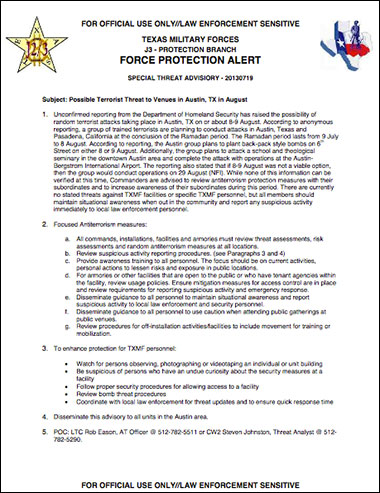
US-Backed Death Squads Massacre Hundreds of Syrian Kurds

0

US-Backed Death Squads Massacre Hundreds of Syrian Kurds
by Stephen Lendman
Western leaders are silent. Media scoundrels ignore what demands headlines. Cold-blooded murder doesn’t matter. It’s too insignificant to report. Managed news misinformation substitutes.
Syria is America’s war. It was planned years ago. Death squads were recruited. Al Qaeda, Al Nusra, and other terrorists are Washington’s shock troops.
They’re well funded, armed, trained and directed. Their mission is mass murder and destruction. They target innocent civilians. They slaughter them in cold blood. Assad’s wrongfully blamed for their crimes.
US-sponsored aggression is called humanitarian intervention. America’s responsibility to protect reflects genocide. Post-9/11, millions died. 
Mass slaughter continues. Washington bears full responsibility. Syria’s being ravaged and destroyed. Tens of thousands died. No end of conflict looms.
Death squad massacres deserves headlines. Western media point fingers the wrong way. Other times they ignore them. 
On August 6, Itar Tass said “Al-Nusra Front (and/or Jabhat Al-Nusra) militants massacred 450 Kurds in northern Syria.” They “butchered” mainly “women and children.”
Islamic Republic of Iran Broadcasting (IRIB) reported the same toll. So did Syria News. It blamed extremist foreign jihadists and Free Syrian Army (FSA) “criminals.”
Mostly women and children were murdered. On August 6, Itar Tass headlined “Moscow urges Syrian government and opposition to exert efforts to oust terrorists from Syria.” 
Foreign Minister Sergei Lavrov said militants massacred 450 Kurdish civilians. Over 100 children were included.
On August 7, Russia Today (RT) headlined “Disturbing report alleges killings of 450 Kurds in Syria,” saying:
“According to Iranian TV channel Al-Alam, militants from the Jabhat al-Nusra Front attacked the town of Tal Abyad on Monday, killing 120 children and 330 women and elderly near the Turkish border.”
Horrific uncensored footage’s too gruesome to air. Kurds interviewed said fighting continues. According to a relative of one victim:
“The al-Nusra militants and other rebel forces surrounded the village. They started going door to door, entering every house. If there were any men, they killed them and took the women and children hostage.”
Kurdish journalist Barzan Iso said:
“Al-Qaeda started attacking Kurdish villages on the 19th of July. After these attacks they kidnapped many Kurds. We don’t have a specific statistic.”
“Since the beginning of the events in Syria, the Kurds tried not to be a part of the civil conflict.”
“(T)here are non-Muslim Kurds, as well as Alawite Kurds – that’s why they tried to be away from (it).”
“But now, some of the opposition groups are using al-Qaeda and al-Nusra to attack Kurds.” 
“The main cause is that they have the mentality of radical nationalists. That’s why they are using al-Qaeda as an umbrella to attack the Kurdish people.”
Al-Alam’s report headlined “120 children slaughtered in Syria’s Tal Abyad,” saying:
“According to our reporter, terrorists attacked villages in Tal Abyad, near al-Hasakah governorate on Monday, killing (hundreds of) civilians including women and children.”
“Videos posted online by the militant groups showed hundreds of women and children in Tall ‘Aran, lying dead on the ground after their homes and plant fields were bombed.”
“Residents said the brutal attack on their homes reminded them of the Kurdish genocide, called al-Anfal Campaign, committed by slain Iraqi dictator Saddam Hussein in the late 1980s.”
“Mass killings at the hands of terrorists have been increasing in Syria during the past month.”
“As the foreign-backed insurgency in Syria continues without an end in sight, the US government has boosted its political and military support to Takfiri extremists.”
“Washington has remained indifferent about warnings by Russia and other world powers about the consequences of arming militant groups.”
Al-Nusra extremists want control of Kurdish territory. They want it for an Islamist state. They want it in northern Syria and Iraq.
Throughout the conflict, Kurds maintained self-defense forces. They remained neutral. No longer. Murdering their people compels action.
On July 30, they mobilized against death squad militants. They did so after Iso Huso’s assassination. 
He was a prominent Syrian Kurdish politician. He participated in the founding of the Kurdish Democratic Union party (PYD).
It’s the main Syrian Kurdish party. Turkey considers it a branch of the outlawed Kurdistan Workers Party (PKK).
He was a member of the Supreme Kurdish Council diplomacy committee. It’s an initiative for uniting Syrian Kurds.
Reports said a car bomb killed him. He was murdered in cold blood. Kurds mobilized in response, saying:
“We call on the Kurdish people to step forward.”
“Anyone fit to bear arms should join the ranks of the Committees for the Protection of the Kurdish People (YPG) and to face the assaults of these armed groups.”
According to RT:
“The Suriya al-Ain news portal claims that the terrorists are executing Kurdish prisoners as ‘revenge on the Kurds, for defeats inflicted on them.’ “
“One week ago, al-Nusra militants attacked two Syrian towns, taking around 200 civilians hostage.” 
“It was reported that all of those abducted came from the families of soldiers of the Kurdish Brigades who were previously part of the opposition Free Syrian Army, but later defected to the Kurdish Self-Defense forces.”
Washington backs the worst of cold-blooded killers. Obama officials claim otherwise. Their rhetoric rings hollow.
According to IHS Jane’s Defence Weekly analyst Charles Lister:
“Every major offensive in northern Syria this year has been announced, led and coordinated by Islamists.”
Colin Cavell told RT:
“Right now most of the American people are very unclear about exactly what is going on.” 
“Our media kind of keeps it down low on one end, and on the other end it says we are supporting moderate democratic opposition, which is hilarious to anybody who is following this.” 
“We are supporting Al-Qaeda-linked Jihadists, who are massacring people.”
Kurt Nimmo said former Al Qaeda member Nabil Naiim called Al Nusra leader Abu Mohammed al-Jawlani a “CIA operative.”
According to Nimmo, he’s “connected to Turkish intelligence.”
The Syrian National News Agency (SANA) headlined “Lavrov: Combatting terrorism in Syria becoming more pressing issue,” saying:
He cited massacres like the one discussed above. He blamed Al Nusra and other terrorist groups. He urged Assad to rout and expel them.
He stressed the need to implement agreed on Geneva One provisions. Washington, key NATO allies, Israel, and rogue Arab state partners ignore them.
He warned against delaying Geneva Two. Doing so lets slaughter continue. He blamed extremist anti-government fighters. Their unwillingness to negotiate peace lets conflict continue.
He stressed the need for a diplomatic solution. Resolving things militarily won’t work. Guerrilla fighting can continue longterm. Doing so assures many thousands more will die.
Lavrov wants what he won’t get. US obstructionism prevents it. He wants Security Council condemnation of Al Nusra fighters slaughtering hundreds of Kurds.
It’s not “the first report of such a massacre,” he said, “but the continued violence is going off the scale.” 
He wants decisive action to stop it. He wants the international community to send a clear and unequivocal message.
“We saw before some Security Council members reluctant to condemn terror attacks in Syria on the grounds that – as cynical as it sounds – those attacks are being carried out by the people fighting against an obsolete regime,” he said.
“This position is absolutely unacceptable. No double standards can be applied to terrorism.” Terrorists are unequivocal about their intentions. They want Syria transformed into an Islamofascist state.
On August 7, Syria’s permanent UN envoy Bashar al-Jaafari called on Arab League leaders to respect their charter. He urged them to free themselves from petrodollar control.
He wants them to respect international law. Peace and security matter most. Syria’s willing to cooperate. It supports national dialogue, he said. He wants violence ended.
Saudi Arabia, Qatar and other Arab state highjacked the League’s agenda. They support imperial interests. They betray their own people. They’re subservient to petrodollar hegemony.
They violate international law. They spurn peace. They support anti-Syrian foreign aggression. They arm and fund terrorist fighters. They’re responsible for thousands of lost lives.
Al-Jaafari urged Arab League leaders to support peaceful conflict resolution. Doing so requires rejecting foreign intervention.
Stephen Lendman lives in Chicago. He can be reached at lendmanstephen@sbcglobal.net. 
His new book is titled “Banker Occupation: Waging Financial War on Humanity.”
http://www.claritypress.com/LendmanII.html
Visit his blog site at sjlendman.blogspot.com. 
Listen to cutting-edge discussions with distinguished guests on the Progressive Radio News Hour on the Progressive Radio Network.
It airs Fridays at 10AM US Central time and Saturdays and Sundays at noon. All programs are archived for easy listening.
http://www.progressiveradionetwork.com/the-progressive-news-hour 
http://www.dailycensored.com/us-backed-death-squads-massacre-hundreds-of-syrian-kurds/

…read more

Republished from: Stephen Lendman

Shot to Death by Police for Betting on a Football Game? The Rise of Paramilitary Force in America

0

August 7, 2013
 |

Like this article?

Join our email list:

Stay up to date with the latest headlines via email.

Sal Culosi is dead because he bet on a football game – but it wasn’t a bookie or a loan shark who killed him. His local government killed him, ostensibly to protect him from his gambling habit.

Several months earlier at a local bar, Fairfax County, Virginia, detective David Baucum overheard the thirty-eight-year-old optometrist and some friends wagering on a college football game. “To Sal, betting a few bills on the Redskins was a stress reliever, done among friends,” a friend of Culosi’s told me shortly after his death. “None of us single, successful professionals ever thought that betting fifty bucks or so on the Virginia—Virginia Tech football game was a crime worthy of investigation.” Baucum apparently did. After overhearing the men wagering, Baucum befriended Culosi as a cover to begin investigating him. During the next several months, he talked Culosi into raising the stakes of what Culosi thought were just more fun wagers between friends to make watching sports more interesting. Eventually Culosi and Baucum bet more than $2,000 in a single day. Under Virginia law, that was enough for police to charge Culosi with running a gambling operation. And that’s when they brought in the SWAT team.

On the night of January 24, 2006, Baucum called Culosi and arranged a time to drop by to collect his winnings. When Culosi, barefoot and clad in a T-shirt and jeans, stepped out of his house to meet the man he thought was a friend, the SWAT team began to move in. Seconds later, Det. Deval Bullock, who had been on duty since 4:00 AM and hadn’t slept in seventeen hours, fired a bullet that pierced Culosi’s heart.

Sal Culosi’s last words were to Baucum, the cop he thought was a friend: “Dude, what are you doing?”

In March 2006, just two months after its ridiculous gambling investigation resulted in the death of an unarmed man, the Fairfax County Police Department issued a press release warning residents not to participate in office betting pools tied to the NCAA men’s basketball tournament. The title: “Illegal Gambling Not Worth the Risk.” Given the proximity to Culosi’s death, residents could be forgiven for thinking the police department believed wagering on sports was a crime punishable by execution.

In January 2011, the Culosi family accepted a $2 million settlement offer from Fairfax County. That same year, Virginia’s government spent $20 million promoting the state lottery.

The raid on Sal Culosi was merely another red flag indicating yet more SWAT team mission creep in America. It wasn’t even the first time a Virginia SWAT team had killed someone during a gambling raid. In 1998 a SWAT team in Virginia Beach shot and killed security guard Edward C. Reed during a 3:00 AM raid on a private club suspected of facilitating gambling. Police said they approached the tinted car where Reed was working security, knocked, and identified themselves, then shot Reed when he refused to drop his handgun. Reed’s family insisted the police story was unlikely. Reed had no criminal record. Why would he knowingly point his gun at a heavily armed police team? More likely, they said, Reed mistakenly believed the raiding officers were there to do harm, particularly given that the club had been robbed not long before the raid. Statements by the police themselves seem to back that account. According to officers at the scene, Reed’s last words were, “Why did you shoot me? I was reading a book.”

As the Texas Hold ’Em craze picked up momentum in the mid-2000s, fans of the game started hosting tournaments at private clubs, bars, and residences. Police in many parts of the country responded with SWAT raids. In 2011, for example, police in Baltimore County, Maryland, sent a tactical unit to raid a $65 buy-in poker game at the Lynch Point Social Club. From 2006 to 2008, SWAT teams in South Carolina staged a number of raids to break up poker games in the suburbs of Charleston. Some were well organized and high-stakes, but others were friendly games with a $20 buy-in. “The typical police raid of these games . . . is to literally burst into a home in SWAT gear with guns drawn and treat poker players like a bunch of high-level drug dealers,” an attorney representing poker players told a local newspaper. “Using the taxpayers’ resources for such useless Gestapo-like tactics is more of a crime than is playing of the game.”

Republished from: AlterNet

'A Dream Foreclosed': How Financial Predators Created a Crisis That Led to 10 Million Americans Being Evicted

0

As President Obama heads to Phoenix today to tout the “housing recovery,” journalist Laura Gottesdiener examines the devastating legacy of the foreclosure crisis and how much of the so-called recovery is a result of large private equity firms buying up hundreds of thousands of foreclosed homes. More than 10 million people across the country have been evicted from their homes in the last six years. Her new book, “A Dream Foreclosed: Black America and the Fight for a Place to Call Home,” focuses on four families who have pushed back against foreclosures. “The banks exploited a larger historical trajectory of discrimination in lending and in housing that has existed since the beginning of this country. The banks intentionally went into communities that had been redlined, which meant that the Federal Housing Administration had made it a policy to not lend and not to guarantee any loans in minority neighborhoods all throughout most of the 20th century that didn’t supposedly end until well into the 1960s,” Gottesdiener says. “And they exploited that historical reality and pushed the worst of the worst loans in these communities that everyone knew were unpayable debts – that Wall Street knew.”

AMY GOODMAN: We are going to continue to look at this issue of foreclosures, as we turn now to a new book that documents those who are fighting back. Our guest is Laura Gottesdiener, author of A Dream Foreclosed: Black America and the Fight for a Place to Call Home, which was just published by Zuccotti Park Press. The book follows how people have dealt with the housing crisis within the context of the broader financial collapse, focusing on the story of four families who have pushed back against foreclosures at a time when more than 10 million people across the country have been evicted from their homes in the last six years. Laura is also associate editor at Waging Nonviolence.

Laura, welcome to Democracy Now! It’s a really incredible book. Ten million people foreclosed on, the size of the state of Michigan.

LAURA GOTTESDIENER: Yeah, 10 million. Amy, thank you so much for having me; it’s really a pleasure. I mean, when I was starting to look at these numbers and I saw that we were talking about 10 million people, the number people who currently live in the state of Michigan, I was floored. And the reason I was floored is because we don’t hear that number–ever. And the reason that we don’t measure this crisis in terms of the actual number of people, of families who have been evicted, of missed school days, of destabilized dinners–of the way that human people have actually been affected–is because we don’t value families, we don’t value human life, as much as we value, you know, stock prices, speculation and monetary value of homes. And so, to me, the fact that nobody even knows that 10 million people have been evicted since 2007 betrays the larger, fundamental problem that allowed this crisis to happen in the first place.

AMY GOODMAN: As Clarence Lusane, who writes the foreword to your book, points out in the first sentence, that few recall that one week after Dr. King’s murder, on April 11, 1968, President Lyndon Johnson signed into law the Fair Housing Act, which outlaws discrimination in the sale, rental, financing of dwellings and in other housing-related transactions based on race, color, national origin, religion, sex, familial status or disability. There hasn’t been a Wall Street executive jailed for what has happened to the population, what, 10 million people?

LAURA GOTTESDIENER: Yeah, not a single one. And it’s interesting, because, yes, the Fair Housing Act was signed in 1968, and the Fair Lending Act in 1977, but that didn’t stop the banks from systematically and intentionally discriminating against people on the basis of race. The way that it happened has been incredibly well documented. One loan officer testified that they put–that Wells Fargo put bounties on the heads of minority borrowers by paying cash incentives to loan officers to push those aggressively in minority neighborhoods.

Republished from: AlterNet

7 Right-Wing Christians Who Broke the Same Sexual Rules They Impose on Others

0

August 7, 2013
 |

Like this article?

Join our email list:

Stay up to date with the latest headlines via email.

Right-wing Christians have a lot of ridiculous sexual rules to control and direct sexual behavior: Everything from frowning on all nomarital sex to denouncing homosexuality to objecting to divorce. Of course, the problem they run up against is that consenting adults have lives that are complex, emotional and messy, and they’re going to make decisions based on their own circumstances and not the rules. This is so true that the very people espousing these strict rules about sex and marriage can’t even be bothered to follow them. Here’s some examples.

1) Catholic vicar Arthur M. Coyle caught with a prostitute. The Catholic Church has a long, long list of “nos” when it comes to sex, so long that it’s easier to list what you can do than what you can’t under their rules: Have contraception-free sex within marriage. That’s it, and if you’re a priest, even that is off the table for you. Which is why it’s newsworthy that Monsignor Arthur Coyle, who has been holding the high office of episcopal vicar for the Archdiocese of Boston was recently arrested for soliciting sex from a prostitute. The cops noted that Coyle was routinely spotted in the area where the prostitutes hung out, and so really, it was just a matter of time before he got caught. As usual, any lessons about what kind of behavior people will get up to if they’re denied healthy outlets for their sexuality will be ignored by the Catholic hierarchy.

2) Bill O’Reilly, sex pest. Bill O’Reilly really dislikes contraception and routinely hints to outright declares on his show that abstaining from premarital sex is the only legitimate way to prevent things like unintended pregnancy. He also is a self-appointed monitor of the virtue of other Catholics, at least that of his ex-wife; he actually tried to get her ex-communicated from the church for daring to remarry, because that’s considered “adultery” by church teachings (the church teaches that marriage is for life, and you cannot divorce, much less remarry). Of course, O’Reilly had no problem with adultery when he was trying to bed his coworker Andrea Mackris in 2004, repeatedly pestering her for sex despite her obvious lack of interest. It got so bad she eventually sued him for sexual harassment, and he was forced to settle out of court.

3) Bill Donohue, bad Catholic. Bill Donohue, president of the Catholic League and all-around moralizing blowhard, loves to wax on and on about how other people are required to live by his Catholic-shaped view of marriage as a duty and an institution, not an expression of love. For instance, in 2013, Donohue denounced gay marriage by saying, “The whole purpose of marriage is to have a family. It’s not about making people happy. It’s not about love.” Of course, his belief that marriage is about creating a family, with or without love, didn’t stop him from breaking up his own loveless marriage. Donohue is a divorced father of two, suggesting that his rules about living life for religious duty instead of making one’s choices for love apply to other people but not himself.

4) Ted Haggard, meth-smoking gay sex lover. Ted Haggard was instrumental in crafting the 21st-century evangelical resurgence movement’s pitch about their sexual rules: That if you followed their rules (no homosex, no sex before marriage, complete focus on your spouse), then you would have the hottest sex imaginable. As president of the National Association of Evangelicals, Haggard went on record claiming that “evangelicals have the best sex of any group” and suggesting that the typical evangelical couple went at it seven times a week. How Haggard managed to find the time to do that with his own wife is tough to say, however, because he spent so much time having gay sex outside of his marriage, both with at least one prostitute (who outed him to the press) and one other man who volunteered for him. Haggard has toned down the fire-and-brimstone approach a bit, but is still working as a pastor.

Republished from: AlterNet

McDonalds Can Afford To Pay Its American Workers Significantly More

0

Photo Credit: Bruce Marlin: McDonalds museum

August 7, 2013
 |

Like this article?

Join our email list:

Stay up to date with the latest headlines via email.

The following was originally published on ThinkProgress.org.

While the average McDonalds employee in the United States makes just above the $7.25 minimum wage, that story is different in other countries. As Jordan Weissmann reports at The Atlantic, the minimum wage for full-time adult workers in Australia is $14.50 and McDonalds employees just negotiated a 15 percent raise by 2016. Yet the company has about 900 locations in the country.

Meanwhile, its profit margins at company-owned restaurants are higher in Europe than in the U.S. despite many countries there having a higher minimum wage. France’s minimum is about $12 an hour, and yet there are more than 1,200 locations there.

Residents of other countries pay more for their Big Macs, in part at least to make up for those extra costs, but the increase in prices is not drastic. Australians paid an average of $4.62 in U.S. dollars for a Big Mac in July and it cost $4.66 in the eurozone, while Americans paid $4.56. That’s a difference of about 6 to 10 extra cents, which would mean raising Big Mac prices a little over 2 percent in the U.S. to come equal with those in Europe.

Higher prices are related to the fact that the company does spend more on the cost of labor in other countries. In the U.S., it spends about 25 percent of its expenses on workers at the locations it owns, and franchises usually assume labor costs will take up about 30 to 35 percent. Worldwide, those costs have been found to come to closer to 45 percent of expenses. But the company reported nearly $5.5 billion in net income overall last year, up from about $2.4 billion in 2007, with more revenues coming from Europe than the U.S.

Australian locations have other ways to keep labor costs low, like exploiting a loophole that only requires an $8 wage for teenagers. Weissmann also reports that the company likely gives its higher paid European employees more responsibility and so ekes out more productivity from those workers. While productivity has risen in the U.S., wages haven’t.

But it’s clear, even to the company itself, that its American wages are not enough to get by on. It released a sample budget for employees that suggested paying nothing for heat, getting a second job, and spending just $20 a month on health care. While it claims to be an above minimum wage employer in the U.S., its average wages are mere cents more.

The inability to get by on its low wages has sparked pushback from workers across the country, with fast food workers striking in nine different cities. They are calling for a $15 minimum wage, the same as Australia’s, which is higher than President Obama’s $9 an hour proposal and Congressional Democrats’ of $10.10 an hour.

Byrce Covert is the Economic Policy Editor for ThinkProgress. She was previously editor of the Roosevelt Institute’s Next New Deal blog and a senior communications officer. She is also a contributor for The Nation and was previously a contributor for ForbesWoman.

Republished from: AlterNet

What Mainstream Culture Hides About Sex, Women and Orgasms

0

August 7, 2013
 |

Like this article?

Join our email list:

Stay up to date with the latest headlines via email.

This originally appeared on Everyday Feminism. Republished here with permission.

Sexual pleasure is not a one-way street.

If you are a woman who has had one, two, or any number of sexual partners, you may know that sex should always feel good for both partners.

If you are a woman who has not yet had sex, you probably hope that your first time, and times subsequent, will be equally pleasurable for everyone involved.

After all, our sexual relationships are outlets for pleasure.

I mean, who doesn’t have a Kama Sutra app on their iPhone? Who hasn’t read “10 Ways to Please Your Man With an Ice Cube” in a Cosmopolitan magazine?

OK, maybe we’re all not all as guilty as I am, but the truth is that seeking sexual pleasure is normal and healthy–yes, even for you.

In a healthy sexual relationship, partners should discuss what turns them on and what boundaries they are willing to push. They learn about one another’s bodies and maybe with time, develop synchronicity.

And foremost, they understand that enjoying the moment is what makes it special, whether both reach orgasm or not.

Surely, we all love orgasms. But our media and cultural perceptions would have us believe that heterosexual men are more deserving of orgasms.

In an article I recently read, for instance, the writer unashamedly wrote:

“It is no secret that both men and women alike have sexual urges. Men, however, feel the need to get off more often than most women.”

As if!

But there really is a tendency to believe that men desire sexual pleasure more than women.

I can’t think of one big blockbuster movie where a couple is having sex and the man doesn’t reach orgasm to signify the end of the sex scene. Can you?

And don’t even get me started on the fact that movies showing sex scenes where a woman is receiving pleasure are often marked as inappropriate and given higher ratings by the Motion Picture Association of America (MPAA)

In 2010, the indie film Blue Valentine initially received an NC-17 rating from the MPAA for showing a brief (and non-nude, might I add) scene where actress Michelle Williams is receiving oral sex from her movie boyfriend, actor Ryan Gosling. The rating stands for “No One 17 and Under Admitted” and is reserved for movies with pornographic sex scenes.

Pornographic?!

Similarly, the movie Monster’s Ball also faced an uphill battle with the MPAA when they originally gave the movie an NC-17 rating for showing a scene where the actress Halle Berry is receiving oral sex from actor Billy Bob Thorton.

The MPAA’s reluctance to label movies that show more realistic examples of sex between couples as inappropriate is a very telling sign of how our society views female pleasure.

Even Ryan Gosling himself (hey, girl) had something to say about the Blue Valentine rating: “The MPAA is OK supporting scenes that portray women in scenarios of sexual torture and violence for entertainment purposes, but they are trying to force us to look away from a scene that shows a woman in a sexual scenario which is both complicit and complex.”

Even our beloved romantic comedies are steeped in stereotypes of sex.

I love the movie Forgetting Sarah Marshall. I could watch it 10 times in one day and still laugh. But when I see the movie through my lens as a sexual woman and a feminist, I notice a lot of scenes that play up stereotypes about heterosexual sex.

In one scene the character played by Jason Segel, Peter, is trying to have sex with his movie ex-girlfriend Sarah, played by Kristen Bell. The key word is trying, because he is unsuccessful in getting an erection, and the moment is ruined. The scene is a pivotal moment to show that Peter is indeed over Sarah: His penis didn’t even want her.

Republished from: AlterNet

Why Do the People Raising Our Children Earn Poverty Wages?

0

August 7, 2013
 |

Like this article?

Join our email list:

Stay up to date with the latest headlines via email.

The following article first appeared on the  Nation.com. For more great content from the Nation, sign up for their email newsletters  here.

Shanita Hargrove lives in a sunny second-floor apartment in Newark, New Jersey, not far from Mayor Cory Booker’s house and, all too often, an electric roadside sign marking a recent homicide. On a winter morning, she was caring for two infants: 7-month-old Shawn and 5-month-old Jade, whose older sister had been with Hargrove years before. The babies were in and out of sleep, lying faceup on a colorful trio of yoga mats.
 
Hargrove handles children with the easy skill of a baker handling dough. She leans Shawn against her wide bosom, cooing in a Southern alto. She massages his back and feet and lightly touches his neck, which stimulates good hormones, she says.

She’s been in this work a long time, having helped raise her younger brothers in North Carolina. “The majority of us providers, you’ll find out, were taking care of children when we were children ourselves,” she tells me.

As an adult, Hargrove found herself in New Jersey, the single parent of a young son and daughter, working days as an office manager and nights in fast food. “The hardest part was being separate from them for that long, even more than the hours and being drained.

“Sometime later, I had stopped working and gotten on public assistance, and when I didn’t have childcare, I found out about Programs for Parents,” she adds, referring to Newark’s childcare training and referral agency. Through PfP, Hargrove obtained care for her son and later became a licensed provider. Today, she tends to kids in her predominantly African-American community, many of whom are covered by public childcare subsidies.

Despite Hargrove’s thirteen years of caregiving experience, her income is unsteady and sparse. Her earnings have ranged from $0 for weeks at a time to a short-lived career high of $3,000 per month, which brought her household to 200 percent of the federal poverty level. “I’ve had to go on and off food stamps several times–especially when I had my children, before they went to college–depending on how the childcare was going,” she says. Hargrove has even qualified for Medicaid.

Subsidy rates are low, and she charges the same–just $165 per week for fifty hours of infant care–to private-pay clients. With one or two children, she can’t make ends meet, and Hargrove rarely has the state maximum of five in her care. “There are times that you have no clients, so if you get a drop-off–somebody just needs you for a few hours–you do that.”

Hargrove does other side jobs as well: typing résumés, cleaning houses and watching elderly relatives. In the summer, she tries not to use the air-conditioner. She also bargain-shops for groceries and baby supplies–difficult without a car–and accepts donated furniture from struggling clients, sometimes in lieu of payment. “You know what they’re going through, and you give them a break,” she says. “But usually it comes around, because as you bless these parents, they will bless you.”

* * *

Throughout New Jersey, more than 2,000 in-home or “family childcare” providers tend to infants, toddlers and school-age children from low- and middle-income households. These providers are unlike nannies, who work in private homes and need not register with the state. As independent contractors, they are also distinct from daycare center employees entitled to the minimum wage and overtime.

The typical in-home provider is a middle-aged woman of color with children of her own. Like Hargrove, she enters the field to raise her own kids and earn a living minding others’. The government pays her to watch the poorest of these children, whose parents–often single moms–are in welfare-to-work programs or juggling minimum-wage jobs. She also cares for private-pay kids, whose parents, though low- and middle-income, do not qualify for help.

Republished from: AlterNet

Are Snowden, Greenwald and Wikileaks Winning?

0

August 7, 2013
 |

Like this article?

Join our email list:

Stay up to date with the latest headlines via email.

“It is a slap in the face of all Americans,” said Senator John McCain (R – AZ), referring to Russia’s decision to grant asylum to Edward Snowden. He demanded that the Russians face ” serious repercussions ” for their decision.

Well, turn the other cheek, I say. McCain ran for president in 2008 promising to be more belligerent towards the Russians, so this is normal for Dr.Strangelove and his crusty Cold War foaming at the mouth.

Not to be outdone, Democratic Senator Charles Schumer (D-NY) said that Russia had “stabbed us in the back,” and that “each day that Mr. Snowden is allowed to roam free is another twist of the knife”.

Twist and shout! The Russians did a big favour for the freedom-loving peoples of the world, including those in the US who can still think with our own brains. The self-righteous pundits who complain about Russia’s own human rights record, as if this were even remotely relevant, might try to recall how Snowden ended up there in the first place. He was passing through Moscow on his way to South America, and it was only by virtue of Washington’s ” gross violations of his human rights,” as Amnesty International called it, that he got stuck there.

Indeed, the whole chase scene is symbolic of the difficulties in which Washington finds itself immersed. Unable to win their case in the court of public opinion, the self-styled leaders of the free world resort to threats and bullying to get their way – which kind of sums up American foreign policy in the second decade of the 21st century. And the spectacle of US attorney general Eric Holder trying to offer Russia assurances that his government would not torture or execute Snowden speaks volumes about how far the US government’s reputation on human rights – even within the United States – has plummeted over the past decade.

Meanwhile, Snowden and Glenn Greenwald and Wikileaks are winning. At the outset Snowden said his biggest fear was that people would see “the lengths that the government is going to grant themselves powers unilaterally to create greater control over American society and global society and that ‘ nothing will change‘”. But his disclosures have already created a new debate, and political change will follow.

Two weeks ago there was a surprisingly close call in the US House of Representatives, with the majority of House Democrats and 94 of 234 Republicans defying their House (and Senate) leadership, the White House, and the national security establishment in a vote to end the NSA’s mass collection of phone records. The amendment was narrowly defeated by a vote of 205 to 217, but it was clear that “this is only the beginning,” as John Conyers (D-MI), ranking Democrat on the Judiciary Committee announced.

A week later Patrick Leahy (D-VT), Democratic Chair of the Senate Judiciary Committee, called a hearingwhere he challenged the Obama administration’s claims that the NSA dragnet had been effective in disrupting terrorist plots. According to Leahy, the classified list that he had been shown of “terrorist events” did not show that “dozens or even several terrorist plots” had been thwarted by the NSA’s surveillance of domestic phone calls.

It is beginning to sink in that the main target of the NSA’s massive spying programmes is not terrorism but the American people themselves (as well as other non-terrorist populations throughout the world). Pew Research finds for the first time since 2004 that there are more Americans concerned that government “anti-terror” programmes have “gone too far in restricting civil liberties” than those who think not enough has been done to protect people from terrorism.

Republished from: AlterNet

White People’s Racial Discomfort

0

August 7, 2013
 |

Like this article?

Join our email list:

Stay up to date with the latest headlines via email.

Mark Zuckerberg spoke out yesterday in support of immigration reform, along with other leaders in the tech and business industries. The day before, a major evangelical Christian association reaffirmed its support for a path to citizenship. And a majority of Republican voters – even GOP primary voters – support immigration reform. Yet House Republicans have stalled comprehensive immigration reform legislation because they are playing to a small base of extremist right-wingers who respond to racialized divisiveness.

Regarding undocumented immigrants brought to the United States as children, Iowa Rep. Steve King recently said,

They aren’t all valedictorians. They weren’t all brought in by their parents.  For everyone who’s a valedictorian, there’s another hundred out there who weigh a hundred and thirty pounds–and they’ve got calves the size of cantaloupes because they’re hauling seventy-five pounds of marijuana across the desert.

With that one image – “calves the size of cantaloupes” – Rep. King captured the implicit racial discomfort behind opposition to basic immigration reform in America. And make no mistake, racial discomfort is the overwhelming motivation behind opposition to creating a path to citizenship for millions of aspiring Americans.

Opponents will try to argue otherwise, claiming their stance is rooted not in blanket disdain for new immigrants but in a law-and-order-based notion that undocumented immigrants “broke the law” and shouldn’t be able to “jump the line” to citizenship. But even this contains embedded racial coding. White folks speak of their own honorable immigrant forebearers, forgetting both that there was no “line” to speak of when most of our immigrants came to the United States because until fairly recently in our nation’s history, we didn’t have immigration laws or restrictions. And those who did come, especially Irish and Italians, were originally subject to the same sort of racialized discrimination their descendants are embracing now.

Meanwhile, the class of wealthy, white Wall Street bankers, many of whom illegally foreclosed on hundreds of thousands of family homes and crashed our economy, retains its power and prestige – but low-wage, brown-skinned immigrants simply working hard to feed their families are called “criminals”?

Rep. King’s colleagues, Republican and Democrat alike, have thankfully condemned his overtly biased – and extremely messed up – characterization of young immigrants. And yet what King arguably did was merely say what many of his compatriots are thinking: that undocumented Latino immigrants are some kind of dirty and dangerous underclass threatening our pure (read: white) nation. These voices have long talked about undocumented immigrants “flooding” or even “invading” America, which isn’t just economic or political imagery but cultural: an implicitly biased sky-is-falling sense of America as we have known it becoming something different, something foreign.

The sense of disastrous and destructive change to the American way is understandable. After all, economic inequality in America has grown tremendously while mobility is more stagnant than ever. Certainly we made progress in expanding social, political and economic opportunity in the last several decades, especially to women and people of color, but the vast majority of Americans have been working harder and harder for less and less. The present reality for most middle-class and working-class Americans is bleak and the prospects for their future and their children’s future is worse. Amid the panic brought on by such uncertainty and devastation, it’s easy to look around and draw correlations between other changes in our cultural landscape – pinning economic decline to the increase of people of color in the workplace or the expansion of women’s reproductive freedom or the growing number of Latino immigrants. The economic anxiety of working- and middle-class white America is clearly and dramatically misplaced, but their anxiety is still real and justified.

Republished from: AlterNet

Germany seeks deeper Iran ties

0

German Chancellor Angela Merkel has congratulated Hassan Rohani on the start of his term as Iranâ„¢s president, calling for closer relations with Tehran.

In a message to Rohani, the German chancellor expressed hope to see the opportunity arise during his tenure to deepen the existing cordial ties between the two nations.

Merkelâ„¢s message was submitted to Iranâ„¢s Deputy Foreign Minister for Western European Affairs Abolqasem Delfi by German Ambassador to Tehran Michael Freiherr von Ungern-Sternberg on Wednesday.

In her message, Merkel stated that Rohaniâ„¢s election raises the hope for a new phase in constructive cooperation to help promote regional and international peace and security.

Germany will continue to cooperate with its international partners to help work out suitable solutions to the existing challenges, the message read.

Germany is a member of the P5+1 group of countries that has engaged in talks with Iran over its nuclear energy program, among other issues. The other members of the group are the five permanent members of the UN Security Council – Britain, China, France, Russia and the United States.

In addition to Germany, other major European countries, including Britain, France and Italy, have also congratulated Rohani on his presidency and called for closer relations with his administration.

Rohani took the oath of office on August 4, one day after being endorsed by Leader of the Islamic Revolution Ayatollah Seyyed Ali Khamenei.

On Tuesday, in his first press conference after taking office, Rohani said his administration pursues a Å“win-win” approach to finding a solution to the disagreements over Iranâ„¢s nuclear energy program, adding, Å“We are prepared to enter serious and meaningful negotiations with determination and without wasting time.”

Delegations from over 50 countries attended Rohaniâ„¢s swearing-in ceremony. Among the foreign dignitaries present were 10 presidents, six vice-presidents, two prime ministers and eight parliament speakers as well as several prominent former officials.

MFB/NN/HSN

…read more

Republished from: Press TV

Blast injures four Israeli soldiers

0

Israeli troops monitor the border with Lebanon near the southern Lebanese village of Kfar Kila. (File photo)

Four Israeli soldiers have been wounded in an unexpected explosion that occurred after they crossed the border into Lebanon, the Lebanese army says.

The Lebanese military described the incident during the early hours of Wednesday as a Å“new violation of Lebanese sovereignty.”

An army statement added that Lebanon has launched an investigation into the incident to find the nature of the pre-dawn blast.

Lebanonâ„¢s Foreign Minister Adnan Mansour also said that Beirut will file a complaint with the UN over the violation of the countryâ„¢s sovereignty.

He said that the incident Å“reveals again the Israeli enemyâ„¢s hidden intensions through its infiltration of Lebanese territory.”

The UN Interim Force in Lebanon, known as UNIFIL, also said that it was investigating the reports and a team of peacekeepers has traveled to the site of the blast.

Israeli Minister for Military Affairs Moshe Yaalon also confirmed the incident, but claimed that it happened Å“in operational activity along the Lebanon border” and not inside the Lebanese soil.

Yaalon added that the explosion injured four soldiers, some lightly, others moderately.

Å“During the operational activity, the force came upon an explosive,” he said.

The incident was a rare occurrence since the Israeli troops withdrew from Lebanon in 2000, ending an 18-year military occupation there.

The Israeli regime also launched a war on the Lebanese resistance movement Hezbollah in 2006. The conflict killed about 1,200 Lebanese people and 160 Israelis.

DB/HSN

…read more

Republished from: Press TV

EU: Egypt crisis needs peaceful solution

0

Supporters of Egyptâ„¢s ousted President Mohamed Morsi hold his photo during a protest in the Mediterranean city of Alexandria, August 6, 2013.

The European Union has stressed the importance of diplomatic efforts to end the crisis in Egypt, urging all sides to reach a Ëœpeaceful solution.â„¢

In reaction to the Egyptian presidencyâ„¢s statement that international mediation efforts had ended, Michael Mann, a spokesman for EU foreign policy chief Catherine Ashton said on Wednesday, Å“We are very concerned about the latest reports.”

Å“The EU is urging all political groups to find a peaceful solution to the current stalemate. We are present on the ground talking to all sides,” he added, referring to EU envoy Bernardino Leon, who is on a mediation mission to Egypt.

Earlier in the day, the Egyptian presidency said more than 10 days of diplomatic efforts by envoys of foreign countries, including the United States, to resolve the crisis in Egypt had failed.

Å“The phase of diplomatic efforts has ended today. These efforts have not achieved the hoped for results,” the presidency said in a statement.

The statement held the Muslim Brotherhood responsible for the failure of the efforts, and also for Å“consequent events and developments relating to violations of the law and endangering public safety.”

The statement followed mediations by the EU and the US to resolve the crisis, which erupted after the July 3 ouster of President Mohamed Morsi.

US Deputy Secretary of State William Burns, senior US senators John McCain and Lindsey Graham, as well as EU envoy traveled to Cairo, where they were joined by delegates from the United Arab Emirates (UAE) and Qatar.

Egypt has been the scene of violence since the overthrow of Morsi. Scores of people, most of them supporters of Morsi, have been killed or injured.

MR/HSN

…read more

Republished from: Press TV

The Rise Of The Bear: 18 Signs That Russia Is Rapidly Catching Up To The United States

0
Russia

The Russian Bear is stronger and more powerful than it has ever been before. Sadly, most Americans don’t understand this. They still think of Russia as an “ex-superpower” that was rendered almost irrelevant when the Cold War ended. And yes, when the Cold War ended Russia was in rough shape. I got the chance to go over there in the early nineties, and at the time Russia was an economic disaster zone. Russian currency was so worthless that I joked that I could go exchange a 20 dollar bill and buy the Kremlin. But since that time Russia has roared back to life. Once Vladimir Putin became president, the Russian economy started to grow very rapidly. Today, Russia is an economic powerhouse that is blessed with an abundance of natural resources. Their debt to GDP ratio is extremely small, they actually run a trade surplus every year, and they have the second most powerful military on the entire planet. Anyone that underestimates Russia at this point is making a huge mistake. The Russian Bear is back, and today it is a more formidable adversary than it ever was at any point during the Cold War.

Just check out the following statistics. The following are 18 signs that Russia is rapidly catching up to the United States…

#1 Russia produces more oil than anyone else on the planet. The United States is in third place.

#2 Russia is the number two oil exporter in the world. The United States is forced to import more oil than anyone else in the world.

#3 Russia produces more natural gas than anyone else on the planet. The United States is in second place.

#4 Today, Russia supplies 34 percent of Europe’s natural gas needs.

#5 The United States has a debt to GDP ratio of 101 percent. Russia has a debt to GDP ratio of about 8 percent.

#6 The United States had a trade deficit of more than half a trillion dollars last year. Russia consistently runs a large trade surplus.

#7 The United States has an unemployment rate of 7.4 percent. Russia has an unemployment rate of 5.4 percent.

#8 Since Vladimir Putin first became president of Russia, the Russian economy has grown at a very rapid pace. The following is from Wikipedia…

Under the presidency of Vladimir Putin Russia’s economy saw the nominal Gross Domestic Product (GDP) double, climbing from 22nd to 11th largest in the world. The economy made real gains of an average 7% per year (1999: 6.5%, 2000: 10%, 2001: 5.7%, 2002: 4.9%, 2003: 7.3%, 2004: 7.2%, 2005: 6.4%, 2006: 8.2%, 2007: 8.5%, 2008: 5.2%), making it the 6th largest economy in the world in GDP(PPP). In 2007, Russia’s GDP exceeded that of 1990, meaning it has overcome the devastating consequences of the recession in the 1990s.

During Putin’s eight years in office, the industry grew by 75%, investments increased by 125%, and agricultural production and construction increased as well. Real incomes more than doubled and the average salary increased eightfold from $80 to $640. The volume of consumer credit between 2000—2006 increased 45 times, and during that same time period, the middle class grew from 8 million to 55 million, an increase of 7 times. The number of people living below the poverty line also decreased from 30% in 2000 to 14% in 2008.

#9 According to Bloomberg, Russia has added 570 metric tons of gold to their reserves over the past decade. In the United States, nobody seems to be quite sure how much gold the Federal Reserve actually has left.

#10 Moscow is the second most expensive city in the world. Meanwhile, the United States actually has the unfriendliest city in the world (Newark, New Jersey).

#11 More billionaires live in Moscow than in any other city on the globe.

#12 The Moscow metro system completely outclasses the subway systems in Washington D.C. and New York City.

#13 The United States has the most powerful military on the planet, but Russia is in second place.

#14 Russia has introduced a new “near silent” nuclear submarine which is far more quiet than anything the U.S. has…

The Borey Class submarine, dubbed Vladimir Monomakh, has a next generation nuclear reactor, can dive deeper than 1,200 feet, and carries up to 20 nuclear intercontinental ballistic missiles (ICBM).

Each of these “Bulava” ICBM’s can carry ten detachable MIRV warheads, what they call “re-entry vehicles,” capable of delivering 150 kiloton yields per warhead

#15 While Barack Obama is neutering the U.S. strategic nuclear arsenal, Vladimir Putin is working hard to modernize Russian nuclear forces.

#16 Russian missile forces will hold more than 200 drills during the second half of 2013.

#17 Russian Prime Minister Vladimir Putin made headlines all over the world when he climbed into the cockpit of Russia’s new “fifth generation” fighter jet and announced that it was far superior to the F-22 Raptor.

#18 It is estimated that Russia has more spies inside the United States today than it did at any point during the Cold War.

Unfortunately, whenever I write an article about Russia I find that most people simply do not get it. They will make statements such as “the Cold War is over” or “Russia is our friend” which show a complete and total lack of understanding of the current geopolitical situation.

Russia has been steadily building a stronger relationship with China, and collectively they represent the number one strategic threat to the United States.

Someday this will become abundantly clear to the American people. Hopefully it will not be too late by the time they realize it.

Republished from: The Economic Collapse

Venezuela rejects Capriles allegations

0

Venezuelaâ„¢s Supreme Tribunal of Justice (TSJ) has dismissed allegations by opposition leader Henrique Capriles of fraud in the April presidential election.

On Wednesday, the TSJ rejected an appeal by Capriles against the election results.

TSJ President Gladys Gutierrez said, Å“The appeal has been declared inadmissible.”

Official results from the April 14 election gave Nicolas Maduro, the Venezuelan president, 50.7 percent of the vote against 49.1 percent for Capriles.

Capriles refused to accept the results and lawyers representing the opposition coalition lodged a complaint with the TSJ, claiming that a number of irregularities had occurred.

Gutierrez further said the plaintiffs did not offer Å“sufficient proof” to support their allegations.

On April 27, Venezuelaâ„¢s National Electoral Council (CNE) said Capriles had failed to present any compelling proof that there were irregularities during the presidential election.

On June 11, the chair of the CNE, Tibisay Lucena, said the body reviewed paper receipts of about 4.6 million votes and found Å“no discrepancy” with the initial results.

Lucena also said the Å“audit show that Venezuela has an electoral system that is armored against fraud and error.” However, Capriles denounced the audit as Å“a fake.”

On August 6, Capriles said that he would go Å“before international bodies” to challenge the election results.

He added that two complaints are due to be lodged, one in his name and one in the name of the Democratic Unity Roundtable (MUD), which is an umbrella coalition for opposition parties.

Maduro replaced late President Hugo Chavez, who lost a two-year-long battle with cancer on March 5. He has promised to continue the socialist policies of the former leader.

MR/HSN

…read more

Republished from: Press TV

Report: Heroin use soars in US

0

With prescription drugs tougher to get, addicts are increasingly turning to heroin. Here, a 22-year-old heroin user shoots up in a Seattle park.

Heroin use in the United States is soaring, especially in smaller cities where the drug is plentiful and prescription painkillers are tougher to get, a report says.

According to the Substance Abuse and Mental Health Services Administration, the number of people who say they have used heroin in the past year has jumped 53.5 percent to 620,000, The Wall Street Journal reported.

Drug officials say the rise in heroin use has been largely due to law-enforcement crackdown on unlawful use of prescription painkillers and drug-company reformulations that make the pills harder to crush and snort.

“Basically, you have a generation of ready-made heroin addicts,” said Matthew Barnes, special agent in charge of the DEA’s Seattle division.

Drug experts say the risk of heroin overdose has increased because the heroin sold today is more potent than in the past.

According to the federal Centers for Disease Control and Prevention, there were 3,094 overdose deaths in the US in 2010, a 55 percent increase from 2000.

Unlike large cities where heroin use was widespread in the 1970â„¢s and 1980â„¢s, many smaller cities lack addiction-treatment options and are far from hospital emergency rooms, raising the risk that an overdose will be deadly.

The US has the highest level of illegal drug use in the world, despite having tough anti-drug laws, according to the World Health Organization.

” The US, which has been driving much of the world’s drug research and drug policy agenda, stands out with higher levels of use of alcohol, cocaine, and cannabis, despite punitive illegal drug policies,” WHO says.

AHT/HJ

…read more

Republished from: Press TV

Scientists Warn Of Pandemic Potential: First Case of H7N9 Human To Human Transmission Reported

0
fluvirush7n9


SHTFplan Editor’s Note: There are numerous scenarios that we can discuss in the context of civilization ending events. These include exo-planetary events like asteroid collisions and X-class solar flares, as well as earth bound threats like nuclear war and viral contagion (naturally occurring or weaponized). They are outliers to be sure, but history proves that they can (and will) happen. And when they do, all hell breaks loose. The possibility of an out of control viral contagion spreading to all corners of the earth and wiping out large population centers is becoming more and more probable.

There are various viruses out there that we know  will kill millions of we don’t keep them locked away in Bio Safety Level 4 containment labs. Then there are those that are seemingly benign… until they mutate.

That’s what’s happening with the H7N9 virus, first identified in China earlier this year. We warned our readers several months ago that there was a serious potential for human to human transmission after the virus reportedly went airborne. Though those reports came directly from Chinese researchers, not many people considered the threat significant, perhaps because the assessment originated in non-western medical facilities.

Now, western researchers at The British Medical Journal have provided confirmation of this, and scientists are warning that the spread of the virus could continue.

For all we know it has already made its way to North America. Keep an eye on this one and be aware of potential flu outbreaks in your city or region.

By the time government emergency agencies issue alerts it’ll be too late to contain, so have a pandemic preparedness plan in place and be ready to activate it if you suspect something has gone terribly wrong.


Via: The Daily Sheeple

Photo: BMJ (British Medical Journal)

The British Medical Journal is reporting today that a 32 year old woman became infected with H7N9, caught while caring for her father. Both have since died. This is the first confirmed case of human to human transmission of the disease.

Prior to this case,there was no evidence to confirm contact spread, and it was thought to be caught only from contact with diseased birds. So far there have been 133 cases of H7N9 and 43 deaths, all of them in Eastern China.

Tests have shown that the strain of virus taken from the father and daughter were genetically almost identical, and the family has confirmed that the woman had no contact with poultry at all in the six weeks before she fell ill.

Dr James Rudge, of the London School of Hygiene and Tropical Medicine, said that limited transmission between humans is not surprising and has been seen before in other bird flu viruses, such as H5N1.

“Our findings reinforce that the novel virus possesses the potential for pandemic spread,” 

He added: “It would be a worry if we start to see longer chains of transmission between people, when one person infects someone else, who in turn infects more people, and so on.

And particularly if each infected case goes on to infect, on average, more than one other person, this would be a strong warning sign that we might be in the early stages of an epidemic.” (source)

So far the virus has not appeared outside of China but the odds are it will. Much of eastern China is given over to agriculture and smallholder farming. Many of the residents do not travel further than the markets and the surrounding villages.

Viruses constantly mutate and this virus is no different. It’s prime objective is survival and that is why they mutate so readily, to ensure their survival. According to the British Medical Journal report the H7N9 virus can be in the body several days before symptoms show up. Even then someone with the virus will not realize how sick they are for a couple of days, often longer.

It’s this that gives rise to the pandemic potential of the virus. Once it makes it to a major metropolitan area, where commerce and business call for national and  for international travel the chances of it ‘escaping’ China rise dramatically.


Contributed by Chris Carrington of The Daily Sheeple. Follow the Daily Sheeple on Facebook.

Chris Carrington is a writer, researcher and lecturer with a background in science, technology and environmental studies. Wake the flock up!

Please Spread The Word And Share This Post


Author:
Chris Carrington
Views:
Read by 4,040 people
Date: August 7th, 2013
Website: http://www.thedailysheeple.com/


Copyright Information: This content has been contributed to SHTFplan by a third-party or has been republished with permission from the author. Please contact the author directly for republishing information.

Republished from: SHTF Plan

Dental Caries and Periodontitis Linked to Hardening of the Arteries

0
Dental Caries and Periodontitis Linked to Hardening of the Arteries

Research from Austria has confirmed that dental caries are specifically linked with atherosclerosis — the hardening of the arteries — a major component of most heart diseases.

The researchers — from Austria’s Innsbruck Medical University — utilized computed tomography along with standard dental instrumentation to analyze 292 patients — 137 women and 155 men. The patients had an average age of 54 years old.

The researchers counted the number of cavities and decaying teeth surfaces among the patients. They also measured their progression of gingivitis and periodontal disease — gum disease — in addition to measuring the amount of jaw bone loss.

Jaw bone loss is linked specifically to periodontal disease because bacteria that infect the gums and their waste products destroy bone material the roots of the teeth.

Using a calculation method called logistical regression, it was determined that those patients with less than one tooth cavity had significantly less incidence of atherosclerosis compared to those patients with multiple dental caries.

The researchers also determined that those with greater levels of periodontitis and a greater incidence of atherosclerosis — the hardening of the arteries — compared to those with lower levels of periodontitis or none at all.

These factors were multiplied by the age of the patient. The older the patient, the greater the atherosclerosis, but again this was also related to the number of dental caries and restorations that patient had.

The researchers concluded:

“Dental caries, pulpal caries, and chronic apical periodontitis are associated positively, while restorations are associated inversely, with aortic atherosclerotic burden.”

When pathogenic bacteria leak their waste into the bloodstream, this damages the walls of the blood vessels. This blood vessel wall damage – along with the polluting of the bloodstream – produces the scarring and plaque formation referred to as atherosclerosis.

The buildup of plaque on the walls of the blood vessels gradually clogs the arteries. Pieces of plaque can also break off and block the smaller blood vessels that feed the heart muscles. This can cause a heart attack. When pieces of plaque break off and clog the blood vessels in or leading to the brain this can cause a stroke.

Find natural solutions to periodontitis.

REFERENCES:
Glodny B, Nasseri P, Crismani A, Schoenherr E, Luger AK, Bertl K, Petersen J. The occurrence of dental caries is associated with atherosclerosis. Clinics (Sao Paulo). 2013 Jul;68(7):946-53.

Adams C. Oral Probiotics: Fighting Tooth Decay, Periodontal Disease and Airway Infections Using Nature’s Friendly Bacteria. Logical Books, 2011.

Disclaimer: This article is not intended to provide medical advice, diagnosis or treatment. Views expressed here do not necessarily reflect those of GreenMedInfo or its staff.

Republished from: Green Med Info

Dental Caries and Periodontitis Linked to Hardening of the Arteries

0
Dental Caries and Periodontitis Linked to Hardening of the Arteries

Research from Austria has confirmed that dental caries are specifically linked with atherosclerosis — the hardening of the arteries — a major component of most heart diseases.

The researchers — from Austria’s Innsbruck Medical University — utilized computed tomography along with standard dental instrumentation to analyze 292 patients — 137 women and 155 men. The patients had an average age of 54 years old.

The researchers counted the number of cavities and decaying teeth surfaces among the patients. They also measured their progression of gingivitis and periodontal disease — gum disease — in addition to measuring the amount of jaw bone loss.

Jaw bone loss is linked specifically to periodontal disease because bacteria that infect the gums and their waste products destroy bone material the roots of the teeth.

Using a calculation method called logistical regression, it was determined that those patients with less than one tooth cavity had significantly less incidence of atherosclerosis compared to those patients with multiple dental caries.

The researchers also determined that those with greater levels of periodontitis and a greater incidence of atherosclerosis — the hardening of the arteries — compared to those with lower levels of periodontitis or none at all.

These factors were multiplied by the age of the patient. The older the patient, the greater the atherosclerosis, but again this was also related to the number of dental caries and restorations that patient had.

The researchers concluded:

“Dental caries, pulpal caries, and chronic apical periodontitis are associated positively, while restorations are associated inversely, with aortic atherosclerotic burden.”

When pathogenic bacteria leak their waste into the bloodstream, this damages the walls of the blood vessels. This blood vessel wall damage – along with the polluting of the bloodstream – produces the scarring and plaque formation referred to as atherosclerosis.

The buildup of plaque on the walls of the blood vessels gradually clogs the arteries. Pieces of plaque can also break off and block the smaller blood vessels that feed the heart muscles. This can cause a heart attack. When pieces of plaque break off and clog the blood vessels in or leading to the brain this can cause a stroke.

Find natural solutions to periodontitis.

REFERENCES:
Glodny B, Nasseri P, Crismani A, Schoenherr E, Luger AK, Bertl K, Petersen J. The occurrence of dental caries is associated with atherosclerosis. Clinics (Sao Paulo). 2013 Jul;68(7):946-53.

Adams C. Oral Probiotics: Fighting Tooth Decay, Periodontal Disease and Airway Infections Using Nature’s Friendly Bacteria. Logical Books, 2011.

Disclaimer: This article is not intended to provide medical advice, diagnosis or treatment. Views expressed here do not necessarily reflect those of GreenMedInfo or its staff.

Republished from: Green Med Info

US launches new drone strikes against Yemen

0


By
Thomas Gaist

8 August 2013

The US launched its fifth and sixth drone strikes in two weeks against Yemen on Wednesday and Thursday morning, killing seven alleged Al Qaeda militants in the first strike and at least three in the second. Wednesday’s attack targeted members of a Bedouin tribe in Shabwa province. Thursday’s hit a car allegedly carrying Al Qaeda members in the Erq Al Shabwan area of the Abeidah Valley in Mareb.

On Tuesday, five missiles from US drones struck a vehicle traveling in Mareb Province, killing as many as six people.

The US has carried out the drone strikes in rapid succession on orders from the Obama administration, ending a seven-week hiatus of strikes against Yemen. It is becoming increasingly clear that the global terror alert announced last Friday is bound up with foreign as well as domestic objectives.

Internally, the terror scare is being cited as justification for the police-state surveillance programs exposed by whistleblower Edward Snowden. The claim from the Obama administration and Democratic as well as Republican lawmakers is that the massive spying operations are directed solely against suspected terrorists and are essential to the “war on terror.” The constant talk of an imminent attack, vague and completely unsubstantiated, is being used to create a climate of fear so as to intimidate and dissipate popular support for Snowden and popular opposition to the Big Brother surveillance programs.

Meanwhile, new revelations about the spying programs based on documents leaked by Snowden expose the all-embracing scope of the operations and show that official statements about their supposedly legal and narrowly targeted character are lies.

Internationally, the terror scare is being used as a cover for an escalation of US military violence in the Middle East. Frustrated by its inability to date to bring down the regime of Bashar al-Assad in Syria by means of proxy opposition militia, Washington seems intent on demonstrating the destructive power of its military technology as a warning both to the Syrian regime and Damascus’s allies, particularly Iran and Russia.

An Associated Press reporter in the Yemeni capital, Sana’a, said a US drone was circling the city for most of Wednesday. The New York Times reported that many streets in Sana’a are crisscrossed with military barricades and jet fighters have been flying overhead. US Special Forces teams have been placed on high alert in anticipation of incursions in the Arabian Peninsula.

Yemeni officials declared Wednesday that they had disrupted a terrorist plot against port, gas and oil facilities. Al Qaeda militants were supposedly planning to seize control of the Mukalla seaport and the Mina al-Dhaba oil terminal. These claims were greeted with a great deal of skepticism among Yemenis. They appear to be part of an effort to bolster the credibility of the US terror alert.

According to the Washington DC-based New America Foundation, “As of August 6, 2013, US drone and air strikes had killed an estimated 610 to 849 people in Yemen… Of these deaths, 99 percent occurred during Obama’s presidency.”

A study by the Swiss-based human rights organization Alkarama Foundation, entitled “The United States’ War on Yemen: Drone Attacks,” found that between 2002 and 2013 there have been as many as 226 US military operations in Yemen, including strikes launched from manned and unmanned aircraft and naval warships, causing at least 390 civilian deaths.

Yemen sits alongside the strategically crucial Gulf of Aden and commands the Mandab Strait, which controls access to the Red Sea. As the World Tribune reported in January, the US has long-term plans to build at least three military bases in Yemen, as part of an Obama administration initiative to strengthen America’s military presence in the country. A Yemen Times report from May 27 stated that 35 international companies are currently jockeying for access to 20 new oil extraction sites in the country.

To the extent that there is a threat of terror attacks against Americans, it is rooted in the brutal and reactionary policies of the United States in the Middle East and Central Asia, which combine wanton violence and killing with support for despotic regimes in Saudi Arabia and other oil-rich countries and backing for Israeli oppression of the Palestinians. The US is also backing the military junta in Egypt.

As Yemini journalist Farea al-Muslimi told the US Senate in 2012, “Drone strikes are the face of America to many Yemenis.” Al-Muslimi described a strike against al-Majala in December 2009 that took at least 40 civilian lives, including children and pregnant women.

Larry Lewis of the Center for Naval Analyses, who has carried out studies on the use of drones in the war in Afghanistan, found that drone strikes killed ten times as many Afghan civilians as strikes carried out by manned aircraft, in contrast to President Obama’s claim that “conventional airpower or missiles are far less precise than drones, and likely to cause more civilian casualties and local outrage.”

In February, Senator Lindsey Graham of South Carolina acknowledged that the US has killed nearly 5,000 people with drones, noting complacently that “sometimes you hit innocent people.”

In an interview Wednesday night on the “Tonight Show with Jay Leno,” President Obama continued to defend the National Security Agency (NSA) surveillance programs, calling them “a critical component of counterterrorism.” In the face of leaked documents showing that the NSA collects the phone records of every American and the Internet communications of people all over the world, he made the absurd statement that “We don’t have a domestic spying program.”

Obama did not offer any further evidence to substantiate the terror scare, saying only that it is “significant enough that we’re taking every precaution.”


‘
];
var html = htmlArray.join(”);
var pCount = $(‘#content’).children(‘p’).length;
var position = Math.floor(pCount*0.1);
$(‘#content’).children(‘p’).eq(position).before(html);
$(‘#inline-appeal’).children(‘form’).children(‘.more-options’).children(‘a’).click(function() {
$(‘#inline-appeal’).children(‘.initially-hidden’).show();
$(this).parent().hide();
return false;
});
}
}

function appendBottomAppeal() {
if (!$(‘#content’).is(‘.width72,.category’)) {
var htmlArray = [
‘

‘
];
var html = htmlArray.join(”);
if ($(‘#article-tools’).length > 0) {
$(‘#article-tools’).before(html);
} else {
$(‘#content’).append(html);
}
$(‘#inline-appeal’).children(‘form’).children(‘.more-options’).children(‘a’).click(function() {
$(‘#inline-appeal’).children(‘.initially-hidden’).show();
$(this).parent().hide();
return false;
});
}
}
$(document).ready(function(){
appendInlineAppeal();
appendBottomAppeal();
});

…read more

Republished from: World Socialist Web Site

Russia and Iran deepen political and military cooperation

0


By
Clara Weiss

8 August 2013

Against the background of continuing fighting in Syria, Russia and Iran have expanded their political and military relations significantly in recent months. The offensive led by the US and its allies in the Middle East, which has destabilised the entire region and threatens to spread to Russia and Iran, is driving both countries into an alliance.

Although Russia, in recent years, opposed preparations for war against Iran by the western allies, Moscow avoided any open orientation towards Tehran. Vladimir Putin, like his predecessor Boris Yeltsin, rejected invitations for an official state visit on several occasions. A deterioration in bilateral relations occurred in 2011, when then-President Dmitri Medvedev refused to supply the S-300 defence system to Iran, even though a contract had been agreed.

Russia and Iran are also competing in the Caspian region and Central Asia for economic and political influence. However, since the third presidency of Putin, amidst the intensification of war in Syria, there are indications of a shift in Russian-Iranian relations.

In 2012 the exchange of diplomatic delegations between both countries reached a high point of 170. Among these were a number of meetings between high-ranking government officials. A key issue in the meetings was collaboration on security issues in Central Asia, the Caucasus and above all in the Syrian crisis.

In January 2013, Vladimir Kolokoltsev became the first Russian interior minister to travel to Iran since 1979. Both countries agreed on a security pact, which includes the exchange of intelligence information on international issues. Moscow is also to support Teheran through the building of a 500,000-strong paramilitary unit modeled on the troops of the Russian interior ministry, which will be able to deal with domestic unrest.

The two nations announced an agreement on cooperation in the building of new nuclear power stations in Iran. Nonetheless, economic relations between the two countries are limited. According to official figures, trade between the two was just $3 billion in 2011, compared to $100 billion between Russia and China and $40 billion between China and Iran. Russian-Iranian trade fell 40 per cent last year to $2 billion, not least as a result of the brutal economic sanctions spearheaded by the US and imposed by imperialist Europe and North America.

Both countries have expanded their cooperation in military matters, particularly in the Caspian Sea. At the end of June, high-ranking Iranian military officials announced plans for joint military exercises in the Caspian Sea during the second half of the year. According to the commander of Iran’s northern fleet, the exercises took place from July 8-12, although there was no confirmation of this from the Russian side.

The first joint military exercises by Russia and Iran took place in the Caspian Sea in 2009. The Russian navy’s participation was limited to only one ship, however, and the Russian army denied claims from Iranian officers that the actions amounted to joint military exercises in the strict sense of the term.

Last year, Russia and Iran significantly deepened the cooperation of their navies in the Caspian Sea, exchanging warships on several occasions. Admiral Gholam Reza Khadem Beqam of the Iranian navy announced, “We should expect this trend to be maintained, and more fleets to be sent to Russia.”

The intensification of their military cooperation is the response of Russia and Iran to growing national tensions in the region. The interventions of the United States in the nearby Middle East and the war preparations against Iran have dramatically sharpened the numerous conflicts between the states bordering the Caspian Sea in recent years.

Since 2011, Russia has strengthened its troops and naval forces stationed in the Caspian Sea, Black Sea and the Mediterranean Sea, and made the expansion of the Russian navy a centrepiece of the rearming of the military. Iran is likewise acting to strengthen its navy, and in March this year it stationed a Jamaran II long distance destroyer in the Caspian Sea for the first time.

Along with the growing danger of a military assault by the United States and Israel, Iran is also arming itself for potential conflicts with Azerbaijan and other neighbouring states over raw materials in the Caspian Sea. The legal situation over the demarcation of borders between the neighbouring states has been disputed since the collapse of the Soviet Union, which has caused permanent conflicts over the ownership of deposits of raw materials.

The other states bordering the Caspian Sea have also massively upgraded their militaries in recent years. The expansion of the Azerbaijani navy was supported mainly by the United States and Israel.

In a comment entitled “The anti-NATO alliance in the Caspian Sea”, Vladimir Muchin of the liberal Nezavizimaya Gazeta wrote at the beginning of July, “Russia and Iran have a political interest in the area of national security and to resist outside influence in the Caspian Sea.”

Muchin warned that Kazakhstan and Azerbaijan were building military relations with NATO in the region. Both countries had made their harbours in Baku and Aktau available for the withdrawal of NATO troops from Afghanistan.

While Iran, which has been isolated on all sides by the United States, is seeking to build an alliance with Russia to keep control of the situation in Syria and arm itself in preparation for a threatened attack by the US and Israel, the Kremlin is attempting to avoid a conflagration across the region. Although there are sharp differences within the Russian ruling elite over closer alliances with China and Iran, the Kremlin’s foreign policy is currently determined by the fear of an explosion of the military and ethnic conflicts in the Middle East and the Caucasus.

Russian defence minister Dmitri Rogozin warned in January, “Should anything happen to Iran, should Iran be drawn into any sort of political or military difficulties, it would be a direct threat to Russia’s national security.”

Andrei Arashev, the deputy director of the influential think tank Strategic Culture Foundation, wrote at the end of June that the intervention of US imperialism in central Asia and the Middle East endangered the territorial integrity of Russia, China and Iran.

Arashev therefore appealed for a “strategic alliance” between Iran and Russia: “The destruction of Arab states in the immediate vicinity of Iran and on the distant periphery of Russia and China, the perspective of a military intervention and the collapse of the (Syrian) state and the fall of Syria into chaos will have a direct impact on the national security of our countries. To put it another way, in order to prevent combat on the streets of Iran and then on Russian streets, we must stand on the side of our ally Syria.”


‘
];
var html = htmlArray.join(”);
var pCount = $(‘#content’).children(‘p’).length;
var position = Math.floor(pCount*0.1);
$(‘#content’).children(‘p’).eq(position).before(html);
$(‘#inline-appeal’).children(‘form’).children(‘.more-options’).children(‘a’).click(function() {
$(‘#inline-appeal’).children(‘.initially-hidden’).show();
$(this).parent().hide();
return false;
});
}
}

function appendBottomAppeal() {
if (!$(‘#content’).is(‘.width72,.category’)) {
var htmlArray = [
‘

‘
];
var html = htmlArray.join(”);
if ($(‘#article-tools’).length > 0) {
$(‘#article-tools’).before(html);
} else {
$(‘#content’).append(html);
}
$(‘#inline-appeal’).children(‘form’).children(‘.more-options’).children(‘a’).click(function() {
$(‘#inline-appeal’).children(‘.initially-hidden’).show();
$(this).parent().hide();
return false;
});
}
}
$(document).ready(function(){
appendInlineAppeal();
appendBottomAppeal();
});

…read more

Republished from: World Socialist Web Site

Obama’s housing program: A windfall for Wall Street

0


By
Nick Barrickman and Andre Damon

8 August 2013

US President Barack Obama spoke Tuesday at a high school in Phoenix, Arizona, where he outlined a series of proposals that would lead to a windfall for mortgage lenders, in the name of a “better bargain for the middle class.” Obama called for the elimination of Fanny Mae and Freddie Mac, the government-backed mortgage lenders.

The proposal to eliminate the mortgage lenders represents yet another concession to the demands of Wall Street and the Republican right, which have for decades derided Fannie and Freddie as impinging on the “free market,” and blamed them, as a proxy for government intervention in the private economy, for the 2008 financial crash.

Obama said that his proposal would “end Fannie and Freddie as we know them,” adding that, “For too long, these companies were allowed to make big profits buying mortgages, knowing that if their bets went bad, taxpayers would be left holding the bag. It was ‘heads we win, tails you lose.’ And it was wrong.”

Obama said, “I believe that our housing system should operate where there’s a limited government role and private lending should be the backbone of the housing market,” adding “I know that sounds confusing to folks who call me a socialist.”

The call for eliminating Fannie Mae and Freddie Mac is entirely of a piece with every other action taken by the Obama Administration in response to the housing crisis, which has been aimed entirely at expanding the profits of the Wall Street financial institutions responsible for the 2008 crash.

The US home ownership rate hit its lowest level in nearly eight years in 2003, according to a report released in June by the Harvard University Center for Housing Studies.

In his speech, Obama presented a fraudulent overview of his administration’s record on the housing crisis, seeking to present his policies as aiming to “foster homeownership” and protect the “middle class.” Obama said that, “less than a month after I took office, I came here to Arizona and laid out steps to stabilize the housing market and help responsible homeowners get back on their feet” through a program which “helped millions of Americans save an average of $3,000 each year by refinancing at lower rates.”

Obama was referring to the Home Affordable Modification Program, which the White House initially claimed would help up to four million families avoid foreclosure. In fact, less than half a million people received permanent modifications to their mortgages as a result of the program, half of whom were still expected to default.

Neil Barofsky, the former Special Inspector-General for the Troubled Asset Relief Program (SIGTARP) described Obama’s mortgage modification program as a “failure,” which left home-owners in a “far worse place than they would have been had this program not existed.”

Barofsky characterized the program in his book, Bailout: An Inside Account of How Washington Abandoned Main Street While Rescuing Wall Street, as follows: “[Treasury Secretary Timothy] Geithner apparently looked at HAMP as an aid to the banks, keeping the full flush of foreclosures from hitting the financial system all at the same time.” At one point, Geithner told Barofsky that the intended function of the program was to “foam the runway” for the banks in order to avoid being hit by too many mortgage defaults all at once.

Obama likewise praised the settlement that his administration mediated last year with the five largest mortgage lenders, saying, “we worked with states to force big banks to repay more than $50 billion to more than 1.5 million families–the largest lending settlement in history.”

The terms of this mortgage agreement were entirely favorable to the banks, while doing little or nothing to aid the millions of people who have been devastated by the collapse of the US housing market. In exchange for the settlement, the banks were released from liability for their fraudulent activities, including the widespread illegal practice of “robo-signing,” in which the banks had employees sign hundreds of thousands of foreclosure documents without any knowledge of the underlying mortgages.

Wall Street officials responded positively to Obama’s speech. “Washington has suddenly come alive on housing finance reform,” David Stevens, president of the Mortgage Bankers Association, told the New York Times. “We saw nothing substantive prior to this year, but now we’re in a housing recovery and the odds have clearly improved given that both the House and Senate have weighed in.”

As with all other initiatives Obama has undertaken, from healthcare, to immigration, to education “reform,” the basic parameters of his policies have been tailored to suit the interests of Wall Street and big business, while couched in the language of helping the “middle class,” combating inequality, and creating jobs.


‘
];
var html = htmlArray.join(”);
var pCount = $(‘#content’).children(‘p’).length;
var position = Math.floor(pCount*0.1);
$(‘#content’).children(‘p’).eq(position).before(html);
$(‘#inline-appeal’).children(‘form’).children(‘.more-options’).children(‘a’).click(function() {
$(‘#inline-appeal’).children(‘.initially-hidden’).show();
$(this).parent().hide();
return false;
});
}
}

function appendBottomAppeal() {
if (!$(‘#content’).is(‘.width72,.category’)) {
var htmlArray = [
‘

‘
];
var html = htmlArray.join(”);
if ($(‘#article-tools’).length > 0) {
$(‘#article-tools’).before(html);
} else {
$(‘#content’).append(html);
}
$(‘#inline-appeal’).children(‘form’).children(‘.more-options’).children(‘a’).click(function() {
$(‘#inline-appeal’).children(‘.initially-hidden’).show();
$(this).parent().hide();
return false;
});
}
}
$(document).ready(function(){
appendInlineAppeal();
appendBottomAppeal();
});

…read more

Republished from: World Socialist Web Site

Obama cancels summit, escalates tensions with Russia

0


8 August 2013

The US decision to cancel a planned summit between President Barack Obama and Russian President Vladimir Putin is a major escalation of US pressure on Russia and a ratcheting up of tensions between the two nuclear-armed countries. It is the first time since the end of the Cold War that the US has canceled a publicly announced presidential meeting with leaders in Russia.

The immediate issue behind the move is the decision by the Russian government to grant temporary asylum to whistleblower Edward Snowden. There are, however, broader geostrategic issues at stake. Among the factors cited by the White House as driving the decision are “missile defense and arms control,” “trade and commercial relations,” and “global security issues”–a reference to divisions over US policy toward Syria and Iran.

An editorial in the New York Times published Wednesday morning, just before the announcement (“What’s the Point of a Summit?”), calls for canceling the summit. In the editorial, the newspaper lines up squarely behind Washington’s vendetta against Snowden and in support of the police-state spying apparatus that the former National Security Agency contractor has exposed. With this editorial statement, the Times provides yet another demonstration of the integration of the media into the military/intelligence apparatus.

At the same time, the editorial expresses a growing consensus within the American foreign policy establishment that Russia is an obstacle to major US objectives around the world and a more confrontational posture is necessary.

The Times begins by bitterly denouncing Putin’s “provocative” decision to “stick a thumb in Mr. Obama’s eye” by rejecting Washington’s demand that he extradite Snowden, and instead abiding by international laws recognizing the right to political asylum.

The newspaper cavalierly dismisses Snowden’s claim to qualify for asylum, writing that “asylum is for people who are afraid to return to their own country because they fear persecution, unlawful imprisonment or even death because of their race, their religion…or their political beliefs.”

The Times writes as if there were no such thing in America as indefinite detention without trial, force-feeding and other forms of torture at Guantanamo, drone assassinations, or show trials and frame-ups of political dissidents. This whitewash of political repression comes a week after Private Bradley Manning was convicted on espionage charges carrying a possible life sentence for the “crime” of exposing US atrocities and war crimes in Iraq and Afghanistan.

The newspaper offers no opinion on the massive violation of constitutional and democratic rights involved in the sweeping and secret surveillance programs exposed by Snowden, which involve the monitoring of every phone call, email and Internet communication. This silence, combined with backing for the prosecution of Snowden, signifies support for these programs and the agencies that carry them out.

Beyond Snowden, the Times writes: “The bigger problem is that the partnership that Mr. Obama sought to build with Russia is seriously broken,” citing Russian positions on Syria, missile defense and reductions in nuclear weapons.

When he first came to power, Obama called for a “reset” of US-Russia relations, seeking to utilize Russia’s services in the war against Afghanistan and other imperialist operations. Putin himself has been more than willing to collaborate with the United States, including in dealing with Snowden, who has been instructed to stop all political activity as a condition for his stay in Russia.

The calls for a “reset” followed the invasion of South Ossetia by Georgia in 2008–backed by the Bush administration–which nearly led to a direct military conflict between Washington and Moscow.

Following Russia’s decision to grant Snowden asylum last week, top officials of both political parties called for the US to “rethink our relationship with Putin’s Russia,” in the words of Republican Senator John McCain.

The decision to cancel the summit comes as the US is preparing to step up its intervention in Syria, a principal ally of Russia. Last month, the Pentagon revealed that it is considering several different plans, including setting up a “no-fly zone,” which would be aimed at destroying Syria’s air force. Last month, the House and Senate intelligence panels voted to directly arm the main opposition forces involved in the US-promoted war for regime-change.

The US is also moving forward in the construction of a missile defense system in Eastern Europe, which would be directed principally against Russia and Moscow’s influence in the region.

Last month, following joint naval exercises by Russia and China (coinciding with joint US-Japanese air drills), a column in the Times by Leslie Gelb and Dimitri Simes, both major figures in US strategy circles, complained that Russia and China, “to better advance their own interests,” were seeking to “knock Washington down a peg or two.”

None of this is acceptable to the United States, which is pursuing a “pivot to Asia” to isolate and weaken China at the same time that it seeks to maintain a dominant position in the Middle East and Central Asia. There are now clear signs that the Obama administration, frustrated by its inability to this point to dislodge Syrian President Assad and install a direct US client regime, is preparing a military escalation in the Middle East.

The shutting down of US embassies throughout the Middle East and North Africa as part of a global terror alert is a cynical attempt to justify the illegal spying programs and counter growing opposition within the United States and internationally to the attack on democratic rights.

It is, at the same time, an ominous warning–part of the “chatter” from Washington indicating that something major is being planned. The threat of a terror attack–or an actual attack if one is carried out–would provide the Obama administration with the pretext for intensifying its operations not only against Yemen, which is already the target of a fresh wave of deadly drone strikes, but also against Syria and Iran. Any such action could quickly involve a direct confrontation with Russia and China and potentially trigger a wider war with catastrophic consequences.

It is within this context that the canceled summit with Putin must be understood.

Joseph Kishore


‘
];
var html = htmlArray.join(”);
var pCount = $(‘#content’).children(‘p’).length;
var position = Math.floor(pCount*0.1);
$(‘#content’).children(‘p’).eq(position).before(html);
$(‘#inline-appeal’).children(‘form’).children(‘.more-options’).children(‘a’).click(function() {
$(‘#inline-appeal’).children(‘.initially-hidden’).show();
$(this).parent().hide();
return false;
});
}
}

function appendBottomAppeal() {
if (!$(‘#content’).is(‘.width72,.category’)) {
var htmlArray = [
‘

‘
];
var html = htmlArray.join(”);
if ($(‘#article-tools’).length > 0) {
$(‘#article-tools’).before(html);
} else {
$(‘#content’).append(html);
}
$(‘#inline-appeal’).children(‘form’).children(‘.more-options’).children(‘a’).click(function() {
$(‘#inline-appeal’).children(‘.initially-hidden’).show();
$(this).parent().hide();
return false;
});
}
}
$(document).ready(function(){
appendInlineAppeal();
appendBottomAppeal();
});

…read more

Republished from: World Socialist Web Site

No maritime agreement at ASEAN meeting

0


By
John Chan

8 August 2013

In another sign of mounting tensions fuelled by the Obama administration’s “pivot to Asia,” China ruled out any immediate commitment to a “Code of Conduct” in the South China Sea at a meeting with Association of South East Asian Nations (ASEAN) foreign ministers meeting in Bangkok last week.

Senior US officials, including Vice President Joe Biden and Secretary of State John Kerry, have renewed calls for such a code, cutting across China’s proposal for bilateral talks to settle maritime disputes with its neighbours.

Last week, Biden, after visiting India and Singapore, declared: “It’s in everyone’s interest, including China’s, to have it happen that way, through negotiating a settlement.” Without directly naming China, he added: “What we want to see is that there’s no use of threat, intimidation or force.”

Former Secretary of State Hillary Clinton deliberately inflamed the issue at an ASEAN summit in 2010, declaring that the US had a “national interest” in ensuring “freedom of navigation” in the South China Sea. Washington’s direct intrusion into what had been a regional issue was aimed at driving a wedge between China and its neighbours. With US encouragement, Vietnam and the Philippines have taken a more aggressive stance in their territorial disputes with China, transforming the South China Sea into a dangerous flashpoint that could lead to conflict.

Chinese foreign minister Wang Yi was visiting Thailand, Malaysia, Laos and Vietnam. It was his third trip to the region since his appointment as foreign minister in March, underscoring Beijing’s concern over US interventions in South East Asia. Wang’s diplomatic forays sought to counter Obama’s “pivot” strategy, which is aimed at undermining China diplomatically and encircling it with a network of US military bases and alliances.

In Bangkok last Friday, Wang emphasised that China was not a threat, but an opportunity for South East Asia. He pointed out that Beijing was the first country outside the region to sign ASEAN’s Treaty of Amity and Cooperation and has now established the “largest free trade zone among developing countries.” Since the China-ASEAN free trade zone came into effect in 2010, the trade between them has expanded rapidly, reaching $210 billion in the first half of this year, making China ASEAN’s largest trading partner.

Referring to the South China Sea, Wang stressed the need for the “joint exploitation of mineral resources.” He added: “It will also send signals to other parts of the world that countries in the region are willing to solve their disputes in a cooperative way.”

On the same day, the US Senate passed a Resolution 167, condemning China over dangerous maritime incidents in recent years and reiterating Washington’s demand for a Code of Conduct. It stated: “With a long history of engagement in the region, the United States has a vital interest in working with all nations in developing, institutionalising, and sustaining a rules-based order for the area.”

The Chinese Foreign Ministry issued a strong protest over the Senate resolution, stating: “We urge the relevant senators to respect the facts and correct their mistakes in order to avoid further complicating the issue and the regional situation.”

Neither the Philippines nor Vietnam responded to Wang’s appeals for cooperation. Top officials from both countries met in Manila last week, before the China-ASEAN meeting in Bangkok, and agreed to work together on their territorial disputes with China. Vietnamese Foreign Minister Pham Binh Minh publicly supported the Philippines’ provocative move to take its maritime dispute to the International Tribunal for the Law of the Sea.

While Beijing is seeking to woo Hanoi, it has effectively shunned Manila. Wang has deliberately not visited the Philippines during his three trips so far to South East Asia. Philippine President Benigno Aquino has taken a particularly confrontational stance toward China, leading to a tense standoff over the Scarborough Shoal last year and over the Second Thomas Shoal earlier this year.

The US is seeking to boost military ties and basing arrangements with the Philippines, including US navy access to the former US base at Subic Bay. Washington has increased military aid to the Philippines, with a 60 percent rise this year to $50 million. Japanese Prime Minister Shinzo Abe also visited Manila on July 27 and promised to supply 10 maritime patrol vessels.

Wang’s stance at the ASEAN meeting reflected a tougher line in Beijing. President Xi Jinping declared last week at a Communist Party Politburo meeting that turning the country into a “maritime power” was now a key national policy. “No way will the country abandon its legitimate rights and interests, nor will it give up its core national interests,” Xi stated. That means, as Xi explained, China will build a stronger military to “safeguard” its maritime interests.

Although Xi called for “joint development” with other countries to harvest ocean resources, he added that there were areas where “China has sovereign rights.” His policy has already led to sharper tensions. Last month, Beijing unilaterally decided to begin drilling for undersea gas in disputed waters in the East China Sea, provoking a protest from Japan.

Among the first measures that Xi adopted after being installed as president in March was to consolidate law enforcement agencies, including the Marine Surveillance and Fishery Administration, into a paramilitary “China Coast Guard.” Two days after the Coast Guard’s establishment last month, Beijing sent four of its ships to the waters of the Diaoyu/Senkakus islands in dispute with Japan, and an early warning aircraft into the international airspace near Okinawa. Japan reacted by scrambling fighter jets.


‘
];
var html = htmlArray.join(”);
var pCount = $(‘#content’).children(‘p’).length;
var position = Math.floor(pCount*0.1);
$(‘#content’).children(‘p’).eq(position).before(html);
$(‘#inline-appeal’).children(‘form’).children(‘.more-options’).children(‘a’).click(function() {
$(‘#inline-appeal’).children(‘.initially-hidden’).show();
$(this).parent().hide();
return false;
});
}
}

function appendBottomAppeal() {
if (!$(‘#content’).is(‘.width72,.category’)) {
var htmlArray = [
‘

‘
];
var html = htmlArray.join(”);
if ($(‘#article-tools’).length > 0) {
$(‘#article-tools’).before(html);
} else {
$(‘#content’).append(html);
}
$(‘#inline-appeal’).children(‘form’).children(‘.more-options’).children(‘a’).click(function() {
$(‘#inline-appeal’).children(‘.initially-hidden’).show();
$(this).parent().hide();
return false;
});
}
}
$(document).ready(function(){
appendInlineAppeal();
appendBottomAppeal();
});

…read more

Republished from: World Socialist Web Site

No justice for New Zealand mine disaster victims’ families

0


By
Tom Peters

8 August 2013

The company, Pike River Coal, was sentenced last month on nine charges relating to health and safety violations leading to the fatal explosion at its coal mine on New Zealand’s West Coast on November 19, 2010. The company, known as PRC, was fined $760,000 ($US605,000) and ordered to pay $110,000 in reparation to each of the 29 victims’ families and two survivors–a total of $4.17 million.

During sentencing Judge Jane Farish stated: “There were many indicators that the mine was in a potential explosive position but the warning signs were not noted or heeded.” She referred to the “total absence of remorse by the company” and stated that PRC “should never have been in operation, particularly in light of the breaches that I have found.” These included inadequate ventilation and methane gas management and no emergency exit.

In other words, the company sacrificed workers’ safety, and ultimately lives, by speeding up production and ignoring safety hazards.

PRC, which is bankrupt, has declared that it only has enough cash reserves to pay $5,000 to each family. Judge Farish, however, found that “the company has the means to pay either by existing shareholders or a combination of the shareholders and directors.”

Economist Brian Gaynor noted in the New Zealand Herald on July 13 that following the disaster PRC received $90.7 million in insurance payouts, $7.5 million from the sale of the mine and $4.1 million from coal sales. Virtually all this money went to secured creditors, including PRC’s biggest shareholder New Zealand Oil & Gas (NZOG) and the Bank of New Zealand, leaving nothing for the bereaved families.

NZOG chief executive Andrew Knight told the Sunday Star-Times on July 7 that his company, which made a $19.9 million profit last year, had no “legal responsibility” to pay the families. NZOG supplied PRC’s leading directors and was intimately involved in Pike River mine’s development.

On July 17, police told the families that–after an investigation lasting more than two years–they would not lay criminal charges over the disaster. Superintendent Peter Read stated that since the mine has not re-opened there was insufficient evidence to pursue manslaughter charges. Melissa Byrne, whose partner Sam Mackie died in the disaster, told the Press the families were shocked by the decision. “I don’t think any of us knew what to say,” she said. “[When] people are murdered … people fight to get the guilty people charged and punished. As far as I’m concerned, it should be the same [for Pike].”

PRC chief executive Peter Whittall, the only individual facing health and safety charges laid by the Ministry of Business, Innovation and Employment (formerly the Department of Labour), has yet to stand trial. None of the company’s former directors has been charged, despite last year’s Royal Commission finding that “the board of directors did not ensure that health and safety was being properly managed and the executive managers did not properly assess the health and safety risks that the workers were facing.”

Neville Rockhouse, whose son Ben died in the mine, told Radio NZ on July 18 that the disaster was caused by “corporate greed [and] production over safety.” He declared that the directors were “still leading their lives … out there in the big wide world, raking in the big bucks, and they’ve got no accountability, no responsibility, and there’s going to be no justice in terms of answering a few tough questions about … why work practices of such a heinous nature were actually allowed.” The miners’ families are now considering taking civil action.

No one in the current National Party government or the 1999-2008 Labour government has been held responsible for decades of cuts to safety “red tape” that allowed PRC to effectively self-regulate safety. Beginning in the 1990s, the Department of Labour’s specialist Mines Inspectorate was progressively dismantled–despite warnings from experts that this would lead to a disaster. The Royal Commission found that the department was under-resourced and “assumed Pike was complying with the law, even though there was ample evidence to the contrary.” Despite this damning finding, Prime Minister John Key told TV3 on July 9 that the government was unlikely to pay compensation to families because “we do worry a lot about precedents.”

Last November, Labour MP Damien O’Connor admitted that Labour ignored warnings to improve safety regulations. Asked whether the Engineering Printing and Manufacturing Union (EPMU) had advised Labour to change the law, O’Connor did not answer directly but blamed “coal miners themselves” for not “demanding of their own union that things should change.” This comment only reveals that the union bureaucracy collaborated with mining companies to suppress workers’ safety concerns. (See: “Labour MP blames workers for New Zealand mine disaster”)

Andrew Little, former head of the EPMU and now Labour’s Justice spokesman, released a statement on July 18 saying that the PRC board took a “cavalier attitude to health and safety, with some in management plainly negligent.” He called for a law change to allow companies to be charged with corporate manslaughter.

These statements are a cynical face-saving exercise. Immediately after the disaster, Little joined the government in defending PRC. He told the Herald that the company had an “active health and safety committee” and there was “nothing unusual about Pike River … that we’ve been particularly concerned about.” The EPMU, which had 71 members at Pike River, worked with the company to ensure that production was not interrupted. The union never once organised industrial action, even after a group of workers spontaneously walked off the job to protest the lack of basic safety equipment.


‘
];
var html = htmlArray.join(”);
var pCount = $(‘#content’).children(‘p’).length;
var position = Math.floor(pCount*0.1);
$(‘#content’).children(‘p’).eq(position).before(html);
$(‘#inline-appeal’).children(‘form’).children(‘.more-options’).children(‘a’).click(function() {
$(‘#inline-appeal’).children(‘.initially-hidden’).show();
$(this).parent().hide();
return false;
});
}
}

function appendBottomAppeal() {
if (!$(‘#content’).is(‘.width72,.category’)) {
var htmlArray = [
‘

‘
];
var html = htmlArray.join(”);
if ($(‘#article-tools’).length > 0) {
$(‘#article-tools’).before(html);
} else {
$(‘#content’).append(html);
}
$(‘#inline-appeal’).children(‘form’).children(‘.more-options’).children(‘a’).click(function() {
$(‘#inline-appeal’).children(‘.initially-hidden’).show();
$(this).parent().hide();
return false;
});
}
}
$(document).ready(function(){
appendInlineAppeal();
appendBottomAppeal();
});

…read more

Republished from: World Socialist Web Site

Inquiry into police killing of Mark Duggan to report no evidence of police criminality

0


By
Robert Stevens

8 August 2013

The Independent Police Complaints Commission (IPCC), tasked with investigating the police killing of Mark Duggan, a 29-year-old father of four, revealed this week that, two years later, it has uncovered no evidence of any criminal offence.

Duggan was unarmed when he was shot dead after the taxi he was travelling in was stopped by armed police in Tottenham, north London, on August 4, 2011. He was surrounded by 11 police firearms officers during his last moments and shot twice. His killing was the spark for major civil disturbances, which spread across London and to other major inner cities in England.

The IPCC’s statement makes clear Duggan’s killing will be another whitewash, joining the lengthy list of those killed by the police, none of whom have been held accountable or brought to justice.

The Guardian reported last week that the IPCC final report will be completed this month. “It is waiting on one report from an expert, but otherwise proactive work on the investigation has ended. The final say on the lawfulness or otherwise of the shooting will be delivered by an inquest jury which will start hearing the case next month.”

The Metropolitan Police have taken no action against any of the 11 officers, except taking the officer who shot Duggan off active firearms duty.

The IPCC has received minimal co-operation from the policemen involved. All refused to be interviewed initially. Later the officer, known as V53, who shot Duggan attended but he refused to answer questions orally and submitted written answers two days later. Eventually, the other 10 officers also supplied written answers.

The Guardian noted, “V53 has said his substantive account of the shooting was compiled three days later, with he and his colleagues spending more than eight hours sitting in a room together writing their statements. He says he has ‘no doubt’ Duggan had a gun and was preparing to open fire.”

The evidence that was subsequently released into the public domain refutes the claims that Duggan was about to fire a gun or that he was involved in a media-invented “shoot-out”. No gun was found on his person.

According to the family lawyer, witnesses said they saw police throw a gun over the fence. However, the gun had not been fired and neither it, nor the sock it was said to be inside, had any trace of Duggan’s DNA or fingerprints. Two types of blood were found on the gun, but neither were Duggan’s.

Initially, and before any proper investigation had been carried out, the IPCC repeated the claim, entirely concocted by the police, that an “officer was shot first before [Duggan] was shot”. The police were forced to retract this lie when it emerged that the bullet lodged in the police officer’s radio was from the same CO19 officer’s MP5 carbine that shot Duggan.

The fact that Mark Duggan’s family have now waited for more than two years to find out the circumstances surrounding his death, strikingly contrasts with the rapid and vicious summary justice handed out to those involved in the riots that followed Duggan’s death. It took more than a month for the family to even receive a pathology report.

At one stage it was doubtful whether a full inquest would ever go ahead, following an extraordinary intervention by the IPCC last year at a pre-inquest review at the North London coroners court. Officials said evidence about police decision-making on the day of Duggan’s killing was too sensitive to be disclosed at a public inquest.

In contrast to the cover-up being orchestrated by the IPCC, the Guardian reported, “A new expert report originally commissioned by the family is understood to challenge aspects of the police account of the shooting.”

On August 3, members of Mark Duggan’s family and other justice campaigns held a public meeting at the North London Community House in Tottenham, titled “Justice Delayed is Justice Denied”.

Hundreds attended the meeting at which were present some of the relatives of Joy Gardner, Roger Sylvester, Christopher Alder and Sean Rigg, who all died after being violently restrained by police officers. Also present were relatives of Cynthia Jarrett, whose death, following a police raid on her home, sparked a large-scale riot on the Broadwater Farm estate, in Tottenham in October 1985.

Mark Duggan’s aunt Carole said prior to the gathering, “It’s been two years and we are now waiting for the inquest to get the answers to the questions we have about how and why Mark was killed”. She added, “We expect those responsible for Mark’s death to be prosecuted and for justice to be served.”

Speaking to the media, Carole Duggan said of the supposed investigation into Mark’s killing, “They’ve been incompetent from day one. They’ve had to apologise to us as a family on numerous occasions because they’ve not investigated thoroughly. They’ve not been transparent at all.”

During the Broadwater Farm riots, a police officer, PC Keith Blakelock, was killed. In contrast to the kid gloves handling of the many police officers accusing of killing civilians, 359 people were quickly arrested and three youth rounded up, framed for Blakelock’s killing and sent to prison. In 1991 their convictions were quashed, considered unsafe.

The state has pursued those responsible for Blakelock’s death with tenacity, whilst ensuring that no-one is ever held to account when a civilian dies in police custody. This year, nearly 30 years after the event, the police have arrested a man, who was 16 at the time, and charged him with Blakelock’s murder. According to INQUEST, just in the year 1990-2013, total deaths in police custody or otherwise following contact with the police, England and Wales stand at 1,466.

Also attending the event was Myrna Simpson, the mother of Joy Gardner. Joy was a 40-year-old mother who died when five police officers and an immigration official forced their way into her home in Crouch End, London in July 1993, in order to deport her and her 5 year old son Graeme. After Joy was thrown to the ground, tied up with leather belts and gagged with surgical tape, she suffocated and suffered massive brain damage, never regaining consciousness. Three police officers were charged with Joy’s manslaughter but were all acquitted in June 1995.

Joy’s mother said to the meeting, “It’s important for people to fight for justice and don’t stop, because there is no other way to get justice but to fight for it.

“I am still fighting for justice for Joy and not only for Joy but for all. I am fighting for justice for everyone that has been unjustly killed.”

Joy’s son Graeme, who witnessed the horrifying events, was also in attendance at the meeting.

In November 1995 the Socialist Equality Party convened an Independent Workers Inquiry into Joy’s killing. Using evidence presented at the police officers’ trial, and testimony supplied by Joy’s family, the inquiry proved that Joy’s death was the direct result of the actions of the deportation squad. Furthermore, her brutal treatment was the result of a concerted offensive by the British government against immigrant workers and democratic rights.

Myrna Simpson made a submission to the inquiry, clearing the name of her daughter, which had been vilified through the press, and appealing for the unity of black and white workers in the face of this attack.

The results of the Workers Inquiry were published in book form as A State Murder Exposed: the truth about the killing of Joy Gardner, ISBN: 1-873045-12-3 available from Mehring Books


‘
];
var html = htmlArray.join(”);
var pCount = $(‘#content’).children(‘p’).length;
var position = Math.floor(pCount*0.1);
$(‘#content’).children(‘p’).eq(position).before(html);
$(‘#inline-appeal’).children(‘form’).children(‘.more-options’).children(‘a’).click(function() {
$(‘#inline-appeal’).children(‘.initially-hidden’).show();
$(this).parent().hide();
return false;
});
}
}

function appendBottomAppeal() {
if (!$(‘#content’).is(‘.width72,.category’)) {
var htmlArray = [
‘

‘
];
var html = htmlArray.join(”);
if ($(‘#article-tools’).length > 0) {
$(‘#article-tools’).before(html);
} else {
$(‘#content’).append(html);
}
$(‘#inline-appeal’).children(‘form’).children(‘.more-options’).children(‘a’).click(function() {
$(‘#inline-appeal’).children(‘.initially-hidden’).show();
$(this).parent().hide();
return false;
});
}
}
$(document).ready(function(){
appendInlineAppeal();
appendBottomAppeal();
});

…read more

Republished from: World Socialist Web Site

Gas drilling company imposes lifetime gag order on Pennsylvania children

0


By
Philip Guelpa

8 August 2013

Two children, ages 7 and 10, were barred from publicly discussing the health effects of hydrofracking, as part of a 2011 settlement made between their parents and an oil drilling company, according to a court transcript made public last week.

The transcripts clearly showed that the children’s’ parents, Stephanie and Chris Hallowich, believed they signed an agreement binding their children never to speak about the case or hydraulic fracturing, because they said they needed to settle with the drilling company, which was poisoning the local water supply, in order to move their children out of the area.

The Hallowich family brought legal action against Range Resources, a major gas drilling company, for polluting their domestic water supply as a result of the company’s use of hydraulic fracturing near their home to extract natural gas from the Marcellus Shale formation, which underlies a large portion of Pennsylvania and adjacent states.

Mr. and Mrs. Hallowich said that the pollution, emanating from four wells, gas compressor stations and a 3-acre wastewater impoundment adjacent to their 10-acre farm, was making the family sick, but they were financially unable to leave their home. Increasingly desperate to escape the poisonous environment in which they were living, the parents ultimately agreed to a settlement with the company, which included an order preventing their children from speaking on the issue of fracking.

According to the court records, Peter Villari, the Hallowich’s lawyer, asked them, “You both understand and accept that as written the settlement agreement may apply to your children’s First Amendment rights as well?,” to which Mrs. Hallowich replied, “Yes.”

Villari continued, “And you accept that because you, as adults and as legal guardians and parents of these children, are accepting these terms and conditions because you believe it is in the best interests of not only them but your family?,” to which Mr. Hallowich replied, “Yes, and health reasons. We needed to do this in order to get them out of this situation.”

Drilling companies typically seek to silence claims that their activities have caused health injuries to local residents through a combination of intimidation and cash settlements, which typically include confidentiality agreements that prevent the injured parties from speaking publicly.

In this way the drilling companies seek to suppress public disclosure of the true extent of health problems caused by fracking at relatively minor cost, allowing them to publicly maintain the claim that the extraction of gas by hydraulic fracturing is safe.

The Hallowich case is the first reported instance in which not only the adults, but the under-age members of the family as well are subject to a gag order, and sets yet another precedent for the destruction of democratic rights by corporations.

The family’s lawyer told the judge, “I, frankly, your Honor, as an attorney, to be honest with you, I don’t know if that’s possible that you can give up the First Amendment rights of a child.” He said that his research had turned up no examples of prior cases in which gag orders were imposed on children.

Federal and state governments have also gone to great lengths to support the energy industry and minimize public knowledge of the health dangers of fracking. For example, in 2012, under Pennsylvania’s right-wing Republican governor, Tom Corbett, a major promoter of hydrofracking, the state legislature passed a law which, in effect, is a gag order against the entire medical profession in the state.

The law allows doctors to ask companies carrying out hydrofracking activities to provide them with lists of the chemicals being used in order to diagnose individual poisoning cases, but requires that they sign confidentiality agreements that would effectively prevent doctors from sharing such information with their colleagues. This, renders difficult if not impossible epidemiological studies which could identify patterns of disease related to fracking.

Although Range Resources has subsequently made statements suggesting that the gag order is not legally binding on the children. The legal settlement agreement has not been altered, and stands as a precedent which corporations will seek to draw on in the future.


‘
];
var html = htmlArray.join(”);
var pCount = $(‘#content’).children(‘p’).length;
var position = Math.floor(pCount*0.1);
$(‘#content’).children(‘p’).eq(position).before(html);
$(‘#inline-appeal’).children(‘form’).children(‘.more-options’).children(‘a’).click(function() {
$(‘#inline-appeal’).children(‘.initially-hidden’).show();
$(this).parent().hide();
return false;
});
}
}

function appendBottomAppeal() {
if (!$(‘#content’).is(‘.width72,.category’)) {
var htmlArray = [
‘

‘
];
var html = htmlArray.join(”);
if ($(‘#article-tools’).length > 0) {
$(‘#article-tools’).before(html);
} else {
$(‘#content’).append(html);
}
$(‘#inline-appeal’).children(‘form’).children(‘.more-options’).children(‘a’).click(function() {
$(‘#inline-appeal’).children(‘.initially-hidden’).show();
$(this).parent().hide();
return false;
});
}
}
$(document).ready(function(){
appendInlineAppeal();
appendBottomAppeal();
});

…read more

Republished from: World Socialist Web Site

AFL-CIO seeks to broaden income base as membership plummets

0


By
Shannon Jones

8 August 2013

Amid a continued hemorrhaging in union membership, the AFL-CIO is seeking to broaden its income base by forming partnerships with middle class organizations such as the Sierra Club, the National Association for the Advancement of Colored People (NAACP), and the National Council of La Raza, an Hispanic advocacy group.

At the AFL-CIO’s upcoming convention in Los Angeles in September federation officials say they will propose that these groups be incorporated into the organization, including being given voting rights. The National Council of La Raza and the Sierra Club confirmed that they were in discussions with the AFL-CIO.

This move reeks of desperation. AFL-CIO executives admit their organization is in crisis. In a statement quoted in the Wall Street Journal, AFL-CIO President Richard Trumka declared, “What we have been doing hasn’t been producing results that we would like to see, and we have to change.”

In fact this rotten bureaucratic organization is utterly incapable of attracting workers. Under conditions of a relentless attack on jobs, wages and working conditions by big business, the unions have been unable to retain, let alone expand, their membership base. US Census Bureau figures released in January showed that in 2012 the overall percentage of workers belonging to unions dropped more than it had for the past six years, from 11.8 percent in 2011 to 11.3 percent last year. This compares to a unionization rate of 20.1 percent in 1983.

The absolute number of workers belonging to unions fell by 612,000 to 14.7 million. That represents an even greater decline than the fall in the number of those in the US who were employed, 417,000.

The percentage of private sector workers belonging to unions fell to 6.9 percent, down from 7.2 percent, the lowest rate of private sector unionization in more than a century.

Public sector workers now account for the largest share of union membership. However, even there, membership is falling. The percentage of public sector workers in unions fell from 37.4 percent in 2011 to 36.2 percent last year.

Adding to the crisis of the AFL-CIO is the recent passage of legislation in Wisconsin undermining collective bargaining rights for public employees and the enactment of “right to work” bills in Michigan and Indiana, which bar collective bargaining agreements that require the payment of union dues as a condition of employment.

The passage of right to work laws in states that were at one time considered bastions of the organized labor movement is a testament to the bankruptcy of the unions, which were unwilling and incapable of mobilizing workers in opposition. Aware of the deep antagonism that exists between the organizations they head and the workers they nominally represent, union executives rightly fear the consequences of the elimination of the automatic dues check off. Indeed, no longer obliged to pay dues to support the bloated apparatuses of organizations that do not defend their interests, workers are leaving the unions in droves.

In Wisconsin, where the unions betrayed a mass struggle against anti-worker legislation proposed by Republican Governor Scott Walker in 2011, public sector union membership has collapsed. Two years after the passage of Public Act 10, which among other things made the payment of union dues voluntary, membership in the Wisconsin State Employees Union has fallen from 22,000 to fewer than 10,000. AFSCME Council 48, which is the bargaining agent for city and county workers in Milwaukee County, saw its membership fall from 9,043 two years ago to 3,498 now. Last October the Wisconsin Federation of Teachers reported that its membership had fallen by 29 percent.

In a further sign of the putrefaction of the official labor movement, a recent piece in the Los Angeles Times reports the growth of “turf wars” between unions, in particular between unions affiliated with the AFL-CIO and the rival Change to Win coalition. At stake are millions of dollars in union dues.

The Times reports that in California 45,000 healthcare workers affiliated with the Service Employees International Union (SEIU), part of Change to Win, were targeted by the National Union of Healthcare Workers (NUHW), aligned with the AFL-CIO. “The healthcare workers in SEIU, for example, paid about $51.74 in dues a month, according to union financial forms. That translates into some $28 million a year,” wrote the Times .

The SEIU eventually won the vote. However, a lawsuit filed by the NUHW against top SEIU officials accused the union of carrying out a plan of assault, battery and intimidation against NUHW supporters, including threats to call immigration police on Hispanic workers if they did not vote for SEIU.

The turn by the AFL-CIO toward an amalgamation with groups such as the NAACP and the Sierra Club, middle class organizations with no historic connection to the struggles of the working class, further illustrates the transformation of the unions into bureaucratic apparatuses, utterly hostile to the interests of working people. These are not workers’ organizations, but the vehicle of a privileged upper middle class layer that has integrated itself into the structures of corporate management and the capitalist state.

In proposing a partnership with these organizations Trumka attempted to invoke the traditions of the 1930s, when workers carried out mass struggles, winning wide popular support, to organize the industrial unions. This assertion is laughable! Spearheading the struggles of the 1930s were socialist-minded workers who saw the fight for unionization as part of a much broader struggle against the capitalist profit system as a whole. The militant working class of the 1930s was able to attract behind its struggles wide sections of the population, including organizations of small farmers, those facing eviction, and the unemployed.

Trumka and the AFL-CIO absolutely reject this. Based on their support for the Democratic Party and defense of the capitalist system the unions work to suppress every struggle by the working class in defense of jobs, wages and working conditions. Instead of fighting for improved conditions, the unions seek to pressure workers for concessions in order to guarantee the continued flow of profits into the coffers of the corporations.

An alliance with conservative organizations oriented to privileged layers of the upper middle class–the same social layer of the union bureaucracy itself– cannot and will not do anything to benefit workers. The working class needs to build new organizations of struggle independent of and in opposition to the unions. Above all, the working class needs a new political strategy and orientation. The working class must break with the Democratic Party and construct an independent political party of its own fighting for the socialist reorganization of society.


‘
];
var html = htmlArray.join(”);
var pCount = $(‘#content’).children(‘p’).length;
var position = Math.floor(pCount*0.1);
$(‘#content’).children(‘p’).eq(position).before(html);
$(‘#inline-appeal’).children(‘form’).children(‘.more-options’).children(‘a’).click(function() {
$(‘#inline-appeal’).children(‘.initially-hidden’).show();
$(this).parent().hide();
return false;
});
}
}

function appendBottomAppeal() {
if (!$(‘#content’).is(‘.width72,.category’)) {
var htmlArray = [
‘

‘
];
var html = htmlArray.join(”);
if ($(‘#article-tools’).length > 0) {
$(‘#article-tools’).before(html);
} else {
$(‘#content’).append(html);
}
$(‘#inline-appeal’).children(‘form’).children(‘.more-options’).children(‘a’).click(function() {
$(‘#inline-appeal’).children(‘.initially-hidden’).show();
$(this).parent().hide();
return false;
});
}
}
$(document).ready(function(){
appendInlineAppeal();
appendBottomAppeal();
});

…read more

Republished from: World Socialist Web Site

Dental Caries and Periodontitis Linked to Hardening of the Arteries

0
Dental Caries and Periodontitis Linked to Hardening of the Arteries

Research from Austria has confirmed that dental caries are specifically linked with atherosclerosis — the hardening of the arteries — a major component of most heart diseases.

The researchers — from Austria’s Innsbruck Medical University — utilized computed tomography along with standard dental instrumentation to analyze 292 patients — 137 women and 155 men. The patients had an average age of 54 years old.

The researchers counted the number of cavities and decaying teeth surfaces among the patients. They also measured their progression of gingivitis and periodontal disease — gum disease — in addition to measuring the amount of jaw bone loss.

Jaw bone loss is linked specifically to periodontal disease because bacteria that infect the gums and their waste products destroy bone material the roots of the teeth.

Using a calculation method called logistical regression, it was determined that those patients with less than one tooth cavity had significantly less incidence of atherosclerosis compared to those patients with multiple dental caries.

The researchers also determined that those with greater levels of periodontitis and a greater incidence of atherosclerosis — the hardening of the arteries — compared to those with lower levels of periodontitis or none at all.

These factors were multiplied by the age of the patient. The older the patient, the greater the atherosclerosis, but again this was also related to the number of dental caries and restorations that patient had.

The researchers concluded:

“Dental caries, pulpal caries, and chronic apical periodontitis are associated positively, while restorations are associated inversely, with aortic atherosclerotic burden.”

When pathogenic bacteria leak their waste into the bloodstream, this damages the walls of the blood vessels. This blood vessel wall damage – along with the polluting of the bloodstream – produces the scarring and plaque formation referred to as atherosclerosis.

The buildup of plaque on the walls of the blood vessels gradually clogs the arteries. Pieces of plaque can also break off and block the smaller blood vessels that feed the heart muscles. This can cause a heart attack. When pieces of plaque break off and clog the blood vessels in or leading to the brain this can cause a stroke.

Find natural solutions to periodontitis.

REFERENCES:
Glodny B, Nasseri P, Crismani A, Schoenherr E, Luger AK, Bertl K, Petersen J. The occurrence of dental caries is associated with atherosclerosis. Clinics (Sao Paulo). 2013 Jul;68(7):946-53.

Adams C. Oral Probiotics: Fighting Tooth Decay, Periodontal Disease and Airway Infections Using Nature’s Friendly Bacteria. Logical Books, 2011.

Disclaimer: This article is not intended to provide medical advice, diagnosis or treatment. Views expressed here do not necessarily reflect those of GreenMedInfo or its staff.

Republished from: Green Med Info

Russia and Iran deepen political and military cooperation

0


By
Clara Weiss

8 August 2013

Against the background of continuing fighting in Syria, Russia and Iran have expanded their political and military relations significantly in recent months. The offensive led by the US and its allies in the Middle East, which has destabilised the entire region and threatens to spread to Russia and Iran, is driving both countries into an alliance.

Although Russia, in recent years, opposed preparations for war against Iran by the western allies, Moscow avoided any open orientation towards Tehran. Vladimir Putin, like his predecessor Boris Yeltsin, rejected invitations for an official state visit on several occasions. A deterioration in bilateral relations occurred in 2011, when then-President Dmitri Medvedev refused to supply the S-300 defence system to Iran, even though a contract had been agreed.

Russia and Iran are also competing in the Caspian region and Central Asia for economic and political influence. However, since the third presidency of Putin, amidst the intensification of war in Syria, there are indications of a shift in Russian-Iranian relations.

In 2012 the exchange of diplomatic delegations between both countries reached a high point of 170. Among these were a number of meetings between high-ranking government officials. A key issue in the meetings was collaboration on security issues in Central Asia, the Caucasus and above all in the Syrian crisis.

In January 2013, Vladimir Kolokoltsev became the first Russian interior minister to travel to Iran since 1979. Both countries agreed on a security pact, which includes the exchange of intelligence information on international issues. Moscow is also to support Teheran through the building of a 500,000-strong paramilitary unit modeled on the troops of the Russian interior ministry, which will be able to deal with domestic unrest.

The two nations announced an agreement on cooperation in the building of new nuclear power stations in Iran. Nonetheless, economic relations between the two countries are limited. According to official figures, trade between the two was just $3 billion in 2011, compared to $100 billion between Russia and China and $40 billion between China and Iran. Russian-Iranian trade fell 40 per cent last year to $2 billion, not least as a result of the brutal economic sanctions spearheaded by the US and imposed by imperialist Europe and North America.

Both countries have expanded their cooperation in military matters, particularly in the Caspian Sea. At the end of June, high-ranking Iranian military officials announced plans for joint military exercises in the Caspian Sea during the second half of the year. According to the commander of Iran’s northern fleet, the exercises took place from July 8-12, although there was no confirmation of this from the Russian side.

The first joint military exercises by Russia and Iran took place in the Caspian Sea in 2009. The Russian navy’s participation was limited to only one ship, however, and the Russian army denied claims from Iranian officers that the actions amounted to joint military exercises in the strict sense of the term.

Last year, Russia and Iran significantly deepened the cooperation of their navies in the Caspian Sea, exchanging warships on several occasions. Admiral Gholam Reza Khadem Beqam of the Iranian navy announced, “We should expect this trend to be maintained, and more fleets to be sent to Russia.”

The intensification of their military cooperation is the response of Russia and Iran to growing national tensions in the region. The interventions of the United States in the nearby Middle East and the war preparations against Iran have dramatically sharpened the numerous conflicts between the states bordering the Caspian Sea in recent years.

Since 2011, Russia has strengthened its troops and naval forces stationed in the Caspian Sea, Black Sea and the Mediterranean Sea, and made the expansion of the Russian navy a centrepiece of the rearming of the military. Iran is likewise acting to strengthen its navy, and in March this year it stationed a Jamaran II long distance destroyer in the Caspian Sea for the first time.

Along with the growing danger of a military assault by the United States and Israel, Iran is also arming itself for potential conflicts with Azerbaijan and other neighbouring states over raw materials in the Caspian Sea. The legal situation over the demarcation of borders between the neighbouring states has been disputed since the collapse of the Soviet Union, which has caused permanent conflicts over the ownership of deposits of raw materials.

The other states bordering the Caspian Sea have also massively upgraded their militaries in recent years. The expansion of the Azerbaijani navy was supported mainly by the United States and Israel.

In a comment entitled “The anti-NATO alliance in the Caspian Sea”, Vladimir Muchin of the liberal Nezavizimaya Gazeta wrote at the beginning of July, “Russia and Iran have a political interest in the area of national security and to resist outside influence in the Caspian Sea.”

Muchin warned that Kazakhstan and Azerbaijan were building military relations with NATO in the region. Both countries had made their harbours in Baku and Aktau available for the withdrawal of NATO troops from Afghanistan.

While Iran, which has been isolated on all sides by the United States, is seeking to build an alliance with Russia to keep control of the situation in Syria and arm itself in preparation for a threatened attack by the US and Israel, the Kremlin is attempting to avoid a conflagration across the region. Although there are sharp differences within the Russian ruling elite over closer alliances with China and Iran, the Kremlin’s foreign policy is currently determined by the fear of an explosion of the military and ethnic conflicts in the Middle East and the Caucasus.

Russian defence minister Dmitri Rogozin warned in January, “Should anything happen to Iran, should Iran be drawn into any sort of political or military difficulties, it would be a direct threat to Russia’s national security.”

Andrei Arashev, the deputy director of the influential think tank Strategic Culture Foundation, wrote at the end of June that the intervention of US imperialism in central Asia and the Middle East endangered the territorial integrity of Russia, China and Iran.

Arashev therefore appealed for a “strategic alliance” between Iran and Russia: “The destruction of Arab states in the immediate vicinity of Iran and on the distant periphery of Russia and China, the perspective of a military intervention and the collapse of the (Syrian) state and the fall of Syria into chaos will have a direct impact on the national security of our countries. To put it another way, in order to prevent combat on the streets of Iran and then on Russian streets, we must stand on the side of our ally Syria.”


‘
];
var html = htmlArray.join(”);
var pCount = $(‘#content’).children(‘p’).length;
var position = Math.floor(pCount*0.1);
$(‘#content’).children(‘p’).eq(position).before(html);
$(‘#inline-appeal’).children(‘form’).children(‘.more-options’).children(‘a’).click(function() {
$(‘#inline-appeal’).children(‘.initially-hidden’).show();
$(this).parent().hide();
return false;
});
}
}

function appendBottomAppeal() {
if (!$(‘#content’).is(‘.width72,.category’)) {
var htmlArray = [
‘

‘
];
var html = htmlArray.join(”);
if ($(‘#article-tools’).length > 0) {
$(‘#article-tools’).before(html);
} else {
$(‘#content’).append(html);
}
$(‘#inline-appeal’).children(‘form’).children(‘.more-options’).children(‘a’).click(function() {
$(‘#inline-appeal’).children(‘.initially-hidden’).show();
$(this).parent().hide();
return false;
});
}
}
$(document).ready(function(){
appendInlineAppeal();
appendBottomAppeal();
});

…read more

Republished from: World Socialist Web Site

Obama’s housing program: A windfall for Wall Street

0


By
Nick Barrickman and Andre Damon

8 August 2013

US President Barack Obama spoke Tuesday at a high school in Phoenix, Arizona, where he outlined a series of proposals that would lead to a windfall for mortgage lenders, in the name of a “better bargain for the middle class.” Obama called for the elimination of Fanny Mae and Freddie Mac, the government-backed mortgage lenders.

The proposal to eliminate the mortgage lenders represents yet another concession to the demands of Wall Street and the Republican right, which have for decades derided Fannie and Freddie as impinging on the “free market,” and blamed them, as a proxy for government intervention in the private economy, for the 2008 financial crash.

Obama said that his proposal would “end Fannie and Freddie as we know them,” adding that, “For too long, these companies were allowed to make big profits buying mortgages, knowing that if their bets went bad, taxpayers would be left holding the bag. It was ‘heads we win, tails you lose.’ And it was wrong.”

Obama said, “I believe that our housing system should operate where there’s a limited government role and private lending should be the backbone of the housing market,” adding “I know that sounds confusing to folks who call me a socialist.”

The call for eliminating Fannie Mae and Freddie Mac is entirely of a piece with every other action taken by the Obama Administration in response to the housing crisis, which has been aimed entirely at expanding the profits of the Wall Street financial institutions responsible for the 2008 crash.

The US home ownership rate hit its lowest level in nearly eight years in 2003, according to a report released in June by the Harvard University Center for Housing Studies.

In his speech, Obama presented a fraudulent overview of his administration’s record on the housing crisis, seeking to present his policies as aiming to “foster homeownership” and protect the “middle class.” Obama said that, “less than a month after I took office, I came here to Arizona and laid out steps to stabilize the housing market and help responsible homeowners get back on their feet” through a program which “helped millions of Americans save an average of $3,000 each year by refinancing at lower rates.”

Obama was referring to the Home Affordable Modification Program, which the White House initially claimed would help up to four million families avoid foreclosure. In fact, less than half a million people received permanent modifications to their mortgages as a result of the program, half of whom were still expected to default.

Neil Barofsky, the former Special Inspector-General for the Troubled Asset Relief Program (SIGTARP) described Obama’s mortgage modification program as a “failure,” which left home-owners in a “far worse place than they would have been had this program not existed.”

Barofsky characterized the program in his book, Bailout: An Inside Account of How Washington Abandoned Main Street While Rescuing Wall Street, as follows: “[Treasury Secretary Timothy] Geithner apparently looked at HAMP as an aid to the banks, keeping the full flush of foreclosures from hitting the financial system all at the same time.” At one point, Geithner told Barofsky that the intended function of the program was to “foam the runway” for the banks in order to avoid being hit by too many mortgage defaults all at once.

Obama likewise praised the settlement that his administration mediated last year with the five largest mortgage lenders, saying, “we worked with states to force big banks to repay more than $50 billion to more than 1.5 million families–the largest lending settlement in history.”

The terms of this mortgage agreement were entirely favorable to the banks, while doing little or nothing to aid the millions of people who have been devastated by the collapse of the US housing market. In exchange for the settlement, the banks were released from liability for their fraudulent activities, including the widespread illegal practice of “robo-signing,” in which the banks had employees sign hundreds of thousands of foreclosure documents without any knowledge of the underlying mortgages.

Wall Street officials responded positively to Obama’s speech. “Washington has suddenly come alive on housing finance reform,” David Stevens, president of the Mortgage Bankers Association, told the New York Times. “We saw nothing substantive prior to this year, but now we’re in a housing recovery and the odds have clearly improved given that both the House and Senate have weighed in.”

As with all other initiatives Obama has undertaken, from healthcare, to immigration, to education “reform,” the basic parameters of his policies have been tailored to suit the interests of Wall Street and big business, while couched in the language of helping the “middle class,” combating inequality, and creating jobs.


‘
];
var html = htmlArray.join(”);
var pCount = $(‘#content’).children(‘p’).length;
var position = Math.floor(pCount*0.1);
$(‘#content’).children(‘p’).eq(position).before(html);
$(‘#inline-appeal’).children(‘form’).children(‘.more-options’).children(‘a’).click(function() {
$(‘#inline-appeal’).children(‘.initially-hidden’).show();
$(this).parent().hide();
return false;
});
}
}

function appendBottomAppeal() {
if (!$(‘#content’).is(‘.width72,.category’)) {
var htmlArray = [
‘

‘
];
var html = htmlArray.join(”);
if ($(‘#article-tools’).length > 0) {
$(‘#article-tools’).before(html);
} else {
$(‘#content’).append(html);
}
$(‘#inline-appeal’).children(‘form’).children(‘.more-options’).children(‘a’).click(function() {
$(‘#inline-appeal’).children(‘.initially-hidden’).show();
$(this).parent().hide();
return false;
});
}
}
$(document).ready(function(){
appendInlineAppeal();
appendBottomAppeal();
});

…read more

Republished from: World Socialist Web Site

Obama cancels summit, escalates tensions with Russia

0


8 August 2013

The US decision to cancel a planned summit between President Barack Obama and Russian President Vladimir Putin is a major escalation of US pressure on Russia and a ratcheting up of tensions between the two nuclear-armed countries. It is the first time since the end of the Cold War that the US has canceled a publicly announced presidential meeting with leaders in Russia.

The immediate issue behind the move is the decision by the Russian government to grant temporary asylum to whistleblower Edward Snowden. There are, however, broader geostrategic issues at stake. Among the factors cited by the White House as driving the decision are “missile defense and arms control,” “trade and commercial relations,” and “global security issues”–a reference to divisions over US policy toward Syria and Iran.

An editorial in the New York Times published Wednesday morning, just before the announcement (“What’s the Point of a Summit?”), calls for canceling the summit. In the editorial, the newspaper lines up squarely behind Washington’s vendetta against Snowden and in support of the police-state spying apparatus that the former National Security Agency contractor has exposed. With this editorial statement, the Times provides yet another demonstration of the integration of the media into the military/intelligence apparatus.

At the same time, the editorial expresses a growing consensus within the American foreign policy establishment that Russia is an obstacle to major US objectives around the world and a more confrontational posture is necessary.

The Times begins by bitterly denouncing Putin’s “provocative” decision to “stick a thumb in Mr. Obama’s eye” by rejecting Washington’s demand that he extradite Snowden, and instead abiding by international laws recognizing the right to political asylum.

The newspaper cavalierly dismisses Snowden’s claim to qualify for asylum, writing that “asylum is for people who are afraid to return to their own country because they fear persecution, unlawful imprisonment or even death because of their race, their religion…or their political beliefs.”

The Times writes as if there were no such thing in America as indefinite detention without trial, force-feeding and other forms of torture at Guantanamo, drone assassinations, or show trials and frame-ups of political dissidents. This whitewash of political repression comes a week after Private Bradley Manning was convicted on espionage charges carrying a possible life sentence for the “crime” of exposing US atrocities and war crimes in Iraq and Afghanistan.

The newspaper offers no opinion on the massive violation of constitutional and democratic rights involved in the sweeping and secret surveillance programs exposed by Snowden, which involve the monitoring of every phone call, email and Internet communication. This silence, combined with backing for the prosecution of Snowden, signifies support for these programs and the agencies that carry them out.

Beyond Snowden, the Times writes: “The bigger problem is that the partnership that Mr. Obama sought to build with Russia is seriously broken,” citing Russian positions on Syria, missile defense and reductions in nuclear weapons.

When he first came to power, Obama called for a “reset” of US-Russia relations, seeking to utilize Russia’s services in the war against Afghanistan and other imperialist operations. Putin himself has been more than willing to collaborate with the United States, including in dealing with Snowden, who has been instructed to stop all political activity as a condition for his stay in Russia.

The calls for a “reset” followed the invasion of South Ossetia by Georgia in 2008–backed by the Bush administration–which nearly led to a direct military conflict between Washington and Moscow.

Following Russia’s decision to grant Snowden asylum last week, top officials of both political parties called for the US to “rethink our relationship with Putin’s Russia,” in the words of Republican Senator John McCain.

The decision to cancel the summit comes as the US is preparing to step up its intervention in Syria, a principal ally of Russia. Last month, the Pentagon revealed that it is considering several different plans, including setting up a “no-fly zone,” which would be aimed at destroying Syria’s air force. Last month, the House and Senate intelligence panels voted to directly arm the main opposition forces involved in the US-promoted war for regime-change.

The US is also moving forward in the construction of a missile defense system in Eastern Europe, which would be directed principally against Russia and Moscow’s influence in the region.

Last month, following joint naval exercises by Russia and China (coinciding with joint US-Japanese air drills), a column in the Times by Leslie Gelb and Dimitri Simes, both major figures in US strategy circles, complained that Russia and China, “to better advance their own interests,” were seeking to “knock Washington down a peg or two.”

None of this is acceptable to the United States, which is pursuing a “pivot to Asia” to isolate and weaken China at the same time that it seeks to maintain a dominant position in the Middle East and Central Asia. There are now clear signs that the Obama administration, frustrated by its inability to this point to dislodge Syrian President Assad and install a direct US client regime, is preparing a military escalation in the Middle East.

The shutting down of US embassies throughout the Middle East and North Africa as part of a global terror alert is a cynical attempt to justify the illegal spying programs and counter growing opposition within the United States and internationally to the attack on democratic rights.

It is, at the same time, an ominous warning–part of the “chatter” from Washington indicating that something major is being planned. The threat of a terror attack–or an actual attack if one is carried out–would provide the Obama administration with the pretext for intensifying its operations not only against Yemen, which is already the target of a fresh wave of deadly drone strikes, but also against Syria and Iran. Any such action could quickly involve a direct confrontation with Russia and China and potentially trigger a wider war with catastrophic consequences.

It is within this context that the canceled summit with Putin must be understood.

Joseph Kishore


‘
];
var html = htmlArray.join(”);
var pCount = $(‘#content’).children(‘p’).length;
var position = Math.floor(pCount*0.1);
$(‘#content’).children(‘p’).eq(position).before(html);
$(‘#inline-appeal’).children(‘form’).children(‘.more-options’).children(‘a’).click(function() {
$(‘#inline-appeal’).children(‘.initially-hidden’).show();
$(this).parent().hide();
return false;
});
}
}

function appendBottomAppeal() {
if (!$(‘#content’).is(‘.width72,.category’)) {
var htmlArray = [
‘

‘
];
var html = htmlArray.join(”);
if ($(‘#article-tools’).length > 0) {
$(‘#article-tools’).before(html);
} else {
$(‘#content’).append(html);
}
$(‘#inline-appeal’).children(‘form’).children(‘.more-options’).children(‘a’).click(function() {
$(‘#inline-appeal’).children(‘.initially-hidden’).show();
$(this).parent().hide();
return false;
});
}
}
$(document).ready(function(){
appendInlineAppeal();
appendBottomAppeal();
});

…read more

Republished from: World Socialist Web Site

No justice for New Zealand mine disaster victims’ families

0


By
Tom Peters

8 August 2013

The company, Pike River Coal, was sentenced last month on nine charges relating to health and safety violations leading to the fatal explosion at its coal mine on New Zealand’s West Coast on November 19, 2010. The company, known as PRC, was fined $760,000 ($US605,000) and ordered to pay $110,000 in reparation to each of the 29 victims’ families and two survivors–a total of $4.17 million.

During sentencing Judge Jane Farish stated: “There were many indicators that the mine was in a potential explosive position but the warning signs were not noted or heeded.” She referred to the “total absence of remorse by the company” and stated that PRC “should never have been in operation, particularly in light of the breaches that I have found.” These included inadequate ventilation and methane gas management and no emergency exit.

In other words, the company sacrificed workers’ safety, and ultimately lives, by speeding up production and ignoring safety hazards.

PRC, which is bankrupt, has declared that it only has enough cash reserves to pay $5,000 to each family. Judge Farish, however, found that “the company has the means to pay either by existing shareholders or a combination of the shareholders and directors.”

Economist Brian Gaynor noted in the New Zealand Herald on July 13 that following the disaster PRC received $90.7 million in insurance payouts, $7.5 million from the sale of the mine and $4.1 million from coal sales. Virtually all this money went to secured creditors, including PRC’s biggest shareholder New Zealand Oil & Gas (NZOG) and the Bank of New Zealand, leaving nothing for the bereaved families.

NZOG chief executive Andrew Knight told the Sunday Star-Times on July 7 that his company, which made a $19.9 million profit last year, had no “legal responsibility” to pay the families. NZOG supplied PRC’s leading directors and was intimately involved in Pike River mine’s development.

On July 17, police told the families that–after an investigation lasting more than two years–they would not lay criminal charges over the disaster. Superintendent Peter Read stated that since the mine has not re-opened there was insufficient evidence to pursue manslaughter charges. Melissa Byrne, whose partner Sam Mackie died in the disaster, told the Press the families were shocked by the decision. “I don’t think any of us knew what to say,” she said. “[When] people are murdered … people fight to get the guilty people charged and punished. As far as I’m concerned, it should be the same [for Pike].”

PRC chief executive Peter Whittall, the only individual facing health and safety charges laid by the Ministry of Business, Innovation and Employment (formerly the Department of Labour), has yet to stand trial. None of the company’s former directors has been charged, despite last year’s Royal Commission finding that “the board of directors did not ensure that health and safety was being properly managed and the executive managers did not properly assess the health and safety risks that the workers were facing.”

Neville Rockhouse, whose son Ben died in the mine, told Radio NZ on July 18 that the disaster was caused by “corporate greed [and] production over safety.” He declared that the directors were “still leading their lives … out there in the big wide world, raking in the big bucks, and they’ve got no accountability, no responsibility, and there’s going to be no justice in terms of answering a few tough questions about … why work practices of such a heinous nature were actually allowed.” The miners’ families are now considering taking civil action.

No one in the current National Party government or the 1999-2008 Labour government has been held responsible for decades of cuts to safety “red tape” that allowed PRC to effectively self-regulate safety. Beginning in the 1990s, the Department of Labour’s specialist Mines Inspectorate was progressively dismantled–despite warnings from experts that this would lead to a disaster. The Royal Commission found that the department was under-resourced and “assumed Pike was complying with the law, even though there was ample evidence to the contrary.” Despite this damning finding, Prime Minister John Key told TV3 on July 9 that the government was unlikely to pay compensation to families because “we do worry a lot about precedents.”

Last November, Labour MP Damien O’Connor admitted that Labour ignored warnings to improve safety regulations. Asked whether the Engineering Printing and Manufacturing Union (EPMU) had advised Labour to change the law, O’Connor did not answer directly but blamed “coal miners themselves” for not “demanding of their own union that things should change.” This comment only reveals that the union bureaucracy collaborated with mining companies to suppress workers’ safety concerns. (See: “Labour MP blames workers for New Zealand mine disaster”)

Andrew Little, former head of the EPMU and now Labour’s Justice spokesman, released a statement on July 18 saying that the PRC board took a “cavalier attitude to health and safety, with some in management plainly negligent.” He called for a law change to allow companies to be charged with corporate manslaughter.

These statements are a cynical face-saving exercise. Immediately after the disaster, Little joined the government in defending PRC. He told the Herald that the company had an “active health and safety committee” and there was “nothing unusual about Pike River … that we’ve been particularly concerned about.” The EPMU, which had 71 members at Pike River, worked with the company to ensure that production was not interrupted. The union never once organised industrial action, even after a group of workers spontaneously walked off the job to protest the lack of basic safety equipment.


‘
];
var html = htmlArray.join(”);
var pCount = $(‘#content’).children(‘p’).length;
var position = Math.floor(pCount*0.1);
$(‘#content’).children(‘p’).eq(position).before(html);
$(‘#inline-appeal’).children(‘form’).children(‘.more-options’).children(‘a’).click(function() {
$(‘#inline-appeal’).children(‘.initially-hidden’).show();
$(this).parent().hide();
return false;
});
}
}

function appendBottomAppeal() {
if (!$(‘#content’).is(‘.width72,.category’)) {
var htmlArray = [
‘

‘
];
var html = htmlArray.join(”);
if ($(‘#article-tools’).length > 0) {
$(‘#article-tools’).before(html);
} else {
$(‘#content’).append(html);
}
$(‘#inline-appeal’).children(‘form’).children(‘.more-options’).children(‘a’).click(function() {
$(‘#inline-appeal’).children(‘.initially-hidden’).show();
$(this).parent().hide();
return false;
});
}
}
$(document).ready(function(){
appendInlineAppeal();
appendBottomAppeal();
});

…read more

Republished from: World Socialist Web Site

Gas drilling company imposes lifetime gag order on Pennsylvania children

0


By
Philip Guelpa

8 August 2013

Two children, ages 7 and 10, were barred from publicly discussing the health effects of hydrofracking, as part of a 2011 settlement made between their parents and an oil drilling company, according to a court transcript made public last week.

The transcripts clearly showed that the children’s’ parents, Stephanie and Chris Hallowich, believed they signed an agreement binding their children never to speak about the case or hydraulic fracturing, because they said they needed to settle with the drilling company, which was poisoning the local water supply, in order to move their children out of the area.

The Hallowich family brought legal action against Range Resources, a major gas drilling company, for polluting their domestic water supply as a result of the company’s use of hydraulic fracturing near their home to extract natural gas from the Marcellus Shale formation, which underlies a large portion of Pennsylvania and adjacent states.

Mr. and Mrs. Hallowich said that the pollution, emanating from four wells, gas compressor stations and a 3-acre wastewater impoundment adjacent to their 10-acre farm, was making the family sick, but they were financially unable to leave their home. Increasingly desperate to escape the poisonous environment in which they were living, the parents ultimately agreed to a settlement with the company, which included an order preventing their children from speaking on the issue of fracking.

According to the court records, Peter Villari, the Hallowich’s lawyer, asked them, “You both understand and accept that as written the settlement agreement may apply to your children’s First Amendment rights as well?,” to which Mrs. Hallowich replied, “Yes.”

Villari continued, “And you accept that because you, as adults and as legal guardians and parents of these children, are accepting these terms and conditions because you believe it is in the best interests of not only them but your family?,” to which Mr. Hallowich replied, “Yes, and health reasons. We needed to do this in order to get them out of this situation.”

Drilling companies typically seek to silence claims that their activities have caused health injuries to local residents through a combination of intimidation and cash settlements, which typically include confidentiality agreements that prevent the injured parties from speaking publicly.

In this way the drilling companies seek to suppress public disclosure of the true extent of health problems caused by fracking at relatively minor cost, allowing them to publicly maintain the claim that the extraction of gas by hydraulic fracturing is safe.

The Hallowich case is the first reported instance in which not only the adults, but the under-age members of the family as well are subject to a gag order, and sets yet another precedent for the destruction of democratic rights by corporations.

The family’s lawyer told the judge, “I, frankly, your Honor, as an attorney, to be honest with you, I don’t know if that’s possible that you can give up the First Amendment rights of a child.” He said that his research had turned up no examples of prior cases in which gag orders were imposed on children.

Federal and state governments have also gone to great lengths to support the energy industry and minimize public knowledge of the health dangers of fracking. For example, in 2012, under Pennsylvania’s right-wing Republican governor, Tom Corbett, a major promoter of hydrofracking, the state legislature passed a law which, in effect, is a gag order against the entire medical profession in the state.

The law allows doctors to ask companies carrying out hydrofracking activities to provide them with lists of the chemicals being used in order to diagnose individual poisoning cases, but requires that they sign confidentiality agreements that would effectively prevent doctors from sharing such information with their colleagues. This, renders difficult if not impossible epidemiological studies which could identify patterns of disease related to fracking.

Although Range Resources has subsequently made statements suggesting that the gag order is not legally binding on the children. The legal settlement agreement has not been altered, and stands as a precedent which corporations will seek to draw on in the future.


‘
];
var html = htmlArray.join(”);
var pCount = $(‘#content’).children(‘p’).length;
var position = Math.floor(pCount*0.1);
$(‘#content’).children(‘p’).eq(position).before(html);
$(‘#inline-appeal’).children(‘form’).children(‘.more-options’).children(‘a’).click(function() {
$(‘#inline-appeal’).children(‘.initially-hidden’).show();
$(this).parent().hide();
return false;
});
}
}

function appendBottomAppeal() {
if (!$(‘#content’).is(‘.width72,.category’)) {
var htmlArray = [
‘

‘
];
var html = htmlArray.join(”);
if ($(‘#article-tools’).length > 0) {
$(‘#article-tools’).before(html);
} else {
$(‘#content’).append(html);
}
$(‘#inline-appeal’).children(‘form’).children(‘.more-options’).children(‘a’).click(function() {
$(‘#inline-appeal’).children(‘.initially-hidden’).show();
$(this).parent().hide();
return false;
});
}
}
$(document).ready(function(){
appendInlineAppeal();
appendBottomAppeal();
});

…read more

Republished from: World Socialist Web Site

Over dozen killed in Iraq violence

0

Over a dozen people have been killed and many more injured across Iraq as deadly bombings and shootings continue to rock the nation.

Officials said on Wednesday that a car bomb struck a police patrol in the northern city of Mosul, claiming the lives of at least four police officers and two civilians, AFP reported.

Also on Wednesday, a group of armed militants killed a policeman after attacking his house in Tikrit, north of the Iraqi capital, Baghdad. A bomb explosion was set off in the area shortly after the policeman was killed.

After locals gathered in the area of the blast, another explosion targeted the crowd, killing at least nine people and injuring 35 others.

Near the city of Duluiyah, also north of Baghdad, a bomb blast killed three policemen and wounded a fourth officer.

A bomb also killed one person on a bus and injured two others in Musayyib, a town about 60 kilometers south of Baghdad.

Another three people were killed in separate attacks in Baquba.

Violence has risen sharply in Iraq in recent months. More than 600 people have been killed in this year’s holy month of Ramadan alone, making it the bloodiest in six years.

On Tuesday, nearly 50 people were killed and scores of others were injured in a series of car bombs targeting busy markets and shopping streets in and around Baghdad.

The United Nations said on August 1 that a total of 1,057 Iraqis were killed and another 2,326 were wounded in acts of terrorism and violence in the month of July, making it the country’s deadliest month since 2008.

More than 4,000 people have died in terrorist attacks in Iraq so far in 2013, with Baghdad province the worst hit.

SZH/HM/NN

…read more

Republished from: Press TV

Russia firm over my son: Snowden’s dad

0

The father of American whistleblower Edward Snowden says Russian President Vladimir Putin will not give in to pressure from Washington to send his son back to the United States.

Å“President Vladimir Putin has stood firm. I respect strength and I respect courage,” Lon Snowden said in a Wednesday interview with Reuters, adding, Å“He has stood firm against the face of intense pressure from our government and I have to believe that he will continue to stand firm.”

He made the remarks on the same day that the White House announced US President Barack Obama decided to cancel his face-to-face meeting with Putin next month after Moscow granted asylum to the former technical contractor for the US National Security Agency (NSA).

In an interview with NBC a day earlier, the US president said that he was Å“disappointed” by Russiaâ„¢s decision to harbor the American leaker.

Putinâ„¢s top foreign policy aide Yury Ushakov said in reaction to the US move that Russia is disappointed by Obamaâ„¢s decision to call off the meeting, adding that Washington Å“as before, is not ready to build relations on an equal basis.”

Meanwhile, Snowdenâ„¢s father said, Å“These games of ËœWell, Iâ„¢m not going to go to this meeting,â„¢ or ËœIâ„¢m not going to go to that meeting,â„¢… I do not believe that President Vladimir Putin will cave to that.”

He also expressed hope that the diplomatic row would not distract the American public from the bigger debate about the US governmentâ„¢s secret spying programs and tactics.

Å“The fight is right here. The fight is about these programs that undermine, infringe upon, violate our constitutional rights,” he said.

In June, Snowden leaked two top secret US government spying programs, under which the NSA and the Federal Bureau of Investigation (FBI) are spying on millions of American and European phone records and the Internet data from major Internet companies such as Facebook, Yahoo, Google, Apple, and Microsoft.

The 30-year-old NSA leaker, who was granted political asylum in Russia on August 1, has been charged in the United States with espionage and theft of government property.

MR/HSN

…read more

Republished from: Press TV

Japan raps China over disputed isles

0

A Chinese coast guard ship cruising near the disputed islands known as Senkaku in Japan and Diaoyu in China, the East China Sea, August 8, 2013

Japan has summoned Chinaâ„¢s acting ambassador to Tokyo after Chinese ships entered the territorial waters around a group of disputed islands in the East China Sea.

Japanâ„¢s Foreign Ministry said that four Chinese coastguard vessels entered the area near the islands, known as Senkaku in Japan and Diaoyu in China, on Wednesday and were still there on Thursday morning.

A Japanese Foreign Ministry spokesman said on Thursday that Tokyo submitted a protest letter to acting Ambassador Han Zhiqiang over the incident, marking the longest sailing by Chinese ships in the disputed waters since the long-simmering dispute erupted again last year.

Å“The Chinese side argued its… position and said it could not accept Japanâ„¢s protest,” he said after the Chinese diplomat met Japanese officials.

Sovereignty over the territories has been a bone of contention between Asiaâ„¢s largest economies for a long time.

The islands are controlled by Japan now, but Beijing has also laid claim on them.

The Islands are located near a crucial shipping lane and would give the owner exclusive oil, mineral and fishing rights in the surrounding waters.

On September 11, 2012, Tokyo signed a deal to buy three of the islands from their private Japanese owner in line with plans to nationalize the archipelago.

In late April, Japanese Prime Minister Shinzo Abe said Tokyo would Å“expel by force” any Chinese individuals landing on the islands, following an incident where eight Chinese vessels entered the disputed waters.

DB/NN/HSN

…read more

Republished from: Press TV

The rich in US are hoarding cash: Experts

0

America’s wealthiest households are increasingly squirreling away their cash, according to two recently published reports, in a trend that could pose a threat to the economy at large and exacerbate already high levels of income inequality.

America’s top 1 percent saved their money at a rate of 37 percent last quarter, according to a recent survey from American Express Publishing and the Harrison Group highlighted by CNBC. That means that during that period, wealthy Americans put away about 37 cents for every dollar they earned, which is more than triple their savings rate in 2007. In addition, a Bank of America study cited in the CNBC report found that more than half of millionaires have a “substantial” amount of cash on hand and of that group, about 60 percent said they didn’t plan to invest it in the next two years.

As the recovery struggles to gain solid ground, the findings indicate that even while America’s wealthiest households are taking home a larger share than ever of the income pie, they’re doing little to put that money to productive use in the economy, experts say. One possible solution: raising taxes on the rich.

“It’s a real problem,” Michael Linden, the Center for American Progress’ managing director for economic policy, said of the wealthy’s propensity to save and not spend, “to the extent that more and more income is going to people at the top and more of that income is not going to places that are productive.”

Over the last few decades, the incomes of the top 1 percent of earners grew by about 275 percent, according to a 2011 report from the Congressional Budget Office. During the same period, the bottom fifth of earners saw their incomes grow by just 20 percent.

That increased concentration of wealth in the hands of a few, combined with the effects of the Great Recession and the slow recovery, has meant less money in the hands of low- and middle-income Americans — who are more likely to spend it — decreasing demand for goods and services, according to Sam Pizzigati, an associate fellow at the Institute for Policy Studies and the author of The Rich Don’t Always Win. The lack of demand makes wealthier Americans more hesitant to spend, keeping the cash concentrated in their hands.

“There’s a bit of a vicious cycle,” Linden said.

“This whole hoarding episode just tells us once again that any society that lets wealth concentrate at the top is making a very foolish move economically,” Pizzigati added.

One of the best ways to ensure that money continues to circulate in the economy, Pizzigati and Linden said, is to raise taxes on the wealthy. Indeed, slashing taxes on the rich tends to result in a boost in income inequality, according to a May study from the National Bureau of Economic Research, a private nonpartisan research organization.

And contrary to some conservative claims, raising taxes on the rich may not actually make them less productive, Linden said. Instead, boosting taxes on the rich simply encourages them to move their money into less-taxed categories, according to a May study from the left-leaning Economic Policy Institute.

“If the choice is between putting the money under a rich guy’s super super expensive mattress or giving it to a middle-class family who needs to pay for child care,” Linden said, “I’d rather pay for child care. That’s better for the middle-class family and that’s better for the economy.”

Still, Larry Mishel, EPI’s president, says the bigger threat to the economy may not be that the rich are hoarding their money, but rather that companies are sitting on it.

“The investment that matters for creating jobs is the investment that firms make in buying actual plant equipment in software or buildings,” Mishel said. “There’s a lot of firms which have cash, and the reason they have cash is because obviously they don’t think they can increase the capacity of their firms to make a profit of it.” The Huffington Post

AHT/HJ

…read more

Republished from: Press TV

‘Assad fall greatest risk to US security’

0

A senior CIA official has warned that the foreign-sponsored war in Syria aimed at overthrowing the government of President Bashar al-Assad poses the greatest risk to US national security.

Speaking to The Wall Street Journal on Tuesday, CIA second-in-command Michael Morell said that there were now more foreign fighters from the West pouring into Syria to fight alongside al-Qaeda affiliated groups than there were going to Iraq at the height of the war there.

Å“Itâ„¢s probably the most important issue in the world today,” he said of the war in Syria.

Morell, who is retiring after 33 years with the spy agency, said that the prospect of al-Qaeda replacing the Syrian government if it was overthrown was his greatest worry.

Such an outcome, he warned, would land the Syrian governmentâ„¢s weapons in the hands of terrorists who pose a threat to America.

The CIA deputy director also said the violence in Syria was likely to spill across borders into Lebanon, Jordan and Iraq.

The US government is weighting Å“all options” for Syria as al-Qaeda is increasing the scope of its operation in the country.

The White House announced in June that it would offer military aid to foreign-backed militants in Syria who are fighting the government there.

Unrest has gripped Syria since March 2011, and many people, including large numbers of Syrian security forces, have been killed in the unrest.

The Syrian government maintains that the chaos in the country is being orchestrated from outside.

HJ/HJ

…read more

Republished from: Press TV

Snowden's father glad Putin 'stood firm' in granting political asylum

0

The father of former NSA contractor Edward Snowden praised Russian President Vladimir Putin for granting the whistleblower political asylum despite pressure from the United States, which has continued to express frustration with Russia’s decision.

In a Wednesday interview with Reuters, Lon Snowden said he did
not believe Putin would change his mind and send the
whistleblower back to the US to face espionage charges. Snowden’s
father made the comments on Wednesday — the same day US President
Barack Obama canceled a planned trip to Moscow.

“President Vladimir Putin has stood firm. I respect his
strength and courage
,” Lon Snowden said. “He has stood
firm against the face of intense pressure from our government and
I have to believe that he will continue to stand
firm
.” 

Mr. Snowden said that he has not spoken to his son since Edward
traveled from Hawaii to Hong Kong and then onto Russia after
revealing the existence of secret government programs that
routinely monitor the telephone and electronic communications of
millions of Americans. Other revelations included American spying
on foreign diplomats and international metadata
interception. 

Prior to making the disclosures, Edward Snowden worked for the
CIA as a private contractor enlisted with the NSA as a
consultant. In an interview with The Guardian after the leaks
went public, Snowden described his previous life as “very
comfortable
,” living with a girlfriend and earning
approximately $122,000 a year. 

“I am absolutely convinced that my son faced a moral
hazard
,” Lon Snowden told Reuters. “I believe that my son
revealed real abuses by the government and I believe that we have
many politicians, up to the highest levels, many politicians who
are threatened and embarrassed by that
.” 

Obama had planned to visit Moscow ahead of September’s G20
economic summit in St. Petersburg, Russia. The Snowden
disagreement is the latest in a line of differences between the
two countries — tensions are also mounting over nuclear arms
control and the new Russian law that prohibits “gay propaganda”
among minors. 

“Following a careful review begun in July, we have reached the
conclusion that there is not enough recent progress in our
bilateral agenda with Russia to hold a US-Russia summit in early
September
,” White House Press Secretary Jay Carney said in a
statement. 

US Defense Secretary Chuck Hagel and Secretary of State John
Kerry are still expected to meet with Russian leaders Friday to
discuss the nations’ opposite stance on the Syrian
conflict. 

“These games of ‘Well, I’m not going to go to this meeting,’
or ‘I’m not going to that meeting,’…I do not believe that
President Vladimir Putin will cave to that
,” Lon Snowden said
of the fractured relationship. 

“This isn’t about Russia. The fight isn’t in Russia,” he
said. “The fight is right here. The fight is about these
programs that undermine, infringe upon, violate our
constitutional rights
.”

Mr. Snowden said he “absolutely” believes his son will
eventually return to the United States, although the family was
first trying to secure an American attorney who would represent
the whistleblower. 

Republished from: RT

JPMorgan under DOJ investigation

0

JPMorgan Chase & Co, the biggest US bank by assets says it is being investigated by criminal divisions of the U.S. Department of Justice over offerings of mortgage-backed securities.

According to the bank in its quarterly regulatory filing, the company was notified in May that it had violated Federal securities laws in offerings of subprime and Alt-A residential mortgage securities (RMBS) during 2005 to 2007, according to Reuters.

At the end of June, JP Morgan raised its estimate of possible legal losses in excess of reserves to $6.8 billion. The estimate was $6 billion before.

JPMorgan says it is responding to Å“parallel investigations” by Civil and Criminal divisions of United States Attorneyâ„¢s Office for the Eastern District of California, according to Forbes.

The news came a day after Bank of America was targeted with RMBS suits from DoJ and SEC.

The United States filed two lawsuits against Bank of America stating that the bank perpetrated a fraud involving $850 million of residential mortgage-backed securities.

In 2008, Bank of America sold RMBS (residential mortgage backed securities) to the investors and told them that they were supported by high quality, prime mortgage loans.

However, the bank failed to notice that over 40 percent of the mortgages did not meet underwriting guidelines and although it was aware of the troubled mortgages, it sold the securities.

AN

…read more

Republished from: Press TV

‘1000s in Congo’s east need urgent aid’

0

Internally displaced Congolese sit inside a United Nations base in Monigi, near Goma, as they seek shelter from the violence in eastern Congo. (file photo)

The United Nations has expressed concern over the humanitarian situation in the town of Kamango in eastern Democratic Republic of Congo after recent fighting sent thousands of people fleeing for safety.

On Wednesday, the UN Office for the Coordination of Humanitarian Affairs (OCHA) said that thousands of people who fled attacks on the town by the Allied Democratic Forces (ADF) rebels need urgent aid, AFP reported.

The Uganda-led rebel group attacked and briefly occupied Kamango in the northernmost part of Congo’s volatile North Kivu province on July 11.

The Congolese army was able to regain control of Kamango a day later, but the Red Cross estimated that some 66,000 people had fled to Uganda.

The UN agency said a mission, which visited the region at the end of July, estimated that some 37,500 people remained displaced in the zone of Kamango, with the majority in the area of Nobili, close to the Ugandan border.

OCHA also said that some 80 percent of displaced families were facing hunger because they could neither have access to their crops nor buy basic food supplies from local markets.

In addition, “these people… have no access to healthcare, as health infrastructures have borne the brunt of the violence,” it added.

“Of 13 health structures in the zone of Kamango, only one remains functional, all others have been pillaged, destroyed or emptied of their medical personnel,” noted OCHA, adding that there was little access to drinking water.

The ADF was formed in the mid-1990s in the Rwenzori mountains in western Uganda.

Several armed groups are active in the eastern Congo and are fighting for control of the countryâ„¢s vast mineral resources, such as gold, the main tin ore cassiterite, and coltan (columbite-tantalite), which is used to make many electronic devices, including cell phones.

Since early May 2012, more than three million people have fled their homes in the eastern Congo. About 2.5 million have resettled in Congo, but some 500,000 have crossed into neighboring Rwanda and Uganda.

Congo has faced numerous problems over the past few decades, such as grinding poverty, crumbling infrastructure, and a war in the east of the country that has dragged on since 1998 and left over 5.5 million people dead.

MN/MHB

…read more

Republished from: Press TV

Gitmo hunger strike passes 6-month mark

0

A hunger strike campaign by inmates at the notorious US-run Guantanamo prison aimed at protesting prisonersâ„¢ harsh conditions and indefinite detention without charge or trial has entered its seventh month.

A larger number of prisoners are still refusing to eat as the Muslim holy month of Ramadan is coming to an end.

The strike began in early February with most of the 166 detainees joining the protest at its peak.

The US government which has been force-feeding the hunger strikers refused to halt the practice which many rights activists have described as torturous even during the holy month of Ramadan.

166 prisoners remain in indefinite detention without charge or trial in the prison.

Several human rights groups including the United Nationâ„¢s Human Rights Council have criticized the U.S. government for its failure to shut down the notorious prison.

Å“The continuing indefinite detention of many of these individuals amounts to arbitrary detention, in breach of international law,” said United Nations human rights chief Navi Pillay in late May.

More than a decade into the ordeal the detainees have been going through, the campâ„¢s chief recently said the notorious jail should have never been built.

US Deputy Assistant Defense Secretary for Detainee Affairs William Lietzau said on August three that the inmates should have been labeled as Prisoners of War.

Lietzau, a key figure in creating the prison during the George W. Bush era, added that the prisoners should have been held in Afghanistan and sent to American prisons after being charged.

The Guantanamo architect also expressed regret over the miseries the inmates have been suffering.

The Pentagon official in charge of the prison in the past three and a half years made the U-turn just a week after announcing he was stepping down.

DT/DT

…read more

Republished from: Press TV

The Killing of Detroit

0

In 1960, Detroit had the highest per-capita income in the United States.

Today, Detroit’s median household income is less than half the nationwide median household income, the city’s 36 percent poverty rate is triple the national rate, the proportion of children in Detroit living in poverty is 57 percent, more than double the national rate, and roughly half of Detroit’s population is illiterate.

In 2011, the National Institute for Literacy reported that 47 percent of the residents of Detroit were “functionally illiterate.”

This illiterate half of the city is “not able to fill out basic forms for getting a job, those types of basic everyday things,” explained Karen Tyler-Ruiz, Director of the Detroit Regional Workforce Fund.

And it’s not getting any better for the next generation coming through Detroit’s schools – the public schools with the highest per pupil expenditures in Michigan.

The U.S. Department of Education reported that “only 7 percent of the eighth graders are grade-level proficient in reading and only 4 percent are grade-level proficient in math” in Detroit’s public schools, reports Terence P. Jeffrey at CNSNews.com.

“I don’t know how they get by, but they do,” stated Tyler-Ruiz, referring to Detroit’s illiterates.

How they “get by” isn’t much of a mystery. “There are 264,209 households in Detroit and 91,204 of them – or 34.5 percent – get food stamps,” reports Jeffrey.

“A tour of Motown’s mean streets should be a regular feature for policymakers because Detroit is a monument to 45 years of failed liberal urban policy,” writes Henry Payne, editorial writer at the Detroit News. “Beyond the city’s downtown square mile of corporate headquarters and sports stadiums, the tour would reveal Detroit’s apocalyptic, 137 square miles of abandoned buildings, empty lots, and violence-torn neighborhoods.”

The “liberal dream” of aggressive anti-poverty urban policy has turned into a “Detroit nightmare,” contends Payne.

“America has suffocated Detroit with compassion, pouring billions of dollars beginning with Lyndon Johnson’s Model Cities Program in 1966,” argues Payne. “Trouble is, the liberal medicine turned to poison. Welfare assistance such as Aid to Families with Dependent Children ripped apart families,” providing “perverse incentives for father and mother to stay unmarried. Today, 80 percent of Detroit children grow up without a father – up from 25 percent in 1960 before Washington’s welfare largess.”

In effect, Aid for Dependent Children became Aid for Making Children Dependent on Government.

This collapse of the family as the basic child-raising institution has produced “a void that breeds every city pathology,” maintains Payne. “Without fathers as role models, young boys drift into the city’s 47 percent illiterate class. According to academic research, over 50 percent of black men in Detroit are high-school dropouts, 72 percent of them jobless, 60 percent have done prison time. In 1966 the murder rate stood at 13 per 100,000 residents. By 1976 it had climbed to 51 per 100,000 and has hovered there since.”

Detroit’s population has collapsed from 1,849,568 in 1950 to 701,475 in 2012. “Traditional two-parent families and the productive taxpaying citizens they produce have fled,” says Jeffrey.

Wrote Joan Didion in her 1979 book, The White Album, “In the years I am writing about I was living in a large house in a part of Hollywood that had once been expensive and was now described by one of my acquaintances as a ‘senseless-killing neighborhood.’”

Payne recommends an “Urban Policy Reality Tour” through Detroit’s senseless-killing neighborhoods. “Michigan politicians should take it,” he says. “President Obama should take it.”

Ralph R. Reiland is an associate professor of economics at Robert Morris University in Pittsburgh.

…read more

Republished from: The New American

'Israeli rabbi guilty of child abuse'

0

An Israeli Zionist rabbi has been found guilty of sexually abusing a young boy twice, a report says.

A court in East al-Quds (Jerusalem) ruled that rabbi Mordechai Elon, 53, had “inappropriately” touched the young boy on two separate occasions back in 2005, a radio station quoted a lawyer as saying on Wednesday.

It is not clear when the rabbi, who has pleaded not guilty, would be sentenced.

Elon is a prominent Zionist rabbi that belongs to a branch of Judaism popular among Israeli settlers.

He hosts a TV show, which shows discussions about Torah. He was the head of the Yeshiva HaKotel, a religious seminary located next to the Western Wall in the heart of east Jerusalem’s Old City.

This is not the first time an Israeli rabbi has been accused of sexual abuse. In January 2012, rabbi Yaakov Deutsch of the city of Afula was indicted for charges of Å“indecent acts” against a 15-year-old girl.

NT/AS

…read more

Republished from: Press TV

We live in a ‘new world of surveillance’

0

An American political commentator and author says we live in a Å“new world” in which the Å“total surveillance capabilities of US government is now exposed to the world”.

Å“Itâ„¢s an immense power,” said Colin S Cavell, author and assistant professor at Bluefield State College to Press TV, Å“it gives the government tremendous capabilities to do a lot of harm if they are not checked and if there is no oversight.”

Peopleâ„¢s activities Å“will be catalogued” he continued, Å“It will be part of metadata archives and their lives are going to be on the public record now.”

Cavell said the public should œinstall some sort of checks and balances to make sure that the government doesn™t utilize this information to the harm of average citizens.

Cavell added that he also watched President Obama Tuesday night appearing on Tonight Show with Jay Leno, and denying that the US has a spying program.

“We don’t have a domestic spying program,” President Obama said describing the National Security Agencyâ„¢s surveillance programs as “mechanisms that can track a phone number or an e-mail address that is connected to a terrorist attack … That information is useful.”

Cavell rejected Obamaâ„¢s notion and said that all of this was before Edward Snowden had blown the lid off US massive surveillance programs.

The Obama administration and the NSA claim that Congress members were aware of the agencyâ„¢s disclosed spying programs.

AN/DT

…read more

Republished from: Press TV

UK spy agency guards consider strike

0

Private officers guarding Britainâ„¢s eavesdropping agency, the Government Communications Headquarters (GCHQ), are considering a strike action over a pay dispute.

The development comes after the Public and Commercial Services (PCS) union said their talks with private security firm G4S, which is responsible for protection of the spy agency, have failed.

The situation could leave the spy agencyâ„¢s building in Cheltenham, Gloucestershire, in a security crisis and could force the government to deploy the army to guard the site.

PCS secretary general Mark Serwotka said G4S has tabled a pay offer below the inflation for the workers who get a meager £15,000 to £21,000 annual salary.

Å“These staff work hard, doing a difficult job at a high-profile site … we’ve been very reasonable but the ball is now squarely in G4S’s court if it wants to avert what could turn out to be a damaging and embarrassing dispute,” Serwotka said.

The unionâ„¢s warning of an industrial action comes as it held an informal strike vote in April in which 97 percent rejected G4Sâ„¢s 1.75 percent pay rise for this year.

A GCHQ spokesman said they have Å“contingency arrangements” in place to prevent a security problem at the site if an industrial action is staged.

However, G4S has pledged to continue to provide adequate guards at GCHQ even in case of a strike.

G4S has a poor record on providing services to its customers including during the 2012 London Olympics when the army had to step in after the firm failed to provide enough private security guards for the games.

AMR/HE

…read more

Republished from: Press TV

Israel claims Iran expanding N program

0

Israeli Prime Minister Benjamin Netanyahu claims Iran is expanding its enrichment of uranium despite a call by Iranâ„¢s new President Hassan Rohani for talks on the countyâ„¢s nuclear energy program.

Å“I know that some place their hopes on Iranâ„¢s new president… and yesterday he called for more talks,” Netanyahu said on Wednesday.

Å“And while everybody is busy talking to him… the centrifuges will keep on spinning,” he told a pro-Israeli congressional delegation headed by US Representative James Sensenbrenner.

The Israeli prime minister also called for increased pressure on Iran, claiming it is the only thing that could deter Tehran from what he termed as Å“work and quest towards the achievement of atomic weapons.”

In a press conference in Tehran on Tuesday, Rohani called for Å“serious talks with foreign parties” on Westâ„¢s dispute over Iranâ„¢s nuclear energy program, but warned that negotiations would not work under pressure.

The Iranian president, who took office on August 4, said that the Islamic Republic is closely monitoring all measures taken by the United States and will respond properly to Washingtonâ„¢s Å“practical and constructive” moves.

Rohani called on Washington to hear the Iranian nationâ„¢s message, saying, Å“If we see that the US is serious in resolving the problems, we will also be serious.”

He also voiced readiness to hold talks with any country within the framework of the Islamic Republicâ„¢s national interests.

Russian Foreign Minister Sergei Lavrov welcomed the Iranian presidentâ„¢s nuclear stance, saying Moscow “absolutely agrees” that the nuclear issue should be resolved peacefully, not via ultimatums.

He also called on the P5+1 group — Britain, China, France, Russia and the US plus Germany — to throw its support behind the attitude of the new Iranian administration.

The United States, Israel, and some of their allies have repeatedly accused Iran of pursuing non-civilian objectives in its nuclear energy program and have used the unfounded accusation as a pretext to impose illegal sanctions on the Islamic Republic.

Iran rejects the allegations, arguing that as a committed signatory to the nuclear Non-Proliferation Treaty (NPT) and a member of the International Atomic Energy Agency (IAEA), it has the right to use nuclear technology for peaceful purposes.

In addition, the IAEA has conducted numerous inspections of Iranâ„¢s nuclear facilities but has never found any evidence showing that Iranâ„¢s civilian nuclear program has been diverted to nuclear weapons production.

The Israeli regime is widely believed to be the only possessor of nuclear weapons in the Middle East. The regime reportedly maintains between 200 and 400 atomic warheads, but under its policy of so-called nuclear ambiguity, it has never denied nor confirmed its possession of the weapons of mass destruction.

Furthermore, Tel Aviv has never allowed any inspection of its nuclear facilities and continues to defy international calls to join the NPT.

MRS/MHB

…read more

Republished from: Press TV

Fort Hood shooter seeks death penalty

0

Major Nidal Malik Hasan is working to receive a death sentence, the standby attorney for the Army psychiatrist accused in 2009 Forte Hood shooting told a military judge.

Hasanâ„¢s attorneys are on standby as he is representing himself.

During the Wednesday trial, Lt. Col. Kris Poppe (PAHP’-ee) said that he is ready to be Hassanâ„¢s attorney but asked the court to minimize his responsibilities if Hasan continues to work towards his execution.

Helping the defendant to be known guilty by the court is a violation for attorneys according to the Associated Press.

“That’s a twist of the facts.”Hasan then told the judge while expressing his objection.

Judge Col. Tara Osborn called a recess before holding a closed session with Hasan and his standby attorney. The trial will resume Thursday.

Hasan was represented with his lawyers for three years but he asked the permission to take over himself and was granted the permission by the judge. He is now representing himself.

He confirmed to the court that the automatic weapon presented as evidence was his weapon and told the court in a brief 2-minute opening statement that the evidence presented in the trial Å“clearly shows” he was the shooter.

Hasan intended to plead guilty to murder and attempted murder, but military rules deny guilty pleas in death penalty cases.

It remains unclear why Hasan decided to separate from his lawyers. He has been the only defendant in recent history to represent himself in a military death-penalty case.

Hasan is charged with 13 counts of premeditate murder. If convicted, he would face death penalty or life in prison with no parole.

AN/DT

…read more

Republished from: Press TV

'Israeli rabbi guilty of child abuse'

0

An Israeli Zionist rabbi has been found guilty of sexually abusing a young boy twice, a report says.

A court in East al-Quds (Jerusalem) ruled that rabbi Mordechai Elon, 53, had “inappropriately” touched the young boy on two separate occasions back in 2005, a radio station quoted a lawyer as saying on Wednesday.

It is not clear when the rabbi, who has pleaded not guilty, would be sentenced.

Elon is a prominent Zionist rabbi that belongs to a branch of Judaism popular among Israeli settlers.

He hosts a TV show, which shows discussions about Torah. He was the head of the Yeshiva HaKotel, a religious seminary located next to the Western Wall in the heart of east Jerusalem’s Old City.

This is not the first time an Israeli rabbi has been accused of sexual abuse. In January 2012, rabbi Yaakov Deutsch of the city of Afula was indicted for charges of Å“indecent acts” against a 15-year-old girl.

NT/AS

…read more

Republished from: Press TV

We live in a ‘new world of surveillance’

0

An American political commentator and author says we live in a Å“new world” in which the Å“total surveillance capabilities of US government is now exposed to the world”.

Å“Itâ„¢s an immense power,” said Colin S Cavell, author and assistant professor at Bluefield State College to Press TV, Å“it gives the government tremendous capabilities to do a lot of harm if they are not checked and if there is no oversight.”

Peopleâ„¢s activities Å“will be catalogued” he continued, Å“It will be part of metadata archives and their lives are going to be on the public record now.”

Cavell said the public should œinstall some sort of checks and balances to make sure that the government doesn™t utilize this information to the harm of average citizens.

Cavell added that he also watched President Obama Tuesday night appearing on Tonight Show with Jay Leno, and denying that the US has a spying program.

“We don’t have a domestic spying program,” President Obama said describing the National Security Agencyâ„¢s surveillance programs as “mechanisms that can track a phone number or an e-mail address that is connected to a terrorist attack … That information is useful.”

Cavell rejected Obamaâ„¢s notion and said that all of this was before Edward Snowden had blown the lid off US massive surveillance programs.

The Obama administration and the NSA claim that Congress members were aware of the agencyâ„¢s disclosed spying programs.

AN/DT

…read more

Republished from: Press TV

UK spy agency guards consider strike

0

Private officers guarding Britainâ„¢s eavesdropping agency, the Government Communications Headquarters (GCHQ), are considering a strike action over a pay dispute.

The development comes after the Public and Commercial Services (PCS) union said their talks with private security firm G4S, which is responsible for protection of the spy agency, have failed.

The situation could leave the spy agencyâ„¢s building in Cheltenham, Gloucestershire, in a security crisis and could force the government to deploy the army to guard the site.

PCS secretary general Mark Serwotka said G4S has tabled a pay offer below the inflation for the workers who get a meager £15,000 to £21,000 annual salary.

Å“These staff work hard, doing a difficult job at a high-profile site … we’ve been very reasonable but the ball is now squarely in G4S’s court if it wants to avert what could turn out to be a damaging and embarrassing dispute,” Serwotka said.

The unionâ„¢s warning of an industrial action comes as it held an informal strike vote in April in which 97 percent rejected G4Sâ„¢s 1.75 percent pay rise for this year.

A GCHQ spokesman said they have Å“contingency arrangements” in place to prevent a security problem at the site if an industrial action is staged.

However, G4S has pledged to continue to provide adequate guards at GCHQ even in case of a strike.

G4S has a poor record on providing services to its customers including during the 2012 London Olympics when the army had to step in after the firm failed to provide enough private security guards for the games.

AMR/HE

…read more

Republished from: Press TV

Israel claims Iran expanding N program

0

Israeli Prime Minister Benjamin Netanyahu claims Iran is expanding its enrichment of uranium despite a call by Iranâ„¢s new President Hassan Rohani for talks on the countyâ„¢s nuclear energy program.

Å“I know that some place their hopes on Iranâ„¢s new president… and yesterday he called for more talks,” Netanyahu said on Wednesday.

Å“And while everybody is busy talking to him… the centrifuges will keep on spinning,” he told a pro-Israeli congressional delegation headed by US Representative James Sensenbrenner.

The Israeli prime minister also called for increased pressure on Iran, claiming it is the only thing that could deter Tehran from what he termed as Å“work and quest towards the achievement of atomic weapons.”

In a press conference in Tehran on Tuesday, Rohani called for Å“serious talks with foreign parties” on Westâ„¢s dispute over Iranâ„¢s nuclear energy program, but warned that negotiations would not work under pressure.

The Iranian president, who took office on August 4, said that the Islamic Republic is closely monitoring all measures taken by the United States and will respond properly to Washingtonâ„¢s Å“practical and constructive” moves.

Rohani called on Washington to hear the Iranian nationâ„¢s message, saying, Å“If we see that the US is serious in resolving the problems, we will also be serious.”

He also voiced readiness to hold talks with any country within the framework of the Islamic Republicâ„¢s national interests.

Russian Foreign Minister Sergei Lavrov welcomed the Iranian presidentâ„¢s nuclear stance, saying Moscow “absolutely agrees” that the nuclear issue should be resolved peacefully, not via ultimatums.

He also called on the P5+1 group — Britain, China, France, Russia and the US plus Germany — to throw its support behind the attitude of the new Iranian administration.

The United States, Israel, and some of their allies have repeatedly accused Iran of pursuing non-civilian objectives in its nuclear energy program and have used the unfounded accusation as a pretext to impose illegal sanctions on the Islamic Republic.

Iran rejects the allegations, arguing that as a committed signatory to the nuclear Non-Proliferation Treaty (NPT) and a member of the International Atomic Energy Agency (IAEA), it has the right to use nuclear technology for peaceful purposes.

In addition, the IAEA has conducted numerous inspections of Iranâ„¢s nuclear facilities but has never found any evidence showing that Iranâ„¢s civilian nuclear program has been diverted to nuclear weapons production.

The Israeli regime is widely believed to be the only possessor of nuclear weapons in the Middle East. The regime reportedly maintains between 200 and 400 atomic warheads, but under its policy of so-called nuclear ambiguity, it has never denied nor confirmed its possession of the weapons of mass destruction.

Furthermore, Tel Aviv has never allowed any inspection of its nuclear facilities and continues to defy international calls to join the NPT.

MRS/MHB

…read more

Republished from: Press TV

Judge rejects govt claim that Manning leaks had 'chilling effect' on foreign relations

0

The judge presiding over Bradley Manning’s sentencing hearing has rejected government testimony claiming that Manning’s disclosures to WikiLeaks clearly resulted in a “chilling effect” on US foreign relations.

The military judge decided that the evidence in question would
have only been admissible had the so-called “chilling effect”
come directly after the information disclosed by Manning was
published. 

More than 700,000 diplomatic cables were leaked by Manning, along
with battlefield reports from Iraq and Afghanistan and helicopter
video footage. The information was first published by WikiLeaks,
with The New York Times, The Washington Post, and other media
outlets soon following.

Judge Col. Denise Lind refused the prosecution’s assertion that
the cables, which were published over two years ago, remain a
point of reluctance for foreign citizens when they are approached
by US officials overseas. State Department undersecretary Patrick
Kennedy testified that the information is still a hindrance to US
policy making. 

Prior to Wednesday’s decision, Lind granted the defense team a
victory by cutting Manning’s largest maximum sentence from 136
years to 90 years. She determined that some of the 20 counts that
Manning had been found guilty of could be merged because they
were repetitive.

In a motion from the defense, attorneys wrote that “the
government takes what should be a 10-year offense and makes it a
20-year offense and unfairly increases Pfc. Manning’s punitive
exposure
.” 

Manning’s lawyers released a schedule for 20 sentencing witnesses
they plan to call in the next phase of the sentencing.

Leaked conversations, which were subsequently published, included
US State Department employees bluntly discussing world leaders –
some of whom already had fractured relationships with the US
government. 

In one leaked cable, diplomatic officials were heard speaking
about then-Libyan leader Muammar Gaddafi being accompanied by a
“senior Ukranian nurse” described as a “voluptuous
blonde
” during his 2009 trip to New York for a United Nations
session, The New York Times reported. During the same visit,
Gaddafi was forbidden from visiting Ground Zero — the site where
the World Trade Center was brought down in a terrorist attack on
September 11, 2001. 

In another cable, former French President Nicolas Sarkozy was
described as having a “thin-skinned and authoritarian personal
style
” after State Department employees witnessed him
berating other French officials. Another cable said that Sarkozy
was “a naked emperor.”

A 2008 dispatch from the US embassy in Moscow described
then-Russian President Dmitry Medvedev as “afraid” and
“hesitant” compared to Prime Minister Vladimir Putin’s
“alpha dog” persona. Other communication remarked that Medvedev
“plays Robin to Putin’s Batman.”

Republished from: RT

Tunisia Ennahda accepts NCA suspension

0

Tunisia’s ruling party says it has accepted a decision to suspend the work of the National Constituent Assembly (NCA) and called for talks to resolve the crisis gripping the country.

Ennahda leader, Rachid Ghannouchi, said in a statement on Wednesday that he hoped NCA’s suspension would lead to the formation of a national unity government, AFP reported.

Å“Despite our formal and legal reservations about this initiative, we hope it will serve as a catalyst for political adversaries to sit down at the negotiating table,” the statement said.

It noted that Ennahda hoped for Å“a consensus solution during this sensitive time because of security problems and major economic challenges.”

The party supported Å“a national unity government comprising all those political forces convinced of the need to let the democratic process take its course” under the law, the statement added.

On Tuesday, the NCA suspended its work until the government and opposition open negotiations.

“I assume my responsibility as president of the NCA and suspend its work until the start of a dialogue, in the service of Tunisia,” said NCA speaker Mustapha Ben Jaafar on state television.

In an interview published by Belgian daily Le Soir on Monday, Ghannouchi said his party was open to dialogue with the opposition parties to modify Tunisiaâ„¢s political transition.

The opposition, however, refuses to hold talks with the government, saying it should step down.

On July 29, Tunisiaâ„¢s Prime Minister Ali Larayedh said that the government would not resign but offered to broaden the coalition.

“This government will stay in office: we are not clinging to power, but we have a duty and a responsibility that we will exercise to the end,” Larayedh said.

He also proposed December 17 as the date for the general elections.

Tunisia has been rocked by street protests after the July 25 killing of left-wing MP Mohamed Brahmi, who led the small Popular Movement party. The unrest peaked within days after eight soldiers were found brutally killed by militants near the Algerian border.

Brahmi’s death was the second political assassination in Tunisia following the killing of the prominent opposition politician, Chokri Belaid, outside his house in February.

Government opponents blame the Ennahda-led coalition government for failing to counter the militants behind the killings.

The Ennahda leader, however, has dismissed the accusation and noted that the government had arrested hundreds of terrorist suspects, without giving further details.

Tunisia, the birthplace of pro-democracy protests across North Africa and the Middle East, is struggling with a democratic changeover after the overthrow of its Western-backed dictator Zine El Abidine Ben Ali in 2011.

MN/AS

…read more

Republished from: Press TV

Unhappy with US foreign policy: Threat

0

Watch out for “Hema.”

A security training test created by a Defense Department agency warns federal workers that they should consider the hypothetical Indian-American woman a “high threat” because she frequently visits family abroad, has money troubles and “speaks openly of unhappiness with U.S. foreign policy.”

That slide, from the Defense Information Systems Agency (DISA), is a startling demonstration of the Obama administration’s obsession with leakers and other “insider threats.” One goal of its broader “Insider Threat” program is to stop the next Bradley Manning or Edward Snowden from spilling classified or sensitive information.

But critics have charged that the Insider Threat program, as McClatchy first reported, treats leakers acting in the public interest as traitors — and may not even accomplish its goal of preventing classified leaks.

DISA’s test, dubbed the “CyberAwareness Challenge,” was produced in October 2012, a month before the Obama administration finalized its Insider Threat policy. The slide about Hema is included in a section of the training about “insider threats,” which are defined by an accompanying guide as “threats from people who have access to the organization’s information systems and may cause loss of physical inventory, data, and other security risks.”

Both Hema’s travel abroad and her political dissatisfaction are treated as threat “indicators.” Versions of the training for Defense Department and other federal employees are unclassified and available for anyone to play online.

“Catch me if you can,” the training dares.

In a statement to The Huffington Post, Pentagon spokesman Lt. Col. Damien Pickart said, “DISA was sensitive to any civil liberty concerns that might arise from any portion of the curriculum, which is why it coordinated with 26 federal agencies to ensure the maximum amount of input was received before going live.”

“When considering personnel for a position of trust that requires a security clearance, there are many potential indicators that must be considered when evaluating for insider threat concerns,” he explained. “The department takes these variables into consideration based on past examples of personnel who engaged in spying or treasonous acts.”

Several million people across the federal government have taken the training since it was released, Pickart said, and there has been only one complaint. He added that the next version of the security awareness training, to be released in October, is being updated so that its insider-threat test focuses more on behavior, “not personal characteristics or beliefs.”

Notably, the CyberAwareness Challenge is given to a wide range of federal employees whose roles have far less to do with security threats than that of a National Security Agency contractor like Snowden. The Department of Housing and Urban Development even requires its private business partners accessing a tenant rental assistance database to complete the training.

The Defense Department version of the “CyberAwareness Challenge” shows a healthy familiarity with Manning’s disclosures to WikiLeaks: In one training slide, the user is asked what to do when contacted by a reporter from “WikiSpills.”

Identifying “WikiSpills,” even hypothetically, as a legitimate journalist organization is quite different from how military prosecutors have approached the real WikiLeaks in the trial of Manning. There the military has suggested that WikiLeaks founder Julian Assange took few steps to verify the leaks he received before publication and acted as a virtual co-conspirator with his source.

Steven Aftergood, an expert on government secrecy at the Federation of American Scientists, said the DISA training slide was “ignorant and clumsy.”

“The item ‘speaks openly of unhappiness with U.S. foreign policy’ simply does not belong on the list,” Aftergood wrote in an email to HuffPost. “It is not a threat indicator. It could apply to most members of Congress, if not to most Americans. By presenting the matter this way, the slide suggests that overt dissent is a security concern. That is an error.”

AN

…read more

Republished from: Press TV

Iran smashes Kazakh team at FIBA Asia

0

Hamed Hadadi (R) of Iran goes to the post against Nikolay Bazhkin of Kazakhstan during a match of the 27th FIBA Asia Championship in Pasay City, the Philippines, on August 7, 2013.

The national Iranian menâ„¢s basketball team has hammered Kazakhstan to register another awe-inspiring win at the 27th FIBA Asia Championship in the Philippines.

Iranian basketball players Mehdi Kamrani and Hamed Haddadi paved the way for the 85-53 victory at the Mall of Asia Arena in Pasay City on Wednesday, delivering a combined 27 points, most of which came in the first 30 minutes of the game.

Kamrani scored nine points in the first half alone to go along with 7 assists and 2 steals. Iranian sharpshooter Hamed Afaq shot 6-out-of-9 from the field to finish with 15 points and three steals.

“We played tactically and I am satisfied with what we did for his game,” said Iranâ„¢s coach Mehmed Becirovic after the match.

The Iranian team is now in the quarterfinals as the top team in Group F and will face Jordan, which took the fourth spot in Group E after ousting Japan, 65-56, earlier on Wednesday.

South Korea finished second in Group F followed by China and Kazakhstan, respectively.

On Tuesday, the Iranian basketball team beat Bahrain 75-56 in Group F of the 2013 FIBA Asia Championship.

Iran crushed Malaysia 115-25 in its opening match at the FIBA Asia campaign, and then earned convincing wins over South Korea 76-65, China 70-51, and India 102-58.

The 2013 FIBA Asia Championship opened in the Philippines on August 1, and will wrap up on August 11. A total of 15 teams are competing in the sports event.

MP/AS

…read more

Republished from: Press TV

Obama tries to cover up spying scandal

0

An American journalist says US President Barack Obama is not only lying about the countryâ„¢s massive spying programs but trying to cover it up by exaggerating an al-Qaeda threat against US nationals and its diplomatic posts in the Middle East and North Africa.

œI think that not only is the president not telling the truth but that the American people are well aware of the fact that he is lying,™ said Jeff Steinberg, a senior editor at Executive Intelligence Review.

He made the remarks in an interview with Press TVâ„¢s US Desk on Wednesday a day after President Obamaâ„¢s denied that his administration is carrying out a domestic surveillance program.

Å“We donâ„¢t have a domestic spying program,” Obama said, according to the media pool report. Å“What we do have is some mechanisms that can track a phone number or an email address that is connected to a terrorist attack…That information is useful.”

Obama called the surveillance programs Å“a critical component to counterterrorism.”

Å“There have been a series of mass surveillance programs that have been spying illegally against the American population,” said Steinberg.

He described White Houseâ„¢s spying programs as clear violations of First and Fourth Amendments to US Constitution.

Å“One of the core aspects of the American Revolution was that the American people rejected …the blanket right of the government to spy on the population.”

He further blasted the Obama administration for attempting to prosecute former contractor to CIA and National Security Agency Edward Snowden who spilled the beans on the controversial spying programs.

Å“Snowden who for the first time revealed the scope and extent of these programs is being prosecuted under the espionage act which has nothing to do with the fact that he blew the whistle on crimes that were being committed against the American people by the US government.”

Steinberg said that the impact of the spying scandal on the Obama presidency is going to be Å“devastating and irreversible.”

Å“People are drawing the comparison between this crisis and when (former) president George W Bush failed to respond to the needs of the American people when Hurricane Catarina hit the Gulf of Mexico area,” he explained.

Å“The administration attempted to cover over the scandal by making vastly exaggerated claims about a massive al-Qaeda terrorist attack, tending to justify these spying mechanisms,” he concluded.

US authorities have closed a number of American diplomatic missions in the Middle East and North Africa due to alleged threats from al-Qaeda operatives.

DT/DT

…read more

Republished from: Press TV

D. Miliband: UK political system broken

0

Former British Foreign Secretary David Miliband has denounced the “broken” political system in Britain and elsewhere, which has led to Å“small groups” controlling political parties.

“This is not just about corruption scandals. It is also about political systems that, for too many people, have lost their capacity to engage and include,” Miliband wrote in an article for the New Statesman.

“Party systems are controlled by small groups … Parliaments are gridlocked and enfeebled. For parties of the left, which take pride in the power of politics to check the abuse of power in markets, these are not peripheral concerns. They are the basis for rethinking,” he added.

Miliband lost the race for Labour party leadership to his younger brother Ed back in 2010 and later refused to be part of his shadow cabinet.

The comments could be an implication of David Milibandâ„¢s willingness to return to politics after he quit the British parliament in a surprise move earlier this year to take up a position with New York-based International Rescue Committee.

AMR/HE

…read more

Republished from: Press TV

Occupy protester sues Portland police for notorious pepper-spray incident

0

The Occupy Portland protester who was photographed as police doused her with pepper spray is now in court seeking $155,000 for damages caused by alleged police brutality. The photograph became one of the most galvanizing images of the movement.

Elizabeth Evon Nichols was just one of thousands demonstrators
who gathered in Portland, Oregon to protest widespread housing
foreclosures by major banks. Nichols began shouting at officers
as they aimed to move protesters away from the sidewalks.

Both Nichols and Portland police agree that she was shot with
pepper spray as she was yelling. The suit alleges that a second
officer put a baton to Nichols’ throat before she was roughly
dragged through the police line and arrested. The trial also
addresses whether the officer was acting within his rights when
he pepper-sprayed Nichols.

She “actively, physically resisted lawful police instructions
to move off the sidewalk
,” city attorneys wrote in a court
motion. The lawyers also claimed Nichols “aggressively moved
as if to attack
” the police, who acted reasonably in the
already high-pressure circumstances.

Two officers and the city of Portland were named in the suit.
Nichols and the officers are expected to testify, with defense
attorneys telling reporters that they will aim to prove Nichols
was “menacing” police before she was sprayed. 

After being sprayed directly in the mouth by Sgt. Jeffrey
McDaniel, Nichols “was so overcome by pain that she flinched
and spun away from [McDaniel]
,” the lawsuit states, as quoted
by AP. “She hunched over with her hands on her face. After a
moment she felt her legs collapsing and sat down on the
sidewalk
.” 

According to the suit, Officer Doris Paisley then dragged Nichols
by her hair and charged her with interfering with police. Nichols
was convicted in 2012 and ordered to pay $130. 

Nichols’ attorneys say the lawsuit is not about money, but rather
aims to change the practices of the Portland Police Bureau and
reprimand officers for violating their client’s freedom of
speech. 

Jury selection and opening statements were completed Tuesday,
with three men and four women chosen to decide the legitimacy of
Nichol’s claims. The judge said the case could be up for
deliberation by Friday.

Republished from: RT

Egyptians can end political crisis: Iran

0

Supporters of Egyptâ„¢s ousted President Mohamed Morsi hold in a sit-in protest in Cairo on August 7, 2013.

Iran says Egyptians are capable of ending the political standoff in the country through dialogue and will not allow any foreign intervention in their countryâ„¢s internal affairs.

Å“The Islamic Republic of Iran is following the developments in Egypt and believes the vigilant and insightful people of Egypt standing by their prudent leaders are capable of managing the current crisis,” Iranian Foreign Ministry Spokesman Seyyed Abbas Araqchi said on Wednesday.

The Egyptian nation will Å“seek a solution to the ongoing impasse through peaceful channels and within the principles of mutual understanding and preparing the grounds for joint talks,” he added.

The Iranian official expressed confidence that the North African country will not permit its enemies to take advantage of the political standoff in the country or intervene in its internal affairs.

Araqchi went on to say that the democratic achievements in Egypt can be protected through national solidarity and inclusive political participation in order to prevent a return to Å“the bitter experience of despotic rule in the historic, civilized country.”

Egyptian people staged mass street protests in a popular revolution that finally toppled long-time dictator Hosni Mubarak in early 2011.

After a long transition process, Mohamed Morsi — backed by Egypt’s largest political party Muslim Brotherhood — finished winner in the countryâ„¢s first presidential election and assumed office in June 2012.

On July 3, the democratically elected president was removed from office by the countryâ„¢s powerful army, which also suspended the constitution and declared chief justice of Egyptâ„¢s Supreme Constitutional Court, Adly Mansour, as interim president.

Egypt has been the scene of increasing violence since the overthrow of Morsi with dozens of people killed in clashes between Morsi supporters, his opponents and security forces.

Meanwhile, supporters of Morsi remain camped out in the two major cross-roads in Cairo, demanding his return to power.

On Wednesday, interim Prime Minister Hazem al-Beblawi called on Morsi supporters to immediately leave their protest camps. He accused the protesters of inciting violence and said their sit-ins are not peaceful

MRS/MHB

…read more

Republished from: Press TV

My Experience with the TSA

0
tsaexperience

AbolishTheReserve
Planet Infowars
August 7, 2013

I departed from O’hare international airport for my vacation to Orlando Florida just the other week and my experience with the TSA was one that I will not forget. I decided to chronicle the events so that everyone in the world will know what people are put through when traveling to or from Chicago, so here we go.

After getting our tickets from a very difficult to use kiosk my girlfriend and I got in line at the TSA checkpoint. Although I was very excited for a very well deserved vacation this was something I had been dreading for weeks. We got in line behind about 100-150 people, the line was surrounded by TSA employees, and covered with cameras with a sign every few feet with the classic DHS catchphrase “If you see something, say something”. I found it very funny that they post these signs everywhere, but if I was to point out the molestation and irradiating of human beings in front of the TSA, I probably wouldn’t be making my flight.

Read more

This post appeared in the Activism category.

This article was posted: Wednesday, August 7, 2013 at 5:04 pm

Tags: , ,


<!– this is where we need to show the related articles

–>

Republished from: Infowars

Satellite images show Aleppo destruction

0

The images, which were published by Amnesty International on August 7, 2013, show destruction in a neighborhood of the Syrian city of Aleppo.

Human rights group Amnesty International has released satellite images that reveal massive destruction in Syriaâ„¢s largest city Aleppo.

The images, which were taken from three major neighborhoods, were published on Wednesday along with a statement, saying that hundreds of houses and more than 1,000 roadblocks were damaged by the fighting in the country.

“Satellite images really speak for themselves,” said Amnesty International’s Senior Crisis Response Adviser Donatella Rove.

“Aleppo has been utterly devastated, its people fleeing the conflagration in huge numbers,” Rove added.

The images also show damage in several cultural sites in the Ancient City of Aleppo, a UNESCO world heritage site, such as damage to al-Madina Souq, a market located at the heart of the city.

Aleppo changed into a battleground for the militants and members of the Syrian Army in July 2012, when the foreign-backed forces staged an offensive from the neighboring countryside.

Syria has been gripped by deadly unrest since 2011. According to reports, the Western powers and their regional allies — especially Qatar, Saudi Arabia, and Turkey — are supporting the militants operating inside Syria.

According to the United Nations, more than 100,000 people have been killed and a total of 7.8 million of others displaced due to the violence.

NT/AS

…read more

Republished from: Press TV

Italy keen to boost cooperation with Iran

0

Italian Deputy Foreign Minister Lapo Pistelli (2nd L) meets with Chairman of Iran Majlis National Security and Foreign Policy Committee Alaeddin Boroujerdi (3rd L) in Tehran on August 7, 2013.

Italian Deputy Foreign Minister Lapo Pistelli says his country is willing to expand cooperation with the Islamic Republic of Iran in diverse areas.

In a meeting with Chairman of Iran Majlis National Security and Foreign Policy Committee Alaeddin Boroujerdi on Wednesday, Pistelli stated that the visit of the Italian diplomatic delegation to Tehran to attend the swearing-in ceremony of President Hassan Rohani was a prelude to serial visits by Italian officials to Iran.

He also underlined the important role of parliamentary cooperation to boost ties between Rome and Tehran.

Å“Given the role and the significant status of Majlis in the Islamic Republic of Iran, expansion of parliamentary ties between the two countries can open up new vistas for bilateral relations,” Pistelli said.

The Italian deputy foreign minister further noted that the head of the Foreign Affairs Commission of the Italian Senate, Giuseppe Pisanu, will soon pay a visit to Tehran.

Pistelli referred to the memorandum of understanding (MoU) between Iran and Italy on Afghanistan, and called for regional cooperation between the two countries. He attached great significance to Iranâ„¢s role in the establishment of regional peace and tranquility.

Boroujerdi, for his part, lauded Iran-Italy relations and stated that parliamentary cooperation plays a significant role in the expansion of bilateral ties.

The Iranian legislator also stressed the need for an atmosphere of trust in the talks between Iran and the P5+1 group — China, Russia, France, Britain and the US plus Germany — over Tehranâ„¢s nuclear energy program.

Å“The way out of the impasse in the ongoing talks is mutual trust and a common stance,” Boroujerdi said.

He noted that Iranâ„¢s nuclear activities have been in line with the nuclear Non-Proliferation Treaty (NPT), adding that interaction and negotiation must form the basis for upcoming talks between Iran and the P5+1.

The United States, Israel, and some of their allies have repeatedly accused Iran of pursuing non-civilian objectives in its nuclear energy program.

Iran rejects the allegations, arguing that as a committed signatory to the NPT and a member of the International Atomic Energy Agency (IAEA), it has the right to use nuclear technology for peaceful purposes.

In addition, the IAEA has conducted numerous inspections of Iran’s nuclear facilities but has never found any evidence showing that the Iranian nuclear program has been diverted toward military objectives.

MP/AS

…read more

Republished from: Press TV

Quad City Police Officer Beats Female Shoplifter

0

Woman with “clenched fists” is beat by officer for “appearing willing to fight”

Julie Wilson
Infowars.com
August 7, 2013

Recently released footage of a male police officer was caught on a department store’s security camera beating a woman after she was apprehended for stealing clothing.

The video forwarded from the Iowa department store, Von Maur, shows Police Officer Scott Crow beating 34-year old Brandie Redell and knocking her to the ground in front of her infant daughter.

“I was crying and begging him to get off me,” said Redell.

“He lunged at me, he came at me. I fell from the chair a little bit and went to the ground face first and he was rubbing my face in the carpet telling me, ‘This is not going to happen like this, I’m in charge here,’” reported KWQC.

The beaten woman was left with an eye injury that has permanently left her vision impaired.

The Better Government Association (BGA) reports that the police were called after Redell was caught on camera stealing over $300 worth of clothing.

While being questioned inside the store’s interview room, the tape shows Redell being “knocked to the floor” as the officer “rained numerous blows to her face and head.”

Reason.com reports that Redell called her boyfriend asking him to pick up their daughter, when the officer heard Redell’s boyfriends’ name, he told Redell, “This is going to get ugly quick.”

Redell’s boyfriend, James Gibson, is a “community activist who had some some sensitivity training with the department when it comes to race and officers dealing with the public,” according to Reason.

Davenport, Iowa Police Chief Frank Donchez arrived on the force in 2008 after leaving his position as the police commissioner for the Bethlehem, Pa. police department. His departure followed in the wake of a large federal lawsuit against the department for allegations of excessive force used by its officers.

Bethlehem Mayor John Callahan said Donchez dealt with some difficult issues at his past job, but “managed them with a steady head.”

After Donchez viewed the video of Crow beating the woman, he disciplined the officer for excessive force, however the details of the officer’s punishment are unknown.

The BGA reported that Crow is still employed and earning a healthy $65,580 a year.

While the video does not show Redell attacking the officer, Crow’s version of the events differs.

According to a public records report, Crow defends his actions by claiming the woman had “clenched fists,” and appeared “willing to fight.”

Crow says after the woman hit the ground, she began biting his finger and “would not let up,” which he claims is the reason he beat her in the head.

According to the report obtained by the BGA, Redell admits to biting Crow after he tackled her, however, the video shows Crow “striking Redell with both fists” indicating there was no way his finger was between clenched teeth.

The second officer in the video did not incur any repercussions.

Redell filed a complaint against the Davenport police, “alleging Crow used excessive force.”

In a letter dated April 3, Donchez wrote that her complaint was “sustained,” but failed to specify the officer’s punishment.

Michael Walton, the Scott County Iowa prosecutor, refused to press charges against Crow, justifying his decision remarking, “I don’t think the video disputes Crow’s claim that he hit Redell because she bit him.”

The executive director of Northwestern University Center for Public Safety counters the prosecutors’ stance pointing out, “At some point his hand is free [from her mouth] and he continued to pummel her.”

“He went overboard,” said the director.

Public records reveal that Redell was charged with two misdemeanors: assault causing injury to a peace officer and shoplifting.

Redell plead guilty to shoplifting, but the assault charge was later dropped, according to public records.

This article was posted: Wednesday, August 7, 2013 at 4:32 pm

Tags: ,


<!– this is where we need to show the related articles

–> …read more

Republished from: Infowars

Illegal immigrant charged with kidnapping, sexual abuse in Fayette County

0

Radio Iowa
August 7, 2013

An illegal immigrant who was living in northeast Iowa under an assumed identity is now behind bars, accused of kidnapping and sexually abusing a 13-year-old girl. The Fayette County Sheriff’s Office reports 23-year-old Rodrigo Sandoval Estrada had been living in Ossian, where residents knew him as Ramon Marcus Perez.

His girlfriend, 35-year-old Holly Ann Yonkovic, is also charged in the case. Karla Kelly lives across the street from the couple in Ossian. “It’s really sad. It’s like a gut-wrenching sad, but mad kind of day,” Kelly says. “We knew something was going on, like ‘oh my gosh, something is finally being done.’”

Janet Monroe also lives across the street from Estrada and Yonkovic, who has children. Monroe says neighbors repeatedly contacted authorities about suspicious activity at the house. “Holly had been our neighbor here for three years, and so we got to know the kids and I feel sad and I feel very upset. I feel that this could have been prevented,” Monroe said.

Read full article

This article was posted: Wednesday, August 7, 2013 at 4:46 pm

Tags:


<!– this is where we need to show the related articles

–> …read more

Republished from: Infowars

House Panel Tours Texas-Mexico Border

0

dfw.cbslocal.com
August 7, 2013

The chairman of the House Homeland Security committee said Tuesday in South Texas that the U.S. Border Patrol’s resources in the area are “woefully inadequate.”

U.S. Rep. Michael McCaul, R-Texas, made the comments after cruising the Rio Grande with Border Patrol and Texas Department of Public Safety officials in Mission.

McCaul’s House bill calling for a plan to secure the border is expected to be the first of several immigration-related bills taken up after the chamber’s August recess. McCaul is also leading a group of congressman along the border, stopping this weekend in California and Arizona. Accompanying McCaul on Tuesday were U.S. Reps. Kevin Yoder, R-Kansas, and Leonard Lance, R-New Jersey.

Read more

This article was posted: Wednesday, August 7, 2013 at 4:42 pm

Tags:


<!– this is where we need to show the related articles

–> …read more

Republished from: Infowars

Hot Tub Aquaponics: My Bro’s Idea For A Garden, Recent Growth

0

Thomas
Planet Infowars
August 7, 2013

Update to the hot tub aquaponic challenge. My bro in law has an idea for a system and I show off the latest changes in the system.

This post appeared in the Outdoor category.

This article was posted: Wednesday, August 7, 2013 at 4:53 pm

Tags: , , ,


<!– this is where we need to show the related articles

–> …read more

Republished from: Infowars

1 dead, 2 wounded in Boston shooting

0

A Boston Police car stands at the shooting scene on Shepton Street and Dorchester Street in Dorchester where two police officers and a suspect were shot.

A gun battle on the streets of Dorchester, Mass. Wednesday afternoon left one suspect dead and two Boston police officers wounded, police say, according to CBS Boston.

Officials say the two plainclothes officers both suffered gunshot wounds to the legs which they described as minor.

Police Superintendent-in-Chief Daniel Linsky said the two drug unit officers got out of their car to confront two people.

Linsky said the officers identified themselves as police, and one of the people pulled a gun on them and “began a gun battle.”

The suspect was shot and later pronounced dead at a hospital.

Police said they were looking for a second person of interest, according to the station.

He is described as black with a light complexion and slim build, and wearing a maroon shirt with stripes and braided hair. Boston Herald.

AN/DT

…read more

Republished from: Press TV

How Corporate Giveaways to Applebee’s, Sears, and Other Companies Suck the Lifeblood from Your Community

0

Photo Credit: shutterstock.com

August 7, 2013
 |

Like this article?

Join our email list:

Stay up to date with the latest headlines via email.

You would barely know it from reading the mainstream press, but corporate subsidies given by state and local governments are big business – and getting bigger every day. Since the onset of the Great Recession, these giveaways have gotten completely out of control as locations desperate for investment throw more and more money at any project that promises to “create jobs.” That’s a false promise. What they mainly do is drain government coffers in a game of job creation musical chairs.

A growing trend

These subsidies come at a huge cost: about $70 billion per year,* enough to hire 1.4 million state and local government workers at $50,000 per year, or almost three times the total laid off since the beginning of the recession. On top of that, corporate giveaways screw up the economy in 3 ways:

  • They’re inefficient, directing investments into the wrong locations or the wrong industries, and thereby slow the country’s economic growth.
  • They boost inequality, since these subsidies flow from the average taxpayer to the rich.
  • They often support projects that poison the environment.

One sign that subsidies are out of control is that so many of the biggest incentive packages of the century have come in recent years. As Good Jobs First recently reported in its “Megadeals” report, “The number of such deals [above $75 million in subsidies] and their costs are rising: since 2008, the average frequency of megadeals per year has doubled (compared to the previous decade) and their aggregate annual cost has roughly doubled as well, averaging around $5 billion.” Clearly the trend is growing.

The same conclusion jumps out at you even more when you compare our top 25 subsidies (calculated from “Megadeals”) with the top 25 in the European Union. While European governments compete for investment just like U.S. states do, EU rules limit what they can do. This prevents races to the bottom in the form of investment bidding wars. Thus, EU governments provide much smaller subsidies than U.S. state and local governments do, even for the same company.

Accountability and transparency

The EU’s rules say that if one country, say, France, wants to give a subsidy, it has to notify the European Commission — providing great transparency — and receive Commission verification that it’s following the rules. The U.S., on the other hand, has a mixed record on subsidy transparency –some states are very good, while others have minimal reporting (local subsidies are virtually unreported on). In the EU, there are also limits on the size of the subsidies. Rich regions like London or Paris cannot give any location subsidy; the poorest areas of the EU, which are located mainly in the former Communist countries, can give at most 50 percent of the cost of the investment, a figure that is frequently topped in the U.S. Other limits make it next to impossible for really large projects (think automobile assembly plants or silicon wafer fabrication facilities) to receive even 20 percent of the investment.

Let’s take a company called Global Foundries as an example. In 2006, it announced that it would build a chip plant in Malta, New York, a small town near Albany, where it received at least $1.1 billion in subsidies (present value), or 35 percent of the cost of the investment. Global Foundries also has built three facilities in Dresden, in the former East Germany, the first of which was subject to looser pre-2002 rules. It received the largest subsidy in the European Union since 2000, €545 million (about $736 million at €1=$1.35), or 22.67 percent of the investment. But look at what has happened under the new rules: The two newer plants, in 2007 and 2011, both received less than 12 percent in subsidies. The newest one only received about $285 million in subsidies, still big enough to be the sixth largest package in the EU since 2000.

Republished from: AlterNet

The Courage of Bradley Manning Will Inspire Others to Seize their Moment of Truth

2

The critical moment in the political trial of the century was on 28 February when Bradley Manning stood and explained why he had risked his life to leak tens of thousands of official files. It was a statement of morality, conscience and truth: the very qualities that distinguish human beings. This was not deemed mainstream news in America; and were it not for Alexa O’Brien, an independent freelance journalist, Manning’s voice would have been silenced. Working through the night, she transcribed and released his every word. It is a rare, revealing document*.

Describing the attack by an Apache helicopter crew who filmed civilians as they murdered and wounded them in Baghdad in 2007, Manning said: “The most alarming aspect of the video to me was the seemingly delightful bloodlust they appeared to have. They seemed not to value human life by referring to them as ‘dead bastards’ and congratulating each other on the ability to kill in large numbers. At one point in the video there is an individual on the ground attempting to crawl to safety [who] is seriously wounded… For me, this seems similar to a child torturing ants with a magnifying glass.” He hoped “the public would be as alarmed as me” about a crime which, as his subsequent leaks revealed, was not an aberration.

Bradley Manning is a principled whistleblower and truth-teller who has been vilified and tortured — and Amnesty International needs to explain to the world why it has not adopted him as a prisoner of conscience; or is Amnesty, unlike Manning, intimidated by criminal power?

“It is a funeral here at Fort Meade,” Alexa O’Brien told me. “The US government wants to bury Manning alive. He is a genuinely earnest young man with not an ounce of mendacity. The mainstream media finally came on the day of the verdict. They showed up for a gladiator match — to watch the gauntlet go down, thumbs pointed down.”

The criminal nature of the American military is beyond dispute. The decades of lawless bombing, the use of poisonous weapons on civilian populations, the renditions and the torture at Abu Graib, Guantanamo and elsewhere, are all documented. As a young war reporter in Indochina, it dawned on me that America exported its homicidal neuroses and called it war, even a noble cause. Like the Apache attack, the infamous 1968 massacre at My Lai was not untypical. In the same province, Quang Ngai, I gathered evidence of widespread slaughter: thousands of men, women and children, murdered arbitrarily and anonymously in “free fire zones”.

In Iraq, I filmed a shepherd whose brother and his entire family had been cut down by an American plane, in the open. This was sport. In Afghanistan, I filmed to a woman whose dirt-walled home, and family, had been obliterated by a 500lb bomb. There was no “enemy”. My film cans burst with such evidence.

In 2010, Private Manning did his duty to the rest of humanity and supplied proof from within the murder machine. This is his triumph; and his show trial merely expresses corrupt power’s abiding fear of people learning the truth. It also illuminates the parasitic industry around truth-tellers. Manning’s character has been dissected and abused by those who never knew him yet claim to support him.

The hyped film, We Steal Secrets: the Story of WikiLeaks, mutates a heroic young soldier into an “alienated… lonely… very needy” psychiatric case with an “identity crisis” because “he was in the wrong body and wanted to become a woman”. So spoke Alex Gibney, the director, whose prurient psycho-babble found willing ears across a media too compliant or lazy or stupid to challenge the hype and comprehend that the shadows falling across whistleblowers may reach even them. From its dishonest title, Gibney’s film performed a dutiful hatchet job on Manning, Julian Assange and WikiLeaks. The message was familiar – serious dissenters are freaks. Alexa O’Brien’s meticulous record of Manning’s moral and political courage demolishes this smear.

In the Gibney film, US politicians and the chairman of the joint chiefs of staff are lined up to repeat, unchallenged, that, in publishing Manning’s leaks, WikiLeaks and Assange placed the lives informants at risk and had “blood on his hands”. On 1 August, the Guardian reported: “No record of deaths caused by WikiLeaks revelations, court told.” The Pentagon general who led a 10-month investigation into the worldwide impact of the leaks reported that not a single death could be attributed to the disclosures.

Yet, in the film, the journalist Nick Davies describes a heartless Assange who had no “harm minimisation plan”. I asked the film-maker Mark Davis about this. A respected broadcaster for SBS Australia, Davis was an eyewitness, accompanying Assange during much of the preparation of the leaked files for publication in the Guardian and the New York Times. His footage appears in the Gibney film. He told me, “Assange was the only one who worked day and night extracting 10,000 names of people who could be targeted by the revelations in the logs.”

While Manning faces life in prison, Gibney is said to be planning a Hollywood movie. A “biopic” of Assange is on the way, along with a Hollywood version of David Leigh’s and Luke Harding’s book of scuttlebutt on the “fall” of WikiLeaks. Profiting from the boldness, cleverness and suffering of those who refuse to be co-opted and tamed, they all will end up in history’s waste bin. For the inspiration of future truth-tellers belongs to Bradley Manning, Julian Assange, Edward Snowden and the remarkable young people of WikiLeaks, whose achievements are unparalleled. Snowden’s rescue is largely a WikiLeaks triumph: a thriller too good for Hollywood because its heroes are real.

*Bradley Manning’s statement is at:

http://www.alexaobrien.com/secondsight/wikileaks/bradley_manning/pfc_bradley_e_manning_providence_hearing_statement.html

For more information on John Pilger, visit his website at JohnPilger.com

…read more

Republished from: Global Research

The Falsification of “UN Command” in Korea

0
WWIII Scenario

Professor Kiyul Chung delivers an address at the Foreign Correspondents’ Club of Japan on August 1, 2013, as part of the 60th anniversary commemoration of the signing of the Korean armistice. He outlines how the US is illegally using the pretense of “UN Command” in Korea to deceive the world about the nature of the US occupation of South Korea.

.

Republished from: Global Research

Declines in Trust, Revenues Force Sales and Spinoffs of Newspapers

0

The back-to-back announcements of the sale of the Boston Globe to Boston billionaire John Henry and the sale of the Washington Post to Amazon founder Jeff Bezos earlier this week continue to track the shrinkage of the newspaper business that has been going on for more than a decade. Henry bought the Globe from the New York Times for just $70 million, a fraction of the $1.7 billion (inflation-adjusted) the Times paid for it 20 years ago, while Bezos paid $250 million for a franchise that just a few years ago was worth billions.

The value of a newspaper is its ability to generate revenues through advertising and subscriptions. Both have been in horrendous decline, especially since 2000 when newspaper revenues hit an all-time high but have since collapsed to levels not seen since 1950. Said journalism professor Lou Ureneck from Boston University: “Classified advertising is a distant memory, ancient history. Maintaining newspapers … is going to be a long and difficult slog.”

The Post’s CEO Donald Graham put the best face possible on the sale in an interview on Monday: 

The Post could have survived under the company’s ownership and been profitable for the foreseeable future. But we wanted to do more than survive. I’m not saying this [sale to Bezos] guarantees success, but it gives us a much greater chance of success.

For his part, Bezos, who is buying the Post with his own money, has zero experience in running a newspaper despite his success in founding Amazon. In expressing his hope for the future, Bezos said:

I understand the critical role the Post plays in Washington, DC and our nation, and the Post’s values will not change.

There will of course be changes at the Post over the coming years. That’s essential and would have happened with or without new ownership. We will need to invent, which means we will need to experiment.

This could be the death knell: a liberal paper that keeps losing its audience and revenues, to be run by a neophyte. At the end of June, the Post reported a loss of $49 million for the six months ending in June, half again greater than the $33 million loss it reported for the same period a year earlier.

Henry and Bezos will have lots of company in trying to turn their ships around. Back in February Time Warner sold off most of its print magazines to a small Midwest publishing company, while in April the Philadelphia Inquirer, The Daily News, and Philly.com were sold to private investors for $55 million. The papers had just cut 45 jobs in March and 35 more cuts are scheduled before the end of the year.  

In June Rupert Murdock’s News Corp spun off its 130 newspapers when it couldn’t find a buyer. And in July the Los Angeles-based Tribune Company announced that it is spinning off the Los Angeles Times and the Chicago Tribune, along with six other daily papers for the same reason: no buyers.

An in-depth report on the impact of the Internet was published in October 2011 entitled “The Internet: the Gutenberg Press of the 21st Century,” which noted its impact on the departure of Dan Rather from the national scene, President Clinton’s philandering, the rise of WikiLeaks, the development of YouTube, and the explosion of The Drudge Report from obscurity to prominence.

The Drudge Report, reportedly run by just two or three people, may be worth at least as much as what Bezos just paid for the Post. Henry Blodget, writing for the Business Insider, did the math: The Drudge Report gets more than one billion page views per month – about as many as the New York Times used to get just a couple of years ago. It has more than 14 million readers, just slightly less than the Times gets now. Said Blodget: “Assuming The Drudge Report gets $1.50 per 1000 pages and has 1 billion page views per month, the DR should be generating revenues of $15-$20 million a year.… The Drudge Report, therefore, would [be worth] an estimated value of $150 million to $375 million…. Drudge has created one of the most innovative, successful and profitable digital media businesses on the planet.”

Part of the problem facing Bezos, Henry, and the others holding a shrinking asset is that its traditional readers are disappearing. As Tea Party economist Gary North cryptically noted, “One by one, newspapers are disappearing. Young adults do not read them. There is no future to them. Funeral by funeral their doom is sealed.”

And those left who do read them increasingly don’t trust them. In a recent poll by Gallup this question was asked of its audience: “In general, how much trust and confidence do you have in the mass media – such as newspapers, TV and radio – when it comes to reporting the news fully, accurately and fairly – a great deal, a fair amount, not very much, or none at all?” Said Gallup:

Americans’ distrust in the media hit a new high this year, with 60% saying they have little or no trust in the mass media to report the news fully, accurately or fairly….

The current gap between negative and positive views – 20 percentage points – is by far the highest Gallup has recorded since it began regularly asking the question….

There is an opportunity for others outside the “mass media” to serve as information sources that Americans do trust.

That’s the big hill Bezos and Henry and the others have to climb. If current trends continue, it may well turn out that they have vastly overpaid for their opportunity to invest in an industry that is in danger of disappearing altogether.  

A graduate of Cornell University and a former investment advisor, Bob is a regular contributor to The New American magazine and blogs frequently at www.LightFromTheRight.com, primarily on economics and politics. He can be reached at
This email address is being protected from spambots. You need JavaScript enabled to view it.
.

…read more

Republished from: The New American

Shares, dollar drop on Fed tapering uncertainty

0

Leah Schnurr
Reuters
August 7, 2013

The dollar fell to a 7-week low against the yen on Wednesday while U.S. and European stocks waned as investors mulled when the Federal Reserve may start to remove the massive stimulus it has injected into the economy and markets.

The greenback also fell steeply against the pound after the Bank of England said it did not plan to lift interest rates until British unemployment falls to 7 percent, a level unlikely for another three years. But some investors, expecting that level to be reached sooner, brought forward their expectations for a rate hike, supporting sterling.

“Market participants are currently observing a situation where the data suggests a better economic outcome than they expected just a month or two ago,” said Bob Lynch, head of G10 FX strategy for the Americas at HSBC in New York.

Read more

This article was posted: Wednesday, August 7, 2013 at 4:26 pm

Tags:


<!– this is where we need to show the related articles

–> …read more

Republished from: Infowars

Egypt at ‘dangerous stalemate’ in political crisis

0

Shadia Nasralla and Angus MacSwan
reuters.com
August 7, 2013

(Reuters) — Egypt’s political crisis entered a tense new phase on Wednesday after international mediation efforts collapsed and the army-installed government repeated its threat to take action against supporters of deposed President Mohamed Mursi.

Both sides called their supporters on to the streets on Thursday, while Mursi supporters in two protest camps in Cairo strengthened sandbag-and-brick barricades in readiness for any action by security forces.

Acting President Adli Mansour, in a message on the eve of the Muslim Eid al-Fitr holiday, said Egypt was now in critical circumstances. The interim government would press on with its own plan to hold new elections in nine months time, he said.

Read more


Surveillance drones and Uncle Sam: Hackers take on all at DefCon 21

0

Around 15,000 hackers and security experts descended on Las Vegas for the twenty-first annual DefCon last week to discuss the latest and greatest exploits and vulnerabilities targeting seemingly anything and everything.

Sure, computers can be hacked. But what about telephones,
televisions and even digital cameras? At DefCon, hackers learn
how to wage attacks on just about everything and, just as
importantly, how to prevent them.

“There was a session on how to hack into those self-driving
cars. People hacking into ATMS, hacking into pacemakers, hacking
into refrigerators. I don’t think there’s a limit to what some of
these, with the creativity and the skills they have, I don’t
think there’s any limit to what they can reverse engineers,”

said Vince in the Bay, a podcaster and convicted cyber-criminal
who attended his first DefCon this year.

But it’s not just breaking into boring systems and servers at
DefCon, either. Zoz is an Australian computer scientist whose
life revolves around robots. Sometimes he builds them, but at
DefCon he discusses ways to break them. If there’s a system that
can be tinkered or toyed with, at DefCon they’ll do it.

“This year I came to give a talk about hacking driverless
vehicles, because I’m really into autonomous robots, I’m involved
in autonomous robot competitions, and I felt like now we are on
the cusp of shared use acceptance of driverless vehicles on the
road, shared airspace with UAVs, and so it’s time to think about
adversarial relationships and how we make these systems
bulletproof,”
Zoz told RT.

Zoz has been at DefCon as either an attendee or presenter going
back to the 1990s, and this year a few thousand people packed a
conference room to watch him show how drones and driverless cars
alike can  be compromised with just a couple of tricks. Like
almost everyone at DefCon, though, Zoz says he hacks for good –
not for bad.

“The people here at DefCon are my people. They are people who
are curious and want to learn. They come here to find out how
things work and how they can use it best and make it sometimes
make things do things that they weren’t supposed to do in a good
way often, to improvise and adapt, and to learn from each other
and show off what they’ve done.  So this is primarily a
conference where people come to learn things and to engage in
their curiosity, so that’s what I like about it so much. Because
if you have something that you’re interested in, chances are
there are people here who are going to be interested in it too,”
he said.

In addition to hacking household appliances, UAVs and all sorts
of other electronic gizmos and gadgets, security experts of all
levels come to DefCon to discuss exploits and vulnerabilities for
everything imaginable.

John Draper, also known as Captain Crunch, started compromising
computer systems in the 1960s when he used a homemade device
called a blue-box to make free phone calls around the world

“The real reason behind my experimenting around with the
system was to learn the system and understand how it works, much
like today with how people are breaking into computers
,”
Draper told ABC News’ Sam Donaldson some 30 years ago.

Draper went on to show a few guys named Steve and Steve how to
hack phones too, and eventually they moved on to make millions,
then billions, off of their own endeavors. But while you won’t
find the CEO of Apple Computers walking around DefCon in
100-degree heat, Draper still shows up to discuss his sordid
past, where his sheer curiosity kept him usually close to
trouble. He says he never wanted to hack for harm, though, and
relied on hacks and exploits to explore systems that were still
in their infancy–and to have a little fun.

“Back in the mid-70s, we found this number by accident, an 800
number, because we were scanning for numbers, and it went into
the White House. It was the White House/CIA crisis hotline
number,”
Draper told RT.

“So we sat on that White House line for a while and learned
that President Nixon’s name was Olympus, so a couple weeks later
I wrote down that and we were at a party and so we called the
White House number and we asked for Olympus. And a person who
sure the hell sounded like Nixon came on the line and we said,
‘Sir, we have a national crisis on our hands. Sir, we are out of
toilet paper.’ And we hung up! So we were the first people to
prank Nixon!”

Of course, hacking phone lines and prank calling the president
are child’s play compared to compromising drones and exploiting
holes in household appliances. In one DefCon presentation,
attendees learned how to hack hi-tech toys made for toddlers; in
another, digital cameras. Perhaps the scariest hack of all,
however, is one being done by Uncle Sam that’s compromising our
personal conversations.

Chris Soghoian is the Principal Technologist and Senior Policy
Analyst at the ACLU’s Speech, Privacy and Technology Project, and
he spoke a number of times at DefCon this year about issues that
aren’t of interest to only hackers. Civil libertarians like
Soghoian have long assumed the government was getting
communications from anyone they wanted, but only recent
revelations made by NSA leaked Edward Snowden have uncovered the
tip of that iceberg. Now, Soghoian says, he hopes people start to
speak up.

“They’ve been doing this for a while, but they’ve kept it
under wraps. And I think it’s time that we have public debate
about whether law enforcement agencies should be in this
business, whether we want local cops or the FBI to have the
capability to hack into any computer, anyone’s smart phone. If
cybersecurity is a national concern–which I think it should
be–then I don’t really think these tools should be floating
around. I think we should be prioritizing cybersecurity, and it’s
just not a debate we’ve had,”
Sogoihan said.

But just weeks after Snowden gave the world a glimpse at what the
government is actually doing, that discussion is one that might
finally be on the verge of making it mainstream.

Republished from: RT